Lewis II was the follow up to Lewis Taylor's epochal, self-titled debut album. It was initially released in 2000 and this double LP release, its first ever vinyl edition, has been heavily anticipated for nearly a quarter of a century. It's often years before most listeners catch up with an album's breathtaking vision and devastating execution, and so it has proved with Lewis II; it stands up exceptionally well today.
After Island rejected Lewis Taylor's second release (later released as The Lost Album), he returned to the studio to record Lewis II. Less esoteric than Lewis Taylor, Lewis II is a more polished, sophisticated funk and mature uptempo soul than the dark psych-soul of his debut. The production, whilst slicker, is a bit tougher, with more crisp, R&B-flavoured grooves and head-nod beats and more bass pumping up his voice. The vocal intensity present on album number one doesn't abate. Indeed, as Lewis himself noted, "my voice is better on Lewis II and the vocals are high in the mix."
The moody funk of "Party" sounds like a mad blend of Riot-era Sly Stone and Brian Wilson. It rides a stuttering drum machine groove with acapella harmony vocals arriving halfway through to stay for the duration. "My Aching Heart", with its clean, slick, late 90s R&B drums, could surely have been a single. Perhaps Lewis's idiosyncratic melodies would've been too challenging for the charts. Lewis *had hoped* "You Make Me Wanna" would be a single but the dank, organ-drenched groove, coupled with the growling eroticism of Lewis's vocals would've, again, made this beyond the pale for most mainstream music fans. Somewhat incongruous acidic synths and bleeps give way to a laconic summertime groove on breezy highlight "The Way You Done Me", all funky acoustic guitars and stunning, good-time vocals. Sumptuous ballad "Satisfied", a real fan favourite, marries unusual instrumentation with classic soul-ballad structure and closes with a monster guitar solo which almost out-Princes Prince in its gritty melodicism, set against sweeping strings of real majesty. Prog-Funk-Rock!
The dubbed-out, spaced-out "Never Gonna Be My Woman" is the closest the album comes to classic D’Angeloesque neo-soul, with echoes of the esoteric funk featured across Maxwell's contemporaneous Embrya. But what follows is on some next level business. As Lewis's biggest fan, Geoffrey Scull, noted, "the "I'm On The Floor" / "Lewis II" / "Into You" song cycle stacks up against any other consecutive 15 minutes of recorded music, ever!" And who are we to argue with that? These could've been hits for Justin Timberlake during his fascinating Timbaland-collaborating days, such is the sonic and textural pop experimentation at play here. The extraordinary title track sounds like an outtake from Marvin Gaye’s Trouble Man and spends its last third as a searingly dark piano-led psychedelic-guitar-crunching soul instrumental. Just astounding. And then. AND THEN! The way it segues into, er, "Into You" is just straight up genius. Goosebumps galore on this one, no words can describe its celestial brilliance. Just kick back and be beguiled by the "Let me come on over again" refrain that ornately adorns its sensational coda. Phew.
The swoonsome, lovelorn ballad "Blue Eyes", apparently written in the spirit of Marvin’s "Vulnerable", is a lush, slow swinger with some gorgeous noir touches. To close, Lewis completely retools Jeff Buckley’s beloved, beautiful "Everybody Here Wants You" and, while talking some liberties, even manages to surpass the original. Yes, really! With soaring, fiery vocals set against icy piano and psychedelic guitars, Lewis recasts Buckley's effort as dramatic, ethereal soul.
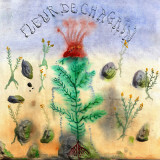
When it came to translating the original CD booklet into a 12 inch LP sleeve, thanks to some suggestions from Cally Callomon (head of Island’s art department, who designed all the sleeves for Lewis’s two Island albums and their singles) and his trusting us with his “Lewis Taylor” folder full of various negatives, test prints and whatever else he was able to salvage from the old Island art department, we’ve gotten pretty close to what the original LP sleeve would’ve looked like if it existed. Simon Francis’s vinyl mastering, presents the eleven tracks over a double LP so, as ever, the record sounds outstandingly good. The records have been cut by Cicely Balston at Air Studios and pressed at Record Industry.
Поиск:mar tex
Все
- A1: Lost (1 32)
- A2: Listen Here (4 18)
- A3: Hide Your Heart Away (4 52)
- B1: Send Me An Angel (4 48)
- B2: Leader Of The Band (4 29)
- B3: Yeah (4 46)
- C1: Please Help Me If You Can (4 20)
- C2: Let’s Hope Nobody Finds Us (4 42)
- C3: New Morning (5 45)
- D1: Say I Love You (4 43)
- D2: See My Way (4 01)
- D3: One More Mystery (4 49)
Lewis Taylor's legendary magnum opus: The Lost Album. "Now you're talking. That's my favourite LT album. Unlike all of the others, there isn't anything about it that embarrasses me." Straight from the genius's mouth. What can we say about this? Well, it's the most requested record ever at Be With Towers. The Lost Album was the intended follow-up to his first album but Island rejected it for fear of "confusing" the marketplace and its conception of Lewis as a soul artist. Their loss. It's a breezy sunset masterpiece.
The genesis of this incredible record needs unpicking a bit. Lewis stopped promoting the first album after a year and went home to record a completely different record that was the most un-R&B album you could probably ever hear: "I pushed in such an extreme direction the other way with what eventually became The Lost Album. It was a knee-jerk reaction to a perceived ‘trapped in R&B’ feeling I was going through at the time. Some people around me were in favour of it and others weren’t. In the end I think I lost confidence in it and did Lewis II instead." We did at least get Lewis II, which is a remarkable album, and he kept Island happy...for a bit. Not long after, Lewis was dropped. And what was to become The Lost Album could've been...er...lost. Forever.
Thankfully, however, Lewis and longtime partner Sabina Smyth revisited those scrapped demo tracks in 2003. They decided to re-arrange, re-record and then self-release them. So it was that the brand new version of The Lost Album finally dropped in late 2004. It's sheer perfection, and we don't say that lightly. The Lost Album was a fully 50/50 collaboration between Lewis and Smyth. As well as production, Sabina did a lot more writing on it, from the melody to "Listen Here" to the chord sequence for "Let's Hope Nobody Finds Us." Thankfully, Sabina is credited this time around.
No, it's not straight up "soul music" in the vein of his previous work. Yet, in its perfectly formed suite of one dozen songs, The Lost Album is dripping in soul. It's so warm, so effervescent and so alive with possibilities. It features deep, fresh imprints on well-loved, accessible sounds. It's a proper 70s style double album. Just one listen and the musical influences on The Lost Album are fairly self-explanatory, as Lewis recently told us, but it's always nice to hear that, in case we were in any doubt, he was definitely channeling Love, Yes, Brian Wilson, CSN, Laura Nyro and, of course, Todd Rundgren. The influences don't end there: "I’m particularly fond of my bass playing on that album, there’s a lot of Chris Squire going on which is cool."
Deep orchestral opener "Lost" is a sublime, harp-laced, string drenched gem, a cinematic, melancholic Axelrod-esque mini-epic that simply beguiles. Written by Smyth, it evokes Donny Hathaway's celestial "I Love The Lord, He Heard My Cry" from Extensions Of A Man. The only problem is the brief 90 seconds running time. It segues into the classic Brian Wilson-meets-power-pop-rock splendour of "Listen Here" which, with its outstanding extended harp-licked beatless intro, sounds like the younger cousin to Boston's "More Than A Feeling". We then drift into the ringing guitars of classic 70s rock anthem "Hide Your Heart Away". It's Lewis's personal favourite, "especially the multi-tracked guitar solo – I was listening to Boston at the time, which was fun." A-ha!
A new version of the heart-stopping, shoulda-been-a-massive-pop-hit "Send Me An Angel" opens Side B before the arrival of, in Lewis's completely correct words, "the clear standout, "Leader of the Band"; the perfect distillation of everything that album was trying to achieve." Soaring, piano-led Rundgren-esque power pop that makes the hairs on the back of your next stand on end. Truly, otherworldly. This is pure pop for now (and then) people. The simple jangly brilliance meets experimental prog-rock of "Yeah" sounds like simultaneously like prime CSNY and late 90s Radiohead (if they'd had a slightly more accessible bent and could write better tunes).
Oh, you wish The Beach Boys had continued writing amazing songs beyond Holland? Well, allow us to point you in the direction of the downlifting stunner "Please Help Me If You Can" and the warm textures and brilliant atmospherics of goosebump-inducer "Let’s Hope Nobody Finds Us". Words can't really describe the sheer beauty of these songs. So we'll stop trying. Just listen. Listen, listen, listen. Closing out this remarkable side of music, the accidentally Balearic "New Morning" should be blasting out at every sunrise set in Ibiza, this summer and forevermore.
The final side opens with the vaguely Beatlesey "Say I Love You". It's just classic, soaring pop-rock songwriting and should strictly be canonical. It's that good. The sassy, Stonesy swagger of "See My Way" injects enough rock'n'roll attitude to compensate for the rest of record's peace-loving, AOR sun-dappled vibe whilst album closer, "One More Mystery", emerging out of the rubble of the previous track, comes on initially like a Baroque-Pop George Harrison before piling crunching drums and screeching guitar solos atop the dreamy harmonies til close.
When asked what it means to have these records available on vinyl for the first time, Lewis is in no doubt: "It’s great and it’s really nice to be able to offer fans a different listening experience. There’s a whole other dimension with vinyl that taps into that whole nostalgia thing, well for me anyway. Something about the physical aspect of pulling it out of the sleeve and putting it on, it does tend to make you feel like you’re more engaged."
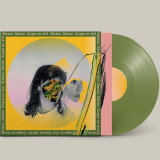
Lewis was adamant that he wanted all new artwork for The Lost Album vinyl sleeve and his brief was just the sort of classic tropical-beach-at-sunset you’d want to see on the front of a record that sounds like this. On the finished sleeve, the beach at sunset is just where we start out, before heading up through the painterly clouds and heading out into the stars. And yes, the lettering is a definite subtle nod to all those in-between-period Beach Boys bootlegs we all love. Simon Francis's sensitive mastering combines with Cicely Balston's precise cut for Alchemy at AIR Studios so the album sounds appropriately outstanding. The immaculate Record Industry double LP pressing will ensure this previously lost masterpiece stays forever found.
Das neue Album 'History' erforscht die Wurzeln des Blues und begreift die Musik als Muse.
Auf ihrem dritten Album haben sich Bokanté dem Blues zugewandt und die Wurzeln des Genres in Westafrika und der arabischen Welt über die Diaspora bis in die retro-moderne Gegenwart zurückverfolgt. Die neun Titel erzählen - mit Texten, die hauptsächlich auf Guadeloupe-Kreolisch gesungen werden - von Außenseitern und Visionären, von Erinnerungen und Freude, von schwarzer Geschichte, globaler Einheit und der Sinnlosigkeit des Krieges. Von der Zeit, sich auszuruhen, zu fühlen und zu lieben. Von der erlösenden Kraft der Musik - als Vermittler, als Wegbereiter für Veränderungen, als Muse.
In 'History' geht Bokanté noch weiter und kleidet traditionelle Instrumente wie die arabische Oud, die westafrikanische Ngoni und die nordafrikanische Guembri, die von den marokkanischen Gnawa Maalems bevorzugte Basslaute, in westliche Kleidung.
Going past musical genres and instead straight towards something more elemental - Selvhenter’s music creates a strikingly direct, physical experience of sound composed of polyrhythms, acoustic and electric melodies, heavy music and improvised beauty.
Since forming in Copenhagen in 2010, drummers Jaleh Negari and Anja Jacobsen, saxophonist Sonja LaBianca and trombonist Maria Bertel have forged a unique approach to making music that starts with their instrumental setup: two drummers that interlock as frequently as they go their own way, a trombone put through a bass amplifier loud enough to rattle your chest and a saxophone put through a range of effects so that it often sounds unrecognisable. Selvhenter work within their own idiom, drawing from the individual players’ personalities and interests to make a highly collective music, where all four musicians are absorbed into a total sound where an improvised free jazz approach collides with experimental electronic music and avant-garde noise/post-punk sonorities.
Their new LP Mesmerizer - which marks their first physical album release in nearly a decade and their debut on the French label Hands in the Dark - carries forward this process of exploration, deploying original and complex patterns of rhythm through various percussive instruments and finely textured horns and synths. The attention to sonic details is also almost pushed to an extreme on this new offering, making the open auditory adventure suggested by the title of the album all the more captivating. These creative developments have brilliantly kept Selvhenter’s music alive to new uncharted moods and possibilities, while at the same time strengthening their core elements: a propulsive, dense and often ecstatic music.
Clear LP[22,65 €]
Blue Lake is the musical moniker of American born, Copenhagen based multidisciplinary artist and musician Jason Dungan, who signs to the Tonal Union imprint for the release of his new longform album ‘Sun Arcs’. It follows 2022’s release ‘Stikling’, earning a nomination for ‘Album of the Year’ at the Danish Music Awards plus warm praise from The Hum blog and musicians and DJs alike including Jack Rollo (Time is Away/NTS) and Carla dal Forno. A self taught player, Dungan began freely experimenting with self-built multi-string instruments, preferring to build his own hybrid 48-string zither and working in the realms of left-field ambient music, off kilter folk and improvised acoustic minimalism.
The starting point of ‘Sun Arcs’ saw Jason travel for a week alone to Andersabo, a cabin set in the idyllic Swedish woods just outside of Unnaryd, known also as the music project, festival and residency space which has been run by Dungan since 2016, hosting artists like Sofie Birch, Johan Carøe and Ellen Arkbro. Whilst writing 1-2 pieces per day, a conscious decision was made to leave behind everyday distractions and shut out the outside world to instead focus on the natural passage of time as Dungan recalls: “My only sense of time came from these daily walks out in the woods with my dog, and an awareness of the sun’s path as it moved across the sky each day.”
The album’s immersive world unfolds with the opener ‘Dallas’, an ode to his home state and a musical synthesis of these two disparate spaces (Texas and Denmark), the touchstones of Dungan’s life. A folk-esque single acoustic builds to a flowing arrangement of clarinets, organ and cello drones coupled with percussion. ‘Green-Yellow Field’ chimes in as the first of two solo oriented zither recordings twinned with the dreamlike title track ‘Sun Arcs’, both densely rich as cascading and overlapping harmonic tones resound. ‘Bloom’ emerges with a krautrock psyche before an eruption of cello drones, slide guitar and free-ranging zither playing, ushering in the anticipation of spring. With half of the recordings conceived in Andersabo, Jason returned to Copenhagen to form the album's centre piece ‘Rain Cycle’ which features a tempered Roland drum machine alongside shifting zither improvisations. ‘Writing’ explores the shimmering harp-like qualities of sweeping playing figurations with Dungan mapping out adjusted tuning “zones” on the zither for unconventional but creatively liberating effects. ‘Fur’ captures the feeling of openness and the momentum of time, seeing Dungan perform waves of solo clarinet, often in one takes and embellished with textural drones, a zither solo, and layers of guitar. ‘Wavelength’ the album's closer is fondly inspired by the film works of Michael Snow and Don Cherry’s seminal live album ‘Blue Lake’ (1974), as it builds out from a drone-generated zither chord and features an alto recorder solo. Dungan found a deep connection to Cherry’s stripped back performance ethos, focusing on the core beauty of minimal instrumentation creating a genre-less meeting between folk and jazz. A dialogue is formed between the solo and the bandlike performances, interlinked in a geographical duality with all finding a sense of commonplace as musical sketches of visited landscapes. The bountiful instrumentation ebbs and flows as further layers emerge with Dungan constructing his material much like an artist would, recording and reviewing, adding and subtracting.
Musically it portrays a form of double life led by an American-identifying person living in Scandinavia, and a new found presence in Denmark, seeking out underdeveloped marshlands and barren stretches of beach adrift from other rhythms and distractions. Highlighting their individual and potent importance Dungan concludes: “Both places feel like “me”, I think on some level the music is always some kind of self-portrait.” ‘Sun Arcs’ depicts the intricate balance of nature’s cycles and the paths outlined by the seasons, from a winter dormancy to a warm sun drenched scene. The album scales new glorying heights and further defines Dungan’s musical narrative, inhabiting a unique space in left-field, improvised and experimental music, borning his most accomplished compositions to date. A singular and visionary expression, drawing on an array of instruments and sound worlds with a renewed sense of joy and discovery.
The album's rich tapestry was mixed by Jeff Zeigler (Laraaji, Mary Lattimore, Kurt Vile /Steve Gunn) and mastered by Stephan Mathieu (Kali Malone, KMRU, Félicia Atkinson).
MEANTIME das neue Album des kanadischen Songwriters Grant Davidson aka Slow Leaves, handelt vom Warten auf etwas Bedeutsames im Leben und davon, wie all die alltäglichen Dinge, die während des Wartens passieren, das eigentlich Bedeutsame ausmachen. Wenn man blinzelt, verpasst man es; wenn man zu viel nachdenkt, verpasst man es. Wenn man Glück hat, gibt es in der Zwischenzeit die Liebe und den Tod und nicht viel weniger. Das Album ist durchzogen von einer eleganten Erdigkeit, Meantime ist eine Sammlung von Folksongs, die mit paisleyfarbenen 1960er- und 70er-Jahre-Tönen verziert sind. Während die Musik eine Retro-Sensibilität aufweist, wird diese durch eine Unmittelbarkeit in den Texten ausgeglichen, die ihn fest in der heutigen Zeit verankert. Slow Leaves ist ein in sich geschlossenes Soloprojekt, bei dem Davidson jeden Aspekt der Musik und ihrer Präsentation kuratiert, einschließlich der Rolle des Multiinstrumentalisten, Produzenten, Coverdesigners, Fotografen und Videofilmers. Er betrachtet die Gesamtheit dieser verschiedenen Aspekte als wesentliche Teile eines größeren Projekts der Selbsterkenntnis durch künstlerische Methoden. Sein Folk- und Psych-Rock-Stil erinnert an ältere Songwriter wie Mickey Newbury, Nick Drake, Roky Erickson, Gene Clark und Neil Young. Aber sie leben auch in der Welt der modernen Klassiker wie Andy Shauf, Bonny "Prince" Billy, Bedouine, Big Thief und Bill Callahan. Seine seidige Stimme wurde schon mit Roy Orbison oder Bryan Ferry verglichen.
American Football (LP3) is the third album from the scene giants - American Football. American Football’s original triumph, on their 1999 self-titled debut, was to reunite two shy siblings: emo and post-rock. It was a pioneering album where lyrical clarity was obscured and complicated by the stealth musical textures surrounding it. Like Slint’s Spiderland, or Codeine’s The White Birch, even Talk Talk’s Laughing Stock, American Football asked far more questions than it cared to answer. But there wasn’t a band around anymore to explain it, anyway. The three young men who made the album – Mike Kinsella, Steve Holmes, and Steve Lamos – split up pretty much on its release. Fifteen years later, American Football reunited (now as a four-piece, with the addition of Nate Kinsella). They played far larger shows than in their original incarnation and recorded their long-anticipated second album, 2016’s American Football (LP2). The release was widely praised, but the band members still felt like their best work was yet to come. ‘I feel like the second album was us figuring it out,’ says Nate. ‘For me, it wasn’t quite done. I knew there was still more.’ Enter American Football (LP3). ‘We put a lot of time and a lot of energy into it,’ says Mike. ‘We were all thoughtful about what we wanted to put out there. Last time, it was figuring out how to use all of our different arms. This time, we were like – Ok we have these arms, let’s use them.’ The band used the same producer, Jason Cupp, and recorded the album at the same studio (Arc Studios in Omaha, Nebraska) as its predecessor – yet they approached it in a markedly different way. There was a determination to let the songs breathe, to trust in ideas finding their own pace. The final result is a definite, and deliberate, stretching of the band.
Tucked in the heart of Koreatown, Los Angeles, lies The Libra Hotel—the titular architecture of Nick Malkin's new album and site of his musical and psychogeographic exploration. Unlike most musical "site-specific" studies, Malkin remains wholly ambivalent to the documentarian approach, instead sharpening an auteur-like focus on the site as a conceptual and highly expressive backdrop. The Libra is musically explored as a space that houses a noir fragmentation of identity—the exhausted trope of a complicated protagonist walking through rain-soaked street corners and fumy neon lights—where an inner monologue is rendered in both miniature and at a cosmic scale. Casting aside stifling tropes around field recording, ambient, and improvised music, Malkin's work finds its own unique fidelity and emotional core through the assembly and reassembly of memory. Nearly every sound on the album—from frayed saxophones, lambent pianos, and dissected jazz drum kits—are multiplied, shattered, and reconstituted into shapes that adorn The Libra in a motion-blurred fog. The narrative of the Hotel suddenly appears as if out of the mist, with intersecting characters interacting within its walls by happenstance. Adminst the languid set pieces, wraith-like sonic grains gravitate around wide subbass beams that give structural form to The Libra, a narrative tension like when a scene is shot from hundreds of different perspectives: an image both luminous and veiled.
Much like Frank Sinatra's own spatial residency immortalized on "Live at The Sands," "At The Libra Hotel" showcases an exuberant view of entertainment, hospitality, and a form of masculinity, one that can quickly detourn into darkness. Knowing this, Malkin extracts a melancholic core out of The Libra locale. The flickering shadows of American decadence are shown in their ephemeral honesty, lines that trace how even in everyday life virtue is tested, sanity is tested, even reality is tested within the confines of desire, within the night. The album is draped in fleeting textures, carefully arranged with a trance-like microtonality, the faint inflections and articulations of a jazz band cascading into dissipated stillness. Voicemails about changed locations and covert eavesdropping on guests' whispered conversations provide an atmosphere of missed connection and voyeurism—a purloined letter of desire receding into a vanishing point. Like the music itself, The Hotel, a chapel perilous at the intersection of desolation row, the center of it all, yet simultaneously at the edge of town, becomes a structure between libidinous virtuality and actuality—our inevitable half-light.
Ultimately, the pensive atmosphere of "At The Libra Hotel," powerfully asserts a plea for the kinds of intimacy only possible in transient spaces. Here, memory cascades into a force that feels like something supernatural, perhaps even religious, yet always subject to the infidelity of our imagination. Here, the album opens into its primary psychodrama, the transient nature of subjectivity itself and how this becomes fractured in the tumult between our commitments and desires. Within this nocturnal space, to quote Louise Bourgeois, "you pile up associations the way you pile up bricks. Memory itself is a form of architecture."
- A1: Daytime Tv (Rainy Miller Remix)
- A2: It’s Hard To Get To Know You (Space Afrika Ambiv)
- B1: Pigeon Flesh (Mobbs' Butcher Mix)
- B2: Love Like An Abscess (Aho Ssan Remix)
- C1: Nervous Energy (Teresa Winter Remix)
- C2: I Was Born By The Sea (Morgane Polanski Remix)
- D1: I Was Born By The Sea (Fila Brazillia Remix)
- D2: Dream About Yourself (Bonus)
Richie Culver had been waiting his whole life to record I was born by the sea. His debut album immediately and messily inscribed the artist into the canon of outsider music and experimental electronics, serving both as an arresting statement of intent and a painful reckoning with the difficult path that lead up to it, stealing one last glance back at a place he always knew he had to escape. Between grim lamentations, faded memories and anxiety attacks, all told with searing honesty and disarming openness, I was born by the sea excavates a space for hope, finding Culver digging through Humberside silt to find a world weary optimism, the raw material from which his visual and sound art is shaped. For this collection of expansions and inversions, Culver invites a collection of kindred spirits, contemporary inspirations and old heroes to wade into the salt water of his formative years spent living for impromptu raves and afterparties, connecting vivid memories of his birth place of Withernsea to artists hailing from as nearby as Preston and Bridlington, further afield, from Manchester and London, Berlin and Paris, before returning back to Hull, to where it all began.
For some, responding to I was born by the sea means diving even deeper into the record’s furthest reaches. Space Afrika clear away the pummelling loops of noise from ‘It’s hard to get to know you,’ revealing a cool and cavernous expanse in its wake. Distant chatter, previously heard as though through thin, plasterboard walls, now echoes from outside the maddening claustrophobia of the original’s Sisyphean sonics, illuminated as a dense storm cloud suspended amidst a more open scene, washed clean by a lighter rain, allowing the tender heart of the track to beat clear. London producer MOBBS stretches out ‘Pigeon Flesh’ into an epic, 10-minute, cold-sweat spiral, strung-out tension wrung from disconnected phone tones twisted in unexpected directions, snatches of Culver’s voice turned inside-out and deep fried bass threatening to tip the track over into oblivion, the build-and-release of a nervous breakdown experienced in real time. In an act of subversive self-reflection, Morgane Polanski switches one kind of ennui for another in her adaption of ‘I was born by the sea,’ swapping the sea for the city, English seaside towns in January for summer evenings in Paris and flashing lighthouses and sparkling oil rigs for the Eiffel Tower and the traffic around L’Arc de Triomphe. Even Culver finds time to revisit ‘Dream About Yourself,’ a track taken from his EP Post Traumatic Fantasy, breathing new words into its glacial drift, the half-remembered testimony of a shut-in: Woke up in the evening / Pray for me / Don’t trust anyone / Pray for algorithm. Reframed in a more melancholy light, the track’s reverberant keys even more clearly evoke a mournful nostalgia, fresh pain felt in old wounds.
Others find a parallel universe in Culver’s visceral world building. Rainy Miller flips the script with a scorched, avant-drill rework of ‘Daytime TV’, threading puncturing hi-hats and queasy low-end surge through the track’s steady ambient cascade, invoking the irresistible Preston beat magic of Miller’s own essential debut album, Desquamation. Aho Ssan melts away the crystalline textures of ‘Love Like an Abscess’ with the ominous crackle of a nascent fire, building through swathes of organic Max/MSP squelch and brittle, nails-down-chalkboard scrape, swelling and metastasising the original to spill over Culver’s desperate hymn to corporeal desire, at once flesh and not. Teresa Winter transports us an hour up the coast from Withernsea to her native Bridlington, replacing the sea wall of synthesis on ‘Nervous Energy’ with muffled ASMR murk and fever dream whispers, transforming Culver’s unflinching observations into a haunting call-and-response, filling in the blanks with her own eerie utterances, a fleeting conversation with a ghost. In a touching victory lap, Fila Brazillia, eccentric stalwarts of beloved ‘90s trip hop imprint Pork Recordings, whose performances at Hull institution The Lamp convinced a young Culver of the necessity to make his mark on club culture, resurface for their first remix in 20 years. Steve Cobby and David McSherry lead a low-slung, heartfelt stroll back through a suite of tracks from I was born by the sea, tracing a full circle saunter from Culver’s origins to his current musical practice, the sounds of his present repurposed by the sound of his youth. In a gesture that reflects the emotional complexity of the project, Fila Brazillia find joy at the end of Culver’s troubled reflection, picking out an undeniable groove in the stasis of feeling trapped in your hometown. Underlining Hull’s vital musical legacy, from Baby Mammoth to Throbbing Gristle, Cobby and McSherry demonstrate that, though there are certainly storms, by the sea there is also sun and through the fog, if you listen, you can hear a singular sound, a sound now carried by Richie Culver.
Participant is a record label and creative studio run by William Markarian-Martin and Richie Culver
A growling echo came from deep within the tunnel. There was movement, he was sure of it, but was it living? The wind brushed the darkness, stroking his ears as it passed through the entrance where he stood. Whispers of air danced along the concrete walls and he felt the presence of another. Something stirred down there, but whether it was friend or foe, he could not be sure...
As the name suggests, this EP guides the listener with voices, vocal samples, and choral pads, glueing dub techno soundscapes together. The work brings a dark and brooding, yet warm sonic structure. Distortion provides textured atmospheres, while analogue rhythms build on sturdy 4/4 foundations in meditative cycles.
Guided By Voices: The title track beats with heartthrob kicks, gently arpeggiated melodies, and flecked, illusive vocal samples. Messier808 builds curiosity in the listener, as we try to catch hold of the voices. Each time they remain out of reach. Understated and subtle, the release marks a new outlet - bringing psychedelic, dub, and meditative techno under one roof.
Road to Frederikshavn: Driving, robust and punchy. This track comes with a clarity and forward motion that energises the meditative feel of the previous song. Falling choral pads juxtapose sturdy drums to combine meditation with movement.
Redshift: Bleepy stutters chime like electronic birdsong, looping in with the cyclical soundscapes of the EP, inducing another trance-like state.
This engaging and thoughtful release from the Dutch producer, Messier808, marks the first imprint on The Messier Objects. The tone has been set with breathtaking artwork and intricate soundscapes for what is to become an absolutely intriguing record label and a talented emerging artist.
Eaux proudly announces the second full length LP from Rrose, Please Touch, released on vinyl, CD, and digital download. The LP follows 2019's Hymn to Moisture in ways that are both subtle and striking: Please Touch further hones the artist's tensile sound while exploring new aesthetic vistas and basking in an undeniably erotic sense of play. Moving with undulating power, the album's nine tracks drift across tempos from a weightless 0 bpm to a crawling 100 to a lunging 140 and back, with a rich palette of sculpted noise and cross-talking microtones.
Rrose's compositional process, rooted in their studies with West Coast avant garde trailblazers at Mills College, centers on "seed" sounds being fed through elaborate webs of interrelated audio processing. The result is a world where changes in any one element have downstream implications for some or all the others. It's a rich interdependence that lets the tracks breathe, grow and mutate with uncanny organicism. Please Touch addresses in equal measure the perceptual and the corporeal: these are sounds that sink into the body, exhibiting a tactility that pushes, pulls, bends and yields with fearsome vibrancy.
The album splits its time between radical techno iterations and pieces which pare back the percussion, letting the synth textures uncurl in their own time and space. The quivering drone and rolling sub-bass of "Joy of the Worm'' set the tone for the record, while "Rib Cage," Spore" and "Spines " swing with stepping rhythmic underpinnings. Building with finely calibrated tension, they use their few elements to startling, snarling effect. "Pleasure Vessels" is a rare moment of becalmed introspection in Rrose's oeuvre, hinting at a melodic ambiance that is practically unseen in previous works. It glows with a soft, dawn-like light before dissolving into a tidal fizz. "The Illuminating Glass'' brings the tempo down to a languorous chug, nodding its way through a field of glistening chirps and leaden gasps. "Feeding Time," "Disappear" and album closer "Turning Blue'' meanwhile nod to the cerebral psychedelia of Rrose's forebears, with mesmeric, looping textures and long, magisterial tones not dissimilar to the spectral works of James Tenney (whose work Rrose regularly performs) and the deep listening pieces of Pauline Oliveros.
The title of the album refers playfully to the tactile quality of the music while hinting at a forbidden sensuality that is only permitted within the confines of this microcosm. The phrase is also another nod to Marcel Duchamp, who gave this title to a 1947 exhibition of Surrealist art. Across the nine tracks, Rrose follows the lead of the sound(s) rather than trying to impose on the flow of the sonic material. Each move changes the parameters of a track's evolution. Thus, a non-hierarchical, symbiotic relationship forms between the so-called "music-maker" and the music itself. Please Touch acts as a collection of limbs, organs, parasites, and growths which both devour each other and keep each other alive.
- 1: Little Plastic Castle (2023 Remaster)
- 2: Fuel (03 Remaster)
- 3: Gravel (202 Remaster)
- 4: As Is (2023 Remaster)
- 5: Two Little Girls (2023 Remaster)
- 6: Deep Dish (2023 Remaster)
- 7: Loom (2023 Remaster)
- 8: Pixie (2023 Remaster)
- 9: Swan Dive (2023 Remaster)
- 10: Glass House (2023 Remaster)
- 11: Independence Day (2023 Remaster)
- 12: Pulse (2023 Remaster)
- 13: Gravel (Bed Tracks)
- 14: As Is (Bed Tracks)
- 15: Two Little Girls (Bed Tracks)
Orange Vinyl[39,92 €]
Twenty-five years later, Little Plastic Castle feels like a greatest hits collection. Her highest charting release on Billboard (peaking at #22) and containing her third Grammy nomination for Best Rock Performance - Female (“Glass House”), Ani DiFranco’s ninth studio album shows the Little Folksinger grappling with her independent career bubbling up into the mainstream — dissection of her fashion choices, a new expanded listenership encroaching on the die-hards, examination of what it means to sell out — encapsulated in singalongs so indelible that they’re staples of her live set decades later. This 25th Anniversary Edition sees a new remaster by Heba Kadry, the addition of three bonus tracks mixed by Tchad Blake, and a new CD package and first-time release on vinyl (2 LP). To make Little Plastic Castle, Ani returned to one of her favorite places to record in that era—the live-in studio the Congress House in Austin, Texas. In this relaxed setting she commented, "This album seemed to happen more organically than earlier studio releases." Ani is joined by drummer Andy Stochansky and bassist Jason Mercer who played with her on her 1997 tours, as well as bassist Sara Lee who toured with Ani in 1996. LPC also prominently features outside musicians including drummer Jerry Marotta (Peter Gabriel, Indigo Girls), a horn section composed of three Austin session musicians who add flavor to "Little Plastic Castle" and "Deep Dish," and trumpeter Jon Hassell (Brian Eno, Talking Heads) providing the sustained subtle solo on the 14-minute final track "Pulse." The three bonus tracks are recordings of Ani playing with the rhythm section of Sara Lee and Jerry Marotta, a trio that never reassembled after their single day of tracking. Though Ani described it as “the most light-hearted album I’ve made in a long time,” this record covers a wide range of topics — the impermanence of existence ("Fuel"), mutual respect ("Pixie"), forgiveness ("As Is"), drugs (“Two Little Girls”) — and emotions.
- 1: Little Plastic Castle (2023 Remaster)
- 2: Fuel (03 Remaster)
- 3: Gravel (202 Remaster)
- 4: As Is (2023 Remaster)
- 5: Two Little Girls (2023 Remaster)
- 6: Deep Dish (2023 Remaster)
- 7: Loom (2023 Remaster)
- 8: Pixie (2023 Remaster)
- 9: Swan Dive (2023 Remaster)
- 10: Glass House (2023 Remaster)
- 11: Independence Day (2023 Remaster)
- 12: Pulse (2023 Remaster)
- 13: Gravel (Bed Tracks)
- 14: As Is (Bed Tracks)
- 15: Two Little Girls (Bed Tracks)
Black Vinyl[39,92 €]
Twenty-five years later, Little Plastic Castle feels like a greatest hits collection. Her highest charting release on Billboard (peaking at #22) and containing her third Grammy nomination for Best Rock Performance - Female (“Glass House”), Ani DiFranco’s ninth studio album shows the Little Folksinger grappling with her independent career bubbling up into the mainstream — dissection of her fashion choices, a new expanded listenership encroaching on the die-hards, examination of what it means to sell out — encapsulated in singalongs so indelible that they’re staples of her live set decades later. This 25th Anniversary Edition sees a new remaster by Heba Kadry, the addition of three bonus tracks mixed by Tchad Blake, and a new CD package and first-time release on vinyl (2 LP). To make Little Plastic Castle, Ani returned to one of her favorite places to record in that era—the live-in studio the Congress House in Austin, Texas. In this relaxed setting she commented, "This album seemed to happen more organically than earlier studio releases." Ani is joined by drummer Andy Stochansky and bassist Jason Mercer who played with her on her 1997 tours, as well as bassist Sara Lee who toured with Ani in 1996. LPC also prominently features outside musicians including drummer Jerry Marotta (Peter Gabriel, Indigo Girls), a horn section composed of three Austin session musicians who add flavor to "Little Plastic Castle" and "Deep Dish," and trumpeter Jon Hassell (Brian Eno, Talking Heads) providing the sustained subtle solo on the 14-minute final track "Pulse." The three bonus tracks are recordings of Ani playing with the rhythm section of Sara Lee and Jerry Marotta, a trio that never reassembled after their single day of tracking. Though Ani described it as “the most light-hearted album I’ve made in a long time,” this record covers a wide range of topics — the impermanence of existence ("Fuel"), mutual respect ("Pixie"), forgiveness ("As Is"), drugs (“Two Little Girls”) — and emotions.
BABY BLUE VINYL
"Workin' all day, trying to forget about the old me." Like most of us, Martin Frawley is busy trying to work himself out. He lives alongside the long shadow of his late dad, musician and songwriter Maurice Frawley, a cultural icon of the Australian underground and collaborator of Paul Kelly, Tex Perkins and Mick Thomas. Most of Martin's 20s were spent writing and playing songs in locally beloved Melbourne band Twerps - a collection of pals who were on the forefront of the city's jangle pop renaissance. A few albums, US tours and band rotations under its belt, Twerps split up in 2018 and Martin turned his compass towards a solo project. His first album, Undone at 31 (2019), was a bit of a reckoning; a wild ride through the wreckage of both a band and longterm romantic break up. His new album The Wannabe is a personal, cheeky and, at times, self-depreiciating collection of songs unpacking the reality of finding his way as an adult without his dad around, and ultimately falling back in love with life, music and someone new. Martin and his band - friends Dan Luscombe (The Drones), Steph Hughes (Boomgates, Dick Diver), Nik Imfeld (Tyrannaman) and Dan Kelly - had heaps of fun recording The Wannabe in Melbourne. The title track is a particularly spicy take on an entertainment industry that seems to give more shits about marketing than music. The album is a bit of an emotional tour, from anger and derision, through to comedy, through to deep and honest love. It's positive with a lot of sadness. Not unlike Martin himself. As well as the guitar, Martin had some fun playing the piano on this record. The technical term is `multiinstrumentalist' but Martin's more of a musical explorer of sorts. No one is exactly sure how these things work - if Martin was born into music or if it was born into him, but it doesn't really matter. Music is what he loves. It's what he does. It's not about the industry or about success - not anymore. It's about the freedom of creating songs on his own terms, and trying to let go of the feeling he has something to prove: to his dad, to his critics, and to himself. And while he's not sure he'll ever fully shake that feeling, he's at least relaxing and having a bit of fun doing it. Like his dad, Martin has a reputation as a `musician's musician'. He hosts a pretty sporadic podcast Dive For Your Memory, where he has fast and loose chats with musicians while doing a deep dive into their musical inspirations and canon. He and his fiancé Lauren also make wine under the label El'More Wines, named after the farm and small town where his dad grew up. It's all come a bit full circle, really.
- 1: Skip This Part
- 2: Mine
- 3: High Road
- 4: Me
- 5: Down To You
- 6: Chemistry
- 7: Favorite Kind Of High
- 8: Magic
- 9: Lighthouse
- 10: Rock Hudson
- 11: My Mistake
- 12: Red Flag Collector
- 13: I Hate Love (Feat. Steve Martin)
- 14: That’s Right (Feat. Sheila E.)
Bone Coloured Vinyl[36,09 €]
Grammy-nominated, global superstar Kelly Clarkson is back with her tenth studio album chemistry, set to arrive June 23rd, 2023. The Texas-born singer-songwriter first came to fame in 2002 as the winter of the inaugural season of “American Idol.”
Her debut single “A Moment Like This” followed and quickly went to #1 on Billboard’s Hot 100, ultimately ranking as the year’s best selling single in the U.S.
Further, Clarkson is one of pop’s top singles artists, with 17 singles boasting multi-platinum, platinum and gold certifications around the world, including such global favorites as “Miss Independent” and “Because of You.”
Her multi-Emmy Award-winning daytime talk show “The Kelly Clarkson” show is currently filming its 4thseason and has already been picked up for its 5th and 6th seasons.
Additionally, she was the winning coach on seasons 14, 15, 17 and 21 of “The Voice” and is currently a coach for Season 23.
Kelly is one of the most popular artists of this era with a total worldwide sales of more than 25 million albums and 40 million singles.
Grammy-nominated, global superstar Kelly Clarkson is back with her tenth studio album chemistry, set to arrive June 23rd, 2023. The Texas-born singer-songwriter first came to fame in 2002 as the winter of the inaugural season of “American Idol.”
Her debut single “A Moment Like This” followed and quickly went to #1 on Billboard’s Hot 100, ultimately ranking as the year’s best selling single in the U.S.
Further, Clarkson is one of pop’s top singles artists, with 17 singles boasting multi-platinum, platinum and gold certifications around the world, including such global favorites as “Miss Independent” and “Because of You.”
Her multi-Emmy Award-winning daytime talk show “The Kelly Clarkson” show is currently filming its 4thseason and has already been picked up for its 5th and 6th seasons.
Additionally, she was the winning coach on seasons 14, 15, 17 and 21 of “The Voice” and is currently a coach for Season 23.
Kelly is one of the most popular artists of this era with a total worldwide sales of more than 25 million albums and 40 million singles.
Repress!
Leeds soul and funk label ATA Records are proud to announce the new single from The Sorcerers. Available on 7" vinyl and Digital Download from Friday 30th March, this single is a driving Ethiojazz track aimed squarely at the dancefloor, backed by the Yorkshire Film & Television's original recording of "The Anderson Spectrum" (Later re-recorded and re-named by The Sorcerers as "The Viking Of 5th Avenue")
Taking influences from Ethiopiques Ethiojazz as well as the soundtracks to the European horror films of the 60s and 70s, The Sorcerers seamlessly blend these disparate elements into one cohesive package. Based in ATA Records' home of Leeds, The Sorcerers are made up of the cream of the city's jazz and world scene. Forming the backbone of the ATA Records house band they incorporate bass clarinets, flutes, and vibraphone alongside bass, guitar organ and drums, providing Ellingtonian textures on top of a solid rhythmic foundation.
Initially inspired by the work of Ethiopian composer Mulatu Astatke, The Sorcerers have developed their sound from the foundations laid out on their debut LP "The Sorcerers"."In pursuit of Shai Hulud" eschews the atmospheric textures of their previous material, replacing them with driving percussion and propulsive bass. Organ and flute tear into the melody as temple blocks beat out an insistent rhythm throughout.
The B-Side ("The Anderson Spectrum") is the original track from The Yorkshire Film & Television Orchestra that The Sorcerers re-recorded and re-named "The Viking Of 5th Avenue" when they recorded it for their debut. Tremolo-fuzz guitar and heavy brass place the track firmly in the sonic realm of 1960s British Library Music, bringing to mind the work of John Barry and Portishead rather than Mulatu Astatke.
Remotely Together introduces new works by claire rousay & Morita Vargas, Maria Chavez & Valentina Magaletti, and KMRU, all commissioned through remote residencies for Rewire’s 2021 - online edition. In the midst of COVID-19 lockdowns, Rewire initiated these collaborations between disparate artists from all over the world, connecting them remotely to explore new creative practices both online and in isolation. The audiovisual results of these residencies were presented during the online edition of the 2021 festival. Newly edited versions of a selection of these performances have now been compiled for this release.
Featuring an enthralling mix of ambient, noise, field recording, and experimental sound art, the scene of Remotely Together is set by the crunching sounds of footsteps over a grassy environment on atmospheric opener Humo De Margatina Dulce, a collaborative song between North American percussionist and improviser claire rousay and Argentinian vocalist Morita Vargas. rousay’s textural mix of field recordings, everyday sounds, and deep electronics coalesce with Vargas’s ethereal vocals, paving the way for compelling music that gradually draws its listeners deeper into its mysterious soundworld.
Meanwhile, New York–based turntablist Maria Chavez and celebrated Italian percussionist Valentina Magaletti collaborate on Particle, featuring hypnotic textures and dreamlike percussion that seems to sonically propel itself forward, slowly expanding into a rich and layered work of stretched-out free jazz.
During his online residency, Kenyan sound artist KMRU teamed up with Dutch filmmaker Donna Verheijden. MicroVerse showcases his evocative mixing of field recordings, entrancing noise, and improvisation, resulting in a piece where the seemingly gentle sounds of the natural world begin to blend in with the artificial muck of droning noise.
Peruvian-born and Amsterdam-based graphic designer Jonathan Castro Alejos has designed the artwork of Remotely Together. It was thought of as a sculptural documentation of the unnoticed urban gestures between Amsterdam and Lima during the pandemic – further reinforcing the relationship between isolation and interconnectivity explored during the remote residencies of Rewire.
Naarm alchemists Sleep D's revelatory new synthetic 'Electronic Arts' is ready for circulation.
Having released 4 EPs of mind-altering club tackle since 2019's 'Rebel Force', the duo overcome second album syndrome, boiling down their chaos with a more developed sense of songwriting. Never banging one drum, 'Electronic Arts' mirrors the anything goes mania of their DJ sets, tactfully shifting through different sounds and styles. Tempos intensify and decelerate, at times pushing the threshold to 150 bpm from docile canine dreamscapes to full tilt Space Invaders in AR mind games.
Largely built on road tested material from their live performances, the album is a tangible Butter Sessions gathering, busting out the gate with Martian rave initiation Planet Waves, Outdoor System's polyrhythmic beatdown and the Orb-like hero dose affirmations of Sunrise In The Crater (I Exist). While 'Electronic Arts' is otherwise a self-dependent effort, Punch Drunk is brewed ever more potent by the hypnagogic vocals and lucid trumpet cycles of former futsal team member YL Hooi. Their unified energy incidentally manifests a profound matrix of ambient techno, motorik, Don Cherry and Everything But the Girl.
Also touching on apocalyptic doof and minimal, the album is not exclusively peak time with Maryos Syawish and Corey Kikos' specialty curveballs also playing their part. From Village To Empire finds the duo rooting down in Syawish's heritage with a tapestry of purposefully deployed Iraqi and Syrian ethnographic samples and field recordings, dubbed within range of Muslimgauze and On-U Sound. As minimal techno finale Textile trails off into footsteps wandering back to base camp with a satisfied exhale, one wonders where Sleep D's existential pathfinding could possibly take us next?
Bruce Falkian is a world famous contemporary artist who exhibits at the world's most prestigious art galleries and fairs. Bruce Falkian moonlights as an agent of espionage against the Terrorism Industrial Complex. Wait... what?
To understand Bruce Falkian we first must understand the link between image and war. In the late 1800s the precursor to the video camera was invented. It was directly inspired by guns, specifically, Samuel Colt's Revolver. It borrowed not only its barrel mechanics, swapping bullets for exposures, but its terminology too. Load, point, scope, aim, shoot, flash. The camera and the gun, united by cordite, would go on to prove the most efficacious tools in shaping the modern world.
The 20th century was a laboratory when it comes to killing and image making, glorified through Hollywood and the Western genre. Propaganda would prove highly effective in creating and sustaining support for militaries fighting for ideological global control. Devised first in the aptly title 'Propaganda' (1928) by Edward Bernays, a nephew of Sigmund Freud, Advertising and Public Relations became the leading media industries, learning how to control the population through images, usually just to buy random crap they didn't need, but other times to overthrow democratically elected politicians in foreign countries. Eventually Western Liberal Democracy assumed domination, built of course on the enslavement of all peoples and nations who didn't fall in line with its specific ideas of living. The Red Scare inspired countless anti-leftist, anti-communist works of art throughout the Cold War, notably and most bizarre, funding the abstract expressionist movement as a non-ideological alternative to socialist realism art. When the Soviet Union fell, Western Liberal Democracy was able to promulgate its unhindered views around the world through its various media empires and actor states. Is it a coincidence that a third of the almost $85 billion dollar global camera equipment market is represented by the greatest propaganda beast the world has ever seen, the USA?
Guns are dangerous because of the obvious. Images are dangerous because we are bad at perceiving what is real (as any jump scare, deepfake, newsreel will attest to.) Videos aren't technically real, they are only a collection of rapidly changing static images which give the illusion of movement. It's easy for us to collectively decide that a video is real, because that's the way our brains perceive reality. People who lead the world of media understand this, which is how they are able to control us, make us invade foreign countries, vote for specific politicians, feel ugly or fat etc. However, ubiquitous as they are, it seems that the image is in crisis. It seems that we've run out of them. Or perhaps our understanding of an image is changing, with the aid of near instantaneous text-to-image AI technology. So what does this mean for guns? What does this mean for war? How will images be used as an aid to war in the 21st century? It remains to be seen, but Bruce Falkian will be a useful agent.
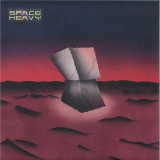
Nachdem seine intime Underplay-Show-Tour „SHHH“ im März binnen Sekunden ausverkauft war, kündigt Archy Marshall sein mittlerweile viertes Studioalbum „Space Heavy“ als King Krule an. Erscheinen wird es am 9. Juni bei XL Recordings. Zehn Jahre nach der Veröffentlichung seines umjubelten Debütalbums „6 Feet Beneath the Moon“ zeigen die 15 neuen Songs den britischen Songwriter auf der Höhe seines Schaffens.
Entstanden ist das Album zwischen 2020 und 2022, als Archy Marshall sowohl London als auch Liverpool seine Heimat nannte und viel Zeit auf den Reisen von einem zum anderen Ort verbrachte. Während diesen Trips entstand seine Faszination für „the space between“, wie er es nennt: die Orte, die von Träumen voller Liebe verfolgt werden, während sich Archy in seinen Texten mit persönlichen Verlusten befasst. Nachdem die Texte fertig waren, entstand die Musik gemeinsam mit dem Produzenten Dilip Harris sowie seiner langjährigen Band, bestehend aus Ignacio Salvadores (Saxophone), George Bass (Schlagzeug), James Wilson (Bass) und Jack Towell (Gitarre).
In den 15 Songs von „Space Heavy“ verbinden sich viele Elemente seiner bisherigen Karriere mit dem klanglichen Kosmos, der ihm das Attribut als eine der Stimmen seiner Generation einbrachte. Die dichten Lyrics seines Debüts, die Verschiebung seines Sounds bei „The OOZ“ (2017), die Ursprünglichkeit von „Man Alive!“ und die rohe Verletzlichkeit, die er auf „You Heat Me Up, You Cool Me Down“ zeigte, fließen in den Sound seines neuen Albums ein.
Mit der Albumankündigung erscheint die erste Single „Seaforth“ mitsamt Video, bei dem seine regelmäßige Kollaborateurin und Visual Artist Jocelyn Anquetil Regie geführt hat.
Stoned Part I was the first self-released album from lost soul phenomenon Lewis Taylor. His third album proper, it was initially released on his own label Slow Reality in 2002 and it's been licensed to Be With for this long-awaited double LP release, its first ever vinyl edition. The songs are varied, hook filled and outstanding. Beloved by his legions of diehard fans, it's nothing short of a masterpiece.
After parting ways with Island, and without a label deal, Lewis went back to his home studio and began to record Stoned Part I in 2001. Co-written and co-produced with longtime collaborator Sabina Smyth, Lewis sings and plays all the instruments on this beautiful, emotional and very human album. It represents Lewis at his most accessible and finds him in the middle ground between his two Island releases. In some ways, Stoned Part I distills the best of his musical sensibilities. The flawless production is dense, layered and very early-2000s slick. The bottom end is thick, funky and sexy.
The complex, proggy-soul of title track "Stoned" opens the album and instantly captivates. Deep swinging funk with truly sweet soulful vocals, complemented by wah-wah guitar and swelling acidic synths. As Lewis himself told us, the ad libs at the end of the track were a nod to Paul McCartney at the end of "Hey Jude". Fan favourite "Positively Beautiful" has shades of Curtis and Marvin; its richly layered harmonies propelled by a simple, metronomic click-track that gives way to a more fully fleshed beat for the magnificent coda.
The slow, sweeping majesty of "Lewis IV" is all moody atmosphere, featuring dense, richly textured music and heavenly multi-tracked harmonies. The stop-you-in-your-tracks incredible "Send Me An Angel" could have been a huge AM radio hit, beautifully crafted sophisticated soul-pop songwriting in the vein of the very best Sade records. Yep! *That good* The smooth, psychedelia-lite "Til The Morning Light" is a gorgeous, sun-dappled love song, layered with Lewis' distinctive honey drenched vocals and, again, the type of record you could've easily heard all over the radio at the time of initial release.
The remarkable, wide-eyed "Shame" packs so many shifting styles into one song, it has to be heard to be believed. Opening in a laconic, breezy style, not unlike a Dallas Austin or Rodney Jerkins produced R&B hit of the day, it morphs into a heavy psych-soul Soulaquarians wig-out (the solo bearing an uncanny resemblance to Carlos Santana’s on "She’s Not There") before elegantly sliding into string-assisted symphonic soul and then back around again. And again. Sheer brilliance. The sublime, gentle head-nod funk-soul of "When Will I Ever Learn" (Part 1) is a strikingly well-turned-out tune, a neat, sweet bass-driven guitar-soul jam that ensures our jaw won't be leaving the floor anytime soon. "Lovin’ U More" sounds like a classic turn-of-the-century Neptunes production, the likes of which they'd lay on for JT BITD. A Latin-tinged groover with more than a little Nile Rodgers-driven slick funk stylings, it's yet another instant Lewis bomb with those gorgeous harmonies and chart-friendly irresistible key-changes to boot. Another indisputable (non-)HIT!
The funky seductive swagger of "From The Day We Met - Part II" opens the final side of wax, giving way to the gigantic buzzing synth-funk beast "Lovelight", a track so insouciantly mighty it should have been a massive hit for someone. Wait, what's that? Robbie Williams covered it? Ah, OK, well, I guess that says something about the effortless pop genius contained within. Containing a seemingly unnoticed nod to Kraftwerk’s "Computer World", it's Lewis's favourite song on the album. It's easy to hear why: "Sabina’s production totally nails it. I love the restraint and the subtlety, and that mixture of warmth and sweetness from the singing against the slightly cold, yet beautiful airy-ness of the backing track." To close this phenomenal album, the twisted electronic soul of "Sheneverdid" marries Lewis's beautiful falsetto to his virtuoso playing and an easy-cum-ominous musical backdrop. Stunning.
Simon Francis’s vinyl mastering, approved by Lewis himself, presents the eleven tracks over a double LP so, as ever, it sounds sensational. The records have been cut by Cicely Balston at Air Studios and pressed at Record Industry. Allow Lewis Taylor to get you Stoned.
Blue Marbled Vinyl
Opening the EP we have a serious sensory treat from Aural Imbalance, as he ditches his own rulebook unleashing a myriad of rapidly combining elements synergising over glorious echoed intro-beats, before an uncharacteristically heavy slice of breaks punches its way into the track, electrifying the atmosphere while the trademark melodies dance above like fireflies in the night.
A2 - Luminosity
An airy intro slowly welcomes in snappy snares, staunch forthright bass tones and those delicious airy pads we know Aural
Imbalance so well for, gradually enveloping the listener in a luscious web of glorious serenity. Layers of intricate textures and rhythms build upon one another, creating a mesmerizing and hypnotic sonic journey inviting repeated listens.
AA1 - Moonscape
Aural Imbalance crafts a true gem here as Moonscape opens with a serene hit of soothing pads before the wonderfully analogue breakbeats join the party, laden with hi hats and subtle poise. The backdrop exudes whimsical birdsong until halfway we are treated to a true earworm melody carrying us through to the clean ritualistic outro.
AA2 - Sunlight Through Clouds
Simon closes the EP with Sunlight Through Clouds, opening with wistful muffled grooves before the bubbly apache break reveals itself and whisks us on a synthful audio feast, built on the immersive, meditative soundscapes he is so well known for. The track has a soothing, reflective vibe and fits perfectly as a curtain call for his latest extended player.
Words by Chris Hayes (Spatial / Red Mist)
AVKRVST wurde von Martin Utby und Simon Bergseth gegründet - zwei Musikern und Freunden, die zusammen aufwuchsen und einen Pakt schlossen, dass sie eine Band gründen würden, wenn sie älter sind. Jetzt, 22 Jahre später, ist ein Album fertig: 49 Minuten Musik, inspiriert von allem, was sie in ihrer Kindheit gehört haben - von Mew, Anekdoten und Porcupine Tree bis hin zu Opeth, Neal Morse und King Crimson. "The Approbation" ist ein Konzeptalbum über eine düstere Seele, die nur mit ihren Gedanken allein gelassen wird, isoliert in einer Hütte tief in den dunklen Wäldern, weit weg von der Zivilisation. Das Album führt den Hörer durch die Gedanken eines Mannes, der mit der Akzeptanz des Todes kämpft und in den Abgrund gezogen wird. Klanglich ist "The Approbation" ein wuchtig klingendes Stück Musik: Es bietet alles von üppigen, melancholischen Stimmungen bis hin zu schweren, aggressiven Atmosphären. Es versucht, das Gefühl eines kalten, düsteren Herbstes einzufangen - ein dunkler Himmel, gefüllt mit Sternen, die über dem Nebel schweben. Das gesamte Album wurde in einer Hütte in Alvdal (Norwegen) während eines regnerischen, kalten Herbstes und Winters geschrieben und aufgenommen. Während des gesamten Albums kann man Regengeräusche und das Hupen eines Zuges aus der Ferne hören, die tatsächlich nachts unter dem Sternenhimmel in der Hütte aufgenommen wurden. Das Artwork von "The Approbation" ist ein Werk von Mastermind Eliran Kantor, der Folgendes über das Cover zu sagen hat: "Ich wollte das Element der vergehenden Zeit während einer Zeit der Abgeschiedenheit und Selbstreflexion in einer Waldhütte finden und dachte an die Sterne über mir. Alles auf dem Boden schläft und schlummert, während direkt über uns das Universum auf niemanden wartet. Das passte gut zu vielen Texten, da in ihnen die Elemente des Himmels immer die Rolle spielen, die unaufhaltsam ist und ständig auf den Menschen da unten einwirkt, der nach oben starrt und sich von der Schwerkraft seiner Umgebung mitreißen lässt und wie sie ihn zum Nachdenken anregt."
The next chapter of the Natural Information Society is here. Since Time Is Gravity, credited to Natural Information Society Community Ensemble with Ari Brown, presents a newly expanded manifestation of acclaimed composer & multi-instrumentalist Joshua Abrams nearly 15 year, 7 albums &-counting flagship ensemble. Joining the core NIS of Abrams (guimbri & bass), Lisa Alvarado (harmonium) Mikel Patrick Avery (drums) & Jason Stein (bass clarinet) are Hamid Drake (percussion), Josh Berman & Ben Lamar Gay (cornets), Nick Mazzarella & Mai Sugimoto (alto saxophones & flute), Kara Bershad (harp) & Chicago living legend of the tenor saxophone Ari Brown. Recorded live to tape at Electrical Audio & The Graham Foundation, cover painting Vibratory Cartography: Nepantla, by Lisa Alvarado. 2xLP on Eremite USA, 2xLP & CD on Aguirre/Eremite Europe. Out 14-04.
Since first developing Natural Information Society in 2010, Joshua Abrams has been gradually expanding the group’s conceptual underpinnings, its musical references & the sheer number of the group’s members. Its music is, in a sense, an expansive form of minimalism, based in repeated & overlaid rhythmic patterns, ostinatos & modality. Its roots, its scale & its meaning become clearer in time. If time is gravity, it also allows us to carry more. Having begun as fundamentally a rhythm section with Abrams’ guimbri at its core, the version here can stretch to a tentet, including six horns.
Abrams has been expanding his minimalism gradually, but he has long understood a key to minimalism’s potential: the breadth of its roots in the late 1950s & early 1960s, ranging from the dissatisfaction of young European-stream composers with the limitations of serialism to the simultaneous dissatisfaction of jazz musicians with the dense harmonic vocabulary of bop & hard bop. The former began exploring rhythmic complexity & narrow tonal palates in place of harmonic abstraction (Steve Reich’s Drumming, Philip Glass’ Music with Changing Parts; perhaps above all Terry Riley’s In C & his late ‘60s all-night organ & loop concerts); the later reduced dense chord changes to scales (signally with Miles Davis' Kind of Blue, but rapidly expanding with John Coltrane’s vast project). In the 1950s the LP record opened the world with documentation of Asian & African musics, key influences on both minimalists & jazz musicians. If John Coltrane’s soprano saxophone suggested the keening shehnai of Bismillah Khan, the instrument was rapidly taken up by two key minimalists, LaMonte Young & Riley, similarly appreciative of its flexible intonation, the same thing that kept it out of big bands.
If the guimbri, the North African hide-covered lute that Abrams plays with NIS, involves a rich tradition of hypnotic healing music associated with the Gnawa people, Abrams’ music also touches on other musics as well — other depths, memories & healings, different drones, rhythms & modes. As the group expands on Since Time Is Gravity, he has made certain jazz traditions in the same stream more explicit as well. If there is a mystical & elastic quality involved in the experience of time, both in direction & duration, you will catch it here. The parts for the choir of winds expand on the roles of Abrams’ guimbri, Mikel Patrick Avery & Hamid Drake’s percussion & Lisa Alvarado’s harmonium: at times, the winds are almost looping in the tentet version, each hitting a repeating note in turn, at once drone & distinct inflection on temporal sequence. The brilliance of the work resides in Abrams’ compositions, the NIS’ intuitive execution & in Ari Brown’s singular embodiment of the great tenor saxophone tradition, including the oracular genius of Eddie “Lockjaw” Davis, & Yusef Lateef. The three pieces by the expanded NIS featuring Brown —the opening “Moontide Chorus” & “Is” & the ultimate “Gravity”— have an immediate impact, & togther might be considered a kind of concerto for tenor saxophone. Here Brown presses almost indistinguishably from composed melody to improvised speech, getting so close to language that he might have a text. Everything here is a sign. Note the tap of the Rhythm Ace that links “Moontide Chorus” to “Is”, the attentive heart always present, even when signed by a machine. There’s a link here to the methodologies & meanings of dub music & the linear & vertical collage of beats, textures & tongues: treated with reverence, a sample of a beat-box can be as soulful, as hypnotic, as a mbira or a tamboura. If those pieces with Brown are heard as a suspended concerto, the three embrace & enfold the other works, like the sepals of a flower. That placement will also touch on the mysteries of our perception of time.
Particularly in “Is”, but elsewhere as well, a phenomenon of transcendence arises in which time appears to be tripartite, at once moving backwards & forwards & standing still. This is an act of technical brilliance certainly, but also an illumination of music’s ability to represent temporal consciousness through polymetrics. This particular listener has only heard it before in a few places, including the horn shouts & bowed basses of Coltrane’s Africa, in moments of Charles Mingus’ The Black Saint & the Sinner Lady, in certain pieces where tapes were literally running backwards, & earlier still in Dizzy Gillespie’s Cubana Be, Cubana Bop, in which the composer George Russell & conguero Chano Pozo found a music that spoke at once in the voices of Stravinsky’s Rite of Spring & the vestigial rites, rhythms & songs of the Yoruba language & Santeria religion of inland Cuba.
In Joshua Abrams’ compositions & the realization of them by the NIS, in the time of one’s close listening & memory thereof, distinctions between the “natural” & the “social”, the “quotidian” & the “transcendent” are erased, suspended or perhaps irrelevant. Consider two of the ensemble pieces, one named for nature, the other social science. In “Murmuration” the repeated wind figures of flute & alto saxophone combine with the interlocking patterns of harp, guimbri & frame drum (tar) to create a perfect moving stillness, not an imitation but a witness to the miracle of the starlings’ astonishing collective art, a surfeit of beauty that might be the ultimate defense tactic.
“Stigmergy” takes its name & concept from the Occupy movement’s Heather Marsh, who proposes a social system based on a cooperative rather than competitive models, one in which ideas are freely contributed & developed as ideas rather than an individual’s property. In its form, Abrams’ “Stigmergy” is the closes thing to traditional jazz, a series of accompanied solos by each of the wind players. However, the composed accompaniment is a radically collectivist notion: a repeated rhythmic figure, call it ostinato or riff, in which the different winds each play only a note or two of the figure, a concept both more collectivist & individualistic in its conception than any typical unison figure. It suggests another of the underlying recognitions that propel the Natural Information Society, the group as social organism, the teleology of hypnotic anarchy, all parts in place, functioning systematically, evolving & expressing itself, its nature & society, as a transformative organism.
George Lewis has described music as “a space for reflection on the human condition”. This suggests that, rather than a “distraction”, at least some music might serve as a distraction from distraction. It’s a focus, a clarity, a awareness, an external invitation to interiority, as if music itself is a model for form & contemplation, an organism contemplating for us or as us. If that is a possibility, & I am sure I have heard such musics, than this music is among them. How many of our rhythms, melodies & harmonies (cultural, historical, biological, psychic) might such music carry, translate & transform in the particulate ecstasy of our own murmuration? (Stuart Broomer, April 2022)
After the acclaimed ΠΟΛΙΣ, Subheim returns with RAEON; a collection of eight new tracks for lonely evenings and long night drives. With RAEON, Subheim continues to expand into the sonic territory he has steadily been exploring since 2015’s Foray, the album that marked the project’s shift towards moodier, highly textured, lofi compositions through the use of sampling and heavy audio manipulation. While this EP feels like a natural continuation of the producer’s most recent work, it is intentionally stripped of any percussive elements, with the focus being entirely placed on space and melody.
Each composition feels like a distant, fading memory that unfolds faster than you expect it to and dissolves into an echoing nothingness before you’re able to hold on to it for more than a few seconds. Much like a long-distance train passing by or perhaps like a song you might hear in your sleep.
Every piece serves as a different chapter of the same open-ended narrative; one where stillness, grief and hope simultaneously coexist in perfect harmony. Intentionally imperfect, naturally gritty, spacious as ever, this new record balances between fragility and conviction, and once more illustrates the deeply human side of its creator.
In contrast to some of the producer’s darker work, RAEON is filled with an undertone of bittersweet hopefulness and a strong desire for new life. With the juxtaposition of nostalgic, synthesized, analog sounds and neoclassical elements, Subheim strikes the perfect balance between past and future, between melancholy and hope. And while the closing track is almost ironically called “Forget”, its ending will leave you longing for more and wondering what else is there.
Wenn die Dämmerung auf das Land der tausend Seen fällt, werden die Schleier zwischen unserer Realität und der Anderswelt dünner im Zwielicht der Wälder und Sümpfe. In solchen Momente gelangen Geschichten wie "das Märchen, das es nie gab" in die Texte und Musik von TENHI. Auf ihrem sechsten Album "Valkama", was unter anderem so viel wie "Hafen" oder "Zuflucht" bedeutet, erzählen die Finnen von einer die ursprünglich als Märchen gedachten Reise aus einem brennenden, vom Krieg zerrissenen Dorf über dunkle Gewässer zu einer Insel der Toten. Auf dieser Insel, die in der finnischen Folklore Verisurma ("der Ort für diejenigen, die den Blut-Tod erlitten haben") genannt wird, wohnen diejenigen, die im Krieg starben oder mit einer Klinge getötet wurden. An den Ufern vergießen sie für immer ihr Blut. Doch in den zehn Jahren, in denen TENHI an dem Album arbeiteten, sickerte zunehmend die blutige Realität mit ihren aktuellen Schrecken und Kriegen in die Märchenwelt ein. Jahr für Jahr spürten die Musiker, wie ihre Geschichte immer wirklicher erschien. Schließlich war ein Pegelstand erreicht, an dem die Band beschloss, ihren Kurs zu ändern. Obwohl noch immer Anklänge an das ursprüngliche Werk hörbar und im Artwork auch sichtbar sind, fühlt sich das finale Album ruhiger, harmonischer und sogar heller an als die erste Fassung. Die Band hätte kaum einen passenderen Namen als TENHI wählen können. Das alte finnische Wort bezeichnet einen "Ältesten" oder "Schamanen". Während die Schamanen des finnischen Nordens unter anderem als Vermittler zwischen ihrer Gemeinschaft und der Geisterwelt dienten, sind TENHI musikalische Grenzgänger zwischen dunklem Folk und Folkrock, die sogar bis in die elektrifizierte Welt des Metal hinein wirken. Dies legt zwar einen Vergleich mit WARDRUNA und HEILUNG nahe, doch nur im spirituellen Sinne und nicht in Hinblick auf den Stil. TENHI wurden im Jahr 1996 von Gitarrist und Sänger Tyko Saarikko ins Leben gerufen. Ein paar Jahre später stieß Ilmari Issakainen zur Band. Gemeinsam bilden die beiden Musiker den kreativen Kern der Gruppe. Nach der Selbstveröffentlichung ihres Demos "Kertomuksia" (1997) und der MCD "Hallavedet" (1998) trafen die Finnen 1999 mit dem Debütalbum "Kauan" auf Anhieb einen Nerv. Ins neue Jahrtausend starteten TENHI dann mit einer weiteren MCD namens "Airut:ciwi" (2000). Es folgte eine Reihe von Alben, die von "Väre" (2002) über "Maaäet" (2006) und "Airut:aamujen" (2006) bis zu "Saivo" (2011) reichte. Mit jedem neuen Album vergrößerten die Finnen ihre treue Fangemeinde, die aus diversen musikalischen Richtungen kommt. TENHI verbanden von Anfang an akustische Instrumente und traditionelle Töne mit Strukturen aus der zeitgenössischen Rockmusik. Während das Vorgängeralbum "Saivo" zuletzt verstärkt in Richtung Ambient und Panorama-Soundtrack tendierte, kehrt "Valkama" zu Songstrukturen zurück - wenn auch oft mäandernd und im epischen Format. "Valkama" kommt mit den typisch finnischen Gefühlen der Sehnsucht und anhaltender Melancholie daher. Doch trotz der hörbaren Dunkelheit bieten TENHI ein musikalisches Antidot für die Schrecken der modernen Welt an. Im Zwielicht der Welt des Nordens ist "Valkama" der Silberstreif am Horizont, der innere Geborgenheit und Frieden verspricht.
Gatefold 2LP (clear vinyl) with etching on side D, insert, padded inner sleeves and protection sleeve (300 copies)
Wenn die Dämmerung auf das Land der tausend Seen fällt, werden die Schleier zwischen unserer Realität und der Anderswelt dünner im Zwielicht der Wälder und Sümpfe. In solchen Momente gelangen Geschichten wie "das Märchen, das es nie gab" in die Texte und Musik von TENHI. Auf ihrem sechsten Album "Valkama", was unter anderem so viel wie "Hafen" oder "Zuflucht" bedeutet, erzählen die Finnen von einer die ursprünglich als Märchen gedachten Reise aus einem brennenden, vom Krieg zerrissenen Dorf über dunkle Gewässer zu einer Insel der Toten. Auf dieser Insel, die in der finnischen Folklore Verisurma ("der Ort für diejenigen, die den Blut-Tod erlitten haben") genannt wird, wohnen diejenigen, die im Krieg starben oder mit einer Klinge getötet wurden. An den Ufern vergießen sie für immer ihr Blut. Doch in den zehn Jahren, in denen TENHI an dem Album arbeiteten, sickerte zunehmend die blutige Realität mit ihren aktuellen Schrecken und Kriegen in die Märchenwelt ein. Jahr für Jahr spürten die Musiker, wie ihre Geschichte immer wirklicher erschien. Schließlich war ein Pegelstand erreicht, an dem die Band beschloss, ihren Kurs zu ändern. Obwohl noch immer Anklänge an das ursprüngliche Werk hörbar und im Artwork auch sichtbar sind, fühlt sich das finale Album ruhiger, harmonischer und sogar heller an als die erste Fassung. Die Band hätte kaum einen passenderen Namen als TENHI wählen können. Das alte finnische Wort bezeichnet einen "Ältesten" oder "Schamanen". Während die Schamanen des finnischen Nordens unter anderem als Vermittler zwischen ihrer Gemeinschaft und der Geisterwelt dienten, sind TENHI musikalische Grenzgänger zwischen dunklem Folk und Folkrock, die sogar bis in die elektrifizierte Welt des Metal hinein wirken. Dies legt zwar einen Vergleich mit WARDRUNA und HEILUNG nahe, doch nur im spirituellen Sinne und nicht in Hinblick auf den Stil. TENHI wurden im Jahr 1996 von Gitarrist und Sänger Tyko Saarikko ins Leben gerufen. Ein paar Jahre später stieß Ilmari Issakainen zur Band. Gemeinsam bilden die beiden Musiker den kreativen Kern der Gruppe. Nach der Selbstveröffentlichung ihres Demos "Kertomuksia" (1997) und der MCD "Hallavedet" (1998) trafen die Finnen 1999 mit dem Debütalbum "Kauan" auf Anhieb einen Nerv. Ins neue Jahrtausend starteten TENHI dann mit einer weiteren MCD namens "Airut:ciwi" (2000). Es folgte eine Reihe von Alben, die von "Väre" (2002) über "Maaäet" (2006) und "Airut:aamujen" (2006) bis zu "Saivo" (2011) reichte. Mit jedem neuen Album vergrößerten die Finnen ihre treue Fangemeinde, die aus diversen musikalischen Richtungen kommt. TENHI verbanden von Anfang an akustische Instrumente und traditionelle Töne mit Strukturen aus der zeitgenössischen Rockmusik. Während das Vorgängeralbum "Saivo" zuletzt verstärkt in Richtung Ambient und Panorama-Soundtrack tendierte, kehrt "Valkama" zu Songstrukturen zurück - wenn auch oft mäandernd und im epischen Format. "Valkama" kommt mit den typisch finnischen Gefühlen der Sehnsucht und anhaltender Melancholie daher. Doch trotz der hörbaren Dunkelheit bieten TENHI ein musikalisches Antidot für die Schrecken der modernen Welt an. Im Zwielicht der Welt des Nordens ist "Valkama" der Silberstreif am Horizont, der innere Geborgenheit und Frieden verspricht.
Gatefold 2LP (clear vinyl) with etching on side D, insert, padded inner sleeves and protection sleeve (300 copies)
**Debut album from former 'Eighties Matchbox B Line Disaster' front man Guy McKnight's new band.** **ORANGE MARBLE COLOURED VINYL - VERY LIMITED!!** The DSM IV’s debut album, “NEW AGE PARANOIA,” is an impressive collection of stories, beats, guitars, and noise. The album seamlessly weaves together sobering but dream-filled songs that explore the ways in which our collective minds are influenced by mass media, entertainment industries, and social media. Formed by Guy McKnight of critically acclaimed and cult favourite The Eighties Matchbox B-Line Disaster. The DSM IV has a dark sound that blends noise-rock, synth-pop and industrial, that delivers a unique musical experience. Their music is cacophonous and epic, featuring rich textures and melodic hooks that keep listeners captivated. The band’s powerful soundscapes, combined with their thought-provoking lyrics, create a mesmerizing atmosphere that both entertains and encourages introspection. The album prompts important questions about our society, such as what’s driving the normalization of a narcissistic culture that prioritizes personal desires over altruism. It delves into the ways in which technology, social media, and mass media shape our collective psyche and affect our relationships with ourselves and each other. The DSM IV’s music offers a timely and compelling commentary on these issues. The DSM IV is a band that creates music with a powerful message that resonates with people who feel that a kinder world is possible. Their songs are both nasty and nice, reflective and entertaining. With “NEW AGE PARANOIA,” The DSM IV has crafted an album that will captivate and inspire listeners, while also prompting deeper reflection on our society’s values and priorities.
Nachdem seine intime Underplay-Show-Tour „SHHH“ im März binnen Sekunden ausverkauft war, kündigt Archy Marshall sein mittlerweile viertes Studioalbum „Space Heavy“ als King Krule an. Erscheinen wird es am 9. Juni bei XL Recordings. Zehn Jahre nach der Veröffentlichung seines umjubelten Debütalbums „6 Feet Beneath the Moon“ zeigen die 15 neuen Songs den britischen Songwriter auf der Höhe seines Schaffens.
Entstanden ist das Album zwischen 2020 und 2022, als Archy Marshall sowohl London als auch Liverpool seine Heimat nannte und viel Zeit auf den Reisen von einem zum anderen Ort verbrachte. Während diesen Trips entstand seine Faszination für „the space between“, wie er es nennt: die Orte, die von Träumen voller Liebe verfolgt werden, während sich Archy in seinen Texten mit persönlichen Verlusten befasst. Nachdem die Texte fertig waren, entstand die Musik gemeinsam mit dem Produzenten Dilip Harris sowie seiner langjährigen Band, bestehend aus Ignacio Salvadores (Saxophone), George Bass (Schlagzeug), James Wilson (Bass) und Jack Towell (Gitarre).
In den 15 Songs von „Space Heavy“ verbinden sich viele Elemente seiner bisherigen Karriere mit dem klanglichen Kosmos, der ihm das Attribut als eine der Stimmen seiner Generation einbrachte. Die dichten Lyrics seines Debüts, die Verschiebung seines Sounds bei „The OOZ“ (2017), die Ursprünglichkeit von „Man Alive!“ und die rohe Verletzlichkeit, die er auf „You Heat Me Up, You Cool Me Down“ zeigte, fließen in den Sound seines neuen Albums ein.
Mit der Albumankündigung erscheint die erste Single „Seaforth“ mitsamt Video, bei dem seine regelmäßige Kollaborateurin und Visual Artist Jocelyn Anquetil Regie geführt hat.
Ein zentrales Album für die heutige Zeit: hell, frei, unnachgiebig, optimistisch. Brain Worms ist das bisher vollste und makelloseste Album von RVG. Auf "Brain Worms" wird deutlich, dass die Band in bester Form ist. Der Album-Opener 'Common Ground' gibt den Ton an für das, was kommen wird; ein glänzendes, mitreißendes, schlagkräftiges Album mit allen geliebten RVG-Merkmalen. Vagers Stimme ist ungefiltert und souverän wie immer, wenn sie ihre cleveren, nicht ganz ironischen Texte vorträgt. Hier fühlen sich diese Texte jedoch viel weniger resigniert und sehnsüchtig an, sondern viel mehr trotzig und fröhlich. Tambourine" ist der einzige Covid-Song, den Vager schrieb, als sie "versuchte, keine Covid-Songs zu schreiben", und es ist ein schmerzhaft ehrliches Porträt der Trauer inmitten der Isolation. Brain Worms" erzählt die nur allzu bekannte Geschichte eines Menschen, der in den Kaninchenbau des Internets fällt und Trost in Verschwörungen findet. Nothing Really Changes" ist ein Keyboarder-lastiges New-Wave-Ding, während das abschließende "Tropic of Cancer" mit Vagers selbstbewusstem neuen Manifest glänzt: Ich weiß, wie ich bin, und ich weiß, wie ich werde. Wenn du denkst, ich bin seltsam, hast du noch nichts gesehen. Bloxham, Nolte und Wallace erwecken Vagers Songwriting mit Bravour zum Leben. Aufgenommen in den Londoner Snap Studios mit James Trevascus (Nick Cave & Warren Ellis, PJ Harvey), strotzen alle zehn Tracks vor üppigen Klängen, klaren Absichten und der Magie einer Akustikgitarre, die einst Kate Bush gehörte und die ihr von Tears for Fears geschenkt wurde (die, so die Legende, "Everybody Wants to Rule the World" darauf geschrieben hat). Die vier Bandmitglieder - Leadsänger und Gitarrist Vager, Gitarrist Reuben Bloxham, Schlagzeuger Marc Nolte und Bassist Isabele Wallace - sind so selbstbewusst wie noch nie bei RVG. Sie haben ihre Einflüsse hinter sich gelassen, sich selbst vorangetrieben und neue Dinge ausprobiert. Und sie haben ein Album gemacht, das sie nach allem, was sie sagen, als ihr bestes bezeichnen können. Brain Worms" fühlt sich an wie die Antithese zu dem, was eine Post-Pandemic-Platte leicht sein könnte. Für eine Band, die bereits Musik über das Zurückgezogensein schrieb, "wir waren deprimiert und gingen auf unseren ersten beiden Alben nicht nach draußen", gab die erzwungene Isolation und die Zeit zum Nachdenken Vager Raum, über alles zu schreiben, was sie wollte. Und es stellte sich heraus, dass sie bereit war, über Akzeptanz zu schreiben. "Wenn wir nur ein weiteres Album machen könnten, wäre es dieses", sagt Vager. Rolling Stone: "Eine Visitenkarte für Außenseiter... dynamischer und vitaler Post-Punk" The Guardian: "Eine der vitalsten Bands der australischen Szene von heute.
Such Ferocious Beauty is vintage Cowboy Junkies and another dimension from the lo-fi Canadian band comprised of, well, family. A tangle of sonic textures, Beauty is a rumination on aging, losing parents, facing mortality and creating space for one"s life in the midst of the ruin that comes from merely living. "Mike has never shied away from the darker, harder and sometimes uglier realities of our human condition," Margo Timmins explains of the band"s singular focus, "nor has he shied from its beauty. Thankfully, with one comes the other." Cowboy Junkies are an alternative country and folk rock band formed in Toronto, Ontario, Canada in 1985 by Alan Anton (bassist), Michael Timmins (songwriter, guitarist), Peter Timmins (drummer) and Margo Timmins (vocalist). The band gained wide recognition with their second studio album, The Trinity Session (1988), recorded in 1987 at Toronto"s Church of the Holy Trinity. Their sound, again using the ambisonic microphone, and their mix of blues, country, folk, rock and jazz earned them both critical attention and a strong fan base. Cowboy Junkies have gone on to record 16 studio albums and five live albums.
Lucky For You is Bully's most close-to-the-bone album yet. It's an album that's searing and unmistakably marked by its creator's experiences, while still retaining the massive sound that Alicia Bognanno has become known for over the last decade. Her fourth album draws from personal pain and the universal struggle that is existing, learning, and moving on-and it's all soundtracked by Bognanno's rock-solid melodic sensibilities and a widescreen sound that's impossible to pin down when it comes to the textures explored. These ten songs are simply the most irresistible Bognanno's put to tape yet, making Lucky For You her greatest triumph to date in a career already packed with them. Work on Lucky For You began last year, when Bognanno brought some in-progress demos to producer J.T. Daly in his Nashville studio to see if they could strike creative kismet. "Authenticity is always on my mind, without even knowing it," she explains while discussing their recording process together. "It was great with J.T., because I could tell he was a genuine fan who wanted to emphasize what's actually good about my writing instead of changing it. I could tell how much he cared about the project, and it meant alot to me." The album came together over the course of seven months, the longest gestation process for a Bully record to date, but that time allowed inspiration to emerge in new ways. The result is a kaleidoscopic rock record spanning punk's grit, the crunchy bliss of shoegaze, explosive Britpop, and the type of classic anthems Bully has been known for. Lucky For You's thematic focus zooms in on grief and loss: The record is largely inspired by Bognanno's dog and best friend Mezzi passing away, at a time when her life already felt as if in metamorphosis. The oceanic first single "Days Move Slow" was written shortly after Mezzi's passing, reflecting the persistence of Bognanno's incisive wit in the face of adversity. "There was nothing I could do except sit down and write it, and it felt so good." And then there's the passionate opening track "All I Do," which kicks in the door with huge riffs atop her lyrical reflections on three years of sobriety. "Once I stopped drinking, I felt like I was still haunted by mistakes and things that had happened when I was drinking, and it's still taking me a long time to forget about that while existing in this house. How do I shed the skin from a path I've moved on from?" In that vein, Lucky For You is a document of perseverance in the face of the big and the small stuff. "I'm so overly emotional and sensitive, it's a blessing and a curse" she says with a laugh, but there's no downside to her expressions of vulnerability on this record; it's the latest bit of evidence that nothing can hold Bognanno back.
What’s Mu about? Mu is about everything: Songs about heartbreak and parting share the album with songs marvelling at the scale of the universe. Mu is a concept from Zen and Chan Buddhism that means: “nothingness” and also, “pure awareness.” The awareness at the source of all things. In Hannah’s words: “There is so much life in every moment. Endless patterns, algorithms and instances repeating and changing and adapting. Spiralling outwards from the source. What source? The source.” In search of the source, Hannah has composed and arranged an undefinable, cinematic album that leads the listener on a winding path through her imagination. Sonically as well as thematically, Mu is an album of extremes and lofty ambitions. Fragile and delicate vocal and violin textures contrast with crunchy noisescapes and brooding synthesizers. Hannah’s commanding voice shares the spotlight with a string section and is backed by spacious production featuring many acoustic instruments. Sonically, producer Nick Herrera has brought a reassuring chunkiness to this unplugged palette, in particular the head nodding drums that anchor Hannah’s celestial musings. Like a film soundtrack or a symphony Mu is best listened to and understood as a whole - it circles back to themes and refrains and re-examines them. Sometimes a song is a song, sometimes it’s a soundscape dreaming of a song. “When making this album, I had a specific concept for how I wanted the music to sound. I don’t mean in terms of genre… it was more of a visceral, sensory concept which I knew I could only realise by allowing myself to experiment and create simultaneously, believing in my rough ideas enough to grow them, to weave them into stories. I began allowing myself to enter and remain in a very heightened state of awareness, which is a state I have continued to pursue and learnt to enjoy ever since. I let my mind dissolve into blackness each day. From there the most wonderful colours can appear. I have decided to call the album “Mu” to signify the empty chasm I allowed to hold within me whilst these songs were born.”
Die neue Death Thrash Macht mit Metal-Größen David Ellefson (ex-Megadeth), Guilherme Miranda (exEntombed A.D.) und Michał Łysejko (ex-Decapitated).
Bereits 2022 versetzten DIETH die Metal-Szene in Aufruhr, als die neu formierte Band Mitte des Jahres ihre Debütsingle „In The Hall of the Hanging Serpents” veröffentlichte. Nachdem es einige Zeit ruhig um
die einzelnen Musiker war, bündelten der mit dem Grammy Award ausgezeichnete Bassist David Ellefson (ex-Megadeth), Schlagzeuger Michał Łysejko (ex-Decapitated) und der für den schwedischen Grammy nominierte Gitarrist und Sänger Guilherme Miranda (ex-Entombed A.D.) ihre Kräfte zu einer Death Thrash Allianz, die es in sich hat, und begeisterten mit dieser Überraschung Fans und Medien gleichermaßen.
Am 02.06.2023 erscheint mit To Hell And Back nun endlich das heiß ersehnte Debutalbum über Napalm Records. To Hell And Back steht für einen Neuanfang in sämtlichen Belangen – textlich, musikalisch
und natürlich nicht zuletzt persönlich, für die Musiker selbst. In Eigenregie produzeiert und gemischt und gemastert von Tomasz Zed Zalewski in den Zed Studios in Chechło, Polen, haben DIETH die früheren Genre-Stereotype hinter sich gelassen und setzen nun neue, ganz eigene Akzente. Unerbittlicher Death Metal mit Tech-Anteilen trifft auf rasante Thrash-Attacken und präsentiert ganz nebenbei Ellefsons Debut als Lead-Sänger auf einem der zehn Tracks.
ugne&maria is the duo project of Ugne Vyliaudaite and Marija Rasa Kudabaite, both based in Brussels. Their music is made from a mosaic of samples and carefully triggered field recordings, in dialogue with Vyliaudaite's violin. Intricate and calming but far from ambient, in that where ambient music recedes ugne&maria's music sounds always close to the skin. The compositions are subtle and precise, setting up a logic and then gently manipulating it or letting it hover for several minutes. Elements move seamlessly from background to foreground and then return. Snatches of text or recognisable samples serve as textures rather than as location markers or figures to which one could reliably ascribe meaning. (Henry Andersen)
Dire Straits' arresting self-titled debut arrived in the midst of punk's reign but couldn't have been further removed from the era's slash-and-burn style. Recorded in West London in February 1978, the band's tasteful, jazz-inflected set embraces folk, blues, and pub rock while also tracing a direct line back to the beat-oriented sound of early rock n' roll. Country and roots accents further distinguish the British quartet's stripped-down music from any 1970s peers, as does the transparent production, which has remained revered among audiophiles the world over – and which has never been better than on this meticulous pressing.
Mastered from the original master tapes and pressed at RTI, Mobile Fidelity's 180g 45RPM 2LP version of Dire Straits features natural tonalities, superb balances, you-are-there imaging, deep-black backgrounds, and pristine clarity. Even if you've heard this album hundreds of times before, you've never experienced it with such lifelike sonics and premium richness. This numbered-edition collector's set immerses you within the smoky, laidback atmospherics of every song. This is how all vinyl should sound.
Crucial to every arrangement, Mark Knopfler's winding guitar lines emerge with supreme transparency and multi-hued textural detail. His intricate playing comes across as if it's being transmitted via his 60s-era Fender Vibrolux amplifier placed right before you. The cleanliness, dimensions, and live feel are that good. His bandmates, too, benefit from the extra groove space afforded by this 45RPM edition. Rhythms skate and swirl; percussive effects resonate with crispness and attack; the leading edges of notes naturally decay.
Dire Straits' strong, well-edited batch of original material further enhances the overall enjoyment and makes the record one whose pleasures go far beyond the organic sonics. Just as Knopfler's narratives pour forth with poetic and surrealist texts, the musical settings – an intoxicating combination of easygoing shuffles, back-hall boogies, and pop-honed ballads – mirror the old-fashioned soulfulness inherent in the classic recordings of the late 50s and early 60s. The lyrics are equally captivating.
Drawing from his time as a youth in Newcastle, Leeds, and London, Knopfler invests tunes with an autobiographical slant and emotional connectivity that become obvious the moment he opens his mouth to sing. "Down to the Waterline," "Wild West End," and "Lions" all feature colloquial touches that add to their reach. By extension, "In the Gallery" functions as a tribute to Leeds sculptor Harry Phillips (father of future Knoplfer collaborator, Steve Phillips) while the record's breakout smash, "Sultans of Swing," pays homage to struggling bar bands.
Through it all, Dire Straits performs with a subtle cool and clever poise that no band ever matched. Just how good is the chemistry? Bob Dylan heard the quartet and invited Knopfler and drummer Pick Withers to play on Slow Train Coming. But even Dylan himself didn't hear Dire Straits sound this magnetic back in its original heyday. Now, everyone can.
Italian techno sensation Alignment is back with a fifth EP Close Your Eyes on Charlotte de Witte’s KNTXT label out on Friday 31st March.
Close Your Eyes is four tracks of thrilling all-out industrial assault from the Barcelona-based artist.
Title track ‘Close Your Eyes’ rips into a slamming turbo-charged beat accompanied by metal textures and warehouse atmospherics. Next up, ‘Deep Space’ is pure evocative melodrama, riding on a wave of ghostly vocals and piercing synth stabs. ‘Dance For Me’ ups the ante with a trance-tinged roller underscored by slamming bass, before ‘Fight For A New World’ closes out the EP with an epic journey to euphoria.
“I really thought of the Close Your Eyes EP as a travel in my current dreams and maybe a bit of my nightmares as well.” Alignment explains. “For this EP, I tried to combine the “original” Alignment influences with a touch of the new hard techno sounds.”
Charlotte de Witte adds: “Alignment is back, and his 5th release on the label is an absolute killer! I’ve been playing these tracks all over the world for the past couple of months and they don’t disappoint. I’m very excited to finally put them out there and have Alignment on board again!”
Italian-born artist Alignment, whose real name is Francesco Pierfelici, has emerged as an unstoppable force in the techno world in recent years. He has had an outstanding array of vital productions - with four previous EPs on Charlotte de Witte’s KNTXT label, including 2022’s acclaimed Attack - and his sound helps carry forward the diversity and musical
identity the label stands for. Describing his style as “a journey to the dark corners of one’s inner self”, Alignment’s industrial techno is reminiscent of an endless post-apocalyptic warehouse rave.
‘Close Your Eyes’ is another exhilarating offering from the new school techno giant. An EP you won’t want to miss.
‘Where is Agartha? What is the specific region in which it lies? Along what road, through what civilizations, must one walk in order to reach it?.’ Saint-Yves d’Alveydre in 1886
Agartha, the debut full-length album by Japanese producer Wata Igarashi, is a mysterious, divine thing. Named for the mythical secret kingdom, understood as a complex maze of underground tunnels, perhaps designed by Martians who colonised the Earth tens of thousands of years ago, it’s a similarly mystical, perhaps even cosmic trip – but this time, exploring an inner, deeply personal cosmos. Beautifully detailed and bustling with rich incident, it takes Igarashi’s music to new places, which still retaining his unique sonic imprimatur; in this respect, it’s perfectly at home with Kompakt, a label that’s always encouraged artists to make the visionary music they need to create, to take risks and make sideways steps into uncharted territory.
An eloquent producer and DJ, Igarashi has been releasing techno for eleven years now, appearing on such imprints as The Bunker NY, Delsin, Midgar, and Time To Express; he has also self-released his productions via his WIP net label. Throughout, Igarashi has consistently explored his unique approach to techno and electronic music, one that’s eloquent and poised, even when it shifts into more psychedelic terrain; he’s a master at balancing the sensual and the functional, and he has an unerring ear for the right texture, the right tone, at the right time. He brings all of this into Agartha, his most thorough-going expression of self to date.
For Agartha, Igarashi had a strong concept he wanted to explore. Visualising specific scenes from an imaginary film based on the titular secret kingdom, he created soundtracks for those scenes, spending time during the pandemic in his studio, working away carefully at the ten tracks here. Given his background in creating music for television and advertisements, Igarashi is well-placed to explore the marriage of the sonic and the visual in such intimate ways, but freed from commercial concerns, he let his imagination run riot. He also drew on a rich palette of musical influences – techno is in there, of course, but you can also hear the smoky, improvised jazz of the likes of Miles Davis (to whom the album’s title is an indirect nod), and the minimalism and systems music of Steve Reich.
The latter is particularly pronounced on the gorgeous, beatless drift of “Floating Against Time”, where an arpeggiated sequence lingers, lovingly, around your ears for nine blissful minutes, coasting across swooning drones and waves of ambient noise. “Ceremony Of The Dead”, originally composed as part of a Sony 360 Reality Audio spatial sound concert, is a deep pass into systems composition, with various patterns overlaid and interlocking, before a wordless vocal rises from the depths, a gorgeous counterpoint to the swarming textures that gather across the track. On the other hand, tracks like “Burning” and “Subterranean Life” nudge toward Fourth World territory, painting deluxe dreamscapes of uncertain provenance; the title cut is an abstract drift-world, Igarashi painting an alien tableau dotted by shape-shifting creatures.
Agartha’s conceptual framework means that everything on the album sits perfectly together; listening to it in one sitting is a dizzying, lush experience. Its imaginings of inner landscapes recall, in some respects, the nautical, aqueous mythologies of the Drexciyan universe, though from different perspectives. But the result is Igarashi’s own creation, a deluxe, enchanting trip through the visionary Agartha of this unique producer’s cinematic mind’s-eye.
Wo liegt Agartha? In welcher spezifischen Region liegt es? Auf welchem Weg, durch welche Zivilisationen muss man gehen, um dorthin zu gelangen?'
Saint-Yves d'Alveydre im Jahr 1886
Agartha, das Debütalbum des japanischen Produzenten Wata Igarashi, ist ein geheimnisvolles, göttliches Ding. Benannt nach dem mythischen, geheimen Königreich, das als ein komplexes Labyrinth unterirdischer Tunnel verstanden wird, die vielleicht von Marsmenschen angelegt wurden, die vor Zehntausenden von Jahren die Erde kolonisierten, ist es eine ähnlich mystische, vielleicht sogar kosmische Reise - aber dieses Mal erforscht es einen inneren, zutiefst persönlichen Kosmos. Wunderschön detailliert und voller reichhaltiger Begebenheiten, führt es Igarashis Musik an neue Orte, die dennoch seine einzigartige klangliche Handschrift bewahren. In dieser Hinsicht hat es bei Kompakt ein perfektes Zuhause gefunden - einem Label, das Künstler immer ermutigt hat, jene visionäre Musik zu machen, Risiken einzugehen und seitwärts Schritte in unbekanntes Terrain zu tun.
Der eloquente Produzent und DJ Igarashi veröffentlicht seit elf Jahren Techno auf Labels wie The Bunker NY, Delsin, Figure und Time To Express; außerdem hat er einige Produktionen über sein Label WIP net selbst veröffentlicht. Dabei hat Igarashi stets seinen einzigartigen Ansatz für Techno und elektronische Musik verfolgt, der kontrolliert und ausgeglichen ist, selbst wenn er sich in psychedelisches Terrain begibt; er ist ein Meister der Balance zwischen dem Sinnlichen und dem Funktionalen und hat ein untrügliches Gespür für die richtige Textur, den richtigen Ton zur richtigen Zeit. All das bringt er in Agartha ein, dem bisher umfangreichsten Ausdruck seiner selbst.
Für Agartha hatte Igarashi ein starkes Konzept, das er erforschen wollte. Er stellte sich bestimmte Szenen eines imaginären Films vor, der auf dem titelgebenden geheimen Königreich basiert, und schuf Soundtracks für diese Szenen. Während der Pandemie verbrachte er Zeit in seinem Studio und arbeitete sorgfältig an den zehn Tracks. Mit seinem Hintergrund als Komponist von Fernseh- und Werbemusik ist Igarashi prädestiniert dafür, die Verbindung von Klang und Bild auf solch intime Weise zu erforschen, aber frei von kommerziellem Dünkel ließ er seiner Fantasie freien Lauf. Er schöpfte auch aus einer reichen Palette musikalischer Einflüsse - Techno ist natürlich dabei, aber man hört auch den rauchigen, improvisierten Jazz von Miles Davis (an den der Titel des Albums eine indirekte Anspielung ist) und den Minimalismus und die Systemmusik von Steve Reich.
Letzteres ist besonders ausgeprägt in dem wunderschönen, beatlosen "Floating Against Time", wo eine arpeggierte Sequenz neun Minuten lang liebevoll um die Ohren fliegt und über schwelende Drones und Wellen von Umgebungsgeräuschen gleitet. "Ceremony Of The Dead", ursprünglich als Teil eines Sony 360 Reality Audio-Raumklangkonzerts komponiert, ist ein tiefes Eintauchen in eine Systemkomposition, bei der sich verschiedene Muster überlagern und ineinander greifen, bevor sich ein wortloser Gesang aus der Tiefe erhebt, ein wunderschöner Kontrapunkt zu den wimmelnden Texturen, die sich über den Track legen. Andererseits bewegen sich Tracks wie "Burning" und "Subterranean Life" in Richtung der Vierten Welt und malen luxuriöse Traumlandschaften ungewisser Herkunft; der Titeltrack ist eine abstrakte Scheinwelt, in der Igarashi ein außerirdisches Tableau malt, das von formwandelnden Kreaturen übersät ist.
Der konzeptionelle Rahmen von Agartha ermöglicht, dass alles auf dem Album perfekt zusammenpasst; es in einem Zug durchzuhören ist eine schwindelerregende, opulente Erfahrung. Wata's Vorstellungen von inneren Landschaften erinnern in gewisser Hinsicht an die nautischen, wässrigen Mythologien des drexciyanischen Universums, wenn auch aus einer anderen Perspektiven betrachtet. Aber das Ergebnis ist Igarashis ureigene Schöpfung, ein luxuriöser, bezaubernder Trip durch das visionäre Agartha dieses einzigartigen Produzenten mit seinem cineastischen Blick.
mule musiq dives into the archives of humanoid ambient music history, bringing the vinyl premiere of a masterwork by german dj, producer, and musician david moufang, globally known as move d. released in 1995 on pete namlook’s fabled fax +49-69/450464 label, the album marks his only output as solitaire, featuring heroic, supple ambient music, that some folks call one of the best works by move d.
just three years before he dropped it, moufang launched with jonas grossmann the celebrated label source records, active from 1992 to 2005. it was the platform for his first move d album “kun-ststoff”, likewise released in 1995, highlighting diverse genres like techno, house, idm, ambient, electro, and downtempo.
“solitaire” works with pulsating rhythms, too. gentle ones, that cater sensations beyond the propel-ling dance sectors. a spiritual album. recorded at the resource studios/heidelberg in july/august 1994. it reaches out to higher ground, never leaving the sediment.
still state of the art. not a single melody, note, tone has aged. all sparkle, all innocence is still there, somewhere deep in the arpeggiated space, absorbing time. an exploratory early electronic work by an artist, who still had his most prolific years to come.
and yet, “solitaire” sounds like being shaped by a fully mature creative mind, that defined his sonic language already profoundly. six epic tunes between five and 16 minutes, listening to emblematic titles like “damaskus/dakar, “sergio leone’s wet dream”, or “indian mantra”, while opening ambient into investigative textural layer landscapes, that subtly incorporate acid, downbeat, idm, or early techno districts.
for those who have been around in the electronic music sphere for a while, “solitaire” is a classic. for those who are young at heart, it opens new horizons. each new passive or active listing loop fresh ones. hidden in the harmonies. hidden in the melodies. somewhere inside the sound. leading outside into a visual texture, where you can almost see the music!
silver marbled vinyl
Warg Records proudly welcomes its second release of the year with Arnaud Le Texier.
We are honoured to have French born and London based Arnaud on the label again as he was the very first artist to release on Warg Records. Arnaud's career dates back to the nineties when he began managing record shops, producing and building what is now a huge archive of knowledge, taste and musical dedication to his name. This release features four energy driven original tracks. The wild baselines and rhythmic low ends bring Warg's idea of techno to life.
Back in 2012, Thee Oh Sees made their first appearance at Austin Psych Fest, performing an electrified set at Emo's East. The first of many Levitation appearances down in Austin, this show has been mixed by John Dwyer and mastered for vinyl by JJ Golden. Now immortalized on glorious 12" colored wax. "I think this was our first time at levitation but our millionth time in the amazing and tough as nails city of Austin, Texas. Brigid Dawson, Mike Shoun, Petey D and myself had already laid the live show out in front of crowds here, so it wasn't our first rodeo and certainly not my last. Our love is obvious here as we bring forth a short but sweet set of hits and deep cuts. This is also the version of the band with Lars "Fingers" Finberg of Intelligence fame as second banana drummer. So enjoy some primal and sensual double drumming and as a side note, no one died at this show. Thanks as always to Levitation for making shit happen" - John Dwyer LEVITATION and the LIVE AT LEVITATION Vinyl Series The first Austin Psych Fest was held in March 2008, and expanded to a 3 day event the following year. The event quickly developed into an international destination for psychedelic rock fans, with lineups spanning the fringes of indie rock, from up-and-comers to vintage legends, and capped off with headline performances from co-founders The Black Angels, along with Tame Impala, The Flaming Lips, The Brian Jonestown Massacre, Thee Oh Sees (in various forms) and many more. LEVITATION helped spark a movement, inspiring the creation of similar events across the globe and a burgeoning psych scene that would soon ignite. The series captures key moments in psychedelic rock history, and live music in Austin, Texas, pressed on beautiful limited edition colorful vinyl pressings - each an eye popping visual representation of the music contained within.
Die Extreme Metaller CRAVING um Sänger/Gitarrist Ivan Chertov, Gitarrist Jonas Papmeier und Drummer Wanja "Nechtan" Gröger präsentiert ihr 4. Album "Call Of The Sirens". Es ist ein Album, das vom Leben der Band, der Welt an sich und der Gesellschaft, in der wir leben, inspiriert wurde.
"Call Of The Sirens" ist der vierte Teil des Vermächtnisses von CRAVING - einer epischen Extreme Metal Band aus Deutschland.
Nach dem erfolgreichen Album "By The Storm" setzt die Band ihr Konzept aus melodischem Black und Death Metal mit einer Portion traditionellem Heavy Metal fort und ist bereit, die Bühnen dieser Welt zu erobern.
Freut euch auf 8 eingängige, auf den Punkt gebrachte Songs und zwei Coverversionen als Bonus auf der CD Version des Albums: "Shum" von der ukrainischen Elektro-Folk-Band Go_A und "El Diablo" von der griechischen Sängerin Elena Tsagrinou.
Die Texte des Albums sind in vier verschiedenen Sprachen verfasst: Deutsch, Englisch, Russisch und Ukrainisch.
Die Extreme Metaller CRAVING um Sänger/Gitarrist Ivan Chertov, Gitarrist Jonas Papmeier und Drummer Wanja "Nechtan" Gröger präsentiert ihr 4. Album "Call Of The Sirens". Es ist ein Album, das vom Leben der Band, der Welt an sich und der Gesellschaft, in der wir leben, inspiriert wurde.
"Call Of The Sirens" ist der vierte Teil des Vermächtnisses von CRAVING - einer epischen Extreme Metal Band aus Deutschland.
Nach dem erfolgreichen Album "By The Storm" setzt die Band ihr Konzept aus melodischem Black und Death Metal mit einer Portion traditionellem Heavy Metal fort und ist bereit, die Bühnen dieser Welt zu erobern.
Freut euch auf 8 eingängige, auf den Punkt gebrachte Songs und zwei Coverversionen als Bonus auf der CD Version des Albums: "Shum" von der ukrainischen Elektro-Folk-Band Go_A und "El Diablo" von der griechischen Sängerin Elena Tsagrinou.
Die Texte des Albums sind in vier verschiedenen Sprachen verfasst: Deutsch, Englisch, Russisch und Ukrainisch.
The Reverend Horton Heat ain’t
just a person, or a band—it’s a
state of mind. Drawing on such
crazed rockabilly ancestors as
Charlie Feathers, Hasil Adkins,
and The Killer himself, James
(Reverend Horton) Heath and his
long-time bassist Jimbo Wallace
have, over the course of the
last 30-plus years, helped bring
rockabilly kicking and screaming
into the modern age, marrying
punk with rockabilly to create the psychobilly genre.
And, on their 2000 album Spend the Night in the Box—which,
to burnish the “psycho” credentials, was produced by fellow
Texan Paul Leary of Butthole Surfers fame—The Reverend
Horton Heat struck gold (hence our gold vinyl edition!), going
to #2 on the CMJ charts on the strength of such numbers as
“Sue Jack Daniels,” “The Girl in Blue,” and other misbegotten
tales of babes and booze. This is actually a bit of a return to
a classic rockabilly/swing sound, powered by the Rev’s 1954
Gibson ES-175 and the rhythm section of Wallace and drummer
Scott Churilla, but it’s no less (ahem) heated. Vinyl debut
boasting inner sleeve with lyrics!
Having emerged as a luminary of the Los Angeles Beat Scene, MatthewDavid immersed himself for several years in the rich, neglected, and all-too-often-derided archive of New Age sound/culture, stewarding a kind of New New Age sensibility into being. Mycelium Music constitutes a synthesis of these aesthetics, an alchemical marriage of sorts, in which the digital and the organic, the earthen and the aethereal, the bloom and the rot all collide and coexist. How might the Mycelium sing? Where other sound artists might be tempted to capture the phenomena, reaching for a field recorder, MatthewDavid responds with a succinct, impressionistic, and diaristic suite of “songs” (although, as with the mycelium itself, one cannot easily distinguish where one song/organism ends and another begins). Leaving Records founder Matthewdavid announces his new album Mycelium Music, his first proper full-length since 2018. The first single to be taken from the album 'Liquidity', was created as a direct response to ambient pioneer Laraaji encouraging Matthewdavid to innovate zither music. Beautifully textural, Mycelium Music constitutes an alchemical marriage in which the digital and the organic, the earthen and the aethereal, the bloom and the rot all collide and coexist. The record is a product of serious contemplation on the meaning, the problems, and the promises of interdependence.
The second instalment in the Titrate series marks the debut of Pagan Red. This 180g vinyl album, housed in 350gsm reverse board print packaging, contains three experimental compositions featuring subtly enveloping drone, weightless percussion and immersive tonal resonance. Field recordings interweave with the synthetic, sparse rhythms emerge and dissolve, absorbing textures layer and evaporate. Exploring the symbiosis between the natural and the nonmaterial, Materia guides listeners on a journey across the threshold.
Essential UK experimental composer Richard Skelton returns to Phantom Limb for new album selenodesy, interweaving his newfound love of electronics and synthesis with mastery of gritty organic texture.
Skelton’s music has always been rooted in landscape, in the loam and grit of the earth: from his 2009 Pennine Moors-inspired modern classic Landings to his more recent Moraine Sequence of geological excavations, his work has been bound inexorably with the stark and untended wilderness of northern landscapes. With this new album, however, Skelton shifts his gaze skyward — in part the result of a move in 2017 to the countryside near the Kielder Observatory, and to a so-called ‘dark sky’ region of the UK. In this remote landscape, light pollution is minimal, allowing the austere majesty of the night sky to be seen with greater clarity.
The resulting album, selenodesy, reveals a new, reverberant spaciousness to Skelton’s use of electronics. It marries the twin worlds of his previous Phantom Limb release - 2020’s These Charms May Be Sung Over A Wound, and its abandoned-factory threnody - with the landscape-revering arcana of his earlier work, which saw him bury instruments in the soil to return months later to recover and record with them, newly imbued with the land they occupied. selenodesy was prefigured by a period of insomnia and the relief found
in stargazing, during which Skelton tried to transcribe his hypnagogic visions: “much of this music came to me in the early hours, in that nowhere state between dreaming and waking. I’d look out the window and the night sky would be swirling with stars. Mars or Venus would be hovering in the corner of the room. I’d lie there and watch the Aurora Borealis dance across the ceiling.”
In selenodesy, we find the lingering, distorted sine waves of album opener “Albedo” that thrum and fizz with an icy, foreboding moonlight, rays of subtle movement that illuminate and darken alternately. Next follows lead single “The Plot of Lunar Phases”, whose passive shrieks echo about a cold, yawning space, reaching an ecstatic crescendo of hissing sonics and swirling celestial drone. Its dynamic range acts like the light of a lunar passage, from utmost darkness to radiant luminosity. Elsewhere, the pulsing, precessional bass of “Faint Ray Systems” gradually opens to reveal mournful, elegiac synthesis that reaches high into the night sky with an unearthly beauty. It is as if, during those long months of lockdown in the Scottish countryside, Skelton tapped into a series of sidereal electromagnetic transmissions, and transposed them into musical form.
SQÜRL was formed by Jim Jarmusch and Carter Logan in 2009 to score Jarmusch's movie The Limits of Control. Over a decade later and with numerous EPs and film scores under their belt, SQÜRL are set to release their very first full length record. Silver Haze was produced by Randall Dunn, who has also worked with the likes of Sunn O))), Boris, Earth, Zola Jesus, and Marissa Nadler, all of whom are artists that SQÜRL cite as inspirations. The album enlists Charlotte Gainsbourg, Anika, and Mark Ribot as collaborators, resulting in a communal offering that shares an energetic lineage with the New York School of Poets, a school they nod to on the track "John Ashbery Takes a Walk," which features Gainsbourg and turns two early Ashbery poems into an irresistible melodic siren's song. Silver Haze expands on SQÜRL's passion for creating rich textural sounds, finessed by a keen ear for production. The band is known for playing with everything from analogue synths to broken radios and pulling inspiration from painters, writers, and birds on the street. Silver Haze is a poetic journey of spoken words, dynamic instrumentals, drone riffs and distorted effects, one that features tubular bells and a cello in addition to their signature stacks of delay, encircling the listener in a warm oscillation both delicate and devastating.
SQÜRL, the duo of filmmaker Jim Jarmusch and Carter Logan, have announced their debut album, Silver Haze, out May 5th via Sacred Bones.
‘SilverHaze’ was produced by Randall Dunn, who has also worked with the likes of Sunn O))), Boris, Earth, Zola Jesus, and Marissa Nadler, all of whom are artists that SQÜRL cite as inspirations. The album enlists Charlotte Gainsbourg, Anika, and Mark Ribot as collaborators, resulting in a communal offering that shares an energetic lineage with the New York School of Poets.
‘SilverHaze’ expands on SQÜRL’s passion for creating rich textural sounds, finessed by a keen ear for production. The band is known for playing with everything from analogue synths to broken radios and pulling inspiration from painters, writers, and birds on the street. ‘Silver Haze’ is a poetic journey of spoken words, dynamic instrumentals, drone riffs and distorted effects, one that features tubular bells and a cello in addition to their signature stacks of delay, encircling the listener in a warm oscillation both delicate and devastating.
The announcement of ‘Silver Haze’ comes on the back of sold out live shows across Europe. Originally intended to happen in 2020, the rescheduled dates saw Jarmusch and Logan perform an original live score to four films by Man Ray. More live dates will follow in due course.
Wiederveröffentlichung des 2018er Albums!
Umse ist ein Kind des Ruhrpotts – und ewig Reisender. Ein Malocher-MC mit langem Atem, der sich endlich auszahlt. Der Top-20-Künstler chartete mit seinen letzten beiden Alben „Kunst für sich“ (#36) und „Haiwanischer Schnee“ (#16), die über die Indie-Institution Jakarta Records erschienen. Für sein neues Album nahm er sich zwei Jahre Zeit, musste Tiefschläge überwinden, um „Durch die Wolkendecke“ gehen zu können. Heute präsentiert er mit „Bescheid“ das erste Video zu seinem neuen Album, das am 28. September erscheint.
In zwei Jahren hat sich einiges angestaut: an Texten und Erfahrungen. So veröffentlichte Umse erst im Mai die 6-Track starke „Flammenwerfer“-EP und nun bereits Ende September ein neues Album. Der Ruhrpott-Rapper, der in einer Tugend-Tradition mit den lokalen Legenden RAGund Too Strong steht und doch nach State of the Art klingt, tourte jahrelang durchs Land und erspielte sich von Konstanz bis Kiel einen exzellenten Ruf als Live-MC.
Über die Jahre hat sich Umse eine loyale Fanbase aufgebaut, die ihn für seine Bodenständigkeit schätzt. Er verkörpert die Werte der alten Schule, vereint Technik und Tiefgang und befriedet mit seinem Neo-Boombap-Entwurf die Rap-Generationen. „Durch Die Wolkendecke“ setzt diesen Weg konsequent fort und zeigt dabei neue Impulse und Perspektiven auf. Der Titel deutet bereits an, dass es düsterer und nachdenklicher zugeht; er steht aber auch sinnbildlich für: „Sky is the limit“.
Dieses Limit ist für den Grown-Man-Rapper noch lange nicht erreicht: Er ist weder hängengebliebener Oldschooler noch gesichtstätowierter Mumble-Rapper, und doch fruchtet sein Scheuklappen-freier, samplelastiger Trademark-Sound im Hier und Jetzt. Mal erinnern die Sing-Sang-Hooks an den frühen 50 Cent, mal an die Crowd-Control-Choruse der Dilated Peoples.
Das Regionale und das Reisen sind zwei Konstanten und Extreme, die sich durch die Karriere von Umse zu ziehen scheinen. Nachdem er sich mit Hofproduzent Deckah für die Produktion von „Hawaianischer Schnee“ in einem Landhaus in der niederländischen Provinz einmietete, flogen sie für „Durch Die Wolkendecke“ bis nach Colorado und Teneriffa. Der Track „Wenn Die Ferne Ruft“ thematisiert dieses Fernweh, das für Umbeck so inspirierend wirkt, mit markanten Lines: „Man tut es wieder, wenn man merkt, das Reisen Wunder bewirkt.“
Der Opener „Bescheid“ ist nur vordergründig ein Representer und offenbart bei genauerem Hinhören reife Reflexionen eines Mittdreißigers. Auf „Mach Das Kleine Groß“ zeigt Umse dialektisches Talent, schließt von dem Großen auf das Kleine, vom Lokalen aufs Globale, von sich als Individuum auf die Gesellschaft und Szene. Das rührende Outro „Jederzeit“ klingt wie eine Art Testament, mit der sich Umse endgültig in den Real-Rap-Analen als eine der wichtigsten Stimmen seiner Generation verewigt.
Umse sagte einmal sinngemäß über die Langlebigkeit von Alben: „Es interessiert keine Sau, wie lange du daran gearbeitet hast, es zählt, wie lange sie rotiert.“ Und eine lange Haltwertszeit hat dieses zeitlose, detailverliebte Werk ganz sicherlich.
Recorded with a who's who of fusion titans including trumpeter Eddie Henderson, bassist Stanley Clarke, and keyboardist Herbie Hancock, Dance of Magic channels the lessons drummer Norman Connors learned in the employ of Pharoah Sanders, Sam Rivers, and Sun Ra, marshalling Latin rhythms, electronic textures, and cosmic mysticism to create non-denominational yet deeply spiritual funk-jazz. The sprawling 21-minute title cut spans the entirety of the record's first half, capturing a monumental jam session that explores the outer edges of free improvisation but never steps past the point of no return.
Connors' furious drumming is like a trail of bread crumbs that leads his collaborators back home. The remaining three tracks are smaller in scale but no less epic in scope, culminating with the blistering "Give the Drummer Some." by Jason Ankeny
- A1: Seven Nation Army
- A2: Black Math
- A3: There's No Home For You Here
- B1: I Just Don't Know What To Do With Myself
- B2: In The Cold, Cold Night
- B3: I Want To Be The Boy To Warm Your Mother's Heart
- B4: You've Got Her In Your Pocket
- C1: Ball & Biscuit
- C2: The Hardest Button To Button
- C3: Little Acorns
- D1: Hypnotize
- D2: The Air Near My Fingers
- D3: Girl, You Have No Faith In Medicine
- D4: It's True That We Love One Another
Red Vinyl
Anlässlich des 20-jährigen Jubiläums des Albums «Elephant», eines der weltweit erfolgreichsten Alben der Rockgeschichte; veröffentlicht das Third Man Label eine limitierte farbige Vinyl-Edition mit einer rot und einer weiß marmorierten Platte an, die in der Third Man-Fabrik in Nashville gepresst wurde. Das Cover ist eine alternative Version des Originals mit Meg und Jack, die weiße Kleidung tragen, der Text auf der Rückseite ist als Prägung (embossed) gestaltet. Das Album enthält u.a. den größten Hit der Band und sicherlich einer der ikonischsten Songs der Rockgeschichte "Seven Nation Army", das durch die Chor-Coverversionen in allen Stadien der Welt in den letzten 20 Jahren populär geworden ist.
- A1: Up Song - Live At Bush Hall
- A2: The Boy - Live At Bush Hall
- A3: I Won’t Always Love You - Live At Bush Hall
- A4: Across The Pond Friend - Live At Bush Hall
- A5: Laughing Song - Live At Bush Hall
- B1: The Wrong Trousers - Live At Bush Hall
- B2: Turbines/Pigs - Live At Bush Hall
- B3: Dancers - Live At Bush Hall
- B4: Up Song (Reprise) - Live At Bush Hall
Nach der Veröffentlichung des von der Kritik hochgelobten Konzertfilms, „Live At Bush Hall“, haben Black Country, New Road heute das entsprechende Live-Album zum Konzert angekündigt, das das Set ihrer drei aufeinanderfolgenden, ausverkauften Shows in der historischen Bush Hall im Dezember 2022 enthält.
Anfang 2022 veröffentlichten Black Country, New Road ihr chartsstürmendes neues Album, „Ants From Up There“, das in Deutschland sensationell auf #10 der Albumcharts und in England sogar auf #3 (ihre zweites Top-5Album Veröffentlichung in UK innerhalb von 12 Monaten, nach ihrem für den Mercury Prize nominierten Debüt „For The First Time“), das von Fans und Kritiker:innen gleichermaßen gelobt wurde, zahlreiche 5-Sterne-Rezensionen erhielt und auf Jahresendlisten auf der ganzen Welt auftauchte, einschließlich der Wahl zur Nummer 1 durch Fans auf r/indieheads, Rate Your Music und Nummer 3 durch Pitchfork-Leser:innen. Und das, obwohl das Album nur wenige Tage nach der Bekanntgabe des Ausstiegs von Frontmann Isaac Wood aus der Band veröffentlicht wurde. Nach dem Erfolg von „Ants From Up There“ und mit einem vollen Tourneeplan im Jahr 2023 vor Augen, beschlossen die verbliebenen Mitglieder Lewis Evans, May Kershaw, Georgia Ellery, Luke Mark, Tyler Hyde und Charlie Wayne, die nun zu sechst sind, komplett neues Material zu schreiben und aufzuführen. Sie spielten auf Festivals vor großen Zuschauer:innenzahlen, darunter triumphale Auftritte auf dem Primavera, dem Green Man und dem Fuji Rock, und traten in eine neue musikalische Phase ein, in der sie Songs, die erst wenige Wochen alt waren, weiterentwickelten. Außerdem tourten sie mit Black Midi durch die USA und spielten zwei ausverkaufte Konzerte in New York. Die Band hat sich dafür entschieden, die Idee einer Frontperson komplett aufzugeben und teilt sich stattdessen die Gesangsaufgaben mit Tyler Hyde, die bei einer Reihe von Tracks den Gesang übernimmt, darunter „Up Song“, der die Freundschaft und den Erfolg der Band mit dem Text „Look at what we did together, BC,NR friends forever“ feiert. An anderer Stelle übernimmt May den Gesang bei „The Boy“ und „Turbines/ Pigs“, einem umgehenden Fan-Liebling und einem der verletzlichsten Stücke der Band bis heute. Lewis hingegen singt bei „Across The Pond Friend“ und „The Wrong Trousers“. Mit diesem Schritt hat sich der Sound der Band weiter verändert, so dass weitere Einflüsse und Vielfalt in ihr Songwriting einfließen konnten. Als sich die Songs während des stetigen Tourens weiterentwickelten, beschlossen sie, konventionelle nächste Schritte zu vermeiden. Die Leute, die auf neues Material warten, bekommen acht neue, hervorragende Songs zu hören, aber nicht so, wie sie es vielleicht erwartet hätten. „Wir wollten kein Studioalbum machen.“, sagt BC, NR-Pianistin May Kershaw. „Wir haben die neuen Stücke speziell für Live-Auftritte geschrieben und dachten, es wäre eine gute Idee, eine Performance zu veröffentlichen.“
Das Ergebnis ist eine gefilmte und aufgenommene Live-Performance, bei der Greg Barnes Regie führte und John Parish, ein langjähriger Kollaborateur von PJ Harvey, die Musik abmischte, die an drei Abenden in der Londoner Bush Hall stattfand. „Es geht darum, den Moment einzufangen.“, sagt der Saxophonist und jetzige Teilzeit-Sänger Lewis Evans. „Eine kleine Zeitkapsel dieser acht Monate, in denen wir diese Songs auf Tour gespielt haben.“
Îlot, an isolated element within a different whole. For his new album, Sheldon, emblematic rapper of the 75e Session collective, continues his work of introspection on organic compositions, filled with the multiple references that build the musical universe of the artist.
Produced by Epektase and mixed by Sheldon himself at Winslow Studio, the project leaves a lot of room for the guitar and the rapper's 60/70s rock influences such as Bowie and the Beatles. There are also influences from Soul, R&B, Lo-Fi and Jazz, pushing the meeting of rap with other musical genres even further.
A nod to Böcklin's painting Isle of the Dead, a work of multiple interpretations that obsessed the painter himself, the island echoes feelings of isolation and solitude, but also the need to escape and introspect. We thus find the themes that haunt Sheldon: his childhood and his relationship with others, his questions about his place as a human being, which he poses head-on or through lighter notes of humour, and his dismay at a world for which he "knows the problems, not the solutions". His texts, unique and personal, reveal his most intimate thoughts. Like a conversation, they resonate within each of us and create a strong bond, a deep sense of understanding, against the backdrop of all the sweetness and melancholy of the images he conjures up: "One more day on my islet, watching the sailboats go by."
The metaphor of the islet continues in the visual universe built around the album, where the central element is a monolith used to represent isolation and emptiness. Made up of four mirrored sides, this imposing artefact represents both the island and the subject of the album: the central element is not the main subject, Sheldon, but rather what he tells us about the world around him.
Red Vinyl
180 g, Side D etched, matte UV Poster, Trifold Jacket, red foil debossed "D"&"M", Poster
"Memento Mori" stellt Depeche Modes insgesamt 15. Studioalbum dar, während Gahan und Gore nach dem tragischen Tod von Bandmitgründer Andrew "Fletch" Fletcher im Jahr 2022 den ersten Longplayer in zweiköpfiger Besetzung vorlegen. Produziert von James Ford mit Unterstützung von Marta Salogni reifte "Memento Mori" während der Frühphase der weltweiten Covid-Pandemie heran; eine Periode, die auch einen thematischen Einfluss auf die Songs hatte. Die 12 Albumtracks schlagen die Brücke zwischen einer Vielzahl von Stimmungen und musikalischen Texturen - angefangen beim bedrohlichen Opener bis zur Auflösung am Schluss spannt sich das Gefühlsspektrum von Paranoia und Besessenheit bis hin zu psychischer Befreiung und Freude sowie zahllosen emotionalen Zwischentönen. Mit der Single "Ghosts Again" geht der Albumveröffentlichung von "Memento Mori" ein eindrucksvoller Vorbote voraus. Der Song stellt schon jetzt nicht weniger als einen lupenreinen Depeche Mode-Klassiker dar: Dave Gahans bilderstarke Lyrics wie "wasted feelings, broken meanings... a place to hide the tears we cry" verbinden sich über einem erhebenden, optimistischen Groove mit einer hypnotischen Gitarrenfigur von Martin Gore. "Für mich fängt `Ghosts Again` das perfekte Gleichgewicht zwischen Melancholie und Freude ein", so Gahan. "Es kommt nicht allzu oft vor, dass wir einen Song aufnehmen, den ich mir nicht nur immer und immer wieder anhören kann - ich freue mich auch riesig, ihn mit der Welt teilen zu dürfen", ergänzt Gore.
Over the course of a 19-year career, Marshall Watson has released all manner of musical treats for a similarly wide array of labels, yet it’s the effortless beauty of his downtempo works – and particularly his ambient and Balearic excursions – that have often left a lasting impression.
It certainly caught the attention of NuNorthern Soul founder Phil Cooper, who brought the West Coast producer to the label in the summer of 2021. That EP, Sunsets on Larkin Parts 1 & 2, was undeniably special. The same can be said about his belated return to the label, Foothills, an EP packed to the rafters with slow-burn melodies, sustained chords, becalmed textures and gently unwinding grooves.
Watson’s distinctive take on Balearic naturally comes to the fore on EP opener ‘High Desert’, a soft-focus delight where languid electric guitars, starry electric piano lines, echoing chords and gently pulsing electronics stretch out across a shuffling groove. While tailor-made for watching the sun set off his beloved Pacific Coast – and over the Mediterranean Sea – ‘High Desert’ offers a dose of hazy sonic sunshine that can brighten up even the greyest of days.
Fittingly, the accompanying remix comes from long-time friends of the label Seahawks, whose textured, layered and atmospheric productions similarly blur boundaries between Balearic, ambient, pitched-down dancefloor grooves and glassy-eyed psychedelia. Employing opaque, shape-shifting pads, effects-laden guitars, subtle spoken word snippets and yearning, almost melancholic chords – all atop a crunchy, head-nodding beat and toasty bassline – the duo deliver a remix that’s as emotive and sonically stunning as Watson’s original mix.
The EP’s three other tracks amply demonstrate the subtle variety within Watson’s downtempo output. Vocalist Julie Childe makes her mark on ‘Sweet Sounds’, a brilliant blend of warming deep house and laidback Balearic nu-disco that sports subtle hints to his work as one half of synthwave duo Causeway, while ‘Open Sky’ brilliantly wraps undulating TB-303 acid lines and echoing Spanish guitars around a hypnotic, locked-in dancefloor groove.
Then there’s ‘The Landscape’, a deliciously saucer-eyed slab of breakbeat-powered, TB-303-sporting genius that evokes the immersive, early morning waviness of the ambient house era, the beach party psychedelia of San Francisco’s free party movement, and the bleeping wonder of turn-of-the-90s UK dance music. Like the rest of the EP, it’s an enveloping, head-soothing and mind-expanding treat.
e B2 High Desert Seahawks High Sky Remix
Swedish drone alchemist Mats Erlandsson is sitting in a fictional room on ‘Gyttjans Topografi’, imagining a virtual chamber orchestra using zithers, tapes, double bass, harmonium, organ, and various synthesisers to draft a treatise on alternative tuning and non-normative harmonic structures. Transcendent material.
“The music on this recording is performed by a kind of fictitious chamber ensemble situated in an imaginary room outlined by textures that alternate between gestural foreground and passive landscape. The three pieces contained within this release are tied together by sharing similar harmonic material and instrumentation and could ideally be perceived as parts of one long performance stretching through the two sides of the record. The textural room in which this musical performance operates is unreliable, unstable, constantly shifting in size and activity from sparse and open to dense and claustrophobic. Inside this non-euclidean performance space a chamber ensemble made up of zithers expanded through analog tape transposition, harmonium and organ, double bass, digital FM, feedback-convolution and Serge modular synthesizer perform a music made from justly tuned intervals arranged in a way that blurs the distinction between traditional minor and major tonal harmony in favour of harmonic progression within an essentially modal framework.
‘Oxidationstabell för Hytta A’ unfolds the harmonic material slowly in three sections where individual lines move independently initiated by the attack of the zither while the textural properties of the room shifts and shimmers. ‘Törnar’ forms a dense harmonic counterpoint where lines built from the same intervallic relationships gradually shift the balance from one spectral focal point to the next while the textural-spatial elements move under pressure and permeate the harmonic layers. The double bass heard on this piece was performed by Yair Elazar Glotman.
The whole of Side B is made up of one piece - ‘Sänka’, using a series of chords made from harmonic inversions of a single set of intervals as an anchor, or synchronisation point, for voices gliding towards, or away, from their designated goal as parts of the harmonic structure of the piece. In addition to the harmonic and textural layers previously present, a third percussive voice is present here whose rhythmic material is intimately tied to the intervallic relationships present throughout the record.
The material used to make these pieces included non-harmonic sounds and contaminated field-recordings that have gone through a sort of feedback process between digital and analog, or acoustic, processing where the recordings were edited, processed and re-amplified and recorded again in acoustic spaces to shape their character and imprint acoustic identities on the recordings. The tonal instruments were treated in a process analogous to this - harmonic material built from recordings and digitally generated synthesis recorded, transcribed, rearranged and overdubbed again with additional electronic or acoustic instruments to form a composite electroacoustic instrumental sound.
Mats Erlandsson is a composer and musician, part of the vibrantly reemerging field of drone music in Stockholm, Sweden, associated with practices characterised by the extensive use of sustained sound. Erlandsson presents his work both as a solo artist and in collaborations, most notably together with Yair Elazar Glotman and Maria W Horn.
Wistful, quietly positive, and a little bit melancholic; ambient artist Umber is set to release kaleidoscopic new album ‘Sometimes that light, that shine, seemed like a pretty nice thing’ on 17th March 2023. Focused on melodies that engage the heart as much as the mind, the album brings his electronic influences to the fore, combining shimmering soundscapes with a throbbing pulse of movement.
Umber, the project of Nottingham based Alex Steward, has been steadily releasing sublime music since 2011. Living in a small town provides Alex with a balance between the peace of rolling green fields and the energy of community. This life on the edge of the countryside comes across in his music, which finds the verve of night life enveloped in organic textures and environments.
Wistful, quietly positive, and a little bit melancholic; ambient artist Umber is set to release kaleidoscopic new album ‘Sometimes that light, that shine, seemed like a pretty nice thing’ on 21st April 2023. Focused on melodies that engage the heart as much as the mind, the album brings his electronic influences to the fore, combining shimmering soundscapes with a throbbing pulse of movement.
Umber, the project of Nottingham based Alex Steward, has been steadily releasing sublime music since 2011. Living in a small town provides Alex with a balance between the peace of rolling green fields and the energy of community. This life on the edge of the countryside comes across in his music, which finds the verve of night life enveloped in organic textures and environments.
Alex draws from his experience as a part time palliative care giver, which has had a significant impact on this record. He says, “Through caring for elderly patients, whose time is in short supply, I have discovered that life needs to be celebrated. Even if it’s just playing a game of Scrabble or the way that the shadows of trees dance on a living room wall on a sunny day; there is beauty everywhere. Sometimes we just need to slow down and look a little harder.”
The evocative track titles stem from phrases Alex has heard or read, with the album’s title taken from Stephen King’s book The Shining. They range from the literal (‘It Is Going To Be Ok’, ‘The Last Perfect Day’) to the oblique (‘Hologram Shut Stability’, ‘Sun House Chant’), bestowing the everydayness of fleeting inputs and thought processes to more conscious mantras.
“I feel that my music taps into a part of who we all are”, says Alex. “I try to create music that will emotionally resonate with the listener. Ultimately the album is about finding hope in the smallest actions, something that can often be overlooked or discarded in a world that doesn’t always make a lot of sense.”
Umber’s ‘Sometimes that light, that shine, seemed like a pretty nice thing’ is set to be released on vinyl and digital formats via California-based label Subtempo on 17th March 2023.
Wenn ungeschliffener Garage Rock auf Psychedelic Riffs trifft und dann noch eine Prise Indie darüber gestreut wird, dann kann das nur eins ergeben: The DogHunters. Gemeinsam sperrten sich die 5 Freunde für lange Zeit in einen Keller ein, hier mischen sich die Rolling Stones, The Clash, Bob Marley und auch jede Menge Kreativität. "Oumuamua" ist das dritte Album der Band. Fühlte sich die letzte LP der Gruppe wie ein Tag am Strand an, kommt das aktuelle Album "Oumuamua" einer Nacht im Wald gleich. Die Stimmung wird düsterer, die Psychedelik kann nach wohliger Wärme in diffuse Paranoia umschlagen ("Ayahuasca", "Cyber Skies") und auf einmal wird Bekanntes mysteriös.. doch wohnt der nächtlichen Stimmung der Platte auch die Chance inne in schamanischen Schattentänzen die Gestalt zu ändern; das nutzen die Musiker in Flamenco Anleihen die an spanische Skizzen erinnern ("The Sun") oder Wüstengrooves("Giza"). Die Nacht kann aber auch schön sein wenn die Sterne durch das Blätterdach aufblitzen wie in "Callisto Moon". Die Musik katapultiert die Zuhörer in verschiedene Welten, wobei auch die Texte diese verdeutlichen. Hierbei werden nicht nur Fernöstliche Weisheiten als Inspration genutzt, sondern auch Gedankenspiele die eine postapokalyptische Welt erahnen lassen sowie Träume die an den Rand der Unendlichkeit erinnern. Wir hören eine gereifte Band die im Songwriting sucht, ausprobiert und verschiedene Einflüsse auf einem Fundament des Grooves und straighten Rocks balanciert. Die Aufnahmen fanden grundsätzlich nach 22 Uhr statt.
"The Concert" is the first discographic collaboration between percussionist Alexandre Babel and visual artist Latifa Echakhch. The record is intimately linked to the eponymous exhibition presented at the Swiss Pavilion during the 59th Venice Art Bienniale.
For her exhibition in the Swiss Pavilion, Latifa Echakhch created an orchestrated and enveloping experience, a rhythmic and spatial proposal that allowed the visitor a complete perception of time and of his own body. What is the origin of rhythm? How does the body perceive time? How does the mind rearrange it? Can we substitute one perception for another, the visual for the sound? Can fragments of memory go back in time and recreate a different story?
Her proposal entered a dialogue with the building around it, designed by Bruno Giacometti. The artist revisited its architectural programme as well as the prototypical progression of these exhibition spaces, originally defined for the display of classical art. She appropriated the entirety of the spaces, simultaneously exploring continuity, movement and sequence. Their relationship to light, and the different sounds that emerge from them. Yet the exhibition was entirely silent and the musical composition "The Concert" functions as its sound rendering, by following a similar path.
This one-sided vinyl is a complementary and inseparable partner piece to the exhibition and its eponymous catalogue, the latter having been published in April 2022 by Sternberg Press. The music features field recordings made at the Swiss Pavilion itself as well as pre-recorded percussion sounds and significant contributions by the Berlin-based musicians Jon Heilbronn, Rebecca Lenton, Theo Nabicht, Nikolaus Schlierf.
The record, available only after the closing of Latifa Echakhch’s exhibition offers a concluding phase to the project. The resonance of its sensory score. It reactivates the experience of the physical journey of the installation, without imposing itself as a transcription or an illustration. Through texture, temporality and its totality, the record stands as a resonance of the rhythms that have structured the pavilion, the harmonies that have composed it and the sounds that have inhabited it.
Latifa Echakhch Lives and works in Vevey, Switzerland. She graduated from the École nationale supérieure d’arts in Cergy-Pontoise and the École nationale des beaux-arts in Lyon. Galleries representing her include kamel mennour (Paris and London), kaufmann repetto (Milan and New York), Dvir Gallery (Tel Aviv/Brussels) and Pace (New York). She took part in the main exhibition of the Venice Biennale Arte in 2011 and was awarded the prix Marcel-Duchamp in 2013 and the Zurich Art Prize in 2015. Through her interdisciplinary installations, Latifa Echakhch is recognized for the fine balance between forcefulness and fragility of her visual language, inserting surrealist and conceptual elements, and her use of symbols that–in her own words–are both "political and poetic".
Alexandre Babel Lives and works in Berlin. He is a drummer, composer, and curator. His projects redefine the boundaries of musical convention, confounding listener expectations in the conquest of new contexts. Babel has been the artistic director of the contemporary percussion group Eklekto 2013–2022. In 2020, the monographic Festival Les Amplitudes in La Chaux-de-Fonds focused on Babel’s compositional and curatorial work. He is a laureate of the Swiss Music Prize from the Federal Office of Culture 2021.
Argentinian producer Joel Pulso has been serving up searing techno for many years and has plenty more to come on the likes of Key Vinyl and Temporal Variation, but this EP on Kimochi marks his first outing on vinyl. The solo wax debut finds him laying down his signature mix of rhythm, texture, and atmosphere. Across various experimental and tonal tunes he brings plenty of raw emotion and deep musical adventures for the dancefloor of the sort that fans of greats like Donato Dozzy, Mika Vainio and Mike Parker will all likely enjoy. The 12" comes with a nice hand-sprayed sleeve, too.
Marcos Díaz has been part of Buenos Aires underground for many years, being in projects like Bosques and making solo music under the pseudonym Entidad Animada (animated entity). Under this project, Marcos has explored sounds that involve a mix of feedback/distortion through synthesizers, guitars and drum machines that hint at the influence of Stereolab, Spacemen 3, and mid-nineties shoegaze. However, there are also ambient soundscapes with a slight rubbed of the ritualistic psychedelia of the Popol Vuh. The display of colours in his music comes together in the midst of a playful, relaxed and optimistic environment that is simultaneously melancholic. Because of the nature of those pieces, but also because in Entidad Animada there is also space for collage sounds that blend randomly with textures of a primitive analog sound, which inevitably causes a paradox between what is alive and what is inert. And it is because Entidad Animada is precisely that, a spectrum or a vision, a ghost. And these sounds are proof of his existence.
Pruebas de existencia (proofs of existence) is a collection of recordings that Marcos has made in recent years and that we have selected for this album, his first work on Umor Rex. A couple of these pieces were only released digitally, while the others have been on ltd cassette editions through Fuego Amigo Discos in Argentina. Pruebas de existencia is an Umor Rex compilation and remastered edition.
Guitar, sampler, synthesizer, organ, bass, drums & electronic beats, vocals, recording and mixing by Entidad Animada in Buenos Aires. Mastered by Rafael Anton Irisarri at Black Knoll Studio, NY. Cover photography Natch Tablescape (1979) by Langdon Clay. Layout by Daniel Castrejón, Mexico City.
Introducing Marc Codsi's new Arabic infused synth oriented album, 'Songs from the Aftermath'.
Lebanese musician and composer Marc Codsi has released numerous albums with various projects
such as Scrambled Eggs, Lumi, Zalfa and many others whilst maintaining a very active career as asolo artist and film composer. 'Songs from the Aftermath' is his 5th album and presented as a natural
continuation to his 2019 opus work, ‘A New World’ (Annihaya Records).
Codsi continues his personal exploration of Arabic music codes, mainly investigating quarter tones
scales in an fully electronic environment in order to create new harmonies and textures that still
convey a feeling of familiarity whilst keeping a certain aura of strangeness and mystery.
The album was recorded between during 2021 and 2022 and the music eventually comes as a very
personal quest for transcendence. A sort of speculative answer to the world’s ongoing absurdity and
what seems to be an incessant array of conflicts, disasters and tragedies.
From these dark alleys may we still arise to proclaim a sense of beauty, poetry and elevation!
Black Vinyl[16,18 €]
Chloé Robinson & DJ ADHD still aren’t short on fuel. In fact, they seem to only be boosted further by their own supply. With such a weighty momentum driving forward their newly established identities, only one big question sits adjacent in the saddle: what’s next? It seems that Chloé and Alex already have the answer for today’s daily summon, and for the next Pretty Weird release, it’s a 4-track techno record reiterating the trusted adage of less being more. With an emphasis on space and silence placed intuitively, the first single from the ‘Steamin’ EP finally gets its much anticipated drop - including a killer remix from close friend Four Tet stamped on in classic, inimitable style.
‘Steamin’ is all serrated kicks, 909 drums and tenacious vocals that yell without inhibition, invoking the looseness of a party spiralling unphased into its collective apex.. ‘Redbull’ scales up on the pyrotechnics and rowdy behaviour, taking the sensation of several shots of caffeine and packaging it into a mean, raucous pick-me-up.
For ‘Pax’, Chloé and Alex continue on the stripped back disorder with white-hot conviction through rhythm and textures that find their power through no-frills, unpretentious simplicity. Kieran Hebden steps up for the remix, nodding back in appreciation to the past through the nestling of a sharply redefined ‘Pulse X’ sample alongside his addictive, punchy production all too suited to those can’t-go-home-just-yet stints.
Early support from artists including Four Tet, Peggy Gou, Jamie XX, Floating Points, Ben UFO, Caribou, Skrillex, Mary Anne Hobbs, Bradley Zero, Bonobo, Saoirse, Zenker Brothers, TSHA, HAAi, I. Jordan, Logic1000 and Pearson Sound.
On Labyrinth, Heather Woods Broderick serves as our reflective host, subverting expectations of conventional songcraft with impressionistic language and quietly relentless explorations of the human experience that's at once light and dark, more circular and less linear. "Many of us yearn for stillness and peace, as an escape from the movement all around us," she explains when asked about the themes of the album. "Yet movement is perpetual, happening all the time on some level. It's as wild as the wind, yet eternally predictable in its inevitability. It is linear in part, but infinite in its circuitry. Our lives just punctuate it." Broderick began crafting Labyrinth in March 2020, when most forms of move- ment were brought to a screeching halt. The Maine-born, Los Angeles-based songwriter _ who, in addition to her work as a solo musician, built a life playing and touring with acts such as Sharon Van Etten, Beth Orton, Damien Jurado, and Efterklang _ was suddenly forced off the road for the first time in her career. She used this disruption as an opportunity to pare down her creation process and construct the scaffolding for Labyrinth in her apartment. Employing only the most crucial tools at her disposal, Broderick found herself opening different artistic doors as she focused on sharpening her recording skills, capturing the majority of the album on her own before finishing the remainder with co-producer D. James Goodwin. For all of Broderick's sage lyricism and vocal authority, Labyrinth never provides the listener with any easy answers. If the image of the labyrinth represents the enormity of modern life and the difficulty of navigating it, Heather Woods Broder- ick provides a guide to its endless kinetic wonders _ of being present, aware, and connected despite its disconnects. She describes the texture of its walls, its indifferent rhythms, and the inherent poeticism of feeling lost amid the dead-ends and unexpected turns. At this point in our history, perhaps that's all we need to keep moving.
Grey Vinyl
On Labyrinth, Heather Woods Broderick serves as our reflective host, subverting expectations of conventional songcraft with impressionistic language and quietly relentless explorations of the human experience that's at once light and dark, more circular and less linear. "Many of us yearn for stillness and peace, as an escape from the movement all around us," she explains when asked about the themes of the album. "Yet movement is perpetual, happening all the time on some level. It's as wild as the wind, yet eternally predictable in its inevitability. It is linear in part, but infinite in its circuitry. Our lives just punctuate it." Broderick began crafting Labyrinth in March 2020, when most forms of move- ment were brought to a screeching halt. The Maine-born, Los Angeles-based songwriter _ who, in addition to her work as a solo musician, built a life playing and touring with acts such as Sharon Van Etten, Beth Orton, Damien Jurado, and Efterklang _ was suddenly forced off the road for the first time in her career. She used this disruption as an opportunity to pare down her creation process and construct the scaffolding for Labyrinth in her apartment. Employing only the most crucial tools at her disposal, Broderick found herself opening different artistic doors as she focused on sharpening her recording skills, capturing the majority of the album on her own before finishing the remainder with co-producer D. James Goodwin. For all of Broderick's sage lyricism and vocal authority, Labyrinth never provides the listener with any easy answers. If the image of the labyrinth represents the enormity of modern life and the difficulty of navigating it, Heather Woods Broder- ick provides a guide to its endless kinetic wonders _ of being present, aware, and connected despite its disconnects. She describes the texture of its walls, its indifferent rhythms, and the inherent poeticism of feeling lost amid the dead-ends and unexpected turns. At this point in our history, perhaps that's all we need to keep moving.
Devon Church ist ein aus Winnipeg, Manitoba, stammender und in New York City lebender Singer-Songwriter. Er war viele Jahre lang Multiinstrumentalist, Co-Autor und Produzent des Dreampop-Duos Exitmusic, dessen Album Passage 2012 bei Secretly Canadian erschien und von Pitchfork als "aufrührerisch, cineastisch und manchmal brillant" beschrieben wurde. 2018, im selben Jahr, in dem Exitmusic ihren Abgesang The Recognitions auf felte veröffentlichte, brachte Church sein Solodebüt We Are Inextricable ebenfalls auf felte heraus, das die texturalen elektronischen Elemente, die er während der Exitmusic-Jahre genutzt hatte, in den Dienst eines Songwriting-Stils stellte, der in der Folk-Rock-Tradition verwurzelt ist. Nachdem Church 2019 in den gesamten USA aufgetreten war (im Vorprogramm von Orville Peck, Adam Green, Kirin J Callinan und Black Marble), machte er sich an die Arbeit, um sein neuestes Werk, Strange Strangers, aufzunehmen, während er in einer Scheune im ländlichen Pennsylvania Zuflucht vor der globalen Pandemie suchte. Das größtenteils selbst produzierte Album klingt, als hätte Eno aus der Apollo-Ära Phil Spector auf halbem Wege zu den Aufnahmen von Death of a Ladies Man die Regler (und die Pistole) entrissen. Die atmosphärischen Elemente von Churchs früheren Produktionen werden auf dem Album sublimiert und in den Dienst von bandgesättigtem Gesang, Combo-Orgeln und Gitarren gestellt. Seine Stimme, die seit seinem Debüt selbstbewusster und zurückhaltender geworden ist, ist immer noch irgendwo zwischen einem lakonischen Lee-Hazelwood und einem rauchigen Tom Waits, aber sie wird bei Stücken wie dem intensiv melodischen und treibenden "Flash of Lightning in a Clear Blue Sky" deutlich ruhiger. Die engelsgleichen Backing Vocals von Churchs Partnerin, der Künstlerin Ada Roth, verleihen dem Bariton des weltmüden Erzählers eine Aura von traumhafter Leichtigkeit. Wenn Roth in gedämpften, an Hope Sandoval erinnernden Tönen in den Vordergrund tritt und einen Text wie "We're so bored of the apocalypse" vorträgt, nehmen die Dinge eine subtil bedrohliche Wendung in Richtung Pop-Surrealismus. Ein Sinn für kosmischen schwarzen Humor hat sich in Churchs Texte eingeschlichen. Strange Strangers leiht sich den Titel von dem Öko-Philosophen Timothy Morton: "The strangeness of strange strangers is itself strange, meaning the more we know about an entity the stranger it becomes."
- 180 GRAM AUDI OPHILE VINYL
- GATEFOLD SLEEVE
- PVC PROTECTIVE SLEEVE
- INCLUDES 2 PRINTED INNER SLEEVES WITH LYRICS AND PICTURES
The Soldier's Tale is a theatrical work 'to be read, played, and danced' by three actors (the soldier, the devil, and a narrator) and dancers, accompanied by a septet of instruments. The libretto relates the parable of a soldier who trades his fiddle to the devil in return for unlimited economic gain. The music is scored for a septet of violin, double bass, clarinet, bassoon, cornet or trumpet), trombone, and percussion. The libretto is adapted by Roger Waters from the translation by Michael Flanders and Kitty Black, based on the original text by Charles-Ferdinand Ramus.
As the work opens, Joseph, a Russian soldier, marches toward his hometown on leave, pack in tow. ('Marche du soldat'/'The Soldier's March') He rests by a stream and rummages through his pack. First he takes out his lucky St. Joseph medallion, then a mirror, then a photograph of his girlfriend. Finally, he finds what he was searching for: his fiddle. He begins to play. ('Petit airs au bord du ruisseau'/'Airs by a Stream') The devil appears disguised as an old man carrying a butterfly net, but Joseph does not notice him and continues to play. The devil sneaks up on Joseph from behind and startles him.
The Soldier's Tale package includes 2 printed inner sleeves with lyrics and pictures.
Hailing from Texas, VALENTINO MALTOS is a lifelong musician and renowned saxophonist. Last year he released his debut solo album ‘Analog Future’. We felt this exciting modern music carves out a fresh pathway and warranted a vinyl release. The picks are PROTOTYPE - Valentino’s interpretation of this song serves up breathy vocals from KIIKII STAR, it’s soulful sentiments make it an alluring composition and the saxophone outro is simply stunning!
On the flip JUST LOOK UP is a genre-fusing piece of music with a gospel undercurrent. The message here is unwavering positivity ‘Lift Your Head Up High’ and great vocals courtesy of MARQELL.
Pink Vinyl
Die Wahl-New-Yorkerin Yaeji hat sich in den letzten Jahren als Produzentin, Sängerin und DJ mit ihren introspektiven Dance-Floor-Hymnen eine ganz eigene Nische geschaffen. Nach der Veröffentlichung ihrer Debüt-EPs, sowie den Singles "Raingurl" und "Drink I"m Sippin On" in 2017, war sie auf Charli XCXs 2019er Album "Charli" zu hören, remixte Songs für Dua Lipa oder Robyn, kollaborierte mit dem Seouler-Künstler OHHYUK, verkaufte weltweite Headline-Touren aus und eröffnete ihren eigenen Lifestyle Webstore JI-MART. Ihr Sound und ihre Einflüsse sind dabei so vielschichtig wie ihre Herkunft. Geboren im Jahr 1993 in New York reicht ihr Stammbaum von Seoul über Tokyo bis nach Atlanta - Einflüsse die sich in ihrer Musik in Form von koreanischem Indie-Rock und Electronica, 2000er Hip-Hop, sowie Leftfield Bass und Techno wiederfinden. Mit ihrem 2020er Mixtape "WHAT WE DREW“ schärfte Yaeji noch mal ihre Vision als Musikerin, die kreativ losgelöst von Sprachen Genre-Grenzen zu sprengen vermag - kein Wunder, dass sie daraufhin von Pitchfork 2022 zu einer der "25 Artists Shaping the Future of Music" ernannt wurde. Die nahe Zukunft wird sie ebenfalls prägen. Schließlich erscheint am 7. April nun endlich das Debütalbum "With A Hammer" bei XL Recordings. Entstanden innerhalb von zwei Jahren in New York, Seoul und London kurz nach der Veröffentlichung des Mixtapes und während den Lockdowns ist es eine Ode an die Erforschung ihrer selbst, setzte sie sich doch dabei mit ihren eigenen Emotionen auseinander - besonders mit ihrer eigenen, in ihr brodelnden Wut. Während sie textlich zwischen englisch und koreanisch springt, nutzt sie erstmals auch Live-Instrumente, sei es in Form von einem Ensemble an Musikern oder auch zum ersten Mal sie selbst an der Gitarre. "With A Hammer" beinhaltet darüber hinaus auch Features der Produzenten und engen Verbündeten K Wata und Enayet, sowie Gast-Vocals der Londonerin Loraine James und von Nourished by Time aus Baltimore.
A beautiful combination of piano, strings, electronics and Ondes Martenot" Hannah Peel, BBC Radio3 "Fusing modern classical and ambient electronic, Missing Island is the highlight of the year in its class. Never predictable, never mundane - a special album."
Louder than War "What is the Missing Island? Snowdrops dances around the title, touching on multiple themes: the elements, the unconscious, the search for meaning and revelation. In the end, the missing island is open to interpretation: the piece that could complete us, if only we could find it." A Closer Listen. France chamber collective Snowdrops return to Injazero Records for their third album Missing Island, a musical fresco in seven pieces, a naturalist painting that exists between contemporary classical, post-folk and electro-acoustic music. Missing Island is the sequel to the highly acclaimed Volutes (2020), and again sees multi-instrumentalists Christine Ott and Mathieu Gabry joined by violist Anne-Irène Kempf on most tracks. This new chapter in the natural history of Snowdrops is lent an earthier texture by the hand-pumped organ, performed by Christine Ott.
Circassian-Turkish Producer Sine Buyuka debuts new solo project Sinemis with lush, graceful album ‘Dua’, gently combining the ancestral Sufi music of her homeland with sophisticated techno-inflected ambient. Dua’s life began with a life-threatening illness. “I started feeling unwell last year and no one could figure out the reason,” Sine writes. “It was a scary time, not knowing and trying to manage symptoms while they slowly worsened. In late 2021, while I was visiting my family in Turkey during the Christmas break, I was taken into A&E. After more tests, I had a diagnosis and had surgery in January.” Following this, within the healing process - highly emotional as well as physical - Sine was drawn to the traditional Sufi music of Turkey and the Middle East. Ritualistic music to accompany ancient sema ceremonies, in which whirling dervishes enter a transcendental consciousness through ecstatic movement and repetition. With this influence at heart, Sine began work on ‘Dua’, with a newly-formed artist name to signify new, unfamiliar music from a celebrated electronic producer. For her, the album marks a significant step in her recovery. But it is also a potent marriage of contemporary and ancestral trancestates, interweaving sci-fi synthesis and floor shaking bass tones with mystic imagery, textures and timbres. A meditative, spiritual balm that melds field recordings, found sounds, ambient soundscapes, electronics and acoustic instrumentation to celebrate life and survival in challenging circumstances. The breathy, cinematic tones of album opener ‘Dua’ hover and shiver in preparatory stasis as broken-machine punctuation begins to dot rhythmically through the space. A yearning, repeated vocal sample - a living, beating heart inside the machine - characterises a crucial theme for the album: the marriage of digital instrumentation with the analogue, the human and the organic. Later, ‘Elegy’ reflects its title with heartbreaking chordal shifts and glitching birdsong, conjuring a sound world somewhere between KMRU and Max Richter. Key track ‘Gazel’ moves in glacial slo-mo, like whirling dervishes frozen in time at the peak of their trance. Euphoric ceremony made haunting and poignant without losing a mote of power…Across the album, the timbres of Sufi ritual are often captured by the otherworldly presence of the historic ney flute, said to be as old as the Holy Books. “Sufi music can be created using several different instruments but the ney flute is at the heart of it. The sounds emanating from this fascinating instrument kept capturing my imagination,” Sine tells us. Working both with samples and with Turkish musician Omar Faruk Tekbilek, Sine achieves a rare balance of reverence and recontextualisation for such a time-honoured instrument, here performed by a lifelong student of its intricacies and mysteries. In Sinemis’ hands, the processing and sonic treatment of the ney even sometimes renders it indistinguishable from Dua’s synthesis and sound-design
For over 30 years Richard Adams has been quietly documenting his own particular corner of the English countryside both with Hood, the post-rock band he formed with his brother in 1991, and since 2007 with The Declining Winter. Recorded over a five year period and inspired by rustic English alternatives such as Talk Talk and Robert Wyatt, The Declining Winter’s latest work ‘Really Early, Really Late’ is a collection of beautiful songs, immersed in a richer sonic spectrum incorporating strings, horns and lush electronic textures, alongside Adams’ own unique guitar tones and characteristic dubby bass. Though it retains the homespun scratchiness of previous The Declining Winter records, ‘Really Early, Really Late’ is also their most ornate. A remotely collaborative effort, the record is scattered with decorative embellishments from violinist Sarah Kemp (Brave Timbers), cellist Peter Hollo (Tangents), and guitarist Ben Holton (epic45), among many others. Adams’ distorted whisper of a voice has never been more exposed leading to a brutally emotive and intensely personal song-suite, both raw and beautiful in equal measure. The storybook curiosity of Mark Hollis’ work is a particular influence. Like Hollis, this music is imbued with magical realism: beholden to nature, it hints at the mysteries lurking in mundane local landscapes and the more remote Yorkshire moors and valleys. A record to hold close to your heart, ‘Really Early, Really Late’ sees Adams and his collaborators emerge from the shadows with their most complete work to date. Home Assembly are proud to present the album on lush crystal clear, double vinyl, bundled with a CD housed in an oversized vinyl-style sleeve.
Svart Records to release new album by rising stars of eclectic heavy rock, Messa on the 11th of March 2022. Messa’s rising trajectory hits the stratosphere on their immense new album “Close”. Soaring up out of the Italian Doom Rock underground in 2014, Messa have been rapidly garnering a frenzied throng of devotees, in thrall to their monumental and broad-ranging sound craft. Releasing two widely celebrated cult records, the latest of which “Feast For Water” in 2018 was a critical breakthrough success, with Rolling Stone calling the whole album “captivating, wringing maximum drama out of its savvy stylistic clash,” Messa have had everyone on tenterhooks, waiting for what was next. New album “Close” draws us further into Messa’s spellbinding textures and immersive dynamics. Described as “Stevie Nicks fronting Black Sabbath,” singer Sara’s colossal voice omnipotently carries the listener on an emotional rollercoaster ride where the sonic cauldron of Iommi guitars gives way to Arabian oudh and progressive solos in a masterful style-clash that well befits Messa’s incendiary reputation.
Relentless raver and emerging artist from the Rinse France roster of captivating talent, RONI launches her imprint Nehza Records with a five-track EP titled ‘Slowing’ by Bordeaux-based Neida . Marking the debut release on the label, Neida is the first producer to bring RONI’s fantasy-led vision to life.
‘Slowing’ is a cross-pollination of breaks, acid, jungle and bass which nods to the sound of the underground UK rave scene circa 1990. An era that RONI closely aligns with in terms of sound, art and the sense of liberation synonymous with 90s club culture, Neida nails this aesthetic throughout the EP. ‘Bull’ sets a powerful tone as the opening track, packed with punchy drums layered below an orchestral-like vocal before ‘DSO’ burbles through with squelchy synthwork over a 4/4 beat — a clear hint of that UK rave sound simmering under the surface. Garnering his appreciation for reggae and Rasta dialect, Neida’s rework of a vocal derived from reggae artist Don Carlos is masterfully blended into this 6-minute churner.
Over on the B-side, ‘Guess Who’ burns slowly with downtempo breaks and mesmerising chords; you can almost smell an imaginary forest as the track unravels, creating an image of tripping in nature. ‘WHT’ rumbles through with a mellow introduction before going full-whack into barreling drums and clap-heavy percussion, illustrating Neida’s ability to dip into experimental textures that nod to complex rhythm patterns rather than club-cut melodies. ‘For All The Time Sake’ closes the EP with an acid bassline and bright, crisp percussion ending the EP on a significantly vibrant note to mark the first stepping stone of RONI’s record label. ‘Slowing’ is a spiralling myriad of bright atmospheres and escapism, likely to be one of many sonic trademarks on Nehza Records.
“Muzik Fantastique! is another example of their hidden talents” – NME. 1993’s Muzik Fantastique! will receive its first ever vinyl issue in March. The album finds Chris & Cosey in one of their most dynamic and melodic periods with an album that slides towards subtler grooves and textures.
Aussie composer Cat Tyson Hughes is an experimental artist whose new album Crossing Water on Past Inside The Present marks her debut long player. It comes after she's been involved with several other projects and offers a fragile and delicate mix of subtle instrumentation and rich voice textures imbued with an array of lovely field recordings. These are superbly patient and slow-burn tracks that really have a cathartic effect as nature and natural sounds permeate each composition. The melodies take your mind away as the freely structured, minimal arrangements really make you take note.
Wil Bolton is a London-based artist whose work uses synthesizers, guitars, acoustic instruments and effects to create warm and emotive melodies, fragmented and submerged among beds of droning ambient textures and environmental sounds.
Wil has released albums on labels including Home Normal, Hidden Vibes, Krysalisound, Audiobulb, Hibernate, Eilean Rec., Dronarivm and Sound In Silence. He has also shown his sound and video works in exhibitions at ICA, Incheon Art Platform, Liverpool Biennial and others, and has performed at venues including Cafe Oto, Tate Liverpool and Iklectik.
‘Like Floating Leaves’ was recorded January - July 2022 in East London, using modular synthesizers, Mellotron, Yamaha PSR-6, Waldorf Micro Q, Modal Argon8, OP-1, iPhone, glockenspiel, chimes, effects and field recordings from Venice, Stockholm, New York and Tokyo.
The electronic music producer and DJ whose catalogue of collaborations namechecks acts as diverse as Agoria, Green Velvet, Roman Flugel to Nitzer Ebb, Depeche Mode and David Holmes is set to release his 6th studio album The Strand Cinema on the 24th March on his own label PKR.
The last five years have seen an evolutionary shift for the electronic musician, undertaking more soundtrack work, including for film (Nightride on Netflix, Rough), radio (The Northern Bank Job BBC R4) and theatre (East Belfast Boy).
The Strand Cinema album is a tribute to the art deco cinema building , The Strand, where Phil’s recording studio is. A stirring and beautiful record, it seamlessly traverses the worlds of contemporary classical to beautifully elevated dance music with a recognisably cinematic influence. Managing to sound both grand and expansive, as well as minimal and introspective – it’s a record that explores the macro and the micro.
The opening track “Strand Cinema”, begins with a steady, gentle, looping pulse, almost recalling the kosmische ripples of Cluster, before sweeping and enveloping strings enter, resulting in a track that manages to sound both grandiose and tender in one fell swoop.
Lead single “Atlantic” perhaps most perfectly encapsulates the various sonic worlds that Kieran is operating in, merging a bordering on euphoric dance beat layered with infectious melodies, while remaining anchored to organic sounds, as strings and percussion collide with the driving and hypnotic groove of the track.
“Strike the Match” showcases Kieran’s talents for detail, in a track that feels almost palpably textural and rich in complexity but without feeling overly busy or superfluous; while “Elephant in Castle” utilises intense, almost gargling electronics, that drone with a foreboding and ominous tone, but also produces fractured moments of light, beauty and poignancy.
Created during Covid Kieran’s method was “To literally be like a tuning fork and ask: What's in my chest? If I were to describe what's inside me, and what's going on in the outside world, If I had to score that in a film, what would it sound like right now? I guess I sort of soundtracked my own life”
“One positive side of lockdowns was that we spent more time in natural surroundings where I’d make field recordings. I’d also record acoustic sounds: cello, violin, percussion, guitar etc and then create my own sample bank from all these single one-note sounds. So, creating your own loops and drones. The album was created from organic sounds manipulated by machines; melted, mangled and hacked with computers but machines only sound as good as the human spirit put into them.
The idea of nature and humans versus technology is the concept behind the album’s A/V show which debuts in Belfast in March before touring. Featuring works by 11 artists from across the worlds of film, animation, advertising, architecture, computer science and dance such as Scottish BAFTA nominated Simone Smith, LA based director Frederico Marzio Vitetta who is famous for skateboarding films like ‘Wet Dream’ with Spike Jonze, to futuristic CGI from BAFTA nominated Kris Kelly and a video from contemporary dancer Oona Doherty. onscreen visualisations that explores The visuals explore nature and technology along a timeline from past, present to future with cinema as a loose reference point with varying degrees of utopian versus dystopian moods.
Pig&Dan and Gregor Tresher come together for a powerful 10-track album ‘Soulcatcher’, now released on vinyl after a successful digital release in 2021.
‘Soulcatcher’ marks only the seventh album release on Truesoul in the label’s 19-year history, the little brother imprint to Drumcode helmed by Adam Beyer. It’s a space for boundary-less experimentation, where the finest in house and techno explore the groovier and more melodic side of their musical personas.
Pig&Dan are techno treasures, with one of the deepest discographies in the genre. They remain one of the most reliable contributors to Beyer’s labels over recent years, with ‘Soulcatcher’ marking their third release on Truesoul alone in 2021. Gregor Tresher has soundtracked the development of the European techno sound over a 25 years period, gifting the scene tried and true genre favourites such as ‘Goliath’ and ‘A Thousand Nights’.
As a collective they are master hands in the studio and ‘Soulcatcher’ encapsulates their crisp yet stirring sound palette. The album spans bright airy house, progressive and melodic techno textures, and cuts from the darker end of their sonic spectrum. It’s hints at the freedom that awaits us and better days ahead.
180 g, Side D etched, matte UV Poster, Trifold Jacket, red foil debossed "D"&"M", Poster
"Memento Mori" stellt Depeche Modes insgesamt 15. Studioalbum dar, während Gahan und Gore nach dem tragischen Tod von Bandmitgründer Andrew "Fletch" Fletcher im Jahr 2022 den ersten Longplayer in zweiköpfiger Besetzung vorlegen. Produziert von James Ford mit Unterstützung von Marta Salogni reifte "Memento Mori" während der Frühphase der weltweiten Covid-Pandemie heran; eine Periode, die auch einen thematischen Einfluss auf die Songs hatte. Die 12 Albumtracks schlagen die Brücke zwischen einer Vielzahl von Stimmungen und musikalischen Texturen - angefangen beim bedrohlichen Opener bis zur Auflösung am Schluss spannt sich das Gefühlsspektrum von Paranoia und Besessenheit bis hin zu psychischer Befreiung und Freude sowie zahllosen emotionalen Zwischentönen. Mit der Single "Ghosts Again" geht der Albumveröffentlichung von "Memento Mori" ein eindrucksvoller Vorbote voraus. Der Song stellt schon jetzt nicht weniger als einen lupenreinen Depeche Mode-Klassiker dar: Dave Gahans bilderstarke Lyrics wie "wasted feelings, broken meanings... a place to hide the tears we cry" verbinden sich über einem erhebenden, optimistischen Groove mit einer hypnotischen Gitarrenfigur von Martin Gore. "Für mich fängt `Ghosts Again` das perfekte Gleichgewicht zwischen Melancholie und Freude ein", so Gahan. "Es kommt nicht allzu oft vor, dass wir einen Song aufnehmen, den ich mir nicht nur immer und immer wieder anhören kann - ich freue mich auch riesig, ihn mit der Welt teilen zu dürfen", ergänzt Gore.
Existing somewhere between the post-psychedelic period of Soft Machine and the electric funk of Herbie Hancock's Headhunters, Black And White, the 1976 album from Norway's Vanessa is without question a formidable beast of a jazz-rock record. A potent brew of sonic experimentation and pulsating off-kilter groove. Taking their name from the genus of Nymphalidae butterfly, Vanessa was founded in 1971 by saxophonist Svend Undseth and pianist Frode Holm, the founder of the Oslo record store turned imprint, Compendium Records. Unsurprisingly analogous to the music championed across the Compendium catalogue Black And White is clearly influenced by the UK Canterbury scene, highlighted by Compendium's focus on the recordings of Soft Machine alumni Hugh Hopper and Elton Dean. Vanessa's spirit also lies synonymous with the collective pedigree on the label's roster including British progressive jazz stalwart Keith Tippett and Mirage (a UK group consisting of ex-members of Centipede and The Mike Westbrook Orchestra), together with the avant-rock collective Henry Cow and the experimental synthesiser-jazz of US ex-pat Joe Gallivan (together with Charles Austin).
Often dubbed the 'Compendium house band' owing to Holm's association with the label, the Vanessa sound is inherently familiar yet undeniably original. Each of the album's four long compositions are a meld of complex angular jazz laced with swirling electronic textures - furious rhythms that surge in intoxicating intensity before easing into fluid passages of soulful post-bop. The dichotomy of these styles plants the group firmly into radical new jazz territory alongside their Canterbury contemporaries. Despite their brief existence, the band, alongside the label left an indelible mark on Norwegian jazz-rock and the headier side of European progressive music at large.
Reissue of 1976 Norwegian Jazz-Rock album.
Post-psychedelic period Soft Machine meets the electric funk of Herbie Hancock's Headhunters
Transferred and restored from the original master tape.
Tripping Daisy is a neo-psychedelic pop rock band that was formed in Dallas, Texas, by lead singer/guitarist Tim DeLaughter in 1990 along with Jeff Bouck (drums), Wes Berggren (guitar) and Mark Pirro (bass). The group disbanded in 1999 following the sudden death of Berggren. The remaining members reformed for a few reunion concerts in 2017 and 2019. Their debut album Bill was released in 1993 and features 10 tracks which are evidence of the early 90’s alt-pop sound.
Bill is available on vinyl for the first time and includes an insert.
• 180 GRAM AUDIOPHILE VINYL
• INCLUDES INSERT
• 1993 DEBUT ALBUM FEATURING “MY
UMBRELLA” AND “BLOWN AWAY” A.O.
• AVAILABLE ON VINYL FOR THE FIRST TIME
• FEATURING “MY UMBRELLA”, “BLOWN AWAY” A.O.
The incongruous, yet glorious, creative partnership between Nancy Sinatra and Lee Hazlewood was well underway when the two singular artists reunited to record 1972’s Nancy & Lee Again, a follow-up to their bestselling duet debut, Nancy & Lee. Nancy, the eldest daughter of Frank Sinatra, had been working with the Oklahoma-born songwriter since 1965, when she topped the pop charts with “These Boots Are Made For Walkin’.” Over the next five years, the two artists forged a prolific relationship in the studio, with Hazlewood writing and producing many of Nancy’s solo hits. Soon, the duo found success with a series of duets, including “Sand,” “Summer Wine,” and “Some Velvet Morning” – all of which appeared on their highly-influential 1968 debut.
Not long after the critical acclaim and chart success of Nancy & Lee died down, however, Hazlewood unexpectedly relocated to Sweden, leaving his musical partner in the proverbial dust. America, meanwhile, was in the midst of a cultural shift, as the Vietnam War waged on. By the turn of the decade, the musical landscape had changed significantly. “Trivial music and not profound music became unimportant,” recalls Nancy, speaking to Hunter Lea. “It was a tough time.” And yet, despite the circumstances, the stars somehow aligned for the duo to record some of their most magnificent music together.
Returning to Los Angeles for the project, Hazlewood – who reprised his role as producer – chose to take a new direction with the duo’s sophomore album. Nancy recalls, “It was more dramatic; it was more fun to do, more challenging to do…. It was more grandiose.” For the lush, orchestral arrangements, they collaborated with Larry Muhoberac (an original member of Elvis Presley’s TCB band, whose early ‘70s credits also included Barbra Streisand, Neil Diamond, and Lalo Schifrin) and Clark Gassman, who had worked on Hazlewood’s 1970 LP, Cowboy in Sweden. Backing vocals from brothers John and Tom Bahler, who remain two of the most recorded singers in history, added additional texture to several songs.
The big sound that Nancy describes above is exemplified in the album’s cinematic opener, “Arkansas Coal (Suite).” Clocking in at nearly six minutes long, the dynamic overture tells the tale of an ill-fated coal miner (sung by Hazlewood), while Nancy adjusts her vocals to sing as both the miner’s daughter and his wife. Hazlewood’s knack for vivid, nuanced storytelling shines throughout Nancy & Lee Again, particularly in “Paris Summer,” which details the conflict that a married woman faces, as she engages in a passionate affair. Another highlight is the country-inspired hit, “Did You Ever,” which was released as the album’s lead single. After it landed at No.2 on the U.K. pop charts, the song served as an alternate title track in several countries, including LP pressings in the U.K., Germany, and Canada.
One of the most emotionally-charged moments on Nancy & Lee Again is a cover of Dolly Parton’s “Down From Dover.” The heartbreaking tune tells the tale of a pregnant teenager, who has been abandoned by her lover and her family and ultimately gives birth to a stillborn baby. While Parton’s 1970 version was sung from the teenager’s point of view, Hazlewood and Sinatra transformed the country song into a duet. Hazlewood, who offers the man’s side of the story, sings in a notably deeper octave than his signature baritone.
Another poignant selection is “Congratulations,” which describes a soldier coming home from Vietnam. “His face has grown old and his eyes have grown cold/And they tell you of where he has been/Congratulations, you sure made a man out of him,” Hazlewood sings, pointedly. Nancy, who performs as the vet’s wife, argues that the song had a deeper meaning for her duet partner. “Lee started out a hawk, he was an army guy, so he was all for the war in the beginning. We didn’t talk about it, but at some point, he changed radically. ‘Congratulations’ was almost like an apology from him. I don’t want to put words in his mouth, but it was as though he was saying ‘I’m really sorry.’”
The song “Friendship Train” could also be interpreted as an apology of sorts – this time to Nancy. “You’ve been hurt and I’ve been hurt/Now we’re living pain,” the tune opens. When Hazlewood moved to Sweden without telling his longtime musical partner, Sinatra was understandably upset. “I felt pretty betrayed. I mean, who does that? Who just up and disappears like that? I’ll never understand it,” she reveals. But the uplifting duet – a slice of ‘70s pop perfection – offers reaffirming words of love between friends. “Lee felt things very deeply and tended to express his feelings in song instead of in real life,” explains Nancy.
The 10-track album closes with the stripped-down “Got It Together.” Backed by an acoustic guitar, the song is equal parts playful and candid, as the duo has an impromptu, spoken-word conversation about their lives. “I wish that we’d quit getting so old,” laments Nancy, who later shares her wish to have children (she would do so in the next few years). Hazlewood, meanwhile, attempts to remedy his past wrongdoings – this time asking his partner, “Can I go back to Sweden?” With that, Nancy gives her blessing.
This definitive reissue of Nancy & Lee Again also includes two bonus tracks. Both are stylistic departures for the duo – but fit right in with the psychedelic pop of the era. The first one, “Think I’m Coming Down,” is a harmony-filled reflection on a toxic relationship. “I think that was one of [Lee’s] drug things. I don’t mean that he used drugs; I mean that he was trying to be part of that culture. Trying to be hip,” explains Nancy, who delivers an emotive vocal performance on the solo track. Also included is “Machine Gun Kelly,” penned by a staple of the 70s singer-songwriter movement, Danny Kortchmar (James Taylor, Carole King, Linda Ronstadt). Recorded several months after the release of the album, the song found Nancy reuniting with Billy Strange, who arranged many of her solo albums, as well as Nancy & Lee. Sinatra and Hazlewood first performed “Machine Gun Kelly” during their residency at Las Vegas’ Riviera Hotel in February 1972 (later released as a concert documentary on Swedish television). While the recording has long remained a career favorite of Nancy’s, it would be decades before it was officially released.
Nancy & Lee Again remains a creative high point in the careers of Sinatra and Hazlewood and, upon its release, garnered rave reviews from Billboard, Record World, and Cash Box, among others. Yet, Nancy & Lee Again never received the spotlight it so utterly deserved. “We didn’t have label support at all in those days,” recalls Nancy. “Without the strength of a label, records die. We were old. We were old-fashioned. We were just not what was happening. It’s a very ageist kind of business.” Nevertheless, she adds, “I think it’s a very good album. I think it’s timeless.” Now, after years of being a sought-after rarity, this gem in the Sinatra-Hazlewood canon can finally get its due.
Five decades later, Nancy’s legacy only continues to grow, as new generations discover her impressive catalog (which boasts nearly 20 studio albums – her duets with Hazlewood among them – and dozens of charting singles, including the theme song to the 1967 James Bond film, You Only Live Twice). In 2020, Sinatra was recognized by her peers when “These Boots Are Made For Walkin’” was inducted into the GRAMMY® Hall of Fame. That same year, Sinatra partnered with Light in the Attic for Nancy Sinatra: Start Walkin’ 1965-1976, a definitive survey of her most prolific period. LITA has also reissued Sinatra’s classic debut, Boots, and her iconic, 1968 album with Lee Hazlewood, Nancy & Lee. The label looks forward to celebrating Nancy over the coming years with a variety of special releases, exclusive merchandise, and more.
The incongruous, yet glorious, creative partnership between Nancy Sinatra and Lee Hazlewood was well underway when the two singular artists reunited to record 1972’s Nancy & Lee Again, a follow-up to their bestselling duet debut, Nancy & Lee. Nancy, the eldest daughter of Frank Sinatra, had been working with the Oklahoma-born songwriter since 1965, when she topped the pop charts with “These Boots Are Made For Walkin’.” Over the next five years, the two artists forged a prolific relationship in the studio, with Hazlewood writing and producing many of Nancy’s solo hits. Soon, the duo found success with a series of duets, including “Sand,” “Summer Wine,” and “Some Velvet Morning” – all of which appeared on their highly-influential 1968 debut.
Not long after the critical acclaim and chart success of Nancy & Lee died down, however, Hazlewood unexpectedly relocated to Sweden, leaving his musical partner in the proverbial dust. America, meanwhile, was in the midst of a cultural shift, as the Vietnam War waged on. By the turn of the decade, the musical landscape had changed significantly. “Trivial music and not profound music became unimportant,” recalls Nancy, speaking to Hunter Lea. “It was a tough time.” And yet, despite the circumstances, the stars somehow aligned for the duo to record some of their most magnificent music together.
Returning to Los Angeles for the project, Hazlewood – who reprised his role as producer – chose to take a new direction with the duo’s sophomore album. Nancy recalls, “It was more dramatic; it was more fun to do, more challenging to do…. It was more grandiose.” For the lush, orchestral arrangements, they collaborated with Larry Muhoberac (an original member of Elvis Presley’s TCB band, whose early ‘70s credits also included Barbra Streisand, Neil Diamond, and Lalo Schifrin) and Clark Gassman, who had worked on Hazlewood’s 1970 LP, Cowboy in Sweden. Backing vocals from brothers John and Tom Bahler, who remain two of the most recorded singers in history, added additional texture to several songs.
The big sound that Nancy describes above is exemplified in the album’s cinematic opener, “Arkansas Coal (Suite).” Clocking in at nearly six minutes long, the dynamic overture tells the tale of an ill-fated coal miner (sung by Hazlewood), while Nancy adjusts her vocals to sing as both the miner’s daughter and his wife. Hazlewood’s knack for vivid, nuanced storytelling shines throughout Nancy & Lee Again, particularly in “Paris Summer,” which details the conflict that a married woman faces, as she engages in a passionate affair. Another highlight is the country-inspired hit, “Did You Ever,” which was released as the album’s lead single. After it landed at No.2 on the U.K. pop charts, the song served as an alternate title track in several countries, including LP pressings in the U.K., Germany, and Canada.
One of the most emotionally-charged moments on Nancy & Lee Again is a cover of Dolly Parton’s “Down From Dover.” The heartbreaking tune tells the tale of a pregnant teenager, who has been abandoned by her lover and her family and ultimately gives birth to a stillborn baby. While Parton’s 1970 version was sung from the teenager’s point of view, Hazlewood and Sinatra transformed the country song into a duet. Hazlewood, who offers the man’s side of the story, sings in a notably deeper octave than his signature baritone.
Another poignant selection is “Congratulations,” which describes a soldier coming home from Vietnam. “His face has grown old and his eyes have grown cold/And they tell you of where he has been/Congratulations, you sure made a man out of him,” Hazlewood sings, pointedly. Nancy, who performs as the vet’s wife, argues that the song had a deeper meaning for her duet partner. “Lee started out a hawk, he was an army guy, so he was all for the war in the beginning. We didn’t talk about it, but at some point, he changed radically. ‘Congratulations’ was almost like an apology from him. I don’t want to put words in his mouth, but it was as though he was saying ‘I’m really sorry.’”
The song “Friendship Train” could also be interpreted as an apology of sorts – this time to Nancy. “You’ve been hurt and I’ve been hurt/Now we’re living pain,” the tune opens. When Hazlewood moved to Sweden without telling his longtime musical partner, Sinatra was understandably upset. “I felt pretty betrayed. I mean, who does that? Who just up and disappears like that? I’ll never understand it,” she reveals. But the uplifting duet – a slice of ‘70s pop perfection – offers reaffirming words of love between friends. “Lee felt things very deeply and tended to express his feelings in song instead of in real life,” explains Nancy.
The 10-track album closes with the stripped-down “Got It Together.” Backed by an acoustic guitar, the song is equal parts playful and candid, as the duo has an impromptu, spoken-word conversation about their lives. “I wish that we’d quit getting so old,” laments Nancy, who later shares her wish to have children (she would do so in the next few years). Hazlewood, meanwhile, attempts to remedy his past wrongdoings – this time asking his partner, “Can I go back to Sweden?” With that, Nancy gives her blessing.
This definitive reissue of Nancy & Lee Again also includes two bonus tracks. Both are stylistic departures for the duo – but fit right in with the psychedelic pop of the era. The first one, “Think I’m Coming Down,” is a harmony-filled reflection on a toxic relationship. “I think that was one of Lee’s drug things. I don’t mean that he used drugs; I mean that he was trying to be part of that culture. Trying to be hip,” explains Nancy, who delivers an emotive vocal performance on the solo track. Also included is “Machine Gun Kelly,” penned by a staple of the 70s singer-songwriter movement, Danny Kortchmar (James Taylor, Carole King, Linda Ronstadt). Recorded several months after the release of the album, the song found Nancy reuniting with Billy Strange, who arranged many of her solo albums, as well as Nancy & Lee. Sinatra and Hazlewood first performed “Machine Gun Kelly” during their residency at Las Vegas’ Riviera Hotel in February 1972 (later released as a concert documentary on Swedish television). While the recording has long remained a career favorite of Nancy’s, it would be decades before it was officially released.
Nancy & Lee Again remains a creative high point in the careers of Sinatra and Hazlewood and, upon its release, garnered rave reviews from Billboard, Record World, and Cash Box, among others. Yet, Nancy & Lee Again never received the spotlight it so utterly deserved. “We didn’t have label support at all in those days,” recalls Nancy. “Without the strength of a label, records die. We were old. We were old-fashioned. We were just not what was happening. It’s a very ageist kind of business.” Nevertheless, she adds, “I think it’s a very good album. I think it’s timeless.” Now, after years of being a sought-after rarity, this gem in the Sinatra-Hazlewood canon can finally get its due.
Five decades later, Nancy’s legacy only continues to grow, as new generations discover her impressive catalog (which boasts nearly 20 studio albums – her duets with Hazlewood among them – and dozens of charting singles, including the theme song to the 1967 James Bond film, You Only Live Twice). In 2020, Sinatra was recognized by her peers when “These Boots Are Made For Walkin’” was inducted into the GRAMMY® Hall of Fame. That same year, Sinatra partnered with Light in the Attic for Nancy Sinatra: Start Walkin’ 1965-1976, a definitive survey of her most prolific period. LITA has also reissued Sinatra’s classic debut, Boots, and her iconic, 1968 album with Lee Hazlewood, Nancy & Lee. The label looks forward to celebrating Nancy over the coming years with a variety of special releases, exclusive merchandise, and more.
- A1: The Grants
- A2: Did You Know That There's A Tunnel Under Ocean Blvd
- A3: Sweet
- A4: A&W
- B1: Judah Smith Interlude
- B2: Candy Necklace (Feat Jon Batiste)
- B3: Jon Batiste Interlude
- B4: Kintsugi
- C1: Fingertips
- C2: Paris, Texas (Feat Syml)
- C3: Grandfather Please Stand On The Shoulders Of My Father While He's Deep-Sea Fishing (Feat Riopy)
- C4: Let The Light In (Feat Father John Misty)
- D1: Margaret (Feat Bleachers)
- D2: Fishtail
- D3: Peppers (Feat Tommy Genesis)
- D4: Taco Truck
Did you know that there's a tunnel under Ocean Blvd is the ninth studio album from acclaimed singer-songwriter Lana Del Rey, comprising 16 tracks and interludes with features including Father John Misty, Tommy Genesis, Jon Batiste, Bleachers and more. It follows the prolific artist's 2021 albums Chemtrails Over The Country Club and Blue Banisters. Standard heavyweight black double vinyl in gatefold sleeve.
You reach a point in life where the question of how to stay at the top of your game looms; the only real solution being, you change the game. Our Love, the new album from Caribou, is the sound of Dan Snaith doing just that. Our Love is due October 6th on City Slang and is the sixth studio album from Caribou. The album features collaborations with Jessy Lanza and Owen Pallett. It was mixed by David Wrench and features artwork by Jason Evans/ Matthew Cooper.
Our Love is formed around a mixture of digital pop production, hip hop inspired beats, muted house basslines and a love of shuffling garage that can be traced all the way back to the time of Start Breaking My Heart which are, of course, all filtered through Dan's own unique perspective. The warm analogue sounds of classic soul should not be overlooked either, for they weave themselves most intensely into the records DNA. In fact, Our Love is probably Caribou's most soulful record to date, chock-full of heartfelt lyrics and organic nature which cuts through bubbling synths and blissful euphoria of their synthetic constructions. It's not all downbeat of course, whilst some thoughts linger on mortality, loss and letting go, there is always an element of celebration.
Having followed up his Polaris Prize winning 2007 record Andorra with the universally adored Swim in 2010 (selling nearly 175, 000 copies worldwide and being named 'Album of the Year' by Rough Trade, Mixmag and Resident Advisor whilst also hitting The Guardian, Pitchfork, Spin and Mojo's Top 20), Dan has spent the intervening four years not only touring the world, bringing not only the sounds of Caribou to the stage but proving his immeasurable worth as a DJ with epic 7.5 hour long sets. In 2012 Caribou were personally invited to join Radiohead on the road whilst Dan released his first album under the guise of his dance floor loving pseudonym, Daphni, to widespread critical acclaim. Following the shape shifting sounds of JIAOLONG and the brightly textured, fluid constructions of Swim - both inward looking records in their own way - Dan withdrew to the basement once more to work on Caribou's next opus. Only he didn't: Our Love isn't the sound of isolated creation but the sound of Dan at his most connected - with love for his listeners, his collaborators and those closest to him.
”SUBWAY TO SALLY veröffentlichen am 24.03.2023 ihr 14. Studioalbum Himmelfahrt über Napalm Records. Seit Beginn ihrer Kariere setzt sich die Band mit den Abgründen der menschlichen Seele auseinander und feierte damit großartige Erfolge. Himmelfahrt markiert jetzt einen Wendepunkt: Hoffnung ist das Leitmotiv des neuen Albums. Zuversicht wird zelebriert, die jedoch im Angesicht des tagesaktuellen Weltgeschehens nicht ohne Wermutstropfen und Verbitterung auskommt.
SUBWAY TO SALLY beweisen auf Himmelfahrt, dass sie auch nach über 30 Jahren Bandgeschichte am Zahn der Zeit und innovativ sind. Getreu dem Motto „niemals zurück, immer voraus“ aus „Leinen Los“
liefern die Potsdamer einmal mehr ein musikalisches Werk höchster Qualität ab. Große Arrangements, tiefgründige Texte, mal mitreißende, mal zurückhaltende Melodien sowie ein ständiger Drang nach vorn
charakterisieren SUBWAY TO SALLYs Songs auf Himmelfahrt. Mal laut, mal leise, aber immer mit den vertrauten Trademarks gespickt läutet die Band einen Neuanfang ein.
Himmelfahrt fügt der imposanten Diskographie von SUBWAY TO SALLY ein weiteres großes Werk hinzu. Fans können sich auf Hits wie „Was Ihr Wollt“, „Leinen Los“ oder „Weit ist das Meer“ freuen.
'Unconscious Collective' is the first album by PS5 - the new ensemble led by Pietro Santangelo (Nu Guinea, Slivovitz, Fitness Forever) - and it will be out for Hyperjazz Records on 21th May 2021.
It's a musical experiment where layered memories and hidden feelings resonate as if they arise directly from the most recondite part of the unconscious and produce a suspension of the stream of consciousness. With the aim to create a state of trance and override the human reason, this is an imaginary round trip across the Mediterranean Sea and the Atlantic Ocean, ideally connecting Naples with North Africa and Latin America.
The arrangements wrote by Santangelo are based on great freedom of improvisation: while the melodic textures of the two saxophones didn't give any clear references, the other musicians followed the rhythmic pulse and its unpredictable ways. The music moves naturally along an imaginary line highlighting the ancestral connection between Jamaica and Ethiopia or between Nigeria and Cuba. In the background, Naples is a synthesis of all the sonic ingredients, mixed and cooked in its own mystical and spicy belly.
Besides Santangelo himself on the tenor and soprano saxophones, the collective is made up of: Paolo Bianconcini, a brilliant Neapolitan percussionist with a very deep Afro-Cuban background; Giuseppe Giroffi, young and talented alto and baritone saxophonist; the bassist Vincenzo Lamagna and the drummer Salvatore Rainone, both loyal members of the former Santangelo's trio.
Recorded live at the Auditorium Novecento in Naples, the legendary studio of Phonotype Records, 'Unconscious Collective' is mixed in analog format by Fabrizio Piccolo, and mastered by Davide Barbarulo at his 20Hz20KHz Studio.
Pietro Santangelo
Pietro was born, lives and plays in Naples. As a saxophonist and composer, he has released five albums with Slivovitz and one with his PS3 trio (Clinamen, Emme records 2017). Graduated in Digital Sound Processing at the Faculty of Physics of Federico II University, he is involved and engaged in the Italian scene of radical improvisation (Franco Ferguson, Elio Martusciello and Officina Arti Soniche, Collettivo NISE).
Multi-instrumentalist since forever, he has collaborated with Nu Guinea, Enzo Avitabile, Fitness Forever, Marzouk Mejri, Dennis Bovell and many others.
He's also author of soundtracks and electronic musician. He appreciates analog photography, loves walking outdoors. He hates biographical notes.
Grammy-winning artist Kali Uchis’ new English language album, Red Moon In Venus, is slated for release on March 3 via Geffen Records. Uchis went into the recording process intending to create an album that felt timeless, one that can be enjoyed any time and any place and will remain meaningful throughout the years to her and her fans. Red Moon In Venus floats between soul, R&B, pop, música urbana and more experimental textures. The result is an album that, as Uchis has come to perfect throughout her catalog, transcends genre or classification, a pure reflection of her soul.
FÜR FANS VON: Steel Panther, Mötley Crüe, Poison, The New Roses, Kissin' Dynamite, H.E.A.T.
Am 17. März 2023 veröffentlichen die 80er-Hair-Metaller John Diva & The Rockets Of Love ihr drittes Album „The Big Easy“. Während die Band auf
ihrer zweiten Platte „American Amadeus“ noch die Grenzen des Glam Metal auslotete, kehren die fünf Musiker auf Album Nummer drei zu dem
zurück, was sie am besten können: gradlinigem, erfrischendem Rock mit markanten Riffs, harten Beats, vielschichtigen Texten und einem Frontmann
in Bestform. Keine Schnörkel, kein Bullshit, sondern Stadionhymnen für die ganz große Bühne. Wir haben darauf gewartet und endlich ist es so weit:
JOHN DIVA is back! „Remember 80-something — we never seemed to miss a thing“. Schon die ersten Zeilen des neuen John-Diva-Songs „Back In The
Days“ vermitteln, für welches Gefühl die Band steht. Spandex-Hosen, jugendlicher Leichtsinn, Partystimmung und volle Batterien im Walkman: John
Diva & The Rockets Of Love holen die sorglosen Momente der 80er in die Gegenwart und lassen sie klingen wie den neuen heißen Scheiß. Und
können wir nicht alle ein bisschen Sorglosigkeit gebrauchen? John Diva & The Rockets Of Love stehen für fette Partys, leidenschaftliche
Bühnenshows, aber auch für liberale Botschaften in ihren Lyrics. Bullshit? Fehlanzeige. So erteilen die fünf Musiker dem Genre-üblichen Sexismus in
ihren Texten eine klare Abfuhr, zum Beispiel in Songs wie „Boys Don’t Play With Dolls“. „Bei uns ist jeder willkommen und wird wertgeschätzt“, stellt
Frontmann John Diva klar. Gut so. Denn wir können wohl alle ein bisschen Sorglosigkeit gebrauchen.
- 1: Novaks Kapelle - Garbage Man
- 2: Charles Ryders Corporation - White Flames
- 3: Expiration - It Wasn't Right
- 4: Maybe Hair - War
- 5: The Seals - Stop This War
- 6: The Cop Stigh - War History
- 7: Albatross - I Am Dead
- 8: Rocky F. Holicke - Ready For Take Off
- 9: Beatniks - Fernost...komm Wieder
- 10: Jack Grunsky - Sally Mc Gregor
- 11: Les Sabres - Yes I See
- 12: V-Rangers - Make Love
- 13: Les Marquis - Silence On The Shore
- 14: The Hush - Giny
- 15: Generation 2000 - All Right
- 16: Wallflowers - Blumen Im Haar
The Schnitzelbeat goes on ..... und wir finden uns am Übergang zweier Jahrzehnte wieder. Woodstock hat gerade das offizielle Ende des Summer Of Love besiegelt, die Beatles befinden sich im Stadium des Zerfalls und The Stooges läuten mit unbarmherzigem Lärm ein neues Zeitalter ein. Zurück in Österreich ... die Stadt Wien dämmert weiterhin selig im bornierten Mief der Nachkriegszeit. Gelegentlich weht der Wind den Klang einer Ziehharmonika und eines Jodlers vom Land in Richtung Stephansdom. Die eingeweihten Hörer der Schnitzelbeat-Serie ahnen es allerdings bereits: da war noch etwas Anderes, etwas Wildes, Ungutes, ein dröhnender Faustschlag in die hornbebrillten Gesichter der Spießbürger. Doch wer hätte gedacht, dass die gelungenste Annäherung an den Proto-Punk der Blue Cheer oder MC5 ausgerechnet auf dem Volksmusiklabel Alpenton erscheint? (Albatross, "I am dead"). Da fährt schon ein Aufschrei des Entsetzens aus der Lederhose. Und ein Lächeln puren Glücks in die Gesichter aufgeklärter Fans obskurer Rockmusik. Auch The Seals erweisen sich 1969 als würdige Kämpfer im Krieg der Generationen: "You know nothing about the new generation / because you live in the U-Bahn-Station" stellen die Psychedelic-Punks aus Wien interessanterweise in ihrer Nummer "Stop this War" fest. Und auch sonst ist der Krieg ein geläufiges Thema: der 2. Weltkrieg (The Cop Stigh, "War History"); der Vietnamkrieg (Maybe Hair, "War"); der Krieg der Geschlechter (Young Society, "It's War"). Doch was wäre die Zeit der Hippies und Kommunarden ohne freie Liebe, Blumenarrangements und von allerlei Substanzen unterstützte Ausnahmezustände? "Nicht auf die Blumen in dem Haar, auf euer Herz kommt es an / denn Liebe nur allein alles ändern kann" singt die Casting-Boyband The Wallflowers, aufs trefflichste begleitet von einem Kinderchor, der leider nicht immer ganz textsicher ist. Die Aussage an sich würden aber sicher auch The V-Rangers unterschreiben ("Make Love"). Oder Hannes, Erich, Peter und Arno von der Salzburger Beatband Les Marquis, die einen Westcoast-Liebestraum an den Stränden des Salzkammerguts lebendig werden lassen ("Sand on the Shore"). Zur Halbzeit von Schnitzelbeat Vol. 3 wird ein unvergesslicher Höhepunkt gereicht. 1973 veröffentlicht Rocky F. Holicke die ultimative psychedelische Hymne aus heimischer Produktion: "Ready for Take Off" ist ein unbeschreibliches Monument eines Songs, eine wahrhaft überirdische Erfahrung musikalischer Transzendenz. Wenn es schon über die Wolken geht, dann bitte so, Herr Reinhard Mey. Und natürlich auf Holickes eigenem Label, Aero-Sound. Wo sonst? Während Hide & Seek auf den Spuren von Cream wandeln und ebenfalls von jeder Flugangst befreit durch den Orbit segeln ("I can fly"), blasen aus den Triebwerken von Karl Ratzers Gitarre längst sengend heiße "White Flames". Der legendäre Musiker und Frontmann der Charles Ryders Corporation ist nicht nur einer der besten Jazzgitarristen die Österreich je hatte - er nimmt es auch mit James Marshall Hendrix auf, wenn alle Effektpedale bis zum Bühnenboden durchgedrückt sind. Etwa zur selben Zeit findet sich eine oberösterreichische Ministrantenband - heimlich, nächtens - am Wochenende im Musikzimmer einer Mühlviertler Volksschule ein. Und nimmt dort eine brandgefährliche Granate hochexplosiven, psychedelischen Garagenpunks auf. Mit mehr Fuzz, Wah-Wah, Echo und Farfisa-Orgel als selbst der Leibhaftige persönlich erlaubt hat (The Hush, "Giny"). Und dies ist nicht die einzige weithin unbekannte Super-Rarität, die der Archivar, Subkulturforscher und Rare-Track-DJ Al Bird Sputnik und sein Team von den Trash Rock Archives zusammengetragen haben: die verschollene erste Single von Novaks Kapelle erscheint hier erstmals in einer komplett restaurierten Version, ohne Nadelhüpfen und mit relativ wenigen lästigen Nebengeräuschen ("Garbage Man"). Von den lediglich 10 angefertigten Exemplaren der einzigen Platte der Austrian Brothers ("Brother") konnte die einzige Kopie ohne Pressfehler aufgetrieben werden. Und um endlich der 7" von The Cop Stigh habhaft zu werden, musste sogar jemand sein letztes Hemd verkaufen und die Hose bis zu den Knöcheln runterlassen. Aber "All right", um es mit den Worten der steirischen Acid-Rocker Generation 2000 zu sagen: es hat sich ausgezahlt. Schnitzelbeat Vol. 3 fügt der vergessenen Frühgeschichte der österreichischen Rockmusik wieder zahlreiche faszinierende Kapitel hinzu. Begeben Sie sich mit Al Bird Sputnik und den Labels Konkord und Digatone auf eine weitere Reise in die Tiefen wohlsortierter Plattenkisten und pilgern Sie vor einem Himmel voller Schwedenbomben und Mannerschnitten über Gebirge verzerrter Gitarren in die entlegensten Regionen der österreichischen Popkultur. NOVAK
Clear Vinyl
Queens Of The Circulating Library stands alongside Time Machines and Nurse With Wound's Soliloquy For Lilith as a post-industrial pinnacle of sensory-warping long-form drone. Crafted by the distilled duo of Thighpaulsandra and John Balance, the 49-minute piece unfurls in swirling, cyclical waves, tidal as much as textural, channeling the spirit of levitational minimalism pioneered by La Monte Young. Touted as the first part in "a continually mutating series of circulating musickal compositions" upon its initial release in 2000, the album remains a compelling case study in Coil's exceptional capacity for mutation and extremes. The theatrical introductory monologue delivered by Thighpaulsandra's mother - a career opera singer, in her 80's at the time of recording - sets the stage for a grandiose ascension. Written by Balance, the text is declamatory but dreamlike, refracted through megaphone echo: "Return the book of knowledge / Return the marble index / File under "Paradox" / The forest is a college, each tree a university." As her voice fades, the lulling synthetic infinity deepens, congealing into transient crests of volume and haze, like slow-motion surf misting in moonlight. Thighpaulsandra describes their aesthetic intention as a "bliss out," static but shape-shifting, an amniotic drift towards an eternal vanishing point. A supreme sonic embodiment of the slogan on the sleeve of Time Machines, two years prior: "Persistence is all.
INFO
FOR FANS OF: Korpiklaani, Alestorm, Eluveitie, Ensiferum, In Extremo, MONO INC.
Nach ihrem Törn in ruhigen Gewässern im Jahr 2021 schlagen Storm Seeker nun wieder härtere Saiten an. Die Folk Metal Band aus dem
hanseatischen Neuss sticht erneut in See und präsentiert am 28.04.2023 mit Nautic Force ihr drittes und bisher mitreißendstes Studioalbum, das
neben der gewohnten steifen Brise aus Rock und Metal auch einiges an romantischen Abenteuergeschichten bereithält. Werde Teil der Nautic Force
und stürze Dich mit Storm Seekers neuestem Meisterwerk ins Abenteuer auf hoher See!
Mit Nautic Force entfesseln Storm Seeker die Kräfte des Meeres und beschwören einen wahren Sturm herauf. Die fünf Vollblutmusiker haben sich
und ihren Sound derart erweitert und perfektioniert, dass sie mit ihrem neuen Album auch die letzten Kritiker überzeugen dürften. Storm Seeker
entführen ihr Publikum darauf in Klangwelten, die man so noch nicht gehört hat. Orchestrale Elemente und starke Chöre ergänzen nun noch mehr
den ohnehin schon unverwechselbaren Sound der Band und runden ihn ab. Textlich hat sich Mastermind Olaf mal wieder selbst übertroffen und eine
wahre Schatzkiste aus ernsten, nachdenklichen Geschichten, aber auch feiertauglichen Mitsing-Nummern geschaffen.
Tartelet Records is thrilled to present the debut album from Doc Sleep – 10 tracks of exquisitely rendered melodies and rhythms shaped with grit and beauty in equal measure. Birds (in my mind anyway) is a widescreen vision of electronica as a medium to express your personal situation and respond to your environment – a rave adjacent art form free from the perceived rules of the dancefloor. To date, Melissa Maristuen known as Doc Sleep has established herself in the context of the club – first engaging with the culture in San Francisco before moving to Berlin. She helps run the Room 4 Resistance party, DJs on Refuge Worldwide, co- owns the Jacktone label and has released on Detour, Dark Entries and her own label. But in making Birds (in my mind anyway) she set herself an ultimatum.
“At the time of recording this album, my life, all my routines and priorities had to change – music was no exception. I decided if I couldn't be happy making an album free of the dancefloor, I was finally going to be done with music. Instead, I found a musical voice free of tempo and textural restriction. Eventually, I had a sound, and once I had the sound, the album came pretty quickly. It was a very different process writing music for no one...except myself.”
If the impression given is one of a consistent style across the album, think again. Doc Sleep moves freely between tempos and themes, even if there are some recurring qualities binding the music together. She weaves fluttering arps with poise, lending them an almost choral quality which gives the album a very human touch. But they’re equally emotionally ambiguous or pockmarked with sonic interference – reflections of the collisions and conflicts
that typify the human experience.
Every inch of the album is a personal touch – the title was pulled from Doc Sleep’s mother’s response to hearing the album, while her friend Kiernan Laveaux offered a beautiful text which appears on the back. Those closest to her all fed into the artwork process, which captures the curious dichotomy between urban brutalism and botanical finery often found in the parks of Berlin – a vital place of respite when she was making the album.
Hailing from the Netherlands, Roberto Auser has been a mainstay of the underground electronic scene for over a decade. With a passion for vintage synthesizers and a knack for crafting irresistible beats, he has released a string of critically acclaimed albums and EPs that have won him a dedicated following around the world.
His new release for Ferry Lane sees Roberto on a synthwave tip, and it is a testament to his skill and creativity as a producer. Flush, with its infectious beats and hypnotic synth lines, is a prime example of Roberto's ability to create music that is both danceable and emotionally resonant. On the flip, Spy Satellite showcases his versatility and range with its haunting melodies and atmospheric textures.
Limited to 200 copies, hand-stamped labels.
RIYL Martial Canterel, Wierd, June
Electronic duo Pale Blue return to Crosstown Rebels with ‘No Words’, the second single from their forthcoming album ‘Maria’, with remixes from DJ Tennis and Perel.
Italians Do It Better founder Mike Simonetti and Silver Hands’ Elizabeth Wight’s rich and storied careers within the electronic realm and beyond only elevated further with the launch of their Pale Blue project in 2015, unveiling a series of critically acclaimed releases via Simonetti’s 2MR imprint with plaudits including Pitchfork, FACT and Resident Advisor, to name just a few. Having provided the first look into their forthcoming album on Crosstown Rebels entitled ‘Maria’, scheduled for release on the label later this year, the pair return to open March with the second single from the project, ‘No Words’ - accompanied by remixes from DJ Tennis and Perel.
Detailing the backstory to the record, Simonetti notes both upcoming single ‘No Words’ and the majority of the tracks on the duo’s forthcoming album project were made on the exact synths used to create Jaydee’s iconic 1993 hit, ‘Plastic Dreams’.
Guided by a captivating bassline accented by Wight’s charming vocals, which flutter amongst the mix, ‘No Words’ is a hooky and compelling production that ebbs and flows across its near five-minute duration with effortless ease, capturing the playful nature alluded to by Simonetti. Life and Death head honcho DJ Tennis’ remix arrives next, veering down a hazy yet absorbing path as crisp organic drums and engrossing melodies form around the vocals and journey through light and dark textures.
The B-side of the record belongs to DJ/producer, vocalist and DFA Records favourite Perel, offering a cosmic dive through spacey synths, skittering bleeps and pops, and tough kicks across her take on the production - before distorting and warping the vocals and shifting the emphasis on the ever-evolving electronics across her ‘Dub Version’.
Jeugdbrand is the voice (Dennis Tyfus) and the beat (Jeroen Stevens) of Antwerp. They perform a sparkling drama, a theatrical tragedy, marinated in our classic Antwerp anarchic sense of humor. Recorded at Joris Caluwaerts’ Finster Studios - a landmark in Belgian music.
Inside the multiverse that is Dennis Tyfus’ oeuvre there exists this body of detailed pencil drawings of various sizes. In these drawings the artist puts himself in many tragic situations. Like vomiting on his way home after a long night at the bar. Boiling right wing idiots. Telling sweet little lies on your Tinder profile. Or, you know, taking out the garbage on a Sunday evening. The horror. These seemingly hermetic pencil drawings show a deceivingly simple world. But you’re often stuck with a bitter aftertaste when you understand a bit more what is actually happening behind the colorful masque.
When it comes to his music - and in contrast to aforementioned drawings - Dennis pencils a more piecemeal picture. His recordings and performances often feel like spliced excerpts. Strange sentences and funny remarks waiver by and interconnect. Musical symbols are casually thrown on the table. Instead of a clear picture, we now have the feeling of looking at a bunch of different doodles. Like… sometimes I have the feeling compared to how focussed Dennis works on his drawings, how unfocussed and sketchy he treats his music. We are simply thrown from emotion to emotion. From laughter to tears. It’s a bumpy ride.
I’d like to imagine that Dennis constantly notates all the shards of conversation he picks up during his regular walks in the centre of Antwerp - a wormhole congested with characters, the one more tragic than the other. In a kind of R. Murray Schafer way, Dennis takes in every sentence very un-arbitrary… and that’s the soundscape. Dramatic, normal, boasted, silly, urgent…
Enter Jeroen Stevens. Antwerp’s number one percussionist. If I would have to list all the bands he performs in this text, well, we would be truly wasting data and printers. Jeroen is the grand gift of the wellschooled session musician. But thank the heavens of white improv, he is also sweet and creative. Jeugdbrand is his second entry in the Edições CN catalogue, after taking care of some of the percussive fragments on the “KAGIROI" LP with Sugai Ken (2021). Recently Jeroen has been performing very lengthy - thus correct - performances of Satie’s Vexations for midi instrumentation; Christmas music; and his famed De Stoeltjes project, where he covers Stooges songs on a camping chair. Apparently much to the confusion of Iggy himself. This might all feel like a big joke to you, but when you dare to listen, you will have to admit that Steven’s adventurous music is very rewarding. Special stuff.
The music of Jeugdbrand reminds me a bit of the music of the late Ghédalia Tazartès - especially when it comes to reinterpreting and combining musical idioms - but trying to put a direct reference on this album does it a bit short. Most important, this is music how it could be: incomprehensible, hilarious, serious, ludicrous, well crafted, sloppy, non-genre. With a strong sense of personality. You know, a fragmented beam for your own overstimulated temple. To shake things up a little … “They told us, they told her. I told everybody.”The albums comes with a drawing by German artist Albert Oehlen and with a text by Angela Sawyer of Weirdo Records, Boston.
With his new album, Gecko Turner confirms that he is a standout artist in the global groove scene, a must for the outernational sounds aficionados.
Somebody From Badajoz is the fifth studio album in his much lauded discography and his first in seven years, eagerly anticipated by both his fans and himself: "this business of dedicating yourself to music and making songs... it's a long game."
With the release of his first two, remarkable, albums, Guapapasea! (2003) and Chandalismo Ilustrado (2006), Gecko started cultivating what one astute journalist defined as Afro-maduran soul—the "maduran" bit referencing Extremadura, a region in central-western Spain.
Badajoz, Gecko's birthplace, is the biggest city in the area, on the border with Portugal, by the Guadiana River. It is a place that oozes history, where there is constant movement at the border, and people's character is friendly and open-minded with foreign habits.
Gecko's Afro-maduran soul isbuilt on Afro-American music and drenched in Brazilian, African, Latin American and Jamaican sounds. There are also echoes of a youth marked in equal parts by our man's admiration for the Beatles and the flamenco that could be heard everywhere in Badajoz in the seventies. It makes for a singular sound and a musical language of its own—spicy, succulent, full of nuances, but with a very personal flavour.
The album opens with the Nigerian talking drums of Twenty-twenty Vision, (neo) soul in a magical falsetto, carried by a sumptuous orchestral arrangement with a cinematic flavour: "I'd been thinking about doing something called 'Twenty-twenty Vision' for some time, making a play on words with the vision we have of the world after the year 2020 and the medical expression, which, in ophthalmological terms, means 'normal or complete vision.' Beyond that particular song, I think that's the mood of the album: a look at society in the twenties of the 21st century and the feelings and demons it produces."
It's followed by De Balde, a very special song born from a posthumously discovered lyric by the great writer Carlos Lencero, a regular collaborator of Camarón, Pata Negra, and Remedios Amaya, and also from Badajoz. While conceived as a fandango, Gecko has moulded it into his sound in such a seamless way it now seems as if the words could only have been written to be embraced by the percussion, brass, and backing vocals heard on the album. It's the only lyric on Somebody From Badajoz not written by Turner, still it sits rather comfortably with the rest, sharing the same emotivity and sensitivity, as well as the trademark humour and irony.
Other tracks see more protagonism for the rhythm.The beat-driven Ain't No Fun Preachin' to the Choir features Gecko's vocals walking the thin line between singing and talking over a phenomenal afro-disco-funk-infused trailblazer. In Am I Sad? it's impossible to not bob your head to the queen of Papatosina's mongrel rhythm, as close to the banks of the Guadiana river as it is to the shores of the Mississippi. Qué Siesta Tan Buena, He Babeao Y To! is an ode to the snooze in true Afro-Maduran fashion. And in Come And Try, the Caribbean influence is evident—lovers' rock that invites you to dance in good company.
In these songs, and throughout the album, for that matter, the musicians accompanying Gecko, who himself plays many of the instruments as well, shine brightly. All hailing from Extremadura, Javi Mojave (percussion), Álvaro Fdez 'Dr. Robelto' (bass), and Rafa Prieto (guitar) have been carrying him with delicate forcefulness since he started out as a solo artist. At the same time, the wonderful and essential voices of Deborah Ayo, Astrid Jones, Fani Ela Nsue, and Miriam Solís give the album a sunny variety of colours. And there are many more—a sensational group of musicians contributes dazzling harmonic bursts to many of the songs. The palette of sounds is very diverse and rich in textures and nuances, including, for example, the ngoni, bells, and various repurposed kitchen utensils.
The groove is always around, moving between the magical border sound of Everybody Knows Somebody From Badajoz and Little Dose, the silky soul of The Sibariteo Appreciation Society, and the exultant celebration of End Of The World (which surprisingly sees Gecko turning to the occasional use of autotune), a piece that could be used for the final credits of a Monty Python film and, in fact, closes the album.
Gecko Turner has done it again with Somebody From Badajoz, looking to the future without losing sight of the roots. In times of upheaval all over the globe, when people are looking for purity, he delivers a formidable piece of work: risky, optimistic in spite of everything, and with a decidedly bastard sound. Let's rejoice.
Die Versuchung ist groß, hoid als Sibylle Kefers "opus magnum" zu bezeichnen. Diese Sammlung von 13 Liedern ist ein eindrucksvolles, stimmiges und zugleich vielfältiges künstlerisches Statement der in Wien lebenden und arbeitenden Musikerin, eine Kulmination ihres ständigen Wachsens als Künstlerin. Die reichen Facetten von Kefers Zugang zu Musik, die Qualitäten und das ganze Spektrum dessen, was sie als Komponistin, Texterin und Instrumentalistin - Singer/Songwriterin oder Liedermacherin dafür als Beschreibung zu ungenau, zu eng - macht und zum Ausdruck bringt, macht diese Lieder aus ...hoid als seit 2020 entstandenes, geschriebenes und aufgenommenes Album ist eine Brücke, eine Klammer, für vermeintlich widersprüchliche Erfahrungen und künstlerische Reaktionen darauf. Unser aller spezieller Lebenssituationen durch die Corona-Pandemie, den unmenschlichen Krieg in der Ukraine und den drohenden ökologischen Kollaps sind sein so verunsicherndes größeres wie dynamisches Setting. Mit dem Sibylle Kefer in ihren Liedern nicht zuletzt Rücksprache hält, Fragen dazu stellt und Widerworte oder Anschlüsse sucht. Das Musikmachen, das Liederschreiben schon für sich ein Stück Normalität und Positionierung zugleich. So sehr Sibylle Kefer sich in diesen Liedern mit Ungleichbehandlung, Ungerechtigkeiten und Grenzüberschreitungen befasst, so sehr klingt dabei immer ihre prinzipiell positive, hoffnungsvolle Grundhaltung durch, baut sie immer bewusst "Hoffnungsanstöße" in ihre Lieder ein: "Damit man weiß, wogegen, woran, womit man arbeitet, es zu tun hat."Die Lieder des Albums hat Kefer dabei zunächst im home-recording aufgenommen und zu produzieren begonnen, sich dabei über das Schreiben der Texte und Musik hinaus ein zusätzliches Skill-Set erarbeitet. Da ein Wesen der Musik, des Musikmachens von Sibylle Kefer immer Zusammenarbeit und Austausch bleiben, fanden sich auch in der Immer-Wieder-Isolation der Pandemie Möglichkeiten, mit vielen befreundeten und geschätzten Musiker_innen zu arbeiten. Nicht zuletzt formierte Sibylle Kefer, selbst bei Ernst Molden & das Frauenorchester nicht wegzudenken, während der Arbeit an hoid ihr eigenes Trio, ihre Band. Mit E-Bassistin Sarah Brait und Schlagzeuger Chris Pruckner wird sie zukünftig (nicht nur) die Songs von hoid auf die Konzert-Bühnen bringen. Ganz zentral für die Fertigstellung des Albums die Arbeit mit Martin Siewert, gemeinsam mit dem Musiker und Komponisten wurden die Lieder schließlich in ihre endgültige Form gebracht, in der sie nun auf hoid zu hören sind und darauf warten ihrem Publikum zu begegnen.
Kate NV's WOW offers listeners a prismatic shift in perspective and scale, a parallel dimension in which the mundane becomes funny, unfamiliar, and altogether sensational. Turning the contents of her 2020 album Room for the Moon upside down and spilling them across a floor checkered with intrigue and surprise, Kate places sound, object, and ritual under the microscope to magnify the delight hidden in plain sight of everyday life. WOW is Kate Shilonosova's fourth full-length release as Kate NV in six years, and third for RVNG Intl. Her prolific musical output aligns with a highly attuned aesthetic and a deep commitment to visual world building. WOW is one of many of these worlds in which music is fully saturated with color, deeply tactile and textural. Shiny, sproingy, plastic. Where Room for the Moon embraced structure (abstractly speaking) and veered pop, WOW happily abandons conventional song shapes, parsing the experience of musical time into ecstatic fragments. It's difficult to imagine a more fitting album title: pure exclamation, an organic pitch of delight leaving the mouth, with no clear etymological links. On Room for the Moon, Shilonosova's voice was layered and lyrical, with sweeping and urgent melodies. WOW finds her as a peripheral purveyor of high jinks, peeking out from the corners, commenting on her surroundings in non-verbal, and arguably non-human, utterances. Instead of employing lyricism, Shilonosova steps outside of language, and rewards us with a gum ball machine of textures: soda fizz and wind-up teeth and scraps of bubble wrap become comically huge, as if heard from an insect's perspective. Words are tasty plosives, onomatopoeias, percussive chirps and one-liners, and singing serves as another form of what Shilonosova refers to as "funny tiny sounds." WOW skews and skitters, trips over its own feet and laughs about it, plays out of tune on purpose, tilts and leans like a top-heavy flower. Shilonosova is a longtime user of Found Sound Nation's Broken Orchestra sample pack, a sound catalog of over one thousand dilapidated instruments sourced from Philadelphia public schools. These perfectly imperfect instruments are tightly spliced into WOW's patchwork of synthesizer and reworked snippets of Shilonosova's friends playing clarinet, flute, and marimba. It's central to the record's internal logic: a disregard for what is, and isn't, broken, what is, and isn't, a sentence or a song. A commingling of subject and object, with a firmly new wave sensibility. Shilonosova has long had an unusual relationship with inanimate objects (citing her bicycle as her best friend), as if the joys they evoke for her are personality traits of the objects themselves. On WOW, she evinces a kind of inverted anthropomorphism: she shrinks her voice and becomes an object among multitudes, toylike in size and perspective, cohabitating with sedentary, indifferent roommates. This pursuit of childlike perspectives is a thread that runs through much of her catalog, and places her work on a plane with that of her personal hero Nobukazu Takemura, who for decades has treated his music as a portal to childlike curiosity, both in subject matter and tone. With an invitation to pursue this curiosity, WOW further confirms Kate NV's deeply inventive, fluid and technically dizzying artistry. By refusing constraints and rules, Shilonosova embodies a profound freedom, allowing objects, sounds, and processes to unfold organically; or, as she puts it, a commitment to "accepting randomness." She succeeds terrifically at a breed of auditory defamiliarization that is all her own, and the rewards for listeners are many: through her lens, the small becomes monstrous, the abstract becomes sensorial, and the old becomes new. Kate NV's WOW will be released on February 10, 2023 on vinyl and digital formats. On behalf of Kate NV and RVNG, a portion of the proceeds from this release will benefit War Child, an organization that supports children and their families impacted by conflict, and working to build sustainable peace for generations to come.
Yellow Vinyl
Kate NV's WOW offers listeners a prismatic shift in perspective and scale, a parallel dimension in which the mundane becomes funny, unfamiliar, and altogether sensational. Turning the contents of her 2020 album Room for the Moon upside down and spilling them across a floor checkered with intrigue and surprise, Kate places sound, object, and ritual under the microscope to magnify the delight hidden in plain sight of everyday life. WOW is Kate Shilonosova's fourth full-length release as Kate NV in six years, and third for RVNG Intl. Her prolific musical output aligns with a highly attuned aesthetic and a deep commitment to visual world building. WOW is one of many of these worlds in which music is fully saturated with color, deeply tactile and textural. Shiny, sproingy, plastic. Where Room for the Moon embraced structure (abstractly speaking) and veered pop, WOW happily abandons conventional song shapes, parsing the experience of musical time into ecstatic fragments. It's difficult to imagine a more fitting album title: pure exclamation, an organic pitch of delight leaving the mouth, with no clear etymological links. On Room for the Moon, Shilonosova's voice was layered and lyrical, with sweeping and urgent melodies. WOW finds her as a peripheral purveyor of high jinks, peeking out from the corners, commenting on her surroundings in non-verbal, and arguably non-human, utterances. Instead of employing lyricism, Shilonosova steps outside of language, and rewards us with a gum ball machine of textures: soda fizz and wind-up teeth and scraps of bubble wrap become comically huge, as if heard from an insect's perspective. Words are tasty plosives, onomatopoeias, percussive chirps and one-liners, and singing serves as another form of what Shilonosova refers to as "funny tiny sounds." WOW skews and skitters, trips over its own feet and laughs about it, plays out of tune on purpose, tilts and leans like a top-heavy flower. Shilonosova is a longtime user of Found Sound Nation's Broken Orchestra sample pack, a sound catalog of over one thousand dilapidated instruments sourced from Philadelphia public schools. These perfectly imperfect instruments are tightly spliced into WOW's patchwork of synthesizer and reworked snippets of Shilonosova's friends playing clarinet, flute, and marimba. It's central to the record's internal logic: a disregard for what is, and isn't, broken, what is, and isn't, a sentence or a song. A commingling of subject and object, with a firmly new wave sensibility. Shilonosova has long had an unusual relationship with inanimate objects (citing her bicycle as her best friend), as if the joys they evoke for her are personality traits of the objects themselves. On WOW, she evinces a kind of inverted anthropomorphism: she shrinks her voice and becomes an object among multitudes, toylike in size and perspective, cohabitating with sedentary, indifferent roommates. This pursuit of childlike perspectives is a thread that runs through much of her catalog, and places her work on a plane with that of her personal hero Nobukazu Takemura, who for decades has treated his music as a portal to childlike curiosity, both in subject matter and tone. With an invitation to pursue this curiosity, WOW further confirms Kate NV's deeply inventive, fluid and technically dizzying artistry. By refusing constraints and rules, Shilonosova embodies a profound freedom, allowing objects, sounds, and processes to unfold organically; or, as she puts it, a commitment to "accepting randomness." She succeeds terrifically at a breed of auditory defamiliarization that is all her own, and the rewards for listeners are many: through her lens, the small becomes monstrous, the abstract becomes sensorial, and the old becomes new. Kate NV's WOW will be released on February 10, 2023 on vinyl and digital formats. On behalf of Kate NV and RVNG, a portion of the proceeds from this release will benefit War Child, an organization that supports children and their families impacted by conflict, and working to build sustainable peace for generations to come.
Following well-received collaborative outings for us as 1/2 of the SF dynamo duo Moniker whose classic “Billy D” anthem and respective Patrice Scott remix graced the early catalog, followed by the galactic
flex Straylight EP with Cali brethren Dave Aju on velvet vocoder vox b/w a stellar Kai Alcé remix on the Another offshoot imprint, and of course his indelible contributions to the arrangements/derangement of the wondrous KAMM LP Cookie Policies, Kenneth Scott is essentially an extended family household name for our camp and so we’re beyond proud to present his initial solo release for the Circus Company label proper. Schooled as always in the deepest of electronic music roots and classiest of track traditions, the three pieces that form the Light Blooming EP puzzle display all the prized synth wizardry and production ingenuity we’ve come to expect from the Berlin-based veteran.
“Firesound” kicks us off in fine form, with a glistening array of pads and tight arpeggios that give way to a soulful funk strut that any fan of Detroit-style electro flavors will enjoy to the fullest. We then move to
the stylized 4/4 pulse of the aptly-titled “Lost Sonar”, an extended live set for Lost Sonar Collective skillfully condensed and finessed into a smooth-as-silk true deep house cut, where warm synth tones set the sound bed while shards of sharper percussion and angular textures flash and fizz throughout, creating an ultra-fresh contrasting feel while a rock-solid groove grinds us along faithfully. Scott then finally closes out the set with the powerful and titular “Light Blooming” which begins with a similar rising pad intro before unleashing fierce and raw overdriven drum programming, teasing us out to the two minute mark when the mighty sub bass line and multi-layered arps drop in to devastating effect, bubbling and building to a bold harmonic apex, before eventually bringing us down softly and somehow with ease
after such a glorious rise.
Filled with early-Warp feels and futurist sci-fi hopes in equal measure, the Light Blooming EP is three tracks of pure funk precision and expressive musical class from the man Kenneth Scott
Knapp vier Jahre ist es her, dass Adel Tawil sein letztes
Album veröffentlicht hat. In der Zwischenzeit erschienen
Singles wie "Niemandsland" und "Labyrinth" mit dem
Hamburger Rapper Bozza. Im März 2023 erscheint
endlich das langersehnte vierte Studio-Album
"Spiegelbild". Wie der Albumtitel schon erahnen lässt, ist
Reflexion und der Blick nach innen und außen das
Leitthema der Platte. Dieses zeigt sich sowohl musikalisch
als auch textlich. "Ich war die meiste Zeit meines Lebens
darauf fokussiert, den Menschen ein positives Gefühl zu
vermitteln. Es gibt Momente auf diesem Album, die ich
früher definitiv gekillt hätte, weil sie mir zu persönlich,
auch zu dark gewesen wären. Der Song ?Autobahn' ist
beispielsweise so ein Moment. Aber ich musste das
machen. Alles andere wäre nicht ehrlich gewesen.? Der
Sound ist neu, aber der Kern ist classic Adel: die Essenz
all dessen, was Adel Tawil zu einer der prägendsten
Stimme des Deutsch-Pops und einem der grössten
Songwriter des Landes macht.
Das neue Album "Spiegelbild" mit 16 Songs inkl. der
Singles "Niemandsland", "Labyrinth (feat. Bozza)",
"Autobahn" und "Die Welt steht auf Pause" im exklusiven
DigiPac. Die Doppel-Vinyl zum neuen Album "Spiegelbild"
erscheint handsigniert von Adel Tawil.
Knapp vier Jahre ist es her, dass Adel Tawil sein letztes
Album veröffentlicht hat. In der Zwischenzeit erschienen
Singles wie "Niemandsland" und "Labyrinth" mit dem
Hamburger Rapper Bozza. Im März 2023 erscheint
endlich das langersehnte vierte Studio-Album
"Spiegelbild". Wie der Albumtitel schon erahnen lässt, ist
Reflexion und der Blick nach innen und außen das
Leitthema der Platte. Dieses zeigt sich sowohl musikalisch
als auch textlich. "Ich war die meiste Zeit meines Lebens
darauf fokussiert, den Menschen ein positives Gefühl zu
vermitteln. Es gibt Momente auf diesem Album, die ich
früher definitiv gekillt hätte, weil sie mir zu persönlich,
auch zu dark gewesen wären. Der Song ?Autobahn' ist
beispielsweise so ein Moment. Aber ich musste das
machen. Alles andere wäre nicht ehrlich gewesen.? Der
Sound ist neu, aber der Kern ist classic Adel: die Essenz
all dessen, was Adel Tawil zu einer der prägendsten
Stimme des Deutsch-Pops und einem der grössten
Songwriter des Landes macht.
Das neue Album "Spiegelbild" mit 16 Songs inkl. der
Singles "Niemandsland", "Labyrinth (feat. Bozza)",
"Autobahn" und "Die Welt steht auf Pause" im exklusiven
DigiPac. Die Doppel-Vinyl zum neuen Album "Spiegelbild"
erscheint handsigniert von Adel Tawil.
Die ultimative
Fanbox zum neuen Album "Spiegelbild". Die Box
beinhaltet neben der CD ein exklusives Adel Tawil
Kartenspiel-Set, Beanie-Mütze, Early-Entry-Pass für alle
Adel Tawil Solo-Konzerte in 2023, schwarzes Lanyard mit
gewebtem "Adel Tawil - Spiegelbild" - Schriftzug.
"Portuguesa" enthält 14 Songs und wurde von Carminho
produziert. Der Fado-Star aus Portugal steuerte neben
weiteren Songwriter:innen auch einen Teil der Texte und
traditionellen Fado-Kompositionen bei. Über die Arbeit an
dem Album sagt sie: " Portuguesa ist das Resultat zehn
konzentrierter Tage in den Namouche Studios im März
2022, genauso flossen jedoch die beiden vorherigen
Jahre darin ein. Ich bin immer auf der Suche nach
diesem ganz speziellen Schwindelgefühl, bei dem ich mit
neuen Kombinationen derselben Grundzutaten meine
Identität finden kann. Das hier ist meine Geschichte,
meine Ursprünge, meine Einflüsse und die Musik, in der
ich mich wiederfinde."
Der Fado ist Carminhos Leben, und kaum eine andere
Sängerin verleiht dieser portugiesischen Form des Liedes
so viel Kraft, Leidenschaft und Tiefe wie sie. Indem sie
sich ganz diesem tiefsinnigen Traditionsgenre widmet,
erschafft sie neue traditionelle Fados, denen sie ihren
eigenen Stempel einprägt. In ihren tiefen Reflexionen über
das Wesen des Fado erkundet Carminho unterschiedliche
Kombinationen innerhalb des Kanons, überdenkt die Form
und bewegt sich in dem vertrauten Element so sicher wie
ein Fisch im Wasser.
In the wake of their acclaimed comeback album Figures (2020), Aksak Maboul took a playful sideways step to create this total work, a 63-minute, continuous suite of fifteen pieces, which could be described as an experimental audio play. The thread running through Une aventure de VV (Songspiel) is Véronique Vincent"s text, an enigmatic philosophical-poetical tale unfolding through monologues and dialogues, spoken and sung by a series of characters. The music was written & arranged by Marc Hollander and features his characteristic genre-hopping tendencies: strands of electronica, pop, jazz, collage, techno, ambient, improv, krautrock, contemporary classical & systems music are merrily woven together, in the inimitable Aksak Maboul style. The album"s subtitle, Songspiel, highlights its theatrical/musical aspect: the work pays oblique homage to the those experimental radio plays that once emerged from the creative workshops of the BBC, the RTF and the RAI, and especially to those German Hörspiels which, at their best, might combine spoken word, instrumental or electronic music, songs and sonic research. The album features appearances by Alig Fodder, Audrey Ginestet & Benjamin Glibert (Aquaserge), Lætitia Sadier (Stereolab), Blaine L. Reininger (Tuxedomoon), Don The Tiger, and the members of AKsak Maboul"s current live line-up.
"Bernhard von Siluh Records hat mich gebeten, einen Hype-Text über die neue BAD WEED-Platte zu formulieren, und ich fühlte mich zunächst geschmeichelt, hatte dann aber doch Zweifel... Wie kann ich euch dieses Powerpop-Juwel in wenigen Worten erklären und näher bringen? Es ist nicht nur das übliche Jangle-Pop-Ding oder noch schlimmer, nicht etwas, das man heutzutage "Garage-Punk" nennt, nein, Sir! Es ist echter Powerpop im Stil der 70er Jahre, aber wie mein Chef immer zu sagen pflegt: Man kann den Leuten nicht erzählen, wie großartig eine Powerpop-Platte ist - man muss sie sich anhören, am besten mit einem Getränk der Wahl in der Hand, und bald wird sie ihre Besonderheit enthüllen (oder auch nicht). Was liebe ich an BAD WEED, außer der Tatsache, dass sie die hübschesten Jungs der Welt sind, die - nachdem sie 20 Jahre lang in verschiedenen Bands gespielt haben - endlich gelernt haben, ihre Instrumente zu spielen? Es sind die Songs! Es geht nur um die Songs! Die erste Single aus dem Jahr 2015 war etwas anderes, man kann es sogar Garagenpop nennen, ihr Debütalbum vor ein paar Jahren und etwa 100 Shows später war nur der Anfang, hier ist ihr zweites Album mit dem schlichten Titel "II", das Talent, Songwriting-Fähigkeiten und Pop-Handwerkskunst zeigt! Einige dieser 12 Originalsongs erinnern mich an Alben/Bands, die längst vergessen sind, wie z.B. "If you ever pt. 1" könnte eine frühe THE FRESHIES-Single sein, "Breaking Lines" könnte von einer RUDI-Setlist sein oder "Who's gonna love me" klingt wie einer dieser THE COLD-Ohrwürmer. Die meisten Songs haben diesen 80er-Jahre-UK-Indie-Punk-Vibe, der direkt in mein Gehirn und mein Herz geht! Sie haben sogar die Frechheit, TOWNES VAN ZANDT zu covern - und schaffen es, dass es nicht so deprimierend klingt wie das Original, nur ein bisschen traurig vielleicht. Zu behaupten, dies sei ein Wohlfühlalbum, ist nicht ganz richtig, so einfach ist es nicht. Es ist eine Platte, die Lust macht, die Band in einem kleinen Club live zu sehen, eine Platte, die einen einfach lächeln lässt und an gute Zeiten erinnert. BAD WEED ist eine Band für die Hosentasche, eine Band, die man liebt und von der man Freunden erzählen möchte, aber nicht zu vielen, denn die Band sollte klein und in der Hosentasche bleiben und nicht in den Playlists von jedem Tom, Dick und Harry vorkommen_" (Elmar / Bachelor Records) "Debüt-Scheiblette von Wiens Blitzpopgroup. Mitreißender Powerpop-Punk mit ganz viel early UK- vs semi-modern Texas-Sound in den Venen. Buzzcocks , Exploding Hearts, The Jam, Bad Sports, Marked Men, .... Schweine-tight gespielte, tolle Melodien, die einen sofort abholen, bissi Saxophon hier und Orgel da!! Die Platte strotzt vor Energie und Spielfreude, findet einen steilen Breakeven zwischen Witz, Charme und Klassenbewusstsein. Stark!" (FLIGHT13)
- A1: Breezeplate (2022 Remaster) 03 44
- A2: Squarewave Colorwheel (2022 Remaster) 04 33
- A3: Toypieceplate (2022 Remaster) 03 33
- A4: Dodecatheon (2022 Remaster) 04 21
- A5: Sunsculpture One (2022 Remaster) 03 10
- B1: Sienna (2022 Remaster) 02 42
- B2: Kekker (2022 Remaster) 04 45
- B3: Gauss (2022 Remaster) 02 30
- B4: Billionwatt (2022 Remaster) 03 44
- B5: Continentsunderclouds (2022 Remaster) 03 08
- B6: Sunsculpture Two (2022 Remaster) 04 30
»Holo« by the US-American three-piece Kiln, first released in 1998, is one of those rare records that managed to carve out a niche of its own while also building bridges to variety of genres like Chicago-style post-rock, the ambient mysticism of projects like Rapoon or the music made at the intersection of shoegaze, and electronic music in the late 1990s. Lush textures, subtle rhythms, jazzy inflections and electronic experimentation seamlessly blend into each other over the course of the eleven tracks. This reissue through the German label Keplar makes the fully revised version, self-released by the group in 2007 under the name »Holo re/lux,« available on vinyl for the very first time. »Twenty-five years later this newly mastered vinyl edition is evidence that the sound of ›Holo‹ continues to attract like-minded listeners,« says member Clark Rehberg III. »Which on many levels means that our mission was successful.«
Rehberg had embarked on this mission together with Kevin Hayes and Kirk Marrison in 1993. They had first worked together under the name Fibreforms as a live trio that used treated guitars, kit drums, and tapes of found sound to explore the balance between band composition and recording experiments, while Marrison made heavy use of the Akai S612 sampler as a fabricating strategy with the project Waterwheel. »Kiln seemed to encapsulate the evolution and melding of those previous approaches to one that insisted on the continual opening up of the compositional process, allowing more of the mystery that can be discovered through studio experiments—and accidents—to become important elements of creating our music,« says Rehberg of the trio that is still going strong after three decades. »The word Kiln implies heat and transformation, an attitude that we apply to every sound we use—we begin with notes and performance and then mosaic with shape and colour.«
»Holo« followed up on the trio’s debut self-titled EP that had been recorded in the summer of 1996. »That same year, during a lull in our collabs, Kirk began building pieces on a low-memory Mac using an early 8-channel DAW,« explains Rehberg. Enchanted by the unprecedented fidelity and energy of those recordings, the three reconvened to build upon them and make more music in that manner. »I’d say our intention was no different than any other time: create something immersive and compelling: dense melodic blasts of uniquely constructed but ultimately accessible audio moments.« The group worked individually and in pairs for about 18 months while being spread across the United States. »We poured everything into it that we had at the time, working dead-end jobs by day and on audio in every other open moment. I remember the struggle of that process, but also the pure joy as we pulled down countless moments of magic while the pieces took shape.«
Rehberg says that he still hears »a time-stamp of those efforts and the belief that we were creating a special audio experience« when listening back to »Holo,« a record the band itself chose to revise almost a decade after its initial release. »Ultimately we just felt those pieces needed more impact and we had the tools and ability to make that happen,« he explains. 16 years after that and a quarter of a century after it first introduced Kiln as a force to be reckoned with, the remastered version feels indeed timeless. It is both a snapshot of the first extensive album project by a group whose bond is still »diamond strong,« as Rehberg puts it, and a record that continues to sound fresh, if not visionary also today.
All tracks composed and recorded by Kevin Hayes, Kirk Marrison, Clark Rehberg III.
Originally released on Thalassa in 1998.
Remaster by Stephan Mathieu. Vinyl cut by LUPO.
Cover art by Kirk Marrison & Clark Rehberg III.
Text by Kristoffer Cornils.
2026 Repress
Kerri Chandler delivers ‘Lost & Found Vol.2’ this March, marking the second instalment of the series which focuses on tracks from his archives.
Kerri Chandler’s Kaoz Theory unveiled the label bosses ‘Spaces & Places’ LP in 2022, showcasing Kerri’s globetrotting career of the past few decades and featuring recordings produced on the dance floors of many leading clubs such as DC10, Sub Club, Rex, Printworks and more.
Here the label kicks off 2023 with a glimpse into Chandler’s archived material, offering up four cuts in his inimitable, iconic style.
‘Fluff Rehab’ leads the way and see Kerri offering up crisp drums, spiralling dub stabs and fluttering low-end pulsations throughout.
‘What If’ follows and tips the focus over to a more soulful feel, fusing a wandering bass line and airy textures with vocal chants, choppy keys, and a gritty drum groove.
‘Who Are You (Main Vox)’ then opens the B-side, retaining a similarly soul drenched feel, bringing Kerri’s own harmonious vocals into the mix alongside a crunchy, swinging rhythm and jazzy elements.
‘Dem Joy Ride’ rounds out the EP next, flipping the switch to a funk-infused, organic feel as brass lines, hypnotic keys, dynamic drums, and guitar licks collide across an ever unfolding five and a half minutes.
- 1: I Walk The Line
- 2: The Ways Of Woman In Love
- 3: All Over Again
- 4: I Got Stripes
- 5: Folsom Prison Blues
- 6: Home Of The Blues
- 7: There You Go
- 8: Next In Line
- 9: Guess Things Happen That Way
- 10: Ballad Of A Teenage Queen
- 11: Don't Take Your Guns To Town
- 12: Cry!Cry!Cry!
- 13: Frankie's Man, Johnny
- 14: Get Rhythm
- 15: Born To Lose
- 16: Come In Stranger
- 17: Bonanza
- 18: Tennessee Flat-Top Box
Johnny Cash (* 26. Februar 1932) ist eine Legende der Musikgeschichte. Sein Tod am 12. September 2003 war ein Schock für viele Fans, obwohl er wenig überraschend kam. Seine hemmungslose Drogensucht und sein exzessiver Lebensstil in den Fünfzigern und Sechzigern, die erst durch die Liaison mit June Carter ein Ende fanden, waren allgemein bekannt. Dabei war Cash in erster Linie der größte und einflussreichste US-amerikanische Country-Sänger, und ein begnadeter Songschreiber dazu. Cashs Markenzeichen war neben seiner markanten Bassbariton-Stimme und seinen kritischen und unkonventionellen Texten der "Boom-Chicka-Boom"-Sound seiner Begleitband Tennessee Three, der an einen rollenden Zug erinnerte. Cashs musikalisches Spektrum reichte von Country, Gospel, Rockabilly, Blues, Folk und Pop bis hin zu dem von Rick Rubin ab Mitte der Neunziger kongenial in Szene gesetzten Alternative Country. Legendär sind seine Konzerte in den Gefängnissen Folsom und San Quentin Ende der Sechziger. Cash schrieb etwa 500 Songs, nahm rund 2500 Titel auf, verkaufte mehr als 50 Millionen Tonträger und wurde mit 13 Grammy Awards ausgezeichnet. Zudem trat Cash in einigen Filmen und Fernsehserien als Schauspieler auf.
O-Wells and 41ISSA have teamed up for their first joint EP. Marking 41ISSA's release debut, the result is three tracks full of speed and space-filling melodies: think big festival stage, think rave, think 2010 dance music (in the best possible way). Taking influences from their early clubbing years in the late noughties, O-Wells and 41ISSA found a mutual musical voice in a large and crisp sound between electro, techno and trance. Catchy melodies take the lead, backed by reverberating claps and relentless basslines that build up to rich club tracks. Opener "Suzuki" is a 149-bpm laser-focussed workout with a raucous deep synth. The Berlin-based producers embrace the trancier side of contemporary club music in "Are You Ready", with a breezy ambient intro that leads into an epic dome of darkness. The more reflective"Pulse" takes it down a notch, breathing a sense of calm - an introverted techno track dripping with melancholy. A bleepy electro remix by Finnish DJ and producer Sansibar completes the spectrum of "BKM", an EP sure to be heard across club dancefloors this winter. "BKM" marks 41ISSA's first release as a producer. She's been part of Live From Earth since 2018 as a DJ, covering a wide range of genres with a zeal for emotional sound textures and a lot of bounce, from ambient to club and techno. O-Wells has been producing for more than a decade now, having found a musical home at Die Orakel lately. Both are not only partners in music, but also in life. "BKM" is short for "blutigekaesemauken", their joint alias as which they've been making music since their early days of dating.
Canto Ostinato is the new volume of classical minimalism from musician and producer Erik Hall. Written for four pianos in 1979 by Dutch composer Simeon ten Holt, the piece is freshly framed as an intimate, hour-long solo performance consisting of multitracked grand pianos, electric piano, and organ. Modern yet warm, ethereal yet tangible, Hall's Canto Ostinato expertly bridges a revered piece of meditative concert repertoire with a tactile and highly personal studio setting. Chicago-born and Michigan-based, Erik Hall is known as a multi-instrumental pillar for the groups NOMO, Wild Belle, and his own songwriting moniker In Tall Buildings. He has composed music for feature films, and as a producer/engineer he has shaped records for Natalie Bergman and Western Vinyl labelmates Lean Year. In a 2020 creative pivot, he chose to reinvent composer Steve Reich's monumental contemporary classical masterpiece Music for 18 Musicians as a solo undertaking, applying the piece's score to the familiar keyboards, guitars, and synthesizers in his studio. "At the time I think I was working through my identity as a musician and an artist," Hall explains, "and on a level there was some sort of exorcism of a long held pop spirit." The album was celebrated for being "freshly thrilling" and "legible in history but assertive of the moment" (Pitchfork) and "beguiling, meditational, and magical" (Electronic Sound). It won the 2021 Libera Award for Best Classical Record, and it quickly joined the canon of the piece's quintessential recordings. "There is a pseudo-meditational benefit to working on a longform piece that's built on repetition," Hall says. "Every stage- from internalizing the music, to executing the performance, to editing and mixing the record- requires deep and sustained presence of mind. I've always been drawn to a hallucinatory combination of harmony and repetition, and I found the entire process addictive." An apt second chapter, Canto Ostinato is inherently vast, and its score gives great creative license to the performer. Comprising 106 sections, complete freedom is given to repeat each one as many or as few times as desired. Additional leeway is given with regard to dynamics, articulation, and even instrumentation. On the heels of his previous, rather maximal arrangement, Hall chose to limit this album's palette to three foundational keyboards of his studio: a 1962 Hammond M-101 organ, a 1978 Rhodes Mark I electric piano, and his family-heirloom 1910 Steinway grand piano. "This particular piece brought the added challenge of rekindling my dexterity as a pianist, something I haven't maintained in earnest since I was a teenager," he admits. The ensuing five-note rhythmic motif- the piece's primary building block- is steady and workmanlike, forgoing virtuosic flare for depth, texture, and resonance, and eventually giving way to the stunning gratification of a gorgeously lyrical left turn. As with Music for 18 Musicians, Hall employed no loops nor quantization nor any programmed or sequenced instruments of any kind. Every part was performed live in a room and captured with microphones, one at a time, each informed by, and reacting to the last. In this way the record breathes with interplay and an organic humanity, complete with flaws, noise, and the faint sound of turning pages. The recording quality is nonetheless toneful and saturated, characteristic of Hall's production style and straying from the usual transparency of classical albums by using gear with tubes, transformers, and various stages of compression in the signal path. Always there is unmistakable realism and the feeling of being present in the room, sitting among the keys, hammers, and tines. Ten Holt said: "Time, patience and discipline are the prerequisites for making a genetic code productive." His landmark composition provides Hall once again with a wondrous space in which to reverently embody this sentiment and deftly convey the elegant beauty of this music.
With his new album, Gecko Turner confirms that he is a standout artist in the global groove scene, a must for the outernational sounds aficionados.
Somebody From Badajoz is the fifth studio album in his much lauded discography and his first in seven years, eagerly anticipated by both his fans and himself: "this business of dedicating yourself to music and making songs... it's a long game."
With the release of his first two, remarkable, albums, Guapapasea! (2003) and Chandalismo Ilustrado (2006), Gecko started cultivating what one astute journalist defined as Afro-maduran soul—the "maduran" bit referencing Extremadura, a region in central-western Spain.
Badajoz, Gecko's birthplace, is the biggest city in the area, on the border with Portugal, by the Guadiana River. It is a place that oozes history, where there is constant movement at the border, and people's character is friendly and open-minded with foreign habits.
Gecko's Afro-maduran soul isbuilt on Afro-American music and drenched in Brazilian, African, Latin American and Jamaican sounds. There are also echoes of a youth marked in equal parts by our man's admiration for the Beatles and the flamenco that could be heard everywhere in Badajoz in the seventies. It makes for a singular sound and a musical language of its own—spicy, succulent, full of nuances, but with a very personal flavour.
The album opens with the Nigerian talking drums of Twenty-twenty Vision, (neo) soul in a magical falsetto, carried by a sumptuous orchestral arrangement with a cinematic flavour: "I'd been thinking about doing something called 'Twenty-twenty Vision' for some time, making a play on words with the vision we have of the world after the year 2020 and the medical expression, which, in ophthalmological terms, means 'normal or complete vision.' Beyond that particular song, I think that's the mood of the album: a look at society in the twenties of the 21st century and the feelings and demons it produces."
It's followed by De Balde, a very special song born from a posthumously discovered lyric by the great writer Carlos Lencero, a regular collaborator of Camarón, Pata Negra, and Remedios Amaya, and also from Badajoz. While conceived as a fandango, Gecko has moulded it into his sound in such a seamless way it now seems as if the words could only have been written to be embraced by the percussion, brass, and backing vocals heard on the album. It's the only lyric on Somebody From Badajoz not written by Turner, still it sits rather comfortably with the rest, sharing the same emotivity and sensitivity, as well as the trademark humour and irony.
Other tracks see more protagonism for the rhythm.The beat-driven Ain't No Fun Preachin' to the Choir features Gecko's vocals walking the thin line between singing and talking over a phenomenal afro-disco-funk-infused trailblazer. In Am I Sad? it's impossible to not bob your head to the queen of Papatosina's mongrel rhythm, as close to the banks of the Guadiana river as it is to the shores of the Mississippi. Qué Siesta Tan Buena, He Babeao Y To! is an ode to the snooze in true Afro-Maduran fashion. And in Come And Try, the Caribbean influence is evident—lovers' rock that invites you to dance in good company.
In these songs, and throughout the album, for that matter, the musicians accompanying Gecko, who himself plays many of the instruments as well, shine brightly. All hailing from Extremadura, Javi Mojave (percussion), Álvaro Fdez 'Dr. Robelto' (bass), and Rafa Prieto (guitar) have been carrying him with delicate forcefulness since he started out as a solo artist. At the same time, the wonderful and essential voices of Deborah Ayo, Astrid Jones, Fani Ela Nsue, and Miriam Solís give the album a sunny variety of colours. And there are many more—a sensational group of musicians contributes dazzling harmonic bursts to many of the songs. The palette of sounds is very diverse and rich in textures and nuances, including, for example, the ngoni, bells, and various repurposed kitchen utensils.
The groove is always around, moving between the magical border sound of Everybody Knows Somebody From Badajoz and Little Dose, the silky soul of The Sibariteo Appreciation Society, and the exultant celebration of End Of The World (which surprisingly sees Gecko turning to the occasional use of autotune), a piece that could be used for the final credits of a Monty Python film and, in fact, closes the album.
Gecko Turner has done it again with Somebody From Badajoz, looking to the future without losing sight of the roots. In times of upheaval all over the globe, when people are looking for purity, he delivers a formidable piece of work: risky, optimistic in spite of everything, and with a decidedly bastard sound. Let's rejoice.
Endlevel sind mit ihrem zweiten Album "Weekend War" zurück und starten ihre zweite Offensive. Die 11 neu komponierten Tracks beinhalten alles was Endlevel ausmacht. Thrashige Riffs mit einem Death Metal Einschlag, gutturaler Gesang und hohe Thrash Vocals, treffen auf rhythmische Finesse und unterhaltsame Texte - Metallerherz was willst du mehr? Das entsprechende Artwork von Martin Chmelícek (u.A. Spasm, Gutalax, Insistent, Obscene Extreme Festival) fängt visuell perfekt die Marschrichtung ein: Jeder Track, voll gegen die Kauleiste, dazu viel Bier und das Wochenende steckt einem Montags noch in den Knochen! Die 11 Tracks fräsen sich mit einer Unbekümmertheit und gleichzeitig brillanten Produktion in den Gehörgang, dass es einfach nur Spaß macht. Für den tollen Sound war Christian Schäfer verantwortlich, der unter Anderem auch schon für Fateful Finality oder Doom Division an den Reglern saß. Wer also seinen Death Metal auch gerne mit etwas Thrash Metal vermischt und auf Bands wie "Inhuman Condition", "Bolt Thrower", aber auch "Malevolent Creation" und einer Prise "Anthrax" steht, der sollte sich aber ganz schnell "Endlevel - Weekend War" auf den Plattenteller legen und sich bei einem bis 12 Bier ordentlich die Kauleiste massieren lassen. Das Album erscheint auf CD, Vinyl und ist auf allen gängigen Streaming-Plattformen verfügbar.
Electric Light Orchestra leader Jeff Lynne did more than figuratively reach for the sky on Eldorado. Daring to be bold, and creating imaginative worlds that invite the listener to escape the mundane, the visionary composer-musician achieved a multidisciplinary fantasia and, in the process, a prog-rock landmark. Nearly 50 years later, the concept album's brilliance can be experienced like never before in cinematic, IMAX-worthy fashion.
Sourced from the original analogue master tapes, pressed on MoFi SuperVinyl vinyl at RTI, housed in a keepsake box, and limited to 10,000 numbered copies, Mobile Fidelity's UltraDisc One-Step 180g 45RPM 2LP set of Eldorado allows the long-time audiophile staple to resonate with reference-setting dynamics, tones, and colours. Conjuring the feeling of journeying to different horizons, the record's songs teem with layer upon layer of details, which can now be heard as the producers intended. This very special release both pays tribute to the record's merit and enhances the spectacular program for generations to come.
Presenting the album with breathtaking clarity yet retaining the warmth, texture, and emotion that differentiate live music from reproduced sounds, the collectible reissue features beguiling levels of in-the-moment presence, grand-scale sound-staging, and instrumental balance. Bursting with a veritable cornucopia of stimuli, MoFi's Eldorado package also benefits from superb separation and immersive atmospherics that stem from the meticulous remastering process – as well as an ultra-low noise floor, industry-leading groove definition, and dead-quiet surfaces courtesy of the MoFi SuperVinyl properties.
The premium packaging and gorgeous presentation of the UD1S Eldorado pressing befit its extremely select status. Housed in a deluxe box, it features special foil-stamped jackets and faithful-to-the-original graphics that illuminate the splendour of the recording. No expense has been spared. Aurally and visually, the reissue exists as a curatorial artefact meant to be preserved, touched, and examined. It is made for discerning listeners that prize sound quality and production, and who desire to fully immerse themselves in everything involved with the album.
An artistic breakthrough that established Electric Light Orchestra as a pioneering band (and confirmed Lynne as the leading practising Beatles disciple), the 1974 effort remains notable for its involvement of a full orchestra and choral section, the range of which are captured with exquisite results on this LP. Eldorado distinguished itself from the band's first two works not only via Lynne's sharpened songwriting but due to the hiring of an orchestra that augmented the group's three string players. Co-arranged by Lynne and conductor Louis Clark, the symphonic movements bolster the contagious fare without ever drowning it. The accents also act as transports into the varied narrative universes.
Finished as a story before Lynne put notes down on paper, Eldorado ironically owes its inspiration to Lynne's father. In response to his dad's criticisms about the band, Lynne conceived a melodic tour de force that, like The Wizard of Oz, which informs the cover art, emphasizes the power of everyday dreams and everyman heroism. It's no coincidence that the sonic journey begins with an overture punctuated by the words of a cynic who condemns "the dreamer, the un-woken fool."
Beautiful yet fun, ambitious yet consistent, Eldorado proceeds to celebrate such romantics and escapists. A Technicolour escapade marked by lush melodies, fluid crescendos, and an intoxicating blend of energetic rock and sweeping orchestral elements, the album weds rich imagery and sweeping sounds in manners that make the two inseparable. In Lynne and company's hands, reality and fantasy collide, and dissolve any dividing lines. The proof is not just in the epic production, but in the timeless (and catchy) nature of songs such as the balladic "Boy Blue," power-pop packed "Illusions in G Major," and, of course, the aptly titled hit, "Can't Get It Out of My Head."
Decades later, Eldorado doubles as an invitation to break away from monotony whether you're listening to your Mobile Fidelity reissue on a large system or an excellent pair of headphones.
MoFi SuperVinyl
Developed by NEOTECH and RTI, MoFi SuperVinyl is the most exacting-to-specification vinyl compound ever devised. Analogue lovers have never seen (or heard) anything like it. Extraordinarily expensive and extremely painstaking to produce, the special proprietary compound addresses two specific areas of improvement: noise floor reduction and enhanced groove definition. The vinyl composition features a new carbonless dye (hold the disc up to the light and see) and produces the world's quietest surfaces. This high-definition formula also allows for the creation of cleaner grooves that are indistinguishable from the original lacquer. MoFi SuperVinyl provides the closest approximation of what the label's engineers hear in the mastering lab.
More About Mobile Fidelity UltraDisc One-Step and Why It Is Superior
Mobile Fidelity Sound Lab's UltraDisc One-Step (UD1S) technique bypasses generational losses inherent to the traditional three-step plating process by removing two steps: the production of father and mother plates, which are created to yield numerous stampers from each lacquer that is cut. For UD1S plating, stampers (also called "converts") are made directly from the lacquers. Since each lacquer yields only one stamper, multiple lacquers need to be cut. Mobile Fidelity's UD1S process produces a final LP with the lowest-possible noise floor. The removal of two steps of the plating process also reveals musical details and dynamics that would otherwise be lost due to the standard multi-step process. With UD1S, every aspect of vinyl production is optimized to produce the best-sounding vinyl album available today.
"Hans Zimmer LIVE" versammelt mehr als zwei Stunden neuer Musik des in Frankfurt am Main geborenen Komponisten-Stars! Für das Album hat Hans Zimmer neue "Suiten" arrangiert, die auf einigen der bekanntesten Themen und Melodien aus seinen Oscar®-prämierten Filmmusiken basieren, darunter "Dune" und "Der König der Löwen" sowie für moderne Filmklassiker wie "The Dark Knight", "X Men: Dark Phoenix", "Dunkirk", "Gladiator", "Inception", "Interstellar", "Last Samurai", "Man of Steel", James Bond: "Keine Zeit zu Sterben", "Fluch der Karibik" und "Wonder Woman 1984".Gemeinsam mit seiner 20-köpfigen Band "The Disruptive Collective", in der eine Reihe langjähriger musikalischer Partner des Komponisten mitwirken, sowie mit dem Odessa Opera Orchestra und Chor hat Hans Zimmer ein episches Musikspektakel geschaffen, das stimmungsvolle klassische Arrangements und elektronische Elemente mit dem kraftvollen Sound einer Rockband verschmilzt."Ich wollte einfach ein tolles Album produzieren", sagt Zimmer, der "Hans Zimmer LIVE" ähnlich wie eine Studioproduktion an zehn Abenden seiner gleichnamigen Tour im Frühjahr 2022 aufzeichnete und mehrere Wochen damit zubrachte, das Album gemeinsam mit dem Produzenten Stephen Lipson abzumischen. "Ich wollte der Musik ermöglichen, auf neue Weise in ihrem eigenen Zusammenhang zu atmen, und ich bin absolut begeistert von dem fantastischen Team, das mich bei diesem Abenteuer unterstützt hat.""The Disruptive Collective" vereint Musiker, die schon lange mit Hans Zimmer zusammenarbeiten, etwa die Sänger*Innen und Komponist*Innen Lisa Gerrard ("Gladiator"), Lebo M. ("König der Löwen") und Loire Cutler ("X Men: Dark Phoenix"), die Cellistin Tina Guo ("Wonder Woman 1984") und Nick Glennie-Smith (musikalischer Leiter der Band). Zu den weiteren Solist*Innen zählen Andrew Kawczynski (Synthesizer, Schlagzeug), Pedro Eustache (Holzblasinstrumente), Refi (Gesang), Rusanda Panfili (Gesang), Guthrie Govan (Gitarren), Andy Pask (Kontrabass), Aicha Djidjelli (Trommeln), Steven Doar (Schlagzeug, Keyboards), Molly Rogers (Gesang), Juan Garcia Herreros Snow Owl (E-Bass), Nile Marr (Gitarren), Leah Zeger (Gesang), Holly Madge (Drumkit), Aleksandra Suklar (Schlagzeug). Hans Zimmer spielt auf dem Album eine Reihe verschiedener Instrumente.Die 2 CD-Version im Digipac enthält ein Booklet mit Bildern von der Live-Show und Illustrationen, einen persönlichen Text von Hans Zimmer und Texte zu allen Solisten.Die limitierte audiophile Vinyl-Version enthält 4 x 180g LPs im Quadfold mit bedruckten Innentaschen. Enthalten sind Bilder von der Live-Show und Illustrationen, ein persönlicher Text von Hans Zimmer und Texte zu allen Solisten. Direct Metal Mastering. 33 RPM.
Paris' own Marwan Sabb joins Sous-Vide Records with three tightly trimmed tracks for the sophisticated dance floor. Known for his trademark hybrid style, Sabb's kaleidoscope of influences is on full display with subtle shout outs on every track. Smooth and sultry melodies find themselves paired with dubby bass lines and rough glitchy abrasions that texture the audio landscape. Sabb's affinity for precision percussion finely compliments the upbeat rolling groovers that fill out this EP. Marwan Sabb makes a welcome addition to the SVR catalogue.
- A1: Branislave Zivkovic - Morning Light (2:30)
- A2: B Zivkovic - Sundown (2:44)
- A3: B Zivkovic - Pastoral Walk 1 (0:45)
- A4: B Zivkovic - Pastoral Walk 2 (1:31)
- A5: B Zivkovic - Pastoral Walk 3 (2:11)
- A6: B Zivkovic - In The Garden 1 (1:25)
- A7: B Zivkovic - In The Garden 2 (1:35)
- A8: B Zivkovic - Soft Thoughts 1 (0:47)
- A9: B Zivkovic - Soft Thoughts 2 (0:36)
- A10: B Zivkovic - Soft Thoughts 3 (0:43)
- A11: B Zivkovic - Soft Thoughts 4 (0:38)
- A12: Andre Tschaskowski - Grief (1:20)
- A13: A Tschaskowski - Personal Mood 1 (1:45)
- A14: A Tschaskowski - Personal Mood 2 (1:10)
- B1: A Tschaskowski - Woodland Mood (1:40)
- B2: A Tschaskowski - Reminiscence (3:20)
- B3: A Tschaskowski - Sentimental View 1 (1:30)
- B4: A Tschaskowski - Sentimental View 2 (1:47)
- B5: A Tschaskowski - Sentimental View 3 (1:10)
- B6: A Tschaskowski - Sentimental View 4 (0:40)
- B7: A Tschaskowski - Moonset 1 (4:46)
- B8: A Tschaskowski - Moonset 2 (1:43)
- B9: A Tschaskowski - Emotional Tension 1 (0:33)
- B10: A Tschaskowski - Emotional Tension 2 (0:56)
Emotionally, crafted by Brainislave Zivkovic and Andre Tschaskowski in 1986 for Coloursound, is arguably the most beautiful library album ever produced. A start-to-finish masterpiece of powerfully melodic music for reflection and introspection. It is, indeed, deeply emotional.
Branislave Zivkovic handles the majority of Side A. Opener "Morning Light" evokes exactly that feeling, with a gorgeous and plaintive acoustic guitar solo combining with alto flute to stunning effect. Its immediate counterpoint, "Sundown", in no less arresting but brings with it an after-dark drama of almost Lynchian proportions, again drawing upon guitar and flute but with a slightly more melancholic, even sinister edge, also calling to mind Ry Cooder's score for Paris, Texas. It truly captivates when the strings arrive. Remarkable.
The reflective cello solo with swelling strings at the heart of "Pastoral Walk 1" ensure this track is aptly titled, with parts 2 and 3 adding more agitation - via keys and percussive elements - to great effect. "In The Garden 1" presents an elegiac cello solo whilst its second part elevates the romance. The four-part "Soft Thoughts" suite invites further introspection via reflective alto flute and guitar. Fans of The Durutti Column will need to seek this.
Andre Tschaskowski enters proceedings with three tracks at the end of the Side A. All of them aces in the pack. "Grief", whilst sorrowful, uplifts in its second half through beautiful keys. Equally hopeful are the two-part "Personal Mood" sketches, both dreamy exercises in optimistic ambience.
Tschaskowski controls the entirety of Side B. "Woodland Mood", with its pastoral flute and cor anglais and "Reminiscence", with its classical, emotional strings, both beguile. The piano and strings-heavy "Sentimental View" suite is one of the most beautiful, atmospheric things you will ever hear, particularly its second part. "Moonset 1" with it's wonderful Joe Pass-esque guitar is tense yet easy, the beauty elevated further with the introduction of strings and horns. The more restrained "Moonset 2" is pared back to its divine, sweeping essence and should surely have been sampled by now. To close out an album of almost impossible refinement, the brief 2-part "Emotional Tension" salvo brings both increased stress before resolving itself and the LP with a piano motif and atmosphere of serenity. Blessed relief.
As David Hollander, in Unusual Sounds: The Hidden History of Library Music, states, Coloursound was "founded in 1979 by composer, music lawyer, and vibraphonist Gunter Greffenius. A Munich-based library with a reputation for releasing innovative and ambitious music, it catered largely to the market for experimental sounds, its first release was 1980’s Biomechanoid, an abstract synthesizer excursion by Joel Vandroogenbroeck, of the pioneering kosmische band Brainticket. The record — complete with imposing, anonymous title and unearthly H.R. Giger cover art — set the tone for the label’s progressive leanings. The label’s catalogue stands as a tribute to the unfettered creative license that libraries were able to provide to forward-thinking musicians who, frustrated by the whims and constraints of the commercial scene, found complete freedom in the world of production music."
As with all our library music re-issues, the audio for Emotionally comes from the original analogue tapes and has been remastered for vinyl by Be With regular Simon Francis. Richard Robinson has brought the original Coloursound sleeve back to life in all its metallic silver glory.
On Origins Chris Bartels takes on the role of singer-songwriter for the first time under his Elskavon moniker, unveiling a voice that wouldn't sound out of place next to vocal-forward artists like Justin Vernon, Jónsi, or Baths, who master the balance between conventional songcraft and bold, idiosyncratic experimentation. Origins is vast yet intimate, fluttering yet cohesive, tattered yet clean, a little like rainfall during sunlight. Shedding the ambient-classical confines of his previous output, the album's opener and title track, offers a swirling mosaic of acoustic textures that recall the beloved duo The Books, laced with warped vocal utterances flitting in and out of a club-friendly beat. "Origins" is followed by the equally danceable "Coastline," which drives home the smiling melodies and intricate sound-design that form the spine of Origins, keeping Bartels' voice in a largely decorative and impressionistic role up to this point. "Blossom and the Void" dissolves the introductory tension as Bartels comes out lyrically swinging, his digitized voice chanting widely over the mutated New Wave-esque anthem. Here, Bartels shows his instinct for dynamics by rising to bombast and quickly dispelling it, making steep yet grace- ful descents into skillfully delicate sound-design. Throughout Origins, the patient glacial aesthetic of his previous work is still discernible-- there are wordless, expansive panoramas that stretch out patiently for minutes at a time and smartly resist the impulse to pack each moment with a persona made even more impactful when Bartels chooses to wield it. At other times, his spokesmanship is woven discreetly into a larger tapestry, like on "See Out Loud" (and its ambient reprise) where Bartels' voice shimmers from a distance, covering the scene in diffuse splendor. "There is so much warping, mangling, re-sampling, reversing and pitching," Bartels says of his intricate vocal manipulations. "I printed a lot of the vocal recordings onto a tape machine from the `60s, first at one speed, and then I'd halve, or double the speed going back into my comput- er," he elaborates, illustrating how this kind of analog processing freed him from his habits. "Sometimes I'd do this multiple times on one recording or layer-- it gave me such a unique and unexpected sound. At this point, I threw away any inhibition on what type of vocals to have, or not have, on the album." This newfound freedom is palpable in the peaks of soaring grandeur that dot the emotional landscape of Origins. "All These Years" cathartically reaches one such summit in its second half after laying a path of gently plodding indie-IDM in its first. The cinematic vignette "Dreymur Aftur" provides pause for reflection amid its brisk procession of string plucks and rhythmic synthesizer while marching wordlessly into album-closer "This Won't Last Forever." Here at the end, Bartels' guitar playing is laid bare in the mix, skeletally framing a single ribbon of his voice as it unfurls into the atmosphere. Though the track isn't expressly lyrical, its starkness still exemplifies the new leaf of vulnerability Bartels has turned over on Origins, an album that documents his hard-won evolution from musician, to producer, to composer_ and finally_ his confident arrival in the role of songwriter.
Roe Deers presents his fascinating debut full-length Salt Town Boy, a leftfield collection of wild sonic tales filled with dusky moods and punk attitude. The first LP to be released on Good Skills, the label Roe Deers runs with BDHBTS co-conspirator Titas Motuzas, the album brings together tracks produced in his Vilnius studio over the past six years. It also features a series of unique storytelling vocal contributions from an international list of friends and colleagues.
Roe Deers is a Lithuanian-based project led by Liudas Lazauskas. A regular at Vilnius institution Opium and a key member of the city's fertile scene, he's long been breaking the rules of genre in his explorations of the uncharted territories of murky electronic music, releasing on labels like Omnidisc, Turbo, Nein Records and Throne Of Blood.
The Salt Town of the album's title is Druskininkai, the Lithuanian spa resort where Roe Deers grew up and first began DJing at a venue run by his parents. The breadth of styles and moods he was exposed to from an early age can be heard across these 12 intriguing tracks, which blend elements of beat science, electroclash, post punk, italo, krautrock and EBM into a deliciously intoxicating brew.
The skewed motorik pulse of opener and lead single 'Trident', featuring apocalyptic intonations by French-Canadian lyricist C.A.R., sets an offbeat, ominous tone that prevails for the rest of the album. Vocal contributions from Israeli producer Niv Ast ('Late Night Tale'), Norwegian troublemaker Sex Judas ('Rodeo King') and Berlin-based singer Aquarius Heaven ('Walking Down The Streets') each bring out the moods - vampish, febrile, industrial - that permeate Roe Deers's textured, percussive productions. At the album's centre are two tracks that point to the past and possible future of the Roe Deers project: first, 'Theme' features French post punk band Order89 in a compelling disco-noir moment that recalls his earlier club EPs; then, regular collaborator Palmes Ziedas provides Lithuanian vocals for 'Tarp Raudonu Sviesu' ('Between Red Lights'), a frenzied howl of a track that fits an entire film score into its short three minutes.
The instrumental pieces on the album have their own stories to tell, from the dusty dive bar meditation of 'Flying Carpets' to the paranoid proto-techno pulse of 'Celebrity Theme' and the 11-minute cyclical epic 'Never - Ending -'. As the last moments of cinematic closer 'Fin' play out, we realise that our trip down the twisted paths of Roe Deers's beguiling sound world is coming to an end; but we also know that to go back in again all we have to do is press play.
Sophomore album from the singer who NPR are calling "the Next Queen Of Americana Folk." Boomerang Town marks a bold step forward for this country-folk-leaning singer-songwriter. It is an arresting, ambitious song-cycle that explores the generational arc of family, the stranglehold of addiction, and the fragile ties that bind us together as Americans. This is a record that understands that love and grief are two sides of the same coin. Jaimee Harris turned 30 during the pandemic. It’s a milestone that is a rite of passage even during normal times. But for this Texas-born singer-songwriter, it came in the midst of one of the strangest and most tumultuous periods in American history. When the world stopped during lockdown, Harris, like many others, found herself gazing back into the past, ruminating on the nature of her hometown and family origins, and reckoning with their imprint on her. The term ‘nostalgia’ derives from the Greek words nostos (return) and algos (pain), and if Harris’s Boomerang Town can be regarded as a nostalgic album, it is only nostalgic in the sense that the longing for home is a desire to return to the past and heal old wounds. For Harris, the album began gestating around 2016, a time of great loss for many in the Americana community, with the songwriter losing several musicians close to her. The shift in the nation’s political landscape had ushered in a new level of polarization that saw whole swaths of cultural life being demonized. For someone who grew up in a small town outside of Waco, Harris believed the values instilled in her by her parents were not entirely in line with how many on the left were viewing — and vilifying — Christians, citing them as responsible for the new change in leadership. As a person in recovery, Harris has had to re-evaluate her own connection to faith and find strength in a higher power (“Though he’s not necessarily a blue-eyed Jesus,” she laughs), though she certainly knows what it’s like to “be told how to vote” in a Southern church setting. It was from the intersection of these social, personal, and political currents the album was born. And while much of the material on Boomerang Town was inspired by personal experience, the songs on this collection are far from autobiographical xeroxed copies. More than anything, they come from a place of emotional truth. “My goal is to just write the best possible song I can write,” Harris says, “and I wanted to have ten songs that made sense together sonically.
A travelogue that unites physical and inner space, a series of trance states rendered in vivid colour, a delirious portal into the ether.
Marlene Ribeiro’s first albumunder her own name is all of this and much more. Toquei No Sol is a fresh new chapter for this unique artist, by far the most melodic and transcendent outing yet for her hypnotic dreampop.
This is only the latest release in a long history of sonic experimentation for Marlene, which includes her previous work as Negra Branca across a series of releases on labels such as Tesla Tapes and Zamzam and a long period as a member of audial iconoclasts and Rocket mainstays GNOD, not to mention collaborations with the like of Valentina Magaletti and Thurston Moore.
Toquei No Sol is also a record with a very distinctive and potent sense of place, paradoxically despite having been woven together from recordings made in Ireland, Wales, Portugal, Madeira and Salford.
It’s genesis came via a visit to Marlene’s maternal grandmother Emilia, whose influence as well as the sounds of her kitchen in Portugal.
can be heard on the album’s first track ‘Quatro Palavras’.
“Emilia ended up getting excited about me being able to record things there and then and - total news to me - told me she used to sing a lot when she was younger to the point of getting offered studio time but refusing it as she was fearful of what that could imply in those times” relates Marlene “From that point I planned to include her in this record as sort of the chance she never had of getting her voice out there.”
Elsewhere, a disarmingly catchy and irresistible grace is married to
a utilitarian approach to sound and texture. The ritualistic “Sangue De Lua de Lobo” (first released on a Sofia records compilation Songs Of The Lunar Eclipse) contains random objects from Marlene’s then-garden in Ireland, whereas on the drifting, beatific ‘Forever’ the percussion tracks are constructed from the sounds of pots and pans in her own Salford kitchen.
Yet at all times her fleet-footed approach to melody rings through even as the tracks conjure visions of heat-hazes, meditative spaces and late-night epiphanies. Although listeners may hear echoes of the
loop-driven psychedelia of Panda Bear’s Person Pitch or the incantatory ululations of Pocahaunted in these beguiling soundscapes and magick-strewn mantras, the truth is that the aesthetic here is
very much Marlene’s alone.
“It’s all a big misty haze of nostalgia, playfulness, self-reflection and hopefulness” is what Marlene reckons herself. Yet Toquei No Sol
is also a transporting vision from an artist both returning to her roots
and looking out to new celestial horizons.
AMBER ARCADES ist das Pseudonym von Annelotte de Graaf, der niederländischen Singer/Songwriterin, die zwei EPs und einige von der Kritik gefeierte Alben aufgenommen hat, von denen das zweite, "European Heartbreak", durch "hints of Lindi Ortega and early Saint Etienne, breezy, dreamy pop more personal than political" (The Guardian) glänzt. AMBER ARCADES verlor kürzlich für einen Moment den Glauben an die Musik, gewann ihn dann aber wieder zurück und liefert nun ihr bisher atemberaubendstes Album ab: "Barefoot On Diamond Road", das am 10. Februar 2023 erscheinen wird - ihre erste Veröffentlichung auf Fire Records. Die erste Single "Just Like Me" ist ein offenkundig tanzbarer und triumphaler Song, der durch seine Stop/Start-Struktur eine beunruhigende und unvorhersehbare Schärfe in das Geschehen bringt. "There's a clear distinction from my last record ,European Heartbreak', which had a complete narrative. This record is completely the opposite" erklärt die Niederländerin in einem Statement zum neuen Album. Eingetaucht in eine alles verzehrende Wall of Sound ist "Barefoot On Diamond Road" wie MY BLOODY VALENTINE in akustischer Form; es sollte eigentlich nicht funktionieren, aber tut es trotzdem. Es ist eine Gegenüberstellung von Texturen, von sprunghaften, unruhigen Dancefloor-Beats bis hin zu symphonischer Kosmik, ein barocker Pop-Teppich, der mit Celli und Harfen bestückt ist, mit einer klagenden Steelguitar, die in der Ferne widerhallt. Die Schlagzeug- und Perkussions-Arrangements von Matt Chamberlain (PEARL JAM, BOWIE, DYLAN, ADELE, LORDE, SPRINGSTEEN, COHEN...) verleihen dem Ganzen zusätzliche Textur. Es ist ein Album von einnehmender Reife, gefüllt mit Zeitlupen und epischen Steigerungen, die es mit all der Dramatik in schwindelerregende Höhen heben - man denke an THE GUN CLUB, die sich mit PORTISHEAD zurücklehnen, alles könnte passieren, es ist ein imaginärer Film... und PJ HARVEY lauert im Schatten. AMBER ARCADES neues Album "Barefoot On Diamond Road" markiert eindeutig eine neue Phase im Schaffen der hochangesehenen Musikerin. "Wistful, glowing dream pop" The Guardian
- 1: La Nouille … L'air
- 2: Complainte De La Bete
- 3: Mordue
- 4: Les Vaches Musiciennes
- 5: La Fille Brule
- 6: Un Bezoar Dans Le Ventre
- 7: Failli Tomber
- 8: La Vie Secršte Des Doryphores
- 9: Boue Qui Roule
- 10: Vengeance Tardive
- 11: Ingurgiter Ton Image
- 12: Para Lo Lop
- 13: La Fontaine Noire
- 14: La Violeta
- 15: Je Suis Sur L'autoroute
- 16: Aucel Perdut
- 17: Chant Pour Dissuader L'etre Aim De Sortir La Nuit
Pauline Marx, formerly of the fantastic duo La Fureur de Vouivre, seems like a being from another time and place; namely, an escaped marauder lurking in the forests of a Bruegel painting and integrating the surreal flora and fauna of a Boschian creation into the scenery and lore of deep Brittany. Her invented mythology is loaded with murky rituals and contorted mantras, backed by the surprising sounds and textures of terrains so earthly and so unreal.
The Devil at the Crossroads
Where do you think you come from? Where do you think you're going? Lasciate ogni speranza, voi ch’entrate: you, with the noodle to the four winds, who pass the threshold of this disc, you better leave all hope there, and glide in the poisonous footstep of the devil your guide.
Where do you think you come from? The mountain is no longer just the mountain; after your passage, it will no longer even be a mountain. Like the whole landscape, it will have been eaten, sauced by invisible leeches. Your nostalgia for the ground and your thirst to find the source will have only discovered a forest of vain words and foul water. Where do you think you're going? At the crossroads, the world is consumed in the previous future. Only the devil will know how to make you overcome the disgust of traditions, and only the love for the devil will give you enough vim to reach your goal: a village, perhaps, but which belongs to no one, a haven to your excessiveness .
The dark tradition to which this game of ternary trampling belongs, like the rhythm of a heart in tune with the inverted world, has no country and no assigned time. Rather a topology of Eve awakened after a thousand-year sleep, an idiosyncratic and possessed reading of our common humus, made up of stories composted in the limbo of the past, of songs captured in extremis vitae and rebus in the privatized antechambers of death.
What does she tell us about? Of our automobile and in love roamings, of the porosity of the membranes that separate beings and things, of the constant inversion of signs. The seventeen stages of this short journey, where intertwine the throbbing of objects, blown horns and rubbed horsehair, form the map of a country never to be found, ours, where only the voice of an old child and the disgusting devil's poisonous charm can guide us.
Bona Fide makes his triumphant return to Lee Burridge’s All Day I Dream label to release the Entropy double-EP.
For his debut EP release on All Day I Dream, Bona Fide showcases a diverse repertoire of sounds across the eight tracks. The record kicks off with the title track, where Bona Fide eases the listener in with soft percussion before incorporating fluttering melodic textures. Another highlight from the A-side is ‘Kikiri’ - a mesmerizing composition spanning nine and a half minutes which features filtered chanting over an enduring drum pattern, balanced out by mystical synth harmonies. On the B-Side, Bona Fide recruits Zone+ to collaborate on ‘Alter Ego’, a stripped-down groover with an infectious bass-line, and Wassu to collaborate on ‘Love Sparkles,’ a joyous track with maximum danceability.
Entropy may sound familiar to some, as unreleased cuts from the record have been staples of Lee Burridge sets worldwide over the last year and a half. Bona Fide’s main stage performance at the inaugural All Day I Dream Festival in Northern California left fans wondering when he would next be featured on the label. Delivering the eight track Entropy EP to be released in both digital and physical format, Bona Fide makes a massive contribution to All Day I Dream, as the world-renowned label adds another wonderful EP to their catalog.
Following up on reissues of the 2000 compilation »Multila« and 2001’s »Anima,« Sasu Ripatti has thoroughly revisited the classic »Whistleblower« for its first ever vinyl issue on the German Keplar label. Ripatti created entirely new mixes of previously unheard-of alternative versions of the tracks that first appeared on CD through his own Huume imprint in early 2007. He thus shines a new, different light on a record that was as much an expression of reaching a turning point in his life as it also showcased a new, more direct and perhaps more abrasive side of his Vladislav Delay project. »Whistleblower« was marked by the insertion of more noise and disruptive elements into Ripatti’s slowly moving take on intricate electronic music that heavily leaned on dub techniques. Fittingly for an album written at the threshold between one life and the other, »Whisteblower« seems at once melancholic and forward-looking in both tone and style.
»Whisteblower« was the follow-up record to 2005’s »The Four Quarters« and produced in the German capital. »I had quite a hard time in Berlin towards the end and I'm sure the track titles and the music reflect some of that uneasiness,« Ripatti says 15 years later. Changes in his personal life had a profound impact on him when making the record. The fifth track, »Lumi,« was dedicated to his daughter who was born shortly after the album was finished. »I had to reconsider what my life had been,« he recalls this watershed moment in his biography. Having already previously embraced a sober lifestyle—hinted at with the last piece’s title, »Recovery IDea«—Ripatti started questioning his life choices more thoroughly. This is also expressed in »He Lived Deeply,« a track inspired by Miles Davis’s love for Duke Ellington whose title can be read as an implicit question that Ripatti nowadays paraphrases thusly: »Had I been living fully, or fully not living?«
The seven tracks also marked a musical turning point in Ripatti’s work as a producer, not only because it was the last one for which he primarily used analogue and vintage equipment. They are also more straightforward on a music level, more demanding and at times more concerned with subtle rhythms than with the thick textures that were so integral to his earlier work. »Whisteblower« represented the first step in a process of focusing less on sonic abstraction and more on direct (self-)expression. While Ripatti admits that he found working on the album difficult back then, he also points out that he was surprised to hear how »gentle and peaceful« it sounded when he started revisiting the original files he used as a basis for these newly mixed versions. »It probably proves how much more comfortable I had become with sound.«
Crystal Clear With Green Mix Colored Vinyl. June McDoom's eponymous debut EP is a collection of songs that collage virtually everything important to her. Growing up in South Florida in a Jamaican household, McDoom was raised around reggae music, which echoed throughout every room of her childhood home. Later, she discovered and nourished her own deep love for folk music and songwriting of the 1960's and 70's. While studying in NYC for a degree in Jazz Performance, her musical palette expanded to include the more intricate influences of jazz and early soul. Realizing that her favorite vintage folk music lacked artists with similar identities as her own, it became increasingly important for McDoom to carve a unique musical space - to push folk music towards a new and different audience. Following the release of her debut single, "The City" - mixed by Gabe Wax (Soccer Mommy, Spoon) - June McDoom was eager to take the reins on the production of her debut EP. Recorded and mixed entirely from home with collaborator Evan Wright, McDoom found herself enthralled with the analog recording process, which began a textural exploration that defines this record. Experimenting with a mixture of vintage analog and modern digital recording, McDoom learned profound new ways to marry the seemingly contrasting genres and style that had individually shaped her. June McDoom's debut EP is steeped in self-discovery, and self-acceptance. Its magic lies in its ability to weave the influences of such seemingly disparate icons as Joan Baez, The Delfonics and Alton Ellis into a new, seamlessly crafted tapestry.
Celebrating its one hundredth release, Black Truffle is honoured to present a major archival discovery: a stunning document of the only performance by the trio of Tony Conrad, Arnold Dreyblatt and Jim O’Rourke. Across a two-night programme organised by David Weinstein at legendary New York experimental venue Tonic in January 2001, Conrad, Dreyblatt and O’Rourke presented individual projects before performing a collaborative set each night, the first with members of Dreyblatt’s ensemble and the second the trio heard here. As Dreyblatt points out in the wonderfully informative and reflective liner notes written for this release, this was a collaboration across generations, reflecting the profound impact of Conrad’s pioneering minimalism on Dreyblatt and O’Rourke. Both Dreyblatt and O’Rourke came to this collaboration armed with a deep appreciation of Conrad’s music and the just intonation principles at its core, Dreyblatt having first encountered the incredible power of Conrad’s precisely tuned violin chords during his tenure as an archivist for La Monte Young in 1975, while O’Rourke had performed with Conrad in various settings since the mid-1990s (as well as admiring, reissuing, and performing Dreyblatt's music). The flyer for the concert promised ‘massive, ecstatic, pulsating overtones’, and the trio certainly delivered. From the moment this keening stream of bowed strings begins, it is clear, as Dreyblatt writes, that we are in ‘Tony’s sonic universe’, as massively amplified, slowly shifting combinations of precisely chosen pitches fill the room with complex beating patterns and ghostly difference tones. For more than twenty-five minutes, the music operates at a level of intensity comparable to classic recordings such as Conrad’s Four Violins, until the texture thins out slightly in the performance’s final quarter, allowing for the listener’s first recognition of the individual voices that make up this enormous, overwhelming harmonic edifice. The constant stream of bowed tones is broken by a beautifully rich pizzicato from Conrad on monochord, the sliding low tones and metallic shimmer of the other strings taking the set's final moments on an unexpected detour into spacious pastoral psychedelia.
Though produced by three individuals known for their own distinctive bodies of the work, this is egoless music, the perfect expression of Conrad's desire 'to move away from composing to listening', to 'working "on" the sound from "inside" the sound'. Historically important and overwhelming in sonic impact, this release also serves as a moving tribute to Tony Conrad from two musicians profoundly marked by the example set by his art and life.
We are excited to welcome French avant-garde metal duo WuW to our ever-expanding roster of for- ward-thinking artists. Inspired by classical music, free jazz and drone the two classically trained brothers Benjamin and Guillaume Colin have been creating lo-f experimental post-doom epics in the vein of Year of No Light, Dirge and Omega Massif since 2016. "WuW is the sound wind makes when it blows on a hot night," explains the band, "It's a low-end murmur that grabs you by the guts, a blast of air rushing through the mountains and the oceans." Their upcoming third album Orchaostre is an anthem to a restless journey, a fve-part doom symphony that creates a shroud of oppressive atmospheres with only a pinch of light. With their third studio album, WuW deliver a veritable post-metal odyssey, one that takes you on a journey through rhythm and texture and that lets your soul wallow in a soft shell of desolation. The marching rhythm of «Orchaostre 1» and the swaying rhythm with the slow chugging patterns of «Orchaostre 2» take you along on this intric- ate journey, slowly numbing the senses in the throes of repetition. Nevertheless, for those who manage to keep their eyes peeled on this descend into forgetfulness, there is a world of beauty and a spark of hope to be found. The atmosphere is thick, the mood is heavy, and across the slow rifs and funerary drumbeats, the wailing e-bow guitars and myriad of synthesisers evoke kafkaesque at- mospheres as well as strange poignant textures that inspire desolation. Evoking the work of early electronic music innovators, notably during the climactic fnale of «Orchaostre 1» but also halfway through «Orchaostre 3» WuW breed a sense of pristine beauty, like unadulterated nature. In fact, the beauty of Orchaostre feels so un- spoilt, so devoid of any human infuence, it becomes alien, resulting in a harrowing ex- perience of the exquisite in the eye of a hot and hazy storm. FOR FANS OF Russian Circles, Year of No Light, Dirge, Omega Massif, Neurosis, Telepathy, Celeste, Tangled Thoughts of Leaving Limited (100 copies ww) Single Colour Orchaostre 4 (Pink Vinyl) Edition!
Queens Of The Circulating Library stands alongside Time Machines and Nurse With Wound's Soliloquy For Lilith as a post-industrial pinnacle of sensory-warping long-form drone. Crafted by the distilled duo of Thighpaulsandra and John Balance, the 49-minute piece unfurls in swirling, cyclical waves, tidal as much as textural, channeling the spirit of levitational minimalism pioneered by La Monte Young. Touted as the first part in "a continually mutating series of circulating musickal compositions" upon its initial release in 2000, the album remains a compelling case study in Coil's exceptional capacity for mutation and extremes. The theatrical introductory monologue delivered by Thighpaulsandra's mother - a career opera singer, in her 80's at the time of recording - sets the stage for a grandiose ascension. Written by Balance, the text is declamatory but dreamlike, refracted through megaphone echo: "Return the book of knowledge / Return the marble index / File under "Paradox" / The forest is a college, each tree a university." As her voice fades, the lulling synthetic infinity deepens, congealing into transient crests of volume and haze, like slow-motion surf misting in moonlight. Thighpaulsandra describes their aesthetic intention as a "bliss out," static but shape-shifting, an amniotic drift towards an eternal vanishing point. A supreme sonic embodiment of the slogan on the sleeve of Time Machines, two years prior: "Persistence is all.
- A1: Gloria: In Excelsis Deo / Gloria (Version) - Patti Smith
- A2: Survive - The Bags
- A3: Iama Poseur - X-Ray Spex
- A4: I Gave My Punk Jacket To Rickie - Mary Monday & The Bitches
- A5: I Didn’t Have The Nerve To Say No - Blondie
- A6: You’re A Million - The Raincoats
- B1: Popcorn Boy (Waddle Ya Do?) - Essential Logic
- B2: Expert - Pragvec
- B3: My Cherry Is In Sherry - Ludus
- B4: Kray Twins - Mo-Dettes
- B5: Earthbeat - The Slits
- B6: Das Ah Riot - Bush Tetras
- C1: Bitchen Summer (Speedway) - Bangles
- C2: Shakedown - Au Pairs
- C3: It’s About Time - The Pandoras
- C4: Come On Now - The Pussywillows
- C5: Rules And Regulations - We’ve Got A Fuzzbox And We’re Gonna Use It!!
- C6: Her Jazz - Huggy Bear
- C7: Bruise Violet - Babes In Toyland
- D1: Rebel Girl - Bikini Kill
- D2: Pretend We’re Dead - L7
- D3: What’s Wrong With You - Bratmobile
- D4: Let Go Of The Past - The Tuts
- D5: Hot - The Regrettes
- D6: Silver Spoons – Skinny Girl Diet
• “Guerrilla Girls!”, Ace Records’ much-anticipated first release of 2023, takes us on a thrilling ride from punk’s mid-70s origins, via the left-field post-punk groups, jangly female combos, grunge bands and vigilante Riot Grrrls of the 80s and 90s, to the she-punk bands of recent years – a five-decade alternative to the macho hegemony of rock.
• The collection highlights songs that emerged out of a dynamic underculture of female creative expression. What unites the featured artists is a healthy disregard for the way the music industry ties up its female performers into pretty, neo-liberal packages. From Patti Smith, universal mother of the punk movement, to the Bags, Bikini Kill and Skinny Girl Diet, this music is anti-A&R. Including lesser-known names such as San Francisco street punk Mary Monday and London-based experimentalists pragVec, it shows that, rather than being a few novelty bands existing on the margins, these performers represent a stronger, more three-dimensional version of the female experience.
• Glorious resistance was on display in the first wave of UK female-fronted punk bands. Poly Styrene’s charged vocals on X-Ray Spex’s ‘Iama Poseur’, for instance, were a deliberate refusal to be a pretty punkette. With 15 year-old Lora Logic on saxophone, X-Ray Spex epitomised a fearless, self-defined agency that was at odds with the pastel shades and flowery, submissive Laura Ashley version of 1970s girlhood. By the early 80s, there was a hugely vibrant scene propelled by the diverse rhythms and voices of post-punk feminism. Lora Logic had left X-Ray Spex to form the interweaving textures of Essential Logic, the Mo-dettes mangled ska and off-kilter pop, and Birmingham band Au Pairs sliced political rigour into their lyrics and funky guitar work.
• Some female artists took that elemental energy into pop, creating pop-punk with a twist. We’ve Got A Fuzzbox And We’re Gonna Use It!! made a statement on music technology and female power with a cheeky play on words. Their song ‘Rules And Regulations’ shows that what Guerrilla Girls do well is debunking – taking genres of popular song and turning them inside out – like the way the Pandoras and the Pussywillows would amp up the driving beat and high vocals of the 60s girl group style, and subvert it with a DIY garage element.
• In its fanzine culture, use of montage and DIY music, 90s Riot Grrrl bands such as Bikini Kill and Bratmobile drew direct inspiration from 70s punk, articulated through the prism of Third Wave feminism. Too often, Riot Grrrl gigs were invaded by men intent on heckling “the enemy”. Liz Naylor, manager of British Riot Grrrl band Huggy Bear, says that their concerts became war zones. From the US grunge and Riot Grrrl scenes emerged more female instrumentalists, with bands such as L7 and Babes In Toyland proving that it was possible to recruit cutting-edge drummers, bass players and guitarists. Lori Barbero, whose relentless power drumming is a major element of Babes In Toyland, took the one instrument that has been a staple of male rock’n’roll and made it her muse.
• In the 2000s a new generation of girl-punk bands drew on the Riot Grrrl underculture to form their own sound. London trio the Tuts refashioned C86, Riot Grrrl and lush dream pop on songs like the ironically titled ‘Let Go Of The Past’, while the Regrettes injected shots of ska and doo wop into their explosive West Coast pop-punk. What began with Patti Smith and 70s punk has grown into a vast, spikey infrastructure of girl music. Many take inspiration from their foremothers, like Skinny Girl Diet whose vigilante feminism and punk distortion has been championed in return by Viv Albertine of the Slits. As long as these female artists stay aware of their musical vision and what they are trying to express – in a sense, A&R themselves – the underculture will continue to grow and flower. And this “Guerrilla Girls!” compilation is a celebration of that power.
• The back sleeve of the release features a scene-setting introductory essay by Lucy O’Brien (author of She Bop: The Definitive History Of Women In Popular Music). Each of the two discs come in a swanky inner bag containing a track commentary by compiler Mick Patrick (Ace Records’ long-serving champion of female artists of all persuasions) and exclusive interviews with many of the featured artists by Vim Renault and Lene Cortina (founders of the Punk Girl Diaries webzine).
The last album of Dead Cat In a Bag on vinyl! 180g + downloadcode.
"Do you know it? Ennio Morricone, Nick Cave, Mark Lanegan, Tom Waits and Zach Condon walk into the bar, and there are all the seats occupied by the Dead Cat In A Bag musicians. Really." - this is how Jarek Szubrycht started the review of the last album of the Italian group Dead Cat In Bag in Gazeta Wyborcza. And he was right. Really.
Yes! Dead Cat In A Bag is back! They are back with a new album "We've Been Through".
After exploring several so called Neo-Folk regions, flirting with Folk Noir, mostly with Traditional Folk in a modern perspective, for example Americana to Tex-Mex and Balkan Music to Alternative Country, on this third record the ensemble drifts to a cinematic landscape, focusing on the theme of overcoming.
We've Been Through puts together World Music elements incorporating an almost soundtrack experience for a journey into both Day and Night, Hope and Disillusionment and telling stories of broken romances and shipwrecks.
Utilizing banjo and theatrical vocal delivery, together with with classic and odd instruments, the band remap the original charts but still set sail the desired destinations. And if, about the previous records, critics were prone to recall the prowess of Waits, Cave, Lanegan, Cash and Tindersticks, this time it will be harder to name the grandfathers.
Now there is a Morricone (or was it Badalamenti?) guiding spirit and a dreamlike universe full of memories, from the dry electric blues of a stream of consciousness duet in Duet For Nothing to the unexpected crooning vocals provided by Liam McKahey (CousetauX) in Lost Friends (a banjo droven dirge dealing with electronics and a bassoon, with steal percussions and a music saw for a frame), from the rendition of the traditional Wayfaring Stranger, balancing between electric guitars and Bluegrass, to the intimate cover of Leonard Cohen's Hunter's Lullaby, from the rock-(swamp)blues of The Cat Is Dead (enriched by Italian bass hero Gianni Maroccolo, from Litfiba and C.S.I.) to the soft meloncholy of the string quartet in Between Day And Night, from the dark cabaret of Fiddler, The Ship Is Sinking to the soft porch song, between Willard Grant Conspiracy and Kris Kristofferson, of the final title track.
You can hear a shrawn and a blues harp, whispers and choirs, love and dudgeon as the record goes. This is the sound of an orchestra playing on a sinking ship: what else could a fiddler do? And what can we do, in the end?
Today, UK duo Audiojack release their edgy two-track ‘Stay Strong’ EP, out now via Dirtybird, marking their debut release on the label.
Embracing their unique deep house sound, ‘Stay Strong’ lives comfortably on festival main stages and underground dancefloors. Its titular track is an intricate soundscape complimented by layered synths and textured percussive elements. The companion track, ‘In Your Eyes,’ strikes a different tone with its rhythmic breakbeat nature. Ready to leave their mark on the Dirtybird flock, ‘Stay Strong’ arrives ahead of Audiojack’s upcoming debut at Dirtybird Campout this October.
Regarding the EP, Audiojack said, “We made these tracks as the pandemic restrictions were lifting and there was light at the end of the tunnel. We imagined how good it would feel to play loud music again to people who were full of joy and relief at being free again, and we tried to encapsulate that feeling in the music.”
Following the release of their second album, 'Surface Tension', Audiojack are entering what might be called the major phase of their career. This, of course, is not to diminish the solid reputation they have built over the last fifteen years as DJs, producers, remixers and label curators with original releases on labels like Crosstown Rebels, 2020Vision and Hot Creations, remixes on labels including Moon Harbour, B-Pitch Control and Diynamic, and artists like Underworld, Groove Armada and Hot Since 82 who have enlisted their talents for remixes.
Mystery Circles is busy at the moment with a great series of tapes, albums and 7"s all dropping in relatively quick succession. This one is a nice heavy 180-gram vinyl long player with only 100 copies pressed. It's Brooklyn's Tyler Gilmore, aka BlankFor.ms, at his best, if you ask us. His highly textured ambient uses gorgeous spinet piano, dusty and degraded tapes and analog synthesisers to make for something that evokes deep memories and transports you to places you had long forgotten. It is a touching record that leaves an indelible mark.
Hot off the heels of Official UK no.1 and soundtrack to the first summer after lockdown Afraid To Feel, skyrocketing duo LF SYSTEM satisfy fans' cravings for a powerful disco anthem with follow-up single Hungry (For Love).
Still relishing in the success of Afraid To Feel, the duo have now earned over 150M total global streams, landed Clara Amfo’s ‘Hottest Record’ on BBC Radio 1 and certified Platinum, all before being crowned the Official UK no.1 after rocketing past Beyonce, Harry Styles, Drake, George Ezra and knocking Kate Bush off the no.1 spot.
Remaining there for eight consecutive weeks as the longest running no.1 record of 2022 behind Harry Styles, Afraid To Feel is the longest running dance no.1 in chart history, matching Calvin Harris’ One Kiss and cementing the nation’s appetite for a credible dance smash.
Now set to share a slice of Scotland across the UK with their new release, LF SYSTEM will host the ultimate pattie parties with pop up raves at independent fast food chains across Edinburgh, Manchester, and London. Meanwhile, later this month LF SYSTEM will give 100 fans a chance to hear Hungry (For Love) for the first time in an exclusive live set at Metropolis Studios with a special vinyl pressing that features Afraid To Feel on the b side, marking the first time the smash hit will be available on vinyl since its release.
For Conor Larkman and Sean Finnigan of LF SYSTEM, their success follows humble beginnings in the Scottish countryside, playing football against each other as teenagers on rival teams and raving at Scotland’s best clubs. They give credit for their dance hits to home village parties, soundtracked by Motown where Sean's Dad would share classic 70s records with them to dig into. Naturally, LF SYSTEM soon dropped disco edits of their own in 2020 including Dancing Cliché, which Danny Howard discovered and played for nine weeks on his BBC R1 show, earning over 4M streams and further plays from Sarah Story and Charlie Hedges.
Since then they have captured the attention of the whole industry and have played a bucket list headline Boiler Room set in Edinburgh, marking a full circle moment for the lads who were previously club residents for its promoters FLY CLUB. Continuing a flourishing tour schedule across the summer, LF SYSTEM graced BBC Radio 1’s Dance Party Weekend in Ibiza, played b2b with Danny Howard at Amnesia and sold out their first headline show at Night Tales in London.
Hungry for their next anthem, LF SYSTEM demonstrates a soaring dexterity of two ambitious producers deep in their creative prime, now whisking up a weapon exuding vibrancy and disco-edged orchestral joy. Sampling Sandy Gang’s bubbly 70s record Hungry and featuring warm sonic textures blended with rousing strings, Hungry (For Love) is set to leave fans drooling for more.
Mystery Circles is busy at the moment with a great series of tapes, albums and 7"s all dropping in relatively quick succession. This one is a nice heavy 180-gram vinyl long player with only 100 copies pressed. It's Brooklyn's Tyler Gilmore, aka BlankFor.ms, at his best, if you ask us. His highly textured ambient uses gorgeous spinet piano, dusty and degraded tapes and analog synthesisers to make for something that evokes deep memories and transports you to places you had long forgotten. It is a touching record that leaves an indelible mark.
One of These Nights occupies an important, unique place in the Eagles' discography given it represents the final album the group made before releasing the bajillion-selling Their Greatest Hits (1971-1975) compilation. The timing is telling. A coming-out party for Glenn Frey and Don Henley's songwriting skills, the studio record – the band's fourth, and its first to hit #1 on the charts – signifies the group's ascent to superstar status. Home to three massive singles (the title track, "Lyin' Eyes," and "Take It to the Limit") and nominated for four Grammy Awards, the quadruple-platinum 1975 effort solidified the Eagles' Southern California-reared sound and made the band a household name.
Mastered from the original analog tapes, pressed on MoFi SuperVinyl, and limited to 10,000 copies, Mobile Fidelity's UltraDisc One-Step 180g 45RPM 2LP vinyl box set takes One of These Nights to the limit. And then some. Playing with reference sonics and a practically indiscernible noise floor thanks to MoFi SuperVinyl's special formula, it provides a rich, dynamic, transparent, and three-dimensional view into a release that moved country-rock ahead by leaps and bounds – and paved the way for the Eagles' ascendancy to global superstardom. The opportunity to zero in on the particulars of the Eagles' golden harmonies, distinct vocal timbres, and cohesive interplay has never been better.
Visually, the premium packaging and presentation of the UD1S One of These Nights pressing befit its esteemed status. Housed in a deluxe box, it features beautiful foil-stamped jackets and faithful-to-the-original graphics that illuminate the splendour of the recording. From every angle, this UD1S reissue exists as a curatorial artefact meant to be preserved, touched, and examined. It is made for discerning listeners that prize sound quality and production, and who desire to fully immerse themselves in the art – and everything involved with the album, from the renowned cover art to the meticulous finishes. As much as any Eagles LP, the connection between the imagery and the music and the band on One of These Nights runs deep. No wonder it led to a Grammy Nomination for Best Album Package.
Devised by West Texas artist Boyd Elder, the striking skull-and-feathers themed piece gracing the front of One of These Nights represents where the Eagles have been and where they were headed. Album art director Gary Burden explained: "The cow skull is pure cowboy, folk, the decorations are American Indian-inspired, and the future is represented by the more polished reflective glass beaded surfaces covering the skull." Moreover, Elder had met the group years earlier when Henley and company performed at one of his gallery openings in California. MoFi's UD1S box set allows Elder's vision (and Burden's debossed treatment of the image) to pop and appear as if it was a stand-alone object.
Of course, what's inside the sleeves, and in the grooves, proves equally compelling. Though One of These Nights marks the final appearance of band co-founder Bernie Leadon on an Eagles LP and contains three of his tunes, the record's tremendous success owes to Frey and Henley's timeless contributions. Taking the next step in their maturation and evolution, the pair crafted several songs while living together as roommates in a rented house in which they converted a music room into a recording studio.
The duo's bond and chemistry pulse throughout the record – particularly in the tight arrangements, tasteful instrumental flourishes, and seamless blending of the folk, country, and rock elements. The musical combinations and partnership not only produced the Eagles' first million-selling single (the slow-dancing "Take It to the Limit," co-written with bassist-vocalist Randy Meisner) and the Frey-led cheating classic "Lyin' Eyes," but the famed title track, which nods to the era's nascent disco scene as well as Kenneth Gamble and Leon Huff's Philly soul platters.
Frey named "One of These Nights" as his favorite Eagles composition of all-time; Meisner's high harmonies alone send the track into a galaxy of its own. Speaking of the latter, Leadon's instrumental "Journey of the Sorcerer" ventures into another universe and was soon used by Douglas Adams as the theme to his "The Hitch-hiker's Guide to the Galaxy" radio series. Inspiration and creative experimentation also dragged the Eagles into the blues. Another Frey-Henley gem, the self-probing "After the Thrill Is Gone" serves as a response song to B.B. King's signature track and more evidence the band was turning the lens inward for lyrical narratives. Like everything on One of These Nights, the song confirms the Eagles were breathing rare musical air.
More About Mobile Fidelity UltraDisc One-Step and Why It Is Superior
Instead of utilizing the industry-standard three-step lacquer process, Mobile Fidelity Sound Lab's new UltraDisc One-Step (UD1S) uses only one step, bypassing two processes of generational loss. While three-step processing is designed for optimum yield and efficiency, UD1S is created for the ultimate in sound quality. Just as Mobile Fidelity pioneered the UHQR (Ultra High-Quality Record) with JVC in the 1980s, UD1S again represents another state-of-the-art advance in the record-manufacturing process. MFSL engineers begin with the original master recordings, painstakingly transfer them to DSD 256, and meticulously cut a set of lacquers. These lacquers are used to create a very fragile, pristine UD1S stamper called a "convert." Delicate "converts" are then formed into the actual record stampers, producing a final product that literally and figuratively brings you closer to the music. By skipping the additional steps of pulling another positive and an additional negative, as done in the three-step process used in standard pressings, UD1S produces a final LP with the lowest noise floor possible today. The removal of the additional two steps of generational loss in the plating process reveals tremendous amounts of extra musical detail and dynamics, which are otherwise lost due to the standard copying process. Every conceivable aspect of vinyl production is optimized to produce the most perfect record album available today.
MoFi SuperVinyl
Developed by NEOTECH and RTI, MoFi SuperVinyl is the most exacting-to-specification vinyl compound ever devised. Analogue lovers have never seen (or heard) anything like it. Extraordinarily expensive and extremely painstaking to produce, the special proprietary compound addresses two specific areas of improvement: noise floor reduction and enhanced groove definition. The vinyl composition features a new carbonless dye (hold the disc up to the light and see) and produces the world's quietest surfaces. This high-definition formula also allows for the creation of cleaner grooves that are indistinguishable from the original lacquer. MoFi SuperVinyl provides the closest approximation of what the label's engineers hear in the mastering lab.
Transparent Blue Vinyl
Queens Of The Circulating Library stands alongside Time Machines and Nurse With Wound's Soliloquy For Lilith as a post-industrial pinnacle of sensory-warping long-form drone. Crafted by the distilled duo of Thighpaulsandra and John Balance, the 49-minute piece unfurls in swirling, cyclical waves, tidal as much as textural, channeling the spirit of levitational minimalism pioneered by La Monte Young. Touted as the first part in "a continually mutating series of circulating musickal compositions" upon its initial release in 2000, the album remains a compelling case study in Coil's exceptional capacity for mutation and extremes. The theatrical introductory monologue delivered by Thighpaulsandra's mother - a career opera singer, in her 80's at the time of recording - sets the stage for a grandiose ascension. Written by Balance, the text is declamatory but dreamlike, refracted through megaphone echo: "Return the book of knowledge / Return the marble index / File under "Paradox" / The forest is a college, each tree a university." As her voice fades, the lulling synthetic infinity deepens, congealing into transient crests of volume and haze, like slow-motion surf misting in moonlight. Thighpaulsandra describes their aesthetic intention as a "bliss out," static but shape-shifting, an amniotic drift towards an eternal vanishing point. A supreme sonic embodiment of the slogan on the sleeve of Time Machines, two years prior: "Persistence is all.
With this release the label celebrates the return to the ranks of the founder Worg. A triumphant homecoming comparable to that of Jason, the main character of the Argonautica, who travelled in search of the Golden Fleece (Il Vello d'Oro) aboard the ship Argo. After many vicissitudes, the hero returned to Iolco, his homeland, to reclaim the throne usurped by his half-brother Pelias.
This new chapter in the Lykos saga focuses on the deeds of Jason and the Argonauts, but also on a key figure who was indispensable to the success of this quest, Medea. Thanks to her and her magical skills, the fellowship of heroes succeeded in grabbing the Golden Fleece. Through careful sound design, hinted melodic cells and complex rhythms, Il Piano di Medea by Worg, sums up details and facts related to this extraordinary legend. Starting from the prophecies of the Oracles, to the tragic and bloody ending of the epic poem, which took place with the death of King Pelias by his own daughters, hypnotized and manipulated by Medea's magic.
The narrative begins with the track Oracolo, characterized by a syncopated groove, nebulous atmospheres and the presence of a dark anthropomorphic synth, which alludes to the solemn, grave and authoritative voice of an entity. A prophetic spirit that warns the listener of the dangers that lurk for those who dare to enter this new sonic adventure. In order to foretell the future and to spread their word, the gods took possession of the bodies of priests who had fallen into ecstasy, using them as intermediaries. In his reinterpretation of Oracolo Neel, the grand Maestro of techno, in a similar way uses musical elements such as a harsh and acid bass line or a tight rhythm to lead the listener into a psychic state of suspension and mystical elevation.
In the music piece Il Vello d'Oro, Worg draws attention to the rare preciousness of this magical relic, rumored to have the power to heal all wounds and for this reason longed by Jason. To evoke the purity of the golden mantle, the artist uses shimmering percussion, radiant textures and the omnipresence of an FM synth bass, full of brilliant harmonics. All enhanced by sound details scattered throughout the arrangement.
Eryx, the record's final track, has a fluid and sinuous flow, with sound elements that recall water, a natural element, protagonist of the Argonauts' journey to the remote Colchis. A melody echoes in the distance, disappears and resurfaces to then collide, like waves on the rocks, with the complex and jagged rhythms that mark the gradual evolution of the
track.
If you decide to look up the strict definition of outsider in any dictionary, you'll find that the term is understood as "a person who is not involved with a particular group of people or organization or who does not live in a particular place".
Perhaps this is the most accurate description of Santiago Merino. For a long decade and from his native Medellín, this DJ and producer has always tried to keep his sonic spectrum open. An interdisciplinary artist capable of freely navigating through a myriad of genres is rarely encountered, and that may be the reason why Santiago enjoys a non-negotiable respect in the different scenes that make up the music circuit of his city. On this occasion, Back Door Records is pleased to serve as host to receive one of the most anticipated facets within the range of music produced by this Colombian artist.
The Outsider marks the debut of a new project signed by Merino, a new hunch in which house takes the helm of an EP entitled 4 Club Use. Composed of five tracks, 4 Club Use seems to show us the true essence behind a genre that has almost been trivialized over the years. In this case, El Outsider decided to take the basic ingredients of tech house to produce a recipe much richer in flavors, textures and melodies. "Fire People", for example, leaves the window open for the airs of Detroit techno to come in and cool off any sunny afternoon. "Outsider" and "The Heat", on the other hand, are seasoned by the purest amen breaks, as if it were a blessing intended solely for the dance floor.
But the real deal across 4 Club Use is definitely El Outsider's own edit of Merino's track "Those Days". Raw and forceful kicks, meticulously sampled vocals and pads that seem to wrap them magically, make this bomb one of the candidate tracks to take the absolute podium of 2023.
Orange Vinyl[24,16 €]
Wer liebt Belle and Sebastian nicht? Springt dein Herz auch jedes Mal, wenn du ihre Musik hörst? Hast du dich auch zum ersten Mal in Belle and Sebastian verliebt, als du "If You"re Feeling Sinister" auf Repeat gehört hast und hat dieser Song danach auch dein Leben verändert? Wenn du Belle and Sebastian liebst, war "A Bit of Previous" von 2022 ein kleines Geschenk für dich. Belle and Sebastian haben uns bereits eine Fülle von Klassikern geschenkt, so dass man angesichts des Outputs des letzten halben Jahrzehnts, verstreut über EPs, Soundtracks und ein Live-Album (das gleichzeitig eine Greatest Hits-Sammlung war), annehmen könnte, es sei nichts mehr im Tank und es sei an der Zeit, den Tourbus für ein paar Album-Jubiläumsshows anzuwerfen. Aber das wäre ein Irrtum. Wie sich herausstellte, verbrachte die Band die trostlosesten Zeiten der Pandemie miteinander, nutzte die Situation und die Einsamkeit für neue Musik. Sie verwandelten diese Energie in Freude und in einen Herzschmerz, der jeden Moment durchschimmert. Als Zentrum diente ein Raum, der früher eigentlich für den Versandhandel bestimmt war und nun die neue Kreativzelle der Band ist. Aufgenommen in denselben Sessions wie der Vorgänger "A Bit of Previous", fühlt sich das neue Album "Late Developers" nicht wie eine Sammlung von weniger guten Songs an, die nicht gut genug waren, um auf das auf das erste Album zu kommen. Vielmehr ist es ein Beweis für die ungezügelte Kreativität, die die Band während der Aufnahmen entfachte und die das letzte Album nun ergänzt. Während man in einer Album-Info gerne versucht Musik mit markigen Worten zu beschreiben, entzieht sich "Late Developers" den Genres und schwebt zwischen den Welten. Belle and Sebastian hatten schon immer ein Händchen dafür, Musik und Texte so zu kombinieren, dass sie die chaotische Welt der menschlichen Empfindungen perfekt einfangen - ein Soundtrack des Lebens. Und es gibt eine gewisse Leichtigkeit auf "Late Developers", die einen daran erinnert, dass man hier den Experten in Sachen Gefühlswelten zuhört. Stuart Murdoch ist einfach ein meisterhafter Beobachter und Geschichtenerzähler. Es ist bemerkenswert, dass eine Band mit einer derart langen Karriere Musik machen kann, die sich nicht nur unmittelbar anfühlt, sondern auch zwei aufeinanderfolgende Alben, die klingen, als wären Belle and Sebastian auf dem Höhepunkt ihres Schaffens. "Late Developers" ist ein überzeugendes Beispiel dafür, dass Belle and Sebastian stets auf der Suche nach der perfekten Melodie sind, um uns immer wieder aufs Neue zu verzaubern und um klarzumachen, warum wir uns damals auf den ersten Blick in diese Band verliebt haben.
Black Vinyl[24,16 €]
Strictly Limited Orange Vinyl
Wer liebt Belle and Sebastian nicht? Springt dein Herz auch jedes Mal, wenn du ihre Musik hörst? Hast du dich auch zum ersten Mal in Belle and Sebastian verliebt, als du "If You"re Feeling Sinister" auf Repeat gehört hast und hat dieser Song danach auch dein Leben verändert? Wenn du Belle and Sebastian liebst, war "A Bit of Previous" von 2022 ein kleines Geschenk für dich. Belle and Sebastian haben uns bereits eine Fülle von Klassikern geschenkt, so dass man angesichts des Outputs des letzten halben Jahrzehnts, verstreut über EPs, Soundtracks und ein Live-Album (das gleichzeitig eine Greatest Hits-Sammlung war), annehmen könnte, es sei nichts mehr im Tank und es sei an der Zeit, den Tourbus für ein paar Album-Jubiläumsshows anzuwerfen. Aber das wäre ein Irrtum. Wie sich herausstellte, verbrachte die Band die trostlosesten Zeiten der Pandemie miteinander, nutzte die Situation und die Einsamkeit für neue Musik. Sie verwandelten diese Energie in Freude und in einen Herzschmerz, der jeden Moment durchschimmert. Als Zentrum diente ein Raum, der früher eigentlich für den Versandhandel bestimmt war und nun die neue Kreativzelle der Band ist. Aufgenommen in denselben Sessions wie der Vorgänger "A Bit of Previous", fühlt sich das neue Album "Late Developers" nicht wie eine Sammlung von weniger guten Songs an, die nicht gut genug waren, um auf das auf das erste Album zu kommen. Vielmehr ist es ein Beweis für die ungezügelte Kreativität, die die Band während der Aufnahmen entfachte und die das letzte Album nun ergänzt. Während man in einer Album-Info gerne versucht Musik mit markigen Worten zu beschreiben, entzieht sich "Late Developers" den Genres und schwebt zwischen den Welten. Belle and Sebastian hatten schon immer ein Händchen dafür, Musik und Texte so zu kombinieren, dass sie die chaotische Welt der menschlichen Empfindungen perfekt einfangen - ein Soundtrack des Lebens. Und es gibt eine gewisse Leichtigkeit auf "Late Developers", die einen daran erinnert, dass man hier den Experten in Sachen Gefühlswelten zuhört. Stuart Murdoch ist einfach ein meisterhafter Beobachter und Geschichtenerzähler. Es ist bemerkenswert, dass eine Band mit einer derart langen Karriere Musik machen kann, die sich nicht nur unmittelbar anfühlt, sondern auch zwei aufeinanderfolgende Alben, die klingen, als wären Belle and Sebastian auf dem Höhepunkt ihres Schaffens. "Late Developers" ist ein überzeugendes Beispiel dafür, dass Belle and Sebastian stets auf der Suche nach der perfekten Melodie sind, um uns immer wieder aufs Neue zu verzaubern und um klarzumachen, warum wir uns damals auf den ersten Blick in diese Band verliebt haben.
- A1: Vorposten
- A2: Grenzgänger
- A3: In Einzelteilen
- A4: Für Den Kaiser
- B1: Als Ich Noch Kinder Fraß
- B2: Die Frau Im Turm
- B3: Vom Loch-In-Der-Wand-Club
- B4: Wiedergänger (Album Edit
- C1: Auf Galgengrund
- C2: Kühlkammer
- C3: Gegengift
- C4: Stirb Lächelnd 2023
- D1: Kadaverfrühling
- D2: Blutsommer
- D3: Herbstleiche
- D4: Wintersabbat
- D5: Rigor Mortis
Man war fleißig im Hause EISREGEN und konzipierte das neue Werk als Nachfolger des 2020er Top 10-Charterfolges "Leblos" und des 2021er Split-Albums mit Goatfuneral, "bitterböse" (Platz 12 der dt. Album Charts) gleich als Doppel-Album, um all den neuen Songideen und morbiden Geschichten einen würdigen Rahmen zu bieten.
CD 1 des Albums bietet 12 Songs, darunter zukünftige Klassiker wie das herb-brutale "In Einzelteilen", das brutalen Death/Grind mit extrem eingängigen Parts verbindet; "Für den Kaiser", ein sehr eigenwilliger Song über die Zeit der Gladiatoren aus der Perspektive eines Ich-Erzählers; den bereits vorab als Single ausgekoppelten Hit "Wiedergänger" als Album Edit und zahlreiche andere monströse Lieder, die Sänger und Lyriker M. Roth in absoluter Bestform präsentieren.
Einzelne Songs herauszupicken, fällt ohnehin schwer, da es den beiden Bandköpfen Roth/Yantit gelungen ist Hit an Hit zu reihen.
CD 2 hält das hohe Niveau und bietet den fünfteiligen Lieder-Zyklus "Ein Jahr im Leben des Todes". "Herbstleiche" ist eines der atmosphärisch besten und dichtesten Lieder der gesamten EISREGEN Bandgeschichte.
"Grenzgänger" wurde im bandeigenen HcN-Studio von Yantit aufgenommen und von Stammtontechniker Markus Stock in der Klangschmiede Studio E zu Mellrichstadt abgemischt und gemastert, der den 17 Songs ein brachiales und dennoch differenziertes Soundgewand verpasste.
Kurzum: EISREGEN zeigen sich auf "Grenzgänger" in absoluter Hochform - und musikalisch als auch textlich kann man den Albumtitel wörtlich nehmen, denn abwechslungsreicher war man bislang selten.
Man darf gespannt sein, was die Herren als nächstes in Angriff nehmen werden...
- A1: Vorposten
- A2: Grenzgänger
- A3: In Einzelteilen
- A4: Für Den Kaiser
- B1: Als Ich Noch Kinder Fraß
- B2: Die Frau Im Turm
- B3: Vom Loch-In-Der-Wand-Club
- B4: Wiedergänger (Album Edit
- C1: Auf Galgengrund
- C2: Kühlkammer
- C3: Gegengift
- C4: Stirb Lächelnd 2023
- D1: Kadaverfrühling
- D2: Blutsommer
- D3: Herbstleiche
- D4: Wintersabbat
- D5: Rigor Mortis
Silver Vinyl
Man war fleißig im Hause EISREGEN und konzipierte das neue Werk als Nachfolger des 2020er Top 10-Charterfolges "Leblos" und des 2021er Split-Albums mit Goatfuneral, "bitterböse" (Platz 12 der dt. Album Charts) gleich als Doppel-Album, um all den neuen Songideen und morbiden Geschichten einen würdigen Rahmen zu bieten.
CD 1 des Albums bietet 12 Songs, darunter zukünftige Klassiker wie das herb-brutale "In Einzelteilen", das brutalen Death/Grind mit extrem eingängigen Parts verbindet; "Für den Kaiser", ein sehr eigenwilliger Song über die Zeit der Gladiatoren aus der Perspektive eines Ich-Erzählers; den bereits vorab als Single ausgekoppelten Hit "Wiedergänger" als Album Edit und zahlreiche andere monströse Lieder, die Sänger und Lyriker M. Roth in absoluter Bestform präsentieren.
Einzelne Songs herauszupicken, fällt ohnehin schwer, da es den beiden Bandköpfen Roth/Yantit gelungen ist Hit an Hit zu reihen.
CD 2 hält das hohe Niveau und bietet den fünfteiligen Lieder-Zyklus "Ein Jahr im Leben des Todes". "Herbstleiche" ist eines der atmosphärisch besten und dichtesten Lieder der gesamten EISREGEN Bandgeschichte.
"Grenzgänger" wurde im bandeigenen HcN-Studio von Yantit aufgenommen und von Stammtontechniker Markus Stock in der Klangschmiede Studio E zu Mellrichstadt abgemischt und gemastert, der den 17 Songs ein brachiales und dennoch differenziertes Soundgewand verpasste.
Kurzum: EISREGEN zeigen sich auf "Grenzgänger" in absoluter Hochform - und musikalisch als auch textlich kann man den Albumtitel wörtlich nehmen, denn abwechslungsreicher war man bislang selten.
Man darf gespannt sein, was die Herren als nächstes in Angriff nehmen werden...
- A1: Vorposten
- A2: Grenzgänger
- A3: In Einzelteilen
- A4: Für Den Kaiser
- B1: Als Ich Noch Kinder Fraß
- B2: Die Frau Im Turm
- B3: Vom Loch-In-Der-Wand-Club
- B4: Wiedergänger (Album Edit
- C1: Auf Galgengrund
- C2: Kühlkammer
- C3: Gegengift
- C4: Stirb Lächelnd 2023
- D1: Kadaverfrühling
- D2: Blutsommer
- D3: Herbstleiche
- D4: Wintersabbat
- D5: Rigor Mortis
Green Vinyl
Man war fleißig im Hause EISREGEN und konzipierte das neue Werk als Nachfolger des 2020er Top 10-Charterfolges "Leblos" und des 2021er Split-Albums mit Goatfuneral, "bitterböse" (Platz 12 der dt. Album Charts) gleich als Doppel-Album, um all den neuen Songideen und morbiden Geschichten einen würdigen Rahmen zu bieten.
CD 1 des Albums bietet 12 Songs, darunter zukünftige Klassiker wie das herb-brutale "In Einzelteilen", das brutalen Death/Grind mit extrem eingängigen Parts verbindet; "Für den Kaiser", ein sehr eigenwilliger Song über die Zeit der Gladiatoren aus der Perspektive eines Ich-Erzählers; den bereits vorab als Single ausgekoppelten Hit "Wiedergänger" als Album Edit und zahlreiche andere monströse Lieder, die Sänger und Lyriker M. Roth in absoluter Bestform präsentieren.
Einzelne Songs herauszupicken, fällt ohnehin schwer, da es den beiden Bandköpfen Roth/Yantit gelungen ist Hit an Hit zu reihen.
CD 2 hält das hohe Niveau und bietet den fünfteiligen Lieder-Zyklus "Ein Jahr im Leben des Todes". "Herbstleiche" ist eines der atmosphärisch besten und dichtesten Lieder der gesamten EISREGEN Bandgeschichte.
"Grenzgänger" wurde im bandeigenen HcN-Studio von Yantit aufgenommen und von Stammtontechniker Markus Stock in der Klangschmiede Studio E zu Mellrichstadt abgemischt und gemastert, der den 17 Songs ein brachiales und dennoch differenziertes Soundgewand verpasste.
Kurzum: EISREGEN zeigen sich auf "Grenzgänger" in absoluter Hochform - und musikalisch als auch textlich kann man den Albumtitel wörtlich nehmen, denn abwechslungsreicher war man bislang selten.
Man darf gespannt sein, was die Herren als nächstes in Angriff nehmen werden...
- A1: Vorposten
- A2: Grenzgänger
- A3: In Einzelteilen
- A4: Für Den Kaiser
- B1: Als Ich Noch Kinder Fraß
- B2: Die Frau Im Turm
- B3: Vom Loch-In-Der-Wand-Club
- B4: Wiedergänger (Album Edit
- C1: Auf Galgengrund
- C2: Kühlkammer
- C3: Gegengift
- C4: Stirb Lächelnd 2023
- D1: Kadaverfrühling
- D2: Blutsommer
- D3: Herbstleiche
- D4: Wintersabbat
- D5: Rigor Mortis
Red Vinyl
Man war fleißig im Hause EISREGEN und konzipierte das neue Werk als Nachfolger des 2020er Top 10-Charterfolges "Leblos" und des 2021er Split-Albums mit Goatfuneral, "bitterböse" (Platz 12 der dt. Album Charts) gleich als Doppel-Album, um all den neuen Songideen und morbiden Geschichten einen würdigen Rahmen zu bieten.
CD 1 des Albums bietet 12 Songs, darunter zukünftige Klassiker wie das herb-brutale "In Einzelteilen", das brutalen Death/Grind mit extrem eingängigen Parts verbindet; "Für den Kaiser", ein sehr eigenwilliger Song über die Zeit der Gladiatoren aus der Perspektive eines Ich-Erzählers; den bereits vorab als Single ausgekoppelten Hit "Wiedergänger" als Album Edit und zahlreiche andere monströse Lieder, die Sänger und Lyriker M. Roth in absoluter Bestform präsentieren.
Einzelne Songs herauszupicken, fällt ohnehin schwer, da es den beiden Bandköpfen Roth/Yantit gelungen ist Hit an Hit zu reihen.
CD 2 hält das hohe Niveau und bietet den fünfteiligen Lieder-Zyklus "Ein Jahr im Leben des Todes". "Herbstleiche" ist eines der atmosphärisch besten und dichtesten Lieder der gesamten EISREGEN Bandgeschichte.
"Grenzgänger" wurde im bandeigenen HcN-Studio von Yantit aufgenommen und von Stammtontechniker Markus Stock in der Klangschmiede Studio E zu Mellrichstadt abgemischt und gemastert, der den 17 Songs ein brachiales und dennoch differenziertes Soundgewand verpasste.
Kurzum: EISREGEN zeigen sich auf "Grenzgänger" in absoluter Hochform - und musikalisch als auch textlich kann man den Albumtitel wörtlich nehmen, denn abwechslungsreicher war man bislang selten.
Man darf gespannt sein, was die Herren als nächstes in Angriff nehmen werden...
- 1: The Rocks And The Water
- 2: Wild Theme
- 3: Freeway Flyer
- 4: Boomtown (Variation Louis' Favourite)
- 5: The Way It Always Starts
- 6: The Rocks And The Thunder (I)
- 7: The Ceilidh And The Northern Lights
- 8: The Mist Covered Mountains
- 9: The Ceilidh: Louis' Favourite, Billy's Tune
- 10: Whistle Theme
- 11: Smooching
- 12: Stargazer
- 13: The Rocks And The Thunder (Ii)
- 14: Going Home (Theme Of The Local Hero)
Mastered from the original master tapes and pressed at RTI on dead-quiet 180g vinyl, Mobile Fidelity's numbered-edition 180g LP of Local Hero gives the beloved effort audiophile-grade sound on a par with the reference-quality sonics afforded Dire Straits' Mobile Fidelity reissues. In each arrangement, Knopfler's methodical guitar lines emerge with supreme transparency and multi-hued textural detail. The intricate notes, finger-picked passages, and cosmopolitan lines come across as if they're transmitted just feet away from you in real time.
Ditto the diverse accompaniment, including the Celtic-themed effects, supplemental jazz accents, and folk inflections. The keys to the nearly 44-minute effort's success and continuity relate not only to Knoplfer's laidback style and low-key approach, but his ear for uncanny melody and blues traces. Woven acoustically and electrically, his tapestries benefit from the newfound airiness, openness, and balance that live on this reissue. No matter the instrument or treatment, the music arrives with pinpoint imaging and vibrant liveliness. Close your eyes, and the Mobile Fidelity version of Local Hero projects movies in your head.
For instance, take the closing "Going Home," a cherished instrumental whose proud spirit resonates with English football fans and features saxophone playing by the late, great Michael Brecker. Heard before every Newcastle United F.C. home game, it has become an anthem on both sides of the Atlantic. Or, look to "The Ceilidh: Louis' Favorite Billy's Tune" on which Scottish-flavored vibes and dance tempos conjure a festive jig until a transition gives the number a more subdued, romantic feel. Then, the pattern repeats. Seeking to expand beyond the parameters of Dire Straits, Knoplfer taps into a global economy of structures and sounds, and takes anyone with a sense of adventure along for the ride.
Not that his hallmark six-string is absent from the proceedings. It frames the lovely tin-pan whistle motif of the aptly titled "Whistle Theme," acts as a beacon for the elegant, vibraphone-kissed "Smooching," and pushes forward the jovial, top-down momentum of "Freeway Flyer," among other highlights. Knopfler also receives assistance from session pros Mike Mainieri, Steve Jordan, and Terry Williams, as well as vocalist Gerry Rafferty on the set's sole vocal tune, "That's the Way It Always Starts."
Zehn Jahre Local Bastards. Und auf der Bühne stehen noch immer dieselben Mistkerle wie am ersten Tag.
Mit ihrem neuesten und mittlerweile sechsten Studioalbum „Dekade – 10 Jahre Local Bastards“ setzen die Jungs Maßstäbe, verbinden Altes mit Neuem und behandeln tiefgreifende Themen wie nie zuvor. Die Suche nach dem eigenen Ich und dem individuellen Sinn des Lebens oder die Diskrepanz zwischen Recht und Gerechtigkeit: Der neue Longplayer der vier Hessen spielt textlich in der obersten Liga.
Neben fünf brandneuen Songs enthält das Album fünf Lieder, die im Laufe der zehnjährigen Bandgeschichte entstanden sind und im neuen Sound daherkommen. Die limitierte Jubiläumsedition überzeugt mit einem 60-seitigen Earbook mit unveröffentlichten Archivbildern und einer 1:45h Dokumentation zur Bandgeschichte.
Zehn Jahre Local Bastards – ein Anlass, der gebührend gefeiert werden muss. Mit ihrem Jubiläumswerk machen die Jungs genau das und werden ihre Fans vom Hocker reißen.
Make some noise for the Bastard Boys!
1LP Kastentasche Vinyl mit 10 Tracks, schwarz/gold marmoriert & handsignierter Beileger mit Songtexten.
Vol. 2[11,56 €]
Dead Dreams Don’t Die vol 1 marks the inception of Half Grand Records, a label focused on no-frills, raw talent electronic music. This artefact contains new output from several members of legendary Borft Records. Nimam (Spregleda) gives us a riotous and exuberant Drum and Bass banger that will have your teeth jingling. Jon Doppler’s signals transform from searing blasts of psychedelia to soaring synths that will make you pine for days of yore. A Stantz drops some body music that's equal parts acid and mosh pit. The closing track is by a group specific to the label; Cracktros. Cracktros is a collaborative group project that will continue to grow as more artists join the HG fold. With this number, the collective explores fantastic textures in this riveting deep house ditty. Keep your eyes peeled on this label.
- A1: Inka
- A2: Mamba Muntu
- A3: Witness The Birth Of A Dream
- A4: Grasp Reflex
- A5: Navillera
- A6: Witness The Spread Of The Dream
- A7: Immanence
- A8: Curl Up & Die
- B1: River Mumma
- B2: Anima Sola
- B3: Snool
- B4: The Mechanical Horse
- B5: Interfusion Imperfect
- B6: Seal Water
- B7: Silent Illumination
- B8: Nzyoko
- B9: Secret Of Elegua
Originally premiered in its earliest state at Tate Britain by William Bennett and Mary DeBlois in 2010, the SIXTEEN WAYS OUT magnum opus reflects over a decade's work of compositional refinement and elaborate studio expansion, and is the first Cut Hands release since 2014's highly-acclaimed FESTIVAL OF THE DEAD on the Blackest Ever Black label. The end result is a mystical showcase of musical esoterica, its seventeen tracks fusing the most arcane elements of subliminal extralinguistics, avant-garde transformational hypnosis, and dark self-help secrets. You will never hear anything quite like it. Available on 180gm vinyl and CD. CD version includes beautiful 12page booklet with expanded texts.
MASK unveil the final entry in its untitled release series.
Berlin-based label MASK records has become known for releasing a string of vinyl-only EP’s by unnamed producers which have seen the support of respected artists such as Jimpster, DJ Bone, Ben Sims,
Santiago Salazar, Laurent Garnier, Ryan Elliot, Marcel Dettmann, and the Blessed Madonna amongst others. Now, the tenth and final instalment of the series consists of an eclectic collection of techno and house cuts, all recorded on tape during an analog live session in the artist’s studio.
The A1 eases you into the record through glitchy textures, swelling synths and broken beats before the A2 gets you into a rapturous tracky groove offset by lo-fi vocals and dreamy pads. The A3 takes a darker turn through hypnotic drums and a droning bass, readying the listener for the B-Side which continues this raw energy.
The B1 picks up the pace with energetic drums and clean ride cymbals while the B2 incorporates floaty arps and a tantalising repeating vocal. ‘B3’ closes out the release with a retro 80s synth feel, putting a wrap on yet another incredible vinyl EP by this exciting underground label.
Jamie Jones and Lee Foss’ label Hot Creations will deliver a combined EP by Aix en Provence-based DJ and producer MALIKK and Marseille-born duo Chicks Luv Us in August. Bridging chunky tech house with dub techno, Can We Dance displays their collective love for bright and playful beats.
On the title track, the producers work in symbiosis to create a club-driven chunker with chopped-up vocal samples and a squishy bassline. Bouncy ‘til the last beat. On the B-side, Chicks Luv Us drop a Balearic-flavoured banger with Makelene. High-pitched vocals pulsate throughout the track, as huge kickdrums and playful sound FX amp up the energy. MALIKK offers a quirky closing track on Walkie Talkie, packed with punchy drums, bleepy percussion and techy vocals—perfectly aligned with Hot Creations’ colourful aesthetic.
Chicks Luv Us are two Marseille-born pals with a penchant for groovy house and minimal techno. Their back catalogue echoes the textures that bring them together as producers, with releases on Loco Dice’s Desolat, Steve Lawler’s Viva Limited and many more. They cut their teeth in DJing during their residency at Spartacus Club in Cabriès in the south of France from 2009 and 2018. Today, the pair continue to grow a legion of international fans while finessing their craft in the studio, and soundtracking dancefloors worldwide. MALIKK is an Aix en Provence-based artist whose early appreciation for 80’s disco, funky and soul still occasionally seeps into his current club-focused music. Previous releases on Hot Creations, Hottrax, Toolroom, and Solotoko display his multi-dynamic palette, nodding to several genres and moods. Having played in Brazil, Argentina, Spain, Belgium, Netherlands and his native France, MALIKK’s DJ sets reflect his fun and explorative approach, marking him as one of Aix en Provence’s finest exports.
‘Albino Sound concocts textual delights in shades of metal on his forthcoming EP for Turnend Tapes.
The ‘Metallurgy’ EP forthcoming on Turnend Tapes sees Japanese artist Hirotaka Umetani transmit four club orientated tracks through a UK bass lens, delineating from past musical excursions and so marking a turning point of his works.
Indicative of this shift is the vast and varied sources of inspiration Hirotaka has tapped into in creating ‘Metallurgy’. Translating visual into sound through Hirotaka’s own experience, bare witness to granular detail made macro through swathes of sound design kinetically akin to the flurry of mineral-rich hot water springs, seething in chemical harmony.
Entwining impressions of the past with forecasts of the future Hirotaka deftly connects the dots between the sounds stemming from the alchemy of metal and it’s interplay with the natural environment as we proceed ever closer to organic-synthetic assimilation.’
Die Martens Army, wie man sie kannte, wird nach dem Ableben ihres Drummers Fabi wohl nie wieder dieselbe sein. Aber dennoch muss es irgendwie weitergehen, denn das Leben schreibt weiterhin Geschichten, die erzählt und verarbeitet werden müssen.Aus diesem Grunde rückte auch das englischsprachige Musikprojekt zwischen Fabi und Stöbi namens "Skinhead Pride" schon aus Nachlassgründen in den Vordergrund.Seit mehr als 8 Jahren wurde an den Songs und den Texten gefeilt, die nun endlich ihren Abschluss fanden. Stöbi hat seine besten Mannen um sich geschart um ein spielerisch, sowie gesanglich hochwertiges Ergebnis zu erzielen. Mit talentierten Musikern wie Tim Steinfort (Gesang), Karsten Fiebig (Gitarre) und Rick Groenewegen (Bass) greifen die creme de le creme der deutschen und internationalen Oi! Szene an und präsentieren einen Sound, der in der heutigen Szene seinesgleichen sucht. Jeder einzelne Song ist durchdacht aufgebaut, grandios vertont und mit Gänsehautchören unterlegt, ohne irgendeinen Ausfall.Die Lieder reichen von schnellen melodischen Hymnen wie "Skinhead Rock´n´Roll" über eher szeneuntypischen aber dennoch grandiosem Rock a la ACDC ("My throat is calling for beer") bis hin zu eher ruhigen Nummers wie "Phoenix rising", welche auch dem härtesten Kerl die Tränen in die Augen treiben können. Dennoch bleibt man uneingeschränkt seinen Skinheadwurzeln treu.Diese eher besondere Plattenreihe der Martens Army wird zukünftig insgesamt 2 Alben umfassen, welche ausschließlich in englischer Sprache veröffentlicht werden. Dies bedeutet für Allrounder Stöbi allerdings nicht, dass er nicht bereits wieder an neuem deutschsprachigem Material arbeitet. Es bleibt also spannend bei den Jungs…..aber jetzt ist erstmal Zeit für "A Skinhead's Pride Part 1"!!!
- 1: 0:00
- 2: Deep End
- 3: There’s Fear In Letting Go
- 4: Long Live The King
- 5: Choke
- 6: Body Bag
- 7: Self-Destruction
- 8: The Negative
- 9: Closure
- 10: Bad Things
- 11: Visceral
- 12: Fake
- 13: Doomed
- 14: Judgement Day
- 15: Fwytyk
Blue Vinyl[29,37 €]
I Prevail haben sich als die Vorreiter ihres Genres etabliert. Das neue Album, das erneut von Tyler Smyth produziert wurde, bietet die Art von stadiontauglichen Riffs, die einem die Zähne aus dem Zahnfleisch
klappern lassen, und unvergessliche, äußerst eingängige Melodien, die sich wochenlang im Kopf festsetzen.
Außerdem mischt die Band abwechselnd geschriene Vocals, die klingen, als wären sie aus den Tiefen der Hölle gekrochen, mit hochfliegenden, gefühlvollen Vocals und zu Herzen gehenden, intimen Texten, die so tief gehen, dass sie das Mark treffen. Das Endergebnis ist ein Album, das den Hörer auf sehr persönliche Weise berührt.
I Prevail haben sich als die Vorreiter ihres Genres etabliert. Das neue Album, das erneut von Tyler Smyth produziert wurde, bietet die Art von stadiontauglichen Riffs, die einem die Zähne aus dem Zahnfleisch
klappern lassen, und unvergessliche, äußerst eingängige Melodien, die sich wochenlang im Kopf festsetzen.
Außerdem mischt die Band abwechselnd geschriene Vocals, die klingen, als wären sie aus den Tiefen der Hölle gekrochen, mit hochfliegenden, gefühlvollen Vocals und zu Herzen gehenden, intimen Texten, die so tief gehen, dass sie das Mark treffen. Das Endergebnis ist ein Album, das den Hörer auf sehr persönliche Weise berührt.