At the end of the 60s and early 70s Brazil was a dream. It was fashionable everywhere in Europe and therefore in France too. One thinks of 'Samba Saravah' from the Un homme et une femme OST, Françoise Hardy and her record produced by Tuca, Isabelle Aubret and her 'Casa Forte' or France Gall with 'Zozoi'. Three Brazilian musicians exiled in France, Edson Lobo (bass), Fernando Martins (piano) and Nelson Serra (drums) form the Trio Camara. They met a group of friends who loved Brazilian music, all professional musicians, but who wanted to remain anonymous, hence the name of the band : Les Masques (The Masks)…
Claude Germain (Les double six), José Bartel, Marie Vassiliu, Pierre Vassiliu … Indeed the singers forming Les Masques are from being unknown. In 1969 they entered Studio Davout with le Trio Camara to record "Brasilian Sound". Composed of 11 tracks, it is a superb album, masterfully produced and recorded, a gripping record to listen in one go and transports us in atmospheres both dreamy and naïve which belong to that period. Produced in 500 copies on CBS, 'Brazilian Sound' was not, unfortunately, a success and it is today impossible to find the original French pressing (which sounds much better than the Canadian pressing released at the same time). This reissue on Le Très Groove Club is welcome, so that 50 years after its release, a larger audience can discover this beautiful record, echo of a once and for all past era.
The music heard on this album was originally the result of a commission to score the second half of the film Nico/Nico Crying made by Andy Warhol in 1966. The commission was made by Art Cinema OFFoff in collaboration with B.A.A.D.M for a screening of the film together with a live presentation of the score in September 2021 at Ancienne Belgique in Brussels. The recording presented here was made in the last week of that year and mixed soon after in January 2022. These recordings are essentially live-recordings performed by the composers together in the same room and recorded in a manner reminiscent of the record making process as it was in the late 1960s. The instrumentation used to make the sounds on this album consists of modular synthesis, zither, voice, contaminated field recordings and metal percussion.
Mats Erlandsson is a composer and musician part of the vibrantly re-emerging field of drone music in Stockholm, Sweden, and is associated with practices characterized by the extensive use of sustained sound. Erlandsson presents his work both as a solo artist and in collaborations, most notably together with Yair Elazar Glotman and Maria W Horn. Recent releases include Gyttjans Topografi on XKatedral, Minnesmärke on Hallow Ground and the collaboration Emanate made with Yair Elazar Glotman on the label 13070. In addition to his own artistic practice Erlandsson holds a position as studio technician and was temporarily, from October 2022 to September 2023, the acting studio director at Elektronmusikstudion in Stockholm.
The compositions of Maria W Horn implement synthetic sound, electroacoustic and acoustic instruments and audiovisual components, often devicing generative and algorithmic processes to control timbre, tuning and texture. She employs a varied instrumentation ranging from analog synthesizers to choir, string instruments, pipe organ and various chamber music formats. Acoustic instruments are often paired with digital synthesis techniques, in order to extend the instruments timbral capacities. Often based on minimalist structures, her music explores the inherent spectral properties of sound and their ability to transcend time and space, reality and dream.
out of Stock
Last delivered 3 years ago available to reorder, subject to availability
Frankie Cosmos, Palehound, Jay Som, Helado Negro, Lala Lala, Mamalarky, Sword II. Atlanta three-piece Kibi James announce their debut full-length album, delusions, out August 25th on Bayonet Records. Mari (guitar, keys), MJ Corless (bass) and Pomi Abebe (drums) join forces in crafting intoxicatingly dreamy melodies, their soft, siren-like voices sweeping you into their world as they bilingually share reflections on love in its many forms – romantic, familial, self – but most prominently the love that comes from their friendship. Co-produced, recorded and mixed by Drew Vandenberg (Faye Webster, SPELLLING, Toro y Moi) at Chase Park Studios in Athens, GA, and mastered by Heba Kadry, delusions is laden with vividly lush portraits of the places they call home Atlanta, their music community, their physical house, and the sense of home they have in one another. While the outside world is often a source of chaos, Kibi James finds security and intimacy in their shared domestic life together – the details of which come in the form of the intimate narratives and memories that make up delusions. From the manifestation spell for their now-apartment that's included in the first verse of "mister g," to finding homely solace in loved ones on "right now" and "bender," the band's ultimate sense of home is both fluid and utterly unshakable, as long as they have each other. They harmonize in both English and Spanish as their voices softly intertwine, singing of their hopes for the future over hazy, treated guitars and the soft pattering of drums. Their strong sense of unconditional love and mutual camaraderie keep them grounded, preserving the warm, optimistic light that has shone through every aspect of the band since their genesis. Corless says, "We're proud of where we come from and where we're headed. We're absolutely going to keep these delusions going."
Frankie Cosmos, Palehound, Jay Som, Helado Negro, Lala Lala, Mamalarky, Sword II. Atlanta three-piece Kibi James announce their debut full-length album, delusions, out August 25th on Bayonet Records. Mari (guitar, keys), MJ Corless (bass) and Pomi Abebe (drums) join forces in crafting intoxicatingly dreamy melodies, their soft, siren-like voices sweeping you into their world as they bilingually share reflections on love in its many forms – romantic, familial, self – but most prominently the love that comes from their friendship. Co-produced, recorded and mixed by Drew Vandenberg (Faye Webster, SPELLLING, Toro y Moi) at Chase Park Studios in Athens, GA, and mastered by Heba Kadry, delusions is laden with vividly lush portraits of the places they call home Atlanta, their music community, their physical house, and the sense of home they have in one another. While the outside world is often a source of chaos, Kibi James finds security and intimacy in their shared domestic life together – the details of which come in the form of the intimate narratives and memories that make up delusions. From the manifestation spell for their now-apartment that's included in the first verse of "mister g," to finding homely solace in loved ones on "right now" and "bender," the band's ultimate sense of home is both fluid and utterly unshakable, as long as they have each other. They harmonize in both English and Spanish as their voices softly intertwine, singing of their hopes for the future over hazy, treated guitars and the soft pattering of drums. Their strong sense of unconditional love and mutual camaraderie keep them grounded, preserving the warm, optimistic light that has shone through every aspect of the band since their genesis. Corless says, "We're proud of where we come from and where we're headed. We're absolutely going to keep these delusions going."
Odd Holiday are purveyors of a rare breed of hip hop, both anchored in golden-era lyrical dexterousness and aligned to the contemporary movement of minimal soulful production. Their music is deeply emotive, seasoned, and undeniable.
L.I.S.A is the debut release by the semi-nomadic duo consisting of Mattic, a Charlotte, NC native currently residing in France and producer Daylight Robbery! who has one foot in the burgeoning jazz scene of London, UK and the other in the boom bap foundation of Brooklyn, NY. L.I.S.A represents the meeting of two forces who are at the top of their game and supremely comfortable in their craft, merging into something which feels both timeless and brand new.
RYUICHI SAKAMOTO'S LANDMARK 1981 ALBUM REISSUED FOR THE FIRST TIME IN DECADES OUTSIDE OF JAPAN. THE ALBUM WILL BE REISSUED IN ITS RARE JAPANESE EDITION TOGETHER WITH A 2-LP LIMITED EDITION FEATURING THE ALBUM PLUS A 2ND LP FEATURING ITS NEVER-RELEASED FULL INSTRUMENTAL MIX, ALL REMASTERED BY BERNIE GRUNDMAN.
Wewantsounds is proud to announce the reissue of Ryuichi Sakamoto's third solo album "Hidari Ude No Yume" (Left Handed Dream), originally released in 1981 on the Alfa label. Save for a small-scale Dutch vinyl release in 1981, it is the first time the album's original Japanese edition is released outside of Japan (the European release on Epic Records included significantly different tracks and mixes). Newly remastered from the original tapes by renowned engineer Bernie Grundman, this LP edition comes with original artwork featuring a striking cover shot by famous photographer Masayoshi Sukita (sourced from the original negative), OBI strip and 4-page insert with new introduction by journalist Anton Spice. The album will also be released as a 2-LP limited edition gatefold including the album's full instrumental mix.
Ryuichi Sakamoto's third album, "Hidari Ude No Yume" was recorded at the legendary Alfa Studio 'A' in Tokyo during the Summer of 1981. it came after "B-2 Unit" in 1980 and his debut album "Thousand Knives Of" in 1978, the very year Sakamoto was invited by Haruomi Hosono to join Yellow Magic Orchestra alongside Yukihiro Takahashi. In the process, they became global stars as the group rewrote the rules of electronic pop and toured around the world, yet Sakamoto was keen to remain active as a solo artist.
?In 1981, the musician decided to record an album rooted in Pop, following "B-2 Unit" which had a more of an experimental edge and his landmark electro debut from 1978. For this new album entitled "Hidari Ude No Yume," Sakamoto invited British producer Robin Scott, who had had huge hit with 'Pop Muzik,' to co-produce. They entered the Alfa studio in July 1981, accompanied by a handful of musicians. These included his fellow YMO musicians Haruomi Hosono and Yukihiro Takahashi, keyboard programmer extraordinaire Hideki Matsutake who'd been on Sakamoto's first two albums and became YMO's unofficial fourth member, violinist Kaoru Sato, saxophonist Satoshi Nakamura and American guitarist Adrian Belew who'd played with David Bowie, The Talking Heads' "Remain In Light" and more recently, Tom Tom Club’s debut (co-writing 'Genius Of Love').
?Together, they created a fascinating mix of pop, ambient and electronic music with elements of avant garde and traditional Japanese music, the whole firmly rooted in a solid groove. Sakamoto wanted to give the album a spontaneous feel and decided to let ideas flow and evolve organically during the sessions as musicians would develop them together. From the funk of 'Relâché' to the new wave feel of 'Venezia' and the ambient minimalism of 'Slat Dance,' the album is remarkably consistent while displaying a wealth of global influences as shown by the diversity of instruments featured on the credits: Marimba, didgeridu, traditional Japanese instruments such as the Sho and Hichiriki flutes.
?The album was released in Japan in 1981 and Epic Records picked it up for Europe a year later but decided to release it in a significantly altered version. The sequencing was completely reshuffled and two tracks, 'Saru No Ie' and 'Living In The Dark' were completely dropped while three others, ‘Relâché’, ‘Tell 'em To Me’, ‘Venezia’ were heavily remodelled with english lyrics and became 'Just About Enough', 'Once In A Lifetime' and 'The Left Bank'. Last but not least, a new English-sung track, 'The Arrangement,' was added, making the album nine tracks instead of ten for the Japanese edition.
Altogether this International version called "Left-Handed Dream" was a very different album from the Japanese one and although both were successful at the time and further established Ryuichi Sakamoto as a global solo artist, the Japanese edition of "Hidari Ude No Yume" remains largely unknown to international ears.
Wewantsounds is now delighted to release this original Japanese edition for the first time in decades as a single LP together with a 2-LP limited-edition set adding, as a bonus, its fascinating instrumental mix, discovered in the label's vaults a few years ago (Note that 'The Garden Of Poppies', 'Slat Dance' and 'Saru No Ie' are instrumentals but for the consistency of the album we kept them on the Instrumental Mix). "Hidari Ude No Yume" is an essential album in Ryuichi Sakamoto's rich discography. It is now available in its purest original Japanese form.
out of Stock
Last delivered 5 years ago available to reorder, subject to availability
In 1972, a foursome of design students set out to make a record. This was, in many ways, a strictly creative endeavor. The quartet — composed of Dave Pescod, Alan Lewis, Phil Rawle, and Ted Rockley — were all trained, not as musicians, but as creatives. Art school heavyweights, the four were well-versed in the methodology of intentional experimentation, in the delicate balance of pushing the limits without completely unmooring oneself from a guiding creative intention. Emboldened by a high-brow familiarity with thoughtful experimentation and all the non-conviction of non-musicians, Bowes Road Band’s stint in the world of popular music yielded a record that is as much mind-melting as it is a direct product of its time. Their sprawling LP “Back in the HCA” embodies the exigence “art for art’s sake,” but it is for art’s sake that this record, however off the deep end it seems to travel (hear: “Doctor, Doctor”), remains a unified, and stunning, body of work. The LP’s do-ityourself garage rock noisemaking meets highfalutin creative processes. “Back in the HCA” is warbling psychedelic freakout (“Two Fingers,” “Doctor, Doctor”), Donovan-esque English countryside folk stylings (“Inside My Head,” “Goodbye to Rosie”), and avant-garde jazz improvisions (“Grass is Grass,” “Tomorrow’s Truth”) in one luminous release.
Originally an 9-track LP, Jakarta, Uno Loop, and Bowes Road Band decided to mine the six most cohesive tracks for the reissue, though the extras may be released somewhere down the line. Cohesion efforts aside, “Back in the HCA” stands alone in its singular conception of a genre-bending continuum — it evades definition. That said, the LP can easily be situated in the sonic environment in which it was conceived. By the end of the 60s, England was crawling with blues-based rock outfits that were starting to venture into prog rock territory. You can hear this popular dint cast over the folkier side of the LP. But Bowes Road Band was armed with their non-musicianship: they existed completely liberated from the motivating yet ultimately paralyzing lust for stardom. Enjoying this liberation, Bowes Road Band was utterly free to make noise. This freedom meant drawn out sax interludes amidst sweetly folk stylings (“Grass is Grass”) and Shaggs-like fuzzed-out freakouts that spiral into a void (Doctor, Doctor). This freedom also meant straight-forward tuneful cuts like “Goodbye Rosie” that conspicuously introduce heavily distorted auto-organ accompaniment mid-track amidst poignant lyricism. Bowes Road Band crafts a unified sound and then cracks it open.
With a completely off-the-radar status, Bowes Road Band could only press 50 copies of the record — 10 for each of them and 10 for the school. The band’s lifespan was to end there, or so they thought. “Back in the HCA” was the accidental fruit of a Berlin flea market treasure hunt by Jannis Stürtz, DJ and co-founder of Habibi Funk and Jakarta Records. After finding and sharing the LP with a few colleagues, Stürtz managed to get in touch with the band, get ahold of the master tapes collecting dust in Ted Rockley’s attic, and start the reissuing process. The record is still adorned with its original cover art designed by Alan Pescod, both reminiscent of bygone school days and the Zoom calls of yesterday — in short, reunion. Its re-discovery was happenstance and ought to be listened to as such. That is, “Back in the HCA” was not made to be listened to on a broad scale, or, at least, was not made with this goal in mind; it is neither in its time nor of its time. Of course, the group explicitly cites the folk tunes of the English countryside, the distorted rock groups that reigned during the record’s conception, and the fringes of psychedelic music that only the uber-underground might recognize (e.g., “Dreaming of Alice”). Yet still with these obvious influences, “Back in the HCA” always existed beyond the domain of both traditional musicianship and conventional commodification. Bowes Road Band’s DIY musicality beams through in technicolor across “Back in the HCA.” The vinyl includes an 8-page booklet detailing the albums creation and interviews with the band.
Lead single “Grass is Grass,” out July 14 along with album pre-order, encapsulates the record’s range: the track unfurls into a sprawling sax-driven trip following a sundrenched, Donovan-esque intro w/ lyrics “naively about parks and gardens, not marijuana!” The keyed-down folk cut “Goodbye to Rosie” is single 2 and elevates stripped-down acoustics with golden tinges, out August 4th. Focus track “Tomorrow’s Truth” constructs the fuzzed-out underbelly of acid folk. Listen for echoes of late Beatles, Mark Fry, and Donovan (if they were armed by an unshakabele willful naiveté). Like Sgt. Pepper’s on a shoestring budget—take a trip to the underground with LP “Back in the HCA,” available everywhere physically and digitally on September 1st via Jakarta Records and Uno Loop.
Besides online promotion from label profiles, the album will be further promoted by external agencies within the UK and US.
What began as a sunny San Francisco dorm- room duo in early 2015 by frontwoman Sabrina Mai, quickly evolved into a band as Marisa Saunders and Nat Lee entered the fold.
Blonde on Blonde: A double album that transcends time, defies space, suspends reality, and looks through the human soul and tells the listener characteristics about themselves they didn't know. Professor Sean Wilentz, historian-in-residence for Bob Dylan's Web site, comes as close to summing up its brilliance in his superb Bob Dylan In America as any who've tried: "The songs are rich meditations on desire, frailty, promises, boredom, hurt, envy, connections, missed connections, paranoia, and transcendent beauty – in short, the lures and snare of love, stock themes of rock and pop music, but written with a powerful literary imagination and played out in a pop netherworld." No lie.
As part of its Bob Dylan catalogue restoration series, we are thoroughly humbled to have the privilege of mastering the iconic LP from the master tapes and pressing it on 45RPM LPs at RTI. We feel that the end result is the very finest, most transparent edition of Blonde on Blonde ever produced. Forever renowned for what the Bard deemed "that thin, that wild mercury sound," the album's famed aural character lives and breathes on this superb version, with wider and deeper grooves affording playback of previously buried information and lifelike presentation of the studio sessions.
Prized for a unique sound that cultural critic Greil Marcus tagged "the most glamorous record imaginable; listening you can see the chequered jester's suit Dylan had worn on stage for the nine previous, furious months," Blonde on Blonde is to music, production, prose, and performance as what hydrogen is to water. The secret to its inimitable aural character partially stems from Dylan's request in Nashville to producer Bob Johnston to remove the baffles from the studio room, allowing the musicians to interact as well as the music to assume a more organic quality that drifts from one microphone to another.
The story of Blonde on Blonde is almost as compelling as the music within. Dylan, frustrated with how initial attempts fared in New York, relocating to Tennessee and pairing with Nashville's top session players as well as members of what would become the Band, feverishly chasing perfectionism while also arriving at an on-the-fly feel that remains a reference point for recorded music. The Bard sweated over lyrics, demanded his band get the exact sounds he heard in his head, and limited most takes to a handful at most. A majority of songs were recorded long after midnight, the post-A.M. vibe reflected in the nocturnal aura, woozy optimism, inversion of intervals, and spiritual soulfulness of the playing.
Recorded in New York in 1957 (though not released until 1962), 'Tijuana Moods' was, according to Mingus himself, "the best album i ever made." The music is a vigorous stew of Mexican rhythms and sophisticated post-Ellington arrangements, further invigorated by the soloing of trumpeter Clarence Shaw, trombonist Jimmy Knepper, and, particularly, saxophonist Shafi Hadi. Mingus's vision of Tijuana was clearly sensual, the music evoking strippers, frenetic street scenes, and heart-broken lovers. Making use of suite like thematic material and various forms of counterpoint, the group sounds much larger than it is, and points toward Mingus's later experiments with form. the bristling sound and spirit of the music, however, are its primary attractions - a remarkable place where Mexican fantasy and hard bop meet.
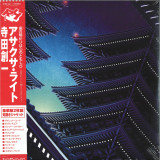
Back in 2015, Japanese DIY house pioneer Soichi Terada stepped back into the limelight courtesy of Rush Hour's 'Sounds From The Far East', a Hunee curated retrospective of material first released on his own Far East Recording label in the 1990s and early 2000s. Buoyed by the positive response and renewed interest in his work, Terada went back into studio to record his first new album of house music for over 25 years, Asakusa Light.
Developed over 18 months, Terada tried to recreate the mental and physical processes that led to the creation of his acclaimed earlier work. Those familiar with Terada’s celebrated, dancefloor-focused sound of the 1990s – a vibrant, atmospheric, and emotive take on deep house powered by the twin attractions of groove and melody – will find much to enjoy on Asakusa Light.
“I tried to recall my feelings 30 years ago, but when I tried it, I found it super difficult,” he explains. “I didn’t even know what I thought about myself five years ago, and the mental metabolic cycle seems to be faster than I thought. I tried different methods, including digging up my old MIDI data and composing by remembering old experiences. With the help of Rush Hour, I found some of the light from my heart that I had 30 years ago. I nicknamed the light I found in my heart, ‘Asakusa Light’.”
Produced using the very same synthesizers and drum machines that powered his 1990s work, the album is a joyous, colourful and life-affirming collection of timeless house music that not only recalls Terada’s own impeccable back catalogue, but also that of similarly celebrated contemporaries such as the Burrell Brothers or Ben Cenac (Dream 2 Science, Sha-Lor).
Terada, who has spent much of the last two decades writing video game music, has always had a gift for combining warm, undulating synthesizer basslines and perfectly programmed machine drums with stirring chords, smile-inducing melodies and mellow musical flourishes. It’s this immersive, sun-kissed and tuneful trademark style that takes centre stage on Asakusa Light, an album for the ages.
The set begins with the alien-sounding chords, soft-touch percussion and dawn-friendly warmth of ‘Silent Chord’ and ends on a high via the bouncing string stabs, starlight chords and thickset grooves of ‘Blinker’; in between, you’ll find a deluge of effortlessly feelgood music that’s the aural equivalent of a dopamine rush at sunrise.
There are subtle variations aplenty throughout the album – see the 8-bit lead lines and pulsing electronic textures of ‘Takusambient’, the vintage Tony Humphries flex of ‘Diving Into Minds’ and the effortlessly funky ‘Marimbau’ – but it’s the uniquely atmospheric, vivid and tactile nature of Terada’s loved-up sound that resonates. After well over 30 years in house music, the light in his heart is shining brighter than ever.
out of Stock
Last delivered 75 days ago available to reorder, subject to availability
Conundrum EP, a self-constructed puzzle, bringing together various conceptual elements. Going from detailed drum programming to live recorded synth-arp ambiences, Marijn S showcases the many colors of her being and spirit translated into sound.
Breakbeat, percussions, strength and focus but with some personal outlandish choices on the A side, followed by flowy-ness and playfulness, choices of musical elements lead by emotion on the B side.
out of Stock
Last delivered 19 months ago available to reorder, subject to availability
In the past, Mapache recording sessions have been pretty laid-back
affairs, with friends coming and going, the sessions starting and stopping
at the band's discretion--as relaxed a process as the immaculately sunny
vibes that their four albums would suggest - But on their dynamic and
ambitious fifth album of cosmic-folk, Swinging Stars, Sam Blasucci and
Clay Finch decided to take a trip and hunker down somewhere
particularly special
"It's a pretty impactful place," Finch says of the Panoramic House, the artist
retreat where Swinging Stars was recorded. "It's kind of dramatic. It's a castle-y
building on a hill, way up overlooking the Bay."
Located in Stinson Beach in Marin County, California, the Panoramic House has
recently hosted acts like My Morning Jacket, the War on Drugs, and Cate Le Bon,
and was the ideal combination of scenic beauty and self-imposed confinement to
allow Mapache to settle in for their most cohesive album yet.
"That environment yields itself to a higher level of focus because everybody's
together for a week," says Finch, explaining that the band stayed there during the
process, sharing every bit of their time and energy on a shared vision. "We were
all captive. No one could escape," he laughs.
Swinging Stars, an album of calm, second-nature swagger, is the natural result of
a band that's existed in one form or another for its founders' entire adult lives.
Finch and Blasucci first met as students at La Canada High School, just north of
Los Angeles, where they both had a guitar class: "There wasn't much supervision
or anything," remembers Blasucci. "It was really nice. And we got to just play
guitars together."
After the success of 2021’s Ursgal, Mongolian jazz singer Enji returns with her third album Ulaan. The line-up has grown in size with drummer Mariá Portugal and clarinettist Joana Queiroz from Brazil joining the band to create an invigorating blend of grounded Folk and brooding Jazz.
out of Stock
Last delivered 2 years ago available to reorder, subject to availability
PAURA explores the horror repertoire from the precious CAM Sugar archives taking us on a hypnotic journey into the labyrinths of fear, through the different variations that Italian horror took on from the esoteric and supernatural to the slasher films of the early 1970s; to reinterpretations of Romantic literature and gothic fiction to the splatter films of the ‘80s; and from witchcraft to metropolitan horror. This is not a real “best of” but an eclectic menu full of mysterious voices, childlike lullabies, sweet melodies, obsessive music boxes, obstinate harpsichords, crazy distortions and threatening synthesizers, conceived as a succession of sequences, as if a film edit. The new collection includes some of the most creative music ever written and strives to do justice not only to some of the best known composers in this genre, but also to many great unsung composers: From celebrated composers like Ennio Morricone, Riz Ortolani & Stelvio Cipriani to long-forgotten personalities who fed the industrial backbone of Italian cinema such as Daniele Patucchi, Marcelo Giombini & Berto Pisano. The collection includes 6 previously unreleased tracks plus 3 tracks released on vinyl for the first time and 5 tracks available commercially for the first time (originally released only as a limited promo item).
„Eine blühende Solokarriere aufgebaut auf einfallsreicher Programmgestaltung und einem sondierenden Interpretationsstil“,
sagt die New York Times über Daniel Hope. Auf seinem neuen Album erkundet der Stargeiger die Diversität amerikanischer Musik in atemberaubenden neuen Bearbeitungen von Werken aus
Klassik und Jazz, die von George Gershwin, Aaron Copland, Leonard Bernstein, Kurt Weill, Florence Price, Duke Ellington, Sam Cooke und Samuel A. Ward stammen.
Begleitet wird Hope vom Zürcher Kammerorchester und von großartigen Gastmusiker*innen, u.a. Soul-Sängerin Joy Denalane und renommierten Jazzpianisten Marcus Roberts. Als künstlerischer Leiter des New Century Chamber Orchestra in San Francisco hat Hope einen engen Bezug zur amerikanischen Kulturlandschaft und dies wird nun auf seinem Album „America“ durch vielfältige und faszinierende Werke musikalisch erlebbar.
„In jüngster Zeit gibt es eine starke Bewegung mit dem Ziel, afro-amerikanische Komponisten wiederzubeleben und neu zu
entdecken, etwa Florence Price oder William Grant Still. Es gibt noch viele andere Komponisten, deren Geschichten erst heute erzählt werden‘“, sagt Hope.
Markus Roberts fügt hinzu: „Amerikanische Musik verkörpert das amerikanische Leben: Flexibilität und die Fähigkeit, kontinuierlich etwas zu erschaffen und neu zu gestalten“. Hope und Roberts sind über die Jahre oft zusammen aufgetreten; mit dieser Aufnahme
faszinieren sie einmal mehr durch einen exzellent musizierten Dialog zwischen Jazz und Klassik.
The history of film music would be different without John Williams. Cinema classics like Star Wars, Indiana Jones and Harry Potter are inextricably linked with his musical style. His soundtracks captivate listeners with thrilling, moving themes and a tremendous range of atmospheres and sounds. John Williams conducts the greatest orchestra in the world; a once in a lifetime recording celebration. The album includes beloved hits such as the “Superman March”, the Theme from Jurassic Park, excerpts from Close Encounters of the Third Kind and the Star Wars, Harry Potter and Indiana Jones films. There are also works such as the Suite from Far and Away and the moving Elegy for cello and orchestra, that may be less familiar but are no less brilliant.ng the legendary composer’s 90th birthday. Featuring completely new arrangements and repertoire all recorded in breath-taking Dolby Atmos sound.
Kombinat 100, the suspiciously band-like live act from northern shores, are set to unleash their eagerly awaited debut album ‚Wege Übers Land’ (ways across the land). Here, everything we know and love about these notorious dancefloor smashers reemerges from the studio, squeaky clean and freshly rinsed, polished and arranged. An irresistible retrospective of Kombinat 100’s countless live gigs, there is no other way this album could have come about: All of the four Mecklenburgers’ tracks have their origins on stage.
So don’t be surprised if you find yourself moshing along from beginning to end! Kombinat100’s eclectic mix and match of influences touches on more genres than you could possibly think of, from techno, house, dub and pop to jazz and beyond, interspersed with plenty of lovingly crafted moments of homemade bliss. And it is precisely those moments, when the boys reach for their acoustic sidekicks, from accordion and melodica to congas and hammond organ, that our hearts miss a beat. Unafraid to flaunt grand emotions, melancholic opener ‚Flieg kleine Taube’ (fly away, dove’) and the sun-drenched sounds of ‘Hanne Nüte’ meet their match in the rocking grooves of ‘Out Of My Space’. In-between, the boys invariably return to their gig-inspired dancefloor roots – ‘Woterfitz’, ‘Del Maritim’ and ‘Der Pomel’ are set to move your heart, feet and mind. So, finally: a breath of fresh, Open Air for your living room!
Kombinat 100, der bandverdächtige Liveact aus dem Norden, veröffentlicht nun mit "Wege übers Land" sein lang erwartetes Debüt- Album. Das, was bisher den Dancefloor zum Einstürzen brachte, bekommen wir nun sauber im Studio aufpoliert und arrangiert. Dabei handelt es sich um eine Retrospektive der unzähligen Live-Gigs der vier Jungs aus Mecklenburg. Ihre Tracks entstehen auf der Bühne, sind für die Bühne konzipiert. Deshalb muss es auch niemenaden verwundern, wenn man von Anfang bis Ende mitgeht. Kaum ein Genre wird ausgelassen, wenn Kombinat 100 seine Einflüsse aus Techno, House, Dub, Pop und Jazz reflektiert. Aber auch die heißgeliebten handgemachten musikalischen Augenblicke dürfen natürlich nicht fehlen. Denn genau dann, wenn sie ihre akustischen Instrumente, wie Akkordeon, Melodika, Conga`s und Hamond Orgel zum Einsatz bringen, schlägt unser Herz am höchsten. Diese Tracks stehen zu ihren großen Gefühlen, wie der melancholische Opener-Track "Flieg kleine weiße Taube" oder das sonnenverwöhnte Stück "Hanne Nüte". In der Mitte wirds dann mit "Out Of My Space" shufflig und rockig. Dominiert wird das Album jedoch durch die Tracks "Woterfitz", "Del Maritim" oder "Der Pomel", welche ganz klar für den großen Floor zugeschnittenen sind. Endlich: Kombinat 100 gibt uns ein Stück Open Air-Feeling für's Wohnzimmer!
out of Stock
Last delivered 3 years ago available to reorder, subject to availability
"Life Plans and Parallel Side Tracks" by Ismael Zouaoui (aka Ish) is the highly anticipated album on Libertine Records. Spanning Electro, Drum 'n' Bass, Dark-Wave, and Ambient, Ish's versatile production shines. Inspired by diverse influences like Brave New World, Japanese Anime, and early Techno/Trance, the album's contemporary, textured sound captivates.
out of Stock
Last delivered 23 months ago available to reorder, subject to availability
Die Trackliste für Guardians of the Galaxy Vol. 3: Awesome Mix Vol. 3 (Original Motion Picture Soundtrack) besteht aus 17 Songs und wird am 5. Mai auf CD und 12” 2-LP Vinyl erhältlich sein.
Im Film spielen Chris Pratt, Zoe Saldana, Dave Bautista, Karen Gillan, Pom Klementieff, Vin Diesel als Groot und Bradley Cooper als Rocket, Sean Gunn, Chukwudi Iwuji, Will Poulter und Maria Bakalova mit. James Gunn ist der Regisseur und hat auch das Drehbuch geschrieben. Kevin Feige ist Produzent, Louis D’Esposito, Victoria Alonso, Nikolas Korda, Sara Smith und Simon Hatt fungieren als ausführende Produzenten.
out of Stock
Last delivered 3 years ago available to reorder, subject to availability
"Don't Stop" is the third album retrospectively released by Ghia. As the subtitle "Early Works & Artefacts 1984-1987" implies, it features some of their earliest compositions as well as tracks that were recorded during the same period as their "Curaçao Blue" LP.
The album is a fusion of diverse music styles. Listeners will delight in a range of genres, including electro, funk, soul, jazz-funk, synth pop, and even rap/hip-hop, all woven together as a cohesive work that remains mostly instrumental. As a whole, "Don't Stop" represents Ghia's funkiest and most experimental release to date. Notably, the LP features a rap version of Hermann Hesse's controversial German poem "Armer Teufel am Morgen nach dem Maskenball" ("Poor Devil the Morning After the Costume Ball") from 1926, accompanied by a drum machine rhythm and funky guitar. This poem depicts a person who drank too much the night before, telling the story and describing his hangover. The title track "Don't Stop" and the thrilling minimal electro-funk tune "3 A.M. at Moëf Gaga" both evoke old-school electro influences. The latter references the Spanish discotheque Moëf Gaga, located on the Balearic coast, which the dynamic duo of Lutz Boberg and Frank Simon frequented during their 1980s holidays. While the exact music played at 3 A.M. is unknown, listening to Ghia's track will undoubtedly capture the mood of the place.
One of the key tracks of the album is "Message From The Other Side", which could easily be noted as one of the nicest European synth-funk instrumental pieces ever. The track is based on a sick synth bass line, sparkled with DX7 chord hits, funky guitar, and a delightful "marimba" solo in the last third. The solo was actually played on Boberg's keyboard, using a special sound cartridge. This particular track had to be edited and technically revised by Marian Tone and DJ Scientist as the existing demo version of the song could not be used as is. With its stunning groove, this track will surely be a DJ's favorite.
Listening to the complete album, there is more of Boberg's keyboard wizardry: could you believe that the trumpet solo on "Jump In The Water" as well as the short but stunning slap bass solo on "Talk Too Much" were both played by on the DX7? However, this new release, unlike the jazzy "Curaçao Blue", is not about solos or virtuous playing - it clearly shows the duo's direction towards more electronic composition and clear song structures. The versions of "September Garden", "When The Rain is Falling" as well as "Talk Too Much" are actually instrumental mixdowns of vocal songs. And again, we get a blissful take of "Close To You", here a version from 1986. This soulful jazz-funk ballad could already be heard on "Curaçao Blue" while the final vocal version with singer Lisa Ohm can be found on the recently released "This Is" LP. This shows that the Ghia composers, Boberg and Simon, were perfectionists - tracks were reworked again and again, making them better and better.
The album was mastered and restored with great care, and we are pleased to provide you with a perfect example of mid 1980s home-recording pleasures, tinged with a youthful spirit and providing a sound that cannot be recaptured anymore nowadays. Alongside "This Is" and "Curacao Blue" it should be another perfect addition to any 80s groove collection as well as a great pick for DJs that love and play disco, leftfield electro and funk. The LP is limited to 500 copies.
out of Stock
Last delivered 3 years ago available to reorder, subject to availability
Codek is the brainchild of Jean-Marie Salaun who grew up in Paris influenced by the folklore of the inner city. In 1978 he joined art rock group SpionS alongside Gregory Davidow and recorded two singles. Diving into the Paris post punk scene he met Claude Arto and designed the artwork for Claude's single on Celluloid Kwai Systeme / Betty Boop.' Robin Scott (M Pop Music') had produced the SpionS first single and wanted to collaborate further. With Claude, Jean-Marie wrote Me Me Me', intended for a choir, for M. Then SpionS split and Robin was off to Switzerland to record an album to follow-up his hit single. That left Jean-Marie alone in London, where he began working as Codek, a play on the brand name Kodak The Me Me Me' single was released by MCA Records in 1980. Back in Paris, now with some studio experience, Celluloid Records hired Jean-Marie to produce records for Artefact and Les Orphelins. Over the next 2 years he began working on ideas for the next Codek single Closer / Tam Tam'
Closer' started its life as an electric baseline played by Jean-Marie. Claude Arto sequenced the floating synthesizers. Laurent Grangier and Frédéric Lapierre of reggae band Immigration Act played the horns. The lyrics Hard to say. Easy to do. We don't need to say what we do' were a statement on creation as narration expressed Jean-Marie's ennui, I'm tired with it.' Tam Tam' was inspired by Burundi drummers playing on the plaza in front of Beaubourg where the song was recorded. Jean-Marie enlisted one of the drummers from the circle, Georges Atta Dikalo, to lay down percussion for the song. The female singers were from the French Caribbean and added falsetto tribal chants. JM was part of the the African night scene in Paris, remixing Xalam's Kanu' and Touré Kunda's Salaly Muhamed.' Claude achieved complex rhythmic patterns using a modular synthesizer and heavy processing. Jean-Marie recorded himself beating his chest for the thump noises. The recording of Tam Tam' and Closer' spanned over two years. They started on 16-track in Studio d'Auteuil, where JM blew the woofers, before resuming in Studio Centre Georges Pompidou with an added 8-track recorder. Jean-Marie was producing other bands, and a lot of this was recorded on "borrowed" studio time. The single was released in 1981 on West African Music, a tiny label from the Ivory Coast, and was re-released a year later by Island Records in the UK (where the B-side was re-named Tim Toum'). Both tracks were staples in the DJ sets of Beppe Loda and Daniele Baldelli, finding a spiritual home in the Cosmic scene of Italy.
Both songs have been remastered for vinyl by George Horn at Fantasy Studios in Berkeley. The jacket is an exact replica of the 1981 edition with artwork by Angela Boy, inspired by primitive electronics and African paintings. Each copy includes an doubles-sided insert with photos and liner notes by Jean-Marie Salaun.
Toshiko Mariano Quartet is the 1961 album from fourteen time Grammy
Nominated pianist and composer Toshiko Akiyoshi - then known as
Toshiko Mariano
Women have long been denied the credit they deserve in jazz. It must be noted
that as a Japanese women in jazz, Akiyoshi had to battle for acceptance on many
fronts. Jazz has been a patriarchy community from the beginning, and even
critical praise of her playing could not help but take note of her gender. Leonard
Feather, for example, writing at the time in the Encyclopedia of Jazz called out
Akiyoshi's playing as "fiery, powerfully articulated and exceptionally fluent," but
added that there was "nothing delicately feminine." Even today it is still hard for
people to see Jazz in any other way. We are pleased to be a part of shifting the
narrative and shine a spotlight on this talented artist and this wonderful album.
While she was later to compose using themes, harmonies, and instruments
connected to her Japanese heritage, this album captures the pianist early in her
career playing a straight ahead, harp bop style. This was already her 7th album as
a band leader, and it is a shining example of her confidence and mastery of her
instrument and as a band leader. Recorded at the Nola Penthouse Studios in New
Your City in December of 1960, the LP includes extraordinary liner notes by
Candid A&R man and producer Nat Hentoff giving a context and insight that adds
to the experience of hearing these extraordinary performances
Codek is the brainchild of Jean-Marie Salaun who grew up in Paris influenced by the folklore of the inner city. In 1978 he joined art rock group SpionS and collaborated with Robin Scott (M 'Pop Music'). He began working as Codek, a play on the brand name Kodak with the 'Me Me Me' single released in 1980. In 1981 the 'Tam Tam'/'Closer' single was released on West African Music, a tiny label from the Ivory Coast, and re-released a year later by Island Records in the UK (where the B-side was re-named 'Tim Toum'). 'Tam Tam' was inspired by Burundi drummers playing in the plaza in front of Beaubourg where the song was recorded. Jean-Marie enlisted one of the drummers from the circle, Georges Atta Dikalo, to lay down percussion for the song. The female singers were from the French Caribbean and added falsetto tribal chants. Claude Arto achieved complex rhythmic patterns using a modular synthesizer and heavy processing. Jean-Marie recorded himself beating his chest for the thump noises. The recording of spanned over two years. They started on 16-track in Studio d'Auteuil, where Jean-Marie blew the woofers, before resuming in Studio Centre Georges Pompidou with an added 8-track recorder.
In 2017 we reissued the 'Tam Tam'/ 'Closer' single and shortly after the 24-track master tapes were discovered in Paris by original engineer Gérard Chiron. We arranged for graphic designer Maycec to pick up the tapes and immediately began to think of remixers for this project. First up is producer and DJ Daniele Baldelli who gave the original single a spiritual home in the Cosmic 80s scene of Italy. Here he's teamed up with Marco Dionigi for two remixes. Remix A goes full on funky disco baseline while Remix B a more balearic affair. We remember Justin sharing a memory of DJing the original Island Records promo at the Mudd Club in 1981 so we had to ask him for remix. He teamed up with his Whatever/Whatever production partner Bryan Mette and delivered an hypnotic pulsing house remix and an extended edit. All songs have been mastered for vinyl by George Horn at Fantasy Studios in Berkeley. The jacket is new twist designed by Eloise Leigh on the 1981 edition artwork by Angela Boy, inspired by primitive electronics and African paintings.
The debut album from the I & I Band, originally released in 1981. Excellent British roots, includes the tracks Marijuana,
Jah Made Them All and Marcus Children.
Dot Allison returns with a new solo album, Consciousology. After over a decade away, the former One Dove singer and songwriter broke cover in 2021 with Heart-Shaped Scars and this new album follows just two years later, as she hits a purple patch of songwriting. It’s also her first full release for Sonic Cathedral after contributing to Mark Peters’ acclaimed Red Sunset Dreams last year. Consciousology finds multi-instrumentalist Dot joined by the London Contemporary Orchestra, her new labelmate Andy Bell from Ride, who plays guitar on two tracks, and Hannah Peel, who is responsible for some of the string arrangements with both the LCO and a stellar group of Scottish string players. It expands on the styles and themes of the previous album, all while pushing everything just that little bit further – the songs sound bigger, more avant-garde and experimental and, occasionally, properly out-there and psychedelic. “I wanted to make some albums that felt like a set, exploring love, what lies beyond the visible and how all these aspects dovetail together,” explains Dot. “I see Consciousology a more psych Heart-Shaped Scars with a far fuller, more immersive sound and so, in that sense, it’s a more wayward, bolder, rule-breaking partner.” Right from the eye-catching artwork by PJ Harvey collaborator Maria Mochnacz it definitely does not play it safe. It veers from the techno-played-as-folk of opener ‘Shyness Of Crowns’ and ‘220Hz’ and the Linda Perhacs-meets-The Velvet Underground chug of the first single ‘Unchanged’ to the Mercury Rev-style fantasia of ‘Bleached By The Sun’, the Brian Wilson-esque harmonies of ‘Moon Flowers’ and the kaleidoscopic colour trip of ‘Double Rainbow’. Elsewhere there are echoes of Desertshore-era Nico, Jack Nitzsche’s work with Neil Young, Karen Dalton and Anne Briggs before the relative simplicity of the Tim Hardin-inspired closer ‘Weeping Roses’. It’s a brilliant, breathtaking record.
'In Tense' from New York-based composer and bassist Harish Raghavan, following his 2019 debut 'Calls For Action' this new and all-original output was recorded at the end of 2020 in the midst of the COVID-19 pandemic. The album's six tracks were written especially for the exceptional band of drummer Eric Harland, guitarist Charles Altura, Joel Ross on vibraphone and marimba, and Morgan Guerin on woodwinds.
Lori McKenna titled her album 1988 after the year she married her husband, Gene, yet the 10 songs within also serve as a love letter to lifelong friendships, people she’s lost, and her family. Recorded with producer Dave Cobb in Savannah, Georgia, 1988 naturally has its nostalgic moments, even if not every ending is a happy one. With more of an electric edge than her past projects, 1988 feels in step with classic ‘90s albums by Sheryl Crow or Gin Blossoms, where the lyrics pulled you in as much as the melody or production. Playing together on acoustic guitars while facing one another in the studio, McKenna and Cobb tracked the album live, giving it a feeling of immediacy and authenticity.
‘Dear Departed’, the second album from Sam Burton, arose from a time of rebirth. In the last few years, Burton basically started over. There’s a freedom in leaving everything behind, and Burton embarked on a wandering phase. He went and stayed at a friends’ family home in a rural region further north in California, where he holed up in a cabin and helped the grandmother farm to earn his keep. He crashed with friends all around Los Angeles, until he found himself a new gig and a new apartment of his own. Along the way, he was writing songs.
‘Dear Departed’ was produced by Jonathan Wilson (Angel Olsen, Father John Misty, Margo Price), and recorded at Wilson’s Topanga Canyon studio with some of the best studio players in LA.
Am 28. Juli wird die Britin "UNHEALTHY" herausbringen, ihr dritter Longplayer und Nachfolger des 2021 veröffentlichten "Therapy".
Mit ihrem neuen Album lädt uns Anne-Marie einmal mehr in ihr Leben ein und bietet Einblicke in ihre perfekt imperfekte Welt. Vor einiger Zeit stellte Anne-Marie fest, dass sie sich bereit fühlte, vergangene Beziehungen aufzuarbeiten, die nicht immer harmonisch geendet waren - und damit zugleich zu lernen, positive neue Begegnungen richtig für sich einzuordnen. Die Songs entstanden in dieser Phase und nehmen uns mit auf eine Reise von Zerrissenheit zu Zufriedenheit. Auf "UNHEALTHY" erleben wir eine Anne-Marie, die erhobenen Hauptes dasteht und diese neue Version ihrer selbst zu lieben lernt: kämpferischer, mutiger - und glücklicher als je zuvor.
Anne-Marie blickt Stand heute auf sieben Top-10-Singles (darunter zuletzt "Psycho" (feat. Aitch) und zwei Top-3-Alben im UK, in Deutschland eroberte die Sängerin erstmals 2018 Platz 1 der Single-Charts ("Friends" mit Marshmello). International wurde die Musik von
Anne-Marie bereits sieben Milliarden Mal gestreamt.
Zuletzt tat sich die Künstlerin mit David Guetta und Coi Leray für "Baby Don't Hurt Me" zusammen, das die deutschen Top 20 erreichte.
Am 28. Juli wird die Britin "UNHEALTHY" herausbringen, ihr dritter Longplayer und Nachfolger des 2021 veröffentlichten "Therapy".
Mit ihrem neuen Album lädt uns Anne-Marie einmal mehr in ihr Leben ein und bietet Einblicke in ihre perfekt imperfekte Welt. Vor einiger Zeit stellte Anne-Marie fest, dass sie sich bereit fühlte, vergangene Beziehungen aufzuarbeiten, die nicht immer harmonisch geendet waren - und damit zugleich zu lernen, positive neue Begegnungen richtig für sich einzuordnen. Die Songs entstanden in dieser Phase und nehmen uns mit auf eine Reise von Zerrissenheit zu Zufriedenheit. Auf "UNHEALTHY" erleben wir eine Anne-Marie, die erhobenen Hauptes dasteht und diese neue Version ihrer selbst zu lieben lernt: kämpferischer, mutiger - und glücklicher als je zuvor.
Anne-Marie blickt Stand heute auf sieben Top-10-Singles (darunter zuletzt "Psycho" (feat. Aitch) und zwei Top-3-Alben im UK, in Deutschland eroberte die Sängerin erstmals 2018 Platz 1 der Single-Charts ("Friends" mit Marshmello). International wurde die Musik von
Anne-Marie bereits sieben Milliarden Mal gestreamt.
Zuletzt tat sich die Künstlerin mit David Guetta und Coi Leray für "Baby Don't Hurt Me" zusammen, das die deutschen Top 20 erreichte.
Sam Burtons zweites Album, 'Dear Departed', wurde von Jonathan Wilson (Angel Olsen, Father John Misty, Margo Price) in seinem Topanga Canyon Studio mit einigen der besten Studiomusiker in LA produziert. Gemeinsam haben Wilson und Burton einen Sound geschaffen, der nicht in Retro-Pastiche abgleitet, sondern vielmehr ein beschwörendes Echo, einen Traum von der Vergangenheit darstellt. Im Vergleich zu seinem gefeierten Debütalbum 'I Can Go With You' aus dem Jahr 2020 nutzt Burton hier eine weitaus größere Leinwand und verleiht den darin enthaltenen Emotionen ein neues Gefühl von Dringlichkeit und Intensität. Burton hat ein Händchen dafür, reines Laurel Canyon AM-Gold zu schürfen. Pastorale Streicherarrangements blühen im Hintergrund von Sams markantem, honigsüßem Gesang auf - wie ein moderner Campbell, Orbison oder Nilsson.
Sam Burtons zweites Album, 'Dear Departed', wurde von Jonathan Wilson (Angel Olsen, Father John Misty, Margo Price) in seinem Topanga Canyon Studio mit einigen der besten Studiomusiker in LA produziert. Gemeinsam haben Wilson und Burton einen Sound geschaffen, der nicht in Retro-Pastiche abgleitet, sondern vielmehr ein beschwörendes Echo, einen Traum von der Vergangenheit darstellt. Im Vergleich zu seinem gefeierten Debütalbum 'I Can Go With You' aus dem Jahr 2020 nutzt Burton hier eine weitaus größere Leinwand und verleiht den darin enthaltenen Emotionen ein neues Gefühl von Dringlichkeit und Intensität. Burton hat ein Händchen dafür, reines Laurel Canyon AM-Gold zu schürfen. Pastorale Streicherarrangements blühen im Hintergrund von Sams markantem, honigsüßem Gesang auf - wie ein moderner Campbell, Orbison oder Nilsson.
I Am Not There Anymore folgt auf das 2017 erschienene Music For The Age Of Miracles (das nach einer siebenjährigen Pause der Band erschien), wobei die neuen Aufnahmen 2019 begannen und stückweise bis 2022 fortgesetzt wurden - zum Teil wegen der Pandemie, aber auch, weil die Band den Raum für Experimente haben wollte. "Wir haben uns schon immer für andere Musik als Gitarrenmusik interessiert", sagt Sänger, Texter und Gitarrist Alasdair MacLean. Diesmal hat er - zusammen mit dem Bassisten James Hornsey und dem Schlagzeuger Mark Keen - Elemente des Post-Bop-Jazz, der zeitgenössischen Klassik und der elektronischen Musik einbezogen. MacLean meint: "Nichts von alledem war in der Lage, seinen Weg in unseren Sound zu finden, außer auf die beiläufigste Art und Weise, in der schwächsten Ausprägung." I Am Not There Anymore bestätigt die Stellung von The Clientele unter den großen Stilisten der Popmusik, indem es geschickt von Bild zu Bild, von Stimmung zu Stimmung wechselt, und zwar auf eine Weise, die sich sowohl neu als auch klassisch anfühlt, während The Clientele als Band in neue klangliche Gefilde vorstoßen. Im Laufe der 32-jährigen Karriere von The Clientele haben Kritiker und Fans ihre Lieder mit Worten wie "ätherisch", "schimmernd", "dunstig", "hübsch" und "zerbrechlich" beschrieben. Alasdair MacLean, hat seine eigene Interpretation der Wirkung, die seine Musik erzeugt. "Es ist das Gefühl, nicht da zu sein", sagt er. "Was wirklich in allen Clientele-Platten steckt, ist das Gefühl, nicht in dem Moment zu sein, in dem man sich befindet." I Am Not There Anymore evoziert regelmäßig das, was MacLean "das Gefühl, nicht real zu sein" nennt. Viele der Songs wurden von MacLeans Erinnerungen an den Frühsommer 1997 inspiriert, als seine Mutter starb.
I Am Not There Anymore folgt auf das 2017 erschienene Music For The Age Of Miracles (das nach einer siebenjährigen Pause der Band erschien), wobei die neuen Aufnahmen 2019 begannen und stückweise bis 2022 fortgesetzt wurden - zum Teil wegen der Pandemie, aber auch, weil die Band den Raum für Experimente haben wollte. "Wir haben uns schon immer für andere Musik als Gitarrenmusik interessiert", sagt Sänger, Texter und Gitarrist Alasdair MacLean. Diesmal hat er - zusammen mit dem Bassisten James Hornsey und dem Schlagzeuger Mark Keen - Elemente des Post-Bop-Jazz, der zeitgenössischen Klassik und der elektronischen Musik einbezogen. MacLean meint: "Nichts von alledem war in der Lage, seinen Weg in unseren Sound zu finden, außer auf die beiläufigste Art und Weise, in der schwächsten Ausprägung." I Am Not There Anymore bestätigt die Stellung von The Clientele unter den großen Stilisten der Popmusik, indem es geschickt von Bild zu Bild, von Stimmung zu Stimmung wechselt, und zwar auf eine Weise, die sich sowohl neu als auch klassisch anfühlt, während The Clientele als Band in neue klangliche Gefilde vorstoßen. Im Laufe der 32-jährigen Karriere von The Clientele haben Kritiker und Fans ihre Lieder mit Worten wie "ätherisch", "schimmernd", "dunstig", "hübsch" und "zerbrechlich" beschrieben. Alasdair MacLean, hat seine eigene Interpretation der Wirkung, die seine Musik erzeugt. "Es ist das Gefühl, nicht da zu sein", sagt er. "Was wirklich in allen Clientele-Platten steckt, ist das Gefühl, nicht in dem Moment zu sein, in dem man sich befindet." I Am Not There Anymore evoziert regelmäßig das, was MacLean "das Gefühl, nicht real zu sein" nennt. Viele der Songs wurden von MacLeans Erinnerungen an den Frühsommer 1997 inspiriert, als seine Mutter starb.
LP Red /Black Corona Vinyl Reprint limited to 2.000 units
Incl. former Bonustracks: Pray For Forgiveness (Rough mix un-mastered), Dismal Dream (Instrumental version)
Recorded Things is thrilled to present "Season Two Remixes" by Oliver Rosemann & Alexander Kowalski. This highly anticipated release features fresh interpretations of their original tracks, and is available digitally and on vinyl.
Following the success of last year's vinyl release of "Season Two," this new offering breathes new life into the already captivating compositions. The duo's collaborative efforts have attracted a stellar lineup of talented artists who have put their unique spin on the tracks. "Stinger," "Most Monkeys Live In Trees," and "Lucid Mind" have been remixed by the exceptional talents of Roll Dann, Ritzi Lee, Vil & Cravo, and Mario Berger.
This release is a testament to the versatility and artistry of Oliver Rosemann & Alexander Kowalski, as well as the immense talent of the remixing artists. "Season Two Remixes" is a must-have for electronic music enthusiasts and collectors alike. Whether you prefer the digital format or the warmth of vinyl, this release is sure to leave a lasting impression.
out of Stock
Last delivered 13 days ago available to reorder, subject to availability
Highly anticipated new album (the 11th) of the African Reggae Voice. Militant and sharp in his texts, powerful and unstoppable in his groove.
Recorded between Abidjan, Bamako and Paris. Co-produced by jamaican veteran Tyrone Downie (Bob Marley), and French musicians Guillaume Stepper (Sly & Robbie) and Mael Donion (City Kay).
With featurings by Amadou & Mariam, Grand Corps Malade, Winston McAnuff and Dub Inc. Sung in french, english, dioula and bambara. One of this year World Music major piece.
out of Stock
Last delivered 3 years ago available to reorder, subject to availability
Another Piero Umiliani classic gets its first-ever release on 7" vinyl! Shortly after 'Sweden: Heaven and Hell', in 1969 'Angeli Bianchi, Angeli Neri' continued the collaboration between Umiliani and director Luigi Scattini, this time in the direction of magic and esotericism, as the English title of the film, "Witchcraft '70", makes abundantly clear.
The two tracks included in this release reflect that direction, which informs more or less the entire score written by the Florentine composer. On side A, the wonderful "Saudade" features Brazilian singer Maria da Penha Silva, whose hypnotic and sensual voice soars over soft percussion, as if casting a spell.
On side B, the irresistible "Macumba" sounds almost like an Amazonian ritual, something halfway between capoeira and batucada, with its driving percussion over which the mysterious wordless vocalizing of Edda Dell'Orso creates a wildly fascinating theme. This limited edition 7" is a genius combination of groove and magic. Don't miss out!
out of Stock
Last delivered 3 years ago available to reorder, subject to availability