Fasten your seatbelt and let Berlin-based edit master Voodoocuts take you back to the good times with his jazzy reinterpretations of two classic tracks. The A side of this 7"" kicks off with 'That Cool Loop', an alternative, Latin-inspired reimagining of Us3's well-known 'Cantaloop' that is sure to get the dancefloor moving. On the flip, 'Jazzaround' offers a reimagined take on House of Pain's anthem, packed with jazzy chants, swinging chords and crispy drums. Another finger-licking donut not to be missed!
out of Stock
Last delivered 3 months ago available to reorder, subject to availability
Dutch old school power house Markie with some 6-am-type-of-shit light sabre wielding energizer, stomping ahead while trying to fend of a giggling swarm of robotic mosquitos. 150 beasts.
Pneumatix & Mental Reaper with some deep flowing reflection of the walls caging our existdance. Superbly crafted food for mind and feet best enjoyed in the middle of the forest with no walls.
160 beasts.
As’teka Nahuatl & La Tartine pump up the jam in da south style. Summoning Quetzalcōātl the spirally voluted one in it’s cyber incarnation to the modern dance, bringing with it a horde of spider monkeys that go ape all over the place. Can you scratch the itch?
165 beasts.
Original full sleeve artwork by Darkam. Design and Layout by TDSiNGZ. Mastered by Stefan ZMK.
Each 12“ EP comes with a 2 sided poster, a digital download code, and 2 artwork stickers.
out of Stock
Last delivered 10 months ago available to reorder, subject to availability
Where we welcome you to the Fourth installment of 'Divine Harmonics" Featuring Kuniyuki Takahashi. Music produced in collaboration with friends
Here we present Part one of a Two Part Series.
Recorded in a full-fledged Recording Studio in Brooklyn New York, the idea behind this current project was to assemble a few admires of Kuniyuki's music and invite them to participate in the composition.
The musicians on this project include master percussionist composer Lekan Babalola on African Drums and Percussion, Lead Guitarist James Bergeau , Joaquin Joe Claussell Main Voice and Percussions; And of course, the artist himself Kuniyuki Takahashi and Acoustic Piano, Keyboards and Drum Programming.
Artwork Created by the one and only artist Akemi Shimada.
out of Stock
Last delivered 3 months ago available to reorder, subject to availability
Los Angeles-based duo LUCKYANDLOVE are back with their third album, evoking a new sense of art school originality, following their critically acclaimed “Transitions” album. The duo defines 'Humaura' as the atmosphere that emanates from the feelings of the human spirit void of technological control.
Blending raw analog synth sounds with driving punctuated percussion and punchy analogue bass, LUCKYANDLOVE’s music is shaped by the embers of Siouxsie and The Banshees and Bauhaus, resonant spectres carry over from synth-laden galaxies, where the needle hits the vinyl groove and Doc Martens marched to basement dance floors.
LUCKYANDLOVE is the raw sonic experiment of Loren Luck and April Love, whose music transcends genres. Their live analogue synth beats, Moog instrumentation and beautiful, harmonic vocals trigger an immediate download of fuzzy sunset synthgaze, blue-black neon darkwave, and tigerprint electro punk.
“‘Humaura’ is an action-packed, cinematic, entertaining and soulful electro-dance record full of fresh air and wide-open roads where there is more freedom to party, to be in nature, and to be our wild selves,” says April Love.
Fusing together pulsating molten kicks, abrasive fuzz-laden analog synths and sensual vocals, the anti-tech angst anthem ‘I Am Human’ is a call to take back our lives, underlining the need to reconnect with being Human before it’s too late. ‘Lonely at Night’ is a "last call" bar track about the desperate, frantic desire for human connection, building from a haunting sense of isolation to a fast-paced, climactic reunion with a crush. Elsewhere, this album features enchanting lyrics rooted in emotions from melancholy and sorrowful glom to a state of blissful trance.
This album was recorded, mixed and mastered for digital release by Grammy award-winning engineer Be Hussey (Modern English, Twin Tribes, Boy Harsher) at Balboa Studio and Catwater for the digital music, and mastered for vinyl and lathe-cut by Grammy-nominated engineer Nicholas Townsend (Weezer, Grimes) at Townsend Mastering.
Their 'Lucky + Love' and 'Transitions' albums having earning them a global fan following, US and UK tours, multiple tracks featured in the indie hit film 'Tiger Within' (Ed Asner's final performance), and wide acclaim, noting their “soulful, synthesized sound" (LA Weekly), “spectral synths and dazed-dreamy feeling” (Big Takeover Magazine), not to mention their "uncompromising and inventive sonic experiment” (The Spill Magazine) and sound that “oscillates between the asphalt synth streets & interstellar outer realms” (Impose Magazine).
LUCKYANDLOVE’s visceral, dark electro-pop appeal continues to stretch through time and space. Praise for the album’s lead track ‘I am Human’ have poured in from over a dozen countries. ‘Humaura’ promises to cement the duo’s reputation as one of America’s most vivacious electronic / synthwave acts, positioning them firmly within the lineage of artists like Phantogram, Ladytron, The Soft Moon, Twin Tribes and ACTORS.
‘Humaura’ Press:
“...In contrast to its synth-laden darkwave and electropunk sound, the song presents lyrical themes of championing the human spirit and emotions over the technological void" ~ Regen Magazine
“Moog textures and distorted synth tones weaving together like electric currents. An industrial edge that carries a dreamy undercurrent, nodding to darkwave, punk rock and post-punk influences without sounding dated" ~ Myth of Rock
"Every second and note is a meld of lava-esque incitement and beguiling melodic fixation and a breath to unpredictability and stirring fuzz hued uniqueness… a thrilling encounter" ~ The Ringmaster Review
"Layers fall into place and give rise to soaring vocals. The beautiful timbre of her voice sits over the landscapes of sound and reveal poignant lines that hit home." ~ Sound Read Six
What began as a nostalgic nod to Camden Market’s bootleg culture has become the next chapter of in the Running Back Mastermix series. At once deeply personal and openly communal, it shows how a lifetime of production can be condensed into 90 minutes without losing its edge — proof that the mixtape, even in 2025, still has stories left to tell.
What followed was a patient excavation. Old DATs were pulled out of storage, forgotten files surfaced from hard drives, and new material was written to sit alongside them.
Together, these fragments revealed a body of work stretching back more than 25 years — tracks that moved across the spectrum of house and techno but shared a common thread of character and atmosphere.
In May of this year, the archive finally found its form. Recorded live on three decks using Serato, the resulting mix brings together 24 tracks: unreleased material from the past and brand new productions, all stitched together into a continuous narrative. It’s equal parts retrospective and statement of intent — less a museum piece than a living document.
Here the vinyl edition features a curated selection of 11 tracks from the mix.
out of Stock
Last delivered 10 months ago available to reorder, subject to availability
Multi Culti dive deeper into muso alchemy with ‘Cimbal Tanz,’ a record release that bridges the cult solo 'cimbal’ performance of Emil Jourjou with fellow Moldavian producer Bliz Nochi’s electronics.
Bliz Nochi began learning music at age 7 playing the accordion, later mastering the guitar and piano. By 17, he was experimenting with new metal genres, Dub, electronic, and indie music. In 2016, he released his first works under the name Bliz Nochi, blending world music and exotica infused with Balkan elements, which led him to connect with master musician Emil Jourjou.
Emil Jourjou, a master cimbal player born in Chisinau, Republic of Moldova, studied at the prestigious Ciprian Porumbescu music school. His years of experience and deep connection to Balkan musical traditions build a cultural bridge between classical and folkloric orchestral music, having performed at such events as the World Expo in Hanover, and for the Philharmonic in Lübeck.
In 2021, the pair began recording together, remixing their friend and mentor Andi Otto for Multi Culti (later licensed to last year's Buddha Bar compilation). That collaboration paved the way for this full-length LP, with one side focused on traditional cimbal recordings and the other side a fusion featuring Bliz Nochi's production, a format Multi Culti initiated to showcase the too often obscured talent of the solo musician.
Bliz Nochi's LP is more than an album; it’s a journey through sound blending tradition and modernity, offering listeners a unique blend of Moldavian music and contemporary electronic styles. This project highlights Bliz Nochi's dedication to his roots and innovative spirit, bringing a fresh perspective to the music scene.
out of Stock
Last delivered 11 months ago available to reorder, subject to availability
Ob vor der Kamera, am Mikrofon oder jetzt im Musikstudio - Marleen Lohse beweist erneut ihr kreatives Gespür und ihre Vielseitigkeit. Bekannt ist sie aus erfolgreichen TV-Produktionen wie "Nord bei Nordwest", "Unsere wunderbaren Jahre", "Katakomben" oder Kinofilmen wie "Cleo", "La Palma" und "Happy Burnout". Nun zeigt sie eine neue Facette ihres Talents - als Musikerin. Mit "Wide Awake" veröffentlicht sie ihr erstes Album auf ihrem eigenen Label Amore Mio - ein Werk voller Gefühl, Tiefe und musikalischer Handschrift. Die Songs bewegen sich zwischen introspektivem Indie und melodischem Pop, getragen von einer warmen, atmosphärischen Klangwelt. Gemeinsam mit Andi Fins (u.a. Cäthe, Moritz Krämer) entstanden Texte und Melodien, die berühren und im Ohr bleiben. Für den Sound sorgte ein erfahrenes Team: Hanno Stick (Judith Holofernes) am Schlagzeug, Julius Hartog (Andreas Bourani) und Tim Neuhaus (Clueso, Glen Hansard) an den Gitarren. Henrik Menzel (Udo Lindenberg, Yvonne Catterfeld) verlieh dem Album durch Co-Produktion, Mix und Mastering seinen finalen Glanz. "Wide Awake" ist ein musikalisches Statement - ehrlich, emotional und eigenständig. Für alle, die Musik mit Charakter und Seele lieben.
Comes with DL card, wrapped in shrink + a sticker. EN/JP liner notes. ** High grade experimental computer music that deserves a check - tip! **
The first LP release to commemorate the 10th anniversary of the release and to honor the late composer.
This collection, featuring seven pieces from 2011 to 2015, celebrates Noah Creshevsky's 70th year with a fittingly life-affirming and masterful verve. An award-winning composer who has studied with Nadia Boulanger and Luciano Berio, he began composing electronic music in 1971, using the power of circuitry, tape and then digital technology to create a "hyperreal" musical world in which recordings of human performers, both vocalists and instrumentalists, are juxtaposed and recombined in compositions which span eras, cultures and genres. His use of expanded musical palettes arises from an aesthetic of inclusion, guided by an open spirit and an expansive musical sense. The combination of the emotional power of human performances with the precision of computers create real-beyond-real super-performances of surprising control and virtuosity, resulting in a hypothetical and yet very real music, full of drama, humor, and tenderness. This album, Creshevsky's second release on EM, following the 2004 "Tape Music" compilation, gives ample evidence of both his mastery of digital technology and his profound, empathetic musical instincts. His ability to use the computer to highlight the gifts of human performers is displayed on every track, including a piece which focuses on Japanese vocalist Tomomi Adachi.
out of Stock
Last delivered 11 months ago available to reorder, subject to availability
For the first time in full, a unique anthology of Hungarian TV and radio recordings by the legendary guitarist Gábor Szabó, captured during his return visits to Budapest in 1974, 1978, and 1981. This historic collection documents the deeply personal reconnection of an exiled artist with his homeland, bridging musical worlds and emotional landscapes.
The first disc features both studio and concert recordings with some of Hungary’s top jazz players of the era, including the legendary double bassist Aladár Pege and renowned vocalist Kati Kovács. The second disc includes a rare televised concert from the Hilton Hotel (1978) and Szabó’s final known performance — a moving rendition of “From a Dream” recorded in 1981.
The music collected here captures a poignant duality: Szabó as both American and Hungarian, outsider and homecomer. This is one of the most intimate and emotionally charged chapters of his career and a musical homecoming, rich in atmosphere and soul.
As always with Ebalunga!!!, Gábor Szabó’s legacy is treated with great care and passion. This edition features a 2LP gatefold vinyl release, complete with an in-depth essay by Szabó’s official biographer Douglas Payne — a fascinating piece of cultural and musical research in its own right.
The visual design is the work of artist and industrial designer Anton Bogdanov. With no use of AI tools — just handwork, imagination, and deep respect for the material — the artwork invites the listener to spend long evenings in its layered atmosphere.
Mastering is by Grammy-nominated engineer Jessica Thompson, whose work has revived dozens of legendary archival recordings — including the previous four Szabó releases on Ebalunga!!!.
This album is also available as a 2CD set in an elegant 6-panel digipak, crafted with the same care and attention as the vinyl edition.
Two hours of sublime music, stunning sound, and timeless packaging — a true gift for fans of Szabó and those who cherish deep, living jazz traditions.
"Originally released in 1990 on the legendary Australian label Extreme, The Annihilating Angel stands as one of Paul Schütze’s most visionary and cinematic works — a dark ambient masterpiece rooted in mystery, decay, and metaphysical beauty. Blending slow-burning soundscapes, processed field recordings, and abstract industrial textures, this album explores the sonic equivalent of sacred ruins and distant, imagined geographies.
Now officially reissued by Everland Music, this long out-of-print classic returns on vinyl with restored audio and updated packaging. The new brilliant remaster was handled by Miroslav Piškulić, a radio sound maestro renowned for his subtle approach to psychedelic electronic music. The result received praise from Paul Schütze himself — who called it the most faithful reproduction of his original vision to date."
Limited edition PLUTONIUM vinyl 1000 copies worldwide. Remastered by Bob Weston at Chicago Mastering Service. Originally released in 1986 vinyl reissue includes 2 bonus tracks. "This is a bit different than previous records in that there's only a couple of songs with their distinctive bass licks and chunky melodies. So instead of bordering on redundancy, they prove their diversity by being more melodic, rockin', and even pop. This LP is more challenging than before and really great." - MaximumRockNRoll, April 1986 - // Naked Raygun were an extraordinary staple in the Chicago music scene - beginning in the early 80's and continuing until their quiet demise in the early 90's. Their music showed the world that punk rockers could play and be really good at it. Founded in Chicago in 1980, by Marco Pezzati, Jeff Pezzati and Santiago Durango, Naked Raygun released six albums during their eleven year career that would change the sound of punk rock indefinitely. The band is widely recognized as being one of the most influential punk bands of the 80's. Their anthemic style incorporated politics in a uniquely accessible way, melding pop and hardcore into one cohesive sound, that would later be dubbed, "The Chicago Sound". Shortly after their first release, Basement Screams, Durango left to join Big Black permanently, and was replaced by John Haggerty, whose unique style of buzzsaw guitar would define Raygun's sound for their next four albums. Additionally, Pierre Kezdy replaced Camilo Gonzalez and Eric Spicer took over drums for Jim Colao. In 1990, Haggerty left the band to start Pegboy. Bill Stephens joined the band for their final studio release entitled, Raygun...Naked Raygun.
Limited edition DARK TEAL vinyl 1000 copies worldwide. Remastered by Bob Weston at Chicago Mastering Service. Originally released as a 6-song ep in 1983 vinyl reissue includes 8 bonus tracks. "The long- awaited NAKED RAYGUN EP has finally been released, and musically it's a beauty. The songwriting is extremely imaginative, the vocals are unbelievably catchy, and the unique fuzzed-out guitar work sounds wonderful." - MaximumRockNRoll, October/November 1983 - // Naked Raygun were an extraordinary staple in the Chicago music scene - beginning in the early 80's and continuing until their quiet demise in the early 90's. Their music showed the world that punk rockers could play and be really good at it. Founded in Chicago in 1980, by Marco Pezzati, Jeff Pezzati and Santiago Durango, Naked Raygun released six albums during their eleven year career that would change the sound of punk rock indefinitely. The band is widely recognized as being one of the most influential punk bands of the 80's. Their anthemic style incorporated politics in a uniquely accessible way, melding pop and hardcore into one cohesive sound, that would later be dubbed, "The Chicago Sound". Shortly after their first release, Basement Screams, Durango left to join Big Black permanently, and was replaced by John Haggerty, whose unique style of buzzsaw guitar would define Raygun's sound for their next four albums. Additionally, Pierre Kezdy replaced Camilo Gonzalez and Eric Spicer took over drums for Jim Colao. In 1990, Haggerty left the band to start Pegboy. Bill Stephens joined the band for their final studio release entitled, Raygun...Naked Raygun.
Limited edition GRAPE CRUSH vinyl 1000 copies worldwide. Remastered by Bob Weston at Chicago Mastering Service. Originally released in 1988 vinyl reissue includes 4 bonus tracks. "Plenty of bands can claim Naked Raygun as an influence, from post-punkers to hardcore acts. All of them could learn a thing or two or three by studying the whoas. With Jettison... Naked Raygun achieved creative bliss. Here is an album that successfully combines dissonant instrumentation with supremely catchy vocals." - Punknews.org - // Naked Raygun were an extraordinary staple in the Chicago music scene - beginning in the early 80's and continuing until their quiet demise in the early 90's. Their music showed the world that punk rockers could play and be really good at it. Founded in Chicago in 1980, by Marco Pezzati, Jeff Pezzati and Santiago Durango, Naked Raygun released six albums during their eleven year career that would change the sound of punk rock indefinitely. The band is widely recognized as being one of the most influential punk bands of the 80's. Their anthemic style incorporated politics in a uniquely accessible way, melding pop and hardcore into one cohesive sound, that would later be dubbed, "The Chicago Sound". Shortly after their first release, Basement Screams, Durango left to join Big Black permanently, and was replaced by John Haggerty, whose unique style of buzzsaw guitar would define Raygun's sound for their next four albums. Additionally, Pierre Kezdy replaced Camilo Gonzalez and Eric Spicer took over drums for Jim Colao. In 1990, Haggerty left the band to start Pegboy. Bill Stephens joined the band for their final studio release entitled, Raygun...Naked Raygun.
Limited edition ORANGE SWIRL vinyl 1000 copies worldwide. Remastered by Bob Weston at Chicago Mastering Service. Originally released in 1990 vinyl reissue includes 3 bonus tracks. "We drove up there and my cousin Tracy had turned punk rock. And she said, 'I'm going to this show tonight. Come with me.' And so I went to this club called The Cubby Bear - it's right across the street from the baseball stadium - and a band called Naked Raygun were playing, and they're this legendary Chicago punk rock band. But I'd never seen live music. So my introduction to rock and roll was in a club that held about 150 people that was half full and I was belly up against the stage watching this incredible live band, like, sweat and spit and bleed in front of me." - Dave Grohl interview, The Record, 2011- // Naked Raygun were an extraordinary staple in the Chicago music scene - beginning in the early 80's and continuing until their quiet demise in the early 90's. Their music showed the world that punk rockers could play and be really good at it. Founded in Chicago in 1980, by Marco Pezzati, Jeff Pezzati and Santiago Durango, Naked Raygun released six albums during their eleven year career that would change the sound of punk rock indefinitely. The band is widely recognized as being one of the most influential punk bands of the 80's. Their anthemic style incorporated politics in a uniquely accessible way, melding pop and hardcore into one cohesive sound, that would later be dubbed, "The Chicago Sound". Shortly after their first release, Basement Screams, Durango left to join Big Black permanently, and was replaced by John Haggerty, whose unique style of buzzsaw guitar would define Raygun's sound for their next four albums. Additionally, Pierre Kezdy replaced Camilo Gonzalez and Eric Spicer took over drums for Jim Colao. In 1990, Haggerty left the band to start Pegboy. Bill Stephens joined the band for their final studio release entitled, Raygun...Naked Raygun.
Limited edition GREEN SWIRL vinyl, 1000 copies worldwide. Remastered by Bob Weston at Chicago Mastering Service. Originally released in 1985 vinyl reissue includes bonus track. "This band consistently defies categories. More than hardcore. More than rock. More than experimental. And this LP blazes out with a fury that's sharp, clean, and loud as fuck. The sound on this release is more concise and focused than earlier stuff but doesn't sacrifice any of their drive. Possibly one of America's most important bands." - MaximumRockNRoll, March 1985 - // Naked Raygun were an extraordinary staple in the Chicago music scene - beginning in the early 80's and continuing until their quiet demise in the early 90's. Their music showed the world that punk rockers could play and be really good at it. Founded in Chicago in 1980, by Marco Pezzati, Jeff Pezzati and Santiago Durango, Naked Raygun released six albums during their eleven year career that would change the sound of punk rock indefinitely. The band is widely recognized as being one of the most influential punk bands of the 80's. Their anthemic style incorporated politics in a uniquely accessible way, melding pop and hardcore into one cohesive sound, that would later be dubbed, "The Chicago Sound". Shortly after their first release, Basement Screams, Durango left to join Big Black permanently, and was replaced by John Haggerty, whose unique style of buzzsaw guitar would define Raygun's sound for their next four albums. Additionally, Pierre Kezdy replaced Camilo Gonzalez and Eric Spicer took over drums for Jim Colao. In 1990, Haggerty left the band to start Pegboy. Bill Stephens joined the band for their final studio release entitled, Raygun...Naked Raygun.
Limited edition BROWN & BLACK SWIRL vinyl 1000 copies worldwide. Remastered by Bob Weston at Chicago Mastering Service. Originally released in 1989 vinyl reissue includes 2 bonus tracks. "...one of the best examples of melodic hardcore just a step away from emo. The album is excellently played and is full of breathtaking anthems that, from time to time, even wink at metal soundscapes." - Debaser - // Naked Raygun were an extraordinary staple in the Chicago music scene - beginning in the early 80's and continuing until their quiet demise in the early 90's. Their music showed the world that punk rockers could play and be really good at it. Founded in Chicago in 1980, by Marco Pezzati, Jeff Pezzati and Santiago Durango, Naked Raygun released six albums during their eleven year career that would change the sound of punk rock indefinitely. The band is widely recognized as being one of the most influential punk bands of the 80's. Their anthemic style incorporated politics in a uniquely accessible way, melding pop and hardcore into one cohesive sound, that would later be dubbed, "The Chicago Sound". Shortly after their first release, Basement Screams, Durango left to join Big Black permanently, and was replaced by John Haggerty, whose unique style of buzzsaw guitar would define Raygun's sound for their next four albums. Additionally, Pierre Kezdy replaced Camilo Gonzalez and Eric Spicer took over drums for Jim Colao. In 1990, Haggerty left the band to start Pegboy. Bill Stephens joined the band for their final studio release entitled, Raygun...Naked Raygun.
The debut album from jazz multi-instrumentalist Yusef Lateef, Jazz Mood was originally released in 1957 on New Jersey’s Savoy label. Featuring five Lateef originals the album included Curtis Fuller (trombone), Hugh Lawson (piano), Ernie Farrow (bass), and Louis Hayes (drums). This new edition of the album is released as part of the Original Jazz Classics Series on 180-gram vinyl pressed at RTI with all-analogue mastering from the original tapes at Cohearent Audio and a Stoughton Tip-On Jacket.
Jazz saxophonist Hank Mobley’s 1957 album Jazz Message #2 was originally released on Savoy in 1957. Featuring five cuts, including three Mobley compositions, the album features an ensemble of players, including Lee Morgan (trumpet), Hank Jones (piano), and Doug Watkins (bass). This new edition of the album is released as part of the Original Jazz Classics Series on 180-gram vinyl pressed at RTI with all-analogue mastering from the original tapes at Cohearent Audio and a Stoughton Tip-On Jacket.
Wally Badarou is a synth pioneer and musical polymath. But rarely does he sing over his sumptuous tracks. The 6 songs that comprise new record Simple Things finally realise Wally's vision for select backing tracks from his beloved Colors Of Silence.
The tracks were originally developed back in 2001 for the release of the original CD; here, Wally has “simply" added overdubs and vocals to their mastered mixes with some discerning edits. Simply put, Simple Things is another slice of simply stunning Wally Badarou genius.
Simple Things has been decades in the making. Indeed, Wally struggled not only with the idea of singing these wonderful songs himself but singing them in English and writing his own lyrics, while wrestling with the sensational backing tracks, which themselves seemed to have taken on a life of their own.
As Wally explained to us: "In addition to the instrumental artist I have been known as, so far, there has always been a singer who simply was not sure he was, up until now. Even though “Back To Scales Tonight”, my very first album, was, indeed, a song album."
Opener "It Couldn't Be You" embellishes the uptempo groove of soca-funk gem "The Lights Of Kinshasa". As Wally explained to us, it's about “a simple love story somewhere, one rainy night, under the lights of Kinshasa. A woman, a man, online dating, quite usual in our times. Then they meet, almost missing each other." The guide vocal Wally had laid for Colors Of Silence - with an organ sound - seemed striving for words in Linguala, a Congolese language he could not speak. Therefore the decision to do it himself was not an easy one, for it had to be in English to fit his singing. We think it turned out pretty good!
"You Can't Hide Always" vocalises Wally's deep concerns set to the propulsive "Smiles By The Millions": "Populism, ostracism, radicalism, ethics and values all turned upside down worldwide, are they all inevitably exacerbated by our social networks? It could all melt down one day, like a house of cards in the ocean of fake news and false prophecies”. Wally wanted to keep the track as bare as possible but, inevitably, the backing vocals and the synth-brass arrive ultimately to present a welcome 70s flavour, with no snare-drum added.
The bright and breezy "We'll Make It Again" adds vocals to "Where Were We", a tropical, reggae-tinged bounce through the islands. Here's Waly: "Where were we when we last said: "I love you"? Simple words to express something quite common, but never quite simple to deal with. A simple song about the resilience of the broken hearts.” The reggae came from it being conceived when Wally was scoring for “Third World Cop”, a 1999 Jamaican action movie.
"Walk Straight Ahead" provides Wally's gorgeous, contemplative and idiosyncratic vocals to the deep serenity of Colors Of Silence highlight, "Amber Whispers". It's a gliding, divine, mini melodic masterpiece. It'll make you swoon in its extreme beauty. As Wally describes, "it started as just whispers, sweet amber whispers. Then the colour turned darker, as darker skies seemed to fall upon us while the whole world keeps on walking ahead, straight ahead, regardless of the blatant warnings, feeling much too comfortable in conformity. Initially, the verses were to be spoken only. I realised they could be sung all the while, without overshadowing the ethereal atmosphere." Amen.
The serene, celestial "Painting My Life Blue" presents the vocal version of "Days To Wonder". Says Wally, "how does it feel when your second half is gone after decades of riding life together? Past the temporary loss of your bearings, you come to realise you've been blind to the essential, and suddenly you can see...For this most intimate song of mine, I had tried to come up with a melody on top of the existing backing track, long before realising the melody was in the keyboard part already. It just needed to be properly mixed with it."
The profoundly emotional "Just Two Lovers" works up the formerly-too-brief and glorious "Crystal Falls" into a much fuller masterpiece and features acoustic guitar sparkle before fully glistening with some gentle head-nod percussion. Waly explains further: "Dear little green men, please tell me, what is it about us that makes you want to come and visit us so often (contrary to Fermi's assertion)? And here is the reply I believe I heard them sing: "You've got the key you've been searching for: Love”. I reverted to the initial backing track I had made around 1985, which already bore the melody, and which I added acoustic guitars to, before singing it." An astounding closer.
A synth specialist, there can be few artists more under-appreciated given their vast influence than Wally Badarou. His solo work practically defined the sound of the Balearic DJs of the 1980s, and thus the more sophisticated sound of dance culture thereafter. He was one of the Compass Point All Stars (with Sly and Robbie, Barry Reynolds, Mikey Chung and Uziah "Sticky" Thompson), the in-house recording team of Compass Point Studios responsible for a series of albums in the 1980s recorded by Grace Jones, Tom Tom Club, Mick Jagger, Black Uhuru, Gwen Guthrie, Jimmy Cliff and Gregory Isaacs. Badarou's keyboard playing could also be heard on albums by Robert Palmer, Marianne Faithfull, Herbie Hancock, M (Pop Muzik), Talking Heads, Manu Dibango and Miriam Makeba. He also produced Fela Kuti. Phew!
When we asked Wally about the significance of this collection's title, he explained: "These are "Simple things” that everyday’s life seems to build upon. The simplest are the harder to describe, but when satisfactorily described i.e. with simple words, they are the more genuine and authentic to express and share. I’ve immersed myself in other classic song lyrics, something I hardly did before, just to appreciate the genius behind the simple words they were made of, and had a great time studying how powerful they were in expressing complex ideas such as love."
Recording was twofold: first, most of the backing tracks were recorded in 2001, in Wally's studio in Normandy, mostly using hardware synths and Yamaha digital consoles. Then, he fine-tuned the melodies and wrote the lyrics in late 2023, then added some overdubs and sang them all during summer 2024. States Wally, "Digital Performer was and remains the DAW I’ve been using throughout, ever since the 80s."
Wally's sophisticated synth textures and expressive keyboard runs are so full of character, so full of life, that this work of art transcends any easy genre categorisation. Meticulously remastered and cut by both Simon Francis and Cicely Balston respectively, it has been pressed to the highest possibly quality at Record Industry in Holland. Sometimes, the simple things are the most extraordinary.
out of Stock
Last delivered 10 months ago available to reorder, subject to availability
Phylipe Nunes Araújo's songs are as rich and varied as the diverse landscapes they were written in. The hills of Pernambuco, the lagoons of Alagoas, and the beaches of Bahia are all woven into his stripped-back, folk-inspired Brazilian songwriting. As part of a wider movement of musicians originating from Brazil's Northeast, Phylipe sees the process of music-making as the search for beauty itself.
Collaborating with fellow Northeastern artists Bruno Berle, Batata Boy and Nyron Higor among others, Phylipe's debut album represents the latest flowering of this exceptionally talented community's creative search.
The Northeast holds an almost sacred importance in Brazil's collective cultural imagination. The region bore witness to the brutal histories of Portuguese colonization and the African slave trade, while simultaneously amalgamating the diverse cultures, religions and traditions of those who have called it home. Countless Brazilian music greats - Gilberto Gil, Caetano Veloso, Hermeto Pascoal, Djavan and Luiz Gonzaga - have emerged from this vast cultural melting pot.
Born in Caruaru, Pernambuco state, and raised in the city of Santa Cruz do Capibaribe (famed for its textiles industry), Phylipe describes his music simply as "Brazilian music from the Agreste of Pernambuco". His masterful compositions thread together regional rhythm, folk poetry and sophisticated harmony.
Phylipe's musical foundations were laid in youth, listening to the local elders rehearsing their forrós, attending São João street parties in front of his house and watching the Junina Quadrilhas dance through his neighborhood. At street fairs he would read the Literatura de Cordel (handcrafted pamphlets of Brazilian folk literature), and watch the rhyme battles between cantadores, violeiros, and repentistas, who improvise verses on daily life, social commentary and philosophy. This tradition of Northeastern folk poetry proved particularly formative for Phylipe as a lyricist. "I always try to write things as simply as possible. I believe that beauty must be easily understood. If I can facilitate the path to the message, there's no reason not to. It's something I learned from the traditional poetry here: it's more beautiful if everyone understands."
At the age of 11, Phylipe first got access to the internet. As he explains: "Still in adolescence I was also able to discover things like The Beatles and Nick Drake - I started to get to know music from the rest of the world and later to correlate that with my local musical experiences." Rich with extended chords and artful dissonances, it's clear from his compositions that jazz and bossa nova also took hold, but he's quick to eschew stereotypes. "Inevitably, people associate a Brazilian musician playing a nylon-string guitar with bossa nova..." "But the foundation is another story," he asserts, "It's the Northeast."
On the guitar Phylipe experiments with the binary rhythms inherent in traditional Northeastern music. Coco, frevo, maracatu and baião are recontextualised, placed alongside Brazilian popular music (MPB), gentle lullabies and stunning ballads. "In these 10 songs, I am experimenting with making pop music on a nylon-string guitar with my foundation in the Northeastern songbook."
The contemporary musical community which Phylipe belongs to developed initially in Pernambuco's neighbouring state Alagoas. Phylipe lived in its capital Maceió for three years, where he built friendships and musical bonds with Bruno Berle and Batata Boy who together produced his album. Bruno also sings in unison with Phylipe on the duet "Valise", a song Phylipe wrote aged just 15.
In recent years, Phylipe, Bruno and Batata have migrated south to São Paulo, where the majority of the album was recorded. Other collaborators on the album include Alici, who provides vocals for the ebb and flow of "Temperim", Nyron Higor who plays drums on lead single "Asa" and the sweet indie moment "Ziz"", bassist Meno Del Picchia who plays on the mystical baião "Bixin" and the propulsive "Subindo a Ladeira", and Raphael Coelho who joins Bruno and Batata on percussion for "Santa Cruz", Phylipe's hypnotically powerful portrait of his hometown.
out of Stock
Last delivered 11 months ago available to reorder, subject to availability
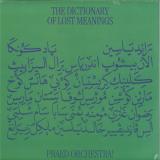
PRAED return to Discrepant, after their 2017’s entry Fabrication of Silver Dreams (CREP44)
Known for their signature blend of Egyptian Shaabi, free jazz and improvisation, the Lebanese duo behind PRAED - Raed Yassin and Paed Conca - now assemble a full orchestra for the second time taking the music to a deeper, rooted level.
Following their 2020 release Live in Sharjah, also under the PRAED Orchestra! moniker, the duo now revisit their unique blend of Arabic heritage and free jazz sensibilities with an album that keeps pushing further into strange and unexpected directions.
The Dictionary of Lost Meanings is just that, seven fully composed pieces and large-scale improvisations, performed by an expanded ensemble of musicians from across the globe. The result is dense and playful, unpredictable but familiar, a record where Arabic rhythms and microtonal melodies collide playfully against electronics, warped vocals and orchestral textures.
It’s less about genre than about memory — like tuning into a radio station broadcasting from somewhere between the past and the future.
PRAED continue to blur the line between popular culture and experimental music in ways that feel both grounded and completely their own.
PRAED ORCHESTRA! are
Raed Yassin: Synthesisers, Vocals, Beats
Paed Conca: Clarinet, Electric bass
Alan Bishop: Alto saxophone, Electric bass, Vocals
Andreas Bral: Harmonium, Electronics
Elisabeth Klinck: Violin
Christian Kobi: Soprano and Tenor Saxophones
Hans Koch: Bass Clarinet
Martin Küchen: Alto and Sopranino Saxophones
Maurice Louca: Synthesizer, electronics
Stan Maris: Accordion
Radwan Ghazi Moumneh: Buzuk, Vocals, Modular Synth
Youmna Saba: Electric Oud, Vocals
Sam Shalabi: Oud, Electric Guitar
Els Vandeweyer: Vibraphone
Khaled Yassine: Drums, Percussion
Michael Zerang: Drums, Percussion
Recorded by Jasper Jan Peeters at the Summer Bummer Festival, DE Studio,
Antwerp August 26, 2022
Mixed by Adham Zidan
Mastered by Mark Gergis
Produced by PRAED
Photos by Geert Vandepoele
out of Stock
Last delivered 4 months ago available to reorder, subject to availability
Recorded in Switzerland and mastered in Madrid, on Deságua Mello blends classical harp training with experimental techniques, creating a rich sonic journey that pushes the boundaries of the instrument. Brazilian harpist and composer Marina Mello presents Deságua, her solo debut released by the Peruvian label Buh Records. Based in Zurich, Mello has developed a unique and expressive approach to the harp, combining her classical training with a deep exploration of the instrument's sonic possibilities. Deságua is the result of this process: an intimate and expansive work that traverses sonic landscapes rich in contrast and texture. In the artist's own words, this album is a synthesis of material developed through her musical practice. The title refers to the Portuguese word that describes the moment a river flows into the sea. This concept guides the album's sonic narrative, in which each piece functions as a tributary flowing into an immersive and unexpected listening experience. From bittersweet whale-like sounds to destructive, unsettling, and shattering noise provocations, she explores, senses, and transcends the musical boundaries of her instrument. The album presents a wide range of sounds and styles, yet maintains a strong internal coherence through its technical and conceptual exploration of the harp. Mello performs on both lever and pedal harps, employing a range of non-traditional techniques: preparing the instrument with objects, using guitar effects pedals, detuning the strings, and using close mic recording to capture the subtlest sounds and the shifts that lie between them. The result is a collection of pieces that move between the melodic and the dissonant. Deságua does not shy away from repetition, noise, or raw textures. Instead, it embraces them fully, situating the album at the crossroads of contemporary music, improvisation, and electronic experimentation.
On H008 Len Faki goes back to his crate for a unique journey through synth-led landscapes, carefully selected and bolstered up for the dancefloor.
Starting with 2000 And One - Edge Of No Return from the mid 2000s, when it was just a standout synth-line - no beats. The Hardspace Mix takes this masterclass in building tension, adds a driving beat and searing percussion while keeping the iconic synth-play intact -layered with big, booming bass for that full-bodied, dancefloor-ready energy.
The flip boasts two of longtime Figure-collaborator Viers' productions. Re-L, released almost 10 years ago, it delivered that unmistakable pulse of deep, dubby, shimmering synths. Hardspace picks up these potent elements and injects them with a new low-end, dramatic rises and tight rhythms, creating a high-energy yet hypnotic flow.
Equally energetic but much more brooding in atmosphere is the Hardspace version of Free Your Mind. An elusive original, this mix builds on dense percussion, subdued vocals and droning horns while carrying some seriously spaced-out acid synth textures. One for the wee hours and those special memorable moments in a set.
out of Stock
Last delivered 5 months ago available to reorder, subject to availability
Blang Records are thrilled to announce another two vinyl album re-releases from Jeffrey Lewis's back catalogue: The debut classic The Last Time I Did Acid I Went Insane (originally Rough Trade 2001) and The critically acclaimed 4th album 12 Crass Songs (originally Rough Trade 2007). The Last Time I Did Acid I Went Insane (VV001LP) : The fragile poetry and lo-fi warmth of JL's home-recorded debut paint vivid scenes of downtown Manhattan life with cracked sincerity, comic book absurdity and charm. This groundbreaking album continues to charm listeners but has completely run out of stock. Press Quotes: "Jeffrey Lewis: `The Last Time I Did Acid I Went Insane' - Best Indie Album of 2002; like his drawings, his music is witty, animated and true." - New York Daily News "Bizarre but brilliant_ slugging it out to be New Rock capital of the universe, Jeffrey Lewis could well be New York's ace in the hole."- Uncut "Modestly brilliant." [Critic's Choice]- The Village Voice "He claws through the bullshit and pretence ingrained in society. [Jeffrey Lewis' work] _should be cherished."- TimeOut London "Jeffrey Lewis isn't simply a singer, but a creative comic mastermind_ brilliant_ a staggering work of_ genius." - (9 stars of 10) Addicted to Sound Blang Records and Jeffrey Lewis have history: before Blang was a label, it started life as a live night at the 12 Bar Club in Denmark Street, hosting many a set of the NY Antifolk artists over on UK shores, including Jeffrey Lewis. Now 20+ years since Jeffrey first played Blang. Native New Yorker Jeffrey Lewis is a comic book writer/artist and a musician. A cult hero birthed from the now infamous antifolk movement that sprung up on Manhattan's Lower East Side in the 90s, Jeffrey has released dozens of albums showcasing his unique blend of bleakly witty observations, scratchy, lo-fi punk and croaky folk/anti-folk, all firmly rooted in a strong DIY sensibility. Jeffrey and his band have toured the world multiple times over, released albums on Rough Trade, Moshi Moshi and Don GIovanni Records, and have been featured by NPR, The History Channel, The NY Times and more.
20th Anniversary Reissue. Remastered. Groundbreaking MPB/Downtempo Classic. Originally released in 2005, CéU introduced the world to a bold new voice in Brazilian music. Seamlessly blending samba, MPB, soul, and downtempo grooves, Céu delivered a debut that felt both deeply rooted and strikingly contemporary. With her smoky, understated vocal tone, she evoked echoes of classic bossa nova while pushing into new sonic territory - covering Bob Marley"s "Concrete Jungle" with Afro-Brazilian swing and layering in dub and electronica accents. Hailed for its elegance and quiet innovation, the album hit No. 1 on Billboard"s World and Heatseekers charts, earned a Grammy nomination, and became the highest U.S. chart debut for a Brazilian female artist since Astrud Gilberto. Now celebrating its 20th anniversary, CéU returns remastered for vinyl - a modern Brazilian classic reissued for a new generation of listeners. Includes Classics : "Lenda", "Malemolencia", "Concrete Jungle"... Mastering by Colorsounds Paris.
A duo concert featuring universal artist and activist Moor Mother and Archie Shepp was planned for October 19, 2023, at the Enjoy Jazz Festival. However, a spinal disc operation on the then 86-year-old saxophone legend led to the cancellation of this eagerly awaited world premiere – and to a spontaneous demonstration of respect.
To honor the great Archie Shepp, one of the most influential intellectuals in jazz, an Enjoy Jazz all-star cast spontaneously recorded a tribute song during the festival – organized by festival director Rainer Kern. The line-up consisted of Nicole Mitchell, the most important flutist in the history of jazz, as well as the Enjoy Jazz “Artists in Residence” for 2023 and 2024, Moor Mother (spoken word) and Nduduzo Makhathini (piano).
In her lyrics, the poetess creates a powerful linguistic monument to Archie Shepp, whom she greatly admires, by playing with the titles of the saxophonist's legendary recordings (instead of with him himself). The title “One For Archie” is an allusion to Shepp's 1964 Impulse debut, “Four For Trane,” which, according to “Jazzwise”, is one of the “100 Jazz Albums That Shook The World.” In her moving text, Moor Mother also celebrates Shepp's political and social commitment.
The way Moor Mother rhythmically and aesthetically picks up on Shepp's unique playing style, which oscillates between rugged clarity and deep humanity, begins to improvise on it, and thereby creates new connections, is impressive proof of her masterful artistry. Her recitation is peppered with haunting dramatic climaxes that give listeners goosebumps due to their authenticity.
The B-side features “They've Got A Plan,” a song that is like a beacon. An intense and powerful invocation of “Agenda 2063,” a master plan of the African Union to transform the continent socially, economically, and politically.
Both tracks are available on vinyl for the first time.
out of Stock
Last delivered 11 months ago available to reorder, subject to availability
Modern ambient minimalism with early music/baroque influences. Minimal and nuanced, Diary of a Candle is a consoling, melodic suite from acclaimed experimental composer, musician, and producer Faten Kanaan. On this album Faten uses counterpoint as a narrative tool to create music that is mysterious, smudgy, and deeply melodic. From the repetitive structures of modern minimalism and early music/baroque influences - to more languid textural ebbs and tides, there's a warmth in her use of synthesizers that gives her work a curiously timeless feel. Composing intuitively, her music creates its own world - one that isn't easily categorised. Diary of a Candle is punctuated with tender woodwinds and richly-layered strings, touched by the hazy atmospheres of 1970s/1980s films. Its understated heart-on sleeve romanticism follows the rhythm of nature: it bends in the breeze, drifts through the air, and settles on the ground. The ambiance is not an escapism, but the re-focusing of a lens through which humans are no longer the protagonists. Instead, a landscape's intimate details become the central figures. With the sparseness of Hiroshi Yoshimura's 1982 album 'Music for Nine Post Cards' as a starting-point influence, Faten's music exudes a wistful yet hopeful sentiment, honouring moments of beauty in the world around us. Some of the album titles are inspired by East-Asian rites and folkloric superstitions, often related to nature. All music written performed and mixed by Faten Kanaan. Mastered by Heba Kadry(Björk, Bon Iver, John Cale, Ryuichi Sakamoto, Deerhunter, Cate Le Bon, & many more). For fans of Kali Malone, Steve Reich, William Basinski, Sarah Davachi, Stars Of The Lid, , Mary Lattimore and Oneohtrix Point Never.
Das Debütalbum des Jazz-Multiinstrumentalisten Yusef Lateef, Jazz Mood, wurde ursprünglich 1957 auf
dem Label Savoy aus New Jersey veröffentlicht. Das Album enthält fünf Originalkompositionen von Lateef
und wurde von Curtis Fuller (Posaune), Hugh Lawson (Klavier), Ernie Farrow (Bass) und Louis Hayes
(Schlagzeug) eingespielt. Diese Neuauflage des Albums erscheint als Teil der Original Jazz Classics Series
auf 180-Gramm-Vinyl, gepresst bei RTI, mit vollständig analogem Mastering von den Originalbändern bei
Cohearent Audio und einem Stoughton Tip-On-Cover.
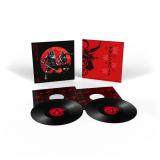
- 29 Tracks aus dem Open-World-RPG-Actionspiel von 2025
- Artwork von Ubisoft
Ubisoft und Laced Records haben ihre Zusammenarbeit erneuert, um die Musik von Assassin's Creed Shadows auf Vinyl zu veröffentlichen.
"Assassin's Creed Shadows" entführt die Spieler:innen in die reiche Kulisse des feudalen Japans und wird von einem Soundtrack untermalt, der traditionelle Instrumente mit verspielten, modernen Techniken verbindet.
Das Komponistenduo The Flight (Joe Henson und Alexis Smith) kehrt zur Assassin's-Creed-Reihe zurück und liefert einen Soundtrack, der traditionelle Instrumente mit zeitgenössischen orchestralen und elektronischen Elementen verbindet. So entsteht ein unverwechselbares Gefühl für Zeit und Ort, während spielerisch auf die Science-Fiction-Themen der Serie angespielt wird.
Die beiden Protagonisten von "Assassin's Creed Shadows" werden mit unterschiedlichen Instrumenten und musikalischen Ansätzen dargestellt: Die verstohlene Shinobi-Adeptin Naoe wird mit dem Instrument ihrer Wahl, der Tonflöte (Tsuchibue), und dem körperlosen Flüstern während der Stealth-Momente dargestellt. Der legendäre Samurai Yasuke wird mit den schärferen Klängen der Shamisen und rhythmischer Intensität dargestellt.
Für die Darbietung der japanischen Instrumente hat The Flight auf Meisterspieler wie Keiko Kitamura (Koto) und Hibiki Ichikawa (Shamisen) zurückgegriffen. Weitere Interpreten sind die Sängerin Akari Mochizuki, die Flötisten Kristin Naigus, Oriol Singh und Andy Findon sowie Michael Georgiades, der musikalische Mitarbeiter von The Flight bei Assassin's Creed Odyssey.
The third installment from Submersive Underground is here, Keith Farrugia aka Sound Synthesis shows once again he is now also a master of his 4/4 techno approach, TIP!
out of Stock
Last delivered 8 months ago available to reorder, subject to availability
RAWAX proudly presents BANDULU 's first and timeless longplayer called Guidance!
Originally released on Infonet in 1993. The 2025 version on RAWAX includes a new mastering.
out of Stock
Last delivered 10 months ago available to reorder, subject to availability
Indian Summer of Love finds The Bongolian immersed in a new set of sounds and influences for a new Belle Epoch. It’s a musical landscape informed by the Sixties psychedelia of India via a Haight Ashbury happening.
It’s a kaleidoscopic vision that takes us from a 20th century Fin de Siècle and lands us in the here and now of the 21st Century. It’s for dancers, for seekers and is all underscored by The Bongolian’s trademark heavy rhythms and breaks. It’s another fine instalment of essential cuts for the dancefloor and for high fidelity listening, quality is guaranteed.
From the East to the West, welcome to the Indian Summer of Love. Nasser Bouzida performs drums, percussion, guitars and keys whilst the album features several new flavours to the Bongolian sound with the prominent instrumentation of sitars and bansuri, along with flute, trumpet, saxophone and trombone performances from several stellular international guest musicians.
out of Stock
Last delivered 11 months ago available to reorder, subject to availability
A decade after its release, A Fragile Geography returns transformed. This limited edition cassette accompanies the AFG10 anniversary reissue, offering an inspired re-envisioning of Rafael Anton Irisarri’s landmark compositions. Reworks presents distinctive readings of these pieces, with each artist leaving their personal mark on the material. The titles remain unchanged, with the sole exception of “Hiatus,” reborn here as “Ausencia.” Together, these reimaginings extend the emotional cartography of the album into new terrains.
KMRU reframes “Displacement” with expansive, glimmering layers that open into meditative ambient landscapes. Nairobi born and Berlin based, he is known for morphing field recordings into vivid aural experiences, often capturing the texture of footsteps, foliage, and distant city life and weaving them into contemplative soundscapes. In this version he introduces subtle new sounds, including stringlike synths that trace and heighten the piece’s emotional arc. The result invites close listening, offering enveloping tones where the organic and the synthetic gently collide and flow.
Penelope Trappes renders “Reprisal” as a voice-led invocation of the delicate and the intimate. Her wistful vocals bloom with fragile sorrow, rising over shimmering strands of strings to create a sound world at once sacred and shadowed. She is adept at channeling inherited grief into music that is transcendent and otherworldly. The interplay of her voice, the strings, and her use of space and depth draws those qualities into Irisarri’s orbit, imbuing “Reprisal” with the same spiritual weight and clarity that define her most powerful work.
Kevin Richard Martin (a.k.a. The Bug) transforms “Empire Systems” into a cavernous “Iced Mix,” driven by polyrhythmic double bass motifs and sculpted from subterranean pressure and negative space. Known for pushing sound to its physical limits, Martin brings the stark intensity of his dub and noise infused practice into Irisarri’s architecture. The track seethes with harmonic distortion and erupts in white noise rhythms, its brooding low end depth and icy reverberant textures amplifying the tension. Vulnerability and force are set in stark relief, as silences feel as heavy as the bursts of sound themselves. The result is a stark study in atmosphere, restraint and impact, reframed through Martin’s singular lens of sonic mass and low end intensity.
On Side B, Mabe Fratti opens with a cinematic, dreamlike, Lynchian reimagining of “Hiatus” in her native Spanish (“Ausencia”). She threads cello and voice so wondrously that her rendering feels at once hauntingly beautiful and disquieting. Emotionally charged melodies shift in unexpected directions, while her soft, intimate vocals hover above Irisarri’s brooding synth textures. Fratti’s gift for blending experimental and avant pop sensibilities with visceral, emotionally powerful expression shines resplendently here. She gives voice to Irisarri’s reflections on the passage of time and his growing desire to reconnect with his familial roots.
Abul Mogard stretches “Persistence” into a vast drone elegy. A master of patient sound sculpting, Mogard layers evolving waves of analog synths into a dense shroud that radiates its own internal light. Gradual surges of tone and subtle harmonic shifts emphasize the piece’s endurance and inevitability. Irisarri’s original composition, in Mogard's hands, becomes a rumination on time’s unrelenting flow. Melancholy and transcendence coexist in equal measure in this engulfing, cathartic rework.
William Basinski and Gary Thomas Wright close the cycle with a spectral version of “Secretly Wishing for Rain.” Basinski’s field recordings of Reseda rainfall and birdsong, which open and close the rework, add a personal touch and evoke the imagined sound of a grainy film reel flickering to life. The piece suspends Irisarri’s yearning for the Pacific Northwest, lodging it hazily between memory, place and an unreachable dream. It feels like a fading recollection, half forgotten and half felt. A final gesture that dissolves the album into vapor, leaving the listener adrift in its lingering afterglow.
Mastered with great care by Stephan Mathieu and featuring a remixed version of the original artwork by Daniel Castrejón, this edition refracts the language of the original through new prisms. Less a return than a passage, across time, across interpretation, into uncharted emotional realms.
out of Stock
Last delivered 11 months ago available to reorder, subject to availability
Das Jimi Hendrix Bold As Love Boxset bieten ein erstklassiges Sammlererlebnis. Jedes Set enthält 27 bisher unveröffentlichte Aufnahmen aus dem Jahr 1967, darunter Demos und alternative Takes sowie Fernseh- und Radioauftritte. Diese Deluxe-Edition enthält die Stereo- und Mono-Mischungen des Albums Axis: Bold As Love, die alle von Bernie Grundman anhand der originalen Masterbänder neu gemastert wurden. Ein 36-seitiges Booklet mit seltenen Fotos, detaillierten Liner Notes und Track-für-Track-Einblicken rundet das Angebot ab. Diese Veröffentlichung ist ideal für Hendrix-Fans und Vinyl-Liebhaber, die nach einer definitiven Archivausgabe eines der kultigsten Alben von Hendrix suchen.
Born Osborne Ruddock in Kingston in 1941, he grew up around High Holborn Street in Kingston, before moving to the new Waterhouse district in 1955. His electronic genius grew from working and fixing radios and TV sets. A natural progression led to working with amplifiers, and starting his own sound system, 'Tubby's Home Town Hi-Fi'. A very competitive games i the late 60's. You were as good as the EXCLUSIVE records you played.
Tubby discovered during his time cutting discs for Duke Reid's Treasure Isle set up, that by dropping vocals/instruments in and out of the backing tracks, you could invent new versions of existing old tunes. These early versions tried and tested on his sound system went down so well that he invested in a four track mixing console with delay echo effects, sliders and phasing units and so began King Tubby's 'Studio Of Dub' at 18 Drummlie Avenue, Kinston 11 , Jamaica...His Home.....
This is where all the producers would bring their tracks for Tubby to put his magic over. Most tracks that came out in Jamaica from here on in would carry a 'Version' on it's B- Side more than likely a Tubby Dub.
One of the producers who used him the most was Bunny Striker Lee, who's labels Jackpot, Justice and Attack all carried Tubby's mixes/versions on their flip sides.
Our collection here, all taken from original master tapes you might have heard the tracks before but not these versions....Lost in the vaults till now. So sit back and enjoy the dub master at work.
RESPECT.... JAH FLOYD
Track 1 CHERRY'S DUB
We start off with a very early version of Eric Donaldson's 'Cherry O Baby'.
This version was recorded at Dynamic Sounds, in 1971 and has remained lost on master tape until now.
Track 2 FRENEMY DUB
This classic rhythm known as 'Mad Mad World' and 'Crying in the Ghetto' both voiced by Winston Jarret
got worked on by Tubby as an exclusive mix for his sound system. Released here for the first time featuring
the late, great Jacob Miller on dubbed vocal.
Track 3 FALLING FOR DUB
A version here of Cornell Campbell's 'My Whole World is Falling Down' Tubby in fine form.
Track 4 DUB ON THE STREET AGAIN
Yes my friend The Street Again finds Cornell Campbell's vocal dubbed King Tubby Style Nice Rockers drums from Sly Dunbar.
Track 5 DECEIVING THE DUB
Sly and Robbie dubbing up Delroy Wilson's ' So Long Jenny' with King Tubby at the boards
out of Stock
Last delivered 2 years ago available to reorder, subject to availability
2024 Repress
If anyone in the reggae circles could be described as having their own sound it would have to be Mr Augustus Pablo, born Horace Swaby 1954 St Andrew Jamaica. He took the humble melodica a wind blown mouth keyboard and made it shine.
His musical journey started one sunny day in 1969. Walking into Herman Chin- loy's Aquarius Records shop and on playing his melodica so impressed its owner that he was taken off to Randy's Studio 17, the very next day to cut his first record 'Iggy Iggy'. But it was his second tune under the guidance of Clive Chin again cut at Randy's, the seminal 'Java ' that put the young Augustus Pablo on the map. Clive Chin continued his work producing Pablo's debut album 'THIS IS AUGUSTUS PABLO' . An instrumental affair on which the neo-mystical ''Far East'' sound synonymous with Pablo's work emerged.
Having worked with most of the top producers of the time,Lee Perry,Keith Hudson, Bunny Lee, Augustus decided to set up his own label "Rockers", named after his brothers sound system. Where many of his tunes would first be heard.The label came to define a new and exciting chapter in reggae history.Even when versioning acknowledged classic Studio One rhythms there was a precious maturity and depth to Pablo's productions that kept him at the top throughout the late 1970s and into the 1980s. His 'King Tubby meets the Rockers Uptown' set which featured some of these rhythms reworked; Swing EasySkanking Easy, Frozen SoulFrozen Dub, stands as one of the true dub classic albums of any reggae education.
This set of dubs are taken from his classic 70's period.All rare dubs straight from the masters. You may have heard the tune, but not these versions. So sit back and enjoy the Original Rocker..... STILL SOUNDS SWEET.
In 2005, Felt 2: A Tribute to Lisa Bonet brought together two of underground hip-hop’s most respected voices of the time—Murs and Slug—for a second collaboration that felt looser, livelier, and more charismatic than its predecessor. The album captures a moment of creative freedom, where both MCs were firing on all cylinders, trading verses with sharpness, humor, and effortless chemistry. Their interplay reflects a deep mutual respect and a shared drive to push boundaries while keeping things rooted in style and substance.
Working with different producers for each volume allowed Murs and Slug to bring a unique energy to each release, and Ant’s masterful production was central to the chemistry of Felt 2.
With roots in classic soul and West Coast bounce, his beats created a warm, funk-laced foundation that allowed both rappers
to experiment with new cadences and ideas. Rather than lean on moodiness or melodrama, the soundscape of Felt 2 is expansive, colorful, and rooted in rich, infectious rhythm—an aesthetic that has aged gracefully and continues to draw new listeners into its orbit. While undeniably fun, Felt 2 is also structurally tight and full of moments that reward repeat listens. The chemistry between Murs and Slug is effortless, and their shared sense of humor, timing, and respect for the craft creates a lasting impression. It’s a standout entry in the canon of early-2000s indie hip-hop, and one that’s long overdue for a proper vinyl reissue.