Why is it that thousands of clubbing tourists land at Berlin Schönefeld airport every weekend? Why have clubs like Berghain become the stuff of legend the world over? Why have some of the best-known producers and techno DJs like Richie Hawtin and DJ Hell moved with their labels to this city? These are the kind of questions explored in Lost and Sound by Tobias Rapp, a German music journalist who has been living, working and partying in Berlin since the beginning of the nineties. He has spoken with DJs, clubbers, label bosses, hostel managers and urban planners; he has looked and listened carefully; and most important of all, he has been part of the dance floor himself. Every day of the week – from Wednesday night (in Watergate) right through to Wednesday night (back in Watergate).
Lost and Sound is not one of those books that try to grasp techno from a desk-bound position. Rapp zooms in to relate intimate moments in front of the DJ booth and at the bar, and then cuts to historical tangents and theoretical reflections. Detailed research is interspersed with accounts from a first-person perspective. An excellent portrait of Ricardo Villalobos, the biggest star of the Berlin minimal techno and after-party scene, stands alongside a precise sociological portrayal of the queue for Berghain. Through this interplay of music, architecture, infrastructure and drug-induced explorations of personal limits, Rapp is able to capture what makes Berlin such a unique place for electronic music and how this music is experienced.
Following its publication in Germany in February 2009, Lost and Sound made an impact not
seen from a book about popular music for a long time. This was undoubtedly due in part to the
term coined for its subtitle: the ‘Easyjet set’ is a new group of music fans who – thanks to the
deregulation of the European air travel market – now regard the aeroplane as a taxi service for
parties, effectively making Barcelona, London and Paris suburbs of Berlin.
Die neue VERVE BY REQUEST-LP-Serie präsentiert rare Kultalben, die von den Fans immer wieder gefordert wurden, gepresst in audiophilem 180-Gramm-Vinyl bei Third Man Pressing/Detroit. „Ptah The El Daoud“, Alice Coltranes viertes Album, wurde 1970 im Kellerstudio des Hauses der ColtraneFamilie in Dix Hills aufgenommen und ist ein transzendentes Meisterwerk des spirituellen Jazz. Der Titeltrack ist eine Ode an den ägyptischen Gott Ptah (El Daoud bedeutet „der Geliebte“). Gatefold-Hülle, gepolsterte Innenhülle. „Beat“ wurde für Berry Gordys kurzlebiges Workshop-Jazz-Label im Hitsville-USA-Studio aufgenommen. Schlagzeuger Roy Brooks, zusammen mit seinen Detroit-Landsleuten George Bohanon und Hugh Lawson, sowie seinen Bandkollegen Blue Mitchell, Junior Cook und Eugene Taylor vom Horace Silver Quintet, mischt eine ordentliche Dosis Souljazz in die Hard-Bop-Wurzeln dieses mitreißenden Albums von 1964. Gemastert von den analogen Originalbändern, gepolsterte Innenhülle.
out of Stock
Last delivered 2 years ago available to reorder, subject to availability
Epic, grooving, dazzlingly creative, perfectly attuned blends of complex mbalax drumming, field recordings, thumping kick-drum, and cosmic, bubbling, jamming synths and electronics.
The opening is suitably liminal, haunted by a diachronic sense of times past, present, and to come: ancestral ghosts, scratched playback, scraps of old recordings, voices strangulated or just out of range; puttering drums; futuristic, kosmische keys. Part II picks up the pace; III gives the drummers some, and heightens the atmosphere of enchantment. Jon Hassell’s Fourth World music courses through a kind of Dream Theory In Dakar.
Toco SOS, the second side, is a thumping, throbbing, mesmeric future-classic; perfect for fahr’n fahr’n fahr’n on the Autobahn… in a spacecraft. Expert hand percussion, call-and-response singing, bin-trembling foot-drum, spaceways keys. Sleekly funky as prime Popol Vuh.
Both sides range expansively by way of Berlin, where Lamin resided for a few years: you can hear something of T++’s brilliant, landmark HJ record on the A, and elements of Mark Ernestus’ crucial Ndagga project, on the B.
Half an hour of stunning music; in a beautiful sleeve, with mirror lettering, and an intricate spot-gloss rendition of salt crystals, laid over a photograph of the salt mines at Lac Rose, outside Dakar.
out of Stock
Last delivered 2 years ago available to reorder, subject to availability
Der weltweit gefeierte und Grammy-dotierte Electronic-Artist & Produzent Flume veröffentlicht am 17. November seine Rarities-Compilation "Things Don't Always Go the Way You Plan" mit ungehörter Musik aus dem letzten Jahrzehnt auf Vinyl.
Die Musik, die Tracks mit Injury Reserve, Panda Bear und Isabella Manfredi enthält, umfasst Hip-Hop, Pop und Ambient-Beats sowie Produktionen, die für seinen Aufstieg in den frühen 2010er Jahren stehen. Artwork von Jonathan Zawada.
out of Stock
Last delivered 2 years ago available to reorder, subject to availability
Der weltweit gefeierte und Grammy-dotierte Electronic-Artist & Produzent Flume veröffentlicht am 17. November seine Rarities-Compilation "Arrived Anxious, Left Bored" mit ungehörter Musik aus dem letzten Jahrzehnt auf Vinyl.
Die Musik, die Tracks mit Emile Haynie und Jim-E Stack sowie Flumes erste eigene Vocals auf "All There 1.9 2019 Export Wav" enthält, umfasst Hip-Hop, Pop und Ambient-Beats sowie Produktionen, die für seinen Aufstieg in den frühen 2010er Jahren stehen. Artwork von Jonathan Zawada.
out of Stock
Last delivered 2 years ago available to reorder, subject to availability
Mit “The Art of Sampling” legte der österreichische DJ und Produzent Parov Stelar 2013 ein Album vor, das mit einer ersten Werkschau seines Schaffens der vergangenen zehn Jahre vergleichbar ist. Wir sprechen hier allerdings keinesfalls von einem klassischen Best Of, denn der gebürtige Linzer ließ es sich damals nicht nehmen, auch mit neuem Material ein Zeugnis seines unermüdlichen Schaffensdrangs abzulegen.
Alle 14 Songs hatten dabei eine Sache gemein, angedeutet im Albumtitel: Sie vereinen die Praxis des Samplings in Parov Stelars Arbeit – will heißen: Das gefühlvolle Zusammenfügen ausgewählter Elemente zu neuen Kompositionen. Besonders erwähnenswert hierbei war unter anderem die enge Zusammenarbeit mit anderen Künstlern und deren Werken, wie bei der ersten Single-Auskopplung “Keep On Dancing” feat. Marvin Gaye. Gearbeitet wurde hier mit Tonspuren aus Marvin Gayes funkigem Disco Nummer−1-Hit “Got To Give It Up” aus dem Jahr 1977.
Neben diesem Hit warteten auf “The Art Of Sampling” außerdem Feature-Gäste wie Anduze, Y’akoto, Lukas Graham, Odette Di Maio und Lilja Bloom. Anlässlich des 10-jährigen Jubiläums dieses besonderen Albums, erscheint “The Art Of Sampling” für alle Vinyl-Liebhaber nun als limitierte 2LP Sonder-Edition in wunderschönem blauen Design
out of Stock
Last delivered 15 months ago available to reorder, subject to availability
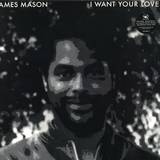
Proto-house classic 'Nightgruv' gets a re-release and includes a longer unreleased edit!
James Mason is mostly known for his late 70's album 'Rhythm Of Life', which is a soul-jazz classic. Soon after music trends shifted to (electronic) disco and James' music became out of fashion, leaving 'Rhythm Of Life' to be the only album he released to date. The early early 80s saw him have a few studio sessions from which more electronic output like Wuf Ticket's 'The Key (Prelude Records) resulted. James also produced various disco acts like Disco 3, Earl Flint and Brenda Bayton.
out of Stock
Last delivered 83 days ago available to reorder, subject to availability
Northern Minimalism 3, the latest album from Mat Handley performing as Pulselovers, is a deeply personal “love letter to South Yorkshire, or at least to Doncaster and Sheffield”, not just the urban environment but the region’s post-punk and electronic-pop legacies.
Inspired by the concept of spreading a project over multiple formats taken from Virgin Prunes’ ‘A New Form of Beauty’, this is the first full album in Pulselovers’ on-going ‘Northern Minimalism’ series following a 7” and 10” release on other labels over the past few years.
Taking a different approach than the rurally-inspired ‘Cotswold Stone’ album, ‘Northern Minimalism 3’ delivers a sprawling, genre-hopping release that is less focused on melody but explores suburban drones and industrial rhythms.
“The term “Northern Minimalism” was coined by Simon Berkovitz of Sensory Leakage, who released my “Live at Doncaster College” tape in 2020,” adds Handley.
“I loved the description and wanted to use it to pay tribute to the early electronic and post-punk sounds I was listening to in the first two or three years of the 1980s, particularly The Human League (mk1), Cabaret Voltaire, John McGeoch (Magazine) and Eric Random.”
Repetitive actions, looping in your head forever. Forever? Never. Zero is endless. All flowers and fades. No permanence is ours. We are a wave, that flows to fit. And yet, “Music for a film”, a cassette tape by Swedish artists Sofie Herner aka Leda, inheres the power for perpetuity. A circulating dreamland, built on loop pedals, guitar, and tape manipulation.
The Malmö based artist, who is already famed in the global experimental, improvisational, lo-fi noise underworld for her own musical creations as well as being part of bands and projects like Enhet För Fri Musik, Källarbarnen, or Neutral, brings music made for the film “Dödfött“ - an interactive flick by director Niklas Hansson about failed online karate and caducity, screened with a stage art performance at Hypnos Theatre, Malmö, in early autumn 2022. Cinematic sounds for all the Velvets, that never awaken from their first DIY Super 8 dream.
Colorful, yet monochrome electrified and acoustic guitar melodies, monotonous, working like drones, getting all stranded in the zones. Six minimal compositions. Full of plenty, always friendly. Heavy, calm, dreamy, shredding, scratching, created for the woman of the world. And all other creatures, that seek features in unbroken repetition. As nobody keeps any of what he has, one day the eternal veil of forgetfulness will warp us all. Until that hour we dance in circles. Making karate moves, sidestepping caducity, reenacting ourselves, endless at the edges, through night and day, craving form that binds. As form is emptiness, emptiness is form itself. Welcome to the world of Leda, riff, 7/4, loop, the young, the middle aged, the old…
Tape is hand-stamped along the top, in printed card housing, with
Analogue Productions (Atlantic 75 Series)
Celebrating the 75th Anniversary of Atlantic Records!
Hello, I Must Be Going! — Phil Collins' second solo studio album
Featuring "You Can't Hurry Love" and "I Cannot Believe It's True"
180-gram 45 RPM double LP release
Mastered by Chris Bellman at Bernie Grundman Mastering and cut to lacquer from a 1/4" EQ'd Dolby tape copy of the original master tape
Pressed at Quality Record Pressings and RTI
Tip-on old style gatefold double pocket jackets with film lamination by Stoughton Printing
On his first solo album, 1981's Face Value, Genesis drummer-singer Phil Collins showed that he wasn't about to be left behind in the mire of classical-rock sludge. That LP boasted shorter songs and demonstrated that Collins had a true pop sensibility. Hello, I Must Be Going! continues that trend, with some familiar patterns emerging, wrote Rolling Stone's John Milward.
"First, there are the dramatic rock dirges that use drums as a lead instrument; 'I Don't Care Anymore,' with Collins' one-man band playing alongside Daryl Stuermer's atmospheric guitars, wins in this category. Then there are the buttery ballads, of which "Don't Let Him Steal Your Heart Away" is the best by virtue of a Beatles-like melody that buoys Collins' anonymously sweet voice. Both of these styles were already Genesis staples; it was Collins' uptempo soul tunes on Face Value and Genesis' Abacab that surprised old fans and found new ones. 'I Cannot Believe It's True,' with Earth, Wind and Fire's Phoenix Horns casting out clean lines, clobbers the other soul contenders on Hello, I Must Be Going!, especially his remake of the Supremes' 'You Can't Hurry Love.' Collins took the golden-oldie route on that song and the result isn't soulful, it's superfluous. Despite its trend-bucking boast of an 8-track recording, the album's rich luster is of the old classical-rock school. In fact, the LP sounds like stripped-down Genesis, ornamental but not too ostentatious. — John Milward, Rolling Stone (3 Stars)."
This Analogue Productions (Atlantic Series) reissue of Hello, I Must Be Going! has the essential elements that make it a standout for your collection. First, we turned to Chris Bellman at Bernie Grundman Mastering to cut lacquers from a 1/4" EQ'd Dolby tape copy of the original master. Pressing on 180-gram vinyl is by Quality Record Pressings and RTI, and the album is housed in tip-on old style gatefold double pocket jackets with film lamination by Stoughton Printing.
Hello, I Must Be Going! was a triple-platinum-selling hit in the U.S. for Collins in the 1980s and it stayed on the U.K. album charts for more than a year, peaking at No. 2. For the fans it is a drummer's album, a record that expresses rage and desperation as well as loneliness and longing. Not an album for every day, but one that really speaks to you when you need it, wrote Martin Klinkhardt, in a review for genesis
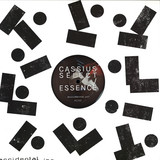
Cassius Select returns to Accidental Jnr with another 12' to follow on from last years '90 / HERD' EP. He once again straddles the genres somewhere between techno, bassline and hardcore. ESSENCE is a huge rave cut of broken snare beats and shuffled kicks alongside Select's trademark idiosyncratic vocal snippets. The B-side offers up SHAOLIN SOCCER a post-dubstep wobble at a house tempo followed by HYPE HOUR another piece of broken suedo rave hardcore.
The EP is something of a gift to his brothers for their musical influence on him as the Australian based producer explains in his own words:
Much of my musical upbringing is related to my family, I owe my early influences to my two older brothers. skimming off their mix CDs, sculpting out what 'cool' meant. the eldest is a drummer and in retrospect, i think a lot of the Cassius project is maybe an attempt to impress him again. shaolin soccer is in reference to the 90s blockbuster of the same name, where we derived a lot of our own interpersonal humour. i keep going back to that world we built between the 3 of us. in the simplest way this is a gift to the both of them.'
The official new edition from this rare and great Afrobeat & Soukous masterpiece from Nigeria !
"Vibro Success Intercontinental Orchestra was an extraordinary group from the Central African Republic, founded by the sax player Rodolphe 'Beckers' Bekpa, also known as Master Békers, in the late 60's. The band achieved surprising domestic success after Beckers introduced the first drums to the Congolese Rumba rhythm. His innovation proved to be wildly popular so they were hired as the resident band of “ciel d’Afrique au Km5”, a night club in Bangui. The club was renowned as the temple of the Olympic Réal football team's fans and that visibility propelled them into becoming the official national orchestra.
1970 marked beginning of the band's international fame . Their fame spread beyond national borders until they became so popular that invitations began to arrive from nearby countries like Cameroon and Chad, the former of which the band would then tour that same year. The success of their performances prompted a further tour in 1972. According to Rodolphe Bépka, the audience enthusiasm Vibro encountered was bewildering. "We filled the old military stadium in Yaoundé in 1970, in 1972 the new Amadou Haïdjo stadium ... We are running with great success in the cities.” Their popularity was also growing in Chad, where they would tour several times through the early and mid 70's.
Towards the end of 1976, Vibro Success decided to take their music global and introduce Central African music to listeners worldwide. It worked. The turning point came in Nigeria. There the group achieved extraordinary success, with live performances followed by contracts with local labels like Scottie and Ben/Clover resulting in hit releases. Most of their LP's were originally released on this later label, Ben Limited, owned by Ben Okonkwo.
Ben, also known as Clover Sounds, brought a great number of the biggest bands from the country to market, bands like The Apostles, Akwassa,The Doves, Aktion, The Visitors, Mansion, Folk 77 and many others. Nearly all those groups started their recording careers in the label's studios based in the commercial heart of Aba, Abia State, one of Southeastern Nigeria’s largest cities. Aba at that time was a flourishing city, an important crossroads of people and culture with an intensive and active and cutting edge live music and nightlife.
But after that golden era the group began to lose its popularity. In the 1980's they returned to Bangui and resumed their old-time gigs in dance halls there - only to realize that their music didn't have the appeal it used to. Making matters worse, the domestic economic downturn accelerated, forcing the orchestra to slowly end its activities . Vibro Succès Intercontinental Orchestra disappeared at the end of the 80s and most of its members died in the 90s.
We discovered this LP during our first trip to Nigeria in 2016. While traveling in the east to meet up with a musician, we stopped for a night in a village. As often happens in Nigeria, information has a way of traveling fast. The news that a couple of white guys looking for records had arrived in the village the day before spread like light. When we awoke, we found a couple of elderly music lovers in the hall of our hotel with a little pile of records for sale. The nice cover of the “Drunkard” album was right on top!
At first we thought it was just another really good soukous album made by Vibro Success but after we heard “Drunkard” - we knew we had stumbled onto something very special. That was the “easy” part. Soon after, we had the idea of reissuing this LP and that was a bit harder. There were no credits on the cover and not much information about Vibro Succès. We started to ask to our friends to ask around, see if somebody knew them or the producer. That's when sadly we discovered that Ben Okonkwo had passed. So with no leads to follow and seemingly without any possibility of making progress on the matter, we "gave up" and returned to Italy.
A couple years later, in the summer of 2019, we found ourselves again in Aba. This time we had the chance to meet Nnamdi Okonkwo, the eldest son of the late Ben Okonkwo. After Nnamdi's mother and family agreed, he was glad to cooperate with us for the re-release of this special album."
Telephone Explosion proudly presents the self-titled debut LP from Toronto’s UH HUH, out physically and digitally on April 14, 2023. The album features eight tracks of dub-damaged art rock which conjure a potent vision of spaced-out 1980s post-punks feeding their angular rhythms and bass-heavy grooves through layer upon layer of grime-spattered spring reverb.
There is a palpable sense of discovery and exploration throughout UH HUH’s 37 heady minutes. Elastic basslines and serpentine guitar phrases throb and glide, cutting through dubwise reverberations like hands moving through an opaque cloud of reefer smoke.
Formerly known as Teenanger, the reconfigured (and reinvigorated) group’s newfound sense of sonic identity is put on display the moment the door kicks open. The percolating spaciousness of opener “Somewhere Beyond” is followed by the cyclical grooves of “Redemption Pause.” Vocalists Christopher Swimmings and Melissa Ball each take respective turns at lead vocal duties, showcasing their contrasting yet complimentary styles.
“Babylon”, a slab of overcast, loping funk features both singers on the same track, alternating between Swimmings’ stoned syncopation and Ball’s saccharine melancholy. This juxtaposition leans against a backdrop of reverb-soaked drums, watery guitar chords and rippling trumpet.
The slinking, fractured grooves of “Rain (In The Afternoon)” and “Citrus Song” call to mind the deranged minimal dub-wave of Naffi or Vivien Goldman. Both songs feature lyrical content heavily inspired by the Florida swamplands, although the aural landscape on these tracks is decidedly more brutalist than Boca Raton. Two of the songs included here are reworkings of previously released Teenanger numbers. “Blinds Drawn” is reduced to its core elements of bottom-heavy rhythm, spliced guitar shanks and Swimmings’ murmured ruminations. “Good, You”, on the other hand, is completely re-imagined as a blissed-out melt of opiated bossa nova.
After countless hours of experimentation during the album’s recording sessions at Toronto’s Studio Z, the band decided to send their drum machines, snare drums and percussion through an obscure 1960’s Japanese Guyatone guitar amp with a notoriously ecstatic spring reverb sound. The result was immediately inspiring.
The dank, busted and clanking tones produced by the Guyatone evoke a muggy, humid atmosphere that mimics the photo on UH HUH’s cover. The process of re-amping is literally the means through which UH HUH found the sound of this record. UH HUH is a record that asks more questions than it does provide answers. This is searching music that requires that the listener lean into it, the more time you spend in between the beats, bars, notes contained within, the more vivid the picture becomes.
The iconic baritone country singer Johnny Cash sold over 90 million records, an incredible achievement for one who endured terrible hardship in the Great Depression, picking cotton with his sharecropper family from the age of five. After a spell in the Air Force, Cash settled in Memphis and with guitarist Luther Perkins and bassist Marshall Grant, known as the ‘Tennessee Two,’ Cash pitched up at Sun Records just as Carl Perkins and Elvis were trying their luck, Cash’s brilliant debut With His Hot And Blue Guitar containing all-time anthems like ‘Folsom Prison Blues’ and his perky cut of ‘Rock Island Line’. A must for all Cash fans.
The iconic baritone country singer Johnny Cash sold over 90 million records, an incredible achievement for one who endured terrible hardship in the Great Depression, picking cotton with his sharecropper family from the age of five. After a spell in the Air Force, Cash settled in Memphis and with guitarist Luther Perkins and bassist Marshall Grant, known as the ‘Tennessee Two,’ Cash pitched up at Sun Records just as Carl Perkins and Elvis were trying their luck, Cash’s brilliant debut With His Hot And Blue Guitar containing all-time anthems like ‘Folsom Prison Blues’ and his perky cut of ‘Rock Island Line’. A must for all Cash fans.
The iconic baritone country singer Johnny Cash sold over 90 million records, an incredible achievement for one who endured terrible hardship in the Great Depression, picking cotton with his sharecropper family from the age of five. After a spell in the Air Force, Cash settled in Memphis and with guitarist Luther Perkins and bassist Marshall Grant, known as the ‘Tennessee Two,’ Cash pitched up at Sun Records just as Carl Perkins and Elvis were trying their luck, Cash’s brilliant debut With His Hot And Blue Guitar containing all-time anthems like ‘Folsom Prison Blues’ and his perky cut of ‘Rock Island Line’. A must for all Cash fans.
The iconic baritone country singer Johnny Cash sold over 90 million records, an incredible achievement for one who endured terrible hardship in the Great Depression, picking cotton with his sharecropper family from the age of five. After a spell in the Air Force, Cash settled in Memphis and with guitarist Luther Perkins and bassist Marshall Grant, known as the ‘Tennessee Two,’ Cash pitched up at Sun Records just as Carl Perkins and Elvis were trying their luck, Cash’s brilliant debut With His Hot And Blue Guitar containing all-time anthems like ‘Folsom Prison Blues’ and his perky cut of ‘Rock Island Line’. A must for all Cash fans.
The iconic baritone country singer Johnny Cash sold over 90 million records, an incredible achievement for one who endured terrible hardship in the Great Depression, picking cotton with his sharecropper family from the age of five. After a spell in the Air Force, Cash settled in Memphis and with guitarist Luther Perkins and bassist Marshall Grant, known as the ‘Tennessee Two,’ Cash pitched up at Sun Records just as Carl Perkins and Elvis were trying their luck, Cash’s brilliant debut With His Hot And Blue Guitar containing all-time anthems like ‘Folsom Prison Blues’ and his perky cut of ‘Rock Island Line’. A must for all Cash fans.
Announcing the new cassette release from London based solo artist, Bubble People.
Both sides of this tape were recorded in continuous takes over the course of a few days. A mixing session was performed shortly afterwards, in order to preserve the moment that was captured here.
Jasper Sdougos performs using a DSI Prophet 12 and an array of borrowed, vintage drum machines, his melancholic vocals echoing through cascades of drones and synthesis.
Bubble People is a live AV electronica act based in London, UK. Jasper Sdougos performs alongside visual artist Mamoru Watanabe.
50 turquoise cassettes pressed exclusively by Squeeze Trip Records (JP).
This audio was written especially for cassette format.
Includes 2 continuous live recordings, timed to 22.5 minutes in length, for sides A and B.
#40 ON ROLLING STONE'S 500 GREATEST ALBUMS OF ALL TIME: ANTICIPATES LATE 1960S TURBULENCE VIA PROPHETIC SONGS AND DARK THEMES
1/4" / 15 IPS analogue master to DSD 256 to analogue console to lathe
Any discussion about the finest psychedelic rock record ever recorded is incomplete if it doesn't grant consideration to Love's Forever Changes. Ranked by Rolling Stone as the 40th greatest album ever made, and named by Mojo the second-greatest psychedelic set in history, the effort is an internationally recognized seminal work of art. Transcending language and convention, its magnitude and magnificence need to be heard again and again. For here is an effort whose mind-boggling acoustic complexities and kaleidoscopic nuances are tailored for high-fidelity playback.
Nearly unlimited headroom, vast instrumental separation, transparent clarity, artifact-free atmospherics, and faithful balances appear out of jet-black backgrounds. Turn it up as loud as you want; the sole limitation will be your system's potential.
Commercially ignored upon release in November 1967, Forever Changes confronts the alienation, paranoia, violence, and strife that would soon plague the countercultural movement and send the Summer of Love into a tailspin. Apart from its lyrical themes and prescient malaise, the record's enduring nature equally owes to intertwined arrangements sewn together with Latin guitar-picked lines, finessed folk harmonies, mariachi-inspired horn charts, and subdued strings.
The seemingly opposing combination – ominous, dark reflections situated amidst lush, light melodic beds – affords Forever Changes a distinguished tension of claustrophobia and openness, dourness and ecstasy, ugliness and elegance enjoyed by no other record in the rock canon. Much of the contrast owes to leader Arthur Lee's mental state and pertinent observations. Lee, whose suppressed romanticism often surfaces even amidst the blackest shadows and most cynical moments, believed he would soon die, and hence channeled everything from lasting hopes to acid-addled decay to the chilling testimony of a Vietnam veteran in his narratives.
Alternatively sad and beautiful, the album-opening and flamenco-inspired "Alone Again Or" establishes the mood for what follows. Vocals overlap and soar; tempos rise and fall; surrealism trades places with reality.Forever Changes thrives both because of and in spite of a surfeit of labyrinthine chords and difficult notes that never repeat. Its ambitious construction almost forced the already fractured band to cede responsibilities to session musicians, which appear on two tracks. The quintet's resolve to not only complete the album, but to do so with such poignancy and curiosity, further enhances Forever Changes' standing.
No wonder that, in the twilight of his troubled career, Lee performed the record in its entirely during concerts met with overwhelming critical acclaim. It was, and will always be, a personal manifesto of timeless relevance and appeal.
EASYGOING PORTRAIT OF DOWN-HOME SOUL SINGER COMING INTO HIS OWN AND ESTABLISHING AN INDELIBLE BOND BETWEEN PERFORMER AND AUDIENCE
1/4" / 15 IPS / Dolby A analogue master to DSD 64 to analogue console to lathe
On par with the most treasured concert albums of the 60s and 70s, Bill Withers' transformative Live at Carnegie Hall is a forgotten classic – an easygoing portrait of a down-home soul artist coming into his own in front of an audience eager to share every moment of his brilliance. Soothing with subtlety, charming with calmness, and healing with a vocal timbre as relaxing as his grooves, Withers uses the stage to expand the range of favorites and engage in dialog with the crowd. Distinguished with sonics that restore the performances' balance and improve the sound-staging, this reissue takes you inside the venue.
Moreover, aspects that really make this concert document unique – the energetic crowd, Withers and his band's willingness to extend arrangements, and the undeniable communicative bond between the performer and his fans – are brought into fuller relief. While most live albums give you the sense of what transpired, our reissue allows it to seem that what you're hearing and sensing is happening right now, in the moment. You are as much a participant as listener. For this reason and more, Live at Carnegie Hall ranks with James Brown's Live at the Apollo and B.B. King's Live at the Regal. No small claims, but the proof is in the grooves.
The antithesis of the sweaty R&B shouter that prowls the edge of stages, Withers deals in mellowness and vulnerability, qualities that come to fore. The songs here span soul, blues, and folk and often times, contain elements of all three styles. Live at Carnegie Hall also deals with serious subject matter with unflinching honesty and simple directness. Companionship, poverty, war, maturity, family, and love all crop up within Withers' tunes, yet the messages are never overly cumbersome or preachy. Credit goes to his easygoing style and relatable lyrics, not to mention a tight-as-a-vice band that on this night is simply "on."
"One more time?" Withers asks in response to a request for another stanza during "Use Me," and like the snap of fingers, his musicians are right back on cue, the crowd clapping along on every beat. This classic, as well as the instantly familiar "Ain't No Sunshine," poignant "Grandma's Hands," and all-time favorite "Lean On Me" are delivered with utmost soulfulness, passion, and electricity. Few, if any, live albums demonstrate such a bond between the crowd and artist as Live at Carnegie Hall. You'll definitely want to be there.
SOURCED FROM THE ORIGINAL MASTER TAPES: 2LP SET PRESENTS 1991 ALBUM IN 45RPM SPEED FOR FIRST TIME.
PCM Digital Master to Analog Console to Lathe.
Dire Straits never made a big to-do about its final run. In classic understated British fashion, the band simply let its music speak for itself. And how. Originally released in September 1991, On Every Street became the group’s swan song – a lasting testament to the influence, musicianship, and integrity of an ensemble whose merit has never been tainted by cash-grab reunions or farewell treks. It remains an essential part of the Dire Straits catalog and a blueprint of the distinctive U.K. roots rock the collective played for its 15-year career.
Sourced from the original master tapes, housed in gatefold packaging, and pressed at RTI, Mobile Fidelity’s 180g 45RPM 2LP set of On Every Street presents the album like it has always been meant to be experienced: in reference-grade audiophile sound. Recorded at AIR Studios in London and produced by Dire Straits leader Mark Knopfler, it features all of the band’s sonic hallmarks – wide instrumental separation, visceral textures, seemingly limitless air, broad soundstages, atmospherics that you can almost reach out and feel. Each element is made more vibrant, physical, and lifelike on this collectible reissue, which marks the first time this 60-minute work has been available at 45RPM speed.
Afforded generous groove space and black backgrounds, the songs from On Every Street burst with nuanced details and vibrant colors. Dire Straits’ playing appears to float, their intricate performances organized amid hypnotic, fluid, three-dimensional arrangements. Mobile Fidelity’s definitive-sounding set also brings into transparent view Knopfler’s finely sculpted guitar lines, expressive tones, and laid-back vocals – as well as the balanced accompaniment from his band mates. Here’s a record on which you can hear the full blossom and decay of individual notes, and imagine the size and shape of the studio. It is in every regard a demonstration disc. And it happens to be filled with timeless fare.
Remarkably, On Every Street almost never came to light. Dire Straits initially dissolved in September 1988 after touring behind its blockbuster Brothers in Arms and suffering the departure of two members. At the time, Knopfler professed his desire to work on solo material; bassist John Illsley also explored side projects. But Knopfler’s decision in 1989 to form the country-leaning Notting Hillbillies reignited a spark to reconvene his primary band and craft a fresh batch of songs. Six years removed from Brothers in Arms, Knopfler, Illsley, keyboardist Alan Clark, and keyboardist Guy Fletcher teamed with A-list session pros – steel guitarist Paul Franklin, percussionist Danny Cummings, saxophonist Chris White, guitarist Phil Palmer included – to create what still stands as an unforgettable farewell.
The platinum record brings the band full circle in that it returns Dire Straits to a quartet formation; finds the group refreshingly out of step with the era’s prevailing trends; and sees Knopfler and Co. knocking out song after song with the deceptive ease of a punter tossing back a pint at a pub. That subtle cool, clever poise, and innate control – signature traits that no other band ever matched – dominate On Every Street. Knopfler’s clean, virtuosic six-string escapades unfurl with dizzying melodicism and economical efficiency. Led by his winding fills and focused solos, Dire Straits traverse a hybrid landscape of rock, jazz, country, boogie, blues, and pop strains with near-faultless prowess.
More than any other entry in the group’s oeuvre, On Every Street welcomes quick detours down back alleys and into the depths of human souls. What makes it more brilliant is its staunch refusal to cater to commercial expectations or take advantage of prior successes; every passage feels true, every measure echoed in the service of song. It’s evident in the humorous satire of “Heavy Fuel,” closeted desperation of the witty “Calling Elvis,” and shake-and-bake bounce of “The Bug.” It pours from the album’s darker corners, as on the high-and-lonesome melancholy of the title track and bruised emotionalism of “When It Comes to You.”
Hinting at the open-minded approaches and boundless curiosity he’d embrace as a solo artist, Knopfler doesn’t limit himself when it comes to style or subject matter. Look no further than “You and Your Friend,” a shuffle whose all-inclusive lyrics encourage an array of interpretative meanings. Another of the album’s deep cuts, “Iron Hand,” comes on as one of the band’s most memorable moments – the narrative addressing the abuses of power at the 1984 Battle of Orgreave during the U.K. miners’ strike. Given cinematic heft by the expert production, the true-fiction account puts into perspective the richness, poetry, and depth of On Every Street.
“Every victory has a taste that’s bittersweet,” sings Knopfler on the title track. At least that bittersweetness seldom sounded so damn good on record.
Trailblazing instrumental synth pop experiments created to soundtrack Japan’s booming 1980s cartoon and comic industries. The brightly futuristic instrumentals on this collection reflect the mindset of composers and musicians who believed in a technological future where everything was possible.
In the late 1980s Japan experienced a brief but heady period where societal changes combined with new-found wealth to open up a world of possibilities. A huge influx of cash - artificially created by slashed interest rates after an agreement with the US to weaken the dollar relative to the yen - resulted in the inflation of real estate and stock market at a rapid pace. While the economic bubble it created was unprecedented and impossible to sustain, for a while money was in plentiful supply.
The musical genre City Pop reflected the aspirations of the country’s booming leisure class. Video games flourished with Nintendo's 1983 launch of their Family Computer (or FamiCom). Studio Ghibli was founded 1985 to later became one of the most famous and respected animation studios in the world, and Anime and Manga were established as major forms of entertainment for all generations of the Japanese public.
Music was no mere footnote to the anime and manga boom: the two forms of media often went hand in hand, and not simply through the presence of background melodies. With generous budgets available, even two-dimensional static manga comics could be released with an accompanying soundtrack of original music known as an ‘Image Album’.
Composer and arranger Kazuhiko Izu was one such beneficiary of this open budget approach. Written to accompany artist Katsuhiro Otomo’s manga comic Domu, the composer and arranger took advantage of the world-leading (and wallet-busting) Japanese synthesiser technology available at King Records’ fully equipped studio. Featured on this compilation, A3: Act 2 Scene 26 reflected the story’s sci fi themes with a blazingly futuristic yet warmly funky slice of synth pop that presents a joyful celebration of synthesisers and their seemingly endless possibilities.
Kan Ogasawara was another composer who made early mastery of the litany of synthesisers, drum machines and sequencers that had become available. Two tracks written to accompany the 1985 period manga Yume No Ishibumi are featured here; Honowo’s experimental electronic textures add spice to a jaunty electro pop melody that recalls the Rah band’s 1983 hit Messages From Stars; the jazz-tinged Utage rounds out Ogasawara’s shimmering synth textures with beautifully crafted backing from legendary musicians Yuji Toriyama (guitar), Pecker (percussion) and Jun Fukamachi (piano).
Before becoming one of the pioneers of Japanese Kankyo Ongaku (Ambient Music), Takashi Kokubo worked on the proto techno track Kiki (Jungle At Night). It was put together for the 1984 anime film Shonen Keniya (Kenya Boy) using some of the most expensive music technologies available at the time. This Africa-Inspired dance track offers a contemporary parallel to the early techno music that young Detroit based producers were then creating using cheap Japanese Roland drum machines and synthesisers.
This is the first compilation of Japanese anime and manga soundtracks curated by Kay Suzuki and Rintaro Sekizuka from Vinyl Delivery Service (a Tokyo based online record shop which also operates in East London's renowned wine and hifi shop Idle Moments). With a cover by artist Kazuki Takakura and two pages of liner notes, this vinyl only compilation of music never before released outside of Japan, captures a vital aural snapshot of an era whose forward-thinking sounds went hand in hand with cutting edge technology.
Since the release of Foodman’s debut album Shokuhin in 2012, the music of this Japanese artist has found ever larger audiences, developing along its own inimitable path, as heard on a growing pile of albums and single releases, as well as at concerts all around the world. Now, more than ten years later, it is worth going back to the fascinating beginning, which sounds as refreshingly weird today as it did back then. While Foodman’s music has often been described as a sort of lopsided relative of the Chicago-based footwork, it doesn’t really resemble anything else, and this idiosyncratic approach was evident right from the start. Here, by being cut and diced into strange rhythmic structures, samples gain a dreamlike life of their own, simultaneously alien and charming, and without any resemblance to the real world from which they came. With this re-release of Shokuhin, the album is not only being reintroduced to new Foodman fans, it is also being released on LP for the first time, in a collaboration between Orange Milk and the new label Xtroplast, which is focusing on vinyl releases of electronic music hitherto not available on that format.
Fuzz has abandonment issues. Abandoning expectation. Abandoning reservation, consummation, resignation and trite dictation. Instinct is all there is when it comes to the divination of harsh salvation. Segall, Moothart and Ubovich are exploring all the blank-ations of what will be, or has always been, Fuzz II. Tried and true methods mixed with tongue-twisting, teeth-shattering, seizure-inducing stabs at the norm. Who knows… maybe that’s wrong. Maybe it’s all done. Played out. Maybe it’s not for want of new but for lack of old. But probably not. Bathe in the heat wave that is Fuzz, and regret nothing in the time freeze. Necessity is the mother of creation; and devolution stakes its claim in the past as it continues to bind itself to the future. San Francisco, Los Angeles, heaven, hell, lunar fields, subterranean hallucinations, traffic jams, sleepless days, hazy nights, recollection or blind reflection. It is all there and so should be you. 2015 and 2016 will bring a new surge of slime, fuzz and otherwise bittersweet concoctions of earthly lettering. It will be heavy, chaotically controlled, softly serpentine and blindingly barbaric. To translate the auditory from ethereal to saliva- soaked semantics is to shatter a promise as it’s made. In the meantime, Ty, Charles and Chad walk on. It is what it is. Just like everything else. And if you don’t know, now you know. This message brought to you by In The Red Educational Services… as it was before and is it will be again.
Sparky Deathcap AKA Los Campesinos! multi-instrumentalist R N Taylor is the first to admit he’s an unlikely candidate for viral stardom. And yet, almost 15 years on from his final EP, Taylor’s alt-folk solo project is now getting a much-deserved reappraisal, entrancing a whole new generation of listeners. Championed by prominent Twitch streamer/YouTuber Wilbur Soot, his beautifully bruised pocket symphony ‘September’ has racked up over 36m streams on Spotify and soundtracked more than 750,000 creations on TikTok. Now, Los Campesinos!’s own indie imprint Heart Swells are delighted to release a newly mixed edition of its parent EP, Tear Jerky. Musically, you can trace the influence of Phil Elverum’s Microphones, of Magnolia Electric Co and Sufjan Stevens, and of Ys-era Joanna Newsom. From the beautifully lo-fi baroque-pop of ‘Glasgow Is A Punk Rock Town’ to ‘Send It To Oslo’s’ maximalist mix of analogue sounds, these ambitious yet intimate compositions prove the perfect foil for deeply autobiographical tales of heartbreak and recovery.
The new KAZAR !
A dark symphonic hardcore spirit escape of this formated world...
Pushing the Doom limit out itslef... and offering a true landscape for mind blowing time travel experience...
As with all albums on Shabaka Hutchings' Native Rebel Recordings the plan was the same: the musicians gather at the RAK Studios for three days, without rehearsal and consider the rehearsals part of the recording, with Shabaka producing
The performers featured here are Jas Kayser who has performed with Alfa Mist, Nubya Garcia and Jorja Smith among others, Alexander Hawkins of the Convergence Quartet and Decoy, Daisy George, and Ross Harris of Speakers Corner Quartet.
The features on the album are incredible too, and highlight the eclectic nature of Native Rebel. We have billy Woods on album opener “Apothecary", TS Elliot prize winning poet Anthony Joseph on "By Now", Confucius MC of Speaker's Corner Quartet and Con & Kwake on "Flowers In The Dark", Elucid on "Show Me", ganavya on "Increase Awareness", and Siyabonga Mthembu of The Brother Moves On and Shabaka and The Ancestors on “Aim".
As always with Native Rebel releases, the physical product is on double heavyweight vinyl, in high quality sleeves with printed inner sleeves and with side D on this release featuring etched artwork.
Legendary recordings by Toiling Midgets, first time on vinyl. The Toiling Midgets spawned from congress between the Sleepers and Negative Trend, two of the Bay Area’s most avowedly confrontational hardcore bands. Congruous to Flipper (two of whose founders played in Negative Trend), the new quintet boiled its songs down to their most primary elements, reassembling them if the mood struck but often allowing guitar solos to writhe somewhere in the middle distance as a disconnected rhythm cut in and out.
Upstate NY heavyweights 38 Spesh and Conway The Machine have joined forces for a collaboration album fans did not see coming. Having recorded with each other for well over a decade, these two lyrical powerhousesstyles mesh effortlessly on this 10-track offering. The soundbeds for the illustrious affair are provided by Spesh himself with the help of a producer he has championed for years, Jimmy Dukes. Instead of continuing to mine the '90s like their contemporaries, the duo bring a sound that calls back to early '00s Hip-Hop. On top of verses that will etch themselves in your mind courtesy of Spesh and Conway, the project includes standout bars and hooks by the likes Lloyd Banks, Pharoahe Monch, Benny The Butcher, Che Noir, ElCamino, and Emanny.
Upstate NY heavyweights 38 Spesh and Conway The Machine have joined forces for a collaboration album fans did not see coming. Having recorded with each other for well over a decade, these two lyrical powerhousesstyles mesh effortlessly on this 10-track offering. The soundbeds for the illustrious affair are provided by Spesh himself with the help of a producer he has championed for years, Jimmy Dukes. Instead of continuing to mine the '90s like their contemporaries, the duo bring a sound that calls back to early '00s Hip-Hop. On top of verses that will etch themselves in your mind courtesy of Spesh and Conway, the project includes standout bars and hooks by the likes Lloyd Banks, Pharoahe Monch, Benny The Butcher, Che Noir, ElCamino, and Emanny.
Celebrating a year of Hagan’s critically acclaimed debut, Python Syndicate releases a limited double vinyl edition of Textures - Textures is an homage to global sounds and influences, an expression of his journey of self-discovery and reflection on his British-Ghanaian heritage, and showcases his keen love for collaboration. Recorded between London and Accra, the project draws out a range of Afro-influenced sounds while listing the collaboration of emerging talents across the vibrant landscape of contemporary African music, Aymos, Bryte, Meron T, Ayeisha Raquel, Griffit Vigo and more. Speaking on the album, Hagan says, “Making this album has taken me on a journey of mixed feelings. I’ve spotted areas of development in my production process but also fine-tuned my strengths to produce a well-rounded Hagan sound. The development of the album opened my mind to previously untapped styles and pushed me out of my comfort zones. At its core, the ‘Textures’ LP is about being proud of retaining heritage and culture through music but also exploring dual identities through fusing sounds. Embracing the power of rhythm and collaboration, ‘Textures’ is a fine benchmark for the next.” With support from DJ Mag, Crack, TRENCH, Trippin, Mixmag, GRM Daily, Pan African Music, Rinse FM, BBC 6Music and around previous singles ‘My Love’, ‘Pray For Me’ and ‘Sise Ntweni’, Textures demonstrates exactly why Hagan is widely celebrated and renowned as a fusionist - perfectly blending elements of Amapiano, Afro-house, UK Funky, Jazz, Neo-Soul, Broken beat and all that's in between with ease on the record.
Foreigner's debut spawned massive FM hits "Feels Like the First Time," and "Cold as Ice"
180-gram 45 RPM double LP
Mastered directly from the original master tape by Ryan K. Smith at Sterling Sound
Pressed at Quality Record Pressings and RTI
Tip-on old style gatefold double pocket jackets with film lamination by Stoughton Printing
Arena rock heroes Foreigner crushed with their 1977 self-titled album debut, spawning some of the biggest FM hits of that year, including the anthemic "Feels Like the First Time" and "Cold as Ice," both of which were anchored — like most of Foreigner's songs — by the muscular but traditional riffing of guitarist Mick Jones, the soaring vocals of Lou Gramm, and the state-of-the-art rock production values of the day, which AllMusic reviewer Andy Hinds says allowed the band to sound hard but polished.
The architect behind Foreigner's extraordinary catalog, Mick Jones has crafted some of rock music's most enduring songs. Grammy and Golden Globe-nominated songwriter, performer and producer and winner of the prestigious Ivor Novello songwriter award in 1998, Jones first began playing guitar in his early teens.
After starting his own rock band and opening for the Rolling Stones in pubs across South London, Mick's first big break came in 1964 when he moved to Paris and was hired to play with French singer Sylvie Vartan.
After a brief stint in England to reform the band Spooky Tooth, Jones moved to New York City and formed Foreigner with Ian McDonald and Dennis Elliott and Americans Lou Gram, Alan Greenwood and Ed Gagliardi.
Foreigner defined a generation of rock music to people across the globe. From its iconic debut album, the band moved on to record-breaking hits including "I Want To Know What Love Is," "Waiting for a Girl Like You," "Double Vision," "Hot Blooded," "Juke Box Hero" and many more.
Now on 180-gram 45 RPM double LP you'll hear Foreigner in all its phenomenal glory. Mastered from the original tape by Ryan K. Smith at Sterling Sound, this reissue rocks. Double LP cut at 45 RPM, pressed at Quality Record Pressings and RTI, and housed in a Stoughton Printing tip-on old style gatefold jacket. That's how you upgrade a classic.
The second incarnation of the mythical band of the eighties mod revival, active since 2013 under the leadership of Chris Pope. The English band offers us 4 tracks full of power-pop, punk 77 rage and classic melodies. The Chords UK are back in action with a new EP that keeps the bar high when it comes to punk-influenced power pop. The title track of the EP was originally composed and worked on in 1985 for the Arista label, with the collaboration in production of Tony James (Generation X, Chelsea...). It finally remained unreleased and is now, at last, seeing the light of day once re-imagined, re-arranged and re-recorded in April 2023. It's a fearsome shock of rock'n'roll rhythm and sharp, angular guitars with more than a nod to late 70's The Clash, all wrapped up in infectious vocal harmonies and anthemic choruses. "Veronica Jones" is a new mix of the celebrated cut from the band's 2022 album "Big City Dreams". This track was born as a punchy modern folk song, as it tells the story of a girl who is clearly out to have a good time, but this version is elevated with a garage rock approach, ably assisted by the keyboard talents of Mick Talbot, formerly of The Style Council and Merton Parkas. "Before Elvis" has its origins in a 2014 demo that eventually remained unreleased and is a raging rock track with a Stones-style beat and amps pushed to the limit. The EP closes with "All I Want is Everything" a high-tempo rock'n'roll reworking of the song that previously appeared on their 2018 album "Nowhere Land", with the bass-driven beat rising several notches as the guitar screams and wails.
“Sono Stato Un Agente CIA” (1978), also known as “Covert Action”, is a twilight film directed by Romolo Guerrieri and set in Greece, starring David Janssen, in the role of a former Central Intelligence Agency agent who became a writer of incendiary books on prostitution and drug trafficking, flanked by Maurizio Merli, a colleague in possession of some compromising tapes, sentimentally linked to the romance novel character played by the seductive Corinne Cléry. The two are involved in a murky game: the stars and stripes secret services intend to eliminate those who could spread the dangerous content of the military plan designed to stem the advance of communism, to be implemented through the assassination of government officials.
It's not among the most famous crime stories. It's not even a real action movie. “Sono Stato Un Agente CIA” benefits, however, from the admirable compositional talent of Stelvio Cipriani. His soundtrack, released for the first time in full vinyl version, reveals an npredictable versatility. His 'classic' style expressed in the course of the scores for previous 'poliziotteschi' is enriched here with disco suggestions and Hellenic exoticisms. The writing on the staff of the Roman composer is effective and empathetic in commenting on every fold of the dark and violent story. A simple and catchy theme, even danceable. The atmospheric situations with guitars and synthesizers. Some funk echoes, tension peaks, melancholy notes. The constants of success.
Mista Sweet presents: Queensbridge To The Hague City
New York City's Queensbridge aka "The Bridge" is one of the most famous and fruitful areas in HipHop.
A raw, gritty street sound with excellent lyricism is the trademark.
Where many new Rap releases seem to have lost their rawness, the double album "Queensbridge To The Hague City" brings back that original hardcore Rap.
The album is entirely produced by The Hague City's Mista Sweet, a HipHop veteran known for his production quality and superb DJ-ing.
For this release he teamed up with some of the most legendary MC's to ever do it, creating one of the rawest albums in years.
"Queensbridge To The Hague City" features: Blaq Poet (of Screwball), Tragedy Khadafdi (aka Intelligent Hoodlum), Big Noyd (rapper Noyd), Capone (of C-N-N / Capone-N-Noreaga), Nature (The Firm/Dr.Dre), Craig G (original Juice Crew), Godfather Pt3 (Infamous Mobb) and Piif Jones (Dave East affiliated).
Not to exaggerate, but "Queensbridge To The Hague City" is definitely what the worldwide hardcore heads have been longing for.
Brought to you by Redrum Recordz and Next Gems.
out of Stock
Last delivered 2 years ago available to reorder, subject to availability
“Now And Then” is the last Beatles song, written and demoed by John Lennon in the mid/late 1970s. With John’s voice now pristine in the mix, “Now And Then” features elements from the 1995 sessions including George Harrison’s guitar parts, and vocal and instrumental parts recorded by Paul McCartney and Ringo Starr in 2022, along with a new arrangement for strings. Produced by Paul and Giles Martin, “Now And Then” is the last song recorded by all four Beatles, a powerful and fitting finale for the band’s timeless recordings.
out of Stock
Last delivered 2 years ago available to reorder, subject to availability
Top-rated West Coast garage sounds from the vaults of maverick genius Gary S Paxton. Acknowledged classics, tantalising obscurities and several previously unheard gems, all from the original master tapes, including tracks by Limey & The Yanks, The Avengers, The Whatt Four, The Buddhas_ among many others. Vintage garage rock is only one of the many tributaries of popular music that the maverick Gary S Paxton recorded and produced in his 1960s heyday, and compared to other genres, the off-kilter genius behind 'Alley Oop' and 'Monster Mash' was hardly prolific with it. But for a producer-engineer of his repute, it was inevitable that Paxton would cross paths with the sudden surge of teenaged rock groups that emerged in the wake of the British Invasion. We've gathered the best of them on "Lost Innocence", and for any aficionado of the genre, a treat is in store. As well as a brace of acknowledged Californian punk classics present and correct for the first time direct from master tape, this rockin' little disc also shares further booty from the Garpax vaults, including some obscurities well worthy of re-appraisal, along with completely unreleased nuggets of note. Counting among the well-known are the Avengers, Bakersfield's top dogs in the punk bracket thanks to snot-nosed missives such as 'I Told You So' and the controversial 'Be A Cave Man'. Ken & the Forth Dimension and Limey & the Yanks serve up the highly regarded items 'See If I Care' and 'Guaranteed Love' respectively, with a trio of ear-opening unissued tracks from the latter as a bonus. Riverside's Whatt Four weigh in with the popular ear-burners 'Our Love Should Last Forever' and 'You're Wishin' I Was Someone Else'. And the Buddhas' title cut is still the most eloquent ode to carnal knowledge in the entire 60s punk pantheon. Compiled by genre expert Alec Palao and originally released by Big Beat/ACE on CD only a few years back, it is now available on vinyl for the first time.
out of Stock
Last delivered 2 years ago available to reorder, subject to availability
The history of Black, Brown & Beige began on June 23, 1943, when Duke Ellington premiered this extended work at Carnegie Hall. It wasn't Ellington's first attempt to create an extended work, which was longer than a typical jazz song and more related to the classical forms than to popular music.
While the soundtrack he made for the short 1929 movie Black & Tan Fantasy included works from a number of previously recorded songs, it was presented in a kind of suite form, with the themes from these songs coming and going and presenting a dialogue with the images on screen. His 1931 Creole Rhapsody' was a composition that went beyond the usual three-and -a-half-minute duration of a standard 78 r.p.m disc, and thus had to be divided onto two sides. A few years later, in 1935, his Reminiscing in Tempo' would occupy four sides and had to be divided onto two discs.
However, those were never his best selling records, and the reception of his 1943 suite Black, Brown & Beige was cold at best. This is due to the fact that apart from being an ambitious extended composition, it was thematically related to racial issues regarding the history of Afro-American people. Most critics could not accept the idea of Ellington composing long musical works
and preferred to confine him to simple jazz songs (even though Ellington's songs were never simple).