25 years ago, at the turn of the millennium, downtown NYC was spoiled with record stores. In this pre-digital age, vinyl was king for club DJs, and shops such as Downtown 161, Dance Tracks, and Vinyl Mania peppered lower Manhattan, thriving businesses that supported an expanding scene of local and international DJs. Perhaps the largest and most established of these was Satellite Records, an institution of club sounds that also spawned multiple record labels, including the deep-house imprint Central Park Recordings.
At this time, Central Park Recordings and Satellite Records owner Scott Richmond signed a demo in need of a vocal from young British producer Alistair Colling, and enlisted John-Christian Urich to write it, who had just had a massive hit with “I Might Do Something Wrong” the debut Tortured Soul single on Central Park. He in turn brought in Sabina Sciubba of then newly-formed band Brazilian Girls to record the vocal, and with Jon Cutler on remix duties the record was complete. Tortured Soul went on to release numerous deep house classics like “Fall In Love,” “How’s Your Life” and have continued to tour as a groundbreaking live-house act to this day (of which RNT co-founder JKriv was bassist and collaborator for 10 years).
For the 25th anniversary of this turning point release, Razor-N-Tape has rebooted and remastered the original and classic Jon Cutler mixes, which have never been reissued in any format since the original release. RNT also commissioned two new exemplary remixes from DJ Spinna and musclecars, connecting the dots between the deep-house lineage of the past and present. Presented in a gorgeous jacket that calls back to the graphical style of the original Central Park Recordings aesthetic, this 12” is an absolute essential for any lover of soulful club sounds or purveyor of NYC dance music history.
Towering dub techno titan Brendon Moeller takes care of the 10th EP from Fossils Records and does so with a typically excellent six-track. The New York-based South African has long since mastered the art of space and restraint in his music and that's laid bare again here. 'Motion' has sinewy electronics and warped bass making for a fuller cut than you might expect from him. 'Disko Inferno' is a jumble of percussion and fizzy synth warmth and 'Habitual Ritual' then sinks into deep, dusty and ritualistic rhythms. 'Apparatus' is Moller's refined take on deep jungle and there are dancehall mutations on 'Samurai Steps' and serene deep space trips on 'Meltdown', making this one of his most varied EPs.
ULURU is a large sandstone rock formation in Australia. It's sacred to the Anangu, the local Indigenous of the area. For many years it had been deprived of its spiritual significance, due to mass tourism, capitalism, as well as greedy and selfishness of people who just want to make money out of it. However, as a result of the Anangu’s resilience, care and staunchness, huge changes took place in the national park around Uluru as well as in the broader public's consciousness, giving again to the Uluru the sacred identity that had been lost.
You might be reading and thinking now: so what's the point? Actually, there's no real point. I would rather say, there’s hope. The hope of seeing humans all around the world following the example of the Anangu. The hope of seeing humans finally stopping to treat the earth and all what’s part of it, what’s on and what’s in it, as a slave without soul. The hope of changing today, and if not today at latest by tomorrow. This system is failing. It's no longer sustainable, and there's no much time left.
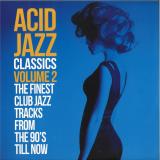
After the excellent response to the first volume, Acid Jazz Classics returns with the second volume.
The Acid Jazz sound born in the 1990s, which harked back to the Soul Funk of the 1970s, found in IRMA one of the labels most dedicated to
this world, and still releases music that can be categorized under this name.
From songs from the 1990s with artists like Jestofunk, Bossa Nostra, Black & Brown, Gazzara, Italian Secret Service, LTJ Xperience, Sarah
Jane Morris, to the present day with artists like The Smoke Orchestra, Yuts and Culture, Fusion Funk Foundation, Micky More & Andy Tee,
Belladonna, and many others.
19 tracks on a double vinyl, some of them never before released on vinyl, all rigorously perfect for both the club and listening.
In fact, some tracks are little club gems:
"Say It Again" by Jestofunk in its very first version from 1993;
Belladonna - Black Jazz, one of her most requested songs ever released on vinyl;
Key Tronics Ensemble - You For Me, the Montuno Salsa version performed for years by Little Louie Vega at many of his gigs;
the Micky More & Andy Tee remix of Sarah Jane Morris's Hold On To Love!
Label welcomes Tunisian-based artist Ahmet Mecnun to the label for the first time with open arms and with sincere hope it is not the last due to high level admiration for his artistic output. Ahmet has crafted M.E.S.S.A with dark flavour oozing throughout the EP that has unified the audio trips together in a complete story. The remix duties of the A-side track have been taken by none other than Uruguayan mastermind Marcos Coya who has provided his take on this matter and has done it flawlessly so. The synergy between the two artists from different backgrounds and cultures but same ideology of music has resulted in M.E.S.S.A to take the shape it has now. The dark times are coming so it is best to go into the loop state of mind to avoid or to welcome psycho override depends on the mood and current feeling one might be going through.
Were FEX the Wildest & Weirdest German New Wave Band in 1984?
Few cult mysteries in modern music have captured the internet's imagination quite like "The Most Mysterious Song on the Internet." Eventually identified as "Subways of Your Mind" by the elusive German band FEX, the track became a viral sensation decades after its creation-and even made its way into a recent Hollywood blockbuster (Black Phone 2).
Now, two more lost FEX recordings have emerged from an old demo cassette: "Dead End" and "Sarah." And they're every bit as electrifying as the legend suggests.
On both songs, guitarist and main songwriter Ture Rückwardt joins forces on lead vocals with his former wife and musical partner Ilona Rückwardt, forming a vocal pairing that channels raw energy and eerie chemistry. What they deliver are two of the most urgent, adrenaline-fueled post-punk artifacts you're likely to hear this year-even if they were recorded more than forty years ago.
Opening with a sharp, melodic guitar solo, "Dead End" bursts forward with uptempo drive-catchy, fierce, and full of momentum. Apparently inspired by Orwell's 1984, its lyrics depict urban desolation-loneliness, homelessness, hopelessness-yet still shimmer with defiance in lines like, "Truth is amazing - hoping is like waiting."
The second track, "Sarah," dives even deeper into darkness. Mixing post-punk intensity with psychedelic textures, Rückwardt tells an imaginary story of a couple lost in drugs and spiraling through a bad trip, only to wake and realize that sobriety offers little comfort-the real world itself can be just as brutal and offers no easy escape.
Neither song makes the slightest concession to commercial trends. Instead, they feel utterly uncompromising-wild, strange, and defiantly timeless. In a world obsessed with polish and playlists, "Dead End" and "Sarah" sound like transmissions from a different planet.
Both tracks were originally recorded as demos in 1984 in the band's rehearsal room, with Hase engineering. The newly restored versions preserve the raw spirit of the original tapes while adding subtle layers to enhance their atmosphere without losing the authentic 1980s sound. FEX hint that the untouched demo versions might surface later, possibly on a second volume of their archival
Danny Krivit pays tribute to the royal family of soul with a double A-side of classic house remixes from Michael and Janet, both appearing on 7-inch for the first time. Standouts from the revered era of ’90s house, these tracks have remained a steady presence in Krivit’s sets, a testament to their timeless appeal.
Mr. K’s edit of ‘Remember The Time’ takes E-Smoove’s punchy Late Nite remix from the original 1992 12-inch single — already considered the strongest mix on the release — and carefully condenses it to fill a 7-inch, retaining all the best elements while adding a highly mixable intro and a unique acapella ending. This edit might now be the definitive version of this classic club tune! The original mix of Janet’s ‘Any Time, Any Place’ hit radio in 1993, but it wasn’t until the following year when Darryl James and David Anthony’s smoothly uplifting and funky remix really took off in all the clubs, and it’s this D&D remix that Krivit turns his attention to for the flip side of this new MEU 45. A favorite of Frankie Knuckles, and Body & Soul, ‘Any Time, Any Place’ has remained a go-to cut for Mr. K, who shares his personal edit here on the compact format for the very first time.
It’s with great pride that we announce this amazing album on Optimo Music from Portland-based duo Natural Magic. It was the final vinyl release that Keith McIvor aka JD Twitch put into production before his untimely departure in late September this year.
Having been a long time lover of everything krautrock, space rock, experimental and psychedelic it seems more than fitting that he leaves us this LP as his parting gift; because this sublime album is all these things wrapped up into one and much more.
The album’s opening track “Galaxy Builder”, with its driving tempo, monolithic bass and screaming guitars might give the impression we’re about to hear a Neu for the 21st Century, but no, by the 2nd track we’re already on the first of several wild detours into uncharted territories: part shoe gaze, part ethereal, part psychedelia it’s a unique piece of beautiful euphoria from start to finish. By the time we reach the end of the A-side’s closing track “Distant Bells” the whole place is in tears after hearing possibly one of the most poignant pieces of electronic music of the entire year.
The B-side takes us even deeper into this trip through the duo’s homeland in the Pacific Northwest opening with “Skyward Eye”. If the Orb had ever teamed up with Slowdive and gotten Andrew Weatherall on production this could be it. “Get It Right” is a fuzz-filled epic with heavy dub leanings and meanings...it soars high up into the beyond and prepares us for “Ride”; an unashamed space voyage in the true sense…cosmic guitars, laden with FX; before returning gently down to the rolling green hills of Earth with the closing track “Chugsby’s Theme”. Whoever Chugsby is, his vibe is organic, deeply grounded and beautiful.
In the duo’s own words:
“Natural Magic II is a west coast road trip soundtrack for the fading summer. Taking inspiration from the majesty and myths of their home in the Pacific Northwest, the seven track album is culled from the late night, dimly lit, live sessions of Mike McKinnon on keys/drums and Matthew Quiet on bass. Overdubs of guitar, synths and percussion followed. All this from the same space they throw their legendary Limited Edition parties - all-night free experimentation celebrations in their own right. The album art work is handmade flower pigments, opium poppy pollen ink and wood-scrap charcoal by their friend and collaborator Pith Cocomici. Roll the widows down, tilt the seat back and turn it up. Gas, grass or black mass... there's magic in the hills.
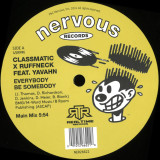
Here, breathing fresh life into Ruffneck ft. Yavahn’s seminal heater - ˙Everybody Be Somebody˙ - are the mighty Classmatic; re-moulding the mid-nineties classic, into an organically-garbed, rolling-House titan.
With Yavahn’s inimitable, sultry tones, sliding across a bed of sub-aquatic bass, rotund kicks, hissing hats and revolving toms - it’s a track, tailor-made for the terraces of Ibiza, beaches of the Adriatic and beyond.
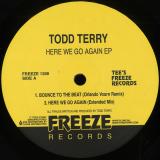
Master Tee returns to his own mighty Freeze imprint! Presenting four highly affective and characteristic house cuts that were not available on physical format before.
Métron Records announces Mycorrhizal Music, the forthcoming album from composer and multi instrumentalist Ess Whiteley. Currently a PhD candidate in Composition at the University of California-San Diego, Whiteley’s practice spans recordings, installations, performances, and scores, a body of work as diverse as the fungal webs that inspire it.
Across seven tracks, Whiteley explores interconnected sound worlds shaped by mycelium networks, rhizomatic structures, and other unseen systems that sustain life. Rooted in experimental electronics, minimalism, ambient and IDM, the record imagines sound as ephemeral connective tissue capable of reshaping how a listener might experience time, memory, and futurity.
At the core of Whiteley’s work is an excavation of what lies beneath perception, the felt but unspoken currents of emotionality and subtle experiences that dwell in the unconscious.
Mycorrhizal Music channels these hidden threads into a speculative ecosystem of kinship and exchange, where joy, play, and spirituality interlace like branching hyphae beneath the soil. Mycorrhizal Music has been conceived as kinetic ambient music, designed to move with the listener while walking, riding trains, driving, cooking, where everyday rhythms align with shifting sonic textures, reminding them of hidden, interconnected, mycelial webs of spiritual vitality beneath the surfaces of daily activity.
Guided by a vision of speculative ecology and interspecies resonance, it thrives in contrasts: tracks like Rhizomatic Harpists and Whispered Messages in Tapestried Fields of Fluid Motion pulse with fluid momentum, while Kaleidoscopic Patterns of Emptiness Dancing drifts into fragile stillness.
With artwork by Kenta Senekt and mastering by Brandon Hocura, Mycorrhizal Music extends Métron Records’ ethos of cultivating subtle, interconnected sound worlds.
ULURU is a large sandstone rock formation in Australia. It's sacred to the Anangu, the local Indigenous of the area. For many years it had been deprived of its spiritual significance, due to mass tourism, capitalism, as well as greedy and selfishness of people who just want to make money out of it. However, as a result of the Anangu’s resilience, care and staunchness, huge changes took place in the national park around Uluru as well as in the broader public's consciousness, giving again to the Uluru the sacred identity that had been lost.
You might be reading and thinking now: so what's the point? Actually, there's no real point. I would rather say, there’s hope. The hope of seeing humans all around the world following the example of the Anangu. The hope of seeing humans finally stopping to treat the earth and all what’s part of it, what’s on and what’s in it, as a slave without soul. The hope of changing today, and if not today at latest by tomorrow. This system is failing. It's no longer sustainable, and there's no much time left.
From the heart of Tamanrasset in South Algeria, Imarhan transcend Tuareg tradition, weaving hypnotic synths into desert blues. The result is a timeless work—deeply respectful of their roots, yet alive with a stirring sense of modernity.
ESSAM is the band’s fourth album, recorded with the same core lineup, but marks a significant shift in their sound and approach. Musically, it marks a departure from the rocky, bluesy, psychedelic Tuareg guitar-driven sound influenced by Tinariwen’s heritage — moving toward something more open, modern, and exploratory.
For the first time, their long-time sound engineer Maxime Kosinetz stepped in as producer. He travelled to Tamanrasset with Emile Papandreou (of the French duo UTO), a multi-instrumentalist who introduced electronic elements by sampling live instruments and reprocessing them in real time with a modular synthesizer — subtly reshaping the band's sonic identity.
The album was recorded mostly live, in one big room at Aboogi Studio — the band’s own rehearsal and recording space in Tamanrasset. The studio, a converted concert hall, has become a kind of cultural hub for the local youth. Friends dropped by during the sessions to contribute handclaps, vocals, and just be part of the energy. It’s a space where people gather, hang out, play dominoes, smoke chicha — a rare communal spot in a city that doesn’t offer many for young people, somewhat like a youth and community center.
This context — the creative shift, the live recording process, the atmosphere around Aboogi — might be interesting threads to explore in the conversation.
“I've always dreamed of making an album where I could bring together artists I deeply admire, curating voices, energies, and sensibilities that have inspired me,” says Brussels-born producer and multidisciplinary artist ShunGu of his new record, Faith in the Unknown. “It took time, and it grew into something very human, rooted in trust, patience, and creative risk. These songs are conversations, not just between me and the artists, but between worlds, eras, and ways of feeling.”
That spirit of dialogue and discovery is what defines Faith in the Unknown. Emerging from years of steady, meticulous work in the underground, the album is both a bold statement of identity and an invitation into Shungu’s world. Across 14 tracks, each a self-contained vignette, ShunGu guides the listener through shifting moods and perspectives- moments of intimacy, defiance, reflection and release, coalescing into a much larger story.
His distinct touch threads through the surefire cast of collaborators - Pink Siifu, Liv.e, Fly Anakin, Chester Watson, Fatima, Maxo, Navy Blue, Dreamcastmoe, Ruqqiyah, Zekeultra and Goya Gumbani — each track unfolding as a new dimension in the same universe.
ShunGu has long been a boundary-pusher, known for weaving jazz-inflected samples, skilfully constructed textures, and MPC-driven grooves into production that feels timeless yet untethered. With Faith in the Unknown he pushes further still: a project as much about collective energy as it is about personal vision. It’s a leap into uncertainty, carried by trust in the process and the people involved.
From the lo-fi beat tapes that first won him a cult following, to collaborations that span the globe, Shungu has forged a body of work rooted in exploration and community. Faith in the Unknown crystallises those qualities into his most ambitious statement yet; a record that doesn’t just blur boundaries between genres, but asks what happens when vulnerability and experimentation are treated as shared ground.
The result is a record that trades in subtlety. Each artistic contribution adds its own shade to the larger mosaic, pulling the listener deeper into an expanding narrative. If Faith in the Unknown has a message, it’s that art can thrive in uncertainty - that in the spaces where trust, risk, and vulnerability intersect, something entirely new can emerge.
“I've always dreamed of making an album where I could bring together artists I deeply admire, curating voices, energies, and sensibilities that have inspired me,” says Brussels-born producer and multidisciplinary artist ShunGu of his new record, Faith in the Unknown. “It took time, and it grew into something very human, rooted in trust, patience, and creative risk. These songs are conversations, not just between me and the artists, but between worlds, eras, and ways of feeling.”
That spirit of dialogue and discovery is what defines Faith in the Unknown. Emerging from years of steady, meticulous work in the underground, the album is both a bold statement of identity and an invitation into Shungu’s world. Across 14 tracks, each a self-contained vignette, ShunGu guides the listener through shifting moods and perspectives- moments of intimacy, defiance, reflection and release, coalescing into a much larger story.
His distinct touch threads through the surefire cast of collaborators - Pink Siifu, Liv.e, Fly Anakin, Chester Watson, Fatima, Maxo, Navy Blue, Dreamcastmoe, Ruqqiyah, Zekeultra and Goya Gumbani — each track unfolding as a new dimension in the same universe.
ShunGu has long been a boundary-pusher, known for weaving jazz-inflected samples, skilfully constructed textures, and MPC-driven grooves into production that feels timeless yet untethered. With Faith in the Unknown he pushes further still: a project as much about collective energy as it is about personal vision. It’s a leap into uncertainty, carried by trust in the process and the people involved.
From the lo-fi beat tapes that first won him a cult following, to collaborations that span the globe, Shungu has forged a body of work rooted in exploration and community. Faith in the Unknown crystallises those qualities into his most ambitious statement yet; a record that doesn’t just blur boundaries between genres, but asks what happens when vulnerability and experimentation are treated as shared ground.
The result is a record that trades in subtlety. Each artistic contribution adds its own shade to the larger mosaic, pulling the listener deeper into an expanding narrative. If Faith in the Unknown has a message, it’s that art can thrive in uncertainty - that in the spaces where trust, risk, and vulnerability intersect, something entirely new can emerge.
Flanked by a team of collaborators - including Nick León, more eaze, Ultrafog and Kissen - Ben Bondy captures the Kwia-pop zeitgeist on 'XO Salt Lif3', sluicing down dappled emo and downtempo grooves with log drum thwacks, tempered field recordings and sandblasted shoegaze guitars.
Forget what you think you know about Ben Bondy; like Naemi's fuzzy 'Breathless Shorn', ‘XO Salt Lif3’ is a decisive shift away from the ambient world and towards contemporary underground pop. Last year's amapiano-tinted loosie 'Bend' serves as the album's opener and is the best taster, its slick DSP squelches, granulated drones and sub rumbles immediately swapped out for breezy acoustic guitar riffs, tuned log drum hits and Bondy's own Autotuned vocals. When Bondy turns down the temperature a little, letting the orchestral synth arrangements slip into fuller view on 'Halfmoon', a collaboration with Nick León and Aussie producer Lovefear, it's tempered by low slung emo riffs and mumbled sweet nothings.
By the time we hit 'Dreamseed', Bondy's in full swing, offsetting slow breaks and multi-tracked vocal harmonies with full-spectrum shoegaze power chords that cut into the mix like a chainsaw, with crunchy amp crackle foreshadowing the Bark Psychosis-like drop. Bondy hits a cruise when More Eaze helps out on 'There Is A Place'. Maurice's unmistakable pedal steel draws us in, used by Bondy to add an Americana accent to his euphoric fusion of amapiano and indie pop. It's music that'll make perfect sense if you've caught one of Bondy's notorious DJ sets, where you might hear anything from American Football and Jessica Pratt next to Gwen Stefani, Skinny Puppy or Sneaker Pimps. It’s this chaotic, open-hearted approach - which also plays a part in the Shineteac material - that makes 'XO Salt Lif3' so effortlessly enjoyable.
Neroli reaches release number 50 during its 20th anniversary and celebrates with a special project, an album of songs by some of the label artists and friends. The title reference goes back to 20 years ago when label’s honcho Volcov decided to give the label the name of Brian Eno’s Neroli album, an hour long ambient opus inspired by the oil derived by the flowers of the Seville orange. So after 20 years and 50 releases the label goes full circle and offers an album of delicate and heartwarming melodies and atmospheric songs. The talent of original UK dons Kirk Degiorgio, Dego and Ian o’Brien is enrolled once again to guarantee sophistication and depth. Patrice Scott and Fred P, who had recently released eps on Neroli, are joined here by fellow spacecadet Aybee…all delivering warm futuristic pieces! K15 and Linkwood debut on the label, opening and closing the album with class. And there is even a lost composition by Volcov himself with Detroit’s Gerald Mitchell and Pirahnahead as part of some 2010 sessions that might resurface soon…THE FIRST CIRCLE is complete!
Design by Al White. Manufactured and Distributed by Mother Tongue, Verona.
‘Get A Life, Listen To Autumns’ is a statement that tells you everything you need to know about the quality and attitude of the Irish producer’s latest EP. His DNO debut presents five tracks of steel-studded EBM and industrial run through with his trademark dub aesthetics.
A1 ‘100 Ways To Get Fucked’ — another bold title — struts its stuff to a methodical stomp; strained vocals pulled out of shape and fed back into macabre forms; low-end chugging like some smoke-billowing, grease-slicked machine.
‘Let It Melt’ picks up the pace, making judicious use of the reverse function, while subtle acid chirps and woozy arpeggios provide a chaotic, though not unpleasant, dissonance that induces a feeling of headrush.
‘Petted’ swaggers like sex incarnate, alongside snatches of diva vox and the kind of sweeping space-age pads that Holst might have used had he been born a century later, seemingly taking cues from the hot and sweaty nights of ’80s Chicago.
Over on the B-side, ‘LDRO’ sets its kicks and snares thrusting at full tilt over an inexorable bassline; Autumns’ favourite effect, delay, keeping things squelching like the jellified flesh of a ballistics dummy.
And to finish, ‘God’s Gift’ drops down to a sludgy rhythm — though with surprisingly spritely percussion — to match its tortured guitar, shrieking horns, and deadly subs. A fever dream of twisted metal and hot breath, like the gradual slowing after the climax of debauchery.
Marking a sultry new route for DNO, Autumns’ first for the label is confident, confrontational, and
not to be missed.
Rhythms of postmodern realism at the very bottom of the DNO.
The Mighty Ryeders' rare groove classic Help Us Spread the Message has been remastered and reissued here because it forever remains a favourite with DJs and dancers. It's a timeless soul and funk blend with many a standout jams, not least 'Evil Vibrations,' a super cool and breezy groove famously sampled by De La Soul in 'A Roller Skating Jam Named Saturdays' and later covered by The Rebirth. Alongside funk staples like the aching beauty of 'Help Us Spread The Message' and the collector-favourite 'Let There Be Peace' the album blends rich horns, clavinet and deep grooves with great songwriting and vocal harmonies. Do not sleep on this masterpiece of funk.
Two years after he first appeared on Balmat with 1977, Mike Paradinas returns with 1979. The sense of continuity between the two records is clear, and not just from their titles. Both capture the Planet Mu head venturing into the wilderness, seeking something—half-formed memories, thoughts caught in midair—in some of the most abstract, searching music he has released.
Just like 1977, 1979 surveys a synth-heavy array of ethereal soundscapes, ominous crevasses, and strange, psychedelic fugues. Like its predecessor, the new album’s atmospheric cast sets it apart from much of the work Paradinas has released as μ-Ziq on Planet Mu. It’s not strictly an ambient record, but it’s close, as close as this famously mutable artist ever comes to inhabiting a particular genre.
Paradinas’ inspiration for the record began on visits to the Spanish cities of Ávila and Majadahona, where his family hails from. That might account for the sense that there are spirits flitting through this music, presences you can intuit if not quite grasp. But 1979 is also a record to meet on your own terms, and to find your own meanings in.
It’s a stunning record, every track a world unto itself: the mysterious contours of “Majadahonda at Dawn”; the playful melodic fillips of “Clari”; the airy melancholy of “Galletas”; the full-scale breakbeat abandon (yes, you read that right) of “Houzz 14,” the rarest of dancefloor detours for Balmat. There are echoes of classic braindance and isolationist ambient and golden-age IDM; there are easter eggs and recurring themes and hidden symmetries. Every time we listen, we discover something new. Despite what the title might suggest, it’s less a trip back in time than a portal to another universe, a destination for(to?) which only Mike Paradinas knows the exact coordinates. – Philip Sherburne, Balmat
ULURU is a large sandstone rock formation in Australia. It's sacred to the Anangu, the local Indigenous of the area. For many years it had been deprived of its spiritual significance, due to mass tourism, capitalism, as well as greedy and selfishness of people who just want to make money out of it. However, as a result of the Anangu’s resilience, care and staunchness, huge changes took place in the national park around Uluru as well as in the broader public's consciousness, giving again to the Uluru the sacred identity that had been lost.
You might be reading and thinking now: so what's the point? Actually, there's no real point. I would rather say, there’s hope. The hope of seeing humans all around the world following the example of the Anangu. The hope of seeing humans finally stopping to treat the earth and all what’s part of it, what’s on and what’s in it, as a slave without soul. The hope of changing today, and if not today at latest by tomorrow. This system is failing. It's no longer sustainable, and there's no much time left.
Continuing his refraction of the rave continuum into pointedly dislocated, delicately bruising sound system meditations, Low End Activist returns to Peak Oil with a second instalment in his Airdrop series. This time around, he channels the ghosts of foundational tech-step and the quantum leaps of late-90s D&B to provide the inspirational fuel for his skeletal, astral constructions. A strong stylistic thread continues to weave through the LEA output from his earlier self-released EPs and Sneaker Social Club albums, where haunted atmospherics, blown out subs and snatches of breaks dart around each other in empty dancehalls, but the finer point of the sound design and synthesis makes very specific references to landmark moments in hardcore's evolution.
By weaving his own autobiography into the music, the Activist maintains a fundamental theme of his work to date. 'Colin's Golf', 'Smithy's Porsche,' 'Merv's Lazy Eye' and 'Brillo's Teeth' are all personal codes harking back to the formative Oxford rave scene. With the framework in place, he uses textures, timbres and studio tricks from scene-leading pioneers and local heroes of the era as ingredients in thoroughly modernist concoctions. None of the reference points are deployed as literal callbacks — they're waymarkers for the creative process and faint triggers bedded deep into Airdrop II's strange formations. Fleeting sonics might trigger latent memories for those who were there. For everyone else, Airdrop II is another step further along rave's eternally unspooling odyssey, guided by decades of precedents on a path into the future.
A fresh take on the 2020 gem from Alex Attias featuring Georgia Anne Muldrow and Kid K. This latest release brings three dynamic remixes from the mighty Kaidi Tatham, Stephane Attias, and El Mustang, each crafted for distinct moments on the dance floor.
Kaidi Tatham delivers a vibrant boogie-infused rework bursting with soulful energy. A joyful, groove-heavy ride that’s already a favorite here at Visions.
Stephane Attias steps in with a deep house interpretation, dubbed out and laced with hypnotic vocal touches and slick keys courtesy of Sean McCabe. El Mustang (Alex Attias himself) ventures into darker territory with a stripped-back broken beat version, perfect for those late-night sessions when the mood shifts and the rhythm deepens.
UK-based DJ and producer Wallace debuts on Phantasy Sound with an irresistible double A-side single, ‘Cravings (ft. Love Letters) / Concourse.’ Bubbling with sensuality and euphoria, both tracks reinforce Wallace’s burgeoning reputation as one of electronic music’s most impressive new voices, a crowning moment on Erol Alkan’s long-running label following a stellar run of singles for imprints including Cooking With Palms Trax, Rhythm Section, and Moxie's much-loved On Loop.
Led by a longing, inquisitive performance from vocalist and underground house music luminary, Love Letters, ‘Cravings’ builds from a simple throbbing bass line to an eruption of lyrical and musical joy. Exploring onset desire – risk, uncertainty, and ultimately, reward – Wallace’s deep and celebratory arrangement interweaves with Love Letters’ queer perspective to deliver universal satisfaction.
While ‘Cravings’ looks inward to find release, ‘Concourse’ goes for the jugular with a darker, more epic sensibility than Wallace has previously indulged. His flawless production touch seamlessly gifts magic to a widescreen techno epic that might not sound out of place on the terrace at Circoloco or else a field near early-nineties Frankfurt, repeatedly working his acid-oriented machines into a lather and conjuring cosmic drama from eerie, choral voices beneath a powerful groove.
During the 35 years of making music, Dave Lee has constantly been searching for new singers and writers to work with. A search that’s ended up with many fantastic collaborations and releases with the likes of Thelma Houston, Taka Boom, Dianne Charlemagne and Seal. More recently this quest led him to Maurissa Rose and the creation of their album ‘London / Detroit’. After hearing Maurissa's voice on a Theo Parrish record Dave reached out to her and after a few long phone conversations and mp3 swaps they both agreed a visit to London would be much more fun than trying to work together remotely. Maurissa made the journey from her home in Detroit to write and record an album with Dave at his studio in March 2022 - as they both feel that creating music together in the same room is always better. The fruits of their labour yielded 11 brand new songs (and 1 cover) tapping into their collective love of Soul, Disco and R&B, with a sprinkle of Soulful House. This album is a special one for Dave Lee as it’s the first time in his career he’s recorded an entire album with same singer on every track.
In the album’s liner notes Dave talks of how Maurissa is a naturally creative person, full of ideas, warm & unpretentious which is reflected in her vocal performances throughout ‘London / Detroit’. Dave’s expertly crafted music is backed up with a deeply passionate yet effortless delivery from the Detroiter, a marker of someone who has honed and perfected their art. When it comes to the music side of this LP, Dave Lee is once again proving he’s still at the top of his game and shows no sign of relenting. Drawing from his encyclopaedic knowledge of all things Soul/Funk/Disco, we are treated to a range of styles, BPMs and influences from 95bpm street soul to more uptempo disco and boogie flavours. Be it the rippling synth voyage opener of ‘You Decide’, taking the Johnnie Taylor classic ‘What About My Love’ into a modern Boogie realm, upping the tempo on the soulful houser ‘I Feel the Sun” or bringing the tempo back down to the bassy acidic chug of ‘You’re Giving Me Life’. Mr Lee is truly adept at creating a modern disco soul sound without the usage of samples.
London and Detroit might be two very different cities on opposite sides of the Atlantic but this album is proof that creative synergy knows no distance.
Out everywhere on Feb 28th on Gatefold Vinyl, CD and Digital/Streaming.
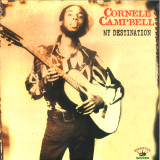
The mighty Falsetto voice of Mr Cornell Campbell is another we believe, unsung hero of the Jamaican music scene. Who in our opinion should have broke through to a wider audience, than his cult status currently provides. We have unearthed straight from the master tapes an album that was due for release around the mid 70’s. A few of these cuts, found their way out on limited 7”s, that were mainly for the domestic Jamaican market. But as a complete body of work, never found a release until now. We hope like us, once you have played the tracks, you will feel that this set of cuts, stands up amongst Cornell’s finest work. Cornell Campbell (born 1948, Jamaica), made his first recordings in the early 1960’s for Coxone Dodd at Studio 1. Tracks like ‘Under the Old Oak Tree’, ‘My Treasure’ and later as a duo with Roy Patton ‘Salvation’ and ‘Sweetest Girl’, were local hits on the Jamaican Sound Systems. A short spell with the Uniques was followed by his roll as lead vocalist with the Eternals, under the monicker of Don Cornell. Their finest moment being the classic ‘Stars / Queen of the Minstrels’ cuts which still stand up today as some of Jamaica’s finest.
The 1970’s saw Mr Campbell move on to work with producer Bunny ‘Striker’ Lee, for whom he cut most
of his big tunes. He and fellow singer Johnny Clarke, would become Bunny’s 70’s equivalent to his 1960’s stable of singers like Slim Smith, Pat Kelly and Ernest Wilson. They would provide the voice to his many hits of the day. Bunny not being called ‘Striker’ for nothing. Cornell also had a series of hits around his theme as the ‘Gorgon’. The mighty figure unbeatable at the dances in the Greenwich Town district of Kingston. ‘The Gorgon’, ‘The Conquering Gorgon’. ‘Natty Dread in a Greenwich Farm’. These were all firm favourites at the dances in Jamaica. He also worked with other notable producers around this time. Winston ‘Niney’ Holness “I Heart is Clean’, Tappa Zukie ‘Follow Instruction’
and culminating in a massive hit ‘Boxing’ in 1979 for producer Joe Gibbs. But it was his time with Bunny Lee that set the levels for his record output. This unreleased album is from this period in time, when Cornell Campbell never sounded sweeter......
Strictly limited to just 500 copies, this transparent blue 12” vinyl marks the 142nd release on Systematic. It proudly features none other than the boss himself, Carl Cox, delivering a groovy electro killer you might not have seen coming.
On the flipside, label head Marc Romboy joins forces with his long-time friend Robert Babicz (Kompakt, Force Inc., Mille Plateaux) to present a warm, driving four-to-the-floor tech track that perfectly reflects their signature sound.
A truly powerful package!
When Chuck D proclaimed "Bass, how low can you go?" on Public Enemy's anthemic 'Bring the Noise,' maybe he was pre-empting or inciting the 10,000 fathoms-deep, spine-bending basslines and sub-quake tremors of 'Implosion.'
Implosion is a crushing split album, appropriately released on The Bug's own PRESSURE label. Mapping out a new form of spectral dub, the sound is deliberately immersive, introverted, and yes, definitely implosive. In pursuit of heavy lids, blurred vision, and merciless bass bin punishment, it’s one part meditation, two parts low-end theory, and essentially a confession of devoted sound system addiction.
As expected from a tag team featuring British soundlab explorer and 'London Zoo' composer Kevin Martin, aka The Bug, and Michael Fiedler, aka Jah Schulz—a long-time graduate of Germany's new school of sound system reggae culture—the duo approaches their target differently yet share the goal of keeping their sound "raw" (Fiedler) and "brutally minimal" (Martin). This proves that opposites can attract, even if their tools are different and their methods sometimes diverge.
From such a disparate combo, hailing from different geographical and aesthetic backgrounds, contrasts are certainly on display, even within each artist's own contributions. From the melancholia and transcendence of 'Alien Virus (West Indian Centre, Leeds),' to the duality of ascension and descension on 'Hope,' or the Sunn 0))) in dub, visceral drone of 'Dread (The End, London),' to the tripped-out repetitions of 'Midnight,' which reinvents Chain Reaction for post-millennials, the result is both sacred and narcotic. Each track illuminates the emotional impact and atmospheric pressure being explored across this deceptively sparse album—a mastery of tone and texture.
This collection might be as reduced, minimal, and deep as The Bug has ever gone, perhaps echoing the solemnity of his recent Kevin Richard Martin Black release and invoking the futurist steppas self-pioneered on his previous Pressure album. Alternatively, Fiedler‘s Ghost Dubs project ventures into his most heavyweight direction yet, which is no mean feat considering his previous, the critically acclaimed album Damaged, was a monstrously massive triumph of analogue weight and enviable sound design.
Implosion is ice-cool, a stark contrast to the warmth and sociability of traditional Jamaican roots and the current trends in digi-dub. Instead, the mood is soaked in tension and intense dread, finding an unexpected melting point where classic dub's stark rhythm attack, isolationist ambience's eerie drift, dub techno's floatation strategies, and even the relentless riffs of doom metal collide. As the bass-obsessed pair drop what is arguably the heaviest ambient dub album to emerge from any electronic sector—a moody counterpoint to The Orb's fluffy clouds, etc, Martin has cited The Roots Radics, Black Jade, and On U Sound's Pounding System as heavily influencing his approach to the album, while Fiedler has expressed his admiration for Adrian Sherwood's productions and Rhythm & Sound's enchanting soundscape. Yet, the super heavyweight pulsations, emotive resonances, and bone-rattling vibrations detonated here effortlessly go far beyond these influences.
Shadowy and elusive, there’s a mysteriousness at this record's core. A haunting moodiness oscillating between nostalgia and future shock. Despite the deadly fixation with SLOW and HEAVY, the album maintains a totally hypnotic swing throughout. Implosion and its lead single 'Imploded Versions' are testaments to being enveloped in bass, seduced by bass, submerged in bass, and utterly crushed by bass, as The Bug and Ghost Dubs seek to craft a new form of dub for zonal headz and Babylon seekers.
Mastered by Stefan Betke (a.k.a. POLE) at Scape Mastering studio, this record is heavy as f-ck without resorting to continuous distortion. It’s low-end worship taken to an absolute extreme, yet remains highly listenable and definitely danceable, albeit at the slowest of paces. Sacred and narcotic, this is low-end worship amplified to the max. Dive in if you dare.
GATEFOLD VINYL 2LP - TRANSPARENT BLUE + ORANGE, A2 Colour Poster, 5x Film Set Photos, Flexi Disc, Sticker Sheet
Blurring the lines between fiction and documentary, the seminal film Wild Style, directed by Charlie Ahearn and developed alongside Fred Braithwaite aka Fab Five Freddy, offered an iconic snapshot of the emerging New York hip hop scene in the early ‘80s. Considered one of the first hip hop films, it documents the styles, culture, attitudes, and most importantly, the music of this evolving era. The accompanying soundtrack remains one of the most influential in hip hop history, featuring a who’s who of artists who stood out during the movement’s nascent block party days.
“Making hip hop’s first and most beloved feature film, Wild Style, with Charlie Ahearn and creating the original music is one of my proudest accomplishments.” - Fab 5 Freddy
In celebration of Arrow Films restoring the original Wild Style film in 4K, Mr Bongo is proud to present this special-edition reissue package. The release comes as a double LP pressed on transparent blue and orange vinyl, offering a freshly curated tracklist that brings together the finest songs from previous editions, the full sought-after instrumental album, and Kenny Dope’s top edits. Also included are an A2 colour poster, five film set photos, a flexi disc containing Fantastic Freaks Live at the Dixie, and a Wild Style sticker sheet.
Originally released on Animal Records, founded by Chris Stein of Blondie fame, the soundtrack focuses on the hip hop scene as it evolved from the streets to the recording studio. Co-produced by Stein and Braithwaite, it features the Double Trouble pairing of Rodney Cee and KK Rockwell, The Chief Rocker himself Busy Bee, and the mighty line-ups of both The Cold Crush Brothers and The Fantastic Freaks, to name but a few. The music offers a transportive glimpse into the streets of the South Bronx, capturing the free-form, roaming nature of the film - it’s rough around the edges, but utterly absorbing.
Behind those foundational voices of hip hop’s first wave was a selection of backing beats that have underpinned and influenced the genre ever since. Easily mistaken for lifted breakbeats from old records, the songs on the Wild Style soundtrack are all unique creations. Overseen by Braithwaite and Stein, with Stein also on guitar and effects, they were intended as a homage to those early breakbeats. Drummer Lenny “Ferrari” Ferraro, who played for Aretha Franklin before emerging on the punk scene, and bassist David Harper laid down many of the iconic grooves, two somewhat forgotten participants in shaping a legendary sound.
Over time, the Wild Style soundtrack, with its Charlie Chase and Grand Wizard Theodore scratches, recurring sounds and motifs, and indelible lyrics, has become a hip hop touchstone: endlessly sampled and referenced, the bedrock of so much music to follow. It perfectly encapsulated the essence of the film, the scene, and hip hop’s emergence from the Bronx to the attention of the wider world. It was, and remains, the blueprint.
“I like him very much. He’s very special. He’s singing with a voice I never heard before” - Townes Van Zandt
“A conscious, soulful brother” - Horace Andy
“He’s a brother to me - one of the best singer/songwriters I’ve ever met” - Adrian Sherwood
“Unearthed mine of gems from inner Wales - a songbook of ideas - that's Jeb!” - Gilles Peterson
Jeb Loy Nichols is a bonafide Country (Got) Soul legend. The Music Maker presents 21 incredibly deep, grooving and soulful songs from the cream of Jeb's catalogue; from its earliest days to his latest unreleased gems via countless rare and unbelievably good lost-classics. This 2LP set is presented in a gatefold sleeve complete with freshly commissioned artwork courtesy of Jeb himself.
In collecting these uncut, under-heard gems, we hope to do justice to Jeb's jaw-dropping artistic brilliance. A man who, in working with Adrian Sherwood, Dennis Bovell, Dan Penn, Larry Jon Wilson and countless other legendary characters, has crafted some of the most deeply affecting folk, country, soul, funk, blues, dub, reggae, gospel, rap and electronic music, ever heard.
The first music Jeb really felt a connection with was southern soul: "I used to listen to the radio at night and fell in love with Bobby Womack and Al Green, The Staple Singers and Joe Simon – that whole Nashville/Memphis/Muscle Shoals thing.” But Jeb was so much more than a soul boy, Indeed, he "went to bluegrass festivals with my dad and come home and listened to jazz records with my mother.” And, when he was fifteen, he heard his first punk record: "God Save The Queen" by The Sex Pistols. “That and The Ramones completely changed me.” In 1979 he got a scholarship to go to art school in New York: “A great time. Punk was over but hip-hop was starting and I got into that in an obsessive way.”
His first recording, in 1980, was an unreleased rap song called "I’m A Country Boy". If that isn't an insight enough into Jeb's kaleidoscopic path through music, in 1981 he visited friends in London and found himself living in a squat with Adrian Sherwood, Ari Up (from the Slits), and Neneh Cherry. “Adrian put me to work immediately, moving boxes of records all across London. It was Adrian that was and is my biggest influence – in his complete disregard for genre purity.” So, presumably you're getting the picture? A veritable musical magpie with a voracious appetite and unimpeachable taste.
"Mine has always been a meandering career. I've done what I've done, and made the music I've made, due to chance meetings. I'm not particularly ambitious; it's more important to me that I work with friends and like-minded people. I've been a big fan of Be With for years. Everything they release is essential. When they asked about rereleasing "Countrymusicdisco45" I was both pleased and flattered. We began talking about how we'd do it; two years and twenty-one tracks later, here we are. I've always thought of the music I make as Country Music. Music conceived in the country, written in the country, recorded in the country. I left London and moved back to the country so I could live among the trees, the grasses, the animals, those things that don't go to war and get greedy. This compilation is the story of that life. Hand made, lo-fi, ramshackle, stripped down, real deal music. Heartworn and funky. Music made in the kitchen, not in the studio. As the great Skip Mcdonald said, Perfect ain't perfect. It's great to see all these tracks gathered together. It feels like a family reunion. Some older members of the tribe, some newer arrivals."
Opener "countrymusicdisco45" is a song Jeb wrote about how his crew lives, tucked up blissfully in the hills: "House parties full of country folk dancing to disco, reggae, soul, country, hip-hop. All night. I recorded it at home under the influence of Stevie Wonder." It's one of the funkiest records you'll ever hear. "Sometimes Shooting Stars" was recorded in Nashville and mixed by the legendary Dennis Bovell. It's deep, dubby, majestic. A thing of fragile, melodic beauty. The party ramps back up again with the undeniable groove of "Short Cut Home" before the profoundly moving "Disappointment" arrives. One of many songs he's recorded with good buddy Benedic Lamdin (aka Nostalgia 77): "We were going for a Leon Thomas meets Richard Brautigan meets Alice Coltrane kind of thing". We think they nailed it. "Days Are Mighty", like a lot of the tracks on this collection, "started life as a demo, an attempt to get something down while it was fresh. No frills, nothing fancy, just feel." And what feels!
The irrepressibly funky "Don't Dance With Me Tonight" is a deeply moving, slow-mo organ-drenched head-nod-funky country-ballad. Next up, the breezy "You Got It Wrong" was recorded in Wales with some of Jeb's good friends and neighbours, The Westwood All Stars, featuring Clovis Phillips and Will Barnes. Skanking fiddle-flecked gem "Ring The Bells" was the first thing Jeb recorded when he moved to Wales. A combination of all his loves; country, reggae, soul. It's followed by "Let's Make It Up", a truly sumptuous string-drenched emotional groover. "When Did You Stop Loving Me" is another Nashville track, written and recorded during a time Jeb was spending a lot of time with the Muscle Shoals crew, Donnie Fritts, Spooner Oldham, George Soule and Dan Penn: "It shows, I'm sure, their influence." Oh, you bet it does!
The swaggering country-funk of "Just Beginning" should grace many groove-focused DJs' sets whilst "Wintering Of The Year", again made with Clovis, is pastoral, campfire soul. The glacial, gorgeous "Let It Rain" is from an unreleased record Jeb made with the great British jazz bass player Andy Hamill and "We Tell Each Other Who We Are" is freaky country-soul made by a man with a love for strutting, wonky hip-hop stylings. Rounding out the side, "Trip To You" is pure, uncut amphetamine-propelled drum-machine soul.
The spare, beautiful "Dirt" is from an EP Jeb made with Julian Moore in his house in South London: "All first takes, straight to tape." Swoon! "Heaven Right Here" was a very minor league hit in America: "It was produced by the brilliant and much missed Wayne Nunes. It was started in the countryside of Missouri, finished in the countryside of Wales, and recorded in the countryside of Sussex." Double swoon! "If Later Ever Comes" is electronica meets J.J. Cale business whilst "Remember The Season" is truly wonderful and breezy guitar soul. "A Little Love" was made with Wayne Nunes as well, after a night of listening to Studio One and Northern Soul. Bouncy dub closer "Weary Traveller" was written by Bill Monroe, the hero of Jeb's youth: "Monroe's music was heavily influenced by black southern churches; I've tried to keep some of that feral feel." This was the final recording by Jeb's 1990s Country-Dub band, Fellow Travellers.
The name of this compilation comes from a time when Jeb lived in Peckham, south London and he used to DJ and sometimes perform at a local bar: "The owner of the bar, a Jamaican named Count Percy, once asked me what I called my music. I told him I wasn't sure, I guess just pop music. He thought about it for a minute and then said, 'no, more like mom and pop music'. Rather than call me a country singer or a folk singer he always referred to me as The Music Maker."
With the long overdue deluxe overview of his beloved music, we hope to finally shine a light on the unheralded genius of Jeb Loy Nichols. RIYL Larry Jon Wilson, Townes Van Zandt, Bobby Charles, country got soul artists, dub, deep soul, disco, dancing, heartbreak. This deluxe collection, spellbinding from beginning to end, should hopefully go some way to ensuring Jeb reaches an ever bigger, ever more appreciative crowd of followers. Mastering for this special double vinyl edition was overseen by Be With regular Simon Francis and it was cut by the esteemed Cicely Balston at Abbey Road Studios to be pressed in the Netherlands by Record Industry. The artwork has been lovingly put together by The Music Maker, himself, Jeb Loy Nichols. "Be With is the perfect home for this mongrel music. I am forever in their debt." The pleasure is all ours, Jeb.
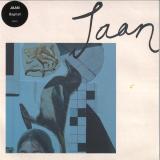
Operating on the fringes of pure improv, organised chaos, minimal composition, lo-fi electronics and Italian spaghetti westerns, wide-eyed and with a healthy dose of DIY aesthetics lies the world of Jaan. It’s a poetic & cosmic universe, exploring “discreet music” whilst wandering on the edges of the Cat People soundtrack & Brian Eno’s more experimental output, in which you might yourself find floating, wandering or in the middle of a market place.
Jaan is a collective of one, a deliberately anonymous activistic unit with strong ties to the international art scene. Purposefully bypassing the know-it-all of the the internet & embracing the bygone mystery of dusty old archives and deep-dive searching, remarkably little is known about this project. Jaan is lead by veteran experimental sonic alchemist Jaan; they operate between Greenland, the Middle East and Europe, with frequent associates Lisqa, Mashid & Schneorr N. acting as local hubs for collaboration and exploration.
The purpose of this wilful obscurity: full focus on the actual music, whether live events or on recordings. Which brings us to Baghali, their first for World of Echo. It’s a deeply personal album, much like slowly browsing old family albums filled with vaguely remembered tales, some still very much present, some faded, leaving but a ghost-like reflection of what once was. Baghali was compiled over the course of a year on the road, trapped in snow storms, waiting for cancelled flights and stuck rides. It’s made up of snippets of diary, quick recordings on road sides, abandoned buildings, garden ruins, vast desert and focussed studio sessions, following a collage-like aesthetic and steeped in an exploration of non-lineair storytelling. There’s broken memories, a sense of displacement and an occasional yearning for what can’t be again, clouded in fever and unrest, but there is also hope, wonderment and bright colours seeping through the cracks in the wall. Jaan weaves home-made instruments, old tape loops, broken synths, beat-up reeds, dusty beat boxes and the occasional doom guitar squall into a tapestry of fractured sound, with tracks following their own inherent logic rather than following formats. Sounds crash in and out, field recordings placing the listener firmly in an environment then throwing several perspectives at once onto them, with individual elements - a wandering clarinet, a lone mandoline, a beat out of place yet perfectly in place - slowly walking in and out & doing their thing.
The whole album is alive, breathes, takes a wrong turn, gets lost, somehow finds its way again - effortless and with a unique sense of space and flow.
Baghali is released digitally and on vinyl in an edition of 300 on 3rd October 2025.
Heralding 10 years of relentless club futurism, Timedance strikes forward once more with TD10. Batu's label has nurtured experimentation between techno propulsion, soundsystem pressure and innovative sound design since the beginning, rarely resting in one space and always reaching for new ideas. Across 23 forward-facing cuts, this compilation continues that tradition with a strong cast of scene-leading heavyweights and crucial emergent talent.
The wide-ranging styles across TD10 are bound together by a shared affinity for bassweight presence and vibrant, three-dimensional production. Fractured, artful deconstruction from Daisy Moon, Marco Shuttle and Verraco sits alongside the snarling half-step pressure of re:ni and Lurka and the jagged drum intensity of Lechuga Zafiro, 33EMYBW, Ayesha, and Jabes. There's space for big room anti-anthems from Pearson Sound, Bambounou and Batu himself, wildcard swerves from Minor Science and Skee Mask and more emotive melodic sensibilities from Polygonia, El irreal Veintiuno and BADSISTA. At every turn, the ideas are fresh, toying with the idea of an all-encompassing sound for the label and throwing open the possibilities for what it might represent in the future.
Timedance has thrived in an era where technology has eroded the boundaries between the generic formulae of dance music's past, helping set the pace for innovation and presenting compelling, immediate music across the tempo range. TD10 responds to that legacy with its gaze fixed firmly forwards, ushering in the label's next chapter in proudly unpredictable style.
IMPORTANT: These are often unplayed, sealed or barely played copies, but have been stored in a humid environment. Some copies might have slight storage damage like deformed sleeves or some mold. Even though a quick cleaning session of the item (if needed) will probably make it as good as new, these are still sold as is! HORIZON HAS BEEN ONE OF HIS BIGGEST HITS AND ONE OF COCOONS & SOMAS BEST SELLING VINYL. A MASSIVE HIT ON MOST FESTIVALS. ULRICH SCHNAUSS COMES WITH A GORGEOUS TECHHOUSE MIX. YOU ALL MUST HAVE HEARD OF TIGERSKIN AND HIS WELL CRAFTED MUSIC. THIS OUTSTANDING PRODUCERS COMES WITH A CLASSIC FLOORSTOMPER AMERICAN STYLE. THE FUNKDVOID MIX IS STILL ONE OF OUR ALL TIME FAVOURITES NEXT TO BEROSHIMAS SKYFLYER
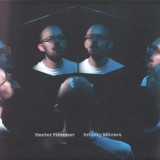
Effortlessly charming, inquisitive and generous in spirit: 'Total internal reflection' is the beautifully crafted debut album from DJ ojo, returning to Blank Mind, following his acclaimed 2023 EP ‘Coiled up’.
The vivid sound design, irreverent flourishes and elastic rhythms of his past work remain, yet here he leans further into his enduring love of house and techno music. An impressionistic take on the forms, with a light, considered touch that allows his idiosyncrasies to shine through. There’s a synaesthetic quality here, that implies a gestural play between sound, colour and form.
It is functionality that is the key embrace: eight tracks, two discs, two tracks per side. A cohesive body of work purposefully presented to be played out. These guiding principles complement the uniquely skewed style of ojo: there’s always a groove, but it might trip over itself; there’s always a sense of cohesiveness, but it’s never clear; there’s always a dancefloor, but it’s slippery when wet.
The record features art by photographer Thomas Steineder, who interprets the record visually, by bouncing light through analogue film wrapped around a prism, capturing a reflection turned inward.
With ‘Total internal reflection’, ojo has somehow become even more himself, refining his vision into something playful, profound and enduring.
Remix Ep with a broad spectrum of styles and some big named remixers. Side A kicks off with Colin Dale's remix of Dark Male, which is a typically throbbing techno cut for the dance floor, the Second track on Side A is David Duriez pushing an acid house remix of fellow French act G-Prod. On the flip is MOY's step into big bass and fast based breaks led drums which will make your head explode as they build their intensity, the second track is Derek Carr remixing The Vast Profound, his house rework offers all you might expect from this veteran of the scene - looped hooks and deep pads. Lastly The Vast Profound digs into the deeper end of house music layering up pads, strings and lush melodies. Comes with an insert "Remix track selector" on coloured vinyl limited to 135 sale copies.
Pyatigorsk-born dynamo b0n dishing out some naughty breaks for his debut on X-Kalay sub-label, Another Place.
Four distinct traxxx going from full-blown seismic tremors to lithe, dreamier fare. A love letter to the halcyon days of ‘90s hardcore, perhaps?
Synths darting (just how we like ‘em), ragga vocal samples enhancing that UK kinda feel. First track sounds a bit like something you might have heard in some disused airplane hangar circa ’92.
Kicking off with a trio of straight-to-the-point accelerators and closing on some lush, levitational gear. Hi-octane rave utopia or blistering ride into oblivion? You decide.
He said not to mess with his breaks. Nuff said really.
A spirited masterpiece that lives up to its title ‘Artisan’.
Tenth original album. Includes ‘Endless Game’, ‘Sayonara Natsu no Hi’, ‘Atom no Ko’, ‘Turner no Kikansha’ and more.
Includes detailed liner notes by Tatsuro Yamashita himself!
‘Aurelia’ is another atmospheric masterpiece by Boozoo Bajou.
Deep atmospheric soundscapes have always been a part of Boozoo Bajou during their 27 years as producers. Each of their previous five albums had those almost beatless melancholic beauties as part of the musical presentation.
Since this is a key element, Peter Heider and Florian Seyberth aka Boozoo Bajou decided to dedicate a new six-track album, called ‘Aurelia’, to this genre of music which might be called Ambient but is rather a free flow through their musical minds.
Based on a warm analogue mix, there are various instruments giving guidance to this journey, enriching the overall quality of this new output from Boozoo Bajou.
“…I still don’t understand what is the meaning of these Poppers records, please unsubscribe me from this newsletter.”
• Hans Zimmer
If you’ve ever been in the countryside and happened to lift a larger rock that might have been laying about for a while only to find an entourage of many different insects scrambling about in awe of the existence of sunlight and wondered what music they might have been listening to in that moment, the A-side tries to explore ways of responding to such curiosities. While the B-side, to end things on a good note, offers a convenient edit of live Japanese cover version of Paul McCartney’s “Silly Love Song” along with the quintessential prelude (or interlude) to a Horse Meat Disco party with the opening monologue of Sidney Lumet’s Equus. All in all, a Swiss Army knife packed with an assortment of most likely useless tools, courtesy of DJ Dipshit.
Utter presents Marshall Jefferson's previously unreleased meditation opus 'Yellow Meditation For The Dance Generation' alongside two remixes from French production maestro Joakim.
Marshall Jefferson: Chicago House music pioneer, creator of the anthemic ‘Move My Body’, an original collaborator of Adonis, Ce Ce Rogers and Roy Davis Jr., production mastermind of countless dancefloor classics such as Phuture’s ‘Acid Tracks’, Sterling Void’s ’It’s All Right’, Hercules’ ‘7 Ways’… and the soothing voice behind a 36 minute healing meditation guide. Yes, really.
But let’s rewind, slightly.
In 2017, Marshall was approached and encouraged by Ian ‘Snowy’ Snowball to write his autobiography and the pair set about putting Marshall’s account of the history of House music together. The book, ‘Marshall Jefferson: Diary of a DJ’ was published in 2019.
Following the book’s release, Ian and Marshall's collaboration continued and during the pandemic an outlandish idea arose to create a piece of music combining Ian's interest in meditation (he runs Club Chi specialising in Shibashi Qigong - a form of Tai Chi Qigong - which is a gentle form of movement therapy/exercise) and Marshall's willingness to experiment musically to see what might be possible.
The result is ‘Yellow Meditation For The Dance Generation’, where Marshall vocalises Ian’s lyrics in his instantly recognisable voice. The keen-eared out there may also recognise aspects of the music itself as a stripped back, lengthened and far mellower version of Marshall’s 1985 obscurity ‘Vibe’:
“I would take tapes to the Music Box and Ron Hardy would play my music. ‘Vibe’ was one of those tracks. I recorded ‘Vibe’ in 1985, but it became one of my tracks that I just forgot about until some guy on Facebook sent me a recording of it that was taken from a club. The only person who I ever gave a recording of ‘Vibe’ to was Ron Hardy. The other people I know who had copies of the track were Gene Hunt and Emanuel Pippin (DJ Spookie).
"The original version of ‘Vibe’ was made using a Roland 707, Roland JX-8P keyboard and a Roland 727 drum machine. I was still working at the Post Office at the time, and this was pre-‘Move Your Body (The House Music Anthem)’. ‘Vibe’ has the building blocks for ‘Move Your Body’ because it was using the instruments on the track that I discovered what I could do with the bass sound, to make a track like ‘Move Your Body’.”
Still, Ian’s initial intention for ‘Yellow Meditation’ was function and it was designed to be a ‘Sequential Relaxation Exercise’ focusing on the Solar Plexus. Bearing this in mind, Marshall took a bare-bones and hypnotic approach to this particular re-recording of ‘Vibe’ so that the voice takes centre stage and listeners (hopefully) find themselves on a meditative journey. In fact, this long-form track was always intended as a private tool purely for meditation at Club Chi rather than released to the public - after all, Marshall had also created and released a more drum heavy, ’traditional’ club-focused 'Vibe Three' instrumental version for that very purpose - but a chance airing of the full 36 minute version changed its path.
Much like those 1985 ‘Vibe’ cassettes, Marshall had sent the track to a few close contacts, one of whom was Kieran at Phonica Records who aired it over the shop’s basement soundsystem. Its unorthodox nature caught the ear of colleague Alex (of Utter) and the seeds of a physical release were planted.
Eventually, with the full-version carefully whittled down to a vinyl friendly length of 24 minutes, full track parts in hand and a b-side to fill, Alex sought out one of his favourite producers to take up the remix reigns: Joakim. The Tigersushi co-founder and Crowdspacer boss has a long history of boundary-pushing remixes that straddle both dancefloor functionality and experimentation. This time the original material resulted in Joakim coming up with a number of ideas and he finally delivered two versions - one club focused (‘Vertical’), the other more introspective and meditative (‘Horizontal’), both of which appear on the final 12”.
The limited edition 12” also includes a download code giving buyers access to all of the vinyl tracks plus an 18 minute extended version of Joakim’s ‘Horizontal’ remix, its instrumental counterpart (for those who can live without Marshall's voice) and full 12 minute acapella (for those who can't!)
Alex
a A1. Yellow Meditation For The Dance Generation (Edit) 24:00
b B1. Yellow Meditation For The Dance Generation (Joakim's Vertical Remix) 9:09
9:05
The latest wayward soundsystem sonics on the Social come from Wroclaw in Poland courtesy of dadan karambolo. As part of the strictly legit SPLOT crew karambolo is spearheading a vibrant community of bassweight freaks digesting all the best misfit club music from the cracks between — a hint of dubstep, a twist of techno and plenty of advanced sound design, all poured into a thoroughly modern, richly realised brew.
Having previously snuck tunes out on SPLOT’s in-house label and the respected Awkwardly Social crew out of Berlin, karambolo delivers an extended statement with his Sneaker Special Club debut. Subtle pressure is the order of the day as he zeroes in on evocative soundscaping and a subdued mood, all while piling on ample low end intensity and edging some sharp angles out of the meditative roll. Even when minuscule slithers of amen breaks sneak into ‘Awkward Expression’, the ambience remains somewhere between dream and dread while ‘Huskarl’ scatters industrial jackhammers across a vast tundra of drone.
‘Done For’ steps forward a touch more forthright with its grime-coded bass spasms, deploying the kind of bludgeoning physicality and ruthless reduction you might associate with fellow Sneaker alumni, Mars89. ‘Burbot’ also switches the script for a cheeky B3 that toys with 80s electro chopped into a snappy breakbeat and underpinned with a sticky synth line. Sidestepping direct dancefloor routes in search of different ways to achieve movement in the club, karambolo has more than matched the over-arching Sneaker ideal with an assured, original transmission from the outer limits of the soundsystem.
Perhaps you've chanced upon a Number Station, unwittingly as you scour the shortwave bands, and heard a cold, disconnected voice repeating simple commands endlessly into the ether. Or maybe you've scanned past a series of bleeps and pips, or pockets of noise, thinking nothing of them, as you seek a favoured music station. These are messages, to those who know how to receive them, and are able decode them in their various forms and configurations.
Shropshire Number Stations - Recordings of Covert Shortwave Radio Stations charts the covert shortwave radio stations broadcasting silently through the air around us, to aspirant agents in the fields of Shropshire, UK and the counties which surround it. These two continuous sides include recordings of 19 such lay-stations, captured by Eric Loveland Heath at various points over the last few years. The true nature of these amateur networks may never be known, nor might their cyphers ever be revealed. These are recordings of their activities, made conceivably for the sake of posterity alone, offering a glimpse into clandestine worlds otherwise obscured from view.
During this summer’s European tour with Junior Dell & The D-Lites, we were honoured to share the stage at This Is Ska Festival in Germany with none other than The Pioneers.
After the show, fate had me driving Jackie and George back to the hotel. On the way, we got to reminiscing about our last collaboration — Jump Up!, released on Original Gravity Records in December 2023. Mid-conversation, Jackie casually said: “Hey Neil, I’m in England all of July, we could record something.”
I dropped the guys off, said goodnight, but as soon as my head hit the pillow, an idea sparked: wouldn’t it be cool to have them record Jackie Edwards’ northern soul classic I Feel So Bad — but reimagined in an early reggae style?
So in July, we set up a session at Farm Factory Studios in Welwyn Garden City. George and Jackie came down, and it was nothing short of magical to hear these legends harmonising together once again in the booth. The result captures that late-60s moment when soul and reggae collided on dancefloors, raw and full of energy.
To add another dimension, we also created a version as if it had traveled from Kingston to London. The “Boss” version imagines the raw Jamaican master — while the A-side reflects how Trojan Records might have “sweetened it up” with horns and strings for the UK pop market.
Two sides, one timeless tune — a tribute to both the grit and the gloss of reggae’s golden era.
ULURU is a large sandstone rock formation in Australia. It's sacred to the Anangu, the local Indigenous of the area. For many years it had been deprived of its spiritual significance, due to mass tourism, capitalism, as well as greedy and selfishness of people who just want to make money out of it. However, as a result of the Anangu’s resilience, care and staunchness, huge changes took place in the national park around Uluru as well as in the broader public's consciousness, giving again to the Uluru the sacred identity that had been lost.
You might be reading and thinking now: so what's the point? Actually, there's no real point. I would rather say, there’s hope. The hope of seeing humans all around the world following the example of the Anangu. The hope of seeing humans finally stopping to treat the earth and all what’s part of it, what’s on and what’s in it, as a slave without soul. The hope of changing today, and if not today at latest by tomorrow. This system is failing. It's no longer sustainable, and there's no much time left. So everybody, don't sleep, be critical.
What makes チトチック/クラクラ (CHITOTIHC/KULA-kura) so fascinating is that, in some weird way, it’s a meeting of minds and musical language of disparate artists at the forefront of a new kind of groove. There might be no “L” in the Japanese language but that doesn’t stop it from trying to find a working substitute. Similarly, Chito enlisted members from his Asiabeat and East Pulse, others from Mu-Project, K2, and Adi, and brought in Haruomi Hosono to play mercurial bass. In the great expanse of experimental Japanese-made pop music all of them might have gone in “out-there” in separate directions but on this record it was Chito who pointed their focus all on the same track.
“Bayou (バイヨー)” presents this floating idea of dance music with beats and rhythms that hover among the ethereal. Other like “Scribble Dance (らくがき)” use Harry’s acid bass lines to dig cavernous grooves that only come up for air via adrenaline-fueled jumps by Haruo Kubota’s quite Adrian Belew-esque guitar lines. Perhaps, Discipline-era King Crimson is an apt comparison to what Chito and his crew pull off here.
Where Discipline signaled a way to reconcile the most out-there polymeter music of prog with the more satisfying parts of post-punk and the new electronic wave, so to do I think チトチック/クラクラ (CHITOTIHC/KULA-kura) has that bit of heart/spirit in mind. This is the out-there of Japanese experimental music satisfying the best parts of the, then, new electronic wave. It takes a certain degree of proficiency and sheer chutzpah to go from “11” to the wonderfully impressionistic, ambient minimalism of a track like “Sanghyang (サンヤン)”.
It’s the joy of not knowing what each new track will hold and just letting yourself follow the hard-working hands of such learned musicians that brings the most out of Chito’s vision. It’s this very liquid music that keeps you on your toes on tracks like “Astral Lamp (無影灯)”. Tracks like “Jagg-chagg (ジャグチャグ)” and “Filament (フィラメント)” present a fourth world music bifurcated in exponential parts by the glitch of newer, modern, electronic modalities, intersected by expressions by differing voices. Every track you switch to presents a new way to get lost in the many phases and places Chito wants you to travel to.
In the end, as always, it’s not the destination but the journey through it that plants this album in your memory. – Diego Olivas
Hailing from Detroit, Ryan has earned great respect over the years as a deej with a deeeeeeep
bag of records. This EP is a perfect reflection of that ethos - with tracks that will have you
covered no matter what time of night you're dropping the needle on this thing.
The A is heavyweight, peak time, disc jock business. Sarah O leads vocals to the A1, woozy,
dubbed out, blissy joy ride that is the club mix of "Between Dreams." It would sound at home on
all your favorite dancefloors, but especially those outside. The Great Outdoors baby: the biggest
room there is!
Next comes the mighty Acid Mix of the title track. Cop now so you won't HAVE to Shazam it the
next time you're hearing Mike Servito or Josh Cheon DJ!!! And the A side is wrapped up by 24
Hour House Music. A jittery proto house work out perfect for a night drive in YOUR city!!!
The B side gives us a more of a downtempo vibe, perfect for life's breeziest occasions. LA
legend Benedek lends his considerable talents to all 3 tracks, while Steven Grady and Noah
Triplett for the EP's final track - "Love Dub." All reminscient of Ryan's work as part of Symptoms
of Love, this side feels more like you're in a dream than between them.
They say that if you keep your ear to the ground, you might catch a sound welling up from the depths. That this sound takes shape underground, rising toward the cosmos. They say these lyrics speak of resistance, and that the words they’re made from flow from the subconscious. That through rhymes & rhythms, an oasis has formed, and that beneath the surface, another life is possible.
« l’important est de maintenir des oasis de resistance… » Edgar Morin
(What matters most is to preserve oases of resistance…)
Stand High Patrol presents « Underground Oasis » : an underground utopia, a new album.
A6: Anthony Hamilton & Elayna Boynton– Freedom, Acoustic Guitar – Elayna Boynton, Co-producer – Daniel Beard, Mixed By, Mastered By – Daniel Beard, Duane Allen (2), Piano, Electric Piano
B7: Don Johnson And Christoph Waltz– Five-Thousand-Dollar Nigga's And Gummy-Mouth Bitches, Written-By
B9: Don Straud– Sneaky Schultz And The Demise Of Sharp, Written-By
B12: Rick Ross With Walton Goggins And Jamie Foxx– 100 Black Coffins, Engineer
Recorded | By
C14: Samuel L Jackson, Leonardo DiCaprio And Christoph Waltz– Hildi's Hot Box, Written-By
C17: James Brown And 2Pac With James Russo (2), Christoph Waltz And Jamie Foxx– Unchained (The Payback / Untouchable), Mixed By
D19: Brother Dege– Too Old To Die Young, Lyrics By, Music By – Dege Legg, Mastered By – Bruce Barielle, Mixed By – Dege Legg, Primo (9), Tony Daigle, Producer – Dege Legg, Primo (9), Tony Daigle, Recorded By – Dege Legg, Vocals, Resonator Guitar
D20: Samuel L Jackson And Jamie Foxx– Stephen The Poker Player, Written-By
D22: Samuel L Jackson And Jamie Foxx– Six Shots Two Guns, Written-By
D23: Annibale E I Cantori Moderni*– Trinity Titoli, Composed By – Franco Micalizzi, L Stott*, Conductor
A1: James Russo (2)– Winged, Written-By
A4: Jamie Foxx And Christoph Waltz– "In That Case Django, After You ..", Written-By
A2: Luis Bacalov, Rocky Roberts– Django Theme Song (English Version), Written-By – Luis Bacalov
A3: Ennio Morricone– The Braying Mule, Written-By – Ennio Morricone
A5: Luis Bacalov, Edda dell'Orso– Main Titles Theme Song (Lo Chiamavano King), Written-By – Luis Bacalov
B8: Luis Bacalov– La Corsa (2nd Version), Written-By – Luis Bacalov
B10: Jim Croce– I Got A Name, Written-By – Charles Fox, Norman Gimbel
B11: Riz Ortolani– I Giorni Dell'Ira, Conductor – Riz Ortolani, Written-By – Riziero Ortolani*
C13: Jerry Goldsmith Featuring Pat Metheny– Nicaragua, Soloist – Pat Metheny, Written-By – Jerry Goldsmith
a A1 James Russo (2)– Winged, Written-By Dialogue – Quentin Tarantino
d A4 Jamie Foxx And Christoph Waltz– "In That Case Django, After You...", Written-By [Dialogue] – Quentin Tarantino
[f] A6 Anthony Hamilton & Elayna Boynton– Freedom, Acoustic Guitar – Elayna Boynton, Co-producer – Daniel Beard, Mixed By, Mastered By – Daniel Beard, Duane Allen (2), Piano, Electric Piano [Wurlitzer], Bass, Electric Guitar, Acoustic Guitar, Programmed By, Percussion – Kelvin Wootenm, Producer – Kelvin Wooten, Recorded By – Daniel Beard, Kelvin Wooten, Vocals, Backing Vocals – Anthony Hamilton, Elayna Boynton, Written-By – Anthony Hamilton, Elayna Boynton, Kelvin Wooten
[g] B7 Don Johnson And Christoph Waltz– Five-Thousand-Dollar Nigga's And Gummy-Mouth Bitches, Written-By [Dialogue] – Quentin Tarantino
[i] B9 Don Straud– Sneaky Schultz And The Demise Of Sharp, Written-By [Dialogue] – Quentin Tarantino
[l] B12 Rick Ross With Walton Goggins And Jamie Foxx– 100 Black Coffins, Engineer [Recording Engineer] – Isaiah Pryor, Phillip "Logann" Scott III*, Guitar – Charlie Burrel*, Lyrics By – Jamie Foxx, Rick Ross, Mixed By – Jaycen Joshua, Mixed By [Assisted] – Trehy Harris, Music By – Jamie Foxx, Producer – Ainz "Brainz" Dimilo*, Jamie Foxx
[m] Recorded By [Rick Ross's Vocals] – John Rivers*, Written-By [Dialogue] – Quentin Tarantino
[o] C14 Samuel L. Jackson, Leonardo DiCaprio And Christoph Waltz– Hildi's Hot Box, Written-By [Dialogue] – Quentin Tarantino
[r] C17 James Brown And 2Pac With James Russo (2), Christoph Waltz And Jamie Foxx– Unchained (The Payback / Untouchable), Mixed By [The Payback], Edited By [The Payback] – Claudio Cueni, Voice [As Ace Speck] – James Remar, Written-By [Dialogue] – Quentin Tarantino, Written-By [The Payback] – Fred Wesley, James Brown, John Starks*, Written-By [Untouchable (Swizz Beatz Remix)] – Anthony Henderson, Bruce Washington, Kasseem Dean*, Tupac Amaru Shakur*, Yafeu Fula, D18 John Legend– Who Did That To You?, Performer [Sample] – The Mighty Hannibal, Producer – Paul Epworth, Written-By – James T. Shaw (The Mighty Hannibal)*, John Stephens (3), Paul Epworth
[s] D19 Brother Dege– Too Old To Die Young, Lyrics By, Music By – Dege Legg, Mastered By – Bruce Barielle, Mixed By – Dege Legg, Primo (9), Tony Daigle, Producer – Dege Legg, Primo (9), Tony Daigle, Recorded By – Dege Legg, Vocals, Resonator Guitar [Slide/Dobro], Body Percussion [Stomps], Handclaps [Claps] – Dege Legg
[t] D20 Samuel L. Jackson And Jamie Foxx– Stephen The Poker Player, Written-By [Dialogue] – Quentin Tarantino
[v] D22 Samuel L. Jackson And Jamie Foxx– Six Shots Two Guns, Written-By [Dialogue] – Quentin Tarantino
[w] D23 Annibale E I Cantori Moderni*– Trinity: Titoli, Composed By – Franco Micalizzi, L. Stott*, Conductor [Orchestra Directed By] – M° Gianfranco Plenizio*
[d] A4 Jamie Foxx And Christoph Waltz– "In That Case Django, After You...", Written-By [Dialogue] – Quentin Tarantino
[f] A6 Anthony Hamilton & Elayna Boynton– Freedom, Acoustic Guitar – Elayna Boynton, Co-producer – Daniel Beard, Mixed By, Mastered By – Daniel Beard, Duane Allen (2), Piano, Electric Piano [Wurlitzer], Bass, Electric Guitar, Acoustic Guitar, Programmed By, Percussion – Kelvin Wootenm, Producer – Kelvin Wooten, Recorded By – Daniel Beard, Kelvin Wooten, Vocals, Backing Vocals – Anthony Hamilton, Elayna Boynton, Written-By – Anthony Hamilton, Elayna Boynton, Kelvin Wooten
[g] B7 Don Johnson And Christoph Waltz– Five-Thousand-Dollar Nigga's And Gummy-Mouth Bitches, Written-By [Dialogue] – Quentin Tarantino
[i] B9 Don Straud– Sneaky Schultz And The Demise Of Sharp, Written-By [Dialogue] – Quentin Tarantino
[l] B12 Rick Ross With Walton Goggins And Jamie Foxx– 100 Black Coffins, Engineer [Recording Engineer] – Isaiah Pryor, Phillip "Logann" Scott III*, Guitar – Charlie Burrel*, Lyrics By – Jamie Foxx, Rick Ross, Mixed By – Jaycen Joshua, Mixed By [Assisted] – Trehy Harris, Music By – Jamie Foxx, Producer – Ainz "Brainz" Dimilo*, Jamie Foxx
[m] Recorded By [Rick Ross's Vocals] – John Rivers*, Written-By [Dialogue] – Quentin Tarantino
[o] C14 Samuel L. Jackson, Leonardo DiCaprio And Christoph Waltz– Hildi's Hot Box, Written-By [Dialogue] – Quentin Tarantino
[r] C17 James Brown And 2Pac With James Russo (2), Christoph Waltz And Jamie Foxx– Unchained (The Payback / Untouchable), Mixed By [The Payback], Edited By [The Payback] – Claudio Cueni, Voice [As Ace Speck] – James Remar, Written-By [Dialogue] – Quentin Tarantino, Written-By [The Payback] – Fred Wesley, James Brown, John Starks*, Written-By [Untouchable (Swizz Beatz Remix)] – Anthony Henderson, Bruce Washington, Kasseem Dean*, Tupac Amaru Shakur*, Yafeu Fula, D18 John Legend– Who Did That To You?, Performer [Sample] – The Mighty Hannibal, Producer – Paul Epworth, Written-By – James T. Shaw (The Mighty Hannibal)*, John Stephens (3), Paul Epworth
[s] D19 Brother Dege– Too Old To Die Young, Lyrics By, Music By – Dege Legg, Mastered By – Bruce Barielle, Mixed By – Dege Legg, Primo (9), Tony Daigle, Producer – Dege Legg, Primo (9), Tony Daigle, Recorded By – Dege Legg, Vocals, Resonator Guitar [Slide/Dobro], Body Percussion [Stomps], Handclaps [Claps] – Dege Legg
[t] D20 Samuel L. Jackson And Jamie Foxx– Stephen The Poker Player, Written-By [Dialogue] – Quentin Tarantino
[v] D22 Samuel L. Jackson And Jamie Foxx– Six Shots Two Guns, Written-By [Dialogue] – Quentin Tarantino
[w] D23 Annibale E I Cantori Moderni*– Trinity: Titoli, Composed By – Franco Micalizzi, L. Stott*, Conductor [Orchestra Directed By] – M° Gianfranco Plenizio*
[d] A4 | Jamie Foxx And Christoph Waltz– "In That Case Django, After You ..", Written-By [Dialogue] – Quentin Tarantino
[f] A6 | Anthony Hamilton & Elayna Boynton– Freedom, Acoustic Guitar – Elayna Boynton, Co-producer – Daniel Beard, Mixed By, Mastered By – Daniel Beard, Duane Allen (2), Piano, Electric Piano [Wurlitzer], Bass, Electric Guitar, Acoustic Guitar, Programmed By, Percussion – Kelvin Wootenm, Producer – Kelvin Wooten, Recorded By – Daniel Beard, Kelvin Wooten, Vocals, Backing Vocals – Anthony Hamilton, Elayna Boynton, Written-By – Anthony Hamilton, Elayna Boynton, Kelvin Wooten
[g] B7 | Don Johnson And Christoph Waltz– Five-Thousand-Dollar Nigga's And Gummy-Mouth Bitches, Written-By [Dialogue] – Quentin Tarantino
[i] B9 | Don Straud– Sneaky Schultz And The Demise Of Sharp, Written-By [Dialogue] – Quentin Tarantino
[l] B12 | Rick Ross With Walton Goggins And Jamie Foxx– 100 Black Coffins, Engineer [Recording Engineer] – Isaiah Pryor, Phillip "Logann" Scott III*, Guitar – Charlie Burrel*, Lyrics By – Jamie Foxx, Rick Ross, Mixed By – Jaycen Joshua, Mixed By [Assisted] – Trehy Harris, Music By – Jamie Foxx, Producer – Ainz "Brainz" Dimilo*, Jamie Foxx
[m] Recorded | By [Rick Ross's Vocals] – John Rivers*, Written-By [Dialogue] – Quentin Tarantino
[o] C14 | Samuel L Jackson, Leonardo DiCaprio And Christoph Waltz– Hildi's Hot Box, Written-By [Dialogue] – Quentin Tarantino
[r] C17 | James Brown And 2Pac With James Russo (2), Christoph Waltz And Jamie Foxx– Unchained (The Payback / Untouchable), Mixed By [The Payback], Edited By [The Payback] – Claudio Cueni, Voice [As Ace Speck] – James Remar, Written-By [Dialogue] – Quentin Tarantino, Written-By [The Payback] – Fred Wesley, James Brown, John Starks*, Written-By [Untouchable (Swizz Beatz Remix)] – Anthony Henderson, Bruce Washington, Kasseem Dean*, Tupac Amaru Shakur*, Yafeu Fula, D18 John Legend– Who Did That To You?, Performer [Sample] – The Mighty Hannibal, Producer – Paul Epworth, Written-By – James T Shaw (The Mighty Hannibal)*, John Stephens (3), Paul Epworth
[s] D19 | Brother Dege– Too Old To Die Young, Lyrics By, Music By – Dege Legg, Mastered By – Bruce Barielle, Mixed By – Dege Legg, Primo (9), Tony Daigle, Producer – Dege Legg, Primo (9), Tony Daigle, Recorded By – Dege Legg, Vocals, Resonator Guitar [Slide/Dobro], Body Percussion [Stomps], Handclaps [Claps] – Dege Legg
[t] D20 | Samuel L Jackson And Jamie Foxx– Stephen The Poker Player, Written-By [Dialogue] – Quentin Tarantino
[v] D22 | Samuel L Jackson And Jamie Foxx– Six Shots Two Guns, Written-By [Dialogue] – Quentin Tarantino
[w] D23 | Annibale E I Cantori Moderni*– Trinity Titoli, Composed By – Franco Micalizzi, L Stott*, Conductor [Orchestra Directed By] – M° Gianfranco Plenizio*
[d] A4 | Jamie Foxx And Christoph Waltz– "In That Case Django, After You ..", Written-By [Dialogue] – Quentin Tarantino
[f] A6 | Anthony Hamilton & Elayna Boynton– Freedom, Acoustic Guitar – Elayna Boynton, Co-producer – Daniel Beard, Mixed By, Mastered By – Daniel Beard, Duane Allen (2), Piano, Electric Piano [Wurlitzer], Bass, Electric Guitar, Acoustic Guitar, Programmed By, Percussion – Kelvin Wootenm, Producer – Kelvin Wooten, Recorded By – Daniel Beard, Kelvin Wooten, Vocals, Backing Vocals – Anthony Hamilton, Elayna Boynton, Written-By – Anthony Hamilton, Elayna Boynton, Kelvin Wooten
[g] B7 | Don Johnson And Christoph Waltz– Five-Thousand-Dollar Nigga's And Gummy-Mouth Bitches, Written-By [Dialogue] – Quentin Tarantino
[i] B9 | Don Straud– Sneaky Schultz And The Demise Of Sharp, Written-By [Dialogue] – Quentin Tarantino
[l] B12 | Rick Ross With Walton Goggins And Jamie Foxx– 100 Black Coffins, Engineer [Recording Engineer] – Isaiah Pryor, Phillip "Logann" Scott III*, Guitar – Charlie Burrel*, Lyrics By – Jamie Foxx, Rick Ross, Mixed By – Jaycen Joshua, Mixed By [Assisted] – Trehy Harris, Music By – Jamie Foxx, Producer – Ainz "Brainz" Dimilo*, Jamie Foxx
[m] Recorded | By [Rick Ross's Vocals] – John Rivers*, Written-By [Dialogue] – Quentin Tarantino
[o] C14 | Samuel L Jackson, Leonardo DiCaprio And Christoph Waltz– Hildi's Hot Box, Written-By [Dialogue] – Quentin Tarantino
[r] C17 | James Brown And 2Pac With James Russo (2), Christoph Waltz And Jamie Foxx– Unchained (The Payback / Untouchable), Mixed By [The Payback], Edited By [The Payback] – Claudio Cueni, Voice [As Ace Speck] – James Remar, Written-By [Dialogue] – Quentin Tarantino, Written-By [The Payback] – Fred Wesley, James Brown, John Starks*, Written-By [Untouchable (Swizz Beatz Remix)] – Anthony Henderson, Bruce Washington, Kasseem Dean*, Tupac Amaru Shakur*, Yafeu Fula, D18 John Legend– Who Did That To You?, Performer [Sample] – The Mighty Hannibal, Producer – Paul Epworth, Written-By – James T Shaw (The Mighty Hannibal)*, John Stephens (3), Paul Epworth
[s] D19 | Brother Dege– Too Old To Die Young, Lyrics By, Music By – Dege Legg, Mastered By – Bruce Barielle, Mixed By – Dege Legg, Primo (9), Tony Daigle, Producer – Dege Legg, Primo (9), Tony Daigle, Recorded By – Dege Legg, Vocals, Resonator Guitar [Slide/Dobro], Body Percussion [Stomps], Handclaps [Claps] – Dege Legg
[t] D20 | Samuel L Jackson And Jamie Foxx– Stephen The Poker Player, Written-By [Dialogue] – Quentin Tarantino
[v] D22 | Samuel L Jackson And Jamie Foxx– Six Shots Two Guns, Written-By [Dialogue] – Quentin Tarantino
[w] D23 | Annibale E I Cantori Moderni*– Trinity Titoli, Composed By – Franco Micalizzi, L Stott*, Conductor [Orchestra Directed By] – M° Gianfranco Plenizio*
Continuing the release series on our town of multicultural multimedia hub called Sakskøbing, which has been named after a lovely place in Denmark. This time a true veteran of electronic music DJ Honesty steps up under his moniker Honeydrop. Delivering four cuts of honest house music infused with elements of dub and break this release is guaranteed to cause the turntables feeling good and appreciated, they will be asking you for more. Hans has been producing music fanatically for long time with first official releases dating back to 1995 so it is a true honour to welcome him to the label 30 years later, now in 2025. The release is an intergalactic warm blanket with music on it that is completely ready for different moods and settings of the events/parties/listening sessions one might find itself in. Starting with “Penha de Franca” right until the last track named after the release’s title “Free at Last” a smooth ride can be felt which hopefully by the end of it will set the listener free, if it needs to do so. Free at last dear listener, free at last.
‘LE DON DES LARMES’, and was conceived and recorded during the artist's pregnancy — a time of deep transformation. It is a poetic offering to her newborn child, where the cycle of the seasons becomes a metaphor for birth, vulnerability, and renewal.
Her sound draws from the lullabies of her Kabyle childhood and the gentle melancholy of Algerian chaabi, carrying their echoes into a world entirely her own. LÉO LA NUIT is a Franco-Algerian writer and composer who weaves music as one might weave dreams — with tenderness, intuition, and a reverence for nature.
Through field recordings, intimate textures, and delicate pop melodies, LÉO LA NUIT invites us into her inner landscape. Her music breathes closely to the skin — fragile yet luminous — a collage of fleeting moments, stitched together with care. It is a world both grounded and dreamlike, where emotion flows freely, like tears given as a gift
That man Burnski is back like he is seemingly every single week with yet more on-point new beats. He assumes his Instinct alias for another superb album of club-ready tech, minimal, garage and house concoctions that do everything right. Whether nodding to the old school with big piano joy ('Want You'), going for the late night afters ('Atmosphere), keeping it deep ('Right Time') or rewiring your brain with manic nu-jungle workouts ('Dreaming'), these are expertly designed tracks that are guaranteed to make an impact all summer and beyond. For the record, the gun finger synths and shuffling low-end hustle of his in demand hit 'Go' might be our favourite amongst many.
We are excited to announce the return of the iconic Totally Wired series with a brand new collection on LP and CD. The first 50 orders will include a special art print of the artwork. We are also doing a limited edition T-shirt to celebrate this milestone!
In 1988 Acid Jazz released its first compilation album ‘Totally Wired: A Collection From Acid Jazz Records’. Compiled by Eddie Piller and Gilles Peterson it collated 11 tracks that summed up the early days of our scene, mixing new label signings, cool new records being played in our clubs and a couple of oldies. It sold well to the then small scene and set the template for a series, that in the wake of the international success of The Brand New Heavies, Jamiroquai, The James Taylor Quartet and others exploded. By the time that Volume 5 appeared, we were selling tens of thousands of copies, with major label artists vying for inclusion.
By that point ‘Totally Wired’ was a phenomenon, that sign-posted changes in both the directions of new music, but of the oldies that were played on the scene. It gave DJs new tunes to play and soundtracked 1000s of Cafés and bars the world over in the age of the CD. It was largely retired at the end of the 90s and as times changed.
Over the years we have been asked to return to the scene of the crime, but it has never quite felt right, until now. With vinyl back, and the need for easy to digest compilations becoming neccessary in the chaos of streaming’s ‘I can listen to anything I want, but can’t think what that might be’ is evident, but also we are feeling excited about where Acid Jazz is right now. New artists on the label are making great records, Matt Berry has a Top thirty album, and The Brand New Heavies are headlining the Royal Albert Hall. It’s easy to make an exciting album when that is happening.
So we are releasing “Totally Wired: A New Collection From Acid Jazz” and treating it like the important milestone that it is. From the Acid Jazz sid we have new and exclusive recordings by Matt Berry, Chris Bangs and new signings Earth-o-Naut and Quiet Fire, there is also a recent white label only 45 cut by the Soul Revivers – released ahead of their new album due this Autumn and featuring Kokoroko’s Shiela Maurice-Grey and Anoushka Nanguy. For the oldies we have dug deep into our own archives to bring you the Acid Jazz Orchestra’s version of Corduroy’s ‘Something In My Eye’ and The Brand New Heavies astounding funk take of Aretha Franklin’s ‘Rock Steady’. These are all joined by recent scene records by Carmy Love – one of the greatest voices in the UK – The Romero Brothers, and BDQ, carrying the series onwards at last.
Mysticisms returns, looking to the source, Detroit City, with the beautiful house music of Soiree Records International and their 1995 deep vocal bomb, That's How Lovers Be.
Established in 1990 by Derrick Thompson, Soiree has long focused on the deeper side of house, late night rhythms across over 70 releases. Never making a shout out about it, the label might not of garnered the kudos it deserves while laying down a tight standard of cosmic sonic delight.
Featuring in the main Thompson's own Drivetrain releases, his production skills are deployed on this one time project. Written and sung by Montaze Armstrong, alongside the smooth accompaniment of Merchon Bower, the production is ubiquitous Drivetrain. His main mix sets the scene; hats proffering swing and impetus while bass and chords underpin the vocal interplay to skyward perfection.
Once again the label conjoins a latter day contemporary and admired producer to offer their own retake and who better than the essential producer of all things deep, Nail. A huge influence on the label during the formative years of (free party) house music's ascent, his recent return has been widely welcomed. His 'mix' is full of respect and perfect pitch, adding his distinctive low-end rumble, hypnotic hats, skips, loop and shake.
To close, it's all about the legend that is Scott Grooves. Nothing more needs be said, his 9-minute ride show jazz roots worn firmly. Rhodes, claps, piano and vocal are all that's needed. Loose, funky and soulful from a true master.
Norman Connors' Mr. C is a masterclass in sophisticated modern funk and boogie-infused soul that was way ahead of its time. Originally released in 1981, the album finds the renowned jazz drummer/producer at a creative crossroads, boldly diving deep into street-level boogie-funk without losing his soulful, jazzy touch. What once might have puzzled jazz purists now delights soul/funk aficionados; it has quietly become a cult favourite and now, nearly 45 years later, Mr. C sounds fresher than ever. Brimming with infectious heavy funk, lush arrangements and soul-stirring performances, it's an album that flirts with perfection, ensuring its enduring significance in the boogie/jazz-funk-soul canon.
From its opening moments, Mr. C makes one thing clear: this is Norman Connors at his funkiest. The majority of the album is a straight-up party: think dancefloor-ready beats complemented by punchy horn riffs and slick early-80s boogie vibes. There’s heavy use of synths and drum-machines, demonstrating Connors' gleeful embrace of contemporary funk trends. Each track shines in uniquely thrilling fashion, showcasing Connors’ versatility and happy knack for blending genres whilst crafting unforgettable melodies.
Irresistible thumper “She’s Gone” opens the album with a dyno-Rhodes electric piano groove and a seriously thick boogie-funk rhythm. Lush string accents and horn stabs weave through the funky bassline, while the vocals (handled by a young Beau Williams) soar with gospel-tinged emotion. Over four decades later, it endures as a masterpiece. Living up to its name, the shimmering “Party Town” brings deep Electro-Funk Energy by layering bubbling synth bass and shiny lead synth lines. The groove is downright addictive, a brisk, brass-kissed jam that implores you to move. Up next, the sophisticated funk of “Keep Doin’ It” is a low-slung post-disco glider, propelled by a sleek vibe, leaning into the late-night boogie sound. Funky guitar, tight drumming (with Connors’ jazz-honed chops in the pocket) and smooth vocals urge you to “keep doin'” whatever it is that's working. “Stay with Me” works a bit of island flavour into the mix, riding a thick Caribbean groove complete with tropical percussion and an upbeat tempo that could almost be calypsoul. The fusion of Caribbean rhythm elements into an R&B context demonstrates Connors’ willingness to experiment with global sounds while keeping things soulful and danceable.
Side B opens with the sassy funk-deluxe workout, "Anyway You Want" dripping with that soulful strut. Bringing a real quiet storm swagger, “Sing a Love Song” slows the tempo ever so slightly into a sexy, swaying jazz-funk gem, featuring a young Glenn Jones on lead vocals. The arrangement is elegant, built on warm keys and an undeniable groove. The celestial “Love’s In Your Corner” is all about soulful uplift. Featuring the legendary Jean Carn's powerhouse vocals soaring over a brass-kissed driving funk, it's an R&B burner. The refined, jazzy instrumental “Mr. C” is a slinky, smooth, funk-filled mid-tempo groove, with sax and warm keys gliding effortlessly. Connors combines jazzy arrangements into the post-disco/boogie framework one last time, and the result is sublime. It’s sophisticated and cool and, as a finale, “Mr. C” wraps up the album in classy style.
On release, Mr. C flew under the radar but time has been exceptionally kind to this record. DJs, collectors and soul connoisseurs alike have since rediscovered its magic. As ever, this crucial reissue has been lovingly remastered by Simon Francis, cut by engineer of the year Cicely Balston at Abbey Road Studios and pressed to perfection by Record Industry in Holland. Norman Connors was something truly extra. He was a visionary. And Mr. C is proof.
A new release on Keinemusik is coming up, and ‘if you want it’ might be a bit of a rhetorical question to ask. The groundwork for „Crazy For It“ came together when Rampa and Boys Noize were exploring project ideas, and it was only a matter of time until things fell into place. Jack-of-all-creative-trades Vinson stepped in, and laid down those heartfelt vocals. The production was refined exclusively within the Keinemusik circle, and was premiered live together with Vinson at Coachella, showcasing „Crazy For It“ to be the most soulful, passionate, and driving tune you’ll be dancing your heart out to this year. Chances are you might even go crazy for it.
ULURU is a large sandstone rock formation in Australia. It's sacred to the Anangu, the local Indigenous of the area. For many years it had been deprived of its spiritual significance, due to mass tourism, capitalism, as well as greedy and selfishness of people who just want to make money out of it. However, as a result of the Anangu’s resilience, care and staunchness, huge changes took place in the national park around Uluru as well as in the broader public's consciousness, giving again to the Uluru the sacred identity that had been lost.
You might be reading and thinking now: so what's the point? Actually, there's no real point. I would rather say, there’s hope. The hope of seeing humans all around the world following the example of the Anangu. The hope of seeing humans finally stopping to treat the earth and all what’s part of it, what’s on and what’s in it, as a slave without soul. The hope of changing today, and if not today at latest by tomorrow. This system is failing. It's no longer sustainable, and there's no much time left. So everybody, don't sleep, be critical.
Lucy Duncombe and Feronia Wennborg compose a modern symphony for virtual choir on 'Joy, Oh I Missed You', muddling sound poetry with Nuno Canavarro and ‘Systemische'-style machine-damaged surrealism. Like a mashup of Lee Gamble's 'Models', Akira Rabelais' 'Spellewauerynsherde' and Robert Ashley's timeless 'Automatic Writing’ screwed to perfection.
Duncombe and Wennborg have been chewing over ‘Joy, Oh I Missed You’ for four long years, working their process until they were "queasily intimate" with their arsenal of artificial voice tools. Tracing the history of the technology, from voice synthesisers and chatbots to AI voice analysis tools, the duo experiment relentlessly to develop a digital-age response to IRL extended vocal technique - think François Dufrêne, Yoko Ono or Phew. Less interested in replicating human sounds exactly, they instead test how various tools might cough up their own idiosyncratic tics as they stretch and stutter through attempts to mimic their "fleshware" counterparts.
Duncombe's got prior form here, most recently re-synthesising her voice on the brilliantly oily 'Sunset, She Exclaims' 45 for Modern Love, following a stunner for 12th Isle in 2021. Wennborg brings along experience from her tenure as one half of microsound duo soft tissue, whose 2022 LP 'hi leaves' (Students of Decay) was a haptic treasure. These approaches mesh remarkably well on their first collaborative full-length, with Duncombe's eerie bio-electronic incantations providing the ideal foil for Wennborg's carbonated hardware processes. It's not completely clear where the human voice ends and the zeroes and ones begin on 'Your Lips, Covering Your Teeth', as rolling cyborg syllables tumble over OS-startup womps and surprisingly svelte outcroppings of glassy, synthetic glitches. The music is surprisingly mannered, a sonic reflection of the cover, where a mouth is pixellated until only colour swatches remain. Duncombe and Wennborg trace the gradual erosion of their voices, leaning into the chaos as their various tools veer off into unique patterns of failure.
What sounds like a far-off, ghosted folk rendition (we're reminded of the Icelandic laments that Rabelais chewed up on 'Spellewauerynsherde') is offset by gnarled, bitcrushed machine faults and pneumatic lip smacks on the brilliant 'Residue', and on 'Brushed My Hair', the duo massage the voice until it sounds like a flute. Assembling stutters and barks and sighs into a celestial chorus alongside time-stretched moans, they create a levitational atmosphere on 'Smell It', freezing the energy from bizarre pitch steps to configure a zonked vocal ensemble.
'Joy, Oh I Missed You’ is an album that, like its source material, constantly morphs, testing the boundaries of its concept repeatedly without bubbling over into conceptual goo. In fact, it's remarkably euphonious, even at its most theoretically abrasive; Duncombe and Wennborg wring out uniquely angelic formations through a process of trial and error that packs a surprising, hefty emotional punch.
In celebration of the iconic film’s 30th anniversary, this is a standard weight vinyl reissue of the platinum-selling original motion picture soundtrack, featuring songs by Radiohead, Supergrass, Beastie Boys and many more!
Have you ever wondered what might happen when you collide Mighty Ryeders' timeless rare-groove classic 'Evil Vibrations' and De La Soul's iconic hip-hop jam 'A Roller Skating Jam Named 'Saturdays'' into one new tune? Well, wonder now more, because that's exactly what Groove-Diggers have done here. This fresh version blends the sampled parts of 'Evil Vibrations' with De La Soul's raps and vocals while Japanese hip-hop group FNCY have added their own new mic work into the mix as a way of paying tribute to De La Soul's original hit. Also included is a Japanese cover of 'Evil Vibrations' by Taiwanese jazz and neo-soul singer 9m88 which brings a whole different respective. A fun and sure-to-be effective package.
Khidi resident Laduka ninua aka Sevda steps into the spotlight with his first solo EP - Relocate My Fantasy, released on Fantastic Planet. Blending an analog touch with the pulse of modern progressive house, Sevda crafts a sound that just might define this decade.
Ode To Native Tongues” attempts to capture the feeling of coming of age between the years of 1989 -1993 (and beyond) while listening and witnessing the legendary Native Tongues crew releasing timeless classic albums and singles. Told through the experience of seeing the early episodes of “Yo! MTV Raps”, a friend sharing De La Soul’s first album, sharing that album with my cousin who in exchange shared Queen Latifah’s music or finding out about “Bonita Applebum” by Tribe at my high school’s homecoming dance. Evoking nostalgia as well as tell a story of how this music served as the soundtrack woven into the fabric of my youth, my coming of age, was the aim.
Everything’s For Sale” was inspired partly by a story of an elderly couple who went brokhaving to pay for their medicine.“Everything’s For Sale” speaks to how the value of money permeates all facets of this modern life, and as such it seemed only natural for it to reach into my creative world. This time however I wanted to make a song that cross examined how this super ficiality has affected music culture, let alone how it has rendered some in our society invisible -- a clear sign of a society void of compassion. The Platurn beat with a moving guitar riff pushed this song further, providing me the cover of a funky beat to dive into a topic that might not normally move an audience. Part cheat code for slipping in a conscious message to the audience without raising the alarm of the listener who may not be expecting anything more than entertainment.
Four Flies is thrilled to present the very first release of Gianfranco Reverberi's hidden masterpiece: a mind-blowing soundtrack, possibly his wildest and most daring. This Italian score is sort of a Holy Grail for fans of the spaghetti sound, especially thanks to the legendary track "Psicolimite".
In 1973, a mysterious 45 rpm single surfaced under the name 'Sharon Chatam e la sua Orchestra.' The single seemed to be a harmless cover of the theme from Last Tango in Paris, complete with a typical image from the film. But behind the innocent facade, a secret was hidden: the B-side track, "Psicolimite," was actually the main theme from Rivelazioni. When someone in the United States figured this out and realized the 'Sharon Chatam' moniker was a pseudonym for Reverberi and his team, the price of the record skyrocketed, making it a coveted collectible.
This makes the discovery of the full soundtrack even more exciting, considering that the music Reverberi composed for the infamous film by Renato Polselli - one of the most outrageous and uncompromising Italian genre cinema directors - was thought to be lost forever, perhaps vanished into the depths of some film processing lab. But thanks to the sleuths at Four Flies, this enigmatic masterpiece has been resurrected and presented in all its glory. It's available now as a luxurious gatefold double LP with original artwork by the brilliant Eric Adrian Lee.
While the film, despite some critics praising it as "psychotronic," is a bizarre mishmash of rambling pseudo-psychoanalytic theories and sexual deviance voyeurism, the music stands out as a foremost, vital element, able to exist on its own.
Reverberi's reputation as a serious, refined producer (for artists like Lucio Dalla, Gino Paoli, Luigi Tenco, and many more), however, led him to keep his distance from exploitation films like Rivelazioni. To maintain his image, he had his friend and former schoolmate Umberto Cannone take credit for the score – a tactic he also used for Polselli's next film, Mania (1974).
But this anonymity might have unexpectedly increased his creative freedom, for the score he put together and recorded is experimental, at times raw, and driven by a relentless rhythm section where bass and drums lay down the groove. The use of electronic instruments is impressive for the time, with drum machines and spacey synths creating a dark and dreamlike atmosphere. Psychedelic flutes, piano phrases, crazed percussion, filters, compressors, and jazzy improvisations on sax and vibraphone complete the mix.
The full soundtrack was recovered following the discovery of the original 1-inch, 16-track tapes, which were transferred, mixed, and mastered for optimal listening on both vinyl and digitally, with the digital version featuring 8 bonus tracks.
Planet Harvest is not just a vinyl—it’s an encrypted artifact from the outer fringes of the galaxy. Limited to 200 vinyl only copies, this analog drop is both a musical release and an in-game item from the Kizi 404 universe, our post-apocalyptic, sci-fi infused, sonic rebellion.
Each track on the record is a fragment of the original soundtrack to our retro video game Planet Harvest, a terraforming simulator and galactic resistance adventure. The game puts players aboard the DIY spaceship Kizi 404 as they navigate hostile planets, fight off Darth Bezos’ neoliberal fleet, and gather rare materials to power an interstellar radar built to chase the elusive Signal—a frequency that might just save humanity.
Brooklyn Sway's 7th drop might best be described as the black market edition, but as always we leave the gumshoe work to those heads out there savvy enough to figure it out themselves. Thugfucker alum Acid Tourist and BKS stalwart DeWinter remix celebrated West Coast sideman ROC's cover of a tune that needs no intro, transforming a torch song into an acid belter while keeping its quality intact. Charles Levine, best known as Charlie from Soul Clap, steers close to his usual antics with 'Ocean Waves & Ashtrays', his ashtrays obviously full of blunt ends as he runs the voodoo down on a sultry funk number laced with fat lead keys and ideal for beach party afterhours or smoky late-night sessions. Returning for a second BKS appearance, Ohm Hourani's 'SupaDupaFly' fetches the funk again with rap vocal samples sliding just inside the industry 10% rule set amidst seesawing synths for a woozy, extended effort sure to influence sobriety decisions. On 'Hearts & Diamonds,' label honcho Jay Prouty and mainstay David Paglia join forces jailbreaking two legendary NYC freestyle anthems into a combination that rocks more like high period New Order, so when you catch Fumero's psychedelic painting winking at you off the plate after a few spins, you'll understand exactly why the sway resides in Bucktown.
Originally released following his acclaimed sophomore album, HYBRIDISM finds Ecuadorian producer Nicola Cruz at the height of his exploratory powers. Now reissued on limited editon green vinyl, this expansive EP re-emerges with renewed relevance—blending North African rhythms, ethereal Persian motifs, and vocal fragments that evoke both ancient traditions and imagined worlds. A contemporary take on global exotica, HYBRIDISM is a vital entry in Cruz’s ever-evolving sonic journey.
'Aima’, named after the refrain sung by Igbo girls from Nigeria, creates the illusion that you’ve dusted off a lost LP. The aesthetic details recall expertly produced French exotica from the 70s, an overall feeling of warmth and character rarely pulled off with such panache.
‘Naeku,' in Cruz’s words, is "a sorrowful song in minor tonalities, but with a warrior energy, strength and forward vision: a soul departs, but a new one arrives in the name of Naeku, a maasai child. Not all grief needs to be a suffering; a feeling which I can relate to the place I come from with a Quechua word: Llaquilla - triste, pero feliz (sad, but happy). As always, the 303 adds that heart touching feeling.” If there’s a template for Multi Culti’s ethos, Cruz has synthesized the formula: Masai lamentation filtered through Quechua wisdom with a touch of 303 for the soul.
'Drom Tradisie' is a nostalgic vignette that captures the fantasy of a scenic horizon on a lost beach, a portrait done with the FM domain of synths that somehow associates with tropical imagery.
'Third Eye Dub’ takes things deeper, exploring the fractal realm of concentration, a point where the Oud (played by Nasiri) acts on the pineal gland. This inward journey through the cavernous depths of the subconscious sails on a smooth modular groove that transports the listener across this psychic expanse, a filigree of Persian harmonies (in Shur, to be exact) tracing outlines in the dark.
Finally, 'Kawe’s Dream’ ventures even further into the imaginary spaces of the mind. It is an aural reconstruction of the Tibetan Bardo Thodol, or ‘Book of the Dead’, a sacred text that guides the spirit through the passage out of the body. In Nicola’s words "To paint that depth, I had these Tibetan chants in mind, that I ended up crafting with Ableton's vocoder over a piece of Ayan’s vocals (sung in a made-up language). A few notes, and it gave the gravity I was looking for in the song.” Stuff that only a producer as capable as Cruz could pull off.
Hybridism’s five tracks are sonically diverse, yet all possess an ephemeral quality, a pastoral, transitory feeling that travels through the music - we listen to the sounds pass us by, we might even catch a hook or two, but the feeling is of sand running through our hands, deep, elusive, beautiful.
Balmat 17 marks both a return and a new frontier. It is the second album on the label from Patricia Wolf, whose 2022 album See-Through is one of the most beloved in Balmat’s catalog; it also marks the first time that Wolf has turned her hand to a film soundtrack. The results are every bit as magical as fans of the Portland, Oregon, composer’s music might expect.
Hrafnamynd—Icelandic for “raven film”—is a new feature-length documentary by experimental filmmaker Edward Pack Davee. Shot on a mix of film and digital formats, and incorporating his father’s Ektachrome slides from the 1970s, the autobiographical film works on multiple levels at once: a reminiscence of his childhood in Iceland, an exploration of landscape and folklore, and a documentary study of the island nation’s ravens—including a talking raven named Krummi.
Wolf is the perfect artist to score such an unusual film. Mixing ambient music and field recording—including extensive experience documenting bird song—Wolf brings an unusually empathic perspective to her music. In the context of Hrafnamynd, her airy melodies, pensive atmospheres, and vivid textures intuitively complement the film’s grainy film stock and blown-out colors. Friends for years, the two artists further bonded when Wolf asked Pack to film music videos for her songs “Woodland Encounter” (from See-Through) and “The Culmination Of” (from I'll Look For You In Others). Pack used Wolf’s previously recorded music as placeholders as he began assembling a rough cut of the film, which made her a natural choice to help him complete his idiosyncratic vision with an all-new, bespoke score.
But Wolf’s soundtrack also indisputably stands alone as a full-length album. Largely created using the UDO Super 6 synthesizer, it features a carefully distilled palette of warm, string-like pads and darkly glistening mallets, rounded out with the very occasional introduction of nylon string guitar. Musically and stylistically, the album’s 11 tracks represent both a continuation of the ruminative sound of See-Through and also an extension into new expressive modes. Few musicians, ambient or otherwise, are as skilled at balancing melody with atmosphere, or at finding ways to eke fresh at finding ways to eke fresh, surprising sounds out of an intentionally reduced toolkit. Meditative, immersive, and emotionally generous Wolf’s Hrafnamynd soundtrack evokes a range of ambient classics from decades past while confidently marking out its own verdant patch of ground.
Artist’s Statement:
Edward and I have been friends for years, but we really started to get to know one another better after I hired him to make music videos for my songs “Woodland Encounter” and “The Culmination Of.” For those projects we got to spend a lot of time hiking in various locations around the Pacific Northwest with his camera, very nice lenses, and tripod. Keeping quiet, hidden, and vigilant we searched for wildlife, good light on the trees, meadows, lakes, rivers, and skies. Edward was already an appreciator of my music and I was already in awe of his filmmaking talents so it felt like a great fit. Although we work in different areas of art our styles compliment one another. We both tend toward slow and careful pacing, with a focus on emotion and introspective reflections on life and the landscapes around us. For this reason, Iknew that I could trust Edward to create videos for my music. We saw so many beautiful and unexpected things on our filming days, but I was moved to tears once I saw how magnificent and poetic it all was. His video work from the cinematography, to the editing, and color correction helped bring my inner vision to life.
A few months after that, Edward surprised me with an invitation to work on the soundtrack for his new film, Hrafnamynd. I enthusiastically said yes. I had always wanted to work on a film, and I knew that his filmmaking style would be inspiring to write music for. I had recently acquired an UDO Super 6 synthesizer but hadn't used it much. I decided that this would be the synth that I'd use for the film. It has the ability to sound very modern, but can also sound so warm and fuzzy, like a synth from the 1970s. It turned out to be the perfect instrument for this project as the film itself straddles time from the ’70s to today.
When Edward sent me the rough cut of the film, he used placeholder music to help give me an idea of the emotion and energy that he was hoping to achieve for each scene. For many of the scenes, Edward used music from my albums as temporary tracks. This told me that he trusted my work and style and therefore I should just trust my intuition with how to proceed. I wanted to make sure that everything that I made was a direct reflection of what was happening on screen, a mirror of its emotion and energy so people could really lock into the film psychologically. This process took my composing to unexpected places—like being led by a strange cat or a raven that seemed to have something to show me. I found that the approach made the music so much more dynamic than my usual style. I really enjoyed being influenced by the action and dialog on the screen. Thankfully, Edward was very happy with the work. I made sure to handle this project with the utmost care because this is about his life and his family, and an exploration of the experiences that made him an artist and filmmaker. While watching the film many times over, I found myself thinking about my own family and my early memories with them and how the place where I grew up has influenced who I have become. I found that his film invites the viewer to reflect on their own lives in a similar way. I hope that this music and film can guide others to contemplate on the history of their beingness and the people and places that shaped them.
Another aspect to this project is the splendor and wonder of Iceland itself. I had the opportunity to visit Iceland for the first time in 2023. I got to play a show there for the Extreme Chill Festival and met many friendly and brilliant Icelanders. I also got to collect field recordings that I used in the film. It's a fascinating place and culture that easily captures the hearts and imaginations of anyone who visits. Whether you spend your time in the city immersed in its impressive arts scene, or venture out into the wilderness to behold its wondrous landscape, it will leave a lasting impression. The soundtrack is also a love letter to Iceland itself.
With their second album on Muzan Editions, Osaka’s DUP SYS delivers a sound that might be best described as an updated version of John Hassel’s idea of 4th world music. Put your headphones on and feel fully immersed in DUP SYS’ rich sounding combination of field recordings and evocative soundscapes.
Lars Huismann drops fourth essential release on Mutual Rytm with 'Catharsis', following his successful 'Sounds From The Past' trilogy.
German producer Lars Huismann has a percussive and groove-driven take on techno that often comes with scintillating melodies and separates him from others amongst the genre. His releases have come on labels such as Dolly and Soma; however, he has also quickly become an essential member of the Mutual Rytm family, having contributed to the label's 'Federation Of Rytm III' VA as well as serving up a trio of forward-thinking EPs in the form of his 'Sounds From The Past' trilogy. Delivering yet more stellar material on SHDW's thriving imprint, his latest EP delivers the newest evolution in his sound while maintaining his signature sonic essence.
The hunched techno funk of 'Divergence' kicks off with plenty of plenty up energy and tight, bouncy synth vamps, while 'Portal' goes deep into a futuristic landscape with static-laced synths and oversized hi-hat ringlets that ramp up the pressure. The mighty 'Neural' is brilliantly functional and linear techno with a playful synth that rides up and down the mix as the sleek and slamming drums race onwards. 'Riot' brings some extra raved-up madness with serrated synths and raw percussive energy, and 'Technician' then slips into a deeper, more paired back sound with liquid synth lashing about the mix as dubby undercurrents power along the punchy rhythms and freaky vocals bring the menace. Digital bonus cuts 'Incognito', a fizzing, busy, textured techno workout, and the machine soul of 'Submerged' close out this high-grade EP in style.
The title says it all - A Cellarful Of Motown! ..A Northern Soul Love Affair.
West Grand has been set up to mine the deep vaults of mighty Motown courtesy of a licence deal with Universal Music.
The first West Grand LP fuses two musical religions, Motown and Northern Soul.
In some ways they are unlikely bedfellows. Motown became known as Hitsville by churning out hit after hit, while Northern Soul passion is fired by a constant search for the unknown and the obscure.
The 16 tracks here - on incredibly the first Motown various artists vinyl album released worldwide for 40 years - join the dots. All of them were recorded in the 1960s. None of them were released at the time, despite being prime examples of the sublime magic conjured up by Berry Gordy’s genius-like team of singers, writers, producers, arrangers and musicians at that tiny little snakepit of a recording studio on West Grand Boulevard in Detroit.
Motown authority Adam White’s album sleeve notes confirm just how productive that studio was. It often ran 24 hours a day, 7 days a week.
As a result, lots of the most sublime music ever made was somehow rejected for release. It would have stayed unknown and unloved in tape boxes if it had not been for detective work by Soul aficionados turned detectives. That’s Northern Soul power. Many were DJs and collectors tracking down cassette copies or acetates (some of them found in rubbish skips and about to be destroyed). Others, notably Paul Nixon, the founder of the CD series A Cellarful Of Motown! which inspired this album, badgered the Motown gatekeepers so much they were eventually granted access to the forbidden kingdom.
Over recent years all the tracks contained here have been released—some bootlegged, some on legitimate seven-inch issues, some on CD, one download-only. The album proudly boasts debut vinyl release for some in the collection. All have been remastered and have never sounded better.
As a homage to Motown music makers + Rare Soul fanaticism, WEST GRAND believe we have come up with a classic.
Open Mike Eagle might not have all the answers, but few in life ask smarter questions.
Recorded in London with producer Paul White, Hella Personal Film Festival artfully dissects modern life's banalities and perils. Continuing where his 2014 Dark Comedy left off, it blends whimsical anxiety, social media addiction, and scorn. Known for collaborations with artists like Danny Brown and Mos Def, Eagle and White create tense, emotionally rich anthems that capture the disorientation of daily life and examine societal double standards and casual bigotry.
Ruton, consisting of Rub800 and Tonchius is back on their own label with a five-tracker as Continually marks their Fifth outing. Music ranging from hypnotic and trippy techno on the A-side to more melodic and harmonic house jams on the flip. Finally, a triphop flavored downtempo cut concludes the EP.
Hifi Sean drops a moment we all need in our lives right now. Full on ‘Sly & the Family Stone’ meets ‘gospel’ vibes to lift even the weariest of hearts. Sunrise / sunsets all catered for.
In 2021 Sean released his iconic remix of the Fire Island version of ‘Shout To The Top’ on his Plastique label which sold out in a week on vinyl and then the 2nd pressing did the very same. ‘Waiting For The Sun’ is his first vinyl 12-inch release on his label since then.
Sean tells us 'I wanted to make the positive, the most uplifting, the most euphoric track I could muster. I was walking my dogs one morning and this nursery rhyme style phrase kept going round in my head and I rushed home and started to write it. Musically it’s taken me a year on and off to get it where I want with all the right musicians and singers. I was in no rush as I just wanted to make for myself the perfect sounding record and basically just get what was in my head nailed. Some might see this as a summer record but for me it is more a song about hope and always knowing whatever is putting you in a dark place at that certain time that the next day can take a completely different turn and bring that light back into your World'.
DJ Support: Gilles Peterson (BBC Radio 6 Music), Tom Ravenscroft/Deb Grant – New Music Fix (BBC Radio 6 Music), Huey Morgan (BBC Radio 6 Music)
Infinity Mirrors is a representation of the ongoing process of learning about who we are and how we chose to live our lives. Taking moments to reflect on where we have come from, where we currently are, and where we might be going.
Thematically, this record explores a breadth of human experiences… Yearning to be with loved ones far away, battling with anxiety, recognising love felt for the first time, welcoming life into the world, learning to go with the flow & not get caught up on focusing on things that don't necessarily matter.
Written, developed and reworked over the five year period since second album Next to Nothing.
The process of this album spanned over two different studios, birth, death, the pandemic and more. Almost all of the music on this record was started between 2020 & 2021. It’s been an enlightening experience being able to go back to old tracks and re-work them to bring them up to date based on my lived experiences up until that point. With each new revision I have learnt something else about my creative practice and brought my current self into the music whilst also maintaining where I’ve been at previously.
This album has the most features on any of my records to date, both long time and brand new collaborators with guest appearances from Laura Misch, Marysia Osu, Andrew Ashong, Julia Biel, Dariés Street-Soul, Tawiah, Alexa Harley, Rohan Ayinde and Alex Cosmo Blake.
INDEPENDENT RECORD SHOP AND LABEL KLANG TONE RECORDS RE-ISSUE DEBUT ALBUM BY 8 PIECE INSTRUMENTAL EHTIOPIAN JAZZ/AFRO-BEAT/PROG COLLECTIVE;
TEZETA
“Absolutley gorgeous from start to finish…”
- Deb Grant, BBC 6 Music
“An instant obsession. Impeccable rhythms and hypnotic melodies—Tezeta crafts a spellbinding fusion of Addis and Avon that takes you on a journey."
- Don Leisure
“Gorgeous mood music with more than a nod to Addis. Lovely tapestries and textures”
- Matt Temple, Matsuli Music
'Formed in Bristol back in2014 Tezeta were an experimental 8 piece instrumental group effortlessly combining Ethiopian jazz, Afrobeat, prog and improvisation. The band spawned out of the much loved Bloom Collective - a collective of musicians and friends from an experimental corner of the city’s buzzing music scene.
Led by composer, pianist and bandleader Daniel Inzani (Spindle Ensemble, Cosmo Sheldrake) the band also featured tenor saxophonists Andrew Neil Hayes (Run Logan Run) and Lorenzo Prati (Count Bobo, the Evil Usses, Itchigo Evil), Harriet Riley (Spindle Ensemble, Paraorchestra) on Marimba, vibraphone and percussion, Pete Gibbs (Count Bobo) on bass, Conrad Singh (Alabaster dePlume, the Evil Usses) on electric guitar and finally two(!) drummers Matthew Jones (The Brackish, Slate Trio) and Daniel Truen (Yama Warashi, The Evil Usses, Rozi Plain, Count Bobo).
They initially got together to play music from ‘The Ethiopiques Volumes’, in particular, the work of Mulatu Astatke, hence the name Tezeta (Ethiopian for nostalgia) but quickly evolved into their own style with all original material, incorporating many other influences along the way. Their much loved, debut album 'Seventh Place' was released in Sept 2016.
“We at Klang Tone have been admirers of Daniel Inzani’s work with Spindle Ensemble and I was fortunate to catch Tezeta perform before they disbanded. I bought one of the last available copies of their home released cdr at their gig at local Stroud venue The Prince Albert. It became a firm favourite - a recording I keep playing and never got tired of. It’s such a beguiling mix of styles - always evolving and resolving in different ways to what you might expect - some thrilling ensemble playing rhythmically propelled by two drummers and a percussionist with Daniel’s evocative melodies at the centre. I was convinced this was a recording that deserved a bigger audience and felt it needed to be heard on vinyl so I started a conversation with Daniel about releasing it on Klang Tone as it perfectly encapsulated the raison d'être of the shop and label. We didn’t want this recording to languish online barely listened to - I felt it was in danger of becoming a lost classic. I hope that this vinyl release is a worthy testament to this great band and helps draw attention to the creative genius of composer Daniel Inzani and the talented ensemble of players featured on the recording.” - Sean Roe, Klang Tone Records
Tezeta had a cult following among other musicians and were known for their wild group solo wig outs, virtuoso musicianship and creative use of unusual rhythm, harmony and melody. They toured across the UK at various venues and festivals including Glastonbury, Shambala and Green Man, and subsequently released an EP named ‘Curious Bubble’ in 2020.
In 2023 Tezeta performed a sold out final show at Strange Brew, Bristol as Inzani decided to pursue solo releases, notably his critically acclaimed triple vinyl album ‘Selected Worlds’ released on Hidden Notes Records which landed in the Guardian Top 10 Contemporary Albums of the Year in 20204. The third disc ‘Play’ was a clear continuation and development of the music Inzani had developed with Tezeta and featured many of the same musicians.'
The cover image is from ‘Project Rewind’, a double exposure photography collaboration between Karen Dews and Paul Blakemore.
Graphic design by Adam Hinks.
* Limited edition 2 x LP vinyl with full colour outer sleeve and printed inners.
* The sound of a D&B original. Carlito's debut LP blends timeless vibes with fresh energy and presents a masterclass in liquid funk.
* A long-awaited debut from one of liquid drum & bass's true pioneers, Fiesta En La Playa sees Carlito step out solo on Liquid V with a full-length that's been years in the making. Known for his work with DJ Addiction and iconic releases on labels like Moving Shadow, Creative Source, Hospital Records and Defunked, Carlito helped shape the early sound of soulful D&B, and here he refines it with maturity, depth and a forward-thinking touch.
* Includes the standout singles Fiesta En La Playa, Wide World, Savanna Rain and Take Me Down, plus a host of new tracks exclusive to the LP.
* An album that brings Carlito's classic touch into the present — deep, melodic and musical, with the weight and clarity to hold its own in any modern DJ set. Also featuring vocal contributions from V regular MC T.R.A.C.
* "I've always loved the more musical side of things," says Carlito, "and with this album I really wanted to stay true to my sound but bring it into the now."
* A personal and creative milestone, marking Carlito's return to the scene and celebrating the spirit of D&B culture past, present and future.
* Full support from Bryan Gee, DJ Marky, LTJ Bukem, Jumpin Jack Frost and the V family, with roots that run deep and a sound that continues to inspire across generations.
* Built around standout singles and brand new material, the LP is as much about feel as it is finesse, lush, rolling and warm, but with weight where it matters. From start to finish, it's the sound of a producer reconnecting with the craft: "I still get the same buzz turning the kit on, not knowing where a session might go."
* With a legacy that spans decades, Carlito delivers a record that speaks to both long-time heads and the new wave alike — soulful, confident and packed full of funk.
Featuring: Coby Sey, Mica Levi and Mark Pell (Good Sad Happy Bad / Micachu & The Shapes)
‘Affectionately’ is the debut album by London based songwriter and musician Raisa K. With self produced instrumentals supporting Raisa’s signature vocal performance, the record delves into the intricate emotional cycles of relationships with heartfelt sincerity. Melodies appear simple and direct, while the themes explored present a great level of complexity. Whether about trust, kindness, doubt, frustration, annoyance, regret, honesty, insecurity, loneliness or friendship, each of the album’s twelve songs lie somewhere in between a diary and a letter.‘Affectionately’ is almost entirely produced on Raisa’s laptop and written in her home in London, as well as finding small pockets of time on trains and buses, during breaks at work, during the kids' nap-times, at the playground, in the park. The production's backbone is formed by a synthesiser sample, weaving together a range of recordings and sonic textures.
This creates a consistent expression where diverse electronic styles merge with Raisa's crisp, candid vocals in unique and personal songwriting. Some listeners might recognise Raisa’s voice and musical language from records by the band Good Sad Happy Bad, which she is a part of. While ‘Affectionately’ certainly moves in its own space, a kinship with fellow London artists is also present, as the record includes a feature with Coby Sey as well as instrumental contributions from long-time collaborators Marc Pell and Mica Levi.
"Throughout all my time as a musician and producer, ever since Jack the Tab, I've been focused on developing a single idea: Blending psychedelic sounds and effects with rhythm." Richard Norris, Strange Things Are Happening White Rabbit 2024
Over the past few years Eskimo Recordings have invited some of thebest crate diggers around to curate compilations that don't just reveal the hidden contents of their record bags but something about themselves too. Now, following in the footsteps of the likes of Bill Brewster and Psychemagik, producer, musician, DJ, writer and more, Richard Norris, takes us on a globetrotting psychedelic journey with the epic 42 track collection, Mr Norris Changes Brains.
For over forty years Richard has played a part in many of the UK's most important music subcultures. Whether sharing stages with the likes of Tracey Thorn as a pubescent punk in St. Albans, or running freakbeat nights in Liverpool and working at the pioneering psychedelic label Bam Caruso, co-producing the UK's first acid house inspired LP with Throbbing Gristle's Genesis P. Orridge or riding the wave of creativity that the second summer of love unleashed all the way to the Top of the Pop studios as The Grid, Richard's career has continually seen him work to expand both his own and the public's musical horizons.
With Mr Norris Changes Brains it's the most recent part of his mercurial career that he's focused on. Drawing inspiration from his post 2006 adventures as one half of Beyond the Wizard's Sleeve, alongside Trash's Erol Alkan, this compilation shows how a more connected world has blown the dust off a paradoxically sometimes straightjacketed scene. The result is a dizzyingly wide-ranging collection that explores the further out there reaches of worldwide psychedelia and dancefloor mayhem.
"A lot of these tracks are fairly recent discoveries, things that I've discovered from around the time I started working with Erol and going right up to today," Richard explains. "Whether that's from going out to play and finding new records in places like Istanbul or just connecting with people online from all around the world. Psych can sometimes be a sort of narrow-minded field, with everything having to sit in its specific niche, but more and more people are open to new sounds and that's allowed for a much broader selection."
Despite their disparate origins what does unite these tracks is that they aren't just there to zone out to on a bean bag as projections of swirling coloured oils and psychedelic patterns wash over you. Mr Norris may change brains but his DJ sets also move feet, and whether it's their killer guitar riffs, oscillating synths floor shaking drums or soulful Hammond organs these are all cuts that from festival tents to underground clubs have proven time and time again to get people dancing.
"With a lot of these tracks there's a kind of fun element in them," says Richard. "It's still psychedelia, but they've also got these solid, funky grooves. They sound phenomenal on the dancefloor and as much as these records might excite old psych heads, this compilation is also for a new generation out there who might have never heard anything like this before and, just like when I was 18 and heard The 13th Floor Elevators for the first time, think 'Oh, my God, what on earth is this and more importantly what else is out there?'"
As most of us now live in a world saturated with information, this album feels like a reflection of how the modern world might sound if it were to process its own chaos through a unified scream. Hailing from the highlands of Bandung, West Java, a city where tradition and modernization intertwine in the rhythm of daily life, Xin Lie unpretentiously translates this cultural fusion into a sonically rich and rhythmically bold debut LP.
The artist’s roots in the hardcore and punk scenes reverberate throughout the album, though they’ve been reshaped and refined for the club. There’s an undeniable pleasure in experiencing the chaos Xin Lie channels—irregular beats, dynamic frequencies, and disjointed grooves collide and expand, each track laced with a sense of unpredictable energy. Yet even in its most chaotic moments, the music feels deliberate, its edges softened by a sense of compositional care.
The album reveals a strange duality: tracks that seem to beckon you to the dance floor but never quite let you settle there. Frequencies flicker and fluctuate in patterns that feel just slightly off-grid, as though resisting traditional structures. Yet, amidst the digital textures, Xin Lie weaves in organic sounds—snippets of native conversations or environmental noise—creating layers that feel both intimate and expansive.It’s fair to say this album extends far beyond the boundaries of today’s club music.
Picture this: you’re moving through your daily routines—mundane, repetitive—and suddenly, the music shifts your perspective. It reframes the ordinary as something surreal, as though it’s deconstructing itself in real-time, breaking into fragments or conjuring entirely new forms. Perhaps it’s best imagined as the soundtrack to a multi-sensory art installation or a performance staged not in a gallery but in an unassuming house down your street. Who’s to say where it might take you?
Do minerals dream of becoming semiconductors? Do they yearn to carry charges, amplify, switch, and convert energy into emotions comprehensible to humans? And what if, from the darkness of the underground, they had been listening to us sing in caves before the emergence of the first flute? Could they have guided us, through the course of history, to find them, extract them, and create new sounds through sinusoidal waves, to form valves and bend circuits?
If so, minerals would transition from what philosopher Eugene Thacker defines as the ‘planet’—that virginal and unreachable realm for humans that we study through geology, paleontology, and environmental sciences—to the ‘world,’ the space we inhabit, interpret, and synthesise in our daily lives. Sadly, we only remember the world when it erupts violently, through climate catastrophes or when a new virus emerges. Sometimes a tsunami collides with a nuclear plant, or viruses are cultivated as biological weapons in high-security laboratories, provoking a deep biological anxiety, hard to quell, which we all feel beneath our skin.
There exists a third realm, disconnected from both the world and the planet: the ‘earth’, an immense, dense rock floating in space alongside other planets, situated in the cosmological dimension. Relating to the earth is so complex that we only do so through theoretical speculations of a scientific nature or through science fiction, interweaving until one becomes the prophecy of the other, in an infinite, pendular dance. Beyond the darkness of space and Lovecraft’s cosmic horror, the fantasy of human extinction is the most recurrent: to reach a collapse so devastating that we do not survive it, even though the earth does, without us.
In a world where we quantify everything through body sensors, financial algorithms, nanometre-scale robots, and surveillance drones—a world in which everything that can be domesticated and controlled can also be commodified—a superior artificial intelligence would survive the collapse of the species (some speculate it might even cause it) and learn from our mistakes, thanks to our obsessive gathering of data.
Long after our voices fade, minerals will persist in the darkness of screens, in the silicon of chips, and in their pure form, still unexploited underground. Over the millennia, this intelligence might piece together fragments of our reasoning, as if an alien civilization finally connected with one of our spacecrafts loaded with messages cast into the void. It would sort through endless streams of data, unable to grasp the depths of emotion behind what it quantified, recreating simulations of our past, stripped of the nuance that once defined us and conducting experiments in sandboxes.
Some remnants of our existence—faint echoes of forgotten beauty—would be pieced together in an atlas of loss, buried beneath layers of numbers, decayed bots, and corroded hard drives. What will follow? Perhaps bison will once again roam—trotting to the strange pulse of techno, their ancient forms framed by the ruins of our cities.
Buildings will crumble, slowly dissolving under the soft touch of ambient music, and a thousand flowers will bloom with that ancient music created through electrical signals and computation. 7 songs for a future both improbable and inevitable—a final message from a world lost to itself, from planet Earth to planet Earth.
When you’re running a label, a demo occasionally comes across your desk that makes you reconsider everything you thought your label was all about. For Balmat, such was the case with this stunning album from Stephen Vitiello, Brendan Canty, and Hahn Rowe. It sounds like nothing we’ve released so far—and that very otherness opened up a whole new world of possibilities for us.
Fans of ambient, experimental electronic music, and sound art will be familiar with Vitiello, a New York native, long based in Virginia, who has collaborated with a cross-generational list of greats: Taylor Deupree, Steve Roden, Lawrence English, Tetsu Inoue, Nam June Paik, Ryuichi Sakamoto, Pauline Oliveros, and many more. On labels like 12k, Room40, and Sub Rosa, he has explored a wide range of minimalism, microsound, lowercase, ambient, improv, and other styles. But this album is something different. It may begin in ambient-adjacent territory, but it quickly veers off, and it just keeps zigzagging, taking on elements of krautrock, post-punk, dub, and the groove-heavy interplay of groups like Natural Information Society and 75 Dollar Bill.
This stylistic turn is thanks in large part to Vitiello’s choice of collaborators. “We’re coming from three different schools,” Vitiello says: “sound art, art rock, and punk rock.”
Active since the early 1980s, Rowe—a violinist, guitarist, and producer/engineer—has played with, or manned the boards for, a frankly jaw-dropping list of musicians: Herbie Hancock, Gil Scott-Heron, the Last Poets, Roy Ayers, John Zorn, Glenn Branca, Swans, Live Skull, Brian Eno, David Byrne, Anohni, R.E.M., Yoko Ono, and many more. But he might be most closely associated with Hugo Largo, a one-of-a-kind New York quartet—two basses, vocals, and Rowe’s violin—that in the late 1980s helped lay the groundwork for what would eventually become known as post-rock.
Canty, of course, is the legendary drummer of Fugazi, the visionary DC post-hardcore group, as well as Rites of Spring before them, and, currently, the Messthetics, a Dischord-signed instrumental trio with guitarist Anthony Pirog and Fugazi bassist Joe Lally.
Vitiello’s trio first collaborated on First, a 17-minute piece released on the Longform Editions label in 2023. Second picks up where the freeform drift of First left off, channeling the trio’s exploratory energies into more intentionally structured tracks and—in a real first for Balmat—some almost shockingly muscular grooves. “Sometimes my projects are more conceptually driven,” Vitiello says, “but I think this was more musically geared. I just wanted to open up the references and bring in an incredible drummer, bring in some melodies, and I’m sort of the center.” But his collaborators, he stresses, are “vastly creative in making anything I might suggest better.”
Like its predecessor, Second took shape in phases, shifting between improvisation and collage. Vitiello laid down the skeleton of the music at home, sketching out initial ideas on Rhodes keyboard and acoustic and electric guitar; he then fed the parts through samplers and his modular system, recording 10- or 20-minute jams. Once he had edited them into more structured forms, he hit the studio with Canty, who added not just drums but also bass and piano; finally, Vitiello took the results of those sessions to Rowe, who played violin, viola, electric bass, and 12-string acoustic and bowed electric guitar, and assisted in some of the final structuring and mixdown.
A few more surprises along the way: Reanimator’s Don Godwin, the studio engineer where Vitiello recorded with Canty, contributed what he calls “resonant dustpan”; and none other than Animal Collective’s Geologist, who just happened to be in the studio that day, sits in on hurdy gurdy on “Mrphgtrs1,” the album’s gorgeous, stunningly atmospheric drone closer. “I love these chance encounters,” Vitiello says. “Somebody I admire, a group I admire—that was an unexpected gift.”
An unexpected gift is a great way of describing Second as a whole: three veteran musicians venturing outside their usual zones and finding a new collaborative language together. The results can’t be neatly slotted into any given genre; they belong not to any given category, but to the spirit of conversation itself.
OiOiOiOIAiAiAiIAiÆÆÆÆÆÆIIIIII!!!! The new Cucum45 EP dares to speed off from the endpoint of the two previous outputs Something Weirdcore and Cyclops í poka and off the edge of the record at 1000km/h. With a hardcore opening track titled “IIIiiiIIiiiiiiiiiiiiiIIIIIIIiiiiiiiIIIIIiiiiiiiiIIIIIIIiiiiiii” (I added several more I’s in there for dramatic effect) that clocks with everything it needs to say at under 2 minutes, it’s safe to say that Cucumb45 aka Bjarki in this EP is WIDE AWAKE, YES!
Take “OpxThermin” – it’s straight up full-bore hardcore cartoon-pyrotechnics in overload, skipping and skedaddling over the turntables. Flipping out in a wild cocktail rush of hardcore ruffidge and smudged breaks that’s all smacked out on sugar frosted meth, listeners are gonna need some surgery to remove the smiley gurns from their faces. “Get Slothered 6even2” effectively can’t keep still as a track. From the collapsing rhythms and the pinging sound effects, it then decides what’s needed is a little bit of hip-hop flow in the background. Many hardcore rave re-treads (sorry, “deconstructed rave music”) often forget what this track seems to do at ease, and that is get you goddamn moving.
"Rathakrem" might have glitchy ambient Nintendo 90s vibe checks, but it is VERY un-chill. Stressed out hard drives grind to dust and distressed sounds of arcade dynamics mean that what you hear is the sound of Mario bricking it through all those haunted castle sections. Ironically the last track, “Crying Indian and Laser Horse” is the EP chill out tune, aiming instead for a nice, soothing, bottoms out disco-fister oompa-loompa warehouse techno track with auto-tuned cats, gunfire, orgasms, and
horses. A fine soundtrack for the morning commute!
In a blizzard of breaks and surrounded by towering slabs of icy atmospherics, Quelza comes spinning into the Dekmantel UFO orbit with an EP of grandiose proportions.
Anyone who caught Quelza at Dekmantel Ten last summer will be well aware of the breakthrough producer's affinity for evocative soundscapes — amongst his keen instinct for dancefloor propulsion its his richly rendered atmospheres that have made him such a vital new talent in the industry and club scene. The curious, extraterrestrial quality to his sound is the perfect fit for the resurgent UFO series, and Quelza has more than risen to the occasion with four tracks that take in the widest spectrum of his sound to date.
The title track 'Pensa Poetico' is a dramatic, 11-minute epic that moves beyond dancefloor rigidity into a fractured zone where rhythms splinter and shudder around immersive dub chords pulses and IDM infused rhythms . There might be the anchor of an insistent, staggered kick drum, but it's a simple tool to allow the freedom of movement for intricate layers of steel, glass, ice and dust before the second half erupts in a powerful display of breakbeat science. It's the most adventurous expression from Quelza to date — a track he credits with unblocking his creative process on the path towards a more honest expression within his production.
This spirit of adventure maintains throughout the EP, balancing cathartic compositional shifts with hyper-detailed scene-building and energy shifts that push and pull with your expectations. Quelza's well-established affinity for dancefloor physicality holds true as he twists and turns through these constantly surprising, nail-biting arrangements. Even when everything seems to fall apart, he'll sense the perfect moment to return to a pinpoint groove. Toying with minimal, modernist 2-step and complex organic percussion as well as choppy breaks, this is the sound of Quelza breaking out into a new phase where anything feels possible and his production vocabulary allows him to land audacious moves with mind-blowing finesse.
When SW. AKA, Stefan Wust, first established SUED in 2011, their compelling, cosmic and anonymous material struck a rare chord, emanating far beyond the freeform Berlin underground in which it was written. Unknowingly, Los Angelean Oliver Bristow had
established a parallel musical universe, founding the hyper-specific label Acid Test, inviting pioneering artists such as Donato Dozzy, Tin Man and Pepe Bradock to indulge in glorious interpretations of 303 control. Without compromise, these were records that quietly
reinvigorated electronic music.
Some years later, a new label, SWOB, unites Wust and Bristow in a very different landscape. And while it would be easy to transform the purity and integrity of this special alchemy into something like nostalgia, yearning for an alternative culture before
influencers and against algorithms, SWOB endeavours to find inspiration in arguably tougher truths.
“By the mid-90s, the techno scene had already reached a breaking point”, recalls Wust.
“Today, the scene is so highly professionalized that it barely resembles what was once called the "underground. But "underground" was never more than the simple reality that music circulated on cassettes among friends or that dubplates were played at illegal
parties... The consequence of today’s professionalization is the death of the original movement.”
Still, no one can kill an idea. Here, inspired by the “Outside Tekno” or “Outkast Techno” that emerged to subvert even back in the day, SWOB are proud to introduce the tekkNOthing trilogy, a new project from SW. beginning on cassette and culminating later
on vinyl. Some years in development, tekkNOthing first began to take shape during the 2020 global pandemic, when ‘the underground’ quickly began to mean something radically different once again.
“I noticed how everything was accelerating while simultaneously spinning in circles – existing in a kind of creative limbo on a global scale”, recalls Wust. “And that’s where true freedom lies: for artists – in any sense – to consciously engage with this necessity. In
other words, irrationality or nonsense can eventually generate meaning.” While hardly capitulating to the contemporary hammering of techno’s most recent developments, tekkNOthing’s first chapter quickly establishes a frenetic pace; tracks like ‘nuclearFALLoutX’ and ‘paslolESmess’ interlock and unfold at a tempo removed from that typically associated with SW. while ‘euroBSS’ and ‘viscousHEAT’ successfully experiment with a more guttural palette, veering far into a rejuvenating and previously uncharted leftfield.
A resolutely human endeavour, the music of SW. is nonetheless written and recorded in the looming shadow of AI, whose free-form adoption of pop culture, hip-hop and techno reminds Wust of “when photography emerged in the 19th century... painting was no
longer bound to naturalism. Similarly, music today is no longer bound to fixed standards – through AI, it can become truly free.”
If not in competition, than taking inspiration from this landscape of new opportunity, tekkNOthing diversifies further with eight unpredictable tracks across part II, taking in stuttering machine-funk on ‘crAMPDUNK’, a freeform organ jam via ‘sonicENdo’ and the
inexplicable piston-percussive, post-punk exotica heard on ‘poorTENOOR#a#01’ DJs with dual cassette decks skills might even find function in the more overtly floor-focused ‘DU ¨NEhowSE#1takeÄ’ or ‘lookLOOK’.
The times may have changed, but the promise remains simple; more music, more freedom.
One And Only opens up yet another chapter in Reznik & Mikesh’s collaborative efforts on Keinemusik. And what a nicely written chapter it is. The boys are laying down what might be their most heartfelt material to date, with an original version that is drafted in rather classical song structure—a yearning piece graced with string and piano arrangements, and most notably: Mikesh’s vocals.
The club mix on the other hand picks on the original’s vibes and translates them into a more functional, but still deeply fervent peaktime weapon. Both tunes have been road tested by the Keinemusik crew over the last months and generated some serious collective emotional release and ID requests alike.
One And Only opens up yet another chapter in Reznik & Mikesh’s collaborative efforts on Keinemusik. And what a nicely written chapter it is. The boys are laying down what might be their most heartfelt material to date, with an original version that is drafted in rather classical song structure—a yearning piece graced with string and piano arrangements, and most notably: Mikesh’s vocals.
The club mix on the other hand picks on the original’s vibes and translates them into a more functional, but still deeply fervent peaktime weapon. Both tunes have been road tested by the Keinemusik crew over the last months and generated some serious collective emotional release and ID requests alike.
Archeo Recordings is a record label. Old, lost, obscure and forgotten gems and a boundless focus on the new Balearic scene for a wider audience of collectors, DJs and music lovers. All releases are limited edition. This release is a Limited Edition EP (250 on black vinyl). New life and an expanded treatment of Quiroga's epic Electronic/Future Jazz/House Snaporaz (Really Swing 2020), from none other than L.U.C.A. (AR029). Archeo delights us with this luscious and limited release featuring Quiroga's sleek jazz-house UFO "Snaporaz". This edition includes an exclusive extended version, a brand-new cut from the Neapolitan groover, and a completely cosmic overhaul from the mighty L.U.C.A. Operating at the nexus of future jazz, beatific electronics and deft house, Quiroga (Walter Del Vecchio to his nearest and dearest) has carved his own irresistible niche over the past two decades, gracing countless labels with nuanced body movers and forging his impressive Really Swing imprint, the original home to this melodic masterpiece. Tucked away on Del Vecchio's 2020 EP "Chords and Desire", the sunny and sultry Snaporaz fell foul of our communal pandemic preoccupation, missing out on the widespread acclaim, appreciation and ass-shaking it so richly deserves. Archeo steps in as patron, giving this Rhodes-led jazz-house heater the full 12" treatment it was born for. On the A1, Quiroga's extends the ecstasy of "Snaporaz", stretching its original elements into a loosely grooving, dopamine-deep delight. Sunkissed keys and tender pads ride the rhythm of a bubbling bassline while the sophisticated percussion snaps, crackles and pops in the background - the perfect environment for the P&P leadline to flourish. If that wasn't enough to have you slipping straight into your party pumps, Walter makes the most of the extra runtime with a HOT hand drum freakout down the final stretch, adding the most enticing icing to an already heady cake. A comparative cooldown follows in A2 offering "Escorpião", a fusion-tinged flirtation for aperitivo everywhere. Cutting back on the kick to save space for the swing, Quiroga leads us through a sublime sequence of hooks, riffs and solos, without ever overwhelming the ears but keeping the groove alive. It's a dizzying delight from start to finish and features one of the finest keytar and cowbell interplays you're likely to hear. The B-side belongs to the frankly legendary Francesco de Bellis, a house, disco, Italo and electro hero, appearing here under his deliciously downbeat alias L.U.C.A. Imbuing Quiroga's original with the atmospheric stylings of his Edizioni Mondo oeuvre, the Roman producer delivers a radical rework, slowing the tempo by 20 bpm and translating those jazzy tones into a drifting new age dancer for the cosmic crowd. Zero gravity rhythms meet mystical melodies uptown as the house hippies get down. Lest we overlook the batshit brilliance of the drum programming, L.U.C.A. caps it off with a bonus beats version sure to delight DJs and dancers alike in its otherworldly oddness.
Mutual Rytm welcome back Swiss DJ/producer Chlär for a bustling, high-octane return as he unveils his latest six-track EP, 'Intrinsic Drive'.
Swiss artist and mastering engineer Chlär's last outing on Mutual Rytm, his 'Optimized Grooves' EP, was a standout success that made an impact far and wide across the techno realm. It was another big step for the fast-rising producer, who is also a dexterous DJ that plays across three and even four decks in the club. A craftsman of sounds, his take on techno is full throttle and has come on labels like Iceland's NIX and Stranger's Self Reflektion imprint. Always looking to improve his sounds, he hits a perfect sweet spot with a fresh and visionary approach across six fresh productions with his 'Intrinsic Drive' EP, again showcasing exemplary creative progression in his ever-impressing production skills.
Up first is 'Dopamine Rush', a quickened techno pumper with synths peeling off the straight-ahead drums and locking you into a state of hypnosis. The title track 'Intrinsic Drive' is a tightly woven mix of drums, hits and bass that never lets up, while the supple rhythm is overlaid with alien sound designs to up the intensity. 'For Marco' takes a heavier path with darkened and more weighty kick drums under eerie synth loops. There is a real swing in the drums of 'Steady Pace' as the crisp hits and vocal fragments all up the ante, before 'Greedy Man' delivers a tough panel beater with skewed synths and an industrial undertone. Digital bonus 'May I Dance?' rounds things out with raw textures and unhinged loops that take you to the heart of a strobe-lit dance floor, shaping up another
mighty fine statement of intent from the ever more vital Swiss native.
180 G. BLACK VINYL WITH LINER NOTES IN CREOLE, FRENCH, ENGLISH
Originally released in 1979, "Spiritual Sound" lives up to its name, a soaring, triumphant album, six tracks of spirit magic from Guadeloupe.
Telluric, intense, terribly alive, the gwoka drums of Guadeloupe carry the identity of a painful and fervent island. Marked forever by the crime of slavery, Guadeloupe's créolité cherishes the ka drums and their natural environment: the low-pitched boula drum with male goatskin, the high-pitched soloist makè drum with female goatskin, the chacha, ti bwa, triangle, calabash and other percussion instruments that surround them, and the voices - the fiery, proud, timbred, urgent voices of the gwoka.
This album is also a legend for its voices: in his then dazzling youth, singer Lukuber Séjor was one of the first gwoka artists to largely feminize the chorus of répondè, who converse with his text delivered in a straight and powerful voice.
And everything here sets new standards. In 1979, Mizik Filamonik - Spiritual Sound proclaimed a spiritual patriotism of ferocious intensity. The album by Lukuber Séjor - whose spelling alone is a battle - sets out to give Guadeloupe the intangible weapons of self-respect and self-knowledge, through a singular practice of traditional music.
The genesis of gwoka music is less straightforward than one might imagine... The drums performed the servile task of accompanying the work of slaves in the fields and during the “corvées” imposed by the administration, before being freely practiced by the common people after the abolition of 1848. At the heart of the conviviality of the Guadeloupeans furthest from the cities - geographically and socially - the gwoka drums come out for carnival, funeral wakes and neighborhood celebrations, but also during strikes, fits of anger and armed vigils of the riots and revolts that have punctuated the island's history. For generations, governors of the colony and then the prefects of the overseas department of Guadeloupe have been viewing the gwoka as a potential for turbulence and a threat to public order.
But as the Beatlesmania, “chanson engagée” and rock revolutions unfolded in Europe, young people turned to the drums of mizik a vié nèg (“bad negro music”, in Creole), which Guadeloupeans had learned to despise by following the “assimilation” process advocated by the school system and most of the political class. At the end of the sixties, in a Guadeloupe mourning the deadly repression of the May 1967 social movement, they played traditional music, refusing to wrap it up in tourist prettiness and madras folk costumes. Instinctively, they played a rough and contemporary gwoka, led by the incendiary Guy Konkèt. This was the era of decisive 45 rpm records such as Robert Loyson's Kann a la richès, which brought to light the fieriest words of union rallies.
At his home in Sainte-Anne, Lukuber Séjor played with flautist Olivier Vamur and his brother Claude Vamur, who cobbled together a drum kit from tin crockery and became, a few years later, the most influential drummer in Kassav'.
These were the years of the Bumidom program, when young Guadeloupeans were encouraged to emigrate to mainland France. At the age of twenty, Lukuber Séjor embarked on the liner Irpinia, disembarking at Le Havre and taking the train to the Gare Saint-Lazare - the route taken by thousands of young West Indians who went on to study or looked for work, all the while trying to maintain a link with their homeland. In this case, it's at the Antony university residence, where Lukuber played the drum and participated in a thousand gwoka updates and aggiornamentos, while exile reinforced the need for a spiritual link with the native land.
In 1978, Guy Konkèt played at the Salle Wagram, a historic event for West Indian music. After serving as répondè - i.e. backing vocalist - on one of his home-recorded albums, Lukuber joined his live band. Little by little, he became one of the key artists on a circuit parallel to French show business. At a student party in Caen, he met a young woman from Martinique who, at the time, was more motivated by her ambitions as a visual artist than by her vocation as a musician. Her name was Jocelyne Béroard and, a few years before she plunged into the Kassav' adventure and became the greatest West Indian singer of her generation, she designed the cover of Lukuber Séjor's LP.
This ambition was obvious and imposed its will. A more or less regular band was formed, with Roger Raspail, Rudy Mompière and Éric Danquin on ka drums, Claude Vamur on ti bwa, Olivier Vamur and Françoise Lancréot on flutes and Annick Noël on keyboards. Lukuber Séjor is set on wanting to extend the gwoka palette to other instruments, as the jazz-rock revolution opens a thousand new doors. Annick Noël will play a wide range of timbres and textures on electric piano and synthesizer. Another novelty: the répondè are two men and two women, Roger Raspail, Olivier Vamur, Françoise Lancréot and Maryann Mathéus ...
Mizik Filamonik - Spiritual Sound is a self-production in which the singer and leader sank all his savings, allowing him no more than a single day in the studio. The first side is more of a musical manifesto, with the first two tracks, Éritage and Penn é plézi, being instrumentals. The third, Son, forcefully celebrates the need for Guadeloupeans to connect with the gwoka. In fact, Jocelyne Béroard's cover shows a tambouyé in the shadow of a cloudy sky, against which a radiant sun is rising and whose light will soon flood the entire landscape. The silhouette and face of this man strongly evoke the immense Vélo, master of the ka, rejected at the time on the fringes of society.
The second side of the LP is surprising. Formally, three tracks are explicitly linked like the three parts of a triptych. Primyé voyaj evokes the appalling tribulation of Africans deported as slaves to Guadeloupe; dézyèm voyaj speaks of the Bumidom program and the economic, political and social forces driving young Guadeloupeans towards the mirage of prosperity in France; twazyèm voyaj closes the cycle with the emigrants' return from Europe after years away from their island...
This gwoka, obsessed with the need to save Guadeloupe spiritually, appeals far beyond the politicized audience. Mizik Filamonik - Spiritual Sound instantly became a classic, although Lukuber Séjor never really made a career for himself as a musician.
After all, the album was released in 1980, with no promotional resources in France or Guadeloupe - and therefore no concerts. The thirty-two-year-old author, composer and performer made his own third trip back to Guadeloupe. He set up a small woodworking business, which he lost in Hurricane Hugo in 1989. His other activity, teaching in a medical-educational institute, became the core of his professional life. He continued to be an active campaigner - a campaigner for the Creole language, a campaigner for the reawakening of identity, a campaigner for special education, a campaigner for a thousand causes that he ignited with his generous and perceptive enthusiasm, such as the defense of breadfruit fries...
The echoes of his 1979 album have not died down. Of course, the use of Penn é plézi as the theme tune for Radio Guadeloupe's funeral notices from 1980 to 1992 kept him in the collective memory, but he continues to sing and compose sporadically, as with his all-female
vocal group Vwapoulouéka... Still convinced that music is a means of liberating the spirit, he continues the journey of a young man eager to deploy the power of Creole music and language.
A collection of ten hypnotic guitar renditions that dive deeply into the traditional compositional musicality that underpins Harakami’s hallucinatory beatscapes before reconsidering them under a fresh, innovative and engaging new light. River: The Timbre of Guitar #2 Rei Harakami signals a new level of awareness and understanding of both Rei Harakami’s significance and Ayane Shino’s undeniable talent.
VITAL SALES POINTS:
In 1996 Tokyo-based label Sublime Records received a cassette demo from Rei Harakami, a 26-year-old Japanese experimental filmmaker, and musician. Within one year Harakami’s debut LP ‘Unrest’ was released. As the 21st century dawned, Harakami was becoming a critically acclaimed figure, and there was a feeling in Japan that Harakami would be an inevitable successor to such luminaries as Haruomi Hosono and Ryuichi Sakamoto. Sadly Harakami passed away at age 40 in 2011, leaving behind a musical legacy that seemed to deserve more recognition. A fitting tribute now comes from the incredibly gifted classical guitarist Ayane Shino. Continuing her album series ‘The Timbre of Guitar’ (the inaugural release of which was ‘Sakura’ - a cover album of Susumu Yokota's seminal album, released through the Swiss label, Mental Groove Records in 2021), she now presents ‘River ???? : The Timbre of Guitar #2 Rei Harakami’. Ayane has reworked some of Harakami’s standout tracks into an album of tranquil yet complex compositions helping to build a new level of awareness and understanding of Rei Harakami’s significance. A collection of ten hypnotic guitar renditions that dive deeply into the traditional compositional musicality that underpins Harakami’s hallucinatory beatscapes before reconsidering them under a fresh, innovative and engaging new light.
In the years that followed Harakami’s untimely passing, Sublime Records continued to sign and support new artists emerging from Japan’s rich and fertile electronic music scene. This eventually led to a meeting with gifted classical guitarist Ayane Shino in 2020. Although a new name within electronica, Shino’s classical resume is impeccable. She has performed with a range of prestigious orchestras in concert halls and at music festivals across Japan, Europe, and South America while playing classical guitar for numerous animations, movies and television commercials and holding various educational roles. These days, she also hosts the Tokyo Harmonics radio show, which is syndicated through Hyogo prefecture’s Ashiya Radio and TJS Radio in Los Angeles.
During her time completing a masters at Tokyo’s University of the Arts, Shino became fascinated by Brian Eno, Aphex Twin, Oneohtrix Point Never, Steve Reich, and, closer to home, Harakami and Susumu Yokota. ”I found myself in an environment where I was surrounded by fellow students who produced computer music, live electronics, and installations,” she explains. Following her meeting with Sublime, Hideoki Amano, the producer and owner of Musicmine, the parent company of the label, asked Shino if she would be open to transcribing and recording an album of covers of the late, great composer, producer and DJ Susumu Yokota’s music in incorporate into then-upcoming events commemorating the 5th anniversary of his death and reissues of his past works. “Yokota made music with the Roland TB-303 bass synthesizer and samplers, not in a way like a conventional instrumentalist, so I was aware it might be more of a challenge for her,” Amano explains. Fittingly, Shino was up for his suggestion, leading to ‘Sakura: The Timbre Of Guitars #1 Susumu Yokota’. Song by song, Sakura highlighted Shino’s free-flowing playing and prowess at translating electronic music into classical guitar shapes.
After considering Harakami’s background as an instrumentalist, Amano felt revisiting his catalogue should be the next step for Shino. Well-versed in how often classical versions of electronic music tend to fall flat, he asked her to examine Harakami’s songs closely, select the musical phrases suitable for guitar and create arrangements that would sound interesting to music listeners with a deep engagement with ambient, techno and electronica. In Harakami’s discography, Shino discovered “a sense of simplicity, warmth, moisture and a floating sensation.” “I was gripped by his songs, which had an array of sounds that gave me a sense of mystery but also coexisted with a sense of familiarity,” she explained. Moving beyond his official releases, Shino began digging through YouTube to find live recordings, radio appearances and obscure outtakes. Within her mind’s eye, imagining playing his songs on guitar was effortless. On her approach to the album, Ayane explains: “For this album, I succeeded in spinning some exquisite, silk thread like delicate tones, interwoven with human warmth, gentleness and simplicity. And I was also able to rework Rei Harakami's distinctive sound with a floating feel to it and transform it into a very classical guitar sound. I hope many people will be able to receive this group of sounds that I created in this album that I played with all my heart.” A record of limitless innate beauty, ‘River ???? : The Timbre of Guitar #2 Rei Harakami’ is a delicate and thoughtful body of work. A true masterclass in deconstruction and subsequent rebuilding, and an eternal lesson in how the art that we leave behind can outlive us all.
Announcing the debut album from one of London’s most electrifying acts, New Regency Orchestra. An 18-piece Afro-Cuban big band, inspired by the musical melting pot of NYC in the 1950s, but with the punch and power of a whole host of London’s best Latin and jazz musicians. Blowing new life into these compositions, the album is a reimagining of some of the finest music from that golden era. From early 1950s René Hernandez and Tito Puente, through to the 1970s salsa of Rafael Labasta and Orlando Marin, produced and performed with fresh fire.
NRO is the brainchild of its artistic director, and the man behind Total Refreshment Centre and Church of Sound, Lex Blondin. Through a long-held passion for jazz, Lex discovered the explosive Afro-Cuban rhythms of mid-1940s NYC via the godfather of Afro-Cuban jazz, Mario Bauzá. A time when two musical worlds collided in a fusion of creativity and energy, jazz luminaries like Dizzy Gillespie and Charlie Parker joining forces with Cuban greats like Machito and Chano Pozo. This vibrant sound was music to dance to and found a home at The New York Palladium, a formative space of freedom and expression that was key to the scene’s development.
Although dance-focussed in their makeup, those early recordings are not often heard in modern club environments and Lex dreamt of retelling their story with a contemporary dynamism. A slice of serendipity followed, as a slot at a new festival opened up and Lex jumped at the chance to make this idea a reality, an 18-piece big band breathing new life into these beloved songs.
Enlisting the expertise of some of the capital’s finest talent, Lex and co-captain Andy Wood, of Como No fame, put together a world-class line-up of talent. Bringing in Eliane Correa as musical director and bandleader, a fluid and interchanging 18-piece band was formed.
The album itself is a hand-picked selection of timeless Afro-Cuban jazz classics, reimagined with NRO’s unbridled energy. It contains ten incredible instrumental tracks including 'Pregon' with its anthemic horn stabs and the addictive head nod bounce of 'Mambo Rama', alongside two scorching vocal numbers in 'Papa Boco' and 'Labasta Llego'. Coupling a heavyweight rhythm section with a wall of horns, they provide a fresh spin on songs from Tito Puente and Chico O'Farrill, René Hernandez through to Rafael Labasta.
“Some of the tunes like Tito Puente’s ‘Mambo Rama’ and ‘Scarlet Mambo’ might sound like they went to a gym as extra drums and bass synth were added to them whilst the tune ‘Sahib & Tito’ is a mix of Tito’s ‘Mambo Buda’ and Sahib Shihab’s ‘Nus’. Our intention is to be both respectful to the innovators and inventors of this incredible music and to pay our dues, but also to add something special from London where the city’s new jazz scene connects with its Latin American musicians and the musical influences around us.”
This pure collective joy, shared experience and music you can’t help but move to.
Once again the mighty Dusty Donuts take a trip to Queensbridge, where they bump
into a Lost Girl that once appeared on an infamous mixtape of one of QBs finest.
This bouncy and choppy rework is guaranteed to get the party going.
On the flipside we move from QB to Staten Island to rock you with the special
technique.
The heavy soul classic comes in a true shaolin fashion and makes all true hip hop
heads turn!
In stores early April 2025
The fifth album from H. Hawkline (Huw Evans), ‘Milk For
Flowers’, is released via Heavenly Recordings.
Following the 2017 album, ‘I Romanticize’, and 2015’s ‘In
The Pink of Condition’, the album was produced and
features musical contributions from long-time collaborator
and celebrated solo artist Cate Le Bon. Artwork is
designed by H. Hawkline.
Recorded at Rockfield Studios in Monmouthshire, the
album features a host of musical collaborators - Davey
Newington (Boy Azooga) on drums, Paul Jones (Group
Listening) on piano, Tim Presley (White Fence, DRINKS,
The Fall) on guitar, Stephen Black (Sweet Baboo) and
Euan Hinshelwood (Younghusband, Cate Le Bon) on sax,
Harry Bohay (Aldous Harding) on pedal steel and John
Parish (PJ Harvey, Aldous Harding) on infrequent bongo.
The record was then engineered by Joe Jones (Aldous
Harding, Parquet Courts) and mixed, after an unlikely and
fortuitous crossing of paths, by the Grammy-nominated
Patrik Berger (Charli XCX, Robyn, Lana Del Rey), and
mastered by Heba Kadry (Deerhunter, Cass McCombs,
Cate Le Bon).
‘Milk For Flowers’ is at once visceral and enlightened, its
soundscapes verdant yet delicately rendered, and with this
latest, most intimate work, H. Hawkline bares his blood,
bones and soul beautifully. And quietly, along with the
entrails and rubble held in ‘Milk For Flowers’’ reliquary,
there hides a small, green kernel of life; hope, perhaps,
that today’s decay might nourish tomorrow’s blooms.
Available on CD and LP with rigid ‘tip-on’ sleeve with antiscratch matt lamination and digital download code.
Limitierte Reissue des Solo-Highlights des legendären jamaikanischen Bassisten Lloyd Banks, "Officially" (1973) mit dem gleichnamigen Single-Hit, das dank der Entdeckung der 4"-AMPEX-Bänder nun erstmals wiederaufgelegt werden konnte. Lloyd Banks war seit den Spät-1960ern Mitglied diverser Reggae-Bands (The Termites, The Revolutionaires, Invincibles, Skin Flesh & Bones, We The People Band, The Professionals), arbeitete mit Legenden wie Dennis Brown, Prince Far I, The Abyssinians, Culture, The Itals oder The Gladiators zusammen und war an Top-Hits wie "Uptown Top Ranking" (Althea & Donna) und "Here I Am Baby" (Al Brown) beteiligt.
Some of these songs first time on LP. The Sound of Big Crown. Gold foil cover art. An amazing listen. Big Crown is proud to present the next volume of Crown Jewels, our various artists compilation series that highlights some of the most popular tunes next to some of the more obscure. Every artist on Big Crown stands on their own two feet with ease, but together, something else becomes apparent. If you discover one artist on the roster and it brings you to the label, it's very likely you will nd more that you enjoy. The Crown Jewels comps are just that, a chance to get a listen to the whole roster in one place. Even though not all BC artists can be found in the same aisle of the record store, after listening to Crown Jewels Vol. 2, it should be clear how they all t on the same record label. When we started Big Crown we wanted to have a label that’s only boundaries were dened by our taste, not by genre. We think that this is a perfect example of that. Thank you to everyone who has supported us thus far and please stay tuned as we have a lot more music on deck
The Mighty Zaf & Linkwood reunite for 'Yokai,' an epic dancefloor gem quickly gaining momentum among tastemakers, dance music aficionados & those in the know.
Endorsed by Luke Una on his BBC Radio 1 Essential Mix and already tipped by him as a contender for track of the decade. On the flip, the Control Remote mix pitches things down for a more Balearic vibe.
There's a high chance you'll be hearing this a lot in clubs over the next few months and it's primed to be an anthem at festivals this summer. These won't hang around for long!
GU are very proud to present a brand new City Series from Montreal. Joseph Capriati is one of the scene’s most in demand headliners and he delivers a masterclass in music with this journey through house and techno. Featuring tracks & remixes from Louie Vega, Solomun, Âme, Carl Cox, Deetron, Marc Romboy & Oliver Huntemann, Len Faki & more. "If you close your eyes you might find yourself in a loft party in ‘90s Montreal dancing while the sun rises" (ALICE AUSTIN)
"30 unforgettable hits from the decade that brought movie classics from The Breakfast Club to Back To The Future.
There was no greater era for movie soundtracks than the 80s! Featuring some of the most iconic and memorable soundtrack moments including the title track from Ghostbusters, ‘Holding Out for a Hero’ from Footloose, ‘I’ve Had The Time Of My Life’ from Dirty Dancing, ‘A Kind Of Magic’ from Highlander, ‘Eye Of The Tiger’ from Rocky III, Gladys Knight’s classic Bond theme from Licence To Kill plus many more. This epic double vinyl will have you reminiscing on those beloved 80s film classics and their amazing music."
Electronic music has never been solely about the music itself or its fame. It has been a fight, a totem. Every week it becomes a universal communion, a celebration, a reconciliation with both ourselves and others. No frontiers, no territories, no certainties other than being as authentic as possible.
As a musician and producer, after five albums, I clearly know that my proposition will always be about diversity more than a single crafted sound. This is how I am: multifaceted, nourished by social human exchanges and my encounters in science, art, and technology. I have one life and different bodies. I can be physical and digital, technological and organic, house, techno, and soul. This album is about shedding light in a vertical period where the fight for truth and visibility becomes crucial, where Blockchain might become our right to vote. It's about making complex things sound simpler, joining the dots. A proposition more than a promise: Unshadow.
The metamorphosis is happening; embracing all generations on the same song with Nile Rodgers and Madison McFerrin! Embracing the diversity of backgrounds, styles, and geography, from Sacha Rudy to Dominique Fils-Aimé (Canada), through Natalie Sade (Australia). As a citizen of the world, having traveled endlessly for 30 years now, I know how lucky I have been to experience and experiment with various situations. If this album can simply share some of the joy I have received and spread some goodwill and white magic to the listener, I will be the happiest seeing the light that chases away the shadow.
Back in the 90s JP Buckle had releases on Aphex Twin’s legendary Rephlex records and Warp. His debut album Flyin Lo-Fi is true classic in the Rephlex cannon.
These JP Buckle originals are from that album, released in 1998 and out of print on vinyl for 20 years, now re-released on vinyl by Ping-discs with 4 exclusive new remixes from Myoptik, Roy Of The Ravers, Crispy Jason and Inkipak.
This is two slabs of wax with bangin tunes on all four sides. The originals remain classic favourites of Rephlex aficionados the world over, and the remixes come from pedigree artists as well. Myoptik has had releases on many labels, including Mighty Force who first signed Aphex Twin over 30 years ago. Everyone knows Roy Of The Ravers, he has even been played in Aphex Twin’s live sets! Crispy Jason’s amazing music has featured on releases by both artists and Inkipak is the new sensation, with all of his first 4 albums selling out rapidly, indeed his debut album Anomaly is on its 3rd re-release on Pingdiscs now, that’s how in demand he is!
Originals taken from the classic 90s Rephlex album Flyin Lo-Fi.
Over three years in the making, Needle Mythology Records is delighted to announce a super deluxe, expanded remastered reissue of The Lilac Time’s 1991 masterpiece, Astronauts. Released as a triple vinyl, triple CD or single vinyl, only 1000 copies of each format will be produced, there will be no further pressings. Both the 3LP and 3CD editions will come with an extensive 11,000 word oral history of Astronauts and liner notes by Needle Mythology co-founder and longtime Stephen Duffy fan, Pete Paphides.
All three albums including a 2024 remaster, a collection of works in progress entitled‘Softened By Rain The Making Of Astronauts’ and a live compilation ‘Any Road Up The Lilac Time Live 1990/91’ have been mastered for vinyl by Miles Showell at Abbey Roadand will be housed in a triple gatefold sleeve with a colour inner sleeve and new artwork for each disc, which has been especially created by designer Mike Storey. The main sleeve for Astronauts itself will replicate the original artwork but with the four distinctive “blobs” rendered in a red “foil” texture. In addition to these three disc sets, 1000 single vinyl remastered copies of Astronauts will also be made available, in a cherry red vinyl edition to match the outer sleeve.
With the shoegaze and baggy movements at their zenith, The Lilac Time’s fourth album was released at a moment when the left-field music zeitgeist was shaped by the nascent shoegaze, baggy and grunge movements. Whilst Astronauts conformed to none of those trends, neither was it the record Stephen had in his head when he finally finished working on it. We’ll never know how that record would have sounded, but it’s hard to imagine a better version of the album he did end up making. The songwriter who brought ‘A Taste of Honey’ and ‘Hats Off, Here Comes The Girl’ into the world envisaged the sort of choruses that would jump from the single speaker of your favourite transistor and lodge themselves into the collective memory bank.
But while he really was writing some of his most beautiful melodies, Astronauts is a family of songs that demands to be kept together in the sundazed cloud of inspiration that created it. It constitutes a partial retreat from the outwardfacing utopianism of its predecessors, choosing instead to dwell on the journey taken to get to this point. That this is an audibly different band to the pastoral expeditionaries of the group’s previous releases is almost entirely down to the departure of Nick Duffy and the arrival of Sagat Guirey. Suddenly, accordions, banjos and mandolins are out; jazz guitar is in. Sagat’s filigree work on the outro of ‘A Taste for Honey’ acts as a sublime parting shot to a lyric which acts as a wiser, wistful companion piece to Stephen’s 1985 solo hit ‘Kiss Me’, something tantamount to the camera retreating to reveal the years elapsed between the time depicted and the present day. The distance between the carefree youth of pop stardom and the first intimations of mortality can be measured between the first and second verses of the quietly devastating ‘Madresfield’; from the depiction of the deserted cricket pavilion obscured by fresh snowfall to the sudden shift in perspective from subject to protagonist: ‘No one ever told me/That killing time is harmful/For time cannot recover/What soon the ground will offer.’ For all of that, however, the resulting album didn’t correspond to the vision its creator had for it. At a loss as to what to do with it, Stephen surrendered Astronauts to Creation with no plans to promote or draw attention to it. The consciousness shift of which Stephen had hoped The Lilac Time might be a precursor hadn’t happened. Or, rather, it had – but it had happened elsewhere, in the Haçienda and Shoom and in Ibiza. Not on the hills of Herefordshire. In a nod to that sea change, Stephen handed over one song, ‘Dreaming’ to Hypnotone, who
4LP set containing 29 original / extended / full-length / 12” versions of Queer club classics – 1980-1989
‘More Sin’ features Pet Shop Boys, Sylvester, Divine, New Order, Eartha Kitt, Grace Jones, Hazell Dean, Desireless and many more.
Highlights include the hard-to-find 12” version of ‘Can’t Stop The Music’ by Village People and the rarely compiled underground club anthems ‘Pistol In My Pocket’ by Lana Pellay and ‘After The Rainbow’ by Joanne Daniëls.
All tracks fully annotated and with a foreword by Ian Wade – author ‘1984: The Year Pop Went Queer’. Following the success of the first ‘Box Of Sin’ in 2023, Demon / Edsel and Disco Discharge are proud to announce the sequel – ‘More Sin: Box of Sin 2’ will be released on 31st January 2025.
Over 4 LPs, ‘More Sin’ presents 29 choice selections from the music you might have heard on Queer dancefloors between 1980 and 1989 – a decade of dance in all its devilish delights. Meticulously researched from the published gay club charts at the time, the LP set encompasses full-length versions of Diva, High Energy, Alternative, Pop, Europop and House classics. Not only were the ‘80s Queer clubs where you were most likely to hear the latest groundbreaking developments in dance music, there was a lot of diversity on offer – on a given night you might hear a legendary soul singer’s new opus right next to some post-punks from Manchester and the latest European pop chart topper.
‘More Sin’ aims to reflect this. On ‘More Sin’, the space-age soulful club sound of Jean Carne rubs up against the widescreen Europop beauty of Desireless and cutting-edge house music from London courtesy of Wee Papa Girl Rappers… and along the way come some of the most important and era-defining artists of the decade – from Sylvester to Siouxsie & The Banshees, from Pet Shop Boys to Divine, from Hazell Dean to Grace Jones. Producing and mixing these classics is like a roll-call of the era’s studio giants – Trevor Horn, Larry Levan, Clivillés & Cole, Ian Levine, John Luongo, Bobby “O”, Martin Rushent and Stock, Aitken & Waterman to name a few. It’s time to give in to sin again.
Here is our Hot Sauce Volume 5 showcasing some seriously groovy and rare Rocksteady,
Boss and Reggay tracks mixed expertly for yet another thrilling early Reggae experience on vinyl.
Here is the much anticipated volume 5 of the HOT SAUCE compilation LPs dedicated to the Trojan related labels between 1965 and 1975.
HOT SAUCE volume 5 features outstanding original Rocksteady, Boss Reggae and early Reggae (“Reggay”) tracks including rare songs, overlooked gems, hidden treasures and a couple of hits. The record labels showcased on this fourth volume are Amalgamated, Bread, Downtown, Duke, Explosion, Grape, Harry J Records , JJ Records, Rio, Splash, Upsetter and Techniques.
The tracks here have been selected according to their musical interest firstly, their rarity, and their complementarity.
These tracks are all outstanding tracks, “killer tracks”, there is no “filler” whatsoever.
Particular attention has been paid to the way the songs are sequenced (or “mixed”) so that the album builds up nicely and gradually, generally starting
with the Rocksteady songs on the A side and the 70s songs on the B side.
The HOT SAUCE series is a musical journey across Trojan and its labels showcasing early Jamaican Reggae’s diverse musical genres and outstanding artists.
Since the early 70s’ “Tighten Up” and “Club Reggae” series, no compilations have really explored these labels in depth on vinyl.
It might be the last volume of the series as we know it so we wanted to make a splash for volume 5.
It is a nod to self-censored lewd Reggae covers from Trojan and Pama in early 70s. So don't fret,
a collectible yellow sticker has been strategically applied on the shrink-wrap to cover Miss Rocksteady's bottom!!
With its striking cover and its thrilling Reggay selection, volume 5 is bound to become another successful album in the Hot Sauce series...
Since launching her own club night, “Motivation,” back in 2018, B.AI has played a key role in bringing the underground’s club sounds to her home country, China. While introducing some of the scene's most exciting artists to her local audiences, she emerged as one to look out for as well: first as a DJ and quickly thereafter as a producer. Her original takes – a sensitive, highly personal approach to melody and a knack for playing with expectations – crystallized in a slew of A+ releases and a couple of international tours. This trajectory, shaped by taking matters into her own hands and self-empowerment, now sees a logical next step, with the inception of a label that will also operate under the “Motivation” banner and features her own “Hope” EP as its first release.
Sparkling mallets, with synth-pop quality catchiness, open the title track. Rather than further evolving, their two-bar arrangement gets looped over and again, serving as the foundation for a slick FM bass rhythm and a variety of hooks. Although these incline to the bright, the overall vibe is melancholic. In vintage B.AI style, the aptly titled “Hope” is more ambiguous than its patches suggest. Similarly, the vocal this type of palette would call for ultimately comes in the form of aloof, covert musings. A bit buried in the mix, they are most efficient – just like the tension that keeps brooding underneath the surface.
“Murderbot Diaries 1991” turbocharges four-to-the-floor synthetic drums with an arpeggiated rolling bass. The blue note melody on top feels sequenced via a pocket calculator, and the dissonant, electroclash-reminiscent stabs that follow might sound even more angular. The tune is frantic, sinister – and perhaps above all tongue in cheek. It reaches fever pitch with the arrival of a tubular bell theme between the two breaks.
“Once”’s slomo cutoff modulation on the 16th note mid-bass instantly creates a sultry atmosphere that meshes greatly with the pastel cool of the gently delayed DX7 leads. The energy drifts between effortless control and uncertain outcome. These contrasts are amplified as the drums alternate amidst moderation and beat-repeat rendered havoc.
On “Only We Know,” a progressive sine lead lays out the central motif. Yet as briskly as it appears, it makes way for detuned, gliding square waves taking on the same theme. This outlines the track’s structure: as slightly morphed repetitions keep getting introduced almost haphazardly, a dreamlike, mesmerizing ambience unfolds. Techy drum rhythms and a 101-type bass make sure everything stays fuelled. Within the ingenious tapestry of melodies and new twists, it never loses touch with the dance floor. It illustrates B.AI’s club savvy neatly and is therefore a perfect closer for this EP.
The year is 1974 and we are in Kingston, Jamaica: Lee Scratch Perry has just presented Susan Cadogan's album 'Sexy Suzy' on his Upsetters label. The Jamaican singer, who is just under 25, sees her cover of 'Hurt So Good' flirt with the top of the UK and JA charts but has no idea that 50 years later, she would still be a household name among Jamaican music fanatics.
On the B-side of this LP, produced by Mr Perry himself, the penultimate track is a cover of Little Willie John’s "Fever". Over the years this song has taken an unshakable place in the hearts of reggae lovers worldwide. With nearly 700 different versions referenced to date, Fever already enjoyed classic status at the time, mainly thanks to the success of Peggy Lee’s version released in 1958. Since then, in all styles, across all continents, the song has been reinterpreted, so much so that it's rare to find a year since 1956 without a new version hitting the market! Universal, timeless, this love song is known to all music enthusiasts, but in the reggae scene, it’s Susan Cadogan and Lee Scratch Perry’s version that still reigns supreme.
50 years after its release, Stand High Patrol offer us their own version. Recorded at the end of 2023, the Susan Cadogan / Stand High Patrol collaboration wasn’t initially meant to move beyond its dubplate status. However, due to the track’s success in the dance and a growing demand, it became the first pressed collaboration on record between a Jamaican artist and the Dubadub Musketeerz. Accompanied by its dub version, Stand High’s take on Fever is a creative reimagining and brings to mind that classic 90s UK dub style. Its sits firmly on its foundations, a stepper roots-flavored drum beat. Some might find the interpretation ‘more jazzy’ than Lee Perry’s, but everyone will have their own take. One thing’s for sure—its impact on the dancefloors is undeniable!
When a new RAXON release drops it’s always strongly recommended to firmly hold your socks and pants as they might get blown off. And oh dear… We caught him in an extraordinarily randy mood for his 4th outing on our prestigious Speicher series. “Acid Call” is a positively rude high energy funk beast, ready to take dancehalls of any size or color to pieces. With “Don’t Cry Pluto” Raxon turns into a punk version of the legendary Pied Piper, graciously luring us away from this boring village into a world of fun-fueled madness. What a guy, this Raxon!
Poet, novelist, musician and academic, Anthony Joseph teams up with legendary UK producer Dave Okumu for forthcoming album, ‘Rowing Up River To Get Our Names Back’
Dave Okumu, known perhaps best as frontman for The Invisible, though digging deeper into his production credits, huge names emerge such as; Grace Jones, Amy Winehouse, Jesse Ware, Rosie Lowe and Eska. On this album, the magic and alchemy of Dave’s production style showcase subtle sonics and deep layering resulting in a contemporary sound to carry Anthony’s afrofuturistic metrical meanings.
Anthony and Dave first came across each other when working with Shabaka Hutchings during Covid broadcasts, and then after Anthony performed some poems on Dave’s 2023 album ‘I Came From Love’, the seeds of collaboration were sown.
With a little more psychedelia, a little more experimentation, Dave’s eclectic vision focuses on the actual sounds on these pieces. Anthony stated that “The best producers guide you, not push you” now add to that the fact that both these humans were born on the same day, a concoction of laid back attitudes in people with strong purpose, some real magic can happen, naturally.
Early writing sessions for this record took place in 2022, around Mount Blanc in France. Anthony was away touring with long-time collaborator, Jason Yarde. Ideas were a little thin and they found themselves somewhat repeating previous work resulting in Anthony rethinking things a little, and so entered Dave Okumu.
LP opener ‘Satellite’ is a fine example of how this new partnership pans out. New musicians have been enlisted; Dan See (Drums), Aviram Barath (Synths), Nick Ramm on Fender Rhodes and Byron Wallen (Trumpet). Add to that the mighty vocal power house of Eska and we have a whole new dimension of soul and depth, to carry Anthony’s statements. “You build a wall, we go under, you build it higher, we go higher, like a satellite” .
On the album's second single, ‘Tony’ - there’s a nod to all drummers and creators of African rhythms, from the point of view of Afrobeat legend Tony Allen. Highlighting this is drummer’s drummer Richard Spaven as Dave’s choice of skin beater. He successfully reminds us that Tony was someone who understood the real power of rhythm and how it is used to unite people.
As well as the new musicians on this LP, Dave Okumu played all the guitars and used the studio as his tool. On ‘A Juba for Janet’ - a poem to Joseph’s mother, and a track so bass heavy that it feels as though it could sit in a deep dubstep set in Plastic People days, - Anthony’s voice reaches straight down your ear canals next to dark drums, huge synths and delayed saxophone stabs from Colin Webster. Slightly more introspective verses on ‘An Afrofuturist Poem’ see Dave’s beats show off the real future sound of this record, kalimba, moog bass and guitars all played by the man himself.
Mellower and deeper moments are also present, Anthony’s cryptic yet informative storytelling is at its absolute best on ‘Churches Of Sound (The Benetiz-Rojo)’ - Caribbean and Windrush history reeled off alongside a linear musical timeline of Black music in the diaspora.
A reminder that this body of work is first of 2 volumes, ‘Rowing Up River To Get Our Names Back’ is not a follow up to Anthony’s previous album, but more a development of his 2006 novel, ‘The African Origins of UFOs’ a book where experimental elements of afro-futurism, metafiction, science fiction, surrealism, mythology are rewritten in Anthony’s innovative language. Look out for Volume 2 also coming in 2025.
Anthony Joseph releases, ‘Rowing Up River To Get Our Names Back’ (Vol. 1) via Heavenly Sweetness 7th February 2025 and he will play live at Ronnie Scotts in London on 14th March 2025, with Dave Okumu as a special guest.
1. Watermelon Man
This track version actually came from an improvisation that Allesandro IIona (Keys) made on a live show at RonnieScott's at the start of the year. I think we were were having some issues with one of the monitors on stage and it juststarted making this beeping sound. Then I remember Alleh just came in with that piano riffat the start and the rest was history. This one of thefirst tracks we recorded for the EP and I'm super pleased with how this one turned out. Afterseeing Herbie Hancock live for thefirst time the year before, this felt like the perfect tribute to him!
2. Mandible
The majority of the writing on this album was done at my studio space in Hither Green, where I am every tuesday! I usethis space to record but mainly a space to develop my art. So this EP all came from a few sessions there. We all haveour own creative things going on so it was really great to collaborate as a band and trash out some ideas we had.Mandible is one of my favourite tracks on the EP. It's very simple but leaves us a lot of space to explore some more freeimprovisation. I think in some of my previous recorded music I was more focused on creating well crafted music withgreat melodies and harmony. Whereas here there's a bit more focus on playing as a group and being more explorative inimprovisation. We also didn't have a melody for this track until a week before the recording! Sometimes it just takes awhile tofind that melody or it might just pop into your head one day.
3. Slum
This is a tune that was actually written by myself in 2017/18. Round about that time, I had been playing at a jam night ata warehouse unit in Limehouse called Unit 31. The night was ran by Pianist Raffy Bushman and Drummer Sam Michnikand was focused on hiphop and Jazz fusion. We would usually play a set of instrumental music before it opened up forvocalists and other instrumentalists to come and jam. It was a great place to try out new ideas, so I wrote this tune for itbut we never recorded it. It was really nice to revisit this tune and get it recorded properly at 'That SoundStudios' (Seven Sisters). This track is all about dynamics and a slow build throughout. Descending to more chaos at theend!
4. Red Pistachio
For thefirst two sessions we wrote with a different bass player to Edmondo Cicchetti who is on the recordings. A greatbass player and friend of mine Tom Driessler. This track started kinda exactly how it starts on the record, with that basshook. I'm very influenced by Christian Scott Atunde Adjuah and his melodic writing. Particularly on his album 'StretchMusic'. So this felt really inspired by that album. The chords don't really move around too much until the solo sectionwhere it becomes more like a blues. Then Allesandro get's a bit more loose at the end with the descending sequence.
5. Jerome arrived Late
Quite simply we started writing this tune before Jerome (Drums) arrived late. In the recording session we were a bitundecided about what to do in the solo section. We tried out a few different options before we eventually landed onfeaturing Gabriele Pribetti on Sax. I'm really into his solo on this as it's rhythmically and dynamically really exciting. As Imixed the record it was also a great solo to mess with and run through lots of different plug-ins. There's some weirddelays and phasing going on that and I added some octaves too in places.
These tracks span a whole decade. bOkOr and Cannibal 2012 were made around the time feroX released the infamous Gargoyles EP on Black Acre, which was hammered by everyone from Skream to Gilles Peterson at the time.
Pulled off a defunct hard drive, resurrected and remastered. Complete with two new tracks the mighty Mondo! Mondo! and Aum, we have another ground-breaking, genre defying EP for 2024. We are proud to have had support on promo from Richie Hawtin and Marcel Dettmann on this release, which speaks volumes for its quality.
lunch Money Flips Vol. 1: Espresso Con Panna b/w Pain Au Chocolat by | Galaxy Sound Company — GSC45-045, @galaxy_sound_company is reknowned for its always on-point, cop-on-site 45 edit series but over the last few years has also turned plenty of heads with their instrumental hip-hop interludes with label regular Michigan’s @strictlybutters who hails from the same small place that gave us Lyman Woodard & now gifts us with a super sweet pair of beatstrumentals. I’m fortunate to get a limited test pressing to share with you all to preview what the skateboarder, runner, sneaker-head & bedroom b-boy beat maker has in store.
For those that follow him, Strictlybutters frequently shares his lunchbreak/dollar bin finds that he has flipped & spun into juicy, head-nodding gold. With this release, no. 45 in the GSC45 series, we get that on wax live & direct.
Side A’s “Espresso Con Panna” flips the gospel, soul-funk gem “Love Light II” by Salt Of The Earth, from the 1984 LP “He Will Deliver”. SB delivers that thumping bass, hip-hop flip that keeps you going until he tops you off with a jazzy-sax outro to smooth things out just right. On the flipside, “Pain Au Chocolat” hits you in the gut with what feels almost like an alternate Detroit-style beat that ATCQ might have dug into & felt right at home with. & like the A-side, he gives us an “extra butter bonus beat” outro with a funky bass line you will hit the back button to replay more than a few times. & the subtle extra buttered sauce of unique samples with more Axelrod groovy flares & flourishes to tickle your fancy.L
The fatigue kicked in a while ago and De Nooit Moede's journey came to an end..
but maybe we all have room for a little more 'life after death' in our lives?
De Nooit Moede - RIP is the final episode of this beautiful soap-opera of a band in the form of a
4 track EP. It features songs written between 2021 and 2022 that some of the most
loyal fans might recognise.
Ulrich Troyer has been producing music now solidly for over twenty years within a largely genre free framework, but whilst navigating forms such as avant-garde, techno, leftfield, field recording, electronica, glitch and ambient it is the aesthetics of dub that guide his creative direction. Not really recognisable in an orthodox form as remixed versions of roots reggae songs but in the way sonics are manipulated with space, the application and layering of delay, reverb and echo that fixes his output well within the scope of what might be called futurist dub.
The nearest comparisons to his new album TRANSIT TRIBE can only be established by a synthesis of some of the more adventurous explorations in modern music such as African Head Charge, Jon Hassell, Pole (Stefan Betke), Bill Laswell or even Miles Davis; featuring a diverse selection of artists and friends not only from Vienna and environs but also from around the world, sounds are not so much fused but allowed to float along the continuous flowing tide of warm waves of bass.
Rather than to allow the names of Ulrich Troyer's collaborators be merely listed in the album credits, what they bring to this joyful affair needs to be outlined, albeit briefly: Co-producer credits go to Osman Murat Ertel from Istanbul, who employed a variation on the old foolproof Nick Lowe method for checking out the impact quality of his own sound productions by playing tracks through his car sound system speakers!
Murat is a member of the electro-psych-folk group Baba Zula where he plays electric saz, oscillators and theremin and played a key part in the creative development of the album. Mamadou Diabate, the balafon master originally from Burkina Faso and now resident in Vienna, has developed his own unique technique of playing solos that replicate the sound of three instruments playing in unison; however the multi-talented Mamadou is engaged here on singing and playing the talking drum. From South Tyrol Reinhilde Gamper is a member of the experimental trio Greifer who are bringing the sound of the zither into the twenty-first century using new playing techniques and electronic gadgets. Susanna Gartmayer is an Austrian composer and bass clarinetist specialising in improv and multimedia sound research. Diggory Kenrick has been engaged with creating new dub fusions and also re-energising classic rocksteady and roots reggae classics, renowned for his interventions on flute. Didi Kern is an electronic dance musician and drummer from Vienna with a focus on free improvised music. Hamidou Koita, a singer and multi-instrumentalist, is from a traditional Griot family in Burkina Faso but now resident in Vienna and a regular musical partner of Mamadou Diabate playing drums and calabash. Austrian Lukas Lauermann is both a studio and live musician playing cello, also working on electronic sound design and writing string arrangements. He has recorded extensively and appeared on stage with both Mark Lanegan and Hans-Joachim Roedelius. Martin Mallaun is a Tyrol-born specialist in both the development of the zither in modern music and also as a researcher in the effects of climate change on the vegetation of Alpine ecosystems. Mystica Tribe is the musical alias of Tokyo-based dub/techno producer Taka (Takafumi) Noda. He collaborated with Vienna's own Vegetable Orchestra on 2020's "Transplants (Mystica Tribe Version)". After studying classical percussion Flip Philipp is now a jazz vibraphone player and member of the Vienna Symphony Orchestra. Wolfgang Pfistermüller is a member of the Vienna Trombone Quartet and the developer of the incredible bass-trombone Aurora with its uniquely warm and resonant sound. Roger Robinson is a renowned British poet, winner of many contemporary poetry prizes and member of the experimental music group King Midas Sound. Kwame Yeboah is a Ghanaian born UK based keyboard wizard who tours regularly with Yusuf / Cat Stevens, Ms. Dynamite and Pat Thomas.
So contained on the album is an astonishing mix of musicians and instruments: sounds of cowbells recorded in the South Tyrolean alps processed by modular synthesizers and heavy analogue bass synths combined with instruments such as zither, bass-zither, electro saz, flute, talking drum, trombone, cello, vibraphone, marimba, djembe, contra-alto clarinet, melodica, Farfisa - all bound together by organic live-drums and dub effects.