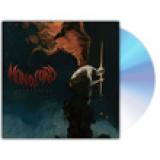
For well over a decade, MONOLORD have caused mass riff hypnosis with longform epics steeped in repetition, volume, and heaviness. One of heavy music’s most consistent and beloved bands, MONOLORD are gearing up for their next chapter with a new album titled Neverending. In looking for a new take on the genre, MONOLORD approached the legendary producer Sylvia Massy, known for her work with Tool, System of a Down, and Johnny Cash, among many more. The payoff from this new process is undeniable. Neverending feels like the culmination of 13 years of heavy, molten music, with a keen eye towards creating a sharper album. “The recording of this album is an example of the spirit of MONOLORD’s camaraderie,” says bassist Mika Häkki. “We’ve looked back and seen for the first time how much we have done as a band collectively, and realized what an intense 13 years it has been.” "The lyrics on this album are more personal than before because I went through some major life changes in the last couple of years,” guitarist/vocalist Thomas Jäger says. “I usually write about religion and how people are superstitious, but this record is more about relationships between people. But it’s not all about me. Sometimes I’m writing from another person’s perspective.” Neverending’s lead single “You Bastard” offers listeners a sharp contrast: A propulsive groove offset by lyrics about suicide. There’s two sides to suicide,” Jäger points out. “There’s the person who commits suicide and the people who gets left behind...The choruses represent the person left behind, and that person is calling the other a bastard—but it’s not pointing fingers or saying, ‘You suck.’ It’s more like, ‘You left me here with all the bullshit.’ It’s an understanding that life is not easy." Though it might not be immediately obvious, album opener “Iodine” was inspired by 70's rock epics like Lynyrd Skynyrd’s “Free Bird,” The Eagles’ “Hotel California,” and Led Zeppelin’s “No Quarter." Elsewhere, album closer “It’s Neverending” is the first MONOLORD song that Jäger doesn’t sing on. Instead, the death-metal style vocals are performed by former Entombed bassist Jörgen Sandström, (also of Grave, Domedagen and Firespawn.) 13 years on, MONOLORD’s path takes a new turn, and Neverending becomes the band’s most befitting album title. “It's been a wild ride and still is,” says drummer Esben Willems. “I've spent a quarter of my life in this band. Looking back, I'm incredibly proud of what we've accomplished along the way, and in many ways, this album feels like the essence of everything we've done so far. My mindset is the same it's always been, to be the absolute best the three of us can be.”
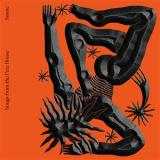
In the world of Smote, going further out means going inward. Less a metaphysical journey into inner space, more a physical journey into the ground itself, converging with its roots and vibrations. What's more, a journey right to the heart of its principal architect's daily experience. Smote's fifth release for Rocket Recordings, and their deepest, most fully realised to date. Forged from repetition and mantric intensity and possessed of formidable psychic fortitude, this album prove that the only retro-chic Smote indulge in is liable to go back several centuries. The megalithic monomania of last year's A Grand Stream set a formidable precedent, and Smote's live shows in its wake have gradually built a reputation as visionary seers building audial monuments by cranked amplification and atmospheric intensity alike. Yet these five gnostic serenades offer portals and paradigms anew. Continuing Smote's exploratory mission into heaviness in all its forms. Songs From The Free House sees Foggin exploring a variety of new avenues. Therefore, whilst listeners might align the pantheistic forays into drone-based abandon with previous travellers like Earth and Om, the influence of folk songs and legends, as well as electronic music make their presence felt. "I've been listening to heavy electronic stuff like Puce Mary and The Body" adds Daniel, "Stereotypically guitars are often seen as the instrument for "heavy" music, but the sheer force that's available from electronics is something that will crumble most guitar centred music." Elsewhere a more melodic vocal based structure is writ large amidst these rites and revelations, particularly on The Linton Wyrm, which proceeds from devotional chant to a potent conclusion, also inspired by Foggin's everyday surroundings. Wrought from the earth, transposed to the ether, and now shared with the world at large, this album marks a transcendental journey where Smote render ancient and modern indivisible. Just as traditional music is passed down through generations, Songs from the Free House is where the primal collides with the eternal.
Following the tradition of Derek Bailey, Henry Kaiser and Sonny Sharrock albums on Celluloid Records, the label is releasing this abstract and mysterious instrumental album, made under a cryptic name:AA in Reverse, by nqthqn. Recorded shortly afterlast year"s Ghostbox Cowboy, released on Tailnia Records out of China, this new effort digs deeper into what critics describe as buzzards circling the half-dead body of Harry Dean Stanton in Paris, Texas. The project curiously explores what it might be like to create no-wave abstract guitar music by a campfire, as inaugurated by Arto Lindsay, Loren Connors or John Fahey. AA in Reverse was recorded and engineered by David Akerman (Robin Hitchcock, Dead Farmers) at Golden Retriever Studios (Parcels, Cate Le Bon, Courtney Barnett) in Marrickville. nqthqn will be touring Japan this April.
The band has intended to carry on the legacy of early High energy early Classic Thrash insanity. Their quickly sold out 'Rise of Death' self released demo recorded in band leader Adrian Tobar's garage and It was later reissued by Iron Fist and Redefining Darkness records . The band much acclaimed debut 'The Warriors Awakening ...Brings The Unholy Slaughter ' came out in 2021 gathering a great response worldwide. Swedish metal ragers ETERNAL EVIL now return with their third full- length album 'Forever Feared'. Following the release of the furious The Gates Beyond Mortality , ETERNAL EVIL wasted no time, immediately embarking on their quest for world domination. Carving their path through Sweden's vast music landscape, the band quickly claimed their spotlight--opening for In Flames at the legendary Dalhalla, sharing the stage with the mighty Cavalera Brothers two nights in a row, and delivering a full- throttle set at Sweden's largest rock gathering, the Sweden Rock Festival.
treats is the younger, bratty sister label to trip, specialised in cool music for the dance floor that seems to ignore the idea of genres. To prove this point the first release brings together two tracks that have been roasted in Nina's sets for months and are genre bending.
On the A-side, Brazilian phenomenon and SoundCloud cowboy Joao Lagrima de Ouro teams up with Baile Funk legend MC Pogba. "Pitbull de Glocada" is an excessively naughty heater, with a serious nod to the regional Brazilian electronic music, creating an authentic blend of sounds.
On the B-side, Nina herself teams up with Rio de Janeiro marvel Mc Nick. The two met online, as Nina came across Nick's sensual hit "Mete com forza e com talento" and made her own version of it. Later during a Brazilian tour, the two finally met up on the mythical beach of Mc Nick's hometown where "sem amor" was recorded. Nina's signature minimalist production and approach to vocals pairs idyllically with Mc Nick's fiercely carnal and feminine raps.
treats 001 consists of two tracks with a fluctuating identity, spilling over with risque playfulness that might require parental advisory for some, but it's hard to deny the sheer joy these tracks exude.
Tajemnica is a transgression—too gentle for dancing, too euphoric for standing still. Sparse, scarce, and subtle, the new album by Polish performance artist, musician, and poet Wojciech Kosma, aka spalarnia, eagerly explores modern dance genres, experimental production, and nostalgic electronics to surrender to what is truest—essential song forms, melodies, harmonic and rhythmic basics, the most resonant feelings.
Sung in spalarnia’s trademark soft, low, almost tactile voice, the eight hypnotic songs tell stories of closeness and love, and their favored companions—pain and heartbreak. In “Bliżej” he sings “I love not loving you / I want to be a part of you.” And in “Jedyna”—the album's single—he states: “You are the only one / there is no other me / only the one for whom you are the only one.”
Contrary to the meaning of its Polish title (Tajemnica translates to “secret”), the album that moves between ghostly ambient pop, languid R’n’B, and Eastern European folk doesn’t reveal anything outright—the music only points to where the secrets might lie. One can choose whether to hear them or not.
Is planet Earth weighing you down? 12 Tribes are ready to take you away. Mars is the destination and their music is the spaceship. Drop your past to join them in a future where humans from all walks of life build new traditions, and music is the language we all speak.
12 Tribes of Mars takes the basic elements of the Reggae, Ska, and Dub traditions and blasts them into outer space. A closer listen reveals that what might seem familiar at first has a truly unique and eclectic sound. Heavily influenced by the spirit of free improvisation, the music is as sexy and danceable as it is uncompromisingly gritty.
On stage 12 Tribes Of Mars really cast their spell: time and time again trance inducing acoustic grooves are torn apart by wild improvisations and electronics, before the musicians return to the rhythm as if nothing had ever happened. Concerts are both an intense, trippy listening experience as well as a high energy dance party, ultimately leaving the audience sweaty and wanting for more.
All members of 12 Tribes are trained jazz musicians that are most comfortable in the borderland between musical genres. In the past years, the band toured the festival circuit and alternative venues of Amsterdam. Now they are celebrating the release of their first full album, Hidden Sun, on a beautiful 12 inch limited edition vinyl and on digital.
Seit ihrem Debüt "925" 2020 arbeiten Sorry an einer Topografie aus Anspielungen, Zitaten, falschen Fährten. Nun, mit COSPLAY (ab 7. November bei Domino), reißen sie die Landkarte ab, zeichnen alles neu. Ein Album als Maskenball: Jede Figur darf hier auftreten, lebend oder tot, real oder erdacht. Es ist das Werk, das Sorry von sich selbst befreit. Das Album fühlt sich an wie ein Spielzimmer für popkulturelle Geister. Ein Guided by Voices-Song mutiert zur Ballade über die Schmuddelecken des Ruhms, die berühmteste Cartoonfigur der Welt schleicht sich als Sirene ins Bild, theoretische Physik wird zu Rockmusik, die schwerer schlägt als jede Formel. Sorry haben das neue Material bereits live erprobt, erst auf eigener UK-Tour, dann als Support von Fontaines D.C., und man hört die Mischung aus Selbstsicherheit und Übermut, die dabei gewachsen ist.
out of Stock
Last delivered 4 months ago available to reorder, subject to availability
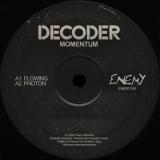
The aptly named "Momentum" is the label's first EP from Decoder, who recently released an album to wide acclaim on Planet X. Spread across 6 tracks, the EP is drenched in psychedelia as it effortlessly moves through different moods and aesthetics to take dancers through the night.
"Flowing" begins the EP with stripped-back percussion and moody atmospherics, transporting the listener into a trance. "Photon" takes a nostalgic trip back to the 90s, featuring a 909 workout that's heavily processed with intensifying effects.
"Strawbs" presents what might be the most captivating track of the EP, characterized by its rolling, hands-in-the-air vibe that persists throughout the song. To conclude the vinyl, "Dyslexic" is intricate and enigmatic in all thedelightful ways. Mallets intermittently appear and disappear as the 909 maintains a steady rhythm. "Dyslexics untie!"
out of Stock
Last delivered 6 days ago available to reorder, subject to availability
Mildred have announced their debut album Fenceline (out 24 April via Memorials of Distinction / Dog Day Records), they have also shared the Nick Roberts directed video for lead single ‘Fish Sticks’. Speaking of ‘Fish Sticks’ and the album, Mildred say: “Fish Sticks is a song of scenes from two worlds. Conversations with your boss. Acute workplace mediocrity. Riding home and eating fish sticks with your friends. For UK audiences, a fish stick is a fish finger, ideally Alaskan-caught cod. The song comes packaged in Fenceline, an album about conversations with old friends, little cousins, ceaseless piles of dust in your crumbling duplex, loves and theologians and their books. Fencelines mark two places but belong to neither. Neither nor, either or.”
Ahead of Fenceline, at the end of last year Mildred released their debut twin EPs mild and red, an insatiable collection of songs birthed before Mildred even knew they were a band. Arriving purposefully on the scene in that gentle, approachable Mildred way, the EPs picked up support from The Guardian, The Line of Best Fit, Uncut (‘We’re New Here’), The New Cue, Clash, DIY and more. Mildred is a band from Oakland, CA of four equal parts. They don’t have a lead singer, no one person writes the songs. The songs that make up Fenceline come together as a group with their genesis sprouting from any one of their members - Henry Easton Koehler (vocals, guitar), Jack Schrott (vocals, guitar), Matt Palmquist (vocals, bass, woodwinds) or Will Fortna (drums, production) - each time.
The songs are often wrestled from the lead writer by the other three, a lyric might have been mumbled absentmindedly for a few days before one of the other three grabs at it. Summed up neatly by Clash “imagine if Pavement went Americana and you’d be close”, Mildred make music that is pure and poetic, gently addictive and never overwrought. The lyrics for their songs are written largely alone and often draw from their own individual lives and experiences but there’s a shared something there. “It makes sense when common threads emerge” they say, “because we do things together a lot as friends: cook, laze about on a weekend, listen to an album, go walkabout, read, go see movies etc.
Strikingly literal or intriguingly oblique, Mildred have a remarkable way with lyrics that lodge themselves in your head softly but with such determination that they begin to feel like shimmering memories from your own life. Fenceline is a collection of songs that you want to hold close and delve into, and yet play to everyone you know.
STRICTLY LIMITED TO 100 COPIES ARTIST PROJECT After discovering techno at La Concrète, invited by my girlfriend, it was a revelation, and I very quickly felt the urge to contribute in my own way. My intention has been to create tracks infused with positive energy (even if the creative process sometimes leads into slightly darker corners of music). Still, I realized—rather late—the importance of the musical genre known as “techno.” Here is my reflection on it: Nothing is closer to village music (with everything that implies among indigenous peoples, for example—important and respected moments of communion) than techno. On one side, you have basic organic instruments and the voice; on the other, the most advanced technology available. But fundamentally, the difference is only superficial—the essence is the same: a guide, and people who participate intuitively, ultimately finding or discovering their own inner paths… individuation. Techno represents the re-emergence of a kind of initiation rite that had been missing in the West for quite some time—a sort of continuation of Woodstock, more spread out over time but just as powerful from a societal perspective. This release is my contribution to that revival, in the same way a villager might feel free to join trance music with a simple stick that sounds right, or a drum—something intuitive that all our ancestors must have practiced naturally at one point or another. In short, nothing pretentious—just something made with heart
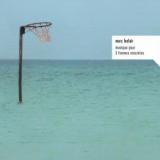
In Sheep’s Clothing announces the long-awaited vinyl pressing of Marc Leclair’s beloved 2005 album Musique pour 3 femmes enceintes. The album will also be available on streaming for the first time via Community Music Group.
For years after Marc Leclair released Musique pour 3 femmes enceintes, he heard from listeners who had lived with the record in an unusually intimate way. Many described how the music became part of the emotional landscape of the months leading to birth. “I never expected that,” Leclair says. “Many women told me they listened to the record throughout their pregnancies. They said it made a real difference, that it helped them. It became more than just a record.”
First issued on CD in the early 2000s, Musique pour 3 femmes enceintes (Music for Three Pregnant Women) now returns in a new edition from In Sheep’s Clothing Hi-Fi, appearing on vinyl for the first time as a double LP. The record is being pressed in Detroit at Archer Record Pressing, the historic plant behind deep-groove classics by Juan Atkins, Kevin Saunderson, Underground Resistance, UR’s Jeff Mills, and J Dilla.
Listeners who know the Montreal-based Leclair through his better-known work as Akufen might be surprised by the tone here. During the same years he was shaping the intricate micro-sampling tracks that made Akufen a cult figure on labels including Perlon, Force Inc. and Trapez, Leclair was quietly developing this far more personal project. The meticulous craftsmanship remained the same, though the focus shifted from the hyper-detailed cut-up rhythms of his dance records toward something slower and more atmospheric. “I always compare my work to a jeweler,” Leclair says. “It’s really very precise. I’m a bit of a detail freak. I can spend hours or days on just one phrase in one song. Everything has to be perfectly put together.”
The project began almost accidentally. A few members of Leclair’s circle became pregnant nearly simultaneously, including one who had long believed she couldn’t conceive. The first track he recorded for the project wasn’t meant to advance a larger concept, he says. “It was meant to highlight the fact that three of my closest friends became pregnant at exactly the same time.”
Leclair was already a father with a three-year-old daughter, so the emotional terrain of early parenthood was familiar. Gradually the idea expanded. “I began thinking, why not make a whole album that celebrates this and also follows the entire pregnancy, the nine months,” he says. The music developed piece by piece, including a track originally commissioned by the Berlin experimental duo Rechenzentrum that would later become the album’s opening movement.
Nearly seven years passed between the first composition and the finished album, and the music mirrors the strange arithmetic of pregnancy itself. What begins as a single idea multiplies outward, sounds layering and branching until the album feels less like a sequence of compositions than a living process unfolding in time. “I work very slowly,” Leclair says. “Everything has to be something I’m completely behind. I never want to rush anything. I want things to come naturally.” Across its 72 minutes, the album blossoms with the patience of a long meditation on time, growth and emergence.
When Musique pour 3 femmes enceintes first appeared via Mutek, it circulated quietly but steadily. Critics who discovered it later recognized its unusual scope. In a 2006 Pitchfork review, Mark Richardson gave the record an 8.1, calling “150e Jour” “an unfailingly gorgeous and tightly sequenced quilt of guitar and piano samples reminiscent of Tangerine Dream,” and describing “85e Jour” as infused with “viscous pop ambient drift, the gauzy synth pads ebbing and flowing with rhythm.” Boomkat described the album as “a majestic opus from a producer that's always promised so much — here delving into a panoramic construction of almost visibly radiant music that works so beautifully through each and every second of its 72 minute lifespan.”
The new In Sheep’s Clothing Hi-Fi edition finally presents the record in the format Leclair long imagined. “I always thought that record deserved a vinyl edition,” he says. Spread across two LPs, the music now has room to unfold at its natural pace. More than twenty years after it first appeared, Musique pour 3 femmes enceintes remains what it was from the start: a carefully shaped meditation on transformation and the quiet miracle of life beginning.
The collaborative project of Lawrence English and Werner Dafeldecker has consistently been concerned with processes of transformation. This is all the more true for »Fathom Tides,« the duo’s second album for Hallow Ground following up on »Tropic of Capricorn« from 2023. Using field recordings collected from diverse coastal environments made by English and later treated extensively by Dafeldecker, the two sound artists explore cyclical changes in nature across these seven pieces. Through its abstracted soundscapes, »Fathom Tides« poses concrete questions: What impact do we have on the world we inhabit?
»Tropic of Capricorn« was based on material English had recorded around Australia to highlight the country’s colonial past. On »Fathom Tides,« water and tides provided a conceptual framework for the duo’s remote working process—notions of states of action and tidal dynamics becoming guiding principles in their work with the source material. English and Dafeldecker were led by the question how the morphing of solid forms into more liquid states might be captured and used as compositional guides for their respective preparations treatments and the addition of electronics to the source material.
While eroding coastlines, river systems, and glacial transformation served as inspiration, the seven pieces resulted out of the two sound artists paying close attention to seemingly minute details through which immediate and distant histories peek through often in the most unexpected and rewarding ways. Hence, »Fathom Tides« does not provide a macro view on the catastrophic changes humans have facilitated on Earth. It is its own sound world guided by both the pace of its subjects and a recognition that time is fluid—a reminder that our clocks are not those of the world around us.
Fika Recordings are pleased to present Bring On The Apathy, the third solo record from Scottish songwriter Adam Ross. Adam Ross is an indie-folk songwriter based in north-east Scotland. He is a solo artist and has also led the cult indie band Randolph's Leap for over a decade, releasing music with legendary Fence Records and Lost Map as well as Olive Grove Records and Fika Recordings. He is known for his unique brand of articulate lyricism which blends humour, poignancy, wordplay and offbeat stories.. “Bring On The Apathy” was recorded onto tape, using traditional analogue techniques at Glasgow’s Green Door Studio with Samuel J. Smith. It showcases some of the most emotionally open, lyrically deft and characterful songwriting so far from one of Scotland’s most accomplished writers. The vintage recording approach brings a warmth and intimacy to a record which is in equal parts raw and organic while also beautifully arranged and performed as Adam is joined by a raft of excellent collaborators. The album itself is a reaction. Whether it be in the title, the lyrical content or the method in which the sounds were captured. “I was feeling fairly down and uninspired about the musical landscape” Adam explains. “The risk with digital recording where every instrument is overdubbed separately is that it can end up sounding metronomic, sterile and lacking personality.
I also started to get a bit freaked out by the topic of AI-generated music and the insidious, creeping impact it’s already having. I therefore decided that, as a bit of a protest, I wanted to make something that sounded extra-specially human and hand-crafted, where you could hopefully hear the interplay between musicians.” For this reason, Adam decided to record the majority of the album live, as a band, playing together in the same room without a click track. “I’d put a band together to tour my last album, Littoral Zone, and I really enjoyed the way we all worked together. Green Door Studio was chosen as the destination as it specialises in analogue sound production but it had an extra significance for Adam. “Green Door was the first studio I ever recorded in, back in 2009. This time around, the “unforgiving” nature of tape recording became an inspiration. “The musicians on the record are such great players that they rarely make mistakes, so there was a confidence there that we wouldn’t need to rely on copious amounts of editing or post-production, which isn’t always possible with tape anyway. The core band consisted of Owen Curtis-Williams on drums, Cameron Maxwell on bass, Pedro Cameron on violin, Gillian Fleetwood on harp and (long-time collaborator with Randolph’s Leap) Pete MacDonald on piano. Mercury Prize-nominated artist C Duncan was drafted in to write and perform backing vocal arrangements along with Amanda Nizich and Gillian Fleetwood. Adam says “I’d been listening to a lot of Bob Dylan, Karen Dalton and Bill Callahan records and I thought it might be interesting to apply those sorts of influences to my brand of Scottish quirk-pop”.
Swan is a warm, melodic, and emotionally direct album, blending guitars, pedal steel, and synths, with wry, heartfelt songwriting reminiscent of MJ Lenderman and David Berman- but with a distinctly antipodean voice. Fazed on a Pony is the alt country/indie rock recording project of New Zealand songwriter Peter McCall. Swan is his second full-length album. On swan McCall sings with emotional immediacy, warmth, and wit about living honestly in the face of inevitable uncertainty and disappointment. McCall's mix of wry humour, sincerity, and melodic instinct has drawn comparisons to MJ Lenderman, David Berman, and Sparklehorse. However, Fazed on a Pony lives within its own antipodean aesthetic and sound. Sonically, swan sees Fazed on a Pony expand from the Pavement-esque tuneful indie rock of previous releases to include pedal steel, fiddle, drum machines, and synthesizers. While there is a diversity of style, the album is rooted in the hallmarks of McCall's music: uplifting and catchy guitar lines that serve the song, paired with arrangements that feel both comfortable and surprising. Where the lyrics tell a sad story, the music betrays that it might just be okay in the end.
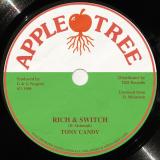
A truly obscure gem recorded just weeks before Hurricane Gilbert struck Jamaica in 1988. Fittingly, it resurfaces now as the island has just endured its most devastating storm since then. Captured at Dynamic Sounds Studio in Kingston, with the riddim laid by the mighty Firehouse Crew and originally released on the Apple Tree label, this is the long-awaited reissue of Tony Candy’s Rich and Switch, pure heavy digi business.
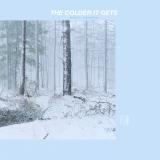
Mighty Theodore and The Custodian Of Records have crafted the quintessential soundtrack for the bleakest of snow days with their new collaborative album, "The Colder It Gets". Bookended by the sound of howling winds, the project offers a hypnotic listening experience where the temperature seems to drop with every track. While the production is immersive, the only warmth to be found radiates from the crackle of Custodian’s vinyl samples. Theodore matches this atmosphere with layered lyricism that explores deep isolation and the struggle to trust that things can improve, though a faint sense of hope remains buried beneath the metaphorical drifts.
Releasing via URBNET this winter, the album invites listeners to bundle up and embrace the chill. The project is bolstered by an impressive lineup of guest features, including Lee Scott, Fat Ray, Thirstin' Howl The 3rd, and Farma G. Additionally, the release includes a thematic bonus track titled "Christmas Missed Us" featuring Von Pea. As the winter solstice arrives, prepare to get lost in a hip-hop experience that proves the music only gets better The Colder It Gets.
Ronnie Davis is another mighty Jamaican singer, whose talents have been greatly overlooked. His rootsy yet soulful voice have been in demand by many of Jamaica's producers, and have graced their catalogues over the decades, yet outside of the close reggae circles he has remained a closely guarded secret.
Born Ronnie Davis, in 1950 (Savannah La Mar, Jamaica). His singing career began in the 1960's and like many aspiring young singers, the Talent contests taking part around the Island, was his first introduction to the music scene. This led to him joining the vocal group, 'The Tenors'. Who shortly after his arrival, released their debut 'The Whole World is a Stage'. This was the beginning of a run of Jamaican 7'' releases that did quite well in the domestic marketplace. But Ronnie had set his sights on a solo career,which came to fruition in the early 1970's, with two big hits for him in the guise of 'Won't You Come Home' and 'Stop Yu Loofing'. Running on through to the mid 1970's with such hits as 'Jah Jah Jehovah','Forget Me Now', 'On and On' and 'Babylon Falling'. Building up to the 1976 classic, 'It's Raining'.
Around this time Ronnie's path would cross with Keith Porter and with his childhood friend Roy Smith they would form one of Jamaica's foremost vocal groups 'The Itals'. A group who would run until the 1990's and evolve into 'Ronnie Davis and Idren'. Ronnie's releases are very sort after among the reggae aficionados and any tune carrying his vocal talents rarely
disappoint. We have compiled some rare roots dubs to many of his finest cuts. Such gems as 'Chasing You', 'What You See is What You Get', his take on the timeless cut 'Tribal War', 'Tell You' and the a fore mentioned smash 'It's Raining'. A version of Gregory Issac's 'Love Overdue' is also present. Ronnie cut an album worth of material with Mr Issac's, testimony surely to Mr Davis's standing in the Reggae community.
Let’s hope that this release spreads the gospel according to Mr R. Davis, a little wider. A wicked set by one of Jamaica's finest .....
Respect Jah Floyd.
out of Stock
Last delivered 5 years ago available to reorder, subject to availability
Radiohop are a four-piece jazz / hip-hop band from Amsterdam, exploring the boundaries between groove, texture and improvisation. Hard to Handle is their second album and the first drop on Melting Pot Music. As the title suggests, Radiohop are going hard on this one.
Radiohop are Joshua Lutz (keys), Euan Jenkins (drums), Johnny Biner (guitar) and Joel Svedberg (bass). All four of them moved to Amsterdam around 2020 to study jazz and quickly plugged into the city’s bubbling scene.
Each band member plays an equal role in shaping the music as a single organism, emphasising feeling and atmosphere rather than ego or individual spotlight.
The compositions arise from experimentation, intuitive collaboration and deep listening, an approach that has as much to do with their backgrounds as improvisers and beat-makers as it does with their roots in jazz.
Radiohop have performed as the rhythm section for artists like Soul Supreme and Juju Rogers. Beat-heads might be familiar with Joshua’s solo project, Halfpastseven, which has collaborated with FloFilz and Jake Milliner
Shrouded in mystery when it first appeared, Tiger & Woods’ debut album quickly took on a life of its own. With little more than whispers surrounding the project, the music spoke loud enough: a set of extended disco constructions carefully tuned, remixed, over-dubbed, sliced and diced by the elusive duo of Larry Tiger and David Woods. What began as a cult phenomenon soon caused a stir across dance floors and record bags worldwide.
Now, for the first time ever, that legendary debut finally arrives on vinyl. Through the Green captures Tiger & Woods at the moment their distinctive language of groove first took shape. Rooted in the spirit of disco edits but already stretching beyond the format, the album blends loop-driven funk, house-leaning propulsion and the unmistakable bounce that would soon become their signature.
It’s the sound of two producers refining a craft that would later blossom on albums like On The Green Again, where their approach expanded into a wider palette of boogie, electronica, Italo and uptempo house. But here is where the story begins.
Before world tours, live sets and the creation of their own T&W Records imprint, there were these tracks: hypnotic, playful and engineered with a dancer’s instinct for tension and release. Each cut unfolds like a perfectly extended club moment, full of warmth, swing and that unmistakable Tiger & Woods sense of fun and function.
Years after its original digital release, Through the Green remains a cornerstone of modern disco-house culture. Pressed to wax at last, it finally receives the physical format it always deserved: grooves built for the turntable, the dance floor and the crate.
The mystery might be gone. The magic, however, remains very much intact.
out of Stock
Last delivered 4 months ago available to reorder, subject to availability
It would be easy to pigeonhole Footballhead’s unapologetically-buttrock-inspired record Weight of The Truth as simple nostalgia bait. Why wouldn’t millennials lust for the days of Halo and energy drinks in carpeted basements they’re not convinced they’ll ever be able to afford for themselves? Beyond that, why would the zoomers that now intently follow not try and chase the high of hyperreality in a bygone world that looks, to them, downright utopian when compared to the present?
What sets Footballhead’s capital-R Rock sound apart from contemporaries is - in addition to just sounding better - a desire and an ability to thread the needle between paying homage to a quasi-idyllic past and pursuing an earnest future. Footballhead wears their 2000s-era influences on their waffle-knit longsleeves, with power chord drives and pummeling choruses, all sequenced together like the teeth of a skeleton key able to unlock core memories for people who’ve either been there or people who simply wonder what being there was like. Both the anthems and ballads on Weight of The Truth are waxed and polished to perfection like the lip of a favored skatepark ledge.
But underlying all that, even more impressively, is a grit and substance derived from years spent in the Chicago DIY scene, exposing themselves to different styles and influences equally out of necessity as out of interest. It bleeds through on every track. You can bullshit your way into a vibe but, as the band shows on any number of recent releases, including singles off their upcoming second LP: you can’t fake heart. With an ear to the past but an eye to the present, Footballhead invites you to remember what it meant to give a shit back when the world felt simpler - and what it might feel like to do so again.
It would be easy to pigeonhole Footballhead’s unapologetically-buttrock-inspired record Weight of The Truth as simple nostalgia bait. Why wouldn’t millennials lust for the days of Halo and energy drinks in carpeted basements they’re not convinced they’ll ever be able to afford for themselves? Beyond that, why would the zoomers that now intently follow not try and chase the high of hyperreality in a bygone world that looks, to them, downright utopian when compared to the present?
What sets Footballhead’s capital-R Rock sound apart from contemporaries is - in addition to just sounding better - a desire and an ability to thread the needle between paying homage to a quasi-idyllic past and pursuing an earnest future. Footballhead wears their 2000s-era influences on their waffle-knit longsleeves, with power chord drives and pummeling choruses, all sequenced together like the teeth of a skeleton key able to unlock core memories for people who’ve either been there or people who simply wonder what being there was like. Both the anthems and ballads on Weight of The Truth are waxed and polished to perfection like the lip of a favored skatepark ledge.
But underlying all that, even more impressively, is a grit and substance derived from years spent in the Chicago DIY scene, exposing themselves to different styles and influences equally out of necessity as out of interest. It bleeds through on every track. You can bullshit your way into a vibe but, as the band shows on any number of recent releases, including singles off their upcoming second LP: you can’t fake heart. With an ear to the past but an eye to the present, Footballhead invites you to remember what it meant to give a shit back when the world felt simpler - and what it might feel like to do so again.
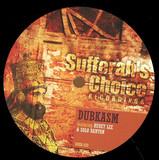
For their first musical outing of 2012, Dubkasm take a walk down the avenues of digital 80s reggae, showcasing the fresh vocals of Rudey Lee and Solo Banton. 8 bit sounds meet tough JA riddims, with shades of Jammy's, Gussie Clarke and Steely & Cleevie, expertly mixed by UK veteran Nick Manasseh with razor-sharp precision. A key figure in Bristol's reggae ancestry, Rudey Lee helped connect the Bristol Sound with its dub origins through collaborations with legendary pioneers Smith & Mighty during the 90's. On his first outing since his appearance on Pinch's debut album 'Underwater Dancehall', Rudey takes us back to his reggae roots with 'Emotion', a soulful dancefloor bubbler with a conscious edge. Solo Banton, ever powerful in his hard-hitting delivery, proceeds to nail the message home with 'Are You Ready', a no-compromise deejay version taking things to a higher level. This cut guarantees a rewind in any dancehall, building on Solo's hit-after-hit track record, proven through his work with Jahtari, Maffi and Reality Shock.
Ein PUNK-ROCK-MEISTERWERK neu aufgelegt - mit, aus aktuellem Anlass, aktualisiertem 2026 Cover-Artwork! Das erste Studioalbum von NOFX auf Fat! Die Band behandelte ernste Themen (Punk-Kultur und Politik) mit ihrem typischen Witz und Sarkasmus und zielte auf George W. Bush. Nun ist ein neuer Clown am Start! Damals (2003) schaffte es das Album sowohl in Großbritannien als auch in den USA in die Top 50 und war auch auf dem europäischen Festland erfolgreich, wo es in der Schweiz und in Deutschland die Top 30 erreichte, in Österreich die Top 50 und in Frankreich die Top 100. "Musically, NOFX fuses its political cynicism with criticism of punk rock itself and suggests that the best thing for all the kids and the bands might be to close ranks and start their own little hardcore community. 'Irrationality of Rationality' and 'Franco Un-American'_two of the album's most melodic, catchy songs_are also two of War on Errorism's most biting commentaries. The first personalizes the trickle-down effect of corporate decision-making over a lockstep hardcore rhythm; the second gets all-new wavy as Fat Mike reasons out his own world view, and somehow rhymes "apathy" with "Noam Chomsky.'" - NOFX hat sich zwar aufgelöst, aber das Vermächtnis lebt weiter. Die Band ist derzeit Gegenstand ihrer ersten umfassenden Ausstellung im Punk Rock Museum in Las Vegas. Die Dokumentation "40 Years of Fuckin Upmakes" feiert beim SXSW 2026 Premiere und ist ab April umfassend zu sehen (Score & Original Soundtrack mit neuer Musik von NOFX folgen in Kürze). Der zweite Teil der A-Z-Raritäten-Trilogie "I to Q" soll Ende 2026 erscheinen. Und behaltet Fat Mike im Auge, denn Gerüchten zufolge hat er eine eigene Meinung zur aktuellen Weltlage. Warning: owning this record might piss off (more than ever) your army recruiter, grizzled grampa, or those wacky flag-wavin' nationalist buddies of yours.
Ein PUNK-ROCK-MEISTERWERK neu aufgelegt - mit, aus aktuellem Anlass, aktualisiertem 2026 Cover-Artwork! Das erste Studioalbum von NOFX auf Fat! Die Band behandelte ernste Themen (Punk-Kultur und Politik) mit ihrem typischen Witz und Sarkasmus und zielte auf George W. Bush. Nun ist ein neuer Clown am Start! Damals (2003) schaffte es das Album sowohl in Großbritannien als auch in den USA in die Top 50 und war auch auf dem europäischen Festland erfolgreich, wo es in der Schweiz und in Deutschland die Top 30 erreichte, in Österreich die Top 50 und in Frankreich die Top 100. "Musically, NOFX fuses its political cynicism with criticism of punk rock itself and suggests that the best thing for all the kids and the bands might be to close ranks and start their own little hardcore community. 'Irrationality of Rationality' and 'Franco Un-American'_two of the album's most melodic, catchy songs_are also two of War on Errorism's most biting commentaries. The first personalizes the trickle-down effect of corporate decision-making over a lockstep hardcore rhythm; the second gets all-new wavy as Fat Mike reasons out his own world view, and somehow rhymes "apathy" with "Noam Chomsky.'" - NOFX hat sich zwar aufgelöst, aber das Vermächtnis lebt weiter. Die Band ist derzeit Gegenstand ihrer ersten umfassenden Ausstellung im Punk Rock Museum in Las Vegas. Die Dokumentation "40 Years of Fuckin Upmakes" feiert beim SXSW 2026 Premiere und ist ab April umfassend zu sehen (Score & Original Soundtrack mit neuer Musik von NOFX folgen in Kürze). Der zweite Teil der A-Z-Raritäten-Trilogie "I to Q" soll Ende 2026 erscheinen. Und behaltet Fat Mike im Auge, denn Gerüchten zufolge hat er eine eigene Meinung zur aktuellen Weltlage. Warning: owning this record might piss off (more than ever) your army recruiter, grizzled grampa, or those wacky flag-wavin' nationalist buddies of yours.
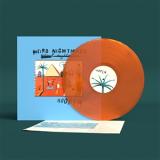
Jede Band, die was drauf hat, hat ein Mitglied, das mal in einem Plattenladen gearbeitet hat. Bei METZ, dem mutigen Noise-Rock-Trio, das zwischen 2012 und 2024 fünf Alben bei Sub Pop rausgebracht hat, war das Sänger und Gitarrist Alex Edkins. Während seines Studiums verkaufte Edkins in seinem Heimatort Indie-Rock- und Hardcore-Platten und wurde zu einem begeisterten Schüler des Rock ,n` Roll, von den psychedelischen 1960er Jahren bis zu den DIY-1990er Jahren und darüber hinaus. Hoopla, das eingängige, melodische zweite Album aus Edkins' Soloprojekt Weird Nightmare, mischt und kombiniert diese Einflüsse auf unterhaltsame und mitreißende Weise und zeigt seine ausgefeilte musikalische Intelligenz. ,Hoopla" sprüht vor Hooks und Ohrwürmern und ist genau die Kassette, die nie aus dem Autoradio genommen wird, sondern immer wieder gespielt wird und den Sommer begleitet. ,Hoopla" ist neu und nostalgisch zugleich und wird deine Ohren erfreuen. Das selbst produzierte und ausgesprochen lo-fi Debütalbum von Weird Nightmare wurde während der Pandemie zu Hause aufgenommen und 2022 von Sub Pop veröffentlicht. Weird Nightmare zeigte Edkins' Indie-Rock-Sensibilität mit einer Vorliebe für unverkennbare Hooks und mitreißende Refrains zum Mitsingen. Auf dem neuen Studioalbum Hoopla, das gemeinsam mit Jim Eno von Spoon produziert und in Seth Manchesters Machines with Magnets aufgenommen wurde, erweitert Edkins die Dimensionen von Weird Nightmare noch weiter. Neue musikalische Texturen wie Klavier, Glocken und Kastagnetten verschmelzen mit Edkins' geradlinigem Songwriting und verleihen diesen Stücken einen glänzenden Schimmer. Es ist, als würde ein beliebter Indie-Regisseur mit seinem ersten Studiofilm einen Schritt nach vorne machen. Wenn das Debütalbum Weird Nightmare ein Underground-Publikumsliebling war, ähnlich wie Richard Linklaters Slacker, dann ist Hoopla Edkins' Dazed and Confused. ,Hoopla" glänzt mit sonnigem Gitarrenpop und wurde mit genau der richtigen Menge an Fuzz und Crunch produziert. Die unmittelbare, schnörkellose Aufnahme versetzt dich direkt ins Studio mit Edkins und seiner Rhythmusgruppe: Loel Campbell am Schlagzeug und Bassist Roddy Kuester. Das ist Power-Pop der Extraklasse; diese scharfen Adrenalinstöße könnten sich nahtlos in einen Radio-Rock-Block zwischen The Replacements und Elvis Costello & the Attractions einfügen. Oder passen genauso gut zu Sharp Pins, Ratboys und Alvvays. Im Kern ist dieses Album ein optimistischer, leuchtender Lichtblick in unserer seltsamen Zeit. Mit Weird Nightmare möchte Edkins euch wissen lassen, dass er die Welt immer noch liebt, und er lädt die Hörer von Hoopla ein, dasselbe zu empfinden. Nutzt diese Chance, um einen Funken der Magie des Pop in unserer verbrauchten alten Welt zu ergreifen. Ihr habt es verdient.
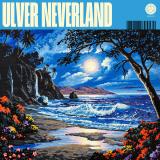
""Neverland", the fourteenth studio album by ULVER is the sound of an escape. A journey into undiscovered lands.
Following three albums – "The Assassination of Julius Caesar" (2017), "Flowers of Evil" (2020), and "Liminal Animals" (2024) – rooted in more traditional song and production structures, "Neverland" marks a new chapter in the revered Oslo band's history.
"With 'Neverland' we embraced a more 'punk' spirit – more dreaming, less discipline – freer, quite simply", the band comments on the creative process behind the album.
Bursts of daybreak synths and whooshes of sound set the atmosphere, before the wolves start digging into the dynamics of ambient calm and anarchic mysticism. Dreamy and transportive textures develop into trippy percussive energies, and as the album unfolds, a lush and vibrant, and at times exotic space opens.
Apart from a few recurring distant voices and vocal chops, "Neverland" is a largely instrumental record, reminiscent of the mood and structure of that place where late '90s IDM sounds met the meandering structures of post-rock.
The ghost of premillennial sample culture surely haunts "Neverland", and some might even hear echoes from earlier acclaimed works like "Perdition City" (2000), or the "Silence" EPs (2001), or more recently "ATGCLVLSSCAP" (2016).
Still, "Neverland" sounds and feels like something else, something fresh in ULVER's continuous journey of perennial reinvention. Pop music from in-between worlds? A sonic hallucination? Or better: a collage of dreams. It's up to you."
‘Their ability to harmonize together is stunning, their reedy voices coming together and pulling apart amid delicate fingerstyle guitar and concertina deployed in just intonation, which imparts a deeply resonant, almost glowing harmonic presence. It’s all quite subtle, and if you only listen to the way the voices of Cater and Rasten blend you might even miss it—but the full sonic spectrum is what distinguishes and, in certain ways, connects it to traditional practice… Although the album is pure balladry, unfolding with exquisite patience, each song contains nifty little flourishes or instrumental elements that set them apart, such as the slide guitar and wheezy bass harmonica on For the Ear That is No More, or the slow peal of trumpet on Death and the Lady, courtesy of Rasten’s partner in Pip and Oker, Torstein Lavik Larsen. (Peter Margasak, Nowhere Street).
‘All done with such grace and elegance, without a note wasted or any required. Wonderful… faultless and deeply considered’ (Glenn Kimpton, KLOF).
Three high English and Scottish ballads, and three original settings of European folk tales.
Matt gatefold cover; gloss spot varnish.
Check it out!
The Romantic, the new album from Bruno Mars. The fourth studio album from the global superstar and 16 time GRAMMY® Award-winning artist marks Mars' first solo album release since 2017's 24k Magic and follows chart topping collaborations with Anderson .Paak as Silk Sonic, as well as smash hits with Lady Gaga and ROSÉ.
Available for pre-order on the 9th January at 5AM GMT and set for release on the 27th February 2026.
Sixteen-time GRAMMY® Award winner and thirty-three-time GRAMMY® Award nominee Bruno Mars is a celebrated singer, songwriter, producer, and musician who is one of the best-selling artists of all time and now continuously the number-one most listened-to artist on Spotify. With recent hits like “APT.” with ROSÉ and “Die With A Smile” with Lady Gaga—the latter earning him two nominations for “Song Of The Year” and “Best Pop Duo/Group Performance” at the 67th Annual GRAMMY® Awards—Mars has celebrated another extraordinary year in music. Among his robust list of accolades, some of which include “Album of the Year” for 24K Magic at the 60th Annual GRAMMY® Awards and “Record of The Year” for Silk Sonic’s “Leave The Door Open” at the 64th Annual GRAMMY® Awards, Mars has held the number one global song for more weeks than any artist in 2024 with both “APT.” and “Die With A Smile.”
out of Stock
Last delivered 5 months ago available to reorder, subject to availability
Kenny Dope - the legendary DJ and producer - has been a central figure in the incredible Spring Revisited series, launched in 2025. A collaboration between Acid Jazz and Ace Records, the series has explored the legacy of Spring Records, with a run of sell-out vinyl releases, digital singles and a 2LP compilation, with new mixes from the biggest names in dance music and remix production. The series continues with this new 7” single: ‘Spring Revisited vs. Kenny Dope - The 45 Mixes’.
It pairs an edit of Kenny Dope’s mix of ‘Mucho Macho’ by Macho with the mix of Millie Jackson’s ‘Don’t Send Nobody Else’ he created with Swedish producer Magnus Frykberg. Macho was an alias for the mighty Fatback Band, who are central to the Spring legacy, led by the great Bill Curtis (and co-writer of Mucho Macho), while Millie Jackson is one of the great voices of modern soul. Soulful and dance-floor ready, this 7” arrives fittingly in time for spring.
out of Stock
Last delivered 22 days ago available to reorder, subject to availability
Artist and multi-instrumentalist Flaer looks to the landscape to explore pastoral melancholy on debut release, Preludes. It is released in a second edition black vinyl, with an alternate cover artwork.
Ensconced in his family home in rural Leicestershire in the early months of 2020, painter and musician Realf Heygate (b. 1994) picked up his childhood cello for the first time in several years and began to play. Setting himself parameters to only record onto 4-track tape with acoustic instruments – cello, piano and acoustic guitar – he assembled a suite of instrumental compositions that form the basis of Preludes, his debut album as Flaer and the inaugural release on Odda Recordings.
Channelling the tension and unease between the pastoral idyll of the English countryside and the darkness which lurks beneath the surface, the mini-album draws inspiration from the analogue aesthetic of 1970s folk horror films, weaving field recordings of birdsong, church bells and the natural environment into chimerical melodies that reflect on Heygate’s childhood experiences of rural England.
“It was really important not to isolate the sound from its environment,” he explains, describing the compositional and recording process as “site-specific”. Developed over a series of intuitive musical enquiries, the mini-album’s uncanny quality emerges from combining raw demo takes with overdubs of almost orchestral grandeur.
Heygate points to the final track as indicative of the work as a whole: “‘Follow’ really is the mantra for the release and embodies the practical approach I was taking to music making: not to force the music but see where it takes you.”
As a painter, Heygate’s practice takes artefacts through sequences of reproduction that embrace the fluctuating materiality of the copy. Since obtaining a degree in Fine Art from Central Saint Martins in 2017, he has exhibited solo at Peter von Kant and Springseason galleries in London, and has participated in group shows at Saatchi Gallery, Cob Gallery and Senesi Contemporanea.
Describing his artistic practice as one of self-erasure, music instead provides Heygate with a more personal and autobiographical outlet. Where the two worlds combine is on Preludes’ striking artwork, which features paintings of 13th century stone carvings from the font of the church in the town where he grew up.
Speaking to a time where people were connected to the land in a more profound way, each symbol is assigned to a track on the album, which Heygate likens to giving them a title.
“To add that one juxtaposition might open a whole new interpretation or language that might be hard to find otherwise,” he explains.“Over time it might reveal itself to you, which is why I'm excited about it being released. To throw them out there and see what comes of it.”
Backwoodz Studioz is excited to announce the release of Crayola Circles, a collaboration between rapper Fatboi Sharif and producer Child Actor. While both artists have long standing connections to Backwoodz, this album marks their first collaboration of any kind and breaks new artistic ground for all parties.
Sharif’s previous album, Decay, released on Backwoodz in 2023, was a haunting experimental rap masterpiece, an acid trip in a mental hospital. On Crayola Circles Sharif trades menacing psychedelia for a simmering stew of blacklight expressionism, his verses slipping effortlessly through the swells and tides of Child Actor’s masterful production. No matter how uneasy the waves grow, Sharif is at ease, a truth teller whispering anti-riddles in your ear. This album feels like a new chamber for Child Actor, as well. The producer has been on an impressive run since dropping CINE- a collaboration with rapper Cavalier- on Backwoodz in late 2024. Child Actor has shown up in the liner notes of everyone from Navy Blue (The Sword & The Soaring) to Earl Sweatshirt (Live, Laugh, Love) to ELUCID (Revelator) to Open Mike Eagle (Neighborhood Gods Unlimited), to Ghais Guevara (A Quest to Self-Mythologize), amongst others. On Crayola Circles Child Actor’s production is dynamic, shifting and sliding into new phases and movements in an instant. The beats are full and knotty, leaning into jazz and folk, while remaining tethered to the tender minimalism that is his signature. It’s a difficult balance for any producer, and here it is executed perfectly, placing us in a world of wood and brass, cowhide and undersea piano. On any other record, this soundscape would steal the show — and it very nearly does — but Sharif’s command never wavers, ever in control; a lucid dreamer in an induced coma.
There are no guests, no skits, and no interludes. There might not even be songs, instead Crayola Circles seems akin to a great river; singular, traversing forest and jungle, mountain and valley, running from mouth to endless sea.
Piano-driven post-rock band We Stood Like Kings from Belgium celebrate 15 years of existence with the release of their sixth album, Pinocchio, coming out via Kapitän Platte. The 9-track, 49-minute concept album revisits the world-famous initiatory tale of Pinocchio through a dark and violent lens of betrayal and power struggles."This really feels like We Stood Like Kings 2.0, while remaining unequivocally us. It might very well be the record we've always wanted to make," says pianist Judith Hoorens. With its extended use of distorted synths and heavy post-metal riffs, Pinocchio clearly marks a turning point in the band's history.
On their seventh studio album, Lost Cause Lover Fool (due April 24th on Far Cry/Thirty Tigers), The Milk Carton Kids deliver 9 songs that, more than ever, invite listeners to lean in close and hover in the small moments the album magnifies. Much has changed since The Milk Carton Kids — Los Angeles-based singer-songwriters Kenneth Pattengale and Joey Ryan — burst on the Folk scene in 2011. And The Milk Carton Kids have changed too. But at least one constant remains. Pattengale and Ryan continue to make music that entices us turn down the volume on a chaotic world and dwell as long as possible on what matters most. With rootsy arrangements, Lost Cause Lover Fool expands on the duo’s signature minimalist sound their fans love while also, somehow, making it even smaller. Lost Cause Lover Fool begins with the lonesome pluck and strum of the banjo on “Blue Water.”
Often employed either for lightning-speed or rhythm, here the banjo is handled carefully, with reticence, so that it feels more like light cast across a stretch of grass than a whole bluegrass instrument. Lyrically, this album-opener zooms in on a snapshot of a man walking along a riverside, remembering the child that used to lay on his chest who has now grown to share his worried mind. It’s a moment so small it might easily have been dismissed, except that it holds an emotion as universal as it is fleeting. Lost Cause Lover Fool magnifies many such small moments, turns them into mesmerizing worlds, and reminds us — pleads with us — to pay attention to them as they go by.
Backpackers rejoice as Ruckus release two more stone cold classics on 45 for the first time - coming hot from the NY underground of the 90s this boom bap bangers are certified
Manilla Road's »The Courts Of Chaos« album was originally released in 1990. It was the band's last release for Black Dragon and also the last release before the band temporarily split up (if we do not take 1992's »Circus Maximus« into account, which was actually supposed to be a solo album). All in all it was a very tough time for Manilla Road. When he was still alive, Mark Shelton commented in an exclusive interview: "Yes, you are correct with all of that. Our releases were not selling as well as they had years before and it seemed like metal in general was having a hard time surviving the times that followed the conversion to CD technology. Right after Manilla Road broke up, I started putting together a solo project that accidentally turned into a band. So we named it Circus Maximus and signed a deal with Black Dragon but they decided to release it as a Manilla Road album because they thought it would sell better. »The Courts Of Chaos« was the last album that was a real Manilla Road project on Black Dragon." “»The Courts Of Chaos« was a tough album to get done because the atmosphere within the band was tense, to say the least”, continued The Shark. ”We all knew it was going to be the end of an era and that this line-up would most likely never do another album.” Although »The Courts Of Chaos« might not be the strongest Manilla Road effort, Mark did not consider it a “throwaway album” whatsoever: “It does not seem to get mentioned as much as many other albums of The Road. But when it does come up, it seems like that person is really sold on the project being one of our better ones. It does, in my opinion, have some really killer songs on it. 'Dig Me No Grave' is still in our show. It's always a challenge to play but I love doing that one live and it still seems to appeal to our audience. “ Another highlight on »The Courts Of Chaos« is "DOA", a cover of a Bloodrock number. Manilla Road were not known for playing too many covers. Mark Shelton explained: "I grew up in that era and yes, I love that old stuff and could be called a collector of sorts, I guess. This was the only cover song that Manilla Road has ever put on an album. We chose this song because it was the only one that all three of us could agree upon. I wanted to do some obscure hit from the old days and turn it into a Manilla Road style song. I'm still fairly fond of the version and still like to listen to it every once in a while."
For the last few years Acid Jazz has been the proud custodian of the Albarika Store legacy. Hailing from the small but culturally-significant state of Benin, the label was operational from the late-‘60s until the early ‘80s, and was home to some of the finest, deepest, rawest West African cuts ever. A font of local and regional music, infused with contemporary Western influences, the beating heart of the Albarika sound was the mighty T.P. Orchestre Poly-Rythmo, who in various guises released dozens of recordings for the label, under the leadership of Mêlomé Clément. The intoxicating originality of their sound stems from their combination of folkloric and sacred rhythms of the region, with the modernist sound of soukous, afrobeat, soul and funk. Recorded at EMI Studios in Lagos, these recordings have a unique high fidelity and have been a target for grail-hunting record collectors for decades. For this incredible 2LP collection, Dean Rudland and David Hill compile the Poly-Rythmo 45 releases; 7” single and EP sides lost to the seeds of time. Until now. Brought together for the first time, presented in a beautiful wide spine layout, the 2 LPs present a snapshot of some of the group’s finest work from the ‘70s, their distinctive beat already honed. The printed inner sleeves include images of the rare and collectable original labels and sleeves, along with sleeve notes by Francis Gooding
Leather-jacket krautrock? Indeed. Welcome to the world of Carrboro NC's Object Hours. These generous saviors consist of three Triangle scene lifers who all worship the riff but imagine what happens if the riff fell into the middle of your favorite CAN LP. Yes, it lives up to the hype.
"Solved By Walking" was recorded in the winter of 2025 at Betty's in the Chapel Hill woods, these are mighty rock slabs ready for all seasons. Rock believers have felt the ripples and knew the day was coming. Object Hours is a band that fits right in on stage alongside acts as varied as Kim Gordon and Tropical Fuck Storm, bringing the house down in these and similar moments. These are songs that groove, peel paint, sandblast, inspire unconscious movement, make your head bob - frequently all at the same time. These are the jams inspired by the time that you heard "Fun House" coming out of that dude's car with the windows down in the middle of the summer, the ones inspired by the kids who own 3 copies of "Daydream Nation," the ones who listen to the last 1:30 of Wire's "Too Late" over and over. This is the band that has a timer on stage so they don't keep each song playing for days on end, the band whose Bandcamp bio succinctly summarizes their approach thusly: "We try to keep songs under 25 minutes for your sake." Every word here should be inspiration for you to *want* and *need* to hear this record and every word here is true. Just you wait.
Real heads know and the rest of the heads are getting ready to find out. Get ready for Object Hours' "Solved By Walking".
Is it Kasra V or Kasra the Fifth? Fifth generation, fifth of his name? V for vendetta or V for valentine? Try as we might to figure it out and whatever the answer may be, he has sauntered back toward the decks to present this aural offering. Two tried and true edits specially brewed for dancefloor mania. Limited numbers of these tantalizing records exist, get them before they fade out into the ether.
out of Stock
Last delivered 4 months ago available to reorder, subject to availability
Backwoodz Studioz is excited to announce the release of Crayola Circles, a collaboration between rapper Fatboi Sharif and producer Child Actor. While both artists have long standing connections to Backwoodz, this album marks their first collaboration of any kind and breaks new artistic ground for all parties.
Sharif’s previous album, Decay, released on Backwoodz in 2023, was a haunting experimental rap masterpiece, an acid trip in a mental hospital. On Crayola Circles Sharif trades menacing psychedelia for a simmering stew of blacklight expressionism, his verses slipping effortlessly through the swells and tides of Child Actor’s masterful production. No matter how uneasy the waves grow, Sharif is at ease, a truth teller whispering anti-riddles in your ear. This album feels like a new chamber for Child Actor, as well. The producer has been on an impressive run since dropping CINE- a collaboration with rapper Cavalier- on Backwoodz in late 2024. Child Actor has shown up in the liner notes of everyone from Navy Blue (The Sword & The Soaring) to Earl Sweatshirt (Live, Laugh, Love) to ELUCID (Revelator) to Open Mike Eagle (Neighborhood Gods Unlimited), to Ghais Guevara (A Quest to Self-Mythologize), amongst others. On Crayola Circles Child Actor’s production is dynamic, shifting and sliding into new phases and movements in an instant. The beats are full and knotty, leaning into jazz and folk, while remaining tethered to the tender minimalism that is his signature. It’s a difficult balance for any producer, and here it is executed perfectly, placing us in a world of wood and brass, cowhide and undersea piano. On any other record, this soundscape would steal the show — and it very nearly does — but Sharif’s command never wavers, ever in control; a lucid dreamer in an induced coma.
There are no guests, no skits, and no interludes. There might not even be songs, instead Crayola Circles seems akin to a great river; singular, traversing forest and jungle, mountain and valley, running from mouth to endless sea.
out of Stock
Last delivered 5 months ago available to reorder, subject to availability
LA underground hubs DISCOS XXX aka DX3 and Elbow Grease join forces to proudly present Point Winona Sound Library Vol 1 — featuring 20 distinct artists from the inspired local dance music scene, working under one unified studio roof in various collaborative
formation at the mighty Los Feliz hilltop palace Point Winona, overseeing the city they collectively represent. These timeless warehouse-wrecking tracks all stand on their own, but the compilation as a whole offers a solid geographic sonic statement with shared rhythmic DNA and bold rooted-futurist production blueprints, guided by the champion efforts of studio executive producers/curators Tavish DJ and Dave Aju.
The BPS stage-setting opener evokes crispy A.M. hours with lush Detroit-meets-Cali feels on “Within Reason” — then studio dream team 5 ATMs bring the dubwise floor vibes up a notch on “A Dub Called Mondo” and Chitown-to-LA legend Scott K lays down an FM bass-laced acid house heater with “Tighter & Tighter”. Nashville-born producer Gryph funks things up on the live space boogie bump of “Winona at Sunset” while SSRI, comprised of Underground Resistance’s DJ Dex/Nomadico, Aju, and Black Lodge’s fearless leader Kosmik, drop fierce robo-Italo bliss on “Omnicallora”. Things take a further psychedelic twist with the PW edit of Scotty Coats’ sublime midtempo tripper “Be Work Zone Alert”, then Omakase’s own Gold Code alongside longtime rave brother Aju drop the nasty J Saul-salute “Yolo Jungle”, and Warehouse Preservation Society aka Tavish DJ & TK fully detonate floors inna raucous Wicked Crew stylee with “Data Bliss”. Undisputed LA scene queen Stacy Christine arrives with her shining debut “Smart Move”, where she and Aju trade sly vox lines of party advice over a bouncing tech banger for the ages, before the “Obsesion Romantica (Free Winona Dub)” sees Sisters Of Sound aka Maddy Maia and Tottie's, OG track getting stripped back and fired up to acidic peak time form. Then Dave Aju and SF homies Moniker aka EO & Kenneth Scott unleash wild uptempo melodic bruk heaven on “Chuy Luis”, and Vastir sends us home with the stratospheric drum n bass closer "Turnpike"
out of Stock
Last delivered 5 months ago available to reorder, subject to availability
The year that NOW’s story began, and where we started our ‘Yearbook’ series back in 2021. An incredible year in Pop music, and a fabulous selection of the years’ hits have featured on that first ‘Yearbook’, and on the ‘80-84 Final’ as part of our appreciation of 1983. Those tracks were generally the bigger hits of the year, with their Chart achievement a factor in their inclusion. However, that’s not the whole story, and our celebration of 1983 wouldn’t be complete without shining a light on some of the year’s singles that have been compiled much less frequently over the past 40 years. Welcome to the THE VAULT for 1983…Some of the tracks were Top 40 hits, some missed the Chart completely, and some were huge in the U.S. and not in the U.K. – but all are part of the wonderful Pop story of 1983. Released as 80 tracks across 4-CDs, available as a standard 4CD and as a a special edition 4CD in ‘hardback book’ packaging featuring a 28-page track by track guide, original singles artwork and a quiz and 45 tracks across 3-LPs, pressed on stunning translucent red vinyl -
out of Stock
Last delivered 3 months ago available to reorder, subject to availability
Straight from an alternative dancefloor, a recollection of stone cold classics from huge & influential post-punk pioneers. They called it white funk once, but here you can even catch echoes of latin, dub and club influences, a mutant disco manifesto from a series of British champions such as Normil Hawaiians, Glaxo Babies, Playgroup, C Cat Trance, Suns of Arqa & Prince Far I and many more.
Tracklist Side A:
Normil Hawaiians - Obedience
Vee VV - Keep Beat
Spit Like A Paint - For The Life Of Me
Group Therapy - Arty-Fact
C Cat Trance - Hypnotised
Tracklist Side B:
The Chicken Granny - Quit The Body
Machine Gunn Hogg And Co - Bed Bound Saga
Playgroup - Hoggs Might Fly
Glaxo Babies - Shake (The Foundations)
Suns of Arqa feat. Prince Far I - G.D. Magik
Petter Eldh's explosive ensemble Koma Saxo continues their adventures with a new album "Koma West", out on We Jazz Records, 18 March 2022. The album sees Koma Saxo expand on their previous sound with the addition of vocalist Sofia Jernberg and a strong cast of featured artists, including cellist Lucy Railton, violinist Maria Reich, pianist Kit Downes and accordionist Kiki Eldh (Petter's mom!). The hard-hitting key quintet remains, including Eldh on bass and assorted instruments, Christian Lillinger on drums, plus saxophonists Otis Sandsjö (of Y-OTIS), Jonas Kullhammar and Mikko Innanen bringing the SAXO to the KOMA operation.
At 14 tracks, "Koma West" is a full menu of monumental compositional ideas that could spawn entire albums. True to his chop & go production style, Eldh relies on continuous movement while presenting another all killer no filler program taking Koma Saxo on a sonic outing not quite like anything that had previously appeared under the band's name. That being said, there's very much the Petter Eldh touch here, one which might be hard to pinpoint and verbalise, but nevertheless a recognisable style of composing, producing and arranging.
Thematically, the album is rooted in the West Coast of Sweden, where Eldh grew up – he's from a tiny town called Lysekil. There's a thread of Swedish folk song tradition that has been part of the Koma Saxo DNA from the get-go and you can hear that here as well, especially on cuts such as "Närhet", beautifully sung by Sofia Jernberg.
Petter Eldh says:
"In a way, it's a concept album and a celebration of the Swedish West Coast. The first single is called 'Koma Kaprifol', and kaprifol is the landscape flower of Bohuslän on the West coast, where I grew up. I'm not too wild about attaching strong narratives to my music but there's no way around it this time. The oysters, a common snack around the coast, are a strong conceptual presence here. Anyway, they seem to pop up here and there quite often already thus far in the Koma Saxo narrative, even though it's not always so obvious. Koma Vocals! Koma Strings! I love the presence of Sofia Jernberg here and I love writing string arrangements, too, although I never thought I would do it for Koma, but of course, Koma should have some strings, why not?. Koma Saxo should and can become anything."
out of Stock
Last delivered 6 months ago available to reorder, subject to availability
Faitiche welcomes a new artist: Christina Kubisch belongs to the first generation of sound artists. Her practice ranges from performances, concerts, to works with video and visual art, but she is best known for her sound installations and electro-acoustic compositions.
TUNING brings together three pieces by Christina Kubisch from different periods of her oeuvre. What they have in common is the way they transform sound phenomena originally considered “non-music” into compositions.
Jan Jelinek: Gaming in Silence (2024) is the most recent work on this compilation. It’s a collage of electromagnetic waves, voice, and abstract sound textures. How did this combination come about?
Christina Kubisch: Gaming was commissioned as a fixed-media composition for the Sound Dome at ZKM Karlsruhe. Since Resonances: The Electromagnetic Bodies Project (2005), I’ve been making recordings in the old and new server rooms at the ZKM and in their permanent collection of historical computer games. Computer games like Asteroids (Atari, 1979) and Poly-Play (VEB Polytechnik, 1986) have specially generated analogue electromagnetic waves that interest me in particular on account of their density, rhythms and textures. I originally studied painting and to me the work of composition often feels like painting an abstract picture. I alter my source material as little as possible, layering and overlapping until a distinctive sound space emerges. In recent pieces, I sometimes combine magnetic waves with field recordings or live instruments. In Gaming it’s my recording of a Chinese song about silence.
JJ: Two persons walking through a street in Madrid (2004) is a recording from your Electrical Walks series. Here we should give a brief explanation of one of your best known works: participants in an Electrical Walk move through public spaces wearing prepared headphones that allow them to receive electromagnetic waves from their surroundings – for example from security gates, ATMs or neon signs. They discover a situation that normally is inaudible to the human ear and they can actively shape it by choreographing their movements. I really admire this piece, not least because there’s no clear dividing line between participants and artist. What exactly do we hear in Two persons walking through a street in Madrid (2004)?
CK: With this early work, I wanted to understand what is heard by people participating in an Electrical Walk in the same place but moving in different ways. The Spanish composer Miguel Alvarez-Fernàndez and I set off from opposite ends of a major shopping street in Madrid, met briefly in the middle, and then continued to the end. We both recorded our walks and I then layered them over one another. You might call it a work of electromagnetic conceptualism.
JJ: Diapason (2009 version) is an installation that plays a composition based on sounds from fifteen tuning forks. This setting is audible in the recording: there’s no dramatic arc, no beginning or end – instead, it recalls a piece of aleatoric music focussing on the decay phase. How did you come to make this work and could you tell us something about your compositional method?
CK: Diapason is part of a series of three pieces that deal with “non-instruments” or instruments that no longer exist: electrical mine bells used to send signals to the workers underground; a historical glass harmonica originally used for medicinal purposes; and tuning forks that were used by doctors to test people’s hearing. All of these methods are no longer in use. The sound of the tuning forks, audible only if held close to the ear, was recorded at the electronic studio at Berlin’s Technical University in such a way that even their decay remained audible. The frequencies range between 64 and 2048 Hertz and they can be adjusted at micro-intervals using small movable weights. The sequence and the duration of the pauses are dictated by chance and were not defined in advance. The 2009 version was created for an installation in the historic Holy Cross Church (Korskirken) in Bergen. Visitors could enter and leave the space at any time, deciding for themselves where and for how long they wished to listen to the sounds played back over an array of small loudspeakers placed on the floor of the apse.
Credits:
Gaming in Silence: commission of the ZKM/Hertzlab, Karlsruhe 2023
elektronic sound processing: Tom Thiel
sound engineering and mixing: Eckehard Güther
Diapason: produced at Elektronisches Studio of TU Berlin
rearrangement: Eckehard Güther
Christina Kubisch, published by Edition Christina Kubisch / Random Musick Publishing
image front: Transitionen 2021 by C. Kubisch, sonagrams of electronic waves (courtesy: Galerie Mazzoli Berlin)
image back: Diapason Tuning Fork, property of Folkmar Hein, Photo: Archiv Christina Kubisch
design by Tim Tetzner
mastered by Giuseppe Ielasi
Thanks to Miguel Álvarez-Fernández, Folkmar Hein, Dominik Kautz and Mario Mazzoli
Pulitzer Prize-winning American composer John Luther Adams wrote this piece for the Australian Chamber Orchestra. Inspired by his recent relocation to Australia and his travels across the continent - from the Northern Territory and the Red Centre all the way to Tasmania - 'Horizon' is an immersive audio experience exploring the relationship between the visible horizon, with its trees, its mountains and its human structures, and the true horizon: the enveloping circle where the sky meets the earth. How long might it take us to traverse that distance, from where we are to as far as we can see? And what lies beyond that edge of the known? The Australian Chamber Orchestra brings its passion, its virtuosity and its vibrant energy to this exquisitely unique musical experience.
Free As You Wanna Be", the first album by drummer Bubbha Thomas and his band The Lightmen, predates the deep-set, maverick jazz issued by the likes of Tribe and Strata East: This album is a harbinger of the collective voice of resistance to the musical and cultural status quo that emerged in the 1970s jazz underground. Drummer, bandleader and activist Bubbha Thomas had toured America with R&B revues, served as a session musician for peacock and back beat records, and played straight ahead jazz with legends before the political and social upheaval of the late 1960s led him to a path first charted by Coltrane. Most of the tracks remain strongly groove-based with a clear sense of cohesion, but a few of the performances push further out than you might expect from later Lightmen releases, revealing the band's deep roots in avant-jazz. This lineup includes a very young Ronnie Laws sounding noticeably removed from the jazz-fusion style he'd adopt in the late '70s. Alongside Thomas on drums, the ensemble is rounded out by Doug Harris on tenor sax, Carl Adams on trumpet, Kenny Abair on guitar, and Joe Singleton on trombone.
"This album is everything that CHROMA is, and has always been to us, as a band and as individuals," enthuses Mather. "All of us are immensely proud of this record and feel that we've served our younger selves by creating it." "The album is dynamic in the sense that we think people might be surprised to see a different side of CHROMA, as you progress through the record. We can't wait to blend the tracks into the live show which will also now include more energy, some heavier riffs, but also some softer, more subtle songs.
My Favorite Things is one of J ohn Coltrane 's all time bestselling LPs. Recorded in 1960 for Atlantic Records during three marathon sessions that also produced enough music for four subsequent albums: Coltrane Plays the Blues , Coltrane's Sound , and Coltrane Legacy. The LP's title tune belongs to the Rodgers & Hammerstein musical The Sound of Music, which at the time, might have seemed an odd choice by critics and fans. However, in Coltrane's hand the tune is spun out with an Eastern sound, a waltz reminiscent of a dervish dance, hypnotic and totally engaging. An edited version of the track was issued as a single and gained popularity across US radio stations, resulting in the LP becoming a major commercial success. My Favorite Things features John Coltrane 's first recorded performance on soprano saxophone - an instrument gifted to him by Miles Davis.
Formed by Don Grashey and Lloyd Palmer in Winnipeg, Manitoba, Gaiety Records was an outlet for many relatively obscure but excellent Canadian garage and rock bands during its existence. They released their own singles as well as sub-licensing material to other labels, such as RCA (49th Parallel), Columbia (Jarvis Street Revue and Souls of Inspyration), Decca, Epic, Musicor, and others. Features the Checkerlads , White Knights , Tomorrow's Keepsake, Lexington Avenue, NRG , Solid Reputation, and the Plague , including their face melter, 'Face of Time' and the essential psych classic 'High Flyin' Bird'.
Cigarettes After Sex return with a double single that showcases both their future and their past. The single featured on the B-side, “Anna Karenina,” is a quintessential Cigs track, sensual, slow-burning, and emotionally oversized, with lyrics so confessional they verge on too much. But its inclusion of spoken word verses adds a striking new dimension to Greg Gonzalez’s world, expanding the band’s intimate palette. Its chorus (“I cried at the end of Anna Karenina, when she threw herself under the train”) might be the most Cigarettes After Sex lyric ever written. The A-side is a long-rumored fan favorite finally seeing release: a gorgeously faithful cover of The Doors’ “The Crystal Ship,” recast in the band’s signature haze. Jim Morrison’s romantic fatalism never sounded more at home.
With Dispersion, Loom & Thread return to the volatile architecture of the expanded piano trio - and quietly fracture it from within.
Daniel Klein (drums), Tobias Fröhlich (double bass) and Tom Schneider (keys, sampler) remain the sole agents on stage and in the final recording. The triangle holds. And yet, the field has expanded. For their second studio album, the trio fed their improvisations with the timbral signatures of guest saxophone and vibraphone players - not just as additional voices to be featured, but also as material to be absorbed, atomized and redistributed. The result is not augmentation but thorough refraction.
Where the debut album explored the recursive labyrinth of Schneider's live sampling of his own piano, Dispersion introduces an external grain into the feedback system. Breath and metal. Reed turbulence and struck resonance. The trio sampled extended improvisations by saxophone and vibes players: Victor Fox, Asger Nissen, Volker Heuken, and L&T's own Daniel Klein; dissected their attacks, overtones and decay curves, and integrated these fragments into the trio's internal circuitry. What emerges is a play of presences without bodies - instrumental ghosts circulating through the dense weave of rhythm and keys.
At first, one might hear the familiar relational tension: Klein's polyrhythmic elasticity interlocking with Fröhlich's tensile double bass figurations, Schneider poised at the hinge between tonal field and percussive impulse. But soon, the surface splinters - again. A vibraphone shimmer appears, yet no mallets are visible. A reed multiphonic surges through the texture, bending space between bass and drums. These events are neither quotations nor overlays; they are redistributed energies, dispersed across the trio's grammar. A digital multidimensional interplay ensues.
If the first album unfolded as a two-tiered game - live phrase and sampled reflection - Dispersion adds a further axis. The sampled materials from other improvisers are stripped of their erstwhile two-way interaction and reconstituted as malleable particles. Signifier detached from origin, resonance detached from gesture. The trio navigates a constantly shifting topology in which acoustic memory and electronic manipulation are indistinguishable.
Crucially, the album never abandons the physical urgency of three musicians reacting in real time. The additional timbral layers do not thicken the texture into opacity; rather, they introduce stark points and arrows of diffraction. Density opens into prismatic clarity. Lines splinter and regroup. What seems like a quartet or quintet collapses back into three bodies negotiating an expanded field.
Dispersion is not about addition but about distribution - of agency, of timbre, of temporal perspective. It is an album in which the trio setting becomes a site of multiplicity without surrendering its immediacy. A dissolution not only of the divide between present experience and memory, but between inside and outside, self and other.
Three musicians. Countless vectors. A music that fractures in order to cohere.
CREDITS:
Tom Schneider: piano & sampler
Tobi Fröhlich: double bass
Daniel Klein: drums & percussion
sample sources:
Victor Fox: tenor saxophone
Asger Nissen: alto saxophone
Volker Heuken: vibes
Daniel Klein: vibes
Recorded by Martin Dressler at Bauer Studios, Ludwigsburg.
Mixed & mastered by Martin Ruch.
Artwork by Viet Hoa Le.
out of Stock
Last delivered 6 months ago available to reorder, subject to availability
Let's see now – you just love that hugely fertile foundation period of Jamaican pop music from the birth of ska, through the spectacularly brief two year heyday of rocksteady up to and including the arrival of the first incarnation of reggae a.k.a. early or 'boss' reggae. But you're also aware that the pioneers of these sounds (including The Pioneers!) won't be creating music in these styles or touring forever – so what do you do?
Well, if you're Neil Anderson, owner of Original Gravity Records, the creation bit isn't a problem. You put forth period-authentic style material from a 'roster' of acts – such as Junior Dell & The D-Lites - that in reality consist mostly of yourself (you are a multi-instrumentalist and lyricist after all!) and whichever extra musicians and session singer you rope in for a given track. In the case of Junior Dell & The D-Lites that singer was Adrian Dell – soon to be dubbed (no pun intended) 'Junior' - first appearing on 2021's uptempo ska tribute to Salvadoran retro-dancing internet sensation Aranivah, entitled Miss Aranivah. And you keep putting out stuff so profusely and effectively that there are clamours for you to tour 'the band' which - er - doesn't really exist. What a botheration! Still, maybe your session singer could become – well - a permanent singer? Maybe you can rustle up assorted bredren to become the rest of the band and...you know what? That might just work!
And so, in the blink of an eye, Junior Dell & The D-Lites becomes a bona fide actual live band fronted by a young Jamaican singer playing fresh 60s/70s-style Jamaican music with an energy last seen and heard in, well, the 1960s and 70s. And it tours so effectively that there are clamours for 'the band' – or more accurately, now – the band - to release an album. Wait...what now? And, by the way, you've got a European tour coming up in April wouldn't it be great if the album was ready to tour by then? Pressure drop? Pressure rise more like!
Then again, Junior Dell & The D-Lites have done so many sure-shot singles to date that assembling them along with a new cut, an extended version of one of the singles and re-recordings of two of the label's previous singles that were originally by 'label mates' The Regulators should be a cinch. So expect all the hits: bluebeat banger 20 Flight Ska, the euphoric ska bounce of the aforementioned Miss Aranivah and the title track, a de rigueur smattering of covers (opener Jump Around, midway markers Praise You and Just Can't Get Enough, and one of the re-recordings, closer Don't Look Back In Anger), early reggae groovers Cool Right Down, Last Night Reggay, Can't Stop The Reggae (in a new extended form) and crowd-pleasing new one Mi Try along with the other Junior Dell re-recording - the gorgeous Why Why Why which nods to the period of reggae between the sound of '69 and the arrival of roots.
Don't you brag and don't you boast but that's a Whole Lotta Skankin' going on! Do the ska, do the rocksteady, do the reggay, why– it's another scorcher!
THE SILVER SONICS, led by Ryo Murata who also plays keyboards for THE SKA FLAMES, release their long-awaited 7-inch single after a hiatus of about
12 years.
Side A features “I WANT A LOVER,” whose catchy melody and vocals grab your heart.
Side B includes the mellow Caribbean instrumental ska track “EMPTY WIND,” whose rhythm, punctuated by the guiro, makes you want to sway your body.
Pariah’s cult debut re-issued! “The Kindred” brings you pure old school Thrash Metal fury! Satan changed their name to Pariah in 1988-1989. Satan’s evolution for the time being came to an end here with this band, Pariah, in 1988. What Satan were going for with “Suspended Sentence”, could definitely be seen as a hint to the direction they would take as Pariah. That raspy, ill-tempered, aggressive Michael Jackson (indeed) is still here on vocals and these guys really wanted to tear things apart with this album. The main lineup here is entirely the same from Satan and Blind Fury (vocalists aside).
Simply put, one could easily say they took “Suspended Sentence”’s interesting idea of “NWOBHM meets Thrash Metal” and basically focused on being even more aggressive this time. We might be throwing out the obvious here again, but if you are new to Pariah or perhaps Satan, familiarize yourself with the fact that guitarists Russ Tippins and Steve Ramsey are truly an insane duo. For the most part with “The Kindred” their guitar work is pretty thrashy and extremely melodic. Then out of nowhere those classic NWOBHM solo’s, dual harmonies, and majestic melodies come into play all over the place and they manage to make it work incredibly well in between the thrashy antics. The production and mix seems to be an improvement over “Suspended Sentence” and here the guitars tend to have more of a sharper edge, Jackson’s vocals are constantly in the clear and never overpowered by anything else, and overall there is a tougher vibe surrounding this.
Everything here is pretty damn heavy. While Tippins and Ramsey are really out there in a realm of their own, there’s great performances again by Graeme English on bass and Sean Taylor on drums. Overall you’ve got a whole package of virtuous musicians here that really mastered the beauty of balance. All in all “The Kindred” goes all the way with every track being fast and aggressive. Satan and Pariah are all typically made up of the same core members and definitely created some timeless and unique Heavy Metal.
10 songs from what is possibly the best anarchopunk band currently in existence. The dynamics of the tracks are refreshingly simple, a powerful yet neutral- sounding recording, with very little embellishment or stylized production to hide behind, approaching filth with distorted guitars, haunting bass lines, and steady drum beats, all elevated by the combination of the three voices perfectly balanced between melody and hatred. In a quantized world, one can perceive an endearing dose of human spirit through their tense and disturbingly melodic expressions. A modern Anarcho Punk classic that is surprising to find 40 years after the wonderful bands that spawned the genre, especially England. Includes poster and insert with lyrics.
Since reviewing Pomegranate Seeds: An International Benefit for Mutual Aid in Gaza, the compilation put out by the DISSIDENTS, I've been hunting for more VAMPIRE material, so when I saw I was assigned this LP I became very excited. VAMPIRE is an Australian band that plays apocalyptic anarcho- punk. A sense of extreme urgency pervades VAMPIRE's sound, and What Seems Forever Can Be Broken is ten songs that combine the demanding hardcore of CONFLICT, with a foundation of CRASS, and the rough-hewn delivery of raw punk. The resulting album is dark, hauntingly mesmeric, but also aggressive with a sense of communal voice. In other words, this is anarchopunk that is of the moment, and articulates exactly what contemporary punk is about without being preachy or elitist. This is that eye-to-eye, in-the-trenches vocalization of criticism that comes off as eye-opening and perspective-altering. What Seems Forever Can Be Broken is by far my favorite release thus far in 2025, but also might be the best album I've heard in a really long time. Like, this is benchmark-level material, so definitely give this a listen.
Bristol's Tara Clerkin Trio return to World of Echo and the EP format for a five song collection of quixotic, emotional redolence. But do not mistake their absence for inertia. If their musical output has been a little sparse during those in-between years, limited to a few solo ventures and an astonishing ten minute long piece as a trio, their time has otherwise been richly spent: continuous writing and recording, extensive live performances across Europe and Japan, a cultivation of local and more far-flung artistic connections (musical and otherwise), and a monthly NTS show that, through the voice of others, speaks most obviously to their own unorthodox interests. It's the conflux of that winding activity that leads indirectly to On The Turning Ground, 26 minutes of probing, thoughtful composition that draws from no one specific source. Their inspirations might be centreless, but the trio still possess a very obvious anchor in the form of their hometown. Bristol stands as a city of multitudes, heterogenous and vibrant in such a way as to allow it to renew and remake time and again. Tara Clerkin Trio drink from that same well, duly reflecting a rich musical heritage built on fwd-facing electronic subcultures and experimental urges.
As such, On The Turning Ground finds them subject to their own subtle internal evolution, the pervasive sense that you've caught them mid-bloom, on their way to becoming but never anything but themselves. The two instrumental pieces that bookend the EP stand as a perfect case in point, displaying an increasing mastery of compositional space. Pensive and restrained, 'Brigstow' and 'Once Around' both emanate an interstitial quality that's not so much after- as in-between-hours, miniature dub-folk symphonies held together by the kind of tacit understanding that remains the preserve of only the closest of family units. If those two tracks are shaped by a sense of shifting temporality, then the three vocal-led pieces that comprise the record's core feel like a gentle ossifying of aesthetic into something approaching their own unique form of avant-pop. 'Pop' is, of course, a broadly subjective concept, but there's no avoiding the overt sparkling melodicism of songs like 'Marble Walls' and 'The Turning Ground', undeniable re-directions of that late 90s impulse to bend pop sensibilities into off-centre terrain, to render the familiar new again. This is what Tara Clerkin Trio do, gently pulling the ground from under your feet, turning you to face something you'd not quite seen before. To view the world as they do: sideways, sometimes, all of the time.
out of Stock
Last delivered 2 years ago available to reorder, subject to availability
It seems almost inevitable that at some stage Blue Matter and The Green Ray would be working together, and we’re delighted to say that this is now about to happen. When Blue Matter co-boss, Nick Saloman, was living in Walthamstow, he sat in with The Green Ray many times at the late-lamented Plough Inn on Wood Street (now a mini-supermarket). In more recent times Nick’s band, The Bevis Frond has played live with them on several occasions, and without wishing to disrespect any former members, the current Green Ray line-up sounds as good as they’ve ever sounded, if not, dare we say, even better than before. The Green Ray was originally assembled in the mid-90s by Ken Whaley & Richard Treece, two key members of Walthamstow legends, Help Yourself. During the last 30 years or so, they have released 7 albums and one 12” single.
Sadly, the line-up has changed quite frequently due to the passing of several of their number. Ken & Richard passed away some years ago, and more recently bassist Jeff Gibbs departed this world. However, now under the all-seeing eye of guitarist Simon Whaley, the current line-up is continuing to fly the East London freak flag high. Not long ago Simon asked us if Blue Matter would like to issue their latest offering, and we came back with a resounding “yes please”. ‘Orchard House’ is a superb album, full of great playing and great songs. There are shades of Mighty Baby and Help Yourself (at their trippiest), plus a West Coast atmosphere which put us in mind of Quicksilver and The Grateful Dead. It’s taken some time to happen, but at last Blue Matter & The Green Ray have come together to issue an unmissable album. So don’t miss it.
Writings on the topic that go off in all directions, mind-numbing lectures given by academics, and testimonies, most of them heavily doctored, from those who “lived through that era”: so many people today fantasize about the early days of punk in our country… This blessed moment when no one had yet thought of flaunting a ridiculous green mohawk, taking Sid Vicious as a hero, or – even worse – making the so-called alternative scene both festive and boorish. There was no such thing in 1976 or 1977, when it wasn’t easy to get hold of the first 45s by the Pistols or the Clash. Few people were aware of what was happening on the fringes of the fringes at the time. Malcolm McLaren was virtually unknown, and having short hair made you seem strange. Who knew then that rock music, which had taken a very bad turn since the early 1970s, would once again become an essential element of liberation? That, thanks to short and fast songs, it would once again rediscover that primitive, social side that was so hated by older generations? Who knew that, besides a few loners who read the music press (it was even better if they read it in English) and frequented the right record stores? Many of these formed bands, because it was impossible to do otherwise. We quickly went from listening to the Velvet Underground to trying to play the Stooges’ intros. It’s a somewhat collective story, even though there weren’t many people to start it.
The Guilty Razors were among those who took part in this initial upheaval in Paris. They were far from being the worst. They had something special and even released a single that was well above the national average. They also had enough songs to fill an album, the one you’re holding. In everyone’s opinion, they were definitely not among the punk impostors that followed in their wake. They were, at least, genuine and credible.
Guilty Razors, Parisian punk band (1975-1978). To understand something about their somewhat linear but very energetic sound, we might need to talk about the context in which it was born and, more broadly, recall the boredom (a theme that would become capital in punk songs) coupled with the desire to blow everything off, which were the basis for the formation of bands playing a rejuvenated rock music ; about the passion for a few records by the Kinks or the early Who, by the Stooges, by the Velvet mostly, which set you apart from the crowd.
And of course, we should remember this new wave, which was promoted by a few articles in the specialized press and some cutting-edge record stores, coming from New York or London, whose small but powerful influence could be felt in Paris and in a handful of isolated places in the provinces, lulled to sleep by so many appalling things, from Tangerine Dream to President Giscard d’Estaing...
In 1975-76, French music was, as almost always, in a sorry state ; it was still dominated by Johnny Hallyday and Sylvie Vartan. Local rock music was also rather bleak, apart from Bijou and Little Bob who tried to revive this small scene with poorly sound-engineered gigs played to almost no one.
In the working class suburbs at the time, it was mainly hard rock music played to 11 that helped people forget about their gruelling shifts at the factory. Here and there, on the outskirts of major cities, you still could find a few rockers with sideburns wearing black armbands since the death of Gene Vincent, but it wasn’t a proper mass movement, just a source of real danger to anyone they came across who wasn't like them. In August 1976, a festival unlike any other took place in Mont-de-Marsan – the First European Punk Festival as the poster said – with almost as many people on stage as in the audience. Yet, on that day, a quasi historical event happened, when, under the blazing afternoon sun, a band of unknowns called The Damned made an unprecedented noise in the arena, reminiscent of the chaotic Stooges in their early adolescence. They were the first genuine punk band to perform in our country: from then on, anything was possible, almost anything seemed permissible.
It makes sense that the four+1 members of Guilty Razors, who initially amplified acoustic guitars with crappy tape recorder microphones, would adopt punk music (pronounced paink in French) naturally and instinctively, since it combines liberating noise with speed of execution and – crucially – a very healthy sense of rebellion (the protesters of May 1968 proclaimed, and it was even a slogan, that they weren’t against old people, but against what had made them grow old. In the mid-1970s, it seemed normal and obvious that old people should now ALSO be targeted!!!).
At the time, the desire to fight back, and break down authority and apathy, was either red or black, often taking the form of leafleting, tumultuous general assemblies in the schoolyard, and massive or shabby demonstrations, most of the time overflowing with an exciting vitality that sometimes turned into fights with the riot police. Indeed, soon after the end of the Vietnam War and following Pinochet’s coup in Chile, all over France, Trotskyist and anarcho-libertarian fervour was firmly entrenched among parts of the educated youth population, who were equally rebellious and troublemakers whenever they had the chance. It should also be noted that when the single "Anarchy in the UK" was first heard, even though not many of us had access to it, both the title and its explosive sound immediately resonated with some of those troublemakers crying out for ANARCHY!!! Meanwhile, the left-wing majority still equated punks with reckless young neo-Nazis. Of course, the widely circulated photos in the mainstream press of Siouxsie Sioux with her swastikas didn’t necessarily help to win over the theorists of the Great Revolution. It took Joe Strummer to introduce The Clash as an anti-racist, anti-fascist and anti-ignorance band for the rejection of old-school revolutionaries to fade a little.
The Lycée Jean-Baptiste Say at Porte d’Auteuil, despite being located in the very posh and very exclusive 16th arrondissement of Paris, didn’t escape these "committed" upheavals, which doubled as the perfect outlet for the less timid members of this generation.
“Back then, politics were fun,” says Tristam Nada, who studied there and went on to become Guilty Razors’ frontman. “Jean-Baptiste was the leftist high-school in the neighbourhood. When the far right guys from the GUD came down there, the Communist League guys from elsewhere helped us fight them off.”
Anything that could challenge authority was fair game and of course, strikes for just about any reason would lead to increasingly frequent truancy (with a definitive farewell to education that would soon follow). Tristam Nada spent his 10th and 11th unfinished grades with José Perez, who had come from Spain, where his father, a janitor, had been sentenced to death by Franco. “José steered my tastes towards solid acts such as The Who. Like most teenagers, I had previously absorbed just about everything that came my way, from Yes to Led Zeppelin to Genesis. I was exploring… And then one day, he told me that he and his brother Carlos wanted to start a rock band.” The Perez brothers already played guitar. “Of course, they were Spanish!”, jokes their singer. “Then, somewhat reluctantly, José took up the bass and we were soon joined by Jano – who called himself Jano Homicid – who took up the rhythm guitar.” Several drummers would later join this core of not easily intimidated young guys who didn’t let adversity get the better of them.
The first rehearsals of the newly named Guilty Razors took place in the bedroom of a Perez aunt. There, the three rookies tried to cover a few standards, songs that often were an integral part of their lives. During a first, short gig, in front of a bewildered audience of tough old-school rockers, they launched into a clunky version of the Velvet Underground's “Heroin”. Challenge or recklessness? A bit of both, probably… And then, step by step, their limited repertoire expanded as they decided to write their own songs, sung in a not always very accurate or academic English, but who cared about proper grammar or the right vocabulary, since what truly mattered was to make the words sound as good as possible while playing very, very fast music? And spitting out those words in a language that left no doubt as to what it conveyed mattered as well.
Trying their hand a the kind of rock music disliked by most of the neighbourhood, making noise, being fiercely provocative: they still belonged to a tiny clique who, at this very moment, had chosen to impose this difference. And there were very few places in France or elsewhere, where one could witness the first stirrings of something that wasn’t a trend yet, let alone a movement.
In the provinces, in late 1976 or early 1977, there couldn’t be more than thirty record stores that were a bit more discerning than average, where you could hear this new kind of short-haired rock music called “punk”. The old clientele, who previously had no problem coming in to buy the latest McCartney or Aerosmith LP, now felt a little less comfortable there…
In Paris, these enlightened places were quite rare and often located nex to what would become the Forum des Halles, a big shopping mall. Between three aging sex workers, a couple of second-hand clothes shops, sellers of hippie paraphernalia and small fashion designers, the good word was loudly spread in two pioneering places – propagators of what was still only a new underground movement. Historically, the first one was the Open Market, a kind of poorly, but tastefully stocked cave. Speakers blasted out the sound of sixties garage bands from the Nuggets compilation (a crucial reference for José Perez) or the badly dressed English kids of Eddie and the Hot Rods. This black-painted den was opened a few years earlier by Marc Zermati, a character who wasn’t always in a sunny disposition, but always quite radical in his (good) choices and his opinions. He founded the independent label Skydog and was one of the promoters of the Mont-de-Marsan punk festivals. Not far from there was Harry Cover, another store more in tune with the new New York scene, which was amply covered in the house fanzine, Rock News (even though it was in it that the photos of the Sex Pistols were first published in France).
It was a favorite hang-out of the Perez brothers and Tristam Nada, as the latter explained. “It’s at Harry Cover’s that we first heard the Pistols and Clash’s 45s, and after that, we decided to start writing our first songs. If they could do it, so could we!”
The sonic shocks that were “Anarchy in the UK”, “White Riot” or the Buzzcocks’s EP, “Spiral Scratch” – which Guilty Razors' sound is reminiscent of – were soon to be amplified by an unparalleled visual shock. In April 1977, right after the release of their first LP, The Clash performed at the Palais des Glaces in Paris, during a punk night organised by Marc Zermati. For many who were there, it was the gig of a lifetime…
Of course, Guilty Razors and Tristam were in the audience: “That concert was fabulous… We Parisian punks were almost all dressed in black and white, with white shirts, skinny leather ties, bikers jackets or light jackets, etc. The Clash, on the other hand, wore colourful clothes. Well, the next day, at the Gibus, you’d spot everyone who had been at this concert, but they weren’t wearing anything black, they were all wearing colours.”
It makes sense to mention the Gibus club, as Guilty Razors often played there (sometimes in front of a hostile audience). It was also the only place in Paris that regularly scheduled new Parisian or Anglo-Saxon acts, such as Generation X, Siouxsie and the Banshees, the Slits, and Johnny Thunders who would become a kind of messed-up mascot for the venue. A little later, in 1978, the Rose Bonbon – formerly the Nashville – also attracted nightly owls in search of electric thrills… In 1977, the iconic but not necessarily excellent Asphalt Jungle often played at the Gibus, sometimes sharing the bill with Metal Urbain, the only band whose aura would later transcend the French borders (“I saw them as the French Sex Pistols,” said Geoff Travis, head of their British label Rough Trade). Already established in this small scene, Metal Urbain helped the young and restless Guilty Razors who had just arrived. Guitarist for Metal Urbain Hermann Schwartz remembers it: “They were younger than us, we were a bit like their mentors even if it’s too strong a word… At least they were credible. We thought they were good, and they had good songs which reminded of the Buzzcocks that I liked a lot. But at some point, they started hanging out with the Hells Angels. That’s when we stopped following them.”
The break-up was mutual, since, Guilty Razors, for their part, were shocked when they saw a fringe element of the audience at Metal Urbain concerts who repeatedly shouted “Sieg Heil” and gave Nazi salutes. These provocations, even still minor (the bulk of the skinhead crowd would later make their presence felt during concerts), weren’t really to the liking of the Perez brothers, whose anti-fascist convictions were firmly rooted. Some things are non-negotiable.
A few months earlier (in July 1978), Guilty Razors had nevertheless opened very successfully for Metal Urbain at the Bus Palladium, a more traditonally old-school rock night-club. But, as was sometimes the case back then, the night turned into a mass brawl when suburban rockers came to “beat up punks”.
Back then, Parisian nights weren’t always sweet and serene.
So, after opening as best as they could for The Jam (their sound having been ruined by the PA system), our local heroes were – once again – met outside by a horde of greasers out to get them. “Thankfully,” says Tristam, “we were with our roadies, motorless bikers who acted as a protective barrier. We were chased in the neighbouring streets and the whole thing ended in front of a bar, with the owner coming out with a rifle…”
Although Tristam and the Perez brothers narrowly escaped various, potentially bloody, incidents, they weren’t completely innocent of wrongdoing either. They still find amusing their mugging of two strangers in the street for example (“We were broke and we simply wanted to buy tickets for the Heartbreakers concert that night,” says Tristam). It so happened that their victims were two key figures in the rock business at the time: radio presenter Alain Manneval and music publisher Philippe Constantin. They filed a complaint and sought monetary compensation, but somehow the band’s manager, the skilful but very controversial Alexis, managed to get the complaint withdrawn and Guilty Razors ended up signing with Constantin with a substantial advance.
They also signed with Polydor and the label released in 1978 their only three-track 45, featuring “I Don't Wanna be A Rich”, “Hurts and Noises” and “Provocate” (songs that exuded perpetual rebellion and an unquenchable desire for “class” confrontation). It was a very good record, but due to a lack of promotion (radio stations didn’t play French artists singing in English), it didn’t sell very well. Only 800 copies were allegedly sold and the rest of the stock was pulped… Initially, the three tracks were to be included on a LP that never came to be, since they were dropped by Polydor (“Let’s say we sometimes caused a ruckus in their offices!” laughs Tristam.) In order to perfect the long-awaited LP, the band recorded demos of other tracks. There was a cover of Pink Floyd's “Lucifer Sam” from the Syd Barrett era – proof of an enduring love for the sixties’ greats –, “Wake Up” a hangover tale and “Bad Heart” about the Baader-Meinhof gang, whose actions had a profound impact on the era and on a generation seeking extreme dissent... On the album you’re now discovering, you can also hear five previously unreleased tracks recorded a bit later during an extended and freezing stay in Madrid, in a makeshift studio with the invaluable help of a drummer also acting as sound engineer. He was both an enthusiastic old hippie and a proper whizz at sound engineering. Here too, certain influences from the fifties and sixties (Link Wray, the Troggs) are more than obvious in the band’s music.
Shortly after a final stormy and rather barbaric (on the audience’s side) “Punk night” at the Olympia in June 1978, Tristam left the band ; his bandmates continued without him for a short while.
But like most pioneering punk bands of the era, Guilty Razors eventually split up for good after three years (besides once in Spain, they’d only played in Paris). The reason for ceasing business activities were more or less the same for everyone: there were no venues outside one’s small circuit to play this kind of rock music, which was still frightening, unknown, or of little interest to most people. The chances of recording an LP were virtually null, since major labels were only signing unoriginal but reassuring sub-Téléphone clones, and the smaller ones were only interested in progressive rock or French chanson for youth clubs. And what about self-production? No one in our small safety-pinned world had thought about it yet. There wasn’t enough money to embark on that sort of venture anyway.
So yes, the early days of punk in France were truly No Future!
out of Stock
Last delivered 6 months ago available to reorder, subject to availability
Bruce Hornsby’s newest album, Indigo Park, is a concept album of sorts, an extended multi-dimensional inquiry into the nature of aging and memory, often with a lightness of tone – the ways certain scenes linger placidly while others balloon into imagined catastrophe, the ways we remember and the ways we forget. Throughout, Hornsby contemplates moments from his deep past, sometimes trying to “resolve” them, other times looking for clues about his present-day outlook. “It's just an old bastard looking back, while hopefully pushing forward to adventurous and new musical & lyrical areas,” Hornsby says of his new songs, with a smile of characteristic self-deprecation. “To be honest, I've found a way, a path to….grow old gracefully, with help from some newborn friends of mine.” The album is produced by Tony Berg, Will Maclellan and Bruce Hornsby with contributions fro
The Expanders began playing reggae music together in the summer of 2003, and today are one of the hardest working reggae bands in Southern California. They have come to be known for their vintage style of reggae, played in the tradition of classic 1970s Jamaican groups like The Ethiopians, The Gladiators and The Mighty Diamonds. Their music is centered in three- part vocal harmonies and strong song writing, with lyrics that range from socially heavy to playful and upbeat. The music on the self- titled debut album (2011) was recorded between 2006 and 2010. The band took the time to develop this recording with the goal that the music have an authentic vintage Jamaican sound. To achieve this type of recording, they enlisted the mixing skills of engineer Jay Bonner, original bass player for The Aggrollites, who now runs the JanDisc record label. The initial tracks were all laid down to analog tape at the famous Killion Studios, owned and operated by engineer Sergio Rios, himself an in-demand musician (most notably as guitarist for Orgone, The Lions, and Breakestra)
Foundations Records has landed! A brand new label from the Foundations Series camp. Last year saw their launching F-BOMBS Records, a UK Garage and Bass focused label with a mighty debut from Swankout on the Speed Garage EP. Foundations Records will be a home to Hardcore, Jungle and all things Rave inspired.
Early support from: Pete Cannon, Billy 'Daniel' Bunter, Origin8a & Propa, T-Cuts, Vali NME, Swankout, Jay Cunning, LMajor, Chinese Daughter, Arkyn, Uplift, Drumskull, Andy Foundations.
Vintage hardware junkie, 12bit Jungle Out There (aka Kris Buckle), dusts off the Amiga and the Akai to craft authentic 90s Jungle beats. The Aussie-based Brit boasts a rich musical history that began as the guitarist for Sunscreem, sharing stages with The Prodigy, and continued with a stint alongside Soulwax favorites, Soapstarter. As a session guitarist and musical director for singer-songwriter Liam Bailey, Kris honed his craft on international stages, gaining valuable experience and deepening his musical versatility while touring with drum & bass giants Chase & Status. Recently, he's been sharing his expertise in retro Jungle production through YouTube tutorials and actively contributing to Perth's Jungle/DnB community with the high-energy SUB/Stance events.
out of Stock
Last delivered 55 days ago available to reorder, subject to availability
With two albums released—and a third arriving—in less than two years, Agitator are as ferocious in their release pace as they are on stage. All the more surprising, then, that the forthcoming album "Året av sex" is the darkest and slowest work they have made to date. Influenced as much by chanting witch doctors as by Christian Kjellvander and Leonard Cohen, and drawing from electronic and avant-garde music, the band reshapes its sound into something more brooding and expansive.
Partly recorded in a barn on the island of Öland, the album’s soundscape sees the drum kit augmented—and at times replaced—by scrap metal found in a nearby bay. Through this process, Agitator expand the idea of both what a creative process can be and what a rock band might look like in 2026. The result is bold, unsettling, and compelling: an album that digs deeper than many are willing to in Sweden today.
The lyrics on "Året av sex" are darker, more dangerous, and more precise than ever before. Given greater space within the broader sonic landscape, they become central to understanding this new incarnation of Agitator.
Agitator’s new album is released on March 27 via Adrian Recordings, preceded by three singles. The band’s first two albums have previously been praised by outlets including Dagens Nyheter, P3, Gaffa, Café, and PSL, leading to sold-out tours. A full Swedish tour is scheduled in connection with the album release.
PLONC's second offering. Thronvio — the sons of Thron, mighty Vodun, great benefactor and protector of the faithful — transplant the acoustic into the electronic, the ceremonial into the club. Cutting across genres, from peak-time to the small hours: Club jackin' grooves, ritual ambience, hand drums, 909, acid lines, chanting voices, distorted bass. Far out.
out of Stock
Last delivered 5 months ago available to reorder, subject to availability
Indie Stock places itself in a context it adores and defies. Every wall is movable and no accident is an accident. Just as a song is made out to be one thing it reveals itself to have been the other all along. Make no mistake, there is something at the heart of it all, even though its pulse resonates from all directions at once. The listener becomes the toad, gladly boiled in a shimmering liquid until it is too late: The bass kicks in and cant be unheard.
From 2, Amsterdams self-proclaimed troupe of folk mutants, take stock of it all on this record: hushed affect in tumultuous settings, a mole insurrection of epic proportions, the secret workings of pornography platforms and memory. One song might invite to dance, stumble or float, while another is what a ghost should sing. Above all, it is real. Palpably real in a way only the fabrications of true devotees might ever be. What is a consoculator, again?
SY3 (pronounced ‘sigh’) is a new project from LA-based Chinese-American artists Kelly Guan, Alex Ho, and Phil Cho. The trio started working on music together in 2023 after connecting over a shared love of Hong Kong New Wave cinema, Cantonese pop songs, r&b, and melody-driven dance music. Singer Kelly Guan aka Jia Pet has been independently releasing ‘bubbly’ pop music since 2022, and recently toured with the genre-bending indie artist Sasami. Multi-instrumentalists Ho (keyboards, saxophone) and Cho (guitar, bass) have collaborated frequently over the past decade, most notably on Ho’s 2021 debut album 'Move Through It' for Music From Memory.
Lead single ‘Tell Me,’ the track that initially caught the ears of MFM's Jamie Tiller and Tako, nods to the hazy downtempo explored by Chinese pop stars like Faye Wong and Zhou Xun in the ‘00s, while also recalling Japanese producer Yoshinori Sunahara’s iconic album 'Lovebeat'. Beyond musical influences, SY3’s neon-drenched pop songs draw from a cinematic language, particularly y2k-era films like Made in Hong Kong and Suzhou River, which speak to a generation of disillusioned youth in an increasingly fast-paced world. Guan’s lyrics depict characters caught in bittersweet love affairs (‘dial tone, when I’m alone, you promised we’ll be in touch') forever looking towards an escape from their current realities (‘I know the walls are high, these graceless hands are slipping’). Title track ‘梦游 Sleepwalker’ features a Cantonese spoken-word story about a sleepwalking young girl who sits alone on a balcony wondering where she might have gone the night before. The drifting ambient production loosely references a traditional Chinese folk melody, and closes out the EP with a delicate, layered saxophone solo from Ho.
Balancing intimacy with a wider emotional and visual language, SY3’s debut unfolds as a series of nocturnal pop vignettes shaped by memory, cinema, and place. Released digitally and on vinyl through Music From Memory on March 25th. Sleeve art and design by Michael Willis.
out of Stock
Last delivered 4 months ago available to reorder, subject to availability
While many have tried to emulate the ancient German (black)thrash sound, CRUEL FORCE brimmed with an authenticity that could not be denied, as well as songwriting that added to that noble tradition rather than lazily picking at its corpse. Their two successive albums, 2010's The Rise of Satanic Might and 2011's Under the Sign of the Moon, made CRUEL FORCE a certifiably CULT name in the international metal underground. Sadly, the band fell into a hiatus following that second album, but returned reinvigorated with the comeback 7" EP Across the Styx in 2022 and, a year later, the glorious full- length Dawn of the Axe at the hands of new label home SHADOW KINGDOM. Continuing to make up for lost time, CRUEL FORCE storm back with swords gleaming high on their fourth full- length, Haneda.
Where a line could be drawn between the band's "first era" of The Rise of Satanic Might / Under the Sign of the Moon, so continues this Second Era that began with Dawn of the Axe - one that harkens to the "Jurassic period" of heavy metal, when everything was rawer, less polished, and more energetic and powerful. As displayed by that pivotal predecessor, Haneda further proves that CRUEL FORCE are more so an old-style speed metal band, largely bereft of that blackened edge during their First Era. The tradeoff is that there's a prominent mysticism coursing through that speed, and the blue-collared aspect of Dawn of the Axe is now spit-shined to a lethal slickness that makes Haneda hit that much harder.
However, it must be stressed that, while it follows logically from Dawn of the Axe, Haneda is very much its own headspace, its own continuation of a still-vital aesthetic. At times more epic, exuding both more and different atmospheres, CRUEL FORCE here take the listener on a journey from old temples to desert planes, from deep jungles to mountain tops, and other mysterious locales beyond; indeed, the whole record is like a journey through mystical realms. Although no concept album, Haneda is very conceptual in its aesthetics, even down to its production: BIG and naturaltoned, from the guitars to especially the drums, everything here is as '80s and authentic as possible, underlining
''Stealth' is certainly an apt title for this disarming collection of crypto-New Age. From its opening, one might be forgiven for assuming that what follows is a tableau of digital disruption, and noise in one of its less offensive iterations.
However, Takao instead presents a rich and detailed tapestry of compositions that take New Age affectations, fashioning them into something far grander. There's a penchant for the nai¨ve, the more garish of digital instruments in the vein of James Ferraro - but importantly, Takao steers away from submitting to gestures themselves nai¨ve or garish, opting instead to focus attention to a more nuanced, delicate style.
Indeed, a more intrinsic tradition to posit 'Stealth' as an inheritor of would be the Impressionism of Debussy, or even Satie, with Takao's approach drawing light and composure from his instruments at their most bare and unadorned. Ever so pleasing and atmospheric, 'Stealth' is remarkably affecting in its subtlety.' (Nico Niquo)
Bruno Silva, operating here under his restless Serpente alias, returns with Visita do Fogo — a sharp, stripped-back and incendiary counterpoint to the drifting, dream-jazz abstractions of Dias da Aranha. If that record floated like smoke, this one crackles and snaps like dry wood.
Visita do Fogo finds Silva stepping back into the heat of his beat-driven origins, embracing a raw, forward-leaning approach that feels closer to his live detonation than a studio construction. The record is built on stark materials — drum fragments, percussive jolts, scorched-earth loops — all manipulated with his unmistakable “screw” instincts: micro-cuts, sudden pivots, rhythmic false floors and the sense that the track might turn itself inside-out at any moment.
Rather than smoothing edges or leaning into atmospherics, Serpente doubles down on urgency. Each piece moves through the record with a chop-and-go physicality, a kind of ritual propulsion that never settles into comfort. Silva’s rhythmic language remains entirely his own: crooked but precise, feral yet meticulous, rooted in dance structures but constantly mutating away from them.
Visita do Fogo is less a sequel to Dias da Aranha than a flare shot into the same night sky — brighter, hotter, and designed to leave afterimages. It captures an artist burning forward, shedding everything unnecessary, trusting the flame.
Pariah’s cult album re-issued! “Blaze of Obscurity” brings you pure Thrash Metal fury! Satan changed their name to Pariah in 1988-1989. There’s Heavy Metal, Power Metal, Thrash Metal, Death Metal, the list seems almost endless. Sub-genres are important in metal and bands are quickly classified and labeled. Pariah (the last re-incarnation of Satan) is one of few bands that are difficult if not impossible to classify. Is it Heavy metal? NWOBHM? Thrash Metal? Pariah did not make it easy to describe their sound. It might be too sophisticated to simply label it Heavy Metal, which in its infancy was a rather simple affair.
They don’t sound like any Metal band out there, perhaps discounting some of the more aggressive and technical ones, and then the signature NWOBHM sound is added. The guitar playing by Russ Tippins and Steve Ramsey is undeniably what defines Pariah as well as Satan in the past. Undeniably, Satan has gone a long way; from humble NWOBHM beginnings, to Experimental/Melodic Mettal (in Blind Fury) and something that could be described as a NWOBHM/Thrash Metal hybrid (“The Kindred”). It’s as if they’ve been experimenting trying to find their identity, and theyfinally found it. Stylistically, “Blaze of Obscurity” could be seen a step back to “Suspended Sentence”, but this time around they got everything right, down to the last note. Those who have heard Satan know what to expect: great guitar playing.
And sure enough, “Blaze of Obscurity” is a demonstration of guitar mastery and is overall a very guitar-driven album, with plenty of mind-boggling riffs and solos are all over the place, but more importantly, it’s a demonstration of some amazing songwriting as well. This is easily Pariah/Satan’s creative peak and one of the most consistent albums I’ve ever heard, featuring eight great and conceptually perfect songs with lyrics that come across as sophisticated and thought-provoking. It is not fair to put the entire spotlight on Tippins and Ramsey though since the drumming and bass work from Sean Taylor and Graham English really shines. The rhythm is fast and tight, keeping it focused, aggressive and intense till the end. Vocalist Michael Jackson (yes, that’s his name) has to be commended too as this is easily his careers best performance.
The verdict: “Blaze of Obscurity”: the level of musical genius expressed here, along with near flawless songwriting, is more than enough to skyrocket it to heights reserved only for classics. Probably not your choice for some light listening those quiet Sunday evenings, but those who take a more serious, intellectual approach when selecting their music will find very much to appreciate here.
Tracklisting
DYING VICTIMS PRODUCTIONS is proud to present AGGRESSIVE PERFECTOR’s highly anticipated second album, Come Creeping Fiends, on CD and vinyl LP formats. Released in 2019 via DYING VICTIMS, AGGRESSIVE PERFECTOR’s Havoc at the Midnight Hour debut album introduced this British power-trio with no small amount of sleazy, Satanic fanfare. While their background may jointly lie in black metal, the three un-gentlemen of AGGRESSIVE PERFECTOR held high heavy metal done the ancient way: classic Tank, early Raven, Warfare, and of course the almighty Venom as well as modern torchbearers like Midnight, Whipstriker, and Power From Hell. Unsurprisingly, the album garnered international acclaim. Eclipsing that feat is the band’s second album, Come Creeping Fiends.
Truly titled once again, Come Creeping Fiends comprises nine tracks of heavy metal for the insane, forged in the Manchester morgue. Raging like a ravenous beast, summoning ancient ones, and agonizing with morbid doom, AGGRESSIVE PERFECTOR cover a lot of ground here, but like the rotting undead that inspired it, this second album somehow holds together. The same black magic that made Havoc at the Midnight Hour a highlight six(-six-six) years ago is here again, only this time with a higher kill count and hit rate. Cleaner and crisper in execution but somehow darker and dirtier in its content, Come Creeping Fiends offers highlights at every crooked turn; tunes like “Strange Companion,” “Fiend in You,” and lead track “Dead Undead” will have all the witches dancing. Needless to say, fans of maniacal, EVIL heavy metal music and horror movies will find a lot to love. The wait for AGGRESSIVE PERFECTOR’s second album might have been long, but Come Creeping Fiends will prove to be worth it…
There's a tendency in metal to mistake aggression for honesty, volume for depth. To confuse the performance of darkness with its actual weight. Hidden Fires Burn Hottest, the new album from San Francisco-based post-black metal band Bosse-de-Nage, sidesteps this entirely. It’s the group’s most fully realized work yet, precisely because it refuses to be pinned down.
Bosse-de-Nage have been working with The Flenser for over fifteen years. They were one of the first bands the label ever partnered with and have the longest active relationship in the label's history. But unlike most bands who build momentum through constant touring and visibility, Bosse-de-Nage has largely existed apart from the music world's usual machinery. They've evolved on their own terms, in relative isolation, allowing the work to develop without outside pressure or influence. What began rooted in black metal anonymity has mutated into something that actively defies categorization. The aggression is still there, but it's no longer the point. Hidden Fires Burn Hottest finds the band treating emotions like physical objects, feelings with spatial properties. “No Such Place"" describes a space that can't exist but does anyway, somewhere between thought and location. ""Immortality Project"" examines infinite possibility not as promise but as problem, endless options collapsing under their own weight. These songs don't use metaphor to describe emotion. They make emotion into something you could theoretically touch.
Tracked by Jack Shirley (Deafheaven, Oathbreaker) at Atomic Garden East and mixed and mastered by Richard Chowenhill of Agriculture, Hidden Fires Burn Hottest was years in development, with some tracks beginning in 2018.
The long writing process offered time that most records don't get. Time to live with ideas, revise endlessly, to let structures settle. For the first time, lyricist Bryan Manning wrote everything in advance, creating a surplus to pull from rather than working under deadline pressure. The difference shows.
Coming off Further Still, an album built on constraint and economy, Bosse-de-Nage sought the opposite: sprawl, strangeness, fewer rules. Space for ideas to develop without rushing them. Dynamics that move through quiet as much as noise. Presence earned through atmosphere instead of volume. The record even includes ""Mementos,"" which might be considered the first love song the band has ever written.
Nothing here coheres into a theme. These are pieces pulled from low moments and private feelings made public through sound. The band has never been interested in positivity, in music that resolves cleanly or offers comfort. But bleakness doesn't mean humorlessness. There's something darkly funny running through much of it, even when it shouldn't be.
Hidden Fires Burn Hottest doesn't explain itself. It just insists: what you feel is as real as what you can see."
There's a tendency in metal to mistake aggression for honesty, volume for depth. To confuse the performance of darkness with its actual weight. Hidden Fires Burn Hottest, the new album from San Francisco-based post-black metal band Bosse-de-Nage, sidesteps this entirely. It’s the group’s most fully realized work yet, precisely because it refuses to be pinned down.
Bosse-de-Nage have been working with The Flenser for over fifteen years. They were one of the first bands the label ever partnered with and have the longest active relationship in the label's history. But unlike most bands who build momentum through constant touring and visibility, Bosse-de-Nage has largely existed apart from the music world's usual machinery. They've evolved on their own terms, in relative isolation, allowing the work to develop without outside pressure or influence. What began rooted in black metal anonymity has mutated into something that actively defies categorization. The aggression is still there, but it's no longer the point. Hidden Fires Burn Hottest finds the band treating emotions like physical objects, feelings with spatial properties. “No Such Place"" describes a space that can't exist but does anyway, somewhere between thought and location. ""Immortality Project"" examines infinite possibility not as promise but as problem, endless options collapsing under their own weight. These songs don't use metaphor to describe emotion. They make emotion into something you could theoretically touch.
Tracked by Jack Shirley (Deafheaven, Oathbreaker) at Atomic Garden East and mixed and mastered by Richard Chowenhill of Agriculture, Hidden Fires Burn Hottest was years in development, with some tracks beginning in 2018.
The long writing process offered time that most records don't get. Time to live with ideas, revise endlessly, to let structures settle. For the first time, lyricist Bryan Manning wrote everything in advance, creating a surplus to pull from rather than working under deadline pressure. The difference shows.
Coming off Further Still, an album built on constraint and economy, Bosse-de-Nage sought the opposite: sprawl, strangeness, fewer rules. Space for ideas to develop without rushing them. Dynamics that move through quiet as much as noise. Presence earned through atmosphere instead of volume. The record even includes ""Mementos,"" which might be considered the first love song the band has ever written.
Nothing here coheres into a theme. These are pieces pulled from low moments and private feelings made public through sound. The band has never been interested in positivity, in music that resolves cleanly or offers comfort. But bleakness doesn't mean humorlessness. There's something darkly funny running through much of it, even when it shouldn't be.
Hidden Fires Burn Hottest doesn't explain itself. It just insists: what you feel is as real as what you can see."
Master Tee returns to his own mighty Freeze imprint! Presenting four highly affective and characteristic house cuts that were not available on physical format before.
out of Stock
Last delivered 4 days ago available to reorder, subject to availability
Undun is the story of a man, Redford Stevens, dying in reverse, rewinding from the moment he became a statistic and hitting the points in his life where he's at his most self-aware. That he's a criminal who got caught up in the familiar street-hustle trappings that the modern media's documented countless times is a pivotal detail-- it's hit at an angle that seems to emphasize the futile inevitability of it all. His life could be any number of misdirected narratives that ends with a toe tag, and what details listeners learn about him are hazy, buried under archetypal turns of fate and decisive struggles. That this protagonist is a fictionalized composite of a handful of real people, filtered through a matter-of-fact narrative that splits character ambivalence with journalistic impartiality, only makes his lack of direction and the failure of any real closure stand out even more. "Lotta niggas go to prison," Dice Raw states on "Tip the Scale", "how many come out Malcolm X?"
So the Roots' latest album isn't a sprawling, rise-and-fall crime story, not a condemnation or a veneration of a man living outside the law, not a bullet-riddled grand guignol heavy on explicit details of soldiers getting cut down. It's a character study of a man whose existential crisis ends only with his death-- a death gone largely unspecified, the glamor and tragedy washed over with a doomed resignation. That's a hard thing to pull off, even for a band as given to deep-thinking concepts as the Roots are. And when your main lyrical catalyst is Black Thought-- a man more given to allusions than direct statements-- it's likely that it'll take a while for the full scope of Undun to really sink in.
If and when it does, it might strike listeners as a bit skeletal: omit the mood-setting instrumental bookends, including a brief, four-part orchestral suite that builds off Sufjan Stevens' "Redford (For Yia-Yia and Pappou)", and you've got maybe a half hour's worth of material. By ?uestlove's accounts, writing Redford's story introduced the headaches and challenges that come with scriptwriting into their songwriting, and what's left on Undun is the end result of frequent revisions and rewrites that attempt to reconcile character, theme, and continuity. If it comes at the expense of nuance, it's not always obvious: There's an easy-to-trace narrative line from Redford's acceptance of his fate ("Sleep") to his acknowledgement of how close it's approaching ("Make My"), back through declarations of aggravated toughness ("One Time"), and celebratory fatalism ("Kool On"), along ups and downs that juxtapose motivation ("Stomp") and helplessness ("Lighthouse"). When the vocal portion of the album ends with two of the bleakest sets of verses in the Roots discography, peaking with the estrangement of "I Remember" and the desperation of "Tip the Scale", Undun reveals itself as a story where a man's actual death isn't quite as tragic as the circumstances that pushed him to it.
out of Stock
Last delivered 6 months ago available to reorder, subject to availability
A Profound Non-Event, the debut album by Sydney-based three piece Daily Toll, comprises 11 songs traversing three years of forged friendships, collaborative experimentation and a shared love of growing through words and song.
Those attuned to the ever-vibrant Australian underground may already be well familiar with Daily Toll, their consistent live presence since their inception in 2021 embroidered by a handful of (mostly) home-recorded, (mostly) digital self-releases that have steadily accumulated an appreciative following. Initially the project of self taught musician, poet & artist Kata Szász-Komlós(they/them) and Jasper Craig-Adams(he/him), and expended to a three piece with the more recent addition of friend Tom Stephens(he/him), Daily Toll represents the union of three unique creative dispositions, of relationships blooming through the push and pull of creative practice. Mapping the band’s existence through their recorded output is to bear witness to the flux of three people learning to respond to one another and gently ossify into a collective vision that at once calls to mind folk song intimacy, post-punk dynamics and the artful poeticism of an adjacent Flying Nun legacy.
If those earlier recordings reflect a band imagining themselves into being in real time, A Profound Non-Event observes a clear shift in both conviction and approach. Recorded in just three days with Alex Bennett at the purely analogue Sound Recordings studio in Castlemaine and holing up at night in the century old cottage situated beside the studio, sheltering from the late-June wind and rain within walls littered with instruments and microphones, lighting fires to stay warm. Kata describes the experience as defined by “candle light and creative camaraderie”, an idyllic account of a collection of songs that glide with an undeniably warm, easy charm, evidenced in particular in the record’s second half as the tone turns increasingly introspective, the very sound of a cold evening’s drift into night. When contrasted with the moody swirl and sing-song bounce of the opening trio of tracks, there’s clear evidence of a band not simply in the process of becoming, but committed to finding their truth in that process.
Still, if Daily Toll display a reluctance to be wholly defined, then album centerpiece ‘Killincs‘ (positioned in the middle for a reason) might just be their Rosetta Stone. A verbose rumination on unsettled feelings of isolation and longing, exploring the challenges in making peace with one's decisions amidst the uncertainty of an often harsh world and the realisation that some things remain best unresolved - “I have the keys still, but I’ve buried the path”.
out of Stock
Last delivered 6 months ago available to reorder, subject to availability
This is a special work by acclaimed composer and musician Adriaan de Roover, who has released records on Dauw, VIERNULVIER, PIAS, and Consouling Sounds. Chansons de trottoir / Stoepliedjes documents his relationship to sampling in the form of a radio play.
Originally created as a radio piece for Resonance FM in Manchester, the album is a sonic portrait of a walk through Brussels. It is constructed from two field recordings: one made during a walk from Metro Midi towards Adriaan’s home, and another recorded on a walk towards Flagey. Rather than foregrounding recognizable landmarks, the piece focuses on the pavement underfoot: the steady, repetitive rhythm of footsteps on sidewalk tiles.
The recordings are mixed with samples from the music of the Brussels hip-hop group STIKSTOF. Their music became the soundtrack to a period in which Adriaan’s desire to move from Antwerp to Brussels began to take shape. Through repeated listening, the city of Brussels gradually revealed itself to him. This experience echoes that of countless music fans who, while listening to The Beatles, imagine what Liverpool might be like: a city revealed through sound and myth, often crystallized in lukewarm Hard Rock Café–style projections.
Chansons de trottoir / Stoepliedjes is an exercise in sampling and an exploration of how one might find a personal place within the music of others. It frames appropriation as an attentive and considered act. Suspended between memory and imagination, the piece exists closer to a dream state than to reportage.