Nestled beside the sea and a cluster of palm trees, La Malvarrosa, the neighborhood in Valencia where Cooper resides, derives its name from a fusion of "Malva," meaning mauve, and "Rosa," meaning pink. Here, La Malvarrosa serves as the primary backdrop for the recordings, symbolizing two distinct colors and artistic approaches.
These hues become the emblematic colors of a fictitious flag from an imagined island located on a forgotten expanse of ocean. From this ethereal site, melodies emerge, seeking to unravel the essence of certain insular music while intertwining with Cooper's post-everything sensibilities and Kòlar's minimalist electronics. "Mauve/Pink" navigates the delicate balance between playfulness, intricacy, and simplicity, blurring boundaries between tradition and innovation, reality and imagination, change and repetition.
The album serves as a showcase for contrasting methodologies and viewpoints, acting as a sonic document of an ongoing conversation between generations, where Cooper and Kòlar's efforts illuminate a boundless creative process and timeless aesthetics.
quête:mike cooper
Presenting the second thematic volume on the “Aquapelagos" series - a collection of split LPs where selected artists offer their own take into water surrounded cultures and communities. After the initial release of the Anthology compilation Aquapelago in 2022 (Discrepant ,CREP91) and the split LP Atlantico by Lagoss & Banha da Cobra (Keroxen, KRXN027) we proudly introduce an unique collaboration in the series in the shape of no other than two improvising giants, Mike Cooper and Pierre Bastien.
This second volume blows the lid wide open with a sound journey inspired by the equally majestic and mysterious Indian Ocean, a wide space of open ocean bounded by Africa, to the west, Asia to the north and north-west and Australia, to the south west.
From Philip Hayward and Matt Hill’s liner notes:
‘’The album opens with Return To Chagos by emphasising human presence in the oceanic space, opening with gentle percussive taps and distant looped male vocalisation that gradually come into sharper focus, layered and thickened, accompanied by thicker percussion and mouth harp. The sense of departure is taken up in Trincomalee, which lifts over the oceanic textures, opening with slow, struck and scraped metallic sounds before thick low pitched wind instrument sounds enter, oscillating around shifting microtonal frequencies. The shore returns on Side 2, with the miniature epic of Nicobar elaborated over looped ‘atmos’ sounds of birds and insects over which tonal, slightly distorted electric guitar lines enter before looped high pitched feedback squeals join the texture. Summoning tropical storms and the disruption to the region caused by western intrusion, strong and startling brass accents appear, melding with the looping guitar feedback, creating eeriness and a sense of alarm. Tuangku is permeated by restrained dynamics and an expressive, breathy, low pitched, animalistic melodic voice that offers intermittent and ambiguous utterances, as if rendered in a language essential to and evocative of a place and time but impossible to precisely comprehend – coming from an ocean-aquapelagic beyond that can only be glimpsed and rendered by affect.’’
Philip Hayward and Matt Hill, March 2022
Mike Cooper wrote his final songwriter record, a suite of gloaming glam-rock anthems performed with a spiritual jazz trio, while living on the Costa Tropical of Granada, Spain, an era when he was considering retiring from music altogether. A chance encounter and a last-ditch record deal convinced him to make one last album, which he recorded in 1974 at Pathway Studios in London, with “The Greatest Rock and Roll Band in the World,” featuring the inventive South African jazz rhythm section of Louis Moholo and Harry Miller with UK saxophonist Mike Osborne. This first-ever reissue includes a bonus CD of Milan Live Acoustic 2018, a previously unreleased solo set that represents Cooper’s return, after forty-four years pursuing free improvisation and electronics, to a new, deconstructed approach to singing, steel guitar, and songcraft. The deluxe LP+CD edition also features a six-panel insert with additional artwork and an essay by the artist about both records. The deluxe 2xCD gatefold edition features an eight-panel version of the same insert. In the wake of his magisterial triptych of early 1970s avant-folk-rock records Trout Steel (1970), Places I Know (1971), and The Machine Gun Co. (1972) the British songwriter, guitarist, and fledgling improviser Mike Cooper retreated to the Costa Tropical of Granada, Spain. With no prospects for touring or recording again, his fiery band the Machine Gun Co. had disintegrated. Cooper sets the scene in his liner notes of the first-ever reissue of his unjustly forgotten next album Life and Death in Paradise (1974): No one came running with offers of fame and riches, and we fell apart, and I left the country and headed for the beach, disillusioned and a bit disorientated musically. I went to Almuñécar in Andalusia, a place I had been going since 1969, because a painter friend from Reading, Rowland Fade who made the collage in the gatefold of my earlier album Trout Steel had moved there in 1968. It was in this synthetic coastal “paradise,” unmoored and adrift, considering retiring from music altogether, that he began tentatively writing new songs. A chance encounter with producer Tony Hall, who offered Cooper a last-ditch record deal on Hall’s nascent Fresh Air label, convinced him to make one last album with the stipulation that he could assemble what he called “The Greatest Rock and Roll Band in the World.” I told Tony that I would do it if I could hire some of my South African jazz musician friends that I had used on my Pye/Dawn albums and some friends from Reading that I still knew and admired. I called up Harry Miller, Louis Moholo, and Mike Osborne, who were in fact a trio at the time … and several local Reading heroes, including the singer-songwriter Terry Clarke. The result, recorded live with minimal overdubbing at Pathway Studios in London, was Life and Death in Paradise, an utterly singular suite of gloaming glam-rock anthems performed with a spiritual jazz trio comprising the inventive South African jazz rhythm section of Moholo and Miller with UK saxophonist Osborne. Unlike anything else in Cooper’s extensive catalog. Fresh Air fizzled, and Life and Death became Cooper’s final record as a songwriter, having pushed the form as far as he could. Drifting north from Spain back to the UK, he fell into the scene of the London Musicians Collective (LMC) including Paul Burwell, David Toop, and saxophonist Lol Coxhill, Cooper’s bandmate in the Recedents and fully embraced free improvisation. He was still, however, interested in singing and lyrics, so, influenced by Tom Phillips, William Burroughs, and Brion Gysin, he began experimenting with text collage and cut-up techniques, arriving at his own hybrid compositional strategy for improvisatory songs. The previously unreleased solo set Milan Live Acoustic 2018 represents Cooper’s return, after more than four decades pursuing free improvisation and electronics, to a new, deconstructed approach to singing, lap steel guitar, and songcraft. Presented here together with Life and Death in Paradise, the two records provide fascinating bookends to Mike Cooper’s long, mercurial, and pioneering practice as a songmaker.
Originally released in 2005 on Cooper's Hipshot Cd-r label, and reissued here for the first time on vinyl, Spirit Songs deserves to be regarded as a true rediscovered gem, remixed and remastered by Mike Copper himself!
Spirit Songs comes as a highly organic form of Ambient-Folk-Blues with Cooper reordering material to create an immersive listening experience. A stream of cut-up lyrics inspired by Thomas Pynchon's writing slide across multiple electronic layers and masterfully fingerpicked acoustic guitars combining into a moving tide. This is deeply inspired music from a unique artist: Mike Cooper the so called "icon of post-everything music” a true sound explorer constantly pushing the boundaries of genres and styles, Folk, Blues, Free Improv, Exotica, Ambient, Electronica...
"Spirit Songs.. a glorious marriage of all three of Cooper's previous musical strategies; creating a stunning hybrid. The album contains 10 songs performed on finger-picked acoustic and electric lap steel guitar,
often looped and treated in real time, with Cooper singing lyrics in a quietly meandering, semi-improvisatory manner that recalls a more polished Jandek. The style of songwriting is immediately recognizable as blues, but an intuitive, idiosyncratic form of folk-blues, with Cooper narrating laments over matters personal and global, gentle universalisms that double as political messages. All of this occurs over a loose rhythmic framework provided by various noisy loops, with cracks, scratches and pops, echoes and distortions skipping out from every refrain. It's a gentle cacophony with subtle undercurrents of beauty and sadness, effortlessly nostalgic but still very rooted in the now. I think that Mike Cooper can genuinely call this style his own; I've never heard anything remotely like it, and it works beautifully, highlighting both song and singer, as well as the happy accidents resulting from the intersection of structure and chaos."- Pitchfork Review.
White Shadows In The South Seas is the title of a book written in 1919 by Frederick O'Brien as part of a trilogy he wrote based on his experiences living in the Pacific islands in the early part of the 20th century. His book was taken as the starting point for a film to be directed, initially, by Robert Flaherty (famous at the time for his groundbreaking documentary / fiction film Nanook Of The North) with W.S.Van Dyke as his support. The film, ultimately, apart from the title, had little to do with O'Brien's book and Flaherty left the film after a few months leaving Van Dyke to finish it.
I purchased O'Brien's book, along with many others, from Basement Books, a secondhand bookstore in Melbourne/Australia. Part of my 'Islomania' and on going fascination with all things Pacific. When I discovered there was a 1929 silent film based on the book I sought it out and started to present it as part of my 'Live Music/Silent films' repertoire. Tabu by Frederick Murnau, which coincidently also had Flaherty as co-director originally, was the first film I ever wrote / improvised a score for and presented as a live film/music performance. My repertoire extends to over 23 films now.
My eclectic and diverse musical and artistic interests extend into 'Hawaiian', 'Exotica', 'Ambient' and 'Electronic' Music. I have produced several volumes of so called 'Electronic, Ambient, Exotica' on CD and Vinyl, including Kiribati, Globe Notes, Rayon Hula ( on Vinyl, CD and digital format ) and most recently, New Globe Note on Vinyl and White Shadows In The South Seas on CD.
White Shadows In The South Seas features some of the music presented in my live screenings of the 1929 silent film.
The film is the story of Dr. Matthew Lloyd, an alcoholic doctor who is disgusted by the exploitation by white people of the natives on a Polynesian island. The natives dive for pearls, however, numerous accidents occur and one diver dies. In anger, Dr. Lloyd punches Sebastian, the employer. As revenge and to prevent further interruption of his activities, he tricks Dr. Lloyd onto a ship with a diseased crew (thinking they are ill) and his men rough him up and send the ship off into a storm. Dr. Lloyd survives and is washed ashore on an island where none of the natives have ever seen a white man before. Lloyd is rescued and ultimately falls in love with the chief's daughter, who is Taboo, hence Lloyd is prevented from pursuing his love for her. An incident occurs and a young boy is thought to have drowned but Lloyd is able to revive him, earning him points and permission with the chief's daughter. Lloyd begins to realise that the local islanders have no sense of the value of the black pearls which grow in abundance around their island and he starts to dive for them and collect them. One morning the white man Sebastian unexpectedly turns up on a scooner and starts to offer the islanders trade for their pearls. Llloyd tries to interrupt the encounter and is shot and dies. His wife and the islanders morn for his dead body and, symbolically, the passing of a way of life.
Mike Cooper plays - Electric and acoustic lap steel guitars / electronics / Zoom Sampletrack / Kaos Pad / Casio SK1 / Korg Drum Machine / Self Made Instruments.
It also features field recordings made on Pulau Ubin by Mike Cooper during a month as Artist In Residence for The Artist Village / Singapore.
I would like to acknowledge and thank Lawrence English (Room40 Records) for his assistance and encouragement with the original recordings and the CD version of White Shadows In The South Seas.
All music written and played by Mike Cooper PRS/MCPS - except Po Mahina (trad. Arr. Cooper) and Hilo Hanakahi (trad. Arr. Cooper)
Recorded and Mixed at the Steelworks in Rome 2012/2013.
A White Shadow In The South Seas
In February 2014 'A White Shadow In The South Seas' was the title of an audio-visual installation I made at the Teatro In Scatola in Rome, Italy, presented as part of a series of sound installations titled 'Visitazioni' produced by Proposte Sonore.
The essay below, as well as our collection of Hawaiian shirts, Exotica and Hawaiian vinyl records, was an inspiration for this installation.
'..the transformation and reconstitution of the souvenir commodity as an indigenous ethnic art form and a scarce relic of Hawai'i's romanticized past...' from - Clothing and Textile Reasearch Journal - From Kitsch to Chic by Marcia A. Morgado.
And....
Michael Thompson's Rubbish Theory (1979)
' ...a critical aspect of Western culture is the pre-disposition to see objects in terms of two overt categories: the transient and the durable. Objects identified as transient have finite life spans and lose value over time, whereas those identified as durable have infinite lives and over time increae in value....category assignments are arbitrary, but once assigned a category membership determines relative value. Fashion apparel-by defenition-is assigned to the transient category; paintings commonly are designated durables....how is it that transient objects.. ( e.g. Hawaiian shirts and vinyl records ) ..sometimes become durables.
Objects assigned to the rubbish category are largely invisible, have no value and, ideally, no life span. Fashion for example, no longer worn and relegated to the back of the wardrobe has fallen into the covert rubbish category. But rubbish can be rescued and transformed. Thompson says ' What I believe happens is a transient object gradually declining in value and in expected life span may slide across into rubbish. Here it exists in a timeless and valueless limbo where it has a chance to be re-discovered and be successfully transformed to a durable. Such transferes are radical: objects gradually slide from transcience to rubbish, but the transformation from rubbish to durable involves an all-or-nothing leap across two boundaries, that separating the worthless from the valuable and that between the covert and the overt. Things drift into obscurity but they leap into prominence.
The delightful consequence of this hypothesis is that in order to study the social control of value we must study rubbish.
The rubbish-to-durable transformation is accompanied by the development of highly specialized knowledge derived from the discovery of subtle variations and complex details that went unnoticed in the objects transient stage. The discoveries initiate renewed interest in the object and its market value begins to climb. As prices soar beyond the reach of ordinary people, the object becomes available only in high priced collectors' markets. Furthermore, as market values rise, the aesthetic value of the object undergoes a reassessment as well, and it becomes increasingly apparent that the objects intrinsic beauty has been overlooked. Ultimately the object is re -assigned as a durable and becomes recognized as a timeless classic.
Exotica, Ambience and Pacificism - A dialogue with Mike Cooper & Professor Philip Hayward Deputy Pro Vice Chancellor of Research Southern Cross University, Lismore, Australia.
Presenting the third thematic volume on the “Aquapelagos" series - a collection of split LPs where selected artists offer their own take into water surrounded cultures and communities. After the initial release of the Anthology compilation Aquapelago in 2022 (Discrepant ,CREP91) and the split LP Atlantico by Lagoss & Banha da Cobra (Keroxen, KRXN027) as well as the direct collaboration LP Índico by Mike Cooper & Pierre Bastien we proudly introduce an the third volume in the series in the shape of no other than two inspiring artists, Vica Pacheco and Pak Yan Lau. Two different sound journeys inspired by the majestic and peaceful Pacific Ocean, the vastest, largest and deepest ocean of our planet.
Vica Pacheco’s composition takes a calm meditation approach where water flutes and synths brush shoulders to create a ever expanding mind journey whereas Pak Yan Lau’s ambitions Neo classical piece, The Ocean in Us, talks about that grand overwhelming feeling, that vast space deep under, on the bottom of the Pacific. Both compositions were recorded and created with the particular wet acoustics of the Tank in Santa Cruz de Tenerife in mind.
From Philip Hayward and Matt Hill’s liner notes: ‘’The Pacific is a complex space, comprising a third of the Earth’s surface. A cascade of islands runs along its eastern flank, down from the Kamchatka peninsula, through Japan, Taiwan, The Philippines, Melanesia and on to Australasia. In its watery heart the islands of Micronesia and Polynesia stretch across huge distances, north-east to the Hawaiian archipelago, south east to Rapa Nui and south west to Aotearoa and Chatham island. Closer to the shores of the Americas lie Tierra del Fuego, the Galapagos Islands, Haida Gwaii and the Aleutians. This is a space that resists easy characterisation. The Pacific laps the shores of Japan and Chile, the beaches of Australia’s East Coast and the cold, damp coasts of British Colombia and Alaska alike. Indeed, the space is so vast that it is a world in itself and one rarely navigated in its entirety. In this manner, strands of genres and the songs that reflect them are components in an intricate mesh of associations.‘’ Philip Hayward and Matt Hill, April 2022
- A1: She's Getting Married In August
- A2: Evenin' Rain
- A3: Les Papillons
- A4: Zeena
- A5: Virgin Morn
- A6: Seeds
- B1: Crystal Blue
- B2: Lady Carole
- B3: Lotus Child
- B4: Last Prayer
- B5: Hymn For Today
- C1: Boston
- C2: Blackbird Charlie
- C3: My Sun
- C4: Closer To The Truth
- C5: Strange News
- D1: Moonchild
- D2: Red Shoe Truckin
- D3: Beautiful
- D4: Opal Blue Sunday
First time vinyl reissue, expanded and deluxe double gatefold 140g double vinyl, remastered audio with restored artwork and fresh liners written by Paul Hillery (Folk Funk & Trippy Troubadours)
Alan James Eastwood's glorious Seeds is a certified folk-funk lost-classic.
But who was Alan James Eastwood? He had never hit the big time and commercial success eluded him. By the mid-1970s, his musical career was pretty much over and he was almost unknown except among deep heads, amongst whom he would gain cult status.
Original copies of the 1971 vinyl release of Seeds exchange hands for high sums, if you can find one. This expanded 2LP contains an extra record, collecting 9 rare non-album singles and is presented in a gatefold sleeve complete with freshly commissioned liner notes courtesy of Paul Hillery (Folk Funk & Trippy Troubadours).
With the long overdue deluxe reissue of this prized artefact, we hope to finally shine a light on the unheralded genius of Alan James Eastwood. RIYL Nick Drake, Rodriguez, Richie Havens.
Alan James ‘Bugsy’ Eastwood was a renowned musician and singer who came to prominence in the late 1960s with The Exception, an unsung but excellent band from Birmingham. The Exception released many singles, the first featuring friend Robert Plant on tambourine, before an album, The Exceptional Exception. However, by this time, Bugsy was feeling constrained and restless; he left the band within weeks of the release.
Having vanished from the scene, he was honing a deeper, introspective edge to his songwriting. His demos found their way to the sound engineer and producer Mike Cooper at Pan Music Studios in Denmark Street. Loving what he heard, Eastwood soon entered a recording session with Cooper. The session was just Alan, his guitar and harmonica and - by all accounts - it was remarkable. With the songs, the voice and such an exceptional talent, it was hard to go wrong. Says Mike: "We had John Hawkins do the big string arrangements and Richard Hewson arranged the string quartet. We overdubbed the orchestrations on Alan's original session recordings, adding Chris Karan on tabla and various percussion. We considered re-recording the vocals but found that the magic on that original session was so exceptional overdubbing would not be as good as the atmospheric 'live' performance."
Mike and Alan viewed each track as a different entity, giving the album a diverse sonic palette. Assessing each song individually, they decided which would be suitable for each arranger. Top-flight session musicians were added to the roster to complete the sound, with Byron Lye Fook (father of musician Omar) on drums, bassist Mike Ward, Brian Pickles on marimba and jazz drummer Chris Karan on tabla and percussion. Recorded in a matter of days in Pan's small 8-track studio, they carefully added overdubs, rhythm sections and four string sessions arranged by Hawkins, with Hewson's arrangements recorded at Trident Studios.
Seeds was Alan James Eastwood's debut solo album – indeed, his only solo album - and was originally issued on President in 1971. It melded Eastwood’s impressive rock sensibilities with a folk thread to superb effect. His arresting voice - its deep, rough-hewn soulfulness - coupled with gorgeous string-drenched backing, make this a phenomenal listen. It really is a great 70s singer-songwriter record - with touches of acid-folk and folk-funk throughout.
It opens with "She's Getting Married In August", a mellow tune with Richard Hewson's strings arranged around Alan's straightforward guitar structure. Up next, the joyous, sun-dappled guitar and strings workout "Evenin' Rain" glides by before the fragile, accordion-enhanced "Les Papillons" breezes out of the speakers. The bluesy "Zeena" follows, featuring vocals and acoustic guitar and showcasing Eastwood's effortless harmonica. Starting out as a ballad, "Virgin Morn" builds with soaring strings and gospel-tinged backing vocals from Marilyn Powell and jazz singer Josephine Stahl. The A-side closes with the title track, "Seeds". With a chugging mid-tempo beat, soulful vocals and a beautiful Bacharach-esque string arrangement, it truly is stop-you-in-your-tracks spectacular.
Side B opens with "Crystal Blue", gilded by Lye Fook's marimba, lush gospel-esque backing vocals and handclaps. Eastwood's acoustic guitar begins "Lady Carole", which starts as a bluesy ballad and builds with more string arrangement, lifting the track to another height. A towering highlight of epic proportions, "Lotus Child" is a true masterpiece of arrangement. It opens with simple yet stunning do-do-dah vocal harmonies blended with John Hawkins's strings, bass lines and rhythmic beats, forming a vibe very much in conversation with the sounds coming from LA's Laurel Canyon. Next up, the heartwarming "Last Prayer", dedicated to Alan's first and last love, contains a melancholic vocal with a wistful string-drenched arrangement that would sit comfortably in a Federico Fellini score. Bringing the album to a close, "Hymn For Today" is a melodic raga with tabla, strings and a soft-psych feel. Eastwood's prophetic whisper - "I am real. At last, I am real" - profoundly hits home.
Kicking off the extra disc is the sparsely funky and country-tinged "Boston", released as the flip to the astonishing "Seeds". Next up are the two tracks that comprised Alan’s debut solo 7" single from 1968. The laconic, Bobby Charles-esque "Blackbird Charlie" evidences a real depth and charm in Eastwood's songwriting whilst the starkly brilliant flip, "My Sun", was a horizontal, atmospheric folk-tinged soundtracky precursor to his later work on Seeds.
In 1972, two further standalone singles followed. The first was the evergreen flute-driven folk-funk bomb, "Closer To The Truth", backed by the funky blues of "Strange News". The second, a deeply moving Havens-inspired "Moonchild" - rightly fawned over to this day - was flipped with "Red Shoe Truckin'", a groove-infused track. Eastwood also paired up with Marilyn Powell for a single produced by Powell's partner, Mike Cooper. Under the name Eastwood & Powell, they released their staggering rendition of "Beautiful", a rock-blues-pop song arranged by Ivor Raymonde and written by Carole King. Over on the flip, a funky Eastwood original "Opal Blue Sunday" lurked. This is not to be overlooked.
Over the years, Alan remained active on the music scene, but problems with alcohol and health complications from diabetes severely impacted his career. He spent his latter years living in London until his untimely death from heart failure on 25 October 2007, just one day before his 62nd birthday and without his music having received the real acclaim it so dearly deserved.
This deluxe reissue, spellbinding from beginning to end, should hopefully go some way to rectifying this tragic fact. Mastering for this special double vinyl edition was overseen by Be With regular Simon Francis and it was cut by the esteemed Cicely Balston at Abbey Road Studios to be pressed in the Netherlands by Record Industry. The original artwork has been lovingly brought back to life at Be With HQ, with the addition of passionately written liner notes specially for this landmark reissue by none other than Paul Hillery.
DJ Support: Support by Kenneth Bager, Colleen "Cosmo" Murphy, Phil Mison, Chris Coco, Erki Pruul, Steve Cobby, Max Essa, DJ Gripper, Phil Cooper, La Guardia De La Luz, Johan Blende, Bill Brewster, Mike Salta, Pete Herbert, DJ Dribbler / For Mankind and many more.
Greek duo Bonnie & Klein serve up an Aegean musical escape with their new Glam Pulse EP on Hell Yeah.
George Fountzoulas and Thanasis Skouzis are lifelong Balearic brothers who offer up their own soul-stirring take on the sound on labels like Music For Dreams and NuNorthern Soul. They are inspired by the sunsets and seas of their homeland and bring great imagination to their melodies as this new outing proves.
'Glam Pulse' sets a gorgeous tone from the off with wavy grooves and a peppering of percussion. As well as some singing guitar riffs, sundown synths and shimmering chords make this a steamy and seductive gem. 'Haleakala' is another perfect soundtrack to lazing on the beach and watching the sun sink into the sea while new age motifs wash over you and carry away your woes. Proggy guitars speak to the soul on 'Horizon Avenue' as woody xylophones and wispy leads ride on dubby bass and 'Sunion' closes with hints of melancholy - a lament for the final dance of a long hot summer with lingering trumpets lodging deep in your heart.
Bonnie & Klein tap into real Balearic magic on this EP and effortlessly transport you to a sandy paradise.
Amber Run is a British indie rock band from Nottingham. The band have released three albums and four EPs.
They played Reading and Leeds festivals, enjoyed national radio support and had a strong press reaction: “Their vast sound has Coldplay stadium ambitions” (Independent); “Epic tunes that sound destined for arenas” (Daily Star); and “Incredibly effective” (The Sun).
Amber Run recorded their debut album throughout January and February 2014 with Sam Winfield and Brit Award-winning record producer Mike Crossey, who previously produced albums for Arctic Monkeys, The 1975, Twenty One Pilots, Walk the Moon, Foals, Keane, Jake Bugg and Yungblud.
With Noah’s Mumford & Sons-like vocal melodies and the wisps of Bastille’s fist-pumping pop on single “Just My Soul Responding”, Amber Run maintains a legitimising rockstar edge.
There are comparisons with Coldplay on the single “I Found”, while the title track has London Grammar’s mellow trip-hop vibes.
To celebrate the 10th anniversary of 5 AM, Music On Vinyl in cooperation with Amber Run and Sony Music present a limited, individually numbered 10th anniversary edition on yellow & black marbled vinyl. The package includes an insert with lyrics
The album SATO was made by the Ukrainian Crimean Tatar pianist and composer Usein Bekirov.
SATO was created during the difficult wartime for Usein’s motherland Ukraine and for the author himself.
Despite circumstances, the compositions of SATO express the ideas of the beauty and revival of Ukrainian music, a part of which is Crimean Tatar folklore.
The uniqueness of the release is caused both by the concept of the album and by the performers' star crew.
The jazz sound of the compositions of SATO is directed to the stylistic course of ethno-jazz and world music.
Rhythms and melodies of colorful Crimean Tatar folk music became the main source of inspiration in the creation of the album.
We can find both Usein's original author's themes, skillfully stylized to the oriental sound,
and referenced to the classic jazz vocabulary in its juicy riffs and grooves with features of fusion and funk music.
The name of the album reflected the inheritance of generations through music.
Sato is not only a folk instrument but also the name of the first Crimean Tatar jazz band, which made the first jazz arrangements of Crimean Tatar songs.
The music of this band became the basic musical experience of Usein Bekirov, because one of the members of the group was his father Riza Bekirov, to whom the album is dedicated.
The author and producer of the album is Usein Bekirov - Ukrainian pianist, composer, arranger, sound producer, and author of music for a number of films and theater performances.
Usein Bekirov cooperates with both foreign and Ukrainian musicians of the highest rank.
This is evidenced by the participants of the album Sato: Dennis Chambers, Randy Brecker, James Genus, Mike Stern, Ada Rovatti (USA), Hadrien Feraud (France), and Cenk Erdogan (Turkey).
Each performer reinterprets the author's material of Usein Bekirov through the prism of his own experience, character, and manner of performance, which was expressed in the daring stylistic combinations within a jazz style.
A special role in the creation of the album was taken by the participants of the recordings, especially, legendary jazzmen Dennis Chambers, Randy Brecker, James Genus, Mike Stern.
Their ideological and creative support became an important part of the creativity process.
Musicians expressed their impressions in small addresses for the audience.
One of the reviews of the musicians:
"The process of recording compositions was really exciting! This music reflects Usein's national origin and sense of his native culture.
It is full of real emotions. Actually, this music is quite difficult, but it is very well written and produced!
I sincerely hope you will notice this album, which also took part in Dennis Chambers, James Genus, Mike Stern, Ada Rovatti, and others.
I think it's going to be a really special album, can't wait to hear the final version.
When you hear about the premiere, I highly recommend listening to this new album created by Usein Bekirov.
It will be great!" Randy Brecker
On its’ release in November 2022, Daniel Stenger’s debut mini-album as Flashbaxx, Take Care My Friend, won plenty of plaudits for its’ enticing blend of jazz-funk instrumentation, audible warmth, effortless musicality, and memorable, sun-soaked songs. Now the set returns in remixed and reworked form, with a sextet of artists taking it in turns to put a new spin on the German producer’s carefully crafted and immaculately executed tracks.
The six-cut vinyl version boasts two revisions that have already made waves on digital download: a genuinely life-affirming hip-hop-soul take on ‘Strangers’ courtesy of East Midlands’ maestro Atjazz, where Katherine Kempf’s smouldering lead vocals rise above head-nodding beats, woozy electric piano chords, yearning horn arrangements and smooth bass guitar, and a sublime Moods mix of ‘Love Boat’ that re-frames the track as a languid, groove-fired shuffle through Balearic jazz-funk territory.
The other four reworks, which are exclusive to this EP, are similarly inspired. Chris Pookah collaboration ‘City Lights’ is given the remix treatment not once, but twice. First NuNorthern Soul regulars Mike Salta and Mortale re-imagine the track as a gently breezy, dusk-ready blend of bouncy, samba-influenced grooves and colourful Balearic nu-disco, before BJ Smith – the first artist to release music on Phil Cooper’s imprint way back in 2012 – takes the track into semi-acoustic, blue-eyed-soul-meets-Balearic jazz-funk territory. Gentle, tactile, and vibrant, it’s a stunning, soul-stirring revision.
To round off the EP, two producers renowned for creating atmospheric, sunrise-ready soundscapes deliver their versions of Stenger’s kaleidoscopic, musically rich aural visions. Marshall Watson handles ‘Alright’, smothering a languid, slow-motion drum machine beat in jazzy double bass, delay-laden electric piano motifs, lazy jazz guitars, rising synth strings and the dreamiest of pads.
Then, to round things off in considerable style, Tambores En Benirras reworks title track ‘Take Care My Friend’, teasing out the track’s inherent musical colour and warmth whilst adding his own distinctive spin. Pleasingly hard to pigeonhole, his remix makes extensive use of deep, dubby bass, Latin-style percussion, leisurely beats, blossoming synth sounds and all manner of effects-laden instrumental flourishes – including guitar solos that recall some of Dave Gilmour’s most laidback, eyes-closed moments. It provides a genuinely brilliant conclusion to an effortlessly impressive set of remixes.
- A1: Svitanie - Jonáš Gruska
- A2: Yamaha Birds Pt 1 - Dialect
- A3: La Guardiana De Las Ondas Radiales 1 - Makakinho Do Amor
- A4: Sonderbare Ereignisse Am Lake Hillier - Baldruin
- A5: Kirkas Laulu, Haalea Valo - Olli Aarni
- A6: Wind Up Paradise Birds -Øyvind Torvund, Bit20 Ensemble, Trond Madsen, Jørgen Træen, Kjetil Møster
- A7: Whizz -Vic Bang
- A8: A Glitch In The Jungle - Grykë Pyje
- A9: Harpusta / Tarjous -Tomutonttu
- B1: Vögel Unserer Heimat - Native Instrument
- B2: Irekle Qoştar - Hmot
- B3: Ptakodisk - Artificial Memory Trace
- B4: Mijn Papegaai Fluit Pure Tonen - Floris Vanhoof
- B5: Aviary - John Also Bennett
- B6: Susurrus - Cheryl E Leonard
- B7: The Wild Birds Of Bluesealand - Mike Cooper
- C1: Un Signe Sylvestre - Matthias Puech
- C2: Barrockstadt Feathered Symphony - Enchanted Lands
- C3: Kolibřík - Ursula Sereghy
- C4: Pigeon Tones For Eggflute - Ecka Mordecai, Malvern Brume
- C5: Bird To Bottle - Banana, Alexandra Spence, Mp Hopkins
- C6: Whistle & Bag - Rie Nakajima
- C7: The Listener - Martina Lussi
- D1: Clivis - James Rushford
- D4: Synthetic Birdsong - Andrew Pekler
- D5: 030652_0125ꜱ12 ᴡᴀᴠ - Atte Elias Kantonen
- D6: Dive Woodz - Kensho Nakamura
- D7: Time Flys - Felicity Mangan
- D8: While They Gathered My Ears Grew - Maria Komarova
- D9: Birds In Gutter - Misha Kurilov
- D2: Three Calls - Kate Carr
- D3: Starlings Gulls Doves - Infant
When you listen to birds, they usually talk about food, sex/family, or anxiety. If they knew about the true nature of humanity's cruel and exploitative relationship with birds, they would be discussing rebellion. Humanity's current trajectory about birds is to cause the extinction of one-third of all bird species by the end of this century.
This record crystallises the borders between memory, beauty, and anxiety. At the core is an amalgam of all the birds we have met and heard, their sounds synthesised from a blend of memories. Esthetically it simulates the qualities of bird sounds, hitting similar frequential sweet spots. There is a great variety of birds captured here, from high to low frequencies, from solo voices to groups, from birds standing on their own to complex world-building, where the bird voices are part of an ecosystem, becoming one of the instruments.
You could stop there, enjoying this record on a musical level, but it invites us to do one step further, to consider reconfiguring our relationship with the Earth and its inhabitants. To question our impact, and to ask why we need synthetic bird music. Is it just a visionary endeavour or is it because we are failing at fostering a world in which organic birds and other creatures can thrive?
32 artists from the whole world, including our favourite artists from Eastern Europe, have contributed to this compilation both with new and previously released music. Their music is ordered from dawn to dusk and into the night. For many of the artists it's their first time on mappa, but some have previously released an album with us.
Returning with its final instalments, Die Schachtel's Decay Music series extends its explorations of inspired contemporary experimental efforts of the ambient, ethereal, and emotively abstract with Luigi Turra and Elio Martusciello’s “Liminale” and Sergio Armaroli and David Toop’s “And I Entered Into Sleep”, two astounding electroacoustic gestures of blurred space and time, plumbing complexity of meaning bound to sonority. Creatively groundbreaking and inspired, radically rethinking the terms of what ambient music can be perceived to be, they stand among the most striking efforts to appear within the series to date.
An aural bridge between two distinct generations of Italian experimental musicians, “Liminale” is the debut collaborative outing from the creative partnership of Luigi Turra and Elio Martusciello. Active within the context for roughly two decades, Turra (b. 1975) is a reductionist/electroacoustic composer, noted from his tense deployment of concrete and acoustic sources — particularly small sounds and noises — whose work threads the balance between silence, tactile auditory perception, and aleatoric music. Martusciello (b. 1959), on the other hand, is a musician and composer working across the fields of acousmatic and electroacoustic composition, sound installation, multi-media and audiovisual art, and computer music improvisation, who is widely celebrated for both his solo efforts and his collaborations with Eugene Chadbourne, Mike Cooper, Alvin Curran, Chris Cutler, Rhodri Davies, Iancu Dumitrescu, Michel Godard, Tim Hodgkinson, Lawrence D. "Butch" Morris, Jérôme Noetinger, Tony Oxley, Evan Parker, Z'EV, and others.
A single, nearly 40 minute work, extending across the two sides of the LP, “Liminale” — as its title eludes — is an exploration of the liminal through sonic means: “places that exist on the threshold, transitional spaces suspended between a before and an after, between the real and the evanescent” conceiving the soundscape as “a liminal place, a space to be inhabited without the certainty of where it leads.” Unfurling like a labyrinth navigated in darkness, the piece’s first half is marked by sparseness and restraint, as slow-paced guitar tones and harmonics thread silences and resonant ambience within a sprawling sense of space, delicately populated by tiny sounds, fleeting punctuations drawn from undeterminable sources, vocal utterances, and the unexpected appearance of intoxicating piano tones.
As “Liminale” progresses into its second half, Turra and Martusciello enter a more densely populated notion of the in between. No less defined by the presence of space and mystery, discreet textures rustle and writhe within passages of pure concrete abstraction and a fragmented, stretched sense of musicality: long-tones, metallic pulses, minimal vibrations, processed vocalizations, guitar harmonics, and deconstructed piano melodies, buried in spectral, gauzy hazes drifting from beyond arm’s reach within an imagistic and immersive landscape of profoundly meditative scope, where each sonic element flirts the line between emergence and disappearance.
Intimate, fragile, and achingly beautiful, “Liminale”, Luigi Turra and Elio Martusciello’s debut collaboration, is a masterstroke in sound-craft and composition, revealing the potency of meaning locked within transitional spaces and the undefined, and imbuing silence with monumental gravity and weight. Mastered for vinyl by Giuseppe Ielasi, and taking electroacoustic minimalism to an etherial extreme, “Liminale” is issued as the ninth entry in Die Schachtel’s Decay Music series, highlighting inspired contemporary experimental efforts of the ambient, ethereal, and emotively abstract.
Norman Westberg (guitar), Giridhar Udupa (ghatam, konnakol, khanjira, percussion) and Jacek Mazurkiewicz (double bass, electronics)An extraordinary meeting of three artists from three different musical worlds and three different continents. Norman Westberg (ex-Swans) and Jacek Mazurkiewicz have already released one album together "First Man In The Moon" in 2021 (published by the Swiss label Hallow Ground).In the new project, they are accompanied by Giridhar Udupa, an Indian master of ghatam (a clay percussion instrument that looks like a jug). The album will feature 3 long trance compositions, referring to ambient, krautrock, free jazz and Indian music.Jacek Mazurkiewicz describes the creation of this album as follows:"I met Norman Westberg while supporting the Swans tour in Poland as 3FoNIA. A few years later, during Norman's tour with Gira, we recorded a duet.The trio session took place similarly to the previous duet session during Norman's solo concert in Warsaw on the Swans tour.Recorded with Adam Toczko, a quick meeting on a day off from work.I invited Giridhar Udupa to the trio, whom I had met earlier during the period when I co-founded the band Limboski. I once invited Wacek Zimpel to play a few concerts with Giridhar. Wacek later created Saagara and I was wondering about some unusual musical context in which I would find myself with Giridhar. I was looking for an interesting sound configuration, but also a cultural one, with a different approach to creating music. I got the impression that for both Norman and Giridhar it was a fairly fresh meeting, not obvious. And on the other hand, ordinary - everyone did their own thing."Detroit guitarist Norman Westberg moved to New York in 1980 and became a part of the experimental music scene that was experiencing its golden age. Westberg himself became a permanent fixture when he joined the iconic avant-rock band Swans in 1983, and was the only member other than frontman Michael Gira to play with them for most of the band's run, both until their 1997 disbandment and his return in 2010. Westberg has also been involved with other legendary New York noise-rock acts, including Jim Thirlwell's Foetus and the post-Swans Heroine Sheiks, in which he played with Cows frontman Shannon Selberg; and in 2014, he joined the noise-rock supergroup Hidden Rifles, whose members included Mike Watt of Minutemen and Mark Shippy of U.S. Maple. Westberg's solo compositions, most often for solo guitar and a set of effects, draw on drone and post-minimalism, bringing to mind dark ambient passages from Swans albums.Giridhar Udupa is an extremely valued teacher and world-renowned artist, an Indian master of ghatam (a clay percussion instrument that looks like a jug). He was born into a family with long musical traditions. He began learning to play at the age of four, guided by his father. At the age of twelve, he already had his first performances behind him. He currently gives concerts alongside the greatest masters. He has received many prestigious awards. He performs in the USA, Spain, Canada, France, Switzerland, Germany, Oman and Kuwait. Giridhar Udupa is a member of the band of the Indian vocalist Bombay Jayashri, nominated for an Oscar for the best song for the film Life of Pi. He is one of the founders of the Layatharanga band. He also plays virtuoso other traditional instruments of South India, such as mridangam and kanjira, and is excellent at using the konnakol technique (a type of rhythmic vocalization).For three decades, the artist has been a global ambassador and icon of Carnatic music. He is the founder of The Udupa Foundation, a charity organization established in 2015 to promote Indian music, performing arts and culture. He has participated in recording dozens of albums. He is also well-known in our country thanks to his cooperation with Polish performers, which resulted in excellent artistic effects, such as the famous Indialucia - Michał Czachowski's group / project or the Saagara formation, led by Wacław Zimpel. Udupa also played on the album Lechoechoplexita, released by Leszek Hefi Wiśniewski, and on the album of the band Layatharanga, released in our country.Jacek Mazurkiewicz is interested in music in the broad sense. He puts his sounds together based on emotional impressions and pulse. Combining acoustics with electronics, he is constantly looking for a new sound. Solo as 3FoNIA, in a duet with Mikołaj Trzaska or Tomek Dąbrowski, the JMB trio with Wojtek Jachna and Jacek Buhl, in the Modular String Trio quartet, the Afrobeat quintet Faso Tamala are just some of his musical incarnations. With Patryk Zakrocki, as part of an audio mission, he massaged hundreds of pairs of ears in the Inner Ear Massage Office. He also deals with sound design, composing and producing music for films and theatre performances. He collaborated with many Polish and foreign artists.
- I Found
- M.f. (Interlude)
- Spark
- Hurricane
- Noah
- Pilot
- Cf (Interlude)
- 5: Am
- Just My Soul Responding
- Good Morning
- Shiver
- See You Soon
Amber Run is a British indie rock band from Nottingham. The band have released three albums and four EPs. They played Reading and Leeds festivals, enjoyed national radio support and had a strong press reaction: "Their vast sound has Coldplay stadium ambitions" (Independent); "Epic tunes that sound destined for arenas" (Daily Star); and "Incredibly effective" (The Sun).
Amber Run recorded their debut album throughout January and February 2014 with Sam Winfield and Brit Award-winning record producer Mike Crossey, who previously produced albums for Arctic Monkeys, The 1975, Twenty One Pilots, Walk the Moon, Foals, Keane, Jake Bugg and Yungblud. With Noah’s Mumford & Sons-like vocal melodies and the wisps of Bastille’s fist-pumping pop on single “Just My Soul Responding”, Amber Run maintains a legitimising rockstar edge.
There are comparisons with Coldplay on the single “I Found”, while the title track has London Grammar’s mellow trip-hop vibes.
To celebrate the 10th anniversary of 5 AM, Music On Vinyl in cooperation with Amber Run and Sony Music present a limited, individually numbered 10th anniversary edition on yellow & black marbled vinyl. The package includes an insert with lyrics.
- Lie To Me
- Medicine (With Josh Todd, Stevie D)
- Foolin' Yourself (With Steve Conte, Mike Monroe, Kyf Brewer)
- Autumn Reigns (With Charlie Starr)
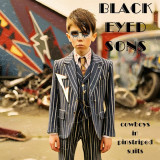
- Cowboys In Pinstriped Suits (With Joe Elliott, Ryan Roxie, Chip Z'nuff)
- Don't Throw Me In The Corner (With Chip Z'nuff)
- Your True Colours (With Mike Tramp)
- Savoir Faire (With Alan Clayton, Steve Conte, Mike Monroe, Chris Johnstone)
- Dig Me Out Of This Hole (With Scotti Hill)
- So Glorious (With Dan Reed)
- Can't Put Your Arms Around A Memory (With Ryan Roxie)
Black Eyed Sons - A New Rock 'n' Roll Collective - Members of The Quireboys and Down n' Outz are joined by an amazing collection of fellow musicians for a joyous collaboration of mutual admiration and musical celebration. Enjoy the debut album 'Cowboys In Pinstriped Suits" released via Off Yer Rocka recordings 31st January 2025. Since the band announced they were working on their highly anticipated new album, "The Band Rolls On", what was already becoming a chance for a musical rebirth metamorphosized into something far bigger and more ambitious. The final cuts feature distinguished collaborations from a multitude of Rock Royalty.
The band, their management and close friends within the industry all agreed that this should be treated as a stand-alone new project, a Rock 'n' Roll Collective going under the name "Black Eyed Sons", a nod to a previous album from their extensive back catalogue. The revised album title, "Cowboys in Pinstriped Suits” is named after one of the eleven tracks and features none other than Def Leppard’s Joe Elliott alongside Alice Cooper guitarist Ryan Roxie and bass grooves from Chip Z’Nuff. Guy Griffin commented "It's been nice to take a break and focus on the writing. Working with our own band as well as so many friends within the industry has done nothing but inspire us to write and create this exciting new project. We've done the hard work getting the tracks laid down, we're now looking forward to going back out on the road as Black Eyed Sons and delivering something entirely new from five musicians who've been playing together for over twenty years. Relationships break down sometimes, that’s Rock 'n' Roll, everyone does their thing, but we want to make sure there's no confusion as to what this is. Whilst we're proud of our musical history, that was then, this is now. It's onwards and upwards, so let the music do the talking. Joe Elliott added, "Having worked with these guys since 2009 in the greatest “other” band I could ever hope to work with, The Down ’n’ Outz, it just felt totally natural for me to reciprocate the love these guys have shown me by contributing to what is essentially a new beginning for them. So welcome to the mad world of Rock ’n’ Roll, you Black Eyed Sons." - Joe Elliott (Cowboys in Pinstriped Suits). Other collaborators had this to say: “This song feels so real and natural. Like a hug from an old friend. I’m proud to be a part of it.” - Charlie Starr (Autumn Reigns) - ‘’My friendship with the Quireboys started a long time ago and each time our paths have crossed, the bond has grown stronger. Therefore, I would lie if I didn’t say that in the back of my mind there always was a wish to do something together. So, I am more than thrilled when I was invited to sing on the Black Eyed Sons new album and that they also gave me a song where I could be who I am’’ ⁃ Mike Tramp (Your True Colours) - “I go back 30 years with these guys. A band that I’ve always loved and respected. To be asked to be part of this project was a great thrill, and proud moment as a guitarist.” - Scotti Hill (Dig Me out of this Hole) - “I’ve known Griff since the beginning of our respective careers…we are both from the old school baby, and Griff has always been the embodiment of rock n’ roll - genuine, classy, trashy, and an attitude that exemplifies what it is to be a rock n’ roll troubadour“ ⁃ Ryan Roxie (Cowboys in Pinstriped Suits/Can't Put Your Arms Around A Memory) - “Since you graced us with your presence on the Wolves’ debut album, it’s only fair we should be a part of your debut as Black Eyed Sons. All the best!” - Kyf Brewer / Company Of Wolves (Foolin’ Yourself) - “Not only was it a pleasure to play guitar & sing on this record but it was also an honour to have Griff & the band record one of our songs! - Steve Conte / Company Of Wolves/Michael Monroe/NY Dolls (Foolin’ Yourself) - Band: Guy Griffin (lead vocals/guitar); Paul Guerin (guitar); Keith Weir (keyboards); Nick Mailing (bass); Pip Mailing (drums)
Over the past half century, Tony Levin has been a prolific session player and one of the most active live performers on the planet. He’s contributed his talents to over five hundred albums amongst which include 15 with Peter Gabriel and 18 with King Crimson (counting live, studio, and compilations) alongside contributions to the work of John Lennon, Alice Cooper, Lou Reed, Herbie Mann, Paul Simon and many others. On tour, he’s traveled the World many times over with the aforementioned King Crimson, Peter Gabriel, and several of his own bands including Stick Men
.
This Fall, he’ll stage 65 performances in North America as a member of BEAT, celebrating King Crimson’s ‘80s repertoire alongside Adrian Belew, Steve Vai and Danny Carey interpreting “Discipline, Beat and Three of a Perfect Pair.”
Levin’s seventh solo album, and his first since 2007, is an autobiography of sorts, with the themes drawn from Levin’s musical life. It features a myriad of collaborators from his half-century-plus on the road and in the studio with Peter Gabriel, King Crimson and many, many others.
Features a Murderer’s Row of guest musicians including Robert Fripp, Vinnie Colaiuta, Earl Slick, Mike Portnoy, Steve Gadd, Jerry Marotta, Gary Husband, L. Shankar, Pete Levin, Jeremy Stacey, David Torn, Pat Mastelotto, Larry Fast, Steve Hunter, Manu Katche, Alex Foster, Dominic Miller, Markus Reuter, Collin Gatwood, Chris Pasin, Jay Collins, Josh Shpak, Don Mikkelsen.
Nothing But Net presents “Perceptions”, the debut LP from Los Angeles producer/beat maker Jamma-Dee aka Dyami O’Brien. Jamma-Dee has been a figure in the west coast modern funk and boogie scene, both as an accomplished DJ and music producer, having released records under his own name and producing for the likes of Joyce Wrice, Mndsgn and others.
From a musical upbringing in Los Angeles, Dyami’s adolescent obsession with record digging and beatmaking eventually led him to Dam-Funk’s renown Funkmosphere parties where he built friendships with key players in the LA funk scene and began to make a name for himself as a DJ and producer. In the second half of the 2010’s he released a series of EPs on Arcane and hosted the legendary Soul In Paradise show on NTS radio.
His first full-length, “Perceptions” is a long time in the making. Beginning with studio experiments nearly a decade ago, a version of the album found its way to producer and Nothing But Net label boss Onra, who helped guide the project to completion. The album artwork was created by outsider soul music conceptualist and painter, Mingering Mike, whom O’Brien felt compelled to reach out to after discovering his work years earlier. Thematically, the artwork, record, and its title touch on very modern themes: the alienation of life in a world of instant-gratification, an overly-connected society of masks, distorted realities and shifting identities.
Musically, “Perceptions” is the culmination of a life lived under the groove. Featuring a long list of collaborators, including Benedek, Mndsgn, Koreatown Oddity, the legendary Craig T. Cooper and fellow NBN labelmate, Devin Morrison, the double album touches on all of O’Brien’s musical influences. Album opener “Up N Down” sets the scene with it’s syrupy g-funk impressionism, before “Jamma’s Jam” bounces out of the speakers through an auburn-colored sunset haze of lush Rhodes chords and sparkling vibraphones. “It Takes A Freak” and “Datafile Groove” shuffle westward, re-imagining New Jack Swing grooves through a distinctly Californian lens. Elsewhere, the album touches on classic deep house rhythms (“Tic Toc” and “Silly”) and crystalline, downtempo R&B and UK street soul (“Joy”, “Saturday”).“U.R.” features legendary L.A. guitarist Craig T. Cooper laying down a network of stunning, silken guitar lines with absolute class.
Over the course of these 15 tracks, Jamma Dee consolidates, renovates and perpetuates the sound of his influences. “Perceptions” is a masterclass in modern funk and soul production.
- A1: Madman
- A2: Take Me Back Home
- A3: Love 13 (Lone)
- A4: Something Inside
- A5: Miss Kiss
- A6: John Brown
- B1: Big A
- B2: Winter Harlequin
- B3: The Sound Of The Music
- B4: Your Love & Mine
- C1: You Really Got A Hold On Me
- C2: The Great Dust Storm
- C3: My Turn To Cry
- C4: This Old Heart Of Mine
- C5: Minstrel & A King
- D1: Getting 'Em Down
- D2: I Wouldn't Mind
- D3: He's A Poor Boy
- D4: The Devil
- D5: Wanderer
- D6: Harlequin 5
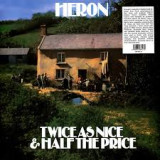
Formed in suburban Maidenhead by singer Tony Pook, guitarist/pianist Roy Apps and guitarist Robert Collins, Heron solidified when Collins was replaced by uitarist/mandolin player GT Moore. After a debut album recorded at the Pook family farm, specially priced double LP Twice As Nice And Half The Price achieved a fuller sound with guitarist Mike Cooper, bassist Mike Finesilver, drummer Terry Gittins and guitarist Willie Boazman. The epic set sounds absolutely brilliant from start to finish, with strong vocal harmonies, intricate guitar interplay and excellent musical communication. Arguably Heron at their absolute best!
Bill MacKay and Drag City are delirious with pride to announce the discovery of a new territory: Locust Land, a record which seeks to reflect the nerve-shredding consciousness run amok in our world today - and somehow allay it with sound. Bill"s music is a visceral crackling where it meets the air, and Locust Land can"t help but reflect its era more than any other in his discography. It"s been five years since the release of Fountain Fire - but in the interim, Bill has barely stopped moving, collaborating with artists across the spectrum, including cellist Katinka Kleijn, banjo player Nathan Bowles and keyboardist Cooper Crain. He"s also contributed to recordings by Steve Gunn, Ryley Walker, Bill Callahan & Bonnie Prince Billy (Blind Date Party), and Black Duck (on their self-titled record featuring Douglas McCombs and Charles Rumback). Forget five years - how"d he even get Locust Land squeezed out of his temporal lobes? Bill"s sense of music as art is constantly modulating - lifting off from where it is found and naturally migrating to some other place. Sometimes, that"s elsewhere - others, it"s simply to be found deeper inside the starting point. And so, the action of moving on informs the landscape of Locust Land. This manifests in several different ways. A restless energy and urgency is repeatedly felt - in the driving momentum of "Keeping in Time," "Glow Drift," and "When I Was Here" - while a dogged persistence radiates from the tone colors and percussion of "Oh, Pearl." Mating a dirge-like desolation with sparkling guitars, "Radiator" adds darkness and depth. The sense of searching, displacement and longing in vocal tracks "Keeping in Time," "Half of You," and "When I Was Here" speak literally to the tumult of current vibrations. Within the arrangements, there"s also departure from previous norms - in addition to the brilliant guitar work for which he is known, Bill plays a variety of keyboards, from piano to organ to synth, extending his music with the available voicings, while enriching the sound field without abandoning his signature brevity. For fans of his singing, and following in the recent tradition of Fountain Fire as well as his collaboration with Nathan Bowles, Keys, Locust Land expresses with an increased vocal presence - and heightened engagement, with Bill"s words and melodies drawing us closer. Also different: on his previous solo recordings, Bill played every sound. Here, he has invited other illustrious Chicagoans to join him: Sam Wagster (The Father Costume, Mute Duo) plays bass on three songs, two of which feature the percussion playing of Mikel Patrick Avery (Natural Information Society, Jeff Parker, etc.). Additionally, Janet Beveridge Bean (Eleventh Dream Day, Freakwater) adds otherworldly vocal textures to the elegiac "Neil"s Field." Whether played alone or with companions, this music projects the strength of a universal collective. Even with a piece that might earlier have passed for blissful pastorale, Bill displays some declamatory motives. The reverie which opens the album, "Phantasmic Fairy," embodies both transcendent and desperate moods, with Bill"s ineffable slide guitar playing afloat, with organs and synths, in a dream state suffused with a sense of foreboding - a requiem, perhaps for the days of unencumbered bandwidth? On the other side of the album, the strength to continue to hope appears in the lifting melodicism/exoticism of the album-closing title track, leaving the listener with the sense of having achieved a hard-won space - a place of personal contemplation and dissent, one that everyone on the planet deserves to visit every single day on earth. With cover art also by Bill MacKay (the third of his albums on Drag City to feature his work), Locust Land stands as a thoroughly personal statement from Bill to everyone everywhere.
Industrial/metal/glam outfit Orgy was the first act signed by Korn’s Jonathan Davis to his Elementree imprint, and the move paid off right away with their 1998 debut, which went Top 30 and scored a huge hit with its cover of New Order’s “Blue Monday.” Somehow, though, this enduring late-‘90s favorite has eluded a vinyl release...till now! With the full cooperation of the band, we’ve had it remastered for vinyl (by Mike Milchner of Sonic Vision) and placed this platter inside a beautiful gatefold jacket. Clear with red and yellow swirl pressing!
"Candyass" by Orgy includes the following tracks: "Dissention", "Fetish", "Blue Monday", "All the Same" and more.
This version of the album comes as in a Gatefold Sleeve packaging.
The LP is pressed on transparent, red & yellow vinyl!
.- "Wishah" (meaning veil in Arabic) is a composition in five stages, written by Youmna Saba between 2021 and 2022, for voice, oud and electronics. Following her previous solo works "Njoum" (2014) and "Arb’een" (40) (2017), this album marks a significant turning point in Saba's journey. Created after leaving Beirut and settling in Paris, "Wishah" reveals a profound shift in her musical expression, informed by rigorous research in the sonic properties of sung Arabic phonemes and their role in shaping synthesised electronic sounds. The album employs a digital extension for the oud, a concept developed by Saba in her research project 'Taïma’. This device enhances the oud's sonic range, seamlessly integrating synthesised electronics. It also amplifies subtle, often overlooked sounds generated during playing, such as resonances and fingerboard friction. The composition is organized into five distinct stages, each contributing to a process of gradual revelation. As the tracks unfold, they strip away layers of constructed emotions and perceptions that have been intricately woven over time, to expose a space that no longer exists. Wishah is a farewell to home. Youmna Saba (born in Beirut, 1984) is a musician, composer and musicologist. Her current research focuses on instrument and space resonances in different sonic and musical contexts. With four albums to this date, she has collaborated with musicians of different musical expressions such as Kamilya Jubran, Floy Krouchi, Mike Cooper and the Neue Vocalsolisten ensemble, and has taken part in numerous artist residencies. She is the laureate of the first sound residency at Quai Branly Museum, Paris (2022-2023) with her research project and installation “La Réserve des Non-Dits”, now on view at the museum; and a laureate of the music residency program at the Cité Internationale des Arts, Paris (2020-2021).
- A1: The Carver Area High School Seniors - Get Live '83 (The Senior Rap)
- A2: Mike T - Do It Any Way You Wanna
- B1: Chapter Iii - Real Rocking Groove (Rap & Breaks)
- B2: Sinister Two - Rock It, Don't Stop It
- C1: Sangria - To The Beat Y'all
- C2: Funky Four Plus One More - Rappin' And Rocking The House
- C3: The Just Four - Girls Of The World (Genius Rap & Breaks)
- D1: Eye Beta Rock - Super Rock Body Shock
- D2: Funky Constellation - Street Talk (Madam Rapper)
- E1: Kool Kyle The Starchild - Do You Like That Funky Beat (Ahh Beat, Beat)
- E2: The Just Four - Jam To Remember
- F1: Grandmaster Flash And The Furious Five - Super Rappin' No 2
- F2: Silver Star - Eei Eei O
- A1: Magic's Trick - Magic's Rap - Mono (7")
- B1: Magic's Trick - Magic's Rap - Stereo (7")
Yo! Boombox is the new instalment of Soul Jazz Records’ Boombox series on the early days of hip-hop on vinyl and features some of the many innovative underground first-wave of early rap and disco rap records made in the USA in the period 1979-83.
The album includes the first releases of seminal groups such as Grandmaster Flash & The Furious Five and The Funky Four Plus One More through to a host of rarities and little-known obscurities such as the Carver Area High School band’s ‘Get Live 83’, an awesome record made at a Chicago high school.
The album is released as a deluxe triple LP complete with 3x full inner sleeves of extensive sleeve notes, exclusive photography and original label artwork. There is also a very-limited one-pressing only special deluxe version that comes with an extra bonus super-rare 7” single of ‘Magic’s Rap’ by Magic’s Trick, aka ex-marine Magic Fraga, a record that was only ever available on US military bases!
Yo! Boombox also features the stunning photography of Sophie Bramly, one of a very select group of photographers (alongside Henry Chalfant, Martha Cooper, and Joe Conzo) who were allowed full access to document the exciting early days of hip-hop in New York.
These first exuberant wave of innocent, upbeat, party-on-the-block rap records were the first to try and create the sounds heard in community centres, block parties and street jams that first took place in the Bronx in the mid-1970s. Where the first DJs – Flash, Kool Herc and Bambaataa – were back-spinning, mixing and scratching together now classic breakbeat records like The Incredible Bongo Band’s Apache or Babe Ruth’s The Mexican, these first pre-sampling rap records were all made using live bands, often replaying then current disco tunes.
As Chic’s ‘Good Times’ was to ‘Rappers’ Delight’, the songs here feature then-current dancefloor hits such as the Tom Tom Club’s ‘Genius of Love’, Cheryl Lynn’s ‘To Be Real’, MFSB’s ‘Love Is the Message’ while MCs rapped over the top, creating a unique new sound. In fact, the links between disco and rap date back earlier to the ‘party style’ MCing of figures such as the legendary DJ Hollywood or radio DJs like Frankie Crocker.
This new Soul Jazz Records collection
celebrates these first old-school rap
records, bringing together rare, classic
and obscure tracks released in the
early days of rap.
The next chapter of the Natural Information Society is here. Since Time Is Gravity, credited to Natural Information Society Community Ensemble with Ari Brown, presents a newly expanded manifestation of acclaimed composer & multi-instrumentalist Joshua Abrams nearly 15 year, 7 albums &-counting flagship ensemble. Joining the core NIS of Abrams (guimbri & bass), Lisa Alvarado (harmonium) Mikel Patrick Avery (drums) & Jason Stein (bass clarinet) are Hamid Drake (percussion), Josh Berman & Ben Lamar Gay (cornets), Nick Mazzarella & Mai Sugimoto (alto saxophones & flute), Kara Bershad (harp) & Chicago living legend of the tenor saxophone Ari Brown. Recorded live to tape at Electrical Audio & The Graham Foundation, cover painting Vibratory Cartography: Nepantla, by Lisa Alvarado. 2xLP on Eremite USA, 2xLP & CD on Aguirre/Eremite Europe. Out 14-04.
Since first developing Natural Information Society in 2010, Joshua Abrams has been gradually expanding the group’s conceptual underpinnings, its musical references & the sheer number of the group’s members. Its music is, in a sense, an expansive form of minimalism, based in repeated & overlaid rhythmic patterns, ostinatos & modality. Its roots, its scale & its meaning become clearer in time. If time is gravity, it also allows us to carry more. Having begun as fundamentally a rhythm section with Abrams’ guimbri at its core, the version here can stretch to a tentet, including six horns.
Abrams has been expanding his minimalism gradually, but he has long understood a key to minimalism’s potential: the breadth of its roots in the late 1950s & early 1960s, ranging from the dissatisfaction of young European-stream composers with the limitations of serialism to the simultaneous dissatisfaction of jazz musicians with the dense harmonic vocabulary of bop & hard bop. The former began exploring rhythmic complexity & narrow tonal palates in place of harmonic abstraction (Steve Reich’s Drumming, Philip Glass’ Music with Changing Parts; perhaps above all Terry Riley’s In C & his late ‘60s all-night organ & loop concerts); the later reduced dense chord changes to scales (signally with Miles Davis' Kind of Blue, but rapidly expanding with John Coltrane’s vast project). In the 1950s the LP record opened the world with documentation of Asian & African musics, key influences on both minimalists & jazz musicians. If John Coltrane’s soprano saxophone suggested the keening shehnai of Bismillah Khan, the instrument was rapidly taken up by two key minimalists, LaMonte Young & Riley, similarly appreciative of its flexible intonation, the same thing that kept it out of big bands.
If the guimbri, the North African hide-covered lute that Abrams plays with NIS, involves a rich tradition of hypnotic healing music associated with the Gnawa people, Abrams’ music also touches on other musics as well — other depths, memories & healings, different drones, rhythms & modes. As the group expands on Since Time Is Gravity, he has made certain jazz traditions in the same stream more explicit as well. If there is a mystical & elastic quality involved in the experience of time, both in direction & duration, you will catch it here. The parts for the choir of winds expand on the roles of Abrams’ guimbri, Mikel Patrick Avery & Hamid Drake’s percussion & Lisa Alvarado’s harmonium: at times, the winds are almost looping in the tentet version, each hitting a repeating note in turn, at once drone & distinct inflection on temporal sequence. The brilliance of the work resides in Abrams’ compositions, the NIS’ intuitive execution & in Ari Brown’s singular embodiment of the great tenor saxophone tradition, including the oracular genius of Eddie “Lockjaw” Davis, & Yusef Lateef. The three pieces by the expanded NIS featuring Brown —the opening “Moontide Chorus” & “Is” & the ultimate “Gravity”— have an immediate impact, & togther might be considered a kind of concerto for tenor saxophone. Here Brown presses almost indistinguishably from composed melody to improvised speech, getting so close to language that he might have a text. Everything here is a sign. Note the tap of the Rhythm Ace that links “Moontide Chorus” to “Is”, the attentive heart always present, even when signed by a machine. There’s a link here to the methodologies & meanings of dub music & the linear & vertical collage of beats, textures & tongues: treated with reverence, a sample of a beat-box can be as soulful, as hypnotic, as a mbira or a tamboura. If those pieces with Brown are heard as a suspended concerto, the three embrace & enfold the other works, like the sepals of a flower. That placement will also touch on the mysteries of our perception of time.
Particularly in “Is”, but elsewhere as well, a phenomenon of transcendence arises in which time appears to be tripartite, at once moving backwards & forwards & standing still. This is an act of technical brilliance certainly, but also an illumination of music’s ability to represent temporal consciousness through polymetrics. This particular listener has only heard it before in a few places, including the horn shouts & bowed basses of Coltrane’s Africa, in moments of Charles Mingus’ The Black Saint & the Sinner Lady, in certain pieces where tapes were literally running backwards, & earlier still in Dizzy Gillespie’s Cubana Be, Cubana Bop, in which the composer George Russell & conguero Chano Pozo found a music that spoke at once in the voices of Stravinsky’s Rite of Spring & the vestigial rites, rhythms & songs of the Yoruba language & Santeria religion of inland Cuba.
In Joshua Abrams’ compositions & the realization of them by the NIS, in the time of one’s close listening & memory thereof, distinctions between the “natural” & the “social”, the “quotidian” & the “transcendent” are erased, suspended or perhaps irrelevant. Consider two of the ensemble pieces, one named for nature, the other social science. In “Murmuration” the repeated wind figures of flute & alto saxophone combine with the interlocking patterns of harp, guimbri & frame drum (tar) to create a perfect moving stillness, not an imitation but a witness to the miracle of the starlings’ astonishing collective art, a surfeit of beauty that might be the ultimate defense tactic.
“Stigmergy” takes its name & concept from the Occupy movement’s Heather Marsh, who proposes a social system based on a cooperative rather than competitive models, one in which ideas are freely contributed & developed as ideas rather than an individual’s property. In its form, Abrams’ “Stigmergy” is the closes thing to traditional jazz, a series of accompanied solos by each of the wind players. However, the composed accompaniment is a radically collectivist notion: a repeated rhythmic figure, call it ostinato or riff, in which the different winds each play only a note or two of the figure, a concept both more collectivist & individualistic in its conception than any typical unison figure. It suggests another of the underlying recognitions that propel the Natural Information Society, the group as social organism, the teleology of hypnotic anarchy, all parts in place, functioning systematically, evolving & expressing itself, its nature & society, as a transformative organism.
George Lewis has described music as “a space for reflection on the human condition”. This suggests that, rather than a “distraction”, at least some music might serve as a distraction from distraction. It’s a focus, a clarity, a awareness, an external invitation to interiority, as if music itself is a model for form & contemplation, an organism contemplating for us or as us. If that is a possibility, & I am sure I have heard such musics, than this music is among them. How many of our rhythms, melodies & harmonies (cultural, historical, biological, psychic) might such music carry, translate & transform in the particulate ecstasy of our own murmuration? (Stuart Broomer, April 2022)
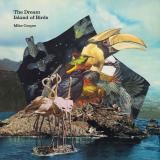
Recorded in 1973 at the Church of Saint Mary Magdalene in Paddington, London, Unfinished Picture is Rupert Hine's second LP. The songs where all composed by Hine with lyrics by David McIver and Simon Jeffries. On its sessions, Hine was surrounded by a host of outstanding musicians that included Simon Jeffes (Penguin Cafe Orchestra), Mike Giles (Giles, Giles & Fripp / King Crimson), Mick Waller (Cyril Davis, The Steampacket, Jeff Beck Group), Ray Cooper (Eric Clapton, Elton John) among others.
Rupert Hine's recording adventures started with the release of a 7" 45 by the folk duo Rupert & David "The Sounds Of Silence". In 1971 he was approached by Purple Records for the release of his debut solo LP Pick Up A Bone, which despite its lack of commercial success featured a strong collection of critically acclaimed compositions that made Purple Records want him to record a second album - Unfinished Picture, on which Hine showed a fantastic evolution to a more conceptual, cinematic approach. Echoes of Ray Davies, Kevin Ayers or hints of Nick Drake taken to a more 'happy' territoire mix with beautiful strings by The Martyn Ford Orange Ensemble and even some ARP synth explorations to build a fantastic collection of sounds that take the listener on a trip through the worlds of folk, psych and prog.
Hine's career would soon take off as a famed producer, he did work with Kevin Ayers, Milla Jovovich, Jonesy, Steve Tilston, Anthony Phillips, Camel, Saga, Rush, Tina Turner, Howard Jones, Bob Geldof, Suzane Vega, and many others.
Fully licensed ! Ltd to 500 copies. Singer and guitarist Ram John Holder was born in. 1939 in Georgetown, British Guiana, then moved to Cincinnati
in 1954, and to the East Coast to work as folk blues singer in the early 1960s. In 1963, he took residency in England where he recorded several
albums. Released in 1969 Black London Blues is surely is masterpiece. A socio-political manifesto the album chronicles the trials and tribulations
that were the result of being a black-immigrant in London, and it contains all the pathos and pain one can imagine. Self-conscious, as concept
albums often are, the record is almost like an audio A-Z or pub guide. It’s funky/soul and represents his own black experience. It is a must have
for all the blues revivalist out there, a record to rank along the lines of early Mike Cooper and American stalwarts like Eugene McDaniels or Sixto
Rodriguez!
Tracklist:
SIDE A: 1. Loie - 2. Lloro Tu Despedida - 3. Goin’ Home - 4. Me ‘N You
SIDE B: 1. Liebestraum - 2. Shu Shu - 3. Blue Samba - 4. Favela - 5. Linda Flor
SOULGRA
Pressed on blue clear coloured vinyl. Limited edition of 2000 copies worlswide. Originally released in 1968 as an LA studio concept album, this instrumental album is a remarkable fusion of the psychedelic sounds of sitar and mellotron with angular guitar riffs and hard drum breaks. Featuring a lineup of Ry Cooder, Jim Gordon (Joe Cocker, Derek and the Dominos, George Harrison, Traffic, Frank Zappa, Alice Cooper and many more), Mike Deasy (Eddie Cochran, Phil Spector, Everly Brothers, Elvis Presley, The Monkees, The Beach Boys and many more), and The Wrecking Crew (Los Angeles' top studio session musicians). The band recorded only this one album and most of the personnel went on to greater achievements. The quintessence of psychedelic rock in its full-blooming 1968ness. Features original cover artwork by Rick Griffin (Grateful Dead, Jimi Hendrix, Neil Young). Tracks : Leyshem, Zendan, Ceyladd Beyta, Becal, Ddom, Toadda Bb, Dyl, Ralin, Tygstl, Pendyl, Jacayl, Menyatt Dyl Com.
- A1: Sugai Ken - Boundary
- A2: Andrew Pekler - Shima No Yume
- A3: The Dead Mauriacs - Differents Aspects D'un Aquapel Recompose (Edit)
- A4: Vica Pacheco - Taciturno
- B1: Mike Cooper - Lamma Island
- B2: Babau - Enshrined Underflow
- B3: Francesco Cavaliere & Tomoko Sauvage - Ficus Leaves In Apnea
- B4: Sculpture - Froth Surfer
- B5: Yannick Dauby - Navigation
Anthology introducing the first of a series of albums based on the concept of Aquapelago.
‘’ Since the earliest days of the planet there has been a rhythm of tides that creates coastal interzones where humans have foraged and pursued various livelihoods. Developing boats to fish from and technologies that enabled them to immerse themselves deep underwater, the aquatic realm has been one explored, experienced and imagined in various ways. In an effort to express the vitality and richness of this environment I coined the term aquapelago in 2012. The wordplay was deliberate. The neologism was designed to distinguish the liquid inbetweenness of this space from the dry, scattered, lands of archipelagos.
The concept of the aquapelago coalesced around themes taken from various places. Epeli Hau’ofa’s idea of an Oceanic “sea of islands’” was formative but a number of songs were also inspirational. Torres Strait islander Seaman Dan captivated me with his experiences of pearl diving in the Darnley Deeps in his song ‘Forty Fathoms’ and Norfolk Islander singer Kath King imaged how sea-turtles might have experienced ecological change in her song ‘Tech me how fer lew’. Other reflections on watery realms also appealed. Debussy’s solo piano piece ‘La cathédrale engloutie’ soundtracked me as I researched myths of lost Lyonesse while Mike Cooper’s Kiribati, an ambient exoticist album about the imperilled archipelago (recently re-released on Discrepant), caused me to reflect on the social and cultural impact of sea level rise before that topic became a high-profile concern.
This compilation album takes the concept of the aquapelago into new depths and breaches it on fresh shores. The tracks are soaked with the aquatic. Bassy sonorities boom as if heard deep underwater. Bubbly textures breach the surface, water drips and seabirds soar high above waves. Sugai Kei samples fragments of text concerning the Ningen, a fantastic humanoid/whale that reflects the ‘aquapelagic imaginary’ of modern Japan and its preoccupation with industrial whaling. Andrew Pekler continues the orientation of his Phantom Islands project - a sonic atlas of imaginary places - with a soundscape as if heard by a swimmer just offshore, mixing sounds of the island and the sea together. Mike Cooper’s sonic reflection on Hong Kong’s Lamma Island is similar, combining the island’s ubiquitous barking dogs with the slurp of waves on rocky shores, conjuring a languorous time before Chinese crackdowns on the territory.
Taking another tack, the Dead Mauriacs gleefully water-ski through collage of tropical island exoticisms, replete with glitchy orientalism, while Babau combines skittering idiophone melodies with resonant glissandi. Vica Pacheco moves between dense and airy sounds, as if crossing between surf lines and the space above. Yannkick Dauby’s track is also imbued with in-betweenness, evoking ambient sounds heard through a ship’s hull. Sculpture’s ‘Froth Surfer’ realises its title, with bubbling sounds and rhythms that evoke Hawaiian surfing filtered through layers of time and distance. Reminding us of the shore necessary for aquapelagic spaces, Franceso Cavaliere and Tomoko Sauvage’s composition anchors the album, centred around shaken rhythms and resonant ringing tones and drones.
Taken together, the album sketches the contours of the aquapelago as it might be imagined and conjured in sound – an endless oceanic realm that laps on to beaches and crashes against cliffs. The performers navigate this space under alternately starry and cloudy skies, orientating themselves with sounds, textures and sonic samples of their terrestrial homes while we float with them. ‘’
Philip Hayward December 2021
- 1: Secondo Coro Delle Lavandaie (Feat. Maria Violenza)
- 2: Fimmene Fimmene (Feat. Vera Di Lecce)
- 3: Musica Nova (Feat. Nziria)
- 4: Nostalgia (Feat. Youmna Saba)
- 5: Sind W/ Cosimo Damiano (Feat. Faraualla & Ars Ludi)
- 6: Mediterranean Gothic (Feat. Mike Cooper)
- 7: Il Cattivo Passato
- 8: Il Futuro Perduto
- 9: Rimorso
- 10: Antiche Memorie (Feat. Lino Capra Vaccina)
Repossessed by the past, bitten once again and forced to relive drama, history, memories, tradition and roots. A past that needs exorcizing, bending and re-imagining in order to move forward and depend on. This is ‘Rimorso’, Mai Mai Mai’s colossal mediterranean gothic album.
Known for his incredible blend of Southern Italian Folklore, industrial drone, proto-techno & punishing miasmic electronic music, Toni Cutrone aka Mai Mai Mai approached ‘Rimorso’ with a clean slate. Following ‘Nel Sud’ (La Tempesta International, 2019) and his mediterranean trilogy ‘Theta’ (Boring Machines, 2013), ‘Δέλτα’ (Delta) (Yerevan Tapes, 2014) and ‘Φ’ (Phi) (Not Not Fun Records / Boring Machines, 2017) the Roma based noise artist recreated his spirits of the past by collaborating with musicians and ethnomusicologists that work on the present, on traditions that are still passed on and morphing continuously, healing our nostalgia for a lost future. ‘Rimorso’ sheds the past heavy use of samples and sound manipulation in lieu of a human element: voices, percussion, lap steel guitar all embedded in a rich cultural heritage.
Jung, wütend und mit einem klaren politischen Statement gegen Rassismus, Sexismus und Homophobie im
Gepäck - SETYØURSAILS nehmen bei Weitem kein Blatt vor den Mund. Die Newcomer aus Köln spielen
kompromisslosen und dennoch melodischen (Post) Hardcore gewürzt mit signifikanten Metalcore-Parts und
überzeugen sowohl Live, als auch auf Platte.
Nun steht die Band mit ihrem zweiten Album und Napalm Debüt Nightfall in den Startlöchern, das
am 21.01.2022 veröffentlicht wird. Bereits der Intro-Track “Ghosts”, featuring Annisokay-Fronter Rudi
Schwarzer, zeigt schnell in welchem musikalischen Fahrwasser die Band unterwegs ist: Schwirrende Gitarrenlinien, mischen sich mit beinah elektronischen Einflüssen und formen die imposante Rückmeldung
von SETYØURSAILS, die ihre musikalische Vielfältigkeit unter Beweis stellen. Die Mischung aus Metal-,
Death- und klassischen Hardcore Elementen zieht sich durch die komplette Scheibe und lässt dabei aber
auch immer wieder Platz für Überraschungen, ohne den typischen Trademark zu verlieren.
SETYØURSAILS sind aber auch stets für Überraschungen zu haben. Gemeinsam mit Mike Perez von No
Braggings Rights covern sie „Shallow” (aus dem Film “Star Is Born”) von Lady Gaga und Bradley Cooper
und verleihen der Ballade ihren persönlichen Touch, womit sie erneut ihre musikalische Vielfältigkeit beweisen.
Auf insgesamt 13 Tracks stellen SETYØURSAILS vor allem eines klar: Sie sind mehr als bereit die Szene
zu erobern!
Since its creation in 2007, Hifiklub has led more than 150 collaborations which have allowed the Toulon trio to open its music to multiple artistic experiences revealing a constant desire for research and novelty. From unprecedented encounters to unique projects, Hifiklub has developed over the years a now substantial discography whose musical proposals range from pop to jazz through the most experimental sounds and even traditional music. One path, however, remained unexplored: contemporary music."Last Party On Earth" is organized around the association of three energies: contemporary composer Jean-Michel Bossini, singer Duke Garwood and the instrumental ensemble Hifiklub.
Surrounded by mysticism and darkness, the creation has cinematographic dimensions. It positions the listener in a depth and disposition of soul where the voice - and the poetry - of Duke Garwood is carried by Hifiklub and Jean-Michel Bossini around cold and tormented atmospheres. The album seduces by the detail of its sounds, its apparent tranquility and its intimate atmospheres thwarted by harsh flashes.
Mixed by Alain Johannes (Queens of the Stone Age, Them Crooked Vultures, Eleven), the album sees the exceptional participation of the string trio Anpapié (Alice Piérot, Fanny Paccoud and Elena Andreyev) who magnificently perform the score by Jean-Michel Bossini.
All songs performed by Hifiklub, Duke Garwood and trio Anpapié (conducted by Jean-Michel Bossini)
Pascal Abbatucci Julien – drums, percussion
Eléna Andreyev – cello
Jean-Loup Faurat – guitar
Duke Garwood - vocals, guitar
Régis Laugier – bass
Nico Morcillo – guitar
Alice Piérot – violin
Fanny Paccoud – alto
Collaboration is an essential ingredient to this open trio’s creative approach, forming a recurring theme in Hifiklub’s extensive discography and filmography. Based in Toulon, the hyperactive experimental rock band offer a diverse ever-evolving catalogue that now boasts over 150 artist collaborations since they started in 2006. Over the years they have formed as many fruitful artistic friendships allowing them to explore the endless possibilities of expression combining sound, image and text.
Some of the artists that feature in Hifiklub’s kaleidoscopic discography: Lee Ranaldo (Sonic Youth), Alain Johannes (Queens of the Stone Age, Them Crooked Vultures, Eleven), Roddy Bottum (Faith no More, Imperial Teen), Matt Cameron (Pearl Jam, Soundgarden), The Legendary Tigerman, Jad Fair (Half Japanese), Iggor Cavalera (Sepultura, MixHell), Jean-Marc Montera, R. Stevie Moore, Mike Watt (Minutemen, The Stooges), Fatso Jetson, Nels Cline (Wilco), Scanner, Mike Cooper, Eugene Chadbourne…
Hell Yeah's debut Buena Onda compilation proved hugely successful. It also kept people drenched in exotic dance floor sounds while the pandemic has kept everyone apart. Now the Berlin-based party is back and on a mission to redefine what Balearic means with a first-ever vinyl-only sampler featuring exclusive, unreleased tunes and remixes compiled by Marco Gallerani and Gallo from brothers around the world.
The a-side is all about new kids on the block: Australian cyborg disco don Kayroy appeared on the label in 2020 with his Imaginary Expeditions EP and now links with his friend Jaspar Robinson, a dreamer with his head amongst the stars. He provides the vocals which speak of an astronaut lost in space and aching for a missing loved one while sombre chords and downbeat bass make for a beautifully longing groove. It's a blue-eyed Balearic classic. The up-and-coming Italian Feel Fly of labels like Internasjonal then goes widescreen with his 'Esperanto.' The chords shimmer, the baseline percolates and the guitar riffs arc up to the heavens for some late-night intergalactic bliss.
The flip side features more mature and established artists: label regular Max Essa offers a remix of The Vendetta Suite 'Neon Secrets,' which has naive Eastern melodies and rueful 80s chords with a subtle new age feel that dumps you right on the beach at sundown. Last of all come Chris Coco and Micko Roche with true-school Balearic classic complete with cicada-like shakers, mellifluous Spanish guitar licks, flutes and soft, frothy, rolling beats that break like waves on a sun-kissed Mediterranean coastline.
Balearic Beats 2021 Sampler 1 offers something for every hour of the day, making this a perfectly functional 12" for the modern Balearic DJ.
Support by Prins Thomas, Calm, Chris Coco, Andy Wilson (Ibiza Sonica), Pete Gooding, Severino (Horse Meat disco), Will Nicol, Phil Cooper, Leo Mas, Mike Salta, Balearic For You, Jon Sa trinxa
The second album from Brighton based Balearic duo Andres y Xavi. This time with a little help from Rolo McGinty of Peel faves and Balearic Beat legends The Woodentops. This is a love letter to the forgotten side of Ibiza: dusty lanes, olive groves and clearings with sea views that go on for miles.
10 original compositions plus a cover of Talk Talk’s Renee.
The self released and distributed first album found favour with Balearic DJs across the world. Lead track ‘My alibi’ was picked out by the likes of Kenneth Bager, Danny Psychmagik and ‘Never seen Ibiza’ was a firm favourite of Phat Phil Cooper and Balearic Ultras.
Rolo adds guitar and vocals and a Woodentops vibe to two tracks on the album ‘What do you see in me?’ and ‘Walking in the sun’, his personal tribute to Jose Padilla.
First album received support from Kenneth Bager (Music for Dreams), Phat Phil Cooper (NuNorthernSoul), Chris Coco, Mike Salta, Leo Mas, Balearic Ultras, David Pickering (OneMillionSunsets) and many more!
And was described by Dr Rob (Ban Ban Ton Ton) as "Smokey Muscle Shoals organ plays, strings swoon, and Kosmische synths blink like distant stars... an overall “vibe” somewhere between Mo`Wax and the Sunday Best of Bent and Dan Mass... adorned by cascading Indie “neo-acoustic” guitar jangle. Like The Stone Roses by way of Horsebeach."
- A1: Schenectady
- A2: Family Trees
- A3: Bromance
- A4: Forest Of Conscience
- A5: Beyond The Pines
- A6: Evergreen
- A7: Misremembering
- A8: Sonday
- B1: Coniferae
- B2: Eclipse Of The Sun
- B3: The Snow Angel
- B4: Handsome Luke
- B5: The Cryin’ Shames - Please Stay
- B6: Ennio Morricone - Ninna Nanna Per Adulteri
- B7: Bon Iver - The Wolves (Act 1 And 2)
The Place Beyond the Pines is Derek Cianfrance 2012 crime drama film. The critically acclaimed film reunites Cianfance and Ryan Gosling, whom had previously collaborated on 2010’s Blue Valentine. It also stars Bradley Cooper, Eva Mendes, Rose Byrne and Ray Liotta.
The daring movie is a sweeping emotional drama powerfully exploring the unbreakable bond between fathers and sons. It tells the story of a motorcycle stunt rider (Gosling), who considers committing a crime in order to provide for his newborn child, an act that puts him on a collision course with a cop-turned-politician (Cooper).
Mike Patton, American singer-songwriter and multi-instrumentalist best known as the lead singer of the alternative metal/experimental rock bands Faith No More and Mr. Bungle, delivers a sweeping and brooding score. Like a red thread, his music guides the audience through this multi-generational story often linking characters and locations.
With unfettered access to the Zappa Trust and all archival footage, ZAPPA explores the private life behind the mammoth musical career that never shied away from the political turbulence of its time. Alex Winter’s (Bill & Ted’s movie franchises, The Lost Boys) assembly features appearances by Frank’s widow Gail Zappa and several of Frank’s musical collaborators including Mike Keneally, Ian Underwood, Steve Vai, Pamela Des Barres, Bunk Gardner, David Harrington, Scott Thunes, Ruth Underwood, Ray White and others. The soundtrack is a perfect complement to the film available as a limited edition 5-LP 180-gram vinyl set for the Zappa completist. Showcasing 69 total songs, there are 12 previously unreleased recordings from the Zappa archive along with his 1978 Saturday Night Live performance; 24 additional Zappa songs from his extensive catalog spanning four decades; songs from Zappa’s labels Straight / Bizarre Records like “No Longer Umpire” by Alice Cooper and “The Captain’s Fat Theresa Shoes” by The GTO’s; 2 classical compositions by Edgard Varese and Igor Stravinsky; and 26 Original Score cues newly composed by John Frizzell for the documentary – all of which give the universe a sonic exploration into the musical brilliance of Frank Zappa. A 2LP edition on 180-gram clear vinyl will also be available, collecting together eight of the unreleased recordings from the Zappa archive, the SNL performance and 13 recordings from Zappa’s extensive recording career.
- Rock 'N' Roll
- Go Man Go (Album Version)
- Our Love Will Change The World
- Social Debris
- $1000 High Heel Shoes
- Hail Mary
- Detroit City 2021 (Album Version)
- Drunk And In Love
- Independence Dave
- I Hate You
- Wonderful World
- Sister Anne (Album Version)
- Hanging On By A Thread (Don't Give Up
- Shut Up And Rock
- East Side Story (Album Version)
“I was born here” said Alice Cooper, “and so was the sound and spirit of Alice Cooper.” Named for the city that launched the original Alice Cooper group, “Detroit Stories” followslast year’s “Breadcrumbs” EP as a modern-day homage to the toughest and craziest Rock n Roll scene there ever was. Alice Cooper and Bob Ezrin gathered some legendary Detroit musicians (Wayne Kramer, Johnny “Bee” Badanjek, Paul Randolph and many more) in a Detroit studio to record “Detroit Stories”, Alice Cooper’s new album that celebrates that spirit for a new era. Finally, it would not be a proper collection of Detroit tales if it didn’t include a few songs featuring the Original Band members, Mike Bruce, Dennis Dunaway and Neal. Joe Bonamassa also makes an appearance on the intro track “Rock ‘n’ Roll”. If 2019’s “Breadcrumbs” EP laid down the trail to the city, “Detroit Stories” drives like a muscle car right down Woodward Ave. Discover Detroit Stories as they were meant to be told. Available across 5 formats: CD / CD+DVD / 2LP Black, Boxset. Boxset inclues CD, T-shirt, Face Mask, Torch Light, 3 Stickers. Expected reviews across the broadsheets and tabloids. Daily Mail already picked this album as one of their 2021 albums to look out for! Current single playlisted at BCR2.
After his debut album for Discrepant (Papillon, 2013) and a couple of tapes for Dinzu Artefacts (Aqueducts, 2017) and Sucata tapes (Cercueill Flottant, 2019) Papillon aka Gonçalo F. Cardoso returns to the wax treatment for one last hurrah into the depths of tropical disquiet.
Taking liberties from Henri Charriere’s book sequel of the same name, Banco, the audio reader here dives straight up/down into a world of random dream logic. The same themes of Nightmare vs paradisiac dreams are present here yet with more nuance than the first volume. The adventure here is more subdued, less spiritual as most of it is lived outdoors, free from the states shackles of abuse. A lighter tone then, for what will probably be the last Papillon adventure. As with the first volume the album counts with contributions from fellow label artists, Mike Cooper, Cédric Stevens, David Daan and Yannick Dauby all feature in a way or another, raw or cooked into a boiling pot of irreverence.
All tracks were composed and edited by Gonçalo F Cardoso in the island of La Gomera, Lisbon and London between 2017-2019.
Composed & Performed by Gonçalo F. Cardoso with guest appearances by Mike Cooper, Yannick Dauby, David Naan and Cedric Stevens*
Special vinyl one time pressing to 300 copies
Mastered by Rashad Becker