As trans-Atlantic alchemists pulling from a shared dialectic that somehow encompassed both postmodern deconstructionist tendencies and a delightfully subversive sense of poptimism, it’s easy to see how David Cunningham and Peter Gordon immediately hit it off upon initially meeting each other back in the late-1970s at the height of their youthful transgressions. Having initially worked together on the second Flying Lizards’ LP fourth wall, with its ingenious fusion of dismantled rhythms and rearranged melodies juxtaposed against the slyly sultry singing of Snatch’s Patti Palladin— with Gordon adding a few sprinkles of mischievous sax in the mix— it’s no wonder the collaboration would lead to further musical adventures.
Which leads us directly to the genesis of The Yellow Box. Embarking on a collaborative exercise in the structural repurposing of music as untethered puzzle pieces in need of rearrangement with no predetermined outcomes, the duo gave birth to a project that would see them move through both time and recording studios across Europe, taking nearly two years from 1981-1983 to complete. Enlisting the great Anton Fier on drums from The Feelies/Lounge Lizards nexus and John Greaves on bass from Henry Cow/Soft Heap lore to round out their dueling creative counterparts, the album would be something of a lost treasure until its eventual release on Cunningham’s Piano imprint in 1996.
Cinematic in scope, and filled with drifting drones, beautiful counter-melodies, eery minimalism, Kraftwerkian synthesizers, looped voices, skronky interludes, and other shifting undercurrents of sound, it was an album that utilized both a diverse array of expressive languages, as well as early sampling techniques and prepared instruments, well before most people were thinking in such expansive, integrated terms at the dawn of the 80’s. But such is life at the vanguard of new music. And one of the reasons that it likely sat on the shelf for so long before finally being released well over a decade later. Like a sparser, less groove-oriented version of My Life in the Bush of Ghosts, or a more radical take on the experimental work of Can’s Holger Czukay, The Yellow Box stands at the crossroads of time and technology, fusing multiple strands of musical thought and compositional techniques into a disjointed whole that somehow still comes off as a conceptually complete record.
Now, here it is again, over 40 years later, with perhaps even more historical resonance than it had before, remade and remodeled just waiting to be rediscovered again.
Waxwork Records is thrilled to announce the exclusive release of the WEAPONS Original Motion Picture Soundtrack, in proud collaboration with New Line Cinema and WaterTower Music. Scored by Ryan Holladay, Hays Holladay, and director Zach Cregger, this haunting and immersive album accompanies the highly anticipated mystery-horror film WEAPONS.
Written, produced, and directed by Zach Cregger (Barbarian), WEAPONS tells the chilling story of seventeen children from the same classroom who vanish into the night—each fleeing their homes at 2:17 AM, drawn by an unseen force toward an unknown destination. Their simultaneous disappearance baffles authorities and sets the stage for one of the year’s most unsettling cinematic experiences.
The WEAPONS soundtrack captures the eerie atmosphere and emotional intensity of the film with original compositions from the Holladay brothers and Cregger. From minimal ambient textures to deeply unsettling orchestral crescendos, the score is both gripping and unforgettable.
Waxwork Records is thrilled to announce the exclusive release of the WEAPONS Original Motion Picture Soundtrack, in proud collaboration with New Line Cinema and WaterTower Music. Scored by Ryan Holladay, Hays Holladay, and director Zach Cregger, this haunting and immersive album accompanies the highly anticipated mystery-horror film WEAPONS.
Written, produced, and directed by Zach Cregger (Barbarian), WEAPONS tells the chilling story of seventeen children from the same classroom who vanish into the night—each fleeing their homes at 2:17 AM, drawn by an unseen force toward an unknown destination. Their simultaneous disappearance baffles authorities and sets the stage for one of the year’s most unsettling cinematic experiences.
The WEAPONS soundtrack captures the eerie atmosphere and emotional intensity of the film with original compositions from the Holladay brothers and Cregger. From minimal ambient textures to deeply unsettling orchestral crescendos, the score is both gripping and unforgettable.
For the ninth installment of the _NRV series, Romania’s Cosmjn delivers The Music Behind EP — four hypnotic cuts that showcase his trademark swing and subtle intensity. Cosmjn is a name most in the minimal circuit perk up just seeing on the sleeve. He runs the Radial imprint together with LIZZ — who appeared on _NRV006, in case you missed that. “Doom Alarm” sets the tone with driving percussion and a shadowy groove, while “Dirty Wob” leans into gritty bass pressure and late-night warehouse energy. On the flip, “Nancy Byoss” pushes forward with a heavy, propulsive workout built for maximum floor impact, before “The Music Behind” closes the record with a spacious, dynamic trip that stretches into the after-hours. A versatile EP, primed for the booth and the bag alike.
out of Stock
Last delivered 7 months ago available to reorder, subject to availability
Volpe is the finely tuned trio led by Ghent-based pianist Heleen Andriessen. Drummer Stijn Demuynck and bassist Kobe Boon support Andriessen's lyrical melodies with an infectious groove. The carefully crafted compositions alternate between energetic and melancholic, allowing the listener to feel immersed in a warm bath while transporting them to an uncanny world.
'elders' (Dutch for "elsewhere"), doesn't refer to a physical place but to a refuge in Heleen's mind-a sanctuary where she searches for beauty on gray, rainy November days. A simple detail taken from everyday life can serve as a gateway to this hopeful, imaginative world. Musically, this translates to repetitive patterns that gradually evolve or suddenly burst open. Subtle dissonance is welcome here, with the band lovingly embracing the slight disruption it offers. Heleen's playful runs and Stijn Demuynck's grooves balance the melancholic undertones. Seemingly simple melodies tell stories and offer familiarity to listening ears.
keywords: piano trio, contemporary jazz, keith jarrett, modal jazz, minimalist
Wahrscheinlich das erste Album, das komplett in einem Bundesliga-Fußballstadion geschrieben und aufgenommen wurde, nämlich im Millerntor-Stadion des FC St. Pauli in Hamburg. Keine Sorge, es klingt überhaupt nicht nach Stadionrock. Ganz im Gegenteil sogar ... Lo-Fi, ohne spröde zu sein, und minimalistisch, ohne karg zu wirken. Seit 1995 haben sich Swearing At Motorists mit ihrer rohen Energie, ihren herzlichen Songtexten und ihrer unerbittlichen DIY-Ethik eine Kult-Anhängerschaft aufgebaut. Als ,The World's Local Band" bezeichnet, sind sie unzählige Kilometer gereist, um weltweit Konzerte zu geben, und haben die Bühne mit legendären Acts wie Guided By Voices, Songs:Ohia, The Breeders, Spoon, Unwound, Brainiac, The Lemonheads, My Morning Jacket und vielen anderen geteilt. Nach einer zehnjährigen Pause ist die Band zurück. Von Kritikern gefeiert, aber definitiv unter dem Radar geblieben, sind Swearing At Motorists nach wie vor ein beliebter Fixpunkt der Indie-Rock-Underground-Szene.
British South African composer & producer Galina Juritz presents 'One Weird Trick', her debut solo album on London's home for interdisciplinary oddballs, Kit Records.
As a classically trained violinist, Galina has worked in bands and ensembles such as ShhArt Ensemble, Inclementine, and in various combinations featuring leading musicians from Cape Town and Johannesburg's classical and jazz scenes.
Galina composed the music for Madness: Songs Of Hope and Despair, a cantata made in collaboration with Dizu Plaatjies, with a libretto by psychiatrist Dr Sean Baumann. Madness debuted at the World Psychiatry International Congress in 2016, and had a two week run at Cape Town's Baxter Theatre in 2017. As a composer she writes frequently for film, animation and ensemble.
She has collaborated with the likes of composer Neo Muyanga, Mr Beatnick, Cara Stacey, Kelpe, Juliana Venter, Violeta Garcia, Kit Records head Richard Greenan & more. Galina has been remixed by the likes of Photay, Memotone and Tom Skinner (Sons of Kemet, The Smile).
'One Weird Trick' is the culmination of her solo material. Still rooted in the ornate, technical world of string composition and arrangement, the album is stubbornly unclassifiable.
Opening with time-dilated ambient ('Leaves') before segueing into rippling, florid techno ('Skeleton and Tiger fighting'), Galina twists again and again, shifting gears through stoned, jazz-inflected r'n'b ('Things I Know to be True'), string-led widescreen songcraft ('Come Back') and orchestral minimalism for standing on vast shorelines ('Time Split at the Seams of Your Departure [everything is now before and after]').
On the B side, Galina flexes her composition chops with the storming jazz of 'Spirit Level', recorded by Cape Town-based musicians Buddy Wells, Andrew Lilley, Jonno Sweetman & Stephen de Souza. Galina is then joined by the Stockholm Sax Quartet on 'In Rebellion of Time', a stately Reichian revelation that moves from solemn ballet to ecstatic multiharmonic denouement. To close, Galina retrieves oozing electronics and smeared journal entries from the guts of a black hole - a fitting conclusion to a truly unique, unpredictable, delightful, sad, infectious, and bizarre record.
Influences / sounds like: Louis Cole, Matthew Herbert, Darkside, Thundercat, Eiko Ishibashi, ECM, Oliver Coates.
'One Weird Trick' is out 7th November 2025 via Kit Records, available on vinyl & digital formats.
Kit Records will throw an album launch party at Servant Jazz Quarters in Dalston, London on 30th October 2025. Tickets TBC.
[g] 07: Time Split at the Seams of Your Departure (Everything Is Now Before and After) [feat. sir kay]
Akhira Sano is a Tokyo-based artist working across sound, drawing, installation, and video. His practice finds generative potential for music in life's fleeting incidents, etching meaning from unassuming spaces and resonances. With releases on 12k, LAAPS, IIKKI, and The Trilogy Tapes, Sano has steadily carved out a distinctive voice within minimal and experimental music - one that privileges attentiveness and patience over spectacle.
"To Material Past", Sano's debut for SWIMS, carries this thread with a single 30-minute work built solely using glockenspiel tones and field recordings from his local neighbourhood. This is a night walk with no map or end point; Sano follows irregular, coiling fragments that extend to form a tessellating luminous whole - like a subliminal mass of tree roots quietly shifting the concrete slabs beneath our feet.
Under this faded gauze of gestures and interactions, Sano's glockenspiel interjects like a grandfather clock, softly marking the partitions that make up a day's collected experience; clicking and chiming like the sleeping brain, as it sifts and catalogues a lifetime's ephemera of thoughts, faces and puzzles.
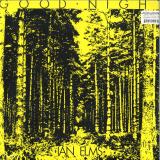
Ian Elms’s cult isolationist synth masterpiece Good Night returns via Dark Entries. Originally released in 1982, Good Night blends Berlin school minimalism and BBC Radiophonic weirdness with the aesthetics of then-nascent DIY punk electronics throughout its fifteen short tracks. According to Elms, these pieces were composed in two broad but interrelated modes: pieces with voice and synthesizer, which are obliquely narrative, and instrumental synthesizer pieces that aspire to capture fleeting emotions. Ian met with producer David Hoser at Octopus Studios and they began constructing pieces using a Polymoog Keyboard 280a, sampled drum tracks, and Elms’s synthesizer. On “The Street Enters the House”, live drums lurch along with skeletal motifs while Elms’s elliptical lyrics evoke domestic discontent. “A Light Moves Across Curtains” features metronomic pummeling and icy strings buttressing the scant cryptic lines from Elms. Instrumental gems like “Goodnight” and “Surrounded by Trees” are built around detuned riffs in round-like structure, both drifting and static like the motion of waves. With original pressings fetching three digits – if you can even find a copy – this reissue is essential listening for fans of John Bender, Transparent Illusion, and the early 80’s DIY cassette scene. Each copy of Good Night comes with a postcard featuring a photograph and notes by Elms. “This record is intended for anyone who by accident or design spends most of their time alone (whether in the body or in the mind).” – Ian Elms.
out of Stock
Last delivered 3 months ago available to reorder, subject to availability
TSSRCT returns with its second release, delivering a four-track EP by UFO95 that dives deep into minimalist, contemporary techno. Focused on raw textures this record explores a territory where noise meets precision. Punchy drums collide with saturated percussions, while delay-heavy treatments carve space into the mix, creating hypnotic tension across each track. It's a stripped-back yet forceful statement -- functional and experimental in equal measure.
out of Stock
Last delivered 11 months ago available to reorder, subject to availability
“sitting in the terminal at Barcelona airport, health safety warnings echo through empty architecture. feeling slow, and fast, out of sync with rituals and routines. structure and rhythm disintegrate into micro gestures appearing in random order, a daily psychedelia... amid all of the chaos and distraction in the last few years, it’s only through letting go that I've found solid ground to stand on.”
These are some of the experiences and reflections that gave shape to Slipstream, a hallucinatory mini-album by the artist PVAS and the fourth release on Objekt's label, Kapsela. Slipstream is an aural document of PVAS's interior life, conceived not as a grab-bag of DJ-friendly tracks (although it’s clearly inspired by the club) but as a single, delicately crafted artistic statement. The entire record is shrouded in a flickering haze, worn through by smudged breakbeats and wiry drum machines. “Wetland”, with its swampy percussion and crystalline arps, echoes T++ and Kraftwerk. The radiant incandescence of “Gathering Drift” recalls GAS or Monolake's “Hong Kong.” Sampled breakbeats dip and swerve asymmetrically through “Boba” and “Terminal”. Across the record, textures and voices are reshaped by PVAS's homemade algo-software, UMT, which, in PVAS’ own words, “reconstructs one audio file by sampling another, resulting in output that merges their aesthetic qualities, creating rhythm with non-rhythmic sound files and abusing the stereo field.” But the most striking union of technology and poetic self-exploration comes at the end of the record, in the title track, from words murmured through a classic vocoder:
“when i stop framing myself as a boundaried stone
immovable, and powerful, and heavy
when i stop figuring my deepest space as my own
something which i am solely responsible
i surrender, i surrender”
PVAS is Jordan Juras, a Berlin-based artist who grew up outside of Windsor, Ontario. He has released solo EPs on Isla and xpq?, and is half the duo NUG (3XL, West Mineral Ltd.). In addition to developing music software professionally, he has used his UMT software on records by Lyra Pramuk and Dylan Kerr. Slipstream was recorded from 2022 to 2025.
Written and produced by PVAS
Mixed by TJ Hertz
Mastered by Anne Taegert at D&M
Artwork and design by Brodie Kaman
out of Stock
Last delivered 8 months ago available to reorder, subject to availability
Evelyne/Masao bring TESTPATTERN to Dark Entries for the label’s first foray into vintage Japanese electronics. Masao Hiruma and Fumio Ichimura’s project Testpattern is known for their release Apres-Midi, a cult slab of synthpop perfection released by Yukihiro Takahashi and Haruomi Hosono’s legendary Yen Records in 1982. While Hiruma and Ichimura parted ways following Apres-Midi, Hiruma’s musical endeavors would continue after meeting French/American model and vocalist Evelyne Bennu in 1984 at a café bar where she would sit and write poetry. Their collaborative efforts as Evelyne/Masao were fruitful, and the duo first performed together in June 1984 on a television program called TOKYO ROCK TV. The album TESTPATTERN comprises seventeen songs recorded in Hiruma’s home studio, which have never been released previously. The Evelyne/Masao duo continues building on the soundworld of Apres-Midi: lush, sophisticated electronics with intricate yet minimalist production. Tracks like “Sakuramochi” and “Bird Island” bear influence from Hosono most clearly, their soaring melodies revealing a subtly ironic redeployment of East Asian musical tropes. But TESTPATTERN is more than homage to Yellow Magic Orchestra. “Tabac” and “Le Soleil Se Leve” display oddball sensibilities closer to Sky Records icons Asmus Tietchens or Cluster. Elsewhere, the project shows affinity for the punkier ethos of continental DIY electronics, like on the quirky “Alien Go Home” and a positively skewed cover of “Singin’ in the Rain.” Bennu’s vocals provide a common thread through these explorations, as she alternates deftly between New Wave deadpan and unhinged chanson singer—check her waxing maximally Francophone on “Au Clair de Lune,” based on an 18th century French song. TESTPATTERN will be available on both double LP as well as CD, and includes a fold-out poster with liner notes with lyrics. This album is dedicated to Masao Hiruma, who passed away in 2011.
out of Stock
Last delivered 32 days ago available to reorder, subject to availability
Anushka Chkheidze + Robert Lippok’s »Uncontrollable Thoughts« on Morr Music is the duo’s debut joint release. The Netherlands-based Georgian composer and the German sound artist from Berlin first met in 2019 in the context of a workshop programme that took place in Tbilisi, and later worked with Eto Gelashvili, Hayk Karoyi, and Lillevan on the massive »Glacier Music II« music and book project, released in 2021. This led them to engage in a less conceptually driven form of musicking and real-time composition that corresponds with their respective environments. They draw on traditions such as minimal music or late 1990s and early 2000s electronica to integrate subtle beats with elegiac organ drones, playful melodies with lush textures. The first document of an ever-shifting intergenerational dialogue, »Uncontrollable Thoughts« is a product of mutual listening outside time.
Though Chkheidze and Lippok had access to professional studios, they chose to rent a simple rehearsal space, equipped with only the bare essentials—bass and guitar amps as well as a small PA—to maintain immediacy in their working process. The music they made together corresponded to and drew on the respective possibilities and shortcomings of this studio, much like their collaboration in general is characterised by the care with which they approach each other's talents and ideas. While both had loosely defined roles—Chkheidze was responsible for the free-flowing beat programming and the evocative distortion came courtesy of Lippok, for example—they individually contributed in different ways to their joint process, which is as free of hierarchies as it is limitless. Hence, the duo’s focus on spontaneity and out-of-the-moment emergence makes them organically move beyond tried and tested conventions, resulting in music that seems to suspend time altogether.
When the first chimes on »Bird Song« announce a piece that sets rattling kickdrums against a backdrop of layered drones and rhizomatically entangled melodic elements, it becomes clear why »Uncontrollable Thoughts« carries this title: The album follows the constant detours of the subconscious of its makers, letting them explore moments of ecstasy such as on »Rainbow,« melancholy with »Field,« and the interplay of suspense and release through the ten-minute-long title track. But the different pieces also tie into one aother in various ways. The dirge-like organ drones on which »Rainbow Road« ends reappear in the beginning of »Uncontrollable Thoughts,« much like Chkheidze’s gentle yet emphatic piano chords on »Field« seem to provide the starting point from which the artist develops the striking motifs of the final piece »Opening«, whose title itself suggests that the record as a whole can and should be enjoyed as a loop. All this creates a unique, idiosyncratic temporal logic.
While there is much that sets Chkheidze and Lippok apart as solo artists, the major shared leitmotif in their respective bodies of work is the sonic engagement with space. »Uncontrollable Thoughts« is hence best understood as an extension of this practice; as an album that maps the geographies of their minds in motion, tracing musical movements as they melt into each other.
out of Stock
Last delivered 6 months ago available to reorder, subject to availability
Recital releases The Holy Restaurant, the new full-length album by Derek Baron, and their first solo LP since Curtain (Recital, 2020).
The album is built from years of miniature transcriptions of improvisations, functioning in many ways as a sister to Curtain. Half-thoughts and mistakes are revisited, gilded, and illuminated. The floorboards of the album are laid with piano, organ, string pads, while serrated accruements (distortions, flourishes, and recording interferences) step and drop overhead. The resulting conflux, as Baron notes in the accompanying booklet “becomes the point and the problem to explore.”
The second track “Oven Girls” opens with us galloping on a horse in some video-game meadow on a bed of MIDI strings. Abruptly, a helicopter soars over us and we transition to a latticed guitar and woodwind exploration. The album rolls on in this fashion, juxtaposing musical half-sentences within a museum of sounds rag-picked from history and daily life. Emotional interviews with Midwestern friars who build and sell caskets are set against gothic piano and guitar duets. On “Music in the Casket,” A disorienting and hilariously epic guitar solo erupts. The penultimate titular piece, “The Holy Restaurant,” sets a text written by Baron’s grandfather. A small chorus voices his words, echoing the humanistic storytelling of “Blue” Gene Tyranny’s A Letter From Home. Under sunlit piano progressions, a fleet of smokey trumpets emerges.
Running throughout the album is a series of “traces”: short melodic phrases painted over again and again with different real and MIDI instrumentation. The “luxurious asceticism of doubling” as Baron puts it. They explain, “Part of the allure for me is that the ‘original’ material is itself kind of thin, sketchy, meaningless, maybe calling attention to itself only by way of a felicitous mistake. Hearing, transcribing, and learning what was basically only ever played first on accident becomes the guiding concern.”
The album’s shifting, variegated forms and voices pass quickly; the record feels both comforting and elusive, suitable for any hour of the day.
The Holy Restaurant features guest players Ed Atkins, Lucy Liyou, Quentin Moore, Emily Martin, Dominic Frigo, Jacob Wick, and several of Baron’s family members. It is released in a limited edition vinyl pressing of 200 copies, accompanied by a booklet of effusive program notes by the composer, alongside an assemblage of photographs, scores, and artwork.
out of Stock
Last delivered 10 months ago available to reorder, subject to availability
Tell me something that makes a difference’ demands Gaia Weiss in Tenashee’s debut single. Something that immerses crisp melody into stodgy bass, collides warm dub with icy sound design, all the while slowly expanding like a supernova. ‘Tell me something’ takes the sounds and styles of the past and places them in a gravity-free future, while evoking an ethereal and precise atmosphere.
Gaia Weiss is an actress - not a singer by trade - and summons Charlotte Gainsbourg & Brigitte Bardot to deliver the spoken words as a fractured monologue, guiding us through splintered visions, and detuned chord progressions, in pursuit of the seemingly unattainable; ‘something that can make a difference’.
With this six-chapter journey on the newborn Street Cinema label, Tenashee (DJ Tennis and Ashee, Manfredi Romano and Joseph Ashworth) have crafted and refined - like two artisans from another era - a unique creation: a creature that reconnects electronic music with complexity and richness, fully aware of hyper-contemporaneity, yet capable of resisting surrender to it.
“Blink To Check It’s Real” featuring artist Campbell King - poet and beautiful soul - immediately immerses us in an electronic reality check, with 90s-inspired tweaking and glitching, all woven together with a poem from Campbell that contrasts the dizzying intensity of lust and connection with the comfort of being able to ‘loosen their grip’ and ‘make it safe.’
In ‘I Can See Now,’ Aurelia Ray (the stage name of pop-music-writing powerhouse Caitlin Stubbs) evokes a sense of serenity, pure love, and trust within a refined, spacious piece of minimalist electronica. “Blindsided” is a journey through pure, airy abstraction, a dance floor companion to the glacial trip-hop instrumental “Cold Logic”.
Finally, in “Memories,” the last track in the setlist but actually the first song the duo worked on, conceived and developed five years ago in 2020, the voice of Chinese German artist Mona Yim transports us to a place that is both emotionally introspective and intense, balancing on the edge between desire and reality.
“You should know where I go when I dream,” she states.
Over the course of five years, through exchanges, writing sessions, and fine-tuning in Paris, London, Saint Martin, and Ibiza, the world evolved, but Tenashee’s musical mission remained unchanged. The mini-album reflects the musical backgrounds of its two creators, their unique sensitivity to the present, and their desire to challenge each other with sharp, emotional, yet weightless styles and sounds. It is no longer just DJ Tennis; the successful DJ touring worldwide, organising events, and founding influential labels like Life & Death; nor only Joseph Ashworth with his scientific approach and creativity as a
producer and writer in the competitive world of pop; nor Ashee, with his releases on Circoloco and Aus Music. No, Tenashee is something more.
It is a duet searching for a thread that connects electronic music—past, present, and future—through experimentation, craft, and artistry. The moment has truly arrived for Tenashee to ‘tell us something.’
out of Stock
Last delivered 10 months ago available to reorder, subject to availability
An electrified meeting of minds, Candy Girl is a lost 1975 session by jazz pianist Mal Waldron, recorded in Paris with core members of the mighty Lafayette Afro Rock Band, the American funk unit who had made France their home and whose deep grooves would later be mined by generations of hip-hop producers.
By 1975, Waldron was a decade into his self-imposed exile from the United States—a transformed musician who had reassembled his sound in Europe and Japan after a devastating breakdown in the early '60s. His post-1969 output had stripped jazz down to its core elements: modal intensity, locked grooves, and hypnotic repetition. Candy Girl doesn’t interrupt this trajectory—it extends it, wrapping Waldron’s minimalist mantras around the funked-up chassis of the Lafayette rhythm section.
Originally released in microscopic quantities on the Calumet label and long shrouded in obscurity, Candy Girl was recorded spontaneously in the studio of French producer Pierre Jaubert, whose Paris HQ had become the workshop for both avant-garde jazz (Archie Shepp, Art Ensemble of Chicago, Steve Lacy) and psychedelic funk (Lafayette Afro Rock Band AKA Ice). This session finds Waldron jamming freely with bassist Lafayette Hudson, drummer Donny Donable, and keyboardist Frank Abel on clavinet, Moog and more—laying down raw, unfiltered instrumental funk with an experimental edge.
Highlights include the low-slung vamp of “Home Again”, the crisp, break-laden groove of “Red Match Box”, and the mesmeric swirl of the title track “Candy Girl” —a minor-key electric piano waltz with hints of cosmic soul. There's even a deep cut for the crate diggers: the somber yet meditative “Dedication to Brahms”, where Waldron deconstructs the Romantic composer’s third symphony into a sparse jazz reverie.
Unlike his polished sessions for Japanese labels or the avant-garde swing of his earlier Prestige work, Candy Girl feels more spontaneous, even accidental — and that’s part of its power. It’s a document of Waldron as bandleader, collaborator, and explorer, captured in the midst of a vibrant, cross-cultural scene in mid-70s Paris. Never officially issued with a cover and barely released at all, Candy Girl is a rare convergence of two underground traditions: Waldron’s Euro-exile electric jazz and the raw, sampled-future funk of the Lafayette Afro Rock Band. Now finally resurfaced, it deserves its rightful place in both stories.
out of Stock
Last delivered 11 months ago available to reorder, subject to availability
Spring Revisited pays us a respectful revisit this autumn as a full double LP on Acid Jazz, Ace Records and Cosmos, pinching the celebrated 12" singles into one power-punchy grab bag. Spring, founded in late 60s New York by Bill Spitalsky with Roy and Julie Rifkind, became a 70s soul powerhouse, home to such dance music pioneers Millie Jackson, Joe Simon and The Fatback Band. Their collegiate creations were of course ripe for modern reinterpretation - a fated intention - and as recently as 2025 saw DJs and producers pull them apart and reappraise them for modern floors: Dimitri From Paris turned Jackson's 'We Got To Hit It Off' into a stout summer anthem, Joaquin 'Joe' Claussell reimagined Fatback's 'Snake', and Kenny Dope, Dave Lee, DJ Spinna, Opolopo, Colleen 'Cosmo' Murphy and others added their own ensouled spins.
out of Stock
Last delivered 4 days ago available to reorder, subject to availability
"discografia due" ist Melkus' chaotischer Liebesbrief an das Verlieren: verdrehte Riffs, Verzerrung als Farbe und Monate, die damit verbracht wurden, Einflüsse zu entwirren und in rohe Meisterwerke zu verwandeln. Eine Mini-Diskografie von Chaos, Lärm und Freude am Scheitern. Keine Gewinner - nur eine Crew von Verlierern, die zwischen Wahnsinn und Nervenzusammenbrüchen tanzt.
Serie mit unbekanntem Ausgang. Diary of Dreams starten eine Serie von Mini Alben, deren finale Anzahl noch nicht beschlossen ist; Mastermind Adrian Hates erklärt: "Die Serie endet, wenn die Geschichte zu Ende erzählt ist." So beginnt nun am 31.10.2025 die neue musikalische Traumreise mit dem Kapitel "Dead End Dreams". Der Titel ist ursprünglich eine Textzeile aus dem Song Panik? vom 2002er Mini Album PaniK Manifesto, welches für DoD das erste seiner Art war. Die Zeile blieb für Adrian jedoch bis heute inhaltlich unvollendet; es gab dazu noch so viel mehr zu sagen. Es war also höchste Zeit, dieses Sinnbild zu vollenden. Begeben wir uns dafür nun gemeinsam in völlig neue Klangwelten des Tagebuchs. Der Titel verrät ein wenig, womit zu rechnen ist - düstere und apokalypische Szenarien und ein Rückzug in die eigenen Gedanken, um das auszublenden, was kaum fassbar mehr scheint: die Realität; Eine Welt am kollektiven Abgrund. Gegründet wurde die Band 1989 und erspielte sich seitdem mit über 700 Konzerte in 43 Ländern ein treues Publikum.
"Magical Thinking", Faraos drittes Studioalbum, entfaltet sich als vielschichtige Reise durch Verlust, Sehnsucht und Verwandlung. In Anlehnung an den Titel und den Geist von Joan Didions "The Year of Magical Thinking" bewegt es sich durch das stille Terrain zwischen Verleugnung und Akzeptanz - wo Trauer nicht gelöst, sondern getragen wird. Es sind Songs über Wiederaufbau und Widerstandsfähigkeit, geprägt von Themen wie Trauer, Mutterschaft und den wesentlichen Ritualen, die uns aufrecht halten, wenn die Klarheit schwindet. Das Album wurde zwischen Oslo und Berlin aufgenommen und pulsiert mit dem Flair des R&B der 90er Jahre, dem Glanz der 80er-Disco und der kontemplativen Schwungkraft des spirituellen Jazz - allesamt verankert durch Faraos intime Vocals und komplexe Arrangements. Vom ersten Schimmern von ,Waiting for You", wo Herzschmerz in Pailletten gekleidet ist und ein Groove an Robyn und Chaka Khan erinnert, lädt uns das Album in eine Welt ein, in der Sehnsucht zum Leuchten gebracht wird. In ,Spiritual Garden", benannt nach einer flüchtigen Textzeile von Janet Jackson, schafft Farao eine feuchte, narkotische R&B-Träumerei. Percussion im Stil von Timbaland und seidige Basslines umhüllen die unerwarteten Texturen ihrer Zither und beschwören eine Meditation über Verlassenheit und die fragile Rückeroberung des Selbstwertgefühls herauf. Wenn ,Dreamy Ride" einsetzt - wo Aaliyahs Coolness auf Dorothy Ashbys kosmische Harfe trifft -, gleitet das Album in nächtliche Bewegungen, eine R&B-Fantasie für nächtliche Autofahrten um 2 Uhr morgens, wobei ihre Zither sich wie ein Leitstern durch den Mix webt. Der verspielte Synth-Jam ,Hey Ladies" und eine kühne Neuinterpretation von Brandys ,Full Moon" lockern die Stimmung in der Mitte des Albums auf. Ersterer ist eine freche, einminütige Hommage an Destiny's Child, letzterer eine nächtliche Elegie, die einen geliebten Klassiker in tiefe Bässe und schimmernde Synthesizer hüllt. Dann kommt ,Xiang Xiang", ein intimes Intermezzo, das um eine geflüsterte Stimme einer Freundin herum aufgebaut ist und uns an die realen Bindungen erinnert, die Faraos üppiges Klanguniversum erden. Im Zentrum des Albums steht der Titeltrack ,Magical Thinking", der direkt auf Didions Memoiren Bezug nimmt. Hier zeichnen pulsierende Synthesizer und schwebende Vocals die verschwommene Grenze zwischen Präsenz und Dissoziation nach. Es folgt ,Endelig" (,endlich" auf Norwegisch), ein tiefes Ausatmen - ein minimalistisches, spirituelles Jazz-Intermezzo, das die Illusion einer Auflösung vermittelt. Farao tut sich dann mit dem Ambient-Pionier Laraaji für ,Voice Continues" zusammen, einer weitläufigen, von der Vierten Welt inspirierten Meditation, in der Zither, mehrschichtige Vocals und Synth-Texturen einen Klangteppich bilden, der die Spuren mütterlicher Liebe über Generationen hinweg nachzeichnet. ,Tschüssi" (ein luftiger deutscher Abschiedsgruß) wird zum Gefäß für etwas weit Schwerwiegenderes: ein Abschied, durchzogen von sich wiederholenden Erinnerungen und emotionaler Desorientierung, aufgebaut um ein gespenstisches Fragment aus Faraos Track ,Marry Me". Das Album schließt mit ,Sleep It O" zu einer verschwommenen, gnädigen Note, einem Wiegenlied für die Überwältigten - eine letzte Erlaubnis, sich auszuruhen, loszulassen, sich einfach hinzulegen. Keine Verheißung der Heilung, sondern eine mitfühlende Pause in einem Album, das von Sehnsucht und Illusion geprägt ist. RIYL: Erika de Casier, Tirzah, Sade, Kelela, Qendresa, Caroline Polachek, Solange
The Original Lineup Reunited
For the first time since their iconic run in the early 1960s, all five founding members—Eric Burdon, Alan Price, Hilton Valentine, Chas Chandler, and John Steel—came together for a raw, soulful reunion. This is the Animals with the benefit of age, experience, and no pressure to chase hits—just great playing.
A Gritty, Understated Gem
Recorded with minimal fanfare in 1977, Before We Were So Rudely Interrupted is a return to the blues and R&B roots that shaped the band's early success. It's stripped-down, honest, and deeply musical—a perfect record for fans of The Rolling Stones, Van Morrison, or Bob Dylan.
Dylan, Jimmy Reed, and the Blues Canon
The album features a standout cover of Bob Dylan's "It's All Over Now, Baby Blue", along with classics from Jimmy Reed, Joe Tex, and Gospel/Blues deep cuts, reinterpreted with grit and grace.
Cult Classic with Lasting Legacy
f *Goodbye, Asshole* was the wild night—tequila-sharp riffs, sticky floors, and last-call chaos howled into the void of a disappearing city—then *Boone* is the merciless morning after. The sun cracks the blinds. The brain throbs. Every bad decision gleams in the hard light, raw and undeniable.
Fuckwolf’s second album pares their scuzz-wave blitz down to exposed nerves: Eric Park’s basslines stalk like a hangover pulse, Simon Phillips’ drums land like a palm slapping the alarm into silence, and Tomo Yasuda’s guitar wirings spit like diner coffee left to burn on the hotplate. The fog has lifted; the damage is inventoried. These ten tracks are crime scene Polaroids, tales of longing and woe, fresh mystery bruises and eulogies.
There’s no wallowing here, just the tight, terrible beauty of a band that’s stared down the void and come back swinging.
The party’s dead. Long live the reckoning.
Fuckwolf have been around the SF scene for a while, and it took Ethan Miller (Silver Current / Comets On Fire / etc) ages to get them to record the debut album, they then toured Japan and released a limited split mini with Green Milk From The Planet Orange. They reconvened late 2024 and recorded Boone..
This new album "Boone", polishes and extrapolates the fizzing psychedelia of their first album, and turns Fuckwolf into the heirs to the crown of mass-consumptive Sike-rock. This album is in the same vein as Mercury Rev's "Yerself Is Steam", Butthole Surfers' "Rembrandt Pussyhorse" and Flaming Lips "Telepathic Surgery", there's sheer pop in amongst the mind's eye rattling dollops of psychedelic wallop... the Koolaid was drunk and the songs were made.. plug it in, turn on...drop out.
Dissonans marks a new chapter in a longer story and is the second album in an announced trilogy, following last year's Norwegian Grammy-nominated Resonans. For those who have been following Seigmen, the first thing they might notice about Dissonans is the album cover. Where their earlier covers have been simple, symmetrical, and minimalist, Dissonans instead offers a stripped-down, almost punk-like aesthetic. And, as the title suggests, this album is not what you might usually expect - even though the sound is still unmistakably Seigmen to the avid listener. The album's ten tracks range from majestic, drone-like sounds made on homemade equipment to high-tempo songs with drum riffs borrowed from a 35-year-old demo. It even leads the band into uncharted territory with the airy ballad Så Nært, which also serves as the third and final single ahead of the album release. All in all, Dissonans is a new album from a band that has, in a remarkable way, rediscovered fresh energy, creativity, and playfulness many years after once being Norway's leading rock band.
Cornel Wilczek (Talk To Me, Bring Her Back) crafts an incredible score for this body horror future classic from director Michael Shanks, blending the organic and synthetic, merging them to create something new, mesmerising, calm, eerie yet beautiful and oddly melodic. Disembodied voices flow in and out of soundscapes made up of traditional acoustic instruments, strings, and synthesisers. At first listen, the score seems very minimalist, but with repeated listening, it reveals these amazing earworms that stick in your mind. It’s a truly lovely, otherworldly listen, ideal for late nights and headphones.
Chris Menist pares his sound right back for A book of imaginary beings, his fourth Awkward Corners outing with a project of electronic and abstracted global grooves. Experimenting with simple melodies and uncluttered arrangements, as well as taking inspiration from the Borges' short stories alluded to in the title, the project took shape in the early part of 2025, in the shorter days and dark evenings of January.
The initial challenge was to knock a basic track into shape each evening after work, then refine it later. There's a melancholy in the air in late winter, compounded by the creeping threat of national and geopolitical instability. Ulla, Natural Information Society, Jabu, Torso and Dawuna formed some of the background soundtrack as each tune took shape.
The track titles came after sitting with the sounds for a while, giving shape to images of people, creatures and their stories for a book that is yet to be written.
Two former friends sets the tone for the album perfectly as a minimal electronic piece with a slowly simmering synth bassline underpinning the groove whilst the trademark Awkward sound of the Shahi Baaja enters drenched in effects. It's the first demonstration of Chris' unique ability to create a world from apparently very little.
Dance of the silver beetles is completely unique in that we can hear chopped up Illimba samples seemingly playing backwards and forewords sometimes alone, sometimes together in duet with Chris' conga rhythms. Add to that a more conventional Illimba melody and added shaker percussion and you have one of A book of imaginary beings most curious chapters.
Anxious shadow puppets is closer to the Awkward Corners sound from previous albums as electronic pulses move around the arrangement with the urgency that the track title suggests. Chris' percussive roots move to the fore with the congas that tie down the Paradise Bangkok Molam International Band's sound. Here, the bassline is more playful and works together with one of Chris' many African Illimbas.
Fans of Chris' adventures on his Roland 808 will dig A leopard with no spots, although the minimal mood continues to flow through on this track. The lolloping, but hard-hitting rhythm track provides the grounding for strange and twisting feedback-sounding tones to work the soundscape.
Abandoned boy (left in charge of the family business) is Awkward Corners at his atmospheric best. Drift off to the sublime sounds of Chris exploring the Shahi Baaja, whilst a soft, repetitive synth line and abstracted pads give the listener that feeling of meditation and peace.
Flamingo with bandaged neck is A book of imaginary beings' perfect coda and is exclusively Shahi Baaja draped in reverbs and delays. It feels like the resolution and the closing of a book that – as of yet – remains unwritten.
Awkward Corners is Chris Menist, a musician, DJ and writer. It started life as a small project in Islamabad, where Chris was living at the time. Initial recordings were made with local musicians in Pakistan and then subsequently in Thailand. This culminated in the Sweet Decay LP that came out on Finders Keepers' Disposable Music in 2014, and in turn led to a limited tape release on Boomkat/Reel Torque of original compositions and re-edits of Thai 45s the same year. Chris released – Dislocation Songs – his second LP proper with Shapes of Rhythm in May 2020, collaborating on many of the tracks with award-winning performer Sarathy Korwar. The LP was picked up by many radio stations including NTS, Resonance FM, BBC 6 Music, Balamii and many more. It made Tom Ravenscroft's LPs of 2020. Amateur Dramatics, Chris' second LP arrived just a year later in 2021 and was a more ambitious project featuring more jazz-focussed compositions and featuring Tamar Osborn and Kitty Whitelaw. Shortly after that came another pivot with the heavier, dancefloor-friendly EP Somebody Somewhere. Somebody Somewhere is Dancing in a Field brought the House (yes House!) vibes, whilst Hector Plimmer turned in a remix of No Words in the same club mood.
As one of NTS Radio's longest-standing presenters, Chris continues to hold down the Paradise Bangkok show. Playing drums and percussion since he was a kid, Chris is the percussionist for The Paradise Bangkok Molam International Band as well as co-founding the record label of the same name. Chris has curated compilations for labels such as Finders Keepers, Soundway and Dust-To-Digital. He has been featured on the Boiler Room, Vinyl Factory Collections, played at the Four Tet curated Nuits Sonores festival, and has put together an edition of Volumes which featured unreleased Awkward Corners compositions.
[d] 04: All the Goodbyes (You Tried to Defer) [Original]
[j] 10: Abandoned Boy (Left in Charge of the Family Business) [Original]
Die selbstproduzierende K-Pop-Gruppe ”Stray Kids”, welche weltweit Rekorde bricht und Stadien auf der
ganzen Welt ausverkauft, kehrt mit ihrem neuen Album mit dem Titel ”KARMA” zurück!
Erhältlich in einer Standard CEREMONY VER. und HOORAY VER. Die Standardversionen beinhalten:
Outbox, Fotobuch, CD, Fotokarte (1 von 8), Fotopostkarten-Set, abnehmbarer Aufkleber, Mini-Poster,
Spieler-Ticket-Set und exklusive Postkarte für den Einzelhandel.
out of Stock
Last delivered 11 months ago available to reorder, subject to availability
The little big label second release.
New tcheck republic sounds... in the vein of the oldschool sound famillies of pure tribe music. Minimal and touchy, original !
Different Class (originally released October 30, 1995) is Pulp's most successful album, achieving multi-platinum sales and international acclaim, winning the 1996 Mercury Music Prize and debuting at #1 on the UK Album Chart. It also produced four Top Ten singles, including ‘Common People’. Four months prior to the release of the album, the band headlined the Pyramid Stage at Glastonbury Festival on Saturday 24 June. To celebrate the 30th anniversary of what is widely regarded as one of the best records of the era, this legendary Glastonbury performance, the audio wholly restored and released here for the first time, has been paired with the remastered album (each cut over 2 LPs) and is released as a deluxe 4LP boxset.
The audio has been remastered/mastered by Geoff Pesche at Abbey Road, overseen by Jarvis Cocker and Mark Webber, and is presented in a sturdy slipcase with a comprehensive, 28-page booklet featuring extensive notes from new interviews with the band members, plus previously unseen images from photographers Rankin and Donald Milne (who took the photos for the original release) and the band’s own archives. The original ‘aperture’ sleeve design, which invited purchasers to “Choose your own front cover”, came with six double- sided inserts/art cards of alternative cover images depicting cardboard cutouts of the band members in a variety of situations.
This has been fully recreated and a 12” by 12” poster featuring miniatures of the cutouts themselves is also included.
out of Stock
Last delivered 11 months ago available to reorder, subject to availability
Harry Romero and Samaran remix Radio Slave and Kameelah Waheed’s ‘All Rize’ on Rekids It follows the release of the original single in May 2025, arriving this October. NYC House legend Harry Romero and respected Paris DJ, producer, and sound designer Samaran step up to remix Radio Slave and Kameelah Waheed’s ‘All Rize’, arriving via the label 24th October 2025. Originally released in May ‘25, ‘All Rize’ was dubbed a ‘perfect moment’ tune by Mano Le Tough, with support from the likes of Bradley Zero, Call Super, Sean Johnston, and more.
“Glad to be working a lot closer with Radio Slave on his label and projects. It’s just one of those brands that put out quality. So before I even heard what I was asked to remix for Matt, my answer was yes. My idea was to put a completely different twist on the original and make a new version that was peak time. So glad I took a chance!” - Harry Romero
“I wanted to create a darker club vibe for All Rize, adding another bassline, just keeping the vocal elements that have a strong character and some percussion to keep some organic groove to it. The idea was to keepa minimal idea as the original and make it Rize for darker clubs.” – Samaran
Founded in 2006, Radio Slave’s Rekids has since launched the Techno-focused Rekids Special Projects in 2017 and its latest sublabel, REK’D, in 2024. With Matt Edwards as the sole A&R, Rekids has been instrumental in developing emerging artists and remains a trusted home for House and adjacent sounds, recently featuring names such as Hilit Kolet, Tal Fussman, Frankey & Sandrino, Mathias Kaden, Huxley, and many more.
out of Stock
Last delivered 6 months ago available to reorder, subject to availability
R&b queen Ari LaShell’s AWH EP returns in the form of this prime remix package featuring dons Karizma, Coflo and Stephen Carmona. Opening with 'Bankrupt', which comes on vinyl for the first time, Karizma reshapes it into a hypnotic dubstrumental that's minimal and magnetic. Coflo follows with a deep, tech-leaning rework of 'Deny' featuring cascading chords turning Ari’s refrain into a mantra of surrender. Stephen Carmona closes with a relentless techno weapon that is dark, driving and built for peak-time systems. Together, these reinterpretations turn the originals into new worlds while keeping their heartbeat intact.
out of Stock
Last delivered 11 months ago available to reorder, subject to availability
"Full Cold Moon" ist eine Sammlung von EPs, ursprünglich 2014 erschienen, und nun auf 180g Icy Blue Glitzervinyl neu aufgelegt werden. Mehr als ein Sampler ist es ein Dokument des Übergangs in einer Zeit, in der Cold Cave ihren Sound über ein Spektrum von Isolation und Intensität ausdehnten. Von gitarrenbetonten Synthie-Hymnen über reduziertem Cold-Wave-Minimalismus bis zu dystopischen Spin-Outs fangen Tracks wie der ungewöhnliche Underground-Favorit "A Little Death To Laugh", "Oceans With No End", "God Made The World", "Black Boots" oder "Nausea, The Earth And Me" eine Zeit der Klangforschung und rastlosen Neuerfindung ein. Geschrieben während Wesley Eisolds Umzug von New York nach Los Angeles – einer Zeit, die geprägt war von Selbstreflexion und Distanz zum größeren Kontext von "Cherish The Light Years" – kehren diese zwölf Tracks zum nüchternen und einsamen Geist von "Cremations" und "Love Comes Close" zurück. Minimalistisch und doch mitreißend, ist "Full Cold Moon" Cold Cave in ihrer experimentellsten, essentiellsten und emotionalsten Form.
Wally Badarou is a synth pioneer and musical polymath. But rarely does he sing over his sumptuous tracks. The 6 songs that comprise new record Simple Things finally realise Wally's vision for select backing tracks from his beloved Colors Of Silence.
The tracks were originally developed back in 2001 for the release of the original CD; here, Wally has “simply" added overdubs and vocals to their mastered mixes with some discerning edits. Simply put, Simple Things is another slice of simply stunning Wally Badarou genius.
Simple Things has been decades in the making. Indeed, Wally struggled not only with the idea of singing these wonderful songs himself but singing them in English and writing his own lyrics, while wrestling with the sensational backing tracks, which themselves seemed to have taken on a life of their own.
As Wally explained to us: "In addition to the instrumental artist I have been known as, so far, there has always been a singer who simply was not sure he was, up until now. Even though “Back To Scales Tonight”, my very first album, was, indeed, a song album."
Opener "It Couldn't Be You" embellishes the uptempo groove of soca-funk gem "The Lights Of Kinshasa". As Wally explained to us, it's about “a simple love story somewhere, one rainy night, under the lights of Kinshasa. A woman, a man, online dating, quite usual in our times. Then they meet, almost missing each other." The guide vocal Wally had laid for Colors Of Silence - with an organ sound - seemed striving for words in Linguala, a Congolese language he could not speak. Therefore the decision to do it himself was not an easy one, for it had to be in English to fit his singing. We think it turned out pretty good!
"You Can't Hide Always" vocalises Wally's deep concerns set to the propulsive "Smiles By The Millions": "Populism, ostracism, radicalism, ethics and values all turned upside down worldwide, are they all inevitably exacerbated by our social networks? It could all melt down one day, like a house of cards in the ocean of fake news and false prophecies”. Wally wanted to keep the track as bare as possible but, inevitably, the backing vocals and the synth-brass arrive ultimately to present a welcome 70s flavour, with no snare-drum added.
The bright and breezy "We'll Make It Again" adds vocals to "Where Were We", a tropical, reggae-tinged bounce through the islands. Here's Waly: "Where were we when we last said: "I love you"? Simple words to express something quite common, but never quite simple to deal with. A simple song about the resilience of the broken hearts.” The reggae came from it being conceived when Wally was scoring for “Third World Cop”, a 1999 Jamaican action movie.
"Walk Straight Ahead" provides Wally's gorgeous, contemplative and idiosyncratic vocals to the deep serenity of Colors Of Silence highlight, "Amber Whispers". It's a gliding, divine, mini melodic masterpiece. It'll make you swoon in its extreme beauty. As Wally describes, "it started as just whispers, sweet amber whispers. Then the colour turned darker, as darker skies seemed to fall upon us while the whole world keeps on walking ahead, straight ahead, regardless of the blatant warnings, feeling much too comfortable in conformity. Initially, the verses were to be spoken only. I realised they could be sung all the while, without overshadowing the ethereal atmosphere." Amen.
The serene, celestial "Painting My Life Blue" presents the vocal version of "Days To Wonder". Says Wally, "how does it feel when your second half is gone after decades of riding life together? Past the temporary loss of your bearings, you come to realise you've been blind to the essential, and suddenly you can see...For this most intimate song of mine, I had tried to come up with a melody on top of the existing backing track, long before realising the melody was in the keyboard part already. It just needed to be properly mixed with it."
The profoundly emotional "Just Two Lovers" works up the formerly-too-brief and glorious "Crystal Falls" into a much fuller masterpiece and features acoustic guitar sparkle before fully glistening with some gentle head-nod percussion. Waly explains further: "Dear little green men, please tell me, what is it about us that makes you want to come and visit us so often (contrary to Fermi's assertion)? And here is the reply I believe I heard them sing: "You've got the key you've been searching for: Love”. I reverted to the initial backing track I had made around 1985, which already bore the melody, and which I added acoustic guitars to, before singing it." An astounding closer.
A synth specialist, there can be few artists more under-appreciated given their vast influence than Wally Badarou. His solo work practically defined the sound of the Balearic DJs of the 1980s, and thus the more sophisticated sound of dance culture thereafter. He was one of the Compass Point All Stars (with Sly and Robbie, Barry Reynolds, Mikey Chung and Uziah "Sticky" Thompson), the in-house recording team of Compass Point Studios responsible for a series of albums in the 1980s recorded by Grace Jones, Tom Tom Club, Mick Jagger, Black Uhuru, Gwen Guthrie, Jimmy Cliff and Gregory Isaacs. Badarou's keyboard playing could also be heard on albums by Robert Palmer, Marianne Faithfull, Herbie Hancock, M (Pop Muzik), Talking Heads, Manu Dibango and Miriam Makeba. He also produced Fela Kuti. Phew!
When we asked Wally about the significance of this collection's title, he explained: "These are "Simple things” that everyday’s life seems to build upon. The simplest are the harder to describe, but when satisfactorily described i.e. with simple words, they are the more genuine and authentic to express and share. I’ve immersed myself in other classic song lyrics, something I hardly did before, just to appreciate the genius behind the simple words they were made of, and had a great time studying how powerful they were in expressing complex ideas such as love."
Recording was twofold: first, most of the backing tracks were recorded in 2001, in Wally's studio in Normandy, mostly using hardware synths and Yamaha digital consoles. Then, he fine-tuned the melodies and wrote the lyrics in late 2023, then added some overdubs and sang them all during summer 2024. States Wally, "Digital Performer was and remains the DAW I’ve been using throughout, ever since the 80s."
Wally's sophisticated synth textures and expressive keyboard runs are so full of character, so full of life, that this work of art transcends any easy genre categorisation. Meticulously remastered and cut by both Simon Francis and Cicely Balston respectively, it has been pressed to the highest possibly quality at Record Industry in Holland. Sometimes, the simple things are the most extraordinary.
out of Stock
Last delivered 10 months ago available to reorder, subject to availability
Introducing OBI02 – Plight of the Gifted EP by TB Shine, the second release on
Dutch-label OBI Trackz.
Operating under various aliases since the early 2000s, TB Shine is one of the many expressions of Norwegian artist Terje Bakke. Plight of the Gifted EP holds five tracks that drift between hypnotic minimalism and raw percussive workouts, told through disjointed rhythms, haunting atmospheres, and layered tension.
The A side kicks off with Dopamine Dungeon—a slippery, low-end-driven roller wrapped in hazy textures and unstable euphoria. The track traps the listener in a quirky haunt, like the title describes accordingly. Red Army Moody Troopers follows with a tougher edge: straight drums, spectral pads, and an undercurrent of unrest. It’s a track that marches forward but never fully lands, suspended in an unresolved urgency.
On the B side, Plight of the Gifted appears in two versions. The original leans into emotional melodic motifs and fragmented structures, evoking both vulnerability and defiance. The Haunted Version strips things back further—bleeding with space, odd grooves, and a kind of post-club phychosis that lingers long after. Closing the EP is Plague Doctor, a slow-burning piece where a hopeful melody echoes and distant percussion round off the release with a sense of closure while being wrapped in a warm blanket.
With Plight of the Gifted EP, TB Shine offers a layered and personal collection— one that walks the tightrope between control and collapse, rhythm and mood. A fitting next step for Obi Trackz: cryptic, cinematic, and carved with intent.
out of Stock
Last delivered 3 months ago available to reorder, subject to availability
Found Keys is the debut album by American artist Ruth Maine. Although Ruth has been playing and composing music for over two decades, this is the first time she decided to record some of her varied compositions and share them with the public. But in times when it is the norm to clamour for attention, she prefers to go the opposite way. Ruth likes to let her music speak for itself and stay in the shadows.
The 16 short piano pieces heard on this album, each about two to three minutes long, were recorded remotely and purely surrounded by nature. Once a composition was found and Ruth considered it mature, she only recorded it once, embracing the beauty of doing something for the first time with all its little imperfections. Found Keys sounds anything but imperfect though. These compositions feel timeless, intimate and comforting, as if they have been around for a long time, like an old friend. Gently played keys slowly evolve into minimal pieces through repetitive melodies. There’s stillness as much as there’s brightness, sadness as much as joy; welcome to a beautiful journey through Ruth’s world of wonder.
In many ways, Found Keys is a deeply personal record that takes Sonic Pieces back to its roots. And it leaves a feeling of nostalgia while reviving memories of the past.
Found Keys is the debut album by American artist Ruth Maine. Although Ruth has been playing and composing music for over two decades, this is the first time she decided to record some of her varied compositions and share them with the public. But in times when it is the norm to clamour for attention, she prefers to go the opposite way. Ruth likes to let her music speak for itself and stay in the shadows.
The 16 short piano pieces heard on this album, each about two to three minutes long, were recorded remotely and purely surrounded by nature. Once a composition was found and Ruth considered it mature, she only recorded it once, embracing the beauty of doing something for the first time with all its little imperfections. Found Keys sounds anything but imperfect though. These compositions feel timeless, intimate and comforting, as if they have been around for a long time, like an old friend. Gently played keys slowly evolve into minimal pieces through repetitive melodies. There’s stillness as much as there’s brightness, sadness as much as joy; welcome to a beautiful journey through Ruth’s world of wonder.
In many ways, Found Keys is a deeply personal record that takes Sonic Pieces back to its roots. And it leaves a feeling of nostalgia while reviving memories of the past.
Modern ambient minimalism with early music/baroque influences. Minimal and nuanced, Diary of a Candle is a consoling, melodic suite from acclaimed experimental composer, musician, and producer Faten Kanaan. On this album Faten uses counterpoint as a narrative tool to create music that is mysterious, smudgy, and deeply melodic. From the repetitive structures of modern minimalism and early music/baroque influences - to more languid textural ebbs and tides, there's a warmth in her use of synthesizers that gives her work a curiously timeless feel. Composing intuitively, her music creates its own world - one that isn't easily categorised. Diary of a Candle is punctuated with tender woodwinds and richly-layered strings, touched by the hazy atmospheres of 1970s/1980s films. Its understated heart-on sleeve romanticism follows the rhythm of nature: it bends in the breeze, drifts through the air, and settles on the ground. The ambiance is not an escapism, but the re-focusing of a lens through which humans are no longer the protagonists. Instead, a landscape's intimate details become the central figures. With the sparseness of Hiroshi Yoshimura's 1982 album 'Music for Nine Post Cards' as a starting-point influence, Faten's music exudes a wistful yet hopeful sentiment, honouring moments of beauty in the world around us. Some of the album titles are inspired by East-Asian rites and folkloric superstitions, often related to nature. All music written performed and mixed by Faten Kanaan. Mastered by Heba Kadry(Björk, Bon Iver, John Cale, Ryuichi Sakamoto, Deerhunter, Cate Le Bon, & many more). For fans of Kali Malone, Steve Reich, William Basinski, Sarah Davachi, Stars Of The Lid, , Mary Lattimore and Oneohtrix Point Never.
Hekura are a Barcelona-based duo that create expansive soundscapes anchored in ritual minimalism. With influences ranging from the ethereal mysticism of Alice Coltrane to the hypnotic pulse of Steve Reich, their music explores the boundary between introspection and bold sonic exploration. Inspired by ethnographic traditions and the raw energy of Julius Eastman, their compositions fuse scattered percussion, shimmering textures, and hypnotic saxophone rhythms for moments of solitude and profound reflection. Hekura's work invites listeners to immerse themselves into a spectral world where tradition meets the avant-garde, offering a unique and evocative listening experience. Ernest and Edu met during their jazz studies at Taller de Musics in Barcelona. Their first conversation was about Charlie Haden Liberation Orchestra's "free jazz" version of the South African anthem, Nkosi Sikelele. That bond quickly translated into a shared world of listening, respect, experimentation, and sound that crystallized in Hekura. Edu Pons is a saxophonist and a music teacher at Taller de Mùsics in Barcelona. His music ranges from jazz to folk or from classical to free improvisation yet with his own distinctive voice. Ernest Pipó is a guitarist and composer from a small town in La Garrotxa. Currently based in Barcelona, he primarily focuses on music production and soundtrack composition. His influences range from jazz, electronica, noise, pop, and, although he dares to admit it, also ambient. For fans of: John Tchicai (with strings), Steve Reich, Arv & Miljö (Discreet Music, 2024)
First time release on vinyl of the breathtaking songs Patty Waters recorded with engineer Steve Atkins in 1970 at the Coast Recordings studio, together with the unreleased single 'My One And Only Love' and a recorded live session at Lone Mountain College in 1974.
The album 'You Loved Me' is the missing link between her two groundbreaking pioneering and highly acclaimed ESP-Disk records from the end of the 60's and her post 90's releases. The missing link between the radical ingenue of the 1960s and her late 90's songs wherein she expressed the resolution of all of her life's moments through mature readings of traditional songs and jazz standards. This collection aims to provide that missing link and to finally complete the picture of her storied recording career.
In what would have been her third LP, the 'You Loved Me' album serves as the inverse of Patty's debut. While her debut "Sings" concerned itself with themes of heartbreak, loneliness and yearning, there's an abundance of love, joy and togetherness on "You Loved Me".
Or in Patty's own words:
"I was a young girl alone at age 19, I was longing for love and dreaming of how wonderful love could be"
On 'You Loved Me' Patty Waters velvet voice captures this longing for love, straight from her soul to your heart. Crossing the border of the avant garde jazz entering a strange zone, somewhere between spiritual jazz, early folk vibes on the songs on the A-sides while the 14 minute composition 'Touched By Rodin In A Paris Museum' on the B-side is (dixit David Stubbs for Uncut in 2004) a brilliant extended showcase for the uneasy Cageian minimalism of her piano playing.
'You Loved Me' proves also again why Albert Ayler introduced her to ESP-Disk president Bernard Stollman, impressed Miles Davis, Pharoah Sanders and Henry Grimes with her concerts and can count Patti Smith and Yoko Ono (to name a few) amongst her fans.
out of Stock
Last delivered 11 months ago available to reorder, subject to availability
When Henrik first debuted on Aniara back in 2013 his tunes expanded the label's universe into the realm of razor-sharp tripping tech-house. These four new quality cuts are no different: From the minimalistic machine grooves on Earth Creatures and Your Planet to the spaced-out Drex Vibe and Apollo 11 on the flip!
out of Stock
Last delivered 7 months ago available to reorder, subject to availability