
4
Disponible
En el almacen y preparando para el envío
Ültimo hace: 63 Días
9,03 €
En el almacen y preparando para el envío
En el almacen y preparando para el envío

Strut present the first official reissue of a landmark album in the field of African music, Mulatu Astatke's 'Mulatu Of Ethiopia' from 1972. Across three formats including a special 3LP version including unreleased bonus cuts and a special unreleased mono pressing of the album
En el almacen y preparando para el envío

De-Bons-en-Pierre is a project from Beau Wanzer & Maoupa Mazzocchetti. Beau Wanzer spends the majority of his days sifting through paraffin embedded animal tissues and reading old issues of Fangoria, occasionally breaking his monotonous routine to record in various fits and bursts. As well as solo material, he is also in numerous projects including Streetwalker, Mutant Beat Dance, Civil Duty, and Corporate Park. He's released on many labels including; Diagonal, L.I.E.S, Cititrax, Nation, Rush Hour, and Light Sounds Dark. Maoupa Mazzocchetti is the pseudonym of Florent Mazzocchetti, a French producer based in Brussels. Florent is strictly devoted to a DIY mentality around music production and his sound revives the electro-industrial aesthetic of the late 70s and early 80s. He's released notable productions on labels such as Unknown Precept, PRR! PRR!, Knekelhuis and Mannequin Records.
While Beau was visiting Brussels he stopped by Maoupa's house to jam for a bit. All songs were recorded on April 4, 2016 between 11:00am and 11:00pm, as single live takes.'Crepes' is a 6-track EP, titled so because they ate crepes the majority of the session. Beau says, "There was a bit of a language barrier. We'd mostly just laugh and nod when something sounded cool to us." The equipment set up included a Roland TR-808, TR-606, SH-101, CR-78, CR-8000, two Syncussions and effects. Over 23 minutes of garbles, sludgy synths and leviathan rhythms. Surfing the slippery slope between industrial and electro, but never quite falling in, just a dip of your pinky toe to to test the temperature.
All songs are mastered by George Horn at Fantasy Studios in Berkeley. Housed in a sewage green/blue jacket featuring a crepe-masked duo reminiscent of pulpy VHS covers. Designed by Eloise Leigh and Florent Mazzocchetti. Each copy includes a 2-sided postcard with a photo taken during the recording session.
En el almacen y preparando para el envío

Vintage Electronica aware smart leftfield House jams & Ambient interludes
En el almacen y preparando para el envío

Der Braddock ist tot, lang lebe der Baby Craddock ! ( Braddock is dead, long live the Baby Craddock !)El Braddock ha muerto, viva el Baby Craddock ! Vive Pépé ! - This will be released in a Limited SERIALISED ( Number Stamped 1/3500, 2/3500, etc) Edition of 3500, with Full Beautifil Cover Art made by Pepe and will be Sealed / Shrinkwrapped.
En el almacen y preparando para el envío

Black magic, what is that supposed to be A spell that seeks to do harm to others Usually yes, however Taron-Trekka are animated by the best intentions, rather aim for the magic of the night and as always want to merely destroy the dancefloors of this world in a symbolic way. In fact, nobody has comes to grief with the four tracks of their "Black Magic EP" (the last part of their "Magic" triology) - nevertheless, they possess a certain magic.
However, Taron-Trekka don't make jumbo jets disappear, they don't walk through the Chinese wall or initiate other cocky tricks à la Copperfield. They are more like thimbleriggers. Or card jugglers. You know, those guys who surprise you when you least reckon with it. Those who have already outsmarted your mind when you were still thinking that it was just about to really begin. Taron-Trekka have the groove and cast a net of loops, which magically creates a tremendous energy. Loops with which the smallest shift can open up worlds. Worlds, which admittedly appear accessible, but are hardly decipherable. This way, tools become magical tracks. Furthermore, house becomes a music, which brands itself to the last corners of a soul. Just like the trick that you haven't understood until today.
A1 Black Magic Taron-Trekka's ride through the night starts funky and dry with the title track of the EP. The effects bleep here and fade away there, however over distance a magical pull develops. A pull that can only be escaped from with great difficulty.
A2 Monofile Regarding "Monofile", Taron-Trekka conjures a groove as selfwilled as enchanting by initially making vocals and keys appear on a dead straight beat and then letting this very same one stumble over itself. At the right moment it engenders at least as much "Ohs" as "Ahs" in a club, you bet.
B1 Red From black to red, from night until morning. For exactly this moment "Red" was made, which brings every last person to the next afterhour with its swing and depth.
B2 Distance Entirely against its own title, "Distance" may indeed affect one deeply. Namely then, when one wants to delve into funk as subtle as extensive. That is Jan Jelinek at a gallop or SND with more punch. Both are fantastic
En el almacen y preparando para el envío

Zwei wahre cineastische Juwelen auf einer 7"-Single. Eine Auskopplung aus der beliebten Vinyl-Compilation-Reihe "The Tape Masters", die laufend seltene Rare Groove-Schätze und unveröffentlichte Aufnahmen aus den Archiven des Filmkomponisten Peter Thomas zutage fördert. Exklusiv auf dieser Single – und überhaupt zum ersten Mal auf Vinyl erhältlich – ist die rare deutschsprachige Version des Tracks "Black Power", gesungen von einer gewissen Donna Gaines. Später natürlich weltberühmt geworden als Donna Summer, markiert dieser Song ihre allererste Aufnahme als Solokünstlerin im Alter von gerade einmal 20 Jahren. Zugleich war es ihr erster Auftritt vor der Kamera – prominent platziert im ZDF-Krimi-Dreiteiler "11 Uhr 20" (1969). Sowohl der Film als auch bisherige Sampler verwendeten die englischsprachige Version; der Mono-Mix der deutschen Fassung wurde erst vor Kurzem in Peter Thomas’ Bandarchiv wiederentdeckt. Ein weiteres vokales Highlight aus einer deutschen Krimi-Trilogie ist Senta Bergers frech-laszives "Vergiss mich, wenn du kannst" (aus dem ZDF-Krimi-Dreiteiler "Babeck", 1968). Das Lied basiert auf dem Titelthema der Serie und wird von der Sängerin in ihrer Rolle als geheimnisvolle, vamp-artige Barchefin interpretiert. Unter Liebhabern europäischer Filmmusik hat sich der Titel längst zum Kultstück entwickelt und wurde bereits mehrfach gecovert. Das Original feiert nun endlich hier seine Vinyl-Premiere. Achtung: Ein absoluter Doppelseiter!
a a1: Black Power (German version) feat. Donna Summer
a a1: Black Power (German version) feat. Donna Summer
a a1: Black Power (German version) feat. Donna Summer
a a1: Black Power (German version) [feat. Donna Summer]
[a] a1: Black Power (German version) [feat. Donna Summer]
[a] a1: Black Power (German version) [feat. Donna Summer]
[a] a1: Black Power (German version) [feat. Donna Summer]
[a] a1 | Black Power (German version) [feat Donna Summer]
Haga su pedido ahora y le encargaremos el artículo en nuestro proveedor.

Vol 2[23,95 €]
Gnod's now twenty year journey through spiritual and audial exploration has been driven by relentless curiosity, magpie irreverence and a fierce countercultural imperative, their project has always refused to acknowledge all or any rules and boundaries, internal or external. The latest adventure of this band may never have been intended to celebrate their two-decade anniversary, but in true Gnod fashion by, what began as a trip into a residential studio setup in Hellfire Studios with producer John `Spud' Murphy (Lankum, Black MIDI, Caroline) for six days, resulted in more potent material than anyone bargained for. The end result has been three studio albums to be released over the next year. "This trilogy revealed itself to us in the studio" says Paddy. "We were hoping to get a good album out of the session and lo and behold we got three of the fuckers. It's interesting that we did pretty much capture the full spectrum of the Gnod sound across all three". In fact, this intrepid first instalment of the `Chronicles Of Gnowt' trilogy covers an alarming amount of sonic territory all on its own. Driven as always by the power of repetition as well as Gnod's alchemical marriage of the maximal and the minimal, this album is imbued with a vivid focus that's testimony to the chemistry of the sessions, coupled with a detailed and spacious production from Murphy that brings out the psychedelic sound worlds of the band in vivid colour. This is a travelogue which delves into pastoral tranquillity (as on `Three Trees Parts 1&2') just as adeptly as expansive Earth-tinged riff monoliths (`All Tunnel No Light') and just as formidably as the closing epic `Ekstasis' - a hallucinatory vista where kraut-tinged experimentalism meets Swans-style intensity. Yet all the while, truly sounding like no one but Gnod.
Haga su pedido ahora y le encargaremos el artículo en nuestro proveedor.

While My Sequencer Gently Bleeps. Live. 60 minutes of deep bass, clever drum patterns and shimmering melodies on tape. Experience the essence of Stefan Schwanders latest musical self (aka Harmonious Thelonious, A Rocket In Dub or Antonelli Electr.) as he is pushing the Monomachine to its limits. This live set with quite a few unreleased tracks was recorded on a funkscapes night at Open Ground in Wuppertal.
debe ser publicado en 25.09.2026

Consequential Reeding is the debut release on LOUDCAT MUSIC, Coflo's new solo imprint — a collector-focused outlet built entirely from his own projects, free of back-catalog expectations or A&R input.
This two-track, extended-arrangement 12" is designed to be stretched out and crush dance cyphers. The title track unfolds as a three-act story, each act led by a different earworm: a bari sax, a psychotic monophonic Moog lead, and finally a blues harp. The flip side, "Beethreezy," is a filthy, jazz-fueled B3 Hammond motif narrated by a choice vocal sample. Both tracks are built for isolator shenanigans and brave mixmasters.
All music written, produced, mixed, and mastered by Cody "Coflo" Ferreira.
Haga su pedido ahora y le encargaremos el artículo en nuestro proveedor.

Dutch collective.multibeat return with OOO their third album and debut for Sonar Kollektiv. Rooted in Utrecht’s vibrant musical community, the trio of Boudewijn Pleij (keys), Thijs van Zutphen (bass) and Aron Smit (drums) blend hip-hop, jazz and beat culture into a groove-driven sound inspired by artists such as Robert Glasper, J Dilla and the contemporary UK jazz scene.
The three musicians first met while studying at the conservatoire in Utrecht, initially performing as a live backing band under the name Muddy Grease before evolving into a production-focused collective. Over the years they have built a reputation for connecting the worlds of jazz, hip-hop and contemporary beat music through an ever-expanding network of collaborators, while helping to foster a vibrant and experimental local scene around them.
Warm, collaborative and deeply groove-centred, OOO captures .multibeat at their most confident and expansive.
It is an album that honours the collective’s roots in jazz and hip-hop while continuing to push their sound into new and inspiring spaces, a fitting introduction to one of the most exciting young groups to emerge from the Dutch scene in recent years.
debe ser publicado en 25.09.2026

Errands is the first duo recording from Marja Ahti, Swedish-Finnish sound artist and electroacoustic composer, and John McCowen, a native of Southern Illinois, now residing in Iceland, whose work centres on a radical exploration of clarinet multiphonics. Working without the aid of electronics, McCowen has spent years finessing performance techniques that allow him to layer beating patterns and split tones that belie their source in a monophonic instrument. Ahti, in contrast, has built up a stunning body of work in recent years using a classic electroacoustic palette of electronic, field recordings and instrumental sounds. Sharing a bill at the 2024 iteration of Stockholm’s Edition Festival, the pair discovered a sensibility shared across their different sonic means, beginning the collaborative process that would eventually result in the mercurial side-long pieces heard on Errands.
The word ‘errand’ suggests something purposeful but routine, and Ahti’s and McCowen’s work is suffused with the everyday. Meeting with McCowen to record in Iceland, Ahti used the opportunity to gather field recordings, capturing not the natural sublimity often associated with the country—think Chris Watson’s shifting glaciers—but everyday life in Reykjavik. Snatches of bustling streets and what could be humming engines thread between static sinewaves, stretches of clarinet resonances and fleeting textures, the latter often at once visceral and impossible to identify. Errands: we are a long way from the grandiose framing devices favoured by the pioneers of electroacoustic music, yet many of their principles are at work here. The gradual metamorphosis of one sound into another, the carefully achieved ambiguity between the acoustic and electronic, the treatment of the stereo field as a compositional element: all of these link Ahti and McCowen’s music to the electroacoustic tradition, yet their sensibility is radically different. The overall effect is a kind of stillness, but one at peace with continuous change. Like the unwieldy but somehow stylish everyday forms captured in the Hertta Kiiski photographs that adorn the record's sleeve, the music seems to prize a kind of deliberate awkwardness, interrupting static held textures not with an abrupt cut, but with a quick fade, suddenly revealing background as foreground.
Ahti and McCowen’s world is everyday and unornamented, but also shadowed by the numinous. Halfway through 'Chorales', we hear an arrangement for overdubbed recorders of an early motet of Messiaen’s, O sacrum convivium! Played on recorders, the piece shrinks into delicacy and dim memories of childhood music lessons, while at the same time its harmonies retain the grandeur of their liturgical origin. This double quality inflects much of what follows on Errands, including snatches of field-recorded water or air, which seem at once elemental and domestic. Enlivened with countless details that repay repeated relistening, Errands is a record that leaves the listener ready to open their ears anew to their own sound environment.
debe ser publicado en 25.09.2026

Black Vinyl[22,27 €]
Space Afrika, das in Manchester und Berlin ansässige Duo aus Joshua Tarelle Reid und Joshua Inyang, schafft rohe, detailreiche und eindringliche Musik mit Anklängen an Ambient, Trip-Hop, Techno und moderne Klassik, wobei es aus den Konturen seiner Stadt weitläufige urbane Dub-Landschaften entwirft. ,Quiet Storm" erweitert ihren Klang und ihre Bandbreite zu einer weitläufigen, kollaborativen Vision, die mit tiefer Geduld und Absicht geformt wurde und ihre eigene Coming-of-Age-Geschichte in eine bewegende Suite kathartischer Abstraktion einbettet. Die Songs spielen auf Spiritualität und die conditio humana an, auf die Spannung zwischen Kühnheit und Sanftheit, Ehrgeiz und hartnäckigen inneren Dämonen. ,Quiet Storm" ist eine Antwort auf den Werdegang des Duos seit der Veröffentlichung von ,Honest Labour" im Jahr 2021. ,Wir haben uns selbst und unsere eigenen Vorstellungen von Identität herausgefordert, insbesondere in Bezug auf Klasse und Diaspora, und wie dies in verschiedenen Musikgenres dargestellt wird. Wir wollten die Charakteristika unseres Projekts durch die Menschen zeigen, mit denen wir zusammenarbeiten wollten", sagt Reid. Inyang merkt an: ,Bei der Entstehung dieses Albums haben wir keine Kompromisse gemacht. Die Idee begann als eine Hommage an die Kunst der Schwarzen. Unsere Kooperationen waren sehr bewusst gewählt, als wir die Grundpfeiler der Geschichte entdeckten." Von der multidisziplinären Natur des Projekts zeugt die Beteiligung des gefeierten Künstlers Glenn Ligon, dessen Werk sich mit schwarzer Identität und Queerness befasst. Ligon, der zu Beginn der Aufnahmen eine zentrale Inspirationsquelle darstellte, stellte sein Werk ,Figure #30" (2009) für das Cover-Artwork zur Verfügung und erklärte sich nach Abschluss der Aufnahmen bereit, dem Projekt seinen Namen zu geben - eine beispiellose Geste dieses wegweisenden Künstlers. Beim Anhören der endgültigen Fassung dachte Ligon an ,Quiet Storm", das Radioformat der 1970er Jahre, das für seine sanfte Late-Night-Programmgestaltung mit Themen rund um Leben und Liebe bekannt war. ,Quiet Storm" führt den Hörer durch verschiedene Szenen, Zwischenspiele und Handlungsbögen, geprägt von dem Gefühl, dass seine Bewegung fließend und seine Figuren flüchtig sind. Monologe vor dem Spiegel setzen sich mit dem Existentiellen und dem Unmittelbaren auseinander: Überleben, Autonomie, Sinn. Das Album beginnt mit dem explosiven, von Streichern begleiteten ,Vanity", bei dem die Grammy-Preisträgerin Axelle Fanyo zu hören ist. Zunächst auf die Spalten eines stillen Raumes fixiert, entfaltet sich ,Vanity" unter Fanyos ausdrucksstarkem Sopran und durchläuft ein breites emotionales Spektrum von erhabener Kontemplation bis hin zu ergreifendem, herzzerreißendem Schmerz. Auf dem gesamten Album werden gesprochene und gesungene Worte sparsam eingesetzt, um eine kraftvolle Wirkung zu erzielen. Die Schönheit und Katharsis von ,MLN" ist ein kollektiver, langsamer Marsch, bei dem der britisch-nigerianische Künstler Tony Njoku mitwirkt, begleitet von Gabriel Evans an Gitarre und Lead-Bass, PIKE aus London am Schlagzeug und GB aus Kopenhagen an Keyboards und Streichern. Der letzte Satz verleiht ,Quiet Storm" seinen krönenden Höhepunkt. ,If This Is Hell" ist in einem einzigen Take als Bewusstseinsstrom des New Yorkers Deuén aufgenommen, dessen nachvollziehbare Spirale geistiger Aktivität von jazzigen, frenetischen Percussion-Klängen begleitet wird. Das Druckventil öffnet sich, als die phasenverschobenen Drums und die scharf beobachtenden, dialogartigen Phrasen abrupt nach der Zeile ,I wonder if that's what heaven's like?" abbrechen. Wir bleiben in der Behaglichkeit des Album-Closers ,Regards" zurück. Regentropfen treffen auf Orgel, Drone, Streicher und Keyboards, während das Nachladen von Waffen dem ruhigen Summen gegenübergestellt wird. Schwer und doch hoffnungsvoll erinnern Joshua Tarelle Reid und Joshua Inyang an ihre bisherige Reise. Als passend geheimnisvolles und mitreißendes Outro für ihr offenes Opus ist ,Quiet Storm" ein Meilenstein: selbst produziert, selbst finanziert und aus purer Tatkraft und Überzeugung entstanden. Durch verzerrte Zeit und schummrigen Dunst ist Space Afrika zweifellos angekommen
Haga su pedido ahora y le encargaremos el artículo en nuestro proveedor.

BLUE RIPPLE VINYL[23,49 €]
Space Afrika, das in Manchester und Berlin ansässige Duo aus Joshua Tarelle Reid und Joshua Inyang, schafft rohe, detailreiche und eindringliche Musik mit Anklängen an Ambient, Trip-Hop, Techno und moderne Klassik, wobei es aus den Konturen seiner Stadt weitläufige urbane Dub-Landschaften entwirft. ,Quiet Storm" erweitert ihren Klang und ihre Bandbreite zu einer weitläufigen, kollaborativen Vision, die mit tiefer Geduld und Absicht geformt wurde und ihre eigene Coming-of-Age-Geschichte in eine bewegende Suite kathartischer Abstraktion einbettet. Die Songs spielen auf Spiritualität und die conditio humana an, auf die Spannung zwischen Kühnheit und Sanftheit, Ehrgeiz und hartnäckigen inneren Dämonen. ,Quiet Storm" ist eine Antwort auf den Werdegang des Duos seit der Veröffentlichung von ,Honest Labour" im Jahr 2021. ,Wir haben uns selbst und unsere eigenen Vorstellungen von Identität herausgefordert, insbesondere in Bezug auf Klasse und Diaspora, und wie dies in verschiedenen Musikgenres dargestellt wird. Wir wollten die Charakteristika unseres Projekts durch die Menschen zeigen, mit denen wir zusammenarbeiten wollten", sagt Reid. Inyang merkt an: ,Bei der Entstehung dieses Albums haben wir keine Kompromisse gemacht. Die Idee begann als eine Hommage an die Kunst der Schwarzen. Unsere Kooperationen waren sehr bewusst gewählt, als wir die Grundpfeiler der Geschichte entdeckten." Von der multidisziplinären Natur des Projekts zeugt die Beteiligung des gefeierten Künstlers Glenn Ligon, dessen Werk sich mit schwarzer Identität und Queerness befasst. Ligon, der zu Beginn der Aufnahmen eine zentrale Inspirationsquelle darstellte, stellte sein Werk ,Figure #30" (2009) für das Cover-Artwork zur Verfügung und erklärte sich nach Abschluss der Aufnahmen bereit, dem Projekt seinen Namen zu geben - eine beispiellose Geste dieses wegweisenden Künstlers. Beim Anhören der endgültigen Fassung dachte Ligon an ,Quiet Storm", das Radioformat der 1970er Jahre, das für seine sanfte Late-Night-Programmgestaltung mit Themen rund um Leben und Liebe bekannt war. ,Quiet Storm" führt den Hörer durch verschiedene Szenen, Zwischenspiele und Handlungsbögen, geprägt von dem Gefühl, dass seine Bewegung fließend und seine Figuren flüchtig sind. Monologe vor dem Spiegel setzen sich mit dem Existentiellen und dem Unmittelbaren auseinander: Überleben, Autonomie, Sinn. Das Album beginnt mit dem explosiven, von Streichern begleiteten ,Vanity", bei dem die Grammy-Preisträgerin Axelle Fanyo zu hören ist. Zunächst auf die Spalten eines stillen Raumes fixiert, entfaltet sich ,Vanity" unter Fanyos ausdrucksstarkem Sopran und durchläuft ein breites emotionales Spektrum von erhabener Kontemplation bis hin zu ergreifendem, herzzerreißendem Schmerz. Auf dem gesamten Album werden gesprochene und gesungene Worte sparsam eingesetzt, um eine kraftvolle Wirkung zu erzielen. Die Schönheit und Katharsis von ,MLN" ist ein kollektiver, langsamer Marsch, bei dem der britisch-nigerianische Künstler Tony Njoku mitwirkt, begleitet von Gabriel Evans an Gitarre und Lead-Bass, PIKE aus London am Schlagzeug und GB aus Kopenhagen an Keyboards und Streichern. Der letzte Satz verleiht ,Quiet Storm" seinen krönenden Höhepunkt. ,If This Is Hell" ist in einem einzigen Take als Bewusstseinsstrom des New Yorkers Deuén aufgenommen, dessen nachvollziehbare Spirale geistiger Aktivität von jazzigen, frenetischen Percussion-Klängen begleitet wird. Das Druckventil öffnet sich, als die phasenverschobenen Drums und die scharf beobachtenden, dialogartigen Phrasen abrupt nach der Zeile ,I wonder if that's what heaven's like?" abbrechen. Wir bleiben in der Behaglichkeit des Album-Closers ,Regards" zurück. Regentropfen treffen auf Orgel, Drone, Streicher und Keyboards, während das Nachladen von Waffen dem ruhigen Summen gegenübergestellt wird. Schwer und doch hoffnungsvoll erinnern Joshua Tarelle Reid und Joshua Inyang an ihre bisherige Reise. Als passend geheimnisvolles und mitreißendes Outro für ihr offenes Opus ist ,Quiet Storm" ein Meilenstein: selbst produziert, selbst finanziert und aus purer Tatkraft und Überzeugung entstanden. Durch verzerrte Zeit und schummrigen Dunst ist Space Afrika zweifellos angekommen
Haga su pedido ahora y le encargaremos el artículo en nuestro proveedor.

Tucked in the heart of Koreatown, Los Angeles, lies The Libra Hotel—the titular architecture of Nick Malkin's new album and site of his musical and psychogeographic exploration. Unlike most musical "site-specific" studies, Malkin remains wholly ambivalent to the documentarian approach, instead sharpening an auteur-like focus on the site as a conceptual and highly expressive backdrop. The Libra is musically explored as a space that houses a noir fragmentation of identity—the exhausted trope of a complicated protagonist walking through rain-soaked street corners and fumy neon lights—where an inner monologue is rendered in both miniature and at a cosmic scale. Casting aside stifling tropes around field recording, ambient, and improvised music, Malkin's work finds its own unique fidelity and emotional core through the assembly and reassembly of memory. Nearly every sound on the album—from frayed saxophones, lambent pianos, and dissected jazz drum kits—are multiplied, shattered, and reconstituted into shapes that adorn The Libra in a motion-blurred fog. The narrative of the Hotel suddenly appears as if out of the mist, with intersecting characters interacting within its walls by happenstance. Adminst the languid set pieces, wraith-like sonic grains gravitate around wide subbass beams that give structural form to The Libra, a narrative tension like when a scene is shot from hundreds of different perspectives: an image both luminous and veiled.
Much like Frank Sinatra's own spatial residency immortalized on "Live at The Sands," "At The Libra Hotel" showcases an exuberant view of entertainment, hospitality, and a form of masculinity, one that can quickly detourn into darkness. Knowing this, Malkin extracts a melancholic core out of The Libra locale. The flickering shadows of American decadence are shown in their ephemeral honesty, lines that trace how even in everyday life virtue is tested, sanity is tested, even reality is tested within the confines of desire, within the night. The album is draped in fleeting textures, carefully arranged with a trance-like microtonality, the faint inflections and articulations of a jazz band cascading into dissipated stillness. Voicemails about changed locations and covert eavesdropping on guests' whispered conversations provide an atmosphere of missed connection and voyeurism—a purloined letter of desire receding into a vanishing point. Like the music itself, The Hotel, a chapel perilous at the intersection of desolation row, the center of it all, yet simultaneously at the edge of town, becomes a structure between libidinous virtuality and actuality—our inevitable half-light.
Ultimately, the pensive atmosphere of "At The Libra Hotel," powerfully asserts a plea for the kinds of intimacy only possible in transient spaces. Here, memory cascades into a force that feels like something supernatural, perhaps even religious, yet always subject to the infidelity of our imagination. Here, the album opens into its primary psychodrama, the transient nature of subjectivity itself and how this becomes fractured in the tumult between our commitments and desires. Within this nocturnal space, to quote Louise Bourgeois, "you pile up associations the way you pile up bricks. Memory itself is a form of architecture."
debe ser publicado en 21.09.2026

Son Of first surfaced in 2015 with Social Zombies on Opal Tapes. A decade on, he returns with YYY on his own label, Digital Empathy, the fifth in its sinister futurism catalogue. Unconventional minimalist Detroit electro, eroded IDM, 8-bit dungeonstep, and deconstructed funk interlace into one unifying sonic world of YYY. The dawn of the anti quasi-replica is here. Only taste will survive.
debe ser publicado en 21.09.2026

Brought together by Antoine Rajon through their shared love of modal and free jazz, the four musicians of KOMA embraced the high-wire act of a ""Jazz on the Moment,"" a hallmark of the KOMOS label's Analog Home Session series. These friends, both on and off stage, already play together in other groups, such as AMG for Keïta Janota and Anthony Jouravsky, and OLA TUNJI for Ornella Noulet and Anthony.
For this recording, the new group set up in the living room of a Burgundy home, equipped for the occasion with the finest vintage analog equipment by Christian Hierro, engineer at the ""Back To Mono"" studio in the Drôme region.
With no preparation other than the few hours before starting the tape recorder, KOMA recorded the tracks in the order they appear on the album. Two pure improvisations sit alongside a composition (in two versions) by Keïta Janota, and a composition by vibraphonist Martin Blouet, who was experiencing his first professional recording.
The iconic piece ‘John Coltrane’, composed by bassist Bill Lee, father of Spike Lee, is the only cover on the album. The quartet offers a surprising, almost ambient version, without the rhythm section and epic solos of other recordings. The musicians' love for the music of the ‘supreme saxophonist’ is nonetheless intense.
As a birth certificate on the very day of the group's formation, this ‘no-nonsense’ album allowed this unusual lineup (two saxophonists, a vibraphonist, and a bassist) to present its lyrical and meditative music on numerous stages.
debe ser publicado en 18.09.2026
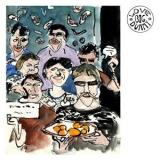
Love Big Dummy emerged as the stray creation of Jonathan Stodle (Spite Fug, HEVN III) and Kjetil Skaro (Crispy Carrot). Converging with rhythm section Halvor Dokke and Tore Paulsen, the freewheeling venture soon ripened into its own tantalizing entity. Informed by shoegaze, folk, psychedelic rock and alumni indie, their palette reaches deep into decades past while carrying a riveting sense of urgency and presence. Their melodic craftsmanship and innate ingenuity evoke the sound of life-affirming melancholy. Their self-titled debut was recorded in the cold, dim bunkers of Boksen in Oslo, with noise-whiz Morten Minothi Kristiansen (Kennel/Monomort) piloting the gearship. It"s a San Francisco breeze across the slushed northern pavements.
debe ser publicado en 18.09.2026

Remastered limited edition double vinyl with double-sided screenprinted poster-cover (sleeve folds out to be one huge poster). A real collectors item!
When Off Off came out around June 1984, one couldn’t speak of an independent music scene in Portugal. Warm Records’ vague existence didn’t have any impact and Dansa do Som’s inaugural release appeared only in December. 10 years after the revolution, after two IMF interventions, a lot of political instability (not to say turmoil, in the first couple of years) and the natural excesses of a sudden burst of freedom, the Portuguese consumer had more choices but a generally poor standard of living. There was no entrepreneurial culture and serious second thoughts about investing private money in risky ventures.
After many complaints about the whole music scene (institutions, critics and record label executives, popular and classical music alike), something that would continue well beyond the end of the decade, Telectu decided to finance, record, produce, release and sell an album with complete independence from outside structures. Their karmic reward was profit. According to Vítor Rua, Off Off was the only album fully payed by the duo and the only one that really payed off. Not an easy accomplishment for a double LP housed in a large (also double-sided) screenprint with complicated cuts and folds. The artwork was conceived by António Palolo, a friend and multidisciplinary artist. It was based on a collage of heavily saturated and xeroxed polaroids framed in shocking pink and green. Palolo was considered the third member of Telectu, regularly producing slides, video and other visual support for their shows. The inspiration for the type of cover came from GRM’s Gramme series.
Off Off is divided in four distinct sides, each one corresponding to a “theme” or “function” related to Telectu’s manifold artistic interests and interactions. The titles are also gateways to influences and a small portion of Portuguese cultural life:
- Side 1 / “Diagonale” is dedicated to Egídio Álvaro, art critic and gallery director (he opened Diagonale in Paris). Performance art was arguably his main artistic concern over the years, so the music on this side is suggested for use by one or more performers in live or playback situations. The three tracks segue into each other, linked by a synth arpeggio much in the same way as Telectu’s previous “Belzebu” álbum (1983);
- Side 2 / “Anarké” is dedicated to the composer Filipe Pires, one of Jorge Lima Barreto’s recurring invocations when asked about worthwhile contemporary music in Portugal. It is subtitled “concert music”, proposing «a new form of listening». Three tracks also, and these are separated by “clap interludes”, which basically consisted in the following: JLB and VR each had a pair of headphones on, and they clapped their hands according to the rhythm of the music each one was listening. Both musicians were interacting with a different Steve Reich piece: Vítor with “Music for Mallet Instruments”, Jorge with “Six Pianos”. The result is disjointed clapping, an awkwardly deliberate celebration of their own music. Telectu applauded themselves.
- Side 3 / “Cornucópia” is subtitled “music for theatre” and dedicated to Luís Miguel Cintra and Luís Lima Barreto (JLB’s brother), both connected to the Cornucópia theatre company. The side consists of several short pieces previously used as interludes in the Cornucópia staging of “Mariana Espera Casamento” (1983). Field recordings, mood pieces, ambience and a numeric poem (“Soneto Soma 14x”, by E.M. de Melo e Castro) read by João Perry, a quite well-known stage actor. His voice is treated with a flanger effect;
- Side 4 / “Palolo” is “video music”. It’s a one-take mix recorded from cassette sources (Telectu studio experiences) and done live while watching António Palolo’s Om film (1978) projected on the living room wall. It’s a deep, immersive, quasi-mystical 20-minute piece perfectly suiting the meditative, abstract, fluid images created by Palolo by mixing paint and water inside a bathtub. One imagines the Cosmos, hardly suspecting the technique. The film is 90 minutes long, so the music on the LP is of course edited.
The six titles on sides 1 and 2 evoke demons, all of them with conflicting symbolism, since it varies from culture to culture, religion to religion. No explanation is given and Vítor Rua has no idea where this imagery comes from. During virtually the whole stretch of the 1980s, Jorge was the one in charge of titles and concepts, and Vítor didn’t bother too much even reading the liner notes :) In any case, when you synchronize the listening experience with the imagery, a powerful impression emerges, a feeling of being in the presence of these entities while placing yourself inside the sonic narrative.
Off Off is undoubtedly a seminal album in the history of electronic music, as much Heldon as Fripp & Eno, jazz and American minimalism, cosmic out-thereness, mantric miniatures. Telectu at the height of their powers, still very early on, delivering an album-manifesto advocating intermedia art and the fierce independence of Portuguese musicians «from the scum of capitalist music industry monopolies. It’s a path to follow, albeit one that requires enduring hardships and retaliation from music industry gangsters.» Despite a few journalists deemed «capable of being free», the media are «enslaved by the dominant and fascist imbecility of the speculators of light music.» Off Off is addressed to those journalists «and to an audience angry at the cultural misery imposed upon us ..., certain that this music will open new horizons of musical pleasure in the conception of Portuguese avant-garde music, and in the open consciousness of us all. OFF OFF repeats Freedom.»
Those two words are a direct lift from Alberto Arbasino’s 1968 book Off Off, the basis of which is a critical analysis of Theodor Adorno’s and Dwight MacDonald’s ideas concerning the stratification of culture in different levels (high, mid and low) and the pervasiveness of mass culture in the form of a culture industry. In very simplistic terms, and that is precisely the point that inspired Jorge, Arbasino argued that it was possible and desirable to effect a revolution from below, cultivating alternative circuits completely cut-off from what he termed the in-in reality. Telectu’s record was a deliberate demonstration that it could be done, displaying Freedom in the face of all the gatekeepers and other human obstacles.
debe ser publicado en 18.09.2026

Haga su pedido ahora y le encargaremos el artículo en nuestro proveedor.

Originally released in 1998 on Mononom, Sensory Overload EP captures the darker, psychedelic side of the Dutch free party scene. Robbert Latumahina builds three intense tracks from relentless rhythms, twisted sequences, heavy modulation and distorted electronics. Raw, hypnotic and experimental, the EP moves between freetekno and acid, with constantly evolving patterns that feel both mechanical and psychedelic. A powerful snapshot of the DIY spirit and uncompromising sound of late-90s Dutch tekno.
Haga su pedido ahora y le encargaremos el artículo en nuestro proveedor.

Still hot on the heels of compiling the first volume of the Italian Dancefloor Outsiders, and moved by the urge to explore new musical landscapes and discover sounds produced in subsequent years, we decided to continue our quest of tracking an alternative map of what was happen- ing in the Italian electronic music scene. This second volume takes inspiration from the concept of “Mezzanotte Mezzogiorno” (literally “from Midnight to Midday”), a term first used for a now legendary party held in 1992 at Club Imperi- ale in Tirrenia, Tuscany. The owner of the club, Roberto Pannocchia, was eager to attract a different kind of audience to his venue and so decided to extend the closing time until midday, well beyond the Italian law limits. But as Imperiale was a members club, he was allowed to do it, and he already knew that this act would forever shape the Italian club scene. "Mezzanotte Mezzogiorno" was then used to describe long dancing marathons that lasted for the whole weekend, spread across clubs, after-parties and more off-the-grid open air venues but, most of all, became the symbol of an era. The music ranged from slow, pitched-down landscapes to epic techno progressions, filling both feverishly packed big rooms and colourful chillout zones. A parabola of musical move- ments related to specific genres was born, reaching its peak and then fading towards the end of the millenium.
Haga su pedido ahora y le encargaremos el artículo en nuestro proveedor.

The story of each re-release begins with the original. In the late 90s, Uwe Zahn (Arovane), along with Robert Henke (Monolake) and Stefan Betke (Pole), began releasing music on Torsten Pröfrock’s (Dynamo) newly launched DIN label. This was a very inconspicuous undertaking, but fans of the flourishing IDM, glitch, and constantly evolving abstract techno genres quickly picked up on the quality of sound coming out of Germany. After a few successful EPs, Zahn began working on his debut full-length, Atol Scrap. The release was a success, at least in the underground circles, where followers of the melodic harmonies, stuttering off-beat rhythms, and, most importantly, advanced sound design feverishly consumed the imprint’s output. There was only one thing missing – the album was never pressed on vinyl, and for decades remained in the digital domain. The fans, of course, inquired. There were multiple offers on the table, but Zahn retained control until he was assured that it was properly attained. “I thought of taking everything into my own hands and releasing the record myself,” says Zahn, “but at the end of last year, Matthias from Keplar asked me to re-release Atol Scrap on vinyl.” The label and its owner revolve in the Morr Music universe, and so it made sense for Zahn to trust the platform to treat the record right.
Listening to Atol Scrap over twenty years later it is inane not to admit how well it has held up. Where other genres clearly aged, becoming stale, bland, and dull, the music on eleven tasty tracks still keeps the neurons tickled with each note. More than an echo of the past, the bottled sound truly has matured. Many of the newly evolving techniques are recognizable on the album. “I created the digital artifacts with a digital multi-track recorder, the Fostex D80,” recalls Zahn. “The thing had a scrub wheel with which I could achieve wonderful glitch effects by winding through the audio data. I have sampled and further processed these artifacts.” And this approach is still embedded in Zahn’s sound design. “I still use my 24-track analog desk from Tascam to mix my audio. I love to use hardware synths and samplers. I’ve definitely built upon my studio experience in the 90s.” From this debut to the most recent output, Arovane’s sound has evolved to become more intricate, detailed, and pronounced. “My music has become much quieter and much slower. But that’s probably also due to the noise in the world.” And just as Atol Scrap reminds Zahn of the past, retaining charm preserved in a container traveling through time, it also jitters memories of long ago, when we were twenty years younger, less experienced, and bold. For me, among the many records of the time, this album held a special place in life, my heart, and many CD boxes moved across the world. And now I’m only happy to restock the vinyl space, where Atol Scrap belongs among the beloved records. Welcome home. - Mike Lazarev
Remastered and cut to vinyl by Kassian Troyer @ D&M. Cover art by Jim Kühnel based on a photograph by Uwe Zahn.
El artículo no se ha publicado. Tú puedes reservar ahora el artículo y después de ser pagado se te será enviado.
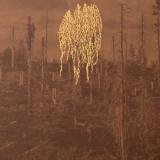
Petrozavodsk is a heavy drone trio based in Porto and Barcelona. They add dub, experimental and improvisational elements to a crushing, drone metal sound.
“Forest Fire” is the band’s vinyl debut, and is a more concentrated, expansive, and heavy offering following their debut tape “Winter War”.
Side A kicks off with “Forest I”, a collaboration with electronic artist Container AKA Ren Schofield (US/UK). The noise/rave veteran remixes the band’s guitars into a hot bubbling swampy mess that feels very alive, propulsive, punishing, yet fun – Container fans would know.
“Forest II” is all dubbed-out drone-rock, with blackened guitar, monotonous low thrusts, and a snare that is coming from an extremely far distance – everything echoing and shaking, dubwise almost-noise effects from the drum kit eroding in wide stereo.
Side B is one longform piece “Fire” with slow-motion guitar washes, and a bass that sounds like a high rise falling down. It nods to the genre’s touchstones (Boris’ “Amplifier Worship”, Sunn O)))) while carving its own path. A downtuned wall of heavy sound.
Recorded in Catalunya and Portugal, all amps turned up high. Mixed and mastered by Moa Pillar in London, with additional mixing on “Forest II” by the band’s guitarist Anton Vasin.
Guitar: Anton Vasin
Bass: Matvei Podgornov
Drums: Ivan Zoloto
debe ser publicado en 11.09.2026

There is an important difference between "mature" club vibes (leather porkpie hats) and "adult" club vibes (a post-ego-death experience of the world through the eyes of an Eames chair). Extrawelt's Jamborghini EP exemplifies the latter in ways that extend beyond sophisticated wordplay*. Well beyond.
Sophisticated electro-techno hybrids occupy an incredibly dangerous space. One false move and you corner listeners into an unsolicited conversation about "gain staging." The four tracks on the vinyl EP thread the needle in thrilling fashion, and then use that needle to stab at the sweet spot between sentient cell tower admin software vibes and the kind of architecture hot people like.
And with the digital exclusives, we've once again saved you from the depths of "bonus beats" hell by supplying three tracks that are as good as anything that has ever been pressed to vinyl. If your knee-jerk reaction is to doubt this, we would simply point out you haven't even heard them yet, and here you are talking shit. Go push your hateful agenda somewhere else.
Extrawelt are fast becoming a Turbo Recordings staple, and don't think the globalist EDM cabal hasn't taken notice. Jamborghini has already received heavy DJ support from Jumpin' Josh Junior, Monoburglar, Now or Never, Tiga, Never Say Never, Rumpled Glory, Moment of Truth, and the Hamburg Chamber of Commerce.
*Our best guess is that the title is meant to evoke a Lamborghini you can have a musical "jam session" in, and not the striking metallic purple Diablo SE30 driven by Jamiroquai frontman Jay Kay in the 1996 video for "Cosmic Girl."
Haga su pedido ahora y le encargaremos el artículo en nuestro proveedor.
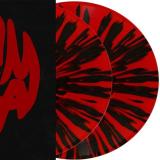
Norwegian rock powerhouse Slomosa will release a special live album, Live in Bergen, capturing the band's sold-out hometown show in December 2024 at Verftet. Pressed as a limited-edition double LP in a gatefold sleeve, Live in Bergen showcases Slomosa at full force in front of a hometown crowd - raw, loud, and uncompromising. The album was mixed and mastered by Eirik Marinius Sandvik, preserving the intensity and atmosphere of the band's legendary live performances.
Haga su pedido ahora y le encargaremos el artículo en nuestro proveedor.

A shimmering blend of post-grunge, riff-doom and driving psychedelia from current and ex-members of Torche, Abrams and Royal Thunder OMNI is the latest album from Moon Destroys, bringing together current and former members of Torche, Abrams, and Royal Thunder for an exhilarating blend of post-grunge, riff-driven doom, and expansive psychedelia. Building on the atmospheric foundation established by She Walks by Moonlight, the band condenses its widescreen sound into a collection of immediate, hook-filled songs without sacrificing the depth and weight that define its music. The album balances crushing riffs, soaring melodies, and immersive soundscapes across eleven tightly crafted tracks, demonstrating the group's ability to merge heavy rock, doom, and psychedelic influences into a cohesive and memorable listening experience. The performances showcase both powerful musicianship and an instinct for dynamic songwriting, delivering an album that feels equally massive and accessible. OMNI represents Moon Destroys at its most focused and confident, offering a compelling statement from a band whose collective pedigree continues to push modern heavy music in exciting directions. For Fans of KING BUFFALO, TORCHE, ASG, MONOLORD, GREENLEAF, DOZER, CAVE-IN, THE SWORD, OKAY YOU WIN Limited edition pressed on ice blue vinyl! Featuring current and former members of Torche, Abrams and Royal Thunder
debe ser publicado en 04.09.2026

In a world increasingly shaped by disposable content, Chat Pile answer with something defiantly real and organic, a mentality that permeates Who Loves The Sun, their third full-length record. Since the band’s formation just over six years ago, the Oklahoma City-based quartet Chat Pile has grown from a scrappy passion project into one of the defining heavy acts to emerge from the 2020s underground. Ray B. (vocals), L. Manhole (guitar), Stin (bass), and Cap’n Ron (drums) create a crushing, crass, and cathartic take on noise rock that captures a raw, undeniably human essence in an age marked by technological overreach and the cold state of society. Nothing about Who Loves The Sun feels synthetic.
Whereas their debut album God’s Country depicted a particularly American flavor of dread, and the follow up Cool World showed a cruel planet defined by global systemic violence, Who Loves The Sun peels the skin back on how collective indifference defines this new century. Spanning imagery of coastlines devouring cities, dead-end jobs, and submission to data-driven inauthenticity, the album dissects the apathy-bloated state of 21st-century existence as a slow-motion apocalypse. As with much of Chat Pile’s work, Oklahoma City itself looms over the album like a character, its sprawling isolation, economic contradictions, and underlying sense of decay embedded in the fabric of the record. The perfect allegory for the thematic essence of Who Loves The Sun is the photo embossed on the record’s cover, where Devon Tower, a glassy, largely vacant monolith, looms high above the Oklahoma City skyline while a burnt-out home or storefront envelops the foreground. The album remains lyrically and sonically confrontational, but Chat Pile approached the songwriting with hooks in mind, drawing on melodic tones of pre-2000s indie rock, alt-rock, and new wave. From the blood-soaked vocal passages of “Christabel ’26” to the eerie trip-hop pulse of “Same Rules,” Who Loves The Sun is deeply human despite its allusions to a dying, divided .
debe ser publicado en 04.09.2026

In a world increasingly shaped by disposable content, Chat Pile answer with something defiantly real and organic, a mentality that permeates Who Loves The Sun, their third full-length record. Since the band’s formation just over six years ago, the Oklahoma City-based quartet Chat Pile has grown from a scrappy passion project into one of the defining heavy acts to emerge from the 2020s underground. Ray B. (vocals), L. Manhole (guitar), Stin (bass), and Cap’n Ron (drums) create a crushing, crass, and cathartic take on noise rock that captures a raw, undeniably human essence in an age marked by technological overreach and the cold state of society. Nothing about Who Loves The Sun feels synthetic.
Whereas their debut album God’s Country depicted a particularly American flavor of dread, and the follow up Cool World showed a cruel planet defined by global systemic violence, Who Loves The Sun peels the skin back on how collective indifference defines this new century. Spanning imagery of coastlines devouring cities, dead-end jobs, and submission to data-driven inauthenticity, the album dissects the apathy-bloated state of 21st-century existence as a slow-motion apocalypse. As with much of Chat Pile’s work, Oklahoma City itself looms over the album like a character, its sprawling isolation, economic contradictions, and underlying sense of decay embedded in the fabric of the record. The perfect allegory for the thematic essence of Who Loves The Sun is the photo embossed on the record’s cover, where Devon Tower, a glassy, largely vacant monolith, looms high above the Oklahoma City skyline while a burnt-out home or storefront envelops the foreground. The album remains lyrically and sonically confrontational, but Chat Pile approached the songwriting with hooks in mind, drawing on melodic tones of pre-2000s indie rock, alt-rock, and new wave. From the blood-soaked vocal passages of “Christabel ’26” to the eerie trip-hop pulse of “Same Rules,” Who Loves The Sun is deeply human despite its allusions to a dying, divided .
debe ser publicado en 04.09.2026

Exclusive Half Magenta and Lemon Yellow[29,62 €]
Indies Col Vinyl[29,62 €]
Tape[17,61 €]
In a world increasingly shaped by disposable content, Chat Pile answer with something defiantly real and organic, a mentality that permeates Who Loves The Sun, their third full-length record. Since the band’s formation just over six years ago, the Oklahoma City-based quartet Chat Pile has grown from a scrappy passion project into one of the defining heavy acts to emerge from the 2020s underground. Ray B. (vocals), L. Manhole (guitar), Stin (bass), and Cap’n Ron (drums) create a crushing, crass, and cathartic take on noise rock that captures a raw, undeniably human essence in an age marked by technological overreach and the cold state of society. Nothing about Who Loves The Sun feels synthetic.
Whereas their debut album God’s Country depicted a particularly American flavor of dread, and the follow up Cool World showed a cruel planet defined by global systemic violence, Who Loves The Sun peels the skin back on how collective indifference defines this new century. Spanning imagery of coastlines devouring cities, dead-end jobs, and submission to data-driven inauthenticity, the album dissects the apathy-bloated state of 21st-century existence as a slow-motion apocalypse. As with much of Chat Pile’s work, Oklahoma City itself looms over the album like a character, its sprawling isolation, economic contradictions, and underlying sense of decay embedded in the fabric of the record. The perfect allegory for the thematic essence of Who Loves The Sun is the photo embossed on the record’s cover, where Devon Tower, a glassy, largely vacant monolith, looms high above the Oklahoma City skyline while a burnt-out home or storefront envelops the foreground. The album remains lyrically and sonically confrontational, but Chat Pile approached the songwriting with hooks in mind, drawing on melodic tones of pre-2000s indie rock, alt-rock, and new wave. From the blood-soaked vocal passages of “Christabel ’26” to the eerie trip-hop pulse of “Same Rules,” Who Loves The Sun is deeply human despite its allusions to a dying, divided .
debe ser publicado en 04.09.2026

Exclusive Half Magenta and Lemon Yellow[29,62 €]
Indies Col Vinyl[29,62 €]
Black Vinyl[29,62 €]
In a world increasingly shaped by disposable content, Chat Pile answer with something defiantly real and organic, a mentality that permeates Who Loves The Sun, their third full-length record. Since the band’s formation just over six years ago, the Oklahoma City-based quartet Chat Pile has grown from a scrappy passion project into one of the defining heavy acts to emerge from the 2020s underground. Ray B. (vocals), L. Manhole (guitar), Stin (bass), and Cap’n Ron (drums) create a crushing, crass, and cathartic take on noise rock that captures a raw, undeniably human essence in an age marked by technological overreach and the cold state of society. Nothing about Who Loves The Sun feels synthetic.
Whereas their debut album God’s Country depicted a particularly American flavor of dread, and the follow up Cool World showed a cruel planet defined by global systemic violence, Who Loves The Sun peels the skin back on how collective indifference defines this new century. Spanning imagery of coastlines devouring cities, dead-end jobs, and submission to data-driven inauthenticity, the album dissects the apathy-bloated state of 21st-century existence as a slow-motion apocalypse. As with much of Chat Pile’s work, Oklahoma City itself looms over the album like a character, its sprawling isolation, economic contradictions, and underlying sense of decay embedded in the fabric of the record. The perfect allegory for the thematic essence of Who Loves The Sun is the photo embossed on the record’s cover, where Devon Tower, a glassy, largely vacant monolith, looms high above the Oklahoma City skyline while a burnt-out home or storefront envelops the foreground. The album remains lyrically and sonically confrontational, but Chat Pile approached the songwriting with hooks in mind, drawing on melodic tones of pre-2000s indie rock, alt-rock, and new wave. From the blood-soaked vocal passages of “Christabel ’26” to the eerie trip-hop pulse of “Same Rules,” Who Loves The Sun is deeply human despite its allusions to a dying, divided .
debe ser publicado en 04.09.2026
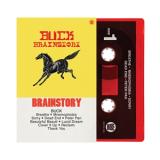
What is Buck? Buck is a state of mind, a way of life, a demeanor that gets you through the good times and the bad. If you ask Brainstory, It is also the energy that permeates their debut album. Kevin, Tony, and Eric are a trio of brothers bounded by blood, fate, and a small town with nothing to do. Their story begins in the long lost lands of the San Bernardino Valley, in the twilight zone known as Rialto, California: An arid wasteland of boredom and empty lots. Through punk rock and skateboarding they found temporary liberation from the local monotony. However, it wouldn't be long before a hunger for more led them to explore musical realms beyond that of the hardcore punk they admired. After stints at music school and steady disappointment trying to navigate their local jazz scene they moved to Los Angeles and Brainstory was born. Through a introduction from Chicano Batman's bassist, Brainstory caught the ears of Big Crown head honchos Danny Akalepse and Leon Michels. Shortly thereafter they were on their way to Queens, to record at The Legendary Diamond Mine with Michels at the helm. An instant chemistry yielded 10 songs in 10 days and now Brainstory has gifted the world with one hell of an introduction to all things Buck. Highlights include the sublime slow burner, "Dead End" which was the A-side to their first 45 on Big Crown that sold out in a matter of days. With Kevin's sublime falsetto floating atop Tony and Eric's unflappable and unmistakable backbeat, this tune has become a favorite with the ballad heads, the low-riders, and the slowie collectors. "Breathe" showcases another side of their sound taking a page out of the Shuggie Otis playbook and flipping the script with some stoned out west coast swag. Kev and Tony's father, Big Tone, an accomplished performer himself, steps in on "Peter Pan" to sing lead vocals over a chorus of friends and family. Bassist extraordinaire, Tony, takes over lead vocal duties on "Sorry", a smoked out, G Funk groove that is just waiting to be sampled. These guys have come a long way from their self released EPs and opening tours with Chicano Batman. Their musical growth is undeniable, and taking their California sunshine vibes and mixing them with Michels' NYC aesthetic has proven to be an amazing combination. It's a debut record that pulls influences from so many genres seamlessly it's hard to nail down. Call it Funk, call it Rock, call it Soul, but over here at Big Crown HQ, we've decided to call it BUCK.
debe ser publicado en 28.08.2026

Limited Orange Vinyl[27,31 €]
The Gates of Slumber’s debut album and EP reissued in August Svart Records continue to reissue the works of Indiana’s true doom metal legends The Gates of Slumber by bringing back their debut album The Awakening and early EP Like a Plague Upon the Land in late August 2026. Crushing debut The Awakening from 2004 is an album of raw, slow, monolithic traditional doom with a gritty sound. Featuring heavy, battleaxe-in-the-gut riffs and depressing, slow leads, The Awakening is strongly influenced by Pentagram and Candlemass, with Conan-style lyrical themes and Ozzy-like vocals. An essential, cult classic album for the fans of true doom. The Gates of Slumber was formed by Karl Simon in 1998. Various people were in and out of the group between 1998 and 2001, when the Blood Encrusted Deth Axe demo was recorded with Jamie Walters aka Dr. Phibes/Athenar (Boulder, Midnight) on drums and bass. In 2003 Jason McCash took over the bass duties and was a long-time member of the band until his untimely demise in 2014, after which Simon decided it was time to call it quits. That was until 2019 when the renowned metal festival Hell Over Hammaburg wanted to bring the band back on stage to perform at the festival’s 2020 edition. Simon reformed the band with its original member Chuck Brown on drums and Steve Janiak on bass and got back to work, which resulted in the new self-titled album released in 2024 on Svart Records.
debe ser publicado en 28.08.2026

Black Vinyl[26,47 €]
The Gates of Slumber’s debut album and EP reissued in August Svart Records continue to reissue the works of Indiana’s true doom metal legends The Gates of Slumber by bringing back their debut album The Awakening and early EP Like a Plague Upon the Land in late August 2026. Crushing debut The Awakening from 2004 is an album of raw, slow, monolithic traditional doom with a gritty sound. Featuring heavy, battleaxe-in-the-gut riffs and depressing, slow leads, The Awakening is strongly influenced by Pentagram and Candlemass, with Conan-style lyrical themes and Ozzy-like vocals. An essential, cult classic album for the fans of true doom. The Gates of Slumber was formed by Karl Simon in 1998. Various people were in and out of the group between 1998 and 2001, when the Blood Encrusted Deth Axe demo was recorded with Jamie Walters aka Dr. Phibes/Athenar (Boulder, Midnight) on drums and bass. In 2003 Jason McCash took over the bass duties and was a long-time member of the band until his untimely demise in 2014, after which Simon decided it was time to call it quits. That was until 2019 when the renowned metal festival Hell Over Hammaburg wanted to bring the band back on stage to perform at the festival’s 2020 edition. Simon reformed the band with its original member Chuck Brown on drums and Steve Janiak on bass and got back to work, which resulted in the new self-titled album released in 2024 on Svart Records.
debe ser publicado en 28.08.2026

- After the collector 2024 Record Store Day 35th Anniversary edition & Special CD boxset of the seminal 1989 album, the album will be available again to everyone from July 31st , 2026 as 1CD & 1 LP Black new permanent editions.
- Produced by Stephen Street (The Smiths, Blur, The Cranberries, New Order).
- Vinyl mastered by Peter Beckmann at Technology Works
- July 31st also marks the long-awaited return of legendary Manchester outfit The Durutti Column, with "Renascent" their first new studio album in over fifteen years which already get a very strong response & support from key traditional media - with major features confirmed for Pitchfork, The Guardian, MOJO, Monocle and Record Collector to name a few.
- Many new champions citing the band as an influence (Blood Orange, Harry Styles, The Avalanches, Mark William Lewis).
Haga su pedido ahora y le encargaremos el artículo en nuestro proveedor.

Original Jazz Classics celebrates John Coltrane’s centennial with this release of the mono edition of Coltrane. Originally released on Prestige in 1957 the album features Coltrane alongside Johnnie Splawn, Sahib Shihab, Red Garland, Mal Waldron, Paul Chambers, and Albert “Tootie” Heath. This new edition of the album is released on 180-gram vinyl pressed at RTI with all-analog mastering from the original tapes at Cohearent Audio and a Stoughton Tip-On Jacket.
debe ser publicado en 14.08.2026

A phenomenal new vocal talent with uncompromising vision, SIENNA SPIRO is here with her debut album, Visitor, a striking opening statement from an artist of undeniable longevity. Visitor Features Billboard charting & RIAA Platinum & Gold singles “Die On This Hill” & “You Stole The Show”, as well as new hit single “The Visitor”. Having amassed over 1.3 Billion streams ahead of her debut album, SIENNA matches her dazzling musicality with a fierce dedication to crafting music of true substance.
Haga su pedido ahora y le encargaremos el artículo en nuestro proveedor.

Seminal sounds from the golden age of Ghanaian music. Highlife, rock, and soul collide and merge with tradition and culture. New styles meet old styles. A new generation renews old musical customs. New fashions meet old fashions, creating new fusions. Features rare tracks from Hedzoleh Soundz, Ogyatanaa Show Band, Honny & the Bees and early Ebo Taylor (Asaasa Sa). These tracks were originally available on vanishingly rare 70s pressings, then a highly collectible 5LP box set released in 2009. This special vinyl edition is produced in conjunction with the James Barnor archive, featuring a previously unpublished 1976 photo from the archive of Ghana’s most famous photographer. Comes with Obi-strip.
Haga su pedido ahora y le encargaremos el artículo en nuestro proveedor.

Collecting Orders for 2026 Repress
To mark 15 years of Butter Side Up, the label presents a special 2×vinyl compilation featuring eight brand-new cuts from artists who have been part of the BSU story over the years - a true family affair.
Contributions from Ron Obvious, Garrett David, DJ Pipe and a host of newer collaborators reflect the breadth of the label’s community. Each artist bringing their own flavour but all carrying the BSU spirit.
The first record leans into club‑focused cuts, while the second drifts deeper into housier, after‑hours territory. Something for everyone.
Featuring original illustrations and artwork by Yideah.
Haga su pedido ahora y le encargaremos el artículo en nuestro proveedor.
