Alien D, aka Daniel Creahan, is a staple in the NYC underground, known for his releases on labels including Lillerne, 1432 R and Banlieue Records. On his latest album, For the Early Hours of a World in Bloom – his first for Theory Therapy – Creahan takes us deeper into the dubby landscapes of his previous work, with a renewed focus on groove and movement.
Where Lillerne’s Spiritual World leaned toward ambient abstraction, Early Hours pulses with kinetic energy, with tracks like “Soil Dub” and “Sleepy’s Gambit” propelling us forward with dubwise rhythms crafted for the dancefloor.
The album thrives on its infectious, steady groove, with repeating phrases and subtle shifts that keep the music in constant motion. Nowhere is this more evident than on the gentle roller, “Breather.” Over 13 minutes, Creahan lets small variations in tone and a propulsive low-end evolve gradually alongside Ben Seretan’s guitar.
While Early Hours embraces a more rhythmic direction, it still retains the eccentricity and atmosphere that defines Alien D’s sound. Conceived in the first days after the COVID lockdown, there’s a hopeful quality to the music – flickering tones, soft percussive elements and organic textures that hover just behind the beat – making it feel both intimate and expansive. It’s as though Creahan has bottled those transcendent moments that can occur during the early hours of a party, when everything feels suspended in a state of potential.
Run time - 33 minutes
Credits:
Written & produced by Daniel Creahan
Guitar on 'Breather' by Ben Seretan
Mastered by Special Guest DJ
Cover & design by Gary Hunter
Search:move master
Belgian label Music Man Records presents Boccaccio Life 1987-1993, a new compilation offering a fresh perspective on the legacy of the iconic Belgian club Boccaccio - often associated with the short-lived New Beat movement. The 40-track compilation highlights the raw and futuristic early house and techno sounds that were heard in the pioneering club.
Located in rural Destelbergen (Belgium), just a stone's throw from Ghent, Boccaccio has secured its place among legendary venues like Paradise Garage in New York and The Haçienda in Manchester. Its bold fusion of emerging electronic genres such as New Beat, Acid, House, and Techno was way ahead of its time, drawing music lovers and clubbers from across Belgium and beyond. Sundays at Boccaccio were unlike anywhere else-offering sounds you couldn't hear anywhere else.
Boccaccio Life 1987-1993 is carefully curated by resident DJ Olivier Pieters and club regular Stefaan Vandenberghe, standing as the ultimate testament to a club that was more than just a venue. For those who experienced it, it was a community - a way of life. Hence the club's full name: Boccaccio Life.
This compilation stands as a testament to an innovative time in electronic music, capturing the raw, futuristic sounds of early house and techno. It sheds light on another side of Boccaccio, one that goes far beyond the short-lived New Beat scene. A carefully curated selection of 40 tracks, resonating with those who were there by offering familiar classics, while also reaching a new generation-those who never experienced it firsthand.
With tracks from Blake Baxter, Virgo, Frankie Knuckles, Tyree, and A GuyCalled Gerald, the unmistakable influence of black American pioneers is clear-the originators of the first analog house and techno sounds. On the other hand, UK sound innovators such as The Orb and LFO bring both sharp textures and rough breakbeats to the table.
Club staple tracks include dreamy excursions from Roger Sanchez under his Egotrip moniker, the relentless basement house of Circus Bells by Robert Armani on Dance Mania, an uplifting take on a hip-house cut from The D.O.C. (Portrait of A Masterpiece in the CJ Ed-Did-It Mix), a timeless remix of UK Formation's Age of Chance from 1994, and an alternate take on The Tape by Boccaccio club regular and Belgian producer Frank De Wulf, taken from his B-Sides project.
While not always the obvious hits, these tracks have gracefully withstood the test of time, and were exclusive to Sundays at Boccaccio. Now, they are finally available to experience together in one collection,offering a timeless snapshot of a unique era.
Monika Linges Quartet,Hipsters In The Zone,John ThomasandLifeforce,Maria Joao Quintet
The Aachen Jazz Files Compiled by Rainer Trüby & Miche
The Aachen Jazz Files
A collection of essential jazz from the NABEL record label (1980-1994), compiled by miche & Rainer Truby.
The Aachen Jazz Files celebrates the pioneering spirit of NABEL Records—one of Germany’s most underrated yet influential independent jazz labels. Founded in 1980 by Rainer Wiedensohler, NABEL became a home for innovative musicians blending classic acoustic jazz with fusion, Brazilian rhythms, and avant-garde flourishes.
This compilation collects some of the label’s finest moments, including the soulful and Latin-tinged brilliance of Monika Linges Quartet (whose album *Floating* was reissued last year by PANORAMA Records for RSD Black Friday), the cosmic jazz explorations of John Thomas & Lifeforce, the deep jazz-funk grooves of Hipsters In The Zone, and the stunning, expressive vocals of Maria João’s quintet.
Nestled in the far west of Germany, near the Dutch and Belgian borders, Aachen has long been a hidden gem for jazz lovers. Its vibrant scene, fueled by music schools and the legendary Malteserkeller jazz club, cultivated a unique sound that resonated far beyond its city limits. In fact, the city didn’t just birth a jazz movement—it also lays claim to opening Germany’s first discotheque in 1959.
From London to Tokyo, NABEL’s releases became secret weapons for jazz DJs seeking deep, danceable cuts. The label’s trademark blend of acoustic jazz, fusion, and Brazilian influences made its way onto turntables in underground clubs and festival stages worldwide.
Expect elegant samba jazz, spiritual grooves, and modal masterpieces that capture the essence of NABEL’s golden years. Monika Linges’ contributions shine with her rich harmonies and heartfelt compositions, while John Thomas & Lifeforce deliver a perfect storm of fiery instrumentation and deep soul. Maria João’s early recordings showcase her extraordinary vocal range, and Hipsters In The Zone bring a forward-thinking, acid jazz-infused perspective to the NABEL sound.
As co-compiler Rainer Truby puts it:
'NABEL Records always had this special ‘Aachen sound’—a jazz flavor that carried its own energy, somewhere between the cool sophistication of fusion and the warmth of Brazilian music. It’s a pleasure to finally bring together some of these classics in one essential collection.'
Compiled by miche & Rainer Truby.
PANORAMA Records is a London-based label dedicated to unearthing and reintroducing rare and essential music to new generations. With a focus on jazz, funk, and global grooves, the label has built a reputation for high-quality reissues that capture the spirit of the originals while providing fresh context for today’s listeners. Their past releases have garnered support from tastemakers like Gilles Peterson, Patrick Forge, and Mr Bongo DJs.
Produced by Chez Damier and Ron Trent, the track was born in NYC, inspired by a transformative night at the legendary Sound Factory Club. In the early morning haze, as the echoes of basslines and rhythms lingered, the duo channeled the energy of the dancefloor into their studio. The result captured the raw, soulful essence of Deep House, reflecting the dancefloor communion that transcended time and space. To extend the feeling while honoring the original, Atjazz was invited to bring his jazz-influenced touc
With his deep understanding of groove and texture, he reimagined the track through two distinct remixes, each offering a fresh perspective. While both versions explore different nuances, they remain faithful to the track’s core essence, maintaining its hypnotic flow while adding a renewed vibrancy to the dancefloor. The duo of Chez Damier and Ben Vedren, proudly welcome French producer Fred H, one of the closest members of their extended musical family, to deliver a special remix of their track "Berlin Nights In Paris".
The result is a re-imagination of the track, introducing a percussive soundscape that drives the rhythm forward while offering a space for the listeners' minds to wander, immersing them in an atmospheric journey. This reinterpretation preserves the original’s essence while infusing it with new textures, dynamic movement, and a hypnotic flow that deepens its emotional impact.
This collaboration is more than just a remix. It’s a testament to the creative synergy within their musical circle, reinforcing the timeless spirit of house music while pushing it forward. er. Through his deep connection to what truly ignites the dancefloor, DJ SOURIRES maintains the emotive spirit of the original track, keeping its essence intact, yet injecting fresh dynamics that transforms it into a high-octane dancefloor heat track. His intricate, oscillating drum programming and masterful arrangement drive the rhythm forward, creating a compelling urgency that commands attention and movement. The remix swells with intensity, amplifying the hypnotic elements of the original while layering in driving percussion, rich basslines, and sharp, yet spacious synths that build tension and release in all the right moments. Every twist and turn in this remix is an invitation to lose yourself in the dance.
De:tuned welcomes the Purveyor of Fine Funk, Midwest house and techno originator Dan Curtin, to the label with his first new album in 15 years entitled 'The 4 Lights'. The now Berlin-based DJ and producer channels his inner DC and opens up his soul on this exceptional eight-track LP. Dan showcases his unique take on techno and early 90s influences rise to the surface. The result is an in-depth masterclass of cosmic funk, spaced-out vibes and warm pads that stimulate the mind, while the distinctive groove moves your body. Stay tuned!
Archeo Recordings is a record label. Old, lost, obscure and forgotten gems and a boundless focus on the new Balearic scene for a wider audience of collectors, DJs and music lovers. All releases are limited edition. This release is a Limited Edition EP (250 on black vinyl). New life and an expanded treatment of Quiroga's epic Electronic/Future Jazz/House Snaporaz (Really Swing 2020), from none other than L.U.C.A. (AR029). Archeo delights us with this luscious and limited release featuring Quiroga's sleek jazz-house UFO "Snaporaz". This edition includes an exclusive extended version, a brand-new cut from the Neapolitan groover, and a completely cosmic overhaul from the mighty L.U.C.A. Operating at the nexus of future jazz, beatific electronics and deft house, Quiroga (Walter Del Vecchio to his nearest and dearest) has carved his own irresistible niche over the past two decades, gracing countless labels with nuanced body movers and forging his impressive Really Swing imprint, the original home to this melodic masterpiece. Tucked away on Del Vecchio's 2020 EP "Chords and Desire", the sunny and sultry Snaporaz fell foul of our communal pandemic preoccupation, missing out on the widespread acclaim, appreciation and ass-shaking it so richly deserves. Archeo steps in as patron, giving this Rhodes-led jazz-house heater the full 12" treatment it was born for. On the A1, Quiroga's extends the ecstasy of "Snaporaz", stretching its original elements into a loosely grooving, dopamine-deep delight. Sunkissed keys and tender pads ride the rhythm of a bubbling bassline while the sophisticated percussion snaps, crackles and pops in the background - the perfect environment for the P&P leadline to flourish. If that wasn't enough to have you slipping straight into your party pumps, Walter makes the most of the extra runtime with a HOT hand drum freakout down the final stretch, adding the most enticing icing to an already heady cake. A comparative cooldown follows in A2 offering "Escorpião", a fusion-tinged flirtation for aperitivo everywhere. Cutting back on the kick to save space for the swing, Quiroga leads us through a sublime sequence of hooks, riffs and solos, without ever overwhelming the ears but keeping the groove alive. It's a dizzying delight from start to finish and features one of the finest keytar and cowbell interplays you're likely to hear. The B-side belongs to the frankly legendary Francesco de Bellis, a house, disco, Italo and electro hero, appearing here under his deliciously downbeat alias L.U.C.A. Imbuing Quiroga's original with the atmospheric stylings of his Edizioni Mondo oeuvre, the Roman producer delivers a radical rework, slowing the tempo by 20 bpm and translating those jazzy tones into a drifting new age dancer for the cosmic crowd. Zero gravity rhythms meet mystical melodies uptown as the house hippies get down. Lest we overlook the batshit brilliance of the drum programming, L.U.C.A. caps it off with a bonus beats version sure to delight DJs and dancers alike in its otherworldly oddness.
180 G. BLACK VINYL WITH LINER NOTES IN CREOLE, FRENCH, ENGLISH
Originally released in 1979, "Spiritual Sound" lives up to its name, a soaring, triumphant album, six tracks of spirit magic from Guadeloupe.
Telluric, intense, terribly alive, the gwoka drums of Guadeloupe carry the identity of a painful and fervent island. Marked forever by the crime of slavery, Guadeloupe's créolité cherishes the ka drums and their natural environment: the low-pitched boula drum with male goatskin, the high-pitched soloist makè drum with female goatskin, the chacha, ti bwa, triangle, calabash and other percussion instruments that surround them, and the voices - the fiery, proud, timbred, urgent voices of the gwoka.
This album is also a legend for its voices: in his then dazzling youth, singer Lukuber Séjor was one of the first gwoka artists to largely feminize the chorus of répondè, who converse with his text delivered in a straight and powerful voice.
And everything here sets new standards. In 1979, Mizik Filamonik - Spiritual Sound proclaimed a spiritual patriotism of ferocious intensity. The album by Lukuber Séjor - whose spelling alone is a battle - sets out to give Guadeloupe the intangible weapons of self-respect and self-knowledge, through a singular practice of traditional music.
The genesis of gwoka music is less straightforward than one might imagine... The drums performed the servile task of accompanying the work of slaves in the fields and during the “corvées” imposed by the administration, before being freely practiced by the common people after the abolition of 1848. At the heart of the conviviality of the Guadeloupeans furthest from the cities - geographically and socially - the gwoka drums come out for carnival, funeral wakes and neighborhood celebrations, but also during strikes, fits of anger and armed vigils of the riots and revolts that have punctuated the island's history. For generations, governors of the colony and then the prefects of the overseas department of Guadeloupe have been viewing the gwoka as a potential for turbulence and a threat to public order.
But as the Beatlesmania, “chanson engagée” and rock revolutions unfolded in Europe, young people turned to the drums of mizik a vié nèg (“bad negro music”, in Creole), which Guadeloupeans had learned to despise by following the “assimilation” process advocated by the school system and most of the political class. At the end of the sixties, in a Guadeloupe mourning the deadly repression of the May 1967 social movement, they played traditional music, refusing to wrap it up in tourist prettiness and madras folk costumes. Instinctively, they played a rough and contemporary gwoka, led by the incendiary Guy Konkèt. This was the era of decisive 45 rpm records such as Robert Loyson's Kann a la richès, which brought to light the fieriest words of union rallies.
At his home in Sainte-Anne, Lukuber Séjor played with flautist Olivier Vamur and his brother Claude Vamur, who cobbled together a drum kit from tin crockery and became, a few years later, the most influential drummer in Kassav'.
These were the years of the Bumidom program, when young Guadeloupeans were encouraged to emigrate to mainland France. At the age of twenty, Lukuber Séjor embarked on the liner Irpinia, disembarking at Le Havre and taking the train to the Gare Saint-Lazare - the route taken by thousands of young West Indians who went on to study or looked for work, all the while trying to maintain a link with their homeland. In this case, it's at the Antony university residence, where Lukuber played the drum and participated in a thousand gwoka updates and aggiornamentos, while exile reinforced the need for a spiritual link with the native land.
In 1978, Guy Konkèt played at the Salle Wagram, a historic event for West Indian music. After serving as répondè - i.e. backing vocalist - on one of his home-recorded albums, Lukuber joined his live band. Little by little, he became one of the key artists on a circuit parallel to French show business. At a student party in Caen, he met a young woman from Martinique who, at the time, was more motivated by her ambitions as a visual artist than by her vocation as a musician. Her name was Jocelyne Béroard and, a few years before she plunged into the Kassav' adventure and became the greatest West Indian singer of her generation, she designed the cover of Lukuber Séjor's LP.
This ambition was obvious and imposed its will. A more or less regular band was formed, with Roger Raspail, Rudy Mompière and Éric Danquin on ka drums, Claude Vamur on ti bwa, Olivier Vamur and Françoise Lancréot on flutes and Annick Noël on keyboards. Lukuber Séjor is set on wanting to extend the gwoka palette to other instruments, as the jazz-rock revolution opens a thousand new doors. Annick Noël will play a wide range of timbres and textures on electric piano and synthesizer. Another novelty: the répondè are two men and two women, Roger Raspail, Olivier Vamur, Françoise Lancréot and Maryann Mathéus ...
Mizik Filamonik - Spiritual Sound is a self-production in which the singer and leader sank all his savings, allowing him no more than a single day in the studio. The first side is more of a musical manifesto, with the first two tracks, Éritage and Penn é plézi, being instrumentals. The third, Son, forcefully celebrates the need for Guadeloupeans to connect with the gwoka. In fact, Jocelyne Béroard's cover shows a tambouyé in the shadow of a cloudy sky, against which a radiant sun is rising and whose light will soon flood the entire landscape. The silhouette and face of this man strongly evoke the immense Vélo, master of the ka, rejected at the time on the fringes of society.
The second side of the LP is surprising. Formally, three tracks are explicitly linked like the three parts of a triptych. Primyé voyaj evokes the appalling tribulation of Africans deported as slaves to Guadeloupe; dézyèm voyaj speaks of the Bumidom program and the economic, political and social forces driving young Guadeloupeans towards the mirage of prosperity in France; twazyèm voyaj closes the cycle with the emigrants' return from Europe after years away from their island...
This gwoka, obsessed with the need to save Guadeloupe spiritually, appeals far beyond the politicized audience. Mizik Filamonik - Spiritual Sound instantly became a classic, although Lukuber Séjor never really made a career for himself as a musician.
After all, the album was released in 1980, with no promotional resources in France or Guadeloupe - and therefore no concerts. The thirty-two-year-old author, composer and performer made his own third trip back to Guadeloupe. He set up a small woodworking business, which he lost in Hurricane Hugo in 1989. His other activity, teaching in a medical-educational institute, became the core of his professional life. He continued to be an active campaigner - a campaigner for the Creole language, a campaigner for the reawakening of identity, a campaigner for special education, a campaigner for a thousand causes that he ignited with his generous and perceptive enthusiasm, such as the defense of breadfruit fries...
The echoes of his 1979 album have not died down. Of course, the use of Penn é plézi as the theme tune for Radio Guadeloupe's funeral notices from 1980 to 1992 kept him in the collective memory, but he continues to sing and compose sporadically, as with his all-female
vocal group Vwapoulouéka... Still convinced that music is a means of liberating the spirit, he continues the journey of a young man eager to deploy the power of Creole music and language.
Bertrand Dicale
The needle drops, and with it, a fresh chapter in the world of re-edits comes to life. This electrifying
new EP offers four masterfully crafted tracks, each one a gateway into a distinct musical world.
From epic anthems to intimate grooves, these cuts promise to leave a lasting imprint on the dancefloor.
Vinyl-only, limited edition—this is not one to miss.
A1 - Rewind The Drill Step back in time with an epic late 80’s anthem that channels the power and
raw energy of a golden era. With thunderous beats and soaring melodies, "Rewind The Drill" is an
instant classic that bridges past and present with finesse and force.
A2 - Pizzichella An ode to Tokyo’s iconic 90’s Shibuya Kei movement, "Pizzichella" is a vibrant
tribute to a beloved scene. Melding playful nostalgia with modern production, it’s a kaleidoscope of
sound that’s as colorful as the streets of Shibuya themselves. A must-listen for fans of cross-cultural sonic adventures.
B1 - Jara Sevo Immerse yourself in the haunting beauty of "Jara Sevo." With a Balkan-inspired feel, this melodramatic anthem evokes the chill of a winter’s night and the warmth of love’s glow.
Poignant strings and cinematic swells make it a standout moment of emotional resonance.
B2 - Come Vanno i Grøøvöni Closing out the EP is "Come Vanno i Grøøvöni," a sweet, romantic
groovy house cut that’s as gentle as it is infectious. Smooth, soulful, and effortlessly cool, it’s the
sound of a perfect night in motion. With lush pads and subtle swing, it’s the kind of groove that’s
impossible to resist.
Limited Edition, Vinyl Only As always, exclusivity is key. This EP is a one-time pressing, and once
it’s gone, it’s gone for good.
Collectors and DJs, take note: this is a sonic treasure you’ll want in your arsenal.
Stay tuned for release details and grab your copy before it’s too late. Four tracks, four journeys—and one unforgettable record.
Hard Times proudly welcomes a new release from an artist deeply connected to the label’s storied past. Alex Arnout presents BLACK LOGIC with their debut EP, ‘Pull Up’, a project born from passion, collaboration, and a return to House music's soulful roots
Hailing from West Yorkshire, Arnout spent his formative years on the Hard Times dancefloors, absorbing the beats and vibes that would later shape his own productions. His journey with the label reignited when he was invited to remix Michael Watford’s classic 'Love Change Over' and Steve Silk Hurley’s fresh hit 'All I Need'. Now, he returns with something truly special
“Black Logic was born out of the pandemic,” says Arnout. “I wanted to move away from drum machines and synths, getting back to sampling jazz and the deep house sounds of the ‘90s - taking inspiration from artists like Bugs in the Attic, Jazzanova, and Ernest Saint Laurent.
What began as a solo project soon evolved into a collective effort. Bassist and guitarist Alan Riggs, a former member of Delta 5, joined the sessions, bringing warmth and groove to the productions. Vocalists Tempo O’Neil, Anthony Beckford, Mariana Orsho, and Sophie Barker added their distinct voices, completing the vision.
The ‘Pull Up’ EP is the first of a debut double-header from Black Logic, delivering five stunning tracks that blend jazzy keys, deep grooves, and rich, soulful vocals. From the warm basslines to the celestial closing moments, this EP is a statement of intent - a wonderfully fresh, yet nostalgic take on deep house from a collective of masterful musicians.
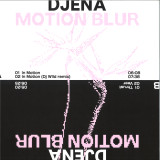
After years of silence dedicated to side projects, DJENA makes a triumphant return with his solo EP, In Motion. A testament to his passion for eclecticism, this release seamlessly bridges house and breakbeat, enriched by a stunning remix from the legendary French producer DJ W!LD.
The journey begins with the title track, In Motion, a hypnotic breakbeat composition where deep pads intertwine with tribal vocal elements, evoking raw emotion and sonic depth. This track is designed to captivate both the ears and the heart. DJ W!LD then takes the reins, transforming In Motion into an irresistible dancefloor anthem. His remix injects a house-driven groove, elevating the track into an emotive yet club-ready masterpiece.
Flipping to the B-side, Thrust propels listeners into a deep tech-driven rhythm, gradually intensifying into a peak-time energy surge. Rounded arps, subtle vocal textures, and celestial pads craft an immersive, ethereal adventure—blurring the lines between introspection and movement.
Closing out the EP, Veer is a sublime after-hours gem. Its bouncy bassline and tech-house rhythm are complemented by atmospheric pads and haunting vocals, leading the listener into a space where both mind and soul find fulfillment
In Motion EP is a refined sonic exploration, balancing depth and energy in perfect harmony. DJENA’s return marks a powerful statement—one that will undoubtedly resonate on dancefloors and beyond.
- A1: Montego Bay - Everything (Paradise Mix) 04 59
- A2: Atelier - Got To Live Together (Club Mix) 06 06
- A3: Golem - Music Sensations 04 56
- B1: The True Underground Sound Of Rome Feat. Stefano Di Carlo - Gladiators 05 26
- B2: Eagle Parade - I Believe 04 26
- C1: Dj Le Roi - Bocachica (Detroit Version) 05 28
- C2: Green Baize - Synthetic Rhythm 01 41
- C3: M.c.j. Feat. Sima - Sexitivity (Deep Mix) 05 30
- D1: Kwanzaa Posse Feat. Funk Master Sweat - Wicked Funk (Afro Ambient Mix) 06 31
- D2: Progetto Tribale - The Bird Of Paradise 06 29
- D3: Mbg - The Quite 06 59
Vol 1[28,99 €]
Googling “paradise house”, the first results to pop up are an endless list of European b&b’s with whitewashed lime façades, all of them promising “…an unmatched travel experience a few steps from the sea”. Next, a little further down, are the institutional websites of a few select semi-luxury retirement homes (no photos shown, but lots of stock images of smiling nurses with reassuring looks). To find the “paradise house” we’re after, we have to scroll even further down. Much further down.
It feels like yesterday, and at the same time it seems like a million years ago. The Eighties had just ended, and it was still unclear what to expect from the Nineties. Mobile phones that were not the size of a briefcase and did not cost as much as a car? A frightening economic crisis? The guitar-rock revival?! Certainly, the best place to observe that moment of transition was the dancefloor. Truly epochal transformations were happening there. From America, within a short distance one from the other, two revolutionary new musical styles had arrived: the first one sounded a bit like an “on a budget” version of the best Seventies disco-music – Philly sound made with a set of piano-bar keyboards! – the other was even more sparse, futuristic and extraterrestrial. It was a music with a quite distinct “physical” component, which at the same time, to be fully grasped, seemed to call for the knotty theories of certain French post-modern philosophers: Gilles Deleuze, Félix Guattari, Paul Virilio... Both those genres – we would learn shortly after – were born in the black communities of Chicago and Detroit, although listening to those vinyl 12” (often wrapped in generic white covers, and with little indication in the label) you could not easily guess whether behind them there was a black boy from somewhere in the Usa, or a girl from Berlin, or a pale kid from a Cornish coastal town.
Quickly, similar sounds began to show up from all corners of Europe. A thousand variations of the same intuition: leaner, less lean, happier, slightly less intoxicated, more broken, slower, faster, much faster... Boom! From the dancefloors – the London ones at least, whose chronicles we eagerly read every month in the pages of The Face and i-D – came tales of a new generation of clubbers who had completely stopped “dressing up” to go dancing; of hot tempered hooligans bursting into tears and hugging everyone under the strobe lights as the notes of Strings of Life rose up through the fumes of dry ice (certain “smiling” pills were also involved, sure). At this point, however, we must move on to Switzerland.
In Switzerland, in the quiet and diligent town of Lugano, between the 1980s and 1990s there was a club called “Morandi”. Its hot night was on Wednesdays, when the audience also came from Milan, Como, Varese and Zurich. Legend goes that, one night, none less than Prince and Sheila E were spotted hiding among the sofas, on a day-off of the Italian dates of the Nude Tour… The Wednesday resident and superstar was an Italian dj with an exotic name: Don Carlos. The soundtrack he devised was a mixture of Chicago, Detroit, the most progressive R&B and certain forgotten classics of old disco music: practically, what the Paradise Garage in New York might have sounded like had it not closed in 1987. In between, Don Carlos also managed to squeeze in some tracks he had worked on in his studio on Lago Maggiore. One in particular: a track that was rather slow compared to the BPM in fashion at the time, but which was a perfect bridge between house and R&B. The title was Alone: Don Carlos would explain years later that it had to be intended both in the English meaning of “by itself” and like the Italian word meaning “halo”. That wasn’t the only double entendre about the song, anyway. Its own very deep nature was, indeed, double. On the one hand, Alone was built around an angelic keyboard pattern and a romantic piano riff that took you straight to heaven; on the other, it showcased enough electronic squelches (plus a sax part that sounded like it had been dissolved by acid rain) to pigeonhole the tune into the “junk modernity” section, aka the hallmark of all the most innovative sounds of the time: music that sounded like it was hand-crafted from the scraps of glittering overground pop.
No one knows who was the first to call it “paradise house”, nor when it happened. Alternative definitions on the same topic one happened to hear included “ambient house”, “dream house”, “Mediterranean progressive”… but of course none were as good (and alluring) as “paradise house”. What is certain is that such inclination for sounds that were in equal measure angelic and neurotic, romantic and unaffective, quickly became the trademark of the second generation of Italian house. Music that seemed shyly equidistant from all the rhythmic and electronic revolutions that had happened up to that moment (“Music perfectly adept at going nowhere slowly” as noted by English journalist Craig McLean in a legendary field report for Blah Blah Blah magazine). Music that to a inattentive ear might have sounded as anonymous as a snapshot of a random group of passers-by at 10AM in the centre of any major city, but perfectly described the (slow) awakening in the real world after the universal love binge of the so-called Second Summer of Love.
For a brief but unforgettable season, in Italy “paradise house” was the official soundtrack of interminable weekends spent inside the car, darting from one club to another, cutting the peninsula from North to centre, from East to West coast in pursuit of the latest after-hours disco, trading kilometres per hour with beats per minute: practically, a new New Year’s Eve every Friday and Saturday night. This too was no small transformation, as well as a shock for an adult Italy that was encountering for the first time – thanks to its sons and daughters – the wild side of industrial modernity. The clubbers of the so-called “fuoriorario” scene were the balls gone mad in the pinball machine most feared by newspapers, magazines and TV pundits. What they did each and every weekend, apart from going crazy to the sound of the current white labels, was linking distant geographical points and non-places (thank you Marc Augé!) – old dance halls, farmhouses and business centres – transformed for one night into house music heaven. As Marco D’Eramo wrote in his 1995 essay on Chicago, Il maiale e il grattacielo: “Four-wheeled capitalism distorts our age-old image of the city, it allows the suburbs to be connected to each other, whereas before they were connected only by the centre (…) It makes possible a metropolitan area without a metropolis, without a city centre, without downtown. The periphery is no longer a periphery of any centre, but is self-centred”.
“Paradise house” perfectly understood all of this and turned it into a sort of cyber-blues that didn’t even need words, and unexpectedly brought back a drop of melancholic (post?)-humanity within a world that by then – as we would wholly realise in the decades to come – was fully inhuman and heartless. A world where we were all alone, and surrounded by a sinister yellowish halo, like a neon at the end of its life cycle. But, for one night at least, happy."
Romanian producer and DJ, Cîmpian Mark Alexandru, known as Cim Pian, proudly presents his milestone vinyl release, Chronosphere, on Phonichouse1. Hailing from Reghin, Romania, Cim Pian has been a dedicated figure in the electronic music scene, with a deep connection to the country’s influential minimal house movement. Over the years, he has released multiple tracks on Phonichouse1, a respected Romanian label known for curating refined underground sounds.
The release features two original tracks that highlight his distinct artistic vision. The title track, Chronosphere, is a profound minimal breakbeat composition, enveloped in textured, dark atmospheres, guiding listeners through an immersive sonic journey. Complementing this is Djinn, a classic 4/4 minimal house track infused with oriental influences, building tension with its ghostly textures and hypnotic groove.
Adding an extra layer of depth to the project is a masterful remix of Chronosphere by Barac, one of the most revered artists in the minimal scene. His interpretation brings a fresh perspective to the track, reinforcing the release’s impact.
The mastering has been handled by Rob Small, ensuring a refined and high-quality sonic experience.
The artwork is an original drawing by Andrei Ardelean, with layout design contributions from Cim Pian himself, visually capturing the essence of the music.
Chronosphere marks a pivotal moment in Cim Pian’s journey, showcasing his evolution and dedication to pushing the boundaries of minimal house. Released on Phonichouse1, this vinyl is a testament to his enduring presence in the underground scene.
Depthful is the new label runs by Dotan Bibi aka Dot - dedicated to the exploration of the vibrant and immersive worlds of house and techno music. strive to unearth tracks that resonate with both the mind and body, creating an auditory experience that transports listeners to a deeper state of being. You can expect releases from Dot himself and close friends who share the same style & vision.
first release comes from label owner Dot :
A1.'The Setting Of The Sunrise' opens with an ethereal atmosphere, inviting listeners into a world where time seems to stretch and bend striking a perfect balance that encourages movement on the dance floor while also inviting moments of reflection. Along with the vocal pieces that are scattered throughout the section and create a lovely flow.
A2.'That Place' is a vibrant house track that radiates energy and warmth from the very first beat. The pulsating bassline sets a solid foundation, driving the rhythm forward with an infectious groove that invites movement.
From the outset, the track features lush synth chords that create a euphoric atmosphere, transporting listeners to a sun-soaked dance floor.
B1.'Past And Future' is a captivating deep duby track that immerses listeners in a rich, atmospheric soundscape. From the very beginning, the track unfolds slowly, enveloping you in its lush textures and resonant basslines and small pieces of vocals that connect amazingly with the atmosphere of the track. deep, hypnotic rhythms that create a sense of space and time, inviting introspection and exploration.
B2.'Hide & Seek is the closing track of the EP and is a mesmerizing breakbeat deep track that masterfully weaves intricate rhythms with atmospheric soundscapes. From the first beat, listeners are drawn into a world where playful breaks and deep basslines create an engaging and dynamic listening experience.“Hide & Seek” is a standout track that perfectly highlighting Dot’s innovative approach. It’s ideal for both the dance floor and intimate listening sessions.
GREY MARBLED VINYL[17,02 €]
2025 marks the triumphant return of Sitaro, the iconic track that once lit up dancefloors worldwide. Originally released in 2007 and championed by the likes of Carl Cox—earning its place on Carl Cox Ultimate (Universal Music)—Sitaro is back with a fresh 2K25 Edition on Move Recordings, the newly minted sublabel of Diki Records.
The Belgian techno duo End-Jy & Dimitri Andreas, known for their heavyweight releases on Lupp, Intec, Terminal M, Music Man, and Systematic, deliver an updated version of this melodic anthem. The remastered original brims with Sitaro's signature sound: hypnotic sitar riffs, emotive atmospheres, and a groove that’s as irresistible as ever—a true dancefloor odyssey packed with intensity and raw emotion.
And for the remix? Who better than Dimitri Andreas himself. With an illustrious career spanning decades and releases on Systematic, Music Man, Kling Klong, and Token, Andreas takes Sitaro to new heights. His remix is a masterclass in contemporary melodic techno, drawing comparisons to the work of Guy J, Sébastien Léger, and Roy Rosenfeld. Expect driving Latin-inspired percussion, lush synths, and dreamy soundscapes that seamlessly blend piano-laden breakdowns with deep, pulsating grooves.
The result is a stunning reinterpretation—eclectic yet cohesive, powerful yet delicate. Dimitri Andreas once again proves why he remains a pivotal figure in the global techno landscape.
Press play, and let the journey begin.
Early support from Adriatique (Afterlife), Nick Varon (Sudbeat), Raw Main (Lost Miracle), Dclviii Ofc (Cod3qr), Alex Neri (Wildflower)…
Français
End-Jy - Sitaro (2K25 Edition) featuring Dimitri Andreas Remix
2025 marque le retour triomphal de Sitaro, le morceau emblématique qui a illuminé les pistes de danse du monde entier. Initialement sorti en 2007 et soutenu par des DJ comme Carl Cox—qui l’a même inclus dans Carl Cox Ultimate (Universal Music)—Sitaro fait son grand retour avec une toute nouvelle édition 2K25 sur Move Recordings, la nouvelle subdivision de Diki Records.
Le duo techno belge End-Jy & Dimitri Andreas, connu pour leurs sorties majeures sur Lupp, Intec, Terminal M, Music Man et Systematic, propose une version actualisée de cet hymne mélodique. L’original remasterisé regorge de la sonorité signature de Sitaro : des riffs hypnotiques de sitar, des atmosphères émotionnelles, et un groove aussi irrésistible que jamais—une véritable odyssée sur la piste de danse, remplie d’intensité et d’émotion brute.
Et pour le remix ? Qui de mieux que Dimitri Andreas lui-même ? Avec une carrière illustre qui s’étend sur plusieurs décennies et des productions sur Systematic, Music Man, Kling Klong et Token, Andreas emmène Sitaro vers de nouveaux sommets. Son remix est une véritable masterclass de techno mélodique contemporaine, qui rappelle le travail de Guy J, Sébastien Léger et Roy Rosenfeld. Attendez-vous à des percussions latines entraînantes, des synthés luxuriants et des paysages sonores oniriques qui fusionnent parfaitement des breakdowns pianistiques avec des grooves profonds et pulsants.
Le résultat est une réinterprétation impressionnante—éclectique mais cohérente, puissante mais délicate. Dimitri Andreas prouve une fois de plus pourquoi il reste une figure incontournable du paysage techno mondial.
Appuyez sur play et laissez le voyage commencer.
Support de Adriatique (Afterlife), Nick Varon (Sudbeat), Raw Main (Lost Miracle), Dclviii Ofc (Cod3qr), Alex Neri (Wildflower)…
- A1: Sunrise (Featuring Deadbundy & Chemical Codex)
- A2: Night Funk
- A3: Moment Of Joy
- A4: Chill On A Lotus
- B1: Jazz Addict, Pt 2
- B2: Howling 2 You
- B3: Walker
- B4: Eeels
- B5: Early Morning
- C1: Gaff
- C2: Jazz Addict, Pt 3
- C3: Jazz Addict, Pt 4
- C4: Cogburn
- D1: Jubilee (Featuring Q-Tik)
- D2: Natalie (Featuring Deadbundy & Chemical Codex)
- D3: Rooftop
- D4: Afiona
After forming a friendship with Japanese hip-hop talent DJ Motive, Hell Yeah is releasing his previously CD-only album Sunset Sunrise. After initially being released as a promo to support the 7 inch lead single 'Sunrise,' it now comes on 2 x 12 inch for the first time with fresh mastering by Justin Drake. DJ Motive hails from Gifu, a small and charming city 30 minutes from Nagoya. From there he has built up a cult following for his blend of Latin, jazz and hip-hop beats over a number of albums and EPs in the last 20 years. He is also the producer behind the DeadBundy outfit that was previously remixed by countryman Calm on this label's Calm Reworks EP back in 2020. Thanks to a link from Calm, Hell Yeah founder Marco first hooked up with Motive in the pre-Covid days, twice playing his Alffo event in Gifu and hanging out to chat music. One of the many things that came up was a CD of Sunset Sunrise which has remained on firm rotation on Marco's stereo ever since and is a worldly trip into sample-heavy sounds, indie rock, hip-hop and jazz. Opener 'Sunrise' ft. Deadbundy & Chemical Codex opens with drums that lap like gentle waves on a beach as thoughtful strings and filtered vocals add to the sense of bliss. From there, DJ Motive lays down lazy broken beats and twinkling melodies that take your head above the clouds amongst lush pads and nostalgic samples. 'Chill On A Lotus' sounds like a damaged old tape as vocals, chords and strings all get smudged and smeared into a heavenly ambient soundscape, and there are plenty of loose mixes of dusty drums and jazzy keys, 'Howling 2 You' is a fusion of jazz drums and Balearic energy that slowly sweeps you off your feet and 'Walker' has squelch synth bass and heat damaged keys.
This escapist trip carries on through more broken beats and yacht rock, inquisitive jazz interludes and sunset grooves that all come with a heavy sense of inward reflection. The fragments of vocal are like half-remembered dreams, and the hooks remind of a forgotten lover while the louche beats move things forward with subtle optimism. Sunset Sunrise takes you through a full day in the life of DJ Motive and it makes for a vibrant collage of sound that reveals something new with every listen.
- A1: Yasiin Gaye - Respiration (Feat Talib Kweli & Black Thought) (Flying High Mix)
- A2: J B. & The Soul Mates - I Feel Good (Feat. Busta Rhymes)
- A3: Black Star & Aretha Franklin - Young, Gifted & Black
- A4: A Common Wonder - She Wants To Be Moved
- B1: Rick James & The Soul Mates - Thank You (Feat Jay-Z & The Roots)
- B2: Black Star & Aretha Franklin - Ms Fat Booty Pt. Iii
- B3: A Common Wonder - Love Is Real
- B4: Kendrick Lamar & Marvin Gaye - The Heart Part 5
- C1: Notorious B I.g. & Edwin Starr - B.i.g. Poppa
- C2: Curtis Mayfield & Dr Dre - The Next Episode (Feat. Snoop Dogg)
- C3: Brandy & Billy Stewart - Sittin' Up In My Room
- C4: The Meters & Ludacris - Strut Your Money Maker (Feat Pharrell)
- D1: The Temptations & Beyoncé - Crazy Next To You (Feat Jay-Z)
- D2: Peter Tosh & Purple Ribbon Allstars - Legalize That Kryptonite
- D3: Yasiin Gaye - Priority (Electro-Soul Mix)
This album represents a significant evolution in the musical journey of Nick Viola, transitioning from the powernoise and heavy industrial sounds of his previous project, Fractured Transmission, into a techno-framed landscape. Spanning seven tracks, including remixes, the album features recurring sounds sourced from machinery, field recordings, and personal travels. These elements create an uneasy atmosphere oscillating between slight discomfort and absolute dread, offering a dystopian sonic experience fitting for the times we unfortunately live in.
The opening track, ‘A Ghost in Your World,’ sets an intense tone with distorted atmospheres and ‘It’s Still Real’ follows with a relentless pulse and swirling mechanical sounds, seamlessly flowing into Kenny Campbell’s remix of ‘A Ghost In Your World’, providing a cathartic release for the A side.
‘Drop Out,’ guides listeners on a psychedelic journey into the B side of the record, while ‘Negative Nancy’ ramps up the energy with an aggressive industrial techno assault offering an antagonistic jab at the current trend within the genre. Substencia’s remix of “Drop Out” delves deeper into psychedelia, offering an immersive trance-like experience relieving the tension of “Negative Nancy”.
The digital-only bonus track, ‘Tensor,’ maintains the album’s heavy industrial techno feel of a well-oiled machine, ready to pummel any underground sound system.
About Artist:
Nick Viola is a versatile electronic music producer known for his distinctive blend of industrial and techno music, drawing inspiration from a wide range of influences spanning from the gritty sounds of powernoise to the pulsating energy of techno.
Born and raised in Los Angeles, Nick began his musical journey immersed in the industrial club scene, where he cut his teeth performing at the legendary Los Angeles industrial club Das Bunker. Here, he honed his craft and developed a deep appreciation for the raw, aggressive textures of industrial music. As the driving force behind the project Fractured Transmission, he made a name for himself with his uncompromising approach to power and rhythmic noise, earning recognition for his intense live performances and relentless sonic assaults.
However, Nick was always drawn to the rhythms and sounds of techno, and in a bold move, he embarked on a new chapter in his musical career, transitioning from the abrasive sounds and rhythms of powernoise to recontextualizing those sounds into a more techno landscape. With this album, “A Ghost In your World”, he showcases his evolution as an artist, seamlessly blending the industrial aesthetics of his past with the pulsating energy and frame of techno.
Spanning six tracks, “A Ghost In Your World” is a sonic journey through dark, dystopian landscapes and pulsating dance floors, where distorted atmospheres and mechanical rhythms collide to create a mesmerizing and immersive experience. From the haunting textures of “A Ghost in Your World” to the relentless energy of “Negative Nancy,” each track offers a unique glimpse into Nick’s sonic universe, inviting listeners to explore new depths with each listen.
Written + Produced by: Nick Viola
Mastered by: Tim Vitek
Artwork: Permian Designs
Design by: Elaine Stam
The Magic Movement proudly presents Bosquemar's new EP "Manco"
The title track is a remarkable showcase of Bosquemar’s distinctive sound, combining field recordings as the main ingredient, acoustic instruments, electronic rhythms, and dub influences. Rodrigo Gallardo, a key figure in the South American downtempo scene and ex-member of the renowned band Matanza, adds his well known vocal presence to the track. His contribution infuses Manco with authenticity and depth, creating a rich, multi-layered listening experience.
On his new EP, Bosquemar invites listeners on a profound sonic journey, transcending typical boho aesthetics to explore deeper psychedelic territories. This single reflects his mastery of folktronica, blending traditional and electronic elements to craft a transformative sound that resonates deeply with the listener.
With Manco, The Magic Movement continues its tradition of curating innovative music that pushes the boundaries of organic and electronic fusion. By merging traditional instruments with modern production techniques, the label showcases the soulful depth and creative vision that define its releases.
Over three years in the making, Needle Mythology Records is delighted to announce a super deluxe, expanded remastered reissue of The Lilac Time’s 1991 masterpiece, Astronauts. Released as a triple vinyl, triple CD or single vinyl, only 1000 copies of each format will be produced, there will be no further pressings. Both the 3LP and 3CD editions will come with an extensive 11,000 word oral history of Astronauts and liner notes by Needle Mythology co-founder and longtime Stephen Duffy fan, Pete Paphides.
All three albums including a 2024 remaster, a collection of works in progress entitled‘Softened By Rain The Making Of Astronauts’ and a live compilation ‘Any Road Up The Lilac Time Live 1990/91’ have been mastered for vinyl by Miles Showell at Abbey Roadand will be housed in a triple gatefold sleeve with a colour inner sleeve and new artwork for each disc, which has been especially created by designer Mike Storey. The main sleeve for Astronauts itself will replicate the original artwork but with the four distinctive “blobs” rendered in a red “foil” texture. In addition to these three disc sets, 1000 single vinyl remastered copies of Astronauts will also be made available, in a cherry red vinyl edition to match the outer sleeve.
With the shoegaze and baggy movements at their zenith, The Lilac Time’s fourth album was released at a moment when the left-field music zeitgeist was shaped by the nascent shoegaze, baggy and grunge movements. Whilst Astronauts conformed to none of those trends, neither was it the record Stephen had in his head when he finally finished working on it. We’ll never know how that record would have sounded, but it’s hard to imagine a better version of the album he did end up making. The songwriter who brought ‘A Taste of Honey’ and ‘Hats Off, Here Comes The Girl’ into the world envisaged the sort of choruses that would jump from the single speaker of your favourite transistor and lodge themselves into the collective memory bank.
But while he really was writing some of his most beautiful melodies, Astronauts is a family of songs that demands to be kept together in the sundazed cloud of inspiration that created it. It constitutes a partial retreat from the outwardfacing utopianism of its predecessors, choosing instead to dwell on the journey taken to get to this point. That this is an audibly different band to the pastoral expeditionaries of the group’s previous releases is almost entirely down to the departure of Nick Duffy and the arrival of Sagat Guirey. Suddenly, accordions, banjos and mandolins are out; jazz guitar is in. Sagat’s filigree work on the outro of ‘A Taste for Honey’ acts as a sublime parting shot to a lyric which acts as a wiser, wistful companion piece to Stephen’s 1985 solo hit ‘Kiss Me’, something tantamount to the camera retreating to reveal the years elapsed between the time depicted and the present day. The distance between the carefree youth of pop stardom and the first intimations of mortality can be measured between the first and second verses of the quietly devastating ‘Madresfield’; from the depiction of the deserted cricket pavilion obscured by fresh snowfall to the sudden shift in perspective from subject to protagonist: ‘No one ever told me/That killing time is harmful/For time cannot recover/What soon the ground will offer.’ For all of that, however, the resulting album didn’t correspond to the vision its creator had for it. At a loss as to what to do with it, Stephen surrendered Astronauts to Creation with no plans to promote or draw attention to it. The consciousness shift of which Stephen had hoped The Lilac Time might be a precursor hadn’t happened. Or, rather, it had – but it had happened elsewhere, in the Haçienda and Shoom and in Ibiza. Not on the hills of Herefordshire. In a nod to that sea change, Stephen handed over one song, ‘Dreaming’ to Hypnotone, who
Born in 1989 in Bamako, Mali, Nfaly Diakité is a member of the Donsow, Bambara animist hunters. Nfaly Diakité is named after his grandfather, the late Nfaly Diakité, one of Mali’s most respected donso chiefs. His grandfather did not play, but as a leading figure in the donso brotherhood, he was always accompanied by musician Yoro Sidibé. Nfaly grew up alongside Yoro Sidibé, who became his first master of the donso ngoni, a type of eight-stringed antelope skin harp. After leaving school to devote himself to his instrument, Nfaly continued his apprenticeship with Diakaria Diakité and Oumar Sidibé, two donso masters from the Wassolo region.
He quickly made a name for himself in the donso community and was much asked to play at the traditional ceremonies of his brotherhood. He then met percussionist Ibrahim Sarr and joined the BKO Quintet, with whom he recorded an album and toured Europe and the United States. His virtuosity on the donso ngoni soon attracted attention, and he took part in numerous music and dance festivals in Mali and abroad, with the aim of raising awareness of this little-known traditional instrument.
Nfaly Diakité is also a Kônô, meaning that he is responsible for passing on the history and culture of the Bambara people through music and song. He pursues his mission by combining tradition with more contemporary sounds and by collaborating with artists from a wide range of musical backgrounds. For him, music is a means of conveying messages of peace, love and harmony, and his compositions evoke the values of respect, tolerance and open-mindedness.
‘Tribute to Toumani Koné’ is Nfay Diakité’s first solo album, recorded in Bamako in June 2020. On the album, Nfaly is the only singer, providing backing vocals and playing the donso ngoni and keregne. The album is a tribute to the storyteller and poet Toumani Koné, the greatest donso ngoni player since N’gonifo Bourama. Nfaly Diakité is a representative of the new generation of donso ngoni players and he wishes to pay tribute to Toumani Koné, who throughout his long career has been a symbol of courage, daring, loyalty and honesty.
The nine-track of this solo album leaves no room for hesitation. Three instruments (donso ngoni, voice and keregne) manage to carry one into another dimension without ever tiring. The fitting and precise rhythm is a deep but melodious transe. Nfaly’s voice plays between expressive urgency and calm wisdom, and the choruses with his own voice multiply the planes of dimension of the music. The donso n’goni, of which Nfaly is an excellent player, sounds rough and earthy but always clear and sharp. All the strength of a music that does not belong to a single musician but to a long cultural tradition of which he is the spokesman is expressed here. The young Nfaly, thanks to his experience and sensitivity, succeeds on his own in pushing us into this world without feeling the weight of tradition but only the liberation of music that sounds all the more contemporary. This album is to be listened to in its entirety as one tight journey between repeated formulas, highlights and moments of rest within the same relentless rhythm. The densest moment is probably found in the heart of the album, between the tracks Nankama (the predestined one) and Mogote Diabeye (no one can please everyone). Here, the message, which can be deciphered from the translation of the lyrics, seems to transcend language barriers and intepret us directly about our human condition, urging us to move our bodies to the dense rhythm of life.
With an intrigue for a particular niche of old UK hardcore which takes cues from Sheffield bleep ambience, heady rave futurism and soft, almost new age synth pads, Blank Mind presents ‘Lost Paradise: Blissed Out Hardcore 91-94’. Though the records gathered for the compilation span a short three-year period and bridge the gap between scenes, the collection manages to find a sweet spot where the influence of Warp’s Artificial Intelligence, back room chill out sonics and the nascent jungle boom meet with elements of Italian piano house and slower breakbeat cuts.
Opting to focus on atmosphere to highlight shared connections; in this case the duality of often serene and calming soundscapes with frenzied breaks and bass (see Hedgehog Affair’s ‘Parameters’ and Luxury’s ‘Twirl’ respectively); Lost Paradise is a formidable collection of tracks plucked from a thriving time for British dance music experimentation. The general themes of ascension and escapism channelled through digital samplers are also inescapably linked to a turbulent time in politics, beginning in the post-Thatcher years and culminating in the year the harshest anti-rave Criminal Justice Act came into force.
Initially building the compilation around DJ Mayhem’s track ‘Inesse’, Blank Mind label founder Sam Purcell and Amsterdam based producer Tammo Hesselink began a process of swapping favourites and deep cuts to spread across this 2x12” doublepack. The compilation avoids any obvious centrepieces through masterful sequencing, allowing for moments of refrain and tempo changes in a way that helps add to their overall vision of what this music is and can be; “We wanted to frame hardcore in a different light, looking at this idea of ecstasy through the traditional meaning of the word and exploring that symbolism”. By drawing from what some might consider the softer edges of the movement, the pair offer a look into the relevance of these tracks in the contemporary era, where the past years have seen both an explosion in popularity of old ambient/new-age music and a certified jungle revival.
Define: Global Bass Culture. What initially started out as a remix request from the South African Sneja Recordings label for a tune written by Colombian artist Juan Diego Pedroza a.k.a. Iam JDP ended up as the second limited edition vinyl release on the German underground label Freebreakz.FWD. Embracing influences from Chicago's Footwork x Juke sound as well as UK Bass Music, IDM and other electronic subcultures Sascha Müller and baze.djunkiii deliver a sparse, tense and wildly hypnotic take on the 160 bpm freeform movement, continously fusing and layering intermingling rhythmic patterns with ethereal vocal snippets, Trap- and Drill-infused hi-hats, an ever floating minimalist synth motif and deadly low end attacks for some of the most advanced dancefloors out there. This is crime scene music. Mastered by Frederic Stader.
Chalo & Vell return with Made From Moss Volume 2, marking the next step in their collaborative EP series. This four-track of club rollers explores a range of styles and tempos, each track anchored by distinctive rhythms and textures aimed squarely at the dancefloor.
Bangkok, despite being a bustling metropolis, boasts a music scene that feels as intimate and vibrant as those found in smaller European cities. It’s a place where local creatives from various disciplines come together, leaving their artistic imprint across the city. This collaborative energy resonates through Boiled Wonderland’s catalog, which features artists like DOTT, Sarayu, and Chalo—pioneers of Thailand’s burgeoning underground music movement. Both DOTT and Sarayu are co-founders of the record store and label More Rice Records, while Chalo plays a pivotal role as the mastering engineer at Thailand’s pressing plant, Resurrecc. It’s here that the Made From Moss project took root.
While Boiled Wonderland continues to champion eclectic and boundary-pushing music, its sonic direction has evolved to embrace a more dancefloor-oriented approach. This shift reflects the label’s immersion in Bangkok’s electrifying club culture and the inspiration drawn from the city’s warm, sunlit atmosphere.
The Made From Moss series emerged from a creative dialogue between Chalo and label founder Vell. Moss, with its simplicity yet dynamic nature, became the symbolic foundation for a series focused on rhythmically driven, danceable tracks. This vision also sparked the creation of Mosspit events and welcomed MetalMetal as a core contributor.
Chalo’s opener, Feeling, weaves house-inflected vocals with acid synth lines, building a steady groove that carries effortlessly to the finish. Tolerance Break follows, layering dynamic snares, tight breaks, and basslines that pulse with energy. On the B-side, Vell leads with The Ship Rolls Through, a euphoric roller balanced by flickering sound effects that keep the track grounded. Back To Normality closes the EP, leaning into progressive tones with bouncing bass lines that sizzle toward a breaking point, bringing the EP to a close.
The record is already receiving support from the likes of: Ploy, Mixtress, Raresh, Space Dimension Controller, Jennifer Cardini, Answer Code Request and many more.
- A1: Do Not Fire! (Demo)
- A2: Bistro (Demo)
- A3: One False Move (“Great Day” Demo)
- A4: America’s Most Blunted (Demo)
- A5: Operation Lifesaver… Aka Mint Test (Demo)
- A6: Figaro (Demo)
- A7: Rainbows (Demo)
- A8: Just For Kicks ("Meat Grinder" Demo)
- B1: Fancy Clown (Demo)
- B2: Shadow Of Tomorrow (Demo)
- B3: Money Folder (Demo)
- B4: Stakes (“Supervillain Theme” Demo)
- B5: All Caps (Demo)
- B6: One False Move (“Great Day” Demo Instrumental)
In 2002, before Madlib and MF DOOM finished Madvillainy, the first demo sequence of the album leaked online – early vocal cuts from DOOM, recorded then quickly mixed in LA at Madlib’s Bomb Shelter studio. The leak spread around the world, and while the tracks may have been unfinished, it was clear that this was a hip-hop album unlike any other…
In celebration of the 20th anniversary of Madvillainy, 'The Demos' is being released on vinyl for the first time, mastered by Dave Cooley, and with a new cover photo and insert of photographer Eric Coleman's contact sheets from the original album shoot. Vinyl mastering by Phil Rodriguez.
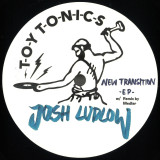
Here comes a first EP by Josh Ludlow for Toy Tonics. Mastermind of Make a Dance aka M.A.D. records. London’s best kept secret (or not so secret anymore) of new underground dance weapons that are played by everybody who counts in the scene.
Josh delivers a hot 4 -tracker that will move people on dance-floors worldwide. Combining 1990es filterhouse influences, 2000’s indie dance and some of the edgy contemporary funk moods that are lighting up clubs these days. The post - techno generation likes it funky and Josh delivers. Fitting perfectly with the vibe of Toy Tonics this EP will find a lot of friends. In fact Josh knows how things work.
Josh Ludlow has been steadily honing his craft over the past 15 years. Starting out releasing Drum & Bass under the ‘Squash!’ moniker in the late 2000’s whilst also playing drums in bands. The former gave way to live touring and it was only in 2020 when Josh resurfaced with some new electronic music.
The impetus for releasing this new material was when Josh Ludlow & Ben Lewis formed there beloved project ‘Make A Dance’ (which then went on to establish the imprint) M.A.D. Records during the pandemic.
Since then M.A.D have made a big impact on the underground scene, become regulars at places such as Fabric, Heidegluhen, Gottwood and gained DJ support of propel such as Laurent Garnier, Optimo, Palms Trax and Peggy Gou and across BBC Radio1 and regularly Cover show’s on NTS for Long Running Host’s Moxie and Apiento.
This is just the beginning.
Here it is, the sixth chapter in the sonic journey of Mr. Mangiadischi.
Continuing the dance-floor assault, MD006 delivers four tracks, each with a unique story but all with the same aim: to make you move to the rhythm.
• A1 - Mamma
A Balearic groovy deep house nostalgic tribute to the most important person we have in our life. This track blends warm melodies with heartfelt emotions, making it the perfect homage.
• A2 - Genug Vans
Intergalactic soul/post-disco space-tech. A cosmic voyage through pulsating rhythms and celestial sounds, designed to take you on a dancefloor odyssey.
• B1 - Fenel
A very modern interpretation of this '76 Algerian artist's funk/pop/world/country mesmerizing masterpiece. This track merges elements of funk, pop, world, and country in a blend that transcends genres and eras.
• B2
A disco/funk/pop-rap in its most modern and groovy version. Infectious beats and catchy hooks make this track a surefire hit for any set.
Limited Edition White Vinyl
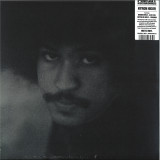
At the forefront of a rising wave of Brazilian artists captivating international audiences, Nyron Higor brings a quiet yet potent sense of wonder to his new self-titled album. Born in Maceió, Higor’s latest work is rooted in the traditions of Northeastern Brazilian music and golden-era MPB. Within the peaceful surroundings of his home, Higor weaves these roots together with global influences and contemporary production techniques, for a uniquely dreamlike vision of hope.
Following the success of his self-released debut Fio de Lâmina—an instrumental record of delicately balanced rhythmic and harmonic patterns, which earned support from tastemakers like Mr. Scruff, Gilles Peterson, and John Gomez—Higor’s new album is a move towards a more expansive, lyrical exploration of transcendence and triumph. As Higor explains, “This album is a test of resistance and a big event in my life as a young Black man from the Northeast and coming from a humble background, financially speaking, its context is political.”
Taking his demos and unfinished tracks to São Paulo, Higor worked alongside friends and collaborators from Brazil’s vibrant contemporary music scene—including fellow Maceioense artists Bruno Berle, Batata Boy, and New York-based Brazilian vocalist Alici Sol—assembling a rich musical landscape and a cutting edge development on the musical world from which he emerges.
For Higor, the process of recording and producing in close collaboration with Berle and Batata Boy allowed him to fully cultivate the emotive power of his compositions. Album opener "Ciranda" sets the tone with a slow frevo rhythm, as wistful trombone melodies and melancholic acoustic guitar harmonies create an atmosphere both intimate and grand. Lead single "São Só Palavras," featuring Alici Sol and Bruno Berle, captures both the lightness and depth of young love in an all too fleeting minute-and-a-half moment of soaring brilliance.
Building upon the instrumental sound of his debut, “Louro Cantador” with its playful organ, birdlike whistles and elegant acoustic guitar, emanates a kind of rare natural beauty, as each sound dances amidst the gentle pulse of Higor's bass—his main instrument.
Through ten carefully crafted tracks, Higor’s acuity for sound and silence draws listeners into a place that feels both deeply personal and universally resonant. “Above all, I value making music that brings me genuine satisfaction. I’m always looking for depth in the things I create.”
This album is a testament to the timeless themes that define Higor’s artistry, as well as his creative drive to overcome the obstacles he faces. Conveying his feelings of jubilance for his work, Higor notes, “This work is liberating, contemplative and victorious!” Each track invites the listener to experience the raw intimacy, the joy and longing, and the otherworldly ingenuity of Brazilian music, which seems to endlessly keep us coming back for more.
CREDITS
Ciranda (Nyron Higor)
Tico Lima: Trombone, Nyron Higor: Drums, Bass, Synthesizers, Electric Piano, Guitar, Molho de Jatobá, Ganzá, Caxixi, and Indigenous Whistle
Louro Cantador (Nyron Higor)
Nyron Higor: Drums, Bass, Keyboards, Guitar, Percussion, and Direct Sound
Demo Love (Nyron Higor)
Nyron Higor: Drums, Bass Synth, Keyboards, and Synthesizers
São Só Palavras feat. Alici, Bruno Berle (Nyron Higor, Batata Boy, Alici Sol, and Bruno Berle)
Alici Sol: Vocals, Bruno Berle: Vocals and Bass, Nyron Higor: Drums, Guitar, Keyboards, Synthesizers, and Whistles
Estou Pensando Em Você feat. Johanna (João Menezes, Rubens Adati)
Nyron Higor: Vocals, Johanna: Vocals. Bruno Berle: Vocals, Rubens Adati: Piano, Guitar, Programming, Stefan Costilhes: Bass, Batata Boy: Programming
Maravilhamento feat. Nathalia Grilo (Nyron Higor, Nathalia Grilo)
Nathalia Grilo: Vocals, Nyron Higor: Drums, Bass, Guitar, Keyboards, and Synthesizers
Som 24 (Nyron Higor)
Nyron Higor: Sampler, Keyboard, Bass Synth, Vocoder, and Steel Guitar
Pizzicato (Nyron Higor)
Nyron Higor: Double Bass and Keyboards
Eu Te Amo (João Menezes)
Nyron Higor: Vocals and Bass, João Menezes: Guitar, Batata Boy: Rhodes Piano, Bruno Berle: Xylophone
Me Vestir De Você feat. Johanna (Paulo Novaes and João Menezes)
Nyron Higor: Vocals, Johanna: Vocals, Bianca Godoi: Drums, Bruno Berle: Bass, Guitar, Percussion, and Rhodes Piano, Batata Boy: Rhodes Piano and Guitar
===================
Tracks 1, 2, 3, 4, 6, 7, and 8 were recorded by Nyron Higor in Maceió
Track 4: Bass and Synthesizers recorded by Ico dos Anjos. Vocals recorded by Batata Boy at Estúdio Rural
Track 5: Guitars, Bass, Programming, and Pianos recorded at Inhame Estúdio. Coproduced by Rubens Adati
Tracks 9 and 10 Recorded and Co produced by Ico dos Anjos
Mixed by Batata Boy, Ico dos Anjos, Bruno Berle, and Nyron Higor
Mastered by Batata Boy
Produced by Batata Boy, Bruno Berle, and Nyron Higor
Lacquer Cut by Caspar Sutton Jones @ Gearbox Records
Cover photo by Claudio Virginio
Vinyl centre label artwork by Tadáskía
Sleeve design by Alessandro Renaldin
La Pointe debut on Damian Lazarus’ Secret Teachings with ‘Umbra’, featuring remixes from Nathan Fake and Jonny Rock. The experimental label opens its 2025 schedule on 24th January with the Geneva-based trio’s warping original backed by a pair of late-hours remixes from two of the best in the scene.
Emerging from a confluence of rave culture and artistic mastery, La Pointe make an impressive label debut on Damian Lazarus’ Secret Teachings imprint with the enigmatic ‘Umbra’. The release, set for 24th January, is accompanied by stellar remixes from revered producer Nathan Fake and the ever-versatile Jonny Rock, delivering a sonic journey that transcends the ordinary. La Pointe, a trio formed by Geneva-based techno pioneers Crowdpleaser and Entlet alongside New York City’s Jonny Sender, represents a fusion of cultural and musical legacies. Rooted in the dynamic after-hours scenes of Geneva and New York’s underground club culture, the trio creates music that is both innovative and steeped in tradition. Their studio, located in an old factory by the meeting point of the Rhone and Arve rivers, lends its name—and its industrial inspiration—to their project.
The original mix of ‘Umbra’ is a hypnotic exploration of light and shadow, blending atmospheric melodies with deep, pulsating rhythms—a testament to their ability to craft soundscapes that resonate emotionally and physically. Nathan Fake’s remix ventures into intricate, textural layers, marrying ethereal tones with electronic intensity. Jonny Rock injects a raw, off-kilter groove and late-hours energy into his reinterpretation, blending his eclectic influences from disco, funk, house, and beyond. The genesis of La Pointe is as captivating as its sound. Crowdpleaser and Entlet are celebrated architects of Geneva’s rave scene, running the legendary after-hours party The Shark for over a decade and hosting luminaries like Alexander Robotnik, Boo Williams, and Sonja Moonear. Jonny Sender, a stalwart of New York’s downtown music revolution in the 80s to 00s and bass player of post-punk band KONK, brought his unique perspective honed in venues like Mudd Club to the trio when he moved to France. This debut appearance on Secret Teachings is not just a collection of influences but a narrative woven from decades of underground culture and musical exploration - making it a perfect fit for Lazarus’ label as he continues to champion boundary-pushing artistry, curveball signings and inspired remix curation.
Jamwax is proud to announce the reissue of Justin Hinds' rare and evocative track Marcus Tradition, a powerful song that resonates deeply with the roots of Jamaican music and honors the enduring legacy of Marcus Garvey.
Marcus Tradition is a heavyweight roots reggae masterpiece that embodies the spirit and teachings of Marcus Garvey, the Jamaicanborn leader who founded the Universal Negro Improvement Association (UNIA) and championed the 'Back to Africa' movement. The song’s down-tempo riddim and distinctive whistle create a captivating atmosphere, while the lyrics emphasize the importance of tradition and heritage: "You're the offspring of this nation, and this is a tradition. Marcus Garvey was born in Jamaica and that's a tradition."
Justin Hinds, a pioneering figure in Jamaican music, is celebrated for his impactful contributions to the ska and roots reggae genres. As the lead vocalist of Justin Hinds & The Dominoes, he achieved monumental success with classics such as Carry Go Bring Come, cementing his legacy in Jamaican music history.
This reissue of Marcus Tradition reaffirms Jamwax's dedication to preserving and sharing the richness of Jamaican musical heritage. By bringing this exceptional track back into the spotlight, Jamwax not only honors the profound artistry of Justin Hinds but also celebrates the timeless cultural legacy of Marcus Garvey, a tradition that continues to inspire and unite generations.
Originally released in 1987
Licensed courtesy of Claudette Pottinger & Correl Hewitt
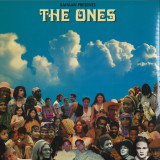
For 'The Ones', Chicago House and Disco producer, Rahaan has pulled together a plethora of musicians and vocalists to create a smokestack of soul fuelled excellence on this ten track album. From the amazing vocals courtesy of Marcus J. Austin and Nancy Clayton on the opener, 'We Are The Ones', through the amazing instrumental City Rain Supreme and the vocals of Spike Rebel on the anthemic 'Forever', this album absolutely excels. The promise made on the original three track EP released on BBE Music in the Summer of 2023 is well and truly delivered on. Working with live musicians throughout the recording process has added layers of finesse and genuinely unfeigned authenticity in the overall sound of this album. Carnell Newbill's basslines and keys, Todd Swope's Afrobeat inspired guitar licks and the horns of Ohio Players legend Kenny Anderson all blend organically with the aforementioned vocalists to create an album of sublime music befitting the best traditions of the Chicago House canon. Rahaan Young is a DJ and producer who has been DJing since playing at parties in his native Chicago the 1980s. As a DJ he's enjoyed residencies at both The Spot and Buddha Lounge as well as entertaining and moving dance floors around the globe with DJ sets that show his music knowledge and exquisite taste. The Ones is mastered at the Grammy nominated Carvery Studios and will be released on vinyl and digital on BBE Music, adding to the catalogue of innovative and highly pertinent releases from artists, musicians and producers from across the world.
Earquake 1991[22,48 €]
Earquake 1992[22,48 €]
Earquake 1993[22,48 €]
Earquake 1994[22,48 €]
Earquake 1996[22,48 €]
Earquake 1997[22,48 €]
Earquake 1998[22,48 €]
Earquake 1999[22,48 €]
It is the year 1995 and it’s summer, the second extremely hot summer after 1994, and the asphalt on Gladbacher Straße in Cologne is glowing. Ravers in much too wide and much too colorful clothes doze off in the glaring midday heat. These are the last days of the legendary Delirium record store, a socio-cultural biotope that would later become KOMPAKT. In June 1995, the store moved deeper into the Belgian Quarter, to Brabanter Straße 42 near Friesenplatz.
Wolfgang Voigt liked to wear too-big sunglasses even back then, just as he already had the master plan for the next few years, the new store, the renaming to KOMPAKT, and the upcoming takeover of the musical world order by minimal techno in his head. On less sunny days, the musician Wolfgang Voigt was tinkering with his very own label Profan, a new sound, new pseudonyms and masquerades. His alter ego Mike Ink had grown tired, another self, one of many, was now pushing forward to become the next torch in the storm.
By early 1995, the first Grungerman EP, "Hout," had been released on Profan. A nucleus of ambient loops that already announced the sonic aesthetics of GAS, stoic rhythmic structures that would shape the coming decade of minimal house and techno, and an all-encompassing gloom and heaviness that didn't want to fit at all with the gaudy reality of the nineties between Loveparade, Mayday and VIVA House TV. This probably most hedonistic decade of the 20th century had celebrated, besides techno, above all a rough guitar music called Grunge, coined and immortalized by a depressive, hyperactive and narcoleptic young man with matted blond hair who had taken his own life a year before. In no other track has Wolfgang Voigt packed these inner and outer contradictions of his art as well as of the mid-nineties more ingeniously than in "In Tyrannis". From wall to wall there are four steps.
"Klang" by Wolfgang Voigt originally comes from the first and only GAS EP on Profan, "Modern", from the spring of 1995 and is one of the most beautiful exhibits of Voigt's sound of those years, which relentlessly runs its course somewhere between glistening sunrises on Ecstasy and bad drugs in the dark Liquid Sky Cologne. With "Hocker DJ 1" and "Hocker DJ 2" there are two more musical references to this myth-enshrouded place in Kyffhäuserstraße, where for a few years the entire, so-called Sound Of Cologne had literally settled down.
Wir schreiben das Jahr 1995. Es ist Sommer, der zweite extrem heiße Sommer nach 1994, und der Asphalt auf der Gladbacher Straße in Köln glüht. Raver in viel zu weiten und viel zu bunten Klamotten dösen ihren Rausch aus in der grellen Mittagshitze. Es sind die letzten Tage des legendären Delirium Plattenladens, eines soziokulturellen Biotops, aus dem später die Firma Kompakt hervorgehen sollte. Im Juni 1995 erfolgte der Umzug tiefer hinein ins Belgische Viertel, in die Brabanter Straße 42 in der Nähe des Friesenplatz.
Wolfgang Voigt trug schon damals gerne zu große Sonnenbrillen, so wie er bereits den Masterplan für die nächsten Jahre, den neuen Laden, die Umbenennung in KOMPAKT sowie die anstehende Übernahme der musikalischen Weltordnung durch Minimal Techno im Kopf hatte. An weniger sonnigen Tagen tüftelte der Musiker Wolfgang Voigt an seinem ureigenen Label Profan, an einem neuen Sound, neuen Pseudonymen und Maskeraden. Sein Alter Ego Mike Ink war müde geworden, ein anderes Ich, eines von vielen, drängte nun nach vorne, um die nächste Fackel im Sturm zu werden.
Anfang 1995 war die erste Grungerman EP “Hout” auf Profan erschienen. Ein Nukleus aus ambienten Loops, die bereits die klangliche Ästhetik von GAS ankündigten, stoischen rhythmischen Strukturen, die das kommende Jahrzehnt Minimal House und Techno prägen sollten, sowie einer allumfassenden Düsternis und Schwere, die so gar nicht zur knallbunten Realität der Neunziger Jahre zwischen Loveparade, Mayday und VIVA House TV passen wollte. Dieses wohl hedonistischste Jahrzehnt des 20. Jahrhunderts hatte neben Techno vor allem eine raue Gitarrenmusik namens Grunge gefeiert, geprägt und unsterblich gemacht von einem depressiven, hyperaktiven und an Narkolepsie leidenden jungen Mann mit verfilzten blonden Haaren, der sich ein Jahr zuvor das Leben genommen hatte. In keinem anderen Track hat Wolfgang Voigt diese inneren und äußeren Widersprüche seiner Kunst wie auch dieser Zeit Mitte der Neunziger genialistischer verpackt als in “In Tyrannis”. Von Wand zu Wand sind es vier Schritte.
“Klang” von Wolfgang Voigt stammt ursprünglich von der ersten und einzigen GAS EP auf Profan, “Modern”, aus dem Frühling 1995 und ist eines der schönsten Exponate des Voigtschen Sounds dieser Jahre; ein Track, der irgendwo zwischen gleisenden Sonnenaufgängen auf Ecstasy und schlechten Drogen im dunklen Liquid Sky Cologne unerbittlich seine Bahnen zieht. Mit “Hocker DJ 1” und “Hocker DJ 2” finden sich zwei weitere musikalische Referenzen an diesen mythenumrankten Ort in der Kyffhäuserstraße, an dem sich für einige Jahre der gesamte sogenannte Sound Of Cologne im wahrsten Sinne des Wortes niedergelassen hatte.
“Raggamuffin Soldier” was recorded at Channel One Recording Studio in 1983 with Soldgie as engineer and a rhythm track played by Jolly Stewart and Daniel “Axeman” Thompson. Growing up in the Waterhouse neighborhood of Kingston, Jolly Stewart obviously developed this singing style and gave us a killer early digital dancehall missile with pure conscious lyrics “Raggamuffin soldier, big ina your area...me no deal with badness, me nah deal inna war, me is a raggamuffin soldier...mi raggamuffin ina foreign, raggamuffin sit down pon di riddim...how you know the raggamuffin? Me no wear no gold chain, me no wear no gold ring...”. “Raggamuffin Soldier” was produced by Fitzroy Peterkin who also produced the digital lover tune "Angie".
The Waterhouse style is a particular style of singing that emerged in the late seventies and early eighties within the Jamaican reggae scene. The Waterhouse style is commonly described as a plaintive, groaning and fluctuating vocal style, often nasal and strident, characteristics that will give it a sound that is distinct from the rest of the reggae singers. The commonly recognized founders of the Waterhouse style are the singers Michael "Mykal" Rose, Junior Reid and Don Carlos. The name derives from the famous neighborhood of the same name in Kingston, the capital of Jamaica, the place where the three pioneers were born and emerged. The Waterhouse style influenced many dancehall reggae artists of the eightiesvsuch as Tenor Saw, Half Pint, Nitty Gritty, Anthony Red Rose, King Kong, Yami Bolo, Andrew Bees...
Vincent Stewart aka “Jolly Man” is a reggae singer from Kingston 11, born december 16 1960 at Hunts Bay Lane, 4 Miles, Jamaica. Jolly started singing at age 13, he was placed in an approve School for 3 years and at the age of 16 he was released.
He started his musical career in the late 70's with Ossie Thomas, Phllip Morgan and Tristan Palmer from Black Solidarity label. Jolly Stewart recorded his first song entitled "Money Pyaka" on the classic "Pretty Looks" riddim which was recorded for Oswald Thomas on Ganja Farm label and released in 1979. Tristan Palmer who has another tune "Disappointed Lover" on the same riddim backed by The Soul Syndicate made the link with Jolly Stewart because he liked his style of song writting.
Jolly Stewart wrote three songs for Black Solidarity label: "Collie Man", "Bad Minded" and "Symbol Of Justice". All three tracks were covered by Triston Palmer. As a song writter, Jolly Stewart is behind Yami Bolo's hit on Stalag riddim “When A Man Is In Love” released on Winston Riley's label Techniques.
Jolly Stewart then decided to move on with his singjay career. He ventured to Tuff Gong studio where he met two producers. One was Prince Jazzbo from Ujama label, and the other was John John who owned the Bun Fi Bun label. He recorded "Praise jah" for Ujama and "Poverty Rush" for Bun Fi Bun. Still not satisfied with how his career was heading, he moved on to Lannaman's Preparatory School. There he learned to play guitar from a man named Fred McMurray aka Faf and Donald Jackson. Later he learned to play the keyboards by watching other musicians.
In the late 80's and early 90's, Jolly Stewart recorded many songs for various labels such as “Do Me Like So” for Bunny Gemini's label “Bun Gem Records” in 1987, “Late Last Night” and “War” for producer Zelma Rust and his label Myotta Ruff.
He also recorded for Augustus Pablo on his label Rockers International just before he died in the late 90's but we never heard about this release so probably Addis Pablo have it on old master tapes in the Rockers International archives....only Jah knows!
As the tenth candle flickers atop the torta alla panna, Archeo Recordings play the Uno reverse card, breaking with tradition to give us a gift in celebration of its birthday: the first in a series of exquisite EPs on which the label's favourite contemporaries pay homage to past masters. Each re-polished gem is plucked either directly from the beatific back catalogue of the fine Florentine label or is at least Archeo-adjacent, perhaps a sign of future wonders to come. Like a musical version of Janus, who can be found at the heart of Bertoldo di Giovanni's frieze in the Medici villa, Archeo Recordings will continue to look forwards and backwards to provide sublime sounds for us all.
Pepe Maina officially joined the Archeo family in 2019 with the much-needed reissue of his 1979 masterpiece Scerizza (AR015), but his astounding music has been a constant companion to label head Manu for much longer. An inter-dimensional, multi-instrumental maverick, Maina weaves the frayed edges of prog rock, new age, organic jazz and global minimalism into a shimmering tapestry all of his own. The results are spread across fifty years and almost as many albums, largely self-released and always absolutely untarnished by commercial concerns.
Based in a small village in the hills of Brianza, just north of Milan, Maina translates the beauty of his surroundings into transformative tone poems, and the folkloric fusion of "The Infinite", originally released on his 2014 CD Tales From The Hill, is the perfect example of his practice. It opens with a recitation of Giacomo Leopardi's 1825s poem "L'Infinito" by famed Italian actor Vittorio Gassman. A leading figure in the romantic movement, Leopardi explores the idea of time and space within the natural world, and the peace that comes with an appreciation of the immensity of eternity. Manu, longtime digger and now a burgeoning producer, expands upon the original with tribal percussion, chirping electronics and a spheric bassline, folding Maina's elegant strings and gossamer pads into a new arrangement suited for a slow dance under the stars.
Unless you had a well-trained ear tuned to Italy's avant-jazz scene, chances are your first encounter with innovative flautist Roberto Aglieri came via the 2017 Archeo reissue of hisalmost untraceable LP Ragapadani (AR011). It's a true testament to Manu's digging credentials that he snatched this masterpiece out of the esoteric atmosphere and brought it attention it so richly deserved. A delicate union of digital synthesis and versatile flute - be it soft and silvery or
brilliant and clear - the 1987 album was a shapeshifting masterpiece, replaying scenes from Virgil, Verdi, Visconti and Pasolini with a neon glow. Quintessentially Italian, but uncanny and previously unimagined - Penthouse and Portico perhaps. Powered by a percolating prototechno sequence, cascading keys, hallucinogenic vocal snippets and a variety of tonal timbres from Roberto's reed, "Danza N. 1" long deserved the praise reserved for Jean-Luc Ponty's pinnacle, so many thanks to Manu for our collective introduction. The tall task of reinterpreting this particular paragon falls to Perugian polymath Daniele Tomassini AKA Feel Fly, whose peerless skills as both producer and musician have delighted DJs and dancers alike. Hot on the heels of his diverse and definitive remixes of Tony Esposito for AR027, Daniele delivers a radical rework of "Danza N. 1" perfect for both day rave sunshine and full moon party alike. Enhanced by snapping breaks and a rattling kick, the bassline gurgle emerges as a progressive powerhouse, laying the foundation for the trilling flute and circular keys to cast a psychedelic spell. As the slow-Goa revival picks up pace, this one is way ahead of the pack.
Archeo take us all the way back to the start of its story here - well almost. Though it bore the stamp AR001 (2015), this Radio Band reissue actually hit shelves months after Tony Esposito's "Je-Na' / Pagaia"; a false start perhaps but a true classic all the same. Radio Band were a group of DJs from Florence who all sailed the airways of Radio Fantasy in 1984 and whose one and only release was this super groovy slice of Italo-boogie. Following the example of Milanese DJs Band of Jocks but far surpassing their formulaic funk fizzle, Radio Band employed an intergalactic bassline, cosmic keys and that undeniably Italian style of rapping to deliver a sophisticated party-starter which even found its way to disco deity Ron Hardy. Back to the here and now, and if you've found yourself pumping an ecstatic fist to a supercharged Italian epic of late, chances are its from the mind of the mysterious Radiomarc. Operating on the ascendent Popcorn Groove imprint, this shadowy figure steers his country's lost classics into peaktime territories, finding a sweet spot between late Italo-disco, early Italo-house and contemporary cool. Pushing the tempo with a club-ready 4/4, setting the sequencer to stun and supplementing the original melodies with a series of synth riffs, the mystery producer send this one into orbit. Radio Band - Radio Rap - Radiomarc, the circle is complete.
Few have done more to develop cross-cultural musical exchange than Futuro Antico. A collaborative venture from musician, archeologist and ethnomusicologist Walter Maioli, keyboardist and tonal theoretician Riccardo Sinigaglia and multi-disciplinary artist and composer Gabin Dabiré, Futuro Antico formed in Milan in 1979, combining ancient international folkloric traditions with otherworldly electronics. The result is an arresting melange of Mediterranean, African and Asian instrumentation, mimicked by esoteric synth tones and hypnotic minimalism, which the group perfected on their acclaimed 1990 LP Dai Primitivi All'Elettronica. The meditative and transportive "Pan Tuning" belongs to their largely overlooked 2005 CD only release Intonazioni Archetipe, and has been amongst Manu's most loved tracks from the first moment he heard it. Who else is better placed to reshape this evocative opus into an immersive, transcendental dance floor journey than label favourites Mushrooms Project? The duo sows the original elements into a sprawling fifteen minute fusion of séance and science, at times propulsive with a ritualist rhythm of tuned percussion and crunching drum machine at others drifting off into ethereal ambience. Mushrooms Project continue to push the boundaries of the Afro-cosmic style, and this remix marks a new zenith.
- A1: Tell It To Me Slowly Feat. Nick Richards
- A2: Jungle Run Feat. Nubiya Brandon
- B1: Basa Basa Feat. K.o.g
- B2: Brother Feat. Nubiya Brandon
- C1: Borders Feat. Pilo Adami
- C2: Permission Feat. Nubiya Brandon
- C3: Addis To London Feat. Mulatu Astatke
- D1: Ghosts Feat. Nick Richards
- D2: They Talk Feat. K.o.g
- D3: Sugar Cane Feat. Nubiya Brandon
Strut proudly present the brand-new studio album from Nubiyan Twist, 'Jungle Run'.
Now one of the leading lights in the UK's new generation of soulful, genre-fluid artists, the Leeds-born and now London-based 12-piece collective have created their finest recordings to date, effortlessly weaving together elements of jazz, soul, hip hop, African styles, Latin, dub, hip hop and electronics in a flow of thought-provoking and life-affirming music.
Recorded at the band's own self-built Henwood Studio in rural Oxfordshire, the album effortlessly moves through different voices from the band's circle. The inimitable, timeless vocals of Nubiya Brandon lead the way on the album's title track about breaking preconceptions and promoting equality, 'Where you from I'm from wherever I be.' Saxophonist Nick Richards vocals the killer first single from the album about inner turmoil and a search for the truth, 'Tell It To Me Slowly' while rising Ghanaian star K.O.G. appears on the Afro jams 'Basa Basa' and 'They Talk'. Percussionist Pilo Adami (Nina Miranda / Afrosamba) voices the infectious bossa-jazz jam 'Borders'. The band also draft in two African legends for guest duties with the original Afrobeat maestro Tony Allen on 'Ghosts' and Ethio jazz pioneer Mulatu Astatke contributing vibes on the sinuous 'Addis To London'. 'The depth of talent and ideas that every member of this group has brought to the table for this album is incredible,'
says producer and orchestrator Tom Excell. 'Conceptually, 'Jungle Run' is all about connecting different people and cultures whilst exploring the journey of individuals. This album is the pinnacle of everything we have done to date and to collaborate with the godfathers of Afrobeat and Ethio Jazz and celebrate their music in a modern context was very humbling.'
The album is another landmark for a band that has been consistently developing their sound since their formation in 2015 at Leeds College Of Music. 'One of the biggest factors in our sound was the exciting music scene in Leeds,' explains saxman Joe Henwood. 'From a reggae night called 'Sub Dub' to venues playing whacked out experimental jazz.' Since then, the band's self-titled debut album (2015), EP 'Siren Song' (2016) and single 'Dance Inna London' (2017) have become classics in their own right and their live show has become an essential ticket; previous live highlights have included high profile slots at David Byrne's Meltdown at the South Bank and Glastonbury West Holts
'Jungle Run' is released on 15th February on CD, 2LP and digital. Cover artwork comes from acclaimed designer Marcus Davies and the album is mastered by The Carvery. Nubiyan Twist tour across Europe from November.
From London to Ibiza via Berlin, inspired by Chigago and Detroit, Ceri finds her truth in proper house music. ‘Can’t Pay My Bills’ EP provides a message of hope during uncertain times. Acknowledged as a “rising selector” by Crack Magazine, producer, label boss and record digger Ceri steps into 2024 with a brand-new EP ‘Can’t Pay My Bills” via her imprint “Find Your Own Records”.
“The title track is inspired by the current economic situation in the world, and also features a positive message that reflects the values and true origins of house music, reinforcing the belief that we can overcome our circumstances and improve our situation” - Ceri
The new four track EP drips with Chicago, New York and Detroit jackin’ house with garage influence, and a sprinkle of ripping UK breakbeat for good measure. The people’s producer D'Julz steps up, on remix duties, contributing not one but two remixes to the label’s ongoing message of artist authenticity and collaboration. The remixes will be vinyl only, and the originals will see a digital release later in the year.
“I have collected D'Julz music for many years, his label started around the same time I started DJing, and it was and still is, one of the few labels that I buy on sight. I know it will always be quality. Something I aspire to do with my label too.”– Ceri
As an artist led label 'Find Your Own Records’ has become a home for genuine house legends Mr G, Fred P, Alex Arnout, and has rightly gained support from Mixmag, Resident Advisor, BBC Radio 1, BB6Music and BBC1Xtra.
Support for the label so far comes from the likes of:
Midland, Ben UFO, Move D, K-HAND, Fumiya Tanaka, Fred P, Paranoid London, Steve O'Sullivan, Tristan Da Cunha, Ryan Elliot, Lakuti, DJ Deep, Kerri Chandler, Chloe Caillet, Fred P, Jeremy Underground, Cici, D’Julz, Chez Damier and more…
As a DJ Ceri has performed marathon sets at Fabric, Corsica Studios, Pikes Ibiza, Thisishaven, and recently made her debut at the legendary Panorama Bar/Berghain. Confidently sharing the booth with club favourites Ryan Elliot, Jeremy Underground, Paranoid London and Objekt it’s certain the next year of live shows will be ones to remember for the UK artist. Inspiring far beyond the dancefloor, Ceri also regularly steps up as a masterclass host / panelist on creativity, mental health, meditation and wellness with renowned platforms Beatport, ADE, RedBull, Point Blank and Native Instruments, earning her a distinctive reputation as a multifaceted artist and
thought leader.
Ceri – ‘Can’t Pay My Bils’ EP is out on Find Your Own Records. Vinyl end of Feb tbc. The remixes re vinyl only. And the originals will be released digitally in the summer.
- A1: Roni Size, Reprazent - Heroes (Kruder's Long Loose Boss
- A2: Alex Reece - Jazz Master (K&D Session Tm)
- B1: Bomb The Bass - Bug Powder Dust (K&D Session Tm)
- B2: Lamb - Trans Fatty Acid (K&D Session Tm)
- C1: Count Basic - Speechless (Drum 'N' Bass)
- C2: Rockers Hi-Fi - Going Under (K&D Session Tm)
- D1: Depeche Mode - Useless (K&D Session Tm)
- D2: Count Basic - Gotta Jazz (Richard Dorfmeister Remix)
- E1: Aphrodelics - Rollin' On Chrome (Wild Motherfucker Dub)
- E2: Knowtoryus - The Revenge Of The Bomberclad Joint (K&D S
- F1: Rainer Trüby Trio - Donaueschingen (Peter Kruder's Remix
- G1: David Holmes - Gone Ft Sarah Cracknell (K&D Session Tm
- G2: Sofa Surfers - Sofa Rockers (Richard Dorfmeister Remix)
- H1: Mama Oliver - Eastwest (Stoned Together)
- H2: Bomb The Bass - Bug Powder Dust (Dub)
- H3: Kruder & Dorfmeister - Boogie Woogie
- I1: Sin - Where Shall I Turn (K&D Session Tm Vol
- I2: Bone Thugs-N-Harmony
- I3: Kruder & Dorfmeister - Lexicon
- J1: Knowtoryus - Bomberclad Joint (K&D Session Tm)
- J2: Rockers Hi-Fi - Going Under (Evil Love & Insanity Dub)
- J3: Strange Cargo - Million Town (K&D Session Tm)
- K1: Count Basic - Speechless (Peter Kruder Vocal Mix)
- K2: Lewis Taylor - Lucky (Kruder & Dorfmeister Suicide Mix)
- L2: Ufo - L O.v.e. (K&D Session Tm)
- L3: Lewis Taylor - Lucky (Kruder & Dorfmeister Reprise Mix)
- K3: Roni Size - Heroes (Peter Kruder Powercut Mix)
- L1: Madonna - Nothing Really Matters (Kruder & Dorfmeister
Normal[58,78 €]
Occasionally an album comes along that seems to capture the mood of the time. "The K&D Sessions" was one. In the late 1990s no afterparty, smoking session or languid Sunday afternoon was complete without Kruder & Dorfmeister blasting from the Bang & Olufsen. Now approaching it"s 25th anniversary the lore around this iconic release, steeped in a silvery cloud of smoke, retains a star quality which only shines brighter as time hurtles on. With the original having sold well over a million copies by this point in time, it"s hard to imagine a mix or remix compilation being able to inform a movement like "The K&D Sessions" has. To celebrate this monumental milestone, we"ve created a limited boxset in 6LP and 3CD of "The K&D Sessions", mastered and cut by LA luminary Bernie Grundman for a luxurious listening experience, with newly designed inner sleeves using unseen photos from the original photo shoot. Inserted in the box is a forty-page booklet containing multitudes more never before seen photos from the same shoot and notes which recount humorous tales surrounding the duo and the people who spent time with them in this epoch. Included on the 6th LP is their legendary 11 minute shimmering remix of Madonna"s "Nothing Really Matters". The 6th LP also contains Peter Kruder"s Powercut Mix of Roni Size"s "Heroes" and K&D"s remix of U.F.O, "L.O.V.E.". In addition there are two cerebral alternate remixes of Lewis Taylor, one being completely dubbed and the other the using the vocal line for this beautiful gem, "Lucky" and a special remix of "Speechless" by Count Basic. These have been staples in K&D"s sets and now take their rightful place collected in the canon of "The Sessions".
Nous'klaer Audio proudly presents Nicola Cruz's latest full-length album, Kinesia. On his third studio album, the Ecuadorian producer masterfully blends rich studio sessions with deep analog synthesis. Kinesia invites the listener to channel an inner voice - to pick up thoughts, words, and messages as if ancient information traveling through time has been received. This album functions as a form of 'antenna,' translating these ideas into compositions and movement. The album begins with a 5/4 rhythm structure, summoning the voice of machina into a textural atmosphere, led by Perma, Nicola's vision of an infinite breaks vortex, and sustains the tension with the meditative Telepathine, a substance fictionally associated with telepathy. Regardless of the tempo, each track is intricately laced with chants, subtle percussion, textures, and spacious details that draw you back for more. With Kinesia, Nicola Cruz continues to evolve his signature sound and takes you along for the ride. While the album is crafted for a deep, introspective journey, the kinetic influence remains ever-present on dance floors.
‘Les Cigales’ takes its’ sonic cues from the structure of film and TV music from the 1960s and 70s, channelling the influence of film composers such as Francois de Roubaix and David Axelrod, whilst also sitting somewhere between the washed out, sun-soaked sonics of Surprise Chef and Robohands. As the EP unwinds, its narrative reflects a love story, full of longing, melancholy and drama, connecting with the story of Gyptis and Protis – the founding myth of Marseilles – whose love broke convention and welcomed the arrival of foreign people on French soil.
The project follows The Offline’s debut album ‘La couleur de la mer’, released in November 2023, which saw him create his own soundtrack to a film yet to be made. Inducing images of manorial, fog- swept villas at the seas edge, silhouetted sailing boats and cigar-chomping villains attempting to thwart the mission of an imaginary hero, the record is a masterfully composed sonic journey. ‘Les Cigales’ sees him continue to build upon a distinctive sound that moves from dramatic cues to fragile romanticism, incorporating psychedelic spaciness, retro soul and hip-hop sensibilities informed by his extensive record collection.
- A1: The Prelude
- A2: You Are Leaving My Mind
- A3: You Are The Other Reality And I Am This Reality Okay Okay No More Scary Faces
- A4: You Are Leaving My Mind Reprise
- A5: Mariko - The Finale Sands And Sun Inst
- A6: A Peeling Off Poster Part 2 Inst
- B1: Sha-La-La On The Hill A Dawn Poem
- B2: Bells Of Spring
- B3: Lipstick Boy
- B4: Love Gone To The Blue Sea Once Again On The Seaside Path
- B5: Twistar Sister Pylot Twinkle Star Patrol
Have you ever been to Miyazaki? It’s a prefecture on Japan’s southern island of Kyushu, facing the Pacific. Palm trees. Humid subtropical climate. This is the home of Maple Fyshh, a musical artist whose late-80s/early-90s recordings have been collected and reissued here. Liberated by the advent of 4-track cassette home recording technology, inspired by a love of 60s pop oddball production mavens like Phil Spector and Joe Meek, as well as American hot rod and surf music, these Maple Fyssh songs glow with an outsider’s love of the transformative power of newly-available sound technology, allowing him to pull his inspirations across decades and oceans to his 1990s Miyazaki home studio. The tracks here are a d.i.y. dream-pop wonderland, compiling songs from his first LP “Mariko” and second LP “Dokitto Station!!”, both self-produced, both released in 1995. The A-side of this release features tracks from the concept album “Mariko”, a masterpiece of daydream pop introspection, recorded in 1994-95, inspired by a poem submitted to a manga magazine. The B-side features tracks from “Dokitto Station!!”, slightly earlier recordings that draw inspiration from a range of 60s pop including girl groups, surf music and acid folk. All the music here demonstrates Maple Fyshh’s deep understanding and appreciation 60s pop moves, and also his mastery of the limited technology at his disposal.
Remastered in 2024, the sound of Miyazaki has been reborn for a new audience. Available on Vinyl LP and download, with a DL card, English/Japanese lyrics and entertaining and informative English/Japanese liner notes by the artist.