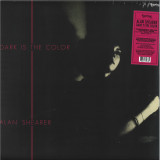
Toro y Moi siebtes Studioalbum MAHAL ist die bisher wohl kühnste und faszinierendste Reise des musikalischen Masterminds Chaz Bear. Mit einer weiten Spannbreite zwischen Genres und Sounds - vom zotteligen Psychedelic Rock der 1960er & 1970er hin zum luftigen Sound des Mod-Post-Punks der 90er-Jahre - nimmt das Album die Hörer*innen mit auf eine musikalische Expedition, in der sie im Rücksitz von Bears philippinischen Jeepney, der auch das Albumcover ziert, Platz nehmen können. So ist MAHAL ein unverwechselbares Toro y Moi-Erlebnis, welches in Verbindung zu seinen vorigen Werken steht und dennoch einen ganz neuen Weg einschlägt, wie es nur Bear tun kann. Seit der Veröffentlichung des bahnbrechenden Electronic Pop-Albums Causers Of This 2009, hat Toro y Mois Alben stets die Idee, was sein Sound sein könnte, weiterentwickelt. Dennoch findet sich in Bears Backkatalog nur wenig, das einen auf die Deep Groove-Exkursion auf seinem bisher vielfältigsten Album MAHAL vorbereiten könnte. Mit den ersten Tönen des Albums werden wir direkt in den Beifahrersitz gesetzt, umgeben von den Motorengeräuschen des Jeeps und bereit für die Fahrt, die Chaz und seine Gefährten für uns geplant haben. Einige der 13 Tracks auf MAHAL - das Wort für Liebe in der auf den Philippinen gesprochenen Sprache Tagalog - finden ihre Anfänge in der Zeit um das deutlich rockigere What For? aus dem Jahr 2015. So liefert das neue Album eine ganz klare Antwort und spannt den Bogen: What For? - For Love. MAHAL wurde größtenteils letztes Jahr in Bears Studio in Oakland in Kollaboration mit Künstler*innen wie Sofie Royer, Unknown Mortal Orchestras Ruban Neilson, Alan Palomeo von Neon Indian sowie The Mattson 2 fertiggestellt. "I wanted to make a record that featured more musicians on it than any other record of mine," erklärt Bear. "To have them live on that record feels grounded, bringing a communal perspective to the table." Im Resultat ist MAHAL üppig und voller Überraschungen - sei es durch das locker lässige "The Loop", das an Sly and The Family Stones erinnern lässt oder dem elastischen Psych-Rock bei "Foreplay" sowie der schwindelerregenden Mulatu Astatke-Anlehnung bei "Last Year".
Cerca:mu el
Toro y Moi siebtes Studioalbum MAHAL ist die bisher wohl kühnste und faszinierendste Reise des musikalischen Masterminds Chaz Bear. Mit einer weiten Spannbreite zwischen Genres und Sounds - vom zotteligen Psychedelic Rock der 1960er & 1970er hin zum luftigen Sound des Mod-Post-Punks der 90er-Jahre - nimmt das Album die Hörer*innen mit auf eine musikalische Expedition, in der sie im Rücksitz von Bears philippinischen Jeepney, der auch das Albumcover ziert, Platz nehmen können. So ist MAHAL ein unverwechselbares Toro y Moi-Erlebnis, welches in Verbindung zu seinen vorigen Werken steht und dennoch einen ganz neuen Weg einschlägt, wie es nur Bear tun kann. Seit der Veröffentlichung des bahnbrechenden Electronic Pop-Albums Causers Of This 2009, hat Toro y Mois Alben stets die Idee, was sein Sound sein könnte, weiterentwickelt. Dennoch findet sich in Bears Backkatalog nur wenig, das einen auf die Deep Groove-Exkursion auf seinem bisher vielfältigsten Album MAHAL vorbereiten könnte. Mit den ersten Tönen des Albums werden wir direkt in den Beifahrersitz gesetzt, umgeben von den Motorengeräuschen des Jeeps und bereit für die Fahrt, die Chaz und seine Gefährten für uns geplant haben. Einige der 13 Tracks auf MAHAL - das Wort für Liebe in der auf den Philippinen gesprochenen Sprache Tagalog - finden ihre Anfänge in der Zeit um das deutlich rockigere What For? aus dem Jahr 2015. So liefert das neue Album eine ganz klare Antwort und spannt den Bogen: What For? - For Love. MAHAL wurde größtenteils letztes Jahr in Bears Studio in Oakland in Kollaboration mit Künstler*innen wie Sofie Royer, Unknown Mortal Orchestras Ruban Neilson, Alan Palomeo von Neon Indian sowie The Mattson 2 fertiggestellt. "I wanted to make a record that featured more musicians on it than any other record of mine," erklärt Bear. "To have them live on that record feels grounded, bringing a communal perspective to the table." Im Resultat ist MAHAL üppig und voller Überraschungen - sei es durch das locker lässige "The Loop", das an Sly and The Family Stones erinnern lässt oder dem elastischen Psych-Rock bei "Foreplay" sowie der schwindelerregenden Mulatu Astatke-Anlehnung bei "Last Year".
Immortal Onion have already built a strong position as one of the most interesting, new jazz projects from Poland. After two well received albums ("Ocelot of Salvation" in 2017 and "XD ExperienceDesign" in 2020) we've had the pleasure of presenting the new re- lease called "Screens" recorded at the initiative of the saxophonist Michał Jan Ciesielski.
The songs composed by Michał confirm, that jazz electronic fusion can be still fresh and thrilling. The album, where beside Michał, Tomir, Wojtek and Ziemowit, you will find many guest instrumentalists. Thus resulting in a step forward made by the still young musician from TriCity.
It is worth mentioning, the song entitled "ZOZI" is enriched with the string parts recorded by Ola Szymańska on violin (Alfah Femmes, Ralph Kamiński, The Fruitcakes) and Weronika Kulpa on cello. Also, you can hear the brass section consisting of David Lipka on trumpet (Zgniłość, Bizzarre Penguin) and Paweł Niewiadomski on trombone (Power of the Horns). In the composition called "OK Boomer" you can hear characteristic guitar soundscape recorded by Marcin Gałązka (Tymon Tymański).
The whole album was recorded and mixed by Michał Jan Ciesielski. Mastering was done by Michał "Eprom" Baj. Graphic design was created by Marta "Martiszu" Ludwiszewska, who, like no one else senses the crazy spirit of immortal onion.
“I am most excited, that they got out of their formula and invited Michał Jan on saxophone who perfectly complements the ideas of guys from the Immortal Onion.”
Hania Rani —
- A1: Where's The One?
- A2: Resila
- A3: Kule Kule Redux
- A4: The Chief Enters Again
- A5: Château Rouge
- A6: Super Duper Rescue Allstars
- A7: Tita Tita
- A8: Doubt/Hope
- A9: Banza Banza
- A10: Kabongo Celeste
- B1: On The Road
- B2: Beyond The
- B3: Many Tongues In Our Band
- B4: For Augustin
- B5: Even The Boa Can't Swallow A Viper
- B6: Mama's Way/Above The Tree Line
- B7: Ambulayi Tshaniye
- B8: Bombo & Sifflets
- B9: Tshitua Fuila Mbuloba
- B10: Mulume/Change
- B11: Tandjolo's Greetings
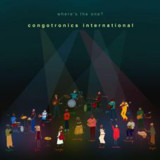
A supergroup comprising Deerhoof + Juana Molina + Kasai Allstars + Konono No.1 + Skeletons + Wildbirds & Peacedrums. It all started when the music of Konono No.1 and Kasai Allstars was first released in the US and Europe, in the later part of the '00s. With its blend of ritual music, traditional percussion, thumb pianos, electric guitars, and makeshift instruments made from junkyard scrap, their out-of-this-world sound now also known as Congotronics, a word coined to title the series in which their albums appeared on Crammed Discs - deeply struck the imagination of musicians and fans worldwide. Leading rock media enthused about this newly rediscovered brand of "primal rock", while an impressive string of avant-rock, electronic & hip hop artists (from Dirty Projectors, Andrew Bird, Animal Collective and Deerhoof to Beck, Björk, Wilco, Radiohead, Saul Williams, Questlove and many more) repeatedly quoted the Congotronics bands as major sources of inspiration.
Nightports is based on a simple but unbreakable rule of restriction: only sounds produced by the featured musician can be used. Nothing else. These sounds can be transformed, distorted, translated, processed and reprocessed, stretched, cut, ordered and reordered without limitation. Nightports w/ Tom Herbert is the third in a series of albums from musician-producers Adam Martin and Mark Slater to be released on The Leaf Label, following 2018's Nightports w/ Matthew Bourne and 2020's Nightports w/ Betamax. Tom Herbert made his name as the bass player in Mercury Music Prize-nominated bands Polar Bear and The Invisible, and has become an in-demand collaborator and session musician, including work with Adele, Lana Del Rey and most recently The Smile. Having honed his craft holding the low-end down in some of the most forward-thinking British groups of recent times, and also appearing on some the biggest tracks of the last twenty years, Nightports w/ Tom Herbert brings Herbert's command of the double bass into the spotlight.
Spun Out Agency is honoured to present ‘More of that Frightful Oompty Boompty Music’, a compilation dedicated to the Guv’nor himself Mr Andrew Weatherall who should need no introduction on these pages. Released on vinyl in two beautiful parts, the first drops on April 15th with the second following two weeks after.
‘More of that Frightful Oompty Boompty Music’ (yes we are going to write that out every time we talk about it in this communique) showcases a selection of the shining greatness from the agency’s roster. Paranoid London, Fantastic Twins, Mehmet Aslan, Autarkic, Ruf Dug, Sean Johnston, and Manfredas gift exclusive tracks which highlight the sublime acid, techno and house sound that Weatherall would have described as “oopmty-boompty” music.
Spun Out is a London-based artist booking agency which has been run by Caroline Hayes for over 20 splendid years, that looked after the life and times of Andrew Weatherall alongside his partnership with Sean Johnston under their A Love From Outer Space moniker, and the likes of Optimo (Espacio), Ivan Smagghe, Josh Caffe, Man Power, Body Hammer, Kiara Scuro and many more artists, doing it differently.
Kicking off the A-side of the first record is Hardway Bros’ (aka Sean Johnston) previously unreleased remix of We Are The Axis by The Asphodells, the duo consisting of the Andrew Weatherall and former Battant member and Spun Out talent Timothy J. Fairplay. An energetic techno stomper with percussive rhythms, this exclusive remix offers the ideal tantalising dose to tease any dancefloor. The vocals and synth layers give it a punk rock approach, referencing the multi-genre essence of Weatherall’s taste in music.
Tel-Aviv-based Autarkic’s Sleepover closes the A-side with a chuggy lullaby, one that is certainly unsuitable for putting a baby to bed, given its intricate acid lines of total hypnosis. Following on the B-side is Manctalo Banger, a house bop by the Manchester-via-Ibiza computer game nerd and vinyl digger Ruf Dug, and Shizowaves, Turkish-born Basel-based Mehmet Aslan’s soulful touch to the compilation, bringing Middle-Eastern percussive melodies and catchy basslines.
The second record is introduced by Paranoid London, with a Spun Out dedicated acid techno banger appropriately titled Spinning Out and Fantastic Twins’ EBM track Kali’s Tongue Was A Weapon. On the B-side is Lithuanian chug legend Manfredas’ Hfuhruhurr, and Naum Gabo, who closes the compilation with the chaotic analogue-synth frenzy, Cold Sold. The name Naum Gabo may evoke the pioneer of Russian constructivism, who rose to fame thanks to his crazy kinetic sculptures. However, here it manifests as one half of Spun Out’s Optimo duo Jonnie Wilkes (JG Wikes) and James Savage. The duo’s impeccable manipulation of electronic hardware couldn’t give a better homage to him.
Some highlights for Spun Out artists this summer include 9 acts from the roster playing at Houghton Festival, Paranoid London’s show at Sonar Festival, Love International Festival and Ransom Note’s festival with Optimo Watching Trees.
Spectacular live recording from 1986 of two seminal figures of the Japanese avantgarde - Akira Sakata on saxophone and Takeo Moriyama on drums.
Mitochondria captures the reunion of the two free jazz masters, who started playing together in the Yosuke Yamashita Trio in 1972 until 1975. For both, the experience with the trio was an important step in the development of their own career and musicianship. The recordings are a remarkable performance in which each successfully highlights the essential elements of his playing while giving of room for the other musician.
Recorded at Kashiwa Church Chiba Pref. In Japan on 24 May 1986 by Yukio Tezuka on Sony stereo cassette recorder.
Mixed by Jim O’Rourke, Mastered by Martin Siewert. Graphic design/cover photo by Lasse Marhaug.
Liner notes by Kazue Yokoi.
Der Hamburger Synthesist Richard von der Schulenburg kehrt mit dem Nachfolger von "Moods & Dances 2021" aus dem letzten Jahr zu Bureau B zuruck. Mit Hardware-Crunch, kryptischen Klangfundstucken und FieldRecordings macht er sich auf die Suche nach "Cosmic Diversity". Inspiriert von der eindringlichen Elektronica von Boards of Canada und Plaid, die hier durch die Linse eines Zeiss-Objektivs gebrochen wird, navigiert RVDS durch das musikalische Multiversum und spannt in acht experimentellen Kompositionen den Bogen zwischen Electro, IDM, Cosmic und Dub. Das wahrend des Lockdowns als Flucht aus der Isolation entstandene Album wirft einen Blick nach außen, erreicht mit gefuhlvollen Melodien aber auch stets das Innere.
Vinyl in Gatefold Jacket, green/black double coloured LP with lyric insert and download card.
Keep This Be the Way is Helms Alee's sixth full-length and first new album in over 3 years. Across the span of their first five studio albums, Seattle trio Helms Alee have consistently refined their signature sound-a blend of lilting siren songs, crushing thunder and sludge, and heady guitar pop filled with lush guitars and elaborate three-part vocal harmonies that reach widely across various subgenres of the heavy music world. On this latest album they expand their palette by delving into the production possibilities afforded by recording the album themselves, creating their most dynamic and technicoloured work to date.. Keep This Be the Way still very much sounds like a Helms Alee record, but it's their first album that diverts from the faithful recreation of their live sound and delves into a vibrant tapestry of surreal sounds and invented spaces. This new approach is immediately evident on first single "See Sights Smell Smells," where reverse cymbal crashes, fragmented piano, layered drums, woozy drones, saxophone freak-outs, and trippy vocal treatments transport the listener to an altered state of exhilarated anticipation. The pendulum swings towards more adventurous and exploratory sounds on songs like "Tripping Up the Stairs", it's nightmarish synth glides pitted against distorted barrages steeped in classic Helms Alee timbre. And therein lies the power of the Keep Us Be the Way: it reflects a period of change, ambiguity and perseverance through its fearless curiosity, cathartic rumble, and sublime beauty. Helms Alee supporting Russian Circles on the upcoming EU Headline tour in April/May 2022.
Toro y Moi’s seventh studio album, ‘MAHAL’, is the boldest and most fascinating journey yet
from musical mastermind Chaz Bear. The record spans genre and sound - encompassing the
shaggy psychedelic rock of the 1960s and ‘70s, and the airy sounds of 1990s mod-post-rock -
taking listeners on an auditory expedition, as if they’re riding in the back of Bear’s Filipino
jeepney that adorns the album’s cover. But ‘MAHAL’ is also an unmistakably Toro y Moi
experience, calling back to previous works while charting a new path forward in a way that only
Bear can do.
‘MAHAL’ is the latest in an accomplished career for Bear, who’s undoubtedly one of the
decade’s most influential musicians. Since the release of the electronic pop landmark ‘Causers
of This’ in 2009, subsequent records as Toro y Moi have repeatedly shifted the idea of what his
sound can be. But there’s little in Bear’s catalogue that will prepare you for the deep-groove
excursions on ‘MAHAL’, his most eclectic record to date.
The second the album begins we’re immediately transported into the passenger seat, jeep
sounds and all, ready for the ride Chaz and company have concocted for us. Seeds of some of
‘MAHAL’s 13 songs date back to the more explicitly rock-oriented ‘What For?’ from 2015.
‘MAHAL’ was mostly completed last year in Bear’s Oakland studio with the involvement of a
host of collaborators, Sofie Royer and Unknown Mortal Orchestra’s Ruban Neilson to Neon
Indian’s Alan Palomo and the Mattson 2.
“I wanted to make a record that featured more musicians on it than any other record of mine,”
he explains. “To have them live on that record feels grounded, bringing a communal
perspective to the table.” As a result, ‘MAHAL’ is lush and surprising at every turn, from the
cool-handed ‘The Loop’, which recalls Sly and the Family Stone, to the elastic psych rock of
‘Foreplay’ and the dizzying Mulatu Astatke-recalling of ‘Last Year’.
Lyrically, the album zooms in on generational concerns, picking up where the ‘Outer Peace’
standout ‘Freelance’ effectively left off. Bear seems to be surveying the ways in which we
connect with technology, media, each other, and what disappears as a result. Cuts like the
squishy ‘Postman’ and ‘Magazine’ take a deep dive into our relationship with media in a
changing digital world. “It’s interesting to see how we adapt to this new age. We’re so
connected, but we’re still missing out on things,” Bear ruminates while discussing the album’s
themes.
It’s not all introspection. Bear cools things down near the album’s end with the Mattson 2-
featuring ‘Millennium’, a laid-back jam with tricky guitar licks about ringing in new times even
when everything else seems upside down. “It’s about enjoying the new year, even when it’s
been shitty,” Bear explains. “There’s nothing else to do.”
Finding a sense of joy in the face of adversity is embedded in ‘MAHAL’s DNA, right down to the
jeepney that literally and figuratively brings the music out into the community. “We know that
touring is messed up for now, and large gatherings are a fluke,” he explains. “It’s about the
notion of us going out to the people and bringing the record to them.” And with the wide-open
atmosphere of ‘MAHAL’, Toro y Moi stands to connect with more listeners than ever before.
Following 2019’s critically-acclaimed sophomore album, I Spent the Winter Writing Songs About Getting Better, Proper. is making their return with The Great American Novel. “The Great American Novel is a concept album about how Black genius, specifically my own, goes ignored, relentlessly contested, or just gets completely snuffed out before it can flourish,” vocalist Erik Garlington said. “This record is a concept album that’s meant to read like a book; every song is a chapter following the protagonist through their 20s. Imagine a queer, Black Holden Caufield-type coming up in the 2010s.” The result is an album that is both lyrically and musically heavy, the former something fans have come to expect from Garlington’s unflinchingly honest lyrical content, but the latter something that’ll be refreshingly new. Channeling the heavier music he listened to during his adolescence — from post-hardcore outfit At the Drive-In to progressive metal band System of a Down — Garlington and the rest of Proper. — bassist Natasha Johnson and drummer Elijah Watson — push themselves in ways they haven’t before, culminating in an ambitious project that showcases the new sonic territory the band is heading in. Recorded by Bartees Strange in early 2021 and mixed/mastered by Brian DiMeglio, TGAN is made up of 14 songs, with three of them to be singles dropped throughout the course of the album’s release
By the power of darkness and the might of black-hearted will no two Mayhem albums have been or will be the same. Over the course of Mayhem’s storied and groundbreaking 35-year career—from De Mysteriis Dom Sathanas (1994) through Esoteric Warfare (2014)—the Norwegians have continuously challenged the orthodoxy of the genre they helped create. Originally informed by greats Hellhammer, Venom, Bathory, and Sodom, the Norwegians eventually imbued their damnable attack with influences from all over the music extreme spectrum, indicated first on the harsh and angular Wolf’s Lair Abyss (1997) EP and foremost on the enterprisingly brutal and revolutionary Grand Declaration of War (2000). In 2019, Mayhem yet again reinvent on new album, Daemon. “Mayhem will always be Mayhem,” says guitarist/songwriter Teloch (aka Morten Bergeton Iversen) says. “If we put the genre game aside a bit, no one else sounds like Mayhem. Even when De Mysteriis came out, it was not at first considered to be a black metal album, if my memory serves me right. Tricky to label this band, metal would be the most fitting; it’s not pure black metal in my opinion. Not sure it has ever been actually, despite what the general opinion is. People can call it whatever they want. If it’s black metal to them, then fine. We don’t really care. But to me it’s important to keep some sort of black metal vibe at least
Limited to 250 copies worldwide.
Croatia's Fiume delivers a full length eight track lp for L.I.E.S., following his cult 2019 Bunker Records release.
Jasmin Mahmić, (who is also known for his Le Chocolat Noir project) returns with his absolute blackened industrial onslaught straight from the depths of the Balkans. Fiume takes us into a netherworld of short circuited electronics, scrap yard soundscapes and foreboding, stark ,straight from your worst nightmare vocals. Barren wastelands, tropical depression, vast nothingness of the modern age, pillaged republics and metropolis' that have gone wrong, this is world downfall music. Let your own irrelevance stare you down in the mirror, minutes crawl like days, horror of life goes on. These are the sounds in your head, try to claw your way out. Recommended!
- 1: Notte In Algeria (From "I Piaceri Proibiti" / Remastered 2022)
- 2: Francesco De Masi: Oggi In Africa (From "Alla Scoperta Dell'africa" / Remastered 0)
- 3: Ennio Morricone: Agosto Jazz (From "La Voglia Matta" / Remastered 2022)
- 4: Armando Trovajoli: Jumping (From "Il Vedovo" / Remastered 2022)
- 5: Ora Di Punta (From "Mondo Cane N. 2" / Remastered 2022)
- 6: Riz Ortolani: Il Sorpasso (Titoli - Ripresa) (From "Il Sorpasso" / Remastered 2022)
- 7: Marcello Giombini: Notti D'amore A Tokyo (From "Le Dolci Notti" / Remastered 2022)
- 8: Il Vedovo Bianco - M (From "Amore Facile" / Remastered 2022)
- 9: Tensione (From "Audace Colpo Dei Soliti Ignoti" / Remastered 2022)
- 10: Gianni Ferrio: Frenesia Dell'estate (Titoli) (From "Frenesia Dell'estate" / Remastered 2022)
- 11: Luiz Bonfa: Coppia In Crisi (From "Le Ore Dell'amore" / Remastered 2022)
- 12: Piero Piccioni: Your Smile (From "3 Notti D'amore" / Remastered 2022)
- 13: Il Treno Rosa - M16 (From "Mille Peccati Nessuna Virtù" / Remastered 2022)
- 14: Gardenia (From "Sedia Elettrica" / Remastered 2022)
- 15: In Fondo Alla Notte - M32 (From "Una Bella Grinta" / Remastered 2022)
- 16: La Strega In Amore (Titoli) (From "La Strega In Amore" / Remastered 2022)
"For a whole decade, spanning between the second half of the ‘50s and the second half of the ‘60s, jazz took over the Italian screens. The Californian be-bop rhythms, filtered and reinterpreted in a typical Mediterranean key, became the perfect soundtrack to the Italy of the economic boom; the quintessential music for a country that was sailing through a moment of profound and exciting industrial, social and cultural renovation. A nation that was rapidly shedding its skin, changing its style, look and identity, but also its landscape, letting itself go to the inebriation of the economic miracle. The compilation was conceived like a sonic stream, a journey of discovery carefully sequenced from hundreds of soundtracks from the golden age of Italian jazz contained in the CAM Sugar archive.
33 tracks that go beyond music, telling the story of Italian cinema, society and of its unmistakable style and charm. A genre that even when nodding to Californian be-bop, to crime jazz or bossa nova still sounds surprisingly original and Mediterranean, elegant, and seductive, either with joyous peaks (the scat of I Cantori Moderni di Alessandroni or of I 4+4 di Nora Orlandi) or with enigmatic and nearly dramatic nuances (La strega in amore by Luis Bacalov, Il batticuore by Marcello Gigante). The compilation also offers a precious insight into the Italian jazz scene of the times, with its string of formidable soloists like Gianni Basso (sax) and Oscar Valdambrini (trumpet), two Piedmontese men on duty for the RAI television orchestra conducted by Armando Trovajoli; like Nunzio Rotondo (trumpet) a legendary and elusive figure who had a special bond with Piero Piccioni; or like Enrico Rava (trumpet), Franco D'Andrea (piano) and Gegé Munari (drums) who often recorded with Piero Umiliani. Not to forget international stars like Chet Baker and Gato Barbieri, who were often fortuitously dragged into the recording sessions also thanks to Umiliani’s never-ending curiosity."
- 1: A Pessimist Is Never Disappointed
- 2: Now That You Are 18
- 3: Mr. Doasyouwouldbedoneby
- 4: I Know Enough (I Don't Get Enough)
- 5: Keep In Touch
- 6: I Got The Wherewithal
- 7: Harry Don't Fetch The Water
- 8: If You Can't Do It When You're Young; When Can You Do It?
- 9: Running Out Of Space
- 10: You Get What You Deserve
- 11: The More There Is To Do
- 12: Bells For David Keenan
- 13: Shoebox Song
- 14: How's That?
- 15: Mr. Doasyouwouldbedoneby (Original Version)
- 16: I Know Enough (I Don't Get Enough) (Original Version)
- 17: A Pessimist Is Never Disappointed (Blah St Acoustic Version)
- 18: You Get What You Deserve (Piano Version)
- 19: Keep In Touch (Piano Version)
- 20: I Can See Clearly
Last Night From Glasgow is proud to be re-releasing theaudience's first and only album, theaudience
First released in 1998, theaudience features Sophie Ellis- Bextor's debut as a vocalist before her successful solo career, and were founded by Billy Reeves; formerly of indie group Congregation. Hotly tipped by the music press, the band released four fine singles--the latter two reaching the Top 40--before bringing out their self titled debut album in the summer of 1998.The record will feature the original LP split over 3 sides with the side 4 including the bonus tracks :"Mr. Doasyouwouldbedoneby" (original version)"I Know Enough (I Don't Get Enough)" (original version)"A Pessimist Is Never Disappointed" (Blah St acoustic version)"You Get What You Deserve" (piano version)"Keep in Touch" (piano version)"I Can See Clearly"
Released in 1958 on Columbia, the five- star review by AllMusic's Thom Jurek called it ".. a classic album with blues material in both bebop and post- bop veins…….which introduced modalism in jazz and defined Davis' subsequent music in the years to follow."A precursor to 'Kind of Blue', 'Milestones' was the first session to feature John Coltrane and Cannonball Adderley.
"Davis' statements here are genuinely eloquent. Coltrane's efforts here do indicate that he is rapidly moving toward a niche of his own, absorbing influences but not being obsessed by them. Adderley is less than individualist but is performing on a level of fluency which will make the discovery of a self-sustaining role less difficult in time." - Don Gold, DownBeat (1958)
- 1: Spread Love Around (Feat. Vernon Maytone)
- 2: Sunny Monday (Feat. Eazy D)
- 3: In A Man's Heart (Feat. Sammy Dread)
- 4: Accidental Badman (Feat. Carlton Livingston)
- 5: Special Request To Pupa Quan (It A Murdah) (Feat. Jonnygo Figure)
- 6: So Far Gone
- 7: When Ya Hold Me (Feat. Screechy Dan)
- 8: I Am Trying (Feat. Kelly Di Filippo)
- 9: One Bright Road (Feat. Elliot Martin)
- 10: Lean (Feat. Danny Rebel)
Working closely with two time Grammy winner Victor Rice (Easy Star All- Stars, Bixiga 70, Ticklah), JonQuan fashions brand new tunes that evoke the majesty of the golden age of reggae.
The digital version is 20 tracks with instrumentals and vocal versions while the vinyl version features all 10 of the vocal versions on black vinyl.
The singles released from this album have caught the ear of the tastemakers of the reggae world, including David Rodigan, who has spun multiple songs on his weekly BBC show
A cold wind blows while a disembodied drum marches in distance, diving slowly into an orchestra warm-up that ends with a bang: Marmo Music welcomes back Massimo Pegoraro, aka Modus, this time with a special tape release that carries genuinely shaped musical fantasies by the enigmatic electronic music composer and DJ from Genova. Each tune brings a new shade of his polychrome musical universe. He wrote a library music leaning ode to Moondog, recalls forgotten WW1 battles with longing choirs’ chanting along a minimal droning dream house Cello tone, and drops a melancholic fairytale that pits footage of kids laughing at a street market against Fellini-Score spinet melodies. Three of 14 mesmerizing, profoundly written pieces of music, that tell multi-layered contes with Synth reverberations, jazz ambiances, experimental Brit pop sonics, and a sundry range of field recordings. Together they build an enthralling story arc, that displays the open-minded spheres of the broad musical cosmos of Modus. To open the doors to his universe extensive, he additionally wrote some author’s notes for each single composition, that evoke vibrant images on his inspirations and their sounding outcome. Check the spell below while listening to intensely produced explorer music, that brings you obscure ideas from afar who express all the many subtle spirits of Modus.
After the 2020 album "Lieder Für Geometrische Stunden", Sankt Otten finally make us happy again with a new release at the beginning of 2022. "Symmetrie Und Wahnsinn" (Symmetry and madness) fits here skillfully, both creatively and musically, in an album series with geometric context.
The album starts unusually buoyant with "Hymne Der Melancholischen Programmierer" (Hymn for sentimental programmers). A Kraut-Pop pearl, which could go on forever with its Motorik swing and with its catchy melody the track doesn't come across as melancholic as the song title predicts. You have to listen twice to not succumb to the illusion that it was composed in Düsseldorf at the end of the seventies. Here (and on the track "Sei Symmetrisch Zu Mir"), Sankt Otten were supported in the studio by drummer friend DIRK PELLMANN.
The drum machine in rumbling funky mode. "Die Glücklichen Unglücklichen", the secret hit of the album? They bend the beat into geometric shapes, let the bass play in circles and cover the song with ghostly choirs. The echo of a spinett-like sound overlays the sound, spitting out a deceptively cuddly dream world.
The 10 minute long "Die Ordnung Des Lärms" could be called an Ambient-Kraut symphony without hesitation. An enormous swelling to ecstasy, a guitar sings distantly in the background. Silence. Synthetic strings pave the way and are supported by choirs. A crackle that suggests a rhythm until it is taken over by a drum computer in the main part of the track. Bombastic mountains of synthesizers pile up and yet a catchy melody finds its way through this mishmash of hypnotic electronics. Fourth movement - Kosmische-choirs in suspension over a bass synth and an Ebow guitar. Is this already Prog-Rock? The question doesn't arise, in the end everything merges into reverb. "Luftspiegelung Der Sentimentalitäten" begins cautiously with a gentle sequence and a discreet kick drum. The mini-Moog sounds like a guitar. Anyway. A surface floats by and returns, layers and shapes build up. At last, everything melts into perfect harmony with a plaintive-sounding synth. This track was composed as a stripped back reprise of the first track from the last album "Sentimentale Sequenzen". A hypnotic Motorik-beat of an 808 that encourages head nodding and could almost be danceable. True to style with warm analog 80s electronic sounds and a loose echo guitar. This is "Angekommen In Der letzten Reihe". Man and machine hand in hand as a homogeneous musical unit and the connection of tradition and vision.
Sankt Otten like images of infinity. In the religious sense of meditative mantras, or also in the mathematical sense of an elongated curve that eventually returns to its starting point. "Bis Das Helle Licht Uns Holt" goes exactly in this direction with its classical use of sequencers and a sound carpet of choirs. Sound worlds that, through a clever repetitiveness, barely noticeably guard the constant changes in the compositional mesh like a secret and only reveal what is to be discovered by listening closely and letting it be seen. Such a thing is probably called Berlin School?
The Osnabrück duo Sankt Otten, founded in 1999, has been releasing on Denovali since 2009. With their now 12th album they give us again a gem of timeless instrumental music. The holy trinity of Krautrock, Ambient and contemporary Electronics, but always stylistically confident and unmistakable Sankt Otten. For the mastering New York based RAFAEL ANTON IRISARRI could be won. Also with the cover layout again good taste is proven. As part two of a cover series, this extraordinary die-cut cover artwork was again created by designer DANIEL CASTREJÓN.
Often when music is constructed with synths and other electronically generated sound makers, their level of exactitude and control is such that the vocalist will either wittingly or otherwise seek to emulate the relative artifice of the soundscape. This is often done to great effect, think Kraftwerk. But what if there was a unit whose music was synth-generated but the vocals were coming from a hot-blooded, singing-for-the-cheap-seats approach? If done well, it’s a case of two great tastes that taste great together, which brings me to System Exclusive.
Their multi genre / time period collision is like a car accident where all parties walk away not only unscathed but sure they had a great time, like two different recording sessions sharing the same space and making it work. Vocalist Ari Blaisdell (previously of Lower Self, The Beat Offs) co-exists excellently amidst the driving beats and synth waves and her guitar further helps to jailbreak the tunes from the often sterile entrapments that synths provide. Matt Jones (previously of Male Gaze, Blasted Canyons, and continuing Castle Face behind-the-scenesman)’s smart use of live drums bring great juxtaposition against the machines. Ari’s irony-free sincere delivery is the perfect closer on this very cool record, recorded ably by Enrique Tena Padilla (Osees, Wand, Beach House) in their backyard studio mid-pandemic and adorned with original artwork by Miles Wintner (L.A. Takedown, Mr. Elevator, Devon Williams). If you don’t get this slab of goodness, well, that act of non-compliance will confirm you as the pain-in-the-ass that many have described you to be in great detail during Zoom chats. How dare they! Prove them wrong! Reduce their snark to mere pseudo-intellectual piffle! Your lifeline arrives in March. Grab it. — Henry Rollins
repressed !
Emotional Rescue reissue 'Into Dark Water', the second album from UK post-industrial ambient pioneers O Yuki Conjugate (OYC).
The willfully obscure OYC formed in Nottingham in 1982 and have had a sporadic career on the outskirts of musical culture ever since. Initially associated with the early 80s post-industrial scene - along with Soviet France and Muslimgauze - OYC quietly forged their own brand of ambient music at a time when it was distinctly unfashionable to do so.
Always reluctant to categorise their sounds, OYC have been variously described as post-industrial, ambient, darkwave, tribal ambient, chill out, electronica and Fourth World. Take your pick.
'Into Dark Water' was recorded in 1986 over four days in an eight-track garage studio in Nottingham. Produced and engineered by John Kaukis, the result was a blend of flutes, percussion, electronics and loops that focused their sound and became for many the definitive OYC album.
Originally released in 1987 on the Leeds-based Final Image label, 'Into Dark Water' quickly sold out and has been highly sought after ever since. The re-issue, featuring a lovingly recreated sleeve, makes a vinyl version of this classic available again for the first time in over 30 years.
Es gab vereinzelte Gerüchte, nun ist es offiziell: Am 29. April 2022 erscheint das neue Rammstein-Album »Zeit«!
Der achte Longplayer der Berliner Musiker folgt auf das unbetitelte Nummer-Eins-Werk, mit dem die Band 2019, nach der längsten Album-Pause ihrer bisherigen Karriere, auf Anhieb 14 Spitzenpositionen der
internationalen Charts erreichte. Zwei Jahre haben Till Lindemann (Gesang), Paul Landers (Gitarre), Richard Z. Kruspe (Gitarre), Flake
(Keyboard), Oliver Riedel (Bass) und Christoph Schneider (Schlagzeug) an den elf Songs des neuen Albums gearbeitet. Zur Seite stand ihnen erneut der Berliner Produzent Olsen Involtini. Aufgenommen wurde »Zeit« in den La-Fabrique-Studios in St. Rémy de Provence, Frankreich.
Our Starry Universe returns with it’s first release of 2022, the mesmerizing Mother Oak from Dan Wainwright & Elle Redding. The album is out on 12” vinyl and digital 22nd April.
An Acid House/Cosmic concept album featuring Elle’s spoken word on Dan’s production, Mother Oak is about the life cycle of an oak tree from the perspective of the tree. “As we dreamed up a rough outline of the story, the music was created to personify the seasons and the emotions that were to come through Elle’s words.” Says Dan.
It’s a deep listening experience. The kind of record one should listen to in one sitting on vinyl while you are staring at the lyrics on the back cover. “…it all just fell perfectly into place as Elle typed the story. It all came to life really quickly and was an emotional experience for me to enjoy something so beautiful as her creativity and it’s an honour to have that combined with mine.” Says Dan.
He continues… “We made an album that carries meaning and wisdom and at the same time conveys our wonder, awe and joy that we both experience by being in nature and feeling connected to the forever changing cycles of our planet.”
Dan Wainwright is a prolific producer in the underground with releases on Night Noise, Tici Taci, & Sprechen as well as a seemingly constant slate of releases on his own imprint Oddball Recordings.
- A1: Silvestre Montez Y Sus Guantanameros - El Avispón
- A2: Los Orientales De Paramonga - Lobos Al Escape
- A3: Los Destellos - Pasión Oriental
- A4: Grupo Celeste - Viento
- A5: Los Mirlos - Cabalgando Con Ella
- A6: Manzanita Y Su Conjunto - Arre Caballito
- B1: Los Mirlos - El Escape
- B2: Los Wembler's De Iquitos - Un Silbido Amoroso
- B3: Los Destellos - La Ardillita
- B4: Los Beltons - Cumbia Pop
- B5: Los Beta 5 - Beteando
- B6: Los Galax - Lamento De Un Galax
- B7: Aniceto Y Sus Fabulosos - Mi Gran Noche
- C1: Juaneco Y Su Combo - Mujer Hilandera
- C2: Los Sander's De Ñaña - El Tramboyito
- C3: Los Beta 5 - La Danza De La Tortuga
- C4: Los Destellos - Guajira Sicodélica
- C5: Los Orientales De Paramonga - Captura De Lobos
- C6: Los Diablos Rojos - Malambo
- D1: Los Átomos De Paramonga - El Trencito
- D2: Los Beta 5 - La Jorobita
- D3: Los Ecos - Aquí En La Fiesta (I Don't Want To Spoil The Party)
- D4: Los Demonios De Corocochay - La Chichera
- D5: Los Demonios Del Mantaro - Liliana
- D6: Los Mirlos - Lamento En La Selva
Peruvian cumbia, also know as "chicha", brings together tropical music styles from Colombia and Cuba, Western influences such as 60s beat and psychedelic rock, and mixes them with indigenous melodies from the Amazonian jungle and traditional Andean songs. The result is a unique and vibrant style of music which reverberates with life. Vampisoul's compilation includes tracks by the most important bands of the genre. Peruvian cumbia is currently being rediscovered by new audiences and there exists a thriving club and live venue scene in cities like New York, London and Madrid.
36-page booklet with extensive liner notes in English and Spanish plus photos and memorabilia.
- First vinyl reissue, available on LP for the first time in 20 years - Completely remastered audio and restored artwork - Side D lunar vinyl etching art // After leaving London in 1999 for the sleepy seaside retiree town of Weston-super-Mare, Coil co-founders John Balance and Peter "Sleazy" Christopherson set up shop in a palatial eight-bedroom estate to pursue the outer reaches of the group's heightening cabalistic chemistry. Among the staggering string of late-era masterpieces they produced is lunar opus Musick To Play In The Dark, widely hailed as an artistic zenith upon its release. The sessions that birthed it were in fact so fruitful that a second LP took shape during the creation of the first one. Aided by the recent addition of Welsh multi-instrumentalist engineer Thighpaulsandra, Coil mined further into the recesses of surrealist eldritch electronica Balance termed "moon music" - post-industrial spellcasting at the axis of narcotic and nocturnal energies. Musick To Play In The Dark² spans a full witching hour of bad acid sound design, synthesizer voyaging, opiated balladry, Luciferian glitch, and subliminal hymnals, alternately ominous, oracular, and absurd. Scottish gothic icon Rose McDowall guests on vocals for two tracks but otherwise the album is a hermetic affair, tapping into the group's limitless insular synergy. Opener "Something" is stark and incantational, a spoken word experiment for windswept voids. "Tiny Golden Books" unspools an aerial whirlpool of cosmic synth, both whispery and widescreen. "Ether" is an exercise in funeral procession piano and intoxicated wordplay ("It's either ether or the other"), while "Where Are You?" and "Batwings - A Liminal Hymn" lurk like liturgical murmurings heard on one's death bed, framed in granular FX and flickering candlelight. As a whole the collection skews more muted and remote than its predecessor, as if having grown accustomed to the nether regions of these darkening seances. But music box hallucination "Paranoid Inlay" captures the group's oblique comedic side, always glimmering beneath: over a warped, wobbly beat Balance intones an opaque narrative of serenity, Saint Peter, and suicidal vegetables, accompanied by spiraling harpsichord and stuttering squelches of electronics. "It seems concussion suits you," he repeats twice, like a macabre pickup line, before dictating a dear diary entry about risks and failures, finally concluding with as close to a self-portrait as Coil ever came: "On a clear day I can see forever / that the underworld is my oyster."
Repress
Founded in October 2017 and known in first place as a party series in Essen, The Third Room expands its spectrum with their debut as a label and mastering studio as well. Those three disciplines going hand in hand and forming our vision as a creative collective. Creating, crafting and sharing the passion that drives us.
After a bitter series of event cancellations caused by the corona pandemic we had to find a way to overcome this financial crisis which has put lot of people in a difficult situation who are driven by love and dedication for what they do. In first place we wanted to give all ticket buyers who waived their refunds for the cancelled The Third Room x Bassiani event at UNESCO World Heritage's Mischanlage a "thank you" gift in form as a Fundraiser Compilation. We wanted to preserve what we have built up over the years at our home base. Because we do believe that the Mischanlage is maybe the most aesthetically-techno place we've ever seen.
We, the founders Ahmet Sisman & VNNN., reached out for artists we have invited on our events, build up a strong relationship and sharing the same ambition for what we stand for. Not only regular guests such as Dax J, Ellen Allien or SHWD & Obscure Shape who have accompanied us over the years, but also new friendships have risen up with artists like Henning Baer, Hector Oaks or Markus Suckut. Or collectives such as Lebendig, R-Imprint, Brutalism, Purify and Acid Wave Records. It is safe to say that we have our own special story with each artist on this compilation and it shows once more that music unites us in these hard times. If you like what you hear, buy the music, support the artists and the local scene. Everyone who has held their T3R x Bassiani Tickets will get a download link of the compilation.
Repress
Byron the Aquarius (aka Byron Blaylock), an accomplished keys player as much as he is a producer, has a deep love for the organic side of music. This shines through in his creations, back to his debut EP in 2007. More recently, Blaylock's skillful jazz beats have found a home on the one and only Jeff Mills' Axis Records. From his birthplace in Birmingham Alabama, Blaylock has grown into an international figure of acclaim for his explorative compositions.
Already having two successful EPs with Shall Not Fade under his belt - most recently marking the labels' 50th release with What Up Doe? Vol.2 - Byron the Aquarius returns for a gorgeous double LP. Expect the smoothness of deep house, melodic instrumental hip hop production of the J Dilla creed along with tight jazz pieces.
The New Beginning LP showcases range and expertise from the off, exploding with pulsing discordant jazz in "Amaya's Voyage". Psychedelic g-funk is the MO of "Smoke One For Huckaby", before a B-side milieu of jazz and hip hop reminiscent of Guru's Jazzmatazz. The album settles into a deep groove across its C-side, the highlight of which is the percussive workout of "Underground Was Black", complemented delicately with dazed pads and buoyant but smokey lounge jazz sounds in "Cosmic Jazz". Off kilter hip hop shines through in "Last Time We Gonna Do This" and its eclectic sound palette, then we are blindsided by the heavy electro distortion of "The End Of The World". The record closes with a collaboration of the genres explored throughout, pieced together into the pumping "Lost People of Tron". The album feels like a lap of honour around all the influences in Byron The Aquarius' sound - it's yet another artistic triumph.
There is a tendency within modern electronica to pigeonhole and categorise, to package music into easily digestible formulae. In direct revolt comes Dutch artist Satori and his new album Dreamin’ Colours, released globally April 22nd, 2022, on renowned imprint Crosstown Rebels. Recorded at the esteemed Sonic Vista Studios in Ibiza, the nine-track LP has been greatly anticipated off the back of its proceeding’s singles: Yellow Blue Bus ft. Laska, Lalai ft. Ariana Vafadari and most recently Gin Song.
An ethereal, swirling body of work, Dreamin’ Colours is rich in texture, colour and imagination. Satori stretches himself out through languorous, mystical explorations of both the digital and the analogue elements of music, the result a beautifully conspired collection of world music, steeped in electronic and Balkan roots, and straddling a multitude of genres from blues and indie electronic to opera, folk and beyond.
Colourful Dream begins proceedings, taking the form of a gently-building opener. From the pluck of a guitar string to hypnotic flute-like elements, we soon arrive at the enchanting world of Lalai ft. Ariana Vafadari. Recorded in a four-hundred-year-old water well, it showcases the transcendent sound with which Satori has become best known, meandering through rustling hats and tribal-like drum patterns whilst the dulcet tones of Ariana shimmer softly throughout.
Tuti ft. Kalima takes on a harder edge, with gritty drum patterns opening into melancholic chords early on. Kalima’s vocals add an emotive touch to the piece, paving the way for Moj Dilbere: a euphoric cut that feels tribal and reflective in one.
We land at a similarly ethereal soundscape on The Gin Song ft. Mybaby, as star-like synths pulse alongside punchy percussion before Yellow Blue Bus ft. Laska takes its place. It begins with real-life ambience, made up of sounds recorded live in Ibiza as a bus passes and birds chirp merrily in the background. This swiftly gives way to a guitar-flecked bassline, opening neatly into the vocal offerings of both Satori and Laska.
Troublemaker ft. El Mundo retains an inherent melodic quality, progressing through poignant strings and whispering kick-hat combos. Powerful and poignant, the mesmeric sounds of Ora Dea and Moshe meander subtly into Lonely Boy (Redux) ft. Hugo Oak. The closing saga brings things to a wonderfully subdued finish, rounding off the album on a wholeheartedly calming note.
Although raised in the Netherlands, where commercial electronic music is of course king, on Dreamin’ Colours it is undeniably Satori’s Balkan heritage that layers his production with dreamy, ethereal, Eastern European influences. The album’s overriding voice lies in his exultant celebration of Eastern European music, weaving vibrant threads of its earthy, melodic, rhythmic sounds into his thick musical tapestry. Written during the pandemic and driven by the ache of separated love, the album is, Satori says, his most personal yet.
From holding down an eighteen-month residency at Heart, Ibiza to having nearly four-hundred-thousand listeners on Spotify each month, Satori is a truly worldwide artist in today’s electronic music scene. Having been championed by Damian Lazarus early on in his career, he has emerged as a must-see live act for fans from all corners of the globe. November 2021 marked the start of his USA tour, where his Maktub concept adorned some of the country’s most iconic clubbing institutions, whilst his discography speaks for itself, with a plethora of acclaimed releases on labels including Crosstown Rebels, Sol Selectas and DGTL Records to name a few. As Dreamin’ Colours introduces him to an ever-growing audience, Satori remains one of the most exhilarating, untamed and truly authentic forces in music.
"Way back in the 1990s, Mark Hand, Neil Iceton & Jez Nicholl channelled their love of sci-fi-fired Motor City techno into a string of inspired releases under the alias Cubic Space Collective.
After reuniting for a memorable machine jam at Freerotation festival in 2016, Hand & Iceton headed back into the studio for a one-off session and recorded 'Holiday in Beta Centauri', a musical love letter to Mad Mike and the rest of Detroit's most militant futurist techno crew.
Sending us surging skywards via 'Binary System', where lilting lead lines, fizzing electronics and enveloping chords dance atop a snappy, cymbal-heavy drum machine rhythm, before 'Arps in Hyperspace' sees them step things up a notch via layered waves of synths, sparkling melodies and a driving, hyper-speed groove.
The North-East-based twosome then attempt to warm us to the core in the shape of 'Rigil': restless organ stabs, undulating Michigan bass, alien electronics, psychedelic acid lines and Galaxy 2 Galaxy style chords catching the ear. Bringing us gently back down to earth, they complete their deep space mission with 'Beyond The Nebula (Holiday in Beta Centauri)', a bustling electro number full of stabbing analogue bass, star-burst electronics, meditative ambient chords that shimmer full of night-sky melodies.
A fine return to action for this Teesside UR-loving techno twosome... 3,167 miles away in Detroit, their achievement will be noted."
LDI Records serves up a celebration of The Hague's famous electro sound with native Cliff Dalton aka Sander Evers behind four originals and fellow West Coast legends Legowelt and Rude66 both remixing. Cliff Dalton is a relatively new project from a long-time Dutch music great. Sander Evers is the drummer in psychedelic stoner rock band Monomyth and has played with other notable groups including 35007 and Gomer Pyle. Next to those projects, he has always had his ear tuned into the region's enduring techno and electro scene and now offers up his own fresh take on it. The EP's title refers to the fact that all these artists are bound by geography, but is also a nod to the fact that The Hague is the largest Dutch city by the sea. The opener 'We Are The Little Ones' is about an evil robot factory in a futuristic dystopian city. It is a coruscated electro-funk workout with crisp analogue drums and nimble bass overlaid with withering sci-fi melodies. 'We Don't Need A Real World' is a superbly cinematic eight-minute excursion with widescreen synth work taking you to the stars as you ride an elastic bassline. The majestic 'City Under The Sea' then layers up neck-snapping snares with cosmic arps and plunging bass and 'Cleopatra's Matrix' soundtracks an ancient Egyptian city with its mystic leads and eerie pads luring you into a late-night electro trance. West Coast pin-up and hugely prolific electronic innovator Legowelt remixes 'We Are the Little Ones'. His version has plenty of his textbook intrigue, lo-fi texture and magical synth charm, and finally key Bunker Records associate Rude 66 flips 'City Under The Sea' into a snaking dub rhythm with hypnotic acid lines and seductive vocal whispers woven in deep. The Blue City EP is a timeless package of West Coast electro direct from the source.
The Nitecap EP is the first collection of music created by jazz multi-instrumentalist Marquinn Mason and FWM Entertainment mastermind Stefan Ringer. This 6 track EP is striking to say the least. One can tell from the artwork this is something different.
The stand out track for the DJs is “The Light”. This one is straight forward space funk in a dance track. It has that big room sound reminscent of “Sexual Obsession”. The title track “Nitecap” has to be the true stand out. Mason’s jazz influence stands out over the organic broken beat rhythm section. The tone of this one is deep and introspective. “Pulling Closer” and “Falling Notes” are both unique cuts in their own right.
Both tunes really show a different take on rhythm, bounce and energy and how those elements interact with melody to create something unlike most music you hear in the dance music space. The last two cuts, “Tiny Keys” and “Cocomango” are down tempo grooves with some soul and sauce thrown in. Perfect for background vibes for a kickback or just listening around the house.
Less than a year after their debut, Brazil’s Lasso returns with their second EP. While Lasso’s razor-sharp riffing and songwriting remain intact, this time around the sound is thicker and meaner, as if what was presaged in the first EP’s foreboding, ominous sound has finally come to pass. Indeed, as the world has slid into previously unthinkable depths of darkness and brutality, Lasso’s sound has evolved to match, a hard-won sense of steadiness now augmenting the anguish so palpable on their first record. Lasso also introduces a few new musical wrinkles here. A surf-y, Dead Kennedys-esque lead guitar elevates tracks like “Fechado Em Copas” and “Atarantado” to even higher levels of catchiness than their already-infectious debut, while “Mendaz” closes the record with an apocalyptic, mid-paced stomp. Desperate times call for desperate music, which makes Lasso the perfect soundtrack for 2022. Limited to 400 copies.
After the impact of Exist in Ramallah festival back in 2019, and how relationships between the artists got established and the attendees contribution that helped to shape the identity and the vision of the project itself. Exist decided to take the next step and expand the project with a label that is runned between Amman based and festival founder Odai Masri and Amsterdam based and label co-founder Chafik Chennouf with the same ethics that the festival is standing for. Some of the main principles Exist upholds include resistance to homophobia, and the ongoing colonization of various parts of the world by state actors or multi-national oligarchs. In turn, we think that this colonization leaves no one free, and that it especially targets communities (human and non-human) that are most marginalized by capital and historical racial and ethnic structures. The first release 'Marks of Existence' is a collection of mind-melds with some of the scene's most continuously exciting and refreshing artists: Drew McDowall, Muqata'a, CASKO, Adel Poursamadi & Tegh. The Scottish, NYC-based experimental musician, Drew McDowall, has been subverting the formula for many years now, having clocked up storied work with Coil and Psychic TV back in the day. His track 'Conceal the Wound' is a stunning, exquisitely chiselled piece of synth music. It's like waking from a dream, only to return to its febrile clutches. Ramallah's Muqata'a came through flawless with his cut 'Administrative Detention', a blast of chaotic chopped breaks and lurching neo-beat tape MPC programming. The breakcore influence in combination with referencing crimes against humanity makes the tune an intense headmelter. The ideal soundtrack for unorganized resistance from a firsthand perspective. ‘The Price You Pay To Be Unattached Flesh’ sees CASKO push the hi-tech dirt of his Opal Tapes, Leyla Records and Voidance releases down darker ginnels to claustrophobic, anxiety-raising effect in a collection of brilliantly neon explosions of colour and exuberance floating on a sleazy and slow beat with bags of North-African swagger. Experimental electronic musicians from Iran have marked their prints on the face of the universal experimental music scene for some time now, though the manner in which their status went from "non-existent" to "present" and from "silent" to "noisy" might somehow seem "unpredictable" to the naked eye. Tegh, known for his work on Opal Tapes joined forces with Adel Poursamadi to come up with a beautifully bittersweet synthetic orchestration in a staggering fashion to close this EP with.
Kenny Lynch was a popular singer, songwriter, actor and all-round entertainer. A self-styled “black cockney”, Kenny was one of the few people of Caribbean origin prominent in the British entertainment industry during the ‘60s and ‘70s.
During his musical career, Kenny released a number of Top 10 singles, including a version of ‘Up on the Roof’ (1962), competing with the original by the Drifters. He composed and co-wrote songs recorded by Dusty Springfield, Cilla Black, the Drifters and the Everly Brothers. He also worked briefly as a songwriter at the Brill Building in New York.
Whilst probably best known as a prolific Pop Crooner during the earlier part of his acting and musical career, we must not forget his stomping disco success of the early eighties, released under British-borne Satril Records. “Half The Day’s Gone, and We Haven’t Earne’d a Penny” was a milestone moment for British Disco. Produced by Kenny himself at Satril Studios, London 1983, this record still encompasses that organic late-70s disco sound, with true instrumentation and minimalist electronic synth elements.
This is the album’s first ever repress since 1983 and has been remastered in high-definition from the original analogue tapes. Pressed on heavyweight 180g vinyl, this is one not to be missed. Limited to 500 copies only.
One of the more idiosyncratic U.S. independent labels must be the Hep’ Me imprint from New Orleans run by veteran Soulman Senator Jones. Very few of Hep’ Me's numerous releases made it out of New Orleans and the ones that did, tended to go into collections and nowhere else. Las Vegas Connection's ‘Running Back To You’ surfaced some time in the mid 1970s but there were never enough copies for it to take off. Hopefully that will change with this re-release on the original label.
Also, a lovely piece of mid-tempo soul on the flip with the stunning ‘Can't Nobody Love Me Like You Do’. Original copies are few and far between and the current price benchmark for this superior slab of New Orleans vinyl is hovering around the £250 mark. As with most of our reissues this will appeal to across-the-board scenes.
Paris-based producer Alexandre Bazin returns to Umor Rex with another side to his music approach. If in Full Moon (Umor Rex 2016) he explored the analog electronic music merged with classical minimalism, in this new work, Bazin dives into totally rhythmic terrains while maintaining his devotion to electronic exploration and acoustic drums. Four Steps even rubs shoulders without discretion with techno music and the dancefloor, and retains his refined obsession with melody and structure.
In these pieces, Bazin lends space to electronic soundscapes, experimentation, and computer programming, everything derived from precise compositions. With melodies created with Buchla Music Easel, EMS Synthi, among other instruments, Four Steps –through the drone and ambient music– crosses roads with elegant and infinite techno loops. The album is a 4 track EP released in vinyl 12" in 45 rpm, finely mastered by John Tejada with a focal point in harmonics and dimension, offering an exquisite hi-fidelity experience even for the digital lossless audience.
Alexandre Bazin has been a member of the France GRM (Groupe de Recherches Musicales) since 2005.
Composed & mixed by Alexandre Bazin at Château Rouge. Drums in Four Steps III by François Desmoulins. Mastered by John Tejada in Sherman Oaks. Artwork & photos by Daniel Castrejón in Mexico City.
Belgian techno don Marco Bailey lands on Watergate with a debut that’s guaranteed to intrigue as he leans into electro territory, grabbing rerubs from Extrawelt & Biesmans while he’s at it. DJ, producer and label chief, his is a storied career that spans three decades, and it’s long been evident that Marco’s enthusiasm and passion remains resolute. He closed 2021 with the release of his sixth studio album Surreal Stage, an ambitious, introspective body of work that dropped via his booming imprint Materia. His own label aside, his discography is stacked with cuts across eminent labels Second State,
ARTS, Bedrock Records, as well as being one of the first artists to debut on Carl Cox’s seminal INTEC.
While it’s techno that he’s become firmly associated with, his adeptness in the studio isn’t limited to the nuances of one genre and this is a rare opportunity to showcase a different side to his musicality.
‘The Spirit’ floods in first, almost immediately engaging listeners as it ebbs and flows with complete abandon. If the promise of electro grabbed your attention, it’s ‘From My Mind’ that delivers and sticks in your mind - from the heavy synth bassline to the soaring ascendant melody, and distorted, robotic vocals.
‘Pulse’ slaps and packs plenty of punch power as it snakes its way through with dominating, ascendant chords.
German duo Extrawelt and Belgian export Biesmans step in with rerubs of ‘From My Mind’, and firmly grip some of the elements which make this electro excursion so memorable.
Contemporary pianist and composer James Heather announces his
second album, ‘Invisible Forces’, via Ahead of Our Time, Ninja Tune
founders Coldcut’s first record label.
An album influenced by the sensibility of electronic, ambient, orchestral
and post-rock music but channelled through solo piano and Heather’s
classical and jazz grounding.
With regards to his “superb” (Crack Magazine) and “masterful”
(Electronic Sound, Dummy) debut, ‘Stories From Far Away On Piano’,
the songs are grander, deeper and broader in emotional range and are
developed through a series of improvisation techniques. Heather
describes it as ‘pulse music’, with each track performed in a single take
and with their roots in this live improvisation, often honed on the road
where he moves between tender to more propulsive, trance-inducing
dynamics.
For fans of Jean-Michel Blais, Sarah Davachi, John Carroll Kirby, Otto A.
Totland, Ólafur Arnalds, Nils Frahm, The Cinematic Orchestra.
CD in slipcase with printed inner.
140g violet vinyl with holofoil detail sleeve.
“The sound Heather makes is captivating.” - Electronic Sound
“Masterful contemporary piano.” - Dummy
“A remarkable piece of music that yields more secrets the more it’s
played” - Clash
Featured in Coldcut’s ambient compilation ‘@0’ alongside Suzanne
Ciani, Ryuichi Sakamoto, Kaitlyn Aurelia Smith, Helena Hauff, Skee
Mask, Julianna Barwick, Steve Roach, Laraaji and Mira Calix.
Notable supporters of Heather’s music include James Lavelle (UNKLE),
Nils Frahm, Cillian Murphy, Flying Lotus’ Brainfeeder (via the live
session he did for them in 2021), The Cinematic Orchestra, The Bug,
Leandro Taub, Actress, Bicep, Martyn and Tim Noakes (Dazed).
James has collaborated with the likes of Dawn Richard, Coldcut,
Mumdance and Roger Robinson (King Midas Sound).
“They were so solid. They meant what they said, they did what they did… here’s two guys, a guitar player and a harmonica player, and they could make it sound like a whole orchestra.” – Taj Mahal
“It was perfect. What else can you say?” – Ry Cooder
Nearly sixty years after they first played together, Ry Cooder and Taj Mahal, longtime friends and collaborators, reunite with an album of music from two Piedmont blues masters who have inspired them all their lives: GET ON BOARD: THE SONGS OF SONNY TERRY & BROWNIE MCGHEE, on Nonesuch Records.
With Taj Mahal on vocals, harmonica, guitar, and piano and Cooder on vocals, guitar, mandolin, and banjo – joined by Joachim Cooder on drums and bass – the duo recorded eleven songs drawn from recordings and live performances by Terry and McGhee, who they both first heard as teenagers in California.
Explaining where Terry and McGhee took him musically, Cooder says, “Down the road, away from Santa Monica. Where everything was good. ‘I have got to get out of here,’ was all I could think. What do you do, fourteen, eighteen years old? I was trapped. But that first record, Get on Board, the 10” on Folkways, was so wonderful, I could understand the guitar playing.”
Taj Mahal adds, “I started hearing them when I was about nineteen, and I wanted to go to these coffee houses, ‘cause I heard that these old guys were playing. I knew that there was a river out there somewhere that I could get into, and once I got in it, I’d be all right. They brought the whole package for me.”
Taj Mahal and Ry Cooder originally joined forces in 1965, forming The Rising Sons when Cooder was just seventeen. The band was signed to Columbia Records but an album was not released and the group disbanded a year later. The 1960s recording sessions, widely bootlegged, were finally issued officially in 1992. GET ON BOARD is Taj Mahal and Ry Cooder’s first recording together since then.
Harmonica player Sonny Terry and guitarist Brownie McGhee, both originally from the southeastern United States, had active solo careers as well as collaborating with some of the most celebrated musicians of their time. But they were best known for their forty-five-year partnership, which began in 1939 and included mesmerising live performances around the world and numerous acclaimed recordings.
Their Piedmont blues style became popular during the folk music revival of the 1940s and ’50s, centered in New York City’s flourishing club scene for jazz, boogie-woogie, blues and folk music. Terry and McGhee traveled in the same circles as Woody Guthrie, Pete Seeger, Leadbelly, and Josh White, among others in a rich mix of writers, actors and musicians. As a new generation emerging in the 1960’s drew inspiration from folk and blues, Terry and McGhee toured the world as the foremost exponents of the acoustic music of the Piedmont. They were named National Heritage Fellows in 1982 in recognition of their distinctive musical contributions and accomplishments.
“You got the south on steroids, when you got the music of the south, the culture of the south, the beauty of the south, through Brownie and Sonny,” Taj Mahal says. He describes McGhee as a “solid rhythm player. To really play behind the harp like that. He would set stuff up. He wasn’t making many notes. Sonny had all the notes, running around. But Brownie, he laid it down.” Cooder adds: “This thing of squeezing the thumb and first finger and a little bit of the second finger, which I still do. I’d forgotten where it came from. That’s what Brownie did. I saw him do that and said, ‘I think I can do that.’”
Taj Mahal calls Terry “a wizard harmonica player”. Cooder says, “Sonny had incredible rhythm for one thing. Making sounds with his voice and the harmonica so you couldn’t tell quite which was which. He was good at that.”
“We’ve been doing this a while,” Cooder says. “Perhaps we’ve earned the right to bring it back. Taj Mahal concludes. “We’re now the guys that we aspired toward when we were starting out. Here we are now… old timers. What a great opportunity, to really come full circle.”
- A1: Avant Garde - Pesadillas
- A2: Vandana - Cambios En El Tiempo
- A3: Syntoma - No Me Puedo Controlar
- A4: Artefacto - Mundo Sin Viento
- A5: Cou Cou Bazar - Cou Cou Bazar
- B1: Volti - Corazon
- B2: Nahtabisk - La Dama De Probeta
- B3: Escuadron Del Ritmo - Las Cucarachas
- B4: Decada 2 - Alfabeto (Cold Version)
- B5: Silueta Palida - El Paso Del Tiempo (Version Remezclada)
A fresh re-press of an Italo Disco club classic: My Mine - Hypnotic Tango. My Mine were the trio of Stefano Micheli (vocals, keyboards), Carlo Malatesta (vocals, keyboards), and Danilo Rosati (drums, keyboards) formed in 1982. Utilizing new electronic instruments like the now legendary Roland TB-303, Danilo improvised a simple but effective synthesizer bass line and passed it through the Roland Echo until something magical came out.
“Hypnotic Tango” was released on Progress Record in 1983 and became an international hit across Europe and US dance clubs in New York, Detroit and Chicago, capturing the imagination of House and Techno producers. In 1987 legendary DJ Frankie Knuckles remixed “Hypnotic Tango” at Seagrape Studios in Chicago, with assistance from studio engineers Tommy White and Brett Wilcotts. Originally released on Danica Records as the “Powerhouse Mix” named after Knuckles' club the Power House, the mix has added vocals by Frankie.
This reissue also includes the “Hypnotic Mix” released in 1990 on Rams Horn Records. All songs are remastered for vinyl by George Horn at Fantasy Studios in Berkeley. The vinyl comes housed in a jacket with original artwork and includes an insert with photos and liner notes by Stefano Micheli.
Chris Korda is an internationally renowned multimedia artist, whose work spans thirty years and includes electronic music, digital and video art, performance and conceptual art, and culture jamming. Chris pioneered the use of complex polymeter in electronic dance music, and invented a unique MIDI sequencer in order to explore polymeter composition techniques. Chris composes and performs music in a variety of genres, and has released many albums on labels such as Perlon, Mental Groove, and Gigolo Records. Chris also worked as a computer programmer for thirty-five years.
Her new album "Passion For Numbers" is one of the very few album in the world entirely composed in complex polymeter, meaning that each pieces of music uses several prime meters simultaneously. A unique way to compose music with a new generation of musical algorithmic, inside which Korda injects the DNA of neo classical, ambient and jazz music.
This refreshing album will please you whether you are into complex musical composition, experimental music or just seeking for a beautiful, emotional and accessible musical moment. This is a "In your hearts not the charts" album, as Irdial Discs once said.
Pleases read an extract of Chris Korda's letter about Passion For Numbers, included as insert in its entirety in this vinyl release:
This is an album of piano music, but I wrote it without a piano. Not having a piano turned out to be constructive, because I had to rely on my brain instead of my fingers, and particularly on my imagination and inner hearing. The album belongs to a category called phase music, and it’s also algorithmic, or more precisely rules-based generative music.
I don’t write music in the usual sense of the word “write.” I build kinetic sculptures, and the sculptures generate my music. My sculptures are virtual, meaning they’re invisible machines that exist only as data within my home-grown software.
My process is related to the work of a relatively obscure early 20th century artist named Thomas Wilfred. Like me, Wilfred was an engineer-artist, and built machines that generated art from phase shift.
My music is in complex polymeter, meaning it’s not just in odd time, but in multiple odd time signatures, and not one odd time signature after another sequentially, but all of them running concurrently. Most music isn’t constructed this way, which is why I needed to develop custom software in order to compose my music. My software is called The Polymeter MIDI Sequencer, and you can easily find it on the Internet. I also use music set theory, change-ringing and gray code, explanations of which can be found in Wikipedia.
Chris Korda
Legendary privately pressed 1979 LP from Scotland. This illusive, super rare and sublimely wonderful percussion album is like no other. Hypnotic, celestial, even cosmic and ambient in parts and totally unique in all ways, it was played by a group of 11 girls with an average age of 14. The group included Evelyn Glennie, who was destined to become one of the world’s greatest percussionists. This is her first ever record.
The Cults Percussion Ensemble was a group formed by percussion teaching legend Ron Forbes in the mid 1970s. The ensemble must have one of the best group names of all time. To many it will immediately come across as something sinister, a touch spooky and possibly a bit dramatic too. They are certainly two of those but the use of the word “Cults” here is easily misinterpreted. Cults, in this case, is the suburb of Aberdeen.
The average age of the students was just 14. They came from a few of the schools in the area, including the Cults Academy, Ellon Academy, Aboyne Academy, Inverurie Academy and Powis.
My original copy of the album came from Spitalfields market in London. I loved the music the second it started, because it reminded me of Carl Orff and peculiar library. So I started to investigate it further, and eventually, thanks to the highly tuned world of percussion, was given the address of Ron Forbes. I got in touch with him and now we have this, a formal release of something quite lovely that was only previously available very briefly in 1979 at concerts when the young girls performed.
The music here is really quite unique, with a celestial swirling hypnotic quality. The blend of glockenspiels, xylophones, vibraphones, marimba and timpani drums is quite intoxicating and can recall the shimmering warmth of the desert sun one minute (“Baia”) or freezing glacial ice caps the next (“Circles”). The Ensemble perform with an effortless tightness and deftness of touch, building textured layers with recurring percussive motives which appear simultaneously dense and yet sparse, almost sounding like modern sampling. In fact, while struggling to find a musical comparison, during the pulsating introduction to "Percussion Suite" I found myself recalling "Gamma Player", a piece of soulful Detroit techno minimalism from Jeff Mills (Millsart - “Humana” EP 1995) with its rhythmic percussion layered with complex emotion. Weirdly enough, other tracks on that EP also prominently feature xylophone and tuned percussion, although obviously synthesised and programmed, a good 20 years after the CPE first recorded.
Sleevenotes also include a letter from Ron Forbes:
“I decided to form a percussion group to provide an outlet for my percussion pupils to play music specially written for them. The group soon became well known in the region and as a result of winning the outstanding award at the National Festival of Music for youth on three occasions, they were invited to play at other festivals within Europe, one being in Erlangen in Germany - hence the Erlangen Polka - and Autun in France - hence the Autun Carillon. During these visits we were often asked if we had any recordings and so it was decided to make an LP”.
Thanks to Ron Forbes and Trunk Records, more people can now enjoy the simple hypnotic musical charms of the Cults Percussion Ensemble
With her second album SODA, Belia Winnewisser continues on the path she has been following for quite some time. Few share the Swiss artist’s knack for combining a sensibility to the enthusiastic potential of pop with an interest in niche references of experimental sound design. In recent years, her feel for this fusion brought Winnewisser to the attention of the electronic club music scene. This world and the various genres related to it leave their mark on SODA: sing-along anthems like “So Real” and the densely layered drone of “They Cry of the Sirens” stand alongside the feverish dance track that gives the album its name and rave bombs like “Solen.” A year without club nights allowed Winnewisser to fully embrace her flair for pop and experimentalism, which resulted in more than a mere series of nods to different genres and acts. SODA—both as a resonant title and as a collection of music—is a direct call without hidden meanings or implicit references. It’s simply the path she’s on and the way she’s going.
You might know Bert Dockx from the inimitable alternative jazz-rock-trio Dans Dans; or from his moody, psychedelic rock formation Flying Horseman; or from his more intimate but equally special solo records. In 2019, the ever productive guitarist released an album with Ottla, a jazzy sextet blending different genres, textures and moods in wholly original ways, resulting in long, evocative pieces, brooding with tension and atmosphere. Recently, the band has transformed into a quartet, a tighter unit with a sparser and slightly more electric sound. This new Ottla is playing a mixture of reimagined tracks from the aforementioned album, and several brand new pieces. Ottla's music - like all music for which Dockx is responsible - is imaginative, intense and deeply felt.
In the spring of 2021, actor and writer Josse De Pauw contacted Bert with a question. He wanted to perform work of the Uruguayan writer Eduardo Galeano on stage, texts about the madness of colonialism and slavery, and about the beauty and mystery of the jungle, and asked Dockx to come up with a live soundtrack. Dockx invited two friends from his jazz band Ottla (Thomas Jillings and Louis Evrard) and a fourth musician (bass player Axel Gilain). He composed new material, adapted some existing Ottla pieces and could count on the improvisational talent of his fellow musicians for the rest of the soundtrack. In a handful of rehearsals, an impressive concert was put together that captivated the audience during a short run in August. This live EP contains two pieces recorded on one of these blistering evenings. Side A opens with the authoritarian voice of De Pauw, who recites the Song of the Fire, before making way for a scorching, almost apocalyptic version of 'Stofwolk'. On side B we hear Thomas Jillings perform an impressionist clarinet improvisation while De Pauw conjures up images of the unlimited sea and the winds, ships and slaves, heaven and hell.
Co-produced with Metronomy's Joseph Mount, electro-pop artist TATYANA's debut album is a careful fusion of her classical harp training with her keen sense for pop production and songwriting. Inspired by late-2000s indie pop and Swedish pop auteurs, Treat Me Right is a sparkling, catchy collection of `80s synths and futuristic auto-tuned vocals. TATYANA has lived in Holland, Russia, Singapore, and Boston - where she attended Berklee College of Music on a full scholarship - before settling back in her hometown of London in 2018. The transient nature of her upbringing has certainly informed her music: from underground raves to viral YouTube covers to playing harp on tour with Neneh Cherry, there seems to be no scene that she doesn't thrive in. Last year, she released her thrilling debut EP Shadow On The Wall via Sinderlyn. The self-produced collection was met with praise from tastemaker outlets like NYLON, FADER, Office, Bandcamp, Line of Best Fit, and Crack, as well as an exclusive vinyl pressing with Vinyl Me, Please's Rising program. Treat Me Right is the irresistible product of these impressive first steps, the kind of precisely produced, impossibly catchy pop that takes other artists their entire careers to nail.
- 1: Pierre Sabine (Storm Over Europe) 03 38
- 2: Bowie (Not Quite For Strings) 05 1
- 3: Pyotr (Elegy) 0 5
- 4: F 600 (Effviersechshundert) 06 03
- 5: Pianoskizze (Incognito Recordings) 0 2
- 6: Atonales Schlaflied (Das) 01 43
- 7: Archie Waltz (Drums) 06 22
- 8: Dub Garden (Birds Why) 03 40
- 9: #2 (Improvisation For Two) 01 46
White Vinyl
The Duo met on a rainy day in Tilburg (NL) while working for a dance project — they came down from very different roads. Fhunyue, a stage director–performer–musician chameleon, works alone or collaborate with Annalena Fröhlich (Robinrobin, Just Another Woman In Space), Thom Luz, Unplush, Peeping Tom, Dorit Chrysler, Ko Murobushi, Damien Jalet, The Scottish Dance Theatre, Bern Ballett, for a most colourful variety of venues in Europe. She is a member of the music association Bongo Joe (Switzerland). Sven, an established musician living between Hamburg and Nairobi, who released several records on Honest Jons and Bureau B and collaborated with several artists like Shabaka Hutchings, Ogoya Nengo, Marc Ribot, John McEntire, Sofia Jernberg, Nils Frahm, Hauschka, F.S. Blumm and Stefan Schneider.
Their encounter quickly revealed that both their musical sensitivity and their instruments (Marimbas, Drums, Percussions, Electronics, Theremin, Buchla Synthesizer, Piano) matched stunningly, and that they had to play together. After a short while of rocky life adventures and theatre projects in which they collaborated, their off rehearsal sessions would become a lively necessity. The wish to give birth to a project entirely their own, grew so strong that they locked themselves in Sven’s studio at Jaffestrasse in Hamburg, and started working on the debut of their duet. They are happy to present and share with you their labour of love, in hope that it will be good to your heart.
Bézier returns to Dark Entries with Valencia, a six track rumination on memory, geography, and transmutation. Multi-instrumentalist Robert Yang’s Bézier project has appeared on Dark Entries many times over the last decade, most recently with the 2018 LP Parler Musique. Says Yang, “What started as a project to investigate the love of the sound and scenery while living in San Francisco quickly developed into a passionate search for interlocking melodies and driving rhythms.”
On Valencia, Bézier invokes twinned places. The Valencia Street of San Francisco is channeled, which was the center of the city’s vibrant new wave scene in the 1980s.
But also echoed is Valencia, Spain, and La Ruta del Bakalao aka La Ruta Destroy, the Spanish clubbing scene throughout the 80s and 90s famed for its aggressive and synthetic sounds. Valencia is a darker record for Yang, exploring themes of submission and catharsis with nods to SF’s gay leather bars of the 70s and 80s. The high BPM salvos of “Valencia” and “Scrupulous” capture the frantic energy of Bakalao and Valencian wave acts like Última Emoción. Elsewhere Yang mines the dreamy space disco and Hi-NRG sounds they’re known for, like on the brooding “Past the Marshes” or the anthemic “Reservoir”, which features their partner Len.Leo on vocals. Bézier deftly navigates past and present, light and dark, pain and pleasure, the stasis of memory and the flux of time.
Valencia was mastered by Alex Michalski, with EQ for vinyl done by George Horn. Gwenaël Rattke designed the sleeve, which features an 80’s punk zine-esque geometric grid pattern mirroring San Francisco street maps. Also included is a 5x7 postcard with notes.
Honey for Petzi sind zurück! Heute feiern wir, (etwas) mehr als ein Jahrzehnt nach dem letzten Album (General Thoughts and Tastes, 2011), eine neue Veröffentlichung des Trios aus der Westschweiz
'Observations + Descriptions' durch Two Gentlemen! Auf dem neuen Album finden sich zwölf Tracks voller offener, agiler und sich entwickelnder Emotionen - wie mit einem scharfen und subtilen Messer geschnitten.
Das Trio, bestehend aus Sami Benhadj Djilali (Gitarre und Gesang), Philippe Oberson (Bass und Gesang) und Christian Pahud (Schlagzeug und Gesang), entstand Ende des 20. Jahrhunderts in Lausanne. Als damals die Post-Rock-Szene aufblühte krönten Honey For Petzi diesen Prozess mit ihren packenden Rhytmen, schwachen Beats, Fallen und Synkopen. Diese Ästhetik hat im Laufe der Jahre über die herausragenden Alben der Band - insbesondere Heal All Monsters (produziert von Steve Albini) und Nicholson (2003), beide auf Two Gentlemen - mehrere Mutationen erfahren.
Ende 2021 veröffentlichten Honey for Petzi mit 'Écoute' ein neues Stück: Die ungeraden Taktarten, die das bisherige Schaffen des Trios kennzeichneten, sind zwar vorhanden, werden aber durch eine einen befreienden Impuls ergänzt, den man so noch nicht gehört hatte. Grammatikalisch gesehen könnte 'Écoute' in zwei Kategorien eingeordnet werden: als Substantiv (die Handlung des Zuhörens), aber vielleicht auch als Imperativ. Dies impliziert: alles ist möglich.
Und in der Tat: Dieser Track ist sowohl ein Vorspann als auch eine Einladung, das gesamte Album 'Observations + Descriptions' zu entdecken, das heute veröffentlicht wird. Die Band erklärt gemeinsam die Entstehung des Al bums wie folgt: 'Es war Ende 2018, als wir auf die Idee kamen, wieder zusammen zu spielen. Nach ein paar gemeinsamen Tagen wurde 'Observations + Descriptions' 2019 und 2020 geschrieben. Anfang 2021 reichten wir die neuen Songs bei unserem Label ein, welches begeistert und interessiert war, das Album zu veröffentlichen.'
Verständlich! Diese Platte enthält ein ganzes Arsenal an Waffen. Treibende Steigerungen: Apnée (welcher Ende 2021 auch als Single veröffentlicht wurde), Island oder Géométrie zeichnen sich durch eine polyrhythmische Raserei aus, die den Weg für verrückte Tänze ebnet. Echorec geht sogar noch einen Schritt weiter: ein wuchtiger Bass, eine vielschichtige Gitarre: ein reines Meisterwerk an Energie und Seltsamkeit - wie Kawasaki und sein parodistischer und trockener Humor, inspiriert
von dem Paar Bardot/Gainsbourg.
Lasst es uns noch einmal von der Band selbst hören: 'Wir haben da weitergemacht, wo wir mit 'General Thoughts and Tastes' aufgehört haben. Es war ein Album, das bereits mehr ‘Pop’-Formate enthielt, als wir zuvor gemacht hatten.' Die ätherische Subtilität anderer Tracks auf 'Observations + Descriptions' (wie Infini oder Dog even) mit ihren herzzerreissenden Akkorden zeugt von einer Wende, die zudem mit einer grösseren Risikobereitschaft einhergeht: 'Neu an diesem Album ist
die (signifikante) Präsenz von Titeln, die auf Französisch gesungen werden. Dies ist ein fruchtbarer Schritt, der uns direkt in die Poesie von Benhadj Djilali, Oberson und Pahud führt: etwas, das gleichzeitig eine Form der Detailgenauigkeit, des halbautomatischen Schreibens und der Melancholie, manchmal sogar der elegischen Ekstase ist.'
'Observations + Descriptions', und das ist seine tour de force, schafft es, diese Wege, von denen man annehmen könnte, dass sie parallel verlaufen oder sich gar kreuzen, zu einer mehr als kohärenten Einheit zu verbinden. Vielleicht ist es ganz einfach eine Definition von Identität: die Aufrechterhaltung eines starken Herzens unter der Vielfalt seiner Bewegungen.
- A1: Long Long Silk Bridge
- A2: Purple Rose Minuet
- A3: Traveler In The Wonderland
- A4: Song Of The Sleeping Forest
- A5: The Plateau Which The Zephyr Of Flora Occupies
- A6: Fairy Dance Of Twinkle & Shadow
- B1: Flaming Love & Destiny
- B2: The Dying Black Swan
- B3: Blue Sky & Yellow Sunflower
- B4: Capriccio & The Innovative Composer
- B5: I Close The Door Upon Myself
- B6: Symbol Of Life, Love & Aesthetics
- B7: Music From The Lake Surface
“A lush, ornate, and elegant celebration of the oft-maligned pleasure of pure surface-level beauty”. Pitchfork
London independent imprint Lo Recordings are excited to announce that they will release a vinyl version of the ‘Symbol’ album by the late Japanese electronic pioneer Susumu Yokota on the 8th of April 2022.
Originally released in 2004, the special limited edition reissue comes in a newly designed and beautifully packaged gatefold sleeve with liner notes by Ben Eshmade and Tsutomu Noda.
The prolific Yokota rightly saw this album as his masterwork. An incredible kaleidoscopic patchwork of samples from classical recordings by the likes of John Cage, Meredith Monk, Prokofiev, Debussy, Ravel and Tchaikovsky are brought together and lovingly transformed in Yokota’s inimitable style to create what Pitchfork described as an "ecstasy album”
Each track is a firework of temporality, as ideas collide and briefly hold together in the fragile moment before decaying and decomposing. Sampling, the re-imagining of music, is very much the instrument of Yokota. Within the restricted seconds of a digital sample you hear a recording from a certain time, you hear the room, you hear the dust on the cello bow, and you can just about sense what the musician was feeling that day.
All These Years is Phil Cook's first fully instrumental piano release. A prolific songwriter, multi-instrumentalist, solo artist, and in-demand musician whose collaborations have run the gamut of genre - as a founding member of beloved band Megafaun to work with The Blind Boys of Alabama, Bon Iver, Kanye West, and Hiss Golden Messenger, to name a few - here, Cook returns to his primary instrument, the piano, back where it all began. All These Years was recorded at NorthStar Church of the Arts in Durham, NC by his cousin and collaborator Brian Joseph (Bon Iver, Sufjan Stevens, Indigo Girls), on a long-cared-for and much-loved one-hundred year-old Steinway piano. All These Years is near hymn-like, a collection of prayers or meditations, improvisations threaded together by feeling, by the things that matter most. When Cook began these songs, he was in the headspace of meditating on the people in his support network, and those closest to him.
- 1: Pierre Sabine (Storm Over Europe) 03 38
- 2: Bowie (Not Quite For Strings) 05 1
- 3: Pyotr (Elegy) 0 5
- 4: F 600 (Effviersechshundert) 06 03
- 5: Pianoskizze (Incognito Recordings) 0 2
- 6: Atonales Schlaflied (Das) 01 43
- 7: Archie Waltz (Drums) 06 22
- 8: Dub Garden (Birds Why) 03 40
- 9: #2 (Improvisation For Two) 01 46
The Duo met on a rainy day in Tilburg (NL) while working for a dance project — they came down from very different roads. Fhunyue, a stage director–performer–musician chameleon, works alone or collaborate with Annalena Fröhlich (Robinrobin, Just Another Woman In Space), Thom Luz, Unplush, Peeping Tom, Dorit Chrysler, Ko Murobushi, Damien Jalet, The Scottish Dance Theatre, Bern Ballett, for a most colourful variety of venues in Europe. She is a member of the music association Bongo Joe (Switzerland). Sven, an established musician living between Hamburg and Nairobi, who released several records on Honest Jons and Bureau B and collaborated with several artists like Shabaka Hutchings, Ogoya Nengo, Marc Ribot, John McEntire, Sofia Jernberg, Nils Frahm, Hauschka, F.S. Blumm and Stefan Schneider.
Their encounter quickly revealed that both their musical sensitivity and their instruments (Marimbas, Drums, Percussions, Electronics, Theremin, Buchla Synthesizer, Piano) matched stunningly, and that they had to play together. After a short while of rocky life adventures and theatre projects in which they collaborated, their off rehearsal sessions would become a lively necessity. The wish to give birth to a project entirely their own, grew so strong that they locked themselves in Sven’s studio at Jaffestrasse in Hamburg, and started working on the debut of their duet. They are happy to present and share with you their labour of love, in hope that it will be good to your heart.
Following her highly praised "An Antworten EP" on TAL, Tentenko releases “The Soft Cave” on Couldn’t Care More. The Tokyo Wonder Girl further expands her unique universe of electronic music with four stunning tracks between oddly beguiling iridescence ("The Wave") and deliberately raw technoid clanging ("Stalactite"), developing a twisted yet very playful version of Experimental Techno, Breakbeats or whatever it is ("The Fish Stone"). Exciting stuff for Warp / Modern Love / Sähkö aficionados and everyone who dares.
Produziert von Jorge Elbrecht (SKY FERREIRA, JAPANESE BREAKFAST, WILD NOTHING) ist "Giving The World Away" HATCHIEs bisher ausuferndstes Werk. Mit umfangreichem Input von ihrem langjährigen Kollaborateur Joe Agius, nimmt es die himmlischen, schimmernden Shoegaze- und Pop-Sensibilitäten ihrer früheren Veröffentlichungen auf, dreht aber den Lautstärke-Regler um das Zehnfache auf. Ursprünglich wollte Harriette Pilbeam mit diesen Songs eine energischere Richtung einschlagen - sie hatte die klare Vision einer HATCHIE-Show, die sich in eine Tanzparty verwandelt und mehr Bewegung und Lebendigkeit in ihre Live-Shows bringt. Aber dann, zwischen Covid und den Lockdowns in Australien, zog sich Pilbeam mehr in sich selbst zurück, und diese Selbstbeobachtung und Selbstfindung diente als wahre Inspiration für die Platte. In "Giving The World Away" kehrt sie immer wieder zu demselben Thema zurück - verinnerlichte Scham abzubauen und Dankbarkeit und Beständigkeit zu finden, und endlich in der Lage zu sein, sich selbst zu vertrauen. Harriette Pilbeam wuchs als Jüngste in ihrer Familie auf, ein selbst bezeichnetes "großes Baby", aber sie sagt, die letzten anderthalb Jahre hätten ihr den Raum gegeben, sich selbst besser zu verstehen. Nach Jahren der emotionalen Selbstverleugnung legt sie hier ihre Ängste offen. "Giving The World Away" ist ein Album über Selbstvertrauen, über Rückgewinnung, über die seltsame Zeit im jungen Erwachsenenalter, in der man endlich in der Lage ist, sich selbst klar zu sehen. "Giving The World Away" ist der bisher klarste Blick auf Pilbeam und ein Zeugnis der Kraft und des Mutes, die daraus entstehen, wenn man sich verletzlich zeigt und sein Herz aufs Spiel setzt.
Das brandneue Album des Songwriters, Produzenten, Multi-Instrumentalisten und langjährigem Bon Iver-Mitglieds ist sowohl persönlicher als auch kollaborativer, als er es je hätte vorhersagen können. In den vier Jahren seit seinem letzten Album "Hundred Acres" hat Sean Carey diese 10 Songs in der herausforderndsten und von Veränderungen geprägten Zeit seines Lebens geschrieben. Von der Aufnahme und Reflexion zu Hause in Eau Claire, über die Zusammenarbeit mit den Co-Produzenten Chris Messina und Zach Hanson in einem Studio-Außenposten in Gualala bis hin zu einer unvergesslichen Erleuchtung während eines ruhigen Moments beim Fliegenfischen in Montana - "Break Me Open" zeigt, wie Carey den Schmerz über das Auseinanderbrechen seiner Ehe, das Ableben seines Vaters und das Aufwachsen seiner Kinder verarbeitet, nur um mit einem überwältigenden Gefühl der Dankbarkeit und Großzügigkeit daraus hervorzugehen. Vor dem Hintergrund einer Pandemie erschütterten diese Erfahrungen von Trauer und Verlust S. Carey bis ins Mark und ließen ihn sich fragen, wer er war und wohin er gehen wollte. Doch mit dem Versprechen, präsent und verletzlich zu bleiben, ging er weiter nach vorne, fand heraus, wo die Angst schwelte, und kanalisierte diese Gefühle in die Musik. In den letzten zehn Jahren ist S. CAREY zu einem unverzichtbaren Kollaborateur innerhalb der Bon Iver-Gemeinschaft und darüber hinaus geworden. Er hat an Sufjan Stevens "Carrie & Lowell" mitgewirkt, mit Low und anderen Songs geschrieben und produziert, während er sein eigenes Werk durch Themen wie Natur und Nachhaltigkeit, Jazz-Anklänge und herzliche Lyrik vorantreibt. Auf "Break Me Open" öffnet er nicht nur sich selbst und die intime Inspirationsquelle für die meisten gemeinsam geschriebenen Songs, die er je auf einem Album hatte, sondern er heißt auch mehr Stimmen in seiner Welt willkommen als je zuvor. Bläser-Arrangements von CJ Camerieri (CARM), die Streicher kommen von dem meisterhaften Rob Moose, mit zusätzlicher Unterstützung von Ben Lester, Jeremy Boettcher, Nick Hall, John Raymond, Chris Thomson, Eli Teplin und Talyor Deupree.
Between May and September 1970, pianist François Tusques recorded »Piano Dazibao«, an album on which he multiplied joyful escapades as a critical iconoclast. The following year Tusques recorded »Dazibao N°2«, which shows him as an incisive commentator of his times. Following in the footsteps of Don Cherry, who he had met a few years earlier in Paris, Tusques made a plea for “friendship between all the peoples of the world” to the sound of Universalist hymns which transported us from Africa to Asia. But it is really a song to America, evoking the assassination of the activist George Jackson and the mutiny in Attica prison, before covering “Seize the Time” by Elaine Brown – three years after the release of Dazibao N°2, she became the first (and only) woman to lead the Black Panther Party.
The turmoil of Piano Dazibao, was opposed, on Dazibao N°2, by long, labyrinthine tracks with alternating discords and repetitions. Often using prepared piano, Tusques was more percussive (even heady) than ever, exposing a melody with solid hammer strikes or painting an image which radiated peace in spite of the storms. Piano Dazibao and Dazibao N°2 thus form the two sides of one coin, which displays the effigy of François Tusques, an international national monument.
Kate Bollinger's songs tend to linger well beyond their run times, filling the negative space of ordinary days with charming melodies and smart phrasings. She writes them at home in Richmond, Virginia, letting her subconscious lead, an open-ended process she likens to dreaming. From a chord progression appears a line, maybe a syllable will start to stick, enough to pursue, but she says sometimes the words don't feel likeher own, more like shapes that form in the mind's sky. Bollinger's musical universe is relaxed, tender, and unassuming; within lives a timeless sensibility, a songwriter's knack for noticing the little things and their counterpoints. Darkness and light, pain and pleasure, reality and escape. Her new EP, Look at it in the Light, her first project on Ghostly International, is collaborative; she shoots music videos with her friends and colors each of her folk-pop songs with musicians in her community. The title Look at it in the Light is a reference to the aspects of Bollinger's life that she knows need examining. For one, there's her persistent resistance to change _ she chooses to ignore it on the title track ("I try not to notice / I deny my fate"), as wiry strums sync with crisp drums. She surrenders to comfort on "Who Am I But Someone," a light and softly psychedelic number. "Yards / Gardens" finds Bollinger in full swing, skipping verses of uncertainty above a bright and nimble bassline and kick. Guitar riffs unravel across the bridge, trailing her lines like ellipses. The string-backed "Lady in the Darkest Hour" is the set's most luxuriant statement, recorded during a session at Matthew E. White's Spacebomb Studios with in-house arranger Trey Pollard (Natalie Prass, Helado Negro). Here her lines ring bittersweet yet reassuring, uplifted by swells of golden-hued instrumentation. From the hushed abstractions of "I Found Out" to the biting suspicions of closer "Connecting Dots," Kate Bollinger uses every inch of this dazzling EP to find her footing amidst the ever-present sways of life.
Produziert von Jorge Elbrecht (SKY FERREIRA, JAPANESE BREAKFAST, WILD NOTHING) ist "Giving The World Away" HATCHIEs bisher ausuferndstes Werk. Mit umfangreichem Input von ihrem langjährigen Kollaborateur Joe Agius, nimmt es die himmlischen, schimmernden Shoegaze- und Pop-Sensibilitäten ihrer früheren Veröffentlichungen auf, dreht aber den Lautstärke-Regler um das Zehnfache auf. Ursprünglich wollte Harriette Pilbeam mit diesen Songs eine energischere Richtung einschlagen - sie hatte die klare Vision einer HATCHIE-Show, die sich in eine Tanzparty verwandelt und mehr Bewegung und Lebendigkeit in ihre Live-Shows bringt. Aber dann, zwischen Covid und den Lockdowns in Australien, zog sich Pilbeam mehr in sich selbst zurück, und diese Selbstbeobachtung und Selbstfindung diente als wahre Inspiration für die Platte. In "Giving The World Away" kehrt sie immer wieder zu demselben Thema zurück - verinnerlichte Scham abzubauen und Dankbarkeit und Beständigkeit zu finden, und endlich in der Lage zu sein, sich selbst zu vertrauen. Harriette Pilbeam wuchs als Jüngste in ihrer Familie auf, ein selbst bezeichnetes "großes Baby", aber sie sagt, die letzten anderthalb Jahre hätten ihr den Raum gegeben, sich selbst besser zu verstehen. Nach Jahren der emotionalen Selbstverleugnung legt sie hier ihre Ängste offen. "Giving The World Away" ist ein Album über Selbstvertrauen, über Rückgewinnung, über die seltsame Zeit im jungen Erwachsenenalter, in der man endlich in der Lage ist, sich selbst klar zu sehen. "Giving The World Away" ist der bisher klarste Blick auf Pilbeam und ein Zeugnis der Kraft und des Mutes, die daraus entstehen, wenn man sich verletzlich zeigt und sein Herz aufs Spiel setzt.
On ‘Paint This Town’, Old Crow Medicine Show
offer a riveting glimpse into American mythology
and the wildly colourful characters who populate it.
Co-produced by OCMS and Matt Ross-Spang, the
album pays homage to everyone from Elvis
Presley to Eudora Welty, while shedding a bright
light on the darker aspects of the country’s legacy.
Fuelled by Old Crow Medicine Show’s
freewheeling collision of Americana, old-time
music, folk and rock & roll, ‘Paint This Town’ turns
razor-sharp commentary into rapturous singalongs.
- 1: Sekret
- 2: Rockstars
- 3: The Show
- 4: Snap
- 5: Halo
- 6: Hope
- 7: Slomo
- 8: Not The Same
- 9: Fade To Black
- 10: Jezebel
- 11: Fulenn
- 12: Miss You
- 13: Space Man
- 14: Intention
- 15: Boys Do Cry
- 16: Lock Me In
- 17: Die Together
- 18: Ela
- 19: Lights Off
- 20: Guilty Pleasure
- 21: De Diepte
- 22: That’s Rich
- 23: I.m
- 24: Give That Wolf A Banana
- 25: River
Der Eurovision Song Contest geht in die 66. Runde. Dieses Jahr ist die Ukraine der klare Favorit, was aufgrund der aktuellen Situation nicht verwunderlich ist. Deutschland wird in Turin von Malik Harris mit seinem Song ”Rockstars” vertreten.
Alan-Parsons-Fans dürfen sich 2021 gleich über zwei besondere Reissues freuen: Der britische Musiker, Tontechniker und Produzent legt seine Alben »On Air« und »The Time Machine« noch einmal auf, und zwar auf CD und LP. Die beiden Vinyl-Versionen kommen auf Translucent Blue Vinyl bzw. Transparant Vinyl, sind nummeriert und auf jeweils 1500 Exemplare limitiert.
»The Time Machine« erschien 1999 und ist das dritte Soloalbum von Alan Parsons. Es handelt von Zeitreisen und von der Erinnerung an die Vergangenheit.
Der Gesang auf dem Konzeptalbum stammt unter anderem von Tony Hadley (Spandau Ballet), Colin Blunstone, Maire Brennan (Clannad), Beverly Craven und Neil Lockwood (ELO).
»The Time Machine« klingt wie eine Kombination aus dem Alan Parsons Project der 1970er-Jahre mit einer Prise Pink Floyd und ist ein Klangerlebnis, das Fans von Parsons, New Age und Electronica begeistern wird.
Das Album beginnt mit dem Instrumental »The Time Machine (Part 1)«, geschrieben von Cockney-Rebel-Schlagzeuger/Komponist Stuart Elliott (später Al Stewart und Kate Bush u. a.), das der Art und Weise ähnelt, wie das Project sein Album zu eröffnen pflegte. Es gibt den sanften Song »Out Of The Blue«, mit Leadgesang von Tony Hadley von Spandau Ballet. »Ignorance Is Bliss« ist einer der schönsten Songs mit dem Gesang des ehemaligen Zombies-Leadsängers Colin Blunstone.
- A1: Omar Aramayo - Nocturno 1
- A2: Manongo Mujica - Invocacion
- A3: Corina Bartra - Jungle
- A4: Julio Algendones Chocolate - Eleegua
- A5: Ave Acustica - Llegue A Lima Al Atardecer
- A6: Espiritus - Bosques Girando Al Ritmo Del Sol
- A7: Miguel Flores - Indio De La Ciudad
- A8: Luis David Aguilar - La Tarkeada
- A9: Arturo Ruiz Del Pozo - Retorno
VARIOUS - TERRITORIO DEL ECO:EXPERIMENTALISMOS...PER· ( HIGHLIGHTS
First compilation brings together the Peruvian experimental scene from 1975 to 1988, a period was the most prolific for a generation of Peruvian artists who, based on musical conceptions derived from modern jazz and techniques inherited from avant-garde music. Collect unpublished and loss pieces from artists such as Omar Aramayo, Manongo Mujica, Arturo Ruiz del Pozo, Miguel Flores (Ave Acústica), Douglas Tarnawiecki (Espíritus), Luis David Aguilar, Chocolate Algendones and Corina Bartra. Rescued from private archives and limited editions on cassette. DESCRIPTION First compilation brings together the Peruvian experimental scene from 1975 to 1988, a period was the most prolific for a generation of Peruvian artists who, based on musical conceptions derived from modern jazz and techniques inherited from avant-garde music, sought to integrate the sounds of Andean, Afro-Peruvian and Amazonian cultures in search of a new musical universe. Native instruments and folk melodies were used in compositions that demanded modern recording techniques and electronic sounds. This generation was articulated in Lima and was made up of musicians such as Omar Aramayo, Manongo Mujica, Arturo Ruiz del Pozo, Miguel Flores (Ave Acústica), Douglas Tarnawiecki (Espíritus), Luis David Aguilar, Chocolate Algendones and Corina Bartra. But more than a movement, it was a set of individuals from dissimilar origins, who came from rock, jazz, contemporary classical and popular music, but also from the visual arts and poetry, and who had in common the cultural climate of the late seventies and early eighties in a country marked by a series of social and economic transformations, as well as the emergence of new visions and insertions of Andean culture and folklore in the city. The appearance of a mythical substrate connected the work of these musicians and defined an aesthetic, based on the deconstruction of folklore and the exploration of the possibilities that indigenous instruments offered. From there, these musicians immersed themselves in abstract, but also symbolic and conceptual forms. In many cases, they were strongly influenced by jazz and were keen to explore the possibilities of the recording studio. Territorio del eco: experimentalismos y visiones de lo ancestral en el Perú (1975-1989) - The Land of Echo: Experimentalisms and Visions of the Ancestral in Peru (1975-1989) - is a compilation that offers an overview of what was one of the moments of greatest creative intensity for experimental music in Peru in its encounter with indigenous sounds. Collect unpublished and loss pieces, rescued from private archives and limited editions on cassette, these pieces are reissued for the first time in vinyl LP format. The album includes 8 pages booklet with extensive notes written by Luis Alvarado, author of the compilation, as well as much visual documentation. Cover art by Paloma Pizarro. Limited to 300 copies. Beneficiary project of the Economic Stimuli for Culture of the Ministry of Culture of Peru.
Debut full length album on the Valley of Search label by Mexican born, New York-based vibraphonist, marimbist, improviser and composer Patricia Brennan. The twelve original instrumentals that make up the album were composed and performed solo by Brennan on vibraphone and marimba. Employing unusual performance techniques and occasional electronics, many of the compositions were borne from improvisations created live in the studio at the time of recording. At times exploring silence and space, stillness and patience the album investigates new sonic territories with an endless sense of curiosity. "This album is a personal statement not only as a vibraphonist but also as an improviser and composer," says Brennan. "From bowing and bending pitch, to the use of extended effects via guitar pedals, this album reflects my vision for the vibraphone and the potential of all the possible ways it can be played. I wanted to not only incorporate all those techniques in the compositions but also wanted them to become part of my general improvisatory language." Patricia has performed with many renown musicians including singer and composer Meredith Monk and Theo Bleckmann, saxophonists Jon Irabagon and Scott Robinson, trumpeter Ambrose Akinmusire, drummer Marcus Gilmore, guitarist Mary Halvorson and many others. She has performed in venues such as Newport Jazz Festival, SF JAZZ, and Carnegie Hall, as well as international venues such as Wiener Konzerthaus in Vienna, Austria, Alte Oper in Frankfurt, Germany, Palacio de Bellas Artes in Mexico City and Teatro Colón in Buenos Aires, Argentina.
- A1: A Low-Toned Meadow
- A2: Snow Falling On Black Water
- A3: Death Would Find My Halls & Flood Them
- A4: Unable
- B1: Urn
- B2: Dreaming Splendid Spaces
- B3: If I Were A Garden
- B4: Underwater Sleep Orchestra
- C1: Her Tiny Ears & Paws
- C2: Resembling A Ruin
- C3: The Elsewhere Sleep
- D1: About The Weather
- D2: The Wreckage
- D3: The Other Elsewhere
LP, 150 copies with screen printed artwork Behind Teahouse Radio is Pär Boström… a Swedish ambient musician, visual artist, label/publishing house owner. Together with his sister (also musical partner in crime) he runs the label/publishing house Hypnagoga Press. Most of his music projects are released on this label. But his work has also already found its way to well known labels such as Cyclic Law and Cryo Chamber. Teahouse Radio is one of the many projects by Pär Boström and most lo-fi and to my ears the most melancholy… and thus fitting Vrystaete very well… In 2018 the debut album (and only album so far) “Her Quiet Garden” was released on CD in an edition of 100 copies on Hypnagoga Press. Here (and below) you have a really nice video on the process of the music and artwork being created… The songs themselves were composed from 2004 onwards with intervals and recorded in a few days during late summer 2016. This 2LP vinyl edition of “Her Quiet Garden” captures the delicate, fragile and minimalist soundscapes very well… and features three additional pieces from the same sessions which were never released before… Expect acoustic instruments that are blended with electronic equipment, forming a sombre ambient music of tinkling tape loops and humming pedal drones… like Gurdjieff meets Eno in some sort of way… And… it is also a very personal album and any listener who sits back and pays true attention will witness and experience this. This is what the musician himself says about the album: An album about summer houses and winter towers, about the changing of weather. How one feeling changes to another. The loss of a loved cat. A real garden becoming an imaginary garden. Depression as a pond. Years of therapy and music as the main counterpoint. About escapism. Psychoses. A giant who walked in and out of the world, decorating it nicely. An aural tale. Half in water, another half in the northern woods. Childhood through nostalgic binoculars. A wardrobe to another place, a gentle knock on the door in the oak tree.
Fueled on pizza and the spirit of dance music, Chef Sam O.B. has lovingly cooked up four courses for our aural connoisseurs to enjoy: "Just A Slice."
Like any good pizza, it all starts with the dough, and "Making Dough" gets us right on track. Borrowing elements from house classics of the past, it rises on a jackin' groove complete with a funky fermented low-end and dashes of vocals from the chef himself.
"Le Sauce" offers a tangy burst of flavor atop our dough foundation; a sort of subtle and seductive palate that only the most refined of sauces can provide. Twists and turns await as the layers of seasoned live instrumentation unveil themselves (best enjoyed past dusk).
Next, as you might have expected, is "Cheezin'" - many people's favorite part of a pie. This one is sharp; bursting with mouthwatering umami energy and, like any good chef, O.B. has added just enough to leave you wanting more of the catchy interwoven melodies and rhythms sprinkled within.
Finally, it's time to grab a piping hot "Just A Slice" out of the oven - an amalgamation of all groovin' ingredients added thus far and the title track. A bubbling and elastic bassline pairs with the percussion of various textures and savory synth lines, combining for a well-balanced meal sure to keep your senses engaged.
A satisfying listen, "Just A Slice" would do, but feel free to indulge in multiple spins.
Clear Vinyl[23,82 €]
Artist/composer/producer and Algebra Records head Casually Here's ambitious second solo album Possible Worlds will be released on the 1st of April on vinyl and digital distributed by Kudos.
Casually Here (Nic Nell) is a multidisciplinary artist, composer, sound designer & record producer with a background in art & mathematics. Recent projects include producing, co-writing & mixing Orlando Weeks' acclaimed 'A Quickening' album (PIAS) with playlisting and 200+ plays across BBC radio and fantastic reviews "Nothing short of stunning" DIY. And a collaborative electronic art/dance album 'Many Worlds' w/ Lawrence Hart (Hotflush Recordings) released as a series of EPs with wide DJ/radio support in the dance world from DJs like George Fitzgerald, Sasha and The Blessed Madonna, and featured in two Radio 1 Essential Mixes.
His music has been featured by The Guardian, Pitchfork, FACT Magazine, The Fader, Dummy, The Sunday Times, Dazed etc. Other projects include being half of both Young Colossus & art pop duo Rainer. His music & productions have been streamed over 15 million times & released on labels such as XL Recordings, Play It Again Sam, Hotflush Recordings & Bella Union.
Nic founded and runs Algebra Records with a focus on supporting emerging artists practically, technically and collegiately to help foster artistic community and context. Recent Algebra releases included the two debut EPs from Heavenly Stems, artist/composer/architect Emma-Kate Matthews' 'Far Flung EP', Liam Hutton's Trials EP, ELY's debut album 'Are You Invested In The Economy Of Love?', Lake Turner's Prime Mover EP and Sunplus' debut album 'More Colour'.
Black Vinyl[22,06 €]
Artist/composer/producer and Algebra Records head Casually Here's ambitious second solo album Possible Worlds will be released on the 1st of April on vinyl and digital distributed by Kudos.
Casually Here (Nic Nell) is a multidisciplinary artist, composer, sound designer & record producer with a background in art & mathematics. Recent projects include producing, co-writing & mixing Orlando Weeks' acclaimed 'A Quickening' album (PIAS) with playlisting and 200+ plays across BBC radio and fantastic reviews "Nothing short of stunning" DIY. And a collaborative electronic art/dance album 'Many Worlds' w/ Lawrence Hart (Hotflush Recordings) released as a series of EPs with wide DJ/radio support in the dance world from DJs like George Fitzgerald, Sasha and The Blessed Madonna, and featured in two Radio 1 Essential Mixes.
His music has been featured by The Guardian, Pitchfork, FACT Magazine, The Fader, Dummy, The Sunday Times, Dazed etc. Other projects include being half of both Young Colossus & art pop duo Rainer. His music & productions have been streamed over 15 million times & released on labels such as XL Recordings, Play It Again Sam, Hotflush Recordings & Bella Union.
Nic founded and runs Algebra Records with a focus on supporting emerging artists practically, technically and collegiately to help foster artistic community and context. Recent Algebra releases included the two debut EPs from Heavenly Stems, artist/composer/architect Emma-Kate Matthews' 'Far Flung EP', Liam Hutton's Trials EP, ELY's debut album 'Are You Invested In The Economy Of Love?', Lake Turner's Prime Mover EP and Sunplus' debut album 'More Colour'.
I came across the music of IYv shortly after I encountered the dark ambient project Skeldos. Both are projects by the same musician. The IYv debut release (and only so far) “Upės” I had missed when it was released on tape. But I had been listening to it a lot when I was away during the winter of 2020 at a small house at a lake. There was a bluetooth speaker in the house so I could listen to the music there. The beauty of this music really resonated with me. Some time later after the musician contacted me (there are no coincidences) to order the Ô Paradis & Nový Svět LP I released on Vrystaete I dared to ask him if he would be into doing a vinyl version of this long sold out tape release. I was very happy he and his partner in crime involved in this project liked the idea. About IYv… it is a project by Vytenis (Skeldos) and Inga (Rūkana) from Lithuania and “Upės” (meaning “Rivers”) was released by themselves in 2017 in a small edition of 72 copies. While Skeldos is more towards the dark ambient sort of thing with hints of (post-)industrial music, IYv is much more on the melancholy side of things… accordion, electronica and Lithuanian vocals make up for a beautiful post-folklore album… The musicians themselves described the album in a perfect way… so I will not try myself to capture the mood and spirit of the music: “Upės” is an album about travelling. About the hearing of birds, close to the rock chains, which twists on the surface of mountains, through marks of our memory just like the rivers. The album was recorded in seclusion: in a log barn and wooden summerhouse. It’s decorated with deliberately left spontaneous inaccuracies and coherent crookedness. Nostalgic loops of ambient music tells a natural story about the composers: approaching gritty earth, enjoying crackling fire in the night, enduring live rain and swimming through the river streams. LP, 150 copies with screen printed artwork,
Limited to 1000 copies.
Pressed on Blue Vinyl.
Includes postcard and poster.
The Bluebells have dug deep into their archive to give us the earliest recordings of these tracks, which have never been released before and are exclusive to this 7”
‘Everybody’s Somebody’s Fool’ is longer and more vibrant containing an extra verse and guitar solo which are not on previous versions. This is the closest recording to the one that was originally intended to be released on Postcard in 1981. The sleeve, designed by Bobby Bluebell features 2 of the earliest photos of the band.
THE BLUEBELLS were formed by songwriter / guitarist Robert Hodgens aka Bobby Bluebell in 1980. When deciding to form a group to start performing his songs, Hodgens remembered two punk musicians from Bothwell (brothers Ken and David McCluskey) he had interviewed for his fanzine, 10 Commandments. David (drums/ backing vocals) and Ken (vocals / harmonica) joined Robert and The Bluebells started performing live in and around Glasgow.
The Bluebells were soon involved in the burgeoning scene coalescing around Postcard Records in Glasgow (Orange Juice, Josef K, Go Betweens, Aztec Camera, Jazzateers), and it wasn’t long before The Bluebells were sharing stages throughout the UK with some of the Postcard groups. A single (Everybody’s Somebody’s Fool) was scheduled for release on Postcard, however after appearing on the
front page on Melody Maker and in NME / Sounds etc, major record companies started making serious offers to sign the group. The Bluebells appeared on BBC music program The Old Grey Whistle Test, the first unsigned group to do so, and it wasn’t long after this television appearance that the group signed a major record contract with London Records.
The Bluebells were soon in the studio working on songs for their debut album, with Elvis Costello producing. They were invited to open on UK tours for Haircut 100 and Elvis Costello & The Attractions, and started releasing singles to critical acclaim (Forevermore, Cath, Sugar Bridge). However it was their fourth single I’m Falling (co-written by Robert and Ken) that finally resulted in commercial success, chart success, and appearances on Top of the Pops.
The Bluebells released their debut album, Sisters, in 1984 to further commercial chart success, which was continued when their next single, Young At Heart, gave the group their second big hit single. However, when Young At Heart was reissued
in 1993, it reached number 1 in the chart for a month, making The Bluebells regular fixtures on Top Of The Pops
A Toolroom veteran of 15 years and longstanding member of the #ToolroomFamily, Dave Spoon (aka Simon Neale, or the better-known Shadow Child) made his label debut way back in 2005 with his 21st Century EP. Having released an incredible amount of music during his time with Toolroom, he is most known for his massive 2006 hit ‘At Night’ which saw a huge level of physical sales and massive radio support. Eventually being reworked with So Solid Crew’s Lisa Maffia on vocals, turning into ‘Bad Girl (At Night)’.
2012 onwards saw Simon shelve his Dave Spoon identity, creating the Shadow Child alter ego and his own Food Music record label. Having huge success with records such as 23, Climbing (Piano Weapon), Ooh Tune and his remix of AlunaGeorge – ‘Best Be Believing’.
He is a prolific artist and producer in his own right, having remixed records from high-profile artists Robyn, Paul van Dyk & Dizzee Rascal. As well as scoring multiple hit records under the Shadow Child moniker, the time is right to bring the Dave Spoon pseudonym back online. Taking form of ‘Steels’, a refreshingly new, fiery and fun party record that you won’t be able to get out of your head.
Legendary Polish Dance duo Catz ‘n Dogz are on remix duties for this one. The duo bring a refined, Disco-tinged, festival flavour to Dave Spoon’s summer hit, adding a slick groove with an emphasis on the insanely hooky records brass section. Throwing in similar elements such as the brass swells, melodic steel drum hits and the vocal cuts, Catz ‘n Dogz have created a remix that doesn’t stray too far from the original but lives completely in a world of its own.
A cut that has it all, Catz ‘n Dogz has nailed definitely nailed this remix by putting their own spin on the record whilst staying true to the originals fiery but fun feel. For sure, ‘Steels’ is a record you won’t be able to get out of your head.
3x12"
Extraordinary musical talent returns with a deeply textured third outing on Blu Mar Ten Music.
Having made serious waves with the release of his debut album "Coeur Calme" in 2014 and the incredible 2016 follow up album "Zawadi", Kimyan Law steers his sound in a darker, more introspective direction with the twelve heavily themed set-pieces of his new album, "Yonda".
The album title, "Yonda", homophonically flits between a location in Kimyan Law's native Congo and definitions of something situated at a distance but still visible, foreshadowing the artist's move away from his typical uplifting palette into less playful territory.
While previous work seemed to be a personal exploration of joy-tinged melancholy, "Yonda", feels much more sober and pensive, infected with external events. In conversation with Kimyan Law the artist described one piece ("Krieg") as his "portrait of war", with the music moving through phases of violence, silence, panic, redemption and peace. Ever the allegorist, Kimyan Law relates themes of conflict and war not just to obvious geopolitics but also to his own physical struggles, and even an obsessive battle with the music itself, ("Yonda" has been more than three years in the making). In 2017 the artist wrote, "I've reached a point where I couldn't sleep because it bothered me so much... I have found myself unable to make any music except for Krieg".
An accomplished drummer in his own right, Kimyan Law's intricate rhythmic sensibility is the lifeblood that runs throughout the album, incorporating ever more outlandish sources of percussion recorded from his natural surroundings and filtered through technology.
"Yonda's opener, "Jaardin", is deceptively gentle, with off-kilter rhythms and pianos providing fertile ground for Elyn's delicate singing before the whole piece careens off into what can only be described as orchestral proto-jungle territory. It soon becomes apparent that this placid introduction is misleading, with subsequent tracks fluctuating between pounding tribal beats ("Arboreal Epitone" / "Kin"), chilling orchestration ("Byo" / "Krieg") and rehabilitated jungle forms ("Seven Ant Foley"). A constant mix of light and dark, futuristic yet primitive atmosphere hangs over the album, with waves of luscious synths and deeply musical string arrangements lovingly cloaked over the razor-sharp drum work.
Unusual conceptual themes litter "Yonda"; "Dor Rhythm" is about a Dung Beetle's journey, "Lampion" is about paper lanterns, "Nova" is about plant growth while "Kilele" is a song about peace, featuring Kimyan Law's own vocals in a new language he created himself, conjuring memories of Cocteau Twin's Liz Fraser.
While "Yonda" contains moments of incontestable beauty it can often be a difficult listen, an illustration of an anxious mind yearning for peace. An obsessive and intricate musician, Kimyan Law's use of African percussion, finely honed polyrhythmic patterns and celestial sprinklings of keys melded with slabs of sub-bass power and sheer energy makes for an intoxicating listen. As ever, Kimyan Law has delivered a profoundly serious piece of work that expands the vocabulary of his genre. Despite the darkness saturating the work, a soft light still breaks through the window. It is the east, and Kimyan Law is the sun.
achyon Audio partner and artist Paradaux brings you the label’s eighth installment TAC008 the Fleeting Glory EP. The four-track release presents some hard-hitting functional and engaging beats with strong support from Los Angeles USA techno powerhouse Drumcell who contributes a scintillating remix of the records title track.
Side A begins with another of Paradaux’s gems in Fleeting Glory (A1). This title track is impeccably orchestrated and strikes a hard-to-find balance between being dancefloor-friendly driving and creative and heady with its synth work.
Drumcell brings his distinct sound and mesmerizing groove to the EP in Fleeting Glory (Drumcell Mutation) (A2). Engaging and unique drum patterns guide the listener through an expansive soundscape that tweaks the ears and pointedly reforms the core elements of the original retaining the strong mood.
Side B Mover (B1) continues the glory immediately with a strong trippy 303-oriented dive into the realm of drum-driven sci-fi techno. Leave no interstellar prisoners.
The last full track on the EP Pulsar (B2) finishes the record with Paradaux's strong and distinct desert techno acid vibe as it envelopes the listener with grimy and building synth work and broken and loopy percussive elements and noise manipulation.
The record is capped off with a vinyl locked groove from the National Aeronautics and Space Administration’s (NASA) audio collection Haquindar (B3) capturing a mission control audio test countdown from the Apollo moon mission’s Capsule Communicator.
Kailus Echo and IGC for life.
Hotel Paral.lel, released in 1997, marks the full length debut release from Austrian Christian Fennesz, originally released by MEGO, following the twitching drone as found on the 1995 EP Instrument, also included in this deluxe 2LP reissue. Once launched, Hotel Paral.lel was to instigate a sublime exploration of a wide variety of forms, from formal abstraction to shimmering drone around to ground zero glitch pop.
Recorded just before mobile computing devices became omnipresent it was an investigation into the sonic possibilities residing in guitar based digital music. Sz launches the career with a constantly buzzing sound that resembles a fax machine encountering a G3 laptop for the first time, realising the game is up. Nebenraum is the first foray into the style for which one would attribute to Fennesz. A glacial drone unexpectedly morphs into a gorgeous melody and microscopic groove. Adding pulse and melody was hearsay in the radical end of experimental music up until this point and with this single gesture, everything changed, for everyone. Blok M nails this trajectory home with a straight up 4/4 beat. Such rhythm also features on Fa with a euphoric mix of a thudding beat, sharp splinters of noise and a devastating exploding melody. Repetition plays heavily through this album as the hyper metronomic beat on traxdata lays a bed for all manner of buzzing electronics. On the closing “Aus” we see a glimpse of what was to come in the future works of Fennesz, an experiment in popping, bubbling pulse pop. A far more darker and experimental work than Fennesz’ subsequent work. This is an exquisite radical field of freeform noise, sliced techno beats and subtle ambient texture all coming together to create a timeless work. There’s little out there in the world of music, still to this day, that sounds remotely like Hotel Paral.lel.
With a radical reinvention of music Hotel Paral.lel is an essential addition to collectors of pioneering music in the late 20th Century and sounds as enthralling today as it did to the shocked ears occupying 1997.
Remastered by Stephan Mathieu.
For his twelfth studio album, Pianissimo, Matthias Vogt (re:jazz, Motorcitysoul) makes a clear political statement in symbiosis with his well-placed notes and the stylishly experimental and pronouncedly eclectic electro-jazz sound. Pianissimo does not only mean playing very softly but also playing very intensively. It is definitely not an album to skip through.
Matthias Vogt combines great music with current socio-political attitudes and issues for this new album. He conducted interviews on topics like “climate change” with people from his circle of friends and acquaintances - creatives, artists, activists and musicians who tick similarly to himself and with whose voices he could give expression and form to his own thoughts. With this material, he created this hybrid piece of music and socio-political reflexion.
His companions are Demian Kappenstein (ÄTNA & Massa) on drums & guitarist Daniel Stelter (Sing mein Song, TV-Total Heavytones). Vinyl incl. the outer packaging will be produced on a completely recycled basis by INFRACom! which starts its 30 years celebration with this release.
Sublabel of Undersound Recordings devoted to electronic music on 10" format.
The tracks are inspired by the artist's childhood memories of walks on green hills many years ago. While they are produced with different approaches, both from the digital and hardware world, they paint a personal picture of the artist's personality.
- A1: Apollo
- A2: Takeoff
- A3: Southside
- A4: Flex
- A5: I Can See My House From Here
- A6: Earthrise
- B1: Apollo (Horatio Luna Remix)
- B2: Takeoff (Odyssey Zelno Remix)
- B3: Southside (Felix Meredith Remix)
- B4: Flex (Felix Meredith Remix)
- B5: I Can See My House From Here (Odyssey Zelno Remix)
- B6: Earthrise (Felix Meredith Remix)
Founded in 2019, Astral Flex is a band of musicians/producers born of an ascendant local culture of producer based, improvised music in Melbourne, Australia. Recorded on the 50th anniversary of humankind's first step on the moon, their debut release "I Can See My House From Here" is presented here in two forms; as a spacey nu-jazz improvisation on Side A, and as a collection of house/electronic remixes on Side B.
Felix Meredith - Trumpet
Angus Gray - Keys
Horatio Luna - Bass
Odyssey Zelno - Drums
- A1: Change
- A2: Time Escaping
- A3: Spud Infinity
- A4: Certainty
- A5: Dragon New Warm Mountain I Believe In You
- B1: Sparrow
- B2: Little Things
- B3: Heavy Bend
- B4: Flower Of Blood
- B5: Blurred View
- C1: Red Moon
- C2: Dried Roses
- C3: No Reason
- C4: Wake Me Up To Drive
- C5: Promise Is A Pendulum
- D1: 12,000 Lines
- D2: Simulation Swarm
- D3: Love Love Love
- D4: The Only Place
- D5: Blue Lightning
‘Dragon New Warm Mountain I Believe In You’ is a sprawling album exploring the deepest elements and possibilities of Big Thief. To truly dig into all that the music of Adrianne Lenker, Max Oleartchik, Buck Meek and James Krivchenia desired in 2020, the band decided to write and record a rambling account of growth as individuals, musicians and chosen family over four distinct recording sessions.
In Upstate New York, Topanga Canyon, The Rocky Mountains, and Tucson, Arizona, Big Thief spent five months in creation and came out with 45 completed songs. The most resonant of this material was edited down into the 20 tracks that make up ‘Dragon New Warm Mountain I Believe In You’, a fluid and adventurous listen.
The album was produced by drummer James Krivchenia, who initially pitched the recording concept for ‘Dragon New Warm Mountain I Believe In You’ back in late 2019 with the goal of encapsulating the many different aspects of Adrianne’s songwriting and the band onto a single record.
The attempt to capture something deeper, wider and full of mystery points to the inherent spirit of Big Thief. Traces of this open-hearted, non-dogmatic faith can be felt through previous albums but here on ‘Dragon New Warm Mountain I Believe In You’ lives the strongest testament to its existence.
- A1: Althea & Donna - Uptown Top Ranking
- A2: Susan Cadogan - Hurt So Good
- A3: Sophia George - Girlie Girlie
- A4: Judy Mowatt - I Shall Sing
- A5: Marcia Griffiths - Steppin' Out Of Babylon
- A6: Janet Kay & The Kaylets - Lovin You
- B1: Marcia Aitken - I'm Still In Love With You
- B2: Joya Landis - Angel Of The Morning
- B3: Phyllis Dillon - Perfidia
- B4: Sylvia Tella - Spell
- B5: Nora Dean - Barbwire
- B6: Mille Small - Honey Hush
- C1: Phyllis Dillon - Love Was All I Had
- C2: Faye Bennett - Back Wey
- C3: Lorna Bennett - Good Woman
- C4: Sonya Spence - Come With Me
- C5: Sandra Robinson - Sensi For Sale
- C6: Althea - Downtown Thing
- D1: Marcia Griffiths - Give You & Get
- D2: Dawn Penn - I Let You Go
- D3: Paula Clarke - Dynamic
- D4: Susan Cadogan - If
- D5: Hortense Ellis - My Willow Tree
- D6: Doreen Shaeffer - Back In My Arms Again
Trojan have pulled together some of reggae's finest moments here, and importantly they come from some of the genre's most vital female talents, who can often be overlooked in favour of their more visible male counterparts. Across four sides of vinyl the likes of Millie Small, Althea & Donna, Marcia Griffiths, Phyllis Dillon, and Susan Cadogan all deservingly feature and personal sleeve notes from musician Rhoda Dakar also add real value. Big hits, unknown rarities and some brilliantly wonky numbers like Sandra Robinson's "Sensi For Sale" make this an instant NEED!
Constructed in the initial chaos of the pandemic, Baby Blue’s dystopian debut LP “End Of Sleep” finds solace in the unearthly home of Planet Euphorique. 7 offerings from the Canadian artiste dive deep into a heightened reflective state; an amalgamation of memories stitched together via looped dissonance and destruction. A contrast of lightness and dark constantly working against each other and at times in harmony; a familiar connection that can be found in complex electronic music and mental states alike. Strap in and be guided through a wormhole of cyber analog journeys, thematic explorations and catastrophic calls to celestial beings.
Ethereal echoes of LSG break in the opening of the record, fleeting cries nodding to ancestry; yet A Rainy Trip To Netherworld Sequence embraces the storm. Knee jerk kick distortions disrupt the angelic hypnosis; reality rolling through the clouds. The sequential energy continues through A2 and A3, driving and rolling viciously with heavy contorted noise infiltrating the low end whilst flickers of melodious song sail unbothered, thriving amongst the destruction. The Spring Is Coming feels like a seasonal change, a melting and defrosting; thawed harmony shining through; textural and flowing with movement, a perfect bridge.
An arguably more delicate chaos emerges on the B side, elongated pads stream endlessly whilst drums cultivate and expand into sudden frisson. Fragile voices begin to gate and sweep in Equal Parts Damaged, lingering and ringing through ear drums whilst glued in rhythmic unison to induce a state of floating, a game of elevated push and pull. Syncopated howls of distortion leads the closing track, Violet summarizing the brilliantly confronting conversations pulsating through the record.
PE016 urges you to join the otherworldly personal journey and sufferings of Baby Blue, a moment to connect with her meditative dreams and struggles; sonic synergy expanding to anyone with the invitation to surrender.
- A1: Mental Cube - Q
- A2: Yage - Quazi
- A3: Candese - You Took My Love (Earth Mix)
- A4: The Future Sound Of London - Papua New Guinea (Dumb Child Of Q)
- B1: Indo Tribe - Owl
- B2: Semi Real - People Livin' Today
- B3: Yage - Theme From Hot Burst
- B4: Indo Tribe - Shrink
- C1: Mental Cube - So This Is Love
- C2: Mental Cube - Chile Of The Bass Generation
- C3: Smart Systems - Tingler
- C4: Yage - Coda Coma
- D1: Indo Tribe - In The Mind Of A Child
- D2: Humanoid - Stakker Humanoid (Coby '94 Mix)
- D3: Smart Systems - Creator
- D4: Indo Tribe - Bite The Bullet Baby
This is a very significant 30th Anniversary issue of an iconic album from 1991. The Future Sound Of London broke boundaries with "Papua New Guinea", included here, influencing a whole new era of techno, ambient and electronic music. For the first time this album has been divided into four sides to comprise a double LP for higher end audio sound. There are only 1500 copies and each is individually numbered. It comes in a gatefold sleeve and includes new artwork exclusive to this limited edition.
Both the original single and album were a fixture on the end of year charts of many publications including Melody Maker, NME and Mixmag, whilst also achieving Best Techno Single at the Mixmag Awards in 1992.
- A1: The Children Of Scorpio
- A2: The Road To The Hills
- A3: Path Through The Forest
- A4: Searching For June (Interlude)
- A5: June
- A6: Scorpio's Waltz
- A7: The Invitation (Interlude)
- B1: The Ritual '70
- B2: Scorpio's Garden
- B3: The Turning
- B4: Plan Your Escape
- B5: The Deserted Compound (Interlude)
- B6: Buried In The Woods
- B7: Closing Theme
Good things come to those who wait. The album 'The Children of Scorpio' by Project Gemini aka Paul Osborne is a result of his steeped 30-year musical journey that’s seen him dig deep, study his record collection and re-emerge to fine-tune his craft.
A cinematic musical journey that plays out like a long-lost soundtrack (think cult B-movies of the 60s and 70s); 'The Children of Scorpio’ was formed from Paul's love of a myriad of genres; from European library music, acid folk, psych-funk, vintage soundtracks and the contemporary breaks scene. The album draws on iconic classics such as the masterful cinematic funk of Lalo Schifrin's 'Dirty Harry', Ennio Morricone's 'Vergogna Schifosi’ and Luis Bacalov’s 'The Summertime Killer’, to name but a few. You can also hear the folk sounds of Mark Fry's iconic 'Dreaming With Alice', the Britsh folk-jazz of The Pentangle and the David Axelrod-produced 'Release Of An Oath' by The Electric Prunes, woven into the cultural tapestry of this gem. The influence of these vintage productions of the 60s and 70s is evident; however, it could be argued that there’s also echoes of the funkier psychedelic moments of bands such as The Stones Roses and The Charlatans, alongside contemporaries such as The Heliocentrics and Little Barrie, thus giving the album a broader crossover potential beyond the world of crate digging and vintage soundtracks.
A bass player and musician since the age of 16, the arrival of his first child in 2010 saw Paul move away from live performance and retreat to his home studio, recording a wealth of music that was destined to never be heard. One of the first tunes to be made was a demo entitled ‘The Children Of Scorpio’, inspired by his long-time obsession with Lalo Schifrin’s soundtrack to violent Clint Eastwood cop classic 'Dirty Harry'. Recorded for fun, the track was fated to sit in the archives untouched. However, like a phoenix rising from the ashes, connections to a wealth of inspirational musicians and labels would re-ignite Paul's musical fire and give him the impetus to develop his slept-on ideas into something more concrete. Firstly resulting in releasing two limited 7'' records on Delights Records and now the long-player for Mr Bongo.
Assisting in the recording of the record were several close friends that have helped spark Paul's musical creativity along the way, including well-renowned guitarist and Little Barrie frontman Barrie Cadogan (who contributes killer six-string guitar to four tracks), Delights Records head-honcho Markey Funk (who adds spooked out keyboards to ‘Path Through The Forest’), Kid Victrola, the chief songwriter and guitarist with French psych girl group Gloria who added wild 12-string to ‘Scorpio’s Garden’, Haifa-based multi-instrumentalist and producer Shuzin who brings the heat behind the drum kit, and Paul Isherwood, co-founder of Nottingham’s The Soundcarriers, who mixed the album on his wealth of vintage gear.
We are delighted to be releasing this slowly-brewed timeless classic that manages to achieve that rare feat of keeping one foot firmly in the past whilst still sounding totally contemporary.
American thrash metal band Flotsam & Jetsam originally released their second studio album No Place For Disgrace in 1988. It was their first album release on a major label, Elektra Records. The band was led by frontman and vocalist Eric “A.K.” Knutson and have been active since the beginning of the Eighties. The band has been known with their current name since 1984, but started off under the names Paradox, Dredlox and Dogz.
No Place For Disgrace is produced by Bill Metoyer, who also worked for Slayer, Hirax and Morbid Angel amongst others. The album includes the popular titletrack, “Dreams of Death” and “Saturday Night’s Alright”. Three of the included tracks (“No Place For Disgrace”, “N.E. Terror” and “I Live You Die”) were co-written by Jason Newsted (Metallica).
No Place For Disgrace is available as a limited edition of 1500 individually numbered copies on translucent red coloured vinyl
For his first solo album since the early 1990s, Steven Brown,
Tuxedomoon's joint-front man, delivers a hypnotic collection of songs
which draws from his life in Mexico, where he's been living for many
years
'El Hombre Invisible' is centred around his emblematic vocals, melodies and lyrics, set in an intimate environment, with sparse elegant, arrangements for guitar, bass, occasional horns, and his own trademark piano and saxophone playing.The atmosphere and lyrics of the songs reflect some of the experiences and impressions he has gathered including earthquakes, a kidnapping, rubbing shoulders with the Zapatistas in Chiapas, and being confronted with the still omnipresent traces of the Spanish conquest five centuries. Other influences are Steven's years of working as a cultural activist, and his enduring love for the beauty of the natural world and the people of his hometown of Oaxaca. El Hombre Invisible was recorded in Oaxaca with local musicians, including Lila Downs, who duets with him on the song Familias Ricas plus special guests:
Tuxedomoon's Luc van Lieshout on trumpet and Chris Haskett (ex-Rollins Band) on guitar.
Nothing is explained in the mysteries around us, but some art touches their soul: last year, Justin Tripp, one half of the US-American impro electronic duo Georgia and London-based electronic artist Zaheer Gulamhusein man behind projects like Waswaas and XVARR -joined forces as STRING. Together they went on a virtual vacation and never came back. As the virtual is fully real due to its virtuality, they created a truly authentic aural hardware journey, hauntingly adventurous, calm, and surprising.
Without defining the scope, STRING tumbled through a dark musical zone that stretched to the horizon, letting the sound shape itself while falling discreet into an appealing abstract space. Hovering clockwise shortly above the ground, they formed impossible geometric musical figures - weightless, fluid clouds, made up of relations between asymmetrical elements. Like in nature, their collaborative work avoids identical characteristics. In an expression of respectful admiration, they softly celebrate the irregularities between their specific genetic musical fingerprints, creating eight light binding clouds of dawn. A meditative musical voyage that transports cosmic particles of idealistic Berlin school ambient right into the heart of their electronic machines. All tunes swing calm but constitutive, dancing around synthesized surfaces that form obsessed flaming orbs of fear and hope, of matter and antimatter.
A shared love for hardware and the ethos of improvisation guided STRING into an experimentation, in which each party aligns closely to the core ideas of co-operative, in-the-moment electronic music, tied across the eight tracks in a sequence.
Finding a home with the highly esteemed Hamburg based label V I S, STRING’s debut “Last Index Of...“ will enter the earth in double vinyl and cassette format, plus tripping on at the digital platforms.
- A1: Sampuesana - Los Dinners
- A2: La Borrachita - Junior Y Su Equipo
- A3: Paga La Cuenta Sinverguenza - Manzanita
- A4: Infinito - Hugo Blanco Y Su Arpa Viajera
- B1: El Jardinero - Manzanita Y Su Conjunto
- B2: Feito Parrandero - Los Feos
- B3: Bien Bailadido - Junior Y Su Equipo
- B4: Saturno 2000 - Los Santos
- C1: La Danza Del Mono - Lucho Gavilanes
- C2: Capricho Egipcio - Conjunto Tiupico Contreras
- C3: El Chacarero - Los Gatos Blancos
- C4: Pa Oriente Me Voy - Los Atomos De Paramonga
- D1: Alegrate - Junior Y Su Equipo
- D2: Todo Lo Tengo De Ti Menos Tu Amor - Grupo Celeste
- D3: La Fuga Del Bandido - Los Ecos
Analog Africa delves deep into the scene of the Mexican's sonideros (sound-system operators) to present the "Rebajada" movement they've created using locally made pitch controls, speakers and sound effects.
"In 2010, I had asked Eamon Ore-Giron - aka DJ Lengua - if he would be interested in compiling a Latin project for Analog Africa, and if so, if he had a theme in mind. He replied, “Have you ever heard of rebajada?“ The question mark above my head, together with the wall of China, must have been the only other object visible from out of space because Eamon, probably noticing I got paralysed, continued, “Rebajada in Spanish means “to reduce, to lower”. It’s basically Mexican sonideros (soundsystem operators) slowing down the beat of a Cumbia to create a much more tangible music to dance to. I’ll send you a mix I made last year and let me know what you think.“ And so he did.
That mix was called Rebajada Mota Mix and I began listening to it on a loop. Although I was not immediately hooked it was intriguing from the get-go, and so I kept listening until magic began unfolding. Slowed down music allows you enough time to hear right through it, revealing itself in ways I had rarely experienced before. Everything became more transparent and I was noticing sounds normally only perceptible by bats. A near psychedelic experience. That mysterious mix included a few Ecuadorian songs by Junior y su Equipo - aka Polibio Mayorga (a cult figure in the sonidero scene), a couple of Mexican tunes, one Colombian, and various Peruvian songs, undoubtedly the driving force behind this project.
The sonidero who brought Peruvian and Ecuadorian music to Mexico was the legendary Pablo Perea from Sonido Arco-Iris, and although his fingerprints are all over the compilation Saturno 2000, this selection of songs in rebajada is exclusive to DJ Lengua. With the exception of a few classics from Polibio Mayorga and La Sampuesana – the queen of all rebajadas – most of these songs were probably never performed as such before, let alone released.
So how did rebajada come to be? In a nutshell; Rebajada started with two families of brothers – the Pereas and the Ortegas – who travelled all over Latin America and returned to Mexico with heavy loads of records which they would sell to the various sonideros always on the lookout for new tunes. Colombian beats especially seemed to fit almost perfectly with the Mexican dance steps – but they were just a bit too fast. As a result some sonideros began experimenting with equipment, and Marco Antonio Cedillo of Sonido Imperial created a revolutionary pitching system that could slow records down to an extent other players could only dream about. And so rebajada was born . . . or so we thought.
At the same time in north of the country, in Monterrey, sonidero Gabriel Dueñez almost got electrocuted by a short circuit that nearly set his record player on fire. As a result the platter started spinning in slow motion for the rest of the party, turning Cumbia into a different affair altogether. The youngsters went crazy for it and started harassing the sonidero with requests to record cassettes for them. Reluctant at first, Dueñez finally began recording a series of pirated cassettes called “Rebajada” which included mainly Colombian cumbia and porro in slow-mo exclusively. Those tapes took the city by storm and turned rebajada into a celebrated and defiant movement of the youth.
Of course it would not be a Mexican urban legend if it didn’t include dramaturgical elements, and so for nearly 30 years, until this day and probably for ever, both cities have been arguing and claiming ownership the creation of rebajada for themselves. But sonidera Joyce Musicolor, who never has time for such trivial arguments, got straight to the point: “Rebajada, and the equipment to perform it, is from here Mexico City but it was Monterrey that popularised it.“
Route 1 is the name of Roland Schappert's debut album, on which he has compactly consolidated long-standing experiences and current realisations for the first time. He uses a broad electronic spectrum that seems to meander between different styles and defies all expectations of club causalities or a drift into esoteric corners. All pieces were created June to October 2021. It is Roland Schappert's personal path of sounds that fuses contours from electronic music, pop and classical structures.
The LP is a collaboration between oOoOO & Islamiq Grrrls. The album's title - "Faminine Mystique" - is an allusion to the Betty Friedan book 'Feminine Mystique' that inspired the 2nd wave feminist movement in the US. Freidan said that while society was providing (middle class) women with historically unparalleled material abundance, it failed to allow space for personal growth. A rigid apparatus was keeping women in a narrowly defined social role that all but excluded self-exploration. Pronounced 'Famine in Mystique,' the LP's name reflects our feeling that, in a similar way, an increasingly powerful set of contemporary social forces are aligning to, on the one hand, provide people with more music & art than we've ever had access to before, yet rigidly limiting the types of music offered to people to sounds that favor a rigid economics first model of clicks & easy consumption over exploration & experimentation.
Faminine Mystique's 13 songs are framed by fragments of lost, forgotten, or discredited 20th century artists & genres: the well crafted guitar solos of 80s metal; jazz guitarist Barney Kessel; the Ashley's Roachclip drum break; Milli Vanilli; a Kool DJ Red Alert radio show barely audible on some bedside clock radio in some blue collar town on the outskirts of Manhattan; A freeform saxophone solo over a 2 minute, feminist juke-punk anthem. The elusively simple but dreamy vocals of a France Gall or Astrud Gilberto. All blended into the compressed sounds of modern pop & RnB.
- A1: Ceremony
- A2: All Roads Lead To Los Angeles (Feat Jaleel Shaw)
- A3: Blaming Mercury
- A4: Window To A Shimmering World
- A5: Chemical X
- B1: A Ring On Each Finger
- B2: Kamishinjo (Feat Jacob Mann)
- B3: Inner Crooner
- B4: Wax Hands (Feat Brandee Younger)
- B5: You've Got To Pull It Up From The Ground (Feat Theo Croker)
"We're a bunch of outsiders who refused to be kept out," says High Pulp drummer Bobby Granfelt. "We've never had an academic approach to jazz-most of us grew up playing in DIY bands-so it was the rawness and the energy and the absolute freedom of the music that called to us in the first place." Indeed, there's something defiant, something utterly liberating about High Pulp's remarkable ANTI- Records debut, Pursuit of Ends. Drawing on punk rock, shoegaze, hip-hop, and electronic music, the band's brand of experimental jazz is both vintage and futuristic all at once, hinting at times to everything from Miles Davis and Duke Ellington to Aphex Twin and My Bloody Valentine. The songs here balance meticulous composition with visceral spontaneity, and the performances are nothing short of virtuosic, fueled by raw, ecstatic horn runs ducking and weaving their way around thick bass lines and dizzying percussion. While the Seattle-based collective is centered around a crew of six core members, they also make judicious use of a broad network of collaborators on the album, wrangling special guests like sax star Jaleel Shaw (Roy Haynes, Mingus Big Band), harpist Brandee Younger (Ravi Coltrane, The Roots), GRAMMY-nominated trumpet?er Theo Coker, and keyboardist Jacob Mann (Rufus Wainwright, Louis Cole) to help stretch the boundaries of their already-expansive sonic universe. The result is a lush, cinematic collection that's as unpredictable as it is engrossing, an urgent, exhilarating instrumental album that manages to speak to the moment without uttering a single word.
- A1: Beauty, Mind And Body _1
- A2: Open The Sense
- A3: Gaze On Your Palm
- A4: Breathing Wave (With Foodman)
- A5: Have A Noble Meal (With Jim Orourke)
- A6: Moisture Of View (With Mc.sirafu)
- B1: Beauty, Mind And Body _2
- B2: Isometrics
- B3: Can You Hear A New World
- B4: Treadmill (With Lisa Nakagawa)
- B5: Aroma Oxygen
- B6: Beauty, Mind And Body _3
The 4th full-length by Tokyo Metropolis electronica entity UNKNOWN ME, Bishintai, is a sublime synthetic suite of cosmic wellness transmissions exploring “the unknown beauty of your mind and body,” appropriately named for a kanji compound meaning “beauty, mind, body.” Crafted with software, synthesizer, steel drum, rhythm boxes, and robotic voice by the core quartet of Yakenohara, P-RUFF, H. Takahashi, and Osawa Yudai, the album unfolds like a holographic guided meditation, soothing but cybernetic, framed by subways and sky malls. Latticework electronics flicker with texture, glitch, wobble, and mirage, themed around sensory perception and body parts.
A diverse cast of collaborators assist in actualizing the collection's uniquely urban expression of new age ambient, from psychedelic footwork riddler foodman to multi-instrumentalist institution Jim O'Rourke to Japanese underground shape-shifters MC.Sirafu and Lisa Nakagawa. Although the group cites a therapeutic muse (“made for the maintenance of the minds of city dwellers”), Bishintai shimmers with an alien strangeness, too, like decentralized relaxation systems obeying sentient circuits. This is music of utopia and nowhere, channeling worlds within worlds, birthed from a sonic ethos as simple as it is sacred: “in pursuit of beautiful tones.”
Tape
Next up on VEYL is a new face on the label but no stranger to the music world. NEVER is the project of Stefano Santi, a multi-instrumentalist and electronic music producer who has been active since the early 2000’s. After several years of working as an audio engineer and touring the globe with bands, he has
always had a parallel life as a producer with a club affinity. NEVER began in his own SPVN studio during the pandemic amidst the isolation of lockdown. His inspiration reborn after abandoning all boundaries and giving little care to traditional songwriting structures.
The result is 'JXDY', the new album which showcases the project’s diverse voice and technical prowess. Not confined to a particular genre, the release masterfully touches on everything from post-punk and shoe gaze to hints of death rock and electronica. From the opening strings of 'RXBT', we’re taken to a
relentless world of shadows and bleeding emotion, which conjures nostalgia of days long gone while maintaining an ominous sense of future. From the euphoric, pulse pounding action of 'HVRXLD' to the utter heartbreak of 'CXLE', NEVER weaves in and out of agitation, rage and regret, fueling a fire that that
continues to burn from beginning to end.
Navigating to the crushing 'HXRNE' through the menacing tones of 'BLVCKBXRN'until finishing things up with the heartbreaking, cinematic feel of the title track, 'JXDY' is nine offerings of uncompromising passion and pain, leaving a lasting imprint on both the mind and body.
"Half a Klip" is a Vinyl Reissue of Kool G Rap's first solo release It was originally released in 2007: As is to be expected, G Rap fills out the lyrics sheet here with banana clips and stacks of body bags -- certainly not a disappointment (he played a big part in inventing this agenda after all), though the MC's steady, workmanlike approach and topical sameness leaves a lot of responsibility on the shoulders of his producers. t's open to debate as to whether there has ever been a rapper more influential, yet somehow less celebrated, than Kool G Rap. From his seminal work on Marley Marl's Juice Crew productions and Cold Chillin' Records, to the major contributions he gave to the blueprint of gangster storytelling in rap, the Kool Genius has remained relevant and consistent despite heaps of record label drama and the ever-diminishing attention span of the listening public. It's unlikely that the new Chinga Chang Records EP Half A Klip will do much to elevate G Rap's legacy, but there are still shining moments to remind us why the legendary MC is more than deserving of the little reverence he receives.IThus, the EP's best moments come when he is united with a strong hand behind the boards. Marley Marl's sinister keys and kettle drum composition for "With A Bullet" (inexplicably buried at track eight on this 11-track offering) is probably the best canvas for Rap's gangster mentality. DJ Premier contributes a strong track (merely serviceable by Premier standards, but a standout here) and the lesser-known Domingo also seems to be able to give G Rap room to run. Unfortunately, the rest is just middling with one true mistake, Critical Child's dismal "Turn It Out", which sounds like a cast-off from a Jim Jones studio session. In any event, this collection of new and unreleased material is not the next Road to the Riches. On the bright side, the MC behind Road to the Riches is still here (in every sense) and still doing it 20 years later.
Jesse Bru joins forces with Max Ulis this April for the collaborative ‘Similar Nature’ EP, comprising five original cuts from the duo and pencilled for release on SlothBoogie Records.
West Coast Canada producer and DJ Jesse Bru, as well as being a regular on SlothBoogie Records, has been releasing his twist on contemporary house via the likes of Happiness Therapy, Pulse Msc and Inhale Exhale amongst others in recent years. Here we see him team up with fellow Vancouver-based artist Max Ulis, who also operates as one half of the duo Sabota.
‘Banh Mi’ leads the way and much like the Vietnamese delicacy itself lays down a delectable soul-infused feel filled with dubbed out chords, distorted drums, and vocal chants. ‘Moisture Cult’ follows and retains a similarly dubbed out feel, fusing spiralling stab echoes and pulsating subs with shuffled drums. ‘TBH’ then shifts focus over to a modern electro feel with crunchy 808 drums, snaking arpeggio lines, resonant leads, and elongated subs.
Up next is ‘Semblance’ which twists and turns through choppy breaks, intricately intertwined bass stabs, plucked synths and airy atmospherics before ‘Big Chirp’ rounds out the release on a raw house tip with swinging drums, squelchy acid bass tones and sweeping ethereal pads.
- A1: Mateus Enter
- A2: O Cidadão Do Mundo
- A3: Etnia
- A4: Quilombo Groove
- A5: Mac?
- A6: Um Passeio No Mundo Livre
- A7: Samba Do Lado
- A8: Sangue De Bairro
- B1: Maracatu Atômico
- B2: O Encontro De Isaac Asimov Com Santos Dumont No Céu
- B3: Corpo De Lama
- B4: Manguetown
- B5: Um Satélite Na Cabeça
- B6: Baião Ambiental
- B7: Amor De Muito
Afrociberdelia is the second studio album Brazilian of manguebeat Chico Science & Zombie Nation, released on May 15 of 1996. It was ranked 18th in the list of 100 best records of Brazilian music by Rolling Stone Brasil magazine and 2nd in the election of the best national records of the years dev 1990, carried out by the website “Scream & Yell”. The album was produced by Eduardo BiD and recorded at Nas Nuvens studio, in Rio de Janeiro. With a stronger presence of elements of electronic music and hip hop than its predecessor, Da Lama ao Chaos, he would reach the gold record in April 1997. In interviews, members of the band stated that they preferred the timbre of the drums in Afrociberdelia, which would finally have approached the sound that the group made on stage.
Die letzten zwei Jahre seit seiner ersten Veröffentlichung
bei der Deutschen Grammophon waren turbulent für den
aus Berlin stammenden Klaviervirtuosen, Produzenten und
Sänger Dario Lessing : mit einem eklektischen Mix aus
wunderschönen Klavierstücken (DNA I), Kooperationen mit
anderen Produzenten (Robot Koch, Andrew Applepie, AK
und mehr) und alternativen Popprojekten (Better Days EP
mit Rezar uraufgeführt auf COMPLEX) wuchs seine
Online-Anhängerschaft von null auf fast eine Million
monatliche Hörer. Dario Lessing bereitet jetzt sein
Collab-gefülltes Album "Frequency" vor. Hier sind Gäste
bei jedem der elf Tracks zu hören. Kurzum - Lessing
steht für eine neue Generation von Selfmade-Künstlern
und Produzenten, die ohne musikalische oder
geographische Grenzen zusammenarbeiten. Seine
Fähigkeit, den Kern der Kreativität anderer Künstler zu
erfassen, führt zu einzigartig direkten und intuitiven
Aufnahmen mit einem spirituellen, oft mystischen
Charakter.
Neben Stimulus enthält Frequency die Stimmen von
James Chatburn (AUS), Graham Candy (NZ), Rezar
(AUT), SHAMS (GE) und Mario (GE). Jeder der 11 Songs
ist eine Geschichte von zwei Frequenzen, die
aufeinandertreffen, sich gegenseitig beeinflussen,
kollidieren und eine neue Welle erschaffen.
The underground music scene in Asia has experimented a notorious rise in the last years, Taiwan, Indonesia, Thailand or South Korea are more inside the radar than ever, contributing actively with amazing djs and super talented producers; creating an effervescence subculture where to keep an eye on.
Multifaceted producer Mogwaa is not an stranger anymore, awarded in 2021 with best electronic album of the year in South Korea, his versatility and skills have found a place in labels as "Klasse Records", "Spring Theory" or Sound Metaphors' "Bless You" among others.
We are glad to present one of the most awaited records on MM Discos; “Del Mar” is a bliss of fresh air, a story about all this little things that make us dream everyday. “The Sea” as the main actor of the movie orchested by Mogwaa and supported by crackles, waves and little islands where to get lost in.
Vinyl packaging includes 12" gatefold vinyl with matte UV and spot gloss finish, 2x black vinyl, dust sleeves, and digital download card. In the year 2000, Brother Ali Joined Rhymesayers with a self-produced demo called Rites of Passage. Three years later Ali took the underground by storm with an undeniable stage presence and his critically acclaimed debut full-length Shadows On The Sun. The impact was unquestionable and that next year Ali solidified his place amongst the independent Hip Hop elite with the release of 2004's The Champion EP. Like deja vu, here we are three years later and Ali is ready to take the world by storm with his latest creation. After struggling through a series of personal roadblocks, from parting ways with his wife of 10 years, becoming homeless and trying to secure custody of his only son... Brother Ali along with Atmosphere producer and Shadows & Champion collaborator Ant, present the long awaited sophomore full-length album The Undisputed Truth. Personal, political and more powerful than ever, simply put, the truth is here. "I wanted to make an album that gives you no choice but to feel what im saying at that given time", Ali explains of The Undisputed Truth. "I made choices that sent me through a lot of struggle in the past few years and Ant and I have made music that really communicates the exact feeling of those situations." -Brother Ali
Spectacular live recording from 1986 of two seminal figures of the Japanese avantgarde - Akira Sakata on saxophone and Takeo Moriyama on drums. Mitochondria captures the reunion of the two free jazz masters, who started playing together in the Yosuke Yamashita Trio in 1972 until 1975. For both, the experience with the trio was an important step in the development of their own career and musicianship. The recordings are a remarkable performance in which each successfully highlights the essential elements of his playing while giving of room for the other musician. Recorded at Kashiwa Church Chiba Pref. In Japan on 24 May 1986 by Yukio Tezuka on Sony stereo cassette recorder. Mixed by Jim O'Rourke, Mastered by Martin Siewert. Graphic design/cover photo by Lasse Marhaug. Liner notes by Kazue Yokoi
Swedish sibling-duo Trummor & Orgel returns with new album Longevity – an album which clearly displays the two brothers to not be gearing down despite seven full-length prequels
Still energetic, curious and with a large portion of melodic groove they are still mesmerizing us the same way thousands of concert attendees have already had the pleasure to experience over the past one and a half decade. Born from a close- to- telepathic interaction, Longevity leads you through nine tracks underlining the wide musicality we have learnt to expect from the brothers: commencing with the gloomy Astral, followed by the intense beat piece Glow – Flatten the curve could be the soundtrack to your daydreams, and the ending organ ooze of Crystal leaves no-one untouched. The analogue feel is draped in a veil of electronica, but it’s familiarly dynamic, lively and present.
Pressed on Eco Vinyl - Jemima Thewes is a singer/songwriter who grew up in the highlands of Scotland; an atmospheric landscape which continues to help provide the bones of her music - She sings traditional songs and her own material
In February 2015 Jemima independently launched her debut EP 'Bright Shadows' with friends and collaborators Tim Lane (tongue drum), David Boyter (guitar/ mandolin) and Susan Appelbe (cello). It has been greatly received with radio plays on stations such as Travelling Folk on BBC Radio Scotland and Late Junction on BBC Radio 3.Cloud-hopping tales are told by warm, haunting vocals
and adorned with playful instrumentation. Jemima and her band charm you along a cathartic, spell- binding and life- affirming journey. The unique combination of strings and a rare wooden box in the form of a chromatic tongue drum creates an innovative sound which along with Jemima's compelling voice, magically stirs the emotions to the very heart of the soul.
Danish singer-songwriter Soren Munk releases his debut solo album Purr Show on 15 April 2022 via Navarino Records.Soren also travels the world as a cameraman for Channel 4 News, and the album was written and recorded in between trips to cover some of the major global events of recent times, from the war in Mali to the Taliban resurgence in Afghanistan
Soren also co- wrote the much- loved theme tune to the hit animated TV series Charlie and Lola – which is currently trending on TikTok with millions of views.Despite the nature of his news work, the songwriting on Purr Show has a more private focus, dealing in intimate but ambiguous moments of love and loss.
Melodic and intense, the album has elements of Dream Pop, Slowcore and classic songwriting, while the blend of electric guitars, analogue synths and vocals draws on the work of artists that combine restraint and power, such as Neil Young, Low, Big Star and Elliot Smith. Soren worked with Andy Ramsay from Stereolab to record the album, and Jimmie Robertson (Depeche Mode, Arctic Monkeys) during the mixing Soren explains, “I wanted to create slow pop songs. Romantic and melodic but with an edge of strangeness that makes them harder to pin down. That's the music I respond to – things that are assertive but fragile at the same time. Where every element counts.”Soren drew together a strong lineup of musicians and collaborators, including guitarists Garo Nahoulakian (Emiliana Torrini, Gaz Coombes, Piney Gir) and Nick 'Growler' Fowler (Gaz Coombes, Luke Haines); a Danish rhythm section of drummer Nikolaj Bjerre (Lamb) and bassist Andreas Jensen (Dub Pistols); and
pianist Tom Dyson (co-writer of the Charlie and Lola theme). Soren's vocals are often combined on the songs with the soft alto of backing singer Emma Faulkner, creating a sense of something confidential, like snatches of pillow talk.
2 rare historical recordings (1983 and 1986) originally released as single sides and gathered here for the first time.
"Conductor might be my favourite composition and Life And Death Of Pboc might be my most sincere. Conductor was my first composed piece with no obvious reference points ... Life And Death Of Pboc was the second. These two compositions gave me the title Godfather of Dark Ambient."
Carl Michael von Hausswolff, born in 1956 in Linköping, Sweden, lives and works in Stockholm. Since the end of the 70s, von Hausswolff has worked as a composer using recording technology as his main instrument and as a visual artist using light projections, film/video and still photography as well as other media. He has exhibited at dOCUMENTA (Kassel), the biennials in Venice, Moscow, Liverpool, Istanbul, Sarajevo etc and in Copenhagen, Stockholm, Nicosia, Kaliningrad, Tokyo, London, New York, Philadelphia etc. His music has been played in festivals such as Sonar (Barcelona), CTM (Berlin), L'audible (Paris), el niche Aural (Mexico City), MUTEK, (Montreal) etc. and release works on LP/CD/DL by labels like Erototox (Ashevile), Sub Rosa (Brussels), Touch (London), Pomperipossa (Göteborg) and iDeal (Göteborg). He recently curated the 2nd part the sound-installation FREQ_OUT named freq_wave in co-operation with TBA21-Academy and collaborates with artist Leif Elggren, EVP re-searcher Michael Esposito, composers Hans-Joachim Roedelius, Mark Fell, Jim O'Rourke, author Leslie Winer and as Dark Morph (with Jónsi of Sigur Rós). He has also collaborated with Pan sonic, The Hafler Trio, Freddie Wadling and Erik Pauser (as PHAUSS).
Even in trying times, “there is no love without electricity.” Electricity is the fourth and most progressive album from Ibibio Sound Machine, and like all good Afrofuturist stories, it begins with an existential crisis. “It’s darker than anything we’ve done previously,” says Eno Williams, the group’s singer. “That’s because it grew out of the turbulence of the past year. It inhabits an edgier world.”
Electricity was produced by the Grammy Award and Mercury Prize nominated British synthpop group Hot Chip, a collaboration born out of mutual admiration watching each other on festival stages, as well as a shared love of Francis Bebey and Giorgio Moroder. The fruits of their labor reveal a gleaming, supercharged, Afrofuturist blinder. Electricity is the first album Ibibio Sound Machine have made with external producers since the group’s formation in London in 2013 by Williams and saxophonist Max Grunhard. True, 2017’s Uyai featured mixdown guests including Dan Leavers, aka Danalogue, the keyboard jedi in future-jazz trio The Comet Is Coming, but Hot Chip and Ibibio Sound Machine worked together more deeply throughout the process, collaborating fully. Along the way, the team conjured a kaleidoscope of delights that include resonances of Jonzun Crew, Grace Jones, William Onyeabor, Tom Tom Club, Kae Tempest, Keith LeBlanc, The J.B.’s, Jon Hassell’s “Fourth World,” and Bootsy Collins.
The hook of opener “Protection From Evil” has Williams wielding a massive synth line from Hot Chip’s Al Doyle like a spiritual shield against unspecified, malign forces unspecified because Williams is speaking in tongues. Her lyrics are onomatopoeic: their meaning is defined in her energetic delivery. As Electricity takes off, so do Williams’ words towards a brighter future, alternating between English and Ibibio, sometimes within verses, and propelled by Joseph Amoako’s unabating afrobeat. She digs into this sentiment further on single “All That You Want,” coolly assuring her romantic interest while also requesting reciprocity. Meanwhile, Scott Baylis’ playful Juno synth guides the listener’s feet along the dancefloor.
Electricity is a deep and seamless realization of Williams’ and Grunhard’s ambitious founding manifesto to combine the singularly rhythmic character of the Ibibio language which Williams spoke growing up in Nigeria with a range of traditional West African music and more modern electronic sounds. While the band enjoys veering further into electronic territory with the help of mutuals like Hot Chip, Grunhard emphasizes, “For us, it’s not just a matter of embracing new technology. What’s key is to keep the music grounded in African roots.” Ibibio Sound Machine best exemplify this on Electricity’s “Freedom.” That track was inspired by the water-drumming rhythms of Cameroon’s Baka women, which in turn fueled its lyrics, which in turn prompted Hot Chip and Ibibio Sound Machine to layer joyfully kinetic electronic counterparts on top in the studio. As the track culminates with the mantra of “rage, hope, cope, soul,” it’s clear that Ibibio Sound Machine have channelled, harnessed, and distilled these words as guiding principles, both for the album and for the turbulent world that awaits it.
FLAPAAaaam!!! the first snare roll leaves no doubt: this is a dub album, reminiscing the pioneers of the genre like King Tubby, Lee "Scratch" Perry and Scientist and of course, it's a tribute to the revolutionary music of Bob Marley and the Wailers. The original record from which these dubs derive - "Bob" by Kapelle So&So feat. Cpt. Yossarian - was recorded in 2020, the year of Bob Marley's 75th birthday. Due to the strict lockdown all the tracks were recorded separately - which perfectly qualifies them for a dub rework. The musicians involved took great care to dig deeply into the original music, absorbing every note of the Wailers' recordings and translating it to their own instrument. But at this point we leave common paths, because what would be Aston Barrett's electric bass turns out to be a tuba and his brother Carly's distinguished bassdrum sound resurges on an old leather suitcase. We are talking of a traditional bavarian folk band (trumpet, cornet, tuba, accordion, guitar, drums) playing Bob Marley's sacred music. Simultaneously seriously sticking to the original score and adding color to the music by the masterful use of their rather uncommon instruments. What sounds like an impossible -almost blasphemous- endeavour actually sounds pretty neat and leads to the next big venture: A dub album paying tribute to the music of Bob Marley and the Wailers. The dub versions naturally lead on the abstract that was introduced by the uncommon orchestration by muting or emphasizing single instruments and sending them into the sonic orbit. The melody itself is almost completely left out. Nevertheless one never loses one's orientation since the defining elements of the songs alternate skillfully, vanishing in clouds of reverb, losing themselves in echo feedbacks and then popping up again, guiding us through the song. Despite being focused mainly on bass and drums you will catch yourself singing along Marley's part more than once thereby proving the profound impact of this divine music on our souls and our common musical knowledge. Bob Marley in Dub is the abstract of an abstract and still manages to transport the heart and soul inherent of the music. With all due respect to the original, Cpt. Yossarian manages to illuminate nuances of the material yet unheard and takes us on a trip through his conception of this otherwise well known material. Following the tradition of the before mentioned mentors of dub music he uses his mixing desk, a couple of studio effects and whatever odd sounding kids toys to present us with his approach to a musical genre that defined so many styles of music that followed.
FROM MUSIC COMES HARMONY
HARMONY BRINGS BALANCE
BALANCE RESTORES PEACE
Enter the heart of drums ..
With obvious intent Nui and Simon set out to create an album that encompasses all of their influences and experiences as musicians and journeymen in the world of African inspired rhythm and sound and have arrived at a work that is at once global, innovative and deeply funky !
It’s been an incredible journey that has taken them from the wilds of the northern hinterlands of New South Wales in Australia to the dreamy secret gardens of Marrakesh, from the onsite recordings of Afro-Cuban choirs of Havana, to the Gnawa street sounds of Moroccan medinas.
Nui and Simon have traversed the globe to create these recordings and have collected diverse and international group of artists to collaborate with in the making of Heart of Drums.
Artists such as Cazeaux Oslo, who is an African-American Mc and vocalist hailing from California.
Olugbade Okunade , Nigerian trumpeter and vocalist , was formerly a member of the Femi Kuti Positive Force band.
Members of Clave y Guaguanco, One of Cuba’s foremost folkloric groups, who have been around since the 60’s.
Lalita Yagnik, Portuguese Speaking Indian, vocalist and martial artist.
Radouan Naim, Traditional Moroccan vocalist and instrumentalist .
And
Close Counters, Australian Up and coming Electronic duo.
Digital Afrika is made up of two main protagonists:
Zhonu ‘Nui” Moon (Future Roots)
An African-Australian producer, percussionist and Dj that has performed and recorded all over the world.
With a strong focus on African music,He has worked with the likes of Femi Kuti , Mulatu Astake and Tony Allen.
And Simon Durrington (Si Fixion ) who is an Australian based producer, keys player and DJ. With extensive experience of working with Melanesian , Indian and world musicians.
Drawing on these influences, Si weaves these styles together seamlessly with his unique high quality electronic production.
This album ‘Heart of Drums’ is a synergy of lush analog electronica and fiery African percussion, vocals and instrumentation.
With occasional reinvented throwbacks to the Disco and Funk era as well as forward thinking Afro-futuristic Record bag essentials, Heart of Drums really brings the party!
These are constructed dance floor motivators for any environment.
The artwork for this record deserves special mention as the mask was handcrafted by the interesting and talented artist Ju Mu Monster. Based in Berlin, the studied fashion designer creates colourful, wildly dancing image-worlds, in which beings from diverse cultures are combined with shamanism and spiritual worlds. Her enchanting works of art include murals and canvases as well as magical masks.
All tracks produced and arranged by Zhonu (Nui) Moon & Simon Durrington
Die Electro-Keule kreist wieder! Nicht einmal zwei Jahre nach ihrem letzten Album sind die mexikanischen Höllen-Cousins zurück aus dem Pandemie-Kerker und lassen ihrer Aggression auf dem neuen Opus „Hyperviolent“ unverblümt freien Lauf. Latent bedrohlich und eher schleichend rabiat wie bei „Broken Empires“ oder im pulsierenden Dark’n’Bass-Gewand wie bei der zweiten Vorab-Single „Backstabbers“ – Hocico spielen auf den 13 Tracks ihres neuen Longplayers die komplette Aggro-Klaviatur. Dazu zählt auch und vor allem der Bonus-Track „Weapons Of Resistance“, den Erk gemeinsam mit Ten56.-Frontmann Aaron Matts eingesungen hat und der nach Kooperationen mit Lord Of The Lost und Ost+Front einen weiteren Krachmacher-Trip ins Gitarrenlager bedeutet. Auch 2022 gilt für Hocico also: Knüppel aus dem Sack oder einfach gesagt: „Hyper hyper“!
Less than two years after their last album, legendary Mexican Electro duo Hocico is once again filling the air with their unabashedly sound and strikes hard with their full range of aggression on the band's brand new album "Hyperviolent".
- A1: Alcohall (Remixed By John Mcentire)
- A2: Your New Rod (Remixed By Rick Brown
- A3: Cobwebbed (Remixed By Casey Rice)
- A4: The Match Incident (Remixed By Steve Albini)
- B1: Tin Cans (The Puerto Rican Mix) (Remixed By Brad Wood)
- B2: Not Quite East Of The Ryan (Remixed By Bundy K. Brown
- B3: Initial Gesture Protraction (Remixed By Jim O'rourke)
- B5: Cornpone Brunch (Remixed By Mike Watt)
Yellow Vinyl[27,10 €]
Tortoise has spent nearly 30 years making music that defies description. While the Chicago-based instrumental quintet has nodded to dub, rock, jazz, electronica and minimalism throughout its revered and influential discography, the resulting sounds have always been distinctly, even stubbornly, their own. One of the throughlines that create that distinctive sound is what might be called a pervasive element of group play, or ensemble-mindedness, as opposed to emphasis on a virtuoso soloist or frontman. Rhythms, Resolutions and Clusters follows in this line as Tortoise turned their iconic early songs over to their friends to play with. The remixes by other legends including Bundy K. Brown, Steve Albini, Jim O'Rourke, Brad Wood (Liz Phair), Casey Rice, Mike Watt (Minute Men), and Rick Brown (75 Dollar Bill) create a sense of community, and unlimited creativity. It's been out of print since 1995. Tortoise...have spent the past 25 years and seven albums fusing dub, jazz, prog, and indie into an instantly recognizable and much-loved trademark sound. - Pitchfork As with the best of Tortoise, these tracks can be enjoyed on many levels, but when listened to carefully, they reveal seemingly infinite sonic treasures. - Pitchfork
- A1: Alcohall (Remixed By John Mcentire)
- A2: Your New Rod (Remixed By Rick Brown
- A3: Cobwebbed (Remixed By Casey Rice)
- A4: The Match Incident (Remixed By Steve Albini)
- B1: Tin Cans (The Puerto Rican Mix) (Remixed By Brad Wood)
- B2: Not Quite East Of The Ryan (Remixed By Bundy K. Brown
- B3: Initial Gesture Protraction (Remixed By Jim O'rourke)
- B5: Cornpone Brunch (Remixed By Mike Watt)
Black Vinyl[25,84 €]
Tortoise has spent nearly 30 years making music that defies description. While the Chicago-based instrumental quintet has nodded to dub, rock, jazz, electronica and minimalism throughout its revered and influential discography, the resulting sounds have always been distinctly, even stubbornly, their own. One of the throughlines that create that distinctive sound is what might be called a pervasive element of group play, or ensemble-mindedness, as opposed to emphasis on a virtuoso soloist or frontman. Rhythms, Resolutions and Clusters follows in this line as Tortoise turned their iconic early songs over to their friends to play with. The remixes by other legends including Bundy K. Brown, Steve Albini, Jim O'Rourke, Brad Wood (Liz Phair), Casey Rice, Mike Watt (Minute Men), and Rick Brown (75 Dollar Bill) create a sense of community, and unlimited creativity. It's been out of print since 1995. Tortoise...have spent the past 25 years and seven albums fusing dub, jazz, prog, and indie into an instantly recognizable and much-loved trademark sound. - Pitchfork As with the best of Tortoise, these tracks can be enjoyed on many levels, but when listened to carefully, they reveal seemingly infinite sonic treasures. - Pitchfork
The album "CRYSTERIA" opens a new chapter in CRYSTAL BALL's history. In their 3rd decade, the band is far from just repeating itself, and you can find new, fresh, and energetic elements in their music.
CRYSTAL BALL took its time during the pandemic-related break to write lots of new material, so they could choose from over 30 Songs for the "CRYSTERIA" album.
CRYSTAL BALL's new guitar player Peter Berger also contributed many songs and ideas to this album. He was a very refreshing and motivating input.
The production of "CRYSTERIA", that was taken care of by Stefan Kaufmann, improved even further and reflects the bands live energy perfectly.
The album features the vocal duet "Call Of The Wild" with Ronnie Romero (Rainbow, MSG) whom the band got to know at a festival in Switzerland in 2018.
The album also contains the band duet "Crystal Heart" with the guys from Jaded Heart. This song was written by members of both bands.
As both bands are friends for a long time, CRYSTAL BALL invited Jaded Heart as special guest on their planned headliner tour in 2022.
Favorite Recordings presents Dark Is The Color, the first LP by Alan Shearer reissued on vinyl for the first time. Despite being initially composed and produced for the French library label PSI, this rare
and obscure in-demand gem from 1985 sounds retrospectively like a proper album with great coherence and sophistication all along. Indeed, these 11 tracks will delight synthesizers addicts. Expect deeply emotive instrumental compositions, with ingenious analogue sequencing on stimulating chord progressions. The result is a highly retrofuturistic album, sometimes almost anticipating 90's videogames
scores. Just imagine Wally Badarou in a bunker with Talking Heads watching New York 1997 from John Carpenter.
Composed mostly step by step on a Sequential Pro-One synthesizer, Dark Is The Color is the product of the exciting state of mind from the 80's era with new sounds, new tools and new trends on the music spectrum. Influenced by bands like Talking Head or Japan, the sirens of the new wave scene strongly resonate here with Alan Shearer's familiarity and craftmanship with synthesizers.
Back in the days, Alan Shearer aka Frédéric Viger was working for his father’s music label, “Musique Pour L'image”, and their sublabel “PSI”. He started with Marathon Life under his real name before taking the Alan Shearer monitor. These records were produced for radio, TV and cinema industries but as well for companies’ internal communication. They represented a real investment from the label and these catalogues are usually full of amazing music from great artists such as Martial Solal, Vladimir Cosma, Joël Fajerman, Harlem Pop Trotters and even Manu Dibango.
About his musical illustration process, Alan Shearer tells: "Soundtracks are indeed my biggest influences and I'm a real fan of American composers as Jerry Goldsmith or Elmer Bernstein. I've always considered soundtracks as the new classical music or classical music of our century. There is a real state of mind producing music for illustration: you have to stick to the video. You should not tell what the image is saying but accompany what it is saying. You have to find a unique link, people always told me music should not be noticed for itself in a movie, that's what makes it good.”
After 3 albums based purely on synthesizers, the danish duo take a leap by adding live drums & guitars to their latest album. A natural step, considering that Jakob Skott, one half of the duo, spends his time drumming in Causa Sui, as well as a slew of jazz-infused projects on El Paraiso. All basic tracks were recorded in an improv session at Jonas Munk's studio in Odense, capturing both synths and drums live. The expansion of drums adds a natural 70's groove, maintaining a spontaneous vibe that also soaks into the analogue synths of modular wizard Kristoffer Ovesen. The improvised sessions were later honed, edited & layered, bringing forth the best of both spontaneous ideas, as well a multi-dimensional approach bringing a new depth to Videodrones extensive cinematic undercurrent of sounds. With the addition of echo & reverb drenched guitars, the duo is tapping into sounds in new realms yet strangely familiar. After The Fall may conceptually nod it's head towards a gloomy state of affairs, but akin to the italian post-apocalyptic movies of the 80's, doomsday never felt this heady and funky before.
French artist Trudge returns to Lobster Theremin with his debut LP No More Motivation arriving on March 18th with a genre-bending and original masterstroke; charged as it is cerebral. The album's concept points to the artist's tumultuous relationship with music; plagued by life events and the looming shadow of tragedy. That same relationship however, has led to an album of nuance, a cathartic whirlwind that pushes and pulls from one part of the psyche to the next.
From the laden house sounds found in his earlier work, to the hard-hitting emotive techno we hear today, both Trudges’ personal and artistic evolution runs parallel, drawing between the lines of introspection and dance music’s modern functionality. Bangkok Radio kicks off proceedings with a reminiscent drive through the city's bustling landscape, as space unfolds the further we travel from the hustle and bustle of daily life. No Motivation, Meaningless is a nod to the producer's headspace - burdened by the unpredictability of reality and it’s governing influence on art; echoing throughout the entire album.
Mazzomba explores the duality of light and dark; heavily submerged sounds can be heard melting below the surface, as airy synths create an ethereal glow - acting as our torch through the crud-infested trench. The album's interlude Berserk provides a rest bite, an ambient dreamscape laced with deeply layered textures - casting warm fluorescent light amongst the clouds as balance is restored.
Dead Orange and Gradient demonstrate the artist's knact for intelligent sound-design and world-building soundscapes, while Unghosted and Punishments sees Trudge venture into raw and unwavering compositions created for the dance-floor. Closing the album is Blue Ritual, a thought-provoking piece that has the ability to transport and heal. It’s introspective layers point to the changing winds to come - rounding off an album not binded by genre, but an eclecticism that characterizes an artist true to his craft.
Munich’s most flexible shapeshifter comes equipped with three new weapons. Needless to mention he’s got full support of the RFR squad for his subversive revolutionary plans.
„Don’t try this at home“- a warning that has always been more of an encouragement to do forbidden things than inspire cautiousness. But basically correct, and for want of a booming club life, you better enjoy this Detroit burner with a proper car system or in an abandoned warehouse that is gettin cut into pieces by stroboscope lightning. Of course, under the correct appliance of all hygiene measures.
No, this ain’t a Trumpesque call to arms in order to charge for the Reichstag. On the contrary, it shows how any stable foundation can be undermined with a healthy dose of 90s acid. If you don’t believe it, just listen to Rakim’s „Stay in bed remix“ of „How to bring down your government“.
For the end of our adventure we are given a nice „Sidequest“. As for the reward, there’s a shiny loot box with legendary items, beautifully wrapped in trancey techno. Lovers of Aril Brikha might find some valuable treasure here.
It's all about hooking up our music to the emotional world of electronic music at the beginning of the Nineties, however, without falling for nostalgic references. We don't want to do cowardly Zeitgeist Techno, we want to have the heart to dare big sounds and more melodies. Sunrise scenarios, energy, revolution and kaput-ness, all these are parts of the Extrawelt.' (Extrawelt, 2008) However, don't panic: even if the aesthetics of the debut album of the two Hamburg born artists Arne Schaffhausen und Wayan Raabe is affected by the attentive observation of electronic dance music over the last fifteen years, the 'Schöne Neue Extrawelt' is above all this: Premium Techno 2008! The Hamburg-based producer team has been unmistakably imprinting the last three years' club sound with widely noticed releases on Border Community ("Sooper Track"), Traum Schallplatten ("Doch Doch") and Cocoon Recordings ("Titelheld") as well as with remixes for Gregor Tresher, Minilogue or Alexander Kowalski - last but not least due to an excellent live presence, that resulted in the second rank in the Groove Live Act Charts, even still without the accompanying long player. The work on 'Schöne Neue Extrawelt' started more than two years ago for Schaffhausen and Raabe. 'The initial idea was to present an album covering all styles of electronic music between Ambient, Breakbeats and Techno. When we had 25 tracks for the album ready, we had to realize that this approach did not work for us. Insofar, we finally decided to use the 4/4 bass drum in all tracks except in the little intermezzo 'Kurt Curtain". We have tested all tracks live over the last three months and constantly re-interpreted them. So, the 'danceability' is clearly in our focus, but the sound spectrum and the dramaturgy of the titles should not be solely functioning in the club. Our intention was definitely not to deliver an album full of superficial peak time hits.' Those nine tracks on 'Schöne Neue Extrawelt", all unreleased, are
- A1: Enter The Dojo Feat. Starrlight
- A2: Inner Peace Feat. Distantstarr
- A3: Wu Feat. Racecar
- A4: The Path Feat. Racecar
- A5: Chi
- B1: Beautiful Feat. Bibi Tanga
- B2: Beyond Feat. Racecar & Elodie Rama
- B3: Following The White Clouds Feat. Racecar
- B4: Shaolin's Monk
- B5: The Way Of The Ronin Feat. Ta-Ti
- B6: Moon's Samurai
Attracted by a mysterious force that prompts him to leave his studio den, the Waxidermist embarks on a mystical quest, a hip hop adventure on the screen of which funk and soul collide, sampling and live.
Against the backdrop of an Asian fresco, The Waxidermist traces a musical journey that draws in its wake long-time friends and new crusaders along the way. United and united, becoming one to stay the course until the final revelation ...
"Tribe" is the new chapter in Waxidermist story : his journey cross the world & will be tell by all members of his tribe : From US with MC's RacecaR or DistantStarr, through France with Female singer Elodie Rama, the journey shines to the world : Netherland with wicked Female MC Starrlight, Africa with famous afro-soul singer Bibi Tanga, but also Japan with MC Ta-Ti.
After many adventures with famous musician (Erik Truffas, Gut, Versus, UHT°, The Herbaliser, Anna Kova…), The Waxidermist strikes back with a brand-new Hip-Hop Adventure, such an Imaginary Soundtrack and invite people to meet his "Tribe"…
New York-based Synthwave/Italo disco duo, Bunny X, will release their highly anticipated first full-length album, ‘Young & In Love’, on October 5, 2021 through Aztec Records.
Taking inspiration directly from 1980s John Hughes classics such as The Breakfast Club and Sixteen Candles, Bunny X (Abigail Gordon and Mary Hanley) created ‘Young & In Love’ as a concept record oozing with nostalgic and youthful themes such as young love, first crushes, teen angst and anxiety.
“We wanted to take our listeners back to a time when music connected with us in a passionate and relatable way,” says Abigail. “These tracks pay tribute to what made 80s music so special — the fact that it was delivered in an earnest and unironic way.”
The Retrowave 10-track list of “Young & In Love” brings Bunny X together with Synthwave stalwarts Sellorekt/LA Dreams and Don Dellpiero, NYC-based producer Gosteffects and GRAMMY Award-winning engineer, Tony Lake.
Bunny X has been electrifying stages with their live performances in NYC and beyond for nearly a decade. The duo have released Italo disco and 80s-inspired music throughout their career, including two EPs and numerous singles. This is their first LP-length collection.
- A1: Beck - Leopard Skin Pillbox Hat
- A2: Scissor Sisters - Do The Strand
- A3: Lily Allen - Straight To Hell (Feat Mick Jones)
- B1: Elbow - Running To Stand Still
- B2: Tv On The Radio - Heroes
- B3: Hot Chip - Transmission
- C1: The Kooks - Victoria
- C2: Estelle - Superstition
- C3: Rufus Wainwright - Medley From Brian Wilson's Smile
- C4: Peaches - Search & Destroy
- D1: The Hold Steady - Atlantic City
- D2: The Like - You Belong To Me
- D3: Yeah Yeah Yeahs - Sheena Is A Punk Rocker
- D4: Franz Ferdinand - Call Me
"War Child Presents Heroes is the ultimate covers album - an unprecedented coming together of music’s greatest ever legends and with their favourite artists of the time to support children whose lives have been torn apart by war. The album concept sees the biggest heroes in music history select a personal favourite track from their own back catalogue and nominate an act from the next generation to create a modern reworking of that classic song
War Child Presents Heroes is part of a series of four re-releases by War Child Records making the amazing music artists have donated to the charity available on DSPs and vinyl for the first time. All proceeds from these releases will directly fund War Child’s life saving work with children affected by conflict."
Following hot on the heels of his recent mini-album for Elephant Gait, Italian producer Joseph Tagliabue is back with a full-length album on Glasgow's Invisible, Inc.
With Un' Altra Forma Di Vibrazioni Tagliabue continues to expand on the cosmic foundations laid by such pioneering experimental forefathers as Franco Battiato and his ground-breaking abstract ambient work of the '70s and Klaus Schultze whose legendary Innovative Communications label birthed the “Berlin school” sound at the start of the '80s, then tracing a path toward later luminaries like Boards of Canada and Plaid. There's a personal, emotive and ethereal quality also present here conjuring feelings of 4AD's glory years and the likes of This Mortal Coil and Dead Can Dance. However, backwards-looking music this is not. It's fair to say the Milan-based producer is developing his very own distinct sound as he matures from one release to the next and regardless of his wide range of influences, it's Tagliabue's firm grasp of sound design and audio engineering that takes this album far beyond the realm of just “electronica” or “psychedelia” and plants it firmly into a distinctly forward-looking contemporary space of its very own that's as much music for the heart as it is music for the head.
Tagliabue provides some insight: “Un' Altra Forma Di Vibrazioni (meaning Another Form Of Vibration in Italian) is a concept album inspired by one of the most sensational scientific discoveries of recent years, namely evidence of the existence of the "Cosmic Web". The album is comprised of ten tracks, each linked to one another, much like the various forms of matter in the cosmic web, and whose meaning can only be understood by listening to them as a collective whole, rather than as separate pieces of music. The album therefore is a well constructed sonic experience fusing elements of ambient, psych, rock, experimental and trance and is designed to be listened to continuously from start to finish; the album's journey through the universal elements is reflected in each track, whose rhythms resonate in harmony with the phenomena they represent, whilst a backdrop of drones and mesmeric grooves contribute to an atmosphere of otherworldly mechanical oneirism."
As we emerge into the Now with a fresh perspective and renewed vigour, Red Laser Records usher in a novel epoch of Manctalo movements for our post-COVID enjoyment.
Entrusting piloting duties to four well decorated RL commandos, the EP serves to remind us all that despite everything that's happened, we can still find solace in red lasers, smoke machines and high-powered strobe lights.
Splitting open the collective dancefloor inertia is Kid Machine's 'Only Machines Allowed'.
A cybernetic b-boy jam straight outta the planet MEGOH circa 4044. Guided by electrified vocoder lines and a plutonium-grade, armoured groove this impenetrable battle rocket should issue the much needed power boost to get your body kinetics firing again when they release the e-barriers to hedonism.
Returning star fleet lieutenant Count Van Delicious has been collecting entities from the outer galaxies since his appearance on RL EP 9 ('Dark Fruit' w/ Senor Chugger).
Here he announces his return with an end-credits epic, an #inabiteveryoneelse theme from this young vet on a pants-off permo-buzz, up-scrolling through technicolored c64 visuals and deploying his now trademark zoopa-arps, euphoric synth stabs and thunderous low end shudder to deadly effect.
Meanwhile, Ste Spandex continues his cybernetic realignment surgery, dissecting a well circulated disco meme and adding voluptuous gender-neutral enhancements that'll be getting the next generation of androids frisky, despite their lack of reproductive organs. Fizzling synths, spherical repetition and a multi-dimensional mix of high voltage rhythms leaving that vocal line permanently downloaded in your memory cloud. No sharing necessary.
Scottish deep space observer Ernesto Harmon provides some cosmic ruggedness to close off our mission. Reinforced & galvanised low-end rhymix coalescing with humanoid synth expression and an infinite, carbon-free energy source keeping momentum plateaued through the morning after the night before. There's no off switch baby!
For astral travellers seeking solace in the new Now, EP12 kindly acts as an upgrade to your possibly dormant dancing system as you stumble out into the new nocturnal environment. Hopefully reminding us that the simple act of moving alongside one another in a pitch black, laser-guided club space hasn't changed that much...
Limited press, with artwork which could be the next top selling NFT, we urge our RL family to bag this collectable chronicle from the Red Laser Corp.
The Hill District were a group of working musicians assembled by bassist Walter “Sonny” Hughes who following one afternoon rehearsal session together the very same evening recorded their only ever 45 outing the somewhat elusive and now sort after amongst group harmony collectors “Your Scared Of Falling In Love”. The other group members were Sonny’s brother Richard Hughes (Lead Guitar), Anthony Law (Keyboards), William M. Standard Jr (Piano), Mark Smith (Drums) and Daniel S. Lee Jr (Lead Vocals). The groups name was taken from a grouping of African American neighbourhoods in the city of Pittsburgh P.A. locally referred to as ‘The Hill’. The recording session was held under the direction of record producer and song writer James Richard Calloway (A.K.A) Rich Calloway. Calloway would go on to release “Your Scared Of Falling In Love” on his own ‘C-Way Records’ label featuring a instrumental version on the flipside. Rich Calloway hailed from Uniontown P.A. with Uniontown being known affectionately by the local black community as ‘Oniontown’ the name which Calloway adopted for his publishing company. Unfortunately for the Hill District the final mastering of their song left something be desired (a scenario we’ve now rectified with our release) and as a result local Pittsburgh Disc jockeys refused to plug their song leaving their one and only 45 outing to fade into obscurity with the group members going their own separate ways to continue their careers as session musicians with other ensembles. Producer and lyricist Rich Calloway also continued with his own C-way Productions company later composing both sides of The Cleveland Ohio group ‘The Entertains’1975 outing for Steel Town records “Love Will Turn It Around/Why Couldn’t I Believe Them”. Calloway was no stranger to Cleveland having been earlier employed by Way Out Records owner Lester Johnson to compose the lyrics to Jesse Fisher’s “Your Not Loving A Beginner”, the songs arrangement’s being originally laid down by members of the Way Out group The Soul Notes, William Bell (A.K.A Bill Spoon), John Washington and Ricki Dannison under the working title of “I’ve Been Waiting For Your Love”. Prior to the Hill’s District release Rich Calloway had penned and released a 45 single on another local Pittsburgh artist Richie Merrett. The 1973 outing You’ll Always Have Yesterday Standing By” b/w “I Gave It Up” (C-Way 103). Merritt a professional singer who performed with several groups including The Electron’s on their 1968 outing “Turn On Your Lovelight (Shock 209) recorded his first solo outing on the Nashville Deltron label “Can I Get A Rebate/It’s Never Too Late” which he later released again on his own R.A.M label followed by two early 90’s outings, the modern soul favourite’s “Where Did I Go Wrong” and “You Got Problems”. Richie still performs today doing one off shows in between his solo performances aboard 7 Day Cruise ships travelling between Los Angeles and Sant Cabos, Mexico. “You’ll Always Have Yesterday Standing By” was later produced by Walt Maddox under the shortened title of “Yesterday’s Standing By” on his own group ‘These Gents’.
Therefore Soul Junction brings you two 70’s soul/Lowrider in demanders back to back for your delectation.
The Ricardo Villalobos / Samuel Rohrer partnership has yielded increasingly interesting results over the past few years, with the former’s remixes of the latter’s trio Ambiq being supplemented by further reinterpretations of Rohrer’s solo work and live meetings at select events like Berlin’s Funkhaus and Radialsystem V. As should be the case with any strong collaboration, this partnership has been based on mutual challenge rather than compromise,
seeing each participant shuttle key technical and emotive aspects of the other’s work to previously unexpected places.
Those who have been closely following this relationship will notice a definite sense of continuity between previous outings and the new collaborative release entitled MICROGESTURES. As with those earlier Villalobos / Rohrer pairings, these four new pieces are defined by a special quality of being many things that once: that is to say, depending on the listener’s own level of focus, these can feel very tightly constructed and disciplined, or playful and freely wandering. That the tracks are equally engaging regardless of one’s chosen listening “mode” is a testament to the level of thought put into them; you could almost imagining the creators poring over some elaborate sketched set of architectural blueprints rather than coolly monitoring the usual multi-track editing software.
Altogether the music here is firmly a-melodic and percussive, but within these deliberate limitations there is still a greater variety of individual sounds than most would bother with. Each track is its own observatory of microgestures clustering together into a dense communicative fog or a sort of robotic sound swarm. Yet while all
these tracks are variations on that theme, each one has its own character and, consequently, its own rewards in terms of the exact sectors of the imagination that it activates.
Take for example “Cochlea” and its twin “Helix,” on which the magnetizing, busy layers of percussion are tempered with mischievously disruptive blossomings of digital noise, as well as sampled radio communications (which again bring us back to the idea of listeners’ attentiveness changing the meaning of this music - these
curious transmissions can either be taken as a purely aesthetic element or as something to be actively decoded).
Club-oriented elements are also not absent from this suite, particularly on “Incus” with its traditional sequenced baseline, crisp synthetic trap and hats, and dizzily sliding set of bell-like tones laid on top.?
Yet this track, too, is powered as much by its restless desire to deviate as by its rhythmic consistency: throughout the eleven-minute running time, a mass of ambiguous and restless machine sounds build a parallel narrative, and will maybe prompt the occasional glance over the shoulder as they seem to be taking on their own life. “Lobule” rounds out the program with the most rhythmically eventful sound set off the five.
What this all adds up to is a confident music which builds that quality from its faith in possibilities rather than firm conclusions: it’s an inspiring addition to both the musical landscape and reality in general
Nick Walters returns to his D.O.T. Records imprint with a suite of forward thinking, cosmic, electronic-jazz experiments, inspired by NASA & the concept of gravitational singularity. Each track on “Singularity”, his first home studio produced album, is built around an audio sample recorded by NASA in space, then expertly transported back to earth by Walters via some magical trumpet and synth work on his newly purchased Juno-106. The album features key contributions from Ruby Rushton drummer Tim Carnegie, 22a Music’s Tenderlonious on flute and some sublime guitar work from Thibaut Remy.
Having been previously released digitally and on CD back in 2009. We decided RSD 2022 was a great opportunity to release this seminal album on Red Transparent vinyl for the first time.
‘Don’t You Remember The Future’ is the debut artist album from Jamie Jones, peering into the coming apocalypse with a body-shaking, teeth-grinding, tripped out fusion of sound on Crosstown Rebels.
There are some talents that remain inconspicuous and then there are some you can’t ignore. Jamie Jones is the latter, quickly rising to superstar status in underground dance circles over recent years. Releases on Crosstown Rebels Hot Creations, Defected, Cocoon, Get Physical and BPitch have catapulted him to become a cult figure and he is widely admired for his true originality. From his debut single ‘Amazon’, to his albums' anthem ‘Summertime’, his unique sound has won him worldwide audiences and this album has been widely anticipated as one to change the face of current house music.
With ‘Don’t You Remember The Future’ Jamie Jones delivers an album of “intergalactic techno house, where old school prince meets cybertron.” A seamlessly blended up-tempo mix filled with eerie and energetic moments. Featuring ten brand new tracks from Jamie Jones, alongside this years dance floor anthem ‘Summertime’ and the current ‘Galactic Space Bar’ - which features the vocals of Egyptian Lover - the album’s twelve tracks are stitched together in an entangled web of beats and bleeps, available digitally as separate edits.
Cosmic cuts such as ‘Mars’ and ‘Deep In The Ghetto’ create a new dimension through soaring synths and idiosyncratic samples while the sonic dance floor weapons ‘Half Human’ and ‘This Is How’ release the lethal disco master within Jamie Jones. The jacking, peak time moments of ‘Summertime’ and ‘Sand Dunes’ produce a current take on the early acid house sound and each step of this peculiar story solidifies the strange notion of being within an undiscovered time and place. ‘Don’t You Remember The Future’ features the guest vocals of a variety of musical souls, checking off some of Jones’ remote influences and revealing the greater versatility of this skillful artist. Norwegian oddball duo Ost & Kjex feature on the anthem, ‘Summertime’.
The seductively charged ‘Absolute Zero’ unmasks the talent of London based DJ, producer and vocalist Alison Mars (AKA Alison Marks), resulting in a beautifully epic and mysterious after hours track, and the toxic ‘Galactic Space Bar’ features live vocals from one of the creators of the electro scene, The Egyptian Lover, an old hero to Jamie Jones through early rap cuts like ‘Egypt, Egypt’ and ‘I Need a Freak .’ ‘Don’t You Remember The Future’ vinyl release is the album that brought the future into the present."
Nile Marr is the son of former Smiths guitarist and current solo artist
Johnny Marr and his wife Angela
He was named for one of his father's musical heroes, Chic's Nile Rodgers. Marr
started out as a solo artist, then as a duo with American singer- songwriter
Meredith Sheldon, and then in the trio Man Made, alongside drummer Scott
Griffiths and bassist Callum Rogers, with future tour manager for Blossoms, Dan
Woolfie, as their sound engineer. They released their debut album TV Broke My
Brain in 2016, although its constituent songs were written over a period of eight
years. Marr released a debut solo album in 2020, titled Are You Happy Now? 'Part
Time Girl' was released as its first single in 2019. 'Are You Happy Now?' followed
in June 2020. An EP, Still Hearts, was released on 24 April, 2020. 'Still Hearts' was
its first single. Aside from the title track, there are two other tracks: 'Hush' and
'The Pusher'. Marr added acoustic guitar and backing vocals on 7 Worlds Collide's
2009 album The Sun Came Out. He has also appeared on two of his father's
albums: on 2013"s The Messenger he plays as a soloist, while on 2014"s Playland
he adds backing vocals. Marr has toured extensively with German film score
composer and record producer Hans Zimmer. His influences include John
Martyn, Fugazi and Elliott Smith.
Mint Condition - A record label focused on excavating the outer fringes of classic House and Techno. Unreleased mixes, classics, overlooked gems and never heard before material, mined from the last 30+ years of contemporary dance music are the order of the day. From Chicago, Detroit and New York to London and beyond. Mint Condition have got their digging hats on to bring you exclusive heat and those rarer than rare jams that have been in your wants list for years.
Dig in....
Eze-Ozo's 'How To Stay Alive' is a bonafide bass 'n' bleeps classic that has topped wants lists for decades. Originally released in 1991, this groundbreaking
2 tracker took the Warehouse Scene by storm and ensured it would never be the same again. 'How to Stay Alive' opens with lush pads and sparse percussion, the heavyweight sub-bass drops , then in come breakbeats that really deliver the funk. There's bubbling synth riffs and stabs aplenty, whilst sublime strings add
to the track's emotive quality. Over on the flip 'Kick The Break In' features more bass-bin rattling sub-bass, but rolls with an infectious acid line. The percussion passages are deftly programmed, as beak beats intertwine with more electro-tinged 4 to the floor rhythms, there's those ever essential bleeps and strings, both sinister and elevating give the track a more melancholic feel.
This very sought after slab of wax is an essential rarity that has achieved a cult status amongst the most discerning DJs and record collectors alike. It has been legitimately re-released with the full involvement of Ezo-Ozo, lovingly remastered by London's Curve Pusher from the original DATs especially for Mint Condition. 100% legit, licensed and released. Dug, remastered, repackaged and brought to you by the caring folks at your favourite reissue label - Mint Condition!
Recorded during the first few periods of lockdown and originally released as a cassette midway through 2021, O Yuki Conjugate's A Tension of Opposites Vol. 1 & 2 is now to be released as a limited edition, double-disc gatefold LP via World of Echo on 1st April. The enforced conditions of its creation represented a new way of working for O Yuki Conjugate founders, Andrew Hulme and Roger Horberry, a pioneering duo who have worked as close collaborators on multiple projects for almost four decades now. As such, their writing is for the first time divided in two and recognised as distinct, Horberry contributing the shorter eleven tracks that make up Vol. 1 (subtitle: At Variance), and Andrew Hulme the longer four that constitute Vol. 2 (Into the Pleasure Garden). It's fascinating to hear their approaches separated.
At Variance is defined by its mostly short-form approach, characterised by an airless ambience that recalls the late 20th Century modern minimalism of Thomas Koner, Markus Popp and the Mille Plateux universe, while in other parts, an element of the grander aspects of Eno circa Discreet Music, though retaining a characteristically gritty feel. Into the Pleasure Garden provides a notable contrast, forgoing the lightness of the preceding eleven tracks and embracing what might be understood as some of the more 'classic' elements of the OYC sound: their storm cloud-forming, heavy weather, post-industrial, fourth-world dystopia. Together and apart, OYC celebrate their 40th birthday this year, but remarkably, even under challenging circumstances, their music still retains an almost mystical power.
Future releases in the series are planned for later in the year and will continue with this approach, charting the outer reaches of the individual members musical inclinations. In the meantime, it might be worth giving some thought to start considering this pair an institution of sorts, or at least their own cottage industry.
Rhythm Rhyme Revolution are back with another cracking double A side 45 - sounding even more seasoned than the trilogy of exemplary albums that they have released.
A side: ‘SupaDupaStank’ has the interweaving sax of Jake Telfson and the majestic mouth organ of multi-instrumentalist Gareth Tasker erupting through the layers of the groove ridden arrangement like consistent currents of electricity, highly charged and full of energy. Barrie Sharpe and Betty Steeles add their vocal interjections towards the end in a glorious kind of marginal coherence. It reminds me of the prime of Eric Burdon’s War.
B side: ‘Deal With It’ is an outstanding piece of music. Surprisingly Jazzy - rarely heard of within Sharpe’s musical repertoire. The slinky vocals of Betty Steeles add a sweeter dimension to the overall sound. This one is more hard-hitting and moody - with Gareth’s simmering bass over a slow burning groove. All tied together with Jakes jazz sax lick throughout the track. The words of Emrys Baird (Blues & Soul)
Sharpe and co are essentially reasserting how masterly group improvisation rooted in intent social commentary feels fresh and at times provocative. They consistently release subtle groove inflected dance music of the highest order and show no signs of letting up. (The words of Emrys Baird – ‘Blues & Soul’)
- A1: Coldplay - How You See The World No 2
- A2: Razorlight - Kirby's House
- A3: Radiohead - I Want None Of This
- A4: Keane & Faultline - Goodbye Yellow Brick Road
- A5: Emmanuel Jal - Gua
- B1: Gorillaz - Hong Kong
- B2: Manic Street Preachers - Leviathan
- B3: Kaiser Chiefs - I Heard It Through The Grapevine
- B4: Damien Rice - Cross-Eyed Bear
- C1: The Magic Numbers - Gone Are The Days
- C2: Tinariwen - Cler Achel
- C3: The Coral - It Was Nothing
- C4: Mylo - Mars Needs Women
- C5: Maximo Park - Wasteland
- D1: Elbow - Snowball
- D2: Bloc Party - The Present
- D3: Hard Fi - Help Me Please
- D4: The Go! Team - Phantom Broadcast
- D5: Babyshambles - From Bollywood To Battersea
Yellow vinyl[30,21 €]
To celebrate the tenth anniversary of the iconic HELP album a new generation of artists came together to create, at the time, the fastest recorded album ever. They recorded Help! A Day In The Life on Thursday 8th September 2005 which the record available for download just 32 hours later.Help! A Day In The Life is part of a series of four re-releases by War Child Records making the amazing music artists have donated to the charity available on DSPs and vinyl for the first time. All proceeds from these releases will directly fund War Child’s life saving work with children affected by conflict.
- A1: Starsailor - All Or Nothing
- A2: Feeder - The Power Of Love
- A3: Sugababes - Killer
- A4: Muse - House Of The Rising Sun
- B1: Stereophonics - Nothing Compares 2 U
- B2: Faithless & Dido - Dub Be Good To Me
- B3: Oasis - Merry Xmas Everybody
- B4: Elbow - Something In The Air
- C1: The Reelists - Back To Life (However Do You Want Me) (However Do You Want Me)
- C2: Manic Street Preachers - Out Of Time
- C3: Badly Drawn Boy & Jools Holland & His Rhythm & Blues Orchestra - Come On Eileen
- C4: Prodigy - Ghost Town
- D1: Jimmy Eat World - Firestarter
- D2: Darius - Pretty Flamingos
- D3: More Fire Crew - Dreams (Feat Gabrielle)
- D4: Mcalmont & Butler - Back For Good
Originally released in 2002 in partnership with NME to celebrate their 50th anniversary and 50 years since NME printed the first ever singles chart in the UK. 1 Love saw the cream of British artists come together to pick their favourite number one to cover. Having appeared on the 1995 HELP album, Oasis continued their support of War Child with an acoustic rendition of Slade’s Christmas classic ‘Merry Xmas Everybody’. Stereophonics chose ‘Nothing Compares 2 U’ with Kelly Jones’s gravelly vocal complementing this stripped back version of the track written by Prince, performed by The Family and taken to number one by Sinead O’Connor in 1990.
7 years after debut album “Universes” on Ninja Tune, Seven Davis Jr. returns with the official follow up titled “I See The Future” on his own Secret Angels imprint.
The 11 song adventure provides a fun concentrated blend of deep house, soul, disco, funk, electronica and underground textures. The album brings together Sev’s different flavors into a finely aged familiar yet new atmosphere.
First two tracks “Records” featuring L3ni (member of Natasha Diggs Soul In The Horn collective in New York) and “U Already Know” featuring bassist Neil White (half of Canadian Rock duo The Carps), were originally produced in London early 2016 at a studio provided to Jr. by Domino Publishing located in the basement of a run down home rumored to formerly belong to The Rolling Stones.
Title track “I See The Future” was produced in Houston Texas early 2017 and features fellow Texan Oye Manny (Sure Shot, Secret Angels), who co-produced the track. “Figure It Out” featuring LA soulful house DJ Juliet Mendoza (Dusk Recordings), was recorded early 2021 post-lockdown. While “Escape The Matrix” was a demo produced around 2013 then reworked in 2020.
“Share Your Toys” featuring Toribio (front man of NYC live band Conclave), “Boys & Girls” and “N’Joy” were all produced in Los Angeles late 2019 pre-covid. “Mission Completed” was produced during 2020 in Seattle Washington, where Sev spent lockdown. “Let’s Travel...” the most recent of the recordings, was produced in Houston Texas over the summer of 2021 in a hotel room during a road trip.
Closing track “New Life, Who Dis” was produced in early 2019 and has a different origin. The moody instrumental was first made for a celebrity that Sev had been invited to ghost produce for. We cannot mention said celeb (because, NDA). After many sessions it became clear the celeb only wanted criminally watered down and copy cat ideas. So Sev respectfully declined the invitation and decided to save this track for something special.
All vocals were recorded between 2020 and 2021 after Sev recovered from Covid, gratefully with no long term damage. A situation that caused him to retrain his vocals and breathing skills. An experience that he considers to have had a rejuvenating effect on his life.
Cover art by Carlos Parra (a.k.a Kako, Sure Shot, Secret Angels)
“The album’s called *I See The Future* because it’s mostly a collection of songs I’d been keeping in my vault for whatever reason. Instrumentals I’d been really sitting on, letting cook longer than usual. Songs that needed more time, in this case years, to form. Usually it hasn’t taken too long to get ideas out but for this project I wanted different results. Plus so much happened in the world it’s made me become a different person/artist. So my process is different. All in all it’s fun uplifting vibes about enjoying life and moving on to better, hope people pick up on that. ” - Sev
The music of Isaac de Martin, aka IKE, blends jazz and electronic influences into warm, smooth, and often cinematic soundscapes. A certain eclecticism is not surprising considering that the Berlin-based composer, producer and guitarist was born in Italy into a musical family with British roots, studied classical guitar, graduated in jazz and went on to develop his personal style through creative experimentation, live touring and collaborative work with artists from a variety of disciplines and countries.
The Great Escape, his second album under the moniker IKE, is a collection of songs and instrumental pieces that have a common theme: the escape from – or possible antidotes to – our present techno-scientific society. It is an invitation to take courage, look into ourselves, and go back to our inner child, seen as the guardian of a world of freedom, imagination, spontaneity and natural rhythms.
The concept for the album first came to IKE in mid-2019, when he started collaborating with American singer-songwriter and actress Sera Kalo. Not only did Sera's soulful melodies, powerful vocals and heart-felt lyrics beautifully complement IKE's elegant nu jazz compositions, but the songs they penned together unlocked a specific creative vision. IKE went on to explore and capture it over the next year or so, getting on board great musicians from the US, UK, Scandinavia and, of course, Italy.
Recorded in various locations by IKE himself, the album was mixed by Nene Baratto at Big Snuff Studio, Berlin, and mastered by Fabrizio De Carolis at Reference Mastering Studio, Rome. The stunning artwork is by Italian graphic designer Franz Longhi, who, in line with the album's concept, created an analog feel by hand painting on Xeroxed photographs.
"Satriani and his touring band, who all recorded remotely in separate areas of the world during lockdown, deliver an album-length journey that never dulls. The Elephants of Mars crackles with an exciting new energy, briskly traveling through stylistic roads that feel freshly updated, viewed through new eyes.
From the gripping, sci-fi madness of “Through A Mother’s Day Darkly,” to the isolation felt in a decaying urban landscape, as depicted in “Sahara,” to the general endorphin levels that peak as the elephants finally roar in the title track, The Elephants of Mars will stampede across your mind, leaving a sonic imprint that doesn’t fade.
Thanks to the pandemic removing all time constraints, The Elephants of Mars truly represents the album that Satriani himself hoped he could deliver with his band. “We did everything. We tried the craziest ideas. And we entertained every notion we had about turning something backwards, upside down, seeing what could happen.”"
"Satriani and his touring band, who all recorded remotely in separate areas of the world during lockdown, deliver an album-length journey that never dulls. The Elephants of Mars crackles with an exciting new energy, briskly traveling through stylistic roads that feel freshly updated, viewed through new eyes.
From the gripping, sci-fi madness of “Through A Mother’s Day Darkly,” to the isolation felt in a decaying urban landscape, as depicted in “Sahara,” to the general endorphin levels that peak as the elephants finally roar in the title track, The Elephants of Mars will stampede across your mind, leaving a sonic imprint that doesn’t fade.
Thanks to the pandemic removing all time constraints, The Elephants of Mars truly represents the album that Satriani himself hoped he could deliver with his band. “We did everything. We tried the craziest ideas. And we entertained every notion we had about turning something backwards, upside down, seeing what could happen.”"
The idiosyncratic musical style and production practices by Sheldon, Sidney Thompson (aka Sid Le Rock) are shaped by the DIY electronic-music movement that has encouraged his creativity to develop and thrive since the late ’90s. This is a contributing factor to his impressive discography that currently stands at twelve albums under his various aliases, including Sid’s collaborations with artists from various fields and musical genres such as Depeche Mode, DJ Koze, Placebo, and persistent impressions of the journeys he has made throughout the world as a result of his live music performances.
These invaluable experiences are the supplements for his next important leap forward as follows: As a tribal member of the Algonquin First Nations, Sid seeks to explore his ancestral heritage to uncover the traditional, ceremonial soundscapes of the Native American indigenous peoples as an integral component for his new solo album project – Invisible Nation. It is his respectful endeavour to bind this seamlessly together through his knowledge of music theory and his own distinctive production sound. Sid Le Rock’s current album concept is a fusion of traditional music and organic elements utilised by the Aboriginal peoples of Canada, combined with the modernisation of electronic-based music. Mixing of both sound styles achieve balance with a shared importance to rhythm as a source of impulse and functionality. It is his equitable attempt to produce and deliver a complementary synthesis of sonic peculiarities, modern electronic methods and the repurposed use of ceremonial music, to showcase a profound pride and pay homage to his forebears.
The Algonquin First Nations otherwise referred to as Anishinaabe, are a group of indigenous peoples present in the Great Lakes region of Canada. They consider music and dance to be sacred and an integral part of their lives. It is a culture in which it heavily relies on rich oral traditions to pass on its stories, teachings, history, and cultivates their verbal language. Membranophone, idiophone, aerophone, and chanting are traditionally essential components to our sacred sound, "Drumming is the heartbeat of Mother Earth, chanting is the heart”. This musical connection produces a narrative depth that can transport an effective atmosphere to dance-floors, bridged by the unconventional virtues, to which electronic music permits limitless possibilities. Sid Le Rock’s latest release, marks his eighth studio album – Invisible Nation, is an exploration into his cultural roots, combining myth and musical expression to bring forth a prideful nation.
Historically informed violin player, prize-winning street musician, new age experimentalist, chamber ensemble performer and conservatoire deviant. The career of Valentina Goncharova (b. Kyiv 1953) shares parallels with those associated with the broader new music movement of the 20th century and the dissemination of home recording technologies.
Valentina’s was a youth spent immersed in the world of classical music study under soviet rule, first in Kyiv- later in Leningrad & now St. Petersburg, from the age of 16. With the supervision of professors M. Vayman and B. Gutnikov she learned concert violin and developed alternate playing styles alongside skilled pianists. A student of the Leningrad conservatoire during the years 1969 - 1983, her repertoire included music for violin and later expanded to contemporary music composition.
The improvisatory nature of free jazz and then-budding experimental rock circles also intrigued Valentina during this period in Leningrad. Departing from the rules of the conservatoire, she briefly performed in underground rock clubs alongside future members of the industrial group Pop- Mechanika (Popular Mechanics). This perpetual state of flux is central to the variety found within ‘Recordings Vol. 1’, though as opposed to any degree of uncertainty Valentina’s practice is one
in flux by way of earnest curiosity.
Pushing further into an exploration of solo electro-acoustic sounds, she took to home taping on a modified Olimp reel to reel recorder. Intrigued by the manipulability of dubbing and the fresh sounds of DIY effects chains, Goncharova developed pickups alongside her husband Igor Zubkov. Her infatuation with the music of Stockhausen, Xenakis, Ganelin Trio and Pierre Boulez channels through considerations of space and erratic sound design, the 3 movements of ‘Metamorphoses’ embodying this textural approach to musique concrete.
The compositional skills developed in Leningrad unfold in the romantic gestures of ‘Higher Frequencies’, whilst manipulated cello combines with synthesise keys across ‘Passageway To Eternity’.
The slow, pulsating drone soundscapes recall the likes of Robert Rutman’s US Steel Cello Ensemble or even deep listening pioneer Pauline Oliveros.
The juxtaposition of written notation and improvisatory flare is central to Goncharova’s sound world. This period of home recording documents a confluence of minimalism, free form and flirtations
with new age tropes (inc. bell chimes and cavernous vocal mantras).
Experimenting with unusual performance techniques, such as shouting into amplified cello strings, Valentina’s home studio functioned as a place to foster full artistic and creative freedom
away from any academic strictures.
Relocating to Estonia in 1984, and in parallel to the deeply personal music of ‘Recordings Vol. 1’, Valentina performed at jazz festivals and gave classical concerts across Eastern Europe. In a sense, the recordings on these discs offer only a glimpse into her lifelong body of work. Over the past few decades she has taught at Tallinn Music College, expanded and updated post- Soviet popular music repertoire, collaborated with the Russian Philharmonic Society of Estonia and given concerts and charity events alongside the Catholic Church.
Hers is a life dedicated to the exploration of sound, a career forged through careful study and ceaseless intrigue. In a time where technological interconnectedness has allowed for music of the pas
to be continually mined and evaluated through new lenses, Shukai present an artist whose tendency for private home-taping had allowed recordings to go unheard for thirty years.
Kadi Yombo, published in 1989, is the most successful album in the quest for a fusion between tradition and modernity in Bwiti harp music of the Tsogho people of Gabon. Combining beating rattles with a layer of synthesizers, Papé Nziengui blends in a contrapuntal dialogue characteristic of harp playing: male song in appeal and female choir in response, male voice of the musical arc and rhythms of female worship. But above all it’s Tsogho ritual music and modern studio orchestration. The result is an initiatory itinerary of 10 musical pieces which are all milestones likely to be simultaneously listened to, danced, meditated on, and soon acclaimed. In the years since, Nziengui has traveled he world from Lagos to Paris, from Tokyo to Cordoba, from Brussels to Mexico City to become a true icon, the emblem of Gabonese music.
Like Bob Dylan, "electrifying" folk and Bob Marley mixing rock with reggae, some purists have criticized Nziengui for having distorted the music of harp by imposing a cross with modern instruments. They even went so far as to claim that Nziengui was just an average harpist covering his shortcomings with stunts that were only good for impressing neophytes; like playing a harp placed upside down behind his back or playing two or three harps simultaneously. Sincere convictions or venomous defamations, in any case, Nziengui never gave in to such attacks, imposing himself on the contrary to pay homage to the elders (Yves Mouenga, Jean Honoré Miabé, Vickoss Ekondo) while instructing the maximum of young people. He is thus the promoter of many young talents, the most prominent of which is certainly his nephew Jean Pierre Mingongué. In a conservative society where the sacred is confused with secrecy, exposing the mysteries of Bwiti in broad daylight can be punished by exclusion or even execution.
Papé Nziengui has always claimed that he faces such risks because he never felt enslaved to a community that governs his life, that regulates his conduct, that has a right of censorship over his activities. Like Ravi Shankar, the famous sitarist, Papé Nziengui is a man of rupture but also of openness, a transmitter of culture. As proof, he has established himself in Libreville, Gabo’s capital, as the main harpist for sessions and concerts, accompanying the greatest national artists (Akendengué, Rompavè, Annie-Flore Batchiellilys, Les Champs sur la Lowé, etc.) as well as foreign artists (Papa Wemba, Manu Dibango, Kassav', Toups Bebey, etc.). In 1988, he was the first harpist to release an album in the form of a cassette produced by the French Cultural Center (Papé Nziengui, Chants et Musiques Tsogho). At the same time, he created his own group (Bovenga), combining traditional music instruments (musical bow, drums, various percussion instruments, etc.) in the framework of a true national orchestra, which gave the first concert and the first tours of a traditional music that was both modern and dynamic, thus "democratizing" the harp, to the dismay of certain purists.
On the other hand, in modern music, dominated by the logic of profit or even commercialism, artistic creation must often be adjusted for a specific audience based on reason rather than heart. But instead of allowing himself to be distorted, Papé Nziengui has always tried to produce music that is not a caricature, worthy in its expression as in its content, of the sacredness and transcendence of the music of the Origins. This is what makes Nziengui not only the musician, but the man someone whose age hasn’t altered any of his freshness or authenticity
Kadi Yombo, published in 1989, is the most successful album in the quest for a fusion between tradition and modernity in Bwiti harp music of the Tsogho people of Gabon. Combining beating rattles with a layer of synthesizers, Papé Nziengui blends in a contrapuntal dialogue characteristic of harp playing: male song in appeal and female choir in response, male voice of the musical arc and rhythms of female worship. But above all it’s Tsogho ritual music and modern studio orchestration. The result is an initiatory itinerary of 10 musical pieces which are all milestones likely to be simultaneously listened to, danced, meditated on, and soon acclaimed. In the years since, Nziengui has traveled he world from Lagos to Paris, from Tokyo to Cordoba, from Brussels to Mexico City to become a true icon, the emblem of Gabonese music.
Like Bob Dylan, "electrifying" folk and Bob Marley mixing rock with reggae, some purists have criticized Nziengui for having distorted the music of harp by imposing a cross with modern instruments. They even went so far as to claim that Nziengui was just an average harpist covering his shortcomings with stunts that were only good for impressing neophytes; like playing a harp placed upside down behind his back or playing two or three harps simultaneously. Sincere convictions or venomous defamations, in any case, Nziengui never gave in to such attacks, imposing himself on the contrary to pay homage to the elders (Yves Mouenga, Jean Honoré Miabé, Vickoss Ekondo) while instructing the maximum of young people. He is thus the promoter of many young talents, the most prominent of which is certainly his nephew Jean Pierre Mingongué. In a conservative society where the sacred is confused with secrecy, exposing the mysteries of Bwiti in broad daylight can be punished by exclusion or even execution.
Papé Nziengui has always claimed that he faces such risks because he never felt enslaved to a community that governs his life, that regulates his conduct, that has a right of censorship over his activities. Like Ravi Shankar, the famous sitarist, Papé Nziengui is a man of rupture but also of openness, a transmitter of culture. As proof, he has established himself in Libreville, Gabo’s capital, as the main harpist for sessions and concerts, accompanying the greatest national artists (Akendengué, Rompavè, Annie-Flore Batchiellilys, Les Champs sur la Lowé, etc.) as well as foreign artists (Papa Wemba, Manu Dibango, Kassav', Toups Bebey, etc.). In 1988, he was the first harpist to release an album in the form of a cassette produced by the French Cultural Center (Papé Nziengui, Chants et Musiques Tsogho). At the same time, he created his own group (Bovenga), combining traditional music instruments (musical bow, drums, various percussion instruments, etc.) in the framework of a true national orchestra, which gave the first concert and the first tours of a traditional music that was both modern and dynamic, thus "democratizing" the harp, to the dismay of certain purists.
On the other hand, in modern music, dominated by the logic of profit or even commercialism, artistic creation must often be adjusted for a specific audience based on reason rather than heart. But instead of allowing himself to be distorted, Papé Nziengui has always tried to produce music that is not a caricature, worthy in its expression as in its content, of the sacredness and transcendence of the music of the Origins. This is what makes Nziengui not only the musician, but the man someone whose age hasn’t altered any of his freshness or authenticity
Kadi Yombo, published in 1989, is the most successful album in the quest for a fusion between tradition and modernity in Bwiti harp music of the Tsogho people of Gabon. Combining beating rattles with a layer of synthesizers, Papé Nziengui blends in a contrapuntal dialogue characteristic of harp playing: male song in appeal and female choir in response, male voice of the musical arc and rhythms of female worship. But above all it’s Tsogho ritual music and modern studio orchestration. The result is an initiatory itinerary of 10 musical pieces which are all milestones likely to be simultaneously listened to, danced, meditated on, and soon acclaimed. In the years since, Nziengui has traveled he world from Lagos to Paris, from Tokyo to Cordoba, from Brussels to Mexico City to become a true icon, the emblem of Gabonese music.
Like Bob Dylan, "electrifying" folk and Bob Marley mixing rock with reggae, some purists have criticized Nziengui for having distorted the music of harp by imposing a cross with modern instruments. They even went so far as to claim that Nziengui was just an average harpist covering his shortcomings with stunts that were only good for impressing neophytes; like playing a harp placed upside down behind his back or playing two or three harps simultaneously. Sincere convictions or venomous defamations, in any case, Nziengui never gave in to such attacks, imposing himself on the contrary to pay homage to the elders (Yves Mouenga, Jean Honoré Miabé, Vickoss Ekondo) while instructing the maximum of young people. He is thus the promoter of many young talents, the most prominent of which is certainly his nephew Jean Pierre Mingongué. In a conservative society where the sacred is confused with secrecy, exposing the mysteries of Bwiti in broad daylight can be punished by exclusion or even execution.
Papé Nziengui has always claimed that he faces such risks because he never felt enslaved to a community that governs his life, that regulates his conduct, that has a right of censorship over his activities. Like Ravi Shankar, the famous sitarist, Papé Nziengui is a man of rupture but also of openness, a transmitter of culture. As proof, he has established himself in Libreville, Gabo’s capital, as the main harpist for sessions and concerts, accompanying the greatest national artists (Akendengué, Rompavè, Annie-Flore Batchiellilys, Les Champs sur la Lowé, etc.) as well as foreign artists (Papa Wemba, Manu Dibango, Kassav', Toups Bebey, etc.). In 1988, he was the first harpist to release an album in the form of a cassette produced by the French Cultural Center (Papé Nziengui, Chants et Musiques Tsogho). At the same time, he created his own group (Bovenga), combining traditional music instruments (musical bow, drums, various percussion instruments, etc.) in the framework of a true national orchestra, which gave the first concert and the first tours of a traditional music that was both modern and dynamic, thus "democratizing" the harp, to the dismay of certain purists.
On the other hand, in modern music, dominated by the logic of profit or even commercialism, artistic creation must often be adjusted for a specific audience based on reason rather than heart. But instead of allowing himself to be distorted, Papé Nziengui has always tried to produce music that is not a caricature, worthy in its expression as in its content, of the sacredness and transcendence of the music of the Origins. This is what makes Nziengui not only the musician, but the man someone whose age hasn’t altered any of his freshness or authenticity
ENVY OF NONE IS THE NEW BAND & DEBUT ALBUM FROM ALEX
LIFESON (RUSH), ANDY CURRAN (CONEY HATCH), ALFIO ANNIBALINI &
SINGER MAIAH WYNNE
The ambient, cinematic darkness that the collective creates evokes a
powerful atmosphere that will excite superfans & new audiences alike
Lifeson & Curran's long-time friendship was the catalyst for the band's inception -
but Envy Of None is not defined by its members resumes - they aren't Rush or
Coney Hatch & far more than the sum of its collective parts.
Above the beautiful cacophony of guitars, synths, bass & drums sits the fragile
melodies of 24- year old vocalist Maiah Wynne - the newest name in Envy Of
None's impressive personnel. Hearing Mariah's voice intertwined with the music
will bring back memories of when you heard Shirley Manson of Garbage or Amy
Lee of Evanescence for the first time. Wynne brings charm & beauty to these
recordings in spades - with floating hooks & emotive lyrics transcending the
oftentimes textural aesthetic.
The Storm Thorgerson- esque visuals that grace the cover may remind fans of
Lifeson's earlier work - Andy Curran explains: "the Hypnosis style artwork of
albums like Pink Floyd & Led Zeppelin & others were so eye catching, surreal &
attention grabbing & we wanted to scratch that itch. We were instantly drawn to
Lebanese photographer Eli Rezkallah at Plastik's photography & design work. We
fell in love with a bunch of his work - we had a hard time choosing something
because he had so many great images". However, the 70s prog/ Rush
comparisons may end with the artwork - the music that this ensemble creates
treads new ground with each track throughout their 42- minute debut, from
industrial/electronic influences to post-progressive soundscapes. Envy Of None
create a sound that will haunt, comfort & ignite.
"If you can picture maybe Massive Attack with a little bit of some electronic stuff
with Nine Inch Nails influences, with this beautiful, fragile, sweet voice & some
very, very dark heavy sounds" - Andy Curran (Envy Of None)
Growing up in the Californian sprawl and the vast suburbs of Phoenix, Arizona, Caleb Dailey largely dismissed the country and western music that surrounded him. Instead, he was drawn to independent rock, experimental zones, and other genre-defying forms, which led him to create skewed rock music with Bear State and establish the “minimal art label” Moone Records with his brother Micah Dailey in 2013. But in the early half of the 2010s, Dailey began to hear things differently. Drawn into the left-of-center works of artists like Gram Parsons and Blaze Foley, a more idiosyncratic take on country, folk, and roots music began to swirl in his imagination.
Wandering into the form’s cowboy chords and lonesome scenes, Dailey found himself wondering what his own country album might sound like. The result is his debut solo album, a collection of covers called Warm Evenings, Pale Mornings; Beside You Then. Produced by John Dieterich of Deerhoof, Keiko Beers, and Dailey himself, it’s a melancholy charmer, rooted in traditional ideas but free roaming in its scope. Laced with synths, pedal steel, acoustic guitars, and commanded by Dailey’s full and woozy voice, it owes as much to the busted waltzes of Lambchop and the homespun lo-fi folk of Little Wings (whose Kyle Field appears on the album via a spoken intermission) as it does to the songwriters and performers who provide its source material, which include Parsons, Foley, Elvis Presley associate Chips Moman, steel guitarist Buddy Emmons, and others.
“The subversive nature of country music isn’t as much at the surface as some other genres,” Dailey says. “But the deeper down the ‘country hole’ I went, the more I wanted to be part of it. It is truly a strange world.”
The hands of Dailey and his collaborators, which includes a wide roster of DIY experimentalists like James Fella of art punks Soft Shoulder, Jay Hufman (Gene Tripp), Lonna Kelley of Giant Sand, Japanese DIY hero’s Koji Shibuya and Tori Kudo, Nicholas Krgovich, Markus Acher of The Notwist, and more, that strangeness is accentuated. Dailey doesn't aspire to retro Nashville fetishism or sanctioned notions of “realness” so much as a genuine outsider authenticity. Take his version of Gordon Lightfoot’s “If You Could Read My Mind” for example: a highlight of the record, it pairs familiar genre signifiers like pedal steel and guitar strums with warbled synths. Then there’s his read of “Dreaming My Dreams,” originally made famous by Waylon Jennings (who also did time in the Arizona desert), which morphs from a mournful ballad into a wash of far-off sonic noise.
The attention here is on the songcraft itself, with Dailey inhabiting these songs and turning them inside out to reveal unexpected tenderness and playfulness.
Recorded at home with an acoustic guitar and 4-track, Dailey began open correspondences with his collaborators, who fleshed out ideas and added touches, often working with skeletal frames before Dieterich and Dailey shaped it into a cohesive whole. “John is the reason this album exists,” Dailey says. “He sculpted all these parts together in such an otherworldly way. He is truly a magician.” Deeply allergic to insincerity, Dailey avoids any trace of irony. He’s created a cohesive gem out of disparate parts, uniting Americana songcraft with experimental disassemblage. From this bric-à-brac, he’s made something touching and beautifully strange.
With vivid flows that radiate effortless complexity, Detroit rapper Elzhi is among the most masterful lyricists on the planet. The gifted emcee rose to fame as the youngest member of legendary group Slum Village, but has since graduated from prodigy to sensei, with a thriving solo career bolstered by several acclaimed projects, plus memorable collaborations with artists like Westside Gunn, Royce Da 5’9”, Ghostface Killah, Conway, Danny Brown, Little Brother, and many more.
Georgia Anne Muldrow is a supremely talented musician, producer, and vocalist whose eclectic work blends elements of jazz, hip-hop, funk, soul, rock, and beyond. The prolific artist has released more than 20 albums, earned a Grammy nomination without a major label, and worked with the likes of Erykah Badu, Mos Def, Madlib, Bilal, Kool G Rap, Robert Glasper, and more.
Now, Elzhi and Georgia Anne Muldrow are joining forces for the collaborative album "Zhigeist". A carefully crafted mix of psychedelic instrumentation and whirlwind lyricism, the project is entirely produced by Georgia, who also contributes vocals on several tracks. An inspired fusion of styles and textures, Zhigeist is an aesthetic triumph infused with an undeniable message.
In March 2020, Tahiti 80 had a plan to start recording their new album in the studio. That plan, of course, along with everything else in the world, got derailed. But the five-piece group was resilient and resourceful. They quickly shifted to a socially distanced plan B that included file swapping and virtual sessions, all refereed by producer Julien Vignon. The result, due for release in March 2022, is the buoyant Here With You, a collection of eleven upbeat songs that unfold like a prescription for a post-pandemic panacea.
“When lockdown in France happened, we said, 'We're not going to stay at home not doing anything,'” says singer-guitarist Xavier Boyer. “And our new plan became a hopeful thing, waking up every morning and seeing what the other guys had worked on. It wasn't always easy, but this new method allowed a freer approach where we could really go all the way with an idea without being influenced by each other’s suggestions. It must've been overwhelming for Julien, who ended up selecting all our arrangements. But he stayed positive all the way through.”
To help stay inspired and focused during their time in isolation, the band created a mood board, with the centerpiece a photo of an early '90s rave in the UK.
Boyer says, “Whenever you see pictures from this era, people seem very innocent. There are no cell phones and everybody is in to what they are experiencing. We kept that picture in mind as a kind of mantra that would help everyone feel connected to this idea of people celebrating, gathering and just having fun. We were missing the connection with people, and thought it would be great if we could create music that would inspire that kind of emotion.”
Indeed, the songs on Here With You are brimming the feeling of communion that we've all been missing over the past two years. It's there in the catchy opener Lost in the Sound, which walks the walk with Chic guitar flicks, urban nightfall sparkles and an inviting chorus (“Your heart grooves like a thousand 808s on the right time”). It's there in the Jackson 5-style syncopated bounce of “Vintage Creem,” the lush, dreamy “Breakfast in L.A.” and the panoramic sweep of “UFO.” And it's there in the first single “Hot,” which matches an irresistible groove with a neon-lit, percolating arrangement that evokes the disco clubs of 1979.
What's remarkable is that though Tahiti 80 displays a clear affection for sounds of the past, from bubble gum to '70s soul, they never trade in mere pastiche. Their take is more a slightly warped and playful carnival mirror mash-up of classic pop styles, given depth through Boyer's hang-gliding, coolly emotive vocals and lyrics that often rub against the euphoric grain of the music.
“I like to think of songs as a three-minute drama,” says Boyer. “This concept of drama definitely adds different levels to our music. There's the melody, the lyrics, then the production that can maybe emphasize or counterbalance the interaction between the yin and yang in a song.
“There's a difference between the very upbeat, sunshine-y soft rock and the lyrics, even on our past albums,” he continues. “Not dark, but a little more melancholy, and also looking for some kind of motivation, talking to yourself. Like with a lot of Motown songs, you get that feeling where you body’s dancing while your mind’s reflecting, reminiscing.”
That alluring blend of happy-sad has been a signature part of the Tahiti 80 sound from the time Boyer and bassist Pedro Resende formed the group in 1993, as students at the University of Rouen. Taking their name from a souvenir t-shirt given to Boyer's father in 1980, the duo recruited guitarist Mederic Gontier in 1994, and with the addition of drummer Sylvain Marchand a year later, the lineup was complete. The foursome released a self-produced and self-financed EP, 20 Minutes, in 1996, which resulted a record deal with French label Atmospheriques in 1998. Their full-length debut Puzzle, produced with Ivy's Andy Chase and mixed by Tore Johansson, went gold and featured the international hit “Heartbeat” that established the band throughout Europe and Asia.
In the years since, Tahiti 80 – with the additions of Raphaël Léger on drums and Hadrien Grange on keys - has released eight acclaimed albums. The band has fused what MOJO called a “glorious entente of old and new technology” (including singles like “Yellow Butterfly,” “1000 Times,” “Sound Museum,” “Crush!” and “Big Day,” which was featured on a FIFA video game soundtrack), while collaborating with such producers and arrangers as Richard Swift, Tony Lash and Richard Anthony Hewson, who famously arranged The Beatles' “Long and Winding Road.” Boyer has also put out two solo albums, the first under the anagram Axe Riverboy and the second under his name. In 2019, the band released Fear of an Acoustic Planet, a stripped-down reimagining of some of their best-loved tracks from the previous twenty years. It served not only as a look back but a reminder of their formidable songwriting skills.
Boyer is definitely a student of the timeless three-minute pop song format pioneered by '60s artists like The Beatles and The Beach Boys. He says, “I see it as kind of a frame for a painting. Most of the songs on this album, I wrote a verse, pre-chorus and chorus. There aren't many middle eights. I wanted it to be very concise. I feel like people have less attention. There's so much music. It's too easy to switch off or skip to another track, so I want to hook the listener. The three-minute song is kind of an easy code to crack, but at the same time you have to figure out a new way to tell the stories that we've heard before.”
And the stories on Here With You are very much about the longing for connection. Of the album title, Boyer says, “In the world right now, that can mean a lot of different things. Like missing our fans, missing going to concerts. In a way, it can be a statement of what happened last year, and a wish of 'I want to be here with you again.' It's our ninth album. We've had some had some very open, conceptual titles like Puzzle, Activity Center. Sometimes they were more specific like Fosbury orWallpaper for the Soul. Here with You, seems more personal, more engaging in terms of relationships. When I suggested that title, everyone in the band said, 'Yeah, that's it.'”
Until Tahiti 80 can resume a full tour schedule, Boyer says he hopes the new record will make that personal connection. “If I see from the point of view as a music fan, sometimes I see albums I like as companions throughout my life. So if we can be a part of people's existence, even if it's a song that reminds them of the time they were driving with the windows open and it was sunny. Or a sad song that resonates with them after a breakup. That's what we're all looking for when we're making music. You do this very personal thing and you want it to touch as many people as possible.”
Sic transit gloria mundi! Roy Bianco & Die Abbrunzati Boys, die Halbgötter des Italo-Schlagers, nehmen den Ariadnefaden beherzt in die Hände und ziehen als gemachte Vielzahl von Theseus aus der Mitte des Labyrinths. 2020 is over if you want it. Und schon bot 2021 der Gruppe ein neues Reich der Ideen. Man schöpfte tief aus den Quellen der Inspiration über das heilige Land Italien und schließlich gab es neue große Werke des Italo-Schlager-Pops. Denn auserzählt ist diese Erfolgsgeschichte zwischen Kunst, Konsum und Kritik noch lange nicht. Von Roberto zu Roy, von „Greatest Hits“ zu neuen Titeln, heißt das neue Album fast schon folgerichtig „Mille Grazie“. Denn zum 40-jährigen (gegründet wurde die Gruppe schließlich 1982)
Bandjubiläum im Jahr 2022 muss man nach so einer bewegten Zeit auch einmal ganz bescheiden hinter den Mythos treten. Sich selbstverständlich mit dem nötigen Augenzwinkern, bei der großen Mutter Musik, bei den Fans und schließlich auch bei sich selbst bedanken.
Tubby did three original dub albums, “Dub From The Roots, “The Roots Of Dub” and the third is “Brass Rockers” with Tommy McCook ’pon the flying cymbals. Where he mixed it with the horn going in and out in a dub way and one named “Shalom Dub” you can call Tubby’s too because he mixed the versions as they were off the forty fives.
King Tubby and Producer Bunny “Striker” Lee are intertwined in the birth of Dub Music. After discovering a mistake that made a “serious joke” (more of which later…) they went on to release the first pressings of this new musical genre namely “Dub Music”. Tubby’s vast knowledge of electronics and Bunny’s vast catalogue of rhythms would lay the foundations of what today is taken as a standard…. The Remix / Version cuts to an existing vocal tune.
Osborne “King Tubby” Ruddock was born in Kingston, Jamaican the 28th January 1941 and grew up in the High Holborn Street area of downtown Kingston. He studied electronics at Kingston’s National Technical College and also on two correspondence courses from the USA. When he had qualified, Tubby began repairing radios and other electrical appliances in a shack in the back yard of his mother’s home. His work in the early days included winding transformers and building amplifiers for Kingston’s Sound Systems. Tubby built his first Sound System in 1957 playing jazz and Rhythm and Blues at local weddings and birthday parties His reputation as a man who knew and understood both electronics and music grew steadily and as the sixties drew to a close. Tubby purchased his own basic two track equipment. He installed this alongside his dub cutting machine, a homemade mixing console and his impressive collection of Jazz albums in the back bedroom of his home at 18 Dromilly Avenue which he christened his music room.
Dynamic Sounds upgraded to sixteen track recording in 1972 and Tubby purchased, again with the help of a deal brokered by Bunny Lee. The old four track equipment and the MCI console from their Studio B. The four tracks now gave him far wider scope to work with and he began to create a new musical form where the bass and drum parts were brought up while the faders allowed Tubby to ease the vocal and rhythm in and out of the mix. It was only a matter of time before Tubby’s dub plate experiments began to make it on to vinyl and the first ever long playing King Tubby releases would feature a collection of his mixes to a selection of Striker’s rhythms. So please sit back and enjoy this historic set of sounds. Lovingly restored and with a few extra gems added to the CD editions. These releases were the first to carry the name of King Tubby and the first to credit the great musicians that contributed so much to the rhythms that made these albums possible.
Hope you enjoy the set……
Tito Lopez Combo is a combination of some of London’s finest musicians headed by drummer Harbans Srih, best known for his playing on the Theme to Starsky & Hutch with the James Taylor Quartet. Featured on vibes is the legendary Harvey Mason on the opening track. Primarily instrumental the LP also features a great vocal performance by Debbie Taylor on the only non original track Blind,Crippled & Crazy.
Three decades on, Nick Lowe has evolved from British pub-rock pioneer
(with Brinsley Schwarz) to new wave godfather (producing Elvis Costello,
among others) to postrock crooner.
It’s a surprising but convincing transformation, begun with the country-inflected minimalism of 1994’s superb The Impossible Bird and pared to an even
leaner chamber pop on this subdued charmer. Bird found Lowe damping his
jokester’s instincts to dig deeply and soberly into romantic despair and a gnawing, midlife confrontation of self.
While the tracks on Dig My Mood suggest that some of the wounds have
healed, there’s still an elegiac air to songs like “Faithless Lover,” “What Lack of
Love Has Done,” and “Failed Christian” that qualifies these as songs of experience. Lowe’s baritone has deepened and acquired a deft finesse with redeeming glimmers of wit and no loss of intelligence.
The 2021 reissue of Dig My Mood is remastered from the original tapes.
"Marvin Gaye's Trouble Man adapted and conducted by Low Res"
Marvin Gaye was extremely proud of his pioneering film score for the “blaxploitation” film “Trouble Man”. In 1982, he commented:
“The "Trouble Man" film score was one of my loveliest projects and one of the great sleepers of all our time. I'll probably be dead and gone before I get the probable acclaim from the "Trouble Man" album, musical track, that I feel I should get. And put to a symphony, if someone took my album and did a symphony on it, I think it would be quite interesting.”
American musician Daniel Zelonky (AKA “Low Res”) had been captivated by this record for decades. Given the opportunity to recreate and conduct the entire film score live with a 36 piece orchestra at Voohuit, a beautiful classical venue in Gent, Belgium he set about meeting this daunting challenge: to be faithful to the feeling of the original and yet to create something "new", to expand upon certain elementts in a formal way, no "jamming" on the themes.
After a very successful performance, the resulting recordings were augmented in studio with additional instrumentation, and with the vocals of Blackwolf, singer of the late, lamented "Kings Go Forth" (Luaka Bop Records).
We think that the crate-digging denizens of the original soundtrack, and the curious Marvin Gaye fans alike will find much to enjoy in this 50th Anniversary tribute to Marvin's Blaxploitation masterpiece!
2023 Repress
"banging piece of sound art" - The Observer
"...a fascinating piece of Brutalist techno that pivots between crisp machine-like minimalism and granulated noise." - Clash
"A piece of immediately engaging techno it reveals more of itself with each listen." - CMU Daily
Nik Colk Void is well established with her work as one half of Factory Floor, one third of Carter Tutti Void (alongside Chris Carter and Cosey Fanni Tutti) and with the late Peter Rehberg as NPVR, but perhaps surprisingly, "Bucked up Space" is her first solo album release.
Void explains, "When Peter Rehberg initially asked me to produce a record for Editions Mego, I didn't feel quite ready and asked if we could make a record together instead. Collaboration is so ingrained into what I do, I only felt ready to make this album after working through ideas live, using the audience in place of the collaborator."
Bucked Up Space combines Void's love of improvisation with the driving force of beat-driven music absorbed from performing in galleries, residencies and clubs across the UK and Europe. She goes on to say, "You find out more about yourself when you explain your ideas to others, and that's how I felt the live performance worked for me."
The process steadily teased out a language and Void employed a variety of tactics in the recording process including a methodical approach of collecting data at her home studio in a manner not dissimilar to keeping a diary. Her microscopic focus on raw instrumental noise, layered and reformulated, resulted in a sound catalogue that Void divided into groups for their tone, density and texture.
These initial pieces were taken to a studio in Margate to put them into a more cohesive compositional context. Something that pragmatically started as cold and detached was given warmth, unity and emotion in the studio. Via improvised repetition co-existing alongside organised production, Void conjures new sonic muscle with tracks such as 'Interruption Is Good' and 'FlatTime'. Initial recordings are rendered into sequences initiating the organic rhythms, triggering awkward jerks of high hats and percussion, or used to activate the margins of post effects detectable in the tracks like 'Demna', 'Big Breather' and 'Oversized'.
Void explains: "It was important to me that the simplicity in the work disguised a lot of complexity, I want this work to be absorbed instinctively."
The sleeve image, a still from We Are City by Brazilian artist Maria de Lima, was chosen to illustrate Bucked Up Space, which Void describes as "a distorted reality, the space that lives at start of an idea, then floats in public view, before returning to inform my understanding of the idea. Once the idea is out in the world, it moves and morphs into something else entirely."
Written, performed and produced by Nik Colk Void, the album was engineered by James Greenwood, mastered by Rashad Becker and tracks 1, 4, 5, 7 and 9 were mixed by Marta Salogni.
Bucked up Space is the result of the ideas and resulting sounds of free exploration morphing into a personal structured album that fearlessly moulds patience, listening and restraint. It's a sharp focussed work embracing collective action through the lens of the self. All this, and also one of the best abstract dance records you will hear in some time!
Diskotopia is ecstatic to launch our 11th year with a bombastic new LP from label co-founder BD1982. Initiation Insight follows 2021's seminal Distance Vision LP - which garnered inclusion in Bandcamp's Best Electronic Music, JunoDaily's Best New Albums, and coverage in The Wire, RA, and Louder Than War - surveying the previously-plotted sonic ley lines and expanding upon them in drastically robust and kaleidoscopic directions.
Musically, the tracks across Initiation Insight have been composed with an ear towards ritualistic structures, with the album's themes touching upon spirituality, hermetic philosophy, dreams, and human evolution in the face of impending natural destruction.
On this release, BD1982 favors stylistically nomadic production and a drive for emotion over genre constraints to explore further depths of songwriting and structures not yet heard in his previous material. Tribal-informed industrial and molten-electro styles coalesce with both future-facing and ancient-rooted textures – spread across an underlying current of soundsystem-savvy sonics.
Initiation Insight proves to be another major step in the evolution of BD1982's sound, a caustic yet covalent natural mutation that will appeal to fans of Killing Joke, My Bloody Valentine, PJ Harvey, Cabaret Voltaire, Samhain, and Tricky alike.
Mastered by Dominic Clare at Declared Sound.
Available as a limited-edition cassette.
Constantin John is interested in the ongoing and never-ending reconfiguration of structures and things. On his debut LP, called Transform , he guides us into a digital swampland, haze or fog—or the catacombs after all? Drawing inspiration from films, video games and his work for theater he creates cinematic, glitchy electronic sketches, that evolve between post post club music and neo-classical pieces for the year 2022. This somehow sounds like the end of the world and a new beginning at once. Subway lines as the veins of the city body, bending steel, falling parts, collapse.
The artistic oeuvre of Berlin-based Sonja Deffner is as extensive and diverse as its contexts are high-profile: If the classically trained musician could in recent years be heard as a member of the groups Jason & Theodor, Die Heiterkeit, Globus and PTTRNS, as part of Christiane Rösinger's touring band, or as a recording musician on Andreas Spechtl's (Ja, Panik) albums, she has at the same time produced an acclaimed graphic work, video works and made her theater debut. Under the name Kalme, Deffner now presents her solo debut »Neue Sprache«, which feels like a culmination: Deffner doesn't need much space to present an artistic position of spectacular incisiveness and maturity.
The formal language of Kalme's debut evolves with reference to experimental pop and R&B, but equally informed by ambient electronics or dub techno. Analog and digital sound synthesis meet Deffner's characteristic use of field recordings, acoustic instrumentation (clarinet, percussion) meets musical post-production, sampling meets expressive synthesizer playing. At the center of the album, however, are Deffner's remarkable lyrics, written in German for the first time. Deffner creates a language of stark, emotional poignancy that is as conspiratorial as it is precise. The themes of the tracks develop between the poles of movement and stagnation, understood as motifs of biographical as well as musical ways of being or relating. In this forcefield, personal and political considerations coincide again and again, for example when Deffner reflects on her experiences with the social conditioning of femininity and motherhood.
The album title »Neue Sprache« (»New Language«), then, describes a search for forms of articulation of solidarization: language as a tool of a new relationship to the world that allows testimony to individual experience without reproducing categories of repression. In this way, Kalme's debut simultaneously achieves a radical intimacy, just as, on the other hand, the confrontation of language and sound repeatedly opens up fissures that deny any semblance of comfort. »Neue Sprache« does not stop at this modernist gesture, however, but unquestionably takes a stand. That's what Kalme's »Neue Sprache« ultimately is: the taking of a position. A statement.
Deliciously seasoned with a more than a little kick! Following up his 2020 debut, TYPE returns to SweetBox with two fiery jungle cuts built on his Akai MPC X.
Known as the MPC Jedi, TYPE is the tech wiz behind the Tubedigga YouTube channel, where he serves up music production and sound design tutorials from his hoard of MPCs and other vintage and modern tech. As a hardware devotee, he performs live on MPC rather than DJing, and it was during one of these live sets, for the launch of his previous SweetBox EP in 2020, that Dexta and the Diffrent crew first heard ‘Cherry Bomb’ and ‘Eclipse’ and immediately snapped them up.
‘Cherry Bomb’ is a quintessential junglist workout, pushing a combination of four sampled and homemade breaks to their limits over an otherworldly sound bed. With kicks that land like a mortar strike and the explosive militancy of a supercharged drill sergeant, this one’s ideal for peak-time switch-ups and ready to send any dancefloor into a frenzy.
‘Eclipse’ shuffles and steps with the South London producer’s signature precision, though the percussion takes something of a backseat this time. Front and centre instead are an array of monstrous technoid rasps, elasticated subs and an LFO-esque, earworm bleep repurposed from TYPE’s days as a video game sound designer. This is heavyweight business screaming out for a dark room and a big rig.
- A1: Tie Me Up
- A2: The Craft
- A3: Sirène
- A4: All Nerve
- A5: Plastic Drama
- B1: Marinela2017
- B2: Aklr
- B3: Profile Anxiety
- B4: Truth
- B5: Truce
- C1: Sirène (Cut_ Remix)
- C2: The Craft (Old Joel Dilla (Wolf Alice) Remix)
- C3: Profile Anxiety (Crystal Fighters Remix) – Watch Here
- C4: Marinela2017 (Delaporte Remix)
- C5: Tie Me Up (Hinds Remix)
- C6: All Nerve (Las Tea Party Djs Remix)
- D1: Aklr (Bonnz Remix)
- D2: Plastic Drama (Yoann Intonti (The Vaccines) Remix)
- D3: Marinela2017 (Asier Bilbao Remix)
- D4: Profile Anxiety (Dream Wife Remix)
- D5: Sirène (Guarda Remix)
- D6: Aklr (Josu Ximun Remix)
Spain’s fastest-rising band, Belako are announcing a very specialedition of their 2020 album ‘Plastic Drama’. The new, deluxe double LP will be released on 8th April via BMG and includes exclusive remixes by the likes of Wolf Alice, The Vaccines, Hinds and Crystal Fighters.
Hailing from the small town of Mungia near Bilbao, Belako have been playing non-stop in Spain and beyond these past few years, building a dedicated fanbase in their native country, which has quickly been spilling out into other parts of Europe and the US.
2020’s ‘Plastic Drama’ was the band’s fourth record, but the first since signing a major international record deal, and certainly their most ambitious to date. Self-produced by the band, ‘Plastic Drama' searches for “the real meaning of things in a world that translates everything into assembly lines, manufacturing and the exploitation of living beings,” say the band. “It’s about the harsh reality our generation is facing and the only good use of new technology, which is the ability to spread the word and call for action. The title of the album has another message, as it also reminds us the first world issues we’ve come so keen to complain about. We can only hope for a more responsible human legacy”.
They were named best new band by Rolling Stone Magazine (ES) and ‘Plastic Drama’ picked up top UK support from the likes of 6 Music, Clash, DIY, Dork, The Line Of Best and NME who hailed the record as ‘a bold next step from a band who have never been afraid of the weird or the wonderful. Belako step up and earn their place among the major players of the scene’.
Relentless in their craft and a ferocious live act at their core, Belako were the first band to tour Europe in the summer of 2020, breathing new life into old forgotten Spanish cinema drive-ins across the country for their live shows. The ‘Belako Pandemic Tour’ documentary was premiered at the San Sebastian International Film Festival and will soon arrive on digital platforms.
Having supported the likes of DMA’s, QOTSA and Liam Gallagher at Finsbury Park, and played major international festivals such as Primavera, SXSW, Rock En Seine & Benicassim, Belako’s explosive live performances have excited crowds from small dive bars in their early days to huge international festivals. Their anything-can-happen stage attitude showcases the power, electricity and punk ethos of this exciting young band, which also lead to them being the first ever Spanish act to be booked for the main stage at Reading & Leeds Festival.
Fast forward to 2022, Belako reinvigorate ‘Plastic Drama’ with a 50-date world tour to be announced shortly, kickstarted with the release of their new deluxe edition album in April, featuring remixes by some of alternative music’s biggest names. The band will also celebrate the release with an album launch party on the rooftop of Madrid’s prestigious Riu Plaza on April 6th. Details for all UK dates this summer will be revealed in the coming weeks.
Prima Materia was a vocal improvisation ensemble, founded by Roberto Laneri in 1973. Composed entirely of vocalists with no academic training, the group developed various techniques – revolving mostly around the use of overtones – that would embody their unique sound. No instruments nor electronic manipulations were ever employed within the group's physiognomy, which was realized purely through the human voice.
La Coda Della Tigre, the group's sole album, was recorded in 1977 by Alvin Curran and released on Ananda, an artist-run label founded by Laneri, Curran and Giacinto Scelsi.
As the original liner notes state, "The music of Prima Materia may sound radically new, yet at the same time it is likely to ring some distant bell and evoke ancient emotions. This is not due to chance: indeed, the very name of the group points to a specific path, namely, the unfolding of the potential implicit in the alchemical symbol as embodying a process of transmutation of consciousness."
Prima Materia's four members (Laneri, Claudio Ricciardi, Gianni Nebbiosi and Susanne Hendricks) combine voices to create a singular, beautiful drone that is (as the group's name suggests) both impossible to define and fundamentally simple.
This first-time standalone reissue is recommended for fans of La Monte Young, Terry Riley and Disques Ocora.
Morcheeba has sold over 10 million albums and toured the world the last two decades. They mix trip hop, rock, folk rock and downtempo, and have produced nine studio albums since 1995. Two of which reached the UK top ten.
Morcheeba’s The Antidote is a special one. It is the album which features Daisy Martey on vocals, who replaced Skye Edwards. Martey´s psychedelic influences were added to Morcheeba´s standard mix of soul, hip hop, country and electronics. In addition, The Antidote was recorded live altogether and features furthermore “Wonders Never Cease” and “Everybody Loves A Loser”.
The Antidote is available on black vinyl.