01: Martigny (1991) for computer-controlled synthesizer
02: 24 Chorales for Chris Mann (1991) for computer-controlled synthesizer
03: A Post-Modern Object-Oriented Chaotic Cellular Microtonal Teledildonic Virtual Simulacra! (Buzzwords (that might have gotten you tenure) for sampled orchestra)
EM Records is proud to release Three Movements from “Some Kind of Seasoning” by the eminent Warren Burt: composer (and performer, writer, instrument builder, educator) of genius. Burt was born in 1949 in the USA, and moved to Australia in 1975. Throughout his long and inspired career, his expansive aesthetic has eagerly embraced microtonality, improvisation and technology, fusing these elements in often humorous and/or irreverent compositions based on live interaction with intelligent or semi-intelligent machine processes. He sets up machine-generated musical environments and then “wanders through” their rules and behaviors, exploring the resulting possibilities in a manner which never results in tech-driven alienation or alienating randomness; Burt’s keen and personable musical intelligence is always evident. This release features music from the final sections of a near-six-hour epic cycle of interactive computer and synthesizer pieces from 1990-91, investigating the magical intermediate space between the human and the mechanical. Dedicated to Kenneth Gaburo, the music draws on wide-ranging inspirations including Sun Ra and Elliott Carter, Quincy Jones’ “Setembro” and Charles Ives, Portsmouth Sinfonia and ancient Greek modes. With good-natured humor, an openness to the excellence of “mistakes” and a wide range of timbres, the music includes progressions of "traditionally musical" pitches, delicate textures of sustained electronic tones, raucous and noisy combinations of sound. Available on 12” LP, CD and DL, with liner notes by the composer.
c 03: A Post-Modern Object-Oriented Chaotic Cellular Microtonal Teledildonic Virtual Simulacra! (Buzzwords (that might have gotten you tenure) for sampled orchestra) [1991] for computer-controlled synthesizer
[c] 03: A Post-Modern Object-Oriented Chaotic Cellular Microtonal Teledildonic Virtual Simulacra! (Buzzwords (that might have gotten you tenure) for sampled orchestra) [1991] for computer-controlled synthesizer
SLOT is the high-energy, dance-punk project of couple Abby Detrich (vocals) and Max Detrich (bass, drum machine), based in Baltimore, Maryland, USA. Their music is a potent, genre-fusing sound described as gritty but flirty pop songs with a punk, in-your-face delivery, and pumping, heavy, danceable beats. Drawing on dance punk, noise pop, and alt-rock, their sound is rooted in Max's transition from drummer to electronic beats via a Boss DR-5 drum machine, with Abby contributing lyrics and dynamic vocals. The band's upcoming album is a bold, flirty, punchy, and raw statement, delving into themes of the intersection of performance and sexuality, self-acceptance, and personal reclamation. It was recorded with collaborator Danny Gibney in Harrisonburg, VA, capturing an experimental sound inspired by Y2K media. SLOT delivers an energetic, bratty, and in-your-face live show, having shared the stage with bands like Brainiac and played festivals like MACROCK. Beyond music, Abby is a floral artist and Max is a graphic designer, and they are both dedicated to progressive community causes in Baltimore.
SLOT is the high-energy, dance-punk project of couple Abby Detrich (vocals) and Max Detrich (bass, drum machine), based in Baltimore, Maryland, USA. Their music is a potent, genre-fusing sound described as gritty but flirty pop songs with a punk, in-your-face delivery, and pumping, heavy, danceable beats. Drawing on dance punk, noise pop, and alt-rock, their sound is rooted in Max's transition from drummer to electronic beats via a Boss DR-5 drum machine, with Abby contributing lyrics and dynamic vocals. The band's upcoming album is a bold, flirty, punchy, and raw statement, delving into themes of the intersection of performance and sexuality, self-acceptance, and personal reclamation. It was recorded with collaborator Danny Gibney in Harrisonburg, VA, capturing an experimental sound inspired by Y2K media. SLOT delivers an energetic, bratty, and in-your-face live show, having shared the stage with bands like Brainiac and played festivals like MACROCK. Beyond music, Abby is a floral artist and Max is a graphic designer, and they are both dedicated to progressive community causes in Baltimore.
December 2012 I showed up totally exhausted in Vancouver BC after touring stupidly and relentlessly for however many straight months and got a job at a call centre raising money for the Red Cross. It was a scent free office but one time this woman cooked a piece of fish in the microwave for 10 minutes on low and hot boxed the whole office - we got sent home early no pay. There was the other woman I named the Call Centre Coltrane because her pitch and routine usually involved improvised flights of fancy that went off in both directions at once somehow landing back down with a credit card number and a donation. I used to sleep under the desk. I was there a few months and at the time I reconnected with John Brennan who I had played with briefly in Montreal at the Mutek Festival. In Montreal John was running an experimental music night at a burrito shop downtown called Garbage Night. While in Vancouver I began connecting with the music scene there and would go hang out with the Shearing Pinx lads who I think lived with Sydney the bass player at the time. I knew Nic and Jer from an AIDS Wolf Tour and was so stoked to get to know them both better. I really fell in love with that era of Vancouver's music scene.
Fast Forward to today. 2024
Actually it was the dying days of 2023 but you get it and John asks if I'll sit in with Earth Ball and I keep thinking about Earth Balance, the vegan butter everyone eats here. I brought my aching bones and my ipads on the beautiful ferry named the Queen of Oak Bay and out to Nanaimo BC, home of the nanaimo bar (a dessert treat - special to this region - that seems to be more popularly found under the weird glass sneeze guards in office building deli's out east in Ontario.... anyhoops ). No one in Nanaimo wants to talk to me about the famous treat. I asked a couple of people. Silence. Nanaimo is like London, Ontario but more fried and by the sea. The town is filled with blown out old sea dawgs with tin coffee pots and loose leaf tobacco, then there's the usual streetfolk you find in this part of the Canadian Pacific Northwest and a bunch of bohemians who I guess have left Vancouver behind - that fine city having become uninhabitable for those not making over 100k a year. And then up the way are all the retirees.
Yup Nanaimo is a strange one. They mined the shit out of this region and Nanaimo is surely haunted by those buried in mining shafts or maimed by the heavy machinery or blown up by accident in the explosives store house. And when Earth Ball fire up the amps in Izzy and Jer's basement you can hear the voices of the ghosts hum through electrical lines and out the speakers, Kellen's hued feedback, Izy's sturdy basslines, Jer's paperbag guitar tone and rumble pack zaps, Liam's (aka the Kid) sheets of sound and Brennen's multidirectional drums.
You wouldn't guess Earth Ball was auto-composing and from what my rat brain can tell - the lyrics are improvised too...Improvising lyrics and singing them is the hardest thing to do in all of music.. Izzy and Jer are pros. And their attitudes are pro too.
The live show is scorched and without naming names they've been known to make headliners nervous. Lucky ones will get to see them live as they tour this beast of a record entitled ‘It’s Yours’ (out May 17th on Upset The Rhythm) and I hope I'm one of them.
But now you, fan of fun but totally fucked up music, have the opportunity to Ball with them thanks to Upset The Rhythm. Enjoy
-Alex Moskos, Montreal QC, Feb 2024
“When the flesh gets cut off the soul, it’s not the end.”
More than forty years after hardCORPS emerged from a Brixton basement, ‘Metal & Flesh’ returns in a new expanded edition on double vinyl and CD, newly remastered with the full involvement of surviving members Rob Doran and Clive Pierce. Born from the collision of punk, analogue synthesisers, sequencers, disco, reggae and experimental studio techniques, hardCORPS created electronic music that was as physical and emotional as it was mechanical. The arrival of French vocalist Regine Fetet gave the group its defining identity, placing her raw, uncompromising voice against the dense machinery of Hugh Ashton, Clive Pierce and Rob Doran. Working mainly with a Roland System 100, several Roland MC4 sequencers and later an additional MC500 and Atari ST 1040 computers, etc. pp., hardCORPS always transformed limitations, accidents, distortion and human imperfection into part of the music itself. Although rooted in the early 1980s, ‘Metal & Flesh’ refuses easy nostalgia, retaining the tension, space and character that made hardCORPS unlike their contemporaries. Yet, shall we eventually mention Kraftwerk, maybe let’s quote Ian Shirley from Record Collector magazine: „’Je Suis Passée‘ was not only a love letter to Kraftwerk but penned with such verve, passion and precision that Ralf and Florian probably would have accepted a blind date at a Düsseldorf cocktail bar (…).“ And as Martin Rushent famously said in 1990: “Hard Corps were ignored in their time. Perhaps it is the burden of the adventurous and the innovative to be ignored in their time, which is sad. Don’t ignore them now.”
This new edition has been carefully remastered to preserve that character and dynamics rather than simply making the recordings louder or more ‘modern’, while the artwork has likewise been developed to reflect the band’s original identity. Metal & Flesh’ is not merely an artefact of the 1980s, but a rare and fiercely individual document of four people discovering what happens when human instinct and machines collide.
Remastered by Martin Bowes. Graphic design by hard CORPS and Steve Lippert.
Gatefold sleeve gloss lamination, printed inner sleeves with lyrics, two double-sided hand-numbered.
De Kloe: their name is as hard to explain as the music they channel from a total oddball universe. Rumour has it a wormhole sits hidden between the beer crates and a broken dartboard in the basement of the DPG Media building in Antwerp. Leon Jespers, Elian Van den Eynde and Midas Heuvinck stepped through and came back with De Kloe’s first full-length album.
Needless to say, De Kloe operates in the cracks - splicing obscure samples, fractured lyrics, jagged basslines, and serrated guitar riffs into something volatile and alive. Club rhythms pulse underneath, but nothing stays in place for long. Tracks mutate, structures dissolve, and both live and on record the band leans into instinct over control.
After the singles ‘Our House’ & ‘The Fish’ the trio finally presents their debut album ‘Vanity Fair’: more extravaganza tunes you didn’t know you need it, but soon will be addicted to.
A place where pop music collides with dubbed out samplemania, short sharp no wave riffs, sun-gazing psychedelica, 90’s indie sleaze, post everything vibes and endless sonic fun & happiness.
Some people would say Vanity Fair is a musical exploration of glossy machinery, the dacay of celebrity and a secret wink to John Bunyan’s Pilgrim’s Progress where
everything is on display and nothing is quite what it seems.
Other will say ‘Vanity Fair’ is a splendid record with 12 marvelous songs you just have to listen to and buy it because your life will only gets better from then on.
We believe both of them.
Credits
All songs written and produced by De Kloe
Elian Van den Eynde: guitar
Leon Jespers: electronica & keyboard
Midas Heuvinck: bass
Guest musicians
Kiara Govaert & Nina Brügger: vocals
Kiara Govaert: ocarina
Co-production and mixing by Martijn De Bondt
Recording by Simon Beeckaert
Mastering by Gert Van Hoof
Graphic design and layout cover by Leon Jespers
Pierre Mariétan (1935–2025) was a prolific Swiss composer, sound artist, and pioneer in acoustic ecology who spent most of his life working in France. Over his long career, he composed more than 300 instrumental, orchestral, vocal, and electronic pieces. Mariétan studied under avant-garde legends like Pierre Boulez, Karlheinz Stockhausen, and Bernd Alois Zimmermann. In 1966, he founded GERM (Groupe d’Étude et de Réalisation Musicales), a music collective that blurred the lines between strict composition and free improvisation. In 1969 the French BYG label released a GERM album and the same year GERM played at the legendary 5-day Festival in Amougies, Belgium, sharing stage with Pink Floyd, The Soft Machine, Frank Zappa, Don Cherry,…
In 1979 Mariétan founded the Laboratoire d'Acoustique Urbaine (Urban Acoustics Laboratory) to bridge environmental sounds, urban architecture, and musical composition. Mariétan was also a professor at the University of Paris where he taught the relationship between sound and space. Later in life, he remained active as a director for the Movement of Environmental Sound and continued developing permanent, immersive sound installations across the globe. His album Musique d’été was originally released on cassette back in 1983 by Éditions Salabert and Costin Miereanu’s Poly-Art International, and it has been slightly tweaked for this LP reissue. The record splits his vision of "Summer Music" into two different vibes. Side A is a deep dive into an electronic, synthesizer-driven landscape, while Side B features raw acoustic field recordings of forests and traditional Swiss alphorns.
Adjust the intensity of the sound at the same level, if not just above the background noise specific to the place of diffusion.
Edge Conditions is a fresh look at the beat-forward electronic music of Jeremiah Chiu. In Electric Time, his 2023 first-thought-best-thought album recorded at theVintage Synth Museum in LA, offered a glimpse a solo process and sound, fast becoming a fan favorite. In many ways this new work is a total reset. Following two ambient-leaning duo albums with Marta Sofia Honer and a pair of improvisatory trance-jazz LPs with LA quintet SML, Edge Conditions settles Chiu into a world of layered, alternately dance-able or chillout-able, rhythm excursions a la classic Four Tet or Aphex Twin.
Edge Conditions is a fresh look at the beat-forward electronic music of Jeremiah Chiu. In Electric Time, his 2023 first-thought-best-thought album recorded at theVintage Synth Museum in LA, offered a glimpse a solo process and sound, fast becoming a fan favorite. In many ways this new work is a total reset. Following two ambient-leaning duo albums with Marta Sofia Honer and a pair of improvisatory trance-jazz LPs with LA quintet SML, Edge Conditions settles Chiu into a world of layered, alternately dance-able or chillout-able, rhythm excursions a la classic Four Tet or Aphex Twin.
VRIL returns to Delsin with KRUX. The crucial point, the moment where everything converges. On KRUX, a new direction was chosen, built on the strong foundation of VRIL's dub-driven sound. For the first time, VRIL presents multiple artist collaborations on his new album. Working closely with friends and fellow musicians has been a crucial part of shaping KRUX where five collaborations with Aurora Halal, Verraco, Rene Wise, AZARI and ATEQ form the core of a 13-track journey. Framed once again by the visionary artwork of Daniel Martin Diaz, KRUX captures a moment of convergence: between generations, humans and machines. Fusing past, present and future into a singular moment.
out of Stock
Last delivered 4 days ago available to reorder, subject to availability
Following the sensory adventure of Tancade, in which Gaspar Claus led his listeners to a secret beach, somewhere between friends’ parties and summer sun, a new territory opens up. With Cells, he offers an even more expansive journey: an inner journey as much as a cosmic shift, a plunge to the point of origin, where life is invented.
True to his sole instrument, the cello, Gaspar multiplies its sound to the point of abstraction. This new work seeks to reach the primordial moment of the first cell division: a tiny, infinite moment when everything was still possible. On stage, he has built a shelter, a refuge-cell, a porous space where the visible and the invisible respond to one another. Lights, electronic breath, uncertain presences—everything conspires to confront the audience with its own dizzying presence in the world.
On the album, this architecture unfolds across ten “musical cells.” Each piece observes the same phenomenon: the cello allows itself to be absorbed, dissolved, stretched, or replicated by the machines. Sometimes preserved, often transformed, the instrument becomes living matter, an unstable organism, capable of emitting both electronic landscapes and archaic beats. A rich, luminous album, imbued with an almost healing energy, Cells might seem more electronic than Tancade. Yet every sound that makes it up comes from the cello— transformed, filtered, and reworked through a series of successive transformations. This is music that doesn’t merely describe life: it re-enacts it, cell by cell.
out of Stock
Last delivered 4 days ago available to reorder, subject to availability
Never Sleep charity spins through The City of Big Shoulders via Butlins Minehead for an electric live recording and history lesson.
Certified foe nem DJ Funk forecasts disorder with a retrospective of Booty, Ghetto and Club.. A mission statement featuring anthemic discography, lauded signature quotables and the rawest of machine funk.
Synergising live 909, 303 and 808 alongside an encyclopedic knowledge of genres that he practically invented, the mix moves at breakneck speed and does not relent for one minute. Funk keeps the crowd sweating and reminds them on the mic that this party is for now and forever. A non stop roller rink of hit after hit and delivered with such panache it would make anyone's Aunt start weighing up the dancefloor.
DJ Funk is known worldwide for his contribution to Dance musics diaspora and remains a huge influence on that the freedom of expressionism isn't to be curtailed
All proceeds go to DJ Funks family as this recording is released posthumously.
out of Stock
Last delivered 7 days ago available to reorder, subject to availability
Following one of 2025’s standout EPs, the CEO of the National Centre for Mark Fell Studies fires from the hip in brilliant, club-troubling motion. In step with 30 years of prism-pushing work — and particularly the »Nite Closures« EP, which signalled a concerted return to the dancefloor — Fell pulls aspects of hypermodern dance and electronic music from Chicago, Tanzania, and Japan into his own peculiar agenda.
The hugely distinctive results pull the body into thrillingly unusual, typically ascetic arrangements, activating every pointillist drum hit with attack and decay in a soberly ludic play of rhythmelodic tension and release, executed to delirious ends; 40 minutes of computer music.
As an artist who witnessed first-hand the explosion of electronic music in early ’80s Sheffield, and its interplay with house and rave as it refracted into wild new styles during the ’90s, Mark Fell is uniquely positioned to pursue his passion for the dynamics of electronic dance music to the nth degree. »Servitude In Context« continues to develop ideas around music for movement in the mid-2020s, placing decades of keen observation — from the macro and historical to the niche and hypermodern — at the service of flexing bodies in new directions.
Long-held notions of multistability manifest in what feels like two machines playing chess on the dancefloor, attempting to adapt to each other’s playing styles and patterns in real time, anticipating and zigzagging around the next move. The result is a plethora of options for limber dancers and those who only bust a move inside their heads.
The slow-fast play of accelerating and decelerating strikes, alongside monotonic chatter in »Actuations #1 (Extended)«, acclimatises the body to a uniquely sensual physics. This develops into the rudely screwed, asymmetric angularity of »Time-Slur« and the shatterproof elasticity of »Taut Manifold«, which feels like an LLM trained on Autechre.
»Low Energy Mantra« offers the EP’s closest resemblance to melodic structure, like gamelan and footwork refracted through lab-grown diamonds. Then »Anode« flashes its teeth with a rudeness recalling the latter stages of Fell’s Pat Thomas jams, before »3 Lost Contours (Pts 1–5)« tilts into 12 minutes of proper quicksilver madness, balancing the sexiness of his Sensate Focus work with an updated, clean-hoofed step and parry.
Liberation Front is a statement of pure intent from Sydney, Australia's TO THE GRAVE. Brutal and uncompromising in both sound and message, TO THE GRAVE create ugly music for uglier times. They rage against animal cruelty and environmental destruction, translating their death metal-infused deathcore into something unforgettable and utterly uncompromising. From the breakdown-laden assault of opener "MEAT THE HUMANS", Liberation Front is a suffocating return to form for the veganism-espousing quintet. While recent releases explored more hardcore-oriented territory, this album embraces deathcore at its most savage and relentless. Lead single "EYESTALK ABLATIONS" is a devastating statement, accompanied by a video every bit as violent and unforgettable as the music itself. Over the past 15 years, TO THE GRAVE have established themselves among the leading names of Australia's emerging deathcore scene, sharing stages with fellow Australians Thy Art Is Murder as well as international heavyweights including Lorna Shore. The band continues to tour extensively throughout Europe and North America, returning to the US and Canada in Fall 2026 alongside Crown Magnetar. Liberation Front is more than an album—it is a musical and lyrical call to arms, designed not only to rage against the machine but to educate, provoke and challenge listeners on every level.
Put out on the vinyl circuit today on the occasion of Sascha Müller's 50th birthday is the "50 Years, Still Banging It Hard EP" by named long standing purveyor of quality electronic music, providing a set of three original tracks by Mr. Müller himself as well as three additional remixes on highly limited heavyweight splatter vinyl. With the opening cut named "The Real Acid Protector" Sascha Müller caters a straightforward and well peaktime oriented take on UK-infused Acid Techno backed by heavy claps and spiralling modulations followed by the floating hypnotic late night x early morning Acid(Trance) meditations and twisted machine choirs of "Acid Is Our Religion" whereas the subsequent "Defunction 303" brings forth enchanted Acid Breaks for experienced late night crowds. On the flip we see Citric Acid provide a remix version of "The Real Acid Protector" which speeds things up heavily for strobe-lit underground basement parties whereas the "Acid Is Our Religion *eVADE Remix" offers a playful and trippy little Acid journey for the deep late night jackers and the Flensburg-based DJ Nightnoise morphs "Defunction 303" into a stripped down, swinging and enchanted IDM x Minimal Techno affair whilst at the controls for his so-called 'Mental Atmosphere Remix'. Great stuff and a worthwhile birthday celebration indeed. Go check!
Review by baze.djunkiii / nitestylez.de / 2024.08.26
Limited pressing on splatter vinyl.
out of Stock
Last delivered 11 days ago available to reorder, subject to availability
The long-awaited repress of "Baby EP" - Ricardo Villalobos's first solo single on raum...musik under the Villalobos moniker - is finally here. Featuring two tonally and energetically distinct cuts of dancefloor minimalism that are undoubtedly Ricardo. "Baby EP" sounds as cutting-edge as when it was initially released 12 years ago.
From the slightly euphoric and light-hearted atmosphere of 'hansup' (A) to the emotionally charged groove of 'Baby' (B), "Baby EP" travels through a world of intricately layered micro/macro percussions, eloquently programmed synths, and Ricardo's own vocals spread across the frequency spectrum - an added human touch to his usual machine funk. And while rhythm seems to be at centre stage here, in usual Villalobos fashion, both tracks resolve into pure jazzy melancholy. After dragging the listener into a world of (very) human feelings so uncommon in electronic dance music, "Baby EP" makes it very clear you are listening to Villalobos.
out of Stock
Last delivered 12 days ago available to reorder, subject to availability
First Principles marks the debut release on Groove Disciples Series, a new DJ-focused vinyl catalogue from 80147, created as a natural extension of the Groove Disciples Podcast. While the podcast has connected DJs and selectors from local scenes across Europe through guest mixes and conversations, the new series continues that mission through carefully curated vinyl releases from artists who are both DJs and producers.
Opening the catalogue, Bloody G delivers four dancefloor-oriented cuts that explore the space between deep house and Detroit-inspired techno edges. From the melodic and melanchonic "Message in the Sound" to the driving "Regroup Reclaim Rebuild" and "Machine Funk" with a reinterpretation by Southbound Sounds, the EP is built with club functionality at its core, favouring groove, analogue warmth and musical restraint over passing trends.
First Principles establishes the philosophy behind the series: music first, DJs at the centre, and vinyl as the medium that continues to connect local clubbing scenes through music, collaboration and community.
out of Stock
Last delivered 12 days ago available to reorder, subject to availability
The fifth instalment in the label’s well-established Fluid Files series, this new mosaic of sun-streaked joints summons the voices of faces old and new, sewn together with that similar Chicago-typical, laid-back attitude and a thread of unstoppable funkiness.
Diving first with a slice of velvety, looped out piano house boogie on a solid French filtered house tip, Dutch outfit Fouk lays down a proper enticing number for the late summer hours, packed with elastic bass jack, anthemic stabs and a sun-kissed shimmer straight out a blissed out coastal escape. Label alum Danou P follows up with a further bouncy number, dishing out a seriously infectious mix of acid-abraded bass and warped floor dynamics, ready to knock dancers askew with its lush, synth-flooded hooks and fun-loving, oddball swing.
More on the muscular side of things, Ben Diggins clocks in with the steroid-fueled balearic hoodoo of ‘Mascotte’ - a tune built for the undying after vibes, when the sun begins to rise and the crowd’s levels of serotonin hit a new high. Prismatic and powered-up, Diggins’ track injects any heavy-lidded engine with his own concoction of driving percussion, utopian motifs and fluttering, ambient-leaning harmonics.
Rounding off this four-part sonic journey, Colombian vibist DFRA teams up with Argentinian singer Denise Izaguirre on the heavily Latin jazz-informed, ‘Impulse’. Soulful and oneiric, the song taps in both artists’ musical heritage whilst pushing for new directions through the combined use of electronic and acoustic instruments (congas, trumpet, synths, drum machine…) - contrasting and complementary, shaping an entirely new and singular vision that is drenched in a bittersweet blend of warm melancholy and bracing hopefulness
out of Stock
Last delivered 12 days ago available to reorder, subject to availability
For Autumn/Winter 2026/2027 our tenth issue is possibly our best ever with three heavyweight cover stars in the shape of Goldie, Mike D and The Avalanches. Issue 10 also features: Kevin Rowland and David Holmes - Two of the most dapper chaps in music go for a walk through London. William Orbit - We pay tribute to the producer who was simply ahead of his time. Sasha and John Digweed - The Man Like and Diggers reflect upon 30 years of their seminal ‘Northern Exposure’ mix. Larry Heard - Can you feel the genius of the man with his Mr. Fingers in many musical pies? Kraftwerk and Sheffield - How a group of German futurists turned the Steel City on its head. The Warehouse Project - The revolutionary Mancunian clubbing institution turns 20. We bring the cake. They blow out the candles. Shy One - It’s been a long and winding road for the artist also known as Mali Larrington-Nelson. Tom Sharkett - The one-man disco has a groove machine and he’s going to use it. Moxie - Moxie by name; moxie by nature. All hail the On Loop leader. KiF - Teenage friends collate an album dedicated to the life of the passion flower. Plus… loads more across 192 pages.
For Autumn/Winter 2026/2027 our tenth issue is possibly our best ever with three heavyweight cover stars in the shape of Goldie, Mike D and The Avalanches. Issue 10 also features: Kevin Rowland and David Holmes - Two of the most dapper chaps in music go for a walk through London. William Orbit - We pay tribute to the producer who was simply ahead of his time. Sasha and John Digweed - The Man Like and Diggers reflect upon 30 years of their seminal ‘Northern Exposure’ mix. Larry Heard - Can you feel the genius of the man with his Mr. Fingers in many musical pies? Kraftwerk and Sheffield - How a group of German futurists turned the Steel City on its head. The Warehouse Project - The revolutionary Mancunian clubbing institution turns 20. We bring the cake. They blow out the candles. Shy One - It’s been a long and winding road for the artist also known as Mali Larrington-Nelson. Tom Sharkett - The one-man disco has a groove machine and he’s going to use it. Moxie - Moxie by name; moxie by nature. All hail the On Loop leader. KiF - Teenage friends collate an album dedicated to the life of the passion flower. Plus… loads more across 192 pages.
The practice of dub techno and its tendrils is a fundamental for me, both aesthetically and from an engineering perspective.
I start every recording session with a dub inspired jam, the first piece I ever recorded in 1996 was an effort to recreate Phylyps Trak with only a Korg X3 and an Ibanez PUE5 (borrowed from Gary Howell). It was an awesome introduction to jamming, and the footing stones of noise, delay and saturation were explored with my foot hard on the enthusiasm pedal.
These practice jams are in some sense cathartic, the first step taken again & again, which helps me move forwards each session and additionally helps to 'warm the circuits' both of myself and the machines.
After realising the genius of Basic Channel is akin to the genius of peasant food, using every ingredient with nothing left to waste, (up to and including the oft maligned working noise of the machines themselves), this was a watershed moment for my own subjective progression. No longer tied to just emulation of something inspiring, but taking these learned tools into other areas of music helped to break free from a strong current of influence and also to progress into other areas with the new toolbox.
Dub:
The importance of the dub pioneers should never be understated, in modern music and my own practice. Yet with my initial inspiration being two german dudes issuing extreme techno variants with obscured label designs, who then signposted their listeners to their own inspirations (via their Wackies re-issues or nodded to on their Rhythm & Sound/Burial Mix sub-labels), meant that I started late and travelled backwards.
Learning to notice the live mixing of Mikey Dread or Lee Perry when the faders are bleeding through even when turned down, (echoed in BC's Quadrant Dub), or the brash send effects literally thrown into the mix also taught me that 'rough' mixing can inject a recording with life, uniqueness and the most right wrongness. Looking back Basic Channels very few elements helped me realise that the rules to be understood, are also the best ones to be broken.
Push the mixer into the red.
Amp that noise up from the tape delay cos it sounds sick.
Pseudo side-chain effects cos the kicks are way too loud and the mixer can't sum it nicely.
Spam the send knob into the delay units now, now and now.
Carelessness.
Noise:
Once I wrapped my head around the intrinsic 'noise' element that set those records apart, this became a torchlight into the alt noise movements which I was tentatively exploring at the time, and also is evidently a connection or thread into them.
Whether the Industrial/Post Punk UK scene (This Heat, TG, A Tent, F.E.) or the prolific output of the US Noise scene (Wolf Eyes, Live & Shave in LA, and subsequently following the lineage all the way back to Chrome's Alien Soundtracks), I had finally discovered a connection from techno to this 'free for all' corner of music.
This input from the Noise arena of sound is, in my experience, an all important step for a sonic artist, taking it's roots and extending out from Stockhausen/Pierre Henry and utilised/warped/mangled by thousands of adventurous pioneers ever since, I now see the line separating the high brow and the low brow is actually an artery carrying information from the head to the heart.
Vault is a selection of these jams that precede each of my solo recording sessions, for 30 years I've recorded hundreds of these 'workouts'. They are never intended as serious statements, just moments of naive enjoyment, yet most importantly they are time & space captured as practice.
The objective is always a warm up exercise, but sometimes those exercises turn a different corner, with a certain focus or direction dependent on what random samples are left in my machines from the previous session, instead of conscious choices, these unconscious elements can facilitate those 'positive mistakes' that make a piece of sound retain a different feel or colour and thus become special, or at least special to the creator.
I am quite conscious that the 'record everything' aspect of my ethos has been invaluable in cataloguing and saving these jams, while the attitude of carelessness during this process (after all, it's only a warm up jam) invites more enjoyment than seriousness ever could. Even if you don't feel the piece at the time, record it, because some years later it may well fit, or become relevant in a way you never intended.
-Miles
out of Stock
Last delivered 14 days ago available to reorder, subject to availability
The fifth LP in the long history of the label comes from another Belgian producer who is ready to fly high. After San Soda, Metrobox, Uni Son and label boss Red D it is now time for Tom Smeyers to step up and take us into his universe of warm grooves and sweet house music…with a twist.
Taking in influences from around the full spectrum of electronic music these six tracks represent what Tom is about at the moment. From deepest old school inspired house to more broken beat action right into drum’n’bass territory, with an attention to detail and experienced sound design.
As if that wasn’t enough Tom also took care of the artwork to match his music. We here at WPH call that a 360 artist. Welcome to the family Tom Smeyers!
DTM Funk: Super Dope!
DJ Bone: Really great release. I love every track!
Owain K: Classy grooves for dancefloor moves.
Séa: Lovely!
Simon Caldwell: Beautiful machine house music. Takes me back and takes me forward.
Satoshi Fumi: Really love all!
Severino Panzetta: Great sound.
Ame: Thanks for these.
DJ Merci: Top release!
Red D: So good I just had to release these J
out of Stock
Last delivered 14 days ago available to reorder, subject to availability
New full-length album from Posthuman, veering deeper into electro and leftfield territory than usual. The A side opens with the Drexciyan ‘What U Need’ then straight into the Rother-style machine funk of Test 14 and Reps, through to the downtempo dubby closer of Torus Dreams. The flipside starts more heavy duty with industrial rave in Break Bones before dropping back to chilled ambient house with Chronophobe. Facts Not Opinions and Detramental close off the album with more classic electronica sounds reminiscent of Posthuman’s early 2000s releases on Seed and Skam. Released on unique starburst/splatter/glitter coloured 12” vinyl. It may be computer music, but no humans were harmed in the making of this album; 100% guaranteed AI free material.
out of Stock
Last delivered 3 months ago available to reorder, subject to availability
Surfing on a sun-drenched wave of psychedelia comes Brighton's very own Merry Pranksters, Wax Machine. Primarily recorded and mixed in a closet room directly above a mortuary, their self-produced album Hermit's Groove is a heady trip through progressive psychedelia, kitsch Italian library music and Brazilian tropicalia.
Jason Dungan (aka Blue Lake) and Johan Carøe find beauty in the rhythms
and repetitions of domestic life for collaborative album, 'Routine' - out September 25
Copenhagen-based multi-instrumentalists Jason Dungan and Johan Carøe didn't set out to make an album. Instead, as the title 'Routine' suggests, they found their way there through a process of habitual making and listening, developing an intuitive musical language to reflect the dreamlike meanderings and creative play of life's quiet moments. 'Routine' blends pop orientated sounds, Avant-garde minimalism, folk and new age with the emotive depth of film-score.
Their meeting was not entirely coincidental. Previously in bands such as Squares and Triangles, Jason Dungan has since recorded multiple albums under the moniker Blue Lake, including the lauded 'Sun Arcs', pursuing his passion for self-built percussion and multi-string instruments. Johan Carøe meanwhile is a composer whose film soundtrack work has seen him collaborate with Angelo Badalamenti, Arp, and Sofie Birch, at whose Andersabo residency (curated by Dungan) the pair first met, resulting in the highly praised album 'Repair Techniques' written by Birch and Carøe.
'Routine' emerged organically over many years against the backdrop of great personal change. As Carøe said goodbye to his father and welcomed his first child, the pair sent each other fragments of melodies and patterns, working up responses when time allowed to assemble a sonic palette that combined acoustic instrumentation of zither, clarinet, cello, saxophone (among others) with the textures of tape, drum machine and Yamaha DX7 synth. Inspired by the vulnerability and DIY ethos of Arthur Russell's home recordings, the vision of labels like Disques de Crepescule, and the art pop, experimentation inherent to late '70s and early '80s recordings from NYC and Japan alike, Dungan and Carøe conjured new forms for their folk, leftfield pop and avant garde influences from the low-lit living rooms of Copenhagen and rural Sweden. "I'm very interested in the ways in which music and art emerge from our wider experiences as people, workers, parents and in the daydreaming activity of making music," Dungan explains of a process which allowed the duo's individual styles to drift apart and merge together seamlessly. "I think the process was definitely capturing moments in time, but over a long time," Carøe adds. "It was a bit like improvisation, but with time stretched."
The music floats with grace and humility, remaining sophisticated yet acutely introverted.
Whether on 'Clouds', where soft layers of zither and clarinet are moved along by a featherlight bass riff and the hypnotic clip-clop of the primitive groovebox, or the gentle grandeur of cello rising and falling through 'Routine 1', the album reveals itself over 10 instrumental tracks, evoking the ineffable calm that descends when the light changes and the world turns inwards. The act of time passing became a key creative ingredient to the evolution of the album, enriched with the exciting challenge to transform their passing rounds of home recordings via a slow release musical dialogue. Jason found creative moments in the twilight hours to lay down zither, melodica, acoustic guitar to name but few, while Johan utilising "line-in and headphones" would manipulate, stretch and pitch Jason's melodic pathways during newly born naptimes.
Carøe rhythmically plucks and slides the stringed cello instrument, leaving palpable foundations on 'Hymn' and 'Chords', in a treated, stylistic approach akin to Mabe Fratti, while 'Silence' draws to a close with a gospel touch. Dungan's harp-motion zither flourishes reveal more classical connotations on 'Reunion' with inspiration of Bedroom Community's Nico Muhly as organs rise with Moogs, culminating with a climatic choral outro from friend, mezzo-soprano Anna Caroline Olesen.
'Routine' then is their first collaboration, an album of deep and sincere reflection with inviting overtones that gesture with unrushed authenticity. A document of a new-found friendship that opens a window into the most personal of spaces, where the daily practices of music and life exist side-by-side to wondrous effect.
At the outset of the project, Jupp assembled a palette of instruments and sounds which evoke a moment in musical history when digital studio technology just started to take over from analogue. Eschewing Belbury Poly’s earlier mid 70s obsessions, to focus on that period around 1983, when artists who could afford it started to experiment with samplers. It was a musical moment dominated by the sounds of Prophet 5, DX7 & PPG synthesizers, Fairlight & Synclavier music computers, TR808 drum machine & Simmons Drums (those ubiquitous hexagonal drum pads) and of course the much-maligned fretless bass.
It’s also an era that’s now seen as something of a golden age for fantasy, sci-fi, comics, book, TV, movies and games (particularly in Britain where it was often fuelled by a post punk reaction to Thatcher’s regime). In Jupp’s memory these things go hand in hand; as a child his nerdy fandom was soundtracked not as it was for most by Heavy Metal, but by the electronic pop of Bill Nelson, Yellow Magic Orchestra, Japan, and Frank Chickens. Also, by otherworldly TV soundtracks & production music of the era: Elizabeth Parker and Paddy Kingsland at the BBC, The Parry Music Library, Rod Argent’s new age library albums and even Clannad’s Robin of Sherwood score.
Montréal-based sound artist Steve Bates expands his strategies and stylistic influences on An Infinite Antenna, his second solo album for Constellation, giving freer reign to melodic components and textural dynamics: leftfield synth work, deconstructed drum machine, pointillist electric guitar, and radiostatic blur are all part of the new brew swirling around his bruitist signal-bending and field-recording sensibility. Arguably a more ambient album than his acclaimed 2022 Constellation debut, An Infinite Antenna is at the same time more densely packed with ideas, dynamics, evocations and earworms. Coming out of the anarcho-punk scene of the Canadian Prairies in the 1990s, Bates founded Winnipeg’s experimental sound festival Send + Receive in 1998 before moving to Montréal to become Sound Coordinator at Hexagram (Concordia University), delving further into sonic research and theory, tape-based composition, and installation work. Alongside the curatorial arc of his own sound art label The Dim Coast, Bates released several solo and collaborative albums on ORAL_records leading up to All The Things That Happen, the 2022 Constellation debut praised by Boomkat for its “grittily iridescent ambient billow rendering maximalist panoramas” and by Backseat Mafia as “extraordinary soundscapes of unstable, destructive cacophony and tender calm, echoes of the threat of power.” Where that album was noisier and single-minded, made with the self-imposed limit of a Casio SK-1, Bates plays more widely with instrumentation and atmospheres on An Infinite Antenna, also drawing on his post-hardcore roots in seeking a sort of track-by-track concision nonetheless driven by the album’s coherence as a seamless work. “I was trying to set durations I associate with punk rather than the longer, sprawling music coming from more ambient styles (that I very much love), and while I wasn’t able to quite pare it down to Minutemen durations, I had that reduction to essential elements as a sort of whisper over my shoulder.” Incorporating source recordings made throughout 2023-2025, including at artist residencies and site-specific sound installation visits in Bosnia and Herzegovina (the album’s cover photo was taken in Sarajevo), Austria, Greece, and Saskatchewan, An Infinite Antenna combines Bates’ “idea of slowly scanning a radio dial” with a soundworld of recurring timbral and textural touchstones that forge an integrated whole.
The album’s 12 tracks work effectively as stand-alone pieces, replete with shifting undercurrents, buried melody, and stuttering kinetics, and as a sequential flow where the brief interstitial silences between them are like short pauses to flip the next page in a sketchbook of perspectival studies of a wide but singular tableau. The glistening atonal synth expressionism of opener “Pink pink pink pink…pink pink” drifts gently toward submerged ambience, darkened by the noised rumble and static interference of “Green as a ghost”, which introduces broken beats and piano chords in its denouement. Tracks like “Battles and sieges and street trees” and “Easier sad than done” work the foundations of low-end field-recording resonance, but dappled with lovely melodic droplets of treated guitar and synth. “Waste, songs of the world” and “Disaster loans” are among the album’s most explicit stylistic references to posthardcore, with distorted ambient bass and gently abrasive drum sampling. Closing track “Swamps and factories”, the album’s longest piece, is perhaps most reminiscent of Bates’ previous record with its sustained dissonant glimmer-drone, but the journey An Infinite Antenna traces to get there is Bates at his most dynamic, diverse, distinctive, and engaging. Thanks for listening.
Montréal-based sound artist Steve Bates expands his strategies and stylistic influences on An Infinite Antenna, his second solo album for Constellation, giving freer reign to melodic components and textural dynamics: leftfield synth work, deconstructed drum machine, pointillist electric guitar, and radiostatic blur are all part of the new brew swirling around his bruitist signal-bending and field-recording sensibility. Arguably a more ambient album than his acclaimed 2022 Constellation debut, An Infinite Antenna is at the same time more densely packed with ideas, dynamics, evocations and earworms. Coming out of the anarcho-punk scene of the Canadian Prairies in the 1990s, Bates founded Winnipeg's experimental sound festival Send + Receive in 1998 before moving to Montréal to become Sound Coordinator at Hexagram (Concordia University), delving further into sonic research and theory, tape-based composition, and installation work. Alongside the curatorial arc of his own sound art label The Dim Coast, Bates released several solo and collaborative albums on ORAL_records leading up to All The Things That Happen, the 2022 Constellation debut praised by Boomkat for its "grittily iridescent ambient billow rendering maximalist panoramas" and by Backseat Mafia as "extraordinary soundscapes of unstable, destructive cacophony and tender calm, echoes of the threat of power." Where that album was noisier and single-minded, made with the self-imposed limit of a Casio SK-1, Bates plays more widely with instrumentation and atmospheres on An Infinite Antenna, also drawing on his post-hardcore roots in seeking a sort of track-by-track concision nonetheless driven by the album's coherence as a seamless work. "I was trying to set durations I associate with punk rather than the longer, sprawling music coming from more ambient styles (that I very much love), and while I wasn't able to quite pare it down to Minutemen durations, I had that reduction to essential elements as a sort of whisper over my shoulder." Incorporating source recordings made throughout 2023-2025, including at artist residencies and site-specific sound installation visits in Bosnia and Herzegovina (the album's cover photo was taken in Sarajevo), Austria, Greece, and Saskatchewan, An Infinite Antenna combines Bates' "idea of slowly scanning a radio dial" with a soundworld of recurring timbral and textural touchstones that forge an integrated whole. The album's 12 tracks work effectively as stand-alone pieces, replete with shifting undercurrents, buried melody, and stuttering kinetics, and as a sequential flow where the brief interstitial silences between them are like short pauses to flip the next page in a sketchbook of perspectival studies of a wide but singular tableau. The glistening atonal synth expressionism of opener 'Pink pink pink pink_pink pink' drifts gently toward submerged ambience, darkened by the noised rumble and static interference of 'Green as a ghost', which introduces broken beats and piano chords in its denouement. Tracks like 'Battles and sieges and street trees' and 'Easier sad than done' work the foundations of low-end field-recording resonance, but dappled with lovely melodic droplets of treated guitar and synth. 'Waste, songs of the world' and 'Disaster loans' are among the album's most explicit stylistic references to posthardcore, with distorted ambient bass and gently abrasive drum sampling. Closing track 'Swamps and factories,' the album's longest piece, is perhaps most reminiscent of Bates' previous record with its sustained dissonant glimmer-drone, but the journey An Infinite Antenna traces to get there is Bates at his most dynamic, diverse, distinctive, and engaging. Thanks for listening
"The grass is greener_ elsewhere_" Brain Damage told us with their debut album, released in 2002. Yet here, they've reached full maturity. Rarely has a "made in France" dub album strayed so far from the Jamaican model while still harboring, in every detail, so many references and tributes to the inventors of the style (King Tubby / Lee Perry), as well as to many of the key figures in its evolution (Tikiman / Rhythm & Sound, Dub Syndicate, etc.). The recording studio, 7/11 Laboratory, is used here as a true musical instrument. The optimal use of three-dimensional stereo effects will immerse the listener in soundscapes ranging from classic space echoes and Mont Blanc tunnel-style reverberations to crackles, electronic interference, exogenous samples, and other parasitic noises coming straight from Babylon. For this album, continuing in the vein of his previous collaborations with the international dub scene (Zion Train, Alpha & Omega, Disciples, Spectre, Lab°_), Brain Damage traveled to London to record two tracks at Conscious Sounds Studio with Jamaican-born singer Tena Stelin. With the melancholic "Spirit World," one is reminded of the fruitful collaborations between Massive Attack and Horace Andy, while on "Genetic Weapon," the tone becomes more overtly assertive. Two vocal tracks, then, woven into these ten compositions, where the emotional moods and atmospheres will shift with each listen. "Always Greener (On the Other Side)" emerges as the manifesto of music conceived as cinema for the ear...
Led by Sicilian musician, producer and visual artist Nicola Giunta (founder of Lay Llamas), The Thugs return with Mighty Tiger Dubs, a new nine-track album via Aagoo Records.
Written and produced by Giunta and performed with Andrea Davi, Mighty Tiger Dubs expands the psychedelic dub world introduced on 2023's Holy Cobra Dub. Blending roots dub, electro-dub, post-punk and psychedelia, the album follows a surreal narrative set on a mysterious pale green island, where Kali worship, a giant anaconda attack, underground fire rituals and anti-colonial struggle unfold through hypnotic rhythms and wordless vocals.
Unlike its predecessor, the album is built entirely around drum machines, creating a more direct rhythmic foundation for Giunta's distinctive fusion of Jamaican dub traditions with post-punk and experimental sounds. Inspired in part by Giunta's experience performing with Damo Suzuki of Can, the record features improvised, lyric-free vocals throughout.
Since emerging in 2021 as a studio-based project, The Thugs have earned praise from dub, psych and underground music circles, with support from figures including On-U Sound, Chris Reeder (Rocket Recordings) and Populous.
After a seven-year hiatus following the devastating loss of their beloved bandmate, LINKIN PARK’S remaining members struggle to find their way forward. Their shared history and enduring friendship, combined with the fresh perspective of two new band members spark a renewed creative energy that leads them on a transformative journey of artistic reinvention.
Following the band from intimate 2022 studio sessions through their explosive November 15, 2024 FROM ZERO album release and concert in São Paulo, the film UNSHATTER weaves together rare vault footage, electrifying performances from sold-out shows, and candid interviews with band members and fans—capturing the raw, honest story of what it means to start over.
This accompanying Film Soundtrack (Live in São Paulo) features transcendent performances of songs spanning their entire career, including exclusive recordings not experienced in the film.
“Speed is power is structure is reason is human is terror is speed…”
LOL SeWitt
Inspired by Sol LeWitt’s drawing “Six Thousand Two Hundred And Fifty-Five Lines“ (1970), Sonic Belligeranza 12’s sound is generated by a code that translates the lines and the spaces between the lines of the original drawing into 6255 speedcore kicks at 33 RPM (disc 1) and 45 RPM (disc 2). Also contains the ‘holy structuralist’ and ‘sphexish threshold’ versions with Six Thousand Two Hundred And Fifty-Five hertz drones accompanying the ultra-kinetic machine-gun bursts on both discs.
THE VIEWER BECOMES THE LISTENER!
Think generative speedcore, think I.D.M. (Informational Dance Music), think aural extravaganza. Think of a number: Six Thousand Two Hundred and Fifty-Five.
out of Stock
Last delivered 18 days ago available to reorder, subject to availability
Some recordings herald the future in ways that are impossible to see in real time. Teodros Makonnen With His Organ (ቴዎድሮስ መኮንን ከኦርጋኑ ጋር), by the artist Teodros Makonnen, also known as Teddy Mak, is one of those. Today, electronic sounds, synthesizers, and digital production are taken for granted in Ethiopian music, but in the early 1980s, they were novelties that polarized opinion. Even to this day, the story of Teodros Makonnen’s legacy has never been properly told. He played a decisive role in defining the sound of the digital era of Ethiopian music that emerged in the 1980s and beyond, both as a keyboard player and as a producer, songwriter, performer, and sound designer.
Ethiopian music was at a crossroads in the early 1980s. Much like music in the rest of the world, technology and automation heralded either a quantum leap in musical development or the annihilation of musicianship, depending on who you’d ask. The changes were incremental nonetheless, but with the benefit of hindsight one can clearly see that the changes meant different things in different contexts. Drum machines and electric organs came to replace many hotel bands because, all of a sudden, one musician could control drums, melody, and accompaniment. Teodros was one of the first musicians in Ethiopia to explore the possibilities this opened up.
Teodros’ father, Captain Makonnen Beri, was a chief pilot at Ethiopian Airlines and a music enthusiast at that. This would prove important to his development, as Makonnen brought back a piano from Germany, which would lead to the first steps in Teodros’ long musical career. Captain Makonnen’s work as Head of Flight Operations and as a pilot exposed him to the wider world that was far from commonplace for most Ethiopians. In a house where music captivated the whole family, the piano gave Teodros’ talent an outlet. Not only was a piano at home rare in Ethiopian households, his father also brought an Indian teacher to their home to teach Teodros and his brother, Captain Samuel Makonnen, music theory (solfeggio or ear training) and piano. Teodros and his youngest brother, the late great Dereje, a member of both the legendary Ibex Band and the Ethiopian reggae group Dallol, took up music from that point onward, with Teodros beginning to develop his proficiency at the age of eight. His father encouraged him to practice tirelessly at home, and Teodros later received musical schooling at the German School in Addis Ababa. His obvious talent led to studies and formal education at the Yared School of Music, followed by continued studies in American jazz at Northern Virginia Community College in Virginia. Teodros cut his teeth professionally in his mid-teens, not only as a keyboardist, but also as an arranger for the Wabi Shebelle and Dahlak bands in the 1970s. He mastered electronic sequencing early, rising to prominence through the midnight recording sessions held during the military curfew. The pressures imposed by the curfew required precise and disciplined recordings, and Teodros delivered just that. This, in turn, led to collaborations with iconic artists such as Mulatu Astatke, Aster Aweke, Menelik Wossenachew, Tilahun Gessesse, Mahmoud Ahmed, and Alemayehu Eshete. In those days, he sat in as a keyboardist with the Dahlak Band when Dawit Yifru took a hiatus to study in Russia, and also with the Ethiostar Band. He secured a residency at the Wabi Shebelle Hotel with the Shebele Band, together with Zelalem Tadese (drums), later succeeded by Elias Bekele, Mulugeta Hailu (bass), Teferi ‘Bibisha’ Mengesha (guitar), Kumelachew G/Selassie (trumpet), and Teshome Deneke (saxophone). A friendly competition developed between the bands associated with the Ras Hotel (the Ibex Band), Ghion Hotel (the Dahlak Band), and Wabi Shebelle Hotel (the Shebele Band). The music scene at Wabi Shebelle saw teenagers commanding the spotlight in an industry otherwise dominated by musicians of an older generation. At the Wabi Shebelle Hotel, Teodros met a diplomat from Saudi Arabia and later visited him at his home in Addis Ababa, a meeting that had unexpected musical consequences. The man owned a Yamaha double-deck keyboard. That evening, they recorded Teodros Makonnen With His Organ (ቴዎድሮስ መኮንን ከኦርጋኑ ጋር) in one take. This recording, a cornerstone in the early digital sound of Ethiopian music, came about almost by chance, simply because Teodros got the opportunity. Traditional Ethiopian songs were cast in a wholly electronic style. Once freed from backing duties, Teodros’ keyboards could explore dreamlike soundscapes that took Ethiopian music in new directions. Even though the cassette contained well-known Ethiopian songs, they were given highly original arrangements, performed on an electric organ with drum machine backing and rhythm patterns that left the listener with suggestive, lingering sounds. “Libesh Kabashen” (also known as “Anchi Bale Game”) and “Odu Gol Golesa” wrap you in the very stuff that dreams are made of. Originally released on cassette only, this recording exudes a mystique that surpasses even some of the most obscure Ethiopian recordings of the day. It remained more or less unknown outside of Ethiopia until now. Some of the tracks, like “Addis Fikir,” are permeated with an almost naive buoyancy, free-floating sounds that lost contact with the ground the moment they were conceived. Others, like “Meche New Hageren Yemayew” and “Lelitu Alnega Alegn,” carry a moodier, quirkier timbre, with pulsating rhythms in the background. Yet even the darker pieces contain an unmistakable wave, something essentially Ethiopian. If most recordings of Teodros’s contemporaries at the time were teeming with atmosphere, his songs seem instead at home in the stratosphere, almost ethereal. Some of the music here could be filed under “lullabies,” were it not for the recurring, almost brooding feeling that engulfs the listener on the aforementioned tracks. You could easily be forgiven for drifting into a blissful haze as the music washes over you.
Up to the advent of electronic music production, Ethiopia was totally dominated by big bands on the one hand, and small groups on the other. The former were tied to large institutions such as the military, the latter emerged from the entertainment industry, in hotel bars and nightclubs. These groups were commercially driven, and bands ultimately had to foster a mercenary approach to employment, albeit not to the passion for music. In the light of this, Teodros’ musical legacy can be seen in two ways. On the one hand, he is a key player in Ethiopian music from the 1970s onwards, leaving an indelible mark through hundreds of compositions and arrangements, including soundtracks for numerous documentary films and advertisements for different companies. On the other hand, the way he and others employed electronics brought Ethiopian music onto a fork in the road.
The replacement of traditional instruments with electronic equipment was seen as impending doom by some. Others, like Teodros, saw new avenues for performance, production, and creativity. Just as later producers like Abegasu Shiota of Admas, Teodros was a trailblazer who opened paths that it took Ethiopian music as a whole more than a decade to rush into. The hotel scene had already been pushed toward electronic music by financial necessity and cost-cutting. Today’s revived global interest in Ethiopian music from the seventies and eighties, alongside a broader resurgence, has changed the reasons for using digital means of music production. They have become tools for musical dreaming. This is where the dreaming began.
out of Stock
Last delivered 8 days ago available to reorder, subject to availability
Released in 2005, OK Cowboy is the debut studio album by Vitalic, a major figure in the French electronic music scene. It made a significant impact on the European electronic music scene and laid the foundations for Vitalic's distinctive style. Highly acclaimed by both national and international press, this album has become a classic of French electro and techno from the 2000s. Among its cult tracks are "La Rock 01," "My Friend Dario," and "Poney Part 1," played by some of the biggest names in electronic music. It was certified gold in France.
out of Stock
Last delivered 22 days ago available to reorder, subject to availability
For her new and most radical album »Electroacoustic Works for Halldorophone«, Martina Bertoni used the electronic instrument at EMS Stockholm to create four pieces that are massive in scale and incredibly intimate, sonically restrained and emotionally overwhelming—almost ambient and always demanding your full attention.
Martina Bertoni returns to Karlrecords with »Electroacoustic Works for Halldorophone,« her most radical album yet. The foundation for the four electroacoustic pieces was laid during a residency at Stockholm’s legendary Elektronmusikstudion (EMS) that the Berlin-based cellist and composer used to explore the curious instrument, originally designed by Halldór Úlfarsson in 2008, as an algorithmic system in order to examine tunings and the mathematical relationships between Aiming to analyse and understand their interaction beyond the composer’s control, Bertoni sought to engage more deeply with the concepts of time, tuning, and, most importantly, control. Accordingly, her four »Electroacoustic Works for Halldorophone« seem both massive in scale and incredibly intimate, sonically restrained and emotionally overwhelming— almost ambient and always demanding your full attention.
While the halldorophone—famously used by Hildur Guðnadóttir for her »Joker« score—roughly resembles a cello and can be played like one, it is an electronic instrument. The vibration of its strings is being picked up, amplified, and then routed through a speaker. This creates a feedback loop that becomes increasingly complex depending on how much gain is added to individual strings. Úlfarsson gave Bertoni a carte blanche for how to handle the instrument, but she stresses that she relied on »minimal interventions—some string strumming and plucking« that set the interactions of different sounds and frequencies into motion. »I decided to not approach it like a cellist would,« she explains. »Instead I used it as a kind of generative organ by turning it into a feedback machine, with tuned feedback triggering more feedback depending on the tuning, which was based on tetraphonic scales that I could apply on the four main strings as well as the sympathetic group of strings.«
Bertoni recorded the material in the EMS studio, later composing and arranging the four complex pieces in her home in Berlin, after which they were mixed and mastered by Ciaran O’Shea. While this can be considered a compositional abstraction process, traces of her concrete work as a performer are firmly ingrained in the music. »The halldorophone doesn’t have a line output, just a double set of speakers, which is why I recorded all sounds with two microphones in the EMS studio,« she explains. »That’s why there’s plenty of breathing sounds here and there—label owner Thomas Herbst and I jokingly refer to the album as my ›chamber music record‹.« And indeed, there is a striking sense of intimacy to these four pieces throughout which individual sounds, harmonic frequencies, and even subtle rhythmic figures seem to move both on their own accord but also according to a underlying vision that steers their interplay.
Indeed, »Electroacoustic Works for Halldorophone« is an album built on and marked by contrasts. The soothing polylogue of single sounds in the higher register on opener »Omen in G« is counterpointed by massive bass drones, while the second piece, »Nominal in D,« plays a cunning game of repetition and difference by combining thick textures with all kinds of rhythmic elements. »Fades in C«—the longest of the four pieces, clocking in at 17 minutes—unlocks the emotional potentials of the sonic qualities of the halldorophone, sounding at once serene and anthemic, and »Organon in D« closes the album by underscoring how Bertoni’s unconventional approach allows her to seamlessly transform simple, quiet tones into complex, towering walls of sound.
Musique Domestique marks the debut full-length from French duo Adiciatz, a project that emerges from the shared musical curiosity of Manon Nogier and Guillaume Lespinasse. Living near Lyon and making music together since before the pandemic, the pair developed their sound during lockdown improvisations at home — a creative process that quickly revealed a unique musical chemistry rooted as much in folk tradition as in experimental exploration.
Drawing on a wide palette of influences — from Occitan poetry, delicate folk to drone and spontaneous sound exploration — Adiciatz makes music that feels both intimate and expansive. Nogier’s voice and amplified taisho koto weave through Lespinasse’s keyboards, machines and percussive touches, forming a sonic world where ritualistic soft folk melodies coexist with subtle electronic textures.
Their live performances, including an appearance at the Meakusma Festival, where their set blurred the line between concert and séance, have already shown how this blend comes to life in front of audiences, with hypnotic vocals, spiralling chords and slow, trance-like rhythms inviting listeners into a space that is both meditative and evocative.
On Musique Domestique, those live-rooted sensibilities are distilled into recorded form. The album moves fluidly between rich pastoral folk and instrumental meanderings. Musique Domestique announces Adiciatz as a compelling new voice at the intersection of folk, experimental and electronic music crafted with care and intuition.
"Based in Thiers (63), Ernest Bergez, also known as Sourdure, has been walking a tightrope for the past ten years, combining a spirit of experimentation with a personal, handcrafted approach to traditional music. Affirming and transfiguring the ""Sourdure-esque"" aesthetic, Outredore unfolds a surprising array of discoveries in Occitan and French: hallucinatory laments, oblique rhapsodies, and carnivalesque odes.
A generous and respectful invitation to build unexpected bridges between disparate sonic worlds, the album extrapolates the modal vocabulary specific to traditional Occitan music, blending it with stylistic elements from around the Mediterranean. Carried by a voice more raw than ever and caught in the ebb and flow of a troubled era, Outredore's songs explore the relationship between the personal and the political.
Vulnerable, faltering and visceral, Outredore evokes a nova cançon occitana that has traded folk guitars for electronic machinery."
Archimboldos have clawed their way out of the starcaves of their primordial past and into the tranquil light of a coral garden on their third full length album, Crusta Arcana, a gumbo stewpot of transcendent electronica suffused with tribal rhythms and liquid ambience. Across a stereo field smeared with tolling bells, post-industrial folk percussion, and tinkling keys, Archimboldos soundtrack a science fictional journey, not into the depths of space, but deep beneath the waves.
In the past the Chilean duo of Nicolás Carcavilla and Felipe Crocco have described their music as “liminal shrimp folk.” Here they continue this strange exploration when they visit the court of the prawns, producing stately electronic chamber orchestrations. Perhaps these are the frequencies used for ritual dream initiation into the mystery schools of drowned Atlantis. Weaving an ancient sacred science, Archimboldos take listeners on a mystic vovage into their singular crustacean mythology, the crusta of their hidden arcana.
Archimbolodos are masters of conjoining cyclonic and centrifugal lines of electricity into spellbinding incantations. These deep-sea transmissions envelope the listener into aquamarine forcefields that are as hallucinatory as they are hypnotic. Navigating these strange fantasias could lead one to getting lost at sea, but the work is buoyed by the somnolent melodies of lonely harpsichords and swelling synth pads whose sustained tones reach towards distant shores. Sailing across a vast expanse of oceanic harmonies and percolating percussion, these pieces are as precise as the hand of a sailor on the rudder, moving with the tide.
Casting their net wide across eight pieces, Archimboldos have made a big catch. From the emotive electronic counterpoint found on “Bursting Armor” to the blocks of seaweed tangled sonic sculpture trawled up from the ocean floor on “Aphelion IX.” Other songs are like samples of biological ambience collected from luminous tide pools: resplendent tones placed into a Petri dish of sound, swirled, cultured and fermented until it undulates with the rhythmic movement of microscopic lifeforms. Alternating between rippling minimalist sonority and pounding, progressive, synth-heavy entrancement, Crusta Arcana charts its own idiosyncratic itinerary of instrumental invention.
All the while light is down streaming from the heavens to pierce the waters, here calm, there choppy. The intrepid musical captains commanding Archimboldos have laid a course for new archipelagos of the imagination, guided by heavenly constellations.
-Justin Patrick Moore, author of The Radio Phonics Laboratory, Telecommunications, Speech Synthesis and the Birth of Electronic Music
Zehn Jahre nachdem Lord Of The Lost die Menschheit erstmals auf die Suche nach einem Paradies jenseits ihrer eigenen Trümmer schickten, erscheint “EMPYREAN” nun endlich auf Vinyl.
Als Lord Of The Lost “EMPYREAN” 2016 veröffentlichten, schufen sie ein dystopisches Future-Metal-Konzeptalbum von epischem Ausmaß: eine Science-Fiction-Odyssee über eine Spezies, die sich seit Jahrhunderten selbst zerstört und dabei unaufhörlich der Verheißung von “EMPYREAN” nachjagt, einer vermeintlich perfekten Welt, die sich am Ende auch als letzte Illusion entpuppen könnte. Gothic und Metal verschmelzen mit Glam, Electro, Prog und Industrial zu einem übermächtigen Gesamtsound, getragen von einem dominanten elektronischen Fundament und durchzogen von Glam-Refrains, die ungebremst auf knallharte Industrial-Attacken treffen, mit Hooks, scharf genug, um selbst die größte Zerstörung zu überstehen.
Zum 10-jährigen Jubiläum des Albums bringt diese limitierte weiße 2LP “EMPYREAN” erstmals auf Vinyl und gibt damit einem der ambitioniertesten Werke der Band endlich das physische Format, auf das Sammler gewartet haben.
“I like to work with a variety of instruments and set ups,” says Mark Van Hoen, sometimes known as Locust or Autocreation but here working under his own name on the excellent Plan For A Miracle, his first physical release of solo music since 2018’s Invisible Threads. ”Sometimes it’s literally in my studio, with all the hardware electronics available. Sometimes the laptop, using software instruments. Some of the tracks on this record were recorded in the desert (Joshua Tree) using a 4-track tape machine and small modular synthesiser set up. Each track was recorded in different location using different instruments, which accounts for the distinction between each piece. It’s also about my own reaction to my environment, and what’s going on in my life at the time.”
The Croydon-born Van Hoen started musical life in the early 1990s, signing for R&S records in 1993 but developing his own, myriad and distinctive style across a range of releases on Touch, Editions Mego and other labels, using a battery of instruments, including analogue synthesizers and taking a number of different approaches to recording, rather than ploughing a single sonic furrow. He has worked on a number of collaborations, including with Nick Holton and Neil Halstead of Slowdive, under the moniker of Black Hearted Brother - their Stars Are Our Home was released in 2013. “I have known Neil Halstead since 1992,” says Van Hoen. “He shared a house with me for a couple of years, and the music I was making and listening to along with clubs I was attending had an influence particularly on Pygmalion, the final Slowdive album on Creation.”
Each track on Plan For A Miracle does indeed sound like a world unto itself, a mini-environment, a weather condition, an ecosystem created for the moment. It’s a collection of tracks recorded over the past few years, released on Bandcamp - despite his apparent absence, Van Hoen works constantly. Opener “Climates”, in its exquisite limpidity, feels like a homage to Brian Eno, one of his most formative influences in his teen years, commencing with Music For Films, which he bought in 1979. “This Is For Them”, feels like a ghostlike throwback to early drum & bass or electronica, reminiscent of his own, earliest outings. “There have been a number of requests from labels to make some more music like my very early releases on R&S,” says Van Hoen. “This is part of ‘letting go’ and realising that there’s nothing less creative about going back to those styles again.”
“Pencil Of Spheres” is something else again, a magnificent, imaginary glass structure, shimmering, refracting, without visible means of suspension, a thing of impossible beauty. “Electric Lights” evokes an abandoned fairground, its lights still pulsating, its music lingering. “The Underpass”, meanwhile, insofar as it reminds of anything at all, is faintly reminiscent of Cluster or Neu’s! West German ambience, the urban mundane rendered magical, the sodium lights, the whitewashed walls. The reverberant, faintly oriental chimes of “Insight” transport us yet again, burgeoning and intensifying.
The landscapes, the skyscapes rendered on Plan For A Miracle feel unpopulated as a rule - but when he does introduce vocal elements, Van Hoen has a history of doing so to spectacular effect - think of “Real Love” from 1998’s Playing With Time, the seductive intonation of its title recurring throughout like a series of massive holograms, echoing, stuttering, breaking up, surging. Here, there are just the faintest of vocals, barely distinct, disquieting. “There’s been a bit of a game changer in recent times,” explains Van Hoen. “AI software that enables you to extract vocals and instrument parts from virtually any recording. That means sampling individual parts from existing sources is no longer limited to the original mix exposing certain parts soloed. The vocal parts I use are from multiple sources and often pitch shifted altered rhythmically and melodically.“ There’s further vocal chatter on “I Really Do”, proceeding at a faster pace as if giving chase, or being pursued - distant, enigmatic. “The Music”, meanwhile, its beat tolling, lost in its own fog of static, features a curious intonation, like the ghost of a lost Walker Brother.
Sadly, the album’s title is in reference to a personal tragedy on Van Hoen’s part - the loss of his wife. Titles such as “I Won’t Give Up”, which faintly reminds of another Eno masterpiece, Another Green World, in its nautical hurly-bury, or the pastoral strains of “Mrs Who”, heavily clouded with sadness, seem to allude to this. “In fact the record was recorded entirely before she passed away,” says Van Hoen, “most of it before she even became very ill. The title was given to the album when it started to look like she wasn’t going to make it beyond a few months. It was something Osho said - “plan for a miracle” - so it was a statement of hope. Unfortunately it was not to be.” Although the album is non-thematic, non-specific in its atmospheres, sound paintings, elegant structures it most certainly stands as a magnificent monument to Osho’s memory.
-David Stubbs.
out of Stock
Last delivered 29 days ago available to reorder, subject to availability
Emerging from the Hungarian underground, POST ANALOG DISORDER inhabits the fractured space where EBM, hard-beat techno and post-punk converge. Cold, spectral melodies collide with relentless machine rhythms, dissolving the boundaries between body music, industrial tension and guitar-driven darkness into a singular, uncompromising language.
Driven by heavy analogue basslines, razor-sharp sequencers, haunting female vocals and hypnotic guitar motifs, the duo shapes a sound that is both mechanical and deeply human. Each composition unfolds through constant friction, balancing disciplined repetition with emotional instability, where raw physical force meets moments of haunting introspection.
Rather than revisiting the vocabulary of classic EBM, POST ANALOG DISORDER deconstructs and reconfigures it through a contemporary, forward-looking perspective. The result is an immersive work of hypnotic intensity, suspended between industrial ritual, post-punk melancholy and uncompromising electronic experimentation—a record conceived not only for the darkest dancefloors, but for those drawn to the outer edges of underground electronic music.
Erin LeCount returns with the release of EP PAREIDOLIA, now on limited edition transparent glitter vinyl and with the addition of hotly-anticipated track THE CINEMA.
Available for pre-order on the 1st July at 5PM BST and set for release on 11th September 2026.
Erin LeCount is a 23-year-old self-taught artist and producer. A visionary sonic architect and the sole writer and producer of her music, her sound ranges from luscious baroque-pop arrangements to alluring gothic-pop. At the foreground of her music are diaristic lyrics and captivating synths which offer an enchanting interplay of vulnerability and power. The themes within her music explore everything from identity to relationships and the meaning of life. Erin’s influences include Fiona Apple, Kate Bush, Lorde, Imogen Heap, Charli xcx, and Sampha.
Donkey Inching', the Cellophane Suckers' ninth studio album, is set for release in September 2026. Unwavering and stubborn as a donkey, the Cellophane Suckers follow their very own path at their very own pace. The band, decried as "lead-swallowing" high-speed rock 'n' rollers, stoically let chords linger and celebrate feedback, reducing rather than harmonising, then picking up the speed when you least expect it and slowing down shortly afterwards to roll on in a Dadaist fashion the drums become a machine, the guitars increasingly embodying yin and yang. With "Execution Day", they pay tribute to Spencer P Jones, whom one might well cite as a musical influence, and Neil Young is also honoured, whose Wall of Sound goes down well with the Suckers. The fact that a text by Charles Bukowski is also "set to music" may be down to their love for red wine "Donkey Inching"... creeps stoically and stubbornly, like a donkey, into your ears. In July 2026, the Cellophane Suckers will once again be touring Brittany, and in September they'll be hosting a release party at the Sonic Ballroom in Cologne. Further concert weekends are planned for autumn/winter 2026...
After orbiting the sun for six years, HMD returns in collaboration with Omformer to revisit and expand upon the enduring compositions from HMD002, Ascending and Distance, originally released in September 2020 (Late Lobster Theremin distribution). Since then, the search has been on for the right producers to breathe new life into these beloved pads and melodies. The remixers each build upon stems from Ascending and Distance, approaching the material with complete creative freedom.
Released spring 2019, HMD002 resonated through its airy, embracing, and intricately woven sound. In the years that followed, the release found its place within a rapidly evolving club music landscape, while Omformer also continued to shape their identity through releases on UTE.Rec and performances across the world.
HMD006 brings together a collection of forward-thinking artistic perspectives on today’s fast-tempo progressive club landscape, while remaining equally suited to afterparty sofa conversations or late-night kitchen burnouts. Each remix is soaked in rich, hopeful reinterpretation, combining inventive sample work, distinctive percussion, and the personal creative oddities of its four contributors.
Remixers
Alvar (Teo Bachs, Ekkel) — Co-founder of UTE.Rec
Mikkel Rev — One half of Omformer and producer on UTE.Rec
Human Space Machine — Nous’klaer Audio, De Lichting
Joachim Krüger — HMD Records
out of Stock
Last delivered 39 days ago available to reorder, subject to availability
Ghetto House music is one of Chicago’s most unapologetic cultural exports. Born from the city’s underground party scenes in the late ’80s and ’90s, it carried a different kind of energy than traditional house music. While Chicago house was known globally for soulful grooves and club elegance, Ghetto House came from the basements, the neighborhood parties, the dance circles, and the DJs who pushed the tempo and the attitude. The sound was simple but powerful—heavy drums, bold chants, and rhythms designed to move bodies instantly. It wasn’t about perfection; it was about impact. The music reflected the creativity and resilience of young people across Chicago who turned turntables, drum machines, and neighborhood culture into a movement. With “Ghetto House Music 3,” DJ Slugo continues that legacy, reminding listeners that this sound isn’t just history—it’s still alive, evolving, and moving the culture forward. credits released April 24, 2026 license all rights reserved
out of Stock
Last delivered 39 days ago available to reorder, subject to availability
When one thinks of the terms “mass” and “massive” in music, especially contemporary music, perhaps certain aural images come to mind: generic metal heaviness; dynamics-bereft noise; ear-battering dance floor madness; the multitudinous forms of drone darkness. All of these are massive in their own fashion. However, this newstudio album from 7FO (pronounced “nana f o”), a composer-performer based in northern Osaka, investigates and inhabits a different aspect of the massive. A glorious combination: dense low frequencies; sculpturally condensed blocks of sound, subtly swinging gravitational fields ― and a surprising sense of rolling and rollicking joyfulness and play. “Massive” doesn’t have to mean “dark” ― consider the sun. This is the third 7FO release on EM Records, following the well-received Ryu no Nukegara (Dragon's Husk) (2018). On these 2024-25 recordings, 7FO focuses his drum machines, synths and musical vision into eight compact structures which were partially inspired by the intense essence of American pre-war blues and the shining soul of traditional Ethiopian music, especially the works related to King Solomon and the Queen of Sheba. While not obviously evident, the glowing core of these musics has been captured and condensed here; another inspiration is the massive sculptural 1980s works of Yoshi Wada ― although there are obvious differences, there is a similar material tangibility to the vibration of the air. The final piece, “Shirohebi”, is an update of the b-side of 7FO's 7-inch single "Healing Sword" (2023), featured on Henry Rollins’ radio program. We invite you to experience and enjoy these eight massive blocks of sound, imbued with 7FO’s heartfelt warmth and humour, dense but not dark; shifting, rolling, appearing and disappearing: 7FO once picked up a roadside stone, which split as it sat in his palm. This experience, referenced in the release’s title, hints at the metaphysical magic of music, a realm beyond mere coincidence: even the massive density of stone can split, and reveal the magic within. Available on CD, LP and digital download.
While the sterile “professionalism” of some heavy bands can be like a clinical drone strike, Texas-based Judiciary feels personal. Like close combat with a knife. And it’s all in their chemistry. Judiciary is an amalgamation of four guys raised in the intersection of metal and hardcore—all devoted to pushing their craft further. Across two esteemed LPs, the band has proven their worth as a crucial entity in the crowded heavy music scene by evolving their sound further and further with each release. And now with the band’s latest Stalagmite Angels, due on September 4th via the venerable Closed Casket Activities, Judiciary can further showcase their status as a crucial, one-of-a-kind part of the evolution of hardcore in 2026. Life changes can bring about chaos and seismic shifts, but if Stalagmite Angels is any indication, then it’s all for the better. In the wake of the release of Judiciary’s second LP Flesh + Blood, the band called upon Juan Vazquez to pick up guitar duties, thereby changing the internal framework of the band for good, and unknowingly for the better. It’s this pivot in personnel that resulted in the band’s latest EP. “The goal with this EP was a hard reset, but we also wanted to chill the f— out a bit, have fun, and do something that felt true to the four of us,” recalls drummer Austin Looney. “We wanted time to reconfigure things and let the music come naturally–temper this new mindset that we've adopted post-Flesh + Blood.” Judiciary’s greatest strength lies in their musical singularity. Though Stalagmite Angels represents the collision of influences from across well-worn territories like metallic hardcore, death metal, black metal, d-beat and more, it’s the Lubbock-born band’s approach that makes it distinctly their own. Stalagmite Angels is a wholly new document that resembles a horde of bands ranging from Hatebreed to Carcass to Slayer to Iron Age, yet never aping any single band nor even revealing any single influence. It’s all familiar but none of it is specific. “90s hardcore and hardcore in general is always gonna be our natural inclination, but it manifests with different elements not only from song to song but within each song,” says vocalist Jake Collinson emphatically, who learned guitar specifically to help with writing new material. “Whether that’s Dying Breed or Cannibal Corpse or Crowbar or Machine Head or any number of other influences that any one of us may have, it all manifests in our work, and through our individual and collective lenses. With this EP, we transformed those ideas into the Judiciary approach.” Stalagmite Angels is an EP about anger at the world, belief in yourself, and how harnessing both in the pursuit of growth is necessary to achieve. But furthermore, it’s a concept record that envisions a subterranean world in both a literal and metaphorical sense—where hidden beauty lurks in the shadows (and in the eye of the beholder) and where triumph manifests in the ability to rise from the depths and into the world above.
The late Matt Watts was an American songwriter/storyteller and performer from Montana residing in Antwerp and Brussels, Belgium. He ws the son of a catholic priest and mother with Cherokee roots in the Carolinas.
He first began using the electric organ to write songs and also recording them on cassettes when he was 11 years old. When he was 13 his mother bought him an electric guitar from a pawn shop in South Carolina. Using a karaoke machine as an amplifier, he began writing and performing and recorded his first album at age 15 in a small studio in Great Falls, Montana.In addition to writing and performing his own music, he began performing and touring with various local Punk & Noise bands.
In 2007 when he was 19, he moved to Antwerp, Belgium. Since his arrival he has worked and performed with Zita Swoon Group, become a member of Rudy Trouvé's I H8 Camera, translated Simon Allemeersch and Rudy Trouvé’s critically acclaimed piece SCREEN into English, formed The Calicos (now Humo’s Rock Rally winners under Quinten Vermaelen) as a one time backing band, worked with many artists and songwriters (including Emillina Torini & The Colorist, The Love Substitutes, ..) and toured and released various widely acclaimed solo albums and a duo album with Nicolas Rombouts on Starman Records.
Highlights for sure were “How Different It Was When You Were There” (2017 - **** De Standaard), produced by Nicolas Rombouts (ex-Dez Mona) and featured guest performances by Nathalie Delcroix and Bjorn Eriksson (Eriksson Delcroix) and Stef Kamil Carlens. Its excellent successor “Queens” (produced by Stef Kamil Carlens and Nicolas Rombouts) featured a.o. the late Sandy Dillon and Jim White.
Sadly Matt Watts passed away too soon in June 2024. “Restless Kind” is the final album readied shortly before his death in a production by Bai Kamara Jr. Another astonishing collection of intimate Americana songs with lyrics as fascinating miniature novels.
With S.I.K. (Sociedad Internacional de la Kumbia), Conjunto Media Luna maps a constellation of sounds, friendships, and underground connections stretching across Colombia, Mexico, the United States, and beyond.
Produced in Bogotá between 2024 and 2026 by Iván Medellín, the album draws energy from rebajada culture, low-end frequencies, vinyl obsession, rap, and the hypnotic pull of cumbia. Accordion melodies, sampled fragments, drum machines, and sound system pressure intertwine throughout the record, creating a world where tradition is constantly reimagined through contemporary urban culture.
Featuring contributions from artists such as La Gallo 3:20, Turbo Sonidero, Amantes del Futuro, Mextape, León Pardo, Mismo Perro, and Hito de Piedra, S.I.K. unfolds as a dialogue between scenes that have spent years exchanging records, ideas, aesthetics, and frequencies.
The artwork comes from Mateo Rivano, one of the key visual architects of Bogotá's experimental tropical underground, whose imagery perfectly captures the album's blend of street mythology, sonic futurism, and tropical psychedelia.
Part sound system manifesto, part love letter to the global kumbia underground, S.I.K. is dedicated to everyone expanding the culture from their own corner of the map, through music, dance, graphics, fashion, and noise.
Edition of 600 copies, not sealed
Made with Love by Little Beat More 2026
Published by Little Beat More
Golden Ape Records unleashes another foray from the outer reaches of bass, Luke’s Anger’s - One Machine to Rule Them All EP with a Radioactive Man remix! Available in super limited edition of 100.
His mastery of this one Analogue machine has brought forth a new EP of singular intent, to give the horns, tweeters and woofers of club sound systems a proper workout! Electro rules again - bass to crush bones, drums to jerk your body and synths to rewire your brain. The overall effect is an intense, exhilarating and liberating experience that breathes fresh life into a storied music genre.
He is ably assisted by Keith Tenniswood aka Radioactive Man on remix duties of the track No Undo. He brings to fore his sweet and nasty sides to create a growling bass ridden beast that begins with a blissful promise and then puts the boot into your pleasure zones.
Handle with caution!
out of Stock
Last delivered 41 days ago available to reorder, subject to availability
OOZ proudly presents the sixth instalment on the label with Nate Oldfield’s inaugural solo EP. Informed by minimalist techno and intuitive modes of machine music – made predominantly with hardware – Nate puts forth a record that feels as though it’s dancing out of the shadows and into the light. Eery chords and vocals are paired with sharp percussive rhythms by a producer that seems to revel in the play of music-making. At points stark and almost plaintive, the depth of feeling throughout the record is contrasted by the playful nature of how sound is manipulated. Grooves plod along to cold, melodic chimes, guitar plucks and a discussion about walking through Danson Park near Nate’s hometown of Abbey Wood, South-east London.
MOTORSLICE is the original soundtrack to the viral hit indie video game of the same name, composed and produced by Pizza Hotline. Built around high-speed movement, razor-sharp parkour, and a blue haired girl slicing machines in half with a bad ass chain saw, the album pushes Pizza Hotline’s video game-inspired sound into a harder, faster, and more cinematic space.
Blending jungle, drum and bass, sci-fi ambient pads, and Y2K game soundtrack nostalgia, MOTORSLICE captures the feeling of launching yourself across gaps, slicing through enemies, and chasing perfect momentum over huge post apocalyptic vistas. The soundtrack draws inspiration from games like Mirror’s Edge, Prince of Persia, and Shadow of the Colossus while maintaining a glossy electronic character that defined that era.
To celebrate the release, MOTORSLICE is being pressed as a full length vinyl LP featuring the complete soundtrack on striking orange vinyl, chosen to match the main character’s iconic outfit. It turns the soundtrack into a proper physical artefact from the game's palpable world, tying the music directly to the visual identity of the game.
Where albums like Level Select and Dream Select explored imaginary game worlds, MOTORSLICE is the sound of a real one: a breakout indie game that has already made a huge impact online through viral gameplay clips and a growing community of players. The result is a soundtrack that feels both nostalgic and immediate, built for speed, precision, and impact while still carrying the melodic, emotional, and playful qualities that define Pizza Hotline’s music.
It’s no disrespect to the man to not believe, in part or in whole, every word that Ray Wylie Hubbard writes, sings, or speaks — and frankly, he’d probably respect you a little less if you did. As celebrated songwriters of the outlaw poet/down-home-country-blues persuasion go, Hubbard’s credibility is unimpeachable. And to be fair, even as a somewhat notorious raconteur, his overall truthiness is a lot more bankable than your average politician or fundamentalist grifter.
But fold your cards every time he goes all in across a table from you, or swallow as fact every nugget of wisdom he sharpens into verse or stretches into a yarn without catching the gleam in his eye or wry tell between the lines, and odds are you’ve been played. But honestly, that’s all just part of what makes Hubbard so damn fun. “You know, a lot of artists when they put out a record, they go, ‘This is the best record I’ve done up to this point,’” the Americana legend considers sagely after a pause when asked how to best sum up Reel 2 Reel 4 Real, his 20th album in a recording career stretching back to the mid-70s. “But I’m not going to say this is the best record I’ve done. I’ll say it’s the best record I’ve ever heard.” No matter how many awards and Hall of Fame inductions others might honor him with (he’s a member of both the Austin Music HOF and the Texas Heritage Songwriters HOF), Hubbard never swaggers or sings his own praises without keeping his tongue planted firmly in cheek.
But after brushing aside his bluff with a chuckle, Hubbard gets real. “I am very proud of it,” he answers sincerely. “Everybody that played on it put a lot of work into it, and it just felt right doing it. I’m very grateful.” Set for release August 21, 2026 (with the first taste, “Cassette Mix Tape,” dropping May 29, followed later this summer by a second single, “Dog or Wolf”), Reel 2 Reel 4 Real marks Hubbard’s return after a two-album major-label joyride on Nashville’s Big Machine Records. “They treated me great, and did everything they could,” he says, “but it was kind of limited because I’m an old guy. I’m no longer a country hunk, you know?”
Boston’s Vermillion Sun Records has returned with its second offering, featuring Gummies Records boss and Steep co-founder Cutty (aka Cutwoes). As a child, Cutty was allergic to most common pets, prompting him to explore the world of amphibians, mainly…frogs. Each night as he dozed, his room was filled with the chirping of his slinking brothers and sisters. He has been immersed in sound ever since. Since traversing the deepest ravines of local music as a clubber, DJ, producer, label head and promoter, his productions, like his DJ sets, consistently bring unexpected twists and turns. Bouncy and psychedelic techy house goodness, beautiful ambient moments, downtempo groovers in the perfect time and place, breaks to make you dance and shake. VSR 002 encapsulates Cutty’s whole approach, delivering propulsive and tasteful tech house with ambient, dubby, tribal, and progressive influences.
Lillies in October sets the stage, book ended by gorgeous ambient waves before breaking into rolling tribal infused grooves. The Machine God delivers psychedelic wonk and circumstance providing the tech to soundtrack your deviousness. The B-side, Cutty provides a hypnotic and heady groove to sway away in Wooden Rollercoasters, while Wiersma delivers a remix full of funk and swing, showcasing how years on the dance floor can meld mind, movements and music. Whether as tools to assist the discerning DJ, or a journey for eyes closed and head down dancing, this is your gateway to hear what’s happening in the Boston underground.
out of Stock
Last delivered 56 days ago available to reorder, subject to availability
Future Sounds Of Jazz Vol. 14 - Compiled By Permanent Vacation Benjamin Fröhlich & Tom Bioly!
28 Tracks By Move D, Roman Flügel, Slowdive, Isolée, Cobblestone Jazz, Luke Abbott, Remixes By Avalon Emerson, Russ Gabriel, Kassem Mosse, I:cube A.m.o. Including 3 Exclusive And Previously Unreleased
Wow, A New Chapter Of This Legendary Series. This And The Very First Time It's Not Compiled By Michael Reinboth, Rather By Benjamin Fröhlich And Tom Bioly, The Founders And Masterminds Behind Permanent Vacation.
Why Simply Because They Both Are Very Close Friends Of The Compost Famlee, With An Amazing Musical And Dj-like Tastefulness, With The Knowledge-based Trust Of Music In The Vein Of Vibrant, Jazzy Electronica Hybrids. And They Are From Compost Records' Hometown Munich, Too.
Maybe Volume 14 Differs Slightly To What The Previous 13 Brought Up Music-wise, But That's The Score, Idea And Open Mindedness Of This Series, As It Was By The Compilers, And Last But Not Least A Great Time For A Change, Too. So We Welcome This, We Very Much Appreciate And Like Their Selection. We Are Sure, This Will Convince You.
28 Tracks, 3 Exclusive Tracks. Enjoy!
The Exciting Package Comes As 2-cd / 4-lp Vinyl
Cd 1 Is Bit More Clubby, Cd 2 Is Bit More Sublime Downbeat/electronica Or Relaxed Feel, Well Both Are True Listening Pleasure Anyway.
Several Magazines Voted Fsoj As One Of The Best Compilation Series Of All Time. With This Series, Starting In 1995, The Term Future Jazz Became A Genre Landmark.
Universal Language is the second release on Magic Hollow and an exploration of the voice before song and before speech. Written and recorded during pregnancy and early motherhood, Rose Keeler-Schaffeler's album draws inspiration from the earliest forms of human communication: coos, cries, sighs and instinctive vocalisations that precede language yet already contain the seeds of music.
Best known as Keel Her, the cult DIY songwriter, producer and NTS Radio DJ whose fiercely independent body of work helped define a generation of bedroom pop, Rose reveals a strikingly different side of her musical practice here. Produced by Daniel O'Sullivan, Universal Language places the human voice at its centre, treating it not as a vehicle for lyrics but as the raw material from which music, language and relationships emerge.
With the exception of a handful of bass vocal parts performed by O'Sullivan, every voice heard on the album is Rose's own.
Across twelve meticulously composed pieces, layered vocal arrangements intertwine with subtle electronics, tape manipulation, synthesizers and understated drum machines. At times the music evokes the luminous purity of medieval sacred music; elsewhere voices dissolve into hazy ambient textures or unfold through hypnotic loops that blur the distinction between singer, choir and atmosphere.
The album was recorded during the first year of her son’s life. Many of its melodic contours and vocal gestures were inspired directly by his earliest sounds. His pre-linguistic attempts at communication became compositional material, guiding Rose towards a deeper exploration of the voice at its point of origin.
Deeply personal yet reaching towards something universal, Universal Language is a meditation on the human voice: our first instrument, our first language and our first experience of belonging.
The Toy Tonics crew is known for being addicted to two things: vintage music machines and old vinyl. 100% music aficionados. On the Tonic Edit series the crew shares some of their favorite old tracks - in a reworked version. This time COEO get back in time. They destroyed a couple of 1970ies disco jams. Recut & repasted them. And gave them their special COEO touch. Of course it's irresistible! This release comes on vinyl only first. Later maybe could be out on selected Digital sellers.. not sure yet.
out of Stock
Last delivered 5 days ago available to reorder, subject to availability
Lonely Man's Dream marks a milestone for Forager Records: our tenth release, and perhaps our most personal. More than a compilation, it is a self-portrait. A reflection of the musical obsessions, late-night discoveries, and restless digging that have defined this label from our first record to this latest one.
Spanning the dreamy psychedelic folk of the 1970s to the cool shimmer of 1980s synth pop, Lonely Man's Dream traces a decade of curatorial wandering. Eleven artists. Eleven songs. Each one rare, obscure, or otherwise lost to the margins of music history. Among them, two tracks surface here for the very first time: “Never Say Goodbye” by Cocktails and Dreams, a synth pop transmission from Norway, luminous and weightless as the skies on the cover. “True Love” by Keith Jones, a drum machine backed demo that pulses with a late night intimacy.
What unites these songs across genre and era is the same quality we have always chased; a transporting ache, the sound of someone searching, or the feeling of a memory you can't quite place. Like every record before it, this one asks nothing of you but your full attention and an open ear.
Ten releases in, we are still looking for the same thing we started with. We hope you feel it too.
* Featuring a selection of songs sourced from rare records of the 70s & 80s reissued for the first time.
* Includes 2 unreleased songs from the 80s
* Original artwork by Eric Thompson
* Very limited initial first pressing
out of Stock
Last delivered 69 days ago available to reorder, subject to availability
With their ever-mutating brand of jazz-and-country-laced punk, Opus Kink have always cut a singular figure in a saturated landscape. Making their name with incendiary, cult-like live shows, the band - formed in Brighton (UK) in 2017 — has developed a sound as elusive as it is recognisable. Underscored by a formidable horn section and ragged, sardonic delivery, the band bear passing resemblance to post-punk and no-wave acts like The Pop Group, Birthday Party and Lounge Lizards, but it’s the weaving of older, more traditional influences - choral, folk, country, Latin, Weimar cabaret, cruise-ship-crooning - into the fabric of their music that sets them apart. Their highly anticipated debut album 'The Sweet Goodbye' is set for release on 31st July 2026 via So Recordings and follows a series of EPs and singles which have earned acclaim from NME, DORK, DIY, CLASH, SO YOUNG, BBC Radio 1 and playlisting on BBC Radio 6 Music. The album is produced by Grammy award-winning producer and mixer Craig Silvey (Arcade Fire, Florence & The Machine, Baxter Dury, REM, Kronos Quartet, Sam Fender), with album track 'The Head Tree' featuring The New Eves (No.1 Independent album in 2025). Opus Kink brings their alluring live show to audiences around the UK and Europe later this year, including a headline show at London's 2,300-cap venue o2 Kentish Town Forum, while the Summer sees them supporting The Libertines at Rochester Castle, Kent. TRACKLISTING A1. Come Over, Do Me Wrong A2. Will It Come For You? A3. I'm A Pretty Showboy A4. The Sweet Goodbye A5. Peckham Nocturne B1. I Have To Shine My Sunday Shoes B2. The Head Tree (ft. The New Eves) B3. 448C (The Colour of Love) B4. Crucify! B5. Oh, Irony QUOTES - ?"Horn-fuelled filth-funk, where punk and jazz combine in grimy circumstances." - NME - "One of the UK’s most exciting new bands?...A raucous, intense blast of guitar pop...as equally anxiety-inducing as it is sublime." - C?LASH - "Barnstorming, infectious" - Steve Lamacq, BBC 6 Music - "One of the most enjoyable genre fusions I've ever seen." - Nels Hylton, BBC Radio 1 - "(Their) ferocious live performances have earned them a reputation as? one of the best live bands in the country?." - So Young
With their ever-mutating brand of jazz-and-country-laced punk, Opus Kink have always cut a singular figure in a saturated landscape. Making their name with incendiary, cult-like live shows, the band - formed in Brighton (UK) in 2017 — has developed a sound as elusive as it is recognisable. Underscored by a formidable horn section and ragged, sardonic delivery, the band bear passing resemblance to post-punk and no-wave acts like The Pop Group, Birthday Party and Lounge Lizards, but it’s the weaving of older, more traditional influences - choral, folk, country, Latin, Weimar cabaret, cruise-ship-crooning - into the fabric of their music that sets them apart. Their highly anticipated debut album 'The Sweet Goodbye' is set for release on 31st July 2026 via So Recordings and follows a series of EPs and singles which have earned acclaim from NME, DORK, DIY, CLASH, SO YOUNG, BBC Radio 1 and playlisting on BBC Radio 6 Music. The album is produced by Grammy award-winning producer and mixer Craig Silvey (Arcade Fire, Florence & The Machine, Baxter Dury, REM, Kronos Quartet, Sam Fender), with album track 'The Head Tree' featuring The New Eves (No.1 Independent album in 2025). Opus Kink brings their alluring live show to audiences around the UK and Europe later this year, including a headline show at London's 2,300-cap venue o2 Kentish Town Forum, while the Summer sees them supporting The Libertines at Rochester Castle, Kent."Horn-fuelled filth-funk, where punk and jazz combine in grimy circumstances." - NME - "One of the UK’s most exciting new bands?...A raucous, intense blast of guitar pop...as equally anxiety-inducing as it is sublime." - C?LASH - "Barnstorming, infectious" - Steve Lamacq, BBC 6 Music - "One of the most enjoyable genre fusions I've ever seen." - Nels Hylton, BBC Radio 1 - "(Their) ferocious live performances have earned them a reputation as? one of the best live bands in the country?." - So Young
"Motorway City" is a superb, driving-based collection of library music. The tracks on this album were all written between the mid-60s and the early 80s to hymn car travel, back when the petrol-operated motor car was seen as the transport mode of the future, when motorways were new and thrilling. It was car travel’s golden age.
The tracks are highly collectable rarities from the libraries of De Wolfe, Chappell and Hudson. It has been compiled by Bob Stanley of Saint Etienne who has also written the informative sleevenotes. It stretches from mod movers to proto-ambient, something for every car journey.
Library music soundtracked the many short films that extolled the virtues of TopTray restaurant at Watford Gap or the comfortable leather seats in an Alpine Sunbeam. These tunes illuminated the joys of motor travel, and were given titles such as ‘Fast Lane’, ‘Super City’ and ‘Clearway’.
Many of these tracks seem time specific. The sun peeks over the horizon for Basil Kirchin’s ‘Through New Territory’; Reg Tilsley’s ‘Hold The Road’ is so bright at midday that you’ll need to wear shades to stop the sun getting in your eyes; John Fiddy’s ‘City Skyline’ has to be seen (and heard) at dusk.
Ex-Soft Machine Karl Jenkins provides the tense ‘Wheeling’, and Peter Reno’s thunderous ‘Convoy’ shifts the mood up a gear. Maybe you should risk nudging the speed up, 80-plus, to the soundtrack of Alan Hawkshaw’s ‘Fuel Injection’ or Simon Park’s mellow-but-dynamic ‘Big Road’.
Beautifully packaged in a gatefold sleeve, "Motorway City" could be the soundtrack to your summer holiday.
Magyar Posse’s third album Random Avenger out on vinyl for the first time ever in July via Svart Records Looking back, it was the golden age of Magyar Posse. The album Kings of Time had received a tremendous response from both critics and music lovers. The band was touring intensely in Finland and abroad. By now, the band was a well-oiled machine, ready to capture the successor to their celebrated second album. The band decided to follow a different path compared to the creation of Kings of Time: they would record their third album alongside the well-known, slightly eccentric engineer and producer Jani Viitanen. The recognizable Magyar Posse style was present in the pieces of Random Avenger, but something was slightly different. The new music was more rhythm-based, more riff-based and in places more joyous than the dynamic minor key avalanche of Kings of Time. Consciously or unconsciously, the band members saw that they had travelled the Slavic melancholy road as far as possible with the previous album. The success of Kings of Time felt like a positive push, not an extra pressure on their shoulders. It was only natural to strike again while the iron was hot. Many of the pieces had been already developed by the time Kings of Time was released, which eased the production of Random Avenger. After the meticulous but relatively swift mixing and mastering process, the band members were satisfied with the result. The only component that made some of them blush was the cover art – graphic designer Tom Backström had glaringly used photos of empty stages in forgotten community centres and the like. The beauty or the ugliness is once again in the eye of the beholder. Right after its release, Random Avenger got a very positive response, but not as overwhelming as Kings of Time – which was to be expected, as the previous Magyar Posse album had probably been the most universally praised Finnish album of the whole decade. Mikko Elo, musician / journalist, Pori, Finland, March 1st 2026
Magyar Posse’s third album Random Avenger out on vinyl for the first time ever in July via Svart Records Looking back, it was the golden age of Magyar Posse. The album Kings of Time had received a tremendous response from both critics and music lovers. The band was touring intensely in Finland and abroad. By now, the band was a well-oiled machine, ready to capture the successor to their celebrated second album. The band decided to follow a different path compared to the creation of Kings of Time: they would record their third album alongside the well-known, slightly eccentric engineer and producer Jani Viitanen. The recognizable Magyar Posse style was present in the pieces of Random Avenger, but something was slightly different. The new music was more rhythm-based, more riff-based and in places more joyous than the dynamic minor key avalanche of Kings of Time. Consciously or unconsciously, the band members saw that they had travelled the Slavic melancholy road as far as possible with the previous album. The success of Kings of Time felt like a positive push, not an extra pressure on their shoulders. It was only natural to strike again while the iron was hot. Many of the pieces had been already developed by the time Kings of Time was released, which eased the production of Random Avenger. After the meticulous but relatively swift mixing and mastering process, the band members were satisfied with the result. The only component that made some of them blush was the cover art – graphic designer Tom Backström had glaringly used photos of empty stages in forgotten community centres and the like. The beauty or the ugliness is once again in the eye of the beholder. Right after its release, Random Avenger got a very positive response, but not as overwhelming as Kings of Time – which was to be expected, as the previous Magyar Posse album had probably been the most universally praised Finnish album of the whole decade. Mikko Elo, musician / journalist, Pori, Finland, March 1st 2026
Originally released on Art Yard in 2017 finally back in print!
Solo album displaying a collection of foggy electronic dub meditations recorded between 2000 and 2005 by Berliner Ring member Alexander Christou under his Al Chem guise.
In 2009, the label Art Yard sent a probe into the outer regions of contemporary electronic music, releasing Berliner Ring's "Orbital" album, a dub techno hymnal for Berlin’s orbital ring road. Drawing together the disparate elements of invented instruments, modified keyboards, customized rhythm and string machines, it was built around moods and themes drawn from the Berlin landscape.
One member of the Ring, Alexander Christou, also a part of the Berlin electro rock group Elecdrones, recording for Katzensonne. The band were “not interested in the crafting of chunks of music ready to be consumed”. Christou has since been recording under the moniker Al Chem, crossing analogue and digital realms, synthesizing a kind of philosopher’s stone. As Al Chem, he released on Tummy Touch Records, and now follows with a collection of foggy electronic dub meditations recorded between 2000 and 2005 in a full album.
In the battle to harness the elements, ancient mists permeated Chem’s music. A murky, mercurial humidity saturates the project. A distinctly north European descendant of dub, a kind of Seventh Seal that Bergman could have made, if provided enough hydroponic infusions.
No Hopper is a rework of the Ras Michael song No Hoppers, from his legendary album, Rastafari Dub, Chem's version shuffles the pack of electronic percussion with organic, Moondog-like rhythms and hazy atmospheric chords; The Prophet pinpoints Chem's GPS firmly in Berlin, just as The Red Tower blurs that kick-drum parallel between reggae and house music; Baudelaire sputters digital delay, piling on the pressure, a clatter of surgical implements performing an operation out of Dead Ringers, the patient storming out of the theatre with loosely fitted mechanical body parts; the instrumental No Hopper only serves to highlight the distant gathering storm. Ladder of Perfection rounds off the set with a drone, creaking with bubbling digital mud pools
Shakedown’s anthemic 'At Night' has been a firm fixture in record bags since it first landed, built around that unmistakable, hypnotic vocal hook and a groove that's kept dancefloors moving for years.
It's one of those rare tracks that transcends eras — equally at home in a peak-time festival set as it is in a late-night basement club — and its staying power has made it a go-to reference point for DJs and producers alike.
Freshly reissued now compiling some of its biggest remixes , original and the sought after accappella. Purple Disco Machine brings his signature disco-house sheen and radio-friendly polish to the original's DNA. Peggy Gou then flips it entirely on its head with her "Acid Journey" remix, injecting squelchy 303 acid lines and a more raw, hypnotic energy that nods to house music's warehouse roots. Kid Crème's Club Mix sits somewhere in between — a tool-friendly, dancefloor-focused reworking built for maximum impact in a DJ set. Rounding out the package are the Original mix, for those who want the source material in all its untouched glory, and an Accapella, giving DJs and producers the vocal stems to mash up, edit, or sample as they see fit.
K' Alexi Shelby is a prominent figure in electronic music with a career spanning decades. The cultivation of his massive music catalogue has overflowed into albums and the three labels he heads. It's also led to legendary collaborations with artists like The Pet Shop Boys, Robert Owens, Kenny Dixon, Roy Davis Jr., Joe Smooth, Steve Silke Hurley, Tyree Cooper, Ron Trent, Glenn Underground, Larry Heard, DJ Pierre, Carl Craig, Felix da Housecat, Marshall Jefferson and more. He makes a welcome return to COD3 QR with the jazzy house of opening track, "House Music de Chicago".
Voltaire has built his career through passion and a perfectionist approach to music, creating a richly emotional eclecticism, with inspiration from the pioneers of Detroit to the glorious electro decades of the 2000s and 2010s. Today he's a COD3 QR regular and released his debut album, "Echoes" on the label last year. He leans into the realms of house with a deep techy edge, for new track "Some House".
Finder is the alias of Radial (Jeroen Liebregts), originally from The Netherlands but today residing in Spain. He started mixing records around '98 and in 2002 teamed up with Bas Mooy to started the now legendary label, Audio Assault. He's also released on Token, Perc Trax, Mote-Evolver, Numb, Drumcode, Planet Rhythm, Mord, Will & Ink and MDR, alongside his label, Radial Records. As Finder he goes in a new direction with "Team Dream".
Benny Rodrigues a.k.a. ROD's other moniker, The Lost Souldancer has already seen him drop "No More Voices" and "Life and Death" for the label. In his own words, Benny says: "The Lost Souldancer is about coping with the loss of what once was. Finding comfort in the invisible rather than what can be seen. Disconnect to connect in order to be loved rather than liked." He returns with another emotional journey on "Magnolia".
Producer and manager of Slates Records, Squal G is a French artist who has been passionate about electronic music since the '90s. Initially a DJ, he soon turned to machines and computers. This enabled him to progress with his production and remixes. He never tries to stick to a single style, which, depending on his inspiration, can lead him to be more or less hard, while remaining in the spirit of techno. A popular COD3 QR regular, he's back with the intense techno of "Crackle".
French producer, DJ and live artist, Electric Rescue is world renowned. His productions have been signed on labels like Cocoon, Virgo, Arts, F Communications, COD3 QR, Soma, Sci + Tec, Boys Noize and his own Skrypto¨m. Ahead of his forthcoming artist album (to be released on COD3 QR in October) he closes the vinyl with the electro-tech and wonderfully wonky machine funk of "Internet Was an Illusion".
out of Stock
Last delivered 20 days ago available to reorder, subject to availability
Complete Body Talk ist die definitive Vinyl-Kompilation von Robyns bahnbrechender Body Talk-Trilogie. Persönlich von Robyn kuratiert, vereint dieses 2LP-Set Body Talk Parts 1, 2 und 3 zu einer durchgehenden Sammlung und enthält Fan-Favoriten wie Dancing On My Own, Call Your Girlfriend, Hang With Me und mehr. Gepresst auf Coke-Bottle-Vinyl, befindet sich das Set in einer hochwertigen Hülle mit silbermetallischem, reflektierendem Frontcover. Ein komplettes und ikonisches Package, das eines der einflussreichsten Pop-Albumprojekte der modernen Musik feiert.
out of Stock
Last delivered 78 days ago available to reorder, subject to availability
Consolidated, the political dance/industrial music band from the early 90ties joined again for a studio session in San Francisco last summer, resulting in a new album. 'We're Already There'. The first release on Consolidated's own label 'The End Of Records'. What else to expect, the new recordings are an innovating mix of industrial, to hip-hop, to rock and funk with mixtures of live instruments and electronics. Topped with left political activism and politically radical lyrics address issues such as America, Covid and ecocide with song The Flood, demand *'Free Music, Stop America'* with Musica Sin Frontieras & welcome guest vocalist GRETA THUNBERG on the track The 'ol Mass Extinction Blues. The album starts in 'traditional Consolidatedgroove' with the song 'Capitalism A.F.', a mix of beats, industrial sounds and hiphop. Followed by funkypop songs, danceable industrial jams, techno beats, reggae and blues influences plus a remarkable noise track. Main musicians are Adam Sherburne (guitar/vocals) and Mark Pistel (synths/beats) backed by Lynn Farmer (Meat Beat Manifesto) on drums, who replaces the original drummer Phil Steir. The complete album is recorded, mixed and mastered by Mark Pistel at 'Room 5' in San Francisco. The cover shows art paintings from Ayelet Hay (front) and William Kendall (back). On 'We're Already There' Consolidated plays more music than ever. "I have zero interest in being in a band, especially my own_" "I had to develop a different way to be involved with music for aesthetic and mental health reasons_" "FREE MUSIC! is not to the detriment of artists, it's literally the end of artists-as anyone perceives them in the last 500 years" -Adam Sherburne - Consolidated are known for their live performances, in which a microphone is passed among audience members to discuss, rebut, argue or elaborate on song topics. Consolidated: Adam Sherburne & Mark Pistel.
Among the projects that helped redefine European electro and EBM at the turn of the millennium, Electronic Corporation and heimelektronik remain essential references. Blending machine-driven rhythms, melancholic synth work and an instinctive understanding of the dancefloor, their productions captured a unique moment where classic body music was reimagined for a new era.
The A-side features "Illuminate" and "We Got Velocity", originally released under the Electronic Corporation moniker, while the B-side collects "My Darkest Sounds" and "Nothing But My Beat" from heimelektronik's sought-after Electronic Lifeforms EP.
Collecting four timeless recordings that move effortlessly between electro and EBM, this 12" is driven by sharp sequencing, uncompromising drum programming and a singular vision of electronic music. TIP!!!
out of Stock
Last delivered 81 days ago available to reorder, subject to availability
Hausu Mountain co-founder Maxwell Allison returns to the label under his moniker Mukqs with an hour-long progressive ambient statement entitled Juckport. Performed live on a solitary sampler in a single take, the album shifts from warp-speed blasts of glitch to iridescent jazz fusion piano sketches to expanses of ecstatic synthesis. Allison's improvised approach to live sound collage blends innumerable layers of texture and oblique harmony into a continually thrilling electro-acoustic mosaic. Each track begins as a bank of samples sourced from Allison’s collection of synthesizers, drum machines, and field recordings, arrows pointing in a direction but without established counterpoint. Spontaneity, and the sometimes chaotic juxtapositions it engenders, undercut any traces of machine logic in the music as it expands and contracts organically. It is the product of hands moving in real space, in real time, for an extended period. Juckport is animated by a duality of glitched-out abstraction and intangible bliss. Synthesizer pads stretch beyond the imagination’s horizon line, counterbalanced by a churn of clipped samples that scatter across the stereo field like rapidfire psychedelic flashbacks. Cohesion emerges through textural continuity and development rather than repetition or pattern-making. Blink and innumerable details might slip by unnoticed, and the landscape might have shifted entirely. Still, as more viscous sounds enfold the listener, they communicate a calm, settled mindset, reflecting the motion of a creative mental state; large amounts of information are synthesized into a focused stream that reacts intuitively with the introduction of each new complicating element.
Downtown Boys have pushed relentlessly forward as an artistic and political project since their founding. Singer Victoria Marie and guitarist/singer Joey La Neve DeFrancesco first met at union meetings while working together at a hotel in Providence, RI, writing many of the band's early songs about labor organizing and exploitative workplaces. The quintet is completed by Joe DeGeorge (sax/synth), Mary Jane Regalado (bass), and Joey Doubek (drums). Over years of touring, and three acclaimed albums, Downtown Boys have continued to grow as artists, musicians, and organizers. Now, the band has arrived with Public Luxury, an enthralling album that keeps politics front and center while summoning the band's most urgent and powerful sound to date. The definition of Public Luxury falls very much in line with that of the title of the second Downtown Boys LP, Full Communism. Straight up, Public Luxury means, "everything for everyone." It's the stubborn insistence that a better world is possible, while fully recognizing the horrors we witness daily, and the individual and collective responsibility to resist the nihilism and hopelessness we all feel. Sentiments like "everything for everyone," and "we will have it all" perfectly represent the cathartic, communal live experience this cadre of multi-instrumentalists create. These sentiments also encapsulate the inclusive, joyful sonic fusion that defines the album: anthemic punk and indie rock mix with Latin traditions, drum machines blend with acoustic drums, saxophones punctuate riffs, and layers of synths add flourishes from new-wave to industrial. The amount of ground covered on Public Luxury can't be overstated, and yet the album feels totally vital and cohesive. Public Luxury is a revisitation of the band's past for the sake of their future. It was co-produced by DeFrancesco with recording engineer and longtime Downtown Boys supporter Seth Manchester (Lambrini Girls, Lightning Bolt, Model/Actriz) at the Pawtucket, RI studio and arts space Machines With Magnets, not far from the band's first home of Providence, RI. Victoria Marie's grandmother-a monumental figure for the band throughout their existence-passed away in May of 2025, and her influence looms large over the album; the songs "No Me Jodas" and "Sirena" are crystallized representations of the love between a woman and her ancestor. Beyond the loss, rage and frustration of the present, Public Luxury points boldly towards a vibrant, open-hearted vision of both music and the world: "Our music is simply for anyone and everyone who believes in the new future we can make together," Victoria Marie declares. "A world that will be awkward, inconsistent, yet truly free when it comes to all that matters."
out of Stock
Last delivered 82 days ago available to reorder, subject to availability
From 1993, a hallmark UK Dub album returns to the light. Originally pressed in a small run and extremely hard to find, this record was produced at Earthquake Studio by TNT Roots and Winston Dread.
Together, they provided a raw contribution to the early UK Dub scene using a basic setup: a Siel DK-80 synth, a Yamaha home keyboard, a Casio RZ-1 drum machine, and an Atari 1040 computer running Cubase V2.0. The tracks were shaped through an old Dynamix 8-channel mixer and captured on a Casio portable DAT machine.
TNT Roots provided the drum, bass, and chord patterns, while Winston Dread added the lead lines and performed the mixing duties. This raw, undiluted music reflects the evolution of Dub and contains the seeds of all their future work. Their dubplates were staples for legendary UK sound systems like Aba Shanti-I and Iration Steppas, becoming sought-after anthems that defined the "heavyweight" digital roots sound.
These are heavy sounds that stand the test of time. Back on the streets after 30 years, the album has been fully restored and remastered to honor the dubplate masters of UK Sound System culture
out of Stock
Last delivered 61 days ago available to reorder, subject to availability
Nickodemus is a traveler at heart—a connecter of worlds, scenes, and people since the mid-90s. Over his extensive career as a touring DJ and producer, including five albums, hundreds of remixes in his “Remix Machine” and two dozen compilations of cutting edge up incoming producers from around the World, remains one of the most important leaders of global fusion and the heavy beats we yearn for in the club. His music has long thrived on the close relationships and mutual respect of friends he’s built across the continents, felt through the worldly potions he cooks up in the studio, and spanning electronic sounds rooted in Latin, African, and Eastern instrumentation. His latest album, Soul & Science is a collaborative effort between old and new friends, recorded in several countries while touring as well as his home studio / record room / memorabilia museum.
This limited 7” pairs two standout remixes from Nickodemus’ 2023 album Soul & Science, bridging deep-rooted collaboration with modern dancefloor energy. On the A-side, Ben Gomori reimagines “Rumba Tobacco y Ron”—a trans-Caribbean production born between Puerto Rico and Cuba, featuring contributions from Tempo & The Candela All-Stars and Haydee Soul—into a chopped, electronic club cut that retains its original horns, piano, and vocal spirit. On the B-side, Tigerbalm delivers a driving, four-on-the-floor remix of “Mama Tchipp (Follow Me),” flipping the Afro-disco anthem with steady basslines, punchy drums, and Pat Kalla’s infectious vocals primed for peak-time play.
With a career spanning over 25 years, Nickodemus remains a globally recognized force in eclectic, genre-blurring dance music, boasting 60k+ Spotify followers, 811k+ monthly listeners, and over 350 million streams across his catalog, alongside more than 20,000 physical records sold worldwide. His breakout collaboration with Quantic and Candela All-Stars, “Mi Swing Es Tropical,” became a bona fide international hit with over 75 million cumulative streams and a key placement in the Chef soundtrack directed by Jon Favreau. On remix duties, Ben Gomori—founder of the UK-based Monologues Records—brings his signature touch, having previously reworked artists including Oby Onyioha, Segun Adewale, Dawda Jobarteh, and Amadou Balaké. The release is already receiving strong international radio support, with airplay and tastemaker backing from Gilles Peterson, BBC Radio 6 Music, FIP, RFI, Radio 3 (Generación Ya), 2SER, KCRW (Top Tune of the Day), and KEXP, signaling strong demand and cross-market appeal for DJs, collectors, and global music audiences alike.
a A1: Rumba Tobacco y Ron (ft. Haydèe Soul) Ben Gomori Remix
b B1: Mama Tchipp (Follow Me) [Tigerbalm Remix] [feat. Pat Kalla]
[a] A1: Rumba Tobacco y Ron (ft. Haydèe Soul) [Ben Gomori Remix]
[b] B1: Mama Tchipp (Follow Me) [Tigerbalm Remix] [feat. Pat Kalla]
[a] A1 | Rumba Tobacco y Ron (ft Haydèe Soul) [Ben Gomori Remix]
[b] B1 | Mama Tchipp (Follow Me) [Tigerbalm Remix] [feat Pat Kalla]
[a] A1 | Rumba Tobacco y Ron (ft Haydèe Soul) [Ben Gomori Remix]
[b] B1 | Mama Tchipp (Follow Me) [Tigerbalm Remix] [feat Pat Kalla]
out of Stock
Last delivered 43 days ago available to reorder, subject to availability
Equal parts grit and glamour ITVLO finds Boys Noize channeling the spirit of latenight machine music through an unmistakably Italo-tinted lens. Tough enough for the peak-time push yet melodic enough to leave a lasting imprint long after the
out of Stock
Last delivered 43 days ago available to reorder, subject to availability
Produced through live jam sessions with machines and gear, Omar Akhrif’s music embraces the small imperfections that naturally emerge during the creative process. Tiny timing shifts, unstable textures and unexpected movements — what could be perceived as an error becomes the soul of the track, the human value inside the machine.
out of Stock
Last delivered 18 days ago available to reorder, subject to availability
LP1 New album
LP2 Available on vinyl for the first time
LP3/4 Debut album on green vinyl
LP5 Second album on red vinyl
When I recorded the first 2 Trickfinger records, I had recently discovered that you could make electronic music in a room with a bunch of synced machines going at the same time, record it on a
CD burner and have a finished track. I've heard this process described as “overdubbing into the air”. It was as exciting to me as my first 4 track was when I was 14. I wasn't trying to be good, or
original. I was just excited that music could be made that way; it felt like I was a whole group of musicians playing together… or like I was jamming with ghosts of myself. This has actually been a
very common way of making electronic music since the 80s, particularly in the main pioneering genres like Chicago Acid and Detroit Techno, but anyways I didn't figure it out until 2006. In 2007,
I started doing it myself, which resulted in what was eventually released as Trickfinger, and Trickfinger II. I was just home from tour and was still in the middle of recording The Empyrean.
A couple of years later I started making music by overdubbing onto a computer, but using the same machines. I tried to make music that didn't sound like anything else. I saw a way of combining
Progressive Rock and Synth Pop which nobody had done. And I was combining my songwriting and guitar playing with these old machines in a way which I was sure was unique. I had reached a point
where it was more important to do something original than to do something good, whatever “good” means.
Some of this music did not get a proper release, and is compiled here as the vinyl record High Low. I don't think I have ever tried so hard at making music as I did during that period. This in contrast to
those two Trickfinger records, where I wasn't trying at all. There’s something to be said for both mental states. When you're in one, the other seems impossible. I was really pushing myself on High
Low. Looking back, it was as if I had an audience inside myself, driving me to go beyond my abilities, while at the same time I had a total disregard for any concept of an actual audience. It
was one of those periods in life where things come together in a certain way that feels natural at the time, but seems foreign in retrospect. It felt like I was going to die if I didn't do something musically
different.
The fourth record in this box is me breaking in a new mixing console, making live-to-stereo music. The record is called Rotation, and it is all new music. These tracks are more in the “not trying”
category, since we're on that subject. I had just come home from tour, and was just really glad to be in the studio with my machines. Acid Test thought it would be nice to do a box set commemorating the 10th anniversary of the release of Trickfinger, and so we put together this box set, with homemade cover art.
John Frusciante 2026
out of Stock
Last delivered 81 days ago available to reorder, subject to availability
40 years after its creation, MOß GARTEN – Sekvensstyrd 1981–1986 arrives as a compelling double vinyl LP, diving deep into the early Swedish DIY electronic scene. Inspired by pioneers such as Kraftwerk, Cabaret Voltaire, John Foxx, and The Human League, Mikael Isaksson developed a distinct sound situated between minimal electronics, industrial, synth wave, and experimental sound art. At its core was the sequencer: pulsing, programmed structures forming the backbone of dense, often hypnotic compositions.
Working initially with his cousin Jan or friend Thomas and later evolving into a largely one-man project, recordings were made on cassette tapes and in improvised studios—often under time pressure, frequently recorded and mixed within just a few hours. These very limitations gave the tracks their raw and immediate character. Pieces like “Moderna Kvinnor,” “Soon Soon,” “Ensam,” and “Music From The Border” exemplify the uncompromising, sequence-driven (“sekvensstyrd”) approach that defined this era.
Using an arsenal of analog synthesizers, early sequencers, and drum machines, the project created music that feels at once cold, mechanical, and deeply emotional. Sekvenssytrd 1981–1986 is more than a collection of archival recordings—it is a vivid document of a time when electronic music was conceived as a radical and deeply personal form of expression.
Mastered by Martin Bowes. Graphic design by Steve Lippert.
2LP features: limited to approx. 200 copies, solid moss green vinyl, gatefold outer sleeve gloss lamination, polylined inner sleeves, hand-numbered silver foil paper insert with lyrics, download coupon)
King Tubby and Producer Bunny ‘Striker’ Lee are intertwined in the birth of Dub Music. After discovering a mistake that made a ‘serious joke’ (more of which later...) they went on to release the first pressings of this new musical genre namely ‘Dub Music’. Tubby’s vast knowledge of electronics and Bunny’s vast catalogue of rhythms would lay the foundations of what today is taken as a standard... the Remix / Version cuts to an existing vocal tune.
Osbourne ‘King Tubby’ Ruddock was born in Kingston, Jamaica on 28th January 1941 and grew up in the High Holborn Street area of downtown Kingston. He studied electronics at Kingston’s National Technical College and also on two correspondence courses from the U.S.A... When he had qualified Tubby began repairing radios and other electrical appliances in a shack in the back yard of his mother’s home. His work in the early days included winding transformers and building amplifiers for Kingston’s Sound Systems. Tubby built his first Sound System in 1957 playing jazz and Rhythm & Blues at local weddings and birthday parties. His reputation as a man who knew and understood both electronics and music grew steadily and as the sixties drew to a close. Tubby purchased his own basic two track equipment. He installed this alongside his dub cutting machine, a homemade mixing console and his impressive collection of Jazz albums in the back bedroom of his home at 18 Dromilly Avenue which he christened his music room.
Tubby and Striker were at Treasure Isle Studio’s one day while Ruddy from Spanish Town was working with the engineer Byron Smith....
“Tubby and myself was talking when Ruddy was cutting some dub but Smithy (engineer) made a mistake through we were talking and forgot to put in the voice. It was two track recording in those days. Ruddy said ‘No Man! Make it stay! and so they cut the rhythm. When I went over to Ruddy’s that Saturday night a dance was in progress and when they played the vocal to the tune... then he said we’re going to play ‘Part Two’. They never called it ‘Version’..and then he played the rhythm track. The song was a catchy song and everybody started to sing along and the deejay started to toast so everything went down well. On Monday morning I went up and I said ‘Tubbs the mistake we made was a serious joke. It mash up Spanish Town! The people went wild. So you have to start to do that now ‘cause when the man put on the ‘Part Two’ everyone start singing this song. It played about twenty times. I said you try Tubbs!’...Well the next Saturday night now when Tubby strung up down the farm U Roy said he’s going to play ‘Part Two’ but Tubby did it different now. He started with the voice then dropped it out and let the rhythm run and then he brought in the voice in the middle and from there Tubby started to get really popular.’’
Bunny ‘Striker’ Lee
Dynamic Sounds upgraded to sixteen track recording in 1972 and Tubby purchased, again with the help of a deal brokered by Bunny Lee. The old four track equipment and the MCI console from their Studio B. The four tracks now gave him far wider scope to work with and he began to create a new musical form where the bass and drum parts were brought up while the faders allowed Tubby to ease the vocal and rhythm in and out of the mix. It was only a matter of time before Tubby’s dub plate experiments began to make it on to vinyl and the first ever long-playing King Tubby releases would feature a collection of his mixes to a selection of Strikers rhythms. So please sit back and enjoy this historic set of sounds, mixed by King Tubby and Mr Prince Phillip Smart and another set of scorcher Bunny Lee rhythms.
One of the true, undisputed pioneers of Dutch techno, Steve Rachmad appears on Dekmantel for an EP of peerless machine music. On the 3-6-9 EP, the artist also known as Sterac, Parallel 9 and many other names plies a powerful trade in funked up, gritty and soulful techno made the proper way.
The connection between Rachmad and Dekmantel reaches back many years via his frequent appearances at the Dekmantel Festival — he has two performances at the 2026 edition as well as sets at Dekmantel Selectors lined up later in the summer. The 3-6-9 EP lands ahead of an album and world tour that marks 45 years in service to electronic music, nodding to Rachmad's earliest roots in electro funk through to his day-one embrace of house and techno as it made its way across the Atlantic from Chicago and Detroit.
There's a rowdy, rave-spirited energy to the synth hook bucking its way through the centre of '3 Creation Energy', coming on in brassy tones laced with artful distortion while the drums dutifully jack the way they ought to. There's a more linear, pressure cooker quality to the tidal filter work guiding '6 Physical Manifestation' to its own energetic peaks, while '9 Completion and Delivery' surfs on coursing waves of arpeggiated lead lines before breaking through to the oceanic calm of grandiose pad tones.
There's no mystery to unpick here — this is quite simply techno perfection made with the instinct and experience of a master of the form, whose life is synonymous with every inch of the culture.
out of Stock
Last delivered 43 days ago available to reorder, subject to availability
Detroit Legend, Rick Wade joins Collect Records for the first time with Just Beneath EP. A key figure in Detroit's second generation of house producers and founder of Harmonie Park, Rick Wade delivers three deep and hypnotic cuts rooted in jazz, soul and classic machine funk. Warm, stripped-down and functional, with one acid-leaning track adding extra tension to the EP. Underground house music for late night hours. Collect Records operates from Collect, the Lisbon-based record shop and radio located in Cais do Sodre, a meeting point for DJs, collectors and the local underground scene.
out of Stock
Last delivered 74 days ago available to reorder, subject to availability
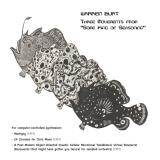



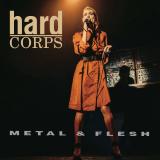






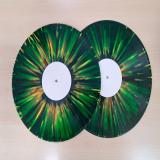


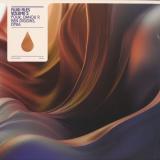
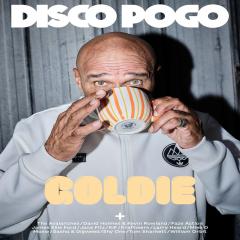
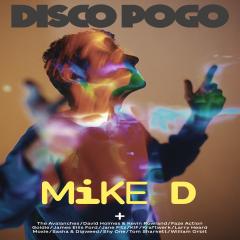








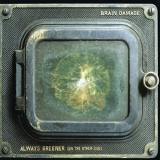
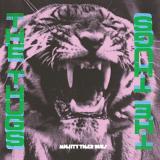




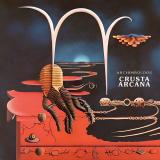














![Various - [QR]V.205.DTON.26](https://www.deejay.de/images/l/7/1/1248271.jpg)