“Dance Music That Hurts” — the motto of Work of Intent.
Hurts, because it goes straight to your heart.
There’s no better way to put it.
His productions are rooted in the UK underground,
dripping with both techno and pop sensibilities.
This is “big room” like you’ve never experienced it before—
music you can’t ignore, driven by storytelling and raw emotion.
He’s found a home on labels such as Monkeytown, Turbo, and REKIDS, and continues his relationship with Laurent Garnier’s COD3 QR .
Founder of the clandestine edit factory *Emotional Weaponry*,
he continues to receive support from industry heavyweights.
Former manager of *DAYTIMERS*, the UK-based collective championing
South Asian sounds, stories, and voices,
and a highly sought-after mix engineer for some of the UK’s most exciting prospects.
We’re beyond happy to welcome Roshan Chauhan aka Works Of Intent to the family.
Feels like the beginning of a long, dramatic love story.
Credits:
Written and produced by *Works of Intent*
Distributed by *One Eye Witness*
Suche:music works
Faitiche welcomes a new artist: Christina Kubisch belongs to the first generation of sound artists. Her practice ranges from performances, concerts, to works with video and visual art, but she is best known for her sound installations and electro-acoustic compositions.
TUNING brings together three pieces by Christina Kubisch from different periods of her oeuvre. What they have in common is the way they transform sound phenomena originally considered “non-music” into compositions.
Jan Jelinek: Gaming in Silence (2024) is the most recent work on this compilation. It’s a collage of electromagnetic waves, voice, and abstract sound textures. How did this combination come about?
Christina Kubisch: Gaming was commissioned as a fixed-media composition for the Sound Dome at ZKM Karlsruhe. Since Resonances: The Electromagnetic Bodies Project (2005), I’ve been making recordings in the old and new server rooms at the ZKM and in their permanent collection of historical computer games. Computer games like Asteroids (Atari, 1979) and Poly-Play (VEB Polytechnik, 1986) have specially generated analogue electromagnetic waves that interest me in particular on account of their density, rhythms and textures. I originally studied painting and to me the work of composition often feels like painting an abstract picture. I alter my source material as little as possible, layering and overlapping until a distinctive sound space emerges. In recent pieces, I sometimes combine magnetic waves with field recordings or live instruments. In Gaming it’s my recording of a Chinese song about silence.
JJ: Two persons walking through a street in Madrid (2004) is a recording from your Electrical Walks series. Here we should give a brief explanation of one of your best known works: participants in an Electrical Walk move through public spaces wearing prepared headphones that allow them to receive electromagnetic waves from their surroundings – for example from security gates, ATMs or neon signs. They discover a situation that normally is inaudible to the human ear and they can actively shape it by choreographing their movements. I really admire this piece, not least because there’s no clear dividing line between participants and artist. What exactly do we hear in Two persons walking through a street in Madrid (2004)?
CK: With this early work, I wanted to understand what is heard by people participating in an Electrical Walk in the same place but moving in different ways. The Spanish composer Miguel Alvarez-Fernàndez and I set off from opposite ends of a major shopping street in Madrid, met briefly in the middle, and then continued to the end. We both recorded our walks and I then layered them over one another. You might call it a work of electromagnetic conceptualism.
JJ: Diapason (2009 version) is an installation that plays a composition based on sounds from fifteen tuning forks. This setting is audible in the recording: there’s no dramatic arc, no beginning or end – instead, it recalls a piece of aleatoric music focussing on the decay phase. How did you come to make this work and could you tell us something about your compositional method?
CK: Diapason is part of a series of three pieces that deal with “non-instruments” or instruments that no longer exist: electrical mine bells used to send signals to the workers underground; a historical glass harmonica originally used for medicinal purposes; and tuning forks that were used by doctors to test people’s hearing. All of these methods are no longer in use. The sound of the tuning forks, audible only if held close to the ear, was recorded at the electronic studio at Berlin’s Technical University in such a way that even their decay remained audible. The frequencies range between 64 and 2048 Hertz and they can be adjusted at micro-intervals using small movable weights. The sequence and the duration of the pauses are dictated by chance and were not defined in advance. The 2009 version was created for an installation in the historic Holy Cross Church (Korskirken) in Bergen. Visitors could enter and leave the space at any time, deciding for themselves where and for how long they wished to listen to the sounds played back over an array of small loudspeakers placed on the floor of the apse.
Credits:
Gaming in Silence: commission of the ZKM/Hertzlab, Karlsruhe 2023
elektronic sound processing: Tom Thiel
sound engineering and mixing: Eckehard Güther
Diapason: produced at Elektronisches Studio of TU Berlin
rearrangement: Eckehard Güther
Christina Kubisch, published by Edition Christina Kubisch / Random Musick Publishing
image front: Transitionen 2021 by C. Kubisch, sonagrams of electronic waves (courtesy: Galerie Mazzoli Berlin)
image back: Diapason Tuning Fork, property of Folkmar Hein, Photo: Archiv Christina Kubisch
design by Tim Tetzner
mastered by Giuseppe Ielasi
Thanks to Miguel Álvarez-Fernández, Folkmar Hein, Dominik Kautz and Mario Mazzoli
Box Set[110,71 €]
Metaphon is pleased to present this première edition, which brings together a near-complete collection of the acousmatic works of Liliane Donskoy, recorded in the 1970s and 1980s.
Liliane Donskoy (*1933) is a French, classically trained pianist, music teacher, and composer of both instrumental and acousmatic music. She began her musical training at an early age, undertaking private piano studies with Yves Nat at the age of thirteen, shortly after the Second World War. During the 1960s and 1970s, she pursued advanced studies with prominent figures of twentieth-century music, including Darius Milhaud, Olivier Messiaen, Pierre Schaeffer, and Guy Reibel, and participated in courses led by Karlheinz Stockhausen, Luciano Berio, György Ligeti, and Iannis Xenakis.
Despite this extensive and diverse training, Donskoy encountered limited institutional and professional opportunities to fully realize her artistic vision. A decisive turning point occurred in 1977, when she gained access to the facilities of the Institute of Psychoacoustics and Electronic Music (IPEM) in Ghent. There, she realized and completed the majority of her acousmatic compositions.
Donskoy’s oeuvre is characterized by a high degree of structural complexity, precision, and expressive intensity. Her work reflects a pronounced and distinctive artistic temperament, manifested through a rigorous exploration of sound material and form. Notwithstanding its artistic significance, her music has remained largely unknown, as her compositions were neither widely circulated nor formally released, leading to their relative obscurity until the present publication.
slipcase edition[63,24 €]
Metaphon is pleased to present this première edition, which brings together a near-complete collection of the acousmatic works of Liliane Donskoy, recorded in the 1970s and 1980s.
Liliane Donskoy (*1933) is a French, classically trained pianist, music teacher, and composer of both instrumental and acousmatic music. She began her musical training at an early age, undertaking private piano studies with Yves Nat at the age of thirteen, shortly after the Second World War. During the 1960s and 1970s, she pursued advanced studies with prominent figures of twentieth-century music, including Darius Milhaud, Olivier Messiaen, Pierre Schaeffer, and Guy Reibel, and participated in courses led by Karlheinz Stockhausen, Luciano Berio, György Ligeti, and Iannis Xenakis.
Despite this extensive and diverse training, Donskoy encountered limited institutional and professional opportunities to fully realize her artistic vision. A decisive turning point occurred in 1977, when she gained access to the facilities of the Institute of Psychoacoustics and Electronic Music (IPEM) in Ghent. There, she realized and completed the majority of her acousmatic compositions.
Donskoy’s oeuvre is characterized by a high degree of structural complexity, precision, and expressive intensity. Her work reflects a pronounced and distinctive artistic temperament, manifested through a rigorous exploration of sound material and form. Notwithstanding its artistic significance, her music has remained largely unknown, as her compositions were neither widely circulated nor formally released, leading to their relative obscurity until the present publication.
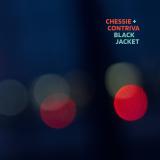
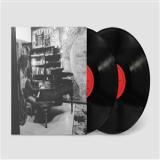
“Black Jacket” is a love letter between two bands separated by continents but united by mutual admiration. Contriva, of Berlin, and Chessie of Washington, DC, first came together in 2001 when sharing a stage, sparking a deep connection over their respective takes on textural, emotive, and mostly instrumental music that merges post-rock, ambient, and experimental elements into unique visions. Fast forward two decades and many trips to their respective studios and we now have “Black Jacket”, a double LP of musical alchemy that builds upon the expressionistic, idiosyncratic sounds of these two groups. A new classic that proves far greater than the sum of its parts.
Begun in the mid 1990's, Washington DC's Chessie is Stephen Gardner (also of noisy shoegaze pioneers, Lorelei) and Ben Bailes, whose various LP's for Slumberland's Dropbeat imprint and Plug Research pair abstract electronics and melancholy post-rock in search of the sounds and feelings of railways and train travel.
Berlin's Contriva, (Monika Enterprises, Lok Musik, and Morr Music) features Masha Qrella (known for her solo works for Morr Music), Max Punktezahl (also of Munich indie legends the Notwist and Berlin's Jersey and Saroos), Hannes Lehmann and Rike Schuberty. For over a decade beginning in the mid-1990's, Contriva crafted compelling instrumentals, grafting experimental textures onto beautiful and complex indie songs.
Together, the six of them have created “Black Jacket.”
José González has delivered a new album, Against the Dying of the Light, a companion and further meditation on the themes of his critically acclaimed album, Local Valley. Where Local Valley turned inward toward place, language, and personal reflection, this new record widens its gaze, becoming an urgent call to preserve the light of humanity with all its flaws, at a moment when, technology increasingly shapes how we think, feel, and relate to one another.
While José has always embraced technological advancement, he questions the assumption that every new possibility must be pursued to its maximum potential, especially when progress comes at the expense of human flourishing, attention, and empathy.
Keeping in the tradition of folk music as protest, José’s new single — sharing its title with the forthcoming album — urges listeners to resist systems that dehumanize and divide: “Disconnect from every algorithm, every perverse incentive that drags you down. Let’s rebel against the replicators, against the dying of the light. Kill the codes that feed the hate, keep the codes that make you thrive, celebrate the **king fact that we’re alive.”
Across the album, González works within a deliberately minimal framework, pushing his familiar palette to new heights through subtle variation, restraint, and detail. Each song unfolds with its own distinct character, proving how much emotional and musical range can be achieved within self - imposed limitations. Written in English, Swedish, and Spanish, the record reflects his Swedish - Argentine roots and frames its humanist message as a global one rather than a purely personal or political statement.
José González is one of the most quietly influential artists of our generation. The Swedish - Argentine artist has built a singular musical world from hypnotic, minimal guitar work and his unmistakably gentle voice — a sound that has become deeply personal to millions of listeners worldwide. With billions of streams across platforms and hundreds of thousands of physical records sold, González’s songs often act as emotional landmarks. Ask almost anyone, and they can name at least one of his tracks tied to a defining moment in their lives.
- A1: The O&Apos;Jays - I Love Music (Dave Lee&Apos;S Sweet Music Mix)
- A2: Patti Labelle - Music Is My Way Of Life (Dave Lee&Apos;S Funk In The Music Mix)
- B1: Earth, Wind &Amp; Fire - Can&Apos;T Let Go (Dave Lee&Apos;S Elevated Mix)
- B2: Cheryl Lynn - You Saved My Day (Dave Lee&Apos;S Tell The World Mix)
- C1: Gladys Knight &Amp; The Pips - Bourgie&Apos;, Bourgie&Apos; (Dave Lee&Apos;S Super Bourgeosie Mix)
- C2: Pockets - Come Go With Me (Dave Lee&Apos;S Found A Place Mix)
- D1: Phyllis Hyman - You Know How To Love Me (Dave Lee&Apos;S Extended Disco Mix)
- D2: Jean Carn - Time Waits For No One (Dave Lee&Apos;S Extended Disco Mix)
Remixed With Love has set the benchmark for disco reworks for over a decade, with Dave Lee universally recognised as the most trusted name in the field when it comes to respectfully updating dancefloor classics from the original multi-tracks.
With original vinyl editions long deleted and constant demand from DJs and collectors, this brand-new one-off, vinyl-only release has been made possible via a fresh licensing deal with Sony Music, allowing eight of the most requested mixes from the catalogue to be pressed together for the first time.
This is not a repress; it is a bespoke, limited selection, and once the pressing has sold through, it cannot be repeated.
- A1: Let It Hurt – 2:24
- A2: Dub, It Hurt – 0:54
- A3: My Moon – 3:05
- A4: Hang On Feat. Benji. – 3:32
- A5: Call Me Back Feat. Sadboi And Kabusa Oriental Choir – 2:56
- A6: Let Go – 3:02
- A7: Interlude 1 – 0:28
- B1: I Am What I Am What I Am – 2:39
- B2: I Dream, I Rush – 2:21
- B3: Interlude 2 – 0:53
- B4: Room333 Feat. Zacari – 3:01
- B5: Sodom And Gomorrah Feat. 36Birds – 3:34
* Edition of 500 colored vinyl (transparent purple)
* Artwork developed in collaboration with Paris-based visual artist Caroline Ventura
* Including download code
i got a song, it’s gonna make us millions is the highly anticipated new album by Sirens Of Lesbos, led by sisters Jasmina and Nabyla Serag. The dynamic release is a vibrant showcase of the group's expansive musical range, blending R’n’B/Soul, Afrobeats, electronic music, and lo-fi indie pop into a rich, genre-defying experience. With its eclectic sound and captivating melodies, the album solidifies Sirens Of Lesbos as a standout force in modern music.
Featuring on the album are the singles “Room 333” feat. Kendrick-Lamar-collaborator Zacari, a futuristic R’n’B song with progressive club beats; the epic “Call Me Back” (feat. Drake-co-signed rapper SadBoi and the Kabusa Oriental Choir); and dub-infused reggae song “Let It Hurt”, plus new song “My Moon”, which draws inspiration from artists like Bruce Hornsby, Justin Vernon, and Jai Paul. Sirens Of Lesbos have earned widespread acclaim from outlets like CLASH, COLORS, Dork, Tsugi and Earmilk, with BBC 1Xtra’s CassKidd calling the collective “magical.”
As Black women living in the diaspora, Jasmina and Nabyla navigate the intersection of their parents’ collectivist North-East African culture and the Western emphasis on individuality. Questions of identity have always been central to their journey. While society often demands clear-cut definitions, the sisters have come to embrace their multifaceted identities: “We have always been many things.”
Both artists are deeply rooted in the technical and philosophical dimensions of sound. Jasmina recently completed her Sound Arts degree, and Nabyla is now finishing hers. Their academic pursuits have included creating abstract sound installations in exhibition spaces. However, their focus for the foreseeable future is on elevating the Sirens Of Lesbos project, writing and producing standout indie pop tracks, performing live, and delivering unforgettable experiences for their audiences.
—
The vinyl version of i got a song, it’s gonna make us millions is published by Präsens Editionen, a Switzerland-based publishing house and music label. Founded in 2011 in the process of launching zweikommasieben Magazin, Präsens Editionen has since released music on vinyl, cassette, CD, and digital formats—alongside magazines, books, and other printed matter. Recent audio releases include works by Martina Lussi, spalarnia, Magda Drozd, Anom Vitruv, Belia Winnewisser, and Red On, among others.
2025 Reissue.
Münchenbuchsee, a suburb of Bern, Switzerland. Stephan Eicher is the youngest of three children. His father, a radio and TV repairman, is also a jazz violinist and a sound tinkerer in his spare time. In the family home's converted fallout shelter turned studio, Mr. Eicher experiments with homemade sequencers, tortures handcrafted drum machines, and abuses reel-to-reel tape recorders—all under the fascinated gaze of young Stephan.
The boy quickly develops a musical curiosity, exploring sound through various experiments and wanderings. Alongside his younger brother Martin, Stephan crafts audio plays on a homemade multi-track recorder (essentially several cassette decks hooked together!), which they write, record, add sound effects to, and perform for family and friends. Just a couple of nice kids, really...
Then comes 1972, and Lou Reed's Transformer album changes everything for the Eicher kids. For 13-year-old Stephan, it's a revelation—especially "Vicious", the opening track, which he plays on repeat for months. He convinces his father to buy him an electric guitar. Not stopping there, his father also builds him a tube amp using an old radio.
Then comes adolescence. A rough one. Stephan leaves home at 16 and moves to Zurich. With obvious artistic talent, he persuades his art teacher to help him get into F+F, a radical, alternative art school—despite his young age. Accepted, he starts learning video techniques, determined to become a filmmaker.
At F+F, Stephan organizes Dada-style happenings and concerts with a group of friends known as the Noise Boys. Among them: one of his teachers on bass, Veit Stauffer on drums (who would later found ReR/Recommended Records), his girlfriend Sacha on vocals, and Stephan on guitar. In one of their early performances, they release a remote-controlled mouse covered in dull razor blades into the audience to create panic and chaos. Keeping with this aggressive, confrontational spirit, they once played a concert while wearing headphones blasting Tristan and Isolde, trying to perform their own songs simultaneously—to maximize the cacophony. The goal was always the same: clear the room.
Their “songs,” if you can call them that, followed suit. Take "Hungeriges Afrika", for instance—performed entirely with power drills and some drum feedback.
To make ends meet, Stephan returns to Bern on weekends to work as a waiter at the Spex Club, the city’s main punk venue. On September 16, 1980, during a show by proto-electro group Starter, the police raid the club and arrest everyone. Stephan, who manages to avoid arrest, seizes the opportunity to “borrow” Starter’s gear left behind. He suddenly finds himself in possession of a Roland Promars synth, a Korg MS20, and a gorgeous CR78 drum machine, which he runs through a Big Muff distortion pedal to get that perfect gritty sound.
He then sets out to reinterpret some Noise Boys tracks, reworking them during impromptu sessions recorded on a dictaphone (yes, a dictaphone—now the lo-fi sound makes more sense, doesn’t it?). He ironically titles the resulting cassette "Stephan Eicher spielt Noise Boys" ("Stephan Eicher plays Noise Boys"). This gem features seven tracks, which are the ones reissued here.
Back in Zurich, he visits his friends Andrew Moore and Robert Vogel, who have a DIY cassette duplication setup. They make 25 copies of Stephan Eicher spielt Noise Boys for Stephan and his friends. Robert encourages him to visit Urs Steiger of Off Course Records and play him the tape.
Without much hope, Stephan shows up at Urs’s office. But Urs is instantly hooked and suggests releasing a 7” single. Due to space constraints, they reluctantly drop two of the seven tracks ("Hungeriges Afrika" and "One Second"). As for the musical score featured on the cover—it was randomly chosen and remains a mystery to this day. Calling all music theory nerds!
The 7-inch is pressed in 750 copies and released in the first week of December 1980—a date Stephan remembers well, as it’s the same week John Lennon was killed. Smartly, Urs sends a promo copy to François Murner, Switzerland’s answer to John Peel, who hosts a show on alternative station Sounds. Murner falls in love with the record and starts giving it airtime. To Stephan’s surprise, sales follow—and people actually seem interested in his music.
Even this modest underground success scares Stephan a bit. He stops making music for a year and moves to Bologna, where he works as a programmer at Radio Città, a feminist radio station.
Meanwhile, Stephan’s younger brother Martin, who’s also involved in the punk scene, joins the band Glueams as a singer and guitarist. Glueams, named after the fanzine run by two of its members (drummer Marco Repetto and bassist GT), eventually rebrands as Grauzone. Stephan is invited to their shows to project hacked Super 8 visuals live on stage.
Urs Steiger, now working on a compilation titled Swiss Wave – The Album, asks Grauzone to contribute alongside bands like Liliput, Jack and the Rippers, The Sick, and Ladyshave (Fall 1980).
For the album, Martin tasks Stephan with producing their recording sessions. Under Stephan's artistic direction, two tracks emerge: "Raum" and "Eisbär". During "Eisbär", Martin plays a minimalist bass line borrowed from post-punk band The Feelies (just an open string). Drummer Marco Repetto struggles to keep time. Later that evening, unhappy with the takes, Stephan builds a four-bar drum loop from a ¼-inch tape and uses it instead of the flawed original. He then adds bleepy synths and wind sounds to complete the track’s icy vibe before handing it over to Urs.
The Swiss Wave – The Album compilation is released quietly at first, but things snowball thanks to "Eisbär", which eventually becomes a smash hit—selling over 600,000 singles.
Meanwhile, Stephan plays in a rockabilly band called SMUV (named after Switzerland’s social security agency) and begins producing artists, including the debut album of Starter (1981), which includes a more pop-oriented version of "Minijupe".
By early 1982, Stephan starts spending time with the post-punk girl band Liliput (formerly Kleenex). They’re older than him, and he happily drives them around in his Renault Major, acting as their roadie.
By 1983, Grauzone—signed to the major label EMI, which turned out to be a misstep—is falling apart. Stephan begins to pivot toward a more mainstream pop sound with his debut solo album Les Chansons Bleues.
But that... is already another story.
- A1: Eat Me!
- A2: Non Sugar Life
- A3: Welcome Vip
- A4: Sugar Life
- A5: Capone Gang Bege's Theme
- A6: Luffy's Feelings, Come Back Sanji!
- A7: Charlotte Pudding - Hidden Face
- A8: Sanji Moist Cigarette
- A9: Sanji's True Feelings
- B1: Germa 66 Transform!! Ver 1
- B2: Germa 66 Transform!! Ver 2
- B3: Badend Musical Ver 1
- B4: Badend Musical Ver 2
- B5: Soul Pocus “Song Of The Queen”
- B6: Katakuri's Theme
- B7: We Are! Reconciliation Ver
Whole Cake Island: Sweets and Dangers in an Unforgiving World! As Luffy and his crew face an Emperor, Big Mom, for the first time, they must join forces to save Sanji in the extravagant kingdom of Totto Land.
Composer: Kohei Tanaka
Kohei Tanaka has been a lyricist, composer and arranger for a multitude of animated works and video games, including Sakura Wars, Assassination Classroom and the One Piece saga, since its inception.
Royal Liverpool Philharmonic Orchestra, Dane Lam
The Backyard of the Village: Orchestral works by Xiaogang Ye LP
- A1: The Backyard Of The Village, Op. 89
- A2: The Memories Of Mount Jing Gang, Op. 97
- B1: My Faraway Nanjing, Op. 49
- B2: The Loquat In Five Colors, Overture For Orchestra, Op. 108
This Signum Classics release presents four orchestral works by Xiaogang Ye, one of the most prominent figures in contemporary Chinese music, performed by the RLPO under conductor Dane Lam.
Recorded in February 2024 at Liverpool Philharmonic Hall, the album brings together music inspired by Chinese history and personal memory.
- Sounds Of The Beach
- Le Leader Negatif
- Beats For Katie S. Rap Song
- Selection From First Techno Mix
- Love Theme
- Rubber Band Improvisation
- My Days Are Not Over For Me
- Experimental Jazz Piano B Latin (Improvisation)
- A Mixture Of Musical Styles
- The Five Louises (Experimental Opera)
- Dreams Of Being Viola
- Acid Rain
- Distribution
- Instrumental Extension Of Marching To War (Act 1)
- War Of The Martian Ghosts
- Dance In Homage To The Stars Shining At Night
- Foggy, Cloudy And A Little Windy
- Second Movement Of "Jazz Sonata
- Underscore Music Before Dissolution Of Being (Act 2) Instrumental
- Dissolution Of Being - Orchestral Version
- Recapitulation
- Butterfly Study In F# Minor
- Final Descent
- An Unusual Welcoming Parade
- Council Of Elders
- March To War
- War Of The Martian Ghosts
- The Aftermath
- Restoration
- Flourishing Cities Of Undead
- Recapitulation
- Dissonance Of Being
"Collected Works and War of the Martian Ghosts" ist die ultimative Sammlung von Aufnahmen der lebenden Chicagoer DIY-Legende Dr. Charles Joseph Smith. Es ist auch die erste Archivveröffentlichung von Sooper Records aus Chicago. Die Musik hier ist zum ersten Mal überhaupt für alle zugänglich. Diese 90-minütige Sammlung umfasst 30 Jahre von Charles' selbstveröffentlichter Musik, darunter Konzertklavier, elektroakustische Experimente, elektronische Beats, freie Improvisation und zwei Instrumentalversionen seiner sich weiterentwickelnden Science-Fiction-Oper "War of the Martian Ghosts" (eine elektronische Version von 2023 und eine Klavierversion von 2018). Diese Doppel-Vinyl-/Dreifach-CD-Sammleredition enthält ein umfangreiches Booklet mit 9000 Wörtern über das Leben und Werk des Künstlers sowie Gedichten, Interviews, Zitaten und 30 Archivfotos. Dies ist ein Stück Musikgeschichte Chicagos. Die bemerkenswerte Geschichte von Dr. Charles Joseph Smith beginnt mit der musikalischen Begabung eines stummen Kindes und der zielstrebigen Art und Weise, wie er dieses Talent förderte, um es zu seiner Lebensaufgabe und Daseinsberechtigung zu machen. Charles erzählt von dieser künstlerischen Reise in seiner Autobiografie ,The 88 Keys that Opened Doors", einem selbst veröffentlichten Buch, das ein Leben beschreibt, in dem Musik der wichtigste Schlüssel war (und immer noch ist), um die großen Herausforderungen durch Autismus-Spektrum-Störungen (ASD) zu meistern. Seine Karriere als Musiker startet in der Kirche, führt ihn in die internationale Konzertszene und endet schließlich in Chicagos experimenteller Underground-Szene, wo sie seltsame Früchte trägt. Auf diesem Weg hat Charles Joseph Smiths kompositorische Stimme populäre Musik von Pop bis Jazz, den Gospel der Kirche, den Kanon des klassischen Konservatoriums, moderne Tanzmusik und den regelbrechenden Experimentalismus der DIY-Subkultur seiner Stadt, in der er seit über 30 Jahren eine tragende Rolle spielt, aufgenommen und verarbeitet. Seit Mitte der 1990er Jahre tritt Charles auf, tanzt und verkauft seine selbst veröffentlichten Musik- und Schriftwerke persönlich, oft bei lokalen Shows, die er regelmäßig besucht. In Chicago ist er als lebendes Symbol für die Kraft der Musik und den beliebten Gemeinschaftsgeist im Herzen der DIY-Szene bekannt. Dies ist die definitive Sammlung seiner Originalaufnahmen - auch wenn es unmöglich wäre, die ganze Bandbreite der Musik, Poesie und Prosa des produktiven Dr. Charles Joseph Smith zu erfassen.
A GOOD FUN record, the new album from Lipphead – aka the collaborative NYC duo consisting of the producer Tony Simon (Blockhead) and Eliot Lipp – will be the group’s 3rd official full- length, having released the first two records via Detroit’s Young Heavy Soul label.
Lipphead’s music occupies the sweet spot between Blockhead’s groovy, sample-based hip- hop and Eliot Lipp’s upbeat electronic funk. The duo have performed live at select festivals throughout North America and are booked to tour this album, 17 dates in the US starting right after release, April 3rd. European/UK festivals are confirmed in the summer and are waiting to be announced.
The internationally renowned NYC producer Tony Simon—aka Blockhead—has released 15 albums over the past 15 years, including four acclaimed records for Ninja Tune and numerous production jobs including notable works with Aesop Rock. He is regarded as one of the modern masters of instrumental hip-hop and has more recently been releasing music on other platforms like Future Archive Recordings and Backwoodz Studios.
Eliot Lipp is an electronic musician based in Brooklyn, New York. His work was picked up by Scott Herren of Prefuse 73 (Warp Records) after Herren heard him working the club circuit. In 2004, Lipp released his first studio album, S/T, with Eastern Developments Music, a label owned by Warp Records. Lipp has also released music with Pretty Lights Music and his own label Old Tacoma Records.
“Our process for this album was very much "Take this, and add to it" . We both made beats and sent them to the other to add things to. Eliot would generally start the arrangement process and then I'd come in and give my two cents. Gotta say, these Lipphead albums generally come together seamlessly . We definitely have a simple flow and method as to how we create things together, even though the "together" part comes at the end.” - Blockhead
“This is definitely the goofiest record so far. I imagine Lipphead did a little too much doomscrolling between ‘From The Back’ and this one, based on all the meme samples sprinkled throughout.
One difference this time around was that we made way more music than what ended up coming out. It was tough to figure out how to fit it all on one LP, we’ll definitely have some leftovers to drop later on.” - Eliot Lipp
- 1: Bayou Sexual
- 2: The Long Way
- 3: Wet My Whistle
- 4: Enter The Ricola Man
- 5: Lightwork
- 6: Guano Be Startin’ Smethin’
- 7: Inbred & Butter
- 8: Candyman
- 9: Felix Navidaddy
- 10: Oh Face Killa
- 11: Mugsy Bogues
- 12: Castlegar
- 13: Virginity
blue vinyl[27,69 €]
A GOOD FUN record, the new album from Lipphead – aka the collaborative NYC duo consisting of the producer Tony Simon (Blockhead) and Eliot Lipp – will be the group’s 3rd official full- length, having released the first two records via Detroit’s Young Heavy Soul label.
Lipphead’s music occupies the sweet spot between Blockhead’s groovy, sample-based hip- hop and Eliot Lipp’s upbeat electronic funk. The duo have performed live at select festivals throughout North America and are booked to tour this album, 17 dates in the US starting right after release, April 3rd. European/UK festivals are confirmed in the summer and are waiting to be announced.
The internationally renowned NYC producer Tony Simon—aka Blockhead—has released 15 albums over the past 15 years, including four acclaimed records for Ninja Tune and numerous production jobs including notable works with Aesop Rock. He is regarded as one of the modern masters of instrumental hip-hop and has more recently been releasing music on other platforms like Future Archive Recordings and Backwoodz Studios.
Eliot Lipp is an electronic musician based in Brooklyn, New York. His work was picked up by Scott Herren of Prefuse 73 (Warp Records) after Herren heard him working the club circuit. In 2004, Lipp released his first studio album, S/T, with Eastern Developments Music, a label owned by Warp Records. Lipp has also released music with Pretty Lights Music and his own label Old Tacoma Records.
“Our process for this album was very much "Take this, and add to it" . We both made beats and sent them to the other to add things to. Eliot would generally start the arrangement process and then I'd come in and give my two cents. Gotta say, these Lipphead albums generally come together seamlessly . We definitely have a simple flow and method as to how we create things together, even though the "together" part comes at the end.” - Blockhead
“This is definitely the goofiest record so far. I imagine Lipphead did a little too much doomscrolling between ‘From The Back’ and this one, based on all the meme samples sprinkled throughout.
One difference this time around was that we made way more music than what ended up coming out. It was tough to figure out how to fit it all on one LP, we’ll definitely have some leftovers to drop later on.” - Eliot Lipp
The next chapter in Axis Expressionist Series. A collection of vinyl and limited digital releases, curated by Millsart, an alias of Jeff Mills, of his most eclectic and transcendent compositions that derive from his Every Dog Has Its Day project as well as new unreleased works.
Vernacular creations that fall off from the "other side" of the Electronic Music tree, this project is designed for the experienced Techno music listeners, and its goal is to reflect upon the pure artistry of the craft of storytelling. A realization between music and life. Whereas "dancing" is the goal of Dance Music, the goal of this music is about "reflecting on the complexity and simplification of life". Soundtracks for people in their evolutionary process.
NEIL ARDLEY – KALEIDOSCOPE OF RAINBOWS The Definitive 2LP Reissue of a Landmark in British Jazz Fusion
Analogue October Records proudly presents the long-awaited reissue of Kaleidoscope of Rainbows, Neil Ardley’s 1976 masterpiece, originally released on Gull Records. Produced by Neil Ardley and recorded at London’s famed Morgan Studios, the sessions were engineered and mixed by Martin Levan, capturing one of the most ambitious and beloved works in British jazz. Following the acclaimed reissues of Courtney Pine’s Journey to the Urge Within (AOR-001-ST) and Neil Ardley’s Harmony of the Spheres (AOR-002-ST)—both praised by the audiophile press including The Tracking Angle—this third release confirms Analogue October as one of today’s most meticulous and exciting reissue labels.
A Suite of Sound and Colour
Commissioned for the 1975 Camden Jazz Festival, Kaleidoscope of Rainbows is structured as a seven-part suite, each movement reflecting a colour of the spectrum. Ardley’s composition weaves together jazz improvisation, progressive rock energy, and orchestral elegance in one of the most imaginative British jazz recordings of the era. Featuring Ian Carr, Barbara Thompson, Tony Coe, Trevor Tomkins, and Geoff Castle, the album is a who’s who of the UK’s vibrant 1970s jazz scene.
Cut at Abbey Road, Pressed at Record Industry
For this definitive edition, Analogue October worked directly from the original Gull master tapes. Mastering was entrusted to Miles Showell at Abbey Road Studios, using his renowned half-speed process to extract every detail and dynamic from Ardley’s score. To give the music the headroom it deserves, the reissue has been expanded to a deluxe 2LP set, pressed on the highest-quality vinyl at Record Industry in Haarlem, Netherlands. The result is a presentation that finally does justice to the scope and brilliance of Ardley’s vision.
Deluxe Package – Restored from the Source
The artwork has been meticulously restored from the original film elements, ensuring a sleeve of unmatched vibrancy and fidelity. Inside, a 12-page booklet printed on heavyweight card features an in-depth essay on Neil Ardley and the making of Kaleidoscope of Rainbows, written by Jazzwise magazine editor Mike Flynn, alongside rare photographs from the period.
Curated and Produced by Craig Crane
As with every Analogue October release, Kaleidoscope of Rainbows has been curated and produced by label founder Craig Crane with a collector’s eye for detail and a deep respect for the music’s legacy. This reissue is not only the definitive vinyl edition of one of the great British jazz fusion albums—it also continues the label’s mission to restore and celebrate the most vital recordings of the era.
Neil Ardley’s Kaleidoscope of Rainbows—vivid, expansive, and timeless—returns as the essential edition for audiophiles and jazz lovers alike.
Retail-ready product description (short form):
Produced by Neil Ardley and recorded in 1976 at London’s Morgan Studios, engineered and mixed by Martin Levan, Kaleidoscope of Rainbows is a cornerstone of British jazz fusion. This definitive 2LP reissue, mastered at Abbey Road by Miles Showell from the original Gull master tapes and pressed at Record Industry (NL), finally gives the music the dynamic headroom it deserves. The deluxe edition includes restored artwork and a 12-page booklet featuring an in-depth essay by Jazzwise editor Mike Flynn.
- Glassworks: I. Opening Piece (Upright Piano Version)
- The Poet Acts (Music From The Motion Picture "The Hours")
- Truman Sleeps (Music From The Motion Picture "The Truman Show")
- Trilogy" Sonata: Ii. Knee Play 4 (From" Einstein On The Beach")
- Trilogy" Sonata: I. Dance (From "Akhnaten", Scene 3)
- Mad Rush The Hours (Music From The Motion Picture "The Hours")
Célia Oneto Bensaid reveals the full palette of the master of minimalism: original works, opera and film transcriptions, hypnotic flashes and introspective tenderness.
This album paints a sensitive and vibrant portrait of a composer in constant metamorphosis, for whom repetition becomes breath, emotion and light.
These resonances together form the true ‘Echoes’ of Philip Glass
[b] The Poet Acts (Music from the motion picture "The Hours") [Arr. for Piano Solo by Michael Riesman and Nico Muhly]
[d] "Trilogy" Sonata: II. Knee Play 4 (From" Einstein on the Beach") [Arr. for Piano Solo by Paul Barnes]
[e] "Trilogy" Sonata: I. Dance (From "Akhnaten", Scene 3) [Arr. for Piano Solo by Paul Barnes]
[f] Mad Rush The Hours (Music from the motion picture "The Hours") [Arr. for Piano Solo by Michael Riesman and Nico Muhly
DJ Support: Luke Una, Leftfield, Ewan McVicar, Optimo, Damian Lazarus, Jimpster, Hifi Sean, Lovefingers, Heidi Lawden, Justin Robertson, Damian Harris, Sean Johnston (ALFOS)
Electronic music icon Jon Dasilva continues to push forward into the future with “Sun Brings Joy”, alongside Swedish production compadre Skyskrapa and vocalist extraordinaire Donald Waugh.
Coming in a few different flavours, the Bass ID mix has already piqued interest on the socials... is it house? Is it techno? Is it bass music? Who knows, but Luke Una has already called it “the tune of the year”…
The package is completed with a remix from in demand genre bending dj/producer Spatial Awareness.
A mercurial producer, he has had a string of cutting-edge productions to his name spanning over two decades, on labels including Ellum Audio, Rush Hour, Soma, Mute, Deconstruction, Better Days, Eskimo, and many more. His early productions were considered seminal works, combining breaks, African influences, Acid and Bleep culture.
He is in the process of finishing a number of electronic projects for labels such as Balkan Vinyl, Mighty Force, I Love Acid and Hottwerk.
- 1: Aries
- 2: B E Elzebub S Tales R E Vise D
- 3: The Forge: Rebellowed
- 4: Analog Ue: Sc A L E D
- 5: Resurrection Of Yarak
- 1: K.k. Maximus
- 2: Yarak: R Eforged
- 3: Elster W E Rda N O Cturno
- 4: Sun Lick Revisited
- 5: Bovist
- 6: Fux
Here comes the first appearance on vinyl of Elf Bagatellen, a 1990 FMP classic from the legendary Schlippenbach Trio where the group achieved fever-dream beauty through self-imposed temporal limitations. The trio deliberately shaped the music, opting for more concise pieces rather than concert-length performances that had become standard practice. Those durational limitations clearly inspired them, bringing a jewel-like, compositional flow to many of the works, although even when the trio seems to be playing a tune in a piece like "Analogue: Scaled" the performance moves so rapidly into the next event any such notion is banished. And yet some of Schlippenbach's older themes resurface in abstracted ways, whether it's Pakistani Pomade's "Sun-Luck Night-Rain" appearing as quicksilver line in "Sun-Luck: Revisited" or Globe Unity's "The Forge" sneaking into "The Forge: Rebellowed." The concision of shorter pieces, including several solo works, arrive as a kind of fever dream in the usual context of free jazz. Schlippenbach Trio soon snapped back into its working methodology on its follow up album, Physics, in 1993, which further elevates the singularity of Elf Bagatellen. The album captured a different side of the trio and helped inform the modern classical tilt in European improvised music. Cien Fuegos is delighted to reissue this undeniable classic, making it available on vinyl for the first time ever, freshly remastered by Martin Siewert. Evan Parker - soprano & tenor saxophone - Alexander von Schlippenbach - piano - Paul Lovens - selected drums and cymbals This album was released as a cd on FMP 1990, remastering for vinyl by Martin Siewert 2025
'At the beginning of the 1960s, at the Berklee College of Music, Byard Lancaster met some feisty friends: Sonny Sharrock, Dave Burrell and Ted Daniel. It is easy to see why he rapidly became involved in free jazz. Once he was settled in New York, he appeared on Sunny Murray Quintet, recorded under the leadership of the drum crazy colleague of Albert Ayler.
'In 1968, the saxophonist and flutist recorded his first album under his own name: It’s Not Up To Us. The following year he came to Paris in the wake of… Sunny Murray. He would come back to France in 1971 (again with Murray) and in 1973 (without Murray for a change). This is when he met Jef Gilson, the pianist and producer who encouraged him to record under his own name again. On Palm Records (Gilson’s label), he would release four albums: Us, Mother Africa, Exactement and Funny Funky Rib Crib.
'Us, the first of the four records was recorded on November 24th, 1973 with Sylvin Marc on electric bass (a Fender… Lancaster?) and the evergreen Steve McCall on drums.
'On the album, the trio works from the John Coltrane model; free jazz shook up by the timely contributions of the bassist, followed by a mesmerizing atmospheric music. Then, Lancaster delivers a sinuous solo path, which is a reminder of his unique tone. On the album’s companion single, the trio launches into great black music of a different genre which would lead the clairvoyant François Tusques to claim that Byard Lancaster is an “authentic representative of soul/free jazz”, to sum up this is Great Black Music!'