By the time Chick Corea - the venerated 27-time Grammy winner and National Endowment for the Arts Jazz Master - went into Mad Hatter Studios in Los Angeles to record the third album with his Elektric Band, the lineup had been solidified through constant touring the previous year. Dedicated to his father Armando, a trumpeter who led a Dixieland band in Boston in the 1930s and 1940s, Eye of the Beholder reflected a tightening of the ensemble playing and a greater showcasing of the individual solo prowess of these consummate musicians.
With this fresh sounding five-star recording, it is clear that Corea was more open to showcasing this band’s collective muscle and individual virtuosity. The group rips, in no uncertain terms, on showcases like “Cascade, Part II,” “Trance Dance,” and the staggering “Amnesia.” There are experimental excursions into the kind of atmospheric, ambient music realms that Brian Eno pioneered on “Cascade, Part 1” and may be the most profound musical statement of the collection, on par with past Corea high points, “Beauty.”
Originally released on GRP Records in 1988, the album is a high-water mark for Corea and his Elektric Bandmates.
Buscar:musica sol y mar
Nach zwölf Jahren reich an Instrumental-Alben (von zwei Solo-Piano-Platten über Kammermusik bis hin zu gemeinsamen Alben mit Boys Noize, Jarvis Cocker und Plastikman und sogar einem Weihnachts-Bestseller) hat Chilly Gonzales sich eine Menge von der Seele zu schreiben. Die Notizbücher, die seit dem 2011 erschienenen orchestralen Rap-Opus 'The Unspeakable Chilly Gonzales' leer blieben, füllten sich seit Anfang 2022 wieder mit Worten, nachdem Gonzo ein langes Jahrzehnt der Psychoanalyse beendet hatte. Ein Zufall? Wohl kaum. Hinter all den Wortspielen und dem Namedropping (u.a. Ron Jeremy, Marie Kondo, Dschingis Khan und Philip Glass) offenbaren die Songs, die es auf das neue Album 'Gonzo' geschafft haben, eine anhaltende Spannung zwischen Überzeugung und Bekenntnis, Wahn und Selbsterkenntnis und schließlich Dankbarkeit. Auch das Spannungsfeld zwischen Kreativität und Kommerz ist für Gonzo ein Thema, das ihn schon lange beschäftigt. Ist dies wirklich ein Rap-Album? Instrumentalstücke wie das strawinsky-eske 'Fidelio' oder das tränenreiche 'Eau de Cologne' erinnern den Hörer an Gonzos selbsterklärte Rolle als 'musical genius', während sich die Worte und Reime der vorangegangenen Strophen im Ohr festsetzen.
Rotes 180g-Vinyl mit einem Einleger mit Artwork auf der einen Seite und einer Kurzgeschichte (auf Englisch) von Christian Kracht auf der anderen Seite
2024 repress
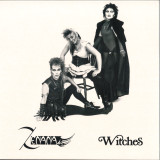
Rush Hour’s RSS series excels in unearthing buried treasure, offering a second chance for artists and releases that have long been overlooked. That’s certainly the case with ‘Witches’, the superb sole single by British 1980s wave trio Zenana.
Originally released on seven-inch by the tiny PRM label in 1986, ‘Witches’ was the product of a sister-brother songwriting team whose music was mostly recorded in the front room of a terraced house in Nanpean, a small industrial village in Cornwall, England’s most south-westerly county. While the single was infectious, impeccably produced and dancefloor-ready, it sold in limited quantities at the time.
Zenana’s story can be traced back to the early 1980s, when singer-songwriter Anita Tedder founded the all-female trio as a vehicle for her musical ambitions. To bring her songs to life, she joined voices with her brother Mike, an early adopter of electronic music who had built a studio – nicknamed MFR, short for ‘Mike’s Front Room’ – in his Cornish home.
Countless Zenana tracks were recorded at ‘MFR’ between 1984 and ’86, with the resultant demo cassette securing the band a management contract, a slew of live bookings, a video shoot and even a television appearance. Buoyed by this underground success, they headed to the remote Sawmills Studio in Cornwall – famously only accessible by boat – to re-record ‘Witches’, a song inspired by local folk tales of witches gathering near Mike’s home.
While this version of ‘Witches’ failed to make an impact at the time, it has become something of a cult classic following its’ rediscovery by crate digger Kiernan Abbott – and subsequent championing by other dusty-fingered DJs including Antal, Skyrager, Trevor Jackson and Luke Una – in early 2023. The buzz inspired Zenana to perform live again for the first time in decades, with the story of their surprise comeback being covered by British media outlets including the BBC and (more surprisingly) the Daily Mail.
Now presented in re-mastered form, ‘Witches’ is a genuinely slept-on gem. Propelled forwards by punchy drum machine beats, a killer synth bassline and fizzing keyboard sounds, the song benefits greatly from strong vocals and an extra-percussive middle eight layered with vocalisations, cosmic spoken word sections and swirling noises.
It comes backed by a brand-new extended ‘spell of love’ courtesy of Bristol duo Bedmo Disco, AKA music journalist Matt Anniss (author of Join The Future: Bleep Techno and the Birth of British Bass Music) and DJ/production partner Gareth Morgan. Anniss is a long-time friend of Mike and Anita Tedder who has fond memories of visiting Mike’s home studio with his family around the time that ‘Witches’ was recorded.
Working from Zenana’s original MFR eight-track recording (tapes of the single version were lost years ago), Anniss and Morgan have turned in the extended ‘dance mix’ the track never had first time around. More atmospheric, clandestine and dancefloor-focused, it offers authentic nods to New York proto-house, mid-80s Shep Pettibone dubs, and the pioneering synth-pop productions and dub mixes of Factory Records regular Martin Rushent.
Comparsa is the third studio release by the musical group Deep Forest. The group consists of the duo Michel Sanchez and Éric Mouquet and are known by composing a style of world music, mixing ethnic with electronic sounds and beats. Comparsa features a pronounced focus on Latin and Caribbean grooves, provided by musicians from Cuba, Belize, Mexico and Madagascar, among other places. It became #8 French export album of 1998 and was certified Platinum by SNEP Export Awards, with more than 500,000 albums sold outside France.
Isik Kural returns with Moon in Gemini, a luminous scrapbook of slow-flowing narratives couched in intuitive and symbolic storytelling. Bending a playful take on environmental music to the folk song form, Isik's vocals coo atop pastoral field notes, airy chamber instrumentation and archival recordings culled from a curious musical life. A tender pastiche coalesces across the suite of Moon in Gemini's fourteen pieces, and Isik invites the listener to daydream as-deep-as-possible. "The songs on Moon in Gemini don't mind being slower or taking their time to reach the listener," says Isik, who wanted the title to speak to the album's dreamy, liminal nature. "I enjoyed how the phrase could be used to describe an object, a time or a place simultaneously," he explains. Similarly and subsequently, these songs contain a multiplicity of sonic artifacts, moments and spaces that span Isik's rich musical career to date. With the bulk of the album realized between Amasya, Turkey and Isik's current home in Glasgow, in both domestic and studio recording environments, additional tracks unearthed from his personal recording archive lend their lush patina. The record emerged as a fertile space to reimagine a handful of previously unreleased songs and unfinished ideas spanning the past fifteen years of his life and work, including streetside sounds documented while growing up in Turkey and recordings made while studying music engineering in Miami, Helsinki and Glasgow. Looking to the more recent past, Isik found himself wanting to build upon some of the methodologies and textures explored on his 2022 album in february, seeking a newly intimate, vocal-forward sound. He points to the track "film festival" from that album as a door through which to enter Moon in Gemini, where sample-based arrangements are presented in the context of asymmetrical "build ups and progressions" and ambience and vocals intertwine. Inspired in part by listening to iconic, if not sometimes misunderstood, singers such as Nina Simone, Aldous Harding and Ed Droste of Grizzly Bear, Isik aimed to carve out a new space for his voice on Moon in Gemini, experimenting with novel recording and mixing techniques. Captured at his aunt's farmhouse in Amasya during an extended three week recording session, we find Isik's vocal high in the mix, front-and-center and on newly expressive terms. As a songwriter, Isik is an intuitive and playful lyricist who allows his deep love of literature to flow through his off-kilter texts. Here, echoes of Silvina Ocampo's poem "Dialogues of the Silence" reverberate from the margins of "Most Beautiful Imaginary Dialogues". Likewise, Elliott Smith and Virgina Astley shapeshift through "Behind the Flowerpots," some lines of which were based on misheard lyrics from Smith's "Stickman" and Astley's "Some Small Hope." Attuned to the magic of happy coincidences, other unexpected "themes and connections between tracks flourished" during the recording process, resulting in some songs being more "thematically and lyrically connected to each other compared to previous records." The duos "Prelude" and "Interlude" as well as "Grown One Iota" and "After a Rain" explore connected stories, while "Almost a Ghost" and "Behind the Flowerpots" serendipitously emerged out of a conversation with Stephanie "Spefy" Roxanne Ward, whose balmy vocals heard highlighting in february return and call out to Isik's in sweet dialogue. Plumbing these new potentials of structure and songwriting, Isik also developed a taste for an expanded sonic palette, one enriched by the lulling undertones of live woodwinds and strings. The resulting collaborations with flutist Tenzin Stephen, harpist Kirstin McCarlie and clarinet player Giulia Tamborino envelop the record in an altogether "dreamier sound," swaying pastel and awash in lunar light. Moon in Gemini, brimming with natural imagery and lullaby-inflected tones, tunes into states of being where the wonder filled sound of everyday is heard and felt, perfectly imperfect in its poetry; where the invisible steps forward; where dauntless ghosts wait around every corner and play enriches the soul; where bird song fills sun-soaked afternoons and carries us on its wings into each enchanted evening. Isik Kural's Moon in Gemini will be released on vinyl, Japanese import CD, and digital editions on September 6, 2024. On behalf of Isik and RVNG, a portion of the proceeds from this release will benefit Mor Çaty Women's Shelter Foundation, whose social work at their solidarity centers and shelters supports women building lives unhindered by gender-based discrimination and male violence under free and equal conditions.
Reissue
'Find Me Finding You', the new album from the new organization called the Laetitia Sadier Source Ensemble, manages to strike new chords while touching familiar keys in the song of life.
From its percolating opening beat, 'Find Me Finding You' locates new systems within the sound-universe of Laetitia Sadier. This in itself isn't a surprise - Laetitia has relentlessly followed her music through different dynamics and into a variety of dimensions over the course of four solo albums since 2010 (not to forget her three albums with Monade and the long era of Stereolab) - but the nature of the construction here stands distinctly apart from her recent albums. Laetitia was inspired by a mind's-eye envisaging of geometric forms and their possible permutations. As she sought to replicate the shapes in music, this guided the process of assembly for the album.
Part of the freshness of 'Find Me Finding You' comes from working and playing within the Source Ensemble and exploring new sound combinations via a set of youthful and evolving musical relationships. Laetitia recognized the energy of the tracks in their initial form and sought to preserve their vitality by not retaking too many performances - instead, the rawness in the tracks was retained and refined at the mixing stage, maintaining an edge throughout. When we hear synth lines diving, lifting and drifting, unusual guitar textures, the plucked sound of flat wound bass strings or the bottomless pulsing of bass pedals stepping out of the mix with an exquisite vibrancy, this is the sound of the Source Ensemble.
A key to Laetitia's music is her use of vocal arrangements. Throughout 'Finding Me Finding You' the shifting accompaniment creates space to bring this element gloriously forward. Arranged by Laetitia with Joe Watson and Jeff Parker making string charts that were subsequently transposed to vocal parts for several songs, richly arranged choirs of voices provide depth along with the thrilling presence of extra breath in the sound. Laetitia's community-politic is well-served by the groups of voices lending support to the machining of the song craft, providing additional uplift to her quintessentially forward-facing viewpoint - as well as massed voices from three different countries sharing space in harmony.
Working in collaboration is Laetita's tradition and a key to this album's view on being free together. The designation of Source Collective implies a new togetherness phase, alongside long time collaborators Emmanuel Mario and Xavi Munoz, keyboard and flutes parts played by David Thayer (Little Tornados) were essential contributions, as well as further keys, synths and electronics from Phil M FU and several intense guitar sequences from Mason le Long. Chris A Cummings (aka Marker Starling, Laetitia's favourite composer) graciously wrote 'Deep Background' for her. The duet with Hot Chip's Alexis Taylor on 'Love Captive' (not to mention Rob Mazurek's distinctive coronet playing) gives voice to an ideological cornerstone of 'Find Me Finding You'
Between December 2022 and January 2024, the collective De Niemanders (producer Rick Wiegerinck joined the team) visited asylum seekers' centers in the Netherlands with a mobile studio, searching for singers, musicians, and their music and stories. The music sessions were mostly filled with pure joy, while the conversations were heavy, hopeless, hopeful, cheerful, and everything in between. The collective connected with creative individuals from all over the world, who in turn introduced them to even more artists, writers, and storytellers. Rocco, Wout, and Rick quickly realized that they needed to offer more than ‘just’ the music album as a platform, so a completely unique Niemanders newspaper was born, and journalist Christianne Alvarado joined for a six-part podcast series.
Following their instincts, they created a new Niemanders album that became a genuine collaboration between the people they met and themselves. A significant difference from the prisons was that this time, the singers and musicians could be recorded in a mobile studio. As a result, the album is a mix of many singers and languages, telling the stories of their journeys, dreams, families, past lives ‘back home,’ and their current situation as refugees. There are songs inspired by the stories that residents of asylum seekers' centers told or wrote down, sung by Rocco, while other tracks emerged from writing sessions with singers Isma IP, Guy-El Mabiala, Q-Mars, and Hamid Reza Behzadian, and are also sung by them. The song material is a creative melting pot of colorful music that ranges from swinging afrobeat, highlife, desert rock, and rootsy psychedelia, but the alternative rock for which Ostermann and Kemkens are known also seeps through. You could say that, with few exceptions, each song is a film soundtrack for the text.
Unfortunately, the harsh reality of asylum procedures also intruded into some of the blossoming musical friendships. Due to a negative decision by the Immigration and Naturalization Service (IND), one of the great singers was forced to leave the Netherlands. This is just one example of the lack of control over—and the nerve-wracking wait for—an IND decision, which unfortunately seems to be something every person in an asylum procedure must endure. The asylum process can bring years and years of uncertainty and waiting, or sudden deportation.
Typically, a band's big indie label debut doesn't come 15 albums into its career, but with Constant Smiles' Paragons, here we are. Primary songwriter and sole "constant" member Ben Jones_who considers Constant Smiles a collective_sees its impressive output as a way to document the group's evolution. Since its live debut as a noise duo on Ben's home of Martha's Vineyard in 2009, Constant Smiles has grown to include contributions from 50 other members, all of whom have personal connections to the group's extended family. And while the collective has indulged an array of musical whims along the way - including Ben's penchant for penning a new set's worth of material for each live performance - Constant Smiles' sound has tightened up considerably over their past couple of albums, in large part as a result of Ben's working relationship with Mike Mackey, who has become his main creative partner. This increased focus manifests on Paragons in the band's most cohesive batch of songs to date, ranging from shimmering psych-pop excursions to bittersweet, piano and string-accented strummers, and an execution that feels like a massive step forward for the band. Through its recent forays into dream pop and shoegaze (Control) and synth-pop (John Waters), Constant Smiles has learned how to incorporate its experimental inclinations more fluidly into the mix. Artists like Yo La Tengo, and the more recent Rat Columns, are good touchstones for Constant Smiles' musical approach - tethering to an indie-pop core while perennially mining genres, always finding new ways to intrigue listeners and pursue a unique vision. Paragons was produced and engineered by Ben Greenberg in the last two weeks of December 2020 at Gary's Electric, with additional recording done by Ben Jones at his home studio, The Void, and his Aunt Leanne's house. The album was mixed at Circular Ruin Studio and mastered by Josh Bonati. The band on Paragons consists of Jai Berger (who performed "Introduction"), Spike Currier (bass and synth), Matthew Addison (drums), Emma Conley (violin), Nicky Wetherell (cello), Adam Lipsky (piano), and Ben Greenberg (guitar and Mellotron).
Having established himself as one of the most energetic and exciting Jazz musicians within the already thriving worldwide scene, New Zealand born, London based Drummer & Producer Myele Manzanza has made a major impact upon the global music landscape.
A founding member of Electric Wire Hustle, Myele has released five solo albums, and racked up tours and collaborations with Jordan Rakei, Theo Parrish, Miguel Atwood-Ferguson, Recloose and Amp Fiddler amongst others . Myele has developed a strong live presence in his new London base; his quartet has shared stages with the likes of Hiatus Kaiyote, The Bad Plus, Alfa Mist, and drawing packed houses to top venues such as The Jazz Café and Ronnie Scott’s. Last year, the first two instalments of his 'Crisis & Opportunity’ record series saw him garner praise from Mary Anne Hobbs, Cerys Matthews, Jamie Cullum, Huey Morgan, The Guardian, Complex, Jazz FM, Lefto, Worldwide FM, Jazzwise and more.
Following the release of his last offering, a chance conversation between Myele and a young Barista at a local coffee shop occurred - their topic (centred around the trials and tribulations of following your musical passions) sent Myele down a spiralling path of internal reflection, spawning a new lease of creative energy and examination of new ways to approach his craft. The third addition to the heralded series, ‘Crisis & Opportunity Vol.3 - Unfold’ sees Myele change his approach from drummer / improviser, altering his sonic output to a more electronic dance music output, opting for a more producer / beatmaker focussed role. Sharing production duties with Lewis Moody (Zeitgeist Freedom Energy Exchange) and taking a more producer / beatmaker focussed role. His initial instinct was to create music that could be played in a club, but also incorporate elements music of the Jazz and technical musicianship he’s renown for.
Articulating his thoughts on the record’s genesis, Myele explains: ‘‘As the process developed, I was also drawing a lot of inspiration from vocal driven soul, RnB and songwriter-driven music to a point where I had lit a new creative fire. Reconsidering the direction of the album, I was left with the creative question “What broader ranges of emotion might my music be able to access, and what kinds of art could be made possible if I were to open up my music to hold space for singers and for stories?”
First single ‘Silencing The Sun’ features the vocal talents of fast-rising fellow Kiwi artist Wallace, whose spectral tones glide gracefully over the pulsating rhythm section and twinkling keys. On second single ’Therapy’ UK Soul royalty Omar weaves his trademark magic over a solid 4/4 beat, soulful key stabs and lush synths, bottling lightning into dancefloor alchemy. Final single ‘Unfold’ sees Rachel Fraser deliver a delicate and introspective vocal performance over stripped back instrumentation as cold, angular electronics juxtapose the warmth of piano keys and sweeping strings. With a wealth of additional incredible talent (such as China Moses and Rosie Frater Taylor) enlisted to further compliment the record’s grainy synth textures, emotive chord changes, driving low end sonics and expressive percussion, the scene is set for a beautiful, shifting and engaging listening experience.
- A1: Thats How It All Is (Feat Kevin Mark Trail)
- A2: Dumplings For Dinner (Feat Omar)
- A3: Long Road
- B1: No Crime To Try
- B2: Work It Out (Feat Ange Williams)
- C1: Clearer Skies (Feat Kevin Mark Trail)
- C2: Sherwood Ave (Kitchen Party)
- C3: Everything I Have To Give
- D1: That Love (Feat Louis Baker)
- D2: Some Kind Of Blockage
Black Vinyl[30,88 €]
The records is released in two options. Both hvae 180g vinyl records. The first version has two black vinyls and the second limited edition (numbered 100 pieces) has one turquoise vinyl and the other red.
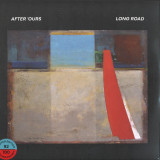
Over the last three decades, Auckland, New Zealand, has given birth to several generations of musicians, DJs, and producers who operated within the interzone between jazz, blues, soul, funk, Latin music, hip-hop, house, boogie, and broken beat. Across two slow-cooked albums that sit at the intersection of machine funk and vivid live instrumentation, Odyssey (2016) and their forthcoming sophomore release Long Road (2024), After 'Ours - the group project of pianist and composer Michal Martyniuk and drummer, guitarist and producer Nick Williams - have comfortably located themselves within this antipodean tradition.
Born and raised in Auckland, Nick Williams grew up surrounded by music from a young age. At home, his mother, Mary Anne, a record collector and DJ with deep, diverse vinyl crates, kept his ear sharp. By the time he was eight years old, he was regularly joining his musician father on stages across Australia in his blues rock band Slippery Sam. In his early twenties, Nick began leading the eleven-piece Auckland Latin-dub-funk fusion big band Tangent, who performed regularly until the late 2000s.
Michal Martyniuk, on the other hand, grew up on the opposite side of the world in Szczecin, Poland. After playing classical music for twelve years and attending jazz school, he relocated to New Zealand with his family in his teens. While studying at Auckland University Jazz school, Michal came into the orbit of the legendary New Zealand saxophonist, composer, producer, and band leader Nathan Haines, who brought him into the same world as future collaborators like Tama Waipara, Batacada Sound Machine, Sola Rosa and Nick.
Inspired by the rich stories of jazz, neo-soul, electronica, and dance music from both sides of the Atlantic Ocean and the open-eared Auckland scene they emerged from, After 'Ours formed in 2011. Born out of a friendship cultivated through playing together at bars and nightclubs around town and home studio sessions. "Nick had family and work, so I had to wait all day," Michal says. "We'd come to the studio at 10 PM and go till 3 AM. That's how we came up with the name.
Session by session, After 'Ours revealed itself to be a creatively fertile meeting of minds. "We both have our angles, but it works well in the end," Nick reflects. "It takes the music to a place we can't get to by ourselves."
Between 2011 and 2016, they wrote and recorded Odyssey with a cast of musical collaborators that included KP, Sharlene Hector & Kevin Mark Trail (UK), Matt Nanai, Nathan Haines, Jakub Skowronski, Nick's partner Ange Williams (nee Saunders) and British producer Mike Patto from the lauded UK future jazz group Reel People. Influenced by the smooth yacht rock of Steely Dan and Donald Fagan, the warm midtempo bounce of A Tribe Called Quest and J Dilla, and the complex jazz/RnB bop of Robert Glasper, Odyssey was a labour of love that emphasised community, warm-hearted hospitality, and care.
Seven years on, they're finally ready to return with Long Road, an album that contains some of their best work yet. As well as reconnecting with past collaborators Kevin Mark Trail and Ange Williams, Long Road sees After 'Ours calling on assistance from Louis Baker, Jakarta-based saxophone player Kuba Skowroński, bassist Dan Antunovich, Los Angeles-based drummer Chris Bailey and the journeyman British soul artist Omar Lyefook.
Across ten songs that plot a stargazed course through their antipodean spin on UK broken beat, jazz, modern soul, and blues rock, Nick and Michal build on everything they learned while writing and recording Odyssey. In the process, they take their joyful musical visions to sublime new heights.
"Even God Has A Sense Of Humor" is the long-awaited follow up album to Maxo's critically acclaimed 2019 release Lil Big Man. Across the 14-tracks, Even God Has A Sense Of Humor pays tribute to the mercurial nature of life and includes features from Liv.e, keiyaA, LastNameDavid, and Melanie Charles along with the previously released singles "Free!," produced by Dev Morrison and "48," produced by Madlib and featuring Pink Siifu. The FADER recently sat down with Maxo to discuss the album, which they described as having "a defiant glow, like a bronze statue still standing after an intense tornado."
Born Maxamillian Allen, Even God Has A Sense Of Humor finds Maxo earnest, full-hearted, and lyrically agile. His delivery punches as he poetically unpacks the trials and blessings that have marked the last three years since Lil Big Man, his stirring and meditative debut album. “Life is always gonna be life-ing,” Maxo says, speaking to the spiritual lessons that inspired this new project and an album process that has revealed to him the many ways in which he’s divinely protected.
The album’s striking cover features three casted sculptures of Maxo by legendary NYC-based artist artist John Ahearn, photographed by the rapper’s friend Steven Traylor. The image both preceded the music and set the tone for the record’s overall aura. Experiencing the casting process—which required long periods of stillness for form, and breathwork to avoid claustrophobia—became a metaphor about ego death for Maxo. “I had to go to a space where I was just not there,” he says. As the molding was poured over his body and the voices of those in the room became distant, Maxo’s inner world came into focus. “By the time it hardened, it seemed like the sculpture had risen to be 20 feet above where it was first— almost like it grew tall,” he explains. EGHASOH, in its aural ebbs and flows, honest questioning, profound revelations, and elegant verse, is Maxo standing spiritually tall following a period of challenges with family and friends.
Maxo’s writing process has always been rooted in imagery, observation, and capturing moments. Growing up in Southern California, Maxo spent a lot of time combing through old family photo albums, some of whose contents have become the artwork for prior releases. But his fascination with visual memento is less about nostalgia or remembering, and more about exploring concepts of growth, healing, and cycles. His artistry is intentional and deeply sensitive: “If I’m not feeling it, I’m not gonna record.” While his past records openly grappled with emotional turbulence, anger and depression, EGHASOH is Maxo’s acceptance stage: “I can't really judge nothing. I can't sit up and be mad at shit because everything is, everything is kind of coexisting,” he says.
Musically, EGHASOH is an impressive evolution from Maxo’s earlier, unornamented lo-fi projects. With an emphasis on jazzy instrumentalism and soothing, intricate vocals from both the artist and featured chanteueses Liv.e, Melanie Charles, and keiyaA, EGHASOH is a welcome and beautifully complex sonic effort. Its contributors include a range of musicians: Pink Siifu, LastNameDavid, Madlib, GrayMatter, Karriem Riggins, Beat Butcha, Lance Skiiiwalker, and more. The album was executive produced by Mount Kimbie’s Dom Maker.
“Nobody talks about the fact that we’re changing as we get older... Everybody just acts like you supposed to know,” Maxo says on album standout, “Face of Stone”. It's moody bassline meets a cinematic accordion melody that paradoxically both broods and uplifts—a fitting production choice that mirrors the song’s story. “I’m seeing how this world is chipping you and withering your bones,” Maxo says. “I’m talking about myself, talking about my bro. But it’s never nothing you gonna do that’s a one stop shop in this life. You gotta keep staying diligent and consistent.” For Maxo, Even God Has a Sense of Humor is nothing more than another moment on the timeline of his offerings of self-expression as an artist—one whose sole intention is to, in his words, develop as a human being and heal.
2024 REPRESS
Fourth corner. Physically, it's where four states in the U.S. come together at one singular point. Symbolically, it's where the four great rivers in China come together as one. Or, it could be the cycle of life during the four seasons of the year. For Trixie Whitley, it's a metaphor for trying to find balance and belonging from the songs that make up her scintillating debut album, Fourth Corner.
Whitley burst into public consciousness in 2011 as the lead singer of Black Dub, super-producer Daniel Lanois' (U2, Bob Dylan) project, blowing people away with a voice and presence beyond her now-25 years.
And it's that voice: an emotional, blues-drenched instrument that ranges from a lilting slap to a knock-you-backwards uppercut. On Fourth Corner, Whitley explores the range of human emotion in another set of four: utter love, total rage, unadulterated happiness, and crippling loneliness. "It's those elements of life I keep coming back to," she says. "Both as a person and musically as well."
Recorded in New York with producer/keyboardist Thomas Bartlett (aka Doveman, who's also worked with Glen Hansard, Antony and the Johnsons, Grizzly Bear and the National) engineer Pat Dillett (David Byrne, St. Vincent, Mary J. Blige), and string arrangements by Rob Moose (Antony, Bon Iver), aching songs like "Need Your Love" have Whitley working from a spare beginning that explodes into a blossom dripping with pleading vocals and delicate piano. On tracks like the sassy "Irene" and the sinister "Hotel No Name," Whitley lays down a snarling guitar line on top of scuzzy beats while her voice veers from defiant to remorseful.
It's a tantalizing mix of sounds that can come only from someone who says: "I'm from everywhere but have never felt like I belong." Whitley lived a nomadic life: born in Belgium, she split her time growing up there and in New York but also frequently visiting family in France, Texas, and Mexico. Her mother came from an artistic European gypsy family, filled with musicians, painters, writers, and sculptures, while her father, renowned singer-songwriter Chris Whitley, thrust her into the world of music as a toddler when she joined him onstage in Germany at age three.
After a few years of touring and recording experience with some of the most inspiring artists around, Trixie is ready to presenther anticipated first solo full length.
"I'm psyched and petrified," says Whitley in her archetypal wide-eyed wonderment mixed with a fierce determination. "As a songwriter, I want to go to places people don't expect and with that is complete freedom of expression." Perhaps that place is another version of a fourth corner: something spiritual perhaps, certainly emotional, but most definitely real.
- A1: Thats How It All Is (Feat Kevin Mark Trail)
- A2: Dumplings For Dinner (Feat Omar)
- A3: Long Road
- B1: No Crime To Try
- B2: Work It Out (Feat Ange Williams)
- C1: Clearer Skies (Feat Kevin Mark Trail)
- C2: Sherwood Ave (Kitchen Party)
- C3: Everything I Have To Give
- D1: That Love (Feat Louis Baker)
- D2: Some Kind Of Blockage
Color Vinyl[35,71 €]
The records is released in two options. Both hvae 180g vinyl records. The first version has two black vinyls and the second limited edition (numbered 100 pieces) has one turquoise vinyl and the other red.
Over the last three decades, Auckland, New Zealand, has given birth to several generations of musicians, DJs, and producers who operated within the interzone between jazz, blues, soul, funk, Latin music, hip-hop, house, boogie, and broken beat. Across two slow-cooked albums that sit at the intersection of machine funk and vivid live instrumentation, Odyssey (2016) and their forthcoming sophomore release Long Road (2024), After 'Ours - the group project of pianist and composer Michal Martyniuk and drummer, guitarist and producer Nick Williams - have comfortably located themselves within this antipodean tradition.
Born and raised in Auckland, Nick Williams grew up surrounded by music from a young age. At home, his mother, Mary Anne, a record collector and DJ with deep, diverse vinyl crates, kept his ear sharp. By the time he was eight years old, he was regularly joining his musician father on stages across Australia in his blues rock band Slippery Sam. In his early twenties, Nick began leading the eleven-piece Auckland Latin-dub-funk fusion big band Tangent, who performed regularly until the late 2000s.
Michal Martyniuk, on the other hand, grew up on the opposite side of the world in Szczecin, Poland. After playing classical music for twelve years and attending jazz school, he relocated to New Zealand with his family in his teens. While studying at Auckland University Jazz school, Michal came into the orbit of the legendary New Zealand saxophonist, composer, producer, and band leader Nathan Haines, who brought him into the same world as future collaborators like Tama Waipara, Batacada Sound Machine, Sola Rosa and Nick.
Inspired by the rich stories of jazz, neo-soul, electronica, and dance music from both sides of the Atlantic Ocean and the open-eared Auckland scene they emerged from, After 'Ours formed in 2011. Born out of a friendship cultivated through playing together at bars and nightclubs around town and home studio sessions. "Nick had family and work, so I had to wait all day," Michal says. "We'd come to the studio at 10 PM and go till 3 AM. That's how we came up with the name.
Session by session, After 'Ours revealed itself to be a creatively fertile meeting of minds. "We both have our angles, but it works well in the end," Nick reflects. "It takes the music to a place we can't get to by ourselves."
Between 2011 and 2016, they wrote and recorded Odyssey with a cast of musical collaborators that included KP, Sharlene Hector & Kevin Mark Trail (UK), Matt Nanai, Nathan Haines, Jakub Skowronski, Nick's partner Ange Williams (nee Saunders) and British producer Mike Patto from the lauded UK future jazz group Reel People. Influenced by the smooth yacht rock of Steely Dan and Donald Fagan, the warm midtempo bounce of A Tribe Called Quest and J Dilla, and the complex jazz/RnB bop of Robert Glasper, Odyssey was a labour of love that emphasised community, warm-hearted hospitality, and care.
Seven years on, they're finally ready to return with Long Road, an album that contains some of their best work yet. As well as reconnecting with past collaborators Kevin Mark Trail and Ange Williams, Long Road sees After 'Ours calling on assistance from Louis Baker, Jakarta-based saxophone player Kuba Skowroński, bassist Dan Antunovich, Los Angeles-based drummer Chris Bailey and the journeyman British soul artist Omar Lyefook.
Across ten songs that plot a stargazed course through their antipodean spin on UK broken beat, jazz, modern soul, and blues rock, Nick and Michal build on everything they learned while writing and recording Odyssey. In the process, they take their joyful musical visions to sublime new heights.
The French-Mauritanian conductor, pianist and composer Leila Olivesi presents her sixth album ASTRAL - a brilliant opus with the best musicians on the French jazz scene. The albumis also her second with a large ensemble, the first being the acclaimed Suite Andamane,which received a coveted "Coup de Coeur" from the Academie Charles Cros.
A gifted composer, Leila was inspired by the great jazz masters, including Duke Ellington, and Mary Lou Williams. 'ASTRAL'demonstrates their influence and her talent for creating harmonic and melodious original music, full of modernity.
"Leila's music has compositional and conceptual integrity - recurring themes intertwine and morph through the title track 'ASTRAL', the trippy interlude 'Interstellaire' and the song 'Au Feu Des Reves'. There are surprises waiting around every corner, and she deftly avoids any hint of that tired old "head insolo-solo-solo-head out" formula. Odd meters dance effortlessly, and she's not afraid to swing! While her original music is the focus of this album, Leila's fresh arrangement of Mary Lou Williams' classic 'Scorpio' is a lovely bonus. This is fully contemporary acoustic jazz on a high level, with brilliant musicians that interpret and breathe her musical visions to life." - Geoffrey Keezer
The Circus is a place of lights and colors, but also of shadows, even darkness. Admittedly, it delights children and makes adults laugh. But you only need one rainy autumn evening near a circus tent and the smell of fodder to think of the sadness of the clowns, the endless training of the animals and the freaks who are hidden in some caravan... cinema, the essence of the circus – movement, light, danger and burlesque – will have been admirably rendered in Notes on the circus by Jonas Mekas (1966), one of the inventors of the filmed diary. With Cirque, Michèle Bokanowski does similar work, entirely dedicated to spinning, in the musical field.
She distinguished herself in particular in the composition of musique concrète, among others Tabou and Trois chambres d'inquiétudes, after having studied with Pierre Schaeffer and Éliane Radigue. The latter, great lady of drone and minimalism, fell under the spell of Cirque and wrote the booklet for the piece as a poem.
The piece, divided into five movements, is based on the handling and editing of recordings captured within one or more circuses (this is not specified and is of no importance) between 1988 and 1993. The initial allegro reveals the gallop of a horse joined gradually by other images. The idea of the circular space of the circus tent is immediatly and magnificently rendered and will be constantly recalled by an insistent use of the loop technique. Children's laughter, applause and drum rolls are thus sheared, repeated before being brutally interrupted. Accordion interludes and the distortion of sounds create a dreamlike atmosphere. This beautiful nightmare reminds us, to quote Éliane Radigue, the "Magic of childhood still living in the heart of man even beyond its abrupt end."
Words by Alexandre Galand, from the book “Field Recording – L’usage sonore du monde en 100 albums” (ed. Le mot et le reste, 2012)
Major member of the french musique concrète scene, Michèle Bokanowski was born on August 9, 1943 in Cannes, FR, to a musician mother and a writer father. She now lives and works in Paris.
Music lover since adolescence, it was relatively late, at the age of 22, that Michèle Bokanowski decided to study composition. Reading In Search of a Concrete Music by Pierre Schaeffer was decisive. After classical training on harmony, she met Michel Puig, a student of René Leibowitz, who taught her writing and analysis based on the Treatise of Schönberg. In September 1970 she began a two-year internship in the ORTF Research Department under the direction of Pierre Schaeffer. She takes part in the same time in a research group on sound synthesis, studies musical computing at the Faculty of Vincennes and electronic music with Éliane Radigue.
Her main works are intended for concert: Pour un pianiste, Trois chambres d’inquiétude, Tabou, Phone Variations, Cirque, L’étoile Absinthe, Chant d’Ombre, Enfance, Rhapsodia, Cadence, Elsewhere. She has also composed for theater (with Catherine Dasté), dance (with choreographers Hideyuki Yano, Marceline Lartigue, Bernardo Montet) and cinema: music for the short films of Patrick Bokanowski and his two feature films L'Ange ( 1982) and A Solar Dream (2016).
Comparsa is the third studio release by the musical group Deep Forest. The group consists of the duo Michel Sanchez and Éric Mouquet and are known by composing a style of world music, mixing ethnic with electronic sounds and beats. Comparsa features a pronounced focus on Latin and Caribbean grooves, provided by musicians from Cuba, Belize, Mexico and Madagascar, among other places. It became #8 French export album of 1998 and was certified Platinum by SNEP Export Awards, with more than 500,000 albums sold outside France.
Dream in Dream Cornelius Vinyl Release Sales Sheet BIO Cornelius is the brainchild of Japanese multi-instrumentalist Keigo Oyamada; the genre-defying producer and multi-instrumentalist. Last year Cornelius released the highly anticipated seventh studio album, 'Dream in Dream’ via Like Ltd, which marks the first full-length album since the critically acclaimed 'Mellow Waves' in 2017. What can only be described as breezy and sun-drenched ambiance, 'Dream in Dream' seamlessly merges elements of avant-garde jazz, soulful R&B, and psychedelic acoustic electronics, resulting in a genre-blending masterpiece that pushes the boundaries of musical innovation.
With his breakthrough album Fantasma, Cornelius gained international recognition for his cut and paste style reminiscent of American counterparts Beck and The Beastie Boys and was released internationally by Matador Records.
Being called a "modern day Brian Wilson" for his orchestral-style arrangements and production techniques, Cornelius subsequently became one of the most sought after producer/remixers in the world, working with a wide range of artists including Blur, Beck, Bloc Party, MGMT, and James Brown. 'Dream in Dream,' Cornelius expands his sonic universe, incorporating angular guitars and lush synthesizer interplay that dance around syncopated drums throughout the album.
"Bright and poppy while inviting an air of contemplation, this track takes notes from ‘00s indie rock, alt-pop, and a touch of electro to form a solid comeback.
Dream in Dream Cornelius Vinyl Release Sales Sheet BIO Cornelius is the brainchild of Japanese multi-instrumentalist Keigo Oyamada; the genre-defying producer and multi-instrumentalist. Last year Cornelius released the highly anticipated seventh studio album, 'Dream in Dream’ via Like Ltd, which marks the first full-length album since the critically acclaimed 'Mellow Waves' in 2017. What can only be described as breezy and sun-drenched ambiance, 'Dream in Dream' seamlessly merges elements of avant-garde jazz, soulful R&B, and psychedelic acoustic electronics, resulting in a genre-blending masterpiece that pushes the boundaries of musical innovation.
With his breakthrough album Fantasma, Cornelius gained international recognition for his cut and paste style reminiscent of American counterparts Beck and The Beastie Boys and was released internationally by Matador Records.
Being called a "modern day Brian Wilson" for his orchestral-style arrangements and production techniques, Cornelius subsequently became one of the most sought after producer/remixers in the world, working with a wide range of artists including Blur, Beck, Bloc Party, MGMT, and James Brown. 'Dream in Dream,' Cornelius expands his sonic universe, incorporating angular guitars and lush synthesizer interplay that dance around syncopated drums throughout the album.
"Bright and poppy while inviting an air of contemplation, this track takes notes from ‘00s indie rock, alt-pop, and a touch of electro to form a solid comeback.
Electronic titan Sasha combines with Sentre for the latest in a series of collaborative releases. The release of 'Glastacy' coincides with this year’s Glastonbury festival and comes with something special for fans.
Even by his own high standards, electronic luminary Sasha is in a superb run of form that has already yielded some stellar singles in the last year, both solo and in collaboration with like-minded talents. TheGRAMMY Award-nominated artist is renowned for pushing musical and technological boundaries, as well as for platforming exciting sounds on his Last Night On Earth label. The next release finds him working with Sentre, aka Dave Gardner & Dennis White, who have been electronic mainstays for many years. They have plenty of major credits under their belts, including working with Sasha on his seminal ‘Involver’ album and also 'Track 10' which they made with Sasha many years ago. It was Pete Tong’s Essential New Tune at the time and is one of many gems from these self-confessed studio nerds.
The release of ‘Glastacy’ also marks a new approach for Sasha and LNOE as they extend their relationship with fans beyond just the music. For the first time, along with the single release, fans will be able to collect and own the single artwork for free. The label has always sought to marry together music and art across its releases and now fans get the chance to own a piece for themselves. Using pioneering technology, those who claim the art will also be able to convert it to a smartphone wallet pass which will bring with it future benefits and surprises from Sasha and LNOE.
'Glastacy' is their latest collaboration, and it works angelic, wordless vocal sounds into heavenly loops that shimmer in and out of focus. Deft hi-hits and a supple bassline bring movement as a lead synth motif rises up out of the mix to bring dramatic tension and take dancers to the stars. It's emotive, hypnotic techno of the highest order, with a spine-tingling breakdown leading towards more trance-inducing musical pleasures. The Intro:Outro Mix is an ambient tool stripped of beats.
Renowned New Zealand musician Nathan Haines announces his eleventh studio album and first solo album since 2014. Nathan’s vibrant career has solidified his status as a leading figure in contemporary jazz and electronic music, and throughout his career he has distinguished himself as a masterful saxophonist, flautist, and composer, celebrated for his innovative fusion of jazz with elements of soul, funk, and dance music. Notes maintains the jazz sound he is famed for, whilst also seeing the artist embrace the electronic/house and disco scene.
A labour of love, work on the album started several years ago alongside the now deceased UK producer Phil Asher who had produced Nathan’s two most successful albums Sound Travels and Squire For Hire. Regarded as one of the finest DJ’s and producers to emerge from the UK, playing a pivotal role in bridging the gap between 4/4 and broken beat, this was the first time Nathan and Phil had worked together in over eighteen years. Phil passed away during the recording of the album, but he appears on a number of tracks, and his spirit and influence can be felt throughout the entire release.
The album features a number of guest vocalists, including UK soul-diva Vanessa Freeman (Bugz In The Attic, 4 Hero, Kaidi Tatham, Kyoto Jazz Massive), and exciting young talent Ajuna Oakes, Ruby Cesan, La Coco and EO (NZ). Alongside Nathan’s own musicianship, the album also features bass from Razor-N-Tape label founder Jkriv and electronic jazz pioneer Mark de Clive-Lowe, with both bringing a wealth of collaboration and musicality to the project. Long time collaborator and much respected UK based producer Marc Mac (one half the highly influential and respected duo 4Hero) provides beats for a number alongside Nathan’s father Kevin on acoustic bass.
Highly respected DJ and producer Frank Booker (Razor and Tape) drops his signature beats on three tracks which fits nicely alongside Asher’s drum work. The album’s one cover see’s Nathan teaming up with vocalist Rachel Clarke on their version of Storm by US 80’s vocal group Rare Silk - this track is entirely acoustic and is one of the album’s special moments both artistically and musically.
The past years have seen Haines continuing to establish himself as one of NZ's best DJs and live performers, working on releases and remixes with the likes of Chaos in the CBD, Frank Booker, JKriv, Ray Mang and many others. He has also just released a solo album on Goldie's Metalheadz label under his Sci-clone alias co-produced with DJ A-Sides to excellent reviews and featuring a wealth of talent and musicianship.
THE 7000 DOLLAR ACETATE
The year is 1971, a time when nightclubs still had live bands perform the musical hits of the day. Every city had its local stars and for the club scene of the city of Columbus, Ohio it was the CROWD PLEASERS. Founded in 1968 by June Carey along with her younger brothers, twins El & Al, the seven-piece band grew into an in-demand act that performed all over the city. In April 1971 they went into the studio to record eight songs, but an actual release never materialized. In time the master tape was destroyed and all that was left were two acetates. But as time passed, these too were lost. Over the years, a growing market for obscure funk and soul albums emerged. When one of the acetates went up for sale on eBay in 2011, it sold for $3,900! Eleven years later, in 2022, the last remaining copy also appeared on eBay. Collectors drove the price up until it finally sold for a staggering $7,000! So now, after more than 53 years, Al Carey & Regrooved Records proudly presents the previously unreleased 1971 album of the CROWD PLEASERS featuring renditions of hits by Marvin Gaye, Sly Stone's Little Sister, Neil Young, Gladys Knight & The Pips, Cold Blood, Dionne Warwick, The Lettermen and the original funk break track “Eggs & Bacon”.
S
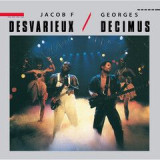
Brand new vinyl reissue to celebrate the 40th anniversary of seminal
album Yelele by Georges Decimus and Jacob Desvarieux, from zouk
pioneers Kassav', includes the massive worldwide crossover hit "Zouk-la
se sel medikaman nou ni"
Whether in concert, or on the radio or TV, the image of Kassav' remains vivid in
the minds of listeners and spectators. The group, founded in 1979 by Jacob
Desvarieux, Georges and Pierre-Edouard Decimus, has become legendary, putting
Guadeloupe and Martinique on the musical map of the world. Touring the world
with zouk, a musical movement introduced and popularized by Kassav', their
albums have repeatedly been rewarded with both gold and platinum discs.
A victim of Covid in 2021, the loss of Jacob Desvarieux leaves a huge void.
The mix of Jacob Desvarieux and George Decimus with Jocelyne Beroard, JeanPhilippe Marthely, Patrick Saint-Eloi and Jean-Claude Naimro has played sold out
concerts in 82 countries. With texts recounting real life in the Caribbean world
their lively music draws on the rhythms of Guadeloupe's gwo-ka and Martinique's
ti-bwa. Transcending the well-defined codes of Caribbean music, they have turned
the 1980s and all the succeeding decades into a fabulous ballroom.
They have been welcomed in Japan and the USSR, where they became the first
group of black musicians to tour. Forty years after the group's creation, their
timeless hits continue to resonate
Marking sixty years of Bossa Nova, and twenty years since Marcos Valle’s first release for Far Out Recordings, what better time to bring back this era-defining classic from the Brazilian master composer?
Throughout his astounding six-decade career, infiltrating pop, bossa nova, samba, delicate psychedelia, jazz and funk, Marcos Valle has consistently shown a dogged determination to transcend the traditions and structures of bossa nova, whilst never veering away from the movement’s inherent, fundamental spirit. To some extent, his epithet ‘the original Rio beach boy’ is a handy one: it reflects the origin and character of his often sun-soaked sound, but expounding his importance in the lineage of Brazilian music, he is more discerningly known as ‘the renaissance man of Brazilian pop’. He is indeed one the very greatest and most important composers, arrangers, writers and performers in Brazil.
Up until Nova Bossa Nova, Marcos Valle hadn’t released an album for well over a decade. After 1983, he resented the way the music industry had changed with commercialisation and new demands curtailing his creative freedom. This was until 1994 when Marcos met Far Out boss Joe Davis and they recorded a track for Far Out’s first Friends From Rio album. This new collaborative partnership resulted in a new solo album, which commenced recording in 1996.
Nova Bossa Nova brought Marcos bouncing back into the 90s, slotting nicely in place alongside the acid jazz movement as well as a voracious new demand for Brazilian music on dancefloors from London to Tokyo. It was witnessing the London club scene’s growing appetite for Brazilian music, as well as a lack of new sounds coming out of Brazil at the time, that a young Joe Davis put in a proposal to record a new album with one of his musical idols. Joe wanted to facilitate an album which would combine the latest technologies and production techniques, with live to analogue tape recording: a Marcos Valle album tailor-made for London’s clubs. Always open to modern influences and possibilities, Marcos agreed to the project, and Joe and his production partner Roc Hunter flew to Rio in ‘96. The record wasn’t released until ’98, as the original ½ inch tapes were stolen from Far Out’s London studio, meaning parts of the album had to be re-recorded.
Nova Bossa Nova was unveiled at the peak of the of the Brazilian movement, the record would also prove to be something of a revolution, inspiring a new generation of artists like Bebel Gilberto, Sabrina Malheiros, Da Lata and Bossacucanova, who continued to fuse Brazilian influences with modern electronic sounds.
- Overture: My New Life Starts Today
- Roadrunner
- Other Girls
- Wild Juanita's Cactus Juice
- Soliloquy: Out Of My Dreams
- Come Rest Your Head (On My Pillow)
- People Will Say We're In Love
- Buckaroo
- That'll Never Be Me
- Spur
- If I Can't Have You
- Bang, Bang (Poor Jud Is Dead)
- You Ain't Gotta Die (To Be Dead To Me)
- Like I Should
- Hunt You Down
- Followed You To Vegas
- Elsa
A truly one-of-a-kind artist, Kaitlin Butts has a deep affinity for country music’s more theatrical side: the extravagant storytelling, dazzling showmanship, songs embedded with both unbridled emotion and quick-fire humor. After discovering her passion for performing as a little girl, the Tulsa native later brought her boundless energy and radiant voice to her own unapologetic yet soulful songwriting. When it came time to create her third album, the Nashville-based musician leaned into her lifelong love of musical theater and dreamed up a modern-day reimagining of the soundtrack to her all-time favorite musical, Rodgers and Hammerstein’s Oklahoma! The result: a high-concept but candidly autobiographical LP called Roadrunner!, whose 17 powerhouse songs show the full force and extraordinary depth of Butts’ artistry for the very first time. Produced by Oran Thornton (Brent Cobb, Logan Brill), Roadrunner! marks a major tonal shift from Butts’ 2022 sophomore LP what else can she do, a character-driven exploration of complex matters like addiction, domestic violence, and generational trauma. “With the last album I wanted to write about the struggles I’d seen people go through or experienced myself, so a lot of the songs had a sadness or darkness to them,” she says. “I feel like Roadrunner! is much closer to what I’m like onstage, where there’s real emotion and truth but also humor and a tendency to poke fun. It’s all those different versions of me at once.”
They’ve been labelled everything from pop punk to emo to post-hardcore, but Calling All Captains cover all of that and more on (e)motion sickness, their explosive and expansive new collection. (e)motion sickness marks the culmination of that growth to-date, building atop Calling All Captains’ rock-solid musical base with an even wider array of sonic influence and lyrical prowess, and ultimately, making the essence of what they do rather difficult to describe. Really, you just need to listen for yourself.
Comes with insert and download coupon.
Imagine a Latin remake of Back to the Future. The mad scientist is Arsenio Rodriguez (the godfather of salsa) and the young student who travels through time with him is Eblis Alvarez (Meridian Brothers). This album can only be described as the perfect soundtrack for that movie that never was.
After the massive buzz generated by his first solo album, Mentallogenic, Alex Figueira got back in the studio to work in a more collective fashion this time, carefully assembling the second album of his largest project to date, Conjunto Papa Upa; a team of 6 musicians, spanning 3 generations of some of the best talent in the Latin and avant-garde scenes.
In an era where tropical music is dominated by purely electronic and rhythmically uniform sounds, the ten songs encompassed in “Fruta Madura” (“Ripe Fruit”) wander through the most diverse tempos, rhythms, and motifs effortlessly. A real breath of fresh air that gracefully incorporates soul, funk, jazz, psychedelia, and electronics into a solid tropical, irresistibly polyrhythmic foundation, without ever succumbing to the many genre clichés.
The distinctive production and catchy songwriting of Figueira shine in a very distinctive light on this second full-length. Living up to his reputation (Miles Cleret, founder of Soundway Records, called him “one of the scene's truly authentic and eccentric producers”), he takes the opportunity to show he’s not afraid to keep walking his own path.
Taking the band for a wild ride through the traditions of Africa, America, and the Caribbean; contrasting them with a ridiculously wide plethora of vintage, contemporary, and futuristic sounds, and pivoting on the exuberant musicality displayed by his musicians; the result leaves no doubt: this album is destined to be considered a future classic of the exciting tropical psychedelic music of the 21st century.
Addressing the most diverse themes in this new collection of songs, things take on a much more mature tone, as the title clearly suggests.
The opening track “El segundo es más sabroso” (“The second one is tastier”) sets the tone in the most assertive way imaginable, with the band boldly declaring, through multiple metaphorical references (laid upon a crazy mix of Dominican merengue, Detroit techno, classic and free jazz, dub, and electro), that the bar will be set higher with this second album.
The remaining compositions touch upon the most diverse subjects, with a fair dose of humor, sarcasm, and postmodern “magic realism”. “El Algoritmo” (The Algorithm) is a parranda-cumbia hybrid (for lack of a specific term) about the omnipresence of technology in our lives. The sophisticated Latin soul of the titling track “Fruta Madura” makes a case for the beauty of the maturity process. Some key philosophical teachings of Marcus Aurelius (the role of causality, the impositions of “the logos” and the importance of self-control) get a twisted cumbia treatment on “Reos del Deseo” (Prisoners of Desire). “No le pongas Coca-Cola” (“Don’t put Coca Cola in it”) shows us the most satirical side of the band, accusing those who mix Coca Cola with Rum of committing "sacrilege", on a powerful base of Dem Bow (the grandfather of Reggaeton), intertwined with touches of soul, salsa, and Cuban comparsa.
"Háblame Claro" (“Talk to me clearly”) is a story of heartbreak that evokes in its first part the spirit of the erotic salsa of the 80s (a subgenre deeply despised by purists), and after an unexpected samba interlude, leads to the hardest salsa of the 70s (a subgenre adored by purists), to end up in the surprising form of pure Afro-Cuban ceremonial music.
“Tu mamá tenía razón” ("Your Mom Was Right") is an attempt to exalt the spirit of the Latin American soap opera in the key of “acid bachata”, to recount a real-life case, witnessed by the band on countless occasions: the partying woman who arrives at the show accompanied by her bitter husband, who obviously does not like to dance. A very cheeky song to talk about the very serious and pertinent topic of female empowerment.
“La misma vaina” (“The same thing”) with its indescribable blend of bantú, candomblé, and Mozambique rhythms with abstract synthesizers, is an ode to adventure in favor of the aversion to taking risks and seeking predictability.
“Amigas picadas” (“Salty friends”) is another humorous song recounting another real-life case witnessed by the band on countless occasions: a love encounter sabotaged by the girlfriend's friends, who all happen to fancy the same guy. A jazzy take on the ancient Dominican rhythm of pambiche (grandfather of merengue), with generous psychedelic touches, resembling the classy late 60s releases of Guadeloupe's legendary producer / label owner Henri Debs.
“Vinimos a hablar” (“We came to talk”) takes sarcasm to the highest level, to ridicule the absurdity (also experienced by the band firsthand) seen in live music venues where people pay a ticket to go and have conversations that could be carried out much better on any bar, where no band is playing. The music alternates between a delicate melody with loose, sparse percussion and a full-on, pumping Angolan semba, with a techno kick drum included; bringing things to an apotheotic grooving finale, where the peculiar swing of Venezuelan calypso from the Callao region is thrown on top of all the precedent elements; closing the album in the most uplifting, “end of the carnival parade” feel.
The artwork is a delicate and impactful oil painting by Colombian artist Kevin Simón Mancera, who has collaborated many times with the label before (“Maracas, tambourines and other hellish things” tape and the Lola’s Dice LP).
What the experts are saying:
“Alex (Figueira) dove into this work with a brutal cohesion between lyrics and synths. Timbre poetry, sound poetry (you name it). And that, superimposed on his always impeccable percussive base, confirms the title of “avant-garde visionary of our beautiful Latin music”".
EBLIS ALVAREZ (MERIDIAN BROTHERS)
“Papa Upa's infectious quirkiness is a balm against boredom. A mature album, but without an expiration date”.
GLADYS PALMERA
“Here there is a lot of strength, drum, cadence and psychedelia, lost dance rhythms, united in an intercontinental Latin/African/and Caribbean journey, a unique winning combination that we could consider the new “Ritmo Figueira”.
DISCODELIC
Conjunto Papa Upa are:
Alex Figueira - Timbales, percussion, vocals.
Gerardo Rosales - Congas, percussion, vocals.
Ramón Mendeville - Bongos, percussion, vocals.
Randy Winterdal - Bass.
Andrew Moreno - Guitar.
Nico Chientarolli - Organ, piano, synths.
All songs written by Alex Figueira.
Arranged and performed by Conjunto Papa Upa.
Recorded, produced, mixed and mastered by Alex Figueira at Heat Too Hot, Amsterdam.
The magic and majesty of Holger Czukay’s late career works for Claremont 56 is being celebrated on a new compilation. The former Can bassist – a musical maverick renowned for his freewheeling approach to composition, recording and promotion – released a string of inspired tracks on Paul Murphy’s label between 2009 and 2012, typically delivering hard-to-pigeonhole workouts, bona-fide epics and radical reinventions of some of his most beloved tracks.
The collection has been a labour of love – fitting given the sonic details and inventive musicality that marked out the late artist’s solo career – for Claremont 56 founder Paul Murphy AKA Mudd, who first reached out to Czukay after witnessing his now legendary live performance at the Roundhouse in 2009. As Murphy details in his introductory liner notes, it led to a productive working relationship between the pair that included collaborative recording sessions with Ben Smith in Czukay’s legendary Innerspace Studio – a former cinema in Cologne in which much of Can’s music was recorded.The impact of that Roundhouse gig on Murphy is reflected in the fact that two of the tracks on the collection are based on that celebrated performance. There’s ‘Ode To Perfume’, a languid and solo-laden version of one of Czukay’s most celebrated solo records that ratchets up the original’s inherent dreaminess, and a jaunty take on quirky kraut-pop number ‘Photosong’ featuring a spoken introduction recorded at the concert in question.
Murphy’s ability to coax Czukay into delving into his archives is evident across the compilation. Opener ‘A Perfect World (Remix)’ is an eccentric, ever-building masterpiece originally recorded in 1984 – but later re-imagined for Claremont 56 – featuring vocalist Sheldon Ancel and former Can band-mates Jaki Leibezeit and Michael Karoli, while ‘Fragrance’ is a subtly re-wired slab of picturesque Balearic kraut-dub which was initially recorded as a coda for ‘Ode To Perfume’ but lay unreleased for decades.
Then there’s ‘Let’s Get Cool’, a bright and breezy, French horn-sporting 2009 take on 1979 avant-disco classic ‘Cool In The Pool’; ‘My Persian Love (Remix)’, a 2010 re-take of one of his earliest solos recordings; and the near 18-minute brilliance of ‘Music Is A Miracle’. Originally recorded for his fans in the 1980s – but only released three decades later – this widescreen epic not only features drums by Jaki Leibezeit and a fine spoken word vocal by Czukay, but also numerous nods to some of his most revered tracks.
It's fitting, too, that two of the most potent cuts feature Czukay’s much-missed wife and musical muse Ursa Major: the dense, trippy and fittingly out-there ambient soundscape ‘In Space’, and the mesmerising ‘Music To be Murdered By’. Partially inspired by hearing painfully out of tune violin practice through his studio windows, the track was originally recorded for an unreleased album but finally found a home on Claremont 56’s 10th anniversary box set ion 2017. A genuinely spaced-out and mind-mangling slab of organic dub in Czukay’s distinctive style, it delivers a fine curtain call to the iconic artist’s endlessly inventive career.
Sunny Crypt is incredibly happy to announce its seventh release: a retrospective compilation of six previously CD-only tracks by Nightmare Lodge, a name that might ring the bell to many enthusiasts of Italian experimental music.
It Passed Like A Dream is a selection of some of our favourite tracks they released between 1994 and 2000, aiming to spotlight a small glimpse of the amazing body of music they did throughout the years.
Nightmare Lodge is a musical project by Minus Habens Records / Disturbance founder Ivan Iusco alongside vocalist B. Mazzilli and bass player Gianni Mantelli, when the Bari based trio decided to decided to embark on a path in search of their own dreamlike musical dimension tied to introspective explorations.
Over the years, the group's lineup evolved, eventually solidifying as a duo comprising Iusco and Russolo.
With their first release dated 1987 and staying active till the early 2000s, it is quite challenging to put the Nightmare Lodge discography in a precise musical box. Their first outings flirted with post-industrial music and a more stripped down sound palette marked by a DIY approach to composition, while in later years leaning towards a more horroresque / cinematic feeling and following the development of new technologies but always charactering their output with a ritualistic, trance inducing and mystical approach, whatever if it’s ambient, downtempo, techno not techno, or a whole lotta else...
White/Blue Marble Reissue!
BAFTA winning Icelandic composer, musician and producer Ólafur Arnalds’ fourth solo studio album, re:member, was originally released by Mercury KX on the 24th August 2018. Released on special marble vinyl for the first time. The album uses the Stratus Pianos as well as string quatet, synths, electronics, live drums and a string orchestra recorded at London’s Air Studios. Plummeting the listener into a subversive world full of unexpected moods and emotions, Ólafur explored foreign musical soundscapes in every facet of re:member.
For the thirteenth instalment of the Swinging Flavors catalog, Beat Machine Records presents a gem of pure energy by the talented Kyoto-based producer Naco. Set to ignite dance floors worldwide, this release delivers an electrifying fusion of acid, techno, and breaks, with a rave-inspired twist.
Naco, known for his innovative approach to electronic music, defies convention with his genre-defying sound. Drawing inspiration from Bass, Breaks, and Electro, Naco creates a distinctive sonic landscape that captivates audiences worldwide. Since 2017, he has been at the forefront of the music scene, spearheading 85acid, a label dedicated to showcasing emerging talent from Japan and beyond.
"Wavefunk," the lead track on Swinging Flavors #13, is a testament to Naco's unparalleled creativity and sonic mastery. With its infectious rhythm and hypnotic melodies, the fast-paced percussion and minimal character of the release "Wavefunk" transport listeners to a dimension where the boundaries between genres blur and the energy is palpable.
But the journey doesn't end there. Swinging Flavors #13 also features a remix of "Wavefunk" by We Rob Rave. The Polish duo injects his fresh signature style into the track, taking it to new heights and delivering an unforgettable dance floor experience. Transforming it into a full club experience, increasing the beats, and immersing the listener in a rave-like atmosphere fueled by danceable rhythms and an acid edge that cuts through the dance floor.
Another surprise that comes with the latest Swinging Flavors is 'Pure Water,' exclusively on Bandcamp. Let yourself be carried away by the bouncing sounds that make up this Break-style track, closing an energetic and vibrant release.
Naco's music is really pushing the boundaries of electronic music, inspiring both listeners and fellow artists. With a solid track record and a strong commitment to musical innovation, Naco is definitely going to leave a mark on the global music scene.
- A1: Don't Be Scared (Feat Takura)
- A2: Go
- A3: Censor (Feat Popcaan & Irah)
- A4: Mixed Emotions
- A5: Over & Done (Feat Pip Millett)
- A6: Run Up (Feat Unknown T)
- A7: 5Am
- B1: Headtop (Feat Irah)
- B2: When It Rains (Feat Backroad Gee)
- B3: Hold Your Ground (Feat Ethan Holt)
- B4: Blazer (Feat Irah)
- B5: Consciousness
- B6: Forgive Dark
Last month, Chase and Status returned to the limelight unveiling their hard-hitting and trailblazing singles “When It Rains” ft. BackRoad Gee, complete with a Jack McMullen starring, Hector Dockrill-directed cinematic visual and the addictive smash “Don’t Be Scared” ft. Takura. Today, the duo are making a true statement of intent for the year ahead, with the announcement of their sixth studio album, What Came Before. Created by Crown & Owls, the accompanying artwork captures a truly special and magnetic live moment. Speaking on the concept, Crown & Owls state:
“We wanted to create an image that captured the very human compulsion to gather in a dark room and dance and sweat. Such scenes have a different weight to them after they were off the table for a good while, and we were very interested in capturing a moment of collective catharsis in the shadow of a period of history that pushed isolation on so many. We were really interested in the stories of the individuals in the image - what drives them to want to be in that room? The whole campaign kind of works backwards from that moment in the photo really - the intersecting stories of the dance floor, and the sense of freedom and release it brings to the individual. The record sleeve, the single covers, visualisers and elements of the music videos were all captured at this special night - it’s been a joy to work on.”
Landing alongside the album announcement is new single “Mixed Emotions” - a euphoric and recognisably brilliant dose of true Chase and Status energy that landed alongside an incredible video, filmed in two halves and directed by UKMVA-winning Femi Ladi (Pa Salieu - “My Family”). Femi Ladi states:
“On nights out like this, sometimes you just want to get fucked up. Trying to get to that moment, when you’re out of your head and completely in the moment. Sometimes music gets us there, sometimes drugs and alcohol, sometimes it’s a combination of all 3.
I want to connect our camera to the chasing of that high. A visual metaphor for trying to reach that euphoria. Each time she takes a bump, a line or a pill, the camera closes in on her. The closer she gets to that euphoric moment, the closer the camera gets to her.
By the end I want the audience to have an uncomfortable and claustrophobic feeling as our hero goes slightly overboard, a feeling that most of us know but won't dare to admit.”
Consisting of 13 tracks, What Came Before distills 15 years of unparalleled experiences into a bold, invigorating sixth album; informed by global tours, sold out headline shows, five albums, multiple awards, chart success, underground kudos, top tier collaborations and remixes, and, above all else, that unwavering dance floor energy that remains as tangible and transformative now as it has since the very beginning. This pure, unadulterated exhilaration is the glue that binds all of these experiences together, cultivating a legacy of positive vibes, unforgettable moments and the continued progression of British club culture.
For trailblazers Chase and Status, the story is cyclical - a constant process of regeneration and refinement that comes full circle. Everything that came before, from their inception point to now, has brought them back to their essence.
Landing in the wake of their critically acclaimed specialist album RTRN II JUNGLE, and the more recent news of their headlining ParkLife festival this Summer, Chase and Status’s musical return is highly anticipated. After a series of teasers were published on their social media, the duo directed their fans to whatcamebefore , unveiling a plethora of forthcoming Summer festival dates.
The forthcoming album marks the inception point for the duo’s next phase; while on forced hiatus they also went back to square one with their live show. With What Came Before Chase & Status prepare to embark on the next chapter of their illustrious career as a seasoned act ignited by the same excitement
Rippikoulu's Musta seremonia is both an international cult item and an integral part of the history of Svart Records as well - a reissue of the original 1993 tape was one of the earliest Svart releases back in 2010. Back then, this album was considered as one of the best kept secrets in the Finnish underground metal scene. Four years and one quickly sold out reissue later Rippikoulu's greatness is no longer a secret, and we are happy to bring Musta seremonia back on the market.
Rippikoulu began their musical endeavours back in the late eighties, and like so many of their contemporaries, evolved from primitive punk noise to death metal. However, while many bands played death metal with groovy riffing and overall headbanging attitude, Rippikoulu's choice of style was darker. Their downtuned metal is bleak and nearly unbearably heavy in its execution, dark and soul-searching in its themes, intertwining faster bursts of chaos with slow, doomy passages.
Rippikoulu released the Musta Seremonia demo album on tape in 1993 and then disappeared. They never gained much popularity in their time, but their legacy has steadily grown in time. The album has been carefully remastered from the original DAT master tape, cleaned up and amplified.
- A1: Freeze (Scrappy Mix)
- A2: Freeze (Mad Dog Dub)
- B1: Freeze (Limelight Mix)
- B2: Don't You Wanna Dance (Unreleased 1990 Mix)
- B3: Freeze (Credit Power Dub)
- C1: Welcome To My House (Jerome Derradji Edit)
- C2: Freeze '92 (Remix)
- D1: Don't Give Up On Love (Long Version)
- D2: Love Motion Diversey St Trip (Acid Love)
2024 Repress
In the midst of House music's burgeoning scene in 1986 Chicago, a young local DJ named Jonathan Gilbert, known as Scrappy, seized a golden opportunity to showcase his skills at the renowned Medusa's Club's video room. It was in 1987, one fateful night, when the main DJ failed to show up, that Gilbert stepped in, securing a residency at one of the city's hottest spots. As the year progressed, Gilbert ventured into music production, teaming up with The Boxx Boys--Jim Marcus and Van Christie, notable for their later formation of the iconic group Die Warzau. Their collaboration birthed the legendary acid house anthem from Chicago, "Freeze," which Gilbert released under his Zap Records label in 1988, solidifying his place in Chicago's music history. The track became a timeless favorite, and is often featured in Jerome Derradji's sets. With Scrappy's gracious consent, we have the privilege of reissuing this seminal track, along with delving into his archives to uncover previously unreleased gems and alternate versions from his Atlantic Records era around 1990. For a brief period, Scrappy rode the waves of Chicago's house scene with his distinctive flair before bidding farewell to pursue new horizons in California. Presented for the first time on Still Music, "Acid House + Medusa's - Chicago, 1987-1992" invites listeners on a journey through the vibrant tapestry of late-eighties Chicago House. DJing, indulgence, romance, and the pulsating beats of acid house defined Scrappy's era, and fortunately, he left behind a legacy of unforgettable house tunes, emblematic of the city's unparalleled musical spirit. This limited edition DLP release, accompanied by an insert detailing the captivating tale of one of Chicago's unsung talents, ensures that Scrappy's story and his contribution to the era remain etched in musical history.
LRK are excited to announce their next full album release LRKLP-08
'ALL I EVER WONDER' By Johnny Burgos
Available on LP/CD/DIGITAL
Singer, songwriter, and producer Johnny Burgos converges with veteran soul producer, Jeremy Page, (Kendra Morris, Czarface, MF Doom) to offer their first joint album together titled, 'All I Ever Wonder.' The album is a vividly vulnerable and honest effort by Burgos, lyrically and vocally, supported effortlessly by Page's masterful production. The pairing of the two seems meant to be, with a sound steeped in retro soul techniques, the album is equal parts novelty and nostalgia, equalling a timelessness that speaks to the humanity in all of us. All I Ever Wonder will be released on Vinyl, CD and all digital platforms on Friday, JUNE 28th, 2024 via UK-based Soul label LRK Records.
Johnny - "Jeremy and I have been ships passing in the night for years now. However, our first official collaboration was a 2021 remix of my song The Grey, which featured his long-time co-collaborator Kendra Morris. From the get-go, the musical chemistry was strong, so we took a shot at writing some original tunes. Since then, we've locked in on a creative groove and churned out a bunch of material. As we learned how to complement each other's musical strengths, the project took on more form and purpose, exploring heavier subject matter and expanding its range of genres. I'm pretty sure that's what makes this project so fun for us, and possibly what the early gatekeepers and listeners resonated with most. Neither of us expected such a reception to the music, which only made us more excited to hone in with more intention towards a goal. This also allowed me to bring more raw ideas to the table and have the confidence in Jeremy to hear the potential, then work his magic to extrapolate on my foundation. The teamwork in this effort was inspiring as we listened and referred to each other in every step of the process, and had a crew of killer musicians on deck for when we needed the extra feels on some joints.
We worked really hard on this record and hope it reconnects our listeners to being human in a visceral way. It's accessible, honest, and soulful because I wanted it to speak to anyone who still wants music to relate to. Music to help you through the valleys, to celebrate the peaks, and handle everything in between. It's a journey of the soul that explores ego, insecurity, love, loss, survival, enlightenment and trusting the process. It's truly 'All I Ever Wonder.' "
"All I Ever Wonder" will have its digital release through LRK Records on all platforms on Friday, JUNE 28th, 2024.
Johnny Burgos is a Brooklyn - born singer, songwriter, producer & engineer. His brand of future-soul embodies a raw uncompromising sound revealing beauty from pain, hope from despair, and the will to keep fighting. Especially influenced by his uncle and world-class percussionist, Andre Martinez, Johnny grew a fascination with the percussive rhythms of salsa and soul music, eventually manifesting into a devoted passion for Hip Hop production using an Akai MPC. With influences from Michael Jackson, OutKast, J Dilla, Lauryn Hill and D'Angelo, Johnny's music draws upon the core principles of R&B, while encompassing elements of Hip Hop, Funk, Pop, Salsa and Reggae.
Johnny has collaborated with DJ Skizz, for Mobb Deep & M.O.P., Marco Polo, Frans Mernick, Liza Colby (The Gold Setting) and led his band Bridge City Hustle, with whom he toured nationally.
As a solo artist Johnny debuted with back-to-back brand endorsements from French's Mustard and Samsung US, using them as a platform to launch his 2018 EP 'Love Through it All.' His debut album 'Gone Into The Grey' was released to critical acclaim in March of 2021 and has since been added to multiple editorial playlists by Spotify, Apple Music and Tidal, creating exponential growth. In 2022, Burgos' song 'Wild About You' was heard as the soundtrack to Neiman Marcus' "It's Your Moment" global streaming campaign. Johnny's currently amid promoting his latest album, The Tangent Tape, performing with his band The Butter, recording new collaborations and preparing his upcoming LP with Jeremy Page & LRK Records.
credits
releases June 28, 2024
DJ Support: Dam Swindle, Jimpster, Fouk,Franck Roger, Miguel Migs, Fred Everything, Tedd Patterson, Saison, Brian Tappert, Don Carlos, Sebb Junior, Ralph Session, Marcel Vogel, Marc Cotterell
Embark on a journey through the pulsating heart of Berlin's house music scene with Luca Olivotto. Italian-born and Berlin-based, Olivotto's beats resonate with the energy of the city's underground, blending seamlessly with his Mediterranean roots. As a DJ, Olivotto commands dance floors with finesse, effortlessly blending deep and house music. As a producer, he crafts sonic landscapes that evoke emotion and ignite the imagination. This album encapsulates the essence of Olivotto's musical universe: a fusion of cultures, a celebration of diversity, and a testament to the universal language of music. Experience the rhythm of Luca Olivotto, bridging continents with his electrifying sound.
“MARK” is the new solo record from acclaimed drummer and composer Mark Guiliana: an auditory manifestation of one of theworld’s most creative and innovative musical minds. Ever since the first day he picked up a pair of drum sticks, Mark Guiliana has been instinctively exploring and absorbing themusic and rhythms that have been ever-present in his life. Fast forward to the present day and he has earned a formidable reputation as a world-class drummer, composer and thinker at the forefront of contemporary jazz and beyond. Guiliana’sartistry defies convention, weaving together a musical output beyond jazz with the ultimate goal of creating compelling musical narratives.
His songs serve as a conduit for his relentless quest for creativity, striving to share his sonic visions withthe world in their most unadulterated form. Guiliana’s new album “MARK”, represents an introspective voyage into his creative depths. On the record, Mark performs soloon a wide array of devices; you can hear his quintessential grooves intermixed with intriguing percussive soundscapes,sublime tapestries of synthesisers and fragments of spoken word. “MARK” is an album that peels back the layers of Guiliana’sexperiences, reflections, and the wisdom gleaned from a life immersed in music. It transcends genres and defiescategorisation, floating in the boundless space of pure expression.
Through music and through life, Mark looks into the mirrorand asks eternal questions of identity and growth: who am I, where am I going and what do I stand for? This album invites listeners to share in Mark’s personal dialogue, offering a sanctuary where they can begin to untangle and examine themselves track by track. “MARK” is an exploration of new and uplifting musical territory, unrestricted by norms andfree from preconceived ideas or satisfying (but ultimately unfulfilling) genre expectations. It embodies the impact of Guiliana’sjourney, marking his evolution as an artist. This record echoes the spirit of freedom, the courage of inquiry, and the beauty of unfettered expression.
Pearlescent White Vinyl with A5 card inserts.
Habibi Funk is thrilled to share a second collection of deep grooves and unreleased songs from Algeria's Ahmed Malek, often compared to Italian heavyweight Ennio Morricone. Malek’s music effortlessly switches between thematic jazz, funk, reggae and Algerian folk – creating indelible soundscapes that intersect the musical innovations made in African jazz by Mulatu Astatke, Bembeya Jazz National along with some of Europe’s finest experimental composers like Piero Piccioni and Janko Nilovic. “Musique Originale de Films, Volume Deux” is out June 28th, 2024 via Habibi Funk.
Whenever an interview asks about a “memorable moment” in Habibi Funk label history, one we always reference is how we got in touch Ahmed Malek’s (22K Spotify Followers, 285K Spotify Monthly Listeners) music and subsequently his family. It all started with us coming across Ahmed Malek’s music on YouTube in 2012. We were mesmerized by how effortlessly the music would switch between jazz, funk and Algerian folk while counterweighting it with an undertone of melancholia. Musical perception is different for every person, but there is a chance that his music will touch you in one way or another. At the time, we had just started the Habibi Funk label and we felt Ahmed’s music might be a good fit for the sound we were trying to highlight. Fast forward three years: we had become captivated with the idea of reissuing some of Ahmed Malek’s music. We knew some people had tried to locate his family but, but with no success. In the end it was an incredible amount of luck that made it possible for you to read these words and listen to Ahmed’s music. We were on a DJ gig in Beirut playing old Arabic records and we mentioned our passion for Ahmed Malek’s music to a friend. She said she knew one person in Algier, and as much as it would be a shot in the dark, she could ask her if she had an idea of how to find Malek’s family. Two weeks went by before we heard back, and what we got was incredibly good news - her Algerian friend was the neighbor of Ahmed Malek’s daughter! We’re not spiritual people, but it felt like the universe wanted to see the release happen. We started to speak with Henya, Ahmed Malek’s daughter and she was more than happy with our idea. She assured us that her father would have loved the plan as well. She provided us with tons of awesome material, from great photos, to unseen video footage and unreleased tracks. Eventually we visited Henya in Algeria and we licensed some of her father’s music, first for one (Habibi 003), then for another (Habibi 005), then we eventually organized an exhibition in June/July 2019 – Planète Malek – Une Rétrospective – at the Musée Public National D’Art Moderne & Contemporain in Algiers, focusing on Ahmed Malek’s artistic life. We also produced a small movie about him that our friend Paloma Colombe shot and directed. “Musique Originale de Films, Volume Deux” is a deep collection of unreleased songs and stemmed grooves from the Algerian master, from jazz, funk, psych to reggae rhythms and Latin flavors, all under the sonic umbrella of “Planète Malek;” and to quote the maestro, “I didn’t choose music, music chose me.” Lead single is the subtlety funky “Thème Rythme Léger,” out May 3rd along with LP Pre-Order (coincided with Bandcamp Friday for a larger impact) a delicate sonic dance between flute, piano and Spanish guitar with a Bossainfluenced groove. The steady, swingin’ drum groove is cloudlike - definitely toe-tapping friendly so just grab a partner to feel the Rhythme Léger. Second single out May 17th is the reggae-infused “L’Empire Des Rêves” – a sultry sax melody weaves through a prismatic rocksteady thematic groove. 3rd and final single “Thème Djalti feat. Aïda Guéchoud” – is a true Western-inspired ode to his Italian counterpart Ennio Morricone. “Thème Djalti” features the haunting vocals of Aïda Guéchoud, and combines elements of baroque and Bossa-jazz in a timelessly thematic way that seems grandiose yet remains uniquely personal to your ears. Swelling strings, trumpet, fem vox, flute, and plucked guitar expertly arranged, feels like you’re riding a horse into the sunset. Focus track “La La La” is fiery afro-arab-funk of the highest order! Put on your dancing shoes as Ahmed cuts the rug and gets us grooving along. Sonically the cut sounds like if Ahmed ran into The JB’s and Fela Kuti at a Cymande concert. Driving guitar and organ solos vie over pulsating bass riffs and afro-funk drumming that’ll have you out on the dance floor in no time. As always, both vinyl and CD come with an extensive booklet featuring background and interviews with Ahmed compiled through found newspaper clippings and newsreels, also including unseen photos, scans and more. “Ahmed Malek: Musique Originale de Films, Volume Deux” will be out everywhere June 28th.
- Azoka Eguna (Feat. Toots)
- Euskal Herria Jamaika Clash (Feat. U-Roy)
- Baxua Eta Lurra (Feat. I-Threes)
- Plastic Turkey
- Askatasun Parabolikoa (Feat. Luciano)
- Mongolian Barbacue
- La Fille Du Quartier Populaire (Feat. Lisa Dainjah)
- Yalah, Yalah, Ramallah! (Feat. Yacine Belahcene)
- La Línea Del Frente (Feat. Masta Blasta)
- Basque Xamuraia (Feat. I-Threes)
- Beamon Jauzia (Feat. Sorkun+Masta Blasta)
- Le Mouv'dub
- Azoka Eguna - Remixed By Xabi Pery
- Baxua Eta Lurra - Remixed By Rob Smith
- Plastic Turkey - Remixed By Neil Perch (Zion Train)
- Mongolian Barbacue - Remixed By Peter Rose
- Yalah, Yalah, Ramallah - Remixed By Dmd (Nebukhednezzar & Daniel Díaz)
Remastered edition on 180 grams double vinyl of 'Euskal Herria Jamaika Clash', released by Talka Records & Films in 2006. To the 12 tracks that appeared in the original CD edition we have added 5 remixes made by producers as renowned as Xabi Pery, Rob Smith, Neil Perch, Peter Rose or Nebukhednezzar and Daniel Díaz. DESCRIPTION "On the wall of the toilet a freshly made graffiti, "Get out of the ghetto, organize the hate", reminded me of the rage we owe to this society. However, I was also at ease, savoring our Original Soundtrack: "ROOTS, ROCK, RAP, REGGAE". This phrase belongs to the song "B.S.O." from the album "Gure Jarrera" by Negu Gorriak. For music fans, the real ones, the ones who spend their fingers searching for rare vinyls in second-hand shops, there are records that have a special meaning. That record has special meaning for me for several reasons, but one of them is singular: it has helped me to discover a multitude of music. It turns out that the credits of that album were full of fundamental names in rock, hardcore, funk, Hip Hop, soul, ska, Latin music... a good guide for the young man of musical discoveries that I was fifteen years ago. But there was also that song, "B.S.O.", with the word "REGGAE" at the end of the chorus. A genre that I had never paid much attention to and that since then, slowly, I have been tasting... from classic figures to new trends, from Jamaican reference records to admirable peninsular formations (Basque Dub Foundation, Lone Ark or The Starlites). A few years ago I had the opportunity to interview Fermín Muguruza and in one of his answers he said: "It's clear that the basis of reggae is going to remain firm, because it's been a constant since Kortatu's first album. Reggae will be there in any of its expressions or derivations, of which there are already many". And it's true. Going through Fermín Muguruza's discography, and his groups, forwards or backwards, we come across reggae in different doses, proportions and orientations, but it has been present in all his albums. And in his "solo" stage, in a more prominent way. Now he releases "Euskal Herria Jamaica Clash", a coherent link in his chain of albums, where he accentuates that proportion of reggae, looking more than ever at the classic conception of the genre, but with some mestizo nuances present (rock strength, some Hip Hop drums or the sound of the trikitixa). The album has been recorded in Jamaica and has featured some renowned figures from those lands: U-Roy, Luciano, Lisa Dainjah, Masta Blasta, Yacine, Toots and the I-Threes (the usual female vocal trio in Bob Marley's albums, to which Rita Marley belongs). The new album offers twelve tracks, where, apart from reggae, one can also feel the optimism of the new lights that illuminate the future of the Basque Country ("Euskal Herria Jamaika Clash")... an optimism that is intertwined with descriptions of local customs ("Azoka Eguna"), rebellious spirit ("Mongolian Barbecue", "Basque Xamuraia", "La Fille Du Quartier Populaire"), songs of hope ("Yalah Yalah Ramallah"), a snapshot of a symbolic triumph ("Beamon Jauzia"), criticisms of alienation ("Askatasun Parabolika"), to the dictatorship of the empire ("Plastic Turkey"), a poetic air of rest on music and feelings ("Baxua eta Lurra"), a final instrumental ("Le Mouv Dub") and a luminous and hopeful revision in reggae key of an old song by Kortatu ("La línea del frente"). "Euskal Herria Jamaika Clash. The soundtrack of the present: DREAMS, HOPE, ROOTS, REGGAE." FM-Hop (2006)
Here at Mr Bongo we have been inundated with people asking us to reissue this release. Ana Frango Elétrico's petit cult classic masterpiece 'Little Electric Chicken Heart' from 2019, which was only ever released on vinyl and CD in Brazil and Japan, has fast become a collector's item.
Well received by fans, DJs, and reviewers on release, The Needle Drop expressed "Ana Frango Elétrico's authentically vintage fusion of chamber pop, rock, samba and jazz is a real blast!" listing it as one of its Top 50 Albums of 2019. The album's reputation has been slowly building ever since, gaining a Latin Grammy nomination in 2020, and now solidly cementing itself as a gem of contemporary Brazilian music.
Across the albums nine tracks, Ana blends elements and influences from MPB, Tropicália, indie rock, punk and pop, forging them together with a sumptuous dose of her signature style. The finesse of 'Saudade' kicks off the LP, one of Ana's most known tracks to a non-Brazilian audience. A sublime opener, beginning with a spellbinding piano solo before transcending into a beautiful dream-laden slice of warmth, complete with luscious jazzy horns and deft vocal delivery. ‘Promessa e previsões’ follows, the only track on the album not to be written by Ana, instead being penned by Chico França. It’s a swelling and sweeping twilight groover, building and breaking across absorbing peaks.
Other highlights on the album include the anthemic 'Chocolate', which was a firm favourite with a packed sing-along crowd when we heard Ana perform it live. Elsewhere, 'Se No Cinema' hits with its quirky allure, charm and catchy melodies before transforming into a carnival spirit.
Tapping into the richness of Brazil’s new wave of musical energy, the album also includes a heavyweight lineup of collaborations with artists such as Dora Morelenbaum (Bala Desejo), Tim Bernardes, Antonio Neves and Guilherme Lirio to name but a few.
A short, sweet and refreshing record, that leaves nothing to waste, marrying playful ideas with poignant themes. 'Little Electric Chicken Heart' is a future classic and will beguile fans of ‘70s Brazilian recordings, Gal Costa, Mac DeMarco, Stereolab, Superorganism, Caetano Veloso and more.
INSIDE is the third album (and second in a row on Brixton Records) by the respected ten-piece group from Barcelona that fuses Jamaican music and jazz. DROP COLLECTIVE bravely faces the so-called third album syndrome and makes a sincere declaration of principles, a public manifestation of their musical identity. The two sides of the album are clearly identified. Side A is Inside-Out, displaying five own-penned compositions, including three songs sung in Catalan and two in English, in which DROP COLLECTIVE make it clear what they like to do and what they are capable of offering. The album opens with "Com Estimo Jo" (The Way I Love), a reggae ballad composed by Andreu Domènech (baritone sax) that is dedicated to the growth and learning we do when we love. It is followed by "Let Us Dance", a fluid ska with Latin airs and an invitation to dance, which recaptures the sound of some of the most celebrated passages from their previous album. "Estel" (Star) is a melancholic reggae song, sung in Catalan, in homage to someone who is no longer here - "now you are the star that watches over us from up there, bright, bright". Prior to the release of this LP, four advance tracks have been published on digital platforms, but "Life's Too Short" is, perhaps, the album's single. This resounding reggae with a powerful brass section could have easily taken more elaborate instrumental and studio developments, however, the band has preferred to produce a compact track brimming with strength and lasting less than three minutes. “Ombra" (Shade) closes this side of the album with solemn roots sonorities. The B-side is Outside-In, four reinterpretations of jazz classics that DROP COLLECTIVE internalize, make their own and, therefore, also form part of their identity. The choice of pieces is hair-raising, because of the risks they take. "Yearnin'" is a cover of the song originally included in one of the most epic albums in the history of jazz, "The Blues and the Abstract Truth", by saxophonist Oliver Nelson. DROP COLLECTIVE take the song to their own territory with the skill and freshness of expert ska-jazzers and with the special collaboration of trumpeter Joan Mar Sauqué, they make one of the most famous riffs in jazz sound unashamedly contemporary and... Caribbean. "Day by Day" is an adaptation of the standard from the late forties of the last century that was part of the regular repertoire of, among others, Frank Sinatra. The result is a swinging ska love themed, sugary and romantic, with an exquisite interpretation. And to close the album, two extraordinary trials by fire for Maria del Rio, the band's vocalist, which she solves with total ease and mastery of the situation. "What a Little Moonlight Can Do", a composition by Harry Woods that the legendary Billie Holiday recorded in 1935 and which, after 90 years, still sounds fresh in up tempo ska mode, and "Sinnerman", a traditional spiritual from the early 20th century made popular worldwide by Nina Simone, becomes a lively ska-jazz with soulful touches and an infectious organ solo by Daniel Ferruz. INSIDE is an album with a compact, solid, and synchronous sound, but full of details, which gives a total sense of permanence and singularity to their skareggae- jazz mastery, in which many universes fit.
- A1: So Close
- A2: Life Of A Dj (Feat Demolition Man)
- A3: Outta Orda
- B1: Save Me From Myself
- B2: Endless Dreaming (Feat Bulgarian Goddess)
- C1: Automatic
- C2: Consciousness
- D1: Moonshine
- D2: Odyssey (Feat Evil B)
- D3: Keep On Dancing
- E1: Make Me Feel
- E2: Natty Love (Feat Sweetie Irie)
- F1: Pyramidz
- F2: Journey To Outer Space
Warehouse Find!
Undoubtedly one of the most exciting acts to have emerged in drum & bass over the past decade, Voltage has joined forces with Hospital Records for the release of his long-awaited studio album 'Balance Over Symmetry' which marks the tenth year of his journey as a solo artist.
No stranger to the Hospital family with an album, 2 EPs and a handful of singles under his belt as part of drum & bass powerhouse group Kings Of The Rollers, it's now time to explore the solo sounds of Voltage which have slowly but surely carved him to be one of the most respected DJ & producers in the scene.
In his true rambunctious style, Voltage sets the swing with a wild card. 'So Close' is a sub-120BPM synthwave weapon which matches his retro-inspired fashion to his musical vibrations. The combination of catchy vocals, an 80s-esque bassline and an unforgettable topline melody sees the creation of something extremely different yet irresistible from Voltage.
Not straying too far from the roots of his influences, 'Natty Love' features the groove inducing vocals of sound system legend Sweetie Irie. Saturated sub wobbles juxtaposed with potent string plucks are intertwined with ease, peppered with that signature Voltage flair.
Teaming up with reggae and dancehall superstar Demolition Man known for his skill as a vocalist, producer, MC and sound engineer, 'Life Of A DJ' combines the sounds of Demo's with Voltage's unmissable sonic technique. 'Save Me From Myself' exposes
the lighter side to Voltage as he illustrates his versatility as an artist through a soul-heavy amen roller with a classic liquid bassline.
Reminiscent of the days of euphoric hardcore, 'Keep On Dancing' sets the vibe with uplifting piano chops and adrenalised vocals as crunchy snaps and rhythmic cymbals keep things moving beneath. An iconic duo to everyone who knows their drum & bass, Voltage and Evil B come together for 'Odyssey' which sees ambient soundscapes
and earnest lyrics on a truly heartfelt piece of music.
With releases on foundational imprints such as Metalheadz, 31 Recordings, RAM, Souped Up and Spearhead to name a few, Voltage's discography speaks for itself in laying down his years’ worth of experience within drum & bass. With support for his productions coming from a wide range of influential selectors including the likes of Andy C, Hype, Friction, Goldie, Bailey, Hazard and Bryan Gee, it's safe to say that 10 years of Voltage has been a remarkable decade to say the least. Here's to 10 more…
To say that The Sinseers play oldies would be a misnomer. Fronted by bandleader and son of East Los Angeles Joey Quiniones, the group has quietly chipped away at the sounds of R&B and soul for the last half-decade. Quinones and his crew have continuously created a distinctive vibe that explores all aspects of a timeless genre, bringing together their interpretation of music through an unmistakable modern lens.With their most recent effort, the aptly titled Sinseerly Yours (Colemine 2023), the band recorded most of the album live in the studio. With Quinones on vocals and keys, vocalist Adriana Flores, Christopher Manjarrez on bass, Francisco Floreson on guitar, Bryan Ponce on guitar and vocals, Luis Carpio on drums and vocals, saxophonists Eric Johnson and Steve Surman, and Jose Luis Jimenez on trombone, The Sinseers achieves their most fully realized sound to date.All of the album's stunning tracks were recorded in a converted studio space in Rialto, California, known as Second Hand Sounds. The converted studio space, which used to be a dentist's office, allowed the group to experiment with their sound like never before - this time, the group managed to take a series of big swings, only to emerge with a fuller, more pronounced version of themselves. Despite those new strides, the band remains wholly committed to its sonic aesthetic while injecting its brand of vibrant 21st-century cool.Of course, the group has never been the type to shy away from their influences as they expertly toggle between 60s pop vis-à-vie early Beatles records to obscure dancehall Jamaican tunes - all fully extrapolated and reinterpreted through modern Chicano soul sound that the group has built their everlasting repertoire on.Quinones and bandmates have continued to apply what they've learned from their previous releases and their relentless touring schedule throughout the country. It's clear here that the work is paying off, putting to practice their musical chops thoroughly with all members expertly honing their sound. The melting pot of ideas is showcased with incredibly lush orchestrations and arrangements, married with pitch-perfect harmonies, allowing the group to further solidify themselves in the pantheon of the Southern Californian songbook.
2025 Repress
Operation Sole like the summer, hopefully, imminent; “Operazione Sole” like the 1967 song by Peppino Di Capri, considered, perhaps wrongly, the first ska in Italy, but certainly the first to talk about Jamaica and upbeat rhythms.
The record you have in your hand is intended to be a testimony to how much the sounds born in Kingston between the '60s and '70s had a significant influence on local pop.
With the first explosion of reggae in England between 1968 and 1970, as well as with the rise of Bob Marley to a worldwide cult phenomenon, parallel to the all-English phenomenon of Two Tone and the ska revival, Italy, always attracted by the new trends not only English, he certainly couldn't stay on the sidelines.
Therefore these innovative and unknown upbeat sounds, derived from the blues of the 1950s and mixed with a Caribbean sauce, have also taken hold in the Bel Paese.
It began as early as 1959 with the song “Nessuno” by Mina, considered to all intents and purposes a Jamaican shuffle, to arrive in a few years at blue-beat (I4 di Lucca, Claudio Casavecchi) and ska (Margherita, Peppino Di Capri , Silvano Silvi, Renzo and Virginia) and be exposed to the first reggae (for example Jo Fedeli and his Italian version of “Israelites” by Desmond Dekker). Thus, we quickly reach the end of the decade of the economic boom and the culture, styles, references change: everything becomes more busy (on a cultural, artistic and political level).
After a stalemate phase that lasted more than five years, Bob Marley's reggae (considered a sort of new Messiah) conquers the planet, including Italy: the producers and artists, even at a high level, for a few years do not remain at all indifferent to this novelty and decide to introduce the "upbeat", primarily reggae, into the various pop repertoires: well-known names such as
Loredana Bertè, Mario Lavezzi, Rino Gaetano, Ivano Fossati, Ilona Staller, Adriano Celentano, Edoardo Bennato throw themselves headlong into new sonic adventures, in a pioneering way, but often with excellent results.
The "Operazione Sole" collection wants to take the credit, instead, of proposing and discovering lesser-known artists (with the exception of Gino Santercole, former associate and relative of Il Molleggiato), often real meteors in the Italian musical panorama, who have tried to achieve (or achieve again) success by adapting the pop that was so popular in those years to the new black sounds prevailing in the West.
We are in the early 80s and we range from the most classic reggae, to Italo-disco contaminated by dub up to the true Neapolitan style which, on more than one occasion, in its being endemically "black" and full of groove, has wrung out the watch out for agreements made in Kingston and London.
“Operation Sun”: a pleasant philological work, but surrounded by an equally pleasant aura of disengagement.
For their fifth collaboration Marc Barreca and Kerry Leimer set aside their more abstract creative approaches to composition in favor of basing the music of Arrhythmian on beats. Using rhythm as texture, the tracks gravitate to concussive and bass voices, high bpm rates, and constantly evolving timbres shaped by granular synthesis, sampling, heavy processing, audio manipulation, rich distortion, with the maximum dynamic range vinyl can offer. “We’re always thinking about sound quality, about what’s possible in a recording for vinyl demands a very specific approach. Pitch, dynamics, layering, density all play a more significant role in analog recording and reproduction,” says Leimer, as Barreca continues, “Let’s just say it’s not music you can dance to...” Arrhythmian is released as a double disc vinyl set, produced to safely allow the grooves their maximum possible excursion while giving one’s stylus a rewarding and demanding workout. Marc Barreca and Kerry Leimer have worked on a nearly parallel musical course for more than forty years. Nearly parallel because their musical paths do occasionally cross. First in 1980 with “Four Pages From An Unfinished Novel” on K. Leimer’s first solo album Closed System Potentials. Again during the live performance of Music For Land And Water and for the massive loop piece “Heart Of Stillness” from The Neo-Realist (At Risk) by the virtual group Savant. K. Leimer founded Palace Of Lights in 1979 and has been actively producing music since the mid 1970s. Marc Barreca has created and performed electronic music since the mid-1970s. His 1980 vinyl album, Twilight, was among the first releases for Palace of Lights Records. Their work is part of the Collection of the British Library. With Steve Peters, Leimer and Barreca form the collaborative trio Three Point Circle
Joanna Gemma Auguri releases her new album "Hiraeth" on 28th June via Duchess Box Records Joanna Gemma Auguri is a Berlin musician, songwriter and actress. In the various stages ofher musical solo and band projects, she incorporates influences from folk, ambient andavant-garde music.Being five years old she escaped with her parents from Poland, which was under martial law,and had to learn at an early age what uprooting means. This experience is reflected in her music as an expression of personal sadness, compassion, but also despair about the state of the world.2021 she released her solo debut "11" on her own label Lavender Music. It was mainly characterized by accordion, zitherand her vocals. Her new album "Hiraeth" was recorded at Candy Bomber Studios in Berlin by Ingo Krauss, with a large number of musicians. Besides choir, double bass, lap steel guitar, drums, cello, horns , different organs and keyboards her original instruments accordion and zither still shine through from time to time. Joanna's voice sits unmistakable on top of the majestic,nearly monumental compositions which despite their richness always stay basic and delicate. "Hiraeth" is an untranslatable Welsh word that describes the longing for a home, a place or a feeling that no longer exists or never existed.The album will be released June 2024 on Duchess Box from Berlin.
- A1: Clouds Of Michigan
- A2: Unite & Ignite
- B1: Detroit Techno City Featuring Rbj
- B2: Analog Intelligence Featuring Jon Dixon
- C1: Just The Groove Featuring Mr V
- C2: Wilin' Out Featuring Ob Ignitt
- C3: Great Lakes Homes Featuring Luke Hess
- D1: Nordhouse
- D2: Endless Fantasy Featuring Mesha Monique
- D3: At Port Crescent
- E1: Waxing Gibbous Featuring Taho
- E2: Belle Isle Beach Daze Featuring Milton Jackson
- F1: Red Stop
- F2: Galaxian
- G1: Of The Fire
- G2: 9Th Dimension
- H1: Moments Like This
- H2: Still Here Featuring Walter "Hazmat" Howard
"Timeless Times," the first solo album from Detroit’s Brian Kage, is a masterful blend of classic house rhythms with the distinct edge of Detroit techno. Through this ambitious 19-track collection, Kage weaves a sonic tapestry through emotional landscapes, marked by ambient, and personal nostalgic vignettes that evoke a sense of timeless musical exploration.
Although this is Brian’s first solo album, he was not alone on this adventure. With “Timeless Times,” you will hear some exciting collaborations between Kage and legends like Mr. V, Milton Jackson, Jon Dixon, OB Ignitt, Luke Hess, Taho, Mesha Monique, RBJ, and many more surprises. Set to be released in early May 2024 on Brian's own label, Michigander, "Timeless Times" is not just an album; it's an auditory experience that encapsulates the very spirit of Detroit's electronic music scene along with his rich set of experiences throughout the beautiful state of Michigan.
“Kwahu” is an ode to Blay’s Ghanaian/Liberian heritage. Taking inspiration from highlife and afro-jazz, Kwahu tells his musical interpretation of the myths of the Kwahu Mountains featuring the excellent sax by Mart Boumans.
The extended mix translates the original version into a percussion-heavy call to the dancefloor with wading breaks and undeniable energy.
Flipping over to the B-side, we start off with the title track “Spiritual Emersion”. This deep cut starts off with lush jazzy chords layered on top of a solid four-to-the-floor groove. It ventures off into a dreamy calypso-esque rhythm with an enticing synth lead and swinging percussion.
Closing the EP is a tongue-in-cheek banger suited for some of that sought after euphoria. “Out Of The Darkness” deceives you by its modest minimal introduction, but soon after it hits you on the head with energetic synths. It grabs you with an infectious melody, vocal chops and clever production tricks to guide you through the peaks and valleys of the track.
" Brand new vinyl reissue to celebrate the 40the anniversary of zouk pioneers Kassav’ .
Who hasn’t retained at least one memory of the group Kassav’ from their youth? For whether in concert, or onthe radio or TV, the image of Kassav’ remains vivid inthe minds of listeners and spectators.
The group,founded in 1979 by Jacob Desvarieux, Georges andPierre-Edouard Décimus, has become legendary, putting Guadeloupe and Martinique on the musicalmap of the world. Touring the world with zouk, amusical movement introduced and popularized by Kassav’, their albums have repeatedly been rewarded with both gold and platinum discs .A victim of Covid in 2021, the loss of Jacob Desvarieux leaves a huge void. The mix of Jacob Des varieux and George Decimus with Jocelyne Béroard, Jean-Philippe Marthély, Patrick Saint-Éloi and Jean-Claude Naimro has played soldout concerts in 82 countries. With texts recounting reallife in the Caribbean world their lively music draws on the rhythms of Guadeloupe’s gwo-ka and Martinique’sti-bwa. Transcending the well-defined codes of Caribbean music, they have turned the 1980s and all the succeeding decades into a fabulous ballroom.
They have been welcomed in Japan and the USSR, where they became the first group of black musicians to tour. Forty years after the group’s creation, their timeless hits continue to resonate. "
Four years after releasing their debut record, Indus are back in 2024 with Negra, their second album. This record explores the essence of the night through dance, seduction and mystery, while paying homage to Colombian amphibious cultures and the land as that place that has seen us moving and that we always return to. With these ten songs Barranquilla producer Oscar Alford, along with Andres Mercado and a select group of collaborators, builds a bridge between the sounds and histories of the Pacific and the Caribbean, bringing together territories like a river running through them and connecting them. Oscar says that on this record "there's this confluence of various cultural universes, on the one hand there's the traditional music of the coast and river areas, there are various maestros who collaborated on the record and they brought that, also there's electronica which is a universal language, and even hip hop and more urban genres like dembow." The record kicks off with "Deja," a ritual of initiation, a galactic, synthetic entrance into a place of plenty, a journey to the ethereal and the night. It's followed, like light and guide, by the song "Alfa Indi," with Gamero singer Nelda Piña, a release of electronic sounds evoking creation in all its senses. The night is an excuse for and a generator of desire, seduction and flirting in "Candela tu Trá," in collaboration with Tomás Llerena, grandson of the legendary Petrona Martínez. The earth is evident in tracks like "Canción del muerto," homage to the marimba maestro Gualajo, with his brother Pacho Torres and Bogotá rapper N. Hardem, a song that could be a farewell ritual and tribute to the land as the place to which we always return, one that holds the history of those who walked that land and left their mark on it. We hear this in "Corre Cimarrón" with Ka Oddun, portraying the journeys of fleeing enslaved ancestors as they tried to survive until they reached the palenque, a place of freedom. Negra explores the mysticism of the night and the cosmos within the Colombian musical tradition. A dialog between root rhythms, voices and synths with bases oscillating between techno-champeta, afro-tech and future-dembow. With this record Indus comes across as one of the most versatile acts on the Latin American scene, especially in the way they reinterpret ancestral music and resignify its sound.
Having plied his trade around the world for more than three decades, German guitarist, bandleader and musical explorer Jan Whitefield has always instilled in his craft a natural aesthetic of authenticity, a key component which has seen him amass a sizeable and varied catalogue of material which has remained timeless where some of his contemporaries have faded away.
In the early 90s, as various UK bands were signed up by sizeable labels and enjoyed even mainstream chart success in the Acid Jazz and rare groove boom, Jan and his brother Max formed the Poets Of Rhythm, self-releasing their own uncompromisingly hard-edged take on 70s street funk on the then completely unfashionable 7" single format, forerunning the Deep Funk scene by almost a decade. 30 years on, in spite of a legion of retro-focused bands having followed in their wake, few have yet to come close to matching the energy and spirit of those early Poets 45s.
Since then, Jan has applied himself to all manner of new incarnations and innovative side-projects, releasing further funk surveys as the Whitefield Brothers before leading his own band under the pseudonym Karl Hector, with releases on labels such as Stones Throw, Daptone, Ninja Tune, Mo'Wax, Strut and more. An avid music lover, explorer and record collector extraordinaire, Whitefield's music has effortlessly absorbed his expanding interests along the way, particularly drawing influence from Ethiopian Jazz and West African funk and highlife, as well as Kraut-rock and ambient via his Rodinia alter-ego.
More recently, Whitefield has begun to venture into the astral planes of what's now commonly referred to as 'spiritual jazz', and this is very much where we find him manifesting on 'The Infinity Of Nothingness'. A set of mature, delicate and meditative orchestrations, like much of Whitefield's best work the album is studiously true to its key influences - and in this instance the twin figureheads of Sun Ra and Pharoah Sanders are particularly preeminent - but also completely avoids falling into a trap of mere tribute or facsimile. With subtle yet diverse accents of Hip Hop, Library and the Avant Garde appearing wholly unobtrusively, the album is unified by a marked trance-like feel, beginning with the sparse, processional opener 'Nothingness' through to the 3 part 'Infinity Suite' of 'Time', 'Space' and 'Energy'.
As he did as a schoolboy with the Poets of Rhythm, with 'The Infinity Of Nothingness' Whitefield achieves that exceptionally rare feat of creating music that is not only worthy of sitting alongside that of his overarching influences, but will also stand up with it against the tests of time.
- A1: I'm A Believer — Idris Muhammad
- A2: No Communication Pt.1 — True Transfusion & Linco
- A3: Fantasy Ride — Uneda Dennard And The Shandells Band
- B1: She's So Good (Feat. Ray Crumley) — Sold Gold Revue
- B2: Yes It's You (Feat. Essence Of Love) — Eugene Smiley
- B3: Superstar (Extended Version) — Ruth Waters
- C1: Las Venganzas De Beto Sanchez — Oscar Lopez Ruiz
- C2: Vale Volar — Paulina Viroga
- C3: Be My Friend — Laine August
- C4: Deeper — Colour
- D1: Why Did You Do It — Margaret Singana
- D2: Milionbimbo (Ric Piccolo Edit) — Bimbo E I Milionari
- D3: It's Over — Milan Kymlicka
Compiled by label founder Dom Ore Miles Away: One is a collection of tracks that spans continents, era and genres. Rooted in soul this compilation features recordings from legendary musical figures side-by-side with perhaps lesser-known soulful gems – all beautifully bought together in one cohesive long player. Setting the tone is Idris Muhammad's spiritual-jazz recording I'm A Believer before moving into the modern soul and funk selections Miles Away have built their reputation around. We have the crossover-soul rarity Yes It's You by Eugene Smiley, the remarkable foot-to-the-floor soulful dance cut She's So Good by Solid Gold Revue, enduring soul funk explosion No Communication by True Transfusion, the gospel-infused Fantasy Ride by Uneda Dennard & the full length extended version of Superstar by Ruth Waters. Many tracks appearing here for the first time since their original release. On the second disc the compilation begins to weave a slightly different direction compared to the...
Any reasonably knowledgeable fan of post-punk will likely recognise the name of Una Baines. A founder of both The Fall and Blue Orchids, Una's influence in the development of both bands is a matter of historical fact . . . so much so that people scarcely realise how few recordings she's actually made - a solitary 7" with The Fall, one LP and a few singles by Blue Orchids, and that's it, barring her most recent recording, The Fates' obscure album "Furia", released nearly forty years ago on a tiny label until its rediscovery a few years back on the Finders Keepers label. Una's spent much of the last four decades working in community organising, raising a family, and functioning as a symbolic godmother to many Mancunian artists and musicians who cite her as an aspiration and mentor. Her band Poppycock has undergone several line-up changes between their sporadic - almost exclusively local - live appearances. Una was never shy in describing her personal ideals and artistic expression in terms of feminism - even if the term was occasionally derided by some female punk artists. "Magic Mothers" displays a consistency of vision rare traceable back to interviews she did during The Fall. Hearing it, we're reminded of the emotional fierceness set against pop arrangements from acts like Look Blue Go Purple and Dead Famous People, or the spare pop jazziness found in songs by Marine Girls, Tracey Thorn's pre-fame combo. The arrival of "Magic Mothers" will come as a surprise to many. Though recorded in fits and starts over the last fifteen years, it's a cohesive statement with an expansive cast of friends and allies, including Blue Orchids' Howard Jones and The Fall / House Of All's Simon Wolstencroft, plus many others. The original keyboardist for both The Fall and Blue Orchids, Una Baines returns with her brilliant musical partners for her first album in 39 years
This release, her first album on Aurora Records, is a comprehensive collection of award- winning works performed by Norwegian Radio Orchestra and other ensembles. The album opens with the title piece, Between Trees, which takes the listener on a musical excursion through a forest. The piece received its world premiere in 2021 and won the International Rostrum of Composers in Palermo in 2022.
Leading German contemporary ensemble Recherche performs Seafloor Dawn Chorus - a sonic underwater environment inspired by field recordings of singing fish on the Great Barrier Reef.
Other tracks include ensembles where the composer herself is a member, with Toyen Filand Klafferi and Ensemble neoN, collaborations with Jenny Hvaland and Marcus Weiss, and solo pieces with the renowned violinist Marco Fusi.
IMOGEN presents WIGS002 - a four track EP celebrating the women of Wigs, featuring Grace Dahl, NVST, Rebecca Alle Paine and IMOGEN.
WIGS002 kicks off with heavy breaks and kick drums bringing a rough hardcore vibe to IMOGEN’s latest single ‘SHOUTOUT 2 LDN’, premiered by radio legend Mary Anne Hobbs on her Radio 6 show.
IMOGEN samples a vocal from her favourite 90s MC Alex Pearce, adopting the same “zero f***s attitude” of the early 2000s techno scene. She combines this with squelching reese basses and slick programmed breaks to bring the same energy of early warehouse parties to the dancefloors of today.
Next up, Grace Dahl departs from her usual rolling techno style with electro banger ‘I Like Em Sexy’. A fast-paced distorted vocal slides its way through the drums into an epic breakdown before an unexpected 4/4 drop. IMOGEN and Dahl’s musical chemistry shone in their B2B on the Wigs NTS show, making this the perfect A-side combo of the EP.
Upcoming Italian DJ and producer Rebecca Alle Paine keeps up the EP’s high energy with the perfect DJ tool of rolling 909 drums. Hardgroove is having its resurgence right now and Rebecca is a leading light in the genre currently flooding the scene. Wigs isn’t the only label to pick up on Rebecca’s driving style - she recently released an album on hardgroove legend Ben Sims’ label as well as featuring on Freddy K’s KEY. It is clear Rebecca is one to watch for 2024.
NVST closes off the EP in a mind bending Aphex Twin-style crescendo. ‘A Face Has No Voice’ is an eight minute long saga boasting her skill as a multiverse producer. It follows a journey through dub, breaks and IDM. WIGS002 showcases the true diversity of the next generation of musicians, and that one piece of music can traverse many genres.
Wigs kicked off as a project aimed to offer a new approach to party series and workshops with an emphasis on community, bringing like minded ravers together to build a platform for the next generation of artists and party goers. As well as a residency at Tresor Berlin, Wigs has hosted sold out parties across Europe bringing names such as Daria Kolosova, Dr Rubinstein Salome and more. After the success of WIGS001, Wigs is proving itself to be a staple sound in dance music right now.
As the winds of music blow, a wise heart navigates the spiral, finding wisdom in each of its twists and turns.
As the releases of DUBBLACK’s catalogue pile up, the novelty and exploration for new music keeps on thriving.
A brand-new record is approaching, as always available both on a 12” vinyl – limited to 300 copies – and in digital format, featuring the presence of two Masters from the Electronic Music scene: A2 Abd El Monim and Tocchitek.
The two-track EP baptised “Dark Side” includes the gems “Euriale” and “Steno”; two expansive compositions that, also due to their length, masterly observe the task of narrating two complementary stories, each with its distinct moments, yet marked by a strong rhythmic temper. Both tracks are planned to share similar sonic elements: a pulsating 160 bpm kick drum, ghostly pads serving as an inevitable backdrop, and indispensable rhythmic details enriching the whole structure and arrangement.
A2 Abd El Monim, born Alan Abd El Monim, is an Italian-Egyptian artist/composer. He expresses himself through the creation of music ranging from electronic to purely instrumental, and through the interaction between the arts. His poetics opens in a “dark” dimension that considers and interprets the facts through the notion of shadows and darkness but also through penombre. His “dark” vision stands as a filter through which he reads the world and its interactions, therefore using also the notion of light. His music has been performed in Festivals including Musica d’arte (Riccione – Italy), Luci d’Artista (Salerno – Italy), GAMO (Firenze – Italy), Spazio Musica (Cagliari – Italy), On Air – On site (Den Haag -Netherlands), Sound Spaces (Malmö – Sweden), etc.
He composed songs for the solo exhibition “La pelle degli oggetti” and for works Lui&Lei by the artist Giovanni Oberti. In 2020 he undertook a collaboration with the poet Milo De Angelis , putting to music the lyric “A volte , sull’orlo della notte, si rimane sospesi”. He wrote music for several theatre performances by director Emily Tartamelli and has written music for several directors films including Reto Gelshorn, Enea Francia, Paola Piscitelli and Fabio Corbellini. He collaborated with the London based fashion brand B DODI and was invited as an artist to participate in the collective exhibition “Instructions to Light-Keepers” (Milano – Italy). In March 2023, “Periodo Nero”, its interactive and generative installation music and video, was selected for the tribute to Picasso in the city of Florence, will be presented at the Certosa of Florence in September of the same year. In 2017 he won the International Competition of Composizione Silenzio Musica, in 2020 the diploma from President and Artistic Director of Winterreise International Composition Competition Moscow, in 2021 the Call For Scores banned by the Cultural Association Esecutori di Metallo su Carta. A2 Abd El Monim is signed to international label F.M.T Records and Dubblack Records, with which he regularly publishes his electronic music.
Tocchitek is an underground Tekno producer and performer born in Milan, Italy. He started playing live in 2007 as part of the “Approdo Caronte” sound system based in Milan. His first significant appearance as a live performer was at a “Mayday Parade” in 2008 in Milan. In 2009, he joined the “R909 Records” chapters crew based in Milan, bringing his live set to many local club dance floors. Meanwhile, he collaborated and played with many crews around Europe, spreading his music in the free Underground Tekno movement. In 2021, in Milan, he launched “F.M.T Records”.
Simplicity is often the hardest thing to achieve when producing this type of music, primarily designed for uncompromising dance-floors, but the duo successfully channels their message with purity and truthfulness.
The visual aspects of layout and design are once again entrusted to Vittorio Valigi, who puts a greyscale spiral at the center of the cover. A spiral within which one an eye can be glimpsed – the eye of the musical soul of DUBBLACK harmoniously fused with that of A2 Abd El Monim and Tocchitek, who become worthy ambassadors of the Dubblack’s sonic mission.
Exin follows 2021"s Companion, the final part of a trilogy of solo piano records that began with 2014"s Pinô and continued with 2019"s The Lost. Given their intimate, subtle nature, many of these compositions have accumulated remarkable streaming figures, but Totland"s musical miniatures are as emotionally eloquent as they are technically elegant, with this latest set proving no exception. A humble man by nature, however, Totland"s keen to emphasise that his work isn"t intended to change the world.
U.S. Cinematic outfit Whatitdo Archive Group returns to explore the worlds of Mid-Century Exotica and Library Music with "Palace Of A Thousand Sounds," out on May 5th.
From the instrumental cinematic-soul outfit behind 2021's critically acclaimed The Black Stone Affair comes Whatitdo Archive Group's most recent foray into the realms of the esoteric and arcane, and their most adventurous album to date: Palace Of A Thousand Sounds, available May 5th, 2023 on Record Kicks on limited edition LP, CD and digital platforms.
After The Black Stone Affair enthralled record collectors by traversing the cinematic landscape of an imagined 1970s Spaghetti Western, Palace Of A Thousand Sounds finds Whatitdo Archive Group entrenched deeper in the worlds of mid-century exotica and library music—from the Tropicalia-steeped Amazon to the minor key tonalities of the far-out Near East.
When the dust finally settled from their debut album, composer and tireless sound scientist Alexander Korostinsky set out to discover the band's new direction, with the ultimate goal to breathe new life into the mid-century era sound with the compass of modernity as his guide.
From its conception in 2021, Palace has sought to carry on a legacy set in motion by the likes of Martin Denny, Les Baxter and Juan García Esquivel. Korostinsky, guitarist Mark Sexton, and drummer Aaron Chiazza recorded the album in marathon sessions from Korostinsky's Studio "A," in Reno, Nevada—a mysterious sonic laboratory where the year 1970 has yet to happen, and vintage analog equipment interfaces with modern musical perspectives and experimental recording techniques to produce era-defining sounds.
Not content to appeal to the sensibilities of armchair anthropologists, Palace Of A Thousand Sounds finds the band interrogating the genre itself while making studious tributes to the real places and times it draws from. It's in this tension between here and there, fantasy and reality, that Whatitdo Archive Group find their groove.
Drawing from a century of pop and folk sounds from around the world the way only 21st-century crate-diggers can, Palace is rooted in an undercurrent of heavy funk that is decidedly here and now. Whatitdo Archive Group showcase the breadth of their influences with disarming confidence, equally at home behind sweeping harp, loungey vibraphone or Turkish bağlama saz. A lush seventeen-piece orchestra commanded by award-winning composer Louis King (Janelle Monáe, Monophonics) completes the instrumental mélange, enticing listeners to imagine a borderless planet unified by melody and rhythm.
The album is unafraid to explore the strange and uncomfortable in pursuit of an authentic musical identity, subverting expectations in pursuit of forwarding the genre while paying homage to its past. Fans will appreciate the architectural complexity of the record accessible only through multiple listens—each visit to the palace yielding new details to marvel at, curiosities to ponder, grand mysteries to explore.
Once the needle drops, W.A.G carefully guides you from room to room, sound to sound within the walls of the album's sonic palace. Listening becomes an aural journey providing glimpses into different worlds both real and imagined; you are everywhere and nowhere all at once—a guest in the grand halls and hanging gardens of time and sound.
Steeped in obscurity, a cult following of crate-diggers and musical oddity collectors has been brewing over the mysterious releases of the Whatitdo Archive Group. Surfacing in 2009 from the high deserts of Reno, NV USA, this three-piece recording collective(Alexander Korostinsky, Mark Sexton and Aaron Chiazza) focuses solely on curating, performing and preserving esoteric soundtrack, library and deep-groove collections. As an onlooker, it's hard to tell whether the music they are procuring is actually archival, music of their own creation, or both. Their debut LP The Black Stone Affair, the formerly lost soundtrack music of a once-shelved Italian cinematic masterpiece, was released in 2021 and received praise from the likes of Wall Street Journal, Mojo Magazine, Uncut, Shindig, Blues & Soul Magazine, BBC 6, FIP Radio (FR), KCRW (US), JazzFM (UK) and more. Two years later, the Whatitdo Archive Group is back. Get ready for an exotic adventure with their sophomore full-length effort: Palace of a Thousand Sounds.
Black Vinyl[22,65 €]
LTD. BLACK CLOUD COLOUR VINYL
THE GHOST INSIDE stands as an unstoppable force in the realm of hard rock music. Fueled by unwavering determination and unyielding passion, this band has forged a path marked by resilience and redemption. Their latest endeavor, the 6th studio album titled Search for Solace, delves into the profound theme of grappling with one"s own thoughts - the internal struggle between good, bad, and evil. It explores the journey of finding comfort and making peace amidst the chaos of life"s ebb and flow. The album reflects the band"s commitment to not succumb to negativity, anger, or darkness, aligning with their identity as an uplifting and comforting musical force for fans seeking solace. Established in 2004, THE GHOST INSIDE has solidified its position as a trailblazer in melodic hard rock. Their music seamlessly combines raw aggression with profound lyricism, creating a resonant experience for their dedicated fanbase. Despite facing challenges, notably a tragic bus accident in 2015 that left some members with life-altering injuries, the band refused to be broken. Through unwavering perseverance, they made a triumphant return to the stage, defying the odds. Their music embodies a spirit of resilience, unity, and the indomitable power of the human spirit. Each thunderous breakdown and soaring melody strikes a deep chord within the hearts of their fans, serving as a testament to the band"s enduring impact. THE GHOST INSIDE"s journey is a testament to their ability to inspire and uplift through music. As they embark on a global tour starting this Spring, venturing into new territories, including South America and beyond, the band continues to share their message of strength and perseverance with audiences around the world.
LTD. BLACK CLOUD COLOUR VINYL[23,49 €]
THE GHOST INSIDE stands as an unstoppable force in the realm of hard rock music. Fueled by unwavering determination and unyielding passion, this band has forged a path marked by resilience and redemption. Their latest endeavor, the 6th studio album titled Search for Solace, delves into the profound theme of grappling with one"s own thoughts - the internal struggle between good, bad, and evil. It explores the journey of finding comfort and making peace amidst the chaos of life"s ebb and flow. The album reflects the band"s commitment to not succumb to negativity, anger, or darkness, aligning with their identity as an uplifting and comforting musical force for fans seeking solace. Established in 2004, THE GHOST INSIDE has solidified its position as a trailblazer in melodic hard rock. Their music seamlessly combines raw aggression with profound lyricism, creating a resonant experience for their dedicated fanbase. Despite facing challenges, notably a tragic bus accident in 2015 that left some members with life-altering injuries, the band refused to be broken. Through unwavering perseverance, they made a triumphant return to the stage, defying the odds. Their music embodies a spirit of resilience, unity, and the indomitable power of the human spirit. Each thunderous breakdown and soaring melody strikes a deep chord within the hearts of their fans, serving as a testament to the band"s enduring impact. THE GHOST INSIDE"s journey is a testament to their ability to inspire and uplift through music. As they embark on a global tour starting this Spring, venturing into new territories, including South America and beyond, the band continues to share their message of strength and perseverance with audiences around the world.
- A1: She Never Wrote Back
- A2: With You I Still Feel Alone
- A3: Dressed Up Ausländer
- A4: (Bolt) Golden Hour At Sisters
- A5: Crashed
- B1: Just Pretend To Be Someone Else
- B2: I'm Poster Syndrome
- B3: Bubble Life
- B4: 4Real
- B5: Closed Eyes
- C1: Other, Like Me
- C2: Methodology #17
- C3: Boy On A Swing
- C4: I Have A Keen Interest
- D1: In A Place Like This
- D2: Mark Up
- D3: I Am An Artist
Experience the sonic journey that is The Black Dog's latest album, "Other, Like Me," as they delve into the intricacies of the artist's psyche, questioning the very essence of individuality and creative worth. The album invites listeners to confront darker thoughts about self-identity, imposter syndrome, and the relentless pursuit of creative value, all while celebrating the joy found in the act of artistic creation. In this introspective exploration, The Black Dog challenge both themselves and their audience, creating a musical experience that is profoundly personal and open to interpretation. The themes woven throughout the album are a poignant counterpoint between the shadows of self-doubt and the exuberance of creative expression. It's an inward exploration, offering a place of solace for listeners to find comfort amid the chaos of external influences. The album's title, "Other, Like Me", draws inspiration from an interview with Cosey Fanni Tutti in 1999, resonating deeply with The Black Dog's outsider perspective. The phrase encapsulates the essence of the album, reflecting the band's unique identity and shared experiences, while respecting each member's individual passions and interests. Navigating the waters of cognitive dissonance, The Black Dog bring an authenticity to their music that mirrors the internal and external conflicts of the contemporary music scene. With a commitment to stripping back layers and allowing the heart of each song to shine through, "Other, Like Me" offers a raw and unfiltered musical experience that speaks directly to the soul. It's an invitation to introspection, a celebration of independence, and a testament to the power of authentic artistic expression.
A home, a house, has countless frequencies. Each room, each corner feels different. Swings differently. And as you grow older, you realize which corner is yours. But yeah, it takes time…
It certainly marks the end of an era when the house one called home as a kid no longer exists. This home, it was the starting point of so many journeys. Of one big, ongoing journey. And so it feels good, soothing, reassuring to at least return to a spot nearby – to that (proverbial) hill from where you can see it. Feel the vibe that made you.
Andi Haberl’s debut solo album as Sun is sort of dedicated to that house. It’s a journey leading to that hill overlooking everything that made him. It’s not about nostalgia, not about actually returning to a specific place. Instead, it’s about finding a personal frequency, an overlapping of sounds and samples, an open space that mirrors and extends whatever frequencies felt right at different points in time.
“To me, the results feel like Gold Panda/Four Tet meets Steve Reich meets Krautrock meets film scores. I just really wanted to create moods that touch me – and ideally others, too.”
Talking about his first solo album, Haberl recalls many stages: early compositions that ended up on Alien Ensemble’s albums, early DIY/home studio/multi-instrumentalist inspirations (Le Millipede), new technologies that came and went, even a set of wildly convincing arrangements (done with Cico Beck’s crucial input) that ultimately became stepping stones for yet another round of DIY takes. “It was a long, recurring process, and the songs went through so many different versions,” he says, talking about phases of growth (“I added more and more equipment over time”) and pruning, “cleaning up my music a bit.” Tending towards instruments that open up space, and slowly falling in love with sampling, he certainly didn’t rush things once it was time for interior design decisions ;)
“During this whole process I got to learn so much about my own taste, how I prefer to listen to the pieces, which musical elements really matter to me… and what my own voice is. For example, that acoustic elements are most important to me: the banjo, piano, drums, my voice, glockenspiel, trumpet, melodica. Anything that opens up some space.”
Every journey begins with a search: “Missing” with its plucked chords opens like a sunrise over pastoral plains, gently leading the way towards the intricate, playful explosion that occurs once a certain amount of energy (“Sun”) hits dirt and other surfaces: things grow, clot and curdle into new shapes, like new buds; layers of sound move forward, drenched in Spring’s new light. Relying on samples to ask for precipitation (“Rain On Me”), robotic “Low” goes from barren to bass-heavy after its midway shift in pace, full of loops plucked from the shade.
Towards the album’s midpoint, things are suddenly reversed: “Cluster” has that backwards pull, you can’t tell what’s what, yet everything is perfectly locked in, as the pace increases once again. And before the title song shimmers with densified cheering (to eventually stand tall like early Lymbyc Systym), “Beside Me” swipes you off your feet with its booming bass drum. The beat returns once again (“Daydream”), full of searching voices underneath, and at “Dawnday,” we can finally catch a melancholy view of the house. Voices hum. It’s the score moment of the album. Everything makes sense now. A happy end of sorts?
“I want to take people on a journey. A personal journey, too, because when my parents split up and sold the house I grew up in, I felt a bit like the ground had fallen out from under my feet. But I have dedicated the album title and the accompanying piece to this house… so I can keep it in good memory.”
“I Can See Our House From Here” has been a long time coming. It’s been a long journey. Homeward-bound. Leading to a place that’s really Haberl’s – his sound. His frequencies.
Known as a long-time member of The Notwist and various other bands/projects (Alien Ensemble, AMEO, jersey, Ditty etc.), Berlin-based drummer/composer Andi Haberl has also worked with My Brightest Diamond, Till Brönner, Owen Pallet, and Kurt Rosenwinkel, to name a few. “I Can See Our House From Here” is his first solo offering.
Black Truffle is pleased to announce Resonant Trees, the first vinyl release from French composer-performer Léo Dupleix. An active member of the international community of younger musicians working with just intonation, Dupleix has composed works for solo instrumentalists and ensembles in Europe and Japan, as well as performing extensively on harpsichord, piano and electronics. His music is distinguished by a formal clarity and elegance of surface, gently shaping pure intervals into delicate melodic patterns and shimmering harmonic planes.
Resonant Trees presents two side-long pieces for harpsichord and ensemble, both setting slowly repeating patterns played on harpsichord and guitar within an environment of sustained tones. Dupleix performs on a French double manual harpsichord (tuned to a just intonation scheme of his own devising) and Prophet synthesizer, joined by Juliette Adam (bass clarinet), Johanna Bartz (traverso flute), Cyprien Busolini (viola), Fredrik Rasten (6- and 12-string guitars), and Mara Winter (traverso flute). The harpsichord begins Resonant Tree I alone, slowly sounding out a series of arpeggiated chords that emphasise the unique (and for unaccustomed listeners, sometimes unsettling) harmonic and timbral qualities of justly tuned intervals. Long tones from synthesiser, bass clarinet, viola and Baroque traverso flutes slowly creep into the spaces between the arpeggiated chords, joined after several minutes by delicate patterns of harmonics played by Rasten on acoustic guitars.
On Resonant Tree II, a similar structure and ensemble (without the flutes) are used with quite different results. We again hear only the harpsichord at first, but this time playing a series of flowing melodic lines, each of which is repeated several times. Joined again by long tones from the ensemble, here the viola is particularly prominent and its interplay with the harpsichord creates fascinating acoustic effects. In both pieces, repetition gives the music a static, stable quality while, at the same time, the exact shape of the repeating patterns remains difficult to grasp. As Dupleix writes, these pieces dream of music as ‘space and a sound that one could grasp in one’s hand.’ As the near-static quality of the repetitions and long tones with little incident make these two stretches of musical time feel like spaces for the listener to inhabit, the small variations on a narrow range of related material act like a three-dimensional object whose each facet is examined in turn. At once austere and seductive, Resonant Trees takes its place beside the work of contemporaries like Catherine Lamb, while also calling up the languorous melodic world of Mamoru Fujieda, the dignified melancholy of Satoshi Ashikawa’s classic Still Way and the espaliered chamber atmospherics of the Obscure catalogue.
Once upon a time, DJ’s were like soaring eagles, they would spread their musical wings and fly high to wherever they wanted to go musically. It wasn’t uncommon to hear hip house and go go played alongside disco and funk, or techno being dropped on either side of something a lil’ mo’ soulful. Then the DJ’s wings were clipped and clubs became musical cages for the more adventurous DJ’s, clubs evolved into one-dimensional musical prisons and beats bubbles. Unconventionally, Marcus McGowan hails from South Carolina, and it would be fair to argue that South Carolina is a bit of a house music wasteland? Perhaps it’s this simple geographical blip that has nurtured McGowan into creating a sound that can’t be affiliated to any particular city, cities such as Detroit that is generally associated with techno, Washington is the undisputed town of go go, or Chicago, which is renowned for acid house, hip house, and jackin’ house, and of course, New Jersey is the spiritual home of soulful house. What McGowan has created is a fresh, new vibe that appears to be crossing many musical boundaries and the test pressing mailout appears to have united music lovers from numerous genres of house music AND techno alike, with its deep, techy, jazzy, soulful, sweet and melliferous flavoured vibe. Luke Una boasted that “it’s the record of the year so far”, MFSB’s Yogi Haughton called it a “classic in the making”, but all said and done, the test pressing feedback from the handful that were passed out to music lovers around the U.K. is unanimous, it’s jus’ a frikin’ solid double hitter that can’t be pigeon-holed. This is a record for majestic, soaring DJ’s and music lovers, not scabby, common or garden Columbidae garbage foragers. It’s a slice of intellectual music that will perch McGowan very high up in the producer pecking order!
The Talented Italian Producer, Known for His Enigmatic Project Hill and Recognized for His Previous Ep Collaboration With the Detroit Legend Javonntte on Skylax Records, Is Making a Much-Anticipated Return Under His Real Name, Alessio Collina. an Ardent Aficionado of Authentic House Music, Collina, Hailing From Italy, Gifts Us a Remarkable Lesson in His Latest Offering, the "Pieces of Life Ep." Collina's Dedication to the Origins of House Music Is Evident Throughout This Ep, and It's a Refreshing Reminder of the Genre's Timeless Roots. Italy, a Country With a Deep Appreciation for House Music, Once Again Serves as the Source of Inspiration for This Artist. the "Pieces of Life Ep" Pays a Heartfelt Tribute to the High-Energy and Groove-Laden House Tunes of the 90s, Echoing the Sounds of Iconic Figures Like Dj Duke, Marshall Jefferson, and Labels Like Strictly Rhythm. With Each Track, Collina Effortlessly Transports Us Back to That Golden Era, Capturing the Very Essence and Spirit of That Unforgettable Time. the Ep Kicks Off With the Electrifying "All of That," an Absolute Masterstroke That Sets the Tone for What Follows. Its Pulsating Beats and Infectious Melodies Are Reminiscent of the Fervent Dance Floors of Yesteryears, Evoking a Sense of Nostalgia While Remaining Incredibly Fresh and Contemporary. the Ep's Three Other Titles, "Humble Groove," "Lost World," and "Mid Season," Continue to Captivate and Immerse Listeners in Collina's World of Evocative, Groove-Filled House Music. Each Track Showcases His Meticulous Attention to Detail and His Ability to Create an Authentic Atmosphere That's True to the Genre's Roots. Collina's "Pieces of Life Ep" Is More Than Just a Musical Collection; It's a Genuine Homage to the Spirited House Music of the 90s. His Dedication to Preserving the Essence of the Genre While Infusing It With His Unique Creativity Shines Through in Every Beat and melody.
This Ep Not Only Reinforces Italy's Profound Connection to the House Music Legacy but Also Solidifies Alessio Collina's Place Among Contemporary Artists Who Honor the Past While Paving the Way for the Future. as Skylax Records Prepares to Release This Exceptional 12-Inch, It's Clear That "Pieces of Life" Is a Treasure Trove for Any House Music Enthusiast, Inviting Them to Rediscover the Magic of the 90s With a Fresh Perspective....
- A1: You Don't Have To Wait W/Cubicolour
- A2: Revision Ft. Giovanni
- A3: Go Back Ft. Desire
- B1: Wervik
- B2: Hooligan Plex
- C1: All Night (Garage Verson) Ft. Oscar And The Wolf
- C2: You're My Desire Ft. Mystic Bill
- D1: Serpent Jazz W/ Avnu
- D2: Get Out Of Here Ft. Perry Farrell
- D3: Just You And I
- E1: Clickbait (This Ain't Hollywood) W/ Avnu
- E2: Shine On & On (Orbital Tribute)
- F1: Nasty W/ Tyler Hill
- F2: Stop That
- F3: Moon Sky (House Version) Ft. Ishi
Renowned US producer Maceo Plex releases his highly anticipated third album, ‘’93', a homage to his three-decade journey through the realms of electronic music. Marking both a passion and a prolific career, the maestro presents a tantalising body of work that masterfully blends House, Hip Hop, Global Bass, Techno, Breaks, and Electronica. This audacious fusion delves into historic and modern influences, crafting an audio journey that transcends time, rich in history yet boldly future-facing.
‘’93' is a cross-genre exploration, seamlessly balancing emotion with hard-hitting beats. Maceo Plex collaborates with a stellar lineup of artists, including Diplo for his contribution on ‘You Don’t Have To Wait’ with Cubicolor, Oscar and the Wolf, Perry Farrell (Jane’s Addiction), Johnny Jewel and Desire, Kirsty Hawkshaw, Mystic Bill, AVNU, Giovanni, Ishi, and Tyler Hill, resulting in a diverse and dynamic musical affair.
This album narrates the story of a highly esteemed artist at a pivotal juncture in his career, consistently evolving towards new directions. Departing from the early deeper house sound that initially defined him, Maceo Plex intentionally ventures into new territory, steering away from his famed melodic and techno direction in recent years. Nevertheless, '93' retains the essence of Maceo Plex's signature style, transcending various sounds and genres in a manner reminiscent of his electrifying DJ sets, meticulously curated for the dancefloor and the crowds.
‘93’ vinyl LP by Maceo Plex is available on Lone Romantic from 17th May 2024.
Key Feedback Quotes:
Pete Tong - Maceo is such a talented producer. A sonic juganaut. An inspiration to so many aspiring music makers. He's a master of analogue and digital in the studio. He's a total 'one of'.
Kolsch - Incredible album!!!!
Artbat - “Very cooooool album!
Gregor Tresher - Wow, now this is what I call an album! Extraordinary stuff, I love it! Big up, Eric!
Hot Since 82 - Nothing short of sensational. My fav producer and DJ who consistantly sets the bar far too high and we all play catch up. Love it.
Rodriguez Jr - Awesome album. LOVE IT. Such a wide spectrum of influences here. Respect!
Laurent Garnier - Very cool. Will play these
Hernan Cattaneo - This is a really good album!
Wehbba - happy to finally see the album coming out, lots of gems, Nasty, Just You and I, Get out Of Here and You're My Desire are my main picks.
Eelke Kleijn - Already listened to the whole album on Spotify. Fantastic. Miles ahead of everyone else. Thanks for sending this, will play many of these for sure.
AFFKT - all tracks are amazing
Ida Engberg - Loooove this release! Stop that and Serpent jazz for me, can't wait to play them. Lone Romantic killing it!
Victor Ruiz - Honestly, you’re a genius! 10/10 productions always.
Pig&Dan - Great to hear new tunes from one of my favorite producers out there
Oliver Huntemann - some real gems on here
Fideles - wow, love it all
Peter Kruder - Love 'em all! Thanks for sending my way!
Yotto - Sick Sick Sick work!
Jody Wisternoff - Insane tracks from Maceo!!!
Terr - Amazing music as always, thx!
Nicolas Masseyeff - Solid release! Full Support!
Paige - Nasty is an absolutely mind-blowing track!!
Braxton - Incredible Album. .
Dense & Pika - Wicked stuff from Maceo.
Eli Brown - Always great music from Maceo Plex.
Anden - Congrats on the album! Love it!
Sergio Muñoz / Fur Coat - Great work from Eric! Congratulations.
La Fleur - So many gems in there, looking forward to having a proper listen from start to end! Thx
Captain Mustache - Big work here from Maceo, congratz!
Alex Kennon - This is a masterpiece!
Timo Maas - Clickbait is a cool track, I like the deep funk.
Martin Eyerer - This is a great album!! I love nasty most, but all great.
Nick Warren - This is such a great album.
Laurent Garnier - Very cool EP. Will play these.
Jonas Rathsman - Stop That sounds interesting
Original pioneers of rare groove, PUSH, make a welcome return with an existing and exciting album. Originally released in 2004, now 20 years later it’s still alive and kicking. “Push People” is a cross pollenation of classic underground rare groove and contemporary feel good funk n' soul in the shape of heartfelt songs and incredible instrumental pieces. PUSH emerged from the underground London club scene in 1987, where they were at the heart of a community that thrived on JB inspired Funk, Blaxploitation soundtracks and raw soul-jazz. Push toured Europe and Japan and were regulars onstage at Gilles Peterson's legendary Dingwalls’ Talking Loud & Saying Something sessions. They have worked with the likes of Style Council's Paul Weller and Mick Talbot and have long provided the soulful foundation for the regular European tours of US divas like Candi Staton and Marlena Shaw. The triumvirate of key band members Crispin Taylor (drums), Ernie McKone (bass) and Mark Vandergucht (guitar) also doubled up as the rhythm section for the innovative Galliano – a conscious and wayward band that sold in excess of 800, 000 albums. PUSH are one of the mainstays of the Eighties Rare Groove and Acid Jazz scene alongside Brand New Heavies, Young Disciples and Soul II Soul. PUSH is on a mission, bringing a breath of fresh air and a wealth of musical experience into a very popular scene for people that "Feel the Funk!"
Eclectic Beats Music release number 6 comes in the form of a vinyl 7” single with two Latin broken beat cuts!
The A side is a collaborative remix from Born74 and Fradinho, twisting Jorge Ivan Martin’s original track “Yo Tambien Baile La Conga” into a broken beat remix, enhancing the Latin flavours with a dance floor direction, topped up with Frank Santiuste’s trumpet solos.
On the B side, Fradinho digs out one of his earlier unreleased Latin tracks and gives it a broken beat flavour, with a Funk fusion through the bass line and synth solos and brass hits.
Jorge Ivan Martin bio
Cuban musician, composer, arranger and music teacher, Jorge Ivan Martin, spent 13 years teaching Tres in Cuba.
He is now based in Spain and still lectures at some universities in Madrid.
As a musician, Jorge blends Bossa, Reggae, traditional Cuban music with Jazz and Funk and is a Latin Grammy nominated artist with several other nominations and awards.
He has collaborated with a plentitude of Latin artists and also invited the trumpet player Frank Santiuste to add some flare to the Born74 and Fradinho remix on the “Latin Broken Beats” release.
Born74 bio
Andrew Nicholas, known as Born74, delves into the fusion of funk and Nu Jazz.
His music has been released on various labels such as Tru-Thoughts, Acid Jazz, Eclectic Beats Music, Ramrock Records, and Colin Colin presents.
Born74 has collaborated with Arema Arega (Havana Cultura), ONJ (jazz re-freshed, Tru-Thoughts), and Mark Norton (The Fantastics, BBE Records).
Additionally, Born74 is a member of The Earthsouls.
Noteworthy remix credits include Str4ta (Gilles Peterson), Nimbus Sextet (Acid Jazz), and Fradinho (Eclectic Beats).
Born74's tracks have been featured on jazz compilations like Jazz Dance Fusion (Z Records) and Sol Vibrations (MJDC).
Fradinho bio
Fradinho (Rui Fradinho) is Lisbon born Portuguese, having lived in London for 12 years and returning to Portugal in 2020.
Rui's musical base stems from a diverse range of music: rock to pop, house to techno, through jazz, soul, funk, world music, hip hop, drum and bass and from breakbeat to his main passion and current music production focus, broken beat / bruk / nu jazz.
Rui runs his own record label, Eclectic Beats Music, with 6 vinyl releases, and has released remixes for artists like Sentinel793 (Universal Magnetic), Deborah Jordan (Futuristica Music), Str4ta (Colin Curtis Presents), David Borsu (Broadcite) amongst other artists and labels.
Highlights of his DJ career so far (other than his 6-year residency at Sociedade Anonima), are the Bicaense Cafe and Lux club in Lisbon. Earlier in 2017, he did a stint on London’s Back2BackFM, playing at Dalston’s Club Makossa, the BBE Store in East London, closing the Chill Out Gardens stage in Portugal’s Boom Festival 2018, DJ’ed at Gilles Peterson’s first edition of We Out Here festival in 2019, played Lisb-On festival in 2022 and currently guests at Birmingham’s BrukUp broken beat night (having played there 5 times with Adam Rock, Laura Crossley, Bruk Boogie Kru, Marcia Carr & Kwai and Yoofee).
Andrea has his roots in the independent musical scene in the first decade of the 2000s. In addition to his compositional and live experience as the first Nadàr Solo drummer, he is one half of the Turin duo Anthony Laszlo with Anthony Sasso, ex guitarist and singer of Milena Lovesick. Andrea Laszlo De Simone made his debut in 2012 when he released his first homemade album, Ecce Homo. Recorded at home by makeshift means and accompanied by the following videos: Solo un uomo, 11:43, I nostri piccoli occhi, Perdutamente.
At the beginning of 2014, he met some experienced musicians from Turin’s underground scene that later, after a few months in a rehearsal room, became his band: Damir Nefat (guitar/backing vocals), Dani C (bass guitar/backing vocals), Filippo Cornaglia (drums/backing vocals), Zevi Bordovach (keyboards/backing vocals) and Anthony Sasso (keyboards/backing vocals/percussions).
Anticipated by the individual tracks Uomo Donna, Vieni a salvarmi and La guerra dei baci on June 9, 2017 - for 42Records - Uomo Donna came out. It’s Andrea Laszlo De Simone’s first real album, a well received work by both audience and critics. It also was pointed as one of the best albums of 2017 by several national music magazines.
Uomo Donna is a complex, articulate and vital album that lives in its own time - where past, present and future coexist. It’s a time in which a sonic world takes shape blending classic and modern, Italian songs with psychedelia, Battisti and Radiohead, Modugno and Verdena, the Beatles and Tame Impala, the magical flight of Claudio Rocchi and the earthly flight of IOSONOUNCANE.
The album was self-produced and then post-produced by Andrea in collaboration with Giuseppe Lo Bue, a sound engineer from Bologna. The recordings were made between October 2014 and the end of 2016 with experimental techniques straddling digital and analogic.
After playing in some important Italian festivals as Siren Festival and TOdays -- that earned him a special mention in the live scores by Rolling Stones -- on October 28, 2017 the first Uomo Donna album tour started in the clubs of the major Italian cities.
On November 30th 2017, Andrea Laszlo De Simone presented his video, Sogno l'amore, during the Torino Film Festival as a short film, shot in Sicily and directed by Francesca Noto and Andrea Laszlo De Simone.
On March 15th 2018 the music video of Gli uomini hanno fame was released, the most political song of the album, an overlook through ferocious human emotions, an eleven and fifty minutes trip within human nature portrayed even in its most ferocious instincts. The music video was directed by Andrea Laszlo De Simone and the mysterious duo Sans. The official cycle of Uomo Donna ends on 31 December 2018 with the music video of Sparite Tutti created by the creative collective Irene&Irene.
2019 was a year of new goals for Andrea, in fact, the album Uomo Donna leaves national borders and got a special mention on social media by the famous American band The Lumineers which included Andrea Laszlo De Simone and Uomo Donna among the most interesting discoveries of the international musical underground and inserts Solo un Uomo in the Spotify playlist “Inspirations”. A few days later, Solo un Uomo was broadcasted by KEXP Radio. On November 4th Andrea and his band were chosen to open for The Lumineers’ only Italian show at Alcatraz, in Milan.
On November 8th Andrea released a brand new work, digitally and on vinyl for 42Records, Immensità, a ‘suite’ of four singles: Immensità, Conchiglie, Mistero and La Nostra Fine. Turned into a medium-length film using Immensità as the soundtrack.
Immensità was presented with four special sold out concerts in Rome, Turin, Padua and Milan. For these shows Andrea Laszlo De Simone was accompanied on stage by a mixed orchestra composed of synths, electronics, choirs, strings and woodwinds. Classic and modern instruments that are intertwined in a nine elements formation: an immersive concert, a contemporary version of chamber music.
In March 2020 Immensità was released also in France, UK, Canada, Belgium and the United States with Ekleroshock/ Hamburger Records (Roster: Benjamin Clementine, Polo & Pan, Limousine and many others). The response of the transalpine press and media, sector and not, was unexpected: major French newspapers and magazines - from Le Monde to Liberation, Vanity Fair and Les Inrockuptibles - dedicated entire pages and rave reviews to Immensità and Andrea Laszlo De Simone. The track Immensità entered, after a few days, at the fourteenth rank of Spotify’s Top viral 50 playlist and broadcasted on France Inter and Radio Nova.
“Immensità” is a complex cross media work of music and images. A project divided into four chapters (the songs) for nine tracks (each chapter has a prologue or a conclusion). A true suite, using the classic term that best describes an instrumental composition in several stages, that can be enjoyed in its entirety only by listening to vinyl or digitally in the innovative single track format, without pauses: a single symphony of 25 minutes and 6 seconds.
In September 2020, Dal giorno in cui sei nato tu was released on all italian platforms, a song dedicated to Andrea’s children, a real love letter in the form of a small speech, where he tries to give them the three keys to approaching life: fantasy, music and irony. Martino, 8 years old, replies to his father’s love letter by making the video accompanying the song, created in Super 8. It's the story of the world through the eyes of the child. It is also an homage to the new little girl in family, Lucia.
The phenomenal three-piece band includes members of Oranssi Pazuzu, K-X-P, Grave Pleasures and Aavikko
Svart Records is proud to release the debut album, I, from Haunted Plasma, a powerhouse of futuristic synth in symbiosis with the super violent atmospherics of kosmische Black Metal. Haunted Plasma is “man meets machine” in a cybernetic wasteland, set to a conceptual backdrop of William Gibson and Phillip K. Dick style mind-melt. The highly evolved creatives at the heart of Haunted Plasma’s sound, cite Terry Riley, Massive Attack, a contemporary take on Krautrock hypnosis, psychedelic Black Metal and 90s Techno, resulting in an orgy of mutant sound.
The phantoms at the beating nucleus of this unearthly machine are Juho Vanhanen (Oranssi Pazuzu, Grave Pleasures), Timo Kaukolampi (K-X-P, Op:l Bastards) and Tomi Leppänen (Circle, Aavikko, K-X-P), transmitting a music form evolved from a life of redefining sonic boundaries in their respective projects. Also featuring guest vocals from Mat McNerney (Hexvessel, Carpenter Brut, Grave Pleasures/Beastmilk), Pauliina Lindell (Vuono, Dust Mountain) and Ringa Manner (Ruusut, The Hearing). Haunted Plasma promises an extraterrestrial experience from some of the foremost contemporary musicians at the heart of the Finnish heavy and avant-garde musical underworld.
Haunted Plasma reveals:
“We are liberated futurists, embracing free-form and natural composition, mirroring the merciless forces of cosmic creation. We have a motto to stay true to our feelings, to spawn a sound that’s never been heard before. Servants of music. Energizing, radical and pure”
The first single from Haunted Plasma’s cascading debut, Reverse Engineer, is a creepy, slowly erupting, synthetic nightmare, of a downloaded being waking up in the wrong future. Ghostly vocals demand the listener to “give us what we want” in an Orwellian glimpse into the current dystopia we live in, where information is controlled, and thoughts are bought and sold. As McNerney intones the words “technology of power” he describes the threat of a malevolent and omnipresent artificial intelligence, as much as describing the oppressive and electromagnetic sonar pulse of Haunted Plasma’s sound itself. Psychedelic guitar hypnosis from Vanhanen snakes around Kaukolampi’s molten and morphing synths, while Leppänen’s uncanny man/machine rhythms pull our strings and animate their other-worldly mechanisms. Have a look at the official visualiser of "Reverse Engineer" on the Svart YouTube channel here
Culminating in the full-blown fast Krautrock of the final self-titled track, oozing with blistering noise elements and enigmatic vocals from Ringa Manner, the album's journey reaches its zenith, taking you to unknown territories on a Kubrikian space trip. I is a rare record of talented musicians coming together to create a completely new sound, which is entirely their own, boldly glowing, where no light has shone before. From the dreamy psychedelia of Echoes to the discombobulated Spectral Embrace, Haunted Plasma is a willful force of deliberate sound contortion.
Whether you want to give in to Haunted Plasma’s sound or not, you are being watched, you are being recorded and your every move is monitored. Haunted Plasma will enter your system on the 31st of May 2024. Turn on your phantom circuits and be prepared for an interdimensional excursion into Haunted Plasma’s alien dreams.
The debut album from Haunted Plasma will be packaged in a beautiful tip-on sleeve, swirling fog artwork, complete with 12” booklet and pressed on 3 exclusive vinyl colours: 300 copies on Standard Black Wax, 500 copies in Amber + Black Smoke and 200 copies of Svart exclusive Turquoise/Black Marble. The album will also be available on CD and digital platforms.
SIMON AND GARFUNKEL’S SWAN SONG: BRIDGE OVER TROUBLED WATER FEATURES METICULOUS PRODUCTION, GORGEOUS SONGWRITING, AND HEALING SPIRIT
Sourced from the Original Master Tapes and Limited to 4,000 Numbered Copies: Mobile Fidelity’s 180s SuperVinyl 33RPM LP Plays with Staggering Detail, Clarity, and Definition
1/4" / 15 IPS analogue master to DSD 256 to analogue console to lathe
Unifying, soothing, comforting: Simon and Garfunkel's Bridge over Troubled Water quickly became the album of an era upon release in 1970, the benchmark set serving as a beacon of hope and hymn of reassurance during a time marked by polarizing changes, social unrest, uncertain politics, and the dawn of a new era. These uplifting reasons — to say nothing about the gorgeous songwriting, meticulous production, and watershed performances — attest to why it is more relevant than ever in our current climate. Music, Bridge over Troubled Water simultaneously suggests and proves, heals all wounds and lifts all boats.
The seminal effort Rolling Stone named the 51st Greatest Album of All Time reaches illustrious sonic and emotional heights on Mobile Fidelity’s 180g SuperVinyl 33RPM LP. Pressed on MoFi SuperVinyl and strictly limited to 4,000 numbered copies, this ultra-hi-fi collector's edition brings you closer to music that picks up where the duo's Bookends leaves off. You'll enjoy deep-black backgrounds and pointillist details. Seemingly every note, breath, and movement is reproduced with exquisite accuracy, clarity, and balance. Each rotation benefits from SuperVinyl’s ultra-low noise floor and superb groove definition.
The best-selling record in the U.S. for several years running and winner of six Grammy Awards — including nods for Record of the Year, Album of the Year, Song of the Year, and Best Engineered Recording — Bridge over Troubled Water endures as a staple of accessible sophistication, angelic elegance, effortless singing, unhinged ambition, and therapeutic spirit. While it would turn out to be the final studio set for a duo surrounded by creative and personal disagreement, Simon and Garfunkel's collaborative ethos and soaring harmonies — combined with reflective narratives centred on the American experience, friendship, romance, and farewells — combine to turn the 11-track work into a paean to resolution, reconciliation, calm, and balance.
Home to the legendary title track graced by Garfunkel's pacifying solo lead vocals as well as the equally famous folk ballad "The Boxer," Peruvian-based "El Condor Pasa," upbeat "Cecilia," and rock ’n’ rolling "Baby Driver,” Bridge over Troubled Water remains as renowned for its musical diversity as its lyrical poignancy. Moving beyond the templates they'd perfected on four prior albums, Simon and Garfunkel embrace a then-unimaginable swath of styles. Rock, pop, gospel, country, R&B, South American, and jazz strains course throughout the songs, each sparked with bold experiments yet grounded in a well-orchestrated melange of melody, rhythm, and classicism that makes everything personal, familiar, and warm.
Not for nothing is Bridge over Troubled Water one of the finest-sounding albums ever made. Featuring instrumentation helmed by members of Los Angeles' fabled Wrecking Crew as well as multiple choral and string sections, songs took hundreds of hours to complete and involved pioneering recording techniques. Evoking both Phil Spector's live"Wall of Sound" approach as well as inventive effects, Bridge over Troubled Water is a triumph of texture, atmosphere, and architecture. Our audiophile edition brings the record's unique traits to the fore.
Whether the reverberation generated by Garfunkel's cassette recorder on "Cecilia," echoing drums captured in a corridor heard throughout "The Boxer," automobile noises peppering "Baby Driver," layer upon layer of voices dotting "The Only Boy Living in New York," or echo-chamber percussion on the title track, details comes through with stunning accuracy, clarity, and dimensionality. In every regard, Bridge over Troubled Water exudes genius.
1974 soundtrack from Ennio Morricone Pressed on Red Vinyl & includes a 30x30cm insert Liner notes and audio remastered by Claudio Fuiano “Allonsanfàn” is a 1974 historical film written and directed by Paolo and Vittorio Taviani; set in 1816 in Italy during the Restoration period, its cast features, among others, Marcello Mastroianni, Lea Massari, Laura Betti and Mimsy Farmer.
“Allonsanfàn” is the first collaboration between the two directors and Morricone, who would also compose the music for the film “Il prato” (The Meadow, 1979). The soundtrack starts with a main marching theme, “Rabbia e tarantella”, introduced by the piano and reworked in a thrilling way by the full orchestra; Giuseppe Tornatore liked it so much that in 2009 he asked Morricone to write a similar musical theme for a sequence of the film “Baarìa”. This motif is alternated with the bucolic passages for flute and orchestra of “Ritorno a casa”, the festive “Dirindindin”, the classical piece “Te Deum Laudamus” for orchestra and choir and “Frammenti di sonata” for solo violin and small ensemble.
This score was only partially issued on vinyl in 1979, and subsequently only on CD; for the first time, then, it’s here released on clear red vinyl in an extended version, including a 30x30cm insert. Liner notes and audio remastered by Claudio Fuiano.
- A1: Barry Woolnough - Great Father Spirit In The Sky
- A2: David Holmes & Steve Jones - The Reiki Healer From County Down
- A3: The Children Of Sunshine - It's A Long Way To Heaven
- A4: Spark Sparkle - Slythtovery
- A5: Alain Maclean - Talking Judgement Day Blues
- A6: David Crosby - Orleans
- A7: Buddy Holly - Love Is Strange
- B1: After Dinner - Paradise Of Replica
- B2: Lullaby Movement - Ru-Ru (Sleep Little Baby)
- B3: Jeff Bridges & Keefus Ciancia - It's In Every One Of Us
- B4: Song Sung - I'm Not In Love
- C1: Neo Maya - I Wont Hurt You
- C2: Bp Fallon & David Holmes - Henry Mccullough
- C3: Documenta - Love As A Ghost (Produced By David Holmes)
- C4: Keith Fullerton Whitman - Stereo Music For Acoustic Guitar, Buchla Music Box 100 Hewlett Packard Model 236 Oscillator, Electric Guitar And Computer Part I
- D1: Eat Lights Become Lights - Into Forever
- D2: Geese - Andrew Parsnip
- D3: Die Hexen - Gloomy Sunday
- D4: Jon Hopkins & David Holmes Feat Stephen Rea - Elsewhere Anchises
DJ and producer David Holmes is welcomed to the Late Night Tales fraternity with an evocative collection of personal songs and music, peppered with exclusive new material and rare gems. By now, I think we all know David Holmes, right There's acid house Holmes, with bone-rattling Chicago jams and Detroit destroyers, break-digger Holmes responsible for the grittily shaking 'Let's Get Killed' and seminal Essential Mix compilation (which brought Sixto Rodriguez to people's attention, and then there's soundtrack Holmes. His most enduring and vital source of musical inspiration - cinema - plugged into David's rst solo record 'This Film's Crap, Let's Slash the Seats' and inspired 2000's 'Bow Down to the Exit Sign', created as the soundtrack to a not-yet-made movie. Ofcial soundtracks have been bountiful, including scores for Soderbergh's Out Of Sight and Ocean's trilogy, '71, Hunger and Good Vibrations. In a series of personal songs sung by himself, David's last solo album 'The Holy Pictures' explored inuences of La Düsseldorf, The Jesus and Mary Chain and early Brian Eno. His Unloved collaboration with Keefus Ciancia and Jade Vincent then took us on a musical journey full of raw 60s pop-noir, psychedelia and French Ye Ye with a contemporary twist. Somehow he's also found time to produce records by Primal Scream and Jon Spencer Blues Explosion. Unsurprisingly, for someone au fait with matters cinematic, this Late Night Tales conjures up its own mindmovies. It's not only packed with the judiciously selected nuggets for which his mixes are noted but also stuffed with original material, including collaborations with BP Fallon and Jon Hopkins and an amazing new reading of 10cc's 'I'm Not In Love' by Holmes-produced Song Sung. In fact, there's a Celtic thread running through the whole journey with Stephen Rea's reading of an extract from Seamus Heaney's AENEID BOOK VI - Elsewhere Anchises. Among the other gems included here are David Crosby's lush 'Orleans', Buddy Holly's celestial 'Love Is Strange' and the Children Of Sunshine's 'It's A Long Way To Heaven'. David Holmes loves music. It's a way of expressing the sometimes inexpressible or the inconsolable, a questing desire to nd out just what is over the next hill. It's no surprise to learn he's a keen walker. Always on the move, headphones on, lost in some reverie or piece of music, the soundtrack to his life, the stuff that feeds his imagination. I walk a lot. It's amazing for listening to music: your phone or your emails aren't going and you're just in the forest listening to music. It's so intimate. Anyway, I was listening to the KLF's Chill Out album, which still sounds amazing, but it triggered an idea with concrete sounds through travelling and movement. And one of the things I was trying to do was to use this idea not just break up the moods but also as a metaphor for moving through life and arriving in different destinations or arriving at different stages in different parts of your life. Memory, Love, Living, Family, Friendship, Healing, Death and The Afterworld are some of the themes I wanted to explore within this record. Although these strong themes and tracks are personal to me, I also wanted it to be a great listen that was unpredictable yet had a seamless ow - a journey that was personal to me yet to the listener a great compilation of music that they may or may not have heard before. I hope I've succeeded in the later.' David Holmes 2016
"The outsized sounds emerging from the Excelsior Mill organ captured here constitute a unique chapter in the Sun Ra story, a dizzying phantasmagoria that offers a whole new view on what Ra could do. It might thrill you; it might unnerve you; it might strum your heartstrings; it might spook the living daylights out of you. Most likely you’ll experience all of the above before the jolting musical jeremiad is done. The CD includes the full uncut show with music not featured on the LP version!
When you’re Sun Ra, you don’t need synthesizers to evoke apocalyptic visions and interstellar excursions. You don’t even need a band.
Ra is most widely known for working with various iterations of his Arkestra, but he was no stranger to unaccompanied keyboard expeditions. His discography contains solo piano albums, solo Fender Rhodes records, and solo recordings on conventional organ, the latter going as far back as his home recordings from the 1940s. But none of those instruments ever offered Sun Ra the kind of sonic artillery that waited beneath his fingers and feet when he sat before the keyboards, pedals, and multicolored constellation of tabs controlling the Wurlitzer pipe organ.
Mystic and magisterial, Ra comes off here like a cross between a demonically riffing ‘50s horror movie villain and a futuristic congregation leader delivering the interplanetary gospel. Brassy stabs provide the kind of punctuation that could be graphically rendered as an endless string of exclamation marks in 500-point font. String-like swoops and swirls dance across the top of the carnage, cooling the flames just enough to keep the whole thing from combusting (for a while at least) but never dousing the fiery fury that Ra draws forth from the instrument.
For Twice Infinity’s second solo release, the London and Geneva-based DJ and producer GFX – one of the most active newcomers of the past years – makes his vinyl debut with the aptly named Vibing The Groove EP. His three original tracks span a wide array of playful, groovy, punching and driving techno that perfectly showcase GFX’s musical vision for the near future and mark a preliminary goal in his search for a unique musical expression since his release debut in 2020.
The B-side accompanies two remixes by equally exciting members of the next generation of producers; while the approach by Cuban techno activist Hioll is more to the point and made straight up for peak time sets, Manchester-based trance wunderkind Faster Horses explores his not so well know passion for funky and stepping contemporary techno.
Clear/Black Smoke Vinyl[38,87 €]
Svart Records are proud to release the long-awaited full length album "SÁLA" by Kati Rán in May 2024
If the most profound treasures are often the most deeply buried, the journey to uncover them is vital process of discovery. Five years after the 15-minute single “Blodbylgje” signaled the birth of a new, more primordial, and immersive vision after the dissolution of her band L.E.A.F., Nordic dark folk artist Kati Rán has expanded on its oceanic theme for her long-awaited full-length album, “SÁLA”. Embarking on a far-reaching musical and personal travelogue, it’s a reawakening of both the feminine narratives submerged and fragmented within Norse mythology, and the enduring, healing powers held within.
Named after the Old Norse word for ‘soul’ and ‘sea’, “SÁLA” is an act of ‘soul retrieval’, the shamanic art of trauma recovery, be it illness, death, heartbreak or loss, and the reintegration of a splintered self. Across its 13, wide-ranging, elegantly unfolding tracks, the album is an embodiment of different feminine voices and perspectives – from the Norse nine daughters of the sea, or ‘billow maidens’, through various historical and fictional figures to the late-night voices we hear in our most liminal states – all with tales to tell, riddles to solve, challenges to be accepted and guidance to offer. It’s a multiplicity that, like the ocean itself, belongs to a vast, restless dynamic: a matrix of mysteries, unfathomable depths and ever-shifting currents, accumulating into an elemental, regenerative source of power.
Recorded in a barn in Húsafell, Iceland – home to glacier ice caves and a rare lava stone marimba rediscovered for the track “Stone Pillars” – as well as Finland, Norway and at home in Kati’s native Netherlands, “SÁLA” is as much chronicle of Kati’s own perspective-shifting recording process as it as a pilgrimage through different viewpoints and internal states. That itinerate urge is also reflected in the use of different languages, ranging across Norwegian, Old Norse, Icelandic, and, for the first time, English, her combination of ancient texts, historical reimagining’s and unguarded personal reflection backed up by deep research into the most resonant recesses of Nordic lore.
Spun throughout every thread of “SÁLA” is a sense of communion - with the power of stories to offer moral guidance and the thrill of the unknown; with the element of water, recreated across the album both in field recordings and the agelessly organic nature of the music itself; with the archetypes whose qualities we are called upon to embody at our most critical moments; and with the internal hidden realms forever whispering at us from the far edges of our consciousness.
Appropriately, it’s a collaborative venture too. As well as working closely together with Finnish producer Jaani Peuhu, there are contributions from across the musical spectrum, including extreme metal vocalist extraordinaire Gaahl, the Icelandic female choir Umbra Ensemble, renowned Norwegian jazz musician Karl Seglem, Björk and Brian Eno contrabassist Borgar Magnason, members of pagan folk acts Völuspá, Gealdýr, Heilung and Theodor Bastard and even Napalm Death’s Mitch Harris on vocals.
For all the many sources “SÁLA” draws from, the result is a singular, intimately transformative rite of passage, and a retuning of the heart to the reverent continuity of the sacred. It will take you from the opening title track’s chest-pounding rhythmic pulse emerging from a traditional Norwegian bukkehorn (recorded by Karl Seglem), a galloping horse-rider and Kati’s glacial, velveteen chant, through “Kólga’s” recounting of female persecution through the ages borne on the most gossamer-light yet unbreakable of timbres and “Stone Pillar’s” gently percolating, deep wells of abandonment and incantations to recovery. “SÁLA” closes with the track “Sátta” - Old Norse for ‘peace’ and ‘reconciliation’ – ending the album as it began with the bukkehorn, as it weaves rich drones and experience-stamped poems and prayers, Kati’s vocals the most sensitively tuned of emotional barometers. An album made in dedication, and in thrall to, its own sense of destiny, “SÁLA” is, as all quests must ultimately be, a homecoming.
Album introduction written by Jonathan Selzer.
Black Vinyl[34,87 €]
Svart Records are proud to release the long-awaited full length album "SÁLA" by Kati Rán in May 2024
If the most profound treasures are often the most deeply buried, the journey to uncover them is vital process of discovery. Five years after the 15-minute single “Blodbylgje” signaled the birth of a new, more primordial, and immersive vision after the dissolution of her band L.E.A.F., Nordic dark folk artist Kati Rán has expanded on its oceanic theme for her long-awaited full-length album, “SÁLA”. Embarking on a far-reaching musical and personal travelogue, it’s a reawakening of both the feminine narratives submerged and fragmented within Norse mythology, and the enduring, healing powers held within.
Named after the Old Norse word for ‘soul’ and ‘sea’, “SÁLA” is an act of ‘soul retrieval’, the shamanic art of trauma recovery, be it illness, death, heartbreak or loss, and the reintegration of a splintered self. Across its 13, wide-ranging, elegantly unfolding tracks, the album is an embodiment of different feminine voices and perspectives – from the Norse nine daughters of the sea, or ‘billow maidens’, through various historical and fictional figures to the late-night voices we hear in our most liminal states – all with tales to tell, riddles to solve, challenges to be accepted and guidance to offer. It’s a multiplicity that, like the ocean itself, belongs to a vast, restless dynamic: a matrix of mysteries, unfathomable depths and ever-shifting currents, accumulating into an elemental, regenerative source of power.
Recorded in a barn in Húsafell, Iceland – home to glacier ice caves and a rare lava stone marimba rediscovered for the track “Stone Pillars” – as well as Finland, Norway and at home in Kati’s native Netherlands, “SÁLA” is as much chronicle of Kati’s own perspective-shifting recording process as it as a pilgrimage through different viewpoints and internal states. That itinerate urge is also reflected in the use of different languages, ranging across Norwegian, Old Norse, Icelandic, and, for the first time, English, her combination of ancient texts, historical reimagining’s and unguarded personal reflection backed up by deep research into the most resonant recesses of Nordic lore.
Spun throughout every thread of “SÁLA” is a sense of communion - with the power of stories to offer moral guidance and the thrill of the unknown; with the element of water, recreated across the album both in field recordings and the agelessly organic nature of the music itself; with the archetypes whose qualities we are called upon to embody at our most critical moments; and with the internal hidden realms forever whispering at us from the far edges of our consciousness.
Appropriately, it’s a collaborative venture too. As well as working closely together with Finnish producer Jaani Peuhu, there are contributions from across the musical spectrum, including extreme metal vocalist extraordinaire Gaahl, the Icelandic female choir Umbra Ensemble, renowned Norwegian jazz musician Karl Seglem, Björk and Brian Eno contrabassist Borgar Magnason, members of pagan folk acts Völuspá, Gealdýr, Heilung and Theodor Bastard and even Napalm Death’s Mitch Harris on vocals.
For all the many sources “SÁLA” draws from, the result is a singular, intimately transformative rite of passage, and a retuning of the heart to the reverent continuity of the sacred. It will take you from the opening title track’s chest-pounding rhythmic pulse emerging from a traditional Norwegian bukkehorn (recorded by Karl Seglem), a galloping horse-rider and Kati’s glacial, velveteen chant, through “Kólga’s” recounting of female persecution through the ages borne on the most gossamer-light yet unbreakable of timbres and “Stone Pillar’s” gently percolating, deep wells of abandonment and incantations to recovery. “SÁLA” closes with the track “Sátta” - Old Norse for ‘peace’ and ‘reconciliation’ – ending the album as it began with the bukkehorn, as it weaves rich drones and experience-stamped poems and prayers, Kati’s vocals the most sensitively tuned of emotional barometers. An album made in dedication, and in thrall to, its own sense of destiny, “SÁLA” is, as all quests must ultimately be, a homecoming.
Album introduction written by Jonathan Selzer.
Black Truffle is pleased to announce the first vinyl reissue of Trancedance, a wild slice of Swedish Afro-fusion from Christer Bothén, originally released in 1984. A major figure in Swedish jazz and improvised music since the 1970s, often heard on bass clarinet and tenor sax, Bothen studied doso n’koni (the large six-stringed ‘hunter’s harp’ of the Wasulu) in Mali in 1971-2 before turning to the guinbri (the three-stringed lute of the Gnawa/Gnauoua) in Marakesh later in the decade. In between, he performed extensively with Don Cherry during his Organic Music Society period and taught Cherry the doso n’koni. In the later 70s and 80s he worked with the most important figures in the distinctive Swedish jazz-rock-world fusion scene, joining Archimedes Badkar for their African-influenced Tre and participating in Bengt Berger’s legendary Bitter Funeral Beer Band. Many of the musicians who played on the Bitter Funeral Beer Band’s ECM LP (including Berger on drums, Anita Livstrand on voice and percussion and Tord Bengstsson on piano, violin and guitar) joined Bothén for one of the sessions that produced Trancedance, the first release under his own name, dedicated to his compositions. The other session introduced his seven-piece group Bolon Bata, heard on the second track of each side. The title track opens the album with the rubbery buzzing strings of the doso n’goni playing a hypnotic ten beat pattern, soon joined by bass and piano before the entire nine-piece group kicks in with a rollicking Afro-jazz workout, Berger’s drums driving an intricate, winding melodic line played by the horns with Mattias Helden’s cello throwing in pizzicato slides and smears. Bothén then takes centre stage on tenor sax, soloing with a wide, vibrating tone and moving seamlessly from soaring melodies to guttural stutters. After a return to the composed horn lines and a solo from Elsie Petrén on alto sax, the piece builds to an ecstatic conclusion of yelping voices and handclaps, gradually simmering down to return to the solo doso n’koni where it began.
The hypnotic sounds of the hunter’s harp carries over to ‘Mimouna’, where it is joined by Bothen’s overdubbed guinbri. The piece develops into a haunting whispered and sung invocation, gradually building momentum until the organic textures of strings, voices, and hand percussion are ruptured by Lennart Söderlund’s distorted guitar, which brings an unmistakable touch of 1984 to the otherwise timeless sound. Joined by chicken scratch guitar and increasingly dominated by the insistent clang of three of Bolon Bata’s members on karqab (a kind of cast-iron castanet), the grove develops frenetically.
The B side opens with the multi-part epic ‘9+10 Moving Pictures for the Ear’, at over 16 minutes the record’s longest piece. Though Bothen is heard only on horns on this piece, the hypnotic repeating bass line carries on the first side’s link to African musical traditions. Using an expanded 16-piece ensemble, the music balances untethered improvisation with carefully arranged passages of knotty ensemble playing that at points suggest Mingus, Moacir Santos or some of the ambitious post-free work being done in the same years by figures like David Murray or Henry Threadgill. The piece ends with a triumphant passage of looping unison melody reminiscent of the Scandinavian folk explorations of Arbete och Fritid (whose Kjell Westling is heard on bass clarinet and soprano sax here). The sound of Bjorn Lundqvist’s fretless bass introduces the odd left turn made by the record’s final track, a spaced-out expedition into bluesy horn lines and distant guitar atmospherics set to a semi-reggae beat, perfumed by the core Bolon Bata group and bearing the appropriate title of ‘The Horizon Stroller’. A must for fans of the Swedish scene around groups like Arbete och Fritid and Archimedes Badkar, as well as any listener who has been seduced by Louis Moholo’s Spirits Rejoice!, The Brotherhood of Breath, or, more recently, the guinbri grooves of Natural Information Society, Trancedance is a lost classic ripe for rediscovery.
By now one of our most cherished and respected portuguese songwriters, Maria Reis has been steadily creating a legacy that will undoubtedly endure in the portuguese songwriting canon for years to come. Co-founder of the Lisbon based Cafetra label- collective, Reis spent her teenage years honing her craft, particularly with her co- leading role on Pega Monstro with her sister Júlia Reis, with albums like 'Alfarroba' and 'Casa de Cima' on Upset !the Rhythm and whose indefinite hiatus since 2018 opened the gateway for a prolific solo venture. After a raw debut EP released in 2017 – Maria -, 2019 saw the release of the celebrated 'Chove na Sala, Água nos Olhos', a definitive statement of Reis' almost casual gift of painting vivid and impressionistic portraits of everyday life, conveying all the anger, resignation and melancholic joy of moving on. Two years later, following a string of widely praised live appearances, Reis records the 'Flor da Urtiga' EP with musical production of Noah Lennox aka Panda Bear, a sweeter affair, crossed by a witty irony that tackles such subjects as family, love and toxic masculinity, through layered acoustic guitars, lightweight percussion and joyful harmonies. 'Benefício da Dúvida' from 2022, strips back most of the production to rely on simple but affirmative arrangements assembled with the help of her sister Júlia and longtime collaborator Leonardo Bindilatti.
And now, almost two years on the clock after 'Benefício da Dúvida', Maria Reis returns with a newfound maturity with 'Suspiro...' - Portuguese for sigh. Created in close collaboration with Tomé Silva - a young and versatile musician and producer who's been recently leaving a mark on the portuguese scene - and recorded in the intimacy of the latter's bedroom, 'Suspiro...' doesn't cut ties with that recent past but reflects the learning process embedded in previous ventures in its lyrics and arrangements, towards song's eternity. A projection of different emotional states and physical spaces throughout these years, 'Suspiro...' carries in the apparent simplicity of its title the plurality of meanings found in such a natural act, from anger to being in love, from resignation to resilience. Life in a sigh? We've been further from that.
An attentive and sensitive observer of both intimate and surrounding spaces, Maria Reis continues to explore wordplay in her very personal manner, a poetic act as brutally honest as filled with imagery allusions, enchanting the mundane with lyricism. Touched by a resigned and dreamy melancholy, 'Suspiro...' settles, for the most part, on electric and acoustic guitar lines, simple but expressive rhythms, floating vocal harmonies and a voice almost tangible in the way it conveys memorable hooks without fear of appearing both fragile and tenacious. 'Amor Serpente's low key tragedy turned mantra for life, the blissed pop of 'Estagnação' or 'T-shirt', 'Holofote's flailing rawness, the mesmerizing sparkle of 'Pico', 'Meta Data's electrified energy or the playful keyboards and sound effects of 'Coisas do Passado' composing a lively portrait of reality and expectations where we can all see ourselves reflected in. For Maria, almost a second nature, that through all her honesty, know how and imagination, reaches a new life with 'Suspiro...'.
GER Jim Jarmusch und Carter Logan (Gründungsmitglieder von SQÜRL) kehren mit einer klanglichen Erkundung des filmischen Werks des dadaistischen Pioniers Man Ray zurück, einem fesselnden Projekt, das Musik und Film miteinander verschmilzt. In den vergangenen acht Jahren haben SQÜRL das Publikum mit ihrer Live-Vertonung von Man Rays Kurzfilmen in ausverkauften Konzerten an renommierten Orten wie dem Centre Pompidou in Paris, der Queen Elizabeth Hall in London und dem Art Institute of Chicago verzaubert. Der Höhepunkt ihrer Bemühungen fand im Frühjahr 2023 statt, zum 100. Jahrestag von Man Rays erstem Ausflug ins Filmemachen, als der neu restaurierte Film "Die Rückkehr zur Vernunft" bei den Filmfestspielen von Cannes seine Premiere feierte. Der von Womanray (Marieke Tricoire) und Cinenovo (Julie Viez) produzierte Film ist eine Anthologie mit vier Stummfilm-Kurzfilmen von Man Ray - Étoile de mer (1928), Emak bakia (1926), Le Retour á la Raison (1923) und Les Mysteres du Château de Dé. (1929) - jeweils gepaart mit einer Originalpartitur von SQÜRL. Jarmusch und Logan, zwei multidisziplinäre Künstler, die für ihre Experimentierfreudigkeit bekannt sind, wollten mit diesen Partituren einen ekstatischen Zustand schaffen, einen Raum zwischen Bewusstsein und Unterbewusstsein, Realität und Surrealem. Das daraus resultierende Album "Music for Man Ray", das aus einer Live-Aufnahme im Centre Pompidou in Paris im Februar 2023 hervorging, enthält verzerrte Gitarren, hypnotische Rückkopplungen, Loops und affektierte Synthesizer Logan: "Es ist eine Reise, auf die wir das Publikum mitnehmen wollen, indem wir Themen in diesen Filmen beleuchten. Sie sind eigenständig, aber es gibt auch wiederkehrende Anklänge im gesamten Programm." Jim Jarmusch fügt hinzu: "Wir sind sehr stolz darauf, die Begleitband von Man Ray zu sein." Nun erblicken sowohl der Film als auch die daraus resultierende Musik in Form von "Music for Man Ray" das Licht der Welt - beide stehen als Zeugnis für die kreative Synergie zwischen Man Rays bahnbrechendem Kino und der innovativen musikalischen Interpretation durch SQÜRL.
[ENG] Clear Vinyl. Jim Jarmusch and Carter Logan (founding members of SQÜRL) return with a sonic exploration of the cinematic works of Dadaist pioneer Man Ray, a captivating project that melds music and film. Over the past eight years, SQÜRL have been enchanting audiences with their live scores to Man Ray's short films across sold-out shows in prestigious venues like the Centre Pompidou in Paris, Queen Elizabeth Hall in London, and the Art Institute of Chicago. The culmination of their endeavor took place in the spring of 2023, on the 100th anniversary of Man Ray's inaugural foray into filmmaking, when the newly restored Return to Reason premiered at the Cannes Film Festival. Produced by Womanray (Marieke Tricoire) and Cinenovo (Julie Viez), Return to Reason unfolds as an anthology featuring four silent short films by Man Ray _ Étoile de mer (1928), Emak bakia (1926), Le Retour á la Raison (1923), and Les Mysteres du Château de Dé. (1929) _ each paired with an original score by SQÜRL. Jarmusch and Logan, two multi-disciplinary artists known for their experimental prowess, approached these scores as a way to create an ecstatic state, a space between consciousness and unconsciousness, reality, and the surreal. The resulting album, Music for Man Ray, born out of a live recording at the Centre Pompidou in Paris in February of 2023, features distorted guitars, hypnotic feedback, loops and affected synthesizers. In the words of Logan, "It's a journey we want to take the audience on, illuminating themes throughout these films. They are discrete, but there are also recurring echoes throughout the whole program." Jim Jarmusch adds, "We feel very proud to be Man Ray's backup band." Now both the film Return to Reason and the resulting music in the form of Music for Man Ray are seeing the light of day _ both stand as a testament to the creative synergy between Man Ray's groundbreaking cinema and the innovative musical interpretation by SQÜRL.
- A1: Los Hermanos Martelo – Cumbia Cienaguera 02 47
- A2: Los Trotamundos – Cumbia Porteña 02 31
- A3: Antonio León Y Su Conjunto – Cumbia Triste 02 48
- A4: Antolín Y Su Combo Orense – El Pájaro Milano 02 44
- A5: Francisco Zapata – Una Cumbia Para María 03 00
- A6: Crescencio Salcedo – Tipicismo 02 35
- A7: Sonidos De Gamero – La Cumbia Del Negro 03 07
- B1: Los Teen Agers – Cumbia Sobre El Mar 02 40
- B2: Miguel Villalba Y Su Conjunto – Cumbia Manguelitera 02 49
- B3: Calixto Ochoa – El Indio Mapuchi 03 02
- B4: Alfredo Gutiérrez Y Los Caporales Del Magdalena – Aspacanilla 02 26
- B5: El Michi Y Su Combo Bravo – Antonia 02 41
- B6: Los Graduados – Alumbra Luna 03 07
- B7: Gabriel Mesa – La Luna Y El Pescador 03 00
- C1: Adolfo Pacheco Y Su Conjunto – Pájaro Macua 02 24
- C2: El Conjunto Miramar – Cumbia Del Sol 02 58
- C3: El Combo Cienaguero – Fiesta De Cueros 02 21
- C4: La Sonora Universitaria – Margot 02 22
- C5: Orquesta De Marcial Marchena – Lina 02 39
- C6: Rita Fernández – Llora Su Pena 02 05
- C7: Jaime Llano González – Cumbia En Dominante 02 52
- D1: Los Arko – Cumbia Bogotana 02 05
- D2: Aniceto Molina Y Su Conjunto – Cumbia Candela 03 34
- D3: Los Bobby Soxers – Cumbia Sabrosona 02 08
- D4: Catalino Y Su Combo Negro – Cumbia Montañera 02 27
- D5: La Cumbia Moderna De Soledad – Cumbia Soledeña 03 16
- D6: Alejandro Bernal – Al Compás De Las Polleras 02 20
- D7: Grupo La Droga – La Chicharra 02 09
A selection of 28 Colombian cumbia bangers for the dance floor from the deep vaults of Codiscos and associated labels Costeño, Zeida and Famoso, all of them originally released between 1962 and 1983.
“Cumbia Cumbia Cumbia!!!” combines well-known classics and rarities that are difficult to find in their original formats. An invitation to enjoy and be amazed, above and beyond ethnographic and academic concerns.
The historical origins of cumbia in Colombia are nebulous and imprecise. The mythology surrounding it suggests an ancient past when Amerindian, African and European musical sounds were mixed together.
The main record companies in Colombia such as Discos Fuentes, Discos Tropical, Sonolux, Zeida-Codiscos, Silver, Ondina, Discos Atlantic, Vergara and Curro were created between Barranquilla, Medellín, Cartagena and Bogotá from 1936 to 1954. All of them, without exception, recorded Colombian tropical music that over the years was given different names such as porro, gaita, fandango, paseaito, merecumbé, mapalé, bullerengue or, of course, cumbia.
After digging deep into the overwhelming archive of Discos Fuentes in our previous volume, this second instalment in the series “Cumbia Cumbia Cumbia!!!” comprises 28 Colombian cumbia bangers for the dance floor from the deep vaults of Codiscos and associated labels Costeño, Zeida and Famoso, all of them originally released between 1962 and 1983. Legally established on July 1, 1950, Zeida (later Codiscos) was one of the companies that consolidated Medellín as the epicenter of the Colombian recording industry in the central decade of the last century.
“Cumbia Cumbia Cumbia!!!” combines well-known classics and rarities that are difficult to find in their original formats. An invitation to enjoy and be amazed, above and beyond ethnographic and academic concerns.
UK jazz ensemble The Jazz Defenders release their third album "Memory In Motion" in April on Haggis Records (home of The Haggis Horns and Malcolm Strachan). The Bristol jazz boppers deliver another quality release of original material that takes in their usual diverse mix of influences and genres, from timeless acoustic jazz referencing the classic sounds of Blue Note Records, to a more contemporary fusion where jazz meets soul, funk and hip-hop.
Although they love to mix things up, their roots are in the classic acoustic jazz quintet sound of the late 1950s/early 1960s, back when hard bop and modal jazz ruled. They have already explored this musical path well on their previous albums but they still deliver a couple of classic inspired jazz cuts here. "Chasing Fantasies" and "Fuffle Kerfuffle" both give the band some space to cut loose on solos over swing jazz beats that will keep their original jazz audience happy. The latter bubbles away with a jazz shuffle beat that would make drum legend Art Blakey smile.
"Meanderthal" and "Snakebite Playfight" bring soul to this jazz party. Exactly like jazz legends Lee Morgan/Herbie Hancock/Freddie Hubbard etc did back in the early-mid 1960s. The first is a feel-good, toe-tapping gem that's heavy on the backbeat and short and snappy on the solos, the exact reasons that made it the perfect opening single from the album. "Snakebite Playfight" comes with a jaunty New Orleans shuffle before transforming into a heavy psychedelic soul jazz burner, flipping back with ease to the NOLA shuffle for the Mardi Gras meets bebop piano solo by band leader George Cooper.
"Rolling On A High" is a hip-hop/jazz banger that sees the band continue their collaborations with UK rapper Doc Brown, a perfect combination that began on their second album "King Phoenix''. This time, the Doc spits some old-school block party-style bars over a bouncy uptempo funky beat with the band cooking up some soul stew behind him. Definitely dancefloor material.
Another uptempo jam is the heavy jazz fusion jam "Net Zero". It kicks off with some live broken beat kit playing and piano/bass staccato vamping before taking off into Headhunters territory on the solos, sounding both contemporary and classic at the same time. This is The Jazz Defenders at their fiercest and toughest and delivering a track that will have jazz dancers worldwide in an utter frenzy.
It's not all uptempo numbers or dancefloor-oriented compositions on this album. Two tracks take the musical dynamics right down to give a temporary break from the high-energy numbers. "Take A Minute" has a rolling double bass line locked into the groove while the horns play a lazy and laid-back theme with vibes embellishment, sounding like some trippy independent film soundtrack. Another recurring musical reference point for this band over the years.
The album finishes on a poignant and introspective note with a beautiful piano and double bass feature for George Cooper and bassist Will Harris. It's called "Enigma", it was recorded live in Paris and it closes the album on a peaceful note evoking the music and playing of Bill Evans. The perfect way to close this brilliant third album from The Jazz Defenders.
With Memory In Motion, pianist George Cooper and his band undoubtedly pay great homage to a golden era of jazz music that they love, but also elaborate on this influence with a wealth of modern musical experience, to create their own raw and vibrant compositions. The result is an enthrallingly unique sound that is as danceable as it is listenable.
The collaboration between renowned drummer Jim White and acclaimed guitarist Marisa Anderson is a natural union of two of the most intuitive players and listeners working in music. Jim White is known for his groundbreaking trio, Dirty Three, as well as duo, Xylouris White. His list of collaborations is vast and include artists such as Nick Cave, Bill Callahan, Cat Power, Marnie Stern and Warren Ellis. Jim just released his debut solo album, All Hits: Memories. Marisa Anderson, known primarily for her solo work, in demand collaborator who has worked with Tashi Dorji, Sharon Van Etten, Yasmine Williams and Michael Hurley. She has released records with William Tyler and Tara Jane O"neal. White and Anderson are each highly sought after collaborators in no small part because of their mastery, versatility and highly expressive playing. Their sophomore album, Swallowtail, finds the duo completely attuned to each other, fluidly moving as wind and water. They avoid preconceived movements, instead focusing on their musical conversation. As Anderson puts it: "The ideas aren"t the music, they are the pathway into the musical possibilities." Their skillful interplay creates an effervescence throughout the album. The ebb and flow to the duo"s motions bring a sense of serenity and ease to spontaneous transitions, each swell and retraction sounding as free as it does inevitable. White and Anderson"s preternatural alchemy as a duo allows each fleeting gesture to feel featherlight and stirring while maintaining an inquisitive spirit. Their music is an enchanting and illuminating.
New Zealand's Marlon Williams has quite simply got one of the most extraordinary, effortlessly distinctive voices of his generation-a fact well known to fans of his first, self-titled solo album, and his captivating live shows. An otherworldly instrument with an affecting vibrato, it's a voice that's earned repeated comparisons to the great Roy Orbison, and even briefly had Williams, in his youth, consider a career in classical singing, before realizing his temperament was more Stratocaster than Stradivarius. But it's the art of songwriting that has bedeviled the artist, and into which he has grown exponentially on his second album, Make Way For Love, out in February of 2018. It's Marlon Williams like you've never heard him before-exploring new musical terrain and revealing himself in an unprecedented way, in the wake of a fractured relationship. In early December, Williams and his longtime girlfriend, musician Aldous (Hannah) Harding, broke up. While personally wrenching, the split seemed to open the floodgates for Williams as a writer. "_I wrote about fifteen songs in a month," he recalls. Sure enough, while Make Way For Love draws on Williams' own story, in remarkably universal terms it captures the vagaries of relationships that we've all been through: he bliss (opener "Come To Me"); ache ("Love Is a Terrible Thing"); nagging questions ("Can I Call You"); and bitterness ("The Fire Of Love", whose lyrics Williams says he "agonized over" more than any). And there's "Nobody Gets What They Want Anymore", a duet with Harding, recorded after the two broke up, with Williams directing Harding's recording via a late-night long distance phone call. "We finally got to talk it out," he adds. "We still love each other very much."If "breakup record" is a trope-and certainly it is-then Marlon Williams has done it proud. Like the best of the lot, Make Way For Love doesn't shy away from heartbreak, but rather stares it in the face, and mines beauty from it.
The band was founded on January 20, 1966 by Cologne students, initially as a political cabaret. The group grew out of the Cologne APO Non-parliamentary Opposition in Germany (Außerparlamentarische Opposition APO) around the SDS German Socialist Students‘ Union, its political orientation evolving over the years towards a clearly dialectical and Marxist position. Independently of each other, group members joined the DKP German Communist Party between 1970 and 1973. On September 6, 1970, the band performed at the Fehmarn Festival following Jimi Hendrix; this was their last appearance for a long time. In 1973, Floh from Cologne performed as part of a West German delegation at the 10th World Youth Festival in East Berlin. From 1980, part of the band (with Vridolin Enxing as chairman) was active in “Rock gegen Rechts” Rock against the extreme right; in the same year, the band was awarded the Deutscher Kleinkunstpreis with Gerhard Polt.
After more than 3,000 concerts in Germany and Europe, Cologne Floh disbanded in May 1983 after a farewell tour. The farewell concert in Cologne‘s sports hall attracted 6,000 spectators and lasted 14 hours, with the participation of numerous musicians such as Hannes Wader, Dieter Süverkrüp, Franz-Josef Degenhardt, Hanns-Dieter Hüsch, Die 3 Tornados, BAP and Ina Deter. In 2023, the group was awarded the Holger Czukay Honorary Prize by the City of Cologne for its lifetime artistic achievement.
With the rock band cantata „Mumien“, the group reacted in 1974 to the 1973 putsch in Chile, notably by setting to music the last speech of deposed president Salvador Allende. In the same year, the band worked with Hans Werner Henze on alternative musical settings of Chilelied (“Dieser chilenische Sommer war süß” / This Chilean summer was sweet; 1974), lyrics: Rudi Bergmann (* 1950), first performed on May 31, 1974 in Essen (Grugahalle: memorial concert for Víctor Jara, at the same time a demonstration of solidarity with the resistance in Chile). „Mumien“ has not yet been reissued on vinyl, and the only CD version (with the album „Vietnam“) dates from 1995.
Aerials live, dials tuned, Transmission Towers broadcasting. On either side of the river Mersey, transcendental communications are traded back and forth. Two late-night revellers, one firing messages filled with music, the other returning them laced with lyrics. The result, a dopamine hit of oddball machine soul, melded with a highlife, Afrofuturist touch. Wonky and murky yet deeply emotional, Transmission One, is a debut album that also marks the first release on Luke Una’s É Soul Cultura label, encompassing expertly the off-kilter atmosphere the label sets to orbit.
A synthesised landscape with a Northern charm, Transmission Towers marry the musical worlds of two artists that last collaborated over a decade ago. 10 years have passed, lives have been led, but a gravitational pull has placed Mark Kyriacou and Eleanor Mante back in each other’s spheres on opposite sides of the city of Liverpool. Energised with a newfound desire to strip it all back to the sounds that influenced their formative years in the late ‘80s and ‘90s - astral travelling, intoxicated on Motor City techno, Black Dog IDM and mystical Sun Ra.
Mark half Irish, half Greek Cypriot, Eleanor half Nigerian, half Ghanian, the music contained within is an alchemy of those roots and the pivotal acts that buried deep into their minds. A cosmic contrast, part machine-made, part distinctly human. Take the opener ‘UP’, an ESG-channelling, sci-fi punk beatdown or the polychromatic hyperspace anthem ‘Roller Skater 23’.
Transportive throughout, you ride the solar waves, pace and emotion ebbing and flowing. Tracks like ‘Go Slow Heart’ and ‘Cosmic Trigger’ step to a slower beat but hit with a punch. The former, a slo-mo blast of celestial tenderness, the latter an otherworldly, chugged-out lunar excursion, micro-dosing on whacked-out Wah Wah and Eleanor’s ethereal vocals. Beaming love letters to space and back, ‘Sparse’ marries the organic with the artificial, pianos and percussion circling around synth pads and broadcasting bleeps.
Elsewhere, vibrations move faster. ‘Mega’ strikes, fusing sonic tribalism with psychedelic swirls, as ‘Everything’ sweeps you up in its extra-terrestrial new wave grip. Synth stabs and basslines fizzing from every angle.
Demos of Transmission Towers music surfaced on Luke Una’s radar, making him stop in his tracks. Something magical was emerging, perfectly aligned with the E Soul guardian’s tastes. Guidance followed, quickly turning into conversations about Transmission One becoming the first release on Luke’s own label.
Escapist and futurist yet grounded and relatable. Transmission One is synthesis meets sentiment with a deep, spine-tingling soul at its core.
Alternative indie pop artist Rachel Chinouriri announces her long-awaited debut album What A Devastating Turn Of Events, out Friday 3rd May 2024 via Parlophone. What A Devastating Turn Of Events is a culmination of the experiences, challenges and joys of Chinouriri’s life so far, explored through the prism of musical stylings honed through years of experimentation and creation.
Ever-eclectic and brutally honest, the album traverses life’s light and shade, the writing and sharing a healing process for Rachel, and she hopes, her listeners. The album is now available to pre-order and pre-save. In addition to the digital release, the physical formats include the Standard LP & CD, exclusive red vinyl for HMV and select indie stores.
There is also a Deluxe LP and 7 inch (including 2 bonus tracks), cassette and CD + Zine that are all available exclusively via Rachel’s official store. Rachel will play her biggest sold out headline show to date at London’s KOKO on 6th March 2024. In celebration of the announcement of her debut album, Rachel also announced two US headline dates in New York and LA in March, plus a run of intimate in-store shows across the UK in February.
Alternative indie pop artist Rachel Chinouriri announces her long-awaited debut album What A Devastating Turn Of Events, out Friday 3rd May 2024 via Parlophone. What A Devastating Turn Of Events is a culmination of the experiences, challenges and joys of Chinouriri’s life so far, explored through the prism of musical stylings honed through years of experimentation and creation.
Ever-eclectic and brutally honest, the album traverses life’s light and shade, the writing and sharing a healing process for Rachel, and she hopes, her listeners. The album is now available to pre-order and pre-save. In addition to the digital release, the physical formats include the Standard LP & CD, exclusive red vinyl for HMV and select indie stores.
There is also a Deluxe LP and 7 inch (including 2 bonus tracks), cassette and CD + Zine that are all available exclusively via Rachel’s official store. Rachel will play her biggest sold out headline show to date at London’s KOKO on 6th March 2024. In celebration of the announcement of her debut album, Rachel also announced two US headline dates in New York and LA in March, plus a run of intimate in-store shows across the UK in February.
- A1: Pieces Of My Pain
- A2: Onyx Amg
- A3: Money Machine
- A4: Cliffhanger
- B1: 101 Razors (Feat. Method Man)
- B2: Movie Scenes
- B3: Opened Gates
- B4: Lsd (Feat. Vado)
- C1: Voices
- C2: Red Alert (Feat. 38 Spesh & Tony Yayo)
- C3: Keys To Success
- C4: Automatic Pilot (Feat. Dave East & Vado)
- D1: Invisible
- D2: Daddy's Little Girl
- D3: Showers
- D4: Deceitful Intentions (Feat. Cormega)
"The Course of the Inevitable 3: Pieces of My Pain" marks a triumphant return for rapper Lloyd Banks, as he delves deep into the intricacies of his life and experiences, unveiling raw emotions and profound wisdom. In this highly anticipated album, Banks collaborates with legendary artists such as Method Man, Cormega, 38 Spesh, Vado, Dave East, and Tony Yayo, creating a powerful narrative that resonates with listeners.
In this musical journey, Banks weaves together a compelling storyline, sharing pieces of his own pain and struggles, inviting listeners to connect with his authenticity. With Method Man's signature lyrical prowess, Cormega's poetic finesse, and the raw energy of 38 Spesh, the album boasts a stellar lineup of features that enhance its impact.
Banks' sharp lyricism and introspective storytelling shine throughout the album, exploring themes of resilience, triumph over adversity, and the complexities of life. Each track serves as a piece of his soul, revealing layers of vulnerability and strength. With the collaborative efforts of his fellow artists, "The Course of the Inevitable 3: Pieces of My Pain" delivers an immersive and powerful listening experience, solidifying Lloyd Banks' position as a master in the rap game and the one and only Punch Line King.
Hailing from Copenhagen, Denmark, The Sonic Dawn is one of Europe's most prominent current acid rock bands. Formed in 2013 by childhood friends Emil Bureau, Jonas Waaben, and Niels 'Bird' Fuglede, the trio has delivered four albums, celebrated for their dynamic fusion of genres from sitar pop to heavy psych. Their highly anticipated fifth LP is slated for release this spring via Heavy Psych Sounds. The debut album, Perception (2015), marked their international breakthrough with Berlin-based Nasoni Records. The sophomore release, Into the Long Night (2017), launched on Heavy Psych Sounds, accompanied by an extensive European album tour-some 60 shows, including two weeks with Brant Bjork (US)-solidifying their presence. The subsequent album, Eclipse (2019), earned acclaim as "easily one of the best psychedelic pop albums of the decade," and once again the group hit the road hard, playing in 11 different countries. In 2020, The Sonic Dawn unveiled Enter the Mirage, recognized as "a modern psych classic" by Shindig Magazine. While the planned album tour was cut short, it was possible to play on WDR's legendary TV show Rockpalast, which has featured David Bowie, the Grateful Dead, and many more through the years. Now, their highly anticipated fifth album, Phantom (2024), is set for a worldwide release on May 10th, 2024. Formally welcoming long-time collaborator Erik 'Errka' Petersson as a new studio band member on organ/keys, The Sonic Dawn continues its sonic journey. Culminating from four years of creating music, the album showcases a raw and heavy musical style blended with the melodic psychedelia for which the band is renowned.
- Retopia (Feat. Chase Guerin)
- Delayed Green
- Silhouette
- Pyramid
- We Are More (Feat. J. Hoard)
- Peace Of Mind (Feat. Kokayi & Debo Ray)
- Ginger Ale
- Day By Day (Feat. Cisco Swank & Zacchae'a Paul)
- Pen And Paper
- Infinity (Feat. Georgia Anne Muldrow)
- Something In The Air (Feat. Zacchae'us Paul & Melanie Charles)
- Home And Heroine
"“A jazz artist to watch” (NPR) and “a virtuoso in the truest sense of the word” (JazzTimes), Morgan Guerin spent nearly a year crafting his multi-dimensional Tales Of The Facade, layering instruments and sounds track upon track. And while an impressive amount of the album is performed solely by Guerin, he also enlisted stellar collaborators, including Georgia Anne Muldrow, Melanie Charles, Cisco Swank, Zacchae’us Paul, J Hoard, and Kokayi. Despite Guerin’s widespread acclaim as a jazz artist, it would be reductive to call this a ""jazz album." "It touches a lot of different periods and styles of music," Guerin explains. "Wayne Shorter and John and Alice Coltrane are big influences, but so are people like Stevie Wonder, Marvin Gaye, Minnie Riperton, and Kendrick Lamar. I wanted all of those sounds to be represented. ” What’s left in the grooves obliterates concepts of genre even as it celebrates genres themselves. Now signed to Candid, Guerin’s music will finally reach an audience as vast and diverse as his musical vision."
- A1: Goldne Abendsonne, Wie Bist Du So Schön
- A2: Aprilnacht
- A3: Urin Deiner Blüten 1
- A4: Mutter Maria Zwischen Den Himmeln
- A5: Requiem Für Eine Ringelnatter
- A6: Urin Deiner Blüten 2
- B1: Apfelbaum, Kuh Und Backofen
- B2: Nie Kann Ohne Wonne, Deinen Glanz Ich Sehn
- B3: Requiem Für Ein Schwalbennest
- B4: Morgensonne
- B5: Afra Altar Maidbronx
Originally released on tape by SicSic in 2014, Aprilnacht commemorates a decade of music from Brannten Schnüre and marked the spring in a tetralogy of albums about the four seasons when it came out. Back then the Würzburg-based project consisted solely of Christian Schoppik, who later welcomed Katie Rich to take over the vocals. He used to perform as Agnes Beil, but dropped the name when, while making this album realized his music was becoming "much gentler and more fragile". Aprilnacht already captured the particular musical ideas that Schoppik would thoroughly keep exploring, delving deeper and deeper into the use and manipulation of samplers from sources so diverging as to wander between the five continents to post-war German family television and cult cinema. Heir of the ritualistic intensity of Coil, of the intricate sampler assemblies of Ghédalia Tazartès', and of the dusty, dismal old ballads from around the world, Brannten Schnüre manages to make these paths cross in a territory that is as inherent as it is uncanny; sieged by the past and intimate as a hearth. An organic approach to folk, ambient, and sound collage, where ethereal yet thoroughly textured pieces coalesce in enthralling, delicate, and innermost musical rituals.
The album cover paintings reveal the temper: dreary old towns where shadows come to dim the slow passage of crepuscular colors, a soft area of reanimation where wind and light come close and foresee the night of spring. Aprilnacht was inspired by the stories of German philosopher and writer Friedrich Alfred Schmid Noerr, whose work exhaustively examines the conflict between paganism and Christianity, safeguarding myth in a way that Schoppik describes as boldly modern, humorous and unpredictable in its variations of the Germanic folklore motifs. "I wanted to do the same with the music," he states, and the music here could as well be suitable for a night when household deities welcome wandering will-o'-the-wisps, water nymphs, and gyrovagues to discuss Perchta's leadership of The Wild Hunt, but this album is not a folk tale, it's not an elegy to worlds already gone, hidden in years; it's an intersection of routes that open mysteriously before our ears like a congregation of vapors. Aprilnacht is a gathering of voices; "There are too many children, and none of them keeps quiet," reads the last verse of «Requiem für eine Ringelnatter.»
Sensuality drips over the music to celebrate both the voluptuousness and tragic quality of nature; "It's raining on me, urine from your flowers," Schoppik sings in «Urin deiner Blüten» and later on, faced with a snake's erotic features, as if he wanted to be embraced by it: "Your quick, sharp tongue and your warm venom; that's what the pond is missing." Orality is where this profusion of contents thrives. When the voices get closer and condense, the words reveal the saliva employed to pronounce them; we feel the mouth and the tongue, but when breath envelops them in sorrow and softens their edges, they sound distant, diffused in the atmosphere, letting go of the body that held them. These two vocal facets oscillate permanently and interact naturally with the fertile assembly of samplers and instruments that develop throughout the album, which condense and disperse impersonating each other, interweaving to search for a specific syntax. Tangled whisperings of enigmatic phrases, timid voices that stick out to check the scene but hide away quickly, shivering trance chants and monastic ambiances, distant screams and clamors in between chaos and warfare swirl until bursting into subtle songs where even Mother Mary comes forth softly. Soothed by foggy atmospheres and crackling punctuations, these voices shape a vulnerable crowd, an occasion of fragility. Along this swarm of songs thrown into thin air, accordions sound like heavy-breathing lungs; clarinets sigh like curtains shaking; violin solos wander around like bees; Gjallarhorns cries distend like fleeing cattle; glockenspiels evoke remote music boxes and inherited toys; backward emanations emerge like slender waves retreating. On the banks of stretching loops and ember textures is where the songs slowly nest, collecting the words to find their tone.
A poem by Jorge Teillier says, "To talk with the dead you have to choose words that they recognize as easily as their hands recognized the fur of their dogs in the dark. To talk with the dead you have to know how to wait: they are fearful like the first steps of a child. But if we are patient one day they will answer us with a flame that suddenly revives in the fireplace." This may be Brannten Schnüre's main purpose: To find the voice to speak to those of whom we were a vision. Not in mourning, but acknowledging the obscure and volatile nature of spring's regenerative force, searching for the treasure of balance, as evidenced in the lyrics of «Requiem für ein Schwalbennest,» "Its nest was destroyed so many times before it was finished, and despite that, the shallow builds as if it is infatuated." The same idea is here in the words of Schmid Noerr, who made poetry an act of resistance to the horror of Nazism; "Since having seen the ability of a brilliant spirit to die, with a calm mouth that everyone saw, health is true again and we affirm it, even if rivers of blood flow." And as we call for the dusk's kindness, waiting to return home and eat with our kin by the stove, our ears become used to the games of the night. We feel like we're rowing on wetlands, while the "moon musick" keeps us vigilant against the slightest movement of water or sweet moan because eeriness here is imperative for survival. Do not succumb to the insipid howl of death, for nothing may last but mutability. You see, the rock has moved a little during the night; the rest is just wind fleeing from the void.
"Star Wars Stories is a collection of the most famous melodies & fan favourite tracks from the recent Star Wars Universe including The Mandalorian, Solo: A Star Wars Story and Rogue One. This compilation features main themes, epic orchestral tracks and emotional songs, paying tribute to the originals John Williams, Ludwig Göransson, John Powell, Anthony Williams & Michael Giacchino. This project is a follow-up to the 2019 release Music From The Star Wars Saga – the essential collection, a compilation of music from the Star Wars films. Included are the most famous melodies & fan favourite tracks from the hugely popular tv series, paying tribute to Ludwig Göranssons’ work. This includes musical highlights from the series ranging from the infamous main theme to epic orchestral tracks & character pieces for Boba Fett & Luke Skywalker. From Solo: A Star Wars Story, this tribute to John Williams & John Powell’s 2018 album features action-loaded orchestral musical highlights from the film and themes for the beloved characters Han Solo and Chewbacca. Star Wars Stories is available as a limited edition of 1000 individually numbered copies on ""Hyperspace"" coloured vinyl. This 2LP-set is housed in a gatefold sleeve, includes an insert, and features secret inscriptions in the run-out grooves.
"
Star Wars Stories by Various Artists, released 2 May 2024, includes the following tracks: "Luke Skywalker Hallway Theme", "End Theme", "Flying With Chewie", "The Adventures Of Han" and more.
This version of Star Wars Stories comes as a 2xLP in a(n) Gatefold Sleeve packaging. This release comes with (a) Insert(s).
The vinyl is pressed as a marble, blue & white & black disc. Another vinyl is pressed as a marble, blue & white & black disc.
In the third release of Organic Signs, we embark on a direct journey to the musical heart of Refractor: the annual gathering held in a forest on the outskirts of Madrid to celebrate dancing under the sun and stars for 24 uninterrupted hours.
With four tracks that encapsulate the sound of different mental states you may experience firsthand on this expedition, we begin with label manager Jan Swam's track. He introduces us to ancestral sounds featuring a flute played by himself, gradually accompanied by a penetrating bassline and synth, along with various elements spread across the stereo field. All of this leads to an unexpected finale. Next, we delve into the track by French artist based in Seoul, Pyramid Of Knowledge aka K.O.P. 32, who has crafted a perfect progression of sounds to immerse us in a trance towards the depths of the subconscious. The intensity builds up gradually until reaching its peak in the final moments.
On the other side, we welcome back our beloved Digitalis, responsible for the label's first release. This time, he presents a lost gem from '97 never before released, transporting us directly to the UK rave scene. Get ready to feel the unleashed pulse of the English artist who left an indelible mark on psychedelic music. Finally, we venture into the last chapter where Tadan pilots an interdimensional ship towards the hidden face of a moon that orbits a planet beyond the solar system. Close your eyes to appreciate the depth of the atmospheres and textures, intertwined with a constant rhythmic line that will guide us to the final moments of the record.
In 1984, Jasper Van’t Hof, a prominent European jazz pianist, propelled to fame with the energetic ‘Pili Pili’ a 15-minute trance collaboration with Guinea's Isaac Tagul Group. Inspired by a fiery red pepperoni, the track sold over 100,000 copies, leading the group to adopt the name Pili Pili, becoming a hit in the club and disco scene.
Pili Pili's musical roots trace back to Van’t Hof's 1982-83 tour in Central Africa, where he discovered a love for African music. The band embraced authenticity by collaborating with diverse African musicians from Mali, Congo, Senegal, and Guinea. In 2000, Van’t Hof initiat-ed a project with the young Zulu choir Phikelela Sakhu-la from Durban, South Africa.
Pili Pili's style, described as experimental fusion, blends intricate African rhythms with jazz, fusion, funk, and dance. Van’t Hof emphasized the importance of groove over complex solos, stating that intellectual approaches are lost in their music.
The band's performances, marked by their energetic fusion of jazz and African rhythms, gained acclaim across Europe. Regular tours and festival appearances, such as the Jazz Festival of Montreux, solidified Pili Pili's reputation as an excellent live band. Reviews praised the band's dynamic and explosive music, turn-ing every performance into a rhythmic and fiery expe-rience.
- A1: Magic Momentum
- A2: Rockets To Mars
- A3: The News These Days
- A4: Life (Skit)
- A5: Love Vibration
- B1: Original Flow
- B2: Hold On
- B3: Surviver (Skit)
- B4: Tatamaka Pt.1
- B5: Tatamaka Pt.2
- C1: Time (Skit)
- C2: Time
- C3: Jinja (Skit)
- C4: Kochirakoso
- C5: Our Tactus
- C6: Nah Personal
- D1: No Chains
- D2: Push Comes To Shove
- D3: We No Let Y'all In
- D4: Mexico (Skit)
- D5: Future For Our Children
We Release JAZZ is very happy to announce an exciting new body of work by Joseph Deenmamode aka Mo Kolours. The singular musical spirit’s new 21-track album Original Flow is available as a double LP housed in a heavy 350gsm sleeve with original artwork by Mo Kolours himself and the classic WRJ obi strip, as well as in digipack CD and digital formats.
A catalog of critically acclaimed records, including his self-titled debut (2014), ‘Texture Like Like Sun’ (2015), 2018 album ‘Inner Symbols’ and three companion EPs, established Deenmamode as a prodigious musician and vocalist. Pitchfork extolled his “hypnotic, tribal-infused dance grooves”, DJ Mag appreciated the “colourful celebration of soundsystem culture”, and Resident Advisor advocated that “no one sounds quite like Mo Kolours”. Musical analogies were drawn by The Guardian as “The best album Curtis Mayfield never made with A Tribe Called Quest and Lee Perry” and Mojo as “like Marvin Gaye produced by J Dilla”.
Five years ago, Deenmamode moved to the Japanese countryside. Far away from familiarity, he contemplated his place and further questioned his identity. “I had none of my ‘own’ people around. I had time to really find what makes me tick musically. Japan has helped me go back to those subconscious leanings, really go deep, and reflect the aspects that make up my story”.
The tracks on ‘Original Flow’ have been constructed from sessions, improvisations and soundbites captured around the world during this time; collecting contributions from musicians including Deenamode’s brothers Reginald Omas Mamode and Jeen Bassa plus Andrew Ashong, Charles Bullen, Dwaye Kilvington, Eddie Hick, Stefan Asanovic, Myele Manzanza, Ross Hughes, and Tom Dreissler. Deenamode says “I’m proud of this album’s creative process. Coming from a tradition of scouring through hours of records, I wanted to create my own samples, to find that perfect loop that no other producer could put their hands on. I decided to invite a group of friends and acquaintances, who also happen to be incredible musicians, to a studio in Crystal Palace to improvise based on some loose ideas I had. We spent all day, and recorded everything”.
‘Original Flow’ is an album of UK street-soul nouveau, future indigenous jazz fusion, Rasta Segga, Nyahbinghi jazz, Malagasy Hebrew hip hop. While retaining a spirit of exploration and improvisation, it sees Deenmamode grow and flex beyond beat tape brevity, expanding composition and stretching his musical muscle to play live with other musicians. Themes of empowerment, overcoming adversity, and mental liberation coexist with notes from ancient history, futurism, and science, as well as musings on family and togetherness.
‘Magik Momentum’ springs from a discussion that features at the start of the song, an inspiring mentor answering a question from Deenmamode about improvisation and what role it plays in life when planning and manifesting the future. ‘Rockets to Mars’ questions the lack of care for the billions of people with nothing, while governments plan to explore space. “This sparked a comparison in my mind to a Sonny Okuson song that I would reference when performing. Okuson’s song talked of the lack of resources in many communities in the world, while governments go to the moon”.
He says the music behind ‘The News These Days’ is “possibly my favourite on the album”. Looped like he would a late sixty jazz-fusion sample, there was nothing added and the track was complete within a matter of minutes. “It was the first and best moment from the entire Crystal Palace session”, he adds. The album’s contrasting title track with minimal instrumentation played solo by Deenamode. While frustratingly searching for gems in past recordings, he thought in a burst of ego, “I don’t need no-one else to make a dope beat!” picked up his ravanne, (the traditional frame drum of his fathers home-land of Mauritius), pressed record, and started to play. He says, “In my thoughts were the rhythms of the Nubians in Upper-Egypt and Sudan, the swing of the huge drums played by Mauritanian women, of-course the Sega beat of Mauritius, and the ever inspiring beat of James Yancey”.
Driven by UK broken beat, Cuban congas, Nigerian and Mauritian inflections, ‘Love Vibration’ follows the concept that all emotions carry a vibratory frequency and pays homage to the frequency of creation and the power of love. The two part ‘Tatamaka’ tells of the history of Deenmamode’s ancestors, the maroons of Mauritius. “We are people who managed to run from our oppressors and find refuge in a corner of the island called ‘Le Morne’ where they could not reach us. One bloody day they came in numbers to re-capture, to revenge. Many of us chose to jump to our deaths, rather than be taken back into subjugation. The poem by Creole Richard Sedley Assonne says; “there were hundreds of them, but my people, the maroons chose the kiss of death over the chains of slavery”. Tatamaka was the name of a famed maroon leader who was murdered for claiming his, and our people’s freedom. The song is the imagined journey of escape and freedom by an ancestor of the maroons of Le Morne”.
Born in the west midlands and raised on the traditional sega music of his father’s Indian Ocean homeland of Mauritius alongside records by the likes of Jimi Hendrix, Santana and Michael Jackson; his influences expanded with late 90s jungle and drum and bass nights in Bristol, experiments at art college in Camberwell, and the rich culture of Peckham, “at the time we called it the Afro Quarters of London” says Deenmamode, adding hip hop, dub, soul and soundsystem styles to his individual sound.
He explains, “I love drum music, from hand-drums to 808s. I love music from the ancient past, heritage music, indigenous music, traditional music passed down from the beginning of time. Music from the body, hand claps, grunts and foot stomps. Music with audible depth, busy, bustling, highly charged. Music from the soul, the music from beyond. I love music from the islands and the mountains. The music of the streets, hustle music, alleyway beats. Club music”.
He describes the creative process as thinking in images. “The visual world and the world of sound seem to intermingle in my thought process. When I play the drum with my eyes closed, a world of imagery dances and moves with beat. Improvised drumming feels like I am listening to what I want to hear, rather than trying to play what I want to hear. Following the rhythm and finding new pathways to walk within the patterns is what I experience. In this way I often feel I am just a listener, instead of the player”.
Original Flow is pressed on biovinyl, a sustainable alternative to traditional vinyl. Biovinyl replaces petroleum in S-PVC by recycling used cooking oil or industrial waste gases, resulting in 100% CO2 savings in bio-based S-PVC production. Furthermore, it is 100% recyclable and reusable, embracing the circular economy ideology.

New album by the successful duo Steve Kilbey (The Church) and Martin Kennedy. Interest and profile of Steve Kilbey has been raised considerably over the past year due to The Church re-forming, touring and issuing 2 new albums. Steve’s solo albums are all getting a complete makeover and the fan clubs are ablaze with rumours and gossips regarding forthcoming releases. Reviews & advertising in Vive Le Rock, Record Collector, Classic Rock, R2, The Big Takeover. Embark on a mesmerising journey with the third and culminating chapter of the highly acclaimed trilogy by Steve Kilbey and Martin Kennedy. Building on the success of Jupiter 13 (2021) and The Strange Life of Persephone Nimbus (2022), their latest epic, 'Premonition K,' unveils a sumptuous and organic sonic landscape, delving into the dark and enigmatic realms that exist between the boundaries of life and death. This album, a testament to their musical synergy, encapsulates a darkly beautiful soundscape, drawing inspiration from diverse sources, ranging from the haunting tones of Roger Waters' Final Cut to the shadowy depths explored by early 1970s Black Sabbath. Steve Kilbey, best known as frontman of legendary Aussie post-prog rockers The Church, infuses each track with an emotional resonance and sense of mystery. Martin Kennedy co-pilots this sonic odyssey with Steve Kilbey, weaving an intricate musical bed for Kilbey's lyrical dreamings. Drawing from his twenty years of soundscaping with All India Radio, Kennedy adds layers of sonic complexity, at once warmly familiar and mysteriously strange, creating an immersive experience for the listener. Together, Kilbey and Kennedy invite you to break out the Ouija board, turn off the lights, and immerse yourself in the mysteries of 'Premonition K'
Happy 20th birthday to Family Album, the third recording of Faun Fables and the first one released on Drag City. These songs belong to sons and daughters, entwined and orphaned, domesticated and feral; to all the family vines unraveling from a ball of yarn. In this family album, runaways graze the wild together, a mother finds her courage playing the piano, dogs become thieves and wolves, and a son is taken too soon. Fourteen-year-old nymphs sit dangerously at the crossroads, a younger brother tries to find his place, packs of girls defeat fear with a march, and the nightly adventures of the household mouse are spied upon. Dawn McCarthy"s creative background was forged in oral tradition amidst a large musical family in Spokane, Washington; studying piano, music theater, rock bands, guitar, folklore and ethnomusicology. Dawn cut her teeth as a singer and performer with various bands and cabarets in Madison, Wisconsin and New York City, most notably as yodeler with the Bindlestiff Family Cirkus, whom inspired her to want a gypsy life with a kindred spirit someday. Her focus took a pivotal turn in that direction in 1997 with a solo quest through the UK and Ireland and their bardic traditions; singing songs in clubs and homes, all the while undergoing a pastoral, psychological experience with the land. Upon her return to the States, a fateful meeting with Oakland, CA born-and-raised Nils Frykdahl (Sleepytime Gorilla Museum) moved McCarthy back to the West to begin a new creative collaboration in the thriving hills and art community of the San Francisco Bay Area. Since 1999, Faun Fables have released six albums and performed their animist, otherworldly folk music across North America and Europe, with shows in Australia, New Zealand and Israel, as well. Dawn"s writing and voice (described by The New Yorker as "one of the more compelling instruments in contemporary music") opens hearts and minds with a whisper to a rallying battle cry, further animated by Frykdahl"s adventurous musicality and vocals. Dawn has written musical theater performed by the Idyllwild Arts Academy, among others, and has lent her vocals to Bonnie "Prince" Billy on The Letting Go and What the Brothers Sang. In 2022, Faun Fables debuted their family band, joined onstage by their daughters with vocals, percussion, keyboard and dance.
About 20 years ago, Carlos Giffoni quickly made a name for himself both as a noise guitarist and a laptop noisician upon arriving in New York (via Florida and Venezuela). His expertly curated annual No Fun Festival, as well as his No Fun label, further solidified him as a key figure in the international noise scene. The festival's success proved the formula for experimental and improvised music fests could work with the noise underground as well, but it also capitalized on the faster rate of connections being made between geographically disparate artists as a result of the (still relatively nascent) internet. Back then Carlos would play his laptop like a pinball machine, in contrast to the static stage presence of most laptop performers, and his solo music, like many others' at that time, expressed a less dark and dour vision of the implications of harsh noise. By the close of the 2000s, he had stopped doing the festival, switched gears musically to playing the lighter No Fun Acid sets, and moved to LA. Now he has re-emerged in a big way with Dream Walker, his first full-length since 2018's Vain (and only his second since 2010). Inspired by the masterful performances and diffusions he heard at the February 2023 GRM electronic music festival in Paris, particularly sets by old friends Lasse Marhaug, Jim O'Rourke, and Eiko Ishibashi, he began conceptualizing new music of his own in response, turning to synthesizers and other hardware to produce a work more firmly in the tradition of European electronic music than anything else he's done. Intended as a late night listen that evokes the edge of consciousness, with Carlos getting as close as possible to a trance state during the actual recording and mixing, each of the eleven tracks transition into one another rather than being standalone discrete pieces, forming two side-long suites that proceed like stages of a dream. Unabashedly tonal and repetitive, the glistening opener "Now Dream," the droning "Sleep Walker," and the closing triptych of "Lost in Descanso," "Sunrise," and "The Hidden Path" occupy a power electronics-ambient nexus that feels spiritually close to the Mego label. Elsewhere, "Ticking Clock" is reminiscent of Stereolab's non-easy listening vintage electronic side, while the two-part arpeggiated "Euphoria" recalls early Oneohtrix Point Never (which Carlos released on No Fun). The contrast between "One Breath"'s crackling opening and its remarkably fluid and soaring sustained synthesized chords is a distillation of the album's lingering tension between electronics' ability to project mechanical rupture as well as the organic and the infinite _or "walking between dreams," as Carlos himself puts it. Produced by Lasse Marhaug (who also mastered Carlos' first solo album, Welcome Home, back in 2005), released by Stephen O'Malley (who I remember DJing at the No Fun fest), with cover art and photos by personal friends, Carlos considers the album a family affair. But Dream Walker most of all heralds a maturation of the artist, and stands as a record that exists out of pure desire, rather than obligation or force of habit; a statement of reconnecting with music not by merely revisiting it, but by building on what's come before, both in his own work and in the music he loves. -Alan Licht, New York, December 2023
Sleap-e is reclaiming herself. The Italian singer-songwriter’s second album, 8106, captures the spirit of play; the child-like instinct to pursue what you love without compromise - and here it is, that particular magic that rarely survives adulthood, remarkably intact. Each of its eleven songs are vibrant shards which build a mosaic of Asia Martina Morabito’s world: the growing pains of your early twenties, remaining faithful to your dreams despite the hostility of adulthood, places of escape both real and imagined - and the pulse of Bologna, her home and north star. As a student of old-school iconoclasts like The Fall and inspired by the outsider streak of Jimmy Whispers and Daniel Johnston, it was not any particular musical quality of theirs which Asia wanted to channel in Sleap-e, but their confidence to “explode in a raw, free and authentic way.” Though her sound has shifted from the tender bedroom pop of her 2020 EP Mellow and her 2022 debut album Pouty Lips which was bedecked with jubilant brass and Mediterranean rhythms, it’s her self-belief which endures. 8106 is Sleap-e’s most raucous, unpolished and playful offering to date, steeped in the influence of “egg-punk”, an internet-grown genre which seeks to satirise the tropes of punk with its danceable irreverence. There is joy to be found, Asia feels, in refusing to conform, and it has brought her closer to herself than ever before. But to gain her sense of self, first, she had to lose sight of it. Summer of 2023, when the outlines of the record were made, was a difficult time for her. 8106 was the number of the hotel room she felt confined to, alone and adrift from comfort when she was working away from home. Writing this album was her getaway car. “It represents an important choice I made,” she explains. “I chose happiness. I chose myself.” The title represents a kind of mental post-it note reminding herself to stay focused on what she loves; it’s a talisman to protect her from hard times. She returned home, and there she began recording the album in residency at the Bronson Club, a hive of like-minded creatives and mentors who helped it take its final form. At home, her own music was played freely and instinctively. The artwork for 8106 is by Noemi Vola, a prolific Bolognian illustrator and author who specialises in designs for children, which reflects the “funky, fairytale mood” of the record itself.
Reissue of early Japanese house outing by Junichi Soma, Shuji Wada and Katsuya Sayo. Comes with insert with liner notes.
All musical movements require a spark to set them alight; in the case of Japanese house music, that spark was provided by the forward-thinking resident DJs of The Bank in Roppongi, Tokyo. In 1989, to celebrate the ground-breaking club’s first birthday, the venue released a 12” EP featuring first-time productions from three of its DJs, Junichi Soma, Shuji Wada and Strong Katsuya AKS Katsuya Sayo.
Widely considered to be one of the first ever EP of house music produced in Japan, 1st Unit was never officially released. Instead, 500 of the 1000 copies pressed were given away at The Bank’s first birthday party, with the rest initially being sold not in local record stores, but rather the venue’s own in-house shop. Three decades on, the 12” is finally set to get its first worldwide release via Rush Hour’s Store JPN Series.
The record has its roots in The Bank’s willingness to give its ever-changing roster of DJs a free hand to play what they liked – at the time a rarity in Tokyo nightclubs, whose musical offerings usually revolved around strictly defined playlists. At The Bank in 1989, it was not only common to hear European body music and the kind of post-disco New York productions associated with Larry Levan’s sets at the Paradise Garage, but also acid house – something not offered at the time by other clubs in the city.
This cutting-edge blend of sounds, combined with the venue’s unique decor (it was modeled on the inside of a London bank, complete with a cashier’s window to take entrance fees), made The Bank a go-to spot for young party-goers, celebrities and forward-thinking Japanese musicians (Ryuichi Sakamoto was reportedly a weekly visitor).
When it came to celebrating the club’s birthday by cutting a unique record, it made sense for The Bank’s owners to turn to three of their most exciting resident DJs, who were assisted by Heigo Tani and Jun Ebi. The collective name, 1st Unit, was chosen to reflect the fact that all three resident DJs were debutants with no previous studio experience.
As this reissue proves, the music remains timeless, magical, and authentic to the sound of American house productions of the period – albeit with occasional twists,. Katsuya Sano’s EP opener, ‘I Need Love’, sounds like a twist on Larry Heard productions of the period – all jacking TR-909 drums, undulating analogue bass, dreamy JUNO synthesizer chords and evocative vocal samples.
The influence of Chicago acid house is also evident on Junichi Souma’s ‘Ubnormal Life’, whose unusual title contains what he says was an intentional misspelling. Driven forwards by restless drum machine handclaps, sweet chords and rising and falling melodic motifs, the track is an energetic and uplifting treat.
Perhaps the most influential of the three tracks at the time – within Japan at least – was Shuji Wada’s similarly misspelled ‘Endless Load’. Deeper and more melodic with a more expansive arrangement, the track’s combination of marimba-style lead lines, tribal drum patterns, dreamy chords and jazz-funk influenced bass offered a loose blueprint for the more successful and better-known Japanese deep house tracks that followed.
How do you follow up a work described in the Independent on Sunday as “the best debut album since Marquee Moon”? That’s the question facing singer-songwriter John Canning Yates, twenty years on from the critically acclaimed ‘The First Album’ by his band Ella Guru.
‘The Quiet Portraits’ will appeal to anyone who loves the beautiful melodic soundscapes woven by Brian Wilson, Burt Bacharach, and Tom Waits, while Yates’s unique vocals evoke the emotional fragility and compelling narrative of Neil Young, Paul Buchanan, Mark Linkous and Elliott Smith.
Mastered by Jason Mitchell (PJ Harvey, Robert Forster), and featuring guest contributions from pedal steel maestro BJ Cole and friend and multi-instrumentalist Andy Frizell (Kevin Ayers, Wizards of Twiddly), those dedicated followers of Ella Guru who stayed the path will find their patience very well rewarded. ‘The Quiet Portraits’ is a remarkable achievement from an unassuming, yet hugely talented artist.
It’s a welcome relief amid the rapidly changing musical landscape to find that all that has changed in John’s world is the number of musicians around him. The beautiful storytelling, the art of finding those magical musical moments that will remain with you for years to come: all of that has survived the passing of time intact.
Happiest with headphones on, working alone in the small hours from his Liverpool home, Yates has created another masterpiece.
He explains: “In the wee small hours, with loved ones safely asleep and the busy day done, there comes a hush. Within it, you can breathe and listen. Listen for the infinite possibilities. From those possibilities emerged these portraits. I have sought to find those precious moments: of love and peace in turbulent times, of truth and hope for calmer days ahead. I hope you find them too.”
Entitled ‘The Quiet Portraits,’ the new solo album from John Canning Yates tells tales of people and places, of time, family, history, belonging, forgetting and remembering.
New Jackson marks his long awaited follow-up to 2017’s From Night To Night with its successor OOPS!... POP for long-time collaborators Permanent Vacation. A concise triumph in techno pop, its 9 tracks elevate his signature electronic sounds into anthemic new heights.
David Kitt is a prolific sonic polymath who’s enjoyed a colourful career making whatever he likes.
While releasing music under a vast array of aliases and collaborations for close to two and a half decades, New Jackson has remained his irregular home since 2011 for when ‘at one with the machines’. It offers a kaleidoscopic window into his love of dance music, and on his debut album under the alias From Night To Night (released in 2017 on Dublin’s All City label) he unfurled his singular vision; a dilated suite of nocturnal soul coaxed from his beloved electronic equipment with songwriter’s nous, sonically etched as blunted whispers coalesced from the dusky billows of Dublin bay. Further EPs and singles followed, alongside a beloved live show he toured globally, plus detours with his critically-lauded Garies duo (with Lumigraph) and a David Kitt solo album.
In the time since his New Jackson debut, he’s slowly distilled his studio methodology to help mine the true core of his musical self. Within this experimentation, he has stumbled upon the bounty that is OOPS!... POP, his most direct and euphoric body of work to date. Recorded across the span of five years and three different countries, Kitt has managed to transform his beloved alias into a leaner beast, tightening the screws around arrangements and songwriting to inspire an album sonically effortless in demeanour and spontaneously playful in structure and form. Aided by a stacked cast of collaborators including Rita Lynn, Donnacha Costello, Riche “Jape” Egan, Yenkee, Kean Kavanagh, Margie Jean Lewis, Meg Cronin and Fehdah, it bears the hallmarks of the studio albums of yesteryear in its dynamism and gratification while drawing on his rich bouquet of influences across a century of recorded music.
Opener SI SI SI lulls you in with its smothered vocoder’d croons and patient groove, BURNT DEEP next yields a surprising deep house turn, lit gently with casual hedonism. LIKE rewires the playbook entirely, shuffling along its minimal 80’s boogie groove with a cheeky grin, before lead single OUT OF REACH further mines the golden pastures with its glorious stuttering techno power-pop fit with that anthemic chorus. DAY IN SHOCK digi-dubs around the wonderful vocal turn of Fehdah in purest heads-down manner, then THE OK HOLE and STROBE both descend the psychedelic wormhole of anaesthetised breaks and electro with its entranced dancefloor gaze. I WANNA BE ADORED, the Madchester anthem from The Stone Roses, is then surprisingly reimagined as a lost kraut-pop robo sung classic while WITH THE NIGHT AT OUR FEET is our climactic conclusion, a mechanised symphony of dual proportions; a humane core of angelic harmonies chugging along in electro rhythm before soaring strings take us on our way.
New Jackson’s oeuvre, indeed David Kitt’s musical world, is vast; OOPS!... POP then might just be his opus across it all, a towering achievement of soaring catharsis in melody and song that soundtracks the most direct transmissions from his heart to yours
In the ever-evolving landscape of the underground music scene, few bands have made an impact quite like Selofan, an immensely talented duo of Joanna Pavlidou and Dimitris Pavlidis, has carved a niche for themselves within the international pantheon of darkwave, post-punk, and '80s synthpop, blending these influences to create a sound uniquely their own. Their journey, marked by a commitment to artistic integrity and evolution, has taken them from the cozy confines of local venues to the grand stages of international festivals, earning them a dedicated following and critical acclaim along the way. Their sixth album, Partners in Hell, released in October 2020, navigated the band through unprecedented times, testing their adaptability and resilience. Despite the hurdles to performing live and the global pandemic's challenges, Selofan emerged stronger, embarking on international tours with a newfound appreciation and connection with their global audience, during this period of introspection and isolation, Joanna Pavlidou embarked on a new venture, GIOVANNA, released under Selofan’s house label, Fabrika Records. GIOVANNA, which places Pavlidou at the helm of vocal and lyrical composition, represents a full on foray into synth-pop. showcasing a different facet of her artistic identity, with lyrics entirely in Greek. In 2023, Selofan hit the circuit hard, lighting up revered festivals with their presence. They stood shoulder to shoulder with heavy hitters like Molchat Doma and Lebanon Hanover at Grey Scale and performed with with the likes of The Sisters of Mercy, VNV Nation, and She Past Away at the Death Disco fest in their hometown of Athens. With each album they have released Selofan made significant strides in their evolution, deepening their engagement with their art. And their forthcoming seventh full length studio release, Animal Mentality, is poised to be their most compelling work yet. Animal Mentality unfolds as a labyrinthine journey through the elemental aspects of human emotion and experience, set against the backdrop of Selofan's signature darkwave sound. Each track on the album delves into different facets of the human condition, from the depths of desire to the pangs of isolation, encapsulating the duo's profound understanding of the intricate spectrum of human emotion and subjective experiences. The album kicks off with "Sticky Fingers," a track that melds cinematic scope with a haunting storyline, reminiscent of Jean-Michel Jarre's icy synths and a lyrical nod to Joy Division. This opening salvo revisits the tragic allure of classic car accident songs, weaving a tale of joy turned to sorrow amidst the snowy Alps. "Love's Secret Game" delves into the depths of forbidden desire, with vocals that echo the melancholy timbre of Xmal Deutschland, Lebanon Hanover, and Nico. It's a tale of passion and ephemeral connection, promising an enduring presence despite the inevitable fracture of time and distance. In "Lucille," sung by Dimitris Pavlidis, the plot is ensnared in the machinations of a tempestuous affair, with gothic undertones evoking the dramatic soundscapes of Ultravox and Clan of Xymox. The lyrics are steeped in danger and desire - a dance with the shadows. "Sacrifice Me" plunges into the abyss of despair, driven by a Bauhaus-esque bassline. It's a plea for release from the chains of alienation, a yearning for a final gesture of solace in the face of overwhelming darkness. "Bluebirds" offers a poignant reflection on solitude, with the fleeting imagery of bluebirds symbolizing the elusive quest for happiness. The song serves as a meditation on the internal struggle to maintain hope in a world shaded by sorrow. The narrative shifts with "Glassplitter," where German lyrics paint a portrait of deceptive allure and toxic entanglement. We are confronted with irresistible danger, masked by a veneer of beauty. "Ignoranz" continues the exploration in German, pondering the universality of misunderstanding. It's a reflection on the subjective nature of truth and the shared human experience of ignorance. "Behind My Eyelids" closes the odyssey, a contemplation on melancholy and metamorphosis. The phoenix rises from the ashes of betrayal to the brighter realm of renewal - a beautiful homage to the resilience of the human spirit amidst the often harrowing cycles of life. More than just an album, Animal Mentality is a milestone in Selofan's career, marking a decade of musical innovation and growth. It's a testament to their enduring spirit and a bold step into new realms of artistic expression. As Selofan continues to evolve, they remain at the forefront of their genre, pushing boundaries and exploring the depths of the human psyche through their haunting melodies and poignant lyrics.
Earth, Our Planet?”: A call for environmental awareness. This time, Pedro Vian - the founder of Modern Obscure Music - presents his fourth solo album (following his 2020 release, "Ibillorca"). Due for release in spring 2024, "Earth, Our Planet?" promises to immerse us in a moving odyssey, crossing the boundaries of musical genres to provoke an urgent meditation on the protection of our planet. On this occasion Vian has composed the album influenced by the myth of the eternal return, the compositions are long and repetitive, generating states of pure trance.
Pedro Vian, singular for his fusion of genres and styles, ventures into even more complex territories in "Earth, Our Planet?". From the first listen, it is evident that this work treads the line of convention and breaks the boundaries of electronic and experimental music with artistic dexterity. The album weaves together texture, hypnotic rhythms and melody. Each track reveals his distinctive ability to create immersive landscapes, guiding the listener into deep emotional introspection. This is not just music; it is a transformative experience.
The beauty of this album lies not only in the musical vision. The album features high-calibre collaborations that add layers of creativity and elegance. Trumpeter Pierre Bastien, whose early productions left an indelible mark on Aphex Twin's Reflex label, infuses "A Day in Rotterdam" with a unique emotional resonance. Violinist, Asia, renowned for her avant-garde approach and ability to conjure unique landscapes, elevates the album's opening tracks "Urobóros" and "Les Tambours Subterraniens". Their skill and sensitivity intertwine perfectly with Vian's artistic vision. In addition, Italian producer Daniele Mana, with whom Pedro Vian collaborated closely on his previous album "Cascades", known for his experimental approach and talent for creating extraterrestrial atmospheres also contributes to "Les Tambours Subterraniens". His artistic perspective adds more complexity and texture to the piece, pushing the boundaries of contemporary electronic music. There is also a collaboration with Raül Refree, an artist with whom Vian worked with last year, presenting “Font De la Vera Pau”, an album that The Guardian defined as "a wonderful piece of electroacoustic music, a captivating mix of strings and analogue synth drones which sometimes flirts with Alice Coltrane-ish spiritual jazz". With "Earth, Our Planet?", Pedro Vian not only offers up some of his best work to date, but it is also a call to reflect on our relationship with the natural world. As a part of a planet where environmental awareness is more crucial than ever, he urges us to protect and preserve our world as an extension of ourselves. This extensive work is a statement, Vian addresses the notion that too often we prioritise immediate needs over the well-being of the planet. It highlights the fact that we often consider the Earth as a possession when, in reality, we are but a part of it.
Genesis' album Nursery Cryme, released in November 1971, marked a significant moment in the band's evolution and showcased the burgeoning talents of their new drummer and vocalist, Phil Collins, plus guitarist Steve Hackett.
Nursery Cryme saw the band take a more aggressive direction of some songs, with substantially improved drumming. The opening piece, "The Musical Box" combined the band's trademark mix of twelve-string guitars with harsh electric guitars and keyboards. The song, a macabre fairy story set in Victorian Britain, became the inspiration for the album cover, and went on to be a live favorite.
This album played a pivotal role in establishing the band's progressive rock sound and laid the foundation for their future success.
Although Peter Gabriel remained the band's primary vocalist, Collins' distinctive voice began to shine through on tracks like "For Absent Friends" and "Harlequin." Collins' vocals added a new dimension to the band's sound, blending seamlessly with Gabriel's, and hinting at the vocal prowess that would later define his solo career. His emotive and versatile singing style contributed to the album's overall charm.
Nursery Cryme is regarded as a crucial stepping stone in Genesis' discography, and with time, became recognized as a progressive rock classic. The album received acclaim for its adventurous and intricate compositions, combining elements of folk, rock, and classical music. Genesis' signature storytelling lyrics, often filled with surreal and whimsical imagery, captivated listeners and added depth to the music.
Critics praised the band's musicianship, with particular attention to the intricate guitar work of Steve Hackett and the melodic basslines of Mike Rutherford.
All the hallmarks of a top-notch Analogue Productions reissue are here for you to savor: Mastered directly from the original master tape by Chris Bellman at Bernie Grundman Mastering and cut at 45 RPM. Pressed on 180-gram vinyl at Quality Record Pressings, and housed in tip-on old style gatefold double pocket jackets with film lamination by Stoughton Printing.
Released in July 1994 by Atlantic Records, Cracked Rear View is Hootie & the Blowfish's most successful album, reaching No. 1 on the Billboard 200 five times during the course of 1995. It was also the best-selling album of 1995 in the United States, selling 7 million copies, and since then has gone on to sell more than 10.2 million copies, making it one of the best-selling albums of all time.
AllMusic's Stephen Thomas Erlewine says Hootie & the Blowfish, on Cracked Rear View, "...deliver the goods, turning out an album of solid, rootsy folk-rock songs that have simple, powerful hooks."
The album played a pivotal role in shaping the career of its lead vocalist, Darius Rucker, who transitioned to country music in the mid-2000s as a solo artist. Cracked Rear View was an instant sensation, with chart-topping hits such as "Hold My Hand," "Let Her Cry," and "Only Wanna Be with You." The album has a distinctive sound, blending rock, pop, and a hint of folk, using Rucker's soulful, raspy baritone as its emotional core, and his heartfelt delivery to win over audiences.
This Analogue Productions (Atlantic Series) reissue of Cracked Rear View has the essential elements that make it a standout for your collection. We turned to Ryan K. Smith at Sterling Sound in Nashville for an exemplary cut direct from the master tape. Pressing on 180-gram vinyl is by Quality Record Pressings, and the album is housed in tip-on old style gatefold double pocket jackets with film lamination by Stoughton Printing.
Cracked Rear View's emotional depth and Rucker's distinctive voice left an indelible mark on the music industry, making Hootie & the Blowfish's debut album a timeless piece of musical history.
- 01: Otis Redding - These Arms Of Mine
- 02: James Brown - Think
- 03: Mary Wells - The One Who Really Loves You
- 04: Marvin Gaye - Stubborn Kind Of Fellow
- 05: Ray Charles - Hit The Road Jack
- 06: The Marvelettes - Please Mr. Postman
- 07: Jimmy Ruffin - Don’t Feel Sorry For Me
- 08: Ike & Tina Turner - A Fool In Love
- 09: Wilson Pickett - If You Need Me
- 10: Aretha Franklin - It’s So Heartbreakin’
- 11: The Impressions Feat. Curtis Mayfield - Little Young Lover
- 12: Sam Cooke - Twistin’ The Night Away
- 13: Stevie Wonder - Contract On Love
- 14: The Crystals - He’s A Rebel
- 15: The Drifters - I Count The Tears
- 16: Chuck Jackson - The Breaking Point
- 17: The Isley Brothers - Shout
- 18: The Temptations - Check Yourself
- 19: Maurice Williams & The Zodiacs - Stay
- 20: Booker T. & The Mg’s - Green Onions
- 21: Maxine Brown - Wanting You
- 22: Barrett Strong - Money (That’s What I Want)
- 23: Solomon Burke - Cry To Me
- 24: The Coasters - Yakety Yak
- 25: Ben E. King - Stand By Me
- 11: C.t.a
From the bouncy, catchy acts at Motown (like The Temptations, The Marvelettes, and Stevie Wonder), to the horn-driven, gritty soul of Stax/Volt (such as Otis Redding and Booker T. & The MG’s), there was much diversity within classic soul. This essential LP edition contains 25 of the most legendary original songs of the idiom. If you’re looking for a way to start a soul music collection on vinyl, this would be a fantastic set to begin with. Here you can find the most influential artists, from the genre’s inception in the 1950s until 1962. The track listing covers the period when R&B was giving way to soul music. It includes smashes and classic soul anthems by such celebrated figures as Sam Cooke, Ray Charles, Otis Redding, Aretha Franklin, James Brown, Ike & Tina Turner, Ben E. King, and Marvin Gaye, to name a few. The underlying virtues of the R&B/soul music exposed here are represented by a direct emotional delivery, a pride and artistic integrity, and a feeling within the music which transmits itself to the listener. You can call it soul or R&B, it can be more or less intense, lively or educational, but it has to have those ingredients to truly succeed. From the explosion and growth of American soul, and its lasting impact upon the U.S. charts since then, this defining era is still regarded as one of history’s greatest musical movements. All of this remastered material represents a formidable slice of American popular culture, allowing listeners to experience some of the finest and most emblematic tunes of the soul genre.
- The Sage
- Deathwill
- 죽음이두려울때까지
- 풀이
- Confluence Loop
- 나락
- Noise And Cries
As part of Subtext's 20th anniversary, Subtext presents the debut album from bela as a co-release with Unsound.
bela was based in Seoul when they began to develop the framework for 'Noise and Cries (굉음과울음)'.Chewed up by a society that's slow to embrace those who exist on the margins, they and their close friends became fixated on the concept of death. "I wanted to cry, I Wanted to die," they recall. "The precariousness of living in South Korea hits different. I thought, let's share what is killing us." bela refused to lose hope, so they inventoried the sounds, experiences and emotions that had formulated their identity and wondered how this might form a different sort of South Korean musical expression. They considered the guttural death metal growls and industrial music they heard when they began to interface with Western culture as a teenager, the idiosyncratic folk rhythms that rattled away in the background of state events, the evocative, euphoric drones that had offered them solace, and the heady, cybernetic maximalism that's come to define contemporary queer club music.If this was going to be an album about death, bela knew wouldn't it be preoccupied with loss, but rooted in a deep desire to regain the will to live.
'Noise and Cries (굉음과울음)' is the first time bela has recorded their voice, and they metamorphose it from moment to moment, embracing a precarious vulnerability. Opener 'The Sage' references Jungtaryeong, two well-known arias from the Korean Pansori tradition - a folk form that is usually performed by a drummer and a singer. Screaming, whispering and rasping, bela twists borrowed words from the original arias, repurposing them to highlight the hypocrisy and brutality of patriarchal wisdom.
These bellowed phrases contrast with an abrasive rhythm that bela based on the eatmore jangdan, an irregular, traditional beat that's been remoulded into a jerky, electro-acoustic call to action. Even if the gargled Korean wordplay can't be fully understood, the mood translate flawlessly. On 'Death Will I', they reassemble the damaged relationship between a queer child and their
Revision of new beats on the horizon
Every 20 years or so, certain musical movements come full circle. Young musicians are inspired by genres dating back two decades, channelling them through their modern sensibility. The legendary J Dilla’s Donuts album was released in 2006 and instantly marked a starting point for the work of musicians worldwide, laying the foundations especially for the beat scene in Los Angeles. A whole young generation of musicians brought up on the new, instrumental and abstract hip-hop has carried jazz into a new era. The four London-based musicians who make up Uniri have gone one step further by abandoning the idea of a jazz band and "bedroom production" in favour of collective composing, creating a new look at the new-beat aesthetics, framing it as a road novel set in an unspecified time and space.
Uniri translates as ‘one unified dream’ and is the key driving motto of the project conceived by Chiminyo (Cykada, Maisha), the band's founder and head honcho. The project materialised in his private studio, where he invited fellow jazz musicians Amane Tsuganami (Jorja Smith, Maisha), Al Macsween (Nubya Garcia, Gary Bartz, Kefaya) and Luke Wynter (Nubyan Twist, Golden Mean) to spontaneously compose together. Hence, despite this being the band's first album, it wouldn't be right to call them rookies. The result of Uniri's collaborative work is the psychedelic, rhythmic album Infinite Reflections, packed with cosmic and warm synths, which neatly balances hip-hop beat and jazz composition. It's safe to say this music is even more appealing when played live, although it's equally suited to the club dancefloor.
UK Jazz has become a permanent fixture in the London landscape, but also across Europe and the US. Today, the musicians who shape the new wave of jazz are drawing on more and more genres, reducing solo improvisation for the benefit of composition and increasingly drawing on influences from the beat scene. Among such formations are the British NOK Cultural Ensemble, the Polish Błoto, the Belgian ECHT!, and the Dutch Comité Hypnotisé. Uniri is part of this emerging yet already international trend, creating an entirely fresh aesthetic that echoes artists such as Flying Lotus, Samiyam, Dorian Concept, Ras G and Nosaj Things oriented around the Californian 'new beats generation' scene.
The title Infinite Reflections alludes to a phenomenon observable on the open sea or during intercontinental flights. Gazing at the horizon blurs the boundary between the ocean and the sky, forming an infinite palette of blue shades. This inspiration sparked an elusive musical narrative, navigating between a sea voyage and an astral journey, destination unknown.
Jamwax presents the resurrection of a hard-hitting space synth masterpiece that's set to ignite your senses and shake the very foundations of sound systems worldwide. 'In Ting Sound' is a sonic juggernaut, a hard-as-nails sound bwoy killer that refuses to be confined to the constraints of time. With its pulsating beats and infectious rhythms, this track commands attention from the moment the first note hits. But it's the heavy drums that truly set it apart, pounding with relentless force and driving the groove forward with unstoppable momentum.
Get ready to embark on a sonic journey like no other as this reissue comes with three exclusive unreleased tracks :
'Mandela': Feel the pulse of liberation with this uptempo digital killer, featuring Winston's impassioned plea to "Free Nelson Mandela...he never done no wrong, he is just a conscious man..."
Let the rhythm of justice resonate as you groove to this powerful anthem of freedom. 'Life All Over': Flip over to the B-side for a digital roots tune that- hits hard with its strong bassline and conscious lyrics. "Life AllOver" dives deep into the essence of existence, delivering a message of hope and resilience that reverberates with every beat. 'Finnegan' aka 'Life All Over Dubwise': Prepare to enter the realm of dub mastery. The second part of "Life All Over" takes you on a journey through the echoes of space and time, where the music transcends boundaries and the spirit of dub reigns supreme.
About Winston Fergus : Winston Fergus, a stalwart of the UK reggae scene whose career spans over four decades. Winston kickstarted his journey in 1976 as the vibrant lead singer of The Equators, renowned for their iconic track 'Father Oh Father' released under Joe Sinclair's esteemed Klik label. Not only did The Equators make waves in their own right, but they also provided the musical backdrop for rising star Pablo Gad, solidifying Winston's reputation as a mentor in the industry.
In 1977, Winston ventured into solo territory with the soulful release 'Give Me Love' on Jah Jah Bus, marking the beginning of a prolific solo career. Lightning Records recognized his talent and signed him, resulting in the release of 'African Woman'. Throughout the '80s, Winston remained a prominent figure, collaborating with luminaries like Clement Bushay, Clive Stanhope, and John Dread, producing hits such as 'Jezebel Woman', 'Keep On Dancing', and 'Hope For The World'.
In the late 80's, Winston's entrepreneurial spirit led him to establish his own imprint, Fergie Music label, marking a new chapter in his illustrious career.
We’re hugely excited to announce the brand new album from Dee C. Lee - ‘Just Something’, out 22 March on Acid Jazz. It follows the incredible response to the new single ‘Walk Away’ and last year’s double-sider ‘Don’t Forget About Love’ / ‘Be There In The Morning’, marking the return of one of the UK’s most revered soul singers. Dee is known for her work with The Style Council, Wham!, Slam Slam and Animal Nightlife, and an illustrious solo career (including the Top 3 hit ‘See The Day’). ‘Just Something’ is her first new record since 1998, and her debut for Acid Jazz. Available on LP and CD, all pre-orders from the Acid Jazz Store will be signed by Dee.
‘Just Something’ features 11 songs: nine originals co-written by Dee, a song penned by her daughter Leah Weller, a successful singer/songwriter in her own right, and two inspired covers. Produced by Sir Tristan Longworth, the album is a soulful collection that frames her instantly recognisable vocals in luxurious horns, percussion and keys, and heritage soul with a disco backdrop. While making the record has been a collaborative process, ‘Just Something’ is nevertheless the sound of a singer in charge of her own style and direction. Her vocal delivery and phrasing steal the show throughout, bright and lilting one moment, passionate and ringing the next. She cites Chaka Khan and Jean Carn as major influences, but Lee’s voice is resolutely her own, the product of a life lived.
Inspired by classic Motown, current single ‘Walk Away’ was written by Dee with one of her ‘brothers from another mother’, former fellow Style Council member Mick Talbot, and features Talbot’s distinctive piano and Wulitzer playing on the track. Talbot also plays on another of the album’s many standouts, the Leah Weller-penned ‘Everyday Summer’.
Three of the album’s songs, opener ‘Back In Time’, first single ‘Don’t Forget About Love’ and ‘How To Love’ were co-written with Michael McEvoy and Ernest McKone, whom Dee wrote with back in the 1980s. All three songs channel her musical past, from the thrill and excitement of those early Wham! days, going out and partying, to The Style Council’s trademark jazzy soul, and expressive balladry and killer choruses, which places Lee in the lineage of classic soul singers.
Elsewhere, on ‘Anything’, co-written with Paul Barry, Dee sings her heart out on a song full of optimism and hope for the future, while ‘For Once In My Life’, the oldest song here dates back to 1998, is effortlessly commercial and has hit written all over it, with Lee empowered and regal sounding over a warm blanket of bassy funk.
The album’s two covers, meanwhile, were both suggested to Lee by Acid Jazz’s Eddie Piller. In Lee’s hands, Renee Geyer’s ‘Be There In The Morning’ is pure celebration, taking its cue from the Norman Connors version from 1979. ‘I Love You’, written by Don Blackman and recorded by Weldon Irvine in 1976, could have been written with Lee in mind. A big club tune, Dee recalls hearing it everywhere she went and I wanted to keep as close to the original vibe as she could.
Dee’s relationship with Acid Jazz the goes back to The Style Council days, and it was the 2019 documentary ‘Long Hot Summers’ that renewed Dee’s friendship with label founder Ed Piller and director Dean Rudland. We’re honoured to release this record and be a part of Dee’s return to the forefront of UK soul music.
- A1: Hopeton Lewis - This Music Got Soul
- A2: Hopeton Lewis - Let Me Come On Home
- A3: The Zodiacs - Walk On By
- A4: Termites- We Gonna Make It
- A5: The Dynamites - Fountain Bliss
- B1: Hopeton Lewis - Rock A Shacka
- B2: Hopeton Lewis - Don't Cry
- B3: The Royals - House Upon The Hill
- B4: The Tartans - Real Gone Sweet
- B5: The Tartans - Rolling Rolling
- C1: Hopeton Lewis - I Don't Want Trouble
- C2: Lester Sterling - Lester Sterling Special
- C3: The Dynamites - If You Did Love Me (Take 1)
- C4: The Tartans - Don't Take That Train
- C5: Lynn Taitt & The Jets - Batman (Early Take Version)
- D1: Hopeton Lewis - Oh Tell Me Darling (Take 1)
- D2: The Tartans - I'm Ready
- D3: Henry Buckley - Take Me Back
- D4: Roland Alphonso - Sounds Of Silence
- D5: Lynn Taitt & The Jets - Batman (Rehearsal Version)
- D6: The Federal All Stars - Merritone False Starts (Pt. 2)
Part 1[31,72 €]
repress !
The birth of rock steady portrayed in a consummate collection from the vaults of Federal Records
Most of them drawn directly from Ken Khouri's master tapes this miscellany of cool rock steady includes marvellous music from the originator of the genre, the one and only Lynn Taitt, alongside an array of Jamaica's greatest singers and vocal harmony group
American rhythm & blues fervour, boosted by a multitude of sound systems playing 78rpm records on increasingly larger sets, gripped Jamaica from the late forties onwards but, towards the end of the decade, the American audience began to move towards a somewhat softer sound. The driving rhythm & blues discs became increasingly hard to find and the more progressive Jamaican sound system operators, realising that they now needed to make their own music, turned to Kingston's jazz and big band musicians to record one off custom cut discs. These were not initially intended for commercial release but designed solely for sound system play on acetate or 'dub plates' as they would later be termed. These 'specials' soon began to eclipse the popularity of American rhythm & blues and the demand for their locally produced music proved so great that the sound system operators began to release their music commercially on vinyl and became record producers. Clement Coxsone' Dodd, Duke Reid 'The Trojan' and Prince Buster, who operated his Voice Of The People Sound System, were among the first to establish themselves in this new role and the nascent Jamaican recording industry now went into overdrive.
In 1954 Ken Khouri had numbered among the first far sighted entrepreneurs to produce mento records with local musicians (mento is Jamaica's original indigenous music) before progressing to opening Jamaica's first record manufacturing plant. Three years later he moved his operation to Foreshore Road (later renamed Marcus Garvey Drive) where, with the assistance of the inestimable Graeme Goodall, he updated and upgraded his recording studio. The importance of this enterprising move was critical to the development of Jamaican music and its influence both profound and far reaching.
"It was Ken Khouri's Federal Recording Studio, the womb that gave birth to the talented writers, artists and musicians that gave Jamaica its musical identity." Prince Buster
Federal Records was not only the place for the sound system men to record their music but it was also where they had their records manufactured and, consequently, the company enjoyed a near total monopoly on recording and record pressing in Kingston. In 1963 Ken Khouri sold his one track board to Clement 'Coxsone' Dodd, who established Studio One, and Ken imported the first stereo equipment to Jamaica and Federal began making stereo records. The following year WIRL (West Indies Records Limited) opened but the competition served to drive the company on to higher heights. Ken Khouri continued to work on his own productions and, in 1966, the seven inch release of Hopeton Lewis' 'Take It Easy', recorded under the guidance of Trinidadian guitarist Lynn Taitt, ushered in the rock steady era.
These two essential albums showcase a stunning selection of well known hits, and not so well known rarities, from the vast Federal catalogue. All tracks have been transferred direct from the master tapes and assembled with the invaluable assistance of Ken Khouri's son, Paul Khouri, who generously gave Dub Store unlimited access to the Federal tape vaults. The extensive liner notes feature extracts from extensive interviews with Paul Khouri whose knowledgeable recollections of working on Marcus Garvey Drive, not only as a producer but as an engineer and musician, are illuminating and educational. Both sets present an insight into the birth and growth of Federal Records and the Jamaican recording industry and are essential to an understanding of the real roots of reggae music.
Gatefold Sleeve / 180g Vinyl
Returning to the well of Roger Doyle once again, his “Babel” project spans a decade of composition work before its’ initial release in 1999 as a 5CD set. Over 100 pieces and almost 50 collaborators it marks a journey through a virtual tower of Babel with each piece corresponding to a room within an imagined giant tower city. For the 25th Anniversary vinyl edition Doyle has revisited it- remastering it and providing its first vinyl edit - 80 minutes spread across two 180gm LP’s - rounding out the package with extended liner notes and a download code to the full 6 hours.
We’ve previously explored Roger’s Operating Theatre days and the idea for this project came in the early nineteen eighties while Doyle was heavily involved with the experimental theatre group. Working with emerging technologies and across a variety of genres he realised that he would be unlikely to achieve an overarching compositional style. Instead deciding to make a virtue out of the fact that he composed so schizophrenically, he wished to create a musical alphabet out of short abstract sounds with these sounds being analogous to phonemes in speech. With Blade Runner and sci-fi embedded in the zeitgeist of the times he came to the idea of the Tower of Babel as both a futuristic skyscraper and also an embodiment of language.
In the spring of 1990 Babel was finally begun and kept growing until it reached over 6 hours of music and was released in 1999.A large-scale musical structure making use of many technologies and music languages, with each piece of music being thought of as a 'room' or place within an enormous tower city. Each track in the main section corresponds to a virtual sonic architecture. The pieces are divided into two kinds: aural representations of actual spaces like The Dressing Room, The Stairwell and Mr. Brady's Room alongside internalised dream spaces like the Room Of Rhetoric, the Spirit Levels and the Mansard childhood memory room. Listeners can navigate their way differently through this virtual building at each hearing. As a supplement to the Babel Tower KBBL - the fictitious radio station – broadcasts a number of shows. Each has its own style and atmosphere. Collaborating with DJs, actors, writers and singers, KBBL is made to sound like a real radio station with ads, traffic reports and phone-ins.
Examples of the connections within the project can be found via the architecture were the saxophonist in the off-stage dressing room is rehearsing for her solo in the concert-hall (heard in Pagoda Charm) or the room off the stairwell, where the sounds of piano lessons and apartment life can be heard and the apartment where a muffled KBBL can be overheard At a molecular level The Iron Language Alphabet is a sound alphabet containing tiny fragments of sound representing letters or characters of an alien alphabet. This sound alphabet can be heard scattered through other pieces like The Room of Rhetoric, Pagoda Charm and in KBBL in Johnny’s Body at 002. Other molecular scatterings can be found in Cantilena where two songs sung by Operating Theatre’s Elena Lopez in KBBL are exploded and re-arranged to form new entities.
Doyle’s Babel celebrates language - a slight variation on the Biblical morality tale - and musical expression in all its variety.
OPAQUE YELLOW VINYL[23,49 €]
For Fans Of... Thee Sacred Souls, Joey Quinones, Durand Jones & The Indications, Thee Midniters, The Altons, Trish Toledo, Sunny & The Sunliners.To say that The Sinseers play oldies would be a misnomer. Fronted by bandleader and son of East Los Angeles Joey Quiniones, the group has quietly chipped away at the sounds of R&B and soul for the last half-decade. Quinones and his crew have continuously created a distinctive vibe that explores all aspects of a timeless genre, bringing together their interpretation of music through an unmistakable modern lens. With their most recent effort, the aptly titled Sinseerly Yours (Colemine 2023), the band recorded most of the album live in the studio. With Quinones on vocals and keys, vocalist Adriana Flores, Christopher Manjarrez on bass, Francisco Floreson on guitar, Bryan Ponce on guitar and vocals, Luis Carpio on drums and vocals, saxophonists Eric Johnson and Steve Surman, and Jose Luis Jimenez on trombone, The Sinseers achieves their most fully realized sound to date. All of the album's stunning tracks were recorded in a converted studio space in Rialto, California, known as Second Hand Sounds. The converted studio space, which used to be a dentist's office, allowed the group to experiment with their sound like never before - this time, the group managed to take a series of big swings, only to emerge with a fuller, more pronounced version of themselves. Despite those new strides, the band remains wholly committed to its sonic aesthetic while injecting its brand of vibrant 21st-century cool. Of course, the group has never been the type to shy away from their influences as they expertly toggle between 60s pop vis-à-vie early Beatles records to obscure dancehall Jamaican tunes - all fully extrapolated and reinterpreted through modern Chicano soul sound that the group has built their everlasting repertoire on. Quinones and bandmates have continued to apply what they've learned from their previous releases and their relentless touring schedule throughout the country. It's clear here that the work is paying off, putting to practice their musical chops thoroughly with all members expertly honing their sound. The melting pot of ideas is showcased with incredibly lush orchestrations and arrangements, married with pitch-perfect harmonies, allowing the group to further solidify themselves in the pantheon of the Southern Californian songbook. Also Available From Thee Sinseers: What's His Name 7”, It Was Only A Dream
This is The Wreckery album that never was but always should have been!
At the crest of the Australian post punk era, The Wreckery played atmospheric rock with film-noir swagger and renegade attitude, carving a loyal following. Critics quickly positioned them as successors to a darkly exciting avant-garde Melbourne tradition previously marked out by The Birthday Party.
Early recordings for Rampant Records (1985-87) showcased The Wreckery's fusion of swamp blues and noir-jazz, delivered with a deadpan, reckless, and romantic cut (check out the 'Ruling Energy' video!). Creative tensions saw the band implode as they were reaching their peak with the Laying Down Law album (Citadel Records, 1988). Yet another great and dangerous rock 'n' roll band who became a danger to themselves.
35 years later, the new album Fake is Forever delivers on unfulfilled promises, revealing The Wreckery on fire like never before. The DNA is still there – the signature sound of Charles Todd's baritone sax; the scathing lyrics and vocals of Hugo Race; the distorted angular guitars of Clayton-Jones; the eclecticism of multi-instrumentalist Robin Casinader; Nick Barker and former Plays With Marionettes drummer Frank Trobbiani fuse as the solid engine room of this iconic group. All the original edge with a new maturity and control.
The songs still emanate from the deep, dark end of the musical gene pool. The sarcastic, provocative lyrics of 'Smack Me Down', 'Get A Name' and 'Young People'; the musical fury of 'Stole it from Alpha Ray' and 'Evil Eye', the romantic melodrama of 'The Devil in You' and 'Whistle Clean', the deranged rock of 'Dragonfly' and 'Garbage Juice' – The Wreckery's range is as vast as it is ferocious. Whereas the band in the 80's were brash and angry this record finds the band conjuring quiet menace, sensual, intoxicating.
Hugo Race – vocals, guitars, keys
Ed Clayton-Jones - guitar, piano, synth, Mellotron, slide guitar , Solina string synth
Nick Barker – bass guitar and backing vocals
Charles Todd - the saxophones
Robin Casinader - Hammond organ, mellotron, mandolin and violin
Frank Trobbiani - the drums and percussion
Recorded by Andrew 'Idge' Hehir at Soundpark Studios, Melbourne
Mixed by Hugo Race at Helixed
Mastered by Toto Strapporava at 3Faders Studio, Buenos Aires
Published by Peermusic
This is The Wreckery album that never was but always should have been!
At the crest of the Australian post punk era, The Wreckery played atmospheric rock with film-noir swagger and renegade attitude, carving a loyal following. Critics quickly positioned them as successors to a darkly exciting avant-garde Melbourne tradition previously marked out by The Birthday Party.
Early recordings for Rampant Records (1985-87) showcased The Wreckery's fusion of swamp blues and noir-jazz, delivered with a deadpan, reckless, and romantic cut (check out the 'Ruling Energy' video!). Creative tensions saw the band implode as they were reaching their peak with the Laying Down Law album (Citadel Records, 1988). Yet another great and dangerous rock 'n' roll band who became a danger to themselves.
35 years later, the new album Fake is Forever delivers on unfulfilled promises, revealing The Wreckery on fire like never before. The DNA is still there – the signature sound of Charles Todd's baritone sax; the scathing lyrics and vocals of Hugo Race; the distorted angular guitars of Clayton-Jones; the eclecticism of multi-instrumentalist Robin Casinader; Nick Barker and former Plays With Marionettes drummer Frank Trobbiani fuse as the solid engine room of this iconic group. All the original edge with a new maturity and control.
The songs still emanate from the deep, dark end of the musical gene pool. The sarcastic, provocative lyrics of 'Smack Me Down', 'Get A Name' and 'Young People'; the musical fury of 'Stole it from Alpha Ray' and 'Evil Eye', the romantic melodrama of 'The Devil in You' and 'Whistle Clean', the deranged rock of 'Dragonfly' and 'Garbage Juice' – The Wreckery's range is as vast as it is ferocious. Whereas the band in the 80's were brash and angry this record finds the band conjuring quiet menace, sensual, intoxicating.
Hugo Race – vocals, guitars, keys
Ed Clayton-Jones - guitar, piano, synth, Mellotron, slide guitar , Solina string synth
Nick Barker – bass guitar and backing vocals
Charles Todd - the saxophones
Robin Casinader - Hammond organ, mellotron, mandolin and violin
Frank Trobbiani - the drums and percussion
Recorded by Andrew 'Idge' Hehir at Soundpark Studios, Melbourne
Mixed by Hugo Race at Helixed
Mastered by Toto Strapporava at 3Faders Studio, Buenos Aires
Published by Peermusic
M. Ward returns with a stunning new album, More Rain, for release on Merge Records on March 4, 2016. Ward has released a string of acclaimed solo albums over the past several years, along with five LPs with Zooey Deschanel as She & Him and a 2009 collaborative album with My Morning Jacket's Jim James and Bright Eyes' Conor Oberst and Mike Mogis under the moniker Monsters of Folk. In addition to his celebrated work as a musician, Ward is an accomplished producer, handling those duties for such luminaries as Mavis Staples, Jenny Lewis, and Carlos Forster as well as his own musical projects.This album, Ward's eighth solo affair, finds the artist picking up the tempo and volume a bit from his previous release, 2012's A Wasteland Companion. Where that record introspectively looked in from the outside, More Rain finds Ward on the inside, gazing out. Begun four years ago and imagined initially as a DIY doo-wop album that would feature Ward experimenting with layering his own voice, it soon branched out in different directions, a move that he credits largely to his collaborators here who include R.E.M.'s Peter Buck, Neko Case, k.d. lang, The Secret Sisters, and Joey Spampinato of NRBQ. The result is a collection of upbeat, sonically ambitious yet canonically familiar songs that both propel Ward's reach and satisfy longtime fans.
a [MORE RAIN]
[a] [MORE RAIN]
- A1: Yo Swagger
- A2: Munchies
- A3: Off The Dime
- A4: Beep Me
- A5: But The World Won't Break Me (Ft Tripsixvivo)
- A6: Yawn!!
- B1: Fat Ketchup (Ft Speckman)
- B2: Kein Problem (Ft Vitus04 & Kaba)
- B3: Bottom Line
- B4: The Techno Dj Superstar Conspiracy (Skit)
- B5: Poster Man
- B6: Continuity
- B7: Speith Keith (Ft Dainell Aiken & Jonas Gersema Trio)
- B8: Eyo Swagger
After his first two one-off singles "Black Pegasus" and "Day Without You" introduced DJ Swagger's massive songwriting abilities and love for recording instruments, his first album on Kommerz Records, "Chemistry Forever", showcases his background in UK-leaning elec- tronic music as well as new tendencies towards neo soul, indie pop and jazz. Welcome DJ Swagger to the Kommerz Records stage and prepare for the album to drop on March 22nd.
The 25-year-old from West Germany's Bielefeld is pretty much the archetype of a so-called Wunderkind. At his young age the producer, DJ, multi instrumentalist and songwriter released more than 40 vinyl records including two solo albums and endless rave tracks since turn- ing 16. As of most recently and even though coming from an electronic music background DJ Swagger's creative agenda ventured more and more into classic songwriting and taking over the role of lead vocalist of his one-man-band. His third solo album "Chemistry Forever" show- cases this transformation from UK-influenced electronica towards neo soul and indie without losing its listeners at any point. His subtle melancholic vocal performance and the just as subtle, yet constant pop appeal make this equation solve itself magically. From electro, 2 step and breakbeat over hip-hop, indie and R&B to a final bebop (!) madness - "Chemistry Forever" is a trip for music lovers while each and every song has heavy potential to be listened to on repeat.
Besides his own vocal performances DJ Swagger also invited rappers TripSixVivo (London), Vitus04 (Bielefeld), Kaba (Paris) and poet Dainell Aiken (NYC) for mesmerizing guest perfomances. Additional production work came from Hamburg dance producer Speckman and jazz outfit Jonas Gersema Trio.
Aaaand since we called him a Wunderkind: Be aware that he's not only a next level musician, but studied graphic designer, illustrator and most likely many more things. Just an example: Most recently he sold self-made perfumed candles through his D.I.Y. label and fashion brand Goddess Music. He obviously designed everything around the album, directed the music videos and merch drops are to be expected.
For us, brothers Lukas and Jonathan, the love story goes way back though. In the midst of the long gone lo-fi house hysteria (2017-2018) we discovered the Bielefeld native's dance floor productions, which fused hip-hop braggadocio with pumping electronic music. We kept following up on his ever evolving musical journey into new genres and felt super honored when he reached out to release his upcoming projects via Kommerz.
"Jolifanto" takes its name from the first verse of "Karawane", a seminal Dadaist phonetic poem by Hugo Ball. When Ball first recited it in 1916 at the Cabaret Voltaire, both the author and the audience embraced a trance that left Ball exhausted, requiring assistance off the stage as the audience claimed the spotlight.
Over a century later, by a series of fortuitous events, "Jolifanto" is also the title of an album featuring two powerful musical entities. Artists stemming from diverse backgrounds converge with a shared experimental spirit, curiosity and passion for exploration in their music.
"Jolifanto" is an unexpected explosion propelled by (poly)rhythm, expanding into seemingly distant territories under the influence of flamenco. The Dadaist spirit permeates the work, where a constant tension between the improvised and the meticulously planned is evident. ZA! and Perrate together form an organism traveling from the roots to the rave, with nothing sounding out of place because the place is yet to be defined.
Perrate witnessed ZA!'s concert in a festival he attended as part of the audience. The Catalans surprised him with a proposal that he found radical and unclassifiable. Later, after being invited to prepare a collaboration for the Música y Museos season in Seville, Perrate decided to move off the beaten path, approaching ZA!, who quickly embraced the proposal. Exchanges of ideas and audio tracks ensued in a short time and they quickly found out that they were in the same wavelength. A week before the concert, they met in the same physical space for the first time, dedicating a couple of days to composition and preparing the gig at La Mina Studios in Seville. The concert took place, hailed as "the best concert most attendees had experienced in a long time", as reported by the Diario de Sevilla. That energy needed to be captured, and so it was, at the Happy Place studio in Seville, where the album was recorded between March 6th and 9th, 2023.
The Catalan duo ZA!, "the duo that mash up terrace-chant mayhem with... everything else" (The Wire #384), has operated independently and self-managed since their inception in 2004. They overlap genres and amalgamate sounds that move, with intensity, between wild jazz, post-rock and avant-garde electronics, among other influences. In their acclaimed latest work, they have revived the Phoenician language, exploring Mediterranean sounds alongside MegaCobla and Tarta Relena.
Perrate, active since the late 90s, explores the outer edges of flamenco without forsaking its profound essence rooted in lineage and tradition, evident in every note of his voice. His latest work, "Tres golpes" (Lovemonk/El Volcán, 2022), named flamenco album of the year by Babelia/El País, and one of the albums of the year for BBC3's Late Junction, reflects an innate curiosity, possibly the seed of all the fortuitous events leading to this album.
The encounter between Perrate and ZA! is the result of serendipitous events interwoven with the narrative of artists dedicated to experimentation and radicalism in all its forms.
E. LIVE returns to STAR CREATURE with yet another Boogie Blast Off, this time of the Jazz-Funk variety, marking his third full-length release with the esteemed Chicago label. The much-anticipated album is set to make seismic waves in 2024. With a nu-school approach leaning towards the jazzier realms of disco, E. LIVE masterfully maintains an unwavering dance floor allure. The album is a brilliant fusion of accessible and sophisticated sounds, creating an enchanting sonic landscape that seamlessly bridges disco and jazz elements. Genius Level production for a solo studio act. Highly recommended for fans of musical luminaries such as ROY AYERS, PATRICE RUSHEN, KHRUANGBIN, FKJ, and TORO Y MOI, etc...8 tracks & full picture sleeve.
- I Fall To Pieces
- Heartaches
- Walkin' After Midnight
- San Antonio Rose
- The Wayward Wind
- Imagine That
- So Wrong
- Lovin' In Vain
- Lonely Street
- Your Cheatin' Heart
- Have You Ever Been Lonely (Have You Ever Been Blue)
- Crazy
- I Love You So Much It Hurts
- Foolin' 'Round
- She's Got You
- Why Can't He Be You
- Strange
- Seven Lonely Days
- A Poor Man's Roses (Or A Rich Man's Gold)
- When I Get Thru With You (You'll Love Me Too)
- I Can't Help It (If I'm Still In Love With You)
- Anytime
Patsy Cline (born Virginia Patterson Hensley; September 8, 1932 – March 5, 1963) was an American singer. She is considered one of the most influential vocalists of the 20th century and was one of the first country music artists to cross over into pop music. Cline had several major hits during her eight-year recording career, including two number-one hits on the Billboard Hot Country and Western Sides chart. Under the direction of producer Owen Bradley, her musical sound shifted and she achieved consistent success. The 1961 single "I Fall to Pieces" became her first to top the Billboard country chart. Her next single release "Crazy" would also become a major hit. During 1962 , Cline had hits with "She's Got You", "When I Get Thru with You" and "So Wrong". This Limited Edition comes on Solid White coloured vinyl.
Authenticity is important in music culture, at least to those whose relationship with it is a lifelong love affair. As listeners, we instinctively respond to artists whose musical output is an authentic representation of their inspirations, experiences and working methods.
By any measure, Guillaume Metenier’s collaborative Soul Sugar project oozes authenticity. It began in the late 2000s as an outlet for the virtuoso organist and producer’s updated takes on ‘60s and ‘70s soul-jazz and Hammond funk, but over the years it has evolved into something entirely different: a vehicle for classic dub and reggae inspired musical fusions made in collaboration with friends and like-minded musicians. As a result, Soul Sugar albums mix impressive musicianship with great grooves and untold nods to the sounds and artists that have helped shape Metenier’s musical outlook.
This authentic approach and soul-enriching sound is naturally in evidence on Soul Sugar’s firth studio set, Just a Little Talk, which is set to be released by Metenier’s own Gee Recordings label in March 2024. This time round, Metenier’s close circle of musical collaborators includes Blundetto, Samuel Isoard, Yvo Abadi, Jolly Joseph, Jahno, Shniece, Slikk Tim and Leo Carmichael. While many are old friends who have appeared on previous albums and singles, there are some first-time collaborators too.
This familiar-but-also-fresh approach is mirrored by the blend of tracks on offer on Just a Little Talk. New songs and instrumentals sit side by side with a small selection of on-point cover versions – something Metenier has been doing since the inclusion of Jimmy Smith and Dr Lonnie Smith covers on 2009 debut album Nothing But The Truth. Memorable covers since have included ‘Why Can’t We Live Together’, ‘I Want You’ and ‘Never Too Much’, all featuring the honeyed voice of Leo Carmichael.
This time round, the headline-grabbing covers are undeniably special. You’ll find takes on Curtis Mayfield’s ‘Makings Of You’, re-framed as a languid roots reggae song featuring voiced by the returning Carmichael, and Donald Byrd’s ‘Blackbyrd’, which Metenier has brilliantly re-imagined as a fabulous fusion of Studio One dub and Blaxploitation funk.
Yet it’s the album’s original compositions that arguably stand out. For proof, check lovers rock-influenced reggae-soul treat ‘The End of Your World’ (featuring heart-aching roots style lyrics and Junior Murvin-esque lead vocals by Jolly Joseph), the similarly conscious ‘Just a Little Talk’ and recent single ‘Top of My List’– an effortlessly emotive gem marked out by Metenier’s weighty dub bassline and Shniece’s incredible lead vocal.
The original instrumentals, in which Metenier often trades licks and solos with guitarists Slick Tim and Samuel Isoard, are similarly impressive – and, to return to our theme, as authentic as they come. Fittingly, one of these – ‘Tubby’s Ghost’ – was originally written and recorded in 1998 with bassist Patrick Bylebyl, who was then Metenier’s partner in a project called Seven Dub. It is, then, a new cover of one of Metenier’s own tunes – and a pleasingly heavyweight one at that. It delivers a genuinely pleasing conclusion to Soul Sugar’s most true and authentic album to date.
As a composer Martijn Comes has a special interest in timbral music and various musical traditions, with an emphasis on the electro-acoustic history. His works for the carillon were performed live at festivals like Le Guess Who and Rewire. He also released several solo-albums and collaborated with a wide range of contemporary artists like Frans de Waard, Lukas Simonis, Nicoleta Chatzopoulou and Hessel Veldman, with whom he co-produced the album EPoX, published by Bedouin Records in 2020.
Veldman is a veteran of the Dutch musical avant-garde and published several legendary cassettes on his label EXART in the early 80’s. His experimental soundscapes are laced with industrial elements, creating a hypnotic, dark undercurrent of sounds. Besides operating under his moniker Y Create, he was a member of the improvisation group Gorgonzola Legs and kept working intensively with Fluxus artist and Dutch underground cult-figure Willem de Ridder. The home-taping era shaped his free approach to music. His diverse musical practices have been traversing several decades by now and he continues to play music according to his own insights and intuitions.
Because of the emotional and poetic weight of the pieces, reverend Tom de Haan was consulted for this collaborative album. It was the start of a musical exploration and a search for peace, balance and above all freedom. Reaching out to a distant world, a place to come to terms with ourselves. A journey full of obstacles and setbacks. Sometimes persistently moving forward, sometimes doubtful. 'Are there Gods among us or inside us?' The music as a manifest, the expression of an inner struggle.
Throughout the chapters of this album layers of sound and distant voices arise and seem to float on the surface before they disappear again. Swaying on the gentle waves, running ashore, we find ourselves in unknown places. Manifest Exodus is an album for deep listening in the vein of Lustmord, Lawrence English or Rafael Anton Irisarri. It contains 4 rich, immersive pieces with austere drones, ambience, intense sonic textures and an incredible sense of detail to create a multi-layered escape to a better world.
Violist, violinist and singer-songwriter Marla Hansen returns to Karaoke Kalk with "Salt", her second full-length album to date. Building upon the sonic palette the Berlin-based musician established with her debut "Dust" in 2020, "Salt" takes the delicate mixture of acoustic instruments such as viola, violin, piano and guitar combined with subtle electronics to the next level. The new album is both a remarkable departure and at the same time sheds a new yet reassuring light on Hansen's work and creativity. "Salt" features numerous collaborations with like-minded musicians and friends, e. g. producer and composer Simon Goff, The Notwist's drummer Andi Haberl and the renowned artist DM Stith.
The "Dust" has settled. After having recorded her solo debut of that name, in 2020 the world came to a grinding halt, leaving Marla Hansen left to her own devices in her adopted home of Berlin. For Hansen, who previously had lent her talent to many creative minds such as The National, Sufjan Stevens, The Hidden Cameras, Jay-Z and Ravi Coltrane, the collaborative aspect of writing and producing music had always played a crucial part in finding her own path as a solo artist.
"I started to explore synthesizers and electronic production myself," she remembers of the time when meeting other musicians in person was out of the question. "I am proud that I accomplished many of the electronic elements of the new album by myself, and otherwise laid the groundwork for the final electronic structures through my own experiments. I always wanted to record a 'big' record, one that has a lot of power and sound, and this one is 'bigger' than anything I have done so far."
"Salt" is big, indeed. The opener "Chains" is driven by a gliding bass line, bobbing 808 snares, deep chords and a mesmerizing chorus doubled by luscious strings, marking the beginning of a new chapter in her creative journey. A stark statement, both musically and lyrically. Meanwhile, the title track of the album is an almost abstract sounding ambient miniature, sketch-like, dark and haunting, showcasing Hansen's voice in a shy, brittle and fragile state. If This Mortal Coil/The Hope Blister were ever to record another album, these songs should be high up on the shortlist of tunes to pick. "The One Time" - a duet with Hansen's long-time friend DM Stith - gently meanders between a Philip Glass-inspired piece for chamber orchestra and a vocal ensemble performing on Top Of The Pops. In this range of styles and approaches, Hansen's vision is more present than ever.
For refining and finishing the songs, Hansen turned to Simon Goff, who produced the album and engineered much of the recording, merging Hansen's newly-found songwriting approach with the artistic delicacy which made her debut album an exceptional piece of work. Features include among others: Alice Dixon (Oriel Quartett) on cello, Kyle Resnick (The National, Beirut) on trumpet, Benjamin Lanz (The National, Beirut) on trombone and tuba, and Miles Perkin on bass. And then there is The Notwist's Andi Haberl, who "crafted perfect drum and percussion parts to move the songs wherever they needed to go, either into their driving grooves, slow-build explosions or gentle swells of feeling."
But what are songs actually about? "The themes revolve around a feeling of being trapped. Having to stay inside during the pandemic, with all the silence and stillness coming with it. Simultaneously, I was caught up in a professional situation that was not working for me, yet it required a lot of energy and time. I was thinking a lot about how to break old habits and patterns. Patterns in my life, patterns I saw my friends and loved-ones stuck in. There are a lot of ways that people can be trapped, and breaking out of that requires a lot of courage and energy - on all levels. The title 'Salt' seemed to fit, ocean themes showed up naturally in some of the songs, and I thought often about the quote: 'The cure for anything is salt water: sweat, tears or the sea.' Maybe I was just dreaming of the ocean, since it was inaccessible for the first time! But I wanted a cure for this feeling of being trapped, in a time of uncertainty and anxiety, salt as a remedy seemed to have some truth in it: sweat, tears or the sea."
Perseverance and the urge for freedom prevailed in the end. "Salt" is a bold artistic achievement, with songs as big as the biggest waves imaginable. With melodies as alluring as the most comfortable breezes. Perfect from start to finish.
Introducing, the experimental violinist and performer Vanessa Bedoret.
The London-based French musician today announces that she’ll be joining, Scenic Route, a label renowned for selecting and nourishing rising stars for the release of her debut album, Eyes, due out on 8th of March 2024. Launching with a taste of what’s to come, today she also shares single “1/2”, a textural track that tells of the dichotomy between those who are selfless and those who are self-centred, and their need to merge as one. This duality is reflected in the industrial metallic echoes under Vanessa’s soaring vocals and the piercing strings of her chosen instrument, the violin.
Treating songwriting as an instinctive process, Bedoret transforms her deeply personal experiences into pure emotion. Not following any set narrative, Eyes takes the listener on a journey via their own experiences, prompting introspection through Bedoret’s hypnotic melodies.
Through the album, she awakens the audience's imagination, to open up their emotional response. On “Ballad”, a vague, loving lyrical letter to someone close, Bedoret’s heartbreakingly soft lament is barely audible over the dramatic atonal strings. She flips her narrative again in the titular track, “Eyes”, so the listener empathises through her isolated violin, and takes on her anguish, not needing to understand the full story.
Bedoret began her classical training at age 6 and on completion at 18 she embraced the thrill of playing guitar in punk bands, and like many at the turn of adulthood, was quickly captured by the allure of the dancefloor. Her far-reaching taste doesn’t stop there, she also counts black metal to opera and from eurodance to IDM as inspiration. Her deep understanding of musical form elevates her experimentation to a truly unique sonic experience, one that never strays too far from her original love of classical music.
With only a string of releases under her belt via independent labels like Laura Lies In and Archaic Vaults, her refined skillset has meant she’s been in high demand for both solo shows and collaborations. These accolades include playing violin with New York avant garde collective Standing On The Corner at The Serpentine, as well as a part of Kahil El’Zabar conducts MOKI at the ICA, and Linder: Another Music in a Different Arcadia at the Design Museum alongside artist Linder Sterling, Naima Cherry, Maxwell Sterling, Kenichi Iwasa & Ella Frears.
For her solo performances, she’s shared stages with Standing on the Corner, Ekaterina Bazhenova-Yamasaki, Philomème Pirecki, John T. Gast and Nexcyia to name a few. She’s also performed as a duo alongside musician Severin Black in support of their collaborative EP release, First Passage / Excommunicated.
Through the lens of a life lived to it’s fullest and one that does not shy from experiencing the rawest of emotions, it’s clear that Bedoret has a nack for translating personal observations into cinematic crescendoes. The field recordings throughout only heighten this feeling adding both a grounding and other worldy sensibility. Lyrically, she allows you to peek into her private world and for a fleeting moment letting you lock eyes with hers, asking what do you see?
This debut is a glowing experimental work that purrs with a distinctive narrative. Vanessa Bedoret is a promising new act, ready to take 2024 by storm.
Reissue! Poets of Rhythm founding members first crucial piece of the funk spectrum recorded as The Whitefield Brothers. A wear-your heart-on-your-sleeve, hypnotic, defiantly psychedelic funk album that is as modern as it is grounded in the great musical traditions from both sides of the Atlantic Ocean. Featuring members of the Dap Kings, El Michels Affair and Poets of Rhythm. “The Whitefield Brothers In The Raw remains as potent in 2022 as the day it dropped twenty years ago. Originally released in 2002, and later reissued via Now-Again, the LP’s panglobal brew of ragged psychedelic funk dripped different, defying easy markers of genre, era, and locality...live breakbeat drums and tribal chants...anchor the set’s twelve tracks. Hypnotic and humid, come for the polyrhythms, stay for the swirling dub adjacent blasts of trumpet.” - Aquarium Drunkard
John Coltrane's landmark 1961 jazz album My Favorite Things was born of the same recording sessions that yielded a majority of the albums Coltrane Plays the Blues (1962), Coltrane's Sound (1964), and Coltrane Legacy. That My Favorite Things was recorded in less than three days was in itself, remarkable. This record marked a significant turning point in Coltrane's career and showcased his distinctive playing style, which continues to inspire and influence musicians to this day. Coltrane's playing on My Favorite Things can be described as innovative, exploratory, and deeply emotive. The unforced, practically casual soloing styles of the assembled quartet — which includes Coltrane (soprano/tenor sax), McCoy Tyner (piano), Steve Davis (bass), and Elvin Jones (drums) — allow for tastefully executed passages à la the Miles Davis Quintet, a trait Coltrane no doubt honed during his tenure in that band, notes AllMusic. Coltrane was known for pushing the boundaries of jazz and expanding the possibilities of the saxophone as an instrument. Throughout the album, Coltrane's improvisations are characterized by their intensity, virtuosity, and sheer creativity. The title track is a modal rendition of the Rodgers and Hammerstein song "My Favorite Things" from The Sound of Music. Coltrane's use of modal playing made him a pioneer — modal jazz emphasizes improvisation over specific chord progressions. Coltrane's modal approach allowed him to explore a broader range of tonal colors and to create more open and expansive musical landscapes. Each track of this album is a joy to revisit. The ultimate listenability may reside in this quartet's capacity to not be overwhelmed by the soloist. As a soloist, the definitive soprano sax runs during the Cole Porter standard "Everytime We Say Goodbye" and tenor solos on "But Not for Me" easily establish Coltrane as a pioneer of both instruments. In 1998, My Favorite Things received the Grammy Hall of Fame award. The album attained gold record certified status in 2018, having sold 500,000 copies. We've given this definitive reissue of such a landmark album the presentation it deserves: Mastered directly from the original master tape by Ryan K. Smith at Sterling Sound and cut at 45 RPM. Pressed on 180-gram vinyl at Quality Record Pressings, and housed in tip-on old style gatefold double pocket jackets with film lamination by Stoughton Printing.
Bringing to life intensely personal memories of her native County Derry and the
people, places, and customs she holds closest to her heart, Cara reveals a new
found freedom to express herself within the tiniest of details and life's larger
mysteries, leaving a profound impression.
Originally written for entirely personal reasons and without an intention to be
shared publicly, Cara's collection of poetry didn't resist the pull to be set to music
for very long. However, allowing the process of writing and recording to unfold
unconstrained by time and pressure has resulted in the finished album exceeding
expectations.
Comprising ten tracks, "Coming Home" was produced and recorded under the
expert guidance of long time musical partner Sam Lakeman and its sonic
character was brought to life with mixing by multi- Grammy winning producer/
engineer Kevin Killen, known for his work with music legends such as Kate Bush,
David Bowie, U2 and Peter Gabriel. The album marks a return to the singersongwriter style she and Sam first explored on her first solo recordings over 23
years ago, sitting within an original and contemporary soundscape. Significantly,
this is also the first of Cara's releases comprised entirely of original material.
Hailing from an exceptionally strong cultural background in the North of Ireland
and with a profound connection to her home- place and people, Cara's "Coming
Home" succeeds in distilling her reflections and feelings into compelling and
highly emotive pieces.
* Press/Publicity/Highlights:
After humble lo-fi beginnings in the Australian Art-Pop Underground, Donny Benet has expanded his cult-like following across the Globe with a resonant Array of danceable Repertoire dealing with Love- and Affection. New album "Mr Experience" marks a new chapter, informed by a wealth of musical- and personal development.
For Mr Experience, Donny envisioned a Soundtrack to a Dinner-Party- Set in the late 1980's. While his earlier Recordings drew Inspiration from DIY Pop Conspirators such as Ariel Pink & John Maus, Donny channelled the Stylings of Bryan Ferry & Hiroshi Yoshimura as the Impetus for new Material, evident on the Intimacy found on ‘Girl Of My Dreams’ and it's lush production- with a soothing whistle-along Chorus for good Measure!
Sincerity has been a key component of Donny Benet’s output since the beginning. His songs deal with genuine Emotion served on a kitsch Platter. An alter-ego manifested in the beginning of the 2010's, Donny has blurred the Lines of Artifice to create a back- Catalogue that can embrace- and challenge, often simultaneously, - the notion of Irony in Art.
"Mr Experience" moves further away from ironic Notions as Donny explores lyrical- and musical themes which embody Observations of Maturation in his audience, his tightknit musical Community- and himself. While ‘mature’ is a term that often rings hollow as an album descriptor, the term couldn’t be more apt for Mr Experience.
Previous album The Don was created with the luxury of time. The phenomenal Response to that Album across Europe- and the United States - fuelled by accompanying Music Videos clocking in Views in the Millions- meant that there were scant Windows of Opportunity to write- and record a follow-up.
With a legacy in Sydney’s music community, working with Sarah Blasko, and tightknik collaborators Jack Ladder & Kirin J Callinan, Donny Benet is accustomed to collaboration on the Stage- and in the Studio, mostnotably on the 2014 full-length release Weekend At Donny’s.
“There is such immense talent evident in every aspect of the Donny Bene experience - the vision of the character, the steadfast adherence his narrative and the musicality of Benet himself all combine to makesomething truly genius.” - Double J, Australin.
“Donny Benet makes feminine music for everybody” - Vice, Netherlands.
“The Don does not sound like amusical copying machine”. - 3voor12 National, Netherlands.
“The set was punctuated with virtuosic solos and exquisite harmonies, and added another layer of genius to the show.
We almost couldn’t handle it... Donny for president!" - Indie Berlin.
“Everyone loves Donny Benet” - Feature in Gonzai, France.
“Phenomenal Australian Showman... Offers Top-Class Dance Music with Virtuose-Bass Guitar- and Keyboard Parts & incredible Sound-Colour feel.” - Podujatie.sk, Slovakia.
Donny has toured Europe five times since the start of 2018 and has played in the UK, Austria, Germany, Slovakia, France, Netherlands, Spain, Portugal, Belgium, Denmark, Switzerland, Czech Republic, Greece and Sweden. The Don will revisit Europe twice in 2020, once for his own headline shows in May then back again in August for festivals!
Brooklyn-based artist Jonah Parzen-Johnson returns with the new album You're Never Really Alone, out on We Jazz Records, March 8. If you look at the label on the LP containing eight intimate compositions for baritone sax & flute, you will find the words, “we made this together”. At first thought, this simple phrase may seem out of place on a solo record, but just like the compositions on this album, it was carefully crafted to cut to the core of what this music is all about.
In Jonah’s words: “It’s pretty hard to end up at a solo saxophone concert by accident. Odds are pretty good, if you are there, it is because you light up when you experience something new, something experimental. That shared desire connects us, and suddenly, for a night, we are a community. For me, being connected to those spontaneous communities is the best part of being an experimental artist. Everything I make is in service to the cultivation of that community, our community. Without it my music doesn’t exist and because of that I can joyfully say to each person, at every concert, that we made this together.
”You’re Never Really Alone arrives in stark contrast to Parzen-Johnson’s 2020 We Jazz Records solo debut, Imagine Giving Up. Where Imagine Giving Up was celebrated for Parzen-Johnson’s ability to assemble deeply evocative electr acoustic sound worlds, “filling the landscape in one element at a time until a picture emerges that could almost be a full band,” (Wire Magazine, March 2020) You’re Never Really Alone shows us that Jonah can look you in the eye and say “my voice alone is enough”.
Across eight tracks, Parzen-Johnson, a Chicago native, explores the technical limits of his baritone saxophone and flute without ever making the listener feel like he has something to prove. You will find circular breathing, multiphonics, and explosive levels of sound, but more importantly, you will enjoy every moment of musical storytelling and compositional skill. This album is made for repeat listening.
The opening track, “When I Feel Like Myself” is a meditative invocation of self realization. Parzen-Johnson summons three and four note harmonies from his saxophone with deep control, as he gently explores how tension can become its own release. An unadorned melodic thread gently weaves each musical expression to the last, guiding us deeper into an album that simultaneously celebrates the power of one, and the yearning for exploration that unites us all.
- A1: Garden Of Eden (Feat. Charlotte Savary) - 3’38
- A2: Middle Of Nowhere (Feat. Charlotte Savary) - 4’22
- A3: Insomnia - 3’46
- A4: The Trip (Feat. Charlotte Savary) - 3’44
- A5: Andy’s Dream - 4’27
- B1: Game Over (Feat. Charlotte Savary) - 3’43
- B2: Around The Corner - 2’58
- B3: Stranger Night - 3’19
- B4: One Day (Feat. Charlotte Savary) - 3’30
- B5: Last Call From Earth - 3’29
The Trip is the first solo album by N'Zeng, better known as Sébastien Blanchon. It has to be said that he hid behind his (hollow) nose to sniff out the right projects (ex Le Peuple de l'Herbe, member of Entourloop). His nose is hollow, but not for the trumpet, and yet it's with this instrument that he started out. And he reinvents it, giving it a subtle place on this musical road trip we call The Trip.
A journey open to all, with no tolls and no filters, apart from the cinematic filter of this lover of original soundtracks and trip hop. Beautiful images flash before our eyes, and in our ears, the smooth voice of Charlotte Savary (Wax Tailor). An album, a very good trip for lovers of Portishead, Gorillaz, and well-felt scratches in the form of controlled skids.
He's making a name for himself as N'Zeng, with his smooth arrangements.
N'Zeng's father played trumpet with his grandfather in the Feurs brass band in the Loire department. When he arrived in Saint Etienne, young Sébastien started out with a cornet à pistons at the Conservatoire. His teacher at the time, Marcel Heyte, had won a prize in Paris at the same time as a certain Maurice André.
His father took lessons in orchestral conducting, accompanying the offspring's budding musical career, which included a course at the Festival de Cuivre in Monastier-sur-Gazeille, where he met the soloists of the Radio France orchestra. A new awareness, a new confidence: off to Lyon, not for a soccer derby, but to "beef up his game". In 1997, he was awarded a gold medal for trumpet by a unanimous jury at the Conservatoire National de Lyon.
Lyon, capital of the Gauls, was the starting point for N'Zeng, who went on to become a member of the group Le Peuple de l'Herbe. 15 years later, with several successful records to his credit, a concert in 2003 at the Transmusicales with Beth Gibbons (Portishead), and a Victoire de la Musique award, it was time for N'Zeng to move on to other things.
Arrival in the City of Light, the place where dreams come true. Nzeng's dreams are not only sonic, but also visual, for Sébastien is not only a friendly presence and a talented musician, but also a cinephile. His knowledge of music theory, acquired during his years at the conservatory, enables him to tackle music for pictures.
He created a soundtrack for the cult film Alien - The 8th Passenger, and worked with musician Rone (collaborating with Baxter Dury) and his bandmates from Le Peuple de l'Herbe, composing 2 tracks for the soundtrack of Virginie Despentes's hard-hitting film "Baise-moi". On the album "Hollywood Hustlers", with the group "Mustang Force", he pays tribute to the soundtracks of Lalo Shiffrin, Ennio Morricone... The album is also well received by the critics. He conducts the arrangements and orchestrations for the Degiheuga Orchestra, and composes the original music for the Hôtel Bellevue dance show, another success!
2019 sees the birth of "The Trip" project. On this record, no masks, but a female voice, that of Charlotte Savary (Wax Taylor), laid on a carpet of strings. With this musical voyage, trip hop takes pride of place, with a balance between the body of the instruments and the mechanics of beatmaking.
There's no getting off track on this well-balanced record, with its silky orchestrations. N'Zeng accompanies us elegantly, with his trusty trumpet as GPS, here used subtly. The album cover is a photograph taken by Sébastien Blanchon's mother, in 1973, a year when Saint Etienne was about to become French champion for the 7th time.
Repress!
Jurassic 5 flexed serious old-to-the-new muscles in the '90s, beginning with their independently released single Unified Rebelution' in 1994, and book-ending with their stellar debut full-length: 2000's Quality Control. They walked a tightrope between underground and mainstream hip-hop, and toured alongside rap peers as well as punk rockers on the Vans Warped Tour. With double the pleasure of your average hip-hop group - two DJs and producers (Cut Chemist and DJ Nu-Mark), and four MCs (Chali 2na, Akil, Marc 7 and Zaakir aka Soup) - they brought the late 1970s unison MC' style of pioneering groups like the Fantastic 5 and the Force MCs to a new generation. Even more surprisingly, they did so out of Los Angeles, whose hip-hop flavors generally leaned towards Gangsta, G-Funk or Electro lines. Musically inventive and lyrically forward-thinking, each song on Quality Control is a new adventure, exploring engaging territory, delivered via one of the best live hip-hop shows fans had seen in years. From singles like the strutting groove of the title track to the throwback doo-wop samples on The Influence' and the catchy, keyboard groove-driven World of Entertainment (WOE Is Me),' to deeper album tracks like the lyrical gymnastics of Jurass Finish First' and the thought-provoking Lausd,' Jurassic 5 consistently stepped to the plate and their fans responded in kind, nearly pushing the album to Gold status. Add the innovative DJ-and-sample workout which closes out the album, Swing Set,' and you have one of the 2000s' most unique and solid full-length platters.
DOODSESKADER (Dutch for “Death Squad”) is a merging of the minds of Tim De Gieter (Amenra, Much Luv Studio) and Sigfried Burroughs (Kapitan Korsakov, Paard).
Throughout their three years of existence, DOODSESKADER has been relentlessly pushing the envelope of what it means to be a “heavy” band. From the grunge-infused sludge on their EP “MMXX : Year Zero” to the punishing blend of hiphop and hardcore of their debut album “Year One” and the sonic onslaught of relentless rapping on standalone singles such as “FLF” and “Still Haven’t Killed Myself”, they’re breaking free of any form of categorization.
The duo has been compared to genre-defying trailblazers such as Ghostemane, Show Me The Body, and Ho99o9, however, they clearly bring their own sonic palette to the table.
The red thread in all of this has been their brutally honest and introspective lyrics. Far from your run-of-the mill type of band, DOODSESKADER uses their instrumentation as a sonic backdrop for the emotion and message they try to convey; their music serves as a mirror for life itself. Sometimes brutal, sometimes fragile, sometimes energizing, but always unexpected.
Now, on March 8th, with the arrival of their sophomore album “Year Two”, DOODSESKADER takes things up another couple of notches. From silky-soft “Pastel Prison” to the absolute carnage of “The Sheer Horror Of The Human Condition”, this record is a testament to both their creativity and their will to leave their mark on this world. It’s a trip in every sense of the word, tapping into even more genres such as R&B, techno, hardcore punk, and moody ballads reminiscent of the 90s, all blended seamlessly in their musical vocabulary and making for a sonic journey unlike anything you’ve heard before.
Where their last record “Year One” saw the duo struggling with their inner demons both past and present, “Year Two” is an undeniable display of progress; not only introspectively, but also musically. De Gieter and Burroughs sound outright bloodthirsty, ready to take on anyone in their way. Tracks like “Bone Pipe” or “I Ask With My Mouth, I’ll Take With My Fist” paint a vivid picture of the band’s will to plot their own their path through this world, while at the same time slowly coming to terms with their pasts on tracks like “Peine” or “People Have Poisoned My Mind To A Point Where I Can No Longer Function”. “Year Two” undeniably sees DOODSESKADER’s promise fulfilled: it’s both a complete teardown of genres and boundaries, a sonic wrecking ball wielded by two people trying to get better.
Live, DOODSESKADER proves to be an absolute must see, translating into their sold out AB-release and a sleuth shows over Europe playing with acts such as Brutus and Amenra and on the stages of festivals such as Hellfest (FR), Mystic Fest (PL), Lokerse Feesten (BE), Fluff Fest (CZ) and much more.
Soft Walls is the solo recording project of Dan Reeves, who has spent his entire adult life kicking around in the dust of the UK's underground music scenes. Cutting his teeth in the South West's post-hardcore scene; centred around Exeter's The Cavern club, before moving to the South East and forming his own record label; Faux Discx, and the propulsive post-punk band: Brighton via London's Cold Pumas. Projects have come and gone over the years, but Reeves' Soft Walls has remained, an outlet for whatever musical whim takes his fancy.
'True Love' is Soft Walls' 4th album. Written and recorded at home, during breaks in work. During the aftermath of you-know-what.
For this album Dan leaned heavily in to his guitar playing, searching for those purest moments of true emotion and connection. Aiming to strike an instant blow. "Emotional guitar music. But not Emo." The result of falling in love with an instrument again and playing for the joy of it, much like he did as a teenager. Just older, wiser(?) and certainly more world-weary / teary-eyed.
Thematically, 'True Love' revels in stating its love for everything that is dear to Reeves. Odes to marriage, romance, unconditional love, parenthood and creativity pierce through the record's down-swings that tackle existential crisis and the feeling of falling in to depression. Each song attempts to encapsulate a vivid feeling, be it positive or negative. It's all part of a life worth living.
Although recorded at home, this album marks a leap in to digital mid-fidelity for Soft Walls, embracing a wider, richer sound beyond the tape hiss of earlier releases. That same spirt is still in the mix, but is presented wide-eyed and caffeinated in to clarity. Elevated by the input of a handful of collaborators contributing to the performances and helping to shape it sonically, 'True Love' ends up being the truest version of Soft Walls committed to (digital) tape thus far.
Red Vinyl[20,97 €]
REKORDER is "a kind of retrospective of myself", says M.RUX about his second, long-awaited solo album. For over 10 years, Marten Rux aka M.RUX appears as a DJ, producer, editor, remixer and multi-instrumentalist all over the world and has developed an idiosyncratic sound that opens up subtle fields of tension: M.RUX mixes a sound between experimental sound design and hooklines that stay in your ears forever. Between wild percussion and contemplative harmonies, between ecstasy and meditative calm. In his DJ and live sets, M.RUX usually steps up to the controls with a smile, discreetly bobbing his head, while the audience goes wild. He circumnavigates clichés with trustworthy certainty and develops his very own guiding threads in his selection beyond BPM or genre straitjackets. One constant is his warm, often stoically slow kick drum, which holds all that playfulness together. REKORDER is a manifestation of this typical M.RUX sound. Similar to his concept album "Vermonische Melodien" from 2020 (on the Pingipung label), the artist's curiosity is directed towards the musical visions of the past. When new music technology projected great visions of the future and when new sounds had not yet solidi ed into clichés. REKORDER refers to the recording device, spelled in a German way, because most of the recordings were made in Germany (and in England as well). Phonography is a miracle that has only been around for 150 years: Technology gifts upon us prosthetics for remembering sound. Every recording is a process, and every playback a new performative act. Recordari (Latin) is a beautiful word. It literally means to take something to heart (cor) once again (re-). This doesn't just refer to remembering, but also to a ponderous, loving, sometimes doubtful contemplation. It is a perfect headline for M.RUX’ approach to processing sound. REKORDER draws deeply from its own archive, which has ourished quite splendidly during the pandemic. Multi-instrumentalist M.RUX mixes his own recordings of banjo, guitar, auto-harp, synths, percussion and jews harp with fragments from sessions with friends that have accumulated since 2020. They unfold in the process of re-listening in the mix and transform into a solid musical tapestry. A typical gesture for this album? M.RUX bows deeply to the history of pop music - especially the blues and its melancholy, coolness and shuf ing groove. The harmonic framework of the album is based on blues scales throughout. Instead of conveying blue emotions via lyrics or the tone of the voice, as the original genre does, the synthesizer takes on this role on REKORDER. With his sound design, M.RUX achieves an ecstatic sorrow in his melodies, this gurgling portamento that is reminiscent of R&B (or even the ingenious title melody of the series "Bojack Horseman”). If voices are heard on REKORDER, then as hypnotic fragments that guide us through the groove as conjunctions: "Because...", says the voice in the track of the same name. That's enough. There are no lyrics, no literal weariness, no love-songs or storytelling, REKORDER processes all of this into timbres and groove as vessels for the album’s individual, contemplative melancholy. Never forgetting, with a gentle smile, to swing a leg.
Black Vinyl[17,61 €]
LIMITED RED COLOURED VINYL!
REKORDER is "a kind of retrospective of myself", says M.RUX about his second, long-awaited solo album. For over 10 years, Marten Rux aka M.RUX appears as a DJ, producer, editor, remixer and multi-instrumentalist all over the world and has developed an idiosyncratic sound that opens up subtle fields of tension: M.RUX mixes a sound between experimental sound design and hooklines that stay in your ears forever. Between wild percussion and contemplative harmonies, between ecstasy and meditative calm. In his DJ and live sets, M.RUX usually steps up to the controls with a smile, discreetly bobbing his head, while the audience goes wild. He circumnavigates clichés with trustworthy certainty and develops his very own guiding threads in his selection beyond BPM or genre straitjackets. One constant is his warm, often stoically slow kick drum, which holds all that playfulness together. REKORDER is a manifestation of this typical M.RUX sound. Similar to his concept album "Vermonische Melodien" from 2020 (on the Pingipung label), the artist's curiosity is directed towards the musical visions of the past. When new music technology projected great visions of the future and when new sounds had not yet solidi ed into clichés. REKORDER refers to the recording device, spelled in a German way, because most of the recordings were made in Germany (and in England as well). Phonography is a miracle that has only been around for 150 years: Technology gifts upon us prosthetics for remembering sound. Every recording is a process, and every playback a new performative act. Recordari (Latin) is a beautiful word. It literally means to take something to heart (cor) once again (re-). This doesn't just refer to remembering, but also to a ponderous, loving, sometimes doubtful contemplation. It is a perfect headline for M.RUX’ approach to processing sound. REKORDER draws deeply from its own archive, which has ourished quite splendidly during the pandemic. Multi-instrumentalist M.RUX mixes his own recordings of banjo, guitar, auto-harp, synths, percussion and jews harp with fragments from sessions with friends that have accumulated since 2020. They unfold in the process of re-listening in the mix and transform into a solid musical tapestry. A typical gesture for this album? M.RUX bows deeply to the history of pop music - especially the blues and its melancholy, coolness and shuf ing groove. The harmonic framework of the album is based on blues scales throughout. Instead of conveying blue emotions via lyrics or the tone of the voice, as the original genre does, the synthesizer takes on this role on REKORDER. With his sound design, M.RUX achieves an ecstatic sorrow in his melodies, this gurgling portamento that is reminiscent of R&B (or even the ingenious title melody of the series "Bojack Horseman”). If voices are heard on REKORDER, then as hypnotic fragments that guide us through the groove as conjunctions: "Because...", says the voice in the track of the same name. That's enough. There are no lyrics, no literal weariness, no love-songs or storytelling, REKORDER processes all of this into timbres and groove as vessels for the album’s individual, contemplative melancholy. Never forgetting, with a gentle smile, to swing a leg.
A pioneer of the home recording movement, Linda Smith released several collections of delicate, bewitching solo music on cassette in the 1980s and 90s. The 2021 release of Till Another Time: 1988-1996, Captured Tracks' compilation of Smith's work, has helped bestow rightful critical acclaim to the ahead-of-her-time artist. Now, Captured Tracks dives deeper into Smith's catalog with the release of two full-length companion albums, Nothing Else Matters and I So Liked Spring, available for the first time on vinyl & streaming formats. Recorded at Smith's home in Baltimore in 1995, Nothing Else Matters chronicles the tension between the mundanity of daily life and the creative impulse: Traffic noises on the charmingly boisterous "Little To Be Won" showcase this levity, as does the addition of playful hand claps and a laugh track to her striking cover of Young Marble Giants' "Salad Days." I So Liked Spring, recorded the following year, saw Smith experimenting with the unique challenge of putting another artist's words to music. She'd come across a biography of the English poet Charlotte Mew and found her wistful poetry rife for musical interpretation. The songs on I So Liked Spring are delightfully unpredictable, full of upbeat melodies and spellbinding vocal harmonies. This is perhaps best showcased on the title track, one of Smith's most popular songs to date, a lovelorn anthem that recalls the airy melodies of early dream pop. Both of these albums showcase the mesmerizing charm of Smith's songwriting, often compared to the likes of the Velvet Underground and Laurie Anderson. Home recording technology has come a long way since Smith first began recording demos on her tape machine, but her influence reverberates through the work of today's bedroom artists. The release of these two essential albums seeks to further illuminate this connection, welcoming a new generation of listeners to the work of this trailblazing artist.
- A1: Los Megatones De Lucho - El Tumbaleque
- A2: Sonora Venezuela - Pero En Caracas
- A3: Los Megatones De Lucho - Muñeca
- A4: Al Ramos Y Su Orquesta - El Candidato
- A5: Orquesta Sonoramica - Oye Como Suena
- A6: Microbanda Marabina - Maracaibo
- B1: Principe Y Su Sexteto - Salsa De Guaguancó
- B2: Genaro Y Sus All Stars - Mambo Tema
- B3: Orquesta Universidad - Atado A Un Recuerdo
- B4: Los Kenya - No Salgas De Tu Barrio
- B5: Nelson Y Sus Estrellas - Disparo Goajira
- C1: Los Kenya - Pa' Puerto Rico
- C2: Principe Y Su Sexteto - Analiza
- C3: Supercombo Los Tropicales - Juana Guaguancó
- C4: Los Satélites - El Tostao
- C5: Johnny Sedes Y Su Orquesta - Algo Diferente
- D1: Los Satélites - Fiesta En Venezuela
- D2: Rodrigo Mendoza - Lija
- D3: La Renovación - Mi Redención
- D4: Los Blanco - Corta El Bonche
- D5: Grupo Yakambu - Si Eres Tú
Established in 1948 by César Roldán, Discomoda is one of the earliest record labels of Venezuela and the oldest family operated label in the country. Home to one of the most complete folkloric and popular music catalogues of Venezuela, the label also invested heavily in Afro-Caribbean and tropical rhythms that became popular in the 60s and 70s.
In the 1960s and before the Salsa era truly kicked off, Venezuela had a significant dance orchestra and big band movement. Unlike local record competitors dedicated to selling foreign productions, Discomoda achieved its leading position by recording the most important national bands, including Los Megatones de Lucho, Orquesta Sonoramica and Super Combo Los Tropicales; all featured in this compilation.
Later on, surrounding the festivities for the 400th anniversary of Caracas in 1967, the word "Salsa", which had been recently coined by famed radio host Phidias Danilo Escalona, was formalized to identify an Afro-Caribbean musical style with growing popularity in Venezuela and beyond. By then, the country was among the top 20 music markets in the world, with the local label Discomoda leading the way, responsible for one out of every five records sold in the country.
With the prolonged celebrations approaching due to the 400 years of the city, Discomoda and other labels began to capitalize on this new musical style by betting on both established and new local bands, such as Nelson y sus Estrellas, Los Kenya, Principe y su Sexteto and Los Satélites. As a result, this would kick off what could be considered a golden era of Salsa in Venezuela and which lasted until the mid-70s.
As we approach the 80s and with the emergence of new musical styles and bigger multi-national record labels funded by larger pockets, a lot of the previously popular bands begin to disband or choose to leave the country. Nonetheless, a few artists, like Rodrigo Mendoza, La Renovación and Grupo Yakambu, were still pushing out quality music.
We are thrilled and honored to celebrate one of Venezuela's and, equally, Latin America's most significant record labels, and to share a slice of their enduring influence in advancing Venezuelan-made Salsa music.
Warehouse Find!
A true studio visionary and son of Incognito's Jean-Paul 'Bluey' Maunick, Daniel Maunick virtually grew up behind the mixing desk and worked his way through the scenes of drum n' bass, acid-jazz, disco, samba, deep house and beyond. As Far Out's in-house producer his work is a key component in the consistency and transience of the label's sound, with key albums include Azymuth's Fênix, Marcos Valle's Estatica, Sabrina Malheiros' Dreaming and Far Out Monster Disco Orchestra. His latest credit on the catalogue is the next chapter of his Dokta Venom alias, Moodswings.Each track brings you a visceral dancefloor experience both sonically and structurally. Opener 'See the Sun' evokes an elevated, cloudy ether, with each kick drum another step up to the sky. Title track 'Mood Swings' deploys components of broken beat, garage, house, IDM and boogie, but shrouds them into a hazy deepness, like a dream through Maunick's musical memories. Whilst keeping the same intensity, 'I Owe u Something' ups the tempo and swings the mood. Propulsive percussion blurs the acoustic with the electric, glowing synths and anguished vocals formulate this eruptive full-floor belter that lodges somewhere in between early Pepe Bradock and Azymuth.With a solo album from Azymuth drummer Ivan 'Mamao' Conti, a collaboration between Sean Khan and Hermeto Pascoal, along with a long awaited new record from Sabrina Malheiros, 2017 is set to be an exceptional year for Maunick and Mood Swings is an inspired prelude of things to come.
Musique Infinie is the collaborative project of Manuel Oberholzer a.k.a. Feldermelder and Noémi Büchi.Their album »Earth«, released through the Hallow Ground label, is based on a spontaneously composed live score for Alexander Dovzhenko’s groundbreaking 1930 silent movie »Zemlya« (»Earth«) created for the 24th edition of the VIDEOEX festival for experimental film.
Frequently cited as a masterpiece of early 20th century filmmaking, the movie deals with the collectivisation of Ukraine’s agriculture. The Swiss duo complemented it with atmospherically rich electronic soundscapes that are both deeply immersive and highly evocative. As a stand-alone music release, the two-piece »Earth« album captures the essence of Büchi and Oberholzer’s collaboration that is marked by mutual trust and musical versatility that puts them in a state of »togetherness trance,« as they call it.
Oberholzer has been highly productive as a composer, musician, sound designer, and installation artist in recent years, releasing a slew of solo albums as well as a variety of collaboration records with artists such as Sara Oswald and Julian Sartorius. Büchi has recently debuted as a solo composer and sound artist working with electroacoustic techniques to create a »symphonic maximalism for the end of the world,« as she dubs it.
Both are prolific and versatile artists with a penchant for working conceptually, however their collaboration as Musique Infinie is an improvisational and thus by design an intuitive one.
Their sessions start with an exchange on emotions and thoughts rather than theoretical questions or aesthetic debates. When they get to work—often for several hours—they rarely talk.
They approached »Earth« the same way, improvising freely together and using only a few select samples from the film’s original score in the process. Their open-ended approach is marked by an aesthetic ambivalence that perfectly corresponds with the movie’s own inherent contradictions.
Dovzhenko approached his socio-political subject with poetic imagery and philosophical rigour, juxtaposing notions of traditionality with the depiction of modernity.
Büchi and Oberholzer accordingly work with motives that at o ce seem anthemic and elegiac, working with sounds and musical motives that evoke a sense of familiarity in one moment before transforming into something futuristic and uncanny in the next. Their score for »Zemlya« is not to be understood as a mere interpretation of the movie, but rather a re-narration or even re-negotiation of its aesthetic and emotional qualities under their very own terms. »Earth« is an album that concisely depicts what is at the core of the duo’s musical partnership
J. Robbins on Basilisk:
2020 gave us the pandemic, which despite all its awfulness also gave me a lot of opportunities to write and demo music - but everyone was terrified to get into the same room together to play. Finally, around February of 2021, I called up Brooks Harlan and Darren Zentek and asked if they would be down to meet me at the studio and do a 2-day session and see how it turns out. Brooks and Darren were into the idea - we were all in full cabin fever mode at that point and dying to do anything - so I sent them the demos and we did it. The musical connection had always already been there, but the energy that came from all being in the same room doing this together - something we had just spent a year wondering if we’d ever get to do again - was wonderful. It felt like having been lost in the desert, and then finding an oasis. I’ve never been so happy with a session - both the results and the experience, and the outcome was exactly what I had wanted: something more stripped down and very immediate.
We were all fired up and we did a second session in March 2022. In the interim I enlisted some collaborators:Gordon Withers to add cello and second guitar to a few songs, Janet Morgan and her two sisters to sing some harmonies, Dave Hadley to play pedal steel on “Not The End,” and Chicago punk legend John Haggerty to add an actual blazing guitar solo to the song "Exquisite Corpse." And I went on working on vocals and overdubs at home. The lyrics were (as always) somewhat therapeutical: “Automaticity” came out of thoughts on aging and remaining present in a world increasingly going on auto-pilot; “Last War” and “Dead Eyed God” work out fears prompted by January 6th and the rise of neo-fascism. More personal matters were trying to work themselves out as well. Recurring childhood dreams ("Deception Island"), surrealist games ("Exquisite Corpse"), and trephination guru Amanda Feilding ("Open Mind") were also in the mix.
Another result of pandemic isolation was that I had also been working on more abstract, electronic based music(inspired by my love of film soundtracks, Peter Gabriel’s music, and by studio work I had done not long ago with the band Locrian), using granular synthesis, sampling, and software synths. So as Basilisk came together, I wanted to see if I could pull those sounds into the flow of the record, open up its vocabulary a little and still make something cohesive. Connection has always been the whole point of music making for me. There are so many ways to come at it, and i don't want to close any of those doors. Going forward, I only want to open more of them.
Sun Yellow LP[21,22 €]
Clear Vinyl
Blue Lake is the musical moniker of American born, Copenhagen based multidisciplinary artist and musician Jason Dungan, who signs to the Tonal Union imprint for the release of his new longform album ‘Sun Arcs’. It follows 2022’s release ‘Stikling’, earning a nomination for ‘Album of the Year’ at the Danish Music Awards plus warm praise from The Hum blog and musicians and DJs alike including Jack Rollo (Time is Away/NTS) and Carla dal Forno. A self taught player, Dungan began freely experimenting with self-built multi-string instruments, preferring to build his own hybrid 48-string zither and working in the realms of left-field ambient music, off kilter folk and improvised acoustic minimalism.
The starting point of ‘Sun Arcs’ saw Jason travel for a week alone to Andersabo, a cabin set in the idyllic Swedish woods just outside of Unnaryd, known also as the music project, festival and residency space which has been run by Dungan since 2016, hosting artists like Sofie Birch, Johan Carøe and Ellen Arkbro. Whilst writing 1-2 pieces per day, a conscious decision was made to leave behind everyday distractions and shut out the outside world to instead focus on the natural passage of time as Dungan recalls: “My only sense of time came from these daily walks out in the woods with my dog, and an awareness of the sun’s path as it moved across the sky each day.”
The album’s immersive world unfolds with the opener ‘Dallas’, an ode to his home state and a musical synthesis of these two disparate spaces (Texas and Denmark), the touchstones of Dungan’s life. A folk-esque single acoustic builds to a flowing arrangement of clarinets, organ and cello drones coupled with percussion. ‘Green-Yellow Field’ chimes in as the first of two solo oriented zither recordings twinned with the dreamlike title track ‘Sun Arcs’, both densely rich as cascading and overlapping harmonic tones resound. ‘Bloom’ emerges with a krautrock psyche before an eruption of cello drones, slide guitar and free-ranging zither playing, ushering in the anticipation of spring. With half of the recordings conceived in Andersabo, Jason returned to Copenhagen to form the album's centre piece ‘Rain Cycle’ which features a tempered Roland drum machine alongside shifting zither improvisations. ‘Writing’ explores the shimmering harp-like qualities of sweeping playing figurations with Dungan mapping out adjusted tuning “zones” on the zither for unconventional but creatively liberating effects. ‘Fur’ captures the feeling of openness and the momentum of time, seeing Dungan perform waves of solo clarinet, often in one takes and embellished with textural drones, a zither solo, and layers of guitar. ‘Wavelength’ the album's closer is fondly inspired by the film works of Michael Snow and Don Cherry’s seminal live album ‘Blue Lake’ (1974), as it builds out from a drone-generated zither chord and features an alto recorder solo. Dungan found a deep connection to Cherry’s stripped back performance ethos, focusing on the core beauty of minimal instrumentation creating a genre-less meeting between folk and jazz. A dialogue is formed between the solo and the bandlike performances, interlinked in a geographical duality with all finding a sense of commonplace as musical sketches of visited landscapes. The bountiful instrumentation ebbs and flows as further layers emerge with Dungan constructing his material much like an artist would, recording and reviewing, adding and subtracting.
Musically it portrays a form of double life led by an American-identifying person living in Scandinavia, and a new found presence in Denmark, seeking out underdeveloped marshlands and barren stretches of beach adrift from other rhythms and distractions. Highlighting their individual and potent importance Dungan concludes: “Both places feel like “me”, I think on some level the music is always some kind of self-portrait.” ‘Sun Arcs’ depicts the intricate balance of nature’s cycles and the paths outlined by the seasons, from a winter dormancy to a warm sun drenched scene. The album scales new glorying heights and further defines Dungan’s musical narrative, inhabiting a unique space in left-field, improvised and experimental music, borning his most accomplished compositions to date. A singular and visionary expression, drawing on an array of instruments and sound worlds with a renewed sense of joy and discovery.
The album's rich tapestry was mixed by Jeff Zeigler (Laraaji, Mary Lattimore, Kurt Vile /Steve Gunn) and mastered by Stephan Mathieu (Kali Malone, KMRU, Félicia Atkinson).
When Paul Murphy released his critically acclaimed debut solo album, Claremont 56, in 2006, many thought it would be the first of many. In a way, it was, as in the years since he’s released a string of collaborative sets alongside Benjamin J Smith (as Smith & Mudd), and as part of underground ‘supergroups’ Paqua, Bison and Hillside. But that second solo album? Well, it just had to wait. In early 2023, Murphy finally decided to scratch that itch, roping in some of his most trusted collaborators (keyboardist and bassist Michele Chiavarini, percussionist Patrick Dawes, guitarist Dave Noble and HF International’s Kashif included) to lay down a sumptuous set of tracks that not only showcases his now familiar (bit hard to pigeonhole) neo-Balearic sound, but also proves how much he has matured as a writer and producer since 2006.
In The Garden of Mindfulness is richly musically detailed, expertly arranged and full to bursting with fluid instrumental solos, with Murphy and his collaborators serving up tracks that brilliantly blur the boundaries between languid jazz-funk, downtempo, vintage synth-laden krautrock, dubby grooves and sun-splashed soundscapes. It simply sparkles from the moment that opener ‘Eighty Three’ slowly rises like the morning sun, with gentle, undulating synth sounds ushering in a slow-motion jazz-funk excursion rich in twinkling electronics, spacey pads and warming bass. Recent single ‘Katanaboy’, a lusciously layered dub disco-infused dancefloor excursion in Murphy’s familiar style, raises the temperature a touch, before ‘Bonne Anse’ and the sublime ‘Unka Paw’ (whose combination of evocative fretless bass, extended electric piano solos, Clavinet licks and acoustic guitars is genuinely spellbinding) invite a combination of wavy shuffling and flat-on-the-back, eyes-closed appreciation.
And so it continues, with gorgeous title track ‘In The Garden of Mindfulness’ making way for the boogie-influenced, Japanese-British brilliance of ‘Hangsang’ (check the jaunty pianos, yearning breakdown and exotic melodies). Murphy’s long held love of warm, weighty bass, hypnotic disco grooves, colourful analogue synth sounds and jazzy guitars once again comes to the fore on ‘Way Of The Hollow’ before the album reaches a fittingly triumphant conclusion with ‘Late In March’.
A neat sonic summary of all that makes the set such a rewarding and entertaining experience, repeat listens reveals a wealth of musical details, from off-kilter triple-time drums and surprise bass guitar solos, to impeccable piano solos (provided by the immensely talented Chiavarini), fizzing jazz-funk synth doodles and stirring synth-strings. It’s a breathlessly brilliant way to end an album that was genuinely worth waiting for.
Sylvain Chauveau has been releasing quiet and minimal compositions on various labels for more than two decades. ultra-minimal marks his debut for Sonic Pieces and takes the minimal approach even further, centring on reduction and limitation.
The album was recorded live at Café Oto, London in March 2022 - one of Sylvain’s rare solo concerts and the first time he performed publicly with only acoustic instruments; no machines, no recorded sounds have been used, only piano, guitar, harmonium and melodica, played one at the time. While some of the compositions are completely new, others are live versions of previously released pieces which have either been performed close to their original or stripped-down, reduced to a single instrument and partly rearranged. This reveals a predilection for repetitions and variations that Sylvain shares with Jim Jarmusch, and at the same time it is a personal attempt to avoid electronic devices as a tool for live music.
The artwork and track titles follow this reductionist idea and an aesthetic of miniaturization that Sylvain has developed for many years. They refer to the minimalist, concrete poetry that he writes regularly. In this context rewriting some of the original titles was a consistent implication to achieve a complete work, an album that perfectly represents Sonic Pieces’ aesthetics, both musically and visually.
“I like to work with a variety of instruments and set ups,” says Mark Van Hoen, sometimes known as Locust or Autocreation but here working under his own name on the excellent Plan For A Miracle, his first physical release of solo music since 2018’s Invisible Threads. ”Sometimes it’s literally in my studio, with all the hardware electronics available. Sometimes the laptop, using software instruments. Some of the tracks on this record were recorded in the desert (Joshua Tree) using a 4-track tape machine and small modular synthesiser set up. Each track was recorded in different location using different instruments, which accounts for the distinction between each piece. It’s also about my own reaction to my environment, and what’s going on in my life at the time.”
The Croydon-born Van Hoen started musical life in the early 1990s, signing for R&S records in 1993 but developing his own, myriad and distinctive style across a range of releases on Touch, Editions Mego and other labels, using a battery of instruments, including analogue synthesizers and taking a number of different approaches to recording, rather than ploughing a single sonic furrow. He has worked on a number of collaborations, including with Nick Holton and Neil Halstead of Slowdive, under the moniker of Black Hearted Brother - their Stars Are Our Home was released in 2013. “I have known Neil Halstead since 1992,” says Van Hoen. “He shared a house with me for a couple of years, and the music I was making and listening to along with clubs I was attending had an influence particularly on Pygmalion, the final Slowdive album on Creation.”
Each track on Plan For A Miracle does indeed sound like a world unto itself, a mini-environment, a weather condition, an ecosystem created for the moment. It’s a collection of tracks recorded over the past few years, released on Bandcamp - despite his apparent absence, Van Hoen works constantly. Opener “Climates”, in its exquisite limpidity, feels like a homage to Brian Eno, one of his most formative influences in his teen years, commencing with Music For Films, which he bought in 1979. “This Is For Them”, feels like a ghostlike throwback to early drum & bass or electronica, reminiscent of his own, earliest outings. “There have been a number of requests from labels to make some more music like my very early releases on R&S,” says Van Hoen. “This is part of ‘letting go’ and realising that there’s nothing less creative about going back to those styles again.”
“Pencil Of Spheres” is something else again, a magnificent, imaginary glass structure, shimmering, refracting, without visible means of suspension, a thing of impossible beauty. “Electric Lights” evokes an abandoned fairground, its lights still pulsating, its music lingering. “The Underpass”, meanwhile, insofar as it reminds of anything at all, is faintly reminiscent of Cluster or Neu’s! West German ambience, the urban mundane rendered magical, the sodium lights, the whitewashed walls. The reverberant, faintly oriental chimes of “Insight” transport us yet again, burgeoning and intensifying.
The landscapes, the skyscapes rendered on Plan For A Miracle feel unpopulated as a rule - but when he does introduce vocal elements, Van Hoen has a history of doing so to spectacular effect - think of “Real Love” from 1998’s Playing With Time, the seductive intonation of its title recurring throughout like a series of massive holograms, echoing, stuttering, breaking up, surging. Here, there are just the faintest of vocals, barely distinct, disquieting. “There’s been a bit of a game changer in recent times,” explains Van Hoen. “AI software that enables you to extract vocals and instrument parts from virtually any recording. That means sampling individual parts from existing sources is no longer limited to the original mix exposing certain parts soloed. The vocal parts I use are from multiple sources and often pitch shifted altered rhythmically and melodically.“ There’s further vocal chatter on “I Really Do”, proceeding at a faster pace as if giving chase, or being pursued - distant, enigmatic. “The Music”, meanwhile, its beat tolling, lost in its own fog of static, features a curious intonation, like the ghost of a lost Walker Brother.
Sadly, the album’s title is in reference to a personal tragedy on Van Hoen’s part - the loss of his wife. Titles such as “I Won’t Give Up”, which faintly reminds of another Eno masterpiece, Another Green World, in its nautical hurly-bury, or the pastoral strains of “Mrs Who”, heavily clouded with sadness, seem to allude to this. “In fact the record was recorded entirely before she passed away,” says Van Hoen, “most of it before she even became very ill. The title was given to the album when it started to look like she wasn’t going to make it beyond a few months. It was something Osho said - “plan for a miracle” - so it was a statement of hope. Unfortunately it was not to be.” Although the album is non-thematic, non-specific in its atmospheres, sound paintings, elegant structures it most certainly stands as a magnificent monument to Osho’s memory.
-David Stubbs.
Creeping through an imaginary border, sidesteppin’ through the night like cyber phantoms eavesdropping on early morning machinery shifts, an industrial solstice for pagan mystics. After five years Torino’s mysterious SabaSaba are back with ‘Unknown City’ an imaginary soundtrack for a dystopian city: digital raga, horror Exotica, half-speed techno, metallic dub and organic electronics.
The duo of Andrea Marini (synth, guitar, electronics, tapes) and Gabriele Maggiorotto (drums, percussion, effects, programming) return with their most political manifesto yet, an intricate musical essay inspired by China Miéville’s novel ‘The City And The City’, examining border control, repression, an unknown city where people move like ghosts without personality and without communicating, monitored on sight by the authorities. SabaSaba’s personal OST is a whirlwind of analog and digital instruments colliding, textured samples, syncopated drums and spiritual synth sweeps often heightened by Ambra Chiara Michelangeli’s eerie viola playing, an ancestral force resisting under a cement tower, modulars gasping for air, endlessly reverberating into noir-soul and gray landscapes.
Like Miéville’s two imaginary cities Ul Qoma e Besźel, SabaSaba’s journey is cavernous, claustrophobic at times, but a clear sense of evasion and resistance breaks through, small flickers of light, like a cyborg calibrating himself - the hypnotic dub ambient of ‘False Speech’ - for an ecstatic liberation - the trance inducing ‘Wrists Free’ featuring UK industrial techno duo Jerome. ‘Ul Qoma’ unites
The second solo album by Frank Zappa, Hot Rats (October 1969) is one of the most influential Jazz fusion albums ever. It marked Zappa's first recording project after the dissolution of the original version of The Mothers of Invention. Multi-instrumentalist Ian Underwood is the only member of the Mothers to appear on the album and was the primary musical collaborator.
Other featured musicians include bassists Max Bennett and Shuggie Otis; drummers John Guerin, Paul Humphrey and Ron Selico; and electric violinists Don "Sugarcane" Harris and Jean-Luc Ponty. The first Frank Zappa album recorded on 16-track equipment, Hot Rats was included in the book 1001 Albums You Must Hear Before You Die, and was given a rating of 4½ stars in Al/Music, with Steve Huey stating that "few albums originating on the rock side of jazz-rock fusion flowed so freely between both sides of the equation, or achieved such unwavering excitement and energy". The model on the cover is Miss Christine, from the group GTO's.
The Tables Will Turn EP marks the comeback of Senegalese singer Faada Freddy after a long recording silence since the release in 2016 of a first album The Gospel Journey, punctuated by some 300 concerts worldwide.
Tables Will Turn confirms an uncompromising musical approach where the only resources are human "My music is 100% organic and 0% technological" summarizes Faada to evoke a device, already proven on Gospel Journey that solicits the mouth and body to imitate the sound of instruments.
- A1: Vladimir Cosma - Courage, Fuyons
- A2: Salix Alba - Vol De La Voiture
- A3: Louis Marischal - Tu M'tapes Sur Les Nerfs
- A4: Martial Solal - Dancing
- A5: Roger Morès - Dancing
- A6: Bert Paige - De Discotheek
- A7: Pieter Verlinden - Theme 19 (Générique + Générique Variation I)
- A8: Henri Seroka - Theme Axel
- B1: Rocco Granata - Jonny's Theme
- B2: Krzysztof Komeda - Les Trucs Du Miroir
- B3: Quincy Jones - Love Theme From 'The Getaway' (Faraway Forever)
- B4: Roger Morès - Ballade
- B5: Alessandro Alessandroni - La Terrificante Notte Del Demonio (Demon Arise)
- B6: François De Roubaix - Poursuite Sur Les Dunes D'ostende
- B7: Jean Marie Bigman - Bolero Pour Denise (Bolero Voor Denise)
- B8: Alain Pierre - Nacht Shift
Sdban Records, the renowned independent groove & jazz label behind Funky Chicken, Hip Holland Hip, and Discophilia Belgica, is thrilled to announce the upcoming release of its latest compilation album, "The Belgian Soundtrack: A Musical Connection of Belgium with Cinema." Packed with the finest soundtracks boasting an unmistakable Belgian connection, this compilation takes listeners on a captivating journey through a collection of cinematic hidden gems from the early sixties to the late seventies.
Curated by the passionate duo Robin Broos and Tom 'Pélé' Peeters, known for their profound appreciation of obscure soundtracks, "The Belgian Soundtrack" showcases the exceptional talents of both local and internationally acclaimed composers and musicians. From obscure finds composed by lesser-known artists to Hollywood scores performed by world-renowned musicians, this compilation offers a vibrant blend of tracks, including the occasional contribution from renowned international artists who have lent their musical prowess to Belgian films.
"The Belgian Soundtrack" came into being as a serendipitous adventure. Former film journalist Jan Temmerman reached out to us one day, offering a treasure trove of vintage soundtrack albums discovered in his attic," recounts Robin Broos. "With 650 long players, mostly unheard of titles, we embarked on an extraordinary quest-to listen to every single one of them, totaling a staggering 29,250 minutes. It was like watching the original Star Wars trilogy 78 times!"
What started as a quest soon evolved into an intriguing investigation fueled by curiosity. Along the way, Broos and Peeters unearthed dozens of treasures, delved into the backgrounds of obscure composers and musicians, and witnessed an array of enigmatic films. "We encountered an abundance of (un)necessary nudity that we never could have imagined existed," Tom Peeters laughs. The outcome of their explorations is "The Belgian Soundtrack," a meticulously curated collection of funky, melodic, and uplifting tracks, each crafted exclusively for the silver screen and boasting an unexpected Belgian connection.
- Interruption Introduction
- Passé Composé
- Les Orpailleurs
- Vitesse & Précipitation
- Octopolis
- La Ligne Claire
- The Coordinates Of A Soul
- Sens Dessus Dessous
- Catamaran Cameraman
- Une Minuscule Effervescence
- Le Devoir De Vacances
- Stereogrammes
- The Patterns Of A Hand
- Ainsi Souffle Le Vent
- Schmall Talk
- Maritime Jazz
- The Laws Of Subtraction
- Le Dictionnaire Des Sentiments
- Passé Decomposé (Bonus)
- Les Murènes (Bonus)
- The Contrast Of Characters (Bonus)
Jakarta Records is proud to present “Les Grandes Vacances” courtesy of Beirut’s Cosmic Analog Ensemble, aka multi-instrumental phenom Charif Megarbane. The LP is an expansive musical odyssey, one that paints a melodic tapestry woven from an eclectic panorama of sonic tools. Funky beats, dreamy melodies + cinematic flair combine to create an experience that transcends time. From vibrant funky energy to introspective moods and library-inspired tunes, “Les Grandes Vacances” captures the essence of past and present, inviting you to indulge in the perfect balance of “groove-stalgia.” Out January 19, 2024.
Cosmic Analog Ensemble (1.6k Spotify Monthly Listeners – SML), the prolific one-man band helmed by Charif Megarbane (61.5k SML), the staggeringly prolific producer, instrumentalist, and all-around musical mastermind, returns to his “Ensemble” with LP “Les Grandes Vacances.” Megarbane's artistry has garnered widespread recognition, with notable placements in Spotify Editorial Playlists like "Global Groove" (679k) and "Folk Fabrique" (162k), along with coverage from esteemed platforms / publications such as BBC Radio, Bandcamp, The Vinyl Factory, Time Magazine, and Esquire, among others. Building on the success of his debut solo release “Marzipan” in 2023 via Habibi Funk, “Les Grandes Vacances” is a sonic journey that captures the full scope of Megarbane’s sonic habitus. As a composer and producer, Megarbane touts hugely versatile, sometimes volatile musicianship — his 100+ catalogue of projects (including legendary groups like the Cosmic Analog Ensemble, Free Association Syndicate, Monumental Detail, etc.) features a huge domain of sonic direction. Now, Jakarta Records presents a new expansion in the Megarbane sonic universe.
In the enchanting sonic world of “Les Grandes Vacances,” Cosmic Analog Ensemble expertly combines diverse musical elements to craft an immersive experience. From vibrant funky energy to introspective moments and library-inspired compositions, the album's sonic palette is rich and varied. The meticulously designed artwork by Simone Cihlar (known for collabs with Anderson Paak., Tom Misch, Ivan Ave, Tapioca and others) complements the album's thematic depth, enhancing the visual and auditory journey for listeners.
First single is the thrilling sonic escapade, “La Ligne Claire,” set to release on November 10th in conjunction with LP pre-order. The track immerses listeners in vintage spy movie ambiance, featuring groovy drums, warm keys, thematic guitars, and strings that create an unforgettable car chase scene. As part of the rollout schedule, this single offers a glimpse into the album's captivating fusion of nostalgia and innovation, promising a musical adventure that lingers and resonates in your ears. Second single, the lush and groovy “Le Dictionnaire des Sentiments,” follows in the sonic footsteps of Serge Gainsbourg (complete with beautifully poignant French lyricism), out December 8th to round out the year. The track jerks the listener towards a more meditative state and expanding, cinematic sound.
Kicking of 2024 will be the absolute funkified single 3 “Maritime Jazz,” out January 5th. The track transports you to a groovy marina where the movement of the sea and boats sways you along a Madlib / Yesterdays New Quintet-esque groove.
Reflecting on his creative process, Megarbane cites a stream of consciousness approach to the Cosmic Analog Ensemble: “It’s a very spontaneous, playful, and diary-like approach and workflow…I trust my instinct because instinct is based on experience.”
The Vampisoul chicas are back. And for the third time. And, although collectors and connoisseurs have never stopped playing the songs by these Spanish female singers, here they are again, sounding as vibrant as they did half a century ago. Because these children of their times, the musical decades of the 60s and 70s covered by this compilation, boldly ventured into the limited spaces of freedom open to female artists back then. And they did so with attitude, in search of the right repertoire, proudly presenting new, daring personal projects often breaking away from the demure tone adopted by mainstream local female singers. And they were canny about it too. Realizing that the censors working back would just listen to the song that the record company flagged up as the listening target on the A side and not bother to flip the single over, they recorded many of their racier songs on the B side. That exciting dark side of singles, which have long tempted collectors. Lacking the freedom and visibility enjoyed today, these daring records by these female singers went as far as they could and a few managed to go beyond. The songs on this compilation tell everyday stories, narrating small socio-musical conquests revolving round the enduring theme of young love. Sass, sex, boy-girl rivalry, the defense of liberating women's fashion and, saying what women think loud and clear, all characterize these grooves. Performed in a variety of musical styles ranging from ye-yé, twist, disco, beat, popcorn, flamenco pop to Northern Soul, and, even more surprisingly, sung in an everyday, natural and self-assured tone that must have ruffled some feathers. As in previous volumes of "¡Chicas!", this third compilation includes female singers from outside Spain but whose career, their decision to sing in Spanish or their long tours and local stays, and occasionally permanent residence, meant their albums were created, recorded or produced here in Spain. It's a winning proposition for everyone. Take the band Los Bravos, four of the singers that passed through the ranks of this quintessentially Spanish group were foreigners. It's part of our open-door policy. Spain is different. In every sense. But let's get down to the serious stuff and the ritual: vinyl on the turntable and needle poised ready to play. Third volume of Vampis' ¡Chicas! series, an irresistible collection of ye-yé, twist, disco, beat, popcorn, flamenco pop and even Northern Soul! From the early 60s and in the middle of a difficult political and social context, Spanish female singers - and those who moved to Spain - disregarded conventions and overcame all barriers to be part of a music movement that shook the Spanish society of the period. Many of the 24 tracks are reissued for the first time, including very hard-to-find records. It includes extensive notes by Vicente Fabuel featuring all the original record sleeves and artist photos.
Recorded over a four-week period in early 2022, Freedom Lapse is the debut solo release of Australian multi-instrumentalist and composer Adam Halliwell. A versatile improviser and lover of performance, Halliwell has been an active contributor to numerous musical communities in recent years. The release of Freedom Lapse marks an exciting stage in Halliwell’s journey as an artist with the culmination of several important musical facets that are now becoming foundational to his practice.
As Halliwell tells us, Freedom Lapse owes its genesis to an epiphanic moment experienced whilst traversing a mountainous passage in Mexico, a place where ‘the past present and future stretch out in one place’. Entranced by this environment, its colours, the villages and local life, Halliwell listened to music that inspires him (he cites Jon Hassell here). The result: ‘complete aural, visual and spiritual completeness’, a moment of discovery, he explains. Shortly after, the material that now comprises Freedom Lapse was recorded, distilling this powerful sensorial experience into a body of music that he has now invited the world to share with him.
Throughout these recordings restrained improvised phrases and melodic ideas feature, often appearing as long refrains that soar above idiosyncratic beds of fractured percussion and junkyard bass-work. This use of contrast, which is central to the work, allows Freedom Lapse to tap the lucidity-chaos juxtapositional-style that lies at the heart of all good music in the ‘fourth-world’ idiom. Halliwell’s sensitivity to dynamics, form and narrative is potent on these recordings, which allow his winding, free-improvisations the space to unfold and extend patiently. All instruments on Freedom Lapse were written and recorded by Haliwell, with additional trumpet on Cygon Dance supplied by regular-collaborator Reuben Lewis. Freedom Lapse was mixed and produced by Halliwell and Jim Rindfleish.
Producer / composer / multi-instrumentalist Angel Marcloid records music under the moniker Fire-Toolz. Though Marcloid’s output emerges in a litany of aliases and projects — from the jazz fusion / new age of Nonlocal Forecast to the vaporous nostalgia of MindSpring Memories — the Fire-Toolz catalog remains the central focus of the prolific artist’s musical universe and a home for Marcloid’s most ambitious work.
"I am upset because I see something that is not there.", the fifth Fire-Toolz album to join the Hausu Mountain catalog since 2017, follows 2021’s sprawling double-album Eternal Home and 2022’s self-released EP I will not use the body’s eyes today. I am upset… offers listeners a prismatic cross-section of juxtaposed genres and compositional contortions to explore, maintaining Fire-Toolz’s signature density and complexity while tightening the scope of Marcloid’s experimentation into the project’s most focused song cycle to date.
Perhaps more than any previous Fire-Toolz album, I am upset... presents some form of pop music, carried in Marcloid’s passages of clean vocals, in the bright synth tones that animate its tracks, in the yearning saxophone lines that pour into view and whisk the narrative onto a new path. The format of a one-person “band” carries a different weight in a landscape of solo artists crafting modernist productions that don’t allude in the slightest to various twentieth-century rock-related traditions. Fire-Toolz exists on both sides of this divide. The music of Fire-Toolz draws energy on a moment-to-moment basis from the constant fluctuation between seemingly disparate styles, yet Marcloid repeatedly pulls off the impossible feat of making chaotic deviations and improbable jump-cuts between ideas sound holistic, as if such compositional gambits were already logical to begin with. Bursts of harsh textural noise cut into drifts of new age synth bliss, while screamo verses bookend passages of hyper-technical jazz fusion.
Gonzalez Smith's debut album: "Roll Up A Song" is an album of classic popular songs with music by Jay Gonzalez and lyrics by Pete Smith. Best known as the guitarist/keyboardist for rockers Drive-By Truckers, Jay's musical tastes range from 'baroque' to 'A.M. Gold' and 'power' pop. His collaborations include local pop legends The Possibilities, power pop stalwart Scott McCaughey (The Young Fresh Fellows), and performances with Chris Stamey of The dB's and Bill Berry of R.E.M. Pete Smith, acclaimed lyricist, made waves with his contributions to the legendary jazz composer Gary McFarland's album "Butterscotch Rum". His journey led him to comedy writing for Adult Swim's animated shows. Classic pop composer Brent Cash's exceptional string arrangements elevate the album's depth and emotion, enriching Gonzalez and Smith's melodies and lyrics. Jay Gonzalez and Pete Smith are like a modern day Bacharach/David, if Burt spent his nights tearing it up with one of the best live rock bands in America, and Hal was a writer for Space Ghost Coast to Coast and The Brak Show. Their debut album as Gonzalez Smith, "Roll Up a Song," is a seamless fusion of power pop, piano ballads, bossa nova, and pure spun sugar confection. Jay brings the same multi-instrumental compositional skills found on his first three solo albums, and Pete pens lyrics by turns honest, romantic, arch and comedic, sometimes in the same verse. The results are so stellar, it's a shock to find out that the Drive-By Truckers guitarist/keyboardist and the Adult Swim comedy scribe haven't been writing together for decades. Arriving in December 2023, via Bobo Integral Records, "Roll Up A Song" transcends eras and genres. It's a harmonious journey, uniting melodies and lyrics into a timeless masterpiece. Get set to roll up the music, immersing in captivating soundscapes.
Emerging from the heart of Brussels, Azo is poised to set the electronic music world ablaze with her latest EP, "Astroculture," scheduled for release on SNC Recs. Featuring four vibrant original tracks and a stellar remix from Offenbach Frankfurt's very own Maruwa, this EP takes listeners on an ecstatic journey through the realms of acid, trance, and high-energy drums.
Azo has consistently captivated her audience with a rich tapestry of influences. Renowned for her rock-solid radio shows and dazzling productions, she skillfully blends a myriad of musical elements to create a sound that is uniquely her own.
Inspired by the enigmatic and pulsating vibes of Electro, Trance, and the expressive melodic flavors associated with Rave culture, Azo's "Astroculture" EP promises a sonic exploration like no other. Each track invites her audience to embark on an exhilarating adventure, guiding them through a musical landscape that defies boundaries and expectations—just as the scientific endeavor of astroculture explores new possibilities for cultivating plants beyond the boundaries of Earth.
The EP wouldn't be complete without the hypnotic remix by Maruwa, a vital contributor to the scene. Maruwa's reinterpretation adds a fresh twist to Azo's sonic canvas, enhancing the EP's already electrifying atmosphere.
Azo's "Astroculture" EP is set to ignite dancefloors and inject a surge of energy into the new club season. With its intoxicating beats and boundless creativity, it's a must-listen for electronic music enthusiasts worldwide.
Don't miss out on this sonic adventure. Join Azo on her "Astroculture" journey as she delivers an EP that's as unique and mesmerizing as the artist herself. Experience the magic of Azo's musical journey and get ready to dance like never before.
.- "Wishah" (meaning veil in Arabic) is a composition in five stages, written by Youmna Saba between 2021 and 2022, for voice, oud and electronics. Following her previous solo works "Njoum" (2014) and "Arb’een" (40) (2017), this album marks a significant turning point in Saba's journey. Created after leaving Beirut and settling in Paris, "Wishah" reveals a profound shift in her musical expression, informed by rigorous research in the sonic properties of sung Arabic phonemes and their role in shaping synthesised electronic sounds. The album employs a digital extension for the oud, a concept developed by Saba in her research project 'Taïma’. This device enhances the oud's sonic range, seamlessly integrating synthesised electronics. It also amplifies subtle, often overlooked sounds generated during playing, such as resonances and fingerboard friction. The composition is organized into five distinct stages, each contributing to a process of gradual revelation. As the tracks unfold, they strip away layers of constructed emotions and perceptions that have been intricately woven over time, to expose a space that no longer exists. Wishah is a farewell to home. Youmna Saba (born in Beirut, 1984) is a musician, composer and musicologist. Her current research focuses on instrument and space resonances in different sonic and musical contexts. With four albums to this date, she has collaborated with musicians of different musical expressions such as Kamilya Jubran, Floy Krouchi, Mike Cooper and the Neue Vocalsolisten ensemble, and has taken part in numerous artist residencies. She is the laureate of the first sound residency at Quai Branly Museum, Paris (2022-2023) with her research project and installation “La Réserve des Non-Dits”, now on view at the museum; and a laureate of the music residency program at the Cité Internationale des Arts, Paris (2020-2021).