‘Amorpha’, a side-long shower of synthetic bells and bass, as
patterns interlock and repeat and the beat within the bar lines
shifts constantly, forms a new, latest miniature of infinity. You flip
it, and ‘Geomancy’ resets you, starting anew, with heavy drift and
drone leading into a space of shorter broken lines and Middle
Eastern tonalities, that roll back into ether again - new spaces, but
mysteriously consonant with the vibe.
‘Bajascillators’ arrives almost five years since their last official fulllength, 2017’s ‘Bajas Fresh’. In the eight years prior to ‘Bajas
Fresh’, Bitchin Bajas issued seven albums, plus cassettes, EPs,
singles… wave after wave of analogue synth tones and zones
extending into a stratospheric arc. Each release its own
headspace, shape and timbre, each one sliding naturally into their
implacable, eternal gene pool.
Following the flow, always, the Bajas went ever-deeper-and-higher
on these records, whether making soundtracks or collaborating
with Bonnie ‘Prince’ Billy, using only fortune cookie fortunes as a
libretto. Plus engagement, with a steady stream of shows and
tours around the world; live re-airings and expansions of the space
captured in their records as they continued to grow and flow - all
the way through, really, to the present moment.
Plus, there have been releases since 2017 - a split 12”, a 7”
single, digital track release and two ‘Cuts’ cassettes, plus the allcovers cassette release ‘Switched On Ra’. But the overall number
of releases, plus the five years between long players, implies a
potential distance between phases, a new line in the sand. The
sound of Bajascillators bear this out. How couldn’t it? Compared to
2017, this is a different world.
Mastered directly from half-inch analogue tape, ‘Bajascillators’
floats transparently from the speakers, its expansive grooves
gathering resonance and building momentum over the four sides,
from genesis to re-conclusion, cascading ecstatically. The elastic
magic of time at its brightest. As the world keeps turning, so too do
Bitchin Bajas, in the same unknowable way. You can’t explain it -
just keep turning.
Cerca:natural magic
Middle Eastern psych-rock collective Al-Qasar"s debut album is an explosive mix of heavy Arabian grooves, global psychedelia and North African trance music. The band calls it "Arabian fuzz." Brazenly electric yet deeply connected to their roots, guests include Lee Ranaldo (Sonic Youth), Jello Biafra (Dead Kennedys) and Alsarah (Alsarah & The Nubatones). Mixed by Alain Johannes (Queens of the Stone Age, PJ Harvey). Al-Qasar was born in the Barbès neighbourhood of Paris," explains band leader Thomas Attar Bellier. "I"ve lived in Los Angeles, Paris, New York, Lisbon... I wanted to start a project that was in tune with the daily life of people living in these international cities, something diverse, radically colourful, with a fresh, contemporary outlook on what societies really look like today". The musicians came together from France, Morocco, Algeria, Egypt, and the United States. Shows followed, first in France, then in Europe and the Middle East. They put out an EP, the widely-lauded Miraj, recorded in Cairo. In the same time frame, Attar Bellier collaborated with the likes of Emel Mathlouthi and Dina El Wedidi, two of the most exciting names in contemporary Arab music. Drawing on years of experience working in Los Angeles studios, Attar Bellier produced the album. Who Are We? translates the sound that inhabited his head into something physical that stirs spirit, heart and feet. It is relentless and insistent, like a psychedelic celebration on the dancefloor, bristling with the kind of deep energy that makes Al-Qasar sound like the world"s most dangerous wedding band. During those years spent behind the control board, Attar Bellier made some good friends in the US, and they"ve been eager to help out on the project. Alain Johannes (Queens of the Stone Age, PJ Harvey) mixed the record, and Grammy-winner Dave Collins mastered it. The Dead Kennedys" Jello Biafra was a natural addition to "Ya Malak," his inimitable voice reciting a translation of Egyptian revolutionary poet Ahmed Fouad Negm, elevating the record"s social critique while showcasing the first-ever English recording of Negm"s work. Jello Biafra is not the only punk hero to appear on Who Are We? Lee Ranaldo of Sonic Youth layers textured, brooding guitar over the first two cuts, "Awtar Al Sharq" and "Awal." The sweeping drones embrace the Moroccan bendir groove to magical results. "Lee sent me upwards of eighteen guitar tracks," says Attar Bellier in amazement. "It was enough for an entire EP, and all so good. The hard part was deciding what not to use. Lee"s vibe just fit perfectly with what I was trying to do with the track." Who Are We? is an exhilarating album. Its intensity never wavers, music that pulls from the hypnotic roots of North African trance and threads it into a fabric with the elaborate beauty of Arabic scales and the shock and thrill of rock"n"roll. It is modern folklore, a reflection of the cross-cultural societies we"ve become.
Ryuichi Sakamoto, Daniel Lanois, Loscil, K Leimer, Deaf Center, Tangerine Dream, Arvo Pärt Wake is a distillation and reflection of the work of three Portland musicians thrown, like the rest of the world, into forced isolation by the continually-mutating curse of a natural world in disequilibrium. The product of involuntarily inward-looking emotional landscapes, Wake emerged sounding surprisingly expansive and confident. The trio uses a variety of instruments –including harp, fretless bass, piano, and a variety of synthesizers– to conjure sparkling panoramas of the imagination that are deep-pooled and impressionistic, bracing yet comforting. Mike Grabarak and Joshua Ward have performed together for years as a duo under the moniker of Location Services, while Derek Hunter Wilson has primarily worked as a solo composer in the classical realm. For the Points Of No Return compilation, Beacon Sound's 50th release and a benefit for the Beirut Musicians Fund, they recorded a collaborative piece entitled "Interdependence In Solitude" that was so promising the label offered to release an album if they continued down the path they had started upon. The resulting eight songs are simply mesmerizing. Made during a period of change and upheaval in the world and society where many people were disconnected from others, the album is the product of a collage-like dialogue built on trust and patience. While the musicians couldn’t physically be together for much of this time, they began sending musical ideas to one another in a conversational back-and-forth that acted as an anchor of stability – something they found they could turn to and depend on when things felt uncertain elsewhere. This comfort zone led to some transcendent moments of experimentation. “Delicate Need”, for example, features recordings of exaggerated pizzicato that were sampled and then run back through processing effects, which were then subsequently performed live over the original track. As things became less risky on the Covid front, they would occasionally meet for backyard rehearsals. Indeed, a recording of one of these rehearsals became the basis for the opening track “Photo Aware”. Wake will be available later this summer as a limited edition LP, with design work by Berlin-based Studio Bernhardt. The cover painting was created by Portland artist Nate Ethington. Highlights: – Derek was invited by the artist Gregory Euclide (Bon Iver, Erased Tapes) to participate in his label project, Thesis, along with artists such as Benoit Pioulard, Loscil, and Julianna Barwick. – Derek‘s first and second albums as a solo artist were released by Beacon Sound (Travelogue, 2017; Steel, Wood, & Air, 2019). – Location Services likewise released their 2019 album Reincorporate on the label. – The artists plan to tour together in 2023. Cascadia release shows TBA. Bios: Location Services is the Portland-based project of multi-instrumentalist Mike Grabarek (Magic Fades) and harpist Joshua Ward. They’ve released music on Beacon Sound and Beer On The Rug. They perform both written and improvised music. Derek Hunter Wilson is a composer and multi-instrumentalist based in Portland. He has released two solo albums on Beacon Sound and has also collaborated with visual artist Gregory Euclide for his Thesis Project label, resulting in a split 10" with Spanish musician Rauelsson. He has additionally collaborated with poets Zachary Schomburg and Brandi Katherine Herrera for several sound and performance pieces. He has performed live on the West Coast and in Berlin, sharing the stage with artists such as Colleen, Amulets, and Liima.
The 40th Anniversary Edition of Fairytales is the final of many incarnations of singer Radka Toneff and pianist Steve Dobrogosz’s jewel of a duo album. In the course of the 40 years that have passed since its release – on LP in 1982, CD in 1986 – Fairytales has sold well over 100 000 units, making it the top-selling Norwegian jazz record ever, and was also voted Norway’s best album of all time in a poll of Norwegian musicians in 2011. For four decades the sometimes delicate and sometimes robust melodic intimacy between the singer and the pianist, and the fragile strength with which they imparted their lyrics and music, has cast a spell on listeners from all music scenes. Constantly new generations are enthralled by the 41 auditorily minimalist but eloquently narrative minutes, and this final version, with improved sound quality, brings us closer to the magic of the Toneff/Dobrogosz duo than ever before. Fairytales had a solemn epilogue when Radka died under tragic circumstances a few weeks after the album was released and had begun to go from strength to strength. In retrospect, though, it is not the memory of the loss of an incomparable singer, but rather the content of what Radka accomplished together with her American duo partner that keeps Fairytales alive. “It’s not just the sound itself, but it’s also about how Radka sings, about the sensitivity in her voice,” Steve Dobrogosz has said. The pianist describes Radka as a superb, forthright and genuine interpreter who was “at her best” with Fairytales, and he rejects any implication that she sounds especially lonely or depressed, or that the album can be construed as part of any autobiographical timetable. The sum of singer Radka Toneff was, naturally, more than the parts she was able to display on Fairytales. But when practically all subsequent singers in Norway, from Sidsel Endresen up to the young talents of today, get a warmth in their voices and eyes when they talk about Radka as an artistic ideal and a source of inspiration, it is not least because they heard Fairytales at some point, and were sold. The fact that the album has also been the impetus for an interest in Radka that has produced posthumous records, books, radio documentaries and countless articles only confirms the strong position the album still occupies in the Norwegian music scene, a position that this 40th Anniversary Edition will further reinforce. Terje Mosnes, January 2022 01 The Moon Is A Harsh Mistres (Jimmy Webb) 02 Come Down In Time (Elton John/Bennie Taupin) 03 Lost In The Stars (Kurt Weill/Maxwell Anderson) 04 Mystery Man (Steve Dobrogosz/Fran Landesman) 05 My Funny Valentine (Richard Rodgers/Lorenz Hart) 06 Nature Boy (Eden Ahbez) 07 Long Daddy Green (Blossom Dearie/Dave Frishberg) 08 Wasted (Radka Toneff/Fran Landesman) 09 Before Love Went Out Of Style (Dudley Moore/Fran Landesman) 10 I Read My Sentence (Steve Dobrogosz/Emily Dickinson)

"His music filled me with the urge to connect with the world," Kaitlyn Aurelia Smith says of Emile Mosseri. She first heard his work while watching the 2019 film The Last Black Man In San Francisco; just minutes in, she paused it to look up who did the score and wrote to him immediately. "I love Emile's ability to create melodies that feel magically scenic and familiar like they are reminding you of the innocence of loving life." Those talents saw recognition in 2020 with an Oscar nomination for Mosseri's original score to the film Minari. He was already a fan of Smith's and became increasingly intrigued by her impressionistic process as they started to talk. "The music feels so spiritual and alive and made from the earth," Mosseri says. "I think of her as the great conductor, summoning musical poetry from her orchestra of machines." I Could Be Your Dog / I Could Be Your Moon, their two-part collaborative album, introduces an uncanny fusion of their sonics. Constructed using synthesizer, piano, electronics, and voice, this soft-focus dream world is lush, evocative, and fleeting. It finds two composers tuning their respective styles inward as an ode to mutual inspiration, a celebration of the human spirit and its will to surrender to the currents of life. As a full album set, I Could Be Your Dog / I Could Be Your Moon moves fluidly from track to track, panning through textural vignettes. Two roughly 17-minute halves, the set evokes the bittersweet sense of something too bright or rare to last, a short-lived glimpse into a golden hour. There is a dreamy, elemental intention to this music, which Smith and Mosseri say came naturally, as they both embraced intuitive interplay throughout their creative back-and-forth. The stylistic threads of each composer are recognizable yet become more ambiguous as the album progresses, sewn into a singular vision.
For an artist whose career is flush with enigma, myth, and disguise, Nashville Skyline still surprises more than almost any other Bob Dylan move more than four decades after its original release. Distinguished from every other Dylan album by virtue of the smooth vocal performances and simple ease, the 1969 record witnesses the icon's full-on foray into country and trailblazing of the country-rock movement that followed. Cozy, charming, and warm, the rustic set remains for many hardcore fans the Bard's most enjoyable effort. And most inimitable. The result of quitting smoking, Dylan's voice is in pristine shape, nearly unidentifiable from the nasal wheeze and folk accents displayed on prior records.
Mastered on our world-renowned mastering system and pressed at RTI, this restored 45RPM analog version zeroes in on the shocking purity and never-again-replicated croon of Dylan's vocals. Enhanced, too, are the images associated with the calmly strummed and picked acoustic guitars and decay connected to the fading notes. The dimensions and ambience of the Columbia studio translate via subtle echoes and natural blend of instruments melding with one another, akin to honey integrating with tea. Providing comparably soothing effects, relaxing vibes pour forth from this reissue, which affords this masterpiece the fidelity it's always deserved. Wider grooves mean more information reaches your ears.
"Is it rolling, Bob?," Dylan famously queries producer Bob Johnston at the beginning of "To Be Alone With You," indicating the laissez-faire feelings that surrounded the sessions and helped yield the laidback, convivial music defining the album – arguably the most unique in the artist's vast catalog. While he dipped his toes into country waters on the preceding John Wesley Harding, Nashville Skyline throws its collective arms around the style in bear-hug fashion and drops any obvious folk references. Everything from the songs' moods to the amicable arrangements reacts against the era's turmoil and popular sounds.
This beautiful and beautifully executed effort might stand as Dylan's most effective protest ever, even if many missed the point upon original release. Advocating peace, love, and old-world allure without calling attention to any characteristic in an overly forward manner, Dylan frames the songs as ballads, rags, lullabies, and gentle honky-tonk dances. He adheres to expeditious brevity, keeping the arrangements tight and free of any filler, thus allowing the melodies to immediately work their magic and place hummable memories inside listeners' heads.
Indeed, if any Dylan masterpiece is overlooked, it's Nashville Skyline. In addition to his superb singing and infallible songs, Dylan enjoys backing from a crackerjack assembly of Nashville session musicians including Charlie Daniels, Marshall Grant, W.S. Holland, Charlie McCoy, Ken Buttrey, and Norman Blake. Country pros, and their respective performances, don't come any better.
As much as on any of his records, Dylan resides in a good place, mentally and emotionally. The idyllic, warmhearted environs of Nashville Skyline stand apart now just as they did in the late 1960s. The sincerity conveyed on the inviting "Lay Lady Lay," relief sighed on the romantic "Tonight I'll Be Staying Here With You," and unlimited promise expressed on the jittery "To Be Alone With You" parallel the lessons-learned yearning and genuine desire found on "One More Night," bracing "I Threw It All Away," and eternal "Girl From the North Country," performed to perfection with Johnny Cash.
Two years after their first major release on Nice Guys, the band Marcoca returns with a new full-length album Cosmic Blunder. It originated out of the urge to merge new psychedelic sounds with elements of funk, jazz and surf rock, while keeping the stuff that worked on the first record in place. The result is a reverb soaked ride through songs that cover the ups and downs of life and all the questions that come along with it. While some of the songs had been previously arranged, some instrumental parts developed during the recording process in order to preserve the natural flow of the music.
Inspired by their travels around the warm beaches of our beautiful planet, the eight tracks of this long-player help the listener walk through a colorful Californian dream. The husky voice of the singer Marco Rinke invites us to an auditory journey to the 70s. This LP proves to be a real cathartic experience for the ears and the mind.
Cosmic Blunder, the eponymous track of this release, embodies the soul of the whole album, influenced by psychedelic and surf rock. With its groovy elements and symphonic guitars, the four musicians succeed to elevate one’s mind to spheres of beauty and inner peace. Overall, this LP turns out to be a real cathartic experience for the ears and the mind that wants to erase the physical self in favour of the mind.
- 11: Non- Specific Song
- 12: Charterhouse
- 13: Happy Shopper
- 14: Useless Second Cousin
- 15: Ex- Cable Street Tomorrow Attacking
- 16: Son Of Nothing
- 17: Ropeswing
- 18: Rent Act
- 19: Invisible People
- 20: A Mess Of Paradise
- 21: No Soap In A Dirty War
- 22: Red Tape Red Light
- 23: Natural Disasters
- 24: Cottonmouth, Torture
- 25: Tied The Small Death
- 26: A Mess Of Paradise (Scarf Demo)
- 27: I’m Not Like Everybody Else
- 28: Set Me Free
- 29: Second Son
- 30: Everybody, Recycle
Deluxe reissue of their 1989 sophomore album pressed on pale blue colour vinyl.
Presented in a gloss laminated gatefold sleeve, which features the original LP plus a bonus disc with all the A and B sides, some compilation tracks and an outtake, plus a 12-page booklet containing previously unpublished lyrics and tons of contemporary reviews and photos.
Completely remastered for your listening pleasure.
In 1989, while the musical world was fêting serial-killer worshipping noise bands, white boys with dreadlocks and the first glimmers of techno, one band – The Wolfhounds – was describing the times and the country exactly as they were. Or at least as they saw it.
Well, not exactly. The privations of finding enough money to live on, a semi-permanent roof over your head and perhaps the hope of real change were all there in the lyrics along with the multitudinous shards of ideas in the music, both raging and reflective – but there was also a sense of magical realism and authentic personal circumstance imbued in it all.
Formed as a frantic noisy fusion of sixties garage and independent post-punk in Romford in 1984, by 1986 it was the band’s misfortunate to be corralled with the jangly and quirky bands of the era-defining C86 tape, given away free with the NME that year. The frustration of being lumped with the lumpen was already spilling over into a heightened creativity that would see the band release three LPs in 18 months, the first and perhaps most fully realised of which was Bright & Guilty.
The band’s sense of melody saw three singles taken off it, and all received plentiful radio play that resulted in enthusiastic audience responses when the band toured with My Bloody Valentine and the House of Love shortly after the LP came out. This renewed attention also saw them being threatened with legal action by the food company satirically targeted by one of the singles – Happy Shopper.
The band’s magpie listening habits also saw the first glimmers of an interest in sampling with the track Cottonmouth, hip hop in the drum rhythms of Invisible People and Son of Nothing, discordant post- hardcore in Non-specific Song and even percussive hints of Tom Waits’ Rain Dogs in Charterhouse.
The album’s lyrical themes have sustained the relevance of these 30-something year-old songs. The dictatorship of the class system over the economy is touched on in Charterhouse, the unfairness of housing policy in Rent Act and Red Tape Red Light, the desperation of not having enough money to even seek employment in Useless Second Cousin. But there is contemplation and mystery, too: Rope Swing’s nostalgia for pre-teen childhood, Invisible People’s detailing of intangible weaknesses.
Of all their peers, The Wolfhounds post-C86 output stands up straight and proud, and you’ll find echoes of their sound in Fontaines DC, Idles and many others – but not performed with the brashness, vigour and uniqueness of the originals.
On May 20th On Rotation returns for their first VA release - Genetic Memories Vol. 1.
Anderson opens the release with the mystical ‘Polymorphic Magic’ - a low-slung builder combining deep synths with sampled instrumentation.
“I’m a huge fan of self resonating / overtone instruments so using the Fujara was a no brainer. A naturally psychedelic sounding instrument, I wanted to accompany the flutey pipe with a deeper and low-mid tempo chug.” - Anderson
Next up is Musty Head Records main man Jamie Leather - combining the tight drums and skilful melodic work of his previous releases with all the influences we love, ‘Discovery’ is sure to get any party going.
Leading the B-Side of the record is Ed Hodge's ‘Atreides’ - a tough yet playful banger drawing influences from across the spectrum of UK music. Gun fingers guaranteed!
“It’s probably the fastest, rowdiest track I’ve made under the Ed Hodge moniker and pulls influences from house, trance and speed garage.” - Ed
Closing the release, we speed things up and travel deep into the past with Phazma's ‘Arrakeen’. Featuring ethereal synths, driving rhythms and beefy low end, this floaty number works just as well at home as in the club - a perfect way to round off the EP!
“After some help from my musical peers and some heavy inspiration from the release of the new Dune movie, I managed to come up with something that I’m pretty stoked with!.” - Phazma
Black Truffle is pleased to present Landscape and Voice, a radical new work (and rare vinyl release) from major Japanese sound artist Toshiya Tsunoda. Undoubtedly one of the most influential artists working with location recordings since the 1990s, Tsunoda’s work possesses a rigorously searching quality that sets him apart from his contemporaries. Tsunoda is known to many listeners for the subtle atmospheric poetry of his early Extract from Field Recording Archive series, which focussed on vibrations recorded in various indoor and outdoor environments in his native Miura Peninsula, often inside pipes, bottles and other vessels. In more recent years, his work has explored the implications of his claim that field recording should be seen as ‘depiction’ rather than ‘documentation’. He has explored disorienting editing and processing in his works with Taku Unami, and, perhaps most radically, represented Maguchi Bay as a kind of kinetic sculpture for shaking speakers by removing all but the inaudible low frequencies from a field recording (Low Frequency Observed at Maguchi Bay).
One of the recurrent concerns of Tsunoda’s recent work, as he explains in the crystalline liner notes accompanying this release, is ‘exploring how I can establish a subjective relationship with an environment, rather than seeing it merely as an object to be recorded’. This has taken various forms, from documenting simultaneously an outdoor environment and the blood flowing through the listener/recorder’s body (captured with a stethoscope) on The Temple Recordings, to representing his own experience of the landscape as made up of ‘grains of space and time’ by inserting looped fragments into field recordings in Grains of Spring.
On Landscape and Voice, this meeting between subject and object becomes an almost mystical union between the natural and the human. As with all of Tsunoda’s work, a relatively simple concept leads to compelling, thought-provoking results. Landscape and Voice combines vowel sounds spoken by six voices with short, looped fragments of field recordings, their noise character suggesting consonants: voice and landscape thus join together in something like words. The record consists of three pieces, each using a different, richly evocative field recording, which periodically freezes, catching on a looped fragment to which is synchronised an abruptly looped spoken vowel sound. The lengths between these interruptions vary, as do the tempi of the loops. The interruption of these lushly immersive recordings of the world – bristling with bird song, rushing water, distant traffic, and clinking metal – only serves to intensify them, as if the depicted environment itself had been returned to the listener each time it abruptly reappears. At the same time, the constant interruption creates an uncannily frozen effect, as if the recorded environment were an object rather than a stretch of recorded time. When combined with the bare human presence of the vowel sounds, the result is both austere and magical. Pressed on 45RPM for maximum fidelity, in a gorgeous sleeve designed by Lasse Marhaug with liner notes from the composer, Landscape and Voice is a radical proposition from one of the deepest thinkers in contemporary sound.
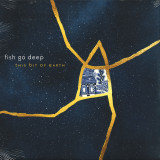
Greg Dowling and Shane Johnson return to the Go Deep label for their third album, ‘This Bit of Earth’. Beginning work in the relative normality of 2019 and finishing over the strange summer of 2020, the resulting music mirrors the thoughts that such upheaval brings out - our world and our place in it - while also functioning as a kind of travelogue of journeys past and planned, real and imaginary.
Mixing samples with modular synths, programmed drums with jazz loops, and quirky plugins with outboard gear, the album ranges far and wide while retaining a warm, natural core sound.
The title track opens proceedings on an ambiguous note. A simple double bass motif weaves around a misheard vocal sample, layers of piano and vibraphone take up the call, and the whole thing gradually spins off axis to a distorted, disjointed finish. ‘Suburban Key’ follows on a groove of busy drum work and deep sub bass, the stately piano and strings setting the stage for an undulating synth solo.
Further in, ‘Alice on Jupiter’ takes a deep breath and blends field recordings, gently swelling pads, modular bursts and a recurring picked melody.
‘Back Trace Dub’ strolls the imagined streets of Irish author Kevin Barry’s ‘City of Bohane’, noting the “taint of badness” in the air and revelling in the tense, dub-noir atmosphere. Later on, the spoken word intro of ‘I Could See’ expresses the dread of confinement and the relief and ecstasy of release, a theme the music reflects as it steadily builds to a joyful climax.
And closing the album on an optimistic note, the languid, emotional Culatra Ferry remembers better, beautiful days in the sun and looks hopefully forward to more.
“Highlights are the stunning sonics of Suburban Key, with its dusty groove and fast paced drums, stately piano, and cinematic strings reminiscent of a Four Hero orchestral masterpiece. High As Scaffold is full of warmth and soul and is yet another example of Fish Go Deep going even deeper into the dark blue waters of their brilliant musical minds.” Ban Ban Ton Ton review, Japan
“So good. Real beauty” Laurent Garnier, Radio FG, France
“Really liking this, would love to support on radio” Colleen 'Cosmo' Murphy, WorldwideFM, UK
“Lovely album” Osunlade, Yoruba Soul, US
“Very very nice album...love the new directions here” Charles Webster, Openlab, SA
“Absolutely beautiful piece of work” Darimont, RWAV, Germany
“A lovely LP of eclectic sounds” Jimpster, Freerange Records, UK
“Delightful album this. Very much appreciate the musicianship and we need that in the world right now as the commercial music world starts to fire up its nonsense for the new beginning” Vince Watson, Yoruba, Netherlands
“Such a fucking great body of work, and on par with ANY of the great albums I've listened to recently” Billy Scurry, Ireland
“There’s some REAL magic here. Possibly the deepest year from this duo” Charles Levine, Soul Clap, US
“A fabulous surprise. I'm sure if he were still alive Jose Padilla would have hailed this as his number one album of the year, it certainly is mine” Steve Miller, Afterlife, UK
“Great album... will play in next shows” Franck Roger, Real Tone, France
“Beautifully produced and great atmospherics” Ashley Beedle, Black Science Orchestra, UK
Radio and DJ support from Ron Trent, Hector Romero, Ame, Cian Ó Cíobháin, Bill Brewster, DJ Sprinkles, Harri, Honey Soundsystem, Alexkid, Moodymanc, Hifi Sean, Kassian, Freddie Garcia, 6th Borough Project, Stuart Patterson, Lars Behrenroth, Fred Everything, Mark Roberts, Cut n Shut, Will McGiven, Stefano Tucci, Tristan Jong, Matthias Schober, Trevor Fung, Ben Davis, Max P and more.
"His music filled me with the urge to connect with the world," Kaitlyn Aurelia Smith says of Emile Mosseri. She first heard his work while watching the 2019 film The Last Black Man In San Francisco; just minutes in, she paused it to look up who did the score and wrote to him immediately. "I love Emile's ability to create melodies that feel magically scenic and familiar like they are reminding you of the innocence of loving life." Those talents saw recognition in 2020 with an Oscar nomination for Mosseri's original score to the film Minari. He was already a fan of Smith's and became increasingly intrigued by her impressionistic process as they started to talk. "The music feels so spiritual and alive and made from the earth," Mosseri says. "I think of her as the great conductor, summoning musical poetry from her orchestra of machines." I Could Be Your Dog / I Could Be Your Moon, their two-part collaborative album, introduces an uncanny fusion of their sonics. Constructed using synthesizer, piano, electronics, and voice, this soft-focus dream world is lush, evocative, and fleeting. It finds two composers tuning their respective styles inward as an ode to mutual inspiration, a celebration of the human spirit and its will to surrender to the currents of life. As a full album set, I Could Be Your Dog / I Could Be Your Moon moves fluidly from track to track, panning through textural vignettes. Two roughly 17-minute halves, the set evokes the bittersweet sense of something too bright or rare to last, a short-lived glimpse into a golden hour. There is a dreamy, elemental intention to this music, which Smith and Mosseri say came naturally, as they both embraced intuitive interplay throughout their creative back-and-forth. The stylistic threads of each composer are recognizable yet become more ambiguous as the album progresses, sewn into a singular vision.
- A1: Seventh Mirror
- A2: Ionization
- A3: Cloud Chamber
- A4: Harmonic Oscillator
- A5: Transfiguration
- A6: Urzeit
- A7: Cybernetic Dreams
- B1: Interference
- B2: Computer Garden
- B3: Pyramid
- B4: Halide Crystals
- B5: Integratron
- B6: Imaginary Forces
- B7: Phantom Lfo
- B8: Opticks
- C1: Mannequin
- C2: Mind In Light
- C3: Palantir
- C4: Vertigo Of Flaws
- C5: Exit Syndrome
- C6: Stasi
- D1: Atomic Voyage
- D2: Ultraviolet
- D3: Violence Cascades
- D4: Traumsprache
- D5: Zeitgeber
- D6: Prism
- D7: Threnody
- D8: Mind Oscillation
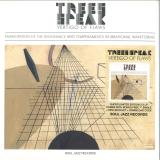
Trees Speak are back!
Speak’s new album, “Vertigo of Flaws: Emancipation of the Dissonance and Temperaments in
Irrational Waveforms” comes as a double-vinyl edition, single CD and digital release. The limitededition first pressing only of the vinyl includes a bonus 45 enclosed in an 8-page 7”x7” booklet
insert housed within the gatefold sleeve with cover artwork created by Soviet Union propaganda
artist Lazar Markovich Lissitzky in 1911.
Trees Speak are back!
This new release is a vast leap into an ocean of space and sound, a quantum leap into cybernetics, biology, anti-gravity,
time travel, dream speech and transfiguration. A seriously next step release!
Showing no signs of slowing down their rapid creative pace – incredibly this is their fourth album in the space of just over
one year – ‘Vertigo of Flaws’ is a mighty 29 tracks, one and a half hours of music across one double album that is surely
going to be a defining point in their musical career, a giant leap into the sonic unknown, an epic exploration of intensity
and sound.
Alongside their now trademark German krautrock motoric-beat rhythms, angular New York post-punk attitude, tripped-out
60s spy soundtrack, psyche-rock, and 70s synthesizers and vocoders, here you will also hear a new cosmic spacial
awareness (both personal inner space and galactic outer space) and a truly wilful pushing of sonic boundaries - as police
sirens, static noise, alarms, radio signals, avant-garde voices, and orchestral string quartets, all collide to add beautiful
dissonance to uber-powerful, intense, addictive and propulsive rhythms - in the process creating a truly unique
soundscape that Trees Speak have made wholly their own.
If you ever wanted to hear Can, Hawkwind, Destroy All Monsters, Pere Ubu, electric eels, John Cage, Liquid Liquid,
Tangerine Dream, Suicide, Neu!, Laurie Spiegel, Art Ensemble of Chicago, John Barry, Mother Mallard’s Portable
Masterpiece Company, Sun Ra, Stockhausen, John Carpenter, Electro-Acoustic and Musique Concrete and Mars in one
band - then this is it!
Trees Speak are Daniel Martin Diaz and Damian Diaz from Tucson, Arizona and their music often draws on the cosmic nighttime magic of Arizona’s natural desert landscapes. ‘Trees Speak’ relates to the idea of future technologies storing
information and data in trees and plants - using them as hard drives - and the idea that Trees communicate collectively.
Special guests from the hyper-creative hub of the Tucson music scene on this release are Gabriel Sullivan, Ben Nisbet, Saul
Millan, Stephani Guilmette, and Davis Jones.
The album Vertigo of Flaws was recorded in Brooklyn, New York, and Tucson, Arizona during the plague of 2021.
Extract from Vertigo of Flaws sleevenotes:
‘As we travel through space and time, avoiding the discarded remains of the industrial period, the
deconstruction of social norms through the expression of art, music, and philosophy guide the human
experience towards the unknown.
All that remains are musical echoes scattered throughout the universe, like ancient vibrations that now
populate the cosmos. These waves now show signs of decay. Melody, beauty, tonality have all but fallen
away as dissonance blossoms. As John Cage wrote in 1937,
“Whereas, in the past, the point of disagreement has been between dissonance and consonance, it will be,
in the immediate future, between noise and so-called musical sounds. New methods will be discovered,
bearing a definite relation to Schoenberg’s twelve-tone system and present methods of writing percussion
music and any other methods which are
free from the concept of a fundamental tone”.
Similarly, George Van Tassel claimed the Integratron as capable of
rejuvenation, anti-gravity, and time travel. So, what remains of the
“people”? We have adopted from them our own Zeitgeber: their pulses
now guide our sun, our planets, our earths, and are the new circadian,
diurnal, and ultradian rhythms of the galaxy. Traumsprache, dream
speech, is now the internal language of trees.
Decaying metal and machines liberated the note unto nature’s table,
and we sip the delicious nectar of music once more irrational, elaborate,
violent, vast. The past is the future, musical disintegration its own rebirth.
We are nature, once more the computer of the Universe.’
Touch Sensitive is honoured to dig into the vaults of legendary cult French group Vox Populi! with a collection primarily pulling from their creative highpoint of 1986-1990. The vast majority of the works are unreleased and all make their first appearance on vinyl. The recordings have been licensed from the group's extensive archive, mastered by Rupert Clervaux and cut by Andreas Kauffelt at Schnitstelle. The release is completed by liner notes focusing on Vox Populi!'s creative process and prolific output. Springing from the rip it up restart of post-punk in 1980 and primarily active throughout that decade, Vox Populi!'s discography is a perfect showcase of an almost unclassifiable group. The often-used 'ethno-industrial' tag - even if not approved by the group - goes some way to describing a melting pot of primarily self-taught techniques and vast cultural influences. Founding member Axel Kyrou's parents were avant-garde musicians and filmmakers resulting in a heavy cultural immersion from a young age. His partner and bandmate Mitra moved from Iran to Paris in 1978 - followed a few years later by her virtuoso brother Arash who joined the group at the age of 14. Based in their 14th arronidissement studio - previously Axel and his brother's family playroom - Vox Populi! quickly became a lynchpin in the Parisian experimental scene and beyond through the burgeoning mail-art scene. The group contributed work to a huge number of independent labels. Their music and approach quickly progressed from rudimentary experiments to harness transcendental spiritual qualities and moments of intense beauty. In this collection, we can feel the vibrations of Don Cherry's Organic Music Society, Faust's communal explorations and King Tubby's forward-thinking studio experimentation. "We recorded everything - every idea. We would always have a cassette or a reel running. We made such different styles - freaky, alternative, experimental, industrial etc. We had no rules and no plans - our main motives were play and pleasure. I think that many people can feel that in the music." Three tracks recorded in 2017 by a reconfigured Vox Populi! sit perfectly with music from 30 years previous - "We were never defined by fashion or the zeitgeist. So we remained ourselves. Our sound is still natural. We had to be turned on by our own music and we wanted the music to have an impact on consciousness. We were the subjects of our own experiments and there was also a kind of mystery - even for us." The Psyko Tropix collection is another magical and mysterious addition to the open-hearted and open-eared world of Vox Populi! "The music of Vox Populi! found me several years ago and it was one of my record digging highlights. Their stark contrast of dark and light paints a beautiful picture of the physical and mental world we all live in. This new album doesn't miss a step in exploring further in both directions" Cut Chemist
We've always done things our own way and without any outside pressure,” says Paul Isherwood of The Soundcarriers. “Making music like this keeps things fresh, you always lose something and gain something as you go along but I think of it as just another chapter.”
There have been many chapters in the life of the band to date and each one is defined by the singular approach and style of the group. Since forming in 2007 the band - comprised of Isherwood, Adam Cann, Dorian Conway and Leonore Wheatley - have released three albums that position them as a distinct and unique force in British music. Eschewing fads and trends that come and go, they have instead focused on honing their own sonic world that glides between woozy psychedelia, immersive grooves, subtle pop and rich, enveloping soundscapes. They’ve consistently moved at their own pace and on their own terms and on their fourth album, Wilds, they return after seven years since their last. “The sessions started in a cottage in the wilds so there's a literal meaning,” Isherwood says of the title. “But figuratively we've pretty much been in the wild for the last few years as far as a lot of people are concerned.”
The recording was staggered over a few different locations, from cottages to primary schools, before finishing in an art gallery. “The beauty of recording in non-studio studios is you have the time for the unexpected to happen,” says Isherwood. “Which is really what keeps you coming back for more.” As a result of the timeframe of the album, it’s one that has changed and grown a lot over the years. “The record has been through a lot of stages,” says Isherwood. “It's almost been circular. We started off wanting to do an album of more shorter, concise tracks and then sort of sidestepped into some more spacey ambient ideas so in a way the album is kind of a synthesis of the two phases, overall carrying on with many of the themes and influences of the first three but with a more focused approach.”
The opening ‘Waves’ leaps out the gate with an infectious hook kissed by a touch of French pop before leaping into a devilishly catchy chorus and into a mini prog-like flute breakdown. It sets the tone for an album that is rich in adventure and unpredictability that manages to balance experimentation with accessibility. ‘At The Time’ is almost unrelenting in its grinding charge, managing to create a groove that cracks and pulses at the same time, ‘Wilds’ is a gorgeously floating piece of music that skips along with strutting bass as Wheatley’s vocals merge melody with texture magically. The closing ‘Happens Too Soon gently stirs to life with an almost pastoral folk air to it, as it slowly builds into swirling psych pop rich in texture before reaching a rousing crescendo. “I feel this album sums up a lot of our influences,” says Isherwood. “There’s a strong folk influence in the sense of the actual songwriting but musically we wanted to create songs that were like those rare oddities you find on a bizarre charity shop record. A collection of "one offs" capturing a moment rather than trying to make a hit song.”
This sense of it being an album of unique songs is clearly apparent throughout but it also maintains a natural flow and cohesion. This is something that stems from the band’s approach to songwriting for the record. “A lot of the tracks started with a feel or groove,” says Isherwood. “Then building it into a more concise arranged piece. We were conscious that we didn't want the recording to sound too over-polished so although a lot of the tracks were quite painstaking in how they evolved we wanted the actual recording to be quite raw and not be reliant on cutting things up or overly editing things. We wanted it to sound natural rather than perfect.”
Following widespread acclaim for his recent LP ‘Always Inside your Head’, on March 4th / April 8th Matt Cutler AKA Lone releases four re-works of tracks from the album, entitled ‘Natural Aerials’.
On ‘Natural Aerials (Mouth of God Part Two)’, Lone utilises a similar sound palette as album track ‘Mouth Of God’, but rebuilds it into a brand new banger. Energetic, deep, trancey and driven by jungle-schooled breakbeats, with bassbin shuddering low-end, he delves deeper into the vortex. Whereas the album was made predominantly using software, Cutler has since been buying hardware – and this marks the first track made on these newly acquired synths.
Based around a version from Lone’s recent sold-out live show at London’s Village Underground, on ‘Inlove2 (One Thirty Mix)’ he ups the original’s BPM count, with sights set firmly on the dancefloor. Taking cues from the ‘Ambivert Tools’ series, this is a high-grade, proggy, main room acid rush.
On ‘Visited By Astronauts (SHERELLE Had A Groove Remix)’, the fast-rising star takes an ambient interlude from the album, and gives it what she calls “a space age, footwork jungle twist”. Her first released remix, Sherelle continues an impeccable purple patch, with a re-rub that’s both airy and light, but also heavily percussive, full of propulsive forward motion. She states, "it’s a pleasure and honour to remix for Lone, as being a long time fan, it's a beautiful thing to be able to collaborate. I really wanted my first remix to be special and also for someone who I hugely admire, so Matt asking me to be involved in this process wastruly magical!”
‘Echo Paths Ebb And Flow’ takes a downtempo album highlight, strips it back to just the synths, then unfurls them into a blissful ambient work that’s melodic, warm and fuzzy, swaddling the listener in candy floss clouds.
- A1: Deux Ans Plus Tôt (02:24)
- A2: Trilogie I (Tâm) (04:04)
- A3: Trilogie Ii (Belles Larmes) (01:33)
- A4: Trilogie Iii (Phoenix Rouge) (02:24)
- A5: Les Rivières Vont À La Mère (04:32)
- A6: Pour Marthe (04:08)
- B1: Mon Âme Vers La Tienne (02:19)
- B2: Sur L’embarcadère / Ðêm Tàn Be^´n Ngu?? (04:14)
- B3: Maman (02:31)
- B4: Le Rêve Noir (02:11)
- B5: Je Revive (01:57)
- B6: Regarde Maintenant (03:43)
- B7: La Floraison Du Bambou (02:52)
We finally made it: BEWITH100LP! And what better way for a re-issue label to celebrate such a landmark catalogue number than to give it to a record of new music. We couldn’t resist when the artist is Official Be With Family Member Kenny Dickenson and when the music is his lovely, lovely score to French-Vietnamese artist Mai Hua's 2020 documentary film “Les Rivières”. If you enjoy the more minimal, intimate piano of the likes of Nils Frahm or John Carroll Kirby’s solo work, you’re certain to fall for this beautiful album.
Taking six years to make, Mai’s film explores what happened when she brought her dying grandmother to France, pulling together four generations of women from the same family. Kenny’s score accompanies all the pretty things, sad things, dirty, beautiful, happy, broken and reborn moments of these women’s experiences.
The whole score is built around delicate, sparkling piano motifs. At times they’re joined by cello and complemented with ambient chords and other flourishes. It’s a very particular palette that Kenny and Mai established early on, as Kenny explains: “We had agreed on a particular sonic aesthetic early on in the process - to use specific and relatively minimal instrumentation, reflecting the intimacy of the picture. So piano and cello were quite prominent in instructing a sense of space and immediacy. Until I had to get the junkyard percussion out… ”
When it comes to describing the end results, Kenny’s happy to wear his influences on his sleeve:
“When the director and I sat down for the creative meetings early in the process, we watched ‘Wolf Children’, a Japanese animation film by Mamoru Hosoda. The amazing soundtrack by Masakatsu Takagi was a launching point for me and thereafter I leaned into more modern classical composers - Reich, Sakamoto, Glass as well as Jon Hassell’s Fourth World output. Richard Reed Parry’s ‘Music for Heart and Breath’ was a good early touchstone for me and Mark Hollis’ sparse, considered and deliberate approach was a constant presence. Also labels like Ghostly, ASIP and the ubiquitous Erased Tapes should probably get a nod here too…”
We’d even suggest there’s the occasional Yann Tiersen moment in there too.
Out of sheer necessity the collaboration between Kenny and Mai continued beyond this initial creative direction. With Kenny speaking neither French nor Vietnamese, Mai acted as translator, a process that naturally lead to discussing the film beyond just what was being said in the footage. Mai herself explains just how successful this relationship felt to her: “Music plays a very important role in all my work, particularly in Les Rivières. I cried every time Kenny sent me a new composition. I felt understood in a way that words cannot describe. It was absolutely magical and I am so happy if this music can make your soul vibrate too.”
Kenny composed much of the music in London, at the same time that Mai was shooting and editing. As the film took shape and the music also evolved, another challenge presented itself when Kenny relocated to Los Angeles part way through, resulting in Arnulf Lindners beautiful cello taking on new shapes- multi sampled, played and manipulated by Kenny into new compositions.
What Kenny has put together for the film score release is definitely a “soundtrack LP”, with the music arranged to work as a proper album in its own right that should be listened to from start to finish. Indeed the album also includes a new piece “Pour Marthe” that Kenny composed in memory of Mai’s grandmother who died after the film was finished.
Kenny’s personal highlight is also ours: “When I listen back to the album as a whole now, I never want part II of the Trilogy (Belles Larmes) to end. I have fond memories of recording it and I love how the dynamic of the piece gradually evolves from falling on the ‘1 and the 3’ to the ‘1 and the 2’. It’s so short and sweet, I keep wanting it to last for longer. But it’s kind of perfect as it is.”
Pretty much our sentiment for the album as a whole.
Running a record label means we often get asked advice about pressing a record. In this case the music was too good not to offer to release it ourselves. To Kenny, having the Les Rivières score on vinyl also feels like the final part of the project.
“It’s a beautiful thing to have it on vinyl. It’s quite an intimate soundtrack so there’s something really perfect about being able to listen to it on that format. When I was a kid, my Uncle Pat who used to work at Woolworths would visit and bring random records from their record department over to us. I can remember listening to “Theme From Exodus” by Ernest Gold. I had no idea what it was about but the imagery it conjured up when listening to that record was just mind blowing to me at that age. Soundtracks can have their own life on vinyl I think, and removed from their original context is this unique format for reinvention. So I’m excited that people who haven’t (and have for that matter) seen the film can have that experience.”
This might not be a re-issue, but the Les Rivières film score album has still been given the full Be With treatment. The vinyl has been mastered by Simon Francis (under Kenny’s ever-watchful eye/ear, of course), cut by Pete Norman and pressed at Record Industry. The sleeve follows the film’s poster and other promotional material, including Lucile Gomez’s almost magical illustration.
We’re under no illusions that many people reading this will have seen “Les Rivières”, but that doesn’t really matter when it comes to listening to the score. Just on its own, Kenny’s music still captures the robustness and the delicacy of lives lived.
Repressed !
Hear & Now's Story Is One Of Friendship And A Shared Passion For Music. It Began With A Chance Meeting On The Dancefoor At Red Zone In Perugia, One Of Italy's Most Legendary Clubs
Of The 1990s. Nearly Three Decades On, These Glassy-eyed Clubbers Have Joined Forces To Deliver One Of The Most Magical And Sun-kissed Albums That Claremont 56 Has Ever Released. By The Time Ricky L And Marcoradi Frst Joined Forces In The Studio In 2016, Both Had Become Established Producers Within Italy's Vibrant Deep House Scene. Between Them, They'd Released Records And Remixes On Such Labels As Ibadan, Uomo, Reincarnation, Top Tracks, Restricted
Tracks And Vega. Keen To Step Away From The Dancefoor, They Decided To Simply Create Beautiful Music For Bleary-eyed After-hours Sofa Sessions, Lazy Summer Afternoons And Early
Mornings Spent Blinking At The Rising Sun.
Aurora Baleare, Their Debut Album, Follows On From A Fantastic Double A-side 12' For Claremont 56 In February 2017. Those Two Tracks Take Pride Of Place Amongst An Eight-track Selection Simply Brimming With Evocative Workouts, Gentle Soundscapes And Noon-bright Sonic Bliss. While You'll Fnd Luscious Instrumental Cuts Designed To Inspire Baggy, Glassy-eyed Shuffing - See The Mid-tempo, Spine-tingling Brilliance Of salsedine', Mind-massaging hirundo' And Dreamy Slow-house Treat sabbia Magica' - It's The Effortless Brilliance Of Marcoradi's Improvised Guitar Playing And The Duo's tmospheric Approach That Really Catches The Ear.
Check, For Example, The Heady Horizontal Shuffe Of trasimeno', Where Poignant Ambient Chords, Jazzy Electric Guitar Solos And Deep Space Electronics Tumble Down Over Shuffing Beats And A Squeezable Synthesizer Bassline, And The Sun-down Adriatic Wonder Of stella Dei Venti', A Track So Effortlessly Loved-up And Blissful That You Might Be Overcome By Emotion (it Certainly Had Us Daydreaming Of Days Spent Exploring The Intense Natural Beauty Of Italy's Adriatic Coast).
Moments Like This, Where The Duo's Dreamy Electronics And Smile-inducing Melodies Seemingly Shimmer Across The Sound Spectrum, Can Be Found Dotted Throughout Aurora Baleare. There's The Darting Digital Synthesizer Motifs, Sparse Hand Percussion And Ricocheting Solos Of airone', The Italo-disco-inspired Chugging Positivity Of la Marsa' And The Title Track's Humid Beachside Breeze, Where Intertwined Electronic And Acoustic Lead Lines Seemingly Glimmer Like Rays Of Sunshine Bouncing Off The Surface Of A Becalmed, Crystal Clear Ocean. Their Roots May Be On The Dancefoor, But Hear & Now Are Fast Becoming Down Tempo Masters. You Can Dance If You Want To, But You May Just Want To Hug A Stranger Instead.
A homage to the wildlife and mountain people of Benedicte Maurseth’s home area in Hardanger. The acclaimed and innovative visionary musician Benedicte Maurseth is coming forth with the wonderful all-consuming album Hárr. The sound of her magic Hardanger fiddle is woven seamlessly together with that of birds and the other musicians’ musical impressions. Always moving forward with a steely calm disposition, the record draws you into a world where one feels to be one with nature, wandering over a mountain plateau. Benedicte was raised in Maurset in Eidfjord – near Hardangervidda National Park – and has hiked through the mountains her whole life, clearly laying the foundation for this musical expedition. As traditional folk musicians have always been, Maurseth is open to contemporary influences from interactive art and music styles. The work Hárr oscillates between Norwegian folk tunes, free improvised music, American minimalism, and extensive use of musique concrète. In the tracks you will also hear natural soundscapes via the shufflings of reindeer, reindeer herders, birds and insects all recorded in Hardangervidda. Benedicte Maurseth: Hardanger fiddle Mats Eilertsen: contrabass, electronics Håkon Stene: vibraphone, percussion, electronics Guests: Jørgen Træen: electronics Rolf-Erik Nystrøm: saxophone Stein Urheim: langeleik, harmonica, electronics, samples, percussion
- A1: Graceful (1:53)
- A2: Drumcrazy (2:58)
- A3: Giants (2:26)
- A4: Sound Inventions (3:04)
- A5: Glide (1:06)
- A6: Greenwich Street (0:50)
- A7: Stretching Out (1:42)
- A8: Air Space (2:11)
- A9: Statements (1:24)
- A10: Don’t Stumble (0:56)
- B1: Beauty (2:12)
- B2: Rhythm Function (1:20)
- B3: On Disco Street (0:56)
- B4: Fidget (0:38)
- B5: Waves (1:44)
- B6: Funky Art (2:06)
- B7: Rainbows (1:28)
- B8: Uncertain (0:56)
- B9: A Few Cuts (1:37)
- B10: Hot Chocolate (1:17)
- B11: Sections (1:20)
- B12: Early Start (1:01)
The second Be With foray into the archives of revered German library institution Selected Sound is one of our favourites, Sound Inventions from Klaus Weiss Rhythm And Sounds, originally released in 1979.
From the notoriously strong mind of Niagara drummer / library-funk overlord Klaus Weiss, Sound Inventions is loaded with tripped out studio funk-freakery, mad samples and swaggering abstract funk grooves. From dramatic deep disco with dark Italo/Moroder leanings to heavy German funk breaks, this is absolutely sensational. Absolute synth-and-string-drenched magic.
Born in 1942 in Gevelsberg, Germany, Klaus Weiss began his career as a jazz drummer at sixteen (with a group called the Jazzopators) before working with the internationally successful 60s groups the Klaus Doldinger Quartet and the Erwin Lehn Big Band. In 1965 he formed his own trio, the first of many groups to bear his name, and as his renown as a bandleader grew over the next decade it naturally lead to working in production music.
About as cult as it gets when it comes to library music legends (German or otherwise), he produced essential records on German library labels Coloursound, Selected Sound and Sonoton, as well as making two essential entries in the Conroy catalogue. Collections of music in the trademark Klaus Weiss sound of electronics unsurprisingly built on top of sometimes funky, sometimes frenetic, but always hard-hitting drums.
Sound Inventions is one of those library records with a hefty track list, 22 in total, but they’re all pretty stunning. That’s not something you can often say and picking out the highlights is almost impossible. If pushed, we’d steer you towards the tough teutonic funk of “Drumcrazy”, the by turns juddering and sweeping majesty of the title track “Sound Inventions”, the aquatic serenity of “Glide”, the elegant strut of “Greenwich Street”, the muted, eerie cosmic-funk of “Air Space”, the squelchy acid-clavs of “Rhythm Function”, the calming, melodic “Waves”, the stuttering proto-Timbaland sensation that is “Rainbows” and the percussive funk-fuelled workout of “A Few Cuts”. Phew. Heavy indeed!
Founded in the late 60s by German composer and musician Klaus Netzle, Selected Sound began as a production music company specialising in jazz, orchestral and electronic recordings. You can’t miss those early LPs in their iconic glossy metallic copper sleeves with minimal German typography. Serious, classy stuff.
This re-issue of Sound Inventions has been mastered for vinyl by Be With regular Simon Francis from audio from the original tapes. Richard Robinson has handled reproducing the glossy metallic (iconic) original Selected Sound sleeve. Essential.
- A1: Gary Moore - Sea Lapping (Harbour & Estuary)
- D5: Gary Moore - Swifts & Swallows
- D6: Ame - Doldrums
- A2: Natural Calamity - Have You Seen The Sun Today
- A3: Gary Moore - Ships Horn
- A4: Paqua - Escondidio (Instrumental)
- A5: Gary Moore - Avocets
- A6: Coyote - The Fade
- A7: Gary Moore - Cormorants
- A8: Greymatter & Goldslang - Black Turns To Blue
- B1: Gary Moore - Nightjar (Heathland & Moorland)
- B2: Crack'd Man - Between The Midst & The Sun
- B3: Gary Moore - Wood Ants
- B4: Kirk Degiorgio Presents As One - Orwell Rising
- B5: Gary Moore - Stonechat
- B6: Turtle - Heathland Haze
- B7: Gary Moore - Natterjack Toads
- B8: Brainchild - Beyond Because
- C1: Gary Moore - Woodland Canopy (Woodland & Forest)
- C2: Richard Norris - Warm Hunger
- C3: Gary Moore - Great Spotted Woodpecker
- C4: Fug - From Little Seeds We Grow
- C5: Gary Moore - Tawny Owls
- C6: Bobby Lee & Mia Doi Todd - Walking With Trees
- D1: Gary Moore - Cliff Top (Beach & Cliffs)
- D2: World Of Apples - Bluemill Sound
- D3: Gary Moore - Puffins
- D4: Pablo Color & Hove - Licht
Warm presents a brand new compilation called 'Home'; a soundtrack for when we pause, take a breath, and use our senses to explore the magic of the world on our doorsteps. Morning to evening, dawn to dusk, our lives continue moving but sometimes the need to step back and reset is essential to create a balance in our lives. As we open our eyes and ears to our surroundings, our senses become stimulated by small details. Whether it be the sound of the sea lapping on the sand, the wind blowing through the canopy of trees or a robin heralding a new day; nothing is the same but all are unique.
'Home' has been pieced together over the last year by Warm’s Ali Tillett. With the majority of Warm - booking agents for Colleen ‘Cosmo’ Murphy, Gerd Janson, Horse Meat Disco, Hot Chip DJs, Lou Hayter, Luke Una - on pause, Ali took the chance to immerse himself in bringing together his passion for music, nature and art.
The 14 tracks, the majority exclusive and specially made for the compilation, includes contributions by Âme, Bobby Lee & Mia Doi Todd, Coyote, Crack’d Man (aka Crooked Man who produced Roisin Murphy's last album), Fug (with their first material for over ten years), Kirk Degiorgio presents As One, Turtle, and Ewan Pearson's World of Apples project (with their first material for nearly 20 years!). The tracks align with specific habitats in the local Dorset area, where Ali is situated, such as Harbour/Estuary, Heathland/Moorland, Woodland/Forest, and Beach/Cliffs.
To immerse the listener even further into the soundscape, critically acclaimed sound and field recording artist Gary Moore, of Springwatch/Autumnwatch fame, has been involved to help bring nature even further to the ears. Intertwined between the music are field recordings specific to area and habitat; whether it be the sound of a ship's horn in Poole harbour, avocets on the scrape, the tawny owl in the woodland or Puffins on the ledges of cliffs.
Gareth Fuller, a fabulous artist who previously lived in Dorset, has kindly allowed one of his artworks to become the centrepiece for the compilation. Titled 'Purbeck', it's a truly wonderful piece of art that encapsulates everything about the area and enables an added dimension to the immersive experience for the listener.
Following the first ever vinyl reissues of Aurore and Royaume, Aimant + Aimant – Penultimate Press is finally proud to make available the final part of this extraordinary trilogy. Bleu is the final gesture and culmination of this period of creation where poésie and la nature form a magical alliance that resonates as an alchemical wedding. Having the conviction that Bleu was the ultimate arc based on the purity of natural sound and poetry, leaning towards a mystical spiritual search towards their own souls the band moved into commadere and collaboration with friends and ideals such as Lydia Lunch and Alan Vega.
It is with great joy that we present the Mr Bongo edition of Marcos Valle's 1983 self-titled masterpiece. A pure vintage that features the ultimate Brazilian-boogie cult-classic ‘Estrelar’ and iconic 80s cover art that sees a gloriously sun-drenched Marcos dressed in a pink v-neck t-shirt surrounded by a generous selection of deadly-looking neon cocktails.
The album was produced by the legendary Lincoln Olivetti and Marcos' brother Paulo Sérgio Valle. It showcases a real who's who of Brazilian music at the time, with stellar performances from vocalists and musicians such as Rosana, Serginho Do Trombone, Robson Jorge and Oberdan Magalhães to name but a few. This was Marcos’ second album, after having moved back to Brazil from his time living in Los Angeles, and that US influence is evident through its prominent boogie, soul and funk sounds. It also features collaborations with the US singer-songwriter, composer, pianist, keyboardist, and record producer, Leon Ware, who co-penned three tracks including 'Estrelar'. To complete the album there are tracks such as 'Fogo Do Sol', which is pure AOR / Balaeric vibes, and tracks that are more MPB and pop-inspired, making a well-balanced track list for both home-listening pleasure and dancefloor business.
What could we do to give one of Marcos' most celebrated albums the treatment it deserved and produce the most definitive re-issue possible? The answer was to enlist the services of Miles Showell, Abbey Road Studios Mastering and lacquer-cutting engineer and all-around audio-magician, to cut a special half-speed master edition. Miles had previously worked his half-speed magic on our Arthur Verocai album re-issue, and once again we are totally blown away by the richness which Miles has brought out in his mastering technique. He has enhanced the listening experience and taken this wonderful album to another level.
To celebrate the release we have pressed up several vinyl versions; both standard master, and Miles' half-speed mastering editions on Black vinyl, alongside special limited edition Rose and Mint-Green coloured vinyl variants that were inspired by the audacious-looking cocktails on the cover - sheer 80s excess!
Pink Vinyl
It is with great joy that we present the Mr Bongo edition of Marcos Valle's 1983 self-titled masterpiece. A pure vintage that features the ultimate Brazilian-boogie cult-classic ‘Estrelar’ and iconic 80s cover art that sees a gloriously sun-drenched Marcos dressed in a pink v-neck t-shirt surrounded by a generous selection of deadly-looking neon cocktails.
The album was produced by the legendary Lincoln Olivetti and Marcos' brother Paulo Sérgio Valle. It showcases a real who's who of Brazilian music at the time, with stellar performances from vocalists and musicians such as Rosana, Serginho Do Trombone, Robson Jorge and Oberdan Magalhães to name but a few. This was Marcos’ second album, after having moved back to Brazil from his time living in Los Angeles, and that US influence is evident through its prominent boogie, soul and funk sounds. It also features collaborations with the US singer-songwriter, composer, pianist, keyboardist, and record producer, Leon Ware, who co-penned three tracks including 'Estrelar'. To complete the album there are tracks such as 'Fogo Do Sol', which is pure AOR / Balaeric vibes, and tracks that are more MPB and pop-inspired, making a well-balanced track list for both home-listening pleasure and dancefloor business.
What could we do to give one of Marcos' most celebrated albums the treatment it deserved and produce the most definitive re-issue possible? The answer was to enlist the services of Miles Showell, Abbey Road Studios Mastering and lacquer-cutting engineer and all-around audio-magician, to cut a special half-speed master edition. Miles had previously worked his half-speed magic on our Arthur Verocai album re-issue, and once again we are totally blown away by the richness which Miles has brought out in his mastering technique. He has enhanced the listening experience and taken this wonderful album to another level.
To celebrate the release we have pressed up several vinyl versions; both standard master, and Miles' half-speed mastering editions on Black vinyl, alongside special limited edition Rose and Mint-Green coloured vinyl variants that were inspired by the audacious-looking cocktails on the cover - sheer 80s excess!
. A true child of the seventies, Sojo wished to record and mix his new material straight to tape, using vintage analog equipment with according methods of work. This was made possible at Studio Kerwax, located in the heart of Brittany. A tight quintet gathered with sound engineer Christophe Chavanon to produce the warm timeless sounds of Silvatica, marking the welcome return of drummer Earl Harvin (Tindersticks, The The, Psychedelic Furs). New recruit Erik 'Raggy' Sevret (from French dub masters Zenzile) works his sax magic, breathing further life into Sweet Gum Tree's lush sonic forest.
For their first album, Caravan was surprisingly strong. While steeped in the same British psychedelia that informed bands such as Love Children, Pink Floyd, and Tomorrow, Caravan relates a freedom of spirit and mischief along the lines of Giles, Giles & Fripp or Gong. The band's roots can be traced to a British blue-eyed soul combo called the Wilde Flowers. Among the luminaries to have passed through this Caravan precursor were Robert Wyatt, Kevin Ayers, and Hugh Hopper and Brian Hopper (pre-Soft Machine, naturally). The Caravan album never sold in serious numbers, and for much of 1968 and early 1969, the members were barely able to survive -- at one point they were literally living in tents. Suddenly, Caravan was an up-and-coming success on the college concert circuit, even making an appearance on British television's Top of the Pops. With national exposure and a growing audience, the group was at a make-or-break moment in their history. They rose to the occasion with their second Decca LP, In the Land of Grey and Pink, which showed off a keen melodic sense, a subtly droll wit, and a seductively smooth mix of hard rock, folk, classical, and jazz, intermingled with elements of Tolkien-esque fantasy.
- A1: Gone Dead Train
- A2: Performance
- A3: Get Away
- A4: Powis Square
- A5: Rolls Royce And Acid
- A6: Dyed, Dead And Red
- B1: Memo From Turner
- B2: The Hashishin
- B3: Wake Up, Niggers
- B4: Poor White Hound Dog
- B5: Natural Magic
- B6: Turner's Murde
Starring James Fox as a British gangster on the run who finds refuge in the home of reclusive ex-rock star Mick Jagger, Donald Cammell and Nicolas Roeg's PERFORMANCE is one of the great cult movies of the 1970s. The film's soundtrack, produced by Jack Nitzsche for Warner Bros., is equally noteworthy. Needless to say, the Rolling Stones connection is strong; the Jagger-sung single "Memo From Turner" was co-written with Keith Richards, and vocalist Merry Clayton (famous as the duet partner on "Gimme Shelter") appears on three tracks. Several up-and-coming WB artists also make key contributions, including Randy Newman (the raucous "Gone Dead Train"), slide guitar virtuoso Ry Cooder and Little Feat leader Lowell George. Like the film itself, the PERFORMANCE original motion picture soundtrack offers a fascinating glimpse at one of the most exciting eras in rock.
Andy Compton is undisputedly one of the hardest working producers in dance music. With over 40 albums and 150 EPs released either solo or as part of deep house legends The Rurals, the Bristol-based producer just can't stop creating profoundly funky and vibey music that works on loose-limbed dancefloors, beach bars and shag carpets alike.
He has appeared regularly on quality labels as diverse as Lumberjacks In Hell, Hed Kandi, LARGE and naturally, his own vital imprint Peng.
Andy's latest long player for Tangential Music is a collaboration with LA artists Irantzu Pujadas and Brad Kent under the name Blue Dream.
Aptly titled: 'A Trip To LA' the album is a deliciously louche and laidback twelve tracker of pure LA heat. The project began as many great ones do, without a plan. Visiting Brad's studio to check out his huge vintage analogue synth collection in search of new sounds for The Rurals, they got to thinking...and jamming. With Brad on the dusty old drum machines, Irantzu on the microphone and Andy in synthesiser heaven, Blue Dream was born.
Their first and equally good album 'California Dreaming' was released on Peng in early 2019 and now we are here with a second round of perfectly realised dream-like grooves. Think of the sun-facing vibes of Shuggie Otis, Eddie Chacon, Bobby Caldwell or Roy Ayers at his most relaxed and add a passionate knowledge and experienced grasp of electronic forms. They make this seem easy goddammit.
'I Wanted To See You' sounds like Khruangbin with a 303, 'You Want Me Back' with its mid-tempo shuffling groove, saucy squidge bass line and seductive soul house vocal is pure daytime at Houghton Festival happiness, like Crazy P in the hot tub.
At no point are we required to sweat. Lie down if you must, stand up and sway if you're ready. This could be lovers music or just for you alone. Irantzu's vocals throughout are whispers and purrs, evocations of humid love drenched in reverb and easy living. Sunset music.
The singles 'I Wanna Go Home' and 'Sandwich Dub' don't deviate far from the endless feeling of hazy cinematic sunshine, one a sultry plea for intimacy, the other a heavily dubbed-out slice of musique française amour.
'Trip To LA' with a vocal more than suggestive of the Balearic classic 'Sueno Latino', spare guitar chords and a prodding repetitive bass line creates a feeling of slinky bliss.
Every track is full of sensual melodies and the space required to be truly funky. Press play and invite a bit of California magic in...
Meditative tropical soundscape of the Hawaiian Islands
Originally pressed in 1980 in limited quantities
Meticulously restored and remastered by Jessica Thompson
A lost gem from the exotica pioneer's catalog: the rarest of all Arthur Lyman releases — and his last recorded album — Island Vibes a meditative tropical canvas of the Hawaiian Islands’ natural beauty.
A welcomed sonic transport to paradise, much needed in these times of chaos. Originally recorded with Broad Records, who’s responsible for Phase 7’s Playtime and other important 1970s and 80s-era local records.
Audio premiere for Povratak na Parni Pogon on Monday 24th of May via Music is my sanctury
Video premiere via Clash or Twisted Soul
Airplay - dom servini (soho radio), WYEP Pittsburg (dubmission), WKDU Philadelphia (eavesdrop radio), Jocks & nerds (soho radio), Basic Soul Show, Bondfire Radio NYC + many smaller stations across EU, UK & US
LP review - Mojo, Songlines agreed so far
Key selling points:
Kozmodrum are pioneers of the Croatian nu-jazz scene
Kozmodrum's second albumGravitywon the highest award in Croatia, Porin
Individual members of Kozmodrum as well as Kozmodrum as a collective are acclaimed musicians in the Balkans and have won numerous prestigious awards for their work
Their music is like a DJ set played live - as all the music is played live with 'traditional' instruments by the Kozmodrum ensemble
numerous great reviews, but not many in English - we're looking to introduce the band to UK audiences with this release -- this is one review in english for their album Gravity:https://exclaim.ca/music/article/kozmodrum-gravity
Our PR for this 3rd album by Kozmodrum is done by Francesco Soragna (Jus Like Music) with specific focus on UK market.
BIO:
Kozmodrumhave been pioneering a new approach to electronic music in Croatia, often described by the band as Organic Dance Music. Techno, House and Dub styles intertwine through a continuous set, played by a live band on guitars, drums and keyboards.Simultaneously, the tradition of jazz ensemble performance is stitched into the architecture of music itself.
Kozmodrum have released 2 albums, 'Na Tragu Satelita' in 2016, and 'Gravity' the following year, receiving a Porin Award for the latter (the Croatian Grammy). Individual band members also received numerous awards for their accomplishments and are considered by many to be pioneers in the Croatian nu-jazz scene. Kozmodrum's main influences are Tycho and Elektro Guzzi, as well as Jaga Jazzist with whom they performed live. The band have played numerous festivals and concerts, with Kozmodrum's members performing with Hans Joachim Roedelius, noise/art/sound figure Sunao Inami, as well as jazz masters Reggie Washington, Peter Erskine, David Liebman, Alan Broadbent, David Murray and Saskia Laroo.
Onstage, Kozmodrum is a five-piece ensemble that adds a third dimension to their music, written and produced by the band's founder Janko Novoselić. Using the framework of a DJ set, the compositions are made to be played openly, where the beat is 'looped' until a cue is given to make a change or switch to another part. The pieces are often minimalistic to start with, but evolve over the performance into more complex patterns, harmonies and melodies. With constant shifts between the natural and the artificial, organized and improvised, quiet and loud - Kozmodrum create an unforgettable, mantric performance.
Working his mellow magic on the Growing Bin, Sorcerer entertains your inner child with eight tracks of instrumental west coast pop suitable for dancing, dreaming and surfing a wave or two.
While Basso sat in a Teutonic treehouse, feeding his head with the sounds of the woodland, Dan Judd danced on the sands of San Francisco's Baker Beach. Stretching between them, like the world's longest tin can radio, was the Dream Chimney. This legendary forum, run by Ryan Bishop, better known as The Beat Broker, helped to launch a thousand labels, and the Growing Bin is one of them - all hail the Chim!
Here, Dan, naturally mystic in his Sorcerer guise, satisfies all our sensory needs with a Kinder Surprise of sweet melodies, coastal cool and playful rhythms inspired by his children's earliest responses to music. Following his feelings and avoiding overthinking, he creates open, enticing and accessible cuts; each living and breathing that mellow magic you only get on the West Coast.
'Kids World' kicks into gear with the spheric bass of '2000 Studio', a bouncy embodiment of that spacious San Francisco sound. There's a nod to nu disco but the dreamy dubiness takes the track much deeper, especially as those surf guitars start to detune in the summer heat. The breezy fretwork continues on 'Disco Drums', topping a wriggling groove tailor made for the terrace. Shades of rave refract through a healing crystal at the midpoint, encouraging al fresco dancing from sunrise to sunset. The A3 sees Sorcerer get into the groove of 'Bahia Brothers', rolling that rubberised B-line out of his own Paradise Garage before putting the top down for the carefree Balearic pop of 'Spray Paint.'
The B-side glides into being via the night dubbing grooves of 'Fire Feel', a reverb laden journey though glassy tones, off beat perx and gorgeous chord progressions. Next up, the new wave inspired 'Crunchy' translates Sheffield's daring synth pop into a wide eyed blast of psychedelic house, boosting our mana ahead of the loose limbed and light footed 'First Wave'. Ringing guitars reference Ghanaian highlife, shimmering in the heat haze as Dan funks up the drum kit ready for the broken beat and blissed out energy of sundowning set closer 'Escape Route'.
Shadow Kingdom Records is proud to present Hour of 13’s long-awaited
fourth album, ‘Black Magick Rites’, on CD and vinyl LP.
‘Black Magick Rites’ is the sweet sound of salvation...through damnation.
Hour of 13’s first full-length offering in over eight years, ‘Black Magick Rites’
was available digitally on the first of November 2020 for only 24 hours. Just as
uniquely, ‘Black Magick Rites’ also marks the first Hour of 13 album where he
handles not only all instruments, but also all vocals.
Indeed, Davis’ vocals evoke an ancient nostalgia, of doom metal before it was
“”doom metal”” - of the days when bands like Black Sabbath, Pagan Altar, and
Witchfinder General simply followed their respective muses wherever it took
them. And for Davis, ‘Black Magick Rites’ sees him taking his Hour of 13 muse
toward a rougher, more rock ‘n’ roll expression and yet tinged with an emotive
melancholy that resonates deeply within the soul.
No, no flavor-of-the-week “”occult rock”” cliches here, for Davis still prizes
blue-collared authenticity in his doom, but he likewise never lets it hamper his
immediately recognizable songwriting, which here ever so subtly inches closer
to classic deathrock territory (think the likes of early Christan Death and Voodoo Church).
Naturally, with a title like ‘Black Magick Rites’, an indulgence in occultism is expected, and you can literally feel the fingers of the black beyond reaching out
to you across every electric minute of this 44-minute monolith.
- A1: Double Slit
- A2: Glass
- A3: Chamber Of Frequencies
- A4: Divided Light
- A5: Elements Of Matter
- A6: Magic Transistor
- A7: Scheinwelt
- A8: Posthuman
- A9: Synthesis
- B1: X Zeit
- B2: Incandescent Sun
- B3: Healing Rods
- B4: Steckdose
- B5: Amnesia Transmitter
- B6: Quantize Humanize
- B7: Glaserner Mensch
- C1: Machine Vision
- D1: Hidden Machine
This is incredibly Trees Speak's third album on Soul Jazz Records to be released in the space of one year - and it's amazing! Trees Speak's new album 'PostHuman' once again blends 1970s German electronic and 'motorik' Krautrock instrumentals (think Harmonia, Can, Cluster, Popul Vuh, Neu!), haunting and powerful 1960s & 1970s soundtracks (think Italian prog-rock Goblin and John Carpenter horror movies, Morricone and existential John Barry spy movies), together with a New York no wave electronic synth and guitar analogue DIY-ness (think Suicide, anything on Soul Jazz's New York Noise series or Eno's New York No Wave)! Drawing further upon German krautrock high-concept albums from the likes of Tangerine Dream and Klaus Schulze from the 1970s, Trees Speak create their own powerful new landscapes of sound that manage to be at once contemporary as well as both timeless and with a sense of science-fiction futurism. Trees Speak' segue together all these elements into 'PostHuman,' which follows on from their criticallyacclaimed debut LP 'Ohms', and 'Shadow Forms' released on Soul Jazz Records less than six months ago. This powerful new album is a high-concept collage of retro-futurist science-fiction music, fantastically illustrated by the artist Eric Lee, a dramatic vision of life after humanity. Trees Speak are Daniel Martin Diaz and Damian Diaz from Tucson, Arizona and their music often draws on the cosmic night-time magic of Arizona's natural desert landscapes. 'Trees Speak' relates to the idea of future technologies storing information and data in trees and plants - using them as hard drives - and the idea that Trees communicate collectively. The album includes an exclusive bonus 45 single 'Machine Vision' and 'Seventh Mirror' that will only be available with the first order of the vinyl edition of this amazing and ground-breaking new album. With 'PostHuman,' Trees Speak once again manages to take the listener deep into their unique musical world of unknown visions of the past and the future.
’Angelo lost his shit over it. Aaliyah’s 3rd favourite track of all time is on it. David Bowie rocked up with it to a TV interview, declaring it “the most exciting sound of contemporary soul music”.
In 1996, Lewis Taylor released his self-titled masterpiece. A true modern classic, it’s an album that was years ahead of its time. Forget 25 years ago, it could easily have been made in 2021. An effortless blend of neo-soul, sophisticated pop, smart grooves and laid-back white funk, it enjoyed rapturous reviews from critics and music legends alike. But the album never managed to make an impact and given what was likely a token vinyl release at the time, the original records have long since been near-impossible to find. Lewis Taylor’s Lewis Taylor remains a holy relic for some and criminally unknown to most.
Lewis Taylor’s impeccable influences created a dazzling sonic palette: the LP as a whole suggests the visionary brilliance of Prince; the vocal stylings evoke the yearning power of Marvin Gaye; the effortless guitar playing shares the virtuosity of Jimi Hendrix; the haunting tones conjure Tricky; the innovative production and engineering invite comparisons to studio mavericks like Todd Rundgren and Brian Eno; the multi-layered, complex harmonies flash on Pet Sounds-era Brian Wilson; the dark, drama is reminiscent of both Scott Walker and Stevie Wonder; the complex arrangements create textures and moods with the feel of Shuggie Otis on Inspiration Information; the bold experimentation is akin to progressive artists like Faust and Tangerine Dream; the atmosphere is in conversation with Jeff Buckley’s Grace… and we could go on. That might all sound like marketing hyperbole, but not as far as Be With is concerned. It is a genuine wonder how an album this good could’ve passed so many people by.
But despite all the reference points, the similarities are really only skin-deep because the album sounds truly original. It occupies its own distinct, strange universe that feels dark and brooding one moment, bright and joyous the next. Ultimately, Taylor sounds like Taylor.
Although you wouldn’t know it from the credits, the album wasn’t the work of Lewis alone. Sabina Smyth gets an executive producer credit on the original sleeve, but in fact she worked with Lewis on the production and arrangements, did a lot of the backing vocals and she co-wrote Track, Song, Lucky and Damn with Lewis.
Lewis clarified all this in a Soul Jones interview with Dan Dodds in 2016. He explains how not giving Sabina the credit she was due at the time was an unfortunate consequence of where his head was at and he’s now trying to set the record straight.
Together they created an exquisite and sensually-charged record, with a freshness to the writing that makes the songs catchy, melodic-yet-deep and sometimes even funky. The music is predominantly guitar-led and a mixture of organs and synths, live drum loops and electronic percussion make for a sort of modern soul backing orchestra.
On the surface the album is gorgeously laidback, but beneath the lush, sometimes slick, production there’s a murkiness in the seriously gritty funk/hip-hop instrumentation. Lewis Taylor can be a claustrophobic listen. Even its one-word, often seemingly throw-away track titles add to the sense of unease. In its most positive moments, there’s still a sense that things aren’t quite right. The magic comes from this compelling tension.
The languid, strutting “Lucky” is a sensational opening statement. Sinuous electric guitar winds around the shaking percussion with a killer bass line rattling your bones, and Lewis’s voice is sublime. Its six-and-a-half unhurried minutes manage to distill the work of Marvin, Al Green and Bobby Womack because yes, it’s *that* good. Up next is the tough, dusty drum and jazzy, unsettling psych-guitar workout of “Bittersweet”. Aaliyah described it the “perfect song”, which says it all. By turns loping and soaring, tightly coiled and blasting free, 25 years on its discordant, swaggering majesty still sounds like future R&B.
The swinging, blue-eyed funk of “Whoever” oozes sophisticated sunshine soul for hazy days before “Track” sweeps in. The music tries to lift us up, beyond the reach of the vocals trying to drag us back down as Taylor sings “my mood is black as the darkest cloud”. The spare, dubby electro-soul of “Song” closes out the first half of the album with barely contained dread as it creeps towards the lush, synth-heavy coda.
The smouldering “Betterlove” eases us into the second half, coming on like a languorous response to the call of “Brown Sugar”, before sliding into the shuffling, softly-rocking “How”. Somehow the remarkable “Right” manages to both warm things up and smooth things out even more. Taut yet luxurious, it’s definitely not wrong.
“Damn” was to have been the album’s title track and you might also be able to hear its influence on D’Angelo’s Voodoo, maybe most obviously in the chaotic closing moments of “Untitled (How Does It Feel)”. Building to a screeching wall of noise that suddenly cuts dead, “Damn” sounds like the natural end to the album, with the celestial a cappella “Spirit” serving as a heavenly reprise.
When it came to the sleeve, art director Cally Callomon heard Taylor’s music as “sideways off-camera glances at a plethora of influences he had” and wanted to interpret that visually: “I went off into night-time London to see if I could find his song titles in off-beam low-fidelity photographs. I even found a shop called Lewis Taylor”. With a slide for each of the album’s ten tracks, nine of them are on the inner sleeve and the slide for “Damn” makes the front cover. It should’ve been the album’s title, but concerns over distribution in the US scuppered this.
One of UK soul’s most fascinating artists, Andrew Lewis Taylor is an enigmatic figure and a hugely under-appreciated talent. A prodigious multi-instrumentalist who got his start touring with heavy blues/psych outfit the Edgar Broughton Band, he released two albums of psychedelic-rock as Sheriff Jack before Island signed him on the strength of a demo alone. But Taylor was destined to be one of those artists unable (or unwilling) to be pigeonholed and despite the best efforts of Island’s publicity department the music never sold in the quantities it needed to or deserved to. Island eventually let him go in the early 2000s and in June 2006, Lewis Taylor retired from music.
Typical for the mid-90s, this CD-length album was squeezed onto a single LP for its original vinyl release. Simon Francis’s fresh vinyl mastering now spreads out the ten tracks over a double LP so nothing is compromised. And as usual, the records have been cut by Pete Norman and pressed at Record Industry. The original artwork has been restored at Be With HQ and subtly re-worked to work as a double.
This sprawling psychedelic soul opus really is a forgotten should-be-classic. We know that there are those of you who know, and as for the rest of you, we’re a bit jealous that you’re getting to hear Lewis Taylor for the first time.
- A1: An Introduction To Intention
- A2: Yesterday's Sun
- A3: Sustainer| Cub/Cub
- A4: The Scouring Of The White Horse
- A5: Throbbing Motor Lifeforms
- A6: Heralding The Dawn
- A7: Sage
- A8: And They Named Him Hen The Sun Stands Still
- A9: All Of Us, Under The Sun
- A10: Midsummer Men
- A11: The Sun-Stone
- A12: First Rays Of The Summer Sun
Beautiful orange & yellow sunburst vinyl - Solstice '21 sees twelve bright lights of independent electronic music mark the coming Summer Solstice. In such dark days, the age-old practice of celebrating the move from shadow to light, feels steeped in a renewed symbolic power. Solstice '21 marks this significant moment with a rich array of musical offerings. Reflective, lively, and always powerful, this collection is spun with modern twists of an ancient thread. Rotator - This is the first outing under this moniker from Justin Owen, also known under the alias Licit, as well as being a protagonist in the world of modular synthesis as the man behind the Abstract Data modules; Letters from Mouse - "Bubbling analogue synthesis from Scotland." This analogue synth maestro and inimitable broadcaster (aka The Magic Window), boasts a string of quality releases, including the recent highly acclaimed album An gàrradh, also on Subexotic; Cub/cub - "Cub/cub explores the world in-between nostalgia and nihilism, analogue and digital, real and false; creating evocative and mournful musical collages." First discovered on Boards of Canada forum Twoism, Cub/cub's two debut releases with Subexotic demonstrated his considerable talent to mix fascinating texture with beguiling melody. With an astonishing follow-up album coming soon, his rising star feels unstoppable; Orbury Common - "aural ephemera from the home of the orbs." This mysterious duo from the West of England are blessed with delightful musical cunning; their brilliant debut on Subexotic lifted the lid, and this offering reaffirms exciting times lie ahead; Onepointwo - "Minimal electronics, abstract radio signals and dystopian soundscapes are proceeded from both digital and analogue sources." A creator of intricate yet powerful collage, with finely wrought motifs that repeat and build to create a shimmering psychedelic impact. This is Onepointwo's glorious trademark. Spell-binding releases already exist on Woodford Halse, Poeta Negra, Lotus, as well as an imminent powerhouse album forthcoming on Subexotic; Giants of Discovery - "Experimental electronica with the occasional noisy guitar thrown in." Giants of Discovery's ability to get to grips with the musicality of his subject, has lead to previous exquisite sojourns into realms such as Victorian cosmic horror and Greek mythology, as well as an equally fantastical, towering follow up album on Woodford Halse; Wonderful Beasts - "A Wonderful collaboration between boycalledcrow and Xqui." Their playful interaction finds ways of crafting acoustic fragments into unexpected kaleidoscopes of sound. With beguiling debuts on cult label Wormhole World (soon to be followed up by an extraordinary new album on Subexotic), there is a kind of breathless magic about everything they do; Dogs versus Shadows - Electronic Sound Magazine says "A rare example of gamekeeper turned poacher...a welter of impressive electronica." Lee Pylon's ability to straddle a wealth of uncompromisingly inventive creations, and his broadcasting prowess as the much loved Kites & Pylons, is already the stuff of legend. A multitude of releases across many labels including Subexotic, Woodford Halse, Miracle Pond, Third Kind, Submarine Broadcasting, Sensory Leakage, provide a glittering treasure trove of work; Counter Silence - A stalwart of Subexotic, Counter Silence's sparkling and wistful musical work very much stands alone in temperament and style. 2020's Pathways EP on Subexotic remains a precious oasis, imbued with a haunting solitude that lives on in the memory; Transient Visitor - "All music unlocked by Alex Cargill (C.O.I. Central Office of Information) and Martin Jensen (The Home Current)." These two intercontinental maestros (well Sidcup & Luxembourg) boast impressive solo back catalogues across many labels (including Castles in Space, Polytechnic Youth, Woodford Halse). Their newly conceived collaborative Transient Visitor project, brought about the superb TV1 album in 2020 - we can see the sparks fly again in this welcome 2021 return; Simon Klee - "Natural, Electric, Organic Psychedelic - Sounds, noise and psychedelic beats." Klee's playful alchemy engages the mind and spirit, as witnessed in a flurry of top quality releases in recent times (e.g. Subexotic, ANR, Woodford Halse), and there is a visceral joy in his work that is perfectly placed for a midsummer celebration. Klee also produces a truly excellent mixcast and increasingly essential tape label, both under the guise of Anticipating Nowhere; Rupert Lally - "Hailing originally from England but now based in Switzerland, Guitarist, Percussionist and Electronic Musician Rupert Lally began his career as a Sound Designer and Composer for Theatre and TV, before launching his solo career in 2005. Since then his releases have blurred the boundaries between electronic and acoustic music." Lally's consistently brilliant work is always a highlight of the electronic music calendar, including recent stellar works across many labels such as Spun Out Of Control, Third Kind, Woodford Halse, and Modern Aviation.
May 28 will see prolific Japanese vibraphonist, multi-percussionist and composer Masayoshi Fujita mark a new sonic direction with his forthcoming album Bird Ambience on Erased Tapes.
Bird Ambience brings several fresh changes for the artist. Until now, Fujita would separate his acoustic solo recordings from the electronic dub under his El Fog alias and experimental improvisations with contemporaries such as Jan Jelinek, Bird Ambience sees him unite all of these different sides to his work for the first time, into one singular vision. He also makes a lateral leap from his signature instrument the vibraphone, on which he created his acclaimed triptych Stories (2012), Apologues (2015) and Book of Life (2018), to the marimba, which takes centre stage on his new album alongside drums, percussion, synths, effectors and tape recorder.
“The way of playing the marimba is similar to the vibraphone, so it was kind of a natural development for me and easier to start with, yet it sounds very different”, explains Masayoshi. “The marimba bars are made with wood and it has a wider range than the vibraphone, which gives me a bigger sound palette with more possibilities. I play the instrument with bows and mallets, and sometimes manipulate it with effects.”
Bird Ambience also marks his liberation from fastidious preparation for past solo releases to new endeavours in improvisation. “I prioritised trying to capture the wonder which happens during those occasional magic improv moments. Sometimes the mic-ing and placement of instruments was pretty rough; things weren’t perfect and everything was done quickly, but it turned out as the final recording. Overall when I
couldn’t decide between two takes, I told myself to go with the first”, Masayoshi recalls.
Arranged with a perfect Kanso-like balance, the unhurried pace of Bird Ambience allows each sound and phrase enough time to be mindfully absorbed and savoured. This subtle but affective work carries ethereal remnants of Midori Takada’s minimalism, the static atmospheres of Mika Vainio, To Rococo Rot’s organics and the bucolic electronics of Minotaur Shock. Fujita vaporises contemporary and classical, ambient and dismantled dub, controlled noise and fragments of jazz into an atmospheric, static mist, which he skilfully coerces into new forms.
After 13 years in Berlin, Masayoshi recently relocated to a new home and studio in the rural Japanese mountain village of Kami-cho, Hyogo, following his life-long dream of creating music in nature. Even though the album was entirely recorded in Germany before he left, it has this palpable sense of reverie found in the natural world. From there we can only imagine the kind of impact his new life in rural West Japan will have on future works.
With Bending the Golden Hour, the third album from Memphis, Tennessee’s Aquarian Blood, husband and wife team J.B. Horrell (Ex-Cult) and Laurel Horrell (formerly of the Nots) continue the gorgeously stripped-down and atmospheric direction set on their critically acclaimed previous effort A Love That Leads to War.
While Aquarian Blood has roots as a chaotic punk rock six-piece, the band shifted gears after two raucous cassette-only releases on ZAP Cassettes, a pair of seven-inches, and 2017’s Last Nite in Paradise, released on Goner Records. After drummer Bill Curry broke his arm, the Horrells redefined
Aquarian Blood, reemerging in early 2018 as the more intimate, mostly acoustic balladeers behind the staccato, fever dream sound of A Love That Leads to War. Like its immediate predecessor, Bending the Golden Hour was recorded at the Horrell's Midtown Memphis home. The band turned over 43 tracks to Goner co-owner Zac Ives, who handpicked 17 songs for the album.
The final result is shimmering and hopeful; as beautiful and sparse as a Rockwell Kent snowscape. Bending the Golden Hour begins ominously with “Channeling,” which sounds like an outtake from Paul Giovanni’s soundtrack to 1973’s pagan nightmare The Wicker Man. Then the band upshifts for “Time in the Rain,” a sweet duet set to a rigid snare beat. From there, Aquarian Blood zigs to country and zags to psychedelic folk, brooding on one song and soothing listeners with the next. And while the music, feel, and experience is different, Aquarian Blood naturally brings to mind some legendary musical partnerships: Richard and Linda Thompson, Lee Hazlewood and Nancy Sinatra, Johnny and June Carter Cash, Gram Parsons and Emmylou Harris; not to mention similarly-bent-but-beautiful luminaries like Roy Harper, Pentangle circa 1967 -1973, and Jackson C. Frank.
There’s a big middle ground, like folk-psych, or weirder country music,” he says, reeling off names like Skip Spence and Syd Barrett as stepping stones between the genres of punk and folk.
Inspirations for Bending the Golden Hour come from myriad sources that document the milestones and minutiae in a family’s full life. Some lyrics name a time or a place; others reflect the fleeting moments that elapse unnoticed. “Come Home,” which is sung by J.B. and his daughter Ava, was written the day Ava got her driver’s license. “Ava took the car out by herself afterwards, and I wrote the song immediately—she sang her part when she got home that evening,” J.B. recalls. Whether or not the listener knows the backstory, the song rings sentimental, with subtle, supportive instrumentation that underscores guitar and vocals. The bewitching “Rope and Hair,” on the other hand, is less sketched out, with lyrics that are simply a recitation of the talismen found on a silver sabertooth charm that J.B. purchased for Laurel at a Latin strip mall in southeast Memphis. That’s all to be said. “Sometimes when you know too much about what the song is about, it takes away the magic,” says J.B. “Alabama Daughter,” says Laurel, is about a place where a childhood friend lived called Castleberry Holler. “It was really rural, just a lot of shacks without electricity—the kind of place you didn’t go to unless you were invited,” she says. “Probable Gods” is a hazy reflection on the struggle of such a strange year. “It’s been very cathartic to put all of this into words and not have it live
May 28 will see prolific Japanese vibraphonist, multi-percussionist and composer Masayoshi Fujita mark a new sonic direction with his forthcoming album Bird Ambience on Erased Tapes.
Bird Ambience brings several fresh changes for the artist. Until now, Fujita would separate his acoustic solo recordings from the electronic dub under his El Fog alias and experimental improvisations with contemporaries such as Jan Jelinek, Bird Ambience sees him unite all of these different sides to his work for the first time, into one singular vision. He also makes a lateral leap from his signature instrument the vibraphone, on which he created his acclaimed triptych Stories (2012), Apologues (2015) and Book of Life (2018), to the marimba, which takes centre stage on his new album alongside drums, percussion, synths, effectors and tape recorder.
“The way of playing the marimba is similar to the vibraphone, so it was kind of a natural development for me and easier to start with, yet it sounds very different”, explains Masayoshi. “The marimba bars are made with wood and it has a wider range than the vibraphone, which gives me a bigger sound palette with more possibilities. I play the instrument with bows and mallets, and sometimes manipulate it with effects.”
Bird Ambience also marks his liberation from fastidious preparation for past solo releases to new endeavours in improvisation. “I prioritised trying to capture the wonder which happens during those occasional magic improv moments. Sometimes the mic-ing and placement of instruments was pretty rough; things weren’t perfect and everything was done quickly, but it turned out as the final recording. Overall when I
couldn’t decide between two takes, I told myself to go with the first”, Masayoshi recalls.
Arranged with a perfect Kanso-like balance, the unhurried pace of Bird Ambience allows each sound and phrase enough time to be mindfully absorbed and savoured. This subtle but affective work carries ethereal remnants of Midori Takada’s minimalism, the static atmospheres of Mika Vainio, To Rococo Rot’s organics and the bucolic electronics of Minotaur Shock. Fujita vaporises contemporary and classical, ambient and dismantled dub, controlled noise and fragments of jazz into an atmospheric, static mist, which he skilfully coerces into new forms.
After 13 years in Berlin, Masayoshi recently relocated to a new home and studio in the rural Japanese mountain village of Kami-cho, Hyogo, following his life-long dream of creating music in nature. Even though the album was entirely recorded in Germany before he left, it has this palpable sense of reverie found in the natural world. From there we can only imagine the kind of impact his new life in rural West Japan will have on future works.
Steevio is perhaps one of the most influential electronic artists you’ve never come across. With more than forty years of knob-twiddling experience, this modular magician boasts enough cable to bring you to the moon and back. Away from the blinking racks, Steevio runs music festivals, like Freerotation, manages record labels and generally paves the way. Now this pioneer and Firescope are teaming up for a very special EP.
With Acatalepsy, this veteran dives deep into his machines before resurfacing with four tracks of melting organic techno. “Tarantism” comes to life with drums, percussive textures that prove fertile ground for ever more intricate patterns while orange blossom keys bloom. From understated chatter, a hive of beats soon forms around “Cynefin” as dewy notes float on the warmth of a new dawn. The natural world is an integral part of these compositions, the industrious movement of rhythms, the change and reshaping that comes with growth. Another presence on the 12” is the musician himself and his own influences. These early inspirations come to the fore in the hazy hi-hats of “Oxytocin” with its satellite-like bleeps and dreamy basslines that echo both the armchair and club of sounds of 90s techno. Those bleeps grow ever more distant in the fragile finale of “Intonation.” A melody precariously perches, thawing like ice, above delicate echoes that ghost behind modular bulges as drums fade.
Acatalepsy encapsulates the ephemeral nature of sound. Through this selection of one-off recordings, through these live jam sessions, Steevio captures a palpable and primal energy with an expert’s ear. An EP that casts spells from beginning to end, an EP from a true waveform wizard.
The Black Keys release their tenth studio album, Delta Kream, via Nonesuch Records. The record celebrates the band’s roots, featuring eleven Mississippi hill country blues standards that they have loved since they were teenagers, before they were a band, including songs by R. L. Burnside and Junior Kimbrough, among others. Dan Auerbach and Patrick Carney recorded Delta Kream at Auerbach’s Easy Eye Sound studio in Nashville; they were joined by musicians Kenny Brown and Eric Deaton, long-time members of the bands of blues legends including R. L. Burnside and Junior Kimbrough. The album takes its name from William Eggleston’s iconic Mississippi photograph that is on its cover.
Auerbach says of the album, “We made this record to honor the Mississippi hill country blues tradition that influenced us starting out. These songs are still as important to us today as they were the first day Pat and I started playing together and picked up our instruments. It was a very inspiring session with Pat and me along with Kenny Brown and Eric Deaton in a circle, playing these songs. It felt so natural.”
Carney concurs, “The session was planned only days in advance and nothing was rehearsed. We recorded the entire album in about ten hours, over two afternoons, at the end of the “Let’s Rock” tour.”
Auerbach says of Delta Kream’s first single ‘Crawling Kingsnake’: “I first heard John Lee Hooker’s version in high school. My uncle Tim would have given me that record. But our version is definitely Junior Kimbrough’s take on it. It’s almost a disco riff!” Carney adds, "We fell into this drum intro; it's kind of accidental. The ultimate goal was to highlight the interplay between the guitars. My role with Eric was to create a deeper groove."
The music from northern Mississippi, which came to life in juke joints, has long left an imprint on the band’s music, from their cover of R.L. Burnide’s ‘Busted’ and Junior Kimbrough’s ‘Do The Romp’ on their debut album, The Big Come Up; to their subsequent signing to Fat Possum Records, home to many of their musical heroes; and to their EP of Junior Kimbrough covers, Chulahoma.
Formed in Akron, Ohio in 2001, The Black Keys, who have been called ‘rock royalty’ by the Associated Press and ‘one of the best rock ‘n’ roll bands on the planet’ by Uncut, are guitarist/singer Dan Auerbach and drummer Patrick Carney. Cutting their teeth playing small clubs, the band have gone on to sell out arena tours and have released nine previous studio albums: their debut The Big Come Up (2002), followed by Thickfreakness (2003) and Rubber Factory (2004), along with their releases on Nonesuch Records, Magic Potion (2006), Attack & Release (2008), Brothers (2010), El Camino (2011), Turn Blue (2014) and, most recently, “Let’s Rock” (2019), plus and a tenth anniversary edition of Brothers (2020). The band has won six Grammy Awards and a BRIT and headlined festivals in North America, South America, Mexico, Australia, and Europe.