Legendary Detroit Techno collective, Scan 7's 'Burdens Down' release from 2017 was a true testament to their brilliant ability to merge the soulful house textures with the analogue mechanics. The addition of Maurice Jackson's outstanding vocal stylings topped off the original with a perfect human element. Following the global success of the original version, Elypsia Records has enlisted some of the scene's top tastemakers to deliver a remix package worthy of the original, featuring that same calculated combination of soul and steel.
Leaders of the Parisian underground, DJ Deep & Roman Poncet, provide the first remix which is all about building incredible tension. A tightly squeezed kick drum, short synth chops and cleverly placed vocal samples drive the groove. As the track grows, additional hats and synths arrive, leading up to a quick break before all the floor-rocking energy bursts free. Big!
Dutch Techno legend Orlando Voorn steps up next for his first of two remixes, this one leaning towards a very House-centric shuffle with warm, friendly key stabs and the full use of Maurice's vocals. A truly joyful work of dance music magic here, with a relentless rhythmic drive keeping the party happening at full force.
Underground Resistance's very own Mark Flash takes the remix responsibilities for the B1 with his gorgeous synth-saturated rework of the original. An energetic and stomping kick drum powers perfectly alongside future-facing melodies which shine brightly on top of the tune. This one is guaranteed to serve as an earworm for days after the party has ended.
Rounding out the EP is the 2nd remix from Orlando Voorn, this time peering into the underground with a stripped back jackin' track utilizing a looped key melody on top of carefully placed vocal samples and claps. Some unexpected synths appear at the second half of the tune, putting a bit of new-age funk into the party stomper.
Поиск:new rhythmic
Все
"Aix" is an outstanding piece of work by Italian electro-acoustic savant Giuseppe Ielasi, originally released in 2009 on Taylor Deupree's 12k label, the follow-up to 2007’s "August" (12k) and Ielasi's first collaboration with Nicola Ratti as "Bellows", also out in 2007 (Kning Disk). Originally only released on CD (12k), the album got a very limited vinyl issue on Czech label Minority Records in 2010. Keplar presents this extraordinary and timeless collection of 9 evocative minimalist soundscapes on vinyl again after 10 years.
From the original press release in 2009:
"With Aix we see Ielasi building his layered, atmospheric music around rhythmic grids. Most of the time these are quite irregular and the pulses are not neccessarily stable or clear. Where his previous work approached sound in a linear fashion Aix imposes a strong vertical development with the aforementioned grid and a production consisting of ons and offs, employing as much improvisation as Ielasi’s previous work, but in a different way.
Despite the self-imposed grid structure, Aix relies heavily on randomization. Not in the traditional sense of sound placement but instead of the spatialization of sounds, echoes, reverbs and the stereo image. As a result, Aix has an amazing sense and clarity of space as the small fragments of sound breathe and find their own place in the mix, thanks to Ielasi’s sublime skills as a mixer and engineer.
Ielasi relied heavily on numerous short samples and combining them in ways that fell into his groove; some found from others' recordings and many more recorded during the past year. We hear fragments of percussive (acoustic) objects, drums, piano, trumpet, guitar, and, of course, synthetic textures. Although there is a distinct rhythmic pulse to Aix, Ielasi manages to mold it into something wonderfully languid and warm... and strangely inviting."
Composed and recorded by Giuseppe Ielasi in Aix-en-Provence, Autumn 2008. Remaster by Giuseppe Ielasi. Cover photograph "Construction, Barcelona" by Taylor Deupree. Layout by Dan Dudarec/Marco Ciceri.
For more than 20 years Giuseppe Ielasi has been releasing his recordings on labels like Erstwhile Records, Häpna, Kning Disk, Dekorder, 12k, Entr'acte or Editions Mego, as well as on his own label Senufo Editions.
The label Keplar has been on a long hiatus and is now back with its KeplarRev series presenting vinyl re-issues of essential electronic albums from the 90's and 00's, as well as new recordings by momentous electronic and ambient artists.
Tyyni is the third album by Finnish-born sound artist and musician Cucina Povera aka Maria Rossi. The second album recorded using a more studio-based scenario – as opposed to last year’s Zoom, a collection of in-situ, spontaneous recordings – Tyyni feels like a slowly unfurling mediation on the clash between nature and mechanical living, a rumination on the complexities of modern life that begin to unveil more about the inner landscape of the artist as it progresses. A Finnish word referring to still, serene weather, the title belies a new note of turmoil in Cucina Povera’s soundworld. Tyyni represents a more detailed focus on the sculpting of sounds that curl around Rossi’s hymnal vocal performances. It’s a more adventurous work than Rossi’s previous output that goes further into noise elements and vocal abstraction while maintaining the balance and ecclesiastical ecstasy of her debut Hilja.
While tension at the core of Cucina Povera is always prevalent, previously it was organic sounds that were used to counterpoint Rossi’s singing but on Tyyni these are often replaced with aggressive synths and distortion, profane clashes with the seemingly sacred hymns. Whether close mic’d and intoning in a loop or in full flight, Maria Rossi’s voice remains in the foreground, set here against a more synthetic backdrop. This development builds new worlds for Cucina Povera, a digital environment which brings in a sense of the alien for Rossi’s vocal to duel. The effect is often dazzling. On Salvia Salvatrix, an ode to the medicinal plant used to ward off evil spirits, Rossi’s invocation is encircled by a distorted synth sound tearing at the fabric of the composition. It’s an inspired juxtaposition, leaving the listener to appreciate both sounds as separate and as a duet. Anarkian kuvajainen embraces a sense of chaos, an accidental transmitting mobile phone’s pulse is swept up gently with looped synth swells as Rossi’s prayer-like vocal rhythmically teases the composition into loops that embrace and then drift apart. Teerenpeli flirts with a minimal beat rendered by sampler and processed, layered field recordings of capercaillies, while Side A ends with one of Rossi’s most beautiful, simple tracks yet recorded. Varjokuvatanssi is an a cappela recording built on top of a wordless glossolalia, a shadowy interplay which foregrounds the solo vocal.
Pölytön nurkka is the most melodic song yet recorded by Cucina Povera. While it still maintains an off-the-cuff performance style, the synthesized chimes and 4/4 beat are smothered by a distorted synthesizer which almost replicates the bravado of an electric guitar feedbacking into the night. Rossi’s subject matter talks of trying to start anew, getting rid of extraneous material, perhaps still feeling powerless to affect positive change. On Haaksirikkoutunut, the protagonist vocal is lost, a vessel rudderless on the ocean, buffeted by waves metaphorical or real, digital, atonal chords gurgling and splashing against the bow, a storm forever brewing on the horizon. Saniaiset recalls Coil in its eldritch, nocturnal tone and digital-bell like synth, Rossi’s half-spoken/half-sung voice attaining a creepy tone before flipping into flight. Album closer Jolkottelureitti uses an escalating, sequenced synth that splinters into both abrasive tones and harmonising chords creating a kosmische effect, reminding the listener of Kluster or synth-era Popol Vuh, all the while elevated by Rossi’s searching vocalising.
For an artist with such a singularly unique musical language, Cucina Povera is continually teasing new strands and emotive tones from an evolving palette. Most importantly, Tyyni appears to be pulling back the veil to uncover an artist finding a synergy between her own emotional inner world and practice. As such, on her third album, Maria Rossi has found a third way between abstraction and extraneous emotion, personal experience turned inside out to reveal more about the listener.
Following on from the recent and well received half-speed masters of
‘Amplified Heart’ and ‘Walking Wounded’, Buzzin’ Fly are proud to release EBTG’s 1999 album ‘Temperamental’. The album is a follow on from the global success of Walking Wounded in 1996 and features a myriad of rhythmic pop styles, including deep house grooves, fierce drum & bass and hip-hop infused funk. It contains the singles Five Fathoms, Blame and the title track Temperamental. The original vinyl was released on a limited edition ‘DJ friendly’ vinyl which is now a collectable item. The artwork for this new edition has been re-created
from the original source material to bring it in line with the original CD version. Like the previous two releases, it has been Mastered and Cut at half-speed by Miles Showell at London’s Abbey Road Studios.
Following 2019’s New Atlantis LP under his experimental techno alias Efdemin, Phillip Sollmann’s Monophonie is a project dedicated to uniting different strands of utopian music. His approach: combining and recontextualizing rare historical instruments of sonic research of Hermann von Helmholtz (19th century) with the self-designed, microtonal instruments of Harry Partch and metal sound sculptures of Harry Bertoia.
The result is a psychedelic investigation into just intonation – alternative tuning systems that create unique sets of harmonics not found in conventional scales. Monophonie recasts these sounds into new rhythmic environments where epic kosmische, polyrhythms, acoustic techno and microtonal glow are interwoven into a rare music.
Over nine tracks, the album explores multiple forms of minimalism, from unwavering repetition to paired-down chords and sparse sonic environments. But it also seeks to expand the sound spectrum of Partch’s custom built organs and melodic percussion instruments as well as Bertoia’s sonambient singing metal rods into a atmospheric otherworldliness.
Monophonie was first composed in 2016 and premiered at Berlin’s Volksbühne theatre in 2017, before it went on to the renowned Ruhrtriennale and Kampnagel in Hamburg. It was performed by one of Germany’s premier neue musik collectives Ensemble Musikfabrik together with Sollmann himself on von Helmholtz’s original double siren, with set design by Michael Kleine and wardrobe by Peter Kisur of Honeysuckle Company.
New York City's Macula Dog is a duo known for their singular style of clattering electronic synth music that takes influences like Devo and The Residents to their (un)natural conclusion. Macula Dog return with the Breezy EP containing four new cuts to tease the rhythmically inclined. Breezy is Macula Dog's second release on Wharf Cat Records, following 2016's Why Do You Look Like Your Dog? LP. Breezy was tracked completely live with the help of analog wizard, Paul D Millar (Ariel Pink's Band) at his Bug Sound East studio, and marks the first Macula Dog release recorded with an outside engineer. With Millar they achieve new levels of fidelity including a slapping low-end, perfectly suited to the 12" 45PRPM format and sure to knock over fans who have been waiting for these new songs, a few of which that have entered their recent live sets. Breezy tunes for Breezy times. With tales of industry, aging, apocalypse and insanity, we see the band's first attempts at pop songs and "conventional" song structures only hinted at on past gemstones like "Lawnmower" and "Purchase Power Station." Just when the racketing barrage of echoes cannonading from across the canyon's walls have begun to die down, we hear the sound of an engine reving.
Golden Days is the late completion of Ethimm’s EP trilogy on Light of Other Days and it continues exactly where the group left off 4 years ago. What started as the groups signature „tension music“, oscillating between dark repetition and moody improvisations is slowly morphing into a production style that features a heavy pop sensibility infused with conciliatory optimism.
The opener and title track of the EP recounts the meeting of a new lover in an autumn sunset. Starting with dreamy piano chords, a rhythmic bass and handclaps, it provides a beautiful musical backdrop for Tizi’s longing voice. During the course of the track, modulating synths and plucked guitars join her vocals as she sings about the „Golden Days“ spent with her lover.
Over & Out starts off in typical Ethimm fashion. Dubbed guitars, minimal beats and a sparse piano melody sets the tone for Elisabeth Thimm’s fragile vocal. In Over & Out Elisabeth negotiates her wish for freedom and how she breaks with her daily constraints. Albeit initially being drained in melancholy, the track ends on a musically hopeful note when a beautiful chord progression suddenly appears, colliding with an extended synth solo from outer space.
On Echoes in the Distance, glorious arpeggios accompany a sophisticated 303-style bass line and haunting vocals. The track follows one of Elisabeth’s dreams into a frantic, nondescript, deserted backdrop and slowly morphes into the most ecstatic piece of the EP. The multi-layered arrangement combined with Ethimm’s yearning voice on top, sound like about 3 tracks seamlessly sticked together. The track ends in pure ecstasy and the listener is left with the exciting feeling of wanting more.
The EPs finale is made up of the hopeful and minimalistic Day by Day, a track reminiscent of the balearic pop from the 1980ies. Gracefully and drained in beachside sunshine, Ethimm reminds us not to waste our days with unnecessary actions and focus on the beautiful small things in life.
The sickest French band, a trio called France, drums, bass and amplified hurdy-gurdy. They only performs live, in the middle of the audience - turned in to face each other - full on smoke machines and strobes. And they play only one ‘song’ for the duration of their hour-long set. And it’s the most transfixing live experience of intense physical and mental focus, and there is something of early rave too, the togetherness, the energy, the euphory. The distorted hurdy gurdy plugs France’s sound into the country’s history of folk music and popular festivities, of communal trance and immersive pleasure. The rhythmic basis is pretty much the same throughout the whole live. One doesn’t need to actually be tripping balls for the auditory illusions to start coming thick and fast. Those who’ve stayed for the whole duration of their performances know they’ve shared something. However disparate the phantom forms each might have discerned in the midst of the howls and groans. Gigs like this you leave feeling you’re not quite the same person who went in, even though you’d be hard-pressed to pinpoint precisely what has changed. Far Out Far West was the band’s first gig outside of their usual comfortable friendly circle and thus was perceived as a somewhat hostile environment. This was where they met the fellows of Les Potagers Nature who will later release France’s debut untitled album. One certainty remains at least, that there is still a France we can believe in. David McKenna (The Quietus). Sales Points: - New album from trio France - All previous releases now sold out and sought after - For fans of drone, rural trance, stoner, psychedelic - 131st release on Mental Groove Music, home of WRWTFWW
Who put the dance into Factory Records?”
Be With would like to refer you to FAC 59.
Working with founding member Tony Henry, we’re honoured to present the reissue of 52nd Street’s crucial debut single “Look Into My Eyes”, backed with “Express”. Originally released on Factory Records in Summer 1982, this ultra-rare 12" is a double-sider in the truest sense. Unrivalled Manchester jazz-funk-boogie-soul.
Both “Look Into My Eyes” and “Express” came out of a five day recording session in the spring of 1982 at Revolution Studios in Cheadle Hulme, just outside Manchester. Rob Gretton had just signed the band to Factory, snatching them from under the noses of RCA and WEA Records who had been sniffing around and seemingly ignoring Tony Wilson’s concerns that Factory might not be the right home for a black soul act. Rob clearly thought different.
The band of Tony Henry on guitar and vocals, bass player Derek Johnson, drummer Tony Thompson, lead vocalist Beverley McDonald and John Dennison on keyboards were put in the studio with A Certain Ratio’s drummer Donald Johnson producing the sessions. The band also found themselves with an interesting new member.
The back cover of the finished record credits synth F/X to a mysterious “Be Music”. Turns out that’s Bernard Sumner. Yes, that one. Tony Henry explains that bringing Bernard in was another part of Rob Gretton’s plan, “Barney was a real soul boy at heart and had always wanted to produce and work with black artists… with 52nd Street, he was an honorary member”. The results suggest he fit right in.
“Look Into My Eyes” squeezes so much aural pleasure into one side of a 12" single. A strutting, rich, soul-gliding funk with bass and guitar high in the mix above twisted, bubbling synths. Like Nile and Barney drenched outside the Haçienda that first summer. How can something be this liquid loose whilst sounding so, so tight? The hypnotic, naïve-cum-insouciant vocals from McDonald, backed by her fellas, only add to the track’s charm. Put simply, it sounds like nothing else.
On the flip, “Express” is sheer drama on wax. Tony’s opening lesson in good manners (“Excuse me miss, is this seat taken?”) sees us strapped in for a wild, chaotic, rhythmic ride. All bold keys, synth brass blasts, insistent bells and a galloping groove giving *that rush* atop a bassline to die for. No surprise it was a Frankie Knuckles favourite. Blistering heat.
The 12" was Paul Morley’s single of the week in the NME but his approval did little to get daytime radio play or to sell the record when it was released. It probably didn’t help that, in Tony Henry’s words, Factory were a label “notorious for not promoting their bands, not wanting any communications with the written press and not answering their office phones.” It came and went with none of the fuss that music this good deserved.
But in the near-40 years since they were released, these two tracks have gone on to become cult underground hits for those in the know. Of course that means those original 12"s have gotten rare and pricey. So here’s your chance to own this particular piece of post punk Factory Records funk.
But this record isn’t just a vital slice of Manchester soul history. Tony’s not shy about just how important he thinks the collaboration between 52nd Street and Bernard Sumner was: “this worked out quite well for us in the band but even better for New Order and Factory Records as Sumner studied grooves, rhythms and how to write and construct funk and dance music from 52nd Street and producer Donald Johnson”. You just have to listen to Blue Monday to hear what Bernard did when he started putting what he’d learnt into practice.
“Look Into My Eyes” and “Express” come from a chapter of the history of Factory Records that no-one seems to have gotten around to writing. Working with Tony to reissue the original 12" is the start of putting that right. The story of 52nd Street is more than just a footnote.
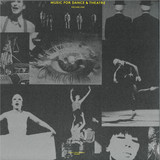
Music From Memory are happy to finally announce MFM045 - VA ‘Music For Theatre And Dance’ (EP).
This will be the first in a small series of EPs which will focus on music which was initially created for or inspired by dance and performance. Created as a dialogue with the avant-garde and highly experimental work in dance, theatre and art evolving at the time, the music was in turn at times greatly innovative.
That it was created for a dance or performance though means that such music was also often highly rhythmic and a number of pieces from this time stand out and seem greatly deserving of a new context.
Whether it’s more ambient or atmospheric works or whether it’s in the more rhythmic or percussive pieces, Music From Memory brings together a selection of tracks which aim to highlight this highly innovative direction in music.
Substance, the second album by producer Moisture, sets out to deliver an immersive tech-noir fantasy of emotional and physical deconstruction. Inspired in part by William S. Burroughs 1959 novel Naked Lunch, the conceptual narrative of the album follows a humanoid subject through an urban landscape and the exploration of its depravations.
Sampling and filtering sounds from other music, movies and own field recordings, the tapestry of Substance is a three-dimensional world of hard industrial spaces and fluid organic matter. While it's conception is rooted equally in literature and film as well as music, one can draw comparisons in particular to Barry Adamsons 1989 album Moss Side Story, in that it also works as a chronological narrative; the tracks aligning to make a world of its own.
And while Adamson was aiming to create an imaginary soundscape of his native Manchester, the geography of Substance is based on the city of Malmö. Using field recordings from it's city streets, the album paints a rain soaked, neon-clad portrait of the city's hedonistic nightlife.
On the opening "The Marketplace" we are teleported to Bergsgatan at night (the track title a subtle nod towards Eden Ahbez 1960 song of the same name).
This introduction is similar in line with the experience Burroughs once had in 1957 upon entering Malmö for the first and only time, which he details briefly in Naked Lunch: "averted eyes and the cemetery in the middle of town (every town in Sweden seems to be built around a cemetery), and nothing to do in the afternoon (...)"
This image of Malmö portrayed with dread and loathing holds a longstanding narrative tradition over the cultural geography of the town. Yet it is often paired with an image of great promise and bohemian splendor, seemingly a paradox but often perversely intertwined. This duality has always been a vital mindset in the underground music scene of the town and its illegal after hours clubs. Substance is a work steeped in the grayscale prism of techno and its post-industrial fetischism. Yet in picking it apart, one can find elements of everything from post-punk, drum & bass, trip hop and new age.
The theme of depravation that soaks through Burroughs Naked Lunch seems oddly befitting to this side of Malmö (one wonders what the author would have made of it had he stayed longer) Through rhythmic excursions and the exploration of repetition, the tracks of Substance are arranged to convey this self-destructive longing for depravity. Michel Foucault's ideas on limit experiences serves as context for this peculiar form of endeavour, as he puts it: "the point of life which lies as close as possible to the impossibility of living, which lies at the limit or the extreme."
Getting stuck into the new year with a fresh, contemporary jazz attitude, Rocafort Records are proud to present the Kumadé EP from exciting Swiss-French quartet KUMA, led by keyboardist Matthieu Llodra and saxophonist Arthur Donnot.
Confidence, rhythmicality and solidity are the first impressions that hit you from this tight outfit of young but highly experienced musicians. After nine years of holding down a 10-night residency at the prestigious Cully Jazz Festival, Llodra and Donnot have honed down their skills in front of a live audience making tension, pacing and release their speciality in compositional strategy. Grooves and moods are created with just the right amount of rise and fall, push and pull, melodic catches and improvisational wanderings.
The EP is well balanced out with two spaciously laconic, ethereal tracks - Alfama and The Core - that could easily belong on some ECM-inspired soundscape, juxtaposed with Kumadé and I.G.A.T.F. that pack a fuller punch, fat and chunky in all the right places, hinting at a 1970s style George Duke at his funky-fusion best.
Despite a whiff of nostalgic reference, rest assured that the KUMA timbre is fresh and exploratory, as innovative and curious as any protagonist from the current UK jazz explosion. Keep an ear out for these young Jedi masters, all of them at the top of their game. More assured, impressive releases are due out this year.
Matthieu Llodra – Fender Rhodes
Arthur Donnot – Sax
Fabien Iannone - Bass
Maxence Sibille – Drums
Zacharie Ksyk – Trumpet (guest on Kumadé").
Dimi is the new solo project and label of (Dimitrios Ploumpidis) one half of techno duo, AnD.
The Dimi label will be an exploration in sound, pushing techno, rave and dance floor sounds with a raw and powerful attitude.
DIMI001 kicks off with "Time Travel". Pulsating kick drums and vocal cuts interweave, creating groove with the snappy snare and lashing hi hats. When the huge synth stab and melody drop to take us straight to a hedonistic past put looking clearly into the future.
"Bang Your Face" enters the room with a tight, hard-hitting kick and serrated rave sirens building an infectious groove before being banged in the face with the old school euphoric synth line that drops in and out of the mix creating tension and dramatic shifts in the track.
"Groove Away" a throbbing bass and kick drum drop with a sinister stab for this funky techno monster. Hard in dynamics but with a maximum amount of groove this track thumps and slams while the spaced out synth line and rave stabs help keep this funky banger grooving all the way to outer space as the alien melodies propel us for take off.
"All In" syncopated delayed synth stabs build in this track with tight rhythmic percussion and distorted kick drum. The snare enters like a punch to the face but only solidifying the swing while the main synth line opens building tension ready to destroy everything in its path. This is Dimi showcasing his direct and unique take on techno music.
R&S welcome electronic composer Matthew Puffett AKA Future Beat Alliance with his killer single ’Never Forever’ a sublime slice of broken beat techno that originally had a limited release on his “Patience and Distance” album in 2009. It now comes backed with a first rate remix courtesy of R&S regular Afriqua.
A veteran of the UK electronic scene originally from Oxford but now located in Berlin, Puffett made his name in the late 90s with a string of sought after releases on Void Records under the aliases Mode-M and Soul Electrik before settling on the Future Beat Alliance handle. Notching up releases with the likes of Delsin, Rush Hour and Versatile as well as with the storied Tresor imprint, both as a DJ and an artist. In 2019 Matt started his new imprint Reward System to self release new creations.
Life long friend from Oxford, Mo’ Wax and Unkle maestro James Lavelle reached out in 2012, which led to a further creative chapter in Puffett`s story that culminated with him co-writing & programming on Unkle’s 5th studio album ’The Road Part 1’ as well as some singular work in film and television. “The moving image plays a key creative motive in my process,” Matthew explains. “Sound & picture married together is such a powerful combination that always inspires me every time to make my own version, 'Never Forever' is one of my many attempts to try and
capture that.”
Taking cues from modern cinema masters like Denis Villeneuve, Panos Cosmatos, Steven Soderberg and Jonathon Glazer and their respective composers, Puffett's widescreen sonic craftsmanship alongside his irresistible rhythmic sense are a key part of what makes Future Beat Alliance music so alluring; "I want my tracks to guide the listener on a exit route far from this world”
Dadub is a project synonymous with the deepest rhythms from the interior of the human psyche. Low-end mysticism. Tribalist periodic audio patterns. The Berlin-based Italian producers behind the project, now constructed of sonic warlock Daniele Antezza and performance artist Marco Donnarumma, supply an unmistakably unique vision of post-apocalyptic dub landscapes. Past, present, and future blend into one, backed by the supremely sublime BASS of creators who are light years ahead in their field. A Sun Called Moon is a superior first representation on Ohm Resistance, detailing their ongoing mission of creating bass-present music, regardless of dancefloor conformity. The Time You Killed opens as a psycho-acoustic audio film, depicting the unknown world from which the EP emanates. I Would Gladly Die… introduces the first heavy rhythmic patterns, completely alien to identified structures, while unmistakably pushing a groove that entrances hypnotically. Past Times Present Ruins lowers the tempo and continues extrapolating into new rhythmic territory – or is it ancient? It Was Too Soon follows with beat driven hednod, as influences from Scorn to Autechre are subsumed into the universal language that comprises Dadub. Feeling both familiar and foreign, both modern and eternal, Dadub’s first appearance on Ohm Resistance is a fascinating drama played out in 4 acts. Spliff recommended – subwoofer required. All tracks Written and Produced by Daniele Antezza and Marco Donnarumma Mixed by Daniele Antezza and Marco Donnarumma at Dadub Studio, Berlin Mastered by Xergio Cordoba @ Eternal Midnight Studio, Madrid Photography by Flora Schwartz Layout by MachineTM
Nantes-based Australian drummer and percussionist Will Guthrie returns to Black Truffle with Nist-Nah. Like his previous solo record on the label, the abrasive hip-hop concrète of People Pleaser 'BT027', Nist-Nah finds Guthrie branching out in a new direction, this time in a suite of six percussion pieces primarily using the metallaphones, hand drums and gongs of the Gamelan ensembles of Indonesia.
The music presented here is grounded in Guthrie’s travels in Indonesia and study of various forms of Gamelan music, from the stately suspended temporality of the courtly Javanese Gamelan Sekatan, to the delirious, thuggish repetition that accompanies the Javanese trance ritual Jathilan, to the shimmering acoustic glitch of contemporary Balinese composer Dewa Alit and his Gamelan Salukat.
However, far from an exercise in exoticism, Nist-Nah develops out of Guthrie’s extensive work with metal percussion in recent years (as heard, for example, on his 2015 LP for 'IDEAL', Sacrée Obsession), where gongs, singing bowls and cymbals are used to build up walls of hovering tones and sizzling details.
Though Guthrie is broadening his palette to explore Gamelan instrumentation and pay tribute to his love of this sophisticated yet elemental percussion music, the pieces presented here are equally informed by Guthrie’s interests in free jazz, electro-acoustic music and diverse experimental music practices, exploring long tones, extended techniques, and non-metered pulse.
'Nist-Nah' presents a variety of approaches across its six pieces, from the crisp, precise rhythmic complexity of the opening title track to the droning textures of ‘Catlike’ and ‘Elders’.
On the epic closing ‘Kebogiro Glendeng’, Guthrie offers an extended, layered rendition of a Javanese piece belonging to a repertoire primarily used for warmups, beginner’s groups and children first learning Gamelan, elegantly gesturing to his own amateur status while using the piece’s insistently repeated melody as an extended exploration of the hypnotic effects of repetition, falling in and out of time with himself to create woozy, narcotic effects until the piece eventually dissolves into a wavering fog.
- A1: Marc Melià – Permanent Waves (04 26)
- A2: Pletnev – Marc O’polo (06 31)
- A3: Douglas Greed – Vancouver (04 11)
- A4: Middle Sky Boom – Missing Drive (05 13)
- B1: Thomass Jackson – Mithra (07 07)
- B2: Goldmoon - Bells (04 08)
- B3: Krikor – Sally Hardesty (05 34)
- C1: Morgan Blanc – Werde Der Du Bist (04 52)
- C2: Cora Novoa – Virtual Aesthetics (04 35)
- C3: Nsdos – Al-G (05 43)
- C4: Rebeka Warrior – Ich Komme Zurück (04 49)
- D1: Theus Mago – Idealistic Stone (07 33)
- D2: The Populists – Prehistoric Lemurs (05 19)
- D3: Acid Love Triangle – Instant Track (06 42)
Back in 2018, Lumière Noire celebrated its first anniversary with a compilation featuring thirteen exclusive tracks by an eclectic group of electronic musicians – a family portrait of sorts. A few months later, a second volume of From Above, compiled by the label's artistic director (and DJ) Chloé, once more brings thirteen established acts together with promising upstarts. The first compilation was the embodiment of the label policy advocating for both artistic excellence and a widening of electronic aesthetics – bopping from deviant house music to adventurous IDM and to the rigor of dancefloor techno, among other electronic explorations. Some of the artists featured are now closely associated with Lumière Noire, while others were more established performers such as Benedikt Frey, Lauer, Jonathan Fitoussi, Il Est Vilaine, Dave e Brun (half of Swayzak) and Frank Agrario, as well as upcoming artists such as C O N T R A (a side project by none other than Iñigo Vontier), Sutja Gutierrez, Théo Muller, Markus Gibb, Bajram Bili, and a sprinkling of UFOs circling the genre (Suuns' Ben Shemie, Drvg Cvltvre, and electro-acoustic combo Lumi). This group photo laid down a number of paths for a label in perpetual evolution.
Since then, the Parisian entity has continued to grow within the international electronic scene, releasing Local Suicide's Leopard Gum EP, Iñigo Vontier's first LP, and planning another slew of releases for 2020. The lineup for this second volume of From Above is once again equally intriguing, offering a crescendo-like track listing over a double LP format, which is a feat of sorts for a "Various Artists" compilation.
Marc Mélias' fascinating, unsettling Permanent Waves gets the proceedings going with a contemplative track that provides a serene opening to the odyssey on which From Above will be taking the listener. Pletnev continues on with the playful, hooky Marco O’Polo, a fundamentally techno track built over a seductive 90s-inspired breakbeat. Douglas Greed (whom Chloé remixed on BPitch a few years back, and had himself remixed track from her album Endless Revisions featuring Ben Shemie’s vocals), supplies Vancouver, a slice of ambiance à la Boards of Canada, supported by a gripping breakbeat. The rhythmic arpeggio of Israeli producer's Middle Sky Bloom makes his contribution a hypnotic, disconcerting slice of dark disco. Thomass Jackson, a safe bet in the new wave of the Latin-American electronic music blowing its sometimes hot, sometimes cold wind, proposes Mithra, a dancefloor incantation to the Antiquity's bull god. With Bells, Goldmoon delivers a track that is both melodic and nostalgic, tinged with rhythmic samples, Moog basses and solar backgrounds. Longtime friend of Chloé, Krikor, who has released two albums on L.I.E.S. Records (Pacific Alley and Saudi), offers a moment of respite with Sally Hardesty (a nod to fans of horror movies), a heavenly and bewitching track that, paradoxically, hints at the highly energetic second half of the compilation. Discovered with Confidences EP released on Lumière Noire, the young French producer Morgan Blanc asserts himself here with Werde Der Du Bist ("Become who you are"), a song with luminous chords and midtempo rhythms to start the second half of the compilation by raising the tension. Galician producer, DJ and designer Cora Novoa continues the rollercoaster's ascent with her Virtual Aesthetics, which once again brings those acid tones – this time without the vertigo. Equally corrosive, but tenser and more percussive, the uncategorizable NSDOS' AL-G attempts to give order to a chaotic electronic world full of violence and danger. Rebeka Warrior (half of the duo Kompromat alongside compatriot Vitalic), takes on a more nostalgic vibe with Ich Komme Zurück, a French/German techno chant evoking a secret dream of a track from a bygone era. Three years after the release by Lumière Noire of Moderna and Theus Mago's stroboscopic Dog Is Calling You, Theus Mago makes a solo comeback with Idealistic Stone, a most acid of club tracks, rattled by the modulations of the inevitable TB 303. French electro-rock saltwarth Yan Wagner's dancefloor alter ego The Populists' Prehistoric Lemurs gives an almost Orientalizing twist to Kraftwerk's techno-pop. To close things off, the collection's last track, the appropriately-named Instant Track by impromptu encounter between Hervé Carvalho (Acid Arab), Jacques Bon (Smallville) and Demian (Kompakt) Acid Love Triangle, releases the pressure with a long, bittersweet reverie that leaves the listener, at the end of these thirteen musical adventures, to rest languorously on an artificial and welcoming shore.
Etruria is ready to launch its new "Astral series", a new output of exploring the deeper shades of techno, new languages, new horizons.
debuting the series is the young french "Blicz" who brings a fresh take of modern techno with a 3 tracks ep.
"Terraforma" leads the EP with raw, ravy and percussive beats, reflecting Blicz vision of extreme techno,
while "greet earthlings" break beating the flip of the ep with an hip hop influence rhythmic, with an old school rave synth taking back to basics.
"New hope " closing the ep in a softer sentimental way of deep and percussive touches on a heavy low ends.
Following the labels theme of reaching beyond the conventional record label by combining music experimentation, short narratives, true stories, and illustrations – Jujuka 002 pushes into new territory with the Split EP “Raw Reflex” featuring founder Julia Govor on the A side followed by the first recordings of EMIT. Julia reaches into her imagination to find Soviet Union enthusiasm met with an American punk drive to add to her signature vibrant arrangement. Behind the EMIT alias is the intricate and vivid musician / producer – Kamran Sadeghi. EMIT read backwards is ‘time’ – the continuum of experience in which events pass from the future through the present to the past. The project is guided by the literal and musical use of time. A culmination of styles unravel within each track, encouraging listeners to discover their own path through the rhythmic and tonal patterns. The music belongs to every-body and no-body.
”Are you ready to take your turn now?” asks a mischievous voice at the beginning of DJ Marcelle’s new album. But by this point you don’t have a choice: you better buckle up for a joyride through the wild, unpredictable imagination of a true electronic music auteur. ‘Saturate The Market, Now!’ is stuffed with the kind of raw, rhythmic workouts and playful humour we’ve come to know and love from the long-serving Dutch artist. Let’s start with the music: Marcelle pinballs between pumping outsider house, brilliantly weird acid and musique concrète experiments where anything could happen at any given time. Then there are her famous track titles, which take another aim at nightclub patriarchy (‘Technicians And Their Light Effects’, the successor to last year's 'Technicians And Their Smoke Machines') at the same time as displaying a keen sense of satire (‘I Fell In My Own Cesspit!’) and revealing a difficult relationship with the sour, massive rock that for her is ‘German Bread’. With artwork featuring a collage of puppets found in her Amsterdam house and Marcelle’s own on-the-road photography, this is yet another album that sets her a mile apart from the paint-by-numbers dance music producers - or “accountants” as she’s witheringly described them.
Marcelle arrived via punk, post-punk, avant garde and dub and lives by the independent, forward-thinking spirit inherent in those scenes. A sense of freedom is imbued in her work, unsurprising given that this album was written in two weeks and was made entirely on her own collection of machines (save a few choice vocal samples). It’s Marcelle’s eighth vinyl-only release for Jahmoni Music from Munich and follows on from last year’s ‘One Place For The First Time’ which swiftly sold-out and is now onto a repress. The vinyl is released alongside a 10” featuring extended and dub versions of triumphant album-cut ‘Everything Not Yet’.
So are you sitting comfortably? Well Marcelle would prefer if you weren’t. Because this is music for misfits to move to. The very opposite of business techno. A missive from a cult DJ with an enviable record collection and a fearless artist who couldn’t give a flying fuck about dance music norms. Saturate the market with pure energy – let’s do this!Seb Wheeler, Mixmag
Canadian born, Berlin based producer Aquarian makes his full length album debutThe Snake That Eats Itselfon Bedouin Records.
This record follows his collaborative EPs with Deapmash as 'AQXDM" and is his first solo release since his 2016 experimental mixtape for Quiet Time. Nearly five years in the making, 'The Snake That Eats Itself' is Aquarian's most complex, diverse and emotive work to date, plunging his trademark UK sound-system/techno hybrids into a self-contained, cinematic universe streaked with heavy influences from industrial, IDM, drone and dark pop music.
It's written in Brooklyn, New York, in a deeply transitional, yet seemingly endless period preceding his relocation to Berlin, the title of the album refers to the Ouroboros, a mythological serpent symbolizing the cycle of birth and death and infinity itself.
'The Snake That Eats Itself' pits Aquarian's most abrasive and brutal moments next to his most wistful and introspective.
Viscerally thick layers of tape saturation envelop the album as sludgy synths ooze against brittle atmospheres; breakbeats fragment, explode and disintegrate into swarms of delay and noise; scorched, metallic percussion - sampled from a year-long demolition and construction project next to his apartment - forge the rhythmic backbone of the album. These elements, however, seamlessly make way to startlingly crystalline and shimmering ambient passages, offering a sense of reprieve and balance.
WE JAZZ RECORDS presents ' Pu: ', the boundary-breaking solo debut of bass player Ville Herrala, to be released on 21 February 2020. Utilising only the double bass but looking at the instrument from various different perspectives. The end result is an inspired set of 14 miniatures, each pushing the concept forward in a highly personal way.
The first single "Pu: 12" presents a rhythmic approach with echoes of from the world of minimal classical music and electronic music. Bowed tracks such as "Pu: 2" offer another perspective, as does the second single "Pu: 10", going back to the essence of the instrument and opening new doors while doing so. Each of the tracks is a compact musical adventure unto it's own.
Ville Herrala (b. 1979) is one of the most higly-regarded bass players working in the Finnish scene. He's known from the ranks of such top ensembles as PLOP, Jukka Perko Jazztet, U-Street All Stars, Jukka Eskola Orquesta Bossa and UMO Helsinki Jazz Orchestra, to name but a few.
Having made a huge impact amid Carl Craig’s celebrated 2019 entry in Planet E's Detroit Love mix compilation series, Ataxia's anthemic ‘Oblivion’ arrives on vinyl for the first time alongside a new cut, ‘Michaelangelos’. Each track takes Ataxia’s notoriously detailed production techniques and applies them to a widescreen, enveloping template.
Constructed from rubbery basslines, wormholes of rave power and a structure that applies tension and release to killer effect, ‘Oblivion’ has continued to engross dancers since it’s digital release, transmitting an increasingly rare blend of minimal yet maximal rave pleasures.
On ‘Michaelangelos’, Ataxia further demonstrates a fluid ability to keep listeners on their toes, shuffling the deck but applying the same irresistible tricks to a rhythmic, tripping cut and the unexpected sample at its core.
Consisting of Eric Ricker and Ted Krisko, Ataxia have previously released on labels including Visionquest, 2020 Vision, Leftroom and Kevin Saunderson's KMS Recordings. They currently hold down long term residencies at the legendary Marble Bar and TV Lounge in their hometown of Detroit.
“Media Burn” is the debut EP by TOTEM – 4 succinct slabs of industrial electronics and rhythmic noise forged in the spirit of hardcore punk. The project is loosely based on themes of media consumption, symbolism, illusions, and control. The artist embraces an austere process born of limited means: samples mangled beyond recognition and rearranged according to some obscure logic.
The results are self-described as “industrial skronk” – sculptures made entirely from audio debris that had another life, now twisted and repurposed by an unseen hand into something new and unfamiliar.
Molecular Meditation is a bespoke light and sound environment featuring the voice of the Fall's Mark E Smith. Smith is heard making observations on mundane objects, events and a range of meditation techniques basically associating his discontent with an apolitical british upper class. His voice forms the narrative component of an electroacoustic composition by Jan St. Werner placed in a hyper-real scenario evoking a state of transformation and deceleration.
Molecular Meditation premiered at Cornerhouse, Manchester in 2014. This album presents a re-edited and remastered stereo version of the original multi-channel piece. Voice and guitar feedback were recorded at Blueprint Studios Manchester, electronics in Werner's St.udio in Berlin. The B-side consists of unreleased new work partly written around the same time as Molocular Meditation in context of Werner's Fiepblatter Catalogue on Thrill Jockey. Back to Animals is a non-metric rhythmic exercise frantically hybridizing percussive accents with synthesized pulse.
On the Infinite of Universe and Worlds is an electronic opera based on Giordano Bruno's Renaissance writings which Werner was asked to conceptionalize for new music festival Music Nova in Finland. VS Canceled finds Mark E. Smith reading an email from Domino Records explaining their discontinuation of the Von Sudenfed project a band Mark E. Smith had founded with Mouse on Mars' Jan St. Werner and Andi Toma in 2006. Their debut album Tromatic Reflexxions came on Domino out in 2007. The vinyl record, cut with a diamond needle, provides as much acoustic depth as the digital version.
Nikki Nairs latest release for the new label Muy Muy Limited, based between Mexico City and Ponderosa CA, is a rich and textured testament to his ever evolving production abilities.
Evoking feelings of fireside reflection, this 6-song EP flows from rich ambient orchestration to hypnotic hymns + rhythmic instrumentation, while maintaining an overall feeling that evades description.
This all seems fitting for the first release on a label the was born in a remote cabin high up the Sequoia National Monument.
- A1: Haruna Ishola & His Apala Group - Ewure Ile Komoyi Ode
- A2: Adebukonla Ajao & Her Group - Aboyin Ile
- A3: Rapheal Ajide & His Apala Group - Adura Fun Osiwowo
- A4: Haruna Ishola & His Apala Group - Orin To Mo Gbon Wa
- A5: Ra Tikalosoro & His Group - Agilinti Lomu
- B1: Adebukonla Ajao & Her Group - Abd Alawiye
- B2: Haruna Ishola & His Apala Group - Asa Ko Gbodo Wole Gbeiyele
- B3: Adeleke Aremu & His Group - Egbe Arowolo
- B4: Haruna Ishola & His Apala Group - Rufai Baolgun
- B5: Ra Tikalosoro & His Group - Kiniun Kuro Leran Amu Sere
- C1: Haruna Ishola & His Apala Group - S Aka
- C2: Adebukonla Ajao & Her Group - Lekele Bale
- C3: Kasumu Adio & His Apala Group - Odale Ore
- C4: Ayisatu Alabi & Her Group - Oko Lolomo
- D1: Jimoh Agbejo Bo Ogun & His Group - Oriki Ibeji
- D2: Ayisatu Alabi & Her Group - Omo Olobi
- D3: Rapheal Ajide & His Apala Group - Orin Aje
- D4: Adebukonla Ajao & Her Group - Sunday Babayemi
Soul Jazz Records new ‘Apala: Apala Groups in Nigeria 1964-69’ is the first ever collection of Apala music ever to be released outside of Nigeria. The album focusses on a wide selection of recordings made in Nigeria in the 1960's, a time when Apala music was at the height of its popularity. Apala is a deeply rhythmical, hypnotic and powerful
musical style that combines the striking nasal-style vocals and traditions of Islamic music, the Agidigbo (thumb piano), and the equally powerful drumming and percussion rhythms and
techniques of the Yoruba of Nigeria.
The most significant figure in Apala music is undoubtedly Haruna Ishola who features throughout this album. Ishola holds an almost mythological status in his role as populariser of Apala music in
Nigeria. Ishola’s singing was believed to be so powerful that, without proper restraint, it could kill the recipient of his music.
Apala is a popular music that also functioned as a form of cultural resistance – Apala music involved no western instrumentation and is sung in the Yoruba language, its aesthetic an implicit cultural
rejection of the British Empire’s colonial rule over Nigeria which lasted from 1901 until independence in 1960. Apala music was popular and widely accepted in Nigeria due to its philosophical and profound
lyrical content alongside the complex rhythmic patterns of this heavily percussive style, which highlighted many of the percussion instruments of south-west Nigeria.
He's one of a number of popular urban styles of music that came out of Nigeria in the 20th century and sits alongside the more well-known (in the West) styles of Fuji, Highlife, Juju and Afrobeat. Of these modern forms Apala remains perhaps the most ‘roots’ style (sometimes described as ‘neo-traditional’) due to the authenticity of its sound. It has similar Islamic roots to other neo-traditional styles of Nigeria – including Waka and Sakara – examples of which are also
included on this collection contextualising the music of Apala.
These recordings were originally made and released locally by Decca and EMI Records as well as a variety of independent labels in Nigeria and have never been released outside of the country before. Soul Jazz Records are releasing this album as a deluxe double gatefold vinyl (download code), CD, slipcase and booklet, both containing full text and photography.
Haven is kicking off 2020 with a boom with a new EP of politically pessimistic dance-floor-ready weapons from label boss Keepsakes. Following on from his exploration of chunky slow rippers on 2019's "Modern Anxious Vernacular", this next edition in the Haven mastermind's discography puts greater emphasis on rhythmic groove for the dancers among us.
The record starts with "And So The Feckless Fall" on the A1, featuring shuffling drum rhythms and ethereal vocal work, descending in to a menacing, swung synth-line for maximum club effect. This is followed by "Blue Boy Fucks It All" on the A2. Reminiscent of the slo-mo bangers of Keepsakes' last EP, this crawler of a track is initially propelled by its moody synth melody and booming drums, with a mid-track switch up putting melancholic pad chords front-and-centre. The flip side begins with "Ignorant Irony" - a certified floor smasher prioritizing groove with it's swinging drum rhythms, cheeky vocal samples and sinister synth sounds. The record ends with a remix of the B1 from UVB - who re-imagines the track in to a sneering, ominous slammer, with brutal yet groovy drum work and sampling closing the EP with another no-nonsense banger.
All tracks produced and mixed by James Barrett
Mastered by Simon at The Exchange Vinyl
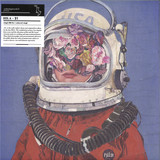
"21" is the well-crafted, sharp and original first album by the duo HILA, composed by American cellist Artyom Manukyan (who already worked with Kamasi Washington, Daedalus, Flying Lotus, Run DMC, Gretchen Parlato, Raphael Saadiq, Clive Lowe Mark...) and french producer Dawatile.
The combination of jazz, Los Angeles beat-scene and the vibrations of 80s and 90s Soviet Armenia make it a striking and unprecedented fusion. These kind of nostalgic and unconventional references forcefully shake the codes of mainstream culture to create a sincere, raw and intimate expression.
"HILA" was born from a spontaneous and intense creative impulse between Artyom Manukyan, a Los Angeles-based Armenian celloist and his partner in crime, David Kiledjian aka Dawatile, a French multi-instrumentist of Armenian descent. This project is proving to be a true master stroke given that it only took 21 days for the duo to make it a reality.
"HILA" was made in less a moon cycle but captivates and electrifies audiences upon its first outings. "H.I.L.A" colors the warmth of the Californian "High" with Armenian vibes. The artists chose this name for their creation since both have a close and valuable connection to these locales. This journey began in 2007, on the day Dawatile went to Yerevan, the capital of this small country in the Caucasus mountain to realize a first fusion project centered around local folkloric music genres.
There he was introduced to local musicians including the Armenian Navy Band, one of the country's foremost groups in which Artyom played the bass and cello. In this context, he also met many musicians such as Tigran Hamasyan and Norayr Kartashyan. This will be the beginning of connections between Lyon, Yerevan and Los Angeles. The following year, the two artists will be be seen performing next to Taylor Mc Ferrin at the Jazz à Vienne festival. More recently, they partnered up again when the cellist, who had freshly relocated in California, invited Dawatile to produce his album. As soon as the studio’s threshold was crossed, they decided to postpone this record and create a joint project: Hay (as the Armenians call themselves) / High In Los Angeles. HILA was born at the end of these 21 days of intense creation. The association of Artyom Manukyan and Dawatile is the combination of two visions, two versions of Armenia, two personalities, the reunion of the Eastern and Western blocs.
One grew up nurtured by the sounds of hip-hop and jazz in Europe and the other by art music and Russian-influenced 1980s Armenian folkloric music before moving to L. A., Ca. The cornerstone of it all, the glue that unites everything : Armenia and music. They generate a new identity synthesizing two perceptions, their complicity transcending these cultural discrepencies. To achieve this, they will scour through images of Artyom’s childhood, within the popular culture of Soviet Armenia. Together, they revisit this decidedly retro vibe, based on the work of Caucasian groups inspired by African American music. This background is rehashed and fused with ancestral Armenian sounds. The DNA of the album "21" is molded by these dear influences.
We can also hear the ancestral sounds of Armenia, a country at the edges of both Europe and Asia. The presence on two tracks of Armenian music Master Norayr Kartashyan, infuses the languor of past melodies and traditions. These purposeful anachronistic sounds offer a fantastic depth to this powerful opus. Listening to the album, one can appreciate the successful fusion of styles and influences. Those combinations, however, manage to preserve individual identities only to enhance the art through an adamant musical dialogue.
Being driven by the urge to transpose Armenian musical traditions into a unique universe, the daring artists, offer an innovative combination by blending, for the first time, these ancestral sounds with the world of Los Angeles beat-scene and jazz. An invention largely fueled by the magic strings of Artyom and maestro Miguel Atwood-Ferguson, a pillar of the genre in Los Angeles combined. These associations resonate with a triumphant equilibrium. HILA is musical uncharted territory in which Artyom's cello strings intertwine to ignite the harmonies of keyboards, the machines, the vocals and electronic layers Dawatile pieced together. HILA plays the soundtrack of an adventure set between Armenia around the end of the Soviet era and a mysterious near future.
Artyom Manukyan grew up in Armenia in the 90s. At the time, he studied Russian classical music while learning jazz with assistance by his father, a music journalist. Being an unconditional music lover, he went on to sharpen his skills at the prestigious Berkelee College of Music. Subsequently, he’s been lucky enough to travel the world touring with numerous acts and mainly with the Armenian Navy Band. The group has fostered alacritous success honored by a BBC Award as a crowning achievement. He moved on 10 years ago and made his way to L.A. with his cello on his back. In the City of Angels, he quickly became a popular figure of the jazz and hip-hop scenes thanks to his first album "Citizen". He’s accompanied prestigious musicians such as Kamasi Washington, Melody Gardot, Daedalus, Flying Lotus, Run DMC, Gretchen Parlato, Raphael Saadiq, Clive Lowe Mark, or Vulfpeck. He released his solo album on the cello, "Alone" in October 2019.
Dawatile is a bold producer and multi-instrumentist as well as a passionate and resolute musician molded by jazz. As a versatile artist, he handles and juggles the saxophone, the keys, the bass and composition. Simultaneously, Dawatile produces cross-over projects and soundtracks for the movie industry. He, as well, has had the opportunity to be a part of many tours, including with his electro hip-hop band, Fowatile and more recently with the "Future Kreyol" trio, Dowdelin. Being the ever workaholic, he has under his belt a string of prestigious collaborations with the likes of Talib Kweli, Foreign Beggars, Roy Ayers, Tigran Hamasyan, Mathieu Boogaerts, Voodoo Game and Piers Faccini. His taste for developing new musical recipes and his know-how in production make him a much sought-after album producer. In concert, the HILA duo offers a sober, precise and rhythmic performance. "21" is an aerial and lively album taking the audience on an at times joyous and sometimes melancholic dreamlike journey. The magic of "HILA" operates at the speed of light and positions it already as an avoidable group.
Wah Wah 45's are proud to present "Cages", the third album from southern soul boys The Milk. Having released "Favourite Worry", their critically acclaimed sophomore album and first for independent label Wah Wah 45's, in 2015, the band are able to trace the seeds of the latest LP back to their recording sessions with producer Paul Butler (Andrew Bird, Michael Kiwanuka, Nick Waterhouse) almost five years ago, blending elements of soul, funk and rock together to create their own unique sound, inspired by some of their favourite artists such as Bill Withers, Traffic and the Isley Brothers.
"I can't wait to hear you write songs that look outward" - these words from Paul subconsciously had a lasting impression on the band. To atone for more inward-looking sentiments on "Favourite Worry", there had to be a shift in perspective. During the formative stages of the new album The Milk started pursuing a Nichiren Buddhist practice. The values and principles they discovered during this have informed every aspect of the record.
"We wanted to write an album that looked outside of the walls, to people, society and the environment - embracing real freedom in musical expression by utilising more complex rhythmic structures, extended harmony and dissonance to paint an original and authentic-sounding record" explains If their debut, "Tales from the Thames Delta", was inspired by hedonism and "Favourite Worry" by introspection, "Cages" is an impassioned conversation with the world. Racism and division are all on the rise. British society is being pulled apart by forces that seek to divide us and rip the compassion and empathy from our minds and hearts. We have become distracted from the more urgent challenges of boundless consumerism, climate change, and the mental health emergency reeking havoc on our streets.
We are the birds in the cage, tied by cheap thrills and fake news to a limited world vision that is no longer fit for purpose. The good news? We can all choose to challenge this view. "Cages" is equal parts the dark black shadow of how far we've fallen and the blazing sunlight whose rays of hope can still change the world. Four life-long friends, Ricky Nunn (vocals), Mitch Ayling (drums) Luke Ayling (bass) and Dan Le Gresley (guitar) formed their first band when they were still at school in Essex, playing countless working men's clubs, and finally became The Milk.
The band have built up a following of dedicated fans around the UK, which has resulted in them selling out venues such as Scala, Koko and Shepherds Bush Empire. Keen to get back on the road where they feel most at home and where the guys really shine, the band offer up a compelling set of diverse styles, matched with an ability to effortlessly intertwine songs together, gives their music a continuous feel to it. Since signing to Wah Wah 45's, the band released their second album "Favourite Worry", which became one of BBC 6 Music's albums of the year, sold out London's Union Chapel, toured with the Fun Lovin' Criminals and completed a sell-out UK tour climaxing at London's KOKO in Camden town. ... More live dates coming very soon!
"I'm always looking for ways to be surprised," says composer and multi instrumentalist Jeff Parker as he explains the process, and the thinking, behind his new album Suite for Max Brown, released via a new partnership between International Anthem and Nonesuch Records.
"If I sit down at the piano or with my guitar, with staff paper and a pencil, I'm eventually going to fall into writing patterns, into things I already know. So, when I make music, that's what I'm trying to get away from-the things that I know." Despite its musical departures, in presentation Suite for Max Brown is an informal companion piece to The New Breed, Parker's debut release on International Anthem, which was honored as one of the "Best Albums of 2016" by New York Times, Observer, and Los Angeles Times.
"I made The New Breed based off these old sample-based compositions and mixed them with improvising," Parker says. "That's in a nutshell how I make a lot of my music; it's a combination of sampling, editing, retriggering audio, and recording it, moving it around and trying to make it into something cohesive... With Max Brown, it's evolved." Though Parker collaborates with a coterie of musicians under the group name The New Breed, theirs is by no means a conventional "band" relationship.
Parker is very much a solo artist on Suite for Max Brown. His accompanists are often working alone with Parker, reacting to what Parker has provided them, and then Parker uses those individual parts to layer and assemble into his final tracks. The process may be relatively solitary and cerebral, but the results feel like in-the-moment jams-warm-hearted, human, alive. Suite for Max Brown brims with personality, boasting the rhythmic flow of hip hop and the soulful swing of jazz.
UKNOWY music is back with a new installment on its more house-leaning "Plastic Garment" vinyl series. This time the EP title is "Midnight Impulse" as every track carries the treats of nocturnal life: it's dark, it's fresh and it's open to all possibilities! Starting with Salomo we have a delivery of a definite club banger with "Transform" - devotees of the likes of Kyle Hall or Steven Julien/Funkineven will definitely get their fancy tickled here. Next comes Italian break-beat maestro Sofa Talk with a rhythmically sophisticated yet deep "ALBA", much in the vein of earlier Plastic Garment releases. Munich house duo Rhode & Brown starts the B side with "You & Me" building intricate synth arpeggios over catchy chords. St. Petersburg's very own Dices closes things off with his more dreamy and at the same time incredibly complex and beautiful "See You There" - a track for the listener or the later hours of the night.
In the mid-80's, an original form of music was discovered on the midi-capable little planet of Austin, Texas. At the age of 32, Charles Ditto would release his first solo album applying cutting edge computers and synthesizers of the era (Roland DX7, Roland MKS-20, Roland MKS-80, Sequential Circuits Profit 2000 along with a Macintosh SE), creating a unique and detailed world that was inspired by Cluster, Eno & The Residents.
In Human Terms bridges the gab between contemporary classical and minimal pop. Rhythmic but melodically abstract. Microtonal and organic. Often described as experimental electronics, tone poems or Cyber-delic-psychotropic-avante-garde.
In Human Terms, remains very emotion, deep and different. Ditto's music imparts a new listening experience that is still somewhat indescribable today, but remains approachable and relatable.
'What makes Ditto's music so strikingly different is his overt use of emotion, very descriptive melodies and deep atmosphere' Audio Magazine - August 1988 // 'If Erik Satie had midi gear' Keyboard Magazine - April 1988 // 'Brian Eno meets Seastones, but with more melody' Relix Magazine - August, 1988 // 'Ditto's choice of Synthesizer tones are at once both organic and unique' Electronic Musician - June 1988.
After a short hiatus, the dynamic duo of VSK & Conrad Von Orton return with their collaborative project, Symmetrical Behaviour.
After a steady stream of releases via Soma over the last couple of years. The pair took time out to focus on solo projects but return with a vengeance with the "Superconducting Harmonic Oscillator" EP which furthers their experiments in sound design and high-powered Techno.
Title track "Superconducting Harmonic Oscillator" kicks off the EP at a furious pace as highly charged atmospheres create and emphatically large sound for the pairing's suitably tough beats to hammer through. "Quantum Interference Device" goes down a more direct path as expertly crafted rhythms overlap against a backdrop of highly evolved drones and synths.
"Amplitude Spectral Density" keeps the tempo moving but leans on a more industrial tip with crashing beats submerged against articulately mangled synths that drive home the true force of the track. "Resonant Antennae" closes out the new EP from Symmetrical Behaviour and really has them show off their production prowess.
Jarring and off kilter rhythmic structure combine to deliver a truly head pounding track complete with the pairs stylistic atmosphere manipulation.
All Tracks Mastered by Conor Dalton @ Glowcast Mastering.
DeForrest Brown Jr. is an outspoken theorist, journalist, curator, visual artist and musician. Raised in the deep South, DeForrest moved to New York a few years ago and has been shaking things up IRL and online ever since.
- He asks difficult questions that make us relook at how we think
about race, class, post-racial ideas, historical events and the social
structures in America.
- His work defies narrow bags and he’s truly a unique cultural polygot
comfortable booking an artist like Felicia Atkinson at Issue Project
Room or shaking up people on the street with his “Make Techno
Black Again” hat line.
- His project Speaker Music was inspired by Rhythmanalysis, a book
of essays by urbanist philosopher Henri Lefebvre as well as
considerations of momentum and the “chronopolitical” from British
cultural theorist Kodwo Eshun. Mobilizing freely improvised
electronic percussion and stereophonic audio recordings, Speaker
Music yearns to caress, engineer and sculpt sentiment into a multi-
textural rhythmic body, quivering moments into a collapsed
“nonpulsed time.”
- His debut for Planet Mu centers around weary sonic portraiture of
sonorous and cybernetic energy music – a music encoded with an
encrypted heat but made “with empathy and without excess.” His
“touching of frequencies” unveils a romantic abstraction of sonic
narratives that recalls previous innovations by musicians such as
Les McCann, Urban Tribe and James Stinson.
DeForrest Brown Jr. will be present at Unsound Festival in October at which he’ll be launching a new publication w/ Primary Information.
He will also present a special event at respected New York art gallery Artist Space on Friday December 13th at which he’ll be launching a book related to the album.
Additional dates will happen between October and next Spring - A Video will also be launched when the album is announced in early October (...).
Following January’s acclaimed vinyl debut from Exterior and summer’s much-loved Kota Motomura EP, Edinburgh’s Hobbes Music label ends 2019 with its first album release, also a debut, from GAMING, a fresh new braindance electronica project straight outta Glasgow.
GAMING is a new solo outing that brings together a lifelong love of music and technology and creating left field, rhythmic electronica. It’s the sound of IDM, nineties techno and mensch maschine computer music that is as spontaneous as it is programmed. It's a bit of a grower and may take time to get under your skin....
“Scenes From A Deserted City is a collection of tracks that started as a set of riffs, loops, rhythms and grooves and unfurled around a sense of growing unease about the future of the urban environment around me.
It’s an album that started out as sound…and ended up as a way of telling stories about the age of anxiety we live in, how our world is changing, and how we find a way through that.
This is DIY electronica from Glasgow – it was made on a growing collection of digital and analogue synths and FX units, including a bunch of modular racks, each with its own idiosyncrasies and character that belies the assumption of the binary.
The studio where it was recorded – an abandoned, and often very cold, school building reclaimed by the community some twenty years ago – offered up stories of resilience, even when all seems lost. (I’m not sure what the mice contributed but they definitely climbed in and out of some synths).
This album is ultimately about my changing relationship with Glasgow, a city I’ve lived in for more than 25 years. It’s about how I feel now about the increasing sense of urban decay and how the city can be a very isolating place. It’s about how I reflect on my younger creative self trying to find a direction but mainly feeling a sense of dislocation and not fitting in. And it’s about the questions I have about how that relationship is changing, how it will be forced to move forward.
The result is a soundtrack for walking home on your own, in that headphone bubble when it’s just you focusing on that music that makes sense to you alone. It’s for early in the morning, after the night before, or going to work with the memories of that slipping and sliding inside your head. It’s about how it feels to be both elated and lonely, to be lost in the familiar, despairingly hopeful.”
Redsonja Records brings to light reference number 16, held back until now, as to date 18 of our catalog has already been released. Visionary 01 is an EP by VVAA released on vinyl and digital format which showcase new a graphic identity of Redsonja Records: the warrior. In addition, RS16 also includes a future reference: Visionary 02. The four producers that participate coincide in several aspects related to the concept we believe in as a label. They all possess a kind of "divine touch" when producing their tracks, you can tell they all work from their soul. Jose Rico presents a track title ‘Discotime’, deep rhythmic cadences in the purest Detroit style; clean, bright, and delightfully mischievous sounding. Analogies intentionally created, synths that cross each other with elegance and leave space for all the necessaries. The result is an essential track in any relevant music collection. It takes us to other worlds that are more relaxed, more divinized, more colorful, more leisurely ...
Dead Air is Marconi Union's tenth studio album of a career that began in 2002.
Starting with the following year's Under Wires And Searchlights, they've created an explorative body of instrumental work that's shifted between electronica, dub, minimalism, avant-jazz and ambient music. Along the way they've collaborated with the likes of Jah Wobble, remixed Max Richter and Vök and provided soundtracks for art installations and other visual media. They've also had their own music remixed by Biosphere and Japan's Steve Jansen, among others.
The new album offers ample evidence of a band in its prime. Marconi Union still sound vital and original, enthused by the possibilities that music has to offer. "We've never wanted to repeat ourselves," states Talbot. "We've made ten albums and have been going for 17 years, but it still feels fresh. That's been so important for us all the way through. We're looking to do new things all the time" co-founder Richard Talbot says.
Indeed, the exquisite Dead Air bears only a passing resemblance to its 2016 forerunner, Ghost Stations. The trio have dispensed with beats, brass and guest musicians this time around, opting instead for a more intimate and textural approach, a constantly evolving soundworld of tones and sensory impressions.
Dead Air also bears little resemblance to the trio's initial vision for it. "The album we set out to make had far more of a rhythmic element," explains Talbot, " but fairly late in the process, we decided to completely change direction." This is entirely in keeping with Marconi Union's guiding methodology. Ideas remain fluid throughout the writing process, until Talbot and bandmates Jamie Crossley and Duncan Meadows ultimately settle on what feels right to them.
As such, Dead Air is a sublime testament to their collective instinct.
The new album 'Aesthesis' from Shapednoise aka Sicilian artist Nino Pedone is out in November 2019 on Numbers.
Over the nine tracks and thirty seven minutes, there’s a controlled collision of noise and metal with rave and hardcore. Pedone’s penchant for the peak energies of gritty techno and modern rap/trap bleed through, with earth-shattering blocks of bass and beats conveyed within his practice of sonic sculpture. ‘Aesthesis’ melts these sounds down, evolving them into something new of his own - a complex, hybrid being designed to be played loud. The first listen, CRx Aureal, is one of the most arresting cuts from the record: a nightmarish thrill embracing a sense of constant movement, with intense shards of sound ricocheting and morphing, forged together through a series of metallic refrains. This flirtation with the extremes of sound has engulfed Shapednoise’s entire creative output and lifestyle - from his albums and EPs over the last decade, to his two labels Cosmo Rhythmatic and REPITCH, having recently dropped critically acclaimed releases by King Midas Sound, Shackleton & VTSS. Pedone describes ‘Aesthesis’ as “informed by a set of key elements that intwine all the tracks together, like steps in a long research process. It is intended as a sensory experience where the senses act as an interface, sound as space.” His experimentation with unorthodox rhythmic structures and radical cinematic design reveals actions grounded in direct experience, but “inspired by a kind of speculative realism”. In seeking to master the wild heights of noise and the weight of subsonic frequencies, Shapednoise aims to “generate a sense of unreal-yet-tangible space and time, where the physicality of the music builds up a place that exists between people and objects, rather than the other way around.”
A series of artistic collaborations are heard throughout the album - from the caustic R&B of album opener 'Intriguing (In The End)' which features vocals from multimedia artist E. Jane's alter ego MHYSA (of NON & Halcyon Veil), to Justin K Broadrick (founding member of Godflesh and ZONAL) on 'Blaze', and album closer 'Moby Dick'; a collaboration with Scottish legend Drew McDowall (ex-Coil and Psychic TV member), and Rabit (founder of Halcyon Veil).
Repress
For the seventh release on their main catalogue Keepsakes and Jaded Nineties Raver are once again working with Ireland's top up-and-comer in the world of ridiculous techno bangers, Tommy Holohan, for the second release in his "Skull Crushing Techniques" series. Following on from the success of his debut vinyl release on Haven last year, this release is just as banging, but represents a new turn in the young producer's sound with greater focus on hardcore euphoria.
The A1 begins the record with "Unedeuxtrois", where the skill of Tommy's rolling drum programming shines through alongside cheeky sampling of French TV and the bliss of his new-found melodic pad work. This is followed by "Fear What You Don't Understand" on the A2 - featuring the same impressive drum skills propelled forward by a true ear-worm vocal sample that will see this track gracing many a dance floor. The B-side kicks off with "Trancegression' and it's euphoric pads and tight rhythmic patterns in another perfect hardcore-inspired smasher. This is followed with a cheeky jungle number on the B2 with "Father" - containing hectic breaks, uplifting pads and piano stabs to make for the perfect recipe for a rowdy 160bpm banger. The EP ends with the ambient exploration of "Mega.D", with emotional and slowly evolving melodies creating the ideal wind-down to an EP filled with addictive dance floor fodder.
All tracks produced and mixed by Tommy Holohan
Mastered by Simon at The Exchange Vinyl
Limited Edition Vinyl
Vinyl + Digital Ep
Vinyl includes a Bandcamp download
released Oct 25, 2019
The new release of Dusk & Waves is starring by Vicky Montefusco, Dj and producer from Italy, resident in Berlin for a few years. This EP is presented as his first work on vinyl with great force and originality. Whit a style, synthetic, analog, crude and influenced by the legacy of the 80s, has allowed him collaborating on labels such as Ninefont, Clouded Vision or Items & Things.
The EP begins with 'Justice', a low revolution techno track that with its line of acid bass and Martian sounds, added to the speech sampler of JFK, leads us to a state of deeply hypnosis. On the other hand, 'Roar' goes deeper into EBM territory. Above the starting of the arpeggio, it is built a dark track full of synthetic sounds and a nightmare atmosphere (somber, gloomy, baleful). 'During' keeps the darkness of the other two tracks; however in this case, the rhythmic guitar at the beginning adds a more 'funk' touch to the track. It is “a funk” with a narcotic and somber flavor thanks to the vocal and the synth sounds that accompany it. On the B side of the vinyl we find Blacknob's remix to 'Justice', which gives him a re-interpretation more club raising the bpms and creating a perfect track for dance in the late night. Finally, Jamie Braid´s remix offers a reconstruction of the track 'During' with electro beat, generating an odyssey of textures with a development that goes beyond the standard structures of dance music. Timeless!
“Mohammad Reza Mortazavi is a virtuoso percussionist known for playing traditional Persian instruments such as the tombak and daf. After developing more than thirty new striking techniques and progressing to be one of the most prominent players in Iran, Mortazavi travelled to Germany, eventually settling in Berlin to record and perform regular concerts the world over. His acclaimed performances have taken in venues such as Berlin Philharmonie and Sydney Opera House. In recent years, he has been embraced by the experimental electronic music community, collaborating with Burnt Friedman, Fis and Mark Fell.
Ritme Jaavdanegi is Mortazavi’s sixth LP, and his first one available on vinyl. The album came together from recordings made in Berlin in June 2019, inspired by Mortazavi’s vivid reminiscence about profound experiences he had listening to music as a child. As he drifted in this time-slipping reverie, the phrase ‘ritme jaavdanegi’ or ‘rhythm of eternity’ came to mind, and he found the phrase itself to match the 11/8 metre he was striving for. As such, all eight pieces on this album adhere to this time signature, which in itself harks back to the Aksak, a rhythmic pattern based on the alteration of binary and ternary quantities executed in a fast tempo, intrinsic to traditional music from Iran, Turkey, Afghanistan and the Balkans.
In the same way these non-standard folk rhythms started to impact on Western music in the early 20th Century, so now you can hear an ever-increasing embrace of polyrhythms and metres that break away from the dominant 4/4 ideology. What’s most striking about Ritme Jaavdanegi, perceived through a lens of modern Western experimental music, is how Mortazavi’s virtuosic playing rivals the intensely programmed dynamics of electronica. His rapid, needlepoint drum hits bend their tonality in incredibly musical ways, but there is still an underlying focus on cyclical repetition that encourages the same ancient transcendental quality that so many contemporary artists strive for.”
Livity Sound's final transmission of 2019 comes from the esteemed Freerotation resident and UntilMyHeartStops co-founder, Leif.
Quietly earning himself a well-deserved reputation for his outer-worldly production stance and forward-thinking approach to Dj-ing, Leif has spent the last decade refining his musical palette with a slew of releases including highly acclaimed LPs for Whities and UntilMyHeartStops. In 2017 he launched the TIO-Series label as a vehicle to showcase the more off-kilter rhythmical side of his own productions releasing contemporary anthems such as July V and Bluebird.
This new EP for Livity Sound continues in the exploratory TIO-series vein finding Leif in percussion mode, combining nimble rhythms, deep bass and hazy synths in his idiosyncratic style to dazzling effect.
This 12” vinyl release comes with brand new art direction from Tess Redburn in a full colour artwork reverse board sleeve.
Livity Sound is a label set up by Peverelist in 2011 as a vehicle for a raw and exploratory strain of UK techno, rooted in the heritage of UK dance music and sound system culture. It has since become one of the UK's foremost protagonists for cutting edge underground music.
Our imprint marks its five years anniversary this year and to celebrate it’s offering up five special various artist packages across 2019 limited to 250 copies each, featuring material from the likes of Vid, The Mole, Cinthie, Shinichiro Yokota, San Proper, Akiko Kiyama, Com Sin aka Cosmin TRG, Subb-an and more..
Here though we see the focus on the core family as well as some new additions, celebrating the artists involved over the past five years and looking towards the future with some fresh, hotly tipped acts.
For the fourth installment in the series the label welcome’s Berlin’s queen of House Cinthie onto its roster with ‘6am’, as the name would suggest a heads down, emotive slice of House aimed at those special moments in the early hours of the dance floor, fusing a robust analogue drum workout with bright strings, jazzy piano lines and driving low-end.
Akiko Kiyama’s ‘Dirt Specks’ follows, a typically unique offering from the Tokyo based experimentalist, built around swirling bass notes, hypnotising processed vocals and glitched out percussion before label co-founder Red Pig Flower’s ‘Mental Adventure’ brings eastern-tinged plucked strings and vacillating atmospherics into the limelight alongside rounded subs and a bumpy rhythmic drive to create a smooth, hypnotic trip.
Before an upcoming album in 2020 on Heavenly Sweetness, Mama is the first single. A track in which the balafon’s woody resonance, the meditative flute and the female choruses return to the Creole roots of David, recall the memory of his Caribbean grandfather exiled to New York but, above all, a title dedicated to his grandmother, who after the last soaring electro-disco, she comes to declaim the text on the ultimate measures. David Walters will have thought of it, conceived and realized in close collaboration with Patchworks. Then, in the wake of the single Mama released in the month of each of them took the title, isolated himself in the studio with instruments and machines to come out only with a total reinterpretation, but especially personal, of the title. Hammering bass drum and snare drum bursts, David has entrusted the direction of operations to the rhythmic, and it is one after the other that digital elements were invited to transform the original maternal softness into a boiling soundsystem. Synths their strings on the hum of the bass, the hypnotic power of the riddim remains.
Two remixes, two atmospheres. The Patchworks scene is set in a jazz-funk setting, an heritage from Roy Ayers and Lonnie Liston Smith. Powerful drum, enrobing bass, the Fender Rhodes becomes a soloist, motivated by this irrepressible groove, first become a soloist. And that the meshes leave the hands of the balafon player to pass in those of the vibraphonist.
‘Synth Expressionism/Rhythmic Cubism’ LP from Chicago’s Jamal Moss aka Hieroglyphic Being is a collection of idioms that have no past and no future, his jarring use of polyrhythmic polyphony imbues a sense of timelessness.
The prolific catalog of Moss’ covers many musical dialects from his hometown and beyond. Never standing in one artistic sphere for too long, this adventure for On the Corner Records sees Hieroglyphic Being exploring a multitude of expressions of the American Avant-garde.
Abstractions Of The Future Past — Afro-Cubism: The Designation, conceived by an African With A Mainframe — An Etude Of Effigy — A Hieroglyphic Being.
Rhythmic Cubism: In this ‘Dissertation Of Disorientation’ Neal Andrew Emil Gustafson temporal considerations are put aside as polyrhythmic propulsion is the current flowing through the work. As prelude the fastidious ‘Rhythmic Cubism’, Moss enacts a flurry of white noise and musical coda as it phases in-and-out of synchronicity.
The disjointed dance of an alternative Black Music, ‘The Spiritual Or ‘Electromagnetic Worlds’ takes the meter down a fraction to exonerate a granular groove of visceral refracted complexity. Sonorus static sits alongside spastic shards of synthesis to reveal a melancholic medley before its conclusion.
‘Apocrypha’ collages distinct rhythmic source materials in an entrancing abstraction of ‘Hypersonic Hemiola’. An assertion of Art Blakey proportions. Perpetually pushed forward through the building of distorted percussion, Moss precludes into syncopated synapsis before and end of reductive symmetry.
Evolving into a studdered off-kilter groove, ‘The Redemption Project’ flows as a dissipating organ medley dissolves into a deluge of layered sonic textures, creating an indiscernible metric center before fading to a distant vanishing point.
Departing with a common-time ‘Timbuk2’ takes off like a classic Chicago Acid track, then makes a left turn towards the center as it drives the rhythmic motion into a dystopian dreamland, as the sax line surges forcing the track to break free from it’s charted course.
The Fragmented Fantasy of The Synth Expressionism/Rhythmic Cubism LP is a conclusive work that has no end, a conundrum of conceptual calculated improvisation. Drifting through time, this fragmented abstraction of Afro-Cubism leaves room for posterity, as each listen summons a new perspective on the suite. Something ever so common in the work of Jamal Moss. Charting new sonic directions, the very nature of its precedent makes it a truly Hieroglyphic affair.
Words By Neal Andrew Emil Gustafson
Destiny is made. Realised. Driven by the acts of vision. Hireroglyphic Being is a seer. Atomic resonance echoing from the big bang defies the conceptual reality of purity. The nuclear static of ‘white noise’ is HBs canvas. Channeling poly rhythms into the universe. Experience, repetition and eternal decay. From purity back to the absolute by way of a deluge of slurry across time. Infinite layers of distortion and refracted complexity. This is HBs canvas. Sound of eternity channelled through a bass bin, represented by its own impure reflection and fragments. Always more than it's whole but never as was before.
This album seeks to reach beyond ideas and emotions, beyond the comprehension of a human archetype. Beyond ultimate history, forwards and back. To ends and a singular beginnings. Timbuk2 is the frenetic intersection where the call and response of these ideas lock and dissipate back into the void.
Tachyon Audio 004 is a solo release by Tachyon's own, Paradaux. Paradaux has been on a production tear of late and offers a four-track E.P. that takes Tachyon Audio to a new place in space-time. Intro (A1) sets the mood of the E.P. right from the off with a broken experimental beat that forces the listener to move rhythmically.
The second track, Bolder (A2), offers distorted rumbling and broken drum kit sounds and tweaks pounding down through ethereal fading pads. This muscular groove is sure to warm up anyone.
Side B of the E.P. starts off with Absence of Rain (B1), a mind-bending desert acid masterpiece.
The E.P. continues its trek through the mind of Paradaux, as Step Down (B2) brings back a strong distorted broken rhythm that flaunts the cohesiveness and foresight of the record as a whole and creates an emotional end to the journey.
Lastly, as with every Tachyon Audio release, a raw sound of space is pressed into a vinyl locked groove. This time an open-source National Aeronautics and Space Administration (NASA) sample -- the Galileo spacecraft making the first flyby of Jupiter's largest moon, Ganymede, this audio track represents data from Galileo's Plasma Wave Experiment instrument.
IGC_for_life
VSK is honoured to start the journey of his new imprint with a selection of great artists. “Equilibrio volume 1” is a presentation of the different visions of techno the label wants to focus on. Modernity, deepness and hypnotism, sound design and complex textures will be the key elements of the label.
The first track is a collaboration between VSK himself and the Polish producer Michal Jablonski. X&Y is a combination of Epic drones, glitchy fx and a metallic fm synth line. Speed and fast modulation are the main ingredients for the development of an obsessive groove.
Malaria by the Spanish artist Kwartz, is an hypnotic dance between extreme ranges of frequency ; white noise and rising screams are wonderfully mixed together with an aggressive broken-subbeat.
The surgical touch of Ansome brings with “Operational Amplifier” a really complex sound design and fierce rhythmic programming, while a distorted roar
beats hauntingly the time.
The last cut, Shori by the italian artist Flaminia, is an obscure and elegant march. Cinematic and ethereal strings come together with an aggressive raw beat , providing an excellent techno experience.
Beijing-based techno producer HWA (aka ELVIS.T) is releasing his first 12" EP "Granular Line" on Ran Groove, the sub-label of Bejing's Ran Music. This EP has 2 Deep Pulsating Techno tracks included as well as one Droning Ambient track produced using his customized modular synth system. As one of the leading figures in China's techno music scene, HWA's left-field experimental sound design, delicate poly rhythmic beat groove, dark and twisted massive soundscapes and the full hardware workflow, have earned him a reputation across China's dance music scene. Granular Line is the crystallization of HWA's persistent efforts on using the modular synth to produce techno music, it is the new envelope of his techno sound aesthetic.
HWA was born and grew up in Taipei and kicked off his DJ career in 1998 and soon started to produce his own music. He relocated to Beijing in 2006 and immediately became a part of China's electronic music scene, which had just emerged a few years before and was on its fast-rising phase. HWA is considered a brute force in the promotion of techno music and culture in the country, he was the early co-founder of Beijing's Lantern club, the most influential techno club in China's capital, he was also the co-owner of Acupuncture Records, which is the only techno label in China back in the 00's. In the past decade, he has played in the finest clubs and festivals in Europe, such as Tresor in Berlin and ADE festival in Amsterdam, as well as the top clubs in Toyko, Seoul, and Taipei, where Asian's best dance music scene exists. In 2016, he appeared in China's first ever Boiler Room event with his modular synth system, created the climax of that night and his live set was considered one of the best moments of Boiler Room China.
HWA has deeply embraced modular synthesis in recent years and it has become the centerpiece of his music production workflow and live performances. He attempts to explore randomized beat sequences and experimental sound design furthermore. He's one of the initial members of The Modular Commune, a Beijing artist community focused on the use of modular synths, which has gained a lot of attention across the globe. Through his music work and live sets, HWA's unique athletics and understanding of techno music made by machines, has become a unique label of his.
In early 2018, Jas Shaw, one half of Simian Mobile Disco was diagnosed with a rare health condition – AL amyloidosis – a disorder of bone marrow cells. Having just completed SMD’s 7th studio album Murmurations and with a special show at the Barbican scheduled for April, things were thrown into confusion. At the time, no one, including Shaw, knew how the prognosis would pan out. Jas had to start chemotherapy almost immediately, which meant cancelling the tour. The duo decided to go ahead with the Barbican show in spite of Shaw’s illness, which was especially poignant as all involved knew it could potentially be SMD’s last ever live performance – in the end it turned out to be a tour-de-force. If this was SMD’s swansong, so be it.
In the year that followed, Jas spent months receiving weekly chemotherapy, learning to live with his condition, and when he felt well enough, spending hours in his studio making music.
The result of this was twofold, firstly a collaborative album with Derwin Dicker (Gold Panda), released as Selling – On Reflection, on City Slang Records Secondly, a growing archive of solo work, which is now ready for release. Entitled “The Exquisite Cops”, this 20+ track growing body of work will see the light of day via SMD’s Delicacies label – with a 2-track single released every fortnight /month and a limited
edition double LP scheduled for 27th September.
At the end of 2018 a difficult year was capped with hopeful news. With his condition in remission, able to stop chemotherapy Jas is able to start DJing and playing live again.
Jas: “The Exquisite Cops tracks seem to have made their own system for creation. Normally I record electronic music like a band would, as a take. So, it’s kind of surprising to me that that this batch of tracks wasn’t made this way. Instead of a single take that gets edited and developed these tracks were all made in bits, usually months apart. Some days I’d make a drum track, often editing it down so that it’s some sort of semblance of a structure; on other days I’d end up just making a synth sound or texture. This wasn’t something that I gave into reluctantly, it’s nice to be able to give a feedback based pad your whole attention rather than just set it up and only attend to it if it gets really out of hand.
The process of matching these misfits together was originally born out of laziness, rather than break open the synths to make something to develop an idea, what if I could just use something that I already had; slack. The interesting thing was that in pulling two takes together that were done months apart, they cast each other in a different light and though sometimes making them fit together was a hatchet job, sometimes they locked up together in an improbable way, making the rough structures that I’d improvised make a different sort of sense; often a more interesting sort of sense.
The more I did this the more it felt like this was not just a slacker’s way to use up offcuts, this resulted in combinations that I’d probably not have chosen if I’d done the tracks in one go. Also, and I know this isn’t something that’s important to everyone, there was a level of fastidious detail that I’d never have got if I’d had the textural and rhythmic elements playing together. It’s a longwinded process but it’s changed how I record and how I think about recordings I’ve made; plus I enjoy all parts of it so why cut it short?”
incl. Priku & Franco Cinelli RMXS
A never-ending groove and perfectly programmed synth stabs are coming out hot from Stephan Bazbaz & Assael Weiss who happen to be in the rooster of Audionik’s latest instalment.
The label’s third release strays away from conventionalisms the A-side includes a hypnotic yet groovy remix from mastermind Franco Cinelli. Perfectly low ends and a poly-rhythmic groove make this a unique piece of music The B-Side comes from the hands of Priku. The remix is borderline minimalistic, freaky elements and glitchy effects pair with convoluted reverb sounds that come and go entering new grounds in texture and sound. Don’t miss to have this one in your record case, it will come very handy.
Philippe Cam is the Thomas Pynchon of the electronic music world. Little is known about him and only a couple of pictures have been put online since he emerged on this planet to write his first and only album18 years ago. We know he worked as a sailor and that’s it. If you dig deeper you might find out that he worked as a DJ in the beginning of the 90ies in Brussels and began to study electronic music there and also began to write music for theaters and ballets.
The American distributor Forced Exposure once wrote that about him: „Philipe Cam is a star in his own field. He is among the few people who have succeeded to write hypnotic dance music without a conventional beat still conveying a thrilling, dramatic feel. Cam has developed an accurate, intense and complex formula of modulation-techno. Starting with music similar to Pan Sonic in 1996, his music turned towards a more elegant form of minimal music. Abstract soundtracks lead to an organic form of music, which was equally influenced by modern techno as Wolfgang Voigt's Studio 1/Gas or Basic Channel/Maurizio. Cam's music corresponds heavily to the Cologne scene, where his music is appreciated and played throughout the clubs by the likes of Michael Mayer, Tobias Thomas and various other DJs as well as experimental djs from the A-musik corner.“
So what’s new with his music? Basically the art of filtering is still his passion. Maybe he can be less associated with techno and the themes of his new tracks emerge in a more distinctive pattern? Well that’s hard to say, we would comment the energy of his early techno days in Brussels have returned here in a fierce way with some oft he tracks. The rhythmic movements are classy and stick with you. Whereas other tracks look for a distinctive relaxation of some kind.
We are releasing the album as a double clear vinyl with cover art by Yvette Klein who also designed the cover for his Philippe Cam’s album 18 years ago. Graphics for "Rotterdam" come from Cologne designer Daniela Thiel. We also would like to thank the cultural department of Cologne for supporting us to finance the album and to see the artistic value in this piece of minimalism.
The album kicks off with the mellow and soothing "Cocoa Beach". A Gentle beat that moves like bodies swaying in the hot summer sun. The clock moves a step forward and then a step backward as evolution takes a rest.
"Manga" feels like an acceleration to the moon, the contemplative moments come in spurts and hide in the intervals of the chords which are on the loose. Philippe Cam is the most energetic person in the world when it comes to core activity, this is head banging stuff for the ambient lounge.
"Short Summer" is a heavy and violent recognition. As intensive as it is it knows when to stop and disappear. In the ear and brain of the listeners it leaves an indisputable echo which lingers on for minutes. We suggest not to make a pause but jump directly into "Vermillions Sands".
What can be said about into "Vermillions Sands"? Be prepared some Terry Riley might lure around the corner to offer you some oranges on a silver plate, but don’t eat them. This is luring and beautiful at the same time. Maybe the best ambient track ever written and yet who can ever venture to say that without making a fool of himself. "Vermillions Sands" comes in waves and they could be longer we think.
"Rotterdam" the home of Philippe Cam for a long time but not anymore. He moved away. So that changes the perspective. But when was the track written? "Rotterdam" seems mechanical and rusty and spooky and divided. This arrangement is very different to all the other tracks so far and is almost dub in style but way more fractured. A steady stop and go emerges. But the longer it runs the better it gets. At minute 6 the brain resets itself and tries to grasp what has happened so far, reconstruction as a result of its own phantasmic imagination and hardly true at all, wonderful. Applause included!
Here comes "Bis", a short episode of a track and before we can comment on it, it is already over.
"The Game" is a mule of a track. It has a quiet stubborn sequence that bites and kicks you in the back without any change in near sight. We can hear a voice whispering, which sounds like a miniature vocoder featuring the voice of a child calling out - never stopping. This is treadmill to some extend but starts to breathe towards the middle of the track and slowly changes perspective. In fact there are some changes taking place here which go beyond a sound design that works heavily on the stereo image. Stick with it and the experience will be a great one.
"Ultimate Fly For Halloway" somehow orchestrates how you might feel after you climbed a 8000 meter high mountain and reached the top. A rejoicing off a special kind. Lava for the ears. No cheerleader murder plot sorry.
"Last Track" is a perfect example of a true minimalistic pice of music that manages to make contact with other genres and does this with elegance, determination and a lot of soul.
key selling points: The key selling point is the fact that Philippe Cam once was referred to as one of the main protagonists of the minimal music scene along with Wolfgang Voigt's Studio 1/Gas and Basic Channel/Maurizio. A true artist with a vision which is very rare.
Philippe Cam has picked up the sound he was famous for but has developed it further without selling out to any genre and expectation that rules our daily business.
Exactly this is the strength of the album to create a vivid world of impressions by using instruments in a whole different way than all software developers would suggest.
"Rotterdam" is a piece of art that can set off a firework when you listen to it and it owes nothing to anyone.
Konstruktivists is the Industrial project of Glenn Michael Wallis from Kent, England. In the late ’70s Wallis was a “control agent” for Throbbing Gristle and the Industrial Records crew. Influenced by Krautrock bands like Can, NEU!, Cluster/Harmonia as well as Tuxedomoon, Yello, Chrome, and SPK, Glenn began to record his own material. After several cassette releases, Konstruktivists’ first LP ‘A Dissembly’ was released in 1982 followed by ‘Psykho Genetika’ in 1983 and ‘Black December’ in 1984. That same year Wallis collaborated with his friend Chris Carter, of Throbbing Gristle and Chris and Cosey fame, on CTI’s ‘Conspiracy International One’.
In 1985, Glenn spent a week at Chris and Cosey’s studio recording 11 tracks that would become the ’Glennascaul’ album originally released on Nigel Ayers' Sterile Records. Produced and mixed by Chris Carter, it marked a complete change in style for the band towards a beat-orientated rhythmic sound. ‘Glennascaul’ is proto electro at its very best, with Glenn’s hallucinogenic vocals on top. A musical collage designed to invoke images in the mind. The back cover clearly states “No guitars. No Fairlights.” For this deluxe reissue we’ve added two bonus tracks recorded around the same time, now vinyl for the first time ever. All songs have been remastered for vinyl by George Horn at Fantasy Studios in Berkeley. The record is housed in an exact replica of the original jacket featuring cover art, which is a co-production of Trevor Brown, Nigel Ayers and an image Glenn Wallis supplied. Each copy includes a double-sided 8x11 insert with liner notes by Nigel Ayers, press clippings, and photos.
'SHAKTI, a three-man formation around “Praga Khan”. With this first mini-lp Praga once more proves his capability to drill into new rhythmic territories. Demonic Forces is a dance record. Western discotheque rhythmics mixed with Eastern influences. A unique creation that certainly can be called astonishing. The use of original Eastern instruments gives the whole an extra mystik dimension. With the help of some friends amongst whom a.o. Naburak Pran, Shakti succeeds in attaining an unparalleled atmosphere without losing sight of the ever so important dance beat. Demonic Forces, a revelation. '
Following up on the 2017 debut EP 'Don't Get Me Wrong’, Dazion returns with his second release on Second Circle.
On his latest EP; 'A Bridge Between Lovers’, we hear the Dutch multi -instrumentalist take even more unexpected swerves and turns in the form of fi ve new tracks recorded in his home studio in Den Haag. Setting himself loose from any musical confines, his process develops spontaneously; a Spanish guitar connects with an Indonesian wind instrument, wood sticks are channelled through a gritty sampler, while weird drum pattErns make their way out of Alesis HR 16-B and Yamaha computers. The results of these recordings are a fluid yet familiar Dazion sound; typically utilising electronic and organic sounds in his own distinctIve way. As with its predecessor, the tracks on ‘A Bridge Between Lovers’ are heavily rhythmically fuelled as well as rich in melody. Not least during another collaborati on with the Portugese vocalist Paulo on the alluring opening track ‘Eu Ñ ao Sei’, where Dazion again radiates what he himself calls, his "musical message of love to everyone".
French lifeguard and sonic artist Roméo Poirier’s long sold out debut tape finally gets a vinyl reissue. “Plage Arrière” is a deep sea meditation on a constellation of Greek beaches across three islands. Trumpets, echo-clicks and Harold Budd-esque shimmer piano whirl together on these seductive scapes, which recall the sub-aqeaous ambitions of Jürgen Müller or Jan Jelinek inspecting a coral reef.
Like sand-caked postcards, or pieces of seaglass tumbled and re-engineered by their surroundings, each piece exists a keepsake from the song's namesake beach.
These missives glide in and out of earshot, bustling like miniature engines, finely tuned and rhythmically confounding. They echo the factory sampling work of YMO on Technodelic: industrial but somehow good-natured, a symbiosis of machinery and wildlife - like an artificial reef or propeller blades smothered in algae.
Plage Arrière is Roméo’s second album this year following “Kystwerk”, where he joined forces with the Norwegian poet Lars Haga Raavand. “Plage” also marks the inaugural release for SWIMS, a new experimental-focused imprint of Cold Blow, who are releasing the LP alongside London label and NTS residents Kit Records.
The album has been remastered for vinyl by Sam Annand of Esk. Building on its original artwork, the vinyl edition features new photography by Roméo himself.
Roman Poncet's 2018 debut LP stands an impressive work in its own right. Now Figure has invited a group of artists to contribute new takes on standout album cuts. Some clearly for the floor, some nestling on its verges. But all adding to the unique Gypsophila-vibe.
Antigone turns in dust shaking flurry of tribal drumming, ceaselessly pounding and rattling away for an exhilarating and at the same time grounding rhythmic experience.
Wiggling and squelching, Efdemin blends a bunch of lively elements into one wildly roaming remix, which despite all its inner momentum retains an orderly structure, testament to the artist's extraordinary production skills.
On the flipside, Margaret Dygas adventurously goes on a trip of finely tuned acoustics, patiently letting each sound grow into what becomes an enthralling piece of enchanted electronica. Evocative, emotional and of serene beauty, Echoplex closes the collection with an epic track, led by grand strings and flute-like synths, begging to be dropped at the break of dawn.
The trio have also worked together on numerous collaborative projects between each other as duos, and "Ypsilon" album finds them back together, ever expanding their shared aural ideology into new territories.
Their 2016 release, “Veerian,” [eilean rec.] focused on free-flowing soundscapes, whereas this new album incorporates more overtly melodic sequences and rhythmic elements to widen its horizon. As on “Veerian,” Zahn, Hatami, and McClure paid meticulous attention to sound design for “Ypsilon.” The inclusion of subdued beats adds a swing to the textural layers, and arpeggiat- ed sequences imply rhythm and momentum.
Other tracks remain blissfully ambient, taking time to unfold and breathe without any rhythmic framework. This balance between gentle propulsion and beatless sound- scapes, melodic and ambient, lends the album a unique character and takes it into fresh new areas of experimentation for the trio.
Milan-based imprint Just This present Cristalli Ionici, a four-track EP from Italian duo Abstrakt featuring a Marcel Fengler remix.
Abstrakt is a collaborative project from Luca Rambelli and Filippo Scorcucchi concerned with the intense study of spatial timbres - a psychedelic trip represented as a sonic aesthetic.
A relatively new endeavour, their debut on Just This offers an expertly crafted voyage into the outer reaches of the imagination. Sonically, the EP files under ambient techno, brandishing swirling textures and tangible effects to create a blissful meditative state.
For his remix of the title track, Marcel Fengler places the subtle complexion of the original and places it inside a driving rhythmic pattern of syncopated percussion and unrestrained energy.
Over the last decade, we’ve come accustomed to Jason Letkiewicz releasing material under a dizzying array of aliases, each utilized to explore a different side of his multi-faceted musical persona. Now, some 14 years after he made his recording debut alongside Ari Goldman as Manhunter, Letkiewicz has joined forces with Into The Light Records to release his first album under his real name.
The Reflecting Pool sees Letkiewicz exploring the uncomplicated and uncluttered in the pursuit of pure aural beauty. While his recent album as Opposing Currents was dense, dark, urban and industrial, The Reflecting Pool is stripped back, quiet and melodious. The contrast between the two projects is marked, with The Reflecting Pool drawing more on Letkiewicz’s love of crystalline ambient, slow burn synthesizer soundscapes, early ’80s library music and the kind of obscure electronic new age music that has been a hallmark of Into The Light’s releases to date.
The set’s 12 tracks gently ebb and flow, with Letkiewicz making great use of dusty old drum machines, effects units and a range of vintage analogue and digital synthesizers. It’s a set-up that results in a range of complimentary mood pieces and interludes, from the delay-laden military drums and lilting lead lines of “Out of Body Experiences”, to the drowsy, sunrise bliss of “Sunspot”, the bubbling Tangerine Dream style shuffle of “Mind Awake Body Asleep” and the outer-space atmosphere of “The Kill Fee”.
Throughout, Letkiewicz showcases his seemingly intrinsic grasp of mood, atmosphere and melody. It can be heard within the glacial guitar motifs, occasional beats and elongated chords of “The Reflecting Pool”, the rhythmic bustle of “Numb Drums”, the glassy-eyed melancholia of “Arhythmia” and the cinematic paranoia of “Burning Off The Morning Fog”. It’s also evident amongst the classically beat-less ambient of closing cut “Weightless”, whose alien electronics, effects-laden pulses and opaque chords recall established masters of the genre.
With The Reflecting Pool, Letkiewicz has provided us with a much-needed dose of stress-free musical escapism, at the same time offering hope that in these troubling times, love may still save the day.
Buoyed by the success of Endless, their 2015 primer on forgotten electronic explorer Dimitris Petsetakis, Into The Light Records has worked with the Greek composer to compile a follow-up album that takes an even deeper dive into his archive of previously unreleased material. Like its predecessor, On Shores draws on music recorded in the 1980s and early '90s. It contains just two previous released tracks, the humid 'Clearance (Part 2)' and poignant 'On Endless Shores', both of which first featured on Petsetakis's cult 1991 album Missing Links.
On Shores offers another unparalleled insight into the picturesque and atmospheric soundscapes created in the Piraeus-based composer's basement studio using a mixture of electronic and acoustic instruments, a wide range of global influences and a keen interest in both minimalism and new age ambience. Listeners will encounter a range of stunningly beautiful and beguiling compositions, from the creepy, slow-burn exoticism of 'Pythia's Dance' and rhythmic, otherworldly escapism of 'Violated Asylum', to the gentle bliss of 'Like a Knife' and sun-bright joy of 'Nearxi (Minimal Marimba Edit)'.
The Jazz Diaries is proud to announce NYC’s favorite underground papi Toribio will be releasing his sophomore EP June 14th 2019. Hot of-the-heels of his Gator Boots 12” for Soul Clap, which received hands in the air support from Seth Troxler, Adam Port, and Soul Clap, Toribio makes you feel at home in the club with his expressive new EP - Capicua!
Growing up playing Dominican percussion instruments from an early age, and being a staple DJ in the NYC circuit for the last 7+ years playing with a who’s who of DJs (Danny Krivit, Rick Wilhite, Louie Vega etc), Toribio expands the palette of what dance music is, fusing his Dominican roots, afro-cuban latin riddims and 90s hip-hop to create a cultural melting pot that signals a change in the guard for NYC House Music.
As Toribio rightly puts…
“Capicua!” is an expression Dominicans yell as they slam the last domino of a certain hand with belligerent righteousness. It means you win on both sides of the table no matter which way you look at it. Top to bottom. This my musical way of saying in a Dominican style... I won on both sides with this record.
This is certainly true of EP opener ‘Get Up’, which hits you on the upside with a nasty dose of p-funk over a bed of live and programmed house riddims. The record showcases Toribio’s penchant for the funky, yet rhythmically inquisitive. It is this trademark sound that permeates the record and continues its way through the acid tinged ‘Make Your Mark’, where long time friend and collaborator Byron the Aquarius steps in on remix duties - providing a lush reprise from the frenetic afro-cuban percussion found in the original mix.
Last but not least, Toribio rounds of the EP with a sensual, take your girl home cover of ‘Household’ by Totally Enormous Extinct Dinosaurs. The tune showcases the broad depth of Toribio’s musical portrait, prominently featuring his voice and guitar, further giving credence to the musicality and diasporic nature of the new Nu York, and further cementing Toribio’s place in it for years to come.
A new Four Flies 45s series, properly designed for DJs, producers, and worldwide music lovers, and focused on the very best Italian library grooves from the golden age, finally released on 7-inch vinyl for the very first time. This first batch was made possible by a collaboration with our friends at Flipper Music, which gave us complete access to eight killer gems that will surely burn your dancefloor, selected from the most sought after DENEB/FLIRT/FLOWER/NUOVA IDEA/UNION albums.
Here we have the ultimate Italian library breakbeat: wicked synths, and cosmic electronic effects, marks the experimental hip hop beats of RULLIO by Ugo Busoni, sourced from the "Valvole" LP on the Nuova Idea label. On the flip side, one will find another rhythmic banger, VIOLENZA by Gerardo Iacoucci, taken from "L'Avventura N. 2″ – a psychedelic b-boy break with heavy bassline and percussive piano, echoing an urban soundscape full of drama and suspense.
Introducing a new label and musical direction for Lee Renacre from 100Hz with, PUSHER. His aim is to push the boundaries of electronic music by using different time signatures and poly rhythmic patterns, and by not using 4/4 patterns and the standard hat clap beats it’s possible to create a different style of mood and dancing which is deep loose and skippy. Pusher has a bold new Techno sound and also a gentle side with tracks of deep emotive strings and melody’s.
This Series of tracks is called Drug Music, a stripped down funky style with unusual beat patterns and poly rhythmic elements best enjoyed and fully understood when in an euphoric state, always recorded from a live studio jam where Lee’s improvised sounds come to life with some unexpected results. Lee also collaborates with artist and good friends for some extra depth and to mix up this unique style of electronica.
The first of the Pusher EP’s is a thumping minimal and full on affair with infectious killer acid riffs in odd time signatures. Crisp funky modulating hats monster bass lines and dramatic interplanetary sounds with live tweaks, twists and turns. Also some seriously deep and intense music is coming from this live jam situation with a thrilling string track to round off the Pusher experience.
Following on from big recent releases from Neue Grafik & Oliver Night, CoOp Presents Sivey, with an all-new double-header of heat, 'Nobody Else' and 'Somebody Samebody'.
For those that don't know, Manchester-based Sivey became a player in the future beats scene a couple years back, releasing music with the LA-based collective Soulection, as a solo artist and via collaborations with Evil Needle, which came to fruition after a series of online beat battles, as well as releases and remixes with labels like Astral Black and Ninja Tune.
His last wave of output was greeted with enthusiasm by fans of soulful beats championed by artist collectives such as HW&W and Darker Than Wax, and saw Sivey subsequently spinning at events across the UK, and perform shows as far afield as Los Angeles and Tokyo.
Rooted in hip hop production, Sivey's largely instrumental tracks have brought together elements of millennial R&B, neo-soul, UK garage, jazz and 80s funk. In the few years since his previous releases, Sivey has continued to experiment with new ways of exploiting his diverse influences in his productions. As his listening habits became increasingly orientated around jazz and obscure 70s fusion records, his own productions began to reflect the shift.
The recent resurgence of the broken beat movement was something that also inspired him, admiring the balance between musicality and danceability of the genre. He made his first experiments with bruk in 2017 and found that it mixed perfectly with what he'd already been creating. Eager to share the results with the world, it made perfect sense for his first offerings of this ilk to find a home here with us at CoOp Presents.
These two tracks exemplify the ever-evolving progression of Sivey's sonics; the familiar deep keys and synth sounds of his previous productions are there, but nestled alongside more uptempo grooves, and the lush rhythmic complexity of bruk. Tied in with his love for jazz fusion, 'Somebody Samebody' sees Sivey reinterpret a late 70's track by Japanese guitarist, Kazumi Watanabe; this one also enlisting the help of Trian Kayhatu on keys. As well as the original tracks, prolific Selectors Assemble crew member Danvers adds in his own tasty heads-down version of 'Nobody Else', and label co-founder IG Culture (who recently received a Worldwide Award for 'lifetime achievement'!) provides a dope bruk-funk flip of 'Somebody Samebody' to close out the set.
This new set of compositions retreats towards a quieter and more contemplative zone, weaving together the soft accents of field-recordings, microscopic sound fragments and modular synthesis. The result is a hypnotic mesh of musique concrète, drone, prepared sounds and shimmering electronic synthesis. The pieces fluctuate between the machine-like and the organic, and sometimes combine the two to create a beguiling sonic ecology. It's with a kind of forensic precision that Prudence has reconstructed from his palette these unexpected chance encounters of sound. Modular rhythmic collages are grafted onto subtle melodic phrases, stuttering percussive structures are held in orbit by elliptical sinusoidal drones. Prudence talks about these compositions as being audio-visual experiences without the visual part. The tracks create a sense of motion in space, kinetic activity and the existence of teeming entities.
“Le Lisse et le Strié is a new work by french composer François J. Bonnet, released under his project name Kassel Jaeger. Based in Paris, Bonnet is the Director of INA GRM. He is also a writer and theoretician (The Order of Sounds, a sonorous Archipelago and The Infra-World have been published in english by Urbanomic). As a musician, Bonnet has been collaborating with artists such as Stephen O’Malley, Oren Ambarchi or Jim O’Rourke and most of his recent work has been published by Editions Mego.
Le Lisse et le Strié has been conceived as an exploration of the two antagonist concepts of “smooth” and “striated”, applied to the realm of electroacoustic sounds. If the “smooth” is linked to “nomos” as an open space of organic distribution, the “striated”, on the contrary, is associated to “logos”, as an enclosed space defined by a grid.
Elaborating a dialogue between these aspects, Kassel Jaeger draws here an intermediary space where pulsations become textures and layers, and where rhythmic elements are found in the qualities and bodies of sounds instead of being functionnalised, pre-determined sound objects, abstracted and frozen onto a temporal grid. The concept of “striated” is made audible only through the sonic landscape it inhabits, like the stripes of the camouflage fur of wild animals only exist as such in the woods and long grass, disappearing into a potentially uselessness in a desert plain.”
In the previous reissues we talked so much about this fantastic piece and "Marie", a very cinematic and supportive song, that now it is appropriate to dwell on the re-visited version of Danilo Braca that extends beautifully on the AA side of this new remastered reprint. Danilo who lives in the big apple often frequents Ibiza, perhaps also for this he has been able to exalt the most rhythmic elements of "Shadows from Nowhere", putting the beautiful falsetto beats to excessive movements, just like the waves that wash themselves on the sandy beaches of the White Island. His teacher Mario Gentili from Layer Bows added a beautiful arrangement for the strings and his Italian-New York collaborator Alvise Marino spread some fragments of guitar powder on top. That's it. 9 minutes of pure bliss, but also of catchy rhythm!
Repress available in early May.
Faitiche releases a new collaboration between the Japanese sound artist ASUNA and Jan Jelinek: the album Signals Bulletin brings together joint improvisations and compositions made over a period of three years in Berlin, Kyoto and Kanazawa. ASUNA’s meandering organ drones merge with Jelinek’s pulsating synthesizer and field recording loops to create dense superclusters that span broad harmonic arcs.
"Watching the Japanese sound artist ASUNA playing the organ, some people might be surprised. ASUNA is no virtuoso flying over the keyboard in a rage. Instead, with the calm gestures of an office worker, he cuts strips of adhesive tape to the correct length before sticking them onto the keys of his instrument. In this way, large clusters of keys are held down, creating a dense and sustained range of frequencies, while the sound artist continually prepares further sets of keys or removes tape again. I have rarely seen a more convincing performance concept, with such a power to fascinate.
I first met ASUNA when we both gave a concert at the 21st Century Museum of Contemporary Art in Kanazawa, his home city. He performed the organ drones as described above and I immediately knew I wanted to collaborate with him. Six years and five meetings later, we completed Signals Bulletin. The album includes both joint improvisations and compositions, recorded in Berlin, Kanazawa and Kyoto.
Whether using prepared organ, Casio keyboards or mechanical plastic toys, ASUNA creates rich textures of sound that barely change over long stretches of time. It is a music without breaks. For a while, I was unsure how my loops made using modular synthesizers and live sampling fitted here – until I realized the role I had to take in this duet: I would provide the rhythmically pulsating foundation over which his dense continuums could unfold.
The result is harmonically drifting superclusters that put us into a meditation-like state. It can perhaps be compared to Automatic Writing – a mode of creative expression floating somewhere between concentration and distraction. Both the structure of our pieces and our approach to our instruments allow a similar “absence”: we let the machines play and repeat themselves – while we, in a mild form of trance, adopt the role of observers, intervening only occasionally.
It is no coincidence that ASUNA owns a collection of Doodle Art – drawings jotted down during conversations or while talking on the phone. It is said that works made like this point to the unconscious and reveal pet motifs – because a doodler always inadvertently returns to his or her favourite themes. The artwork for Signals Bulletin features pictures from the collection, in this case sheets of paper from the pads provided in stationery shops to test out pens. The special quality of such doodles is that the jumble of drawings is the work of a collective whose individual members do not know each other. Layer by layer is added, by someone different each time – until it becomes a dense cluster of lines and symbols ..."
Jan Jelinek, Berlin 2018
Written by Chris Franck and Davide Giovaninni, Oba Lata draws on traditional Yoruban chant blending it with a live afro-beat groove. Edgy, rhythmical analogue synths, vocals, guitars and percussion tied together by the clave and driving afro bassline make this a credible dance floor contender. The vocals honour "Obatala", one of the main Orishas in Yoruban culture. He is seen as the creator of earth and a lover of peace and harmony.
NameBrandSound are IG Culture and Alex Phountzi. The duo were part of the original West London broken beat scene and are known for their involvement with New Sector Movements and Bugz in the Attic. This remix draws on some of the modern African rhythms like Gqom (Durban - South Africa) and Coupé-Décalé (Ivory Coast via Paris) and combines them with their own "bruk" sound. Stripped back vocals and instrumentation make this a remix focused heavily on groove.
This instrumental track 'Dakar' is the result of a recent trip to Senegal during the period of Ramadan. It features an 8 piece woodwind/horn section recorded in Belo Horizonte (Brazil) which has been beautifully arranged by Rafael Martini. A mid tempo groove leaning heavily towards North Africa combining acoustic and electronic elements to create a deep modal feel and mood.
A new addition to the label’s extended family, Tracey arrives on Dial with his debut LP, Biostar. Following previous releases on Aus Music, Voyage Direct and Intergraded, ‘Biostar’ pushes the technical and emotional craft of this vital young producer in exciting new directions, submerging listeners in thirteen tracks of sublime electro, ambient experimentation and warm, tonal techno. Based in the Netherlands, Tracey’s music is undoubtedly indebted to a legacy of emotive electronic music, the sort whose stark futurist vision cannot be equalled. Instead he strives and succeeds to create something personal and charismatic from a perhaps familiar palette of sounds. Somewhere between experimentation and understated songwriting, ‘Biostar’ is a worthy edition to Dial’s legacy of unique, artist-led albums. In the tradition of established Dial artists such as Lawrence, Roman Flugel and Efdemin, Tracey’s immediately apparent strength is an almost supernatural ability to conjure affecting and memorable melodies with minimalist intent, often just utilising the raw textures of his machines. From album-opener ‘THRRVL’, Tracey tracks the initially gentle undulations of his studio seemingly waking to life, plotting a neat melodic shuffle on ‘TRR’ and then, by, ‘CCLRT’, something dense, trippy and yearning. From hereon in, ‘Biostar’ plots an intriguing course through hypnotic, clockwork crunch (‘THWRD’), to Drexciyan submersion (‘HDRCSTCS’) and rhythmic experimentation on ‘PHTCPHRK’. Some of the more affecting moments on ‘Biostar’ emerge from it’s more obtuse sections; ‘DTFNK’ deciphers a surprisingly catchy melody among waves of scrambled signals, while the initially skittish ‘DRMRBT’ blossoms into an electro lullaby at 126bpm. By the arrival of wistful closing track ‘CLSTLBNG’, listeners are likely to emerge content from the deepest exploration yet of Tracey’s unique analogue ecosystem.
Helsinki-based duo Timo Lassy & Teppo Mäkynen present a new two-tracker on We Jazz Records and dive deep into different moods on this 7" / digital single release. Lassy plays sax, Mäkynen (who is also known as "Teddy Rok" and via his Stance Brothers alias) plays drums and handles production duties. First up, we have "Zomp", a deliciously slow funk piece with enough groove to move mountains. On the flipside, "Dark Magenta" takes things leftfield with its tech-like rhythmic approach applied here onto an acoustic jazz quartet and hinting at Mäkynen's interest in electronic music.
As far as the term "award-winning" goes, here we have two of the latest "Finnish jazz album of the year" winners joining forces and doing what they do best. "Zomp / Dark Magenta" is out on Helsinki's We Jazz Records on 3 May. The 7" vinyl single follows the label's path of producing their singles with beautiful heat-pressed labels and serving them just right in generic brown sleeves.
(Limited edition of 300 copies on clear & black marbled vinyl with full printed sleeve and textured coloured printed insert)
This is the 1st vinyl release on a quiet RIOT, an independent electronic music label based in Scotland.
Following his Interferenza cassette for Osiris Music, Berlin-based sound artist Adam Winchester returns with a new body of work that sees him embracing ever more forthright rhythms while adhering to his established lines of sonic enquiry.
With roots in the Bristol dubstep scene and a long-standing partnership with Christopher Jarman in Dot Product, Winchester has spent the past few years investigating alternative methods of sound generation that deal in hidden electromagnetic frequencies and spectral tones found lurking in circuitry. Bringing these extremities back to a more structured focus, Muutto is a highly personal work that captures the period of transition as he moved from Bristol to Berlin.
While the finely sculpted tonality and artful distortion of his recent work is plain to hear throughout, Muutto is also grounded in arrangement and melody, weaving a tangible narrative that pivots around steely rhythmic architecture, nodding to his roots in club music without expressing anything explicitly 'dancefloor.' Even at its most physical, as on the weighted march of 'Hold,' the emphasis is on atmosphere and mood, no matter how heavy the drums fall. In the distant murmurs of pads and poignant vocal threads, the bittersweet emotional backdrop to the record comes through in abundance.
There's space afforded for the more avant-garde tendencies in Winchester's music too. 'Metaphors' is caked in guttural feedback that comes on like a particularly noisy Albini studio session strapped to a chassis of the swampiest blues rock lurch you're likely to hear all year.
In its needlepoint detail, broad scope of sound palettes and potent expression, Muutto is an accomplished offering, but more significant is the way these facets are bound together by immediacy and form that transcend the freeform experimentation many of Winchester's traits are drawn from.
'a quiet RIOT' is an electronic music label based in Livingston, Scotland orchestrated by Nomad and is the sub-label of the highly renowned 'RIOT Radio Records.'
Since 20th February 2015, Nomad has run his own very successful fortnightly internet techno radio show called the "RIOT Radio Show.' Each show has a resident warm up set then a further hour with a wicked guest, the majority of whom are among the world's top electronic artists. The show gets thousands of listeners on each transmission with every set recorded exclusively for it. You will not hear them anywhere else.
A hoard of very well-known and simply stunning acts always feature on the show along with a whole host of very talented local music makers.
This was the build up to the record label being launched in April 2016 that will show-case major acts and amazing local talent.
By the late '70s, Alice Coltrane had largely gravitated away from jazz, incorporating Hindu chants and hymns into her music to reflect a newfound sense of creative omnipotence. However, in April 1978, she would return to her roots, performing at University of California, Los Angeles to make her first and only live album.
Transfiguration, featuring drummer Roy Haynes and bassist Reggie Workman, showcases Alice's many compositional talents and fierce improvisatory abilities. Throughout this double LP set, her playing evokes the time spent in her late husband John Coltrane's band and the avant-garde music of her earlier years.
As biographer Franya J. Berkman writes, "Her up-tempo keyboard work here is the most exciting of her commercial career. With its rapid-fire transpositions of short figures; its long modal passages, rhythmic play, and timbral inventiveness; its sustained energy and burning pace; and the unrelenting support of Haynes and Workman, she takes leave of the jazz business with a truly breathtaking swan song."
Alice Coltrane would not revisit jazz on record for another 26 years, turning instead to spiritual music made with students at her Vedantic Center and self-releasing a series of cassettes under her Sanskrit name, Turiyasangitananda. It is hard to imagine a better farewell than the intense and spellbinding Transfiguration.
Private Selection's first full length LP comes in blistering form from Santiago Leyba. Recorded in L.A. and his hometown of Albuquerque, New Mexico, the songs on 'Western Vices' are a reaction to some of the bleaker circumstances that exist in these places. Not unlike Santiago's past work, this music reflects the paranoid and altered states that some people live in as a result of their surroundings. It lies in contrast to escapism and revels in dreadful realities to bring to life a highly rhythmic, woozy and disenchanted collection of tracks. The 12 songs are named after characters, landmarks and phrases associated with L.A. and Albuquerque, acting as reference points for the dialogue of sounds that hold them together.
Santiago Leyba has been producing music as a solo artist and in collaborative affairs since 2010. Raised in New Mexico, he currently lives and works in New York City. Leyba has recorded and performed most recently as Santiago (Unknown Precept, Private Selection Records), Western Versions (Pastel Voids), and U.S. Hard (Pastel Voids, Blankstairs).
From the artist --
"Western Vices is meant to be listened to at high volumes."
We Are Mattimatti. Two Mattis Living In Different Countries - Sweden (malmö) And Germany (berlin). We Travel Around The World Playing Music While Asking Ourselves, 'who Are We'. The Answer Seems To Change Just As Our Surroundings Do. But The Music Stays With Us And So Does The Friendship. It Is Cliché That It's Hard To Put A Label On Music. And To Say It Has Almost Become A Cliche Itself. But Whole Meaning Of Music Is To Listen To It And Create Your Own World By It. To Create One's Own World One Needs Space. Space That Is Not Interrupted By Either Style Or Defining Categories. Mattimatti Is An Attempt To Step Into That Space Creating Music That Is Solely Built On Improvisation. Our Music Is An Invitation To Places Not Yet Known, Where Rhythmic, Suggestive And Meditative Soundscapes Meet The Present Moment. Music Represents Many Things For Us. First Of All, It Is In-sync With Our Friendship, When The Relationship Is Stuck So Is Our Music. Our Music Is Therapy. We Need To Be Authentic With The Music In Order To Have A Real Friendship And The Other Way Around. As Friends And Musicians We Welcome The Unexpected. This Has Lead Us To Places Where We Never Would Have Ended Up In If It Weren't For The Music. In That Way, Music And Life Walk Hand In Hand. If We Dare To Be Real About It. We Are Living In A World Full Of Confusion When It Comes To Identity. It's Easy To Loose Yourself. All Of A Sudden You Are Standing There Playing Music But Missing The Music At The Same Time, Or Hanging Out With Your Best Friend While Missing The Friendship. We Are Trying To Stay Connected. It Is A Constant Task. We Lose It But Then We Find It Again, Just Like Everybody Else. Sometimes It Ends Up In Music For The Moment. Sometimes It Ends Up In The Shape Of A Record. We Met On The Streets Of Berlin In Spring 2013 While One Of Us Was Playing On The Streets. After We Played The First Time Together, There Was No Question That We Would Travel A Musical Journey Together From That Day. Mattimatti Was Initiated. On Our Quest We Began Playing Improvised Tunes On Sitar And Hang On The Street While Travelling Through Sweden And Germany. This Lead Us To Be Invited To Numerous Festivals All Over Europe While Constantly Developing Our Music And Sound. Since Then Our Set Has Added New Instruments Such As A Drum Kit With Hang, African Harps, Sitar, Guitar, Harmonica, Clarinet, Hank Drum And Vocals On Top Of It Extending The Sound With A Space Echo. The Long, Intimate Tunes That We Are Creating Have An Original Structure And Sound. There Is A Certain Present Resting In The Music Which Is Hard To Describe But Easy To Experience If You Listen To It. Our Live Concerts Have Been Dubbed Mythical, Hypnotic, Magic And Epic. Traveling Is Our Biggest Influence On Music. Mattimatti Are Now Both Based In Berlin & Malmoe And Work Together With The Contemporary Circus, Dance And Music Group - kollektiv Knaster .
Sounds From NoWhere is pleased to premiere a new Rendered' gem on 'Nocturnal Frequencies'.
Rendered is a new techno EBM/Industrial project created by Daniel Myer and Clément Perez at the end of 2016.
This fresh offering via 'Nocturnal Frequencies' combines both of their signature styles into a colossal and abrasive 6 minute rhythmic barrage.
" I used to live in rue de Clignancourt, and remember as a kid going to the 14th of July West Indian ball organized by my father rue André Del Sartre in Montmartre every year. There I would meet, among others, saxophonist Robert Mavounzy. Sticking to the area, my older brother had a band and often played at the famous venue La Cigale, where even Henri Salvador joined him for a jam from time to time."Since childhood Serge Fabriano bathed in music, to-ing and fro-ing between his native Guadeloupe and Paris where he grew up. He attended the music conservatory, learnt how to play bass, met and played with many musicians and was ultimately angling for a career as a music teacher. But Serge had wanderlust; he lived to meet new people and was passionate about travel.Thus, it was in a squat located rue de Flandres in the 19th district of Paris that Serge Fabriano met by chance zarb player Djamchid Chemirami, one of Iran's greatest percussionists, who invited him to the Arts Festival of Shiraz-Persepolis. After a month-long motorcycle journey, he and his guitar teacher, Roger Bénichou, arrived in Tehran. Sadly their guitars didn't survive the journey. It was there that he met, among others, Woody Shaw, Max Roach and his wife Abbey Lincoln. Serge also formed a friendship with saxophonist Gary Bartz and stayed on a month playing with the cream of the musicians who'd attended to the Festival.During the mid-70's, he alternated between teaching classes and live gigs, and performed in Germany with a funk band comprised of ex-GIs from the US Army. He also met the members of Chick Corea's group, Return to Forever, and especially Stanley Clarke who became a great source of inspiration to him.From 1978 onwards, Serge Fabriano put aside teaching and devoted more time to music. He became a musician's musician, doing studio recordings with rock bands. He also played with members of the Caribbean diaspora, which included the great drummer Marcel Lollia (known as Velo), Patrick Jean-Marie, Guy Conquette, Winston Berkley, Mino CineluDuring the "Ayatollah Comédie" musical comedy tour organized by the Journal Liberation, Serge met actor Pierre Clémenti (Il Gattopardo, Belle De Jour, The Conformist). This was a game-changer : "I was trying to record my first record. Clémenti suggested the Studio Beaubourg in Paris. "The group Fabriano Fuzion - Fabriano Unit Zion - was born.The band brought together some of the Caribbean's most inspired musicians: Martinican-born Mario Canonge on the piano (his first appearance on an album), Alain-Jean Marie on the synthesizer, Edouard and Pierre Labor on saxophones, Claude Vamur (Kassav ') on the drums, singer/percussionists Marie-Reine Lamoureux and Marie-Céline Lafontaine, percussionists Roger Raspail, Sully Cally and Hector Ficadière (Tumblack, Vent Levé) on Ka percussions.It is precisely the Gwo Ka - this ancestral 'root' music deeply embedded in the heart of the Guadeloupe musician - which constitutes the rhythmic backbone of this first opus. The Gwo Ka, the jazz, the poetry and the spiritual vibe are gathered here to form a splendid album; one of the true masterpieces to emerge from the French West Indies.Rarely will a band have borne its name so well than Fabriano Fuzion - its music is a multiple and collective work in which each element brings its identity and its richness, conferring to this major work a truly fusional dimension.
A prodigious guitarist at an early age, Willie George Hale earned the nickname "Little Beaver" from friends in family in Arkansas, remarking on his prominent teeth. Over the years Hale would make a name for himself as a reliable session guitarist, appearing on recordings by Betty Wright, Al Kooper, and Blowfly, and gradually developing his own distinct, rhythmic style of blues guitar playing. As the mid-70s approached Hale would embark on his own solo career, cutting albums and singles with Florida's TK Records, working alongside famed musicians like Jaco Pastorius, Benny Latimore, and Timmy Thomas. His career effectively ended in the 1980s with TK's collapse, but he would find new life in 2003 after performing on several Joss Stone albums, and his works would be sampled in hip-hop tunes by the likes of Jay-Z, Slum Village, and People Under The Stairs. Not long after his solo debut in 1972, Hale released the sophomore album Black Rhapsody, which did away with the vocals so Hale could put his own blues guitar chops at the front. Black Rhapsody featured a slew of original deep funk jams from Hale, as well as his own soulful spins on songs by Al Green, The Temptations, The Jackson 5, and even George Gershwin. A rare gem of 70s funk, famously featuring the track "A Tribute To Wes", which beatsmith J Dilla would sample to great effect on the Slum Village track "Conant Gardens."
PAUL LABRECQUE (SUNBURNED HAND OF THE MAN) and GHAZI BARAKAT (PHAROAH CHROMIUM) present two epic cosmic, dystopian tracks where guitars, synths and traditional instruments blend into an anarchic sound system.
After excessive years in rock bands like THE GOLDEN SHOWERS or his solo project BOY FROM BRAZIL, time had come for the German-Palestinian artist GHAZI BARAKAT to develop a new aesthetic - the birth of his alias PHAROAH CHROMIUM where BARAKAT creates "meta-music for meta-people in a meta-world", or in other words:a mutoid blend of post-krautrock, psychedelism, free jazz, ancient rituals, science fiction and electronics. So far the Berlin based sonic performer released a couple of solo albums on labels like GRAUTAG or TAPEWORM and a triple LP with krautrock legend GÜNTER SCHICKERT. For his latest output he decided to simply use his civilian name BARAKAT, as does PAUL LaBRECQUE (SUNBURNED HAND OF THE MAN) who contributesguitar and synthesizer to the two side-long tracks. "Jajouka Pipe Dream" is a clear reference to the MASTER MUSICIANS OF JAJOUKA, with lots of flutes and percussion, a very rhythmical, ritualistic track, while "Planet R-101" turns out a spacey trip with elements of krautrock and Kosmische Musik / Berliner Schule.
What may sound contradictionary on paper functions perfectly on LP - freeform / free-floating music, absorbing and integrating a wide range of influences and inspirations, sounds and styles - and highly psychedelic!
Credits:
Ghazi Barakat: guembri, moog synthesizer, beats, Rauschpfeife
Paul LaBrecque: guitar, synthesizer
Mastered and cut by Rashad Becker at D&M, Berlin
Artwork + photography: Nicolas Moulin
Third LP of Cabaret Contemporain, French band (featuring Fabrizio Rat on keys) who use acoustic instruments (piano, guitar, bass, drums, contrabass) to produce a « hand-crafted » club music infused with techno. Inspired by Jeff Mills, Robert Hood or Drexciya, the five members already had a career on classical scene; their idea is not to replay classical techno tunes but to create a new path for the electronic music. 2 tracks featuring with the label boss, Arnaud Rebotini.
« Ballaro », which opens Cabaret Contemporain's third album, begins with light percussions, which seem to turn on themselves, while being conveyed by reverberations close to dub. After a few minutes of convolutions, the piece gets out of hand, transporting the listener into a rich form of pulsating trance, irrigated by a soaring melody and punctuated by persistent piano tones. « La selva »; more subdued, has the same energy, the track ending in an even more powerful way, a kind of paroxysm.
Finally, the strangest and most minimal « Cactus », features a singular groove, which evokes the most brutal house from Chicago, or the sometimes obsessive techno from Detroit. Just like other tracks such as « Transistor » or « TGV », fuelled by sweat and trance, Séquence Collective bears all the intensity of a techno cut for clubs' dancefloors. The only difference being that their music is not played with synths, drum machines or software, but with acoustic instruments. Dual curriculum The band is composed of five musicians and a sound engineer: Fabrizio Rat on piano, Giani Caserotto on guitar, Julien Loutelier on drums, Ronan Courty and Simon Drappier on double bass and of course Pierre Favrez on console. They are all in their thirties and met at the prestigious Paris Conservatoire in the late 2000s. However, all the musicians in the band have a double curriculum and navigate freely between the institutional realm and the underground or pop music scenes. Through classical or contemporary music, jazz and improvisation, rock and experimentation, they share a common passion for the original and futuristic techno of the 1990s, that of Jeff Mills, Robert Hood or Drexciya, which they have decided to reinvent and further in their own way. Not as a simple stylistic exercise practiced by virtuoso musicians, but rather as a new path for modern music, and for their generation. « The original idea » they say, « was to make club music by hand, like craftsmen. Like in the early days of jazz, our band managed to transform itself into a kind of dancing machine. Our music is therefore functional because it is danceable, but also mental and abstract, while offering several layers of listening. You can dance and play, have a purely physical and sensory connection to the music. But you can also immerse yourself in its listening, perceive refined harmonies or more complex rhythmic superpositions »
If the tones of Cabaret Contemporain are truly unique it is because each member of the band has developed a very personal approach through the use ''prepared'' instruments. The strings of their piano, guitar or double bass may recall strange machines with literally incredible sounds, obtained using objects such as chopsticks, clothes pegs, foil, hangers, a tiny pie mould or many other utensils from a DIY store. A collective energy
Cabaret Contemporain is first and foremost a live band that has been performing in venues and festivals since its inception in 2012 (Nuits Sonores, Siestes Electroniques, L'Aéronef, Le Trabendo, Philharmonie de Paris, Gaîté Lyrique, Rewire, Dancity, Barcelona Accio Musical...), both at traditional jazz and contemporary music venues, and more often at electro music hubs. When facing the audience, the band, which plays each of its sets in one go, without a break, shows an intense physical presence, which competes with the musical power of DJs who share the stage with them. Their performance, full of tension and repetition, which requires maximum concentration and a state close to trance from the musicians, is sometimes, according to them, « a mental journey and a mystic experience ». A dimension that brings to mind the historical techno culture and its dancers who, communicating on the dancefloor, were carried until the early hours of the morning by the power of the beat. An album inspired by the stage Since their beginnings, their compositions on record have drawn their energy directly from the practice of their concerts, whether referring to Terry Riley (2014) or Moondog (2015), an EP and an album dedicated to the repertoire of the two American artists, the original compositions of Cabaret Contemporain (2016) and Satellite EP (2017), as well as this new album. Séquence collective can be listened to as a condensed transcription of their inventions and their live experiments. The tracks, more than half of which were improvised during sessions held in the former Vogue studios near Paris, were recorded in live conditions, « like an old school rock band » they say. As usual, they invited a new musician to join them in the studio. After collaborating with Étienne Jaumet or Château-Flight, Arnaud Rebotini, César winner for best film music, added a welcome synth touch on two tracks (Pro- One, Prophet 600), which boosted the group's formidable collective energy. The album ends with « October Glide », again performed with Rebotini, a lyrical and lively track, built on a powerful and slow progression of timbres and percussions, which would ideally find its place at the core of a techno party « peak time »
Tradition and experimentation are two familiar
territories that C'mon Tigre, a duo who find
their identity by working with musicians from
all over the world, can balance between very
well. As they did for their debut album (2014),
they have put together a multicolored collective
for their second record 'Racines', out on
February 15, 2019 for BDC/K7.
The title is a French word that means "roots",
referring to the musical roots in which C'mon
Tigre's feet, head and heart are immersed, and
from which their contaminated tracks sprout to
create unusual and original sound environments. In their new album the sounds of the
Mediterranean - the sea of their land -
intersect, intertwine and overlap with a
kaleidoscope of other sounds and a new
approach based - they explain - "on the type of
work we had done when we rearranged the first
album for live shows, by emphasizing the
synthetic part of our tracks". This time around
they did it from the very beginning: "The
composition of the pieces immediately included
the use of machines and synthesizers as a
basis for acoustic instruments. The goal was to
reprocess the terrain of Mediterranean
influences that was undoubtedly our starting
point".
Imagine a work in progress where bass and
guitars interact with woodwind, synths, percussions, vibraphones, dipping the listener into a
sensual and hypnotic musical journey. Sailing
from the Mediterranean basin and being guided
by the fascination for Africa and the Middle
East, C'mon Tigre give rise to a personal
language, made up of mixtures with jazz,
afrojazz, the rhythmics of hip hop, funk, 70s
disco. All without ever confining their songs to
one style, but pushing the exploration as much
as possible, into a dimension that every journey
worthy of this name should encompass. "With
the musicians we work with the exchange and
experimentation continue till the end, the
songs can take different directions at any time'.
The result is a mixed, cosmopolitan record,
which escapes from any label for the affirmation of a free attitude. The attitude that led
C'mon Tigre to seek a connection with dancefloor culture, even if considered only as an
evocation to revisit in an absolutely personal
way
Sinking Into A Miracle is the debut album by Glasgow's AMOR, a quartet of musical travellers exploring the sonic open-ended-ness of dance music. Following two critically acclaimed 12-inches, this is a fully developed treatise on ecstasy and transcendence. Here, Richard Youngs, Michael Francis Duch, Paul Thomson and Luke Fowler are more honed, razor sharp in focus and timing, testing their instrumental prowess on condensed song structures and new, enlightened feelings of expansive hope and bliss. From the outset, it's an ambitious yet ultimately inclusive journey. Recorded to 24-track tape at Chem 19 and mixed by Paul Savage and Richard McMaster (Golden Teacher), this full length retains the elastic grooves of Paradise and Higher Moment, the group's previous singles, but relinquishes the classic Philadelphia International-tinged sound in favor of looser rhythmic patterns. There are new depths to the compositions: a more free-flowing approach to percussion and deft experiments in hybridity make for a full and rounded, emotionally tinged record. Indeed, there are times when AMOR sound like the lost house band from David Mancuso's Loft parties: Richard Youngs' uplifting, gospel-tinged lyrics talk about moving beyond, universal truths, sailing through the horizon. It's a wideeyed optimism Mancuso would perhaps have approved of and which is embroidered with spectral details that begs to be auditioned on large, tweaked out sound-systems.
Fantastic cover art by Robert Beatty.
Norwegian artist Tarjei Nyga°rd first touched on the ESP Institute spectrum in 2016 with a limited red flexidisc of Bleusa that accompanied issue 21 of New York City's acclaimed Love Injection fanzine, and since then, his poetic music has been a staple in our arsenal (especially during Summer), for its ability to effectively direct moods is second to none. Across the four tracks on this debut EP, Tarjei paints quite viscerally using the most fundamental of tools—melodic and rhythmic hooks—and as obvious as this may sound on paper, its his deliberate approach to songwriting that brings these productions to life. Bleusa is literally dripping with a sense fantasy and adventure—island pads, golden bent notes, even a cameo bird-call from the infamous Acid House loon—yet Tarjei exhibits a mature level of restraint, a highly sophisticated sleaze recognizable to refined pleasure-seekers. Forus Echo furthers this notion but expands into full-blown rapids of ecstasy, rolling over soft-thumping percussion that mimics the human heart while smothering the listener in euphoric waves of pads and delays. Side B shifts us from the melodic dynamic heard thus far over to a strong rhythmic palette, not acknowledging any specific reference point but loosely hearkening back to early-era turntablism, the demented title track Lost In Lindos is a aquatic beat thats both deep and buoyant, the type of liquid tool that works at any BPM. Øylie closes the EP with a signature ESP vibe that has us lying on our backs, drawing finger pictures in the opium smoke above, feeling the warm embrace of collective consciousness while telepathically harmonizing our plans for a bright utopian future.
Vinyl limited edition, includes lyrics booklet, white vinyl, silver layer printed on cover art, % donated to charity.
To be released on World Mental Health Day, part of the album's proceeds will be donated to a UK-based mental health charity. 'I often wonder how sadness moves through people,' Emika says, 'through time, through stories and history, and if it's something that becomes us rather than coming from us.'
% of album sales will be donated to charity Help Musicians UK
emikarecords. com Invites fans to anonymously share their experiences of depression and create a waterfall of comments inspired by the song Wash It All Away
Studio video promoting the album via Soundcloud, Autumn
Live / DJ video, promoting the album with Beatport, Autumn
Live streaming of the album from Emika's studio via FB, Insta, YT, September.
Bookings by Christopher at Melt Bookings. Team chose to give fans time to listen to the album first, shows starting early 2019, special album show with live band and dome visuals planned in the Berlin Planetarium Feb 2019. A few promo shows summer / fall 2018.
Boiler Room live show as part of Open Dance Floor series tbc
* Given its years of manifestation behind the scenes of other projects, Falling In Love With Sadness reflects a renewed understanding of Emika's own genealogy, kindred lineage and its connection to modernity. Marking a drastic departure from the menacing, stripped-down qualities of albums past, Dva and Drei, Emika has surfaced with a new upwelling of sound gracing the bittersweet, melancholic and sanguine.
* With the interplay of myriad genres both rhythmically and melodically intertwining between spacey, dub tinged Promises, lush synth pop hooks on Escape and the title track's soulful electro, a full spectrum of musicology remains primary to the ever-evolving chroma of Emika's umbrous sound.
* Further characterised by the breathy sibilance and sultry tones of Emika's noirish, vocal aesthetic, the album navigates through the morose and trappings of misanthropy by illuminating a narrative of emotional resilience and recovery.
* Co-produced with Robert Witschakowski of The Exaltics, and continuing her collaboration with guitarist Chris Lockington (as heard on Drei and Dva), Falling In Love With Sadness provides a fifth solo album for Emika, but moreover, defines itself as an overture for her future works.
Following a first compilation in 2016 and a series of parties, Rinse France & Piu Piu join forces for the first release of her own label : Grooveboxx Records.
Together, they present 'Memorias', the first EP of her new imprint.
Quite explicit through its title, Grooveboxx catalogue stands for an exploration of the grooves across its modern shapes, it embodies the quest of trance throughout music and question the body and the individuals on the dancefloor.
The first release is composed of 5 percussive tracks from producers and DJs Aleqs Notal, Myako and Geena.
All tracks are exploring samples coming from the Musee du Quai Branly's ethnos collection along with some some field recordings captured in a garden in Paris where south American tribes were exhibited during the ""Universal Exposition"" in Paris.
With Salvia Cosmica Myako takes us to a progressive voyage surrounded by all kinds of spirits whispering melodies to our soul while the tribe's marching band marks our footsteps with its strong percussions. Enter the forest.
Influenced by Chicago & Detroit, house producer Aleqs Notal graces us with a percussive jam baptized Finger Prints.
6:45 of pure rhythmics honoring the roots of the music its been sampled from. The rite begins.
La Dansa Del Risa is a conversation between birds and humans overlooking at the tension one night in the forest can impose on our western fears of nature. Stay close to the flames.
Antinote senior, Geena blesses us with Selva Spirit, a slowjam reverie filled with eerie pads and peculiar drum sequences.
We're almost there.
Last but not least, Jungla Encantada seals the EP with a deep wisdom and mastership of the jungle's best kept secrets. It's slow pace and flute melodies appease our senses while mysterious dialects becomes our native language.
The journey is complete.
After Heading Up The First Three Releases Of His Akoya Circles Label, Look Like Brings A Brand New Name Into The Fold.
On The Motorsport Ep, New Swiss/ Serbian Talent Parco Palaz Takes Familiar Club Sounds And Reanimates Them Through His Own Prism Of Rhythm And Sound Design, Presenting An Unconventional And Sophisticated Debut Release. The Tracks Show A Mouth-watering Combination Of Heady Textures And Impulsive Movement That Mark The Young Producer As One To Watch For The Future.
The Lead Track, Motorsport Takes An Acid Trip Through An Imaginary, Nocturnal Landscape Of Hissing Percussion. Raw And Hypnotic, The Track Has A Looseness And Swing To It That Tempers A Tight Rhythmic Focus, Swelling And Pulsing For Sure Fire Dance Floor Heat.
On The Flip Side Palaz Steps Away From The Peak Time With A Pair Of Spacey, Ambient Leaning Electronic Pieces. Prelude To A Dream Is Wandering And Cinematic, Tinged With Psychedelic Melodrama. Slow Motion Is More Upbeat But Similarly Wide-eyed And Explorative. The Young Producer Experiments With Junglist Rhythms Against Soft Keys, Creating A Meditative Rave Homage To Round Off The Ep.
One year after his debut, the label Hidden Tapes is proud and pleased to present CMBM 'cosmic microwave background radiation' by Dark Division, a 2×12' inch gatefold in stores on 12 November: a techno experimental project that range from ambient dimensions to more dark and industrial techno. The release features 8 new tracks including 2 astonishing remixes.
In this new release Dark Division reaches a more abstract dimension with emerging cosmical and spacial feelings, swirling and deep sounds obtained with dark pads, disruptive deep basses, with ever present echoes and focused distortions: the entire projects sound pleasant and challenging.
It's a small journey, lasting 8 tracks, that envision a unique point of view on the scientific theory about multi-universes. His primary and essential sounds blend with other rhythmic elements. The result are rich dynamics and a unique metric structure. It takes multiple listenings to discover a complex blend of sonic fluxes.
On each record there's a remix: the first one features PRG-M, and the second features Matter. Both artists enhance Dark Division's music making this double vinyl an extremely interesting release...
Ever since his widely acclaimed debut LP "Migrations" was released in 2006, tone color has always been an important aspect of Emanuele Errante's music. Drawing from both electronic and acoustic sources, his compositions paint impressionistic vignettes with sonic intensities.
His fourth LP "The Evanescence of a Thousand Colors", his second solo release on the Berlin-based Karaoke Kalk label, deals more explicitly with color than before. The album's title plays with the double meaning of term and was inspired by a TEDx Talk by the US-American scientist Pratyusha Pilla on the subject of colorism, i.e. discrimination based solely on skintone. "I felt like I wanted to say something about the shameful racist regurgitation that we are experiencing in almost all the countries that claim to be the champions of civilization," says the Italian composer about the topic that informed his new album. "Pratyusha lit a light in me." In fact, a passage of her lecture is sampled on the album's centerpiece "Beauty", making Pitta a protagonist of the album on which voice can be heard loud and clearly.
Errante's music feeds on gentle guitar sounds, classical instrumentation, field recordings, and electronic elements that range from rhythmic ambient to granular noise. The eight tracks at times recall the early works of Oval and Fennesz or even Aphex Twin while showcasing the Italian's trademark approach to electroacoustic minimalism. As a follow-up to Errante's recent collaboration album with Dakota Suite and Dag Rosenqvist on Karaoke Kalk, the sonically rich soundscapes of "The Evanescence of a Thousand Colors" again highlight the importance of listening to one another - they are an almost wordless appeal for a more colorful world.
Major Keys is a brand-new audiophile label focusing on fully licensed reissues of jazz classics, pressed on 12' for a fuller, louder version compared to the original album cut. What better way to kick of the series than housing Herbie Hancock's imitable 'Chameleon' and 'Watermelon Man', loud and proud on either side of a 12' - remastered and cut by the engineer of the original Head Hunters LP from 1973.
They don't get much more iconic than 'Chameleon'. Nestled on the incredible 1973 'Head Hunters' album it's a 16-minute exploration of legendary jazz funk - having all the sensibilities and solos of a jazz record, yet grounding its rhythms in funk, soul and R&B. Even, as its title suggests, morphing from a low slung slow jam into a full-on, fast paced spiritual gem. Lock in for one of the most iconic basslines around courtesy of Paul Jackson, alongside some of the sweetest synth and Rhodes playing you're likely to hear from Herbie, all tied together with Harvey Mason's mythical drumming. Sampled the world over by the biggest and the best this is a truly timeless and hugely influential piece of music.
On the B side, the equally intriguing 'Watermelon Man'. This version, again taken from the Head Hunters LP, differs from the Blue Note bop '62 original, with Hancock developing it into a jazz fusion expedition. Bill Summers top and tails the track with a style of beer bottle blowing imitating a type of whistle playing found in Central African Pygmy music, giving a unique flavour to Hancock's jazz funk stylings that focus on the rhythmic interplay between each instrument. From Dilla to Digable Planets, Madonna to Massive Attack it's a classic that's sampled time and time again for good reason.
Cómeme delivers to you one of the freshest rhythms of 2018, recorded in Johannesburg, the new residency for the renegades of the beat. This is 'Rain' - starring Matias Aguayo and the actress, dj and singer Ayanda Seoka aka Mujaji The Rain. She's resident at the legendary Bar Kitchener's all femme 'Pussy Party', a space for feminist / queer action and dancefloor joy, right in the centre of Joburg.
Cómeme has been since some time in a serious and passionate relationship with that city. Radio Cómeme transmitted shows from there with electronica legend Felix Laband, Mpumelelo Mkatha from BLK JKS, the queer performance duo Faka, Gqom pioneers RudeBoyz and also Kwaito's legacy keeper Spleef McZaul. Matias Aguayo ventured into a beautiful collaboration with DJ Spoko, released two years ago on this label.
'Rain' is a deeply rhythmical track, inspired by the grooves that converged when Cómeme swing crossed the paths with the syncopations people in Joburg were dancing to. It has become quite clear in the recent years that elegantly shuffled triplets are marking a way to the future in dance music, especially in the southern hemisphere, no matter if you're in Durban, Rio or Santiago.
On top of this modern groove we can hear Mujaji the Rain enjoying how she gets wet under a dark and tropical sky. Laughter, joy and ecstasy is what she emanates while hypnotically involving you into this atmosphere of dense drumming and trance. (side note: Cómeme has been consequently evading the description hypnotical in press releases but this time it was unavoidable).
For further jacking fun we generously included a 'Club Mix', including more drum frenzy towards the second half of the track, and a 'Just Drums Mix' for the skilful DJ.
Side B features the jam 'Serious', which comes along with another killer beat, reminiscent of Michael Jackson or Cheri. A late-night track in which Mujaji The Rain turns into a sensual but slightly annoying creature that doesn't want to leave the dancefloor. and for sure doesn't want to go home.
We added an instrumental version to this complexly arranged tracks, which feature pianos, strings, and heavy synth bass stabs.
All tracks on this 12' are written in a 6/8 signature, which some normative DJs might shy away from, but be safe: both tracks are in 120 bpm and carry the seal of official Cómeme dancefloor approval by the label's highly respected DJs.
The new album from Danish electronic trio System is a special kind of collaborative effort with piano magician Nils Frahm. His purpose-built improvisations on synth, organ and piano served as source material for the members of System (Thomas Knak, Anders Remmer & Jesper Skaaning), who merged his warm acoustic tones with their minimalist digitalism and set out to translate their distinctive clicks 'n' cuts electronics into vivid soundscapes. Over two years in the making, the resulting nine tracks are as sonically intriguing as they are touching. Ranging from the mellow bliss of the title track to echoes of 90's and 2000's electronica and ambient sequences frequented by mesmerizing movements and sounds. The blending of piano and digital tones and noises into emotive pieces might instantly recall the work of Alva Noto and Ryuichi Sakamoto, though System and Frahm come to quite different results.
Thomas Knak met Nils Frahm at one of his concerts in Copenhagen. They stayed in touch, exchanging thoughts and ideas. Two years later, Anders Remmer was also introduced to Nils. From then serious ideas for a collaboration formed. As Nils was a fan of System's self-titled debut album (released in 2002 via Pole's Scape label) their talks centred around Dub and minimalism, elements that constitute most of System's music as well as their side and solo projects. This in mind, System began producing sketches and brought them to Nils´ Durton Studio in Berlin in December 2015, where they recorded ten hours of him playing keys and effects to their drafts. Back in Copenhagen, they decided to change direction. - As Nils had told us about his fascination with our debut album, we tried to rediscover this minimal clicks 'n' cuts era. But hearing Nils playing to our rhythmic beds, we felt the need to scrap those beats and instead head in a more cinematic direction.'
So they started building new pieces from the Durton recordings, maintaining some of the minimal and static quality while new layers of synth sounds and noises created a richer and more organic quality compared to older System albums. The solo projects of Thomas (Opiate), Anders (Dub Tractor) and Jesper (Acustic) always relied on steady beats or rhythmic material, so the productions of 'Plus' with their focus on acoustic and melodic elements, ambient layers and cinematic moods, sees them pushing forward into new areas.
This way, the trio avoided copying what they had already done years ago, when they built a reputation as Denmark's prime originators within electronic music in the 90's and 2000's. 'Plus' is a triumphant example of collaborative experimentation and may be the dawn of a new era for System: - For us it was really satisfying to focus more on actual sound rather than rhythmic aspects. There is a lot of potential in this field, so it would only be natural for us to pursue this, maybe as a series of collaborations with other people who's music we admire.'
Repress coming!
Razor-N-Tape bring out the big guns for their remix package of the Los Angeles Afro-Latino funk band Jungle Fire.
JKriv's remix of 'Firewalker' channels the original live instrumentation into a bombastic, DJ-friendly workout, while Boston-born/Medellin-based producer Bosq steps up to tackle 'Village Hustle' bringing his unique blend of rhythmic flavours to this melting pot of zesty goodness.
This diverse 12 Inch also boasts the first remix and release by the newly-reunited Black Science Orchestra in 15 years! Original founding members Ashley Beedle and Rob Mello take on 'Culebro' and transform it into an pulsating Afrobeat groover. Bringing the infectious bass to the foreground behind a shuffling rhythm layered with guitar and horn samples, BSO turn out a serious heater of a remix and dub, worthy of their triumphant return!
- A1: Wildstyle Crew - Intro (Edit)
- A2: Bryozone - Juicy Quiddity
- A3: Ratti Nielsen Nikolaienko - M2
- A4: Mark Templeton - Soft Education
- A5: Andrew Pekler - Underwater Nocturne
- B1: Native Instrument - Thud
- B2: Nisantashi Primary School - Flaneur
- B3: Aem Rhythm Cascade - Biruza
- B4: Ol - Nutmeg
- B5: Vakula - Afromadness
Ukrainian label Muscut celebrates its anniversary - Muscut X (10) Test Pressign II - is the tenth record in a row. The first release was published in 2012 on 7 inches and was called simply Test Pressing. Like six years ago, the current vinyl is a compilation of Muscut's 'residents', as well as new friends of the label. Test Pressing II is 12 inches on which there are exactly ten tracks. Both sides are significantly different in color of mood. Party A starts with dub-drone sketches of key figures of the Odessa underground - Wildstyle Crew and Bryozone. Then we hear the mantra-like M2 - the work of the creative union of Nicola Ratti, Mads Emil Nielsen together with Nikolaenko. The Canadian sound-artist Mark Templeton continues the line of rhythmic textures crowned with unhurried percussion - it is in all senses of Soft Education at number four. The first part is completed by an exquisite curtsy from the Andrew Pekler label frequenter called Underwater Nocturne as a soundtrack for the perfect tea ceremony.
The second side confidently sets a completely different compilation rhythm from the very start - the tribal tribal dance from the Berlin project Native Instrument instantly introduces into a trance. It is followed by a warm, enveloping minimal synth track from the Ukrainian trio Nisantashi Primary School. The middle of the second side is decorated with the pensive house-ballad of St. Petersburg producer Fadeev known as AEM Rhythm Cascade. Another Russian settled next to him - Muscovite Oleg Buyanov, aka OL, with a massive broken dub Nutmeg. The final composition consists of burning afrosint motifs from luminary Odessan Vakula.
Skin Town's unexpected return with their new album 'Country' finds the duo upping the already high bar set on their striking dark pop gem debut 'The Room' with a dauntless artistic statement that trades clever posturing for vulnerability. Yielding their prowess with more restraint, Skin Town's 'Country' hits harder and cuts deeper - doubling down on their narcotic cocktail of strong R&B hooks, spacious bewitching productions, and marked sense of melody that puts vocalist Grace Hall and multi-instrumentalist Nick Turco in a class of their own.
Many saw that potential on their debut with support from Dazed, Interview, The FADER, KCRW, as well as artists like Tinashe shouting out Skin Town. Lamenting on the duo's unmistakable chemistry, Pitchfork says, "Turco's synthscapes are huge and scene-stealing, while Hall's husky voice strikes a glorious medium between Abel Tesfaye and Sade." Their latest is even more potent, a particular strain of sad dance music that feels timeless and raw.
'Country' refines Skin Town's minimal framework of tethering hip-hop/R&B rhythms to Hall's smoky, precise phrasing exploring richer atmospheres and darker concerns. Written and recorded over 3 years, the album touches upon depression, loss, hedonism, poverty, rebellion, sex work, empowerment, and love's contradictions. The album's completion was sidetracked many times with Hall suffering a string of life-threatening mysterious immune system ailments, as a result there is a lot of pain and joy in this record, made with literal blood and tears.
The opener "Bad" signals at this departure from their upbeat predecessor stripping away the beats, relying on the interplay between Turco's ringing chords, the enveloping synthwork and Hall's melancholic, rhythmic intonations. "Mute" brings back the drums, couched in a slinking hip-hop beat and a creeping synth lead. Throughout the record, Turco's productions glean from an eclectic, disparate mix: melodic Amiga tracker music, Metro Boomin', New Age, The-Dream while Hall seems ever more comfortable exploring syncopation and half-rap/half-sung excursions. This is inventive, uncanny pop music where Enya, Offset, Zola Jesus, and Future inhabit the same space.
Skin Town's unerwartete Rückkehr mit ihrem neuen Album "Country' hebt die sowieso schon recht hohe Messlatte ihres markanten Dark-Pop-Juwelen-Debüts "The Room' noch ein wenig höher. Skin Town's - Country" schlägt härter zu und schneidet tiefer - und verdoppelt ihren narkotischen Cocktail aus starken R&B-Hooks, einer großzügigen, betörenden Produktion und einem ausgeprägten Sinn für Melodie. Das ist erfinderische, unheimliche Popmusik, bei der Enya, Offset, Zola Jesus und Future im selben Raum leben.
Viele sahen dieses Potenzial bei ihrem Debüt und so gab es reichlich support von Dazed, Interview, The FADER, KCRW sowie Künstlern wie Tinashe. Pitchfork hob die unverwechselbare Chemie des Duos vor und sagte: "Turcos Synth-Landschaften sind riesig und szenenraubend, während Halls heisere Stimme eine Klasse für sich ist, angesiedelt zwischen Abel Tesfaye und Sade.'
Country' verfeinert den minimalen Rahmen von Skin Town, Hip-Hop/R&B-Rhythmen mit Hall's rauchigen, präzisen Vocals, die weitere Atmosphären und dunklere Anliegen erforschen. Das Album behandelt verschiedenste Felder von Depressionen, Verlust, Hedonismus, Armut, Rebellion, Sexarbeit, Empowerment bis zu den Widersprüchen der Liebe. Die Fertigstellung des Albums wurde mehrmals aufgeschoben, wobei Hall eine Reihe von lebensbedrohlichen, mysteriösen Immunsystem-Krankheiten erlitt, was dazu führte, dass viel Schmerz und Freude auf dieser Platte zu finden sind, die sprichwörtlich mit Blut und Tränen gemacht wurde.
Deep late 80's percussion LP created to accompany contemporary jazz-dance classes. African instrumentation meets Western Jazz arrangements and computer technology. TIP!
.
Percussions Pour La Danse was a collaboration between North American born jazz & contemporary-dance instructor Tony Kennybrew and French musician Jean-Pierre Boistel. Tony, a Washington native who had studied, taught and danced professionally since the age of 12, found himself in France in the late 80's. It's here that he linked up with like-minded musician Jean-Pierre; who had recently returned from a 6-month trip to West Africa. A trip that helped refine his craft that begun in the early 70's.
The music was created for Tony to use when teaching contemporary jazz-dance classes and to accompany live performance, allowing students to 'dance slowly, rapidly and change speeds without changing the tempo!'. This work of rhythmic research was based on the 'Balance of The Walk'; in 4 times, in 6 times, in 7 times & in 3 times. In order to reach the spatial possibilities he was striving for, Jean-Pierre would also use computer assisted programming to sample and re-play his own instrumentation. This allowed him to lay down the tempo of the track and then play live over the top, which in turn gave him the freedom to add the desired instruments and effects to each song.
Jean-Pierre's use of instruments such as the Kalimba, Talking Drum & Sanza gives the album a distinctly African feel, while contemporary Jazz-dance time signatures adds a unique perspective to these traditional instrumentations creating an ethereal balance between the old and new.
In the sweltering North-Eastern Brazilian state of Pernambuco lies the coastal city of Recife, where Amaro Freitas is pioneering the new sound of Brazilian jazz. For the prodigious young pianist, the spirit of his hometown runs deep. From the Afro-Brazilian maracatu born on the sugar plantations of slavery, to the high intensity carnival rhythms of frevo and baião, Amaro's heavily percussive approach to jazz is as indebted to these Pernambuco traditions as it is to Coltrane, Parker and Monk.
As with many of the greats before him, Amaro began playing piano in church aged 12, under the instruction of his father, leader of the church band. As his natural talents became obvious, the young prodigy quickly outgrew his father's instruction. He won a place at the prestigious Conservatório Pernambucano de Música but had to drop out as his family could not spare the money for the bus fare. Undeterred, Amaro gigged in bands at weddings and worked in a call centre to fund his tuition. The transformative moment came at age 15 when Amaro stumbled across a DVD of Chick Corea concert, 'he completely blew my mind, I'd never seen anything like it but I knew that's what I wanted to do with a piano'.
Despite not actually owning a piano, Amaro devoted himself to studying day and night - he would practice on imaginary keys in his bedroom, until eventually striking a deal with a local restaurant to practice before opening hours. By the age of 22 Amaro was one of the most sought-after musicians in Recife and resident pianist at the legendary jazz bar Mingus. It was during this time he met and begun collaborating with bassist Jean Elton and the pair went in search of a drummer. 'We kept hearing about this crazy kid who was playing in 7/8 or 6/4, we knew we had to meet him'. Hugo Medeiros joined, and the Amaro Freitas Trio was born.
'I want to show the simplicity of music, to break the stigma that the piano is for a particular social class. Yes, it's a difficult instrument, which many people do not have access to, but with it you can express everything.'
Following his critically acclaimed debut album Sangue Negro (black blood), the title of his sophomore release Rasif is a colloquial spelling of Amaro's home town. A love letter to his native northeast, Amaro explores its traditional rhythms through the jazz idiom, employing complex mathematical patterns reminiscent of some of the most challenging works by fellow Brazilian masters Hermeto Pascoal, Egberto Gismonti and Moacir Santos.
Preferring to see the piano as a though it were a drum with 88 unique tones, Amaro's intelligence and emotion intertwine on every track, from album opener 'Dona Eni': a scorching reconstruction of the baião rhythmic structure, played in seven measures instead of two, to the serene homage to the coastal reef and its ecosystems on the title track 'Rasif'. 'Aurora' is a suite of three parts, representing the sun's journey from the light and soft of the rise, to the aggressive dissonance at its midday zenith and descending chromatic cadences as the sun sets.
Due for an Autumn release on Far Out Recordings, Rasif sees Amaro Freitas take a deserved step onto the world stage. Having already made a name for himself in Brazil, Amaro and his phenomenal band will embark on their first European tour later this year.
Amaro Freitas - Piano
Hugo Medeiros - Drums & Percussion
Jean Elton - Double Bass
Henrique Albino - Baritone Sax, Flutes & Clarinet
All compositions by Amaro Freitas
Produced by Amaro Freitas
Recorded by Bruno Giorgi @ Carranca Studio, Recife, Brazil
Mixed and mastered by Bruno Giorgi @ Quarto Studio, Rio de Janeiro, Brazil
Executive producer and management: Laercio Costa
New York producer and pianist Eric Maltz lives in Berlin. He produces and mixes his music in a simple, subtle and elegant way and puts his music out on his own label - Flower Myth.
In 2017, Eric Maltz released his first record on Levon Vincent's Novel Sound, including the splendid 'We Have Power', an ode to freedom and celebration of life, featuring the warm vocals of Peruvian Cristina Valentina.
On the brooding rhythmic dancefloor, Cristina's voice opens up and reminds of the power of a meaningful lyric, how a loving message can touch the heart ever so strongly.
Over the past year, 'We Have Power' has become a permanent fixture in the Possible Futures record bag. The two had to learn more about Eric and Cristina. 'Naked Broken' is the first engraving of this newly formed and inspiring musical friendship. A hot groover rooted in a rich NY House tradition, featuring di erent versions for the adventurous DJ.
Eric Maltz & Cristina Valentina played live in Berlin on September 2nd, for The Hot Run! - the annual Possible Futures open-air summer dance, along with Elena Colombi, Kassem Mosse, Sassy J and Tom Trago.
Nick Klein is an artist making electronic music born in southern Florida and based in Brooklyn, New York since 2012. Upon moving to New York the concentration of his works output has been to mine and investigate the troped qualities in various forms of electronic music, and then to realize singular directions in how to communicate these ideas himself. Alongside Miguel Alvarin~o he runs the music imprint Primitive Languages.
His latest offering since the January 2018 EP "Lowered Flaming Coffin" (Alter) is a continuation of his burnt dance music explorations with "The Bathroom Wall" on Bank Records. As a totem to reflect onto with text, to rest ones eyes in blur, or to physically hold ones self up in the throes of intoxication, the bathroom wall takes and gives numerous gestures of use. Klein uses the symbology of the bathroom wall to construct five disparate wall scrawlings and hazed meditations into the compositional grounds for four meaner mid-tempo, rhythmic purges. Tracks "The Worst Band In The World" and "American Gut" take on the pulsing build of an intoxicated night out. The record divides in on and itself in tone with "Rather Be Your Enemy", an homage in title to the legendary Lee Hazelwood song, wherein the synthesizer convulses slowly conjuring the bleaker qualities of tinnitus taking the lead over your senses. Side B of the record throbs quickly with the blown bass drums and hissing rhythms of "Pushing Your Luck" and comes to a drawn conclusion with the ten minute come-down at sun rise burner of "Poor Me Another".
The record was recorded using a modular synthesizer to tape by Nick Klein and mastered by Josh Bonati. Design work taken on by visual provocateur Chris Norris (Steak Mountain).
Since 2010, Buyepongo has led a steadily growing Los Angeles underground movement that combines the vast influence of traditional tropical sounds with the streetwise edges of the Latin American diaspora. Much like their name implies (translation: to cause a ruckus), their hybrid style is focused on the celebration, an infectious, energetic vibe that is universally and rhythmically connected. It'll get your feet moving, and much like many of the records from the golden age of cumbia, these two offerings demonstrate an updated and adapted reverence for the roots that is truly distinct to their own unique place and time.
For the group's latest single, that place, the sprawling Latinx scene east of Los Angeles, met head on with the east coast hot pot of Brooklyn. Recorded and produced in collaboration with Names You Can Trust during the band's serendipitous 2017 trip to NYC, this new release takes two of Buyepongo's most fan-favored and party-tested original songs, two that had yet to be recorded, and combines them with the NYCT forty-five ethos: a stripped-down, warm analog recording that perfectly captures Buye's live, bring-the-ruckus style in the room as it happened. "Por La Vida" romps over the A-side, a modern-day classic in the making whose lyrics (how beautiful is life, always full of surprises...) compliment a sunny, easy-going house party vibe, while "Miri" on the flip evolves from a loping, almost reggae groove into a transcendent journey through Caribbean feel-good sounds.
Finally after years of quality techno and music,Pushmaster Discs is proud to present the 20th release of the label with the label boss Mattia Trani and his solo EP.
This Time Mattia chosed a banging tune 'Time Struggle' with the first new school version, classic heavy techno beat with saturated 303 sub melodies and a futuristic pad to complete this version. The Old school version is more percussive acidic, no pad melodies, no compromises, just straight to the point for killing every dance floor.
In the B side there's a perfect rework from a dutch techno master Steve Rachmad as Sterac, more 909 clean beat rhythmic and minimal detroit infected. The last track 'Floating Life' is a typical Drum'n'Bass spirit influence of Mattia, 170 percussive beat with space pads typical of 90 jungle works in the UK.
As a hidden track on digital only 'Cyber Resurrection' is another killer track with an amazing mysterious sample from rave typical 90 stuff.
Happy 20th release Pushmaster Discs!
Antechamber's debut explores the ghost architecture of industrial music, etheric and oppressive in its suspension.
The newest alias from Mahk Rumbae a.k.a. Codex Empire and one half of Industrial act Konstruktivists, Antechamber sees a spacious almost dub influenced realm being explored, a dark-ambient nether in which lurching rhythmic giants consume the fragments of their composition, as though some military exercise had arrived at the collapsed edge of history and remained forever there suspended, war-games in the ether, anodic purgatory.
The LP is at times drone-scape, at times big-room stepping; white noise carved into shuddering rhythms & barrel bomb impacts; Antechamber's debut shows a producer who is able to both summon and resuscitate worlds with only the bare minimal elements, a contained violence and a violent restraint.
Since 2008 Düsseldorf based producer and live wizard Stefan Schwander deeply concentrates on his always evolving electronic venture named Harmonious Thelonious. It besprinkles the world with fractional musical structures in the spirits of American minimal music, in order to immingle them with African rhythm patterns. Exceptional hypnotic opiates, enlarged with twisted harmonies and tricky rhythm archetypes. All heavy danceable!
After five magnetic albums for labels like Emotional Response and his old home base Italic as well as a highly acclaimed string of EPs for in-demand platforms like Asafa, Diskant, Disk, Kontra-Muzik, Meakusma, The Trilogy Tapes or Versatile Records, he now produced a heavy arresting 'Petrolia' LP for Marmo Music - a label that is not new to Harmonious Thelonious. Already on the label's second release Tru West: 'The DOWC part 2' his 'Sunset Liturgy' fingerprints are audible with a moving remix. Now he delivers six epic tunes that only partly dance the familiar Harmonious Thelonious dance. There are deeply traces from Africa and Arabia. There is the polyrhythmic witchery that makes his music special. But in contrast his new tunes are more mental then his former ones. They have a menacing industrial feel but yet continue to be enlarged with the enchanting spirits of the land of the Sahara. Furthermore, there is a slight manic touch arising from nervous electronic and foremost organic melodies. The live played jittery is coming from the Berlin based experimental musician Ghazi Barakat, also known under monikers like Pharoah Chromium or Crème de Hassan for mind shredding ambient, drone, experimental, noise, industrial, free jazz and free improvisation music from beyond. For Harmonious Thelonious Barakat, who also produced together with Marmo Music artist Günther Schickert the collaboration album 'OXTLR' in 2014, tuned his wind instruments Rauschpfeife and Kangling elflock-stricken the Master Musicians of Jajouka way. And instead of giving them a prominent lead position, Schwander deeply implements his tones into his propulsive creations to evoke a modern rhythmic meltdown of Occident versus Orient spheres that exhale a deeply absorbing soul.
A record, who's psychedelic energy fits perfect into the Marmo Music cosmos - a world where the progressiveness of the 70ties continues to live in the current to disband all white bread musical norms for the energy of music without classes. Dancers of the world, unite!
South African gqom pioneer and producer DJ Lag is set to release his new 'Stampit' EP via London label and collective Goon Club Allstars. The new release follows the 22 year old producer's acclaimed 2016 self-titled debut EP for the same independent imprint. The EP follows the release of his first single, the thrilling dance floor heater '3 Step Culo', which draws from the hard-hitting percussive sound of gqom made up of searing synthesisers, broken beat and hypnotic vocal samples to create a darker, bass-driven strain of house music. The EP follows his self-titled debut to showcase his keen talent for crafting charged, minimalist genresplicing sound. 'Let's Do This' exhibits an intense and euphoric big room feel, whilst 'Drumming' and 'Switz' display tense, potent drumwork and sparse & spectral club patterns. Also known as the 'Gqom King', DJ Lag was at the forefront of shaping the futuristic, explosive sound of gqom, the raw and distinctive style of drum-heavy dance music originating from the underground scene of Durban, South Africa in recent years and swiftly proliferating across the internet through the spread of social media and gaining international recognition. DJ Lag's latest outing delves into the infectiously rhythmic and high-energy sound palette of his previous works, recorded fully in his home studio in Clermont, South Africa.
To be released on World Mental Health Day, part of the album's proceeds will be donated to a UK-based mental health charity. 'I often wonder how sadness moves through people,' Emika says, 'through time, through stories and history, and if it's something that becomes us rather than coming from us.'
% of album sales will be donated to charity Help Musicians UK
emikarecords. com Invites fans to anonymously share their experiences of depression and create a waterfall of comments inspired by the song Wash It All Away
Studio video promoting the album via Soundcloud, Autumn
Live / DJ video, promoting the album with Beatport, Autumn
Live streaming of the album from Emika's studio via FB, Insta, YT, September.
Bookings by Christopher at Melt Bookings. Team chose to give fans time to listen to the album first, shows starting early 2019, special album show with live band and dome visuals planned in the Berlin Planetarium Feb 2019. A few promo shows summer / fall 2018.
Boiler Room live show as part of Open Dance Floor series tbc
* Given its years of manifestation behind the scenes of other projects, Falling In Love With Sadness reflects a renewed understanding of Emika's own genealogy, kindred lineage and its connection to modernity. Marking a drastic departure from the menacing, stripped-down qualities of albums past, Dva and Drei, Emika has surfaced with a new upwelling of sound gracing the bittersweet, melancholic and sanguine.
* With the interplay of myriad genres both rhythmically and melodically intertwining between spacey, dub tinged Promises, lush synth pop hooks on Escape and the title track's soulful electro, a full spectrum of musicology remains primary to the ever-evolving chroma of Emika's umbrous sound.
* Further characterised by the breathy sibilance and sultry tones of Emika's noirish, vocal aesthetic, the album navigates through the morose and trappings of misanthropy by illuminating a narrative of emotional resilience and recovery.
* Co-produced with Robert Witschakowski of The Exaltics, and continuing her collaboration with guitarist Chris Lockington (as heard on Drei and Dva), Falling In Love With Sadness provides a fifth solo album for Emika, but moreover, defines itself as an overture for her future works.
The English artist George Thompson aka Black Merlin, is the name behind our fifth release.
He debuts on the label with his 4-track EP in which he continues his ever-going musical research, mixing brooding dark techno bass-lines, spectral loops, different kinds of rhythmic structures, ambient elements and dry beats. The result is perfectly in line both with our spirit, sometime recalling 70's and 80's experiments by underground researchers in synth-based music, both with the lust for new sounds and soundscapes shown in the past by the artist.
edition of 300
Pyramids. Jagged Teeth Pushing Through Immaculate Skies. The Ever-changing Light. The Expansive Sense Of Freedom. The Wide Open Spaces. The Textured Landscape Seen From Above. Mountains. Watchful And Immobile For Thousands Of Years, Weathering Seasons, Transcending Change.
It's December 2016. I've Left The London Madness To Hit The Reset Button And Compose New Music In A Tiny Village In The Swiss Alps. I'm Over 10,000 Feet High, It's Minus 15 Degrees And The Snow Is Scintillating Under A Rich Blue Sky. I Turn Around And Suddenly This Gigantic Pyramid-shaped Peak Is Towering Over Me, Staring Me In The Face. Mind Blown. Senses Overwhelmed. Perspective. Lightbulb Moment. I Have My Album Concept.
I Wanted To Put Into Sound My Cathartic Experiences Of The Mountains. Every Track Title Was Chosen Before Composing. The Title Would Be A Catalyst For Visual Memories, Narrative And Overall Vibes. I Continued Developing The Tracks On Occasional Trips To Switzerland, But Mainly Back In The Gritty Habitat Of London's Hackney Wick. The Urban-nature Contrast Had An Impact On The Music Too.
I Use A Lot Of Found Sound, Stuff I Have Collected Over The Years, And A Lot Of Resampled Guitar Sounds And Textures. I Love Imperfections In Sound. Detuned Synths. Distortions And Glitches. Rhythmic Flutters And Percussive Frenzy. 'manual' Cut-ups. I Love Moving To House And Disco And Getting Lost In The More Melodic Side Of Techno. I Love Polyrhythms And Melodic Counterpoints. I Love The Energy And Rawness Of A Live Rock Band. I Channel All This To Create My Own Sonic Palette.
Artwork By Jimmy Turrell, Graphic Artist And Video Director Who Combines A Love Of Handmade Collage, Drawing, Screen Printing And Painting Alongside Digital Techniques. He Has Worked For Universal Music, Nike, Lexus, Levis, Mtv, The New Yorker, Intro, Capitol Records, The New York Times, Green Peace, Beck, The Prodigy/xl Recordings, Channel 4, The Guardian, Gq, The Times, La Times, Newsweek, Getty Images, Adidas, Sony Music, New York Magazine, Wired, Glastonbury Festival, And Vanity Fair Amongst Others.
The Debut Album 'pyramids' Comes Out Worldwide On Limited Double, Green Vinyl (including Download Code).
An Invitation To Disappear is the debut LP by British electronic musician Inland aka Ed Davenport - and his first release for A-TON. Based on his soundtrack for a video installation by conceptual artist Julian Charrière, Davenport has recast the material and field recordings into eight tracks of rhythmically intricate electronics and spectral, ambient techno, inspired by Charrière's visually striking, 76-minute tracking shot through a palm plantation toward a totemic soundsystem on full blast.
Both the album and original soundtrack were created in response to the 200th anniversary of the eruption of Indonesia's Tambora volcano in 1815, which plunged the world into darkness and caused a series of extreme weather conditions. At the time, the natural climate change crisis resulted in numerous global famines and is known throughout the northern hemisphere as 'The Year Without Summer', with global communities forced to adapt to sudden radical changes in temperature and weather.
An Invitation To Disappear offers a contemporary parallel, leading viewers - and listeners - down a seemingly endless direct path of gridded palms from dawn to dusk; a bio-commercial monoculture where ancient jungle once flourished. Light flickers between rows of fruit-laden trees and a distant fire burns in the undergrowth where the border between natural image and computer simulation breaks down. At the same time, formerly incoherent rumblings of sub-frequencies begin to transform into the contours of rhythm. This is reflected sonically in eight perspectives on the lush, synthetic jungle, made of myriad buzzing fauna, morphing melody and colossal bassweight. All paths lead toward an apocalyptic dancefloor, though speeds vary widely; rhythms dissolve from straight to broken, synth tempos operate by their own internal clocks (and logic). Juxtaposing industrial agriculture with rave culture, the album explores the industrialization and refinement of nature, and the new strange forms emerging from the synthetic grids of both.
As Inland, Davenport has previously contributed soundtracks to other installations by the Swiss-born Charrière, whose artistic practice focuses on bridging environmental science and cultural history, often taking place in remote geophysical locations, including ice fields, volcanos and radioactive sites.
Julian Charrière is a French-Swiss artist based in Berlin. A former student of Olafur Eliasson at the Institut für Raumexperimente, Charrière's art explores post-romantic constructions of nature, staging tensions between deep or geological timescales and those relating to mankind. His work has previously been shown across the globe, including at the main exhibition of the Venice Biennale in 2017, a solo show at Kunsthalle Mainz this past Spring and an upcoming solo show at the Berlinische Galerie opening September 26.
Inland (real name Ed Davenport) is a British producer, DJ and founder of Counterchange Records based in Berlin. Known for his detailed and explorative house and techno releases on his own label, Infrastructure, Naïf and more, Davenport has recently gravitated toward the contemporary art world, finding inspiration in the cross-pollination between Berlin's art and music scenes. Previous sound design collaborations with Charrière have been exhibited in institutions such as the Musée des Beaux-Arts de Lausanne in 2014 and Thyssen- Bornemisza Contemporary in Vienna in 2017.
The gallery version of An Invitation To Disappear premiered this past April at the Kunsthalle Mainz and will be on display at the Berlinische Galerie as part of Charrière's solo exhibition As We Used to Float, opening September 26, 2018. The LP will premier live together with the video installation during a special presentation in Berghain the same day for Berlin Art Week.
Sweden's Kess Kill And Italy's Veleno Viola Join Forces Resulting In A (nowadays) Rare Vinyl Split Release, Ie One Side Per Label.
Violet Poison Needs Little Introduction, Being One Of The First And Most Productive In The New New Wave Movement Of Industrial Music. He Helms The Side Veleno Viola, Coincidentally Being His Own Label, With Three Songs Of Purist Industrial With Its Feet In Both Body And Rhythmic Noise.
On Kess Killís Side B, The Very Same Signore Baudazzi Shows Another Side With His Anarcho Alias Bakunin Commando. Two Tracks Leaning Heavily Towards Post-punk And Proto-techno, Raising The Pulse Far Above The Wholesome, In True Kess Kill Manner.
Qu'est-ce Qu'il Fait Chaud!
This Geneva-based band have finely honed their instrumental "post-internet groove", creating the perfect blend of old-school funk, afro-beat, 70s soundtrack fusion, always adding a pinch of futuristic production and a touch of modernity aimed at bring the groove genre to new generations.
Side A, 'Funky Splash' is an original composition, understated in its groove but with the punch and crunch falling in all the right places, hence can be enjoyed either stewing in the background or as a dancefloor filler. The wah-wah and off-the-wall synths are both used to great rhythmic effect.
Side B, 'O Caminho do Bem', is a cover version of the Brazilian musical heavyweight Tim Maia. Always hard to revisit a classic, but L'Eclair's tight musicianship, perfect pacing and futuristic twist all add an extra layer of groove onto the mellow funk of the original.
Another slice of immaculate sounds for the ears and feet from Switzerland's finest export, Rocafort Records.
- A1: Double Exposure - Ten Percent (Walter Gibbons Disco Madness Mix)
- A2: Luv U Madly Orchestra - Rocket Rock (Walter Gibbons 12" Mix)
- B1: Loleatta Holloway - Catch Me On The Rebound (Walter Gibbons Disco Madness Mix)
- B2: Loleatta Holloway - Hit And Run (Walter Gibbons 12 Mix)
- C1: Love Comittee - Where Will It End (Walter Gibbons 12" Mix)
- C2: Love Comittee - Just As Long As I Got You (Walter Gibbons 12" Mix)
- D1: Cellophane - (Dance With Me) Let's Believe (Walter Gibbons Disco 12" Mix)
- D2: First Choice - Let No Man Put Asunder (Walter Gibbons Disco Madness Mix)
Walter Gibbons, a true master of the mix, a disco legend, a pioneer of dance music. There's literally very few who can lay claim to progressing the artform of studio mixing and technique than the late Gibbons. His contribution to contemporary music cannot be understated, first as a DJ where his drum laced experimentation captured the ears and minds of his peers and the dancers, then later as a mixer and studio genius where he continued on his quest. Often fixated on the percussion and breaks within records his versions would often dive into spaced out, dubby and stripped back territory that very few of his peers were even contemplating at that time, fervently reconstructing the tracks themselves and often the time, space and dancefloor within which the record was being played. A true original, Gibbons was behind many of the 'definitive' versions of the classics, his unique style often catapulting records that were just fine in their original form into brand new colourful, cosmic interpretations that flourished sonically and rhythmically with brand new sounds that bristled with vision.
Salsoul Records thought a well programmed and thought out retrospective of this legends output was in order and this incredible collection of tracks is where we find ourselves. A stellar compilation across 2 heavyweight slabs of wax featuring of some of Gibbons' finest works. Included you'll find genre defining cuts like his mixes of Double Exposure, Loleatta Holloway, Love Committee, First Choice and many more.
A truly essential package for the die-hard Disco aficionado or for those who are exploring this most important movement in dance music for the first time. Curated with the full input and backing of Salsoul Records and carefully selected to reflect the truly timeless nature of the music contained within. For listening, for dancing, for turning on a party!
Remastered by Optimum Mastering. Artwork & design by Million Dollar Disco. Fully authorised.
Donor, the Brooklyn-based artist, known for his releases on Stroboscopic Artefacts, Semantica and Prosthetic Pressings, steps up on Sublunar with a brand new EP. The record consists of three original cuts plus a remix from the key figure in the legendary 'No Way Back' parties and 'The Bunker NY' resident Patrick Russell.
'Identity Revealed' is the first track of the EP, a half-stepping creature clanking and booming like steelworks surrounded by a claustrophobic noise that increases in intensity during its development.
Patrick Russell, with his interpretation of 'Identity Revealed', raises the temperature level pushing even further the noisy elements of the track and its thick atmosphere while the bassline takes an unpredictable route becoming something sparse and syncopated.
On the B-side 'Lesser Forms' merges booming kick drums with finely sculpted industrial drones, everything is perfectly lined up until the last microscopic sonic detail.
'Forgotten' closes the EP, a tortuous path carved into glitches and twists where every broken beat hits with brute force and moves onward with a curious poly-rhythmic gait.
Max is back for his third EP for Sonic Groove. Titled the 'Art Of Rage' Max returns this time with a heavier syncopated synthesized sound in comparison to his previous two rhythmic industrialized techno releases for SG. Twisting and turning the sound of early 90's EBM , classic rave techno and acid vibes into the perfect modern day sound track. What else can one expect from a 30+ year veteran of the Techno scene!
Lucrecia Dalt's Anticlines is a volume of bodily and geological substrates within poetic theory and sound. It is a place where skins and minerals dissolve and commingle, where gaseous subterranean leaks inflate lungs, where brain cavities echo interplanetary waves bent from passing through atmospheres.
A former geotechnical engineer from Colombia currently residing in Berlin, Dalt's concern with boundaries and edges shape the lyrics and music of Anticlines, her sixth album. Paying careful attention to pace, breath, and texture, Dalt microtonally shifts the distance between speech and song while using traditional South American rhythms to support her contemporary electronic composition.
Lucrecia arrived at the atmosphere of Anticlines after several months of studying and creating new patches for the Clavia Nord Modular, forming a rhythmic feedback flow with it, a Moogerfooger MuRF, and her voice. The overall effect of cavernous space backdroping Dalt's intimate vocal phrasing rewards contemplation, supported in the physical formats of Anticlines by a lyric booklet documenting Lucrecia's collaboration with Australian artist Henry Andersen.
The album opens with Edge,' bordering on a pathological circlusion of self upon other. The lyrics depart from the Colombian myth of El Boraro, an Amazonian monster who turns its victims insides to pulp before sucking them dry and inflating their bodies like balloons to lifelessly float away. Tar' ponders human dependence on earth at the boundary of the heliopause, where to inhale might be like breathing tar. Dalt's distant and obscured vocals end with, we touched only as atmospheres touch.'
The sonic rise and fall of Analogue Mountains' is inspired by martian traces found in Antarctica embedded by meteorite ALH84001, suggesting that we might well be living in mountains transferred from Mars.' The steadily winding music on Concentric Nothings' descends with the lyrical exercise of dissolution let my touch be indistinct and instinctive.'
Interspersed with the lyrical pieces of Anticlines are instrumental interstitials that demonstrate preceding concepts — as if to say, this is what antiforms sound like, and this is what the universe's indifference sounds like.' Dalt's ongoing experiments with visual artist Regina de Miguel support these ideas, their practice allowing the objects of their attention to slip in and out of being.
Mystic of matter, Lucrecia Dalt has previously performed and worked with Julia Holter and Gudrun Gut, her slippery spoken word and performative nature recalling the work of Laurie Anderson, Robert Ashley, Asmus Tietchens, or Lena Platonos. While touching stones, The Thing by Dylan Trigg, Cascade Experiment by Alice Fulton, and Wretched of the Screen by Hito Steyerl are but a few formative scripts that support Dalt's exploration of the betwixt and between.
In preparing a live set for Anticlines, Dalt plans to stage an uninterrupted configuration, like a kind of alienated lecture, aiming for gestures that create tensions with non-existent objects.' Dalt intends to provide meaning and a place for the listener to meditate or relate to the concerns and ideas' she presents.
- Lucrecia Dalt is a Colombian recording artist, songwriter, and producer.
- After studying civil engineering in Colombia, Dalt worked at a geo-technical company for two years and has since lived in Barcelona and Berlin, where she currently resides.
- She has released five solo albums and has collaborated with musicians Julia Holter, Laurel Halo and Rashad Becker, to name a few.
- Dalt has composed for sound design installations and performance pieces for institutions such as the Santa Monica Art Centre, Reina Sofia Museum and the Maisterravalbuena gallery of Madrid, in collaboration with visual artist Regina de Miguel.
- Anticlines is Dalt's sixth solo record, and her first on RVNG Intl., following the release of 2015's Ou.
- Anticlines explores the boundaries and limitations of human consciousness. The album's poetic lyrics were written collaboratively between Dalt and Henry Andersen during a weekend in Brussels, Belgium.
* Bristol dubstep mainstay Gemmy, a key figure in pioneering the city's electronic music identity alongside fellow 'purple trinity' producers Joker and Guido, is set to release his latest EP 'Unruly' on his World Of Wonders imprint.
* Since his acclaimed 2008 debut with 'Bk 2 The Future' on Peverelist's Punch Drunk imprint, Gemmy has released on respected labels including Pinch's Tectonic, Mike Paradinas's Planet Mu, Soul Jazz and Earwax before forming his own imprint in 2011. The new three-track EP follows on from his 'Bamboozled' EP for World Of Wonders last year and shows off Gemmy's keen talent for crafting purple wave influenced dubstep.
* 'Unruly' offers three tracks that serve as measured excursions in melody and restraint. 'Na Tek Bak Chat' is an intensely rhythmic and darkly spacious production, whilst the searing 'Sonicboom' bristles with funky, grime-inflected rhythm. The propulsive 'Stop Dat!' is a vividly expansive and minimal exploration of bass music.
* 'Unruly' brings another solid release from one of dubstep's most influential producers. World Of Wonders will release 'Unruly' on July 27th.
This four-track EP named 'Curiosity' from techno duo, Abstract Man marks the beginning of the new On the 5th Day imprint, the latest branch to extend from the heart of the London-based underground techno project. The final outputs of a year-long creative journey in the studio with a focus on analogue machines, 'Curiosity' (including Mike Parker remix) represents a chapter of exploration into sound design and manipulation, and the unity and evolution of two separate musical identities through the collaborative process.
The debut release from Abstract Man begins with 'Curiosity' itself, portraying the first stages of the pair's collaboration and inspired by a shared appreciation for driving, hypnotic techno. Mesmerizingly linear and highly textured, the components forming Curiosity's foundations each command their own space, separately evolving with clear purpose whilst interacting in a compelling, ritualistic dance to lock in the listener. Its overall progression, including an emerging chant-like drone, signifies the manifestation of a new artistic voice, all together making this a symbolic achievement for Abstract Man, as well as a compelling and highly effective tool for the dance floor. The subsequent Mike Parker remix of the same track is another striking portrayal of his distinguishable sound and style, whilst developing to present something surprising and perhaps unexpected from the techno veteran, making this a must for collectors of his work.
Then follows 'Proposition', exploring the powerful possibilities through simplicity and symbolising the 'less is more' approach which fuelled much of the first chapter of Abstract Man's time in the studio. The joining of its elements creates a dark, seductive and unwavering tension, making it the ultimate tester for any venue's sound system!
Finally, 'Exploration' steps in a with an uplifting vigour and propulsive, rhythmic magnetism, rounding off the EP nicely with its feeling of freedom and completeness, leaving a sense of intrigue in readiness for their next instalment.
Den Hague's Dazion (who previously released a 12" on MFM's Second Circle imprint), with a 2 tracker for Safe Trip.
.
Label say:
''URGENT: THE SAFE TRIP ORGANISATION HAS TAKEN TO THE WATER IN A BID TO SPREAD THEIR CODED MUSICAL MESSAGES FAR AND WIDE. THEY HAVE RECRUITED A YOING OPERATIVE KNOWN AS DAZION, A KEEN WINDSURFER, TO DEVELOP A METHOD OF BROADCASTING THEIR ADDICTIVE AND MIND-ALTERING MUSICAL MISSIVES WHEREVER THERE IS A SUITABLE BODY OF WATER.
OUR OPERATIVES TRACKED DAZION TO A REMOTE SPOT ON THE DUTCH COAST, WHERE HE WAS SPOTTED TRIALLING THIS NEW TECHNOLOGY WITH HIS FAVOURED F2 DRAGON BOARD. AS HE RODE THE CHOPPY WAVES, WE WERE ABLE RECORD THE RHYTHMICAL ELECTRONIC MUSIC BROADCASTING FROM WITHIN THE BROAD. THIS MUSIC FEATURED THE KIND OF TRIBALISTIC, DELAY-LADEN DRUMS, SWELLING ELECTRONICS AND EXOTIC MELODIC REFRAINS THAT ARE KNOWN TO INSPIRE FRENZIED DANCING IN MEMBERS OF THE PUBLIC. WE HAVE CHRISTENED THE RECORDING DRAGON WAVE'.
WE LATER TRACKED DAZION TO A LIGHT INDUSTRIAL UNIT ON THE OUTSKIRTS OF AMSTERDAM. THERE HE CONTINUED TO TINKER WITH THE TECHNOLOGY, TESTING IT OUT BY BROADCASTING ANOTHER MUSICAL COMPOSITION. THIS WAS MORE POIGNANT AND MELANCHOLIC IN TONE, UTILISING SPAACEY ELECTRONIC MELODIES, GENTLY BOBBING CHORDS, HEART-ACHING GUITAR FLOURISHES AND A TOUGH BUT BROKEN RHYTHM TRACK. THE RECORDING - CODE NAME VX LTD' - HAD A HUGE IMPACT ON US EMOTIONALLY AND EVEN REDUCED ONE OPERATIVE TO TEARS.''
Quarion is back on Drumpoet with an enchanting new EP that leaves nothing to be desired. Cobblestone takes the dancer on a deep sensual journey, builds up continuously and subtly into a truly emotive peak. Sunday Night Pt. 2 tops it by captivating with rhythmic chords, which remind of the early 90ies. Jamaican Morse is a driven drum track, spiced with dubby sounds and a higly addictive beat. Once again, Quarion proves his outstanding quality.
Steve Reich's Drumming is regarded as one of the most important musical works of the last century. Distilled through his studies of African percussion in Ghana during 1970 and Balinese gamelan music, Reich revolutionized our understanding of polyrhythms, sculpting a new sonic territory to illuminate the radical potential of Minimalism.Divided into four sections, performed without pause, Drumming is written for eight small tuned drums, three marimbas, three glockenspiels, piccolo and voice. The singers recite melodic patterns that mimic the sounds of the instruments, gradually rising to the surface and then fading out. The overall effect can be transfixing - pulling listeners into the rhythm and possessing a raw immediacy, directness and energy.The premier performances of Drumming took place in December 1971 in New York City - first at The Museum of Modern Art, then at Brooklyn Academy of Music and finally at Town Hall where this recording was made - and featured the composer along with a cast of longtime collaborators including Art Murphy, Steve Chambers, Russ Hartenberger, James Preiss, Jon Gibson, Joan La Barbara, Judy Sherman, Jay Clayton, Ben Harms, Gary Burke, Frank Maefsky and James Ogden.Originally released in 1972 by gallerist John Gibson in a small private edition, Drumming represents the culmination of Reich's investigation into rhythmic phase relationships and its early realization captures a remarkably organic feel, especially compared to the more widely known version on Deutsche Grammophon from 1974.This first-time vinyl reissue and first-time CD release has been carefully remastered from the original master tapes.
"Things take a psychedelic turn for SchleiBen 7 with a welcome to the label of arch exponents of mind expansion in NYC's Georgia and the unlikely but no less diverse inclusion of Balearic stalwarts A Man Called Adam. Having Georgia in the series might not now be a surprise, however discussions with this open, genuine duo started during a visit to New York over 3 years ago and so here, finally realised in this fluid journey of confident pace and harmony, is the best of their freeform evocations. A duo in the everyday sense, Brian Close and Justin Tripp are video / music production teamsters of unnatural talent. Having gained a status of their own that has seen them release for the likes of Palto Flats and FTD, the five pieces that form their contribution drip with psychedelic intent. Culled from archives, the interest is how the tracks - made over different years, locations and situations in life - meld in to something poetic simply by being placed within a specific format. Avant-chimes ebb to rhythmic pulses and erudite teachings before dark percussion and Eastern melodies reach a clattering, but gentle finale. With an upcoming collaborative album with Secret Circuit due on the label later in 2018, as well as recent works with RVNG Intl's Matt Werth and recordings for Sacred Summits' brethren Firecracker Recordings, it's a warm, effusive glow of a welcome. In contrast, the inclusion of A Man Called Adam in the series may indeed surprise but is a false comprehension. The "Sketches" included here show AMCA away from their Balearic pop incarnation of the last thirty years and towards the academia that both members Sally Rodgers and Steve Jones have pursued in the last decade. With both completing PHDs, Sally ('The Diachronic Impact of Technology-Led Abstraction in Oral, Written and Music-based Poetries') is a senior lecturer at Leeds College Of Music, while Steve ('Mobilise: The Carry Principle, Sound and Mobile Media') is based out of de Montfort University, now is the perfect time to highlight the diverse sound environments they have been working in. The music that makes up these recordings are drawn from sound works and audio experiments completed in recent years. From sound toys and apps to home made glass organs and electro-acoustic sound, custom patches to spoken word manipulations, the sketches are excerpts - some evolved from commissions for the National Science Museum, BBC Radio 4 and live performances with the world renowned video artist Milosh JL - fused especially for this release. Bringing these generated pieces in to an audible "mix" creates a discourse of their work in performance, interactions and visual media. An intellectualised album therefore, but still in the premise of the series to allow artists to present something new, unique, discrete, hidden even, all with the aim of giving the recipient the chance to sit back and (un)listen. "
the producer, multi-instrumentalist, DJ and record collector Gabriel Cyr AKA Teleseen releases 5th album 'The Emotional Life of Savages' via French imprint Goldmin Music.
African rhythms, Latin heat and otherworldly electronics collide like neurons, processed through a New York state of mind. The pancontinental sounds are mirrored in his own life, which has oscillated back and forth between various countries.
A jazz background combined with a love for house and techno are ingrained in the grooves. Also key is the samba, baile funk and MPB that inspired him while living in Rio de Janeiro, plus the sounds he reabsorbed on returning to NYC's club scene.
This wide range of influences spanning the global underground coalesces into a rich, vital and coherent whole. Warm and soulful, but also evoking an intoxicating, heady atmosphere, the hypnotic and ultra-rhythmic tracks subtly shift and build to fever pitch, due primarily to deft polyrhythmic drums and percussion - both played and sequenced.
"Working on this record I finally found myself able to manifest a certain sound I'd been hearing in my head for years, combining the rhythmic intensity of afro-house and afro-Brazilian music with the more cosmic sounds of Detroit and deep house", explains Cyr on his musical vision.
The gentle sundowner glow of 'Myrtle Avenue' with its textured synth waves and wandering Parrish-esque keys acts as a precursor to the potent nocturnal adventure to follow: 'Espelhos' captures a similar essence to Black Science Orchestra's classic 'Save Us (The Jam)', before the heat goes up and heads go down for the eastern-tinged, autotune-laden fire of 'Khalil'.
The album then intensifies further still on the percussion-heavy, big bottomed cosmic throb of 'Jaguar', whilst Brazilian flavour meets tech house rush on 'Fundos', before the party reaches its feverish close on the wiggling batucada- meets-tribal-house of 'Temporada De Seca'.
Born in the north eastern United States, as an adult Cyr has always been nomadic. He has sought to live and immerse himself in other cultures and absorb their sounds, but eventually always succumbs to the Big Apple's magnetic pull. Back home, a key inspirational catalyst for the album was the Brooklyn-based party Africainoir, where he's a resident DJ.
Alongside cutting his teeth producing illbient/hip hop and working as an engineer, he ran his own studio for period, before starting his own label Percepts, on which to release his dub techno style debut. He has since released on 100% Silk, Boomarm Nation and Feel Up Records, and now 'The Emotional Life Of Savages' marks Teleseen's first album for Goldmin.
- A1: Encie´ndelo (Feat. Dj Jigu¨e & Yissy Garci´a)
- A2: Compan Eros Tropicales (Feat. Dj Jigu¨e)
- A3: Bomba (Feat. El Individuo)
- A4: Dia´spora (Feat. Negro Wadpro)
- A5: Ciclo De La Vida (Feat. Luz De Cuba & Kamerum)
- A6: Traketeo (Feat. Luz De Cuba)
- B1: Carambuko (Feat. Joao Pglagarto)
- B2: Soy Libre (Feat. El Individuo)
- B3: Number One (Feat. Nin O Fony)
- B4: Encontra´ndome (Feat. Sigrid)
- B5: Blues De Mi Barrio (Feat. Yasek Manzano)
- B6: Eshu (Feat. Kamerum)
- B7: Hasta Pronto (Feat. Dj Jigu¨e & Yissy Garci´a)
For A Long Time, Electronic Music Has Been Understood In Terms Of Sounds Rooted In Particular Places: The Styles Of House And Techno Inextricably Wedded To Detroit, Or The Early '90s Jungle Sound Which Carries Echoes Of London. But That's Something Which Is Changing - In Latin America More Than Anywhere Else. A New Project, Led By Gilles Peterson And Rum Maker Havana Club (that Created The Havana Cultura Platform In 2007 To Promote The Island's Contemporary Culture), Shines A Light On Cuba's Fast-mutating, Rhythmically-adventurous Underground. It's A Scene Where Old Ideas Are Transplanted Into New Contexts, And Like-minded Scenes Are Brought Together In New Dialogues.
Havana Cultura: ¡su´belo, Cuba! Showcases An Extended Network Of Like-minded, Forward-thinking Musicians Driving Cuba's Music Forward. Following Repeated Trips To Connect With Venues, Collectives And Djs, Peterson And Will Lv - One Half Of Lv, Who've Released On Hyperdub And Keysound Amongst Others - Linked Up With Dj Jigu¨e, A Much-respected Producer And Dj, Whose Guampara Label Has Charted New Directions For Cuban Music. He's Been Profiled By The Fader And Vice, And The Album Features His Extended Network Of Collaborators, Connecting Afro-cuban Traditions With Contemporary Movements And Ideas.
The Album Provides A Snapshot Of A Unique Club Culture That's Fast Evolving. On The One Hand, It's Indebted To Cuba's Unique Characteristics, Where Regularly-practised Traditions Are Coloured By Intermittently-experienced Cultures From Outside. On The Other, It's Part Of A Global Shift Toward De-centred Club Music, With Homegrown, Influence-grabbing Dance Cultures Tilting Attention From Club Culture's Traditional Epicentres. It Offers A New Side To Havana That's Firmly Rooted In Its Past.
Shunter, the new album by the Berlin-based duo Driftmachine, is their most ambitious work to date. Although instantly recognizable, featuring their trademark Kosmische and Avant-garde sounds, it also presents a new journey into abstract and hallucinatory worlds. Filled with eerie textures, their electronic visions are darker and more vaporous than ever.
Driftmachine's fourth album (also the fourth one for Umor Rex) offers a new perspective on their ample sound spectrum and systemic narratives. Shunter overlaps and mutates their post-industrial-dub motives. It was conceived and produced in search of a very different kind of imagery, with sections of noise and field recordings intersecting with analogue sounds, a mixture of contrasted fragments, where the usual creative process of modular-synthesis leads Gerth and Zimmer to the discovery of a dark, hazy and diffused experience. There is a protean quality to the rhythmic elements, with tempos constantly contracting and expanding, a departure from the mono-beat-rhythms of "Nocturnes" and "Colliding Contours". The first half of Shunter is made of four pieces named "Shift", although individually separated, they are conceptually linked and can be understood as a sort of score. Imagine a late stage of the industrial revolution, with the interaction between heavy machinery and human beings. The second half of the album is not completely separated, but it has three other substantial melodic moments. Somewhere between the hauntological and the realms of archive-music, a huge range of subterranean beats and distinct patterns dotting the landscape of early electronic and post dub music.
All songs written & produced by Driftmachine (Andreas Gerth & Florian Zimmer), Berlin.
Mastered by Rafael Anton Irisarri. Design by Daniel Castrejón.
Crosstown Rebels celebrate their fifteenth year with their monumental 200th release. American DJ and producer Arthur Baker reunites with Rockers Revenge for the first time in thirty years. To complete the package, dance music heavyweights Francois K and Michael Mayer take on remix duties.
On A Mission is exactly that, 'a mission of love, a mission of peace'. The positive vocals hark back to those of early 90s house tracks, which created unity through music and clubbing. The rhythmic beat of the drum is determined, as percussive layers build and the vocals bleed into the synths. Francois K provides two variations of the track. His remix features more prominent drumbeats driven by a growling bassline. On his rockers dub version, Francois goes all out and dubs us into the stratosphere. Up next is the Michael Mayer remix, with a more electronic take on the original with driving synths and a whirring, throbbing bass-line.
Created in 1982, Rockers Revenge was the brainchild of Arthur Baker and Donnie Calvin. Donnie provided lead vocals with Baker's wife, Tina B, Dwight Hawkes and Adrienne Dupree Johnson on backing vocals. Their most prominent track, Walking On Sunshine, was a post-disco hit reaching #1 in the US dance charts and #4 in the UK charts.
Three years ago Baker and Hawkes reconnected through social media with Baker sending through his original Mission idea. Baker is known for his work with hip hop artists like Afrika Bambaataa, Planet Patrol, and New Order whilst also remixing the Pet Shop Boys' 1986 hit In The Night. Fast forward to 2018 and the group performed a monumental live show at Get Lost Miami, and are currently in the studio working on new material. This Summer they will shoot a new documentary and perform live at various events.
Fresh on Francis Harris' Kingdoms imprint comes Rasmus Juncker's 'Ophold' - six tracks of sublime atmospheres and textures. The Danish musician, sound composer and DJ fits perfectly with the label's aesthetic, joining the dots between ambient, leftfield electronica and modern classical.
Juncker has a background in studying jazz drumming and has been playing improvised music within the jazz domain for many years. He also started to DJ at the age of 14 and was introduced to the world of electronic music production at the same time.
When Rasmus started to think about his debut album he spent several months trying to find his own way to combine his favourite musical influences, improvisation, electronics and classical music. 'Almost a year later', Juncker says, "I went to a sensory deprivation floating tank in Copenhagen while researching for another performance and while I was lying there, floating in the water, deprived from most of my senses, I got the idea to do something drastic in my musical process. Philosophers like Immanuel Kant describe this deprived state as a mental 'Cesura', which became some sort of guideline for the album."
So Juncker decided to start working on the album by leaving the process as well as the final result completely open. 'I wanted to create sounds and music that I had no idea what they would sound like, but would feel like a mental 'Cesura', an 'Ophold' (in Danish)' he states.
He invited musicians, one after the other, to his studio. "I had an electronic musician to improvise patterns and new interesting sounds based on my experience in the deprivation tank. I chose some of the takes and some weeks later I invited a jazz guitarist to listen and improvise on top of what he heard. Then a classical string quartet and a double bass player came to my studio months later, and finally I recorded myself on percussion and drums.
Throughout the recording process I've been experimenting with special microphones in various setups, used noises from the recordings and the room became absolutely essential for the pieces." Juncker states.
"The material I used was all first take improvision which I arranged, layered and edited into compositions. The final pieces were mixed by Andreas Pallisgaard with the same improvised and experimental approach of the recording and the production. None of the musician met each other, but their sounds developed into something completely fantastic I think. The presence of the acoustic instruments and the depth and complexity of the synthesized layers gave some kind of an indescribable sounding music from another galaxy.
Track by track:
'Norddrum' starts proceedings - ethereal, grainy sounds merge and disassociate, as a distant rhythm gradually finds its way to the fore.
The second track, 'Sora' , clocking in at under 2 minutes, is an interlude full of strings, pads, and percussive hits, rich in feeling. This strong sense of sound design and seemingly disparate sounds woven together into a whole carries through into 'Eksotisk Tirsdag' - the strings, plucked instruments and electronics harking back to 4th world adventurers like Jon Hassel and Brian Eno.
'Cyklus' dives into drone textures, pulsing and modulating to create an unearthly soundtrack.
'Havekunst' is another 2 minutes interlude, this time bringing a fully charged rhythmic barrage to the front.
'Cesura', the final track is in essence the EP's centerpiece - a sprawling 8 minute journey that traverses tense, fibrous sections and on into pulsing modular passages, before opening up into glorious moments of wonder and brightness. It's a hugely bold yet fragile endeavour, in line with the whole release.
Katharsis was originally a regular party organized at the infamous Contact, Tokyo, the home of the electronic music scene in Japan.
In 2017 Katharsis Recordings was launched, with the first release being touted by many in the Japanese techno scene and played by the
likes of DJ Nobu at Dekmantel.The second release will be scripted with another compilation of 4 Japanese artists.
The first on the A side, Mikuni Kaido by head honcho Masafumi Take, is a fresh track that combines nostalgic arps and analogue bass.
The other main member Kannabi's track 'Shoka' on the B side is an abstract rhythmical piece that evolves slowly.
The second track on the A side 'Kirisame' is by a new member O-Ma. A modular synth enthusiast, his unique analogue sounds are a trademark
of his tracks.
The last track on the EP is 'Yoake' by veteran Ryogo Yamamori. The rolling beat and spacey synth sound gradually build up to a climax and
makes this track perfect for the dance floor.
All 4 tracks are distinctly different showcasing the identity of each artist. This new movement represents a fresh approach to the Japanese
techno scene.
Max Loderbauer, who has so far made consistently engaging contributions to the Arjunamusic family, is back to lend his unique interpretive skills to the master recordings for the Brightbird album by João Paulo Esteves da Silva, Mário Franco and Samuel Rohrer. Loderbauer has set himself up for a chal- lenge, since the original album's completely improvised flow of small-ensemble, conversational jazz feels complete enough without outside intervention. However, Loderbauer's role as electronics operator in the similarly attuned Ambiq trio has already shown that, through his mastery of tone color, he has a talent for teasing out the additional hidden details within an apparently 'complete' sonic environment. It's a task he mana- ges to accomplish without ever overriding or contradicting the cohesive message provided by his collaborators.
Adding to the challenge here, Loderbauer chooses to re- mix using only sounds from the original recordings. By doing so, it might seem he is willfully denying himself the chance to use his own signature tools and turn Brightbird's source materi- al into stunningly new electro-acoustic hybrid blooms. Yet Loderbauer succeeds here by becoming something more like a translator than an augmenter - he finds a way to make mea- ningful syntactical changes to the trio's rich and versatile vo- cabulary, and once again unveils a verdant world of hidden details in the process.
The A-side 'Trusting Heart/Cosmos' has an anxious tone introduced by a set of Doppler-effected piano notes that seem to melt in the sun, and is soon complemented by a va- riegated, chattering rhythm line. Here Loderbauer builds up a tactile tension between rhythmic certainty and sharp-angled, de-tuned, and occasionally scrambled instrumentation, framing a disorienting (yet engaging) virtual space where ob- jects' bright hues rapidly change as they contract and expand along multiple dimensions. For the b-side 'Noontide', Lo- derbauer switches to a more focused and streamlined idiom with an uncanny ease, riding along steady waves of sequencer patterning and silvery, resonant shiverings. Reverberating, ho- lographic piano again provides the tonal center here, and the notes ring with a forward-thinking optimism not far removed from classics of the 'Krautrock' era.
Current supporters of all the artists involved will find this to be an invigorating synopsis of their work to date, while newcomers will be treated to a soundworld where skillful fu- sion (the act itself, rather than the music genre with the same name) is constantly on display.
* Following on from last year's debut release on Cold Recordings, Cocktail Party Effect makes a welcome return to the imprint with 4 new genre-melting rhythmical workouts, charged and ready for the dancefloor.
* 'Lemons', the eponymous EP title track, kicks things off, opening with dubbed-out chords and a fidgety, rattling percussive loop which eventually disappears into the background as the breakdown primes itself for the drop. Suddenly, in comes a hyperactive rhythmical workout, rolling at 128bpm but turbo charged with double time percussive flicks. Soon the dub elements return to fill out the sonic, keeping the pace lively and engaging. Quality, effective dancefloor music.
* Following straight on is 'Bangers' which almost sounds like an imagined collaboration between JA rhythms stars of the moment, Equiknoxx and Walton or Batu. Squelchy drums and a t'umping bassline roll things out in fine style.
* Flip the plate then for 'Quite' which brings things back into slightly more familiar territories, utilising a swooping bassline as pitched, deranged vocal stabs swirl about and tight drum programming keeps the pace moving. Last up is 'Flat Football' which returns to a similar form as the title track, 'Lemons'. Manic drum programming is used to create the impression of being in fast forward without moving the tempo over 130bpm! Not for the faint hearted.
South African Mbaqanga And Bubblegum Instrumentals For The Dance-floor. First Time Available Outside South Africa. Cult Favorite Among Collectors. Follows The Successful Reissue Of bafana Bafana' Last Year. Professor Rhythm's 1991 Recording Professor 3 Is A Vivid Reflection Of Urban South Africa As Apartheid Was Ending. Thami Mdluli's Production Project Had Young And Old Dancing To A Sound That Sought To Unite Blacks Within Southern Africa. our Music Gave Hope To The Hopeless,' He Says. Mdluli's Third Instrumental Album (which Contains Some Background Vocals, To Be Exact), Portrays The Moment When The Dominant Mbaqanga And American R&b-based Bubblegum Sounds Being Produced In Johannesburg And Other Urban Centers Were Transforming Into House And Hip-hop-inspired Kwaito. The Pop Of The 80's And All That Went With It—from The Models Of Synths And Drum Machines To The Lyrical Style—gave Way To A Changing Melodic Emphasis And New, Much Slower Tempi Using A Completely Different Rhythmic Skeleton. Upbeat, Chipper Bubblegum, Often With Double-time Breakdowns And Upstroke Syncopations, Faded And The Sounds Began To More Closely Resemble Those Of Contemporary Black America—where Hip-hop Was Slowing Down And The Bass-lines And Melodies Were Getting Moodier, Darker In General. At The Same Time House Music Had Briefly Reached Mainstream Acceptance In The States And That Popularity Continued To Feed Into Awareness Overseas. These Two Influences Blended With The Burgeoning House Music Scenes In Johannesburg And Pretoria As Professor Rhythm 3 Was Being Produced In March 1991 (the Same Year Apartheid Ended). Mdluli Explains, we Were Influenced By Foreign Bands And So People Updated Their Sound.' According To Mdluli, The Evolving Sound Was Bolstered By Widening Availability Of House And Rap Records From Abroad While, Most Importantly, An Increasing Sense That Apartheid Might Soon Be Finished Was Met With A New Positivity Vibe Society. 1991, '92, '93... Mandela Was Released. People Were Upbeat, They Were Happy, The Music Was Good.' Professor 3 Came Out On Vinyl As The Lp Business Was Dying In South Africa And Sold Around 20,000 Copies. It Was Mainly Distributed On Tape, Which Sold Closer To 100,000. With The Help Of Engineer Fab Rosso, The Recording Features Backing Vocalists From Mango Groove. After Making A Half-dozen Records As Professor Rhythm, Mdluli Once Again Shifted His Focus Musically. By The Mid-90's He Had Veered Off Gospel Music— And Left Playing In Bands And Started Making His Own Solo Recordings. His Enormous Success In The Gospel Realm In The Years Since Is A Remarkable Story In Its Own Right, But For Now We Are Only Dancing.
Nubian Quadrant EP sees Dutch producer Philou reaching for that sweet spot between Afro and Electro to produce three pulsing new tracks for Byrd Out. As Philou says, "All good music ultimately comes from Africa", and true to his African roots, the EP was part recorded in Malawi. With his tracks being picked up by the likes of Erol Alkan and Eats Everything, this EP is sure to provide the rhythmic backdrop to the summer. If you imagine the driving force of Fela Kuti matched with the acid sqwelch of Phuture, you're part of the way there. It's dancefloor sunshine on vinyl. Mastered by the legendary Noel Summerville, artwork by G.S-L Studio.
Biog: Philou Louzolo, a vibrant human being showcasing a diverse sound: born and raised in between the forests and the salty ocean breeze of Southern Zeeland (The Netherlands). Blessed with deeply rooted ties to the townships of Sierra Leone, the jungle surrounding the Congo river and Nigeria - where the birth of Fela Kuti's Afrobeat took place - his music sounds like Pan-African propaganda packed with sounds from urbanized cities, the Sahara and Africa's many jungles. He's been making waves with a Mixtape for the Feel My Bicep guys (it's #84), and getting airtime on BBC Radio 6 with Erol Alkan, and on BBC Radio 1 with Eats Everything, and playing Resident Advisor's GAIN stage at DGTL in Amsterdam in March, and playing at Morocco's boundary-pushing Altas Electronic festival later this year.
Grammy-nominated Ostinato Records presents "Abu Obaida Hassan & His Tambour: The Shaigiya Sound of Sudan" in a gatefold LP packaging with vintage photos and authentic Sudanese designs.
A complex blend of Arab melodies, Nubian rhythms, and signature Sudanese call and response by a legend of Shaigiya music from nothern Sudan.
Abu Obaida Hassan and the wonders of his five-string tambour remained largely a mystery. In the early 2000's, a prominent Sudanese newspaper declared him dead. Internet forums confirmed his passing. Many in Khartoum, Sudan's capital, said he had indeed died.
But rumors that he was still alive persisted.
What was always certain is Abu Obaida Hassan's mercurial talent.
His command of a modified tambour, backed by a chorus and two drummers, unleashed swirling melodies alongside complex Nubian rhythms and hypnotic Sudanese call and response. His bands roster constantly changed, but he remained at the helm, playing for sold out shows in cities across the country and capturing the dancefloors and youth of 1970's and 80's Sudan. This is a rich, raw example of the human experience with sound from northern Sudan, an ancient part of the world, and the birthplace of civilization. Music like this isn't mastered overnight.
The Ostinato team first came across Abu Obaida's recordings in 2011, finding scratchy bits and pieces along the years. We traveled to Sudan in 2016 to find the clues to piece together the Abu Obaida Hassan puzzle. Through some extensive detective work with our man in Khartoum, Ahmed Asysouti, and a generous dose of good fortune, we tracked Abu Obaida to the rural outskirts of Omdurman, the old capital just across the White Nile from Khartoum. Age has taken its toll, but he remains full of life and music, ready to jointly curate a selection of his eight best cuts. He has written over 100 songs, only 30 were recorded.
Abu Obaida comes from the Shaigiya people, whose culture is spread around the ancient city of Merowe, home of traditional Nubian culture, where pyramids older than those in Egypt still stand. They trace their entire lineage to one man, Shaig, who migrated from the Arabian peninsula in the 15th century. An endlessly rhythmic syncretism between Arab and Nubian styles, Abu Obaida's Shaigiya music was an in demand party affair in an era when a vibrant nightlife and roving sound systems were a staple of life in Sudan.
It was music for a modern era, and Abu Obaida, at just 19, rebelliously abandoned traditional Shaigiya music traditions, pioneering a new sound by adding an extra string to his tambour and electrifying an instrument adored across East Africa. The result was complexity in simplicity and a hyper-talented artist who mirrors the story of Sudan's highs and lows, from the leading tambour maestro of the hour to such obscurity on the fringes that he was believed dead. "They killed me!", he likes to joke.
Abu Obaida Hassan, his music and the musical traditions of the Shaigiya remain alive and kicking. A culmination of a 7-year journey — from first hearing Abu Obaida's distinct sound, found only in Sudan, to finding the man — has produced the first global release of Shaigiya music and is just the beginning of Ostinato's immersion into Sudan, with a full compilation of the lavish musical history of one the most diverse countries in Africa due later this year. All brought to you by the Grammy-nominated team behind last year's "Sweet As Broken Dates."
'Harnessed To Flesh' is the new release from Berlin based industrial project OPERANT (Instruments of Discipline's founder and sub, respectively, Luna Vassarotti & August Skipper). Since 2016's 'ZK-II' & 2017's 'Zero Knowledge' Operant have been consistently touring, enforcing their reputation as a live act, melding chaotic noise with a disturbed, euphoric techno.
With this new release Operant engage a sense of intimacy which encapsulates their live performance; there is the familiar sense of hypnotic rhythms and collaged sound seen in the earlier works but the duo's production and focus have evolved, opening up new spaces and textures to their sound.
The opening track, 'Also To The Inorganic World' reflects the more noise oriented moments of their live show, improvised fragments, contact mic's and metal sheets combine with soundtrack like synths that seek to bolster a sense of unreality and pervert lo-fi expectations, 'Be A Boy' is a slow build, punctuated by car-crash impacts with the most coherent, almost narrative driven vocal of the record, concluding with a jarring, rhythmic seizure. Side-A finishes with 'Chancellory', an underlying sense of being underwater pervades, choking vocal sounds straddle the line between disturbing and playful. The B-Side sees a more direct and aggressive approach, 'The Sacrifice of Meaning for Power' is a dance floor oriented storm of percussion and punishing snares, Luna's vocals violently penetrate at moments, creating a feeling of vertigo within the locked rhythm, 'Dead Realities VIII' closes the record, beginning with a gabber influenced, rhythmic groundwork that unravels into a dronescape where an already torn reality is utterly destroyed.
he 30D Records machinery does not stop. A new stylistic adventure has been concretized in the new label's series 'Eyes Have It', which will be conducted by the well-known Sonar and 30D's resident DJ, Angel Molina, as A&R.
The Lucio Fulci's movies iconic scary-eyes synthesizes the series essence perfectly. 'Eyes Have It' builds the fundamentals for the boundless experimentation, lightlessness, cold and mechanical dynamics.
The EP 'Shelter' is the very first result of this new proposal, an incontestable work signed by Isolated Lines. The Swiss artist has a solid background in underground music throughout various projects, in and outside of electronics.
That means a wider creative resources that can be easily noticeable, for instance, in the music harmonies. Avant-garde, solid sound and savoir-faire, that is what defines the Isolated Lines production.
'Shelter' EP stylistic codes are crystal clear, brazen obstinacy of the rhythm base which sets the basis for epic distorted textures, that may become deeply emotional, like in the cases of 'Onshore' and 'Landfall'. Steadfast rhythmic cycles on slamming sound mantras.
Furthermore, the EP includes an industrially nervous revision of 'Onshore' constructed by 30drop.
Isolated Lines' 'Shelter' EP is an utterly flawless starting point for this strongly promising new 30D series. So henceforth, keep always an eye on 'Eyes Have It'!
Kicking off Vivod's new pheasant series and making their debut on the label, UNI.OMNI are a Glaswegian duo comprising of MWX and Wave Energy Converter. Inspired by feelings of duality and the unpredictability of our dynamic world, UNI.OMNI respond with challenging dark electronic notes, driven vocals and expansive percussive backdrops. Their tracks emit contradictory feelings of chaos and calm, motion and stillness, frustration and excitement, whilst using the energy and turmoil of big city life as motivation for their first EP. "Acceptance Resistance" kicks things off with an experimental, cavernous foray that shifts to the rhythmic, subliminal undertones of "Metaphysical Lives". Both "Sequential Self" and "Viral Dread" are attuned to empowerment, exacerbated by the strains of the modern world, with strong vocals reiterating the need for resilience in the forgotten generation.
Dapayk Solo, Berlin based producer and veteran of the minimal techno scene, announces the release of his 10th studio album 'The Calling'. This latest project will be the producer's first solo album since
2015. The 8-track double 12inch LP will be available via Dapayk Solo's label Mo's Ferry Productions and comes with a free download voucher for the extended 12-track digital album.
The first track on this LP 'The Calling' shares its name with the album and starts off with a pang of energetic, chopped beats before exploding into a brassy melody, continuously gaining momentum.
'Blackout' immediately announces itself as a next generation Detroit House anthem. The rolling synths, hi hats, and vocals make this one of the most outstanding tracks on the album. 'Aurora' stays true to its name with a buildup composed of throbbing ethereal synths that give the track an otherworldly vibe. 'Flood' transports listeners to the dancefloor with its pulsating bassline combined with Komplement's quaint vocals.
The second part of the album begins with 'After All', one of the most enticing tracks on the album. It combines the groovy rhythm of four to the floor percussion with tantalizing vocals by VARS before New Release Information 'Low Tinnitus' reverts to Dapayk's signature minimalist sound. The transition into 'Wanderer' continues the momentum built up by the previous tracks. The closing 'Walk With Me' is a deep-house jam that features a rhythmic shaker layered under Mental Bend's powerful vocals.
Dapayk Solo, alias Niklas Worgt, isn't afraid to try new things. With 5 aliases under his belt, he continuously strives to experiment with different styles and production techniques to create innovative sounds. Throughout the span of two decades he went from producing drum'n'bass to house to ultimately crafting the groovy, edgy techno sound that he's now known for.
With more than ten LP releases and over 70 single releases on his record, he is one of the main protagonists in the world of underground electronic music. In 2017, he released an LP titled 'Harbour' with his wife Eva Padberg under one of his many projects, Dapayk & Padberg. While that album aimed to steer away from traditional club beats, 'The Calling' sees Dapayk reassume his deep, dark, and infectious sound. While Dapayk is often categorized as a minimal producer, the LP proves that he is capable of extending beyond the scope of a single genre. 'The Calling' is just another example of why Dapayk has managed to stay in the scene for so long: he loves electronic music and he's great at
making it, too.
Arandel 'Turbatrix' (Computer Club)
'Turbatrix', the eighth release on Sheffield's Computer Club imprint, is provided by mysterious French artist Arandel. No newcomer to the musical spectrum, Arandel has long been associated with the French label InFiné, alongside global names such as Carl Craig and Apparat.
'Locus I' surprises as analogue rasps and pings spar with lush synths and a driving 4/4 rhythmic code. Key track 'Locus II' is a siren to the ghosts of Sheffield's electronic musical heritage, with relentless bleeps and a concrete sub-bass.
'Locus III' is a midnight romp through a neon-tinged city where only the holograms know your name. The fourth and final track, a blissed-out ambient piece soaked in celestial sounds, is a meditative end to a thrilling journey of invention and musical mastery.
Running Back welcomes Andreas Grosser for the start of it's non-dancefloor series 'Running Back Incantations'. Think Tornado Wallace's 'Lonely Planet' or Suzanne Kraft's 'Missum' who both would have been good and early contenders for a series like that, and you are half way there. Andres Grosser though, was 'there' and that way before. Probably best-known for his 1987 collaboration 'Babel' with Klaus Schulze, Grosser is a bit of a dark horse in the universe whose big bang was krautrock and that went on to be called cosmic, space music or simply new age.
A native East-Berliner, Grosser crossed the Wall in 1981 and next to studying piano, his day job was to advise, sell, maintain and invent electronic music instruments. Naturally, Grosser had a good connection to and support from local Berlin musicians and groups, while working at night in his own studio and in those of others. Fast forward 37 years and Andreas is now one the worlds leading microphone technicians specialising in German and Austrian vintage types.
'Venite Visum' is an anthology of recordings made between 1976 and1980. Released in 1981 on UK's York House Recordings as a cassette tape only, it features some of the most out there, hypnotic and still state-of-the art space music ever to be known to man. For the first time transferred onto vinyl, compact disc and available as a digital download, it was perhaps best described by one reviewer at the time as; "powerfully relentless, repetitive themes which are constantly embellished and subjected to variations in tone colour and instrumentations. The music surges, coming in waves that approach and recede, but with each surge the waves seem to be higher up the shore.'
Now carefully transferred from an archived tape, remastered and compiled on a double album for the first time, it features the previously unreleased and not less mesmerizing 'The Quantum Leap'. Come and visit the hidden and almost forgotten
It was chance that brought about the release of One/Three, Dabrye's debut album. Early demos were tucked on the B side of a cassette Tadd Mullinix passed to Sam Valenti in 2000 while working at the Dubplate Pressure record shop in Ann Arbor. Mullinix had spent the late '90s producing jungle, techno, house, hip-hop and more using the All Sound Tracker software as a primary instrument. Each style pulled from a similar sound palette as Mullinix used limitations to define the contours of di-erent musical personalities. Dabrye was his hip-hop wildstyle, a captivating collage of sparse instrumentals inspired by the laid back vibes of midwestern hip-hop and east coast boom bap, the futuristic funk of Umma-era Jay Dee, and the calculated subtlety of Detroit dance music. Released in 2001 as the first in an intended trilogy, One/Three announced Dabrye's arrival with an unavoidable contribution to Detroit hip-hop. Ghostly International is reissuing the album in 2017 for the first time, including a long overdue vinyl edition.
On its release One/Three was the rare album that appealed to both fans of Slum Village's smooth yet rugged hip-hop and enthusiasts of the distinct American IDM released by labels like Schematic. Over the following decade, the inadvertent demo submission turned into a body of work that placed Dabrye alongside innovators such as Prefuse 73 amid the cannon of a new generation of producers. Today, One/Three remains a concise and intriguing study in instrumental hip-hop that helps join the dots between J Dilla and Flying Lotus.
One/Three is a record that says much with little. There are no obvious hip-hop tropes. Instead Mullinix captures the ingenious minimalism of '90s hip-hop instrumentals to build tracks both supple and hard, joyous and melancholy, full of sharply angled rhythms and warm rubbery basslines: 'The Lish' throws a sickly sweet saxophone against digitally fragmented melodies, 'How Many Times (with this)' draws you in with an irresistible, clipped guitar groove, the rhythmic stutter of 'Smoking The Edge' makes your head spin with pleasure. Playing with his inspirations, Mullinix injects omitted downbeats for imagined rhymes and repurposes the intricacy of ragga jungle for breakdowns.
But what really defines One/Three is the rhythmic sensibility and metric modulation of Detroit's school of hip-hop production, which Mullinix was a fervent student of. The beats feel like they're constantly escaping a rigid tempo grid even though they are, in fact, pretty tight. A lot of it is nuance,' Mullinix explains. I've been known to say that I'm not impressed by spectacle. I think that nuance is what really captivates people.'
If you like your beats with a dash of class, do not miss this. An essential purchase of the highest order.' -BBC
- First time all tracks from the original 2001 release appear on vinyl.
- Remastered by Daddy Kev
- Standard weight black vinyl is inserted in to 3.5mm matte finish vinyl jacket.
- Download card includes free download of the Payback EP
The early 2000s were a time of upheaval for hip-hop. The underground and mainstream divide that had dened so much of the previous decade was showing the rst signs of irrelevance. Timbaland and The Neptunes made radio rappers sound futuristic while independent artists struggled in a quagmire of backpacks and misguided claims to keep it real. Away from this, in a misunderstood middle ground between hip-hop and electronic music, a new generation of artists were busy imagining a new sound for hip-hop.
One such artist was Scott Prefuse 73' Herren, whose perpendicular MPC chops on his 2001 debut for Warp Records set curious minds racing with possibilities. That same year Tadd Mullinix released his debut as Dabrye on Ghostly International, a sonic wildstyle that appealed to both hip-hop heads and IDM nerds. Sometime that same year Herren and Mullinix met after sharing a bill in Detroit. CD-Rs were exchanged and a year later Eastern Development, Herren's newly launched label, released Dabrye's Instrmntl, a short album with a big impact. On its fteenth anniversary Ghostly International is reissuing Instrmtl on vinyl and making it available digitally for the rst time.
Instrmntl is a continuation of the beat experiments Dabrye began with One/Three and a bridge to the diverse textures that would dene Two/Three four years later. About half of its nine tracks (ten if you lived in Japan) were created at the same time as One/Three while the rest were newer or made specically for the album. Once again Mullinix looked outside of hip-hop to techno, house, and drum & bass for stylistic and technical ideas while embracing the blissful minimalism of a good hip-hop instrumental and the rhythmic nuance of Detroit.
Despite the similarities between Dabrye's debut and this follow up, Mullinix didn't simply replicate what had made One/Three so arresting. He pushed and pulled further between the two cornerstones of his approach to reveal more potentials. Instrmntl takes you deeper into electronic depths — the rugged synth stutter of 'Won', the tumbling, wobbling bass in 'No Child Of God', the electro get down of 'Prospects (Marshall Law)' — while also treading more organic grounds by letting samples breathe and moods unfurl at a gentler pace ('Take Me Home', 'Evelyn', and 'You Know The Formula Right'). And then there are the moments where this push and pull nds balance and the result becomes more, as it does on the mournful march of 'D-Town Tabernacle Choir' and the twinkling daydream of 'This Is Where I Came In'.
At just over 30 minutes, Instrmntl offers a snapshot of a time when potentials seemed innite, when lines could be drawn between jazz, ragga jungle, techno, and hip-hop and the resulting shape divined an exciting future.
- Reissue of the out of print 2002 album, available for the rst time on Ghostly.
- Includes previously Japanese-only bonus track, Gimme Lowlands'
- Standard weight blue vinyl is housed in a matte jacket.
- Dabrye's beats are like Jay Dee getting crunked up with Autechre.' — Prefuse 73
- A1: The Stand Feat Wildchild
- A2: Air Feat Doom
- A3: Machines (Part 1)
- A4: Encoded Flow Feat Kadence
- B1: That's What's Up Feat Vast Aire
- B2: Tell Dem
- B3: Nite Eats Day Feat Beans
- B4: Jorgy Feat Waajeed
- B5: Special Feat Gulty Simpson & Paradime
- C1: Bloop
- C2: Viewer Discretion Feat Invincible & Finale
- C3: Piano
- C4: Pressure Feat Ta'raach & Waajeed
- C5: Reconsider Feat Kadence
- D1: Get It Together Feat Invincible & Finale
- D2: My Life Feat Ag
- D3: In Water
- D4: Get Live Feat Big Tone
- D5: Machines (Part 2)
- D6: Game Over Feat Jay Dee & Phat Kata
Tadd Mullinix first made a name for himself as Dabrye in the early 2000s with a pair of instrumental albums combining the rhythmic finesse of Detroit hip-hop with the ingenuity of electronic music. But instrumental beats were only a temporary goal, a way for Mullinix to catch the ears of MCs. On Two/Three, his second Dabrye album for Ghostly International, Mullinix brought together a formidable crew of local and national talent to make the statement he'd always intended. Released in 2006, Two/Three o-ered a fevered vision of rap's future that remains just as intoxicating a decade on. Ahead of the long-await-ed conclusion of Dabrye's hip-hop trilogy in 2018, Ghostly is reissuing Two/Three.
Dabrye's move towards rap began in 2004 with the album's first single, 'Game Over' featuring Jay Dee and Phat Kat. An early inspiration of Dabrye's, Jay Dee invited Mullinix to his crib in 2002 for a listening session during which he picked the 'Game Over' beat to rap on. Crucially everyone involved was in accord that despite perceptions of their respective work this would be a hardcore rap song. Together with Kat, Jay delivered a one-two lyrical punch on 'Game Over' that no one saw coming. Detroit made the world go round and everyone's head spun. 'Game Over' set the tone for the album and, over the next few years, became a Detroit anthem — shortly after Jay's passing in 2006 the audience at Movement Festival sung his verse.
Moody, propulsive, and above all ambitious, Two/Three emerges from a sonic stew of Detroit and UK dance music, Jamaican sound clashes, and hip-hop sampledelia. The guests, a who's who of the mid-'00s underground rap scene, engage in a raucous rhyming session that pays as much attention to the realities of the streets as it does world events. MF Doom, Wildchild, Vast Aire, Beans, and AG represent for the various coasts while local talents — Waajeed, Ta-Raach, Invincible, Finale, Kadence, Guilty Simpson, Big Tone, Phat Kat, and Jay Dee — bring Two/Three alive with an infectious energy. In between bursts of raw rap and hard beats, Dabrye showcases detailed instrumentals that evoke bleak industrial futures, underwater meditations, and smoky late night sessions. With Two/Three Dabrye placed himself at the forefront of hip-hop's new wave, throwing a Molotov cocktail into the rap world as uncompromising as the head-twisting cover art from WK Interact. The independent press praised Mullinix's audacity. Over the following years the impact of Two/Threewas felt in slow increments as Dabrye's music became central to the sonic makeup of a new generation of producers. As this beat scene grew and moved away from rap, it showed Mullinix the influence of his work and the value of his vision for Dabrye as his own brand of Detroit hip-hop.
Born in Burlington, Vermont, and conservatory-trained in the US, the cellist Tristan Honsinger moved from Montreal to Amsterdam in 1974, quickly linking with Han Bennink and Misha Mengelberg, and opening a long and fruitful musical relationship with Derek Bailey. Recorded in 1976, Duo displays a performative musical approach already characterised by the lack of inhibition which would later endear him to The Pop Group: he is knockabout, exclamatory, explosively rhythmic; burping Bach and folk melodies with spasmodic lyricism, in amongst the garrulous textures and accents of his scraping, bowing and plucking, and gibbering like a monkey; throwing out his arms and stamping the floor, grappling with his instrument like an expert clown, always on the lookout for new ways to trip himself up. You can hear Bailey revelling in the company, as he ranges between scrabbling solidarity and an askance skewering of his partner's antics, on prepared (nineteen-string) and standard electric guitars — and a Waisvisz Crackle-box, for the garbled, quizzical, cross-species natter which closes The Shadow. Throughout, the spirited interplay between laconic, analytic wit and guttural, sometimes slapstick physicality is consistently droll, often laugh-out-loud funny; vigorously alert, alive and gripping.
Normals Welcome is pleased to bring you Rest Corp, a brand new project formed by Project Pablo and Khotin! Their debut release "Infinity Scroll", created during a week long session at Deep Blue in Vancouver, includes 3 highly effective tracks spanning from the arpeggiated House moods of "Love it TBH" to the depths of the dubbed-out title track. The 12" is then capped off at peak intensity with the tough rhythmic basslines and high-pitched filtered freak outs of "Current Mode". We hope you enjoy the sounds of Rest Corp.
This is the first album of Borusiade, in which she takes her music to a new level, finding her very own expression, that is making us first shiver then sweat, then chill and finally melt.
Cómeme starts 2018 by proving again to be a safe haven and a sanctuary for sensitive plants and unique characters devoted to music - just like Miruna Boruzescu aka Borusiade - from Bucharest - who conquered the radio stations of our parallel worlds and utopian desire. 'Dream catcher' was the name of the show, and 'Jeopardy', a nocturnal EP, her first release on vinyl.
Now, after adventurous travels through night clubs, theatres, windy cities, snowy fields and merciless deserts her desires and imagination have manifested themselves in her very first album, carrying the intriguing title: 'A Body'
The record sleeve features the back of her head, making us wonder what she sees, on the other side. Her visions unfold through 8 pieces of music that follow a dreamlike narrative of associations and transformations. Somber synthetic atmospheres, sparse and spatial rhythmical arrangements, strangely seductive melodies and lysergic ally pulsating bass lines lead us away from a dystopian present towards a sensorial experience we long to repeat as soon as it's over.
'A Body' is a deeply poetic work in which again and again you will hear Borusiade's voice, sometimes dissolving and recreating meanings in mantra-like repetitions, sometimes layering itself to pagan choirs of smooth ecstasy. Then again you will also hear that voice close to you, singing, sharing an experience or a thought. It is always soft, effortless and unpretentious, but always strong, clear and precise, like the voice that speaks to you in an altered state of consciousness. It seems to come from the same person that is holding your hand, when everything else seems to fade into uncertainty while wandering through strange times and places...
Starting with the song CLUSTER the effect is kicking in, we sink into the universe of the album through this throbbing ambience that seems populated by a reverberated ant colony that broke into a synthesizer. The introduction of this album is a complex emotional soundscape that is followed by a song: BREATHE, which sounds like a classic you never heard. With its catchy melancholia, it creates a déjà vu like strange familiarity of the unknown - a memory from the future. And though our minds were just twisting and turning in an overflow of information, we suddenly leave our bodies and observe ourselves breathe.
Other tracks, like DORMANT are more focused on the narration of the body and its state. Words, describing it in many ways, softly and incessantly repeated, are mixed deeply into the soundscapes of a track that features a bass drum so soft it could be a heartbeat. Foggy moments like these dissolve in a track like AN ACUARIAN FEELING, which is queer synthesizer love, shifting in shape and momentum, a ray of light that pushes itself through the nightly atmosphere that was preceding these moments, a similar landscape in different times - a choir enters, cheerful drums, climbing and descending melodies and rhythms of hope. Just like the utopian vision in the title track A BODY, that stands at the end of this journey, which in itself just opens another new horizon.
Gitanes is Olde Gods' new EP and longest output to date. Following a series of singles on the Minor Planets label, the Barcelona duo are up to a 12 four-tracker on Amsterdams' Atomnation. Gitanes brings echoes from Spains' not-long gone golden club era. Its cover depicts an abandoned club from the 90's in a coastal town in the Mediterranean, could be anywhere from Valencia to Barcelona. All four tracks are trippy yet solid-grounded, spacey voices and strings leads all flying up and magically suspended over gross rhythmical foundations. Dear CZ, a fetiche track, built around a moody Casio CZ synth stab topped up with acid videogame-like crazyness. Gitanes brings entrancing vocals intertwined with more CZ pad action. All Around is a foggy and paranoid late-night drive, and None of these Bitches, a homesick folks' walk around Tokyo's Daikanyama area. Olde Gods are JMII and Guillamino.
- A1: A New Dawn
- A2: My Ill Disease (Feat. Mattic)
- A3: The Adventures (Feat. Racecar, Venomous 2000 & Mattic
- B1: The Origami Case (Feat. Green T)
- B2: The Snow (Feat. Racecar & Anna Kova)
- B3: The Connection (Feat. Venomous 2000, Mattic & Racecar)
- C1: Breathin' (Feat. Anna Kova)
- C2: Dusk's Forgotten Pearl
- D3: A Glilmpse Of Heaven (Feat. Racecar & Mattic)
- D1: Well (Feat. Venomous 2000, Mattic & Racecar)
- D2: Remember (Feat. Racecar)
To find Lawkyz, follow the beat. It is here, in this vital part, this lighthouse which guides the route of the other instruments, which it prints in depth the low notes of his four strings. Riveted on the Drums. linking with it a rhythmic pact, ensuring the propulsion of the groove on stage with Erik Truffaz or Guts; on records with UHT °, Anna Kova, or Versus, his hip hop project with full live band. When he puts his fetish instrument, when he lets cool his amp, then wakes up his evil twin: The Waxidermist. One year after his last EP, The Waxidermist comes back to tell his story.
Seeking the overwhelming vibration of the genuine sound wave and its profound echo on the soul, Kenneth James Gibson has spent his career experimenting under a variety of aliases like as many brushstrokes to an ever polymorphic palette - successively releasing as (a)pendics.shuffle, Bell Gardens, Reverse Commuter, dubLoner, Kenneth James G., KJ Gibbs, Bal Cath, Eight Frozen Modules, and Premature Wig... the list is long. Near to two years after his first incursion on Kompakt with his third studio LP 'The Evening Falls', Gibson returns with 'In The Fields Of Nothing', his second full-length delivery for the Cologne-based imprint.
A piece of intricate scales and moods, by turn streaming with the quiet flow of a small meandering rill, then suddenly veering off into an oceanic kind of tumult, 'In The Fields Of Nothing' was conceived as a proper film soundtrack with its rhythmic ebb-and-flow and deep sense of immersion, pulling the strings to an imaginary scenario where the uncanny rubs shoulders with a minute care for the immersion and deep emotional involvement of its whole.
Like entangling multiple levels of consciousness through a millefeuille of textures, piano and strings as well as a flurry of subtly FX-soaked instrumentals, Gibson reflects on his new album - created and recorded right after 'The Evening Falls' came out - as hugely inspired by the lushly forested mountain landscapes of his home region, the bewitching Idyllwild, California. With each track being an essential petal in the narrative corolla figured by Gibson, it's a breathing forest of sounds that deploys, bearing the memories of Kenneth's early morning and late night wanderings in the wild, alone and not, with the ancient trees' vital force for main companion.
An attempt at capturing a slice of these ephemeral sensations felt when striding along across the steep ridges and stony paths of the San Jacinto mountains, staring at the star-studded dome or gazing into the quiet horizon at dawn, 'In The Fields Of Nothing' eludes the single genre encapsulation, opting for the all-embracing openness of scope as it hops from droney melodic interplays ("Her Flood") and roomy string-laden folk drifts ("Further From Home") through Ligetian webs of sound ("Thirsty Lullaby", "Fields Of Everything") and poignant threnodies ("Unblinded"), onto sorrowful pop ballads ("Far From Home") and lulling ambient scapes ("To Love A Rotting Piano", "Plastic Consequence")
Filled with unique nuances and creative vocal sampling, knee rattling base and a sprinkle of synthesisers which hum and snap, enter Requite the latest offering from Tape Throb puppeteer and master of distortion The Cyclist. Progress through tracks which dip their rhythmic toes into techno, no wave and psychedelia, bridged across the divide by the artistic tropes of a musician who knows both his stamp and his reach. Dissimilar and yet united, material and yet transient, Requite is a favour returned from an adherence to the Andrew Morrison project, a response for the love which bent brass and set bones in motion. A flourish; now for the attentive Requite.
Restive Plaggona recently released a brand new studio effort - a full-length album featuring 10 original tracks and a
remix from Ancestral Voices, with a dark and melancholic twist, as the title of the project might imply. Connected by a commonality of despair, nostalgia and desolation, Restive Plaggona elevated these elements into its maturity. At its core, each track has a soul-stirring significance, and is embalmed by titles that fringes on a political dimension.
* Opening number 'Intimacy is Violence' does a remarkable job capturing the vibe of the album, serving as a great
introduction. The track has a very industrial tone, with a strong cinematic feel to it. The following track, 'Rote Zora,' follows suit with a more percussive and colorful arrangement, with a more substantial focus on rhythmic patterns.
* 'Cut Off From Modern Society' its combination of dark atmospheres, lush melodies, and glitchy beats. 'Sudden Burst of Safety' is another excellent track worth mentioning, due to its stadium-sized drums and saturated sounds, adding an
aggressive feel to the music. All in all, the album is a real sonic journey, begging to be enjoyed from start to finish!
* Set for release in both physical and digital formats on December 15th, Silently Hopelessly marks Restive Plaggona's first LP for Swiss-based record company Thrènes (which takes its name from the Greek word for funeral lament) and are a label dedicated to the release of tenebrous electronica and techno.
Text: Masscomm & Andrea Caccese
For this release Metrist delves into a set of carefully constructed and deeply rhythmic but ear-grabbingly idiosyncratic, mixed fidelity dancefloor-geared oddities.
The first three tracks are united, in a fashion, by the artist's skill at programming a series of drum tracks that set a definite tone for the productions. Within a quite partisan field of often microscopic generic variety, largely pinned down to the tempo and timbre of electronic drums, here Metrist has pursued a tricky-to-define path. The bounce of new jack swing is twisted amongst stripped back polyrhythms, equal parts groove and glitch seasoned by some futuristic acid filters that create a constantly shifting aura of space and textural nuance around the individual drum hits. Quite often arrhythmic interjections punctuate these 'grooves', be it the sawing bursts of noise and snarled, incoherent vocals on 'An Soaep', the non-language and playful, bubbling bass surrounding the half time feel of 'On Golden Seize' that builds to something approximating an industrial take on UK Funky or the brash sub-wobbles that intrude 'Pantomimer Tongue's juddering knife-scraping-on-a-balloon stutters.
'Caaacel the Horze' closes the record in a less weighty style, with crunchy arpeggios running on a synth that sounds like it's picking up interference from a radio channel, as snatches of moaned vocals allude to a deeply ambiguous yet chilling narrative behind the music. Thudding kicks intrude on the skittish melody but in a non-rhythmic way reminiscent of someone trying desperately to snatch your attention by banging on the adjacent wall. Gauzy melodic textures in the background provide a calming counterpoint to the uneasy qualities of the composition.
The second album by Istanbul's clarinet virtuoso Cüneyt Sepetçi is an intense trip into modern Turkish wedding and party music. The foundations go deep into Turkey and the surrounding regions' history, which each generation innovates and develops. These days, no wedding or circumcision party is complete without the sound of the micro-tonal keyboard. A new addition, these Turkish keyboardists can play between notes, and supply banging club rhythms in wide variety of time signatures.Sepetçi uses the bedrock of Volkan Sever's synth insanity as a jumping off point for some truly crazy solos. His fluttering sheets of notes tie knots around the pulsating, fried synthesizer. For this recording session, Sepetçi brought in two drummers, Fatih Özden (tapan) and Samet Sertol (darabouka), to play along with the Turkish drum machine. A dense nest of rhythmic complexity is the result. And to further connect to this music's rich past, the ancient double reed zurna of Ahmet Özden and Yasar Uçar's European violin weave ancient melodies and incredible solos throughout.
These musicians are some of the best in Istanbul, and all of these songs are first takes, recorded live with very little planning. Sepetçi essentially leads the band through these complex arrangements as they play them.In Istanbul, one may see Sepetçi playing for change on Istiklal Caddesi, the famous Turkish walking street at the center of the city. Or one may see him on one of the TV stations, playing Anatolian songs in his inimitable style. He's even begun touring outside of Turkey—at Denmark's Roskilde Festival, and at concerts in Italy, Beirut, and Israel. I want to go to America. He says. Do they have mosques there
"Fresh off the back of his debut EP '2nd Nature', which received support from Seth Troxler, Laurent Garnier, AME, Maya Jane Coles, Archie Hamilton, Mano Le Tough & Damian Lazarus, DOKTA returns to 20/20 Vision alongside the dance music and audio obsessive 'Leonidas' who's been topping the Juno vinyl charts recently with his releases 'Kay Suzuki' and 'Hobbes'.
The uncompromising 15-minute composition merges DOKTA's unique electronic arrangement style with a transcending live saxophone melody and an original vocal recording of NYC's Paradise Garage and Loft regular David Vickers, with a spoken word tribute to Dave Mancuso and his legendry Loft residency, recorded before the great mans passing last year.
Structured with a driving kick, off set drums and rhythmic keys 'Baby Powder' proves once again DOKTA refuses to work within formalities, offering up a release that is both truly unique and impossible to ignore.'Baby Powder' sees DOKTA continue to push the boundaries of electronic production, effortlessly compounding live elements that explore exciting new musical territories.
- A1: Po'ore Ye La Be De Geta Gurego
- A2: Bangere Tomme
- A3: Ete Songo
- A4: N'yella Be Bobere
- B1: Everything You Do, You Do For Yourself
- B2: Yelmengere De La Gu'usi
- B3: Nongre, Nongre - Sugre, Sugre
- B4: Sella N'de Hu Dene
Releasing an album into the world is a special moment for any artist but when you're an artist who grew up in remote northern Ghana with no schooling, spending a life herding cows and goats, building your own instruments and teaching yourself to sing, then there's a particular sense of occasion and celebration in finding recognition and an audience for that music.
This is the case for Guy One, an utterly unique artist who is writing and performing Frafra music, a style that originates from a small area in the north of Ghana. Whilst Guy One is already loved and adored locally by now - building up a fervent following in local villages in which no funeral or wedding would take place without his soaring voice and deeply rhythmic playing, before then transforming into an award-winning, TV appearing artist in Ghana - his music is now to find a much wider audience through Max Weissenfeldt's Philophon label (Jimi Tenor, Hailu Mergia, Alemayehu Eshete) on this Berlin meets Bolgatanga release.
Guy One's international debut #1 is an album rooted in tradition as much as it is the contemporary ("Frafra music Made in Germany" says drummer producer Max Weissenfeldt if he's forced to put a label on it) but given the fact that the traditionalism of Frafra music itself is a largely unknown force, the results are more even more potent and stirring in their creations. Choirs, trumpet, organ, bass, drums, synthesiser, vibraphone, saxophone and piano, the album is as bursting with instrumentation as it is ideas and innovation.
The album's perfect positioning between the old and the new and in taking that middle ground and launching it into completely new territory is enough to completely unglue the definitions of what music can be.
Air Lows is the debut solo album by Silvia Kastel. The Italian artist has been a fixture of the underground since her precocious teens, clocking up many miles in Control Unit with Ninni Morgia ('It's like Catherine Deneuve dumped two cases of post-Repulsion psychiatric notes over Pere Ubu's Dub Housing, lit the fuse and, ahem, stood well back" - Julian Cope), including collaborations with the likes of Smegma, Factrix, Gary Smith, Aki Onda and Gate (Michael Morley of The Dead C). Both solo and in her work with others, Kastel has explored the outer limits and inner workings of no wave, industrial, dub, extreme electronics, free rock and improvisation. Air Lows is both her fullest and most refined offering to date, a work of vivid, isolationist electronics which draws deeply on her past experience but assuredly breaks new ground. Prompted by a late-flowering interest in techno and club music, Kastel sought to create something which combines a steady rhythmic pulse with the otherworldly sonorities of musique concrete, and avant-garde synth sounds inspired by Japanese minimalism and techno-pop (Haruomi Hosono's Philharmony being a particular favourite). The formal artifice of muzak / elevator music, the intros and outros of generic popular songs, the extreme light-heavy contrasts of jungle, the creative sampling of hardcore, and the very 'human' synths in the jazz of Herbie Hancock's Sextant and Sun Ra: all were touchstones for Air Lows' conception and composition, and all strains of music addressing - or complicating - the relationship between the human and the technological. By extension, visual inspirations also proved important: anime, and the avant-garde fashion of Rei Kawakubo. What does that shirt or dress sound like Though used sparingly, Kastel's voice remains her key instrument, whether subject to dissociative digital manipulations as on 'Bruell', delivering matter-of-fact spoken monologues, or providing splashes of pure tonal colour. Recorded between her expansive Italy studio and a more compact, ersatz set-up in Berlin, Air Lows gradually takes on some of the character of the German capital: you can hear the wide streets and uninhabited spaces, the seepage of never-ending nightlife, the loneliness. Air Lows is The Wizard of Oz in reverse: the glorious technicolour J-pop deconstructions of its first half leading inexorably to the icy noir of 'Spiderwebs' and 'Concrete Void'. These later tracks are reminiscent of 2015's magnificent 39 12', Kastel in the role of numbed, nihilistic chanteuse stalking dank, murky tunnels of reverb and sub-bass. But in fact there is contradiction and emotional ambiguity to Air Lows from the outset, and throughout - a sense of both infinite space and acute claustrophobia; energy and inertia; fluency and restraint.
Mellow Waves, Cornelius' first album in over 11 years will be available in a limited deluxe edition pop-up gatefold vinyl (including phenakistoscope animation insert), standard package on 180g, CD and cassette format on January 26, 2018. The album, released July 21, 2017, was previously a digital only release. Pre-orders for these formats are available now.
Cornelius announced eight North American tour dates for March 2018, including shows in Mexico City for the NRMAL Festival, New York's Irving Plaza, the Carnegie Music Hall at Pittsburgh's Andy Warhol Museum, and LA's Fonda Theater.
Filmed live at his record release shows at Tokyo's Liquid Room, Helix / Spiral' captures the Cornelius live experience, with its Kraftwerk-esque roboticism and immersive visuals meticulously synchronized with the performance from The Cornelius Group.
For the uninitiated, Cornelius is the brainchild of Japanese multi-instrumentalist Keigo Oyamada. A performing musician since his teens, Oyamada created his creative alter-ego (the name is an homage to the Planet of the Apes), in the early 1990s from the ashes of his previous project, Flipper's Guitar.
With the 1997 release of Fantasma, Cornelius gained international recognition for his cut and paste style reminiscent of American counterparts Beck and The Beastie Boys and was released internationally by Matador Records. Being called a "modern day Brian Wilson" for his orchestral-style arrangements and production techniques, Cornelius subsequently became one of the most sought after producer/remixers in the world, working with a wide range of artists including Blur, Beck, Bloc Party, MGMT, and James Brown.
With 2002's Point, Cornelius' music took a quantum shift, going from sampling found sounds' to looping organic elements and creating lush soundscapes. Using water drops as the rhythmic backbone of Drop' on his vocoder-infused cover of Brazil', the album dazed and amazed fans and set the path for the next phase of his career.
2007 brought this philosophy to an even higher level with the release of Sensuous. Cornelius' live shows are known around the world for spectacular visuals (all perfectly synchronized to the performance), custom lighting that doesn't simply augment the performance, but becomes another instrument within it, and a full band of equally talented and diverse players.
The companion piece to the album Sensurround + B Sides, earned the nomination for Best Surround Sound Album' at the 2009 GRAMMY Awards.
The summer of 2016 saw the release of Fantasma Remastered, on Lefse Records. The package, a 2LP reissue of his classic album, also included 4 additional outtakes and earned Pitchfork's Best New Reissue'.
Cornelius has recorded music for Edgar Wright's Scott Pilgrim vs. the World, scored the anime mega-film Ghost in the Shell Arise, performed as the backbone of Yoko Ono's reformed Plastic Ono Band, played the Hollywood Bowl with Yellow Magic Orchestra, and co-wrote and produced the Japanese artist salyu x salyu.
Nick Klein's new record, 'Lowered Flaming Coffin,' was recorded in Brooklyn, NY, on an economic set-up. With a spartan modular synth and Korg MS-20, Klein describes the process of recording as "focused around the relentless role of filtering out and managing the anxiety of existing in a metropolitan area in the current political climate."Though 'Lowered Flaming Coffin' starts on an almost uplifting note with the glistening melodic cycles of 'Burning Mattresses,' the asphyxia soon takes over, and the vertigo of the metropolis comes into lurching clarity for the remainder of the record. The height of the following track, 'Peña Adobe,' has the panicked terror of an archaic ringtone hitting the volume of an air raid siren, 'Smelling The Sheets' skulks rather than bangs, its momentum stifled and edgy, as if not enough was on Klein's side when making his way to the studio that day. The anguish doesn't taper, but rather culminates in the despairingly titled 'The God In Vodka.' At nearly 14 minutes, its disfigured rave stabs and blunted military tattoo-snare furiously pace into a clammy, toxic rush.Despite the wry funerary image of its title, 'Lowered Flaming Coffin' is far from a lament for better times, nor a report on descending into contemporary hell. Like a frenzied metronome, the record syncs itself with the dynamics of unrest in order to grasp the brazen tactics that perpetuate the seemingly boundless inequalities in the world today. Klein forges this link with his own minutiae in stride, tethering the conceptual motivations to a fidgeting, personalized atmosphere of rhythmic dysphoria.Pitching agitation in this way, the record unapologetically presents itself as a soundtrack for participatory intervention, forcefully side-stepping the queues and suspended beliefs of much party-centric electronic music. Overwhelmingly focused, and overbearingly raw, 'Lowered Flaming Coffin' is a bleeding mess of grazed attempts and small triumphs in clawing back hope.
Mother of Mars is the latest evolution of Vito & Druzzi, two New Yorkers who have provided the 21st century with some of its most innovative dance music. The duo first came to fame as the rhythmic backbone of The Rapture, NYC pioneers who found global fame with their angular post-punk and howling disco. Since then Vito & Druzzi have had a prolific career as remixers and producers, producing leftfield disco killers for a range of labels including Warp and Throne of Blood. Seed 2 Sky - their first release as Mother of Mars - sees the duo fuse live krautrock drums with pulsating synth loops, creating two epics of space and rhythm that owe a debt to '70s kosmische pioneers like Tangerine Dream.
Following the release of Synkro AKA Joe McBride collection of his formative early works earlier this year, Apollo Recordings is proud to present a brand new EP that draws on the rich heritage of library music. Despite having come up during the dubstep era McBride's music has always resisted easy classification - 'Hand In Hand' sees him shift his musical focus in a yet more cinematic direction. McBride explains : "The record was inspired and influenced by my love of electronic 80's UK library records like the Chappell AV series, Bruton, Soundstage & De Wolfe Music library. There's a lot of synth work that carries on from my album using my trusted Juno-6 / SH101 / JX8P combo with the addition of drum samples via an old akai S2800 I purchased recently. Most sounds I've made from scratch on hardware based on sounds used in the library records I mentioned above along with a few cheeky samples." Synkro's signature expansive atmospherics are still very much present, but now they have been burnished by soaring synth pads and pulsing drum tracks that call to mind the haunted melancholy of John Carpenter or contemporary such as Legowelt or Andy Stott. Rhythmically 'Hand In Hand' sees McBride moving somewhat away from his usual off kilter programming inspired by 2-step and garage, embracing the steady pulse of 4:4 which turns out to be an effortless fit.
On the Corner's DJ tool and eclectic favourite, Versus is back for a second instalment. There are some familiar faces occupying this tasty wax and some new comers pushing the needle further-out On the Corner.
As 2015's Versus sold-out we'd already acquired some fresh production talents and sent stems over to new and old friends alike.
Get your atlases out as we criss-cross the globe introducing you to artists from afar-afield as Nairobi, Manchester, Pune, Iringa, Detroit, and South London.
We kick off with Jinku, self-proclaimed space monkey hitting OtC wax for the first time. The producer is one-fifth of the East African Wave, a collective of young DJ Producers who are revolutionising the East African arts scene. As a 'sponge' of different influences, Jinku lays down a balearic reworking of fellow Nairobian, Makadem's 'Nyako'.
Of the returning artists none is quite as mysterious as the elusive and incomparable Black Classical - discordant-Ra-like organ meets Brazilian poly-rhythmic percussions bludgeoned with a heady slab of rave breaks make for 'Jeje': already a firm fave of Gilles Peterson.
Boundary pushing Contours brings a new swing to the 'Agama' groove, following the underground smash from Al Dobson Jr back where it all started with the release of Tamar Collocutor's first album in 2014.
Wonky psychedelic perambulations through the Traab al-Beidaan (Sahara) from Sam Jones who adds another construct to his mantle. Group as Salaam have a cassette release forthcoming and this construct comes from field recording sessions conducted during a feast out in the shadow of Africa's largest Windfarm by label head Pete OntheCorner. Vibes!
On the B-side, sprightly producer Daisho from the Indian hotbed of Pune brings a layered percussive heater hanging in the atmosphere with ominous synth b-lines and rightly tipped to be in the realms of and early Four Tet mover.
The release enters into a deeper shamanic dance territory in the final third: the beathead's elixir, M.I.X.G. and their massive xylophone (Embaire) are back and gets a heavy acid rerub as South London's FYI Chris appear OntheCorner wax again with
'Drop the beat'.
Peter Croce, head of Detroit's Rocksteady Disco brings it deep into the early hours for this euphoric 4am fix of OntheCorner's
afro-latin-electronic party experimentalists, Penya.
Milan based collective Just This return with two VA releases to continue their 'Broken Promises' series. With the aim of documenting the progression of cultural movements, the label have pursued underground material since 2010. Broken Promises Part 3 and Part 4 are due for release on 1st December and 8th December respectively, and each feature four new tracks channelling refined techno with minimalist, ambient sentiments.
Hunter/Game open Part 3 with 'Distance', a meditative journey through ambient textures using expansive synths and vast acoustics. Next, Architectural brandishes 808 drums for a tense workout on 'Electric Soul'. On the B-side, label co-owner Pisetzky explores the darker side of minimal on 'Anterial', whilst Altman plays with moody bass and ricocheting percussion on 'Shapes'.
Part 4 opens with a shuffling rhythmic framework on Inland's 'Aechmea', followed by 'Zona', a pointillist groove by Ben Gibson, aka one half of the collaborative project Dyad. On My Flower's 'Kundal', a cyclical melody wanders through eerie acoustics whilst Hiver navigates a broken beat framework with glitchy distortions and dub echoes on 'Stellar Parallax Landing'.
After nearly a decade in the making, Zomby finally dispatches Mercury's Rainbow, his astonishing and uniquely formulated dedication to Wiley's series of Eskibeat releases, a.k.a. the cornerstone of grime.
Originally recorded over an intense couple of weeks while suffering from circadian dysrhythmia,
Mercury's Rainbow documents Zomby riffing on intricately hand-programmed arpeggios, using theories of colour and its relation to the sonic chromatic spectrum - the circle of fifths - to place an expressively avant spin on the Wiley Kat's slyding Triton squares and frozen, post-garage drum patterns.
Rather than simply imitating Wiley's foundational unit of grime currency, Zomby innovates with a structure of bewildering, modal styles, refracting 16 diamond-cut permutations according to a colour-sound spectrum of tonalities. In the process he effectively loosens up and liquifies the Eski riddim, rendering its bones and sinew in varying states of reactive, physical deliquescence or GIF-like micro-organisms.
For dancers and DJs, the fluid contours and viscous, displaced rhythmic anticipation of Mercury's Rainbow suggests myriad geometries for movement in-the-mix, and serves to single-handedly put to sleep a whole genre of also-ran, prosaic 'future grime' thru its methodical, inventively ground-up construction.
While it's difficult to say with certainty, if Mercury's Rainbow was issued at the same time it was created, it may have arguably altered the course of UK grime instrumentals in much the same way
Wiley's original template coined a whole new genre, essentially making it the last word in grime futurism, proper.