
4

So much legendary hip-hop begins with a misunderstanding. You might not realise it on first or even hundredth listen, but ‘Insane in the Brain’ is a diss track. What has become one of the hip-hop’s most iconic party anthems, and one of Cypress Hill’s biggest hits, started out with them taking offence at Chubb Rock.
He’d flipped some of their lyrics on his own ‘Yabba Dabba Doo’ song in 1992 and the group didn’t like it. While B-Real’s lyrical attack on Chubb is subtle and almost subliminal, Sen Dog spends most of his verse making fat jokes at Chubb’s expense.
It’s a little known beef, hidden beneath the vast success of this single in 1993, with it reaching number one in the US rap charts and proving a pop hit worldwide too. At this stage, the group’s producer DJ Muggs had perfected an idiosyncratic sound all of his own, lending it to tracks for the likes of House of Pain and Funkdoobiest.
Here he melds samples from Sly and the Family Stone and The Youngbloods with a beat lifted from George Semper’s instrumental cover of ‘Get out my life, woman’. Those subtle songs are alchemised into a boot-stomping head-nodder that transcended hip-hop to become a festival favourite, a rise that ended in Ned Flanders delivering the line, “this may sound just a teensy bit insane in the old membrane, Homer,” in The Simpsons.
The only official 7” of this was released in the Philippines, and fetches prices in the hundreds of pounds – this reissue puts a hip-hop classic in crate-friendly form.

Introducing the first release on MARICAS Records from the Barcelona queer collective. After three years of living the Maricas techno-pervy-loving lifestyle and spreading their message of freedom and love in their hometown and beyond, it was time to share the music they love and live by. With their very own imprint, they strive to lift up and showcase their family of queer artists and spread their sound to parties and after parties all around the world.
The first EP is delivered by none other than resident and co-founders ISAbella. She makes her debut with a solid five tracker, which bounces between house and breaks, all with a touch of old school. Hard-hitting drums and crispy perc are blended with just the right amount of dirty Rave and Electro flavours.
The A side kicks off with the dance-floor-banger Extrema, a driving house weapon rich in synth textures and stabs. Each layer takes its turn to be heard over the fat bass line, before combining into a dense melodic texture at the climax. This is sure to crush any dance floor.
Side B features Contacto, which perfectly encapsulates the Maricas sound. Deep, dreamy layers of atmosphere and the ethereal, euphoric melodies floating above are driven forward by a crunchy breaks riff and an airy but tough four to the floor kick.

Nick Pride & The Pimptones from Newcastle/UK are back with "Don't Turn Me Loose", a Northern Soul stomper and the first single from their new album "Ideology" coming out in September 2020.
The song captures classic soul vibes while driving home heavy beats, anthemic horn arrangements, screaming Hammond organ and a full-throttle gang vocal chorus. Nick Pride says "I had fun with the lyrics of this one. It's that moment in a relationship when you realise what an idiot you're being. The message is: 'Please bear with me, I'll be myself again soon'!" A tender love song of apology and reconciliation, wrapped up in three minutes.
In "Four Leaf Clover"the Pimptones showcase their pop sensibilities with a punchy slice of disco soul. This Chic inspired cut is made for the dancefloor, harmonically sophisticated without straying too far from the familiar.
Nick Pride explains the story told in the song: "The lyrics are inspired by how the overly filtered world of social media effects our expectations of love. We're chasing a dream, believing it's real, hoping we'll find someone measuring up to ideal. This time though the story has a happy ending, our hero finds her four leaf clover!"

Bridging the link between the drummer's hometown in Montana and the love of african rhythms, Beat Bronco Organ Trio offer us this sublime, lilting instrumental full of precussive warmth and mid-tempo syncopations.
This 2-part song is not featured on their recent Road Trip LP, but following hot on the theme of musical travellings. Departing from the land of the shining mountains and heading across continents to the sound of the twangy, rolling guitar, parts 1 & 2 are a delightful yet raw aural journey carried out across a live, 4-track tape machine.
Totally analog and fresh, as we often wish music could be.

Kate NV is the project of Russia-born recording artist, songwriter, and producer Kate Shilonosova. Best known in her hometown of Moscow as the lead singer and founder of the post-punk garage band Glintshake, Kate NV is also a performer in the experimental Moscow Scratch Orchestra and releases music under an alternate alias, NV. "Room for the Moon" is Kate NV's third album and second for RVNG Intl. "Room for the Moon" was inspired by memories of 70s/80s Russian and Japanese pop music and movies. The album finds Kate NV singing in Russian, French, and English. She collaborated with musicians Jenya Gorbunov (bass guitar), Vladimir Luchanskiy (saxophone), Quinn Oulton (bass guitar, saxophone), Nami Sato (Japanese Narration), and Marco Passarani (marimba). "Music knows what she wants," says Kate NV. On "Room for the Moon", the lyrical follow up to the buoyant minimalism of 2018's "FOR", NV follows this muse in fluid expression, harmonizing her lunar lullabies with a starry compositional choreography. NV says, "I always let music express herself without pressure, and with or without voice."

A dramatic, string-drenched epic, James Ralph Bailey’s Just Me ’N’ You has been a sought-after soul masterpiece for decades. A lush suite of beautiful songs, it was conceived as a concept album; a sophisticated paean to love.
Originally released by MAM Records in 1974, Just Me ’N’ You is a breathtaking jazzy soul album. It’s similar in style to Marvin Gaye’s What’s Going On - particularly the performances, orchestrations and chord progressions - but dealing with a different universal subject matter. If What’s Going On was about romance instead of politics, it would sound like this.
Fans of Marvin, Leon Ware, Donny Hathaway, Leroy Hutson and Willie Hutch will love this record. Not as well known - this is definitely an underrated gem - the work of James Ralph Bailey is no less mind-blowing. It’s got to be one of the best soul albums of all time.
The original productions were made on a basic home tape machine and enhanced with strings, rhythmic overdubs and a variety of other instrumentation. These are beautiful arrangements of strings and jazzy horns. Rhythm guitars and bouncy bass serve as the groove foundation, congas provide a Latin feel whilst the vibraphone and harmonica add colour. And then of course there’s JR’s voice.
His style recalls Hathaway, with a delivery akin to Marvin at the time. As he scats and sings, accompanying himself in sweet harmonies, there is still a rawness of pain and longing in his voice, the rawness familiar to all deep soul.
As an album, Just Me ’N’ You is no mere collection of songs. The tender, smooth tunes flow perfectly together into a fluid, single artistic statement. This is one where it’s hard to pick out any standouts. You may have heard the soaring title track before, maybe on Gilles Peterson’s Digs America compilation. The opening track “After Hours” sounds as fresh now as it ever was and segues beautifully into the majestic “Heaven On Earth”. Recorded by Hathaway the previous year, Bailey’s original of “Love Love Love” is incredible and arguably the definitive version. The powerful, dreamy, sax-and-harmony-laced “All Strung Out Over You” has echoes of the Chi-Lites, it’s that good. Goosebumps. And we could go on.
Mastered by Simon Francis, cut by Pete Norman and pressed at Record Industry, this Be With edition of Just Me ’N’ You sounds every bit as brilliant as it should. A joyous celebration of love, this album is perfect in every way. If you don’t already own a copy then now is the time.

We Release Jazz is delighted to announce the official reissue of Ryo Fukui’s final album, the very personal contemporary jazz offering, A Letter from Slowboat, sourced from the original masters and available on limited edition 180 gram vinyl mastered at half speed for full audiophile sound, as well as on digipack CD.
Known for his miraculous albums Scenery (1976) and Mellow Dream (1977), legendary Hokkaido pianist Ryo Fukui, with the help of his wife Yasuko, opened his very own jazz club in Sapporo in 1995, Slowboat. This is where Ryo Fukui spent the latter half of his career, playing again and again, welcoming peers for unforgettable sessions, and perfecting the craft he lived for: jazz.
A Letter from Slowboat is a poetic, soulful, and honest love letter to Hokkaido, to Fukui’s jazz club, and to endless hours of practicing artistry in a place called home. Backed by longtime collaborators Takumi Awaya on bass, and Ittetsu Takemura on drums, Ryo Fukui flows through classics and originals with natural class, fluidity and absolute precision, expressing a smooth balance between skills and heart. Slowboat, full of breathtaking solos and exquisite moments of clarity, is another crucial piece in the career of one of the most fascinating jazzmen to ever grace the piano. It was released in 2016, sadly the year Ryo Fukui passed away, leaving behind a legacy of works that is sure to captivate jazz lovers for generations to come, and Slowboat, where the magic still happens to this day.
This is reissued in conjunction with Ryo Fukui’s Ryo Fukui in New York (1999), also available via We Release Jazz.

Steve Von Till has charted an extraordinary musical path over the last several decades, from his main duties as singer and guitarist of the boundary-breaking Neurosis to the psychedelic music of his Harvestman project and the gothic Americana he's released under his own name. But No Wilderness Deep Enough is truly like nothing you've ever heard from him before—an album that's devastatingly beautiful and overwhelming in its scope, reminiscent of the tragic ecstasy of Nick Cave and the Bad Seeds' recent work as well as the borderless ambient music pioneered by Brian Eno, late composer Jóhann Jóhannsson's glacial compositions, and the electronic mutations of Coil.
FOR FANS OF : MARK LANEGAN/MICHAEL GIRA/NICK CAVE.
Over the course of recent time, an aching, growing void has developed where our normal way of life has resided. Uncertainty abounds, and Steve Von Till's No Wilderness Deep Enough provides a voice of existential wisdom and experience to offer comfort and perspective in an era of uncharted territory. These six pieces of music shape a hallucinatory landscape of sound that plumbs the depths of the natural world's mysteries and uncertainties—questions that have vexed humanity since the dawn of time asked anew amidst a backdrop that's as haunting as it is holistic.
Von Till’s fifth solo album is a swirling and iridescent blend of ambient, neo-classical, and gothic Americana that swan-dives into the darkness of modern life, with the resulting emergence a sonic document of rural psychedelia that transcends the physical world—towards a greater spiritual acceptance that connects naturalism, spiritualism, and the corporeal form.
With a foundation of simple melancholy piano chord progressions embellished with mellotron, cello, french horn and electronic treatments Von Till's scorched ache spreads across the terrain of No Wilderness Deep Enough like a brushfire, adding a tactile level to his sonic creation as well as an inviting level of friction to the burning beauty painted across the album's framework.
With a foundation of simple melancholy piano chord progressions that came to fruition during jetlagged nights in his wife’s childhood home in Germany, No Wilderness Deep Enough was further embellished with mellotron and electronic treatments in Von Till’s home studio in North Idaho. Viewing the emerging result as an ambient instrumental album, he consulted friend and engineer Randall Dunn (Marissa Nadler, Earth) about adding live cello and french horn and piano in a proper studio. After enlisting Brent Arnold on cello and Aaron Korn on french horn, he challenged Von Till to sing over the music and make it his next solo album—which is exactly what happened, with final work being completed at Tucker Martine’s (the Decemberists, Neko Case) Flora Recording and Playback in Portland.

In our latest chapter of Spiritual Jazz, we return to the source – the Impulse! label, and the monumental influence of its most prominent artist, John Coltrane.
Since the first release in the series back in 2008, we have mapped out the growth of the spiritual sound in jazz. Spiritually energised and politically conscious, the spiritual sound in jazz music is one of the most important currents in the music. Our series has charted the growth of the style from early experiments at Blue Note and Prestige to European excursions, exiled experimentalists, and sounds from across the globe. But whenever you think of spiritual jazz, it's a fair bet that the double exclamation mark and orange and black spine of Impulse quickly comes to mind. Home to John and Alice Coltrane, Pharaoh Sanders, Yusef Lateef, McCoy Tyner and countless other musical pioneers, Impulse! was the most important and forward-thinking jazz label of the 1960s. With the music-first attitude of an independent but the clout of a major, producers Creed Taylor and Bob Thiele made Impulse the defining imprint of a crucial decade. They hand picked the top players of the moment and gave them freedom to record the music they wanted, setting out their stall with a bold slogan – 'The New Wave Of Jazz Is On Impulse!'
Here we dive deep into the Impulse! catalogue, bringing celebrated masterpieces from Alice Coltrane and Pharaoh Sanders into the arena, together with lesser known cuts from Phil Woods and John Klemmer as well as straight-up classics such from Yusef Lateef and Elvin Jones. Fifty years on and the new wave of jazz still sounds fresh, vibrant and as relevant as ever.

It was a busy 2019 for Asian Dub Foundation with the long-awaited reissue of their Mercury Prize-nominated 1998 classic Rafi’s Revenge. The reissue garnered ecstatic reviews, all of which agreed that the sound and the message that ADF threw down in 1998 is as relevant now as it was then-perhaps even more so. So it’s timely that in 2020 the band are set to release their 9th album “Access Denied” which finds them as uncompromising as ever. The album showcases ADF in full spectrum mode from the tough Jungle Punk sound of “Stealing The Future” and “Mind-lock” through to the orchestral meditation of “Realignment” and the reggae lament of the title track.
With guestspots from Greta Thunberg, incendiary Palestinian shamstep warriors 47 Soul, Chilean revolt’s rap main figure Ana Tijoux and radical UK comedian Stewart Lee, Asian Dub Foundation continue their sonic opposition to the powers that be and “Access Denied” kicks harder and higher than ever.
Asian Dub Foundation are a genre unto themselves. Their unique combination of tough jungle rhythms, dub bass lines and wild guitar overlaid by references to their South Asian roots and militant high-speed rap has established them as one of the best live bands in the world. During their long and productive career Asian Dub Foundation have shared the stage with the likes of Rage Against The Machine, the Beastie Boys and Primal Scream also collaborating on record with the likes of Radiohead, Sinead O’ Connor, Iggy Pop and Chuck D.
The story began in the early 90’s when ADF formed from a music workshop in East London at the institution which is their spiritual home, Community Music. Their unique beginnings in a music workshop in east London marked out both their sound and their wider educational aspirations, as showed by their early involvements with Roma Youth in Budapest, hooking up with the leg-endary Afro Reggae in the favelas of Rio, and setting up their own education organisation ADF Education (ADFED), not to mention their campaigns on behalf of those suffering miscarriages of justice. Building a solid live reputation in the mid-90’s, particularly in France, they eventually es-tablished themselves as an important worldwide force and particularly as an explosive alterna-tive to the backward-looking obsession with Britpop in the UK.
In addition to their blistering live reputation ADF were one of the first bands to experiment with the now more commonplace live film re-score, beginning with their rapturously-received interpre-tation of the French classic La Haine back in in 2001. They’ve continued to perform said project or nearly two decades, taking in David Bowie’s Meltdown at London’s South Bank and a contro-versial show at the Broadwater Farm Estate, scene of the events that led to the London Riots of 2011.They’ve also rescored George Lucas’ debut THX 1138 (with encouragement from Mr. Lu-cas himself) and they’ve recently revived their explosive live interpretation to the continually rele-vant Battle of Algiers at the Museum of Immigration in Paris.

Black Truffle is very proud to present Peaks by Australian cellist Judith Hamann, her debut release of electro-acoustic music. Known mostly for her live performance work with composers including Sarah Hennies, Yvette Janine Jackson, Alvin Lucier, Tashi Wada, and La Monte Young, here she steps away from the cello, moving into an intimate dreamscape woven from recordings gathered over years of itinerant touring.
Peaks is a work in two distinct parts, crossfading between different landscapes and apertures; from rooftop to church, from stasis to flares of momentary romanticism. Peaks considers summits as being both above and below, reframing the idea of apex from a more intimate perspective. Hamann considers how our domestic and personal geographies might form their own apogees, meridians, or nadirs.
Assembled in 2019 while an artist in residence in Krems, Austria, Peaks begins with Hamann’s more familiar cello but soon unravels into resonant electronic interiors; Southern California nightscapes heard through windows, San Francisco bathroom fans, snatches of recordings of friends, hand organs, and engines. signal/centinela draws primarily on recordings from Hamann’s time living in San Diego, and carries with it a certain sense of nostalgia in the sense of homesickness, longing, and displacement of distance and time. Side B is composed from recordings gathered on a different continent, Europe, weaving piano with recordings of sleep, breath, church organ, and the act of climbing. under/over emerges as it recedes, overlapping moments of arrival to create another kind of ‘spire’ in the sense of spir (breath). Peaks, with its omission of any recordings from Hamann’s home of Australia, hints at how the very construction of home itself, might be restless, untethered, changeable, and malleable.
On Peaks, Hamann interrogates tropes of ambient concrète musics, intentionally pivoting formally around material which teeters on the edge of cliche. This exploration asks whether familiar frames of harmony, field recordings and narrative trajectories can excavate new territories, or be ruptured. Peaks untangles a very personal sense of tension between beauty and shame in experimental music: treating lushness and harmony as possessing potentially muscular musical properties that might wrestle with or construct senses of belonging and home.

Following the release of Milton Nascimento’s Maria Maria, Far Out Recordings proudly presents Nascimento’s 1980 follow up. With the success of Maria Maria in 1976 behind them, Nascimento reunited with his writing partner Fernando Brant in 1980 to produce another ballet, ‘Ultimo Trem (Last train)’. This time, they chose to tackle a more contemporarily relevant subject, the impact of the closure of a train line that connected certain towns and cities in the North East of Minas Gerais to the coast. “The military government shut down the route and the whole region began to fade away,” explains Milton. “I love train rides” adds the composer, “But today there are almost no trains to Brazil. So when I go to the US and Europe, any time I can, I go by train. The longer the journey the better.”
Featuring much of the same all-star line-up as Maria Maria – including legendary Brazilian musicians Naná Vasconcelos, João Donato, Paulinho Jobim and members of Som Imaginário, amongst many others, like Maria Maria, the album holds what Milton himself considers to be the definitive versions of some of his most beloved tracks, including 'Saídas E Bandeiras' and 'Ponte de Areia'.
The title track, ‘Ultimo Trem’ – performed exquisitely by Zezé Mota with a choir and piano – is a mournful lament about the human consequences of the axed line. The ballet brought great media attention to the campaign against closure. “Most of Fernando’s lyrics have some political tone,” says Milton, “This one helped the area a lot because the politicians grew concerned about the subjects.”
Fernando’s and Milton’s shared passion for the sounds, smells and memories of trains, inspired the soundtrack for the production which premièred in 1980. ‘A Viagem (The trip)’, launched with a train’s steam whistle, sees Milton’s guitar moving to a train’s rhythm. In contrast to the usual lyricism, ‘Bicho Homen (Beastly man)’ and ‘Decreto (Degree)’ are atypically upbeat and funky, their vocals a mesh of wordless male voices resembling the then fashionable Swingles Singers’ renderings of Bach. ‘E Daí? (And so what?)’, and ‘Olho d’Agua (Water’s Eye)’ were both drawn from ‘Clube Da Esquina’. ‘Olho d’Agua’ is mellow and delicate and Milton’s homage to the great voices of Brazil whilst ‘E Daí? (And so what?)’ is a stunning mosaic of voices. The unusual ‘O Velho (The Old Man)’ conjures up an image of an old shaman singing alone into the wind against the cries of nature. Perhaps the most affecting songs are Nascimento’s ‘Itamarandiba’ and ‘Oração (Prayer)’. The latter is a cry for a change in the situation whilst ‘Itamarandiba’ ends with an upbeat, whirling Hammond organ and guitar timepiece. The closing track ‘Ponta de Areia (Sand Edge)’, was based on one of Fernando’s newspaper stories and became one of Milton’s most famous pieces, covered by musicians across the planet, including Wayne Shorter and Earth, Wind and Fire. It reappeared as a ghostly 45-seconds memory on the ‘Milton e Gil’ album, his millennial collaboration with Gilberto Gil.
After 27 years of being locked inside contracts and record company legalities, these sublime songs were finally released in 2003 as a double CD package, along with Maria Maria. Set for its first ever vinyl release for this year’s Record Store Day, on limited edition red vinyl, Ultimo Trem sounds as fresh and relevant now as when Brazilian music was still a South American secret.

Appearing on Echovolt for the very first time, Vancouver-based producer Wolfey offers up a four-track excursion that draws direct inspiration from the often-rainy climate of his sleepy home city.
"Powell St. Blues" E.P. is a dance record of rare emotional depth that sees the Canadian bring out an impressive amount of warmth and soul from the machines he uses to make music. Drawing inspiration from early house and techno producers out of Chicago, NY and Detroit, Wolfey likes to work with a small selection of synthesizers, drum machines and outboard effects processors - only using the computer to record, edit and mix-down long multi-track takes and improvised jams. The resultant tracks bristle with vivid detail and texture while evoking distinctly hypnotic and alluring atmospheres.
Side A opener “Powell St. Blues” is a bittersweet melancholic chunk of deep house with spacey chords and subtle acid style motifs slowly undulating over dusty drum machine rhythms. Wolfey’s deep and emotive electro influences come to the fore on “No Fun City”, where tech-jazz style electric piano motifs, bleeping lead lines and dubby rhythmic delays dance around a tactile 808 groove. On languid B-side opener “Overcast”, aural storm clouds gather menacingly above a moody bassline and the crunchiest of machine rhythms. S.M.P (Slim Media Player) guests on the EP’s lusciously loved-up conclusion, “Southlands Transmission”, where morphing synth arpeggios, rich sunrise-ready chords and swinging skittering hi-hats recall the pitter-patter of rain on the windows of Wolfey’s Vancouver studio. It’s a fitting conclusion to an atmospheric, mood-enhancing EP.

Linda “Babe” Majika’s insanely brilliant Don’t Treat Me So Bad is a tight six tracks of blistering electro-flavoured bubblegum and synth-drizzled solar-powered machine-funk. It has become increasingly hard to find, with copies currently moving for over £200. But this is definitely a case of eye-watering price equalling heart-thumping quality.
Once of the Hot Soul Singers, Don’t Treat Me So Bad was Linda’s debut LP as a solo artist. It was produced by Ace Mbuyisa of boogie-funk maestros Freeway and was originally released on Umkhonto Records in South Africa in 1988.
The enormous “Let’s Make A Deal” is probably the best known track here, and it’s definitely the best one if you ask us. Linda’s vocals drip with attitude over warm, breezy synths and an urgent, edgy electro beat to create a timeless club-ready bomb that sounds as fresh as ever. But the rest of the album is far from filler.
Opening track “Kunzima (Tabalaza Mjita)” instantly brings the sunshine vibes, strutting out the gate with that unmistakable South African steppers groove. It’s a deceptively simple song, with multiple instrumental elements arriving and taking leave with admirable restraint.
“It’s Our Home” is a powerful showcase for Linda’s vocals, enhanced by some life-affirming call and response backing vocals throughout. In fact they’re a joyous presence on the whole album. The insistent pipes and swirling, bubbling synths of title track “Don’t Treat Me So Bad” follow. A spacious proto-piano house banger that closes out the first side in phenomenal fashion.
Arriving as track two on the second side, “Unga B’Omthemba Umuntu” has the unenviable task of following the huge “Let’s Make A Deal”. It does the job with class, bringing the tempo down to a mid-paced tropical bounce with lilting harmonies and welcome traces of hi-life guitar. Wonderful stuff. “Playboy” is is another unbeatable head-nod groover rounds out the set wonderfully. That bassline high in the mix is to die for, and the chorus will make any dancefloor smile.
As ever, Simon Francis on mastering duties elevates this release, adding heft and elegance in all the right places with his customary deft touch. The memorable cover art, in which Linda appears straight out of the 1950s with her polka dot skirt and butter-wouldn't-melt pose, has been faithfully restored. But don’t let the innocent styling fool you - Don’t Treat Me So Bad is the work of one badass woman who can hold her own, and then some.

A memorable name with an outstanding cover, Fuzzy Duck is a classic slice of underground London art rock and melodic psychedelia. Originally released on MAM in 1971, it’s truly a musical force of infectious riffs and fiery solos, sharp tempo changes, a tight rhythm section and heavy, Hammond-drenched grooves. With echoes of Spencer Davis Group, early Grand Funk and Vanilla Fudge, it comes on like a heavier Soft Machine or Caravan. No wonder Fuzzy Duck’s cult appeal has endured.
The album features Mick Hawksworth (Five Day Week Straw People, Andromeda) on bass, acoustic 12-string, electric cello and some of the vocal duties, and also Roy “Daze” Sharland (Crazy World of Arthur Brown, Spice) on organ and electric piano. Accompanying those two were Paul Francis on drums and percussion, and Grahame White on guitars and the rest of the vocals.
Originally released in an edition of 500, Fuzzy Duck became legendary all over the world through a holy trinity of scarcity, personnel and its sheer brilliance.
The album kicks off with a heavy, bass-fuelled, Hammond rocker titled “Time Will Be Your Doctor”. This is pure hard-edged blues rock, brilliantly played. Its drum break intro was sampled by DJ Premier for Gang Starr’s “Mostly Tha Voice” on 1994’s legendary Hard To Earn. And we can hear its personality all over Harvey and Thomas Bullock’s Map Of Africa.
Rollicking highlight “Mrs. Prout” follows. At nearly 7 minutes long, it incorporates more psych-leaning guitar and drawn-out keyboards à la Ray Manzarek with the band effortlessly switching from jazzy rhythm section to a progressive one. That magnificent instrumental jam that starts half-way and continues through to the end is a true wonder.
“Just Look Around You” is propulsive folk-rock with a soaring, proto power-pop chorus, backed by frenetic organ and heavy bass high in the rich, intoxicating mix. Back comes the heavy, strung-out psych to both close out side one with “Afternoon Out” and kick off side two with “More Than I Am”. Both tracks are improvisational winners that stylistically nod to the late sixties and “More Than I Am”’s guitar hook, catchy organ and memorable chorus would’ve surely made it a great single.
“Country Boy” quenches the thirst for rhythm and melody, only the lyrics and vibe are wonderfully creepy. The sudden cut of the groove and the drop into a more sinister tempo will make you stumble, before the band pick up speed and toss you back again into the opening jam, this time with a badass organ to ride you home. The final, fully fleshed out track is the majestic “In Our Time”, which oscillates between endless organ-driven boogie and heavenly, genuinely moving vocals. Just stunning.
Infamous instrumental cut “A Word from Big D” rounds out the album. Yes, that’s the band jamming with duck quack sound effects accompanying the music. “Ducking vocals” as the sleeve says. You know, just in case the whole “duck” theme had passed you by. It’s an appropriate closer for what sounds like an album that must have been *a lot* of fun to record. It’s definitely fun to listen to.
Mastered by Be With’s chief sound duck Simon Francis and cut with glee by the veteran Pete Norman, this reissue of Fuzzy Duck’s one-and-only LP sounds as mighty as it should. That unforgettable sleeve artwork has been carefully restored and the records pressed by the wonderful Record Industry in the Netherlands. Essential.

Pascal Terstappen a.k.a. Applescal has released his new artist album, ‘Diamond Skies’ on Atomnation. The nine-tracker is a collection of expertly-produced, instrumental melodic house with lush, ambient soundscapes and a nod to the analog sounds of the 90’s. The album has received heavy support from key names in underground electronic music community and is Applescal’s sixth studio album to date.
Terstappen has been running Atomnation full-time since his early twenties and has shaped it into one of The Netherlands’ leading independent labels and a home for an eclectic mix of electronic music including signed artists such as Gidge, Polynation, Tunnelvisions and Sam Goku. ‘Diamond Skies’ exemplifies the vibrant sound of Atomnation, a lush, colourful album which journeys through melody, ambience and emotion while offering an occasional surprise to the senses. The album was written and produced through 2019 and completed in the early days of March 2020 when dark skies were looming.
‘Diamond Skies’ represents a creative optimism and brings a sense of something to look forward to. Applescal has created a musical dreamworld for a listener to step into as an antidote to troubled times. ‘Diamond Skies’ is an album which feels uplifting and effortless, a confluence of melodic house, occasional breakbeat and ambient energy; the sound of a producer at the height of his powers.

Released in 1971 while Gil was living in London, this is the third self-titled release from the bossa nova and tropicalia legend. Gil recorded this album while in political exile from his native Brazil and its somber, straightforward tone is a welcome change from the experimental, psychedelic assault of his 1969 long player. Featuring 8 originals and a brilliant cover Steve Winwood's 'Can't Find My Way Home,' this Water release also contains 3 bonus tracks including covers of Jimi Hendrix and The Beatles. A tropicalia classic.

HIGHLIGHTS First ever reissue of "Kabwlú", a very hard-to-find album released by Discos Fuentes in 1965. The mysterious Los Picapiedra (which translates as The Flintstones, inspired by the 1960s American cartoon show), was a short-lived studio group with one albumto their name, "Kabwlú", mixing 'folkloric' and 'modern' elements with calculated 'caveman' humor. It is very musically diverse; not only are there the requisite genres that could be found on similar Colombian teenage-oriented groups' records of the time, such as cumbia, gaita, rock, twist and pachanga, but there is also a smattering of surf, doo-wop, Latin jazz, guajira, ska, and calypso. But what makes the whole thing so special is the odd, off-kilter arrangements, spooky tunings, rudimentary clanging percussion, invented 'cave' language, prominent twanging electric guitar and many zany sound effects. Several of Los Picapiedra's songs became very popular in Colombia as well as Venezuela and especially in the 'rebajada' (slowed down) version as played by the 'sonidero' sound system DJs in Mexico, such as "La Hossa". Presented in its original artwork and pressed on 180g vinyl. Part of Vampisoul's reissue series of classic Fuentes LPs. DESCRIPTION While Discos Fuentes was known for recording all sorts of interesting sounds from traditional folkloric Colombian music to the latest popular international styles, every once and a while they would put out a "novelty" record, perhaps to exploit a passing fad, and at times the label would green-light something strange or even outlandish. Many of those left-field releases have their merits and have subsequently become collectors' items over the years. One such case is the mysterious Los Picapiedra (which translates as The Flintstones, no doubt inspired by the 1960s American sitcom cartoon show), a short-lived studio group with one album to their name, "Kabwlú" (an unpronounceable, invented "caveman" term that is also untranslatable, but seems to have been the 'traditional rhythm' of Los Picapiedra's 'homeland'). What is interesting about the record is that it is very musically diverse; not only are there the requisite genres that could be found on similar Colombian teenage-oriented groups' records of the time, such as cumbia, gaita, rock, twist and pachanga, but there is also a smattering of surf, doo-wop, Latin jazz, guajira, ska, and calypso. But what makes the whole thing so special is the odd, off-kilter arrangements, spooky tunings, rudimentary clanging percussion, invented 'cave' language, prominent twanging electric guitar and many zany sound effects. Much like its namesake American cartoon The Flintstones, "Kabwlú" trades in creative anachronism, mixing 'folkloric' and 'modern' elements with calculated 'caveman' humor that works on many different levels. For instance the title tune seems to have been inspired by the pachanga craze and recalls the vibe of Ray Barretto's massive 1962 hit, 'El Watusi', but it has a certain joyful simplicity and rock-solid underpinning that elevates it beyond mere novelty or exploitation - and argues for its timely reissue for today's audience. The band was a studio invention that had no major significance in Medellin's live music activity. However, several of Los Picapiedra's songs were very popular in Colombia as well as Venezuela and especially in the 'rebajada' (slowed down) version as played by the 'sonidero' sound system DJs in Mexico, such as "La Hossa". Pablo E Yglesias (aka DJ Bongohead, Peace & Rhythm) Additional research by Luis Daniel Vega

Seeing himself as a social commentator, Coops continuously draws inspiration from everything around him and is feeling more inspired than ever. Having signed to the label in 2018 he has already released 2 poignant albums and continues to create at rapid speed.
The 8-track project - which was made in just 4 studio sessions - is unlike Coops’ usual 14+ track albums both he and his fans have become used to. Coops turned the album around in record time to ensure his music was released during this unparalleled time in history. The homegrown beats come from his close friend and long term collaborator Talos who has produced almost all his beats to date.
In the opening track, ‘ Boom Biddy Bye’ Coops doesn’t waste a second in putting his fellow rappers through their paces. A block rapper with no one to please but himself, Coops professes that he barely listens to what other rappers release to ensure they don’t infiltrate and influence his own music. Highly appropriate for these times, title track ‘ Crimes Against Creation ’ is the stand out voice of this generation and his message to the world. ‘W arped perception, thwart connections, they force perfection, then claim the antidotes an injection...’ plays out and we begin to appreciate how the current situation is playing heavily on his mind. As the album progresses we get to see all sides of Coops’ personality with ‘Piss Poor’ reminding us of the raw gritty London lifestyle from which he has risen from, whilst ‘Profile’ demonstrates his softer more promiscuous side as well as touching on themes of fatherhood and online relationships.
Coops’ musical entry point begun by making music with his friends, but it wasn’t until he really looked at himself and the world around him when he decided he needed to go it alone, opening his mind and his solo stream of creativity which hasn’t stopped since. A self-proclaimed hermit he embodies the essence of a true artist and only finds comfort in doing what he loves, not what he is told.

Following the Turner Street Sound collaboration with Rings around Saturn, Melbourne producer and DJ Midnight Tenderness presents his second offering to Butter Sessions, Digi Modes. Throughout, Midnight Tenderness maintains his fixation with dub-wise rhythms and heavenly melody, delivered with his signature silky smooth production.
Digi Modes begins with the complementary pairing of tracks Crosswinds and Dub Dreams which feature on the limited yellow 7". Crosswinds is a bright medley of garage breaks against hazy synth-work that gently inhales and exhales. Dub Dreams, as its title affirms, is a mirage of sweeping synth loops and chattering rhythms. Elastic Dub is a more traditional homage to early dub works of the 1980s, marked by persistent echoes and rumbling bass that divides and conquers. Reflexitones, and the EP's endnote Regent St Dub, both add a sprinkle of house and electro, primed for a discerning dance floor or perhaps for now, a dance at home. As a whole, Didi Modes is an affirmation of Midnight Tenderness' mastery to adopt and adapt acquainted sounds in a unique way.

3LP + MP3
Soul Jazz Records' new album 'Kaleidoscope - New Spirits Known and Unknown' brings together many of the ground-breaking artists involved in the new jazz scene that has developed in the UK over the last few years. Featured artists include Matthew Halsall, Yazmin Lacey, Ill Considered, Tenderlonious, Theon Cross, Emma-Jean Thackray and many, many more in this ground-breaking release. As well as sharing a pioneering spirit in these new artists' approach to frontier-crossing musical boundaries, a further theme of this album is that many also share a determination to independent practices - and most of these artists' recordings featured here are either self-published or released on independent labels. While the attention of this new wave of jazz artists up until now has been Londonbased, this album shows how this movement is spread across the whole of Britain (and indeed beyond). 'Kaleidoscope - New Spirits Known and Unknown' shows that while there is commonality in these artists' approach to music, there is a wide variety of styles - from deep spiritual jazz, electronic experimentalisation, punk-edged funk, uplifting modal righteousness, deep soulful vocals and much more.

Hoshina Anniversary returns to MUSAR Recordings under a new cloak, Shifting Gears.
Toyko's Hoshina Anniversary has risen to particular prominence in recent years with his self-titled brand of 'Watechno'. Stylistically fusing traditional Japanese instrumentation with Chicago and Detroit sensibilities, his works have found homes on ESP Institute, Young Marco's Safe Trip and Amsterdam-based MUSAR Recordings.
Landing on the latter, MUSAR, little over a year ago with 'Zangai' EP, Hoshina returns under a new cloak, Shifting Gears, to present 'Evil' EP.
Named after the 1975 'Gears' LP of jazz and hard bop organist, Johnny Hammond, the Shifting Gears moniker focuses heavily on principles of Jazz and raw musicianship, with a continued exploration of machine-reared club sounds. How the two can take shape as one.
Across 'Evil' EP, Hoshina's native culture remains, as heard on 'Miyatsukomaro', where traditional Japanese strings harmonise with crisp hats and jazz keys. Inspired by the early works of keyboardist and composer, Bob James, all is underpinned by intrinsic Chicago synth work.
A recurrent theme throughout, the Chicago vibe most notably takes hold on title track 'Evil'. An insidious
march, the floor-pummeling kick and shoulder-tickling toms marry seamlessly with dracula-esque chords and dizzying piano arrangements. Nodding to the mischievous bassist Jaco Pastorius of jazz fusion band, Weather Report.
Informed by the pacey creations of a revered duo, The Brecker Brothers and the 70's rock music that soundtracked Hoshina's youth, opener, 'Senor Senorita' wraps swathing reverb around a raucous melody and jiving percussion. Meanwhile, the seedy 'Syndicate' closes out amid eerie synth sneers and quirky, funk-flecked modulations.


2020 Re-issue of Keith Kenniff's debut under his Goldmund moniker. Originally only released on CD in 2005 via John Twells' Type Recordings, this album of rare and unusual minimalist beauty is now presented as a vinyl edition for the first time.
Multi-instrumentalist Keith Kenniff is a busy man. He has appeared as Helios on a number of acclaimed releases, including Deaf Center’s ‘Neon City EP’, and released a debut album ‘Unomia’ on Merck records which has appeared on many best of 2004 lists. All this while studying at the prestigious Berklee College of Music, and playing drums, guitar or contributing production to a host of amazing musicians. Kenniff lives and breathes music, something that is very obvious when hearing tracks under any of his pseudonyms.
As Goldmund, Kenniff has disregarded the electronic elements of his music almost entirely in favour of just a piano, a microphone and occasionally a guitar. ‘Corduroy Road’ is thirteen tracks of pure recording, the sound of the piano being opened and the feet on the pedals, the sound of fingers pressing lovingly onto the keys. This is a record of rare and unusual beauty, so shocking and yet unpretentious in its simplicity. When the guitar does emerge from beside the delicately touched piano, it serves as a balancing point for the record. Weaving in and out of the melodies, it adds another layer to what is already incredibly moving music.
‘Corduroy Road’ is rooted in Kenniff’s love of folk music from the American Civil War. We can hear this directly from his rendition of Civil War era classic ‘Marching Through Georgia’, but the influence carries throughout the record. There is an unheard voice which propels each track through history, maybe the ghosts of dying soldiers whispering in a long forgotten bar. Every haunting note drifts deep into the psyche and is lost in the ether of nostalgia. In this way it is a concept recording of sorts, it certainly has a narrative and has to be listened to in sequence. The story has clear themes; loss, history, friendship, camaraderie, forgiveness and hope, all clearly marked out by musical segments. It is no surprise that Kenniff’s passion for cinema shines through so strongly.
It would be hard to draw comparisons to music so rooted in folk traditions, but the music evokes traces of Ryuichi Sakamoto, Mark Hollis, Keith Jarret or even Eno’s more piano based compositions. Yet influence seems unimportant when listening to this deeply personal work. Just let it sink in and drift into the psyche.

Sublime, unique, sexy and peculiar unreleased scores by electronic and jazz pioneer Ron Geesin, made for the sublime, unique, sexy and peculiar films by maverick director Stephen Dwoskin. There. we’ve said it. And if you have not heard of one or either of these two dudes it doesn’t really matter. Geesin made great music and worked with Pink Floyd. Dwoskin made odd films, most of them are in the BFI permanent collection. They are great and a bit strange.
These superb unreleased soundtracks come from a fascinating, progressive and important period in British film history. They represent an intriguing collaboration between the lively Ron Geesin from Scotland and the American Stephen Dwoskin, who both met in London.
Musically they are minimal, charismatic and quite groundbreaking. Here is the story…
HISTORY:
Steve Dwoskin arrived in London in 1964, aged 25, with several 16mm films in his trunk, shot in the cold-water flats of Greenwich Village. He had been on the fringe of the Factory scene, and some of his films starred Beverly Grant, ‘the queen of the underground’. But they had scarcely been seen, and they didn’t have soundtracks. For almost a year they stayed in the trunk, and stayed silent. Then he met Ron Geesin, somewhere around Portobello Road.
‘Slept last night, completely dressed after working over 12 hours on sound tracks at Ron’s,’ wrote Dwoskin in his diary for 29 July 1965. ‘My films are not anywhere near being anything. I need more energy, more concise and positive ideas and less inhibition. And of course space, money and people.’ Dwoskin, who taught and practised graphic design by day, had recently decided to stay in London beyond the term of the Fulbright scholarship that had brought him there.
Ron, living with Frankie in a basement flat in Elgin Crescent – they would marry the next year, with Dwoskin as best man – was about to leave the Original Downtown Syncopators, the trad jazz band he had joined aged seventeen-and-a-half, and was trying to go solo. On stage he would make vigorous use of piano and banjo; at home Frankie had bought him a new kind of instrument – a tape recorder. ‘Soon I had one tape recorder, two tape recorders, three tape recorders.’
Ron, wrote Dwoskin in his unpublished autobiography, ‘loved to record, and to cut and splice the quarter-inch recording tape to make new sounds. This triggered in me the idea of getting back to my films and finishing them’. Soon he was living in a dank basement in Denbigh Road, a few minutes’ walk from Elgin Crescent. Ron’s soundtracks for Dwoskin’ films, recorded in the Geesins’ flat, encompassed Ron’s very eclectic range of styles – madcap piano and fretted banjo as well as tape manipulation.
Aside from Ron’s soundtracks, some of which belong to films that no longer exist (including Pot Boiler), Frankie would act in one of the films that Dwoskin either lost or never finished during these years. He was disabled, having contracted polio as a child, and Ron and Frankie were both carers and collaborators; Ron had met him when he was struggling into his car.
There was no London equivalent to the underground film scene that Dwoskin had known in New York, and his films remained unseen until such a scene began to come into being, in the autumn of 1966. Some of them made their debut at the Mercury Theatre, near Notting Hill Gate, that September. Dwoskin wrote that Alone, starring Zelda Nelson (from Ron Rice’s Chumlum), and Chinese Checkers, with Beverly Grant and Dwoskin’s friend Joan Adler, went over best.
Soon both Dwoskin and Geesin became involved in the nascent London Film-Makers’ Co-op, which put on screenings in Better Books on Charing Cross Road – ‘if you can call them screenings,’ Ron recalls; ‘I’d call it fifteen blokes in various stages of disarray, peering through the smoke’. One or more of the films had been ‘striped’ with magnetic audiotape; with others ‘we had no means of direct syncing to the picture, so he started the film and I started the tape recorder’.
In the same autumn, Dwoskin moved into a flat almost opposite the Geesins on Elgin Crescent. More collaborations followed, including Naissant, on which Gavin Bryars, whom Geesin had met during a stint on the northern club circuit with novelty act Dr Crock and His Crackpots, played double bass.
Around the end of 1967 Geesin released his first solo LP, A Raise of Eyebrows, and Dwoskin won recognition the Fourth Experimental Film Competition, aka EXPRMNTL 4, an occasional film festival staged at Knokke-le-Zoute in Belgium. By now the films had optical soundtracks.
It was only after this that Dwoskin completed his first ‘British’ films, including Me Myself and I, with Barbara Gladstone, an American dancer who had appeared in Barbara Rubin’s Christmas on Earth, and with whom Dwoskin and Geesin had at one point devised a stage show, never produced. For Moment, a single-shot film, Geesin provided his most experimental score yet. At the time of its debut in 1970, Dwoskin and the Geesins were sharing a house in Ladbroke Grove.
By then, Ron was working with Pink Floyd, and soon afterwards he and Frankie moved out to the country, to be replaced by Bryars both in the house and as Dwoskin’s principal collaborator.
Until now these scores have remained part of the Geesin Archive and have never been issued.

The super-producer duo behind the mega-hit “Let’s Go Dancing” makes their return at a time when there is nowhere to go dancing to, and no us to let go dance there.
“Your home is now the club, which makes it my responsibility,” says Tiga, safe inside a thick denim containment suit. “This is not the time for relentless bangers, no matter how amazing they sound when live-streamed by the world’s loneliest DJs. ’This Is a Dream’ is an epic poem, an immunity passport to the boundless dimensions that lay beyond the veil of slow wave sleep. For I am Sleeporus, musical ferryman to the realm of night. My toll is $1.29 on Beatport, and your pillows are my decks, and also the boat. I hope that’s clear."
Immediately contradicting his no-bangers edict, Tiga describes “Crushed by Meditation” as a weirdo freakout soundtrack for washing each grape individually. This scathing commentary on poorly curated self-care employs bizarre bits of tape found in a piece of gear the two purchased before flea markets were against the law.
“Foraging is the future of sampling. But I alone believe that humanity was destined for more than living underground, eating from a can. I only pray to Father Time and Mr. Destiny that we’re not too late."

This first album proper from Polish composer/violinist Olga Wojciechowska was originally released on CD only by Time Released Sound, and has been out of print for some years. We are very pleased to be bringing you this long overdue vinyl re-press, in an edition of only 200 copies, each of which comes in a beautiful 24pt heavyweight jacket, with translucent 180gm disc.
Maps and Mazes is a stunning collection of 10 pieces that were originally written for various international theater and dance productions, and their overall feel reflects this performative nature. These electronically treated, modern-classical beauties are somewhat dark and moody at times, and with their elegiac violin and haunting horns are both elegant and absorbing, and the ultimately lingering effect is one of series of spine tingling, late night serenades.

Romare - bürgerlich Archie Fairhurst - kehrt mit seinem neuen Album „Home“ zurück, das sein drittes auf Ninja Tune und das erste überhaupt seit seinem von der Presse gefeierten „Love Songs: Part Two“ von 2016. „Home“ folgt auf die im September 2019 erschienene 12“ „Gone“/ „Danger“, seine bisher direkteste Dancefloor-Platte, die Resident Advisor als „fesselnde acht Minuten filmischer House-Musik“ beschrieb. Die Veröffentlichung von „Home“ kommt für Fairhurst nach einem Leben unterwegs, der seine Kindheit damit verbrachte, ständig mit seiner Familie zu reisen, während seine Eltern für die Arbeit um die Welt zogen, bevor sie sich schließlich in Großbritannien niederließen. Dieser nomadische Lebensstil setzte sich anschließend aufgrund seiner blühenden Karriere als Musiker fort und führte ihn auf Welttournee (allein in den letzten zwei Jahren spielte er über 150 Shows). Das neue Album markiert ein neues Kapitel in Fairhusts Leben mit einem Umzug von London aufs Land und der Gründung einer Familie; ein Umzug, der „mir Frieden und Ruhe gegeben hat“, kommentiert er. Der Neubau seines eigenen, selbst gebauten Studios trägt zu diesem Gefühl der Zufriedenheit und Sesshaftigkeit bei, nachdem er in der Vergangenheit in verschiedenen Schlafzimmerstudios gearbeitet hat. Auch von Themen wie Liebe und Romantik, die sein letztes Album, „Love Songs: Part Two“, dominiert haben, hat sich Romare entfernt, stattdessen geht es auf „Home“ um Spiritualität, Identität und Zugehörigkeit. „Identität und Zugehörigkeitsgefühl sind etwas, nach dem ich immer mehr gesucht habe, seitdem ich Vater geworden bin.“, erklärt er, „Während ich aufwuchs, war ich immer unter vielen Menschen mit unterschiedlichem Hintergrund, meine eigene Identität fühlte sich manchmal verloren an.“. Fairhurst ließ sich von den ungewöhnlicheren Platten seiner Sammlung inspirieren und vertiefte sich in amerikanischem Gospel und traditionellem irischen Folk bis hin zu Country, religiöse Hymnen und Klassik, mit einem besonderen Vorliebe für die Komponisten Thomas Tallis und Vaughan Williams.

Until Now, All Is Well is the latest track to be shared by The Nix, a loose collection of uniquely talented musicians corralled together by Nick McCarthy (ex Franz Ferdinand) and Seb Kellig around their Sausage Studio in east London.
Based around the original composition ‘Warm Canto’ by Mal Waldron, the track features founding member of the avant-pop band Stereolab Laetitia Sadier.
Out on Moshi Moshi Records, Seb of The Nix said about the making of the track:
A night at Sausage Studios and nothing falls into place...we talk, we laugh, we mess about. But the 'record' button remains un-hit.
Time is not on our side, we need inspiration, and we know where to find it:
We saddle our bikes and ride into the mild London night. Down to Homerton, along the Canal, passing Springfield, we end up in Tottenham.
The mighty Jah Shaka tears the place apart. Low ceilings, the place is filled with smoke and bass. One love, unity, another version....the mids, the tweeters - in perfect harmony. Familiar riddims, unknown dubs. Shaka on the wire.
We get back to Sausage as the sun rises. Our senses are numb. We can't hear, don't want to see, how good it feels not to be guided by ears but by the heart. We close the curtains and plug in.

Sex Judas feat. Ricky started out as the solo project of Norwegian producer Tore Gjedrem known for his work as one half of electronic duo Ost & Kjex. Over time the project has developed as a fully fledged band including the talents of multi instrumentalist Ivar Winther, the bass magic of Kristian «Gesse» Edvardsen, the percussive force that is Sidiki Camara and Tore Brevik and the vocal talents of Tracee Meyn. The band has also many friends, most notably modern composer and violinist Ole Henrik Moe which often lends his avantgarde leanings to the group. Illustrator Sindre Goksøyr is also a key member, giving visual life to the project. The bands foremost home is the Glasgow label Optimo Music, that released Sex Judas debut album «Go Down Judas» in 2018. Earning the band a Norwegian Grammy, called the Spellemann.

Outfitted with anthemic romps, tongue-in-cheek pastiches, and percussions that pivot from rolling adventures to rain hitting the windowpane, Intimacy's 'Across the Bridge' marks the artist's fifth release on vinyl and first release on Bouquet.
A grab bag of fun, dancefloor-ready tracks written across 2019, the EP delivers his aesthetic of old computers, sci-fi movies, and science class educational videos configured into deep, spacey line-toting bedroom techno and melancholic house.
The title track features a catchy electroclash-esque (!!!) saw wave bassline, complete with emo Roland D50 strings and bells, all laid over a very beefy electro beat. It crossbreeds a Drexciya strain of low-end thump with a chewy, Eurotrash bassline evoking that time you lost your wallet at Tresor in '98. Strings and bells from the Roland D50 introduce the same euphoric high found in most of the products crawling out of Perdue's lab these days.
'Angelo's House' is a full-forced banger built around a well-traveled sample of Angelo Badalamenti's theme from Twin Peaks, recorded from an Intimacy live set early last year.
The flipside leads with the spiritual acid techno masterpiece 'Datalore 66'. Bubbling basslines hit a boiling point when placed in sequence with flutes showing genetic linkage to the Hartnoll family. Highly reactive material.
'Eternal September' opens a portal to the earliest hours of morning via synthesis of swirling pads and snapping drums. Closing the EP in introspective fashion, the track shows just how much emotional range Intimacy can pull out of decades-old disciplines.
ABOUT THE ARTIST
Parks Perdue is a Memphis-born electronic musician. A culmination of internet research and home listening in the club-barren Tennessee city, his style draws from stoned out Dutch West Coast concept albums, video game soundtracks, and old-school midwest house and techno. Perdue made his vinyl debut under the alias Intimacy in 2016 on the short lived UK, DJ Haus-run label Vector Works. Perdue is now based in Los Angeles, California.
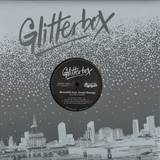
A creative partnership between Tom Laroye and Yam Who, Qwestlife is a trans-continental boogie trip between the two producers' respective homelands of Paris and London. Fulfilling the Glitterbox philosophy by crafting great songs the old school way with analogue and weird electronic gadgetry, Qwestlife's 'Give Me A Minute' appeared first on Glitterbox's Disco Revenge compilation and now graces vinyl for disco connoisseurs everywhere. Featuring the vocals of a frequent Yam Who collaborator, soul diva Jacqui George, 'Give Me A Minute' is an instant party anthem. Disco-fuelled synths and strings plus live sax, trumpet, guitars and bass give a glorious saturated dancefloor vibe rolled into one by sticky hooks and a timeless catchy chorus. Accompanied by the Dubbed Out Version, plus an Accapella and Bonus Beats, this sweet vinyl release provides all the good stuff that Qwestlife have to offer.

Brussels-based trio schroothoop (Dutch for ‘junk yard’) is formed by Rik Staelens (wind & string instruments), Timo Vantyghem (bass & clarinet) and Margo Maex (percussion). Their tribal oriented debut mini-album features homemade instruments built from lost and found objects like wood, scrap metal or anything that would end up in a landfill. The band’s music is infused with sounds from around the world orchestrated by PVC flute melodies, jerry can beats and washtub bass lines. The trio effortlessly incorporates jazz with North African chaabi, cumbia, reggaeton, Eastern oriental melodies and Afro-Cuban rhythms, resulting in a danceable and hypnotic trip in 7 compositions through the Brussels melting pot. The musical members are part of groups such as La Clinik du Dr Poembak, Raksinaksi, Sea (Peoples), Borokov and Sea Shark Minor.

The next release in the Phonica Special Edition series comes from Ukrainian duo Asyncronous who first came to our attention after hearing their critically acclaimed debut on Berlin label Slow Life, 'The Art of Fighting In A Dream'.
A Phonica favourite, it provided the soundtrack to many days in the shop throughout the year, culminating in its inclusion in our top ten Best Singles of 2019!
The Phonica Special Edition series is focused on one-off projects, special remixes or collaborations, highlighting music that is slightly left of the dance floor and pairing it with unique artwork.
This time featuring a beautiful piece by celebrated Ukrainian artist, Mykyta Storozhkov.
The pair initially joined forces in an effort to explore human imagination and life experiences through music, focussing on creating feelings and atmosphere rather than be constrained by genre limitations. The result on this EP is a hazy cosmic trip through their universe of synth swells, deep sub bass and meticulous percussion.
The journey begins on 'Padma Kirtanam' with a constant drone providing the backbone to a building tension scattered with drums. The tension releases and makes way for A2 'Shinkansen', a beautiful track with minimal drums and dubbed out synths which echo around the listener's ear. Closing the A side 'Volta' continues this aesthetic but adds a 4x4 kick drum upping the groove to a cosmic deep house jam.
'Avalanche' kicks off the B side of the record with a syncopated bass line and skitterish hi hats. The energy is at its highest level here and only stops to make way for the next track 'Blocks of Despair'. The tempo drops and drum hits reverberate above stretched out bass notes creating arguably the most heartfelt tune of the release.
The EP ends with 'Midnight Sun' an ambient excursion that invites you to drift off with Asyncronous into outer space.
Today we have many opportunities to discover the world and travel through it without leaving your own room. In the age of globalisation, with the help of knowledge, technology and imagination, you can instantly teleport yourself to mystical temples of India or see the sun above the polar desert at midnight. No more borders - we are connected like never before, as if we are not at different ends of the globe, but on a single and indivisible continent that is not mapped but exists in a plexus of global events, information flows and digital environment.
This is our common home. Our new Pangaea.

Musique Pour La Danse presents Roomservice, Dutchman Orlando Voorn's forgotten yet unforgettable IDM-leaning, home-listening electronica / techno album from 1994 under his Living Room alias, originally released on the producer's cult Night Vision label.
Praised unequivocally by those lucky enough to have heard it, this criminally underrated record nonetheless deserves pride of place when talking about forward-thinking electronic music from the early 90s.
While it is widely acknowledged that Orlando Voorn's productions are one of the most fascinating prisms through which to experience a European take on the Detroit sound, Roomservice is also a strong reminder that the paradigm shift from sweaty raves to enhanced home listening, championed by Warp's Artificial Intelligence series, early Rephlex releases, along with projects such as The Black Dog, Plaid or Autechre was in fact not only limited to British artists.
As its name indicates, The Living Room is not geared for warehouses but instead interested in a more intimate and domestic setting. As such, it does not contain over the top bangers, but it's hard to find any filler in this album where all the tracks are killer, catchy and memorable. All displaying a sophisticated yet immediate focus on warm melodies and grooves no heavier than a feather, these emotional cuts provide a wonderful and intricate soundscape for introspective listeners to explore, and they will surely find echoes of ideas developped by Manuel Gottsching, Steve Reich and Pat Metheny scattered accross the album.
While some tracks are rhythmic and would fill a dancefloor in a second with their four to the floor or broken beats, the album also gives room for more ambient excursions to occur and develop brilliantly. But once again, it's more likely you'll end up dancing on your couch rather than dozing off.
2020 might be the most difficult year in recent history for dancefloors worldwide, yet that's not going to stop Musique Pour La Danse from reissuing this gem of an album for listeners, dancers, and DJs of today and tomorrow.
Words by Ed Isar.

On the Corner Records was awarded 'Label of the Year' at the Worldwide Awards 2018. OtC is a story of artists and scenes that goes way beyond being a record label. DJ and label owner Pete On the Corner has created a home for innovative, bordercrossing, genre pushing artists. The OtC vision is to bring music to the world that is knocking at the 'Door To The Cosmos'. The label is an inimitable mixture of Miles Davis 'call it what you want' attitude, Sun Ra's Afro Futurism and the ecstatic soul lifting influence of black music on electronic dance music. On 'Door To The Cosmos - Dancefloor Sampler' Pete has curated a volume of cuts from present and future label family. This first in the series, is not just knocking at the door but giving it a kick! It's club music referencing the source, be it Detroit, or UK bass culture combined with future sounds rising from cosmopolitan hotbeds of sonic heat. On this maxi EP Venezuela meets India via New York, the street sound of Dar Es Salaam, Tanzania pulses through UK Jungle. Undergrounds pushing the dance, breaking borders and genre alike. Rhythms from the ancestors channelled for future times.

Japanese sound artist and producer Kosei Fukuda’s presents a collaborated vision of the first edition of ENSo¯, a two-day audio-visual event collated around the REITEN label. The ENSo¯ Festival invites its artists and audiences alike to appreciate the merging of the improvisational, with the contemplation of rhythmic cycles, based around the conception of enso¯ – ?? – meaning a hand-drawn circle created by one uninterrupted stroke. Now, with an elongated stretch of time in front of us before the next edition of the festival, the compilation stands to provide a sustained glimpse into the world imagined by Fukuda. Blending spontaneity and gravity alike, the record features an array of idiosyncratic artists set to play ENSo¯, all purveyors of their own shaped sound-worlds.
For the A-side, we have Fukada’s own contribution ‘?? – ENSo¯’; a slice of ambient techno dotted somewhere within a faraway galaxy. Venezuelan noise artist UCHI crafts a fourth-world hymn with tribal percussion on the expansive ‘ZRO’, and Osaka based experimentalist YPY aka Korshiro Hino shapes an elusive polyrhythmic ambience on ‘Circulation’. The B-side presents a colossal improvisational track ‘My Default Emotion’ from Berlin based duo Recent Arts. Formed of Chilean artist Valentina Berthelon and German musician Tobias Freund, the duo are masters in audio-visual experimental performances that both surprise and challenge an audience. Renowned artist, programmer and teacher Renick Bell is noted as a pioneer for live coded performance, conducting mutated rhythms that cut across the landscape of electronic sound. His addition to the compilation is a luminescent IDM piece, titled ‘Organize and Unite’. A polished ambient club track from Fukada and MA titled ‘????(????)’ provides a state of organized tranquility, whilst the track ‘The Chosen Home’ from Belgium artist YvesDeMay, whose move from breakbeat to experimental producer has produced gratifying results for all, is a welcome slice of pensive dub- techno.
The C-side brings us a textured and haunting techno track ‘He Turned Into Him’ with revered German artist Tobias, veteran mainstay with an expert hand in shimmering sound design; Kyoto based 10 Label heads Katsunori Sawa and Yuji Kondo brings sample-heavy rushes of sound, the former with ‘The Stonewall’ and the latter with ‘Zenith’, both multi-faceted in their reference points. The D-Side presents the grainy and expansive ‘Circle’ from Lebanese producer Rabih Beaini, who expertly combines club tropes and avant-gardism in his DJing and music. Hypnotic skeletal beats circulate on the pulsating ‘42.1’ by Tokyo artist ENA. Japanese composer Lemna, the alias of Maiko Okimoto rounds it off with a dreamy noise ambience on ‘Moments In Eternal Recurrence’. Released on vinyl July 24th, the compilation stands as a traversable artefact of the festival, rich in spontaneous beauty.

With the sole exception of Louis Armstrong, Nat "King" Cole was one of therare black artists to enjoy such celebrity in the Forties and Fifties. He began his career as a pianist, forming a trio in 1937 with guitarist Oscar Moore and bassist Wesley Prince, but he was so successful as a singer that he went on to make many recordings as a vocalist.
Capitol, his record label, was quick to capitalize on Nat Cole's velvet tones. The hits came one after another: Straighten Up and Fly Right (1943) sold a million copies, and Nature Boy (1948) and Mona Lisa (1950) sold over three 3 million each. Some of his other (numerous) popular hits can be found on Side B.
Nat Cole's popular songs, however — some were so sentimental they were even slushy — should never conceal his talents as a pianist and musician, which he displayed with the best jazz orchestras around (Side A), his own trio (Side C) or in outings with Latin rhythms (Side D).
His fame earned him his own NBC television show in 1956, while Presidents Truman andKennedy would consult Nat on complex racial issues. He also appeared in some fifty films, and continued to record profusely (at least a hundred of his titles entered the sales charts). Nat "King" Cole deserved his title: not only did he sell over fifty million albums, but he also belongs to those artists who wrote jazz history.

"There's a fresh new undercurrent to his fourth LP, Everything Will Grow Again, the first single of which (Carrie) was released on 17 April. The album sees Fakear fusing styles with more muscle than before, ushering in hints of Mount Kimbie, Floating Points and Jon Hopkins and embracing accidental synth sound effects.
It’s been six years since the worldwide success of “La Lune Rousse”, his first oriental-inspired EPs released by Nowadays Records, and the halting, vibrant vocals that catapulted Fakear onto the scene, with the musician now finding himself keeping on-stage company with heavyweights such as M.I.A. and Bonobo.
Everything Will Grow Again is a more candid, sincere exploration of harmonisation this time, with a sturdier technical weave underpinning the whole. The background murmurs of Jupiter-8 synths and a Matrix Brute recur over the album’s eleven tracks. Fakear’s long-standing communion with nature, a source of inspiration to him from the very start, are combined with his trademark acoustic chords on tracks such as “Together” and “Sekoia”. An entire section of the album has a decidedly club-inspired feel (“Structurized”), opening out into a series of analogue waves of sound reminiscent of Mount Kimbie and Moderat (“Linked”)."
d 4. Rituals feat. Luiza Fernandes
[e] 5. Carrie [feat. Alex Metric]

Names You Can Trust is proud to present a special collaboration with Barbès Records and the legendary godfathers of cumbia amazónica, Los Wembler's de Iquitos. Featuring two songs mixed expressly for 7-inch directly from the reels of their 2019 album, VISIÓN DEL AYAHUASCA, it's the latest entry in the group's historic canon of a particular brand of bonafide psychedelia, a worthy addition to a catalog of recordings that have made their way around the world to fans, DJs and sound systems since the group's beginnings in the late '60s.
The band's 50 year-old origin story begins when electric instruments started showing up at the port city of Iquitos, Peru. This seminal moment of international trade at the gateway to the Amazon inspired a shoemaker named Solomon Sanchez to start a band with his five sons. Los Wembler's were the first band in the capital of the Peruvian Amazon to play popular local rhythms with electric guitars. Their revolutionary sound, fuzzy lysergic guitar helixes wrapped around melancholic melodies, would go on to have an enormous impact on the whole of South American popular music, echoing throughout the continent and further, into the States and eventually across the world.
The past few years have seen a new wave of interest in the band's music. Los Wembler's, the sons, now fathers and grandfathers themselves, have brought their trademark sound on recent tours to Mexico, Europe and North America, where it has been embraced by a new generation of musicians and listeners.
As Los Wembler's prepared for a lengthy tour in 2020 to coincide with this new 7-inch issue, the world abruptly changed course. The COVID-19 outbreak has had particularly devastating consequences in the Peruvian Amazon. With an urban density of around a million people, Iquitos is the largest isolated city in the world, reachable only by boat or plane and surrounded by the vastness of the rainforest. A buzzing multicultural city, Iquitos was catapulted into modernity during the late 19th century's rubber fever. It is home to not only the members of Los Wembler's, but several legendary and influential musicians who helped lay the groundwork for the roots of chicha, the distinctively Peruvian brand of cumbia.

Los Angeles based hardcore punk band Entry shall release their debut full length, Detriment via Southern Lord on 17th July on LP and digital formats. This follows their sold-out 7” No Relief on Dune Altar.
Entry started as a project between Sara G and Clayton Stevens (of Touché Amoré) inspired by the likes of Discharge, Minor Threat, Converge, Tragedy, The Cramps, and The Exploited. The punk community at large is as inspiring as it has ever been to them.
Compact and ferocious, Detriment is a diverse album and a breath of fresh air in the genre. The debut showcases Entry’s appreciation for different aspects of punk and hardcore, and their imaginative songwriting that is condensed into nine succinct musical statements of intent.
As a collective, Entry firm belief in the power of punk and the uniting nature of music, and with Detriment they reflect themselves and their community with integrity and authenticity, this caught the ears of Southern Lord label owner Greg Anderson. He remarks "The unhinged intensity of Entry’s live performance at the last Power of the Riff fest blew me away. They embody many of the characteristics of powerful underground music that I have been obsessed with since my youth!.”
Entry are:-
Sean Sakamoto- Bass Guitar
Sara G- Vocals
Chris Dwyer-Drums
Clayton Stevens- Guitar
Bass player Sean Sakamoto plays in the indie pop band Sheer and is a recording engineer in LA, while drummer Chris Dwyer is also a recording engineer in LA, Sara’s musical origins come from punk bands in Pennsylvania, and Clayton also continues to play guitar in Touche Amore on Epitaph Records.
Entry have played the Olympia Hardcore Festival, and Ceremony's Homesick festival in Los Angeles. Opening for bands like Career Suicide, Krimewatch, Sunn, Dangers, Despise You, Sect, and Show Me The Body.

Newcomer Hekla releases her uniquely beautiful debut album for solo theremin and voice Á through Phantom Limb Records - run and curated by former FatCat Records, Thrill Jockey and Royal Albert Hall execs James Vella, Ken Li and Mark Pearse.
A Berlin-residing Icelander, Hekla's sparse, delicate, fractal music exists within these two worlds: dark and magical as Iceland's permanight folklore; and (though beatless) as deeply sonic and intense as Berlin's electronic scene. A long-term scholar of solo theremin, Hekla (shortened from her own name Hekla Magnúsdóttir) uses her instrument as an otherworldly and highly evocative Siren-call. A spectral, wailing, howling, lamenting yearning second-voice that underpins a soft vocal delivery, as if her studio had been haunted with a chorus of ghostly backing singers.
While a handful of reference points share a similar ground to Á - Colleen's interplay of voice and instrumentation; the richly immersive filmscore work of sadly passed fellow Icelander Jóhann Jóhannsson's; 'grandmother of theremin' Clara Rockmore's close relationship with such a singular instrument; Julia Holter's intelligent and classically-aligned songwriting - Hekla's music still exists singularly. A one-off talent, emerging from no particular scene, ascribing to no particular rules.
As a creative tool, the theremin - bizarre, unique, rarely heard - can be expressive, intuitive and highly adaptable. In Hekla's hands, her instrument covers an enormous range, from skittering birdsong of high frequency chirrups and chirps, to grinding, tectonic sub-bass. We are given the throbbing, apocalyptic dread of 'Muddle' and the baroque beauty of traditional Icelandic hymn 'Heyr Himna Smiur' in sequential tracks on the album's a-side. Appropriately, she also writes that the album title - Á - is similarly multifaceted in her native Icelandic: 'a river is an á and also it means ouch like when you hurt yourself, and also when you put something on top of something you put it á (on) something.'
The album was written and self-recorded by Hekla in her home studio in Berlin around her son's daycare schedule. Icelandic super-musician Mr Silla (a part-time múm member) guests on a number of tracks. Tallinn-based engineer Jose Diogo Neves - a stalwart of Icelandic and Portuguese music - mixed and mastered Á.
James Vella formed Phantom Limb in June 2017 after eight years in A&R for FatCat Records. Mark Pearse (formerly head of contemporary music programming at the Royal Albert Hall) and Ken Li (formerly of Thrill Jockey, now of Nettwerk) joined the team shortly after.

Strut kick off a brand new deal with the seminal independent black jazz and soul label Black Fire in May with 'African Rhythms 1970-1982', a comprehensive 2CD / 3LP compilation of Oneness Of Juju, led by Plunky J. Branch. Tracing their career from the band's earliest work in 1970 with South African exiled jazzman Ndikho Xaba in San Francisco, the compilation covers the band's journey to New York's loft jazz scene, forming Juju and releasing two landmark albums of hard-hitting percussive jazz on Strata-East. "I saw myself as a cultural warrior," explains Plunky. "We studied about Africa and tried to infuse our music with an African spirit." Moving back to his hometown of Richmond, Virginia during the mid-'70s, Plunky drew in a superb new group of musicians and vocalists and created the band's new incarnation, Oneness Of Juju, retaining the African influence but fusing his sound with funk and R'n'B on the classic 'African Rhythms' album. "We realised that, if we put a backbeat to the Afro-Cuban rhythms, people in Richmond and Washington D.C. could be drawn into it; it didn't change anything about our message." The change would lead to a series of enduring soul-jazz classics on Jimmy Gray's Black Fire label, including 'River Luv Rite', 'Plastic' and 'Don't Give Up' and their biggest crossover international hit, 'Every Way But Loose' in 1982, later famously remixed by Larry Levan. The band received renewed interest in their music during the mid-'80s as Washington D.C.'s go-go innovators cited the band as a major influence and rare groove DJs revived their albums for London dancefloors.

We were very surprised at Versatile when we received this file
from flocofloco And we still have very little info on the track that was
there. “On m’a dit…” by Floco Floco is a lo-fi afro-disco stomper hailing straight from the new ghettos created by confinement. Something had to give and we are glad that Floco Floco, whoever he is, has chosen us to ease his lockdown mind: “I’ve been told to stay at home, on WhatsApp all day long, working in the studio, reading books I haven’t read, I hope it won’t be too long, I don’t know if I can hold, smoking weed day & night, like never I have been before”.
Not a message, just a statement. The answer on the track was so good that we decided to come with more versions… We asked our friend Bufiman aka Jan Schulte to put his magic and he came with two
versions. One stellar arpeggio, with no beats but a serious drive as well as an instrumental Disco version. Gilb’r slowed down the whole affair and turned it into a cosmic nonsense vocal reprise, with a different bassline, chords and arrangement. A great summer pack!

The funky, atmospheric, evocative and sometimes downright weird output of companies such as DeWolfe, Cavendish, Burton and the ubiquitous KPM have always been a guiding inspiration for ATA Records, as evidenced in the spooky soundtrack works of The Sorcerers, the big band brass of The Yorkshire Film & Television Orchestra and even in the soul-jazz of The Lewis Express ('Theme From The Watcher).
Everything released on ATA is written and guided by the label heads Neil Innes and Pete Williams, who frequently dip their toes in the Library pond while working on other projects. These occasional one-off tracks have accumulated over the past few years and have now found a home on the first volume of an ongoing series : The Library Archive
Ranging from heavy big band brass (Whack, Slap & Blow, Kaye Okay) to evocative thriller soundtrack (Midnight Heist, Wiretap, The Needlenose) via introspective ethereal soundscapes (Nuclear Wind, Siren's Sea) these 11 tracks faithfully recreate the feel of the Library music catalogues of the 60s and 70s.
Following January’s acclaimed vinyl debut from Exterior and summer’s much-loved Kota Motomura EP, Edinburgh’s Hobbes Music label ends 2019 with its first album release, also a debut, from GAMING, a fresh new braindance electronica project straight outta Glasgow, from producer and musician Alan Bryden.
GAMING is a new solo outing that brings together a lifelong love of music and technology and creating left field, rhythmic electronica. It’s the sound of IDM, nineties techno and mensch maschine computer music that is as spontaneous as it is programmed.
“Scenes From A Deserted City is a collection of tracks that started as a set of riffs, loops, rhythms and grooves and unfurled around a sense of growing unease about the future of the urban environment around me.
It’s an album that started out as sound…and ended up as a way of telling stories about the age of anxiety we live in, how our world is changing, and how we find a way through that.
This is DIY electronica from Glasgow – it was made on a growing collection of digital and analogue synths and FX units, including a bunch of modular racks, each with its own idiosyncrasies and character that belies the assumption of the binary.
The studio where it was recorded – an abandoned, and often very cold, school building reclaimed by the community some twenty years ago – offered up stories of resilience, even when all seems lost. (I’m not sure what the mice contributed but they definitely climbed in and out of some synths).
This album is ultimately about my changing relationship with Glasgow, a city I’ve lived in for more than 25 years. It’s about how I feel now about the increasing sense of urban decay and how the city can be a very isolating place. It’s about how I reflect on my younger creative self trying to find a direction but mainly feeling a sense of dislocation and not fitting in. And it’s about the questions I have about how that relationship is changing, how it will be forced to move forward.
The result is a soundtrack for walking home on your own, in that headphone bubble when it’s just you focusing on that music that makes sense to you alone. It’s for early in the morning, after the night before, or going to work with the memories of that slipping and sliding inside your head. It’s about how it feels to be both elated and lonely, to be lost in the familiar, despairingly hopeful.”
ALAN BRYDEN (Glasgow, August ‘19)

Swiss jazz bliss! We Release Jazz is very, very, VERY happy to present its sixth release (following Ryo Fukui’s Scenery and Mellow Dream, Le Cercle Rouge’s soundtrack by Eric Demarsan, Stuff Combe 5 + Percussion, and Marc Moulin’s Placebo Live 1971) coming straight from its beloved hometown of Geneva. Boillat Thérace Quintet’s self-titled album is available for the first time since its original limited private pressing in 1974 and comes as a vinyl LP as well as a digipack CD* (with 3 never-heard bonus songs). Full of prolific and inspired local clusters and boosted by the recently launched Montreux Jazz Festival, the Swiss jazz scene was vibrant and inventive in the 1970s, notably in the region surrounding Lake Geneva. This is precisely where jazz activist and brilliant pianist Jean-François Boillat and wind instrument master Raymond Thérace formed their quintet whose dazzling debut album was recorded in 1974. An absolute Lemanic gem of the soul-jazz/modal kind, the self-titled album includes superb covers of Freddie Hubbard’s “Straight Life”, Keith Jarrett’s “In Your Quiet Place”, and Rahsaan Roland Kirk’s “Sweet Fire”, plus groovy original compositions from the Boillat-Thérace crew. Helvetian fun facts: the velvety “1224” is dedicated to Geneva’s public transport line Tram 12, and one exquisitely funky track on the album is named after the famed yet elusive (and locally legendary) Swiss Marmite: “Cenovis”! This is reissued in conjunction with Boillat Thérace Quintet’s My Greatest Love featuring Benny Bailey (1975), also available via We Release Jazz. *The CD version includes 3 bonus tracks (Herbie Hancock, Wayne Shorter, and Claude Engel covers), never released before.

Demon Records presents The Final Tour from legendary guitar band The Shadows performing their greatest hits live on this 2LP set made available for the first time. Hank Marvin, Bruce Welch and Brian Bennett together on-stage June 5th 2004 at Cardiff Arena.
It was during a hot summer day in June 1960 that The Shadows entered Abbey Road's Studio 2 to record Apache, the track that was to become the instrumental hit of the decade. It shot to No.1, became an instant classic and saw the start of a string of over thirty hits that included another four No.1’s - Wonderful Land, Kon-Tiki, Dance On! and Foot Tapper.
31 tracks including four No1's are featured on this double LP pressed on red vinyl with printed inner sleeves


Amnesia Scanner announces Tearless, the Berlin-based duo’s second LP. As Amnesia Scanner founders, Ville Haimala and Martti Kalliala watch their icy home country of Finland thaw, the staggering scale of political recalibration and the worldwide climate crisis to come blows open old norms. This album reflects what it feels to experience Earth at a time when collapse is emerging as the prevailing narrative.
The musical scope of the record is expansive, with guest vocalists—the Peruvian artist Lalita and the Brazillian DJ/producer LYZZA—descending into a vast uncanny valley of sound. Tearless follows the 2014 AS Live [][] mixtape, 2015 audio play Angels Rig Hook, two EP’s for Young Turks, and their 2018 debut album, Another Life (PAN).
“There’s a looming sense of radical change,” they note, connecting the present to a fin de siecle horror and curiosity regarding what new world is being ushered in. Someone called Tearless a “breakup album with the planet.” To which Amnesia Scanner responds, on the LP’s closing track: “Youwill be fine, if we can help you lose your mind.”
With the crossfader on Tearless sitting closer to pop than abstraction, so too does the audience for this record widen in scope. Listening through: Opener “AS Enter” sets a sombre tone until the fucking riffs of the second track(the titular, Lalita-helmed “Tearless”) make clear there’s plenty of roaring to come. A feature from metalcore band Code Orange on “AS Flat” follows, along with “AS Trouble” (feat. Oracle, the third, machinic ghost-member of Amnesia Scanner) and together they hit as black-metal-gaze dirges. At the album’s midpoint, Lalita returns for the beautiful, operatic breakdown of “AS Acá” (released as a single in 2019), before “Call of the Center” guides listeners through three club ready tracks—the grain-processed dembow of “AS Too Late” and “AS Going” with LYZZA, and then the ambientheadbanger “AS Labyrinth.” Closing “Tearless” is the sadboy grunge of “AS U Will Be Fine” with a clear statement of intent: doom, despair, insanity, absurdity, it’s all natural, all cathartic, and all OK. Refuse like the ‘90s and party like the ‘20s—if that seems senseless, you are doing it right.

yellow marbled vinyl / vinyl only
After a long wait we are happy to finally share the next release on Sleepless Musik and welcome Canarian artist Moises to our family!
A1. Circular
The title track is a dancefloor bomb, bursting with groove. You'll find it aptly placed on the A side, along with a remix from Sakro. The deep, rolling bassline of Circular takes similar form to previous Moises releases, a fast pace dance between low and high notes. Eery breakdowns signalled by spiralling synths accentuate the mysterious melody that dominates the track, before rave like chords creep to the forefront. Then with a cheeky hi-hat flick, the bass is back. The energy emanating from this one is enough to have a crowd going wild at peak-time.
A2. Circular (Sakro Remix)
The remix is a little more subtle, yet equally as suited for late into the night. The percussion overtakes this one with a deeper bassline. It becomes clouded with minimalistic growling and an echoing vocal, injecting the dreary trip we've got quite used to hearing in Sakro's productions.
B1. Homecoming
Flip the record over and the four-tracker becomes complete with two more of Moises' own productions, both of which retain that signature groove. Homecoming pulsates repetitive rhythms laced with chattering patter and choppy voice. A sweet layer to house the jabbing synth that follows for another dance worthy beat.
B2. Inside Out
Inside Out completes the set, representing a different approach. This feel good finale ditches the darkness and is instead full of dreamy high notes and percussive swing, making it the uplifting one of the bunch. It's fun, playful and full of life, perfect for celebrating those moments at the afters when the sun is up and so are the people.

Just as Al Green’s “Back Up Train” was pulling out of Grand Rapids, Michigan, for a whistle stop tour to the top of the charts, producer Palmer James began eyeing another Furniture City branch line: Tommy McGee. The result was 1976’s Positive-Negative , the creative apex in a career littered with endless bottoms. Gathered for the first time are McGee’s timeless album, singles for Golden Voice, Mercury, TMG, and Tosted, as well as the complete output of his nascent mid-’60s funk combo the T.M.G.’s

Fifth studio album featuring Malcolm Catto, D'Alma, Idd Aziz and Modou Touré. Includes the singles Sua Alma, In The End and Afande. His most accomplished album to date Will Dorey aka Skinshape moved out of his comfort zone to create a new sound while retaining his trademark feel. While Skinshape has often been influenced by African music ‘Umoja’ directly incorporates styles and rhythms from the continent. Drawing on London’s vast talent pool from across the globe collaborators bring the essence of Senegal, Portugal, Ghana and Kenya via Norway no name but a few. The initial plan was to travel to various African nations to record ‘Umoja’. This proved to be an unnecessary step because Skinshape's hometown of London ended up bearing many fruits. It was a challenging project for Dorey taking a year and a half of dedicated work to complete with many ideas left unfinished along the way. The album has a very global feel which was enhanced at the end of the process by a collaboration with Japanese painter Ken-ichi Omura. Fans of Skinshape’s distinctive voice will not be disappointed as he features on ‘In The End’ and ‘Sun’. Long-time friend and collaborator Jon Moody (from the band Franc Moody) wrote the album’s horn parts.

Khruangbin has always been multilingual, weaving far-flung musical languages like East Asian surf-rock, Persian funk, and Jamaican dub into mellifluous harmony. But on its third album, it's finally speaking out loud. Mordechai features vocals prominently on nearly every song, a first for the mostly instrumental band. It's a shift that rewards the risk, reorienting Khruangbin's transportive sound toward a new sense of emotional directness, without losing the spirit of nomadic wandering that's always defined it. And it all started with them coming home. By the summer of 2019, the Houston group_bassist Laura Lee Ochoa, guitarist Mark Speer, drummer DJ Johnson_had been on tour for nearly three-and-ahalf years, playing to audiences across North and South America, Europe, and southeast Asia behind its acclaimed albums The Universe Smiles Upon You and Con Todo El Mundo. They returned to their farmhouse studio in Burton, Texas, ready to begin work on their third album. But they were also determined to slow down, to take their time and luxuriate in building something together. Musically, the band's ever-restless ear saw it pulling reference points from Pakistan, Korea, and West Africa, incorporating strains of Indian chanting boxes and Congolese syncopated guitar. But more than anything, the album became a celebration of Houston, the eclectic city that had nurtured them, and a cultural nexus where you can check out country and zydeco, trap rap, or avant-garde opera on any given night. In those years away from home, Khruangbin's members often felt like they were swimming underwater, unsure of where they were going, or why they were going there. But Mordechai leads them gently back to the surface, allowing them to take a breath, look around, and find itself again. It is a snapshot taken along a larger journey_a moment all the more beautiful for its impermanence. And it's a memory to revisit again and again, speaking to us now more clearly than ever.

Lascelle 'Lascelles' Gordon - the driving force behind Vibration Black Finger – astonishes us yet again with a magnificent second album. Once more his inspiration is drawn from the obscure spiritual jazz collectives of the 1970s where he employs a vast array of like-minded collaborators to create a listening experience infused with an ever-present undercurrent of personal expression and cultural empowerment that's as enriched with ideas as it is progressive in its form.
Having earned his chops as founding member of the Brand New Heavies, Campag Velocet and Heliocentric World, Lascelle's latest album Can You See What I'm Trying to Say bursts with energy and vivid contrasts, flowing effortlessly between beat-laden grooves, oscillating improvisations, soulful recitations, audio verité and moody atmospherics. The album drops like a post-hip-hop reimagining of foundational genres, with a prayer to the future.
''Can You See What I'm Trying to Say' is a quote from Marion Brown, the great alto saxophonist' explains Gordon. 'The album was put together over the last three years, not in the conventional way of going into the recording studio with musicians, but starting from ideas I had on various formats (cassettes, mini disc, DATs & reel to reel). I also used field recordings. I did a lot of home recording with long time musical friends Ben Cowen & Diana Gutkind, some of them going back 20 years. The voices of my nieces (heard on Law of the Universe) were recorded 25 years ago. 'Only in a Dream' and 'Empty Streets' are the only songs that were recorded live in the studio.'
'I was blown away by the New Life Trio 'Empty Streets' (from 1978) and was fascinated by the vocals' continues Lascelles. 'I always thought it would be great to cover this tune'. Such is the power of this song, it's used to open the album, with vocalist Ebony Rose turning in a thoroughly haunting vocal performance. While not a concept album as such, Lascelles has nonetheless conceived and presented Can You See What I'm Trying to Say to be heard as a complete listening experience, with each track blending into the next, resulting in a seamless expression of music.
Following 'Empty Streets', some instrumental interludes segue into a dimensional drift of beats, space synths, horns and electronics; there's a vocal reprise of 'Acting For Liberation', sung with gusto by Maggie Nichols, and then there's the album's momentous finale, 'Only In A Dream', which takes off as an ominous drone before a delicious bassline from the late Ken Kambayashi transforms it into an intense, soaring epic which finally descends onto another world.
In a career spanning several decades, Lascelle Gordon remains an omnivorous musical force, whether as DJ, collaborator or radio broadcaster. As amply demonstrated on Can You See What I'm Trying to Say, he refuses to rest on his laurels and continues to impress with music that is as rich, vital and contemporary as anything he's done before, covering an incredible amount of musical ground in the process.

Celebrating live music and record store culture.
After having completed the first run of shows for their recent album "2066" through UK, France and Germany, the Mighty Mocambos did an intimate performance at world-renowned Groove City Record Store in their hometown Hamburg.
Not content with just playing stripped down versions of existing material, the band wanted to step up a notch from the "tiny desk" type concert idea and decided to record unreleased tunes for a vinyl single capturing the live energy and crowd atmosphere with analog studio techniques. After having warmed up with a couple of songs from "2066", a cheerful crowd in the packed shop witnessed the band tracking magic takes of unheard songs directly to tape.
"St. Pauli Second Line", an instrumental live favourite with simple but irresistant swamp funk ostinatoes turned into a frenetic call and response chant workout midway of the song. Singer Nichola Richards' tune "Keep It Movin'", a mainstay of the band's live repertoire for years, was cut with great energy, finally finding its way onto wax. "Something's Missing" is a brand new tune with a raw sister funk vibe - written and arranged for the occasion, rehearsed once and performed live for the first time in the version you hear on this record.
While many live recordings a are mere mix of crowd noise and neglectable renditions of well-worn tunes that are unusable for DJs and hardly appealing to the dedicated listener, THE MIGHTY MOCAMBOS - Live At Groove City au contraire is a treat for turntableists and a testimony of the spark that a well-attuned live band can light up, combining the vibes of a concert with the no-nonsense analog sound of their well-loved studio recordings.

Madrugada is the Spanish word for those strange, seductive hours before sunrise. A familiar stretch of time for the seasoned raver –and for MJ Cole, an artist who’s spent much of his career exploring those magical moments. Yet despite so many nights in the clubs, some of his most powerful memories of the madrugada hours have nothing to do with dancefloor euphoria. “I've experienced a lot of early mornings, but having been up from the night before,” he says, remembering one special morning on the Severn Bridge, driving home from a solo gig and watching the sun come up. “For me, the early morning is a significant period.” With MJ Cole presents Madrugada, he sets out to capture that special feeling with an album unlike anything he’s done before.

Outta Sight’s collectable ‘Real Side’ series continues with two stunning sides from Ted Jarrett’s Nashville based ‘ref-o-ree’ label. Jarrett was a hugely successful songwriter and producer for a number of Tennessee labels before he formed Poncello and Spar ahead of the harder Soul sounding ‘ref-o-ree’ that was home to our star turn Wendell Watts. Little is known about Wendell Watts other than he recorded and released two 45s for the ‘ref-o-ree’ label in 1969. According to some sources he hailed from Detroit but these recordings are certainly Nashville based and were produced by label owner Ted Jarrett and arranged by his long-time collaborator Bob (Robert) Holmes. The 45s are highly collectable with “Kiss A Good Thing Goodbye” rarely seen for sale and available as a reissue for the very first time. Incredibly, both of our featured spins were originally released as B-sides. “You Girl” on the back of Watts’ soul-cover of the Peppermint Rainbow hit “Will You Be Staying After Sunday”, whilst “Kiss A Good Thing Goodbye” played second fiddle to the novelty Bob Holmes song “The Love Bug”. The latter was reissued in 1972 coupled with “Grooviest Thing Side Of Heaven” on the tiny Jiminie logo. Watts also released a chidren’s Christmas album in 1972, for which he wrote most of the songs, before bowing out of the music industry.

Porridge Radio grew out of Dana Margolin's bedroom, where she started making music in private. Living in the seaside town of Brighton, she recorded songs and slowly started playing them at open mic nights to rooms of old men who stared at her quietly as she screamed in their faces. Though she eventually grew out of them, for Margolin these open mic nights unlocked a love of performing and songwriting, as well as a new way to express herself. She decided to form a band through which to channel it all, and be noisier while she was at it - so Porridge Radio was born. Inspired by interpersonal relationships, her environment - in particular the sea - and her growing friendships with her new bandmates (bassist Maddie Ryall, keyboardist Georgie Stott, and drummer Sam Yardley) Margolin's distinctive, indie-pop-butmake-it-existentialist style soon started to crystallise. Quickly, the band self-released a load of demos and a garden-shed-recorded collection on Memorials of Distinction, while tireless touring cemented their firm reputation as one of UK DIY's most beloved and compelling live bands. The band's sound - bright pop-rock instrumentation blended with Margolin's tender, open-ended lyrics - has developed and refined. Now, they are taking that development a step further, as they put out their label debut, Every Bad.

"Lost Ark Music" proudly present to you another labour of passion "Praying for the Angels" by Pura Vida. 'The heart of the Last Ark' is beating on the riddim of the drums" ... Play it loud!
"Crawling" is about Puraman's personal struggle in life (...) trying to blend a stepping, jazzy reggae groove with some psychedelic stuff, Pieter De Naegel & Mathieu Vilain provide some "Last Ark Fyah Horns". "Song to Bob" is Puraman's tribute to Bob Marley, with a haunting Bassline provide by Aston "Familyman" Barrett, Orginal Wailer (...) His son Aston Barrett Junior hits the drums like Lightening!
"When the right time come" was recorded in an oldschool fashion, Recording the riddim in one take (...) Puraman on Vocals and Guitar, Boris Perck on the bass, Xan Albrecht on the drums, Wouter Rosseel on Lead Guitar. Bos Debusscher provides a wicked synthline!
Are you ready?
"Pretty Stranger I wrote this song for you... You shurely look like danger but that's what I like about you". Pura Vida goes Psychedelic Rock (...) "Les Eaux Sauvages" is a Love-Song with the Wonderfull voice of Nina "Vitalia" Schelfthout!
"O sopro de Inae" features the warm voice of Alessandra De Queiroz...Straight from Brazil she came to the Mare Altar forest under the guidance of Maarten Rosa in search for the "Arka Perdida".
This song has Portugese Lyrics, praying for the Spirits of Iemanja and Inae (...) The Spirits of the Ocean! "Find a way Home" is a Soultune features Alessandra De Queiroz!
The Title Track "Praying for the Angels" is another combination of Puraman & Alessandra's voice. In a Sixties Psychedelic Spirit (...) Singing about the Lost Souls dwelling the streets of the Ancient City! It was recorded on Puraman's Birthday (...)
"And the lights of the city, drive them crazy. And there's nowhere to run (...) And they're praying, hear them praying for the Angels...".
"Blessings from the Last Ark" features the amazing voices of Roydel "Ashanti Roy" Johnson, Derrick "Watty" Burnett & Kenroy "Tallash" Fyffe from 'The Congos'. Ashanti Roy provides the Bassline and Percussion. Watty & Tallash provide extra magic percussion. Puraman on Vocals, Melodica & Guitar. Pieter De Naegel & Mathieu Vilain play humble and bright on this Deep Roots Tune. Blessings from the Ark. Beyond Time & Space (...)
"Ancestor Spirit Dance" is an Afrobeat inspired tune features the voice of Puraman's Great-Grand-Mother Mathilde Spruytte, who
was a local folk singer.


Jazz funk and gritty rare grooves ensemble from down under - Kerbside Collection - return with their third record "Smoke Signals"! Continuing in a down home, instrumental approach, but this time crafting newer ideas and flavours into their spectrum of warm, analogue, dusty grooves from much more Fender Rhodes electric jazz elements, to New Orleans sprinklings alongside their 60's inspired West Coast style.
"Smoke Signals" continues the wilder tones, textures and 'library' sounds of extra instrumentation found on their last output "Trash or Treasure", whilst introducing hints of fusion and cinematic analogue electric colours into the mix bringing things into early 70s territory. Opening with the lush, analogue synth and keys palate of "Waiting Game", reminiscent of some classic Air "Moon Safari" grooves, before the album properly begins with a fresh rendition of the Rhodes heavy Cedar Walton 70's jazz funk classic "Jacob's Ladder".
Then straight into the street-styled jazz bongo breaks and funky flute of "Traffic", a skankin' New Orleans reggae homage to one of its finest Creole dishes, featuring funky Hammond organ courtesy of guest Jake Mason (Cookin' on 3 Burners) and tasty piano work from multi instrumentalist Andrew Fincher who handles both guitar and keys on the whole record.
The middle of the record comes with a steaming afro funk workout, and a low slung N'awlins styled blues 'n' soul groove, both featuring the fruity, low-end brass action of Papa Jo on the big baritone sax, before taking a gentle emotional breather with a delightful, soft, soulful, Rhodes ballad, and a 'waltz-jazz-wig-out' attributed to their label's A&R Mr Mellow (reminiscent of some humorous UK acid jazz à la Corduroy and James Taylor Quartet) featuring some beautiful jazzy Flugelhorn, and acoustic double bass.
The album wraps up with another cover - a grittier reinterpretation and arrangement of a Bob James 80s jazz funk classic "Westchester Lady" complete with funky flute and soaring guitar solo, before finishing with the explosive rock funk workout and title track "Smoke Signals", rounding out a record with a full spectrum of handmade jazz funk, reggae, soul, library and gritty rare grooves all recorded to tape machine.
7"
Limited to 300 handmade copies!
We only knew Pop's (Steven) singing voice as a whistle. He whistled while he worked, and he worked all the time. But not even a whistle accompanied him on the guitar. A woodworker by day, he brought his craftsmanship home, softly picking his patient melodies. Those few tunes were played over and over again, becoming smooth and refined as a carefully finished armoire.
It wasn't until Christmas 2008 that we really heard him sing. Our mother pulled out an old cassette tape labeled Steve at Marco's, a brief recording session from 1979. The first thing we heard was the song. The only song. Blue. A thick delay over the entire mix told us he was shy even back then. But then came that voice, which, underneath the wash, wasn't shy at all.
Blue, and the stream of short instrumentals following, seemed a rare capture at the heart of our origin with music. And as we shared these recordings with friends, we soon realized it wasn't just us who found them so warm and beautiful.
A proper closet musician, Pop would never share this music on his own accord, so we've taken the liberty of doing it for him. - Heather & Peter Broderick, August 2011

Carving out an enviable reputation across the globe for his distinctive and highly personal brand of House music, Kiko Navarro's voyage of sonic discovery has been going strong for almost three decades now. From London to the Far East, Kiko has travelled far and wide with his music, embracing sounds from each continent as he goes. Kiko's new album, Afroterraneo- also named after his music label- defines the sound of his home. The album incorporates sounds touched by the Mediterranean Sea, drawing influences from Europe, Africa and his roots in the Balearic Islands. Afroterraneo is all about fusion. It includes Afro-Cuban songs like "Okere", "Karabali" and "Ekobio Monina", Midwest-African flavour on "Ihabogi Rawaly" and "Beréde", Flamenco with "La Fatiga", Balearic emotions with maestro Joan Bibiloni on "El Salto Del Martin" and "Vida", South African vibes on "Olwakhuthando", Afro Mbira lines with European TB303 acid blips on "Cacao Ceremony" and it all ends with his own tribute to his mother on "Para Mama". Born on Mallorca, Kiko's sound reflects the sun-drenched, slow living atmosphere of the Balearic island he still calls home. Obsessed from an early age with the more soulful side of US House music, Navarro's DJ skills soon attracted the attention of nightlife behemoth Pacha who offered him club residencies both in Palma and in Ibiza. Next came a monthly gig at Space Ibiza and the rest, as they say, is history. A true Renaissance Man; now also a family man, today's Kiko Navarro is perhaps even more focused and dedicated to his life in music than ever before. An album tour this year will see him play DJ sets in Italy, Bulgaria, Macedonia, Greece, Japan, South Korea, China with many more to be confirmed. Whether in the studio crafting records or in the club controlling the dance-floor, Kiko's musical mission has become the habit of a lifetime.

Rich NxT returns to FUSE to open June with his latest EP, ‘The Swish Cheese’.
A quintessential member of the FUSE family since its formation, longstanding resident label favourite Rich NxT may well currently be in one of his finest periods of musical output to date. With recent releases and remixes via the likes of Moxy Muzik, S .A.S.H. and his own NxT Records, and fresh from his stand out remix of Planetary Notions head honcho Joe Rolét on Infuse, the London-
based DJ, producer and label boss now returns to his home imprint of FUSE in emphatic fashion to deliver three fresh original productions in the form of his ‘The Swish Cheese’ EP.
A-side and title cut ‘Swish Cheese’ is a low-slung effort that layers rumbling sub-bass and squelchy stabs beneath icy snares to reveal a twisting and hypnotic opener, whilst on the flip ‘Your Time’ welcomes rich organic percussion arrangements, soft chords amongst tripped-out vocal snippets and further warping basslines. To close, the slick ‘Heaven Base’ shapes up the package with authority as swinging drum grooves meet soaring vocals and arpeggiated synths lines, offering up yet more trademark no-nonsense Rich NxT sonics via the ever-impressing London imprint.

Producer/DJ (and Georgia native) Drew Briggs’ roots in the Atlanta's club scene stretch back over a decade. In that time he’s also notched releases for a number of internationally-recognized labels including CGI, Harsh Riddims, and Two Circles while receiving nods from Resident Advisor and XLR8R. Briggs’ second release as Divine Interface (and first on 2MR) plunges the listener directly into his nightly routine in Atlanta - from club to afterparty to cab ride home.

2x12"
since long, chilean/swiss producer and dj luciano is a prominent figure in the global electron-ic club music circle. already from a young age on he was exposed to music profoundly, as his father worked as a jukebox repairman and possessed a large record collection.
when he was twelve, his mother gifted him a guitar, that turned luciano shortly into a mem-ber of a school punk rock band. soon after, his passion for electronic music rose. infected by detroit techno and engaged by close friends like producer dandy jack, he started to play rec-ords in local santiago de chile dance clubs and became involved in the minimal techno scene around friends like ricardo villalobos.
when luciano moved back from chile to switzerland in 2000, he established a residency at weetamix club in geneva, started releasing his own productions on labels like mental groove and joining the cocoon team in ibiza to play at the famous monday night at club amnesia.
since then he is a regular on the balearic island, holding residencies at clubs like dc10 or, with his “vagabundos” serial, at ushuaïa. besides playing around the globe with the likes of carl craig, richie hawtin or loco dice, he is releasing groundbreaking minimal techno and house on his label cadenza since 2003, featuring music by artists like nsi, ricardo villalobos, pikaya, reboot, maayan nidam and himself.
his very own music, so far issued on three albums and countless eps, was always ambiguous. there is his club leaning creativity that can dance slightly into pop spheres while never for-getting the power of precise sliced rhythms and subtle bass sensations.
and then there is a calmer luciano, that displays his love for “music to listen at home, done for a spiritual travel, an inner universe and a moment paralyzed in ether”, as he describes it.
on his first ever mule musiq album release “luci neu house”, luciano now delivers meditative journey music full of repetitive patterns that slowly playing tricks on the listeners subcon-sciousness. “i love music that has a dimension more than music designed for the radio or tv format. mu-sic, that is designed to bring you a higher level of energy and creativity.
so, there is no pretentious things in it ... more just sounds and dimension that will lead your head into the fall of jupiter” he reveals about the one-hour long composition “luci neu house”, whose esoteric deepness reminds on the intensely meditative class of his older pro-ductions like “behind my soul” from 2010.
an epic tune cut on vinyl into four 15-minute long pieces, who shift slowly, almost unper-ceived, whilst absorbing the mind of close observers into a micro-sliced world of moving gen-tleness.
maelstrom magnetism against the gravity of time, that also can be found on the additional mule musiq 257 12inch, which functions as a soothing footnote to luciano’s album.
the almost 13 minutes long trip “flags of himalaya” opens with restful percussions that unhur-riedly start to dance with soft string, piano and horn melodies. on the opposite, the nine-minute long “the evasion of the spiritual soldier” grooves laidback with jazzy rhythms and italo leaning melodies.
a perfect tune for slow dance sensations and endless sunset seaside drives. at a total length of almost 90 minutes, all new mule musiq music composed by luciano distributes a mesmer-izing healing spirit, that grounds organically, even if it is totally rooted in the digital, soft-ware driven world of composing music. “check your buddha” tunes, that somehow sound novel during each new listening circle.

Names You Can Trust is proud to continue the tradition of collaborations with the finest musical talents the world has to offer, sin fronteras. The latest release features a pair of cuts from the renowned Ava Rocha, backed by punk cumbiero all-stars & NYCT alumni, Los Toscos. Rocha, the daughter of Latin American film legends from Brazil and Colombia and a multi-disciplinarian triple threat herself (music, film, visual art), calls both countries home and has long held a reputation for no-holds-barred artistic commentary on the political follies of the neighboring, intertwined societies.
What she brings on her latest single easily stands alone on musical merit, but gains greater nuance and significance as the powerful lyrics emerge. With a disarming chanteuse vocal delivery and a stark groove that would be equally at home on an early Tom Waits record or in the psychedelic jam sessions of a '70s Fuentes group, this double sider is ultimately a great introduction to Rocha's Latinx punk social commentary but should also slide right in with DJs looking for a versatile addition to their boxes.

WRWTFWW Records is excited to announce the official reissue of Motohiko Hamase’s remarkable ambient/environmental/minimalism project #Notes of Forestry, available for the first time since 1988. The album is sourced from original masters and available on vinyl and CD with liner notes from the artist. This marks the third release from the ESPLANADE SERIES which focuses on the works of Yoshio Ojima, Motohiko Hamase and Satsuki Shibano. One of the most fascinating and peculiar works from the golden era of Japanese ambient, #Notes of Forestry was initially released in 1988 by Newsic, the cult label started by Tokyo’s Wacoal Art Center (also known as Spiral), home, notably, of Yoshio Ojima who co-produced the album. Conceived by Jazz bassist turned experimentalist Motohiko Hamase, the magnum opus offers an enchanting mix of free-form pastoral electronics, otherworldly percussions by Yasunori Yamaguchi, and delightfully allusive piano played by none other than Satsuki Shibano (Sound Process’ Wave Notation 3). Vibrant, sometimes eerie, and absolutely captivating, #Forestry captures Hamase’s quest for musical freedom, he explains: “Inside the body of a musician, music is always transcendentally resonating. More than language, music reigns. When creating music overlaps with the moment my body performs, I strive to be as close as possible to the feeling of musical freedom. I feel that this notion lies at the foundation of this album". Musical freedom, here, provides an essential escape, extending the path uncovered by pivotal releases such as Midori Takada’s Through The Looking Glass, Satoshi Ashikawa’s Still Way, and Yutaka Hiros’s Nova. #Notes of Forestry is reissued in conjunction with Motohiko Hamase’s Technodrome and Anecdote albums,

WRWTFWW Records is very happy to announce the official reissue of Motohiko Hamase’s astounding ambient house album Technodrome (1993). The album is sourced from original masters and available on vinyl for the first time ever as well as on CD. It comes with liner notes from the artist. This marks the fourth release from the ESPLANADE SERIES which focuses on the works of Yoshio Ojima, Motohiko Hamase and Satsuki Shibano. Inspired by John Cage, Jon Hassel, Brian Eno, and the emergence of house and techno music, Technodrome is jazz bassist turned electronic experimentalist Motohiko Hamase’s foray into what he calls ambient house or, as he explains, “using the gritty sensation inherent to the core of house music” to create an ambient record “aiming to express inverted images, optical illusions, and the sense of déjà vu that modern people can get in the city". Technodrome is constructed around innovative minimalism, a robotic funk orchestrated by bass lines and percussions, and monochrome moods. It’s the most intriguing project in Hamase’s discography, a ghostly ride set in 90s urban landscape, where repetition sets the groove and brings things to life, echoing Hamase’s deeper subtext for his compositions: “and attempt to recreate (as metaphor) the time in our mother’s womb". The album was initially released in 1993 by Newsic, the cult label started by Tokyo’s Wacoal Art Center (also known as Spiral), home, notably, of Yoshio Ojima who co-produced the album. It is now reissued in conjunction with Motohiko Hamase’s #Notes of Forestry and Anecdote albums.

It's auspicious that Sonic Boom-the solo project and nom-de-producer of Peter Kember (Spectrum, Spacemen 3)-returns in 2020 with its first new LP in three decades. Kember's drawn to the year's numerological potency, and this intentionality shines into every corner of All Things Being Equal. It's a meditative, mathematical record concerned with the interconnectedness of memory, space, consumerism, consciousness-everything. Through regenerative stories told backwards and forwards, Kember explores dichotomies zen and fearsome, reverential of his analog toolkit and protective of the plants and trees that support our lives. Sonic Boom's second album and first for Carpark began in 2015 as electronic jams. The original sketches of electronic patterns, sequenced out of modular synths, were so appealing that Stereolab's Tim Gane encouraged Kember to release them instrumentally. "I nearly did," confesses Kember, "but the vibe in them was so strong that I couldn't resist trying to ice the cake." Three years later, a move to Portugal saw him dusting off the backing tracks, adding vocals inspired by Sam Cooke, The Sandpipers, and the Everly Brothers (which he admits "don't go far from the turntable pile"), as well as speculative, ominous spoken word segments. His new home Sintra's parks and gardens provided a different visual context for Kember's thoughtful observations, and he thematically incorporated sunshine and nature as well as global protests into the ten resulting tracks. "Music made in sterility sounds sterile," he says, "And that is my idea of hell."

Kristian Craig Robinson, aka Capitol K, is a multi-instrumentalist and record producer with a long history in London’s most interesting under-the-radar music places and spaces. With a musical story like his, you can expect side streams. New record ‘Birdtrapper’ is “the sound of an initiation rave in a utopian hidden village”, and his latest exploration of Mediterranean audio mythos following from ’Goatherder’ (2018). The six track mini-album was similarly formed from ritualistic improvisations performed in Malta (where Capitol K was born), using home-made flutes, reed pipe, bamboo percussion, drum machine, bass guitar, but this time features a wider use of synthesizers, with the alternative dance floor in mind. Where ‘Goatherder’ was an awakening of genetic primitivism, ‘Birdtrapper’ is an evocation of sonic bird callers, proto-rave abandon, ambient resonance and an ecstatic captive state, along with the previous work's visions of hunters, temples and scrub land music
‘Goatherder’ caused a quiet kind of quake and was beloved by The Quietus, BBCR3 and 6Music. Vinyl Factory described it as “like a series of manipulated field recordings that have an ancient, ritualistic quality … Goatherder shimmers with Balearic strangeness, rooted in an earthy outer-national dance music tradition”. For the last seven years K has been behind the consoles at the heavily influential Total Refreshment Centre, recording and mixing records with the likes of Trash Kit, The Comet Is Coming, Rozi Plain, Alabaster DePlume, Dry Cleaning, Flamingods Cykada, Ibibio Sound Machine, BAS JAN and John Johanna. It’s not just recording. He’s also become an influential if understated mentor to a new wave of producers and bands. His experience in studio environments is long and storied, including stints at Studio Plateaux on an island in the middle of the Thames and in the Royal Symphonia’s squatted rehearsal rooms. Capitol K has released seven albums and the 'Birdtapper EP' follows a legacy of influential releases on early 2000s electronica labels including Planet Mu and XL. Aside this he also runs the record label Faith & Industry. It’s a friends and family, love not money affair and he has released music by Champagne Dub, John Johanna, Super Best Friends Club, Blue House & Clémentine March.

If you’ve visited Ibiza in the last few years, there’s a fair chance you’ll have encountered DJ Pippi and Willie Graff. The experienced duo has been DJing together on the White Isle for years, finding time between sundown sets to make music together in Italian veteran Pippi’s home studio. The pair’s first collaborative EP dropped on Drumpoet Community way back in 2007, with the belated follow-up appearing a decade later on Compost Disco. Here they make their bow on Leng with the “Lunares EP”, a typically warm and woozy collection of cuts named after the Spanish word for “polka dots” (a fashionable item in Spain and the Balearic islands throughout the 1980s).
They begin with the slow-burn sunrise bliss of “Lunares”, a shuffling and glassy-eyed affair in which evocative, emotion-rich strings, heady vocal samples, echoing sitars and lilting guitars slowly rise above a thickset backing track rich in dubby bass, swelling pads, starry electronics and snappy drums. Capable of tugging at the heartstrings, it’s a sublime slab of mood-enhancing bliss perfect for both weary dancing and sofa-bound relaxation. “Saxolicious” lives up to the premise of the title, with Pippi and Willie wrapping snaking, effects-laden saxophone solos around a languid, slow motion groove bristling with hazy intent. Expect chiming electric piano chords, dreamy pads, rolling grooves and another fine bassline that will worm its way into your subconscious, spark up a spliff and stay there for days.
The EP’s final musical moment is, if anything, even more spaced-out and intoxicating. Employing extra-slow beats and a prominent jazzy bass guitar part, the pair invites us to get locked in to a chuggy rhythm. Throw in druggy synth lines, tactile electric piano stabs and some suitably cosmic effects and you have a hallucinatory treat that would no doubt have gained the approval of the late, great Andrew Weatherall.

“When I was asked to put my hands on the original tracks of Blancmange I was instantly excited. They were one of my favourite Bands when I grew up as a teenager in the 80’s. Listening to their music walking around with my Walkman back then was adventurous. Mainly because I was already in love with the aesthetics of synthesisers and drum machines. But also because it was unusual pop music with an extraordinary energy that made it in the charts. Remixing a favorite Band is challenging but I’ve tried to keep the free spirits and playfulness in my mix that makes Blancmange still so special after all these years” – Roman Flügel
Roman Flügel remixes the cult 1980s classic that is ‘Living On The Ceiling’, and the result is a killer, off-kilter slice of club-focussed machine funk that contains the same wonderfully bizarre cocktail of traits, that Blancmange always boasted in spades. Eerie and schizophrenic but also both bright and triumphant. Also features the original and sought after extended mix.
The first in a new series of ‘London Records Remixed’ releases on 12” and digital. Now at its new home as part of the Because Music Group the London Records catalogue is being revisited by pioneering, contemporary electronic producers.

On his third solo album, following the success of "Éternel été", the founder of the electro duo Nôze is exploring, through piano and synths, the encounter between poetry and song. In this new work he has set to music verses by William Shakespeare, Victor Hugo, Pablo Neruda and on three songs, those of the poet Marceline Desbordes-Valmore, a pioneer of romanticism who notably influenced Verlaine and Baudelaire.
But what does this Oh !, giving its title to Ezéchiel Pailhès' third solo album, stand for? Is it an Oh ! of surprise, admiration or pain? "It is rather the Oh ! found in romantic poetry" says the French composer and singer with his deep and sweet voice. "An interjection that refers to a form of lament", even though it can convey other emotions such as complaint, nostalgia, a sad delight or a longed-for solace.
In Tout va bien, his previous album released in 2017, Ezéchiel Pailhès had set two Shakespeare sonnets to music. One of them, "Eternal été" has become a great success, thanks to its lines tinged with spleen and bliss. "Poetry, and its musicality, have always been part of my universe. For this new album, I therefore wanted to explore further the adaptation of poems into songs. "Bien Certain" is, once again, taken from William Shakespeare. "Tu te rappelleras" comes from Pablo Neruda's collection La centaine d'amour. "Oh ! Pourquoi te cacher ?" is from Victor Hugo. As for "Sans l'oublier", "La sincère" and "J'avais froid", they were all written by Marceline Desbordes-Valmore, a 19th century French poetess, still fairly unknown".
With Oh !, Ezechiel Pailhès has become more of a singer than ever before, through seven songs and four instrumental compositions, with intimate and warm modulations, carried by hypnotic piano melodies, instruments with unusual timbre and a subtle electronic production that recalls his past productions with his former duo Nôze.
"I wanted to expand my music further into songs" Ezéchiel adds, "to work more with my voice as a solo instrument and to limit the overlapping of voices and choirs found in my previous records". Produced in his Montreuil home studio, Oh ! is nevertheless imbued with an emotion found in his previous albums, close to 'saudade' or a slight melancholy, sometimes enhanced by chosen texts that evoke the disappointment of love, the longing, the distance between two people, or even men's weakness. "These poems evoke themes that may seem far from the concerns of our times. Yet, they are timeless and eternal; they manage to convey emotions that can often be difficult to say or write."
Among the texts chosen for this new album, the verses of the poet Marceline Desbordes-Valmore (1786-1859) are on a par with William Shakespeare's sonnets or Pablo Neruda's poem found on the same record:
" Sans l'oublier, on peut fuir ce qu'on aime.
On peut bannir son nom de ses discours,
Et, de l'absence implorant le secours,
Se dérober à ce maître suprême,
Sans l'oublier ! "
(…)
" Sans oublier une voix triste et tendre,
Oh ! que de jours j'ai vus naître et finir !
Je la redoute encore dans l'avenir :
C'est une voix que l'on cesse d'entendre,
Sans l'oublier ! "
"Without forgetting, we can run away from what we love.
Banish their name from our conversations,
And, begging the absence for consolation,
Escape the grip of this supreme master,
Without forgetting! "
(…)
"Without forgetting a sad and gentle voice,
Oh, how many days have I seen rise and fall!
And still I fear from the future:
A voice that can no longer be heard,
Without forgetting! "
Although less known today than her male counterparts, Marceline Desbordes-Valmore marked her times and the Romantic movement through the quality of her texts and her formal inventions, which Balzac admired, and whose influence seems to have been decisive on Verlaine and Baudelaire.
"Marceline Desbordes-Valmore's poetry is highly musical," says Ezéchiel with admiration. "Her artistry with rhythm and repetition sounds very good and takes on a new dimension when set to music. She even meant for some of her texts to become songs"

Honey Dijon was asked the remix her “favourite band” Blancmange and choose the magnificent disco oddity, 1983 hit ‘Blind Vision.’ The result is stripped back, bumping houser that sounds as much Green Velvet as it does Talking Heads. Urgent percussion and oscillating synths drive things forward, allowing a full Blancmange vocal to unfold aloft to great effect. Also features the original and sought after extended mix. The first in a new series of ‘London Records Remixed’ releases on 12” and digital. Now at its new home as part of the Because Music Group the London Records catalogue is being revisited by pioneering, contemporary electronic producers.

Deep mining the crates for another super strong 4 track pass - The HOT PEAS 'N BUTTER crew deliver each and every time !!
No.6 brings another selection of certified diverse and dynamite floor-filling jams from the extended family.
Time machine tear-ups from the golden era, as likely to be heard on Mom & Pops' turntable as they were rattling the cones on the home-made block party stacks or basement sound systems.
100% DJ material - and available in VERY short supply...you snooze, you lose !
Hand stamped vinyl only 12" series

The collaboration between Gino Pavan and Guido Frezzato began in 1995, with the creation of the soundtrack of Giancarlo Marinelli's movie "Scano Boa - Dannazione".
Gino Pavan recorded and produced, in his own "Noi Studio", the music of Frezzato, then given to an ensemble of 15 musicians, among them a strings quintet, and the folk ensemble Marmaja, along with the ethnic suggestions of the percussions by African Brothers. In the following two years, their collaboration would lead to the production of two albums for African Brothers: "N'der Tangana" and "Voodoo".
Followed by the soundtrack of "Alla ricerca dell’uno” (Searching for the One) with the musicians of the Compagnia dei Popoli, and the music for the dance-theatre performance of Belgian dancer Thierry Parmentier. Also worth mentioning, the album by Luca Xodo & Frezzato "Didjeridu", later to be used as a soundtrack for the movie "Case" (Homes) by Rodolfo Bisatti (Ipotesi Cinema). After twenty years spent piling up autonomous musical experiences, Pavan offered Frezzato to try their hands at a musical project that sees them, for the first time, composing music together.
The result is the "NOT LINEAR" project, a musical dialogue between electronics (Pavan) and acoustic instruments (Frezzato), using an "online" form of composition.
Recorded in separate locations, between December 2017 and February 2018 and subsequently mixed at "New Frontiers” studio by Ugo Bolzoni, "NOT LINEAR" collects, within these first 6 tracks, the fruit of this artistic collaboration.
"NOT LINEAR" is enriched by the collaboration of Pavan and Frezzato with two internationally-acknowledged, exceptional artists such as Giulio Aldinucci and Eraldo Bernocchi, each one interpreting a track of their choice out of all those initially selected out of the studio sessions, in a furrow of continuity of the "non-linear" concept that inspires this work. NOT LINEAR design has been curated by renowned visual artist Petulia Mattioli.

It’s a family affair on the second Growing Bin 7”, as Peter & Patrick Jahn enjoy some father and son boogie with a smooth split release. A sunblushed moocher served two ways, this disc is designed for horizontal dancing…
Rooting around the cupboards in his family home outside Nuremberg, Patrick Jahn unearthed a dusty box of cassettes, saved for posterity but eventually forgotten. Somewhere between ‘True Blue’ and ‘Brothers In Arms’ was a faded C60 full of unreleased demos by his father Peter, recorded in the mid to late 80s. Back then Jahn Sr owned a pub club called Schrank (Cupboard to the Anglophones), with an upstairs office he used as a music studio. In amongst naïve synthesiser experiments and carefree noodling was a Balearic boogie bomb, all strolling synth bass, clipped funk guitar and seaside melancholy – like Brenda Ray on a Wim Wenders soundtrack.
Too impressed to keep it a secret, Patrick played the cut to Carsten “Erobique” Meyer, when he was over there jamming, and Hamburg’s premier funk freak suggested this might be of interest to his likeminded hometown freak Basso. Instantly in love, the Growing Bin boss suggested Patrick provide his own version for the flipside, and so it was, reborn with percussive sway, moonlit keys and beefy bass tones for the next generation. Here’s to the Jahn family, father and son but brothers in calms…
Patrick Ryder

In just a few years and with a handful of releases, the Canadian producer better known as Yves Malone has earned himself a reputation. In The Beginning of Nothing he continues working with many layers of analog synths and a keen sense of drum machines to create atmospheres and textures extracted from late twentieth-century collective fears of a dystopian future. Created as a sort of score to an internal elegy, Yves Malone creates soundtracks of the daily fear, regret, and resignation that is his waking life, an effort to isolate and negate this anxiety, which is a constant and unwanted companion. Sequenced on mostly working vintage gear, The Beginning of Nothing tries to extricate a bit of beauty from a rapidly darkening landscape.

A1 - Bitch - Late Nite 'DUB' Addict (Original Mix)
Is a Deep / Jackin House track with driving drum parts, deep old skool organ stabs, with lots of MPC style swing. The track is an energetic groover that could well be another hit for the (Late Nite 'DUB' Addict) who owns / runs (Digital Label) (DEEP 'N' DOPE RECORDS (UK).
If you like artists / DJ's such as (DJ Sneak / Phil Weeks / Black Loops / Dub Striker / Dumuir / Demuja / Kerri Chandler /Todd Terry / Kenny 'Dope' Gonzalez / Justin Martin / Scott Diaz / Sebb Junior + Filta Freqz) This track might be for you.
A2 - Fight For Your Rights - Late Nite 'DUB' Addict (Original Mix)
Fight for you right is most definately got the potential to become a future house anthem.
The track has allready recieved support and airplay from (London's Own) FANTASY FM
+ Groove City Radio (Scotland / Glasgow). This can only be described as deep / classic (U.S) style Garage / House / Banger, This Deep Underground but classic house track carries an abundance of energy, the track contains spoken vocals from a influential but controversial leader which gives the track an edge which just help build atmosphere and builds tension in the track - But definately in a good way. This track is a stand out groover that screams Anthem.
If you like DJ's like (Kerri Chandler / Mr V, Karrizma / Phil Weeks / Black Loops, Art Of Tones / Sebb Junior / Louis Vega, Mood II Swing / Dub Striker / DJ Pierre / Andres /Dan Shake then this energetic / warm (90's) style classic house number will be right up your street
B1 - Confessions Of A 'DUB' Addict - Late Nite 'DUB' Addict (Original Mix)
This track is a minimal style (Deep House) track that has been influenced by the early (Rave) era and early (Chicago + Detroit) House + Techno scenes. The track has a slightly darker edge but still remains jumpy and is definately made for the danecfloor in the early hours of the morning, and has a certain wharehouse 'Feel' to it. The track contains bleeps, stabs, and 808 + 909 compressed drums. The track contains poly rythums and drums which evolve and give alot of movement within the track. This is another "Big Track" from the (Late Nite 'DUB' Addict) that has also recieved support from the (legendary) FANTASY FM.
B2 - Heroes In Our Own Home - Late Nite 'DUB' Addict (Original Mix)
The (Late Nite 'DUB' Addict) states it is no secret that his productions are heavily influenced by the (U.S) Garage / House scene of (New York) in the early (90's).
An era that he said was huge in the way the house scene defined the (Deep House + Classic House) scene that is still massively current today. The DJ / Artis's that has influenced him the most from this era is (Todd Terry / Kenny Dope / Dennis Ferrer /
DJ Sneak / Mood II Swing + MK + Kevin Saunderson. This Hip / House track is the
(Late Nite 'DUB' Addicts) take on the Garage House scene / Hip House scene of
this special era!!!

The sickest French band, a trio called France, drums, bass and amplified hurdy-gurdy. They only performs live, in the middle of the audience - turned in to face each other - full on smoke machines and strobes. And they play only one ‘song’ for the duration of their hour-long set. And it’s the most transfixing live experience of intense physical and mental focus, and there is something of early rave too, the togetherness, the energy, the euphory. The distorted hurdy gurdy plugs France’s sound into the country’s history of folk music and popular festivities, of communal trance and immersive pleasure. The rhythmic basis is pretty much the same throughout the whole live. One doesn’t need to actually be tripping balls for the auditory illusions to start coming thick and fast. Those who’ve stayed for the whole duration of their performances know they’ve shared something. However disparate the phantom forms each might have discerned in the midst of the howls and groans. Gigs like this you leave feeling you’re not quite the same person who went in, even though you’d be hard-pressed to pinpoint precisely what has changed. Far Out Far West was the band’s first gig outside of their usual comfortable friendly circle and thus was perceived as a somewhat hostile environment. This was where they met the fellows of Les Potagers Nature who will later release France’s debut untitled album. One certainty remains at least, that there is still a France we can believe in. David McKenna (The Quietus). Sales Points: - New album from trio France - All previous releases now sold out and sought after - For fans of drone, rural trance, stoner, psychedelic - 131st release on Mental Groove Music, home of WRWTFWW

After appearing on the well received Chicago Bee Various artists EP Nill Minogue AKA Postelektrik delivers his debut EP on the same label.
This well crafted EP has a mature sound that crosses the boundaries from traditional acid and leans towards deep house and electronica.
Side A delivers what has been to be expected from Chicago Bee. But its the the flip side where Nill Minogue comes into his own. This side blends a shift towards a home listening vibe as well as being suited to a more discerning dance floor. The tracks The Green Strobe and Not Them are slow drifting builders and full of lush pads that float along endlessly. This combined with moody baselines and trademark Roland drums you surely have a well rounded winner.
Many supporting this EP so far including DeepChord, Placid (I Love Acid) , Damo B (Outer Limits radio show) Colin Dale, Jerome Hill , Rennie Foster and Type 303.

In 2015 US soul, boogie and disco legend Jay W. McGee teamed up with Hamburg producer, multi-talented musician and DJ Julian "Mzuzu" Romeike to record McGee's comeback album "Good Feeling". Even though both artists are from two totally different generations, they got on so well with each other after the official re-release of Jay W. McGee's classic 12inch "Turn Me On" on Légère Recordings two years before that they started to write and record together. After all, it was Julian "Mzuzu" Romeike himself who made Jay W. McGee return to the music business after nearly 15 years of silence.
The creative process did not stop with "Good Feeling": "We now have a brilliant combination of fresh songs. Many different accurate beats and of course Jay's incredible writing and singing skills," says Romeike. "I feel that it's a great combination of dedication, skills and talent which made this album possible. I work on some grooves and hooks for Jay, he picks the ones he likes and returns a proper song with vocals and arrangement. My production team, The Unbelievable Two, then work on the final mix."
"Smooth Crusing" hints towards McGee's classic late seventies sought after sounds like "When We Party" with the first "Uptwon, Downtown". The album also includes some reggae touches and smooth soul excursions. "It is such a big pleasure to work with these guys as everything works perfectly together," comments a happy Jay W. McGee. "It has all the ingredients for a classic album. It's funky and soulful, recorded in a unique modern style. We have a tribute to the good old funky music with 'Old School Love'. A lover's rock orientated tune with 'Chance I Have To Take' and some kind of up to date Afro-Disco-Soul with 'Bounce Back To Me'. And of course, 'Smooth Cruising' is full of funk!"

Who put the dance into Factory Records?”
Be With would like to refer you to FAC 59.
Working with founding member Tony Henry, we’re honoured to present the reissue of 52nd Street’s crucial debut single “Look Into My Eyes”, backed with “Express”. Originally released on Factory Records in Summer 1982, this ultra-rare 12" is a double-sider in the truest sense. Unrivalled Manchester jazz-funk-boogie-soul.
Both “Look Into My Eyes” and “Express” came out of a five day recording session in the spring of 1982 at Revolution Studios in Cheadle Hulme, just outside Manchester. Rob Gretton had just signed the band to Factory, snatching them from under the noses of RCA and WEA Records who had been sniffing around and seemingly ignoring Tony Wilson’s concerns that Factory might not be the right home for a black soul act. Rob clearly thought different.
The band of Tony Henry on guitar and vocals, bass player Derek Johnson, drummer Tony Thompson, lead vocalist Beverley McDonald and John Dennison on keyboards were put in the studio with A Certain Ratio’s drummer Donald Johnson producing the sessions. The band also found themselves with an interesting new member.
The back cover of the finished record credits synth F/X to a mysterious “Be Music”. Turns out that’s Bernard Sumner. Yes, that one. Tony Henry explains that bringing Bernard in was another part of Rob Gretton’s plan, “Barney was a real soul boy at heart and had always wanted to produce and work with black artists… with 52nd Street, he was an honorary member”. The results suggest he fit right in.
“Look Into My Eyes” squeezes so much aural pleasure into one side of a 12" single. A strutting, rich, soul-gliding funk with bass and guitar high in the mix above twisted, bubbling synths. Like Nile and Barney drenched outside the Haçienda that first summer. How can something be this liquid loose whilst sounding so, so tight? The hypnotic, naïve-cum-insouciant vocals from McDonald, backed by her fellas, only add to the track’s charm. Put simply, it sounds like nothing else.
On the flip, “Express” is sheer drama on wax. Tony’s opening lesson in good manners (“Excuse me miss, is this seat taken?”) sees us strapped in for a wild, chaotic, rhythmic ride. All bold keys, synth brass blasts, insistent bells and a galloping groove giving *that rush* atop a bassline to die for. No surprise it was a Frankie Knuckles favourite. Blistering heat.
The 12" was Paul Morley’s single of the week in the NME but his approval did little to get daytime radio play or to sell the record when it was released. It probably didn’t help that, in Tony Henry’s words, Factory were a label “notorious for not promoting their bands, not wanting any communications with the written press and not answering their office phones.” It came and went with none of the fuss that music this good deserved.
But in the near-40 years since they were released, these two tracks have gone on to become cult underground hits for those in the know. Of course that means those original 12"s have gotten rare and pricey. So here’s your chance to own this particular piece of post punk Factory Records funk.
But this record isn’t just a vital slice of Manchester soul history. Tony’s not shy about just how important he thinks the collaboration between 52nd Street and Bernard Sumner was: “this worked out quite well for us in the band but even better for New Order and Factory Records as Sumner studied grooves, rhythms and how to write and construct funk and dance music from 52nd Street and producer Donald Johnson”. You just have to listen to Blue Monday to hear what Bernard did when he started putting what he’d learnt into practice.
“Look Into My Eyes” and “Express” come from a chapter of the history of Factory Records that no-one seems to have gotten around to writing. Working with Tony to reissue the original 12" is the start of putting that right. The story of 52nd Street is more than just a footnote.

Islands, volcanoes and instrumental exile stories... From Overseas is the experimental ambient project by Kevin Sery.
Originally from the tiny French overseas department and region, Reunion Island, he routinely bounces between his home island, a small port town on the east coast of the US & Continental Europe picking up fresh ideas & inspiration along the way.
With a beautiful master by Stephan Mathieu (12k, Shelter Press, ... ) From Overseas Releases his first full length album "Home" on PITP. "Home" is a journey through beautiful soundscapes where dark and light intertwine, where ambient tones give way to post-rock guitar craft, then segway to melodic drone, noise and back again.
These soothingly powerful songs evoke emotions on a full spectrum, dreamy unplanned travels and inspire us to question the nature of the place that each of us calls home. The fourth track, Maloya Tales, is a personal tribute to Sery's homeland 'Reunion Island' and gives the listener a glimpse of the mystical rhythms of traditional Reunionese Maloya music.

Freda Payne is the high class soul hit maker who brought us the blockbuster track ‘Band Of Gold’. This album is the follow-up to the huge success of ‘Band of Gold’ and her second album for Invictus/Hotwax Records, for the legendary Holland- Dozier- Hollands then newly launched record label after they left Mowtown.
Seen as a pinnacle in 70's production style by the legendary producers, highlights include the anti-war protest song ‘Bring The Boys Home’ and the singles ‘Cherish What Is Dear to You (While It’s Near to You)’, ‘You Brought the Joy’ and ‘ The Road We Didn’t Take’. 1971 album is reissued on 140g classic black vinyl with original artwork and printed inner sleeve.

Gilles Peterson announces the launch of his new imprint Arc Records with a reissue of cult record “Musica Infinita” by Mexican drummer- and composer Tino Contreras.
A psychedelic, experimental jazz record, originally released in 1978, it marked a daring step forward by the Mexico City-based musician & is now re-released for a chance to get the widespread dues it deserves!
A ltd. private press, copies of the original are highly sought after, despite the drummer being much overlooked in both his home country as well as abroad, with a career that started in the 1950's & which has seen him share stages with many of the greats – including Dave Brubeck, Cannonball Adderley & the Duke Ellington Orchestra.

Dom (and his Roland s760 sampler) was once described by seminal magazine NME as the “Ridley Scott” of drum and bass. His epic early records helped form the blueprint of the scene today.
Originally releasing on No-U-Turn in 1994 and credited as one of architects of “Tech-step”. Dom was signed by the legendary Moving Shadow label in 1996 where he released 3 solo albums and a plethora of singles becoming their most prolific and influential artist in the history of the label.
Well known for his early alliances with school friends “Optical” and “Matrix”, Dom started his own label DRP (Dom & Roland Productions) in 2006 to collaborate with like-minded artists. Now 15 years in with an enviable roster from “Noisia” to “Amon Tobin” it is now the main home of Dom’s work.
Lost in the Moment is Doms 7th Album. In his own words “I wanted to make an album that gets back to the core of the elements I love about drum and bass. The timelessness of simple tracks! A sense of being lost in the subtlety of evolving soundscapes, rhythms and loops which hint at more complex detail and emotions. These are the things I find harder to find in this era of instant gratification and easily consumable music.”
Dom’s previous album Last refuge of a Scoundrel was signed to Metalheadz in 2016. It sold out on its first day. Mixmag gave it 10/10 and named it album of the year. It was runner up in DJ Magazines “Best of British” category across all genres.

Tom Shopper and Sektion Tanz in a strong collaboration on Beatwax Records. After Tom Shopper has already released several celebrated releases on the Nuremberg label, it is a debut for Sektion Tanz. A perfect tech house EP with lots of groove and driving flow - remixes from Franconia are provided by Beatwax owner and founder Homebase, Der 8.Sinn and Bastian Fuchs. Steve Cole, owner of the Schallbox label, delivers a fantastic mix from Switzerland. But that's still not enough - Sascha Kloebers (We Were Young) Remix perfectly rounds off the multifaceted and harmonious disc. The title "Board" came from the shared passion for snowboarding between the two artists but can also be understood as the typical German jargon „Brett“ for a perfect song. And that definitely fits with each of the 6 tracks.

We’ve worked with Ian Willson to reissue his insanely good, self-released West Coast classic “Straight From The Heart”. Privately pressed and originally released in 1985, this is the only album Ian ever put out. A magical blend of AOR/sophisticated funk/synth-boogie/spiritual jazz and modern soul, it’s a spellbinding record of many colours.
You might already know “Straight From The Heart” for the dubby-disco paranoid-balearic anthem “Four In The Morning”, and it’s easy to assume this is probably just another one of those one-track LPs. But trust us when we say it’s definitely not. This is an impressively slick record from start to finish, just ask those modern soul DJs and AOR collectors who’ve managed to find a rare copy in the last 35 years. It could’ve (should’ve?) been number 1 all over the world back in 1985.
Album opener “Think About It” is all sorts of right. It’s emotional. It’s tops-off. It’s funk in its purest form. And take the proto-modern-funk of the title track (half Dâm-Funk / half Dâd-Funk).
The shimmering, spiritual Bossa-Jazz of “If I Were You” serves as the album’s soaring centrepiece. A gorgeous suite of Cosmic vibes to get Gilles frothing, it sounds like nothing else on the record which makes sense given that it was recorded a couple of years earlier, and is the only track on the LP that wasn’t recorded in Ian’s own studio.
Side B opens with the propulsive ode to love that is “Two Is Better Than One”. Wonderfully sparse when it needs to be, it’s also richly percussive and that special kind of California-warm. Frenetic, speaker smashing synth and horn workout “Funk Invasion” dares you not to dance and “A Game Called Love” is heavily indebted to Prince with its lush, deep funk stylings. The sweeping sax-drenched instrumental “Song For Katelyn” is head-nod, beat-heavy AOR for that melancholic magic hour we spend our days longing for. It all adds up to the ultimate BBQ record.
Almost all of “Straight From The Heart” was recorded over a few months between 1983 and 1984 on Ian’s brand new Otari 8 track in the Oakland, California studio he built just the year before. Only “If I Were You” was recorded elsewhere, at Bay Sound in 1982.
A “full time poor musician” at the time (and he says he still is), Ian produced the album himself and played all of the instruments, except for guitar. That’s Peter Fujii you can hear, his good friend from growing up together.
Tower Of Power, Average White Band, Earth Wind & Fire and Stevie Wonder was the list of influences Ian gave us when we asked. No wonder the record’s just so easy on the ears.
And why did he put the record out himself? Simple, he had no idea how to go about getting a record deal.
When we first got in touch with Ian he had no idea that “Straight From The Heart” had become something of a cult record, let alone that there were those of us out there that thought the album deserved to be pressed again. The original tapes have long since been lost so this re-issue was only made possible by remastering Ian’s one and only pristine copy of the finished LP.
The end results have been worth the work, including reproducing the original’s unmistakeable sleeve. Ian Willson’s “Straight From The Heart” is yet another Be With release that will find an easy home on the shelves of those of you who up to now have only dreamt of finding a copy and also those of you who who never knew it even existed.

Coastlines is the self-titled long player from the new Japanese production unit of DJ and producer Masanori Ikeda and solo artist, session musician and Cro-Magnon keyboard player Takumi Kaneko.
Masanori and Takumi have been part of the Japanese dance music scene for years and Coastlines was born out of their working together on soundtracks for video projects. The pair wanted to make laid-back listening music for now, laying Takumi’s playful keys over Masanori’s widescreen balearic jazz-fusion to conjure beautiful and breathtaking “coastlines”.
A couple of two-track 7"s put out in late 2018 and early 2019 on Japanese house music label Flower Records soon sold out. Those four tracks were expanded to a full album of music, “a joyous, relaxing, summery soundtrack for everyone’s after hours wind down” that was released just in time for summer. It soundtracked many a Be With BBQ in 2019.
The album opens in the horizontal with the sophisticated, cocktails-by-the-pool groove of “Sunset Reflection”. A lush, beatless wonder. Their re-imagining of Ralph MacDonald’s “East Dry River” removes all the original’s bells and whistles (quite literally) and re-gears it with a subtle balearic chug. The result is a percussive gem.
“Coastline” is a beach-jazz noodle. “Drifting Ice” is as chilled and glacial as its title would suggest, yet Masanori’s head-nod slo-mo house beats throb not far below the surface. “My Fire” is another soft killer, all swelling, swirling organ over muted kicks and snares. An elegant boom-bap.
A pair of insistent tunes of the deeply balearic variety raise the tempo, but not by too much of course. On “Woods And My Guitar” a half-heard vocal refrain breathes life into the synthetic xylophone and guitar. Deft piano-work turns “Half Moon Shadow” into lounge-house for the sophisticated beach bum. A classy duo.
The self-assured re-work of Azymuth’s “Last Summer In Rio” is arguably the album’s centrepiece. Ten minutes of casually propulsive slapped bass, steel pans and slick 80s soul beats. Cue the steel drum interlude of “Maracas Bay” before album closer “Down Town” transitions us one with a shuffling, string-hinted hit of ethereal, euphoric piano bliss. Gentle disco for the new decade.
As former Test Pressing scribe Dr. Rob observed on his ever-reliable Ban Ban Ton Ton blog, the Coastlines fusion is very much in conversation with their 80s counterparts, both at home and along the coastlines of different continents. So among the nods to revered Japanese artists like Hiroshi Sato, Sakamoto and Casiopea, there are also hints of Marcos Valle and Mtume, of the aforementioned Azymuth. “The production though is very much now, not then. Not retro, just proper”. We couldn’t put it better ourselves.
Coastlines was originally a CD release only available in Japan, with HMV putting out a super-limited vinyl version a few months later for Japanese Record Store Day. But this music is just too good, so when Be With was asked via Ken Hidaka to take care of a vinyl version for the rest of the world it wasn’t a tough decision.
Mastered by Simon Francis and cut by Pete Norman, just 500 copies of this double LP have been pressed by the good people at Record Industry.

Planetary Notions boss Joe Rolét debuts on Infuse to open April with his ‘Maximum Width’ EP, backed by a remix from Rich NxT.
A rising name within his home city of London, Joe Rolét is a DJ and producer whose passion for subbed out club music with a cosmic twist has seen him become one of the scenes hotly tipped talents – a sound that’s also reflected in full via his bubbling label, Planetary Notions. Releasing music from artists such as Per Hammar, Lopaski, stevn.aint.leavn and Desert Sound Colony whilst welcoming the likes of Vlad Caia and more to join as guests on the imprint’s Rinse FM show, 2020 now sees Rolét follow up releases via Beeyou, Courtesy Of Balance and his own Planetary Notions imprint as he makes a debut label appearance on Infuse with ‘Maximum Width’ EP this April, accompanied by a remix of the title cut provided from FUSE resident Rich NxT.
Lead cut ‘Maximum Width’ sees Rolét introduce his blend of slinking, reduced grooves atop of bumping low-ends whilst working an infectious vocal throughout, whilst ‘Rounding’ sees warped synths, off-kilter melodies and further tripped out vocal snippets come to the fore. On the flip, FUSE favourite Rich NxT puts his stamp on the title track in impressive fashion as he raises the tempo and introduces sizzling bass stabs and rolling hats, before rounding out proceedings with the hypnotic ‘Amber Road’ – a paired back cut that harnesses soaring sci-fi leads and wriggling percussion arrangements to great effect to shape up an impressive debut offering.

Something is stirring in downtown Tucson. That's no great surprise perhaps: Calexico have been sending out missives from the desert for 20 years now, Giant Sand for even longer than that, and the Green on Red revival is surely overdue. Let us remind ourselves that this isn't a big city in the American sense, but that its hinterland is indeed as big as it gets. For an hour south, Mexico starts. And this is where things get interesting.
Born in Nogales, Arizona, raised in Nogales, Sonora, multi-instrumentalist and band-leader Sergio Mendoza grew up listening to the Mexican regional styles jostling for headspace in a young, music-mad mind - cumbia mainly, but mambo, rancheras and mariachi too. The border is always a fierce arena of exchange, both commercial and cultural, and so there was American music too. At one point 'rock and roll, the classics', as Mendoza himself deadpans, seemed to win out and he stopped playing those 'Latin styles' for a good decade and a half.
The return to those sounds was a strong one in 2012's Mambo Mexicano, co-produced by Mendoza and Joey Burns of Calexico - a band for which Mendoza has become an increasingly integral touring and recording member. While that record had a studied air, tentative in parts (as befits the renewal of an old love affair), ¡Vamos A Guarachar! is another beast entirely: by turns raucous ('Cumbia Volcadora', featuring Mexican electronic pioneer Camilo Lara), tender ('Misterio', surely Salvador Duran's finest moment with the band so far) and plain serious fun, as in 'Contra La Marea' and 'Mapache', it also bears a robust electronic edge, a keen pop sensibility and all the hallmarks of Mendoza's love of 60s rock, with the closing track, 'Shadows of the Mind', sure to be included if anyone decides to update the Nuggets collection for the 21st century. This is roundabout way of saying that it appears to have everything, but never too much of anything. Focused, fierce and beautifully executed by a superbly drilled set of musicians, it is a record that fully matches the band's explosive live performances.
You could, of course, take the trip to Tucson yourself, to the home of this essential set of field recordings. The scene hangs out together, so ... if the stars align and their frantic tour schedules permit, you might see any number of folks from Calexico, Giant Sand or up-and-coming cumbia rockers Xixa deep in conversation somewhere in town with a quiet young man in black. That's Sergio. Right now, in this endless game of Tucson tag, Orkesta Mendoza are IT.

Criminally unavailable, home-recorded fully digital soul JAM from 1990.
Ed and Joe Wartts, the rowdy younger brothers of acclaimed gospel singer, Andrew Wartts, go hard here with a conscious approach to love and politics; a passionate plea for a more compassionate world. Agitated bass tones cascade only to vanish under a supernatural synth lead that floats somewhere between neo soul and phantom G-funk. Ed's idiosyncratic playing and Joe's raw, emotional vocals deliver an earnest commandment for any era. Electronic instrumentation and voice mingle in a noble and metallic way, giving the track a kind of tough, sophisticated, griminess. A spectral strangeness, rising up from somewhere …

F.S.Blumm enters Andi Otto's studio with a whole palette of strings and a mission to create quirky, peaceful soundscapes. The artists intertwine acoustic and electric guitars, harps, electric bass, psaltery and cello in eleven electronica compositions ranging from neo-classical gravity ("Entangleland") to spaced-out dub jams ("Active Fault Map"). "Yukiyama" evolves in multilayered patterns braided over warm tape-noise. "Kilani" reminds of Rabih Abou Khalil's ECM recordings, with its oriental scale and a beat that counts to seven. The tunes shine most when silence takes over, when the sounds find space to unfold and decay. Far from being trivial ambient lullabies, these compositions burst with detail: Bells rattle, a kalimba resonates, and vintage synths induce their voltage into the acoustic framework. Andi Otto and F.S.Blumm have been musical collaborators in the studio as well as on stages between Berlin and Tokyo for more than a decade now, the heyday being their previous duo album "The Bird And White Noise" in 2014. On "Entangleland", Andi Otto contributes the cello, harp and synth recordings and takes care of the mixing. Compared to his recent releases on Multi Culti or Shika Shika, these tracks are less dancefloor oriented. The calm of this album is a flourishing environment for Otto to pluck the acoustic cello which we usually hear in a more processed way in his solo works. F.S.Blumm contributes guitar and bass recordings as well as saturated percussion echoes from his self-made spiral box. Blumm is famous for his acoustic solo productions since his early outings on Morr Music or Tomlab. He has also appeared on Pingipung a few times, for example with his album "Up Up And Astray" or as a Lee 'Scratch' Perry collaborator with the "Quasi Dub Development" project. He recorded three duo albums together with Nils Frahm and is a member of the mighty "Jeff Özdemir & Friends" collective in Berlin. "Entangleland" sees the two artists weave together a mass of acoustic motifs, synthetic melodies, riddims and improv jams where the magic emerges from the sum of the parts. "It's not about accompanying a cello theme with the guitar or vice versa," Andi Otto says. "Entangling sound means letting go of hierarchies, that no one is first. Our studio is not a control room, it's a place of imagination where we take things apart and make things whole."

Nina Simone was an exceptional artist. She was gifted with a precocious talent and she played music at home and in church. Nina originally counted on becoming the first black female classical pianist ; her plans were thwarted and that frustration no doubt permeated almost her entire career. Yet she became a diva capable of combining the jazz world with those of the classics and soul, and among other titles she recorded are some of the most vibrant and moving performances of Wild is the Wind or You Can Have Him, I don’t Want Him.
She was one of the greatest artists of her time, and her fervour and rigorous demands concerning the quality of her music took her to the highest summits, whether in her compositions or in her vocal and piano performances. For all that, she never forgot her condition as a black woman in the America of the Sixties, and her active commitment to defending the rights of the black minority was exemplary - and at times even excessive, for which she was often reproached.
She has left us some of the most beautiful chapters in jazz and soul music, among them the 23 titles that appear in this album.

Produced by Leon Michels. Features vocal and guitar by Kevin martin of Brainstory. When Lizette and Quevin visited Leon Michels at his home in upstate New York an impromptu recording session gave birth to 'Grow Forever', the first ever song from this top-notch duo.
Quevin (aka Kevin Martin) is one third of Brainstory and the man behind the honeyed voice that blessed their hit singles Dead End and Mnemophobia. Lizette is a talented ceramics artist whose voice has a certain 'je ne sais quoi' that is reminiscent of records by Little Ann and Rosie and The Originals. 'Grow Forever' is a mid tempo ballad that will have most collectors buying doubles. Lizette & Quevin trade lines over beautiful chords, fluttering guitar, and crushing drums.
The B Side is an instrumental of the track entitled 'Now It's Your Turn To Sing' that we will be using for a talent contest of sorts. We will be inviting people to write and sing their own songs over the track and sent them into us via Youtube, the three best versions will win Big Crown prizes.

BEHOLD! The inaugural long player from Wick Records - The Mystery Lights! In an era when the city kvetches that there are no good NYC bands, when half of the music scene has split for sunny California, the Mystery Lights are an anomaly. Not only did these bold young men reverse the direction - optimistically migrating east against the tide from the west coast, but they also immersed themselves in the action and diversity of New York City. Organically unfolding over the nights, months and years, the Lights' sound has evolved into a fuzz-fueled, hopped-up 21st Century take on '60s garage pebbles, and artful '70s punk, that is all their own.
If you've ever seen the Mystery Lights live, then you've experienced the otherworldly energy and conviction they exude on stage, compelling their rabid fans to emphatically entwine themselves into an electrified mob. This album is a testament to that. Recorded at The Daptone House Of Soul by (Grammy Award winning) engineer, Wayne Gordon - shortly after their debut single sold out - it marries the Lights' youthful, visceral energy with seasoned song-craft and musicianship far beyond their years.
The Mystery Lights are living proof that vital contemporary music, in this case real-deal rock 'n roll, can still be dreamed, constructed, and thankfully recorded in the Empire City.

LIMITED EDITION 300 ONLY WHITE VINYL
There was a terrible egregious shift in vibration the day the transmission arrived. It came to me in a dream, as was natural for these particular occurrences, and left no time for preparation. The sound was unmistakable, a low baritone that echoed wildly and reeked of ancient fumes. A deeply monumental and monolithic apparition stood before what appeared to be a crowd of hexagonal beings. The vibrations worked through them in an apparent communicatory way, though would be impossible to translate in any logical linguistic fashion. I don’t know how but I knew they were aware of me, though their disposition was imminent of their consciousness as being collective, rather than individual; and were largely unbothered by my presence.
Once the transmission had finished it was clear that there had been a tamper. The kind of which Id seen before, and had resulted in definite yet undefinable change in the fabric of reality.
I initially stumbled upon the odd and highly dangerous musical practices of Perhaps while on an assignment in Bermuda. There had been rumors of a local tribesman partaking in occult practices, of which I knew was native strictly to the Goat Bleeding Bad Men of the Congolese jungle. These rumors intrigued my journalistic nature, so I took the afternoon off in the hopes to possibly glean something that would be an easy pitch to a tabloid back home.
Upon arrival it was clear there was a strange foreign intervention within the community of the tribe, which was largely uninhabited upon first glance. Much of the surrounding foliage had been strung with the entrails of various animals and there were several disturbing fixtures composed of bones and various organs lining the commune. I managed to track down the tribesman, who appeared to be in some deep trance and was entirely unable to communicate, though seemed to be fixated on a single task: the drawing of a peculiar symbol. My researching the symbol resulted in only one hit, a piece of musical literature by a band Perhaps, who I later found to be recording in the area just weeks before.
It didn’t take long for me to become fully fixated on Perhaps, who were anything but coy about their whereabouts and metaphysical practices. Wherever they went a small commune followed, which was typically composed of deranged acid freaks, occultists, and Norweigian dairy farmers who had sold all their assets to follow the band after “hearing their music speak from the mountains”. After managing to crack into one of their camps that was stationed in an abandoned motel, I spoke with Jim Haney of Perhaps regarding their cultish practices, who gave little in way of detail but claimed to be working towards a deconstruction of reality through a linguistic utilization of vibration.
My stint with the cosmic beings through the telekinetic transmission had lead to one conclusion; that Perhaps have been in the works on something new. It seems as if they may have landed on the result which Haney had mentioned years ago. Through my continued interest I’ve procured the names of other members of this current project, which include: Sean Mcdermott, Tom Weeks, Ricky Petraglia, David Khoshtinat, Ben Talmi, Makoto Kawabata, Lucas Brode, Isiah Mitchell, Olivia Kieffer, Tyler Skoglund, Chang Chang. Though I can’t say exactly what is to come, it seems as if the ideas that were proposed during my initial meet may have been surpassed. Perhaps’ plans have begun to surface, and we are all at risk, for whatever that means. The great column and the vibrational prismic beings have shifted their attention to earthly matters, it would be foolhardy to not heed their warning. Though, self-preservation may be an impossibility.
Sam Hailstone Dec 24/ 2019

Multi-instrumentalist producer Emma-Jean Thackray presents the ‘Rain Dance’ EP, launching her new label Movementt - cuts to nourish the body, the mind and the soul. As a musician, composer, singer, bandleader and DJ, Emma is just as at home working with the
London Symphony Orchestra as she is hosting her show on Worldwide FM. A former RBMA alumna, co-signed by Gilles Peterson and previously worked with Makaya McCraven. Across the whole record, the music was created through a variety of ways that Emma likes to work; directing her band live, sampling herself to create
new worlds and producing solo as a self-contained one-woman band.
Recent solo release ‘Ley Lines’ on The Vinyl Factory follows Emma-Jean’s acclaimed ‘Walrus’ EP and maintains her trajectory as one of the most talented young musicians whose ambitions go far beyond narrow genre tags. 180g vinyl in printed inners and CMYK sleeve with
3mm spine.

Purple Vinyl
HAKAI is the new project from Joey Blush (BLUSH_RESPONSE) and Jagoda Nagel. Inspired by their mutual love for Japanese culture and aesthetics, Hakai’s first 12″ is a brutal and noisy debut for Blush’s new label MEGASTRUCTURE_. The HAKAI sound is one born of destruction. The A side of the EP opens with the 100 bpm pounder Anxiety, driving the beats further and faster at 140 bpm with Ningen. The intensity continues on the B side, with Invading Executioner bringing a dreamlike edge to the industrial beats, only to awake in the alien dimension of the final track, Bury Me Alive. Bury Me Alive is an emotional ballad inspired by loss and the futility of life itself. How do we let go when there is so much left we couldn’t do? MEGASTRUCTURE_ is BLUSH_RESPONSE’s new label. A home for sounds on the fringes of reality, MEGASTRUCTURE will act as a haven for those attracted to unusual sounds.


Noraj Cue returns home to Happy Camper Records to introduce his latest musical adventure ‘Inner Glitch’, a fantastic full length album series. It comes as an emblematic sampler on vinyl followed by a trilogy of digital releases.
This Dutch artist likes organic sounds filled with real world dust and compelling grooves. He explores every corner of the house realm and always makes musical stories that keep you locked. Constantly tinkering with drum and synth, Noraj Cue has applied his unique talent for experimentation to one studio and one album.
And in a career that spans 15 years, his creative touch has impacted the EP's of Tale and Tone, Katermukke and Connaisseur Recordings.
Noraj Cue offers up a musical thesis with Inner Glitch. He explores what he posits is the three aspects that comprise the being of human beings. He suggests that in life we are either presenting our outer self (polished, camouflaged, rehearsed), our inner self (vulnerable, protective, emotional) or our core self (connected to life itself and fundamental to the fulfillment of our self-expression).
His music explores the amorphous space of each self and the indistinct places they meet. "Your feelings and perceptions, is that you? Or are these them?” The exploration of which has taken this courageous artist on a musical epic. And now, simply by closing your eyes after hitting play, so can you. Things kick off with the lush deep house synth-scapes of 'This Won't Last' and take in wonky melodic grooves.

Sugar were the US alternative rock trio fronted by ex-Hüsker Dü vocalist / guitarist Bob Mould. Recorded at the legendary First Avenue in Minneapolis, November 1994, The Joke Is Always On Us, Sometimes captures Sugar during their ‘File Under: Easy Listening’ tour. Includes live renditions of classic tracks including ‘If I Can’t Change Your Mind’, ‘Hoover Dam’ and ‘The Slim’. For the first time, the album is presented on heavyweight 180g clear vinyl.

With the collective generosity of all those involved along the way, from mastering, manufacturing, affiliated record stores and PR to the artists themselves and PDD, all profits from this special one-sided Artwork remix of Mildlife ‘Zwango Zop’ will be donated to two charities combatting the bushfire emergency in Australia via Prime Direct Distribution; Wildlife Victoria and the Australian Red Cross.
Their indispensable efforts continue to assist the emergency response, rebuilding homes and habitats, supporting rescued animals and the shelters that house them, alongside aiding the evacuation centres and recovery hubs created in many communities and implementing recovery plans for those who have been devastatingly affected by the bushfires.
Certified man of the people, king of the content and all-round good guy Artwork has been there, everywhere, and done it all - in more guises than many would even know about. From Magnetic Man to Grain, D’N’D to Artwork he’s a master producer, well versed at knowing what dancefloors want and more importantly need.
Now take Mildlife, the boundary pushing, critically acclaimed Melbourne-based space jazz four-piece, who’ve managed to seamlessly blend jazz, funk and disco into one multi-coloured, multi-layered melting pot of auditory excitement. A band whose hype is certainly lived up to, with the likes of DJ Harvey heavily championing them to the point of including ‘Magnificent Moon’ on his ‘The Sound Of Mercury Rising’ VA LP.
A wash with improvisation, soaring synths, stratospheric bass riffs, and a fluidity of grooves, ‘Zwango Zop’, taken from Midlife’s debut album ‘Phase’, is kaleidoscopic cosmic gold. For this special non-profit release, Artwork extracts that undeniable funk energy and turns into a 10-and-a-half-minute, highly hypnotic, instantly addictive creation that it is as psychedelic as it is slamming.
Just one of many examples of the dance music community coming together as a power of good to raise funds for those affected by the emergency in Australia. Support the cause, through the medium of music.

‘Oh, baby, this is where it gets good.’ - Zaphod
The last ever BBC radio series of The Hitchhiker’s Guide to the Galaxy makes its vinyl debut! Materialising in the lavish packaging style of the preceding five series (Primary Phase, Secondary Phase, Tertiary Phase, Quandary Phase and Quintessential Phase) the Hexagonal Phase will make its presence known to all humanity on heavyweight Neon Geen vinyl! First broadcast in 2018, the Hexagonal Phase is based on Eoin Colfer’s And Another Thing…, the first - and, to date, only – official sequel to Douglas Adams’s original book series. This is also the first ever publication of the original radio edits of the Hexagonal Phase, as heard on their original Radio 4 broadcast. Arthur Dent and friends are thrown back into the Whole General Mish Mash in a rattling adventure featuring Viking Gods and Irish confidence tricksters, taking in a rare glimpse of Eccenrica Gallumbits and a brief but memorable moment with The Ravenous Bugblatter Beast of Traal.
Starring John Lloyd as The Book, with Simon Jones as Arthur Dent, Geoff McGivern as Ford Prefect, Mark Wing-Davey as Zaphod, Sandra Dickinson as Trillian/Tricia McMillan, Samantha Béart as Random and Jim Broadbent as Marvin, with a guest cast including Jane Horrocks, Lenny Henry, Jon Culshaw, Mitch Benn, Ed Byrne, Toby Longworth, Professor Stephen Hawking and many more, with music by Philip Pope. Adapted, Directed and Co Produced by Dirk Maggs, based on the novel And Another Thing… by Eoin Colfer, with additional material by Douglas Adams.
Presented on 3 x 180g heavyweight neon green vinyl, and
presented in illustrated wallets inside a rigid, bound 20 page book,
including a perspective sleeve note by Geoff McGivern and a
concluding overview of the series’ development by Jem Roberts,
Adams’s official biograph
You’re home just in time for tea.’ - Fenchurch

It's been a long, winding road to Hailu Mergia's sixth decade of musical activity. From a young musician in the 60's starting out in Addis Ababa to the 70's golden age of dance bands to the new hope as an emigre in America to the drier period of the 90s and 2000s when he mainly played keyboard in his taxi while waiting in the airport queue or at home with friends. More recently, with reissue of his classic works and a re-assessment of his role in Ethiopian music history, Mergia has played to audiences big and small in some of the most cherished venues around the world. With 2018's critical breakthrough "Lala Belu" Mergia championed himself and consolidated his legacy, producing the album on his own and connecting with listeners through the sheer creative power of his version of modern Ethiopian music. His subsequent performances revealed an artist who is in no way stuck in the nostalgia for the "golden age" sound. The press agreed, including the New York Times, BBC and Pitchfork, calling his music "triumphantly in the present" in its Best 200 Albums of the 2010's list. Mergia's new album "Yene Mircha" ("My Choice" in Amharic) encapsulates many of the things that make the keyboardist, accordionist and composer-arranger remarkable_elements that have persisted to maintain his vitality all these years, through the ebb and flow of his career. The rock solid trio with whom he has toured the world most recently, DC-based Alemseged Kebede (bass) and Ken Joseph (drums), forms the nucleus around which an expanded band makes a potent response to the contemporary jazz future "Lala Belu" promised. "Yene Mircha" calcifies Mergia's prolific stream of creativity and his philosophy that there is a multitude of Ethiopian musical approaches, not just one sound. Enlisting the help of master mesenqo (traditional stringed instrument) player Setegn Atenaw, celebrated vocalist Tsehay Kassa and legendary saxophone player Moges Habte from his 70's outfit Walias Band, Mergia enhances his bright, electric band on this recording with an expanded line up on some songs. Mergia produced the album which features several of his original compositions along with songs by Asnakesh Worku and Teddy Afro. An artist still reinventing his sound every night on stage during his marathon live sets, this 74-year-old icon refuses to make the same album twice. The album feels as urgent and risky as his concerts can be, pushing the band to the outer limits of group improvisation and back with chord extensions during his exploratory solos. "Yene Mircha" captures this live experience and fosters an expansive view of what else could be in store for this tireless practitioner of Ethiopian music.

"Aporia" is a New Age album from Sufjan Stevens and his step-father and record label co-owner, Lowell Brams. In the spirit of the New Age composers who sanded off the edges of their synths' sawtooth waves, "Aporia" approximates a rich soundtrack from an imagined sci-fi epic brimming with moody, hooky, gauzy synthesizer soundscapes. The album may suggest the progeny of a John Carpenter, Wendy Carlos, and Mike Oldfield marriage, but it stands apart from these touchstones and generates a meditative universe all its own. This is no mere curio in the Sufjan Stevens catalog - but a fully realized collaborative musical piece. Stevens and Brams recorded "Aporia" over the course of the last several years during Brams' visits to Stevens' home in New York with the help of several frequent Asthmatic Kitty collaborators, including Thomas Bartlett (Doveman), D.M. Stith, Nick Berry (Dots Will Echo), John Ringhofer (Half-handed Cloud) drummer and longtime collaborator James McAlister, keyboardist and trombonist Steve Moore (Sunn O)))), guitarist Yuuki Matthews (The Shins) and vocalist Cat Martino.

Uzelli Kaset was established in 1971 by Muammer and Yavuz Uzelli in Frankfurt, Germany. Their music resonated not only with the longing that Gastarbeiter (guest workers) felt for the homelands and families they had left behind and the melancholy brought by their difficult living and working conditions in Germany, but also with the joy that welled up at village weddings on their days off, and the long car or train journeys home. Reaching the remotest corners of Germany as well as Turkey, Uzelli Kaset was soon more than just a music company; it became a companion to Turkish workers living far from home. Not counting the handful of 8-track tapes and 14 LPs released in the early days, the catalog consisted entirely of cassettes.
When they opened their Istanbul office in 1977, Uzelli moved beyond production and became successful in the areas of reproduction, distribution and marketing. Taking the catalogs of other production companies under its umbrella, it continued its rapid growth.
The 90s became the CD decade, and because Uzelli Kaset had not released its catalog in CD format, hundreds of albums remained unavailable to an entire new generation. Because the albums had not been released in LP form either, musical explorers ran into the same problem. Remaining active and serving in various areas of the music industry, Uzelli carefully preserved its visual, audio and document archives, ensuring their survival to the present day.
After an immense amount of work, this catalog, which had long awaited discovery by new generations, was finally released in digital format. For record collectors seeking the spirit of those times, we also began offering this special selection of compilation albums in vinyl format. As we created this series, our goal was to guide listeners toward new discoveries, and open new pages for music lovers to explore. Leaving our rich, multifaceted catalog to genuine musicians, curators and artists, our desire became to approach the recordings of that period from a different perspective.
We are overjoyed to know that our continuing meticulous work will bear fruits whose taste and aroma have been long forgotten.
Uzelli

Known for its 808s, Bass, Alligators, & Cocaine Cowboys, Florida is the home of Vanguard Sound's Chris Mitchell, who follows his contribution to Squirrels On Acid with an EP of four absolute Rippers at the intersection of classic booty bass & new-school goth electro.
“Every Asshole” announces its presence with an up-tempo red-lined booty beat that will shake the walls of the Strip Mall Strip Club in any neighborhood. Funk is the key ingredient, and it is added generously, even when the synthesizer melodies bring in a darker texture. “Grippers” is more sinister, but no less funky. Dirty South Cold Wave at full frequency, propulsive & punk rock, but this is strictly party music at its core. The drum patterns stay in perpetual motion, programed with skill & precision. “Sh4” is another banger. The sound of a malfunctioning Fairlight over intricate drums & angular arpeggios. Mitchell's tracks never sit still, and again here, the drum programming shines. This is someone who has put in their 10, 000 hours on the MPC, and it shows. “Land Of Make Believe” slows things down & turns ups the Goth. Cybertron Sci Fi Soundtrack moods, but rump shaking nonetheless, wordless alien vocal textures & synth strings weave with the drums, which here are slightly more sparse than the previous tracks, but programmed with the same attention to detail.
If you're familiar with Chris Mitchell, this EP will not disappoint, & if this is your introduction to his music, you'll be wanting to hear more. This sixth release from the world of Squirrels is NOT for standing around at the party looking cool. This for shaking the tail, sweating with strangers at legendary all-ages club & birthplace of Miami Bass the Pac Jam in hedonistic abandon.

After his last release on Dirt Crew in 2017 we are more than delighted to bring back the talented Harry Wolfman.
With impressive records on labels like Phonica, Omena, Outplay and Toy Tonics in the last years he has drawn up a fine new selection of music that spans across many genres and moods. This is also the first release for us in the new year after a lil break and it continues to explore the more eclectic approach we are following for a while now since the outings of artists like Dampé, S3A and Dan Only.
Harry presents an exciting opener for his new EP, together with vocalist Christian Crow he has made the blissful and breaks laden “poppy” good feel tune “A Way You Come Home to Me” that shines a bright light in these darker months. Followed by the deeper club tune “Step by Step”, building around yet another vocal recording. This time it’s Harry sampling his own voice and looping it into a repetitive piece of good feel House music.
We are getting deeper on the B side with “Speaking Raman”, one of these signature Harry tunes, a playful dusty lo-fi piece of music build around a piano theme and embedded in deep bass and driving beats, his sound trademark on all of these more floor orientated tracks on the EP. To close out the record we added two of his cinematic, ambient electronica works that we personally love so much. The haunting “Always 3” is a deep sphere that sucks you in a meditational and soothing womb of sounds. Ending with the electroid cut “Green Trees”, it’s broken and fragile and gives this indie-tronica track a warm and gentle touch.
We hope you enjoy these tunes and that they may be your soundtrack to the upcoming warmer months.

Deliberately breaking all the rules Mr. Hornby once famously outlined regarding the creation of homemade (tape) compilations, Saroos’ members indeed had the term “mixtape” on their minds while working on their latest full-length – albeit in the hip-hop sense: a sonic snack box, interconnected shots from the hip, something that just came together and immediately felt right.
Whereas hip-hop folks nowadays often use the vacuous term “project” in order to steer clear of the ontological debate caused by the almost synonymous use of album/mixtape, Florian Zimmer, Christoph Brandner, and Max Punktezahl, otherwise busy with The Notwist, Driftmachine & Lali Puna, stick to the classics: their new 16-track project “OLU” (Off Label Use) is, officially, still an album. But it’s wild and vibrant like a mixtape, interwoven like its cover: a seamless burst of ideas, impulsively combined to form a split-screen snapshot of recent moments and momentums.
Re-appropriating the term “Off Label Use” – which actually means: using prescription drugs in ways that aren’t mentioned on the instruction leaflet – in their own “off-label” way, Saroos never sounded more loose-limbed and elastic. Whereas the trio’s earlier releases were rather conceptual and homogenous, “OLU” indeed has a more loose, spur-of-the-moment feel, a spontaneous force at its core. Checking the weighty sci-fi inspirations at the door, they use that Bomb Shelter-type of freedom to reinvent themselves at every turn, chasing sounds that happened to emerge in the group’s triangular energy field.
Kicking it off “with a killer, to grab attention” (Hornby/Cusack, after all), the massive reverb-stumblin’ adjustment between beats and bass of opening track “Quarantaine” cross-fades smoothly into “Humdrum Rolloff,” an early hint at the group’s off-label practices: the underwater creepers floating around here were really voices (mostly). From majestically built oriental sound-pieces (“Looney Suite Serenade”), synth-based “End House Mario” and a triptych of speaker-boxxxing gas lamp experimentations entitled “Cord Burn 1-3,” Saroos have rarely sounded this playful and unrestricted: there’s a new energy at work that welds all the different sonic playing fields together to create one continuous 40 minute mix.
For the B-side descent, “Tatsu Jam,” at less than 4 minutes still the longest cut, billows over the kind of sizzling hi-hats you’d expect to hear on real trap tapes from Hotlanta. A prelude to a bunch of quicker-paced instrumentals (“Scratch Pets”, “24h Love Gumbo”) and ambient sun showers, until the next “Plateau” (Mo’Wax vibes!) brings the beats to the fore once again (“Tomorrow’s Kudos”), and the ultimate “Whirligig” sounds like a mix of Oktoberfest 2020 and Johnston’s “Casper The Friendly Ghost” coming apart at the seams.
Whatever you wanna call it – album, LP, mixtape, project, who cares? –, it’s definitely a double A-side tour-de-force.

Yokohama-based producer Foodman - aka 食品まつり or Shokuhin Matsuri - continues his expansive sonic voyage with his new EP Dokutsu, out on 6th March 2020. It follows his 2019 release ODOODO, which was issued on Diplo’s Mad Decent label. Dokutsu is the first release on Highball, a brand new label exporting forward-thinking music from Japan.
Foodman emerged from Japan’s nascent footwork scene, using the genre as a springboard for an escapist exploration into a dazzling array of sounds. He’s since earned the respect of influential fans including Diplo, Benny Blanco, Cashmere Cat and HOMESHAKE, while Pitchfork, Noisey, FACT and Tiny Mix Tapes have included his releases in various ‘best of the year’ lists since 2016.
Opening track Kazunoko sets the tone for what will follow. Its woozy rhythm is evocative of the off-kilter playfulness that’s become a hallmark of Foodman’s uncategorizable artistry. It’s also a sign of his inventiveness that he constantly adds fresh layers to the track without losing sight of its light-hearted, spacious feel.
Another of Foodman’s unorthodox traits is his ability to meld the frenetic with the soothing. Hirake Tobira is a case in point. Its production is hypnotic, while its central motif - endless twists and variations on a vocal sample - is sufficiently insistent to demand attention. Kachikachi reverses the trick with a thrilling rush, stuttering otherwise unobtrusive sounds.
Elsewhere the EP plays on sonics which have echoes of the familiar while remaining alien: the boss fight soundtrack of Oshiro, the clattering percussion that dominates Imo Hori, and the ambient psychedelia of Konomi.
Based in Yokohama, an hour south of Tokyo, Foodman’s multifaceted skills also encompass DJing and painting. His press image, shown above, is a self-portrait. From the stripped-back sketches of his 2012 set Shokuhin (released on Giant Claw’s Orange Milk label) to the richer textures of ODOODO, Foodman has subverted everything from Okinawan folk to J-Pop to D&B/classical fusion into his own otherworldly inventions.

nfernal Sounds welcome the return of the illusive Irish producer Darkimh, plating up the scorching 'Tell Me Nothin' EP' as the follow up to his #IFS009 release which hit shelves in 2018. The title track features Manchester MC T-Man (one part of Levelz), a collaboration in the works for some time, providing the ultimate weight deliverance to the dance floor, igniting rigorous energy as soon as the tune drops. Darkimh backs this stand out piece with two different flips - a more trapped out track in 'Gin Swing' and the surreal and spacious number, 'Boneclick'. All tracks are perfect for different vibes and different situations, whether it's at home on your own, out at a house party or ready to lay siege on the dance floor. The release features a full sleeve artwork piece - designed and photographed by Gabrial Deacon.
Having received major support from the likes of Commodo, Sicaria Sound, N-Type and Truth, amongst many other top drawer DJ's, this is a must-own piece of black crack - pressed on 180g vinyl.

LTD editon - Orange vinyl and high quality download codes
Homemade synthesizers, banjo, guitar, recycled toys and broken electronic beats .. there’s more to Solo Moderna than just an unconditional love for analog tweaking. From his native town of Tilburg, Netherlands, Multi-instrumental virtuoso Bas Voorn is peaking in on all corners of the world, infusing Mento, ska, cumbia, Balkan, dancehall, dembow or afrohouse, into his minimal, joyful, 8-bit, approach towards electronica, to create strangely syncopated, ridiculously infectious grooves. It’s as if Kraftwerk and Señor Coconut went on a trip to Africa, the Balkans, the Caribbean and South America, and "Republica Moderna" emerged from these adventures. From the Balkan-Dembow of “Escúchame Como Soy” and the cumbia of the Washington-based Empresarios in “La Bandolera”, to the sun- kissed, afrohouse vibe of “Sonido SID Africano” and the west African “Republica de chonta”, Solo Moderna gleefully shifts from the acoustic to the synthesized to create a surprisingly coherent work. For Solo Moderna, life is not something to be taken so seriously. Instruments are toys, and Earth and it’s cultural diversity a playground. It is this unique lightheartedness and flippancy, moving you to smile, dance and enjoy life as it is, that makes Solo Moderna one of the few artists you can recognize immediately after an 8- bar snippet of a song heard in any club around the corner. Republica Moderna, his 3rd album to date, is a vibrant, delightfully upbeat, timeless homage to the world’s musical diversity.
This is GCLP157
It's an Orange LP and brings download Codes

Mavericks of the musical landscape, Brooklyn’s finest genre-defying duo Dave + Sam release their anticipated debut album ‘No Shade’ on Classic Music Company this spring, a thirteen-track narration of the 21st century experience, told through the eyes of vocalist Dave Giles II and production maestro Sam O.B. With the aim to package love, empowerment and socio-political commentary into a collection of tracks that never compromise on groove or soul, this enchanting album never loses sight of its message as it journeys from deep Chicago house and otherworldly melodies to funk-laden jams and adventurous studio experimentation.
Hinged tightly by the soulful nuances of Moodymann, Mos Def and Gil Scott Heron, Dave’s captivating spoken word delivery is purposeful and considered, as Sam weaves rhythms and grooves so deep you can get lost in them – the two musical narratives working in perfect harmony. Impassioned cuts like ‘Facts’, ‘Worth It’ and ‘Sauce’ leverage hip-hop’s tradition of battle rap against white supremacist rhetoric, a message that remains ever more relevant in today’s political climate. Title track ‘No Shade’, ‘Day One (Oh Baby)’ and ‘Can’t Get Enough’ allow stories of love and loss to unfold to the listener, while the stripped-back grooves of ‘Round The Way’ and ‘You Da Shit Girl’ add another dimension to the album. Featuring a number of collaborators such as Chicago legend Mike Dunn, powerhouse vocalist Ramona Renea and fellow Brooklyn natives Cor.Ece and LATASHÁ, ‘No Shade’ is an evocative, powerful and joyful experience when played in its entirety.
Recorded in Brooklyn’s Bedford Stuyvesant, a neighbourhood bearing the scars of over-policing and encroaching gentrification, the vibrancy of the community and its unyielding history of creative expression shines through on the album’s entirety. As products of such environments, Dave + Sam’s music is resilient, revolutionary and organic in equal parts. An homage to their mutual reverence for early Chicago house and the golden era of underground parties in New York, ‘No Shade’ is a riveting body of work ready for you to lose yourself in.
Third time is a charm they say. But if the first 2 times were already so memorable, what more can you ask for?
Nebraska comes in with a bang for his third release on Heist after ‘Soften the Wireless’ EP in 2016 and ‘Metaphor to the floor’ in 2017. It’s hard to believe it has been 3 years since his last appearance on Heist, but with ‘Y’miss me baby?’, Nebraska takes back center stage with another releasefull of disco flavored electronics. Italian disco man-of-the-moment Giovanni Damico comes along for the ride and delivers a stunning 80’s flavoredremix.
It’s not to say that Nebraska (Alistair Gibbs) has been sitting still since 2017. He’s launched his own label ‘Friends & Relations’ where he explores his cut-and-paste style even more with some seriously cool disco dubs and other sonic adventures. Furthermore, he made a guest appearance on Aaron Dae and JKriv’s Razor ‘n tape Reserve. Apart from his regular musical explorations, he has also published a book (Surprise party every week) where we get a glimpse of how Gibbs sees the world.
His view is one of humor and positivity and one of creating new meaning through rearranging context. This is certainly true for his music and this new EP on Heist. The title track ‘Y’miss me baby?’ oozes funk with a clever combination of samples from different contexts put together to create something altogether new, yet familiar. The track has a real 80’s disco vibe to it and the vocoder adds even more to the ‘Zapp & Roger’ flavor of things. It’s a laidback track that feels like it was recorded on a gloomy Sunday evening with no pressure on anything and just room for fun.
The vibe takes a complete left-hand turn with ‘Dip and Flip’, a high energy house track that rattles, loops and bleeps into a full-on disco frenzy.
The b-side kicks off with Italian disco wizard Giovanni Damico remixing the title track. He’s had a great run recently with releases on Lumberjacks in Hell and more recently on Star Creature, where he’s found a home to explore his own view on modern day boogie. His ‘jam’ remix flips the track into a freeform arrangement where guitars, disco claps, delays and retro synth licks all work together for a great taste of Italian boogie.
The EP finishes off in true Nebraska style, with yet another curveball. ‘Xia long bao’ sounds like a lost Nick Holder track from the 90’s with its loopy island style Rhodes and lazy chanting. The choice of samples along with the catchy groove makes this a signature Nebraska track and a quality closer for this single.
We are super happy to have Nebraska back on Heist and with this amazing EP, you are certainly going to create smiles on your dancefloor of choice.
Yours Sincerely,
Lars & Maarten

Stap me! When you think you've heard it all, someone comes up with more earth shattering music, restoring your faith in humanity (well, almost). Back in the early 2000s, after locating those first Moondog 78s, and adding them to the mix at Honest Jons, assembling the compilation that became The Viking of Sixth Avenue, was a kind of musical cloud nine - a voyage of discovery, attempting to chart the worlds that Moondog had created. Now it's Spring again - as winter encroaches - and Mississippi expose us to some never before heard material. It's killer grade, recorded by yet another genius, Tony Schwartz, the pioneering Folkways field recordist, the first man to record Louis Hardin, aka Moondog, who in the 1950s also recorded a day in the life of a dog canine variety and a New York cab driver, among many others.
Behold! A survey of Moondog’s earliest recorded works - many of them unreleased until now - through a collaboration by Mississippi Records and Lucia Records. From 1954 - 1962 field recordist Tony Schwartz frequently checked in with Moondog, his favorite street musician. Tony Schwartz made recordings of Moondog’s earliest compositions as they were coming into focus. Sometimes these recordings were made right on the street as Moondog busked, sometimes they were made in Schwartz’s studio, and sometimes they were made on NYC rooftops. The resulting recordings, many of which had never been released, were deposited at the Library Of Congress as part of the Tony Schwartz Collection in 2006 when Schwartz passed away, and this record was culled straight from these original tapes.
Side one kicks off with an unreleased version of Moondog’s classic composition “Why Spend The Dark Night With You?” followed by the first ever complete recording of his “Nocturne Suite,” a beautiful piece of classical music performed with members of the Royal Philharmonic. The side ends with the complete “On The Streets Of New York” 7” EP, which was released on Mars records in 1955 and subsequently re-released by Honest Jon’s Records in 2004 on their excellent Moondog anthology. Side B features sketches of Moondog compositions never released, many with the man himself howling and chanting over his homemade percussion set.
Moondog’s music is as universal as it gets - part classical music, part Native American, part European folk, and part something completely unique. Moondog is one of the towering figures of 20th century music. This record comes with liner notes featuring never before released interviews with Moodog by Tony Schwartz and is housed in an old school “tip on” cover. All tracks fully licensed from the Library of Congress.

After a false start or two, Ess O Ess have finally joined the Kinfolk stable with a thunderous release featuring Laura Lee of Khruangbin fame.
Totem is the name and four versions is the game.
Starting off, the original mix is a wailing guitar-heavy psyche rock out that sees Laura Lee's vocals carrying it across a peyote-filled landscape.
Saul's Swamp Crawl version sees the slow 'n' heavy rock elements kept in the mix but with added electronic flourishes. Head nodding is an optional extra.
The Hardway Brothers decided to tune in with the spirit of Johnny Jenkins and haul it through New Orleans via a pit stop at John Carpenter's desert holiday home.
Otologic bring up the rear with an altogether different take by donning their finest digi dub garb and take it as far away as they can from it's psyche out beginnings

7" Originally released in 1987 on Australian label Big Home Productions both tracks were later re-released in 1990 on Sarah Records together with the Goes so Slow single as a five track 7 inch EP titled Nothing Ever Happens.
This is the first time that the single has been released in the UK in it’s original format.
Even As We Speak is an indie band from Sydney, Australia. Formed in the mid 1980s, founding members Matthew Love (guitar, banjo, vocals) and Mary Wyer (vocals, guitar) were later joined by Rob Irwin (bass) Anita Rayner (drums, banjo, mandolin), Julian Knowles (guitar, keyboards, production), and Paul Clarke (guitar, vocals).
After a series of vinyl releases on Australian independent labels including Phantom Records, and success on the Australian indie scene, they came to the attention of BBC Radio 1 DJ John Peel who started to play the band’s ‘Goes So Slow’ Phantom Records release on his show. This brought them to the attention of UK audiences and began a relationship with UK indie label Sarah Records. The band released several singles and an album on Sarah Records, three of which reached the Top 5 of the Melody Maker and New Musical Express UK independent music charts in 1992 and 1993.

Laurine Frost's debut album 'LENA' reinterpretates Dostoyevsky's surreal novel and presents an utopistic self-revelation that leads to an exquisite musical journey. A weird collage of jazz and dub-fusions as an extension of wonky polyrhythmic patterns and the organic abstraction of bass-heavy drums, breaks and percussions. Call it as electronica, IDM or techno – anyhow, you are wrong. This album doesn't seem to fit into any genre. Laurine Frost tends to master his story-telling skills by inviting the listener to 13 imaginary scenes that can be approached, heard and understood from different points of view. A living and stirring masterpiece that is independent from time and actual trends.

The 11-track album titled “Needledrop” provides a suite of both uplifting and easy-listening moments, refined and understated individually yet cohesively crafted with the honest musicianship and inarguable credentials that we know of production duo Session Victim.
The German pair of Hauke Freer and Matthias Reiling are no strangers to releasing quality long-format albums and while rising through a discerning community of DJ’s have previously released three consecutive albums on tastemaker label Delusions of Grandeur culminating in 2017’s “Listen To Your Heart”.
Their latest and fourth studio album via the label Night Time Stories (the London based sister label to the coveted LateNightTales) marks a notable move towards the home listening dynamics of their career counterparts such as Nightmares on Wax and Portishead that have played such a strong influence in Session Victims variety of output over the last decade.
As accomplished producers, Session Victim have been intent on delivering a characteristic body of work for uninterrupted easy listening and with Needledrop have landed with significant inspiration from the engaging jazz and soul compositions that found their way into early 2000’s trip hop.
Fusing downtempo beats, smooth tones and hedonistic grooves via their intuitive sampling sessions, Session Victim’s fourth album succeeds in actively engaging the listeners mood and intellect in equal measure.
The albums clear stand out is "Made Me Fly” which presents a soothing yet expressive live vocal performance by singer songwriter Beth Hirsch, best known for her collaboration with French duo Air on their 1998 album Moon Safari.
As self-confessed semi-reclusive studio geeks, Session Victim have turned their 2020 album focus towards a large arsenal of dusty influences which has inspired them to rediscover the intuitive and playful side of their production personalities while also demonstrating their cherished music knowledge.

Widely and rightly regarded as one of the best ever soul and funk bands, the now legendary Average White Band tore-up the rule book and conquered the US, UK & International charts with a series of soul and disco hits between 1974 and 1980. AWB’s repertoire has been a source of inspiration and influence for many R&B acts and they are one of the most sampled bands in history, remaining relevant today, continuing to reach new generations of younger audiences. Snoop Dogg, Fatboy Slim, Ice Cube, Puff Daddy, TLC, Rick Ross, will.i.am and Mark Ronson amongst countless others, have all borrowed sections of their grooves. ‘Put It Where You Want It’ is a re-packaged ‘spoiler’ version of their debut album ‘Show Your Hand’ released by MCA Records in 1974, on the back of the Band’s US #1 breakthrough album ‘AWB’. The album was re-designed and replaced the original opening track ‘The Jugglers’ with ‘How Can You Go Home?’. It was produced by AWB with Robin Turner.

Widely and rightly regarded as one of the best ever soul and funk bands, the now legendary Average White Band tore-up the rule book and conquered the US, UK & International charts with a series of soul and disco hits between 1974 and 1980. AWB’s repertoire has been a source of inspiration and influence for many R&B acts and they are one of the most sampled bands in history, remaining relevant today, continuing to reach new generations of younger audiences. Snoop Dogg, Fatboy Slim, Ice Cube, Puff Daddy, TLC, Rick Ross, will.i.am and Mark Ronson amongst countless others, have all borrowed sections of their grooves. ‘Soul Searching’ is the 4th album by AWB, originally released in 1976. The album reached #9 in the USA. ‘Soul Searching’ also includes the much-sampled classics ‘A Love Of Your Own’ and ‘Queen Of My Soul’, with the latter reaching #40 in the USA.
It was produced by Atlantic’s legendary producer, Arif Mardin.

Any botanist will extol the virtues of cross-pollination, and musical hybrids are a Growing Bin speciality. For the latest release Parisian outfit Maât splice jazz with Balearic, dub, house and Afro to create a free thinking LP dedicated to world fusion fore-runners Codona.
If Singu found calm amongst the chaos of Tokyo for ’Siku’ (GBR017), then Maât map out a Sunday stroll through the sun dappled streets of the Parisian banlieue on ’Solar Mantra’. Humming reeds converge into a pre-dawn chorus before dewy sequences and drifting syncopation signal sunrise over La Vilette, a perfect place to start ‘The Walk’. Skirting the Périphérique, the Parisian ensemble pick out a street percussionist by Boulevard d’Algérie then detour to Pré-Satint-Gervais to draw a bassline out of the Metro Area, adding an Environ cool to the uptempo ‘Jaki & Bryn’. With icy bells, brooding guitars and melancholic vocals, ‘Feuglace’ transports Miko’s garten to the 20th arrondissement while the polyrhythmic patter and micro-tuned guitars of ‘Solar Mantra’ see out the A-side with a fourth world hymn.
Chakras cleansed and ready for a B-side rebirth, Maât take us dancing through Père Lachaise via organic house bomb ‘Quetzal Pacino’, an emotive exploration of rhythmic mallets, dreamy pads and propulsive bass, which moves like the Innerzone Orchestra re-arranged by Jon Hassell. Rest comes with the soothing pianos and swelling sine waves of the pastoral ‘Clarière’, a hazy homage to the noon sun on a clearing. Circular motifs, limber grooves and dubby bass mean we’re on the move again, slipping into Montreuil with the echo-drenched scat and firm back beats of ‘Mount Beuvray’, before ‘Llomé Dub’ takes us home in time for a cool beer and much needed smoke on the balcony. Acoustic guitar, lilting piano and a gorgeous female vocal ride the punchy bass and clattering drums to perfection, keeping us company until the day fades into a contented haze.
Patrick Ryder

+ Bonus 7" 400 ltd!
Christina Aguilera, Donny Hathaway, and Gregory Porter. If you are curious to learn how these three names are connected with Movements Vol.10 then all you got to do is to keep on reading.
Those of you who have been enjoying Tramp Records' Movements series from the very beginning know that this series is not just about funk. It actually covers a wide spectrum of genres: early Rhythm & Blues, Soul-Jazz, Latin-Soul, heavy James Brown-style Funk, and mid-70's pre-Disco. The track listing is, as on all previous volumes, selected in chronological order.
For this, our 10th jubilee album, we go back in time more than 60 years. The Frankie Greer Quartet opens the set with their beautiful composition "Spooky". Just as sweet is "Early in the Morning" by the Bill Beau Trio which was recorded in 1958. What Eunice Haze, Phylis Hendricks and the Eddie Buster Band have in common is the fact that each of them has recorded only one 45rpm single in their musical career.
Johnny Spinosa's "Come On" is a fierce Rhythm 'n Blues monster of the highest order. The same goes for The New Philadelphians. No one would question if "The Mustang" was announced as an unreleased Blue Note recording by Lou Donaldson from 1968. Cleveland Eaton, who became one of the most versatile and best jazz bassists in 1970s, started out with his band The Kats in the late 1960s. "Under the Covers" was arranged by none other than Donny Hathaway (of "The Ghetto" fame) with who he has worked closely together in his early days.
Probably one of the finest and most sought after versions of "Coming Home Baby" out there has been recorded by a german dude and bis band, Ronny Pellers Satin Sound. Another excellent cover version is delivered by The Lido which should leave any latin-jazz fan speechless. "El Mexicano" is an inconspicuous little groover while the next two tunes by Herb Crawford's Jazz Ensemble and The Runningboards are more in the soul-jazz vein. Listen to the dummer on "Louisville Assembly Plant" who goes nuts!

“Andy Bey is one of those few jazz vocalists who are so singularly personal and distinctive in style that they communicate the material they choose more in the manner of an instrumentalist than a vocalist. On these recordings from 1995, his first after 1974’s “Experience And Judgment”, he sings and accompanies himself on piano on a series of standards, including four by Duke Ellington (including “I Let A Song Go Our Of My Heart” and “In A Sentimental Mood”), two by George & Ira Gershwin (“Someone To Watch Over Me” and “Embraceable You”), Cole Porter’s “You’d Be So Nice To Come Home To”, Jerome Kern’s “Yesterdays”, and others by Ann Ronnell and Tadd Dameron. The setting is intimate and showcases his broad range from baritone to falsetto and his angular and often sparse piano accompaniment. This is the first time these recordings have been issued on vinyl.”

Dublin's Minos makes his debut on DBA with a rich spread of rollers covering the techno and electro diaspora backed by a Claude Young remix. His influences are techno, IDM and metal, from Downwards to Jeff Mills and Drexciya via Slayer. Originally from a live music background, he was converted to techno after hearing Mills play at the now sadly defunct Twisted Pepper in Dublin, and 'Sorry I'm Late' EP will leaves little doubt that it's Detroit's own brand of high energy, sci-fi sounding techno that inspires his work.
Minos has steadily been making moves in Dublin's fertile underground scene for the past few years as both a DJ and producer. He first released music as Urizen on BRW Records and is a part of Dublin collective wherethetimegoes with a number of other local artists. Never one for sticking to the same method, his production setup utilises both analogue gear and software to create music that continues to build on techno's history while looking to the future.
Claude Young Jr. is universally acknowledged as one of the most respected producers and DJ's to come from the legendary home of techno, Detroit. His best known studio mixes include ... AX-033
Claude Young 'Thoughts Of Phutura' (only official mix compilation for Jeff Mills' Axis Records) and his legendary Claude Young DJ-Kicks Mix for K7!

"The two Portuguese-speaking African islands of Sao Tomé & Principe, located in the Gulf of Guinea, created an unique music called Puxa : a refined mixture of various musical components from both sides of the Atlantic Ocean. A blend of Semba, Merengue, Kompas, Soukouss, Coladeira patterns, often pushing forward with a voodoo-like energy, solid bass lines, delicate melodies and backing harmonies of the rich Sao Tomean melodic traditions. Very first compilation focusing on the golden age of these island’s sounds, the 16 tracks selected will surely set fire on all dance floors !
Léve-Léve is the first ever compilation devoted to music from São Tome and Principe, two small islands situated off the coast of Gabon in central Africa. The album unravels a story of liberation where the music of Africa, Europe and the Americas unify with a carefree spirit personified by a phrase the islanders use all the time: “léve, léve” (“take it easy”). With echoes of Angolan semba and merengue, of Brazilian afoxê, of coladeira from Cape Verde and dance music from the Caribbean, it is a sound fiercely proud of its island heritage, sung in local dialects and using distinctive local rhythms.
On this record you can hear the cultural and social history of São Tome and Principe, and how live music represented its beating heart. Once known as the “Chocolate Islands” (remarkably, these two tiny islands were the largest cocoa producers in the world, though now this title acts as a reminder of its colonial past), through the years leading up to independence from Portugal, music would be a fundamental voice of liberation and conviviality. Os Úntués were one of the first groups to make an impression, releasing a couple of 7 inches in Angola – the litmus test of success for any of the islands’ groups. They united unique rhythms and dances like socopé, puita and dança-congo – borne from the islands’ largely slave-descendant population – with the sound of pop music beamed in on the radio from Europe, even adding in a little bit of soukous and Brazilian instrumentation. Their main rivals were Conjunto Mindelo, who fused São Toméan rhythms with rebita, an Angolan style, to create high energy puxa, a truly original island rhythm.
From the mid-1970s, coinciding with independence from Portugal in 1975, the islands’ groups featured an even stronger African influence and nowhere was that more apparent than with Africa Negra. They would listen to the latest records from Gabon, Zaire and Cameroon, taking inspiration and trying out phrasing from the greats of Central African guitar playing, developing a devoted fan base off the islands, as well as on. A score of other bands would follow a similar musical path, with a few getting their dues overseas in Angola, Cape Verde, Portugal and across Africa.
Os Leonenses (led by the iconic Pedro Lima), Conjunto Sangazuza, Sum Alvarinho and Conjunto Ecuador were just some of the other bands that formed a lively home-grown music scene that lit up the islands’ bars and open-air shows from the 1950s through to the mid-90s. Regardless of class or age, they were responsible for keeping the population entertained come the weekend, with Sunday matinee shows the highlight of the week, the music not stopping from midday until midnight.
As a Portuguese island colony that was for many years populated with slaves brought from Africa, São Tome and Principe has much in common with other Lusophone countries and boasts a richly complex and idiosyncratic musical DNA. Whilst the musical tapestries of Angola and Cape Verde are well known, São Tome and Principe’s secrets were assigned to the islanders themselves. Until now."

Limited edition of 300 copies on white vinyl of the third release on "90's Tapes". Endangered Species' “Intangible” was an underground classic released in 1999 on cassette in a very limited run, when word got out this music somehow spread from Calgary throughout Canada to Chicago, Australia, Europe & beyond. The producer / MC combo of Nohow & Infinite P produced the record on the ASR-10 in their dusty home studio using records & a Roland digital 8 track. The only guest appearances were from Agape (Isosceles) & DJ Vinroc (5th Platoon / Triple Threat DJ’s) a song they recorded on tour. 21 years later this record finally gets it’s proper reissue treatment.

Having made a huge impact amid Carl Craig’s celebrated 2019 entry in Planet E's Detroit Love mix compilation series, Ataxia's anthemic ‘Oblivion’ arrives on vinyl for the first time alongside a new cut, ‘Michaelangelos’. Each track takes Ataxia’s notoriously detailed production techniques and applies them to a widescreen, enveloping template.
Constructed from rubbery basslines, wormholes of rave power and a structure that applies tension and release to killer effect, ‘Oblivion’ has continued to engross dancers since it’s digital release, transmitting an increasingly rare blend of minimal yet maximal rave pleasures.
On ‘Michaelangelos’, Ataxia further demonstrates a fluid ability to keep listeners on their toes, shuffling the deck but applying the same irresistible tricks to a rhythmic, tripping cut and the unexpected sample at its core.
Consisting of Eric Ricker and Ted Krisko, Ataxia have previously released on labels including Visionquest, 2020 Vision, Leftroom and Kevin Saunderson's KMS Recordings. They currently hold down long term residencies at the legendary Marble Bar and TV Lounge in their hometown of Detroit.

Coloured Vinyl
Kürzlich noch im Vorprogramm von Kolleginnen wie Charli XCX und Marina unterwegs, legt die Kanadierin Allie X im Februar mit "Cape God" ihr neues Album vor. Zuvor gab es bereits einige Singleauskopplungen - zuletzt im November. Die Single „Regulars“, die auch am Radio Erfolge feiern konnte, basiert auf persönlichen Erfahrungen und umkreist die Frage, was es bedeutet, ein/e Außenseiter*in zu sein. Auch wenn Allie X mit „Regulars“ die nächste Phase ihrer Karriere einläutet, knüpft die Sängerin und Songwriterin damit ganz klar an zuletzt veröffentlichte Tracks wie „Fresh Laundry“ oder auch „Rings A Bell“ an, die mit ähnlich aufrichtig-abgründigen Texten daherkamen.

Bram De Looze is a Belgian pianist and composer whose distinct musical vision has found its way through both solo projects and collaborations. His unique technical skill and musical maturity have earned him considerable critical acclaim back home as his work spotlights his far-ranging interests - from traditional classical piano music, to solo improvisations that have often been compared to Keith Jarrett and Jason Moran. On the 21st February 2020, Sdban Ultra will release his highly anticipated new solo album, 'Colour Talk'.
De Looze made his entrance onto the national jazz scene with LABtrio, formed in 2007 with Anneleen Boehme and Lander Gyselinck, and he immediately impressed, flirting with urban jazz, electronics and hip hop.
After a period of studying abroad at the New School for Jazz and Contemporary Music in New York, where he studied with Uri Caine and Marc Copland, in 2014, De Looze launched the international septet, Septych, that once again stressed his affinity for jazz, classical music and improvisation. With diverse and astounding improvisors like Daniel Levin, Lester St-Louis, Robin Verheyen, Gebhard Ullman, Bo Van Der Werf and Flin Van Hemmen, it was the start of an explorative musical journey.
Over the past few years, De Looze could frequently be heard with kindred spirits like Stephane Galland, Dre Hocevar and Antoine Pierre but it was a visit to the historical collection of pianofortes of Chris Maene that inspired De Looze to release his first solo album 'Piano e Forte' (2017), and it received critical acclaim for its creativity, spontaneity and passion. He would later garner further acclaim working alongside fellow Belgian Robin Verheyen and American rhythm painter Joey Baron with whom he recorded 'MixMonk' (2019), a tribute to the legendary jazz pianist Thelonius Monk.
Bram De Looze's solo career took off in an unexpected way with 'Piano e Forte', a project for which he approached historical instruments from a contemporary perspective. The switch to the Chris Maene Straight Strung Grand Piano for 'Switch The Stream' (2018) indicated a renewed search for movement, evolution and introspection. His latest solo project 'Colour Talk', continues this trajectory with another revolutionary piano model, designed by lauded architect Rafael Vinoly, and a continued attempt to renew from within.
On 'Colour Talk', what you hear is a musician who has freed himself from stylistic constraints and limitations. While still rooted in jazz, classical music and free improvisation have found a new balance, a coexistence that enables the pianist to express himself with a new vigour. Switching between shorter pieces that feel like curious, unresolved puzzles and more extended explorations, 'Colour Talk' is once again an ode to (re)invention in the grey zone were the classical idiom and improvisatory urges meet, with the 13-minute tour-de-force of 'Hypnosis' as one of several undisputed highlights.
If you asked De Looze about his current position as an artist, he would probably tell you that it's all about forward movement and the need to keep evolving, about a trajectory as work-in-progress. However, if you consider 'Colour Talk' as a freeze frame of where De Looze is at, it is hard not to consider it a highlight in a career that should have some more surprises in store.

Mhysa, the newest addition to the Hyperdub roster, is ‘a popstar for the cyber resistance’ hailing from Maryland via New York. ‘Nevaeh’ is lo-fi R&B with a bedroom feel and challenging lyricism focussed on identity and black experience for the online generation.
She started ‘Nevaeh’ in late 2017, shortly after the release of debut album ‘Fantasii’, recording at home with some input from Lawd Knows, a frequent collaborator on her Scraaatch project. It is Mhysa’s intimate reflection on the black femme experience from multiple vantage points : sex and sexuality, self-love and self-discovery, black empowerment and lineage, and pleasure or the lack of it.
She describes the album as “a prayer for Black women and femmes to be taken to or find a new and better world away from the apocalypse ... a safe space, a sort of negro heaven.” ‘Nevaeh’ is deeply personal but easily relatable, its intimacy heightened by scattered acapella moments and interludes referencing black pop culture, where Mhysa’s delicate voice is laid bare, while other tracks reprise the melancholic R&B her mother raised her on, updated through a queer lens.
Conversely, several of the album’s tunes have found space in Kode9’s club sets over the last year, like the mischievous ‘Sanaa Lathan’ and skeletal ‘w_me’. Of this record’s progression from the last, Mhysa sought “to be more vulnerable and experiment with vocal range … to write more complicated vocal melodies that would be harder to do”, with her production now experimenting with new techniques, and (often self-taught) live instrumentation, as is her family tradition.

Tim Digby-Bell, Peter Kriek and Ariaan Olieroock are Cubicolor. In 2016 they released their debut album ‘Brainsugar’ via acclaimed independent label Anjunadeep. Accumulating over 40 million streams, the album won praise from Mixmag, Resident Advisor, Consequence of Sound and DJ Mag, who described it as “a startlingly accomplished debut” in their 9/10 review.
Originally an electronic duo comprised of Dutch producers Ariaan and Peter, Cubicolor became a three-piece band with the arrival of British singer-songwriter Tim in 2015, after collaborating on breakthrough single ‘Falling’.
A published poet and playwright, Tim’s musical upbringing was rooted in playing guitar and listening to Nick Drake. Combined with Ariaan’s encyclopedic knowledge of electronic music and Peter’s love of late romantic classical, created what Clash described as “a beautiful, haunting fusion of ideas.” In 2018 the band delivered, and then shelved, their second album…
“It had twelve tracks, a different name, all the artwork was done and a date was set for it to be released. We got home and listened to it, then called each other and decided to drop the whole thing. The next week we went back into the studio and started again.
We loved the record we made but for some reason, it didn't feel right, so we didn't keep anything, we shut ourselves on the boat in Amsterdam where we work and didn't stop until we'd written a new album.” A year after going back to the drawing board, the trio now presents ‘Hardly A Day, Hardly A Night’.
Inspired by the cycles of time, and the cyclical movements of the planets, the new 12 track record weaves together themes of loss, hope, and acceptance. “There were a lot of moments when we weren't sure we'd ever find what it was we were looking for. On the way, we lost friends, lost loves, battled health issues, lost an album, lost each other and came back together again.
It feels like a lifetime has passed but the world keeps spinning and I guess we knew we would eventually find our strength and make the album we wanted to make.” Showcasing their remarkable production techniques and textured sound design throughout the album, Cubicolor continues their unconventional rise to the upper ranks of the electronic music world.
The band will celebrate the album release with a listening event in London in February 2020, before taking their live show to festivals around the world in the summer.
Their 2016 debut album ‘Brainsugar’ picked up wide spread support including backing from BBC Radio 1's Annie Mac, Pete Tong and Phil Taggart, BBC 6 Music's Nemone and Tom Ravenscroft, Joris Voorn, and Kölsch and accumulated over 40M streams. 'Brainsugar' - Press pickup included Mixmag, RA, Thump, Consequence of Sound and the album was given a 9/10 review in DJ Mag.
Cubicolor are Amsterdam based producers Ariaan Olieroock and Peter Kriek, and British singer-songwriter Tim Digby-Bell. They made the album on Peter’s studio boat in Amsterdam. Ariaan built the custom modular synths, mixing desks and speakers that the band use in their studio - every Cubicolor sound is created from scratch.
They also DJ and release music as 16BL on Anjunadeep. one of the labels most loved and legendary acts, responsible for some of the biggest releases in the label's back catalogue.

The first release in Ernesto Chahoud’s ‘Middle Eastern Heavens’ reissue series for BBE Music, we are delighted to present Lebanese maestro Ihsan Al-Munzer’s 1979 album ‘Belly Dance Disco’.
In late 70's and early 80's Beirut, Lebanese organist, composer and arranger Ihsan Al-Munzer made a series of pioneering synth-driven fusion albums that reimagined Middle Eastern music. The records came at a pivotal time in Lebanon’s musical history of avant garde experimentation that was blossoming, just as the country’s 15-year civil war took hold.
Ihsan Al-Munzer’s first release as a solo artist, ‘Belly Dance Disco’ aimed to fuse ‘Western’ modern music and bellydance to make it more accessible to the local audience in the late 1970s. “I wanted to put a mixture of European beat with Arabic percussion, but I made the European rhythm and harmony very easy to listen to for the Arabic ear – soft and understandable” says Al- Munzer.
Today, the composer’s music has made the return journey back to the West; with tracks on the album featured by hip hop artists such as Mos Def, who sampled Al-Munzer’s composition ‘Joy of Lina’ on his 2009 song ‘The Embassy’.
The 10-track album was released in 1979 on the legendary Voix De L’Orient label, which was also home to pioneering Lebanese composers The Rahbani Brothers. One of the earliest artists to introduce the synthesizer to Middle Eastern music, Al-Munzer leads the band, playing the main melody lines on the Kawai Organ and Solina String Synthesizer. Three of his original compositions feature on the album, alongside creative re-imaginings of Turkish and Arabic folklore and modern classics, pushing the boundaries of bellydance music to chime with the international scene.
Al-Munzer’s five titles from the 1970's and 1980's are part of BBE’s ‘Middle Eastern Heavens’ reissue series, a collection of groundbreaking productions from Lebanon, curated by Lebanese DJ, compiler and music researcher Ernesto Chahoud.
Notes by Natalie Shooter, a music journalist and researcher based in Beirut, edited by Will Sumsuch.

Kaitlyn Aurelia Smith is an American composer, performer and producer, originally from Orcas Island and currently based in Los Angeles. After several self-released albums, Smith was signed to independent record label Western Vinyl in 2015, who released her first official album, Euclid, in January 2015. Her latest album, T ides: Music for the Meditation and Yoga , was released in January 2019.
Smith grew up and was home-educated on Orcas Island, Northwestern Washington. She left the island to study composition and sound engineering at Berklee College of Music in Boston, before returning to the island after her graduation.
It was after returning home that Smith discovered synthesizers, when a neighbor introduced her to the Buchla 100 Synthesizer. Having originally intended to use her voice as her primary instrument, and then moving to classical guitar and piano, Smith switched to the use of synthesizer after being leant and experimenting with the Buchla 100 for a year.
Smith formed indie-folk band Ever Isles whilst still at Berklee but left the project after discovering the Buchla 100, explaining, “I got so distracted and enamored with the process of making sounds with the Buchla’s potential that I abandoned the next Ever Isles album”.
When developing her composition skills, Smith used visual aid as inspiration for her music. She has said that she is always composing to a visual in her head, explaining, “Sometimes I let the sound create the image for me and then I build off that. Or vice versa: I come up with imagery that is inspiring to me, or I see something that is inspiring, and then create sounds that I feel match it”.
Recorded in 2013, Tides is a glimpse into the early phase of what has become Kaitlyn Aurelia Smith’s signature approach to electronic music. Composed and played on a Buchla Music Easel––the modular synthesizer that gives Smith’s music its organic feel––this collection of instrumentals is at once uplifting, transportive and meditational.

10"
* Dilo Variations EP (not released previously before on vinyl) will come as part of the Emika Records 5 year anniversary releases during Spring 2020.
* 10’’ vinyl with new artwork just for this release.
* Completes the vinyl series of Emika’s Klavirni Dilo piano solos.
* Following on from the hugely popular ‘Klavirni’ (Emika’s first solo piano album in 2015).
* Dilo 7 from the first album has been streamed more than 15 million times on Spotify and playlisted in the ‘Peaceful Piano’ playlist.
* Dilo 7 (Variation) was playlisted in the Apple Music ‘Piano Chill’ playlist 380k+ streams.
* A truly personal affair all the Dilo’s were recorded improvisations by the composer on her home piano in Berlin.
* This release marks the 5 year anniversary of Emika Records, celebrating 5 years of independence since her first two albums with Ninja Tune.
* This is also the final release in her Emika Records catalog before starting a new venture in 2020 with more details to follow later in the year.

(M)or Mint was originally a digital release on a small and now defunct label. Being released under a different title its existence has been basically scrubbed from the internet. Caserta felt it was time to bring it back remixed and mastered as a physical release.
The Baby Maker Dub puts this mid 90’s soulful vocal front and center. With a sparse drum arrangement complimenting the smooth piano stylings of Yuki ‘U-Key’ Kanesaka, you have a make out inducing end of the night jam.
For those not ready to go home yet, Caserta added more drums, a lot of 909 and a whole lot more low end. Turning this smoothed out subdued affair into a certified dance floor stomper.

Presenting another fully legit, remastered and repackaged reissue from the WD vaults! Brand new style for 2020.
Londons "Warriors Dance" Label was a unique operation + pioneering London label during the late 80's acid house phenomena. Home to an assortment of DJs, MCs and soundmen, they went on to make their own original and indelible mark on the rave scene from the infamous 'Addis Ababa' studio on Harrow Road on the North-West side of the city.
A former reggae and soul studio that was instrumental to the output of influential artists like Soul II Soul and more, a steady diet of reggae, bass, hip-hop, house and techno kept their edgy, and diehard UK sound and style right at the cutting edge of the dance music underground across the globe with the top DJs and producers of the day celebrating the label. The studio, helmed by label owner Tony ‘Addis’, acted as an incubator for artists whose names would go down in the history books.
No Smoke was one of the main and best known outfits on this cult label. Their mammoth worldwide, cult club smash 'Koro Koro' is still in DJ bags across the galaxy today! 'Righteous Rule' is another tuffy from this crew, some heavyweight bassline madness for the dance.
All the elements of the WD sound are here, a perfect mix-up of Reggae vibes, jacking house and tribal badness rolled into one. A proper record, to be played on a proper system! This one's become a rare catch out in the wild, and is fetching some P's on the web among the collectors. Here's a nice 2020 repress for you, done the right way!
No Smoke 'Righteous Rule' is the pure unadulterated WD vibe, featuring original label artwork tweaked by Atelier Superplus and lovingly remastered by Curvepusher, UK. Special thanks to Nicky Trax & Tony Addis. Proudly distributed by Above Board distribution. 2020.
Maceo Plex hasn't dropped an original on Drumcode since 2014 when the hugely popular 'Conjure Infinity' EP was released. Despite this, he's been a significant feature at DC events over the last year.
Sharing a tight relationship with Adam Beyer, the pair have laid down memorable B2B sets at Warehouse Project, Ultra Music Festival, and the Resistance opening party in Ibiza this summer, thus cementing their tight musical bond.
Produced in the early part of 2019, 'Destination Mars' marks his terrific return to Beyer's iconic label. The track is trademark Maceo, a master class in tension and release, characterized by a slick low-end bass hum that gathers steam as crunchy drum lines and breathy vocal accents combine effectively with the main vocal lead, a contribution from Josh Wink, no less.
... No surprise, it went down a storm when debuted at Time Warp's mammoth 25th-anniversary party in April and has been highlighting the Ellum boss' sets ever since.
The ever-reliable Raxon is charged with remix duties, stripping back the track's engine to focus on a central melody, chugging bassline, and hypnotizing vocal effects. Shall Ocin's re-rub is made for misty-eyed mornings as celestial pads result in a transcendental finale to bring it home.

At home, in the islands of Cabo Verde, there was grog, or grogu, a strong sugarcane moonshine not dissimilar to Colombian aguardiente, copiously consumed at Funaná parties. In the diaspora, in Europe, there was leite quente (hot milk). "I can still remember the taste of the first leite quente I drank in Lisbon," says Antonino Furtado Gomes, Pilon's drummer and current band leader.
Synthesize the Soul, Ostinato Records' second compilation, revealed chapter one of the Cabo Verde cultural story in Europe, zooming in on visionaries like Paulino Vieira who made Lisbon the headquarters spearheading the musical revolution taking place within Cape Verdean emigre communities across Europe in the 1980's. Musicians from across the diaspora would eagerly travel to the Portuguese capital to record.
Grupo Pilon represents the second chapter of the Krioulu diaspora story. In smaller pockets, second generation musicians were independently contributing to one of the most lush periods of cultural innovation by immigrants in Europe. In Luxembourg, in 1986, a group of teenagers formed the largely unknown (outside of Cape Verdean circles) but consistently brilliant band named after the blunt instrument used in the islands to pound corn for Cabo Verde's national dish, cachupa.
With only five members, Pilon combined searing estilo Krioulu drumming and the hybrid ColaZouk style with blissful synth work and rugged guitar licks, creating a stripped-down, addictive sound that masterfully straddled two worlds, a seductive electro-Funaná carnival born from the first few sips of hot milk.
The band drew from the inspiring political changes of the day: the release of Nelson Mandela in South Africa and the fall of the Berlin Wall. The right to democracy became a constant theme in Pilon's songs.
With access to better opportunities than their parents' generation, Pilon's roster were part time musicians. Music was not part of their academic upbringing nor a full-time gig. Their rhythm and style were wonderfully imperfect, made out of rawer skills and inexperience. Pilon did not follow the templates established by revered Cabo Verde bands. Keyboard player Emilio Borges played off beat and the band preferred arranging their songs to start from the beat normally heard in the middle of a composition rather than the beginning.
These two elements made Pilon's music simple, unique, and inimitable. From 1997-2015, a lack of concerts and professional musicians proved near fatal. Today, Antonino and what remain of the original quintet are slowly piecing back together the puzzle of their once mighty outfit from an unlikely pocket of Europe. In it's heyday in the 90's, Pilon serenaded audiences in Paris, Lyon, Marseille, Lisbon, Rotterdam and Frankfurt, securing their reputation as a respected and unifying cultural force.
This LP, drawing from the six most powerful songs from Pilon's three-album catalog, is the serving of still fresh leite quente to spice the summer and maybe even fuel the next generation of musicians in the Krioulu corners of Europe.


When Elena Colombi launched the Osàre! Editions label in the autumn of 2019, she explained that the label would become home to bold, daring, future-facing music rooted in experimentation and free-spirited musical abandon. These are all descriptions that could apply to the label’s latest release, a retrospective album of little-known works by Greek musician and producer Thanasis Zlatanos.
Many will not have heard of Zlatanos, or Nekropolis, the band he fronted alongside dear friend and regular collaborator Trygve Mathiesen, yet the music he made during the 1980s was otherworldly, intergalactic and undoubtedly alluring. These songs and instrumentals made extensive use of analogue synthesizers and lo-fi drum machines, as well as Zlatanos’s trusted Gibson Les Paul guitar and his own distinctive voice.
Stylistically, the musician and producer refused to settle on a specific sound, preferring instead to create inspired, often mind-altering pieces that join the dots between wave music, skewed leftfield pop, ambient, prototype electronic and Madedonian folk music. Operating for much of the period from a crumbling house earmarked for demolition, Zlatanos kept up a daily music-making vigil that resulted in a vast vault of music, most of which has remained unissued since the 1980s.
The breadth of and width of Zlatanos’s distinctive approach is laid bare on Retrospective, a compilation album prepared by Colombi and the artist himself that draws on tracks from his numerous albums, those by Nekropolis – whose sophomore set “The New Europeans” was banned in Norway – and his epic archive of previously unheard material.
The artist’s singular but wide-ranging musical vision is free for all to see across the 13 tracks stretched across the vinyl version of the album (digital buyers also get a further four superb cuts). It veers attractively from the ghostly, traditional-meets-futuristic new age electronica of “The Crystal Sight (Excerpt)” and the doom-laden coldwave throb of “Master Chameleon”, to the undulating, soft-touch creepiness of “Surreal Moment”, the Vocoder-laden operatic poignancy of “The New Barbarians” and the squally guitar solos and effects-laden electronics of “The Light”.
Words from the artist___:
"I live in the Internet. Visits from outer space make me compose. I breathe here. I am the master chameleon, the psychedelic clown. I am not here anymore, neither in the picture, nor the reflection. Our bed is a boat that takes us tomorrow without us.
Here is an album of dreams and digital emotions. Analogue recordings made with a Prophet, a Moog Rogue, a tape recorder and a Gibson Les Paul guitar.
As far as I can remember I have always been in a recording studio. I listen to, understand and live my life through songs and music. I have worked alone and with friends such as Trygve Mathiesen. Although I am a guitarist, I continue to work with synthesizers on music that blends elements of Macedonian folk music, recordings from the streets and embryonic electronic sounds.
Some of my albums have been critically acclaimed, others banned by radio stations. For years I worked on endless recording sessions in a crumbling house that should have been torn down. The music on this retrospective compilation was recorded at various points between 1982 and the present day. Some of the compositions first appeared on previous albums, while others have never been released before. They were sat on tapes waiting for a saviour. Now that saviour has arrived and they can be free.
For further proof of Zlatanos’s unique sonic approach, check the startling contrast between the bass-laden slacker pop headiness of “No Expectations” and the spacey ambience of “The Dead Don’t Remember”. Considered together, the selected pieces and those elsewhere on Retrospective forms a snapshot of a genuinely unique and visionary musician, composer and producer. It’s a celebration of someone whose work has previously been overlooked."

The 36 track 2CD album comes with 50-page book featuring text, biographies and photography. It also comes in a limited run two volume double-vinyl super-loud super-heavy gatefold sleeve editions. Compiled by Stuart Baker (Soul Jazz Records) and sleevenotes biographies by Jonny Trunk (Trunk Records).
TV Sound and Image features British composers who worked in television, film and music libraries the second half of the 20th century.
Aside from John Barry, whose work on the James Bond films made him a household name, or Tony Hatch and Laurie Johnson, the majority of composers featured here - Simon Park, Keith Mansfield, Reg Tilsley, Syd Dale, Keith Papworth – remain relatively unknown. And yet ironically they have created some of the most recognisable songs in British popular culture, their music widely disseminated on television.
A quick role call of these would include Neil Richardson (who composed the theme tune to Mastermind) and Barry Stoller (who wrote Match of the Day). The Simon Park Orchestra’s Eye Level, theme song to the BBC series Van der Valk, reached number one in 1973. CCS’s cover of Led Zeppelin’s Whole Lotta Love was the theme tune to Top of the Pops. And so on.
This album is not however a stroll through the TV memories of the mind, but an exploration of the serious contribution that these creative musicians have on the landscape of popular music in Britain.
Here then is a guide to the amazing music of many of the composers (both well-known and obscure) responsible for some of the most widely known music ever to come out of Britain in the second-half of the 20th century.
Reviews:
Quietus
Der Spiegel: "spannende Klänge ... die oft funky und immer lässig klingen"
"thrilling sounds.... often funky and always chilled"
New Zealand Herald: ***** "Every track is a killer... This is more than just music to mooch too."
Irish Times: **** "downright funky"
Volkskrant: "Ze leverden spanning op maat, die onbekende makers van fenomenale Britse film en tv-muziek. Door de cd TV Sound and Image opnieuw in de aandacht"
Evening Standard: "deeply funky"
Uncut Magazine "excellent 36 track set ... welcome additions to your collection"
Q Magazine: ****

When Air’s Nicolas Godin released his debut solo album, Contrepoint (2015), he channelled the influence of Bach into a rich, resonant and hugely rewarding spread of musical explorations. One soundtrack (A Very Secret Service) later, Godin builds on equally fertile conceptual foundations for the follow-up. Released through Because Music on 24th January, Concrete and Glass is an exquisitely crafted set of variations on architectural reference points: mounted with minimalist precision and delivered with an abundance of pop warmth, it finds Godin in his element, working seductive wonders with poise and style to spare.
For Godin, the album circles back to his formative work as half of ground-breaking French electronic group Air. Revered modern architect Le Corbusier was an influence on the young architecture graduate’s music, notably on his 1997 debut “Modular Mix”. Twenty-plus years later, Le Corbusier featured on a list of modernist architects Godin was invited to compose tributes for, tributes intended to be heard as the soundtrack to site-specific installations around the world.
In its soft ambient pulse and melting minimalism, lead track “The Border” is a perfect entry-point to Godin’s hymns to buildings, arranged and co-produced with Pierre Rousseau. Its levitating synths, vocoder vocals and scudding bass hove into view with understated elegance, all the better to accommodate the discreet slow-build of delicate details within. As with Air, Godin makes gorgeously light work of every angle: this is music that seems entirely unperturbed by gravity, occupying an elevated atmosphere of its own.
Elsewhere, the title-track’s clean synth lines, crisply apportioned arrangements and tender timpani offer another inviting entry-point, sculpted with architectural clarity. While Godin’s vocoder vocals also hark back to Air’s early work, the album accommodates a diverse spread of guest vocalists elsewhere. Hot Chip’s Alexis Taylor guests on the falsetto-soul dream-pop of “Catch Yourself Falling”, one of Godin’s sweetest melodies yet. Oxnard singer/activist Cola Boyy brings soul to the righteously engaged “The Foundation”; the squelchy synths and buoyant grooves burn slow, allowing the stealthy arrangements and message room to resonate. Psychedelic soul singer Kadhja Bonet sings with measured serenity over tremulous synths on “We Forgot Love”, while Russian experi-pop artist Kate NV brings a gracefully aching romanticism to the blissful swoon-pop of “Back to Your Heart”.
Additionally, Australian conceptual provocateur Kirin J Callinan contributes a vocal of restrained drama to “Time on My Hands”, a midnight-drift soft-pop ballad with a silky allure. One of the quickest tracks to record for the album, it emerged in collaborations between Los Angeles (”During some lively sessions in Mac DeMarco’s studio,” notes Godin) and Paris. After he missed his flight home, Callinan stayed in France for a day as the guitar solos were recorded, complementing the song's air of sleek luxuriousness.
Between its title-track and the sultry, smoky jazz stylings of closer “Cité Radieuse”, Concrete and Glass is an album that truly travels, in tune with its global pitch. For Godin, it marks another milestone in a musical journey that began when Air’s 1998 debut album, Moon Safari, became the sublimely weightless soundtrack of its time. For Concrete and Glass, Godin builds on his storied past with tremendous finesse, charm and fluency, opening fresh windows of perspective at every lovingly executed turn.

Andras’Joyful is a cornucopic vision rooted in the decay of dance music from one of Australia’s most distinct yet understated voices. Cutting a path through an overgrowth of nostalgia around 70's acid folk and 90's acid house, Joyful is an invitation to till a n old garden in a glistening new light.
A thirteen year old Andrew Wilson sits in the back of his parents’ sedan, driving down the coast from Melbourne. Headphones covering his awkwardly aged ears and connected to a jam-packed mp3 player, he experiences an intense synchronicity when the car careens over a mountain crest in the Otway Ranges right as the track in his ears peaks. A momentary vision of a “first rave rush,” in which Australia’s lauded party history dances tellingly with this dreamer’s destiny.
Not so much later but perhaps more worldly and certainly more aware, Wilson returns home from touring, now a “veteran” of the dance world, to realize a different synchronicity in his record collection. Finding Ian Van Dahl nestled next to John Fahey, William Orbit spine-to-spine with Shira Small, the harmony between folk music of the early 70's and dance music from the 90s becomes perfectly audible in unimaginable ways.
Through an afterglow from both summers of love seeped in shared sonic soil, on Joyful, Wilson cultivates melodic drama and tenderness, memorable hooks and rapturous arpeggios; sentimental strings summon both joyful aspirations and the shadows of faded dreams. Using folk songs as fodder—lyrics, samples, note progressions—each entry of Wilson’s debut album under his Andras moniker is a return to a different springtime of the mind.
Many artists working in Australia can relate to the feeling of “not quite being there,” as Wilson describes it. Always a couple years behind trend. Turning up at the party as it’s winding down. Fearing that in many ways the culture is looking backwards, confirming the narrow outlook of a parochialism that many have worked tirelessly to disprove. Using this disconnect as an invitation to dream another dream, Joyful becomes the soundtrack of early teen Andrew’s fantasy of Utopic parties past, specifically the late discovery of a bygone warehouse rave scene, as well as a return to a guileless chapter of personal history as heard through plain, sane, and simple folk melodies. Joyful is a homecoming, a testament to the evolving euphoria of a flower garden rooted in earth’s tender rot, of birds and bees flying free but not without a changing landscape in sight.
Andras’Joyful is available on LP and digital formats on January 31, 2020 via Beats In Space. On behalf of Andras, a portion of proceeds from this release will benefit the Invasive Species Council on the recommendation of Tim Low, author of the book Feral Future and Where Song Began.

Etruria Beat boss Luca Agnelli returns to the label as he unveils four fresh originals in the form of ‘Dangerous’. A leading name within Italy’s techno landscape and beyond, DJ, producer and label owner Luca Agnelli’s musical journey continues to surge with releases and remixes via the likes of Drumcode, Soma and his own Etruria Beat imprint.
Having played a series of stand-out shows to close the year including Universe82 festival (Valencia), Duel (Naples), Die Rakete (Nuremberg) and Steam (Athens), not to mention a breathtaking performance from the top of Torre Del Cassero in his home region of Tuscany, early 2020 sees a welcome return to home turf as the Etruria Beat boss steps out to reveal his latest EP ‘Dangerous’, comprised of four commanding productions.
Title track ‘Dangerous’ unveils a high-octane ride through escalating synths, resounding kicks and menacing low- end tones, whilst ‘High Gravity’ utilises further infectious lead line work and slick, metallic drum licks. Next, ‘End Of Time’ sees the introduction of soaring melodies alongside off-kilter sonics and tripped-out vocal snippets, before closing proceedings with ‘Acidulous’, a driving acid-led effort that snakes through both tough and more melodic territories in impressive fashion.

A heady mix of digi killers, digital roots, dub, electro, and unlikely vocoder magic, Love Lives Forever is the first ever compilation of Miami reggae-notreggae diva Dhaima. The record gathers a collection of the original Natty Queen’s seminal ’80s and ’90s recordings, including her big 1982 chune “Reggae On Sunset,” the Ninakupenda-issued “Don’t Feel No Way,” the previously unreleased “Loving You Is My Thing,” and “Surrender”—the last song recorded before her untimely death in 2000. Pressed loud on vinyl in a long-playing format to mash up your home speakerbox.

In opposite to other Nigerian acts which hardly got known beyond the borders of their homeland, BLO were always very popular in the Western world. Accompanying Ginger Baker of CREAM fame was the first step to break them into the western popular music market of the 70s and what followed could be called an African fairy tale.
Still this, their fifth album from 1979, waited a long time for a proper reissue, especially on hot black wax with originals in good conditions fetching prices of 300 € and more. For fans of 5th Dimension, The Temptations, Hot Chocolate, Earth, Wind & Fire. First ever and long overdue official reissue of this long lost Nigerian disco classic from 1979. Fifth album by one of The most outstanding Nigerian 70's afro beat acts.

From the cosmic creative musical mind of Swiss/Catalan studio whizz, Zeleste Nightclub engineer, video nasty film composer, occasional Jaume Sisa (Muìsica Dispersa) collaborator and future electronic music therapy pioneer J. M. Pagaìn comes the synth-ridden, vocoder-loaded 1984 sci-funk soundtrack to Barcelona’s daytime TV response to the universal E.T. phenomena. Get ready to meet your new alieniìgena amic and the unidentified flying object of thousands of Catalonian kids’ affections through the 1980's as Finders Keepers present Pagaìn’s lost lunar modular synth score to ‘Kiu I Els Seus Amics’ (Kiu And Friends aka Kiu Is Your Friend).
From the same intergalactic phenomenon that brought such delights as Turkey’s exploito cash-in ‘Badi’ or South Africa’s lo-rent homage ‘Nukie’ to our unregulated small screens and the same craze which filled international airwaves with the likes of Extra T’S electro smash single ‘E.T. Boogie’ or the million selling Columbian ‘Cumbia De E.T. El Extraterrestre’ smash hit... not to mention a wide range of unofficial theme-tune cover versions from Holland, Austria, France and Germany (lest we forget an inspired late period Lee Scratch Perry Album).
In 1982 the diaspora from Steven Spielberg’s small fictional mid-American neighbourhood that played host to everyone’s favourite torch fingered, three toed, Skittle-scoffing space goblin touched virtually every family home in every major city resulting in one of the biggest cinematic merchandise phenomenas of the 21 st Century, resulting in an unexpected high-demand / short-supply play-off in which bootleggers, copyists and counterfeiters rose to the challenge like never before.
When Spielberg regrettably told interviewers that he had no intention of making a sequel to ‘E.T. The Extra Terrestria’ it instantly became open-season for the imitators... but way before somebody squeezed-out ‘Mac & Me’, ‘ALF’ and ‘The Purple People Eater’, a team of kid’s TV executives in Catalunya were ready to fill the widening gap in the market without haste. Created in 1983 by Luna Films and Televisioì de Catalunya (TV3) and screened exclusively in Catalunya, ‘Kiu I Els Seus Amics’ was one of the first E.T. ‘tributes’ to make it out of the gate and with a crew of five individual directors and writers to ensure that the five episode, one-off series hit the wave of phone-home-fever, Kiu has since remained a short but sweet micro- memory in the hearts of an entire generation of Catalonian cosmonauts.
This special Finders Keepers edition comes complete with all of Pagaìn’s cosmic synthesiser soundscapes fully intact (barring striking comparisons with the likes of Tangerine Dream, John Carpenter, Vangelis and the soundtrack music of Suzanne Ciani), as well as some rare, unreleased, incidental TV edits. The bulk of this LP is made up of tracks taken from the rare full-length album, which was released after the TV programme had already been aired and coincided with sales of jigsaws and rubberised play figures in an attempt to catch-up with the unexpected mega-success of the show, needless to say, with a short promotional window, the LP (and cassette edition) did not benefit a re-press and with most copies sold to children, few vinyl pressings have escaped repeat needle scratches and decorated sleeves.

A record to be enjoyed to its very last second AM Jazz is set to place this songwriter where he just might, finally, receive the recognition he deserves; from unsung hero to a truly worthy candidate for being called up to join the City of Manchester’s ranks of great musical icons. Whether you prefer to know him as Mr. Roberts or simply call him Al, it’s time to become acquainted with the real Jim Noir.
Tossing his bowler onto the hat stand and sliding on his slippers, AM Jazz sees ‘Jim’ putting his feet up whilst Alan Roberts takes the lead. A creative masterpiece for the record player and the mantlepiece, it’s a multi-layered album that features close friends including those dearly departed, and is his truest record to date, by a songwriter painting his own hypnotic Portrait of the Artist as a Young Man.
“I haven’t 'felt' like Jim Noir for a long time. I’m not sure I ever did; it was a construct of other people’s imaginations,” reveals Al. “AM Jazz is definitely the kind of music I make generally. It harks back to when I started making music years ago and didn’t worry about capturing a particular style. It will be nice to show people more of that.
It's the best album I've written; real hypnotic minimalism, the good stuff!” 15 years since he recorded the first ever 'Jim Noir' EP, AM
Jazz is the record all Noirheads won’t be surprised Al had inside him.
Letting the Beatlesesque stylings of his most recent album Finnish Line be (5 years ago no less), AM Jazz suits the Noir repertoire of his catalogue so far and is another homegrown offering which sees the Daveyhulme composer tinkering in his suburban Manchester studio once more, with the magic of his computer work sorcery, analog and tape recordings.
“For this I went back to the slightly more haphazard way I wrote my first album, Tower Of Love, wherein I’d use things in front of me, or a bit wrong like headphones for a microphone, to make the most Hi-Fi Lo-fi album ever.”
Whilst a brief disappearance of Jim’s online persona may have provoked bleak theories as to his whereabouts, Al had little time for digital distraction. Whilst writing and creating with friends, he has worked on electronic pet project, FAX with former Alfie guitarist, Ian Smith, and the vintage analogue house meets electro sound of his own solo EP Granada Personnel Recovery, as well as producing local band, Shaking Chainsor, and helping long-time musical colleague, Aidan Smith with his long-awaited 'The Planets' project; “I’ve been writing in dribs and drabs when I feel like it,” Al says. “I used to write all day everyday but it’s a lot harder now I’m (feeling) over 100 years old.” Never not sonically exploring or being inspired by the sounds around him, there was even a red-carpet moment when he appeared as a film premier guest after a couple of his songs were selected for the OST of director Jason Wingard’s film Eaten By Lions.
Performing all AM Jazz’s instrumental parts himself but also, at the right moment, bringing in present and past pals along the way, sexy lounge song, ‘Hexagons’ features 'Phil Anderson' and Mark Williamson singing and playing “legendary OTT guitar solo” respectively. Meanwhile the orchestration of ‘Peppergone’ waltzes like a beautifully romantic ode to Beethoven’s Moonlight Sonata – a tribute to dearly departed best friend 'Batfinks' who originally wrote the chords in his song 'Peppercorn.' “I hope he doesn’t think it’s shit,” Al jests. Listen closely and you may even find a few unsuspecting celebrity guest appearances as, perhaps, it could be the very first album to feature soundbites of podcasts sneaking onto the recordings. “I will have a podcast on if I’m recording; Adam Buxton, Athletico Mince, Frank Skinner or Richard Herring… I’m sure some mics will have picked them up, like in the old Tower of Love days,” he says referring to his breakout debut.
Culled from around 50 tunes AM Jazz moves like the time of the day, from dawn to night, stirring from the pop of ‘Good Mood’ and ‘Upside Down’s Beta Band groove. “As the album was playing, I imagined this smoky backstreet with all those neon signs outside clubs at about 4am,” Al says. Mellow ‘TOL Circle’ is like Percy Faith’s Theme From A Summer Place synthesized, capturing the style of TV library music or movie soundtrack obscurity that has always stirred Al’s curiosity, and the album plunges into a vast chasm of instrumental exploration with ‘Mystermoods,’ visiting Japan’s funky synth whiz duo Testpattern and Hakabashi Sakamoto. Darkening and deepening in intensity, ‘Eggshell’ is like an undiscovered gem from Angelo Badalamenti’s cutting room floor, the Panda Bear shimmer of ‘Lander’ is where blissful positivity and sadness meet, about another of his friends who left the world too young. “By the album’s close, its nearly time to let go and enter the ether,” he says of the album’s story. “Like one would do when they take their final sigh on this earth.”

For The Geek and VRV, everything is a matter of time. Since they first met six years ago, the two beatmakers have been broadcasting their music to the four corners of the world, and their collaboration is as strong as ever after the years. Vanguards of the French instrumental hip-hop scene, they’re coming out today with their first album, Time Machine, a synthesis of the sounds and the ideas they’ve been working on from the very beginning of their careers. A trip back through time, as its name suggests, demonstrating the range of sound possibilities that they created in previous projects and on their international tours.
The release of their hit “It’s Because” in 2013 launched them on the scene as French producers who managed to break into the United States, with sampling as their musical base. Closer to home, the Coachella, Osheaga, and Solidays music festivals were won over by the pair’s complementarity, which made the success of their BTOS beat tapes and their EPs, Electric City and Origami.
But since everything is a matter of time, it was sometimes necessary to just let things go, take a break and think things over before coming back even stronger. A year and a half ago, The Geek and VRV started to slow things down, in order to take a step back and concentrate on this new album. With one overriding idea: to explore different eras and time periods, and transpose them into our modernity. Each track is associated with a pivotal year in music. With “Paris Jazz Club 1920”, the first single on the album, we're plunged into the cozy atmosphere of the cabarets, featuring the virtuoso Montreal pianist Anomalie. A meeting made possible thanks to the famous beatmaker Gramatik, who was a fundamental inspiration for their music, and who is also present on the album, as well as the flagship producers Fakear and Møme.
On Time Machine, The Geek and VRV have turned on their time machine to bring us to the year of James Brown’s birth, and find the unstoppable groove of “Get Funky 1933”. Always with hip hop in sight. The explosion of disco inspired them to record “Roller Disco Party 1980”, and the film Back to the Future was behind “Time Machine 1985”. The mixing of different time periods means that the styles, genres and atmospheres are channeled to perfection. The Geek and VRV have been preparing for this trip for five years now. With Time Machine, the time has come for them to begin their exploration, and to take us along for the ride.

On the eve of a post-Thatcherite Britain, the Pale Saints, alongside the likes of Lush, Ride and Slowdive, were ushering in a new wave of British indie. And in 4AD, they found a perfect home for their music - an exciting & undeniable meld of noise and dream-pop.
Their debut album, The Comforts of Madness, didn’t disappoint, now standing as one of the best of its era. Pitchfork placed it in their Best 50 Shoegaze Albums Of All Time saying, “There’s a restless urgency, particularly when the volume swells and the rhythms intensify. That energy not only keeps (it) vital, it emphasizes Pale Saints’ inventiveness, how they channelled softness and rage into something distinctive.”
Nearly 30 years on and The Comforts of Madness is finally getting the reissue treatment. Having been remastered, a faithful LP repress on black vinyl is being released as well as double CD and double clear vinyl editions, both of which come with a bonus disc of previously unreleased demos and the band’s only John Peel Session, recorded in 1989.

Wah Wah 45's are proud to present "Cages", the third album from southern soul boys The Milk. Having released "Favourite Worry", their critically acclaimed sophomore album and first for independent label Wah Wah 45's, in 2015, the band are able to trace the seeds of the latest LP back to their recording sessions with producer Paul Butler (Andrew Bird, Michael Kiwanuka, Nick Waterhouse) almost five years ago, blending elements of soul, funk and rock together to create their own unique sound, inspired by some of their favourite artists such as Bill Withers, Traffic and the Isley Brothers.
"I can't wait to hear you write songs that look outward" - these words from Paul subconsciously had a lasting impression on the band. To atone for more inward-looking sentiments on "Favourite Worry", there had to be a shift in perspective. During the formative stages of the new album The Milk started pursuing a Nichiren Buddhist practice. The values and principles they discovered during this have informed every aspect of the record.
"We wanted to write an album that looked outside of the walls, to people, society and the environment - embracing real freedom in musical expression by utilising more complex rhythmic structures, extended harmony and dissonance to paint an original and authentic-sounding record" explains If their debut, "Tales from the Thames Delta", was inspired by hedonism and "Favourite Worry" by introspection, "Cages" is an impassioned conversation with the world. Racism and division are all on the rise. British society is being pulled apart by forces that seek to divide us and rip the compassion and empathy from our minds and hearts. We have become distracted from the more urgent challenges of boundless consumerism, climate change, and the mental health emergency reeking havoc on our streets.
We are the birds in the cage, tied by cheap thrills and fake news to a limited world vision that is no longer fit for purpose. The good news? We can all choose to challenge this view. "Cages" is equal parts the dark black shadow of how far we've fallen and the blazing sunlight whose rays of hope can still change the world. Four life-long friends, Ricky Nunn (vocals), Mitch Ayling (drums) Luke Ayling (bass) and Dan Le Gresley (guitar) formed their first band when they were still at school in Essex, playing countless working men's clubs, and finally became The Milk.
The band have built up a following of dedicated fans around the UK, which has resulted in them selling out venues such as Scala, Koko and Shepherds Bush Empire. Keen to get back on the road where they feel most at home and where the guys really shine, the band offer up a compelling set of diverse styles, matched with an ability to effortlessly intertwine songs together, gives their music a continuous feel to it. Since signing to Wah Wah 45's, the band released their second album "Favourite Worry", which became one of BBC 6 Music's albums of the year, sold out London's Union Chapel, toured with the Fun Lovin' Criminals and completed a sell-out UK tour climaxing at London's KOKO in Camden town. ... More live dates coming very soon!

Sam Goku's music showcases bonds of ambient, acic, house, techno and melodies. It's perfect for both club environments and home listening. The modern production style in combination with old-school elements/non-repetitive vocal sample work give Goku's music a unique, trippy twist that is topped off with Chinese percussive instrumentation.

Alex Bradley's new reissue division at Utopia Records recovers the early works of Gianni Gebbia, a saxophonist and composer from Palermo, Sicily whose highly sought-after debut LP from 1987 is remastered with added unreleased material and updated art work by Gebbia himself.
A minimal and contemporary jazz album of the highest order, its beautiful sound, sentimental electronics and use of synthesisers - that were a precursor to the house and dance music scene of the early 90's - has made the album endure the years that have passed.
It will be sure to be a valuable addition to your home listening collection with stand out tracks like Cud evoking visions of a Sicilian beach stroll and the intense and brooding 'Vedersi Passare le Cose Attorno' with its Juno chords transports you to a Detroit night club in 1992 counterbalanced by Gebbia's soft saxophonic embrace...
The self taught Gebbia's works touches on the avant-garde whilst maintaining a musicality and fluidity with his technique of circular breathing adding an extra element to his playing, the ability to create Reichian like minimalism with a single breath whilst maintaining melodic structure.
The multi solo album artist is noted recently for working on the music score of Heiner Goebbels' music performance piece 'Everything that happened and would happen' at the Manchester international festival and for his curating of the "Anassimandro Festival of Music and Philosophy" in his home city of Palermo of which Bradley hosted last years after party.

As electronic musician Lorenz Brunner sketched his vision for the first Recondite full-length on Ghostly in five years he took a step back to assess who and where he was as an artist. 2013’s Hinterland accelerated a progression — he’s since been touring around the world and releasing music with labels such as Hotflush and his own Plangent Records — yet, for him, the album cast a shadow of pressure that widened over time. As with most art forms, perhaps especially music, there is an expectation to change, to creatively pivot elsewhere with each project. After careful consideration, Brunner rejects this notion with his new work, opting alternately to use the icy Hinterland as an aesthetic and tonal template for a like-minded map of evocative compositions aptly titled after the German word “stillstand,” now presented as Dwell.
“I am coherent with what I do, even if I’m not reinventing myself,” Brunner says contentedly. In regards to the album title, he adds, “It’s like when you’re on a hike and you stop and look at the scenery; you may know which path you want to go next but right now you are dwelling.” The title also doubles as a reference to everyday domestic life, a restorative haven for Brunner between tours. Like Hinterland, he incorporates a subtle range of field recordings to intensify the textural atmosphere. While he worked at home on “Mirror Games,” Brunner noticed the buzz coming from across the room, where his wife was using an electric toothbrush, naturally harmonized with the track. He decided to push that frequency further and record the device directly, syncing vibrations for added urgency across the propulsive piece as well as parts of the ambient “Interlude 2.”
Windswept, moody, and melodic, moments on Dwell linger with emotional resonance. The title track sends an eerie synth loop through a field of techno kicks. The beats recede for a breather four minutes in as if to survey the surroundings. If Brunner pivots anywhere — possibly just a new perspective afforded by being confidently stationary in his craft — it’s by leaning more into hip-hop structures. He’s an avid rap fan and his love for those production techniques is notably present on “Nobilia,” a queasy shuffler (titled in reference to the Super Nintendo game Secret of Evermore), “Interlude 1,” which skitters in lockstep with contemplative synth chords, and “Surface,” an isolatory, ruminative sequence. The closer “Moon Pearl” soothes and shimmers like its namesake, a cherished gem in The Legend of Zelda series that allows carriers of the gem to retain their shape and essence in the Dark World.
In an era where constant reinvention and highly self-reflexive brand awareness reigns supreme in the music industry, Brunner as Recondite does something many artists try to avoid, he dwells in his own established identity, one that has garnered him a devoted fanbase. His murky electronic productions, built around mirage-like pads and clipped drum programming, have proven to be highly functional and spectrally enveloping; Dwell is not a return to form, it is a further study of the shapes, it is the modes, and the structures Brunner has trademarked.
