Rhythm Cult returns with a heavyweight four-track EP from Magnetik Source, featuring a very special remix from Brian Kage. Four deep, driving cuts built for the heads, moving between Detroit house, dub techno and stripped-back machine grooves. Title track “Eastpointe” sets the tone with its rolling drums, deep chords and understated Detroit feel, before Brian Kage takes it deeper into tougher, more hypnotic techno territory. “Tecumseh” strips things back further, locking into a raw, drum-led groove, while “Cinron” closes the EP on a deeper, slower-burning note. A serious four-track package from Magnetik Source, with Brian Kage on remix duties and already receiving early support from John Digweed, Laurent Garnier, Radio Slave, Danny Howells, Guy J, Joseph Capriati, Âme, Paco Osuna, Funk D’Void, Karotte, DJ Harri and Chris Fortier. Another Rhythm Cult release made with the vinyl heads firmly in mind.
Fuglen flyr godt (“The bird flies well”) is the second solo album by Norwegian multidisciplinary artist Espen Friberg, following 2022’s Sun soon (Hubro). Recorded in the coastal town of Hvitsten, Norway, through the winter and spring of 2025–26, the album consists of eleven pieces made entirely on the Serge Modular synthesizer. Through improvisation and experimentation, Friberg treats the Serge as a shifting network of relationships, developing a vocabulary of idiosyncratic melodies and textures by turns warm, fluid, woody, and curiously animate.
This is music developed in close proximity to Friberg’s surroundings in Hvitsten—pine forests, smooth seaside rocks, and changing winter light. Rather than translating these things into anything explicitly programmatic, Fuglen flyr godt absorbs their scale and ephemerality. Friberg follows his instrument into unexpected places: patterns cohere and slip apart, rough textures give way to passages of peculiar delicacy, and the open-ended architecture of the Serge yields a broad range of gestures and environments.
Mixed and produced by Friberg’s longtime collaborator Jenny Berger Myhre (Flutter Ridder) and mastered by Eivind Opsvik, Fuglen flyr godt finds Friberg bringing his characteristic lightness of touch to the Serge ecosystem, coaxing organic, playful music from its unruly circuitry—music that feels of a piece with the landscape around him.
Well where do you go from the killer release of sde 78 Kinky Foxx "Is It Still Good To You" which sold out quicker than we could have imagined. I guess you should expect that with a group that has a cult status like Kinky Foxx.
Trawling through the guys demo sessions of the late 1970's and early1980's we always had a soft spot for "Lovely Night" but felt the audio and vocals were not quite on point for an official release. But not letting any obstacles get in our soulful way we took the demo and made it ten times better. New vocals were added by Vincent Lilly jr and with the watchful production skills of legendary Curtis Styles we are so pleased with the outcome. Its a modern day dancer but keeping in line with the 1980's boogie funk from the Kinky Foxx crew!!. Flip the 45 over and you get "Call You Up" again which has been touched up like a classic car with a respray. Keeping all the elements of 1980's synth boogie soul and taking it into 2026.
Insane rare Boogie, Soul, Disco, and Floaty goodness all on one LP, High Rise (Harry Malone and Tony Poe) recorded these belters around 1985 in Chicago, Illinois. Harry's previous Band The Elusions only released two Chicago 7" which are also incredibly rare, also included on this expanded LP. Solid all the way through, like all Athens of the North releases.
A little over a decade on from his debut album released on the label, Wah Wah 45s are very proud to present two brand new remixes taken from Afrobeat AmbassadorDele Sosimi’s much celebrated LPYou No Fit Touch Am. In the years that have passed since the album’s release, a number of producers and DJs have re-worked and reimagined cuts from the album, most notably the much reveredMedlarand his irresistible take on the title track.
In anticipation of Dele’s long awaited follow up album in 2027, and closing off theYNFTAera, we present to you two brand new remixes of tracks taken from this timeless LP.
Mysterious London based producer and DJbrekkyt(erstwhile known as The Breakfast Triple) is up first with a typically rhythm-focused, bruk infused and bass worrying re-work that takes Dele’s ever popular title track to a brand new audience, perfectly timed for the current broken beat revival. Brekkyt’s recent cheeky re-works for Raphael Saadiq, Mis-Teeq and most recently for Kyla Kilzer & Max Noir on Tru Thoughts Recordings have seen his music receive some serious heat.
On the flip, Portuguese producerMeithtakes album favouriteSanctuarydeep into Afro-tech territories creating an irrepressible groove tailor made for the big rooms this summer. The Lisbon based beat-maker has previously released club focussed tracks on labels like Kazukuta and Sondela Records.
This pair of dance floor destroying remixes will be available on hand-stamped, white label vinyl.
Limited Edition 180g Vinyl ( 500 Only Worldwide No Repress ) Download Token Inside & Hype Sticker - More Rare & Brilliant Lost Tracks.
Another compilation of French Post-Disco sounds curated & presented by collector & compiler John K of CTR.
12 more rare deep cuts, unearthed & re-appraised hard to find original 7” 45 - quarante-cinq versions made for radio & club.
In 2025 Volume I of "Histoire" gained much love & praise, lighting up some very discerning dancefloors across the planet & well beyond La France. Featured on BBC 6 Music & on radio across Europe.
DJ Koze doesn't aim for technical perfection for its own sake, but rather to serve the purpose of giving birth to great music. On his debut 'Rue Burnout EP' from his own Pampa label, he plays with finesse and sophistication, and implicitly understands the importance of subtlety, leading from dreamy and restrained parts to a noisy frenzy at the end. 'Blume der Nacht' starts with a looped piano solo from Arabian dodecaphony, interwoven with bangs of violine bows, piercing high-pitched strings, almost shrieking glissandi, deep angel chants and obsessive sharp rhythms. The 37 year old constantly horny wunderkind producer has made a habit of creatively foiling expectations, and works also under the pseudonyms Adolf Noise, Swahimi and recently Madima Lokkah to redefine the boundaries of electronic music. This daring concept works perfectly in the title track 'Rue Burnout' - it is very rare that you find house music this excitingly light-fooded and precisely transparent. The musician cuts the pigtail off the term 'Kackmusik' for good, and demonstrates how sounds are capable of creating the most delicate musical interplay.
Amen.
DJ Koze, Germany, April 2010.
Four years after its original release, Mochakk's breakout anthem 'Da Fonk' featuring Joni continues to define a generation of house music. Originally released via Nervous Records in 2022, the record has surpassed 60 million Spotify streams alone, becoming Mochakk's signature track and one of the most recognizable records in modern dance music.
Fronted by fellow Brazilian artist Joni's soulful vocals, "Da Fonk" bridges classic house and contemporary club energy. Its stripped-back bassline and timeless groove have made it a fixture on stages and dancefloors around the world, while also marking a turning point for Mochakk, who has since become one of electronic music's defining artists, widely praised for his vibrant live sets in which "Da Fonk" has remained a staple. To celebrate the track's continued success, Nervous Records releases the 'Da Fonk' Remix Pack today across all streaming platforms, alongside a limited edition three-vinyl release available during Mochakk's long-awaited New York City takeover from August 28, 29 and 30.
Spanning three parts, the remix pack brings together a wide range of artists, each offering a different take on one of house music's most enduring records of recent years.
The first vinyl features Mochakk’s Original Mix and OG Dub of “Da Fonk”, in addition to a new Bass Mix from Marco Carola, whose signature rolling grooves and understated approach bring fresh weight to the original without losing its unmistakable feel. The second vinyl moves across a broad spectrum of club sounds. Australian duo Confidence Man inject their playful, high-energy style into the track, while Berlin's DJ Gigola delivers a sleek, club-focused interpretation. Cinthie, known for her deep-rooted house sound and analogue production style, offers a warm and driving remix, with Brazil’s Bronka rounding out the record on a fresh, contemporary rework. The third vinyl shines a light on Brazil's electronic music scene with an all-Brazilian lineup. Solarce Brothers contribute a soulful reinterpretation that nods to the original's house roots, alongside remixes from DJ Fuzil, Classmatic, and Deekapz & kLap, each bringing their own perspective to one of Brazil's all-time most influential electronic releases on global stages.
Celebrating 30 years since ‘Buena Vista Social Club’ was released, this classic will be made available on limited edition pearl vinyl and features the remastered audio and bonus tracks released as part of the album’s 25th Anniversary in 2021.
Masterminded by the trio of Cuban bandleader Juan de Marcos González, American producer and guitarist Ry Cooder, and British producer and label owner Nick Gold, 'Buena Vista Social Club’ is both the name given to this extraordinary group of musicians and the album they recorded in just seven days in 1996 in Havana’s 1950s vintage EGREM studios. It was clear from the atmosphere of the recording sessions that something very special was taking place. However, no one could have predicted that Buena Vista Social Club would become a worldwide phenomenon – awarded a Grammy in 1997 and, at over 8 million copies, outselling any other record in the same genre.
The acclaim of the original album elevated the artists (including Ibrahim Ferrer, Rubén González, Eliades Ochoa, Compay Segundo and Omara Portuondo) to superstar status, inspired an award-winning film by Wim Wenders, a Tony Award-Winning Broadway Musical and contributed to popularising Cuba’s rich musical heritage. Produced by Ry Cooder and Executive Produced by Nick Gold for World Circuit, the timeless quality of the music and the sheer verve of the veteran performers have ensured that this album will go down as one of the landmark recordings of the 20th century.
After years of steadily building momentum within the deeper side of drum & bass, Monika now delivers his long-awaited debut album, How We Saw Forever, landing this August on Spearhead Records.
UK-born and now based in New Zealand, Monika has developed a sound that blends deep rolling grooves, soulful textures, delicate musicality and moments of genuine emotional weight. Across the album he moves effortlessly between late-night introspection, euphoric warmth and darker, more experimental territory, showcasing an artist fully confident in his own sonic identity.
Having already made a strong impression through previous releases on Spearhead and appearances across the label’s 20-year anniversary campaign, How We Saw Forever feels like a major step forward creatively. From the haunting beauty of “What Turns Your World” featuring Oktae, through to the nostalgic rave energy of “Mango Pop” and the weightier pressure of “Syndicate”, the album captures Monika’s ability to balance emotion, atmosphere and dancefloor impact without ever feeling formulaic.
At its core, How We Saw Forever is an album about atmosphere, memory and emotion, music designed equally for solitary headphone moments and packed dancefloors at sunrise. There’s a cinematic thread running throughout the project, but also a raw honesty that gives the album its real depth.
Speaking about the album, Monika says:
“This project became a reflection of so many different seasons of life over the last few years. Some tracks came from really emotional places, others were written purely from joy and escapism, but together they tell the story of where I’ve been creatively and personally. I wanted the album to feel immersive, something people could disappear into.”
Released via BCee’s Spearhead Records — a label long celebrated for championing soulful and emotionally rich drum & bass. How We Saw Forever marks another exciting chapter for both Monika and the wider Spearhead family.
ANDREW MACARI, JASON HODGES, GIL AGUILAR, and DANIEL ALLEN need no introduction, and this release is a must have for all house heads. Jackin', thick and soulful, these cuts are all made to keep the people moving and smiling. This release is why we love house music.
16 bongo bashin' tropic-trashin' mambo-shmambo monsteros!!
Everybody likes a bit of LATIN. It's steamy. It's tropical. It's hot. It gets the dames a-dancin' and the guys pay attention. Those wild rhythms are the sound of sweat. It's the heat that can't be beat.
Now let me tell you about LATIN. Real LATIN, bangin' LATIN. Not the sweet soft stuff your mama used to play. I'm talkin' hard bangin' LATIN that's the real deal. The stuff that makes you move. The motion of the ocean. Hot, wild, sexy rhythms. Skin slappin' coconut crackin' conga crushin' caliente copana. And horns to die for!!
You got your rhumba, your mambo, you got your cha cha cha. You got your Cuban heat, Brasilian beat, colourful Colombian cumbia and pure fire from all those little islands in the Caribbean. You cut 'em, you chop 'em, you cook 'em on up with a slug of jazz and some downhome RnB and you got yourself the devil's own firecracker. It's a sauce like liquid lava. It's LATIN that's off the scale.
Now you add your mezcal, your Carolina Reaper, you add yourself whatever you want, and that right there is a volcano in a bottle. Krakatoa ain't got nothin' on this baby! Put the needle on the record, watch your dancefloor EXPLODE!
Originally released on Flying Nun in 1983, Fall In A Hole is a double LP of an especially incendiary Fall show at Mainstreet Cabaret in Auckland, NZ in August 1982. The second of a two-night stand, this would be the band's final concert of its successful first tour of Australia and New Zealand. Recorded by longtime Flying Nun associate Chris Knox – who also made the striking cover artwork – Fall In A Hole follows the release of earlier live albums Totale's Turns and A Part of America Therein, 1981.
Besides capturing The Fall onstage during one of its most feral and exhilarating periods, Fall In A Hole is historically significant for several reasons. It heralds the end of Marc Riley's tenure with the band, an era considered by many Fall fans to be the group's peak, and showcases the two-drummer lineup heard on 1982's Hex Enduction Hour, with both Paul Hanley and Karl Burns sharing drumkit duties onstage. With Riley and Craig Scanlon on dual guitars and Stephen Hanley on bass, The Fall was stepping out in its final iteration with a majority of personnel rooted in their late '70s lineup.
The setlist is peppered with a mix of singles and album tracks old and new – including several that had yet to be released. Rarities like "Fantastic Life," "Backdrop" and "Solicitor In Studio" are given epic, feedback-drenched airings, while fan favorites like "Hip Priest," "Prole Art Threat" and "The Classical" radiate with lively, raucous energy.
Superior Viaduct's edition is the first time that Fall In A Hole has been reissued on vinyl. Includes liner notes by Roy Montgomery. Digital transfers made from analogue master tapes in the Flying Nun Collection and Chris Knox Collection held at the Alexander Turnbull Library (National Library of New Zealand).
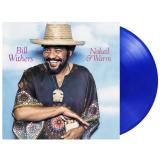
Bill Withers was a modest, gentle, and yet towering musical figure responsible for some of the most important, universally known soul hits ever written. It’s no wonder that “Just the Two of Us” and “Ain’t No Sunshine” won him two Grammy awards and undoubtedly played a huge role in getting him inducted into both the Songwriters and Rock and Roll Hall of Fame.
Naked & Warm is Withers' fifth studio album, released in 1976. A year earlier, the Sussex label—home to Bill's first four landmark albums—ceased operations. Withers then signed with the mighty Columbia Records, which would remain his home until the end of his recording career. While Naked & Warm retains Bill's unique, earthy approach to soul that made him Sussex's biggest star, it's clear that musically too, he was in transition; the first half of the album is full of synthesized jazz-funk vamps, while "City Of The Angels" is an almost 11 minutes long cosmic funk excursion combining biting Rhodes chords with swirling synth pads and Dorothy Ashby's spiritual harp work. All in all, Naked & Warm might be one of Bill's most underrated records, simply because his previous work for Sussex was just that impactful.
Naked & Warm is available as a 50th anniversary edition of 1500 individually numbered copies on blue vinyl and includes a 4-page booklet featuring lyrics and new liner notes written by Marcia Withers.
QE's I'm Back EP sits between oldskool vibes and deep raveish techno, and it flows. Five tracks, deep and rolling, with an oldskool feel in the groove and a rave pull running underneath. On a floor it plays as one long stretch rather than a run of peaks. What's Next? and This is Next open it up, then I'm Back, Set You Free and Release Yourself keep the movement going. Nothing hurries, and nothing needs to. Steady, deep, and made for staying inside the groove.
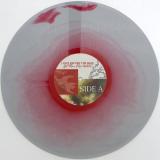
Two voices at the frontier of deep, hypnotic and experimental electronic music converge with four-track split EP that moves between first light and subsurface dark.
Lost Few’s productions inhabit the hazy threshold between ambient and dancefloor music - textured, atmospheric productions built around mood and motion. On the A-side, Broken Dawn opens with a sense of slow emergence: layered pads and rhythmic pulse conjuring beauty before sunrise, when sound feels closer to dream than waking. Light Before The Haze deepens the journey; a longing, weightless piece that traces the diffuse glow that precedes full light — melodic, restrained, and deeply felt.
Dino Sabatini needs no introduction; his productions have bolstered the underground electronic music scene while sculpting a new narrative for deep, modern electronic music. On the B-side, Subsurface Light is characteristically Sabatini: a hypnotic descent into pressurised depths, where rhythm becomes ritual and texture carries the weight of ancient resonance. He then reimagines Lost Few's Light Before The Haze as a closing meditation — pulling it further inward, slowing its pulse, and casting it in the particular deep-techno shadow he has made his own.
Together, the four tracks form a coherent arc from the pre-dawn quiet of Lost Few's introspective electronics to the subterranean intensity of Sabatini's world — a release that rewards both patient listening and late-night movement.
Two voices at the frontier of deep, hypnotic and experimental electronic music converge with four-track split EP that moves between first light and subsurface dark.
Lost Few’s productions inhabit the hazy threshold between ambient and dancefloor music - textured, atmospheric productions built around mood and motion. On the A-side, Broken Dawn opens with a sense of slow emergence: layered pads and rhythmic pulse conjuring beauty before sunrise, when sound feels closer to dream than waking. Light Before The Haze deepens the journey; a longing, weightless piece that traces the diffuse glow that precedes full light — melodic, restrained, and deeply felt.
Dino Sabatini needs no introduction; his productions have bolstered the underground electronic music scene while sculpting a new narrative for deep, modern electronic music. On the B-side, Subsurface Light is characteristically Sabatini: a hypnotic descent into pressurised depths, where rhythm becomes ritual and texture carries the weight of ancient resonance. He then reimagines Lost Few's Light Before The Haze as a closing meditation — pulling it further inward, slowing its pulse, and casting it in the particular deep-techno shadow he has made his own.
Together, the four tracks form a coherent arc from the pre-dawn quiet of Lost Few's introspective electronics to the subterranean intensity of Sabatini's world — a release that rewards both patient listening and late-night movement.
Consummate selector DJ Sundae returns to Efficient Space with Nothing Ever Was, an immaculate compendium of phantom independent melancholia spanning '60s/'70s village green folk, outsider shoegaze and new millennium domestic pop. Each recording an emotional exorcism, Sundae breathes oxygen into music that was barely there in its own time, made in quiet places and crawl spaces, shared only with a precious few via private presses, hobby labels and now-decaying CD-Rs.
Free of any prescribed epoch, continent, scene or rarity, Noughties homemade indie pop opens both sides with the 4-track wonders of The Motifs and Betelmire, unlinked contemporaries finding their place alongside Andrew Jay's Crazy Horse rust, the regional-garage adolescence of Pauline Scribner and the anaesthetised Mancunian guitar-poetry of the late Quigley.
The remaining coordinates zigzag between the UK and US. Folk wayfarers John Strang & Valentine Lewis Lloyd, Virgin Insanity, Kusudo & Worth and Penny Wager's spartan Garden of Eden acoustica find their mirror in Empress and Slumber's close-quarters indie pangs. Chicago power pop fixture Phil Angotti is caught at his most tender, while Teri Rini takes the final bow with her universe-stopping hotel lounge torch song.
A deeper, more personal exploration of Sky Girl's sentimental songwriting, Sundae found himself amassing a cache of tracks too undeniable to remain confined to his anonymous mixtapes for TTT, P.A.M. and Good Morning Tapes, or bi-monthly hour on NTS Radio. Again his emotional sorcery draws together an unlikely cast, their unwritten narrative assembled from fragmented memories of past lives left behind by future horse trainers, ketamine therapists and Fab Four cover band careerists.
With not a second squandered across 1LP, it took a village to bring this new companion into being, with David Bergot's forensic audio restoration, dreamlike imagery from Matthieu Crozier, Ivan Liechti's elegant design and a perceptive foreword by kindred spirit Jessica Pratt.
Continuing the series of reissuing all five of ‘Coming Up’s’ Top Ten hit singles, ‘Beautiful Ones’ is being made available on 12” single for the first time in a limited run on purple vinyl
One of ‘Coming Up’s' many highlights, ‘Beautiful Ones’ reached No. 8 in the UK Singles Chart at the end of October 1996 and, as was customary for Suede came on two CD singles with a selection of excellent B-sides. For its 30th anniversary in October 2026, this release pulls together both of those original CD1 / CD2 packages into one strictly limited 45 r.p.m. 12” E.P. on purple vinyl.
Francesco Messina is perhaps best known for his split album with fellow composer Raul Lovisoni, Prati Bagnati del Monte Analogo, originally released on the seminal Italian label Cramps in 1979. Along with contemporaries Franco Battiato, Juri Camisasca and Giusto Pio, Messina helped reshape the world of modern composition with an organic rawness and haunting beauty.
In November 2023, Messina performed Prati Bagnati live for the first time in Milan, Italy – along with pianist Michele Fedrigotti, who appeared on the original LP. The concert was a tremendous success and led the composer to further reflect upon the music he made over 40 years ago. From his home piano – a hundred-year-old Schimmel with magnificent resonance – new pieces began to emerge out of these meditative sessions.
As Messina says in the liner notes, "The idea of making a new album wasn't the driving force at all; what mattered was trying to reconnect with the 'freedom' I had experienced back then while creating that music. I started over without haste or deadlines, simply trying to find a deeper, inner connection."
W.25TH / Superior Viaduct is honored to present Le api dell'invisibile. From the hazy drone of "For Florian" and the title track to the gentle swells of "Letter for an Absent Friend," the album is a lush amalgam of new age and ambient minimalism that is vividly reminiscent of Messina's earlier work.
The title draws inspiration from a famous reflection by Austrian poet Rainer Maria Rilke: "We are the bees of the invisible. We ceaselessly gather the honey of the visible, to store it in the great golden hive of the Invisible." It is a phrase that has long shaped the way Messina looks at his music – transforming lived experience into sound, making audible what normally eludes the eye.
Liz Harris has worked with film closely since she began making and performing music live - both her own work, and that of various filmmakers - including a near decade long collaboration with Paul Clipson, and multiple live collaborations with Dicky Bahto and Takashi Makino.
On Music For Two Films About Water she presents two recent scores for short films by the artists Tanja Engelberts and Takashi Makino. Each film, as the album title suggests, is an exploration of water, though beyond that, each work and soundtrack varies - blending literal, improvisatory and impressionistic translations of the theme. Her accompaniment layers mercurial threads of mellotron, tape loops, Wurlitzer and field recordings.
Untitled (from We Exhale)
This piece was originally composed for the film We Exhale. In the film, artist Tanja Engelberts takes the perspective of the river itself, tracing how centuries of damming, channelling, and industrial pollution have reduced the Rhône from a living landscape to a hydraulic object—its breath slowly distorting as chemical processes break down what remains. Her work asks what a poisoned river sounds like when it exhales, confronting us with damage that operates beyond human timescales, already embedded in the river’s body. In her artistic practice, Engelberts investigates how landscapes that are no longer visible can be documented. Rather than excavating the past, she collects and rearranges what she finds on the surface—as a creative exposition of the present. Engelberts’ work places attention on the ‘here’ and ‘now’, allowing traces of the past to be recognized while possible futures can be imagined.
Untitled (from Constellation)
This soundtrack scores the film iteration of a project by Takashi Makino titled Constellation, a collection of works exploring how new meanings emerge through the arrangement of existing images, memories, and fragments. In the film, images, appearing and disappearing within mercurial water textures, are clearly present before the viewer, yet maintain their abstractness and imaginative nature until the very end—projected onto the screen and delivered to the viewer as material for forming new images. Fantasy and reality merge in oceanic, lucid dream. Inspired by the way ancient people connected scattered stars to create narratives, his work invites viewers to discover their own relationships between images and construct new meanings from what already exists. In his artistic practice, Makino captures video of ready-made objects including natural phenomena, humans, and cities, with various formats. In the editing process, he layers and configures them into the fields of mesmerizing, shimmering textures that distinguish his imaginative films.
Spanning Portland, Bristol, London and beyond, Cold Light has evolved from a friends-and-family label into something stranger but more cohesive. It's a collective spanning Best Available Technology, Birthmark, Withdrawn, the wind between, CSNL and Rael, plus a wider orbit including Elaine Malone and Tony Onuchukwu. What began as a 2019 tour experiment and crystallised during lockdown into the Live at the Laundromat sessions has now fully matured into a singular sound rather than a patchwork of ideas. Dub sits at the centre, most clearly on the sprawling 'Fields in B', but the group folds in haunted boom-bap, gritty noise-rock and ghostly trip-hop with equal confidence. 'Riot' and 'I've Known Fires' both hover in that murky, half-familiar space the collective has made its own.
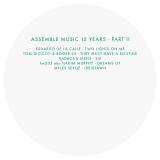
"ASSEMBLE MUSIC 15 YEARS - Part II : Founded in Lisbon in 2011, Assemble Music celebrates its 15th anniversary with a three-part vinyl compilation, bringing together fifteen artists who, in different ways, reflect the label's past, present and future. Released simultaneously in November 2026 and distributed worldwide by Clone Distribution, the three records are less a retrospective than a continuation of what Assemble has been building since the beginning: music with character, made by artists with their own language, away from trends and easy categorisation. Across fifteen years, Assemble has moved freely between house, techno, electro, dub and more experimental forms of electronic music. The catalogue has never been defined by one particular sound, but rather by a certain approach, personal, uncompromising and built to last. Part II begins with Eduardo de la Calle, whose uncompromising approach to techno and electronic music has made him a natural part of Assemble's more recent history. His contribution continues a relationship that has developed through releases and appearances around the label showcases. Tom Dicicco & Roger 23 move into deeper ambient techno territory, bringing together two producers whose work has always pushed beyond the conventional boundaries of house and techno. Radboud Mens is a Dutch sound artist and composer whose work has long explored the space between experimental electronics, minimalism and techno. Active since the early 1990s, his approach is built around repetition, texture and the physical qualities of sound. His contribution to the compilation reflects this perfectly with a deeply minimalist piece, stripped back to its essential elements, where subtle shifts and details gradually shape the track. Chicago's Hakim Murphy represents another long-standing Assemble connection. His relationship with the label goes back years, and his raw, instinctive approach to house and techno embodies much of what Assemble has always looked for in an artist, individuality before formula. Closing the second record, Myles Serge delivers a pure definition of deep techno, hypnotic, atmospheric and deeply immersive, built on subtle movement and timeless Detroit-rooted sensibilities, establishing a new connection with the label."
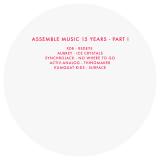
"ASSEMBLE MUSIC 15 YEARS - Part I : Founded in Lisbon in 2011, Assemble Music celebrates its 15th anniversary with a three-part vinyl compilation, bringing together fifteen artists who, in different ways, reflect the label's past, present and future. Released simultaneously in November 2026 and distributed worldwide by Clone Distribution, the three records are less a retrospective than a continuation of what Assemble has been building since the beginning: music with character, made by artists with their own language, away from trends and easy categorisation. Across fifteen years, Assemble has moved freely between house, techno, electro, dub and more experimental forms of electronic music. The catalogue has never been defined by one particular sound, but rather by a certain approach, personal, uncompromising and built to last. Part I opens with XDB, an artist whose relationship with Assemble goes far beyond a single record. His deep, understated approach to house and techno has always been closely connected to the musical identity of the label. Aubrey, one of the enduring figures of the UK underground, follows with decades of experience behind him and a catalogue that stretches back to the early 1990s. Synchrojack connects the compilation to another important lineage: the raw and deeply individual British house music with a track produced and never released in the 90's. Activ-Analog bring their machine-driven, analogue approach back to Assemble after previously releasing on the label, while Kumquat Kids aka Julian Phethean & Steve O'Sullivan with a track originally released in 1999 on the Various Positions EP for UK label Organised Sound. "Surface" is a genuine late-90s underground rarity! Over the years, the original 12" has become increasingly sought-after and notoriously expensive on the second-hand market."
"ASSEMBLE MUSIC 15 YEARS - Part III : Founded in Lisbon in 2011, Assemble Music celebrates its 15th anniversary with a three-part vinyl compilation, bringing together fifteen artists who, in different ways, reflect the label's past, present and future. Released simultaneously in November 2026 and distributed worldwide by Clone Distribution, the three records are less a retrospective than a continuation of what Assemble has been building since the beginning: music with character, made by artists with their own language, away from trends and easy categorisation. Across fifteen years, Assemble has moved freely between house, techno, electro, dub and more experimental forms of electronic music. The catalogue has never been defined by one particular sound, but rather by a certain approach, personal, uncompromising and built to last. Part III brings together another five artists particularly close to Assemble's musical universe. Lowtec has spent decades developing one of the most distinctive languages in European house and techno, both through his own productions and his own label Workshop. His music shares something fundamental with Assemble, restraint, depth and an unwillingness to follow obvious paths and thats exactly what he delivers with "Dutch Angle" exploring the more ambient and abstract side of house. Welsh modular artist Steevio, co-founder of Freerotation, approaches electronic music through improvisation and live interaction with machines. His contribution to the compilation reflects the human, unpredictable side of electronic music that has always fascinated the label. Reedale Rise returns after becoming an important part of Assemble's recent chapter. Moving naturally between electro, techno and house, his music combines precision with an unmistakable melodic and emotional quality. With his track he explores a slightly darker path here, with deeper, more shadowy melodies revealing a different side of his distinctive sound. Lerosa's "Love Money" and Vera's "Take Me" are two very special tracks in our back catalogue, and we felt it was time to bring them back to life for our 15th anniversary. Vera was one of the first artists to collaborate with Assemble, with Lerosa joining not long after. Over the years, both have become an important part of the label's story, through releases, many shared showcases, and above all, a great friendship that has grown along the way."
After laying low in the burroughs for a few years the NY Stomp is back! Reconnecting with the raw, driving spirit of classic New York house, the project delivers a heavyweight, floor-focused EP. Each cut captures the kind of club energy that once shook iconic early-'90s institutions like The Tunnel, Twilo, and Sound Factory. This is unapologetic, no-frills house music made for serious systems and peak-time moments.
Some things in life are meant to be consumed whole: a perfectly paced movie, an oyster at Whitstable Bay, a novella on a sunny afternoon. Into this pantheon of singular experiences comes Runners, the second album from London instrumental rock quartet Dog Unit. The follow-up to At Home, the band’s cult favourite 2024 debut album, Runners moves seamlessly across its 42-minute runtime. It finds the quartet – comprising Sam Walton, Henry Scowcroft, James Weaver and Lucy Jamieson – crafting tracks that undulate, churn and yearn in service of a greater purpose as they plough fertile fields of sonic storytelling. Made over the first four months of 2026 at the band’s studio in Limehouse, East London, Runners finds the core group, alongside producer and long-time collaborator Mark Estall, operating with greater ambition and scope than ever before. This time they commissioned a string quartet specifically for this project, and reappointed noted experimental bass clarinetist Heather Roche, as well as taking in a cavalcade of instruments at their studio, including vintage synths, drum machines, pianos, and harmonium. The band’s music is often compared to cinema, and if At Homewas a charming micro-budget indie flick bursting with potential, Runners is a widescreen realisation that stands up to repeat viewings.
"As sharp as I sing, it still soothes you, doesn't it? Like a lick of ice cream?" sings Thao Nguyen on her Kill Rock Stars debut, We Brave Bee Stings and All. Whether it's intentional or not, the line describes her sound perfectly. Nguyen's rich, breathy voice -- and the way she croons, yelps, and drawls with it -- recalls Cat Power, Fiona Apple, and Sinéad O'Connor. However, these comparisons suggest that Thao is a searing, intense artist when nothing could be further from the truth: her country-tinged indie folk-pop is playfully observant, mischievous with just a hint of vulnerability. By playing against type and putting a voice that seems tailor-made for brooding into songs that are sunny and sweet, Nguyen carves out her own intriguing territory among indie folk songstresses.
On We Brave Bee Stings and All's first two songs. "Beat (Health, Life and Fire)" builds brass, ukulele, and piano to an urgent but joyous peak, while "Bag of Hammers" is as rambling as it is catchy. The interplay between Nguyen and her band, the Get Down Stay Down, is more intuitive than ever, and the album's fuller sound (courtesy of producer Tucker Martine) complements her more fully formed songs.
In fact, most of the album is so cheery that it's a good thing Nguyen's voice isn't delicate, or her music might be sickly sweet instead of fresh and engaging. Fortunately, "Feet Asleep"'s Dixieland moxie and "Geography"'s jazzy flourishes help keep the album from sounding too predictable. Even if this isn't Thao's first album, We Brave Bee Stings and All is a fine introduction to her music.
Cold, Bold & Together (CBT) CBT was founded in Bellingham, Washington in 1971 by percussionist Tony Gable and musicians Solomon Harris, Keith Hooks and twin brothers TC & Jamar Jenkins. It soon became evident that Bellingham was not a particularly welcoming environment for R&B music, so they moved to Seattle to try their luck and plumb the rich supply of venues, which they successfully did until disbanding in 1978. They spent their early Seattle years playing a combination of covers and originals in clubs, later becoming the "go to" opening act for various nationally known artists, such as Ohio Players, Kool and the Gang and Earth, Wind & Fire. While they were paying their club circuit and opening act dues, they squeezed in recording sessions whenever they could and released their own material, which was well-received and got strong regional airplay. However, because of the feudal nature of the music business at the time, they just couldn't break out, and like a lot of Northwest bands with great potential, they inevitably broke up and went their separate ways. Upon disbanding, they left behind a collection of original recordings at Seattle's legendary Kaye-Smith studios.
Unfortunately for CBT, the studio passed through several owners and at some unknown point in time, one of them did the unforgivable and destroyed the storied studio inventory of two-inch tapes and quarter-inch masters. Unknown to the band, a copy of their masters was smuggled out by their producer who added them to his legacy collection of cloned quarter-inch masters. After several years and many moves, he became concerned about the tendency for magnetic tape to deteriorate over time.
He sent the tapes to a Seattle lab to be restored and digitized, with the hope that perhaps, some day, they might be made available for the listening pleasure of R&B fans. The hoped-for day has finally arrived. Russell Paine and Super Disco Edits has pressed two of the Kaye-Smith CBT tracks: "Go For It", a jazz-influenced instrumental, featuring Kenny G, and "Unity", sung by the group en masse with Tony Gable singing lead. The musicians on these tracks are: Tony Gable, leader, vocals and percussion Harry Alexander, drums Kenny Gorelick (now world-renowned "Kenny G"), sax, flute and horn arrangements Chris Ishi, trumpet Michael Young, Trombone Jamar Jenkins guitar, vocals TC Jenkins bass, vocals 1 Philip Woo, keyboards Footnotes: CBT gave legendary saxophonist Kenny G his start in the music business. Kenny was still in high school when he was recruited to play sax and write horn arrangements. Kenny co-wrote, arranged and played sax and flute on the instrumental "Go For It." He rips a smoking tenor sax solo in the middle, which showcases his already masterful technique and solidifies his R&B bona fides. He went on to have a spectacular career recording for Clive Davis and Arista Records. Before his untimely passing in 2016, Tony Gable went on to found contemporary Jazz group, "Tony Gable and 206" (206 being Seattle's then only area code). With songwriting, performance and production help from Kenny G.
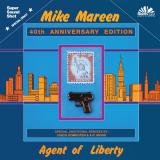
1986 was a very good year for Mike Mareen. It was the moment when something changed in his music. After years of searching for the right sound, Mike decided to change his production team and it turned out to be exactly the right decision. The first major result was “Love Spy”, with Lutz Rahn playing a crucial role in shaping its sound. The record simply exploded. Even without the kind of massive promotion normally associated with an international hit, “Love Spy” became one of the defining records of that peculiar German intersection between synth-pop, electro, Hi-NRG and Italo Disco. But Mike and Lutz were only getting started. Soon afterwards they wrote and recorded “Agent Of Liberty”. And once again, everything worked. The single travelled far beyond Germany, appearing in places as distant as Mexico, Australia, Sweden, Denmark, Norway, Venezuela and South Africa. It was another demonstration of how sophisticated Euro Disco could be when it was treated as serious electronic music rather than disposable dance-pop. The sound was simply dope. Sharp digital synthesizers, metallic FM textures, punchy electronic drums, dramatic arrangement changes and the kind of bright, futuristic timbres that made the Yamaha DX7 era so instantly recognizable. But the biggest change… was Mike himself. This was no longer the romantic lover of “Dancing In The Dark”. On “Agent Of Liberty” he sounds tougher, sharper and more confrontational. His half-spoken, half-rapped delivery cuts through the production with almost streetwise confidence, while huge uplifting backing vocals and highly melodic synth lines keep pulling the track back towards the dancefloor. And beneath the attitude there was something much more interesting going on. “Agent Of Liberty” announced a new chapter in Mike Mareen’s music, a direction that would later be developed much further on the “Let’s Start Now” album. Mike wanted to belong to the intelligent side of the electronic scene. And, just as importantly, he wanted to help shape where that scene was going next. “Agent Of Liberty” is probably one of the clearest examples of that ambition. It has all the ingredients of a huge club record, but there is tension in it, drama, attitude and a sense that something bigger is happening behind the beat. Four decades later, it still sounds completely distinctive. Not merely like a record made in 1986, but like a record that captures what was exciting about 1986 in the first place.
For its 40th anniversary, Vintage Pleasure Boutique brings “Agent Of Liberty” back to vinyl in newly remastered form. The release will be available on classic black vinyl and in a striking bright orange edition. And because this is not meant to be just another archival reissue, we have added two brand-new interpretations. Disco Computer takes the track into more adventurous territory. His remix is the more unconventional of the two, approaching the original from a slightly more modern and experimental angle while keeping its unmistakable melodic identity. A.P. Mono takes almost the opposite approach. Rather than trying to reinvent “Agent Of Liberty”, his version works more like a contemporary DJ edit. The original character remains intact, but the structure has been reshaped for the modern dancefloor, with stronger build-ups, clearer mixing points, carefully controlled changes in dynamics and moments designed to let the tension rise before the track hits again. The idea was simply to give DJs two new ways of playing it.
Forty years after its first release, “Agent Of Liberty” remains one of the most characteristic records not only of Mike Mareen’s career, but of the entire German electronic dance scene of the 1980s. Powerful, melodic, intelligent and wonderfully excessive. The Agent is back.
The project first appeared as an anonymous transmission: a folder sent through the network, containing music, instructions and a name - Transpac. No photograph. No biography. Just the request to use the name and let the music speak.
There have been several transmissions since. Still no interviews, no confirmed identity, no explanation of who - or what - is behind the name.
Some say Transpac is a person. Others insist it is a machine. A few believe it is simply a data packet that escaped the network and somehow learned how to make music.
The name itself offers a possible clue. TRANSPAC was once the name of a French public data network, launched in 1978 and built around X.25 packet switching - breaking information into packets and moving them across a network long before the Internet became what it is today.
Perhaps Transpac has been travelling ever since.
Packet Switching EP is the latest intercepted transmission: six packets of pure machine music, assembled somewhere between circuitry, communication protocols and whatever exists on the other side of the network.
Whilst the packets have been received, the sender remains unknown.
Synaptic Cliffs is particularly pleased to have brought Transpac into its network - a feat made possible, not least, by its principal operative, pdqb. Through communication channels inaccessible to ordinary Earthlings, pdqb was able to locate Transpac with remarkable ease and secure its transmission for the label.
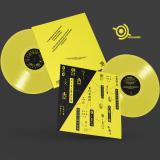
The artwork, rendered in yellow and black and largely composed of binary code, echoes the visual language of the early machine age - a world of geometric systems, electronic signals and human beings beginning to communicate with machines. Created by the legendary Infamous Image Division.
DJ Support: Glenn Underground, Crazy P, Terry Farley, Aroop Roy, Chris Coco, Frank Tope, Greg Wilson, Dom Servini, Francois K, Max Essa, Oliver Dollar, Pete Herbert and many more
Danny Ward’s Balaphonic project, one of many the long-serving performer, producer, percussionist, drummer and DJ has utilised over a career spanning over three decades, has evolved considerably since his first release under the alias 11 years ago. Conceived as a platform to explore his love of Afro-Cuban and Brazilian musical culture, it gathered new impetus during lockdown and the recording of superb first album Resolution Revolutions, which fused these influences with nods to Balearica, dub, dancehall and deep house.
On the Organic Matters EP, Ward’s follow-up to that critically acclaimed set, the Balaphonic musical universe has expanded once more, with the Manchester native showcasing a wealth of eye-catching collaborations and an even more intricately layered and sonically detailed sound rich in live percussion and instrumentation. It’s an ambitious and widescreen musical vision wrapped in sun-soaked melodies, morning-fresh motifs and simmering, sunset-friendly soundscapes.
The dizzying new heights scaled by Ward on Organic Matters is evident from the opening bars of ‘Dew Drops’, a piece created in unison with internationally renowned composer and arranger Robin Dewhirst. Between them, the pair have conjured up a yearning, life-affirming samba shuffler where picturesque piano, xylophone and balafon melodies rise above Ward’s dense, layered Latin percussion and warming bass.
Next, Ward delivers a thrillingly different take on his 2005 composition ‘Switch’, featuring legendary Brazilian jazz vocalist Flora Purim and her equally talented daughter Diana Moreira Booker. Whereas that was a jazzy deep house workout, Ward’s Balaphonic re-make is a shuffling, gentle exploration in 7/4 time – a heartfelt tribute to the Brazilian records with which Purim first made her name in the 1960s and ‘70s.
‘Balaventurers’ sees Ward join forces with an old friend from the North-West scene, R.S.L founder Joe Botham AKA Baleardelica – a multi-instrumentalist and producer whose Flamenco-inspired acoustic guitar motifs provided the starting point for another vividly colourful exploration rich in layered vocalisations, twinkling keys and impeccably arranged percussion.
It’s followed by ‘Life of Strings’, a more up-tempo and dancefloor-leaning excursion written and recorded alongside Amsterdam-based violinist, and composer Katya Gabeli. While Ward’s percussion-rich groove provides propulsion and a rock-solid foundation, it’s Gabeli’s evocative string arrangement that provides the focal point and emotional resonance. It’s a genuinely brilliant collaboration.
To round off a second stunning Balaphonic release on NuNorthern Soul, Ward delivers two simmering, slow-motion delights: the Afro-Cuban rhythms, cascading melodies and melodic percussion motifs of ‘Boxfresh’, and stunning EP closer ‘Home’ – an almost overwhelmingly poignant and beautiful number that gently ebbs and flows on waves of tracked piano, dreamy chords and a comforting sense of closure. It’s a genuinely sublime conclusion to another wonderful Balaphonic release.
Magazine Announces 15th Anniversary Remaster of Barnt’s Techno Classic Geffen
Cologne-based record label Magazine celebrates the 15th anniversary of Barnt’s visionary anthem Geffen. One of electronic music's most defining tracks of the 2010s will be reissued in a 2026 remaster edition, marking the first time it receives its own dedicated standalone release.
Originally published on the legendary Cómeme imprint as part of the Various Artists EP The Power Of Now, the track rapidly became a global phenomenon. Looking back, one can hardly imagine Geffen without the 2010s, or, conversely, maybe even electronic music of that era without it. The composition mirrors the expressive possibilities of bedroom producers at the beginning of that decade—an era where artists could launch tracks into the world and have them resonate through their sheer sonic power, without major marketing efforts.
Barnt remembers: "It was one of my earliest tracks. I had just entered art school and didn't own much equipment. My MIDI keyboard only had two octaves. I would always play notes with my right hand while simultaneously shifting through the octaves with my left. This is how the hook line came to life. The production only consisted of seven or eight stems, and barely any equalizers were used during the mixdown. In hindsight, this sparse approach to production probably made it sound different and is why it hits so hard on big sound systems (while sounding unfinished to some on YouTube). At that time, we were doing a small festival on a playground in the center of Cologne. When I played the CDR there, Matias Aguayo demanded it right after. That is how it ended up on Cómeme."
The release comes with two very Magazine-esque reinterpretations from the label's two other co-founders alongside Barnt: a powerful atmospheric club remix by Jens-Uwe Beyer, and Magazine Hallucination, a wild, collaborative, psychedelic mutation by Crato and Beyer.
Jörg Burger, who already mastered the original track, is also responsible for the mastering of this release.
Following 2024’s Echoes of the Night EP, Michael Hodgson returns with Apply the Dub: four stunning new Adrian Sherwood remixes, this time of his long-running solo project, Misled Convoy.
The EP’s title is a nod to Sherwood’s renowned process in which tracks are not simply remixed, but dismantled, fed into his dub machinery and reimagined. The results are spacious and compelling, epic in scope, rich in detail and loaded with bass.
The prophetic voice of Kat Five (Feral Five) looms large on the opening track, as does Miho Wada’s flute on the last. David “Ital Horns” Fullwood returns to the project, providing trumpet to two of the tunes, while Doug Wimbish (Tack>>Head / Living Colour) adds bass, and Mark Bandola (The Lucy Show) guitar and keys, to a different pair of remixes.
The sessions began in 2025, with the original tracks drawn from the more experimental and industrial side of Misled Convoy, giving Sherwood plenty of room to work with sonically. In his Ramsgate studio, frequencies were pulled apart, bass lines elevated and melodies stretched while sounds disappeared into layers of delay, echo and dub processing before emerging dazed & confused and somewhere else entirely.
Since dub is the compositional glue that fuels Hodgson’s creative dynamic, this collaboration meant reverse engineering his process and stripping his compositions back to the bare bones: “Before we hit the studio, I had to remove a whole lot of my effects to make space for Adrian, which made the track sound empty and super weird, but this is how the magic happens. When you do a remix, you are inviting an artist you respect into your creative process and watch it get reimagined. This is a big part of dub and remix culture.”
Very much a meeting of two complementary approaches to sound, Apply the Dub has Hodgson’s dark and atmospheric electronica enhanced and deeply embellished by Sherwood’s long-established sonic manipulation and dub-mixing.
For Hodgson, the connection with Sherwood and On-U Sound has been life-long, from being a fan in his youth in Aotearoa New Zealand to supporting Patrick Docktor’s archiving of the label’s video and audio collection in London. In 2019 Sherwood invited Hodgson to collaborate with artist Peter Harris to create a visual backdrop to accompany his Time Boom X The Upsetter Dub Sessions tour. Hodgson went on to create videos for On-U’s 40th anniversary celebration at The Forum in London, helped with the immersive 3D Live Dub Experience at Earth Theatre and travelled to Japan for the Collapse of Everything tour where he worked on live video triggering for Sherwood’s shows.
SHORT INFOS
Because Music celebrates the 50th Anniversary of Cerrone's debut album "Love In C Minor (Cerrone I)" .
A record which is one of the mots important of its time. It brought French Disco to the World and established Cerrone as the French King of Disco.
- Pressed in exclusive 2026 Apple Green Crystal Clear vinyl
- Original 1976 artwork - Digitally remastered from original tapes.
BIOG
Cerrone I
Love in C Minor (1976)
The story behind Cerrone's first album could be summarised in the libertarian atmosphere and the creative energy of the 70s, inherited from the 60s revolutions, spiritual, aesthetic or sexual. Looking back now, this record is one of the most important of its time. It helped creating the sound of an era and brought French disco to the world. It is also, and this is fundamental to understand its success, the result of a man's vision: Marc Cerrone, a free spirit inhabited by music, who ended up with a major work of art. With this album, Cerrone accumulated the main elements that make a record timeless, even bigger than its creator: the pure originality, the madness of a vision without compromise, a sense of the market and a great dose of luck too. To some extent, this is the perfect record to start a career, even though Cerrone's one already existed in an implicit way. He actually began in a rather popular band, Kongas, signed by Barclay. Between 1972 and 1974, the band was famous and made it abroad, particularly in Japan, where people loved its sound. Despite this success, probably fed up with the music and not ready to follow the orders of a label that wanted the band to sound more pop, Cerrone disbanded Kongas. He had the sound of his instrument in mind and mostly its central element: the bass drum. The idea of this first solo album came to him after a detour via selling records. Wishing to forget about the studios, he took the head of a small chain of stores, selling records imported from the States. That's when he discovered a daring new sound coming from New York: disco music. This energy inspired him to record again. He then remembered the crazy reaction of the audience when, during the Kongas' concerts, he used to hit his bass drum hard. Cerrone felt like going back into the studio but to make something different. He decided to record a sixteen minutes long track, driven by its beat, that would fit on its own on one side of a LP (during these vinyl days, musicians used to think in terms of sides…), with girls' voices simulating sex. This concept of musical and physical orgasm was recorded at Trident Studios in London (where pop stars used to record at the time… ) with Don Ray, of Kongas, man in the shadows and brilliant arranger who'd follow Cerrone during his whole career. Obviously, like always in pop music (it happened to the Beatles), record companies started by turning this weird track down, convinced that radios would never play sixteen minutes of beats and moaning. Cerrone, a born fighter, decided to trust his instinct (a mix of ego and business sense) and chose to believe that if the radios wouldn't play the track, people would dance to it in the clubs. He released the record himself, with a sexy cover a bit provocative where he wore a black bathrobe, a young short-haired girl leaning on him. Being played here and there, thanks to Cerrone's own network, the record started to work a bit in France. But luckily, things really happened in the States. Due to a mistake, a box of "Love In C Minor" albums were sent to the States via Cerrone's record shop instead of some unsold American LPs. Once in New York, the box was opened and the record with its intriguing cover was instantly loved and passed through the hands of radio and club DJs. All of a sudden, and unknown to its creator, the track that was turned down by every French label, became a hit on the New York disco scene. Casablanca, the US disco label, released a cover recorded by an ad hoc band because nobody knew Cerrone of how to find him. Once he discovered what was happening in the States, Cerrone flew to New York. He realised he had a hit, one of the biggest then, that opened the doors to every record company and especially Atlantic. He was welcome by Ahmet Ertegun, one of the main visionaries of the American music who, among other artists, signed Aretha Franklin and John Coltrane. It's believed that Ertegun understood that the French young musician, like some Atlantic artists, was about to define the sound of his time and that his work would live long after its birth date. "Love In C Minor" was the first step, adamant and successful.
Turbo was a part of Joe Robinson and Sylvia Robinson’s All-Platinum Records set up in New Jersey which operated from 1967 to 1979. At one stage the fiercely independent and proudly black owned label threatened to become another Motown or Philadelphia International. That never happened, but the Robinson’s dream of worldwide success came later when Sylvia discovered Rap, recorded Rappers Delight by The Sugarhill Gang and Sugar Hill records was born.
Music historian Steve Guarnori describes All Platinum as "probably the most unusual record company there ever was. Dysfunctional, but at the same time wonderful."
The All-Platinum chaos extended to Turbo. But despite anarchy - some superb albums went straight from manufacture to be deleted and sold as cut-outs - sublime music was created. This 10" 6-track release collects together some of the most hallowed Turbo releases which between them have become cherished by collectors.
Brother to Brother "The Bottle" captures the label at its most astute. Gil Scott-Heron and Brian Jackson’s original version was an album only track on Strata-East so Turbo seized the opportunity to quickly make a worthy cover version and rush release it a single which enjoyed success.
"Ton Of Dynamite" by Frankie "Love Man" Crocker was Turbo’s debut release in 1968 (it actually sounds a later recording). At the time Frankie was a DJ on WWRL radio station in New York and the release was essentially a reward for his previous support of All-Platinum releases. The record (a b-side) is actually made Willie & The Mighty Magnificent who went on to re-record it as
"Funky 8 Corners". It took until 1975 for "Ton Of Dynamite" to get recognition when it became an anthem as the UK Northern Soul scene adopted it as part of the movement away from old skool 1960’s Soul. Whatever its’ provenance, "Ton Of Dynamite" is now revered by the Rare Soul and Funk communities.
The Optimistics "Man" from 1971 is another b side single. The group specialised in smooth harmony Soul but "Man" is a funkier affair which won support from Rare Soul aficionados and will cost you £600 plus if you are lucky enough to locate a copy of the hard to find 45.
Willie & West "Attica Massacre", also from 1971, is an even more elusive single. It is a powerful protest against the killing of 29 prisoners, many black, following a riot at a prison - Attica Correctional Facility in New York. The deaths and a subsequently discredited cover up caused outrage. John Lennon was amongst the first musicans to make a recording about the bloodbath, but the most emotional protest is this Willie & West track. Only 300 copies were manufactured of one of the most powerful civil rights recordings ever made. The vocal sounds like anti-War Edwin Starr at his most bristlingly aggressive.
Perhaps the strangeness of All-Platinum is best illustrated by the later success of Lonnie Youngblood "Sweet Sweet Tootie" which is essentially the backing track of "Attica Massacre" plus exquisite sax playing by Lonnie. Despite it selling 100,000 plus copies the label did not see this as a reason to reissue "Attica Massacre". Strange. Or as Marvin asked "What’s Going On"?
The New Sounds "Don’t Take Your Love From Me" was only issued by Turbo as an album track. Despite good music on it the LP was poorly (it at all)/ promoted and flopped. The superb "Don’t Take Your Love From Me" is a long time Northern Soul / X-Over favourite.
Larry Saunders mesmerising "On The Real Side" made no impact when released on Turbo in 1974 but was nevertheless issued in the UK by London Records. The Northern Soul discerning dancers instantly latched on to its combination of uplifting lyrics, heartfelt vocal and clomping beat and since then its’ appeal has extended across the whole of the Soul community. Without doubt an all time classic.
So six treasures from a label that despite frequently advocating cash out of chaos frequently conjured up awesome music.
ANORAX is grateful to have the opportunity to present this very special Soul selection.
Often credited as the father of multi-media theatre, Alwin Nikolais (1910-1993) took complete creative control over his productions - including cutting-edge approaches to lighting and costume that transformed human bodies into shifting sculptural shapes, while also composing wildly innovative electro-acoustic and synth-based audio as accompaniment.
After initially experimenting with musique concrète and tape manipulation (as demonstrated on the 1959 LP Choreosonic Music of the New Dance Theatre of Alwin Nikolais) Nikolais became the first owner of Robert Moog's synthesizer at the Audio Engineering Society convention in New York in late 1964. Relying heavily on the Moog and later the Synclavier synth/sampler, these 21 tracks document Nikolais' highly-prescient compositions across the mid 1960s through to the late 1980s - existing not only as extensions of his other-worldly choreographic productions, but standalone pieces of foundational mid-century American electronic and experimental music.
"Born in Southington, Connecticut in 1910, Nikolais’s early years and early career were in acting, music and puppetry. It was not until the late 1930s that he began his work as dancer/choreographer in Hartford, Connecticut, where he was commissioned by the Avery Memorial Theatre, a part of the Wadsworth Atheneum, to create an evening-length work to the music of Ernst Krenek. Previously his work and study as a pianist-organist found him accompanying silent films. This sort of accompaniment required from the musician not only a playing skill but also a versatility in improvisation, matching movement to sound, and evoking mood to situation.
Nik was drawn initially to dance by his involvement with the percussion scores used by the illustrious early twentieth century German dancer Mary Wigman. In trying to learn more about percussion, he was lured into dance class and thus his career began. His development of music and dance occurred simultaneously. His introduction to the twelve-tone technique opened his mind to the expanding areas of atonal music, and his dealing with music as sound per se. In 1948, after being appointed director of the Henry Street Playhouse in New York, Nikolais formed the Playhouse Dance Company, later known as the Nikolais Dance Theater, and began his aesthetic orientation toward dance as a study of motion. By the 1950s, he had ceased creating literal dances and began his explorations and eventual milieu as an abstractionist.
Sound became an important part of his abstract theatre. For his first dances, which involved his new thinking of dance as both a visual and kinetic art, he used live percussion scores in which he directed his dancers to play instruments of all nature. There was a combination of children’s toy instruments as well as harsh and resonant automobile brake drums, and other pitched auto parts which he also used to accompany classes. Once he installed his own tape recording machines, he quickly used the limited range these instruments provided in a new way, slowing and increasing speed and reversing sound. He also made the sounds adhere to the choreographic structure (not the other way around), thereby giving the dance its independence from the musical phrasing. But the real need remained: the search for new sound. Nik made a sound library, recording noises and percussion and vocal sounds, which the French aptly called musique concrète. Needless to say, he became a master at splicing bits and pieces.
From 1956 to 1962 Nikolais composed eleven major scores for his theatre pieces using such techniques. In 1963, James Seawright, who at the time was assisting Nik in his productions and also working at the Columbia-Princeton Center for Electronic Music, recorded a sound bank for the production Imago (1963). With this material, Nikolais created his first synthesizer score. Imago won the Paris Grand Prix in 1968 and launched the Nikolais Dance Theatre towards its national and primarily international acclaim.
During the same period, Seawright came to Nik and told him of a young man who had invented and constructed a simplified synthesizer and insisted that Nik visit the electronic fair currently being held in New York. Nik did so and met Robert Moog. He was completely taken by the new machine and after making some suggestions to Moog, (which Moog made), Nik bought the inventor’s first machine with the aid of a Guggenheim Fellowship. Moog himself was astonished by what his machine could produce for Nik. This machine was later acquired by the Museum of Musical Instruments at the University of Michigan at Ann Arbor as the first Moog synthesizer. The Synclavier was Nik’s next source of sound and since the mid-1970s remained the major instrument in the Nikolais soundroom.
Alwin Nikolais has been honored and awarded throughout the world. He has received the French Legion of Honor, the Kennedy Center Honors, National Medal of the Arts, two Guggenheim Fellowships, as well as Mellon, Ford, and Rockefeller grants. He has been a recipient of NEA grants since 1966, been awarded five honorary doctorates, all for his remarkable achievements in Dance Theater. His genius has influenced several generations of artists."
—Murray Louis
There are two version of the LP - limited to 100 numbered copies with transparent wax and classic black wax edition. Both 180g with special OBI strip.
Maciej Envee Goliński is an artist who probably needs no introduction. He has been working with U Know Me practically since the label's inception. His last album ("Time & Light") made a huge impact worldwide, but we had to wait eight years for the next vinyl release. In the meantime, Maciej has certainly been busy – he has released numerous club singles under several aliases, and has helped record and mix numerous albums from the world of jazz, soul, and electronica. "Wyszymory" is a carefully crafted concept album, inspired by our roots. "Wyszymory" is an album on which every open-minded listener will find something that has been playing in their soul for a long time...
"Of all things visible and invisible, my life is most filled with music and a fascination with sound. It matters not whether they are natural or artificial, isolated or resonating through space. Sounds that evoke
memories, as well as those entirely new. Some of them have resonated unchanged for thousands of years. Certain resonances and rhythms have remained unaltered for generations so distant that they have left no other trace in human civilization.
This bond with our ancestors truly fascinates me. Ever since I realized it, I have become more attuned to inspiration. Listening to traditional and classical music, I kept finding new anchor points. I was constantly surprised by new invitations to ponder what connects – or divides – the pulse of our region’s traditional music with the rhythms of Africa, the tribes of the vast East, or the frozen North. My great authority, Tomasz Stańko, in interviews conducted by Tomek Michałowski, used beautiful parables of love and creativity to bring me closer to the Cro-Magnon cave artists. The Icelandic literary magician Andri Snær Magnason, in his book On Time and Water, captivated me with the fascinating observation that through emotional contact, words, ideas, or memory, we reach back and forward two or even three generations – spanning a period of about 270 years. Then there is Sam Kowalski, who with his wonderful obereks played on the gitalele, took me on a hypnotic journey, from which one returns with a deep admiration for the art of musical storytelling, passed down from generation to generation. Finally, my own children surprise me with talents, behaviors, and increasingly distinct features of those generations that now dwell only in my hazy memory and on old photographs.
I wanted the protagonists of this album to be the very phenomena that modern humans share with their ancestors, regardless of the level of civilization. Most vital among them is the relationship between humans, nature, and their own emotions. Wyszymory has nothing to do with an academic study, though I did delve into Slavic mythology, archaeology, and history in search of inspiration. Nor is it an album of traditional music, even if such music is present thanks to wonderful instrumentalists. I managed to invite artists who cross boundaries daily, working not only with Polish music but also with Hindu and African traditions, and even jazz, with its long history of blending influences. Naturally, the album became a kind of sonic comic book, where individual scenes and stories – the sounds, pulsations, and ideas on how to use them – came to me over time, often under unique circumstances and in inspiring contexts."
Envee
Deep in the sea lives one of Earth's most ancient creatures: the Nautilus. Hunted for its beautiful shell and now, through our global evolution, endangered, like so many other beings. Perhaps most astonishingly, no one has ever observed a baby Nautilus in the wild. The title track of this debut EP takes you on a dark journey, searching through the deep ocean for this elusive animal.
On the other side, I don't believe in Fermi’s Golden Rule, is a sonic interpretation of a statement made during a quantum field theory lecture, questioning the experimental mathematics often used to derive the famous rule. But actually, trying to express the confusion about quantum physics in general.
The dub-infused EP is mainly inspired by the pioneering magic of Detroit’s electronic music scientists and the experiments of European electro wizards.
René ter Horst (DJ Zki) and Gaston Steenkist (Dobre), credited here as René et Gaston, are a DJ and music production duo from Haarlem, Netherlands. Their stage names include Chocolate Puma, Klatsch!, Jark Prongo, The Good Men, and Riva.
Their most notable productions are "Give It Up" (1993) credited to The Good Men, "I Wanna Be U" (2001) credited to Chocolate Puma, and "Who Do You Love Now?" (2001) credited to Riva, and featuring Dannii Minogue.
Vallée de L'Armes became a massive international club hit in 1993. Throughout the years, multiple remixes were released. The best remixes are now bundled on this exclusive 12".
Andre Zimmer reworks Vallée De L’Armes into a modern dance floor weapon. and receives support by Danny Howard,, Green Velvet, Peggy Gou and many more.
Andrew Dum created a swerve-inducing Afrohouse remix as well. The new rendition preserves the emotional depth that made the original resonate through the years, while giving it a fresh contemporary edge.
The 2026 Marco Lys remix transforms the original’s iconic melodic hook into a high-energy House production tailored for contemporary sets. The remix replaces the 90s-era breakbeat elements with a driving, tech-influenced rhythmic foundation, ensuring the emotional resonance of the original melody remains functional for peak-time modern dancefloors.
Vallée de l’Armes remains an essential house tune. This exclusive 12" features all the extended mixes and is available as a limited edition on orange vinyl.