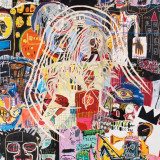
After the blackest night comes the most radiant dawn; the spark of life illuminates all that which was swallowed by shadows. "Fäghring" bears the gift of rebirth - both in nature and for Swedish folk metal band Bhleg. The fourth and closing part of the album tetralogy "Ár" is the most ambitious Bhleg recording to date. Its metal parts are saturated with both primal ferocity and majestic atmosphere. The ambient interludes from their early works are still here, but now conveyed mostly through analogue recordings.
The sweeping, dreamy soundscapes are enhanced by a slew of unorthodox instruments, courtesy of S - who performs not only guitars and bass, but also lyre, hurdy-gurdy, mouth harp, keyboards, bullroarer, birch trumpet, as well as percussion such as frame drums, birch sticks, and stones. Besides the characteristic voice of Bhleg vocalist and lyricist L, "Fäghring" features various guest appearances with a range of singing styles rooted in Scandinavian folk-tradition such as Andreas Pettersson from Saiva, Êlea of Noêta, and Swedish author Lars Magnar Enoksen.
"Fäghring" will be released by Nordvis Produktion on April 1, 2022. Tracked and mixed using the band's own recording setup, Studio Asu. Mastered by Tore Stjerna at Necromorbus Studios. Both the CD and LP booklets have received a lot of attention, consisting entirely of custom photography and illustrations.
Canadian songwriter and producer Jeremy Haywood-Smith needed an escape from his state of mourning when he began working on Slingshot, his most recent LP as JayWood. After the loss of his mother in 2019, and a global standstill with multiple social crises throughout 2020, Haywood-Smith yearned for some forward momentum. "The idea of looking back to go forward became a really big thing for me _ hence the title, Slingshot." Feeling disconnected from his past and ancestry after the death of a parent, Haywood-Smith made a conscious effort to better understand his identity and unique Black experience living in the predominantly white province of Manitoba. Merging fantasy scenarios, personal anecdotes, and infectious pop and dance instrumentals, Slingshot is a self-portrait of JayWood at his surface and his depths. Musically, Slingshot reaches into sounds and styles Haywood-Smith has continued to explore throughout his catalog. "I think I made a really big deal to not pigeonhole myself," he explains. "Whatever is inspiring me at one point will work it's way into whatever I'm creating." Slingshot is an amalgamation of Haywood-Smith's many musical sensibilities, achieved with help from a crew of talented peers. Haywood-Smith wrote and performed a bulk of the track's instrumentations, but the LP has notable appearances from Canadian contemporaries Ami Cheon (on "Just Sayin") and Mckinley Dixon (on "Shine.") The album's penultimate track, "Thank You," was co-produced with Jacob Portrait of Unknown Mortal Orchestra. The song brings JayWood's sound full circle, offering something reminiscent of Haywood-Smith's earliest recordings, while flaunting that "The best is yet to come."
London producer Yosh continues his hot streak of putting out a twelve inch a month with typically breaksy, UK focused EP on Distant Horizons that further earmarks the emerging artist as one of the producers to watch in 2021.
Following releases on Time Is Now and an announcement on Desert Sound Colony’s Holding Hands sub-label, Yosh serves up four steppers that navigate us from the doors of the club to front left of the speaker. ‘Don’t Say’ is a fast cut of subby breakbeat-garage; the producer’s knack for emotionally stimulating vocal samples and peak-time basslines moving into the frame.
‘All That Acid’ gives squirming acid lines and stripped-back percussion, mutating the breaksy, UK energy into something more electro focused, and in doing so provides what could be the score for an old racing video game, before ‘Choose One’ takes us back into familiar Yosh territory with a cut of dreamy garage, with the odd dubby wobble for good measure.
We finish on a personal note with ‘Home’, a cut that epitomises that good feeling that can only come with returning to a place of comfort; relaxed atmospherics and 2-step rhythms providing the perfect warm up number.
out of Stock
Last delivered 4 months ago available to reorder, subject to availability
As the z-axis of our planet tilts away, and a gulf of dusty earth, air and searing fire is revealed before us, Minimal Violence holds a unflinching stare, unveiling upon us Phase Three in an act of pure psychic release. Consecutive of the destruction of Phase One and the restructuring of Phase Two it only seems appropriate that the third phase of the series finds the project reaching a state of transcendence and transition as it also aligns with the shift from a duo to the solo venture of Ash Luk following the departure of co-founder Lida P.
This third EP of the DESTROY ---> physical REALITY psychic <--- TRUST series launches straight into the 145 bpm stomper Flatline. It is a track founded by a family spirit, with lyrics co-written with Luk’s mother and their step-father Mad Johnny on vocals and guitar. It draws a hoarse chant of passion, ".. nothing matters .. I still love you .. resuscitation .. resurrection .." in answer to arching melodic euphoria. Cold (sex) follows down a scorched earth driveway into distorted whistles, detuned melodies and some of the best sequencer abuse out there.
We Suocate on the Violence of Light reveals perhaps the finest expedition so far in Minimal Violence’s particular vein of acid-singed euphoric trance. Its synths smeared and merged unholy, where the drums meddle with the tensions between drum and bass and nail to the ground four to the floor rhythm. Focus On That Form pummels hard within a deep noise volley, scratching hard to rid its environments of any longer lasting lustre.
As ever, the transformative sound of Minimal Violence emerges deep from fire. Denying any uncertain embers an escape route, Luk casts anew from a seemingly unending source of unique energy.
out of Stock
Last delivered 3 years ago available to reorder, subject to availability
FRENCH COMPOSER, PRODUCER AND MULTI INSTRUMENTALIST ADRIEN DURAND’S THIRD ALBUM
"Our last album, “La Course” was released in 2020 during the lockdown. Inspired by the feedback from listeners, who received the music with special attention, the idea and need for “(Loin des) Rivages” was born.” - Adrien Durand
Bon Voyage Organisation is the story of the construction of an ensemble, the quest for harmony, through music, between beings. This story has been the central leitmotif in Adrien Durand's composition and production work for almost ten years. Adrien Durand is a renowned Parisian bass keyboard player, composer, producer and mixing engineer having worked with noteworthy projects such as Amadou & Mariam and Papooz among others. Known for his knowledge of ensemble recording and arrangement techniques, BVO is his attempt at meticulously creating a musical dialogue around his compositions with a distinguished cast of musicians from di?erent backgrounds without the pressure associated with pop music recordings reminding us of the musical ensembles of the 70’s such as that of Carla Bley, Soft Machine or Irakere. (Loin des) Rivages was recorded over five days in June 2020 at Studio Atlas, the studio of Air’s Jean- Benoit Dunckel and mixed the following summer by Adrien Durand in his Parisian studio, Bureau 12. It was an orchestrated performance considering that all ten tracks of the album were played live, gathering up to thirteen musicians in the same room. The album follows what was initiated with BVO’s previous album La Course: an entirely instrumental sound free from any constraints. The close collaboration between Adrien Durand and the members of the ensemble allowed for an exquisite completion. Together, they deliver the incredible energy of "Le Sentier des Orpailleurs", the depth of melancholy of "Apacheta", and the originality of "Et s’éveillent"... Inspired by the great explorers of the soul: Sun Ra, Moondog and Coltrane - a cover of his Naïma actually opens the album - Adrien Durand mixes humanity’s first instruments (percussion and the wind) with its latest ones (mixing desks and synthesizers). Thus, he continues the most interesting yet rewarding artistic journey: The journey inward, far from the standards of civilization, in the heart of what some can take for madness, reaching into a jungle of the soul so marvelously represented in Clément Vuillet’s artwork. This is not an intellectual record but rather a spiritual e?ort, because, as Adrien Durand likes to repeat in his concerts: "Let us step into music as we step into a sanctuary."
Das zweite Album der US Thrasher ATROPHY erstmals seit 1990 erhältlich als limitierter Vinyl LP Re-release!
Im Vergleich zum Debütalbum der Band, bietet "Violent By Nature" eine gewisse musikalische Weiterentwicklung, wobei das Material ein größeres Bewusstsein für Melodien und einen etwas weniger extremen Ansatz aufweist.
The new Cristian Vogel album "1Zhuayo" sounds as if non-musicology & ultra-blackness is not an end or a destination to be arrived at, but as if it is the point of departure, much like tomorrow relates to the day after tomorrow. As if we have left the space of certainties and are moving instead into one of manifold possibilities. They are anticipated in the micro-structures of sound, which is the process of playing with and against the software. Beyond genre delimitation and fragmentation, it is non-music in the post, without itself immediately becoming a cliché, like deconstructed club music or hyperpop. Without being superficially conceptual, the musical material alone succeeds in creating a different, coherent, sonically possible world.
out of Stock
Last delivered 3 years ago available to reorder, subject to availability
Helmed by Dave Watts aka D.WattsRiot (Fun-da-mental), the debut KingL Man album, ‘Headonix’ is beat-laden shout out in response to the perpetual state of war we seem to find ourselves at. Outrage and disgust, love and hate, history and presence.
Contributions come from four continents.
Fresh on the scene is Senegalese vocalist Sidi I.B., who arrived on Canarian shores with two hundred other compatriots, cold, wet and hungry after seven days at sea with nothing but his future in his hands.
Temporarily housed at the infamous migrant holding centre in Las Raíces, Tenerife, the studio environment provided an avenue of relief from the inadequate conditions at the overcrowded camp.
Also from Senegal, living in Santa Cruz de Tenerife, is rapper Ibrahima El Latigazo who delivers his lyrics in French, Wolof, Spanish, English & Sérère. Rounding up the Senegalese contingent is Mame Samba, a group that hold the spirits close when performing. Their contribution is from recording sessions they had with François R. Cambuzat & Gianna Greco (Putan Club / Ifriqiyya Electrique).
Kiki Hitomi (Waq Waq Kingdom/King Midas Sound) returns to the fold, exhaling positivity with Canarian multi-instrumentalist Javier Afonso (Grenouille). The Canarian faction also includes violinist Mónica Viñoly, Dani Garcia (Lagoss/Tupperwear) and Vakawuare. Further guests include percussionist Miroca Paris (Cesária Évora/Madonna); Hamid Mantu (TransGlobal Underground);
Ramjac (Dub Colossus), drums and percussion respectively.
Running with the ball that 2020’s “Serve To Serve Again” punted forward, this album marks another energetic break towards the goal for Vintage Crop. ‘Kibitzer’ sees the band define their field of play, more melodic at times, still bruising, forever droll. These ten tracks of ‘snappy as elastic’ Australian punk are packed with tensile riffage, hefty beats and witty refrains of everyman curiosity.
‘Kibitzer’ was written in quick response to their critically lauded ‘Serve To Serve Again’ album. Harsh guitars, a brutish rhythm section and a knack for always having the right words at hand are still abundant, but this time Vintage Crop’s songs expand upon their forceful nature with greater harmonic arrangement. It was recorded by Jasper Jolley in one single session on a former apple orchard in Geelong, a backdrop that mirrors the band’s own organic growth whilst highlighting their willingness to approach capturing their own sound their own way. The album was then mixed and mastered by Mikey Young.
‘Kibitzer’ delves into themes of identity, resilience and acceptance; some of the more upbeat notions that the band have dealt with to date. ‘Casting Calls’ opens the record, slamming through the speakers with gusto and setting the tone for the following 30 minutes. “It’s rolling, we’re rolling, we’re winding back the tape, we’re getting better with each take” sings lead songwriter Jack Cherry. Accepting your limitations and taking pride in your work are key themes on ‘Kibitzer’. In fact ideas around learning, growing and being able to take things in your stride are strongly felt through their entire body of work. These themes hit home with the album’s title too, with Cherry feeling that ‘Kibitzer’ is an apt way to describe a lot of the band’s focus. “I feel like a lot of our lyrics over the years have been our unsolicited opinions on other people’s situations, the very definition of the word Kibitzer. So for this record we wanted to lean into that tendency by acknowledging it and even go as far as stamping it on the album cover.”
Musically the band have expanded their palette on this album; exploring a world of rhythmic harmony and a newfound vocal melodicism. There’s also greater lyrical elaboration and considered song structures at play. ‘The Duke’ is a mob of rollicking chants and heavy hitting, catchy to the core. ‘The Bloody War’ is a more sanguine reflection of tumbling drums, struck chords and shrill keyboard warble. “He’s got the keys to the universe and they’re hanging from his belt loop, his wit is as quick as lightning, his disapproving gaze is the thunder that follows” pipes Cherry on ‘Double Slants’, guitars chiming through the hubbub. ‘Hold The Line’ turns the wry amusement of dealing with cold callers into a fidgety anthem of knowing frustration. Whilst ‘Switched Off’ even welcomes the introduction of horns (courtesy of Heidi Peel) to the group’s repertoire, ushering in an unexpected serenity into their tough sound.
Otis Spann is widely recognised as one of the greatest blues pianists of all time. Although Spann made a name for himself in Chicago by the mid 1940s, it wasn't until 1960 that he got the opportunity to record an album of his own. Otis Spann Is The Blues is not only the first solo album ever recorded by Otis Spann, it is also the first album ever recorded for the fledgling New York City based Candid Records label. Stripped down to just the two musicians this magnificent set showcases Spann's voice and piano.
Since slipping out a decade ago, Fürsattl’s sole 12” on Claremont 56 has become an in-demand item, thanks to a mixture of its’ undeniable quality and the patronage of several high-profile, well-regarded DJs. Because of this, the label has responded to demand for a reissue of those two tracks and announced the release of a double-album of the krautrock-inspired trio’s works for the label.
Presented in a gatefold sleeve sporting Mark Warrington’s original 2012 artwork and limited to 400 copies, the 2022 album edition of Rheinlust not only tells the tale of the band’s now decade-long association with Claremont 56, but also features a previously unreleased track from the archives, ‘Für Paul’. Tucked away at the end of the LP, the track is amongst the most atmospheric in their catalogue – a slowly building number in which celestial synthesizer chords, ambient textures, echo-laden electric piano chords and lilting synth strings rise above a rubbery bassline and Jaki Liebezeit style drums.
It provides a superb conclusion to a genuinely evocative album of music you can get lost in, but it’s by no means the only highlight. Fittingly, the album’s first slab of wax boasts both tracks from Fürsattl’s hard-to-find debut 12”: title track ‘Rheinlust’, a driving but deep and hypnotic krautrock masterpiece full of elongated chords, restless bass, twinkling motifs and cascading electronic melodies, and the wonderfully epic ‘Links Der Pegnitz’. Clocking in at just under 15 minutes, this sublime excursion features band members trading glistening guitar and colourful synthesizer solos over a funky but laidback groove that sits somewhere between krautrock and cosmic funk.
The album’s second slab of wax showcases Fürsattl’s lesser-known tracks for Claremont 56, alongside the previously mentioned unreleased cut. These two workouts were originally featured on the label’s Claremont Editions compilations and further expand on their now trademark krautrock sound. There’s ‘Leerlauf’, a breathlessly up-tempo, weighty and immersive chunk of low-slung dancefloor creepiness that you’ll want to get lost in time and again, and the twangy and buzzing ‘Haru’, a birdsong-splattered affair that sounds like their tribute to krautrock originals Neu! and Harmonium. Like the rest of the album, these are seriously seductive outings that slowly build towards impactful, emotive conclusions.
out of Stock
Last delivered 3 years ago available to reorder, subject to availability
Blossom Dearie was part of the NYC beboppers scene that often gathered at Gil Evans’ apartment, was in the social circle that began developing “Birth of the Cool” and at the same time was a fixture in the Jazz clubs of the 1940’s.
The legendary jazz producer and founder of Verve, Norman Granz, heard Blossom singing in Paris and offered her a contract.
She returned to New York to record her debut album produced by Norman Granz in 1956. The LP spotlights Blossom as a chanteuse and pianist.
Miles Davis once said, “she was the only white woman who had soul”, while Bill Evans noted her playing really “knocked him out”.
PLAYERS:
Blossom Dearie, piano, vocals
Ray Brown, bass
Jo Jones, drums
Herb Ellis, guitar
James 'Perturbator' Kent and Cult of Luna are the masters of their respective worlds. Over the last decade, the French maestro has become the most expectation-breaking name in synthwave, transcending its '80s video game aesthetic with metal and post-punk.
Meanwhile, the Swedish sextet have affirmed themselves as post-metal's biggest stars. Seismic riffs, earth-quaking growls and brave collaborations with everyone from Julie Christmas to Colin Stetson have ensured they're as blistering as they are forward-thinking.
Eclecticism and violence are married in Final Light: Perturbator's team-up with Cult of Luna singer/guitarist Johannes Persson. The pair's self-titled debut album is the perfect conglomerate between seemingly incompatible sounds.
On its opening track, the insidious "Nothing Will Bear Your Name", synths bubble to construct an arresting opening half. Then, release. Johannes' roar strikes and guitar chords boom as computerised beats anchor the chaos.
"It Came with the Water" echoes Cult of Luna's 2013 titan Vertikal, invoking images of an urban dystopia as its deep guitar melody grinds beneath sci-fi electronica. The title track's distorted EDM beats, on the other hand, are all James 'Perturbator' Kent, capable of invigorating the seediest of underground nightclubs. Both parties are clearly playing to their strengths - but for them to do so in such perfect harmony is, in itself, a genre-demolishing feat.
Lyrically, Final Light seethes with anger. "There was so much that I was so fucking pissed about," Johannes explains. "Some of my friends were dealing with a poisonous person: a narcissistic, crazy person. I was walking around full of anger and hate, so I think that came out in those lyrics."
The tandem's story began in 2019. Walter Hoeijmakers, the artistic director of the Netherlands' lauded Roadburn festival, approached James 'Perturbator' Kent with the opportunity of doing a commissioned piece with any musician of his choosing. As soon as the pair began work on their boundary-decimating songs, they knew that they had to be immortalised as an album.
"It was immediate," states Perturbator. "It's a project that I really want to share; it's not only the fruit of a collaboration between me and one of my favourite musicians, but also very unique and once-in-a-lifetime."
They wrote and recorded together in Paris before the start of the pandemic. Covid, which postponed the Roadburn festival at which the band would have debuted, gave them time to perfect what they'd crafted.
Johannes recorded additional vocals at Cult of Luna's resident studio in Umeå, Sweden, fully capturing the rage of his apocalyptically harsh voice.
Borders were built to be shattered. This is the sound of their destruction. Single-handedly, Final Light have birthed a new, bleak breed of experimental metal.
After her stunning collaboration with Jim O’Rourke (Le Piano Englouti, BT055), Brunhild Ferrari returns to Black Truffle with Stürmische Ruhe, her first duo with Christoph Heemann. A legendary figure in underground music, Heemann has quietly produced a unique body of work since his beginnings with the absurdist cutups of H.N.A.S. in the mid-1980, including collaborations with Merzbow, Organum and Nurse With Wound, the eerie psychedelia of Mirror (with Andrew Chalk), In Camera (with Timo van Lujik) and Plastic Palace People (with Jim O’Rourke), and the precise cinema pour l’oreille constructions of his solo works. Created together in Ferrari’s Parisian studio (once shared with Luc) between 2011 and 2014, Stürmische Ruhe is a single half-hour piece that folds rain and storm recordings into a intricately woven fabric of haunted electronics, unexpected edits and disorienting processing. Banging with the jarring thump of a slamming door (an element that will reappear periodically throughout the piece as a kind of punctuation mark), it is immediately obvious that concrete sound is used here in a free, poetic way outside of the strict confines of documentary field recording. The wind captured by Ferrari’s microphone roars and whistles, accompanied by thick clusters of wavering tones whose unpredictable rises and falls in volumes are synchronised with the bumping and thudding of windows and doors. At some points the microphone sound melts into a wavering low-bit digital smear before fanning out into broad, atmospheric depths. The cinema for the ear constructed here suggests not linear narrative or documentary, but an organic flow of cross-fades, double-exposures and abrupt cuts, a free-associative dream in which wind and water take on mythical characteristics. Throughout the piece's second half, layers of synthetic floating tones and pinging upward glissandi negotiate a constantly shifting balance with wind-borne whispers and rustles, at times dropping to silence, at others rising up with elemental force. As Ferrari explains in her liner notes, Stürmische Ruhe is a meeting of ‘completely opposite sound worlds’ in which ‘almost-violence’ is joined with a ‘reconciling harmony’. Reaffirming the infinite possibilities of the musique concrète tradition while avoiding its academic tropes, Stürmische Ruhe is accompanied by tri-lingual liner notes from Brunhild Ferrari and arrives in a sleeve graced with the beautiful art informel paintings of her father, Wolfgang Meyer Tomin. Cut at 45rpm for maximum fidelity.
out of Stock
Last delivered 4 years ago available to reorder, subject to availability
Well, sometimes the mountain goes to Mehemet, not the usual other way round. After years spent chasing soul Artists on the other side of the world we managed to find one right here in Rome, at the heart of our beloved boot-shaped peninsula. And boy what an Artist! Just a few bars into "Let You In" and that Warren-G style flavours back to my ears like if it still was a saturday night in 1994 and we were packing 12" and heading to dj at our regular venue up north-east, the Rototom. A few bars in and soon as I hear the chorus it instantly becomes a Tesla Groove release. Like many a true Soul singers, the amazing Fatimah Provillon (a Newark, New Jersey native) started her musical career singing in churches at the early age of eight. She would later hone her singing skills in various choirs where she was both lead vocalist and choir member. As a teen she fell in love with hiphop music and began writing songs and performing in talent shows. As a songwriter she prefers to mix her soul and hiphop roots to speak on topics ranging from heartbreak to consumerism. As a singer, her biggest influences include Gladys Knight, Sade, Patsy Cline, Lauryn Hill, Wu Tang Clan, and Nas. Fatimah is currently living and working in Europe with Rome, Italy, as her base as she tours performing live concerts and collaborating with deejays in house music productions, entering now our catalogue as a true headliner. Enjoy Mrs. Provillon folks, you'll hear her name more and more in the future!
Earth Trax’s ‘Afloat' EP follows his third LP for Bristol based Shall Not Fade. Earth Trax aka Bartosz touches on Trance, Techno and Deep spacey Electro. B's knack for building tension is infectious, here you see his production skills on full display each track has so much clarity you can feel the space it’s Broody and Beautiful and always delivered with a unique touch of class.
out of Stock
Last delivered 10 months ago available to reorder, subject to availability
Mit ,Happy Hour" reift HOLLIE COOK endgültig zur Königin des modernen ,Lovers Rock", dem opulenten wie harmoniebetonten Reggae-Stil, der in Großbritannien seit den 1970er Jahren beliebt ist. Als Teenagerin tourte sie mit den Punk-Legenden THE SLITS (auf deren EP ,Revenge Of The Killer Slits" sie 2006 mitsang) und entfachte so die wilde Seite ihrer liebenswürdigen Persönlichkeit. HOLLIEs Mentorin war Ari Up, die inzwischen verstorbene Leadsängerin der legendären Punk-Formation und eine lebenslange Freundin von COOKs prominenten Eltern. Sie ist die Tochter des Sex Pistols-Schlagzeugers Paul Cook und der Culture Club-Sängerin Jeni Cook (ihr Patenonkel ist Boy George!). ,My father always said I would be a singer. But I discovered lovers rock on my own. I heard it on pirate radio and with friends, and I was bewildered, enchanted," erinnert sich COOK. "The Slits are the reason I have pursued this career. I was surrounded by powerful women at a young age, and when my time came, I was never fazed by male dominance. They were my wall of courage." Auf diesen kämpferischen Fundament ist HOLLIEs Liebe zur Musik entstanden. Ihre gefühlvolle Direktheit auf ,Happy Hour" ist so nachvollziehbar wie authentisch. ,I can't get away from it" sagt sie. ,Making this music that I love, I do turn deep inside myself. It makes me explore a lot of human truths and feelings that we should not shy away from, and it feels like a release to turn them into songs."
The ninth installment in Numero's Cabinet of Curiosities is 100% chart smashes. Culled from the depths of the private press, Super Hits gathers 12 magical adaptations from the Me Decade's introspective songbook. Pop this oversized 8-Track into your Fleetwood Weltron and enjoy a motley crew of lounge singers, wedding bands, synth enthusiasts, trailer park dreamers, accountants, gym teachers, and more as they bring their own unique energy to classics by Steely Dan, War, Boz Scaggs, Neil Diamond, John Denver, Smokey Robinson, The Carpenters, Redbone, The Box Tops, Fleetwood Mac, and more. Tape warble not included.
Schwedischer Death Metal seit 1990, möge die HM-2 mit dir sein!
Obwohl Entrails in den frühen 90er Jahren gegründet wurde und somit zur "First Wave of Old School Swedish Death Metal" gehörte, wurden sie im Jahr 2008 wiederbelebt, um in den folgenden Jahren zu emblematischen Mitglied dessen zu werden, was man mit Recht als "New Wave of Old School Swedish Death Metal" bezeichnen kann.
Die Aufnahmen der Band überzeugten schon immer durch Kraft und Atmosphäre, aber es gibt immer Raum für Verbesserungen, oder? "An Eternal Time of Decay" markiert jedoch eine willkommene Abwechslung, denn es stellt einen dringend benötigten Neustart dar, mit ausgefeilteren und originellen Songs, die auch eine ausgewogene Technizität beinhalten, ohne dabei die old-schoolness zu verlieren. Entrails scheinen sich einfach nicht um die neumodischen Wege zu kümmern, die sie gehen. Sie lieben ihr geliebtes Genre und versuchen einfach, es zu ehren; hey, wenn es nicht kaputt ist, warum es reparieren, oder? Diese Musik ist unverkennbar Old School, ganz im Sinne von Bands wie Grave und Dismember, und auch mehr als 30 Jahre nach diesen Bands, gelingt es Entrails, einen sehr rohen Geist für dieses Genre und diese Melodien zu bewahren. Fans des "Stockholm-Sounds" werden sofort die wunderbar horrenden
Töne des Boss HM-2-Pedals wiedererkennen, das jede Note in reinen Klangbrei verwandelt... und wir Fans beschweren uns nicht, wenn wir es als solches bezeichnen. Irgendetwas an diesem Ableger des skandinavischen Metals ist so schön hässlich, und diese Band trifft es genau.
Mit diesem Album ist es Entrails endlich gelungen, ihren eigenen Stil zu finden, indem sie die Horrorfilm-Riffs, die ihre Songs durchdringen, vermischen und gleichzeitig viel von dem retten, worum es geht: eine düstere Atmosphäre mit punkigem Schlagzeugspiel und melodischen Riffs, die gut mit einem respektablen Maß an technischer Komplexität gemischt sind. Dies ist eines der besten schwedischen Death- und Death Metal-Alben, die man je gehört hat. Das allgemeine Arrangement und die Platzierung der Songs sind angemessen und es fühlt sich zusammenhängend an.
The “Tumult Hands” duet is made by Jacek Sienkiewicz and Jerzy Przezdziecki - the producers
whose composition has - to a large extent- defined the Polish techno music. Sienkiewicz - as
early as Recognition - started his adventure with music in the late 1990s. Subsequent records,
already under his own name, were released, among others, at Cocoon Records, Trapez, Klang
Elektronik and WMFRec. Przezdziecki started publishing a little later. Over the last two
decades, he has been presenting various types of electronic music, among others, as Praecox,
Epi Centrum and Jurek Przezdziecki.
“Tumult Hands” has two EPs on its account – “Tumult Hands EP” (2014) and “Tropic
Factory” (2016). Both were published by Recognition. So a full record was a matter of time.
The album titled: “TH” (Recognition, 2022) has been prepared for many years. The repertoire
was created mainly out of improvisation. As artists themselves say, “it is the result of
discovering and accepting a chance event.” For both producers, close contact with
instruments was important during their composition; the type of interaction between the maker
and an electronic device. Individual works have been maturing for a long time. Paradoxically -
the lapse of time did not cause them to be ageing but vice versa - allowed them to mature and
gain natural weight.
“TH” brings very diverse music. In part, it is the repayment of the debt that Sienkiewicz and
Przezdziecki incurred towards the most creative techno period, that is, the 90s of the 20th
century. The lovers of experimental dance music from before the quarter of the century will
easily capture in the duet’s themes the art of Cristian Vogel, producers known from the tin
series of Chain Reaction record company or early recordings of Richie Hawtin (Plastikman,
F.U.S.E.). This is a very similar, non-standard approach to sound structure and an original
approach to rhythmic structures. Minimalist melodies, accompanying e.g. the opening of the
“enter TH” or “pow” set, contribute to the composition an element of some sublimity and
metaphysical anxiety. Obviously, it is still the dance music but the duet - to some extent by
abandoning the club functionality (understood in the techno convention) - has given its music
a definitely sophisticated, artistic elegance.
Publishing cooperation between such important makers, as well as high quality of recordings,
leads us to see “TH” as something more than just another techno record. It is an event and an
electronic adventure that all lovers looking for dance music will appreciate.
out of Stock
Last delivered 19 months ago available to reorder, subject to availability
»Tableau« is Rolf Hansen's second full-length album under his given name and acts as a sequel to his solo debut »Elektrisk Guitar«, released in 2019 through Karaoke Kalk. On the 14 new pieces, the Copenhagen-based composer and musician further explores the sonic possibilities of the electric guitar by opting for a radically different approach and putting great limitations on himself as a performer. »Tableau« is an experimental record in the truest sense of the word, eschewing conventional modes of playing the instrument and instead turning the guitar into a sound source for compositions that are at once abstract and concrete.
Already on his last album, Hansen had found a different approach to playing and composing, but this time went even further and created a set-up in which the electric guitar becomes a different instrument altogether. This is also expressed in its title: a tableau is, broadly understood, an image-forming momentary bodily pause in a dramaturgical or narrative process. In the context of the album, tableau is the form and sound that emerge when the musician’s usual approach to playing and the compositional practice is halted and transformed. To achieve this, the guitar is placed on a table with microphones installed around it and tuned in a static microtonal modality thanks to wooden replacement frets that have been inserted under the strings. This alters how the sounds are being generated with the instrument, which is now played from above, occasionally strummed or stroked with a tool.
The opener »Begyndelse« already sets the tone by punctuating dense layers of sound with a one-note melody that provides a rough rhythmic structure and harmonic anchor for the track that still seems to mutate wildly the further it progresses. Even in moments in which Hansen opts for a more directly accessible approach like on the following »Over Grænsen« or »Tid«, the pieces’ emotional qualities are greatly amplified by their sonic idiosyncrasies. This is best exemplified by the first track on the second side of the LP, »Højre hånd«. Using high microphone gain to magnify the high-frequency acoustic sounds of the electric guitar, Hansen captured a rich near-symphonic changing spectrum of overtones. This is typical for the attention to detail put into the overall record whose approach maximises the music’s affective impact by focusing on minute nuances.
»Tableau« is full of moments marked by almost unnoticeable shifts and changes, offering a wealth of sounds that are as evocative as they come unexpectedly. Despite their aesthetic differences, the kinship between its predecessor »Elektrisk Guitar« and these 14 compositions is undeniable. Both are based on self-imposed constraints, a radical form of reduction that made it possible for Hansen to broaden his sonic palette and compositional approach. Though mostly short, concise, and abstract-sounding, the pieces on »Tableau« speak a clear, varied and simple language.
"Catch me in the corner not speakin'/Crushed out heavenly/ U.G. rock the sweet daddy long fox minks/Chicken and broccoli, Wally's look stink"
Ghostface Killah released his debut solo album 25 years ago on October 29, 1996. Produced by fellow Wu-Tang Clan member RZA, Ironman found inspiration in sources ranging from blaxploitation films to classic soul and charted a whole new direction for hip-hop in the process. The album features classic bangers like Daytona 500 featuring Raekwon and Cappadonna to soulful emotionally moving cuts like All That I Got Is You with Mary J Blige. To commemorate the 25 year anniversary Get On Down is proud to present Ironman in a 2xLP set available on both ‘Blue & Cream’ and ‘Chicken & Broccoli’ half-n-half colored vinyl, each version housed in a deluxe gatefold jacket, packed inside a ‘shoebox’-style 2nd outer jacket embossed with the year 1996.
Vinyl is limited to 500 copies on black vinyl, no download card. Sunzoom have been making a stir from their Liverpool base and this highly anticipated debut is not to be missed. Lo-fi and DIY in equal measure, the record was only conceived of 4 weeks into the first lockdown when songwriter Greg McVeigh decided that recording music was the only way to stay sane. Building a makeshift studio in the kitchen of his North Liverpool home (and deciding to name the new project SUNZOOM after a favourite Captain Beefheart track) Greg set about learning the processes of home recording from the ground up. The album theme draws upon the peculiar aspects of lockdown; isolation, spiritual introspection, longing to be somewhere else, weird dreams, drinking too much and takes the listener on a journey of escape. The songs move the record through fields, countries, time, space, memories and longings to finally end back at home in the reality of the four walls. Digging into some past unreleased recordings, poems, unfinished snippets of tunes and writing new songs (usually sung into his phone during months of daily beach walks with his dog) Greg began to build a record within the claustrophobic environment of summer 2020. Friends were able to collaborate (by the magic of old recordings and new parts sent via email) and in early 2021 Sunzoom entered ARK Recording Studios in Liverpool to add live drums and vocal parts subsequently spending a month mixing the record back home in the familiar surroundings of the kitchen where the concept first began. The result is a snapshot of the period that magically transforms personal and public strife into glorious pop-folk psychedelia.
Running with the ball that 2020’s “Serve To Serve Again” punted forward, this album marks another energetic break towards the goal for Vintage Crop. ‘Kibitzer’ sees the band define their field of play, more melodic at times, still bruising, forever droll. These ten tracks of ‘snappy as elastic’ Australian punk are packed with tensile riffage, hefty beats and witty refrains of everyman curiosity.
‘Kibitzer’ was written in quick response to their critically lauded ‘Serve To Serve Again’ album. Harsh guitars, a brutish rhythm section and a knack for always having the right words at hand are still abundant, but this time Vintage Crop’s songs expand upon their forceful nature with greater harmonic arrangement. It was recorded by Jasper Jolley in one single session on a former apple orchard in Geelong, a backdrop that mirrors the band’s own organic growth whilst highlighting their willingness to approach capturing their own sound their own way. The album was then mixed and mastered by Mikey Young.
‘Kibitzer’ delves into themes of identity, resilience and acceptance; some of the more upbeat notions that the band have dealt with to date. ‘Casting Calls’ opens the record, slamming through the speakers with gusto and setting the tone for the following 30 minutes. “It’s rolling, we’re rolling, we’re winding back the tape, we’re getting better with each take” sings lead songwriter Jack Cherry. Accepting your limitations and taking pride in your work are key themes on ‘Kibitzer’. In fact ideas around learning, growing and being able to take things in your stride are strongly felt through their entire body of work. These themes hit home with the album’s title too, with Cherry feeling that ‘Kibitzer’ is an apt way to describe a lot of the band’s focus. “I feel like a lot of our lyrics over the years have been our unsolicited opinions on other people’s situations, the very definition of the word Kibitzer. So for this record we wanted to lean into that tendency by acknowledging it and even go as far as stamping it on the album cover.”
Musically the band have expanded their palette on this album; exploring a world of rhythmic harmony and a newfound vocal melodicism. There’s also greater lyrical elaboration and considered song structures at play. ‘The Duke’ is a mob of rollicking chants and heavy hitting, catchy to the core. ‘The Bloody War’ is a more sanguine reflection of tumbling drums, struck chords and shrill keyboard warble. “He’s got the keys to the universe and they’re hanging from his belt loop, his wit is as quick as lightning, his disapproving gaze is the thunder that follows” pipes Cherry on ‘Double Slants’, guitars chiming through the hubbub. ‘Hold The Line’ turns the wry amusement of dealing with cold callers into a fidgety anthem of knowing frustration. Whilst ‘Switched Off’ even welcomes the introduction of horns (courtesy of Heidi Peel) to the group’s repertoire, ushering in an unexpected serenity into their tough sound.
I met Thomas Roussel in 2017 at a Pigalle fashion show in Paris. As always with Stéphane Ashpool, the designer of Pigalle, casting is perfect and the clothes are modern and groundbreaking. But my eyes and ears were intrigued by this retro-futuristic instrument next to me, the Cristal Baschet. French composer and conductor Thomas Roussel wrote the soundtrack of the show.
He add this magnificent instrument in his "not very classical" orchestra, this is what I immediately loved with him!
He invited us into his world of classical music with a fresh twist, simplicity and audacity.
At the same time I was scratching my head to find something different to celebrate the 15th anniversary of Ed Banger records.
For a long time I had this idea of mixing both electronic and classical music together. Exactly like my heroes Metallica did in 1999 with the Symphonic orchestra of San Francisco! Thomas Roussel seems the perfect man for this crazy idea. We did Ed Banger 15 together and we became friends.
Thomas Roussel grew up in Dijon, spent his days at the conservatory and his nights at L’An-Fer, one of the most respected Techno club in France. Probably the reason why he ended up working with Jeff Mills, on two projects mixing Jeff’s 909 and a classical orchestra.
By experimenting new ways of using an orchestra, by creating state-of-the-art scenography and producing more ambitious music he quickly became the man in charge of everything "classica". The list of his collaborations is too long and will ruin this little introduction.
It could sounds like this : Chanel, Apple, Cartier, Kenzo, Nike, Dior…
Performing from Paris to Macau, from Monte Carlo to Dubai and from New York to Beijing!
In 2017 Thomas Roussel released his first album as Prequell with Universal Music.
A successful collaboration that really allows Thomas Roussel to become an artist.
In 2022 Ed Banger records is proud to release Thomas Roussel "LATE METAL" a 3 tracks EP.
Where uplifting orchestration and electronic music composing collide. The perfect soundtrack of a block buster movie mixing George Lucas & Christopher Nolan generations. It’s also a marker of our time, music boundaries are explosing. It’s time to hear the London Symphony Orchestra’s strings battling with a Drum’n’Bass beat, a way to DEIFIED classical music.
It’s also a record for your eyes. Art director Andy Picci created an algorthym and gave life to a mercury abstract form. This collaboration
marks the need for Thomas Roussel to always push the boundaries and take his project to another LEVEL.
out of Stock
Last delivered 2 years ago available to reorder, subject to availability
Versatility does not even come close to describing how the humble Japanese ¥ØU$UK€ ¥UK1MAT$U is considered to be one of the best DJs in the world by many of his peers. From his debut at DJ Nobu’s FUTURE TERROR event to performing 3 years consecutively at Berlin Atonal Festival, Yukimatsu’s sets have to be heard for you to understand.
In this special mix album, Yukimatsu gathers round his producer friends to build vessels of the story structure. Threading the pages together, interweaved by friendship and sine waves, he has crafted a masterful presentation from their individual messages. Pulling and stretching all sonic shapes and shades while exploring the farthest reaches of sound, the result is a frequency soup of twelve outstanding tracks that when sequenced together, become part of a greater, grander story: Midnight is Comin’.
From the sound art experimentations of orhythmo – Nagel and wide yawning strings in Ryo Murakami – Reminiscence to the rhythmic slo-mo haze of Sapphire Slows – Hinotori and the exponentially pulsing colours from DJ Nobu - Yakou Gai. The DMT-like spacious virtual meditation hall of KEIHIN – Exhale follows the uneasy footsteps of YPY – MS to the intermissioning chapter of City – 9K. Fall into the wormhole of COMPUMA –Flowmotion (IN DUB) and be transported to the reverb-drenched, intimate experience of Coni – Ängelsbäcksstrand, the primal invocations of Gabber Modus Operandi – Kisah (which also means story in Bahasa Indonesian) to the transcendent notes of SPINNUTS - Zweimal schlafen atmosphäre. The soaring universe of Albino Sound – Celestial Sphere wraps up the album with crystalline notes.
“Versatile is not even close to describing his music selection and mixing skills as he plays anything without prejudice and is purely music loving. He is extremely humble, can mix anything and make it sound interesting.” – nolens.volens (Bangkok, Thailand)
out of Stock
Last delivered 3 years ago available to reorder, subject to availability
Emerging from the shadows, Hesperius Draco returns to Frigio with a solo release for the first time since his 2016 album Actus Tragicus.
Directive V conjures up the magic of giallo horror, silver screen slashers and smoky synthlines, while exploring something altogether new. Tempered percussion and low bass-lines introduce the 12” with “Lexploitation”. Cinematic influences percolate in the steady percussion and lonesome elation of “Memories of Sex Desire.” The mood changes on the flip with “Leaders In Space.” Guitar strings and breathy samples blend to create a leering late lounge track spiked with acid notes and vocoder bitterness. The finale brings something totally different. The gurgling acid line is amplified as Hesperius Draco unveils “Cyber Bondage.” Floor centric and machine steeped, stabbing synth-lines, rusted rhythms and an inchoate energy course through this finale to display yet another side of Alessandro Parisi’s sound.
out of Stock
Last delivered 11 months ago available to reorder, subject to availability
Mit ,Happy Hour" reift HOLLIE COOK endgültig zur Königin des modernen ,Lovers Rock", dem opulenten wie harmoniebetonten Reggae-Stil, der in Großbritannien seit den 1970er Jahren beliebt ist. Als Teenagerin tourte sie mit den Punk-Legenden THE SLITS (auf deren EP ,Revenge Of The Killer Slits" sie 2006 mitsang) und entfachte so die wilde Seite ihrer liebenswürdigen Persönlichkeit. HOLLIEs Mentorin war Ari Up, die inzwischen verstorbene Leadsängerin der legendären Punk-Formation und eine lebenslange Freundin von COOKs prominenten Eltern. Sie ist die Tochter des Sex Pistols-Schlagzeugers Paul Cook und der Culture Club-Sängerin Jeni Cook (ihr Patenonkel ist Boy George!). ,My father always said I would be a singer. But I discovered lovers rock on my own. I heard it on pirate radio and with friends, and I was bewildered, enchanted," erinnert sich COOK. "The Slits are the reason I have pursued this career. I was surrounded by powerful women at a young age, and when my time came, I was never fazed by male dominance. They were my wall of courage." Auf diesen kämpferischen Fundament ist HOLLIEs Liebe zur Musik entstanden. Ihre gefühlvolle Direktheit auf ,Happy Hour" ist so nachvollziehbar wie authentisch. ,I can't get away from it" sagt sie. ,Making this music that I love, I do turn deep inside myself. It makes me explore a lot of human truths and feelings that we should not shy away from, and it feels like a release to turn them into songs."
out of Stock
Last delivered 4 years ago available to reorder, subject to availability
An absolutely legendary album from Lebanon by Issam Hajali’s group Ferkat Al Ard, “Oghneya” stands out as one of the great musical gems of the Arab world. A groundbreaking release from 1978 that represents the meeting point of Arab, jazz, folk and Brazilian styles with the talent of Ziad Rahbani, who did the albums arrangements. Filled with a variety of sounds and genres, from Baroque Pop to Psych-Folk to flashes of Bossa Nova, Tropicalia and MPB, “Oghneya” is like if Arthur Verocai took a trip to Beirut in the 70’s to record an album.
In 2015 we heard Ferkat Al Ard’s music for the first time, a Lebanese trio compromised of Issam Hajali, Toufic Farroukh and Elia Saba. It was a stunningly unique release that blends traditional Arabic elements, jazz and Brazilian rhythms hand in hand with poetic-yet-politically engaged lyrics. The band was active in the left-wing movement of Lebanon of the time and they communicated their political ideas candidly through their songwriting.
In our mind the idea was to see whether Issam was interested in re-releasing “Oghneya.” He was not opposed to it, but also made it clear that it was not his priority for a first project. He suggested we start with his first album, before Ferkat Al Ard was formed, “Mouasalat Ila Jacad El Ard,” which was recorded in 1977 in Paris together with his friend Roger Fakhr (whose work we have been privileged to re-release in the meantime as well.) “Mouasalat Ila Jacad El Ard” is melancholic, stripped-down, guitar-based folk intertwined with jazz-fused breaks, and the unique sound of the santour glistens through. While the music is very accessible, some song structures are rather atypical, neglecting common patterns of verse, hook, verse, hook. The lyrics mostly trace back to the poetic work of Palestinian author Samih El Kasem, with one song also written by Issam, who composed the music for the whole album.
We re-released Issam’s “Mouasalat Ila Jacad El Ard” in 2019 to a great reception, with positive reviews all over the place and an ongoing appreciation for the album. This meant it was time for us to undertake an “Oghneya” re-release again!
If you compare “Mouasalat Ila Jacad El Ard” and “Oghneya,” one apparent distinction is the strong Brazilian influence in the music. Issam Hajali explained that you can already hear traces of this influence on his debut, but it’s “Oghneya” where this musical relationship really peaks. Lebanon and Brazil have had a strong connection for nearly a century due to the continuous flow of immigrants from one country to the other. Today, Brazil has the largest Lebanese diaspora in the world, the “Brasilibanês”. The migratory route was not a one-way street, however, and some Lebanese returned to their home country, taking recordings of the music they learned to love in Brazil with them. They were followed by Brazilian musicians who visited primarily Beirut during the 1960’s and the first half of the 1970’s, just like many other musicians from around the world. In these years between the independence and the beginning of the civil war, Beirut became even more of a cultural center and regional hub than it already was.
Bossa Nova, at that time, was one of the defining sounds of Brazilian popular music. Issam Hajali remembers hearing it at a bar in Beirut’s Hamra district in 1974, which hosted musicians from Brazil playing the occasional gig. When Issam had returned from Paris in 1976 he got to know Ziad Rahbani, son of Fairouz, who had a shared passion with Issam for a lot of things, among them Brazilian music. Issam showed him some of the tracks he was working on, and Ziad agreed to help with arranging. The music that evolved from this cooperation between Ferkat Al Ard and Ziad Rahbani’s arrangement is, to put it lightly, outstanding. Issam’s singing is embedded into the uniquely beautiful string arrangements backed by the band’s poignant, swinging groove. The lyrics of the songs on “Oghneya” are based on poems by Mahmoud Darwish, Samih Al Qasem and Tawfiq Ziad, three pillars of Palestinian poetry within the last century, and their influence on “Oghneya” was itself a strong political statement during the Lebanese war.
“Oghneya” was eventually released in 1978 by the band themselves on cassette tapes. Finding a blank tape that fit the playing time proved to be impossible during the war so they needed to open up the case of each cassette to physically cut down the tape and customize it to the playing time. The album was well received, though some cultural critics deemed it too “occidental” in its sound. While the cassette was circulating, Ziad Rahbani started a label called Zida, together with Khatchik Mardirian. They decided to help the band with a re-release on vinyl in 1979, a year after “Oghneya” was originally released on cassette.
Sadly, there are two tracks from the original release of “Oghneya” that did not make it onto the reissue. “Ghfyara Ghaza” was replaced by the song “Juma’a 6 Hziran.” while “Huloul” was taken off without a replacement. This happened as a precondition from the band for this reissue to happen. We would have loved to include all tracks, but the decision ranged between having either a reissue like the one we put out or no reissue at all. Thus, an easy choice for us.
As always both vinyl and CD come with an extensive booklet with an interview with Issam as well as unseen photos from the recording sessions.
out of Stock
Last delivered 4 years ago available to reorder, subject to availability
Between the late 70s and the early 80s, pop music was in a transitional phase. After a return to the roots of punk, rock was morphing into new wave, while disco was rapidly declining and the electronic revolution, already on the rise, was ushering in the transition from analog to digital. This period also saw the emergence and relatively brief flowering of a commercially dominant style that mixed soul influences (especially Stevie Wonder and Ear th Wind & Fi re) , folk/pop songwriting and jazz sensibilities in equal measure, creating a hybrid easy on the ears but also emotionally and musically rich. It was the style represented by artists like Christopher Cross, Michael McDonald, Gino Vannelli and Kenny Loggins, who were all influenced by black music. They belonged to a larger trend that took place in all major music producing countries, including Italy where, like so many other things, the style was not merely imported or copied, but reshaped into a specifically local version based on the nation's tastes and cultural traditions. In Italy, a soulful and sophisticated approach to pop music was embraced not only by established names like Mina, Alan Sorrenti and Loredana Berté, but also, and perhaps most importantly, by an entire generation of writers, arrangers and musicians who had grown up listening to early fusion, to Steely Dan's refined recordings, and to Quincy Jones's productions. So, with this compilation we hope to give new exposure to artists and songs that, despite having moderate or little success when first released, must be regarded as among the creative peaks of Italian pop music. "Paisà Got Soul" features pop veterans Peppino Di Capri, Mario Lavezzi and Alberto Radius alongside atypical singer-songwriters (Enzo Carella, Enzo Cervo, Gino D'Eliso), Italo-disco heroes (Stefano Pulga), international hit composers (Beppe Cantarelli, who has co-written for Aretha Franklin and Mariah Carey), Brazilian-born naturalized Italians (Jim Porto) and complete unknowns (Franco Camassa, I Ricci, Massimo Stella).It brings together little gems that in most cases are no longer available on the market, or only available in their original and now very rare vinyl format. We believe they all deserve to be rediscovered today, partly because of the recently renewed interest in "yacht rock", as this music style has been retrospectively named, and partly because they provide further evidence that Italian artists rework international music styles in creative and original ways.
Compiled and conceived by David Nerattini partnered by Pierpaolo De Sanctis
out of Stock
Last delivered 4 years ago available to reorder, subject to availability
Amy Winehouse’s Live at Glastonbury 2007 will be available on vinyl for the first time from June 3. It captures her performance on the Pyramid Stage at that year’s festival, 15 years ago this summer.
Winehouse’s show, her second at Glastonbury, will be released in a 2LP black vinyl set. They bring back to the fore one of the most memorable highlights of her all-too-short career, capturing not only her unique artistry and song craft, but the singer and writer’s trademark, between-songs banter and the sheer love for her emanating from the festival crowd. Highlights include “Rehab,” “You Know I’m No Good,” “Love Is A Losing Game,” “Valerie,” and “Tears Dry On Their Own,” as well as her cover of Toots and the Maytals’ “Monkey Man.”
Amy played a second set later the same day on the Jazz World Stage, and returned to the Pyramid Stage the following year, firmly establishing herself as part of the world-famous festival’s remarkable history. The artwork for the forthcoming release includes recollection of the performance by Glastonbury Festival’s co-organizer Emily Eavis. “Amy Winehouse was a Glastonbury-goer through and through,” she says. “She either came and played or, when she wasn’t working, came and camped. She played in the blistering heat and the heavy rain, and there were so many magical moments to her performances.”
out of Stock
Last delivered 4 years ago available to reorder, subject to availability
Rising St Petersburg producer Meowsn purrs onto ROOB for the Running Out Of Steam sub-labels inaugural release, bringing the producer's trademark choppy hip-hop, sleazy hip-house and nostalgic radiance on a killer debut.
There's a free jazz spirit that flows through CATMOUSEGAME2; the dusty smell of an underground speakeasy can almost be felt on the EPs opener - 'DrunkCat' - a bouncing cut of NYC influenced hip hop that inspires images of large concrete buildings and greetings on the street. Appropriately named, this might be what those jazz-cats in Aristocats would be making had the movie not been for children.
The subterranean spirit of hip hop is alive still on 'Wistleman'; an improvised jazz cut that is simple and effective, before heads begin bopping with a little more conviction on the low-swing and vibrant soul of 'Ganksta'; infectious hip-house that can't help but be moved to.
The A-side completes with an alternative listening experience; subdued and experimental it encapsulates the energy of a lowly-lit after hours joint, before the dub-peppered vibes and let-go-for-a-walk basslines of 'Cashflow' invite you back to the dancefloor, 'Ladies You Know' maintaining that same scratch-influenced nostalgia that just feels oh so warm.
Rounding off the B-side is 'Winter Swapping'; cold winds whip up a storm as snowflakes slowly invade the windows while we're wrapped up warm and cosy inside with phat beats and friends.
out of Stock
Last delivered 2 years ago available to reorder, subject to availability
In 1990 Ronald Lee Trent Jr. was the teenage creator of Altered States – a raw, futuristic techno-not-techno anthem, which in retrospect was something of a stylistic anomaly for the young artist. Across subsequent years, with time spent in Chicago, New York and Detroit, came the development of his signature sound, and renown as a world class purveyor of deep, soul infused house/garage. This story has already been told, and on casual inspection, the well-worn platitude ‘house music legend’ is an old shoe that still fits. However, in fact, he’s actually so much more, and has been for quite a while. A genuine musician, songwriter, and ‘producer’ in the proper, old-school sense, the artist today has more in common with Quincy Jones than he does your average journeyman DJ track-hack.
To those in the know, these broader skills haven’t gone unnoticed, which is why on the highly collaborative, career-topping new LP ‘What Do The Stars Say To You’, it took little persuasion to recruit serious star power. Brazilian royalty Ivan Conti and Alex Malheriros from Azymuth, violin maestro Jean Luc Ponty, ambient hero Gigi Masin, hype band Khruangbin and more performed, whilst NY cornerstone François K provided mastering duties. At various points Ron himself played drums, percussion, keys, synths, piano, guitar and electronics.
Harking back to the 70s and 80s boom in adventurous, luxurious albums, WDTSSTY is a love letter to the longplayer, where rich musicality and a liquid smooth, silky flow make seemingly odd genre bedfellows acquiesce harmoniously. Each song its own high-fidelity odyssey, Trent incorporated a broad range of live instruments and electronics into a sophisticated, euphonic whole. Described by him as being “designed for harmonising with spirit, urban life and nature”, this is aural soul food, gently easing you into balmy nights, where everything is alright.
Originally wanting to be an architect, Trent’s views his approach to collaboration and music in general as having the same principles. A firm believer in the nourishing qualities of sound, he sees direct parallels between the two disciplines, being as the purpose of good architecture is to improve quality of life. “With WARM, through sound design, I built frameworks for the musicians, who furnished and occupied these structures beautifully, which was a big compliment for me”, he comments.
The conditions required for a good collab are more than simply structural though, as Trent expounds, “I’m a huge fan of everyone on the record, especially Jean Luc and Azymuth, who’re part of my DNA. Each track was made with that guest in mind – for example, when I started writing ‘Sphere’, I immediately thought ‘this IS Ponty’. I played the keys in his style, and did a guide violin solo using a synth, which he then re-did, amazingly. ‘Cool Water’ is based around Azymuth themes, so when I sent it to Ivan, he could immediately see himself in the piece; He got what I was going for straight away. For ‘Melt Into You’ I hit up Alex on Instagram, sent him the track, he liked it, and within 24 hours he’d sent back six different bass passes!”
“Conversely, Admira began with a sketch sent by Gigi and became something combining Jon Hassell-esque chords and the feel of ‘Aquamarine’ by Carlos Santana, which links back to Masin’s recurrent nautical theme”, he adds.
With community, history and the need for racial equality never far from Ron’s mind, ‘Flos Potentia’ translates from Spanish as flower power, but rather than promoting some hippy idyll, instead it refers to plants which drove the slave trade: tobacco, sugar and cotton. Joined by Khruangbin, together they propel Dinosaur L, Hi-Tension and afrobeat into an ethereal, clear-skyed stratosphere.
Aside from these esteemed guests, other key influences cited by Trent include ‘Gigolos Get Lonely Too’ by Prince, ‘Beyond’ by Herb Alpert, David Mancuso, Jan Hammer, Tangerine Dream, The Cars, Trevor Horn, Alan Parsons Project and pre-Kraftwerk incarnation Organization. A multitude of others are audible too, including George Bension, Vangelis, Loose Ends, Maze, Flora Purim, Weather Report, Atmosphere, Grace Jones, James Mason and Brass Construction.
On the subject of influences, although opposed to the fences erected by genre tags, to understand where Ron is coming from, and where he’s at, it’s important to acknowledge just how big the palette is from which he paints. Traversing jazz funk, quiet storm, sophisti-pop, new age, new wave, kosmische, Balearic, samba, afrobeat, Latin rock, soft rock and yacht rock, his deeply entrenched digger’s knowledge pays off in dividends.
out of Stock
Last delivered 8 months ago available to reorder, subject to availability
In 1990 Ronald Lee Trent Jr. was the teenage creator of Altered States – a raw, futuristic techno-not-techno anthem, which in retrospect was something of a stylistic anomaly for the young artist. Across subsequent years, with time spent in Chicago, New York and Detroit, came the development of his signature sound, and renown as a world class purveyor of deep, soul infused house/garage. This story has already been told, and on casual inspection, the well-worn platitude ‘house music legend’ is an old shoe that still fits. However, in fact, he’s actually so much more, and has been for quite a while. A genuine musician, songwriter, and ‘producer’ in the proper, old-school sense, the artist today has more in common with Quincy Jones than he does your average journeyman DJ track-hack.
To those in the know, these broader skills haven’t gone unnoticed, which is why on the highly collaborative, career-topping new LP ‘What Do The Stars Say To You’, it took little persuasion to recruit serious star power. Brazilian royalty Ivan Conti and Alex Malheriros from Azymuth, violin maestro Jean Luc Ponty, ambient hero Gigi Masin, hype band Khruangbin and more performed, whilst NY cornerstone François K provided mastering duties. At various points Ron himself played drums, percussion, keys, synths, piano, guitar and electronics.
Harking back to the 70s and 80s boom in adventurous, luxurious albums, WDTSSTY is a love letter to the longplayer, where rich musicality and a liquid smooth, silky flow make seemingly odd genre bedfellows acquiesce harmoniously. Each song its own high-fidelity odyssey, Trent incorporated a broad range of live instruments and electronics into a sophisticated, euphonic whole. Described by him as being “designed for harmonising with spirit, urban life and nature”, this is aural soul food, gently easing you into balmy nights, where everything is alright.
Originally wanting to be an architect, Trent’s views his approach to collaboration and music in general as having the same principles. A firm believer in the nourishing qualities of sound, he sees direct parallels between the two disciplines, being as the purpose of good architecture is to improve quality of life. “With WARM, through sound design, I built frameworks for the musicians, who furnished and occupied these structures beautifully, which was a big compliment for me”, he comments.
The conditions required for a good collab are more than simply structural though, as Trent expounds, “I’m a huge fan of everyone on the record, especially Jean Luc and Azymuth, who’re part of my DNA. Each track was made with that guest in mind – for example, when I started writing ‘Sphere’, I immediately thought ‘this IS Ponty’. I played the keys in his style, and did a guide violin solo using a synth, which he then re-did, amazingly. ‘Cool Water’ is based around Azymuth themes, so when I sent it to Ivan, he could immediately see himself in the piece; He got what I was going for straight away. For ‘Melt Into You’ I hit up Alex on Instagram, sent him the track, he liked it, and within 24 hours he’d sent back six different bass passes!”
“Conversely, Admira began with a sketch sent by Gigi and became something combining Jon Hassell-esque chords and the feel of ‘Aquamarine’ by Carlos Santana, which links back to Masin’s recurrent nautical theme”, he adds.
With community, history and the need for racial equality never far from Ron’s mind, ‘Flos Potentia’ translates from Spanish as flower power, but rather than promoting some hippy idyll, instead it refers to plants which drove the slave trade: tobacco, sugar and cotton. Joined by Khruangbin, together they propel Dinosaur L, Hi-Tension and afrobeat into an ethereal, clear-skyed stratosphere.
Aside from these esteemed guests, other key influences cited by Trent include ‘Gigolos Get Lonely Too’ by Prince, ‘Beyond’ by Herb Alpert, David Mancuso, Jan Hammer, Tangerine Dream, The Cars, Trevor Horn, Alan Parsons Project and pre-Kraftwerk incarnation Organization. A multitude of others are audible too, including George Bension, Vangelis, Loose Ends, Maze, Flora Purim, Weather Report, Atmosphere, Grace Jones, James Mason and Brass Construction.
On the subject of influences, although opposed to the fences erected by genre tags, to understand where Ron is coming from, and where he’s at, it’s important to acknowledge just how big the palette is from which he paints. Traversing jazz funk, quiet storm, sophisti-pop, new age, new wave, kosmische, Balearic, samba, afrobeat, Latin rock, soft rock and yacht rock, his deeply entrenched digger’s knowledge pays off in dividends.
out of Stock
Last delivered 4 years ago available to reorder, subject to availability
Hassan Ideddir’s 1989 single “Atfalouna” sees an expanded repress courtesy of Dark Entries. Born to Berber parents in Morocco, Ideddir began making music at the age of 10 after being discovered singing in the stairwell by his school’s headmaster. Encouraged by his peers, he began playing concerts, and his status grew. In 1987, he played a string of sold-out concerts in Casablanca, Rabat, and Marrakesh, in support of a children’s charity. The success of these concerts secured him a record deal, and he went to Paris to record his debut single “Atfalouna” in 1988.
Released in 1989 on WEA, “Atfalouna” is a dense slab of multi-genre pop. An opening wash of digital synths and reverberant vocals quickly falls away to a cascade of orchestra hits and pulsing electronic drums; the monotone chant-rap of a female chorus collides with Ideddir’s soaring melismatic vocals, pleading against the injustice and hunger in the world. While Hip-Hop and New Beat borrowed tropes from Arabic music, “Atfalouna” inverts the gesture, resituating orchestra hits and sampling techniques within a Moroccan music framework. A shorter instrumental version follows, which preserves the female vocals. Also included are two tracks not on the original 12”. “Ibina” is a moody, downtempo instrumental that sounds like a cult Italo B-side. The record closes with “Ydouchababe”, an electro number driven by funky guitars, electronic claps, huge horn riff. Here, Ideddir sings of a youth festival honoring Hassan II, former king of Morocco.
All songs were remastered by George Horn. The sleeve is a replica of the original 12” cover art, featuring Ideddir set in a cheeky collage of clocks, columns, and camels. Also included is a postcard with a photo of Hassan, as well as lyrics in both Arabic and English. We will be donating 100% of proceeds from this release to Sphere who provide support to the young queer community across Ukraine and the Palestine Children's Relief Fund who help provide urgent humanitarian care for Gaza's children.
out of Stock
Last delivered 63 days ago available to reorder, subject to availability
A.B. Crentsil is a heavyweight of Highlife music and the main vocalist of Sweet Talks, one of the most popular Ghanaian bands of the 1970’s. In 1992, musician Charles Amoah and producer Richie Osei Kuffour offered him the opportunity to explore a new popular sound: Bürger Highlife. Little did he know these studio sessions would give birth to the biggest song of his career.
Charles Amoah, who had released his Sweet Vibrations LP in 1984 to great acclaim, extensively toured in Europe with bands such as Black Earth and Saraba, was eager to bring a new sound to Crentsil, an artist he had admired for years. Throughout the 1980’s, Highlife had been changing pretty radically, following the same evolution as Congolese Soukous, Caribbean Zouk and most popular black music
genres of that era: Heavy use of drum machines, synths and digital technology was conveniently replacing big bands and expensive
analog studios and equipments. Mostly recorded, produced or mixed in Germany, this new breed of electric Highlife dubbed ‘Bürger Highlife’ could be defined as a fusion of Disco, Jazz, Funk and Pop with the popular Highlife beats, rhythms and lyrics.
According to A.B. Crentsil, the name was a reference to the ever present American cultural influence on Ghanaian musicians. Charles
Amoah has his own take: “I initially called this particular kind of Highlife ‘Ethno Pop’. Bürger is the German word for citizen, and that’s how Ghanaian musicians living and working in Germany were calling each other”.
The music for both “Obi Baa Wiase'' and “Sika Be Ba” was entirely composed and played by Charles Amoah, using minimal equipment: a
DX7 synth, a Korg M1, a Yamaha RX5 drum machine, and an Akai 1000 sampler. A.B. Crentsil provided the lyrics for both tunes on the spot. Obi Ba Wiase’s message is one of gratitude and faith: it says we should appreciate our life way more and follow the example of people who have a lot less but still praise God all day.
Charles remembers fondly Crentsil’s larger than life personality: "A.B. slept a lot, he really loved sleeping. His lack of punctuality was easily dismissed by his wonderful sense of humour and it wasn't uncommon to find musicians rolling with laughter on the studio floor."
Charles also remembers vividly the "Obi Baa Wiase" session: he could feel the magic in the air while working on the soon to be hit, and
knew something special was happening. A.B. asked for a break in the middle of the session, which Charles adamantly refused until the song was finished and the magic fully captured.
Success was not immediate, and Charles was first a little concerned by the lack of buzz following the immediate release of the Gyae Me
Life Ma Me album. But a few months down the line, the situation took a new turn. "Obi Baa Wiase" was making its way into radio playlists,
weddings and festive celebrations. It was covered by local bands, and soon most of Ghana and its European and American diasporas were hooked. It became A.B. Crentsil’s most requested song at live events for the following decades.
As producer Richie Moore wrote on the album back cover : "A perfect integration of two musical geniuses, the result of which are the
scintillating tracks of music on this record… so all you party fans go onto the floor and dance the body music"
out of Stock
Last delivered 4 years ago available to reorder, subject to availability