Search:not u



- 1: Eaten By Snakes - A Pillar Of Salt
- 2: Lone Wolf - A Pillar Of Salt
How much love for The Thermals can you squeeze onto a 7"? Turns out: quite a lot. Two bands brought together by their shared love of The Thermals, each putting their own spin on "A Pillar of Salt." It goes without saying that Hutch Harris took care of the artwork, right? Released on the 20th anniversary of The Body, The Blood, The Machine, this split 7" is our little tribute to a record that still means the world to us. Here"s your future!
expected to be published on 21 Aug

At the Moers Festival 2018, OXBOW got together with Peter Brötzmann to deliver a memorable performance, bringing out the best of two legends in their very own genres while playing old and new Oxbow songs together. Oxbow, formed in 1988 in San Francisco, plays a blend of noise rock, avant garde jazz, musique concrè te and blues, creating intimate soundscapes, with overtones of paranoia, revulsion and exaltation. They released a couple of cult albums, eg. on. Neurot, Hydra Head. Peter Brötzmann , active since the 60s with his distinct saxophone sound, is one of the key musicians in European Free Jazz. ,I think we have at least one thing in common: a certain kind of energy, which we could share and where we will meet." Peter Brötzmann *** Peter Brötzmann -saxophone / Eugene S. Robinson - vocals / Niko Wenner - guitars, piano / Dan Adams - bass guitar / Greg Davis - drums
Last delivered 54 days ago
available to reorder, subject to availability
- 1: Side A
- 2: Side B
Gary Sullivan's Bodega Pop project returns to DINTE with a cassette-only collection of traditional sounds plucked from CDRs found in the night-markets of Savannakhet, Vientiane, and Luang Prabang.
"In Lao PDR, music was seemingly everywhere. Walking through an open field outside Savannakhet to the sound of someone playing a khaen on a distant porch, the bracing rush of electronic molam from of one of Vientiane’s many aging malls, the awkward blending of the blind so u player’s voice with the bustling sounds of Luang Prabang’s night market.
It was in that UNESCO World Heritage Site that I found most of the CDs and CD-Rs from which I’ve ripped the tracks for this compilation. I’m almost certain I picked up a thumb drive at the night market that held many hours of additional music that could have been included, but if so, I’ve misplaced it, lost it for good, or simply misremember purchasing it in the first place. What I do remember is that these discs were literally the last copies in the cafe, museum, bookstore, and night market where I bought them, and not all of them played all the way through without sonic deterioration.
The sounds compiled here play in stark contrast to the more contemporary recordings I found in Laos, most of which featured some form of upbeat digital workstation molam or children’s songs. In addition to the ever-present khaen, this collection includes recordings of the sanai, a single-reed instrument fashioned from a water buffalo horn, the ceremonial khong nyai gong, the pi and similar free-reeds, and at least a dozen more traditional instruments played by Lao and ethnic minority artists. While some of these tracks were laid down in Vientiane or Luang Prabang, most were recorded near where the artists lived, from the legendary Vat Phou in the far south to the former Pathet Lao capital Xam Neua in the northeast.
Unlike Laurent Jeanneau’s more focused Lao collections for Akuphone and Sublime Frequencies, which remain among my favorite albums of all time, the present cassette-only selection is literally all over the PDR map. The sequencing is entirely in response to rhythm and texture and includes recordings from the 1970s, 80s, 90s, and early aughts. This may frustrate those with more of an ethnomusicology bent, but my hope is that the listener experiences something akin to wandering for the first time through this majestic country, encountering the last copies of forgotten recordings one after another, and hearing in these remains fragments of the past and a living musical landscape."
expected to be published on 14 Aug
- 01: Side A
- 02: Side B
qorakitobchi aka Anvar Kalandarov is a music archaeologist, musician and producer from Tashkent, Uzbekistan whose work is dedicated to uncovering forgotten sounds from across Central Asia. In recent years he has emerged as a singular voice documenting the region’s musical heritage, co-compiling Synthesizing the Silk Roads for Ostinato Records and curating Digging Central Asia: Musical Archaeology Along the Silk Road split release for Death Is Not The End, alongside presenting his own Maqom Soul imprint.
For this mixtape, Kalandarov turns his attention to the synth-pop, disco and electronic music that flourished across Central Asia during the 1980s and 1990s. Drawn from rare vinyl records & private archives, this selection explores a period when Soviet modernity, regional traditions and emerging synthesiser sounds merged to create a uniquely Central Asian vision of the future. From Uzbek disco and Tajik synth-pop to lesser-known oddities, the mix offers a glimpse into a musical world that remains largely unexplored outside the region.
expected to be published on 07 Aug

- 01: The Happy Sailor
- 02: Blooming Youth
- 03: Weeping Pilgrim
- 04: There We Our Jesus Shall Adore
- 05: Bound for Canaan
- 06: Cuba
- 07: Firm Foundation
- 08: Florida
- 09: Desire For Piety
- 10: Ragan
- 11: Struggle On
- 12: Ninety-Fifth Psalm
- 13: Fallen by the Way
- 14: Happy Home
- 15: Coronation
- 16: The Dying Boy
- 17: The Fathers Boundless Love
- 18: The Christians Flight
- 19: Give Me Just a Little More Time
Recorded April 17 and 18, 1993, at the Union Grove Baptist Church, Ozark, Alabama.
The Wiregrass Singers' Dewey Williams began learning the shape-note tradition in his childhood. He studied under Judge Jackson, who authored the landmark 1934 hymnbook The Colored Sacred Harp. In 1971, Williams formally organized The Wiregrass Sacred Harp Singers to preserve the music full-time. This unified troupe began touring nationally and leading workshops, which ultimately launched them onto stages at the Smithsonian and Newport folk festivals up until Williams' passing in 1995 when the group disbanded. The African-American Sacred Harp tradition in the Wiregrass region has steeply declined since the start of the 21st century, due to an aging generation of singers, and today it is largely sustained through archival preservation and occasional multi-book singing meetups.
This raw recording, made at the Union Grove Baptist Church, Ozark in mid-April 1993 finds the group singing from B. F. White’s The Sacred Harp (1844), which together with his brother-in-law William Walker’s Southern Harmony (1835) formed the musical backbone of generations of Southern music and Southern musical styles.
"On almost any Sunday between the months of March and October, the season most conducive to travel and outdoor dinner-on-the- grounds, Sacred Harp devotés join with fellow songsters at the County Line Church in Slocomb, or the Mount Sinai Church in Henry County, or the Union Grove Baptist Church in Dale County, or at any one of a dozen or so churches in the southeast Alabama counties of Barbour, Coffee, Dale, Geneva, Houston and Pike, to form the square and sing fa-sol-la. Approximately fifteen African-American Sacred Harp singings occur annually in the Wiregrass region of southeast Alabama. A singing tradition characteristically associated with white culture in the Deep South, southeast Alabama has enjoyed a vibrant African-American Sacred Harp tradition for well over a century.
On a day of a typical African-American Sacred Harp Singing, the participants arrive casually in the late morning, seat themselves in the square according to voice part, and begin to sing. A dinner break occurs in the early afternoon, and the singers enjoy a covered-dish "dinner-on-the-grounds" (or in the church basement) prepared by the women. The most intense and emotional singing typically occurs after the dinner break. Each singer takes a turn leading the song of his choice. He walks to the middle of the square, calls out the song's page number and waits for the designated tuner to key the song. Singers are discouraged by the other singers from repeating a song that has already been sung, or "used." This proscription is often dispensed with, however, if the singer is particularly young, particularly old, or if the song has special significance to the individual song leader (perhaps the favorite song of a recently deceased relative).
Every singer is given an opportunity to lead a song. Often, older or more infirm singers will request younger singers to lead their songs for them. The motions of the song leaders are highly stylistic and often emotional. Young children are taught in singing school to mark time with their right arm while holding the book in their left. Typically, a singer will stand in place at the center of the square while leading the singing of the notes. When he begins to lead the lyrics portion of the song, he will often begin to "walk time," rhythmically pacing from one side of the square to the other, being careful never to turn his back on the tenor section. This "walking time" is unique to the African-American tradition. As a singer grows more confident he develops his own distinctive leading style. During fuguing songs in particular, he may gesture to each section of the square as its part joins in. Skilled song leaders often elicit applause or other emotional responses from the group. Occasionally a singer may fall into a state of spiritual ecstasy and "get happy." The episode might include a personal testimonial followed by a repeat of the last verse or refrain from the previous song. The singings break up around 5 P.M."
—Henry Willett, 1997 credits
expected to be published on 07 Aug

Available to reorder, subject to availability

- 1: HOW WILL YOU FEEL
- 1: 2INVOLUNTARY HAZE
- 1: 3BODIES
- 1: 4HEAVY, WHY?
- 1: 5GIRAFFE
- 1: 6SPADES
- 1: 7VOID TO BE
- 1: 8FADE
- 1: 9MOURNING AFTER
- 1: 0POPPYFIELDS
Als Blackwater Holylight vor drei Jahren ihre Heimatstadt Portland, Oregon, verließen, war es ihr Ziel, der Tristesse des pazifischen Nordwestens und dem beruhigenden Komfort des Vertrauten zu entfliehen. Mit dem Ziel, das sonnigere Klima von Los Angeles zu genießen, fand sich die Band nicht nur in einer wärmeren Umgebung wieder, sondern auch in einer völlig neuen Landschaft - einer ohne Arbeitsplätze, langjährige Freundeskreise und die bequeme Zuflucht alter Gewohnheiten. Und genau hier, unbelastet von der Zufriedenheit der Sicherheit, begann Blackwater Holylight fleißig an ihrem vierten Album ,Not Here Not Gone" zu arbeiten. Wie schon ihre früheren Werke beschäftigt sich ,Not Here Not Gone" mit der Dualität von Licht und Dunkelheit - bedrohliche Riffs bilden das Fundament für betörende Melodien, dichte Wände aus Shoegaze-Gitarren paaren sich mit luftig-leichten Synthesizern, und schwere Themen werden durch sirenenhafte Gesänge vermittelt. Im Laufe des Albums verspürt der Zuhörer mal ein Gefühl der Stärke, mal ein Gefühl der Verletzlichkeit. Wie Schlagzeugerin Eliese Dorsay es beschreibt: ,In einigen Songs sind wir die Raubtiere, in anderen die Beute." Die Gegenüberstellung von Selbstvertrauen und Unsicherheit ist nirgendwo so deutlich zu spüren wie bei einer lebensverändernden Entscheidung, was vielleicht erklärt, warum der Umzug der Band ihr Studium der Kontraste auf ,Not Here Not Gone" zu neuen Höhenflügen intensiviert hat. ,Not Here Not Gone" wurde im Sonic Ranch außerhalb von El Paso, Texas, von Sonny Diperri (Narrow Head, DIIV, Emma Ruth Rundle) aufgenommen, wodurch die Band erneut ihre Komfortzone verlassen und sich an einem Ort isolieren konnte, an dem sie sich ausschließlich auf ihre Kunst konzentrieren konnte. Das Ergebnis ist das Kronjuwel von Blackwater Holylights Diskografie - eine reichhaltige und eindringliche Studie in tonalen Hell-Dunkel-Kontrasten, in der das Licht seinen Weg aus den Schatten findet.
expected to be published on 31 Jul

- 01: Meu Tormento (My Torment)
- 02: Fado do Passado (Fado of the Past)
- 03: O Meu Filho (Oh My Son)
- 04: Duas Glórias (Two Glories)
- 05: Negros Tracos (Black Tracks)
- 06: Desilusao (Disappointment)
- 07: Saudades Que Matam (Miss That Kill)
- 08: Um Desgosto (A Digust)
- 09: O Filho Ceguinho (The Blind Son)
- 10: A Minha Vida (My Life)
- 11: Fado Sem Pernas (Fado Without Legs)
- 12: Fado Dois Tons (Two Tone Fado)
- 13: A Desgarrada (The Torn)
- 14: Fado de Mouraria (Fado of Mouraria)
- 15: Fado da Alfama (Fado of the Alfama)
Death Is Not The End issue 15 heartbreaking archival fado recordings from Ercilia Costa - made in Madrid in 1930, accompanied by seminal guitarist Armandinho. One of the early stars of fado, Ercilia Costa was the first to take the music overseas to emigrant Portgugese communities.
expected to be published on 31 Jul

- A1: Hordes of Bats
- A2: Out of the Mausoleum
- A3: Dracula's Curse
- A4: Morgenstern / Iron Strike
- A5: Summoned to Kill Side
- B6: The Pale Remains of Time
- B7: Not Midnight Yet
- B8: Solomonari
- B9: Sepulchral Majesty
- B10: Echoes from the Fights
Having made their back catalog available to a wider public via High Roller Records, Mexican speed and thrash metal force Phantom will release their third full-length assault „Not Midnight Yet“ via the label. Recorded and mixed once again with Héctor “Northen” Ibarra at Nehtron Studios in Guadalajara and mastered by Patrick W. Engel at Temple Of Disharmony in Germany, this new album captures the band at their most technical and dynamic. “I am never fully satisfied with my records and I try to push forward and expand our boundaries with every new material—without changing the soul and core of what Phantom stands for: Old School Heavy Metal,“ explains mastermind J.C. García. „This record puts together very well everything that we are. Because of that, I think this is a juggernaut of an album.” Tracks such as ‘Hordes Of Bats’ deliver relentless speed and riff-driven aggression, while ‘Dracula’s Curse’ and the title track lean into powerful midtempo dynamics and complex structures. ‘The Pale Remains Of Time’ stands out as one of the album’s most ambitious moments, combining melodic vocals, clean guitar interludes and subtle progressive touches. “I try to break the established formula and add more textures and layers while keeping the old school spirit,” J.C. states. “It’s a very personal record and a work I’m very proud of. I think this is the most solid Phantom record to date.” With “Not Midnight Yet”, Phantom sharpen their identity and deliver a powerful, atmospheric statement—proof that the night is far from over.
expected to be published on 24 Jul

- NTRO (FEAT. SNOOP DOGG)
- USE ME
- SORRY
- SAME OL‘ LOVE
- YOU (FEAT. BJ THE CHICAGO KID)
- FOR THE VIEWS
- STARE AT ME
- STINGY
- STINGY INTERLUDE ++
- CAN‘T LET GO
- NIRAJ
- SMILE
- GOOD TA ME
- THAT‘S ALL I NEED
- BLOWING WIND AROUND
Tape[22,27 €]
Jane Handcock transforms heartbreak into clarity with her new album, It’s Me Not You. Reframing the familiar breakup phrase, this release explores self-awareness,
accountability, and emotional growth with honesty and depth.
Blending atmospheric production with a steady rhythmic drive, Handcock delivers a dynamic vocal performance that moves from intimate reflection to confident,
resonant moments. The result is a mature, empowering album that captures the complexity of modern relationships.
Highlights include themes of irresistible attraction and A Beautiful Woman, a lover’s anthem that sets the tone for the album’s grown-and-sexy vibe.
expected to be published on 24 Jul

Jane Handcock transforms heartbreak into clarity with her new album, It’s Me Not You. Reframing the familiar breakup phrase, this release explores self-awareness,
accountability, and emotional growth with honesty and depth.
Blending atmospheric production with a steady rhythmic drive, Handcock delivers a dynamic vocal performance that moves from intimate reflection to confident,
resonant moments. The result is a mature, empowering album that captures the complexity of modern relationships.
Highlights include themes of irresistible attraction and A Beautiful Woman, a lover’s anthem that sets the tone for the album’s grown-and-sexy vibe.
expected to be published on 24 Jul

expected to be published on 24 Jul

The very first vinyl release from the French event Ready or Not has officially landed.
A fresh new chapter for the French hardcore movement, straight from the dancefloor onto wax.
Last delivered 81 days ago
available to reorder, subject to availability

- A1: The Penguins – Earth Angel
- A2: Little Anthony & The Imperials – Tears On My Pillow
- A3: The Earls – Remember Then
- A4: The Dells – Oh What A Night
- A5: The Wrens – Come Back My Love
- A6: The Shells – Baby Oh Baby
- A7: The Five Satins – In The Still Of The Night
- A8: The Orioles – Crying In The Chapel
- B1: Gene Chandler – Duke Of Earl
- B2: The Clovers – Love Potion No.9
- B3: The Cadillacs – Speedoo
- B4: The Heartbeats – A Thousand Miles Away
- B5: The Monotones – Book Of Love
- B6: The Dubs – Could This Be Magic
- B7: Frankie Lymon & The Teenagers – I'm Not A Juvenile Deliquent
- B8: The Marcels – Blue Moon
- C1: The Silhouettes – Get A Job
- C2: Dion & The Belmonts – A Teenager In Love
- C3: Curtis Lee And The Halos – Pretty Little Angel Eyes
- C4: The Flamingos – I Only Have Eyes For You
- C5: The Volumes – I Love You
- C6: The Moonglows – Sincerely
- C7: The Duprees – You Belong To Me
- C8: The Clovers – Devil Or Angel
- D1: The Danleers – One Summer Night
- D2: The Dell-Vikings – Come Go With Me
- D3: The Crew Cuts – Sh-Boom
- D4: The Regents – Barbara-Ann
- D5: Dion & The Belmonts – I Wonder Why
- D6: The Earls – Life Is But A Dream
- D7: Curtis Lee And The Halos – Gee How I Wish You Were Here
- D8: The Mello Kings – Tonite, Tonite
- E1: Frankie Lymon & The Teenagers – Why Do Fools Fall In Love?
- E2: The Gladiolas – Little Darlin
- E3: The Rays – Silhouettes
- E4: The Dominoes – Sixty Minute Man
- E5: The Cleftones – Little Girl Of Mine
- E6: The Jive Five – My True Story
- E7: Rochell & The Candles – Once Upon A Time
- E8: The Capris – There's A Moon Out Tonight
- F1: The Skyliners – Since I Don't Have You
- F2: The Crests – Sixteen Candles
- F3: The Platters – Only You (And You Alone)
- F4: The Crows – Gee
- F5: The Royal Jesters – Love Me
- F6: The Turbans – When You Dance
- F7: The Coasters – Zing! Went The Strings Of My Heart
- F8: Little Caesar & The Romans – Those Oldies But Goodies (Remind Me Of You)
expected to be published on 23 Jul

Last delivered 81 days ago
available to reorder, subject to availability

- LUMINUM
- IN THE KINGDOM WHERE EVERYTHING DIES, THE SKY IS MORTAL
- CARRIONSHINE
- ADESTE INFIDELIS
- THE CURSE OF THE GREAT
- THE FRANTIC PACE OF DYING
- KEEPING THE CADAVER DOGS BUSY
- ANGELSKINGARDEN
- THE PESTILENCE THAT WALKETH IN DARKNESS (PSALM 91: 5-8)
- THE END
- ENDLESS CEMETERY
Reissue of the fifth studio album by Canadian technical death metal masters Cryptopsy, originally released in 2005. Notable for bringing back original vocalist Lord Worm and pushing their complex, brutal style with an experimental edge. The title is interpreted by some as implying "Once Was Not Enough", suggesting a continuation of their extreme sound, a concept explored through intricate riffs and intense drumming.
expected to be published on 17 Jul

Finnish multi-instrumentalist Simo Hakalisto makes mosaic music of strings, bowls, bells, reeds, wind, water, and obscure electronics, threaded in subtle currents of color and texture. The title of his latest, Toinen Luonto (Finnish for “second nature”), alludes equally to Shakali’s earthen, tactile soundworld and Hakalisto’s deepening comfort with his craft.
The album’s eight songs feel coaxed as much as composed, a web of resonances set in motion and allowed to simmer, build, or billow. Vibrations and silences unspool and intertwine, alternately pointillist and diffuse, attuned to some hidden harmony of the spheres. In addition to his own repertoire of rare instruments (including a 36-string kantele, built by Hakalisto’s grand-uncle), several notable collaborators contributed to Toinen Luonto: saxophonist Julian Overall; Hakalisto’s partner in the duo Lunar Horns, Timo Juntunen, playing udu and percussion; American experimentalist Roy Werner; and Belgian ambient flute samplist Les Halles.
expected to be published on 10 Jul
Straight from the weedy fields of swampville Bruxelles we bring you 8 ‘tranches de vie’ of deep zone-hall by weirdtronic bass veteran Michael Crabbé’s best fitting sound costume to date: the mighty Rudi J! You might know him from earlier outfits but that’s not the main issue here. Rudi J is!
When this swamp thing touches the pads, it’s off-road after three seconds, even if you’re in the middle of Europe’s capital. Mixing analog dirt and digital sound bits in a very loose and personal take on dancehall, we’re pretty far away from the dance floor but definitely swinging. It’s a trippy affair wandering around concrete flowers with a deep ambient flavor, but it’s edgy.
A hot summer fever dream following his own lusty path, full of life and wonder but with something sinister hiding around every corner. Often reaching for the stars, a deeper shade of bass keeps things nicely grounded. These sounds are built with a sound system in mind and bass culture at heart. Even if you can definitely surf on it from your couch, picking out all of its ear-pricking details, it will very much come alive on a big sound.
A layered affair with almost jazzy and orchestral elements peeping through the stereo-field, spectral and dissonant but also playful. Like early dubstep, some of these tunes can destroy a clubsound, keeping you skunking out in pedestrian mode and snorting up the atmospherics, finally forgetting about that damn phone.
Last delivered 3 months ago
available to reorder, subject to availability
- 01: The Denson Quartet - I'm on My Journey Home
- 02: Denson-Parris Sacred Harp Singers - The Good Old Way
- 03: Alabama Sacred Harp Singers - Religion Is a Fortune
- 04: Allison's Sacred Harp Singers - Sweet Prospect
- 05: Allison's Sacred Harp Singers - Weeping Pilgrim
- 06: Alabama Sacred Harp Singers - Rocky Road
- 07: Georgia Sacred Harp Singers - Windham
- 08: Dye's Sacred Harp Singers - How Firm a Foundation
- 09: Denson's Sacred Harp Singers of Arley Alabama - Protection
- 10: Middle Georgia Singing Convention No. 1 - Bells of Love
- 11: The OKeh Atlanta Sacred Harp Singers - Return Again
- 12: Huggins & Phillips Sacred Harp Singers - Blooming Youth
LP edition now available!
Death Is Not The End present a collection of recordings of Sacred Harp singing (a traditional sacred choral music with origins in the American South) taken from the late 1920s through to the late 1930s.
expected to be published on 03 Jul

The Sterling Jubilee Singers
Jesus Hits Like the Atom Bomb: Gospel Quartet Singing in Jefferson County, Alabama (Tape)
- 01: Jesus Hits Like the Atom Bomb
- 02: Devotional
- 03: Peace in the Valley
- 04: God Shall Wipe All Tears Away
- 05: Little Wooden Church on The Hill
- 06: The Lords Prayer
- 07: Will He Welcome Me There
- 08: Job
- 09: I Never Heard a Man
- 10: My Jesus Knows
- 11: Every Time I Try To Do My Best
- 12: Operator
- 13: Testimony
- 14: Benediction
expected to be published on 03 Jul

Felipe Gordon is back on Shall Not Fade with his new album Tezeta and f*ck is it special.
Felipe Gordon is SNF label mainstay... (we released his triple repressed debut album "A Landscape Onomatopeya" in 2022 as well as 7 x 12" EPs on SNF over the years plus an extra 12" on Lost Palms)... so given his consistent and exceptional output on our record label you'd probably forgive some complacency with this write up, you might even afford us license to assume we're preaching to the choir and allow us to rest easy knowing that at this stage Felipe Gordon's records sell themselves.... Well none of those things are happening here because when an artist makes a record this complete, this good, you have to try to find the words. You use words like "timeless", "complete and "special". Words that can carry the weight. Because when you've listened to an album dozens of times, and not once, in any part, on any listen in any way has it fatigued you, you need to say. When a record felt so wonderfully familiar from the first listen and just kept on giving you the same feels ever since, you need to say. When a record makes you think about you how you feel about certain Air & St Germain albums (even when you know what it means to put that in a press release), you need to say. So here we are, saying these things.. Tezeta is a special record, one that exists in the rarefied air. A proper album. A record that every time you press play you will immediately remember why you own it and why you love it. A record that your subconscious will know so well that if shuffle is on you will know in an instant. An album that when it's in your collection and the first track starts you get a twinge of annoyance because you didn't listen again sooner and when the final track stops you stop too.
Given paint and a canvas we can most of us paint a picture, but only those that are gifted can paint something that makes us feel. Tezeta makes you feel. Feel familiarity when it's playing, yearning when its not, and absence when it ends. This alone would be enough to make the argument as to why this album is special and justify the gushing opening paragraph of this press release. But we're not done yet.
We don't really have a word in english for what Felipe Gordon has created with this album and how it makes you feel. "Tezeta" that word.
Tezeta is a one of four musical modes within the traditional Ethiopian modal music system known as Qiñit. Mulatu Astatke, the father of Ethio-jazz, frequently uses this mode, often translating it as "nostalgia" or "longing". Gordon says Mulatu's own tezeta recordings convey to him "feelings of melancholy and longing from a point of affection". This is exactly the feeling Gordon has captured. It is what he has woven through every recording on this album. Tezeta is the prime ingredient. It's the base note in recipe, it's sprinkled over the signature jazz-sampled house tracks. It powers the vast array of synthesizers Gordon deploys. It underpins the explorations into trip-hop. It's present in Gordon's varied vocal deliveries and it tunes his guitar. It's in the running order. It's the flow. Tezeta is tezeta in electronic music form, with 4/4, breakbeats, samples and synths.
Gordon says a big part of what differentiates this album from from his previous albums is that is was recorded in a period where he allowed himself to create music without the constraints of time or self-pressure which coincided with a moment of heavy personal growth which allowed him to reflect deeply on his work.
There is a word in Portuguese "Saudade" that Gordon says has a similar meaning to Tezeta - Saudade is defined as a deep, sometimes bittersweet, longing or nostalgia for someone or something that is absent or lost. But here at SNF we think that in Tezeta nothing has been lost. Quite the opposite. Through Felipe Gordon's artistic explorations we have all gained something very special indeed.
Last delivered 14 days ago
available to reorder, subject to availability
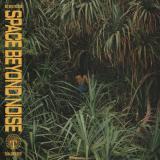
Frankfurt am Main -- Leipzig duo not even noticed deliver their long-awaited debut album space beyond noise - a 12-track journey balancing club functionality with immersive, long-form listening.
Shaped by years of touring and a shared ritual of visiting botanical gardens around the world, the album blends shapely grooves, field recordings and warm melodic textures into a cohesive, lived- in sound. Subtle environmental details run throughout, creating a natural flow between tracks.
Musically, it moves between electro-funk, breakbeat and hip-hop- inflected cuts, with downtempo and dubby excursions. Highlights include the driving “chrone,” the sundown groove of “diras,” the acid-tinged “plune,” and the hazy two-step moment “skum.”
Designed with warmer months in mind, space beyond noise captures the balance between dancefloor energy and home listening depth.
Last delivered 53 days ago
available to reorder, subject to availability

Fela’s eternal masterpiece from 1975 on the A-side with two disparate takes on Femi’s ‘Truth Don Die’ on the B.
Last delivered 18 days ago
available to reorder, subject to availability

LTD. NIGHT SKY MARBLED[23,49 €]
In ,Library Copy Do Not Remove" präsentiert JJ Weihl von Discovery Zone eine digitale Verzauberung der Realität, in der er das Materielle und das Immaterielle miteinander verwebt, um zu zeigen, dass es sich dabei tatsächlich um zwei Aspekte ein und desselben handelt. In Weihls Welt sind Natur und Technologie keine Feinde, sondern erschaffen sich gegenseitig in einem unendlichen Tanz aus Bedeutung und Reflexion. Ursprünglich als Raumsound für das Zeiss-Groß-Planetarium in Berlin geschaffen, ist ,Library Copy Do Not Remove" eine Schöpfungsmythologie für das simulierte Universum. Dabei handelt es sich jedoch nicht um eine trockene, bostromische, maskuline Fantasie einer digitalen Realität, der die Geheimnisse der Natur fehlen. Stattdessen fordert Weihl den Zuhörer auf, im Rahmen einer Simulation Raum für die beeindruckende Realität der natürlichen Welt zu lassen. Wenn unsere Welt simuliert ist, dann muss die Simulation in der Lage sein, die Schönheit und Pracht der Natur zu erschaffen. Auf diese Weise betreibt Weihl eine ambient-artige Alchemie, die eine große Versöhnung von Natur und Technologie fordert, während sie uns auffordert, darüber nachzudenken, wie und wo die Erfahrung transzendenten menschlichen Bewusstseins zwischen ihnen existieren könnte. Die Songs auf ,Library Copy Do Not Remove" entstanden, während Weihl gleichzeitig ihr zweites Album ,Quantum Web" fertigstellte, und spiegeln einen weitreichenden, inspirierenden Zustand aus Aufregung und Angst wider, der mit der Aufgabe einherging, Musik für einen so einzigartigen Raum zu komponieren. Die Songs selbst wurden durch Ambisonics geformt, ein spezielles Format für räumliches Audio, das direktional ist, anstatt auf Kanälen zu basieren (wie Stereo), und wurden über ein Mosaik aus 49 Lautsprechern übertragen. Da es für Live-Auftritte geschrieben wurde, war ,Library Copy Do Not Remove" nie als Album im eigentlichen Sinne gedacht, sondern als dreidimensionales Ereignis. Auf diese Weise spiegelte die Klanginszenierung wider, wie wir Klang in unserem Alltag wahrnehmen: uns aus allen Richtungen umgebend. Für diese Albumveröffentlichung hat Weihl alle Songs gemeinsam mit ihrem langjährigen Produzenten E/T von Grund auf neu abgemischt und die Konstellation der Tracks für ein Stereoerlebnis neu konzipiert und überarbeitet. Inspiriert von den Werken von James Gleick, LD Deutsch, Johannes Kepler und Jorge Luis Borges, erforscht ,Library Copy Do Not Remove" die kreative Spannung zwischen Realität und Wahrnehmung, Information und Mythologie, Harmonie und Unordnung. Im gesamten Album fragt Weihl, wie wir als Menschen das Universum um uns herum und den zugrunde liegenden Code, der es belebt, verstehen lernen. Was dabei entsteht, ist ein klanglicher Mythos, der von spiralförmigen digitalen Universen erzählt, die ineinander verschachtelt sind und in denen jeder teilnehmende Akteur gleichzeitig sowohl Teil als auch das Ganze der Realität ist. Auf diese Weise ist ,Library Copy Do Not Remove" ein cyber-Ausdruck zeitloser Weisheit: Anstelle von ,wie oben, so unten" könnte Weihl vorschlagen: ,wie der Input, so der Output".
expected to be published on 26 Jun

- A1: Low Profile
- B1: Se Rere
Strut Records proudly presents a new reissue of the original Afrobeat classic Low Profile (Not For The Blacks), recorded and composed by Afrika 70 saxophonist and bandleader Lekan Animashaun and produced by Fela Kuti. After years touring the world as Fela’s baritone saxophonist, Animashaun stepped forward to lead the legendary Egypt 80 band following Tony Allen’s departure, remaining the group’s musical director until Fela’s death in 1997. He continued on subsequent tours with Seun Kuti until 2016. Lekan began recording his only solo project, Low Profile, in 1977. The album was composed and recorded across sessions at home in Nigeria and on tour with Fela, who both produced the recordings and added keyboards to the album’s title track. ‘Low Profile (Not For The Blacks)’ referenced a government campaign during the country’s 1970s oil boom: “It was inspired by a speech by Olusegun Obasanjo, Nigeria’s military Head of State, when he urged black people to keep a low profile about their wealth and not to behave in a vulgar, arrogant way,” explains Lekan. “I argued that low profile is not just for the blacks, as everyone is human, regardless of race.” On the flip side, the simmering Afrobeat anthem ‘Se Rere’ (which translates as ‘Do Right’) delivers Animashaun’s message of living with integrity: do right, and you will reap what you sow.
The song later became the band’s opening number during Fela’s live performances both in Nigeria and internationally throughout the 1980s and ’90s. Despite recording beginning almost two decades earlier, Low Profile did not receive an official release until 1995, when it finally surfaced on Fela’s Kalakuta label. One of only a handful of albums led by core members of Kuti’s band, Low Profile captures a pivotal moment in Afrobeat history. Over time, the original has become a rare and highly sought-after record, and this new reissue places the spotlight back on a modest but influential Nigerian legend. Strut’s reissue features the complete original artwork, is fully remastered by The Carvery, and includes brand new liner notes by Lekan Animashaun himself.
expected to be published on 26 Jun
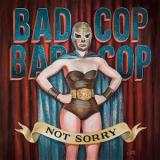
- 1: NIGHTMARE
- 2: ANTI LOVE SONG
- 3: HERE'S TO YOU
- 4: CHEERS
- 5: JOEY LAWRENCE
- 6: SUGARCANE
- 7: I'M ALRIGHT
- 8: OLD DOGS
- 9: LIKE, SERIOUSLY?
- 10: RIP YOU TO SHREDS
- 11: THE WOOD
- 12: FIREWATER
- 13: SUPPORT
The 2015 debut album from female punk super-group back in print on new burgundy colour vinyl! NOT SORRY is the first full-length album from all female super-group BAD COP BAD COP. Aptly titled, NOT SORRY brazenly blasts out some of the most vibrant pop-punk around today. Laden with catchy hooks, three-part harmonies that'd make The Beach Boys jealous, and tons of attitude, all 13 tracks showcase BAD COP BAD COP's uncanny ability to blend aggressive instrumentation with polished vocals. A quick glance at the band's collective resume (Compton SF, The Radio Sweetheart, The D'Maggs, The City, Angry Amputees, and Cunt Sparrer) will disabuse any doubters of the notion that BCBC can't hand with the boys. From front to back, NOT SORRY brings the rock. Tracks like "Old Dogs", "Nightmare", & "Support", display the bands' hard playing style and strong sense of melody. One listen to NOT SORRY and you'll know why BAD COP BAD COP have generated so much buzz! "This badass bunch of melodic punk rock ladies have been releasing infectious 7" records for a couple years that just play too damn quickly... The album dashes by like a vacation_over sooner than you'd like." _New Noise Magazine "California's Bad Cop Bad Cop lay down the law with an incredible authority: the tunes are concise and compact melodic punk blazers, filled with equal amounts of bite and sugar-sweet harmony." _Alternative Press "These songs are full of three-part harmonies that can make Bad Religion's Greg Graffin and Brett Gurewitz retroactively jealous, and they're catchy enough that they could easily fit onto any of the early Fat Music comps." _Dying Scene Produced by Fat Mike (NOFX) & Davey Warsop (Suedehead) For Fans of: NOFX, Dance Hall Crashers, Masked Intruder Ongoing social media push via artist and label channels Social Media and Digital marketing campaign See Bad Cop Bad Cop on tour in Europe
expected to be published on 26 Jun

- 1: Let Me Perish Without Return
- 2: In the Harem
- 3: You Ask for Songs
- 4: Conversation Between the Audience and the Gramophone
- 5: The Horse Drags Along Quietly
- 6: Unknown Song
- 7: Tell Me Comrade, How Did You End Up in the Mine
- 8: No. No. I Don't Want
- 9: Do You Remember, Comrade Constant?
- 10: Swan Song
- 11: In the Midnight Silence
- 12: Star, Forgive Me, It's Time for Me to Sleep
- 13: Have Pity
- 14: Have Pity
- 15: Nastenka
- 16: The Song of a Convict
- 17: Unknown Song 2
- 18: The Last Five Roubles
- 19: Our Tormented, Tortured Brother Craftsman
- 20: The Sun Rises and Sets
Tape[16,39 €]
expected to be published on 26 Jun
- 1: Let Me Perish Without Return
- 2: In the Harem
- 3: You Ask for Songs
- 4: Conversation Between the Audience and the Gramophone
- 5: The Horse Drags Along Quietly
- 6: Unknown Song
- 7: Tell Me Comrade, How Did You End Up in the Mine
- 8: No. No. I Don't Want
- 9: Do You Remember, Comrade Constant?
- 10: Swan Song
- 11: In the Midnight Silence
- 12: Star, Forgive Me, It's Time for Me to Sleep
- 13: Have Pity
- 14: Have Pity
- 15: Nastenka
- 16: The Song of a Convict
- 17: Unknown Song 2
- 18: The Last Five Roubles
- 19: Our Tormented, Tortured Brother Craftsman
- 20: The Sun Rises and Sets
Vinyl[22,65 €]
expected to be published on 26 Jun

Shiner, Pontiac Streator and Ben Bondy’s debut as shinetiac is a downtempo pleasure, now on vinyl.
All three members of Shinetiac are best known for their tenure in the neo-ambient weeds, gathering bounties for 3XL, Quiet Time, Motion Ward and of course Huerco S.’s West Mineral. Anyone familiar with their various side projects and solo deployments will have already clocked their obsessions with classic dreampop, trip- hop and cloud rap, and those influences are fully thrust into the foreground here, with the more trad ambient elements used as little more than decoration. ‘Star Frog Dilla’ opens the set and combs illusory Olive-like vocal harmonies over a jumble of choppy jazz samples and sirens, with a glitch-heavy beat that harks back to an earlier, simpler iteration of IDM. What makes it so inviting is that Shinetiac fashion a loveletter to pre-internet cultural collisions, pooling their empathetic energies in a lushly amorphous slant on ambient dance strung between classic Trip Hop, HD late ‘90s / early ‘00s electronic music x vaporous hypermodernism.
Last delivered 89 days ago
available to reorder, subject to availability

- 01: 3/31/23 - Horseshoe Casino, Cleveland, OH
- 02: 6/23/2013 - Horseshoe Casino, Hammond, IN
- 03: 7/3/2013 - Grand Victoria Casino, Elgin, IL
- 04: 1/1/2014 - Greektown Casino, Detroit, MI
- 05: 1/11/2014 - Majestic Star Casino, Gary, IN
- 06: 1/1/2014 - MotorCity Casino, Detroit, MI
"Chance animates the smallest parts of the universe: the scintillation of the stars is its power, a wildflower its incantation."
—Georges Bataille, Le Petit
"Even on my way to the gambling hall, as soon as I hear, two rooms away, the clink of the scattered money I almost go into convulsions." —Fyodor Dostoevsky, The Gambler
Video gambling addicts, academic researchers, and industry professionals alike describe the trancelike state into which problem gamblers suspend themselves with remarkable consistency: they unanimously call it the machine “zone,” a kind of inner experience during which the rhythmic flow of human-machine collusion borders on mysticism. Time is abolished in the act of contemporary video gambling —simulated slot reels roll, virtual poker decks deal, and all worldly concerns are lost—leaving only the aura of total zone immersion in its wake. Sometimes characterized as the crack cocaine of gambling, the intensity of the machine zone is a symptom of casino ergonomics: emotionally manipulative fragrance-saturation, mesmerizing lights, subtly controlling walkways and, as captured here, meticulously engineered sonic environments all play a role in evoking the timeless void of the zone.
Although I was not yet aware of the extent to which casinos tailor their environments for maximum comfort (and, correspondingly, profit), I did know as I crossed the threshold of my first casino floor last year that I would be back for more. Hit by a cornucopia of slot machine tones, triggering aleatorically and coalescing into shimmering masses, I was struck by the need to return and record the sounds that so entranced me. It wouldn't prove to be easy—casino security is intense—and due to the clandestine nature of the operation, my recording techniques were by no means sophisticated. Equipped with nothing but an Olympus LS-11 recorder's internal microphone stashed in a sweaty coat pocket, I allowed the lure of the zone to guide me through a series of ambling recording sessions, the best of which are included here.
I learned a lot about casino sonics in the process: game designers, for example, once tuned all their machines to the key of C major in order to optimize harmonic cohesion (strict adherence to the key is no more but C still dominates the game floor); one team of designers, the story goes, even spent a month perfecting a single 'ding' sound on one machine. In the interest of preserving the true ambient sounds of the casino these recordings are untreated, but lost in the sea of chance I did exert some affirmative control by means of meandering intent and my actual playing of the machines. And by participating in the games myself I got a taste of the financially debilitating consequences that accompany the enchantment of video gambling. The cassette in your hands represents my endeavor to bring you the zone experience without the harsh comedown of its unfortunate reality.
—Adrian Rew
expected to be published on 19 Jun


- 01: Hafız Sadettin Kaynak - Falling into the Flames of Heartbreak
- 02: Hâfız Burhan - Everywhere is Darkness
- 03: Hafız Kemal Bey - The Moment I Saw You
- 04: Hoca Izak Algazi - If I Gave My Heart to You
- 05: Hafız Sadettin Kaynak - I Fell in Love
- 06: Hafız Kemal Bey - The Sky Cries
- 07: Hafız Sadettin Kaynak - The Pain of Separation
- 08: Tarsuslu Abdülkerim - I Waited for So Many Nights
- 09: Hafız Kemal Bey - A Gaze that Gathers the Blossoms of Longing
- 10: Bursalı Hamid Bey - I Became the Guardian of my Own Gaze
- 11: Hafız Kemal Bey - The Dagger of Gazes
- 12: Hoca Izak Algazi - My Heart’s Sole Longing was to Find its Harbor Through Love
- 13: Hafız Kemal Bey - With Longing Because of This
- 14: Hafız Sadettin Kaynak - O My Beloved, Drunk with Your Own Charm, Who Raised You to be So Fearless
Vinyl LP[22,65 €]
A collection of spellbinding, melismatic vocal improvisations taken from 78s cut between the mid 1920s to mid '30s - a period defined by the aftermath of the Ottoman Empire’s partition, the Greco-Turkish War and the compulsory population exchange that followed.
This same period also represented a time of intense efforts, following the establishment of the Republic, to westernise the new nation's music - coupled with a ban on traditional music education in schools, and later a complete ban on broadcasting Ottoman-Turkish classical music on the radio. As such these performances seem shrouded in an even more distant past, and feel quite intimately connected with forms of Greek amanes and rebetiko - having stemmed from the same Ottoman makam system, both with a subject-matter focussed on heartbreak, yearning, and pain.
expected to be published on 12 Jun

- 01: Hafız Sadettin Kaynak - Falling into the Flames of Heartbreak
- 02: Hâfız Burhan - Everywhere is Darkness
- 03: Hafız Kemal Bey - The Moment I Saw You
- 04: Hoca Izak Algazi - If I Gave My Heart to You
- 05: Hafız Sadettin Kaynak - I Fell in Love
- 06: Hafız Kemal Bey - The Sky Cries
- 07: Hafız Sadettin Kaynak - The Pain of Separation
- 08: Tarsuslu Abdülkerim - I Waited for So Many Nights
- 09: Hafız Kemal Bey - A Gaze that Gathers the Blossoms of Longing
- 10: Bursalı Hamid Bey - I Became the Guardian of my Own Gaze
- 11: Hafız Kemal Bey - The Dagger of Gazes
- 12: Hoca Izak Algazi - My Heart’s Sole Longing was to Find its Harbor Through Love
- 13: Hafız Kemal Bey - With Longing Because of This
- 14: Hafız Sadettin Kaynak - O My Beloved, Drunk with Your Own Charm, Who Raised You to be So Fearless
Tape[16,39 €]
A collection of spellbinding, melismatic vocal improvisations taken from 78s cut between the mid 1920s to mid '30s - a period defined by the aftermath of the Ottoman Empire’s partition, the Greco-Turkish War and the compulsory population exchange that followed.
This same period also represented a time of intense efforts, following the establishment of the Republic, to westernise the new nation's music - coupled with a ban on traditional music education in schools, and later a complete ban on broadcasting Ottoman-Turkish classical music on the radio. As such these performances seem shrouded in an even more distant past, and feel quite intimately connected with forms of Greek amanes and rebetiko - having stemmed from the same Ottoman makam system, both with a subject-matter focussed on heartbreak, yearning, and pain.
expected to be published on 12 Jun

The new sublabel from ERROR404 debuts with a Various Artists, full of raw, hypnotic and unpredictable sounds.
Tracks that refuse to be easily classified... stop searching.
Last delivered 4 months ago
available to reorder, subject to availability

- 01: Segura Brothers - Bury Me in a Corner of the Yard
- 02: Lawrence Walker - The Midnight Waltz
- 03: Sydney Landry - La Blouse Francaise
- 04: Albert Babineaux & Joe Creduer - Ma Cherie
- 05: Columbus Fruge - Bayou Teche
- 06: Artelus Mistric - You Belong to Me
- 07: Delint Guilory & Lewis LaFleur - Quelqu'un Est Jalous
- 08: Oscar Doucet & Alius Soileau - When I Met You at the Gate
- 09: Soileau Couzens - Sur Le Chemin Chez Moi
- 10: Segura Brothers - A Mosquito Ate up My Sweetheart
- 11: Adam Trehan - The Pretty Girls Don't Want Me
- 12: Didier Herbert - I Woke up One Morning in May
- 13: Amede Ardoin - La Valse Du Ballard
- 14: Blind Uncle Gaspard - Sur Le Borde De L'Eau
Death Is Not The End issue a 14-track tape of vintage and archival Cajun ft. tracks from Segura Brothers, Amede Ardoin, Blind Uncle Gaspard, Sydney Landry & more.
expected to be published on 05 Jun

- 1: Sitting in the Poem
- 2: The Spider Underneath
- 3: April 28, 194/Fahey Cup
- 4: When Our Reflections Go Cold
- 5: Like Fitzcarraldo
- 6: Anywhere Is Nowhere
- 7: The Shape of Punk Blues to Come
Tape[19,96 €]
expected to be published on 05 Jun

- A1: I'm Your Hoochie Coochie Man
- A2: Baby Please Don't Go
- A3: Rollin' And Rumblin' (Part 1)
- A4: Rollin' And Rumblin' (Part 2)
- A5: Gypsy Woman
- A6: I Just Want To Make Love To You
- A7: You're Gonna Miss Me (When I'm Dead And Gone)
- B1: Mannish Boy
- B2: Smokestack Lightnin
- B3: Standin' Here Tremblin
- B4: Just A Dream (On My Mind)
- B5: She's All Right
- B6: I Want To Be Loved
- B7: The Call Me Muddy Waters
- C1: Got My Mojo Working
- C2: Rock Me
- C3: I'm Ready
- C4: Diamonds At Your Feet
- C5: Mopper's Blues
- C6: Loving Man
- C7: Evil
- D1: Forty Days And Forty Nights
- D2: She Moves Me
- D3: Trouble No More
- D4: Hard Day Blues
- D5: Rollin' Stone
- D6: I Can't Be Satisfied
- D7: Train Fare Home Blues
Available to reorder, subject to availability


- 01: Νίκος Καρακώστας - Σβαρνιάρα
- 02: Γλυκερία Ζούμπα - Ανάθεμά σε ξενιτιά
- 03: Στέφανος Πασχάλης - δέλβινο και τσαμουριά
- 04: Κώστας Ζωγράφος - Κατίνα κούκλα ψεύτικη
- 05: Νικόλαος Χαλκιάς - Σταφύλι μοσχοστάφυλο
- 06: Γεωργία Βασιλοπούλου - Σε κίνη τη σταροκαλαμιά
- 07: Γεωργία Βασιλοπούλου - Μια χήρα πούλαγε κρασί
- 08: Γεωργία Μηττάκη - Ήθελα μωρ’ βλαχοπούλα
- 09: Βάιος Μαλλιάρας - Αρβανιτόβλαχα
- 10: Θεοχάρης Παντίδης - Κουμπαρούλα μου γλυκιά
- 11: Σωτηρία Βασιλείου - Σύρε μάνα πες στο Γιάννη
- 12: Νίκη Κυριακίδου - Ποιος ξέρει η αγάπη μου
- 13: Βάιος Μαλλιάρας - Ο Αμάραντος
- 14: Κώστας Ζωγράφος - Ανάπλι στο βουλευτικό
DINTE present a 14-track tape pulling together rural Greek demotika recordings from the late 1930s to the mid-1950s. Soaring pentatonic improvisations, odd-metered rhythms, and vocal performances oscillate between heartbreaking laments and ecstatic celebrations.
Artwork adapted from Edward Lear's Agia Paraskevi, Epirus, Greece (1857)
expected to be published on 05 Jun
- 1: ICE-COLD SHOCK OF ILLUSION
- 2: SHAPES OF NEWBORN WARMING STARS
- 3: THE RED DOOR #1
- 4: ITS OWN DIMENSION
- 5: WITHIN DIMENSION BEHIND DIMENSION
- 6: INCONCLUSIVE
- 1: THE ROAD (PAST THE BEEHIVE) TO THE RIVER
- 2: WHEN THE BIRDS FLOCK ROUND MY HEAD
- 3: GOLD AND ITS OXIDE
- 4: BONES OF HOME, FLY EAST
- 5: THE (ONCE GREEN) RED DOOR #2
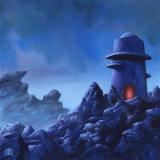
,now i imagine a place not the same" ist eine Doppel-LP und ein neues Solo-Statement des Gitarristen und Komponisten David Torn, veröffentlicht bei Kou Records. Es kehrt zur rohen Energie seiner frühen Klangsprache zurück und treibt diese gleichzeitig mit der Klarheit jahrzehntelanger Erkundungen voran. Das Album ist gleichermaßen viszeral und schwerelos und konzentriert sich auf Torns langjährigen Dialog zwischen alternativen Stimmungen, Loop-Architekturen und berührungsempfindlicher Elektronik - eine Klangwelt, in der Melodie, Noise und Atmosphäre sich ständig ineinander verschmelzen. Als Pionier der E-Gitarren-Bearbeitung ist Torn weithin bekannt für seine Arbeit in Musik und Film, darunter langjährige Kooperationen mit dem Komponisten Howard Shore, Beiträge zu Filmen von David Cronenberg und einflussreiche Veröffentlichungen bei ECM Records, die dazu beitrugen, eine atmosphärische, filmische Sprache für die E-Gitarre zu definieren. Torn nähert sich jedem Stück als einer Form kompositionsorientierter Improvisation und behandelt alles in seiner Reichweite als musikalisches Material: Saiten, Tonabnehmer, Verstärker, externe Elektronik, Stimme, resonante Oberflächen und den physischen Raum selbst. Aufgenommen, gemischt und produziert von Randall Dunn und mit einem Schwerpunkt auf Unmittelbarkeit und physischer Präsenz eingefangen, wird die Gitarre Teil eines größeren Systems - Schaltkreise atmen, Delays wiederholen unvollkommene Erinnerungen, Töne regenerieren sich durch Berührung. Klänge entstehen durch Zufall, Geste und Intuition und werden dann durch aufmerksames Zuhören geformt, während sie sich entwickeln. Anstatt auf festgelegte Ergebnisse hin zu komponieren, lässt Torn die Form durch Feedback und Wiederholung entstehen und nimmt jeden Klang - ob beabsichtigt oder nicht - in einen sich ständig weiterentwickelnden musikalischen Körper auf. Indem er grundlegende Werkzeuge aus seinen prägenden Verarbeitungsjahren wieder aufgreift - alternative Stimmungen, Looping-Logik, Röhrensättigung - lehnt Torn Nostalgie ab und gewinnt stattdessen ihre Unmittelbarkeit als lebendiges Material zurück. Gleichzeitig intim und gewaltig fängt ,now i imagine a place not the same" einen Künstler ein, der seine einzigartige Sprache voll und ganz beherrscht: zutiefst melodisch, rigoros experimentell und verwurzelt in Vertrauen, Berührung und Elektrizität. Nicht als rückblickende Geste, sondern als gegenwärtige Erklärung bietet das Album eine kraftvolle Meditation über Vergänglichkeit, Erneuerung und das fortwährende Leben des Klangs.
expected to be published on 29 May

Tauche ein in die zeitlose Magie des legendären Gitarristen Roy Buchanan! 1969 wurde Buchanan der Job als Nachfolger von Brian Jones bei den Stones angeboten. Er lehnte dankend ab und überließ Mick Taylor und später Ron Wood den Platz. In den 1970er Jahren erschien eine Reihe von Alben, die teilweise recht erfolgreich waren, und er seinen Status als "the best unknown Guitarist in the World" einbüßte. Das Meisterwerk "You"re Not Alone" veröffentlichte Buchanan 1978 und bietet eine einzigartige Mischung aus Blues, Rock und Soul, die vom ersten Ton an fesselt. Die Mitwirkung herausragender Musiker wie Ray Gomez (Gitarre), der mit seiner technischen Finesse und Vielseitigkeit Buchanans Stil perfekt ergänzt, sowie Willie Weeks (Bass, u.a. Doobie Brothers und Gregg Allman Band)), der für seinen Beitrag zur Fusion von Rock, Jazz und Funk bekannt ist, und Sly & The Family Stone - Drummer Andy Newmark bereichert das Album und fügt ihm verschiedene musikalische Nuancen hinzu. Roy Buchanan hat mit diesem Album eine zeitlose Sammlung von Songs geschaffen, die sowohl alte Fans als auch neue Hörer begeistern wird. Seine unverwechselbare Spielweise und sein einzigartiger Sound machen dieses Album zu einem Muss für jeden Musikliebhaber. Am 14. August 1988 beging Roy Buchanan im Alter von 49 Jahren Selbstmord. Er war nach einem Streit mit seiner Frau vorläufig festgenommen worden, Vollzugsbeamte fanden den Musiker leblos in seiner Zelle. Seine Musik lebt weiter.
Last delivered 4 months ago
available to reorder, subject to availability

- 1: From Hamburg To Montreal
- 2: Holding On
- 3: Toast To Nothing
- 4: Alive In A Dive (feat. The Penske File)
- 5: Furious George
- 6: Not Just A Phase
- 7: This Is Not For You Tony
- 8: Four Guys Walk Into A Bar
- 9: Molly Hates Firecrackers
- 10: F.O.M.U. - Fear Of Messing Up
- 11: Bad News Everyone
- 12: Sorry There Ain't Nothing Left
Captain Asshole, ein Name, der leicht im Gedächtnis bleibt. Aber zum Glück sind die Songs besser als der Bandname der Münchener vermuten lässt. Punkrock mit melodischen Gitarren und vielen Mitsing-Momenten, deutlich inspiriert von Bands wie The Copyrights, Dear Landlord und Latterman.
expected to be published on 22 May

- 1: BIG BANG
- 2: DUSK
- 3: LIBRARY COPY DO NOT REMOVE
- 4: HABITAT
- 5: ARP ANGELS
- 6: CASTLE IN THE MOON
RVNGNLX131[22,27 €]
In ,Library Copy Do Not Remove" präsentiert JJ Weihl von Discovery Zone eine digitale Verzauberung der Realität, in der er das Materielle und das Immaterielle miteinander verwebt, um zu zeigen, dass es sich dabei tatsächlich um zwei Aspekte ein und desselben handelt. In Weihls Welt sind Natur und Technologie keine Feinde, sondern erschaffen sich gegenseitig in einem unendlichen Tanz aus Bedeutung und Reflexion. Ursprünglich als Raumsound für das Zeiss-Groß-Planetarium in Berlin geschaffen, ist ,Library Copy Do Not Remove" eine Schöpfungsmythologie für das simulierte Universum. Dabei handelt es sich jedoch nicht um eine trockene, bostromische, maskuline Fantasie einer digitalen Realität, der die Geheimnisse der Natur fehlen. Stattdessen fordert Weihl den Zuhörer auf, im Rahmen einer Simulation Raum für die beeindruckende Realität der natürlichen Welt zu lassen. Wenn unsere Welt simuliert ist, dann muss die Simulation in der Lage sein, die Schönheit und Pracht der Natur zu erschaffen. Auf diese Weise betreibt Weihl eine ambient-artige Alchemie, die eine große Versöhnung von Natur und Technologie fordert, während sie uns auffordert, darüber nachzudenken, wie und wo die Erfahrung transzendenten menschlichen Bewusstseins zwischen ihnen existieren könnte. Die Songs auf ,Library Copy Do Not Remove" entstanden, während Weihl gleichzeitig ihr zweites Album ,Quantum Web" fertigstellte, und spiegeln einen weitreichenden, inspirierenden Zustand aus Aufregung und Angst wider, der mit der Aufgabe einherging, Musik für einen so einzigartigen Raum zu komponieren. Die Songs selbst wurden durch Ambisonics geformt, ein spezielles Format für räumliches Audio, das direktional ist, anstatt auf Kanälen zu basieren (wie Stereo), und wurden über ein Mosaik aus 49 Lautsprechern übertragen. Da es für Live-Auftritte geschrieben wurde, war ,Library Copy Do Not Remove" nie als Album im eigentlichen Sinne gedacht, sondern als dreidimensionales Ereignis. Auf diese Weise spiegelte die Klanginszenierung wider, wie wir Klang in unserem Alltag wahrnehmen: uns aus allen Richtungen umgebend. Für diese Albumveröffentlichung hat Weihl alle Songs gemeinsam mit ihrem langjährigen Produzenten E/T von Grund auf neu abgemischt und die Konstellation der Tracks für ein Stereoerlebnis neu konzipiert und überarbeitet. Inspiriert von den Werken von James Gleick, LD Deutsch, Johannes Kepler und Jorge Luis Borges, erforscht ,Library Copy Do Not Remove" die kreative Spannung zwischen Realität und Wahrnehmung, Information und Mythologie, Harmonie und Unordnung. Im gesamten Album fragt Weihl, wie wir als Menschen das Universum um uns herum und den zugrunde liegenden Code, der es belebt, verstehen lernen. Was dabei entsteht, ist ein klanglicher Mythos, der von spiralförmigen digitalen Universen erzählt, die ineinander verschachtelt sind und in denen jeder teilnehmende Akteur gleichzeitig sowohl Teil als auch das Ganze der Realität ist. Auf diese Weise ist ,Library Copy Do Not Remove" ein cyber-Ausdruck zeitloser Weisheit: Anstelle von ,wie oben, so unten" könnte Weihl vorschlagen: ,wie der Input, so der Output".
expected to be published on 15 May
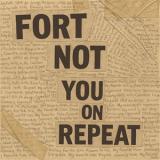
You On Repeat is a bittersweet indie pop album shaped by warmth, immediacy, and unfiltered charm, recorded over a summer weekend on Sweden's west coast. Jangly and distorted guitars meet lo-fi textures and disarming melodies, rooted in a DIY '90s indie spirit. Moving fluidly between noise and tenderness, the record balances raw emotion with finely crafted hooks. Fort Not, the Swedish songwriting duo of Robert Carlsson and Fredrik Söderström, return with their new album You On Repeat on Meritorio Records. Joined by bandmates Philip Gates, David Hansson, and Joakim Björnberg, the group recorded the album over a hot summer weekend in a barn near Sweden's west coast - an environment that left its mark on the record's warmth, immediacy, and unfiltered charm. You On Repeat is a bittersweet indie pop record where jangly and distorted guitars, lo-fi textures, and disarming melodies meet. Rooted in a DIY spirit inspired by '90s indie rock and classic pop songwriting, the album moves fluidly between noise and tenderness, urgency and ease, capturing a band equally attuned to raw emotion and crafted hooks. Long regarded as one of Sweden's best-kept indie secrets - as praised by Swedish music magazine GAFFA - Fort Not are ready to step fully into the light. With You On Repeat, that secret is finally revealed. FFO - Guided by Voices, Beat Happening, The Clean, Pavement, Television Personalities, Daniel Johnston.
expected to be published on 15 May
- 1: HOW WILL YOU FEEL
- 2: INVOLUNTARY HAZE
- 3: BODIES
- 4: HEAVY, WHY?
- 5: GIRAFFE
- 6: SPADES
- 7: VOID TO BE
- 8: FADE
- 9: MOURNING AFTER
- 10: POPPYFIELDS
Als Blackwater Holylight vor drei Jahren ihre Heimatstadt Portland, Oregon, verließen, war es ihr Ziel, der Tristesse des pazifischen Nordwestens und dem beruhigenden Komfort des Vertrauten zu entfliehen. Mit dem Ziel, das sonnigere Klima von Los Angeles zu genießen, fand sich die Band nicht nur in einer wärmeren Umgebung wieder, sondern auch in einer völlig neuen Landschaft - einer ohne Arbeitsplätze, langjährige Freundeskreise und die bequeme Zuflucht alter Gewohnheiten. Und genau hier, unbelastet von der Zufriedenheit der Sicherheit, begann Blackwater Holylight fleißig an ihrem vierten Album ,Not Here Not Gone" zu arbeiten. Wie schon ihre früheren Werke beschäftigt sich ,Not Here Not Gone" mit der Dualität von Licht und Dunkelheit - bedrohliche Riffs bilden das Fundament für betörende Melodien, dichte Wände aus Shoegaze-Gitarren paaren sich mit luftig-leichten Synthesizern, und schwere Themen werden durch sirenenhafte Gesänge vermittelt. Im Laufe des Albums verspürt der Zuhörer mal ein Gefühl der Stärke, mal ein Gefühl der Verletzlichkeit. Wie Schlagzeugerin Eliese Dorsay es beschreibt: ,In einigen Songs sind wir die Raubtiere, in anderen die Beute." Die Gegenüberstellung von Selbstvertrauen und Unsicherheit ist nirgendwo so deutlich zu spüren wie bei einer lebensverändernden Entscheidung, was vielleicht erklärt, warum der Umzug der Band ihr Studium der Kontraste auf ,Not Here Not Gone" zu neuen Höhenflügen intensiviert hat . ,Not Here Not Gone" wurde im Sonic Ranch außerhalb von El Paso, Texas, von Sonny Diperri (Narrow Head, DIIV, Emma Ruth Rundle) aufgenommen, wodurch die Band erneut ihre Komfortzone verlassen und sich an einem Ort isolieren konnte, an dem sie sich ausschließlich auf ihre Kunst konzentrieren konnte. Das Ergebnis ist das Kronjuwel von Blackwater Holylights Diskografie - eine reichhaltige und eindringliche Studie in tonalen Hell-Dunkel-Kontrasten, in der das Licht seinen Weg aus den Schatten findet.
expected to be published on 08 May
- 1: Style & Title
- 2: Splice Here
- 3: Fine All Over
- 4: Frequent Flyer
- 5: Backroads
- 6: Fantasy Parade
- 7: Silian Rail
Erstes Album von Leuten, die man von Bands wie Kid Dynamite, Midtown und The Gaslight Anthem kennt, spielen melodischen Punkrock, in den man sich sofort verliebt. Ungelogen - auch wenn der Bandname etwas anderes vermuten lässt.
expected to be published on 08 May

- 1: All American Girl
- 2: Born Under a Bad Sign
- 3: The Shadow of a Black Crow
- 4: An Unexpected Rain
- 5: I Want to Come Over
- 6: Love Will Live
- 7: Into the Dark
- 8: Come to My Window
- 9: A Burning Woman
- 10: Bad Intro/Bring Me Some Water
- 11: I'm the Only One
- 12: Like the Way I Do
expected to be published on 08 May

- A1: Quartzite Stereo Band
- A2: Taos Hum
- A3: Tricks of Love
- A4: Which You Are You
- A5: Alejandra
- A6: Sunny Smile Raining
- B1: Beauty Mark
- B2: Turning the Furrow Filling the Earth
- B3: Tuesday June
- B4: Chorus in Green
- B5: Lifeless Down a Dirt Road
VERY LIMITED BLACK VINYL WITH DOUBLE-SIDED INSERT (NON-RETURNABLE)
California composer Phil Geraldi’s vinyl debut both refines and refracts his signature muse of interstitial Americana across 11
melted glass mosaics of processed guitar, decayed radio glow, and Harmonia synth horizons: Rural Deceased Undiscovered. He
describes his vision for the pieces as “multilinear,” rearranging classic radio songbook elements like hooks, choruses, and
emotional cues into unfamiliar topographies of “alien country.”
Shards of acoustic guitar and pedal steel flicker in long shadows of amplifier hum and airwave static, like the scrambled
broadcast of some heartland station along a desert highway. It’s music both rustic and placeless, warped by weather and
technology, shimmering like northern lights over the badlands.
expected to be published on 01 May

It’s Not Me, It’s You' is the multi-platinum second studio album by Lily Allen. The #1 album is now available for the first time on crystal-clear vinyl and includes the hit singles 'The Fear', 'Not Fair', 'Fuck You' and '22'.
expected to be published on 24 Apr

- 1: The End Is Not the End
- 2: Dead
- 3: Break Me
- 4: All for You
- 5: Ghost in Me
- 6: Glass Eater
- 7: Wait My Love, I'll Be Home
- 8: Ego Death
- 9: Death Rattle
- 10: Children of Light
- 11: In the Dark
- 12: Afterglow
- 13: Break the Glass
Black/Orange Vinyl[27,94 €]
expected to be published on 24 Apr


NO WAY BACK MAGAZINE
BETTER WAYS FORWARD THROUGH MUSIC AND SUBCULTURE STORIES, 1979-1994 - LEARNING FROM, NOT LONGING FOR
After all of the fun had - and, if we may brag a bit - the acclaim for NWB001, we're back with a follow-up.
So here's NWB002. Our start and end points shift this time (1979–1997 vs 1977-1989) but again the focus is on revolutionary moments in music and subculture.
We've got pieces from The Face, i-D, Time Out, Village Voice, Rolling Stone, Mixmag, The Observer and - a particularly big pleasure - Collusion magazine. We've got brilliant photography, too, documenting seminal afterdark moments. And we've put it all together with much love, craft and attention to detail.
This is material that lets us experience culture in its rawest form. In-the-moment and before endless layers of post-rationalisation have kicked in. Breakthrough events in dance music, hip-hop and pop – and parallel shifts in art, design and fashion. Inspirational, ground-level creativity and enterprise that set the scene(s) for subsequent decades.
We hope you enjoy reading NWB002 as much as we enjoyed bringing it together.
Inside No Way Back 002
Behind The Groove - the epic 1983 feature by Steven Harvey in David Toop's Collusion magazine, charting the NYC disco underground
Photographer Steve Eichner documenting the club kids scene at The Limelight, Palladium, Tunnel and Club USA
Year zero reporting as The Face's Sheryl Garratt visits Chicago in 1986, witnessing the emergent house sound
The Mudd Club - 'disco for punks' as Rolling Stone put it; the Lower East Side party which arguably spawned a thousand indie discos
In the 'socialist city' of Sheffield, meanwhile, Jon Savage heads for a night of sharp clothes and even sharper moves at Jive Turkey
Paul Morley writing in Time Out in 1988 on the tension materialising between glossy style mags and the the monochrome music press
The House That Rap Built - Village Voice celebrates the short but sweet glory years of hip-house
Mixmag in 1992 on the 'return of sex' to clubs like Roxy and the Sound Factory
Images and commentary from Eddie Otchere, rewinding to jungle's halcyon days
Kodwo Eshun reporting on jungle's full-throttle ascent for i-D in 1994
+ Editor’s notes, supporting commentary, playlists, and covers, spreads and imagery from original titles
ISSN - 2977-8530
expected to be published on 24 Apr

- 1: Car Crash
- 1: 2Finish Line
- 1: 3Shooting Star
- 1: 4Overdose
- 1: 5Remember
- 1: 6Postcard
- 1: 7Black Hole
- 1: 8Korpo
Sean Solomon had great expectations. But when his hopes for an abundant world crashed up against an unforgiving reality, he decided to feel nothing. For a time, the Los Angeles-born-and-raised singer/songwriter and cartoonist/animator gave into the void - an understandable impulse when the landscape is cluttered with social injustice and division, global atrocities, and devastating headlines. But artistic expression can be a release valve - a way to comprehend the world and build community, which is exactly what Sean does on his debut solo album, The World Is Not Good Enough, arriving April 17th, 2026 via his new label home of ANTI- Records.
expected to be published on 17 Apr
expected to be published on 17 Apr

- 1-: Fire Graphics
- 2: Secret Speech
- 3: Ex-Human Shield
- 4: History's Biggest T-Shirts
- 5: Not A Sound In Heaven
- 6: Company Town
- 7: You Can't Say Dallas Doesn't Love You
Bristol experimental band SUGAR HORSE are delighted to announce that their third album, Not A Sound In Heaven, will be released on 10th April 2026 via Fat Dracula Records.
To celebrate the news, the band are sharing the bruising lead single ‘Secret Speech’, available to stream on all good digital service providers from 12th February 2026.
Also announced today are a run of April 2026 UK album headline tour dates and an appearance at StrangeForms Festival 2026, with tickets on sale now (see below for full listings).
“We are fortunate enough to live in what is generally known as ‘The West’,” says front man Ash Tubb of the lyrical themes behind the new track. “I say fortunate with gritted teeth, because I know—as I’m sure the reader knows—that living in the West isn’t always rosy. The vast majority of people struggle everyday to feed, clothe and house themselves. Let alone receive adequate healthcare, schooling and workers’ rights.”
“We are, however, where all the world’s wealth is hoarded. We are at the centre of Empire. The people outside of this empire—those of the Global South—have had their resources extracted and their populations exploited by our own governments, with very little given back in return. This won’t go on forever. It will inevitably end, as all great empires do.”
“We in The West have a choice to make in the meantime; either help create a new, fairer world, or let the greed of our ruling classes become the undoing of all of us.”
The first glimpse of new material from the quartet, ‘Secret Speech’ starts as Not A Sound In Heaven means to go on—a politically-charged wrecking ball of a song that smashes its way through the often unbelievable chaos and brutality of the 21st century with vitriolic malice.
How do you capture the machinations of the geo-political industrial war machine—and all the horrors that go with it—in the studio, without seeming trite or crass? That’s the question that Sugar Horse have posed themselves on their forthcoming third album Not A Sound In Heaven, and they must surely be one of the only bands in existence capable of delivering on just that premise with both musical substance and cutting philosophical insight.
“Ever since I was born I can remember visions of war, famine, and death being beamed directly into my living room via the magic of television,” says Tubb of the record. “These visions were accompanied by newsreader narratives designed to either humanise or dehumanise the people involved. We humanise our government’s allies and dehumanise their enemies. This is taken as common sense, or even wisdom to some degree. People watch the news and accept it as fact, simple and true.”
“As a person gets older they move in one of three different directions with this acceptance of reality; They embrace what they’re being told, they fall into a kind of trust free nihilism or they learn that there are deeper narratives at play.”
“Not A Sound In Heaven is an aged acceptance of the latter. An acceptance of sitting at the centre of a global empire of both military and economic dimensions. An acceptance that the stories we’re told as a nation, or what’s generally in the zeitgeist, isn’t necessarily reality itself.”
“How does a person cope with the weight—and, frankly, the guilt—of a society that perpetuates such distinct inequalities? A society that thinks a bit of killing abroad is fine, as long as it improves the lives of people at home. You can see why so many choose to embrace it. Hell, nihilism seems pretty sensible. Once a person decides upon pursuing a degree of truth however, things get a bit depressing. Beyond depressing...maddening.”
“This album explores this kind of breezy, frivolous subject matter in a manner that will no doubt be uplifting to the listener and massively financially rewarding for the artist.”
The new album follows on from their standalone AA single ‘What’s Your ETA? Let’s Have A Tear Up’/‘Would You Like Me To Be The Cat?’ which was released late last year as a surprise double drop.
expected to be published on 10 Apr

- 1: 23
- 2: Cross My Heart
- 3: Downtown Lover
- 4: All Bad Parts
- 5: Maybe Not Tonight
- 6: Body
- 7: Lifestyle
- 8: Undressed
- 9: Always Talking About You
- 10: Do You Know What I'm Thinking
Brighton four-piece Lime Garden return with their self-reckoning second album 'Maybe Not Tonight' So Young Records (the record label launched by So Young Magazine).
'Maybe Not Tonight' unfolds as a full night out, charting the pleasures and perils of partying and impulsive decisions.
Vocalist and guitarist Chloe Howard says: “The album is about a night out, from start to finish. As the night progresses, you’re having a great time, until your ex walks in with someone else. You hate the way you look but rather than going home, you press the big red button and get even more drunk. Eventually, you take yourself home full of melancholy, chaos and anger.”
Following their critically acclaimed 2024 debut 'One More Thing', which captured the raw live energy that earned them slots at festivals including Glastonbury and Green Man, Maybe Not Tonight sees Lime Garden expand their signature “wonk-pop” sound upwards and outwards. The result is their most intoxicating and luminous material to date.
expected to be published on 10 Apr

66 pages, 175 x 129mm paperback w/ litho printed cover & french flaps.
The second outing for our short run book publishing imprint, The End books, takes the form of a reprint of Spanish Cante Jondo and Its Origin in Sindhi Music, originally published in Spanish in 1955 under the name Cante Jondo: Su Origen y Evolución and later in this English translation.
Aziz Balouch here presents his theory on the roots of flamenco's 'deep song' in modern-day Pakistan, a cultural journey that mimics the routes of his own life, having been brought up among the Islamic mysticism and devotional songs of Sindh before travelling to Gibraltar in the early 1930s and becoming transfixed with the cante jondo across the border in southern Spain. Positing this concept through personal accounts rather than solid theoretical backing, this text provides a valuable account of an extraordinary existence that crossed remarkable geographical, musical, and spiritual boundaries. Issued here with a new introduction from anthropologist of sound, the senses and Islam, Stefan Williamson Fa.
"It would be easy to place Balouch on the fringes, as an eccentric footnote in flamenco history. But that misses the shape of his life and work. He was a figure who moved intuitively across boundaries that our present categories of nation, genre, discipline tend to fix in place. His work predates the founding of the academic discipline of ethnomusicology, the global circuits of world music, and the marketplace logic of fusion projects by decades. He was not an ethnographer or a proto–world musician, but someone for whom the deep song of Andalusia and the devotional song of the subcontinent resonated along the same fault lines of feeling, and who spent his life trying to trace them.
This book is one of the few surviving traces of that attempt. To read it now is to encounter a perspective that resists tidy narratives of influence or origin, despite its title and what he claims to do. It stands instead as evidence of an idiosyncratic musical imagination, one that relied less on proof than on listening, and on the belief that certain echoes carry farther than history can easily explain."
— Stefan Williamson Fa
expected to be published on 10 Apr

- A1: The Heptones - Get Up & Chant
- A2: Bobby Floyd & The Heptones - Need To Belong
- B1: Stranger Cole - Not Guilty
This murder three track 12" is the next installment in our ongoing Park Heights series. The Heptones "Get Up & Chant" is a certified roots anthem, FINALLY retrieved from album duty and now on a nice fat single for the first time, heavy anthemic roots with a killer mix and lashing reverb. Following this is another total gem formerly hidden away exclusively on an old Park Heights compilation - Bobby Floyd's "Need to Belong", a beautiful soulful roots tune with harmonies by the Heptones. On the flip side we have a total killer previously unreleased Stranger Cole roots tune from the early 80s, in extended discomix style.
expected to be published on 30 Mar

- 01: Maanitus & Tšiižik
- 02: Markka
- 03: Melkutus
- 04: Letška
- 05: Kuuen parin hoirola
- 06: Brišatka
- 07: Tšiižik
- 08: Kirkonkellot
- 09: Kirkonkellot korkea
- 10: Hoirola, 3 parin
- 11: Lippa
- 12: Kyngäkiža
- 13: Ristakondra
- 14: Vanha polkka
- 15: Viistoista
- 16: Vanha valssi
- 17: Kiberä
- 18: Maanitus Kuokan kanteleella
- 19: Tuuti lasta nukkumahe
Vinyl[22,65 €]
Death Is Not The End present a further volume of Arja Kastinen's eerie amalgamations of 110 year old wax cylinders with her own meticulously transcribed takes, this time focussing in on Armas Otto Väisänen's field recordings of kantele player Iivana Mišukka (b. 1861 d.1919).
"Ivana Mišukka (1861–1919) was one of the Karelian kantele players recorded by the folk music researcher Armas Otto Väisänen on wax cylinders in 1916 and 1917. In the early 20th century, the remote areas of Border Karelia were undergoing the final phase of a transformation in musical culture, with the ancient runo song tradition giving way to newer forms of music. This transition is reflected in Mišukka's repertoire and choice of instrument. The ancient small kantele, hollowed out of a single piece of wood, was already rare at the turn of the century. Mišukka's kantele was a new type of instrument with 26 strings, constructed of several parts, but he played it using the traditional plucking technique. Like other Border Karelian kantele players, his repertoire consisted of music rooted in runosong culture, as well as newer dances and songs from the east and west. Most of the recorded material falls into the latter category.
Ivan Bogdanov Mišukka was born out of wedlock in Suursara village, Suistamo, on 1 May 1861. He began playing the kantele at the age of five or six, quickly mastering the instrument. In adulthood, he was considered one of the area's best master players. Mišukka was landless for most of his life and lived in different parts of the Suistamo parish. His first wife, Tekla Markintytär, died in 1897 at the age of 40, and his second wife, Jevdokia Filipintytär Jeminen, died in 1907 at the age of 50. Seven children were born from the first marriage, two of whom died young. The third wife, Maria Ignatintytär Gurnan (Kuurnanen), was a well-known master of lamentations. Together with Maria, Iivana Mišukka worked as a tenant farmer in the village of Suursara. Mišukka suffered from rheumatism, which prevented him from participating in physical work like Maria. This was apparently partly the reason why Iivana Mišukka went to earn extra money by playing the kantele on gig trips. He often had other traditional artists from Suistamo as his travelling companions, such as the runosingers Konstantin Kuokka and Iivana Onoila. Iivana Mišukka died in Leppäsyrjä village, Suistamo, on 18 May 1919 at the age of 58, and his kantele was donated to Teppana Jänis.
Mišukka only used 14 of the 26 strings on his kantele, playing the same tunes either a fourth higher or lower. He tuned his kantele to the major scale using fifths, except for a low seventh scale degree on the upper strings, but not below the fundamental. Since he did not use the seventh note of the scale on the upper strings at all, he could use the major scale both lower and a fourth higher with this tuning. According to Mišukka, the sound of higher, or 'finer', strings is 'more beautiful', while that of lower ones is 'greater'. Among runosingers, the size of the thirds varied, ranging from major to minor to neutral. A similar phenomenon can be observed in kantele tunings, where the third, sixth and seventh scale degrees vary in a comparable way.
During a meeting, Väisänen suggested that Mišukka play the smaller kantele belonging to Konstantin Kuokka. The idea was to bring it closer to the horn to improve the recording quality. However, the kantele was completely out of tune, and now Mišukka tuned it to the Lydian scale (track 18).
Using the old plucking technique, Mišukka placed his right middle finger on the fundamental tone, his right index finger on the second scale degree, his left middle finger on the third scale degree and his left index finger on the fourth scale degree, and his right thumb on the fifth. The thumb also played the notes above the fifth note of the scale. As Mišukka remarked to Väisänen: 'Peigaloll' tuloo enemb ruadoa' (the thumb has to do more work). However, he did not use the seventh note of the scale on the upper strings at all. Below the fundamental note, he played the seventh and sixth notes of the scale with his right middle finger of and the fifth note of the scale with his right ring finger. This fifth scale degree below the fundamental is almost always used as a drone. Sometimes, when the melody required it, Mišukka, like other players, also varied the fingering. He would also occasionally strike the same string with the side of his fingernail after plucking it.
The wax cylinder recordings of Karelian kantele players are kept in the archives of the Finnish Literature Society in Helsinki, Finland. Copies were made of them onto reel-to-reel tapes in both the 1960s and 1980s. The 1960s copies are mono and the 1980s copies are stereo. However, not all kantele recordings from these decades have survived.
The sound of the kantele is difficult to hear in wax cylinder recordings due to its low volume, and it occasionally becomes completely obscured by noise. During the copying process, the cylinder sometimes rotates unevenly, resulting in breaks or jumps in the music. Additionally, the rotation speed of the cylinder in the copies does not correspond to the performance speed of the original music, which alters the pitch. However, since Väisänen's precise notes are available in the archive, it is possible to deduce the melodies, their speed, and the tuning level of the kantele in the recordings. Of the copies of the original recordings from the 1960s and 1980s, I have selected the one that best met the requirements of this publication and adjusted the speed of the recording to align with Väisänen's notes. To enhance the listening experience, I have replayed the songs, which now partly overlap the old recordings on this release."
— Arja Kastinen
expected to be published on 27 Mar

- 01: Maanitus & Tšiižik
- 02: Markka
- 03: Melkutus
- 04: Letška
- 05: Kuuen parin hoirola
- 06: Brišatka
- 07: Tšiižik
- 08: Kirkonkellot
- 09: Kirkonkellot korkea
- 10: Hoirola, 3 parin
- 11: Lippa
- 12: Kyngäkiža
- 13: Ristakondra
- 14: Vanha polkka
- 15: Viistoista
- 16: Vanha valssi
- 17: Kiberä
- 18: Maanitus Kuokan kanteleella
- 19: Tuuti lasta nukkumahe
Tape[16,39 €]
Death Is Not The End present a further volume of Arja Kastinen's eerie amalgamations of 110 year old wax cylinders with her own meticulously transcribed takes, this time focussing in on Armas Otto Väisänen's field recordings of kantele player Iivana Mišukka (b. 1861 d.1919).
"Ivana Mišukka (1861–1919) was one of the Karelian kantele players recorded by the folk music researcher Armas Otto Väisänen on wax cylinders in 1916 and 1917. In the early 20th century, the remote areas of Border Karelia were undergoing the final phase of a transformation in musical culture, with the ancient runo song tradition giving way to newer forms of music. This transition is reflected in Mišukka's repertoire and choice of instrument. The ancient small kantele, hollowed out of a single piece of wood, was already rare at the turn of the century. Mišukka's kantele was a new type of instrument with 26 strings, constructed of several parts, but he played it using the traditional plucking technique. Like other Border Karelian kantele players, his repertoire consisted of music rooted in runosong culture, as well as newer dances and songs from the east and west. Most of the recorded material falls into the latter category.
Ivan Bogdanov Mišukka was born out of wedlock in Suursara village, Suistamo, on 1 May 1861. He began playing the kantele at the age of five or six, quickly mastering the instrument. In adulthood, he was considered one of the area's best master players. Mišukka was landless for most of his life and lived in different parts of the Suistamo parish. His first wife, Tekla Markintytär, died in 1897 at the age of 40, and his second wife, Jevdokia Filipintytär Jeminen, died in 1907 at the age of 50. Seven children were born from the first marriage, two of whom died young. The third wife, Maria Ignatintytär Gurnan (Kuurnanen), was a well-known master of lamentations. Together with Maria, Iivana Mišukka worked as a tenant farmer in the village of Suursara. Mišukka suffered from rheumatism, which prevented him from participating in physical work like Maria. This was apparently partly the reason why Iivana Mišukka went to earn extra money by playing the kantele on gig trips. He often had other traditional artists from Suistamo as his travelling companions, such as the runosingers Konstantin Kuokka and Iivana Onoila. Iivana Mišukka died in Leppäsyrjä village, Suistamo, on 18 May 1919 at the age of 58, and his kantele was donated to Teppana Jänis.
Mišukka only used 14 of the 26 strings on his kantele, playing the same tunes either a fourth higher or lower. He tuned his kantele to the major scale using fifths, except for a low seventh scale degree on the upper strings, but not below the fundamental. Since he did not use the seventh note of the scale on the upper strings at all, he could use the major scale both lower and a fourth higher with this tuning. According to Mišukka, the sound of higher, or 'finer', strings is 'more beautiful', while that of lower ones is 'greater'. Among runosingers, the size of the thirds varied, ranging from major to minor to neutral. A similar phenomenon can be observed in kantele tunings, where the third, sixth and seventh scale degrees vary in a comparable way.
During a meeting, Väisänen suggested that Mišukka play the smaller kantele belonging to Konstantin Kuokka. The idea was to bring it closer to the horn to improve the recording quality. However, the kantele was completely out of tune, and now Mišukka tuned it to the Lydian scale (track 18).
Using the old plucking technique, Mišukka placed his right middle finger on the fundamental tone, his right index finger on the second scale degree, his left middle finger on the third scale degree and his left index finger on the fourth scale degree, and his right thumb on the fifth. The thumb also played the notes above the fifth note of the scale. As Mišukka remarked to Väisänen: 'Peigaloll' tuloo enemb ruadoa' (the thumb has to do more work). However, he did not use the seventh note of the scale on the upper strings at all. Below the fundamental note, he played the seventh and sixth notes of the scale with his right middle finger of and the fifth note of the scale with his right ring finger. This fifth scale degree below the fundamental is almost always used as a drone. Sometimes, when the melody required it, Mišukka, like other players, also varied the fingering. He would also occasionally strike the same string with the side of his fingernail after plucking it.
The wax cylinder recordings of Karelian kantele players are kept in the archives of the Finnish Literature Society in Helsinki, Finland. Copies were made of them onto reel-to-reel tapes in both the 1960s and 1980s. The 1960s copies are mono and the 1980s copies are stereo. However, not all kantele recordings from these decades have survived.
The sound of the kantele is difficult to hear in wax cylinder recordings due to its low volume, and it occasionally becomes completely obscured by noise. During the copying process, the cylinder sometimes rotates unevenly, resulting in breaks or jumps in the music. Additionally, the rotation speed of the cylinder in the copies does not correspond to the performance speed of the original music, which alters the pitch. However, since Väisänen's precise notes are available in the archive, it is possible to deduce the melodies, their speed, and the tuning level of the kantele in the recordings. Of the copies of the original recordings from the 1960s and 1980s, I have selected the one that best met the requirements of this publication and adjusted the speed of the recording to align with Väisänen's notes. To enhance the listening experience, I have replayed the songs, which now partly overlap the old recordings on this release."
— Arja Kastinen
expected to be published on 27 Mar

MEMORIALS jump off the waterslides and head above the clouds with their stunning second album proper, 'All Clouds Bring Not Rain'. The duo of Verity Susman and Matthew Simms (formerly of Electrelane and WIRE) locked themselves away in a studio in a barn secluded deep in the woods in southwestern France and re-emerged with a beautiful, unusual record that is both melodic and unconventional. For such an ambitious album it's striking that it was written, performed, recorded and mixed solely by the two of them. Sounding like an unearthed classic, MEMORIALS twist their influences into their own unmistakable sound. Imagine Nico singing with Can produced by David Axelrod and you're somewhere in the right ballpark. The record draws inspiration from a wide range of music including folk, dub, post punk, experimental tape music, 60s soul, garage rock, 70s spiritual jazz and Canterbury prog. Verity's distinctive, unadorned singing is a focal point of the record, moving from tender to wild. Her vocal melodies quickly become earworms, providing the tuneful heart around which the songs' more unorthodox elements are arranged, which is where Matthew's unconventional approach to recording and production comes to the fore. With their adventurous arrangements, classic songwriting skills and innovative production techniques, MEMORIALS have created another mesmerising listen that's accomplished and compelling in its unique approach yet remains dizzyingly immersive - just like their acclaimed live shows. "Exciting and unpredictable" The Guardian "Everything you'd expect from a duo adept in the strange and esoteric, while also in thrall to pop music's melodic bent." The Quietus "Stunning, kaleidoscopic tunes" Electronic Sound "Engagingly eclectic" UNCUT "Divinely tuneful yet confrontational" The Wire "Kaleidoscopic art-pop and adventurous psych-rock with an immersive, experimental aura." KEXP.
expected to be published on 27 Mar

This fresh release fuses house, trance, and garage, showcasing the young producer's remarkable versatility and skill. Nomad seamlessly combines the best elements of modern house with a nostalgic, old-school touch-featuring euphoric breakdowns, captivating vocals, and thumping basslines. It's a standout creation that marks a pivotal moment in Shuffa's rising career in the dance music scene.
Last delivered 3 months ago
available to reorder, subject to availability

Let something symbolic into your life and be amazed at the concrete results that it can bring. Tumultuous and very limited.
expected to be published on 23 Mar

- CASUAL BUNKER
- ALRIGHT JAVIER
- AFTER YOU'VE GONE
- ORDINARY TIMES
- DEN DEN
- FIELD RECORDING
- BONE TRADE
- THE RIVER IS A SCAR MADE OF GLASS
- MAGGOTS
- FINANCIAL PLACEHOLDER
- BETTER THAN
- WEED KING
Bei einem aktuellen Auftritt von DREAM_MEGA stand Joel Kyack allein auf der Bühne und schickte einen Soundstrom auf das Publikum los. Überwältigt von den gruseligen Frequenzen, den eindringlichen Rhythmen und den wilden, verstimmten Vocals, flüsterte ein Besucher seinem Nachbarn zu: ,Ich glaube, der Typ hat Kontakt zu Dämonen." Ob aus Angst oder Bewunderung gesagt, diese Anschuldigung ist angesichts des zweiten Albums von DREAM_MEGA, ,Control / You Are Not the Center", durchaus zutreffend. Die Platte ist voller Bedrohung. Man hört es in den mutierten Kriegsmarschen, im Dancehall-Reflux, im dröhnenden Bass. Man hört es in den kristallklaren Melodien und den sehnsüchtigen Aufstiegen. Man hört es sogar in dem Cover von Guided by Voices. Joels Beziehung zu verstörenden Klängen - dem Channeling von Dämonen - besteht nun schon seit Jahrzehnten. Seine langjährige Tätigkeit bei Landed, der Band, die er 1997 mitbegründet hat, verläuft parallel zu Joels Beiträgen zu Six Finger Satellite, Men's Recovery Project, Megafuckers, Dos Mega und Street Buddy. Diese unermüdliche Hingabe führt direkt zu dem fieberhaften Verfall seiner heutigen Arbeit, aber Dream Mega ist etwas ganz Besonderes. Entstanden aus Joels Nahtoderfahrung im Jahr 2020 - einer Woche der Schwäche, die er isoliert in Thailand verbrachte, Blut hustete und seine Bettlaken durchnässte - erobert DREAM_MEGA einen einzigartigen Raum an der Schnittstelle zwischen Konfrontation und Hingabe. Aufbauend auf seinen eigenen Erfahrungen bei Hardcore-Shows und Straßenauftritten treibt Joel DREAM_MEGA in einen antipodalen Zustand, in dem Hyperbewusstsein und befreiende Transzendenz koexistieren. Die Songs auf ,Control / You Are Not the Center" starren unerschrocken auf unsere dumme, gefährliche Welt, ähnlich wie es ein Song von Dropdead tun würde, aber gleichzeitig heben sie die Last dieser Katastrophe und drängen auf eine luftige Atempause. Ein Teil davon ist Joels kompositorischer Ansatz, bei dem er alte Holzblasinstrumente gegen digitale Synthesizer setzt und unnatürliche Schaltkreise mit menschlichem Atem kreuzt. Aber im Kern geht es um Joels dringendes Bedürfnis, mitten in der Nacht seine Angst und Traurigkeit und die Funken der Hoffnung anzusprechen und sie in etwas zu verwandeln, das sein Herz trotz allem weiter schlagen lässt. Es ist ein Akt der Klarheit und Selbsterhaltung, der so geschickt inszeniert ist, dass jeder Zuhörer die Dämonen spüren kann, die in seinem eigenen Herzen wirken. ,Control / You are Not The Center" enthält Klangbeiträge von Ryan Weinstein (Coffi n Prick), Cordey Lopez und Lisa Anne Auerbach. Es ist empfehlenswert für Fans von Hassell & Enos ,Fourth World, Vol.1: Possible Musics", Houstons Chopped-and-Screwed-Szene und Captain Beefheart.
expected to be published on 20 Mar

- 01: Maria do Carmo - Beijos São Como as Rosas
- 02: Jose Paradela D'Oliveira - Fado de se Velha
- 03: Edmundo de Bettencourt - Crucificado
- 04: Madalena De Melo - Cantares
- 05: Luiza Baharem - Fado Mondego
- 06: Alberto Xavier Pinto - Fado Do Paraizo
- 07: Maria Victória - Fado Maria Victória Nº 1
- 08: Maria Silva - Fado Alice
- 09: Adelina Fernandes - Misérias
- 10: Estêvão Amarante - Fado do Cauteleiro
- 11: Alfredo Marceneiro - Olhos Fatais
- 12: Ermelinda Vitória - Fado da Minha Aldeia
- 13: Dr. Lucas Junot - Triste (Fado)
- 14: Maria Alice - Quando o Meu Filho Adormece
- 15: Laura Santos - A Magia do Fado
- 16: Joao Rocha Jor - Fado Rocha
Tape[16,39 €]
The definition of the word 'fado' is technically 'fate', though the Portuguese meaning bound up with this term is more complex. The music itself can be fairly closely compared with that of Greek rebetika - also the American blues or the original working-class tango music of Argentina and Uruguay - and similarly takes it's common subject matter from the various cruel realities of the world. Though perhaps what distinguishes fado in character is it's often poised acceptance of the pains of life rather than protestation or resistance - as writer Paul Vernon says "It speaks with a quiet dignity born of the realisation that any mortal desire or plan is at risk of destruction by powers beyond individual control"
Death Is Not The End compile here a spine-tingling collection of fado recordings, taken from records issued in the mid 1910s through to the 1930s. The fado's Lisbon and Coimbra variants are presented here by some of the music's earliest recorded stars - spanning a time period leading up to the emergence of the fado's all-conquering star, Amália Rodrigues.
expected to be published on 20 Mar

He was trying to survive. The album was born from loss, written in the quiet aftermath of his closest friend Dean Jendoubi's passing. In that stillness, Burnside stripped everything back. Gone were the dense textures and surreal folk tales; what remained were bare, trembling songs that told the truth.
expected to be published on 20 Mar

Brendan Eder follows up minimalist 70s-jazz concept with new ambient-classical album, THERAPY. Brendan Eder is a Los Angeles composer and drummer best-known for his eponymous genre-bending ensemble of woodwinds, drumset, and bass; as well as his film scoring work, most notably on four short films for director Ari Aster. On March 3, 2023 Eder released his third album, THERAPY, a collection of meditative woodwind arrangements recorded primarily at Church of the Good Shepherd in Arcadia, California.
The quest for THERAPY came during a period of deep spiritual curiosity. Eder was avidly watching testimonies of near death experience survivors (NDEs), pouring over books of Theosophical artwork and philosophy, and
processing experiences of grief, uncertainty and spirituality.
Eder wanted to explore the threshold between the spiritual and physical dimensions, and create music that could evoke its shape and texture — a theme further illustrated in the original album artwork and single covers by Adam Rabinowitz. Eder felt he must be on to something when, on a whim, he looked up the tempo of a piece he was calling “137 Riddle.” Turned out to be “the most important number in the world” in theoretical physics, as well as a provocative number in Jewish mysticism.
Since 2020, Eder's cover of Aphex Twin's “#20 (Lichen)” has garnered over two million streams. Appropriately, THERAPY delivers two new Aphex Twin arrangements alongside eight original pieces.
Maintaining his track record of recording the best musicians Eder can find, THERAPY features special guests Nailah Hunter (harp), Henry Solomon (saxophone), and Ethan Haman on The Newberry Memorial Organ at Yale University.
Last delivered 6 months ago
available to reorder, subject to availability

- A1: Full Blood Count Analyzer
- A2: Automated Instrument Rinse System
- A3: MRI Scanner
- A4: Anaesthetic Machine
- A5: METI Human Patient Simulator - Mannequin Breathing
- A6: SimMan Essential Mannequin
- A7: Cardiac Monitor
- A8: Lee Silverman Voice Treatment
- A9: Haemoglobin A1C Analyzer
- A10: Anaesthetic Machine 2
- A11: Infusion Pump (Alaris Plus)
- A12: Heater Fan
- A13: Phacoemulsifier – Suction and Ultrasound During Cataract Surgery (Two Perspectives)
- A14: Robotic Pharmacy - Manually Restocking Supplies
- A15: CT Scanner
- A16: Pharmacy Label Printer
- A17: Dialysis Machine
- A18: Draeger Oxylog 3000 Plus
- B1: METI Human Patient Simulator – Powering Up of Bellows That Control Mannequin's Artificial Lungs
- B2: Orthopantomograph OP 2000
- B3: Helium Cooler for MRI Scanner
- B4: Coagulation Analyzer
- B5: METI HPS Mannequin
- B6: Ophthalmology
- B7: Sysmex SP1000i Automated Slide-maker
- B8: AGV (Automatic Guided Vehicle)
- B9: Ultrasound Scanner
- B10: Operating Theatre
- B11: Beckman Coulter Access 2 Analyzer
- B12: Geiger Counter (Berthold L4)
- B13: Automated Mailroom (OPEX Mail Matrix)
- B14: Wall Mounted Suction Unit
- B15: Dialysis Machine 2
Tape[13,66 €]
Death Is Not The End reissue Mark Vernon's sought-after 2013 collection Sounds of a Modern Hospital on vinyl & cassette formats.
Whilst every effort has been made to record the subject in as great a degree of isolation as possible, the sound recordings you will hear on this record were made in a real working hospital and not under controlled conditions. Therefore, on occasion, you may hear some unavoidable background noise, conversations and other extraneous sounds.
All recordings were made by Mark Vernon at Forth Valley Royal Hospital, Larbert, Stirling Community Hospital and Falkirk Community Hospital between 2011 and 2013.
Last delivered 6 months ago
available to reorder, subject to availability

- 1: Love Is Not Enough
- 2: Force Meets Presence
- 3: Gilded Cage
- 4: Bad Faith
- 5: Make Me Forget You
- 6: Distract and Divide
- 7: We Were Never The Same
- 8: To Feel Something
- 9: Beyond Repair
- 10: Amon Amok
Golden God Vinyl[32,35 €]
For more than three decades, Converge have delivered musical and emotional catharsis, putting purpose before perception and intent before interpretation. Whether it’s their 2001 landmark recording Jane Doe or their 2021 Bloodmoon: I collaboration with Chelsea Wolfe, they have created some of the most compelling music, lyrics, and visual art of the 21st century. During that time, fewer bands have had a greater impact on the underground imagination. It seems unlikely that anyone who has been making music for this long would create one of their best works for their eleventh album, in their 35th year as a band. And yet: Love is Not Enough might be the apotheosis of Converge’s decades-long journey through the punk, hardcore and metal microcosm. What vocalist/lyricist Jacob Bannon, guitarist/producer Kurt Ballou, bassist/vocalist Nate Newton and drummer Ben Koller have created is a strident artistic statement on the turmoil of living that hones their collective strengths to a razor’s edge. There isn’t an ounce of fat. Every song moves with a power and purpose that eclipses their human origins, that speaks to the anger, pain, and frustration of the modern age.
expected to be published on 13 Mar

MASABUMI KIKUCHI
BUT NOT FOR ME LP
Originally released in 1978, "But Not for Me" is a masterpiece that fuses African polyrhythms with spiritual jazz, created by the singular jazz pianist Masabumi Kikuchi. The album is now set to be reissued by "Spin This Now!".
Piano: Masabumi Kikuchi
Bass: Gary Peacock
Bells: Alyrio Roy, Azzedin Weston
Berimbau: Alyrio Lima
Congas: Azzedin Weston
Drums: Al Foster
Percussion: Al Foster, Gary Peacock, Masabumi Kikuchi
expected to be published on 13 Mar

- A1: Barbour Singers - Don't Let Satan Get You
- A2: Selah Jubilee Singers - I Feel Like My Time Ain't Long
- A3: Alphabetical Four - Have You Heard About the World Coming to an End?
- A4: Norfolk Jazz & Jubilee Quartet - This Old World Is in a Bad Condition
- A5: Kentucky Jubilee Four - I'm Gonna Lay Down My Heavy Load
- A6: Galilee Singers - Singing with the Angels
- A7: Elder Charles Beck - I'm Going to Walk Right in and Make Myself at Home
- A8: Birmingham Jubilee Singers - Raise a Ruckus Tonight
- B1: Monarch Jazz Quartet of Norfolk - Somebody's Always Talking About Me
- B2: Davis Bible Singers - Do You Want to Be a Lover of the Lord
- B3: Utica Institute Jubilee Singers - Leaning on the Lord
- B4: Alabama Harmonizers - Holy Unto the Lord
- B5: Birmingham Jubilee Singers - What You Gonna Do When the World's on Fire
- B6: New Orleans University Glee Club - The Old Ark's A-Movering
- B7: Pilgrim Jubilee Singers - The Lord's Prayer
- B8: Royal Harmony Singers - I'm On My Way to Heaven Anyhow
Tape[16,39 €]
Death Is Not The End present a compilation gathering a cross-section of early gospel choirs and vocal harmony groups recorded between late 1920s and the mid-1950s - a period when spirituals & jubilee traditions merged with blues, jazz and early rhythm and blues, providing the musical routes for the coalescence of the civil rights movement born out of the black church. In the modern world these perennially vital recordings provide a fitting tonic for the near-dystopia we find ourselves living through.
Last delivered 27 days ago
available to reorder, subject to availability

...a re-rendering of Andy Vaz's 2013 deep house classic
DRIVETRAIN - Mix From Detroit
vocal sampling on an enthrallingly seductive rhythm bounce
CLOUDMASTERWEED - Def Mix
ghostly minimalism of deep soul with tribal overtones
JAVONNETTE - Mars Mix
accelerated pads punching through acid reinforcement
ANDY VAZ - Original Mix
the multi-inflected prototype groove for the bewitching after hours
Last delivered 7 months ago
available to reorder, subject to availability

expected to be published on 28 Feb

- 01: Full Blood Count Analyzer
- 02: Automated Instrument Rinse System
- 03: MRI Scanner
- 04: Anaesthetic Machine
- 05: METI Human Patient Simulator - Mannequin Breathing
- 06: SimMan Essential Mannequin
- 07: Cardiac Monitor
- 08: Lee Silverman Voice Treatment
- 09: Haemoglobin A1C Analyzer
- 10: Anaesthetic Machine 2
- 11: Infusion Pump (Alaris Plus)
- 12: Heater Fan
- 13: Phacoemulsifier – Suction and Ultrasound During Cataract Surgery (Two Perspectives)
- 14: Robotic Pharmacy - Manually Restocking Supplies
- 15: CT Scanner
- 16: Pharmacy Label Printer
- 17: Dialysis Machine
- 18: Draeger Oxylog 3000 Plus
- 19: METI Human Patient Simulator – Powering Up of Bellows That Control Mannequin's Artificial Lungs
- 20: Orthopantomograph OP 00
- 21: Helium Cooler for MRI Scanner
- 22: Coagulation Analyzer
- 23: METI HPS Mannequin
- 24: Ophthalmology
- 27: Ultrasound Scanner
- 28: Operating Theatre
- 29: Beckman Coulter Access 2 Analyzer
- 30: Geiger Counter (Berthold LB124)
- 31: Automated Mailroom (OPEX Mail Matrix)
- 32: Wall Mounted Suction Unit
- 33: Dialysis Machine 2
- 25: Sysmex SP1000i Automated Slide-maker
- 26: AGV (Automatic Guided Vehicle)
Vinyl[22,48 €]
Death Is Not The End reissue Mark Vernon's sought-after 2013 collection Sounds of a Modern Hospital on vinyl & cassette formats.
Whilst every effort has been made to record the subject in as great a degree of isolation as possible, the sound recordings you will hear on this record were made in a real working hospital and not under controlled conditions. Therefore, on occasion, you may hear some unavoidable background noise, conversations and other extraneous sounds.
All recordings were made by Mark Vernon at Forth Valley Royal Hospital, Larbert, Stirling Community Hospital and Falkirk Community Hospital between 2011 and 2013.
expected to be published on 27 Feb

expected to be published on 27 Feb

- 1 2: phoneS
- 2 60: K
- 3: baby sonG
- 4: don’t laugH
- 5: sychophanT ft. NIXER
- 6: Gr33b0 (interlude) ft. Gr33bo
- 7: frissoN - additional production by TechnoDaddy 666 (PVA)
- 8: try harD ft. TATYANA
- 9: like heR
- 10: psychO
- 11: tone deF
Green Vinyl[22,90 €]
Shelf Lives are an Electro-Bass Punk (a genre that probably doesn’t exist—but somehow makes perfect sense when you hear them). After years of creating, releasing, and caring-ish what people think, the band now operate with zero hesitation and total authenticity. The result of this controlled chaos is their debut album ‘hypernormaL’.
The 11-track album, produced by imdead, reveals that Shelf Lives are once again redefining the boundaries of modern punk and electronic music. It captures the duo at their most uncompromising — blistering, self-aware, and disturbingly danceable. Just when you think you’ve figured them out, Shelf Lives grin, twist the dial, and push the needle into the red.
The album sees the band collaborating with an enviable list of who’s who, from Danio (Fred Again, Joy Anonymous, Jelani Blackman) on 60K, to writing with Pat Alvarez (Blessed Madonna, Joy Crookes, Good Neighbours) and Lola Sam from Hot Wax playing bass on ‘like heR’.
expected to be published on 27 Feb
- 1 2: phoneS
- 2 60: K
- 3: baby sonG
- 4: don’t laugH
- 5: sychophanT ft. NIXER
- 6: Gr33b0 (interlude) ft. Gr33bo
- 7: frissoN - additional production by TechnoDaddy 666 (PVA)
- 8: try harD ft. TATYANA
- 9: like heR
- 10: psychO
- 11: tone deF
Violet Vinyl[22,90 €]
Shelf Lives are an Electro-Bass Punk (a genre that probably doesn’t exist—but somehow makes perfect sense when you hear them). After years of creating, releasing, and caring-ish what people think, the band now operate with zero hesitation and total authenticity. The result of this controlled chaos is their debut album ‘hypernormaL’.
The 11-track album, produced by imdead, reveals that Shelf Lives are once again redefining the boundaries of modern punk and electronic music. It captures the duo at their most uncompromising — blistering, self-aware, and disturbingly danceable. Just when you think you’ve figured them out, Shelf Lives grin, twist the dial, and push the needle into the red.
The album sees the band collaborating with an enviable list of who’s who, from Danio (Fred Again, Joy Anonymous, Jelani Blackman) on 60K, to writing with Pat Alvarez (Blessed Madonna, Joy Crookes, Good Neighbours) and Lola Sam from Hot Wax playing bass on ‘like heR’.
expected to be published on 27 Feb
Shall Not Fade welcomes Pugilist for SNF140 "Maternal".
If you don't already know (and love!) Pugilist's prolific output, you need to get to know! The Naarm/Melbourne based DJ, producer and Rinse resident has released on Martyn's 3024, Melbourne's killer Modern Hypnosis, Silent Era's Of Paradise, Samurai, Rupture, ZamZam, J:Kenzo's Artikal, Sub Basics' Temple of Sound, Whities/AD93, Al Wooton's Trule, Banoffee Pies, Best Intentions and now his own buy on sight Ruff Kutz imprint.
'Maternal' is four blissey dubwise house blurring cuts. Embracing, medicinal, lush & corrective. Vibrations for heads and feet.
'Title track 'Maternal' is deep grooving infectious and honeyed house. Hypnotic, pulsating with head-meltingly warm padwork. 'Bona Fide' sees Pugilist team up with UK duo Mystic State. Drums sidestep with jazz swing while graceful piano and an ensemble of pads are topped with an introspective vocal sample dialing for your subconscious. The B1 'Anomaly' is a stepper - FWD charging drums backed with sub low pulses all brought together by trumpet echoes and woozy melodics. Finally comes 'Marigold', a soulful jungle excursion > early hours business, caressed nostalgic percussion, brushed rhythms, fleeting guitar licks and undulating vibes.
Last delivered 5 months ago
available to reorder, subject to availability