Originally released by CRI in 1974 and now reissued on vinyl for the first time by Death Is Not The End, Music by Earle Brown is a concise overview of the composer's landmark early experiments with graphic notation, open form structures and magnetic tape.
_______________________________
Times Five (1963): Govert Jurriaanse (flute), John Floore (trumpet), Harry Sparnaay (bass clarinet), Jaring Walta (violin), Roelof van Driesten (violin), Gerrit Oldeman (viola), and Harro Ruijsenaars (cello). Ton Hartsuiker acts as piano leader, with Earle Brown conducting the acoustic instruments alongside pre-recorded magnetic tape.
Octet I (1953): Composed, created, and realised entirely by Earle Brown using multi-channel magnetic tape.
December 1952: Composed by Earle Brown, solo piano by David Tudor.
Novara (1962): Govert Jurriaanse (flute), John Floore (trumpet), Harry Sparnaay (bass clarinet), Jaring Walta (violin), Roelof van Driesten (violin), Gerrit Oldeman (viola), Harro Ruijsenaars (cello), and Ton Hartsuiker (piano), with Earle Brown conducting.credits
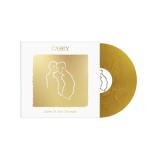
10th Anniversary Edition auf metallic goldenem Vinyl. Mit neuem Artwork und A2 Lyric/Poster Insert. Casey (South Wales) drücken dem Hardcore aus UK ihren eigenen Stempel auf . Mit berechtigten Vorschusslorbeeren (1. Single bereits auf Heavy Rotation bei BBC1) geht die Band Ende September mit ihrem Debüt-Album an den Start und im November auch gleich mit guter Begleitung (Being As An Ocean & Capsize) auf Deutschland Tour. Ihr Sound hat Punk von LA DISPUTE, Hardcore von TOUCHE AMORE und das Feeling von LETLIVE verinnerlicht!
Death Is Not The End present the first volume in a survey of a form of Brazilian country music known as música caipira ("hillbilly music") - a stripped-back forerunner to música sertaneja, the Brazilian equivalent to US country & western which in it's contemporary form has come to dominate the domestic music industry in recent decades. This collection covers some of the earliest recordings made by the pioneering folklorist Cornélio Pires at the end of the 1920s, through to records from the 30s, 40s & 50s and the beginning of the 60s.
Somewhat rooted in Portuguese troubadour folk traditions, música caipira is typically performed by a duo singing in parallel thirds and sixths, drawing upon a Portuguese-Brazilian style known as moda de viola - with the viola being the viola caipira, a Brazilian-style ten-string guitar that is the core instrument of the music. Born out of the "outback"-style region in north-eastern Brazil, these songs tell stories of pain, love, loss & betrayal - often backed by homemade guitars using invented tunings. Away from the polished pop country & western-stylings of the sertaneja, these recordings could be viewed as the Brazilian equivalent to the roots music of the American dustbowl or Appalachia.
"Every day, the skies of New York City fill up with unseen clouds of radio signals spreading over immigrant neighborhoods. These culturally charged clouds of radio energy burst with a flow of content that continually shifts and transforms, following the lifecycle and rhythm of the streets.
Sarah de Scisciolo, known as the Brutalist Poet, presents a new project born from her collabora%on with
Alex Neri, long%me member of Planet Funk and a leading figure in the Italian electronic music scene.
Produced by Alex Neri and released on vinyl, the single emerges from the encounter between Sarah’s
poetry and performa%ve dimension and Neri’s electronic research. The project blends spoken word, vocals
and electronic music, transforming words into sound and crea%ng an original dialogue between
performance and club culture.
This collabora%on brings Sarah de Scisciolo’s poe%c language into the world of electronic music and vinyl,
shaping a release conceived for both audiences and professionals within the contemporary music scene.
PRODUCED BY ALEX NERI AND MANNIE FOR TENAX RECORDINGS
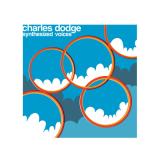
The compositions recorded here are a product of work with computers in synthetic speech, song and vocal sounds and were created between 1972 and 1975. The music was realized on two different computer music systems and takes advantage of, and attempts to extend and explore their features. The system employed to realize speech songs was created at the Bell Telephone Laboratories for research in synthetic speech and speech communication. Since the system was not designed for musical purposes, its limitations were severe and its musical use a great (and often rewarding) challenge. The system used for In Celebration and The Story of Our Lives was designed with the expressed purpose of creating synthetic musical voices, and was therefore much better suited to the task at hand. As with any high technology project, there was extensive collaboration in the production of the works.
The works on this disk are called computer music because the sounds were created numerically in a computer before reaching magnetic tape and loudspeakers. The computer did not compose the music. However, it was only used as a sound synthesis and analysis medium. In order to hear the sounds which are represented in the computer as successions of numbers it was necessary to attach a digital-to-analogue converter to the computer. The converter transformed the succession of numbers into a fluctuating voltage which was recorded directly on to audio tape.
The technique used to create the synthetic voices is called speech synthesis-by-analysis. For this method of speech synthesis, only those words, phrases and sentences which have been spoken into the computer previously (via an analogue-to-digital converter) may be synthesized. First the digitally-recorded speech is analyzed by programs which extract the attributes (parameters) of the speech for short time segments (.01 sec.). From these parameters the speech may be recreated in a form which resembles the original recording very closely. But for musical purposes the parameters are most often altered before synthesis. It is possible, for example, to change the natural pitch contour of the speech into a melodic line or to change the speech speed without altering the natural pitch level.
The variety of musical patterns which may be created from the analytic parameters is limited only by the composer's imagination. Most of the speech sounds on the recording were created by changing the pitch and duration attributes of the original on resynthesis, but for a few, the resonances (the formants) of the speech were altered as well. The voice of the book in The Story of Our Lives was created by replacing the program which simulates the sound of the human vocal cords with one consisting of 64 sine tones glissandoing at different rates. All the textures in which more than one voice is heard were obtained by mixing the synthetic voices together digitally.
Brian Fallon reunites with producer Butch Walker (Taylor Swift, Fall Out Boy, Green Day) for Not Bad for New Jersey, his first collection of original solo songs since 2020's Local Honey. Fallon is best known as the frontman of The Gaslight Anthem (The '59 Sound, Handwritten). Featuring Brandon Flowers (The Killers), Phil Collen (Def Leppard), Lori McKenna, Donovan Woods, and guitarist Marc Ribot (Tom Waits, Elvis Costello, Robert Plant). Out September 10, 2026. Eleven tracks of high-energy, power-pop-leaning rock about underdogs turning setbacks into rocket fuel.
It feels like a lifetime ago that the first Rat Cage demo tape was spat into the Hardcore Punk underground. Maybe that’s because for the past 10 years Bry Suddaby has been relentlessly chucking out a slew of pummelling records, arming many Punks worldwide with a soundtrack to survival in the modern age of death and destruction.
Fourteen bloody releases later, the third RAT CAGE LP comes crashing in as the state of global horror reaches a grave pinnacle. In true RAT CAGE fashion, the drums relentlessly hammer away under rollercoaster riffs, while Bry’s viciously cynical bark spills the trials and tribulations of trying to get by in 2026.
For the uninitiated, RAT CAGE pulls influence from 80’s Northern European Punk like MISSBRUKARNA or APPENDIX, contemporary Swedish sweet spot Hardcore like HERÄTYS or FYFAN, ripping USHC ala POISON IDEA or OUT COLD, while naturally adding a classic British injection of GBH or THE VARUKERS.
As always, there’s the constant apprehension that you never quite know what’s around the next bend, and with ‘Not Asking for Much’ Bry has cast the net even further. There’s moments that get as heavy as BASTARD, as melodic as the UK SUBS, and even a title track that gets as rocking as the PINK FAIRIES. All amounting to a distinctive and characterful sound that’s unmistakably RAT CAGE.
With little to be hopeful about as we all suffocate within the authoritarian nightmare, this LP could once again be your beacon of fire. So, light the match and burn alone at maximum volume.
Seit 2019 schrauben FOUR BLACK LUNGS behutsam an ihrem Sound, feilen an Melodien und Songs, die sich sofort vertraut anfühlen, ohne jemals beliebig zu werden. Die vier neuen Stücke klingen wie der erste Kaffee am Morgen: warm, vertraut und voller Energie. Unter der eingängigen Oberfläche stecken jedoch Geschichten, die mit einer ordentlichen Portion Weltschmerz und Hoffnung erzählt werden. Midwestern Pop-Punk trifft auf Heartland Rock und große Melodien.
Neun Songs, gepresst auf 100 einseitig bespielte 12 Inches mit bedruckter B-Seite. New tricks by old pricks. Schnell, dreckig und verdammt eingängig - Gen-Y-Punk-Hymnen für Fans von Amphetaminen und all den großartigen Bands, deren Name mit "The" beginnt. Das namenlose Debüt ist der perfekte Einstieg in die Welt von Cheap Shots. Neun Songs voller Energie, rotziger Hooks und Melodien, die sich sofort im Kopf festsetzen. Die Band verbindet Punk, Garage und Power Pop zu einem Sound, der gleichermaßen vertraut wie eigenständig wirkt - als hätte man ihn schon einmal gehört, ohne genau sagen zu können, wann:
Die Debüt-EP mit vier Songs des bayerischen Quartetts Morgan Pines, besetzt mit (ehemaligen) Mitgliedern von Point Baker, Irish Handcuffs und Worst Advice. Musikalisch bewegt sich die Band irgendwo zwischen Indie, Heartland-Rock, Country und Punk - mit eingängigen Melodien, warmen Harmonien und genau der richtigen Portion Melancholie. Wer Bands wie Limbeck, Chamberlain oder Racquet Club schätzt, sollte hier unbedingt reinhören.
More than 25 years after the start of collaboration with Acid Mothers Temple mastermind Makoto Kawabata (including the INUI series and the classic Kawabata/Youngs release) comes the first proper VHF LP by the prolific quintet. One of an occasional series of “minimalism” inspired LPs by the group, “In A Not C” is a not a barely changing drone, but a wild ride with the band in full flight, rushing along in a glorious swirl of psychedelic madness. Like the band’s well-known 2001 version of Terry Riley’s “In C,” the group uses a small cell of repeating sound as a jumping off point and then gradually revs up to maximum velocity. The current AMT lineup has produced a series of fun and unique variants on the band’s longstanding signatures, with the addition of vocalist/guitarist Jyonson Tsu and drummer Satoshima Nani providing a lightness and nimbleness of touch that resets the context of the band’s usual blazing electric guitar and burbling synth. Both sides here build to a multi-layered crescendo, with loops of Tsu’s gentle vocals competing with frenetic drums, whistling electronics, and guitar that alternates trebly feedback and soft arpeggios. Cut by Golden, pressed in Chicago at Smashed, first pressing on clear vinyl.
DINTE present a cassette-only issue of an NTS radio broadcast from back in early 2019; a cross-continental trip through instrumental surf, short-run garage rock, and space-age psych oddities from across the globe, incl. groups from the US, UK, Peru, Angola, Thailand, Japan, Indonesia, India & Singapore among others.
The compositions recorded here are a product of work with computers in synthetic speech, song and vocal sounds and were created between 1972 and 1975. The music was realized on two different computer music systems and takes advantage of, and attempts to extend and explore their features. The system employed to realize speech songs was created at the Bell Telephone Laboratories for research in synthetic speech and speech communication. Since the system was not designed for musical purposes, its limitations were severe and its musical use a great (and often rewarding) challenge. The system used for In Celebration and The Story of Our Lives was designed with the expressed purpose of creating synthetic musical voices, and was therefore much better suited to the task at hand. As with any high technology project, there was extensive collaboration in the production of the works.
The works on this disk are called computer music because the sounds were created numerically in a computer before reaching magnetic tape and loudspeakers. The computer did not compose the music. However, it was only used as a sound synthesis and analysis medium. In order to hear the sounds which are represented in the computer as successions of numbers it was necessary to attach a digital-to-analogue converter to the computer. The converter transformed the succession of numbers into a fluctuating voltage which was recorded directly on to audio tape.
The technique used to create the synthetic voices is called speech synthesis-by-analysis. For this method of speech synthesis, only those words, phrases and sentences which have been spoken into the computer previously (via an analogue-to-digital converter) may be synthesized. First the digitally-recorded speech is analyzed by programs which extract the attributes (parameters) of the speech for short time segments (.01 sec.). From these parameters the speech may be recreated in a form which resembles the original recording very closely. But for musical purposes the parameters are most often altered before synthesis. It is possible, for example, to change the natural pitch contour of the speech into a melodic line or to change the speech speed without altering the natural pitch level.
The variety of musical patterns which may be created from the analytic parameters is limited only by the composer's imagination. Most of the speech sounds on the recording were created by changing the pitch and duration attributes of the original on resynthesis, but for a few, the resonances (the formants) of the speech were altered as well. The voice of the book in The Story of Our Lives was created by replacing the program which simulates the sound of the human vocal cords with one consisting of 64 sine tones glissandoing at different rates. All the textures in which more than one voice is heard were obtained by mixing the synthetic voices together digitally.