Search:not u



- 1: Eaten By Snakes - A Pillar Of Salt
- 2: Lone Wolf - A Pillar Of Salt
How much love for The Thermals can you squeeze onto a 7"? Turns out: quite a lot. Two bands brought together by their shared love of The Thermals, each putting their own spin on "A Pillar of Salt." It goes without saying that Hutch Harris took care of the artwork, right? Released on the 20th anniversary of The Body, The Blood, The Machine, this split 7" is our little tribute to a record that still means the world to us. Here"s your future!
expected to be published on 21 Aug

At the Moers Festival 2018, OXBOW got together with Peter Brötzmann to deliver a memorable performance, bringing out the best of two legends in their very own genres while playing old and new Oxbow songs together. Oxbow, formed in 1988 in San Francisco, plays a blend of noise rock, avant garde jazz, musique concrè te and blues, creating intimate soundscapes, with overtones of paranoia, revulsion and exaltation. They released a couple of cult albums, eg. on. Neurot, Hydra Head. Peter Brötzmann , active since the 60s with his distinct saxophone sound, is one of the key musicians in European Free Jazz. ,I think we have at least one thing in common: a certain kind of energy, which we could share and where we will meet." Peter Brötzmann *** Peter Brötzmann -saxophone / Eugene S. Robinson - vocals / Niko Wenner - guitars, piano / Dan Adams - bass guitar / Greg Davis - drums
Last delivered 55 days ago
available to reorder, subject to availability
- 1: Side A
- 2: Side B
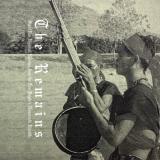
Gary Sullivan's Bodega Pop project returns to DINTE with a cassette-only collection of traditional sounds plucked from CDRs found in the night-markets of Savannakhet, Vientiane, and Luang Prabang.
"In Lao PDR, music was seemingly everywhere. Walking through an open field outside Savannakhet to the sound of someone playing a khaen on a distant porch, the bracing rush of electronic molam from of one of Vientiane’s many aging malls, the awkward blending of the blind so u player’s voice with the bustling sounds of Luang Prabang’s night market.
It was in that UNESCO World Heritage Site that I found most of the CDs and CD-Rs from which I’ve ripped the tracks for this compilation. I’m almost certain I picked up a thumb drive at the night market that held many hours of additional music that could have been included, but if so, I’ve misplaced it, lost it for good, or simply misremember purchasing it in the first place. What I do remember is that these discs were literally the last copies in the cafe, museum, bookstore, and night market where I bought them, and not all of them played all the way through without sonic deterioration.
The sounds compiled here play in stark contrast to the more contemporary recordings I found in Laos, most of which featured some form of upbeat digital workstation molam or children’s songs. In addition to the ever-present khaen, this collection includes recordings of the sanai, a single-reed instrument fashioned from a water buffalo horn, the ceremonial khong nyai gong, the pi and similar free-reeds, and at least a dozen more traditional instruments played by Lao and ethnic minority artists. While some of these tracks were laid down in Vientiane or Luang Prabang, most were recorded near where the artists lived, from the legendary Vat Phou in the far south to the former Pathet Lao capital Xam Neua in the northeast.
Unlike Laurent Jeanneau’s more focused Lao collections for Akuphone and Sublime Frequencies, which remain among my favorite albums of all time, the present cassette-only selection is literally all over the PDR map. The sequencing is entirely in response to rhythm and texture and includes recordings from the 1970s, 80s, 90s, and early aughts. This may frustrate those with more of an ethnomusicology bent, but my hope is that the listener experiences something akin to wandering for the first time through this majestic country, encountering the last copies of forgotten recordings one after another, and hearing in these remains fragments of the past and a living musical landscape."
expected to be published on 14 Aug
- 01: Side A
- 02: Side B
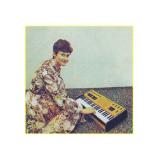
qorakitobchi aka Anvar Kalandarov is a music archaeologist, musician and producer from Tashkent, Uzbekistan whose work is dedicated to uncovering forgotten sounds from across Central Asia. In recent years he has emerged as a singular voice documenting the region’s musical heritage, co-compiling Synthesizing the Silk Roads for Ostinato Records and curating Digging Central Asia: Musical Archaeology Along the Silk Road split release for Death Is Not The End, alongside presenting his own Maqom Soul imprint.
For this mixtape, Kalandarov turns his attention to the synth-pop, disco and electronic music that flourished across Central Asia during the 1980s and 1990s. Drawn from rare vinyl records & private archives, this selection explores a period when Soviet modernity, regional traditions and emerging synthesiser sounds merged to create a uniquely Central Asian vision of the future. From Uzbek disco and Tajik synth-pop to lesser-known oddities, the mix offers a glimpse into a musical world that remains largely unexplored outside the region.
expected to be published on 07 Aug

- 01: The Happy Sailor
- 02: Blooming Youth
- 03: Weeping Pilgrim
- 04: There We Our Jesus Shall Adore
- 05: Bound for Canaan
- 06: Cuba
- 07: Firm Foundation
- 08: Florida
- 09: Desire For Piety
- 10: Ragan
- 11: Struggle On
- 12: Ninety-Fifth Psalm
- 13: Fallen by the Way
- 14: Happy Home
- 15: Coronation
- 16: The Dying Boy
- 17: The Fathers Boundless Love
- 18: The Christians Flight
- 19: Give Me Just a Little More Time
Recorded April 17 and 18, 1993, at the Union Grove Baptist Church, Ozark, Alabama.
The Wiregrass Singers' Dewey Williams began learning the shape-note tradition in his childhood. He studied under Judge Jackson, who authored the landmark 1934 hymnbook The Colored Sacred Harp. In 1971, Williams formally organized The Wiregrass Sacred Harp Singers to preserve the music full-time. This unified troupe began touring nationally and leading workshops, which ultimately launched them onto stages at the Smithsonian and Newport folk festivals up until Williams' passing in 1995 when the group disbanded. The African-American Sacred Harp tradition in the Wiregrass region has steeply declined since the start of the 21st century, due to an aging generation of singers, and today it is largely sustained through archival preservation and occasional multi-book singing meetups.
This raw recording, made at the Union Grove Baptist Church, Ozark in mid-April 1993 finds the group singing from B. F. White’s The Sacred Harp (1844), which together with his brother-in-law William Walker’s Southern Harmony (1835) formed the musical backbone of generations of Southern music and Southern musical styles.
"On almost any Sunday between the months of March and October, the season most conducive to travel and outdoor dinner-on-the- grounds, Sacred Harp devotés join with fellow songsters at the County Line Church in Slocomb, or the Mount Sinai Church in Henry County, or the Union Grove Baptist Church in Dale County, or at any one of a dozen or so churches in the southeast Alabama counties of Barbour, Coffee, Dale, Geneva, Houston and Pike, to form the square and sing fa-sol-la. Approximately fifteen African-American Sacred Harp singings occur annually in the Wiregrass region of southeast Alabama. A singing tradition characteristically associated with white culture in the Deep South, southeast Alabama has enjoyed a vibrant African-American Sacred Harp tradition for well over a century.
On a day of a typical African-American Sacred Harp Singing, the participants arrive casually in the late morning, seat themselves in the square according to voice part, and begin to sing. A dinner break occurs in the early afternoon, and the singers enjoy a covered-dish "dinner-on-the-grounds" (or in the church basement) prepared by the women. The most intense and emotional singing typically occurs after the dinner break. Each singer takes a turn leading the song of his choice. He walks to the middle of the square, calls out the song's page number and waits for the designated tuner to key the song. Singers are discouraged by the other singers from repeating a song that has already been sung, or "used." This proscription is often dispensed with, however, if the singer is particularly young, particularly old, or if the song has special significance to the individual song leader (perhaps the favorite song of a recently deceased relative).
Every singer is given an opportunity to lead a song. Often, older or more infirm singers will request younger singers to lead their songs for them. The motions of the song leaders are highly stylistic and often emotional. Young children are taught in singing school to mark time with their right arm while holding the book in their left. Typically, a singer will stand in place at the center of the square while leading the singing of the notes. When he begins to lead the lyrics portion of the song, he will often begin to "walk time," rhythmically pacing from one side of the square to the other, being careful never to turn his back on the tenor section. This "walking time" is unique to the African-American tradition. As a singer grows more confident he develops his own distinctive leading style. During fuguing songs in particular, he may gesture to each section of the square as its part joins in. Skilled song leaders often elicit applause or other emotional responses from the group. Occasionally a singer may fall into a state of spiritual ecstasy and "get happy." The episode might include a personal testimonial followed by a repeat of the last verse or refrain from the previous song. The singings break up around 5 P.M."
—Henry Willett, 1997 credits
expected to be published on 07 Aug

Available to reorder, subject to availability

- 1: HOW WILL YOU FEEL
- 1: 2INVOLUNTARY HAZE
- 1: 3BODIES
- 1: 4HEAVY, WHY?
- 1: 5GIRAFFE
- 1: 6SPADES
- 1: 7VOID TO BE
- 1: 8FADE
- 1: 9MOURNING AFTER
- 1: 0POPPYFIELDS
Als Blackwater Holylight vor drei Jahren ihre Heimatstadt Portland, Oregon, verließen, war es ihr Ziel, der Tristesse des pazifischen Nordwestens und dem beruhigenden Komfort des Vertrauten zu entfliehen. Mit dem Ziel, das sonnigere Klima von Los Angeles zu genießen, fand sich die Band nicht nur in einer wärmeren Umgebung wieder, sondern auch in einer völlig neuen Landschaft - einer ohne Arbeitsplätze, langjährige Freundeskreise und die bequeme Zuflucht alter Gewohnheiten. Und genau hier, unbelastet von der Zufriedenheit der Sicherheit, begann Blackwater Holylight fleißig an ihrem vierten Album ,Not Here Not Gone" zu arbeiten. Wie schon ihre früheren Werke beschäftigt sich ,Not Here Not Gone" mit der Dualität von Licht und Dunkelheit - bedrohliche Riffs bilden das Fundament für betörende Melodien, dichte Wände aus Shoegaze-Gitarren paaren sich mit luftig-leichten Synthesizern, und schwere Themen werden durch sirenenhafte Gesänge vermittelt. Im Laufe des Albums verspürt der Zuhörer mal ein Gefühl der Stärke, mal ein Gefühl der Verletzlichkeit. Wie Schlagzeugerin Eliese Dorsay es beschreibt: ,In einigen Songs sind wir die Raubtiere, in anderen die Beute." Die Gegenüberstellung von Selbstvertrauen und Unsicherheit ist nirgendwo so deutlich zu spüren wie bei einer lebensverändernden Entscheidung, was vielleicht erklärt, warum der Umzug der Band ihr Studium der Kontraste auf ,Not Here Not Gone" zu neuen Höhenflügen intensiviert hat. ,Not Here Not Gone" wurde im Sonic Ranch außerhalb von El Paso, Texas, von Sonny Diperri (Narrow Head, DIIV, Emma Ruth Rundle) aufgenommen, wodurch die Band erneut ihre Komfortzone verlassen und sich an einem Ort isolieren konnte, an dem sie sich ausschließlich auf ihre Kunst konzentrieren konnte. Das Ergebnis ist das Kronjuwel von Blackwater Holylights Diskografie - eine reichhaltige und eindringliche Studie in tonalen Hell-Dunkel-Kontrasten, in der das Licht seinen Weg aus den Schatten findet.
expected to be published on 31 Jul

- 01: Meu Tormento (My Torment)
- 02: Fado do Passado (Fado of the Past)
- 03: O Meu Filho (Oh My Son)
- 04: Duas Glórias (Two Glories)
- 05: Negros Tracos (Black Tracks)
- 06: Desilusao (Disappointment)
- 07: Saudades Que Matam (Miss That Kill)
- 08: Um Desgosto (A Digust)
- 09: O Filho Ceguinho (The Blind Son)
- 10: A Minha Vida (My Life)
- 11: Fado Sem Pernas (Fado Without Legs)
- 12: Fado Dois Tons (Two Tone Fado)
- 13: A Desgarrada (The Torn)
- 14: Fado de Mouraria (Fado of Mouraria)
- 15: Fado da Alfama (Fado of the Alfama)
Death Is Not The End issue 15 heartbreaking archival fado recordings from Ercilia Costa - made in Madrid in 1930, accompanied by seminal guitarist Armandinho. One of the early stars of fado, Ercilia Costa was the first to take the music overseas to emigrant Portgugese communities.
expected to be published on 31 Jul

- A1: Hordes of Bats
- A2: Out of the Mausoleum
- A3: Dracula's Curse
- A4: Morgenstern / Iron Strike
- A5: Summoned to Kill Side
- B6: The Pale Remains of Time
- B7: Not Midnight Yet
- B8: Solomonari
- B9: Sepulchral Majesty
- B10: Echoes from the Fights
Having made their back catalog available to a wider public via High Roller Records, Mexican speed and thrash metal force Phantom will release their third full-length assault „Not Midnight Yet“ via the label. Recorded and mixed once again with Héctor “Northen” Ibarra at Nehtron Studios in Guadalajara and mastered by Patrick W. Engel at Temple Of Disharmony in Germany, this new album captures the band at their most technical and dynamic. “I am never fully satisfied with my records and I try to push forward and expand our boundaries with every new material—without changing the soul and core of what Phantom stands for: Old School Heavy Metal,“ explains mastermind J.C. García. „This record puts together very well everything that we are. Because of that, I think this is a juggernaut of an album.” Tracks such as ‘Hordes Of Bats’ deliver relentless speed and riff-driven aggression, while ‘Dracula’s Curse’ and the title track lean into powerful midtempo dynamics and complex structures. ‘The Pale Remains Of Time’ stands out as one of the album’s most ambitious moments, combining melodic vocals, clean guitar interludes and subtle progressive touches. “I try to break the established formula and add more textures and layers while keeping the old school spirit,” J.C. states. “It’s a very personal record and a work I’m very proud of. I think this is the most solid Phantom record to date.” With “Not Midnight Yet”, Phantom sharpen their identity and deliver a powerful, atmospheric statement—proof that the night is far from over.
expected to be published on 24 Jul

- NTRO (FEAT. SNOOP DOGG)
- USE ME
- SORRY
- SAME OL‘ LOVE
- YOU (FEAT. BJ THE CHICAGO KID)
- FOR THE VIEWS
- STARE AT ME
- STINGY
- STINGY INTERLUDE ++
- CAN‘T LET GO
- NIRAJ
- SMILE
- GOOD TA ME
- THAT‘S ALL I NEED
- BLOWING WIND AROUND
Tape[22,27 €]
Jane Handcock transforms heartbreak into clarity with her new album, It’s Me Not You. Reframing the familiar breakup phrase, this release explores self-awareness,
accountability, and emotional growth with honesty and depth.
Blending atmospheric production with a steady rhythmic drive, Handcock delivers a dynamic vocal performance that moves from intimate reflection to confident,
resonant moments. The result is a mature, empowering album that captures the complexity of modern relationships.
Highlights include themes of irresistible attraction and A Beautiful Woman, a lover’s anthem that sets the tone for the album’s grown-and-sexy vibe.
expected to be published on 24 Jul

Jane Handcock transforms heartbreak into clarity with her new album, It’s Me Not You. Reframing the familiar breakup phrase, this release explores self-awareness,
accountability, and emotional growth with honesty and depth.
Blending atmospheric production with a steady rhythmic drive, Handcock delivers a dynamic vocal performance that moves from intimate reflection to confident,
resonant moments. The result is a mature, empowering album that captures the complexity of modern relationships.
Highlights include themes of irresistible attraction and A Beautiful Woman, a lover’s anthem that sets the tone for the album’s grown-and-sexy vibe.
expected to be published on 24 Jul

expected to be published on 24 Jul

The very first vinyl release from the French event Ready or Not has officially landed.
A fresh new chapter for the French hardcore movement, straight from the dancefloor onto wax.
Last delivered 82 days ago
available to reorder, subject to availability
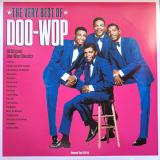
- A1: The Penguins – Earth Angel
- A2: Little Anthony & The Imperials – Tears On My Pillow
- A3: The Earls – Remember Then
- A4: The Dells – Oh What A Night
- A5: The Wrens – Come Back My Love
- A6: The Shells – Baby Oh Baby
- A7: The Five Satins – In The Still Of The Night
- A8: The Orioles – Crying In The Chapel
- B1: Gene Chandler – Duke Of Earl
- B2: The Clovers – Love Potion No.9
- B3: The Cadillacs – Speedoo
- B4: The Heartbeats – A Thousand Miles Away
- B5: The Monotones – Book Of Love
- B6: The Dubs – Could This Be Magic
- B7: Frankie Lymon & The Teenagers – I'm Not A Juvenile Deliquent
- B8: The Marcels – Blue Moon
- C1: The Silhouettes – Get A Job
- C2: Dion & The Belmonts – A Teenager In Love
- C3: Curtis Lee And The Halos – Pretty Little Angel Eyes
- C4: The Flamingos – I Only Have Eyes For You
- C5: The Volumes – I Love You
- C6: The Moonglows – Sincerely
- C7: The Duprees – You Belong To Me
- C8: The Clovers – Devil Or Angel
- D1: The Danleers – One Summer Night
- D2: The Dell-Vikings – Come Go With Me
- D3: The Crew Cuts – Sh-Boom
- D4: The Regents – Barbara-Ann
- D5: Dion & The Belmonts – I Wonder Why
- D6: The Earls – Life Is But A Dream
- D7: Curtis Lee And The Halos – Gee How I Wish You Were Here
- D8: The Mello Kings – Tonite, Tonite
- E1: Frankie Lymon & The Teenagers – Why Do Fools Fall In Love?
- E2: The Gladiolas – Little Darlin
- E3: The Rays – Silhouettes
- E4: The Dominoes – Sixty Minute Man
- E5: The Cleftones – Little Girl Of Mine
- E6: The Jive Five – My True Story
- E7: Rochell & The Candles – Once Upon A Time
- E8: The Capris – There's A Moon Out Tonight
- F1: The Skyliners – Since I Don't Have You
- F2: The Crests – Sixteen Candles
- F3: The Platters – Only You (And You Alone)
- F4: The Crows – Gee
- F5: The Royal Jesters – Love Me
- F6: The Turbans – When You Dance
- F7: The Coasters – Zing! Went The Strings Of My Heart
- F8: Little Caesar & The Romans – Those Oldies But Goodies (Remind Me Of You)
expected to be published on 23 Jul

Last delivered 82 days ago
available to reorder, subject to availability

- LUMINUM
- IN THE KINGDOM WHERE EVERYTHING DIES, THE SKY IS MORTAL
- CARRIONSHINE
- ADESTE INFIDELIS
- THE CURSE OF THE GREAT
- THE FRANTIC PACE OF DYING
- KEEPING THE CADAVER DOGS BUSY
- ANGELSKINGARDEN
- THE PESTILENCE THAT WALKETH IN DARKNESS (PSALM 91: 5-8)
- THE END
- ENDLESS CEMETERY
Reissue of the fifth studio album by Canadian technical death metal masters Cryptopsy, originally released in 2005. Notable for bringing back original vocalist Lord Worm and pushing their complex, brutal style with an experimental edge. The title is interpreted by some as implying "Once Was Not Enough", suggesting a continuation of their extreme sound, a concept explored through intricate riffs and intense drumming.
expected to be published on 17 Jul

Finnish multi-instrumentalist Simo Hakalisto makes mosaic music of strings, bowls, bells, reeds, wind, water, and obscure electronics, threaded in subtle currents of color and texture. The title of his latest, Toinen Luonto (Finnish for “second nature”), alludes equally to Shakali’s earthen, tactile soundworld and Hakalisto’s deepening comfort with his craft.
The album’s eight songs feel coaxed as much as composed, a web of resonances set in motion and allowed to simmer, build, or billow. Vibrations and silences unspool and intertwine, alternately pointillist and diffuse, attuned to some hidden harmony of the spheres. In addition to his own repertoire of rare instruments (including a 36-string kantele, built by Hakalisto’s grand-uncle), several notable collaborators contributed to Toinen Luonto: saxophonist Julian Overall; Hakalisto’s partner in the duo Lunar Horns, Timo Juntunen, playing udu and percussion; American experimentalist Roy Werner; and Belgian ambient flute samplist Les Halles.
expected to be published on 10 Jul
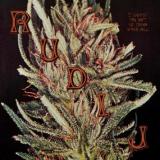
Straight from the weedy fields of swampville Bruxelles we bring you 8 ‘tranches de vie’ of deep zone-hall by weirdtronic bass veteran Michael Crabbé’s best fitting sound costume to date: the mighty Rudi J! You might know him from earlier outfits but that’s not the main issue here. Rudi J is!
When this swamp thing touches the pads, it’s off-road after three seconds, even if you’re in the middle of Europe’s capital. Mixing analog dirt and digital sound bits in a very loose and personal take on dancehall, we’re pretty far away from the dance floor but definitely swinging. It’s a trippy affair wandering around concrete flowers with a deep ambient flavor, but it’s edgy.
A hot summer fever dream following his own lusty path, full of life and wonder but with something sinister hiding around every corner. Often reaching for the stars, a deeper shade of bass keeps things nicely grounded. These sounds are built with a sound system in mind and bass culture at heart. Even if you can definitely surf on it from your couch, picking out all of its ear-pricking details, it will very much come alive on a big sound.
A layered affair with almost jazzy and orchestral elements peeping through the stereo-field, spectral and dissonant but also playful. Like early dubstep, some of these tunes can destroy a clubsound, keeping you skunking out in pedestrian mode and snorting up the atmospherics, finally forgetting about that damn phone.
Last delivered 3 months ago
available to reorder, subject to availability