Not many heroes of indie folk have won an Oscar or created the basis of a successful stage musical, but Glen Hansard is an artist who can wear both of those feathers in his cap. As a member of the Frames and the Swell Season, Hansard won acclaim for his literate, intelligent, and passionate songwriting and his nuanced vocals, and he"s gone on to win similar accolades as a solo artist. Hansard first gained an audience for the limber but emphatic indie rock he created as a member of The Frames, then gained international fame with fellow singer and songwriter Markéta Irglová in the duo The Swell Season, whose emotionally open, primarily acoustic indie folk became the centerpiece of the award-winning independent romantic drama Once. After going out on his own with his 2012 solo debut, Rhythm and Repose, Hansard has shown a stylistic diversity as he embraced the sound of "70s singer/songwriters on 2015"s Didn"t He Ramble, vintage soul on 2018"s Between Two Shores, and an eclectic swing between subtle folk and noisy indie rock on 2019"s This Wild Willing. Glen Hansard now presents All That Was East Is West Of Me Now, his first solo album in 5 years. The album demonstrates the Oscar-winning singer-songwriter"s unique ability to blend Irish folk with modern rock & the punch of his storied live shows.
Not many heroes of indie folk have won an Oscar or created the basis of a successful stage musical, but Glen Hansard is an artist who can wear both of those feathers in his cap. As a member of the Frames and the Swell Season, Hansard won acclaim for his literate, intelligent, and passionate songwriting and his nuanced vocals, and he"s gone on to win similar accolades as a solo artist. Hansard first gained an audience for the limber but emphatic indie rock he created as a member of The Frames, then gained international fame with fellow singer and songwriter Markéta Irglová in the duo The Swell Season, whose emotionally open, primarily acoustic indie folk became the centerpiece of the award-winning independent romantic drama Once. After going out on his own with his 2012 solo debut, Rhythm and Repose, Hansard has shown a stylistic diversity as he embraced the sound of "70s singer/songwriters on 2015"s Didn"t He Ramble, vintage soul on 2018"s Between Two Shores, and an eclectic swing between subtle folk and noisy indie rock on 2019"s This Wild Willing. Glen Hansard now presents All That Was East Is West Of Me Now, his first solo album in 5 years. The album demonstrates the Oscar-winning singer-songwriter"s unique ability to blend Irish folk with modern rock & the punch of his storied live shows.
"Stratosphere", Dusters Debütalbum aus dem Jahr 1998, das man sich am besten schon im Mutterleib anhört, hat die erste Welle des Slow Core gleichzeitig beendet und neu erfunden. Eine vierspurige Traumlandschaft, die die Nachbarn aufweckt und sie dann wieder in den Schlaf wiegt. Trübe, arpeggierte Gitarren legen sich über einen bedächtigen Schlagzeuger, der keinen wirklichen Platz hat, während halb hörbare Vocals vor dem Unwohlsein der Jahrtausendwende warnen und den Hörer subtil ermutigen, "rock out, rock out, rock out, rock out." Diese foliengeprägte und nummerierte 25.Jubiläumsausgabe erscheint auf LP, CD und Kassette. Die LP-Editionen werden auf 180G-Vinyl gepresst und enthalten ein Textblatt und ein Poster. Die CD- und Kassette-Editionen kommen mit einem zusätzlichen Track, 'Echo Bravo'.
out of Stock
Last delivered 3 years ago available to reorder, subject to availability
Formed in the spring of 2020, Los Angeles-based Sacred Skin is the creative duo of Brian DaMert and Brian Tarney. In short order, the pair has shown a nearly unmatched ability to create anthemic pop music steeped in romanticism and melancholy and drenched in layers upon layers of new wave nostalgia. Backed by an impressive string of singles throughout 2021 and into the following year, the band released their highly anticipated full-length debut, The Decline of Pleasure, in May of 2022 to much fanfare. Armed with vintage gear such as the Sequential Circuits Prophet-VS & E-mu Emulator II and buoyed by strong songwriting, expert production work, and DaMert’s emotionally-charged vocals, Sacred Skin has delivered a modern masterpiece of an album that belongs as much to the ‘80s as it does the present day. An album worthy of standing next to the strongest efforts of idols like Duran Duran, INXS, Peter Gabriel, Depeche Mode, and New Order. An album that has captured the hearts of so many already and will no doubt continue to do so for years to come.
Midnight Mannequin Records is proud to present this deluxe reissue of The Decline of Pleasure, pressed for the first time on 2xLP colored vinyl and housed in a gatefold jacket complete with OBI strip. Newly remastered and cut at 45 rpm for exceptional sound quality, this is Decline like you’ve never heard it before. Featuring the bonus tracks Killer’s Mind and a remix of fan favorite Earthbound by fellow synth pop disciples Nuovo Testamento.
Chet Baker stands alone among modern Jazzmen in having achieved major success both as a player and as a singer. On three numbers featured here; Do It The Hard Way, Dancing On The Ceiling and It Could Happen To You, Chet introduces his own version of Scat-singing following in the tradition of Louis Armstrong. The numbers selected for this LP are standards of the sort that lend themselves particularly well to what might as well be called the "swinging romantic" approach. Most of them manage to fall into that rare and attractive category of songs that everybody knows and loves but have not, as yet, been done to death by over-frequent performance.
"Stratosphere", Dusters Debütalbum aus dem Jahr 1998, das man sich am besten schon im Mutterleib anhört, hat die erste Welle des Slow Core gleichzeitig beendet und neu erfunden. Eine vierspurige Traumlandschaft, die die Nachbarn aufweckt und sie dann wieder in den Schlaf wiegt. Trübe, arpeggierte Gitarren legen sich über einen bedächtigen Schlagzeuger, der keinen wirklichen Platz hat, während halb hörbare Vocals vor dem Unwohlsein der Jahrtausendwende warnen und den Hörer subtil ermutigen, "rock out, rock out, rock out, rock out." Diese foliengeprägte und nummerierte 25.Jubiläumsausgabe erscheint auf LP, CD und Kassette. Die LP-Editionen werden auf 180G-Vinyl gepresst und enthalten ein Textblatt und ein Poster. Die CD- und Kassette-Editionen kommen mit einem zusätzlichen Track, 'Echo Bravo'.
"Stratosphere", Dusters Debütalbum aus dem Jahr 1998, das man sich am besten schon im Mutterleib anhört, hat die erste Welle des Slow Core gleichzeitig beendet und neu erfunden. Eine vierspurige Traumlandschaft, die die Nachbarn aufweckt und sie dann wieder in den Schlaf wiegt. Trübe, arpeggierte Gitarren legen sich über einen bedächtigen Schlagzeuger, der keinen wirklichen Platz hat, während halb hörbare Vocals vor dem Unwohlsein der Jahrtausendwende warnen und den Hörer subtil ermutigen, "rock out, rock out, rock out, rock out." Diese foliengeprägte und nummerierte 25.Jubiläumsausgabe erscheint auf LP, CD und Kassette. Die LP-Editionen werden auf 180G-Vinyl gepresst und enthalten ein Textblatt und ein Poster. Die CD- und Kassette-Editionen kommen mit einem zusätzlichen Track, 'Echo Bravo'.
Some are looking for gold or oil and others are passionately looking for forgotten treasures of music! Those who can be described as "sound gold diggers" criss cross record shops or confidential places to unearth musical nuggets previously kept in the dark. This practice began with sampling in the 80s and has now become a way of safeguarding the world"s musical heritage. With "Diggin" Collection" we invite you to discover Soul, Funk or Disco gems from the 70s and the 80s available in four volumes for your pleasure. Following the success of previous volumes of the Diggin" collection, discover groovy gems with Groove Diggin" : Barbara Mason, Cortex, Maxayn...
Ende der 1990er Jahre lernte der österreichische Musiker und Schriftsteller Hans Platzgumer den halbjapanischen Sänger Carl Tokujirô Mirwald auf einer Aftershow-Party in München kennen. Bei seinem spontanen Auftritt hatte Carl den unwiderstehlichen Sound eines japanischen Tom Waits, der traditionelle Gesangstechniken des Nô-Theaters mit westlichen Einflüssen mischte. Die beiden gründeten das Elektro-Duo Shinto und brachten mehrere Platten heraus, mit denen sie eine eingefleischte Fangemeinde anzogen und mehrfach durch Japan und Europa tourten. Als jedoch die Fukushima-Katastrophe 2011 nicht nur ihre japanischen Labelbüros zerstörte, sondern sie auch zwang, anstehende Tourneen abzusagen, legten sie die Band auf Eis. Dennoch blieb ihre euro-asiatische Zusammenarbeit bestehen. 2015 begann das Duo, sich mit der Taishô-Ära zu beschäftigen, einer Periode in der japanischen Geschichte vor genau hundert Jahren, die eine Fülle von neuen demokratischen und anarchischen Bewegungen mit zahlreichen gegensätzlichen Protagonisten hervorbrachte. Jetzt, 8 Jahre später, ist Hans' Roman Großes Spiel über diese historischen Kämpfe erschienen (Zsolnay/Hanser), gleichzeitig mit einer Sammlung von 10 neuen Liedern. Taishô Romantica vertont japanische Texte aus dem frühen 20. Jahrhundert, die die Nähe von Leben, Tod und ideologischem Glauben in den dramatischen Taishô-Jahren schildern, mit einer extravaganten Partitur, die Muzak und Electronica mit theatralischen Elementen und Kammermusik mischt. Die aktuelle CD/LP/digital "Taishô Romantica" wird am 1. September 2023 über Noise Appeal Records veröffentlicht.
Wanda Jackson is a true pioneer of American popular music. One of the first women in history to record country and western music, as well as rock ‘n’ roll, and a brief romantic liaison with Elvis.This collection reminds of the greatness of her peak years at Capitol Records. From the mournful twists of “Sinful Heart,” to the hard-rocking thrills of “Let’s Have A Party” and “Riot In Cell Block Number Nine,” Wanda Jackson attacks the material in her distinctive way, with a wry glance at innocence left somewhere behind. All hail the Queen, and long may she reign!
Guy and Madeline on a Park Bench is a 2009 American romantic musical film directed, written, produced, shot, and co-edited by Damien Chazelle. The film was the feature directorial debut of the Academy Award-winning director who is known for Whiplash (2014), La La Land (2016), First Man (2018), and Babylon (2022).
After connecting with the shy Madeline, a jazz trumpeter embarks on a quest for a more gregarious paramour, but through a series of twists and turns punctuated by an original score, the two lovers seem destined to be together.
The film score was composed by Justin Hurwitz, who went on to compose the music for Chazelle's other movies, including La La Land (2016) for which Hurwitz received two Academy Awards. Chazelle and Hurwitz met each other at Harvard in their freshman year and soon became friends. They both understood and appreciate each other's work and collaborated ever since.
Guy and Madeline on a Park Bench is available on vinyl for the first time as a limited edition of 500 individually numbered copies on orange & black marbled vinyl and includes a 4-page booklet with lyrics and liner notes by Justin Hurwitz.
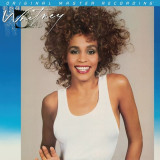
Whitney did more than turn Whitney Houston into a pioneering sensation known around the world by her first name. Originally released in June 1987, the singer's blockbuster sophomore record became the first album by a female artist to debut at No. 1 on the Billboard 200 chart — a position it claimed for a total of 11 weeks en route to selling more than 10 million copies in the U.S. The Diamond platinum effort also contains four No. 1 Hot 100 hits that, when combined with the three chart toppers from her 1985 debut, gave her seven consecutive No. 1 singles — an accomplishment that no other artist has accomplished. Commercially and creatively, Whitney stands on hallowed ground — especially now that the record plays with a sound that puts into perspective just how extraordinary, engaging, and vital Houston's music remains.
Mastered from the original master tapes and pressed on MoFi SuperVinyl at RTI, Mobile Fidelity's 180g 33RPM SuperVinyl LP of Whitney invites listeners to experience the Rock & Roll Hall of Fame inductee's pivotal album in audiophile quality for the very first time. Free of the dynamic limitations and tonal flatness prevalent on prior vinyl and CD pressings, it lets the music breathe and reveals the copious detail, nuance, and texture within the immaculately produced songs. MoFi's SuperVinyl profile offers further advantages in the forms of a nearly inaudible noise floor, dead-quiet surfaces, and superb groove definition.
In addition to featuring extreme clarity and immediacy, this numbered-edition reissue does wonders for the attribute that inspired more than 20 million people around the globe to add Whitney to their record collections: that inimitable voice. Houston's trademark mezzo-soprano — an acrobatic instrument equally capable of taking off on fantastic flights and unwinding for hushed meditations — benefits from the fantastic airiness and transparency afforded by this meticulously restored edition. Whitney has never sounded or looked better. The crossover landmark deserves nothing less.
Issued just two years after Houston's breakthrough debut, Whitney immediately signalled the genre-defying singer's intent to continue to push ahead and expand her palette. Shot by photographer Richard Avedon, the album cover depicts an iconic image of Houston — captured with a gleaming smile, bright eyes, teased-out afro, toned arms, and a right hand that appears to wave a friendly hello — whose active, athletic profile stands in contrast to the extremely formal sit-down shot of her that graces her '85 record. The change is telling: Whitney overflows with unfettered joy, rhythmic vibes, and deep-seated emotions that forever endeared her to the hearts and minds of countless listeners — and which set the standard for the wave after wave of divas that followed in her footsteps.
It's no coincidence that the first track on Whitney is the declarative "I Wanna Dance with Somebody (Who Loves Me)." Like Michael Jackson's "Billie Jean" and Madonna's "Material Girl," the feel-good smash is one of the quintessential '80s gems — a lithe, melodic, celebratory release of pent-up energy and loneliness that glides across club floors, shouts to the rooftops, and shrugs off any concerns about vulnerability or embarrassment. Houston's swooping voice moves in sync with the sleek beats and dipping-and-diving synths. She practically takes her fellow musicians by their hand and leads them in a blissful dance that nobody would dare sidestep. Focusing on Houston's singing — a task made challenging only because of the impossible-to-ignore hooks and grooves — showcases the virtuosic facets of not only her register but her control, discipline, smoothness, and warmth.
That she replicates those feats for the entirety of the nearly 53-minute-long album makes Whitney that much more special. Houston reaches back and channels her childhood gospel training on the R&B-flared "So Emotional"; effortlessly slips into Quiet Storm mode on the duet with her mother, gospel great Cissy Houston, on "I Know Him So Well"; flirts with smooth jazz and collaborates with tenor saxophonist Kenny G on the lush "Just the Lonely Talking Again"; conjures dreamscapes and shadow-boxes with supple funk on a romantic cover of the Isley Brothers' "For the Love of You"; and, for the majestic power ballad "Didn't We Almost Have It All," displays the sky-scraping reach of her vocals amid a grand arrangement made even bigger by Houston's sweeping performance and triumphant finish.
Houston's once-in-a-generation talents weren't lost on the adoring public, radio deejays, or industry experts. In addition to harbouring four No. 1 hits and receiving nominations for four Grammy Awards, Whitney generated another Top 10 success in the guise of the Afro-Cuban-leaning "Love Will Save the Day." The album also netted Houston four American Music Awards; two Billboard Music Awards; back-to-back People's Choice Awards; a Soul Train Award; and various other accolades. It all makes the crux of the Washington Post's July '87 review of the album appear prophetic: "Her voice sounds stronger still and the songs are varied but so consistent she could garner 10 Top 10s out of a field of 11."
That claim still holds true. A brilliant fusion of pop, R&B, smooth jazz, and soul, Whitney is a showstopper – and one of the key reasons Houston is the most-awarded female artist of all time.
Boris und Uniform mögen wie ein seltsames Gespann gewirkt haben, als sie sich 2019 für eine US-Tournee zusammentaten. Sicher, beide Bands nutzen die Kraft großer, explosiver Riffs, aber Boris' Rock-Heldentum, lysergische Ausbreitung und monolithischer Sludge beschwören eine andere Energie herauf als Uniforms mechanisierte Bombardements und rasende Angriffe. Als Boris jedoch Uniform einlud, als Teil ihrer Zugabe eine neu gestaltete Version ihres Klassikers „Akuma no Uta“ zu spielen, war die Chemie zwischen den Künstlern offensichtlich. Die Idee eines gemeinsamen Albums kam auf, und die Bands verbrachten das nächste Jahr damit, Songideen und Aufnahmen in ihren Heimstudios auszutauschen, bis Boris und Uniform ein Album hatten, das die furchtlose Erforschung und ungezügelte Kraft ihrer Live-Auftritte einfing. Sacred Bones Records ist stolz darauf, das gemeinsame Album Bright New Disease von Boris & Uniform zu präsentieren.
Bright New Disease beginnt mit der ersten Single „You're the Beginning“, einem wilden Thrash-Banger aus dem Boris-Lager. Von dort aus setzt das Album seinen unerbittlichen Angriff mit „Weaponized Grief“ fort, einem fiebrigen Mashup aus japanischem D-Beat und Boredoms' absichtlich unpassenden Klangtexturen. Es gibt keinen Moment, um die Trümmer zu sichten, bevor die Bands mit „No“ beginnen, einer bewussten Anspielung auf die japanische Hardcore-Hommage von Boris' 2020er Album NO. Entspannung kommt schließlich mit der eisigen Verstärkeranbetung von „The Look is a Flame", einem Song aus Boris' Feder, der Licht und Erlösung statt Düsternis und Grausamkeit beschwören soll. Verstärkt durch die kosmische Synthesizerarbeit von Randall Dunn und den ächzenden Bass von Steve Moore behält der Song das bedrohliche Timbre des Albums bei und deutet gleichzeitig die Möglichkeit der Erlösung an. Die Klangpalette des Albums wird in der zweiten Hälfte von Bright New Disease noch breiter, wie z. B. beim herausragenden Stück „Narcotic Shadow“. Mit Berdans modularen Synthesizer-Arpeggios, Boris' von Dark Wave/New Romantic inspiriertem Gesang und Greenbergs verzerrten Studiomanipulationen bietet der Song einen schäbigen und schwermütigen Kontrapunkt zu der ungezügelten Wut der ersten Hälfte des Albums. In ähnlicher Weise ist „A Man From the Earth“ weniger auf Katharsis als vielmehr auf eine düstere, tiefrote Interpretation von David Bowies Glam-Jahren fixiert. Aber diese Abweichungen dienen nur dazu, den Albumabschluss und die zweite Single „Not Surprised“ noch düsterer, qualvoller und erschütternder zu machen.
One of Japan’s most riveting artists follows that KAKUHAN mindmelt from last year (our number 5 album, 2022) with an engrossing suite of wild field recordings and polymetric percussion featuring a whole raft of additional players weaving drums, wind and brass instruments, cello and electronics into a bewildering Acousmatic matrix. Highly recommended listening if you’re into Marginal Consort, Beatrice Dillon, Will Guthrie, Mark Fell, François Bayle.
Having made his mark on these pages over the last few years with appearances as part of Japan’s cult entities Goat and YPY, Koshiro Hino’s turn last year as KAKUHAN took things to a whole other level with an album that felt like some alchemical mix of elements borrowed from Autechre, Photek, Arthur Russell and Mica Levi - a complete stylistic futureshock that worked as well in the club as it did fuelling extended flights of the imagination.
For 2023, Hino takes us into a completely different headspace, assembling a cast of 11 players - the mighty Joe Talia and KAKUHAN’s other half Yuki Nakagawa among them - for a suite of untamed field recordings, clanging percussion, brass and synthesis that are about as far removed from the diaristic ambient de jour as you could possibly imagine. Instead, the ensemble conjure vibrant sound ecologies teeming with detail, mirroring the natural world and communal traditions to form shapeshifting, organismic soundworlds.
‘Geist II’ was written for 20 speakers, referencing François Bayle’s acousmatic music and David Tudor’s electro-acoustic environments. It paints a richly detailed scene of a nocturnal rainforest, replete with avian hoots and a skin-crawling patina of insectoid chatter that moves around the soundfield, stealthily growing in density with a more “musical” presence of super low end drone and drums converging form the peripheries to a ritualistic climax. In the second part, focus shifts to remarkably pure percussion-like tropical rain, invaded by swarms of scuttling and winged invertebrates that give way to a water music-like polymetric slosh, resolving to ringing tones and more mellifluous gestures that hark back to GRM’s most poetic, romantic urges.
It's a deeply psychedelic experience that harmonises tiny electronic fluctuations with bird calls and scraped, resonant drones that phase in-and-out of the mix. It's sound you can practically chew, and another crucial despatch from the contemporary Japanese avant-garde.
While Duster went into hibernation in the year 2000, Clay Parton's four-track never stopped rolling. Recorded alone at home over several years, Birds In The Ground is an album of 30-something, post-9/11 malaise. Under his Eiafuawn (Everything Is All Fucked Up And What Not) acronym, Parton hides beneath layers of fuzzy and clean guitars, his hesitant, cottony vocal disappear into noise. This deluxe pressing is packaged in a gorgeous tip on sleeve and includes the complete lyrics for this cryptic entry of the Dusterverse.
Bunny White Vinyl! While Duster went into hibernation in the year 2000, Clay Parton's four-track never stopped rolling. Recorded alone at home over several years, Birds In The Ground is an album of 30-something, post-9/11 malaise. Under his Eiafuawn (Everything Is All Fucked Up And What Not) acronym, Parton hides beneath layers of fuzzy and clean guitars, his hesitant, cottony vocal disappear into noise. This deluxe pressing is packaged in a gorgeous tip on sleeve and includes the complete lyrics for this cryptic entry of the Dusterverse.
Black + White Haze Vinyl. With a sound that was swampy, primal and modern-urban all at once_as much in the tradition of rock n' roll and punk rock as it was a rejection of those things, the Scientists' formula was as universal as it was specific to their own experience. The themes of getting wasted, driving around in hotted-up cars, being trapped in crap jobs, and paranoia were their subject matter. Machine throb bass and drums with jagged car-wreck guitars were their modus operandi. Fitting into no place or time they spurned all but the most rudimentary and elemental of rock structures to create a sound all their own. Quadruple CD includes their complete studio recordings, live recordings, and a previously unissued set from Adelaide UniBar, plus dozens of previously unpublished photographs, discography, and fold out Perth Punk family tree. Double LP version boils the box down to 22 essentials, plus unpublished photographs, discography, and fold out Perth Punk family tree.
t 20 THIS IS MY HAPPY HOUR LIVE AT ADELAIDE UNIBAR
u 21 FIRE ESCAPE [LIVE AT ADELAIDE UNIBAR]
[v] 22 WHEN WORLDS COLLIDE [LIVE AT ADELAIDE UNIBAR]
[w] 23 RAVER [LIVE AT ADELAIDE UNIBAR]
[x] 24 THE SPIN [LIVE AT ADELAIDE UNIBAR]
[y] 25 CLEAR SPOT [LIVE AT ADELAIDE UNIBAR]
[z] 26 REV HEAD [LIVE AT ADELAIDE UNIBAR]
[xa] 27 SET IT ON FIRE [LIVE AT ADELAIDE UNIBAR]
[xb] 28 BURN OUT [LIVE AT ADELAIDE UNIBAR]
[xc] 29 THIS LIFE OF YOURS [LIVE AT ADELAIDE UNIBAR]
[xd] 30 SOLID GOLD HELL [LIVE AT ADELAIDE UNIBAR]
[xe] 31 BLOOD RED RIVER [LIVE AT ADELAIDE UNIBAR]
[xf] 32 DON'T LIE TO ME [LIVE AT THE LOFT]
[xh] 34 MELODRAMATIC TOUCH [LIVE AT STOREY HALL]
[xi] 35 SLOW DEATH [LIVE AT STOREY HALL]
[xj] 36 STRANGERS IN THE NIGHT [LIVE AT THE SYDNEY UNI]
[xk] 37 I'VE HAD IT [LIVE AT LE TOTE]
[xl] 38 GONNA MAKE YOU [LIVE AT THE PRINCE OF WALES HOTEL]
[xm] 39 WHEN WORLDS COLLIDE [LIVE AT SYDNEY TRADE UNION CLUB]
[xn] 40 GHOST TRAIN [LIVE AT THE PRINCE OF WALES HOTEL]
[xo] 41 THE OTHER PLACE [1985 FLEXI DISC]
[xp] 42 SHE CRACKED [1985 FLEXI DISC]
Limited to 1000 copies on Sea Blue vinyl! There's freedom to be found in consistency. Until recently, Juan Wauters may not have agreed with this statement. As a touring musician and multinational citizen, transience had always come naturally to him. Circumstance, however, recently prompted him to reconsider the benefits of staying in one place. His most introspective work to date, Wauters' sixth solo album Wandering Rebel finds the artist taking stock of how he's changed, how the world sees him, and what he wants out of life. Written mostly during an extended break from touring, the songs on Wandering Rebel are candid reflections on subjects like career ("Wandering Rebel"), romantic commitment ("Amor Amor"), mental health ("Nube Negra") and the personal toll of touring ("Let Loose"). On "Modus Operandi," he voices his frustration with New York's fairweather residents, who fled the city at the onset of the COVID-19 lockdown. Vocal contributions from fellow New Yorker Greta Kline (Frankie Cosmos) add to the chorus of playful disapproval. On the singalong-worthy "Millionaire," he turns his eye to the west coast: "It's hard to get around Los Angeles / If you don't have a car / I'm staying in a privileged part of town / It's suspicious for me to be walking." The clarity with which Wauters approaches these subjects lyrically is reflected in the music as well. His trademark eclecticism is still present (fans of Real Life Situations' spirited hip-hop should look to track 6, "Bolero"), but it's more refined this time, anchored in his signature Latin-influenced indie folk. Wandering Rebel is peppered with delicate additions that add depth throughout: rain sounds and hand drums on "Nube Negra," a strings section on "Modus Operandi," a gentle vibraphone on "Amor, Amor." Some of these are classic Wauters touches, but others are owed to outside influences, like production from Brooklyn-based Carlos Hernandez (Ava Luna, Carlos Truly) and Brazilian indie artist Sessa, as well as vocal contributions from Kline, Luz Elena Mendoza (Y La Bamba), Zoe Gotusso, and Super Willy K. Throughout Wandering Rebel, Wauters attempts to reconcile the stability he's come to enjoy with the nomadic restlessness that's characterized his life thus far. In the end, though, it's the interplay of both of these elements that makes the album so strong.
Carole King’s The Legendary Demos will be released April 24th, 2012 via Hear Music / Concord Music Group. A previously unreleased collection of 13 history-making Carole King recordings of some of her most celebrated songs, The Legendary Demos traces King's journey from her days as an Aldon staff writer in the 1960's, where she crafted hit after hit for other artists, to the dawn of her own triumphant solo career in the 1970's, and contains her original recordings of future standards like "(You Make Me Feel Like) A Natural Woman," "It's Too Late," and "You've Got A Friend." Featuring liner notes by acclaimed author and Rolling Stone contributing editor David Browne, the collection brings to light a heretofore missing link in the chain of King's career. Fittingly, The Legendary Demos serves as a companion to King’s long-awaited memoir, A Natural Woman, which is being released April 10th, 2012 via Grand Central Publishing.
Aldon Music used these demos—short for “demonstration records”—to pitch King's material to other artists, from Gene Pitney and Bobby Vee to Aretha Franklin and the Monkees. While the recordings have long been coveted and collected within the industry, they have never before been released to the public.
Whether it was a potential single for the Monkees or a solo performer like Pitney, King’s demos were remarkable in their completeness. “When she sat down to the piano and played a demo of one of her songs, the whole arrangement appeared right in front of your eyes magically,” recalls Brooks Arthur, who engineered a number of these efficient sessions for King at one of several midtown Manhattan studios. “A lot of the smarter producers would adhere to Carole’s demos. If you stuck to that, you’d come home a winner.”
King and then-husband / songwriting partner Gerry Goffin signed with Aldon Music in 1959, and anyone who listened to the radio during the first half of the ‘60s will recognize the songs of teen passion and devastating heartbreak heard in King’s original recordings. “Take Good Care of My Baby” was a No. 1 hit for Bobby Vee in 1961. Goffin’s gift for tapping into teen anguish—in this case, hiding behind a stoic public face—was never conveyed better than in “Crying in the Rain,” which the Everly Brothers took into the top 10 in early 1962. “Just Once in My Life” was the Righteous Brothers’ follow-up to their still-spine-tingling “You’ve Lost That Lovin’ Feelin’,” and King’s demo reveals how she and Goffin were instantly able to tap into the duo’s (and producer Phil Spector’s) dramatic, impassioned sound.
Like many of their fellow songwriters at the time, King and Goffin wrote songs for Don Kirshner’s TV show about a fictional, Beatles-derived pop band that debuted in September 1966. The Monkees turned out to be more credible singers (and musicians) than anyone initially expected, as their high-charting 1967 version of King and Goffin's “Pleasant Valley Sunday” revealed. The Monkees also cut “So Goes Love,” a dreamier ballad heard here, but the track didn’t make their first album and wasn’t released until long after they’d disbanded.
The Legendary Demos includes early takes of six tracks that formed the basis for King’s world-wide solo breakthrough Tapestry. King and lyricist Toni Stern’s ever-poignant “It’s Too Late” is here, along with King’s own “Way Over Yonder,” “Beautiful” and “Tapestry,” all three bursting with the artistic and spiritual renewal infusing King’s life during this period.
Among the collection’s numerous gems is the original 1967 demo for Goffin, King, and producer Jerry Wexler’s “(You Make Me Feel Like) A Natural Woman,” a song that would later appear on Tapestry and of course be famously cut by Aretha Franklin later that same year. King’s version offers several different takes from the Franklin and Tapestry versions. Her delivery in the opening lines is looser (check out the way she stretches out “Lord” in “Lord, it made me feel so tired”), and the bridge is even more imbued with palpable romantic and sexual heat.
And finally, there’s King’s initial take on “You’ve Got a Friend,” a classic entry in the Great American Rock Songbook. Milling around in the Troubadour balcony during soundcheck, her friend James Taylor heard King perform the song on a bare stage and was immediately taken with it; his own version, a massive hit, would arrive the following year.
Zunächst nannte Gia Margaret ihr neues Album Romantic Piano, um ein wenig frech zu sein. Denn die sparsamen, sanften Klavierstücke haben mehr mit Erik Satie, Emahoy Tsegué-Maryam Guébrou und den "Marginalia"-Veröffentlichungen von Masakatsu Takagi gemeinsam als mit einem gemütlichen Date-Abend bei Kerzenschein. Doch in dieser Frechheit liegt eine verborgene Absicht: In dem wunderschönen Set wird "Romantik" in einem eher klassischen Sinne suggeriert, was die Deutschen als Waldeinsamkeit bezeichnen. Die Kompositionen beschwören die erhabenen Themen der romantischen Dichter herauf: Einsamkeit in der Natur, die Fähigkeit der Natur zu heilen und zu lehren, ein Gefühl von zufriedener Melancholie. "Ich wollte Musik machen, die nützlich ist", sagt Margaret und untertreibt damit gewaltig die Kraft der Platte. Romantic Piano ist neugierig, beruhigend, geduldig und unglaublich bewegend - aber es verweilt nicht länger als eine Sekunde. Margarets Debütalbum There's Always Glimmer war ein lyrisches Wunderwerk, aber als sie wegen einer Krankheit auf Tournee nicht mehr singen konnte, nahm sie ihr Ambient-Album "Mia Gargaret" (ein weiterer frecher Titel!) auf, das ein feines Gespür für Arrangement und Komposition zeigte, das bei den lyrischen Songs von There's Always Glimmer nicht voll zum Tragen kam. Auch Romantic Piano kommt fast ganz ohne Worte aus. "Das Schreiben von Instrumentalmusik ist im Allgemeinen ein viel freudigerer Prozess als das Schreiben von Lyrics und wirkt sich letztlich auf mein Songwriting aus.", sagt sie. Romantic Piano festigt sie als kompositorische Kraft. Ursprünglich hatte Margaret einen Abschluss in Komposition angestrebt, brach die Musikschule aber auf halbem Weg ab. "Ich wollte wirklich nicht in einem Orchester spielen", sagt sie über ihre Entscheidung, "ich wollte eigentlich nur Filmmusik schreiben. Dann begann ich, mich mehr und mehr darauf zu konzentrieren, eine Songschreiberin zu sein." Romantic Piano berührt in der Tat ein seltenes Gefühl in der Kunst, das oft nur dem Kino vorbehalten ist - die gleichzeitige Ehrfurcht vor dem Dasein mit der großen Linse und der intime innere Monolog nach der Sprache, wenn wir in unseren Schädeln festsitzen. Und das ist sehr romantisch!
Zunächst nannte Gia Margaret ihr neues Album Romantic Piano, um ein wenig frech zu sein. Denn die sparsamen, sanften Klavierstücke haben mehr mit Erik Satie, Emahoy Tsegué-Maryam Guébrou und den "Marginalia"-Veröffentlichungen von Masakatsu Takagi gemeinsam als mit einem gemütlichen Date-Abend bei Kerzenschein. Doch in dieser Frechheit liegt eine verborgene Absicht: In dem wunderschönen Set wird "Romantik" in einem eher klassischen Sinne suggeriert, was die Deutschen als Waldeinsamkeit bezeichnen. Die Kompositionen beschwören die erhabenen Themen der romantischen Dichter herauf: Einsamkeit in der Natur, die Fähigkeit der Natur zu heilen und zu lehren, ein Gefühl von zufriedener Melancholie. "Ich wollte Musik machen, die nützlich ist", sagt Margaret und untertreibt damit gewaltig die Kraft der Platte. Romantic Piano ist neugierig, beruhigend, geduldig und unglaublich bewegend - aber es verweilt nicht länger als eine Sekunde. Margarets Debütalbum There's Always Glimmer war ein lyrisches Wunderwerk, aber als sie wegen einer Krankheit auf Tournee nicht mehr singen konnte, nahm sie ihr Ambient-Album "Mia Gargaret" (ein weiterer frecher Titel!) auf, das ein feines Gespür für Arrangement und Komposition zeigte, das bei den lyrischen Songs von There's Always Glimmer nicht voll zum Tragen kam. Auch Romantic Piano kommt fast ganz ohne Worte aus. "Das Schreiben von Instrumentalmusik ist im Allgemeinen ein viel freudigerer Prozess als das Schreiben von Lyrics und wirkt sich letztlich auf mein Songwriting aus.", sagt sie. Romantic Piano festigt sie als kompositorische Kraft. Ursprünglich hatte Margaret einen Abschluss in Komposition angestrebt, brach die Musikschule aber auf halbem Weg ab. "Ich wollte wirklich nicht in einem Orchester spielen", sagt sie über ihre Entscheidung, "ich wollte eigentlich nur Filmmusik schreiben. Dann begann ich, mich mehr und mehr darauf zu konzentrieren, eine Songschreiberin zu sein." Romantic Piano berührt in der Tat ein seltenes Gefühl in der Kunst, das oft nur dem Kino vorbehalten ist - die gleichzeitige Ehrfurcht vor dem Dasein mit der großen Linse und der intime innere Monolog nach der Sprache, wenn wir in unseren Schädeln festsitzen. Und das ist sehr romantisch!
ULTRADISC ONE-STEP BOX SET OF BRUCE SPRINGSTEEN'S 1973 DEBUT PLAYS WITH AUDIOPHILE SOUND: LIMITED TO 7,500 NUMBERED COPIES.
1/4" / 15 IPS analogue master to DSD 256 to analogue console to lathe
Teeming with identifiable characters, youthful romanticism, vivid narratives, and sophisticated arrangements, Greetings from Asbury Park, N.J. is a personal postcard from the heart, soul, and mind of a rock ’n’ roll lifer bent on discovering his world and what lays beyond it. The 1973 album establishes many of the signature themes and sounds Bruce Springsteen would embrace throughout his unparalleled career. No wonder a majority of the songs — “Blinded by the Light,” “Lost in the Flood,” “Spirit in the Night” included — remain staples of the New Jersey native’s fabled concerts.
Sourced from the original analog master tapes, pressed at RTI on MoFi SuperVinyl, and strictly limited to 7,500 numbered copies, Mobile Fidelity's UltraDisc One-Step 180g 33RPM LP set is the definitive-sounding version of Springsteen’s daring debut. Afforded the benefits of SuperVinyl’s nearly non-existent noise floor, Greetings from Asbury Park, N.J. plays with a clarity, directness, and emotionalism that practically whisks you into the New York office in which Springsteen — accompanied by then-manager Mike Appel — played a few originals for legendary Columbia Records executive John Hammond and earned a record deal.
That solo-centric aspect of Greetings from Asbury Park, N.J. — credited only to Springsteen and featuring only a handful of accompanying musicians — helps make it unique in his catalogue. So do the acoustic-based frameworks, revealed on this pressing with newly exposed detail, nuance, and immediacy. The music emerges with an openness that gives flight to the Boss’ storytelling. His words flow with unbridled, stream-of-conscious pacing and vibrant imagery; they pay homage to and update a tradition established by Bob Dylan, Woody Guthrie, and Jack Kerouac. Equally important, Springsteen’s still-underrated vocal performances can now be appreciated in full-range fidelity. Earnest, transparent, and sincere, his singing comes across with an urgency that distinguishes him from the era’s singer-songwriter mold and a raw energy that underlines his unflinching belief in rock ’n’ roll.
Recorded in just three weeks, Greetings from Asbury Park, N.J. also stands out by way of its insightful artwork. Designed by Grammy winner John Berg, the inviting cover is appointed with images of the local landmarks, beachfronts, and geography that provide the backdrops for some of the songs. Those graphics are complemented by the beautiful packaging of Mobile Fidelity’s UD1S edition. Tucked in a sleek slipcase, the LP is housed in a special foil-stamped jacket with faithful-to-the-original graphics. In every way, this reissue is made for listeners who prize sound quality and who want to engage themselves in everything involved with this invigorating album.
An aspirational declaration by a then-23-year-old musician who was already a seasoned veteran of the Jersey Shore bar-band scene, Greetings from Asbury Park, N.J. can in many ways be seen as a semi-fictional autobiography released more than four decades before Springsteen penned his official tome. Elaborate, descriptive, and absorbing, Springsteen’s lyrics spark with the enthusiasm and exuberance of a wide-eyed adventurer ready for possibility, excitement, and fun — but who is also mindful of loss, pain, and disappointment. Words often tumble and collide like dice spilling from a jar; shaken and fully intact, they pour forth with purpose and without self-conscious concern.
One of two songs composed after label president Clive Davis cited the need for a radio-friendly single, the opening “Blinded by the Light” provides an unforgettable introduction. It flares with a blend of confidence, fun, and poetry that helps define Greetings from Asbury Park, N.J. Crackling with wiry guitars, funky chords, Clarence Clemons’ cool-toned saxophone, and action-packed lyrics, the shuffle simultaneously expands and contracts — and establishes Springsteen as a master of rhyme, alliteration, and breathless expression. The thread continues on “Growin’ Up.” Steered by ascending piano lines, soulful grooves, and frisky rhythms, the coming-of-age confessional is at once rebellious and controlled, fearless and vulnerable, honest and boastful. It is a tale to which multiple generations still relate.
Such universality has always been a Springsteen trademark. It surfaces throughout Greetings from Asbury Park, N.J., as does another Boss hallmark: the importance of friendship and tight bonds. These concepts relate to the fact many of the songs — see the feverish “Does This Bus Stop at 82nd Street?,” strutting “It’s So Hard to Be a Saint in the City,” and tender “For You,” the latter complete with brilliant Hammond organ shading — are directly tied to the friends, acquaintances, places, and happenings he knew. “Lost in the Flood,” whose cinematic drama and epic scope hint at the directions Springsteen would pursue on his next LP, extends that familiarity while addressing the kind of socially conscious issues with which he’s forever been associated.
Balancing the label’s vision of him as a folk-based singer-songwriter and his own desire to play rock ‘n’ roll with a full band, Springsteen never again made a record like Greetings from Asbury Park, N.J. One of the most captivating debuts in history, it heralds the start of a legacy whose import Springsteen seemingly foretells on “Blinded by the Light”: “He’s gonna make it tonight.” And how.
Over the course of a nearly 50 year romantic and creative partnership sound artist Annea Lockwood and the late pioneering electronic composer Ruth Anderson have shared space on a number of significant releases of early electronic and tape music, including Charles Amirkhanian’s trailblazing 1977 anthology of women electronic composers New Music for Electronic and Recorded Media, a 1981 split LP on Opus One, a 1997 CD for Phill Niblock’s XI imprint, and 1998’s Lesbian American Composers compilation on CRI. The couple additionally taught a course on the history of women’s music-making, at Hunter College, called Living Women, Living Music. Throughout their time together, they co-authored a number of Hearing Studies designed for people with no formal musical training, which were collected for a 2021 book publication by Open Space Music. They spent most of their private life between Crompond, NY and the house they built themselves at Flathead Lake, Montana. Although Ruth passed away in 2019, the composers’ dialogue continues today with Tête-à-tête, a collection of unreleased archival and new material spread across an LP and a single-sided 10” record.
It all began with a telephone call. In 1973, Ruth Anderson was seeking a substitute to cover a yearlong sabbatical from her position as the director of the Electronic Music Studio she had founded at Hunter College in New York City. Her friend Pauline Oliveros too was on sabbatical, but recommended Ruth call Annea Lockwood—then living in London—about the post. Already drawn to America by the work of the visionary composers with whom she would soon be labelmates on Lovely Music, Annea jumped at the opportunity and within days of meeting in person the pair were, in her words, “joyously entangled.”
Over the next nine months, while Ruth was living in Hancock, New Hampshire, the couple would speak daily by phone in between visits. Ruth recorded these phone calls and, in 1974, surprised Annea with a cassette containing “Conversations,” a private piece she composed by dexterously collaging fragments of their conversations alongside slowed and throwed snatches of old popular songs: “Yes Sir, That’s My Baby”; “Oh, You Beautiful Doll”; and “Bill Bailey.” The centerpiece of Tête-à-tête, this side of intimate musique concrète extends to its listeners a rare invitation to eavesdrop on the halcyon phenomenon of two people falling in love. Tender and playful throughout, “Conversations” comes to its zenith with a cut-up of relentless laughter of a contagious beauty that is, for once, properly convulsive.
“For Ruth” is Annea’s elegy to her life partner. In 2020, Annea returned to Hancock as well as to Ruth’s resting place at Flathead Lake to make field recordings, which she wove together with further excerpts of the couple’s 1974 conversations for a commission presented as part of the 2021 Counterflows Festival in Glasgow. A consummate field recordist, Annea imbues the simple sounds of church bells, birds, wind, and the bodies of water that permeated her time alongside Ruth with an otherworldly depth and sense of narrative akin to that of her celebrated sound maps of the Hudson, Danube, and Housatonic rivers. An oneiric, subtly tonal evocation of a meeting at the shores of existence.
The collection opens with “Resolutions,” Ruth’s last completed electronic work, from 1984. A meditation for the individual listener composed as the result of her study of Zen, it’s a rigorous, process-driven piece that charts the very slow, smooth descent of a 5th from the octave above middle C down to sub-bass frequencies. Minimalist in execution, yet powerful in effect, it glides by almost imperceptibly, with new tones arriving and hovering or levitating upwards, seemingly out of nowhere. A healing piece, it harnesses the highly focused energy of pure tones as a means to, in Ruth’s words, “further wholeness of self and unity with others.”
Tape transfers by Maggi Payne, master by Giuseppe Ielasi and lacquers cut at Dubplates & Mastering, with domestic photos and liner notes provided by Annea Lockwood.
Released in the UK in January 1967 by Decca Records and February by London Records in the US – Between The Buttons was the Stones’ fifth British and seventh US studio album. Released as the follow-up to Aftermath, this album marked a high point in the band’s career, continuing their ventures into psychedelia and baroque pop balladry, it is among the band’s most musically eclectic works. Brian Jones sidelined his guitar on much of the album, instead playing a wide variety of other instruments including organ, marimba, vibraphone, and kazoo. Piano contributions came from two session players: former Rolling Stones member Ian Stewart and frequent contributor and studio legend Jack Nitzsche. It was the last album produced by Andrew Loog Oldham, the band’s manager and producer of all of their albums to this point.
The album has one of the most striking sleeves of the period, featuring a classic Gered Mankowitz image on the cover. The photo shoot took place at 5:30 in the morning following an all-night recording session at Olympic Studios. Using a home-made camera filter constructed of black card, glass and Vaseline, Mankowitz created the effect of the Stones dissolving into their surroundings – according to Mankowitz… ""to capture the ethereal, druggy feel of the time; that feeling at the end of the night when dawn was breaking and they’d been up all night making music, stoned.”
The songs continued Aftermath’s lyrics of acute social observation and savage insight, their earlier raw, rootsy power enhanced by other influences of the period – notably The Beatles, The Kinks, and again Dylan. It is one of their strongest, most varied LPs, with many great songs that remain unknown to all but Stones devotees.
The inventive arrangements and innovative instrumentation on brooding near-classics like All Sold Out, My Obsession and Yesterday’s Papers brought a new dimension to the music. She Smiled Sweetly shows their hidden romantic side at its best, Connection is one of the record’s few pieces of more conventional driving rock and album closer Something Happened To Me Yesterday includes Keith’s first solo vocal.
The US version includes contemporaneous hits – the two songs that gave the group a double-sided number one in early 1967: the shameless and controversial Let’s Spend The Night Together and the beautiful, melancholy Ruby Tuesday.
Angel numbers: a series of recurring numerical patterns or sequences which those who believe in such things invest with cosmic significance.
Also, the name of the forthcoming album by Hamish Hawk – an apt title for an artist who bounces between scepticism and wonder, who alchemises the quotidian, who is engaged in a constant quest to outwit and outflank the ordinary. With the release of Heavy Elevator in September 2021, Edinburgh-based Hawk established himself as a writer of heartfelt, headstrong, unashamedly literate songs to stimulate both pulse and psyche. Heavy Elevator offered words to savour and tunes to relish. The songs were filmic and romantic, blending wit, wisdom, resignation and beauty with a kind of sceptical joie de vivre, delivered in a rich baritone that has drawn comparisons to everyone from Jarvis Cocker to Scott Walker. A singer of style and guile peddling accessible intelligence: what’s
not to love? Heavy Elevator established a powerful artistic imprimatur which nonetheless felt neither defining nor confining. While the album has been justly lauded, Hawk’s next steps have moved the story considerably further forward. Angel Numbers meets growing expectations head on, with panache and aplomb.
Chocolat is the 2000 British-American romantic comedy-drama film directed by Lasse Hallström (The Cider House Rules) starring Juliette Binoche, Judi Dench and Johnny Depp. The movie was adapted from the novel written by Joan Harris and is about a woman and her daughter opening a chocolate shop - with Sunday hours - across the street from the local church in a small French village.
The music is composed by Rachel Portman and the soundtrack also includes “Minor Swing” from Django Reinhardt/Stéphane Grappelli and the 1936 jazz standard “Caravan” from Duke Ellington and Juan Tizol.
Rachel Portman has written over 100 music scores for film, television, and theatre. She was also the first female composer to win an Academy Award in the category of Best Musical or Comedy Score for Emma in 1996 and in 2015 she received the Primetime Emmy Award for Outstanding Music Composition for the HBO TV series Bessie.
Chocolat is available as a limited edition of 500 individually numbered copies on white coloured vinyl and includes an insert.
Electric Light Orchestra leader Jeff Lynne did more than figuratively reach for the sky on Eldorado. Daring to be bold, and creating imaginative worlds that invite the listener to escape the mundane, the visionary composer-musician achieved a multidisciplinary fantasia and, in the process, a prog-rock landmark. Nearly 50 years later, the concept album's brilliance can be experienced like never before in cinematic, IMAX-worthy fashion.
Sourced from the original analogue master tapes, pressed on MoFi SuperVinyl vinyl at RTI, housed in a keepsake box, and limited to 10,000 numbered copies, Mobile Fidelity's UltraDisc One-Step 180g 45RPM 2LP set of Eldorado allows the long-time audiophile staple to resonate with reference-setting dynamics, tones, and colours. Conjuring the feeling of journeying to different horizons, the record's songs teem with layer upon layer of details, which can now be heard as the producers intended. This very special release both pays tribute to the record's merit and enhances the spectacular program for generations to come.
Presenting the album with breathtaking clarity yet retaining the warmth, texture, and emotion that differentiate live music from reproduced sounds, the collectible reissue features beguiling levels of in-the-moment presence, grand-scale sound-staging, and instrumental balance. Bursting with a veritable cornucopia of stimuli, MoFi's Eldorado package also benefits from superb separation and immersive atmospherics that stem from the meticulous remastering process – as well as an ultra-low noise floor, industry-leading groove definition, and dead-quiet surfaces courtesy of the MoFi SuperVinyl properties.
The premium packaging and gorgeous presentation of the UD1S Eldorado pressing befit its extremely select status. Housed in a deluxe box, it features special foil-stamped jackets and faithful-to-the-original graphics that illuminate the splendour of the recording. No expense has been spared. Aurally and visually, the reissue exists as a curatorial artefact meant to be preserved, touched, and examined. It is made for discerning listeners that prize sound quality and production, and who desire to fully immerse themselves in everything involved with the album.
An artistic breakthrough that established Electric Light Orchestra as a pioneering band (and confirmed Lynne as the leading practising Beatles disciple), the 1974 effort remains notable for its involvement of a full orchestra and choral section, the range of which are captured with exquisite results on this LP. Eldorado distinguished itself from the band's first two works not only via Lynne's sharpened songwriting but due to the hiring of an orchestra that augmented the group's three string players. Co-arranged by Lynne and conductor Louis Clark, the symphonic movements bolster the contagious fare without ever drowning it. The accents also act as transports into the varied narrative universes.
Finished as a story before Lynne put notes down on paper, Eldorado ironically owes its inspiration to Lynne's father. In response to his dad's criticisms about the band, Lynne conceived a melodic tour de force that, like The Wizard of Oz, which informs the cover art, emphasizes the power of everyday dreams and everyman heroism. It's no coincidence that the sonic journey begins with an overture punctuated by the words of a cynic who condemns "the dreamer, the un-woken fool."
Beautiful yet fun, ambitious yet consistent, Eldorado proceeds to celebrate such romantics and escapists. A Technicolour escapade marked by lush melodies, fluid crescendos, and an intoxicating blend of energetic rock and sweeping orchestral elements, the album weds rich imagery and sweeping sounds in manners that make the two inseparable. In Lynne and company's hands, reality and fantasy collide, and dissolve any dividing lines. The proof is not just in the epic production, but in the timeless (and catchy) nature of songs such as the balladic "Boy Blue," power-pop packed "Illusions in G Major," and, of course, the aptly titled hit, "Can't Get It Out of My Head."
Decades later, Eldorado doubles as an invitation to break away from monotony whether you're listening to your Mobile Fidelity reissue on a large system or an excellent pair of headphones.
MoFi SuperVinyl
Developed by NEOTECH and RTI, MoFi SuperVinyl is the most exacting-to-specification vinyl compound ever devised. Analogue lovers have never seen (or heard) anything like it. Extraordinarily expensive and extremely painstaking to produce, the special proprietary compound addresses two specific areas of improvement: noise floor reduction and enhanced groove definition. The vinyl composition features a new carbonless dye (hold the disc up to the light and see) and produces the world's quietest surfaces. This high-definition formula also allows for the creation of cleaner grooves that are indistinguishable from the original lacquer. MoFi SuperVinyl provides the closest approximation of what the label's engineers hear in the mastering lab.
More About Mobile Fidelity UltraDisc One-Step and Why It Is Superior
Mobile Fidelity Sound Lab's UltraDisc One-Step (UD1S) technique bypasses generational losses inherent to the traditional three-step plating process by removing two steps: the production of father and mother plates, which are created to yield numerous stampers from each lacquer that is cut. For UD1S plating, stampers (also called "converts") are made directly from the lacquers. Since each lacquer yields only one stamper, multiple lacquers need to be cut. Mobile Fidelity's UD1S process produces a final LP with the lowest-possible noise floor. The removal of two steps of the plating process also reveals musical details and dynamics that would otherwise be lost due to the standard multi-step process. With UD1S, every aspect of vinyl production is optimized to produce the best-sounding vinyl album available today.
Angel numbers: a series of recurring numerical patterns or sequences which those who believe in such things invest with cosmic significance.
Also, the name of the forthcoming album by Hamish Hawk – an apt title for an artist who bounces between scepticism and wonder, who alchemises the quotidian, who is engaged in a constant quest to outwit and outflank the ordinary. With the release of Heavy Elevator in September 2021, Edinburgh-based Hawk established himself as a writer of heartfelt, headstrong, unashamedly literate songs to stimulate both pulse and psyche. Heavy Elevator offered words to savour and tunes to relish. The songs were filmic and romantic, blending wit, wisdom, resignation and beauty with a kind of sceptical joie de vivre, delivered in a rich baritone that has drawn comparisons to everyone from Jarvis Cocker to Scott Walker. A singer of style and guile peddling accessible intelligence: what’s
not to love? Heavy Elevator established a powerful artistic imprimatur which nonetheless felt neither defining nor confining. While the album has been justly lauded, Hawk’s next steps have moved the story considerably further forward. Angel Numbers meets growing expectations head on, with panache and aplomb.
Born of the overarching World of Darkness and the tabletop phenomenon Vampire: The Masquerade, Bloodhunt is Sharkmob’s thrilling spin on the multiplayer action genre that sees players take part in a ruthless war between vampire factions.
Bloodhunt boasts a sonically rich score sired by acclaimed Polish-Bulgarian composer Atanas Valkov, and featuring the Sofia Session Orchestra & Choir. The city of Prague provided much of the aesthetic inspiration for Bloodhunt’s soundscape: classical and romantic, yet with many a shadowy corner in which a vampire might secrete themselves. Valkov enjoyed creating contrast between modern
electronic musical elements and old world ones, as well as layering guitars and using irregular rhythmic structures. The overall soundtrack is both cinematic and brutal.
This deluxe double LP set features a deluxe gatefold sleeve (individually inkjet numbered) and printed inners dripping with stylish artwork by Sharkmob. 16 tracks have been mastered specially for vinyl, and pressed onto heavyweight, red and transparent LPs with a cloudy effect. Also included are composer liner notes.
In the early '70s, after relocating from his native Genoa to Rome, young saxophonist Gianni Oddi was beginning to establish himself as a super-cool arranger thanks to a series of cover albums recorded for RCA Italy. They contained funk, soul and easy-listening versions of contemporary pop hits, but Oddi often managed to include one or two original compositions of his own – like the ones contained in this new instalment of Four Flies's 12-inch vinyl series for DJs.
The luscious funk of Dreamin', on side A, shows Oddi as an Italian master of groove. Warm, sexy and nocturnal, the song combines breaky drums with tantalizing vocals (provided by Baba Yaga's Isabella Sodani), adding a romantic, dreamy vibe in the special with strings and piano (the latter played by Oddi himself) that are at once reminiscent of soulful black music and influenced by the melodic tradition of Italy.
Geronimo, on side B, is almost a tribute to Manu Dibango – a favourite of Oddi's at the time. Here, Oddi's signature groove, at once refined and infectious, is driven by Mario Scotti's pulsating bass, Silvano Chimenti's wah-wah guitar, Oddi's own persuasive sax and, in particular, sound engineer (and former drummer) Enzo Martella's 'moose call' sound (made by sliding a thumb across the top of a conga). In a nutshell: Africa reimagined in Via Tiburtina (the street in Rome where RCA Italy's recording studios where located).
Both tracks are perfect examples of Oddi's sound and... Style (yes, his 1974 album for RCA Italy's SP series). The same sound (and style!) characterizes masterpieces like Le Montagne della Luce (co-written with Romolo Grano), La Sbandata (the funky theme from Domenico Modugno's soundtrack, which Oddi arranged and produced) and Mondo di Notte Oggi (co-written with Gianni Dell'Orso). All of these have been released by Four Flies, which continues to celebrate this fantastic groove maker.
out of Stock
Last delivered 3 years ago available to reorder, subject to availability
The increasingly vital Jorkes makes a big step up to the acclaimed Live at Robert Johnson label with her standout Sweet Dreams EP. As with all Jorkes EPs, the artwork features photography shot by Daniel Rajcsanyi.
Jorkes has been making big and bold moves recently. She is the co-founder of the unique Freeride Millenium label which is a hotbed for queer dance music. German-born but Austria based, she has an influential residency at Radio 80000 alongside ParisBöhm and is a resident at Stuttgart's Romantica where she plays a thrilling mix of disco, house, techno and everything in between. She is someone who always serves to highlight the importance of the dance floor as a place of sexual and cultural liberation and this new EP is another innovative statement that comes as she rides a wave of high profile radio, DJ and media support for recent outings on her own label.
Opener 'You Will be Mine' is a song about obsessing after an unattainable stranger on the dance floor who disappears into the night. It's a silky disco house sound with chords that sing and a floating bassline that lifts you off your feet. The melodic motifs bring charm and cosmic energy and the whole track has a lush, musical feel. The equally excellent 'Robot Lover' muses on human detachment in this technological era of internet porn, dating apps and screen obsessions and how a robotic lover might be a better fit than a real life partner. It is another elastic and disco-tinged rhythm, with elegant chords and dancing keys over a suspensory bassline. Intimate vocal whispers bring tenderness to this timeless track.
On the flip side, 'Sweet Dreams' layers up infectious claps and tinny percussion over an irresistible deep house groove. It's a widescreen, symphonic sound that brings very real but subtle joy and closer 'CDEvaLo' is the name of a crossdressing male-to-female and sex-worker friend of Jorkes. She sings the introduction lyrics in Greek and they translate as "It was a very beautiful day, while we were sitting at the park we thought of going out for a coffee and realized we have no money and are absolutely broke. So we discussed about who is gonna put the wig on to "go and make a visit“ Greek slang for sex work so we'll have money again." It is a comment on the number of young people who arrived in Athens over the years to do cross-dressing sex work after being kicked out by their Orthodox Christian homes. The track flips the script with a more playful disco sound, characterful vocoder vocals and glossy synths over a jacked house beat.
This is an expansive EP that shows off the different sides to Jorkes's unique sound.
out of Stock
Last delivered 2 years ago available to reorder, subject to availability
Poolblood, the musical nom-de-plume of Toronto's Maryam Said, is an
ethereal spirit of punk rock, swirling and dancing in the air with a
collection of gorgeously orchestrated bedroom pop music
Raised in a religious household at arm's length from popular music, they
nonetheless found themselves drawn in by the music of Yusuf Islam (Cat
Stevens), who left an indelible imprint on their relationship to music and
songwriting. The results of their upbringing "time spent practicing chords in guitar
class, learning about hardcore from friends after school and honing their
songwriting as an early teen "is a winding path of melody, making stops along the
way to dabble in everything from noise rock to lush and gorgeous pop hooks.
poolblood is a pastiche of genres and styles working in blended harmony.
poolblood understands the tender urgency in crafting stories around deep and
abiding intimacies, romantic and platonic, that run so far below the surface they
become the root of everything that grows on the surface. These stories have
come together to create the ethereal bedroom pop songs on their debut LP
"mole" out on Next Door Records.
It is fitting that on an album so much centered around the connectivity of deep
and abiding friendships that "mole" is awash with collaborators, each bringing
their own unique talent and skill into the mix. Louie Short and Shamir Bailey
worked with Maryam as producers on the project, and played on a number of
tracks in addition to a cadre of musicians filtering in and out of each song.
Not afraid of letting their sly sense of humor bleed through the layers, poolblood's
"mole" is rife with humor and wonder, dancing playfully along. Pressed on Aubade
Blue Color vinyl.
Mastered from the original master tapes and pressed at RTI on dead-quiet 180g vinyl, Mobile Fidelity's numbered-edition 180g LP of Local Hero gives the beloved effort audiophile-grade sound on a par with the reference-quality sonics afforded Dire Straits' Mobile Fidelity reissues. In each arrangement, Knopfler's methodical guitar lines emerge with supreme transparency and multi-hued textural detail. The intricate notes, finger-picked passages, and cosmopolitan lines come across as if they're transmitted just feet away from you in real time.
Ditto the diverse accompaniment, including the Celtic-themed effects, supplemental jazz accents, and folk inflections. The keys to the nearly 44-minute effort's success and continuity relate not only to Knoplfer's laidback style and low-key approach, but his ear for uncanny melody and blues traces. Woven acoustically and electrically, his tapestries benefit from the newfound airiness, openness, and balance that live on this reissue. No matter the instrument or treatment, the music arrives with pinpoint imaging and vibrant liveliness. Close your eyes, and the Mobile Fidelity version of Local Hero projects movies in your head.
For instance, take the closing "Going Home," a cherished instrumental whose proud spirit resonates with English football fans and features saxophone playing by the late, great Michael Brecker. Heard before every Newcastle United F.C. home game, it has become an anthem on both sides of the Atlantic. Or, look to "The Ceilidh: Louis' Favorite Billy's Tune" on which Scottish-flavored vibes and dance tempos conjure a festive jig until a transition gives the number a more subdued, romantic feel. Then, the pattern repeats. Seeking to expand beyond the parameters of Dire Straits, Knoplfer taps into a global economy of structures and sounds, and takes anyone with a sense of adventure along for the ride.
Not that his hallmark six-string is absent from the proceedings. It frames the lovely tin-pan whistle motif of the aptly titled "Whistle Theme," acts as a beacon for the elegant, vibraphone-kissed "Smooching," and pushes forward the jovial, top-down momentum of "Freeway Flyer," among other highlights. Knopfler also receives assistance from session pros Mike Mainieri, Steve Jordan, and Terry Williams, as well as vocalist Gerry Rafferty on the set's sole vocal tune, "That's the Way It Always Starts."
The trashed hotel room and communal living depicted on the cover of the J. Geils Band's sophomore album tell you all you need know about the music, spirit, and energy spilling from within The Morning After. Shot through with raw, lean rock n' roll sparked by juke-joint blues and loose rhythms, the 1971 set comes on like the most fun, party-still-raging hangover any group in the 70s enjoyed. And now it rolls with an abandon that takes you inside the sweaty, smoky roadhouses and wall-to-wall-packed clubs the group dominated in its heyday.
Mastered from the original master tapes, pressed at RTI, and limited to 3,000 numbered copies, Mobile Fidelity's 180g vinyl LP achieves a sonic acumen that brings you face-to-face with the sextet's white-hot instrumental prowess and magnetic personalities. It's always been difficult to single out just one member of the band given the cohesive bluster the ensemble achieves as a whole, but this collectible audiophile edition allows you to do just that if you so choose, by way of superb imaging and separation. As for the band's trademark dynamics? Here, they feel like they're on the verge of exploding.
So go ahead. Twist the volume knob to the right as much as you want. You'll lose none of the focus, detail, placement, or presence no matter how high the decibels climb. The Morning After spills forth with previously unheard tonalities, ranging from the distinctive swells of Seth Justman's slow-burn organ to the live-wire spark of Geils' own downed-power-line-jumpy guitar work to the mooring hi-hat/cymbal/snare combinations of arrangement-steadying drummer Steven Bladd. Friends, this is raw rhythm n' blues, this is how it should feel, and, man, this is how it should sound.
Not for nothing did the Massachusetts-based collective name the album The Morning After. The music within doesn't abide by rules, ignores speed limits, flips the bird at curfews, and digs deep down into America's blues roots to yield organic material at once fresh, exciting, traditional, and original. The back-porch punch provided by the combination of "Magic Dick" Salwitz's searing, melodic, snake-like harmonica and vocalist Peter Wolf's animated, barely controlled deliveries is alone enough to make anyone with a faint pulse to stomp their feet, climb atop a kitchen table, and kick their boot heels until the neighbors call the cops.
Just witness the deceptive smoothness of the snake-like "So Sharp" or Maxwell Street zest of the aptly titled Magic Dick showcase "Whammer Jammer," which will leave you gasping for breath before it even ends. J. Geils Band also knew its way around deep-cut soul. The ensemble's Top 40, howling, adrenaline-to-the-heart rendition of the Valentinos' "Looking for a Love" and swirling, romantic take on Don Covay's "The Usual Place" seamlessly balance drive and emotion. Coupled with rafter-shaking originals such as "Floyd's Hotel" and the riff-propelled "I Don't Need You No More," sent up with typical Wolf vocal flair, and the record parks the band's all-night festivities and go-for-broke attitudes right on your front lawn.
One last word of warning to the uninitiated: The Morning After is not the slick-pop J. Geils Band of "Centerfold." And that is a very good thing.
James Taylor's best-selling record since 1970's hallmark Sweet Baby James, the triple-platinum JT takes its permanent place as one of the singer's most enduring albums — an affair that gorges on country, blues, and rock styles as well as incisive songwriting. As the pre-eminent singer-songwriter's Columbia debut, it catapulted Taylor back into the limelight and re-established his place as the era's leading-edge folk-rock troubadour.
Sourced from the original analog master tapes and pressed at RTI, Mobile Fidelity's numbered-edition 180g LP possesses a warmth, immediacy, and intimacy absent from other pressings. The singer's comforting voice, breath control, and enchanting guitar lines sound as if they pour right out of the studio control room. Similarly, the splendid array of backing instrumentation is balanced, vivid, and dynamic. Taylor should always sound this realistic, warm, and lively.
More than any other of his records, JT features all sides of Taylor's lyrical persona. Optimistic, content material fills half of the 1977 set while Taylor reveals a darker, moodier identity on a number of songs that keep the 12-track set alternating between shade and light, shadow and sun. He turns romantic and blissful on the touching ballad "There We Are," praises the power of love on "Your Smiling Face," and enchants with the graceful "Secret O'Life."
In addition to channeling domestic bliss, Taylor expresses surprise and cynicism on "Honey Don't Leave L.A.," delves into despair on "Another Grey Morning," and invites sardonic tones on "Bartender's Blues." The result is a complete picture of an extraordinary songwriter and an accurate sketch of the mixed emotions many of us feel when it comes to romance. Taylor's ability to capture deep-seated feelings and set them to lyrical and musical poetry explains why we relate to him on such a meta-level. It's also why his music, including JT, remains timeless.
Taylor doesn't do it all alone. JT benefits from an all-star support cast. Carly Simon and Linda Ronstadt supply background vocals, saxophone great David Sanborn plays the horn, Russ Kunkel mans the percussion, and arranger David Campbell oversees the strings and woodwinds. It's no wonder why many fans consider this gorgeous collection of Laurel Canyon pop-rock Taylor's finest.
Whether you've never heard this record or know it inside and out, this reissue will open your ears to previously hidden details ranging from pedal-steel guitar accents to honky-tonk tonalities. Taylor's funky rhythms, too, gain in stature, as does his command of pace and tempo.
Goodbye, Asshole is the first studio album by San Francisco scuzz-wave merchants Fuckwolf—its a rat’s nest of deep grooves, lost ’70s rock riff intentions and art punk damage. These conundrums of time inform Goodbye, Asshole, but they are hardly romanticized in its music. The band, Eric Park (bass, vocals), Simon Phillips (drums) and Tomo Yasuda (guitar) sound blazing and scuzzy, a tight low-fi energy blasted onto tape at renowned Bay Area indie studios summarizing the last twenty years of San Francisco’s wild artistic soul – one that is now hard to find much evidence of in the city itself, but impossible to miss in the band’s sound. Fans of OSEES, Pink Fairies, late ’70s NYC, Emotional Rescue-era Stones, trashy post-punk dub and solvent-huffing rejoice!
Bad Colours is back with his sophomore album, "Always With U," out on Bastard Jazz Recordings in November, 2022. The London-born, Maryland-raised, Brooklyn-based DJ, songwriter, producer, and multi-instrumentalist - aka Ibe Soliman - continues to build on the well-deserved acclaim from his 2021 debut LP, "PINK," as well as a slew of standalone singles and collaborations with the likes of Shabazz Palaces, Jarv Dee, and Stas THEE Boss.
"Always With U" sees Ibe further develop his talents as a songwriter and producer, while maintaining the signature balance of banging dance music and dense bars that he's quickly becoming known for. The album expands Ibe's role to a collaborator, band leader, and all-around star-of-the-show; it's certainly still a dance record, but there's also so much more. Live instrumentation accompanies every track, with the notable contributions of Nigerian bassist Akin-Alade Ogo heard across the album, as well as the NY-based saxophonist Carras Paton on the jazzy, upbeat house number, "Heartache + U."
The lead single, "Maybe I Should Move to LA," sees the proudly Brooklyn-based Bad Colours contemplate a move out West – an idea that came about following a trip to LA for the 20 Years of Bastard Jazz anniversary party (which he DJed) in November last year. Bright pads, a thumping four-on-the-floor beat, and a catchy vocal line make it the perfect accompaniment to a top-down joy-ride up PCH. The album's second single, "You Don't Know," features frequent collaborator and PNW darling Jarv Dee, as well as KAS and JVDE who have both been making waves in the Brooklyn scene (KAS for his work with Grammy- nominated producer Harmony Samuels featured on BET, and JVDE as the lead-singer of alternative band Blind Benny). "You Don't Know" turns up the heat with Jarv and KAS trading dense, rapid-fire verses over a high-tempo beat and detuned vocal; the kick cuts out for the bridge, replaced by syncopated keyboard stabs and JVDE's stacked vocals. "You Don't Know" is high-energy hip house at its finest: Super catchy and irresistibly dancey.
The two singles are emblematic of the rest of the album, which largely alternates between vocal and hip house, sometimes jazzy, other times touching on R&B or dancefloor influenced pop. Dave Giles II and Cor.Ece (who recently both contributed to Beyoncé's chart-topping "Renaissance" LP and Honey Dijon's "Work" single) feature on "Flow," while Toribio (of the acclaimed Brooklyn band Conclaves) provides vocals for "Do Better;" both tracks are on the mellower side, reminiscent of late-90s New York mid-tempo garage. Rising artist N.O.V. features on the second track, "Ready," rapping over a bass-heavy beat; MarcusHarmon makes a return after appearing on "PINK," with smooth vocals on the romantic "Come Closer." Aforementioned JVDE can be heard throughout the album, contributing to "You Don't Know," "Flirtation Avenue," and "Easy Come, Easy Go."
While Ibe's career has spanned nearly two decades - as both a DJ (alongside the likes of James Murphy, Mark Ronson, and Q-Tip) and producer (for Kendrick Lamar, Faith Evans, Keyshia Cole, and Rick Ross, among others) - the Bad Colours name only came into being in early 2020, with the debut LP, "PINK," being released in February, 2021 on the Brooklyn tastemaker label Bastard Jazz. By tapping into his deep network of artist friends, Ibe compiled a treasure-trove of vocal samples, snippets, sketches, and fresh instrumental loops into a beautiful debut record that touches on hip-hop, house, and left-field electronic, while remaining danceable.
A slew of singles throughout 2020 and 2021 included "Feelin' Like," featuring the Seattle rapper Jarv Dee, has become an underground hit, popping up everywhere from Best Buy ads, Hulu's "Woke," celebrity Peloton instructor Emma Lovewell's playlist, and even as a soundtrack to the Mayor of Madrid's TikTok video. Most recently, "Feelin' Like" had a prominent placement in the #1 Netflix film "Spiderhead," directed by Joseph Kosinski ("Tron: Legacy;" "Top Gun: Maverick") and starring Chris Hemsworth, Miles Teller, and Jurnee Smollett. The breakout success of "Feelin' Like" further led to a collaborative EP with Jarv Dee, titled "BLAKHOUSE," which saw additional features from fellow PNW natives Shabazz Palaces ("Clouds," featured in Hulu's "Shoresy") and Stas THEE Boss ("Black Skin"). This year, Bad Colours dropped the early Summer banger "Hit The Breaks," and served as the musical director for the influential MADE New York festival, a two-day fashion, music, and arts event presented by Public School NYC and Paypal, that saw performances by Nas, Heron Preston, and Bearcat among others.
"Always With U" is a testament to Bad Colours' versatility as a producer and artist, which has allowed him to bring together such a diverse group of friends and collaborators. Yes, the house and hip-hop roots remain, but "Always With U" shows an evolution of the Bad Colours sound into masterfully crafted dancefloor sounds. It's a truly stunning follow-up from an artist undoubtedly on the rise. The album is out on all platforms, via Bastard Jazz Recordings, November 11th, 2022.
out of Stock
Last delivered 3 years ago available to reorder, subject to availability
Ingredient is the elegant collaboration of Toronto poets, composers, producers and dear friends Ian Daniel Kehoe and Luka Kuplowsky. Their self-titled release is an enigmatic electronic avant-pop record attuned to the micro and macro perspectives of the natural world. Ingredient is an album whose lyrics are more poem than lyric, and whose songs exist in a merger of house music, philosophically-minded lyricism and contemporary R&B. One might recall electronic and art-pop luminaries such as Yukihiro Takahashi, The Blue Nile, and Arthur Russell, or connect it to contemporaries like Nite Jewel, Westerman and Blood Orange. A distinct world of dance, of questions, of secrecy and ultimate softness.
Eight years of friendship forges strange telepathy.
In the summer of 2020, Ian Daniel Kehoe was entrenched in a new feeling of heaviness; psychosomatic symptoms had started to proliferate; stress made new pores across the body, bending sensitivity into pain. His days were met with confusion, detachment, sleeplessness and pain without causation. Disfigured, he felt that what had been central and centering was blown out to the periphery of things. In a moment of self-preservation he reached out to his dear friend Luka Kuplowsky to make an album together. For Kehoe, it was an instinctual grasp for the anchoring truthfulness of deep friendship and the potential for a dedicated creative collaboration. Kuplowsky’s presence was light, supportful and curious, eager to explore musically the sounds they were mutually drawn to: house music, ambient pop, dub. The duality between Kuplowsky and Kehoe – between the Aflight and the Unmoored – is a portrait of a friendship whose exchanges came easy and produced an outpouring of song. Creation and therapy crisscross. In email correspondence that catalogs their process of collaboration, affection abounds: “feels bare without the Luka Licks”, or “Love you so much”, or “Kinda just overwhelmed with deadliness coming in at all angles.” When their voices first come in together on “Wolf,” that harmony arrives in a dramatic avant-pop sound that is bold and wondrous.
Kuplowsky and Kehoe both arrive at Ingredient as established artists whose works are committed to language’s propensity to provoke and mystify. Kuplowsky’s 2020 album Stardust is an idiosyncratic and otherworldly blend of pop and jazz romanticism grounded by Cohen-esque vocals and a stirring philosophical curiosity. Kehoe’s entrance into the new decade has hatched four records of pop experimentation, most recently 2022’s Yes Very So, a euphoric and bold album of poetic synth-pop and meditative ambient instrumentals. Kuplowsky and Kehoe’s union as Ingredient is a beautiful and unusual chemistry that integrates their distinct approaches while bringing forth a newness: a sound that alternates between cinematic technicolor and dubbed out fogginess; a lyricism that exchanges their lucid and clear poetics for a playful and obtuse verse. The album intuitively taps into the opposing emotional states of Kuplowsky and Kehoe during the conception of the record, contrasting the buoyancy of trumpeting keyboards (“Resurface”), angelic synthesized voices (“Come”), and rolling bass (“Photo”) with the record’s underlying darkness of whirring buzzsaw textures (“Transmission”), whooping sirens (“Wolf”) and murky ambience (“Illumination”). Lyrically, this duality arises in the record’s flux between openness (“Variation”, “Raindrop”) and existential dread (“Wolf”). “Illumination” most clearly crystalizes this opposition, reconciling the verses’ neurotic yearning for enlightenment with the chorus’ liberating doctrine of negation: “no more devotion… no more delusion”. Amidst the gradations of light and dark, Kuplowsky and Kehoe trade indelible, lush melodies as though their voices are made of a substance that melts easily one into the other. The harmony of poetry, sound, and texture cuts through your brain fog like a wet diamond.
Ingredient’s self-titled record was assembled by Kuplowsky and Kehoe over the course of six months in a home studio they frequented daily. Amidst synthesizers and drum machines they composed, re-composed, and workshopped a wide array of music, ultimately focusing on a set of eight songs that lived in a shared musical and philosophical world. Recording days often ended in basketball games at a local court or a rooftop commune over a pot of tulsi tea and a crossword puzzle. Kuplowsky brought in the Blue Cliff Record – the classic anthology of Chan Buddhism – whose inscrutable and sublime insights remained constant throughout the recording process as an activator of reorientation and reflection. While Kehoe was frequently rendered physically immobile by bouts of anxiety, a patience and mutual caring governed the pace of their creation; rest, stretching and meditation became equally important as the act of arrangement. Invited into their intimate circle of composition was Thom Gill, whose heavenly voice uplifts “Variation” and “Raindrop,” and Karen Ng, whose alto sax simmers and dances around the funky strut of “Raindrop.”
The lyrics on Ingredient reflect the persistence of change, the infinite variability of nature where randomness and divergence are no accidents. In Daoism, duality, in the form of Yin and Yang, is not contradictory as it is in Western idealist philosophy, but rather composes the eternal and lived paradox of our changeless-changing universe: changeless because all is change, and changing because the dynamism of the Dao makes each moment transformational. Kuplowsky and Kehoe refract this way of seeing the world, as in Variation: “Variation in the natural world / there it is.” Ingredient is an experience of the manifold ways of saying there it is of the transformational world, and there it is, unfolding. Elsewhere, change and ephemerality is addressed through the record’s preoccupation with non-human perspectives, reorienting the listener to the wolf, the mouse, the emerald frog, the centipede, the bird, the fly in the lamp. The album cover visualizes this fascination with the striking image of a reddish-orange frog atop a defamiliarized landscape of dark green leaves. Mirroring the exploratory process of the record’s collaboration, the frog also signals the amphibian’s natural inclination to leap into boundless potential. Kuplowsky and Kehoe’s lyrics manifest philosopher and ecologist Timothy Morton’s concept of “the mesh,” drawing attention to the “vast, entangled web” of interconnectedness that connects all life forms and interweaving the songwriters’ shared wonder into the Animal’s unknowability. As Luka narrates in the breakdown of the dance-floor ready “Photo,” “the closer we observe things, the further they retreat into abstraction.” In Ingredient’s ecosystem, perception is a reversible fractal where the world’s minutest details mirror the shape of the cosmos.
According to the Dao, the path to healing starts by reorienting perception away from the self and toward the self’s subsumption in Totality. For Kehoe, collaborating with Kuplowsky became the reorientation necessary for the self-preservation he was seeking, opening up a shared creative practice to navigate and soften the complexity of his psychological shattering. The album begins with Kuplowsky intoning “colossal faith” which bounces around the stereo field in a cloud of echo, and it is the enormity of “faith” that centers both Kuplowsky and Kehoe’s collaboration and their inquisitiveness in the vast mysteries of our very being. Truth in Ingredient is not an essential nugget, but a bending of the light – it is the equivocal entanglement of how we are in nature as nature, but with a plea or prayer under our breath that marks our felt distance from what we are a part of: “carry me towards the mountains of my birth / returning to the nest / the silence of the earth.”