
В наличии на складе
Есть у нас в наличии и готов к отправке
Последний логин: 20 дн. назад
12,56 €
Есть у нас в наличии и готов к отправке

2026 Repress
Words by Costanza Acernese
MOVING PRESSURE 04 / Obscur
With its fourth release, Moving Pressure welcomes its first external artist: young Slovenian producer Obscur. With a signature sound that is driving and subtly psychedelic, his debut on the label doesn't stray from the core tenets of its sonic ethos. Obscur delivers minimalism with purpose-dynamic, intentional, and wholly physical.
'F135' opens the A-side with a sinister tilt-rubbery squeaks stretch and coil around a flickering, synthetic voice. It's tactile and strange, without losing movement. 'Soul Eater' follows with a slow-burn crescendo, nestling psychedelic inflections into a warm low-end. On the flip, 'Stockholm Syndrome' pares things back. Dry, stripped rhythms carry an atmospheric tension-it's austere yet playful, leaving space for darker hues to linger without fully settling. A precise, heads-down statement. 'Blasphemy' follows with a tighter percussive grip and Feral-esque, panning modulations. Highs slice through a foundation of finely textured grooves-functional at its core, but laced with enough detail to give the track a sharper, more intricate edge. The digital bonus, 'Diamond City', stretches the sonic palette even further. Not through layers, but through tone: steel blues and deep violets bounce off metallic bleeps with cinematic restraint, closing the EP on a reflective note.
Есть у нас в наличии и готов к отправке
Ouragan’s first release, Clair Obscur, is an invitation to take time, to reflect, to wander. It was conceived as a shared story between distant landscapes: dreamlike, moving yet contemplative. A thread between closed eyes, through imaginary worlds that appear here – and elsewhere fade.
Despite their distinct identities, the four tracks share a sense of mystery. A warm tension characteristic of dub techno, no matter its form. Side A offers an introspective, dancefloor-driven vision of the genre; the flip side turns more meditative – emotional, melancholic, and beautifully touching.
Закажите сейчас, и мы закажем товар для вас у нашего поставщика.

Diffuse Reality presents TOBAS 004. Four tracks crafted by Obscur. Deep, intense techno that invites reflection from the very first beat. Each sound wraps around you with subtle precision, shaping a unique atmosphere with a minimalist spirit that breathes through every bar. Prepare yourself for a journey with no return. A sonic landscape unfolding in the shadows, guiding you through until the last pulse. Released on vinyl and digital, this edition captures a world of shadows and tension. There will be no repress. A single, definitive cut.
Закажите сейчас, и мы закажем товар для вас у нашего поставщика.

он должен быть опубликован на 26.09.2025

он должен быть опубликован на 12.09.2025

Two decades after its original release, the trance classic “The Morgan’s Wave” returns in a fresh and contemporary form. Born in 2003 from the creative meeting between vocalist Caroline Eloy and producers Patrick Ketels and Xavier Romain, the track first gained attention through David Altrix (Galaxie Radio), and was signed by Diki Records in 2004 on its sub-label Green Valley.
In 2025, the idea to revive the track came from Caroline Eloy—now performing as Ce’Loy—who teamed up once again with David Altrix to envision a remix with a modern twist, keeping the original lyrics and piano melody while exploring a new musical direction.
They entrusted the remix to Narik (Freegrant Music, Bonzai Progressive, EinMusika), whose timeless production style brings a unique reinterpretation of the track. His version features deep, emotional textures and a subtle deconstruction of the vocal part, blending nostalgia with innovation.
Now released on Clair Obscur, this 2025 remix also serves as a heartfelt tribute to Patrick Ketels, who sadly passed away a few years ago.
“The Morgan’s Wave (Narik 2025 Remix)” bridges eras with elegance — a moving reinvention of a beloved track, available soon on both vinyl and digital formats.
Français
Deux décennies après sa sortie originale, le classique trance “The Morgan’s Wave” revient dans une version fraîche et contemporaine. Né en 2003 de la rencontre créative entre la chanteuse Caroline Eloy et les producteurs Patrick Ketels et Xavier Romain, le morceau s’est d’abord fait remarquer grâce à David Altrix (Galaxie Radio), avant d’être signé en 2004 par Diki Records sur son sous-label Green Valley.
En 2025, l’idée de raviver le morceau germe dans l’esprit de Caroline Eloy — désormais connue sous le nom de Ce’Loy — qui s’associe de nouveau à David Altrix pour imaginer un remix à la fois fidèle et modernisé, conservant les paroles originales et la mélodie au piano tout en explorant une nouvelle direction musicale.
Ils confient cette mission au producteur Narik (Freegrant Music, Bonzai Progressive, EinMusika), dont le style intemporel offre une relecture unique du titre. Sa version déploie des textures profondes et émotionnelles, et déconstruit avec subtilité la partie vocale, mêlant habilement nostalgie et innovation.
Désormais publié sur le label Clair Obscur, ce remix 2025 constitue aussi un hommage sincère à Patrick Ketels, disparu il y a quelques années.
“The Morgan’s Wave (Narik 2025 Remix)” fait le lien entre les époques avec élégance — une réinvention touchante d’un morceau culte, à paraître prochainement en vinyle et en digital.
DJ FEEDBACK
Early support from Jam El Mar, Fedele, Township Rebellion, Themba, Roger Sanchez, Dan Marciano, DJ Fire, Tocadisco, Yalla Techno, Tom Leclercq, ….
Закажите сейчас, и мы закажем товар для вас у нашего поставщика.

он должен быть опубликован на 28.02.2025

он должен быть опубликован на 20.12.2024

Clair Obscur, the new sub-division of Diki Records, is proud to unveil the latest gem from the duo Made On Sofa, formed by the talented Manu Kenton and Max Walder. These artists, well-known in southern Belgium for their impactful productions and residency at the famous Lagoa club, are back with an explosive track.
"I Love You So Much" is set to be a true anthem, built on a dynamic and captivating rhythm. Its hypnotic and majestic gimmick is sure to ignite dance floors and leave a memorable impression in the minds of the audience.
In addition, the second track, "Masterpiece," brings formidable effectiveness, enhanced by an emotional touch that will resonate with all hearts.
Clair Obscur, la nouvelle sub-division de Diki Records, est fière de dévoiler la dernière pépite du duo Made On Sofa, formé par les talentueux Manu Kenton et Max Walder. Ces artistes, bien connus dans le sud de la Belgique pour leurs productions percutantes et leur résidence au célèbre club Lagoa, nous reviennent avec un titre explosif.
"I Love You So Much" s’annonce comme un véritable hymne, construit sur un rythme dynamique et captivant. Sa gimmick hypnotique et majestueuse saura enflammer les pistes de danse et laissera une empreinte mémorable dans l'esprit du public.
En complément, le deuxième titre, "Masterpiece", apporte une efficacité redoutable, rehaussée d'une touche émotionnelle qui touchera tous les cœurs.
Закажите сейчас, и мы закажем товар для вас у нашего поставщика.

‘Les Cigales’ takes its’ sonic cues from the structure of film and TV music from the 1960s and 70s, channelling the influence of film composers such as Francois de Roubaix and David Axelrod, whilst also sitting somewhere between the washed out, sun-soaked sonics of Surprise Chef and Robohands. As the EP unwinds, its narrative reflects a love story, full of longing, melancholy and drama, connecting with the story of Gyptis and Protis – the founding myth of Marseilles – whose love broke convention and welcomed the arrival of foreign people on French soil.
The project follows The Offline’s debut album ‘La couleur de la mer’, released in November 2023, which saw him create his own soundtrack to a film yet to be made. Inducing images of manorial, fog- swept villas at the seas edge, silhouetted sailing boats and cigar-chomping villains attempting to thwart the mission of an imaginary hero, the record is a masterfully composed sonic journey. ‘Les Cigales’ sees him continue to build upon a distinctive sound that moves from dramatic cues to fragile romanticism, incorporating psychedelic spaciness, retro soul and hip-hop sensibilities informed by his extensive record collection.
он должен быть опубликован на 25.10.2024

Introducing the debut release from Clair Obscur, a subdivision of Diki Records, offering mainstage melodic techno sounds. This marks the debut of a new duo from northern France, Made On Sofa.
The main track, 'Constellation', has a catchy, original rhythm, accompanied by powerful melodies and the magnificant voice of Egyptian singer Hayat Selim. The second track, 'Jungle Moon', has a progressive build-up and will have most dancefloors jumping with its powerful, recognisable theme!
Закажите сейчас, и мы закажем товар для вас у нашего поставщика.

он должен быть опубликован на 16.02.2024

After Releasing Amazing Music on Labels Such as Skylax, Amsem, Kitsune or Hard Fist, Through an Exploration of a Wide Range of Electronic Sounds, Joe Lewandoski Delivers a New Ep Full of His Eclecticism and Sharpness. We Are Very Happy at Friendsome Records to Join Force With Him to Deliver a Beautiful 4 Tracker That Will Make You Travel ! This Ep Is the Perfect Demonstration of Joe’s Ambivalence as a Producer. That’s Why We Divided It in Two Distinct Sides, Clair & Obscur, Reflecting on Side One a Club Driven Housy and Acid Vibe to Make Dancefloors Sweat. Cosmic & Acid Nap Are Two Tracks Driven by Lewandowski’s Capacity to Get Things Straight Forward, Bangy and Dreamy, Made for a Pictime Crowd. on Side Two Where Joe Explores a More Dark and Intimate Approach to His Music, as Well as Where He Comes From, You Will Find Nick and Play the Game. They Are Much More Dark Disco and Rock Inspired, Full of Heavy Basses and Guitar Riffs, Perfect to Get to the Bottom of It !...
Закажите сейчас, и мы закажем товар для вас у нашего поставщика.

он должен быть опубликован на 28.12.2023

Goose bumps mental acid music... The A side is totaly crazy... lots of breaks and reprises to kill the progressive spirit of it and enter a new dimension where the story brings lots of sonic surprises... Through it remains mental and deep, avoiding the acidcore shouting trap. Newskool rocks !
Закажите сейчас, и мы закажем товар для вас у нашего поставщика.

Закажите сейчас, и мы закажем товар для вас у нашего поставщика.

Закажите сейчас, и мы закажем товар для вас у нашего поставщика.

Закажите сейчас, и мы закажем товар для вас у нашего поставщика.

Закажите сейчас, и мы закажем товар для вас у нашего поставщика.

Закажите сейчас, и мы закажем товар для вас у нашего поставщика.

Закажите сейчас, и мы закажем товар для вас у нашего поставщика.

Закажите сейчас, и мы закажем товар для вас у нашего поставщика.

Закажите сейчас, и мы закажем товар для вас у нашего поставщика.

Закажите сейчас, и мы закажем товар для вас у нашего поставщика.

Mr Bongo reissue Bobby Williams’ coveted deep funk rarity Funky Super Fly from 1974. Rich in raw, gritty, from-the-heart grooves, the influence of James Brown is strong, yet the tracks are distinctly Bobby. Oozing style and substance, the album is full of fiery horn sections, strutting guitars and infectious basslines tracked by plenty of prime breakbeats. Front to back stacked with highlights, cuts from the album have been famously sampled by DJ Shadow, Coldcut, and more.
For years Funky Super Fly has been a funk aficionado favourite. It’s a sensational set of recordings from vocalist and bandleader Bobby Williams, with plenty of cherished raw-funk heaters in the mix. ‘Funky Superfly’, ‘Soul Brother Party’, and ‘Let’s Jam’, are three standouts that have all the ingredients to ignite even the most subdued of dancefloors. The unprocessed natural energy in these songs speaks to your very soul – Bobby grooving over his captivating funk-fuelled band with dynamism and class. Both ‘Funky Superfly’ and ‘Soul Brother Party’ appear on the album as one continuous track, whereas on the 7” versions they were cut into parts 1 & 2.
Alongside the uptempo dancers on the album, Bobby goes deep on the soul ballad ‘Morning Of Love’, which simmers with intensity and heartache. The album's closing instrumental track, ‘Fair Trade,’ has a wah-wah guitar-driven Blaxploitation film soundtrack sensibility, and is a slept-on gem off the album nestled amongst the big hitters.
The use of Bobby’s music has been sampled decades later, immortalising him for a new audience of record collectors and sample hunters. The pulsating title track ‘Funky Superfly’ was used as a sample source for DJ Shadow’s ‘The Number Song’ off his iconic Endtroducing..... album in 1996. In addition, ‘Soul Brother Party’ was used a year later on Coldcut’s fantastic ‘More Beats & Pieces’ album. This turned a whole new audience onto the magnetism of Bobby Williams' music and added to the frenzy of hungry DJs in the ‘90s looking to unearth obscure funk 45s.
Funky Super Fly is for those who like their funk and soul at its purest. It’s no-nonsense, electrifying and one of the jewels of ‘70s funk, perfect for fans of James Brown and Charles Bradley.
он должен быть опубликован на 28.09.2026
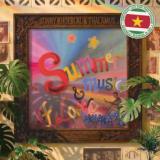
Previously unreleased jazz funk from Suriname, recorded in 1981 by keyboardist Sonny Khoeblal and his band Thalamus.
The music of Thalamus is a time capsule and the best kept secret of post-independent Suriname. During this turbulent time, the band used the language of jazz to express their desire for unity and freedom.
The generation of Thalamus envisioned a future beyond the ethnic divide their parents knew as social barriers. After independence, young people met at work or in universities and shared principles of unity and international solidarity. Jazz played an important role in translating tensions and experimenting with a sound of the future.
The band members of Thalamus shared interests in jazz-fusion from Weather Report, Chick Corea, Bob James and Carlos Santana. Compared to contemporaries with more pop appeal, their sound remained obscure in Suriname. Still, people listened to them bending conventional rules of jazz, pop, latin, rock and funk. This fusion reflected the band, its diverse members and their country: Suriname is a multi-ethnic country by colonial force. If diamonds are formed under pressure, love and solidarity emerge under oppression.
Thalamus is a unique recording of this revolutionary period, with new people finding each other based on a universal language: jazz-fusion. It culminated in six songs, two of which are 'Summer of Love and Music' and 'Lady Amazone'. This 7" vinyl brings you their story, their experimentation with jazz-fusion and tells the parallel history of Suriname.
он должен быть опубликован на 30.09.2026

The latest update to the Dream Software sonic catalogue is a glossy re-mastered version of the 2003 release ‘Fears’ from ‘Shuffle Progression’. A soundtrack for the space between reality and the higher spiritual planes. Grounding yet otherworldly, an organic groove doused in a warming sensuality and atmospheric liminality. This one is optimised for hazy spaces, morphing layers of floating essence, slowly obscuring all thats visible into blurry shapes of an abstract existence.
он должен быть опубликован на 30.09.2026

Across the cosmic boundaries via spiritual exploration and in the void between shimmer and shadow you will find the astral soundscapes of Birds Of Pandaemonium...
Emerging from Brooklyn's late-night music ecosystem, 'Hazy James' Armstrong and Tim Wagner met nearly 20 years ago through the city's DJ and club scene. Each with different but complementary musical backgrounds which included a mix of folk, guitar, DJing, synths, drum machines, country rock, disco, jazz, and rhythm-heavy club music (being just a few!), the duo began various musical endeavours together & "exploring the darkness while pursuing light" which eventually lead to the birth of Birds Of Pandaemonium.
It was only a matter of time that the stars aligned (via an introduction from Shane Watson of Causeway) to bring the Birds onto the musical radar at Sprechen which led to the release of 3 renowned E.Ps and ultimately, their debut album, Eudaemonia. Obscure covers including Idris Muhammed's Loft classic 'Could Heaven Ever Be Like This', the rave defining Born Slippy by Underworld and the post punk/new wave 'On Islands' by New Musik sit alongside original songs shaped by fresh reflections on life, grief, and love with elements of dream pop, shoe-gaze & gothic pop to give wistful and pulse-driven listening experience that is hazy, romantic, and deliberately genre-blurring.
A truly unique listening experience that delivers broad strokes of sunsetting psychedelia and bleary-eyed optimistic, astral dream-pop across all 8 tracks.
Is it balearic? Not really, it's pretty much a genre all on its own (answers on a postcard).
Товар уже находится на пути к нам и, как ожидается, будет доставлен из 30.09.2026.
The unconscious element to the conscious process.
The practice of dub techno and its tendrils is a fundamental for me, both aesthetically and from an engineering perspective.
I start every recording session with a dub inspired jam, the first piece I ever recorded in 1996 was an effort to recreate Phylyps Trak with only a Korg X3 and an Ibanez PUE5 (borrowed from Gary Howell). It was an awesome introduction to jamming, and the footing stones of noise, delay and saturation were explored with my foot hard on the enthusiasm pedal.
These practice jams are in some sense cathartic, the first step taken again & again, which helps me move forwards each session and additionally helps to 'warm the circuits' both of myself and the machines.
After realising the genius of Basic Channel is akin to the genius of peasant food, using every ingredient with nothing left to waste, (up to and including the oft maligned working noise of the machines themselves), this was a watershed moment for my own subjective progression. No longer tied to just emulation of something inspiring, but taking these learned tools into other areas of music helped to break free from a strong current of influence and also to progress into other areas with the new toolbox.
Dub:
The importance of the dub pioneers should never be understated, in modern music and my own practice. Yet with my initial inspiration being two german dudes issuing extreme techno variants with obscured label designs, who then signposted their listeners to their own inspirations (via their Wackies re-issues or nodded to on their Rhythm & Sound/Burial Mix sub-labels), meant that I started late and travelled backwards.
Learning to notice the live mixing of Mikey Dread or Lee Perry when the faders are bleeding through even when turned down, (echoed in BC's Quadrant Dub), or the brash send effects literally thrown into the mix also taught me that 'rough' mixing can inject a recording with life, uniqueness and the most right wrongness. Looking back Basic Channels very few elements helped me realise that the rules to be understood, are also the best ones to be broken.
Push the mixer into the red.
Amp that noise up from the tape delay cos it sounds sick.
Pseudo side-chain effects cos the kicks are way too loud and the mixer can't sum it nicely.
Spam the send knob into the delay units now, now and now.
Carelessness.
Noise:
Once I wrapped my head around the intrinsic 'noise' element that set those records apart, this became a torchlight into the alt noise movements which I was tentatively exploring at the time, and also is evidently a connection or thread into them.
Whether the Industrial/Post Punk UK scene (This Heat, TG, A Tent, F.E.) or the prolific output of the US Noise scene (Wolf Eyes, Live & Shave in LA, and subsequently following the lineage all the way back to Chrome's Alien Soundtracks), I had finally discovered a connection from techno to this 'free for all' corner of music.
This input from the Noise arena of sound is, in my experience, an all important step for a sonic artist, taking it's roots and extending out from Stockhausen/Pierre Henry and utilised/warped/mangled by thousands of adventurous pioneers ever since, I now see the line separating the high brow and the low brow is actually an artery carrying information from the head to the heart.
Vault is a selection of these jams that precede each of my solo recording sessions, for 30 years I've recorded hundreds of these 'workouts'. They are never intended as serious statements, just moments of naive enjoyment, yet most importantly they are time & space captured as practice.
The objective is always a warm up exercise, but sometimes those exercises turn a different corner, with a certain focus or direction dependent on what random samples are left in my machines from the previous session, instead of conscious choices, these unconscious elements can facilitate those 'positive mistakes' that make a piece of sound retain a different feel or colour and thus become special, or at least special to the creator.
I am quite conscious that the 'record everything' aspect of my ethos has been invaluable in cataloguing and saving these jams, while the attitude of carelessness during this process (after all, it's only a warm up jam) invites more enjoyment than seriousness ever could. Even if you don't feel the piece at the time, record it, because some years later it may well fit, or become relevant in a way you never intended.
-Miles
он должен быть опубликован на 30.09.2026
Y-3, the pioneering sports-fashion collaboration between adidas and Yohji Yamamoto, has for three decades dwelled calmly within the ''tensions of existence''. In conceiving the brand's long-awaited return to runway format at Paris Fashion Week, these codes laid the groundwork leading up to the Spring/Summer 2025 season. Whilst the focus for runway is traditionally placed on garments, models, styling, environment, and the pageantry in between, it was crucial that music play an integral role in the conversation. Three seasons later, sound has informed creative direction from the very earliest phases of ideation. Commissioning all-original compositions has become a natural part of this ideology. The return to runway has invited the opportunity to define a new sonic palette for the brand, and beyond that, to usher in a new era of sound for Y-3 that echoes across music & culture. Following this ethos, and with a mandate to support obscure talent, Montreal duo Solitary Dancer have emerged as the first collaborators in shaping the intimate brand architecture of noise & feeling. With a body of work now spanning over a trilogy of seasons, the genre-defying Y-3000 imprint provides an outlet to disseminate & recontexualize the original compositions beyond the traditional runway. The label embodies Y-3's enduring commitment to explore innovation within opposing cultural forces. The works, originally released on Y-3000 as a series of white labels, are now being featured as a 6x 12'' vinyl compilation. Designed by Trevor Jackson and limited to just 99 examples, the recordings will also be made available both digitally and on streaming services for the very first time.
Есть у нас в наличии и готов к отправке
Есть у нас в наличии и готов к отправке

Repress
Introversion, one of our most prominent discoveries, joins the golden side of the label with a stunning release that confirms his great skills. He vigorously continues to deliver this very unique 90's rave sound melted to some modern aspects of hip-hop and Techno with 3 Original cuts, on the flip side the debut of a duo that doesn't need much of an introduction, Obscure Shape & SHDW remixes Onryo, taking this already amazing record to a bigger and wider space.
Товар уже находится на пути к нам и, как ожидается, будет доставлен из 02.10.2026.
DJ Support: Mochakk, Joseph Capriati, Jamie Jones, Purple Disco Machine, Groove Armada, Marco Carola ,keinemusik, Adrian Roman, Bill Brewster, Rino, Ruben Mandolini, Terry Farley, Nicolas Masseyeff, Echonomist, Robosonic, Nuno Dos Santos, diskJokke, Dan Marciano Jody Wisternoff / Way Out West, Eelke Kleijn, Henry Saiz, Digitalism, Sister Bliss / Faithless, Innellea, Adriatique, Judge Jules, Sam Divine, TSHA, Simone Vitullo, Joris Voorn, Tommie Sunshine, Fahlberg, Stijn D'hont / DJ Neon
D Stone is a rising force in Amsterdam’s electronic music scene, blending live instruments with electronic production to create his unique take on house music. His sound bridges true house to proto-disco and deeper percussive elements, as showcased in his release Total Unison. A passionate DJ and producer, D Stone crafts infectious tracks by combining samples with live instruments, driving dance floors with his grooves. Born into a musical family, D Stone was immersed in sound from an early age. His father’s influence exposed him to diverse musical styles, sparking his lifelong curiosity. He began playing piano at eight, learned guitar at twelve, and by fifteen discovered electronic music, exploring house as a DJ. A year later, he ventured into production, gaining recognition and landing his first gigs. Inspired by 70s and 80s disco, funk, garage, and 90s tech house, his music blends energy, groove, and soul. With his foundation in live instruments and his forward-thinking approach to electronic music, D Stone strives to create more than tracks—he’s shaping moments that linger in the minds of his listeners.
Envision remixed by DJ & producer Julya Karma Emerging from Brooklyn’s underground and now rooted in Berlin, her practice isn’t about fitting into a lane, it’s about finding what is alive and letting it shape the moment.
Across diverse stages and platforms from Coachella and Lost Village to Berghain, Cercle, Space, The Brooklyn Mirage, DGTL, Time Warp, Audio Obscura, Tomorrowland, and within the orbit of Innervisions, Julya’s performances reflect a commitment to exploration over formula, earning recognition from artists like Laurent Garnier, Dixon, Âme, Adriatique, Rüfüs Du Sol, and Sven Väth.
он должен быть опубликован на 02.10.2026

It’s been a while! Six years after their last release on the best seller' Good Plus label, Les Yeux Orange return in full force with four tasty edits drawn from their ever-expanding record crates. A selection of obscure and rare French gems you’d never expect to find brought together on a single release. Expect some funky Balearic vibes, sleazy Italo, infectious disco, and lustful boogie… Each track has been carefully readjusted for the aural pleasure of devoted crate diggers and discerning collectors. Sacrebleu !
Есть у нас в наличии и готов к отправке

DJ Himitsu is a Tokyo-born, London-based producer and DJ, known for his understated approach and deep knowledge of Japanese vinyl and book culture. Following a debut EP of acid house on Australian imprint Lunatic Music in 2023, 'Exotic Animals' marks a new waypoint in Himitsu's artistic evolution.
On this debut full length, driving 303 basslines and kickdrums are traded in for obscure recordings and convoluted samples, which spiral and fuse to form shuffling, heady new compositions. Like shattered pottery reassembled into top-heavy sculptures with golden glue, 'Exotic Animals' shapes and juxtaposes opposing forms and fragments, with lolloping aplomb.
When not producing, DJ Himistu runs Caravan - a vintage Japanese record, ceramics and bookshop in London. It's with the same warmth, care and curiosity that he arranges his findings in the plunderous grotto of 'Exotic Animals'. In this way, stepping inside this work is like entering a remote trading post of instruments, memoirs and other sonic curios - as Himitsu stands patiently at the counter.
Recommended for fans of Jon Hassell, Giovanni Venosta, Discrepant.
он должен быть опубликован на 05.10.2026

You wake up abruptly on cold floorboards, your body aching as if from a great fall. White light floods your vision. Where are you? Last thing you can remember you were hurtling through the Genesis Domain at breakneck speed, but this is definitely somewhere different. As your eyes come into focus you see the hall is grand, intimidatingly opulent. A full house of seated onlookers peers at you expectantly. You’re on a stage, you realize. Flames creep up the walls, engulfing the room and lighting the faces in the audience; the heat is oppressive, but nobody seems to notice. A voice booms out.
“And now, ladies and gentlemen, the moment you’ve all been waiting for! Presenting: a performer of great renown all across the land, yours for one night only… introducing—”
Tiny bells jangle around your head as you shift your weight, obscuring whatever name the announcer just called out. You try to sit up. The jester’s hat tumbles off with a clatter. Not this again, you groan. Your head spins with vertigo. You grimace, trying to remember something. You had just gleaned an urgent and existential truth in the Genesis Domain, but it’s slipping away now… what was it?
Off to your left, a whip cracks. The impresario glares at you from the wings, fist clenched around a diamond-encrusted whip, mouthing at you to get up.
You try to run, but the weight of an incorporeal authority bears down upon you. The impresario cracks his whip again, an impish smirk forming on his lips.
With resignation, you begin to work the room. What else can you do? Tendrils of giggling and gossip creep through your periphery. The heat is suffocating and the smoke stings your eyes, but the show goes on. Remembering your bag of tricks as if from a dream, you raise your hands in the air, invoking the universal call to audience participation. The crowd goes wild. You feel the rush of a familiar thrill. Being the Fool comes naturally to you, you realize, as the palace burns around you.
он должен быть опубликован на 05.10.2026

Forgotten electronic treasures by composer Ton de Leeuw rediscovered: first release in the Dutch Oscillation Series
Dutch Oscillation Series (DOS) proudly announces the release of a box set featuring the complete electronic works of Ton de Leeuw (1926–1996). This publication marks the first instalment in a new series that brings the history of Dutch electronic music to life for a broad audience. The official presentation will take place on Saturday, 12 September, during the Gaudeamus Festival for contemporary music in Utrecht.
Unique discoveries from the archive. For far too long, twentieth-century Dutch electronic music has remained hidden away in dim archives, only occasionally accessible under optimal conditions. Many compositions have not been heard for decades, perhaps after being presented to an audience only once. For this project, the original tapes were carefully traced in basements and archives, including the mysterious work Chronos, which was rediscovered in the collection of the Netherlands Music Institute (NMI). Even close collaborators of De Leeuw were unaware of the existence of Chronos. Another highlight of this release is the radiophonic oratorio Job (1956), which was awarded the Prix Italia radio prize by broadcaster Rai.
The recordings were digitised by experts at the Institute of Sonology and the Instituut voor Beeld en Geluid (Netherlands Institute for Sound and Vision). The music was then meticulously restored and mastered in the studio of Jos Smolders (EARLabs), in accordance with modern standards, while strictly adhering to the composer’s original artistic intentions.
The edition includes eight works composed between 1956 and 1982. The collection is released as a deluxe LP and CD box set and is also available via streaming and as high-resolution downloads. For an optimal listening experience, originally four-channel works such as Elektronische Studie (Electronic Study) and Antiphonie (Antiphony) are available as special Dolby Atmos downloads, allowing listeners to experience at home the unique spatial sound world envisioned by Ton de Leeuw.
About Ton de LeeuwTon de Leeuw was one of the most influential Dutch composers of the twentieth century. A thinker with a distinctly cosmopolitan outlook, he immersed himself deeply in musical cultures from India, Japan, and Indonesia, among others. His work consistently sought to bridge Eastern and Western musical traditions and concepts.
In addition, De Leeuw enjoyed a distinguished academic career. He served for many years as senior lecturer and director at the Amsterdam Conservatory and was affiliated as a senior research fellow with the University of Amsterdam. His book Muziek van de twintigste eeuw (Music of the Twentieth Century) remains a standard reference work.
он должен быть опубликован на 05.10.2026

2026 Repress
Macedonia's own Stojche is Fuse's next guest for the club's freshly made imprint. The long standing DJ and producer has been known to keep Detroit's playfully hybrid style as the focus of his work and 'Metaphor' is the case in point. His four tracks bounce through a nostalgic balance of techno, house, and more with a modern crisp. A refreshing take on club music, Stojche keeps techno's sometimes nonchalant attitude at arms length with a charismatic record that hits its mark with every measure.
The record's first track 'Counterpunch' features heavily lined percussion but still brews up a storm far and wide with resonant dub stabs and open hi hats. The drum machine boasts a full spectrum, rolling through a light show of melodic flashes, perfect for a room compressing soundsystem. The maximalist, vintage detail that Stojche brings to his compositions blurs the lines between classic genres in a time of hasty hybridization, which gives it a sort of authenticity that can't be taken for granted. 'Chordal Tribe', on the other hand, raises the general euphoria of the EP. Luring in the listener with bright pads and full-on drums, Stochje's work is reliable main slot material that adds color to any mix while providing a persuasive low end. Shimmering hi hats give it an ethereal quality making it an appropriate interlude for almost any context. Moving on to the B side, the producer sharpens up his rhythm and emphasizes the hardgroove influence in 'Signal Drive'. Softening the pace of his drums with free use of melodic chord stabs, Stojche opens up his dance floor for a crowd bonding record once again, complete with filter transitions and pummeling toms. As the final contribution, his title track 'Metaphor' begins with a more obscure opening to conclude his EP for Fuse. Leaning more to a techno cut, the record remains flamboyant as ever with open hats and rides shuffling through his arrangement. A muted main synth becomes apparent to focus the energy of the track while allowing for liveset-like drum flickering to take shape beneath, claiming the immortality of old club records with the technical precision of a seasoned modern producer.
Есть у нас в наличии и готов к отправке

Det Gode Selskab continue their quest as they call on Berlin-based Italian artist Busso. An artist who continues to express himself through a multitude of vibes and sounds, fitting perfectly with the free-flowing DGS ethos. ‘Anna In The Jelly’ wanders between four different cuts, teasing animated deep house energy combined with stripped-back minimal flavours. A reflection of Busso’s versatile taste, he encapsulates four sure shots for your summertime record bag. A tale for the sun worshipping dreamers, soundtracking the warmer months.
Diving straight in with ‘Sexual Desire’, Busso delivers perky and playful peak-time action, with a clean-cut, feel-good energy from the word go. A vintage feel emerges through the vocals and crisp drums, working in sweet harmony. Slick hi-hats lead the way in ‘Don’t Be Afraid’ before you are confronted with a killer elasticated groove synonymous with the Italian’s sound. Beautiful chords appear at the midway point, spiralling into paradise.
The B-side kicks off with the title track, constructed in a distinct chunky manner. Squelchy mechanical tones manoeuvre around the mysterious drive of the track. Moody as it moves, it’s one for the darker nights on the road. Last but not least is ‘Red Print’, tightly packaged and incredibly detailed, with quirky obscurities flashing throughout. A steady motion perfectly sets the tone as you start to build the floor.
This record cements an exciting future for the label, as they look to continue elaborating on their catalogue, ever-evolving and expanding their width of sounds with one of the most exciting prospects currently in the German capital.
Есть у нас в наличии и готов к отправке
