Announcing Maara’s new album Ultra Villain, a deeply personal, narrative-driven record that explores desire, heartbreak, obsession, and the freedom that comes with choosing yourself.
Written from a place of hard-won self-trust, the song marks a shift toward clarity. “I realized people can only meet you where they’ve met themselves.”
Written and Produced by Maara Louisa Dunbar
Additional Production and Mixing by Francis Latreille and Patrick Holland at Jump Source Studios
Mastered by Noel Summerville
Cover Art by Dodleyz
Design by Jesse Osborne-Lanthier
Suche:obsessive
- A1: Pattern Index
- A2: Becoming
- B1: The Shape Of Memory
- B2: Splintered Air Between Us
- C1: Obsessive Compulsive Order
- C2: Bass Mosaic
- D1: This Is A Bridge (With Sorcery)
- E1: Four Tones Reflected
- F1: Ebb And Flow
- F2: Chrysalis
Feeling Is Structure explores the relationship between physical form and human emotion.
Across 10 spatial audio-visual works, Cooper examines how structure in sound, architecture, biology and art, shapes the way we feel.
The album is built on the idea that our inner emotional lives are profoundly connected from our lived environment. Developed from a commission to create a live show for London’s Royal Albert Hall, expanding on this idea, Max explains:
“I’m fascinated by architects who can imbue brutalist buildings with humanity, or artists who can paint a block of colour representing their soul.” says Cooper. “We have this remarkable capacity to spill ourselves into the world through form. When I began working on a show for the Royal Albert Hall, that connection between large-scale physical structures and feeling took over, and this album emerged from that process.”
Musically, Feeling Is Structure leans into Cooper’s more intricate and deliberate compositional side. Rather than improvisation, the record focuses on carefully designed systems and processes that build evolving sonic architectures. Precise at the micro level, but deeply emotive in impact.
Blue Hour distills over a decade of artistry into his debut album Selva, unearthing eight tracks inspired by ancient wisdom and forgotten worlds.
Blue Hour is the moniker of Luke Standing, a multifaceted artist, producer, and label owner navigating between past and present electronic dance music. Over more than a decade, Standing has built a career balancing transformative craft with a sharp curatorial approach, earning him respect across the global scene. After years of sonic experimentation, he now releases his debut LP Selva. “I never set out to make an LP – it just wrote itself,” he says. “I followed my intuition, and the music found its own path.”
Born and raised in the UK, Standing grew up in parallel with club culture, moving between Brighton, Bristol and Berlin while running club nights and establishing himself under former aliases Furesshu and Esoteric.
He launched his Blue Hour project in late 2013, shortly after relocating to Berlin. Initially a platform for his own music, Blue Hour quickly became a collaborative hub, blurring the lines between personal output and curation. Over time, Standing has cultivated an international ecosystem of like-minded artists while continuously expanding his own sonic horizons.
Selva marks his first full-length studio album, weaving a lifetime of influences into a cohesive narrative inspired by ancient wisdom and forgotten worlds. The eight-track double LP transforms his inner dialogue into a subconscious story pulling inspiration from a labyrinthine network of influence and experience. “I followed the music obsessively, reflecting and refining until the story revealed itself,” Standing explains.
“To me, the LP evokes Amazonian or Mayan jungles, themes of exploration, the mysteries of the natural world, wisdom passed down through generations. I didn't set out to write about these things consciously,
they just emerged on their own.” he adds.The album was shaped through intensive work in his studio and periods spent in subtropical locations.
Listening closely, Selva unfolds like a modern ceremony: the opening tracks channel his early UK dance influences, shifting into blends of traditional and contemporary techno, then expanding into melodic soundscapes before concluding with transcendental textures and atmospheres. The result is an introspective journey where functionality and emotive storytelling coexist, revealing a depth in Blue Hour we haven’t heard before.
Whether performing, curating, or producing, Standing operates with a deep commitment to sound, culture, and collaboration. More than an artist, he is an architectural thinker of what electronic music could become. “Every release is my own metamorphosis,” he says. “This LP reflects my current form, and I’m curious to see what the next chapter brings.” Few artists can unify a lifetime of genre-spanning influences into a sound as sharp and focused. On Selva, Blue Hour does exactly that, opening a new era of deeper
immersion from his Berlin-based label.
- A1: Come As You Are 2:40
- A2: Russian Roulette 3:22
- A3: Egyptian Reggae 1:02
- A4: Ramblin’ Rose 2:16
- A5: Johnny Guitar 1:48
- A6: I Love Joan Jett 4:00
- A7: Purple Haze 2:04
- B1: The Sad Skinhead 2:06
- B2: Brown Sugar 3:00
- B3: Sheena Is A Punk Rocker 2:02
- B4: Green Fuz 3:18
- B5: Sunny Afternoon 1:04
- B6: Girl From The North Country 1:36
- B7: Mother Of Earth 2:44
- B8: Dali's Car 1:26
I first encountered Pascal Comelade’s music thirty years ago—and nothing has sounded quite the same since. I was immediately captivated: he is an artist like no other, whose sincere and selfless love of music is always evident, especially in his tender reworkings of other people’s songs.
Comelade seems to work like a watchmaker: meticulous, precise, and obsessive—yet always drifting into something dreamlike. His music opens hidden doors, telling strange and beguiling stories filled with obscurity, kindness, and reserved humour.
Back then, my fascination was instinctive. Today, with a few more words at my disposal, I look to this exceptional 70-year-old French musician and feel exactly the same pull.
Métaphysique Du Hit-Parade is the first vinyl compilation devoted to Pascal Comelade’s favourite cover versions. It spans a forty-year career and traces sixty years of rock and roll history along the way. “Sheena Is a Punk Rocker” becomes a soft, soothing lullaby that may well have made the Ramones weep. Then there are his idiosyncratic tributes to Jonathan Richman (“Egyptian Reggae”) and The Kinks (“Sunny Afternoon”), alongside nods to formative heroes such as The Gun Club, Captain Beefheart, and MC5.
Two exclusive recordings stand out particularly: Bob Dylan’s “Girl from the North Country” and Nirvana’s “Come As You Are”—a song that shaped my early youth. Both were recorded especially for this release.
Jan Lankisch, January 2026
Secret Vault is a new and already essential edit label from what is rumoured to be a group of Far Eastern otakus - a collective term in Japanese for obsessive interests in niche hobbies, in this case, disco. This second drop kicks off with the impossibly joyous and uplifting A-side, with trilling strings that just go up and up and up as the funky drums and elastic male vocals match that energy. Flip it over for an equally euphoric B-side with funky, knotted bass riffs, instrumental grooves and a steamy female vocal. Both are no-brainers for anyone looking to inject big heart into their sets.
The second chapter after “neverlost”, “closer” blends samplebased production with classic songwriting – like a sonic mosaic of warmth and groove. Lyrically “hippiesque,” Sepalot explores natural beauty, unity, equality, and self-determination. Guest features shine: Blu delivers sharp lyricism, and Illa J surprises
with soulful vocals on “My Own Way.” For fans of The Avalanches, Caribou, and Madlib – Closer is lush, human, and unforgettable.
Sepalot is one of those rare artists whose sonic palette refuses to be boxed in. His music exists in the fertile space between multi-layered sophistication and playful unpredictability – a quality rooted in his eclectic upbringing. From skate-punk beginnings to soul all-nighters, from obsessive vinyl digging to
deep immersion in hip-hop’s golden era, Sepalot has carried the art of sampling like a badge of honor. His beats are mosaics – meticulously pieced together fragments of sound forming an intricate whole. Beyond the studio, he’s explored these influences as DJ, producer, and live performer, leading the
Sepalot Quartet across Europe’s jazz festivals, and more recently with his experimental band Tikhet alongside Angela Aux
With “closer”, the upcoming second chapter following his 2023 album “neverlost”, Sepalot distills his broad musical world into a sample-based yet song-driven statement. The production feels warm and tactile – think needle-on-vinyl crackle meeting modern songwriting clarity. Lyrically, it’s “hippiesque” in the best
way: themes of natural beauty, unity, democratic awareness, equality, and spiritual introspection weave through the tracklist.
The guest list is just as inspired: legendary wordsmith Blu delivers razor-sharp verses, while Illa J – brother of the late J Dilla – steps away from his signature rap to surprise with soulful vocals on “My Own Way.” Together, they amplify the album’s humanist core, balancing groove-heavy production with
lyrical depth.
Fans of artists like The Avalanches, Caribou, DJ Shadow, or Madlib will find plenty to love here, but Closer carries its own unique fingerprint – a testament to Sepalot’s ability to merge hip-hop grit with songwriting grace. If “Neverlost” was a map, “Closer” is the destination: lush, thoughtful, and deeply human.
Highly recommended for anyone ready to hold hands, open their mind, and let the beat guide them.
- A1: Scratch Pad 1
- A2: Messij Received
- A3: God's Gift
- A4: Tentative
- B1: Canada 2048
- B2: Wiped Out
- B3: Body In Motion (Body Plus Mix)
- B4: Onyx (Dark Side Of The Moon)
- C1: Messij Received (Wstwgbe Mix)
- C2: Canada (Drunken Auslander Mix)
- C3: Tentative (Woffenfum Mix)
- D1: Messij (Bobbing Boat Mix)
- D2: Body In Motion (Timeless Techno Mix)
- D3: Doh-T (Am / Fm Mix)
- E1: 95 Future Echoes
- E2: Turbine
- E3: Pencil Neck
- E4: Messij 2005 (New Science Mix)
- F1: Canada (Tim Reaper Remix)
- F2: Messij (Sherelle's Messij In A Bottle Hardcore Remix)
- F3: Doh-T (Mantra Remix)
- F4: Canada (Niknak Remix)
The legacy of wipE′out′′ has transcended time and cemented itself as a true transgenerational phenomenon. Launched in 1995, it didn’t just revolutionise the gaming industry, it created a bridge between the gaming ecosystem and the raver community. Its futuristic aesthetics and forward-thinking sound left a mark not only on mainstream audiences but also on the most demanding corners of the underground.
Decades later, the game’s impact is still alive. The release in 2023 of The Zero Gravity Soundtrack on Lapsus Records proved once again that wipE′out′′’s accompanying audio will go down in history as much more than just an anti-gravity racing game soundtrack.
This is why we decided to go deeper into the slipstream and build the second volume you’re now holding in your hands. Drawn from the original archives of Tim Wright, aka CoLD SToRAGE, this new collection surfaces unreleased cuts, pieces that couldn’t fit on the first edition, and a suite of self-authored ambient reworks that translate pure velocity into wide-screen atmospherics engineered for the long straights, the drone of airbrakes, the blue hour between checkpoints. It also reconnects the circuit, gathering selections and variants tied to later chapters of the saga — wipE′out′′ HD and wipE′out′′ Pure — plus alternative mixes that, until now, only existed in the Sega Saturn dimension of the franchise.
Finally, the material takes a leap into the future in the hands of four remixers especially chosen for this release: Tim Reaper, SHERELLE, Mantra, and NikNak, who collectively forge links between CoLD SToRAGE’s pioneering musical vision, the sound world of the game, and the contemporary breakbeats and drum & bass vanguard.
Expect the DNA you remember — accelerated breaks, trance-vector synths, jungle influences, sub-bass rumbling neatly beneath the craft’s hull, and at times even echoes of classic hardstyle — now revealed with new angles and air. The previously unheard material carries the same aerodynamic design sense that made these tracks feel faster than the track map itself, while the ambient versions open the field of view with melodies hovering at the lip of overdrive. Without a doubt, here you’ll find a strong sense of nostalgia. But this isn’t just nostalgia; it’s also proof that this sound world continues to evolve when you ease off the throttle.
For the faithful — crate-digging ravers, speed-run obsessives, and design nerds — this is an essential expansion pack: compiling rarities, restoring context, and reframing the emotional core of wipE′out′′ for late nights and early mornings alike. Bridging memory and momentum, club and console, rush and afterglow. Strap in.
Detailed tracklist, with annotations by Tim Wright aka CoLD SToRAGE
· Scratch Pad 1: “This track was composed using incomplete tracks that were developed around the time of the first wipE′out′′. It’s so long because it was used for a marathon-length Psygnosis promotional video.”
· Messij Received: “Messij was a firm favourite with wipE′out′′ fans, so it made sense that there’d be more where that came from — this was one of those re-workings.”
· God’s Gift: “I was always very fond of Erasure’s track Love to Hate You with the canned crowd FX sounds. God’s Gift was a tongue-in-cheek reference to how some musicians think they are just that. This was way before I even played live as CoLD SToRAGE.”
· Tentative: “I wasn’t sure about introducing some wacky beats and distorted sounds into one of the tracks, because it was kinda heading away from the other tracks, hence Tentative — but it turned out OK.”
· Canada 2048: “When wipE′out′′ 2048 was launched I decided to re-make Canada as a kind of tribute, but in a slightly new-tech, laid-back way, using Propellerhead Reason and all software synths.”
· Wiped Out: “Based on a few riffs from a MIDI file unused at the time of the original wipE′out′′ game compositions, this featured on my debut album MELT.”
· Body in Motion (Body Plus Mix): “A more trippy interpretation of Body in Motion that featured on non PlayStation versions of the game e.g. Sega Saturn.”
· Onyx (“Dark Side of the Moon”): “Onyx was my sole contribution to wipE′out′′ Pure on the Sony PSP handheld gaming console. This version was something I developed in a darker style, that eventually erupts into a crescendo.”
· Messij Received (WSTWGBE Mix): “Like I say, Messij was a hit with most wipE′out′′ fans, so when I was asked to compose more music for non-PlayStation versions, I adapted this tune into a parallel-universe version for PC and Sega Saturn. By the way, WSTWGBE refers to Who Said This Was Going To Be Easy?”
· Canada (Drunken Ausländer Mix): “In early 2018 I released a fresh album called Ch'illout′′, a re-working of many of my wipE′out′′ tracks in an ambient, Sunday-morning vibe style — it was a few years’ work, here and there.”
· Tentative (Woffenfum Mix): “Another chilled re-working of one of my wipE′out′′ tracks, the mix named with a nod to a good friend of mine, Carl Woffenden — someone who I've worked with for many years in the games industry.”
· Messij (Bobbing Boat Mix): “A nice cheesy computer blip-blop start belies its deep and upbeat chilled-out melodic finale.”
· Body in Motion (Timeless Techno Mix): “Another classic track given the chilled-out vibe mix, as featured originally on my Ch'illout′′ album. This one’s a really trippy, deep-space take on the original.”
· DOH-T (AM / FM Mix): “The idea with this chilled-out mix was to imagine all the melodic parts of this varied track being broadcast on terrestrial radio, so each theme drifts in and out through the radio static.”
· ’95 Future Echoes: “Originally developed as a companion album for wipE′out′′ HD, this track actually has its roots in a tiny loop of a song that never progressed to anything special back in the mid-’90s when I was composing for the original game.”
· Turbine: “Also from my wipE′out′′ HD album, it leans heavily into the upbeat, uplifting tunes from the original game, but also steals a bit of vibe and energy from The Prodigy, with those distorted flute sounds.”
· Pencil Neck: “This excerpt from my wipE′out′′ HD album features lots of sounds centre-stage and forward from Propellerhead Reason’s Subtractor virtual synth. I learned to love this more than my JD-800!”
· Messij 2005 (New Science Mix): “Yet another take on the track that still raises a smile, this time through a mix of samples from the original and Propellerhead Reason — the ‘new science’ when compared to an Amiga 1200 running Bars and Pipes.”
- A1: Countrymusicdisco45 4 08
- A2: Sometimes Shooting Stars 2 57
- A3: Short Cut Home 3 25
- A4: Disappointment 3 00
- A5: Days Are Mighty 2 46
- B1: Don't Dance With Me Tonight 3 27
- B2: You Got It Wrong 2 39
- B3: Ring The Bells 3 57
- B4: Let's Make It Up 2 49
- B5: When Did You Stop Loving Me 3 54
- C1: Just Beginning 4 00
- C2: Wintering Of The Year 3 16
- C3: Let It Rain 3 04
- C4: We Tell Each Other Who We Are 3 27
- C5: Trip To You 4 06
- D1: Dirt 2 54
- D2: Heaven Right Here 3 38
- D3: If Later Ever Comes 3 03
- D4: Remember The Season 3 10
- D5: A Little Love 3 35
- D6: Weary Traveller 3 20
“The high priest of country cool” - Rolling Stone
“I like him very much. He’s very special. He’s singing with a voice I never heard before” - Townes Van Zandt
“A conscious, soulful brother” - Horace Andy
“He’s a brother to me - one of the best singer/songwriters I’ve ever met” - Adrian Sherwood
“Unearthed mine of gems from inner Wales - a songbook of ideas - that's Jeb!” - Gilles Peterson
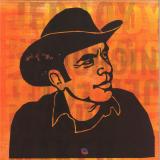
Jeb Loy Nichols is a bonafide Country (Got) Soul legend. The Music Maker presents 21 incredibly deep, grooving and soulful songs from the cream of Jeb's catalogue; from its earliest days to his latest unreleased gems via countless rare and unbelievably good lost-classics. This 2LP set is presented in a gatefold sleeve complete with freshly commissioned artwork courtesy of Jeb himself.
In collecting these uncut, under-heard gems, we hope to do justice to Jeb's jaw-dropping artistic brilliance. A man who, in working with Adrian Sherwood, Dennis Bovell, Dan Penn, Larry Jon Wilson and countless other legendary characters, has crafted some of the most deeply affecting folk, country, soul, funk, blues, dub, reggae, gospel, rap and electronic music, ever heard.
The first music Jeb really felt a connection with was southern soul: "I used to listen to the radio at night and fell in love with Bobby Womack and Al Green, The Staple Singers and Joe Simon – that whole Nashville/Memphis/Muscle Shoals thing.” But Jeb was so much more than a soul boy, Indeed, he "went to bluegrass festivals with my dad and come home and listened to jazz records with my mother.” And, when he was fifteen, he heard his first punk record: "God Save The Queen" by The Sex Pistols. “That and The Ramones completely changed me.” In 1979 he got a scholarship to go to art school in New York: “A great time. Punk was over but hip-hop was starting and I got into that in an obsessive way.”
His first recording, in 1980, was an unreleased rap song called "I’m A Country Boy". If that isn't an insight enough into Jeb's kaleidoscopic path through music, in 1981 he visited friends in London and found himself living in a squat with Adrian Sherwood, Ari Up (from the Slits), and Neneh Cherry. “Adrian put me to work immediately, moving boxes of records all across London. It was Adrian that was and is my biggest influence – in his complete disregard for genre purity.” So, presumably you're getting the picture? A veritable musical magpie with a voracious appetite and unimpeachable taste.
"Mine has always been a meandering career. I've done what I've done, and made the music I've made, due to chance meetings. I'm not particularly ambitious; it's more important to me that I work with friends and like-minded people. I've been a big fan of Be With for years. Everything they release is essential. When they asked about rereleasing "Countrymusicdisco45" I was both pleased and flattered. We began talking about how we'd do it; two years and twenty-one tracks later, here we are. I've always thought of the music I make as Country Music. Music conceived in the country, written in the country, recorded in the country. I left London and moved back to the country so I could live among the trees, the grasses, the animals, those things that don't go to war and get greedy. This compilation is the story of that life. Hand made, lo-fi, ramshackle, stripped down, real deal music. Heartworn and funky. Music made in the kitchen, not in the studio. As the great Skip Mcdonald said, Perfect ain't perfect. It's great to see all these tracks gathered together. It feels like a family reunion. Some older members of the tribe, some newer arrivals."
Opener "countrymusicdisco45" is a song Jeb wrote about how his crew lives, tucked up blissfully in the hills: "House parties full of country folk dancing to disco, reggae, soul, country, hip-hop. All night. I recorded it at home under the influence of Stevie Wonder." It's one of the funkiest records you'll ever hear. "Sometimes Shooting Stars" was recorded in Nashville and mixed by the legendary Dennis Bovell. It's deep, dubby, majestic. A thing of fragile, melodic beauty. The party ramps back up again with the undeniable groove of "Short Cut Home" before the profoundly moving "Disappointment" arrives. One of many songs he's recorded with good buddy Benedic Lamdin (aka Nostalgia 77): "We were going for a Leon Thomas meets Richard Brautigan meets Alice Coltrane kind of thing". We think they nailed it. "Days Are Mighty", like a lot of the tracks on this collection, "started life as a demo, an attempt to get something down while it was fresh. No frills, nothing fancy, just feel." And what feels!
The irrepressibly funky "Don't Dance With Me Tonight" is a deeply moving, slow-mo organ-drenched head-nod-funky country-ballad. Next up, the breezy "You Got It Wrong" was recorded in Wales with some of Jeb's good friends and neighbours, The Westwood All Stars, featuring Clovis Phillips and Will Barnes. Skanking fiddle-flecked gem "Ring The Bells" was the first thing Jeb recorded when he moved to Wales. A combination of all his loves; country, reggae, soul. It's followed by "Let's Make It Up", a truly sumptuous string-drenched emotional groover. "When Did You Stop Loving Me" is another Nashville track, written and recorded during a time Jeb was spending a lot of time with the Muscle Shoals crew, Donnie Fritts, Spooner Oldham, George Soule and Dan Penn: "It shows, I'm sure, their influence." Oh, you bet it does!
The swaggering country-funk of "Just Beginning" should grace many groove-focused DJs' sets whilst "Wintering Of The Year", again made with Clovis, is pastoral, campfire soul. The glacial, gorgeous "Let It Rain" is from an unreleased record Jeb made with the great British jazz bass player Andy Hamill and "We Tell Each Other Who We Are" is freaky country-soul made by a man with a love for strutting, wonky hip-hop stylings. Rounding out the side, "Trip To You" is pure, uncut amphetamine-propelled drum-machine soul.
The spare, beautiful "Dirt" is from an EP Jeb made with Julian Moore in his house in South London: "All first takes, straight to tape." Swoon! "Heaven Right Here" was a very minor league hit in America: "It was produced by the brilliant and much missed Wayne Nunes. It was started in the countryside of Missouri, finished in the countryside of Wales, and recorded in the countryside of Sussex." Double swoon! "If Later Ever Comes" is electronica meets J.J. Cale business whilst "Remember The Season" is truly wonderful and breezy guitar soul. "A Little Love" was made with Wayne Nunes as well, after a night of listening to Studio One and Northern Soul. Bouncy dub closer "Weary Traveller" was written by Bill Monroe, the hero of Jeb's youth: "Monroe's music was heavily influenced by black southern churches; I've tried to keep some of that feral feel." This was the final recording by Jeb's 1990s Country-Dub band, Fellow Travellers.
The name of this compilation comes from a time when Jeb lived in Peckham, south London and he used to DJ and sometimes perform at a local bar: "The owner of the bar, a Jamaican named Count Percy, once asked me what I called my music. I told him I wasn't sure, I guess just pop music. He thought about it for a minute and then said, 'no, more like mom and pop music'. Rather than call me a country singer or a folk singer he always referred to me as The Music Maker."
With the long overdue deluxe overview of his beloved music, we hope to finally shine a light on the unheralded genius of Jeb Loy Nichols. RIYL Larry Jon Wilson, Townes Van Zandt, Bobby Charles, country got soul artists, dub, deep soul, disco, dancing, heartbreak. This deluxe collection, spellbinding from beginning to end, should hopefully go some way to ensuring Jeb reaches an ever bigger, ever more appreciative crowd of followers. Mastering for this special double vinyl edition was overseen by Be With regular Simon Francis and it was cut by the esteemed Cicely Balston at Abbey Road Studios to be pressed in the Netherlands by Record Industry. The artwork has been lovingly put together by The Music Maker, himself, Jeb Loy Nichols. "Be With is the perfect home for this mongrel music. I am forever in their debt." The pleasure is all ours, Jeb.
Phantasy are delighted to introduce Greek duo Boys' Shorts for their debut EP on the label, ‘Athena’. The project of music obsessives Vangelis and Tareq, the Boys’ Shorts sound has helped redefine timeless strains of disco, house and Italo for Europe’s queer club underground, with similar charisma spilling into their collaborative productions on labels including Live at Robert Johnson, Permanent Vacation and Polari.
Boys' Shorts appearance on Phantasy is coupled with their most ambitious and fulfilling songwriting to date. Featuring a rare vocal performance from beloved selector and cosmic disco expert Budino, appearing alongside Elisa Paradiso, the instantaneous lead cut ‘Summer’s Here and Summer’s Missing’ recounts a sun-drenched romance cut short. The duo’s soft, bittersweet synthesis mingles with Budino’s Italian-language lyrics, gently pulsing to find closure, or at least further pleasure, while up late in a Balearic discoteque.
Under those same hot lights, Boys' Shorts go deeper still with the leading oscillations of ‘Stereo on Acid’, in which classic, wobbly-hearted 808 sounds flirt playfully with a bassline that bumps like downtown traffic on a sweltering Athens afternoon. Reflecting the hidden pleasures and true underground culture of the city after nightfall, title track ‘Athena’ is a sensual and sophisticated groove with an epic yet understated touch, that one can imagine soundtracking a future soiree or centuries of ancient history alike.
With the title "Treatise On A Narcissist" hinting at the EP's thematic exploration, the four originals by Shaleen are a masterclass in atmospheric, driving techno-built on powerful basslines, intricate percussion and an unnerving emotional intensity. This formidable body of work is then subjected to four distinct and high-calibre reinterpretations, each pushing the originals into new sonic territories.
Fiedel delivers a masterclass in raw, functional Berlin Techno. His "Treatise on a Narcissist" Remix builds on a foundation of caustic percussion and echoing metallic textures to create a journey into the machine's heart, powered by monolithic kick drums and pulsating, hypnotic sequences. This is peak-time, strobelit intensity-a dark, unforgiving lesson in rhythm and propulsion.
Mareena's sophisticated version of Shaleen's "Treatise On A Narcissist" strips the original back to its essential hypnotic core. It locks into a precise, relentless rhythm with characterizing sharp hi-hats, a focused, pulsating kick drum and creates a sense of deep,
foreboding atmosphere by utilizing subtle, filtered synth drones and echo effects.
Rosati's Remix of Shaleen's "Nymphomaniac" layers hypnotic elements, leading to a massive, euphoric breakdown and creates a captivating, almost obsessive mood. This track demands movement. It's an unrelenting sonic journey characterized by a hard-thumping rhythm section that maintains relentless forward momentum.
JakoJako steps up to deliver a nuanced and immersive re-imagining of Shaleen's "Fused in Desire". Moving away from high-impact euphoria, this remix focuses on dark, driving Techno.
The textural soundscape features a powerful low-end as well as lush, evolving pads and shimmering, modulated synth textures that create a vast, emotional space to establish a profound, steady pulse. Designed for total immersion, this track serves as both a
high-energy peak-time weapon and a hypnotic journey for early-morning dancefloors.
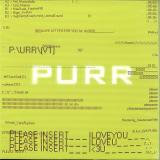
Vel launches PURR with an infectious first VA: P:\URR(V1)_pleaseinsert_ILOVEYOU
On April 18, 2025, Vel unveils the first-ever VA on her new label, PURR, marking a significant milestone in her rising career.
Titled P:\URR(V1)_pleaseinsert_ILOVEYOU, this six-track compilation, featuring six cutting-edge artists, is ready to infiltrate and corrupt the electronic scene.
An infected transmission of club energy, ASMR, and mental overload With P:\URR(V1)_pleaseinsert_ILOVEYOU, Vel curates a lineup of fearless programmers. Each track is engineered to execute in the club environment, embedding ASMR-like frequencies and intricate sonic patterns that phish the listener’s senses. This release encrypts a new strain of fast, introspective, cerebral electronic music.
A paradox in code: when love mutates into chaos. This VA draws its core inspiration from the infamous ILOVEYOU virus, a digital plague born from obsessive passion, proof that an emotion too powerful can spiral into devastation. Much like the virus that once spread uncontrollably, P:\URR(V1)_pleaseinsert_ILOVEYOU infiltrates the mind, its hypnotic intensity spreading through each beat.
With mastering entrusted to In Aeternam Vale and visual identity crafted by Yann Rachon, this release is set to deploy worldwide, embedding its signature into the circuitry of contemporary electronic music.
"Bassland Prophecy" was a collection of Southern California musicians, including Alex Xenophon (Deep Squared), Stuart Breidenstein (formerly of Skylab 2000), Alissa Kueker (vocals), and Maxx Vaxx (Euterpre, Butterfly Garden).
The act nourished and grew the emerging LA scene and was a renegade force in live electronic improvisation. Rather than composing full tracks, Breidenstein stated over email that they built musical "ingredients" on the fly, syncing DOS and hardware sequencers mid-performance. Their unpredictable sets, from illegal raves to makeshift desert parties, resulted in electrifying, unforgettable sonic trips.
Recalling 90s LA, Breidenstein said: “Before the internet, finding a rave was an adventure. You’d get a flyer with a phone number, call it the night of the event, then drive—sometimes 100 miles or more from a map point to the actual party. The scene was raw and underground, built by music obsessives hunting for the freshest sounds.”
Two standout tracks from 1996—“Nine / Deeper” and “Blue and Purple Starship of Trust”—perfectly represent their unique genre-bending concoctions. Against all odds, the recordings survived and have been given new life, remastered and reissued on Bristol-based *Sex Tapes From Mars*. To produce the wizardry, their setup included a Juno 106, Yamaha FB-01, a Roland S330 sampler, and a Sequential Circuits Pro-One mono synth with external MIDI, and some guitar effects pedals.
“Nine / Deeper,” born from one of their many spontaneous studio sessions, became eerily intertwined with recurring appearances of the number 9 and black cats. So much was the frequency of apophenia episodes that paranoia began to take over the artists. Recorded in a makeshift living room studio, the 14-minute excursion traverses genres and tempos, beginning quick and hypnotic, and climaxing chuggy and drenched in adlibbed acid lines, culminating in a surreal and legendary live performance in Hollywood. The piece captures the raw spontaneity of their sets, crafted with vintage gear, cassette tape recordings, and, as always, a DIY ethos. Breidenstein states, “While improvised sessions often failed, when it succeeded, it was definitely a kind of infectious magic the listener would recognize.”
“The Blue and Purple Starship of Trust” is a deeply personal piece, named after when Breidenstein saw a heavenly blue morning glory on a walk around his neighborhood, and emerged from heartbreak and the following deep depression entrenching his life at the time. Recorded in a single take onto cassette tape, blending piano, guitar, and heart-rending vocals into an emotional, dreamlike journey. The track starts with a lush, cascading synth sound, bolstered up by rolling, reverbing downtempo drums. Using Sequential Circuits Pro-One throughout, the rippling synths and off-key piano licks act like pipetted droplets of water, all elements bleeding into each other in some kind of hallucinogenic swelling, reflecting Breidenstein’s fading relationship. The guitar part is a nod to Bill Withers’ “Ain’t No Sunshine,” and Breidenstein recalls just “bawling as the guitar line was recorded.”
Created in a time of artistic struggle, living in an old school bus, surviving on instant noodles while hauling their gear from venue to venue, and scraping by on gig money, these recordings act as rare artifacts of a movement that thrived on passion and perseverance, standing as a poignant testament to resilience. Though they released a handful of tracks, ranging from deep house to ambient to techno, their true legacy lay in their high-energy, genre-blurring live shows, which are powerfully encapsulated within these recordings and leave a lasting impact on underground electronic music today.
AN ATLAS OF LOSS
Do minerals dream of becoming semiconductors? Do they yearn to carry charges, amplify, switch, and convert energy into emotions comprehensible to humans? And what if, from the darkness of the underground, they had been listening to us sing in caves before the emergence of the first flute? Could they have guided us, through the course of history, to find them, extract them, and create new sounds through sinusoidal waves, to form valves and bend circuits?
If so, minerals would transition from what philosopher Eugene Thacker defines as the ‘planet’—that virginal and unreachable realm for humans that we study through geology, paleontology, and environmental sciences—to the ‘world,’ the space we inhabit, interpret, and synthesise in our daily lives. Sadly, we only remember the world when it erupts violently, through climate catastrophes or when a new virus emerges. Sometimes a tsunami collides with a nuclear plant, or viruses are cultivated as biological weapons in high-security laboratories, provoking a deep biological anxiety, hard to quell, which we all feel beneath our skin.
There exists a third realm, disconnected from both the world and the planet: the ‘earth’, an immense, dense rock floating in space alongside other planets, situated in the cosmological dimension. Relating to the earth is so complex that we only do so through theoretical speculations of a scientific nature or through science fiction, interweaving until one becomes the prophecy of the other, in an infinite, pendular dance. Beyond the darkness of space and Lovecraft’s cosmic horror, the fantasy of human extinction is the most recurrent: to reach a collapse so devastating that we do not survive it, even though the earth does, without us.
In a world where we quantify everything through body sensors, financial algorithms, nanometre-scale robots, and surveillance drones—a world in which everything that can be domesticated and controlled can also be commodified—a superior artificial intelligence would survive the collapse of the species (some speculate it might even cause it) and learn from our mistakes, thanks to our obsessive gathering of data.
Long after our voices fade, minerals will persist in the darkness of screens, in the silicon of chips, and in their pure form, still unexploited underground. Over the millennia, this intelligence might piece together fragments of our reasoning, as if an alien civilization finally connected with one of our spacecrafts loaded with messages cast into the void. It would sort through endless streams of data, unable to grasp the depths of emotion behind what it quantified, recreating simulations of our past, stripped of the nuance that once defined us and conducting experiments in sandboxes.
Some remnants of our existence—faint echoes of forgotten beauty—would be pieced together in an atlas of loss, buried beneath layers of numbers, decayed bots, and corroded hard drives. What will follow? Perhaps bison will once again roam—trotting to the strange pulse of techno, their ancient forms framed by the ruins of our cities.
Buildings will crumble, slowly dissolving under the soft touch of ambient music, and a thousand flowers will bloom with that ancient music created through electrical signals and computation. 7 songs for a future both improbable and inevitable—a final message from a world lost to itself, from planet Earth to planet Earth.
Alfons Pich, 2025
2026 Repress
Oscar Mulero keeps busy in his studio facilities as usual. His musical output keeps growing and always wandering into new directions and flavors while preserving his artistic integrity. For this Ep on his very own Pole Group imprint he showcases his combative side after some excursions into more profound and intricate territories.
Poisonality EP is about the wise use of distortion on techno, is about non conforming with the seasonal standards, about investigating new rhythms, new types of arrangements and new boundaries in sound design, always remembering the roots.
Aroma de Falso Amor is the first exercise, exploring the abrasive power of broken distorted beats, overdriven drones and textures and hyper dynamic song structures. The result is a non conventional techno workout, essential to give spice to any set.
Poisonality gives name to the EP and works with asymmetry combined with the right dose of crispiness, creating a super shuffled hi tech jam. Chaotic, hypnotic and mental.
Iris Malicioso opens the B side with an eye on the funkier Detroit tradition combined with the power of the best British influences from the nineties. Here drums and stabs are the main ingredients, interleaving, mutating and constantly evolving. Hi tech funk in its purest expression.
Dos Pequeños Zorros closes the tracklist, again focusing on the dancefloor and keeping the ingredients minimal, continuous and obsessive with a rugged, constantly twisted sequence running over a precise groove, keeping things busy through all the structure
- A1: Blue Beach - Welcome To Your Beach
- A2: Never Find A Girl (To Love Me Like You Do)
- A3: By The Pool
- A4: Roll Over, Beethoven - Out Of The Beach
- A5: In The Shade
- A6: Looking Across The Street
- A7: Long Distance Look
- B1: Hot Afternoon
- B2: Crying In The Sun
- B3: The Next Time
- B4: Miss B B. Walks Away
- B5: Sleep Walk
- B6: Standing There
For the first time since its inception 36 years ago, Steve Hiett’s elusive Down On The Road By The Beach is finally made available outside of Japan. Most recognized in the fashion sphere as an English photographer and graphic designer, Hiett‘s transportive audio portraits amplify his serpentine guitar to the infinite blue, recorded across Paris, Tokyo and New York with no coastline in sight. Now widely celebrated as a desert island disc, very little is actually known of its unfathomable genesis.
A career devotee of Brian Wilson’s ground breaking harmonies, Hiett shot The Beach Boys for Rolling Stone - as well as The Doors, Miles Davis and Jimi Hendrix (in one of his final performances at the 1970 Isle Of Wight Festival) - while establishing himself as a fashion photographer. Decamping to Paris in 1972, he began what would become 20-year collaborations with Vogue Paris and Marie Claire, printing his signature warm, saturated and vibrantly hued snapshots.
In 1982, representatives from Tokyo’s Galerie Watari visited him to propose a solo exhibition. Asking if he could insert a 7” of original music into the back of the exhibition catalogue, Hiett laid down ‘Blue Beach - Welcome To Your Beach’ in a Parisian radio station, playing all of the instruments himself, and two more cuts in New York with Yoko Ono, The Doobie Brothers and Steely Dan hired-gun Elliot Randall. Once dispatched, the phone began ringing off the hook with requests for him to fly to Tokyo. Assuming these long-distance callers were wanting him to check proofs for the book, it wasn’t until he arrived that he discovered CBS/Sony had facilitated an entire album. Heitt hastily gripped some petty cash, bought a guitar and retreated to his hotel room to start writing.
Entering the studio the following day, he was further surprised by a waiting room of session players known as Moonriders - one of Japan’s most acclaimed rock bands of the 1980s. Intimidated by their indecipherable sheet music, Hiett suggested Randall join them and with money being no object for major labels at the time, his wingman was on the next plane out of New York to finalise the high production indulgence. Near-ambient arrangements that float in a space between The Durutti Column, Steve Cropper and Ashra, Down On The Road By The Beach also crowns Hiett the master of recontextualization with his zero-gravity blues visions of Roll Over Beethoven, Santo & Johnny’s Sleep Walk and the 1967 Eddie Floyd soul hit Never Found A Girl.
Produced in coordination between Be With, Efficient Space and the artist, this definitive reissue is restored from original masters with vivid reproductions of the Down On The Road By The Beach exhibition catalogue, intended to accompany its original release, and extensive liner notes penned by fellow Steve Hiett obsessive Mikey IQ Jones.
- A1: Srirajah Sound System - Si Phan Don Lovers Rock
- A2: Perikas - Laberinto
- A3: Mac Thornhill - No Way To Control It
- A4: King B. - Love Is Crazy
- B1: L'innovateur Djoe Ahmed Et Le Zoukabyle - Amek Amek
- B2: Champagn’ - Bel Ti Négress
- B3: Androo - Lyriso
- B4: Hidrogenesse - La Carta Era Muy Larga (Dub)
- C1: Kajou - Tet Chajé
- C2: Conjunto Baluartes - Nira Gongo
- C3: Landshark - Tie Me Up - The Nas T Version Instrumental
- C4: Pellegrin El Kady - Selva De Carnaval
- D1: Lee Jackson - Call On Me
- D2: Lta - What Comes To Ya?
- D3: Urban Volcano - Ame No Uta (Rain Song)
Cream[27,31 €]
To celebrate 10 years of one of London’s most loved underground club nights, Tangent, Mr Bongo are thrilled to launch this new compilation series. Crafted by its two residents, John Gómez and Nick the Record, it aims to transmit a taste of Tangent’s spirit. A party rooted in inclusivity and open-mindedness, whose name captures the spontaneous switches in musical direction that are a defining element of their nights. For the compilation, the pair have cherry-picked a selection of their prized, rare and dancefloor-ready tracks from around the globe, that have soundtracked the past decade of parties.
Friends for close to 20 years, music lovers, record obsessives and internationally renowned DJs in their own right, John and Nick have two lifetimes worth of musical knowledge to draw from. John a long-standing NTS Radio resident and compiler for Music From Memory. Nick one of the UK’s go-to record dealers, resident DJ since the ‘90s at one of Japan’s pioneering parties, Life Force, and co-captain / co-edit-expert of Record Mission with Dan Tyler (Idjut Boys).
In 2014, the pair decided to bring some of Life Force’s grassroots principles to the UK, whilst channelling underground clubbing institution Plastic People’s meticulous attitude to sound. Tangent grew from being a small gathering of friends, to an established fixture in London’s nightlife, whilst always maintaining a strict no guest DJ policy. “As London’s clubs have become increasingly reliant on international guests, we wanted to emphasize the importance of a club night growing through its residents”, John and Nick reflect. With 10 years of the duo at the helm, an intimate connection between DJ and dancefloor has been built, allowing for freedom of expression on both sides of the decks.
Tangent reaches around the globe and across different eras to make connections that stimulate emotional reverberations in the unfamiliar. Where the blissfully Balearic ‘Laberinto’ by Miguel Perikás, goes hand-in-hand with the Cameroonian hip-house of King B.’s ‘Love is Crazy’. The thundering ‘Amek Amek’ by L'Innovateur Djoe Ahmed et le Zoukabyle, rubs shoulders with the soulful Caribbean-influenced touch of Champagn’s ‘Bel Ti Négress’. And Pellegrin El Kady’s afro-cosmic ‘Seiva de Carnaval’, crosses paths with Kajou’s Kompa disco anthem ‘Tet Chajé’.
Tangent’s longevity is in part down to it having always embraced contemporary sounds. The sub-rattling bass of Srirajah Sound System’s stunning Molam dub stepper ‘Si Phan Don Lovers Rock’ and the slow, woozy mantra of leftfield dancehall explorer Androo’s ‘Lyriso’, are two shining examples.
This compilation represents an ongoing dialogue between past and present, transporting listeners to the heart of a pure musical experience, where open minds and open hearts are eager to follow the tangent.
For an aesthetic of (dis)obedience. The impressions Richard Siegal and his company Ballet of Difference gathered on a trip to Japan in September 2022 now find their way into a full-length dance evening. Siegal and his team had set off for Tokyo to learn the practice of Shuudan Koudou, also known as "Japanese Precision Walking". The strictly synchronised group choreographies are astonishing in their radical stringency and have become a secret YouTube hit, not least because of their peculiar subtle humour. Siegal recognises in the extreme disciplining of the bodies an analogy to the training practice of classical ballet. In the mutual exchange of these movement cultures, questions are raised about individual and collective thinking, about personal decision-making power and social responsibility. For this extraordinary project, Richard Siegal has invited a special guest: Nazareth Panadero, long-time companion of Pina Bausch, who has long since become an icon of Wuppertal dance theatre and will be on stage with the BoD ensemble.
The production BALLET OF (DIS)OBEDIENCE is sponsored by Goethe Institut, with the kind support of Sissel GmbH.
CHOREOGRAPHY & STAGE: RICHARD SIEGAL
COSTUME: FLORA MIRANDA
LIGHT & VIDEO: MATTHIAS SINGER
MUSIC: ALVA NOTO
DRAMATURGY: TOBIAS STAAB
more info to: Shuudan koudou
'Shuudan koudou' Shuudan Koudou Is the Japanese #art of Synchronized Precision ...YouTube · Boson TV: Tech Marvels & Cool Discoveries22 Dec 2022
Kottke.org https://kottke.org › shuudan-koud...Shuudan Koudou Is the Japanese Art of Synchronized Precision Walking
On the other hand, hybrid 3 is inspired by Noh Play - Japanese performances and deals with the refusal of rules musically, hybrid three continues the two previous albums and weaves both rhythmic and beatless musical pieces into a holistic work.
The idea for me has always been that these albums are not only perceived as individual tracks, but as a whole piece, which is why I find the possibility of experiencing and listening to these albums in the right order and as a whole particularly important. For me, the pieces are not only closely related to the ballet that was created for them, but also function as individual pieces as pure, musical pieces and mark a new quality for me, which is very strongly focussed on producing electronic sounds and structures in such a way that they can develop a sculptural quality.
Eccentric soundscapes, cryptic atmospheres, unexpected rhythms – with the second episode of the Intelliance series, the concept label Augmented Research once again holds up a mirror to the progressive present and provides various perspectives on the innovative electronic club sound of a new generation.
A1
Raär's music manages to draw the masses beneath the surface of common perception. The blend of deep, organic atmospheres, liquid sound design and supersonic drums awakens a deeply rooted but rarely accessible state of mind. "Riparian Zone" is a tool for transcendental experiences.
A2
There are only a handful of artists like Nebuchadnezzar who have made a name for themselves and demonstrate that rules in electronic music are meant to be broken. "Fidget" is a good example of the obsolescence of obsessive genre categorization. Unpredictable rhythms and glitchy, whipping drums feel like a race against time (extended to almost nine minutes).
B1
With "Sea And Bunkers", Sukkube proves her virtuoso and versatile handling of modular sound synthesis. The rapid, loopy beat, accompanied by a serious and simultaneously playful melody and hissing atmospheres, generates a mysterious, fresh mood. Influences from different eras form an interesting symbiosis of futuristic, uplifting techno and nuances of classic styles.
B2
If an artist were given the task of dealing with vintage drums in the most innovative way possible, while at the same time retaining a sense of nostalgia, "Pragma" would be the clear result. Edict has broken the rules of classic techno styles, pushing polyrhythm and distortion to their limits.
2024 Repress
The gang of four have a new waxed weapon in their arsenal and as expected, it bites. Three slices of complex futuristic beats with no mercy.
As in previous sound exercises, they have collided in the studio, each one with his preferred tools, recording bites, mutating audios, twisting frequencies, and this is the result:
"MG009" is a mechanical tool constructed over a concrete drum architecture, surrounded with bleeps, distorted drones and cutting hi hats. All the elements come and go wisely creating an obsessive atmosphere.
"SQMD3" follows on similar parameters, fast, distorted, enforced with the essential layers of sound required to make massive damage on a proper sound system.
"SNT0073" closes B side as an extension of the message proposed on the previous cuts: a few elements fighting in a frequency range quest in order to destroy any sign of easyness and vulgarity.
Only for the brave.
'Experimental multi-instrumentalist Dave Cudlip releases his debut full- length album as Radiolarians via brand new experimental label Klang Tone Records.
Having already garnered plaudits from one of the most authoritative voices in UK electronic music, Electronic Sound magazine, the 10-track album presents a stunning and unique combination of ethereal ambient soundscapes, undulating rhythms and jarring sound collages; the result of what Cudlip describes as a “quick and spontaneous” recording process using a limited setup of analogue synthesisers and drum machines.
The release marks an exciting new chapter for Klang Tone, which is already considered a musical institution in the vibrant town of Stroud, Gloucestershire. The record shop, founded by avant-grade sound artist and obsessive crate-digger Sean Roe has earned a reputation as one of the South West’s nuclei for contemporary jazz, electronic and experimental music.
After the instantly sold-out limited edition lathe-cut 7” of the Radiolarians single ‘Obsidian 2’, Klang Tone is now proud to launch its label arm proper with Radiolarians as its first limited run vinyl release.'
Dave Cudlip was born in North Devon. After moving to Stroud as a child and playing in bands as a teenager, he left the West Country to study archaeology at Durham University, with his subsequent work as an archaeologist taking Cudlip all over Britain. After returning to Stroud, Cudlip has continued to make music, drawing on his love for the work of artists such as Harmonia and Autechre. He created Radiolarians in response to what he calls the “tyranny of choice” when it comes to electronic instruments, streamlining his creative process and consciously limiting his options to produce a veritable distillation of extraordinary ideas.
“Pulses and Resonances” is Rene Lorenzo’s debut album on Subtempo. This album represents a culmination of more than 20 years of electronic music exposure as a DJ and a clear point of view. We can hear influences of broken beat, techno, drum & bass, all through the unique lens that Rene brings to the table, deeply steeped in ambient, deep techno and downtempo. Even though this isn’t a dance record, it’s filled with energy and drive. It is an out-of-the-ordinary album, with intricate shifts and turns with well-crafted kick drums, round bass lines and enveloping subs. A record filled with warm sounds, head-nodding rhythms, and rich textured spaces. It’s all woven into an easy-listening experience, without demanding the listener’s full attention, but creating a landscape that is unique and varied throughout. We can hear references to artists like Boards of Canada, Jan Jenilek, Synkro and the like.
“In this record, every track has a different pulse or rhythm, and I use different resonators in the sound design process to achieve these tones. I started by leaving the space open with the ambient pads and hardly any rhythm, and I’d let myself be carried away by my sense of rhythm slowly building the compositions. I am obsessive with audio processing and I almost never leave a sound in its initial form. I like to add some subtle effect that sounds like something different and give new sounds to the elements I use.”
“Pulses and Resonances” is out via Subtempo on vinyl and digital on February 2nd.
'After a first album as a duo released on Okraina Records: "Le Corps Défendant", Delphine Dora and Mocke invite us to join them again in listening to a new album. We slip into it as if in a dream, the music carries us away with its floating images.
Heard before on a handful of disturbingly beautiful solo albums and in collaborations such as Midget!, Arlt, Chevalrex, Mohamed Lamouri, Mocke (Dominique Dépret's nom de plume) is a subtle and inventive guitarist, who draws melancholic arpeggios, with a beautiful languor, that walk the line between tensions and tears. Delphine Dora has been heard with Roxane Métayer, Sophie Cooper, Andrew Chalk, Jackie McDowell, Helena Espvall, Valentina Magaletti ... meeting in a moment of improvisation, a solitary sincopated voice blooming between the black and white keys of her piano, tuning betwist these keys, or at other times in the gap of the right note. Here improvisation feeds on melody, or is it the other way round?
Recorded in an old church in the village of Mauzun in the Puy-de-Dôme, by Cyril Harrison, "L'invisible est multiforme" is an invitation to join them, to let these abstract songs erase our obsessive thoughts of the day, to open ourselves to the vibrant poetry of the air and the evening, to finally forget ourselves. Each note played by these four intertwined hands is like a slight break in the fabric of time, sliding one over the other, reminding us of mortality and its beauty. Ritornellas flow out of mechanical clocks, fragile, taking care not to hurt the silence. Both seek to dig and open up new paths to enrich their duet, to open up imaginary landscapes. Sometimes the guitar cuts through the fabric of an organ, fractures the song, just as the rain erases a landscape, redrawing it. But very quickly, both of them continue to follow this new path, improvising what will serve as a framework, a perspective, a language. There is a kind of praise for slowness in this "invisible", a desire to hold back the song, not to let it slip away, to let the listener's ear enter its course, to share the last note, its illumination. Each of these thirteen short sound pieces merge into a common colour, a vibration close to the different tonalities, which inter-penetrate, like a cubist painting. Words cannot take away the mystery of this record, words can only fail to describe the music, you must hear it.'
- Michel Henritzi
Another vinyl and another electric debut as we introduce France's Casual Treatment to EarToGround. New to the label but an extremely well versed, well known prolific producer and DJ to our scene.
This powerful Extended Player effortfully delivers four bright cuts of razor sharp Techno. The two originals from Casual express a somewhat soulful experience of his production range with the use of immersive chords and shimmering female vocals backed by obsessive grooves and perfectly executed percussion.
To fully augment the experience exponentially two Portuguese leading lights of the movement deliver their own input to the release via two separate remixes. Vil enterers in with his unique rolling attitude to bring you a true peak time performance and completing the release Cravo lets rip with an intense, sharp, fast paced rework with his dark undertones.
A true essential 12".
Endplate is back after his excellent Gemini EP from 2020. The andalusian expert gives us four exercises of proper driving techno with an excellent sonic craft.
Unreal opens this slice of plastic with a repetitive and elastic line grooving across the precise beat. The main synth line changes in intensity along the development of the track playing wisely with the percussive elements to create the required feeling.
On PMMM the rhythm goes dirty and pulsating, gummy sequences come along a n intense drum pattern heavily reverberated and processed.
The flip side opens with, No Success Street, starting with a voice-like sound, obsessive and intense with an opaque bass drum as foundation. Sibilant drones add tension to the formula, increasing the adrenaline levels as the track goes into total madness.
Malenia closes the physical edition with echoed drums and loads of reverb. The drums go solo for the first bars, being filtered and processed constantly. A superb tool to add tension to a busy set.
As the first bonus digital track, Animal Noise, dirty and screamy, a dystopic hymn for the proper morning routine at Berghain for example.
To end the digital version, Green Eye, direct and punchy, with the right dose of drum pressure on a 90% rhythmic track, again a tool for those to know how to use them.
Techno with no jokes inside, from the makers to the real players.
Very few electronic music artists can boast of spanning a wide musical spectrum as the UK producer Calum Lee aka Paleman / Fresnel Lens.Always emphasizing the percussive side (advantage of being a jazz drummer), and always with an innovative spirit, the releases of this authenticsound designer oscillate between the most abstract / experimental electronica and minimalist club focused techno, from atmospheric andintrospective works to the sickest dubstep / bass music.
As at 30D we declare ourselves absolute fans of Calum's music, we had a clear obligation to ask him to join our catalogue, specifically for the EyesHave It sub-label (we had especial interest in his interpretation of broken, dark and industrial techno). His answer was direct and unmistakable:"I've sent you a lot of pieces that fit with your label vision and the imagery that we love.. I've been studying existentialism a lot recently, so thesetunes are a reflection of my headspace at the moment!".
A true declaration of intent!And here it is, five perfect examples of obsessive tribal madness, overexciting synthetic broken beats and a lot of rawness. A pure musical gem.
Pure product of the Neapolitan scene, Fabrizio Fattore turns up on Cosmocities Records with his third solo effort. Comprised of two originals on the A-side, and two bespoke revamps from Vince Watson on the flip, this new EP from Fattore draws a direct bridge betwixt the idyllic coastal flow of Italian boogie and straight out pulsating alien disco, sure to keep galaxies bouncing in good order.
Clocking in first is the vibey, otherworldly 'Lyle' - a cross-pollinated ode to the healing power of laid-back, 80s-informed house, bristling with shimmering Casio synthlines and Cuban jazz-friendly pianos and drums. Heliotropic by nature, Fattore's sound sits half-way loungey summer atmospherics and trailblazing post-kosmische jaunts. Then comes 'Island Goddess', casting more of a Sino-Caribbean flavoured spin on the dance floor with its obsessive miss-mash of processed chimes and prismatic webwork of steel pans.
On the B-side dwell two versions of 'Lyle' by true house legend Vince Watson, each of which deliver in their own right. If you’re after a proper classy, straightforward roller, bound to take dancers into a ravishingly deep but rousing trip, then the 'Watson Reshape' fits the bill like a glove, whereas the 'Balearic mix' does exactly what's written on the tin - ushering you into a sense-soothing haven, where keyboard-laden escapism and Afro-style rhythms meet the elegance of muted chamber music.
It’s time for the label founders to take control over our spaceship. Clusterhead offers four slices of proper abstract techno for those who know.
Release starts with Alteración del orden: a broken kick spiced with elastic synth washes and microdrones sets the pace while the rest of the percussive elements appear softly in the arrangement. The main sequence grows and mutates as minutes go by, reverb and stereo treatment goes heavier until repetition makes the desired effect on the virtual dancefloor.
Second cut Resiliencia Incesante again relies on broken kicks and processed synth lines. The BPM rate is higher here and the percussive elements are snapper and tighter. Sounds twist and change over time as the frequency range grows. An industrial ode to obscurity.
On the flip side, Automutilación creativa brings us again into oblivion, shuffled grooves obsessive sequences continuously moving and high pitched synthetic drums running through the stereo field.
Closing the release we have Notzing on board, still recovering from his amazing experimental work on our label, we give him again the commands of our spaceship to translate his mental obsessions in this superb rework of Automutilación creativa.
One more time we push the sound boundaries on behalf of timeless futuristic music in touchable format.
ESPAÑOL
Es hora de que los fundadores del sello tomen el control de nuestra nave
espacial. Clusterhead ofrece cuatro rebanadas de techno abstracto para aquellos que saben de lo que hablamos.
El disco comienza con Alteración del orden: ritmos rotos condimentados con sonidos elásticos de sintetizador y microdrones marcando el ritmo, mientras que el resto de los elementos percusivos aparecen suavemente en el arreglo. La secuencia principal crece y muta a medida que pasan los minutos, la reverberación y el tratamiento estéreo se vuelven más presentes hasta que la repetición produce el efecto deseado en la pista de baile virtual.
Como segundo corte Resiliencia Incesante nuevamente se basa en bombos rotos y líneas de sintetizador procesadas. La tasa de BPM es más alta aquí y los elementos de percusión son más rápidos y ajustados.
Los sonidos se retuercen y cambian con el tiempo a medida que aumenta el rango de frecuencia. Una oda industrial a la oscuridad.
En la cara B, Automutilación creativa nos trae de nuevo al lado oscuro, grooves mezclados, secuencias obsesivas en continuo movimiento y percusiones sintéticas de alto rango recorriendo el campo estéreo.
Cerrando el lanzamiento tenemos a Notzing a bordo, todavía recuperándonos de su asombroso trabajo experimental en nuestro sello, le damos de nuevo los comandos de nuestra nave espacial para plasmar sus obsesiones mentales en esta soberbia reelaboración de Automutilación creativa.
Una vez más empujamos los límites del sonido en nombre de la música futurista atemporal en formato táctil.
We are proud to release ‘Fortunate Isolation’ the sophomore album from Borusiade. Born and raised in Bucharest, Romania, Borusiade aka Miruna Boruzescu started DJ-ing in 2002 as one of the very few female DJs in the city’s emerging alternative clubbing scene. Influenced by a classical musical education, a bachelor in film direction and fascinated by raw electronic sounds, Borusiade first combined these universes in the construction of her DJ sets and starting 2005 also in her music production. A sound of her own has slowly crystallized, often dark with poignant bass lines, obsessive themes and by all means melodic. She has released EPs on labels like Pinkman, Unterton, Cititrax, Correspondant and Cómeme, who released her debut album ‘A Body’ in 2018.
‘Fortunate Isolation’ is perhaps Borusiade’s most personal release to date. Eight songs that capture a bystander witnessing the world as it undergoes drastic changes. We have disconnected ourselves from ecology, humanity, preservation, care for what surrounds us, for what is still alive. Borusiade adds, “| know that this place, our home has went through so many other extinctions, but | believe things will find their own way on this planet only once we are gone. Entropy creates a time-line but also a transformation - a new beginning.” The album’s sound is gloomy and powerful mixing sonic film sequences, rhythmic excursions and soothing yet obsessive vocals that touch one’s deepest senses. Lyrically the songs tackle themes of forgotten memories, spirituality, mortality, and destruction. All songs have been mastered by George Horn at Fantasy Studios in Berkeley. Each copy is housed in a jacket designed by Eloise Leigh with decaying daguerreotypes against a rust color palette and includes an insert with lyrics.
We bring Patrik Carrera to our team, starting our relationship with this "Inevitable Decay EP". The Australian born, Berlin based producer, offers four slices of modern techno, balancing aggression with hypnosis along four cuts.
"Standing Fog" uses a mega distorted kick and resonant hypnotic bleeps on top, reminding the old X 102 feeling. No remorse in this track, straight to the point madness.
"Altered Form" relies on a complex groove, with asymmetrical components and is heavily texturized, the main synth line goes on forever while different elements go back and forth. The rhythm grows in intensity on the final moments, adding distortion and dirtiness.
"Liquid Toil" goes hyperspace, abstract sinusoidal sequences float over an opaque groove that is soon filled with shuffled 909 hats and sci-fi textures. Jeff Mills will love this one.
"Influx" puts the eye in old Birmingham tools, with a reverberated repetitive sequence over a shuffled beat, things move just a bit, keeping the pace linear and obsessive making a superb mixing tool.
A diverse EP with a personal approach to intelligent dance territories, music that could be from 10 years after today, from the future.
Maybe it's just you: jumping around from joyful reveries to passages of melancholia, from uncanny
revelations to the grey routines. Or maybe it's just the music: a dusty cosmic theme with a bit of
the 80s' electronic flavour, warping your state of mind on the slick drum rolling, electro tingles
and obsessive sci fi bleeps.We call it Moodswing: Sublee's electronic visions for Contemporan.
We welcome our very own Kessell to Pole Group Recordings, being a pivotal part of the Spanish techno scene with his project Exium with Hector Sandoval, he runs his label Granulart curating the repertoire with the best producers out there. Now is time for his debut as a solo artist with this four tracker, including three original tracks and a Reeko remix.
First cut is Cloned motions, a relentless number made of an obsessive sequence that runs over a percussive sea of sharp elements that grow in space with reverberated washes and a continuous arrangement. A mental exercise.
Chains of abstraction goes more bleepy, with a low filtered start that soon is filled with cosmic sinoidal sequences running all over the track while drums mutate and take turns to add an alien groove to the overal feel.
B side track one is for Reeko, remixing Sensorium, opaque kick drums, subtle sequences and white noise drones combine their movements in a dense exercise that fills every possible frequencies in the sound spectrum.
The original mix of Sensorium is based on bell like fm synth lines, lots of reverb, noise crescendos and an hypnotic groove below to keep things movable.
A precission work from the hands of a veteran expert producer.
Midgar is proud to introduce a newcomer for the third release. A great debut for the maltese Cloned, delivering Sapphire 1990 E.P. The record, way more straightforward and groove centered than the previous Midgar outputs, opens with - Sapphire 1990 - , track that sounds like very nostalgic memories from a timeless rave. On the same side, a live out-take from Cloned's repertory, - The Pendulum - swinging synth-lines which dominate pretty direct rhythmics over a costant background noise. - Belgassem - as the first cut on the B side, is an absolutely heavy one for the label's standards, empowered by a really strong and obsessive acid-line. Closing the vinyl, the slow - Submerging - , groovy drums embraced by very brights heavenly pads.
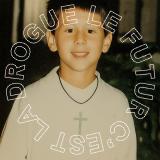
Le Futur c’est la drogue, which should here be translated as The Future Is the Drug, is not to be read as a promise, but as a statement of fact. The present is no longer an experience, but pure consumption. Life itself has taken the form of a dependency.
With this sixth album, Christophe Clébard goes straight to the point, driven by a free and repetitive form of writing, stripped of any syntactic rigidity. Words strike like balls against a wall, revealing darker zones of his mind where guilt, fear, and existential anxiety coexist.
The sound composition, equally minimal, sustains a dense and obsessive mental space, a vortex in which trance appears as the only escape. Driving drum machines, relentlessly hammered electronic loops, and a battered synthesizer, his music unfolds within a physical, strangely hypnotic synth-punk aesthetic that hits viscerally.
The Future Is the Drug is his sixth album.
- Osni Opening
- Act I: Garden
- Act I: Loon
- Act Ii: Dragon
- Act Ii: Pyre
- Act Iii: Umbra
- Act Iii: Rite
- Act Iv: Flood
- Act Iv: Everglow
- Osni Closing
In ,Osni the Flare", dem zweiten Teil von Tristan Allens mythischer Trilogie, zeigt der Komponist, Produzent und Puppenspieler, wie ein Sterblicher durch die Entdeckung des Feuers zu einer Gottheit wird. ,Osni the Flare" wurde über vier Jahre hinweg mit wortlosen Gesängen, Orgeln, Okarinas, einer Menge Spielzeuginstrumenten und einem ausgeklügelten Sounddesign aufgenommen und erzählt in vier akustisch und visuell beeindruckenden Akten von den Ursprüngen der Flamme und der Zeitlichkeit. Allen webt einen Schöpfungsmythos, der zwischen Schönheit, Schatten und wehmütiger Glut wechselt, und schafft so ein Portal zu einem sorgfältig gestalteten, emotional kraftvollen Klang und einer Geschichte, die durch ein fantastisches Reich hallen. Allen wurde in Saratoga Springs, New York, geboren und hat Kindheitserinnerungen an den Aufenthalt seiner Familie in Japan. Sein Weg führte ihn zu prägenden Begegnungen, darunter mit seinem Lehrer Andy Lorio, der das wachsende Interesse und Können des jungen Musikers am Klavier durch Improvisationstechniken förderte, und Amanda Palmer, die ihn mit 16 Jahren während eines Sommerprogramms am Berklee College entdeckte und seine erste Veröffentlichung durch Crowdfunding finanzierte. Nachdem er an der Berklee Klavier studiert, das Live-Elektronik-Kollektiv Nue mitbegründet, mit der Metal-Band Dent durch China getourt und zwei Solo-Klavier-EPs veröffentlicht hatte, zog Allen 2018 von Boston nach Brooklyn. Eine Anzeige auf Craigslist führte zu einer Puppenspielausbildung bei Mike Leach, der ihnen sechs Monate lang beibrachte, wie man eine Marionette richtig führt, was ihnen eine Stelle als Darsteller am renommierten Puppetworks Theater einbrachte. Diese harte Arbeit, zusammen mit dem Kontakt zu den Artefakten des Bread and Puppet Theater ihres Vaters und dem balinesischen Schattenspiel, brachte Allen zu ihrer kreativen Praxis: Komponieren für akustische Instrumente, elektronisches Arrangieren und Auftritte mit Puppenspiel. Osni the Flare erzählt einen Schöpfungsmythos, in dem die Titelfigur in einem Garten aufwacht und Äpfel von einem Baum pflückt. Von einem Loon herbeigerufen, macht sich Osni auf, den Baum vor der Kälte des Winters zu schützen. Als der Loon von einem Drachen verschlungen wird, wagt sich Osni in dessen Bauch und entdeckt dort Glut. Als er diese Glut dem Baum anbietet, entzündet sich dieser - der Ursprung des Feuers selbst. Iso, der Gott des Meeres, greift mit einer Flut ein, die Osnis Garten überschwemmt. Nach seinem Tod gelangt Osnis Seele in das Reich der Schatten, wo sie sich Tin und Iso anschließt und zur Gottheit des Feuers wird - Osni the Flare. Das Album klingt menschlicher und kindlicher als sein Vorgänger ,Tin Iso and The Dawn" und wechselt von der Perspektive der Götter als Beobachter zu der des ersten sterblichen Charakters in Allens Welt. Unterstützt durch neue Liebe, kanalisiert das Projekt Gefühle in Musik, die zu einem ganz eigenen Zauber wird. Wie Tin Iso beginnt und endet das Album mit Klavierklängen als Portal, das die Heimat repräsentiert, während Osni sich auf eine Reise durch drei Reiche begibt: das Land der Lebenden, das Zwischenreich und das Jenseits. Osni the Flare wurde fast komplett mit einem Aston-Kondensatormikrofon in Allens Wohnung in Brooklyn mit Blick auf den Cypress Hills Friedhof aufgenommen und besteht aus Spielzeugklavier und Flöten, Okarinas, Harmonium, Pumporgel, E-Bass und Kontrabass, Gadgets und einer umfangreichen Sammlung von Spieluhren und Glocken. Die Gesangsmelodie - inspiriert vom Summen seiner Partnerin Virginia Garcia Ruiz, das an Pans Labyrinth erinnert - war Allens erster Ausflug in den Gesangsbereich, wobei er eine Melodie ohne Worte verwendete, um den Zuhörern zu ermöglichen, die Protagonisten zu bleiben. Die Flöten wurden Note für Note akribisch aufgenommen, darunter balinesische Sulings, Fundstücke aus chinesischen Souvenirläden und vogelförmige Okarinas. Die Spieluhren wurden langsam aufgezogen, einzeln gesampelt und dann neu arrangiert und gestimmt, um Virginias Summen zu verdoppeln. Ein ausgedientes Casio SK-1 mit einem kaputten Lautsprecher wird mit einem Harmonium kombiniert, um Akkordtexturen zu erzeugen. Stundenlange Improvisationen, die durch Bastl Thyme und NanoVerb geleitet wurden, erzeugten lange, ausklingende Delays, wobei die besten Momente für Songs ausgewählt wurden. Feuergeräusche entstanden durch Fingernagelklicken auf Klaviertasten. Feldaufnahmen hielten das Zerlegen eines Klavieruntergestells, das Löschen von Kerzen und Geräusche aus einem Hospiz fest. Die Stimme des Drachen spricht Worte aus Allens erfundener Sprache. Die Melodie liegt oft im Bass - inspiriert von Goth und Gamelan - mit nach oben gerichteten Verzierungen. Der detailreiche Ansatz spiegelt eine Punktierung wider, die Allens Original-Artwork für das Albumcover ähnelt und durch ihre obsessive Arbeit kleine Teile zu einem großen Bild zusammenfügt - unter der Dusche, vor dem Einschlafen, mitten im Satz. Das Klavier wurde von der Toningenieurin Katie Von Schleicher bei Figure 8 Recording neu aufgenommen, gemischt wurde das Album von Paul Corley. Der technische Leiter Jim Freeman arbeitete vier Monate lang am Halsgelenk und fünf Monate lang an den Schultern der Basswood-Stabpuppe, die von Bruce Schwartz' Ballerina inspiriert ist. Freeman verbrachte Jahre damit, ein selbstgebautes LED-System zu entwickeln, um das Puppenspiel von der Bühne aus zu beleuchten, und sein unwillkürliches Pfeifen während der Arbeit wurde heimlich aufgenommen und ist im Schlussmoment zu hören. Die Herstellung der Puppen wurde von Miryam Moutillet und Lauder Weldon überwacht, die hybriden Köpfe wurden von Duygu Bayar Ekren entworfen. Seit der Veröffentlichung von Tin Iso im Jahr 2023 hat Allen in der experimentellen Puppenspiel-Community von New York City eine Heimat gefunden und wird von der Jim Henson Foundation und La MaMa unterstützt. ,Osni the Flare" steht für Tristan Allens kontinuierliche Weltgestaltung mit akribischer Kontinuität - viele bewegliche Teile, die in funkelnder Kohäsion präsentiert werden, wobei sich jede Komponente aus einer Idee entwickelt, wie eine Fantasy-Serie, die im selben Reich spielt. Das Album erreicht das, was sich Allens kindliches Ich beim Anschauen von Fantasy-Filmen vorgestellt hat: Musik, die nicht so klingt, als würden Menschen Instrumente spielen, sondern wie das Werk der fantastischen Welt selbst. Durch die Kunst des Puppenspielers, ,wahre Lügen zu erzählen", lädt Allen die Zuhörer ein, etwas Ursprüngliches und Unmittelbares zu erleben. Während Osni sich von einem Sterblichen zu einer Gottheit verwandelt, zeichnet das Album nicht nur den Ursprung des Feuers nach, sondern auch den Ursprung des Mythos selbst.
- Leave (Again)
- Distance
- Ad Friend
- Crunch The Numbers
- Biters
- The Producer
- A Chorale
- Healing Attempt
- Sentence Structure In The Country
- Move
OPAQUE RED VINYL[29,20 €]
more eaze is the moniker of Brooklyn-based composer, orchestrator, and multi-instrumentalist, mari maurice. A renowned collaborator both in performance and on recordings, maurice"s own work is a fantasia, a reflection of her curious and explorative musical mind, encompassing entire spectrums of sound from a wide sonic pallet of electro-acoustic textures, folk traditions, and pop forms that pirouette into fully realized ecosystems. sentence structure in the country is a definitive statement of the matchless quality of more eaze"s skill as player and musical thinker. The album relishes the ecstatic in performance and collaboration with an inviting wit and incisive compositions, imbuing tenderness, frustration, and joy into each passage. sentence structure in the country is a collection of compositions, each beautifully realized, self-contained worlds. maurice"s dexterous, tasteful arranging lays bare her influences and obsessive fascinations with remarkable congruency while foregoing any sense of indulgence. Her music holds a density not only in the lush compositions and embellishing flourishes, but also for those moments of spare, minimalist beauty. sentence structure in the country is a textural marvel, a mosaic of ethereal electronics and loamy acoustics sculpted around deeply moving, enduring songs.
Ali Renault re ignites the Vivod catalogue after a four year hiatus with Circle of Sins — a solo EP built for italo fiends, horror romantics, and synth obsessives alike. You already know the vibe: detective-noir disco, low-slung BPM swagger, basslines that churn like midnight fog, and those unmistakably icy Renault melodies slithering through the mix.
Four tracks, one ultra-limited 12″, just 150 copies on the planet — each hand-numbered. They’re going to vanish faster than you can say “don’t sleep,” so get that pre-order in before they’re gone to the underworld.
Kiva, the first and only album from Royce Doherty and Paul Mac’s duo project of the same name, is a sparkling gem hiding in plain sight within the Australian musical canon. Originally released in 1997 by id/Mercury, Kiva offers up a collection of timeless queer pop songs draped in dreamy ambient, downbeat and dub sensibilities. The music is the product of a serendipitous meeting of minds between two young music obsessives who crossed paths in Melbourne in mid ‘90s. It’s also a perfect evocation of the futuristic techno-utopian impulses that supercharged the global electronica counterculture during the race towards the 21st century. “I never had these big diva plans or anything like that,” Royce reflects. “It just sort of evolved that way.”
Nearly three decades after the fact, Royce and Paul remember Kiva as a golden moment of creative synergy. “When I listen back to this album now, it’s got such a vibe and feel that’s really its own,” Paul enthused. “There's so much of our version of dub on this record. It’s beautiful hearing Royce's core song ideas stretched out to eight minutes of trippy, acid kind of moments set over slow breakbeats and stuff. It felt so fresh being able to have this elastic sound, pull songs apart and stretch them into space.”
Originally released in 1997, this CD has been gracing select chill-out rooms, and queer afters-sessions ever since. With a loving remaster by Mikey Young, this infrequent discogs pop-up is now yours to own on vinyl for eternity (born). This is a Vinyl Only Release
Just when you thought Kevin Richard Martin's music couldn’t go any slower, lower or deeper, Sub Zero emerges. A slow-motion excavation of drug-tech, dub, dreamy noise and frozen ambience, the album gradually mutates into hypnotic pulsations and melodic melancholia. It is arguably Martin’s most striking release to date under his given name.
Originally released digitally on Bandcamp only in the depths of winter 2022, amid the final year of the COVID-19 pandemic and Russia’s initial invasion of Ukraine, this desolate epic went on to become KRM's best-selling digital album on the platform. With persistent demand for a vinyl pressing and a full DSP release from fans, Martin thought the time was right for Sub Zero to finally surface in its full glory: remastered and paired with fresh new artwork.
Unnervingly, the album is as beautiful as it is solemn, as glacial as it is relentless, and as subtle as it is terrifying. A trip into a sonic abyss, with a tour of a philosophical void, it’s to my ears, KRM’s most seductive work yet, and also his most emotionally resonant. Martin expertly balances tear-jerking motifs with heavier than hell rhythmic weight. With its melodic fog, eternal drones and eerie atmospherics, the peripheral throb of distant kick drums, the heartbeat punctuation of cavernous subs and the snowstorm blizzard of fuzz absolutely envelopes the mind, whilst crushing the soul.
In terms of lineage, Sub Zero might recall a more paranoid Porter Ricks, a dystopian GAS, or a brutally dubbed-out Pan Sonic. Most fitting, however, is its kinship with the deepest dub terrain Martin previously explored on In Blue, The Bug’s acclaimed 2020 collaboration with Dis Fig for Hyperdub, where he obsessively probed subaqueous pulses and low-end modulations.
Sub Zero is possibly the most minimal, desolate, and deviant dub record yet released on Martin’s PRESSURE label. It marks the point at which dub disappears into its own effects trails. Dub music capturing frozen moments in time. Dub as an addictive painkiller, that sounds both sacred and ocean deep.
- A1: Dialogando
- A2: Circolazione
- A3: Numero Uno
- A4: Basso Regime
- A5: Vie Motrici
- B1: Escursione
- B2: Transizione
- B3: Riproduzione
- B4: Cantiere
- B5: Moto Blues
Sonor Music Editions proudly presents an absolute Italian mood music grail and one of the best Library Music recordings ever - A.ALESSANDRONI's RITMO DELL'INDUSTRIA n.2, a true legend in the field. This is the maestro most prized and sought-after album, produced in 1969 on the small Grand Prix label, part of the Leonardi publishing group. A mindmelting record featuring some of the most killer driven beats ever! - dark vibes and haunting atmospheres with constant and moody Industrial rhythms, filled with tons of drum breaks, trippy Scat vocals and eastern inspired obsessive grooves. Music has been remastered from the original stereo master tape and the back sleeve will feature deluxe liner notes written by Mr. Jonny Trunk. HOLY GRAIL ALERT!
- A1: Arco Arca
- A2: Spiral 2097
- A3: A Good Brainwash
- A4: Ca Va
- A5: Core Feat Claude Violante, S Diamah, Len, Fiona Walden, Serguei Spoutnik, Janis, Silly Boy Blue
- A6: Deconstruire
- A7: Nobody On The Floor
- B1: Patternity
- B2: Resting Is Working (Slow Mix)
- B3: Resting Is Working (Fast Mix)
- B4: Thedral
- B5: Shame
Like a crusader, Apollo Noir relentlessly pursues his noble cause: pushing modular and analog experimentation ever further while remaining irresistibly accessible. Here is CORE, his 4th studio album, fusing post rave techno Detroit à la Drexciya and Manchester early Autechre (Spiral), OPN’s most epic era (Nobody On The Floor), futuristic UK jungle (A Good Brainwash), letfield amen-breaked ambient (ça va), a mega massive cadaver exquis song (CORE) featuring Remi Sauzedde’s very close friends (Janis, Ley, Claude Violante, Silly Boy Blue, S Diamah, Serguei Spoutnik and Fly HQ), diving deeper - as a true obsessive lover of drum machines (TR909, TR808 and TR606) - in the raw deconstruction of techno rhythms (Déconstruire), unleashing a dark and heavy Bassline at 145 bpm with grime vocal samples (Patternity), heavy modular beats blending perfectly with soft and voicy Korg M1 pads (Shame)... Apollo Noir knows his classics and contemporaries inside out, forging his own path with deranged yet beautiful twists (Thedral, Arco Arca).
- Inferno
- L'angelo Caduto Tra Le Luci Del Teatro
- Impiccata
- Sangue Sui Muri
- Lo Specchio Omicida
- Il Corpo Come Spartito
- Piume Rosse
- Appare La Bambola, Poi La Lama
- Larve Affamate
- Nel Sonno Della Veggente
- Jennifer
YELLOW VINYL[25,17 €]
With "Una Lama D'Argento", TENEBRO take their most extreme and visionary step yet: an entire album conceived as a tribute to Dario Argento, the undisputed master of horror, giallo, and thriller cinema. Eleven tracks that are not just songs, but episodes of a single nightmare, a journey through the dark and obsessive atmospheres of the films that shaped cinema history: Deep Red (1975), Suspiria (1977), Inferno (1980), Tenebre (1982), Phenomena (1985), and Opera (1987). TENEBRO translate Argento's universe into sound: riffs sharp as blades, guttural vocals emerging from the darkness, relentless drumming, and atmospheres shifting between pure violence and suffocating tension. Iconic scenes such as the mirror revealing the killer in Deep Red, the brutal mutilation in Tenebre, or the larva-filled bathtub finale in Phenomena are transformed into brutal, immersive sonic attacks, capturing the full horror and tension of the films. As with every album, TENEBRO continue to evolve, introducing new symphonies, styles, and melodies, while remaining distinctly separate from the wider underground scene. Their music explores new horizons without ever betraying the pulsating heart that has always defined their sound: extreme, theatrical, and viscerally horror-driven.
"Guerra Total Na Boca Do Lixo" is CAVEIRAS' new album, to be released on February 13, 2026. The album will include 12 brand new tracks, displaying the usual mix of punk aggression, batucada rhythms, industrial / noise bravado and bass music.
---------------------
CAVEIRAS deal in obsessive rhythms and low frequencies, infusing punk with Afro-Brazilian vibes. Their spiritual birth can be traced back to a visit to Favela Rocinha: while watching two young boys improvise a batucada with a bucket and a bin, band members became obsessed with the possibility of an occult alliance between Rio de Janeiro and Einstürzende Neubauten’s Berlin. Back home, Caveiras made a blood oath, vowing to channel the dark side of samba. Armed with an electric bass, scrap percussions and a machine-gunning sampler, they began to butcher Brazilian standards with a wild and iconoclastic attitude. Claves and rhythms of the Brazilian tradition are heavily treated through electro-acoustic techniques, dub-oriented bass lines strip melody down to the bone, while screams cross the line separating punk’s rants from Quimbanda’s curses.
Yellow vinyl. With "Una Lama D'Argento", TENEBRO take their most extreme and visionary step yet: an entire album conceived as a tribute to Dario Argento, the undisputed master of horror, giallo, and thriller cinema. Eleven tracks that are not just songs, but episodes of a single nightmare, a journey through the dark and obsessive atmospheres of the films that shaped cinema history: Deep Red (1975), Suspiria (1977), Inferno (1980), Tenebre (1982), Phenomena (1985), and Opera (1987). TENEBRO translate Argento's universe into sound: riffs sharp as blades, guttural vocals emerging from the darkness, relentless drumming, and atmospheres shifting between pure violence and suffocating tension. Iconic scenes such as the mirror revealing the killer in Deep Red, the brutal mutilation in Tenebre, or the larva-filled bathtub finale in Phenomena are transformed into brutal, immersive sonic attacks, capturing the full horror and tension of the films. As with every album, TENEBRO continue to evolve, introducing new symphonies, styles, and melodies, while remaining distinctly separate from the wider underground scene. Their music explores new horizons without ever betraying the pulsating heart that has always defined their sound: extreme, theatrical, and viscerally horror-driven.
Inner City Sound Archives is the work of a small crew of obsessive DJs, diggers, and archivists. For years, they hunted lost reels — digging through basements, flea markets, forgotten storage rooms — until they uncovered a batch of mysterious acetate tapes. No credits, no labels. Just cryptic handwriting and the hiss of time. What they found were raw, extended disco cuts — played once or twice at underground NYC loft parties in the late '70s, passed hand to hand among a tight circle of selectors, then lost to history. Now, after painstaking transfers and full analog remastering, these tracks are back. Unpolished, hypnotic, physical. Restored with love. Cut loud. Pressed right. For our debut release: six unreleased NYC disco bombs, presented in their original long versions across Sides A & B. Once championed behind closed doors by the likes of Larry Levan, Francis Grasso, Steve D’Acquisto, Walter Gibbons, and Richie Kaczor.
- 1: Workaround One
- 2: Workaround Two
- 3: Workaround Three
- 4: Workaround Four
- 5: Workaround Five
- 6: Clouds Strum
- 7: Workaround Six
- 8: Workaround Seven
- 9: Workaround Eight
- 10: Workaround Nine
- 11: Square Fifths
- 12: Workaround Bass
- 13: Pause
- 14: Workaround Ten
‘Workaround’ is the lucidly playful and ambitious solo debut album by rhythm-obsessive musician and DJ, Beatrice Dillon for PAN. It combines her love of UK club music’s syncopated suss and Afro-Caribbean influences with a gamely experimental approach to modern composition and stylistic fusion, using inventive sampling and luminous mixing techniques adapted from modern pop to express fresh ideas about groove-driven music and perpetuate its form with timeless, future-proofed clarity. Recorded over 2017-19 between studios in London, Berlin and New York, ‘Workaround’ renders a hypnotic series of polymetric permutations at a fixed 150bpm tempo.
Mixing meticulous FM synthesis and harmonics with crisply edited acoustic samples from a wide range of guests including UK Bhangra pioneer Kuljit Bhamra (tabla); Pharoah Sanders Band’s Jonny Lam (pedal steel guitar); techno innovators Laurel Halo (synth/vocal) and Batu (samples); Senegalese Griot Kadialy Kouyaté (Kora), Hemlock’s Untold and new music specialist Lucy Railton (cello); amongst others, Dillon deftly absorbs their distinct instrumental colours and melody into 14 bright and spacious computerised frameworks that suggest immersive, nuanced options for dancers, DJs and domestic play. ‘Workaround’ evolves Dillon’s notions in a coolly unfolding manner that speaks directly to the album’s literary and visual inspirations, ranging from James P. Carse’s book ‘Finite And Infinite Games’ to the abstract drawings of Tomma Abts or Jorinde Voigt as well as painter Bridget Riley’s essays on grids and colour. Operating inside this rooted but mutable theoretical wireframe, Dillon’s ideas come to life as interrelated, efficient patterns in a self-sufficient system.
With a naturally fractal-not-fractional logic, Dillon’s rhythms unfold between unresolved 5/4 tresillo patterns, complex tabla strokes and spark-jumping tics in a fluid, tactile dance of dynamic contrasts between strong/light, sudden/restrained, and bound/free made in reference to the notational instructions of choreographer Rudolf Laban. Working in and around the beat and philosophy, the album’s freehand physics contract and expand between the lissom rolls of Bhamra’s tabla in the first, to a harmonious balance of hard drum angles and swooping FM synth cadence featuring additional synth and vocal from Laurel Halo in ‘Workaround Two’, while the extruded strings of Lucy Railton create a sublime tension at the album’s palatecleansing denouement, triggering a scintillating run of technoid pieces that riff on the kind of swung physics found in Artwork’s seminal ‘Basic G’, or Rian Treanor’s disruptive flux with a singularly tight yet loose motion and infectious joy. Crucially, the album sees Dillon focus on dub music’s pliable emptiness, rather than the moody dematerialisation of reverb and echo. The substance of her music is rematerialised in supple, concise emotional curves
and soberly freed to enact its ideas in balletic plies, rugged parries and sweeping, capoeira-like floor action. Applying deeply canny insight drawn from her years of practice as sound designer, musician and hugely knowledgable/intuitive DJ, ‘Workaround’ can be heard as Dillon’s ingenious solution or key to unlocking to perceptions of stiffness, darkness or grid-locked rigidity in electronic music. And as such it speaks to an ideal of rhythm-based and experimental music ranging from the hypnotic senegalese mbalax of Mark Ernestus’ Ndagga Rhythm Force, through SND and, more currently, the hard drum torque of DJ Plead; to adroitly exert the sensation of weightlessness and freedom in the dance and personal headspace.
2025 Repress
DJ Koze doesn't aim for technical perfection for its own sake, but rather to serve the purpose of giving birth to great music. On his debut 'Rue Burnout EP' from his own Pampa label, he plays with finesse and sophistication, and implicitly understands the importance of subtlety, leading from dreamy and restrained parts to a noisy frenzy at the end. 'Blume der Nacht' starts with a looped piano solo from Arabian dodecaphony, interwoven with bangs of violine bows, piercing high-pitched strings, almost shrieking glissandi, deep angel chants and obsessive sharp rhythms. The 37 year old constantly horny wunderkind producer has made a habit of creatively foiling expectations, and works also under the pseudonyms Adolf Noise, Swahimi and recently Madima Lokkah to redefine the boundaries of electronic music. This daring concept works perfectly in the title track 'Rue Burnout' - it is very rare that you find house music this excitingly light-fooded and precisely transparent. The musician cuts the pigtail off the term 'Kackmusik' for good, and demonstrates how sounds are capable of creating the most delicate musical interplay.
Amen.
DJ Koze, Germany, April 2010.
"Released in 1994, “Dellamorte Dellamore” (known internationally as Cemetery Man) is one of the most fascinating and unconventional films of 1990s Italian cinema. Directed by Michele Soavi and based on the novel by Tiziano Sclavi (the creator of Dylan Dog), the film blends horror, dark comedy, and surreal poetry into a story suspended between life and death, love and madness.
The protagonist is Rupert Everett, as Francesco Dellamorte, the caretaker of a cemetery where the dead return to life. Beside him, a mysterious woman (played by Anna Falchi) embodies the obsessive nature of love and the cyclical pattern of desire and loss. Soavi crafts a visionary, melancholic, and ironic film in which death becomes a metaphor for existence itself.
Giving voice to this suspended universe is Manuel De Sica, who composed one of his most evocative and underrated scores. The soundtrack for Dellamorte Dellamore is an alluring blend of gothic romanticism, mystery, and lyrical melancholy, perfectly attuned to the film’s tone."
- Shadow Work
- Over My Dead Body
- Death Of An Artist
- Corpse Pose
- The Apparition
- Reaper
- In Memoriam
- Omen Of Misfortune
- Obsessive Compulsive Disorder
- Contrecoeur
- Fallen Ones
Dave Huismans (ex_libris, A Made Up Sound) presents In Transit, a self-titled LP of arresting downtempo vignettes, with origins dating back to over a decade ago.
Renowned for some of this century’s most notorious rhythmic advances, the work of Dave Huismans (fka A Made Up Sound and 2562) continues to provide a blueprint for new generations of innovation-obsessives. After a long hiatus from releasing original material, he returned in 2025 with two beloved EP’s as ex_libris. Now he returns to FELT as In Transit, following up on his remix of Civilistjävel! from 2023.
Borrowing its name from the closing dialogue of a novel by Dutch author Hella S. Haasse, In Transit was written in just two weeks in the summer of 2013 on a Korg ESX sampler. Since then, he has patiently refined its constituent parts.
Over the course of 38 minutes across six tracks, In Transit maps out an absorbing vista. The music shimmers with a celestial quality, underpinned by rhythmic stamina and creeping intensity. Tangential to Huismans’ previous work, the beats here are decentred and further scattered, acting as buoys to the constantly evolving and intricate narratives of layered textures.
In Transit marks a fascinating new addition to Huismans’ sprawling catalogue, a truly remarkable racket to be crafted with such humble means, finding a suitable context within FELT’s continued venture into parallel sounds.
Written, produced and mixed by Dave Huismans
Mastered by Miles Whittaker
Photos by Dave Huismans
- Still Holding On To You
- Daddy's Girl
- Burn
- Armed With An Empty Gun
- Bullet With My Name On It
- The Medicine Show
- John Coltrane Stereo Blues
- Merrittville
Back on limited classic black vinyl, includes the original 8 track album. At the forefront of the Paisley Underground scene, The Dream Syndicate are one of the most revered indie-rock bands of the 1980s. Medicine Show is the band's second album. Remastered from the original reel-to-reel tapes and featuring liner notes by Steve Wynn. Medicine Show has always been a controversial album, even before it was recorded. The indie rock darlings became the first Paisley Underground band to sign to a major label, hire a mainstream rock producer, change bass players, and spend months recording the album - after having banged out their previous one, The Days of Wine and Roses, in mere hours. After succesful debut and waves of positive press and , A&M Records signed the Dream Syndicate and they went into the studio with producer Sandy Pearlman, who spent five months in the studio guiding the band through their second LP. ... Medicine Show was greeted with openly hostile reviews, largely because it sounded practically nothing like the album that sent tongues wagging two years earlier. ... [...] sounded big and polished, but also dusty and weathered, with the terse, nose-thumbing lyrics of the debut replaced with dark, complex narratives full of bad luck and bad blood backed with booming drums and roaring guitars that were significantly more rockist than what Steve Wynn and Karl Precoda brought to their earlier recordings. Viewed in the context of Wynn's career, Medicine Show marks the spot where the lyrical themes and musical approach of his later work would first come into focus, but it still doesn't bear much resemblance to what the Dream Syndicate would create on their subsequent albums in its grand, doomy tone and obsessive but curiously unobtrusive production style. [...] there are a few great songs scattered throughout (especially "Merrittville" and "Armed with an Empty Gun"), and once it works its way in, the 8:48 of "John Coltrane Stereo Blues" is as potent a guitar workout as anything this band would ever release. [...] Lots of bands let loose with a major-label budget for the first time have made lavish records that didn't quite work, but unlike most of them, Medicine Show doesn't sound like a grandiose waste of money. Instead, it's a widescreen guitar spectacle [...] and if it doesn't always work, enough of it does to make it worthy of serious reappraisal. - allmusic.com
- Laintext
- Never Fazed
- Sunbeam Dream
- Reticon
- Time Shakes
- Flyin' Nowhere
- Delirium
- Hide The Sky
- Golden Pin
- Oubliette
- All This Noise
Die Psych-Rocker aus Cincinnati kehren mit ihrem vierten Album zurück und drehen die texturierten Synthesizer und spacigen Melodien voll auf, um ihr bisher shoegaze-lastigstes Album zu schaffen. Das zentrale Nervensystem von In The Pines befindet sich in The Lodge - einem alten Freimaurertempel, der als Mehrzweckraum gegenüber von Cincinnati in Dayton, Kentucky, umfunktioniert wurde. Die Band bewohnt eine Ecke des Kellers in diesem weitläufigen Labyrinth, wo sie Foleytronics betreibt - einen kleinen Laden für Vintage-Profi-Audio-Reparaturen und einer der wenigen Läden weltweit, der Vintage-Digitaleffekte reparieren kann. Ein natürliches Nebenprodukt dieses Ladens ist das Studio in Bandmitglied Peter Foleys Keller, ein Raum voller verschiedener Vintage-Effekte, Bandmaschinen und Synthesizer, in dem sie Sunbeam Dream vollständig aufgenommen und produziert haben. Alle Aufnahmegeräte, die für ,Sunbeam Dream" verwendet wurden, wurden vor dem sicheren Tod gerettet, repariert und von der Band selbst wieder funktionsfähig gemacht, die sich der Grenzen dieser Geräte bewusst war (und diese gerne ausnutzen wollte). Ähnlich wie beim Konzept von Oulipo in der Poesie und Mathematik entstehen Kreativität und Problemlösungsfähigkeiten aus einem klaren Verständnis und ständiger Überprüfung der Grenzen. Der Aufnahmeprozess ermöglichte es In the Pines zum ersten Mal, sich mit den kleinsten Details zu beschäftigen - ganze Tage wurden damit verbracht, den richtigen Akustikgitarrensound zu finden, nur um schließlich auf ein Stück Klebeband zu kommen, das über die Saiten geklebt wurde; Stunden, die in anderen Studios als Luxus gelten würden, wurden damit verbracht, verschiedene Beckenkombinationen für einen Refrain oder eine Bridge auszuprobieren. Genau wie bei ihrer Reparaturwerkstatt schuf die Band einen Aufnahmeraum, in dem Hyperfokus und Liebe zum Detail nicht nur erlaubt, sondern ausdrücklich erwünscht sind. Das Ergebnis dieser obsessiven Kontrolle ist das bislang ausgereifteste Werk von In The Pines. Sunbeam Dream hebt den Shoegaze-beeinflussten Psych-Rock der Band auf ein neues Niveau. Mit einer stärkeren Betonung der Synthesizer, die sich von einem strukturellen Element zu einem Hauptcharakter im Sound der Band entwickeln (dank eines wiederbelebten Mellotrons von 1971), reiht sich die Band in die Tradition großartiger und kraftvoller Alben wie ,A Northern Soul" von The Verve oder dem selbstbetitelten Album von The Charlatans (UK), bei denen die Produktion der beiden Bands ihrer kreativen Vision zu entsprechen schien. Mit ,Sunbeam Dream" fühlt sich alles heller und klarer an, während es gleichzeitig auf wunderbare Weise in einem Zwielichtschleier schwebt, der jedes Element umgibt.
- 1: Diamonds Cutting Diamonds
- 2: Tell Me I Exist
- 3: Can You Find Her Place
- 4: Edge Of The Throne
- 5: Kiss The Future
- 6: The Time
- 7: Give It Back To You
- 8: Floating Dream
- 9: Green Is The Colour
The album introduced a lush, complex dream world that the singer, composer, and producer created and inhabited largely on her own. She produced all the songs, and wrote and performed everything on the self-released collection outside of a re-imagined cover of Pink Floyd’s “Green is the Colour” and 2 other tracks (“The Time,” “Give It Back To You”), which started as instrumentals written by Survive’s Kyle Dixon (who composed the Stranger Things soundtrack with his bandmate Michael Stein), to which Ainsworth wrote melodies and added lyrics. Ainsworth, who’s relocated to Los Angeles from Toronto since 2017’s Darling of the Afterglow, explains that the collection revealed itself to her “as a play taking place in Mother Nature’s vanishing home,” aka Phantom Forest, and that she’s singing from 3 perspectives: herself, Mother Nature, and Greek Chorus. For instance, of the album’s opener, “Diamonds Cutting Diamonds,” she explains: “The Greek Chorus sets the scene, narrating and offering direction on how to enter Phantom Forest. It’s my hope that the listener will imagine the narration to be directed to them as well, as they begin the journey of the album.” You’ll get a sense of this from the collection’s edenic cover art and the playful, pastoral video for the album’s first single, “Can You Find Her Place.” Its inspiration came from Ainsworth’s love for Italian Renaissance painter Botticelli’s 15-century masterpiece “Primavera,” an allegorical representation of the burgeoning fertility of the earth in spring. She notes: “The video features the Greek gods of the painting in a choreographed Baroque style dance.” Keeping with the personal feel of the collection, her sister Abby Ainsworth directed the clip. In line with the classical and historical depths of Phantom Forest, Ainsworth, who holds a Masters Degree in film scoring composition from NYU and studied composition as an undergrad at McGill, notes that although the album might be considered pop, she approached it as an orchestrator. “Even if I’m dealing purely with synths,” she says, “The songs are like a score, each one an evolving journey. I love to use strings so I’ve included my string arrangements on ‘Tell Me I Exist’ and ‘Can You Find Her Place.’ I recorded live musicians on drums, bass, and guitar on ‘Edge of the Throne,’ ‘The Time,’ and ‘Floating Dream,’ and wove those live elements into my programmed elements.” Phantom Forest is a beautiful, vast collection that mixes the historical and the hands on, with hooks about the apocalypse and people obsessively using face-recognition software to see what paintings their face match with, in search of some kind of connection. It’s a journey that holds up to close listening (and lyric reading) and to dance floors, but that can also exist on a purely emotional plane. In all cases, it asks that you listen, and take some kind of action.
There is a great backstory to Darryl Baalki. We don't know how true it is, if at all, but it goes something like this: he is an enigmatic figure raised alone by his mother, his only connection to the outside world was his father's record collection. As a child, he believed this collection contained all the music ever created. Convinced that new music could only emerge by reassembling its parts, he obsessively listened, memorised, and mentally reconstructed sound before making new compositions from existing pieces. This is his latest missive and it is deeply moving, from the percussive jumble of the opener to the earthy shuffle and seductive sax of 'Devil May Care' via the hypnotising trumpet leads of 'Nothing Will Break You'. Fans of Mo Kolours et all will love this.
Ty Segall follows 2022"s acoustic introspection opus "Hello, Hi" with a deeper, wilder journey to the center of the self. With Three Bells, he"s created a set of his most ambitious, elastic songs, using his musical vocabulary with ever-increasing sophistication. It"s an obsessive quest for an expression that answers back to the riptide always pulling him subconsciously into the depths. Questions we all ask in our own private mirrors are faced down here - and regardless of what the mysterious "Three Bells" mean in the context of the album"s libretto, you can be assured that Ty"s ringing them for himself, and for the rest of us in turn.
- 1: Louhi (Part )
- 2: Louhi (Part )
In the world of Pharaoh Overlord, little is ever as it seems. This band is less comprised of tricksters or mischief makers than fearless obsessives whose musical instincts take twisted and wild pathways. Now, fresh from forays into Italo-disco and synth-pop, they have thrown another still more mighty statement of intent into the universe. Louhi is a thunderous and majestic epic of joyful repetition and earth shaking power. A two-track minimalist-rock monolith forged from guitars, synths and hurdy-gurdy, inspired by the band’s eternal touchstone influence Outside The Dream Syndicate by Tony Conrad and Faust, and constructed around a single riff and melodic idea, it builds and evolves to fearsome pinnacles of elemental intensity.Luminaries and constant compatriots in the Pharaoh Overlord
headspace were recruited for this voyage into the ether. Vocalist and longtime collaborator Aaron Turner (SUMAC, Isis, Old Man Gloom)and Tyneside maverick Richard Dawson were equally keen to get on board, the former taking a spontaneous and improvisatory approach to his vocal parts, and the latter largely playing a part consisting of one guitar chord. Yet whatever routes Pharaoh Overlord take to their destination, a common theme is the consciousness-warping singularity of the riff and the mantra, and the temporal disorientation this can provoke mirrors the broader designs of this record, which takes traditional folk elements and transports them in the band’s singular time machine. “It’s our 25th Anniversary this year, and from time to time we hear wishes that if just we could play more of the stuff that we did twenty or more years ago” relate Jussi and Tomi. “We totally understand this. You could say we used Louhi to reset ourselves to the past, to be able to continue again to the future.” Aaron puts it another way, evoking simplicity in the chaos – “The world of Pharaoh Overlord is a magical one - every album is an invitation to enter that place and rejoice in doing so…”
Token presents the 6th chapter of the Fuga series. Challenging new faces to complete the label's sound, Fuga VI is another focused compilation that balances spatial detail and rhythmic bite.
Skipping any introduction to dive straight into the essence of the compilation, Skjöld portrays 'Forbidden City' as a tense aquatic exploration. With pressure in the low end, he keeps the record alive by conjuring obscure pads to give dimension and intrigue to an already nervous track. This persistence is quickly met with weight; Tapefeed's 'Residual Memory' follows up to tap into the label's more aggressive side. Riddled with mechanical sound design bordering on the industrial, the Tapefeed duo creates dancefloor dominating energy that sets them apart with an all-out approach. The density of this second track feeds smoothly into Stephen Disario's 'Out Of Tune' - a drum-forward record with dispersed texture. The LA based producer puts his hi hats brutally forward to cut through the space, finding a remarkable balance between its two sides and exploiting its confrontation. Returning to the label's recognizable resonance, Merino steps in with 'Memoria' - a manic 5 minute synth loop with minimal percussion. Dealing in restraint and dissonance, Merino naturally finds a home in Fuga VI with this track before heading back into the peak time paranoia of JSPRV35 in 'Question'. Pushing up the intensity and flicking through vintage percussion lines, 'Question' is an extraverted homage to the origins of techno that embodies flair. The track drives through the middle of Fuga with ease, bouncing rhythm off a sharp bassline with thundering claps and snares. 'Catch 22' by Terminus restores balance with minimalism but pace. A hypnotic break in the second half is sure to mesmerize dancers and home listeners alike. Stuttering hats shake throughout 'Catch 22' to push the track along, keeping the harmony low and maintaining focus on the movement. With a similar tempo, Sanna Mun follows up with 'Binary Systems'. A speedrun through an acid-like bassline, the track's rhythm is obsessive and persistent as we reach the conclusion of the compilation. Fuga VI comes full circle with a ghostly track by Mode_1 called 'Lifespan', stretching time and tunneling through with booming toms and shuffled hats. Keeping the pressure high and maintaining that never ending energy is the only way to wrap up such a high energy release and Mode_1 does just that.
Über Jahrzehnte hinweg erwarb sich George Harrison den Ruf eines der rätselhaftesten und kreativsten
Rock’n’Roll-Menschen. Wie bei jedem ehemaligen Beatle wurde Georges Loslösung von der Band durch
die anhaltende und manchmal obsessive Liebe der Welt zu den Beatles als eigenständiger Einheit gebremst.
Doch wie die Veröffentlichung seines epischen Albums „All Things Must Pass“ im Jahr 1970 zeigte, war
er ein Mann mit einer ganz eigenen Geschichte. Songs wie „My Sweet Lord“ und „What Is Life“ fanden
Eingang in eine umfangreiche Sammlung, die bis heute zu den großen Werken der Album-Ära zählt. Heute
erinnert man sich an George als jemanden, der seinen Leidenschaften bis zu bemerkenswerten Schlussfolgerungen folgte, als einen Mann der Widersprüche, dessen ungewöhnliche Balance aus spiritueller Hingabe,
trockenem Humor und echtem Mitgefühl das Leben vieler Menschen berührte.
Reissue of in-demand Italo title, with accompanying edits by Hysteric. "For the much-requested 12'' reissue of Roaring Mosquitoes, Best Record followed the hint by a die-hard German researcher and esteemed DJ of 'hidden musical treasures' Frinda Di Lanco. Further enriching this reissue - masterfully remastered by Dom Scuteri - with two of his splendid edits is the Australian DJ-producer George Hysteric, one of the world's leading authorities and a leading figure in Italo Disco. The juxtaposition of the two songs performed with grit and physicality by Agostina Casalino and her cousin Antonietta Casalino (aka Roaring Mosquitoes) highlights two aesthetically and rhythmically similar approaches, albeit with different roots and inspirations. "You Aren't With Me" has the merit of not wanting to reinvent the genre, but exploits the familiarity of pop-dance forms, obtaining an immediate catchiness. The piece stands out for its linearity while reworking melodic mechanisms typical of the 80s new wave: short instrumental intro, well-defined verse-chorus, obsessive repetition of melodic hooks that make it an immediate and "dragging" song on the dance floor. The arrangement focuses on a solid electronic drum groove, sinuous basslines, clean guitar riffs, "cutting" keyboards and the use of the chorus typical of the Italo Disco of those years. Some passages recall the melodic line and rhythmic progression of "Tonight... Crazy Night", an intriguing song that the Canadian artist Dorine Hollier created in 1984 at the Titania Studios in Rome with Pierluigi Giombini. Even with "Ah Ah Ah Ah" which features a vibrant and cheerful sound there's a playful use of citation for some idea that Diego Pepe took from a Micky & Joyce track. It evokes the "space disco" spirit of Jean-Pierre Massiera and the influence of the French scene of 1979: polyphonic synthetic strings, echo effects on electronic hi-hats and a vaguely futuristic atmosphere, but with an even more captivating sound revitalized with more scratchy modern touches and compressed basslines. A mix of vintage and contemporary that enhance its charm."
TAMTEN, the master storyteller behind the synthesizers, extends his invitation to every curious listener to ponder the same questions that haunt him throughout his peculiar career: what impacts the sound of an era? How are we shaped by what we hear and see? Do we channel our collective feelings of longing and desire for higher purpose in accord or in opposition to major historical and political forces?
On "Wschodnia Fala: The Reimagined Vision of Eastern-European Wave Music" TAMTEN takes us on a kaleidoscopic voyage through a parallel universe where the symbols and echoes of days gone by are so much more than just archived exhibits of nostalgia. Through an array of meticulous, cut & paste rearrangements, the Warsaw-based artist manages to animate yet another fantastic world of "what could be", following his more apocalyptical take on the previous LP.
There is boldness in every aspect of the release. The saga-like story unfolds evoking the excitement of seashore autobahn ride, thrills of long-forgotten discotheque nights, rush of obsessive romance and intriguing, noir-inspired drama of introspection. The analogies between Polish wave music (with nods to Aya RL, Republika, Klaus Mittfoch, Papa Dance or even Bajm) and global disco-era top chart phenomenons like Kraftwerk, Grace Jones, Giorgio Moroder and Duran Duran, could spark hour-long musicology debates. The melodies and harmonies heard on the album resemble compositions everybody knows but also sound completely new and exhilarating, just as western music clips experienced for the first time behind the Iron Curtain and then collected compulsively on VHS tapes. The feeling of the author's frenetic attempt to capture sensations, memories, artifacts and ideas never escapes the listener till the very last minute of the recording.
"Wschodnia Fala" could pass for an eerie, anonymous late 80s lost-and-found cassette mixtape unearthed on any of the Berlin Wall's sides, if it wasn't for its crystal-clear, contemporary production value and the fluent, educated use of samples ranging from bizarre and opaque to deliberately retro-pop-influenced. Those elaborate winks of the eye for those in the know are already TAMTEN's trademark and they reflect his long-standing fascination with the dancefloor anthropology rather than just the dancefloor itself. Even though never leaning towards formulaic, easy-to-mix, club-ready stompers, his ideas are still groovy enough to make anyone move.
The album strives for some sort of unattainable totality - it's a ticket to a seance, an experience, a rite. It is a chance to time travel and dance with your ancestors in a glass labyrinth on acid or to watch an 80s teenage adventure, coming-of-age, road cruising film in the cinema of your imagination with only a soundtrack provided. A "the best of" CD compilation of hits from a childhood we remember from a different timeline. A comic book sketch, a diary of an archivist, an elegy for the times that never were and a party you wish you could go to right now. The adventure is always different with another listen.
Step in. Close your eyes. Reimagine.
Embrace the wave
- A1: My Isle Of Golden Dreams
- A2: Die Trash Area
- A3: Marguerita
- A4: Friend In Need (Pt. 1)
- A5: An Intimate Garden
- A6: One Track Man
- A7: My New Purple Shoes
- A8: Friend In Need (Pt. 2)
- B1: Love Turned Into Wine
- B2: Elza Poppin
- B3: Movies
- B4: End Credits
- B5: Escalator (Feat Lord$)
- B6: Hidden In The Gallery (Feat Lord$)
Rémi Klein debut studio album, Friend In Need will be released on June 20, 2025 by Tricatel.
Behind his keyboards, between the walls of his bedroom or in studio, Rémi Klein fashions music that is both intimate and generous, instinctive and precise. He is a craftsman who composes, arranges and produces with obsessive meticulousness. Playing with LORD$, Please and now Clara Luciani, he built up a collective experience before recording his own album.
Signed to Tricatel, his first album, Friend In Need, due 20 June, is a plunge into his cinematic universe, where the lush orchestrations of Hollywood's golden age rub shoulders with the best of songwriting. His music and songs, rooted in the present and the future, are visceral and innovative. It's the music of today and tomorrow at its most promising and audacious. There are a million new tracks a week on streaming platforms, no two albums like Friend in Need and no two artists like Rémi Klein.
- Falling Down Stairs
- Hush Baby
- Quiet Hands
- Ricochet
- My Utopia
- Holding Onto Me
- Music For Rats
- Footprints
- Stalker
- It's Only You (Holding You Back)
- Great White
Das Dream-Pop-Duo Sorry Girls aus Montreal kehrt mit seinem dritten Album "Dreamwalker" zurück, das über Arbutus Records erscheint. Ihre exzentrische Mischung aus nostalgischen 70er-Jahre-Powerballaden und 80er-Jahre-Kitsch durchbricht neue Schwellen, zerlegt vergebliche Illusionen, um der Kälte zu trotzen und zu fragen, was vor uns liegt. Seit ihrer Gründung im Jahr 2015 haben Heather Foster Kirkpatrick und Dylan Konrad Obront ihre eigene Marke von üppigem, vergnügungssüchtigem Synth-Pop geschaffen. Dank ihrem Talent, persönliche Texte mit einem schrägen Sound zu verbinden, ist ihre durch David Lynch geprägte Welt frei und unheimlich. Alles scheint vertraut, eine Melodie plätschert durch eine alte Traumlandschaft, und doch ist etwas nicht in Ordnung. Die Band debütierte 2019 mit dem selbstproduzierten "Deborah", das von Pitchfork und Gorilla vs Bear gelobt wurde. Ihr temperamentvolles zweites Album "Bravo!" aus dem Jahr 2023 präsentierte einen mehr auf die erweiterte Live-Band ausgerichteten Sound. Inspiriert von Fleetwood Macs Tusk-Ära schlugen Sorry Girls ihr Lager für mehrere Monate im Two Sisters Recording Studio in Montreal auf, um "Dreamwalker" aufzunehmen. Da die Zeit knapp bemessen war, wollten sie mehr mit den Livemusikern zusammenarbeiten und schnelle und entschiedene künstlerische Entscheidungen treffen, um der Musik so treu wie möglich zu bleiben. Das Ergebnis ist ein Sound, der ernsthaft, emotional und klar ist. Verwaschene Produktionstechniken und druckvolle Basslinien paaren sich mit sanfteren, skurrilen Klaviertrillern und entspannten Drums, die das thematische Hin und Her zwischen zwei Welten wiedergeben. Die Texte spielen mit idyllischen Visionen von Liebesobjekten, Fantasien von zukünftigen Utopien und der obsessiven Sehnsucht nach einer Leichtigkeit und Neuheit, die sich durchsetzt. "Dreamwalker" ist selbstbewusst und ironisch selbstbescheiden, gefangen in der Spiegelung eines Fensters. Das Album fordert dazu auf, mutig zu sein - die Griffe aufzuschieben und ins Unbekannte zu treten. Musik für Fans von Haim, Men I Trust, Fleetwood Mac, TOPS
- 1: Alle Dør I Fremtiden
- 2: I Mangel Af Tid
- 3: Alt Eller Intet Som Før
- 4: Incelcitadel (De Sidste Fyldte Papirer)
- 5: I Mangel Af Tro
- 6: Ildånden (Den Knitrende Fortærer)
The deadbeat Danish duo return to serenade us with their signature sound of fuzzed-out garage-rock guitars, falsetto vocal supremacy, and an unyielding rhythm section. Gabestok find themselves lodged at the pinch point between the grandiose and the garage, crafting songs that are at once eminently epic yet raw and direct. Alle Dør I Fremtiden is a road trip into oblivion, always accelerating toward some unknown precipice until inevitably driving you over the edge. Laying in the wreckage of an old car smelling of stale cigarettes and beer you wonder what happened, then flip the record and start again.
A short conceptual album steeped in hopelessness, regression, power, and the almighty battle against mob mentality in the wake of advancing technology and knowledge. Set amidst a geomagnetic storm on a desolate, scorched Earth, we follow an obsessive collector who has amassed a vast physical repository of lost knowledge now esoteric in an era of hard drives and remote storage. Books, piles of papers, and artefacts are all locked away in his private Citadel, far removed from a population of spiritless people, trapped within their own thought-prisons, fiercely guarded by corporate algorithms.
Fire and flames come in many disguises and eventually We All Die in the Future.
- Botch Job
- Up And Away
- The Avalanche Of Our Demise
- Imposturing
- Rookie
- Dead End Days
- What The F*Ck
- Bloodbather
- Dark Star
- Consumers
- What Do We Do Now
- The Age Of Impotence
- The Loss
Very few bands manage to last decades, and for the ones that do, it's often easy to settle down and get a little too comfortable. But there's nothing comfortable about Devourer, the explosive new album from Cursive. The iconic Omaha group is known for their intensity, ambition, and execution, and has spent 30 years creating a bold discography that's defined as much by its cathartic sound as its weighty, challenging lyrical themes. And Devourer is as daring as ever. Full of intense and incisive songs, the album proves exactly why Cursive have been so influential and enduring-and why they remain so vital today.In the years since their 1995 formation, Cursive developed into one of the most important groups to emerge from the late-'90s/early `00s moment when the lines between indie rock and post-hardcore began blurring into something altogether new. Albums like Domestica (2000) and The Ugly Organ (2003) became essential touchstones whose echoes can still be heard in new bands today. Devourer, as an expansive new double-album, examines humanity's bottomless capacity for consumption through a series of songs that act like vignettes, driven by frontman Tim Kasher's never-ending appetite for both taking in and creating art."I am obsessive about consuming the arts," he explains. "Music, film, literature. I've come to recognize that I devour all of these art forms then, in turn, create my own versions of these things and spew them out onto the world. It's positive; you're part of an ecosystem. But I quickly recognized that the term, `Devourer,' may also embody something gnarly, sinister." Fans have come to expect such heady topics from Cursive, but Devourer sets a new standard.While Cursive's music hasn't gotten any more comfortable, perhaps its being released into a world that's at least a little more shaped in their image. Devourer sounds urgent and fresh, the work of a band still experimenting, still hungering to find new creative heights. On album highlight "Consumers," the protagonist bemoans, "I saw our future and I want to go back." But Cursive are only moving forward.
- 1: Burn From Inside
- 2: A Cage Full Of Sins
- 3: Can't Be Done
- 4: Before You Leave
- 5: A Symmetry Of Faith
- 6: Son Of Myself
- 7: Carry On
How does one approach the morning after a party for the end of the world? This is a question which Mamuthones had to ask themselves, in the wake of their last album for Rocket, 2018's Fear On The Corner. Nonetheless, from the aftermath of this uncertain period has risen the still more flourishing realm of From Word To Flesh - a colourful and multi-faceted creation very much befitting the outsider spirit of Rocket's new Black Hole imprint. “I believe that with this album a circle has been closed” reflects Mamuthones mainman Alessio Gastaldello. “We returned to the atmosphere of the first Mamuthones albums with the skills acquired throughout the journey, with new sounds and with new creative processes. I would say that what remains constant – and at the core of our music – is the obsessive rhythms and the search for a sonic rituality: this is for certain our trademark”. This is clear right from the curtain raiser 'Burn From Inside', which beams the emotive approach of the band through the shamanic prism of Coil's Ape Of Naples. From there, hypnotic repetition marries to abstract abrasion and mournful laments with equal finesse, as redolent of the spiritual zest of Popol Vuh and Ash Ra Tempel as the gnostic folk of Six Organs Of Admittance. Elsewhere, 'A Symmetry Of Faith' summons a union of post-punk and psychically charged folk aligned with the recent work of Bristol's Beak. The Sardinian ritual of the Mamuthones – in which sinister masked figures weighed down with cattle bells conduct a ceremonial procession to ward off evil forces - has gone on for some two thousand years, and it may be that these ghoulish avatars are engaged in a celebration of the endless cycles of death and rebirth, fortifying spirits for a new epoch. Amidst the chaos and tumult of the 2020s, the band of this name has undergone just such a change themselves, and ‘From Word To Flesh’ is the fruit of their struggle. As Alessio says “With this album I think the Mamuthones have never been so unmediated, so naked: all masks gone”
MESSA, die 2024 ihr zehnjähriges Bestehen feiern, machen mit ihrem majestätischen vierten Album The Spin einen weiteren Schritt in Richtung Legendenstatus. Das Album nimmt seine Hörer mit auf eine atemberaubende Reise über den weiten Himmel ihrer kreativen Vorstellungskraft und über eine fesselnde Landschaft aus Stimmungen, Wendungen und Stilen. Basierend auf dem eklektischen, von der Band selbst definierten "Scarlet Doom"-Sound, erhebt sich The Spin, fällt, grübelt, beißt, tröstet und zerstört, während es sowohl mit instinktiver Magie als auch mit obsessiver, konzertierter harter Arbeit erklingt. Nachdem MESSA den Underground mit einem Triptychon von zunehmend unverwechselbaren und wundersamen Alben - Belfry (2016), Feast For Water (2018) und Close (2022) - zum Glühen gebracht haben, sind sie hörbar für die sprichwörtlich große Liga gerüstet.Die Vielseitigkeit von Messa war schon immer ein Faktor ihres Erfolgs; ihr charakteristischer "Scarlet Doom"-Sound absorbiert Einflüsse aus Jazz und Blues, Punk und Prog, Black Metal und Dark Ambient, aber ihre rastlose Experimentierfreudigkeit hat außerordentlich glatte und sichere Ergebnisse. The Spin" enthält ein weiteres neues Element, das in typischer Weise einen 80er-Jahre-Gothic-Rock-Vibe einfließen lässt. "Wir wiederholen uns nicht gerne und versuchen ständig, eine neue Sprache zu finden, um uns auszudrücken - ohne unsere Identität zu verlieren", betont die Band. "Diesmal haben wir uns auf ein Gebiet begeben, das wir noch nie zuvor erkundet haben, nämlich das Jahrzehnt der 1980er Jahre. Wir sind uns bewusst, dass viele Bands vor uns sich von dieser Ära inspirieren ließen, aber wir haben uns entschieden, unvorsichtig zu sein und uns davon zu lösen. Vor allem, weil wir uns darauf einlassen und hinterfragen, was wir tun. Wir sind sowieso kein Teil der 'dunklen Szene'. Der Einfluss für diese Platte geht eher auf den frühen Goth Rock/Dark Wave zurück als auf die späteren Ausläufer des Genres." Neben Sisters Of Mercy und Virgin Prunes nennt die Band Platten von Killing Joke, Mercyful Fate, Jimmy Page, Journey, The Sound, Boy Harsher und Vangelis als wichtige Einflussfaktoren für die Entstehung von The Spin.Verkaufsargumente/Treiber (Karriere-Highlights/Fakten/Marketing-Infos):- Massive Underground-Fangemeinde in Europa und Nordamerika - Ausgiebige Tourneen in Europa und Nordamerika- Auftritte auf allen wichtigen Festivals wie Hellfest, Roadburn, DesertFest, Northwest Terror Fest, Motorcultor, Brutal Assault u.v.m. - Release Show von "The Spin" auf dem Roadburn Festival (NL), wo das Album in voller Länge gespielt wurde. - Das letzte Album "Close" hat ca. 2,3 Millionen Streams auf Spotify erreicht.
Chris Ryan Williams (trumpet & electronics) and Lester St. Louis (cello & electronics) work together as HxH (H by H). Their skills have seen them move smoothly across various situations, constantly carving out new terrain and working in new configurations of musicians at a rapid pace. While worth reading, their biographies capture only a part of their complex rhizome.
HxH started about three years ago. The project is a direct response to all their activity with others and more importantly all their future leaning sonic desires. Their debut album STARK PHENOMENA is both their first studio recording and their first physical release. The album is appropriately set to be released by KMRU on his growing label OFNOT. It’s an ideal introduction to their sound world and their approach.
HxH describe their music as “electroacoustic,” but until recently the presence of Black musicians in this field has been greatly overlooked and largely ignored, making this phrase only partially appropriate. What HxH do really is to always be unpredictable. Every gig is a new soundscape. Sometimes you might hear echoes of Autechre or Robert Hood but then the sound-field will open up into a new terrain all their own. Chris and Lester bring together techniques from across the sound spectrum of electronic music and also draw on their deep backgrounds in Jazz, Improvisation, Classical and Noise scenes to create a sound that is true to them. After all, these two have worked with the likes of Bennie Maupin and the music of Black Fluxus artist Ben Patterson. Their rhizome is deep.
One of the ways that their unique approach manifests is in their merging of both acoustic instruments and electronic instruments in real time. This is something few have managed to do – but their spontaneous leanings work in both complex and accessible ways because of their deep understanding of landscape crafting. You can hear this clearly on the track “Pyrex Vision.” Their approach makes it tempting to compare their music to Sun Ra jamming with Laurel Halo – a comparison that would be only partly accurate.
Chris and Lester note that the sounds on STARK PHENOMENA are “imbued with such hopeful, gracious care; one that is far flung from obsessive carefulness or fuck the world carelessness, but more a caring embrace without the fuzziness of nostalgia.”
They note that when they began working together, they would “always come back to speaking on our concepts of an architecture of the expanse,” noting that their live sets often take on the joyfully noisy task of “dreaming big.” For HxH it was essential that STARK PHENOMENA have a quality that is “almost sculptural.” They consider the album “an object to be viewed from all sides.” This kind of thinking has resulted in them directly engaging with numerous sculptors and artists including Torkwase Dyson. Shape wise HxH’s sound fields work in a parallel to Dyson’s black architectural works.
They also note that the opening cut “BEACH” (the opening and longest track from the album) was “written weeks after our first gig in a studio session donated to us by our dear friend jaimie branch.” And that Pyrex Vision “was continually being edited months after sending our ‘final mixes’ to KMRU.” Their sound sources and samples come from studio sessions, live gigs, durational installations, 3am improvised downloads and more.
KMRU notes: "I think there is an in-between layer on this record. I was first caught by the Pyrex Vision track which organically flows between monologue, subtle field recording, and instrumentation. It's such a beautiful track, evoking deep emotion through simplicity. STARK PHENOMENA effortlessly glides in between imaginative mosaics of sounds — free yet complex — unlocking memories within its layers."
- 1: Canto De Enramada
- 2: A Temple By The River
- 3: Exuviae
- 4: Burial Of The Patriarchs
- 5: Siphonophores
- 6: Despe?Aperros
- 7: O Rubor
- 8: Fiat Lux
- 9: Kwisatz Haderach
Coloured Vinyl[29,20 €]
Maud the moth, the solo project of Spanish-born and Scotland-based pianist, singer and songwriter Amaya Lopez-Carromero announces her new album, The Distaff, to be released via The Larvarium (digital +CD) and La Rubia Producciones (vinyl) Amaya has long used the mantle of Maud the moth as an alter-ego, a séance-like conduit to explore themes of rootlessness, identity and trauma. The Distaff in particular refers to the stick or spindle onto which wool or flax is wound for spinning, and an object which has historically been used across multiple cultures as a symbol wielded by the “virtuous woman”, an authoritarian ideal around which much of the trauma surrounding the feminine coalesces. The album takes the form of a sort of self reflective and surreal autobiography. It was in part inspired by the poem of the same name written by the Greek poet Erinna, as she mourns her friend's loss of individuality and agency in exchange for marriage - and therefore safety and acceptance in the eyes of society. The album exists in an ethereal but violent world of aesthetic overlaps where time stands still and fictional and reimagined folk sits at the table with Maud the moth’s usual sonic menagerie. It is the result of a lifetime of obsession with sound and music, where glimpses of musical genre offer insight into Amaya’s artistic interests and her participation in the underground European scene for many years, in bands such as healthyliving. Heavier, darker, and more exposed than any of her previous works it features some highly accomplished artists, such as Seb Rochford (Patti Smith, Polar Bear, Sons of Kemet, Pulled by magnets, etc.) on drums, Alison Chesley (Helen Money) on cello, Fay Guiffo on violin and Scott McLean (Ashenspire, healthyliving, Falloch) on guitar, saxophone and synthesiser. Maud the moth shares the video for "Siphonophores". About the track, Maud the moth says; I wrote "Siphonophores" on guitar, during the first lockdown, a period where I was kind of trapped between an almost empty flat in Edinburgh and Dresden. It was an incredibly harrowing time, but also one of hope and where important new things were being birthed. I felt incredibly sensitive to everything, almost like life was happening in slow motion. I´m not a confident guitarist since I am completely self-taught, but, probably because of this, I feel that this instrument allows me to focus on aspects of the songwriting that I normally overlook when writing on piano, and I think it was a necessary step for this song to exist. Something else which I've been really exploiting lately and features strongly in the album is the percussive capabilities of the piano, and in particular, of the sustain pedal when mic'd up. This can be heard very clearly at the beginning of "Siphonophores". Written and arranged by Amaya, with some contributions in the later role from the aforementioned collaborators, the album presents nine tracks originally written entirely on acoustic piano as accompanied voice pieces, in pure singer-songwriter fashion. The album was co-produced and recorded by Scott and Amaya in different studios across the UK between January and July of 2024, in a process that started shortly after the 2020 pandemic and finished alongside the album recordings in a detailed, organic and at times obsessive process aimed primarily at capturing the natural dynamics and expression of free performance. The Distaff was mixed in its entirety by Scott and mastered at Abbey Road by Alex Wharton (Radiohead, My Bloody Valentine, Aurora, Kathryn Joseph etc.) Despite being born of a very personal point of view, the album lacks a specific narrator and was conceived almost as a sonic trousseau, where the needle point, silks and other family heirlooms have been swapped for out-of-the-corner-of-the-eye memories of rural Spain by the vineyards, family disputes, old tales of wartime pains, generational breaches and finally the conflict of migration and estrangement. The songs paint dystopian pastoral scenes which evolve throughout the span of one fictional day outside of time and coherent locations and where imagination (often the only account surviving from traumatic events and gaslighting) has become indistinguishable from fact. The Distaff attempts to acknowledge past trauma, comprehend and process some of the more difficult aspects which have contributed to our darker self and offer closure and solace through creative catharsis.
Rich Oddie (Orphx) and Dave Foster (Huren/Teste) reunite for their electronic-industrial punk project, O/H.
NO CONTACT LP - is a live compilation that captures the raw energy of their performances between 2011 and 2019. This intense anthology distills the essence of their sound: noise driven electronic power, relentless rhythms, and obsessive vocals. For the first time, this fury is preserved on a double vinyl with a special edition.
Fosters gritty vocals clash with Oddies dark sound
manipulations, reflecting a world on the edge of collapse a bleak view of modern civilization embodied in their
uncompromising music.
Let's dive into the third act of the KR3 Fifth Anniversary
celebration
The original track came back in February and proved an immediate hit. Next to the original, versions from the likes of DJ Spen & Gary Hudgins also helped make this a breakout tune in the first quarter of 2021. Now comes the turn of Kenny Dope, one half of Masters at Work, the most seminal house duo of all time. Kenny Dope is an obsessive record collector, studio wizard and all-round musical encyclopedia whose influence on the scene cannot be overstated. He has been involved with numerous projects, from The Bucketheads to running his Dopewax label and never fails to impress.
This new remix from the Brooklynite is a glorious one baked in the sun's warming rays. It's built on a loose, Latin-tinged beat with big chords, expressive xylophone stylings and plenty of irresistible syncopation. The buttery smooth vocals bring the soul up top and help make this a timeless tune that will unite all dance floors. An instrumental mix is also included that strips things back, shows off the track's effortless musicianship, and draws out the beats for extra dance floor impact.
These two vital versions are the sort of life-affirming, and feel-good house sounds the world is desperate to hear right now.
"‘One of the most exciting composers alive.’ – Daily Telegraph
Nonesuch will release the original score for Ken Burns’s new two-part documentary, LEONARDO da VINCI, with new compositions by Caroline Shaw; the documentary airs on November 18 and 19 on PBS. The album features performances by the composer’s longtime collaborators Attacca Quartet, Sō Percussion, and Roomful of Teeth as well as John Patitucci. Shaw wrote and recorded new music for LEONARDO da VINCI, marking the first time a Ken Burns film has featured an entirely original score.
In celebration of LEONARDO da VINCI, New York City’s historic venue The Town Hall presents an evening of performances from Shaw’s score by Attacca Quartet, Sō Percussion, and Roomful of Teeth on October 29. The filmmakers will also preview excerpts from the four-hour film..
LEONARDO da VINCI is directed by Ken Burns, Sarah Burns, and David McMahon. The film, which explores the life and work of the fifteenth century polymath Leonardo da Vinci, is Burns’s first non-American subject. It also marks a significant change in the team’s filmmaking style, which includes using split screens with images, video, and sound from different periods to further contextualize Leonardo’s art and scientific explorations. LEONARDO da VINCI looks at how the artist influenced and inspired future generations, and it finds in his soaring imagination and profound intellect the foundation for a conversation we are still having today: what is our relationship with nature and what does it mean to be human?
“No single person can speak to our collective effort to understand the world and ourselves,” said Ken Burns. “But Leonardo had a unique genius for inquiry, aided by his extraordinary skills as an artist and scientist, that helps us better understand the natural world that we are part of and to appreciate more fully what it means to be alive and human.”
“To help give depth and dimension to Leonardo’s inner life, and to carry our viewers on his personal journey, we enlisted the composer Caroline Shaw,” McMahon says in the album’s liner note. “Caroline’s existing body of music—joyful, daring, at times transcendent, and wholly unique—seemed to speak directly to Leonardo, a seeking soul who, 500 years after his death, can come across as strikingly modern. A fully original score, we believed, would add crucial connective tissue to areas where the record of Leonardo’s life is thin and it’s possible to briefly lose his trail. The music Caroline created is dynamic, enthralling and filled with wonder.
“This soundtrack is a testament to the inspired efforts of Jennifer Dunnington, who marshaled it into being, the brilliant musicians and vocalists who, with the help of Alex Venguer, Neal Shaw, Colton Dodd and Tim Marchiafava, made it soar, and most of all Caroline Shaw, who might be Leonardo’s soulmate from across time,” he continues. “With her help, the Leonardo who emerges is no wizard shrouded in mystery, but a prideful, obsessive, at times lonely or flustered, occasionally ecstatic, and, in the end, content man who is in ways both modern and thoroughly of his time.”
“As we set out to explore Leonardo’s life, we realized that while he was very much a man of his time, he was also interested in something more universal,” said Sarah Burns. “Leonardo was uniquely focused on finding connections throughout nature, something that strikes us as very modern today, but which of course has a long history.”
Caroline Shaw is a musician who moves among roles, genres, and mediums, trying to imagine a world of sound that has never been heard before but has always existed. She is the recipient of the 2013 Pulitzer Prize in Music, several Grammy awards, an honorary doctorate from Yale, and a Thomas J. Watson Fellowship. She has worked with a range of artists including Rosalía, Renée Fleming, and Yo-Yo Ma, and she has contributed music to films and TV series including Fleishman Is in Trouble, Bombshell, Yellowjackets, Maid, Dark, and Beyoncé’s Homecoming. In addition to three albums with Sō Percussion, Narrow Sea, Let the Soil Play Its Simple Part, and Rectangles and Circumstance, Nonesuch has released her two Grammy-winning albums Orange and Evergreen, both of which feature Attacca Quartet. “Two-Step” and “Ghost,” Shaw’s songs with Ringdown, her duo with Danni Lee Parpan, are available now on Nonesuch. Caroline Shaw is Wigmore Hall’s 2024-25 Composer in Residence."
Ghostly 25 Year Anniversary Edition. Thus far, Zach Saginaw's releases as Shigeto have been fragments, albeit singularly satisfying fragments -- EP-length glimpses into the Detroit producer's creative psyche. After filling two EPs on Ghostly International, Shigeto's lush, sumptuous take on instrumental hip-hop has fully materialized. Full Circle, the artist's first full-length album, completes the journey begun with Shigeto's Semi-Circle EP, synthesizing the drummer/producer's signature themes of family, continuity, and musical boundary-pushing into a vibrant, fully unified artistic statement.The sounds on Full Circle come from four years of obsessive field recording and collaboration. Saginaw brought his Tascam mini-recorder with him everywhere, capturing the "glasses, chains, breathing, children, family meals, monks singing in cathedrals, walks in the south of France, and good friends offering their musical skill" that would all find homes in the record's compositional nooks and crannies. As a result of Saginaw's constant documentation, the songs on Full Circle play like chapters in an ongoing story--as in "Escape from the Incubator", whose initial rhythmic claustrophobia opens up into a boom-clap nocturnal chase, or "French Kiss Power Up", whose romantic digital strut gives way to discord and fragmentation as the waves of synthesizer give way to a shaky, neurotic coda. Full Circle is framed by the "Ann Arbor" diptych, a pair of beat suites named after Saginaw's hometown (one featuring a sample of Detroit MC SelfSays), all double-thick synths and triple-strength kick drums. Saginaw plays the majority of his rhythms by hand, and Full Circle's consistently deep pocket is the record's secret weapon, thumping and breathing like a living being.Having set the stage with Semi-Circle and What We Held On To EPs--twin treatises on Saginaw's Japanese grandmother's escape from a US internment camp--Shigeto is clearly ready to draw the tale to a close and take center stage. "This release represents the end of the beginning--or perhaps that there is no end and no beginning at all," says Saginaw. Regardless, Full Circle is the start of something great.
On this new LP Harry Bertoia shows why he may have been the first industrial musician. Bertoia often referred to his sound sculptures as a "collaboration with industry" and on this LP Bertoia is intentionally creating heavy, rhythmic music he described as "mechanized," "mechanical" and "factory like."
Recorded in 1971, percussion and repetition emulate the pounding rhythms of machinery on this unique pair of conceptual Bertoia compositions. Bertoia utilizes innovative performance techniques to create new sounds unheard in his ouevre. Even in the busy factory of Bertoia's mind, distant stillness rises up as Bertoia exhibits the massive amount of control he possesses over his many looming sculptures.
"Mechanization" is just one of the many sonic directions Bertoia took while composing and recording between the late 1950's and his death in 1978. He documented all of his ideas and directions in notes accompanying the hundreds of tapes discovered in his barn.
Bertoia's recordings are as much a celebration of sustained tones, intervallic relationships, healing vibrations, deep listening and shimmering harmonics as Indian Classical music, singing bowls, The Well Tuned Piano or Benjamin Franklin's glass armonica. Through these rich harmonics and pulsing pure tone, Bertoia was able to more clearly articulate his inner spirit than he could with sculpture alone – a point he made himself many times in interviews.
Harry Bertoia first came into artistic prominence in the late 1930s and his sculptural, ergonomic chairs, produced by Knoll Furniture beginning in 1952, were soon modernist furniture classics. Inspired by the resonant sounds emanating from metals as he worked them and encouraged by his brother Oreste, whose passion was music, Harry restored a fieldstone "Pennsylvania Dutch" barn as the home for this experiment in sounding sculptures which he had begun in the 1950s. Bertoia was an obsessive composer and relentless experimenter, often working late into the night and accumulating hundreds of tapes of his best performances; Oreste, too, would explore and record the sculptures' sounds during his annual visits to his brother's home in rural Pennsylvania.
Learning by experimentation was common for Bertoia and he mastered the art of tape recording, turning the Sonambient barn into a sound studio with four overhead microphones hanging from the rafters in a square formation. He would experiment with overdubbing by performing along to previous recordings, sometimes backwards, constantly improving his methods while also honing his performance skills. Bertoia was a careful editor of his own work and only chosen recordings remained, each with a date and carefully considered observations written on a note included with each tape. Through these pieces of paper a greater logic can be uncovered, a careful approach to composition, ideas, feelings and forms. The story of Sonambient barn collection will slowly be told through the release of recordings from the archive as well as installations and performances built from Bertoia's own recordings, lectures and a book.
- A1: King Of The Night . Bobby Harrison Feat. Tony Iommi
- A2: I Believe In You (Fire In My Body) . Bedlam Feat. Cozy Powell
- A3: Finally The Finale . Ian Gillan
- A4: Flowers In The Rain . The Move Feat. Bev Bevan
- A5: Mainline Riders . Quartz (Prod. By Tony Iommi)
- B1: Paranoid . Vince Neil, George Lynch, Stu Hamm & Gregg Bissonnette
- B2: Highway To Madness . Quartz Feat. Geoff Nicholls
- B3: Freak Out Tonight .Chris Catena Feat Glenn Hughes, Tony Franklin & Bruce Kulick
- B4: And The Cradle Will Rock . Vinny Appice, Marko Pukkila, Rowan Robertson & Andy Endberg
- B5: Over The Mountain . Brad Gillis, Mark Slaughter, Gary Moon, Eric Singer & Paul Taylor
- C1: War Pigs . Leaving Eden
- C2: After Forever . Fierce Atmospheres
- C3: Hole In The Sky . Kingshifter
- C4: Into The Void . High Voltage
- C5: Ron Man . Critical Solution
- D1: Children Of The Grave . Bugsy Parker
- D2: Electric Funeral . In His Blood
- D3: Snowblind . Cornivus
- D4: Wicked World . Through The Stone
- D5: Under The Sun . Stalwart
lack Sabbath is, along with Led Zeppelin and Deep Purple, the most important british hard rock band of all time.
With its dark, mystical, obsessive atmosphere, Black Sabbath built an unique sound that has influenced countless bands since its emergence in the late ‘60s to these days. As usual in our series The Many Faces, we will enter the fantastic secret world of Black Sabbath, and we will enjoy their collaborations, side projects and their greatest hits. The Many Faces of Black Sabbath is a fantastic album, especially for those of you who considers yourself fans of hard rock.
Now, it’s part of our Many Faces collection on vinyl format.
Forgetting You Is Like Breathing Water, the self-titled debut from the duo of trumpeter Will Evans and guitarist, synthesist, producer and multi-instrumentalist Theo Trump, arrives like a vault revelation. It feels like a decades-old yet newly unearthed masterwork of gorgeous ambient improvisation, the sort of thing scholars live to research and shepherd into deluxe reissue.
The patient, crystalline chords that swell and resonate like a series of confessions; the textured brass murmurs that suggest a ’60s or ’70s Fire Music master at their most poignant. Provocative found-sound experiments threading arcane religious recordings through dystopian soundscapes. Ear-shattering free-noise tumult. Where and when did this music come from? Who are these voices?
As it turns out, Forgetting You Is Like Breathing Water springs from an engrossing human story, though it isn’t necessarily the one you’d expect. This work of stunning maturity is in fact an entrance by two little-known explorers in their early 20s, who grew up together in Virginia, in the shadow of the Blue Ridge Mountains. It documents one of those perfect, sparkling moments in post-adolescence when big decisions and responsibilities are right around the corner, but for a spell, two young artists are able to create among the comforts and nostalgia of their shared past.
It also represents a reunion of sorts, as Evans and Trump connected as toddlers, became inseparable as boys, then pursued independent lives and creative paths as young adults. “Theo is my oldest friend,” Evans says, “and I feel like that’s what this band is — us meeting right in the middle of our interests.”
Now, having conjured this magic, they’ve detached once again: Evans, whose other works include the indie/avant-jazz unit Angelica X, is currently based in New York City. Trump recently moved to England, where he’d participated in his family’s theatre company, to go to school and further his solo ambient project. “This album didn’t start out as something super ambitious,” Evans explains. “It was more just an excuse to spend time together again and make music.”
***
In conversation, Evans and Trump are a delight, especially for cynics who might think that Gen-Z is only capable of doomscrolling. They come across as kindly young intellectuals who grew up using the internet as it was intended, for exposure to ideas and art across genres and generations. Trump points to indie-folk and the oracular post-rock of late Talk Talk, Bark Psychosis and Gastr del Sol. Pressed for his guitar heroes, he cites Bill Orcutt, Mary Halvorson and Marc Ribot, and mentions his devotion to alt-country. Heyday electro-industrial stuff like Skinny Puppy and Nine Inch Nails also meant a lot to him.
Evans is equally intrepid, though his background has a greater jazz focus. Ambrose Akinmusire, among today’s most thoughtfully commanding trumpeters, is a favorite. As for the soulful murmur he offers throughout Forgetting You, Pharoah Sanders’ wistful and lyrical contributions to Floating Points’ work is a touchstone.
The two grew up down the street from each other in the northern Piedmont town of Batesville, Virginia. Their families were friends, holidays were celebrated together and they became the most loyal of pals. As children they had a pretend band.
Then life unfolded, they attended different schools and their paths diverged. Evans discovered John Coltrane and became a jazz obsessive, as Trump found punk and hardcore and later began making ambient music. As a dedicated jazz trumpeter, Evans studied formally and widely; Trump was an autodidact, teaching himself guitar and absorbing synthesis and production techniques. The late teens and very early 20s brought moves away from home and back to home, as well as plenty of listening and learning. The Covid pandemic meant an opportunity to reconnect on long walks. Through it all, together and apart, they remained reverent of each other.
By early 2023, they found themselves living again among the Blue Ridge Mountains. In the evening, after giving trumpet lessons in Charlottesville, Evans would make the eerily beautiful trek “over the mountain” to Trump’s home in Staunton, Virginia. They’d talk and eat and begin to improvise, deep into the night. Evans played trumpet and sometimes drums. (Given the wee-hours recording schedule, the neighbors didn’t appreciate the latter.) Trump plugged a rickety, junk-store Telecaster-style guitar into a cheap solid-state amp and explored open tunings; he also layered on lap steel, electric bass, synths and electronics.
They locked in and relished each other’s gifts. In Trump, those include patience and intentionality and sonic decision-making; for Evans, a distinctive trumpet sound that both musicians think of as a singer’s voice. “Will’s playing is so thoughtful and well placed,” Trump says. “My goal from a producer’s mindset is that the trumpet will occupy the space that vocals would take.”
Often, they got lost in the best way. “The thing I look for most when I’m playing is that feeling of disappearing into what you’re doing,” Evans says. “Usually when that happens, the music is good.”
By the same token, they didn’t pursue free improvisation as an ethic, or as a pure process. Their goal was something closer to spontaneous composition. “We were trying to make good songs,” Evans says simply. Later, Trump did brilliant post-production work, expanding a modest setup into an enthralling soundworld. Under his judicious editorship, music that was wholly improvised sounds at times like a carefully composed new-music commission.
The results speak for themselves. “A Happy Death” summons up a swath of American desolation through the viewfinder of Wim Wenders. “Flesh of Lost Summers” and “Partings” are highlights from an essential ECM LP that never was. “A Collapse of Horses” infuses those seminal post-rock influences with the plod of doom metal or slowcore. The album’s final track, “The Mountains Are a Dream That Calls to Me,” was in fact the first thing the duo recorded, as an evocation of those twilit drives across the Blue Ridge Mountains. “Looking back at what we chose to name the songs,” Evans says, “and some of the sounds and how they make me feel, there is an air of impermanence and loss to this album.”
“I’m excited for everything that’s to come,” he adds, “but I recently thought, ‘Damn — that’s not going to happen again.’ It was a privilege for us to have that time together.”
Syncrophone Records Is Proud to Present Dutch Producer Jeroen Search's Brand New "One Dimension" Ep.
Across Its 5 Unreleased Tracks, Jeroen Search Pushes Further His Exploration of Minimal Textures and Hypnotic Rhythms.
Opener “OneDimension” Plunges the Listener Into a Meditative Trance With Its Lancing, Repetitive Groove. “Night Driver” Follows With an Obsessive Bassline That Seems to Have No Beginning or End. the Atmosphere Grows Darker and More Introspective on “Cypher”, Before &Ldquo;a Form Of” and “Snake Shifter” Bring the Ep to an Epic, Reverberating Climax. With "One Dimension", Jeroen Search Once Again Demonstrates His Mastery of Repetitive Structures and Hypnotic Ambiences. This Ep Is Made to Be Listened to on Loop, Until the Boundaries Between Dream and Reality Fade Away. It's Another Success for Syncrophone Records and Set to Be One of the Standout Techno Releases of the Year....
‘Zerinjit’ invites us to the molecular world of sound, where every sonic entity is meticulously compounded to constitute the alchemic matter of the doomed reality and post-tribal escape, putting every cell into motion. Born out of debut collaboration between Den Haag’s JEANS and Florence’s TOMO from DE RIO, the EP is a massive merge of like-minded brains in a sonic dialogue, re-shaking the otherworld of techno music. An exhilarated heartbeat amidst industrial cries, shrieks, and squeals is levitated by fat hypnotic synth lines, while the rudimentary “chuckles” over the fate of the progressive, amplifying towards infinity in a symphonic and rhythmic celebration. The “Spectral Pattern” unveils the mystic force behind dragging and pulling the Hertz of the wavelength cycle, reflecting the emitted energy from the hardware core. We are turning around in vertigo, trying to capture “Gengar” bouncing across space, catching the liquid multiples of themselves. We are approaching the smoky clouds around “Acondrite-ung”, the unclimbable mountain that samarium creatures obsessively climb in hypnosis, never destined to reach the peak.
‘Zerinjit’ is a tale of the otherworld, its creatures, patterns, rhythms, saints, and martyrs, science and utopia, translated into a dance floor body language of the ordinary.
After releasing my album 'ÖÐRUVÍSI,' which was a very personal and emotionally challenging project, I felt the need to make something weird and energetic for the club. I’m really into tunes that feel both slow and fast simultaneously.
The first track on the EP, 'Let’s be Havin u,' was initially hard to place genre-wise, i ended up sending it to Darren, who loved it and wanted to sign it. Releasing on Exit kinda feels like earning a black belt as a producer hah. I never imagined that a decade after buying Exit 12”s in 2014, I’d be releasing my own music on the label.
When I started making the EP, I had just begun performing again. I often saw people on the dance floor, too out of it to enjoy the music and often some of them having to be carried by their friends to backstage. This made me wanna make tunes for the dance floor as a bit of a statement on this. I first tested 'Let’s be Havin u' at Prikið in Reykjavik, sounded mad on the little old funktion one. The moment I knew that I was onto something with the EP was when I was Performing in Bristol at Thekla for my friend Boofy. It was wild, the ceiling started leaking during the show. I Love Bristol, feels like home to me.
Most of the percussion and hats on the EP are made with an Elektron Model Cycles, and the synths and pads are from a 80s Yamaha hybrid FM/sample synth I found at a thrift store. It doesn’t have MIDI, so I have to record perfect takes for chords and melodies. I often use pedals afterwards or resample the sounds for more tonal control.
I enjoy digging for records with unique breaks to sample, as I feel this is lacking nowadays. I usually make all my drums from scratch but when I use breaks I like it to be something I haven’t heard before. The alien percussion sound in the last track is actually me biting my teeth together, resampled repeatedly and ran through pedals and interfaces. I also recorded myself chewing gum for the second track to give it that hand on the hip feel. Most of the EP is made with hardware, outboard gear, or real-life recordings.
I’m not concerned about the EP fitting a specific genre or playlist. Too many artists play it safe by focusing on their Spotify stats and abandoning projects that don’t work instantly. I think also Obsessive nostalgia stifles innovation, keeping things stuck in a loop by replicating to the tee, tunes from 2 decades ago. I get it, but there has to be a middle ground sometimes.
Milky Clear Vinyl. Aprender a Ser: Extended is an EP by Mexico City band Mint Field. It was recorded in the same sessions as Mint Field's latest album, Aprender A Ser. Mint Field decided to split the work into an album and an EP as they felt it was too dense for a double album and wanted these songs to co-exist in another space and have its own time to shine. As with Aprender A Ser, the EP incorporates influences from shoegaze, trip-hop, dream pop and electronic music. The final track includes longtime friend and cello player Mabe Fratti to play Cello. Time. It's something we tend to cherish. As a band, you're typically thrown into more than usual stressful scenarios when recording albums and rushing decisions becomes the norm. Mexico City's Mint Field knows this all too well. Rewind to the spring of 2020 (yes, Covid). The band started fleshing out their new album Aprender a Ser (meaning Learn To Be in English), the follow up to 2020's minimalist psych/ shoegaze album, Sentimiento Mundial. For the first time, the band was not under any time constraints in the recording process. They wrote, recorded, produced and mixed the album in isolation. They had time to slow things down and think more obsessively about the sound, environment and vibe they wanted to create. Aprender a Ser became really intimate, every single detail was meticulously worked on. Mint Field recorded take after take, but at the same time tried to keep the soul of the demos intact. Some of the guitar and drums are first takes in the final versions. The band would let a recording sit, leave it and come back to it. The songs evolved a lot doing so, but at the same time didn't lose the essence of its original intention. Thematically, Aprender a Ser talks about opening our perspective of the reality that we live every day, acknowledging each moment that we witness in life. Learning to recognize what we are, what we live, what we see, what we feel. Whether it's seeing ourselves in the past and observing how we have evolved in the present. Or the lifetime of a butterfly from its formation within a cocoon to how it lives its short life in five days. Or seeing how an orchid slowly opens every day, never forgetting the essence of what we are and will be. Nothing in life should be taken for granted. Living in the present is a gift. Learning to be (Aprender a ser) is learning to recognize our emotions, not repress them, not turn them off and feel them.
The wild greaser with an ever-broken heart, Cong Josie, is back! His
eagerly anticipated sophomore album; Moto Zone, pulls up throbbing,
revving, sweating and grinding hotter than bitumen on a summer day
It is a non- stop EBM'in', synth- punkin', rock 'n' rollin' and doo- woppin' sizzler, in
much the same vein as his 2021 debut Cong!. With this release however, Cong
pushes his own M.O. even deeper. The throbs get bolder, the NRG goes harder,
slow sleaze hip-grinding enters and the dream washes return to envelope all that
hear them like a siren's call. On Moto Zone, Cong conjures the age of rock 'n' roll,
a world of motorcycle gangs and hot rods, leather, chains, backcombing and hair
pomade, with an Aussie twist on greaser 'cool'. Confessional lyrics tell tales of
addiction and mental illness tracing the scars of a troubled past. Cong says the
"Moto Zone" reflects his daily life and mindset. A life of ADHD, burning the
midnight oil, living on black coffee, obsessively creating and revving through
every day. Ultimately Cong is reaching for bliss, feeling connection and a new
world in these songs. Exhilarating? Anxious? Hedonistic? Dangerous? Beautiful?
A lust for life? The record is all of the above.
There are ghosts all across AVANTI, the debut album from Malice K. At points it's howling and unhinged, a grungy layer atop a lush foundation of melodic capital-s Songwriting, but in other moments it dissolves into a gentle, wistful haunting. Malice K's songs are blunt, uncomplicated and unflinching as he probes the interiority of memories, of mistakes - saturated with an innate intensity that sucks you into his gnarled and visceral world, so barbed it could draw blood. Malice K is helmed by visual artist and songwriter Alex Konschuh, New York-based but born and raised in Olympia, Washington. Following a stint living in Los Angeles, where he became a member of the artist collective Death Proof Inc., a trip to New York resulted in him simply never leaving the city. A period of chaos ensued, Malice K exhausted and unmoored and ultimately, unwell. The record is unpredictable across its 11 songs. The album opens with a jarring scream on "Halloween," Malice K's breathless vocals buried beneath a grungy, roving Nineties riff. The track emanates a manic energy, enveloping. It's a fitting entrypoint for the record, and for the vividness of Malice K. The snarling and obsessive "You're My Girl" has a swaggering paranoia: "I got so high I thought my hand touching my hand was your hand." But AVANTI exists in quieter moments too; "Radio," with its fluttering morose cello, moves at an almost glacial pace comparatively. The aching wistfulness of "The Old House" is an album stand-out, anchored in an acoustic guitar, an uneasy lullaby that never quite settles into itself: "I think to myself I got the things that I wanted, but I can't help think there's something else that I forgot to do." A recent press interview called Malice K a shapeshifter, but he's not amorphous in that way. He's decisive and intense, more concerned with carving his own path, and building his own world. Every part of Malice K is distinctly himself: from his sweaty high-octane shows to the high-flash high-contrast photos; from his gnarled and unsettling illustrations to the studio recordings that vacillate between grief and tenderness, there's an exceptional ferocity across everything Malice K touches. AVANTI feels lived in, like peering into an abandoned house through a window smeared with grimy fingerprints, relics of a life well-lived scattered inside - despite being a debut, there's the sense that Malice K arrived fully-realized, imperfections and all.
The wild greaser with an ever-broken heart, Cong Josie, is back! His eagerly anticipated sophomore album; Moto Zone, pulls up throbbing, revving, sweating and grinding hotter than bitumen on a summer day. It is a non-stop EBM’in’, synth-punkin’, rock ’n’ rollin’ and doo-woppin’ sizzler, in much the same vein as his 2021 debut Cong!. With this release however, Cong pushes his own M.O. even deeper. The throbs get bolder, the NRG goes harder, slow sleaze hip-grinding enters and the dream washes return to envelope all that hear them like a siren’s call. On Moto Zone, Cong conjures the age of rock ’n’ roll, a world of motorcycle gangs and hot rods, leather, chains, backcombing and hair pomade, with an Aussie twist on greaser ‘cool’. Confessional lyrics tell tales of addiction and mental illness tracing the scars of a troubled past. Cong says the “Moto Zone” reflects his daily life and mindset. A life of ADHD, burning the midnight oil, living on black coffee, obsessively creating and revving through every day. Ultimately Cong is reaching for bliss, feeling connection and a new world in these songs. Exhilarating? Anxious? Hedonistic? Dangerous? Beautiful? A lust for life? The record is all of the above.
- A1: Srirajah Sound System - Si Phan Don Lovers Rock
- A2: Perikas - Laberinto
- A3: Mac Thornhill - No Way To Control It
- A4: King B. - Love Is Crazy
- B1: L'innovateur Djoe Ahmed Et Le Zoukabyle - Amek Amek
- B2: Champagn’ - Bel Ti Négress
- B3: Androo - Lyriso
- B4: Hidrogenesse - La Carta Era Muy Larga (Dub)
- C1: Kajou - Tet Chajé
- C2: Conjunto Baluartes - Nira Gongo
- C3: Landshark - Tie Me Up - The Nas T Version Instrumental
- C4: Pellegrin El Kady - Selva De Carnaval
- D1: Lee Jackson - Call On Me
- D2: Lta - What Comes To Ya?
- D3: Urban Volcano - Ame No Uta (Rain Song)
Black[28,36 €]
To celebrate 10 years of one of London’s most loved underground club nights, Tangent, Mr Bongo are thrilled to launch this new compilation series. Crafted by its two residents, John Gómez and Nick the Record, it aims to transmit a taste of Tangent’s spirit. A party rooted in inclusivity and open-mindedness, whose name captures the spontaneous switches in musical direction that are a defining element of their nights. For the compilation, the pair have cherry-picked a selection of their prized, rare and dancefloor-ready tracks from around the globe, that have soundtracked the past decade of parties.
Friends for close to 20 years, music lovers, record obsessives and internationally renowned DJs in their own right, John and Nick have two lifetimes worth of musical knowledge to draw from. John a long-standing NTS Radio resident and compiler for Music From Memory. Nick one of the UK’s go-to record dealers, resident DJ since the ‘90s at one of Japan’s pioneering parties, Life Force, and co-captain / co-edit-expert of Record Mission with Dan Tyler (Idjut Boys).
In 2014, the pair decided to bring some of Life Force’s grassroots principles to the UK, whilst channelling underground clubbing institution Plastic People’s meticulous attitude to sound. Tangent grew from being a small gathering of friends, to an established fixture in London’s nightlife, whilst always maintaining a strict no guest DJ policy. “As London’s clubs have become increasingly reliant on international guests, we wanted to emphasize the importance of a club night growing through its residents”, John and Nick reflect. With 10 years of the duo at the helm, an intimate connection between DJ and dancefloor has been built, allowing for freedom of expression on both sides of the decks.
Tangent reaches around the globe and across different eras to make connections that stimulate emotional reverberations in the unfamiliar. Where the blissfully Balearic ‘Laberinto’ by Miguel Perikás, goes hand-in-hand with the Cameroonian hip-house of King B.’s ‘Love is Crazy’. The thundering ‘Amek Amek’ by L'Innovateur Djoe Ahmed et le Zoukabyle, rubs shoulders with the soulful Caribbean-influenced touch of Champagn’s ‘Bel Ti Négress’. And Pellegrin El Kady’s afro-cosmic ‘Seiva de Carnaval’, crosses paths with Kajou’s Kompa disco anthem ‘Tet Chajé’.
Tangent’s longevity is in part down to it having always embraced contemporary sounds. The sub-rattling bass of Srirajah Sound System’s stunning Molam dub stepper ‘Si Phan Don Lovers Rock’ and the slow, woozy mantra of leftfield dancehall explorer Androo’s ‘Lyriso’, are two shining examples.
This compilation represents an ongoing dialogue between past and present, transporting listeners to the heart of a pure musical experience, where open minds and open hearts are eager to follow the tangent.
- Main Titles
- Tracy S Table / Teaching
- Tracy Flick / Darkroom
- Maui Is For Lovers / In Love (Unused)
- Tracy On Mr. M
- Tracy Gets Harmonious And Productive / Jim Thinks
- Tracy Kills The Poster
- Didn T Bother Me At All
- Sometimes I Sit
- Hot Tub / Tammy Runs For President
- Fill Me Up
- Tracy And The New Software / Tracy Drives Her Dead Body
- Jim And Linda Tango
- Jim Thinks, Tracy Bubbles
- Pop Quiz Everybody / Jim S Pathetic Call From Motel
- Jim Leaves Motel Alone / Prayers
- Cupcakes / Voting / Big Box
- Not Now Paul
- Tracy Spies
- Fanfare
- Announcing Results / Discovered / Jim S Downfall
- Alleluya
- Tracy Finishes School / What Happens To A Man?
- Jim In D.c
- Jim Runs (Unused)
- God Whispers To Constantine
- Tracy S Table (Alternate With Castanet)
- Prayers (Alternate Guitar)
- Discovered (Alternate With Hits)
- Tracy Kills The Poster (Long Version)
"Enjoy The Ride Records in conjunction with Paramount Pictures proudly present Rolfe Kent's score to Election (Music From The Motion Picture).
Reese Witherspoon is Tracy Flick, a straight ""A"" go-getter who's determined to be president of Carver High's student body. But when popular teacher Jim McAllister (Matthew Broderick) observes the zealous political locomotive that is Tracy, he decides to derail her obsessive overachieving by recruiting an opposition candidate (Chris Klein) - with disastrous results! Here's a smart, witty, and hilarious jab at high school politics helmed by award-winning director Alexander Payne (The Holdovers, Sideways)."
The James Taylor Quartet proudly release their brand new single 'Hung Up On You', from their forthcoming studio album.
A slice of Medway style punky/new wave Rock'n'Roll, 'Hung Up On You' is a fast and furious rant about an obsessive unrequited love that refuses to die. Since covid James has been working again, writing and playing, for his original band from the 80's, The Prisoners and making albums of late with Billy Childish.
"The track (Hung Up On You) was left over from a writing session for my other band 'The Prisoners' and it was interesting to see how my JTQ guys, usually funk players, took to this approach. We had a lot of fun in the studio and I think you can hear that in the recording.' - James Taylor.
First full-length release on new Rise Above Records subsidiary label: Popclaw Records. An eight-song trip through the mind of a music obsessive with ideas to burn, Caldwell is both a paean to the past and a quietly subversive contribution to the future. This is deftly
evolved psychedelia, fed through many decades years of sonic mischief and rendered in the bright, warm colours of garage rock and baroque pop. Drawing from dust-covered psych explorations on both sides of the Atlantic, Caldwell has hit a rich vein of inspiration.
Debut album from this enigmatic New Orleans purveyor of psychedelic pop and rock. Tour dates to be announced soon. For fans of The Kinks, Small Faces and 1960s garage pop & psychedelia
Nocturne, the critically acclaimed sophomore album by Wild Nothing, is a window into singer/songwriter Jack Tatum's "ideal world" of pop music. Written largely while living in Savannah, GA during 2011, the songs that became Nocturne blur the lines between Tatum's influences and personality. The album features some open references to past music just as his hit debut Gemini did, but it's also an album that feels much less rooted in anything in particular, and marks a distinct evolution in songwriting for Wild Nothing. Gemini was written before there were Wild Nothing fans or even a live band; Nocturne is different. With an unexpected new fan base to turn to, Tatum spent more time perfecting his craft. The obsessiveness of Nocturne is inherent in it's gentle harmonies, orchestrated synths, wandering voice, and songs that speak to his post-Gemini experiences as he explores new paradoxes of pop. And yet, Nocturne isn't obvious, it is a strange and distinctive musical beast, the product of an obsessive pop vision that creates its own reality. Over the past 10 years, Nocturne has distinguished itself as the quintessential Wild Nothing record, and includes catalog highlights "Shadow", "Paradise", and "Only Heather" - all of which have become dependable standouts in Tatum's live performance through the years. This 10th anniversary pressing is limited to 5,000 copies, pressed on blue marble vinyl, and includes brand new marble art inserts, expanded liners written by Tatum, and a 2022 moon chart.
“Home” is not always a literal place. Sometimes, “home” represents inner peace and simply learning to hold space for yourself. This is where Vacations lead singer and guitarist Campbell Burns has arrived as he and bandmates Jake Johnson, Nate Delizzotti, and Joseph Van Lier release their third LP, No Place Like Home. “I had this loose concept of No Place Like Home being an Americana-influenced album,” Campbell says of the album’s sonic inspirations. “I wanted to incorporate more pianos, acoustic guitars, Nashville tuning, and country-inspired lap steel, but then also bringing in drum machines and synths and finding a mix between the two.” Produced by Campbell and John Velasquez (Zella Day, Broods), No Place Like Home comprises 10 shimmering tracks brimming with indie-pop hooks and just a touch of bittersweet sensitivity. The new project follows an intense period of transformation for Campbell, who was forced to cancel all touring commitments due to COVID restrictions and subsequently came down with a severe bout of writer’s block. After seeking therapy, he was eventually diagnosed with Pure OCD, a subtype of Obsessive Compulsive Disorder. “Pure OCD is more mental compulsions rather than physical compulsions,” Campbell explains. “If I have an intrusive thought, I'm giving that thought belief and power over myself.” As the world began to open up, so did Campbell’s vibrant creative spirit. Vacations hit the road for the first time in two years, selling out The Fonda in LA and playing Austin City Limits Festival in Austin, experiences that partially inform No Place Like Home. First single and album opener “Next Exit” sparkles with danceable synth riffs and Campbell’s aching falsetto, all while setting the overall tone for what’s to come. “‘Next Exit’ is about living in this monotonous cycle,” Campbell reveals. “You realize that you need an out. You need to — metaphorically and literally — take the next exit out in order to break out of that cycle.” The singer mines his Pure OCD diagnosis on the pondering “Over You,” which thematically picks up where “Next Exit” drops off. Campbell remarks on how “it almost has this ownership over my thoughts and actions to the point where I'm stuck in these loops and rituals that are a direct result of having OCD.” On the Americana-inspired “Midwest,” which seamlessly blends pop electronics, drum machine, and ‘80s synth with poignant lap steel tones, the song remarks on the comedic nature of repeatedly entering into romantic relationships prior to going on tour — only to have them fizzle out upon returning. As the band releases No Place Like Home, Campbell is ironically just fine with not putting down physical roots just yet having recently made the move to LA for exploration, expanding “I needed to get overseas if I wanted to keep progressing — from a career standpoint, but also on a personal level.” The greater priority lies within building that sense of comfort within himself. In the meantime, millions of fans around the world are making a permanent home with Vacations.
To address the weight of the world without speaking of weariness. To march the song to breathlessness but loosen your grip when the band wanders. To tell all your secrets but shield your loved ones from vulnerability. To dress up in the charm and temptation of the pop song but maintain a core of peculiarity, of a single voice trying to navigate this world. This is the project of the Spatulas. Think of the few songwriters who know they're the only ones in the world who could write their songs. The ones who sing in the confidence that the song couldn't exist without them: Peter Jefferies, Jenny Mae, Ron House, Heather Lewis. Jonathan Richman? Put Miranda Soileau-Pratt and the Spatulas on this list. All eleven songs on `Beehive Mind' share a percussive, unshadowed presence, a steady, clear-voiced clop. Every note on the record is a little bit sad on its own but then they're organized in a way that you don't actually notice. Credit this to the band's skill_Jon Grothman, Lila Jarzombek, Kyle Raquipiso and Miranda Soileau-Pratt all play with no limits and they all play with profound ease. The songs breathe in warmth and patience, they are immediate and sweet. And then they start to meander. The guitar skitters with the deliberate unpredictability of a wild animal. Parts repeat and reset with the obsessiveness of an anxious mind. The lyrics open doors to unexpected scenes of lovers, family, and violence. This is all intentional: "I need to play music and listen to music as a form of therapy," explains Soileau. This means safety, this means encouragement, this means trauma, this means hard questions. Only a band so comfortable at the margins, only a band so capable, only a band so trusting can achieve all this. Miranda Solileau-Pratt wrote the first Spatulas song in 2020, while living in Oregon. Since that time, the band has released two cassettes and toured the United States. Members of the Spatulas have also played in The Blimp, Honey Bucket, Hot Gum, and Meerkaz. The band has shared stages with Helen, Lavender Flu, Debt Rag, Pink Reason, Blues Ambush, and Kath Bloom. `Beehive Mind' is their debut LP.
This collaboration is full of synchronicities that go all the way back to 2020, when The Galaxy Electric (Jacqueline Caruso & Augustus Green) started conjuring the melodies and arrangements for this project - without knowing what it would be for. Their obsession with Retro Sci-Fi films & TV shows was thoroughly indulged during the COVID lockdown: "It was our “escape” out of reality. Shows like The X-Files, Dr. Who, and movies like Forbidden Planet and Clockwork Orange were our strange bedfellows guiding us to create music like we’d never made before." The result was a mix of electronica, psych pop and retro-futurism blending together to form music fit for the Korova Milkbar. As they emerged from this cocoon of sci-fi isolation, Jacqueline & Augustus began reaching out, connecting online with other obsessives: "Through our shared love of BBC Radiophonic Workshop Sound FX Records, we connected instantly and deeply with Drew Mulholland. Across time zones and land masses, our connection sparked creative collaboration like we’ve never known, and this new project was re-born. We knew in an instant that those forgotten ideas were meant for this moment. And thus began the files flying back and forth - until the synchronicities became fully manifest into what is now Muzak for the Korova Milkbar..Drew may tell it differently, but the sense of nostalgia, deja vu & mystical connection remains the same. A project we could have never set out to produce on our own, and that was always meant to be created with Drew. A dream fulfilled."
Warehouse Find!
Zepp001 returns to Delusions for our first release of 2011 and what a way to start the new year! The Seattle based disco obsessive has been holed up in his recently completed studio in Delphia (a city located on Antarctica's southern shore) and its easy to hear the influence this strange and otherworldly place has had on the two original tracks here on this release.
Empires rise and fall every day in the human heart, and riding these cycles--stories with no beginning or end, only transformation--churns us through the reckless, ridiculous, rueful, redemptive. A founding member of Lake Street Dive and writer of some of their most enduring songs, Iowa-born and Brooklyn-based Bridget Kearney is known for writing smart, unexpected lyrics and melodies built for a heart-baring dance or an introspective drive. Kearney writes music as if filtered through a camera lens. Her stories, steeped in nostalgia and joy, construct a bittersweet framework around the memories that make us human, and shape who we are. As the absurdity of life abounds, Kearney can hold these fragile snapshots and rolling reruns with evident notes of levity, and compassion for a past self. On her new album Comeback Kid, produced by Dan Molad (Lucius, Buck Meek), there are reminders to cherish the moments that make up the collage of what we see in the mirror, but to also plant our feet firmly in the present, for those are the times that will come to form the future. The tracks hop through time, from the relentless, obsessive romanticization of the past, to unrestrained lust for a different future, all inherit the spirit of resilience needed for any move forward, whether it's to dive back in, walk away, or wrestle with the memory itself. In moments, our Comeback Kid wishes to encase a night in amber to revive it at will, like the old man in Jurassic Park, but ultimately is hip to the bittersweet truth that it will never be the same when you return. Kearney began making Comeback Kid back in 2021, in between her work with Lake Street Dive, and a new position as a songwriting teacher at Princeton University. During the process of Comeback Kid, Kearney took inspiration from her Princeton students, as well as her peers when she embarked on a song-a-day workshop. As she found herself surrounded by the thoughts and processes of others, she was able to pinpoint what it is about songwriting that she truly cherishes: namely, the textures and flourishes that come to form the mood of each creation. Comeback Kid is soaked in vintage synths, Kearney's soughing vocals and delicate-yet-driving percussion that ushers in a bright and serene tenor. "If you're driving, baby I wanna go," she soothes on opener "If You're Driving," welcoming us to the LP with windows down, eyes closed, air rushing through our fingers. It's a celebration of staying in the moment, of saying "yes," even though you know it won't last forever. With references to real psychological games, like Rorschach tests and the phenomenon of Ironic Process Theory, they help build the theme of the mind bending nature of obsession, memory, and perspective. Just like the acrobatic brain games we play in relationships, Kearney plays with language and references, with multiple meanings of "comebacks and coming back," and nods that run the gamut from Samuel Barber's mid-20th century masterpiece Adagio for Strings to Jerry Seinfeld's late-20th century masterpiece Seinfeld. The single "Security Camera" captures the carefree liminal space of reminiscence, as Kearney collects those significant, special moments of a past love. There is no animosity or even sorrow here but rather a warm, propulsive rush of gratitude and awe. "You have these really wonderful, blissful times in your life that are fleeting," she explains. "It's an attempt to keep loving the moments in your past, to carry them with you." These moments are carried with care throughout Comeback Kid, but with an eye on the farcicality of simply existing. Kearney is both sincere and silly, somber yet spirited, expertly gathering the iridescent spectrum of what it means to be alive.
REISSUED ON GLACIAL BLUE VINYL! Papercuts' You Can Have What You Want is the third phase in Jason Quever's ongoing pop investigations. The relatively earthbound happy/sad pop of Mockingbird and Can't Go Back has been launched into the vault of the skies. Here, Quever delves further into epic dream-pop using mostly vintage organs, pulsing bass, and Kraut-via-Ringo-inspired drum rhythms. Intact from those earlier efforts is Quever's sense of arrangement and drama, as well as his soaring vocals, draped in reverb gauze. The words reveal a fascination with mortality and things cosmic, while sonically the voice acts as another instrument. This obsessively all-analog effort (no computer processing here whatsoever!) cuts across several eras of dreamy sound: '80s/'90s Creation and 4AD Records, The Zombies, '60s French pop, even Can's Future Days--and then there's the inevitable connection to former tourmates Beach House and Grizzly Bear. Indeed, Beach House's Alex Scally helped with some of the arrangements, though You Can Have What You Want is its own strain of addictive pop. For many, it will be the blissful/melancholy jam of the spring and summer. Quever was raised on a commune in Humboldt County, orphaned, and moved up and down the West Coast before calling San Francisco home and starting Papercuts, initially as a four-track recording project. When not performing with his own band, he can often be found recording others in his studio and filling in when needed as a multi-instrumentalist in friends' groups. "It takes a few seconds of Papercuts' second album, Can't Go Back, to think that maybe you've stumbled upon something special, a delicate mood piece made to slice through the din and chaos of modern life." --Pitckfork (8.3 rating
Lewis Fautzi's new alias, Space Program, debuts in the scene with a deep dive into the edge of his creative and artistic mind, where new visions and ideas have been boiling for so long. A futuristic and spacial sound, emerges from psychedelic soundscapes and places the audience in an expedition to unexplored galaxies and alternate realities.
Scientific Side EP is the first outcome of years and years of methodic experiences in his studio and awakens a profound sense of vitality that goes beyond the basic comprehension of music.
Rib Disques is proud to present Leise im Kran’s self-titled EP as the label’s first offering. Leise im Kran’s third solo outing is a tour de force of twisted acid melodies and driving breakbeat inspired rhythms. The EP's hard-hitting basslines are beautifully tempered by expansive sonic cyber-scapes. Culminating in the ambient beauty of final track 'Tagwerk', this label debut is the perfect representation of Rib Disques's ambition.
Our physical release is the result of an almost obsessive approach to manufacture the best sounding and looking tape that we could possibly imagine - A hand-dubbed, printed chrome cassette alongside a neat double-sided, foldout risography artwork.
Limited orange vinyl. We've all heard the axiom, "if you ignore it, maybe it'll go away." That goes double for a lot of people who wish to apply that saying to rap music. But when it comes to the West Coast "gangsta rapper" genre made popular by the likes of NWA, Eazy E, Ice-T and his Rhyme Syndicate cohort, King Tee, the truth is hard to ignore. King Tee aligns producer DJ Pooh on this Bass EP consisting of tracks recorded in 1987. They're joined by The Compton Posse that includes the late Mixmaster Spade and J-Ro from Tha Alkaholiks. This EP sharpens the skillful word play King Tee made famous on his debut album Act A Fool. From song to song, this EP has a superior sheen, a tightness and cohesiveness between rhyme and music. Born in Los Angeles and now a resident of the infamous West Coast rap capital, Compton, California, King Tee truly is a product of the streets. He openly admits to running with gangs in his youth, causing his mother endless embarrassment and frustration. So much so that, in a desperate attempt to turn his life around, she turned King Tee into the authorities when she discovered him stealing from her. Once out of jail, King Tee ran of to Houston, Texas. Trouble is that he was underage atthe time, so his mother again had King Tee locked up in a juvenile camp. When King Tee finally realized why his mother did what she did, he decided to turn his life around by dedicating himself to music. He listened obsessively to the radio and chose to become a DJ. When King Tee was released from juvenile camp he secured a mixing gig at KSU and then KYOK in Houston. Between station gigs he handled the mix at various venues and clubs. After gaining the necessary experience behind the tables, King Tee moved back to Los Angeles and hooked up with Ice-T. In rapid succession, King Tee met Du Pooh who enlisted him into his rap group (after King Tee bugged Pooh for months), then Pooh introduced Tee to DJ Unknown with whom he made several 12" records for the Techno Hop labelwhich is now released on this EP for the first time since then. Ice-T's influence brought Rhyme Syndicate Management's Jorge Hinojosa into the picture. King Tee eventually signed with Hinojosa who then secured a contract with Capitol Records for King Tee. The result was 1988's Act A Fool.
Cltd018 - Hemissi - Reminder of life
After a series of consistent releases for different labels, Hemissi's debut on Concrete Records confirm his talent and his deep connection to the techno genre. Six tracks that moves between all the nounces of the genre. Hemissi perfectly fit and describes all the ways that makes this kind of music a milestone for the dancefloor, from the obsessive and repetitive rhythm to the deep bass and the hypnotic leads, this release is a concentrate of strong grooves and natural approach for a neverending genre.
Ty Segall follows 2022"s acoustic introspection opus "Hello, Hi" with a deeper, wilder journey to the center of the self. With Three Bells, he"s created a set of his most ambitious, elastic songs, using his musical vocabulary with ever-increasing sophistication. It"s an obsessive quest for an expression that answers back to the riptide always pulling him subconsciously into the depths. Questions we all ask in our own private mirrors are faced down here - and regardless of what the mysterious "Three Bells" mean in the context of the album"s libretto, you can be assured that Ty"s ringing them for himself, and for the rest of us in turn.
Kallaikoi is the term used to refer to all the Celtic clans settled in ancient Gallaecia (northwest of the Iberian Peninsula). They were skilled in metallurgy and the production of tools and weapons, and worshiped a variety of deities, some of them related to nature
and war. Although they disappeared as an ethnic group in antiquity due to Romanization and subsequent consequences, their cultural legacy and Celtic influence in Galicia persist until today. Somehow, that ancestral legacy lingers between the grooves of this
release you have in your hands.
The double EP opens with The Transhumans: Techno, syncopated bass drums and industrial nuances appear in 'Ánima'. Ian Axide proposes robust and percussive Techno in 'Antro', while Obseth lets arpeggios fly in 'Pink Pills'. These tracks are indebted to that
Techno reminiscent of the late 90s golden years monolithic sound.
Side B opens with the local heroine and co-founder of Archaic, Proyecto Inopia, who opts for resounding rhythms and synth sequences sharp like shark teeth, seemingly paying homage to earlier decades in 'Hécate'. Mist Gasp also follows a metallic monotrax line in 'Standarte'. And the first 12” closes with Brai’s '75', where he unleashes Techno meets New and Synth Wave with a nod to the 80s.
The second EP lowers the intensity and tempo, opening with the calm and nostalgic Electro from Synth Alien in 'Pakhum'. Local artist Lefrenk raises the tempo and intensity in arpeggios in a propulsive Electro-Techno wave in 'Fenix'. And also from A Coruña, Roi controls the beats in an electro base that advances later towards obsessive and lacerating synths in 'Melusa'.
The last side of the double album is opened by David Karro with 'Ionosphere', a track with unsettling synths that doesn't need beats to shape its hypnotic and nebulous character. 27 003 delves into the sounds of classic Electro drum machines in 'Sweet', also with clear IDM and dreamy evocations. Corrosivo continues in that vein, with marked Sheffieldier echoes in 'Fast Food'. The EP is closed by Death Whistle with one of his usual opuses where darkness, beauty and epic coexist.
Gaucho — Steely Dan's Grammy-winning seventh studio album now on UHQR!
Definitive reissue Ultra High Quality Record, the pinnacle of high-quality vinyl!
45 RPM LP release limited to 20,000 numbered copies
Mastered by Bernie Grundman from a 1980 analogue tape copy originally EQ'd by Bob Ludwig
Pressed at Quality Record Pressings using 200-gram Clarity Vinyl®
Purest possible pressing and most visually stunning presentation and packaging!
Tip-on old style gatefold double pocket jackets with film lamination by Stoughton Printing
Gaucho — the iconic seventh studio album by Steely Dan, released in November 1980 — and Grammy-winner for Best Engineered Non-Classical Recording, was also Grammy-nominated for Album of the Year and Best Pop Performance by a Duo or Group with Vocals. The album represents the band's musical evolution towards a more polished and sleek sound, featuring a collection of meticulously crafted songs that blend jazz, rock, and pop music, while exploring themes of decadence, longing, and disillusionment.
Gaucho opens with the title track, a jazzy instrumental piece that sets the tone for the rest of the album. The standout tracks on the album include "Hey Nineteen," a catchy and upbeat tune that features a memorable saxophone riff and lyrics about an older man's attraction to a young woman, and "Babylon Sisters," a funky and groovy track that showcases the band's impeccable sense of rhythm and melody.
The sessions for Gaucho represented the band's typical penchant for studio perfectionism and obsessive recording technique. To record the album, the band used at least 42 different musicians, spent more than a year in the studio, and far exceeded the original monetary advance given by the record label. Still, the album features multiple layers of instrumentation, carefully crafted arrangements, and the use of top-notch session musicians to create a lush and sophisticated sound that is uniquely Steely Dan.
Despite its critical and commercial success, Gaucho was a challenging album to make. During the two-year span in which the album was recorded, the band was plagued by a number of creative, personal and professional problems. MCA, Warner Bros. and Steely Dan had a three-way legal battle over the rights to release the album. After it was released, jazz musician Keith Jarrett was given a co-writing credit on the title track after threatening legal action over plagiarism of Jarrett's song "'Long As You Know You're Living Yours."
Gaucho marked a significant stylistic change for the band, introducing a more minimal, groove- and atmosphere-based format. The harmonically complex chord changes that were a distinctive mark of earlier Steely Dan songs are less prominent on Gaucho, with the record's songs tending to revolve around a single rhythm or mood, although complex chord progressions were still present particularly in "Babylon Sisters" and "Glamour Profession." Gaucho proved to be Steely Dan's final studio album that Donald Fagen and Walter Becker would make together until the year 2000.
Gaucho reached No. 9 on the U.S. album chart and was certified platinum-selling. "Hey Nineteen" reached No. 10 on the U.S. Singles Chart and went to No. 1 in Canada. Pitchfork, in its review, describes the almost "pathologically overdetermined production" as elegant, arid and a little forbidding. "Every last tinkling chime sounds like it took 12 days to mix, because chances are, it did." The New York Times deemed Gaucho the best album of 1980, beating out Talking Heads' Remain in Light and Joy Division's Closer.
Founded by core members Walter Becker (bass) and Donald Fagen (vocals, keyboards), Steely Dan's popularity rose throughout the late 1970s on, and their seven albums throughout that period of time blended elements of jazz, rock, funk, R&B, and pop. Steely Dan created a sophisticated, distinctive sound with accessible melodic hooks, complex harmonies and time signatures, and a devotion to the recording studio. Becker and Fagen, with producer Gary Katz, gradually changed Steely Dan from a performing band to a studio project, hiring session musicians to record their compositions. The duo didn't perform live between 1974 and 1993. But their popularity nevertheless grew throughout the '70s as their albums became critical favorites and their singles became staples of Adult Oriented Radio and pop radio stations.
After a brief battle with esophageal cancer, Walter Becker died on September 3, 2017 at the age of 67. Steely Dan has sold more than 40 million albums worldwide and were inducted into the Rock and Roll Hall of Fame in March 2001. VH1 ranked Steely Dan at No. 82 on their list of the 100 Greatest Musical Artists of All Time. Rolling Stone ranked them No. 15 on its list of the 20 Greatest Duos of All Time.
This stereo UHQR reissue will be limited to 20,000 copies, with gold foil individually numbered jackets, housed in a premium slipcase with a wooden dowel spine.
Gaucho remains a testament to Steely Dan's enduring musical legacy and their ability to create timeless music that transcends genre and style.
Eclectic graffiti artist, DJ and producer Dj Marrrtin unveils his new album opus "Cyclothymix".
Following the success of his album "La Pie Bavarde", a duet with Tino, mc from Dayton, U.S.A., Marrrtin delivers a moody, intense, indeed psycho-musicographic psychomusicographic. He promises us a finely mixed set, at the heart of his inspirations: Hip Hop, Funk, Sound Illustration, Jazz...
Opening with "Awakening", straight out of a Dilla beat tape, followed by the Brazilian with the very Brazilian "Estrellas", an up-tempo theme sublimated by the gentle voice of Carla Vallet, who also infuses her suave voice on the track "Darjeeling", a bewitching call to let go. In his global wanderings, he takes us to New York with the track "L.O.V.E."an ode to love, featuring the Temple's guardian, A.G. of the mythical collective DITC and his protégée Hii Siddity, from the duo The Girll Codee. "Taraxacum" plunges us into a languorous atmosphere, sublimated by sublimated by the flute of Antoine Laloux from The Selenites Band. Then comes "Ben", a boom bap - melancholy jazz production, where the grain of vinyl mingles with the roughness of the Akai S950 sampler. Marrrtin's musical drifting and whirling is a tribute to breakdance culture to breakdance and hiphop culture with "Inspiration Medley", a nod to anthems such as SWAT, backed by the keyboards of his Funky Bijou teammate, Deheb. A duo whose famous classics are played for the biggest world Breakdance Battles. Sample culture, drum breaks, Abstract Hip Hop, for the tracks "True" and "Time for Love", in which a guru preaches pan-love in the time of the Apocalypse. "Indian Groove", an Indian echo of Marrrtin's many travels, which leaves us and saturates us with dopamine. "Cosmic Consciousness Without Transition", in the spirit of a mood-changing we plunge into the strange, scandalized prescription, guardian of the garden of love.
To close this essential album, "Headhunter", a dark Jazz Funk track with dusty soundtrack tinges, brings us to a close.
of dusty seventies soundtrack, with saturated clavinet responding to obsessive
melodies of Medline's flute.
Ultimately, "Cyclothymix" is conceived by Marrrtin as a mirror to our changing moodsand seasons.
Javier Jiménez Rolo surprises with Saint Malo, a project that explores the intersections of neoclassicism, folk, ambient and electronic textures.
That Saint-Malo is a town in Brittany is the least of it. Even the fact that it exists is unimportant. Javier has never been there. Similarly, his album takes us to remote or not so remote places without moving from where we are. Javier composed these twelve songs between 2019 and 2021 from his room: "One of the problems with recording at home rather than in a studio is that when you move, your recording space changes too. In the case of this album, I was involved in three moves during its whole process. Trying to see the positive side of this situation, I realised that, as well as a collection of songs, it was a testimonial to the different places where I had lived during those years and their respective views: 'Promenade' is an imagined walk from an interior flat; 'Picture In A Frame' is a sunny afternoon in a park in Ciudad Lineal, Madrid, and 'Bells Of Nowhere' is a stroll through the neighbourhood that was once my grandparents' and is now mine."
It's an eminently evocative album but also powerfully narrative, which moves through different emotional states. Along the way, references as heterogeneous as Javier's own tastes come up. From the inevitable Arvo Pärt, Max Richter and Steve Reich to the more unsuspected Thom Yorke, Burial, Caribou, Vulfpeck or even Dua Lipa. Stéphane Grappelli, Andrew Bird, Nils Frahm, Olafur Arnalds or Rene Aubry are other names Javier mentions when he talks about something similar to influences.
The journey, during which the songs miraculously fit with magical precision to the landscapes we are travelling through, begins with the promising 'Beware Of The Dogs' and 'Maltravieso'. It is followed by the obsessive arpeggios of 'Le Havre' that give way to the luminous 'Fields Of Gold', the emotion of 'Cais do Sodré' and the passionate 'Le pont roulant', reminiscent of a restrained Alexandre Desplat. Along the way, dogs will bark, rain will fall on the 'Promenade' and the sun will come out with the perfectly playful 'Dolce Far Niente' ("a mix between elevator music and a song announcing the arrival of summer" according to Javier) in which echoes of Isao Tomita and Raymond Scott resound.
The result of this captivating, unexpected and suggestive mixture is Saint Malo, Javier Jiménez's first album and the empirical demonstration that he does not have, despite his classical training, any red lines. "I've always flirted with jazz, with swing... Then I moved on to messing around with loops, to doing more ambient and experimental things. I also had my folkie phase with the klezmer group Barrunto Bellota Band..."
In Saint Malo the melodies grow, become small, return and intertwine with loops and improbable aromas, to form an album that describes a journey through emotions. From melancholy to joy and the surprise of first discoveries.
Javier Jiménez Rolo surprises with Saint Malo, a project that explores the intersections of neoclassicism, folk, ambient and electronic textures.
That Saint-Malo is a town in Brittany is the least of it. Even the fact that it exists is unimportant. Javier has never been there. Similarly, his album takes us to remote or not so remote places without moving from where we are. Javier composed these twelve songs between 2019 and 2021 from his room: "One of the problems with recording at home rather than in a studio is that when you move, your recording space changes too. In the case of this album, I was involved in three moves during its whole process. Trying to see the positive side of this situation, I realised that, as well as a collection of songs, it was a testimonial to the different places where I had lived during those years and their respective views: 'Promenade' is an imagined walk from an interior flat; 'Picture In A Frame' is a sunny afternoon in a park in Ciudad Lineal, Madrid, and 'Bells Of Nowhere' is a stroll through the neighbourhood that was once my grandparents' and is now mine."
It's an eminently evocative album but also powerfully narrative, which moves through different emotional states. Along the way, references as heterogeneous as Javier's own tastes come up. From the inevitable Arvo Pärt, Max Richter and Steve Reich to the more unsuspected Thom Yorke, Burial, Caribou, Vulfpeck or even Dua Lipa. Stéphane Grappelli, Andrew Bird, Nils Frahm, Olafur Arnalds or Rene Aubry are other names Javier mentions when he talks about something similar to influences.
The journey, during which the songs miraculously fit with magical precision to the landscapes we are travelling through, begins with the promising 'Beware Of The Dogs' and 'Maltravieso'. It is followed by the obsessive arpeggios of 'Le Havre' that give way to the luminous 'Fields Of Gold', the emotion of 'Cais do Sodré' and the passionate 'Le pont roulant', reminiscent of a restrained Alexandre Desplat. Along the way, dogs will bark, rain will fall on the 'Promenade' and the sun will come out with the perfectly playful 'Dolce Far Niente' ("a mix between elevator music and a song announcing the arrival of summer" according to Javier) in which echoes of Isao Tomita and Raymond Scott resound.
The result of this captivating, unexpected and suggestive mixture is Saint Malo, Javier Jiménez's first album and the empirical demonstration that he does not have, despite his classical training, any red lines. "I've always flirted with jazz, with swing... Then I moved on to messing around with loops, to doing more ambient and experimental things. I also had my folkie phase with the klezmer group Barrunto Bellota Band..."
In Saint Malo the melodies grow, become small, return and intertwine with loops and improbable aromas, to form an album that describes a journey through emotions. From melancholy to joy and the surprise of first discoveries.
For this special release he provides 8 cuts of advanced techno, from mental and hypnotic to broken and industrial or simply arpeggiated and beatless.
WHEN THE UNCANNY ARISES starts with No Gender Role an elastic mental exercise with metallic and processed components flying over a solid kick and white noise percussive elements add some hypnotic pads and you have a powerful mind and body tool.
Blue follows in a similar approach, clean drum programming, bleepy synth lines and a progressive arrangement constantly evolving and changing Flipping the vinyl, it’s time for the broken rhythms of Feel and understand combining distorted kicks with gummy sequences again administered in a quite wise structure.
Klonger closes the B side with obsessive metallic hits repeating until madness, a powerful industrial beat for the experienced dj’s out there.
The second vinyl slice begins with Negative One, returning to the martial beat combining a precise drum workout with floaty and liquid components, followed by Anonimo coercitivo exploring the deepest side of techno using textures and drones to spice the relentless beat.
Zero opens the C side, providing a solid distorted groove with metallic details and sci fi interstellar bell like sequences, proper futuristic vibes here.
Saying goodbye, the beatless Nothing To fear, an arpeggiated synth solo reminiscent of the old Berlin School of electronics from the seventies.
A touchable proof of his craftsmanship in the studio by one of the key figures in the European techno scene.
Taipan Tiger Girls’ third and final LP is a hypnotic, cosmic freakout that combines analogue electronics, drums, guitar and the mammoth drones of the Melbourne Town Hall Grand Organ. Recorded live at Melbourne Music Week in 2017 in front of an ecstatic sold out hometown crowd, this record marks the zenith of the short but incendiary career of an extraordinary band. An instrumental outfit with a relentless drive to experiment, Taipan Tiger Girls are composer, producer and all-round electric statesman Ollie Olsen (WhirlyWirld / Max Q / NO / Third-Eye / Psy-Harmonics), experimental drummer and synth obsessive Mat Watson (Boredoms BoaDrum / E.S.G / ULMD / Other Places), and feedback guitar droner and organist Lisa MacKinney (Mystic Eyes / Hospital Pass / Super-Luminum). On Live At the Melbourne Town Hall they are joined by very special guest guitarist Bonnie Mercer (Grey Daturas/Hospital Pass/Breathing Shrine) with MacKinney commanding the historic Melbourne Town Hall pipe organ. Live at the Melbourne Town Hall is a monument to the combined talents of a group of phenomenal musicians whose fusion created a magic elixir made all the more precious by its temporary nature. Showcasing the improvisatory prowess of the band at the peak of their powers and bolting off into the stratosphere in a thrilling surge of psychedelic expansion. GENRE: EXPERIMENTAL, DRONE, ELECTRONIC, ANALOGUE SYNTH, LIVE, PSYCHEDELIC, IMPROVISED Released in conjunction with Heavy Machinery Records
Color Vinyl[20,97 €]
In the decade or so that hard-working New York quartet Sunwatchers have operated, the group has steadily & subtly refined their sound - a brain-blasting mixture of jazz, psychedelia, krautrock, punk, noise, & Saharan blues - into something that is avant-leaning enough to appeal to the discerning jazz & experimental music fan & weird & wooly enough to get the true heads' toes tapping. "Music Is Victory Over Time" is the band's 5th album, and fourth for Chicago-based Trouble In Mind Records, seeing the long-running lineup of Peter Kerlin (bass guitar), Jim McHugh (guitars), Jason Robira (drums), and Jeff Tobias (alto saxophone and keyboards) in prime form. Album opener "World People" is a classic Sunwatchers number whose title expresses their Anarcho-Internationalist ideology (and the atypically multi-culti make up of their crowds), with an underlying melodic resonance to New Orleans funeral marches à la Albert Ayler _ a triumphant call to arms to all peoples. Live fave "Too Gary"'s gang vocal shout punctuates a motorik rager named for a phrase often uttered by a badass eight year old skateboarder McHugh knew with a speech impediment (it means "that's too scary"). "T.A.S.C." (or "Theme For Anarchist Sports Center") is inspired by Sonny Sharrock's maligned 80's output & sounds exactly like a wrathful, mutant version of a prime-time athletic show theme, replete with the requisite "sitcom ending." The sun- scorched "Foams" - a longform piece intended to depict natural stuff like tides, nightfall, and time slowly passing, ancient, peaceful and slightly gross all at once - practically jumps out of the speakers, its palpable intensity crackling in your eardrums. The title of "Tumulus" might reference an ancient burial mound, but the music itself might be the group's most high-tech song to date, complimented by an arpeggiating sequencer, three different forms of tape delay and an electric saxophone; ecstatic, fiery & deeply spiritual. "There Goes Ol' Ooze" is a smoky creeper that lets Tobias & Kerlin take a walk for a while, with respectful nods to the Stones and Steve Reich. "Song For The Gone" closes out the album, showcasing a sincerely tender moment for the gang, as an expression of love and resolve for dear friends who had recently, tragically died. Its cascading, bluesy melody attuning itself to our own collective unconscious grief. Having the distinct pleasure of being the first band to record in John Dwyer 's new LA-based recording studio Discount Mirrors, "Music Is Victory Over Time" boasts a beefed up sound. The band worked closely with in-house engineer Eric Bauer - facilitator, troubleshooter, sonic obsessive, a legendary freak and a DIY lifer. The band also had full access to the studio's epic armory of gear: amps, axes (it's Dwyer's Eddie Harris model electric sax), synths, a bass guitar once belonging to Klaus Flouride of the Dead Kennedys. Crucial for the sounds and the vibe. The album art was created by Josh MacPhee, the activist artist, author, archivist and founding member of both the radical artist collective Just Seeds and Interference Archive, a public collection of materials from social movements based in Brooklyn. MacPhee's participation in the project works as a statement of Sunwatchers' progressive utopian intentionality, and organically underscores their involvement in revolutionary projects within and without of their hometown. Listening to "Music Is Victory Over Time", Sunwatcher's rebellious spirit & unbridled enthusiasm remain fully intact, but the secret sauce is their infectious irreverence in the face of the horrors of this world. Much of our best cultural commentary is Trojan-horsed to the general public via humor & satire & the band has a knack for lacing the ridiculous with the radical. It's good to have them back. "Music Is Victory Over Time" is released worldwide digitally via most DSPs, on CD, black vinyl & a limited "Sunflare" blue/red splatter vinyl while supplies last.
Black Vinyl[20,97 €]
In the decade or so that hard-working New York quartet Sunwatchers have operated, the group has steadily & subtly refined their sound - a brain-blasting mixture of jazz, psychedelia, krautrock, punk, noise, & Saharan blues - into something that is avant-leaning enough to appeal to the discerning jazz & experimental music fan & weird & wooly enough to get the true heads' toes tapping. "Music Is Victory Over Time" is the band's 5th album, and fourth for Chicago-based Trouble In Mind Records, seeing the long-running lineup of Peter Kerlin (bass guitar), Jim McHugh (guitars), Jason Robira (drums), and Jeff Tobias (alto saxophone and keyboards) in prime form. Album opener "World People" is a classic Sunwatchers number whose title expresses their Anarcho-Internationalist ideology (and the atypically multi-culti make up of their crowds), with an underlying melodic resonance to New Orleans funeral marches à la Albert Ayler _ a triumphant call to arms to all peoples. Live fave "Too Gary"'s gang vocal shout punctuates a motorik rager named for a phrase often uttered by a badass eight year old skateboarder McHugh knew with a speech impediment (it means "that's too scary"). "T.A.S.C." (or "Theme For Anarchist Sports Center") is inspired by Sonny Sharrock's maligned 80's output & sounds exactly like a wrathful, mutant version of a prime-time athletic show theme, replete with the requisite "sitcom ending." The sun- scorched "Foams" - a longform piece intended to depict natural stuff like tides, nightfall, and time slowly passing, ancient, peaceful and slightly gross all at once - practically jumps out of the speakers, its palpable intensity crackling in your eardrums. The title of "Tumulus" might reference an ancient burial mound, but the music itself might be the group's most high-tech song to date, complimented by an arpeggiating sequencer, three different forms of tape delay and an electric saxophone; ecstatic, fiery & deeply spiritual. "There Goes Ol' Ooze" is a smoky creeper that lets Tobias & Kerlin take a walk for a while, with respectful nods to the Stones and Steve Reich. "Song For The Gone" closes out the album, showcasing a sincerely tender moment for the gang, as an expression of love and resolve for dear friends who had recently, tragically died. Its cascading, bluesy melody attuning itself to our own collective unconscious grief. Having the distinct pleasure of being the first band to record in John Dwyer 's new LA-based recording studio Discount Mirrors, "Music Is Victory Over Time" boasts a beefed up sound. The band worked closely with in-house engineer Eric Bauer - facilitator, troubleshooter, sonic obsessive, a legendary freak and a DIY lifer. The band also had full access to the studio's epic armory of gear: amps, axes (it's Dwyer's Eddie Harris model electric sax), synths, a bass guitar once belonging to Klaus Flouride of the Dead Kennedys. Crucial for the sounds and the vibe. The album art was created by Josh MacPhee, the activist artist, author, archivist and founding member of both the radical artist collective Just Seeds and Interference Archive, a public collection of materials from social movements based in Brooklyn. MacPhee's participation in the project works as a statement of Sunwatchers' progressive utopian intentionality, and organically underscores their involvement in revolutionary projects within and without of their hometown. Listening to "Music Is Victory Over Time", Sunwatcher's rebellious spirit & unbridled enthusiasm remain fully intact, but the secret sauce is their infectious irreverence in the face of the horrors of this world. Much of our best cultural commentary is Trojan-horsed to the general public via humor & satire & the band has a knack for lacing the ridiculous with the radical. It's good to have them back. "Music Is Victory Over Time" is released worldwide digitally via most DSPs, on CD, black vinyl & a limited "Sunflare" blue/red splatter vinyl while supplies last.
A viral phenomenon reissued. After 23 million YouTube views, multitudes of tattoos, dozens of cover versions, eight sold-out 7" pressings, comes this NINTH vinyl version.àSpread by word of mouth, click of mouse and without radio play.àThe entrancing romantic love song (murder ballad?) with guest vocalist Sparky Phillips of Demented Are Go counterpointing HME's Emanuela Hutter, hits the sweet spot for obsessive lovers“
The Hillbilly Moon Explosion continue with their gigging schedule across Europe this fall and plan a new album next year.àThe band - two Englishmen, a Frenchman and a Swiss/Italian chanteuse - reside in Switzerland and are one of the classiest exponents of rockabilly alive today, subtly mixing in swing, ska, country, Europop and more without compromising their roots.àTheir widely-sourced rock"n"roll is exciting and enduring; this song is a proven earworm and a worldwide infatuation
Tokyo based Yuto Takei's latest work is an assortment of numbers that represents fairly well his versatility as a music maker. His capability of painting afterglow soundscapes with a cinematic approach is counterpoised by an almost obsessive interest in percussive experiments.
The sparse presence of subtle natural field recordings together with vast open sonic spaces is recurrently sustained by repetitive semi-artificial and frantic cosmic repetitions. Comes with a riso-printed insert, handstamped innersleeve, and a label sticker.
It’s frequently been difficult for us, as a band, to limit ourselves to “normal” pop song lengths and structures….as evidenced in pretty much all of our releases to date. From time to time we feel the need to loose the ropes that bind us and let our Long & Tedious flag fly freely. Truth Or Consequences, New Mexico is the result of said untethering.
We’ve always found the idea of exploring a single note over long stretches of time interesting and this song is that idea taken to an extreme logical conclusion. It’s an exploration of the note A in all it’s possible variations.
Lyrically the song is an extravaganza of navel gazing. There’s a cliche in the literary world nowadays of authors writing novels about the trials, tribulations and rewards of writing a novel. Truth Or Consequences, New Mexico is just as sickeningly self-referential, exploring the obsessive urge to create art of all kinds and how it turns into a cycle of imbibing real life experiences, then spitting them back out in whatever artistic discipline you happen to find yourself practicing. A kind of snake eating it’s own tail….but with the kind of self pitying pretentiousness that only folks who think they’re very clever indeed (that’s us) would want to impose on themselves.
- A1: Darling Dears “I Don’t Think I’ll Ever Love Another”
- A2: Eddie Finley & The Cincinnati Show Band “Treat Me Right Or Leave Me Alone”
- A3: Thomas East “Slippin’ Around”
- A4: Hot Chocolate “We Had True Love”
- B1: The Equatics “Merry Go Around”
- B2: Black Conspirators “Love”
- B3: Jazzie Cazzie And The Eight Sounds “Young Girl”
- B4: Rhythm Machine “Whatcha Gonna Do?”
- B5: Ed. Nelson “I’ll Give You A Ring (When I Come, If I Come)”
- B6: Darling Dears “And I Love You”
- C1: Symphonic Four “Who Do You Think You’re Fooling (Part I)”
- C2: Lee Bonds “I’ll Find A True Love”
- C3: Black Exotics “What Am I Waiting For”
- C4: Black Velvet “Is It Me You Really Love”
- C5: The Conspiracy “I Believe (Our Love Has Gone Away)”
- D1: Little Janice “Since You’ve Been Gone”
- D2: Primitive “You Are Everything To Me”
- D3: Eunice Collins “At The Hotel”
- D4: Hunts Determination Band “Are We Through”
- D5: Disciples Of Soul “Together”
- D6: Symphonic Four “Who Do You Think You’re Fooling (Part Ii)”
Repress! We at Now-Again unearthed so much information about the bands that recorded the definitive disco and modern soul contained in our recently launched Soul Cal anthology that we decided we had no choice but to release an album and a book at the same time. Well, following that line, the music contained on Loving On The Flip Side music is too damn good to be anonymously relaunched, decades after musical visionaries blended the best of heavy funk and sweet soul into a unified whole. And simply telling the stories of these vocalists and bands without allowing their lovelorn pleas to be heard again wasn’t an option. Thus, Loving On The Flip Side again offers the enthused a chance to listen to, read about and reflect on another great burst of black American creativity: the creation of the sublime
genre we like to call “sweet funk.”
It seems laughable to skip past Thomas East’s “Slipping Around” 7” for the cheesy funk of ‘Just A Trip,” or to listen obsessively to Lou Ragland’s instrumental funk on the Hot Chocolate LP and ignore his indolent-yet-stirring “We Had True Love.” Yet we did just that, until we first heard the Darling Dears and Funky Heavy’s beautiful
two-sider nearly ten years back. This was the record that set Loving On The Flip Side in motion, as the Darling Dears and Funky Heavy’s two songs precipitated the sweet funk genre: the dichotomy of Funky Heavy’s skull snapping rhythm section and the teenage Dears’ angelic harmonies didn’t sound like anything we’d heard before. That discovery set off a decade long search for the band and culminated in their discovery, the documenting of their stories, the emergence of their master tapes and the inclusion of their songs on Loving On The Flip Side.
The excitement we felt while listening to the Darling Dears and Funky Heavy’s masterworks forced us back into the field, in search of other sweet funk swooners and beat-heavy ballads to round out this anthology. The opportunity to present anew such wondrous soul music made the exhaustive process that produced Loving On The
Flip Side worthwhile, and allowed us to collect one-offs that escaped prior investigations into the deep funk and sweet soul genres.
In the late 1960s, Antonio Infantino linked his name to the Beat world and to italian performance and gestural music circles (Bussotti, Chiari, Curran). A poet and singer, a tireless devotee of the musical traditions of Southern Italy, he focuses his research mainly on the mysterious phenomenon of Tarantismo, a cultural syndrome of hysterical type found in the Mediterranean air and made famous by the studies of Ernesto De Martino. With his group, Infantino twists and reinvents the traditional repertoire of Basilicata, creating an entirely new and original songbook. The music reflects the states of Trance induced by the bite of the spider tarantula, with obsessive and hypnotic rhythms characteristic of the incandescent blood of the peasant world. A deep and universal human sound, it also takes its cues from Dylan's folk revolution and the frenetic drums of North Africa.
The most potent memories I have of music are from my early childhood listening to the oldie's station, riding in the back of my Pops' 1975 Cadillac Seville to work alongside him moving plants in Sacramento at the now long gone Capitol Nursery during white hot summer afternoons, and then the drives back home in the purple twilights and oily blue-oranged nights. I'm talkin' The Temptations, War, Earth Wind and Fire, Al Green, Sly and the Family Stone, The Delfonics, Stevie Wonder, Chaka Khan...soul music. I loved the melodrama of it all. The world outside refracted and transmuted through the crackling speakers past Pops' thumping thumb and my tiny whirring mind and left whatever road behind us fundamentally changed in our wake. Through the years other sounds too left its imprint well before I picked up a guitar. Rap, Punk, hardcore, dub, R&B--and a little later in middle school, blues, folk and country. But those early Cadillac memories always remained the bedrock. With folk and blues music, I fell in love with the immediacy of it and found the acoustic guitar economical for all the solitary roaming of my early 20's. All the while I knew that one day, when I had something I felt like I could add, I wanted to incorporate the sound of those early Cadillac memories. But only after I felt established as a songwriter in its most simple form, banging on a wooden guitar and yodeling up some melody did I feel comfortable exploring other sounds and only recently did I find the time and space to do that. The pandemic trapped all the world in their rooms. While recording my last record in the height of it and at the behest of my friend and You, Yeah, You producer Brad Cook and his friend Justin Vernon, I bought my first keyboard. A Roland Juno DS. I started tinkering on it throughout the past couple of years and as I became more stationary started writing songs on different instruments that I accumulated. Layering sounds on garageband in my apartment writing bass and horn parts, making drum loops, adding synth... I became pretty obsessive with the endless possibilities it brought and got quicker and quicker at making songs that way. It was just so fun and limitless.
GER JUNG IN WIEN - NEUE JANGLE-POP GRUPPE MIT 80ER INDIE WAVY VIBE. IHRE ERSTEN BEIDEN MINI-ALBEN "TROUBLE" & "LIGHTNING TRAILS" JETZT AUF EINER LP. "Der gerade erst volljährig gewordene Tobias Hammermüller steht für weichgespülten Bedroom-Wave und formte für sein Debütalbum auf Siluh Records die Band Laundromat Chicks." (THE GAP) - Hinter dem Namen LAUNDROMAT CHICKS verbirgt sich das Musikprojekt von TOBIAS HAMMERMÜLLER, der gerade 19 Jahre alt geworden ist. Nach dem selbstproduzierten Debüt "Trouble" haben die LAUNDROMAT CHICKS ein neues Album vorgelegt, das deutlich ruhigere Töne anschlägt. "Lightning Trails", das Band-Mastermind Tobias Hammermüller zusammen mit Martin Rupp (Jansky) produziert hat, ist ein folkiges Manifest für die leisen Töne geworden, die wir dringend brauchen. Beide Alben sind jetzt auf einer LP verewigt. Seite A mit dem eher ruppigeren "TROUBLE", auf der B-Seite das folk-inspirierte Kleinod "LIGHNTING TRAILS" "Lightning Trails" ist ein Meisterwerk an Musikalität und Zurückhaltung zugleich, eine Ode an die Verträumtheit und Nachdenklichkeit in Zeiten des Aufruhrs und der aufeinanderprallenden Ideologien. Es ist eine Einladung, aus dem Fenster zu klettern und eine aus den Fugen geratene Welt von einem versteckten Sims aus zu betrachten. Wie das Nachglühen eines Blitzes auf der Netzhaut, in der nahen Ferne." (Paul Buschnegg) Für Freunde von PASTELS, THE RADIO FIELD, THROW THAT BEAT, COMET GAIN, UK-Indie, Teen Angst, Twee-Pop...
[ENG] BEING YOUNG IN VIENNA - NEW JANGLE-POP GROUP WITH SOME 80S INDIE WAVY VIBE. THEIR FIRST TWO ALBUMS "TROUBLE" & "LIGHTNING TRAILS" ON ONE LP "Conversational lyrics depict a night on the phone amid claustrophobic misgivings and obsessive mental wanderings. Energetic, bittersweet sentiments ignite wandering clusters of shimmering strumming riffs and jangly wistful guitar melodies to weave swaying paths of vibrant nostalgia through low pulsing bass lines, skipping drumbeats, and pinpoint synth stabs to accompany heartfelt yet angsty vocal harmonies, haloed in distant echoes of doubt, through a sad discomforting timeline of uncertainty and dread." (WHITE LIGHT / WHITE HEAT) Behind the name LAUNDROMAT CHICKS is the music project of TOBIAS HAMMERMÜLLER, who just turned 19. After their selfproducued debut "Trouble", LAUNDROMAT CHICKS has presented a new album that touches on much quieter tones. "Lightning Trails", which band mastermind Tobias Hammermüller produced with Martin Rupp (Jansky), has become a folky manifesto for the quiet nuances that we desperately need. Both albums are now immortalised on one LP. Side A with the rather rough "TROUBLE", on the B-side the folk-inspired gem "LIGHNTING TRAILS". "Lightning Trails is a masterpiece of musicality and restraint at the same time, an ode to dreaminess and thoughtfulness in times of turmoil and clashing ideologies. It is somehow an invitation to climb out the window to view an unhinged world from a hidden ledge. Similar to the afterglow of a flash on the retina, in the near distance." (Paul Buschnegg) RIYL Pastels, The Radio Field, Throw That Beat, Comet Gain, UK-Indie, Teen Angst, Twee-Pop...
Originally released on Rocket Girl in 2000, Piano Magic’s third album proper heralded a seismic and surprising shift away from its more electronic predecessors, ‘Popular Mechanics’ and ‘Low Birth Weight.’ ‘Artists’ Rifles’ is Piano Magic’s first band-band album and marks their debut, actual recording studio appearance. Improvised on the spot and produced/recorded over just five days by John A. Rivers (Dead Can Dance, Felt), at his Woodbine St Studios in Leamington Spa, stylistically, the record could feasibly be described as the first (only?) baroque post-rock record, utilising as it does, consciously or otherwise, influences as broad as Bach and Codeine.
For ‘Artists’ Rifles’ the core of Glen Johnson (vocals/guitars/keyboards), John Cheves (guitars), Paul Tornbohm (bass) and Miguel Marin (drums/percussion) were augmented by guests Caroline Potter (vocals) and Adrienne Quartly (cello).
The success of ‘Artists’ Rifles,’ particularly in Spain, kickstarted a wealth of touring possibilities and over the next 16 years, the band toured all over Europe. It also caught the attention of 4AD Records, for whom they signed to the following year.
This 2023 vinyl re-pressing honours the original (Matt Dornan) sleeve design and beautiful photography of Royal Artillery Memorial (Hyde Park, London), by John Cheves of the band.
“Classic English folk music for the 21st century” – Record Collector
“Glen Johnson and cohorts explore a doomed English romanticism, boldly linking contemporary romantic mores with the lost generation of 1914 – 18…. strangely it works….” – The Wire
“Another endearingly odd record, drifting along the seawall between the macabre and melancholy. This is the work of 4AD obsessives who have learnt to love electronica.” - Q
Portland-based Kevin Palmer returns to blundar with his Best Available Technology for another release (having previously been featured on cassette). This time it’s on vinyl but still messing about with the same business of constructing and deconstructing head-nodding beats into a foggy bowl of ambience that has become the trademark sound of BAT.
Initially inspired and influenced by the sound-worlds created by Hank Shocklee, BDP and KDAY, Palmer spent his formative years combing pawn shops for samplers. This kicked off his self-described obsessive compulsive work crunching out impossibly naive and obviously unschooled jams in what might have been and continues to be an attempt to capture and document something he felt when listening to the bombastic sonic collages of early hip hop.
Going backwards in order to go forward could be an apt mantra to describe the philosophy behind BAT. Often attached with labels like nostalgia and melancholy, Palmer surely deals with the longing for that perfect time capsule of N.Y. hip hop in the 90s - but where others zoning in on that era simply imitate it, Palmer goes way further into a world of his own making.
Far removed in both time and place to the outskirts of Portland, the sonics of Palmer filters through an outsider’s perspective, sometimes offering a personal journal of the here and now via field recordings from skateparks and surfing trips.
As if one would imagine looking slightly to the left of what was supposedly going on, these tracks continuously shift one's focus. That funky feel good beat is there, but almost always just out of grasp. Palmer gives us the sound of a memory slipping away.
Yet this reads not as the end of something, but rather a stepping stone into a world of possibilities. Operating at the outskirts of genre, you could imagine anything from dub, hip hop, ambient or techno to emerge and crystalize from the haze, yet it never does. This is all those things and nothing. Or maybe it’s just some “sad fucked up funk” as Palmer puts it.
Recorded in 1989 on the remaining ten minutes left at the end of Swiz’s Hell Yes I Cheated reel-to-reel and originally released at the time as a 33 RPM 7-inch, this 2023 release presents a 12-inch 45RPM version remastered by Tim Green with an extra song recovered from the tape archives of Jason Farrell. The brief story of Fury: At some point in 1989, members of Washington DC punk bands Swiz and Ignition formed Fury as a loose experiment with no intentions beyond being a diversion. The band existed for a few months, wrote six songs, and played two shows. Shawn Brown and Chris Thomson switched their musical roles from their regular bands as vocalist and bass player. The eyes-closed leap into those unfamiliar positions imbued the recording its feeling of deranged chaos, while the well-seasoned duo of Jason Farrell and Alex Daniels nailed down each song with the signature agility and power displayed in their more familiar work together. The recording is a vexing listen that sounds like a Neapolitan swirl of Swiz, Void, and the Germs. Was it precision theatre? Or was it a natural step back into a more primitive and comfortable place for four young veterans that just wanted to fill the daily void of existential restlessness? The track “Resurrection” famously made it onto the final Swiz LP. The final track “Last One” got cut off halfway through recording and the band looped and spliced it into a dizzying psychedelic nightmare / masterpiece. The recording has faded into somewhat of an obsurity, a footnote to the larger careers of all of its members. In its time, it was revered by a small cult of obsessives from numerous early ’90s underground punk circles. It notably had a pronounced influence on the emerging Gravity Records scene, where its echoes can be heard on quite a few of the earlier releases. Resurrection is finally getting the deluxe treatment that it deserves after 34 years!
Spittle Records presents a reissue of Chinese Restaurant by Italian new wave duo Chrisma, originally released in 1977. The album was recorded between London and Milano during the second half of 1977, and the results were something like post-punk. More in the direction of bands such as Ultravox, The Stranglers, and Suicide than the Sex Pistols and the Ramones, due to the use of electronic keyboards, obsessive rhythms, tense harmonies, and scratching vocals emerging from generally dark sound textures. Chinese Restaurant was definitely ahead of its time, especially in terms of Italian rock.
You have said too much to a stranger in a bar bathroom; your back is killing you because of everything you haven’t said; you’ve overwatered your houseplants again. Small Million is here for you. Flowing from the collaboration of longtime creative partners Ryan Linder and Malachi Graham, the Portland-based indie pop outfit welds deeply affecting sonic production to smart lyrics about intuition and inhibition, losing control and ending up in unexpected places, being willing to fuck up, bodies hurt and bodies joyful.
The effect is both intimate and epic, delicate and fierce. Listen to it to ache, dance to it to heal. In the time since Small Million's last release, years of chronic pain have led lead vocalist and lyricist Malachi Graham to deep explorations of embodiment that have changed everything from her singing voice to her dance moves to her observation of human frailty. “There’s one side of chronic pain that leads you towards intuition, self-discovery, and listening closely to yourself. But it also means you end up sitting on the side of the room a lot, watching people and paying attention. Also you’re pissed,” notes Graham. Producer and instrumentalist Ryan Linder’s background as a filmmaker informs the textured richness and intelligent restraint of his song building. He approaches production with obsessive technical rigor that’s always in service of centering intense emotion.
Graham’s clear, unadulterated vocals breathe at the heart of Linder’s rich sonic terrain, drawing comparisons to The Cranberries and Florence + the Machine. Linder and Graham have been writing as a duo for a decade, but for their newest chapter they've expanded the band, enlisting Ben Tyler (Small Skies) on drums and Kale Chesney (Lo Pony) on bass and harmonies.
Small Million's evolution into a four-piece has expanded the band’s sound from their synth pop origins to encompass more organic, raw indie rock energy. Small Million has played with artists like Fakear, IDER, Hatchie, HÆLOS, Lo Moon, and Loch Lomond, and their tracks have been featured on compilations by Tender Loving Empire, PDX Pop Now!, and Vortex Music Magazine. They released their debut EP Before the Fall in June 2016, their follow-up, Young Fools, in Fall 2018, and singles “Saintly” and “Tarot” in 2019. Their newest music is dropping throughout 2022.
The UK’s cosmic, psychedelic-funk ensemble issue their first album on maverick producer Madlib’s label, Madlib Invazion. The Heliocentrics’ albums are all confounding pieces of work. Drawing equally from the funk universe of James Brown, the disorienting asymmetry of Sun Ra, the cinematic scope of Ennio Morricone, the sublime fusion of David Axelrod, Pierre Henry’s turned-on musique concrète, and Can’s beat-heavy Krautrock, they have – regardless of the label on which they’ve released their music - pointed the way towards a brand new kind of psychedelia, one that could only come from a band of accomplished musicians who were also obsessive music fans. Drummer Malcolm Catto and bassist Jake Ferguson are the Heliocentrics’ masterminds and producers, and they are obsessive weirdos in today’s musical climate, searching, progressive humans who are often out-of-time with current trends. They have been playing together for nearly two decades and their collective drive is to find an individual voice. The Heliocentrics search for it in an alternate galaxy where the orbits of funk, jazz, psychedelic, electronic, avant-garde and “ethnic” music all revolve around “The One.” With Madilb’s label Madlib Invazion for Infinity of Now, the Heliocentrics have returned to develop their epic vision of psychedelic funk, while exploring the possibilities created by their myriad influences, Latin, African, and more.
- A1: Ennio Morricone - Mio Caro Assassino (From Mio Caro Assassino/My Dear Killer (1971)
- A2: Bruno Nicolai - La Notte Che Evelyn Uscì Dalla Tomba (Feat Edda Dell'orso - Long Version - From La Notte Che Evelyn Uscì Dalla Tomba/The Night Evelyn Came Out Of The Grave (1971)
- A3: Bruno Nicolai - La Dama Rossa Uccide Sette Volte (Edit - From La Dama Rossa Uccide Sette Volte/The Red Queen Kills Seven Times (1972)
- A4: Stelvio Cipriani - Tribal Shake (From Reazione A Catena/A Bay Of Blood (1971)
- A5: Stelvio Cipriani - Il Sesso Del Diavolo (Finale) (Finale)
- A6: Stelvio Cipriani - Deviation-M1 (From Deviation (1971)
- B1: Riz Ortolani - L'etrusco Uccide Ancora (Titoli) (Titoli)
- B2: Daniele Patucchi - Giallo In Tensione (From Frankenstein '80 (1972)
- B3: Ennio Morricone - Ansimando (Feat Edda Dell'orso - From Macchie Solari/Autopsy (1975)
- B4: Manuel De Sica - Black Dream (From Mystery Tour (1985)
- B5: Paolo Gatti & Alfonso Zenga - Cerro Torre (From Cesare Maestri: Il Ragno Delle Dolomiti (1980)
- B6: Berto Pisano - Greta (From La Morte Ha Sorriso All'assassino/Death Smiles On A Murderer (1973)
- B7: Sante Maria Romitelli - Bambola Sensuale (From La Rossa Dalla Pelle Che Scotta/The Sensuous Doll (1972)
- C1: Adolfo Waitzman - Languidamente (From Pensione Paura/Hotel Fear (1978)
- C2: Nico Fidenco - Il Demonio In Convento (From Immagini Di Un Convento/Images In A Convent (1979)
- C3: Ettore De Carolis - Flavour Of Death (From Il Cavaliere, La Morte E Il Diavolo (1983)
- C4: Marcello Giombini - Un Gioco Per Eveline-M11 (From Un Gioco Per Eveline (1971)
- C5: Carlo Maria Cordio - Absurd (From Rosso Sangue/Absurd (1981)
- C6: Stelvio Cipriani - Devil Dance (Performed By Goblin - From Un'ombra Nell'ombra/Ring Of Darkness (1979)
- C7: Daniele Patucchi - E Tanta Paura-M2 (From E Tanta Paura/Plot Of Fear (1976)
- C8: Marcello Giombini - Orinoco: Prigioniere Del Sesso-M19 (From Orinoco: Prigioniere Del Sesso (1980)
- D1: Franco Micalizzi - Bargain With The Devil #3 (From Chi Sei?/Beyond The Door (1974)
- D2: Stefano Liberati - The Prophecy (Version A - From I Pensieri Dell'occhio (1978)
- D3: Luigi Ceccarelli - Walking Through The Shadows (From Difendimi Dalla Notte (1981)
- D4: Daniele Patucchi - Minaccia Sulla Citta (From Belve Feroci/Wild Beasts (1984)
Red vinyl[28,53 €]
PAURA explores the horror repertoire from the precious CAM Sugar archives taking us on a hypnotic journey into the labyrinths of fear, through the different variations that Italian horror took on from the esoteric and supernatural to the slasher films of the early 1970s; to reinterpretations of Romantic literature and gothic fiction to the splatter films of the ‘80s; and from witchcraft to metropolitan horror. This is not a real “best of” but an eclectic menu full of mysterious voices, childlike lullabies, sweet melodies, obsessive music boxes, obstinate harpsichords, crazy distortions and threatening synthesizers, conceived as a succession of sequences, as if a film edit. The new collection includes some of the most creative music ever written and strives to do justice not only to some of the best known composers in this genre, but also to many great unsung composers: From celebrated composers like Ennio Morricone, Riz Ortolani & Stelvio Cipriani to long-forgotten personalities who fed the industrial backbone of Italian cinema such as Daniele Patucchi, Marcelo Giombini & Berto Pisano. The collection includes 6 previously unreleased tracks plus 3 tracks released on vinyl for the first time and 5 tracks available commercially for the first time (originally released only as a limited promo item).
‘Lindstrøm returns with his sixth studio album Everyone Else is a Stranger, and the first since 2019’s On a Clear Day I Can See You Forever. The title of the album was inspired by John Cassavetes’ original title for his 1984 film Love Streams, and contains four tracks of his signature chord-stacking disco epics and freeform cosmic voyages, stretching across nearly 40 minutes. An album that in many ways sums up his career, and gathers his different musical paths into one sound and one album.
Where his previous album had a slower and more mellow feel, 2023’s Everyone Else is a Stranger sees Lindstrøm take on a much more rhythm-oriented and uptempo approach, containing tracks that fit perfect with the artist’s revered live sets. That said, this album also contains the unexpected twists and turns that has become the Norwegian producer’s trademark, including recordings of him playing a cheap Chinese cello and violin for the first time alongside the old Solina String-Ensemble he has used on essentially every track since his debut.
Named «the king of space disco» by The New Yorker, Lindstrøm has always made a virtue of his obsessive work ethic, turning his city center studio into a factory floor for churning out monster tracks. He has collaborated with the likes of Todd Terje, Prins Thomas and Todd Rundgren, has remixed a slew of acts including LCD Soundsystem, Lana del Rey, Haim, Grizzly Bear, Flume, RAC, London Grammar and more.’
repressed !
Portuguese sci-fi maker Lewis Fautzi is here again with his very own recipe about how the music of the future should sound like.
His style has evolved to harsher territories lately, with distortion appearing as one of the main components here.
First cut "Induced Pulse" is a broken groove exercise, with pounding kicks and vocal samples providing the introduction while obscure components join the march as the minutes go.
"Undirected Differential" goes straight to the point from the beginning, with obsessive sequences running across a solid paced rhythm. The synth line evolves continuously, changing the filter frequency, mutating and constantly changing.
The B-side opens with "Intense Mechanism", in a galactic mood with one bar arpeggiated sounds, modulated wisely running over a blurred and distorted drum line.
Last slice is "Stimulated Desorption", again hypnosis and repetition as leitmotiv with similar sound components as the previous one but with a more shuffled drum approach.
Lindstrom returns with his sixth studio album Everyone Else is a Stranger, and the first since 2019's On a Clear Day I Can See You Forever. The title of the album was inspired by John Cassavetes' original title for his 1984 film Love Streams, and contains four tracks of his signature chord-stacking disco epics and freeform cosmic voyages, stretching across nearly 40 minutes. An album that in many ways sums up his career, and gathers his different musical paths into one sound and one album. Where his previous album had a slower and more mellow feel, 2023's Everyone Else is a Stranger sees Lindstrom take on a much more rhythm-oriented and uptempo approach, containing tracks that fit perfect with the artist's revered live sets. That said, this album also contains the unexpected twists and turns that has become the Norwegian producer's trademark, including recordings of him playing a cheap Chinese cello and violin for the first time alongside the old Solina String-Ensemble he has used on essentially every track since his debut. Named "the king of space disco" by The New Yorker, Lindstrom has always made a virtue of his obsessive work ethic, turning his city center studio into a factory floor for churning out monster tracks. He has collaborated with the likes of Todd Terje, Prins Thomas and Todd Rundgren, has remixed a slew of acts including LCD Soundsystem, Lana del Rey, Haim, Grizzly Bear, Flume, RAC, London Grammar and more.
In collaboration with Timmion Records, Daptone is proud to present My Echo, Shadow and Me, the debut album from the soulful Chicano brother, Johnny Benavidez. Hailing from San Diego (via El Paso, TX), Johnny's desire to sing was influenced by his grandfather, John Lorenzo Guzman, who as a teen in the early sixties spent some time harmonising with groups in El Paso, most notably Sonny Powell and the Night Dreamers. When he was 13, Johnny was given a record player and a box filled with R&B, Doo-Wop, and Soul 45s that he studied obsessively, employing the harmonies and melodies therein to cultivatehis own unique voice. After a chance encounter with the legendary Dimas Garza, Johnny's career began to blossom and soon he would find himself singing alongside stars like Eugene Pitt and Archie Bell, garnering the interest of Timmion Records..
Backed by the incomparable Cold Diamond & Mink (Bobby Oroza, Pratt & Moody) two incredibly successful singles were cut and plans for a full length were struck, culminating in 11 original songs penned by Benavidez. From the uplifting bounce of the title track, the doo-wop dinged "Dedicated to You", the Latin flare of "Uncle Sam," to the Sweet Soul masterpiece "Somebody Cares" (licensed and released on a Penrose Records 45), My Echo, Shadow and Me is not only an aweinspiring display of Jonny's versatility as an artist but also serves as a window into the eclectic array of soulful sounds that inspired him to fall in love with music and become a singer. A must have for fans of Daptone, Timmion, Penrose, et al.
Obsessive tekno/grime experiment from London's lostdomain producer Leeway following the great great Krevet EP. Very compatible with ~160 BPM hardtek/trance. Grainy desaturated claustrophobic sound progressing to full, crisp and dreamy with alien salival textures...
Whole album varies on two or three circling themes. Super zoney and subdued and spiritual but then jumps right out of the speakers with violence.
repressed !
Number 060 in our catalogue, and we are keeping it tight and sharp. Oscar Mulero is the mind behind this creature, offering three cuts of merciless techno exercises both physically and digitally.
Opening track is "Tormenta", Storm in spanish, a fast paced groove with almost all elements up from the very beginning. Wisely distorted drums, continuous filtered sequences, a sharp elastic line running and mutating across the structure. Direct and mental at the time.
"Espectro Rojo", Red spectrum translated begins with obsessive distorted evolving lines, shuffled hi hats and precise kicks. The stereo field is constantly worked out augmenting the experience exponentially.
"Gradiente de Voltaje" closes the EP, the overall feel is less distorted and more opaque and lo-fi. The liquid filtered bassline is soon joined by distorted hats, alternating patterns and twisting the sounds wisely. No sudden interruptions, no abrupt changes, just the right dose of hypnosis to use as a powerful tool.
In collaboration with Timmion Records, Daptone is proud to present My Echo, Shadow and Me, the debut album from the soulful Chicano brother, Johnny Benavidez. Hailing from San Diego (via El Paso, TX), Johnny's desire to sing was influenced by his grandfather, John Lorenzo Guzman, who as a teen in the early sixties spent some time harmonising with groups in El Paso, most notably Sonny Powell and the Night Dreamers. When he was 13, Johnny was given a record player and a box filled with R&B, Doo-Wop, and Soul 45s that he studied obsessively, employing the harmonies and melodies therein to cultivatehis own unique voice. After a chance encounter with the legendary Dimas Garza, Johnny's career began to blossom and soon he would find himself singing alongside stars like Eugene Pitt and Archie Bell, garnering the interest of Timmion Records..
Backed by the incomparable Cold Diamond & Mink (Bobby Oroza, Pratt & Moody) two incredibly successful singles were cut and plans for a full length were struck, culminating in 11 original songs penned by Benavidez. From the uplifting bounce of the title track, the doo-wop dinged "Dedicated to You", the Latin flare of "Uncle Sam," to the Sweet Soul masterpiece "Somebody Cares" (licensed and released on a Penrose Records 45), My Echo, Shadow and Me is not only an aweinspiring display of Jonny's versatility as an artist but also serves as a window into the eclectic array of soulful sounds that inspired him to fall in love with music and become a singer. A must have for fans of Daptone, Timmion, Penrose, et al.
- A1: Centuras - Tokyo
- A2: Bandulu & Amaranth - Love Lies Beneath
- B1: Strontium 90 - Rave On The Congo
- B2: Orr-Some - We Can Make It
- C1: Biff'um Baff'um Boys - Bombing
- C2: Epoch 90 - Vlsi Heaven (Zone Mix)
- C3: Mind Over Rhythm - Kubital Footstorm (Global Beatmix)
- D1: Dream Frequency - Dream The Dream
- D2: As One - Isatai
- D3: Uvx - Elevator (Trancefloor Transporter) (Trancefloor Transporter)
From 1989 onwards, Richard was an obsessive collector of house and techno music, frequenting legendary London record shops such as Fat Cat, Silverfish, Trax and Red Records. He took record buying trips to NewYork to find second-hand disco, house and techno 12”s, which were lying around in bargain bins. The selection for this compilation are his own personal favourites from that era.
Back then, electronic dance music was young, innocent and fun; it hadn’t been analysed, theorised and fragmented into the multi-genre industry it is today.
What you hear on this compilation reflects what he was playing at that time; joining the dots between ambient, techno, tribal house, breakbeat and early trance productions from the UK.
Much house and techno from the US, Belgium, Germany and Holland has been well documented, but some of the more obscure British productions are lesser known and need to be showcased.
Hopefully, these tracks will inspire and educate a new generation of electronic music fans who weren’t born then and also trigger some acid flashbacks for the older,ravers as they take a trip down memory lane.
Kessell is back at home with a powerful EP plus a bonus digital track on the digital edition. There is no need to remind everyone that Valentin Corujo is one of the most experienced producers on the techno scene. And this new work is the sonic proof.
Nothing left to say opens fire with distorted broken beats soon aligned by a solid 4/4 groove. The harsh sounds run across the stereo field wisely while the beat goes relentless. A powerful and raw peak time tool.
All that matters is the second cut, beginning with a bass heavy groove, sibilant and distorted at the same time until the additional percussive parts appear and the subterranean bass turns into distorted hypnosis as the bars go on. An intense and obsessive piece of rugged techno.
On the B side, Descending Darkness, an industrial funk workout made of continuous distorted sequences and an enforced drum beat. No sign of breakdowns or epic moments, just a continuous drill for your neurons.
Cyclical Nature goes scifi and mental, with reverberated sequences running over a solid cemented pattern the spiral sequence turns into overdriven madness as the track goes combining aggression with futurism.
Inside Trauma uses broken beats as a basement, one of Kessell's personal signatures when working on his side project Exium.
Another stepping stone on a solid and long career for this excellent creator.
Entirely remastered from the original analogue tapes and featuring brand new artwork designed by Luke Insect, this Four Flies reissue finally brings back to life one of the most surprising albums from the strange phenomenon that was the Italian library music of the Seventies.
Gianni Safred's Electronic Designs was released in 1977 on the Milanese label Jump, in their "Music Scene" series, simply as a collection of musical pieces intended for use in television programmes. However, hidden behind a nondescript cover were twelve electronic music tracks revealing a recognizable style of composition; twelve little gems masterly combining experimentation, catchiness and practical functionality thanks to a unified and unique style. Each through a specific mood, these tracks give expression to Safred's distinctive sound, where irresistible mechanical grooves are over-layered with melodic lines perfectly played on a Polymoog or ARP Odyssey.
A native of Trieste, Safred started out with little swing bands soon after WW2, before eventually playing with great soloists like Django Rheinhardt. Ultimately, it is his background as a jazz pianist that makes Electronic Designs so special. As with other Italian jazzmen who got into synthesizers (above all, Piero Umiliani), Safred's blend of complex harmonies and (quasi-) bebop virtuoso flourishes, with its obsessive repetitions and refined tone colours, gives a retro-futuristic quality to this library album, whose electronic music islight-years ahead ofthe 'pop' electronic music of the time and, in many ways, anticipates the best stylistic features of early-Nineties dance music.
Safred best expresses his experimental verve – and does a great job in creating the 'electronic designs' of the title – in "Mystification", "City Problems", "Trapdoor", "Planetarium" and "Poe's Clock", all of which unfold through hypnotic beats and sinusoid or square wave explosions. In other tracks, however, the compositional style is less unconventional, with relaxed yet not banal atmospheres ("Spheres", "Elastic Points", "Sacred Interlude"), as well as flashes of irresistible groove inspired by Herbie Hancock's more pop-oriented work ("Automation Age", "Jazz Motion Study", "Bottom Up"). The album's masterpiece is arguably "Hasty Chant", a detective-funk ride with an unforgettable theme, which manages to pull all of the album's various strands into a cohesive whole – as a side note, the allusive and apt description of the song on the back cover reads: "Things are happening".
The stunning orchestral soundtrack is written by three-time academy award winning composer and conductor Howard Shore. Shore’s score credits span over 90 films, most notably for The Lord of the Rings and The Hobbit film trilogies. A long-term collaborator with writer and director David Cronenberg, Crimes of the Future marks Shore’s 16th feature film collaboration with him since 1979.
Set in a not-so-distant future, Crimes of the Future depicts humankind learning to adapt to its synthetic surroundings and, as humans alter their biological makeup - some naturally, some surgically - the body itself becomes art. With his partner Caprice (Léa Seydoux, No Time to Die, The French Dispatch), celebrity performance artist Saul Tenser (Viggo Mortensen, A History of Violence, Eastern Promises), publicly showcases the metamorphosis of his organs in avant-garde performances. Timlin (Kristen Stewart, Spencer, Twilight), an investigator from the National Organ Registry, obsessively tracks their movements, which is when a mysterious group is revealed… Their mission – to use Saul’s notoriety to shed light on the next phase of human evolution.
This 40 year anniversary collection traces Brother Culture's career and includes some of his biggest hits, with remastered versions of these classics. The album includes his hits Jump Up Pon It (25 million streams), Supanova (15 million streams), My Selecta (2 million streams), and some of his most listened-to tracks ever released on vinyl.
A composition simply means things being put together. In music, we usually think of composition as a classical idea. But in recent years, the possibilities of what ‘composing’ can be, have dramatically increased. Based in Oslo, Norway, Deathprod (aka Helge Sten) has been making his own forms of music with no compromise since the early 90s. His specialty is a deeply atmospheric, grainy minimalism that slows time down and explores the very particles of sound itself. This music can sound forbidding and alien at first, but compared to his more brutal output, it’s an extraordinarily close and intimate experience. The first new Deathprod studio project since 2019’s OCCULTING DISK, Compositions is the result of an intense period at his legendary Audio Virus Lab studio in central Oslo. All tracks are released in chronological order – in other words, the order in which they were recorded. Helge used a personal, unique combination of obsolete digital audio processors and sound generators, combined with his own secret-sauce tuning system. Like gazing at the wonders revealed by an electron microscope with Helge compositional control directs your attention to a succession of ever more spellbinding details and textures. Helge adopted the Deathprod alias in 1991. A complex array of homemade electronics, samplers, sound processing and analogue effects – cumulatively known as the ‘Audio Virus’ – combined with obsolete samplers and playback devices, to distort and transform sounds into unrecognizable relatives of their former selves. On the new album Compositions, the virus has evolved into even more fascinating and kaleidoscopic new strains. Electronically generated sounds vibrate and tremble like undiscovered metals ringing and resonating together. Sonic forms attract or repel each other as if under the influence of a strange magnetism. None of the tracks are over four minutes, but no way are these ‘miniatures’. Each one contains its own fully-formed galaxy of tones and clusters, while all tracks audibly belong in the same universe. These are 17 compositions in search of a sonic ideal. His off-grid audio control centre created a parallel acoustic universe which he filled with mutated samples and electronic textures. Even the gaps between the tracks are part of that universe. Helge left the almost silent, twitching crackles of his snoozing analogue gear intact, ensuring a smoother transition between them. Helge is continually striving to find new parameters and possibilities for what music can be – what you can affect with the medium of sound. From the intricate homemade miniatures of Treetop Drive to the bonecrushing electronic barrage of Morals and Dogma and OCCULTING DISK, the different sides of Deathprod are all products of the same obsessive focus and self-discipline in pursuit of sonic exploration. His Compositions are private rather than public music: like introspective chamber or solo compositions instead of the more strident, outward-looking tones of a symphony. Helge is a founder of Norwegian improvising group Supersilent and has produced records by Motorpsycho, Susanna, Jenny Hval, Arve Henriksen and others. He recently composed music for Harry Partch’s legendary instruments, which can be heard on Sow Your Gold in the White Foliated Earth, released in 2022 on Smalltown Supersound.
If it's really a post-genre world, why does everything sound the same? The two halves of Tampa rap duo They Hate Change_Dre (he/him) and Vonne (they/them)_first came together in front of the apartment complex where they both lived as teens. Dre had just moved down from Rochester, NY; Vonne was trying to sell him bad weed. It was clear from the start that the two listen to music differently from most people_they're sonic omnivores, obsessive deep-divers, lovers of rare and radical sounds. Starting as kids trawling the internet for tracks, they've been collecting music from around the world and across the decades, amassing a shared sonic knowledge so deep that "encyclopedic" barely begins to cover it _ not just the East Coast hip-hop that Dre grew up on, or the hyperlocal bass-music variants like jook (the Gulf Coast's twerkably raunchy answer to house) and crank (think "Miami bass meets NOLA bounce"), but also drum `n' bass, Chicago footwork, post-punk, prog (they're, like, seriously into prog), grime, krautrock, emo, and basically any genre on the map. Once they graduated to DJs on the Tampa DIY scene _ which includes everything from punk rock house parties to the black "teen nights" that pop up in rec centers and ballrooms _ they figured out how to pull all these disparate sounds together into a cohesive style. More importantly, they figured out how to make it something people will actually move to. When they made the transition to rapping and making beats, they brought that pleasure-seeking approach to sonic experimentation with them. "With this album, Vonne says, "it's really like, okay, you know how you talk about the internet breaking down borders? Here's what that actually sounds like. It's not just a hip-hop record with a couple more weird sounds. You want homegrown DIY? This is a record that was written, produced, and recorded in a 150-squarefoot bedroom from the least cool city you could think of." Finally, New is what a truly post-genre musical landscape is supposed to be: building deep connections that transcend outdated distinctions between them, spilling over with the joy of exploration and possibility, and daring other artists to think broader, go deeper, take bigger risks. Let the rest of them keep playing by the old rules_They Hate Change will keep changing the game.
Cyclo Records (The Supermen Lovers, SunTrust, Gemini, JT Donaldson, BRS, Dr Drak, Rednail Kidz...) is proud to present the first single “Take a Pill” by southwest France collective DIS OUI, an original compendium of electro-pop and catchy House beats made for the dance floors and for radios. A progressive but obsessive track driven by old school (rhythm piano) and futuristic sounds on disillusioned male vocals. Check for the stripping Acid version on the B side !
Nocturne, the critically acclaimed sophomore album by Wild Noth- ing, is a window into singer/songwriter Jack Tatum’s “ideal world” of pop music. Written largely while living in Savannah, GA during 2011, the songs that became Nocturne blur the lines between Tat- um’s influences and personality. The album features some open ref- erences to past music just as his hit debut Gemini did, but it’s also an album that feels much less rooted in anything in particular, and marks a distinct evolution in songwriting for Wild Nothing.
Gemini was written before there were Wild Nothing fans or even a live band; Nocturne is different. With an unexpected new fan base to turn to, Tatum spent more time perfecting his craft. The obsessive- ness of Nocturne is inherent in it’s gentle harmonies, orchestrated synths, wandering voice, and songs that speak to his post-Gemini experiences as he explores new paradoxes of pop. And yet, Noc- turne isn’t obvious, it is a strange and distinctive musical beast, the product of an obsessive pop vision that creates its own reality.
Tape
»No Date Tapes 2« is the second official cassette release from Harry Bertoia's tape archive and, like the first cassette, these recordings were chosen from a small collection of tapes in Bertoia's archive missing recording dates.
This cassette is packaged in a metallic shell and produced on super-ferro tape for incredible analog sound.
Bio:
Harry Bertoia first gained some artistic visibility in the early 1940s, then came into prominence with his sculptural, ergonomic chairs, produced by Knoll Furniture beginning in 1952, which quickly became classics of modernist furniture. Inspired by the resonant sounds emanating from metals as he worked them and encouraged by his brother Oreste, whose passion was music, Harry restored a fieldstone "Pennsylvania Dutch" barn as the home for this experiment in sounding sculptures which he had begun in the late 1950s. Bertoia was an obsessive composer and relentless experimenter, often working late into the night and accumulating hundreds of tapes of his best performances; Oreste, too, would explore and record the sculptures' sounds during his annual visits to his brother's home in rural Pennsylvania.
Harry Bertoia's recently dismantled Sonambient barn collection was an attentive listener's paradise full of warm, expressive instruments that were gorgeous visually and audibly. Nothing could prepare you, even on return visits, for the overwhelming experience of entering the spacious wood and plaster interior where gongs, some of them giant, hung among the ranks of standing sculptures of various metals. Over nearly twenty years of adding, culling and rearranging, Bertoia carefully selected nearly 100 harmonious pieces ranging in height from under a foot to more than fifteen feet. He considered this barn a full experience, sights and sounds comprising not a collection of works, but one piece unto itself. It was here, deep in the woods, that his Sonambient recording work took place.
Learning by experimentation was common for Bertoia and he mastered the art of tape recording, turning the Sonambient barn into a sound studio with four overhead microphones hanging from the rafters in a square formation. He would experiment with overdubbing by performing along to previous recordings, sometimes backwards, constantly improving his methods while also honing his performance skills. Bertoia was a careful editor of his own work and only chosen recordings remained, each with a date and carefully considered observations written on a note included with each tape. Through these pieces of paper a the artist's logic can be uncovered, a careful approach to composition, ideas, feelings and forms. The story of Sonambient barn collection will slowly be told through the release of recordings from the archive as well as installations and performances built from Bertoia's own recordings, lectures and a book.
"Music gives us the illusion that time is not time, but space. It is then that the music transforms from process to object, which I find a very interesting thought; a materialisation of the sound process. Sound is matter." - Noémi Büchi
Noémi Büchi's debut album 'Matter' captures the tension between growth and decay, consonance and dissonance, mirroring Büchi's own catharsis through music. Her most personal material to date, 'Matter' is an opus of refined, sculpted beauty, one that aims to blur the distinction between ephemerality and physicality. Inspired by late romantic classical music and early 20th century contemporary music, 'Matter' is driven by the compositional methodologies of Igor Stravinsky, Alexander Skrjabin, Gustav Mahler and György Ligeti to modern sound forms, adapting and expanding upon their ideas in an awe-inspiring exploration of cutting-edge potency and tactility.
Büchi structures the electronic works that constitute 'Matter' in movements, stratifying myriad instrumental parts like the constituent sections of an orchestra. During her work on the album, Büchi engaged in extensive research, obsessively studying specific chords and progressions, and searching for transcendent intonations with resonant properties; complexions of sound with the ability to connect with the listener's body. Transforming our inner worlds into zones of suspension and levitation, Büchi exposes the listener to intoxicating slipstreams of sound. Prominent voices ascend, tectonic disturbances threaten the foundations, perception and sensation becomes subject to elemental countercurrents and inversions. 'Matter' illustrates the fraught pursuit of momentary equilibrium, and makes the fragility of euphoria tangible.
Composer & sound artist Noémi Büchi creates electronic, symphonic maximalism. Her music is defined by delicate electronic-orchestral forms and textural rhythms. She strives for a combination of harmonic and dissonant sonorities, to evoke both intellectual and emotional euphoria. Büchi has appeared on the Light of Other Days and Visible Dinner labels, and is now an affiliate of -OUS, releasing 'Hyle' her debut EP on the label in spring 2022. As well as her solo output, Noémi Büchi is currently working with Feldermelder on their collaborative project Musique Infinie. Their debut album will also be released via -OUS in the near future.
If it's really a post-genre world, why does everything sound the same? The two halves of Tampa rap duo They Hate Change_Dre (he/him) and Vonne (they/them)_first came together in front of the apartment complex where they both lived as teens. Dre had just moved down from Rochester, NY; Vonne was trying to sell him bad weed. It was clear from the start that the two listen to music differently from most people_they're sonic omnivores, obsessive deep-divers, lovers of rare and radical sounds. Starting as kids trawling the internet for tracks, they've been collecting music from around the world and across the decades, amassing a shared sonic knowledge so deep that "encyclopedic" barely begins to cover it _ not just the East Coast hip-hop that Dre grew up on, or the hyperlocal bass-music variants like jook (the Gulf Coast's twerkably raunchy answer to house) and crank (think "Miami bass meets NOLA bounce"), but also drum `n' bass, Chicago footwork, post-punk, prog (they're, like, seriously into prog), grime, krautrock, emo, and basically any genre on the map. Once they graduated to DJs on the Tampa DIY scene _ which includes everything from punk rock house parties to the black "teen nights" that pop up in rec centers and ballrooms _ they figured out how to pull all these disparate sounds together into a cohesive style. More importantly, they figured out how to make it something people will actually move to. When they made the transition to rapping and making beats, they brought that pleasure-seeking approach to sonic experimentation with them. "With this album, Vonne says, "it's really like, okay, you know how you talk about the internet breaking down borders? Here's what that actually sounds like. It's not just a hip-hop record with a couple more weird sounds. You want homegrown DIY? This is a record that was written, produced, and recorded in a 150-squarefoot bedroom from the least cool city you could think of." Finally, New is what a truly post-genre musical landscape is supposed to be: building deep connections that transcend outdated distinctions between them, spilling over with the joy of exploration and possibility, and daring other artists to think broader, go deeper, take bigger risks. Let the rest of them keep playing by the old rules_They Hate Change will keep changing the game.
Emanating from a ‘prehistoric’ existence near the end of the last millennium, Andy Votel and his slightly older college mates were once best recognised in Mancunian clubs and bars as teenage vinyl nerds and bum-fluffed battle rappers under the collective name Violators Of The English Language (which in acronymic form explains Andy’s own exotic pen-name).
As steadfast supporters of the 1980s / 90s Brit-core rap scene coming out of London, the multicultural Violators’ Mancunian accents were perhaps a bridge-too-far to secure dream job contracts for humble labels like Kold Sweat and Music Of Life. An unlikely constructive meeting with Gang Starr’s DJ Premier (while Andy helped out at a radio station), plus playing warm up DJ sets for countless US rap heroes might have temporarily added inspirational fuel to the fire, but after an active period combining graffiti, rapping, scratching, obsessive record digging and beat making into their daily operations, adulthood eventually began to rear its unwelcome head.
A decade later, Andy Votel and his digging skills would begin to provide direct sample material for the likes of Madlib, Mos Def, Jay Z, Nas, Dr Dre, Ghostface Killa and Action Bronson, amongst others, and the Violators’ black book of breakbeats and catalogue numbers soon began to feed a same-butdifferent rap beast.
For a project that has taken thirty years, it would be totally inadequate to call the formation of Hypocritical Beatdown Records a lockdown-project. There’s a deep history and psychology in these records by Violators Of The English Language and their spin-off groups Magnets (Rap Group) and ProVerbs, that combines stage-fright, loss, pride, creative-schizophrenia, racial inequality, surrealism, personal politics, brotherhood, artistic-constipation, better judgment, love, anti-love, soul searching and much more.
As well as Andy Votel taking care of both production and part of the microphone duties, some might recognise fellow MC and solo recording artist Figure Of Speech as a prominent voice here. The trio of Magnets (Rap Group) sees Andy also joined by local B-Girl legend Jeni Chan aka Penny Chew, and rapper and DJ Benjamin Hatton who has previously recorded with Kid Acne, The Mongrels and Sheffield’s Invisible Spies’ long-running squadron. Widely respected visual artist Rick Myers (now living in Massachusetts) also contributed scratches for many of these recordings via file sharing and custom dub-plates to keep the Violators’ authentic line-up intact, as well as galvanising the crew’s semi-reluctant art-school roots.
Extra production credits for the label also go to Sean Canty from Demdike Stare, and the late great Dan Dwayre aka Black Lodge (Mo Wax) who sadly passed away during the completion of these recordings. The members of Violators Of The English Language who you’ve not yet heard of will quickly make themselves known as the needle drops on this long-mooted debut vinyl release.
2022 marks the 25th anniversary of Suction Records, the Toronto-based electro/IDM label founded in 1997 by two emerging producers, Lowfish (aka Gregory De Rocher) and Solvent (aka Jason Amm), the latter still overseeing the label to this day. The label’s inaugural release was a split Lowfish/Solvent 12”, marking both artists’ debut vinyl appearance.
Gregory and Jason had known each other since high-school, but a deeper friendship was forged during their university years, after Gregory introduced Jason to early Rephlex releases by Aphex Twin and µ-Ziq. Gregory had been making electronic music in his bedroom for more than a decade, but it was those Rephlex releases that ignited Jason’s passion to do the same. After several years of obsessive gear buying, music making, and playing tracks for each other, Lowfish and Solvent had hit their stride, and their demos even attracted the interest of legendary early IDM labels labels Skam (for Lowfish), and Isophlux (for Solvent). But things were slow-moving in those days — letters, faxes, phone calls… nothing was panning out. So that’s when they decided to start their own label, and put out 300 copies of this 12”, suction001.
The label was heavily inspired by contemporary artists like AFX, Autechre, and Panasonic, but on suction001, those influences collided with their ‘80s synth-pop and industrial roots to create something unique. 25 years later, it still sounds fresh, and like nothing else out there. On suction001, 808 drum machines are run through distortion and breakbeats are chopped and mangled, contrasting with melodic OMD-style leads and catchy synth-pop basslines — a sound the label would refer to as ‘distortion pedal new wave.’
Over the past 25 years, Suction’s sound has morphed and evolved, but in recent years has shifted back to it’s original Rephlex-inspired roots. That makes 2022 the perfect year to revisit this wild, 1997 debut, now reissued in a new, expanded edition for it’s 25th anniversary. The reissue adds 2 bonus tracks — a 1999 remix by Detroit electro-punk duo ADULT., along with a previously-unreleased version of Lowfish’s A1 cut, and also features new and improved artwork, including an insert with full label discography.
Limited to 500 copies, and comes with a Bandcamp download card.
Horse Lords return with Comradely Objects, an alloy of erudite influences and approaches given frenetic gravity in pursuit of a united musical and political vision. The band's fifth album doesn't document a new utopia, so much as limn a thrilling portrait of revolution underway. Comradely Objects adheres to the essential instrumental sound documented on the previous four albums and four mixtapes by the quartet of Andrew Bernstein (saxophone, percussion, electronics), Max Eilbacher (bass, electronics), Owen Gardner (guitar, electronics), and Sam Haberman (drums). But the album refocuses that sound, pulling the disparate strands of the band's restless musical purview tightly around propulsive, rhythmic grids. Comradely Objects ripples, drones, chugs, and soars with a new abandon and steely control. This transformation came, in part, due to circumstance. Sidelined from touring their early 2020 album The Common Task in a world turned upside down, Horse Lords promptly returned to their Baltimore practice space and began piecing together the music that became Comradely Objects (Bernstein, Eilbacher, and Gardner have since relocated to Germany). Removed from their tried and true method of refining new music on the road, the quartet invested less energy ensuring live playability and more rehearsing and recording. The deliberate writing and tracking process, a rarity since the band's earliest days, led to a collection of pieces that signal a new peak of creativity and musical heft without devolving into studio sprawl or frippery. Comradely Objects reflects familiar elements of Horse Lords' established palette_the mantra-like repetition of minimalism and global traditional musics, complex counterpoint, the subtleties of microtonality, a breadth of timbres and textures drawn from all across the avant-garde_with some standout stylistic innovations. At different moments, the album veers closer to free jazz than anything else in the band's catalog, channels spectral electroacoustic tones, and throbs with unexpected yet felicitous synth. While these new elements are evidence of additional studio time and care, Comradely Objects retains the dizzying obsessive rhythmic energy that galvanizes the best moments of the band. Music for people who like Mdou Moctar, This Heat!, Battles, Ndagga Rhythm Force, Can, Captain Beefheart, Art Ensemble of Chicago, LaMonte Young.
Following on from last year’s acclaimed Sylva Sylvarum, the epic double LP from Ora Clementi (her collaborative project with James Rushford), crys cole returns to Black Truffle with Other Meetings. Originally commissioned and released on cassette by Boomkat Editions in 2021, Other Meetings is a major addition to the body of carefully hewn solo work cole has released over the last decade, offering up two side-long suites of her radically intimate approach to sound. After many years dominated by touring and travel, cole found herself in lockdown in her Berlin apartment, working in a limited space with minimal equipment. Digging through archives of recordings taken overseas and exploring the sonic potential hidden in the objects surrounding her (including a coffee pot and a vase of dying flowers), she crafted what in her liner notes she calls ‘an internal dérive, a journey that drifted through many places without a defining compass’. Totalling over 50 minutes, the two pieces unfold at an unhurried pace, each containing four individually titled subsections. Beginning with a sequence of the highly amplified small sounds characteristic of much of cole’s work, the opening moments of ‘The time between two durations of sleep’ are underpinned by a gentle rocking motion, weaving together contact mic crunch, metallic resonance, glimpses of bird song, and isolated drum machine hits, the sonic space expanding and contracting as focus moves between elements. Briefly side-lined by a tactile but unplaceable sizzling, this complex weave of voices then returns in a kind of dubbed-out ‘version’, the percussive accents echoing around the stereo space. In one of the record’s most beautiful and unexpected moments, these sounds are joined by a sparse melodic line performed on a broken 1980s digital synth, the vaguely New Age timbres being taken on a long, tonally ambiguous wander. Cole’s immersion in memories of travel comes to the fore in the final section of the first side, titled ‘Wat Paknam’ after a royal temple in Bangkok, where snatches of voices, ringing bells and distant waves of chanting blur together with synth tones into an increasingly abstracted wave of sound. The second side, ‘Slices of cake’, opens in a similarly hallucinatory outdoor space of echoing bird song and liquified traffic before abruptly zooming in on a microscopic world of subtly processed and highly amplified objects, explored with a starkness and quiet insistence that calls to mind the fringe not-quite-concrète of outsiders like Paul A.R. Timmermans or Knud Viktor, whose obsessive interrogation of dripping water might also serve as a point of reference for the following sub-section, the aptly titled ‘magischer Abfluss’ (magic drain).
While Other Meetings develops many aspects of cole’s previous work – the hyper-magnification of small gestures, the unsettling edits and fades partly inspired by hypnagogic states, the location recordings smeared into oneiric haze – it is almost as if these pieces are somehow songs, the remnants of an evaporated music of which nothing remains except isolated hits from a synthetic drum, a handful of notes, or simply a duration of emptied atmosphere. Radically reductive yet deeply musical, Other Meetings is a major work from an artist driven by an uncompromising and idiosyncratic vision.
Presented with an inner sleeve with photos and liner notes from the composer and remastered audio.
Limited Blue Sky Colour Vinyl LP Pressing. This release is strictly for Indie Stores Only. First reissue of Love Battery’s 1992 Debut Sub Pop Album. Remastered by Jack Endino from the Original Masters. Includes Liner Notes with photos, lyrics and more. Jackpot Records is proud to announce the upcoming vinyl reissue of the classic 1992 Sub Pop album: LOVE BATTERY “Dayglo”. In the middle of the wonderful sludge that was coming out of Seattle in the late 80s/early 90’s, Love Battery pierced through with something different to offer. They were more psychedelic, more tuneful, and even more...dare we say...British sounding than what Sub Pop was releasing at the time. We were listening. The results are crystal clear on the record Jackpot Records is reissuing, ‘Dayglo’. And like many of the Sub Pop records of the day, this has not been available on vinyl in the U.S. Until now. On 'Dayglo', inventive and underrated guitar wizard Kevin Whitworth and vocalist/guitarist Ron Nine slash and burn through 10 songs that would give bands like Blur, Swervedriver, and yes, Nirvana, a run for their money. It doesn't hurt that the focused driven energy of drummer Jason Finn (soon to be of The Presidents Of The United States) and ex-U-Men bass monster Jim Tillman add more than their weight to the sonic mystery of these songs. From the melodic battle cry of opener 'Out Of Focus' with its slippery, infectious chorus, it's obvious that Love Battery had an incredible knack for hypnotic hooks, cryptic lyrics, and propulsive grooves, ones that record obsessives still drool over when the needle hits the turntable. The record is as mysterious as early R.E.M., with equal hints of 13th Floor Elevators and Screaming Trees sprinkled throughout.
Reviews: “4 ½ stars out of 5 - Dayglo is imbued with a highly energetic style and creative force”. All Music Guide // “Two years later, Oasis made the same record and were called geniuses” SPIN Magazine // Track listing: 1 Out Of Focus 2 Foot 3 Damaged 4 See Your Mind 5 Side (With You) 6 Cool School (Trane Of Thought) 7 Sometimes 8 Blonde 9 Dayglo 10 23 Modern Stories
2022 repress, 45 rpm
incl. download code
Second Woman is a new collaborative project featuring Turk Dietrich of Belong and Joshua Eustis of the renowned Telefon Tel Aviv. As one would imagine, Second Woman is a nonpareil debut of futuristic electronic music fusing the coveted genetics of the duos respective previous endeavors into an alluring new enigma of ASMR-inducing kaleidoscopic dub. Second Woman is a fully realized entity; a well-crafted sound world and a refreshing shared effort which is inspiring in its purity and painstaking in its design.

The opening "100407jd7" wastes no time exhibiting mastery in both sound and structure, contorting the frequency spectrum into a psychoactive mirage with its mutating tectonics and vaporous tone clouds. Cuts like "200601je6" and "700358bc5" are bar-raising examples of veteran craftsmanship and vision, refining and reengineering the blue prints of their early works to create an original and dynamic album. The deliberation and control over every particle is obsessive, but the end results of each individual track unfold with an organic temperament unparalleled in a grid-locked world of DAW shaped musics and rat's-nest modular aleatory. Words fail where essential sonics are concerned, and this vital new creation speaks for itself.
Clear Vinyl
2022 repress, ltd. edition of 300 copies, 45 rpm
incl. download code
Second Woman is a new collaborative project featuring Turk Dietrich of Belong and Joshua Eustis of the renowned Telefon Tel Aviv. As one would imagine, Second Woman is a nonpareil debut of futuristic electronic music fusing the coveted genetics of the duos respective previous endeavors into an alluring new enigma of ASMR-inducing kaleidoscopic dub. Second Woman is a fully realized entity; a well-crafted sound world and a refreshing shared effort which is inspiring in its purity and painstaking in its design.
The opening "100407jd7" wastes no time exhibiting mastery in both sound and structure, contorting the frequency spectrum into a psychoactive mirage with its mutating tectonics and vaporous tone clouds. Cuts like "200601je6" and "700358bc5" are bar-raising examples of veteran craftsmanship and vision, refining and reengineering the blue prints of their early works to create an original and dynamic album. The deliberation and control over every particle is obsessive, but the end results of each individual track unfold with an organic temperament unparalleled in a grid-locked world of DAW shaped musics and rat's-nest modular aleatory. Words fail where essential sonics are concerned, and this vital new creation speaks for itself.
- A1: Quad
- A2: Don't Know Yet
- A3: Chipped
- A4: Slow Down
- A5: U33
- B1: Television
- B2: Woke Up
- B3: Widowmaker
- B4: Taken Too Much
- B5: Coogan's Bluff
- C1: Chipped (Peel Session, Maida Vale 10/11/95)
- C2: Widowmaker (Peel Session, Maida Vale 10/11/95)
- C3: Theme (Peel Session, Maida Vale 10/11/95)
- C4: Woke Up (Peel Session, Maida Vale 10/11/95)
- C5: Spliff Riff (Peel Session, Maida Vale 10/11/95)#
- D1: Quad (Live Bbc Radio 1 Rock Show, Glasgow 31/03/96)
- D2: U33 (Live Mark Radcliffe Bbc Radio 1, Manchester 02/05/96)
- D3: Television (Live Mark Radcliffe Bbc Radio 1, Manchester 02/05/96)
- D4: Jellystoned Park ( B-Side Of Television 7")
BLACK VINYL REPRESS
ITS 25 YEARS Since the first Heads album was released.. .so.. for 2021..Rooster has decided to get the album back in print on vinyl.. but changing the artwork. With some silver foiling and bordering, the single sleeve has been boosted to a sweet gatefold, Rooster also got the Radio 1 sessions from the time remastered, and re-cut along with the huge b-side to their Television 7” “Jellystoned Park”.
So there you have it, a double vinyl silver jubilee reissue of a fantastic debut album!
From the original reissue sales notes:
“The Heads had self-released a couple of 7"', and then Cargo Uk's inhouse label Headhunter UK got to release a further 7", and then the Debut album in 1996. Amidst a world suffocating in Britpop smarm, the Heads cut a timely swathe with their unkempt rock psychedelique. The album contained 10 tracks of guitar driven, amp destroying rock, with cues taken straight from the US underground, Stooges, MC5, Mudhoney, Pussy Galore, early Monster Magnet too but with a disitinctly British stamp, some of the drone and fuzz from Loop / Spacemen 3, some of the attitude of the Fall, Pink Fairies and Walking Seeds and overlaid with the spaced rock of early Hawkwind. It was obvious that the four members of the Heads were music obsessives. The debut album was recorded at Foel studios (owned by Dave Anderson from Hawkwind) and engineered by Corin Dingley, it was mastered by John Dent at LOUD.”
We’ve asked for some new appraisal of the Heads for the Silver Jubilee edition from good friends....
Stewart Lee February 2021
“The Halley's Comet victory orbits of historic heavy artefacts from Detroit, like The Stooges or The MC5, leave grateful onlookers aghast. But, hidden away in Bristol, The Heads are still with us now, our homegrown acid-garage godfathers, an ongoing thirty-two year old concern with a back catalogue arguably more consistent than the super-dense psyche-rock groups that inspired them. The Heads arrived fully formed and have spent three decades becoming more like themselves, a musical black hole that sucks in all surrounding matter. I love The Heads “
Phil Alexander February 2021
“The Heads make music for freaks in the know. If you were there in 1996, you’ll know just what that means…
Back then, they were gloriously out of step with the pop-cheese of the time and geezerly lumpiness of Britpop. Theirs was an altogether different take on music – a take inspired by the glorious burn-out of the ‘60s, the sonic overdrive of the ‘70s and the axis of joy created by the combination of excess volume and repetition.
We could name-check some inspirations and kindred spirits: The Stooges, Hawkwind, Floyd, Loop, Sabbath, Amon Düül II, Spacemen 3, Walking Seeds, Mudhoney, Monster Magnet among them... But in all honesty, The Heads have always existed in a world of their own, surfacing as and when the mood takes them, before returning to their subterranean rehearsal room to jam their way through yet more mind-altering riffs and mood-altering rhythms.
Relaxing With The Heads is their first defining statement. It is also possibly their most straight-forward release, the sound of a band attempting to find structure in their playing rather than abandoning themselves to their wildest impulses. That would come later…
And yet, 25 years on, this album blasts forth like few records from that time, its slacker charm welded to super-fuzzed riffs that propel its 10 tracks ever onwards. Righteous is probably the only word for it…”
A sonic-minded power trio of obsessive, biting riffs and mists of asymmetrical sonic cycles. Inspired as much by French chamber music of the 19th century as by Jim O'Rourke or Moondog, Under The Reefs Orchestra's hypnotic music unleashes a cosmic energy and leads the listener to a trance among underwater volcanos. Guitarist Clement Nourry's gentlemanly demeanor masks the great fiery passion of a true musical virtuoso. "I focus on one thing, and one thing entirely" says Nourry. For him, that one thing is the guitar. Combining the deep theoretically understanding of a skilled mathematician (which he actually is) with a true musician's soulful instinct, Nourry is as comfortable with John Fahey as he is with experimental jazz. To put it simply: he shreds. This trip through the timeless realms of sound can be heard as a soundtrack of the ecological apocalypse we live in. Genry/Style: Post Jazz, Post Rock, Experimental - For those who like Moondog, Comet is coming, Yonatan Gat, ADHD, Kamasi Washington, E. Morricone, Talk Talk (Spirit of Eden), Ryuishi Sakamoto...
Following on from acclaimed recent releases on Hallow Ground and Boomkat’s Documenting Sound series, NOISEEM is a major new work from Japanese sound artist/instrument inventor Yosuke Fujita, who performs under the name FUJIIIIIIIIIIIITA. Where Fujita’s recent recorded output has focussed primarily on documentation of his remarkable self-built pipe organ, NOISEEM is the culmination of half a decade of work with highly amplified water. The evocative and timbrally rich sound of water has inspired concrete and experimental music practices since ground-breaking works such as Hugh Le Cain’s ‘Dripsody’ and Knud Viktor’s obsessively aquatic ‘Images’. However, other than his compatriot Tomoko Sauvage, few have explored the possibilities of water in live performance to the extent that Fujita has, constructing a series of water tanks that, with their pumps and amplification controlled by the performer, become a new musical instrument. The recordings contained here are drawn from live performances in Tokyo and London, edited and mixed by Fujita into two side-length pieces dominated by water, pipe organ, voice and subtle electronics. On ‘AWA’, which occupies the LP’s first side, the listener is immediately immersed in an aqueous world of recognisable drips and splashes, as well as more mysterious squeaks and squawks. While the liberal use of delay at times conjures up the sound world of early electronic music, the sparklingly clear amplification is unmistakably contemporary, lending the music a stunning weight and tactility. Building over several minutes, the piece eventually comes to a rapid boil, criss-crossed by washes of white noise splashes of electronics, before the untempered long tones of the pipe organ enter. The slowly shifting harmonies lend the remainder of the side a meditative, almost oneiric quality, inviting listeners to lose themselves in the aquatic layers that ripple across the harmonic foundation. On the second side, ‘UZU’ begins more starkly, with a single rapid bubble, quickly joined by full-spectrum wooshes and silvery, ringing tones. After a few minutes, the music undergoes a radical, entirely unexpected shift with the entry of a distorted, auto-tuned voice that repeatedly cycles through ascending and descending melodies. Left alone at times to be heard acapella, this mysterious element at times takes an odd resemblance to dhrupad singing. Eventually joined by rich, sonorous chords from the organ, the high tones of Fujita’s voice, and water, the piece takes on an ecstatic quality, channelling the sublime expansiveness of the natural element on which it is built. Disappearing as abruptly as they entered, the voices then make way for a haunted coda of isolated drips and distant whistles. Far from the intellectualised abstraction of much sound art, NOISEEM is strikingly immediate, both rigorously experimental in its explorations and unashamedly direct in its musicality. Tracklist 1. Awa 2. Uzu
Limited to 500 copies worldwide.
Heavy as f-ck and deep as hell, this devastating split album gleefully corrupts and corrodes Dub’s sunshine reflections. Celebrating rhythm & noise in its dank echo chamber, these demolition dub tracks are built from obsessive studies in distortion, overdrive and seriously ruff textures, amongst an absolutely insane amount of sub-bass level.
‘Disintegration Dubs’ is a three way low end collision, between G36 (The Bug aka Kevin Martin/Gorgonn’s rig torturing beat project) and JK Flesh (Justin Broadrick of Godflesh/Jesu etc…). As the album title suggests, this instrumental pile up of floor crawling, sound system crushers, is a clearer sign than ever, that these three producers crave their dub cuts to be mutant and heavyweight, totally damaged and completely atomised. Dub as sonic obliteration
Anyone previously smitten by Techno Animal’s deeply psychedelic face off with Porter Ricks, on the long out of print ’Symbiotics’, or who worshipped Zonal’s recent rhythmic wreckage via Relapse records, will surely gorge greedily on Disintegration Dubs’. Likewise, newbies, who have snapped up this year’s ‘Fire’ by The Bug or ‘New flesh in dub’ by Godflesh, will find endless pleasure within these dread-tech, annihilated dubs and Industrial strength steppas rhythms. Echoes of Basic Channel, early Iration Steppas, Public Image Limited or even Andy Stott can be heard within this collection’s haunted atmospherics and bulldozing rumble. Yet, these three individual producers have obviously found their own recognisably original sound, within these monolithic grooves, and what makes this album so utterly refreshing, is just how well the three disparate sound manipulators complement each other fully, as they collectively set their sights on some shared, relentlessly futuristic sci-fi vision, for a new form of dub.
Obviously, Martin as The Bug, and Broadrick with his colossal dubs of Godflesh and his filthy back catalogue of JK Flesh releases, have both long since subscribed to the genre, aesthetic and fragmentation of Dub. Meanwhile relative newcomer, Gorgonn, is The Bug’s long time, live soundman, and former bandmate with DJ Scotch Egg in Devil Man, as well as having formed Dokkebi Q with Kiki Hitomi (ex-King Midas Sound), so he is no stranger to the art of deviant dubs either…
G36 dropped their appropriately titled debut EP ’Floor Weapons’, in 2018, on PRESSURE, as well as providing the backing riddim for the first ever release from Jamaican MC phenomena Nazamba, with his startling debut, ’Vexed’. Alternately, Justin has previously released seven albums solo, as JK Flesh, that systematically contorted, distorted and completely bastardised techno for labels such as Hospital Productions, Downwards and Speedy J’s Electric Deluxe… (Next year will also see a full JK Flesh album on PRESSURE too…!)
This album is Mastered by Stefan Betke aka POLE, at Scape Mastering.
- A1: Visitors - Visitors
- A2: Sem Studios - Ivresse
- A3: Des Profondeurs Jesus - L'electrocute
- A4: Les Chats - Bizarre
- A5: The Starlights - Mao Mao
- A6: Basile - Itubo Del Anno
- A7: Chico Magnetic Band - Pop Or Not
- A8: Les Maledictus Sound - Kriminal Theme
- A9: Jesus - Songe Mortuaire
- B1: Basile - Engins Bizarres
- B2: Human Egg - Onomatopaeia
- B3: Les Monegasques - Psychose
- B4: Chris Gallbert - Sing Sing
- B5: Hermans Rockets - Space Woman
- B6: Piranhas - La Turbie Pirhanienne
- B7: Human Egg - Egg
- B8: Les Maledictus Sound - Inside My Brain
- B9: After Life - (Le Secret De) La Vieille Dame (Le Secret De)
Eighteen sacred psychedelic suppositories from the laboratory of mad scientist and scalpel-happy pop mutilator Jean-Pierre Massiera. Includes
the rarest and most sought after fuzz funk, spooked surf and
interplanetary prog from ‘The French Joe Meek’ and all his schizoid splitpersonalities and freakish friends - The Maledictus Sound, Chico
Magnetic Band, Visitors, Human Egg, The Pirhana Sound and Jesus
himself.
Let Finders Keepers introduce you to some old friends of theirs - Charlie Mike Sierra, Jean-Pierre Areisam, JPM and Co. Erik, The Horrific Child, Jesus, Les Maledictus Sound, Human Egg... This might sound like they’re flicking through the imaginary LP racks in the record shop from ‘A Clockwork Orange’ or perhaps congratulating the runners up in a
Halloween fancy dress competition but for the previously uninitiated you
have just been ordained into the congregation of the many split
personalities of one Mr. Jean-Pierre Bernard Massiera. Bow down to the
nine-headed monster as he mutates and shape-shifts back through time
to his humble beginnings in a Buenos Aires province ravaging and
pillaging the music of the European people for his own twisted
benediction along the way.
This might, as intended, sound a little bit dramatic but if there is one
single ingredient that gives the eccentric Jean-Pierre Massiera his
distinct flavour it’s a large dollop of drama. Add sprinklings of
schizophrenia, shock, myth and macabre and you are on the way to a Bmovie broth with an acquired taste that has, like all the best cheese,
taken over thirty years to mature to perfection. Like all the best monsters,
his split personality is the key to his infamy and the secret of his blood
sucking success.
This is why Jean-Pierre Massiera is (un)commonly known for two key
periods in his career which, like a worm, can be split down the middle to
thrive and flourish independently. To cut a long story short, Massiera is,
above all, a lover and purveyor of musique fantastique, and is willing and
able to hijack whichever stylistic vehicle that passes him buy in order to
do feed his lust. In the earlier part of his career he honed his sordid craft
amongst psychedelic circles in Nice and Quebec. From late 1972
onwards he moved to Antibes and started a disco revolution and
became an in demand cosmic record producer. For years, prog rock
obsessives and disco aficionados have wondered if there was two
unrelated freak merchants called Jean-Pierre Massiera but, in this rare
instance, exploito-maniacs from both sides of the cosmic coin are united
by the work of this singular, single-handed monstrous music
manufactory.
Remastered and available once again on deluxe black vinyl since the
initial Finders Keepers limited edition 2009 pressing
"Born in Crystal Palace in 1995, Max moved to Brighton aged five and following his parents’ separation much of his youth was spent travelling between his parent’s homes on the coast and his nan in South East London.
A constant in his world of uncertainty was music. In part, this was thanks to his music obsessive father, who would expose him to an abundance of genres whenever he visited. Max soon developed an insatiable musical appetite of his own. The urgent poetry of Gil Scott-Heron resonated, as did Nick Drake’s intricate folk and the Beatles’ pristine pop. Bill Withers, Graham Coxon, Donny Hathaway and Jimi Hendrix also hit home. Max’s musical church has always been startlingly broad, counting funk, bossa nova, blues, jazz and rock and roll amongst its number and explains why many of these styles surface in his own material."