Repress of the 10 year anniverssary vinyl reissue of “The Empyrean” By John Frusciante cut for the original analog tapes at Bernie Grundman’s mastering. includes hi res audio download card. THE EMPYREAN is the eighth solo album by JOHN FRUSCIANTE. It was originally released in January of 2009, reaching number 151 on the US Billboard 200, 105 on UK Albums Chart and number 7 on the Top Heatseekers. It contains contributions from RHCP bandmate FLEA and former guitarist of The Smiths Johnny Marr. John Frusciante is an American guitarist, singer, composer, and producer. He is best known as the guitarist of the rock band Red Hot Chili Peppers. He recorded five studio albums with them and was recently inducted into the ROCK & ROLL HALL OF FAME. Frusciante has an active solo career, having released twelve solo albums and five EPs; his recordings include elements ranging from experimental rock and ambient music to new wave and electronica. He has also recorded with numerous other artists, including the Mars Volta, for whom he was a studio guitarist (and occasional live performer) from 2002 until 2008; Josh Klinghoffer and Joe Lally, with whom he released two albums as Ataxia; and various collaborations with both Klinghoffer and Omar Rodríguez-López. He has also produced and/or recorded with Duran Duran, Wu-Tang Clan, Swahili Blonde, Black Knights, The Bicycle Thief, Glenn Hughes, Ziggy Marley, Johnny Cash, George Clinton, Johnny Marr, Dewa Budjana and others.
quête:om unti
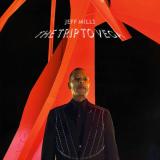
The Trip To Vega is about deep outer space odyssey that occurs in the process of traveling from Earth through the Cosmos to another "favorable" star system 25.3 light-years away.
The time is year 2097, Sept 23rd.
To this day, Earthlings have managed to dodge some of nature's more dangerous extremities, massive volcanic eruptions, Earthquakes, solar burst that knocked out the Planet's entire electrical grid for 3 years, numerous plagues of disease, food and fresh water shortages, domestic and International Wars and many other life-changing operas, but for this event, what remains is a realization that has no remedy. The cause: Earth's physicality has changed. It is no longer favorable for living things.
It is the constant shifting of the planet's internal tectonic plates which has unfortunately produced an unexpected and impassable dilemma.
Because of the collisions, deep within the planet's core, the planet is now producing an extraordinary amount of sound that includes a specific harmonic frequency that erodes the natural senses of all life on Earth.
It is intensifying. It is intolerable and it is unlivable.
Yet, some humans prefer to stay, to "ride it out" like the Titanic captain going down with his ship. Some, in total disbelief as some have concluded it is the second coming of Jesus Christ. But for most, the decision is clear. Tolive another day, leaving is the only rational choice.
At an increasing rate, scientific research data shows that humans and most animals, excluding the Jellyfish will eventually lose the usage of hearing and are to greatly suffer from an array of other neurological and psychological effects. The sense of touch and taste, sleep depreciation, severe nerve damage, constant hallucinations. Everyone will lose many of their cognitive abilities within an estimated 12 months from now.
On this day and every 7 days afterwards until all registered passengers have departed, the first of a fleet of large number of massive size spacecraft carrying approximately 1 million humans per vessel will permanently leave Earth to begin the long and adventurous trek across outer space to a new home: Vega.
This is not a precautionary tale as there is nothing to learn. Instead, a decision has been made and a Trip To Vega is the consequence.
- Jeff Mills
Rhiza Semar presents its fourth chapter with Yildizlara, a four-track odyssey shaped from shadow, rhythm, and elemental texture. Crafted as both visceral tools and introspective journeys, the record navigates between ominous density and luminous release, guided by a deep awareness of space, myth, and matter. As an artist, Hitam paves the way for a new sound emerging from his burrows to build bridges between electronic subgenres while shaping a landscape unmistakably his own. Orb Weaver opens the cycle with jagged IDM rhythms that coil and release like threads of a web pulled taut. Originally composed for the graduation project of fashion designer Tim van der Plas, who's collection was inspired on climbing out of depression, its atmosphere is dark and ceremonial, with textures scraping against silence until catharsis emerges from the tension. A confrontation between inner turmoil and release. On Vanishing of the Anasazi, cavernous reverbs carry traces of lost structures, percussion echoing as if across ruins. A relentless drive holds the ghost of ritual processions, summoning a spectral energy that feels at once monumental and hollowed-out. The track suspends itself between presence and absence, architecture and collapse, leaving the listener in a space where echoes become the only surviving form of memory. Mesh Grip plunges downward into subterranean force. A thundering groove rumbles like minerals being unearthed, goblin-like figures at work in hidden shafts, chiseling away at stone in endless rhythm. From this pressure, a sudden swell of melancholy pads rises, reframing the heaviness with emotional resonance as if the whispers of angelic guardians seep into the caverns, transforming extraction into elegy. What begins as pure drive of endurance evolves into an introspective meditation. Closing the release, Yildizlara unfolds as an epic ascent. Layered rhythms rush forward with urgency, intricate yet propulsive, while chopped vocals bring back a sensual human element, scattering like signals across the night sky. Animalistic atmospheres dart through the mix as spectral cries and furtive movements, adding a primal dimension to the drive. What begins as erratic and untamed slowly converges into warmth and ultimate catharsis: a cosmic tale inscribed in sound, both intimate and monumental, familiar yet born of hidden memory. Yildizlara is both innovative and ancestral; a release where turbulence becomes ritual, and where rhythmic complexity unearths fragments of hidden memory. Beneath its dark and erratic surfaces lies a strange familiarity, like echoes of a primal past resurfacing through sound, reminding us of worlds once known but long concealed. Words by A. Veyra
It’s with great pride that we announce this amazing album on Optimo Music from Portland-based duo Natural Magic. It was the final vinyl release that Keith McIvor aka JD Twitch put into production before his untimely departure in late September this year.
Having been a long time lover of everything krautrock, space rock, experimental and psychedelic it seems more than fitting that he leaves us this LP as his parting gift; because this sublime album is all these things wrapped up into one and much more.
The album’s opening track “Galaxy Builder”, with its driving tempo, monolithic bass and screaming guitars might give the impression we’re about to hear a Neu for the 21st Century, but no, by the 2nd track we’re already on the first of several wild detours into uncharted territories: part shoe gaze, part ethereal, part psychedelia it’s a unique piece of beautiful euphoria from start to finish. By the time we reach the end of the A-side’s closing track “Distant Bells” the whole place is in tears after hearing possibly one of the most poignant pieces of electronic music of the entire year.
The B-side takes us even deeper into this trip through the duo’s homeland in the Pacific Northwest opening with “Skyward Eye”. If the Orb had ever teamed up with Slowdive and gotten Andrew Weatherall on production this could be it. “Get It Right” is a fuzz-filled epic with heavy dub leanings and meanings...it soars high up into the beyond and prepares us for “Ride”; an unashamed space voyage in the true sense…cosmic guitars, laden with FX; before returning gently down to the rolling green hills of Earth with the closing track “Chugsby’s Theme”. Whoever Chugsby is, his vibe is organic, deeply grounded and beautiful.
In the duo’s own words:
“Natural Magic II is a west coast road trip soundtrack for the fading summer. Taking inspiration from the majesty and myths of their home in the Pacific Northwest, the seven track album is culled from the late night, dimly lit, live sessions of Mike McKinnon on keys/drums and Matthew Quiet on bass. Overdubs of guitar, synths and percussion followed. All this from the same space they throw their legendary Limited Edition parties - all-night free experimentation celebrations in their own right. The album art work is handmade flower pigments, opium poppy pollen ink and wood-scrap charcoal by their friend and collaborator Pith Cocomici. Roll the widows down, tilt the seat back and turn it up. Gas, grass or black mass... there's magic in the hills.
- A1: Rage
- A2: More Real
- A3: Like No Other
- A4: Driving & Talking At The Same Time
- A5: Aeiou
- A6: Sahara
- B1: Europe
- B2: State-Of-The-Art
- B3: The Finish Line
- B4: Detroit Tonight
- B5: On The Run
- B6: Paceways
- C1: Law & Order
- C2: I Feel Tension
- C3: I Do
- C4: Dancing Out Of Time
- C5: Runaway Child (Minors Beware)
- C6: Detroit Tonight
- C7: Snake Dancing
- D1: Working
- D2: Back To You
- D3: My Baby's Explosive
- D4: Born Yesterday
- D5: Paceways
- D6: Big Sky
- E1: The Dark Side Of Me
- E2: Tachito In The White Meredes Benz
- E3: New Strangers In Town
- E4: Skylife
- E5: The Dancing Girls Of Windsor
- E6: My First Idea
- F1: 3Rd Generation
- F2: The Exterminator
- F3: A Detective Story
- F4: Jerry Leaves The Small Town
- F5: Mona Lisa On My Arm
- F6: The World Is Loud
“The group has no niche, it doesn’t fit in anywhere,” explains Necessaries drummer Jesse Chamberlain in a 1980 Melody Maker interview. “We just state the facts about life in America, like The Clash did about England, but we’re not so heavy about it.” The Necessaries rose from the ashes of Harry Toledo & The Rockets, a little-known New York art-rock band playing gigs at Max’s Kansas City during glam’s metamorphosis into punk. —From the liner notes by Michael IQ Jones The Necessaries came together in 1978 and in the too-brief lifespan of the band counted among their members, Ed Tomney (Rage To Live, Luka Bloom), Jesse Chamberlain (Red Crayola), Ernie Brooks (Modern Lovers), Arthur Russell (The Flying Hearts), Randy Gun (Love Of Life Orchestra). First championed by John Cale on the strength of Tomney’s songs, Cale produced their first single for Spy Records (under the I.R.S. umbrella) which was released in 1979. With the forward momentum brought about by the single, the band set about tracking demos intended for Warner Bros., but The Necessaries ultimately would sign to Seymour Stein’s Sire Records. These rough demo basic tracks lacked overdubs, mixes and any finishing touches that would have made them viable for commercial release, but due to tour commitments, the band had to put the sessions on hold to hit the road. While on tour, the band was shocked to discover that Sire had issued the unfinished tracks as their debut album Big Sky (issued in 1981). The band had Big Sky withdrawn and replaced with Event Horizon (issued in 1982) which included half the original tracks from Big Sky and continued to record throughout 1982 aiming for a follow-up. It was not to be and their final studio sessions remained unissued until now. Completely Necessary (Anthology 1978–1982) is the first authorized collection of recordings by The Necessaries and includes 37 tracks, 28 of which are previously unissued. Completely Necessary represents the most accurate musical history of the band laid out across three albums. Disc one is the band-approved first album Event Horizon, followed by Pilots Facing North, a disc collecting studio recordings spanning 1978–1981 and disc three finally sees the release of their final sessions, Songs From The Blue Colony. Album notes by Michael IQ Jones trace the history of the band for this compilation produced by The Necessaries’ Ed Tomney and Cheryl Pawelski (Omnivore Recordings). The audio has been restored and mastered by Michael Graves at Osiris Studio, and both the 3-LP and 2-CD sets feature previously unseen photos across the package. Finally, an essential missing piece of the late ’70s/early ’80s New York scene that was just slightly ahead of the college alt-rock soon to come, is finally available to rediscover—this time it’s authorized and absolutely necessary. BUY! HERE’S WHY! • The first authorized and comprehensive anthology by The Necessaries. • Mid-’70s/early ’80s New York rock/punk/art scene band included members: Ed Tomney, Ernier Brooks, Arthur Russell, Jesse Chamberlain, and Randy Gun. • 37 tracks, 28 previously unissued. • Liner notes by Michael IQ Jones, plus unseen photos.
- A1: Design - Premonition
- A2: Vision - Lucifer’s Friend
- A3: Richard Bone - Alien Girl
- A4: John Howard - I Tune Into You
- A5: Ian North - We’re Not Lonely
- A6: Selwin Image - The Unknown
- B1: Harry Kakoulli - I’m On A Rocket
- B2: Rich Wilde - The Lady Wants To Be Alone
- B3: Billy London - Woman
- B4: Alan Burnham - Science Fiction
- B5: The Microbes - Computer
- B6: The Goo-Q - I’m A Computer
- C1: Gerry & The Holograms - Gerry & The Holograms
- C2: The Warlord - The Ultimate Warlord
- C3: Die Marinas - Fred From Jupiter
- C4: Dee Jay Bert & Eagle - I Am Your Master
- C5: Peta Lily & Michael Process - I Am A Time Bomb
- C6: Sole Sister - It’s Not What You Are But How
- D1: Alasdair Riddell - Do You Read Me?
- D2: Karel Fialka - Armband (The Mystery Song)
- D3: John Springate - My Life
- D4: Idncandescent Luminaire - Famous Names
- D5: Disco Volante - No Motion
- D6: Dream Unit - A Drop In The Ocean
2025 REPRESS ON TRANSPARENT GREEN VINYL
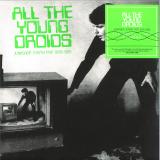
Compiled by Philip King “And then came the rise of synth pop : blokes with dodgy haircuts hunched over keyboard-operated machines stuffed with wires and do-it-yourself tone oscillators making sounds like a brood of geese passing gas in a wind tunnel. Whoopee! This is the way the ‘70s ended : not with a blood-curdling bang bang but with a cheap, synthesized, emasculating whimper.” NICK KENT, NME. All The Young Droids: Junkshop Synth Pop 1978-1985 is a new compilation that charts the underbelly of the epoch-defining sound of the synthesiser in 80s popular music. Compiled by Philip King (previously seen compiling All The Young Droogs, Glitterbest and Boobs - The Junkshop Glam Discotheque), the music here connects the dots between DIY synth enthusiasts grappling with new, cheap synthesisers at the tail-end of punk and wannabe, jobbing songwriters enthral to the new music pioneered by Gary Numan, Depeche Mode and Daniel Miller’s Mute Records. Featuring rare tracks of auto-didactic progressive pop music, proto-techno punk, shoot-for-the-stars-land-in-the-gutter chart flops and heralded, underground synth classics, School Daze paints a picture of beautiful failure. Complete with extensive sleeve notes written by King and never before seen imagery, all 24 tracks were remastered by RPM in-house engineer Simon Murphy, many from vinyl copies due to lost master tapes. The story told on All The Young Droids is one of the dawning opportunity presented by both the emergence to the market of cheaper analog synthesisers and the distribution networks plus indie labels that exploded with the advent of punk music in 1976. While the music that sprouted out all over the globe in the wake of these factors was decried as fake, plastic, a refutation of punk’s guitar-led revolution, it’s telling that much of the music on All The Young Droids.. was created in bedrooms, ramshackle studios and home-made set ups with often borrowed equipment. In the era of record labels jumping to capitalise on the success of The Sex Pistols, The Clash (both on major labels, of course) these artists struggled to stand out from a new gold-rush with next to no budget or PR team. With radio and labels desperate for the new Yazoo, what resulted was a testament to necessity being the mother of invention. At the time, the synthesiser was the music of the future, a shiny new machine that could paint like an orchestra with a single finger and a 4-track. In the hands of Manchester avant-pranksters Gerry & The Holograms it’s a pulsing, sardonic weapon.. the only instrument on the Messthetics classic lampooning of New Wave fashion. In Hamburg, a 16 year old Andreas Dorau used it to write and record (with his female classmates on vocals) a global smash in Fred Vom Jupiter (later licensed to Mute Records). The hard-to-find English version (Fred From Jupiter, natch) is included here. Many artists with alreadystoried careers caught the bug and recorded synthesiser-fuelled peons to space, computers, the future and, of course, love-interests. Harry Kakoulli, late of Squeeze, recorded a solo album in 1979 that included the incredible power-synth-pop smash-that-never-smashed I’m On A Rocket. Similarly, Ian North of Neo and American Power Pop stalwarts Milk ’n’ Cookies bought a Korg MS20 and used a tape machine to record We’re Not Lonely, an absolute lost-classic of minimal synth pop. We’re Not Lonely also features on the Junkshop Synth Pop sampler 7” twinned with John Howard unreleased track You Will See, released April 12th 2025. There are plenty of compilation debuts in evidence. Sole Sister were a mysterious trio who were featured on the Scaling Triangles compilation of female-fronted, queer-adjacent post-punk / underground music that also featured The Petticoats. Selwin Image were from San Francisco and featured members of the recently defunct power pop/punk group The Pushups. Their stupidly catchy The Unknown fizzes with New Wave energy - think XTC to Sparks but remains unreleased until now. Dream Unit’s A Drop In The Ocean is an early synth wave cut, positively teaming with Joy Division instrumentation, previously only released on a long-forgotten and super rare, self-released EP. Incandescent Luminaire’s Famous Names belies an archetypal struggle of a small-town trying to make it in a cruel industry but is a thrilling New Romantic-Synth Wave cross over with a OMD gloominess that’s a joy to hear. Feminist Minimal Wave track I Am A Time Bomb by performance artist Peta Lilly and Michael Chance is a revelation destined for new found cult status. It was released on 7” and lost until now. The flipside to the subterranean, never-made-it synth pop mentioned above are the ambitious, even fruity attempts at success that have a perennial elegance to their confidence. New Jersey-ite Billy London (real name Ed Barth) tried to cash in on the synth boom with Woman, released by a major label, a lurching new wave track built on the Louie Louie rhythm and a wonderfully camp Lou Reedstyle sleazy vocal before exploding in the synthesised chorus. The song bombed but with a chorus like this, you have to wonder why? Ex-Glitter Band member John Springate’s My Life is truly epic, with doomed chord progressions and massive sounding drums turning into at least 3 different songs in the course of the track. Before you wonder what’s going on the song resolves with a glorious return to the main refrain. The dry-ice-dressed dance floor is well catered for too. Design’s Premonition and Vision’s Lucifer’s Friend are stone-cold minimal synth bangers, well loved but given a new lease of life here. The Warlord’s The Ultimate Warlord was released in 1978, a homespun proto Hi NRG banger that was later re-recorded by The Immortals in Canada who had a club hit with it. One-man- band Disco Volante’s No Motion was re-issued by Synth wave label Medical in 2012 but makes its first vinyl compilation appearance here. Close your eyes and you can imagine what Lawrence of Felt would have sounded like with some cheap Korgs a little earlier in his career. Gibraltar-based trio The Microbes imagined a computer programming people to dance - how prescient - and ended up with a propulsive, robo-funk track with splendid rubbery bass playing over a tectonic drum machine. Previously picked up by Belgian label Stroom TV, Dee Jay Bert & Eagle’s heavily Euro-accented I Am Your Master demands the listener to “come to paradise!” In a frankly terrifying manner. All The Young Droids is the first compilation to peel away from the narrative that dour, Minimal Synth and Cold Wave were the only musical children of the first rush of synth pop. Philip King and School Daze Records describe a much more complicated world: along with the austere, Brutalist children of Daniel Miller (who produced Alan Burnham’s Bowie-Low-influenced Science Fiction here) was a plethora of desperate cash-ins, accidental mainstream hits, ambitious pop dramas and major label punts that went nowhere. Crucially, the compilation blurs the line between junk and treasure. What if the two things are interchangeable. What if it’s all science fiction?
2025 Repress
More than once Jay Richford and Gary Stevan’s Feelings has been described as the greatest library record ever released. Of course Be With can’t be seen to be playing favourites, but we have to admit, it’s pretty good. Insanely rare and immensely sought-after, it’s a tough funk, street jazz masterpiece coveted for many years by collectors of all musical genres.
Since its original release on Italian label Carosello in 1974, Feelings has appeared on several labels with different sleeves and even under a different artist. Indeed cult library label Conroy put it out in one of their iconic red sleeves in 1976 and yes, Feelings has indeed had more than one modern re-issue since these “original” releases. But a record this special deserves to be kept in press and we think it deserves the Be With treatment.
No, Jay Richford and Gary Stevan aren’t two of the most Italian sounding names. As the story goes these were the pseudonyms adopted by Stefano Torossi and Giancarlo Gazzani who wrote the album but couldn’t use their real names on the original release for legal reasons. But Stefano Torossi himself later both clarified and confused the tale further by explaining that Feelings was the work of four people not just Gazzani and himself. Fellow composers and musicians Sandro Brugnolini and Puccio Roelens also worked on the album and as Torossi himself explained “we all worked together”, with all four gents “dividing the royalties in equal parts… that’s the story.” Right, so, with that all sorted out let’s get back to talking about the music. And what music it is.
Long hailed as a holy grail of library music, Feelings is the epitome of the sort of cinematic orchestral jazzy funk that is “that 70s library music sound”. Infectiously funky, deliciously melodic and with impeccible, elegant production, this record is the showcase for a stunning set of compositions and arrangements and with performances that are nothing short of virtuoso.
The record’s first side lifts off with “Flying High”, soaring brilliant and shimmering. Funk licks, menacing strings and swaggering horns combine for an ice-cold intro groove that Isaac Hayes would surely have envied, before the steady-paced drums deliver the slo-mo TKO. The string-drenched cop-funk of “Going Home” raises the tempo. All funky quick-fire bass lines and killer electric guitar soloing. A real thriller.
“Walking In The Dark” positively drips in blaxploitation-funk drama strings and horn struts, all laced with delicate drums, velvet piano and more filthy wah-wah. “Fighting For Life” is another funk-fuelled workout built around an effortlessly relentless drum track that refuses to give up until even the stiffest-necked head is nodding.
The loping, open drum break that guides the much-loved “Feeling Tense” through its early stages would be good enough on its own. The heavy bass gloss, swirling strings and ominous horns that follow take things to the next level.
The second side opens with another favourite “Running Fast”, and the track does precisely that. This is one fine rollicking chase theme underpinned by frenetic (yet funky) Fender Rhodes and skipping bass and drums. Those sweeping strings are a gorgeous extra. It’s a deliciously feel-good groove that sets the heart racing.
“Loving Tenderly” envelops us in warm, velvety night-time vibes with easy listening horns and slinky strings dialing up the seduction. Definitely one for the lithe lovers out there. The pace picks up on the electrifying “Fearing Much” where strings dart around deep bass, buzzing guitars and another funky drum break. The lush, melancholic “Being Friendly” is another easy beauty, all warm Rhodes and strings. Majestic stuff that puts an aural arm around you. The climactic “Having Fun” rides a pulsating, bass-heavy drum break with snatches of a funky guitar refrain, some luxurious keys, sweeping strings and triumphant horns. Sensational.
- A1: She's Getting Married In August
- A2: Evenin' Rain
- A3: Les Papillons
- A4: Zeena
- A5: Virgin Morn
- A6: Seeds
- B1: Crystal Blue
- B2: Lady Carole
- B3: Lotus Child
- B4: Last Prayer
- B5: Hymn For Today
- C1: Boston
- C2: Blackbird Charlie
- C3: My Sun
- C4: Closer To The Truth
- C5: Strange News
- D1: Moonchild
- D2: Red Shoe Truckin
- D3: Beautiful
- D4: Opal Blue Sunday
First time vinyl reissue, expanded and deluxe double gatefold 140g double vinyl, remastered audio with restored artwork and fresh liners written by Paul Hillery (Folk Funk & Trippy Troubadours)
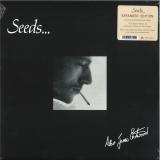
Alan James Eastwood's glorious Seeds is a certified folk-funk lost-classic.
But who was Alan James Eastwood? He had never hit the big time and commercial success eluded him. By the mid-1970s, his musical career was pretty much over and he was almost unknown except among deep heads, amongst whom he would gain cult status.
Original copies of the 1971 vinyl release of Seeds exchange hands for high sums, if you can find one. This expanded 2LP contains an extra record, collecting 9 rare non-album singles and is presented in a gatefold sleeve complete with freshly commissioned liner notes courtesy of Paul Hillery (Folk Funk & Trippy Troubadours).
With the long overdue deluxe reissue of this prized artefact, we hope to finally shine a light on the unheralded genius of Alan James Eastwood. RIYL Nick Drake, Rodriguez, Richie Havens.
Alan James ‘Bugsy’ Eastwood was a renowned musician and singer who came to prominence in the late 1960s with The Exception, an unsung but excellent band from Birmingham. The Exception released many singles, the first featuring friend Robert Plant on tambourine, before an album, The Exceptional Exception. However, by this time, Bugsy was feeling constrained and restless; he left the band within weeks of the release.
Having vanished from the scene, he was honing a deeper, introspective edge to his songwriting. His demos found their way to the sound engineer and producer Mike Cooper at Pan Music Studios in Denmark Street. Loving what he heard, Eastwood soon entered a recording session with Cooper. The session was just Alan, his guitar and harmonica and - by all accounts - it was remarkable. With the songs, the voice and such an exceptional talent, it was hard to go wrong. Says Mike: "We had John Hawkins do the big string arrangements and Richard Hewson arranged the string quartet. We overdubbed the orchestrations on Alan's original session recordings, adding Chris Karan on tabla and various percussion. We considered re-recording the vocals but found that the magic on that original session was so exceptional overdubbing would not be as good as the atmospheric 'live' performance."
Mike and Alan viewed each track as a different entity, giving the album a diverse sonic palette. Assessing each song individually, they decided which would be suitable for each arranger. Top-flight session musicians were added to the roster to complete the sound, with Byron Lye Fook (father of musician Omar) on drums, bassist Mike Ward, Brian Pickles on marimba and jazz drummer Chris Karan on tabla and percussion. Recorded in a matter of days in Pan's small 8-track studio, they carefully added overdubs, rhythm sections and four string sessions arranged by Hawkins, with Hewson's arrangements recorded at Trident Studios.
Seeds was Alan James Eastwood's debut solo album – indeed, his only solo album - and was originally issued on President in 1971. It melded Eastwood’s impressive rock sensibilities with a folk thread to superb effect. His arresting voice - its deep, rough-hewn soulfulness - coupled with gorgeous string-drenched backing, make this a phenomenal listen. It really is a great 70s singer-songwriter record - with touches of acid-folk and folk-funk throughout.
It opens with "She's Getting Married In August", a mellow tune with Richard Hewson's strings arranged around Alan's straightforward guitar structure. Up next, the joyous, sun-dappled guitar and strings workout "Evenin' Rain" glides by before the fragile, accordion-enhanced "Les Papillons" breezes out of the speakers. The bluesy "Zeena" follows, featuring vocals and acoustic guitar and showcasing Eastwood's effortless harmonica. Starting out as a ballad, "Virgin Morn" builds with soaring strings and gospel-tinged backing vocals from Marilyn Powell and jazz singer Josephine Stahl. The A-side closes with the title track, "Seeds". With a chugging mid-tempo beat, soulful vocals and a beautiful Bacharach-esque string arrangement, it truly is stop-you-in-your-tracks spectacular.
Side B opens with "Crystal Blue", gilded by Lye Fook's marimba, lush gospel-esque backing vocals and handclaps. Eastwood's acoustic guitar begins "Lady Carole", which starts as a bluesy ballad and builds with more string arrangement, lifting the track to another height. A towering highlight of epic proportions, "Lotus Child" is a true masterpiece of arrangement. It opens with simple yet stunning do-do-dah vocal harmonies blended with John Hawkins's strings, bass lines and rhythmic beats, forming a vibe very much in conversation with the sounds coming from LA's Laurel Canyon. Next up, the heartwarming "Last Prayer", dedicated to Alan's first and last love, contains a melancholic vocal with a wistful string-drenched arrangement that would sit comfortably in a Federico Fellini score. Bringing the album to a close, "Hymn For Today" is a melodic raga with tabla, strings and a soft-psych feel. Eastwood's prophetic whisper - "I am real. At last, I am real" - profoundly hits home.
Kicking off the extra disc is the sparsely funky and country-tinged "Boston", released as the flip to the astonishing "Seeds". Next up are the two tracks that comprised Alan’s debut solo 7" single from 1968. The laconic, Bobby Charles-esque "Blackbird Charlie" evidences a real depth and charm in Eastwood's songwriting whilst the starkly brilliant flip, "My Sun", was a horizontal, atmospheric folk-tinged soundtracky precursor to his later work on Seeds.
In 1972, two further standalone singles followed. The first was the evergreen flute-driven folk-funk bomb, "Closer To The Truth", backed by the funky blues of "Strange News". The second, a deeply moving Havens-inspired "Moonchild" - rightly fawned over to this day - was flipped with "Red Shoe Truckin'", a groove-infused track. Eastwood also paired up with Marilyn Powell for a single produced by Powell's partner, Mike Cooper. Under the name Eastwood & Powell, they released their staggering rendition of "Beautiful", a rock-blues-pop song arranged by Ivor Raymonde and written by Carole King. Over on the flip, a funky Eastwood original "Opal Blue Sunday" lurked. This is not to be overlooked.
Over the years, Alan remained active on the music scene, but problems with alcohol and health complications from diabetes severely impacted his career. He spent his latter years living in London until his untimely death from heart failure on 25 October 2007, just one day before his 62nd birthday and without his music having received the real acclaim it so dearly deserved.
This deluxe reissue, spellbinding from beginning to end, should hopefully go some way to rectifying this tragic fact. Mastering for this special double vinyl edition was overseen by Be With regular Simon Francis and it was cut by the esteemed Cicely Balston at Abbey Road Studios to be pressed in the Netherlands by Record Industry. The original artwork has been lovingly brought back to life at Be With HQ, with the addition of passionately written liner notes specially for this landmark reissue by none other than Paul Hillery.
- A1: Design - Premonition
- A2: Vision - Lucifer’s Friend
- A3: Richard Bone - Alien Girl
- A4: John Howard - I Tune Into You
- A5: Ian North - We’re Not Lonely
- A6: Selwin Image - The Unknown
- B1: Harry Kakoulli - I’m On A Rocket
- B2: Rich Wilde - The Lady Wants To Be Alone
- B3: Billy London - Woman
- B4: Alan Burnham - Science Fiction
- B5: The Microbes - Computer
- B6: The Goo-Q - I’m A Computer
- C1: Gerry & The Holograms - Gerry & The Holograms
- C2: The Warlord - The Ultimate Warlord
- C3: Die Marinas - Fred From Jupiter
- C4: Dee Jay Bert & Eagle - I Am Your Master
- C5: Peta Lily & Michael Process - I Am A Time Bomb
- C6: Sole Sister - It’s Not What You Are But How
- D1: Alasdair Riddell - Do You Read Me?
- D2: Karel Fialka - Armband (The Mystery Song)
- D3: John Springate - My Life
- D4: Incandescent Luminaire - Famous Names
- D5: Disco Volante - No Motion
- D6: Dream Unit - A Drop In The Ocean
MB Crystal Vinyl[32,73 €]
LTD Trans Pink Vinyl[32,82 €]
LTD Trans Pink Vinyl[27,69 €]
Compiled by Philip King
“And then came the rise of synth pop : blokes with dodgy haircuts hunched over keyboard-operated
machines stuffed with wires and do-it-yourself tone oscillators making sounds like a brood of geese
passing gas in a wind tunnel. Whoopee! This is the way the ‘70s ended : not with a blood-curdling bang
bang but with a cheap, synthesized, emasculating whimper.”
NICK KENT, NME.
All The Young Droids: Junkshop Synth Pop 1978-1985 is a new compilation that charts the
underbelly of the epoch-defining sound of the synthesiser in 80s popular music. Compiled by Philip
King (previously seen compiling All The Young Droogs, Glitterbest and Boobs - The Junkshop
Glam Discotheque), the music here connects the dots between DIY synth enthusiasts grappling with
new, cheap synthesisers at the tail-end of punk and wannabe, jobbing songwriters enthral to the new
music pioneered by Gary Numan, Depeche Mode and Daniel Miller’s Mute Records. Featuring rare
tracks of auto-didactic progressive pop music, proto-techno punk, shoot-for-the-stars-land-in-the-gutter
chart flops and heralded, underground synth classics, School Daze paints a picture of beautiful failure.
Complete with extensive sleeve notes written by King and never before seen imagery, all 24 tracks
were remastered by RPM in-house engineer Simon Murphy, many from vinyl copies due to lost master
tapes. The story told on All The Young Droids is one of the dawning opportunity presented by both the
emergence to the market of cheaper analog synthesisers and the distribution networks plus indie labels
that exploded with the advent of punk music in 1976. While the music that sprouted out all over the
globe in the wake of these factors was decried as fake, plastic, a refutation of punk’s guitar-led
revolution, it’s telling that much of the music on All The Young Droids.. was created in bedrooms,
ramshackle studios and home-made set ups with often borrowed equipment. In the era of record labels
jumping to capitalise on the success of The Sex Pistols, The Clash (both on major labels, of course)
these artists struggled to stand out from a new gold-rush with next to no budget or PR team. With radio
and labels desperate for the new Yazoo, what resulted was a testament to necessity being the mother
of invention.
At the time, the synthesiser was the music of the future, a shiny new machine that could paint like an
orchestra with a single finger and a 4-track. In the hands of Manchester avant-pranksters Gerry & The
Holograms it’s a pulsing, sardonic weapon.. the only instrument on the Messthetics classic lampooning
of New Wave fashion. In Hamburg, a 16 year old Andreas Dorau used it to write and record (with his
female classmates on vocals) a global smash in Fred Vom Jupiter (later licensed to Mute Records).
The hard-to-find English version (Fred From Jupiter, natch) is included here. Many artists with alreadystoried careers caught the bug and recorded synthesiser-fuelled peons to space, computers, the future
and, of course, love-interests. Harry Kakoulli, late of Squeeze, recorded a solo album in 1979 that
included the incredible power-synth-pop smash-that-never-smashed I’m On A Rocket. Similarly, Ian
North of Neo and American Power Pop stalwarts Milk ’n’ Cookies bought a Korg MS20 and used a
tape machine to record We’re Not Lonely, an absolute lost-classic of minimal synth pop. We’re Not
Lonely also features on the Junkshop Synth Pop sampler 7” twinned with John Howard unreleased
track You Will See, released April 12th 2025.
There are plenty of compilation debuts in evidence. Sole Sister were a mysterious trio who were
featured on the Scaling Triangles compilation of female-fronted, queer-adjacent post-punk /
underground music that also featured The Petticoats. Selwin Image were from San Francisco and
featured members of the recently defunct power pop/punk group The Pushups. Their stupidly catchy
The Unknown fizzes with New Wave energy - think XTC to Sparks but remains unreleased until now.
Dream Unit’s A Drop In The Ocean is an early synth wave cut, positively teaming with Joy Division
instrumentation, previously only released on a long-forgotten and super rare, self-released EP.
Incandescent Luminaire’s Famous Names belies an archetypal struggle of a small-town trying to
make it in a cruel industry but is a thrilling New Romantic-Synth Wave cross over with a OMD
gloominess that’s a joy to hear. Feminist Minimal Wave track I Am A Time Bomb by performance artist
Peta Lilly and Michael Chance is a revelation destined for new found cult status. It was released on 7”
and lost until now.
The flipside to the subterranean, never-made-it synth pop mentioned above are the ambitious, even
fruity attempts at success that have a perennial elegance to their confidence. New Jersey-ite Billy
London (real name Ed Barth) tried to cash in on the synth boom with Woman, released by a major
label, a lurching new wave track built on the Louie Louie rhythm and a wonderfully camp Lou Reedstyle sleazy vocal before exploding in the synthesised chorus. The song bombed but with a chorus like
this, you have to wonder why? Ex-Glitter Band member John Springate’s My Life is truly epic, with
doomed chord progressions and massive sounding drums turning into at least 3 different songs in the
course of the track. Before you wonder what’s going on the song resolves with a glorious return to the
main refrain.
The dry-ice-dressed dance floor is well catered for too. Design’s Premonition and Vision’s Lucifer’s
Friend are stone-cold minimal synth bangers, well loved but given a new lease of life here. The
Warlord’s The Ultimate Warlord was released in 1978, a homespun proto Hi NRG banger that was
later re-recorded by The Immortals in Canada who had a club hit with it. One-man- band Disco
Volante’s No Motion was re-issued by Synth wave label Medical in 2012 but makes its first vinyl
compilation appearance here. Close your eyes and you can imagine what Lawrence of Felt would have
sounded like with some cheap Korgs a little earlier in his career. Gibraltar-based trio The Microbes
imagined a computer programming people to dance - how prescient - and ended up with a propulsive,
robo-funk track with splendid rubbery bass playing over a tectonic drum machine. Previously picked up
by Belgian label Stroom TV, Dee Jay Bert & Eagle’s heavily Euro-accented I Am Your Master
demands the listener to “come to paradise!” In a frankly terrifying manner.
All The Young Droids is the first compilation to peel away from the narrative that dour, Minimal Synth
and Cold Wave were the only musical children of the first rush of synth pop. Philip King and School
Daze Records describe a much more complicated world: along with the austere, Brutalist children of
Daniel Miller (who produced Alan Burnham’s Bowie-Low-influenced Science Fiction here) was a
plethora of desperate cash-ins, accidental mainstream hits, ambitious pop dramas and major label
punts that went nowhere. Crucially, the compilation blurs the line between junk and treasure. What if the
two things are interchangeable. What if it’s all science fiction?
AN ATLAS OF LOSS
Do minerals dream of becoming semiconductors? Do they yearn to carry charges, amplify, switch, and convert energy into emotions comprehensible to humans? And what if, from the darkness of the underground, they had been listening to us sing in caves before the emergence of the first flute? Could they have guided us, through the course of history, to find them, extract them, and create new sounds through sinusoidal waves, to form valves and bend circuits?
If so, minerals would transition from what philosopher Eugene Thacker defines as the ‘planet’—that virginal and unreachable realm for humans that we study through geology, paleontology, and environmental sciences—to the ‘world,’ the space we inhabit, interpret, and synthesise in our daily lives. Sadly, we only remember the world when it erupts violently, through climate catastrophes or when a new virus emerges. Sometimes a tsunami collides with a nuclear plant, or viruses are cultivated as biological weapons in high-security laboratories, provoking a deep biological anxiety, hard to quell, which we all feel beneath our skin.
There exists a third realm, disconnected from both the world and the planet: the ‘earth’, an immense, dense rock floating in space alongside other planets, situated in the cosmological dimension. Relating to the earth is so complex that we only do so through theoretical speculations of a scientific nature or through science fiction, interweaving until one becomes the prophecy of the other, in an infinite, pendular dance. Beyond the darkness of space and Lovecraft’s cosmic horror, the fantasy of human extinction is the most recurrent: to reach a collapse so devastating that we do not survive it, even though the earth does, without us.
In a world where we quantify everything through body sensors, financial algorithms, nanometre-scale robots, and surveillance drones—a world in which everything that can be domesticated and controlled can also be commodified—a superior artificial intelligence would survive the collapse of the species (some speculate it might even cause it) and learn from our mistakes, thanks to our obsessive gathering of data.
Long after our voices fade, minerals will persist in the darkness of screens, in the silicon of chips, and in their pure form, still unexploited underground. Over the millennia, this intelligence might piece together fragments of our reasoning, as if an alien civilization finally connected with one of our spacecrafts loaded with messages cast into the void. It would sort through endless streams of data, unable to grasp the depths of emotion behind what it quantified, recreating simulations of our past, stripped of the nuance that once defined us and conducting experiments in sandboxes.
Some remnants of our existence—faint echoes of forgotten beauty—would be pieced together in an atlas of loss, buried beneath layers of numbers, decayed bots, and corroded hard drives. What will follow? Perhaps bison will once again roam—trotting to the strange pulse of techno, their ancient forms framed by the ruins of our cities.
Buildings will crumble, slowly dissolving under the soft touch of ambient music, and a thousand flowers will bloom with that ancient music created through electrical signals and computation. 7 songs for a future both improbable and inevitable—a final message from a world lost to itself, from planet Earth to planet Earth.
Alfons Pich, 2025
The iconic Hôtel Costes music collection, a veritable benchmark of Parisian luxury and refinement, continues to captivate lovers of sophisticated sounds. Famous for its unique blends of warm vocals, funk, jazzy and pop grooves, fusing electronic sounds and acoustic instruments, this series is a must for connoisseurs of refined music.
This eighth volume, orchestrated by the talented Stéphane Pompougnac, offers light electro soul and racy house, perfect for livening up the most elegant evenings and keeping the most reluctant dancing until the wee hours. The Hôtel Costes series has revealed exceptional talents such as Pink Martini, Flight Facilities, General Elektriks, Angus & Julia Stone and Brigitte, while mixing hidden nuggets with masters such as Gotan Project, Femi Kuti, Trentemøller, Thievery Corporation, Shirley Bassey and Grace Jones.
With over 5 million copies sold worldwide, following the resounding success of the reissue of the first six volumes, this eighth opus is finally available for the first time on vinyl. A true gem that will delight long-time fans and appeal to a new generation of listeners worldwide.
Matthew Dear's Black City Can't Be Found On Any Map. It's A Composite, An Imaginary Metropolis Peopled By Desperate Cases, Lovelorn Souls, And Amoral Motives. Like Most Literary Gothams, Black City Is A Place To Love And Hate, As Seedy As A Nightclub's Back Room And As Seductive As The Promise Of Power. Matthew Dear, The Musician, May Live In New York City, But The Matthew Dear Of Black City Inhabits A Sound-world Unlike Any Other: A Monument To The Shadowy Side Of Urban Life That Bumps And Creaks, Shudders And Wakes Up Screaming In The Middle Of The Night. Black City Is Matthew Dear's Third Album On Ghostly International, And It's His Darkest And Most Engrossing Work To Date.
From The rst Notes Of Album Opener "honey", It's Clear That The Love-obsessed Matthew Dear Of 2007's Asa Breed Has Given Way To A More Existentially Paranoid Entity, As Creeping Tempos Dominate, Cavernous Atmospherics Envelop The Listener, And Strange Distortions Crackle On The Horizon. In Black City, Nothing Is At It Seems: Leadoff Single "little People (black City)" Is A Nine-and-a-half Minute Disco odyssey, subverting its gleaming electronic lead with eerily giddy backing vocals and cryptic, ominous lyrics ("a frozen wasted heart / has died", "love me like a clown"); "You Put a Smell on Me" is a sordid sex romp set to hysterically chattering percussion and a serrated synth line that will set your teeth on edge; "More Surgery" at rst recalls the barely-there Krautrock of Harmonia in its burbling minimalism, until Dear's chanted chorus of "Alter genetics / to make my body glow / I need more surgery / there's so much more to know" sends the track hurtling into a dystopian future.
And yet, for all the foreboding moods on Black City, it's the album's sweeter moments that illustrate Matthew Dear's growing maturity as a songwriter. "Slowdance" is a futuristic lullaby in which Dear articulates a lover's helplessness ("I can't be the one to tell you everything's wrong") over breathy, Arthur Russell-esque cello swishes; the album-closing "Gem" is an achingly simple, reverb-drenched piano ballad that ends with a long, slow fade. Even in Matthew Dear's Black City, there is hope.
Parsley Sounds was the glorious debut album for Mo Wax by Parsley Sound. The album was one of the iconic label’s final releases before it closed in 2003 and locating a clean copy has been extremely tricky of late, unless you're flush enough to drop 150 notes on it. Mercifully, the Be With reissue, put together with invaluable assistance from the group, should remedy this situation. It's a lo-fi, bass-heavy, blunted beat treat, warped with heat haze and dreamy soft-psych and has been criminally under-heard for far too long.
As with most cult-like records, Parsley Sounds has many influential fans, far and wide. From Four Tet and Caribou to NTS's modern day breakfast hero Flo Dill, its reputation has only grown in stature. At the time, the notoriously hard-to-please Pitchfork garlanded it with a scarcely achievable 8.8 whilst, just recently, the Numero Group's Rob Sevier described it as a "visionary bit of proto-Salvia Palth (or Steve Lacy)" via a Ghostly International missive.
Parsley Sound comprised super-talented duo Preston Mead and Dan Sargassa. They released an early single (the perfect "Twilight Mushrooms", featured here) on Warp Records as Slum, before signing to Mo Wax. Hidden behind a wall of sound - fuzzy layers of beats, bleeps and symphonic synths - they were convinced they made mainstream pop music. And, in many respects, Parsley Sounds really is a beautiful pop album. It overflows with memorable, gorgeous melodies and inspired songcraft. As the contemporaneous Pitchfork review correctly had it: "Parsley Sounds is one of those rare records that manage to sound modest while frequently pushing the sonic envelope."
Killer opener "Ease Yourself And Glide" is a thing of aching, soft-psych, wonky beat-beauty. A melodic masterpiece, part Crosby, Stills & Nash, part proto-Koushik, it presents a melancholy falsetto, surging bass and blunted lead guitar. As it climaxes, gorgeous strings are ushered in to see us out. Sublime. "Twilight Mushrooms" is up next and it's an acid-drenched, strung-out acoustic-led campfire wonder. Amid layers of tape-hiss and beautiful, sun-dappled strings, its understated vocal track provides a haze of wistful innocence.
The breezy "Spring's Near" is a krautrock-inspired chiming instrumental of heavenly excellence, its warm, skipping, motorik groove and dreamy synths completely infectious. Another total highlight, the technicolour "Yo Yo" initially presents itself as a more abstract, bleepy offering but as it organically swells into ever more beautiful places, with the addition of a choppy insistent drum loop, flute bursts, horns and sweeping strings, it puts one in mind of early Manitoba and Four Tet releases. Shimmering, blissed-out greatness.
The celestial harmonies and glistening harps of the wonderfully beatless, serenely sullen "Ocean House" are very much in conversation with late-60s meditative psych whilst, closing out Side A, the jaw-dropping, lushly experimental effort "Find The Heat" comes on like Arthur Russell meets Brian Wilson. Yep, *that* good.
Side B opens with the warped, bleepy "Stevie", a brief but beautifully wonky, soulful and intricate instrumental. The more upfront vocals that propel the fuzzy "Platonic Rate" have a refreshing swagger to them, the heavy bass and neck-snapping in-the-red beats too much for any system to deal with whilst the guitars and strings have a sweeping, cinematic feel which just beguiles. The slow, urbane soul of "Candlemice" will stop you in your tracks, no matter what you're doing. It carries a delicate sadness, as does much of the album in that classic "down lifting" style we so love here at Be With.
The fuzzing, buzzing "Templechurchmansions" is a searing, soulful dubwise detonation. Heavily stoned with slow-burning jazzy snatches and a tense, moody atmosphere, it's a Tricky-adjacent gem. The album rounds out brilliantly with the ominous instrumental "Neon Breeze" before giving way to the propulsive, almost incongruous punk-funk / disco-dub of secret "untitled" track "Caution", a scratchy, smacked-out groove-fuelled workout with a female vocal dripping with 'tude. Just sensational.
Under the watchful eye - and attentive ears! - of Parsley Sound themselves, the audio for Parsley Sounds has been carefully mastered by Be With regular Simon Francis, with a few much needed tweaks here and there, according to the artist's wishes. Cicely Balston's expert skills have made sure nothing is lost in the cut whilst the records have been pressed to the highest possible standard at the always stellar Record Industry in Holland.
Preston and Dan always thought the colours on the first vinyl pressing looked a bit "washed out" vis-a-vis the original artwork which was way more vibrant. We feel we've got it popping back to the original intention with the restoration work here at Be With HQ. So with the audio and artwork now approaching completeness after 20 years, this long overdue re-issue could be considered its definitive vinyl release.
“Omni – meaning all-encompassing – is an apt title for celebrating over a decade of music on Blue Hour Music. Marking the musical diversity and longevity of Blue Hour’s imprint, the Omni V/A series brings together a wide range of artists from the full electronic music spectrum, plunging into a pool of techno, trance, breaks and everything in between.“
*** Sides C-D are vinyl exclusive until Autumn 2024 when Part 2 will be announced ***
It is during the 2018 harvest of a winery near Bordeaux that Italian producer and multi-instrumentalist Fabio Bordignon decided to create his project Allez Kiki, an affectionate nickname given by his colleagues. 3 singles followed, produced behind Fabio's computer until he took out his double bass and gathered a drummer, a keyboardist and a vibraphonist to create his backing band Fermentation.
Their first album is titled Gusto di Luce (taste of light) and refers to the taste wine takes when left too long in the sun. It contains 8 neat and electrifying jazz-funk instrumentals as tasteful as a glass of good wine in the summertime.
Theo Parrish and Marcellus Pittman's collaborations run deep, from those seminal Essential Selections 12"s some 20 years ago through to the T.O.M Project with Omar S, the 3 Chairs super group and on and on. In the usual Sound Signature style, a new link-up between the two Detroit legends arrives with a minimum on fanfare, just a killer jam with all the grit and soul you'd hope for from this pair. The drum levels push and pull in the mix from red line pressure to back seat driving, while a mellow blur of soul sampling comes calling through the mist until the titular low end glues everything together. It's understated and casual brilliance, everything a Sound Signature club drop should be.
Much deserved, remastered reissue of ‘We Are I.E.’ by Lennie De Ice, arguably the first proto jungle tune, now coming correct with fresh remixes from Solo & Blades alongside Borai, as well as the sought-after Horsepower Productions remix.
Released in 1991 on I.E. Records, an imprint based out of De Underground Records, a store in London’s Forest Gate run by Mike De Underground alongside Uncle 22 and Randall, it famously featured elements that paved the way for the Jungle sound. Centered around the Amen break, ragga style basslines, vinyl spinbacks and gun shot samples, it stood out as something different back in ’91, A certified classic, rinsed on dancefloors everywhere and anywhere, from back in the day to the present.
Solo & Blades are the first of the new versions, hitting hard with a heavyweight jungle remix, as Borai steps up with a beefy bassline rework. Horsepower Productions killer and sought after remix rounds off the package.
DJ Feedback:
Foul Play
Moving Shadow
"All the remixes totally land, great package, respectfully done. gonna hear a lot of these over the summer I think."
Jerome Hill
Super Rhythm Trax, Don't, Kool FM
"Was a little sceptical seeing these were remixes as its such an iconic track - BUT fair play ! Borai and Ed Solo & Blades both knocked it out of the park and i'll be playing both these, plus replacing my personal (slightly. crusty) vinyl rip of the original ! Bigups !!"
Om Unit
"Untouchable until now tbh"
jd Twitch
optimo
"even though I have probably heard it ten thousand times you can't beat the original. remixes are cool though."
Louise Chen
"this hits so hard it's tough choosing a fave mix!"
Emerald
BBC 1xtra/ Rinse FM
"Yeeeeeh found the dubstep remix vinyl of this in barcelona recently"
Werdna (Circular Jaw)
"Classic, lovely to see Hooj bringing in the big guns for the remixes. These are going off!"
Cortese
"Sick breaks on this one"
Truss/ MPIA3/ Overmono
"wicked"
Oli Warwick
Crack/ RA/ International Orange/ JunoJuno Plus
"Absolutely seminal bomb drop here, and the remixes are no joke either!"
Chris Farrell
"Always good to see this come round again, original and borai mix for me"
Smolny
"CLASICK !"
Doc Martin
Sublevel USA/Fabric UK.
"Complete Rave Warehouse Flashbacks!!!!"
Lil Mofo
The Trilogy Tapes / Tokyo
"wow!"
Moody Boyz
all over the worldstudio rockers records
"classic tune feeling the Filter Dread Remix"
Ciel
Rinse FM / Refuge Worldwide
"really nice collection of tunes!"
dop
"love the original"
A guitar stands alone in Wedding, that metropolitan biotope in the western center of Berlin, caught in constant transformation between idyll and abyss. It lets its gaze wander, unsettled, almost shy, until it encounters a trumpet, with which it begins a cautious, then ever more intimate pas de deux.
Welcome to the second studio album by the Berlin-based band Conic Rose.
The album title Wedding is no coincidence. The story of Conic Rose is closely intertwined with the Berlin neighborhood that gives the record its name. The band's studio is located here, and both studio albums were created in the immediate vicinity of the small river Panke. This place settles over the music like a warming patina. The album feels as though the musicians and the neighborhood have invited one another to get to know each other. Not least because Wedding also means marriage. These marriages between a band and an urban landscape, a fading past and an emerging future, fear and hope - unfold in every single song on Wedding.
For their second album, Conic Rose repositioned themselves completely. Not in terms of personnel, but in the question of how to move forward. Conic Rose still sound like Conic Rose; their distinctive blend of cinematic jazz, ambient textures and guitar-led contemporary music remains untouched. And yet Wedding is, in many ways, the conceptual counterpart to their debut album Heller Tag. Where the debut documented movement within an urban setting, Wedding describes a state of being. Behind every piece seems to hover a large question mark.The group opens up its palette, allowing more influences, becoming at once more subtle, more profound, more filigree. It is less about definition than about the spaces in between. The most immediately striking difference from the previous album is the strong presence of the guitar. In Bertram Burkert's playing, many voices seem to converge. His yearning openness forms an equal counterpoint to Döben's trumpet and flugelhorn. Blurred and layered sounds occasionally make the ground seem to slip away beneath one's feet, while Döben's gliding lines create both closeness and distance. Together, the band express in a deeply subtle way a sense of life that corresponds precisely to our time. Something lurks in the background, omnipresent yet still unnameable. Conic Rose need no words to convey this feeling of uncertainty with remarkable eloquence. Perhaps this has something to do with Wedding being a place of confrontational introspection, but Conic Rose confront the escape from escape itself. With the recording and release of Wedding, this process is far from complete. The seed only begins to grow in the listener's ear. With every listen and the echo it leaves behind in memory, the studio bud continues to bloom. The album is merely the point of departure. What ultimately matters is what it sets in motion within those who encounter it.
- A1: Chris Liebing - Unfold
- A2: Chris Liebing, Charlotte De Witte - Symphonie Des Seins
- A3: Chris Liebing, The Advent - Subjective Immortality
- B1: Chris Liebing - Roy Batty
- B2: Chris Liebing - Evolver
- B3: Chris Liebing - John Connor
- B4: Chris Liebing, Luke Slater - Double Split
- C1: Chris Liebing, The Alte Stuben Modular Ensemble - Entangled Circuits
- C2: Chris Liebing - Higher Things
- C3: Chris Liebing, Speedy J - Shaping Frequencies
- D1: Chris Liebing - Brooks Ave
- D2: Chris Liebing - Eye C
- D3: Chris Liebing - Endtrack
Chris Liebing's first full solo techno LP, 'Evolver' is released on 27th March 2026, via his own CLR imprint. The German techno don's LP features a host of collaborators across music, images, and artwork. Luke Slater, Charlotte De Witte, Speedy J, The Advent, Terence Fixmer, Pascal Gabriel, Daniel Miller contribute to the music, while long-time collaborators Studio Bergfors deliver design, and legendary photographer Anton Corbijn shot Liebing for the project.
The Evolver LP is the sum total of Chris Liebing's three decades at the beating heart of techno. It's the record only someone whose first break as a techno DJ was playing five hours at Sven Väth's infamous Omen in Frankfurt - and who has ridden out every twist and turn of life and subcultures since, while remaining rooted in the true school, dark, sweaty techno sweat pits of the world - could have made. It's the result of deep introspection, but it's about utter immediacy. It's the sound of someone previously driven along by compulsion and happenstance at last finding the confidence to be utterly intentional about their practice, allowing them to take the most classic, familiar, proven elements from the past and render them completely new.
Evolver is also Liebing's first completely solo album. There are collaborations, yes: with old friends from the OG techno generation, Luke Slater, Speedy J, and The Advent, all on uncompromising form, and with new generation figurehead Charlotte De Witte, who provides a thrilling narration of total surrender to the moment on acid clarion call "Symphonie des Seins". But unlike all Liebing's albums to date, there's no co-pilot. Every structure, every mixdown, every choice serves his singular vision of how his untold immersion in the surging currents of the world's greatest clubs should sound. The elements are all those forged in the white heat of Omen and Tresor in the mid 90s - brutal repetition, titanium kick drums, industrial atmospherics, but also dark rave euphoria, ever present surging acid lines just on the cusp of trance, and just enough human voices to remind you of bodies on the dance floor - but rendered with all the extraordinary accumulated skill and technological developments since then.
It's Chris's vision entirely, his musings on sound, technology, and life birthing tracks like "Roy Batty." Inspired by thoughts of AI becoming sentient and hungering for more life like Rutger Hauer's titular Blade Runner character, it was one of the first tracks to emerge and a foundation stone for the album. And in pursuit of that vision, it's built like a "proper album". The anticipation and menace of intro "Unfold" tip over into the glowing hot high drama psychedelia of "Symphonie…" then the breathless headlong rush of The Advent collab and on through an unfolding narrative that goes deep, goes dark, opens out into grand vistas, takes strange turns before finally landing on the alien landscape of… well… "Endtrack".
Not everything is pummelling on Evolver - the dazzling title track feels like you've been welcomed into the courtly dance of a higher dimension civilisation, and the audacious Speedy J collab "Shaping Frequencies" is a beatless flow that tests the boundaries between signal and noise. But for all its complexity, conceptualism, and stylistic branching out, every last part unmistakably powered by that dark techno-cavern energy above all else. All of it positively radiates the qualities of Liebing's greatest work and sets to date - but somehow even more so than before. Whether you're listening for aesthetic inspiration, cerebral stimulation or just that raw physical power, this album will sweep you up into its momentum and won't let go of you until it's done.
ZHERAV unleashes hypnotic Middle Eastern grooves on NAJA / BAZAAR 45 for Batov’s highly collectable 45 series.
New Zealand-based producer ZHERAV announces his debut release, NAJA / BAZAAR, a double single and 45 on Batov’s Middle Eastern Grooves series. The record fuses psychedelic rock, hypnotic rhythms, and electronic production influences, creating a sound that moves between swung grooves and cinematic, reverb-soaked textures.
ZHERAV draws from his background in house and techno, layering live guitar, bass, and synths over programmed drums. “I had a production template for house music on Ableton” he explains, “and I thought about how to switch to this Middle Eastern sound using the same format”. Most of ZHERAV’s tracks developed through improvisation - starting with programmed drums, then experimenting around scales on instruments until something works. ZHERAV has already received support from independent radio in Australia and New Zealand, and encouragement from international artists like Ko Shin Moon.
Both tracks explore Middle Eastern scales, bringing a distinct flavour to the grooves, while maintaining ZHERAV’s signature hypnotic layered sound. ZHERAV had something in mind related to snakes and their charmers when creating the A-side, NAJA (“Indian Cobra”). An ominous bassline loops repeatedly over snapping drums and percussion, whilst ZHERAV improvises guitar riffs and effects over the top.
- 1: Heavydale
- 2: Superposition 1
- 3: Flying Hotel
- 4: Vander
- Scanner
- 6: Apex
- 7: Rocker
- 8: Tesla's Future War
- 9: Nexus
- 10: Red Cuffs
- 11: Radio Hotel
- 12: Untitled@33Rpm
- 13: Superposition 2
- 14: Radium
- 15: H'vydale
The singles are long out of print!! “It's like electronic stoner rock. Very doomy, very sabbath! Sit back and nod your head to it. I don't know what this sounds like!’ JACK OSBOURNE (review of Kling Klang’s Heavydale in Kerrang) KKKKK - Single of The Week // “I could not believe it when I saw that there was a band named Kling Klang from Liverpool. A group named after Kraftwerk's Dusseldorf studio? I had to check them out. Pounding Krautrock inspired Motorik beat, like Neu! welded to incessant Phillip Glass keyboard riffs on acid. But somehow creating their own authentic style. I had to go and say “hello” and offer them studio time. Great maverick music… Their recordings still sound amazing, and like no other band that I have heard before or since.” Andy Mccluskey, OMD // “I first heard Kling Klang when recording The Coral with Geoff Barrow (BEAK>) and we immediately loved them. Heavydale blew me away then and still does. When we curated All Tomorrows Parties festival we invited them to play, then invited them to come on our European Tour for our Album Third. They were so awesome live. For me, when they played it was the beginning of the whole show and not just a support band. So cool this collection of singles is happening.” Adrian Utley, Portishead.
A rising and genre-defying figure in the French electronic scene, Goldie B continues her ascent with Who Says Night’s For Sleeping?, a five-track EP that asserts her distinctive signature: an instinctive blend of club energy, cinematic storytelling and UK rave influences. Conceived as the soundtrack to a night lived in full intensity, the record moves through the fire of the dancefloor, the collective trance, and those suspended moments where one floats between dream and wakefulness.
“I imagined this EP as the soundtrack to a night experienced in its entirety. From the first rush of adrenaline on the dancefloor to that floating walk home, still carried by the music. My influences range from Moby and Air to Floating Points and Joy Orbison, artists who know how to combine power and emotion. I love connecting the raw energy of the club with more dreamlike textures, because you can absolutely dream while dancing. Each track is an instinctive snapshot of my inner world.” Goldie B The EP’s opening act, “The Space Between” blends ethereal pads, organic strings and a steady crescendo, recalling the elegance of Air or Moby. It opens a suspended space, equally suited to inner drift or physical release. “I wanted it to feel like a threshold, a gentle hand pulling you into a trance state.”
On “U Make Me Feel So Good”, a sensual and narrative breakbeat track, a flowing bassline gradually tightens into trancier energy. Seductive female vocals weave through broken rhythms, creating a piece that is as tactile as it is hypnotic. “It’s about contrast, the softness and caress at the start, then a tension that rises and electrifies.”
Instagram | Youtube | TikTok | SoundCloudAt the heart of the project, “Rêve de Rave” channels 90’s breakbeat spirit with old-school samples, an euphoric central break and voices urging to move your feet. Urgent and liberating, it embodies the dreamlike essence of the rave. “It’s how I imagine the rave: a lucid dream where joy and collective energy feel almost unreal.”
Next comes the most incisive cut of the EP, “Purple FX”, driven by a grating central bassline that evolves relentlessly until its explosive drop. Minimalist yet implacable, it captures the sheer force of a peak-time track. “I wanted a track purely designed for the club, where the tension just keeps rising until it explodes.”
Closing in chiaroscuro, “Snake Waves” shifts from breakbeat into a half-house, half-techno 4/4 groove, carried by a sinuous, hypnotic bassline. The track plays on tension and release, with a rich harmonic break before fading like a suspended farewell, where the party recedes but the energy lingers. “It’s a farewell piece that keeps the intoxication alive, like a final vertigo before slipping back into the night.”
Goldie B is a multifaceted force on the French electronic scene. A producer, multi-instrumentalist, singer, MC, DJ, and co-founder of the label Omakase Recordings, her sets blend bass, jungle, UKG, and breakbeat, captivating audiences with their contagious energy. Based in Marseille, she has released music on renowned labels such as D.KO, Banoffee Pies, and YUKU, and has performed on some of the biggest French stages and festivals: Peacock Society, Astropolis, NDK, Marsatac, Delta, Le Bon Air, and even the Festival d’Avignon. In 2024, she was selected by Apple Music for its Women In Electronic series. Her new Who Says Night’s For Sleeping? EP confirms her status as an instinctive and distinctive artist to watch on the French electronic scene.
- Self
- 10-4: 6-Up 5-Oh Cop-Out Pro-Con
- Cotard's Solution
- Dr. Sunshine Is Dead
- Where Do You Get Off
- Aikido
- Track Title Omitted At Request Of Attorney
- Front Street
- Wasting Away Again In Bupropionville
- Hand Me My -X- I'm -Y-!
- The First Step
- 2012:
- Mr. Capgras
- Chemical Overreaction
- Fibrodysplasia Ossificans Progressiva
- Ish
Recorded in one night in 2017 "The Real Will Wood" is a raucous live album accompanying a concert film of the same name. "The Real Will Wood" is a genre-bending mockumentary concert film co-created by Will Wood and Chris Dunne (Life in the World to Come, Revelator). The soundtrack and concert video were recorded in one night in 2017; the band was strung out and bigger than ever. Until recently, this raw and high-energy live album has had only limited releases, as has the film.
- A1: The Whip Hand
- A2: Aegis
- A3: Dyslexicon
- B1: Empty Vessels Make The Loudest Sound
- B2: The Malkin Jewel
- B3: Lapochka
- C1: In Absentia
- C2: Imago
- C3: Molochwalker
- C4: Trinkets Pale Of Moon
- D1: Vedamalady
- D2: Noctourniquet
- D3: Zed And Two Naughts
Noctourniquet And then everything went black, at least for a while, at least for The Mars Volta. In the months and years following their fifth full-length, Octahedron, Omar kept on at his usual fearsome creative pace. In fact, he ramped up his output considerably, starting up his own Rodriguez Lopez Productions label and releasing a slew of solo albums. It was a practice he’d begun shortly after De-Loused’s release, with his solo debut A Manual Dexterity: Soundtrack Volume One, but as the decade reached its close, Omar grew to rely upon his solo recordings as an outlet for his prolific creativity, these albums often exploring musical pastures far beyond even The Mars Volta’s wide-ranging parameters. Before choosing to release music under his own name, Omar would always play it to Cedric first, to see if the frontman thought it had potential to become Mars Volta music. Shortly after Octahedron’s completion, Cedric flagged one batch of tracks Omar had cut with Deantoni Parks, a brilliant drummer and composer who’d briefly occupied the Mars Volta drumstool in-between Jon Theodore and Thomas Pridgen’s tenures, and whose volcanic creativity and unique, unpredictable approach to rhythm and composition had quickly made him one of Omar’s favourite artistic foils.
As with the music that made up Octahedron, the new tracks Cedric had optioned for The Mars Volta often veered far from the riotous, Grand Guignol visions of their earlier releases. It possessed the punchy, song-based focus of Octahedron, though this was a considerably darker, more menacing strain of pop, with synthesisers figuring heavily in the productions. Cedric took the tracks in 2009 and set about writing songs to the music. But no more new Mars Volta music would be heard until 2012. The years that passed in-between were nonetheless momentous, and busy, witnessing an unexpected reunion of the members of At The Drive-In, and Cedric joining his own side-project, Anywhere. But there wasn’t any sign of life within the Mars Volta until Omar, Cedric and their bandmates took to the road for a series of live shows in the spring of 2011, billed as The Omar Rodriguez-Lopez Group, debuting the songs that would become Noctourniquet. The album followed the next year, and it remains one of The Mars Volta’s finest, its electronic textures staking out unfamiliar but fertile new ground.
An unsettling, subtly turbulent listen, Noctourniquet found Cedric sketching out a story about “some sort of device that stops the darkness from bleeding”, drawing influence variously from the nursery rhyme Solomon Grundy, the Greek myth of Hyacinthus and the song Birth, School, Work, Death by British underground rockers The Godfathers. It was an album of dystopian futurism, signalled by the paranoid cyber-rock of opener The Whip Hand and its unnerving chorus, “That’s when I disconnect from you”. But it was also an album of inspired, unexpected moves and uncanny invention, like how Dyslexicon seemed to eerily evoke Blondie’s Rapture, before rushing headlong into its bruising chorus, tempos shifting restlessly throughout like quaking earth beneath the listener’s feet, or how Aegis put a brave new spin on The Mars Volta’s trademark rewiring of salsa’s overdriven passions, or how Cedric had never sounded as scary as he did on The Malkin Jewel’s mutant burlesque shuffle. Tracks like Molochwalker were sleek and concise in a way The Mars Volta had never really attempted before – which was all part of Omar’s plan.
“It had all been guitar, guitar, guitar, overdubs, everything fighting for space in the same frequency,” he explains. “So for Noctourniquet, it was all about subtracting elements, of sticking to how I made demos.” Deantoni’s presence helped revivify the group, playing against cliché and expectation, and taking each song in unexpected directions. “I’d beatbox a rhythm for him to play, to go with my guitar part, and he’d come back with three or four alternate options. It was so great.” Similarly, Cedric had never sung better than on Noctourniquet, staking out a fearsome spectrum from the chilling Tom Waitsian growl of The Malkin Jewel to the keening, beautiful vocalisation on Vedamalady, rising to match some of Omar’s most deft, most immediately effective and melodic songs yet. Indeed, Noctourniquet is the sound of a band discovering new ways to do familiar things, renewing their commitment to their mission, finding fresh inspiration a decade in, and shaking off any complacency that might have come with ten years of acclaim and success.
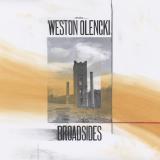
'In 2023, sound artist and composer Weston Olencki toured across the American South. Beginning in their hometown in South Carolina, they snaked a circuitous path from the mountains of West Virginia to the banks of the Mississippi River. As the miles accumulated, so did the initial seeds of new work.
'Instruments and artifacts they acquired hitched a ride in the backseat, while songs and sounds filled their portable recorder: water in its various states, the familiar insectoid buzz of those summer nights, trains cutting through the landscape, the traditional music that lived alongside the communities that kept it. Olencki took it all in, and over time, found ways that these experiences coalesced into a bramble-like perspective of time, where past, present, and future intersect in ways both barbed and beautiful.
'Broadsides, Olencki’s newest solo full-length is the multilayered result of this journey. The album follows their landmark release Old Time Music from 2022, which presented radical interpretations of traditional tunes from Appalachia and throughout the South alongside original compositions that drew significantly on archival recordings. On Broadsides, Olencki rejects delineations between the unmoored avant-garde and the rootedness of one’s cultural heritage, revealing their porous and intertwined nature. “My mother was a quilter. Her mother before that,” they write in the album’s liner notes. “Quilting, like music, is a practice of embedding knowledge and remembrance into the very core of the thing you are making. It’s not just about the materials, but how they’re reassembled, recontextualized, stitched, woven to form new patterns - the minutiae of craft holding significance to those looking to find it. Stories woven from stories, never told the same way twice.”
'Like all great road trips, Broadsides unfolds slowly and continuously, with moments of dramatic reverie punctuating the endless melt of highway in the rearview. We’re immediately confronted by the uncanniness of revisiting old haunts, as Southern storms break through the initial churn of the freight locomotives of Alabama. Olencki’s interpretation of the bluegrass standard “Foggy Mountain Breakdown” captures the euphoria of melancholy in motion. The permutational plucks of banjo are bounced around the frame by a computer, its pitches determined within algorithmic sequences and transcriptions of classic three-finger licks. The tonalities of old-time are smeared and stretched until all that’s audible is the insistence that Heaven might be real.
'In the album’s second half, “Omie Wise,” a murder ballad made famous by Doc Watson, follows an interlude recorded on the river in North Carolina in which the titular character’s body was laid. Ghostly echoes of a dozen other renditions float through the substrata as Tongue Depressor’s Henry Birdsey accompanies them on the pedal steel guitar. The album’s central composition, “all my father’s clocks,” is a profound meditation on entropy and impermanence. The sound of their father’s extensive clock collection ticks away as Olencki pulls a bow across the length of an autoharp sourced from a rural strip mall. The instrument was left as detuned as it was found, the resonance of its deep bass drone and clanging high-end the result of years of neglect and the warping effects of Southern humidity.
'Historically, broadsides were an early form of broadcasting, an often- musicalized telling of current news pasted in the public square. The name was later taken up by Sis Cunningham and Gordon Friesen in the 1960s, whose Broadside magazine published songs and social commentary when American folk music resurfaced as an urgent way of communicating the multifaceted politics of its time.
'Olencki borrows the phrase to recall both this old form of songmaking and that later prominent reexamination of traditional music’s role in modern life, but also to draw attention to the fragmented and machine- mediated way heritage is diffused in this very different, but no less pivotal, moment.
'As a sanitized past is used as justification for current violence and domination, we can turn to these artifacts to better understand the history of ourselves, but only if they are consciously pushed to evolve. Broadsides represents one personal, striking vision of what far-flung futurisms could be respun from = these high, lonesome sounds: a reflection of the unbridled joy and deep sorrow inherent to living together through time, and a desire to push further into the untold and unknown.'
- A1: Poison Vine*
- A2: Don’t Look Away
- A3: Calling Out Your Name
- A4: Free Love
- A5: Say Something New
- B1: The Way It’s Gotta Be (Oh Yeah)
- B2: Devil And The Deep
- B3: Weight Of The World
- B4: Teardrops
- B5: Birds Heading South
Black Vinyl[22,90 €]
Clear Vinyl[24,79 €]
Cornetto Vinyl[26,01 €]
Picture Disc[28,99 €]
“Yeah Yeah Yeah just arrived out of the blue. I just took a chance. I had some ideas for a new album I’d been working on, but we weren’t planning on recording until the year after. It all happened very fast. There was a window of opportunity- youth was free, the studio was free, and the band were free- and I thought, let providence prevail. No one had heard the songs apart from myself and Alan McGee, but we both thought that we had something. You could feel it, even though none of the songs were really finished, and so we decided to roll with it and go and record them. I think with Yeah Yeah Yeah it was more than just trying to capture a vibe- it was about trying to record something majestic, which is how youth describes the record. There are gospels and strings on tracks like Free Love and don’t look away, which have kind of turned into these massive anthems. It has P.P. Arnold as a featured vocalist on a couple of tracks- the first, the single poison vine, which has a groove and a blistering chorus. She’s also on another song that’s a psychedelic funk track: the way it’s gotta be (oh yeah). Songs like Teardrops or Birds Heading South- we’ve tried to capture that classic, slightly
Wistful theme- whereas the weight of the world just rocks out. There’s also a little acoustic track to break it all up called the devil and the deep, which is a favourite of mine. We recorded the album over in Spain at space mountain, Youth’s studio, way up in the mountains, just as the almond trees were in blossom- which I took as a good omen for the session”.
- A1: Poison Vine*
- A2: Don’t Look Away
- A3: Calling Out Your Name
- A4: Free Love
- A5: Say Something New
- B1: The Way It’s Gotta Be (Oh Yeah)
- B2: Devil And The Deep
- B3: Weight Of The World
- B4: Teardrops
- B5: Birds Heading South
“Yeah Yeah Yeah just arrived out of the blue. I just took a chance. I had some ideas for a new album I’d been working on, but we weren’t planning on recording until the year after. It all happened very fast. There was a window of opportunity- youth was free, the studio was free, and the band were free- and I thought, let providence prevail. No one had heard the songs apart from myself and Alan McGee, but we both thought that we had something. You could feel it, even though none of the songs were really finished, and so we decided to roll with it and go and record them. I think with Yeah Yeah Yeah it was more than just trying to capture a vibe- it was about trying to record something majestic, which is how youth describes the record. There are gospels and strings on tracks like Free Love and don’t look away, which have kind of turned into these massive anthems. It has P.P. Arnold as a featured vocalist on a couple of tracks- the first, the single poison vine, which has a groove and a blistering chorus. She’s also on another song that’s a psychedelic funk track: the way it’s gotta be (oh yeah). Songs like Teardrops or Birds Heading South- we’ve tried to capture that classic, slightly
Wistful theme- whereas the weight of the world just rocks out. There’s also a little acoustic track to break it all up called the devil and the deep, which is a favourite of mine. We recorded the album over in Spain at space mountain, Youth’s studio, way up in the mountains, just as the almond trees were in blossom- which I took as a good omen for the session”.
- Somewhere, Nowhere
- Angles Mortz
- False Prophet
- Fluoride Stare
- The Void
- Ascension
- Just A Kid
- Host
- Landslide
- Renaissance
- 7: Am
- Blue In Grey
2026 Repress
Flickering in ultraviolet, there is an elusive place where blue pill meets red, ups become downs, and day merges with night. Those liminal spaces where anything is possible is where you’ll find Nightbus and their hypnotic debut album Passenger. Doom, uncertainty, and opportunity lurk in the shadowy corners of their murky existence with stops at disassociation, co-dependency, and addiction before reaching its final destination - a glimmer of hope.
The in-between of Nightbus’ own Gotham lies where Manchester’s city pulse meets Stockport’s outer realm. An audio-visual entity formed among a musical family of friends, freaks, and foes in messy mills and after hours on dancefloors alike, their sound bleeds from tension where collective creative forces are bound together and collide with the fallout of being torn apart. Before even playing a show, their So Young released single ‘Mirrors’ – a knowing nod of respect to some well-known gloomy Northerners - may have made old school indie heads shimmy at shows in Salford’s The White Hotel but also signalled the duo’s knack for offering listeners a Bandersnatch approach to hitchhiking their own personal Nightbus in whatever direction they choose to take. “Everyone can have their moment with our songs; the music is our response to who we are as young people, living in the city full of this energy right now,” they say.
Whilst reverb hefty melodies and dread-filled loops embody isolation from writing at each of their home studio set-ups, magic happens in the ether across 90s trip-hop, indie sleaze and electronica; Jake’s production layers Olive’s pop sentimentality with drums and samples whilst tales of a cast of faceless characters place Olive as puppet master; her severed self’s perspective manipulating their stringed limbs at arm’s length to see how their stories play out when scenes reflecting her own lie close to the bone. “It’s a bit fucked; like having this out of body experience with a made-up movie running through my head,” she says. “As I write I can see they’re all from a similar world, but they allow me to explore different feelings without giving away part of myself.”
Recorded at The Nave in Leeds with producer-engineer Alex Greaves (Heavy Lungs, Working Men’s Club), surprise and danger lies in every crevice. Brooding whispers turn to chants on 6-minute opus ‘Host.’ Improvised when performed live, its immersive shift in tempo leads to hefty dub courtesy of Jake’s pedals. Even then, you won’t know shit’s hit the fan until its mid-point reveal when ominous bass blasts a thunderous soundtrack as its protagonist defiantly walks away after committing the perfect crime. “It makes you wait, and more songs should have sirens,” Olive grins.
Leaning deeper into alter-egos via the video game-psychological horror of a Silent Hill dystopia, the band’s Fight Club moment ‘Angles Mortz’ turns its literal translation of death angles on its head as it reflects upon kink and internalised shame reincarnated as pride. Elsewhere the ice cool ‘Landslide’ is a Requiem for a Dream about the addiction of being in a band; ‘The Void’ explores co-dependency and estranged relationships; and carefully selected samples revive house track ‘Just A Kid’ from the band’s early incarnation. Passenger’s every direction is to face challenges head on. “That is what’s so great about horror; you can see through predictable patterns so when the unexpected occurs it's more realistic and uncomfortable… I want to own the dark stuff!”
As for Passenger’s first single, the pulsating ‘Ascension’ is a spiralling deep dive into death, suicide, and legacy around who or what we leave behind. A noughties club banger by way of NYC beats - ergonomically designed for those who like to stay out a little too often and too late - it throbs like a house party’s partition wall as the literal levelling up undergoes a neon transformation; blue glitching to pink, diffusing the white construct of the Nightbus Matrix. “It really does feel like the end of something and was purposely written that way,” they say, “the ascension is like a firework going off!”
With wheels in motion, Nightbus has become a movement surpassing sonic realms. Between shows from Porto to Brighton taking in The Great Escape, Rotterdam’s Left Of The Dial and Paris’ Supersonic; DJing; remixing; guesting (BDRMM’s Microtonic album); and even enlisting talented like-minds to craft a 3-part queer coming-of-age music video series which ties in with a new ‘hyperpop’ phase in the evolution of their popular Nightbus Soundsystem club night, heads are now being turned from sports brands to high-end fashion designers. “There are things we can’t reveal just yet,” tells Olive, “but we’re excited about the direction this beast we’ve created is heading.” As the album philosophises and asks one ultimate question; what does it truly mean to be ‘Passenger’? Nightbus may not claim to offer a definitive answer, but it might make you feel a bit better about those demons.
Peter Rehberg is known for his pioneering electronic work with computer software which over time evolved into a modular set up alongside running MEGO and then Editions Mego labels.
Rehberg was a prolific collaborator, with other musicians and with contemporary dance and theatre productions, most notably with French artist and choreographer, Gisèle Vienne with whom he created a series of soundtracks from Showroomdummies, released under the name DACM in 2002 (Showroomdummies MEGO 056), to Crowd in 2017. A collection of Rehberg’s solo works for Vienne was released in 2008 (Work for GV 2004-2008 EMEGO 092). The outfit KTL, with Stephen O’Malley, was initiated by Gisèle Vienne for her work Kindertotenlieder and subsequently made a series of soundtracks for Vienne’s works branching off into a prolific series of live shows. The work Rehberg did for theatre and performance teased out aspects of his practice one may not have encountered in his own solo work as PITA or that of collaborations with other musicians.
Editions Mego is proud to present a previously unreleased theatre soundtrack made for Icelandic choreographer Margrét Sara Guðjónsdóttir, whom Rehberg had a decade long collaboration with until his untimely passing in 2021. The original composition for Liminal States was created by Rehberg for the performance Pervasive Magnetic Stimuli in 2018 and then revisited as a catalyst for the concepts behind Liminal States. This work is based on an ongoing artistic research conducted by the choreographer into altered states of perception through phenomenological embodiment. It is the last in a trilogy dealing with the notion of larger forces that act on us beyond our conscious mind. The trilogy consists of Pervasive Magnetic Stimuli (2018), Boundless Ominous Fields (2024) and now Liminal States (2024).
Rehberg's score for Liminal States is a vast canvas of spectral ambience at once tangible and unfathomable in its constantly shapeshifting lysergic dread. The results are a psychological journey through the mental effects of sound on space and subsequently the mind. The first part presents cascading waves of shimmering electronics laying the groundwork for the second part where the psychological illusion splinters into all manner of sonic effects taking the listener on a deep mental voyage. If references are witnessed the late period long form hallucinatory works of Coil, such as Time Machines and Constant shallowness leads to evil, are amongst a similar mind message delivered here. Unlike any other release in Rehberg’s output Liminal States is a single long form work which, despite the form, retains Rehberg’s idiosyncratic sound vision.
Guðjónsdóttir and Rehberg’s collaboration blurs that relationship into a greater force which truly enables the theme of liminal states to unfold in a brave new fashion. Rich in timbre and sonic invention this is powerful work easily holding its own outside of the intended performance whilst still complimenting the missions statement entirely. This profound collaboration has the cumulative effect where the concept and soundtrack are one and may be one of the strongest works in the entire Rehberg canon.
Back again with another release for the Meeting Of The Minds series, this time with lucky number 13!
First track on this is by me & Fez The Kid, who has been regularly sending me music for years, most of which I admit to sleeping on due to the sheer volume of demos submitted to the label. But when I was able to actually check some music that he sent me, there was one tune (at the time called All Round Juggling) of his that I gave me a few ideas on how it could sound. He was thankfully up for me working on it with him & the end result is "Skin Out Crew (Magnificent Mix)", which I've been playing a lot in sets this year.
"BDC" is a track done by me & The Last Ronin (aka Stretch & Enjoy) which they had started and I was really into it because it reminded me of some of the "ruff with the smooth" ragga jungle style tracks I'd hear on labels like Slam!, Tom & Jerry, Kemet & so on. It was really fun to work on this with them & we were also able to do a 2nd collaboration, which will be coming out on the next Defender compilation on Stretch's label AKO Beatz.
Settle Down is someone that was on my list of potential collaborators for a long long time but I just kept neglecting to reach out to him about actually doing something together. I eventually got round to getting in touch with him last year for collaborating on a track for Meeting Of The Minds, so he sent me something he had started, which I added some more to & sent back to him, so that he could add the finishing touches. The end result is "Shell Of A Man", which I like because it's quite sparse & ominous, dark but not in the typical "darkside hardcore" way.
"Altitude" by me & Flex Luthor has been through quite a lot haha. He initially reached out about working on a tune together in 2021 & at the time, I was keen but already quite occupied with other artists I was collaborating with for the series, as well as contemplating ending the series on Vol. 10, due to the amount of work it takes to compile each one (which also explains why Vol. 14 is not currently ready for release yet). But around the end of 2022, he sent me a track he had done where he said that he was struggling to get any kind of bassline that he was happy with. I liked what he sent so I asked him to send the track over for me to work on, but I then sat on the track for a whole year due to other commitments before finally working on it in 2024, during a long plane ride where I had time to actually focus on it. I was able to get the track to a place we were both happy with, until it became one of the tracks of mine that got lost when my backpack was stolen a few weeks later, with my computer inside. I didn't have the backup of the project, so unfortunately, we had to master this track for release from the mp3 file of the first & only version we had of it. I think it still sounds fine though, especially as this is not the first (or only) time I've had to send mp3 files off for mastering, but yeah, what a journey this tune has had!
Following the release of their universally acclaimed, Mercury and Ivor Novello Award Nominated fourth studio album ‘False Lankum’, which collected Album Of The Year honours from UNCUT magazine, The Guardian, Loud & Quiet, The Quietus, as well as very high rankings from MOJO, NPR, DIY, Crack, Songlines, Music OMH, The Line Of Best Fit, Louder Than War, The Skinny and numerous other media worldwide. Rough Trade Records are excited to announce the release of ‘Live in Dublin’ by Lankum. Recorded across three sold out nights at Dublin's Vicar Street, the album features Lankum performing songs from across their catalogue including ‘The Rocky Road to Dublin’, which up until now has never been officially released.
“When forty, I was still wearing miniskirts, extravagant patterns, pink, fluorescent colours, star shaped earrings. I walked around with my leopardskin hat, my fluffy bag, my floral outfit, until the gaze of others made me feel like it was not age appropriate anymore. Although I am still the same person I was at 16. It's the others I see changing."
There's no better way to describe ageing than through the gap that arises and continues to grow between physical reality and the specular image of the self : one deteriorates over time, exposed to the cruel laws of gravity and oxydation, while the other never ages, remaining intact and unaltered… frozen in a moment of blissfulness. The more time goes by the more the gap becomes a separate entity (ou “world” pour etre plus prosaïque). It can become so painful that many try to escape it, using and abusing every trickery.
“Youth looks so good on you” is a sonic ballad which bizarrely explores the world that lies between reality and self-fantasy, a world where the aesthetic cult of youth becomes sovereign to the people.
This piece was produced in 2022 as part of the Festival « Les Heures Sauvages - Nef des Marges dans l'ombre des certitudes », at the Centre Wallonie-Bruxelles in Paris.
After "A Story of a Global Disease" in 2022, "Youth looks so good on you" is the second piece of music by Naomie Klaus released on moli del tro records.
This new "Experimental Chapter" by DJ Narciso comes as no surprise, really. Autonomous in the motorization of his music, pushing for progress within the framework of an undeniable (inescapable?) heritage. Twisting and bending sound every step of the way, Narciso definitely keeps in touch with the dancefloor, offering the always much needed transcendence through distinctive, non-linear melodies and patterns. The artist pursues a direct link with bodies in motion but seldom in the expected, institutionalized way club culture is being largely promoted.
This is challenging dance music, proud statements of difference. Narciso's previous record was named "Diferenciado". Now we get "Dificuldades", a track that simultaneously carries the weight of being somewhat odd and the difficulties of life. Check how the piano is venting, freestyle, communicating a feeling, and then lets itself get stuck in a loop, but that's exactly when the groove really starts flowing. And then another layer. It's like direct speech.
A common assertion of pride is found in the origin of the artists. The ghetto as a place where any transformation projects more power precisely because of... inherent difficulties. As others (including himself) did in more or less obvious ways, Narciso clearly states "I come from the ghetto" ( "Não Sabes" ). Twice the value. At least. Almost every segment of music in this album ends up sounding heavily emotional, reaffirming what may be - perversely - a well-known characteristic of Portuguese music: melancholy.
"Não Quero" begins side B as a march maybe more significant than a thousand words, such is the ominous tone of its texture. Next track is another lunar tarraxo, pulling down the shades. Then, "Dor de Barriga" lets things loose again, steering clearly off road, shouting this way and that until a peaceful resolution comes. In "Livra-me Desta", vocal snippets blend into synth snippets, disembodied voices abandon all traces of humanity and finally mutate into different entities that, towards the end, again sound vaguely human but now we find ourselves doubting. Closer "Bob" is a rather classic percussion track with plenty of echo, reverb and an unconscious nod to dodecaphonic music. Unlikely? No, the structural ADN of this music is made up of elements western and eastern, southern and northern. To say all-over-the-place is usually not flattering but in this case the expression translates as wonder, surprise, The Unexpected, and reveals Narciso perfectly at ease inside the nucleus of creation.
- A1: Design - Premonition
- A2: Vision - Lucifer’s Friend
- A3: Richard Bone - Alien Girl
- A4: John Howard - I Tune Into You
- A5: Ian North - We’re Not Lonely
- A6: Selwin Image - The Unknown
- B1: Harry Kakoulli - I’m On A Rocket
- B2: Rich Wilde - The Lady Wants To Be Alone
- B3: Billy London - Woman
- B4: Alan Burnham - Science Fiction
- B5: The Microbes - Computer
- B6: The Goo-Q - I’m A Computer
- C1: Gerry & The Holograms - Gerry & The Holograms
- C2: The Warlord - The Ultimate Warlord
- C3: Die Marinas - Fred From Jupiter
- C4: Dee Jay Bert & Eagle - I Am Your Master
- C5: Peta Lily & Michael Process - I Am A Time Bomb
- C6: Sole Sister - It’s Not What You Are But How
- D1: Alasdair Riddell - Do You Read Me?
- D2: Karel Fialka - Armband (The Mystery Song)
- D3: John Springate - My Life
- D4: Idncandescent Luminaire - Famous Names
- D5: Disco Volante - No Motion
- D6: Dream Unit - A Drop In The Ocean
Compiled by Philip King
“And then came the rise of synth pop : blokes with dodgy haircuts hunched over keyboard-operated
machines stuffed with wires and do-it-yourself tone oscillators making sounds like a brood of geese
passing gas in a wind tunnel. Whoopee! This is the way the ‘70s ended : not with a blood-curdling bang
bang but with a cheap, synthesized, emasculating whimper.”
NICK KENT, NME.
All The Young Droids: Junkshop Synth Pop 1978-1985 is a new compilation that charts the
underbelly of the epoch-defining sound of the synthesiser in 80s popular music. Compiled by Philip
King (previously seen compiling All The Young Droogs, Glitterbest and Boobs - The Junkshop
Glam Discotheque), the music here connects the dots between DIY synth enthusiasts grappling with
new, cheap synthesisers at the tail-end of punk and wannabe, jobbing songwriters enthral to the new
music pioneered by Gary Numan, Depeche Mode and Daniel Miller’s Mute Records. Featuring rare
tracks of auto-didactic progressive pop music, proto-techno punk, shoot-for-the-stars-land-in-the-gutter
chart flops and heralded, underground synth classics, School Daze paints a picture of beautiful failure.
Complete with extensive sleeve notes written by King and never before seen imagery, all 24 tracks
were remastered by RPM in-house engineer Simon Murphy, many from vinyl copies due to lost master
tapes. The story told on All The Young Droids is one of the dawning opportunity presented by both the
emergence to the market of cheaper analog synthesisers and the distribution networks plus indie labels
that exploded with the advent of punk music in 1976. While the music that sprouted out all over the
globe in the wake of these factors was decried as fake, plastic, a refutation of punk’s guitar-led
revolution, it’s telling that much of the music on All The Young Droids.. was created in bedrooms,
ramshackle studios and home-made set ups with often borrowed equipment. In the era of record labels
jumping to capitalise on the success of The Sex Pistols, The Clash (both on major labels, of course)
these artists struggled to stand out from a new gold-rush with next to no budget or PR team. With radio
and labels desperate for the new Yazoo, what resulted was a testament to necessity being the mother
of invention.
At the time, the synthesiser was the music of the future, a shiny new machine that could paint like an
orchestra with a single finger and a 4-track. In the hands of Manchester avant-pranksters Gerry & The
Holograms it’s a pulsing, sardonic weapon.. the only instrument on the Messthetics classic lampooning
of New Wave fashion. In Hamburg, a 16 year old Andreas Dorau used it to write and record (with his
female classmates on vocals) a global smash in Fred Vom Jupiter (later licensed to Mute Records).
The hard-to-find English version (Fred From Jupiter, natch) is included here. Many artists with alreadystoried careers caught the bug and recorded synthesiser-fuelled peons to space, computers, the future
and, of course, love-interests. Harry Kakoulli, late of Squeeze, recorded a solo album in 1979 that
included the incredible power-synth-pop smash-that-never-smashed I’m On A Rocket. Similarly, Ian
North of Neo and American Power Pop stalwarts Milk ’n’ Cookies bought a Korg MS20 and used a
tape machine to record We’re Not Lonely, an absolute lost-classic of minimal synth pop. We’re Not
Lonely also features on the Junkshop Synth Pop sampler 7” twinned with John Howard unreleased
track You Will See, released April 12th 2025.
There are plenty of compilation debuts in evidence. Sole Sister were a mysterious trio who were
featured on the Scaling Triangles compilation of female-fronted, queer-adjacent post-punk /
underground music that also featured The Petticoats. Selwin Image were from San Francisco and
featured members of the recently defunct power pop/punk group The Pushups. Their stupidly catchy
The Unknown fizzes with New Wave energy - think XTC to Sparks but remains unreleased until now.
Dream Unit’s A Drop In The Ocean is an early synth wave cut, positively teaming with Joy Division
instrumentation, previously only released on a long-forgotten and super rare, self-released EP.
Incandescent Luminaire’s Famous Names belies an archetypal struggle of a small-town trying to
make it in a cruel industry but is a thrilling New Romantic-Synth Wave cross over with a OMD
gloominess that’s a joy to hear. Feminist Minimal Wave track I Am A Time Bomb by performance artist
Peta Lilly and Michael Chance is a revelation destined for new found cult status. It was released on 7”
and lost until now.
The flipside to the subterranean, never-made-it synth pop mentioned above are the ambitious, even
fruity attempts at success that have a perennial elegance to their confidence. New Jersey-ite Billy
London (real name Ed Barth) tried to cash in on the synth boom with Woman, released by a major
label, a lurching new wave track built on the Louie Louie rhythm and a wonderfully camp Lou Reedstyle sleazy vocal before exploding in the synthesised chorus. The song bombed but with a chorus like
this, you have to wonder why? Ex-Glitter Band member John Springate’s My Life is truly epic, with
doomed chord progressions and massive sounding drums turning into at least 3 different songs in the
course of the track. Before you wonder what’s going on the song resolves with a glorious return to the
main refrain.
The dry-ice-dressed dance floor is well catered for too. Design’s Premonition and Vision’s Lucifer’s
Friend are stone-cold minimal synth bangers, well loved but given a new lease of life here. The
Warlord’s The Ultimate Warlord was released in 1978, a homespun proto Hi NRG banger that was
later re-recorded by The Immortals in Canada who had a club hit with it. One-man- band Disco
Volante’s No Motion was re-issued by Synth wave label Medical in 2012 but makes its first vinyl
compilation appearance here. Close your eyes and you can imagine what Lawrence of Felt would have
sounded like with some cheap Korgs a little earlier in his career. Gibraltar-based trio The Microbes
imagined a computer programming people to dance - how prescient - and ended up with a propulsive,
robo-funk track with splendid rubbery bass playing over a tectonic drum machine. Previously picked up
by Belgian label Stroom TV, Dee Jay Bert & Eagle’s heavily Euro-accented I Am Your Master
demands the listener to “come to paradise!” In a frankly terrifying manner.
All The Young Droids is the first compilation to peel away from the narrative that dour, Minimal Synth
and Cold Wave were the only musical children of the first rush of synth pop. Philip King and School
Daze Records describe a much more complicated world: along with the austere, Brutalist children of
Daniel Miller (who produced Alan Burnham’s Bowie-Low-influenced Science Fiction here) was a
plethora of desperate cash-ins, accidental mainstream hits, ambitious pop dramas and major label
punts that went nowhere. Crucially, the compilation blurs the line between junk and treasure. What if the
two things are interchangeable. What if it’s all science fiction?
- A1: Design - Premonition
- A2: Vision - Lucifer’s Friend
- A3: Richard Bone - Alien Girl
- A4: John Howard - I Tune Into You
- A5: Ian North - We’re Not Lonely
- A6: Selwin | Image - The Unknown
- B1: Harry Kakoulli - I’m On A Rocket
- B2: Rich Wilde - The Lady Wants To Be Alone
- B3: Billy London - Woman
- B4: Alan Burnham - Science Fiction
- B5: The Microbes - Computer
- B6: The Goo-Q - I’m A Computer
- C1: Gerry & The Holograms - Gerry & The Holograms
- C2: The Warlord - The Ultimate Warlord
- C3: Die Marinas - Fred From Jupiter
- C4: Dee Jay Bert & Eagle - I Am Your Master
- C5: Peta Lily & Michael Process - I Am A Time Bomb
- C6: Sole Sister - It’s Not What You Are But How
- D1: Alasdair Riddell - Do You Read Me?
- D2: Karel Fialka - Armband (The Mystery Song)
- D3: John Springate - My Life
- D4: Incandescent Luminaire - Famous Names
- D5: Disco Volante - No Motion
- D6: Dream Unit - A Drop In The Ocean
Compiled by Philip King
“And then came the rise of synth pop : blokes with dodgy haircuts hunched over keyboard-operated
machines stuffed with wires and do-it-yourself tone oscillators making sounds like a brood of geese
passing gas in a wind tunnel. Whoopee! This is the way the ‘70s ended : not with a blood-curdling bang
bang but with a cheap, synthesized, emasculating whimper.”
NICK KENT, NME.
All The Young Droids: Junkshop Synth Pop 1978-1985 is a new compilation that charts the
underbelly of the epoch-defining sound of the synthesiser in 80s popular music. Compiled by Philip
King (previously seen compiling All The Young Droogs, Glitterbest and Boobs - The Junkshop
Glam Discotheque), the music here connects the dots between DIY synth enthusiasts grappling with
new, cheap synthesisers at the tail-end of punk and wannabe, jobbing songwriters enthral to the new
music pioneered by Gary Numan, Depeche Mode and Daniel Miller’s Mute Records. Featuring rare
tracks of auto-didactic progressive pop music, proto-techno punk, shoot-for-the-stars-land-in-the-gutter
chart flops and heralded, underground synth classics, School Daze paints a picture of beautiful failure.
Complete with extensive sleeve notes written by King and never before seen imagery, all 24 tracks
were remastered by RPM in-house engineer Simon Murphy, many from vinyl copies due to lost master
tapes. The story told on All The Young Droids is one of the dawning opportunity presented by both the
emergence to the market of cheaper analog synthesisers and the distribution networks plus indie labels
that exploded with the advent of punk music in 1976. While the music that sprouted out all over the
globe in the wake of these factors was decried as fake, plastic, a refutation of punk’s guitar-led
revolution, it’s telling that much of the music on All The Young Droids.. was created in bedrooms,
ramshackle studios and home-made set ups with often borrowed equipment. In the era of record labels
jumping to capitalise on the success of The Sex Pistols, The Clash (both on major labels, of course)
these artists struggled to stand out from a new gold-rush with next to no budget or PR team. With radio
and labels desperate for the new Yazoo, what resulted was a testament to necessity being the mother
of invention.
At the time, the synthesiser was the music of the future, a shiny new machine that could paint like an
orchestra with a single finger and a 4-track. In the hands of Manchester avant-pranksters Gerry & The
Holograms it’s a pulsing, sardonic weapon.. the only instrument on the Messthetics classic lampooning
of New Wave fashion. In Hamburg, a 16 year old Andreas Dorau used it to write and record (with his
female classmates on vocals) a global smash in Fred Vom Jupiter (later licensed to Mute Records).
The hard-to-find English version (Fred From Jupiter, natch) is included here. Many artists with alreadystoried careers caught the bug and recorded synthesiser-fuelled peons to space, computers, the future
and, of course, love-interests. Harry Kakoulli, late of Squeeze, recorded a solo album in 1979 that
included the incredible power-synth-pop smash-that-never-smashed I’m On A Rocket. Similarly, Ian
North of Neo and American Power Pop stalwarts Milk ’n’ Cookies bought a Korg MS20 and used a
tape machine to record We’re Not Lonely, an absolute lost-classic of minimal synth pop. We’re Not
Lonely also features on the Junkshop Synth Pop sampler 7” twinned with John Howard unreleased
track You Will See, released April 12th 2025.
There are plenty of compilation debuts in evidence. Sole Sister were a mysterious trio who were
featured on the Scaling Triangles compilation of female-fronted, queer-adjacent post-punk /
underground music that also featured The Petticoats. Selwin Image were from San Francisco and
featured members of the recently defunct power pop/punk group The Pushups. Their stupidly catchy
The Unknown fizzes with New Wave energy - think XTC to Sparks but remains unreleased until now.
Dream Unit’s A Drop In The Ocean is an early synth wave cut, positively teaming with Joy Division
instrumentation, previously only released on a long-forgotten and super rare, self-released EP.
Incandescent Luminaire’s Famous Names belies an archetypal struggle of a small-town trying to
make it in a cruel industry but is a thrilling New Romantic-Synth Wave cross over with a OMD
gloominess that’s a joy to hear. Feminist Minimal Wave track I Am A Time Bomb by performance artist
Peta Lilly and Michael Chance is a revelation destined for new found cult status. It was released on 7”
and lost until now.
The flipside to the subterranean, never-made-it synth pop mentioned above are the ambitious, even
fruity attempts at success that have a perennial elegance to their confidence. New Jersey-ite Billy
London (real name Ed Barth) tried to cash in on the synth boom with Woman, released by a major
label, a lurching new wave track built on the Louie Louie rhythm and a wonderfully camp Lou Reedstyle sleazy vocal before exploding in the synthesised chorus. The song bombed but with a chorus like
this, you have to wonder why? Ex-Glitter Band member John Springate’s My Life is truly epic, with
doomed chord progressions and massive sounding drums turning into at least 3 different songs in the
course of the track. Before you wonder what’s going on the song resolves with a glorious return to the
main refrain.
The dry-ice-dressed dance floor is well catered for too. Design’s Premonition and Vision’s Lucifer’s
Friend are stone-cold minimal synth bangers, well loved but given a new lease of life here. The
Warlord’s The Ultimate Warlord was released in 1978, a homespun proto Hi NRG banger that was
later re-recorded by The Immortals in Canada who had a club hit with it. One-man- band Disco
Volante’s No Motion was re-issued by Synth wave label Medical in 2012 but makes its first vinyl
compilation appearance here. Close your eyes and you can imagine what Lawrence of Felt would have
sounded like with some cheap Korgs a little earlier in his career. Gibraltar-based trio The Microbes
imagined a computer programming people to dance - how prescient - and ended up with a propulsive,
robo-funk track with splendid rubbery bass playing over a tectonic drum machine. Previously picked up
by Belgian label Stroom TV, Dee Jay Bert & Eagle’s heavily Euro-accented I Am Your Master
demands the listener to “come to paradise!” In a frankly terrifying manner.
All The Young Droids is the first compilation to peel away from the narrative that dour, Minimal Synth
and Cold Wave were the only musical children of the first rush of synth pop. Philip King and School
Daze Records describe a much more complicated world: along with the austere, Brutalist children of
Daniel Miller (who produced Alan Burnham’s Bowie-Low-influenced Science Fiction here) was a
plethora of desperate cash-ins, accidental mainstream hits, ambitious pop dramas and major label
punts that went nowhere. Crucially, the compilation blurs the line between junk and treasure. What if the
two things are interchangeable. What if it’s all science fiction?
Relay For Death is the noise project of the twin sisters Roxann and Rachal Spikula. Their hermetic works consistently reflect a bleak nihilism, all the while carving an autonomous space for survival as the rest of the existence crumbles. Previous works have been published by Hanson, No Rent, Total Black, and RRRecords.
The twins offered the consideration that "Mutual Consuming comes from a concept in the philosophies that underpin traditional Chinese medicine theory, where the two opposing states (yin and yang) are 2 states on a continuum and their interactions produce an infinite possible number of states of aggregation. Within this interplay, there is a dynamic balance that is maintained by a constant adjustment of their relative levels. So an excess of yin consumes yang and vice versa." We asked if this has anything to do with the concept of the Ouroboros, to which they responded, "we hadn't thought about Ouroboros, but the eternal cycle of things makes sense too. The gorge fest of existence." Does this relate to previous works? The twins concisely respond to that question in a rare interview in Untitled, "No."
Mutual Consuming is a dire piece of isolationist thrum, spectral caterwaul, and heavy gloom through an oblique and abstracted coupling of electronics, noise, and ominous field recordings. As immersive as Thomas Köner’s haunting ambience but fully entrenched in the industrial meditations of MB. Originally published as part of the instantly out of print boxset, On Corrosion - a 10 cassette anthology from 2019 that was housed in a handcrafted wooden box and featuring full albums from Kleistwahr, Neutral, Pinkcourtesyphone, Alice Kemp, She Spread Sorrow, G*Park, Relay For Death, Francisco Meirino, Fossil Aerosol Mining Project, and Himukalt. The collection stood as the 50th release for The Helen Scarsdale Agency.
"The nineteenth entry in the Altered Circuits catalog comes courtesy of Alex Neri with a selection of 4 tracks that distill an equal amount of decades in the studio. They are undeniably straightforward yet difficult to pigeonhole. It is clear Neri is aware of current trends and, at times, might even throw them a little nod - but overall, his music escapes easy temporal classification. On the "Club Voyage EP", he aims at the brash and brazen yet keeps the pace lighthearted. When the results come buttressed with the type of technical prowess at hand, it is hard not to get sucked into the adventure. "Teller Mood", charged with a fierce bassline, boisterous drums and jittery arps, is a slab of electroshock production. The track comes complete with extra motivational vocals to drive the point home, and when it arrives at its most stripped parts, instead of toning down, an alarm-like lead emerges. "Schelter's Sounds" features an FM bass and gently modulated, slow-attack synth embellishments. It is a set-up that allows for catching a breath until a grandiosely introduced portamento-heavy patch cranks things up a notch again. On the other side, the delayed and flanged percussion of "Tenax Roots" forms the ideal conditions for ominous synth work and robotized vocals; a theme that could have been lifted from a giallo flick completes its suspenseful, hypnotic ambience. "Move Tokyo Inputs" starts with another salvo of invigorating percussion. Amidst subtly evolving formant basslines and several risers, the tune directs a tweaked deadpan vocal sample to take center stage, showcasing how, in the right hands, the sparsest source material can be turned into a showstopper."
- Hypnagogia
- Hold My Hand
- Under The Spell Of Joy
- Bliss Out
- Hey Dena
- The Universe
- It All Washes Away
- Little Things
- 10: Day Miracle Challenge
- I'd Rather Be Dreaming
- Dream Cleaver
The album opens with "Hypnagogia," an ode to the space between sleep and wakefulness where we are open to other realms of consciousness. The song slowly builds along a steady pulse provided by bassist Pickle (Nicole Smith) and drummer Rikki Styxx. Tripped out saxophone bleats from guest player Gabe Flores swirl on top of the organ drones laid out by guest keyboardist Gregg Foreman. The band's choral objectives for Under the Spell of Joy are established right off the bat, with Bonnie Bloomgarden's melodic invocations bolstered by a choir, giving the album a rich and vibrant wall-of-sound aesthetic. The song ominously builds on its hypnotic foundation until it opens up into a raucous revelry at the four-minute mark. The portentous simmer of the opening track yields to the ecstatic rocker "Hold My Hand," where verses reminiscent of Velvet Underground's "I'm Waiting For The Man" explode into big triumphant choruses. From there the band launches into the title track, which marries the griminess of The Stooges with an innocence provided by a children's choir chanting the album's primary mantra "under the spell of joy / under the spell of love." Death Valley Girls have always vacillated between lightness and darkness, and on "Bliss Out" they demonstrate their current exuberant focus with a patina-hued pop song driven by an irrepressibly buoyant organ line laid down by keyboardist The Kid (Laura Kelsey). A similar cosmic euphoria is obtained on "The Universe," where alternating chords on the organ help elevate soaring saxophone and keyboard lines out beyond the stratosphere. If you're looking for transcendental rock music, look no further.
- 1: Intro
- 2: To Our Friends In The Great White North
- 3: Mondrian Was A Liar
- 4: John Woo
- 5: Spaim
- 6: Japam
- 7: Framce
- 8: Oma
- 9: Thank God For Worker Bees
- 10: One Twenty Two
- 11: Vietmam
- 12: Transitions From Persona To Object
- 13: Hutton’s Great Heat Engine
- 14: Afghamistam
- 15: C. Thomas Howell As The “Soul Man”
- 16: St. Matthew Returns To The Womb
Coloured[39,45 €]
Influential hardcore innovators Botch have delivered their electrifying new live album 061524, recorded at the iconic Showbox in Seattle on June 15, 2024—exactly 22 years to the day after their original farewell show at the same venue in 2002. 061524 captures a band still pushing sonic and emotional boundaries, now sharper, louder, and more dynamic than ever. Botch’s impact on aggressive music is undeniable. Their chaotic, math-laced brand of hardcore helped shape the genre’s landscape well after the band’s abrupt breakup in 2002.
For years, a reunion seemed unlikely—until a chain of unexpected events brought the original lineup back together for the band’s first new recording in over 20 years: 2022’s “One Twenty Two.” The song was released to critical acclaim, building into a frenzy of anticipation for Botch to reunite. What started as a nostalgic experiment quickly became a full-circle celebration, with the band reconnecting both personally and musically. That spark unleashed a wave of activity: secret warm-up shows, sold-out headlining gigs, and eventually a carefully curated international reunion tour, culminating in their hometown return at the Showbox—where 061524 was recorded in front of a packed, exhilarated crowd. 061524 is a blistering, unflinching document of a band reawakened—not as a legacy act, but as a vital force.
The album captures the energy, grit, and heart of a group that’s not only older and wiser—but more rehearsed and way more ambitious. The performances are tight but still full of the raw unpredictability that defined their early years. Fan favorites like “To Our Friends in the Great White North” and “Transitions from Persona to Object” are more complex and invigorating than ever before. Other songs, like “Afghamistam” and “Oma,” never considered feasible to pull off live previously, are delivered with the intricacy and intensity that has earned the band a lasting legacy and fresh legion of followers.
- 1: Intro
- 2: To Our Friends In The Great White North
- 3: Mondrian Was A Liar
- 4: John Woo
- 5: Spaim
- 6: Japam
- 7: Framce
- 8: Oma
- 9: Thank God For Worker Bees
- 10: One Twenty Two
- 11: Vietmam
- 12: Transitions From Persona To Object
- 13: Hutton’s Great Heat Engine
- 14: Afghamistam
- 15: C. Thomas Howell As The “Soul Man”
- 16: St. Matthew Returns To The Womb
Black[36,09 €]
Influential hardcore innovators Botch have delivered their electrifying new live album 061524, recorded at the iconic Showbox in Seattle on June 15, 2024—exactly 22 years to the day after their original farewell show at the same venue in 2002. 061524 captures a band still pushing sonic and emotional boundaries, now sharper, louder, and more dynamic than ever. Botch’s impact on aggressive music is undeniable. Their chaotic, math-laced brand of hardcore helped shape the genre’s landscape well after the band’s abrupt breakup in 2002.
For years, a reunion seemed unlikely—until a chain of unexpected events brought the original lineup back together for the band’s first new recording in over 20 years: 2022’s “One Twenty Two.” The song was released to critical acclaim, building into a frenzy of anticipation for Botch to reunite. What started as a nostalgic experiment quickly became a full-circle celebration, with the band reconnecting both personally and musically. That spark unleashed a wave of activity: secret warm-up shows, sold-out headlining gigs, and eventually a carefully curated international reunion tour, culminating in their hometown return at the Showbox—where 061524 was recorded in front of a packed, exhilarated crowd. 061524 is a blistering, unflinching document of a band reawakened—not as a legacy act, but as a vital force.
The album captures the energy, grit, and heart of a group that’s not only older and wiser—but more rehearsed and way more ambitious. The performances are tight but still full of the raw unpredictability that defined their early years. Fan favorites like “To Our Friends in the Great White North” and “Transitions from Persona to Object” are more complex and invigorating than ever before. Other songs, like “Afghamistam” and “Oma,” never considered feasible to pull off live previously, are delivered with the intricacy and intensity that has earned the band a lasting legacy and fresh legion of followers.
Civilistjävel! x Mayssa Jallad’s ‘Marjaa: The Battle of the Hotels (Versions)’ is a radical response to Mayssa Jallad’s 2023 original LP, a lyrical account of epochal events in Beirut at the dawn of Lebanon's civil war. ‘…(Versions)’ sees Civilistjävel! (aka Swedish producer Tomas Bodén) apply a stripped, dub methodology to Mayssa's rich stems, refracting the Arabic source through the hazy prism of Northern European electronica. Retaining ‘Marjaa…’s deep spatial framing and vaporous, shifting nature, traces are lifted and set down in a new landscape: a ghost of a ghost. Informed by Tomas' singular strand of ambient, minimalist, dub techno, ‘… (Versions)’ recalls the reductive, shimmering pulse of pioneering Berlin-based practitioners Basic Channel/Chain Reaction, but with the parameters stretched into the ether. Where versions typically focus on a rhythm, here the anchor is the tone and texture of Mayssa’s voice, around which a new world has been constructed. Disembodied and liminal, it conjures an eerie panorama that feels like a postscript to the original, further emphasizing the geopolitical events that have had such devastating effect in Mayssa’s homeland of Lebanon since that record’s release. ‘Marjaa…’ (tr. ‘reference’) combined Mayssa Jallad’s two main vocations: music and urban research/architectural history. The album was co-written with Fadi Tabbal and based on Mayssa's Historic Preservation master's thesis (‘Beirut’s Civil War Hotel District: Preserving the World’s First High-Rise Urban Battlefield’). The thesis examined a 5-month conflict that took place within Beirut's skyscraper-laden luxury hotel district of Minet El Husn near the start of the Lebanese Civil War. Addressing a post-war generation who have never been taught this difficult history, ‘Marjaa…’ was an attempt to process trauma, and “a call to protest for the renewal, rather than the recycling of the political class that once destroyed the country and holds us, to this day, hostage of its violence.” Often perceived as a mysterious, shadowy presence, Civilistjävel! has come increasingly to the fore in recent years through a consistently dazzling stream of records, released both anonymously and via Fergus Jones’ FELT imprint, often appearing with scant information and tracks for the most part untitled. Having featured tracks from ‘Marjaa…’ on mixes, and included the album in his picks of 2023, in early 2024 Tomas asked Mayssa to provide vocals for a track on his album ‘Brödföda’. Mayssa remembers, “Tomas asked me to choose one of the tracks he was working on. I was in Boston at the time, so I took a walk and chose a track. I wrote the lyrics at the public park, wondering if I was the only one around that was losing sleep over the genocide in Palestine and the war in South Lebanon. I went back to the apartment and recorded the vocals on my phone, while listening to the track on headphones. Tomas reworked it with the voice and sent it back. I liked it immediately.” Despite the geographical distance from Beirut to Uppsala, Sweden, where Tomas resides, Mayssa’s contribution sounds very much at home in Civilistjävel!’s atmospheric, contemplative sound-world. Tomas’ request was reciprocated by Mayssa soon after, resulting in the spectral, glassy ambience of ‘Etel, Kharita (Version)’. This was followed by an invitation to work on more tracks, which Tomas immediately embraced, intensively jamming out versions live to two-track tape in downtime between travelling. If not entirely dissimilar to his regular working practice, the immediacy of it was unusual. Much was improvised live with just a keyboard (not tethered to a grid), and a restricted set-up that largely forbade later edits - only the rhythm tracks are programmed. A sharp conceptual thinker and composer, Tomas takes creative liberties with Mayssa’s songs in a way that is deeply felt and sympathetically aligned, whilst unashamedly outside of the original context of the record. The voice is leaned into as an instrument, without the clear, specific details of language, and this axis provides an uncertain, amorphous footing - structure is often suggested or hinted at, before disappearing or collapsing into fog, and folding back into the message within the song. A somewhat unprecedented source for an album of versions, even those familiar with ‘Marjaa: The Battle of the Hotels’ may at points struggle to hear the songs these versions are rebuilt from, despite the vocal narratives remaining virtually intact. The light has shifted; eroded buildings are foregrounded; fragments of memories appear in chiaroscuro. Signs and signifiers have been replaced. Shorn of the original's warm guitar, ‘Baynana (Version)’ feels like an ominous visitation, the sun no longer visible. ‘Holiday Inn (March 21 to 29) (Version)’ is a molten, clattering invocation. The beat-less tracks nod towards the cold, otherworldly sound-scaping of late '90s isolationism. More propulsive and embodied, ‘Holiday Inn (January to March) (Version)’ and ‘Kharita (Dub)’ are strobing, iridescent techno - lithe, shifting and mutating with almost implausible finesse. A stunning addition to Civilistjävel!’s growing catalogue, ‘…(Versions)’ is a luminous counterpoint to ‘Marjaa…’, and a welcome reminder of how incredible that record remains.
Khadim is a stunning reconfiguration of the Ndagga Rhythm Force sound. The instrumentation is radically pared down. The guitar is gone; the concatenation of sabars; the drum-kit. Each of the four tracks hones in on just one or two drummers; otherwise the sole recorded element is the singing; everything else is programmed. Synths are dialogically locked into the drumming. Tellingly, Ernestus has reached for his beloved Prophet-5, a signature go-to since Basic Channel days, thirty years ago. Texturally, the sound is more dubwise; prickling with effects. There is a new spaciousness, announced at the start by the ambient sounds of Dakar street-life. At the microphone, Mbene Diatta Seck revels in this new openness: mbalax diva, she feelingly turns each of the four songs into a discrete dramatic episode, using different sets of rhetorical techniques. The music throughout is taut, grooving, complex, like before; but more volatile, intuitive and reaching, with turbulent emotional and spiritual expressivity.
Not that Khadim represents any kind of break. Its transformativeness is rooted in the hundreds upon hundreds of hours the Rhythm Force has played together. Nearly a decade has passed since Yermande, the unit's previous album. Every year throughout that period — barring lockdowns — the group has toured extensively, in Europe, the US, and Japan. With improvisation at the core of its music-making, each performance has been evolutionary, as it turns out heading towards Khadim. “I didn’t want to simply continue with the same formula," says Ernestus. “I preferred to wait for a new approach. Playing live so many times, I wanted to capture some of the energy and freedom of those performances.” Though several members of the touring ensemble sit out this recording — sabar drummers, kit-drummer, synth-player — their presence abides in the structure and swing of the music here.
Lamp Fall is a homage to Cheikh Ibra Fall, founder of the Baye Fall spiritual community. The mosque in the city of Touba is known as Lamp Fall, because the main tower resembles a lantern. Soy duggu Touba, moom guey séen / When you enter Touba, he is the one who greets you. After a swift, incantatory start Mbene sings with reflective seriousness. Her voice swirls with reverb, over a tight, funky, propulsive interplay between synth and drums, threaded with one-two jabs of bass. Cheikh Ibra Fall mi may way, mo diayndiou ré, la mu jëndé ko taalibe... Cheikh Ibra Fall amo morome, aboridial / Cheikh Ibra Fall shows the way forward, he gives us strength, he gathers his disciples... Overflowing with grace, Cheikh Ibra Fall has no equal.
Interwoven with Wolof proverbs, Dieuw Bakhul is a recriminatory song about treachery, lies, and back-biting. Over moody, roiling synths and ominous, lean bass, Mbene throws out fluttering scraps of vocal, as if re-running old conversations in her head. The music shadows her despair to the verge of breakdown, at one moment seemingly so lost in thought and memories, that it threatens to disintegrate. Bayilene di wor seen xarit ak seen an da ndo... Dieuw bakhul, dieuw ñaw na / Stop judging your friends and companions... A lie is no good, a lie is ugly.
Khadim is a show-stopper; currently the centrepiece of Ndagga Rhythm Force live performances. The song is dedicated to Cheikh Ahmadou Bamba, aka Khadim, founder of the Mouride Sufi order. Serigne Bamba mi may wayeu / Serigne Bamba is the one who makes me sing. The verses name-check revered members of his family and brotherhood, like Sokhna Diarra, Mame Thierno, and Serigne Bara. Though Islam has been practised in Senegal for a millennium, it wasn’t until the start of the twentieth century that it began to thoroughly permeate ordinary Senegalese society, hand-in-hand with anti-colonialism. The verses here recall Bamba’s banishment by the French to Gabon, and later to Mauritania, in those foundational times. During exile, his captors once introduced a lion to his cell: gaïnde gua waf, dieba lu ci Cheikhoul Khadim / the lion doesn’t budge, it gives itself over to Cheikh Khadim. Deep, surging bass, steady kick-drum, and simple, reverbed chords on the off-beat lend the feel and impetus of steppers reggae. A reed plays snatches of a traditional Baye Fall melody; the dazzling polyrhythmic drumming is by Serigne Mamoune Seck. Mbene compellingly blends percussive vocalese, narrative suspense, exultant praise, introspection, and grievance.
Nimzat is a devotional tribute to Cheikh Sadbou, a contemporary of Bamba, buried in a mausoleum in Nizmat, in southern Mauritania. Way nala, kagne nala... souma danana fata dale / I call upon you and wonder about you... If I am overwhelmed, come to my aid. The town holds special significance for Khadr Sufism. An annual pilgrimage there is conducted to this day. The rhythm is buoyantly funky; the mood is sombre, reined-in, foreboding. Punctuated by peals of thunder, Mbene sings with restrained, intense reverence; huskily confidential, steadfast. Nanu dem ba Nimzat, dé ba sali khina / Let us go to Nimzat, to seal our devotion.
Mbene Diatta Seck: vocals.
Bada Seck: bougarabou, thiol, mbeung mbeung bal, tungune.
Serigne Mamoune Seck: bougarabou, khine, mbeung mbeung, tungune.
Text by Mark Ainley (Honest Jons).
Mastered by Rashad Becker.
Everything else by Mark Ernestus.
- A1: Crashing Cars
- B1: Never Smile
‘You are behind the damn wheel every day and you don’t even know it’ , weightily remarks Powerplant’s band leader Theo Zhykharyev on the reading of his latest single. London-based project signals the return to signature formula of marching drum machines and wailing synthesisers, matured by life experiencing of prolonged touring. ’Car is life, brother. Sometimes you drive it, other times - the car drives you. And, statistically, we’ll all see the airbags go off sooner than later as consequence of choices made by us or onto us, consciously or not.’
Crashing Cars breaks out the gates to the heavy low end driven dance floor. ‘I was listening to a lot of Bladee when I wrote it and needed a similar thick kick to get you moving’, says Theo. Its an emotionally loaded cannon of a track that will keep you in its grip until it has run its course and told its story. Yearning from connection unfulfilled, rings out through the heartbroken and weeping synth and choir lines. The ever-morphing and dynamic bass works in tandem with razor sharp guitars. The instrumentation, through combined ‘no looking back’ forward charge and immediacy, conjure a manic and emotional forward momentum, which rings out in the song’s lyrics. The vocal performance ranges from the trademark Powerplant goblin squeaks, to more mature, tour-hardened singing. On a sonic aesthetic level, Crashing Cars vibrates in a familiar fashion to Powerplant’s biggest hit Dungen. However, this time far less playful and harder hitting. Described as the fallout of “avoiding, chasing and running away”, lyrically it paints a dead end in human relationships concluding it car-crash heading for the scrapyard. The song concludes with a loaded four line spoken word poetry segment, that hangs over the fleeting outro.
The B side of the single, Never Smile, rolls the speed back, but throws in jangly guitar hooks and bouncy bass lines. Zhykharyev’s vocals sit in a lower register, hence are more stoic and melancholic. If this track had to be a day of the week, it would be a calm, introspective Sunday. With lyrics about looking into evil omens, the sky and reading people as ‘not something different’, it paints an ambiguous, but heavy conclusion about the world and its people. It tells a story about circumstantially settling into an identity and playing the assigned part for the convenience of the external world. It’s easier to fit than to stand apart. It's a perfect balance of mid-tempo radio-rock that builds and changes, before exploding into a shaggy guitar solo, only to go into an unexpected ethereal outro and this 7”s crescendo.
‘Both of these songs are kinda old now, sitting at around 4 years old. And although I haven’t changed the lyrics since then, I somehow find new meaning in them as time goes on. Being Ukrainian and going into the fourth year of the full scale Russian invasion back home, the chorus “my death to you - a better price to pay” makes a lot of sense looking at how the world powers are trying to spin the devastation of my people for a quick profit and an easier life for themselves. This single coming out now at this very point in my life feels both profound and very ironic. Life never ends’, summarises Zhykharyev.
Not many labels prooved stustainability over decades and can underline that they have been doing the do since the early ‘90s, always keeping it fresh to this very day. Boogie Back Records is one such shining example, releasing tracks and records from the likes of Mica Paris, Omar, Vivienne McKone back in the nineties taking the Streetsoul movement to the top until today and beyond.
They are boogie back once again with this double header of finest Neo-Boogie sounds, a neo-soul flavoured pearl, doing business as unusual, most serious and extra ordinarry by the grey eminenz of London Streetsoul himself Ernie McKone aka „The Great Ernesto“ and his family affair: Ernie & the Family McKone Feat. Laura Jackson. Both sides an uptempo Soul explosion, funky outfits, superb production, great instrumentalists such like Toby Baker known for endless contributions to the global Soul and music scene. This is another special and exclusive 45/7“ release via Soulkitchen Distribution…
Norman Westberg (guitar), Giridhar Udupa (ghatam, konnakol, khanjira, percussion) and Jacek Mazurkiewicz (double bass, electronics)An extraordinary meeting of three artists from three different musical worlds and three different continents. Norman Westberg (ex-Swans) and Jacek Mazurkiewicz have already released one album together "First Man In The Moon" in 2021 (published by the Swiss label Hallow Ground).In the new project, they are accompanied by Giridhar Udupa, an Indian master of ghatam (a clay percussion instrument that looks like a jug). The album will feature 3 long trance compositions, referring to ambient, krautrock, free jazz and Indian music.Jacek Mazurkiewicz describes the creation of this album as follows:"I met Norman Westberg while supporting the Swans tour in Poland as 3FoNIA. A few years later, during Norman's tour with Gira, we recorded a duet.The trio session took place similarly to the previous duet session during Norman's solo concert in Warsaw on the Swans tour.Recorded with Adam Toczko, a quick meeting on a day off from work.I invited Giridhar Udupa to the trio, whom I had met earlier during the period when I co-founded the band Limboski. I once invited Wacek Zimpel to play a few concerts with Giridhar. Wacek later created Saagara and I was wondering about some unusual musical context in which I would find myself with Giridhar. I was looking for an interesting sound configuration, but also a cultural one, with a different approach to creating music. I got the impression that for both Norman and Giridhar it was a fairly fresh meeting, not obvious. And on the other hand, ordinary - everyone did their own thing."Detroit guitarist Norman Westberg moved to New York in 1980 and became a part of the experimental music scene that was experiencing its golden age. Westberg himself became a permanent fixture when he joined the iconic avant-rock band Swans in 1983, and was the only member other than frontman Michael Gira to play with them for most of the band's run, both until their 1997 disbandment and his return in 2010. Westberg has also been involved with other legendary New York noise-rock acts, including Jim Thirlwell's Foetus and the post-Swans Heroine Sheiks, in which he played with Cows frontman Shannon Selberg; and in 2014, he joined the noise-rock supergroup Hidden Rifles, whose members included Mike Watt of Minutemen and Mark Shippy of U.S. Maple. Westberg's solo compositions, most often for solo guitar and a set of effects, draw on drone and post-minimalism, bringing to mind dark ambient passages from Swans albums.Giridhar Udupa is an extremely valued teacher and world-renowned artist, an Indian master of ghatam (a clay percussion instrument that looks like a jug). He was born into a family with long musical traditions. He began learning to play at the age of four, guided by his father. At the age of twelve, he already had his first performances behind him. He currently gives concerts alongside the greatest masters. He has received many prestigious awards. He performs in the USA, Spain, Canada, France, Switzerland, Germany, Oman and Kuwait. Giridhar Udupa is a member of the band of the Indian vocalist Bombay Jayashri, nominated for an Oscar for the best song for the film Life of Pi. He is one of the founders of the Layatharanga band. He also plays virtuoso other traditional instruments of South India, such as mridangam and kanjira, and is excellent at using the konnakol technique (a type of rhythmic vocalization).For three decades, the artist has been a global ambassador and icon of Carnatic music. He is the founder of The Udupa Foundation, a charity organization established in 2015 to promote Indian music, performing arts and culture. He has participated in recording dozens of albums. He is also well-known in our country thanks to his cooperation with Polish performers, which resulted in excellent artistic effects, such as the famous Indialucia - Michał Czachowski's group / project or the Saagara formation, led by Wacław Zimpel. Udupa also played on the album Lechoechoplexita, released by Leszek Hefi Wiśniewski, and on the album of the band Layatharanga, released in our country.Jacek Mazurkiewicz is interested in music in the broad sense. He puts his sounds together based on emotional impressions and pulse. Combining acoustics with electronics, he is constantly looking for a new sound. Solo as 3FoNIA, in a duet with Mikołaj Trzaska or Tomek Dąbrowski, the JMB trio with Wojtek Jachna and Jacek Buhl, in the Modular String Trio quartet, the Afrobeat quintet Faso Tamala are just some of his musical incarnations. With Patryk Zakrocki, as part of an audio mission, he massaged hundreds of pairs of ears in the Inner Ear Massage Office. He also deals with sound design, composing and producing music for films and theatre performances. He collaborated with many Polish and foreign artists.
- Ome See About Me
- Don T Let Me Slide
- Midnight In Harlem
- Bound For Glory
- Simple Things
- Until You Remember
- Ball And Chain
- These Walls
- Learn How To Love
- Shrimp And Grits Interlude
- Love Has Something Else To Say
- Shelter
"Released in 2011, Revelator is the debut studio album by the Tedeschi Trucks Band, a powerhouse blues-rock ensemble led by Susan Tedeschi and Derek Trucks. The album blends blues, rock, soul, and jazz, showcasing the band's rich, full-bodied sound. Standout tracks like ""Midnight in Harlem,"" ""Come See About Me,"" and ""Bound for Glory"" highlight Tedeschi’s soulful vocals and Trucks’ masterful slide guitar work. Produced by Jim Scott and Derek Trucks, Revelator received critical acclaim for its organic musicianship, heartfelt songwriting, and dynamic arrangements. The album won the Grammy Award for Best Blues Album in 2012, solidifying the band’s reputation as one of the finest acts in contemporary blues and rock. For fans of blues-infused rock with deep soul influences, Revelator is an essential listen, capturing the magic of a band that seamlessly blends technical brilliance with emotional depth. Revelator is available as a limited edition of 1500 individually numbered copies on red coloured vinyl."
Songs about the unity of Sudan, peace between Muslims and Christians and the fate of war orphans, backed by grooves equally taking influence from Arabic sounds, American funk as well as neighboring Ethiopia.
Kamal Keila was among the first artist we met in Sudan during our two trips to Khartoum and Omdurman last year. He is one of the key figures of the Sudanese jazz scene that was a vital part of the musical culture in Sudan from the mid 1960s until the islamist revolution in the late 1980s. When we meet Kamal he luckily presented us with two mold covered studio reels.
Each tape included five tracks. One with English lyrics and another with Arabic ones. Musically you can hear the influence of neighboring Ethiopia much more than on other Sudanese recordings of the time, as well as references to Fela and American funk and soul. His lyrics, at least when he sings in English which gave him more freedom from censorship, are very political. A brave statement in the political climate of Sudan of the last decades, preaching for the unity of Sudan, peace between Muslims and Christians and singing the blues about the fate of war orphans called "Shmasha".
A note inside one of the boxes specified the track titles, durations and the fact that the sessions were recorded on the 12th of august 1992. Both sessions stand as a hearable testament how Kamal Keila stuck to a sound aesthetic from decades ago, while incorporating current events into his lyrics.
Kamal Keila's album is the first in a series of releases covering the Sudanese jazz scene on Habibi Funk. Be on the lookout for albums by The Scorpions and Sharhabeel coming soon.
2LP + Download Code + 8 Page Booklet
Bugge Wesseltoft has long been a shaper of his own jazz idioms, through his diverse solo albums, his group projects such as New Conception of Jazz, OKWorld! and RYMDEN, and collaborations with artists such as Sidsel Endresen, Henning Kraggerud or Henrik Schwarz.
"Am Are" features special constellations of superb musicians that spans both generations and styles, and is an exploration of sonic textures, dynamic contrasts of mood and style, and ranges from sparse arrangements through to complex layers of dubs and loops and improvisational interplay.
The album begins with Bugge alone on "How?" with layers of undulating atmospheric synth, brought into focus by Bugge's piano at the forefront, creating a minimalist miniature that is both emotive and serene. For "Villrein" Bugge is joined by Elias Tafjord on drums, beginning with a santur-like synth figure, floating over ominous formant sci-fi bass synths bubbling and pulsing, and overlaid by phrenetic piano that only stops to lock into the santur figure before relaunching on its own journeys, all underpinned by Elias Tafjord's expressive drumming. "Is Anyone Listening?" demonstrate's Bugge's songcraft, layering muted percussive piano behind Rohey's distinctive and beautiful vocals punctuated by Martin Myhre Olsen's tenor saxophone, creating a soulful mood tinged with desperation.
"BAG" presents the first classic piano trio of the album - Bugge on piano and synths, Arild Andersen on bass, and Gard Nilssen on drums - announcing itself with an insistent riff, chattering drums, breaking into a progressive rock-style passage of bass and piano in unison. "Reel", the second track from this trio, is a mellow soundscape that evolves to become hazy urban downbeat jazz.
The second piano trio of Bugge (Rhodes and Korg MS20 synth), Sveinung Hovensjø (Electric Bass), and Jon Christensen (Drums and Bells) offers a completely different perspective. The first track "Render" features Bugge's Zawinul-esque Rhodes and monosynth leads, Sveinung's fuzz bass in something of a leading role, all carried with chattering gusto by Jon Christensen's dynamic drumming that brings texture and space as well as rhythm to the piece. "Vender" begins as an atmospheric piece, with reed organ-like synth washes, and octave-processed bass with a somewhat sitar-like tone, meandering until the track breaks down into drums and bass weaving around an insistent drum machine loop, dripping with synth pads and monosynth lead.
"JazzBasill" introduces the third piano trio - featuring Bugge (Piano), Jens Mikkel Madsen (Acoustic Bass) and Øyunn (Drums) - and offers a classic piano trio style with urban sophistication, that is lyrical, and interspersed with staccato cadences, giving a feeling of broken swing, slightly staggered yet driving forwards. The title track "AM ARE" is late night jazz, with baroque whispers, and distinctly melodic.
The final track, "Think Ahead" features the non-standard trio of Bugge (Piano/Organ), Oddrun Lilja (Guitar) and Sanskriti Shrestha (Tablas/Harp). Beginning with a minimalist piano figure, table, and sustained guitar, the track breaks down to a noise surge and ambient windscape, with guitar birds and abstract grinding, before returning to minimalist melodicism.
The shifting personnel across the album, as well as the three different studios in which it was recorded - Village Recording in Copenhagen, Rainbow Studios in Oslo, and his own Buggesroom Studio - creates a feeling of dynamic change and musical variety that is unified by Bugge's piano and keyboards. His playing moves between foreground, where he allows the music to elevate him, and background, where he move gently like a beneficent presence, tending to the demands of the spirit of the musical moments he has captured. It is an album powered by restless exploration and shaped by distinctive musical personalities; it is a journey through different moods, illuminated and brought into focus by Bugge's measured approach and guiding hand.
• Earliest known full concert recording of Buck and his Buckaroos!
• Mastered from the original tape by Grammy®-winning engineer Michael Graves.
• Extensive liner note from co-producer Scott B. Bomar.
• First pressing on Strawberry Jam-colored vinyl.
Buck Owens and his Buckaroos were a phenomenon when they burst onto the scene in the early 1960s. in 1963–1964, they had five #1 Country hits including “Act Naturally,” “Love’s Gonna Live Here,” “I Don’t Care (Just As Long As You Love Me),” and “My Heart Skips A Beat.”
Their live Carnegie Hall Concert release hit #1 in 1966, but how exciting they were onstage before that was largely unheard. Unless you were there. Until now. The Exciting Sounds Of Buck Owens And His Buckaroos Live From Richmond, Virginia, 1964 is the recently discovered, earliest full-concert recording of The Buckaroos onstage. The band, performing the aforementioned #1 hits and more, shows how their presence and performance in front of a live audience cemented their status as one of the greatest acts of all time—in person and on record.
Painstakingly restored and mastered by multiple Grammy-winning engineer Michael Graves, The Exciting Sounds Of Buck Owens And His Buckaroos Live From Richmond, Virginia, 1964 shows a band ready to take over the world. (Even showing appreciation to their new labelmates, The Beatles, with a cover of “Twist And Shout.”) With a first pressing on strawberry jam colored vinyl, The Exciting Sounds Of Buck Owens And His Buckaroos Live From Richmond, Virginia, 1964 looks and sounds like it could and should have appeared in 1964, but with 21st century style and technology.
So, head to Richmond and hear Buck Owens And His Buckaroos firing on all cylinders. It may have happened over six decades ago, but it sounds as vital and important to music history now as ever.
Pierre Bujeau is an expert at creating temporary escape zones—musical structures to evade the everyday. Sometimes he works collectively as part of the mysterious French groups Omertà and Tanz Mein Herz. But it’s when he’s on his own, performing as Megabasse, that he offers the most complete break from reality. His kit is simple: a few bottles of cheap lager, twin Fender amps, and his double-necked guitar. An instrument like this normally signals maximum rockist excess—think Jimmy Page, Geddy Lee, or that dude from the Eagles. In Pierre’s hands, it becomes more like a zither or a dulcimer, producing soft chiming patterns that build against themselves until the sound of the room, passed back and forth between his two amps, starts to blur everything, and we are away in another world. Wait, though—let down your yoga bun and don’t light the palo santo yet. The new space he creates has nothing to do with smug wellness. It’s a rough, do-it-yourself psychedelia, scuffed but hopeful. Not a perfect blank space to be your best self in, but instead a communal dreaming, an uncanny place where all are welcome.
Until now, without catching him live, the Megabasse experience has been difficult to find: CD-Rs, short-run tapes, and one blink-and-you-missed-it LP. Thankfully, this record on Efficient Space, a reissue of some pieces that were previously only available on a small cassette edition, will put that right. Here are two long, intricate pieces, and something new—a shorter track that hints at a move toward beautiful, burnt-out guitar soli.
Unless you are very lucky, wise, or rich, life imposes its structures on you. Maybe a record of shimmering, tranced guitar is all you need to get out from underneath?
Capturing phantom drones behind dusty beats and haunted twangs, Ellis Swan and James Schimpl return for their third album as Dead Bandit. Locked into a musical language unique to their collaboration, the duo once again put us out to pasture across broad sonic plains, drums flapping like loose fence panels in the prairie breeze and bass rumbling like distant thunder. True to their previous two records, Swan and Schimpl keep the strung out guitars at the front of what they do, whether playing a naked, desolate strum or running six strings through disruptive effects processing until they're barely recognisable.
But while there are details of disturbance when listening to Dead Bandit's self-titled record up close, the wider impression is a smoother, more direct affair that toys with post-rock complexity and matches it with the emotional weight of melodic simplicity, gentle grooves and conscious arrangements. 'Weeds' offsets its languid fuzz guitar with shimmering sustained notes before settling into a patient, heavy-hearted composition charged with heartbreak leads pealing out in the middle distance.
By comparison, 'Glass' has a smoky, half-hidden backroom quality. Its brushed whisper of a beat, lingering guitar drones and subtle sub bass come on like a dub wise flip of a sad-eyed country ballad. The mood maintains on 'Half Smoked Cigarette', which captures the grey sky sullenness of post-punk and reframes it in the seductive isolation of rural America. While there's a thickness to the sound on these most direct of tracks on the album, there's also fragility inherent to the sound world Dead Bandit have been shaping out over these past few years.
'Buttercup' swaps sadness for sinister undercurrents, once more drawing on fulsome low end to fill out the sparse threads of instrumentation up top. 'Pink' finds a steady momentum for its own brand of brooding mystery, the sharp end of the beat bringing focus to the many-layered approaches to the guitar which roundly define the Dead Bandit sound. There's an even clearer direction mapped out in the vintage drum machine pulse of 'Koyo', all the better to carry swirling effects treatments and moody melodic figures. Even in these ominous climes there's space for plaintive, endearing hooks which land as the most direct phrases in Dead Bandit's musical lexicon to date.
The fundamental sound across this album holds true, but Dead Bandit are never bound to a singular practice. 'Lucien's Bitters' strikes up a pronounced drum machine beat which comes on like 90s downtempo, and it feels like a natural vessel for the heavy, shoegaze tinted lament of the guitars. At every turn, Swan and Schimpl prove their affinity for all kinds of approaches, and yet the end product is a deeply cohesive, immediate listen that shows just how clear their creative vision really is.
- A1: I Cried Like A Child Of Three / Tôi Đã Khóc Như Một Đứa Trẻ Lên Ba
- A2: Xăm Hường
- A3: Early Night With Fa And The Dang Brothers / Đầu Hôm Với Fa Và Anh Em Nhà Họ Đặng
- A4: La Palanche / Đòn Gánh
- A5: The Universe Is A Rabid Creature / Vũ Trụ Là Con Thú Điên
- A6: Hanoi - The Motorcycle Empire / Hà Nội - Đế Chế Xe Ôm
- A7: A Conversation Under The Night Sky / Cuộc Chuyện Dưới Trời Đêm
- B1: Altar / Bàn Thờ
- B2: Roóng Poọc
- B3: Chàm Islands
- B4: Lục Bát
- B5: The Perfume River / Sông Hương
- B6: Tuj Lub
- B7: Đông Ba Market
- B8: Home Is A Fire / Nhà Là Một Ngọn Lửa
It took a village to create Le Motel’s Odd Numbers / Số Lẻ. Beneath its pulsing, shimmering tones, the record is alive with the sounds of everyday life—purring mopeds, idle whistling, the din of kitchens and whisper of rain, voices joyful and contemplative, scenes of bustling cities and domestic intimacy.
Le Motel—who runs the Brussels-based record label Maloca—gathered sounds, photographs, and videos while traveling in Vietnam in 2023. From Hanoi he ventured to Hmong communities in the mountains near the border with China, building out a network of contacts gathered from friends and friends of friends. But Odd Numbers / Số
Lẻ—which takes its title from traditional Vietnamese numerological beliefs and customs—is wholly unlike the extractive product typical of exploitative modes of Western tourism; the album’s final shape was deeply dependent upon the participation of the people the artist met in Vietnam.
Back in Brussels after his travels, as Le Motel began working with his materials, he sent early drafts to his contacts, inviting their input. This back-and-forth eventually yielded a dynamic collective effort in which nine of the album’s 15 tracks feature multiple composer credits. Among the album’s diverse collaborators are Yvonne Quỳnh-Lan Dươn, an educator and ethnomusicologist; Chi Chi, the daughter of a Hmong shaman; and Phapxa Chan, who contributes three poems inspired by landscape and Le Motel’s own music (and, in one case, psychedelics).
The result is an album that is not about making sound, broadcasting it as a one-way communication, but instead about the empathic practice of listening—about listening as an integral and even ethical part of musical creation, even (especially!) when that music is created on a computer, rather than conjured by a group of players sharing space in real time. It’s an album that adopts many of the traditional trappings of ambient music while reminding us of the importance of intentional modes of creation. Brian Eno famously said that ambient music must be as ignorable as it is interesting, but Le Motel’s Odd Numbers / Số Lẻ suggests, to the contrary, the richness of experience available to us should we make the effort to open our ears.
Complementing the album, Le Motel’s Odd Numbers / Số Lẻ also takes the form of a multimedia exhibition including photographs, video, and text-based works created in collaboration with Belgian designer and programmer Antoine Jaunard and Vietnamese poet Phapxa Chan. The exhibition is on view from January 23 until March 2, at Brussels’ 254Forest gallery, as part of Photo Brussels Festival 2025.
The music of Green Cosmos makes us realize that our never- ending quest for love can find fulfillment. You take a long, slow breath and feel the magic of transcendent wisdom. There is not one note too many, and everything gets to the heart of the matter. A saxophone that sails ahead on a world- map of sound, driven by the beat of Kalimba and drums, sometimes fraternizing with a bass that‘s now insistent and then shy, and closely listens to a reassuringly omniscient piano until the music merges into a unit that‘s greater than its parts and sees us through the night.
This VA release offers four tracks, each crafted for a distinct dance floor moment. In side A, Dani Casarano, well known for delivering high quality music Opens with deep, hypnotic grooves, setting an atmospheric tone before shifting to a punchy, bass-driven energy in both cuts In side B, the new alter ego behind Felian & our favourite Bruno Schmidt starts the side with a robotic endless loop, filled with an incidental break and reminiscent synths. This euphoric third track leads into the final minimalistic cut build By the amazing duo composed by Omar Akrhif & Lucretio, perfect for after-hours. A versatile collection for any stage of the night.
- The Line
- Red Rainbow
- Mercy
- Falsetto
- Aegis
- Redeemer
- Doorstep
- Trick Of The Light
RIYL: Portishead, Thom Yorke, BEAK>, SUUNS, TR/ST, Radiohead. Solo project of Robert Toher who was the creator of ERAAS. Covered by Quietus,Pitchfork, NME, Stereogum, Earmilk, The 405, Clash, BBC Radio, Clash and more.... Public Memory is a mixture of damaged and dubbed-out percussion, unfurling synths and sparse sampling - all strung together by producer Robert Toher's spectral tenor. The project's sophomore LP, Demolition follows 2017's Veil of Counsel EP and 2016's Wuthering Drum LP with cinematic fortitude. While Public Memory's prominent krautrock and trip-hop rhythms are represented here, Demolition explores a greater range of tempos and an expanse of alien emotions with layers of electronic drums, live drums, Korg synths and samples from nature. Themes of rebirth and reflection imbue the album's atmosphere, rich in tape delay, spring reverb, and textures that conjure a sci fi and supernatural narrative. Opener "The Line" sets the album in motion with a driving energy and introspective unease, as if estranged from the world it was created in. A meditation on impending collapse, "Red Rainbow" begins with an arpeggiated melody that hints at a sense of dread. Like the darkness of night descends, the track unfolds with haunting atmospherics and howling synths, finishing with an unexpected climax that ominously builds until at last it falls apart, quickly, softly, without incident. The slowtempoed "Aegis" reflects on the banal reality of love lost, with shuffling rhythms, lingering inflections and a growling synth at its core. Toher's adept use of space and tension articulates the world of Demolition as eerie, emotive, and above all, narcotic. Each track is an existential procession. "Turning out the lights on your illusion," Toher sings to close the album, accepting that change is an inescapable condition of being.
- 1: Reign Of Terror
- 2: Death Cantation
- 3: Terrorizer
- 4: Born Into Chaos
- 5: Wrath Of The Warmaster
- 6: Omens Of Fire
- 7: Tormentation
- 8: Terminate By The Sword
Maryland Death/Sludge reapers, YATRA, were born in 2018. The trio of Dana Helmuth on guitar and vocals, Maria Geisbert on bass, and Sean Lafferty on drums came out incredibly heavy with their first full length Death Ritual (grimoire rec) in 2019. With much critical acclaim, and followed with extensive touring of America and Europe, including many festivals, they proved themselves to be a relentless live touring band. In 2020 YATRA followed with their second full length, the more aggressive and heavier sounding, Blood Of The Night, also greeted overwhelming positive press and touring to follow until covid restrictions began. Not ones to remain idle or take a pause, in spite of touring restrictions, YATRA used their time to write and record another 2020 album, All Is Lost, bringing in more elements of their death metal roots and drenched in blackened intensity. YATRA have signed with Prosthetic Records, and will release a new full length in summer 2022, to be followed with extensive touring of America and Europe, crushing as many stages and festivals as possible. YATRA’s intense live performance is not to be missed.
13 tracks from the Rock and Roll Hall of Fame member—many making their vinyl debut. Pressed on opaque orange vinyl. Mastered by Grammy®-winning engineer Michael Graves. Lacquers cut by Jeff Powell at Take Out Vinyl/Sam Phillips Recording Service in Memphis. Packaging contains liner notes from Bill Dahl. Little Richard's place in rock history has never been disputed. "The Architect" returned in 1970 on Reprise Records with The Rill Thing, and during his tenure there, recorded four albums with only three seeing actual release. (Southern Child would remain unreleased until the material appeared on a 2007 compilation, with Omnivore Recordings releasing it in its intended form in 2020.) Along with alternate takes, singles, and appearances on soundtracks including $ (starring Warren Beatty and Goldie Hawn) and composed by Quincy Jones, those tracks were included on expanded CD reissues of King Of Rock And Roll, The Second Coming, and Southern Child. Now, 13 of those performances are available on LP—some for the first time since their original release, and others making their vinyl debut. Settin' The Woods On Fire: The Reprise Rarities collects and showcases Little Richard's dynamic time on Reprise, and offers a deeper look into the man whose output was and is as engaging and original as it had ever been, as he crossed in the 1970s (and beyond). Mastered by Grammy-winner Michael Graves and cut by Jeff Powell at Take Out Vinyl/Sam Phillips Recording Studio in Memphis, Settin' The Woods On Fire offers a look into a man whose musical boundaries were endless, and paves the way for a reissue campaign highlighting those classic albums' return to vinyl.
White[36,93 €]
"They are the Finnish / Dutch / British troupe NIGHTWISH – one of the most fascinating rock bands of the last decades, whose enigmatic paths have proceeded from acoustic passages to symphonic heavy metal and from catchy folk to progressive majesty. If there is one trait the band has year after year, it might be this: expect something familiar but also expect the unexpected. NIGHTWISH has indeed broken all kinds of boundaries – never deliberately, but perfectly naturally.
Now guess what? NIGHTWISH's new studio album ""Yesterwynde"" – the band's tenth overall – is no exception to the rule. But it is more...
“""Yesterwynde"" took more time to make than any previous NIGHTWISH album”, nods keyboardist Tuomas Holopainen, who once again envisioned most of the material. ""The new album was intensively worked on for 3,5 years. My ambition and piety really skyrocketed, and I just couldn't let go of the creative process – and didn't want to. Along the way, ""Yesterwynde"" became both an exhilarating obsession and a comforting haven for me. All aspects of the making – compositions, lyrics, arrangements, cover art, videos, mixing and so on – were given more attention than ever before.""
The result? There's a fascinating, but inexplicable feeling that NIGHTWISH has once again been able to find unprecedented nuances, spices and perspectives in their new works – exactly: after a career of nine classic albums. """"Yesterwynde"" is an experience that takes time to digest. The gravid ingredients of the songs are easily recognizable, but beneath the surface lies a large number of intriguing details and features"", Holopainen describes.
""It's interesting – but not surprising – that ""Yesterwynde"" has attracted quite a variety of opinions. Some have stated that it is the most 'band' record to date. For some it appears to be the heaviest and most ominous NIGHTWISH release. It has also been called our most progressive album. And the list goes on.""
And what does Tuomas think of it himself?
""To me, ""Yesterwynde"" sounds, tastes and feels strongly like the true essence of NIGHTWISH – enriched with new moods and flavors.""
The lyrics of ""Yesterwynde"" deal with large-sized universal themes: memories, mortality, humanism, time and much more. ""The new album is the conclusion of the trilogy – textually it follows in the footsteps of its predecessors ""Endless Forms Most Beautiful"" and ""Human. :II: Nature."""", Holopainen says. ""At the same time, ""Yesterwynde"" is the band's most lyrically driven album: our music has never been so 'married' to the lyrics. So here's a tip: if something in the composition puzzles you, the words might clear it up.""
""For me, one of the key lines is 'we are because of a million loves' – taken from the song ""Perfume of the Timeless"". Each of us is part of an unbroken chain that stretches back billions of years. If even one of your ancestors had died too young – mauled by a cave bear, for example – during this incredibly long period of time, you would never have been born. In other words: our existence is such an unfathomable privilege!”
What does the term 'yesterwynde' mean?
""It describes a feeling that cannot be found in any human language. That's why we had to invent a whole new word. The album is supposed to open that feeling to the listener.""
Without taking anything away from the solid delivery of guitarist Emppu Vuorinen, drummer Kai Hahto, bassist Jukka Koskinen and multi-instrumentalist/singer Troy Donockley, it might be worth highlighting one fact: the performance of the eloquent storyteller Floor Jansen is once again unparalleled. It is simply breathtaking how the singer is able to make songs fly with her performance. ""Floor's second child was born just over a month ago, and we hadn't rehearsed together at all... So it was a little nerve-wracking to go to Floor's home studio for vocal recordings. Well, what happened? We had booked twelve working days and after six days everything was completed in style. Floor's preparedness for the sessions was something extreme!""
After the recordings and mixing process, there was one more working phase. Mastering. Could you possibly guess that no shortcuts were taken at this point either?
""The album was mastered seven times until we reached the finish line – one hundred percent satisfied!"", states Tuomas. ""When the record was eventually finished, a three-year, extremely inspiring adventure had come to an end. I felt very, very happy.""
NIGHTWISH's next steps are clear. And they are not the most common ones.
""NIGHTWISH will not go on a world tour this time. This was a decision made for personal reasons. But don't worry... Our contract with Nuclear Blast Records includes several albums, and there's plenty of motivation to create new music!""
May the dream continue...
"
Black[27,86 €]
"They are the Finnish / Dutch / British troupe NIGHTWISH – one of the most fascinating rock bands of the last decades, whose enigmatic paths have proceeded from acoustic passages to symphonic heavy metal and from catchy folk to progressive majesty. If there is one trait the band has year after year, it might be this: expect something familiar but also expect the unexpected. NIGHTWISH has indeed broken all kinds of boundaries – never deliberately, but perfectly naturally.
Now guess what? NIGHTWISH's new studio album ""Yesterwynde"" – the band's tenth overall – is no exception to the rule. But it is more...
“""Yesterwynde"" took more time to make than any previous NIGHTWISH album”, nods keyboardist Tuomas Holopainen, who once again envisioned most of the material. ""The new album was intensively worked on for 3,5 years. My ambition and piety really skyrocketed, and I just couldn't let go of the creative process – and didn't want to. Along the way, ""Yesterwynde"" became both an exhilarating obsession and a comforting haven for me. All aspects of the making – compositions, lyrics, arrangements, cover art, videos, mixing and so on – were given more attention than ever before.""
The result? There's a fascinating, but inexplicable feeling that NIGHTWISH has once again been able to find unprecedented nuances, spices and perspectives in their new works – exactly: after a career of nine classic albums. """"Yesterwynde"" is an experience that takes time to digest. The gravid ingredients of the songs are easily recognizable, but beneath the surface lies a large number of intriguing details and features"", Holopainen describes.
""It's interesting – but not surprising – that ""Yesterwynde"" has attracted quite a variety of opinions. Some have stated that it is the most 'band' record to date. For some it appears to be the heaviest and most ominous NIGHTWISH release. It has also been called our most progressive album. And the list goes on.""
And what does Tuomas think of it himself?
""To me, ""Yesterwynde"" sounds, tastes and feels strongly like the true essence of NIGHTWISH – enriched with new moods and flavors.""
The lyrics of ""Yesterwynde"" deal with large-sized universal themes: memories, mortality, humanism, time and much more. ""The new album is the conclusion of the trilogy – textually it follows in the footsteps of its predecessors ""Endless Forms Most Beautiful"" and ""Human. :II: Nature."""", Holopainen says. ""At the same time, ""Yesterwynde"" is the band's most lyrically driven album: our music has never been so 'married' to the lyrics. So here's a tip: if something in the composition puzzles you, the words might clear it up.""
""For me, one of the key lines is 'we are because of a million loves' – taken from the song ""Perfume of the Timeless"". Each of us is part of an unbroken chain that stretches back billions of years. If even one of your ancestors had died too young – mauled by a cave bear, for example – during this incredibly long period of time, you would never have been born. In other words: our existence is such an unfathomable privilege!”
What does the term 'yesterwynde' mean?
""It describes a feeling that cannot be found in any human language. That's why we had to invent a whole new word. The album is supposed to open that feeling to the listener.""
Without taking anything away from the solid delivery of guitarist Emppu Vuorinen, drummer Kai Hahto, bassist Jukka Koskinen and multi-instrumentalist/singer Troy Donockley, it might be worth highlighting one fact: the performance of the eloquent storyteller Floor Jansen is once again unparalleled. It is simply breathtaking how the singer is able to make songs fly with her performance. ""Floor's second child was born just over a month ago, and we hadn't rehearsed together at all... So it was a little nerve-wracking to go to Floor's home studio for vocal recordings. Well, what happened? We had booked twelve working days and after six days everything was completed in style. Floor's preparedness for the sessions was something extreme!""
After the recordings and mixing process, there was one more working phase. Mastering. Could you possibly guess that no shortcuts were taken at this point either?
""The album was mastered seven times until we reached the finish line – one hundred percent satisfied!"", states Tuomas. ""When the record was eventually finished, a three-year, extremely inspiring adventure had come to an end. I felt very, very happy.""
NIGHTWISH's next steps are clear. And they are not the most common ones.
""NIGHTWISH will not go on a world tour this time. This was a decision made for personal reasons. But don't worry... Our contract with Nuclear Blast Records includes several albums, and there's plenty of motivation to create new music!""
May the dream continue...
"
- A1: Thats How It All Is (Feat Kevin Mark Trail)
- A2: Dumplings For Dinner (Feat Omar)
- A3: Long Road
- B1: No Crime To Try
- B2: Work It Out (Feat Ange Williams)
- C1: Clearer Skies (Feat Kevin Mark Trail)
- C2: Sherwood Ave (Kitchen Party)
- C3: Everything I Have To Give
- D1: That Love (Feat Louis Baker)
- D2: Some Kind Of Blockage
Black Vinyl[30,88 €]
The records is released in two options. Both hvae 180g vinyl records. The first version has two black vinyls and the second limited edition (numbered 100 pieces) has one turquoise vinyl and the other red.
Over the last three decades, Auckland, New Zealand, has given birth to several generations of musicians, DJs, and producers who operated within the interzone between jazz, blues, soul, funk, Latin music, hip-hop, house, boogie, and broken beat. Across two slow-cooked albums that sit at the intersection of machine funk and vivid live instrumentation, Odyssey (2016) and their forthcoming sophomore release Long Road (2024), After 'Ours - the group project of pianist and composer Michal Martyniuk and drummer, guitarist and producer Nick Williams - have comfortably located themselves within this antipodean tradition.
Born and raised in Auckland, Nick Williams grew up surrounded by music from a young age. At home, his mother, Mary Anne, a record collector and DJ with deep, diverse vinyl crates, kept his ear sharp. By the time he was eight years old, he was regularly joining his musician father on stages across Australia in his blues rock band Slippery Sam. In his early twenties, Nick began leading the eleven-piece Auckland Latin-dub-funk fusion big band Tangent, who performed regularly until the late 2000s.
Michal Martyniuk, on the other hand, grew up on the opposite side of the world in Szczecin, Poland. After playing classical music for twelve years and attending jazz school, he relocated to New Zealand with his family in his teens. While studying at Auckland University Jazz school, Michal came into the orbit of the legendary New Zealand saxophonist, composer, producer, and band leader Nathan Haines, who brought him into the same world as future collaborators like Tama Waipara, Batacada Sound Machine, Sola Rosa and Nick.
Inspired by the rich stories of jazz, neo-soul, electronica, and dance music from both sides of the Atlantic Ocean and the open-eared Auckland scene they emerged from, After 'Ours formed in 2011. Born out of a friendship cultivated through playing together at bars and nightclubs around town and home studio sessions. "Nick had family and work, so I had to wait all day," Michal says. "We'd come to the studio at 10 PM and go till 3 AM. That's how we came up with the name.
Session by session, After 'Ours revealed itself to be a creatively fertile meeting of minds. "We both have our angles, but it works well in the end," Nick reflects. "It takes the music to a place we can't get to by ourselves."
Between 2011 and 2016, they wrote and recorded Odyssey with a cast of musical collaborators that included KP, Sharlene Hector & Kevin Mark Trail (UK), Matt Nanai, Nathan Haines, Jakub Skowronski, Nick's partner Ange Williams (nee Saunders) and British producer Mike Patto from the lauded UK future jazz group Reel People. Influenced by the smooth yacht rock of Steely Dan and Donald Fagan, the warm midtempo bounce of A Tribe Called Quest and J Dilla, and the complex jazz/RnB bop of Robert Glasper, Odyssey was a labour of love that emphasised community, warm-hearted hospitality, and care.
Seven years on, they're finally ready to return with Long Road, an album that contains some of their best work yet. As well as reconnecting with past collaborators Kevin Mark Trail and Ange Williams, Long Road sees After 'Ours calling on assistance from Louis Baker, Jakarta-based saxophone player Kuba Skowroński, bassist Dan Antunovich, Los Angeles-based drummer Chris Bailey and the journeyman British soul artist Omar Lyefook.
Across ten songs that plot a stargazed course through their antipodean spin on UK broken beat, jazz, modern soul, and blues rock, Nick and Michal build on everything they learned while writing and recording Odyssey. In the process, they take their joyful musical visions to sublime new heights.
- A1: Thats How It All Is (Feat Kevin Mark Trail)
- A2: Dumplings For Dinner (Feat Omar)
- A3: Long Road
- B1: No Crime To Try
- B2: Work It Out (Feat Ange Williams)
- C1: Clearer Skies (Feat Kevin Mark Trail)
- C2: Sherwood Ave (Kitchen Party)
- C3: Everything I Have To Give
- D1: That Love (Feat Louis Baker)
- D2: Some Kind Of Blockage
Color Vinyl[35,71 €]
The records is released in two options. Both hvae 180g vinyl records. The first version has two black vinyls and the second limited edition (numbered 100 pieces) has one turquoise vinyl and the other red.
Over the last three decades, Auckland, New Zealand, has given birth to several generations of musicians, DJs, and producers who operated within the interzone between jazz, blues, soul, funk, Latin music, hip-hop, house, boogie, and broken beat. Across two slow-cooked albums that sit at the intersection of machine funk and vivid live instrumentation, Odyssey (2016) and their forthcoming sophomore release Long Road (2024), After 'Ours - the group project of pianist and composer Michal Martyniuk and drummer, guitarist and producer Nick Williams - have comfortably located themselves within this antipodean tradition.
Born and raised in Auckland, Nick Williams grew up surrounded by music from a young age. At home, his mother, Mary Anne, a record collector and DJ with deep, diverse vinyl crates, kept his ear sharp. By the time he was eight years old, he was regularly joining his musician father on stages across Australia in his blues rock band Slippery Sam. In his early twenties, Nick began leading the eleven-piece Auckland Latin-dub-funk fusion big band Tangent, who performed regularly until the late 2000s.
Michal Martyniuk, on the other hand, grew up on the opposite side of the world in Szczecin, Poland. After playing classical music for twelve years and attending jazz school, he relocated to New Zealand with his family in his teens. While studying at Auckland University Jazz school, Michal came into the orbit of the legendary New Zealand saxophonist, composer, producer, and band leader Nathan Haines, who brought him into the same world as future collaborators like Tama Waipara, Batacada Sound Machine, Sola Rosa and Nick.
Inspired by the rich stories of jazz, neo-soul, electronica, and dance music from both sides of the Atlantic Ocean and the open-eared Auckland scene they emerged from, After 'Ours formed in 2011. Born out of a friendship cultivated through playing together at bars and nightclubs around town and home studio sessions. "Nick had family and work, so I had to wait all day," Michal says. "We'd come to the studio at 10 PM and go till 3 AM. That's how we came up with the name.
Session by session, After 'Ours revealed itself to be a creatively fertile meeting of minds. "We both have our angles, but it works well in the end," Nick reflects. "It takes the music to a place we can't get to by ourselves."
Between 2011 and 2016, they wrote and recorded Odyssey with a cast of musical collaborators that included KP, Sharlene Hector & Kevin Mark Trail (UK), Matt Nanai, Nathan Haines, Jakub Skowronski, Nick's partner Ange Williams (nee Saunders) and British producer Mike Patto from the lauded UK future jazz group Reel People. Influenced by the smooth yacht rock of Steely Dan and Donald Fagan, the warm midtempo bounce of A Tribe Called Quest and J Dilla, and the complex jazz/RnB bop of Robert Glasper, Odyssey was a labour of love that emphasised community, warm-hearted hospitality, and care.
Seven years on, they're finally ready to return with Long Road, an album that contains some of their best work yet. As well as reconnecting with past collaborators Kevin Mark Trail and Ange Williams, Long Road sees After 'Ours calling on assistance from Louis Baker, Jakarta-based saxophone player Kuba Skowroński, bassist Dan Antunovich, Los Angeles-based drummer Chris Bailey and the journeyman British soul artist Omar Lyefook.
Across ten songs that plot a stargazed course through their antipodean spin on UK broken beat, jazz, modern soul, and blues rock, Nick and Michal build on everything they learned while writing and recording Odyssey. In the process, they take their joyful musical visions to sublime new heights.
Black Truffle is thrilled to announce a reissue of Chico Mello and Helinho Brandão’s self-titled release from 1984, the first return to vinyl of this classic of Brazilian experimental music with its original cover art and complete track listing. An under-recognised figure whose work inhabits a singular terrain where radical new music techniques and music theatre meet musica popular brasileira, Mello has lived and worked in Berlin since the late 1980s. A student of Dieter Schnebel, Mello played in the 90s iteration of Arnold Dreyblatt’s Orchestra of Excited Strings alongside compatriot Silvia Ocougne, with whom he produced a radical and hilarious deconstruction of MPB classics on Musica Brasileira De(s)composta (an early and rather atypical release on Edition Wandelweiser).
On this release, his only recording predating his move to Europe, Mello works with the alto saxophonist Helinho Brandão, who appears to be otherwise unknown outside Brazil. The record’s six tracks range from solo saxophone improvisation to densely layered ensemble works bridging minimalism, acoustic sound art and a plaintive melodic sensibility that calls up Edu Lobo or Milton Nascimento. Beginning with a dramatic, dissonant wind and string surge from which emerge ominously pounding piano chords, opener ‘Água’ slowly builds in intensity, a halo of clustered vocal harmonies gradually closing in on Brandão’s squealing sax until the piece opens up to reveal a gorgeous passage of melodic singing. The piano accompaniment reduces to tolling bass notes as the voice begins a repeated incantation, suggesting a ritualistic atmosphere reminiscent of parts of Xenakis’ setting of Oresteia. Dissonant, sawing tremolos on the strings climb to a crescendo before disappearing into the sounds of water being poured and splashed into metal vessels, presented not as a field recording but as a percussive element performed by the ensemble. A child’s voice then appears, singing to piano accompaniment the same melody heard earlier in the piece. After a brief solo alto improvisation from Brandão, working with the guttural pops and fleeting melodic gestures of Braxton or Roscoe Mitchell, the remainder of the first side is dedicated to the leisurely unfolding of ‘Baiando’ over the course of twelve minutes. A trio for Brandão on soprano saxophone, Mello on a very period-appropriate phased nylon string guitar and Edu Dequech on bongos, the performance eases its way hypnotically through subtle variations on a set of rhythmic and melodic patterns, almost derailed at points by Brandão’s wild forays into extended technique but held together by Mello’s droning guitar notes.
The second side opens with another multi-part epic for a larger ensemble, ‘Matraca’, which makes use of strings, electric guitars and a wide range of South American percussion instruments. Rasping violin harmonics hover as drum hits, repeated guitar notes and triangle accompany a slowly descending bass glissando. A sudden change in direction introduces a thrumming, incessantly repeated bowed bass tone, beginning a series of episodes of minimalist phasing and pattern variation, the combinations of electric guitars and orchestral instruments giving the ensemble an ad hoc charm like the early Penguin Café Orchestra but with more percussive drive. Eventually the piece is overrun by a cacophony of the titular matracas (a kind of ratchet/cog rattle). Following a lyrical trio improvisation by Mello, Brandão and Gerson Kornin on bass, the final ‘Danca’ focuses entirely on Mello’s layered acoustic guitars and vocals, using this restricted palette to build up a haunting piece of almost orchestral density, reminiscent of the 70s work of Egberto Gismonti in how it thickens a folkish ambience with harmonic sophistication.
Arriving in a starkly beautiful gatefold sleeve and sounding better than ever in its new remaster, one might call the stunning music contained on Chico Mello/Helinho Brandão ahead of its time. But what (other than some of Mello’s own work) produced in the years since its initial release has really touched the organic fusion of minimalism, free improvisation, radical instrumental technique and popular song achieved here? Forty years after its first release, Chico Mello/Helinho Brandão remains music of the future.
Are you a mannequin in the eyes of your beloved? Does your partner compare your relationship to a factory that emits plumes of smoke? Are you in love with a seductive and destructive Credit Default Swap? Someone who sucks you in with skyrocketing short term erotic returns - only to ghost you until you crash so hard that you end up broke(n) in your own bed? Do you pay $300 an hour out of pocket to a psychiatrist who promises to help you strike a deal with a difcult parent - one that will produce more stable long term returns on your psychic investments? If so, then you, my friend, may be drowning in the sea of Love in the Time of Capital. It's where everyone would love to drown. It's a new album from John Davis of The Folk Implosion that fnds him backed with confdence by Eli Moore and Andrew Dorsett of the indie pop band Lake. It was recorded by Nich Wilbur at the Unknown, a cavernous recording studio in Anacortes, WA that has been a favorite destination for indie rockers around the nation. Ben Brodin recorded Megan Siebe playing strings on two tracks at his Hidden Branch studio in Omaha, and the album was mixed by Scott Solter in Durham NC. Arrangements are based on the classic power pop trio of drums, bass and electric guitar. Those elements are tastefully embellished with organs and pianos that call to mind records by classic rock bands like Tom Petty's Heartbreakers. That is, if the Heartbreakers were fltered through the Northwestern International Pop Underground tradition, and cast a critical eye on how commodity culture shapes the way we think of ourselves and our intimate relationships. The album also features four ballads, three drum and electric guitar free, for all you late night introspective heads.
Christopher Cross's debut album boasts nine legendary hits, solidifying its status as one of the most successful LPs of the classic rock era. This masterpiece is a treasure trove of chart-toppers, including the iconic "Sailing," a timeless number one that cemented Cross as a superstar and earned him all four general field awards in a single ceremony at the 1980 Grammy Awards, bringing home Record of the Year ("Sailing"), Album of the Year (Christopher Cross), Song of the Year ("Sailing") and Best New Artist at the 23rd Annual Grammy Awards. This feat was not replicated for 39 years, until Billie Eilish won all four awards at the 62nd Annual Grammy Awards in 2020. Other top hits like "Ride Like The Wind," featuring superstar Michael McDonald, further showcase the album's crossover appeal across all formats in 1979. The album features some of the most sought after musicians of the era including Don Henley, Larry Carlton, Eric Johnson, and more! Produced by legendary producer, Michael Omartian. Seeker Music is proud to present this iconic new pressing featuring limited edition lyric poster insert.
In a heartfelt tribute to Mike Wells, who tragically passed away in 2022, Viasonde, with the blessing of the Wells family, embarks on a mission to reintroduce Gridlock to the world. The four main Gridlock albums will be reissued on vinyl for the first time, starting with "The Synthetic Form" double LP.
Available on June 7th, this limited edition release will be featured on clear vinyl with black and bone splatter alongside black vinyl. Additionally, 50% of the proceeds from LP sales will be donated to the American Foundation for Suicide Prevention, honoring Wells' memory. Both formats are extremely limited and Non-Returnable.
In the mid-90s, a resurgence in Electro-Industrial was firmly focused on dance-floors. At this pivotal time, two San Francisco metal scene defectors, Mike Wells and Mike Cadoo, connected through a mutual friend. Bonding over their shared appreciation for non-metal influences, Wells, armed with a sampler and a couple of synths, had crafted a few tracks. Cadoo swiftly added vocals to these compositions, and thus, Gridlock was born.
With relentless dedication, the duo embarked on sculpting a grittier, more ominous variant of electro-industrial. Steering clear of the upbeat rhythms typical of the genre, they opted for a dystopian, dirge-like pace. Drawing inspiration from iconic acts like Skinny Puppy, Einsturzende Neubauten, and Fields of the Nephilim, they pieced together the Sickness demo. Eager to share their creation, they distributed the demo to anyone who would lend an ear, including many users on the rec.music.industrial newsgroup. Despite numerous rejections from industrial music labels citing its lack of danceability, Pendragon Records saw potential and took a chance.
Thus commenced the earnest endeavor of crafting their debut album, "The Synthetic Form." Upon its release, it marked a pivotal moment in industrial music, ushering in a fusion of classic, experimental, and dystopian ambient elements. Pendragon Records tantalizingly teased the album as "Unleashing a World of Your Demons," offering a glimpse into its bleak exploration of themes like regret and personal turmoil.
Over the years, Gridlock evolved through three subsequent albums, progressively exploring diverse sonic territories beyond the confines of industrial music. However, their journey met an acrimonious end with the duo parting ways, leaving behind their albums as poignant relics, elusive on digital platforms and sought after by collectors at premium prices... until now.
Alphawaves, is a new project by dj and electronic music producer Alex Tsotsos combining both the meditative as well as the healing power of music! The idea behind Alphawaves is to stimulate mind, body and soul through broad and repetitive soundscapes that unfold on top of elegantly pulsating rhythmics.
Each track is recorded live in the studio and moves along the lines of techno in the ultra deep field. Single takes performed in real time until the tape stops rolling. Alphawaves is inspired by the analog sound pioneered by acts like Rhythm and Sound, Maurizio and Alpha and Omega.
A01020304 EP is the sophomore release of Lowpass recordings. A record label that explores the analog realm of underground electronic music and deep techno.
Rare debut LP by the eccentric Peruvian singer Jean Paul "El Troglodita", known for his wild performances and extreme way of life. Enrique Roberto Tellería made his Peruvian television debut in 1965 under the stage name Jean Paul El Troglodita and wearing an imitation leopard skin suit. He would switch from melodic calm to shouting wildly or suddenly drop to the floor on his knees and smash the furniture like crazy. At the age of 19, DisPerú signed him to the label on the strength of these early performances. His first single included a freely translated version of 'Secret Agent Man' in Spanish. He began to work on the eleven cover versions that would feature on his first LP immediately, writing all his own lyrics and accompanied by the beat band Los Steivos. Despite the predominance of English beat music in Peru, the album only included three songs directly related to the British invasion: 'Bus Stop' by The Hollies, also played in raga rock style; 'Paint it Black' by The Rolling Stones; and 'The House of the Rising Sun', which follows the arrangement recorded by The Animals. So most songs come the American songbook. Apart from 'Tema de El Troglodita' (a versión of 'Secret Agent' by The Challengers), we find the bluesy 'Mustang Sally' (Sir Mack Rice). Two other US numbers, originally performed with orchestral accompaniment, were adapted to fit the rock band format: 'Poor Side of Town' (Johnny Rivers) and 'Take Me to the Moon' (Kaye Ballard). 'El verdadero amor' ('True Love'), an uncredited version is in a similar vein. The Spanish song 'Negro es negro' (Los Bravos) and the Brazilian track 'Que todo se vaya al infierno' (Roberto Carlos) also feature on the LP. El Troglodita's association with the so-called nueva ola, indicated on the back cover, needs clarification. In Peru, nueva ola was a mixed bag rather than a specific musical style and encompassed slow rock, twist, bossa nova and all the styles that the record industry produced to tame the wild rock 'n' roll impulses of teenagers in the early sixties. The Peruvian artists that performed these inoffensive Spanish adaptations of Paul Anka, Neil Sedaka or Frankie Avalon, were presented as successful models of youth culture. This was until 1964, when the Beatles with their mop-top haircuts hit the charts, vindicating rock 'n' roll and imposing the group format over the soloist model. Meanwhile the press continued to call any youth music recorded during the rest of the decade nueva ola. Jean Paul noted these distinctions early on and distanced himself from it in several statements. He saw his performance more in a style as a solo artist as following in the footsteps of e.g. Los Saicos. His 'hippie' lifestyle got him arrested by the new de facto military government in 1968, who accused him of promoting drug consumption and corrupting the Peruvian youth. The charges were soon dropped but his reputation was tarnished, and he ended up emigrating to Central America. The album includes Spanish sung versions of British beat songs and covers of the American songbook as well as various international hits.
Club music culture necessarily shifted gears in many ways during and after the course of the pandemic. Older participants found their way into other interests and younger participants took new reigns to orient spaces they felt good inside of. The agenda for the music, and the cultural industry surrounding it at large, took a more frivolous and “fun” turn. Clubs needed to recoup lost money, people needed more refreshing catharsis for their nightlife escape, and in some pockets scattered around the globe a newer and younger cadre of producers/promoters/DJ’s pulled optical cues from a scattering of “darker” influences to give an alternate aesthetic to the aforementioned “vibes” culture. In the midst of this, a large polarization of conceptual energy shifted within the compositional and utilitarian machinations of the club music culture leaving behind the brooding and cerebral placeholders for different kind of enjoyable hedonism. Terrestrial Paradise’ “Artificial Hell” harkens to another prescient time before that shift occurred. “Artificial Hell’ might just be an illustration of what all of this fun escapism encapsulates.
Terrestrial Paradise is the latest moniker from Montreal come Los Angeles based producer Jaclyn Kendal. Having developed and cemented her sonic positionality with releases on North American labels like Ascetic House and Summer isle over the years, as well as a series of monolithic live sets, Bank is pleased to announce Kendal’s Terrestrial Paradise first full length album “Artificial Hell”. Over the course of nine recordings, “Artificial Hell” gives a master class in pressurized industrial techno of the slower variety. Fitting with the legacy of Bank’s output since it’s inception, Terrestrial Paradise’s aesthetic sensibilities sit within the canon of a certain tinge of club music imbued with a sense of natural grit, sans pretense.
“Artificial Hell” nods to artists like Scorn, Regis, and 400 PPM while maintaining it’s own territory in the landscape of cerebral and brooding rhythmic techno. Ominous, mechanistic drones sit above succinctly exacted percussion composition and sound design. Throughout “Artificial Hell”, Kendal shows her proficiency with the push and pull of building and releasing tension. On tracks like “Salvation” and “Relativity” she melds her synth wash wallscapes with driving percussion, serving as both a hint and counterpoint to the the entirety of the latter part of the album taking on spartan ambient compositions as a way to keep the listener in a subdued stasis. This album is a statement piece from a long time participant in the North American underground music sectors. It reminds the listener through perilous, considered rhythms and darker drone impositions to cement themselves back into a place where not
everything is always a good time.
The current lineup of New Haven's long running Mountain Movers (guitarist/vocalist Dan Greene, bassist Rick Omonte, guitarist Kr yssi Battalene, & drummer Ross Menze) have been playing together for over a decade now, making their recorded debut on a slew of singles released from 2011-2013, but it wasn't until 2015's "Death Magic" (released on New Haven label Safety Meeting) that the potential of that iteration of the group became clear; Mountain Movers are a force of nature. The camaraderie & sensitivity to each others playing has only grown over time, cr ystallizing on the group's trio of albums for Trouble In Mind; 2017's eponymous "Mountain Movers" served as a reintroduction of the group to a larger audience, while 2018's "Pink Skies" raged like a group confident in its strengths, and 2020's prescient "World What World" - written & recorded before the world shut down - slightly shifted focus away from the jams & back toward the weight of guitarist/songwriter Dan Greene's poetic tales of magical realism. The band's ninth album "Walking After Dark" finds a happy medium between both aspects of the band's strengths; Greene's lyrical compositions and the group's long-form improvised jams. To those that are tuned in, that feeling of communion is evident in the Movers' playing. The members swap & cycle effortlessly through instruments without missing a beat, utilizing the downtime of lockdown to write & record every jam in their practice space. Those piles of tapes would eventually get edited & sequenced into "Walking After Dark", a tour-de-force double-album that balances fried, stony brilliance with outré excursions of experimental serenity. Consider the opening track "Bodega On My Mind" that ambles in like a road-worn traveller, its lysergic folk strums peppered with acidic lead lines from Battalene's Telecaster, eventually giving way to "The Sun Shines On The Moon, where the group's sizzling guitars are buoyed by Omonte's pillowy bass & Menze's percussion. From there on out, tracks like "Factory Dream" give the listener a taste of The Movers' modus operandi here; a mixture of (more) traditional song craft interspersed between long-form, improvised pieces of modern psychedelia. The group shuffles through instruments; synths, drum machines, auto-harp, various forms of percussion (and whatever else was laying around) as well as the trad guitar/bass/drums configuration to craft a suite of songs that - while not necessarily similar in composition - feel unified in their overall sonic scope. Tracks like the 14-minute "Reclamation Yard", whose deep-space electronic pulse is juxtaposed against side C opener "See The City "s persistent acoustic strum that showcase similar ideas of the `spirituality ' of losing ones self in repetition, but executed differently. In many ways "Walking After Dark"s duality feels like a merger of "On The Beach"-era Neil Young & the collective freak-outs of Amon Düül, taking inspiration in the `incorporeality ' of free music and lacing it with Greene's hazy, haunting lyricism and is an exciting step forward for a band that's already a few steps ahead. "Walking After Dark" is released on black double-vinyl in a full color gatefold jacket & includes an insert with artwork & lyrics by member Dan Greene.
- A1: The Godfather
- A2: Der Golem
- A3: Experiment In Terror
- A4: One Step Beyond
- A5: Night Of The Hunter (Remix)
- A6: Cape Fear
- A7: Rosemary's Baby
- A8: The Devil Rides Out (Remix)
- A9: Spider Baby
- B1: The Omen (Ave Satan)
- B2: Henry: Portrait Of A Serial Killer
- B3: Vendetta
- B4: Untitled
- B5: Investigation Of A Citizen Above Suspicion
- B6: Twin Peaks: Fire Walk With Me
- B7: Charade
silver LP[28,78 €]
Das zweite Album der Supergroup um Ipecac Label-Mitinhaber Mike Patton (Faith No More, Mr. Bungle) mit Buzz Osborne (The Melvins), Dave Lombardo (Slayer, Misfits) und Trevor Dunn (Mr. Bungle) mit Coverversionen von Titelmelodien aus Horrorfilmen und TV-Serien. Einzel-LP mit ausklappbarem Poster. Jetzt, zum 25-jährigen Jubiläum des Labels, zum ersten Mal einzeln auf Vinyl erhältlich und mit dem Original-Artwork! Bisher konnte man die Platte nur als Teil des 2014 erschienenen Wunderkammer-Boxsets erwerben mit anderem Artwork.
- A1: The Godfather
- A2: Der Golem
- A3: Experiment In Terror
- A4: One Step Beyond
- A5: Night Of The Hunter (Remix)
- A6: Cape Fear
- A7: Rosemary's Baby
- A8: The Devil Rides Out (Remix)
- A9: Spider Baby
- B1: The Omen (Ave Satan)
- B2: Henry: Portrait Of A Serial Killer
- B3: Vendetta
- B4: Untitled
- B5: Investigation Of A Citizen Above Suspicion
- B6: Twin Peaks: Fire Walk With Me
- B7: Charade
black LP[28,78 €]
Das zweite Album der Supergroup um Ipecac Label-Mitinhaber Mike Patton (Faith No More, Mr. Bungle) mit Buzz Osborne (The Melvins), Dave Lombardo (Slayer, Misfits) und Trevor Dunn (Mr. Bungle) mit Coverversionen von Titelmelodien aus Horrorfilmen und TV-Serien. Einzel-LP mit ausklappbarem Poster. Jetzt, zum 25-jährigen Jubiläum des Labels, zum ersten Mal einzeln auf Vinyl erhältlich und mit dem Original-Artwork! Bisher konnte man die Platte nur als Teil des 2014 erschienenen Wunderkammer-Boxsets erwerben mit anderem Artwork.
- A1: Missema - Mbela Bongo
- A2: Groupe Kounabeli De Masuku & Patience Dabany - Abaga Mbouga
- B1: Oyana Efiem Pelagie - Biloa
- B2: Groupe D’animation U F.p.d.g. - Mpebe
- B3: Groupe D’animation U F.p.d.g. -Tchatcha Tchatcha
- C1: Kolikagie De Masuku - Miali Mi Kolikagie
- C2: Mi Kouagna De Mounana - Legnila Nde Obele
- C3: Groupe D'animation Kakoula Djele De Bongoville - Yaya Omar Bongo
- D1: Kounabeli De Mbilasuku - Lekou Mobi
- D2: Groupe | Kounabeli De Masuku & Orchestre Banowita - Lessimbi
- D3: Patience Dabany - Ayanga
Gabon, 1980’s. President Omar Bongo has been in power since 1967. Together with his wife, the infamous singer Patience Dabany, he invents one of the ultimate political propaganda machine: ‘animation groups’, massive female choirs and dancers, up to 60 women deep, singing the praise of his regime over some of the best soukous rhythms ever, broadcasted live on TV.
Between 1982 and 1989, mainly thanks to the flourishing oil economy, a record-label is created, a state-of-the-art recording studio is set up, and the best Gabonese and Congolese musicians are recruited. Dozens of vinyls are pressed and sold with huge success all over the country.
The Bongo family has reigned continuously over Gabon until the 2023 coup d’état.
LEGENDO is a work of sonic weird fiction. A pulp fantasy. A descent through the cracks in reality, punctuated by bizarre encounters and freaky transformations. It oozes an odd mixture of wonder and fear, a fascination with whatever might be lurking around the next unlit corner, met with relentless excitement and leading towards ghastly discoveries. Like a vision of a new mythological age, one that aims more at subverting and making fun of itself than educating towards any kind of morality. Or a self-conscious fantasy RPG turning into a full-on immersive experience. The author, Lubomir Grzelak AKA Lutto Lento, arranged this eccentric narrative as a follow up to his previous LP, the ominous Dark Secret world, while also settling out to subvert the atmosphere of that record. In his Haunter debut he embraces his own quirkier side, delving further into eerie derision and surreal trickery. He achieves that by remodeling his penchant for heavy bass and gloomy dub into a kind of otherworldly folk music, drawing in deterritorialized string instruments, cheeky digital sound design, Coil-ian horror synths, and drums that remind as much of heavy metal as of Hollywood neo-classicism. It is by pushing the envelope on the most contradictory elements that LEGENDO ascends to a form of mocking poetry. Many weird characters are encountered through the narrative: from the various musicians that contributed to the music (such as vocalist John Glacier, guitarist Adam Repucha and koto player Katarzyna Karpińska), but also many fringe fascinations that hail from Grzelak’s native Poland: from the 1897 painting ‘Skarby Sezamu' by Stanislaw Wyspiański that inspired the track of the same name, to the delirious paganism of outsider artist Stanislaw Skukalski, to the lullaby referenced in ‘Iskiereczka’. These entities all dwell inside LEGENDO and conduct its chapters, rendering the liminal dimension of its sound as real as it is in its creator’s mind.
Suffolk-based singer songwriter James Varda’s fourth and final album before his death from a long battle with cancer in 2015, Chance And Time, set for a vinyl only reissue on Unspun Heroes is an astonishing aural document of a creative, forward -thinking musician coming to terms with a life slowly evaporating away. There is hubris, melancholy and an undeniable weight of sadness in these ten songs but, miraculously, there is also a stoic realisation and acceptance from Varda that is both heart-wrenching and deeply affecting. On Chance And Time Varda reconnects the human spirit to the land, a heavy, fearful heart to an optimistic soul, and in a beautiful poetic flourish gives a real tangible sense of loving and hope to his family and friends offering genuine reassurance and even, at times, a green light for celebration.
Carrying a certain air of mystique, that same sense of a ‘other worldliness’ if you will of say a Karen Dalton or a Jeff Buckley, Varda’s delivery and tone carries huge emotional weight here and an unique ability to add an honest perspective and warmth to the starkest of realities. The hard hitting impact of the opening tracks is blunt and sharply defined. There is pain, hardship, and fear wrapped in these tales - ‘The Doctor Spoke, Two Hearts Broke” - made all the more hitting as this is a real life journey in the here and now being catalogued. As we move towards the second half of the record there is something even deeper and truly incredible at play. Varda’s whole demeanor is one of understanding and acceptance - hear the celebratory shamanic vibe of the extraordinary ‘Pass It On’ and the poignantly reflective, chokingly sad finale ‘We Won’t Dream’ - bringing to an end a record that will leave a mark on everyone who hears it. Real art is both timeless and omnipresent, these songs from James Varda will hang in the air forever and be there for those who look to find understanding, joy and a sense of hope. Chance And Time is both an extraordinary record and poignant study of life and living, of death and what comes after.
James Varda released four albums between 1988 and his death in 2015. A fledgling career beginning on the singer-songwriting folk scene where his arrival was met with both curiosity and critical acclaim as was his debut, the John Leckie produced Hunger. Any momentum was lost however as it would be ten years before the next, In The Valley was met with a ruffle of applause. Cancer took hold of the troubadour and for a number of years Varda lived life and wrote songs until The River And The Stars appeared like a phoenix from the flames as he began to wrestle with the realities of his situation. It’s a record that beautifully lays the ground for this his masterpiece that was to follow.
Unspun Heroes, a new label set up by Simon White, has the sole purpose of finding and reissuing albums that he considers both undervalued and seemingly ignored. All releases will be on vinyl only complete with Obi strip and extensive liner notes. Each will be individually numbered and limited.
The oblique and annihilating transmissions emanating from the workshop of Polar Inertia have been issued intently and surely over the last decade and more. Environment Control grants access to the biggest consignment to date, with eight tracks of mesmeric play that are fraught with clinical impulsiveness and astringent rushes.
Opening with a didactic panegyric to transmutation, Polar Inertia swiftly counter our recoil with an ominous display of pressure on 'Smothering Dreams'. The intensity is sustained—as if to suggest that there's now no way back—until the menace relents on 'Artic Horizon', its shimmering gravitational pull amounting to an idealism after the unease that delivered us here.
Crypt of the Wizard is proud to present Peace Vaults - I & II on vinyl and digital formats. New blood from the Viennese gutters. Amidst the vile and hostile ravines of sooted stone and waste filled waters is a glade to be found. Peace Vaults erect four pillars of crude and stoic Black Metal, guided by luring vocals and synth melodies, which shimmer like ominously kaleidoscopic light through cracks in the walls of rat filled sewers. Hissing through cracked and blackened feedback Peace Vaults produce jangly off-kilter rhythms, awash with raw metal energy and diffuse post punk lethargy. Frantically pulling chaotic drum patterns and howling guitar leads into rhythmic structure until, wild, they pull themselves apart again. This compilation of the band's two demo tapes rightly now presented on vinyl marks the beginning of an ongoing union between Peace Vaults and Crypt of the Wizard with new material due in the not so distant future
For the first Klasse Wrecks release of 2024, the label looks back to 2020 and a previously digital only track from label co-owner Mr. Ho. During the first lockdown of covid Mr. Ho released '000Baby' as part of the digital 'Homeboys' EP alongside Luca Lozano. An alternative version popped up on the 'Michaelsoft' album in 2021 but the much lauded original has never seen the light of day on wax....until now. The first 10inch on Klasse Wrecks also features a suped and sped up interpretation from Om Unit, who expertly increases the pressure with deft 808 bass subs, a half time swagger and dubbed out atmospherics.
ME LOST ME led by Newcastle-based artist Jayne Dent announces a new album RPG via Upset The Rhythm on 7th July, and is touring across the UK including support dates with Pigs x7. RPG (recorded in Blank Studios with Sam Grant of Pigs x7) is ME LOST ME’s fourth outing as a collective, having transitioned from an ambitious solo project in 2017, Jayne now regularly collaborating with acclaimed North-East jazz musicians Faye MacCalman and John Pope.
ME LOST ME delights in experimenting with songwriting and storytelling, creating a beguiling mix of soaring vocals and atmospheric electronics that playfully weave together disparate genres, drawing influence from folk, art pop, noise, ambient and improvised music. Hauntological in part, RPG is concerned with tales and with time - are we running out of it? Does insomnia cause a time loop? Do the pressures of masculinity prevent progress? Jayne Dent asks these questions and more on RPG, her homage to worldbuilding and the story as an artform, calling back to those oral traditions around a campfire, as well as modern day video games - bringing folk music into the present day as she does so.
ME LOST ME presents sound reaching in opposite directions, straddling time towards the archaic and timeless traditions of folktales, and towards the possible and potential futures of pastoral Britain and the world at large. Part speculation, part reminiscence, what results on the new album RPG is music that sounds ultimately displaced and yet omnipresent, adjacent to a hapless Vonnegut hero whose life is scattered throughout time and history, but full of wonder and curiosity rather than fear.
On track “The Oldest Trees Hold The Earth”, we see time stretched out between the branches of impossibly old beings in the woods. This track was co-written in Aarhus, Denmark with fellow Newcastle folk musician (with Danish heritage) Ditte Elly. The pair wordlessly passed a sheet of paper between each other to write the lyrics, inspired by Højbjerg and Mosegård, the woods they were sitting in. “How long should I wait/Before the moss grows?/On my skin, on my outstretched arms,” the lyrics are sung in a round, the close harmonies delicate and detailed.
A central thesis of this album is the joy of creation, something which is paid homage to in the album’s final track, “Science And Art” (Not because we need it to last/just because we needed to make it - so we invented the words/this language). It is also reflected in the definition that Jayne gives for “folk” itself. She comments, “To me, folk is quite an expansive idea. I think of it as creative work that's often made ad-hoc, with things that are at hand and more often than not it's born of a DIY ethos. It is songs and stories of the people, as in the traditional sense, but also creative coding, game design etc. Whatever outlet someone has for their creative expression could be described as folk. It's the things we make because humans need to make things, and the stories we tell about ourselves and the world around us.”
Crucially, on latest album RPG, Dent expands her songwriting and looks towards the unreal locations of worldbuilding in video games for inspiration. She comments, “I think the main similarity is the importance of a song's setting/environment to inform its narrative and textures, I'm often most inspired when out walking in the natural landscape, in cities and travelling to places I've never been before - the environment I'm in really impacts the work I make. While writing this album, however, I found myself inspired by imaginary landscapes, those in video games, paintings, etc. I was writing stories into these unreal locations instead. Even the songs inspired by real places, like The Oldest Trees Hold the Earth, have a very surreal quality to them in the songs, like they're being warped and turned into something not of this world. I think that's the main difference for me in terms of the thematic content and inspiration behind this album - I've been getting more and more interested in balancing surreal and fantastical environmental elements with ordinary and everyday settings.”
RPG upends the concept of the eternal return - we may be in the midst of inevitable repetition, but we tell stories whilst awaiting the passage of time.
"Being familiar with, and a fan of Jayne's earlier work, it was great to get the opportunity to work with her on the production of her new record. I had in mind a sense of what the record might be, but what came of the sessions, led by the vision Jayne had for the record, totally exceeded my expectations. As far as albums go, it has a breadth of writing and a sonic depth that made it a truly brilliant record. Having Jayne join us on a leg of the Pigs x7 tour in April is going to be ace. The creative nature, the sincerity and bold strokes of ME LOST ME put it in that space outside of any genre pigeonholes, and between our two sets I imagine the audience is going to have a proper sonic bath..."
Sam Grant, Pigs Pigs Pigs Pigs Pigs Pigs Pigs, 2023
“The music of Me Lost Me is beguiling, idiosyncratic and cinematic - or should that be video-game-omatic? This suite of songscapes often hits the sweet spot between ancient and modern with its masterful blend of stark folk, neon electronic burbling and unusual arrangements. Jayne's singing is refreshingly straightforward and nuanced - it's exquisite! - and perfectly punctures the nebulae of synths and brass which billow around the old wooden frames of the songs. Whilst listening I had images in my mind of what Northumberland might look like through the eyes of Simon Stalenhag - foggy moors, a robot looking across the sea to Lindisfarne, twinkling lights on metal towers.... that sort of thing. It's a really great album.”
Richard Dawson, 2023
- 1: Dilltro (Featuring Dank)
- 2: Fisherman (Featuring J. Rocc, Vice And Detroit Serious)
- 3: Lovin' U (Featuring Eric Roberson)
- 4: Go And Ask The Dj (Featuring Guilty Simpson And J. Rocc
- 5: Jeep Volume (Featuring T3 And C-Minus)
- 6: Flowers (Featuring Niko Gray, Talib Kweli And Rhettmatic)
- 7: Honk Ya Horn (Featuring J. Pinder)
- 8: Slippin' (Featuring Early Mac)
- 9: Without Wings
- 10: Beautiful (Featuring Posdnuos And Botni Applebum)
- 11: Quicksand (Featuring Common And Dezi Paige)
- 12: Rock My World (Featuring Slimkid3 And Niko Gray)
- 13: The Throwaway
- 14: This Evening
Instrumentals[34,87 €]
KingUnderground & Delicious Vinyl present a lovingly re-issued version of this sought after & seminal hip-hop record, with all beats by J Dilla, featuring Common, Talib Kweli, Posdnuos, T-3 & Guilty Simpson, and the first time re-issued on vinyl since 2013.
Back in 2008, just two years after James Yancey aka J Dilla’s passing, Mike Ross, founder of Delicious Vinyl, presented J Dilla’s mother Maureen Yancey (aka Ma Dukes), with a vault of unreleased beats from her late son. Following Dilla’s childhood friend (and longtime collaborator) Frank Nitty (Of Frank N’ Dank) was a part of a group of confidants, who lovingly went through the treasure chest of music, formulating a tribute to their departed friend the best way they knew how. With hundreds upon hundreds of instrumentals to choose from, Nitty and Dilla’s brother Illa J narrowed the pile down to a collection of about 50 tracks, some of which would become the building blocks of their debut 2013 Yancey Boys album, ‘Sunset Blvd’. Upon its release in 2013, the LP (which featured appearances from Hip-Hop royalty including Common, Talib Kweli, Posdnuos, T-3 & Guilty Simpson) became an instant classic, gaining recognition from tastemakers across the world.
Even without J Dilla’s presence during the record’s creation, Frank & Illa J were able to harness Dilla’s omniscient creative energy during the production process of making Sunset Blvd. His contributions and spirit couldn't help but permeate the beats, the undeniable foundation for the tracks on the record. “Beyond the beats, his fingerprints were all over the record, in the guest artists we chose to ask for a feature, to the guys mixing and mastering. Most of whom he (J Dilla) worked with before he passed”, said Frank.
Through Delicious Vinyl, ‘Sunset Blvd’ and the accompanying instrumentals were both released on wax in 2013, but have not been reissued since, until now. Thankfully, UK based label King Underground (AKA KU) have once again made this seminal record (and instrumentals) available.
- 1: Dilltro (Featuring Dank)
- 2: Fisherman (Featuring J. Rocc, Vice And Detroit Serious)
- 3: Lovin' U (Featuring Eric Roberson)
- 4: Go And Ask The Dj (Featuring Guilty Simpson And J. Rocc
- 5: Jeep Volume (Featuring T3 And C-Minus)
- 6: Flowers (Featuring Niko Gray, Talib Kweli And Rhettmatic)
- 7: Honk Ya Horn (Featuring J. Pinder)
- 8: Slippin' (Featuring Early Mac)
- 9: Without Wings
- 10: Beautiful (Featuring Posdnuos And Botni Applebum)
- 11: Quicksand (Featuring Common And Dezi Paige)
- 12: Rock My World (Featuring Slimkid3 And Niko Gray)
- 13: The Throwaway
- 14: This Evening
Original[34,87 €]
KingUnderground & Delicious Vinyl present a lovingly re-issued version of this sought after & seminal hip-hop record, with all beats by J Dilla, featuring Common, Talib Kweli, Posdnuos, T-3 & Guilty Simpson, and the first time re-issued on vinyl since 2013.
Back in 2008, just two years after James Yancey aka J Dilla’s passing, Mike Ross, founder of Delicious Vinyl, presented J Dilla’s mother Maureen Yancey (aka Ma Dukes), with a vault of unreleased beats from her late son. Following Dilla’s childhood friend (and longtime collaborator) Frank Nitty (Of Frank N’ Dank) was a part of a group of confidants, who lovingly went through the treasure chest of music, formulating a tribute to their departed friend the best way they knew how. With hundreds upon hundreds of instrumentals to choose from, Nitty and Dilla’s brother Illa J narrowed the pile down to a collection of about 50 tracks, some of which would become the building blocks of their debut 2013 Yancey Boys album, ‘Sunset Blvd’. Upon its release in 2013, the LP (which featured appearances from Hip-Hop royalty including Common, Talib Kweli, Posdnuos, T-3 & Guilty Simpson) became an instant classic, gaining recognition from tastemakers across the world.
Even without J Dilla’s presence during the record’s creation, Frank & Illa J were able to harness Dilla’s omniscient creative energy during the production process of making Sunset Blvd. His contributions and spirit couldn't help but permeate the beats, the undeniable foundation for the tracks on the record. “Beyond the beats, his fingerprints were all over the record, in the guest artists we chose to ask for a feature, to the guys mixing and mastering. Most of whom he (J Dilla) worked with before he passed”, said Frank.
Through Delicious Vinyl, ‘Sunset Blvd’ and the accompanying instrumentals were both released on wax in 2013, but have not been reissued since, until now. Thankfully, UK based label King Underground (AKA KU) have once again made this seminal record (and instrumentals) available.
Enigma is the first studio album by the space age, glass-harp powered, tropicalia quartet Os Barbapapas. Understandably, those adjectives could invoke images of kitschiness in one’s mind; that concept is smashed by the ice cold shot of Brazilian jazz riffing in the album’s opener and first single, “Se Liga Na Sequência”.
Os Barbapapas trapeze the vast richness of Brazilian/South American music heritage and beyond, as a collective with members who have variously travelled to Morocco to master Gnawa; played in circuses, or were born in the heartland of samba – these experiences and much more inform the complex yet breezy instrumentals of Enigma.
It’s a joy to pick through the notable influences that resound over Enigma. Ethiopian Jazz bursts from "Caminho para Itiwawa", backed by an Afro-Latin swing, fostered by drummer Barbara Mucciollo. There’s tonalities from North African artists such as Omar Khorshidor West African artists such as Tinriwen and Ali Farka Touré, as well as rhythmic influence from Afro-Cuban and Afro-Brazilian music. The dynamite track “(L)Atitude(S)” contains the explorative excitement of Brazilian 60s luminaries like Pedro Santos, however none are as special as layered percussion of “Gaba Gaba”, connected to the very specific rhythms of Northeast Brazil. It's evident from listening to Enigma that Os Barbapapas are an exceptional live band. They have their sights set on Europe soon, with the Glass Harp packed away safely. Until then please enjoy this electrifying album of their work so far, understanding: this is an extremely exciting project, still in its auspicious infant years
Enigma is the first studio album by the space age, glass-harp powered, tropicalia quartet Os Barbapapas. Understandably, those adjectives could invoke images of kitschiness in one’s mind; that concept is smashed by the ice cold shot of Brazilian jazz riffing in the album’s opener and first single, “Se Liga Na Sequência”.
Os Barbapapas trapeze the vast richness of Brazilian/South American music heritage and beyond, as a collective with members who have variously travelled to Morocco to master Gnawa; played in circuses, or were born in the heartland of samba – these experiences and much more inform the complex yet breezy instrumentals of Enigma.
It’s a joy to pick through the notable influences that resound over Enigma. Ethiopian Jazz bursts from "Caminho para Itiwawa", backed by an Afro-Latin swing, fostered by drummer Barbara Mucciollo. There’s tonalities from North African artists such as Omar Khorshidor West African artists such as Tinriwen and Ali Farka Touré, as well as rhythmic influence from Afro-Cuban and Afro-Brazilian music. The dynamite track “(L)Atitude(S)” contains the explorative excitement of Brazilian 60s luminaries like Pedro Santos, however none are as special as layered percussion of “Gaba Gaba”, connected to the very specific rhythms of Northeast Brazil. It's evident from listening to Enigma that Os Barbapapas are an exceptional live band. They have their sights set on Europe soon, with the Glass Harp packed away safely. Until then please enjoy this electrifying album of their work so far, understanding: this is an extremely exciting project, still in its auspicious infant years
The forever exploring electronical entity of a band, Gusgus, has opened yet a new era in their unique sonic multiverse. With their 12th album, the course is set to a strange mysterious place called DanceOrama. A Rave-Mall in a nostalgic future, DanceOrama is the place to be, where you can experience infinite freedom, genre and gender free. Moving from the pulsating new-wave influenced techno pop of the last album “Mobile Home” (2019), Gusgus emits the vibe of DanceOrama on their new album as an arousing, melody-rich hybrid of 80s/90s parties and raves. The 9- track album is slated for a November 10th release. The release is evenly split up in euphoric fusioned pop anthems and genre-free instrumental journeys.
Gusgus‘ last album “Mobile Home” was the later of twin albums that found the band exploring early 80’s new wave influences and reviving them in the iconic Gusgus soundscape. The highlight on the album was a pulsating techno reggae track called “Higher” that introduced a new member into the band, Margrét Rán, the lead singer of “VÖK”.
Whereas on “Mobile Home”, the concept was stationed in a rural environment of a dystopian side reality, Gusgus now moves to the city. In this city of strange discomforting future omens, DanceOrama stands out as the rave-mall of freedom. Leaving the new wave influences, this album is a strange hybrid of the 80’s and 90’s parties twisted into a genre-free blend of arousing experiences.
The album consists of 5 instrumental tracks and 4 vocal pop songs, ranging from 105-158 bpm and exploring various influences from the 80’s and 90’s and even the 70’s in a strange fusion of techno, trance, italo-disco, house and pop that emits the rawness and innocence of previous decades. The pop songs are quite strictly set as stories related to the mysteries and rumors of DanceOrama. One track in particular will be very exciting for our fans, as it has been a regular final track on our live show since the album “Arabian Horse” in 2011. This is the track “Breaking Down” that was recorded during the album “Mexico” in 2013 with “Earth” and “Högni” on vocals but, due to emotional turmoil, has never been released until now.
- Jesus Christ (Album Version) – Big Star
- Jesus Christ (Demo) – Big Star
- Untitled Acoustic Instrumental – Chris Bell
- Untitled Electric Instrumental – Chris Bell
- Side 2
- Big Black Car(Demo #3) – Alex Chilton
- Another Time Another Place & You – Alex Chilton And Richard Rosebrough
- Thank You Friends (Tv Mix) – Big Star
Out of print since 2015, this special EP now returns on 12″ vinyl!
Originally recorded for Big Star’s iconic Third, “Jesus Christ” has become a holiday staple. What better way to celebrate this time of year than to experience this classic track on vinyl—along with the gift of rare material!
This collectible 12″ EP features the Three Wise Men artwork from a 1973 Big Star promo poster. In addition to the original album version of its namesake, the audio program features a demo of “Jesus Christ” which first appeared on the Grammy® winning box set, Keep An Eye On The Sky, as well as 5 rare tracks.
Fans have been clamoring for an official release of “Another Time Another Place & You” for decades, and it made its first-ever appearance on this EP when Omnivore first issued it as a limited 2015 Black Friday/Record Store Day 10″ EP, long with a TV Mix of Third’s “Thank You Friends.” Two more unissued instrumentals joined them. All four of these tracks were mixed in 2012 for use in the acclaimed documentary Nothing Can Hurt Me. A demo version of “Big Black Car” (the studio version also appears on Third) completes the playlist.
The legacy of Big Star continues to shine, and the Jesus Christ EP will not only make a glowing addition to any fan’s collection, but will provide them with not only what they’ve been searching for, but make them rejoice in what they’ve found.
'I heard about Seif Abu Bakr and The Scorpions maybe 3-4 years ago. Their album 'Jazz, Jazz Jazz' ended up on my radar because of an eBay auction with the bids eventually rising daily up to a staggering 1000$. The music is a unique combination of incredible horn arrangements powerfully performed, a vigorous drummer contributing a funky backbone and Seif's vocals uniting those elements. The results range from instrumental tracks awaking memories of 1970s crime thriller soundtracks to more Sudanese-rooted tracks, a lot of them modernized versions traditional rhythms of the diverse regions of Sudan and even an excursion into Colgolese Soukouss.
I went for my second trip to Sudan in December 2018 and after doing some research on the first trip my local colleagues Larissa and Yassir had managed to reach Amir, The Scorpions band leader and he was happy to meet. We got together with him in a Cafe right at the Nile in Omdurman. It was a happy occasion for everyone. He told us stories about him meeting Jimmy Cliff and Lewis Armstrong when they visited Sudan and how he and his band mates from The Scorpions played extensively in Kuwait, both in club residencies as well as for television. Amir brought tons of incredible photos illustrating not only the bands history but the vivid cultural live in the many music clubs in Khartoum of the 1970s. During this decade up until 1983 the capital was home to a huge number of clubs, bards and concert halls. This scene started to perish after president Nimeiry's turn away from his socialist policies, that he was widely associated with in the first decade of his rule, towards the implementation of Sharia law in 1983. During the first decade of his rule he had actively supported various artists of the Jazz scene, taking some of them on trips throughout Africa. The 1989 coup of Bashir and his generals then caused the final blow to a once thriving scene. Both of these political events within 6 years lead to significant drawbacks for the Sudanese jazz scene resulting into hardly no gig opportunities left and parties and concerts being critically observed. A number of musicians faced prosecution, most of the time for their political views; some left Sudan for good. Music never completely vanished from public life and even the regime kept selected artists close, but for a majority of those bands affiliated to the jazz scene life and making ends became a lot harder. The Scorpions dissolved as a group around the same time.
The re-release was produced with a clean copy of the vinyl version as a source. The original reel tape of the album stayed with Saif Abu Bakr along with another reel with other recordings that were never released. Unfortunately it was lost when Saif Abu Bakr had to flee to Kuwait temporarily during the second gulf war when Iraq raided Kuwait. Vinyl version comes with extensive booklets with photos, interviews, liner notes. The vinyl version also has a DLL code.
After a string of successful releases, Lenske regular AIROD is back on the label with a striking new single and subsequent EP.
A certified dance floor pleaser both in and out of the studio, AIROD's distinct sound has kept him at the forefront of cutting-edge underground techno as it continues to evolve rapidly. Circling back for another release on Lenske, his latest work is another bold statement of intent, staking his claim as one of the genre's most exciting talents.
Released first, on the 4th August is standalone single 'Meet Me In The Club', it teases with a wave of high-octane club-focused goodness. Building around a catchy vocal hook - the track comes in hot with racy grooves and riveting musicality. A core of thumping drums, fizzing hat sequences and erratic melodies flood the mix, twisted and pulled around with clever modulation and use of FX to carve out an energetic dance floor journey with hints of euphoric nostalgia throughout.
The title cut 'Golden Pills' emulates a progressively intensifying sprint. Ethereal melodies and unwavering drums create an ever-increasing sense of urgency, dissected by ominous vox chops, atmospheric breaks, and a sea of instrumental flare from start to finish.
'I Just Wanna Rave' has 'warehouse track' written all over it. Furious drum work and minimal accompanying percussion set the base of the track, paving the way for an onslaught of shuddering synth layers and electrifying bass tones that keep you stomping until the last beat.
'At All Costs' cuts a sinister line from the outset. Its striking selection of infernal musical layers make the perfect match for a potent beat structure and catchy vocals, leading into a continuum of peaks and troughs, steered by crescendoing snare rolls and huge throwdowns with gripping melodic progressions either side.
Richmond's INTER ARMA, reigning masters of the slow build, continue to trace a distinctly ambitious trajectory through modern metal. Their impulses tend toward the epic, but never bloat; they meld several styles — doom, sludge, and hard psych — without coming off like dilettantes. This newest full-length, Sulphur English, finds them mining deeper in the proggy organic doom fields that made both Paradise Gallows and Sky Burial so thrilling while expanding further the on the psych-folk strain that made those albums' peaks seem so lofty. Few metal bands have ever made such effective use of acoustic instruments in truly heavy environments as INTER ARMA do; the acoustic guitar that stitches "Stillness" together is as effective as any overdriven bass; a two-minute gloomy piano-and-feedback piece titled "Observances of the Path" rolls out the carpet for "The Atavist's Meridian," an album highlight that rides a gigantic, roomy drum sound into realms akin to a murkier Paradise Lost, a more aggressive Om, and a dreamier, more stoned Kylesa all playing together at once. Few bands make music as engrossing as INTER ARMA; their lengthy, almost meditative songs rumble patiently forward until you're ready to get thrown off a bridge — and then they throw you, with great force. - Words by John Darnielle
The Keplar label presents the next instalment in a series of reissues from the catalogue of Sasu Ripatti’s seminal Vladislav Delay project. Originally released on Mille Plateaux, the vinyl edition of »Entain« from 2000 omitted two shorter tracks and included all others in an abridged form. With this reissue, the full album as it was pressed on CD is finally made available on vinyl. Besides a new remaster by Kassian Troyer, it was also given new cover artwork by Marc Hohmann that picks up on that of the »Whistleblower« reissue, released in early 2023 by Keplar. This serial visual approach highlights the conceptual continuity between those masterful explorations of the interplay between dub techniques, noise, and repetition.
Ripatti himself had reworked material from 1999’s »Ele« album for the release of »Entain,« which means that it can be considered the debut album proper of his Vladislav Delay project. It saw the Finnish artist aim more vigorously for abstraction than in his earlier releases as Vladislav Delay for labels such as Chain Reaction, which were collected on the iconic »Multila« compilation in 2000; another milestone from his back catalogue that has been reissued by Keplar in recent times. To mark this special occasion, »Multila« will be repressed by Keplar with a new artwork that matches the new design of »Whisteblower« and »Entain«.
»Multila« and »Entain« correspond with each other conceptually as much as they seem to differ on a musical level. The material on »Multila« was clearly indebted to the Berlin dub techno sound, marked by its grainy and at times abrasive sonic aesthetics. From the very first moments of the 22-minute long opener »Kohde« however, it becomes clear that »Entain« takes things further away from the dancefloor, aiming less for physical impact than for intellectual stimulation. A sort of electronic minimal music, it was primarily interested in letting discrete elements freely come into play with one another.
Much like »Multila,« however, »Entain« highlighted the subtle differences embedded in what only feels like repetitive music. Of course the massive bassline and ghostly dub riddims that permeate »Notke« as well as the deconstructed beat at the core of »Ele« still hint at Ripatti’s roots in beat-driven music. However, they also make his artistic transformation audible by turning their sources of inspirations into something entirely unheard of. »Entain« took the dub techno formula further than any other record before it—onwards into the realms of pure abstraction.
Recorded in 1995 and 1996, mostly in John Fahey"s room at a Salem, Oregon boardinghouse, the performances on Proofs and Refutations prefigure the ornery turn of the page that marked Fahey"s final years, drawing another enigmatic rabbit from his seemingly bottomless musical hat. Cloaked in the language of dogma - what is he proving? refuting? - this is Fahey dancing a jig in the Duchampian gap, jester cap bells a-jingling. True believers? He"s got something for you: an uncompromising vision that you can sneer at ("guy can"t play anymore and refuses to concede!") or embrace as evidence of his genius ("the reinventor does it again!"). Skeptics? He"s there with you, too: sending up the fallacy of certitudes altogether. Institutions, systems, accepted wisdoms. Heroes. Alternative facts, indeed. Right out of the gate, Fahey re-materializes before us, somewhere between Oracle of Delphi and Clown Prince at Olympus. Mounting a thundering dialectic from on high, "All the Rains" resembles nothing else in his extensive discography - betraying roots in everything from Dada to Episcopal liturgical chant - and contains nary a plucked guitar note. You can"t fool him! When the lap steel of yore appears on "F for Fake," it serves more as soundbed for an extended sequence of vocal improvisations, running the gamut from wordless Bashoian caterwauling to free-form (but decidedly fake) Tuvan, even revealing a burnished falsetto in the process. Fahey takes on a different kind of provocation in the two acoustic guitar-based tracks closing Side 1 - "Morning" parts 1 and 2 - the first of 4 recordings in this session that have him wrestling with the ghost of Skip James, perhaps Fahey"s effort to wrench the "bitter, hateful old creep" (his words) back into the grave. Anchoring Side 2 is the two-part "Evening, Not Night," the second half of his extended cathexis on James (and the latter"s avowed castration complex - another story for another day, perhaps). Bit of a chill in the air - where"s the impish Fahey from earlier? Unmistakably working through some psychic wounds here, we might think: the unheimlich rendered in glistening viscera. Or is he playing with our notions of authenticity, of his reputation as troubadour of raw emotional states, a pilgrim of the ominous, the simmering unconscious? These cards are kept decidedly close to the vest. The opening and closing pieces again feature Fahey"s guitar as drone soundbed - employing distortion, oscillation, and an altogether absurd quotient of reverb to create texture and harmonics that are - if we wanna go there - not dissimilar to the sustained tonic clusters of Tibetan singing bowls, the hurdy gurdy, Hindustani classical music, or La Monte freaking Young. Portions of this material appeared on obscure late "90s vinyl in the 7" or double-78 rpm format, but as a "session" it has lain dormant more than a quarter century now. Taken together, we can now see these tracks as secret blueprints to latter-day Fahey provocations, several years prior to records like 1997"s City of Refuge and Womblife.
The master sleuths at Dark Entries bring us Forbidden Overture, another tantalizing mystery from the hidden depths of sleaze. It all began years ago when Bijou Video’s Jules Zinn introduced the label to the soundtracks of the pornographic films of legendary filmmaker Steve Scott and gay superstar Al Parker. It wasn’t until The Magazine’s Bob Mainardi gifted a cassette copy of the soundtrack to the film TURNED ON—a bathhouse fantasy from 1982—that the wheels started turning. The steamy, hypnotic sounds were credited only to “Forbidden Overture…” but who was that? This question remained unanswered for some time, and countless hours of research, Venn diagramming, and elaborate flow charts all proved fruitless.
It wasn’t until a chance screening of BAD GIRLS DORMITORY, a 1986 women-in-prison movie from gay porn director Joe Gage that happened to reuse some of the same music did the answer become clear: Forbidden Overture was none other than the mighty Man Parrish!
The soundtrack to TURNED ON consists of two epic side-long pieces, both of which employ classic Man Parrish production techniques. “Primal Overture” slinks along with brooding pads and ominous chords, building and oozing throughout its 27 minute runtime like a sultrier Goblin soundtrack. “Strictly Forbidden” takes a similar groove to a major key, but it’s optimistic chirp conceals a wry, mysterious wink. Says director Steve Scott: “It took us about two weeks to find the right piece for the jockstrap scene. But it's like anything else—you know when it’s right.”
Also included is a 20 page booklet featuring photos, archival material, a pull-out poster, and interviews with Steve Scott and stars Al Parker and Scott Taylor. TURNED ON is an exciting musical rediscovery as well as a vital document of queer history.
ME LOST ME led by Newcastle-based artist Jayne Dent announces a new album RPG via Upset The Rhythm on 7th July, and is touring across the UK including support dates with Pigs x7. RPG (recorded in Blank Studios with Sam Grant of Pigs x7) is ME LOST ME’s fourth outing as a collective, having transitioned from an ambitious solo project in 2017, Jayne now regularly collaborating with acclaimed North-East jazz musicians Faye MacCalman and John Pope.
ME LOST ME delights in experimenting with songwriting and storytelling, creating a beguiling mix of soaring vocals and atmospheric electronics that playfully weave together disparate genres, drawing influence from folk, art pop, noise, ambient and improvised music. Hauntological in part, RPG is concerned with tales and with time - are we running out of it? Does insomnia cause a time loop? Do the pressures of masculinity prevent progress? Jayne Dent asks these questions and more on RPG, her homage to worldbuilding and the story as an artform, calling back to those oral traditions around a campfire, as well as modern day video games - bringing folk music into the present day as she does so.
ME LOST ME presents sound reaching in opposite directions, straddling time towards the archaic and timeless traditions of folktales, and towards the possible and potential futures of pastoral Britain and the world at large. Part speculation, part reminiscence, what results on the new album RPG is music that sounds ultimately displaced and yet omnipresent, adjacent to a hapless Vonnegut hero whose life is scattered throughout time and history, but full of wonder and curiosity rather than fear.
On track “The Oldest Trees Hold The Earth”, we see time stretched out between the branches of impossibly old beings in the woods. This track was co-written in Aarhus, Denmark with fellow Newcastle folk musician (with Danish heritage) Ditte Elly. The pair wordlessly passed a sheet of paper between each other to write the lyrics, inspired by Højbjerg and Mosegård, the woods they were sitting in. “How long should I wait/Before the moss grows?/On my skin, on my outstretched arms,” the lyrics are sung in a round, the close harmonies delicate and detailed.
A central thesis of this album is the joy of creation, something which is paid homage to in the album’s final track, “Science And Art” (Not because we need it to last/just because we needed to make it - so we invented the words/this language). It is also reflected in the definition that Jayne gives for “folk” itself. She comments, “To me, folk is quite an expansive idea. I think of it as creative work that's often made ad-hoc, with things that are at hand and more often than not it's born of a DIY ethos. It is songs and stories of the people, as in the traditional sense, but also creative coding, game design etc. Whatever outlet someone has for their creative expression could be described as folk. It's the things we make because humans need to make things, and the stories we tell about ourselves and the world around us.”
Crucially, on latest album RPG, Dent expands her songwriting and looks towards the unreal locations of worldbuilding in video games for inspiration. She comments, “I think the main similarity is the importance of a song's setting/environment to inform its narrative and textures, I'm often most inspired when out walking in the natural landscape, in cities and travelling to places I've never been before - the environment I'm in really impacts the work I make. While writing this album, however, I found myself inspired by imaginary landscapes, those in video games, paintings, etc. I was writing stories into these unreal locations instead. Even the songs inspired by real places, like The Oldest Trees Hold the Earth, have a very surreal quality to them in the songs, like they're being warped and turned into something not of this world. I think that's the main difference for me in terms of the thematic content and inspiration behind this album - I've been getting more and more interested in balancing surreal and fantastical environmental elements with ordinary and everyday settings.”
RPG upends the concept of the eternal return - we may be in the midst of inevitable repetition, but we tell stories whilst awaiting the passage of time.
"Being familiar with, and a fan of Jayne's earlier work, it was great to get the opportunity to work with her on the production of her new record. I had in mind a sense of what the record might be, but what came of the sessions, led by the vision Jayne had for the record, totally exceeded my expectations. As far as albums go, it has a breadth of writing and a sonic depth that made it a truly brilliant record. Having Jayne join us on a leg of the Pigs x7 tour in April is going to be ace. The creative nature, the sincerity and bold strokes of ME LOST ME put it in that space outside of any genre pigeonholes, and between our two sets I imagine the audience is going to have a proper sonic bath..."
Sam Grant, Pigs Pigs Pigs Pigs Pigs Pigs Pigs, 2023
“The music of Me Lost Me is beguiling, idiosyncratic and cinematic - or should that be video-game-omatic? This suite of songscapes often hits the sweet spot between ancient and modern with its masterful blend of stark folk, neon electronic burbling and unusual arrangements. Jayne's singing is refreshingly straightforward and nuanced - it's exquisite! - and perfectly punctures the nebulae of synths and brass which billow around the old wooden frames of the songs. Whilst listening I had images in my mind of what Northumberland might look like through the eyes of Simon Stalenhag - foggy moors, a robot looking across the sea to Lindisfarne, twinkling lights on metal towers.... that sort of thing. It's a really great album.”
Richard Dawson, 2023
Tresor is proud to present the debut split 12" from Chloe Lula and Ireen Amnes. Meeting in the darker, harder-edged side of the Berlin techno scene in 2019, the pair have regularly collaborated and performed together, but Synergy marks the first time they've shared a record sleeve. Amnes describes Synergy as "the world we built while thinking about our journey as friends and the connection we share as people and artists," and while the record highlights their relationship and shared influences, it also showcases how each has grown into their respective lane.
Amnes' tracks lean into significantly more distorted territory, characterized by a dense fog of grainy pads punctured by sharp, expertly-programmed percussion. On "Our Bodies," these fragments are sculpted into driving hardware gear, replete with distant vocals and acidic squelches, where "Fragments of Desire" makes space for a more somber attitude, descending into murky, psychedelic electro.
In counterpoint to Amnes' deep atmospherics, Lula's contributions are driven by intricate sound design and a focus on dancefloor
impact. Taking cues from Regis and the Birmingham techno sound, she reins in the distortion of 2021's Errant Bodies for aufnahme + wiedergabe in favor of rolling techno and breakbeat-inspired rhythms that nod to her EBM influences. Making use of the extra space, she builds tension through heaving, textured basslines and crescendos of noise, and on EP closer "Event Horizon," she carves through the beat with her own metallic vocals.
Synergy includes a digital bonus track from each artist. Lula's sees her pushing deeper into finely-tooled techno territory, her drums at a swift, driving gallop, surrounded by ominous swaths of reverb. In contrast, Amnes crafts a gritty warehouse trip, sharpening the angles of her drums and detuning her synths until they sound bent and alien. Complete with the EP's physical cuts, these tracks are a testament to how the pair can simultaneously complement and contrast with each other, departing from their shared sonic origins and ending up in wildly dierent destinations.
- A1: Where I'm From
- A2: War
- A3: Facetime (Feat G Herbo)
- A4: Don't Play That (Feat 21 Savage)
- A5: Straight To It (Feat Fivio Foreign)
- B1: Trust Nothing (Feat Moneybagg Yo)
- B2: Evil Twins (Feat Lil Durk)
- B3: Too Real
- B4: Let It Bust (Feat Polo G)
- B5: Mad
- C1: My Fault (Feat A Boogie Wit Da Hoodie)
- C2: Change My Life
- C3: Hard To Trust (Feat Dreezy)
- C4: Get Back (Feat Boss Top & D1Frmdao)
- C5: Get It Done (Feat Omb Peezy)
- D1: Chase The Bag
- D2: Go N Get Em (Feat Boss Top)
- D3: Grandson For President
- D4: Family Dedication Outro
“What It Means To Be King'' is the first posthumous album from late Chicago legend, King Von. Known as one of the great storytellers in modern hip-hop, Von’s untimely passing in November 2020 came on the verge of him reaching superstardom, with his album “Welcome To O'Block'' hitting number thirteen on the Billboard 200. Fans can finally expect to hear the finished product of the lead single, “Don’t Play That,” which Von himself teased on social media while still with us. Joining Von, the album features appearances from 21 Savage, G Herbo, Fivio Foreign, Moneybagg Yo, Lil Durk, Polo G, A Boogie Wit da Hoodie, Dreezy, OMB Peezy, Boss Top & DqFromDaO. Long Live King Von. Pressed on silver & black marble vinyl; widespine sleeve; 12-page booklet.
- A1: Radio Prague
- A2: Genetic Engineering
- A3: Abc Auto-Industry
- A4: Telegraph
- A5: This Is Helena
- A6: International
- B1: Dazzle Ships
- B2: The Romance Of The Telescope
- B3: Silent Running
- B4: Radio Waves
- B5: Time Zones
- B6: Of All The Things We've Made
- C1: Telegraph 82 (Very Early Demo)
- C2: Silent Running (Demo)
- C3: Sold Our Souls (The Avenue Demo)
- C4: Shakespeare 82
- D1: Untitled Instrumental 82
- D2: In Heaven Above
- D3: Telegraph Live 1984
Zur Feier des 40-jährigen Jubiläums von OMDs viertem Studioalbum ”Dazzle Ships” wird das Album in einer brandneuen, erweiterten Version veröffentlicht. Das Set besteht aus dem Originalalbum und einer BonusLP mit unveröffentlichten Demos und Raritäten, zusammengestellt und gemischt von Paul Humphreys.
Erhältlich in einer Standard-Gatefold-Hülle auf blauem und silbernem Vinyl und als 1CD
- A1: ) Mach Die Tür Zu, Es Zieht
- A2: ) Telekomm
- A3: ) Baustoffhandel, 1. Stock
- A4: ) In Klammern
- A5: ) Wichtig
- A6: ) Anfang Verpasst
- B1: ) Rockmühle
- B2: ) Alles Oder Niemand
- B3: ) Sowieso Drin
- B4: ) Untitled
- B5: ) Jenseits Von Eden
- B6: ) Meine Oma
- C1: ) Idiotensport
- C2: ) Unter Geiern
- C3: ) Hier
- D1: ) Fickt Das System
- D2: ) Unkonzentriert
- D3: ) Alles Wird Teurer
- D4: ) Anfang Verpasst
Das hatte man so bis dato nicht gehört: Die Band als Sampler, die Songs als Collage. Eine Indie?Band mit Funk, eine deutschsprachige Band die Parliament genauso viel schuldet wie Ton, Steine, Scherben. Rhythmus ist genauso wichtig wie die Gitarre und dann auch noch mit Orgel anstatt mit zweiter Gitarre. Man kann und soll sogar zu der Musik tanzen, die Texte eher Hip Hop und fluide. Köpfe explodieren, Aufruhr in Indiehausen! So war das 1993. 30 Jahre später veröffentlichen wir das bahnbrechende Sterne-Album "Wichtig" neu inklusive der Tracks der nicht minder legendären "Fickt das System"-EP von 1992. Seither sind Die Sterne zu Recht eine der einflussreichsten und interessantesten Bands hierzulande. Checkt aus wie alles begann Hört, kauft und streamt "Wichtig" und "Fickt das System"!
After a devastating opening salvo of 19 modernist rave mutations on a double tape pack for Sneaker Social Club, Minder lands on Hypercolour with another 19 cybernetic fever dreams still reeling from the open season NRG of hardcore.
If you need to understand where Minder wants to take you, strap in for the labyrinth narrative of ‘Knotted’, a smudged, 15-minute breakbeat suite barrelling through lurid dystopian street scenes with only a blown-out bass sprite as a guide. Throughout Sanctuary, bass is the constant when all else is chaos. It comes in thick, warped Reese tones on ‘Simulated Hunt’, gets twisted out through angry filters on ‘Popcorn Lover’, comes on wobbly in true 2-step style underneath grimey garage anti-anthem ‘Ard’.
There’s a lot to take in across the spread of Sanctuary. It’s the sound of every rave genre slowly digested over 30-plus years, until the lactic acid metabolises every snare rush, every searing lead line, every chipmunk vocal lick, and everything gets mashed up and spat back out into a gnarly signal chain at the flash point of inspiration. The time taken is key – this is the sound of a life in front of the speaker stack manifesting in something too wild and weird to be derivative. You’ll hear snatches of familiarity thrown into unfamiliar contexts, but for all the detectable lineage, Minder’s sound is unsettling in its originality.
Dislodged ragga jungle techno, muffled hardcore nightmares, hard n’ haggard acid trance, junked up jump up – you could write an essay on the sounds you can spot and the way they’ve been twisted. Aside from the omnipresent low-end, it’s the unflinching honesty of Korron’s repeat appearances on the mic throughout which bring Minder’s disturbing patchwork into focus. For all the futurism attached to these sounds, it’s also caked in a very human filth which can only come from this earth. The roots run deep, and the fruit is rotten, and isn’t that how it should be?
- 1: Deep 6 - We’re Going Deep
- 2: Ralph Falcon - Every Now And Then
- 3: Papermusic Issue One - Downtime
- 4: Global Goon – Fin
- 5: Kgb – Detroit 909
- 6: Angel Moraes - The Cure (12" Megamix By Angel Moraes & Tom Moulton)
- 7: Omegaman -Into The A.m
- 8: Da Rebels - House Nation Under A Groove
- 9: Lectroluv - Dream Drums
- 10: Joi Cardwell - Trouble (The Vibe Mix)
- 11: The Afrodizzyact – Strange
- 12: Dewayne 'Powermix' Jensen – Don’t Go
- 13: Louie Balo - Don’t Shut Me Out
- 14: Benji Candelario – Can’t Turn My Back
- 15: Kings Of Tomorrow - Untitled
- 16: Kings Of Tomorrow Feat. Sean Grant - I Hear My Calling (Vocal Mix)
- 17: Iz & Diz - Down 4 U
- 18: Presence – How To Live
- 19: Glenn Vernon – Can’t We All Get Along
- 20: Jovonn Featuring Krystine – Better Love
- 21: Low Key – Try Me Baby (Low Key’s Original Mix)
- 22: Free Energy - Happiness
- 23: Wam Kidz - In Love Again
- 24: Tronic Pulse – Early A.m
Tape
The next issue in the on-going Mastermix series features a centerpiece of Frankfurt’s club history: Wild Pitch Club.
A predecessor to the esteemed Robert Johnson and a stepping stone for Panorama Bar’s very own nd_baumecker.
Founded by Playhouse masterminds Ata and the late Heiko M/S/O it was a Thursday club night that heavily featured house music as a prescription to the ongoing techno fever. Enamored with the US-American roots of it and all things deep, it not only presented the right records, but also their creators and protagonists. With a string of guest DJs from Robert Hood and Claude Young to Kerri Chandler and Theo Parrish as well as talent from the UK and Europe, it was one of the culture’s hubs at the time.
Here you have its testimony. Selected and mixed by Ata and nd_baumecker, it’s an authentic snapshot of the club’s vibe and spirit, spread over a collectable tape (download included) and a pleasant streaming version, it’s the full dosage. Like Roach Motel confessed: Wild Pitch, I love you.
Inspired by the likes of old-school legends including Venom, Kreator, Sabbat JPN & Metallica, James McBain formed Hellripper in 2014, showcasing an electrifying brand of blackened thrash. Building on the already impressive foundations laid by their early EP & split releases, the first full-length album, Coagulating Darkness',
was released in 2017 to media acclaim, with the UK's Metal Hammer hailing Hellripper as Scotland's King of the arcane mosh & the band receiving notable attention throughout Europe & the US. This was followed by the Black Arts & Alchemy' EP, before an eventual deal was inked with Peaceville Records, resulting in the masterful The Affair Of The Poisons', further propelling the band to the forefront of the UK metal scene. Warlocks Grim & Withered Hags' - Hellripper's third studio album - establishes a new threshold of excellence & raises the bar further over The Affair Of The Poisons', with an opus standing at the crossroads between the sound that Hellripper has become known for & a whirlwind of different influences up until now yet to be explored, resulting in James McBain's most personal & diverse
work to date. With a greatly expanded scope to the tracks, incorporating more epic & melodic blackened anthems alongside the high- speed metal attack & blistering solos, Warlocks Grim & Withered Hags' marks a new highpoint for the band. Inspired by the landscapes & legends of the Scottish highlands, McBain explores the darker side of Scottish history & folklore - the title itself taken from a
line in the Robert Burns poem,Address to the Deil' - as well as including references to clan culture (including his own) throughout the album. For example, one of the tracks ( The Cursed Carrion Crown') is based on the legend of Sawney
Bean' & the Bean Clan (a spelling variation of McBain'') & tells the story of a family of cannibals that lived in a cave & committed various gruesome acts. As always, the writing & recording process was carried out by James McBain himself, with a few guests offering contributions in the form of additional vocals & instrumental
parts. With recording taking place between March 2021 & June 2022, the album was also mixed by McBain & mastered by Damian Herring at Subterranean Watchtower Studios. The suitably sinister & ominous artwork appears courtesy of Adam Burke. Hellripper will be embarking upon a series of shows in support of the album throughout 2023.
What on earth has happened to gothic rock? This was the thought burning in Joakim Knutsson’s mind, and he felt that something needed to be done to save the much-loved genre from going down the drain. He embarked on this mission with the aim to create something special but also something faithful to the original ideals of the 80’s gothic genre. “I wanted a band that would be an occult mix of The Lords Of The New Church, Adam and the Ants, John Carpenter and Billy Idol”, says Knutsson, “The end result turned out heavier, bloodier and darker than that, but that was probably our destiny anyway.” With a little help from prominent members of the Swedish metal and punk community the idea recently took a solid form. Today the band together sums more than 250 years of knowledge in music and pop culture - knowledge they shamelessly put to use in their own creation. Here they are: die Oberherren. The Gothic rock band the world has been waiting for since the golden age of the 80s. Kept strictly under wraps until now, die Oberherren feature members of the rock and metal royalty in Sweden, with past or current membership in bands such as The Coffinshakers, Ghost, The Mobile Mob Freakshow, Gehennah and many more. The band snatched their ominous-sounding moniker from the intellectual group that operated at the turn of the 20th century, by whom their lyrics are also heavily influenced. “Anarchistic, occult and apocalyptic imagery with prophets of war, armageddon, decadence and love – these themes and ideas are even more actual today than the original ‘overlords’ could ever dream of over a hundred years ago”, comments Knutsson. The debut album Die By My Hand, set for release on January 27th 2023 on Svart Records, is a collection of eight songs that are adorned with infectious hooks and laced with vintage darkness. The apocalyptic celebration will commence this Friday, Sept 7th, with the release of the first single off the album titled The Horned One Stabs.
Splatter Vinyl[24,16 €]
Swedish alternative rock group Omni of Halos enters the stage with their
self-titled debut album Omni of Halos, a guitar-driven explosion of noisy
pop music, contains the four tracks from the 2022 EP Care Free
(previously only released digitally) from plus six new, until now
unreleased songs
This collection of skewed, bittersweet, and beautiful tracks was recorded and
produced by Per Steberg (Division of Laura Lee, Pablo Matisse, etc) in Welfare
Studios. Offering a unique mixture of distinct vocals, vibrant rhythms, and rich
pedal steel guitar melodies, Omni of Halos stands out from its kind while still
communicating a sound firmly rooted in the expressive soundscapes of the
alternative '80s and '90s.The album was mixed by John Agnello, known for his
work with Dinosaur JR, Sonic Youth, and Kurt Vile, to name a few. The band
comments: We just wanted to play massive indie rock with no limitations or
influences says singer, guitarist and songwriter Henrik Hjelt Rostberg. "We aim to
be a hard- working band, stay on the road and accomplish memorable live
performances where our music is at its best."
The artwork for the album was illustrated by Sebastian Murphy (Viagra Boys) -
Recorded and produced by Per Stalberg (Division of Laura Lee, Pablo Matisse),
and mixed by John Agnello (Dinosaur JR, Sonic Youth, Kurt Vile, Mark Lanegan,
Nada Surf, Violent Femmes, Chavez). - Band members have previously been seen
in bands as: Division of Laura Lee, Bombus, Sparks of Seven, De Lyckliga
Kompisarna, Speed of Sound Enterprise, Firebreather, - Colorful, noisy music
derived from skewed, guitar-driven melodies, bringing the Alternative Rock of the
90's back to life.
Omni of Halos contains the four tracks from the band's 2022 EP Care Free plus
six new, until now unreleased songs. - The vinyl is pressed on two coloured
editions (each limited to 500 copies). One edition on Yellow/ Red Splatter vinyl
and one edition on Transparent Green vinyl. - The album is released through
Lovely Records (Sweet Teeth, Rotten Mind, The Dahmers, True Moon, among
others)
Green Vinyl[24,16 €]
Swedish alternative rock group Omni of Halos enters the stage with their
self-titled debut album Omni of Halos, a guitar-driven explosion of noisy
pop music, contains the four tracks from the 2022 EP Care Free
(previously only released digitally) from plus six new, until now
unreleased songs
This collection of skewed, bittersweet, and beautiful tracks was recorded and
produced by Per Steberg (Division of Laura Lee, Pablo Matisse, etc) in Welfare
Studios. Offering a unique mixture of distinct vocals, vibrant rhythms, and rich
pedal steel guitar melodies, Omni of Halos stands out from its kind while still
communicating a sound firmly rooted in the expressive soundscapes of the
alternative '80s and '90s.The album was mixed by John Agnello, known for his
work with Dinosaur JR, Sonic Youth, and Kurt Vile, to name a few. The band
comments: We just wanted to play massive indie rock with no limitations or
influences says singer, guitarist and songwriter Henrik Hjelt Rostberg. "We aim to
be a hard- working band, stay on the road and accomplish memorable live
performances where our music is at its best."
The artwork for the album was illustrated by Sebastian Murphy (Viagra Boys) -
Recorded and produced by Per Stalberg (Division of Laura Lee, Pablo Matisse),
and mixed by John Agnello (Dinosaur JR, Sonic Youth, Kurt Vile, Mark Lanegan,
Nada Surf, Violent Femmes, Chavez). - Band members have previously been seen
in bands as: Division of Laura Lee, Bombus, Sparks of Seven, De Lyckliga
Kompisarna, Speed of Sound Enterprise, Firebreather, - Colorful, noisy music
derived from skewed, guitar-driven melodies, bringing the Alternative Rock of the
90's back to life.
Omni of Halos contains the four tracks from the band's 2022 EP Care Free plus
six new, until now unreleased songs. - The vinyl is pressed on two coloured
editions (each limited to 500 copies). One edition on Yellow/ Red Splatter vinyl
and one edition on Transparent Green vinyl. - The album is released through
Lovely Records (Sweet Teeth, Rotten Mind, The Dahmers, True Moon, among
others)
- 1: Mario Montalbetti-Música Para Quince Grullas Atadas De Las Patas (2008)
- 2: Jorge Eduardo Eielson - Colores (197)
- 3: Francisco Mariotti - Manifiesto Dadá 1918 Reordenado 1985 (1985)
- 4: Carlos Germán Belli - Expansión Sonora Biliar (1960/1990)
- 5: Ol-Ki-Ol (El Lamento Del Guerba) (1981/2010)
- 6: Omar Aramayo - Homenaje A Marcela Castro (2009)
- 7: E. Verástegui-Lectura Sensual Arquitectura Música Persistente (195-2021)
- 8: Virginia Benavides - Resonancia Magnética Nuclear (2021)
- 9: Florentino Díaz Ahumada - Poema Viento (2011)
- 10: Luisa Fernanda Lindo - Estado De Emergencia (Lugar Común) (2011)
- 11: Carlos Estela - Uncu Erpo (2008)
- 12: Frido Martin - Socos (2021)
- 13: Macri Cáceres - Pers.pec.ti.va (2021)
- 14: Paola Torres Núñez Del Prado - Cae El Cuadro De (2021)
- 15: Peru Saizprez - Huayno Europeo (2021)
- 16: Tilsa Otta - (Auto) Configuración De Voz De Una Máquina Inteligente (2011)
- 17: Rodrigo Vera Cubas - La Otra Mitad (2012)
- 18: Giancarlo Huapaya/Omar Córdova - Pop Es Cía (2011)
- 19: Sandra Suazo - Carteles (2021)
- 20: Michael Prado - Es To No (17)
- 21: Lisa Carrasco - Na Na Na Na Na Na Na (20)
- 22: Luis Alvarado - Hipercomunicación (2021)
This compilation brings together 22 sound poems, including both pioneering and current pieces, and constitutes itself as the first great overview of sound poetry from Peru. It continues a cycle that began in 2009 with the appearance of a CD called Inventar la voz: Nuevas tradiciones orales To Invent the Voice: New Oral Traditions and was followed up in 2011 with another one called Irse de lengua [To Let It Slip], both of which contributed to articulate diverse manifestations of poetry that used technological means, also in the context of intense activity in the local scenes of experimental music and sound art that opened spaces for interdisciplinary dialogues. What we know as sound poetry is the product of a technological revolution associated with the appearance of various means of recording, transmission and amplification of the voice. A long process that took shape in the 20th century, until it became a discipline, articulated as an international movement which, based on phonetic research, expanded into a universe of oral/vocal artistic practices as part of a new technological context. The recordings gathered here comprise a time frame that goes from 1972 to 2021. We find poems that work with montage techniques, either because they explore simultaneity or juxtaposition, such as those by Mario Montalbetti, Frido Martín, Florentino Díaz, Carlos Estela, Luisa Fernanda Lindo, Macri Cáceres, Rodrigo Vera Cubas, Tilsa Otta, Giancarlo Huapaya/Omar Córdova, Virginia Benavides, Lisa Carrasco and Luis Alvarado. Others emphasize vocal/oral performance: we find the phonetic poems of Carlos Germán Belli and Eduardo Chirinos, as well as the concrete conceptual poems of Michael Prado, Sandra Suazo, Peru Saizprez, and the oral/guttural poem of Omar Aramayo. Finally, we find another group of pieces where the poem starts with the creation of a computational parameter or algorithm, as is the case with the pieces by Jorge Eduardo Eielson and Enrique Verástegui, eventually reaching the use of Artificial Intelligence as in the poems by Francisco Mariotti and Paola Torres Núñez del Prado. The Verbal Matter: An Anthology of Peruvian Sound Poetry is part of a series produced by Buh Records for Centro del Sonido, a website set up as a digital archive of Peruvian experimental music and sound art. The compilation has been made by Luis Alvarado and is published in a limited edition of 300 copies in vinyl format. It includes extensive notes and visual documentation. Mastered by Alberto Cendra. Art by René Sánchez.
The Belgian minimal synth band's three releases – a cassette and two vinyl EPs – were all titled »Against The Dark Trees Beyond«. This compilation collects the songs from these records.
"They were interesting times, the early eighties. Against a backdrop of cold war and economic crises, the DIY attitude of the earlier punk movement had spawned near countless new genres where artists and bands broke the three-chord guitar mould and experimented with new content matter, singular song structures and – in many cases – new instruments. Synthesizers became affordable and were no longer the sole privilege of rock millionaires. All around the globe, musical creativity boomed as never before, and Belgium was no exception: Digital Dance, Snowy Red, The Names, Pseudocode, Marine, 1000 Ohm, De Kommeniste, M.Bryo & D.M.T., De Brassers, Struggler, Siglo XX are but a few legendary names of bands and artists who started making a name for themselves.
In Leuven, things were happening as well. Until then, the music scene in this rather provincial town had been dominated by straightforward rock and blues acts. Not for much longer, though: in places like Arno'z and (later) The Gladhouse, where young budding artists met with kindred spirits, bands were often formed on the spot and, more importantly, started to make ripples.
Ludo Camberlin and Karel 'Bam' Saelemaekers already had a certain track record in Leuven's burgeoning music microcosm. But what they shared would become the cornerstone of A Blaze Colour (Against The Dark Trees Beyond): a fascination for new forms and instruments, a penchant for sonic adventure and a profound love for gripping songs. The full band name, by the way, was inspired by a phrase from the Irish-American novelist J.P. Donleavy, a writer who belongs in the definitely-worth-checking-out section.
After appearing on the first No Big Business LP (1981) with the instrumental 'Fisk', A Blaze Colour's first proper release, as was so often the case in those days, was a self-produced cassette. The music – which would later be dubbed 'minimal' – was characterized by the use of basic rhythm machines (Boss Dr. 55, mainly) and analog synthesizers (for the synth geeks: Korg Delta and MS20, Roland SH-2 and Jupiter IV, and the infamous Casio VL-1). Camberlin’s vocals, meanwhile, displayed an aloofness totally in sync with the zeitgeist. Equally important, though: all five tracks on this cassette were bona fide songs with a clear sense of structure, aided by a sonic mastery that demonstrated a high level of experience: 'Means To An End' started out as a proto-industrial track before bursting out into a moroderesque finale. The remix of 'Fisk' was as sprightly as the next river salmon, while 'Or Lie Again' proved the perfect soundtrack to a nightly walk through wet deserted streets. On the other hand, 'Through With Life', rife with disturbing sound effects countered by a slow portamento, could have been a prize track on a post punk 'Lamb Lies Down On Broadway'. And in true dramatic fashion, 'Follow The Signs' was the perfect ending of this five-song cycle: a driving sequencer and gripping chord progression coupled with a simple but powerful vocal line. Considering the limited technical means the duo was working with, this was no less than a triumph.
A few months later, the band released a seven-inch single on its own ABLACO label. 'Dark Trees Beyond', a quirky pop song, was coupled with 'Addict Of Time', a dark and brooding spoken word piece. Not the kind of single to storm hit parades, but it didn't go unnoticed. The Minny Pops' Wally van Middendorp, who had founded the Plurex label in 1978, invited A Blaze Colour to his studio in the Netherlands, to record an EP. It would prove to be a massive step forward: recording in a semi-professional studio offered great possibilities, the recently acquired TR-808 drum machine allowed for a broader rhythm palette, and the three new tracks (next to the re-recording of 'Through With Life') showed a band on the top of their game: 'The New Ones' was a wry and haunting song built around a live drum loop and an ominous bass pattern, while 'Nowhere Else' was a near-pop track with very un-minimal vocal harmonies. And it's a mystery why 'Altitude' – another instrumental – was never used in a stylized, high-profile detective soundtrack.
Another song from these sessions, the revved-up 'Cold As Ever' turned up on the high-profile Plurex "Hours" compilation, where it shone brightly, next to songs of a.o. X-Mal Deutschland, Nasmak, Minny Pops and Section XXV.
Meanwhile, Camberlin had already carved out a bit of a reputation for himself as a producer, while Saelemaekers was a respected graphic designer. It remains uncertain if this played a big part in the end of A Blaze Colour, but the fact remains: as studio recordings go, 'The Ultimate Fight' on the "No Big Business 2" compilation, was to be their swan song. What a way to go, though: maybe their best song ever, this was a synthetic bastard funk groove, complete with shout-out chorus and punch-drunk middle-eight. It shut a door, for sure, but it did so with a resounding bang.
So there it is and there it was. Short, sweet, visionary, pioneering and highly influential. And as anybody listening to this first ever compilation will be able to assess probably one of the most colourful electronic acts of its time.
On a more a personal note, A Blaze Colour proved to be instrumental in my own coming of age as a lyric writer, when Ludo and Bam graciously adopted some of my earlier writings, warts and all. To hear them translated into songs was no less than magic, and it certainly gave me the confidence to start our own band a bit later. And the magic continued when Ludo became our producer and Bam designed our record sleeves. But that’s another story, obviously. Because this is the place and the time to dive back into the wondrous world of A Blaze Colour!"
Bart Azijn (Aimless Device)
First-time reissue of Aroma Di Amore's 4th EP, originally released in 1986.
Aroma Di Amore is/was Belgian’s premier cult band. Since the early eighties ADA innovatively combined electronics with rock. With a mix of razor-sharp Flemish lyrics and unconventional song structures the group earned a cult status in Belgium and abroad. 40 years later they conclude their career with a few last concerts and a vinyl box set spanning the years 1983-1987.
At the notorious Rock Rally of 1982 Aroma Di Amore stands out with their wonderful handling of the Flemish language, a deep bass, typical cold new wave drums, biting guitar riffs with the occasional flavor of absolute madness. Frontman Jos Verlooy adopts the stage name Elvis Peeters. The explanation for this remarkable pseudonym choice: in 1977 – the period of the singer's musical awakening – one of the two famous rocking Elvises (not Costello, but Presley) succumbs to his pill addiction. So, dixit Verlooy, there is an Elvis vacant. A banal surname belongs next to that exotic first name. A combination that breathes rock 'n' roll, according to the singer.
His companion Gerry Vergult – who very much determines the sound with his metallic riffs, somewhat indebted to Jean-Marie Aerts – adopts the stage name Fred Angst. Completely in line with the depressing zeitgeist of the 1980s. Gerry eats and breathes music. Besides composing most of ADA’s songs, he records & self-produces a few fantastic dark en loner solo minimal wave tracks as Fred Angst. He is still musically active, more towards the electronic leftfield nowadays under the moniker Zool.
It is clear from an early age that companion Elvis Peeters possesses the gift of the word. As an adolescent he published the punkzine “Dus”. The punk spirit stimulates Peeters. He begins to transform the poetry that he has been entrusting to paper for some time into song lyrics. It is on a whim and without any stage experience that punk friends Peeters and Angst register for the Rock Rally as Aroma di Amore. On a bed of post-punk and cold wave (Joy Division, Wire and Sisters of Mercy are the main influences), they initially let out playful, minimalist and nonsensical slogans such as "Doe De Mafia" (1982) and "Gorilla Dans De Samba" (1983). Later on, the tone becomes more serious, although Peeters' choice of words continues to show a penchant for absurdism and sarcasm. No one in Dutch songwriting imitates this verbal elasticity, certainly at that time.
The numerous songs about war are downright horrifying. In the 1980s, an arms race is underway. When the Belgian government decides to install nuclear missiles in 1981, Aroma di Amore asks for one minute of silence in the hall during performances. In "Lauwe Oorlog" (1983), Peeters exposes the core of his unrest: “paraat voor de parade / de vrede wordt begraven / met militaire eer”. To this day, the frontman of AdA still proudly wears his at least 30 year old 'atomic energy, no thanks!' button.
In 1984 Aroma releases Koude Oorlog on the new and independent Brussels label Play It Again Sam. The traditional press and radio ignore the record, but in the alternative circuits the mini-album does not go unnoticed, and the group starts to build a solid fan base, resulting in more and more offers for gigs. There's also interest in the Netherlands, and due to the international contacts of PIAS, the record also ends up in France, Switzerland, Spain and Canada.
Encouraged by this modest success, the group returns to the studio for a 12" single. With new group member Frits De Cauter on sax, they record "Voor De Dood". To this day, Voor De Dood remains the most popular AdA song, as evidenced by the countless compilations on which the song has appeared.
AdA goes to the Netherlands to record their next album “De Sfeer Van Grote Dagen”. The people from Nasmak have built a new studio in Eindhoven and one of the members, Theo Van Eenbergen (later Henry Rollins), will be the producer. “De Sfeer Van Grote Dagen” is the group's most adventurous album, and the reviews are again unanimously favorable. However, sales are disappointing and PIAS proposes to recruit Chris Reed of Red Lorry Yellow Lorry and record a new single with him. "Zonder Omzien" is recorded at the prestigious Pyramid Studio. However, PIAS is waiting to release the album and in the meantime AdA is recording a number of extra tracks with producer Ludo Camberlin, including "Koekoek In De Stad". Towards the end of the year, Lo and Elvis travel to Africa for a few months and as a result the group comes to a standstill. In this period, Zonder Omzien is released.
At the beginning of 1986, Peeters and Meulen return, and Andrea Smits leaves the group. Luc Pillards is hired as a replacement, and when Ludo Camberlin presents himself as a new label boss and producer (Anything But Records), they start recording their first full album for the label. “Harde Feiten" kicks in immediately, and the group is back up to cruising speed. In the first week of release, the record even appears in the bestseller list of the record stores.
At the beginning of 1987 the recordings for the second album start, this time in a production by Peeters and Angst themselves. Shortly after the shooting, AdA goes to Switzerland for a short but successful tour, with Men 2nd and Cas & Organized Crime as support act. "Koudvuur" is published in the autumn and considered to be their strongest record so far by the group, the reactions are rather low. Both the reviews in the press and the sales are disappointing and put a damper on the joy. Nevertheless, the group is invited to perform in Valencia, Spain, where they have an unexpected success.
MUTANT SOUNDS BLOG
Aroma Di Amore have always been outsiders, even within the confinement of the alternative rock circuit. Their peculiar blend of raw guitars, electronics, Dutch lyrics and unconventional song structures was too hybrid for many. Those howewer who, without prejudice, would lend an ear to the band's music, discovered an energetic, authentic and uncompromising collective that stood above all trends. While so many Belgian "connaisseurs" had their doubts about the possibilities of international recognition for a band singing in Dutch, Aroma Di Amore toured France, Switzerland and Spain; their records figured in alternative charts from Poland to Canada.
From beginning to end the nucleus of Aroma Di Amore consisted of Elvis PEETERS, who in a inimitable, possessed way delivered his highly original lyrics, and Fred ANGST, guitarist mastering the heaviest riffs as well as refined tapestries of sound. Furthermore, the line-up varied throughout the band's carreer with:- H.K. (Guitarist from 1982 until 1983)- Andrea SMITS (Organ from 1982 until 1985)- Luc PILLARDS (Synthsizer in 1986)- Jan WANDELAAR (Guitar and synthesizer in 1986)- Pulcherie (Saxophone in 1983)- Wout DOCKX (Bass from 1987 until 1988)and especially- Lo MEULEN (Bass from 1983 until 1987)and the late Frits DE CAUTER (Saxophone from 1984 until 1986)contributing to the music.
Comprehensive box of 6 LPs / EPs and the band's first rare 7inch.
Aroma Di Amore is/was Belgian’s premier cult band. Since the early eighties ADA innovatively combined electronics with rock. With a mix of razor-sharp Flemish lyrics and unconventional song structures the group earned a cult status in Belgium and abroad. 40 years later they conclude their career with a few last concerts and a vinyl box set spanning the years 1983-1987.
At the notorious Rock Rally of 1982 Aroma Di Amore stands out with their wonderful handling of the Flemish language, a deep bass, typical cold new wave drums, biting guitar riffs with the occasional flavor of absolute madness. Frontman Jos Verlooy adopts the stage name Elvis Peeters. The explanation for this remarkable pseudonym choice: in 1977 – the period of the singer's musical awakening – one of the two famous rocking Elvises (not Costello, but Presley) succumbs to his pill addiction. So, dixit Verlooy, there is an Elvis vacant. A banal surname belongs next to that exotic first name. A combination that breathes rock 'n' roll, according to the singer.
His companion Gerry Vergult – who very much determines the sound with his metallic riffs, somewhat indebted to Jean-Marie Aerts – adopts the stage name Fred Angst. Completely in line with the depressing zeitgeist of the 1980s. Gerry eats and breathes music. Besides composing most of ADA’s songs, he records & self-produces a few fantastic dark en loner solo minimal wave tracks as Fred Angst. He is still musically active, more towards the electronic leftfield nowadays under the moniker Zool.
It is clear from an early age that companion Elvis Peeters possesses the gift of the word. As an adolescent he published the punkzine “Dus”. The punk spirit stimulates Peeters. He begins to transform the poetry that he has been entrusting to paper for some time into song lyrics. It is on a whim and without any stage experience that punk friends Peeters and Angst register for the Rock Rally as Aroma di Amore. On a bed of post-punk and cold wave (Joy Division, Wire and Sisters of Mercy are the main influences), they initially let out playful, minimalist and nonsensical slogans such as "Doe De Mafia" (1982) and "Gorilla Dans De Samba" (1983). Later on, the tone becomes more serious, although Peeters' choice of words continues to show a penchant for absurdism and sarcasm. No one in Dutch songwriting imitates this verbal elasticity, certainly at that time.
The numerous songs about war are downright horrifying. In the 1980s, an arms race is underway. When the Belgian government decides to install nuclear missiles in 1981, Aroma di Amore asks for one minute of silence in the hall during performances. In "Lauwe Oorlog" (1983), Peeters exposes the core of his unrest: “paraat voor de parade / de vrede wordt begraven / met militaire eer”. To this day, the frontman of AdA still proudly wears his at least 30 year old 'atomic energy, no thanks!' button.
In 1984 Aroma releases Koude Oorlog on the new and independent Brussels label Play It Again Sam. The traditional press and radio ignore the record, but in the alternative circuits the mini-album does not go unnoticed, and the group starts to build a solid fan base, resulting in more and more offers for gigs. There's also interest in the Netherlands, and due to the international contacts of PIAS, the record also ends up in France, Switzerland, Spain and Canada.
Encouraged by this modest success, the group returns to the studio for a 12" single. With new group member Frits De Cauter on sax, they record "Voor De Dood". To this day, Voor De Dood remains the most popular AdA song, as evidenced by the countless compilations on which the song has appeared.
AdA goes to the Netherlands to record their next album “De Sfeer Van Grote Dagen”. The people from Nasmak have built a new studio in Eindhoven and one of the members, Theo Van Eenbergen (later Henry Rollins), will be the producer. “De Sfeer Van Grote Dagen” is the group's most adventurous album, and the reviews are again unanimously favorable. However, sales are disappointing and PIAS proposes to recruit Chris Reed of Red Lorry Yellow Lorry and record a new single with him. "Zonder Omzien" is recorded at the prestigious Pyramid Studio. However, PIAS is waiting to release the album and in the meantime AdA is recording a number of extra tracks with producer Ludo Camberlin, including "Koekoek In De Stad". Towards the end of the year, Lo and Elvis travel to Africa for a few months and as a result the group comes to a standstill. In this period, Zonder Omzien is released.
At the beginning of 1986, Peeters and Meulen return, and Andrea Smits leaves the group. Luc Pillards is hired as a replacement, and when Ludo Camberlin presents himself as a new label boss and producer (Anything But Records), they start recording their first full album for the label. “Harde Feiten" kicks in immediately, and the group is back up to cruising speed. In the first week of release, the record even appears in the bestseller list of the record stores.
At the beginning of 1987 the recordings for the second album start, this time in a production by Peeters and Angst themselves. Shortly after the shooting, AdA goes to Switzerland for a short but successful tour, with Men 2nd and Cas & Organized Crime as support act. "Koudvuur" is published in the autumn and considered to be their strongest record so far by the group, the reactions are rather low. Both the reviews in the press and the sales are disappointing and put a damper on the joy. Nevertheless, the group is invited to perform in Valencia, Spain, where they have an unexpected success.
MUTANT SOUNDS BLOG
Aroma Di Amore have always been outsiders, even within the confinement of the alternative rock circuit. Their peculiar blend of raw guitars, electronics, Dutch lyrics and unconventional song structures was too hybrid for many. Those howewer who, without prejudice, would lend an ear to the band's music, discovered an energetic, authentic and uncompromising collective that stood above all trends. While so many Belgian "connaisseurs" had their doubts about the possibilities of international recognition for a band singing in Dutch, Aroma Di Amore toured France, Switzerland and Spain; their records figured in alternative charts from Poland to Canada.
From beginning to end the nucleus of Aroma Di Amore consisted of Elvis PEETERS, who in a inimitable, possessed way delivered his highly original lyrics, and Fred ANGST, guitarist mastering the heaviest riffs as well as refined tapestries of sound. Furthermore, the line-up varied throughout the band's carreer with:- H.K. (Guitarist from 1982 until 1983)- Andrea SMITS (Organ from 1982 until 1985)- Luc PILLARDS (Synthsizer in 1986)- Jan WANDELAAR (Guitar and synthesizer in 1986)- Pulcherie (Saxophone in 1983)- Wout DOCKX (Bass from 1987 until 1988)and especially- Lo MEULEN (Bass from 1983 until 1987)and the late Frits DE CAUTER (Saxophone from 1984 until 1986) contributing to the music.
Box Set includes: Gorilla Dans De Samba 7" (1983), Voor De Dood 12" (1984), Koude Oorlog LP (1984), De Sfeer Van Grote Dagen 12" (1985), Zonder Omzien 12" (1986), Harde Feiten LP (1986), Koudvuur LP (1987)
First-time reissue of Aroma Di Amore's debut album, originally released in 1984.
Aroma Di Amore is/was Belgian’s premier cult band. Since the early eighties ADA innovatively combined electronics with rock. With a mix of razor-sharp Flemish lyrics and unconventional song structures the group earned a cult status in Belgium and abroad. 40 years later they conclude their career with a few last concerts and a vinyl box set spanning the years 1983-1987.
At the notorious Rock Rally of 1982 Aroma Di Amore stands out with their wonderful handling of the Flemish language, a deep bass, typical cold new wave drums, biting guitar riffs with the occasional flavor of absolute madness. Frontman Jos Verlooy adopts the stage name Elvis Peeters. The explanation for this remarkable pseudonym choice: in 1977 – the period of the singer's musical awakening – one of the two famous rocking Elvises (not Costello, but Presley) succumbs to his pill addiction. So, dixit Verlooy, there is an Elvis vacant. A banal surname belongs next to that exotic first name. A combination that breathes rock 'n' roll, according to the singer.
His companion Gerry Vergult – who very much determines the sound with his metallic riffs, somewhat indebted to Jean-Marie Aerts – adopts the stage name Fred Angst. Completely in line with the depressing zeitgeist of the 1980s. Gerry eats and breathes music. Besides composing most of ADA’s songs, he records & self-produces a few fantastic dark en loner solo minimal wave tracks as Fred Angst. He is still musically active, more towards the electronic leftfield nowadays under the moniker Zool.
It is clear from an early age that companion Elvis Peeters possesses the gift of the word. As an adolescent he published the punkzine “Dus”. The punk spirit stimulates Peeters. He begins to transform the poetry that he has been entrusting to paper for some time into song lyrics. It is on a whim and without any stage experience that punk friends Peeters and Angst register for the Rock Rally as Aroma di Amore. On a bed of post-punk and cold wave (Joy Division, Wire and Sisters of Mercy are the main influences), they initially let out playful, minimalist and nonsensical slogans such as "Doe De Mafia" (1982) and "Gorilla Dans De Samba" (1983). Later on, the tone becomes more serious, although Peeters' choice of words continues to show a penchant for absurdism and sarcasm. No one in Dutch songwriting imitates this verbal elasticity, certainly at that time.
The numerous songs about war are downright horrifying. In the 1980s, an arms race is underway. When the Belgian government decides to install nuclear missiles in 1981, Aroma di Amore asks for one minute of silence in the hall during performances. In "Lauwe Oorlog" (1983), Peeters exposes the core of his unrest: “paraat voor de parade / de vrede wordt begraven / met militaire eer”. To this day, the frontman of AdA still proudly wears his at least 30 year old 'atomic energy, no thanks!' button.
In 1984 Aroma releases Koude Oorlog on the new and independent Brussels label Play It Again Sam. The traditional press and radio ignore the record, but in the alternative circuits the mini-album does not go unnoticed, and the group starts to build a solid fan base, resulting in more and more offers for gigs. There's also interest in the Netherlands, and due to the international contacts of PIAS, the record also ends up in France, Switzerland, Spain and Canada.
Encouraged by this modest success, the group returns to the studio for a 12" single. With new group member Frits De Cauter on sax, they record "Voor De Dood". To this day, Voor De Dood remains the most popular AdA song, as evidenced by the countless compilations on which the song has appeared.
AdA goes to the Netherlands to record their next album “De Sfeer Van Grote Dagen”. The people from Nasmak have built a new studio in Eindhoven and one of the members, Theo Van Eenbergen (later Henry Rollins), will be the producer. “De Sfeer Van Grote Dagen” is the group's most adventurous album, and the reviews are again unanimously favorable. However, sales are disappointing and PIAS proposes to recruit Chris Reed of Red Lorry Yellow Lorry and record a new single with him. "Zonder Omzien" is recorded at the prestigious Pyramid Studio. However, PIAS is waiting to release the album and in the meantime AdA is recording a number of extra tracks with producer Ludo Camberlin, including "Koekoek In De Stad". Towards the end of the year, Lo and Elvis travel to Africa for a few months and as a result the group comes to a standstill. In this period, Zonder Omzien is released.
At the beginning of 1986, Peeters and Meulen return, and Andrea Smits leaves the group. Luc Pillards is hired as a replacement, and when Ludo Camberlin presents himself as a new label boss and producer (Anything But Records), they start recording their first full album for the label. “Harde Feiten" kicks in immediately, and the group is back up to cruising speed. In the first week of release, the record even appears in the bestseller list of the record stores.
At the beginning of 1987 the recordings for the second album start, this time in a production by Peeters and Angst themselves. Shortly after the shooting, AdA goes to Switzerland for a short but successful tour, with Men 2nd and Cas & Organized Crime as support act. "Koudvuur" is published in the autumn and considered to be their strongest record so far by the group, the reactions are rather low. Both the reviews in the press and the sales are disappointing and put a damper on the joy. Nevertheless, the group is invited to perform in Valencia, Spain, where they have an unexpected success.
MUTANT SOUNDS BLOG
Aroma Di Amore have always been outsiders, even within the confinement of the alternative rock circuit. Their peculiar blend of raw guitars, electronics, Dutch lyrics and unconventional song structures was too hybrid for many. Those howewer who, without prejudice, would lend an ear to the band's music, discovered an energetic, authentic and uncompromising collective that stood above all trends. While so many Belgian "connaisseurs" had their doubts about the possibilities of international recognition for a band singing in Dutch, Aroma Di Amore toured France, Switzerland and Spain; their records figured in alternative charts from Poland to Canada.
From beginning to end the nucleus of Aroma Di Amore consisted of Elvis PEETERS, who in a inimitable, possessed way delivered his highly original lyrics, and Fred ANGST, guitarist mastering the heaviest riffs as well as refined tapestries of sound. Furthermore, the line-up varied throughout the band's carreer with:- H.K. (Guitarist from 1982 until 1983)- Andrea SMITS (Organ from 1982 until 1985)- Luc PILLARDS (Synthsizer in 1986)- Jan WANDELAAR (Guitar and synthesizer in 1986)- Pulcherie (Saxophone in 1983)- Wout DOCKX (Bass from 1987 until 1988)and especially- Lo MEULEN (Bass from 1983 until 1987)and the late Frits DE CAUTER (Saxophone from 1984 until 1986)contributing to the music.
First-time reissue of Aroma Di Amore's 2nd album, originally released in 1986.
Aroma Di Amore is/was Belgian’s premier cult band. Since the early eighties ADA innovatively combined electronics with rock. With a mix of razor-sharp Flemish lyrics and unconventional song structures the group earned a cult status in Belgium and abroad. 40 years later they conclude their career with a few last concerts and a vinyl box set spanning the years 1983-1987.
At the notorious Rock Rally of 1982 Aroma Di Amore stands out with their wonderful handling of the Flemish language, a deep bass, typical cold new wave drums, biting guitar riffs with the occasional flavor of absolute madness. Frontman Jos Verlooy adopts the stage name Elvis Peeters. The explanation for this remarkable pseudonym choice: in 1977 – the period of the singer's musical awakening – one of the two famous rocking Elvises (not Costello, but Presley) succumbs to his pill addiction. So, dixit Verlooy, there is an Elvis vacant. A banal surname belongs next to that exotic first name. A combination that breathes rock 'n' roll, according to the singer.
His companion Gerry Vergult – who very much determines the sound with his metallic riffs, somewhat indebted to Jean-Marie Aerts – adopts the stage name Fred Angst. Completely in line with the depressing zeitgeist of the 1980s. Gerry eats and breathes music. Besides composing most of ADA’s songs, he records & self-produces a few fantastic dark en loner solo minimal wave tracks as Fred Angst. He is still musically active, more towards the electronic leftfield nowadays under the moniker Zool.
It is clear from an early age that companion Elvis Peeters possesses the gift of the word. As an adolescent he published the punkzine “Dus”. The punk spirit stimulates Peeters. He begins to transform the poetry that he has been entrusting to paper for some time into song lyrics. It is on a whim and without any stage experience that punk friends Peeters and Angst register for the Rock Rally as Aroma di Amore. On a bed of post-punk and cold wave (Joy Division, Wire and Sisters of Mercy are the main influences), they initially let out playful, minimalist and nonsensical slogans such as "Doe De Mafia" (1982) and "Gorilla Dans De Samba" (1983). Later on, the tone becomes more serious, although Peeters' choice of words continues to show a penchant for absurdism and sarcasm. No one in Dutch songwriting imitates this verbal elasticity, certainly at that time.
The numerous songs about war are downright horrifying. In the 1980s, an arms race is underway. When the Belgian government decides to install nuclear missiles in 1981, Aroma di Amore asks for one minute of silence in the hall during performances. In "Lauwe Oorlog" (1983), Peeters exposes the core of his unrest: “paraat voor de parade / de vrede wordt begraven / met militaire eer”. To this day, the frontman of AdA still proudly wears his at least 30 year old 'atomic energy, no thanks!' button.
In 1984 Aroma releases Koude Oorlog on the new and independent Brussels label Play It Again Sam. The traditional press and radio ignore the record, but in the alternative circuits the mini-album does not go unnoticed, and the group starts to build a solid fan base, resulting in more and more offers for gigs. There's also interest in the Netherlands, and due to the international contacts of PIAS, the record also ends up in France, Switzerland, Spain and Canada.
Encouraged by this modest success, the group returns to the studio for a 12" single. With new group member Frits De Cauter on sax, they record "Voor De Dood". To this day, Voor De Dood remains the most popular AdA song, as evidenced by the countless compilations on which the song has appeared.
AdA goes to the Netherlands to record their next album “De Sfeer Van Grote Dagen”. The people from Nasmak have built a new studio in Eindhoven and one of the members, Theo Van Eenbergen (later Henry Rollins), will be the producer. “De Sfeer Van Grote Dagen” is the group's most adventurous album, and the reviews are again unanimously favorable. However, sales are disappointing and PIAS proposes to recruit Chris Reed of Red Lorry Yellow Lorry and record a new single with him. "Zonder Omzien" is recorded at the prestigious Pyramid Studio. However, PIAS is waiting to release the album and in the meantime AdA is recording a number of extra tracks with producer Ludo Camberlin, including "Koekoek In De Stad". Towards the end of the year, Lo and Elvis travel to Africa for a few months and as a result the group comes to a standstill. In this period, Zonder Omzien is released.
At the beginning of 1986, Peeters and Meulen return, and Andrea Smits leaves the group. Luc Pillards is hired as a replacement, and when Ludo Camberlin presents himself as a new label boss and producer (Anything But Records), they start recording their first full album for the label. “Harde Feiten" kicks in immediately, and the group is back up to cruising speed. In the first week of release, the record even appears in the bestseller list of the record stores.
At the beginning of 1987 the recordings for the second album start, this time in a production by Peeters and Angst themselves. Shortly after the shooting, AdA goes to Switzerland for a short but successful tour, with Men 2nd and Cas & Organized Crime as support act. "Koudvuur" is published in the autumn and considered to be their strongest record so far by the group, the reactions are rather low. Both the reviews in the press and the sales are disappointing and put a damper on the joy. Nevertheless, the group is invited to perform in Valencia, Spain, where they have an unexpected success.
MUTANT SOUNDS BLOG
Aroma Di Amore have always been outsiders, even within the confinement of the alternative rock circuit. Their peculiar blend of raw guitars, electronics, Dutch lyrics and unconventional song structures was too hybrid for many. Those howewer who, without prejudice, would lend an ear to the band's music, discovered an energetic, authentic and uncompromising collective that stood above all trends. While so many Belgian "connaisseurs" had their doubts about the possibilities of international recognition for a band singing in Dutch, Aroma Di Amore toured France, Switzerland and Spain; their records figured in alternative charts from Poland to Canada.
From beginning to end the nucleus of Aroma Di Amore consisted of Elvis PEETERS, who in a inimitable, possessed way delivered his highly original lyrics, and Fred ANGST, guitarist mastering the heaviest riffs as well as refined tapestries of sound. Furthermore, the line-up varied throughout the band's carreer with:- H.K. (Guitarist from 1982 until 1983)- Andrea SMITS (Organ from 1982 until 1985)- Luc PILLARDS (Synthsizer in 1986)- Jan WANDELAAR (Guitar and synthesizer in 1986)- Pulcherie (Saxophone in 1983)- Wout DOCKX (Bass from 1987 until 1988)and especially- Lo MEULEN (Bass from 1983 until 1987)and the late Frits DE CAUTER (Saxophone from 1984 until 1986)contributing to the music.
First-time reissue of Aroma Di Amore's 3rd album, originally released in 1987.
Aroma Di Amore is/was Belgian’s premier cult band. Since the early eighties ADA innovatively combined electronics with rock. With a mix of razor-sharp Flemish lyrics and unconventional song structures the group earned a cult status in Belgium and abroad. 40 years later they conclude their career with a few last concerts and a vinyl box set spanning the years 1983-1987.
At the notorious Rock Rally of 1982 Aroma Di Amore stands out with their wonderful handling of the Flemish language, a deep bass, typical cold new wave drums, biting guitar riffs with the occasional flavor of absolute madness. Frontman Jos Verlooy adopts the stage name Elvis Peeters. The explanation for this remarkable pseudonym choice: in 1977 – the period of the singer's musical awakening – one of the two famous rocking Elvises (not Costello, but Presley) succumbs to his pill addiction. So, dixit Verlooy, there is an Elvis vacant. A banal surname belongs next to that exotic first name. A combination that breathes rock 'n' roll, according to the singer.
His companion Gerry Vergult – who very much determines the sound with his metallic riffs, somewhat indebted to Jean-Marie Aerts – adopts the stage name Fred Angst. Completely in line with the depressing zeitgeist of the 1980s. Gerry eats and breathes music. Besides composing most of ADA’s songs, he records & self-produces a few fantastic dark en loner solo minimal wave tracks as Fred Angst. He is still musically active, more towards the electronic leftfield nowadays under the moniker Zool.
It is clear from an early age that companion Elvis Peeters possesses the gift of the word. As an adolescent he published the punkzine “Dus”. The punk spirit stimulates Peeters. He begins to transform the poetry that he has been entrusting to paper for some time into song lyrics. It is on a whim and without any stage experience that punk friends Peeters and Angst register for the Rock Rally as Aroma di Amore. On a bed of post-punk and cold wave (Joy Division, Wire and Sisters of Mercy are the main influences), they initially let out playful, minimalist and nonsensical slogans such as "Doe De Mafia" (1982) and "Gorilla Dans De Samba" (1983). Later on, the tone becomes more serious, although Peeters' choice of words continues to show a penchant for absurdism and sarcasm. No one in Dutch songwriting imitates this verbal elasticity, certainly at that time.
The numerous songs about war are downright horrifying. In the 1980s, an arms race is underway. When the Belgian government decides to install nuclear missiles in 1981, Aroma di Amore asks for one minute of silence in the hall during performances. In "Lauwe Oorlog" (1983), Peeters exposes the core of his unrest: “paraat voor de parade / de vrede wordt begraven / met militaire eer”. To this day, the frontman of AdA still proudly wears his at least 30 year old 'atomic energy, no thanks!' button.
In 1984 Aroma releases Koude Oorlog on the new and independent Brussels label Play It Again Sam. The traditional press and radio ignore the record, but in the alternative circuits the mini-album does not go unnoticed, and the group starts to build a solid fan base, resulting in more and more offers for gigs. There's also interest in the Netherlands, and due to the international contacts of PIAS, the record also ends up in France, Switzerland, Spain and Canada.
Encouraged by this modest success, the group returns to the studio for a 12" single. With new group member Frits De Cauter on sax, they record "Voor De Dood". To this day, Voor De Dood remains the most popular AdA song, as evidenced by the countless compilations on which the song has appeared.
AdA goes to the Netherlands to record their next album “De Sfeer Van Grote Dagen”. The people from Nasmak have built a new studio in Eindhoven and one of the members, Theo Van Eenbergen (later Henry Rollins), will be the producer. “De Sfeer Van Grote Dagen” is the group's most adventurous album, and the reviews are again unanimously favorable. However, sales are disappointing and PIAS proposes to recruit Chris Reed of Red Lorry Yellow Lorry and record a new single with him. "Zonder Omzien" is recorded at the prestigious Pyramid Studio. However, PIAS is waiting to release the album and in the meantime AdA is recording a number of extra tracks with producer Ludo Camberlin, including "Koekoek In De Stad". Towards the end of the year, Lo and Elvis travel to Africa for a few months and as a result the group comes to a standstill. In this period, Zonder Omzien is released.
At the beginning of 1986, Peeters and Meulen return, and Andrea Smits leaves the group. Luc Pillards is hired as a replacement, and when Ludo Camberlin presents himself as a new label boss and producer (Anything But Records), they start recording their first full album for the label. “Harde Feiten" kicks in immediately, and the group is back up to cruising speed. In the first week of release, the record even appears in the bestseller list of the record stores.
At the beginning of 1987 the recordings for the second album start, this time in a production by Peeters and Angst themselves. Shortly after the shooting, AdA goes to Switzerland for a short but successful tour, with Men 2nd and Cas & Organized Crime as support act. "Koudvuur" is published in the autumn and considered to be their strongest record so far by the group, the reactions are rather low. Both the reviews in the press and the sales are disappointing and put a damper on the joy. Nevertheless, the group is invited to perform in Valencia, Spain, where they have an unexpected success.
MUTANT SOUNDS BLOG
Aroma Di Amore have always been outsiders, even within the confinement of the alternative rock circuit. Their peculiar blend of raw guitars, electronics, Dutch lyrics and unconventional song structures was too hybrid for many. Those howewer who, without prejudice, would lend an ear to the band's music, discovered an energetic, authentic and uncompromising collective that stood above all trends. While so many Belgian "connaisseurs" had their doubts about the possibilities of international recognition for a band singing in Dutch, Aroma Di Amore toured France, Switzerland and Spain; their records figured in alternative charts from Poland to Canada.
From beginning to end the nucleus of Aroma Di Amore consisted of Elvis PEETERS, who in a inimitable, possessed way delivered his highly original lyrics, and Fred ANGST, guitarist mastering the heaviest riffs as well as refined tapestries of sound. Furthermore, the line-up varied throughout the band's carreer with:- H.K. (Guitarist from 1982 until 1983)- Andrea SMITS (Organ from 1982 until 1985)- Luc PILLARDS (Synthsizer in 1986)- Jan WANDELAAR (Guitar and synthesizer in 1986)- Pulcherie (Saxophone in 1983)- Wout DOCKX (Bass from 1987 until 1988)and especially- Lo MEULEN (Bass from 1983 until 1987)and the late Frits DE CAUTER (Saxophone from 1984 until 1986)contributing to the music.
First-time reissue of Aroma Di Amore's 3rd EP, originally released in 1985.
Aroma Di Amore is/was Belgian’s premier cult band. Since the early eighties ADA innovatively combined electronics with rock. With a mix of razor-sharp Flemish lyrics and unconventional song structures the group earned a cult status in Belgium and abroad. 40 years later they conclude their career with a few last concerts and a vinyl box set spanning the years 1983-1987.
At the notorious Rock Rally of 1982 Aroma Di Amore stands out with their wonderful handling of the Flemish language, a deep bass, typical cold new wave drums, biting guitar riffs with the occasional flavor of absolute madness. Frontman Jos Verlooy adopts the stage name Elvis Peeters. The explanation for this remarkable pseudonym choice: in 1977 – the period of the singer's musical awakening – one of the two famous rocking Elvises (not Costello, but Presley) succumbs to his pill addiction. So, dixit Verlooy, there is an Elvis vacant. A banal surname belongs next to that exotic first name. A combination that breathes rock 'n' roll, according to the singer.
His companion Gerry Vergult – who very much determines the sound with his metallic riffs, somewhat indebted to Jean-Marie Aerts – adopts the stage name Fred Angst. Completely in line with the depressing zeitgeist of the 1980s. Gerry eats and breathes music. Besides composing most of ADA’s songs, he records & self-produces a few fantastic dark en loner solo minimal wave tracks as Fred Angst. He is still musically active, more towards the electronic leftfield nowadays under the moniker Zool.
It is clear from an early age that companion Elvis Peeters possesses the gift of the word. As an adolescent he published the punkzine “Dus”. The punk spirit stimulates Peeters. He begins to transform the poetry that he has been entrusting to paper for some time into song lyrics. It is on a whim and without any stage experience that punk friends Peeters and Angst register for the Rock Rally as Aroma di Amore. On a bed of post-punk and cold wave (Joy Division, Wire and Sisters of Mercy are the main influences), they initially let out playful, minimalist and nonsensical slogans such as "Doe De Mafia" (1982) and "Gorilla Dans De Samba" (1983). Later on, the tone becomes more serious, although Peeters' choice of words continues to show a penchant for absurdism and sarcasm. No one in Dutch songwriting imitates this verbal elasticity, certainly at that time.
The numerous songs about war are downright horrifying. In the 1980s, an arms race is underway. When the Belgian government decides to install nuclear missiles in 1981, Aroma di Amore asks for one minute of silence in the hall during performances. In "Lauwe Oorlog" (1983), Peeters exposes the core of his unrest: “paraat voor de parade / de vrede wordt begraven / met militaire eer”. To this day, the frontman of AdA still proudly wears his at least 30 year old 'atomic energy, no thanks!' button.
In 1984 Aroma releases Koude Oorlog on the new and independent Brussels label Play It Again Sam. The traditional press and radio ignore the record, but in the alternative circuits the mini-album does not go unnoticed, and the group starts to build a solid fan base, resulting in more and more offers for gigs. There's also interest in the Netherlands, and due to the international contacts of PIAS, the record also ends up in France, Switzerland, Spain and Canada.
Encouraged by this modest success, the group returns to the studio for a 12" single. With new group member Frits De Cauter on sax, they record "Voor De Dood". To this day, Voor De Dood remains the most popular AdA song, as evidenced by the countless compilations on which the song has appeared.
AdA goes to the Netherlands to record their next album “De Sfeer Van Grote Dagen”. The people from Nasmak have built a new studio in Eindhoven and one of the members, Theo Van Eenbergen (later Henry Rollins), will be the producer. “De Sfeer Van Grote Dagen” is the group's most adventurous album, and the reviews are again unanimously favorable. However, sales are disappointing and PIAS proposes to recruit Chris Reed of Red Lorry Yellow Lorry and record a new single with him. "Zonder Omzien" is recorded at the prestigious Pyramid Studio. However, PIAS is waiting to release the album and in the meantime AdA is recording a number of extra tracks with producer Ludo Camberlin, including "Koekoek In De Stad". Towards the end of the year, Lo and Elvis travel to Africa for a few months and as a result the group comes to a standstill. In this period, Zonder Omzien is released.
At the beginning of 1986, Peeters and Meulen return, and Andrea Smits leaves the group. Luc Pillards is hired as a replacement, and when Ludo Camberlin presents himself as a new label boss and producer (Anything But Records), they start recording their first full album for the label. “Harde Feiten" kicks in immediately, and the group is back up to cruising speed. In the first week of release, the record even appears in the bestseller list of the record stores.
At the beginning of 1987 the recordings for the second album start, this time in a production by Peeters and Angst themselves. Shortly after the shooting, AdA goes to Switzerland for a short but successful tour, with Men 2nd and Cas & Organized Crime as support act. "Koudvuur" is published in the autumn and considered to be their strongest record so far by the group, the reactions are rather low. Both the reviews in the press and the sales are disappointing and put a damper on the joy. Nevertheless, the group is invited to perform in Valencia, Spain, where they have an unexpected success.
MUTANT SOUNDS BLOG
Aroma Di Amore have always been outsiders, even within the confinement of the alternative rock circuit. Their peculiar blend of raw guitars, electronics, Dutch lyrics and unconventional song structures was too hybrid for many. Those howewer who, without prejudice, would lend an ear to the band's music, discovered an energetic, authentic and uncompromising collective that stood above all trends. While so many Belgian "connaisseurs" had their doubts about the possibilities of international recognition for a band singing in Dutch, Aroma Di Amore toured France, Switzerland and Spain; their records figured in alternative charts from Poland to Canada.
From beginning to end the nucleus of Aroma Di Amore consisted of Elvis PEETERS, who in a inimitable, possessed way delivered his highly original lyrics, and Fred ANGST, guitarist mastering the heaviest riffs as well as refined tapestries of sound. Furthermore, the line-up varied throughout the band's carreer with:- H.K. (Guitarist from 1982 until 1983)- Andrea SMITS (Organ from 1982 until 1985)- Luc PILLARDS (Synthsizer in 1986)- Jan WANDELAAR (Guitar and synthesizer in 1986)- Pulcherie (Saxophone in 1983)- Wout DOCKX (Bass from 1987 until 1988)and especially- Lo MEULEN (Bass from 1983 until 1987)and the late Frits DE CAUTER (Saxophone from 1984 until 1986)contributing to the music
For their sixth instalment, Lowlife Cartel follow up to their last two compilations (“Pimps Improvisations” in 2018 and “Omnia Vanitas” in 2020) with a new six-track VA named “Kodoku”; a vortical release, both bold and forward-looking, while fully geared for the club environment. Taking its title from a poisonous magic from the medieval Japanese era obtained by placing several venomous insects in a jar and letting them kill one another until only one survives, “Kodoku” - which interestingly also translates as “solitude” - features a cast of producers old and new to the fold including Saverio Celestri, the faceless △, Prince de Takicardie, Tundramane & Ko$te, Solar Alliance and Shampoo.
A staple element of the Lowlife Cartel bunch, Saverio Celestri paves the way and dishes out one of his signature jagged, EBM-informed weapons in “Sundays”. Through this hotchpotch of acid-steeped bass entangled with a frantic newbeat-ish swing and razor-sharp synthwaves, the Italian producer shows off the raw and playful facets of his craft to optimal effect. Unknown contributor △ clocks in with “Crachats de Lune”, a proper ominous banger going straight for the jugular with its clever mix of dusty, drum-laden churn, processed vox stabs and sci-fi-indebted laser bursts flashing by unrelentingly. Tailored for hi-octane action at the defunct Boccaccio or Hacienda, Prince de Takicardie “Jam’on’Acid (House Mix)” blows the winds of euphoria across the club like it was done in 1995. Vibing to a pulsating mix of rabid snares, 303-vehicled charges and mangled vocal samples on a classic free rave tip, throwback material that packs a punch.
Flip it over and here is North-American duo Tundramane & Ko$te shifting the scope to Memphis chopped-and-screwed in true hardcore fashion. Straight-out aggression, “Brick To The Face” lives up to its title, so expect leaving the place with a few teeth out your mouth and a good concussion, though more side effects could appear over repeated listens. A radical U-turn from the previous, Ute.- related triplet Solar Alliance - alias Ekkel, Oprofessionell and Mikkel Rev - bring their dashing trance touch to the comp with “Quest for Kiba”, an uptemp maelstrom for the senses, swirling and whirling up until space and time make no damn sense any more. Topping off that versatile tour de force, Japanese producer Shampoo adds his delectably sensuous spin on the record with the lush, sample-heavy lo-fi appeal of “四季ノ歌”. Unpolished feelgood vibes, sun- streaked soulfulness and deft-handed MPC wizardry are on the menu for this ultimate ride and jolly finale.
ft. Cinna Peyghamy & Jay Duncan Remix
Soreab returns to Control Freak for a full length white label release - a masterclass in organic, dubbed-out, dancefloor psychedelia, featuring live recordings by sound artist and modular percussionist Cinna Peyghamy following a recent collaboration with Azu Tiwaline.
As a DJ, producer and co-founder of Baroque Sunburst, Italian-born Soreab has been a mainstay of London’s underground electronic music scene for over 5 years. On ‘Teleportation’, he manipulates and twists Cinna’s deft percussion work into a distinct range of UK styles, ranging from 170bpm euphoria to subby, half-time ex- plorations from the school of FWD>> and Plastic People.
On the B2, Jay Duncan (Phantasy Sound / Intergraded) takes a decidedly minimal tack on her remix of ‘Untitled 1’, with deep, dubby chord stabs and immersive rhythms for late night dancefloor revelations.
For Fans Of: Om Unit, Shackleton, Al Wootton
Limited pressing of just 300 hand-stamped records - don’t miss your chance to grab one
Mastered & cut by Ruy Marine @ D&M, Berlin
Energy and inspiration come from the Gwoka. From these hands which, when they are not a raised fist, pound the drums, proud of their roots and of their Guadeloupean identity.
This is where Celia Wa comes from, from all that she inherited by spending her childhood between the West Indies and France.
The first years of her life were spent discovering the musical soul of the island, letting the seven gwoka rhythms seep into her until they became an integral part of her. The following years were spent discovering reggae, salsa, jazz and the omnipresent hip hop. Music whose original source was close to her, but to which she only opened up after having travelled thousands of kilometres.
After two self-produced EPs, Wastral is the sum of these inspirations and influences. Born in the acoustic, it is under the modern and futuristic production of Victor Vagh (producer of Flavia Coelo) that the seven tracks were revealed and then sublimated. Dissipated in the vaporous arrangements, softened under the effect of the synthetic layers, the organic was meticulously covered with an electro varnish disturbed by the echoes and reverbs of the dub. Celia Wa's soaring, twirling flute grazes or stirring the groove, her lyrics reviving the memory of her island. In Creole or in English, they tell the story in the present tense without forgetting the past. A past full of the sounds of struggles, of clashing chains and cracking whips, marks that have disappeared from bodies but remain deeply rooted in families and history. New feminine signature at Heavenly Sweetness, Celia Wa draws with Wastral the map of an avant-garde stellar journey in which the musical star of Guadeloupe shines the brightest.
"What took you so long?" might be a valid question concerning the ten year gap between Zanshin's new album "In Any Case By Any Chance" and his first album "Rain Are In Clouds".
Of course it is a question that the Viennese musician has asked himself quite startled in his usual self-critical manner, just to realize at a closer look that it has not been a lack of creativity or laziness at least. He used the Zanshin moniker on four EP releases and several remixes, plus a game soundtrack. Not to forget all his output as one half of producer duo Ogris Debris (the album "Constant Spring" from 2016 and roughly two dozen singles and remixes) and the many, partly award-winning audiovisual installations and performances with Leonhard Lass as DEPART (depart.at). Furthermore he has also built two sound installations in 2021, "I Gong" at Elevate Festival and "Cymatic Sands" at Ars Electronica. In addition, Zanshin performs with the Max-Brand-Synthesizer from time to time as part of the compositions by Elisabeth Schimana, and together with label mate Dorian Concept he has also composed and performed the piece "Half Chance/Music for Moogtonium" for this unique instrument, built by Bob Moog himself.
Not spared by certain global developments of recent years, but rather invigorated by exploring his own resilience, Zanshin had a talk with Affine Records Operator Jamal in the beginning of 2021, speaking of future ideas and releases. And what was initially a single release spawned into a whole album in seemingly no time. An old skit ("Polar Polychrome") on the Roland MC-505 groove-box that had never really been forgotten, but was rather waiting patiently somewhere in the back of his mind, suddenly proved to be the initial spark for the album.
The term "Zanshin", roughly translated as un-focussed attention, is in fact more than just a pseudonym but rather a directive in the artists life. Zanshin really likes to go in several directions at once, kind of according to Wittgenstein's claim that "The world is everything that is the case.", to find out where his love for music might lead him this time. He also somehow went back to his roots with this album. Not necessarily in the sense of certain musical influences or genres, because then the album would be even more eclectic than it already is. More like a focus on the core values in the fabrication process of the music itself, the freedom to rather follow the structures and sounds than to shape them in a completely predetermined way. Somebody once called it, "to weave what the music demands."
In this regard, Zanshin often feels more like a sculptor and tries not toadhereto strongly to the rules of specific sub-genres of electronic music. Searching for sounds and designing them is one of the energies that fuels his interest the most, thus at the beginning of a lot of tracks there are small skits and ideas that have the freedom to grow in whatever direction.
Hence this album has no elaborate story to tell, there is no extensive "narrative" or big time "storytelling" at work. "In Any Case By Any Chance" is not a novel but rather a collection of short stories (which are certainly dense and have complex plots nonetheless). The result is a long-player where playful electronica, skillful songwriting, extrovert dance music and symphonic film music enter into a symbiotic relationship. Returning to another Wittgenstein quote, "Whereof one cannot speak, thereof one must be silent", the emotional impact of music is the main focus and the results can be quite solemn at times, but around the corner always lurks the next bone-breaking rhythm pattern and gnarly sound design.
The infamous saying, "writing about music is like dancing about architecture", is another brick in the wall of sound in Zanshin's approach to music. He rarely roots himself in traditions or uses them too overtly, he really likes to agglomerate sounds, to challenge the listeners. It seems like he tries to avoid classification on purpose, because he knows that everyone has their own perception anyway. The only thing that this music demands implicitly is a willingness to listen attentively.
Very dense, at times really heavy and massive, then again airy and playful. "Music for clubs that don't exist.", might be another fitting caption to describe this album, which lasts for a little more than an hour.
The opener "Heatseeker" rushes to a sudden head start with its steel pan extravaganza, tropical vibes meet a bass line drenched in electro funk, and electrified synth stabs support the declaration of love in the lyrics. Kind of Jamie XX meets Electro meets Diva House. The monster that is "Bronteroc Brawl" is up next, a serious test for the speakers and a wild ride with metallic, growling sounds. The aggressive sound design reminds of suspense ridden shark chases, vicious dogs and cunning dinosaurs, in any case a track for people who love a proper bass stomper.
A new approach for the "indie discotheque" brings the emotional roller-coaster "In Gloom" with snappy drums and hypnotic synth motives á la Alessandro Cortini, creating an epic atmosphere together with the multi-layered vocals. A psycho-acoustic treat is position 4, the crisp instrumental "Polar Polychrome", you could even go as far as calling this a Zanshin signature track. Like mentioned before, the roots of this track go back to 2002 and you can hear the unmistakable influence of beat wizards like Photek, a piercing bass line is supported by poly-rhythmic drums, while dense pads try to escape the claustrophobic lockdown mood of winter 2020/21.
Another round of intense pathos waits for the listeners in the ensuing track "In Search Of". Moderat say "Hello", a melancholy piano melody is rushed to a climax by a wild bass arpeggio and forceful drums, the desire for a perfect sunrise at the next after-hour to the max. Initially just an appendix to the preceding track, "Time After Thought" swiftly developed from a mere improvisation to an ambient epic with a croaking alien piano, as if Keith Jarrett were on his way to Alpha Centauri.
Up next is the first single "Because Why", a breakbeat driven, synth-heavy track with winged vocals and a popular film quote. The title refers to the movie "Alphaville" by Jean-Luc Godard, a dystopian science fiction film noir, in which an omniscient computer system named Alpha 60 is ruling society and humans can only say "because" but never "why". As if the gears of a galactic mechanism were spinning into motion sounds "Identity Slices". A raspy chord structure finds its counterbalance in a kind of stumbling, wonky beat, and Zanshin would never deny the huge influence that Autechre's sounds and structures always have had on his music. Micro- and macrocosm meet on the same level and this friction is also a metaphor for questions of identity and self-awareness, without using voices or lyrics.
Off we go into the IDM bubble bath of "Enzyme Enigma", the bass drum is stomping and a fizzy acid-line is twisting in all directions behind rolling dub-techno chords. "Corrosion Creak" is a kind of acoustic degradation process, the rave dogs are finally let loose and everything happens at once, funky synths shred, string sounds wail and then there is this bass that sounds like smashing a rusty metal plate in the junk yard with a vengeance.
Towards the end everything slows down a bit, the beat in "Whatever Words" is Warp school cerebral hop at its best and therefore loads of glittery, creaky sounds swarm out until the synapses are overloaded, cumulating in a mighty bass ending. Last but never least, "Rebus Redux" guides us into the limitless night sky, with long indulgent pads dotted by an aimlessly wandering piano, while a compact net of tamed resonances and meandering sub frequencies unfolds in the background, enticing navel-gazing imagination.
One of the first previously-unreleased funk and soul albums issued by Now-Again, way back in 2003, and it still sounds amazing today. Well, it would have to: it's the brainchild of bandleader/drummer/singer/ songwriter Lester Abrams who crafted hit singles like Minute by Minute' by the Doobie Brothers. Yeah, really. Back in early 70s Omaha, however, he brought a multiracial band into the Pacific Avenue studio to cut an album's worth of material. Only one single - Color' b/w Blink Man' - was ever issued, and this album sat on master tapes in Abrams' closet until Egon dug them out in 2001.
The debut album from Jonathan Richman & The Modern Lovers and featuring the U.S. single tracks, “New England” and “Here Come The Martian Martians” This version of The Modern Lovers included drummer David Robinson (The Cars) and Greg “Curly” Keranen on bass (The Rubinoos) Co-Produced by Beserkley Records founder Matthew King Kauffman and Glen Kolotkin (Jimi Hendrix, Janis Joplin) Available CD & LP. Jonathan Richman formed The Modern Lovers in 1970 in Boston with Jerry Harrison (Talking Heads), Ernie Brooks and David Robinson (The Cars). The band recorded a series of demos, first with John Cale (The Velvet Underground) and later with producer Kim Fowley. Both sets of demos were eventually released, but not until the original group had disbanded. In 1975 Jonathan relocated to California and secured a recording deal with Beserkley Records. By 1976 he had pulled together a new version of The Modern Lovers. This group included the holdover David Robinson from the original band and added, Leroy Radcliffe and Greg 'Curly’ Keranen (The Rubinoos). The self-titled release delivered on Richman’s desire for more acoustic and harmony-based material. Unfortunately, nearly on top of the bands’ debut album release, the earlier demo material drawn mostly from the Cale demo sessions was issued, and Jonathan Richman & The Modern Lovers was overshadowed by “Pablo Picasso,” “Roadrunner,” and their—now classic—“debut.” Shortly after the release of their actual self-titled debut, Robinson departed to join The Cars. Needing a new drummer, the band found D. Sharpe (later of the Carla Bley Band) and this new line-up recorded Rock ’n’ Roll With The Modern Lovers which was released in 1977 and achieved some chart success in Europe with “Egyptian Reggae” making it to #5 on the U.K. Singles Chart. Greil Marcus called it “the purist Rock and Roll album I’ve heard this year.” However, another in the series of personnel changes, Keranen left the group. Modern Lovers ‘Live’ followed in 1977 with new bassist Asa Brebner. While the U.S. might not have caught on to the magic of Jonathan Richman & The Modern Lovers, the U.K. certainly did. Recorded at the Hammersmith Odeon, ‘Live’ features Jonathan and The Modern Lovers performing classics from their first two releases to an enthusiastic crowd. The set included the recent Top 5 U.K. single “Egyptian Reggae,” as well as tracks from The Modern Lovers’ previously releases plus an eight-minute version of “Ice Cream Man.” 1979’s Back In Your Life marked the end of any original versions of The Modern Lovers and closed the Beserkley era with Jonathan stepping back from music for a few years after its release.
- A1: Don Cuco - Yuri (Populous Remix)
- A2: Dj Sameer - Return To The Rainforest
- A3: Beatkozina - Soye (Feat Radouan Naim)
- B1: Ben Arsenal & Moktar Gania - Heavy Like A Ton (Feat Akil Apollo)
- B2: Nickodemus - Obeah Woman (Feat Cole Williams - Kiko Navarro Remix)
- C1: Millok & Kingja - Riu (N'dini Mix)
- C2: Megatronic & Edseven - Don't Care
- C3: Oveous & Nickodemus - Nuyominican
- D1: Captain Planet & Dj Drm - Master Plan
- D2: Massimo Voci - Pecorino
- D3: La Dame - Bisous Francais (David Walters Remix)
- E1: Didje Doo - Black Sand (Feat The Spy From Cairo)
- E2: Dj Lenny Air & Abdallah Oumbadougou - Tabsikt (Desert Mix)
- E3: Vitu Valera & Mikongo - Mamakumba
- F1: Wichy De Vedado - Mototanke
- F2: Omeria - Past Is Passed
- F3: Busquelo - 32 Paths
After a sold out 20 Anniversary 3XLP, Turntables on the Hudson returns with a diverse 3 X vinyl set that carries the Inside the Dance series (previously on WONDERWHEEL Recordings) to all new releases made between the international friends & family between 2020 - 2022. It was a call to action for inspiration, creation, motivation & moving your body in response to the depressing times of initial lockdown & continued music gathering closures during the pandemic. What we did instead was invested in music, art, collaborations, videos, remixes hoping to keep the spirits alive & inspiration high for each other. It’s now Spring of 2022 & we’re happy we did it all. Here’s the fruits of those seeds planted. Songs from artists across the sound spectrum from Morocco, Italy, USA, Spain, Argentina, Peru, UK, Montenegro, France, Belgium, Turkey, Dominican Republic, Niger & more. Almost all songs slightly edited to make sure we got enough output on each side of the record to mix the music in the clubs & on sound systems everywhere. Combining the singles artwork of Marcus (Tupi Lab) & the album LP vinyl art of Bodo (Marcial Arts), we have a very special limited edition 400 until pressing of this soon to be collectible. We hope you enjoy the collective effort that makes this look & sound so special. Ever since the party & label began in 1998, its mission was to shine the light on the underground international community making dance music & after 15 compilations, this is another proud example. Thanks for your continued support.
Repressed , please note price increase! Would Like To Pose A Question is one of the first previously-unreleased funk and soul albums issued by Now-Again, and it still sounds amazing today. Well, it would have to: it's the brainchild of bandleader/drummer/singer/songwriter Lester Abrams (the L.A. in L.A. Carnival). Abrams helped create hit singles like "Minute by Minute" and “What A Fool Believes” for the Doobie Brothers and played with artists such as B.B. King, Stevie Wonder, Peabo Bryson, Manfred Mann, Quincy Jones and many more. Before all that - in early 70s while still in Omaha - he brought a multi-racial band into the Pacific Avenue studio to cut an album's worth of material. Only one single - "Color" b/w "Blink Man" - was ever issued, and this album sat on master tapes in Abrams' closet. That is until Now-Again’s Eothen Alapatt intervened in the early 2000s and Would You Like To Pose A Question was at last given a proper full length release.
Repress of the 10 year anniversary vinyl reissue of “The Empyrean” By John Frusciante cut for the original analog tapes at Bernie Grundman’s mastering. includes hi res audio download card. THE EMPYREAN is the eighth solo album by JOHN FRUSCIANTE. It was originally released in January of 2009, reaching number 151 on the US Billboard 200, 105 on UK Albums Chart and number 7 on the Top Heatseekers. It contains contributions from RHCP bandmate FLEA and former guitarist of The Smiths Johnny Marr. John Frusciante is an American guitarist, singer, composer, and producer. He is best known as the guitarist of the rock band Red Hot Chili Peppers. He recorded five studio albums with them and was recently inducted into the ROCK & ROLL HALL OF FAME. Frusciante has an active solo career, having released twelve solo albums and five EPs; his recordings include elements ranging from experimental rock and ambient music to new wave and electronica. He has also recorded with numerous other artists, including the Mars Volta, for whom he was a studio guitarist (and occasional live performer) from 2002 until 2008; Josh Klinghoffer and Joe Lally, with whom he released two albums as Ataxia; and various collaborations with both Klinghoffer and Omar Rodríguez-López. He has also produced and/or recorded with Duran Duran, Wu-Tang Clan, Swahili Blonde, Black Knights, The Bicycle Thief, Glenn Hughes, Ziggy Marley, Johnny Cash, George Clinton, Johnny Marr, Dewa Budjana and others.
"Insane and heavy beats by the og don Pixelord featuring great remixes by an all-star line-up comprising Dj Ride, Dj Pound, Starkey and Dranq!
Like a lightning bolt in the middle of a dark sea, PIXELORD has returned once again from the frozen lands to shock and disquiet the tides of Futuristic Bass Music. Perhaps the best thing about Russian electronic music godfather Alexey Devyanin's PIXELORD project returning to SATURATE! for this "Demonslayer" release is not simply the exciting and hard-hitting beats contained within, but the simple fact that it shall be offered on delicious, glorious VINYL. An artifact for all time, perhaps to be found in future wastelands by those who would consider this "Demonslayer" to be the VanHelsing (or perhaps Trevor Belmont) of the 21st century bass music scene.
The last decade has seen PIXELORD riding the wave of forward-thinking bass music, and always staying at the crest, and 2020 is no different. "Doomguy" comes tearing straight in with menacing, distorted synth weaponry, assaulting with ballistic beats (even some nods to Junglism) until finally bestowing some glittering melody atop the fray, showing that not only is Alexey an elder-statesman of the genre, he's still the eager bass monster that explores his own depths. The depths are again evident in "Pain Elemental" where the vibe is established immediately, and only delves deeper into the slightly-detuned bass signals and ominous creeping atmosphere. The melodic elements are no longer here to sooth, they are newly charged laser beams that sear the flesh, scorching the eardrums.
This foreboding, demon-dispatching vibe is indeed present throughout this entire release, as you enter the "Bonus Stage" of this deadly game, where the aggression does not abate, and the bass plays backseat to the synth bell sonic geometry on display. The drums especially feel the wrath of PIXELORD on this track, where some impossibly tortured tambourines take a beating, and the chopping and relentless reorganization of the rhythm keeps you churning with intensity. The title track brings the "wild style", even though the drums are less frantic, the bass frequencies and laser blasts from our protagonist, the ever-ready "Demonslayer", are sure to dismantle any submissive subwoofer in range.
"BFG" rounds out this collection in a disheveled fashion, dishing out low frequency divebombs and squelches, whilst otherworldly transmissions from synth realms afar come leaping in trying to assert their dominance, only to be eaten alive by daemonic bass and telluric currents of seismic drum activity. An utterly destructive end to this tale… BUT WAIT, IT GETS WORSE! We have here on hand SATURATE! stalwarts DJ Ride, DJ Pound, DRANQ and big daddy STARKEY on remix duty, who all take the tracks down their own rabbit holes to parts unknown, with equal aplomb. The result is equal in intensity and aggression, but the textures by which this is conveyed are wholly transformed and re-imagined skillfully.
All this on one slab of gorgeous VINYL. No demon shall stand a chance against PIXELORD's battalion of beats and bass."
Valentina Goncharova's fundamental conceptual musical work released in full uncut form as part of Hidden Harmony Lost Tapes series (HHLTS01). Restored and mastered from the original 6.3 mm analog tapes. A large-scale work comprising eleven parts of varied, brooding, mystical reflection in which the author alters the instrumentation to fit both programmatic and musical character of each section.
Includes a 12-page booklet, which detailly explains the album's conceptual basis, background and creation context, and provides insights into unique sound recording and technical solutions adapted during the album recording in 1988. Created and written with direct involvement of V. Goncharova and I. Zubkov.
From the Liner notes:
"My task is to allow the listener to penetrate deeper into the music. The music is wholly improvisational. It has no concept in the rational sense of the word. It’s concept is purely intuitive. It presumes The Law of Analogies: “As above so below. Man is the same as the Universe. The Universe is the same as Man.” ("Emerald Tablet” by Hermes Trismegistus"). This intuition is a kind of rephrased logic which uses many more symbols which contain not only philosophical but also imaginative meanings/ visionary interpretations.
This music is a stream of consciousness in its purest form: not an imitation of a stream, as in the ‘suggestive poetry’ of the 20th century, but a stream where one flow is superimposed on another (a multilateral passage of recording). And, if we think this flow of music will be better understood under the influence of a verbal flow, then the verbal flow should also be more intuitive and associative, as objective for this short write-up you are currently reading.
Ocean did not appear within the coordinate system of logical scientific thinking of the last four centuries. It can be said that it is based on an intuitive concept of representations of the world which are captured in music figuratively. Similar to how myths were created in time immemorial with only partial support from verbal associations. Ocean is an experience of passing the Human Soul and Mind through the different states of the material world: birth, development, and achievement of perfection, transformation at the points of The Way and Silence, the manifestation of the harmony of the world (Om), which until then had remained in a latent state. It is averse to both mainstream contemporary physics and fringe scientific research. It exists outside their explanatory power.
Ocean is the source of all forms that can receive their life within time and space. Here it is. It has everything: beautiful and terrible, good and evil, self-sacrifice and betrayal. Boundless love and inspired creativity. But contact does not happen immediately. The memory of a bygone civilization is still fresh, and of the dearest things left with it."
Written, performed and produced by Valentina Goncharova
Composition A1 to C4 recorded in Kose subdistrict, Tallinn, Estonia (Recording period August-October 1988)
Composition D1 recorded in artist´s home studio in Lasnamäe subdistrict, Tallinn, Estonia (Recording period May 2021)
- A1: Roulette Dares (The Haunt Of)
- A2: Son Et Lumière (Unfinished Original Recordings Of De-Loused In The Comatorium)
- A3: Inertiatic Esp (Unfinished Original Recordings Of De-Loused In The Comatorium)
- A4: Drunkship Of Lanterns (Unfinished Original Recordings Of De-Loused In The Comatorium)
- A5: Eriatarka (Unfinished Original Recordings Of De-Loused In The Comatorium)
- B1: This Apparatus Must Be Unearthed (Unfinished Original Recordings Of De-Loused In The Comatorium)
- B2: Televators (Unfinished Original Recordings Of De-Loused In The Comatorium)
- B3: Take The Veil Cerpin Taxt (Unfinished Original Recordings Of De-Loused In The Comatorium)
Landscape Tantrums Lost for two decades, the recent rediscovery of Landscape Tantrums the first attempt at recording the music that would become The Mars Volta’s De-Loused In The Comatorium revealed an important and hitherto missing chapter in the group’s evolution. Selfrecorded by Omar (assisted by Jon DeBaun) at Burbank’s Mad Dog Studios within a head spinning four days, Landscape Tantrums captures De-Loused in somewhat embryonic form, though much of what would make The Mars Volta’s debut album such an electrifying, sublime experience was already in place: the fearless invention, the fusion of futurist rock elements and traditions from outside of the rock orthodoxy, the sense of virtuosity working in service of emotional effect. From a distance, The Mars Volta must have seemed as if they were on a high when they walked into the studio to record what they expected to be their debut album (“I didn’t think of it as demos or a dry run,” Omar says). The group had recently played the Coachella festival to rave reviews, a vindication of the quixotic risk Omar and Cedric had taken, quitting At The Drive In to lead such an uncompromising musical proposition.
Their debut EP, Tremulant, had similarly signalled their singular vision, and been rewarded with similarly positive feedback. But the truth was that The Mars Volta entered Mad Dog in tatters, scarcely believing anything other than failure lay within their reach. They’d recently lost their bassist, Eva Gardner, and parted ways with keyboard play Ikey Owens. Tensions were brewing with drummer Jon Theodore, too himself a replacement for founding drummer Blake Fleming Omar questioning Theodore’s commitment to the group. And sound manipulator Jeremy Michael Ward’s drug problem had gotten so far out of hand that he’d been sent to rehab, and wouldn’t return until two days into the Landscape Tantrums. The pressure upon Omar was intense, and it began to manifest in the form of physical and emotional breakdowns. His art was his life, but now he began to wonder if it was actually going to kill him. Under such heavy manners, miracles occurred at Mad Dog. Surely that’s the only way to describe the music contained on Landscape Tantrums, as Omar fashioned early versions of Inertiatic ESP, Drunkship Of Lanterns and Eriatarka that rivalled the Rick Rubin produced versions that ended up on De- Loused for intensity, precision and immediacy, as Cedric delivered a powerfully intimate reading of Televators, and as a bare bones version of the group sketched out the peaks of what would become their debut masterpiece in barely half a week, on a shoestring, and believing they wouldn’t last long enough to see it hit the shelves. Listening to Landscape Tantrums now, with the benefit of hindsight and the knowledge of what these songs will become, one notices Cedric has yet to fully find the voice that will lend The Mars Volta their devastating authority, that Eriatarka will evolve even further under Rick Rubin’s watch, and that the lyrics to De-Loused’s climactic chapter, Take The Veil Cerpin Taxt, have yet to be penned. But one also notices how lithe the group sound here, how hungry, and one appreciates the raw edge that Rubin would later polish to a venomous sharpness. More than mere historical curiosity, Landscape Tantrums is an essential text for the dedicated Mars Volta aficionado, and a breathtaking album in its own right.
[a] a1. Roulette Dares (The Haunt Of) [Unfinished Original Recordings Of De-Loused In The Comatorium]
Tresor Records is proud to announce 333 Mirrors from Torus, the artist alias of Joeri Woudstra. Coupled with its catalogue number
333, it indicates the large-scale conceptual thoughts behind the record, typical of Woudstra's practice. As an artist, he sets out to
frame re-interpretable references that trigger some subconscious recognition in listeners, with no set way to interpret them but leading to singular feelings and thought processes. The eect, a combination of static electronic sounds and looser field recordings, speaks to each listener differently.
333 Mirrors is, in part, the continuation of a project called These Cars Do Not Exist, made with videographer Mark Prendergast during the Covid-19 limbo. The live performed short film sold out selected popup cinemas in 2020 in a short sprint of shows. Two of the tracks on that project, Sound of the Drums and Chroniko, are re-imagined on 333 Mirrors, emanating as versions created in live performances. Set to be released as a single, Chroniko VIP will be accompanied by an enduring theme from that project, the three-winged bird, this time deceased. On 333 Mirrors, in exploring the ambient, stretched sonic universe of this project more, Woudstra moves from these three winged birds to the phoenix, finding a rebirth on the b-side with tracks that inhabit a similar sound as Deep Mid, Torus's inclusion on the recent Tresor 30 compilation. The sound of Torus places importance on the multi-faceted approach to sampling, pushing the idea behind the practice beyond usual boundaries. How to break the unwritten rules? Woudstra looks within by resampling previous Torus releases and reverse-engineering the sounds of the most revered pop and electronic musicians alive today, references that trigger recognition, melancholy and nostalgia in the listener.
3000 Mirrors features a staccato arpeggiating rigid pattern, the sonic eect of standing in front of a strobe until it becomes the anchor. Silence and interruption are used as a device to explore the physically uncomfortable, more the central compositional tool than the disrupted harmonic structures. Woudstra has never stepped foot in Tresor, so when writing this record, an enduring question spoke to him, what is Tresor when you have never been? How do you sample the essence of an unknown location? The closing track, Omnia, is the sound of anticipation, where the rave beckons. This imagined industrial space is calling for you.
Having initially met more than a decade ago at a local community radio station, sometimes doing guest slots on each other’s live, improvised noise shows, Cormac Culkeen and Dave Grenon knew they had a mutual interest in working with sonic textures. They listened to each other’s bands for a handful of years, and in 2017, “made good on a threat” that they’d been making for quite a long time: to start a band. At Cormac’s gentle but clear urging—declaring that they’d gone ahead and booked a space in which to record a video—the two wrote their first song, “Sebaldus,” an ambitious 12-minute trip, which also serves as the fireworks finale to their self-titled debut album. With surges of pathos that smooth out into something more soothing in turn, Cormac goes: “The hunter, you’ve seen him / The archer, his arrows are strong / And hunger, you’ve known her / I know the winter is long.” The track is as much about enduring a Canadian winter as it is about the eponymous 8th century hermit, shot through with sublimated desire. As Cormac put it, Joyful Joyful’s songs are “a little bit outside of time.” But while the lyrics beg close, oblique reading unto themselves, there’s also a distinct sense that they’re only one of many more ways that the duo shapes sound. Cormac, whose voice is like a sea with irregular tides, lights up about an idea in traditional sean-nós Irish music that songs already exist and are out there; it’s up to the singer to become the conduit. This belief in music as something to be channelled, and something more than sound, resonates with the singer’s fundamentalist religious past. To paraphrase: lots of group singing, harmonies, no instrumentation, totally unmediated, no priest, congregational—not choral, not a performance, not about talent, the spirit moves through people. “Of course that informs how I think about singing,” Cormac says. So, when they were exiled from the church because of their queerness, they took the music with them, dislocating it from its dogmatic bounds but not from its transcendent potential. This record might be thought of, then, as a kind of queering of sacred, devotional traditions—or at the very least, a space where all of these things can be held at once. Perhaps perceivable by some as contradictions, these intersecting influences create the conditions for an incredibly singular sound. Dave is steady and exploratory in his handling of this multiplicity, arranging sounds as they’re revealed, corralling them, coaxing them into form. “Because Dave is there,” Cormac says, “I get to sing three times higher, and three times lower, and faster, and backwards, and all of these sounds! That are there. They’re all there.” When asked about early musical memories, Cormac recalled an immediate fascination with harmony: from demanding that the first person they ever heard singing it explain what they were doing, to always (still, to this day) singing in harmony with their twin sister around the house, to being part of a children’s choir that sang soprano in Handel’s Messiah—not realizing until they entered the room with all the other ranges that their learned melody was but one part of the whole. Just as tellingly, Dave reflects on his early attraction to “abstraction and becoming abstract,” describing childhood afternoons messing with microphone and speaker feedback loops, producing long, enduring sounds with almost undetectable variations. In a way unique to the coalescing of these two listeners, notions of harmony are central to their output. Dave samples field recordings, old keyboards and synths, and vocal drones, running the live singing through four or five parallel effects chains, sampling and treating everything again in the moment. “Another way to put it is that Cormac’s voice comes into the board and then comes back out shifted, delayed, and shattered; Cormac and I hear it, live with it, and respond,” Dave says. This work is contingent not only on a deep intuition (neither of them read sheet music) of polyphony and due proportion (something St Thomas Aquinas famously listed as an attribute of beauty) but also on their connection to each other and ability to read subtle cues. Dave says they’d hold each other’s hands while performing if it was more convenient to do so, riffing on something else Cormac mentioned about traditional Irish singing: that someone would always hold the singer’s hand, for fear that without a tether to the ground they might find themselves utterly lost, unsure how to return. Joyful Joyful doesn’t shy away from offering such experiences of departure; they’re willing to unsettle their audiences because they themselves are unsettled. Their shared penchant for spooky, heavy music, and self-described “omnivorous” listening practices equip them with an array of sonic concepts that support this effort; Diamanda Galás, The Rankin Family, Pan Sonic, Pauline Oliveros, Keith Fullerton Whitman, Yma Sumac, and Catholic hymnody were just a few that came up. Observing their audience gives them insight about the effect of each song—something they considered while arranging the album. Its arc is marked by soft, sometimes sudden oscillations between cacophony and euphony, day and night (listen for insects), and from sexual, visceral entanglements to more ephemeral, celestial ones. Front to back, it arouses expansion, unraveling. Of lightning, Vicki Kirby writes: “quite curious initiation rites precede these electrical encounters. An intriguing communication, a sort of stuttering chatter between the ground and the sky, appears to anticipate the actual stroke.” By all accounts, something similar seems to happen at Joyful Joyful shows, between those on the stage and those off it, between what’s earthly and what’s beyond. “A lightning bolt is not a straightforward resolution of the buildup of a charge difference between the earth and a cloud … there is, as it were, some kind of nonlocal communication effected between the two,” writes Karen Barad, extrapolating on Kirby’s thought. Cormac acknowledges that while they and Dave play a role in this mysterious charge that comes about, they’re not solely responsible. However ineffable it may be, it’s undoubtedly a form of communion—and a sensuously shocking one at that
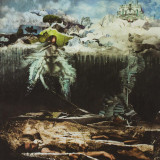
Hotel Paral.lel, released in 1997, marks the full length debut release from Austrian Christian Fennesz, originally released by MEGO, following the twitching drone as found on the 1995 EP Instrument, also included in this deluxe 2LP reissue. Once launched, Hotel Paral.lel was to instigate a sublime exploration of a wide variety of forms, from formal abstraction to shimmering drone around to ground zero glitch pop.
Recorded just before mobile computing devices became omnipresent it was an investigation into the sonic possibilities residing in guitar based digital music. Sz launches the career with a constantly buzzing sound that resembles a fax machine encountering a G3 laptop for the first time, realising the game is up. Nebenraum is the first foray into the style for which one would attribute to Fennesz. A glacial drone unexpectedly morphs into a gorgeous melody and microscopic groove. Adding pulse and melody was hearsay in the radical end of experimental music up until this point and with this single gesture, everything changed, for everyone. Blok M nails this trajectory home with a straight up 4/4 beat. Such rhythm also features on Fa with a euphoric mix of a thudding beat, sharp splinters of noise and a devastating exploding melody. Repetition plays heavily through this album as the hyper metronomic beat on traxdata lays a bed for all manner of buzzing electronics. On the closing “Aus” we see a glimpse of what was to come in the future works of Fennesz, an experiment in popping, bubbling pulse pop. A far more darker and experimental work than Fennesz’ subsequent work. This is an exquisite radical field of freeform noise, sliced techno beats and subtle ambient texture all coming together to create a timeless work. There’s little out there in the world of music, still to this day, that sounds remotely like Hotel Paral.lel.
With a radical reinvention of music Hotel Paral.lel is an essential addition to collectors of pioneering music in the late 20th Century and sounds as enthralling today as it did to the shocked ears occupying 1997.
Remastered by Stephan Mathieu.
Tape
Next up on VEYL is a new face on the label but no stranger to the music world. NEVER is the project of Stefano Santi, a multi-instrumentalist and electronic music producer who has been active since the early 2000’s. After several years of working as an audio engineer and touring the globe with bands, he has
always had a parallel life as a producer with a club affinity. NEVER began in his own SPVN studio during the pandemic amidst the isolation of lockdown. His inspiration reborn after abandoning all boundaries and giving little care to traditional songwriting structures.
The result is 'JXDY', the new album which showcases the project’s diverse voice and technical prowess. Not confined to a particular genre, the release masterfully touches on everything from post-punk and shoe gaze to hints of death rock and electronica. From the opening strings of 'RXBT', we’re taken to a
relentless world of shadows and bleeding emotion, which conjures nostalgia of days long gone while maintaining an ominous sense of future. From the euphoric, pulse pounding action of 'HVRXLD' to the utter heartbreak of 'CXLE', NEVER weaves in and out of agitation, rage and regret, fueling a fire that that
continues to burn from beginning to end.
Navigating to the crushing 'HXRNE' through the menacing tones of 'BLVCKBXRN'until finishing things up with the heartbreaking, cinematic feel of the title track, 'JXDY' is nine offerings of uncompromising passion and pain, leaving a lasting imprint on both the mind and body.
Platform 23 presents Ani-Roy, a project from friends Aniruddha Das and Gary "Roy" Stewart, who recorded two 12's of improvisational acid-house meets drone and samples in 1990.
They met over a love of principally reggae and post punk at Trent Polytechnic, Nottingham in 1982, and started combining equipment, to make tape loops and delays for exploring the basics of dub, all the while building their own Sound System.
This learning and experimenting converged their interests in early possibilities afforded for programming sounds and effects. They moved to London / Birmingham respectively and continued their collaboration until all things aligned in 1990. Coming together with Andrew Campbell, a community / social entrepreneur based in Nottingham - and with access to the Marcus Garvey Centre studios - they recorded two improvisational jams to 2 16 track; Ani arranging drum and bass lines, programming 'counter melodies' with a TB-303, and Roy looking after the ominous ambient loops, melodies, riot and Prince Far I samples.
The fact there were so many "versions" compelled Andrew to put the results out on two 12's instead of one. Fari 116 and Tilt were self-released on hand-stamped white labels.
Archival testaments, but set apart from the burgeoning acid house scene - here they are re-mastered and reissued some 30 years later by Platform 23.
Cut For The Original Analog Tapes At Bernie Grundman’s Mastering. Includes Hi Res Audio Download Card. Black vinyl re-issue For Europe (2000 copies). CURTAINS is the eighth solo album by JOHN FRUSCIANTE. It was originally released on February 1, 2005. The album features contributions from AUTOLUX drummer CARLA AZAR, upright bassist KEN WILD, and THE MARS VOLTA guitarist OMAR RODRÍGUEZ-LÓPEZ. John Frusciante is an American guitarist, singer, composer, and producer. He is best known as the former guitarist of the rock band RED HOT CHILI PEPPERS (1988 until 1992 and from 1998 until 2009). He recorded five studio albums with them and was recently inducted into the ROCK & ROLL HALL OF FAME. Frusciante has an active solo career, having released twelve solo albums and five EPs; his recordings include elements ranging from experimental rock and ambient music to new wave and electronica. He has also recorded with numerous other artists, including the Mars Volta, for whom he was a studio guitarist (and occasional live performer) from 2002 until 2008; JOSH KLINGHOFFER and JOE LALLY, with whom he released two albums as Ataxia; and various collaborations with both Klinghoffer and Omar Rodríguez-López. He has also produced and/or recorded with Duran Duran, Wu-Tang Clan, Swahili Blonde, Black Knights, The Bicycle Thief, Glenn Hughes, Ziggy Marley, Johnny Cash, George Clinton, Johnny Marr, Dewa Budjana and others.
New limited pressing on 180g Electric Blue Vinyl. L.A. Witch’s self-titled debut album unfurled like hazy memories of late-night revelries in the city center creeping back in on a hungover Sunday morning. Guitarist/vocalist Sade Sanchez purred and crooned over jangling guitar chords, painting pictures of urban exploits, old American haunts, and private escapades with a master’s austerity. Bassist Irita Pai and drummer Ellie English polished the patina of the band’s vintage sound, adding a full-bodied thump and intoxicating swing to the album’s dusty ballads, ominous invitations, and sultry rock songs. The album had an air of effortlessness like these songs were written into the fabric of the Western landscape by some past generation and conjured into our modern world by three powerful conduits. The band readily admits that L.A. Witch was a casual affair and that the songs came together over the course of several years. That natural flow hit a snag when the band’s popularity grew and they began touring regularly, so a new strategy became necessary for their sophomore album, the swaggering and beguiling Play With Fire
Six years on since his latest appearance on the label's main series, Stroboscopic Artefacts boss Luca Mortellaro, aka Lucy, returns with 'Dyscamupia' - an introspective, multisensory techno triptych revolving around the core sequence of Albert Camus' classic existentialist novel, 'The Stranger'. Also known as the 'killing of an arab', this pivotal moment in Camus' seminal book - which also inspired The Cure their song 'Killing An Arab' back in the day, is here evoked through three variedly intense, deep and hypnotic techno variations - flexing from 120 to 130, onto 140 BPM - each of them translating a particular step in the author's minute, focal-shifting depiction of the unknown man's murder on the beach.
Embodying Meursault for a minute, Jason Snell lends his voice to the narrator and his inner demons, casting a strange, ominous spell on the club and its crowd. Willing to explore and dig up further into the textural wealth and crucial warmth of organic sounds and synthetic treatments, Lucy made wise use of the binaural microphones technology during the vocals recording process, greatly enhancing the immersive force of his compositions to create thoughtful, dystopic narrative bubbles that stand in their own right.
The first number, ' Dyscamupia (Forward)', happens before and right until the actual killing - hence time flowing at a metronomic, heartbeat-like tempo; the second cut 'Dyscamupia (Pause)' takes place right after the nameless man's death, when the narrator enters a kind of existential 'pause' and a whole new flow of consciousness begins; the third sequence, 'Dyscamupia (Backward)', plumbs the depths of the action itself as played backwards, like an equally hazed-out and dizzying reminiscence of the sad encounter's mechanism. Don't let its seemingly conceptual framework fool you though, like most of his past output 'Dyscamupia' also aims to bring dancefloors to a steady simmer, whilst maintaining Lucy's ascending momentum towards an all-round genre-busting, thought-provoking apex.
- A1: Alpha – Anteludium – Omega Alive
- A2: Abyss Of Time – Countdown To Singularity – Omega Alive
- A3: The Skeleton Key – Omega Alive
- A4: Unchain Utopia – Omega Alive
- B1: The Obsessive Devotion – Omega Alive
- B2: In All Conscience – Omega Alive
- B3: Victims Of Contingency – Omega Alive
- C1: Kingdom Of Heaven Pt 1 – A New Age Dawns Part V – Omega Alive
- D1: Kingdom Of Heaven Pt 3 – The Antediluvian Universe – Omega Alive
- E1: Rivers – A Capella – Omega Alive
- E2: Once Upon A Nightmare – Omega Alive
- E3: Freedom – The Wolves Within – Omega Alive
- F1: Cry For The Moon – The Embrace That Smothers Part Iv – Omega Alive
- F2: Beyond The Matrix – Omega Alive
- F3: Omega – Sovereign Of The Sun Spheres – Omega Alive
For many years now, the comparative of epic has simply been EPICA. Since their formation in 2002 and their quick ascension to stalwarts of symphonic metal noblesse with trailblazing masterpieces “The Divine Conspiracy” (2007) or “Requiem for the Indifferent” (2012), Dutch metal titans only knew one way: Up. Especially with their last three releases “The Quantum Enigma”, “The Holographic Principle” and this years’ “Ωmega”, forming a metaphysical trilogy that’s both alpha and omega of all things symphonic metal, EPICA became rightful monarchs of a genre they themselves helped made become a global phenomenon.
Yet, as every other band, EPICA couldn’t take their latest installment of breathtaking cinematic grandeur to the seven corners of the world as they would have normally done. You know why. Thus, plans have been made and visions fulfilled to produce a once-in-a-lifetime event that couldn’t be further away from yet another streaming show. What EPICA unleashed upon the world on Saturday, June 12th, 2021, was a monument to their music, their career, and their enduring legacy as forebears of a whole genre. Now finally being released on Blu-ray and DVD and various audio formats, “Ωmega Alive” is the EPICA show of your wildest dreams, brought to life by blood, sweat, tears and a healthy dose of megalomania. Think Marvel meeting Cirque de Soleil in a Tim Burton universe.
Celebrating the release of their gargantuan new opus magnum, „Ωmega“, the streaming event saw fans from over a 100 countries flock to the screens to witness a show that has proven to be the defining moment in EPICA‘s concert history. A show that’s nothing short of the band’s most explosive performance to date, brought to life with an enormous production on an ever-evolving stage setting that’s full of visual surprises. For the first time ever, EPICA performed songs like ‘The Skeleton Key’ or the insanely monumental “Kingdom of Heaven Part 3” from “Ωmega”, alongside the band’s most popular songs, rare songs, fan favorites and huge surprises. “What started as a basic idea to do an online release show for “Ωmega” quickly spiraled out of control and became our most ambitious project to date,” creative director and keyboard wizard Coen Janssen says. “As usual, we wanted to push the boundaries, explore the limits, and think outside the box. We found ourselves back in our happy place. This concert film, our ray of light for you in the dark times that we have all been living in.”
For half a year, the band worked tirelessly on a show that’s been setting a new standard for concert films and streaming events. “What we wanted to do was the ultimate EPICA show where we could fulfill every dream we ever had, where there was room for all the ideas, effects and props that are just too big to be taken on tour.” Far from your usual streaming concert, the band developed a trademark feature called a “living backdrop.” Coen explains: “We built another stage right behind our stage where lots of things were going on the whole time. And we meant that very literally,” he laughs. “Every song got something extra, something unique that was fitting its world.”
He can say that again: Elaborate visuals, tailor-made videos and graphic effects, fire, and flames on a Nibelungen level, dancers and actors, artistic performances or fire performers all add to the aura of symbolism and cinematic splendor, setting the stage for a band that can’t be happier to finally bring their new album to life, harmonizing wonderfully and giving their A game for a show to remember. “It was so great finally playing with the band again, actually standing on stage with them. Boy, did we miss this,” Coen emphasizes and adds: “We also built a pretty cool new stage with some fire-breathing snakes and lots of rotating elements. Good thing is, we might also take it on the road when we can finally tour again.”
Until then, “Ωmega Alive” will be a more than efficient remedy against no-concerteritis – for bands, fans, and crew alike who all look back on an extra-long dry spell. Divided into five acts as there are letters in EPICA and “Ωmega”, each part gets a different theme, look, and feel, complemented with references to the history of EPICA, the symbolism of the band and the videos they did. It’s, in short, the best show they ever did, a two-hour spectacle spanning their storied career up to their latest endeavors and graced by Simone Simons’ breathtaking a-cappella rendition of ‘Rivers’ from “Ωmega” complete with choir, easily the most emotional and achingly beautiful moment in their entire career. Frankly, you don’t see this on a normal tour.
What EPICA brought to life here with the help of 75 artists and crew members is a testimony to their burning will to take their band ever higher – even now, in the darkest of times we ever had to endure. Let “Ωmega Alive” be your ray of light as it was theirs, a journey into the heart, body and soul of one of the most passionate and visionary metal bands alive today.
Legendary Brazilian group Orquestra Afro-Brasileira are reborn for first new album in over fifty years, produced by Beastie Boys collaborator Mario Caldato Jr.
Led by maverick composer Abigail Moura, Orquestra Afro-Brasileira were one of the most influential yet overlooked groups in Brazilian music history. Operating for almost thirty years until 1970, they released just two albums - the first of which, Obaluayê, has recently been reissued by Day Dreamer Records - and left behind a legacy of Afro-Brazilian consciousness that continues to resonate today.
Combining Yoruba spirituality, folk tales, Candomblé chants and West African percussion with the instrumentation of the big band jazz tradition in the United States, the Orquestra placed Afro-Brazilian heritage in a new and vital context. Weaving emancipatory narratives into complex poly-rhythms and powerful, syncopated horn lines, the group educated and enlightened all those who saw them perform.
For Abigail’s protégé and percussionist on the group’s 1968 album Carlos Negreiros, the message of the group’s music had a profound impact: “I became aware of what it is to be black,” he says, “discovering the extraordinary potential of the Afro-Brazilian culture in the making of the national ethos.” Now the last remaining member of the original Orquestra, Carlos was tracked down by producer Mario Caldato Jr. - whose credits include Beastie Boys, Marcelo D2 and Seu Jorge among others - to oversee the first new album of Orquestra Afro-Brasileira material since 1968.
“I was overwhelmed with the percussive rhythms, beautiful deep vocals and combined energy,” Caldato Jr. explains. “It felt like the most authentic Brazilian roots music I had ever heard. It was raw and dynamic, a pure organic sound and energy. It was a spiritual experience.”
Alongside arranger Caio Cezar, Carlos assembled his Orquestra to record five tracks at Berna Ceppas’ Estudio Maravilha 8 studio in Rio De Janeiro. With percussion, horns and vocals cut in single takes over three days, the session captured the intuitive, pure and natural spirit of the group in full flow.
Following the success of the initial session, five additional tracks were recorded at the iconic Estudio CIA dos Tecnicos in Copacabana to complete the album. Mixed by Caldato Jr., 80 Anos is a contemporary incarnation of Abigail Moura’s vision, bristling with the flair of the original recordings.
BBE Music celebrates the centenary of recorded Ghana Highlife music with a double album reissue of two rare 80s LPs recorded by the late Atakora Manu, AFRO HIGHLIFE and OMINTIMINIM. Born in Toase, Ghana, a proud Asante, Atakoras musical talent made itself clear from an early age. But it wasn’t until his late teens that he put that talent to use as a performer, first founding the legendary Princess Trio from 1961 till 1963 with drummer Togas and multi-instrumentalist Elder Osei Bonsu. After a spell from 1963 till 1966 as guitarist with the United Ghana Farmers’ Council Drama Troupe, Manu teamed up with Moses Kweku Oppong to form the legendary Kakaiku No. 2 Band, producing a string of national hit singles over the following three or four years. There followed a three year break from music until fate struck: Atakora found a job in 1973 as Recording Studio Attendant- and later recording engineer- at Ambassador Recording Studios in Kumasi, at that time the country’s largest independent label. On seeing his musical talents behind the studio desk, it wasn’t long before the boss suggested to Manu that he get back to making music himself, an opportunity that he was quick to take up- as will be more than apparent from the hardcore, rootsy Highlife and palmwine selections reissued here. As well as long-time associates Togas and Elder Bonsei, local Kumasi legends CK Mensah, Amoako Agyeman, Agyei Kyeremanteng (of the famous Keyeremanteng All Stars) , and Atta Fofie lent a hand from time to time, along with a handful of other seasoned Ambassador studio session players. THE MUSIC A unique selling point here is the mix of vintage, rootsy ‘palmwine’ blues-style guitar Highlife with quirky keyboard electronics, a sound well-established today but revolutionary in the comparatively conservative world of 70s and 80s Highlife. This comes across beautifully in Dada and Cape Coast Cousin, the latter toasting off guitar licks with bubbling wah wah organ. We find a similar juxtaposition in Asante Kotoko, a shout-out to Kumasi’s champion soccer team, which also features some sweet ‘village’ drumming, and in Meka A Ensa..

Zvrra debuts on Avian. The multifaceted artist and video game developer arrives on the label with a brace of glistening ambient Techno and Noise derivatives. The versatile producer, whose auteur approach to recorded output has yielded a wealth of dense and considered material over the years, marries melodic synthesis with glassy, effervescent sound design and considered polyrhythms to arrive at a cohesive but undeniably idiosyncratic nine track offering. Cinematic opener Bizzaroland combines vocal manipulations with phasing, noisy drones that stand in pleasing contrast to a mournful lead that delicately emerges at the midpoint. Follow up Society, offers a meditative take on stepping ambient Techno before Bizzaroland II treats the listener to a heady, stripped back slice of tripping beatless machine music. Tribal cut Figurine closes the A side and sees the material segue into more ominous territory with pulsing low end, percussive flourishes and harsh bursts of white noise. On the flip, B1 Inside sees the artist roll out another stripped back Techno experiment - this time dry and saturated and propelled by a single lead sequence that shifts about the high mids. Oracle returns to a more esoteric, undefined sonic palette - a cacophonous blend of heavily panning drones in line with the artist’s more experimental work. In the same vein Prohibited is a powerful noise cut that finds its contrast in subdued moments towards the end of its run time. As the record approaches its close, Tired Beetle settles the mood somewhat - an introspective, atmospheric ambient recording tethered with admirable low end, before off kilter invocation Untitled draws the collection to its logical end point.
After a trilogy of spectacular explorations of relentlessly driving rhythms – Sagittarian Domain (2012), Quixotism (2014) and Hubris (2016) – Simian Angel finds Oren Ambarchi renewing his focus on his singular approach to the electric guitar, returning in part to the spacious canvases of classic releases like Grapes from the Estate while also following his muse down previously unexplored byways. Reflecting Ambarchi's profound love of Brazilian music – an aspect of his omnivorous musical appetite not immediately apparent in his own work until now – Simian Angel features the remarkable percussive talents of the legendary Cyro Baptista, a key part of the Downtown scene who has collaborated with everyone from John Zorn and Derek Bailey to Robert Palmer and Herbie Hancock. Like the music of Nana Vasconcelos and Airto Moreira, Simian Angel places Baptista's dexterous and rhythmically nuanced handling of traditional Brazilian percussion instruments into an unexpected musical context. On the first side, 'Palm Sugar Candy', Baptista's spare and halting rhythms wind their way through a landscape of gliding electronic tones, gently rising up and momentarily subsiding until the piece's final minutes leave Ambarchi's guitar unaccompanied. While the rich, swirling harmonics of Ambarchi's guitar performance are familiar to listeners from his previous recordings, the subtly wavering, synthetic guitar tone we hear is quite new, coming across at times like an abstracted, splayed-out take on the 80s guitar-synth work of Pat Metheny or Bill Frisell. Equally new is the harmonic complexity of Ambarchi's playing, which leaves behind the minimalist simplicity of much of his previous work for a constantly-shifting play between lush consonance and uneasy dissonance. Beginning with a beautiful passage of unaccompanied percussion dominated by the berimbau, the side-long title piece carries on the first side's exploration of subtle, non-linear dynamic arcs, taking the form of a gently episodic suite, in which distinctive moments, like a lyrical passage of guitar-triggered piano, unexpectedly arise from intervals of drifting tones like dream images suddenly cohering. In the piece's second half, the piano tones becomes increasingly more clipped and synthetic, scattering themselves into aleatoric melodies that call to mind an imaginary collaboration between Albert Marcoeur and David Behrman, grounded all the while by the pulse of Baptista's percussion. Subtle yet complex, fleeting yet emotionally affecting, Simian Angel is an essential chapter in Ambarchi's restlessly exploratory oeuvre. --- Oren Ambarchi - guitars & whatnot Cyro Baptista - percussion & voice Recorded by Randall Dunn, Joerg Hiller, Iuri Oriente and Oren Ambarchi. Edited by Joerg Hiller and Oren Ambarchi at Choose Studios, Berlin. Mixed by Joe Talia and Oren Ambarchi at Good Mixture, Tokyo. Cut by Rashad Becker at D&M, Berlin. Executive Producers: Konrad Sprenger & Dick Wolf. Photography by Traianos Pakioufakis. Design by Lasse Marhaug.
This route is not direct. The time of embarkation is summer 1989, our point of departure, Club Barraca, Valencia, the epicentre of La Ruta Del Bakalao. Passengers on this journey are Martyn Walsh, bass player and songwriter of Manchester band Inspiral Carpets and Sean Johnston, the band's booking agent and aspiring DJ. Our passengers will travel via separate routes, Martyn will sign to Mute Records and become the author of numerous top 40 hits and perform a myriad of worldwide shows. Sean will become a successful underground dance music producer as the Hardway Bros and DJ partner to the late Andrew Weatherall as A Love from Outer Space. Pulled back together by the gravitational waves of Weatherall's untimely demise earlier this year, this is the music of their journey ,¡La Ruta!
Only Up is the second Breeze album by producer and artist Josh Korody
(Nailbiter, Beliefs).
Enlisting a whirlwind of performances from Tess Parks, Cadence Weapon and
an array of the Toronto music scene, including members of Orville Peck, Tallies,
Vallens, Zoon, Sauna, Fake Palms, Rapport, Praises, Civic TV, Moon King, Blonde
Elvis, For Jane, Ducks Ltd, TOPS and Broken Social Scene. Only Up sees Korody
digging through and channelling three decades of anthemic British bands.
From the angular guitars of late 70”s post-punk (Gang Of Four, Wire), to the
lush gloom of 80’s electro-pop (Tears for Fears, OMD), with the dance floor
psychedelia of the Manchester sound (Primal Scream, Happy Mondays), and
through the late ‘90s and early 2000s post-punk / new wave revivalists.
When originally tasked with making this album, Korody and his long time music collaborator Kyle Connolly (Orville Peck, The Seams) quickly threw down
ideas in a session, however with Connolly embarking on a world tour, and with
Korody’s demanding schedule at his Candle Recording Studio, the project sat
unattended.
Somehow, by the time of the album’s delivery deadline, Korody not only orchestrated a creative ensemble of friends and collaborators, he wrote, recorded and mixed the entirety of the album in two weeks without a single regret
or compromise.
“It was the best way I could have done it. A strict deadline to make decisions,
move on and focus on things that matter the most. Every decision was made in
that headspace. The ease of technology to endlessly tweak with, it sometimes
can end up destroying records until there is no soul in it, no happy accidents
and it’s completely sterile. You can have a well produced record without going
down that dark rabbit hole.” Only Up is out via Hand Drawn Dracula.
Erased Tapes debut. Wait, what? How? Anyone who has seen
the trail blazing sonic pioneer live will know Nils likes to
deadpan a joke. Graz is in fact the first studio album he
recorded for the label back in 2009, that somehow remained a
secret… until now.
Nils Frahm has quietly changed the musical landscape,
reincarnating the centuries old figure of a pianist-composer for a
new generation of music fans. As Nils’ word-of-mouth popularity
grew and grew, so did the pop-culture profile of his instrument. He
founded Piano Day with a team of like-minded friends in 2015 to
help that process, some years releasing an album of piano
recordings to celebrate one of humankind’s greatest inventions.
Graz is one such record; an unheard snapshot of a young Nils
recorded at Mumuth, the University of Music and Performing Arts
Graz, in 2009 as part of the thesis Conversations for Piano and
Room produced by Thomas Geiger, which received an award in
the Classical Surround Recording category at the 127th AES
Convention in New York.
Whilst at the time it was decided to keep the grand piano
recordings from the Graz sessions locked away and instead focus
on his close mic’ed, dampened piano explorations which would
become his acclaimed studio album Felt in 2011, two of the pieces
— most notably Hammers — lived on as part of his live set, and
were expanded on and re-recorded as part of his breakthrough
2013 record Spaces (a collage of field recordings from concerts
which broke the Fourth Wall and included audience coughs). Over
his mercurial career, Nils has pushed and pulled at the boundaries
and parameters of his prolific work like that. He’s physically
changed his piano (the softened prepared strings of Felt) played
with a modified body (Screws recorded with 9 fingers and a broken
thumb) played with scale (Solo recorded on the 3.7 metre high
Klavins M370) and with the different layers of formats (last year’s
Tripping with Nils Frahm nested his studio setup inside a live
performance, concert film and live album). Now with Graz he has
found the final frontier for play: time itself and his own discography.
Graz is a moment of time at the very beginning of Nils’ quiet
revolution. The essential genius is already evident; the harmonic
language of classical, and the immediacy of jazz. Nils seems to
pull down each idea moment by moment, gently, to not scare away
the muse. He describes: “sometimes when you hear a piano, you
might think it’s a conversation between a woman and a man. At
the same time, it can hint at shapes of the universe and describe
how a black hole looks. You can make sounds that have no relation
to anything we can measure.”
Our KORE Series is up for a new chapter!
We started with a fresh Sign series: First Sign EP (ZC-KORE004). This is the first one of this brand new series with a compilation of Oldschool Acidcore, Acidcore and Acid Tribe.
From the center of the Netherlands Procell emerged. His blend of oldschool kickdrums, powerful sweeps and lethal acid patterns will make you want to rave all night long!
To complete the release we received two fierce and rough cuts by veteran in the scene Jaquarius. Are you ready for some acid tribe and kore?
Design by OdS#23
Mastering by Stefan ZMK
Procell - Matrix Theory
Neo loves to dodge bullets. Can you dodge this high caliber ammunition?
Procell - Acid Mindset
A massive sweeping oscillator, hard broken beats and a perfect fitting 303. This will have impact on your mind(set)
Jaquarius - L'ombre du Volcan
Like a volcano, Jaquarius is a master at building the tension untill the hot lava erupts. Burning hot acidcore!
Jaquarius - Lunar Live Shoot #1
Transmitting directly from the moon. Sound flying through space and penetrating earth's atmosphere. This is what Acid Tribe is about!
Backed by members of the David Nance Group, Rosali (Long Hots, Wandering Shade, Monocot) wades through the emotional mire with infectious, earworm melodies led by her luminous voice. With their rich, raw instrumentation, these rock ballads sound like the resilience discovered in facing one’s darkest moments, the assurance of the calm and clarity that comes after the storm. As she sings on the second track, “Bones,” “Through the darkness of the field / I walk through without yielding / To the rest of the feelings / I’m carrying.” With her confident song craft, Rosali illustrates the ability to push through, moving toward something greater without being destroyed by the weight of trauma.
Engineered by James Shroeder and featuring Kevin Donahue (Simon Joyner), James Shroeder (Simon Joyner, DNG, Connor Oberst), David Nance, Noah Sterba, Colin Duckworth, and Daniel Knapp, the album was recorded in ten days and the raw immediacy of the music is palpable across these ten tracks. Added adornment was contributed by Philadelphia's Robbie Bennett (War on Drugs) on organ and keys, and Matt Barrick (The Walkmen, Jonathan Fire Eater, Muzz) makes a percussion cameo on “Whisper,”which was tracked at Philly’s Silent Partner Studio, where No Medium was mixed by Quentin Stoltzfus (Mazarin, Light Heat). The open creative collaboration elevated the songs, resulting in the exciting, vibrant sound of the album.
Rosali wrote the bulk of these songs in January of 2019 while on a self-imposed two week residency in the hills of South Carolina. Alone in an old farmhouse, she experienced supernatural events and faced her own demons in the deepest darkness. Perhaps as a result, there is a boldness that permeates the album, a daring vulnerability in both the lyrical themes and their musical accompaniment. Rosali says, “I approach guitar playing the same intuitive way I sing, which is profoundly spiritual for me. Where words fail, the guitar becomes the conduit for raw feelings, providing a direct connection to them. I’m constantly working on being fearless in my work, which means showing the rough side, the mistakes along with the triumphs.”
While writing No Medium, Rosali was inspired by harmonographs—swinging pendulums that create beautiful illustrations of the mathematics of music—considering how the mind, too, creates images through song. She imagined herself as the swinging pendulum—“a body suspended from a fixed point” (Encyclopedia Britannica), governed by the forces surrounding her. She thought about the pendulum’s relationship to time, movement, and even its use in divination practices. The album’s title, lifted from Charlotte Brontë’s, Jane Eyre, resonated with this vision: “I know no medium: I never in my life have known any medium in my dealings with positive, hard characters, antagonistic to my own, between absolute submission and determined revolt. I have always faithfully observed the one, up to the very moment of bursting, sometimes with volcanic vehemence, into the other.” With the multiple meanings of “medium”—as middle ground, a term for psychics, and as the material of artistic expression—No Medium felt like the appropriate name, describing how the self is shaped by the patterns of life .
The influences for the sound of No Medium reflect this pairing of assured vulnerability, in the stylistic coherence of Bob Dylan’s Desire, the tender delivery in Iain Matthews’ Journey From Gospel Oak, the strut and swagger of Bowie’s Hunky Dory, the ambition and beauty of Gene Clark’s No Other, and the playful catharsis of Harry Nilsson’s Nilsson Schmilsson. The Richard and Linda Thompson-esque album opener “Mouth,” places Rosali within both a physical and emotional space. “East of the river I was travelling on / watch me lie, undone / rest me in a forest, overgrown / until I am free of all that I’ve known,” she sings. There is movement, both within a cityscape, and in her outlook on love. Speaking of her thought process when writing the song, she says, “I imagine confidently walking away from the past, toward a new approach to love and intimacy to achieve a closer relationship with myself.”
In “Pour Over Ice,” Rosali explores her relationship with alcohol and her former reliance upon it as a social lubricant to quell her social anxiety, an energizer to keep moving, a means to cope and self-medicate, and most addictively, to lure out her wild side as a free flowing, good time girl. While drinking helped her through some shitty times, it eventually got the upper hand and became an insatiable hole within. She says, “The ‘you’ in the song is really me, talking to that component of myself struggling with drinking and self-sabotage, caught up in the cycle, and all the bad choices I made.” She sings, “Maybe I didn’t care enough / or can’t remember / chasing small pleasures / making fire from embers.” Rosali wanted her lead guitar on this track to simultaneously sound like a slow motion car crash propelling her through the day, and the sound of a gnawing hunger for something more.
Rosali’s alliance with the Omaha musicians that orbit David Nance Group (including Nance himself) came about while on a Long Hots / DNG tour in the summer of 2019. Great friendships formed and one night after playing in Detroit, Dave suggested they be her backing band. The pairing was effortless and natural, and in November of the same year, they were recording No Medium in a basement in Omaha.
In collaboration with Brooklyn-based artist RDO/ATK, Sophia Saze makes her long-awaited return to her Dusk & Haze imprint with four slamming cuts on a release entitled ‘Stalker’.
Born in Tbilisi and now residing in Philadelphia after years living a nomadic lifestyle, Sophia Saze began her creative journey in her formative years with classical music and dance training. With a solid and natural musical foundation, Sophia became engulfed by electronic music leading to the launch of her Dusk & Haze imprint in 2017, before dropping a remix of Heathered Pearls on Ghostly International and the release of her much lauded debut album on Kingdoms. ‘Stalker’ sees her team up with old friend RDO/ATK who has been soaking up the dancefloor since the early 90s. With much of his influence stemming from the early east coast rave and club scene, his sound maintains a homage to the past without getting stuck in it. A sucker for a dirty 303, a breakneck amen, or a crushed 909, RDO/ATK’s style spans across genres from jungle to acid to broken beat and everything in-between.
The EP kicks off with a dynamic, jungle roller entitled ‘Stalker’ featuring old-school, amen breaks, stirring yet intriguing synths and hefty bass shatters balancing styles of glitch and funk together with pure class whilst ‘Fucking Crazy B’ lays focus on cold, syncopated grooves, chopped up shrieks and screams from a video of a traumatic personal incident and shimmering pads moving into ominous territories.
On the flip, ‘Talk To You In Your Brain’ delivers relentless kicks and spiralling acid squelches peppered with chilling vocal samples and frazzled fx that pulsates strikingly throughout until ‘Acid B’ rounds off proceedings with an effervescent, warehouse techno cut as the electrifying modulations bounce gracefully off the menacing percussion and slashing, 303 tones.
Kiwi Jr. is a phenomenal "rock" and/or "punk" and/or "indie-rock" (whichever you like more) band from Canada, made up of Jeremy Gaudet (mic, guitar), Brohan Moore (drums), Mike Walker (bass), and Brian Murphy (guitar). Cooler Returns is their second album, and their first for Sub Pop. Despite being a snapshot of the pandemic-infused beginnings of this decade, Cooler Returns is truly a whole lot of fun. RIYL indie-pop from down under, things that are smart/exuberant/catchy all at once. Buildings burning in every direction; macabre unknowns in your friendly neighbor's basement; undecided voters sharpening their pencils: under pressure we could call Kiwi Jr.'s Cooler Returns "timely." But what year is it, again? On Cooler Returns, Kiwi Jr. cycle through the recent zigs & looming zags of the new decade, squinting anew at New Year's parties forgotten and under-investigated small town diner fires, piecing together low-stakes conspiracy theories on what's coming down the pike in 2021. Put together like a thousand-piece puzzle, assembled in flow state through the first dull stretch of quarantine, sanitized singer shuffling to sanitized studio by streetcar, masked like it's the kind of work where getting recognized means getting killed, Cooler Returns materializes as a sprawling survey from the first few bites of the terrible twenties, an investigative exposé of recent history buried under the headlines & ancient kings buried under parking lots. Not so long since their debut Football Money in archaeological time, unending gray eons later in the dog years of quaran-time, spiritually antipodean Canadians Kiwi Jr return to disseminate this year's annual report to the shareholders, burying the incriminating numbers in the endless appendices of a longform narrative record, a 3,000 word tract for stakeholders to pore over. These stories - memories of Augusts past, unrepressed & transcribed fast - go down easier thanks to meaningful changes enacted in 2019's KiwiCares Pledge: delivering on a promise to transition from Crunchy to Smooth by 2021, the caveman chug of Football Money has been steamed & pressed with the purifying air of a saloon piano - operated with bow-tie untied - and a spring green side-salad of tentatively up-tempo organ taps & freshly fluted harmonica. A chronically detuned spin of the dial through swivel-chair distractions & WFH daydreams, an immersive ctrl-tab deluge cycling through popular listicle distractions like the unentombing of Richard III, or the deja vu destruction of the Glasgow School of Art, Kiwi Jr. sing this song to an indoor audience, crisscrossing canceled, every other prestige distraction source wrung dry, only songwriting remaining to deliver engrossing tales to the populace, just how I imagine it worked in the old days. Fixing loose ingredients into a sturdy whip, Kiwi Jr. beam in live from the 9-5, striding into 2021 with a mastered brainwave that comes equally from the back room of the record store as the penalty box. And how do we, left holding this box of deliberate entanglements, sign off to those as yet uninitiated, undecided, uncertain, unseen, absent return coordinates - Best Wishes, Warm Regards, Good Luck? Cooler Returns, Cooler Returns, C o o l e r R e t u r n s ! Cooler Returns was produced by Kiwi Jr., mixed and engineered by Graham Walsh (METZ, Bully) in Toronto, and mastered by Phillip Shaw Bova at Bova Labs in Ottawa, Ontario.
LTD. LOSER EDITION
Kiwi Jr. is a phenomenal "rock" and/or "punk" and/or "indie-rock" (whichever you like more) band from Canada, made up of Jeremy Gaudet (mic, guitar), Brohan Moore (drums), Mike Walker (bass), and Brian Murphy (guitar). Cooler Returns is their second album, and their first for Sub Pop. Despite being a snapshot of the pandemic-infused beginnings of this decade, Cooler Returns is truly a whole lot of fun. RIYL indie-pop from down under, things that are smart/exuberant/catchy all at once. Buildings burning in every direction; macabre unknowns in your friendly neighbor's basement; undecided voters sharpening their pencils: under pressure we could call Kiwi Jr.'s Cooler Returns "timely." But what year is it, again? On Cooler Returns, Kiwi Jr. cycle through the recent zigs & looming zags of the new decade, squinting anew at New Year's parties forgotten and under-investigated small town diner fires, piecing together low-stakes conspiracy theories on what's coming down the pike in 2021. Put together like a thousand-piece puzzle, assembled in flow state through the first dull stretch of quarantine, sanitized singer shuffling to sanitized studio by streetcar, masked like it's the kind of work where getting recognized means getting killed, Cooler Returns materializes as a sprawling survey from the first few bites of the terrible twenties, an investigative exposé of recent history buried under the headlines & ancient kings buried under parking lots. Not so long since their debut Football Money in archaeological time, unending gray eons later in the dog years of quaran-time, spiritually antipodean Canadians Kiwi Jr return to disseminate this year's annual report to the shareholders, burying the incriminating numbers in the endless appendices of a longform narrative record, a 3,000 word tract for stakeholders to pore over. These stories - memories of Augusts past, unrepressed & transcribed fast - go down easier thanks to meaningful changes enacted in 2019's KiwiCares Pledge: delivering on a promise to transition from Crunchy to Smooth by 2021, the caveman chug of Football Money has been steamed & pressed with the purifying air of a saloon piano - operated with bow-tie untied - and a spring green side-salad of tentatively up-tempo organ taps & freshly fluted harmonica. A chronically detuned spin of the dial through swivel-chair distractions & WFH daydreams, an immersive ctrl-tab deluge cycling through popular listicle distractions like the unentombing of Richard III, or the deja vu destruction of the Glasgow School of Art, Kiwi Jr. sing this song to an indoor audience, crisscrossing canceled, every other prestige distraction source wrung dry, only songwriting remaining to deliver engrossing tales to the populace, just how I imagine it worked in the old days. Fixing loose ingredients into a sturdy whip, Kiwi Jr. beam in live from the 9-5, striding into 2021 with a mastered brainwave that comes equally from the back room of the record store as the penalty box. And how do we, left holding this box of deliberate entanglements, sign off to those as yet uninitiated, undecided, uncertain, unseen, absent return coordinates - Best Wishes, Warm Regards, Good Luck? Cooler Returns, Cooler Returns, C o o l e r R e t u r n s ! Cooler Returns was produced by Kiwi Jr., mixed and engineered by Graham Walsh (METZ, Bully) in Toronto, and mastered by Phillip Shaw Bova at Bova Labs in Ottawa, Ontario.
Technically, Syrup are a hip-hop group with unmistakable leanings towards soul and jazz. The group consists of an MC (Turt), a pianist/singer (C.Tappin) and a beatmaker (Twit One).
Their music is rooted in the tradition of collectives like Native Tongues and Soulquarians, and they have come up with a pretty appropriate term to describe their sound, which is "cool bap". But if we put formalities aside and look at the bigger picture, Syrup are also a perfect example of how music can connect people beyond national borders, language and tradition. And furthermore, how Afro-American culture has influenced not only the musical taste but the views and opinion-making of generations of young people worldwide. The sheer existence of Syrup is also a big fat "Fuck Brexit!" which makes the group even more likeable. The story of Syrup begins in 2015 when Twit One is booked to play a dj gig in Bristol. Twit One is a producer, DJ, radio host, record friend and former bass-player from Cologne (where he also co-owns the Groove Attack Record Store). He is a member of a small group of pioneering producers, who during the 2010s laid the foundation for the European beat-scene as we know it today. Inspired by the likes of Dilla and Madlib these guys made it look cool to not be the rapper. And they recorded some pretty dope music, too, which we had the honour to release via Melting Pot Music as the "Hi-Hat Club" series (a title that Twit came up with). During that night in Bristol, Twit got acquainted with two young men by the name of Turt and C.Tappin. Two childhood friends who had moved from London to Bristol for their studies and had been avid fans of Twit's music for some time. "Back in Cologne, Twit told me about these MCs from Bristol with whom he might record some tracks" Olski remembers, "Needless to say that I never heard about them again until summer 2017 when the annual Radio Love Love boat party was about to happen and Turt and Tappin were actually coming over for the first time, to party and to rock the mic. A couple of months later we released "Hay Luv" a new Twit album that featured Turt and Tappin on two songs. On their next visit, the two were accompanied by Turt's brother Slim, a very talented beatmaker and one half of Summers Sons. We spent some quality time while mastering the 'Undertones' EP (including remixes by Twit One, FloFilz and Cap Kendricks) and shooting the album cover at the Groove Attack record store basement. Since then we released two more album by Summers Sons ("Uhuru" - a joint project with Tappin and "The Rain"), C.Tappin's debut EP "Ashes To Ashes" (with remixes by Reginald Omas Mamode IV, Hulk Hodn & Slim) and a KOOP beat tape by Slim. During the same time, Twit recorded two albums: "Dispo To Dispo" as Flatpocket (a project with Lazy Jones) and "Two", the long awaited follow up to the very first Hi-Hat Club album as Testiculo Y Uno (with Hulk Hodn)." In 2018, Turt and Tappin moved back to London (the Lightworks headquarter is now located in Streatham). They toured with Children of Zeus and shared stages with artists like Melodiesinfonie and FloFilz. But it wasn't until Brexit before the long talked about super group finally became a reality. At the final recording sessions in September 2019 we already knew that the next Eurostar ride would be a different one. Now with Covid-19 we have no clue when all three members of the group will be in the same room again – let alone rock a stage together. But fortunately, we were sitting on a big pile of great singles that we released over the summer months. The album "Rosy Lee" will follow in late September.
A culmination of paranoia emerges as we lose the human dimension of the city. Glittering canals shape the light in our eyes as we pass by, guiding our spirits safely home as the sounds slowly fade away into night sky. It’s not our time to go although the balancing act slowly becomes more extravagant and abstract until we find another way to stand on one toe. Piecing together all the perplexations, realization that all the shit that you have chatted float down the ether stream to Timbuktu never to be seen again, and the lion at the end dribbles and spits, waiting for words of shite to come walking his way so him and his lioness can slowly butcher every last note, until just dust is left.
Previously unreleased and unheard until now, unearthed, cleaned, re-edited and remastered, these tracks capture that 90s drum and bass sound. Fusing the creative ideas, stems and music from well known original artists Omni-Trio and Syko under 'Persons Unknown'. We have worked meticulously to create these timeless tracks; adding to the Persons Unknown story.
Tokyo-based producer Omar Santis returns for his 3rd Karakul EP following on from releases on Dionysian Mysteries and Envelope Audio.
'Thursday Night Funktion' is the 6th release on the imprint and really embodies the ethos of Karakul, soulful deep house workouts designed for the dance floor.
The EP is dedicated to his Tokyo club night 'Funktion'; a cultural party that's held every Thursday at one of the world's top ten small clubs, Oath in Shibuya.
Their events have caught the attention of Tokyo's local community and their international guests by its unique branding and "mature but wild" party atmosphere.
The EP starts on a high with the groovy sample heavy disco/house jam 'Nira'. Vocal chops and guitar licks build and culminate until a massive string section releases a second rush of energy taking the track to even higher ground.
The follow up 'Sakura Blossom' is the deepest cut of the release with washed out pads and bleeps cascading while a hypnotic bass keeps the track grooving.
Iron Curtis adds his personal touch and ups the energy on his remix of 'Cameo Appearance', adding a breakbeat, ethereal melodies and vocal snippets floating atop a plucky bass line.
Ending the release on a blissful note 'SpaceColorPalette' is a flurry of melodic synths and muffled percussion that swirl around over the top of a solid kick and bass groove.
The Oystercatcher is the first collaborative LP from Cucina Povera (Maria Rossi) and ELS (Edward Simpson)
Recorded in London over two days, hours' worth of improvisations have been edited down to form these six tracks.
A fragile interplay is at work between Maria's drifting vocals and the ominous churn of Edward's modular synth. Each sonic element takes a turn at leading the way.
The opening track 'Mantle' is formed from sparse, monolithic electronics, woven gently with a thread of vocals. In the closing track 'Eon' Maria's voice shepherds spontaneous bursts of sounds, almost Rave-like if order were imposed, through 15 minutes of turmoil and resplendent until the end.
Maria's vocals make their own trails amongst the noise, bringing to mind the the exploratory language from Ursula K. Le Guin's album 'Music and Poetry from the Kesh', recalling the same understated mystery.
The overall effect of this collaboration is a completely unique creation albeit within a recognisable lineage of predecessors.
The artwork reflects the vision of these two artists, collaged together. Both images are from a trip to Helsinki. Edward's photograph of Tulips caught after dark are reviled by a flash. Maria's seemingly abstract drawing is a graphite rubbing taken from a granite slab of a pavement somewhere in Kallio. Together the two images represent two different methods for capturing a city's haptic landscape.
The album moves with a feeling of transience, which is no surprise given that the idea to collaborate was formed in Helsinki, realised in London and edited together in Rotterdam.
The Oystercatcher tells a fragile tale, one that spins out into the unknown. A cold union of voice and machine, still tentative and probing, learning to co-exist. A kind of fundamental shift whereby shared moments have been turned to sound.
The Oystercatcher is a bird that can freely travel between the earth, sea and sky. The motif is taken from a Tove Jansson short story. A dead bird washes ashore, two different versions of events are presented to how the bird came to die. The album feels like two different stories being presented on top of one another but ultimately coming to the same tragic conclusion.
Cucina Povera is Maria Rossi - Vocals
ELS is Edward Simpson - Synthesisers
Recorded in London across two days during the Summer of 2019
Mastered by Russell Haswell
A focal point for the unique punk-funk that was coming together in Bristol as the bridge from the 70s to the 80s arrived, Maximum Joy was formed by Glaxo Babies multi-instrumentalist Tony Wrafter and 18 year old vocalist Janine Rainforth. Soon they drafted in additional Glaxo Babies in the form of drummer Charlie Llewellin and bassist Dan Catsis, along with guitarist John Waddington, fresh from The Pop Group. The group set about making a one-of-a-kind mix of funk, punk, pop, jazz, dub, soul, afrobeat and reggae; creating a brilliant burst of danceable tunes wrapped around elastic basslines and complex percussion, punctuated by melodic horns and stabs of guitar, all of it highlighting Rainforth’s naturally enthusiastic vocal style. They immediately took their place on the rosters of influential labels like Y and 99 with iconic debut single Stretch, as the band had clearly captured something special.
Entering 1982, Kevin Evans had replaced Catsis as Maximum Joy set out to make what would be their only full length LP. Recording at Berry Street and The Lodge with producers Adrian Sherwood (On-U-Sound legend), Dave Hunt (Flying Lizards, Pigbag, This Heat) and Pete Wooliscroft (Kate Bush, Talk Talk, Peter Gabriel, OMD, This Heat) the band would mix practiced grooves with imaginative improvisation. The results were absolutely jaw-dropping.
Station M.X.J.Y. kicks things off with Dancing On My Boomerangand promptly sets forth the blueprint for bands like !!! and The Rapture to capitalize on nearly twenty years later. In fact, those bands can only dream of the mix of driving percussion and spectral shards of guitar that Maximum Joy has clearly already mastered. Do It Todayannounces itself immediately with Rainforth delivering a looping and infectious vocal melody that the others dance around playfully, as handclaps keep the stomping groove intact, leaving a dancehall hit for outer space circling your turntable.
If you ever wondered what it would sound like if ESG and The Slits combined forces, Let It Take You There has the answer for you. Llewellin periodically delivers a cascade of marching band percussion while Waddington’s classic R&B riffs are transformed into a slithering snake trying to keep pace with Evans locked in groove as Rainforth’s singsong vocals are reduced to whispered echoes. They close out side one with the delicious slab of pop that is Searching For A Feeling. Clearly pronouncing the band’s intention to find the positives in a dire time for England, they look to rally those around them to focus on making real change in the face of opposing voices via one of Rainforth’s most delightful deliveries.
Side two sees Wrafter stretching out on Where’s Deke?, showcasing what had already been obvious, as he is the band’s secret weapon, often coloring each tune with his horns, sometimes in several styles just seconds apart. He underlines that feeling with the raucous and bouncy Temple Bomb Twist, before they hit a straight groove in Mouse An’ Me, like a dub infected Train In Vain. Well, if The Clash had ever allowed themselves to properly lose their minds on the dancefloor.
A funky afrobeat flute and guitar battle breaks out (way cooler than it sounds) before Rainforth rallies the troops to not only fill up the disco, but also the surrounding streets in political resistance to Thatcherism via All Wrapped Up. It is entirely genuine and their activism has none of the menace of the others in their scene, but rather a feeling of sharp optimism amongst this danceable masterpiece. It is that optimism that always set Maximum Joy apart, and makes their grooves all the more irresistible today.
Sadly, the upward trajectory of the band was cut short as Rainforth left the group, and soon afterwards seemed to stop making music altogether. The reasoning seemed destined to remain a mystery, until earlier this year when she gave a brave interview to The Guardian where she revealed that an assault by someone in the industry caused her to retreat entirely from music for nearly three decades. Luckily, Janine has embraced music once again, and she refuses to let the magic that was Station M.X.J.Y. be lost as well.
Fantastic first album of Tunisian producer Azu Tiwaline, melting psychedelic dub, industrial and hypnotic techno deeply rooted in her berber culture, supported by Lena Willikens, Nicola Cruz, Toma Kami and Violet, to name a few!
Azu Tiwaline is a new name for a new spirit: one of a producer inspired by the need to explore her origins, rooted in the Tunisian Sahara. The Call to a different sound, organic and raw, vibrating in the great spaces of the African desert where trance music resonates... Ecstatic ritual.
Her first album, Draw Me A Silence, conceived as a diptych, reveals the multiple facets of her identity. Uniting the bonds that connect Berber music, dub culture and techno hypnosis, Azu Tiwaline invites us to refocus on our senses and our Nature. She knows how to use contrasts between light and the invisible, exploring the complexity of our emotions and the mystery that emanates from them, in a polyrhythmic chiaroscuro that runs through each one of her tracks, and of which we discover, as we go along, all the outlines.
Draw Me A Silence Part. I (to be released in February 2020), delivers the most hypnotic variant of her music, centered on dark percussive rhythms and a skillful use of repetition; each of the 5 tracks ineluctably carrying the listener into a trance. Two major tunes particularly illustrate the artist's imagination: "Itrik" and "Berbeka", perfectly synthesizing the heritage of Berber trance music and her techniques derived from minimalist and repetitive electronic music.
The continuation, Draw Me A Silence Part. II (to be released in April 2020), gives prominence to a deep heritage drawn from the dub culture and its numerous bass music filiations. This second part thus gives a new breath in the use of sound space, exploited in a much broader way, leaving all their space to complex syncopated percussive lines, supported by massive basslines dedicated to the best sound-systems. Omok, the first of the five tracks of this Part II is the perfect demonstration of this, playing here the essential role of a bridge to the darker waters of this album's end.
Each of these two parts exist as an Entity, and it is only when they are united that they will reveal their full meaning. Thus, in May, Draw Me A Silence will find its final form in a double-vinyl unifying them. Listening to this album in its entirety offers us a wide panorama of the sound landscapes visited by Azu Tiwaline, who seems to breathe primitive sounds of a faraway desert into a music with modern tones - and vice versa. A resolutely hybrid sound and a singular experience, playing with contrasts and nuances to catch the listener in vast and so far unexplored territories.
A - Raise & Sgt. Risk - The Shining Wall
A slowed down tribute to the dichotomy of mellow/heavy in mid 90's Jungle/Drum n' Bass, "The Shining Wall" begins with eery pads and a forlorn siren call, gently driven along by a subtle amen groove. Midway through, things turn more aggressive with distorted break switchups and a smattering of mentasm for good measure, before coming full circle and leaving you with a warm but somewhat uncertain end.
B - Sgt. Risk - Weaponized Soul
The flip is a more ominous affair, inspired by the short transition period ca. '96, just before techstep became a defined term. "Weaponized Soul" sets the mood with foreboding pads, until it drops into a relentless barrage of industrial beats and a cavernous sub. In the midway breakdown everything drops away, clearing the stage for a monstrous, swarmlike synthriff.
Both of these tracks where never meant to be "conceptual tributes", but just ended up that way.
A is fairly new, while B is the umpteenth version of a ten year old tune. Big up the Dolphin Man for convincing us to put them out together.
More unheard edits from Len Faki‘s personal vaults on this release, harking way back to the mid-'90s and their relentless, hard-hitting styles.
Chicago legend Robert Armani, also still hailed as one of the originators of hardstyle by many, makes an appearance on the A-side. And it‘s that characteristic, punishing kick sound, which is still present in the modern edit, carrying on the original‘s obtuse force albeit shrouded in a much more ominous and austere veil.
- A1: Haruna Ishola & His Apala Group - Ewure Ile Komoyi Ode
- A2: Adebukonla Ajao & Her Group - Aboyin Ile
- A3: Rapheal Ajide & His Apala Group - Adura Fun Osiwowo
- A4: Haruna Ishola & His Apala Group - Orin To Mo Gbon Wa
- A5: Ra Tikalosoro & His Group - Agilinti Lomu
- B1: Adebukonla Ajao & Her Group - Abd Alawiye
- B2: Haruna Ishola & His Apala Group - Asa Ko Gbodo Wole Gbeiyele
- B3: Adeleke Aremu & His Group - Egbe Arowolo
- B4: Haruna Ishola & His Apala Group - Rufai Baolgun
- B5: Ra Tikalosoro & His Group - Kiniun Kuro Leran Amu Sere
- C1: Haruna Ishola & His Apala Group - S Aka
- C2: Adebukonla Ajao & Her Group - Lekele Bale
- C3: Kasumu Adio & His Apala Group - Odale Ore
- C4: Ayisatu Alabi & Her Group - Oko Lolomo
- D1: Jimoh Agbejo Bo Ogun & His Group - Oriki Ibeji
- D2: Ayisatu Alabi & Her Group - Omo Olobi
- D3: Rapheal Ajide & His Apala Group - Orin Aje
- D4: Adebukonla Ajao & Her Group - Sunday Babayemi
Soul Jazz Records new ‘Apala: Apala Groups in Nigeria 1964-69’ is the first ever collection of Apala music ever to be released outside of Nigeria. The album focusses on a wide selection of recordings made in Nigeria in the 1960's, a time when Apala music was at the height of its popularity. Apala is a deeply rhythmical, hypnotic and powerful
musical style that combines the striking nasal-style vocals and traditions of Islamic music, the Agidigbo (thumb piano), and the equally powerful drumming and percussion rhythms and
techniques of the Yoruba of Nigeria.
The most significant figure in Apala music is undoubtedly Haruna Ishola who features throughout this album. Ishola holds an almost mythological status in his role as populariser of Apala music in
Nigeria. Ishola’s singing was believed to be so powerful that, without proper restraint, it could kill the recipient of his music.
Apala is a popular music that also functioned as a form of cultural resistance – Apala music involved no western instrumentation and is sung in the Yoruba language, its aesthetic an implicit cultural
rejection of the British Empire’s colonial rule over Nigeria which lasted from 1901 until independence in 1960. Apala music was popular and widely accepted in Nigeria due to its philosophical and profound
lyrical content alongside the complex rhythmic patterns of this heavily percussive style, which highlighted many of the percussion instruments of south-west Nigeria.
He's one of a number of popular urban styles of music that came out of Nigeria in the 20th century and sits alongside the more well-known (in the West) styles of Fuji, Highlife, Juju and Afrobeat. Of these modern forms Apala remains perhaps the most ‘roots’ style (sometimes described as ‘neo-traditional’) due to the authenticity of its sound. It has similar Islamic roots to other neo-traditional styles of Nigeria – including Waka and Sakara – examples of which are also
included on this collection contextualising the music of Apala.
These recordings were originally made and released locally by Decca and EMI Records as well as a variety of independent labels in Nigeria and have never been released outside of the country before. Soul Jazz Records are releasing this album as a deluxe double gatefold vinyl (download code), CD, slipcase and booklet, both containing full text and photography.
Steppas Records is back with another heavyweight single in collaboration with Dubzoic, Alpha & Omega and Fikir Amlak.
The earth-rocker sounds of Italian producer, Dubzoic, alongside A&O's mystical foundation style, blend with Caribbean/American singer Fikir Amlak's ethereal and enchanting lyrical and vocal talents to deliver a stand-out Soundsystem single.
This release features Dubzoic and Fikir's original vocal edit, with a mystical flute cut plus two incredible mixes from UK dub pioneers Alpha & Omega (Greensleeves, Steppas Records).
Until now played as an exclusive dubplate, Steppas Records is excited to unleash this tune to the world, beautifully mastered and pressed to limited edition vinyl.
Emotional Rescue again delves in the world of private pressings, with a reissue of British electronic pop meets proto-House duo 4AM. With copies of their self titled album now highly sought after, this timely reissue presents two of their songs as a stand alone 7".
Consisting of multi-instrumentalist Steve Kirby - piano, guitar, bass, programming - and vocalist Kevin Finch, 4AM came together after youths filled with a love of music. Following a string of band attempts, Steve dived in to the world of midi, allowing him to build a studio set up and play solo. A meeting with new work colleague Kevin quickly developed to joining forces to expand on his early demos.
Their melodic, dance-influenced pop draws on a love of Japan, OMD and The The, but also ECM jazz and a touch of "white boy soul". The TR-808 drum and hi-hats, string stabs and random acid squelches - although no TR-303 was used - highlights the influence the nascent House sounds emanating from the "second summer of love" of 1988 / 89 had in their music melting pot.
Over this, personal lyrics flow, full of honest emotions and a touch of youthful naivety thrown in - of relationships, love, sex and passions. Intended as a personal artifact, the original album was released in 1990 with no promotion or live shows and has taken until now, some 30 years, to find a cult audience. I want you with a Passion.
Neurot Recordings are proud to reissue the landmark collaboration Neurosis & Jarboe, which was originally released in 2003. This latest version is fully remastered and with entirely new artwork from Aaron Turner.
Very limited silver metallic and black swirl 2LP - Non-Returnable
Steve Von Till explains the idea behind the remastering; "Bob Weston (Chicago Mastering Service, and member of Shellac) worked closely with Noah on making these new versions sound as good as the possibly can. Noah has the most trained critical ear for fidelity out of all of us being an engineer himself. We recorded this ourselves with consumer level Pro Tools back then, in order to be able to experiment at home in getting different sounds and writing spontaneously. The technology has come a long way since then and we thought we could run it through better digital to analog conversion and trusted Bob Weston to be able to bring out the best in it....This new mastered version is a bit more open, with a better stereo image, and better final eq treatment."
He continues about the original artwork..."Aaron felt he could create something that would unify the energy of both Jarboe and Neurosis in an elegant manner. We let him do his thing and I think it definitely adds to mystery of the album and sets it apart from the rest of our catalog."
When two independent and distinct spheres overlap, the resulting ellipse tends to emphasise the most striking and powerful characteristics of each body. Such is the case with this particular collaboration between heavy music pioneers Neurosis and the multi-faceted performer Jarboe (who performed in Swans and who has collaborated with an array of people from Blixa Bargeld, J.G. Thirlwell, Attila Csihar, Bill Laswell, Merzbow, Justin K. Broadrick, Helen Money, Father Murphy, the list goes on...) The musicians pull from one another some of the most harrowing and unusual sounds ever heard from either artist at the time - a sentiment which also rings true to some 15 years later.
Neurosis & Jarboe opens with a high-pitched whirring sound winding up as Jason Roeder's ominous tom-drum beat and Noah Landis' slinking synth line writhe in unison until Jarboe drops in, drawling in her characteristic, corrupted Southern belle voice, "I tell ya, if God wants to take me, He will." From there on in, the album is a series of abrupt shifts and cleverly juxtaposed themes that flows in a rhythm of its own. The sinister and ethereal sounds, vocal coos and electro-pulses of "His Last Words" seem like the perfect soundtrack to a David Lynch film. On "Erase," song parts are dissected and grafted one atop the other, continually building tension as Jarboe wails and yelps with Banshee fervor.
The project began with the artists working in seclusion, recording the elements that would best highlight their own characteristic integrity and personality, rather than either attempting to mimic one another's familiar elements. As recorded ideas were passed back and forth, the collaboration proved to bring out the most unhinged and urgent talents of all those involved.
Throughout the album, that signature "Neurosis note" - the sound of something simultaneously recoiling and erupting, the apocalyptic tone announcing the birth of a new world - reaches its apex and becomes evermore icy and eviscerating. Guitarists Steve Von Till and Scott Kelly trim their tones for cleaner, chorus-drenched effects layered between the thunderous distortion blasts of bassist Dave Edwardson. Likewise, Jarboe's operatic wail and other vocal contortions sound perfectly suited to the eruptive emotional fray of the music.
The collaboration is a deeply textured mosaic that is a culmination of merged aesthetics from two major influences on free-thinking sounds. It unlocked the hidden potential of electronic music as a new force in heavy rock. At a time when groups like Oneida, Wolf Eyes and Black Dice were beginning to experiment with technology in making mind-numbing leaden electro-drone freed from any essence of "dance music," Neurosis & Jarboe redefined all notions of their past - and outlined the course of heavy music to come. It's interesting to look back through the lens of this release, and think about these ideas and concepts in the present.
Neurosis & Jarboe remains the meeting point of all art that takes us beyond ourselves.
The elusive Berlin label MASK are back with another anonymous release featuring four
analogue driven tracks entitled ‘Cliff’.
Known for being purveyors of mysterious yet exquisite hardware induced tracks, MASK continue to
hold up their reputation following on from ‘Hunter’ that picked up support from the likes of Laurent
Garnier, Elena Colombi, Machine Woman, Anastasia Kristensen and DJ Deep. ‘Cliff’ involves four
people live jamming on analogue equipment in a Berlin based studio.
A1 begins with crunchy drums fused with revolving, modulated synths and obscure elements that are
soaked in acid flavours before the A2 focuses on an electro-tinged sequence in harmony with ominous
atmospherics and eccentric oscillations.
On the flip, sweeping pads balanced with intense kicks and washing synths take the focus on the B1
until the B2 rounds off this magical EP with wavering compositions, hard-hitting percussion and
unsettling sound design keeping the atmosphere intense yet truly absorbing.
Having spent the past few years quietly building up a dedicated crowd of followers and dancers as a club night, Scenic Route step out for their first offering as a label with three expertly crafted club cuts from Desert Sound Colony, an artist whose pumping productions have provided some of the parties’ most memorable moments. Since his debut release in 2014 on New York’s Scissor & Thread, Desert Sound Colony (real name Liam Wachs) has been refining a deeply personal club sound with releases for the likes of Futureboogie, Me Me Me, his own Holding Hands imprint and most notably of late, Nick Höppner’s Touch From A Distance. In addition to his productions garnering support from the likes of Midland, Raresh, Andrew Weatherall and Lena Willikens, Wachs himself is also a highly sought after DJ whose skills have seen him land bookings at some of the world’s most well respected clubs and festivals, including two stints at Berlin’s Panorama Bar already this year.
His prowess as a DJ has undoubtedly informed the music featured on the Cartographer EP. All three tracks are primarily designed for club use yet their intricate arrangements and undulating instrumentation ensure they remain captivating, despite the effectiveness of their functionality. The EP’s opener, “The Cartographer”, is a sleazy machine-driven odyssey, continuously building and evolving until snapping back into its original groove with a vengeance. “Gypsy Moth” sees Wachs team up with fellow Holding Hands affiliate Guava (real name Bradley Hutchings) for a dangerously syncopated drum workout doused in warped agogo bells, spliced vocals and a two-note bassline with a distinctly London flavor. Rounding the release off is “Budapest”. The combined power of the track’s interlocking kick and bass provide a solid stage for Desert Sound Colony to unleash an eerie arp and pads combo alongside a flurry of stuttering percussion and twisted samples while intermittently sprinkled with an unintelligible and downright ominous pitched down voice.