180gr./Printed Innersleeve/1000 Copies On White Vinyl
Queen For A Day is the tenth studio album by Dutch pop/rock singer Anouk, originally released in 2016.
It features the hit single “Run Away Together”, a collaboration with singers Jennie Lena and Shirma Rouse, both known for being contestants on the hit show The Voice of Holland, where Anouk is one of the coaches. A preview of the song was premiered on the show.
Another single off this album is “Wanna Little Something”, a soulful dancerock song. Other well-known tracks are “New Day” and “Dirty Girl”.
This is the first time the album is released on coloured vinyl. It’s a limited edition of 1000 individually numbered copies on white vinyl and includes a printed innersleeve with song lyrics.
Having been brought up as much on albums as singles, it is a natural progression for Kent to make a 12' version of our 'Masterpieces Of Modern Soul' CD series. The Modern soul fan is used to wielding 12' of plastic in various forms and our latest Kent LP is aimed squarely at them.
We have lifted a fantastic LP-only track from theSpring album by Act 1, 'It's The Same Old Story', one of the most catchy, melodious songs of the era and as a Ray Godfrey Spring production it is high quality. The same source provides the Millie Jackson LP track 'If That Don't Turn You On'; inevitably raunchy - but clean!
The Mayberry Movement were on sister label Event and we have their smooth and addictive 'Two Wrongs Don't Make A Right', unreleased until Kent issued it. On the pricey side we feature Eddie Billups' anthem 'Shake Off That Dream'. Scarce is more the word for Gail Anderson's Doré release 'Just A Little Ugly' which is anything but and stablemates Natural Resources have a recently discovered find, 'If There Were No You': it would have been the buzz of the Mecca a few decades earlier. Into the 80s we go with a 60s legend: Dave Hamilton, whose later recordings are proving to be as highly admired as his tracks from the golden era of 60s soul. Nightchill's 'I Don't Play Games' sounds like a hit to me and the New Experience's pleading 'I've Never Felt This Way Before' is one for those who like to sympathise with a bit of anguish. Darondo provides another gem of west coast soul from his own special perspective.
The Hesitations' GWP recording is as polished and professional as ever and there is more top harmony from Street People with a previously unissued track from their first recording session.
There had to be a teaser. After reissuing Herman Davis' 'Gotta Be Loved' we discovered a brilliant unissued Part 2 to the highly collectable single. It had been abandoned before the 45s' pressing but now rounds off an LP that will grace those large and overburdened LP shelves of the modern soul Kent fans.
It only took fifteen minutes for Bob Gaudio to pen the lyrics to Sherry,
which was originally named Jackie Baby as a tribute to First Lady
Jacqueline Kennedy. Producer Bob Crewe had suggested to Gaudio that he should write a song which exploited Valli's remarkable vocal range.
It reached Number 1 in America and stayed there for five weeks along with top-ten success in the British charts. Under his guidance, the group followed up with Big Girls Don't Cry and another Number 1 in the American charts ensued.
The Four Seasons were one of the few American acts to survive the British invasion of 1964. Indeed, they are the only act to have a US Number 1 hit before, during and after the Beatles successfully invaded the USA.
"Because They Made It That Way" is one of the illest Mr. Lif's songs that is finally out now on 45 rpm 7". On the flipside you can play out loud yet another banger "Pull Out Your Cut". "Classic" is the right word to describe this single!
"Because They Made It That Way" is one of the illest Mr. Lif's songs that is finally out now on 45 rpm 7". On the flipside you can play out loud yet another banger "Pull Out Your Cut". "Classic" is the right word to describe this single!
LiV Warfield's live show has been described as "like watching Tina Turner,
Sade and James Brown all in one"
Throw in Mary J. Blige, Etta James and Nina Simone and you're getting closer to
an accurate description of singer-songwriter and dynamic performer LiV Warfield.
A Soul Train Music Award winner and former member of Prince's New Power
Generation, Warfield showcases her wide-ranging musical tastes on The Edge.
From the rock- tinged title track, which bears the stamp of her mentor, to her
autobiographical "Bloom" and her take on the Phil Collins' power ballad, "Another
Day in Paradise," LiV inhabits a myriad of attitudes while expressing her inner
strength and soul on her third album overall and first for Leopard.
As one of the most triumphant and beguiling directorial debut features to emerge from the fruitful Polish New Wave, Andrzej Zulawski’s 1971 film Third Part Of The Night not only earned the thirty-year-old filmmaker a place next to other radical Polish directors such as Polanski, Skolimowski and Has, but also galvanised a creative bond with long running collaborator and composer Andrzej Korzyński, providing fans of foreign abstract/suspense cinema with a potent creative fusion to match those of Polanki/Komeda, Fellini/Rota and Argento/Goblin, amongst others.
Quite simply one of the heaviest psych rock film soundtracks of all time Andrzej Korzyński’s short and unreleased score matched the blueprint that adorned the drawing boards of conceptual French jazz orch rock composers like Jean-Claude Vannier, Francois De Roubaix and Alain Gourageur, creating a soundtrack that unknowingly begs comparison to Masahiko Satô’s Belladonna Of Sadness and Billy Green’s Stone. As one of the first progressive pop writers to come out of the vibrant (but carefully scrutinised) Polish beat scene with his bands Ricecar 64 and later Arp Life (and composing for national heroes such as Czeslaw Niemen, Niebiesko-Czarni and Test) Korzyński’s growing passion for conceptual rock and jazz music soon lead to instrumental composition and soundtrack scores.
His cinematic debuts scoring two consecutive transitional new wave films for Andrzej Wajda (in collaboration with the radical Polski pop groups Trubadurzy and Grupa ABC) also provided Korzyński with another significant cinematic muse in that of the stunning actress Malgorzata Braunek with whom they would both eventually achieve their finest performances under the direction of the ravenous first-timer Żuławski. Third Part Of The Night (1971) perhaps epitomises that triangular on-screen unison in its vibrant youth and feeds it through a hallucinogenic mangle finding astonishing beauty (within a repulsive synopsis) against a bleak and shattered backdrop and accompanied by progressive, psychedelic orchestral rock music – elements which would intensify for all three creatives with the next film, Diabel, which was banned by the Polish government the following year until 1988.
Third Part Of The Night also marks the public unison of Żuławski and Braunek whose later private romantic relationship is said to form the basis for another defining Żuławski/Korzyński defining endeavour with the 1981 film Possession exactly a decade later, encapsulating a period that bequeaths a previously unopened vault of some of the composers finest and most inspired sonic adventures.
There are only a few figures in music whose work influences and
shapes a genre as a whole. This is undoubtedly true of the Swede
Esbjörn Svensson. With his trio e.s.t., the pianist and composer
wowed audiences beyond age and genre affiliations. And his
influence on jazz as a whole reverberates to this day and already
within the second and third generation of musicians worldwide.
‘HOME.S.’ is Esbjörn Svensson’s only solo album and the sheer
existence of such a recording and its completely unexpected
discovery over a decade after its creation are nothing less than a
sensation: Since the early 1990s, Svensson focused almost his entire
creative energy and recording activities on his work with e.s.t.. Thus,
these new recordings are not only the first, but practically the only
ones that show Svensson in a setting other than that of the trio:
Intimate, concentrated and completely one with himself. The
recordings for ‘HOME.S.’ were made only a few weeks before
Esbjörn Svensson’s sudden death on June 14, 2008. Svensson
recorded the music in his Swedish home.
For almost ten years afterwards, the album rested untouched in his
wife Eva Svensson’s personal archive. Here, she tells the story
behind the discovery of the album and the music: “After Esbjörn’s
passing, I made sure all the contents of his computer were saved to
backup hard drives. And then I basically left them untouched for the
next ten years. At the point where I eventually felt ready to look into
the material, I soon realised that there was something I wanted to
look into.
“I took the hard drive and went to Gothenburg to meet with Åke
Linton, the sound engineer who had worked on all e.s.t. albums as
well as on their live shows. He was also the one who had helped me
to save the material from Esbjörn’s computer in the first place. So he
probably already knew that there was something hidden in there. But
nobody had listened to it.
“We went to his studio. And we pressed the start button. Then there
was a total silence and we couldn't speak for the entire time the music
was playing. After it finished, at first we were not able to say anything,
because we were both so touched and surprised that it was all there,
and that it was so beautiful. The tracks seemed to follow one another
like pearls on a string. After we just had sat there for a while we
agreed: This is really good. Musically, but also from a sound
perspective.”
A frequent collaborator of THE BANSHEES OF INISHERIN writer/director Martin McDonagh’s, Academy Award®-nominated composer Carter Burwell previously worked on three of his films, starting with In Bruges. He also worked on Seven Psychopaths, as well as his Oscar-nominated score for Three Billboards Outside Ebbing, Missouri, their last collaboration.
For THE BANSHEES OF INISHERIN, McDonagh already had, for one section of the film, a piece in mind that’s performed by a Balinese gamelan ensemble – mostly metallic instruments. Taking that inspiration, Burwell weaved gamelin instruments alongside the score’s three main instruments: the celeste – a keyboard that plays bell sounds, the harp, and the flute to create the film’s highly-acclaimed score.
“The score to Banshees is, like its slow simmering conflict, delicate and nuanced and heartbreaking all at once,” said Mondo Creative Director Mo Shafeek..” It takes small steps backwards and forwards like crashing waves on a lonely island, strings and woodwinds dancing with one another, in a waltz. The whole score plays like a dance between two overlapping voices - occasionally harmonizing, but never connecting. Occasionally beautiful, but always a bit melancholy.”
»This River Only Brings Poison« was released in 2002 as the sixth full-length album of Chris Hooson’s Dakota Suite project. This first-ever vinyl edition of the record includes four bonus pieces and makes it possible for fans to re-evaluate one of the most crucial Dakota Suite albums in the project’s vast discography while also providing new listeners with an entry point into its intricate musical cosmos. With contributions by artists as diverse as steel guitarist Bruce Kaphan and drummer Tim Mooney from American Music Club, Derald Daugherty, and Laura and Chris Donohue as well as long-time collaborators such as David Buxton, Colin Dunkley or Ed Collins, »This River Only Brings Poison« turned out as a sonically rich and stylistically versatile as it is emotionally multi-layered.
»Writing music for me has always been a cathartic exercise,« explains Hooson. While the instrumental pieces generally serve to express a raw sense of his internal struggles, his vocal-led songs communicate them more directly. »Those are the words I cannot say openly. It’s not that I cannot voice them in a conversation, it’s just that they only seem half-formed and not ›true‹ unless they are located within a song,« he says. What makes Dakota Suite unique is that throughout the project’s history, the music and lyrics have always had a single addressee: Hooson’s wife Johanna, whose photographs were used for the album artwork and who is featured on clarinet on »sand fools the shoreline.«
»The title of the record was something that I had said when Johanna and I first met to make her see that the journey she was considering taking would be full of love, but also come at a cost,« explains Hooson. »The songs were written at a time when I was really struggling to think I could be the person that she deserved.« In the end however, »This River Only Brings Poison« marked a turning point in Hooson’s oeuvre after highly productive time with Dakota Suite: it would take another five years until he returned with a new album. »The reason for that was that I needed to accept that she had made her choice to be with me and that was a big thing for me to get my head around,« he says.
Hooson’s highly personal approach to writing songs also has an impact on the ways in which he works with his collaborators when recording them. »The people with whom I play really need to understand how I perceive the world to be able to play what I need,« he says. »My instructions would always be things like, ›This is what the song means to me, this is what I am trying to communicate to Johanna when she hears it, so your cello, for example, needs to sound like you have noticed that the cloud is covering the sun, and the weight of the air on your skin is heavier and it has unsettled you.‹«
For this particular record, he reached out to Mooney and Kaphan as an admirer of their group American Music Club. Expecting to be rejected, he instead found himself on a flight to San Francisco together with multi-instrumentalist Buxton shortly thereafter, about to make what he today calls one of his most cherished recording experiences. After the four musicians finished the basic tracks, overdubs were added in Hooson and Buxton’s respective houses as well as Daugherty’s home studio while Hooson was visiting his old friend in Nashville.
Hooson emphasises that revisiting his older releases can be complicated. »I feel intense feelings, as every record is a diary of who I was in that period and what I was feeling. That is why having to play the songs live is always like having PTSD: I need to re-experience the event that caused me to write the song, and I do not enjoy that.« He remains, however, proud of »This River Only Brings Poison,« pointing especially to the opener »the lepers companion« as what might perhaps be his favourite song of his. »But overall I just hope that Johanna feels it spoke to her,« he says, adding that the two do not discuss his records. »For me it's enough that she is listening to the things I mean to communicate to her.«
This album was recorded in 1983 in Copenhagen and earned superlative reviews all over the world.
"Tenorman Eddie "Lockjaw" Davis had already been a potent force in jazz for 35 years when he recorded this set but as it turned out his SteepleChase date (his next-to-last session) was one of the strongest of his career. Accompanied by a trio led by pianist Kenny Drew, Lockjaw really tears into these standards which are highlighted by "I Only Have Eyes for You," "There Is No Greater Love" (the alternate version was released for the first time on its CD reissue), "Four" and the title cut.
Davis was at the peak of his powers during this recording, making this SteepleChase outing one of his very best." - Scott Yanow, AllMusic "Nothing valedictory about this date. No signs of decline. It's hard to believe it was Jaw's last album as a leader. Just the thing if you didn't miss your water until your well went dry." - Cadence
Early on, his prodigious technique and wide-ranging style garnered comparisons with the great Oscar Peterson. But there has always been another side to Alexander's playing. Usually, jazz grabs the upper hand, but on occasion he digs deep into his Jamaican roots.
The 1974 We've Only Just Begun recording signals the beginning of Jamaican pianist Monty Alexander's fruitful relationship with MPS, lasting over a decade and encompassing some dozen albums. On many he partners with no one else than fellow Jamaican and one of the fathers of ska, guitarist Ernest Ranglin.
Among others, this Best Of includes tracks from Monty's MPS classics like RASS!, Here Comes The Sun, Montreux Alexander - The Monty Alexander Trio Live At Montreux, We've Only Just Begun, Monty Strikes Again, Cobilimbo, or the untitled Monty Alexander & Ernest Ranglin.
LILA mainstay Ayaavaaki and ambient veteran Purl speak different languages but used a translator to convey ideas to one another as they made this record. And they very much foment their own unique musical language on Ancient Skies, an album that blends ambient, drone and space music into richly layered soundscapes that are constantly on the move. Each piece is meticulously crafted and suspense you up amongst the clouds, hazing on at the smeared pads and swirling solar winds that prop you up. It's a record that would work as well in the depths of winter as a bright spring day such is the cathartic effect of the sounds. Beautiful, thought-provoking and innovative, this is as good an ambient record as we have heard all year.
e C1 Gateway Realm (Spiral I) Outer Helix (Spiral I)
e C1 Gateway Realm (Spiral I) Outer Helix (Spiral I)
out of Stock
Last delivered 2 years ago available to reorder, subject to availability
The DIAMOND DOGS ladies and gentlemen!
One of the world's finest pure rock & roll bands, still doing it just how they please, sounding better than ever.
New record "About The Hardest Nut To Crack" was recorded live. 12 brilliant tracks, all mixed/produced/written and arranged from scratch at Strawberry Studios over eight days in the early spring of 2023. It's a hell of a statement!
Sound Like: The Faces, Rod Stewart, Ronnie Lane, Ronnie Wood, J Geils Band.
Fusion's Border Town is an obscure late Sixties bluesy psychedelic record. The sound is best described as a cross between Creedence Clearwater Revival and Circus Maximus with a touch of Ry Cooder (Cooder does perform a guest role on this album). It contains some full on rural spiked blues rockers with Ry Cooder's slide guitar taking center stage. The album contains the fan-favorite tracks "Time Of The Ostrich Head", "News Of Selena" & "Erebus".
This rare psychedelic nugget is available as a limited edition of 750 individually numbered copies on turquoise coloured vinyl.
In 1995 the self-titled full-length debut of Die Anarchistische Abendunterhaltung (DAAU) was released. The band consisted of four young, 'classically derailed' musicians who played their own compositions with acoustic instruments such as violin, cello, clarinet and accordion. Their work contained influences from Roma music, Eastern European folk, klezmer and jazz, but was performed with the energy, rebellious spirit and Sturm und Drang of a bona fide punk band. DAAU was part of the fertile Antwerp scene, which also produced dEUS, Zita Swoon and Kiss My Jazz, and soon signed an international record deal with Sony Classical.
The group's influential first record, which has been out of print for a while, is now finally being released again and is available on vinyl for the very first time.
In those early days, DAAU consisted of four young, classically trained musicians who tackled their instrumental compositions with a true punk spirit. 'If we'd had guitars, bass or drums at that time, we would probably have been just another rock band', says accordionist Roel Van Camp, who, together with his schoolmates Buni Lenski on violin, the latter's brother Simon on cello and Han Stubbe on clarinet made up the Antwerp quartet. 'With our acoustic instruments we tried to create our own version of the music we loved listening to, from sixties rock and prog to new wave.'
The quartet, which initially played in streets and cafes, appealed to a diverse audience and sometimes joked that they were a classically trained unit that had 'gone off the rails'. 'As befits teenagers, we wanted to shake things up', Stubbe remembers, 'even though we always kept cherishing our classical backgrounds.' Van Camp: 'Our education was never supposed to feel like a straitjacket. We were free-spirited enough to ignore the laws and regulations of the music academy and to create our own sound. Our compositions were open to influences from Roma music, Eastern European folk, klezmer and jazz'. 'That eclecticism was a direct result of the zeitgeist', Han Stubbe adds. 'We loved different styles and happily mixed them together'.
The monniker Die Anarchistische Abendunterhaltung was derived from Steppenwolf, a novel by German writer Hermann Hesse about a character who was outside society. 'In the book, the narrator talks of a theatre', Van Camp explains. 'And at the entrance there is a warning sign sign that says: if you go in here, you are guaranteed to lose your mind. That was an apt description of the way our music worked'.
Almost all tracks on DAAU's first album were 'Drieslagstelsels' (or 'three-course rotations'). The term referred to an agricultural method of the early Middle Ages, but also to the fact that each song of the group consisted of three major movements. Van Camp: 'The titles of those pieces referred to our method of writing. We piled up a huge bunch of ideas, because we wanted to tell more than just one story. With each composition, we took the listener for a ride'.
In 1995 the self-titled full-length debut of Die Anarchistische Abendunterhaltung (DAAU) was released. The band consisted of four young, 'classically derailed' musicians who played their own compositions with acoustic instruments such as violin, cello, clarinet and accordion. Their work contained influences from Roma music, Eastern European folk, klezmer and jazz, but was performed with the energy, rebellious spirit and Sturm und Drang of a bona fide punk band. DAAU was part of the fertile Antwerp scene, which also produced dEUS, Zita Swoon and Kiss My Jazz, and soon signed an international record deal with Sony Classical.
The group's influential first record, which has been out of print for a while, is now finally being released again and is available on vinyl for the very first time.
In those early days, DAAU consisted of four young, classically trained musicians who tackled their instrumental compositions with a true punk spirit. 'If we'd had guitars, bass or drums at that time, we would probably have been just another rock band', says accordionist Roel Van Camp, who, together with his schoolmates Buni Lenski on violin, the latter's brother Simon on cello and Han Stubbe on clarinet made up the Antwerp quartet. 'With our acoustic instruments we tried to create our own version of the music we loved listening to, from sixties rock and prog to new wave.'
The quartet, which initially played in streets and cafes, appealed to a diverse audience and sometimes joked that they were a classically trained unit that had 'gone off the rails'. 'As befits teenagers, we wanted to shake things up', Stubbe remembers, 'even though we always kept cherishing our classical backgrounds.' Van Camp: 'Our education was never supposed to feel like a straitjacket. We were free-spirited enough to ignore the laws and regulations of the music academy and to create our own sound. Our compositions were open to influences from Roma music, Eastern European folk, klezmer and jazz'. 'That eclecticism was a direct result of the zeitgeist', Han Stubbe adds. 'We loved different styles and happily mixed them together'.
The monniker Die Anarchistische Abendunterhaltung was derived from Steppenwolf, a novel by German writer Hermann Hesse about a character who was outside society. 'In the book, the narrator talks of a theatre', Van Camp explains. 'And at the entrance there is a warning sign sign that says: if you go in here, you are guaranteed to lose your mind. That was an apt description of the way our music worked'.
Almost all tracks on DAAU's first album were 'Drieslagstelsels' (or 'three-course rotations'). The term referred to an agricultural method of the early Middle Ages, but also to the fact that each song of the group consisted of three major movements. Van Camp: 'The titles of those pieces referred to our method of writing. We piled up a huge bunch of ideas, because we wanted to tell more than just one story. With each composition, we took the listener for a ride'.
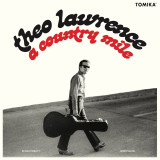
After supporting Alison Krauss & Robert Plant during summer '22 and going on tour alongside Charley Crockett across UK and Netherlands, French-Canadian singer-songwriter Theo Lawrence invites you to travel with him on the roads of Texas for an exclusive RSD release. Four performances captured on the spot, in a studio away from the city. Love songs flirting with bluegrass and rock'n'roll, straight out of a honky tonk where western waltzes follow one another. With this country hillbilly quartet (fiddle, lap steel and double bass), each of the instrumentalists is a reference. Together they form the beating heart of the Austin, TX music scene.
Deluxxe is a new post punk/new wave band from Buffalo, NY.
It was formed by Mason and Greg, and later completed with Nick, Bailey and Mackenzie, sharing members of Oi and hardcore bands such as Violent Way, Bad Blood and Exhibition. Their punk background can be heard in the music, but it’s the love for new wave, post punk, darkwave, and goth that led to creation of their debut record “If You Were Me”. Written in the cold winters of Buffalo, you can almost feel the harshness of the weather affecting the sounds that propagate from these grooves. Icy and frostbitten but somehow still relevantly civic and urban.
The Chameleons and The Sound are two main references here, but that whole cold dimension is rocked by a strong pop vein reminiscent of After The Snow-era Modern English and occasionally enhanced by an hoarseness typical of a young Paul Weller. Passionate lyricism proper of Echo And The Bunnymen and hopeless romanticism à la Sad Lovers And Giants get balanced by a sharp songwriting which keeps everything in perfect order, giving you exactly what you need, nothing more and nothing less.
You can tell some skinheads are involved here because the outcome is so tidy and neat, without losing one inch of atmosphere or enchantment. If you are wondering how something that was invented forty years ago can still sound, literally, fresh and cool, look no further because what this band delivers lives just up to its name.
out of Stock
Last delivered 4 months ago available to reorder, subject to availability
UK house icon Mr. G makes his FUSE debut alongside longtime friend and collaborator Duncan Forbes, with the two partnering for their excellent ‘Time To Dip’ EP.
An artist truly regarded as one of UK house music’s greats, Colin McBean, aka Mr. G, stands today as an individual at the pinnacle of the genre as his trademark sound and legendary live sets continue to tantalise crowds across the globe. A special guest at FUSE’s final show at London’s iconic Printworks in March, the event that went on to influence the EP’s curation, the UK mainstay heads to Enzo Siragusa’s globally renowned imprint for the very first time this September as he delivers his ‘Time To Dip’ EP alongside longstanding friend and regular collaborator, Duncan Forbes. Friends for many years, having known one another since Forbes’ Animated project, their collaborations on Phoenix G and 49North and recent LP have seen the duo uncover a selection of high- quality cuts from across the house spectrum - and here they showcase their innate chemistry across four tracks loaded with quality.
“Gotta say, this EP really is born outta standing on the stage before my set at FUSE at Printworks and listening to what was being played. When I got back I said to D that I wanted do something based around what I had heard, never really thinking Enzo or FUSE would get it, but how wrong we were. It’s another fab meeting of minds with D, which makes this joint EP so different yet special... I feel it covers many different bases and tempos, a real gem. Looking forward to see what folk make of it.” - Mr. G.
Title track ‘Time To Dip’ is classy house music that packs a punch typical of that trademark sound we’ve come to know and love. It’s heavy and tough yet stripped back and unquestionably dancefloor focused, all softened by hooky female vocals and hazy textures. Duncan’s ‘Sherbert Dip’ mix highlights the vocal and brings it to the fore as shuffling drums and sweeping melodies build around the elements. The flip welcomes ‘All Night’, a delightfully vibrant track pairing rich rhodes, swirling leads and sharp hats with an abundance of subtle jazzy textures, before Forbes’ ‘In The Zone’ remix delivers an immersive, heady and dubby late-night voyage for a mesmerising final ride.
out of Stock
Last delivered 6 months ago available to reorder, subject to availability
Limited BioVinyl 2023 repress, which provides an ecological alternative to the conventional vinyl record with strictly no sound or visual compromises.
“We all dance away our lives to the tune of the sovereign pleasure-pain axis.” – David Pearce, The Hedonistic Imperative
Pleasure-seeking and pain-avoidance as a rave metaphor fits the music of Sam Barker. The Berghain resident and Leisure System co-founder has spent the last few years exploring the euphoric potential of altering key variables in dance music formulas.
This was especially true on his 2018 Ostgut Ton debut EP Debiasing, which was flush with unconventional rhythmic chord stabs, melody and percussion but devoid of kickdrums. What seemed like an experimental exercise on paper was in reality equally geared towards the club: tracks that worked for the floor but resisted the genre categorizations that kick drums often provide. This has come to define Barker’s sound.
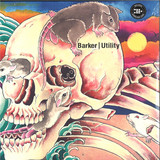
Now, on his debut solo LP Utility, Barker turns his focus toward melding experimentation and dancefloor pragmatism with the psychology behind the musical decision making process. In his own words: “After ‘Debiasing’ it occurred to me that my musical decisions were often unintentionally utilitarian, following an instinct to maximize pleasure in one way or another. It’s sort of unfashionable to admit, but by removing elements that have strong genre associations, this became a natural consequence.”
Accordingly, Utility is a playful but non-ironic musical approach to a whole spectrum of utilitarian and transhumanist ideas: from models for quantifying pleasure and “gradients of bliss” to abolishing suffering for sentient beings (not just people) through the ethical use of drugs and nanotechnology. Over nine tracks, Barker’s vision ebbs and flows through waves of deeply psychedelic musical vignettes; free-floating and futuristic melodies and rhythms as targeted brain stimulation. The sound draws heavily on modular synthesis, as well as self-built mechanical instruments and plate reverbs to create atmospheres that are at once alien and emotionally recognizable, functional and utopian.
Utility is by no means a concept album. Instead, it is an honest take on music as both pleasuremaximizer and consciousness-expander.
“We all dance away our lives to the tune of the sovereign pleasure-pain axis.” – David Pearce, The Hedonistic Imperative
Vergnügungssucht und Schmerzvermeidung als Rave-Metapher – das passt zur Musik von Sam Barker. Der Berghain-Resident und Leisure System-Mitbetreiber hat im Laufe der Jahre das euphorische Potenzial der Veränderung von Variablen in der Dancefloorschablonisierung erkundet.
Das traf besonders auf sein Ostgut Ton-EP-Debüt Debiasing zu, das nur so sprudelte vor unkonventionellen rhythmischen Akkordfolgen, Melodien und Percussion – die Kickdrum aber wegließ. Was auf dem Papier wie eine experimentelle Übung wirkte, war tatsächlich gleichermaßen für den Klub gemacht: Stücke, die auf dem Dancefloor funktionieren, sich dem oft vorgegebenen Kickdrumdiktat und damit einhergehender Genrekategorisierung aber verweigerten. So hat sich Barkers Klang definiert.
Auf seinem Solodebütalbum Utility widmet Barker seine Aufmerksamkeit nun aber der Verschmelzung von Experiment und Dancefloorpragmatismus mit der Psychologie hinter dem musikalischen Entscheidungsfindungsprozess. In seinen eigenen Worten: „Nach Debiasing kam mir in den Sinn, dass meine musikalischen Entscheidungen oft unbeabsichtigt utilitaristisch sind, einem Instinkt folgen, Glück auf die eine oder andere Art zu maximalisieren. Das einzugestehen ist recht unmodisch. Aber durch die Auslassung von Elementen mit starken Genreassoziationen, wurde dies eine recht natürliche Konsequenz.“
Dementsprechend ist Utility eine spielerisch-neckische aber unironische musikalische Betrachtungsweise eines ganzen Spektrums utilitaristisch und transhumanistischer Konzepte: Von Modellen zur Quantifizierung von Wohlergehen und Verläufen von Glückseligkeit („Gradients of Bliss“) zur Abschaffung von Leid für fühlende Wesen (meint: nicht nur den Mensch) über die ethische Nutzung von Drogen und Nanotechnologie. Im Laufe von neun Stücken ebbt und schwillt Barkers Vision durch Wogen zutiefst psychedelischer Musikvignetten; freifließende und futuristische Melodien und Rhythmen als gezielte Hirnstimulation. Der Klang gründet stark auf modularer Synthese, ebenso wie selbstgebaute mechnische Klangerzeuger, Instrumente und Plate Reverbs Atmosphären schaffen, die gleichermaßen fremdartig als auch emotional vertraut wirken, funktional und utopisch.
Utility ist keinesfalls ein Konzeptalbum. Vielmehr ist es eine aufrechte Auseinandersetzung mit Musik als Freudenmaximierung und Bewusstseinserweiterung.
out of Stock
Last delivered 36 days ago available to reorder, subject to availability
Fachwerk boss Mike Denhert rolls up on TECH-UM 006 with for another heavy selection of intuitive techno jams on his 'TESTET' EP. With the focus squarely on the dance floor the Berlin-born wizard's latest creations makes for another unique voyage into cutting edge techno. Kostik with its dark wall of sound opens the release sporting an gargantuan bassline and metronomic percussion that resonates through the speakers. Freakin' Me offers a slow and low machine funk strut, with its heads-down groove and sassy vocal chops. On the flip Mike hits out hard with Mino. A heady concoction that's one part Chicago, one part Detroit, one part Berlin, coming together to create the perfect party piece. Dehnert then closes with one final gem. Sampling a broken escalator from a NYC train station, he engineers layer upon layer of mechanical madness. Creative clanging. Welding sounds and strikes like a vibrating visionary, he presents a final silvery sonic sensation.
out of Stock
Last delivered 3 years ago available to reorder, subject to availability
Bobby Caldwell's second album, Cat In The Hat, from 1980, is one of his greatest moments and another masterwork of soulful sophistication. Featuring the eternal "Open Your Eyes", brilliantly sampled by J Dilla for Common's "The Light", it's about as essential as records get. Like its eponymous predecessor, it's been out of print for far too long. To finally release the hugely-anticipated reissue is one of our sincerely proudest moments.
Whilst Ned Doheny is known in Japan as "Mr California", native New Yorker Bobby Caldwell has always been "Mr AOR" to his Far-Eastern friends. His distinct charm is an irresistible blend of soul, jazz, and pop influences. He possessed phenomenal songwriting prowess, smooth vocal performances, was both a great soul guitarist and dextrous keyboard player and known for genius chord progressions. It all added up to a multi-layered brilliance entering the studio, and the singular sound he landed on was laced with soulful, sweeping strings and funky horns, touching lightly on disco, while allowing his supple voice to carry the stunning tracks he'd crafted.
Right from the off, it's easy to tell that Cat In The Hat is a deeply special record. It's fantastically produced and incredibly well-rounded, carving its own lane with deep soul, warm jazz and a stunning vocal delivery that really helped Bobby reach out to some big new audiences at the time. Goosebumps at the ready for the rolling power-piano funk of "Coming Down From Love", opening up the album with a track as good as anything Steely Dan or The Doobies ever crafted, with a vocal performance from the heavens. Pumping AOR wonder "Wrong Or Right" is up there with the slick, classy rhythms of prime Ned Doheny whilst the cool, skipping soul of guitar-drenched "To Know What You've Got" is a funky ballad par excellence, with elemental traces of "What A Fool Believes". No bad thing. Closing out Side A, the folk-funk of "You Promised Me" is a bright, soulful strut with a wonderful vocal coda that just builds. Sensational.
The delicate bounce and falsetto self-harmonising of "It's Over" offers a truly delightful introduction to Side B, and serves as a great precursor to what follows. Bobby's dynamite "Open Your Eyes" is likely the reason you're all here. As if he needed it, the eternal J Dilla further immortalised Caldwell in the hip-hop canon with his production of Common’s epochal “The Light,” which heavily samples the magical “Open Your Eyes.” On a post paying tribute to Bobby in March 2023, Questlove claimed that he "got word Brother Bobby loved it". Bobby's original has seen new life even more recently from the likes of Dwele and Kendrick Lamar and deservingly so, as its insistent drums and staccato piano created a modern-soul classic. You'd think that would be hard to follow, wouldn't you? Not so, when you're Bobby Caldwell. Indeed, the horn-drenched stepper "Mother Of Creation" is absolutely ace, and, whisper it, possibly the album's finest track, all funky piano and guitars with horn lines to die for. Exquisite ballad "I Don't Want To Lose Your Love" rounds out the album beautifully.
Bobby sadly passed away on 23rd March 2023, after a long struggle with mitochondrial damage and oxidative stress, due to an adverse effect from a fluoroquinolone antibiotic. The reissue of Cat In The Hat will be available on vinyl across the globe, ensuring that fans of his incomparable talent - and soul music enthusiasts worldwide - can radiate in the deep beauty of this seminal album. Meticulously remastered and cut by both Simon Francis and Cicely Balston respectively, it has been pressed to the highest possibly quality at Record Industry in Holland.
out of Stock
Last delivered 2 years ago available to reorder, subject to availability
Amy Dabbs might be one of the hardest working artists in the game right now. Making it in the current electronic music landscape is not an easy thing, which might be why this talented artist is so heavily invested in her musical output. With releases on Aus Music, Shall not Fade and her own Dabbs traxx, a monthly residency on Rinse FM and a tour schedule that seems to get busier by the minute, we’re happy to see her hard work is paying off. Add to that some support by artists such as Special Request, The Blessed Madonna, Jaguar and Cinthie and you know this Berlin-based artist is right where she belongs: in the spotlight.
With a love for all things high energy – including, but not limited to house music and breaks – Amy knows how to set fire to a dancefloor (or record for that matter). Her music has been described by Resident Advisor as “Elegant and soulful drum & bass, that’ll still catch the ears of house heads.” So here you go, house heads: Amy Dabbs on Heist. The ‘Only breaks can love your heart’ EP is packed with feelgood energy and comes with a Dam Swindle remix that has the duo laying down some pleasantly unexpected breakbeats on an altogether rush-inducing record.
Right from the start, you know you’ve got an anthem on your hands with ‘Everything alright’. The gorgeous vocals by Aika Mal give you that right amount of emotive, ravey energy and come wrapped in a package of solid breaks and mesmerizing chords. With a hint of acid and a couple of meticulously crafted breakdowns you’ll be singing along with this track before you know it.
The Dam Swindle remix drops the tempo a little bit, but with its 140 bpm, warm broken beat and UK bass, the duo delivers a curveball of a track with a lot of crossover appeal. They went for a more stripped back approach that combines introverted percussion with bouncy keys that complement the vocals perfectly for an altogether irresistible remix.
‘Crush’ is a signature Amy Dabbs tracks, with driving 909 percussion, female vocal chops, ethereal pads and classic strings. It’s a warmhearted affair laced with Amy’s feelgood DNA. On the flip you’ll find ‘Eleven eleven twenty two’; a classic deep house track with subtle hints of UKG in its sampling and bass. The pads and leads are moody and the skippy percussion gives this track the kind of energy you’d welcome when pulling an all-nighter.
Rounding off the EP, we’ve got the ep title track ‘Only breaks can love your heart’; another showcase of Amy’s knack to make house aficionados dance to drum and bass. There’s a certain contrast in pace – raging drums versus dreamy chords that makes you feel at ease listening to a fast-paced track like this. The vocals are equally hazy with a subtle 90’s and 00’s RnB feel. Bassface guaranteed on this one!
out of Stock
Last delivered 2 years ago available to reorder, subject to availability
FINAL GASP unleash their debut album Mourning Moon! A harrowing journey through all things Hardcore, Metal, and Goth, Mourning Moon drags the listener through the dark in 12 thrilling tracks, and drives a stake right into the heart of 2023's most compelling releases. Opener "Climax Infinity" sets the tone for what's to come: the undeniable hardcore swagger of the Boston-based band is immediate as drums and guitars stomp and riff against one another, while FINAL GASP vocalist Jake Murphy howls - "watch as the way it falls, your loss of control, from whispered incantations, burnt down for your invocation!" Mourning Moon showcases expert songwriting and lyrical crafting, snarling and barking through the harsher, heavier punked out moments in "Blood and Sulfur" and "Frozen Glare" while flexing arena chops on the tremendous "Temptation" and utterly despairing "The Vanishing". Elsewhere, the hook-laden title track explodes out of the underground and aims straight for the moon. Lead single "Mourning Moon'' is downright catchy and showcases FINAL GASP's knack for excellent songwriting. A song professing eternal love through a lens clad in black and morbid as ever, "Mourning Moon" proves to be one of the most inventive journeys this side of the genre in recent times, recalling a prime period for luminaries Killing Joke and Danzig. With Mourning Moon, FINAL GASP emerge from the shadows, and step into the forefront of extreme music's new guard.
Portland-based Kevin Palmer returns to blundar with his Best Available Technology for another release (having previously been featured on cassette). This time it’s on vinyl but still messing about with the same business of constructing and deconstructing head-nodding beats into a foggy bowl of ambience that has become the trademark sound of BAT.
Initially inspired and influenced by the sound-worlds created by Hank Shocklee, BDP and KDAY, Palmer spent his formative years combing pawn shops for samplers. This kicked off his self-described obsessive compulsive work crunching out impossibly naive and obviously unschooled jams in what might have been and continues to be an attempt to capture and document something he felt when listening to the bombastic sonic collages of early hip hop.
Going backwards in order to go forward could be an apt mantra to describe the philosophy behind BAT. Often attached with labels like nostalgia and melancholy, Palmer surely deals with the longing for that perfect time capsule of N.Y. hip hop in the 90s - but where others zoning in on that era simply imitate it, Palmer goes way further into a world of his own making.
Far removed in both time and place to the outskirts of Portland, the sonics of Palmer filters through an outsider’s perspective, sometimes offering a personal journal of the here and now via field recordings from skateparks and surfing trips.
As if one would imagine looking slightly to the left of what was supposedly going on, these tracks continuously shift one's focus. That funky feel good beat is there, but almost always just out of grasp. Palmer gives us the sound of a memory slipping away.
Yet this reads not as the end of something, but rather a stepping stone into a world of possibilities. Operating at the outskirts of genre, you could imagine anything from dub, hip hop, ambient or techno to emerge and crystalize from the haze, yet it never does. This is all those things and nothing. Or maybe it’s just some “sad fucked up funk” as Palmer puts it.
Four years after they went all the way to Antarctica, Flat Worms are back in gen pop with the rest of us - but, as intoned on the album opener "Sigalert," "back again like I never was." Is this a nod to the way time passes over our sorely vexed synapses? Or are we to believe that there"s hope to be found in this broken world? Kick back with Witness Marks and see what other traces Flat Worms have left us in the dust. The album title alone leaves a foreboding impression. But look closer - "witness marks" aren"t something out of a forensic analysis - they"re actually practical; scratches placed in old clocks designed to aid continued maintenance further in time. Sure, there"s big questions and more on the board; primarily if we"re at all distinct from the absurdity coming down around us, or just another character in the mirror? Flat Worms are looking inward this time, outlining personal space in relation to themselves and others - sometimes even people they barely know. Among the slabs of slategrey outrage, the flowers of compassion are blooming, and the simmering power of their trio grows exponentially. Working once again with Ty Segall, Flat Worms continue to find new answers by digging into themselves and playing their kind of rock: hard and flat, bass and drums thrusting stalwartly forward with conviction, guitar twisting and spinning in outrage, deadpan vocals decrying a dire set of circumstances. The democracy of working together, so often messy and frustrating, was found to be a powerful release for Justin, Tim and Will. Acting as one, Flat Worms navigated challenging times by coming together, finding release in the clockwork repetitions of practice and the shared creative space they occupied together against the encroaching world. In the short century of their existence, Flat Worms have agitated against the status quo with a disquieting lyric bent, to emphasize the psychosis of the times. These are positions taken within songs, sung out to individuals in the world. As evidenced by the lyrics, "But I know I can always see you at the show Even though it"s only temporary and it"s time to go." . . .Witness Marks surveys an evolving sense of community. Flat Worms are dedicated to persevering and using the power of their collective. Come witness!
Four years after they went all the way to Antarctica, Flat Worms are back in gen pop with the rest of us - but, as intoned on the album opener "Sigalert," "back again like I never was." Is this a nod to the way time passes over our sorely vexed synapses? Or are we to believe that there"s hope to be found in this broken world? Kick back with Witness Marks and see what other traces Flat Worms have left us in the dust. The album title alone leaves a foreboding impression. But look closer - "witness marks" aren"t something out of a forensic analysis - they"re actually practical; scratches placed in old clocks designed to aid continued maintenance further in time. Sure, there"s big questions and more on the board; primarily if we"re at all distinct from the absurdity coming down around us, or just another character in the mirror? Flat Worms are looking inward this time, outlining personal space in relation to themselves and others - sometimes even people they barely know. Among the slabs of slategrey outrage, the flowers of compassion are blooming, and the simmering power of their trio grows exponentially. Working once again with Ty Segall, Flat Worms continue to find new answers by digging into themselves and playing their kind of rock: hard and flat, bass and drums thrusting stalwartly forward with conviction, guitar twisting and spinning in outrage, deadpan vocals decrying a dire set of circumstances. The democracy of working together, so often messy and frustrating, was found to be a powerful release for Justin, Tim and Will. Acting as one, Flat Worms navigated challenging times by coming together, finding release in the clockwork repetitions of practice and the shared creative space they occupied together against the encroaching world. In the short century of their existence, Flat Worms have agitated against the status quo with a disquieting lyric bent, to emphasize the psychosis of the times. These are positions taken within songs, sung out to individuals in the world. As evidenced by the lyrics, "But I know I can always see you at the show Even though it"s only temporary and it"s time to go." . . .Witness Marks surveys an evolving sense of community. Flat Worms are dedicated to persevering and using the power of their collective. Come witness!
A/B-Side effect green/yellow/purple vinyl. Limited to 200 copies. "I had just got off the road and went right into the studio out in the desert at Rancho de La Luna. I was living in the house just behind at the time making sessions super convenient. I was set to record with my band the Bros in a couple weeks but I decided to go into the Rancho early and get some sounds. Tony and I ended up recording a bunch of songs that I was writing on the fly. A week later the Bros showed up and we recorded another batch of songs with the band playing live in the front room. After we wrapped I combined both my solo session and the Bros session and released in as one record called Saved By Magic on my label Duna records. That was 2005. Now I'm rereleasing this record on HPS and I've decided to separate the two sessions into their original bodies of work. My solo session and the Bros session. I mostly did this because I feel the Bros deserve to have something of their own as they were a magical band. I also just thought it would be cool. I call both records Saved By Magic Again."
Colour in colour vinyl, transparent and red with blue splatter. Limited to 200 copies. "I had just got off the road and went right into the studio out in the desert at Rancho de La Luna. I was living in the house just behind at the time making sessions super convenient. I was set to record with my band the Bros in a couple weeks but I decided to go into the Rancho early and get some sounds. Tony and I ended up recording a bunch of songs that I was writing on the fly. A week later the Bros showed up and we recorded another batch of songs with the band playing live in the front room. After we wrapped I combined both my solo session and the Bros session and released in as one record called Saved By Magic on my label Duna records. That was 2005. Now I'm rereleasing this record on HPS and I've decided to separate the two sessions into their original bodies of work. My solo session and the Bros session. I mostly did this because I feel the Bros deserve to have something of their own as they were a magical band. I also just thought it would be cool. I call both records Saved By Magic Again." New album cover by Maarten Donders. Remastered by John McBain !!
Flint, Michigan-based rapped MC Breed and his crew DFC (Da Funk Clan aka Dope Flint Connection) put the Midwest on the map in 1991 with the release of their self-titled debut album, an underrated gem of the early 90s. The lead single, "Ain't No Future in Yo' Frontin'" with a boomin’ west coast sound would get radio play across the country and video rotation on YO! MTV Raps, BET’s Rap City, and Ralph McDaniels' Video Music Box. The album’s second single “Just Kickin’ It” with MC Breed’s laid-back vocal style over a funky groove landed in the top 10 on the Hot Rap Singles Chart. Tracks like “Underground Slang” have an 80s electro vibe and “Better Terms” has Breed rapping a little faster over a Bomb Squad influenced beat with his DJ on the cut. MC Breed would go on to release another 11 albums and collaborated with artists such as 2Pac on "Gotta Get Mine" and Too $hortís "Gettin It” as well as features with Slum Village, Pimp C, Kurupt, Erick Sermon, and The D.O.C. among others. Breed passed away in 2008 from kidney failure, but his legacy lives on having influenced other Midwest artists including Eminem, Proof, D12, Common, and Slum Village. Out of print on vinyl since 2018, Get On Down is bringing back this Midwest 90s classic on limited edition colored vinyl.
Raised in L.A., Gold was formally trained in classical and jazz piano, and the wonders and possibilities of music seeped into him. He continued pursuing music in college, studying jazz piano at nearby CalArts, where he lived in a barn in the remote town of Val Verde, which was at one point known as the "Black Palm Springs." Around this time, he joined the indie- disco band Poolside as a keyboardist/ vocalist, bouncing around the world on tour with them, as well cowriting songs like the disco-rock-fusion epic "Feel Alright." (18 million streams on Spotify and counting.)
Gold teamed up with former Poolside bandmate Filip Nikolic to develop his sound--something like a mishmash of Supertramp and King Gizzard & the Lizard Wizard. With Gold serving as the main writing and performing force of Mirror Tree, and Nikolic producing the set, while co- writing and performing on some tracks as well, Mirror Tree took flight. Gold would demo out songs and at his home studio, and then bring them to Nikolic's studio, where they would work
together to create grooves worthy of ELO for the chillwave generation.
The Keplar label presents the next instalment in a series of reissues from the catalogue of Sasu Ripatti’s seminal Vladislav Delay project. Originally released on Mille Plateaux, the vinyl edition of »Entain« from 2000 omitted two shorter tracks and included all others in an abridged form. With this reissue, the full album as it was pressed on CD is finally made available on vinyl. Besides a new remaster by Kassian Troyer, it was also given new cover artwork by Marc Hohmann that picks up on that of the »Whistleblower« reissue, released in early 2023 by Keplar. This serial visual approach highlights the conceptual continuity between those masterful explorations of the interplay between dub techniques, noise, and repetition.
Ripatti himself had reworked material from 1999’s »Ele« album for the release of »Entain,« which means that it can be considered the debut album proper of his Vladislav Delay project. It saw the Finnish artist aim more vigorously for abstraction than in his earlier releases as Vladislav Delay for labels such as Chain Reaction, which were collected on the iconic »Multila« compilation in 2000; another milestone from his back catalogue that has been reissued by Keplar in recent times. To mark this special occasion, »Multila« will be repressed by Keplar with a new artwork that matches the new design of »Whisteblower« and »Entain«.
»Multila« and »Entain« correspond with each other conceptually as much as they seem to differ on a musical level. The material on »Multila« was clearly indebted to the Berlin dub techno sound, marked by its grainy and at times abrasive sonic aesthetics. From the very first moments of the 22-minute long opener »Kohde« however, it becomes clear that »Entain« takes things further away from the dancefloor, aiming less for physical impact than for intellectual stimulation. A sort of electronic minimal music, it was primarily interested in letting discrete elements freely come into play with one another.
Much like »Multila,« however, »Entain« highlighted the subtle differences embedded in what only feels like repetitive music. Of course the massive bassline and ghostly dub riddims that permeate »Notke« as well as the deconstructed beat at the core of »Ele« still hint at Ripatti’s roots in beat-driven music. However, they also make his artistic transformation audible by turning their sources of inspirations into something entirely unheard of. »Entain« took the dub techno formula further than any other record before it—onwards into the realms of pure abstraction.
out of Stock
Last delivered 3 months ago available to reorder, subject to availability
1970’s Cloud One disco brilliance and one of P&P’s most well-known cuts gets a much-needed official reissue. A studio project masterminded by the legendary Patrick Adams and P&P Records’ Peter Brown, Cloud One’s ‘Disco Juice’ showcases the genius of Adams’ songwriting and production prowess. A bundle of joy from start to finish, every element is given space and arranged exquisitely from the soaring strings and Venus Dodson’s celestial vocals, to the vibraphone twinkles and power piano keys. Deliriously good grooves.
On the B side, ‘Charleston Hopscotch’ a cosmic funk-fuelled jam bouncing guitar riffs, sweltering synths and piano stabs out to the stratosphere and back again, returning with another Patrick Adam’s masterclass.
out of Stock
Last delivered 4 months ago available to reorder, subject to availability
LOS ANGELES BASED PRODUCER MINION DEBUTS ON EVAR RECORDS WITH THE FOUR-TRACK EP 'NITE LYFE.' RELEASED ON AURA T-09 AND TRICKFINGER'S REVERED RECORD LABEL, 'NITE LYFE' MERGES HARDCORE, TECHNO AND GABBER WITH SOFT TEXTURES AND GOSSAMER SHEENS, EVOKING AN INTENSE, WAVEY TRIP. THIS ONE IS SUITED TO A CHURNING, POST-3 AM DANCEFLOOR, OR IN MINION'S OWN WORDS, "WARM SUMMER NIGHTS IN LOS ANGELES WAREHOUSES."
OPENER 'SAD B0I MASSIVE' BLENDS DISTORTED, GABBER-FLECKED DRUMS WITH CRUNCHY SNARES, WHILE A HAZY, DAFT PUNK-ESQUE SYNTHLINE CONJURES A DREAMY VIBE. THIS SIGNATURE MINION MOVE CONVEYS HIS KNACK FOR SERVING UP HARSH YET ROMANTIC ATMOSPHERES, PAIRING TWO OPPOSITE MOODS THAT MELT INTO ONE ANOTHER LIKE ACETONE AND WATER.
ON 'MAGNETAR', WE'RE CAUGHT UP IN THE THUNDERDOME CIRCA 1990, BUT JUST FOR A MOMENT. WHILE RUBBERY KICK DRUMS AND WHOOSHING HOOVER SOUNDS SHAPE THE TRACK, MINION COMBINES THESE OLD-SKOOL ELEMENTS WITH A MORE MODERN QUIRK, PRODUCING A TWINKLING MELODY THAT AROUSES EMOTION AND EUPHORIA.
THE PENULTIMATE TRACK 'GREY GOO' IS THE TOUGHEST OF THE FOURSOME. BUILT WITH OFF-KILTER, GRAINY KICKDRUMS AND CINEMATIC PADS THAT SLINK BETWEEN RUSTY BEATS, IT BRIDGES HARDCORE MOTIFS WITH DELICATE SHADES OF GREY, MINION-STYLE.
FINAL TRACK 'SATURDAY NIGHT IN A PARALLEL UNIVERSE' DISPLAYS MINION'S VERSATILITY AS A PRODUCER. DELVING INTO A POTENT PALETTE OF ELECTRO, BREAKBEAT, TECHNO AND 2-STEP, HE WELDS RAPID-FIRE CLAPS, FIZZING HI-HATS AND A HEARTFELT MELODY, WEAVING THROUGH BLEEPS AND A CHUNKY BASSLINE—A SIGNAL TO END A LONG TRIP, SOMEWHERE IN A PARALLEL UNIVERSE.
ALTHOUGH MINION PRODUCED THE TRACKS FOUR YEARS AGO, 'NITE LYFE' STANDS THE TEST OF TIME AND DOESN'T FOLLOW ANY ONE TREND OR GENRE. INSTEAD, IT'S AN ALCHEMY OF SONIC PATTERNS AND CONTRASTING COLOURS, NODDING TO MINION'S PUNK, HARDCORE AND EXPERIMENTAL INFLUENCES THAT CULTIVATED ODDBALL ELECTRONIC MUSIC IN THE 80S. THE AFTERGLOW OF THESE SOUNDS CULMINATES IN AN EP THAT RIPPLES WITH INTRIGUING HOOKS, CORROSIVE QUALITIES AND STRANGELY BLISSFUL MELODIES. IT REFLECTS THE EXPANSIVE ETHOS OF EVAR DOWN TO THE FINAL BAR.
out of Stock
Last delivered 2 years ago available to reorder, subject to availability
The story of the invention of the term, 'deepfunk' is probably only known among fans and practitioners of this niche-genre. In short, it all started in the 1990s when DJs like Keb Darge, Mark 'Snowboy' Cotgrove and others began spinning obscure and feral Funk 45 RPM singles from local American bands, ostensibly generating another sub-category branch off of the mighty Northern Soul tree. The dance-club phenomenon inevitably spilled over to contemporary groups on the funk scene which immediately tried to record their music the way their idols did. The 'rare groove' and 'acid jazz' movements had run their course and there was a concerted effort to reinstate primitive idiomatic styles and techniques into the music, most notably by 90s funk collective The Poets of Rhythm. As more years passed by the number of bands steadily increased (although in tiny numbers, compared to the mainstream market). Almost every country had a representative with the majority of them coming from the United Kingdom. The deepfunk sound was still a niche, however a very few bands made it onto the mainstream charts, most notably Sharon Jones & the Dap Kings.
At the height of the retro-soul movement a questionable development took place. As more bands arrived on the scene, the production became more and more polished and pop-ish. Some of that squeaky-clean tidiness began to creep into the recordings, encouraged in part by the signature sounds of the digital recording technology available at that time. Some bands even tried to jump onto the possibility of promoting their music as 'deepfunk' although they were actually playing slick, funky pop music. This way some people who thought they were listening to raw, energetic funk actually felt quite ambushed when hit with real deepfunk. In fact, a certain percentage of funk music produced within the past 20 years does not deserve to be described as 'deepfunk' at all. Fortunately there were (and are) some pleasant exceptions which did not just imitate but actually rendered amazing funk music just like some of the finest funk combos of the 1960s and 70s.
One of those creative minds is without a doubt Joel Ricci aka Lucky Brown. Originally from Seattle, Washington, USA, he has enriched the deepfunk community since the mid-2000s with his stellar abilities. He is not only an amazing musician playing multiple instruments, but also a brilliant composer, arranger, and producer too. But for us here at Tramp he is much more, a close friend and remarkable human being. Whenever we were struggling, whether with the label or in private life, Joel and his musical work helped us to overcome everything and to keep going our path.
So here we are in 2023. The songs you are listening to right now are the complete Space Dream collection, split into two parts, representing the two living-room recording sessions from which his 2011 Tramp Records debut was compiled. Each fully remastered album contains unreleased material and comes with brand new, beautifully reimagined artwork by Ricci himself, housed in an authentic 1960s tip-on cover. A first class product from a first class musician for the discerning funk enthusiast.
out of Stock
Last delivered 3 years ago available to reorder, subject to availability
DeForrest Brown Jr., the writer and producer behind Speaker Music, describes Techxodus as "abstracting Blackness through information overload". On the album he explores the intersection of tech, Blackness and resistance via music taken from his archived live shows, which are then edited, ordered and reassembled in the studio. The main line of inquiry that feeds into Techxodus is Drexciya, whose myths have informed much recent afrofuturist creativity. DeForrest researches and reimagines the artifacts and stories of Drexciya with new maps, ideas and music, particularly reflecting on the 'Seven Storms', seven albums that came out in quick succession around the death of Drexciya member James Stinson, which seemed to herald Drexciyans in the attack mode. The artwork by Abu Qadim Haqq, who also created artwork for Drexciya, links the work too, with Deforrest re-orienting charts and timelines familiar from Drexciyan mythology, working up clues to all possible environments where Drexciyans could survive, from the depths of the Atlantic, to oceanic islands or even outer space. Like Sun-Ra, another touchstone of Afrofuturist music, it might be that the Drexciyans wanted to leave the planet they hated. With these elements, DeForrest creates a soundtrack for an alternate history, a sort of sci-fi sonic fiction which threads together the sonic warfare and mythos of the Drexciyan records with ideas and references to Ishmael Reed's 'Mumbo Jumbo', which tracks the story of 'Jes Grew', an audio virus, back to the coastal black cities of Alabama and the American South. Musically the album is as intense as its inspirations. DeForrest skilfully hand-plays rhythms which amalgamate trap and jazz drumming, but feel at times like orca-song as they pulse through the thick waves of digital sound. Equally the music evokes the ocean, with deep cold drones, or as if it's floating through time like in 'Holosonic Rebellion' which mixes in recordings of African Warriors. Sometimes there is an energetic turbulence as on 'Jes Grew', where punched-in passages of jazz brass bounce against DeForrest's drums to create a weird disassembled jazz. Towards the end the album begins to feel like a spaceship taking off, the rushes of ascending noise and distortion, distant Southern Gospel Vocals feel like music that's leaving earth. Listen to it without the references or feed your imagination; this is a powerful and immersive original work from one of electronic music's most unique creators.
out of Stock
Last delivered 3 years ago available to reorder, subject to availability
The story of the invention of the term, 'deepfunk' is probably only known among fans and practitioners of this niche-genre. In short, it all started in the 1990s when DJs like Keb Darge, Mark 'Snowboy' Cotgrove and others began spinning obscure and feral Funk 45 RPM singles from local American bands, ostensibly generating another sub-category branch off of the mighty Northern Soul tree. The dance-club phenomenon inevitably spilled over to contemporary groups on the funk scene which immediately tried to record their music the way their idols did. The 'rare groove' and 'acid jazz' movements had run their course and there was a concerted effort to reinstate primitive idiomatic styles and techniques into the music, most notably by 90s funk collective The Poets of Rhythm. As more years passed by the number of bands steadily increased (although in tiny numbers, compared to the mainstream market). Almost every country had a representative with the majority of them coming from the United Kingdom. The deepfunk sound was still a niche, however a very few bands made it onto the mainstream charts, most notably Sharon Jones & the Dap Kings.
At the height of the retro-soul movement a questionable development took place. As more bands arrived on the scene, the production became more and more polished and pop-ish. Some of that squeaky-clean tidiness began to creep into the recordings, encouraged in part by the signature sounds of the digital recording technology available at that time. Some bands even tried to jump onto the possibility of promoting their music as 'deepfunk' although they were actually playing slick, funky pop music. This way some people who thought they were listening to raw, energetic funk actually felt quite ambushed when hit with real deepfunk. In fact, a certain percentage of funk music produced within the past 20 years does not deserve to be described as 'deepfunk' at all. Fortunately there were (and are) some pleasant exceptions which did not just imitate but actually rendered amazing funk music just like some of the finest funk combos of the 1960s and 70s.
One of those creative minds is without a doubt Joel Ricci aka Lucky Brown. Originally from Seattle, Washington, USA, he has enriched the deepfunk community since the mid-2000s with his stellar abilities. He is not only an amazing musician playing multiple instruments, but also a brilliant composer, arranger, and producer too. But for us here at Tramp he is much more, a close friend and remarkable human being. Whenever we were struggling, whether with the label or in private life, Joel and his musical work helped us to overcome everything and to keep going our path.
So here we are in 2023. The songs you are listening to right now are the complete Space Dream collection, split into two parts, representing the two living-room recording sessions from which his 2011 Tramp Records debut was compiled. Each fully remastered album contains unreleased material and comes with brand new, beautifully reimagined artwork by Ricci himself, housed in an authentic 1960s tip-on cover. A first class product from a first class musician for the discerning funk enthusiast.
out of Stock
Last delivered 3 years ago available to reorder, subject to availability
Dynamite is proud to unlesh, the second Dewolf delight....DYNAM7133 Frank McDonald & Chris Rae
Side One: Night Moves / Side Two: Zero Hour & Bank Job
Next up is Frank McDonald & Chris Rae here are 3 songs from the Night Moves album, Our opening track is Yes "Night Moves" a deep heavy groove, spooky, seductive and dreamy all at the same time, library music just gotta love it.
"Zero hour" - is a mid-tempo, spacey funky groove, just like a scean in a heist film. Tension, just holding the groove with Rhodes chords to thinken the vibe, Perfecto!!!
"Bank Job" – A super funky little mover, Drums Bass & Rhodes holding down another heist feeling.
out of Stock
Last delivered 3 years ago available to reorder, subject to availability
Madison Beer veröffentlicht "Home To Another One" als Leadsingle ihres zweiten Albums. Inspiriert von Lana Del Rey und Tame Impala, präsentiert sie mit ihrer unverkennbaren Stimme einen einzigartigen Alternative-Pop-Sound. Die Single handelt von einem Treffen mit ihrem über sie hinweggekommenen Ex-Freund. Mit nostalgischem Unterton fesselt der eingängige Song die Zuhörer:innen mit dem emotionalen Text und bildet den Start zum neuen Album "Silence Between Songs",
Released via RCA Records - ''Silence Between Songs'' is Madison Beer's second major label full length release and a sonic departure from her previous efforts. The x14 song album features the singles 'Home to Another One', 'Dangerous', 'Reckless', and 'Showed Me (How I Fell In Love With You)', a beautiful interpretation of the Turtles classic 'You Showed Me'.