James Yorkston and The Second Hand Orchestra release ‘The Wide, Wide River’. The album came to be after the blossoming of a long-term friendship between James Yorkston and Karl-Jonas Winqvist, the Swedish music producer, leader and conductor of The Second Hand Orchestra.
That communal feeling is apparent across the entire album. Recorded and mixed in Sweden over the course of three days, with a selection of musicians Winqvist had brought together, including Peter Morén (Peter, Bjorn & John), Cecilia Österholm (one of Sweden’s best-known nyckelharpa players), Emma Nordenstam (piano & cello) and Ulrika Gyllenberg (violin).
The studio approach with The Second Hand Orchestra was entirely improvised around Yorkston’s songs and the only song they heard in advance was ‘Ella Mary Leather’; Yorkston didn’t want to direct anyone too much but instead allowed for a welcoming, instinctive, free-spirited and joyful atmosphere.
‘The Wide, Wide River’ is a soothing, warm and sublime listen whilst also highlighting Yorkston’s skills for songwriting, collaboration and as a musical conductor. The record takes in past loves, advancing age and friends now gone, whilst also containing some of the most sanguine songs Yorkston has ever made.
Buscar:one hand
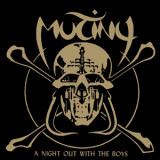
- Rare P-Funk album from 1983 - Funkadelic/Parliament All-Star Line-Up - First ever vinyl reissue - Comes with a repro of the original insert - 180g Black Vinyl Edition - Limited to 500 copies, comes with obi strip // Jerome "Bigfoot" Brailey is an American drummer who started performing in the early 1970s with several R&B groups from the likes of The Unifics, The Chambers Brothers and The Five Stairsteps where he developed his unique style and finesse on drums. Later in 1975 he joined George Clinton's P-Funk collective and has appeared on many of Parliament & Funkadelic's most popular recordings (some of which he also co-wrote). Brailey played on classic albums like `Mothership Connection' and `One Nation Under A Groove'. Samples from that body of work (and his drum arrangements) have since then appeared on hundreds of hip hop and contemporary R&B songs by renowned artists such as Kendrick Lamar and Childish Gambino. Jerome Brailey is a member of the Rock and Roll Hall of Fame (inducted in 1997) and part of their `50 greatest drummers in the Hall' list (stating that his drum style kept Parliament-Funkadelic rooted in the old-school `James Brown-style funk')_next to this achievement, he was proclaimed by Rolling Stone as one of the `100 Greatest Drummers of All Time' for his steady kick drum, shifty hi-hat action and intricately unpredictable snare patterns. Brailey earned numerous Gold and Platinum records with the P-Funk Organization and has worked as a session drummer for many talented artists such as Herbie Hancock, Buddy Miles, Snoop Dogg and Pharoah Sanders. George Clinton's funk empire was not without its disagreements and Jerome Brailey's `Mutiny' project was a direct result of just such a disagreement (as well as one of the more notable offshoots of the P-Funk axis). Mutiny performed in a style not far removed from the classic P-Funk style and with a lot of emphasis on the dual lead guitar work, but what makes them unique compared to their contemporaries is that at times their recordings also emit a darker, more sinister feeling. Besides Brailey on drums (and on most of the lead vocals) Mutiny featured a funk-alumni line-up and released three amazing and collectible albums: `Mutiny On The Mammaship' (CBS, 1979), `Funk Plus The One' (Columbia, 1980) and `A Night Out With the Boys' (J. Romeo, 1983)_these were followed by two comeback albums: `Aftershock' (Rykodisc 1995) and `Funk Road' (Catbone, 2013). The `Mutiny' album we are proudly presenting you today (A Night Out With The Boys) is an underrated gem made by musicians who defined the funk scene of the '70s and '80s! Featuring an all-star line-up that includes Rodney Curtis (Fred Wesley, Maceo Parker), Michael Hampton (Funkadelic-Parliament, Deee-Lite), Kenni Hairston (Cameo) and Maceo Bond of Osiris/Afrika Bambaataa fame! `A Night Out With The Boys' has it all: Jerome's trademark drumbeats, funky bass grooves, driving riffs accented by stinging synth parts, slow spacey (and prominently featured) guitars, top-notch lead vocals and chants that recall Sly Stone's "Loose Booty". The whole album is a hot dance jam with crisp percussion_an extremely infectious, locked-in-the-pocket bass-heavy monster-funk-bomb that any serious self-respecting funk fanatic must have in his/her collection!
In a time where everyone from Whitney Houston to Frank Zappa have been re-created in hologram form, where Grimes recently suggested in an interview that “we were at the end of human art”; there could scarcely be a better time for genre-shifting Leeds-based six-piece Team Picture to bring forth the thrillingly expansive synth-pop opus of their debut album The Menace of Mechanical Music.
Inspired by an early 20th century essay under the same name by American marching band leader John Philip Sousa, Team Picture take a look at the automation of creativity on this, their first record with a fully settled line up. Themes centre around the value of creative identity in an automated age, the increasingly disposable nature of art and where that leaves its creators. At twelve songs split into a three-part suite; The Menace of Mechanical Music is emphatically maximalist.
Tracks like the breathy, twinkling Flowerpots, Electric Beds and Handsome Machines’ Icarus-like striving for the sun are an antidote to a music world awash with digital production manipulation and songs written to algorithm. In debating the loosening of the human grip on creativity, Team Picture have poured every last drop of emotion into the recording process.
The group’s now trademark three-way vocal delivery and blurring of textures takes on new structure and purpose. They’ve always had a self-awareness to themselves, too. Initially grouped in with the guitar psych crowd, thanks to their fledgling repeato-rock, they were quick to disassociate themselves from that on 2018's mini-album Recital. With The Menace of Mechanical Music, they expand their sound further still, pirouetting from the likes of Sleeptype Auction – which glimmers like a late 80’s 4AD artefact – through various FX-laden dreamscapes, to the squelchy post-punk of closer Quit Reading. Yet the group were as much influenced by the work of the Early Netherlandish painter Hieronymus Bosch, and his triptych The Garden of Earthly Delights, as they were music touchstones ranging from Kate Bush, Cass McCombs and The Cure.
It’s Sousa words that resonate most deeply within the record however: “The fears of Sousa echo the fears of today's musician,” says Lewis of the late band leader’s 1907 text. “The re-appropriation of funds and support that the artist needs to survive, the gradual erosion of musicianship and self-improvement, that art will become disposable, and that our cultural identity will disappear.”
Recorded with producer Matt Peel (W.H Lung, Eagulls), half the group were unemployed during the session and a daily routine would see them undertake universal credit meetings and job interviews in the morning, before heading to the studio to work into the night. “It was an anxious process but an enjoyable one” says the band’s guitarist Josh Lewis. Indeed, beyond the increasingly golden gated idea of ‘making it’ as an artist, this new album is simply about surviving as one.
Sousa’s vision of a society that had deferred to automation, where babies were rocked to sleep by wheels and pulleys, and people no longer played piano with their own hands. Well over 100 years later and on the precipice of a technological shift never seen before, The Menace of Mechanical Music is the most human response that Team Picture could have given.
The fourth 10-inch EP from the 10th anniversary of U Know Me Records series comes from Immortal Onion. The album consists of 5 pieces. For those missing live concerts there are 2 songs taken from the band's performance on 8th of August at Jassmine club in Warsaw. The B-side starts with a rework of the song called "Leaving", originally composed by Hania Rani (who often performs with 2 members of Immortal Onion). The next song ("Zu Hause") was created especially for this album as the result of the band's experiments with electronics. The EP closes with a rework of "Eye Tracking" - a song from "XD Experience Design - made by Kadrych.
The rework of "Leaving" will be released only on vinyl and won't be available on streaming services.
Strictly limited edition - 300 hand-numbered copies. The first hundred will be released on red vinyl and copies from 101 to 300 as classic black ones.
The album was created with help of trusted people, who also worked on "XD Experience Design" - graphic design by Martiszu, mix by Envee (except the last song mixed by Maciej Stendek) and mastering by Eprom.
Never Give Up is Partner’s second full-length album, following 2017’s In Search of Lost Time.
In the years since their first release, the band has developed their “post classic rock” sound, trading their 90s rock influences, for deep power grooves, bona fide guitar heroics, and big-hearted vocals from singers Jos e Caron and Lucy Niles.
Partner deliver a more anthemic, kinder, queerer boogie, for all who love the perfect riff, the perfect drum fill, for all whom Rock is their rock.
Niscitam is the debut album by Australian musician and songwriter Blake Scott. Better known as a member of The Peep Tempel, Blake is revered for his character driven lyrics and pointed songwriting, evident across the band’s three critically acclaimed albums.
Written in the months leading up to the birth of his first child and during a period of extended sobriety, Niscitam is a recollection and reflection on dreams, memories and the pressures of everyday existence. Blake partnered with multiinstrumentalist and engineer John Lee to produce the album at Phaedra Studios in Melbourne with musicians Jacey Ashton and Nick Finch.
It remains voluminous and bold in arrangement, whilst taking a more introspective path lyrically. On one hand, the album explores the fear, anxiety, and questions of adequacy ahead of pending parenthood. On the other, it celebrates health & mobility, love & possibility and is an attempt by the artist to reconcile with his past, as well as cultivating a positive and nourishing path forward. The result is an astonishing debut album.
- A1: Samba Negra - Eberebijara
- A2: King Somalie - Monkey 'S Dance
- A3: El Grupo Folclórico - Tamba
- A4: Los Viajeros Siderales - El Campanero
- A5: Rio Latino - Ayu
- B1: Aníbal Velásquez - La Mazamorra Del Diablo
- B2: La Francachela - Mosquita Muerta
- B3: El Grupo Folclórico - Juipiti
- B4: King Somalie - Le Mongui
- C1: El Grupo Folclórico - El Tornillito
- C2: Samba Negra - Long Life Africa
- C3: La Banda Africana - Te Clavo La... Mano
- C4: Myrian Makenwa - El Platano
- D1: El Grupo Folclórico - Tucutru
- D2: Grupo Bola Roja - Caracol
- D3: El Grupo D'abelard - Otro Perro Con Ese Hueso
- D4: Conjunto Barbacoa - Wabali
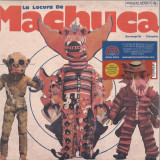
La Locura de Machuca is the story of one man’s bizarre odyssey into Colombia’s coastal music underground, and the wild, hypnotic sounds he helped bring up to the surface.
One night in 1975, a successful tax lawyer named Rafael Machuca had his mind blown in Barranquilla’s ‘Plaza de los Musicos’. Overnight he went from a high ranking position in the Columbian revenue authority to visionary production guru of the newly formed record label that bore his name, Discos Machuca, and for the next six years he devoted his life to releasing some of the strangest, most experimental Afro Psychedelia Cumbias ever produced. La Locura de Machuca is the story of one man’s bizarre odyssey into Colombia’s coastal music underground, and the wild, hypnotic sounds he helped bring up to the surface.
The Colombian music industry was thriving in the mid-seventies, but while homegrown bolero and vallenato tunes were doing well on the charts, it was imported African records that were setting crowds on fire at the picos – the sound-systems that fuelled neighbourhood parties – and wherever those records were played there were always a handful of groups who were inspired to plug traditional Cumbia directly into the electric currents coming from across the Atlantic.
It was these obscure bands, who fused Colombian and African rhythms with the swirling organs and psychedelic guitars of underground rock, that fired Machuca’s imagination. While the label made its money releasing popular hits by legends such as Alejandro Durán and Aníbal Velásquez, that money was poured back into a unique run of experimental releases by fringe artists such as La Banda Africana, King Somalie, Conjunto Barbacoa, and Abelardo Carbono, one of the godfathers of Champeta Criolla.
When Machuca couldn’t find groups to realise his particular vision, he simply created them himself. Drawing on a fearsome roster of musicians associated with the label, he assembled bands that lasted only as long as it took to record an album ,and unleashed the results – complete with arrestingly unusual album covers – under a series of different names such as Samba Negra or El Grupo Folclórico. This unorthodox approach led his longtime recording engineer, Eduardo Dávila, to describes Machuca’s productions as the “B-Movies of Colombian music.”
The story of Doctor Machuca and his eccentric exploits tells of one of Colombia’s most atypical and peculiar record companies; a defining pillar of Afro-Caribbean psychedelia. His productions have come to represent the roots of Champeta and set the pedigree standards for Afro and Costeño avant-garde. The seventeen tracks on La Locura de Machuca, harvested from the darkest, strangest corners of the Discos Machuca catalogue, sound like little else recorded before or since.
Far heavier than their previous record. That’s evident from the get go, as they bash their way through the opening track “Give Me Your Hand,” a rhythm-heavy number fueled by fiery guitar solos, strident vocals, and a hard rocking sound. Yet the band still takes some interesting excursions along the way. “Good Lord,” for instance, encompasses Latin rhythms, a Southern rock segment, space rock passages, and even pop. The Beatles get a nod on “Any Way,” and funk goes psychedelic on “Get One Together”. Still it’s a hard rocking extravaganza. In later years, Charge’s reputation among prog rock fans soared, more so than their self-titled album.
Charge! is available as a limited edition of 1000 individually numbered copies on silver coloured vinyl.
- A1: Rawhead Rex Main Theme
- A2: Welcome To Ireland
- A3: Rawhead Appears
- A4: Nicholson's Farm
- A5: “Just You Wait”
- B1: Boy Runs For His Life Through The Wood
- B2: Minty - “Gotta Pee”
- B3: The Vicarage
- C1: The Family Is Leaving
- C2: Gussing Opens Book
- C3: Howard Discovers A Strange Glass Window In The Church
- D1: Declan Goes Wild In The Church
- D2: Howard Discovers The Power Of The Stone
- D3: Rawhead Rex End Credits
- D4: There Is A Green Hill Far Away
Based on a short-story by the master of horror and fantasy, author Clive Barker (Hellraiser), Rawhead Rex is set in 1980’s rural Ireland. The Demon, alive for millennia and trapped in the depths of hell, is unleashed on the sleepy local farming community. Remembered faintly through pre-Christian myth, the only one that can stop Rawhead's bloody rampage is the historian, desperately racing against the time.
This is the first ever release for the soundtrack by Colin Towns, one of Europe’s most prolific film, television and theatre composers, but also a pianist, songwriter, arranger, producer and collaborator, known for The Puppet Masters, Space Trackers, Maybe Baby, Foyle’s War, Doc Martin, Pie In The Sky.
"The first film I scored was Full Circle which starred Mia Farrow and is still in the BFI top ten for best score for horrorfilms. I felt that film was more of a dark scary mystery. Rawhead Rex on the other hand was clearly a horror film 100%. I visited the film set in Ireland during the filming to take in the atmosphere and meet the actors after which I decided to record the music at CTS in London with a sixty piece orchestra plus electronics. I have always orchestrated my own work and had a wild time with Rawhead which is what I really love doing". Colin Towns
Southern Lord announce Crush The Machine, the debut EP from West Coast hardcore punk collective D.E.A (Dead End America), formed by the late, great Steve "Thee Slayer Hippy" Hanford of Poison Idea, with current and former members of Queens Of The Stone Age, Eyehategod, The Accüsed A.D, World Of Lies, Ape Machine, and more.
Captured before Hanford’s passing earlier this year, D.E.A's debut shall be released on 7" and digital EP on 30th October (Non-Returnable) Recording details, liner notes from Mark Lanegan and more info below.
Crush The Machine sees the primary writers, drummer/vocalist Steve Hanford and guitarist Tony Avila (World of Lies, Why Won't You Die, Aborted Cop, Here's Your Warning) joined by lead guitarist Ian Watts (Ape Machine, Minmae) and bassist/vocalist Nick "Rex Everything" Oliveri (Mondo Generator, The Dwarves, ex-Kyuss, ex-Queens Of The Stone Age), with additional lyrics and vocals from Mike IX Williams (Eyehategod, Corrections House, Outlaw Order) and Blaine Cook (The Accüsed A.D, The Fartz, Toe Tag).
"A perfectly appropriate title for this 7 inch EP of jack-hammering, oldschool style hardcore tunes released by Southern Lord, written and played by a rogues gallery of real deal music lifers as a condemnation of the criminal Trump administration and republican party, in the same spirit of those by-gone days when Ronald Reagan or George Bush was the crooked, self-serving president of the crumbling United States empire. Never before has there been a more obvious target, as Donald Trump and his mafia family cabinet rape the country while Rome burns. D.E.A. is Tony Avila, Ian Watts, Nick Oliveri, Mike IX, Blaine Cook and the legendary and beloved, late producer and drummer of Poison Idea, Steve "Thee Slayer Hippy" Hanford. Dying shortly before the completion of this record, it stands as a final testament to his genius, one last hot-wired blast of his epic musical brilliance."
Mark Lanegan
Los Angeles
August, 2020
In 1978 Pharoah Sanders went into the studio with pianist, Ed Kelly, who was an important figure in the local San Francisco and Oakland jazz scene. The two of them recorded six tracks which ranged from covers of standards, through soul jazz through to two real gems. The album was originally released as Ed Kelly and Friend due to Pharoah being contracted to Arista Records at the time. Indeed, as you can see, the cover shows Kelly playing next to Pharoah’s hat, shoes and Selmer tenor saxophone.
Rainbow Song, a Kelly composition, opens matters in a manner far removed from Pharoah’s work on his Impulse albums (although there had been a dramatic change of course when he signed with Arista and recorded). This is firmly in Grover Washington Junior territory with a liberal sprinkling of oh so tasteful strings. The Master’s sound is full and mighty as ever.
With the radio track out of the way it is business as hoped for and Newborn is a Sanders composition that burns with intensity. The power of his solo is as good as anything he has produced and he runs over the full span of the tenor’s range and onwards into territory lesser known or explored by 99% of sax players.
Sam Cooke’s You Send Me is treated with reverence and respect, with Pharoah delivering a sensitive and heartfelt rendition and ending with some extraordinary phonics, which we will meet again on later albums. Kelly’s accompaniment complements Sander’s playing before he receives his own space for a shimmering yet restrained solo which discloses what this non-pianist assumes to be an agile right hand.
Answer Me My Love is an early 50’s ballad with a fascinating back story. On its initial release in post-war Britain, covers of this fine melody stirred sufficient controversy for the song to be banned by the BBC. What led to it being barred from broadcast on the Light Programme and treated like Anarchy For The UK, Wet Dream and Give Ireland Back To The Irish? I can reveal that the reason for this draconian action was that the original version was entitled ‘Answer Me, My Lord’. In the olden days, it seems that a direct appeal to God was considered to be blasphemous- especially if set in a secular or selfish. Further research indicates that Nat King Cole made the most celebrated recording and that Bob Dylan used to sing it live in the 1990’s, presumably during his overtly Christian phase. Anyway, it is a grand tune.
Pharoah went on to record at least three studio versions of his great anthem You’ve Got To Have Freedom but the one here is the earliest incarnation that I am aware of. It is also the most restrained treatment of the theme, although Pharoah’s solo shows his ability to play with fire and power over the entire range of the horn. There’s plenty of space for Kelly’s piano too and he provides an elegant setting for Sanders’ exploratory work.
The fourth 10-inch EP from the 10th anniversary of U Know Me Records series comes from Immortal Onion. The album consists of 5 pieces. For those missing live concerts there are 2 songs taken from the band's performance on 8th of August at Jassmine club in Warsaw. The B-side starts with a rework of the song called "Leaving", originally composed by Hania Rani (who often performs with 2 members of Immortal Onion). The next song ("Zu Hause") was created especially for this album as the result of the band's experiments with electronics. The EP closes with a rework of "Eye Tracking" - a song from "XD Experience Design - made by Kadrych.
The rework of "Leaving" will be released only on vinyl and won't be available on streaming services.
Strictly limited edition - 300 hand-numbered copies. The first hundred will be released on red vinyl and copies from 101 to 300 as classic black ones.
The album was created with help of trusted people, who also worked on "XD Experience Design" - graphic design by Martiszu, mix by Envee (except the last song mixed by Maciej Stendek) and mastering by Eprom.
Back in 1977, the LP Point Of Know Return marked the commercial peak of Kansas. The Progressive Rock band had experienced tremendous success with their previous release (1976’s Leftoverture) and were no longer starving for a hit, yet the sessions for their fifth album were tense. Steve Walsh briefly left the group in the middle of these sessions. Nevertheless, the LP turned out an even bigger success for the band than its predecessor. It would be their highest charting record and with four million copies sold, it was certified Quadruple Platinum by the RIAA. The tour to support the album brought them to huge venues such as New York’s Madison Square Garden and the LA Forum, with the tour book including an essay written by Rolling Stone contributor Cameron Crowe. The band became a staple on FM radio at this point, and during this period was one of the most popular rock acts in the country. “Dust In The Wind” became the hit single of the album.
• 180 GRAM AUDIOPHILE VINYL
• INSERT
• MULTI-PLATINUM 1977 ALBUM FEATURING THE SINGLES “DUST IN THE WIND” & “PORTRAIT (HE KNEW)”
• LIMITED EDITION OF 1500 INDIVIDUALLY NUMBERED COPIES ON FLAMING COLOURED VINYL
Bristol-based trip hop trio Jabu this week announced details of their second album. ‘Sweet Company’ will be released on November 20th via the group’s own do you have peace? imprint.
Sweet Company is the second album by Jabu. Where their first LP, Sleep Heavy, was an unflinching exploration of grief, dark and disembodied, Sweet Company’s deep, sedative soul feels like more of a lovers’ outing: optimistic, becalmed, looking outwards as well as inwards, and longing for the kind of human connections where ego and self-consciousness might dissolve. It is perhaps also an exhortation to love and accept yourself, to recover a lost innocence and peace – that paradise which has always been lost. Released via their own do you have peace? label, Sweet Company is on the one hand a very intimate and private-sounding work - the sound of life played out in a room, a bubble, a home, a head. The rhythms of everyday domesticity: listening to the plants, cars in the street, voices through the wall…. going to work, not going to work, sleeping heavy or not sleeping at all. Wavering on the brink of a revelation, of something just beyond the material world, while you wait for the kettle to boil. The core Jabu trio of producer Amos Childs and vocalists Jasmine Butt and Alex Rendall is present and correct. Sweet Company has theexhilarating sweep and confidence of a collaboration between people who trust and understand each other implicitly, and, secure in that knowledge, are able to give the absolute best of themselves to us. As before, Jasmine’s voice is a textural, painterly instrument, layered and blurred into abstraction, resisting the limits of language; the songs she sings on are portals into vast internal landscapes where the normal rules of gravity are suspended, every sound is smothered in a cathedral-like resonance, and you're both fearful and hopeful that you might never find your way back out again. Alex takes a more narrative, confessional and no less engaging pop tack: as on the gauzy, decelerated 2-step of ‘Lately’, with his masochistic, self-mocking entreaties to “be cruel to me … I like it when you make a fool of me”. Childs has a true hip-hop fiend's ear for a striking sample, and how to loop it to most hypnotic and rapturous effect, but here takes things to ever more powerfully uncanny and auteurish places, drawing inspiration from the voidal bliss-outs of shoegaze (AR Kane’s amniotic dream-pop epic 69 is one influence cited) and the space-time disturbances of dub, commanding both a raindrops-on-cobwebs delicacy and an immense, oceanic pressure. His productions seem to resist linear progression - instead they move by a kind of unstoppable diffusion, like weeds reclaiming an unkempt garden, or alien flora patterning the sea-floor and coral-caves of the subaquatic level of a computer game which may exist only in your, or his, imagination. Perhaps it's Daniela Dyson, the British-Afro-Colombian artist who contributes her vivid, energising poetic mysticism to two tracks, who best sums up Sweet Company's ambition and effect: “Me quiero perder en los momentos tan puros en su esencia que Las Horas mismas se detienen para ser testigo de nuestro amor” (I want to lose myself in the moments so pure in their essence / that The Hours themselves stop to bear witness to our love…). For a precious half an hour, we're invited to celebrate the smallness of our lives - and the limitless grandeur which that smallness contains. When it ends, we step back from the brink but things aren’t quite the same anymore: we’re haunted by what we briefly almost knew.
Once upon a time “Miss Onion” made her way to Zanzibar, in search of real traditional African music.
Luckily, she got in touch with an Italian collective of people called Uhuru Republic, who were traveling throughout Kenya and Tanzania and collaborating with many local musicians, in studios and on stage.
One evening they were recording the Qanun, the main instrument in the Swahili culture, and Miss Onion participated the whole intensive session of music and Konyagi (the local most famous super alcoholic drink). She fell in love immediately with the Afro-Bass gem that was born, and decided to bring it back to Europe. Like this Miss Onion turned this particular piece into a sweet memory from a splendid trip to the heart of Africa.
We immediately shared Miss Onion’s love for this real tribal music experience called “Konyagi a Gogo”, fusing African instruments with electronic sounds and orchestral elements.
For the remix we put the stems in the expert hands of Rafael Aragon who greatly managed to give it an “even more clubbing” spin.
The result is a tasty 7” inches called “Veggie Tales Vol. 3”!!
We’ll hope you enjoy as much as we did.
Buon appetito!
The TDK maestros plays an oldschool 4 hands Live set... Invited at the first Acid Night party in paris to play, and releaseing the very first Acid Night plate here they come again for a raw acid banger 2 titles. 13/14 minutes each... 2 differents story telling, one pumpin and sweet and one raw and hard !
Splendid EP, collab masterpiece on the A-side... Starting with a 3-hands-tune, full of surprises and creations as well as reminicenses... So is the second track from Crom and Tettsuo. Big big surprise this one too !! The flip goes Solos tuens from the labels holders... Super mental introspections.
Without warning, a group of young girls from a remote region of Benin is shaking up the world of garage rock with breathtaking freshness, ingenuity and energy, playing spot-on, loud and clear.
A musician named André Baleguemon decided to form an exclusively female band rooted in the concerns of its time. He puts the spotlight on the guitar, drums and keyboard, instruments he has admired since his childhood, symbols of modernity in this remote region. His observation is simple: “In the North, girls have no room to advance and women are put aside. I simply wanted to show the importance of women in the societies of North Benin by forming a female orchestra “.
On July 25th, 2016, with the support of the city of Natitingou, André launched a press release on Nanto FM offering to help train girls in music for free. A few days later, dozens of aspiring musicians showed up at the Youth Center. “The girls who came didn’t know anything about music. We selected seven girls of the Waama and Nabo ethnic groups from the surrounding villages, some had never even seen these types of instruments before. “
The girls quickly became passionate about their new musical activities, learning how to play drums, guitar, piano and sing vocal harmonies. Their progress was astounding. An intense work of musical training took place, starting with drum workshops, their favorite instrument. Angelique and Urrice on drums and vocals, assisted by Marguerite, the third drummer. Sandrine is on keyboards, as is Grace, who also sings vocals. Julienne is on bass and Anne on guitar.
André’s determination is one of the key elements of this human and artistic success. The girls have already performed dozens of concerts in the region, forging and expanding an already solid repertoire, while attracting an ever-increasing local audience. In addition to musical progress, he has been personally involved with each family, showing them the importance of his project, both musically and humanly and in particular the fact that each girl must remain in school and not be forced into marriage.
At the end of 2018, their encounter with the young French sound engineer Jérémie Verdier accelerated the course of things. On a mission in the region, he called on his Spanish friends Juan Toran and Juan Serra who showed up with their recording equipment in order to record the band’s first songs in the annex of the local museum. Random encounters and fate led Jean-Baptiste Guillot to hear the tapes. He decided to go meet them at the end of 2019. This short but memorable journey sealed the fate of the record you are now holding in your hands.
Alfredo "El Inca" Linares is one of the best and most beloved musicians in the history of salsa. Fans love his piano playing because of his authentic Cuban feel and 'swing' combined with progressive arrangements and uncompromising phrasing. "Lo Que Tengo" is full of rock solid dance floor killers and no filler, recorded in 1980 with some of the cream of the crop of contemporary Venezuelan salsa musicians (members of Mango, Madera, El Trabuco Venezolano, Los Dementes, Los Melódicos, Dimensión Latina, Guaco, and La Salsa Mayor) and launched there on the indie label A.L.G. Records as ¡Con Todo!, and then a year later on the much larger Velvet Records with a different cover. This a classic Alfredo Linares album, but with the updated studio sound of 1980s Caracas. With five perfectly paced salsas, one funky cha cha chá, a steamy bolero and a dance-friendly Latin jazz number to top it off, there is something for everybody on this record. Thankfully today's generation can now enjoy this rarity at a fraction of the cost of an original copy. Presented in its original artwork and pressed on 180g vinyl. Good to know: Alfredo "El Inca" Linares is one of the best and most beloved musicians in the history of salsa. Fans love his piano playing because of his authentic Cuban feel and 'swing' combined with progressive arrangements and uncompromising phrasing that puts one in mind of Eddie Palmieri. As a composer, arranger and band-leader Linares is highly respected as well. Ever since the 1960s in Lima Peru when his career began, his records have always been on point, being super tight, sharp, and hard as hell, what salseros call salsa brava con afinque. It's no surprise that Lo Que Tengo is exactly that: full of rock solid dance floor killers and no filler, played with verve and flair. Unlike some of his other records that were patched together from various sessions made in different studios (sometimes even in several countries!), this album has the advantage of being produced, recorded and mixed by Alfredo Linares all in one studio and block of time, and backed by hand-picked seasoned professionals who Linares had already played with, both in the studio and on stage, lending it a consistency and sonic integrity that is excitingly manifest in every groove. The album was recorded in 1980 in Caracas with some of the cream of the crop of contemporary Venezuelan salsa musicians (members of Mango, Madera, El Trabuco Venezolano, Los Dementes, Los Melódicos, Dimensión Latina, Guaco, and La Salsa Mayor) and launched there on the indie label A.L.G. Records as ¡Con Todo!, and then a year later on the much larger Velvet Records with a different cover. The LP was also released in Colombia (INS, 1982) and the US (Gallo, 1984), both editions utilizing the Velvet Records cover. During this time Linares had been in Venezuela for some five years and was under contract with a nightclub in Caracas. Through being on the salsa scene there he became friends with the band Mango and even guested on an album with them in 1976. After the contract was up Linares was a free agent again and he was able to draw on his friendship with Mango and assemble a band to back him, first for the Colombian/Venezuelan production Salsa de Verdad (Fonodisco, 1976) and then again with ¡Con Todo! / Lo Que Tengo. One of the distinctive aspects of Alfredo Linares tunes is the 'break' (la cierre)-there are always plenty of dramatic hand-clapping breakdowns followed by an infectious tumbao (sustained vamp) section that sends shivers up the spine and makes the dancers go crazy. In addition, Linares always lets his musicians stretch out, especially in the percussion section. Again, Lo Que Tengo is no exception: there are so many examples of typical arrangements here that one could call this a classic Alfredo Linares album, but with the updated studio sound of 1980s Caracas, which was awash in petro-dollars at the time and so had the latest equipment and a strong consumer base for the salsa market. The album's title tune (originally credited on the Venezuelan edition as 'Lo que tengo que crear'-'What I Have To Create') is by Mango's timbalero José "Cheo" Navarro and sums up Linares' central career philosophy: the musician lives every day to create music, to spread joy and create a party, without complications, wherever he goes. With five perfectly paced salsas, one funky cha cha chá, a steamy bolero and a dance-friendly Latin jazz number to top it off (note the bluesy piano solo from Linares and the sublime vibes of Mango's Freddy Roldán), there is something for everybody on this record. Thankfully today's generation can now enjoy this rarity at a fraction of the cost of an original copy.
Type “Was Joan of Arc” into Google and the suggested endings for this statement give you an accurate gauge of her place in pop culture: “Catholic” / “a nun” / “canonised” / “a prophet” / “French” / “a witch” and so on. Related questions to “What were Joan of Arc’s last words” on the info-sharing site Quora include “Was Joan of Arc bisexual” and “Was Joan of Arc simply crazy?” Everyone seems to agree this person was burned at the stake in 1431, but beyond that, Joan’s narrative is an enigma. It is this lack of definition that the production duo Pillow Queen harnessed for their second release, Burn Me Up. Inverting the image of the devout Christian girl, the Joan who stands as this record’s heroine was a heretic, a transvestite, most definitely a dyke and a hot femme-top at that.
Opening up the A-side, the title track is a call— a battle cry, but also a summoning. In a time of need one calls upon their patrons and elders from history; a DJ beckons and gathers dancers to the floor; prayer and sweat go hand and hand. A traditional Irish bodhrán drum beats out the first rhythms, joined by a steamy vocal sample that gets caught, chopped, and soon “Burns Me Up” is pumping along with organ chords and distorted keys. Pivoting away from the 4/4 format, “Submission” is a textured, downtempo slow-burner, with close-mic’d vocals from Vani-T and the D. Tiffany’s deft drum programming. When the choral pads come in, there’s an echo of the 1990s German worldbeat project Enigma, with its Gregorian chants and flutes laid on top of lounge beats—here, though, the chorus is stripped of kitsch, only driving the track deeper into a mood.
If Burn Me Up’s sequence of tracks is read as a kind of narrative, they seem to tell the story of Joan’s last moments. “Burn Me Up” is, frankly, heat—aggressive, the high-end crackles and the bass puts a pyre under one’s feet. “Submission” is like an exhale, a giving-in to death’s grip; there is, along with the sensuous tread, a melancholy. It only makes sense that one flips the record to “Resurrection”, which rolls in a tremolo’d wail of pitched vocals for 30 seconds before a kick drum begins the 141-BPM march. The percussion is central here, as the track shifts between polyrhythms like a range of resuscitations, varied heartbeats. “Salvation” closes the record, again dialling back the tempo to the deep nod of dub. To no surprise, the scene of redemption here is not one of sunlit cherubs—the church bell sample tolls one strike every few measures of bass-throb and shadow, while Vani-T intones, “Then he lay down and died”. Death can be salvation to some; living as many selves, living in contradiction, is a saving grace to many more.
Gang of Ducks welcomes back Haf Haf, whose Notch ep, released in 2014, helped define the early sound of the label. Pattern of chaos is a journey through 8 heterogeneous tracks, where Haf Haf's unique timbre is the narrative voice.The pleasure of the exploration, finding out new places beyond what we're used to, is the main concept of the record.All the tracks sit on a blurred line. On one hand you feel the echoes of different genres, extracts of voices, samples, that you may be familiar with.On the other hand these tracks take a final shape you're not used to, making each one of them hard to label. Every track feels like observing a planet through a window, which filters the landscape while at the same time reflecting the image to the observer.Pattern of Chaos is a really singular record, which moves energies in a new way."
- A1: Mega Corp - Jon Sewi
- A2: Gladdics - Black Soyls
- A3: It's Tea Time - Renegades Of Jazz
- A4: Jagged - Serafin Plum
- A5: Opera - The Maenads
- A6: Sheikah - Double Screen
- A7: Put It On Ice - Stubby Dials
- B1: The Cards - Lucinate
- B2: Waving At A Melting Square Tooth Of A Specific Rabbit (Short Version) - Woodpecking Mantis
- B3: Lucempight - Wrenasmir
- B4: Poets And Rockets - Jay Solomon
- B5: Midnight Sun - The Motion Orchestra
- B6: What - Teis Ortved
- B7: The Last Recording From Earth - Funki Porcini
This compilation sees the coming together of independent music makers from across the globe to meet in one place and gather as a single entity. That simmering hub of warmth and affection is known as Motor Jazz - a place for artists to congregate and share their devotion for songs that are infused with rhythms created by anodic wires, buttons and other digital paraphernalia. That's electronic music to you and me, and in this case electronic music with swing, a sense of freedom and improvisation that some might call 'Jazz'.
The album opens with the ominous drone of the Mega Corp., sounding like one of the parties responsible for 2020's almost post-apocalyptic feel. It's perhaps an unlikely opener for a what's a positive and optimistic collection courtesy of young musicians from across the globe, but we all need to be reminded of who's in charge sometimes, and Dutch producer Jon Sewi does just that!
The mood soon lightens though, with the soulful strings and enticing keys of Gladdics by the mysterious Black Soyls, before well established German musical artisan Renegades of Jazz brings the family in for It's Tea Time with ticking clocks, warm tea pots and slices of cake, whilst being serenaded by a very vintage sounding horn section.
Serafin Plum almost steer us into drum & bass territory with their off-the-wall percussive nugget Jagged, whilst keeping a calming hand on the shoulder (as all good parents should) with soothing keys, before it's playtime once again.
There's nothing conventional about the Motor Jazz family though, and after tea time and play time, it's time to rave! In Greek mythology, The Maenads were female followers of Dionysus; their name literally translating as "the raving ones". Often they were portrayed as being inspired by the god into a state of ecstasy through a combination of dancing and intoxication, during which time they would dress in fawn skins and carry a thyrsus - a long stick wrapped in ivy or vine leaves and tipped with a pine cone. With a sound ranging between Jazz, Techno, Rave and Breaks their track, Opera, delivers a psyche and Jazz influenced piece with colliding styles, busy drums and rich melodies.
Heading over to Dublin, Ireland, and multi-talented producer, musician and DJ, Donal Sharpson (aka Double Screen) makes his presence known with grandiose brass preempting a four-to-the-floor wood block frenzy in the shape of Sheikah, complete with enthusiastic whoops and a persuasive bassline. Meanwhile, somewhere below the Irish Sea, aquatic artiste Stubby Dials delivers the bass worrying Put It On Ice the only way he knows how - living in a submarine, he emerges from time to time to leave his master tapes on the beach with a note saying "Release this!" before submerging, never been seen again.
Back in the Netherlands, Bram van der Hoeven, otherwise known as Lucinate, is an electronic Jazz producer par excellence. His effortless balance of organic musical roots like Fusion, Bossa Nova and Soul, into the world of modern beat orientated sounds is something to behold, and with The Cards he offsets life-affirming keys with rolling drums reminiscent of some of the seminal liquid Drum & Bass he grew up with.
As the global Motor Jazz family expands, we head to Canada, where the wonderfully monikered Woodpecking Mantis brings a little acid to the party with his squelchy, stuttering and brilliantly entitled Waving At A Melting Square Tooth Of A Specific Rabbit……. We're guessing they like acid a lot in Canada.
We're going down under to Newcastle, Australia next, where things take a more serene turn. Wrenasmir, known to his parents as Craig Smith, used to be a baroque pipe organist before he discovered samplers and synthesizers. Now he makes imaginary soundtracks at his studio for the twilight beachside city that lives in his head - full of vinyl and pixels and bittersweet memories. The gorgeous Lucempight is exactly that.
Keeping things low key and tranquil, Poets And Rockets, the latest offering from Jay Solomon is a horn driven slice of futuristic dub that makes way for The Motion Orchestra's majestic Midnight Sun, complete with Alexander Bednasch on double-bass, Mark Matthes on violins, Andy Sells on drums and David Hanke on electronics and production. Though influenced heavily by neo-classical and jazz sensibilities they occupy a musical space that sits in neither sphere, with a compositional style that deftly fuses the orchestral and electronic worlds. The full Motion Orchestra album, All One, will be released later this year on Bathurst.
Sixteen year old, self taught producer and multi-instrumentalist Teis Ortved is something of a prodigy. The Copenhagen based wunderkind has so far self-released two EPs, and if What, his offering here, is anything to go by, he's going to be making big waves across the eclectic music spectrum for years to come.
If Teis is the new kid on the block then what better way to round off this compilation that with its patriarchal figure. Funki Porcini has over a quarter of a century of recordings in his back catalogue, and has spent fifteen of those years dedicated to the independent UK behemoth that is Ninja Tune records. The Last Recording From Earth is exclusive to this album and is in many ways the perfect closing song. Perhaps more concept art than traditional piece of music, the idea behind it is that an alien archeologist has found this recording tens of thousands of years after humans have disappeared into the sand…. You never know, it might just happen, and hopefully Them To Us will take on a whole new meaning.
Flaming Tunes' sole release is perhaps the finest elegy to the '80s home recording ethos that you've never heard. Originally released in 1985 on cassette (with individually hand-colored covers), this self-titled album grew out of the collaboration between childhood friends Gareth Williams and Mary Currie.
Williams is best known as a member of English art-rock band This Heat. After leaving the group in the early '80s, he travelled to India where he studied classical Kathakali dance – an experience that would profoundly shape the music of Flaming Tunes.
In an old Victorian house in South London, the duo recorded during the day while Currie's young son attended school and Williams conducted tape treatments at night. They were joined by various guests including This Heat guitarist Charles Bullen as well as long-term collaborators Martin Harrison and Rick Wilson.
Using whatever instruments they had on hand (clarinet, piano, bells, etc.), Flaming Tunes create lo-fi melodies around simple arrangements, oblique rhythms and densely layered natural sounds. The results are a mesmeric collage of instrumental daydreams and sideways pop songs, floating into one another in a hazy confluence of late '60s Canterbury psych-folk and early Residents experimentation.
All of these beguiling elements converge in a personal manner, quietly insistent in listeners' ears like the blood pulsing in one's veins on a warm summer day.
As they were working their asses off on their respective projects last year, these two lads came together to deliver a not so formal four-handed introductive dance record. The purpose is crystal clear : one record capturing through three maximalists club tracks, both their obsession for digressive New Beat, Rave-infused House and in the background, dirty breakbeats bumping into thick Emo pads of Italo Disco or some leftfield Post Punk music. Those two were too young to experience the post-Disco big bang which occurred between 88 to 94, but they manage to embrace the spirit and twist it without any shame. Far from contemplating the European dance legacy, they bend it to create a second merciless big bang, right to the face. By that way, they offer you, happy raving people, these three restless pieces that are 200% coherent on their holy belief of a « Maximal Dance » aesthetic.
- A1: Slick Rick - Children's Story
- A2: Public Enemy - Fight The Power
- A3: 50 Cent - Disco Inferno
- B1: Eric B & Rakim - Juice (Know The Ledge) (Know The Ledge)
- B2: Young Mc - Bust A Move
- B3: Snoop Dogg - Gin & Juice
- C1: Cypress Hill - Hand On The Pump
- C2: Mobb Deep - Shook Ones (Part 1)
- C3: Gang Starr - Mass Appeal
- D1: Method Man & Redman - Da Rockwilder
- D2: Terror Squad - Lean Back
- D3: Onyx - Slam
Nach der gefeierten Premiere des Dokumentarfilms „L.A. Originals“ in diesem Frühjahr erscheint nun der Offizieller Soundtrack zum Netflix-Film.
Die Geschichte dreht sich um den Hip-Hop-Fotografen Estevan Oriol und den Tätowierkünstler Mister Cartoon (Mark Machado).
„L.A. Originals“ folgt den beiden L.A.-Einheimischen von ihrem ersten Treffen im Jahr 1992 bis hin, dass sie zu den größten und einflussreichsten kreativen Chicano-Künstlern der SoCal-Straßenkultur, des Hip-Hop und darüber hinaus wurden.
Big Crown Records is proud to present Ekundayo, Liam Bailey’s debut record on the label. This album is a long time in the making, and after listening, clearly worth the wait. It didn’t take a long time to record, but it did take years for all the stars to line up.
Bailey, born and raised in Nottingham, England, the son of an English mother and Jamaican father got his early influences from his mom’s record collection. Bob Marley and Dillinger, Stevie Wonder and The Supremes, The Beatles and Jimi Hendrix would eventually shape the singer/songwriter we know today.
Fast-forward to 2005, Liam is in London and doing the whatever-gig-you-can-get musician hustle with hopes of landing a record deal. And it was through this time that Liam first teamed up with Leon Michels, musician / producer luminary, and the co-founder of Brooklyn's own Big Crown Records. Liam flew out to New York and those first sessions together produced the now classic tunes “When Will They Learn” and “I’m Gonna Miss You” which still get spins at reggae spots around the globe. That trip helped kick off what was to follow next for Liam: a slew of record releases, label deals, and working with some wildly-notable mainstream producers. Even a just-famous Amy Winehouse heard one of Liam's apartment-made, lo-fi recordings through a friend and liked what she heard. Regardless of the audio quality, Liam's particular sound shone through—all guitar, warm-rough and genuine soul. She signed him to her label shortly after.
But, as the story can go with major labels, they already had an idea of the Liam they wanted to make, promote, and push. With the typical pay-day enticement, Liam did his best to fit into whatever shape they put him to. "'Maybe I can make it work,' that's what you're thinking," Liam remembers, "but, you quickly find out that you can't."
While Liam’s career went through a bunch of record industry twists and turns he and Michels stayed in touch and would regularly connect and collaborate. Finally, in 2019, the time was right to do a full-length album together. And this time, it would be free of any restricting major label presumptions and opinions. "This is the record we always wanted to make," says Michels. Set to release in November 2020, the album is called Ekundayo. And the word's meaning may be all you need to know to get to the essence of this project. It means "sorrow becomes joy" in Yoruba, a language spoken mostly in Western Africa. On the surface, Ekundayo is a weighty Reggae record, full of new and old textured riddims. But listen more in-depth, and you'll find subject matter that's more recognizable from a modern-day R&B record. An example of the former is the first single off the album. Sung to the most beautiful woman at the nightspot, "Champion" is a joyous anthem powered by a silly-thick Juno-bass throb and 808-proof drums. In short, "Champion" is dancehall-ready. But then there's a song like "Don't Blame NY." Moody and sparse with a somber drive, you might have to resist the urge to compare it to a Frank Ocean-ish type vibe. Liam's voice is in a different but fitting element here, showing stripped-back emotion and soulful restraint. Anyone who has lived and tried to thrive in New York won't have a hard time relating to the lyrics but they may join the masses who blame the city, while Liam points the finger at himself and sings praises to The Big Apple.
Credit to Leon's hand, elements of Jamaican production are everywhere, peppered throughout the record. Like the pitch-perfect organ stabs that push through the authentically positive "White Light," or the muted, percussive guitar strums that chug along in the back of "Fight." In the same vein of any fantastic singer/songwriter album, Ekundayo is a reflection of who Liam Bailey is, taking on topics and approaches he never would think of just a few years ago. Some evidence: "Ugly Truth" is about reconnecting with his biological father, a subject he once thought would be too personal to address. The journey from conforming to major labels to this latest record has been a long one for Liam, and a bit of a struggle. But struggle may be the only way we truly grow and evolve. With a new clarity of purpose, sound, and life, Liam has found joy out of those struggles. And it's called Ekundayo.
- A1: Idealism – Somehow
- A2: Wun Two – Blue Avocado
- A3: Matt Mcwaters – Keep Her
- A4: Pastels – Looking Back
- A5: Swum – Aqua
- A6: Ta-Ku – Remember Me
- A7: Vhvl – Cght
- B1: Eevee – Serenity
- B2: Chief. – Merlot
- B3: Laguna – Lone Rider
- B3: Kerri – Parc
- B4: Saltyyyy V – Miss U
- B5: Peachy! – Stroll
- B6: Jinsang – Staring Off
Vol. 2[20,63 €]
After the very successful EP releases of quickly, quickly’s “Over Skies” in mid 2018 (27m spotify-streams) and Please Wait’s “Black & White” in late 2019 (6,4m spotify-streams to this day) Jakarta Records and Ta-ku take their joint label to the next level presenting 823’s very 1st longplayer - a compilation feat. an international line-up of already established as well as up & coming Lo-Fi producers, handpicked and curated by none other than 823 label-head Ta-ku himself.
1st single to be released on 21st of August is „Serenity“ by prolific 27 year old producer eevee (1,5m monthly listeners) from the Netherlands aka „the queen of Lo-Fi“ delivering a loopy and very hypnotic tune w/ quite jazzy horns feeling like watching the sunset on a desert planet like Dune - from outer space.
2nd single will be a double-single, coming on September 11th w/ finnish indie-producer Idealism (2,5m monthly listeners) and his tune “Somehow” – a steady and softened beat w/ colorfull and chilled piano chords – on the one side and Ta-ku’s “Remember Me” - another powerful Lo-Fi anthem by the Australian allrounder and 823 patron - on the flipside.
The compilation’s 3rd drop will be a double-single as well featuring 19 year old, US-based self made producer Peachy! (2,6m monthly listeners), delivering his Shanghai inspired, very spheric walk-by tune “Stroll” on one side while Laguna contributes his slowly uplifting but very keen “Lone Rider” on the flipside, catching that specific moment when switching from boredom to euphoria right away.
All singles off the compilation will be accompanied by customized visuals from different filmmakers catching the songs’ very own vibes. The compilation’s artwork comes along in its very own and unique 823-style.
Worldwide web promotion for this release will be handled and taken care of by Jonathan Kim.
_____
Ta-ku’s 823 label represents the appreciation for the people, ideas and places that inspire and push their protagonists forward. The artwork is shot by the artists themselves and each release has an accompanying photo zine that acts as a visual story to compliment the music being showcased. 823 is also the numerical representation of the phrase 'Thinking Of You'.
“823 celebrates the simple beauty of everyday life and the people in it that inspire us. In that spirit we are proud to present our very first compilation featuring artists we love. All Things Considered Vol.1” (Regan Matthews aka Ta-ku)
Trouble, the aptly named new album on Goner Records, is a confident and joy-filled statement delivering the good-news gospel message unapologetically through music influenced by Ray Charles, Junior Kimbrough, Bill Withers and of course, his father.
Recorded at legendary Royal Studios in Memphis by Lawrence “Boo” Mitchell (Al Green, Solomon Burke, John Mayer, Buddy Guy, Mark Ronson & Bruno Mars, North Mississippi Allstars), Trouble is the culmination of everything in Rev. Wilkins’s remarkable life, his regional history, his family music history. And in a world once again riven with discord and division, like the Memphis of Wilkins’ youth in the 1960’s, Trouble delivers passionate and confident musical performances with a message of hope that meets our present moment equal to the best music from that earlier era.
To call the Reverend John Wilkins a national treasure would not be an overstatement. He is the son of pre-war blues/folk-revival legend Reverend Robert Wilkins and he leads one of the most exciting and uplifting musical acts on the blues and gospel circuit today. His multiracial, multi-generational band blends soul, southern gospel and hill country rhythm, into a sound that has the infectious drive of hill country blues with the emotional heights of a summer tent revival.
Following in the footsteps of his famous father Rev. Robert Wilkins, a blues-singer turned preacher who went from the juke joint to the pulpit, the life of Rev. John Wilkins took a similar path, echoing the story of the elder Wilkins’ most famous song, “Prodigal Son.”
But in 2020 John Wilkins’ life has been closer to a different iconic bible character, Lazarus, as he has miraculously risen after surviving a month-long stay in intensive care battling Covid19 in a Memphis hospital. As Rev. Wilkins sings on the closing track of his forthcoming album, “I’ve come through the storm and rain, I’ve come through the storm and rain, and I made it!”
LINER NOTES BY JOHN-PAUL SHIVER:
Reinier Thijs a.k.a. Thijsenterprise's new project Lahringen begins where most of his previous creations have left off. Through reedy skronking sax, no easy listening aesthetics here, we get that passport to the '80s. The intersection between Lou Reed's old New York attitude and the encroaching rhythmic assault about to hit. Post-punk, featuring steady bass lines—peak demon Jaco to cool as fuck Slits era—in transit.
The first track in, bumping new-wave-jazz bravado, immediately covers those grounds the Dutch native likes to dig in on. He pays tribute to Gato Barbieri with "El Arriero", continuing in that off-kilter mash-up of sound textures. This time its beats and machismo.
But "Sketchy", an original arrangement, taps Reinier's dedication to skateboarding. Named for when skate rats land a trick sloppy, non-smooth, or ugly he does in fact match the sound of the bass with the feeling of ‘meh.’ “The drums and percussion in the track carry a driving pulse, and the saxophone plays a light melody, ping-ponging between the groove of the rhythm section, making the track very repetitive, catchy," stated Reinier.
By 1995 Kwaito was already a well established and distinguishable sound compared to the International House Remixes that preceded. The tempo was slowed down, Soulful vocal samples were replaced by catchy and repetitive hooks and versus sang in vernacular. The new hit sound had a template and studios worked around the clock to pump fresh releases into the demanding market.
After the successful 1995 release of Import mixes Vol 4, The Groove City team behind the productions now decided to venture into the territory of Mid Tempo. They would craft an album for a young frontman with the help of Kwaito pioneer Oscar Warona, and without much trouble, the team had their first hit on their hands. Filling the boots of their cars with copies of the cassettes and taking the stock to various townships around Johannesburg the tape quickly circulated and sold out every new batch that was printed. Demand was high for the release but as with much of the music at the time, the fast paced demand for the music moved on. Without a follow up release Scotch failed to ride the momentum built by the debut and remained largely unknown although he is still in the music industry to this day.
Even with their first artist release being a success, the following years proved more difficult in reaching such a large audience for the Kaleidosound studio. With popularity for the genre growing, the simple templates for early classics were changing as Kwaito fused with hip hop. Rapping took over as the preferred vocals for the masses. Mysterious production teams and labels that served as guides for music lovers were eclipsed by frontmen and groups that could draw crowds. The fight for fresh sounds continued as the airwaves became the main battleground for artists and the more club oriented music was pushed back underground, eventually evolving into some of the earliest examples of Deep House seen on the continent. The Kaleidosound production team would finally strike gold again in 1997 when reviving Groove City for vol. 5 which acted as the debut for the newly formed group Chiskop. The group would become superstars of the new commercial era that followed, sparking solo careers for the members and creating some of the biggest hits the genre knew.
To this day Scotch remains one of the best albums to come out of the golden era of Kwaito. Although it was outperformed by other groups from the time it has a special place for those who knew it and can still be found as a treasured piece in many collections. The various people involved created a one off fusion of sound that has remained fresh for 25 years. Playful lyrics over floaty grooves resulted in favourites like “Jam Alley” which uses catch phrases from the beloved TV show and “Bafana Bafana” guaranteed to get the boys on the dance floor. Here you have these two tracks taken from the album pressed on a club ready Maxi Single for the Deejays
Amsterdam based Spill Gold ( who previously released on Portland's Beacon Sound) with a jaunty 7 track mini album for Knekelhuis. sleeve art from Jacob Hoving.
The label say:
"The summer breeze has gradually turned into a cold wind and the trees showcase their typical variegated color palette; autumn has clearly arrived in all its golden glory, a transition exemplary for Spill Gold’s work. The Amsterdam duo’s music is every bit as colorful and moving as its seasonal counterpart, where one moment a cold and stormy wind swarms the air and other times calm and stillness prevail.
On Highway Hypnosis, their first album on vinyl, Spill Gold masterfully juxtaposes darkness and light, playfulness and control, enhancing the transcendental character of the material at hand. Based on strong pop structures, the songwriting here traverses a world of Krautrock and cosmic influences at once catchy and alienating, opening the possibility for catharsis.
They’re a wonderful addition to the versatile nature of Knekelhuis. And they’re crazy good live as well."
Big Crown Records is proud to present Ekundayo, Liam Bailey’s debut record on the label. This album is a long time in the making, and after listening, clearly worth the wait. It didn’t take a long time to record, but it did take years for all the stars to line up.
Bailey, born and raised in Nottingham, England, the son of an English mother and Jamaican father got his early influences from his mom’s record collection. Bob Marley and Dillinger, Stevie Wonder and The Supremes, The Beatles and Jimi Hendrix would eventually shape the singer/songwriter we know today.
Fast-forward to 2005, Liam is in London and doing the whatever-gig-you-can-get musician hustle with hopes of landing a record deal. And it was through this time that Liam first teamed up with Leon Michels, musician / producer luminary, and the co-founder of Brooklyn's own Big Crown Records. Liam flew out to New York and those first sessions together produced the now classic tunes “When Will They Learn” and “I’m Gonna Miss You” which still get spins at reggae spots around the globe. That trip helped kick off what was to follow next for Liam: a slew of record releases, label deals, and working with some wildly-notable mainstream producers. Even a just-famous Amy Winehouse heard one of Liam's apartment-made, lo-fi recordings through a friend and liked what she heard. Regardless of the audio quality, Liam's particular sound shone through—all guitar, warm-rough and genuine soul. She signed him to her label shortly after.
But, as the story can go with major labels, they already had an idea of the Liam they wanted to make, promote, and push. With the typical pay-day enticement, Liam did his best to fit into whatever shape they put him to. "'Maybe I can make it work,' that's what you're thinking," Liam remembers, "but, you quickly find out that you can't."
While Liam’s career went through a bunch of record industry twists and turns he and Michels stayed in touch and would regularly connect and collaborate. Finally, in 2019, the time was right to do a full-length album together. And this time, it would be free of any restricting major label presumptions and opinions. "This is the record we always wanted to make," says Michels. Set to release in November 2020, the album is called Ekundayo. And the word's meaning may be all you need to know to get to the essence of this project. It means "sorrow becomes joy" in Yoruba, a language spoken mostly in Western Africa. On the surface, Ekundayo is a weighty Reggae record, full of new and old textured riddims. But listen more in-depth, and you'll find subject matter that's more recognizable from a modern-day R&B record. An example of the former is the first single off the album. Sung to the most beautiful woman at the nightspot, "Champion" is a joyous anthem powered by a silly-thick Juno-bass throb and 808-proof drums. In short, "Champion" is dancehall-ready. But then there's a song like "Don't Blame NY." Moody and sparse with a somber drive, you might have to resist the urge to compare it to a Frank Ocean-ish type vibe. Liam's voice is in a different but fitting element here, showing stripped-back emotion and soulful restraint. Anyone who has lived and tried to thrive in New York won't have a hard time relating to the lyrics but they may join the masses who blame the city, while Liam points the finger at himself and sings praises to The Big Apple.
Credit to Leon's hand, elements of Jamaican production are everywhere, peppered throughout the record. Like the pitch-perfect organ stabs that push through the authentically positive "White Light," or the muted, percussive guitar strums that chug along in the back of "Fight." In the same vein of any fantastic singer/songwriter album, Ekundayo is a reflection of who Liam Bailey is, taking on topics and approaches he never would think of just a few years ago. Some evidence: "Ugly Truth" is about reconnecting with his biological father, a subject he once thought would be too personal to address. The journey from conforming to major labels to this latest record has been a long one for Liam, and a bit of a struggle. But struggle may be the only way we truly grow and evolve. With a new clarity of purpose, sound, and life, Liam has found joy out of those struggles. And it's called Ekundayo.
- A1: Mala Morska Vila
- A2: Witches Firewall
- A3: Pearls From The Deep
- A4: King Of The Ocean
- A5: The Pendant/The Little Mermaid (Theme)
- A6: The Song Of The Siren (Theme)
- A7: The Sixth Sister
- A8: Statue Of Salt 1
- A9: Aquatic Babicka (Theme)
- A10: In Safe Hands
- A11: Aquatic Babicka (Song)
- A12: The Black Sea
- B1: Statue Of Salt 2
- B2: Carodejnice's Castle
- B3: The Song Of The Siren (Song)
- B4: Prince Of The Southern Empire
- B5: Games/Echoes
- B6: The Kiss
- B7: Ascension To Fireworks
- B8: Bird In A Cage
- B9: The Voice
- B10: Behind The Rock
- B11: Sunken Dagger/The Little Mermaid (Song)
- B12: The Pendant
2020 PRESS
The original orchestral/electronic score from Karel Kachyna’s 1976 Czech film adaptation of Hans C. Anderson’s The Little Mermaid, composed by Zdenek Liska (The Cremator / Fruits of Paradise) featuring Lenka Korinkova. Available for the first time since being originally pressed in 2011 as part of the ongoing Finders Keepers’ 15th anniversary retrospective. Check!
Liska's legacy in the history of European cinema is huge in volume but relatively modest in it’s celebrity. Having already composed nine scores for Kachyna’s films to add to his 1976 filmography of 150 completed soundtracks.
Back in 2005, five years before Finders Keepers Records released Zdenek Liška’s soundtrack to Malá morská víla for the first time, folklore and fairy tale fanatics around the globe celebrated the 200 year anniversary of the birth of one of the world’s most celebrated children’s authors of the published era. This Danish born writer’s stories have been translated into over 150 languages and have continued to enchant and inspire children and adults, arts and crafts, film and theatre, providing a creative binding substance in modern society’s social fibre. With a life story that entwines equal measures of tragedy, mystery, intensity and majesty to that of his own written work, Hans Christian Andersen’s early years balancing contradictory roles as a weaver’s apprentice, a soprano singer, a fledgling poet and an abused grammar school pupil with speculative links to the monarchy, manifested themselves in his written world of fantasy and fiction. His running themes of mutation, metamorphosis, rebirth, prejudice and class distinction are none more prevalent than in what are perhaps his two best known tales The Ugly Duckling, first published 11th November 1843, and the bittersweet surrealist tale of The Little Mermaid, printed in the third booklet of the first volume of Eventyr, Fortalte For Børn (Tales, Told For Children) in 1837.
One of the most idiosyncratic and haunting undiscovered scores in the annals of European cinematic history, Liska’s forward thinking score has all the hallmarks of a Broadcast record, some 20 years before the band first committed sound to vinyl..
Beautifully remastered with updated liner notes including rare photos ith the full cooperation of the seminal Barrandov studios in Prague.
Sutja Gutierrez is back on Lumière Noire. The finesse of his productions and his implacable stage performances have given him a special place within the Parisian label. In 2017, he released the EP "The Legend of Time" and one year later, he appeared on the compilation From Above with his track "Allodoxaphobia". He comes back here with an LP entitled PHYLAX SOCIETY, which confirms that Sutja Gutierrez is indeed an artist in his own right. Phylax means guardian in Latin, and the album’s title is directly inspired by the “Phylax Society”, a group of people who, in the late 19th century, wanted to create the ultimate canine breed, but who due their lack of consensus failed and dissolved. Later on, an ex-member eventually bred the very first German Shepherd. On this heartfelt record, as emotional as it is catchy, the artist deals with the feelings that come after the loss of a loved one, chiefly nostalgia and melancholia. The result is an ardent record where crooning is sincere and never a posture. The artist’s lo-fi psychedelic pop trademark oozes in every track of this album. Many of these songs feature his vocals, often doused in ethereal echoes or even shrewdly chopped and distorted in a way that reminds us of the great musique concrete experiments of the past. A DIY approach sometimes indebted to punk and post-punk music, all mixed with a vast variety of traditional pop instruments such as guitar, bass, electric keyboards and real drums, but also drum machines, synth bleeps, found sounds and other strange but fascinating samples. EMPTY FLOWER POTS, which was released as a single ahead of the LP, is definitely one of the album’s standout tracks. This catchy mid-tempo song is the perfect entry point into Sutja’s finely twisted world. A world in which you can find that particular balance between nostalgia and optimism. Oh, life is great, what is life? Life is death. . he sings. It is one of those songs that stays in your head for a while. Do not let the idea of alternative pop fool you, it is quite impossible to listen to any of these songs without reacting in some way or another through moving, dancing or thinking, regardless of the tempo or meaning. I’M DIGGIN’ might be the perfect example of this. Deceptively simple and far removed from dance music, this rock-infused number will not only have you singing along instantly, but you will also find yourself dancing and responding accordingly to the energetic mantra of this song... I'm digging for the truth, I am so diggin' into it. Truly, the dance floor is never too far, sometimes quite blatantly and sometimes in a more oblique fashion. Another case in point is PHYLAX SOCIETY, the eponym track which closes the album, a song in two parts, where a slo-mo club groove carries Sutja’s trademark singing to yet another level of uniqueness, with his surreal soundscapes, twisted melodies and everyday life sounds. An ode to humanity and an homage to the ones who are risking their lives every day in the mediterranean sea. It is rare to encounter an album which is immediately satisfying on one hand but also reveals more and more beautiful secrets with each listen. PHYLAX SOCIETY is clearly one of those special albums.
Mow Records proudly presents L’enfants De Kita, the third album from a series of five, all produced by label owner Mowgan. Each album features vocalists and performers with African heritage, channeling Mowgan’s passion for the continent’s diverse sounds into vibrant, highly emotive productions. On L’enfants De Kita he teams up with Fanta Sayon Sissoko, a female performer from West African nation Mali. Based in Toulouse, where the album was recorded, Fanta’s musical roots go deep - her father played guitar and ngoni for Baaba Maal and her grandmother is Kandia Kouyaté, one of Mali’s best-known griot singers.
Mowgan always dreamed of working with a female singer from Mali, enchanted by their vocal style. After moving back to France a few years ago he bumped into Eric Diaouré, an old friend who he worked with in his teens. Eric is also a musician and just so happens to be from Mali. Mowgan revealed his ambitions to Eric and a meeting with Fanta was arranged - within a few days they were in the studio together.
Like the other albums in this series, L’enfants De Kita is a fusion of Mowgan’s love for African music and his penchant for electronic sounds. Fanta’s raw, affecting vocals are complemented by Mowgan’s considered production throughout with additional instrumentation from a range of performers, including a group of schoolchildren on ‘Tubani’. Featured artists include Solo Sanou (whose album ‘Soya’ was the second release on Mow Records) playing percussion, Mamadou ‘Madou’ Dembele, a multi-instrumentalist who plays ngoni, Yohan Hernandez on guitar and bass plus Madani Touré aka Chanana (a famous Malian rapper from the nineties) contributing to lead vocals on the album’s title track, with Tim Xavier handling mastering.
Mowgan’s approach to creating albums is to get a vibe going with the singer, produce a batch of songs and then select the best seven for each LP. It’s a pressure-free attitude that has led to some truly heartfelt productions, which encapsulate the purity of the creative process when it’s liberated from rigid constraints. You can hear this freedom of expression throughout L’enfants De Kita, Fanta in her element as she sings with passion and grace across all seven tracks.
The album begins with the title song ‘L’enfants De Kita’, which pays homage to Fanta’s hometown, Kita, in Mali. It is the centre of griotism, the local style of passing on knowledge from one generation to the next via spoken-word storytelling. Chanana joins Fanta on this one, which is the most ‘western’ sounding cut on the LP, Mowgan’s deft touch taking us to the dance floor, while Chanana adds extra depth with his rapid-fire vocal refrain. The glorious ‘Tubani’ tells the story of Djene Tubani, a girl who thought she was a bird. She disobeys her parents and neglects her friends, but eventually learns the error of her ways. Fanta’s vocals are amplified by the voices of a group of schoolchildren, including her own daughter.
‘Mobaya’ is a reminder that we can possess wisdom and deep knowing, but we can also enjoy ourselves; dance, sing and party. This is a club-focused production with 4x4 beats and a traditional house feel, which provide a wonderful accompaniment to Fanta’s uplifting vocals. Next up is ‘Dakan’, a cut which is all about destiny: Everyone has been put on Earth for a reason and by working together we can all achieve our destiny. Layers of percussion skip over the warm low end, with a lively trumpet appearing in the second half.
‘Dounouya’ explores the notion that we live in a world where everyone faces negative criticism. Fanta encourages us to take responsibility and move forward no matter what others think of us with this inspiring guitar-led cut. ‘Djonya’ highlights the fact that slavery still exists in today’s world - modern slavery, hidden from public view but still very much alive. “Our Africa is going to be okay if we all hold hands, if we are all together, all united,” she says. Finally,‘Badeya’, a great outtro which focuses on unity. We are all one family on this planet and this song speaks of people coming together but also respecting ourselves above everything else. The pace is slow and the instrumentation perfectly balanced to allow Fanta’s vocals to flourish.
Twenty vinyl releases is a strong landmark in any labels life most especially in these ever unpredictable days. Tropical Disco Records have reached that number with some verve. Over the last three years they have had a succession of chart-topping, sell-out releases fusing their love of the Jazzier edges of house music with contemporary disco and plenty of sure-fire club hits. So successful has the label been that they have in a short space of time that they have quickly become one of the most established labels releasing across the disco spectrum.
As you would expect Tropical Disco Records have put together a very special collection of tracks to celebrate their twentieth edition. Uniting Italian producer Paul Older with England’s Tung-Sol, Greek disco don C. Da Afro and London’s label head Sartorial the EP marks all points on the European compass. It’s an EP which shows the clear impact that Disco has had across the continent and indeed that we are all united by the power of music.
The opening move goes to Paul Older with his delightful track ‘Nothing’ and it’s the perfect feel-good moment. Wonderfully warm vocals, layers of Saxophone, guitar licks aplenty and some tight drum programming give it an energetic live feel as if Salsoul’s band are playing this in the corner of your club. ‘Nothing’ is a track which transcends pigeon holing and as such is perfect for a variety of situations from sun soaked day parties to peak-time dance-floors.
Tung-Sol’s ‘One for Frida’ is packed with layers of brass giving it a truly enigmatic feel. It’s a track which has discernible African overtones but as seen through the lens of American funk and transcribed by a disco loving auteur. Its effervescent feel is hammered home even further with the addition of Jazzy keys. ‘One For Frida’ is as multicultural a track as you will find in the Disco pantheon and as such will see this picked up by a multitude of genre hopping DJ’s.
‘Shiva’s Chant’ see’s label co-boss Sartorial adding Eastern influences to what is already a globe trotting selection of sounds on Volume 20. Its smooth keys and brass stabs give it an undeniable charm which will see it in heavy demand with sun worshiping DJ’s and for summer playlists alike. Sitars, guitars and trumpets combine here for an intoxicating mix of sounds which help this track stand out from the crowd.
Closing the EP out is perhaps Disco’s most prolific producer C. Da Afro. His sure hands deliver yet another club smash in the shape of 'Street Jam'. Powerful strings immediately establish this as a track which has no intention of letting you do anything other than dance with abandon. It’s a straight to the dance-floor combination of percussion, guitar licks and delightfully effusive vocals. Combining the best moments of 70’s disco he’s crated a sensational club jam.
With their twentieth release Tropical Disco Records continue to redefine the notions of what disco is in 2020. With releases this exciting we can’t wait for the next twenty.
The story of how Transatlantyk came to be is, in many ways, one typical of our times. We've grown accustomed to being isolated, even stranded, in recent months, and Technology has become our means of overcoming these aspects of quarantine.
For Lübeck-based producer David Hanke, a.k.a. Keno, and Los Angeles-based musician Tristan de Liège, their intercontinental relationship began long before the days of lockdowns and social distancing. The pair 'met' on-line through mutual friends back in 2018 and quickly realised they were, in a musical sense, kindred spirits. Their shared tastes meant that what started out as a single track quickly morphed into an EP, and finally the full length album that you're enjoying right now.
Tristan's experience as a neo-classical musician was the ideal foil for Hanke's skills with a sample and production expertise. Both shared a love of the more lush and cinematic end of instrumental Hip-Hop and Downtempo music. This sound partnership is evident throughout the album, but particularly on tracks like Nkosi, and the title track, where luscious string sections dance playfully with fractured, programmed beats; or the melancholic opener, Kouyou, where more laid back drums underpin muted horns and joyous harps.
The pair's perfectly formed fusion isn't the end of the story though, as French chanteuse Elodie Rama is on hand to provide not only some impeccable vocals, but also irresistible melodies to this already mellifluous long-player. Speak The Language sees this brilliant vocalist drift seamlessly between euphonious song and spoken word whilst delivering one of the ariose moments of the whole album. Elsewhere, on Dancing In The Dark, Elodie gives a slightly more sombre performance, combining with lavish strings and driving rhythms to a tee; and on To Find A Way offers up an even more emotional and almost heart-breaking performance, aided by wistful and forlorn instrumentation.
Transatlantyk is a body of work from an amalgamation of rare talents who combine beautifully to take us through myriad emotions; from the urgent and compelling Off The Mark via the pensive Forever We Were, and finally find their Way Across thanks to a shared love of graceful and refined musicality and a good song.
To this day the three have never actually met in person, but here's a last hopeful thought that one day soon, as we emerge out of the darkness, they can finally join together in a physical, as well as a musical, embrace.
Rare funky soul from the George Semper archives with In One Piece. Produced and featuring Rodney Franklin on jazzual swirling organ the vocal side features Cindy Jones whilst the unreleased instrumental on the flip is packed solid full of B Boy funk breakbeats galore. Limited edition hand-numbered to just 500 copies.
Fischgeist was recorded in a former water tank in Berlin-Prenzlauer Berg in August 2019. The nineteenth-century brick building consists of five layered circles, with a spiral staircase in the middle leading up to an exit to a hilltop. Inside, it’s humid and cold, the temperature always around 8–10 C°. The building’s acoustics produce a long reverberation that lasts up to 20 seconds.
‘One day between recording sessions, a man, a passerby, wanted to look inside the building. He told me that it used to be full of fish. For a second I imagined a huge round aquarium with loads of fish swimming around in circles. Then I realized that he meant dead fish were kept there, to be sold on markets during the GDR era. But the image of fish swimming in the space stayed with me.’
In conversation with the space of the water tank, Tomoko Sauvage searches beyond the limits of her self-invented ‘natural synthesizers’: porcelain and glass bowls, filled with water and amplified with hydrophones.
While she continues to develop some of the classic techniques heard on her previous album Musique Hydromantique (Shelter Press, 2017) – hydrophonic feedback (Kinetosis Study) and ‘fortune biscuits’ (porous pieces of terracotta that emit tiny singing bubbles) (Deluge) – here new elements are combined with delicate gestures to make curious noises: stroking bowls’ surfaces to imitate the voices of sea mammals (Metamorphosis), drawing dots and circles by rubbing stones against stones underwater (Exit) … The underwater amplification of quasi-inaudible sound is even more magnified in the air by the echo of the water tank. Not only tiny bubbles, but also micro-movements of the bones and veins of the hand holding the sonorous objects in the water, are intensely amplified – sounding like a tempest on the opening Deluge. Sauvage’s longtime research into hydrophonic feedback develops with her new obsession with natural harmonics and sympathetic resonance. In Flying Vessels, the percussive notes of struck bowls resonate and turn into feedback loops before decaying, fueled by electric signal gain. Kinetosis Study is a sonic etude on fluid dynamics – the flow velocity, pressure and density of manually shaped water waves directly controlling the aquatic synthesizer’s parameters.
August, when the mid-summer Ghost Festival is held, is traditionally known as the Ghost Month throughout East Asia. The spirits of the dead visit their living families, who welcome them with feasts, dancing and music. Miniature lantern-laden boats are released in rivers, to help lost ghosts find their way home.
Animated by formless matter – water, electricity, sound – Fischgeist celebrates a phantasmagoric journey, as the souls of aquatic lifeforms find their way out of the labyrinth of the water tank.
Credits
Composed, performed and mixed by Tomoko Sauvage
Recorded and produced by bohemian drips prior to ‘Speicher’ festival in Berlin, August 2019 (binaural recording with a KU-100 dummy head microphone)
Mastered by Andreas Kauffelt in Berlin
Cover drawings by Baien Mōri (1798-1851)
© Tomoko Sauvage and bohemian drips – all rights reserved
Composed, produced, and arranged by Eartheater alone, Phoenix: Flames Are Dew Upon My Skin draws a path back to the primordial lava lake from which she first emerged, as it also testifies to the reincarnating resurrections the project has undergone over its first full decade of existence. While the album renews her focus on guitar performance and legible structure, Eartheater balances the unabashed prettiness of acoustic harmonic songs with the dissonant gestural embroidery of oblique instrumentals. Having fallen back in love with the idioms that first captivated her, she worked to crack open the techniques that had fossilized inside of her, while still seeking to apply the electro-alchemical knowledge she picked up along her journey. The result of a laborious revival in fire, Phoenix recontextualizes Eartheater’s combinatorial approach to production within her most confident abstractions, adjacent to some of her most direct songs to date.
Eartheater composed and workshopped most of Phoenix over a ten-week artist residency (FUGA) in Zaragoza, Spain, housed in a sprawling, cubic glass facility that looked out over wildflower-flecked mountains. Following an intensive period of recording and touring, the residency provided her with an unprecedented period of solitude in the small Spanish town. Her newfound sense of isolation ultimately became liberating, leading her to sidestep the crutches and steady grids inherent to electronic music, and to conceive pieces rooted in her guitar and her desire to perform with other players live.
Eartheater’s voice glows brighter than ever at the center of Phoenix’s arrangements — her familiar operatic highs are grounded by newly expanded velvety lows, leaping lucidly up and down octaves. Her intricate guitar work flits across baroque fingerpicked passages and latches into cyclical figures that meet her voice in lush harmonic progressions. From her own guitar parts, to the orchestral string arrangements she wrote for the Spanish conservatory group Ensemble de Camara, to the harp and violin lines performed by her close friends and collaborators Marilu Donovan and Adam Markiewicz of LEYA, Eartheater’s applications of acoustic instruments bring an extraordinary emotional emphasis to her compositions. Phoenix prepares for a future where electronic sound — or even electricity itself — isn’t guaranteed, but where her music could still come to life with a group of hands dexterously winding across instruments against the light of the fire. Eartheater drew inspiration for Phoenix from geological imagery, whose turbulence and potential for genesis mirror the trajectory of her own life and relationships. The album’s instrumental pieces directly reference these moments of upheaval, colliding audio of volcano and lightning storms with resplendent string and vocal arrangements. “Volcano” looks out over the album from its peak at the center, its tectonic plates colliding in towering melodies and layers of vocal harmonies, as piano accents crest and cascade down the mountainside. When Eartheater sings, “I’m still building mountains underground,” she is trying to reconcile the pinnacles of her ambition with the comforts of a simple existence buried beneath the surface. “Diamond in the Bedrock” finds her admiring the gemstone forming under intense pressure inside her, but rejecting the romantic promise that the diamond signifies, choosing instead to escape a relationship that has come to stifle her.
With the album’s subtitle, Flames Are Dew Upon My Skin, Eartheater imagines being tempered to a state of perfect equilibrium, suspended between melting and freezing, where fire could streak across her body and appear as a crystalline blush. This image captures the tension at the heart of the Eartheater project, as she decides how best to distill her passion and render it cool to the touch; to find beauty in simple pleasure, while keeping one eye fixed on the peaks that loom in the horizon. The album is mixed by Kiri Stensby and mastered by Heba Kadry, featuring photography by Daniel Sannwald.
The specially designed game and accompanying music video pertains to the overall theme of the EP, which shows an absurd society obsessed with social media descending into a dystopian world. It is a paranoid graphic vision, set in Brussels, Strapontin’s hometown, that puts you in control of a role playing game as you march round the city collecting social points with scant regard for others.
Besides being a dancer, performer and on-and-off “Madame pipi”, French-born, Brussels-based Strapontin is also a DJ and producer who mixes up slow and rough techno with thrilling soundtracks and groove driven disco. He has released on Nein and I’m Single amongst others and marks this 10th Hard Fist release in fine style.
Opening up the EP is ‘Nervous Days’, a gallivanting techno-disco groove with rugged loops and jumbled percussion that sounds like a rampage through a cityscape, as per the video. Then comes ‘But The Nice One!’, a stomping and rough and ready ride on lumpy drums and bass that is dark but playful. The quality continues on ‘Miss Mickey the Dumbs’, with some brilliantly heavy and reverberating drums making you jerk your body while sci-fi effects float and drift about up top.
Blindetonation label regular and esteemed modern disco man Thomass Jackson remixes ‘But The Nice One!’ In his capable hands it becomes a melon twisting workout with spangled synth lines, psyched-out synths and percolating drums that are finished with a vulnerable and eerie vocal. Last of all is a Damon Jee remix of ‘Miss Mickey the Dumbs’, His music can be heard on the underground’s most sought-after labels including Roam, Hafendisko, Suara and Sincopat to name just a few. His version is a more direct affair, with searching laser synths and a hypnotic space-techno vibe that carries you off to the stars at increasingly high speeds.
This is a fittingly brilliant EP from the vital Strapontin on ever-excellent Hard Fist.
The 20th anniversary year of Dial Records couldn’t have been more exciting for us so far! After the extraordinary well-received release of Soela’s debut-album Genuine Silk and steady excitement around our ongoing series of digital anniversary compilations, we are more than thrilled to announce the second album release of this our very special year: XDB - Inspiron. As a longtime companion and true inspiration throughout the label’s twenty-year history, Kosta Athanassiadis aka XDB enriched our lives with his brilliant productions in the form of countless 12”s and legendary remixes. His long-overdue full-length debut album Inspiron in hand, we find ourselves unpacking the most beautiful jubilee present we could have ever imagined. For almost three decades now Kosta Athanassiadis aka XDB has been involved in the constantly changing world of dance music. His curiosity and dedication to electronic music spiral deep into the depth of House Music and Techno and where ever he appears he generously shares his unique knowledge in this field with equally dedicated crowds. Whether you follow his bloggish “Tracks I do really LOVE”, a collection of club essentials and a library of taste, or you witness one of his remarkable DJ sets from Panorama Bar to Freerotation Festival - XDB will elevate you to one of those unforgettably magical music moments. In 1993 Kosta Athanassiadis started his DJ career in the medieval hometown of Goettingen. To find what he was really looking for, namely, the newest and most exciting new records he frequently had to leave this picturesque city, that is most popular for inventing the traditional Baumkuchen pastry, but has not been on the maps of music connoisseurs necessarily. Frequent trips to visit records stores and clubs around Germany built a network of likely minded people. Some of his favorite and most thought after record labels of the time like the Chicago imprint Relief, or UK's Mosaic, are still fundamental to his very specific musical taste. By the turn of the century, XDB hosted a series of nights at Goettingen's Eletroosho, where he invited Dial’s own Lawrence and Carsten Jost in 2002- the beginning of a still ongoing friendship. He had established himself as a sought after and internationally active DJ and started his fist endeavors into music production as well. Later on XDB founded his own Label Metrolux and released on iconic labels like Sistrum and Wave to be followed by countless remixes for legends like Aaron Carl, Norm Talley and Patrice Scott. An extraordinary stream of gravity connects both, his productions and DJ sets. Once breaking through a seemingly transparent surface, one get’s lost in the beauty and depth of forms and figures. There’s barely DJs and producers who keep searching for this hidden formula in such a microscopically detailed way to pass a lifetime in House Music and Techno on to the world. XDB's Inspiron embraces this unique approach, filters and develops inspirations in an entirely delicate way, and magically emphasizes the desires of the most dedicated listeners and dancers.
- A1: Vamilienfa†Er - ..Nicht Als Ein Tropfender Ausguss
- A2: F Æmbient - Mit Verbunden Augen Durch Den Dschungel Der Liebe
- A3: Poperttelli - Die Primitivität Meines Fingers
- B1: Dame Area - La Danza Del Ferro
- B2: Simas Okas - Liquid Version
- B3: Jauche - Dynamo
- C1: Airaboi - Holy Void
- C2: Blume Attempt - Everything Is Not Ok
- C3: Jean-Luc - Die Blaue Orange Pressen
- D1: Lits801 - Sundog
- D2: Ariel Jardin Et Johannes Dullin - Schabernack
New 2x12" on Ear Clip Series.
E.N.M. steht fur Endlich Normale Menschen (E.N.M. stands for finally normal people, editor's note). This double opus, compiled by Low Bat, can be considered as a collection of friendships and encounters, where phlegmatism and melomania are intertwined. It includes tracks by F. Æmbient or Vamilienfa†er, two sheet metal artists from the Berlin experimental scene with their respective labels, Kashual Plastik and Bohemian Drips, as well as a track by Dame Area, a Barcelona duo that Low Bat booked during their 4 years of Berlin penitence.
The nine tracks oscillate between two main lines. The first record offers to discover a palette of more introspective feelings, where twilight layers cross broken rhythms and almost acidic progressions. The second, on the other hand, allows one to step by step to break away from this approach and look at introspection in a different way, alternating between unbridled joy (4K - Schabernak) and consistent melancholy (3H by Blume Attempt).
"...The most beautiful thing about my burrow is the stillness. Of course, that is deceptive. At any moment it may be shattered and then all will be over. For the time being, however, the silence is with me." - Franz Kafka
In early 2019, at the Sonic Pieces 10 year anniversary in Berlin, label head Monique Recknagel hand-picked three duos from the imprint to perform live together for the first time. One of the collaborations was between Deaf Center's Erik K Skodvin and electronic composer Jasmine Guffond. The performance went so well that Monique commissioned the duo to record a full-length together.
Six months later, Guffond and Skodvin headed to Berlin's VOX-TON studio and recorded for two days, joined by Finnish musician Merja Kokkonen (Islaja), who improvised wordless vocals. With Guffond on laptop and a cymbal and Skodvin using piano, feedback, farfisa organ and percussion, the two composed an album of deep, enveloping sound that slithers through genre, absorbing Kokkonen's unique voice into five intricate and evolving pieces.
"The Burrow" takes its name from Franz Kafka's unfinished short story that was written only six months before his death. The tale, published posthumously in 1931, centres around a small creature who builds a burrow that's anxiously fortified in an attempt to protect against perceived attacks. This sense of fear of the outside world feels even more focused in 2020. Each track is named after animals that are either extinct or almost extinct, adding a sense of loss that hangs in the air, punctuated by screams and deep reverberating piano hits. As the world we thought we knew quickly retreats from view and the idea of safety shifts rapidly, Skodvin and Guffond explore the impulse to protect what we know with an emotionally charged sound that provides a foil with cautious, haunting spaces in between.
There is definitely something "afro" inspired about this latest EP from Puma & The Dolphin, certainly in comparison to pretty much everything else I've ever heard from him, which includes a great EP on Canadian imprint Chambre Noir and some stellar inclusions on every one of Dj soFa's highly respected "Elsewhere" compilations.
I'm told that while immersed in domestic life during lockdown in Sofia, Bulgaria, the music evolved to take in what was happening at home and saw the inclusion of toy instruments, his own drum playing, the voices of his children playing and even the family parrots whistling and squawking in the background. These random ambient insertions when seen in the context of the hypnotic and percussive rhythms and timbres throughout are oddly reminiscent of the late, great Francis Bebey who, although culturally and physically a million miles removed, was also known for recording much of his work at home and who also featured the voices of his children playing.
In fact, it is as much the music's playfulness and simplicity that give the pieces their distinctive character, at times echoing the repetition and mesmerism of Raymond Scott's "Soothing Sounds For Baby" series. Yet, childrens' music this is not. There is a mysticism and depth on one hand and a willingness to experiment on the other that reminds me of pioneering experimentalist K. Leimer's early Eno-inspired tape outings as well (see "Supermarket" for example).
I asked Puma & The Dolphin's Nikko Names if he could share the story behind how these six tracks came together. He had this to say:
"This collection of pieces were created during a monotone period of my life which I have overlaid with colour: a time in which I surrender to the beauty of home life - watching my kids play, feeding the birds - entwining these sounds of my surroundings amongst the rhythmic layers of these pieces. Playing the drums to remind us of the next circle dance for four. There is something mystic to travel only in your head; a shamanic trip inside the body with no concepts and answers."
"Good stuff ... digging Am Am Am and Supermarket in particular" JD Twitch Optimo Music / Blackest Ever Black / Strut / On-U Sound
"Cool stuff" DJ SoFa Pingipung / Emotional Response / Kalahari Oyster Cult
- A1: Soul A Go Go - Soul Messin Allstars Ft Josh Teskey
- A2: Superfly (Sam Redmores' Exclusive 'Trunk Of Funk' Edit)
- A3: Boogie Down - Roy Ayers
- A4: Hold My Hand - Laneous
- A5: Pata Pata - Miriam Makeba
- A6: African Rhythms - Oneness Of Juju (Exclusive 'Trunk Of
- A7: Medicated Goo - Pp Arnold
- A8: Take A Shot - The Fantastics! Ft Sulene Fleming
- A9: Give Me The Night Ft Xantone Blacq - Juan Laya & Jorge
- A10: Out Of The Ordinary Ft Mike Keat & The Bevvy Sisters
- B1: Forget Me Nots - Patrice Rushen
- B2: People Get Ready Ft Natalie Williams & Noel Mckoy - The
- B3: Hangin' On - Monophonics
- B4: The Old Place - Nick Waterhouse
- B5: Victory! - Michelle David & The Gospel Sessions
- B6: Beggin' - Magnus Carlson
- B7: Telling You Lies Ft Jam Jam - Alex Opal
- B8: Help Me Ft Ian Whitelaw - Badge And Talkalot
- B9: The Only Difference - Beatchild & The Slakedeliqs
- B10: Clap Hands - Honeyfeet
Craig Charles has been a soul & funk fan since his teenage years in Liverpool, going to see local heroes The Real Thing live, and wearing out his shoe leather dancing in the city's many underground clubs. Craig has been sharing that passion for the music via his 6Music and BBC Radio 2 shows and DJ nights for nearly 20 years. His brand new 'Trunk Of Funk' compilation series, blends up-tempo club classics, with fresh music from the cream of the crop from the contemporary soul and funk scene, and will be Craigs very first vinyl release - a beautiful, double vinyl gatefold LP and he's certainly excited about it, stating; "I can't wait to bring you big beats, bass lines and booga-bloomin-loo! Presenting The Craig Charles Trunk Of Funk Volume 1 as my first ever vinyl release has put a proper wiggle in my walk!" This collection of 21st century disco, soul, funk & afro grooves from includes tracks from contemporary heroes of the scene such as Monophonics, Amp Fiddler and The James Taylor Quartet, it's also peppered with some old school classics and rare grooves from legends such as Roy Ayers, PP Arnold, Miriam Makeba and Patrice Rushen. Craig has personally selected and sequenced this collection to take the listener of a musical journey, the closest thing to having Craig visit and personally DJ for you in the comfort of your own home! It also includes two 'Trunk Of Funk Edits' that are 100% exclusive to this compilation and not available anywhere else.
East London record shop World of Echo debuts on the other side of the counter with a reissue of Two Wishes, the solitary 12" by Anglo-German collective, Mutabor!. Seemingly lost to time, Mutabor! were first brought to World of Echo's attention when drummer/singer, Gary Asquith, played at the shop's first birthday celebrations while promoting one of his other bands, Rema Rema. And so the story goes...
Mutabor! emerged wraith-like from the monochromatic grit of Berlin's art punk underground late in 1981 when Asquith left London to set up temporary residence in the city following a chance meeting with Malaria's Bettina Koster backstage at a Birthday Party gig at the Lyceum earlier that year. Beguiled by the possibilities of collaboration, musical and otherwise, he was soon to make his own contributions to what was an already fecund scene. Partnering with Koster, and Gudrun Gut and Manon Duursma also of Malaria!, Mutabor! were publicly birthed via an impromptu performance at punk rock polestar the Risiko. Asquith found himself playing percussion in what would be a first, while the rest of the band ossified in front of him in typically idealistic post-punk democracy. Little documentation of the performance survives beyond that which exists in the memories of those playing - that itself shaky enough - though there was clearly sufficient encouragement for them to commit to a recording session.
Later that winter, the four booked time at Music Lab, the studio operated by Harris Johns, for what would ultimately be their only studio visit. Two songs were laid to tape, and soon after a photoshoot was to take place at Koster's flat, resulting in a handful of images that, along with the music, comprise the sum total evidence of the band's existence. 1001 Nights and Treats both found their way to Peter Kent, a co-founder of 4AD who had recently left the label with the ambition of starting his own imprint. Entitled Two Wishes, the two track 12" was to be the first and only release on Loaded. It seems that Mutabor! were to represent a series of firsts and lasts, a trend that continues now as they open the World of Echo imprint.
It's fitting to think of Mutabor! in these prescient terms given how they sounded. Berlin at that time shared a spiritual axis with New York, the conceptual & aesthetic discordance of no wave and a nascent off-beat dance culture underpinning much of the respective creative activity. There are shared signifiers, but even in that context, Two Wishes sounds oddly out of step, moving to its own unusual rhythm. 1001 Nights stutters along on a tribal beat that seems to run independent of skronking sax, spidery guitar lines and deadpan vocal incantations, the ghosts of two songs meeting in some kind of incompatible voodoo union. On the reverse, Treats slows down and dims the lights further, as Asquith sardonically recites desirous threats as an increasingly malevolent sax and guitar grinds behind him. No surprise the darkness within the music given the parent bands and the backdrop of a crepuscular early 80s Berlin, though there remains a complex compositional element to these songs that suggests a broader spectrum of emotion - desire, romance, and ultimately, infinite possibility.
Recut and mastered, Two Wishes is now presented with the original front cover artwork alongside additional imagery, including a 16 page booklet, all culled from Asquith's own archive. A brief bolt of energy at a crucial juncture in music history, Mutabor!'s story is emblematic of the mutli-verse of post-punk and the creativity its ideology necessitated.
With current album ‘Automatic’, Mildlife have made a step-change from their debut. It’s more disciplined, directional and more danceable. As on ‘Phase’, they are unafraid to let a track luxuriate in length without ever succumbing to self-indulgence. The arrangements, tightly structured thanks to Tom Shanahan (bass) and Jim Rindfleish’s fatback drumming, permit space for the others to add spice to the stew, topped off with Kevin McDowell’s ethereal vocals as Mildlife effortlessly glide between live performance and studio
songwriting.
The two remixers tackling ‘Automatic’ track ‘Vapour’ here need little introduction. JD Twitch, one half of Glasgow’s Optimo Espacio and discerning curator of all things Caledonian and beyond, takes the reins for remix two, adding some clattering post-punk energy to the rhythm, turning ‘Vapour’ into something approaching a take-no-prisoners anthem.
Cosmodelica is the remix handle for Colleen Murphy (aka DJ Cosmo), the hostess of the hugely popular Classic Album Sundays series. She is fresh off the back of a superb Róisín Murphy reworking and her offering here is simultaneously faithful to the original while lending it some serious dancefloor power.
Selva Discos keeps broadening horizons. Its next release celebrates the start of a new series called Novaterra, this time focused on showcasing the music of contemporary Brazilian artists. First up is Zopelar, known not only for his work with the anarchic-techno-punk act Teto Preto but also for the project My Girlfriend and his solo LP, both on Apron Records.
Novaterra vol. 1 by Zopelar is a mini-LP featuring 6 tracks that range from the introversion to the extraversion. In one hand you have an A-side banger like "Be Together", with its addictive looped-sample, and in the other, you get the laidback interlude of "Modo Avião", which sounds like one of those MF Doom's instrumentals – and between both, you will find a whole spectrum of music where you can experience the duel between super crispy beats (a signature in Zopelar's work) and the richness of melodies and harmonies that he's able to knit stitch close to perfection.
The opener "Livre" has a great deep house vibe that makes you think of Prescription Records and Jazzanova, featuring a catchy bossa ad-lib. "NOX" is a Hammond-led tune with a groove bassline and lead that gets you going in no time as if Cesar Camargo Mariano and Larry Young toured together in the late 70's, like, a big, fat jazz-funk tune. "Dias Tensos" is a nervous drum workout led by an automat Tony Williams as if jamming in a 16-bit version of The Tony Williams Lifetime. And to wrap things up, "Boogie da Paz" is one of those perfect comedown tunes – a true tearjerker that works its melody line like a good pill works your serotonin, making it one of those tracks that you keep under your sleeve for those special 6 AM moments on a dancefloor.
The artwork is courtesy of Colletivo Design Studio in Sao Paulo.
White Vinyl Pressing!
Diffrent Music, So Far.. Speaks for itself really, this brand new vinyl series brings together a handful of carefully selected tracks that until now have been available only as digital downloads. This is the first offering, and a whole lot of love has gone into making this product a real milestone for the label.
The A side, titled "Foundations" brings together two of the original Diffrent Music artists, with their debut single's title tracks; Jekyll - "Drainpipe" slimy and clogged up with bass as you can imagine, now remastered and cut into the analogue realm, along with Arkaik's 2010 "Stress Relief" which has always been way ahead of its time. The flip-side, "Movements", carries two slightly newer productions, Dexta & Hyroglifics "Boxgroove" which caused a lot of damage earlier in 2014 now sounding double thick cut deep into the vinyl grooves, the last and by no means least track is Fearful's 2013 "Tongues" - Not only was this one of the most popular track's that'd ever seen the day of light, but it's also one of the most experimental yet dance-floor jams we have to offer. Everyone involved is truly proud of this record and we all hope you enjoy it as much as we have over the past 4 years or so!
10 Years of Dame-Music Vol. 2. To celebrate the 10th birthday of her label, Bloody Mary has prepared a two-part vinyl series, handpicking seven of favourite artists to join her on the label.
Both parts in this series feature label favourites as well as new additions making their debut on the label.
Volume 2 sees label debuts from Lady Starlight, DeFeKT and Schacke. Lady Starlight, a renowned live artist and respected producer, delivers the A1 'c one three', and is joined on the A-side by Cardopusher, who returns to Dame-Music following his collaboration with label boss Bloody Mary on the Conformity Kills EP earlier this year.
The B-side starts with Irish artist DeFeKT and his track 'Sini Star', before Copenhagen’s Schacke closes it out with the hypnotic 'Lowest Of Highs'.
Four hard-hitting techno and acid cuts made for the floor!
The (in)famous ice skater Wosto, after his solo EP, returns on our label, this time, bringing reinforcements with him: NOSTALGIE ÉTERNELLE (Inox Kapell and Dieter Mauson) .
SAUERSTOFFF (oxygen / one F for every freak as they say) is the name of their band.
Three sick tracks, with a very German imprint, came out from their last meeting and we caught it on the fly and engraved on the groove for the pleasure of your ears.
The release will be available in a limited series of 150 hand stamped 7’’.
Mastered at Sensorium
Indem er immer neue Kunstformen und Kanäle wählt, um seine Vision zu verwirklichen, ist der Franzose Woodkid im letzten Jahrzehnt zu einer heimlichen Ikone avanciert: Er ist ein audiovisueller Ausnahmekünstler, dessen Werk stets seine Handschrift trägt, obwohl es mit jeder Zusammenarbeit und jedem Release neue Formen annimmt. Dass Woodkid jemand ist, dem es gelingt, eine Brücke zwischen der alten und der neuen Welt zu schlagen, wussten wir bereits. Und das nicht bloß, weil der junge Franzose schon mit etlichen Superschwergewichten der internationalen Popwelt zusammengearbeitet hat: Lana Del Rey und Drake waren da genauso dabei wie Rihanna oder auch Pharrell. Noch entscheidender und außergewöhnlicher ist vielmehr, dass er zu den wenigen Künstlern gehört, die wirklich inter- bzw. multidisziplinär arbeiten, klassische Genre- und Gattungsgrenzen hinter sich lassen, weil ihn einfach so unglaublich viele Ausdrucks- und Kunstformen interessieren und faszinieren. Als Musiker reichte ihm ein einziges Album – The Golden Age –, um damit ein deutliches klangliches und visuelles Zeichen zu setzen und neben unglaublich viel Kritikerlob auch unzählige Fans für sein Projekt zu gewinnen. Und jetzt, nach einer gut fünfjährigen Reife-, Konzentrations- und Experimentierphase, geht er noch mit seinem neuen Album S16 einen Schritt weiter. Aufgenommen wurde S16 in den Londoner Abbey Road Studios sowie in Berlin, Paris, Los Angeles und Island
Nas has had a career of generally consistent excellence, punctuated with a few lulls. He’s an incredibly skilled rapper sometimes accused of having a tin ear when it comes to choosing beats – especially on albums (and the entirety of ‘Illmatic’ aside, obviously).
‘Made You Look’ was a shot in the arm for Nas at a time when he’d shed some of his core, street fanbase. After the unfocussed ‘Nastradamus’ and ‘I Am…’ albums he’d had a return to some kind of form with ‘Stillmatic’, but many felt he came off second best in the ensuing battle with Jay-Z.
This single, a club and street classic almost from the moment it dropped, is exactly what he needed to reconnect with his fans and to show he could still throw down. Lyrically, it’s hardcore bragging 101, delivered with panache and numerous quotables that themselves would go on to be sampled.
Key to it all, however, is that beat. Salaam Remi was no stranger to resurrections, having almost single-handedly turned The Fugees from forgettable also-rans to major-players. The beat here is deceptively simple, one of hundreds of records to chop up Incredible Bongo Band’s ‘Apache’ but doing so in a way that felt instantly fresh. Nearly 20 years later it still has the power to get a stationary crowd moving, an empty dancefloor to fill, a still head to nod.
This original version has never been on 7” before. It’s presented with full artwork.
2 legendary DJ/turntablist classics on one 7"
Fully remastered 7 inch reissue with replica artwork for the first time since its original release in 1971 - the sublime, raw and incredibly powerful gospel-soul song, ‘He's Forever (Amen)’ by The King James Version alongside the Sam & Dave channeling high energy gospel number, 'He's Coming'.
Original copies of this almost unattainable record trade hands for in excess of £375, so an official reissue will be welcome news to many that have been after this one for years. Black 7" dinked centre hole
Side One is heart-pounding Techno, Hardcore and Electro. Side Two is 90s inspired UK Jungle with an excellent rework from Tim Reaper.
Of everykune tre
The hawethorn blowet suotes
My lemmon sse ssal be
The fairest of erthkine
Wel was hire dring
The cheld water of the well-spring
Wel was her bowr
The rede rose and the lilye flour
Meda Fury is so gassed to welcome Silvestre back for a virtual hug and a 5 track EP of new jams and remix fire! The Lisbon boy done good has been enjoying some well earned praise for his last few releases - his '...is boss EP' on Secretsundaze, 'Girar' on Diskotopia, and 'Yeah' via yours truly. Gigs in Amsterdam, Bristol, Porto, London and Lisbon followed - including his debut on Boiler Room. For this new EP we are served 3 brand new Silvestre tracks and 2 huge remixes from one of the most respected labels in Lisbon - Príncipe! 'Todos Bem' starts as an organ led scratch-fest, with a tight auto-tune vocal from Silvestre himself, before mutating into an anthemic/hedonistic 303 acid and whistle banger! This euphoric string-laden track equally at home in Ibiza or Notting Hill Carnival! 'Paga O Que Deves' is up next; Joao's love of grime and UK bass culture is evident from the drop, twisted synths and breaks recall everyone from Eastman to Wiley. On the flip we find serious remix pressure from Silvestre's friends and contemporaries - the Lisbon crew of Príncipe! DJ Firmeza is up first, pushing the tempo way up on 'Yeah', turning it into a banging kuduro rave monster, propulsive batida drums upping the temperature. DJ Lilocox follows with an intense remix of 'Demónios Na Cabeça', converting it into a percussive trancey big-room bomb. Layers of mixed afro/gqom drums follow a strict samba-like rhythm forcing hands and possibly the ceiling higher.
Over the years, the sonic world of Heist has grown into a place where energetic house, live instruments and worldly electronics move together in the most natural way. We're very proud of the fact that we can showcase artists that cross boundaries or simply create their own universe, while keeping a strong connection with the identity of the label.
Our next release, the 'Exposures EP' by Teleseen, fits perfectly into this aesthetic. Teleseen is the main project of nomadic DJ, producer and multi-instrumentalist Gabriel Cyr and draws influence from deep house, afro house, samba, batucada as well as the experimentalism and sound system cultures of his home town NYC. His sound leans heavily on polyrhythmic programming and he's nothing short of a synth wizard. His 'Exposures EP' features 3 originals, and a remix by Berlin based Italian house guru Black Loops.
The record features a number of collaborators and recordings of various instruments, ranging from percussive sections to synths and guitar. This live approach to electronic music is one that is deeply rooted into Gabriel's work. His upcoming release on Soundway as 'Thaba' is another good example of this approach and also shows how diverse his sounds really is.
The title track is a thrilling synth affair with tribal-like chants running through a vocoder. The combination of handclaps, crunchy synths and steady drums make for a thrilling afro house track that hints towards early motor city electronics.
Black Loops is known for his deep grooves and built his fame with his releases on Freerange, Pets and Shall not Fade. His take on 'Exposures' sees him upping the tempo to a pacey 130 bpm, where an introvert vibe of reverbed hits and bleeps take you into full dream mode. He expertly chops up the original into a contemporary track that fits somewhere between high tempo tech-house and minimalistic deephouse.
On the flip we get to hear more of the sonic world Teleseen has to offer. 'Dekalb' is a track that seems impossible to box into a genre. Its mood is set by a lovely section of free-flowing Rhodes chords and the chopped vocals and open synth- bass give the track a whole new feel. It is that ballsy electronic edge combined with dreamy textures and live rhythms that give 'Dekalb' its unique vibe.
The final track of the EP -'Transfer'- takes us down to a mid-tempo percussive workout with a balearic twist. The steady electronic groove and the free flowing guitar take you to yet another corner of Teleseen's beautifully crafted universe.
Enjoy the music and play it loud!
Yours Sincerely,
Lars & Maarten
Trouble, the aptly named new album on Goner Records, is a confident and joy-filled statement delivering the good-news gospel message unapologetically through music influenced by Ray Charles, Junior Kimbrough, Bill Withers and of course, his father.
Recorded at legendary Royal Studios in Memphis by Lawrence “Boo” Mitchell (Al Green, Solomon Burke, John Mayer, Buddy Guy, Mark Ronson & Bruno Mars, North Mississippi Allstars), Trouble is the culmination of everything in Rev. Wilkins’s remarkable life, his regional history, his family music history. And in a world once again riven with discord and division, like the Memphis of Wilkins’ youth in the 1960’s, Trouble delivers passionate and confident musical performances with a message of hope that meets our present moment equal to the best music from that earlier era.
To call the Reverend John Wilkins a national treasure would not be an overstatement. He is the son of pre-war blues/folk-revival legend Reverend Robert Wilkins and he leads one of the most exciting and uplifting musical acts on the blues and gospel circuit today. His multiracial, multi-generational band blends soul, southern gospel and hill country rhythm, into a sound that has the infectious drive of hill country blues with the emotional heights of a summer tent revival.
Following in the footsteps of his famous father Rev. Robert Wilkins, a blues-singer turned preacher who went from the juke joint to the pulpit, the life of Rev. John Wilkins took a similar path, echoing the story of the elder Wilkins’ most famous song, “Prodigal Son.”
But in 2020 John Wilkins’ life has been closer to a different iconic bible character, Lazarus, as he has miraculously risen after surviving a month-long stay in intensive care battling Covid19 in a Memphis hospital. As Rev. Wilkins sings on the closing track of his forthcoming album, “I’ve come through the storm and rain, I’ve come through the storm and rain, and I made it!”
And there is much to celebrate with this resurrection.
Following the first episode, Drivecom presents the second part of the Generative Operations series. It continues with the dark,
technical and minimal concept of music mixed toguether with contemporary, cinematic elements and experimental sounds and textures.
The vision and workflow keeps up the same vibe as with the first ep and you will find more synth lines involved into a generative structure from complex and massive modular patches. The sequencing is always different each time every track is being played back giving us a unique listening.
About the sound design all the tracks have a cinematic vibe as in the first 12”. Always looking for a situation where cinema meets electronic music as being planned as a film sound track. Also constructed from the point of view of a minimalistic vision, you’ll find long progressions and small details focused in electro rhythms as a basic and main structure.
In the other hand all the tracks have a common target: a cinematic vibe. As if they were composed thinking about to fit in any sci-fi thriller movie. Again we can hear massive granular sythesis pads, background noises, experimental compression routines that help to fullfill the Generative Operation series.
The limited edition vinyl has been pressed in 180gr. keeping up the analog character sound in this format, meanwhile the digital version will be a clearer and clinical one.
LIMITED REMASTERED VINYL REPRESS WITH NEW COVER ART AND SLEEVE NOTES.
The La’s are one of the most enigmatic bands of the last few decades releasing only a handful of singles and one 'official' critically acclaimed album (which was disowned by the band itself!).
Lee Mavers (singer/songwriter) has stated repeatedly, that the closest he came to capturing his perfect vision was with the original recordings- which now appear here on limited vinyl with an undisputed spirit and freshness that could never be recaptured.
With so much mythologising around the bands early recordings, and their eventual disappearance, Viper are proud to present the songs which appeared thirty years ago on The first La's album, only as nature intended- authentic, endearing and quite simply magical.
Amongst many highlights is the first ever recording of There She Goes, 'Live'- now correctly considered to be a standard. Noel Gallagher famously stated that :'Oasis wanted to finish off what the La's had started' It's fair to say it's right here where Brit Pop started.
"Omne trium perfectum" is an ancient Latin phrase suggesting everything that comes in threes is perfect, or, every set of three is complete. And in this case, it certainly rings true as the third single from The Allergies' third album 'Steal The Show' is pure musical gold…
Mixing it up amongst international hip-hop big guns - ASM the boys get the floor moving with 'When The Heat Comes Down'. The ASM crew have been doing hip hop right for over 10 years and have collaborated with some giants of the music world including Bonobo, Wax Tailor and DOOM.
Bombastic and always strutting, the track is built around a bouncing guitar riff and classic funk horn stabs - the perfect home for some upbeat party raps from Green T and Funk E Poet. We're inclined to agree - when the heat comes down they're definitely coolin'…
Honey LaRochelle is a 'Big Bad Woman' and she'll eat you alive. And that's exactly what she threatens to do in the track of the same name… It's a hand clapping, foot stomping, 12-bar fiesta on a jazzy piano rhythm and blues tip. Yes Ray Charles himself would be happy with this one and as an added bonus The Allergies use the instrumental gaps to showcase their skills on the decks.
GROUNDSWELLS’ is the third chapter in Wren’s seasonal lore exploration, and their first through Gizeh Records. These six melancholy-shrouded sonic ruminations swell between intimate performances devoid of adornment, and evolving soundscapes of auditory ruin. Tracing an elemental arch, 'GROUNDSWELLS' captures Wren delving into earthen awakenings.
Launching into a monochromatic dirge, ‘Chromed’ announces the LPs stylistic intentions, forgoing the trappings of traditional harmony with deliberate pendulums of pitch and tone. Swarms of percussion drag the track to its conclusion in a collage of insidious feedback, with oscillations sculpted by the record’s producer, Scott Evans of Kowloon Walled City.
Elsewhere, swift variance is displayed in Wrens’ deft handling of genre and form, refusing to be solely one of either. The record courses between rigid post-punk, broad waves of dreaded sludge, and austere choral reverberations. Pulsating Krautrock themes present in their previous work are revisited, with a focus on embracing archetypal motorik technique, as the LP stretches compositions to their furthest tensions through profuse repetition, straining the cracks between.
Inviting physical, elemental surrounds into ‘Subterranean Messiah’, Wren allow space for the sudden cloudburst of Middle Farm Studios in the introductory passage via location recording, embracing the interplay between source and locality. Combined with the painterly fretwork and ghostly chants of Fvnerals, the collaboration seeks an emotive new path of melodic vulnerability. In contrast, the closing elegy is layered with disharmonious cycles of agonised cello from Jo Quail. As with other conclusions on the LP, the track's commitment to strained repetition is rewarded with sonic climaxes of blackened psychedelia, led by stalagmitic spirals of atonalism.
Throughout the LP, Wren draws from their long-standing apologue, with a partnership of vocalists showcasing a lyrical and vocal interplay thick with a dense lore new to their compositions. 'GROUNDSWELLS' brings Wren to an equinox in their earthly contemplations. Ruminating on the decaying inanition that engenders renewal, this record is a revelry in the cyclical, repetitious infinity of planetary permanence.
Conceived as a loosely-based concept album around the idea of crushes and young love, that dog’s sophomore album Totally Crushed Out! is a touchstone underrated classic in line with of-the-era releases like the Breeders Last Splash and Liz Phair’s Exile in Guyville.
From the Sweet Valley High reminiscent illustrated album cover, to the A minus rating given by the dean Robert Christgau, to the Jenni Konner songwriting credit (long before she was the showrunner for HBO’s Girls) this album is quirky, smart, well-written and most of all...enjoyable.
that dog’s touring behind Totally Crushed Out! found them sharing stages with Foo Fighters, Weezer and Teenage Fanclub, their songs being covered live by Pearl Jam, collaborating with Beck, and the vid for “He’s Kissing Christian” achieving sub-Buzz Bin status on MTV.
This 25th anniversary reissue marks the first EVER vinyl appearance for this album. Showing their attention to detail, Third Man Records sleuths got their hands on the original oil painting used for the front cover art and worked directly from that for all relevant artwork needs.
Caiphus Semenya, AKA Mr Letta Mbulu, is a South African legend, and Listen To The Wind, his iconic debut album, is simply a superb modern-soul/boogie album. It’s also incredibly rare, especially in good condition, so Be With is delighted to present this reissue.
Now a revered composer, musician, and arranger, Caiphus left apartheid South Africa in the 60s for self-imposed exile in Southern California together with his wife, Letta Mbulu. Settling in Los Angeles he started working with the likes of Hugh Masekela and Miriam Makeba and other exiled and semi-exiled South african artists, as well as, of course, his wife Letta.
Caiphus also found himself working with and composing for a broad range of jazz and pop artists, including Lou Rawls, Nina Simone and Cannonball Adderley. His facility with both jazz and African forms served him well. His LA stay was also the beginning of an ongoing collaboration with Quincy Jones, the fruits of which can be tasted in Caiphus’s African compositions for the scores to Roots and Spielberg’s adaptation of The Color Purple.
Given his decades of work behind the scenes, it’s no surprise that it took until 1982 for Caiphus to get around to putting out the first album of his own. But all that experience shows. Listen To The Wind is a deeply impressive synthesis of early 80s US production and instrumentation together with his traditional South African musical roots.
It’s stylistically diverse but the ingredients are never diluted. There are elements of boogie, soul, funk and jazz, all shot through with pan-African flavour, and moving effortlessly from uptempo floor fillers to more meditative, slower soulful tracks. Produced by Caiphus himself, he makes full use of a stellar line up of session musicians including Nathan East, Michael Stanton, Sonny Burke and Paulinho DaCosta. And of course, there are Letta’s show-stopping vocals. To our ears, Listen To The Wind is just one big party, and lord knows we need that more than ever right now.
Opener “Angelina” is one of Caiphus’s most beloved tracks at Be With HQ. It’s a breezy, feel-good SA boogie-funk classic. Harmonic and horn heavy, it sounds as fresh today as it would’ve done in the early 80s. If this one doesn’t make you move, you may need your pulse taking. The drum breakdown alone, a little over halfway through, is sensational.
It’s followed by the gentle reggae lilt of “Play With Fire”. A real melodic slo-mo delight, carried by the tropical vibes and, above all else, by the extraordinary performance of Caiphus himself and his backing singers.
Closing out side one, the spectacular “Umoya” is driven by triumphant horns and slick bass. With its proto-Graceland vibes, we reckon Paul Simon must’ve been listening. Hard. Caiphus trades verses with the unmistakable tones of Letta, and it sounds divine. Yes, it’s as good as anything on Letta’s canonical In The Music… The Village Never Ends. A wide-eyed wonder, made for unity and togetherness, it’s all infectious, smiling faces for nearly nine minutes. But never mind nine, we could party to this for ninety minutes and “Umoya” would leave us re-energised for ninety more.
Elegantly firing up side two is perhaps the album’s best known track. “Without You” is a heavenly slice of modern soul, an end-of-nighter to end them all. Smooth strutting, disco-fied funk with that unmistakably South African sound, it’s just sublime, with those lyrics that keep coming back to smiling faces and community, “without You the sun won’t shine”. Big with the likes of Rush Hour’s Antal, this is aural perfection.
“Ziph’inkomo” is a soul-soothing, swooning epic. Gently building throughout, its final few minutes are genuinely stirring as the backing vocals and instrumentation swell. Jaw-dropping. The irresistible groove of frantic, percussive workout “Gumba Boogie” closes out what must surely be one of the greatest artistic statements of the 1980s. If his friend Quincy wasn’t feverishly taking notes for Thriller, then you could’ve fooled us.
With Simon Francis handling the mastering of this Be With edition, you know it sounds as fantastic as ever. The cover art, as breezy as the music, has been faithfully restored. All that’s missing is you.
2025 Repress
Comet Records presents the Tony Allen & Afrika 70 reissue series with the classic late seventies first four solo albums of Tony Allen remastered and restored: Jealousy, Progress, No Accomodation for Lagos & No Discrimination, all coming in an heavy Deluxe Tip-On Jacket. Recorded with Afrika 70 at the height of their power as Fela Kuti’s band, these are seminal recordings in the pantheon of Afrobeat history. Once again, Comet Records has the opportunity to shine a light on the sheer musicality and originality of the humble drumming giant. Tony Allen’s passing in April 2020 sent a shockwave across the world, as fans and collaborators from Lagos to Brooklyn and everywhere in between mourned the loss of a generous and powerful being, the kind of being we thought would live forever. Thankfully, we have the gift of Tony’s timeless music, starting with these four special solo albums, through which his musical voice guides our dancing feet and full hearts forever. Progress showcases Afrika 70 doing what they do best: digging deep and bringing the force, but always with
remarkable restraint and swagger, propelled by Tony’s steady hands and feet. The title track, “Progress” starts with a bang and never loses steam - a performance so fierce that it stands alongside Fela’s most
powerful anthems. The second track, “Afro Disco Beat” shows Tony Allen at one of his creative peaks. He tells: “What I was saying on Progress was that instead of fighting Fela for money, I was trying to progress and create on my own. Progress is what a hard worker is looking for I had to look it for myself” (Taken from Tony’s autobiography by Michael Veal). Tony Allen possessed magic within him, which he spent his entire life sharing with us through his drumming hands, tapping feet and generous heart. That magic is ever-present and strong on these formative solo albums - they are must-haves for Afrobeat fans across the globe.
Marilyn Manson returns with his eleventh studio album WE ARE CHAOS via Loma Vista Recordings. Co-produced by Manson and GRAMMY® Award winner Shooter Jennings Brandi Carlile, Tanya Tucker, the ten-track opus was written, recorded, and finished before the global pandemic. Manson heralds the record’s arrival with the title track and lead single “WE ARE CHAOS.”
Manson’s painting, Infinite Darkness, which can be seen on the album cover, was specifically created to accompany the music. His fine art paintings continue to be shown all over the world, including gallery and museum exhibitions from Miami to Vienna to Moscow.
Manson says of the album, “When I listen to WE ARE CHAOS now, it seems like just yesterday or as if the world repeated itself, as it always does, making the title track and the stories seem as if we wrote them today. This was recorded to its completion without anyone hearing it until it was finished. There is most definitely a side A and side B in the traditional sense. But just like an LP, it is a flat circle and it’s up to the listener to put the last piece of the puzzle into the picture of songs.
“This concept album is the mirror Shooter and I built for the listener - it’s the one we won’t stare into. There are so many rooms, closets, safes and drawers. But in the soul or your museum of memories, the worst are always the mirrors. Shards and slivers of ghosts haunted my hands when I wrote most of these lyrics.
“Making this record, I had to think to myself: ‘Tame your crazy, stitch your suit. And try to pretend that you are not an animal’ but I knew that mankind is the worst of them all. Making mercy is like making murder. Tears are the human body’s largest export.”
Comet Records presents the Tony Allen & Africa 70 reissue series with the classic late seventies first four solo albums of Tony Allen remastered and restored: Jealousy, Progress, No Accomodation for Lagos & No Discrimination, all coming in an heavy Deluxe Tip-On Jacket.
Recorded with Afrika 70 at the height of their power as Fela Kuti’s band, these are seminal recordings in the pantheon of Afrobeat history. Once again, Comet Records has the opportunity to shine a light on the sheer musicality and originality of the humble drumming giant. Tony Allen’s passing in April 2020 sent a shockwave across the world, as fans and collaborators from Lagos to Brooklyn and everywhere in between mourned the loss of a generous and powerful being, the kind of being we thought would live forever. Thankfully, we have the gift of Tony’s timeless music, starting with these four special solo albums, through which his musical voice guides our dancing feet and full hearts forever.
Produced by Fela Kuti in 1975, Tony Allen’s first solo album with Afrika 70, Jealousy, is like the man himself: light on its feet yet deeply settled, spacious yet bursting with magical talent. On the title track “Jealousy,” Tony is joyously in his element, conducting one of the mightiest bands in the world - he is the head chef, and the band is cooking. The second track, “Hustler,” features one of the most iconic solos in drumming history, a rare glimpse into Tony’s gift of musical phrasing - it is possibly the best example of Tony’s ability to literally
speak through his beloved drumset.
Tony Allen possessed magic within him, which he spent his entire life sharing with us through his drumming hands, tapping feet and generous heart. That magic is ever-present and strong on these formative solo albums - they are must-haves for Afrobeat fans across the globe.
A new colossal star rises in the twilight of funky soul jazz as Ernie Hawks releases his debut album "Scorpio Man" on Timmion Records. The impressive trombonist/flutist, is known to hold no punches, when performing live in the ranks of The Soul Investigators. Here he delivers a fierce selection of S.O.U.L. and Cymande flavored instrumentals that also bring to mind some of the finest sample-fodder library music.
The album's name, "Scorpio Man" might come from the stinging and slightly intimidating style Hawks handles the trombone slide, known to pierce the hearts and souls of the ladies in the front row during his live performances. On this album, Ernie rides to battle equipped only with the flute, but this does not mean we will be exposed to some smooth jazz snooze fest. Rather Ernie handles his instrument with muscular rawness at times and moody ambiance at others, sliding with ease into any groove that the extended Soul Investigators band lays down.
"Scorpio Man" is no one trick pony, and the listener will be shifted around from the exhilarating psych funk of "Scorpio Walk" all the way to the airy moods of "Street of Tears". Take a chance with the Scorpio Man, his sting will give you a funky high much better than what they sell in the streets.
Two things become immediately clear when you hear “Body Electric”, the third original album by White Haus, João Vieira (X-Wife / Dj Kitten)’s solo project. The first is that we’re faced with an insatiable music lover, with an exemplary historical awareness. The second is that is music, although it channels all that passion, does it in such a way that is increasingly all his own. The thing is, that if on one hand, in these twelve new tracks, we’re assailed by the presence of the tutelary Talking Heads and their satellite projects, by Vivien Goldman, Sexual Harrassement or Konk’s New York No Wave, by the electronic pop of Soft Cell or New Order, by the hybrid funk of Prince and his Minneapolis accollites, by the Italo-Disco inspired by Giorgio Moroder or Patrick Cowley or the Acid House of Adonis or Maurice.
- A1: John Coltrane - A Love Supreme - Pt 1 Acknowledgement
- A2: Elvin Jones - Fantazm
- A3: Max Roach - Lonesome Lover
- A4: Yusef Lateef - Sister Mamie
- B1: Freddie Hubbard - The 7Th Day
- B2: Mccoy Tyner - Three Flowers
- C1: Elvin Jones - Half & Half
- C2: Mccoy Tyner - Groove Waltz
- C3: Archie Shepp - Le Matin Des Noire
- D1: Michael White - The Blessing Song
- D2: Alice Coltrane - Turiya & Ramakrishna
- D3: Phil Woods - A Taste Of Honey
- E1: Pharoah Sanders - Hum-Allah-Hum-Allah-Hum-Allah
- E2: John Klemmer - Constant Throb (Part 1)
- F1: Pharoah Sanders - Thembi
- F2: Marion Brown - Maimoun
- F3: Alice Coltrane - Journey In Satchidananda
In our latest chapter of Spiritual Jazz, we return to the source – the Impulse! label, and the monumental influence of its most prominent artist, John Coltrane.
Since the first release in the series back in 2008, we have mapped out the growth of the spiritual sound in jazz. Spiritually energised and politically conscious, the spiritual sound in jazz music is one of the most important currents in the music. Our series has charted the growth of the style from early experiments at Blue Note and Prestige to European excursions, exiled experimentalists, and sounds from across the globe. But whenever you think of spiritual jazz, it's a fair bet that the double exclamation mark and orange and black spine of Impulse quickly comes to mind. Home to John and Alice Coltrane, Pharaoh Sanders, Yusef Lateef, McCoy Tyner and countless other musical pioneers, Impulse! was the most important and forward-thinking jazz label of the 1960s. With the music-first attitude of an independent but the clout of a major, producers Creed Taylor and Bob Thiele made Impulse the defining imprint of a crucial decade. They hand picked the top players of the moment and gave them freedom to record the music they wanted, setting out their stall with a bold slogan – 'The New Wave Of Jazz Is On Impulse!'
Here we dive deep into the Impulse! catalogue, bringing celebrated masterpieces from Alice Coltrane and Pharaoh Sanders into the arena, together with lesser known cuts from Phil Woods and John Klemmer as well as straight-up classics such from Yusef Lateef and Elvin Jones. Fifty years on and the new wave of jazz still sounds fresh, vibrant and as relevant as ever.
“Don´t go out there, you might get shot” was the warning from Donna Maya relatives when she visited Detroit two years ago. That makes her even more curious to explore the city. Disturbed by, as well as fascinated from the dystopian state of Detroit she recorded many places that made (industrial) history, including the Ford factory, the world’s tallest, now abandoned central station and the once magnificent Michigan Theater, that was brutally converted into a parking garage. Donna Maya transformed the sound recordings into artificial sound sculptures combined with electronic beats. Every track is dedicated to one of those places and makes it musically alive. With her theremin Donna Maya guides the listener deeply inside. The result of Donna Mayas 6 weeksstay in Detroit is her album “Lost Spaces -> Detroit". “Lost Spaces ? Detroit” is about how to handle crises, how individuals get along with it and the relationship of society to its culture. Donna Maya understands Detroit as a perfect example for what capitalism does when people give up cultural values. With “Lost Spaces ? Detroit” Donna Maya draws a musical picture of how she experienced Detroit that shows that not only a city got lost, but a living space for everyone: Pure urban experimental electronics with theremin.
Hypnoskull is part of the global anti-music conspiracy networkTM (since 1992). Hypnoskull was created in 1992 as a solo project in order to experiment in the area of electronic noise combined with rhythmical structures. In the first years of its existence, Hypnoskull was releasing cassettes and tracks on international labels in the so-called cassette network, a widely spread network of independent and experimental musicians and artists who expressed themselves throughout limited tape releases often including artworks, ideas, texts. In 1998, hypnoskull signed to the German label ant-zen and up to today he is still releasing his albums on this highly influential record label. That is not a coincidence: ant-zen stands for ‘anti-zensur’ (anti-censorship), one of the main starting points of the provocative hypnoskull project. Patrick Stevens does not limit himself to just producing music as such, albums always include a severe message, a thought-provoking underlying concept text, questions. The main philosophy: ‘the dance floors, the clubs, the festivals,… are staged warzones with a different set of rules – a therapeutic zone where hidden anger and even aggression of both the artists as well as the spectators can be released in a proper, human way. Music as a means to open up the deepest anger inside human beings, letting it out in a way which is not harmful to others. A strange symbiosis between the two worlds Patrick Stevens is a part of: the techno and the industrial scene. Techno being a genre promoting a peaceful yet hedonistic way of life, industrial on the other hand being a highly nihilistic, philosophic but pitch black reflection on society. The mix of both musical as well as content wise elements of these genres result in what hypnoskull is all about. Added to this an explosive mixture of post-war and contemporary western subversive philosophy – in a rather impulsive manner – makes the project what it is today, after 30 years of existence.
Having earned BBC Radio 6 play from Gilles Peterson for last year’s track ‘Vortex’ , Japanese duo
Ohnesty today announce their next release, ‘Movin’ On’ EP, out on 22nd May on Highball. The
project unites two influential talents from Fukuoka’s burgeoning underground scene: BRISA, the
adventurous and eclectic producer/DJ who spans everything from nu-jazz to acid house, and shigge,
founder of the Yesterday Once More label.
The EP makes an immediate statement of intent with the title track. Underpinned by a lurching,
mechanised groove, it swings unexpectedly into a stuttering, pitch-shifted vocal cut alongside insistent
hi-hats and the kind of soulful female vocal sample that’s a hallmark of deep house. The track demonstrates Ohnesty’s unique style. On one hand, they’re constantly pushing an audacious sense
of creativity into a progressive-focused track. Yet at the same time, they never lose sight of the
importance of making it sound both engrossing and energising.
Its second track ‘K&T’ focuses those traits in a completely different direction, blending elements acid
jazz, late ‘70s disco and French Touch into their own vision. And finally ‘Need You’ echoes yacht rock
and ‘80s movie scores with sweet synths and the booming gated reverb drum sounds.
The ‘Movin’ On’ EP is completed by a remix of ‘Need You’ by British producer Happa . One of the
youngest artists to have ever DJed at Berghain, Happa’s production talents have also been called on
by the likes of David Byrne, FKA Twigs and Trim.
Ohnesty released their debut EP ‘Time To Be Honest’ last September on Yesterday Once More. It
was followed by an accompanying remix package , which included intreprations from the likes of
Metome and Daijo Kaisei.
The ‘Movin’ On’ EP is the second release from the new London-based Highball Records. Aiming to
highlight essential, forward-thinking new music from Japan, the label debuted in March with
Foodman’s ‘Dokutsu’ EP.
Faitiche presents a new album by Frank Bretschneider. abtasten_halten was made as part of the raster.labor installation first presented at CTM Festival in 2019. It is perhaps the most radical work in Bretschneider’s distinctive oeuvre: abtasten_halten is a self-generating composition for synthesizer modules whose sole sound source is the movement of two VU meter needles. The resulting percussive sounds coalesce into rhythmic combinations – all random, without repetition. The album resembles a meditation on infinite rhythmic variation. abtasten_halten is Frank Bretschneider’s first release on Faitiche.
One sound can give birth to thousands of tones through self-fertilization. Pierre Henry, 1982
Frank Bretschneider on abtasten_halten:
abtasten_halten (sample_hold) is a largely self-generating composition for a modular synthesizer system. Self-generating here means that as soon as a current flows, the various modules interact, but within limits set by the composer via the connections between the modules (patches): timing, tempo, timbres, dynamics. These conditions are kept variable to a certain extent or left to chance, so that the composition created is always similar but never the same. On the one hand, the use of random generators opens up possibilities that would not otherwise have been considered. On the other, it offers the fascination of the unfinished and the unique: totally unexpected musical events that you might hear only once.
abtasten_halten combines my preferences for percussive music in general and electronic music in particular. Largely avoiding repetitive structures, the piece is more like a free improvisation, quiet and diffuse, but also extremely dense, in ever-changing contrasts and transformations.
The tone generators are two modified VU meters whose needles, driven by trigger impulses, create a simple one-bar pattern by hitting against a metal spring that is connected to a piezo element (thanks to Gijs Gieskes / Gieskes.NL). The tempo is continuously varied over a period of about ten minutes by several mutually modulating LFOs, ranging from about 0.06 Hz up to the lower audio range of about 18Hz.
The percussive sounds thus obtained are then passed through low-pass filters with moderate resonance and random frequency modulation to additionally colour the sound. Further processing is then executed by an echo module whose tempo and repetitions are again determined by random parameters. Finally the audio signal is occasionally enriched with reverb to add more spaciousness to the sound.
The concept for the installation raster.labor was developed by Olaf Bender, Frank Bretschneider and David Letellier. Many thanks to raster - artistic platform.
On Frank Bretschneider:
Frank Bretschneider works as a musician, composer and video artist in Berlin, making mainly electronic work based on complex rhythmic structures and interlocking textures, whose many-layered sound is inspired by the experimental set-ups of modern physics, often supplemented by perfectly synchronized computer-generated visualizations. In 1986, he founded AG Geige, one of the most influential underground bands in East Germany. In 1996, he co-founded the label raster-noton and has since released many solo albums.
F.S.Blumm is a man most might not know. He ́s no pop artist, and not overtly experimental either. But somehow with In Sight he has done the impossible: put his own sound in that perfect middle point, leaving his voice behind to deep-dive into some truly memorable, fully composed pieces.
In Sight is the kind of record you can put on at first crack of dawn, to enjoy its beautiful instrumental varieties during morning routine, while equally fitting as a listening experience towards the darker time of day, in the background or as highly rewarding deep listening experience. It ́s the kind of album that would be great to encounter played in a tiny Japanese jazz bar on a vintage, top notch speaker system together with a handful of local oddities. It sounds incredibly well produced and is full of beautiful, heart-warming, melancholic moments performed on everything from guitars to percussion, vibraphone, strings, piano and who knows what else. Frank shines on this record. He has created quietly composed pieces for moments one could only wish were real.
As often with F.S.Blumm ́s music, it ́s hard to pin down where to categorize it. He might be best known as frequent collaborator of Nils Frahm. Together they made three great duo albums for Sonic Pieces previously. Although this is far from his first solo album, it is his first for the label, and after listening to it on repeat for some time, we can only say that this is Frank on his finest, creating some of the most thought provoking instrumental music you can find in these parts of the world.
- A1: Brian Bennett - The Swan 1
- A2: Francis Monkman - Stargazing
- A3: Steve Gray - Billowing Sails
- A4: Frank Ricotti - Vibes
- A5: Frank Reidy & Eric Allen - Reflections
- A6: John Cameron - Tropic 2
- B1: Orlando Kimber & John Keliehor - One Language
- B2: Johnny Scott - Utopia Revisited
- B3: Les Hurdle & Frank Ricotti - Dissolves
- B4: John Cameron - Floatation
- B5: John Cameron - Drifting
- B6: John Cameron - Trek
- B7: Alan Hawkshaw - Saturn Rings
Rare musical magic from the Bruton library catalogue – ambient, spacey, pastoral and electronic. Music by John Cameron, Alan Hawkshaw, Fran-cis Monkman, Brian Bennett and more – all total masters of the scene. All very cool. All very now. All will sell very fast.
Over the last three decades Jonny Trunk has collected and written about library music. But he’s never had a great deal of luck with the Bruton catalogue. By this he means that he’s never stumbled across a massive stash, or lucked-out buying a huge run for practically nothing –that’s the kind of thing that used to happen in the 1990s and the early noughties if you were out there looking hard for library music. But he did manage to get about 25 in one hit about 20 years ago when the BBC shut down their “TV Training Department” near Lime Grove and also when a box of Brutons ended up being dumped at a hospital radio, and they didn’t want the records, so Jonny got a call.
There are lots of Bruton albums in existence – over 330 LPs in the vinyl catalogue, issued between 1978 and 1985. That’s a lot of music to wade through if you are looking for sublime modern day sounds. For many years now the “trophies” from the Bruton catalogue have been the beat or action driven LPs – the two Drama Montage albums (BRJ2 and BRJ8) have always been the big hitters, and others such as High Adventure (BRK2) too.
But Jonny has always found himself drawn to the lime green LPs, the pastoral, peaceful albums (The BRDs), which were full of the kind of gentle, lovely music that would turn up in Take Hart as Tony was paint-ing a woodpecker or a badger or an Autumn tree. The other Brutons he likes are the orange ones (The BRIs) simply because they are full of ex-perimental futuristic electronics and would remind him of 1980s ITV backgrounds. This LP series includes Brian Bennett’s cosmic classic Fantasia (BRI 10). Jonny has been knows to refer to this style of library music as “Krypton Factor library”, because it’s exactly what that strange but successful 1980s TV quiz show sounded like.
In recent years as interest in library music has expanded, we’ve watched
the price of a handful of Brutons really going through the roof - not the just the action and drama ones, but the more esoteric and experimental LPs too – like the BRDs and the BRIs. Jonny gets the vibe that people fi-nally want to hear this other more interesting and experimental side of the Bruton catalogue. So what better time than now to put together a compilation of such sublime period sounds.
Not only does this album bring together a set of fabulous cues that would cost the average man in the street a month’s wages (if the origi-nals were all wanted and if you could even track them all down), but it also chops out the need to listen to other tracks on library albums that are nowhere near as good.
The cues here all date from between 1978 and 1984. They come from the BRD, BRI, BRH, BRJ, BRM, BRR and BRs catalogues.
The composers are all legends within the genre, and here, were doing what great library composers do best – fulfilling a brief and utilising modern studio equipment to both commercial and beguiling effect.
* First appearing on A&O’s album `King and Queen’ in 1991, `Pure and Clean’ became an instant classic, with Jah Shaka cutting the track and running it on dub. Fast forward to 2013, Partial Records release it on 45 for the first time backed with one of the Shaka-championed dub cuts,
it remains the best fastest selling 7” on Partial.
* So, all good things come to those who wait. Partial have repressed it with 300 only copies available, with a tasty hand stamped outer sleeve.
- A1: 4Hero - Hold It Down (Bugz In The Attic's Co-Operative
- A2: Nsm - Dj Power (Use It)
- A3: Domu Feat Face - Save It
- B1: Jazztronik - Samurai
- B2: Kaidi Tatham - Organic Juggernaut
- B3: Vikter Duplaix - Manhood
- C1: Agent K - Feed The Cat
- C2: Fourth Kind - Take Me To Your Sky
- C3: Taylor Mcferrin - Broken Vibes (Feat Vincent Parker)
- D1: Agent K - Hands
- D2: Nova Fronteira - Baila Conmigo (Atjazz Remix)
- D3: Blakai Feat Bembe Segue - Afrospace
At the end of the 90s, a movement began in West London that birthed a fresh direction in dance music. Though this movement never got mainstream press coverage, never had a crossover chart single, and never really transcended its community roots, there was a unique alchemy at work - a fertile moment of creativity, where a group of friends began to experiment with new cadences, rhythms and distilled influences, crafting a new direction in the attics and bedrooms of their neighbouring postcodes. Their music was a head-on collision between the sounds they had been raised on; the reggae sound system culture of Notting Hill Carnival, the sophistication and sheen of Electro-Funk, Jazz Fusion, Soulful House and Disco, the Afro-Beat sounds of Tony Allen and Fela Kuti, and the raw minimalism of early Hip Hop. Though "Broken Beat" was never a tagline that the producers anticipated, and one that they often publicly resisted, those two words would gradually come to represent the scattered rhythms, rolling basslines and soaring changes that were inherent to this exciting new sound. It's not clear who first coined the term "Broken Beat", but try to imagine how it felt to hear it for the first time; the production was grounded in MPCs and SP1200s, the hand-me-down samplers of the Hip-Hop and Jungle golden eras, and the drums that tumbled out of these machines at the hands of these creators had a jagged, stuttering feel, almost as though the groove was close to collapse.
- A1: The Ecstasy Of Gold
- A2: The Call Of Ktulu
- A3: For Whom The Bell Tolls
- B1: The Day That Never Comes
- B2: The Memory Remains
- B3: Confusion
- C1: Moth Into Flame
- C2: The Outlaw Torn
- D1: No Leaf Clover
- D2: Halo On Fire
- E1: Intro To Scythian Suite
- E2: Scythian Suite, Opus 20 Ii The Enemy God And The Dance Of The Dark Spirits
- E3: Intro To The Iron Foundry
- E4: The Iron Foundry, Opus 19
- E5: The Unforgiven Iii
- F1: All Within My Hands
- F2: (Anesthesia) - Pulling Teeth
- F3: Wherever I May Roam
- G1: One
- G2: Master Of Puppets
- H1: Nothing Else Matters
- H2: Enter Sandman
Duke about this EP: Ironically one of my very first records was a disco sample in 1990 taken from Queen Samantha. I don’t know exactly what inspired me, but likely coming from the Hip Hop world where everything was looped and sampled brought me to doing the same for house and therefore the disco, funk etc samples for the house stuff. The first techdisco EP was done in 1995. I think there may have been a handful of other house records out that sampled disco tracks at the time. Harvey Mason’s Groovin you comes to mind. Sneak also had done a few, but maybe Pal Joey was one of the originals too that used loops, particularly Dance by Earth People. Joey also came from the Hip Hop world so we likely were inspired by the same style of loops.
The main concept was the idea of fusion. I was heavily into fusion jazz in the early 90s and that is really what spawned the techdisco and techfunk series. A mix between genres that hadn’t really been done before. Not saying I was the first, but I did my best to create a new and distich style.
I did everything myself when it comes to the techdisco series. In 1996 I traveled a lot DJing, in the states but mostly in Europe. I didn’t have time for a resicency at that time like I had prior to me being full time DJ/producer/label owner. I did do some remixes back then, but maybe not as many as I would have thought. Perhaps because people looked at me as having my own label and doing my own thing.
- A1: Miami - Chicken Yellow
- A2: The Sunshine Band - Black Water Gold
- A3: Freedom - Get Up And Dance
- B1: Joe Thomas - Polarizer
- B2: Herman Kelly & Life - Dance To The Drummer's Beat
- C1: T-Connection - Groove To Get Down
- C2: George Mccrae - I Get Lifted
- C3: Queen Samantha - Take A Chance
- D1: Ralph Macdonald - Jam On The Groove
- D2: Blowfly - Rapp Dirty
Presenting a collection of stone-cold classic breakbeats and b-boy jams from the sunkissed vaults of Miami's legendary TK Disco label!
NYC in the late 70's and early 80's saw a nascent street subculture fully evolve, a movement with it's own language, art, aesthetics, dances, fashion and way of living.
What would become what is now globally known as 'hip-hop' was in its infancy, with it's own legends and history being forged on an almost daily basis across the city's Black and Hispanic neighbourhoods. Music was central to hip-hop, the DJ was king and at the hands of people like Kool Herc, Grandmaster Flash, Grandmaster Flowers, Mean Gene, Jazzy Jay, Afrika Bambaataa, Charlie Chase and numerous other groundbreaking DJ's of the era, music took on a whole new meaning that would reverberate through popular culture for the rest of time.
The breaks - minute sections or breakdowns of a record where we get to the unadulterated groove and the band on the record cut loose - is what it was all about! Unlike the discotheque DJ's who favoured the long mixes and blends in their club scenarios, hip-hop DJ's were amassing huge collections of records that had these magical sections on them, often x 2 copies of each, so that they could elongate the best part of the record ad infinitum by cutting them up live - all killer no filler! These special on the fly mixes and edits were then unleashed in the local parks of their neighbourhoods, on gargantuan DIY sound systems for all of their friends and neighbours to party on down until the wee small hours. These breakbeat segments also gave the MC's space to address the gathered masses without their voices colliding with lavish string arrangements or vocals underneath. A clear, concise, stripped back slab of funk on which to put forth their ideas, feelings and rhymes for all to enjoy.
Collected here are some of those most infamous breakbeats, all from the TK vaults. These records were studied by these young DJ's, coveted, covered up, hunted down, whispered about in darkened corners by those who needed and obsessed over the freshest of beats. There's a good chance you will have heard these records in some form or another as they have been covered, sampled, recreated and spun in clubs across the galaxy for over 4 decades. These are the very building blocks upon which popular culture and club music have been built, and here they are all in one place for your listening enjoyment!
Released with love and respect by: Above Board and TK Disco, Miami FL. 2020.
The Man Who: The Man Who sounds as fresh today as it did then. One of the most successful British albums of the last 20 years, it spawned the timeless singles, “Writing to Reach You,” “Driftwood,” “Turn,” and possibly the band’s most iconic song, “Why Does It Always Rain on Me?” Produced by Nigel Godrich (Radiohead, U2, Pavement), The Man Who spent an astonishing 11 weeks at Number One in the UK, going on to sell 3.5 million copies worldwide. Critical recognition quickly followed including Ivor Novello Awards for Best Songwriter and Best Contemporary Song for “Why Does It Always Rain on Me?” and BRIT Awards for Best British Band and Best British Album. Travis would spend the next 18 months on a 237-date world tour. The deluxe box set features 2-LPs, 2-CDs and a 58-page commemorative photobook, and includes 19 B-sides hand selected by the band themselves.
For Farsight, California’s bucolic San Geronimo Valley was the space that allowed for the creation of this handpicked selection of artistic output. Following a period of deep interest in abstract painting and its relationship to music, the artist found this lush and sparsely populated region to be an ideal location for contemplation and composition.
Although the majority of the work was executed in the first two months of 2020 in this forested setting, some of the pieces were based upon drafts created as early as Summer 2017. United in their eclecticism, the six cuts that comprise “Not Here, But Somewhere'' reveal a broad spectrum of musical influences. They are statements in an age in which influence is omni-directional, and in which the pace of artistic invention outstrips the ability of observers to identify and reify sub-genres. Although each track presents a unique approach, “Cadena,” “Sans Titre,” and “Door to the River'' reflect the continuing global suffusion of Latin American and Carribean styles such as reggaeton and dancehall. Simultaneously, the duo of “While” and “Hot Half” suggest the ongoing dialogue of techno, electro, and industrial music and the interstices between them. “Mid-Winter Burning Sun”
invokes the intensity of American trap music with its booming bass while touching equally upon the feel of early dubstep.
Ultimately, the idea that there is a “space for each artist” can be taken both in a literal sense— One’s physical environment— And also in the figurative sense that there is room enough for the ideas of all artists, who are kindred spirits in the endeavor of radical self-expression. In this way, “Not Here, But Somewhere” exists as an acknowledgement and gesture of goodwill towards every artist daring enough to explore the unknown.
7"
(This is...) one of Sascha Müller's weirdest, most experimental musical ideas brought to life as a limited, hand-numbered edition of 100 gold vinyl 7"es. Following the concept of recording crackling run-out grooves from various classic Pop albums and glueing them together into one crackly mess of a megamix this one is a collectors novelty piece for those searching for the most extreme, unusual vinyl releases they can get hold of. Expect looped crackles, pops, surface noise and all the good stuff related to listening to vinyl on a regular but do not expect any kind of structure or user friendly listening experience at all. This is for the die-hard collectors and vinyl freaks only.
- A1: Save Yourself First
- A2: Not In Love
- A3: Slowdiving (Feat Lossapardo)
- A4: Hundred Fifty Roses
- A5: Your Fruit (Feat Gracy Hopkins)
- A6: Flowers & Honey (Interlude)
- B1: Invisible (Feat Aurelie Saada)
- B2: Pointless (Feat Ichon)
- B3: Polterguest
- B4: Vicious Cycle (Feat Gracy Hopkins)
- B5: Ps (Feat Swing & Ph Trigano)
- B6: The One
- B7: Ten Years
Duñe and Crayon have been working together for a few years now. Crayon, discovered by Kitsuné is a close relative of FKJ and Kartell. Duñe, on the other hand, has evolved with the duo Saje.
It was within the Roche Musique family that they met and naturally started working on a joint-EP in 2016, soberly entitled Duñe x Crayon. Both self-taught producers, Crayon and Duñe, former inhabitants of Parisian suburbs located at opposite positions, yet quickly found each other.
For their first album, they lock themselves in their studio day and night, until they choke. It would take them several years - interspersed with a few solo projects - for the two artists to give birth to Hundred Fifty Roses. An album through which they expose themselves, both in production and in writing but also in interpretation. On rhythms sometimes inspired by Anglo-Saxon sensuality, but with a production that is indie enough to infuse more warmth. A groove with a soft pop feel to which Thomas Clairice, former bass player of HER, also contributes. To accompany Duñe, bright voices were invited on six of the album's thirteen tracks : We hear French singer and rapper Ichon‘s velvet voice (whom Crayon also produces) on "Pointless"; Gracy Hopkins brings his soul on "Your fruit". Ph Trigano - another artist who produces Ichon - participates in "PS" along with Swing.
Lossapardo - with whom Crayon had already recorded on his solo projects - close the album with "Slowdiving". On the English side, we discover Jadu Heart, a duet signed on Anchor Point, Mura Masa's label, giving the replica on "Invisible". More than perfection, Hundred Fifty Roses resolutely seeks emotion. The album is the musical result of an open discussion in an intimate context, halfway between the live experience and the digital exercise.
Digging deep into the annals of Gospel now, the name Pastor TL Barrett should be familiar to the eagle eyed crate diggers amongst you. An extremely "colourful" character from Chicago's Southside neighbourhood who found himself on the wrong side of the law for his involvement in some activities of a dubiously illegal nature, more importantly, besides this the pastor was widely known for his community activism and positive sermons preaching love and responsibility. Shady past aside, this fantastic 1976 LP entitled "Do Not Pass Me By" is a real Gospel beauty and features 8 tracks of resplendent hands in the air rejoicement. Having never been reissued before this rare as gem is finally back out in the open, complete with it's incredible untampered with sleeve artwork and design. Barrett's unique voice and message is timeless and instantly recognisable, you can't help but become one of the congregation whilst listening to these wonderfully rousing and positive paeans to the lord almighty. Saying that, even if you find yourself to be a non-believer, the soul, funk and jazz stylings (with the odd flourish of synth!) the good pastor is laying down will be equally as alluring to those of you who dig those particular sounds. "Do Not Pass Me By" was originally released on Miami's TK Disco offshoot Gospel Roots, it's the Pastor's second release on the label and is a beautiful snapshot of how things might have gone down at his "Mount Zion Baptist Church of Universal Awareness". A unique LP with with a somewhat lo-fi charm, the tracks contained run the gamut from slow, downtempo ballads to roof raising, danceable Disco-esque anthems.
This is the first time that "Do Not Pass Me By" has been reissued on vinyl, fully remastered from Gospel Roots/TK's original tapes, represented the way the the LP was issued in 1976 with all original cover and label artworks intact. Now, almost 40 years after it's original release the album has now been made available again for 2016, fully licensed in conjunction and with the full permission of Henry Stone music / TK Disco, Miami, FL.
Italian Disco remixer extraordinaire Moplen is back at the controls with a super sublime reworking of a wonderful and rare early 80's Leroy Burgess jam from the Salsoul vaults. 'Heartbreaker' is an underground classic, seeing Burgess back in the studio with longtime collaborator Sonny T. Davenport and Kiss FM mastermixer and producer Shep Pettibone on mixing duties. A tight and flawless early 80's production sensibility and the incredible vocal arrangements and lyrical performance of Leroy Burgess make this one a definite essential in any DJ's box. This is the real deal. If you dig that post-Disco electronic sound this one is for you, simply perfect in every way and quite tough to track down these days in its original form with copies reaching high figures on the second hand market. Needless to say, Moplen injects his own personal style into his remix and adds his unique flair creating an essential new version of this classic on the B-side. Always understanding, respectful and fresh, Moplen pumps 'Heartbreaker' in all the best ways, crafting a drum and bass heavy DJ version and new arrangement that you will be hearing for many years to come! Disco bliss.
This remix and reissue is 100% supported by Leroy Burgess, who dug Moplen's new vision of this 1983 classic. Fully licensed, sanctioned and released by Above Board distribution and Salsoul Records, 2020. Accept no imitations!
Horse Meat Disco unveil the latest preview of their forthcoming album ‘Love & Dancing’ with ‘Message To The People’, featuring one of the main co-artists on the LP, Amy Douglas, alongside soul trio Dames Brown. A record that started as an adaptation of the Shirley Caesar original, recorded in the studio with the Dames; Horse Meat Disco and Luke Solomon then headed to Amy’s native Brooklyn, where she wrote her verses sat at the piano for this sublime disco jam. This 12” delivery features remixes from some of the genre’s most revered artists, each turning their hand at this labour of love. Up first, unrefuted master of the edit Danny Krivit delivers a blissful, club-friendly extended version, making full use of the longer playtime with an elegant, journey-like mix. The Key-A-Pella follows, an essential DJ tool that allows Amy and Dames Brown’s vocals to really shine. The funk-fuelled Michelle Mix kicks off the B-Side, an empowering, uplifting narration provided by a sample taken from none other than former First Lady Michelle Obama, inspired by Chicago legend Kelly G.’s creative sampling on his Deeper Message Groove mix, the track that closes out the release. Kelly’s mix is a soulful, grooving affair with dreamy keys you can’t help but move to.
Washed Out is Atlanta-based producer/songwriter/multi-instrumentalist Ernest Greene. Over three enchanting, critically-lauded albums and an EP, his music has proved both transportive and visual, each release inviting listeners into immersive, self-contained universes. With Purple Noon, his fourth album, and his return to Sub Pop, he delivers the most accessible Washed Out creation to date. Life of Leisure, Washed Out's 2009 debut EP, set the bar for the Chillwave era, shimmering in a warm haze of off-the-cuff Polaroids and pre-IG filters. Within and Without, his 2011 full-length debut on Sub Pop, morphed into nocturnal, icy synth-pop and embraced provocative imagery. 2013's Paracosm was Greene's take on psychedelia, with a full live band and kaleidoscopic light show, and saw him playing to the largest audiences of his career. The sample-heavy Mister Mellow (2017, Stone's Throw) delivered a 360 audio/visual experience, with cut-n-paste and hand-drawn animation to match the hip-hop influences throughout the album. With each release, Greene has approached his evolving project with meticulous detail and a steadfast vision. For Purple Noon, Greene again wrote, recorded, and produced the entirety of the album, with mixing handled by frequent collaborator Ben H. Allen (Paracosm, Within and Without). Production of the album followed a brief stint of writing for other artists (most notably Sudan Archives) which enabled Greene to explore genres like R&B and modern pop. These brighter, more robust sounds made their way into the songs of Purple Noon and mark a new chapter for Greene as a producer and songwriter. The vocals are front and center, tempos are slower, beats bolder, and there's a more comprehensive depth of dynamics. One can hear the luxuriousness of Sade, the sonic bombast of Phil Collins, and the lush atmosphere of the great Balearic beat classics. Mediterranean coastlines inspired Purple Noon, and Greene pays tribute to the region's distinct island culture - all rugged elegance and old-world charm - and uses it as a backdrop to tell stories of passion, love, and loss (Purple Noon's title comes from the 1960 film directed by Rene Clement and based on the novel The Talented Mister Ripley by Patricia Highsmith). Much like romantic Hollywood epics, the melodrama throughout is strong: a serendipitous first meeting in "Too Late"; a passionate love affair in "Paralyzed"; disintegration of a relationship in "Time to Walk Away"; a reunion with a lost love in "Game of Chance." Purple Noon adds a layer of emotional intensity to the escapism of Washed Out's oeuvre, taking the music to dazzling new heights.
Frankly, this EP is ridiculous. It was originally planned as a double pack, so we were excessive with getting both a Pete Cannon remix and a Hyper On Experience remix. I was tempted to do one myself but I though "nah, no one can top the original" and then had to eat my words because all 4 of these meet, if not beat, the original classic tune. Petes is of the hook madness, hands in the air biznizz. Hyper On take it to a whole new crystal clear and completely complex level. HSI changes it from what Stompin Tunes would do to what perhaps Reinforced would do. And Wislov roles it back in time to an almost Njoi-esq style 1991 banger. Absolutely amazing...
Club / DJ Support
Billy Bunter, the Fat Controller, Glowkid, Slipmatt, Dj Jedi, Dj Luna-C, Dj Brisk, Clayfighter, Jimni Cricket, Bustin, Sc@r, Doughboy, Saiyan, Dave Skywalker, Ponder and many others
- A1: Theatre West - Children Of Tomorrow’s Dreams
- A2: Oneness Of Juju - Soul Love Now
- A3: Byard Lancaster - Drummers From Ibadan
- B1: Lon Moshe - Doin' The Carvin For Thabo
- B2: Juju - Nia (Poem The Complete Circle) (Poem: The Complete Circle)
- C1: Wayne Davis - Look At The People
- C2: Southern Energy Ensemble - Third House
- D1: Oneness Of Juju - African Rhythms (Live In Washington Dc, 1975)
- D2: Experience Unlimited - People
Strut present the first ever compilation bringing together classics and rarities from the seminal spiritual jazz and conscious soul label Black Fire, covering 1975 to 1993. Formed by DJ and record producer Jimmy Gray in Richmond, Virginia, and following in the footsteps of other influential black-owned independent labels like Strata-East and Tribe, the foundation of Black Fire coincided with saxophonist James "Plunky" Branch returning to the city from New York to form Oneness Of Juju. The band's 'African Rhythms' album in 1975 was the perfect fusion of jazz, deep African polyrhythms and empowering lyrics and bassist Muzi Branch, a trained artist, created the first of many Black Fire hand-illustrated sleeves for the label's debut release.
Washed Out is Atlanta-based producer/songwriter/multi-instrumentalist Ernest Greene. Over three enchanting, critically-lauded albums and an EP, his music has proved both transportive and visual, each release inviting listeners into immersive, self-contained universes. With Purple Noon, his fourth album, and his return to Sub Pop, he delivers the most accessible Washed Out creation to date. Life of Leisure, Washed Out's 2009 debut EP, set the bar for the Chillwave era, shimmering in a warm haze of off-the-cuff Polaroids and pre-IG filters. Within and Without, his 2011 full-length debut on Sub Pop, morphed into nocturnal, icy synth-pop and embraced provocative imagery. 2013's Paracosm was Greene's take on psychedelia, with a full live band and kaleidoscopic light show, and saw him playing to the largest audiences of his career. The sample-heavy Mister Mellow (2017, Stone's Throw) delivered a 360 audio/visual experience, with cut-n-paste and hand-drawn animation to match the hip-hop influences throughout the album. With each release, Greene has approached his evolving project with meticulous detail and a steadfast vision. For Purple Noon, Greene again wrote, recorded, and produced the entirety of the album, with mixing handled by frequent collaborator Ben H. Allen (Paracosm, Within and Without). Production of the album followed a brief stint of writing for other artists (most notably Sudan Archives) which enabled Greene to explore genres like R&B and modern pop. These brighter, more robust sounds made their way into the songs of Purple Noon and mark a new chapter for Greene as a producer and songwriter. The vocals are front and center, tempos are slower, beats bolder, and there's a more comprehensive depth of dynamics. One can hear the luxuriousness of Sade, the sonic bombast of Phil Collins, and the lush atmosphere of the great Balearic beat classics. Mediterranean coastlines inspired Purple Noon, and Greene pays tribute to the region's distinct island culture - all rugged elegance and old-world charm - and uses it as a backdrop to tell stories of passion, love, and loss (Purple Noon's title comes from the 1960 film directed by Rene Clement and based on the novel The Talented Mister Ripley by Patricia Highsmith). Much like romantic Hollywood epics, the melodrama throughout is strong: a serendipitous first meeting in "Too Late"; a passionate love affair in "Paralyzed"; disintegration of a relationship in "Time to Walk Away"; a reunion with a lost love in "Game of Chance." Purple Noon adds a layer of emotional intensity to the escapism of Washed Out's oeuvre, taking the music to dazzling new heights.
- A1: Let’s Go ‘Round Again
- A2: Whatcha' Gonna Do For Me
- A3: For You, For Love
- B1: If Love Only Lasts For One Night
- B2: Miss Sun
- B3: Shine
- C1: Kiss Me
- C2: Catch Me (Before I Have To Testify)
- C3: Into The Night
- D1: Wasn't I Your Friend
- D2: Love Gives, Love Takes Away
- D3: Growing Pains
- D4: Love Won’t Get In The Way
• Widely and rightly regarded as one of the best ever soul and funk bands, the now legendary Average White Band tore-up the rule book
and conquered the US, UK & International charts with a series of soul and disco hits between 1974 and 1980.
• AWB’s repertoire has been a source of inspiration and influence for many R&B acts and they are one of the most sampled bands in
history, remaining relevant today, continuing to reach new generations of younger audiences.
• Snoop Dogg, Fatboy Slim, Ice Cube, Puff Daddy, TLC, Rick Ross, will.i.am and Mark Ronson amongst countless others, have all borrowed
sections of their grooves.
• After the success of 1979’s ‘Feel No Fret’, the band went into the studio record their next album and in 1980, ‘Shine’ was released with
the worldwide Chart and Club hit ‘Let’s Go ‘Round Again’, reaching #14 in the UK Albums Chart. However, there was a back-story
behind the album’s release, which Alan Gorrie and Hamish Stuart have annotated in the LP notes.
• To celebrate the 40th Anniversary of ‘Shine’, AWB (past and present) have reconfigured the album as they had originally intended,
bringing in the four tracks that they had to ‘leave’ behind when they changed record labels. In addition, due to separate behind the
scenes situations, two further tracks were unable to be included on the album and remained unreleased until this century.
• ‘On The Strip – The Sunset Sessions’ is what ‘Shine’ could have been; a slightly longer 2LP set, heralding in the new decade.
• The album includes the singles ‘Let’s Go ‘Round Again’ and ‘For You, For Love’, as well as ‘Whatcha’ Gonna Do For Me’, which later
become synonymous with Chaka Khan, who recorded it the following year, having sung on an early-take for AWB, when they were
recording the album. ‘Miss Sun’ makes it long-awaited inclusion on the album for which it had been recorded until fate dealt another
hand, with permission being withheld then appearing as the lead track on Boz Scaggs’ ‘Hits’ LP; reaching #14 on the Billboard Hot 100.
• 40 years on, Average White Band still ‘shine’ brightly and remain highly influential for today’s groove-merchants and EDM DJs.
Once in a while I hear music from a new talent which I feel is onsistently great and at a high production-level. Allan Feytor is one of those producers. Allan has been super creative in 2020 and together we handpicked 4 tracks which complimented each other and felt sounded for Noir Music. Allan then perfected every little detail until we both felt all tracks were at their best. The result is this fantastic
debut on Noir Music entitled “Orbit”
The Kenyan music scene is one of the most diverse and vibrant in Africa. However, ask any Kenyan which pop music style truly represents Kenya as a nation and there is only one possible answer: benga.
Benga is a pop style with its roots in traditional rhythms, instruments, and melodies. Luo musicians from western Kenya brought the style to prominence in the late 60s but other cultural/linguistic groups in other parts of Kenya quickly developed their own localized variants. With its pulsing beat, interlocking guitars, extended solos, and rapid-fire bass, benga music has dominated the Kenyan music scene over most of the post-colonial period.
Kakai Kilonzo is one of only a handful of benga artists to attract a broad following across Kenya. He opened up his music to others outside his Kamba language and background by singing in Swahili, which is widely understood throughout Kenya. At the same time, with catchy melodies and engaging lyrics, Kakai sang about subjects that all Kenyans can relate to: songs on all aspects of love and marriage, on social responsibility, societal ills (like drinking and witchcraft), moral guidelines, national unity, economic development, and more.
The songs on this compilation are taken from across Kakai's recording career, spanning from the mid-1970s to the mid-1980s, shortly before his illness and untimely death in early 1987, aged only 33. No Wahala Sounds are proud to present this selection of hard-to-find 45s from Les Kilimambogo Brothers, which are being released on vinyl here, for the first time outside Kenya.
The vinyl version includes a free CD copy of the album.
Due for release on 31 July 2020. Interest for airplay from Tom Ravenscroft and Gideon Coe from BBC 6 Music, DJ Ritu from Resonance FM/SOAS Radio, Roger Hill from BBC Merseyside and Steve Barker from BBC Lancashire.
- A1: Goldie & The Gingerbreads - Look For Me Baby
- A2: Debbie Williams & The Unwritten Law - Love Seems So Hard To Find
- A3: The Belles - Melvin
- A4: Glenda Collins - Thou Shalt Not Steal
- A5: The Chymes - Quite A Reputation
- A6: The Rums & Coke - Glad All Over
- A7: Sandy Edmonds - Come See Me
- B1: Denise - Boy, What'll You Do Then
- B2: The Chicks - The Rebel Kind
- B3: The Wrongh Black Bag - I Don't Know Why
- B4: The Bea's - Nothig Can Go Wrong
- B5: The Debutantes - We Gotta Get Out Of This Place
- B6: She - Piece Of You
- B7: Girls Take Over - Stardust Come Back
A collection of guitar-wielding all-girl bands, drop-dead female frat rock, garage girls and axe-centric she-pop from the 60s. 14 hot nuggets, each one hand-picked with vinyl lovers in mind.
Features a bevy of genuine all-girl bands – namely Goldie & the Gingerbreads from the environs of New York; the Debutantes from Detroit; Florida’s the Belles; the Rums & Coke and Girls Take Over, both from Wisconsin; and Ace favourites She from California, all of whom give their male counterparts a good run for their money. The Belles, incidentally, released only one record – a killer rendition of Them’s ‘Gloria’, gender-switched as ‘Melvin’ – before drifting apart, never dreaming that copies of the disc would one day change hands for $500 a pop.
Some of the other girls receive help from male colleagues. Glenda Collins, for example, is backed by producer Joe Meek’s favoured house band the Outlaws featuring guitarist Richie Blackmore; Merseyside ex-pat Sandy Edmonds is accompanied by the Pleazers, New Zealand’s answer to the Pretty Things; and teenage trio the Chymes are supported by the Turtles.
Pressed on 180g transparent violet vinyl, with a swanky inner bag sporting a fact-filled 4,000-word track commentary and an array of rare photos.
Compilation and note by Mick Patrick
- A1: Shanti Celeste & Saoirse - Solid Maass
- A2: Persian - Morning Sun (Feat Hannah Small)
- A3: Seekers International - Furdamurda
- B1: Ebe - Thinking
- B2: Gideon Jackson - Taj-Mahal
- C1: Perpetual - Awakenings
- C2: Mark Seven - Crank
- C3: Paco Pack - Slap That Bass
- D1: Cari Lekebusch - Output 2
- D2: Pauline Anna Strom - In Flight Suspension
Shanti Celeste is a vibe. She’s got that magic lightness of touch even when things are getting Jacques Cousteau deep or panel beating heavy. This makes her the perfect candidate for the Sound of Love International 3, channelling the spirit of both those after-hours sessions and the more frivolous daytime boat parties. This is serious music for serious music heads but, after all, everyone is still on holiday. It’s linear and cohesive but plays with the emotions -carnivalesque fun, psychedelic flow-states, heads-down rhythm trax, playful skipping garage, and more abstract moments. Deep joy to deep space and back, often in the space of 3 or 4 well-selected records.
There’s a deep musical and personal connection to the festival - as she says of her first time playing at the Beach Bar, “there’s a heavy Bristol crew there and it all feels easy and nice. It was just good
vibes all round”. And she does make it sound easy too, which belies a DJ with some very serious skills and an ear for a killer tune that others might well overlook. And it’s this that makes the 3rd instalment of the Sound of Love International such a joy - a welcome panacea to all of us suffering from the Croatian blues this year.
To which end, we get a cheeky exclusive collaboration between Shanti and her sister-in-arms Saoirse in the shape of ‘Solid Mass’. Persian’s uniquely British paean to the post-rave Sunrise ‘Morning Sun’, cavernous dub runnings outta the Bokeh camp from Seekers International. These are the lift- off tunes, setting the mind-state for the journey ahead.
Things tighten up with cult underground hero Lucas Rodenbush under his E.B.E alias giving us the taught, grooving, dubby tech-house and Gideon Jackson’s ‘Taj Mahal’, crisp, spatial, mystical and criminally slept-on. We go deeper into the night with Perpetual’s Awakenings’, one of those records that is so much more than the sum of its parts. And who knew that Mark Seven was such a dab hand with the dank machine funk? Check 1998’s ‘Crank’ for the skinny. By the time Paco Pack’s rubberised ghetto house reimagining bounces into play it’s GAME OVER.
The final side leaves us with the soft landing - Cari Lekebusch ‘Output 2’ is both pacey and drifting and Pauline Anna Strom’s ‘In-Flight Suspension’ does what it says, whips away the drums and leaves us floating in space. Will we ever touch down?
To overuse a phrase, this compilation arrives in strange times but is a glorious reminder of what brought us all together and will again. The music and dancing under the stars. See you in 2021.
- A1: Kosei Fukuda - ?? - Enso (4 18)
- A2: Uchi - Zro (6 42)
- A3: Ypy - Circulation (6 44)
- B1: Recent Arts - My Default Emotion (5 43)
- B2: Renick Bell - Organize And Unite (4 09)
- B3: Ma + Kosei Fukuda - ????(????)- Enso No Ma (Furutsuki) (1 30)
- B4: Yvesdemey - The Chosen Home (6 11)
- C1: Tobias - He Turned Into Him (5 52)
- C2: Katsunori Sawa - The Stonewall (5 21)
- C3: Yuji Kondo - Zenith (6 09)
- D1: Rabih Beaini - Circle (8 03)
- D2: Ena - 42 1 (4 36)
- D3: Lemna - Moments In Eternal Recurrence (5 00)
Japanese sound artist and producer Kosei Fukuda’s presents a collaborated vision of the first edition of ENSo¯, a two-day audio-visual event collated around the REITEN label. The ENSo¯ Festival invites its artists and audiences alike to appreciate the merging of the improvisational, with the contemplation of rhythmic cycles, based around the conception of enso¯ – ?? – meaning a hand-drawn circle created by one uninterrupted stroke. Now, with an elongated stretch of time in front of us before the next edition of the festival, the compilation stands to provide a sustained glimpse into the world imagined by Fukuda. Blending spontaneity and gravity alike, the record features an array of idiosyncratic artists set to play ENSo¯, all purveyors of their own shaped sound-worlds.
For the A-side, we have Fukada’s own contribution ‘?? – ENSo¯’; a slice of ambient techno dotted somewhere within a faraway galaxy. Venezuelan noise artist UCHI crafts a fourth-world hymn with tribal percussion on the expansive ‘ZRO’, and Osaka based experimentalist YPY aka Korshiro Hino shapes an elusive polyrhythmic ambience on ‘Circulation’. The B-side presents a colossal improvisational track ‘My Default Emotion’ from Berlin based duo Recent Arts. Formed of Chilean artist Valentina Berthelon and German musician Tobias Freund, the duo are masters in audio-visual experimental performances that both surprise and challenge an audience. Renowned artist, programmer and teacher Renick Bell is noted as a pioneer for live coded performance, conducting mutated rhythms that cut across the landscape of electronic sound. His addition to the compilation is a luminescent IDM piece, titled ‘Organize and Unite’. A polished ambient club track from Fukada and MA titled ‘????(????)’ provides a state of organized tranquility, whilst the track ‘The Chosen Home’ from Belgium artist YvesDeMay, whose move from breakbeat to experimental producer has produced gratifying results for all, is a welcome slice of pensive dub- techno.
The C-side brings us a textured and haunting techno track ‘He Turned Into Him’ with revered German artist Tobias, veteran mainstay with an expert hand in shimmering sound design; Kyoto based 10 Label heads Katsunori Sawa and Yuji Kondo brings sample-heavy rushes of sound, the former with ‘The Stonewall’ and the latter with ‘Zenith’, both multi-faceted in their reference points. The D-Side presents the grainy and expansive ‘Circle’ from Lebanese producer Rabih Beaini, who expertly combines club tropes and avant-gardism in his DJing and music. Hypnotic skeletal beats circulate on the pulsating ‘42.1’ by Tokyo artist ENA. Japanese composer Lemna, the alias of Maiko Okimoto rounds it off with a dreamy noise ambience on ‘Moments In Eternal Recurrence’. Released on vinyl July 24th, the compilation stands as a traversable artefact of the festival, rich in spontaneous beauty.
- A1: Keep Yourself Alive
- A2: Doing All Right
- A3: Great King Rat
- A4: My Fairy King
- B1: Liar
- B2: The Night Comes Down
- B3: Modern Times Rock'n'roll
- B4: Son And Daughter
- B5: Jesus
- B6: Seven Seas Of Rhye
- C1: Procession
- C2: Father To Son
- C3: White Queen (As It Began)
- C4: Some Day One Day
- C5: The Loser In The End
- D1: Ogre Battle
- D2: The Fairy Feller's Master Stroke
- D3: Nevermore
- D4: The March Of The Black Queen
- D5: Funny How Love Is
- D6: Seven Seas Of Rhye
- E1: Brighton Rock
- E2: Killer Queen
- E3: Tenement Funster
- E4: Flick Of The Wrist
- E5: Lily Of The Valley
- E6: Now I'm Here
- F1: In The Lap Of The Gods
- F2: Stone Cold Crazy
- F3: Dear Friends
- F4: Misfire
- F5: Bring Back That Leroy Brown
- F6: She Makes Me (Stormtrooper In Stilettos)
- F7: In The Lap Of The Gods...revisited
- G1: Death On Two Legs (Dedicated To
- G2: Lazing On A Sunday Afternoon
- G3: I'm In Love With My Car
- G4: You're My Best Friend
- G5: 39
- G6: Sweet Lady
- G7: Seaside Rendezvous
- H1: The Prophet's Song
- H2: Love Of My Life
- H3: Good Company
- H4: Bohemian Rhapsody
- H5: God Save The Queen
- I1: Tie Your Mother Down
- I2: You Take My Breath Away
- I3: Long Away
- I4: The Millionaire Waltz
- I5: You And I
Universal Music are proud to release all hit Queen studio albums sourced from the original master tapes mastered by Bob Ludwig. This 18 vinyl LP box set comes with a lavishly illustrated 12 x 12 inch 108 page hardback book which features introductions to each album, quotes from Queen themselves, hand-written lyrics, rare photograhs, memorabilia, and information on singles and videos. *Re-press
Blowing in like a cool breeze on a sultry Caribbean evening, LA reggae veterans the Lions drop by Names You Can Trust with a perfectly timed sentimental summer blast. Lovingly taken for another dance by the west coast crew, the Derrick Harriott 1967 rock steady classic "The Loser" is canon, a masterpiece of Jamaican sweet soul instantly identifiable from its first chiming piano notes. In a nod to the "disco mix" DJ versions pioneered by Harriott, the Lions mic man Black Shakespeare provides a period-perfect chat backdrop to the Impressions-istic harmonies of the band, giving the tune an au courant spin while staying wide of heavy-handed faux ragga. All said, we wouldn't have felt right about releasing this without running things by the family, so we consulted Duane Harriott who approvingly called it "a brilliant take on one of the best rock steady songs of all time! Not an easy one to cover well and the Lions smash it out the park."
Finally being back on his Exhibition imprint, Rico Puestel - without any detours - delivers some intensively uplifting moods within two melodic exhibits that have been circulating here and there over two years now. After ongoing requests about those tracks, these two ultimately join forces and go public on a hand-painted flip design, making this record a wholesome experience again.
Side A discovers the emotional magnitude, circulating and growing around the beauty of redundancy throughout a deeply immersive flute loop, nestled into a bouncing, analogue, almost archaic drum computer setting. Slowly building up over the course of half the track, Exhibit 3.1 emerges into a sphere of multi-layered synth harmonies and an oldschool bass arpeggio.
On the flipside, things suddenly become clear that Side A has just been the build-up to something even larger and stronger: A mechanical marrow-and-bone drum groove (one might not hear everyday) stomps away to spread the bed for one of Rico's possibly most captivating and flourishing synth melodies, spreading some blurry mysteries and clear sun-drenched bliss at the same time.
A vast scenery, unfurling in front of your ears and eyes, almost like smelling blossoms and fresh air
Nightports is based on a simple but unbreakable rule of restriction: only sounds produced by the featured musician can be used. Nothing else. These sounds can be transformed, distorted, translated, processed and reprocessed, stretched, cut, ordered and reordered without limitation.
Nightports is about amplifying the characteristics of the musician – celebrating what’s particular about them, finding sounds that nobody else can make, constructing a complex sonic weave that, however radical the transformations, still bears the watermarks of its origin.
“Within the depths of the drum takes, we found hidden melodies, chords, structures and bass lines which we distilled and exaggerated to realise this album,” Slater explains. “On the one hand, this album is fully improvised in that all drum performances were spontaneous, intuitive and responsive; however, they were then subjected to editing and manipulation to arrive at a sound that is neither purely improvised nor constructed.”
Nightports w/ Betamax will be released on CD, digital and limited edition vinyl LP. As with the prev-
ious album, the vinyl is packaged in an intricate die-cut sleeve, designed by Split.
Recorded in one day in February 2018 with The Comet Is Coming’s Betamax at Malcolm Catto’s Qu-
atermass Sound Lab studio.
The Comet Is Coming continue their stratospheric trajectory, this record follows 2019’s Trust In The Lifeforce of the Deep Mystery.
Newcomer Hekla releases her uniquely beautiful debut album for solo theremin and voice Á through Phantom Limb Records - run and curated by former FatCat Records, Thrill Jockey and Royal Albert Hall execs James Vella, Ken Li and Mark Pearse.
A Berlin-residing Icelander, Hekla's sparse, delicate, fractal music exists within these two worlds: dark and magical as Iceland's permanight folklore; and (though beatless) as deeply sonic and intense as Berlin's electronic scene. A long-term scholar of solo theremin, Hekla (shortened from her own name Hekla Magnúsdóttir) uses her instrument as an otherworldly and highly evocative Siren-call. A spectral, wailing, howling, lamenting yearning second-voice that underpins a soft vocal delivery, as if her studio had been haunted with a chorus of ghostly backing singers.
While a handful of reference points share a similar ground to Á - Colleen's interplay of voice and instrumentation; the richly immersive filmscore work of sadly passed fellow Icelander Jóhann Jóhannsson's; 'grandmother of theremin' Clara Rockmore's close relationship with such a singular instrument; Julia Holter's intelligent and classically-aligned songwriting - Hekla's music still exists singularly. A one-off talent, emerging from no particular scene, ascribing to no particular rules.
As a creative tool, the theremin - bizarre, unique, rarely heard - can be expressive, intuitive and highly adaptable. In Hekla's hands, her instrument covers an enormous range, from skittering birdsong of high frequency chirrups and chirps, to grinding, tectonic sub-bass. We are given the throbbing, apocalyptic dread of 'Muddle' and the baroque beauty of traditional Icelandic hymn 'Heyr Himna Smiur' in sequential tracks on the album's a-side. Appropriately, she also writes that the album title - Á - is similarly multifaceted in her native Icelandic: 'a river is an á and also it means ouch like when you hurt yourself, and also when you put something on top of something you put it á (on) something.'
The album was written and self-recorded by Hekla in her home studio in Berlin around her son's daycare schedule. Icelandic super-musician Mr Silla (a part-time múm member) guests on a number of tracks. Tallinn-based engineer Jose Diogo Neves - a stalwart of Icelandic and Portuguese music - mixed and mastered Á.
James Vella formed Phantom Limb in June 2017 after eight years in A&R for FatCat Records. Mark Pearse (formerly head of contemporary music programming at the Royal Albert Hall) and Ken Li (formerly of Thrill Jockey, now of Nettwerk) joined the team shortly after.
Fusing dexterous hand-percussion, hypnotic guitar riffs & soaring melodies, Waaju rise from London’s rich cultural palette with their latest album ‘Grown’, proving UK Jazz doesn’t have to sound the way we expect it to. Led by drummer and percussionist Ben Brown (Alfa Mist, Dizraeli, Ashley Henry), the band comprises percussionist Ernesto Marichales (Jordan Rakei, Sigala), guitarist Tal Janes (Nubiyan Twist, Bahla), Sam Rapley (Fabled, Maria Chiara Argiro) and Joe Downard (China Moses, Judi Jackson), each with their own strong presence on the UK’s extensive music scene. Waaju’s refined and divergent sound connects the dots between the likes of Ali Farka Touré, Alain Peters, Los Muñequitos de Matanzas, Oscar D’Leon and Beth Carvalho. Waaju formed as a means of exploring music’s hidden connections, from trance-inducing Moroccan Gnawa to Caribbean carnival music, and embracing them to reflect different shades of London’s own musical culture. It was the band’s love for Mali’s folk music – and Ali Farka Touré’s stylistic prowess in particular – that first set the project in motion. London’s Jazz Cafe invited Waaju to reinterpret classic tracks from Farka Touré’s catalogue to sold-out audiences in 2018 and 2019. According to Brown: “Ali’s one of the best. He has such a unique sound. His playing is so gnarly. His spirit and attitude are things I always think of when making music.” Waaju (meaning ‘to urge, inspire or influence to take action’ in Malian language Bambara) blends pulsing Latin polyrhythms, psychedelic Malian blues licks and cinematic textures. Following the group’s 2018 self-titled debut record, Grown presents a group more unified and distinctive-sounding than ever with six fresh, bold compositions. The record begins with Moleman, a potent reminder of the intricacy and energy Waaju’s become known for. Gritty, clattering metal defines the landscape for sizzling builds, hinting at rave culture styles like Bashment and Jungle. Listening Glasses follows and it’s clear why this is the album’s lead single – its Afrobeat-like energy and joyful interplay between guitar and tenor sax lies somewhere between Tony Allen’s grooves, Chimurenga guitar and Headhunters’ funk. On late night jam Rollando, Joe Downard’s skulking bass frequencies rule and wonkiness reaches new heights as heavy dub grooves almost tear themselves apart. Time’s Got a Hold was co-written by Waaju and Jordan Rakei for a show together in November 2018. Kicking off side B, this version features special guest vocalist Will Heard over bouncing triplets evocative of 1970’s Sega from La Reunion. A kind of looseness found only at night, the quiet drive of Wassoulou is sparse yet purposeful. Pulling back the tempo and dimming the lights, cavernous percussion fills each corner of the room, springing back as spectral reverbs. The title and final track shows the many dynamic sides of the outfit’s far-reaching sound, with its expansive harmonies and explosive psychedelia, spanning Yoruba Andabo to Hendrix, signing off an exciting and energetic second LP from Waaju at their most scintillating.
DJ Support and positive Feedback by the likes of
Laurent Garnier, Dixon, Ame, Adriatique, Ian Pooley, Timo Maas, Trikk, Frankey & Sandrino, Sacha, The Drifter, Severino (Horse Meet Disco), Alex Dallas (Zukunft Zürich),
Yør Kultura, Lehar, Denis Horvat, BOG, Echonomist, Fred Everything, Luca Bachetti, Karotte, Roberto Rodriguez…
We're happy to announce the fourth chapter of our sought-after Outbound series which also marks Lossless' second release in 2020. After two extended chapters of Outbound, fully showcasing our labels artist roster, Outbound.4 is a crisp double A-Side affair - featuring two killer Techno workouts courtesy of our French stalwart Anthony George Patrice followed up by two Deep/Dub House delights delivered by Son Dos.
Without a doubt, Berlin based frenchman Anthony George Patrice steadily adjusted and developed his sound to a higher level over the last years. His contribution on Side A - "DBZU (Eine Brücke Zum Übermenschen)" and "Crowned Eagle" exposing new artistic shades and Anthony's ability to take you on a sonic journey and soak you into his rich and driving deeper Techno soundscapes.
Side AA belongs to Son Dos - a creative power plant by two Sweden born men: Barcelona based Marco Gegenheimer and Tapia J. Arriagada living in Malta. The duo already caused a stir with their debut "Children Of Almost" on Outcast Oddity. Marco also released some great music on Studio Barnhus as one half of MLiR!
On our Outbound.4 the guys showcase two amazing cuts originated from fruitful studio jams.
The beautiful "Cala" is hypnotizing us in deep, meditative balearic territories while her powerful brother "Maffio" might have had a little testosterone injection along the way and moves us straight onto the dancefloor. Both tunes are capable to unveil their power outdoors just as much as they will in a sweaty basement!
Son Dos quoting on Anthony George Patrice's tracks:
"These songs sound like a Movie score to us, a soundtrack taking you further and further into an unexplored forest: ...you are on a mission ... chugging drums, haunting strings and rolling percussion guide you... your heartbeat intensifies, with each step that you take...
all of a sudden, the floor underneath you turns into flowing geometrical patterns and you start falling...
a voice tells you "Happiness Is A Miisunderstanding", and the fear you had leaves your mind...you connect yourself with a higher power and realise why you started this mission in the first place"
Anthony George Patrice quoting on Son Dos tracks:
"Lovely balearic yet powerful atmosphere on "Cala"… Head flies and shoes get used. All that you wish for!" ...
"Hands in the air for "Maffio"! Here comes the peaktime booming system. Simple, efficient yet super interesting and deeply rooted dance floor killer. This is ace!
Originally recorded direct to disc and released by Incus in 1978, this new edition from Treader is pressed from the original stampers. Hand-finished sleeve.
‘Parker uses rapid tonguing techniques and circular breathing to create a sound all his own, marked by the simultaneous intonation of multiple notes. One hears a note as well as all the residual tones around it; each breath ends up sounding like a battle between the different registers of the horn. At various times, Parker’s saxophone sounds like dolphin speech, electronic tape squeals, or human murmurs; namely, anything but what it actually is. His language on the instrument is essential listening for anyone interested in acoustic experimental music’ (AllMusic).
‘Eight years after Topography Of The Lungs, and two years after his Saxophone Solos, Monoceros was the most muscular statement of Evan Parker’s solo saxophone muse. Superbly recorded, it seemed to place the listener within the chaotic air flows of the saxophone’s own tubing. Philip Clark said: ‘Parker’s dialogue with the saxophone throws up so much that is unexpected, and indeed unknowable, that the problem he faces is how to keep pace with his own invention’’ (The Wire, Best Albums Of The Year).
- A1: My Baby Just Cares For Me
- A2: Mood Indigo
- A3: Don’t Smoke In Bed
- A4: He Needs Me
- A5: Little Girl Blue
- A6: Love Me Or Leave Me
- A7: He’s Got The Whole World In His Hands
- A8: African Mailman
- B1: Good Bait
- B2: Plain Gold Ring
- B3: You’ll Never Walk Alone
- B4: I Loves You Porgy
- B5: Central Park Blues
- B6: For All We Know
Limited edition 180gram premium vinyl pressing and 3 bonus tracks. Released in June 1958, this album (originally issued under the title Little Girl Blue on Bethlehem BCP-6028) was Nina Simone’s first studio recording ever.
Made when she was 25-years old, the album was a huge success and led to a tremendous career that would yield over 80 studio sessions. It was originally issued on the Bethlehem label and features the singer/pianist backed by bassist Jimmy Bond (who had been a member of the Chet Baker Quartet among other groups) and drummer Albert “Tootie” Heath (one of the celebrated Heath brothers, along with saxophonist Jimmy Heath, and bassist Percy Heath). Many of the tracks from this LP would become true classics, among them her perennial versions of “My Baby Just Cares for Me” and “I Loves You, Porgy”. Simone’s piano is well featured throughout the LP, but “Central Park Blues” and “Good Bait” are the only purely instrumental tracks.
Like many electronic artists, Ryan Lee West aka Rival Consoles spent his early years experimenting with IDM, glitch and dance, but one consistent element in his musical journey has been his desire to create a more organic, humanised sound. Through these experimentations he has found a process of producing electronic music that feels close to this urge. Restricting himself to a small selection of analogue equipment, West engages his hands directly with instruments and is very selective about what he then records into the computer. He reduces musical parts even further, leaving enough space around the sound for it to breath.
‘Odyssey’ is a reflection of West’s quest to create atmosphere and space from minimal arrangements. ‘I don’t like music to sound overly laboured, so I restrict how much is going on. I’m kind of obsessed with the idea of reduction.’ The new 5-track EP was mastered by Naweed and will be released worldwide on October 21 in the form of a 12" Vinyl and Download via Erased Tapes.
‘Odyssey’ and ‘Voyager’ are both incredibly stripped down and have a great sense of space throughout them. It's all about using the right ingredients at the right points in time. A lot of these ingredients are short recordings, such as ice cracking, mechanical clicks, clicks from synth errors, sounds of debris, guitar plucks etc., which interact with the simple arrangements and create little hints of rhythm. I also love the technique of swelling in music, but I realised that hardly anyone has done that in electronic music. So when I first got the synth to swell in and out with the opening chords of ‘Philip’, it was a great moment. Because it creates a human mood in a matter of seconds, which is very difficult to do with electronic sounds. That track is very important to me, and I think it will influence how I make music in the future.’ – Ryan Lee West
West will perform alongside his contemporary composer mates Ólafur Arnalds and Nils Frahm for a special electronic Erased Tapes night as part of London’s The Hydra series on October 18. The same day will also see a special in-store event at Phonica Records, where West will showcase the ‘Odyssey’ EP amongst other tracks on his beloved analogue gear, joined by South London artist Supermundane creating a live art piece in the shop window.
For their sophomore album, Chemical Reaction, Galaxians have stripped back the music and pumped up the vocals. Emma Mason's unstoppable voice elevates the group to a fully-formed musical act. This new LP is all about her voice.
Mason's powerhouse vocal on the West End Records-inspired Chemical Reaction beckons you onto the dancefloor. Jed Skinner's bright and breezy synth melodies allow the song to really breathe, whilst Sam Bell's front-and-centre conga groove (straight out of Double Exposure's My Love Is Free) and Matt Woodward's intricate rolls ramp up the track's energy and momentum. The shorter Mama Ghetto Vogue Edit is brought to life by Darren Pritchard, vogue dancer and mother of Manchester's House of Ghetto, who meets a neon wonderland in the electrifying video.
Elsewhere on the album, Heartbreaker champions female empowerment and personal freedom over a pounding boogie groove. It's a tight arrangement which drops into a delay-drenched Levanesque drum break before crescendoing back into a final chorus via one of Skinner's trademark JX-3P synth solos.
On the proto-house funk of Fight For Love, where Emma flexes her vocal chords to jaw-dropping effect, a failing relationship is thrust into the spotlight over a punchy Linn Drum groove. On the silky shuffle of after-hours jam Work It Out, which brings to mind the classic Sly & Robbie Compass Point productions, Emma croons about a lover, her voice cast in a softer, more subdued glow. Heat of the City sizzles with the essence of an urban summer, and is peppered with heart-stopping hand claps.
Third single Horizon sees the band in more reflective low-key mode, and could be their minor hit of the summer. There's some neat drum programming here, intertwined with Woodward's intricate fills and hi-hat playing.
On Not The Money, Mason's vocal shifts to a lower register in the mid-section, bringing to mind Grace Jones at her most commanding.
All in all it's a life-affirming experience, one born out of a sense of community and collaboration. Seven years on from their early explorations Chemical Reaction sees Galaxians retain sight of the principles that make their output, and dance music as a whole, so vital - commonality of experience, singular moments shared by a crowd, and rhythm as the best medicine.
The globe-trotting Robert Millis returns to Helen Scarsdale for this beautifully fragile album of dissolved glass rendered as a collage of recontextualized minimalism. To astute listeners, Millis should be a household name due to his work in the unpredictably diverse Climax Golden Twins as well as his impeccable curations for Sublime Frequencies (collections include the Deben Bhattacharya: Men and Music on the Desert Road and Indian Talking Machine books). Hie previous solo work include Relief (released here on The Helen Scarsdale Agency in 2013) and The Lonesome High for the Sun City Girls’ Abduction Records in 2016. His scholarship into the hidden corners of music across the world has also earned him Guggenheim and Fulbright fellowships.
Related Ephemera is an album composed mostly from the hiss, the crackle, the surface noise of 78rpm shellacs and wax cylinders. “Horrifying,” Millis explains “is the concept to record collectors that vinyl degrades and can be easily damaged. however, initially records were considered ephemeral, especially 78rpm records. They were novelties. Fleeting. Entertainment.” Millis intends for the album to be a feedback loop whereby the patina of handling, playing, living with the record will circle back to the original source material. Furthering that metaphor, Millis amplifies and dilates feedback tones generated from his collection of vintage gramophones.
That said, Millis does cite the intrusion of exactly one field recording, a broken toy, and a few notes from a cello. But the construction of these rarified tones, crispy textures, ghostly rattles, and fluid resonance that ripples through all of Related Ephemera has its origins in the tactile nature of the vinyl medium. It’s hardly the stuff of sentimental nostalgia though. Related Ephemera is more an act of time travel, slipping backwards and forwards with the scratch of a needle (Watch out! What pre-recorded needle jump sound is not your turntable going haywire!). The emotional core to the album is that of a resigned melancholy, almost Bergman-esque in its starkness but not without a brief moment of dark humor.
Here is an album that aligns itself aesthetically with Nurse With Wound’s Soliloquy For Lilith, Philip Jeck’s more languid collages, and even some of Harry Bertoia’s sculptural atmospherics.
The vinyl was mastered and cut by Helmut Ehler at D&M Berlin, whose expertise was necessary given that part of the original compositions from Millis’ reworked surface noise were exceedingly problematic to cut. The D&M cut does temper the composition into a mysterious, diaphanous cloud; where the digital-only mastering provides a cascade of insects gnawing within your inner ear. Two facets. One piece of music.
Martin Haidinger has released music on Worm Interface and Toytronic Records as Gimmik and is one half of Abfahrt Hinwil.
Released initially on hand-numbered cassette on Martin's own Hidden Reality micro imprint in October 2019, Entre Les Chambres gets the remaster treatment by n5MD for release on vinyl in early summer of 2020.
Entre Les Chambres is a highly personal work for Haidinger. And is his first new publicly released Gimmik since he appeared on our MD8 compilation back in 2004. We are proud to bring you the album on limited edition silver with black and white splatter vinyl on June 12th, 2020.
Those familiar with Martin Haidinger's work as Gimmik might be surprised by an entirely beatless return from Haidinger. However, those that have followed his music know that his synth work is undoubtedly his signature, and Entre Les Chambres' two long-form works bring his trademark to the fore, free from the confines of the grid.
New release by one of Berlin’s most unique and long standing producers. Patrick Stottrop’s activities are at the heart and foundation of Berlin’s Techno sound, active since 1996 and founder of Zhark Recordings, he’s been pushing and challenging the definition of dance music since it’s inception.
On this release we find the title track “Legeia” as well as the tracks “Die Erwartung” and “Richmond”, taken from The Garden of Time LP recoding session from 2019. These 3 tracks set the prevailing mood for 2 subsequent cuts, “Horus” and “Sorcerer”. While Richmond follows a more andante direction “Legeia” presents a unique combination of drones engulfed in a wild & hectic Technoid percussive Inferno. “Die Erwartung” on the other hand might resemble in its overall mood the Rheingold Prelude (in a higher register) with its drone like strings layer build up. wHILE “Horus” and “Sorcere” are recent tracks form KAREEMs current live set and were recently arranged to fit into the EP format. Both tracks build on static percussive hostility and climax towards their middle parts to an overall acoustic orgy of reverberating string strikes and high-pitched drone oscillations. An over all grand addition to his continuously growing and ecstatic catalog.
While the ongoing global pandemic means our chances to gather and dance beneath deep blue skies are likely to be limited, there’s never been a greater need for warm, positive and life-affirming music. NuNorthern Soul has decided to do its bit by offering up a brand new 'Summer Selections' sampler that’s packed to the rafters with magical musical treats lifted from some of the label’s most potent forthcoming releases.
The EP begins with something rather special from Canadian producer Igor B: a gentle, sunrise-ready soundscape rich in languid hand percussion, bubbly synthesizer lines and glistening guitars. Entitled 'Deep Breath', the track is just one of the many highlights you’ll find on his forthcoming debut album, “Stranded Seaside”.
There’s a similarly tactile and immersive feel to 'Early Morning Ferry' by George Koutalieris, a Greek producer whose debut album 'Stop, Look, Listen' will be released by NuNorthern Soul later in the year. On his contribution to 'Summer Selections Two', Koutalieris wraps lilting, sun-soaked guitar solos and soft-touch electronics around a chunky groove that doffs a cap to the more laidback end of the 1970s West Coast rock spectrum.
Next up, long-time friend of the family Chris Coco delivers a stunning interpretation of 'Dinum', an overlooked neo-classical/ambient fusion track by Faroe Islands-based producer Kristian Blak’s Yggdrasil project. Coco’s simmering, string-drenched re-imagining is featured here as a teaser of NuNorthern Soul’s reissue of the 2014 track in the autumn, which will also feature a mind-blowing 10-minute rework by Mike Salta – an artist who is also featured on 'Summer Selections Two'.
This time round you’ll find Salta collaborating with Mortale on the starry, EP-ending ambient bliss of 'Bells of Burgibba', a deliciously drowsy mixture of twinkling electric piano motifs, chiming lead lines and woozy pads taken from the forthcoming “Celestial Hike EP”. It paddles in similar sonic waters to label boss Phil Cooper’s stretched-out, slo-mo Balearic dub of new signing Faint Waves’ 'Aphrodesia', a teaser of the artist’s “Islands In Time EP” which can be found elsewhere on 'Summer Selections Two'.
No NuNorthern Soul label sampler would be complete without a contribution from BJ Smith, an artist who has been with the imprint from its earliest days. Smith returns to the imprint with another reminder of his uncanny ability to deliver ear-catching cover versions that re-cast classic cuts as loved-up rays of Balearic sunshine. This time round Smith takes us on a huggable shuffle through Prefab Sprout’s 'All the World Loves Lovers', re-imagining it as a future Balearic anthem and a summer 2020 sing-along. It’s not only a sneak peak of what we can expect from 'Dedication to the Greats Volume 3', his first covers collection for nigh on six years, but also a life-affirming highlight of an EP that oozes musical positivity from start to finish.
Ambient and environmental Japanese scene has flourished stronger than ever in the last years. The pioneers of this sound and the creators of an innovative way of making and understanding ambient music, such as Hiroshi Yoshimura, Yoshio Ojima, Toshifumi Hinata or Takashi Kokubo have been championed and their works have been successfully unearthed by reissue labels.
Continuing in this endless path, Glossy Mistakes adds Takashi Kokubo’s brilliant “Volk Von Bauhaus” to its catalogue, with the Japanese masterpiece as the third official release of the Spanish label.
As most of 80’s Japanese ambient and environmental music, “Volk Von Bauhaus” is an audio impression designed to give a multi-sensory experience to the listener. An effort to make things audible, an exercise of understanding and soundtracking objects or situations. The main objective of this sound is to create an iconic musical landscape to accompany a specific place.
Though his name might be unfamiliar to many, Kokubo has crafted music that has impacted virtually all of Japan, from national mobile phone earthquake alerts to contactless card payment jingles. He was one of the first artists to create ambient music strictly through loops. As he mentioned when release this album, "this recording used no keyboard players, no multitrack tape recording techniques, no analog sounds”. A shift on the process of imagining sound.
“Volk Von Haus” is and ode to this ambient, new age and environmental music created in Japan throughout the 80’s. Throughout 9 cuts, Kokubo handcrafts his own sound and immerses the listener in a peaceful yet challenging adventure. The record is the first piece of his Digital Soundology series, and arguably his most interesting work due to the groundbreaking techniques he used.
"A revolutionary musical expression that shatters the old values”, explains Kokubo about this piece. And its just what we can hear when we play “Volk Von Haus”.
The album includes an unheard exclusive track by Takashi Kokubo an insert with an interview made by Takashi Kokubo. A true gem that must land in every ambient head’s musical library.
Remastered from master tapes by Frederic Stader.
A focal point for the unique punk-funk that was coming together in Bristol as the bridge from the 70s to the 80s arrived, Maximum Joy was formed by Glaxo Babies multi-instrumentalist Tony Wrafter and 18 year old vocalist Janine Rainforth. Soon they drafted in additional Glaxo Babies in the form of drummer Charlie Llewellin and bassist Dan Catsis, along with guitarist John Waddington, fresh from The Pop Group. The group set about making a one-of-a-kind mix of funk, punk, pop, jazz, dub, soul, afrobeat and reggae; creating a brilliant burst of danceable tunes wrapped around elastic basslines and complex percussion, punctuated by melodic horns and stabs of guitar, all of it highlighting Rainforth’s naturally enthusiastic vocal style. They immediately took their place on the rosters of influential labels like Y and 99 with iconic debut single Stretch, as the band had clearly captured something special.
Entering 1982, Kevin Evans had replaced Catsis as Maximum Joy set out to make what would be their only full length LP. Recording at Berry Street and The Lodge with producers Adrian Sherwood (On-U-Sound legend), Dave Hunt (Flying Lizards, Pigbag, This Heat) and Pete Wooliscroft (Kate Bush, Talk Talk, Peter Gabriel, OMD, This Heat) the band would mix practiced grooves with imaginative improvisation. The results were absolutely jaw-dropping.
Station M.X.J.Y. kicks things off with Dancing On My Boomerangand promptly sets forth the blueprint for bands like !!! and The Rapture to capitalize on nearly twenty years later. In fact, those bands can only dream of the mix of driving percussion and spectral shards of guitar that Maximum Joy has clearly already mastered. Do It Todayannounces itself immediately with Rainforth delivering a looping and infectious vocal melody that the others dance around playfully, as handclaps keep the stomping groove intact, leaving a dancehall hit for outer space circling your turntable.
If you ever wondered what it would sound like if ESG and The Slits combined forces, Let It Take You There has the answer for you. Llewellin periodically delivers a cascade of marching band percussion while Waddington’s classic R&B riffs are transformed into a slithering snake trying to keep pace with Evans locked in groove as Rainforth’s singsong vocals are reduced to whispered echoes. They close out side one with the delicious slab of pop that is Searching For A Feeling. Clearly pronouncing the band’s intention to find the positives in a dire time for England, they look to rally those around them to focus on making real change in the face of opposing voices via one of Rainforth’s most delightful deliveries.
Side two sees Wrafter stretching out on Where’s Deke?, showcasing what had already been obvious, as he is the band’s secret weapon, often coloring each tune with his horns, sometimes in several styles just seconds apart. He underlines that feeling with the raucous and bouncy Temple Bomb Twist, before they hit a straight groove in Mouse An’ Me, like a dub infected Train In Vain. Well, if The Clash had ever allowed themselves to properly lose their minds on the dancefloor.
A funky afrobeat flute and guitar battle breaks out (way cooler than it sounds) before Rainforth rallies the troops to not only fill up the disco, but also the surrounding streets in political resistance to Thatcherism via All Wrapped Up. It is entirely genuine and their activism has none of the menace of the others in their scene, but rather a feeling of sharp optimism amongst this danceable masterpiece. It is that optimism that always set Maximum Joy apart, and makes their grooves all the more irresistible today.
Sadly, the upward trajectory of the band was cut short as Rainforth left the group, and soon afterwards seemed to stop making music altogether. The reasoning seemed destined to remain a mystery, until earlier this year when she gave a brave interview to The Guardian where she revealed that an assault by someone in the industry caused her to retreat entirely from music for nearly three decades. Luckily, Janine has embraced music once again, and she refuses to let the magic that was Station M.X.J.Y. be lost as well.
For the second instalment of Subaltern’s 2020 program, we welcome one of the scene’s best-kept secrets – Imajika. The three hard-hitting tracks take listeners on a sonic journey through tribal rhythms, punchy drums and immaculate sound design. Calling upon ancient forces, Imajika makes a powerful statement with the Stagger EP.
Stagger
Ethereal glass chimes sing in the distance underneath an airy pulse to create an eerie intro until the groove enters to break the tension. We are offered a moment to breathe before being submerged by staggering drums driven by powerfully persistent bass-waves. Playful dubby FXs, gritty wobbles and naughty drum fills keep the head nodding throughout this stomper. After offering one last breath, the second drop hits with a relentless grunt that leaves us gobsmacked and then proceeds to devastate any sub to cross its path.
Unti Pundi
Mystical textures set a ghostly tone, overlaid by the meditative ‘Unti Pundi’. We are whisked through the caverns of time - space is created through reverbs and echoes of snares and droplets. A sinister pitch-oscillating synth takes your hand and as Imajika takes you deeper down the rabbit hole. Evolving basslines and masterfully placed drum fills add new depth to this monstrous beat before a shattering second drop wreaks havoc - Imajika shows no mercy.
Inside the Sycamore Root
Foreboding voices whisper in a secret language, seemingly summoning ancient spirits in a circular tree-based ritual. A cataclysmic drop fused with a tribal rhythm and propels us deep Inside the Sycamore Root. The spirits have been awoken. A gnarly bass pulsates as calls of the wild and menacing laser-synth stabs respond to the ancestral voices. The summoning continues and takes us even deeper into the wilderness as rumbling bass and tribal percussion take over - the descent into the great unknown continues.
The premise for Quindi Records is simple – to represent music with a universality at its core.
Without adhering to specific genre tropes, the releases are intended to have a meaning and purpose in all kinds of situations – a social soundtrack as much as a stimulating experience,
feeding emotions and the psyche with a sentimental palette of sounds. Lovers’ music, loners’ music, music for friends and family alike.
Woo makes for a perfect choice to meet this loose concept head-on – the music of Clive and Mark Ives straddles disparate worlds and finds its own peculiar balance. On one hand it’s delicate synthesizer music with a minimalist bent, while on the other their joyous, twinkling harmonies have an immediacy that speaks to the soul. You can detect privacy in their craft – the brothers originally recorded their music in relative isolation in London in the 70s, 80s and early 90s. It’s only in recent years their sublime work has enjoyed a wider audience through an extensive run of reissues.
Arcturian Corridor ? presents a rare, previously unreleased piece of music from Woo – the expansive suite of the title track that unfurls across five parts. It’s an enchanting listen that shows a new breadth and depth to the duo – detailed drum programming and a broader palette of synth tones cascading in elegant unison. The name refers to Arcturus, the fourth brighteststar in the night sky. As Woo themselves explain, “The Arcturian Corridor is said to be a channel of light that brings unconditional love and wisdom from Arcturus to Earth.”
In addition to the 20-minute A-side piece, Woo also presents a new version of “Love On Other Planets”, a standout piece from their 1990 album ?Into The Heart of Love? . The fragile subtlety of the original has been embellished here with rich new passages that turn it into a kind of electronica epic, although still marked out with the sensitivity one expects from a Woo record.
Two remixes complete the set, both furthering Quindi’s modus operandi as a genre-agnostic force for cosmically charged music. Dublin’s Wah Wah Wino collective present their Wino Wagon manifestation for a tastefully strange house version of the fifth part of “Arcturian Corridor” that channels the freakiness of Pepe Bradock, the robo-funk of Metro Area and a soupcon of pop nous. British duo Ultramarine maintain the stylistic ambiguity as they channel decades of expressive experimentation between live band dynamics and machine soul on their version of the title track’s second chapter.
‘Reality Tunnels’ is a concept that was originally introduced by Robert Anton Wilson in his 1983 book ‘Prometheus Rising’. In essence, the concept of a reality tunnel relates to an idea on how we create our own perspective – the subjective filter that we each apply to the world around us; the things we perceive and what our consciousness deems worthy of attention, IE what we see and hear is entirely relative to what we do not.
At points angular and uncompromising with levels in the red, frequencies pushed out and EQ curves stretched into strange new shapes, Pinch mixes both low and hi fi on this boldly distinct sonic statement. It sees him flexing years of production skills – but unconventionally so – knowing well that safe predictability and rounded polish don’t get the most interesting results.
Dark trip hop Bristolia segues into blistering jungle on album opener ‘Entangled Particles’, before planet-hopping onto the spiky insidious grimestep of ‘All Man Got’, featuring the rugged rasp of OG warhorse Trim.
Beginning a triptych of future techno, ‘Accelerated Culture’ offers the album’s most relatively straightforward moment, albeit one of scorching, anthemic dancefloor heat. Delving deeper into the vortex is the synapse sparking wobbler ‘Returnity’, before ‘Finding Space’ reaches to the cosmos’ far-flung, glowing outlands.
Back to an urban reality is ‘Party’, where a subtly menacing sense of dread is ignited by Killa P’s incremental flow, which ramps-up and pairs-back the intensity in unexpected ways. Still moving freely between different realities, ‘Back To Beyond’ is beautiful gloaming ambience, executed with equal fine-tuned grace as the genre’s masters.
Jamaican vocalist Inezi lends sweet tones to the slow burning, roots-meets-modern-bass spiritual ‘Change Is A Must’, and on ‘Non-Terrestrial Forms’ an atmospheric, misty steppers intro segues stealthily into fiercely dystopian, amen-fuelled jungle tekno; marking one of several surprise attacks on the album, where a subtle-slight-of hand shoots the intensity level dynamically up.Closing as it begins, the album is bookended by a piece that recalls the dark, intricate soundscapes of Massive Attack’s ‘Mezzanine’ and Tricky’s ‘Maxinquaye’ – found here in ‘The Last One’s scorched, smoky rocker.
Hit the vinyl double pack for an exclusive and quite unique sounding 120bpm glitchy techno roller featuring man like Trim once again and live cello recordings.
‘Reality Tunnels’ is a concept that was originally introduced by Robert Anton Wilson in his 1983 book ‘Prometheus Rising’. In essence, the concept of a reality tunnel relates to an idea on how we create our own perspective – the subjective filter that we each apply to the world around us; the things we perceive and what our consciousness deems worthy of attention, IE what we see and hear is entirely relative to what we do not.
At points angular and uncompromising with levels in the red, frequencies pushed out and EQ curves stretched into strange new shapes, Pinch mixes both low and hi fi on this boldly distinct sonic statement. It sees him flexing years of production skills – but unconventionally so – knowing well that safe predictability and rounded polish don’t get the most interesting results.
Dark trip hop Bristolia segues into blistering jungle on album opener ‘Entangled Particles’, before planet-hopping onto the spiky insidious grimestep of ‘All Man Got’, featuring the rugged rasp of OG warhorse Trim.
Beginning a triptych of future techno, ‘Accelerated Culture’ offers the album’s most relatively straightforward moment, albeit one of scorching, anthemic dancefloor heat. Delving deeper into the vortex is the synapse sparking wobbler ‘Returnity’, before ‘Finding Space’ reaches to the cosmos’ far-flung, glowing outlands.
Back to an urban reality is ‘Party’, where a subtly menacing sense of dread is ignited by Killa P’s incremental flow, which ramps-up and pairs-back the intensity in unexpected ways. Still moving freely between different realities, ‘Back To Beyond’ is beautiful gloaming ambience, executed with equal fine-tuned grace as the genre’s masters.
Jamaican vocalist Inezi lends sweet tones to the slow burning, roots-meets-modern-bass spiritual ‘Change Is A Must’, and on ‘Non-Terrestrial Forms’ an atmospheric, misty steppers intro segues stealthily into fiercely dystopian, amen-fuelled jungle tekno; marking one of several surprise attacks on the album, where a subtle-slight-of hand shoots the intensity level dynamically up.Closing as it begins, the album is bookended by a piece that recalls the dark, intricate soundscapes of Massive Attack’s ‘Mezzanine’ and Tricky’s ‘Maxinquaye’ – found here in ‘The Last One’s scorched, smoky rocker.
Hit the vinyl double pack for an exclusive and quite unique sounding 120bpm glitchy techno roller featuring man like Trim once again and live cello recordings.
Harlem River Drive is a group that launched the careers of Eddie and Charlie Palmieri, two giants in the field of Latin fuelled jazz fusion. Comparisons have been made with the work of groups they inspired including War and Funkadelic from first recording and performing in the early 70s. Both idle Hands' and Seeds of Life' come from the group's self titled debut album released by Roulette in 1971. Drums are by one of the most prolific players of the day Bernard Purdie (Gil Scott-Heron, Aretha Franklin, Roy Ayers among many more), another high profile musician Cornell Brown on guitar with Randy Brecker on trumpet for Seeds Of Life'. Both tracks have been released before on 7' vinyl, now extremely rare, Seeds Of Life' appearing here on 7' for the first time in full length version
Oracolo is Skinshape’s second full length originally released in 2015 and now remastered for 2020. The album plays out like the soundtrack to a psychedelic Spaghetti Western. ‘Old Days’ is one of a handful of vocal-lead tracks on the release that along with ‘Summer’ and the cinematic album title track, ‘Oracolo’ conjure references to bands like Can, The Bees or modern pysch pioneers Tame Impala. The instrumentals peppered throughout like the Quentin Tarantino-esque gem ‘Mandala’ and Motown reminiscing ‘Rubber Gloves’ highlight Dorey’s superb talent as an arranger and composer. Don’t let the vintage sound fool you either. All of his magic is original, without a sample in sight. Every instrument either played by Dorey himself, or his array of guest friend musicians. For the Oracolo artwork, Skinshape joined forces with acclaimed New York based artist Jared Buschang. This is one of Buschang’s early pieces simply named ‘Untitled’. The Picasco-esqe style makes the perfect visual representation for the music within.
Jazz funk and gritty rare grooves ensemble from down under - Kerbside Collection - return with their third record "Smoke Signals"! Continuing in a down home, instrumental approach, but this time crafting newer ideas and flavours into their spectrum of warm, analogue, dusty grooves from much more Fender Rhodes electric jazz elements, to New Orleans sprinklings alongside their 60's inspired West Coast style.
"Smoke Signals" continues the wilder tones, textures and 'library' sounds of extra instrumentation found on their last output "Trash or Treasure", whilst introducing hints of fusion and cinematic analogue electric colours into the mix bringing things into early 70s territory. Opening with the lush, analogue synth and keys palate of "Waiting Game", reminiscent of some classic Air "Moon Safari" grooves, before the album properly begins with a fresh rendition of the Rhodes heavy Cedar Walton 70's jazz funk classic "Jacob's Ladder".
Then straight into the street-styled jazz bongo breaks and funky flute of "Traffic", a skankin' New Orleans reggae homage to one of its finest Creole dishes, featuring funky Hammond organ courtesy of guest Jake Mason (Cookin' on 3 Burners) and tasty piano work from multi instrumentalist Andrew Fincher who handles both guitar and keys on the whole record.
The middle of the record comes with a steaming afro funk workout, and a low slung N'awlins styled blues 'n' soul groove, both featuring the fruity, low-end brass action of Papa Jo on the big baritone sax, before taking a gentle emotional breather with a delightful, soft, soulful, Rhodes ballad, and a 'waltz-jazz-wig-out' attributed to their label's A&R Mr Mellow (reminiscent of some humorous UK acid jazz à la Corduroy and James Taylor Quartet) featuring some beautiful jazzy Flugelhorn, and acoustic double bass.
The album wraps up with another cover - a grittier reinterpretation and arrangement of a Bob James 80s jazz funk classic "Westchester Lady" complete with funky flute and soaring guitar solo, before finishing with the explosive rock funk workout and title track "Smoke Signals", rounding out a record with a full spectrum of handmade jazz funk, reggae, soul, library and gritty rare grooves all recorded to tape machine.
Delsin turns its attention to the archives of one of the great early pioneers of Dutch techno - Eevo Lute Muzique. The label was founded in 1991 by Wladimir Manshanden and Stefan Robbers (who was already recording seminal early techno records as Terrace for Djax-Up-Beats). Channeling the inspiration of the Detroit originators and mixing it up with their own synth pop and new wave influences, Manshanden and Robbers (adopting the Florence alias) forged a bold aesthetic with Eevo Lute, both musically and visually. This was an early iteration of techno as listening music, with an emphasis on expression and narrative over dancefloor functionality, helped in no small part by Manshanden's striking poetry. This double set of remastered, reissued tracks gathers together the earliest Florence and Wladimir M. material, largely recorded between 1991 and 1994, across five discs - the definitive document of a treasured piece of Dutch techno history. Comes with inlay and liner notes by Oliver Warwick.
- A1: Shika 5' 04
- A2: Korin 6' 16
- A3: Ratanka 8' 13
- A4: 4 Gen Ga Nai 5' 07
- A5: Furura 3' 58
- B1: Mochi 3' 10
- B2: Shonen 4' 51
- B3: Tsuchi No Ue 6' 01
- B4: Biton 5' 36
- B5: Heritage 2' 25
- 1: Kyoku Wa Mirai 8' 25
- 2: Trampoline 5' 06
- 3: Toki No Uta 4' 59
- 4: Umiuta ' 50
- 5: New New Penopion 3' 26
- 6: Furo 3' 58
- 7: Yuki Yu 3' 25
- 8: Nana Hongi 4' 52
- 9: Saihate 8' 53
- 1: Iso (Phase) 7' 34
- 2: Music Exists 6' 41
- 3: Monki 5' 06
- 4: Papa 6
- 5: Yoru Wa Nagame ' 13
- A4: Riku No Hate, Mizu No Shiro 7' 03
- B1: Sanma 7' 21
- B2: Nitamono Doushi 3' 23
- B3: Wataridori 7' 28
- B1: Onjuku 4' 13
- 1: Budo No Arika 3' 43
- 2: Choe 4' 1
- 3: Korin (Instrumental) 6' 16
- 4: Jingreel 6' 17
- 5: Kick Out The Ass! 3' 01
- 6: Fururano 1 3' 58
- 7: Guitar 3' 41
- 8: Ten To Ten 7' 03
- 6: Nanja Nronja 4' 08
- 7: Tomas Azarahi 2' 4
- 8: Doble Andreas 3' 25
- 9: Johan No Gohan 3' 20
- 10: Sukkarakaan 5' 33
- A1: Eyes 6' 30
- A2: Ende 3' 22
- A3: Tsuki No Oto 7' 29
Now finally, the great "Music Exists"-series by Tokyo-based duo the Tenniscoats is completed. Apart from the regular 4 volumes, there is a heavy cardboard box, beautifully screenprinted and hand-numbered by senorburns, in 12 different color-combinations. Inside you'll find an extra-LP of bonus-tracks and alternative versions, "Music Exists disc 5", which only comes exclusively with this box. Like on the other LPs, you’ll hear heartbreaking songs, beautifully arranged with acoustic guitar, melodica, psychedelic keyboards and soundexperiments. Also included is a A3-Poster with a drawing by Ueno not used within the previous album-artworks.
Limited one-time pressing of only 500 copies worldwide. There is a small amount of full boxes with all 5 LPs and Poster available, for those, who don‘t have any of the albums so far.
Tenniscoats have devoted followers allover the world, but their releases were always hard to find outside of Japan. Except for their album "Tokinouta", which saw a very limited run on vinyl, and the seminal "Two Sunsets", their collaboration with the Pastels (and a small handfull of 7"s), there were never any vinyl-releases, and also the CDs were hard to get for any-one, who doesn't speak or read japanese.
So, this is the chance to dive deep into the beautiful, unique world of the Tenniscoats and their opus magnum "music exists".
"It may even be their greatest ever music, essential plus" Monorail Music, Glasgow
"Whatever's ailing you, Tokyo's Tenniscoats have got something for that" Boomkat, Manchester
After humble lo-fi beginnings in the Australian Art-Pop Underground, Donny Benet has expanded his cult-like following across the Globe with a resonant Array of danceable Repertoire dealing with Love- and Affection. New album "Mr Experience" marks a new chapter, informed by a wealth of musical- and personal development.
For Mr Experience, Donny envisioned a Soundtrack to a Dinner-Party- Set in the late 1980's. While his earlier Recordings drew Inspiration from DIY Pop Conspirators such as Ariel Pink & John Maus, Donny channelled the Stylings of Bryan Ferry & Hiroshi Yoshimura as the Impetus for new Material, evident on the Intimacy found on ‘Girl Of My Dreams’ and it's lush production- with a soothing whistle-along Chorus for good Measure!
Sincerity has been a key component of Donny Benet’s output since the beginning. His songs deal with genuine Emotion served on a kitsch Platter. An alter-ego manifested in the beginning of the 2010's, Donny has blurred the Lines of Artifice to create a back- Catalogue that can embrace- and challenge, often simultaneously, - the notion of Irony in Art.
"Mr Experience" moves further away from ironic Notions as Donny explores lyrical- and musical themes which embody Observations of Maturation in his audience, his tightknit musical Community- and himself. While ‘mature’ is a term that often rings hollow as an album descriptor, the term couldn’t be more apt for Mr Experience.
Previous album The Don was created with the luxury of time. The phenomenal Response to that Album across Europe- and the United States - fuelled by accompanying Music Videos clocking in Views in the Millions- meant that there were scant Windows of Opportunity to write- and record a follow-up.
With a legacy in Sydney’s music community, working with Sarah Blasko, and tightknik collaborators Jack Ladder & Kirin J Callinan, Donny Benet is accustomed to collaboration on the Stage- and in the Studio, mostnotably on the 2014 full-length release Weekend At Donny’s.
“There is such immense talent evident in every aspect of the Donny Bene experience - the vision of the character, the steadfast adherence his narrative and the musicality of Benet himself all combine to makesomething truly genius.” - Double J, Australin.
“Donny Benet makes feminine music for everybody” - Vice, Netherlands.
“The Don does not sound like amusical copying machine”. - 3voor12 National, Netherlands.
“The set was punctuated with virtuosic solos and exquisite harmonies, and added another layer of genius to the show.
We almost couldn’t handle it... Donny for president!" - Indie Berlin.
“Everyone loves Donny Benet” - Feature in Gonzai, France.
“Phenomenal Australian Showman... Offers Top-Class Dance Music with Virtuose-Bass Guitar- and Keyboard Parts & incredible Sound-Colour feel.” - Podujatie.sk, Slovakia.
Donny has toured Europe five times since the start of 2018 and has played in the UK, Austria, Germany, Slovakia, France, Netherlands, Spain, Portugal, Belgium, Denmark, Switzerland, Czech Republic, Greece and Sweden. The Don will revisit Europe twice in 2020, once for his own headline shows in May then back again in August for festivals!
Volker.live ’s debut and final release
“My Love Will Set You Free” Final release? We see the question mark popping up over your head. Well yes, these four tracks are a time capsule, a historic cache which takes you back to one hot summer of 2019. When this care-free boy band formed and made it their goal to climb up the world’s stages to play an all-hardware live set & have f.u.n. while doing so. This endeavor went swimmingly. Festival gigs were pocketed and crowds intrigued. The stand-out track of their gigs was always “My Love Will Set You Free”, an acid-house stomper with uplifting, yet melancholic vocals from their friend ÆN.
Friends and neighbors were quick to re-interpret the song and the idea of a record took shape.
Lehult’s Lucky Charmz propels the listener into the void by upping the acidity. Closing in on a playtime of 10 minutes, we’re readily giving up our sense for time and space. Whirring drum hits meet feedbacking tape delay while riding the rock solid bass line.
Erobique liked the song so much, he quickly drew up two versions of his own. His “Disko Mix” oozes that saccharine, danceable magic mélange of days past. Warm keys, hand claps, and Aen’s intimate voice are stirred into an exquisite cocktail. You know that Carsten Meyer would never forget the umbrella on top. He’ll keep the cherry though.
The “Black Velvet Mix” closes the curtains for a slow dance. This is personal, it’s just between you and the song. Sub rosa.
In the meantime, Volker.live decided to follow separate paths of their adventure, but everyone agreed to release these songs into the world. May they serve as a reminder of what can be created out of care-free energy that’s driven by a deep connection to music. Please check out their other musical undertakings as Echoel and Goodmemory.live .
Now finally, the great "Music Exists"-series by Tokyo-based duo the Tenniscoats is completed. Apart from the regular 4 volumes, there is a heavy cardboard box, beautifully screenprinted and hand-numbered by senorburns, in 12 different color-combinations. Inside you'll find an extra-LP of bonus-tracks and alternative versions, "Music Exists disc 5", which only comes exclusively with this box. Like on the other LPs, you’ll hear heartbreaking songs, beautifully arranged with acoustic guitar, melodica, psychedelic keyboards and soundexperiments. Also included is a A3-Poster with a drawing by Ueno not used within the previous album-artworks.
Limited one-time pressing of only 500 copies worldwide. There is a small amount of full boxes with all 5 LPs and Poster available, for those, who don‘t have any of the albums so far.
Tenniscoats have devoted followers allover the world, but their releases were always hard to find outside of Japan. Except for their album "Tokinouta", which saw a very limited run on vinyl, and the seminal "Two Sunsets", their collaboration with the Pastels (and a small handfull of 7"s), there were never any vinyl-releases, and also the CDs were hard to get for any-one, who doesn't speak or read japanese.
So, this is the chance to dive deep into the beautiful, unique world of the Tenniscoats and their opus magnum "music exists".
"It may even be their greatest ever music, essential plus" Monorail Music, Glasgow
"Whatever's ailing you, Tokyo's Tenniscoats have got something for that" Boomkat, Manchester
The 7' versions of Keep the Fire Burning and Funky Sensation by Gwen McCrae, two tracks synonymous with the soul, boogie, rare groove and modern disco scenes, are finally being reissued on Expansion Records. Keep the Fire Burning has been one of the most sought after records of the past decade, seamlessly bridging the gap between rare-groove and underground dance-music. What's more, recent price-hikes on online vinyl-distribution websites denote the way in which the market for this record has grown exponentially, a testament to its new-found popularity among the worldwide dance-music diaspora. Funky Sensation, moreover, possesses a timeless and universal groove, a song which has cemented itself as a darling of the boogie-scene, while gaining traction from the likes of Dam Funk and Nu Guinea. Furthermore, Funky Sensation is a traditionally popular record amongst the UK Soul scene, after seeing airtime on London Pirate-Radio stations during the 1980's. Keep the Fire Burning has since been sampled by Star Slimlinger, Marcus Gauntlett and the Hustlers Convention among others and has seen heavy rotation within the underground circuit, owing to its popularity among certain U.S and European DJ's such as Ron Trent, Marcellus Pittmann, and Sam Shepherd. Funky sensation is well-affiliated within the Hip-Hop scene, after providing the musical framework for songs produced by Africa Bambaata, Ghostface Killah and L.L Cool J to name a few. Original copies of this 7' single have exchanged hands for over £100.
Repress!
From his earlier work with pioneering London production outfits like Bugz In The Attic, DKD, Silhouette Brown, Blakai, Likwid Biskit, Neon Phusion and Agent K, to his recent releases and collaborations with Dego and the extended 2000black family, Kaidi Tatham is one of the most quietly influential British artists of his time.
2008's 'In Search of Hope' is the second solo album from Tatham and the first under his own name. It pushes the musical boundaries of electronic and dance music in a way that is still rarely heard today. While the album retains its contemporary London influences, it allowed Tatham to stretch out musically in a way he hadn't done on record before. The majority of the album's tracks aren't in the standard 4/4 time signature that most contemporary dance music follows, and some switch between a handful of different time signatures over the course of a few minutes. In a way, the album could be viewed as Tatham's mission statement and a sign of what was to come from him as an artist: uncompromisingly and unapologetically sophisticated modern black music. His face melting virtuosity never gets in the way of coherent groove, melody, harmony and arrangement. Originally released on Tokyo based label Freedom School and recorded on a modest set up at his flat in south London, 'In Search of Hope' has become a holy grail record for dance music fans and jazz heads alike. Its mythical status is spurred on by the fact that it was unavailable digitally, until now, with physical copies fetching astronomical prices online, especially considering how recently it was released compared to other records that reach similar prices.
“When I was asked to put my hands on the original tracks of Blancmange I was instantly excited. They were one of my favourite Bands when I grew up as a teenager in the 80’s. Listening to their music walking around with my Walkman back then was adventurous. Mainly because I was already in love with the aesthetics of synthesisers and drum machines. But also because it was unusual pop music with an extraordinary energy that made it in the charts. Remixing a favorite Band is challenging but I’ve tried to keep the free spirits and playfulness in my mix that makes Blancmange still so special after all these years” – Roman Flügel
Roman Flügel remixes the cult 1980s classic that is ‘Living On The Ceiling’, and the result is a killer, off-kilter slice of club-focussed machine funk that contains the same wonderfully bizarre cocktail of traits, that Blancmange always boasted in spades. Eerie and schizophrenic but also both bright and triumphant. Also features the original and sought after extended mix.
The first in a new series of ‘London Records Remixed’ releases on 12” and digital. Now at its new home as part of the Because Music Group the London Records catalogue is being revisited by pioneering, contemporary electronic producers.
The collaboration between Gino Pavan and Guido Frezzato began in 1995, with the creation of the soundtrack of Giancarlo Marinelli's movie "Scano Boa - Dannazione".
Gino Pavan recorded and produced, in his own "Noi Studio", the music of Frezzato, then given to an ensemble of 15 musicians, among them a strings quintet, and the folk ensemble Marmaja, along with the ethnic suggestions of the percussions by African Brothers. In the following two years, their collaboration would lead to the production of two albums for African Brothers: "N'der Tangana" and "Voodoo".
Followed by the soundtrack of "Alla ricerca dell’uno” (Searching for the One) with the musicians of the Compagnia dei Popoli, and the music for the dance-theatre performance of Belgian dancer Thierry Parmentier. Also worth mentioning, the album by Luca Xodo & Frezzato "Didjeridu", later to be used as a soundtrack for the movie "Case" (Homes) by Rodolfo Bisatti (Ipotesi Cinema). After twenty years spent piling up autonomous musical experiences, Pavan offered Frezzato to try their hands at a musical project that sees them, for the first time, composing music together.
The result is the "NOT LINEAR" project, a musical dialogue between electronics (Pavan) and acoustic instruments (Frezzato), using an "online" form of composition.
Recorded in separate locations, between December 2017 and February 2018 and subsequently mixed at "New Frontiers” studio by Ugo Bolzoni, "NOT LINEAR" collects, within these first 6 tracks, the fruit of this artistic collaboration.
"NOT LINEAR" is enriched by the collaboration of Pavan and Frezzato with two internationally-acknowledged, exceptional artists such as Giulio Aldinucci and Eraldo Bernocchi, each one interpreting a track of their choice out of all those initially selected out of the studio sessions, in a furrow of continuity of the "non-linear" concept that inspires this work. NOT LINEAR design has been curated by renowned visual artist Petulia Mattioli.
- A1: Mcflurry
- A2: Snake It
- A3: Fizzy
- A4: Rich List
- A5: Jobseker
- B1: Jolly Fucker
- B2: Routine Dean
- B3: Tied Up In Nottz
- B4: Big Dream
- B5: Blog Maggot
- B6: Tweet Tweet Tweet
- C1: Tarantula Deadly Cargo
- C2: Fat Tax
- C3: Slow One's Bothered
- C4: Revenue
- C5: Rochester
- D1: Tcr
- D2: Reef Of Grief
- D3: Bhs
- D4: Second
- D5: Obct
- D6: When You Come Up To Me
Das wohl wichtigste britische Duo dieser Zeit kehrt in den zwischenzeitlich verlassenen Heimathafen Rough Trade Records zurück und bittet nach dem Appetithäppchen English Tapas ohne Umschweife ans Buffet! Denn mit dem am 15. Mai erscheinenden All That Glue tischen Jason Williamson und Andrew Robert Lindsay Fearn ein wütendes Potpourri an Songs aus den letzten 7 Jahren ihres Schaffens auf - und halten damit wieder mal der gehobenen britischen Gesellschaft sowohl den Spiegel als auch den Mittelfinger entgegen. We call it: 22 Banger für ein Halleluja! Genauer: Langjährige Favoriten, B-Seiten, unveröffentlichte Tracks und Raritäten - alles natürlich handverlesen von der Band! Willkommen zurück Jungs und wohl bekomm's! Das Album erscheint als CD und LP. Außerdem gibt es eine limitierte deluxe Vinylausgabe in weiß mit extra ausführlichem Booklet.
In 1981, Nick Robson wrote Stars. The song can pretty much be described as a slow, cosmic disco song. It has an unusual feel, and it comes as Oslo-based Neppås third release. This 12" holds the 12" mix, the 7" mix, and the original B-side Eye To Eye. The original 12" is as rare as they come, and here you get the original material, fully licenced, and remastered. The process of recording the material back in 1981 was not an easy one, as Nick Robson recalls:
"Fame by David Bowie is one of my favourite songs, period. I was 18 when i wrote Stars and i wanted to write something that was my version of Fame and quite honestly, as a tribute to the song. If you listen to the bass lines, there is a hint of similarity in the two. Even the lyric of Stars has a passing reference to Fame.
Stars was one of four songs recorded at Gary's Rock City studio to supply the first two singles and form the basis of the first album. The other three tracks were Eye To Eye, Boys and She'a Like Ice. Although all four tracks were finished, for one reason or another, Boys never made it to pressing and i walked away from the business to pursue a career in film.
Stars itself, was the most ardous and problematic track that i've ever recorded. It took around 14 days to finally get an agreed mix when the budget probably only ran to three days. Part of the reason for this is the enormous quantity of music tracks recorded in the song. In those days, we only had 24 recordable tracks available on the Otari, so once you had recorded 23 or less actually, you had to bounce down sub-mixes to a single track to free up another batch of tracks. I think that there are around 46 tracks of instruments alone on Stars so although that kind of track usage is not uncommon now, back then it was rare. It remains the single most expensive song i ever recorded. The B-side Eye To Eye, on the other hand, was written, recorded and mixed in one day."
»KAMILHAN; il y a péril en la demeure« is the conclusion of a 5-part cycle of works by artist Grischa Lichtenberger which was initiated with the album »LA DEMEURE; il y a péril en la demeure« in 2015 and continued with the triple EP release »Spielraum, Allgegenwart, Strahlung« in 2016. In addition to the concept of „demeure“, ones residence as a symbol for the joy and artistic possibilities one can find in isolation, Lichtenberger places a further emphasis on the expression of the voice, represented by the word „Kamilhan“. „Kamilhan“ is a non-existent word, an expression that Ernst Bloch once mentioned in an anecdote about his childhood. Fascinated by its sound but without knowing its meaning, it remained vivid in his memory in its purely „material“ form. Lichtenberger also refers to this childish perception of language. Words that we do not know, but repeat in our thoughts until they become insignificant. Lyrics in a foreign language that we do not understand and still sing along and imitate. With computer-generated voices, Lichtenberger tries to reproduce these experiences. In his tracks we hear syllables and phrases that are similar to words and that seem familiar to us, but whose meaning remains a secret. As on the previous album, the tracks on »KAMILHAN« are constantly torn apart and reassembled. Borrowings from hip-hop and even pop are unmistakable, desired, and yet delusive. Rhythms that are repeatedly broken in order to re-organize themselves into new temporal patterns. Melodies that are pierced by precisely these intricate rhythms. Voices that lack any empathy due to their artificiality. Lichtenberger himself describes these tracks as „crooked ballads“, which, by deliberately following classic pop song structures, try to sell us the absurd as the normal, and in turn smuggle some hope of recognition into the absurd. »KAMILHAN; il y a péril en la demeure« will be released on May 08, 2020 on CD and as a limited double vinyl edition including a handmade and signed silkscreen print.
Gigantic producer/DJ from Scotland, Creep Woland, lands back on the Astral Black heli-pad with his 'Chamberlain' EP. Four blistering breaks-led, club ready, jungle tracks intended as an ode to the rolling bass and rainy days that raised him. Picking up near enough where his Close Reading debut left off, Chamberlain sees a more refined and honed execution of the hard hitting electronica Woland has become known for.
Informed by the experience of playing to dance-floors, as well as educational journeys down to London for radio sets, these new tracks are fine tuned and bass heavy - perfect for existential club experiences or the driving of sports vehicles. The subdued intrigue of EP opener 'Imposter Syndrome' sets the mystical and reflective tone of the record, while down the line junglist anthems 'Medieval Draw' and '0800-Falkirk Triangle' call for slow motion gun finger. Written at a time of personal hardship and mastery of oneself, the hopeful promise of closer 'Lord Chamberlain' acts as a sonic representation of the proverbial light at the end of the tunnel of this particular time in Woland's life.
Recently, Chamberlain EP's 'Imposter Syndrome' has been receiving early radio support from Rinse FM's Jossy Mitsu & Impey on NTS, whilst his debut release Close Reading received radio support from the likes of Josey Rebelle (in her award-winning Essential Mix), Om-Unit and JD. Reid as well as critical acclaim from FACT, CLASH & Hyponik. In addition to its various accolades, Close Reading also lead to Woland being handpicked by Lanark Artefax as the opening act for his 'Enter The Gateway' performance, and has since performed alongside the likes of Om-Unit, Proc Fiskal, DJ Storm and more.
Golden Days is the late completion of Ethimm’s EP trilogy on Light of Other Days and it continues exactly where the group left off 4 years ago. What started as the groups signature „tension music“, oscillating between dark repetition and moody improvisations is slowly morphing into a production style that features a heavy pop sensibility infused with conciliatory optimism.
The opener and title track of the EP recounts the meeting of a new lover in an autumn sunset. Starting with dreamy piano chords, a rhythmic bass and handclaps, it provides a beautiful musical backdrop for Tizi’s longing voice. During the course of the track, modulating synths and plucked guitars join her vocals as she sings about the „Golden Days“ spent with her lover.
Over & Out starts off in typical Ethimm fashion. Dubbed guitars, minimal beats and a sparse piano melody sets the tone for Elisabeth Thimm’s fragile vocal. In Over & Out Elisabeth negotiates her wish for freedom and how she breaks with her daily constraints. Albeit initially being drained in melancholy, the track ends on a musically hopeful note when a beautiful chord progression suddenly appears, colliding with an extended synth solo from outer space.
On Echoes in the Distance, glorious arpeggios accompany a sophisticated 303-style bass line and haunting vocals. The track follows one of Elisabeth’s dreams into a frantic, nondescript, deserted backdrop and slowly morphes into the most ecstatic piece of the EP. The multi-layered arrangement combined with Ethimm’s yearning voice on top, sound like about 3 tracks seamlessly sticked together. The track ends in pure ecstasy and the listener is left with the exciting feeling of wanting more.
The EPs finale is made up of the hopeful and minimalistic Day by Day, a track reminiscent of the balearic pop from the 1980ies. Gracefully and drained in beachside sunshine, Ethimm reminds us not to waste our days with unnecessary actions and focus on the beautiful small things in life.
Samosa Records 10 is the brand new spin off label from Samosa Records concentrating on 2 choice cuts from some of the finest producers at the label one each side of a 10” vinyl. It also see’s Samosa announce an exciting collaboration with another of the finest labels out there Tropical Disco who will be handling the digital release for this one down the line.
Launching the brand new imprint it’s only fitting for the label bosses De Gama and Les Inferno to lead things out.
First up is De Gama’s Sometimes Sometimes which see’s him creating a much more reflective track than his previous powerful peak-time percussive club jams. Despite its ever so bluesy laid-back sentiments it’s no less a sublime outing. Velvety smooth the lead vocal is definitely one of those once heard never forgotten magical musical moments. It’s a track of simplicity, a smooth bassline, subtle guitar licks and the wonderful vocal performance. It’s an entrancing life affirming track which has all the hallmarks of a track which absolutely must be listened to again and again. And yeah, maybe just one more time!
Over on the flip Les Inferno takes us off towards classic Philly territory with an equally subtle but ever so funky slice of feel-good disco in ‘Yeah C’Mon’. Smooth percussion, an ever so danceable bassline, brilliantly performed yet subtle keys and another absolute monster vocal. And did we forget to mention the disco flute? Yeah Disco flute, does it get any better. We think not?
This is a 10” which is quite simply undeniable. You must have this in your collection right now because you will need to listen to it time and again. Samosa continues its quest to dominate the disco vinyl landscape with yet another ridiculously superb release.
What are you waiting for just order this and thank us later.
Repress
A triumphant return to old form after classic bangers like PROTOTYPE (KOMPAKT 92), FREQUENCY (KOMPAKT 102) or MAXIMIZE (KOMPAKT 145), but also a bold step in a new sonic direction: Kompakt ally REX THE DOG presents his latest offering SICKO - a brand new 12" packed with two incorruptible rabble-rousers that hit the floor right behind the ears, employing sharply focussed thrust and dramatic sweeps to stunning effect.
Having started out with just one synth in 2004 -
the same vintage Korg 700S that was used by Mute Records founder Daniel Miller for his legendary "Warm Leatherette" outing -, REX THE DOG knows perfectly well how to squeeze the most out of a limited set of sounds. A growing intimacy with analog gear finally lead the producer to design and build his very own array of modular synthesizer components, including a sampler fittingly called RTD-001.
Armed with this barn-storming DIY attitude, and using gear he made with his own hands, Rex pulls two strikingly muscular rabbits out of his hat: the A-side's title cut SICKO is a raw, pounding cut-up fest that builds a scary amount of tension just with a few distinct elements, while the flipside's KORGASMOTRON loads up its bleep-ridden
chassis with a succulent, sweeping vocal and some well-placed acid drops. Both tracks showcase a leaner, cleaner, but also meaner approach to dance music, making this a particularly thrilling entry in REX THE DOG's oeuvre.
Red Vinyl
Directly influenced by the film noir tradition and the hardboiled detective novels of yesteryear, Aging craft gloom heavy mood music that aspires to create a cinema without image. ‘Sentenced To Love’ is the pinnacle of the band's work.
Led by David McLean, Aging’s fourth album is a direct continuation of the music he was commissioned to make during his 2017 Samarbeta Residency with The Crime Scene Ensemble, a 15 piece band of actors and jazz musicians formed to live soundtrack the short stories of pulp fiction writer and collage artist Phil Carney. Chronicling tales full of obsession, longing, double crosses and murder, the same thematic and melodic gravitas is present in ‘Sentenced To Love’, largely due to a handpicked selection of musicians from Manchester’s avant-garde and experimental music scenes being involved in both.
Whereas previous records by the band have largely been improvised, the six brooding scenes that complete ‘Sentenced To Love’ reveal a new compositional rigour and emotional weight, whilst still retaining pockets of nocturnal improvisation, each carefully crafted to create their own distinct and filmic sound world. From the low lit, dive bar blues of ‘Nights In Amber’ to the gun out chase theme of ‘The Trapped Man’, the nameless cowboy ghost story ‘A Shadow On My Name’ and the redemptive odyssey of ‘Cursed With The Thirst’, Aging’s detailed mise-en-scene full of brass, double bass, simmering drums and reverb drenched guitars conjures the pantheon of noir cinema. This is no truer than on the album’s title track, a vampiric torch song whose crescendo soars with Ali Bell’s lamenting, tremulous vocals, which act as a midnight confession of a doomed romance.
In an age where most musicians are attempting to free themselves from limitations, Aging’s ‘Sentenced To Love’ stands proudly as a genre record, one evoking the tradition of the jazz ballad, designed to swallow the listener into the dark cascade of its drama.
One Sided 7", Limited edition of 200 copies on black vinyl, handstamped whitelabel with additional photo inlay.
Tribe'n'Bass? Tech'n'Bass? Drum'n'Tech? Whatever you might call it, the first ever vinyl release of the freshly launched imprint Freebreakz.FWD is a quite trip, a journey into the unknown and unexplored.
For their conjunctional studio effort that is „Alien Swamp“ we see Hamburg's baze.djunkiii and Berlin-based Donna Maya draw influences from spiralling TribeTekno and the freeform approach of the teknival scene, pay homage to their love for advanced, experimental Drum'n'Bass and fuse these elements with a stripped down high tech vibe somewhat reminiscent of early Minimal Techno coming out of Motor City Detroit. Imagine all these bits falling together at breakneck speed and with a well psychedelic notion and you'll be
captivated by one of the most unique dancefloor cuts from a space-exploring future, the electroid soundtrack for illegal raves taking place under the two suns of life-bearing exoplanets in binary star systems far far away.
Live At Robert Johnson deploys a very true to its school release by one of Brussels finest, DC Salas. „The Complicated Art of Dreaming“ tells a four-track tale of joyous and airy nights on the dancefloor. A few euphoric sixteenths and a few quirky acid lines, lush pads and irresistible drums—it’s all about giving you that driving and energetic feeling, with more than one genuine hands in the air floorfiller at your disposal.
Things are what you expect of LARJ: Driving high quality tracks with an emotional twist, a nod to the luscious moments on the wooden dancefloor. — DC Salas is thirtysomething year old Diego Cortez Salas, a skilled talent with peruvian origins hailing from Brussels. His four-track EP „The Complicated Art of Dreaming“ delves into classic territories, an eclectic amalgamation of his musical inspirations in 15 years of digging and DJing. A regular DJ at C11 and Kiosk Radio both in Brussels, Diego also co-runs Biologic Records with his mate Abstraxion since 2014.
Thembisa’s Hot Soul Singers were formed in 1975 by promoter and producer Sam “Jiza Jiza” Mthembu. In the early years the trio was called the Thembisa Happy Queens and consisted of sisters Ntombifuthi and Nombuso Mabaso and Lindiwe Ndlovu. The trio would start out playing Jive, Zulu Disco and other popular sounds of the 70s . In 1979 they became the Hot Soul Singers and would begin a career in the emerging Disco scene which their group name was now more fitting for.
Their first single under the new name was a tribute to their producer Sam, and their first album “Together” would come 2 years later in 1981. It contained their Lamont Dozier rip off from a year earlier, and biggest hit to date “ Give Me My Love Back” which was playing in jukeboxes across the country. At this time the Hot Soul Singers were also gaining popularity due to their demand as an opening act for American groups. Sam’s ongoing pursuit to be a successful promoter also helped to ensure they were always in the headlines and playing shows. It would be in 1983 that the group would temporarily step away from a major label and go onto record their first Maxi single with the independent Raintree Records new Lyncell Imprint.
Like most places in the world the early 80s was a fast changing time in music for South Africa. Although the Maxi had a disco standard for years in other parts of the world it had only recently been popularized in South Africa. Thanks to the Brenda and the Big Dudes smash, Weekend Special, the maxi took over as the preferred format for pop music, replacing the cheaper but time restricting 7” single. Singles were being pushed to the limits in the early 80’s with running times of 4+ minutes a sides by some labels. The Maxi allowed for groups to extend their grooves onto a full side and later album art containing smiling musicians infant of cheesy backdrops became the norm. Synthesizers had been used in pop music for years already but the DX7 wouldn’t land in the country for another year. Drum machines were being used but had yet to fully replace live drummers like would happen in the years to come. The recording of this new single would require a full band resulting in it being one of the gems of the crossover period before the complete midi takeover. Durban’s Graham Handley was recording some of the best upcoming Disco sounds for labels like Heads Music and groups like Kabasa and Masike Mohapi and was tasked as engineer. Other known musicians in the session would be Jimmy Mgwandi from the group Image, who’s signature bass playing can be heard on both songs. A young Daniel Phakoe aka “sox” was also present and took care of the male parts of the vocal line. Both musicians have writing credits along with lead singer Nombuso. Other possibilities of musicians would be Thami Mduli aka Professor Rhythm who had been with the group since their early days as well as a young Chicco who was best friends with Jimmy at the time.
The single, which was packaged in a customized but simple company disco sleeve, went on to do quite well. Less than a year later they would feature on a track with Sunset which would lead to them singing with Sounds of Soweto records label. The group would enjoy the growing fame when tragedy struck in 1984. On their way to a show in Mpumalanga they were involved in a car accident which took the life of Nombuso and left her husband Sam with a leg injury he limps with to this day. Upon recovering Sam would organize a tribute concert at Soweto’s Jabulani Amphitheatre. Even though the tragedy left the group broken and without a member the band went back to work to record their second full length album. They worked with Mac Mathunjwa who had written Nombuso’s favourite song “Going Crazy”. This album would be released with two different names and covers. One took the former singer’s favourite song as the album name and used a photo consisting of all three girls where the other released under the name “ A Tribute” and would only have the remaining members on the cover.
Although the tragedy never halted the group, moving forward the trio of singers would see a few members change. Lindiwe would leave to join Freeway and then become Linda “Babe” Majika so by the time they were ready to record in1986, now with Teal records, the only original member was Ntombifuthi. She would also shortly leave the group and provide backing vocals to other artists including her old band mate Linda. The Hot Soul Singers would be kept alive by Jiza Jiza and go on to record 5 more albums before calling it quits in 1990 after a successful 15 year career. Today the only core member left is Sam Mthembu who still lives in Thembisa and is occasionally promoting live events. Even though he did produce a handful of artists back in the 70s, his most significant additions to the music industry were the Hot Soul Singers and his event promotions, which is what he is best known for and will most likely be the legacy of his career.
DJ Die Soon is a local legend and ongoing inspiration in the Berlin underground electronic music scene. Remaining largely unknown outside the city, with only a handful of releases and appearances to date, the man behind the mask delivers truly freakish beats built from chaos driven crushed drums and eerie horror style basslines.
KAPPA SLAP wrenches the Morphine catalog by the neck, takes it off it’s feet and slams it back unsteadily in front of the fans who loved the Container, Metasplice and Hieroglyphic Being output of the label. DJ Die Soon delivers extreme work here. The album is a mixture of instrumental pieces and vocal tracks featuring the talents of five contrasting MC's. Three Ugandan lyricists feature: there’s MC Yallah, with whom he worked during a residency for the Nyege Nyege Festival , Lord Spikeheart from the Duma hardcore pressure band, and the mighty ECKO BAZZ. Long time friend and collaborator Infinite Livez (Ninja Tunes) appears on the cosmic & eccentric Ranthworth, and finally there’s Japan’s MA, who recently dropped the incredible AMA album on the label. Incidentally, the pair (both Japanese) decided to collaborate after acclaimed performance at the Morphine Showcase Berlin’s Berghain in 2019.
KAPPA SLAP contains a lot of our favorite sounds all in one album. Stunningly, DJ Die Soon manages to paint the Morphine picture in one hard stroke.
Artwork courtesy of Lorenzo Mason Studio
- A1: Ode To Saint Cecile - Mary Lou Williams
- A2: The Time Of This World Is At Hand - Billy Gault
- A3: Jean Marie - Sam Jones
- A4: Aida - Rene Mclean
- A5: Tipe Tizwe - Jim Mcneely
- A6: Magwaza - Johnny Dyani
- B1: De I Comahlee Ah - Jackie Mclean & Michael Carvin
- B2: Miss Priss - Ken Mcintyre
- B3: Dark Warrior - Khan Jamal
- B4: Camel Driver - Jackie Mclean & The Cosmic Brotherhood
- B5: Naima - Michael Carvin
Founded in 1972, SteepleChase Records is one of the most significant and prolific European jazz record labels. With a catalogue running to well over 200 titles, the Copenhagen-based imprint has recorded and released music from some of the greatest names in jazz, including Dexter Gordon, Andrew Hill, Jackie McLean, Horace Parlan, Chet Baker and Stan Getz.
Starting out by recording visiting Americans when they performed at the legendary Café Montmartre, founder Nils Winther was encouraged to start the label by none other than the great Jackie McLean, who was the first artist to release a record on the new imprint. From there, Steeplechase rapidly grew into one of the foremost labels to document European jazz with all its distinctive originality and style.
With a particular emphasis on recording front rank American artists who had chosen the expatriate life in Europe, Steeplechase was first in line to document the sounds of the greats as they developed in exile. Featuring in-demand tracks from the likes of Billy Gault, Johnny Dyani and Khan Jamal, and unearthing deep cuts from greats like Jackie McLean and Mary Lou Williams, our Spiritual Jazz 11: Steeplechase pays tribute to one of Europe's most important jazz labels.
Franky Rizardo announces the launch of his new label, LTF Records with four-track EP ‘Primrose’. The culmination of a number of years hard work, the Dutch DJ, producer, promoter and now label head proudly presents an outlet for his own music.
Encompassing an immersive feeling of energised focus, involvement and enjoyment of his journey within the industry so far, LTF Records (Listen To Flow) is Franky Rizardo’s new platform to transport its listeners and followers into a flow state of mind.
One of The Netherlands finest exports, Franky Rizardo has established himself as an international touring artist, as well as name renowned within his own country. Being an ever present on Dutch national radio station, SLAM! has provided him with the perfect platform to develop and nurture a label that is crafted with clear intentions and identity. Building a career based on strong philosophies, Franky has consistently aimed to do his own thing, keep everything in perspective and most of all, having fun.
From ingraining himself within the ANTS and elrow camps, to releasing on labels such as Strictly Rhythm, Rejected, Saved and 8Bit, Franky has become a name synonymous with deep driving house music that blurs the lines between Techno and House. The multi-faceted Dutch artist has also represented himself and his brand FLOW, at events such as Tomorrowland, Fabric – London, Shelter – Amsterdam, Amnesia – Ibiza and Soho Garden Dubai, further cementing his status as a one of electronic music’s most dynamic individuals.
Across four-tracks on the ‘Primrose’ EP, Franky focuses his energy firmly on the dancefloor, keeping people locked into his flow state. Opening with ‘Primrose’, the tracks low-end rumbles throughout, supplying the perfect atmosphere to keep the crowd moving. ‘Faze’ offers a wonky blissed out vocal alongside stabbing synth. Whereas ‘DC Terrace’ is a nod to the peak-time movements at Ibiza’s famous club, DC10. Closing the EP ‘Clouds’ provides an energised up-tempo focus track to engage to zone.
The label launches at time when authenticity within the industry is key, Franky continues to focus on his own output, never taking himself too seriously and always keeping full perspective on the task at hand. Inviting you to join him with LTF Records, Franky wants you to enter his flow state.
Greece is maybe not the first country that comes to mind when you think of Afrojazz. (Interpret 'Afrodyssey Orchestra' unexpectedly hit the scene some time ago after the release of In the Land of Aou Tila, their debut album — while that first album was going to the hands of the few lucky ones who managed to discover the band back then, Afrodyssey Orchestra were already booking more studio time in order to start working on further recordings.
Three years later, we’re proud to present you 'Under the Sun', with seven new compositions, that reflect the logical evolution, the band has experienced during this time, including some fine-tuning in their line-up. A melange of African polyrhythms, jazz, a scent of the Balkans and a fling with Afrobeat that holds hands with their beginnings — all this devised through the prism of the vast Greek musical universe. It's the - one and only - Greek band out there, playing music influenced by the mother continent!
As peaktime rollers go this little limited edition hand stamped number is about to take the crown as the flushest of them all.
A thumping beat, a heavyweight bassline and a vocal that’s got more sass than you can shake a stack of dollar bills at.
It’s big, bad and about to storm every club with a sound system heavy enough to handle it.
Very limited Handstamped, one sided vinyl biz that’s bang on the money.
- A1: My Baby Just Cares For Me
- A2: Love Me Or Leave Me
- A3: I Love You Porgy
- A4: Little Girl Blue
- A5: Mood Indigo
- B1: Blue Prelude
- B2: Stomping At The Savoy
- B3: You've Been Gone Too Long
- B4: That's Him Over There
- B5: He's Got The Whole World In His Hands
- B6: African Mailman
- C1: Wild Is The Wind
- C2: The Other Woman
- C3: Summertime
- C4: Exactly Like You
- C5: I Don't Want Him, You Can Have Him
- C6: Fine & Mellow
- D1: Work Song
- D2: Just Say I Love Him
- D3: Do Nothin' Till You Hear From Me
- D4: Something To Live For
- D5: Can't Get Out Of This Mood
- D6: Solitaire
Nina Simone was an exceptional artist. She was gifted with a precocious talent and she played music at home and in church. Nina originally counted on becoming the first black female classical pianist ; her plans were thwarted and that frustration no doubt permeated almost her entire career. Yet she became a diva capable of combining the jazz world with those of the classics and soul, and among other titles she recorded are some of the most vibrant and moving performances of Wild is the Wind or You Can Have Him, I don’t Want Him.
She was one of the greatest artists of her time, and her fervour and rigorous demands concerning the quality of her music took her to the highest summits, whether in her compositions or in her vocal and piano performances. For all that, she never forgot her condition as a black woman in the America of the Sixties, and her active commitment to defending the rights of the black minority was exemplary - and at times even excessive, for which she was often reproached.
She has left us some of the most beautiful chapters in jazz and soul music, among them the 23 titles that appear in this album.
Snips is the founder of Barbershop Records and co founder of Livin Proof, with over 15 years experience as one of Londons most prolific DJs and over 10 years worth of production credits across Hip Hops underground. 2018 has seen Snips emerge as a budding solo artist, fusing the production styles of Hip Hop, House, Soul and Funk in the same fashion as he is known to do behind the turntables.
With his debut album "The Barbershop" making waves on both sides of the Atlantic and his Single "The Product" On Classic Records garnering support from a cross genre selection of heavyweights such as Karizma, Benji B, Eli Escobar, House Shoes, J Rocc, DJ Spinna and Henry Wu, Snips returns on his own label Barbershop Records and delves into Edit territory for his second instalment of the "Snips Edits" series. This time cleverly turning a handful of Hip Hop classics into club ready anthems over Snips' original productions.
R&S welcome electronic composer Matthew Puffett AKA Future Beat Alliance with his killer single ’Never Forever’ a sublime slice of broken beat techno that originally had a limited release on his “Patience and Distance” album in 2009. It now comes backed with a first rate remix courtesy of R&S regular Afriqua.
A veteran of the UK electronic scene originally from Oxford but now located in Berlin, Puffett made his name in the late 90s with a string of sought after releases on Void Records under the aliases Mode-M and Soul Electrik before settling on the Future Beat Alliance handle. Notching up releases with the likes of Delsin, Rush Hour and Versatile as well as with the storied Tresor imprint, both as a DJ and an artist. In 2019 Matt started his new imprint Reward System to self release new creations.
Life long friend from Oxford, Mo’ Wax and Unkle maestro James Lavelle reached out in 2012, which led to a further creative chapter in Puffett`s story that culminated with him co-writing & programming on Unkle’s 5th studio album ’The Road Part 1’ as well as some singular work in film and television. “The moving image plays a key creative motive in my process,” Matthew explains. “Sound & picture married together is such a powerful combination that always inspires me every time to make my own version, 'Never Forever' is one of my many attempts to try and
capture that.”
Taking cues from modern cinema masters like Denis Villeneuve, Panos Cosmatos, Steven Soderberg and Jonathon Glazer and their respective composers, Puffett's widescreen sonic craftsmanship alongside his irresistible rhythmic sense are a key part of what makes Future Beat Alliance music so alluring; "I want my tracks to guide the listener on a exit route far from this world”
After a period of quiet, Area is back with friends on Kimochi Sound.
All the tracks here are reworks of Area productions, but the collaborators take the originals in new and exciting directions.
Gauss' Natan H offers up a stomping version of Dare To Be Different, whereas Freerotation's Leif contrasts with a fleetfooted rendition of The Face Yours Reminds Me Of. Longtime label contributor Benjamin Brunn gets the whole B-side to traverse tempos and textures and round out the emotive release.
hand-numbered white vinyl 12" in spray-painted sleeve limited to 200 copies (comes in different coloured sleeve we cannot guarantee which one you will receive)
Released on a shoestring by three musician friends in 1978 in Albuquerque, New Mexico, this 'desert soul' double-sider obscurity surfaced onto the collectors scene a decade ago thanks to DJ and label-owner Russell Paine (Super Disco Edits). A genuine rarity recorded "around one or two mics and a mostly-tuned piano" and still pulling heartstrings. Only 250 copies were originally made and given to family and friends with most long gone into the ether. Self-penned, produced and distributed locally by the artists over fourty years ago, this beautiful double-sider complete with Aka Shaic's hand-drawn 'dove design' is available to purchase again for record people everywhere via Backatcha Records.
buffering juju, the title of dumama + kechou's debut album, relates to the process of "excavating spiritually charged content from within". The duo's textural sound, driven by cyclical song structures and chant making, not only captures the angst of the modern world but mines this state of affairs for regenerative potential.
dumama (vocalist and uhadi player) + kechou (multiinstrumentalist with a focus on indigenous African instruments and handmade instruments) met in Cape Town in 2017. There was an instinctive pulse to the initial clutch of shows they played together, blowing open vast sonic and conceptual possibilities. "I guess we were in similar places with our music processes in trying to push healing music to the edges and be more experimental with it," says dumama. The narrative of the album unravels as a piece of magical realism informed by South African folklore and reality, detailing a woman's liberation story where the characters shift shape and traverse multiple realms, deploying various iterations of their power or lack thereof. "It has an organic, natural, cyber and modern kind of energy - all rooted in African aesthetics of sound and storytelling," says kechou. All of this sits on a bed of the duo's unique musical language, one that, although applied electronically in the form of looping and soundscaping, is founded on approaches to string, vocal and percussion tones that reflect a merger between Northern and Southern African heritage.
Recorded primarily in Cape Town and Johannesburg over the first quarter of 2019, buffering juju is a conduit to a past we were not necessarily present for, and a future where threatened indigenous technologies thrive in an increasingly digitised world.
Three years after their critically acclaimed and sold out Abrada LP the great and joyful Japanese afro groovers Ajate are back with their much awaited brand new album Alo!
Ajate is a Japanese band who plays a unique blend of afro-groove dance music mixed with Japanese traditional festival music called "Ohayashi". Formed in 2011 by the band-leader John Imaeda, Ajate consists of 10 Japanese musicians.
Another unique feature of the band is the use of hand-made bamboo instruments as well as traditional Japanese percussion. The "Jahte" is a bamboo-made xylophone or balafon with a piezo pick-up mic attached to each key, connected to a pre-amplifier to obtain a loud sound and to add some touch of dirty distortion to its warm and natural acoustic sonority.
The "Piechiku" is also a bamboo-made string instrument inspired by the west-African "Ngoni" or Moroccan "Guembri" instruments. The Piechiku uses strings of the Japanese traditional "Shamisen". This instrument is also played through a pre-amplifier and John sometimes adds some wah-wah effect to it. All these bamboo instruments are designed, made and named by John Imaeda himself.
On Alo you will also be amazed by the exceptional sound of the Japanese Shinofue flute, which was not on the previous Abrada LP. Now, add to this unique sound some well-crafted Japanese female and male singing and you get a killer mix of Afro-Funk flavored grooves with traditional Japanese music!
Since the release in 2017 of their Abrada LP on the 180g label Ajate has toured Europe twice and has played a memorable concert at the world famous Trans Musicales festival in France in 2018, which has been followed by another great KEXP Live session.
Here is some music you will not be able to hear anywhere else, by one of the most joyful Japanese band to hear on record and to listen live!
Welcoming the highly anticipated record label from the Reculture team following 2 years of successful London events. Reculture founder Hardt Antoine sets the tone with a 3 track instrumental EP.
The record holds 3 separate grooves and colours linked together by their analogue sound palate and grooving flow.
"The One" was written as Antoine's personal 'handover' track . It begins heavy groove with a powerful backbeat and electronic synths. Following the breakdown the sounds evolve into heavier patterns creating a special moment to let the dancefloor know - they are here to experience something memorable.
Ambre Noir is a sophisticated record with a breakbeat groove, evolving melodic touch. The name is inspired by the dark yet warming colours of the track. Redux's dark, modulated baseline hold in the listener while the progressive trip above takes them to another unique environment - a powerful weapon for a longer DJ set.
Third time is a charm they say. But if the first 2 times were already so memorable, what more can you ask for?
Nebraska comes in with a bang for his third release on Heist after ‘Soften the Wireless’ EP in 2016 and ‘Metaphor to the floor’ in 2017. It’s hard to believe it has been 3 years since his last appearance on Heist, but with ‘Y’miss me baby?’, Nebraska takes back center stage with another releasefull of disco flavored electronics. Italian disco man-of-the-moment Giovanni Damico comes along for the ride and delivers a stunning 80’s flavoredremix.
It’s not to say that Nebraska (Alistair Gibbs) has been sitting still since 2017. He’s launched his own label ‘Friends & Relations’ where he explores his cut-and-paste style even more with some seriously cool disco dubs and other sonic adventures. Furthermore, he made a guest appearance on Aaron Dae and JKriv’s Razor ‘n tape Reserve. Apart from his regular musical explorations, he has also published a book (Surprise party every week) where we get a glimpse of how Gibbs sees the world.
His view is one of humor and positivity and one of creating new meaning through rearranging context. This is certainly true for his music and this new EP on Heist. The title track ‘Y’miss me baby?’ oozes funk with a clever combination of samples from different contexts put together to create something altogether new, yet familiar. The track has a real 80’s disco vibe to it and the vocoder adds even more to the ‘Zapp & Roger’ flavor of things. It’s a laidback track that feels like it was recorded on a gloomy Sunday evening with no pressure on anything and just room for fun.
The vibe takes a complete left-hand turn with ‘Dip and Flip’, a high energy house track that rattles, loops and bleeps into a full-on disco frenzy.
The b-side kicks off with Italian disco wizard Giovanni Damico remixing the title track. He’s had a great run recently with releases on Lumberjacks in Hell and more recently on Star Creature, where he’s found a home to explore his own view on modern day boogie. His ‘jam’ remix flips the track into a freeform arrangement where guitars, disco claps, delays and retro synth licks all work together for a great taste of Italian boogie.
The EP finishes off in true Nebraska style, with yet another curveball. ‘Xia long bao’ sounds like a lost Nick Holder track from the 90’s with its loopy island style Rhodes and lazy chanting. The choice of samples along with the catchy groove makes this a signature Nebraska track and a quality closer for this single.
We are super happy to have Nebraska back on Heist and with this amazing EP, you are certainly going to create smiles on your dancefloor of choice.
Yours Sincerely,
Lars & Maarten
180g - Vinyl Only
After messing about with vinyl, Ableton and music in general for more than 10 years, Dyzz from The Illuminated decided it's time to take 'matters' into his own hands:
Introducing Degenerate Music - a label focused on bass heavy, chest rattlin', floor shaking & dub influenced soundsystem music - starting off 2020 with his inaugural and sharply curated 040 - 010 EP.
On "That Side" we can find 2 sought after VIP's from the duo Dyzz & Rebus, better known as The Illuminated. Both originals Scavenger & Eindhoviah have been released on New Moon Recordings, the deeper / techy sister label from the Moonshine camp and Underslung Audio (digi only). Scavenger got picked up early by the likes of Skream & Benga (BBC1 Extra radio premiere), Joe Nice (cut on dub), N-type & Walsh (Rinse.fm) and more. Eindhoviah became a warehouse dub for the gentlemen and close friends. The VIP's go way beyond the originals, fulfilling the gunfinger reload requests from the last few years.
On "This Side" we find another Scavenger version, this one fully locked on the triplets and loaded with some vocal samples from a galaxy far far away. Last but not least, Eindhoviah gets the young gun Hebbe treatment, this one's for the heads.
Now all the VIPS, versions & remix get the treatment they deserve, freshly cut on a 180 grams 12" heavyweight plate