Details marks SCHiLLiNG's return after years of research, above all on himself. It brings together the practices that have become essential to him: composition, sampling, sonic patchworks, and a palette that mirrors the full spectrum of his musical identity, from Rock'n'Roll to Trip-Hop and Ambient. Details is rich in small edits, hidden layers, fragile textures, and fragments that reveal themselves slowly. Yet the word carries a deeper meaning: what truly matters is often the smallest element, what doesn't appear clearly at first glance or on first listen, yet quietly holds the core of everything. The detail as the very pulse of one's inner world. Across 14 tracks, the album unfolds as a diverse journey, carefully shaped yet open enough to allow unexpected elements and subtle imperfections to remain part of its flow. The structure is not binding, you can begin from any track and embark on your own path through it. Each piece contributes to a wider arc without overpowering the others. The album includes collaborations with several artists who lent their talent to the project; their names appear in the credits of the physical release. In many ways, they embody the very idea behind the title: individual presences, each bringing their own nuance, forming a whole together. After all, fragments, in their union, shape the larger totality. Details doesn't ask to be consumed in a specific way, fast or slow, close or distant. It simply is what it is
The mighty Trelik label has long led the way when it comes to the best minimal in the underground and nothing about that changes with this new one from German pair Anro and Kuyateh. They collide their creative minds on four cuts starting with 'All We Have', which, like many of the sounds on this label, fizzes with a light synth touch while rolling on frictionless drums. 'Crocket' is another luminous sound with dubby drum loops that are supple and seductive, as spaced out motifs up top bring a curiousness. 'Gametime' layers in some warped and molten acid sounds to dubby tech rhythms and 'Hi' is a final sophisticated closer for those who like it deft and deep.
Compiled over an extended period, AREA 51 ARCHIVE brings together a broad spectrum of previously classified data from some of the genre’s most respected and influential artists for a one-time physical transmission.
Designed as both a collector’s artefact and a functional tool for DJs, each premium limited edition unit includes:
— 51 unreleased tracks from 51 artists
— High-quality WAV files for home listening & club use
— Exclusive digital artwork & archive materials
— Access to forthcoming Alien Communications AREA 51 event (info TBA)
— Individually numbered limited edition release (001–500)
Housed on a premium ultra-thin high-speed 64GB USB 3.0 Alloy Duo drive, designed for real-world touring and club use, each unit features:
— Dual USB & USB-C connection (ideal for modern laptops & DJs)
— High-speed transfer rates for large music collections
— Ultra-thin 2.6mm profile
— 2-year manufacturer guarantee
AREA 51 ARCHIVE exists as a complete transmission. Available as the limited-edition physical USB archive, or as the complete 51-track digital archive. Individual files remain classified. Selected files may be declassified at a later date.
For our 7th original release we welcome our good friend David Agrella, alongside Kompo on remix duties.
David’s a producer with a fast growing reputation and a label of his own, Agrellomatica. The label’s gathered support from a number of respected DJ’s such as Jane Fitz, Laurent Garnier, Ivan Smagghe, Francesco Farfa, Enzo Siragusa, Moxie, Ciel, Massimiliano Pagliara and we’re pleased to welcome him on Seven Hills.
The Kom Dansen EP is one of David’s darker EP’s, blending together thick growling basslines and atmospheric, psychedelic samples. 4 tracks made purely for the dancefloor, all driven by a phat 909 kick, this is music for late night sessions.
Deseo drives through twists and turns with a grooving bass, precise funky drum patterns, and a vocal recorded by the man himself. Kom Dansen hits you with a huge belly bassline, while taking you on a trip on the night train, deep into the wormhole, with an ever building momentum.
Sabotage Signals is similarly growling and deep, with spooked out synth sounds, and unsettling pad action, while Kompo’s version strips everything back, and
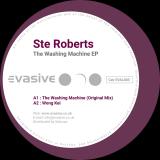
Ste Roberts delivers his debut vinyl EP for the label — four seriously solid cuts of twisted, underground tech house.
The title track “The Washing Machine” is a driving peak-time workout built around Ste's trademark analogue synths, drum machines, rolling sub bass, sharp drums, bleeps and plenty of weird little twists and turns. It's already had plenty of road testing through Ste's DJ sets, including Houghton and fabric, and it does exactly what you want it to do on a dancefloor.
The A2 “Wong Kei” keeps things rolling with another slick and twisted piece of Ste's production. Clever sound manipulation and a seriously infectious groove make this another one that's going to work hard for Djs.
Over on the flip, Evasive boss Rob Pearson gets stuck into B1 “The Washing Machine”, remixing it into his trademark peak time tech, rolling sub-bass territory and adding a few extra mangled instructions for your increasingly misbehaving washer.
B2 “Shoplifting Like That, Yeah” brings Ste’s trademark electro/breakbeat sound into the mix, with tripped-out vocals, wobbling bass and a groove that’s already been causing a real stir in his live sets. Ste has been using it to open his shows, and it’s easy to hear why — a twisted, energetic way to get things moving.
Four tracks, plenty of character and a record that's perfect to push forward the Evasive catalog in style.
LP,180g, 2027 REISSUE - REMASTERED FROM ORIGINAL TAPES, CAREFULLY REPRODUCED ORIGINAL ART
When Alan Parker recorded the killer library soul-funk LP The Voice of Soul with session vocalist Madeline Bell in 1976, some bright spark at Themes decided to also release all of the backing tracks as a separate, and equally innocuously title LP called The Sound of Soul. Thank goodness for bright sparks.
Released as a collection of unobtrusive musical backings in various rhythmic styles', the LP's original description dryly explains these tracks have been issued without melody and are therefore particularly suitable for use behind commentary. Female vocal versions of these tracks are issued on TIM 1021 The Voice Of Soul and it is possible to edit from vocal version to instrumental version or vica versa where commentary or scene changes occur'.Madeline Bell was backed by The Rhythm Section, who were for all intents and purposes the Themes International Music house band. So what we end up with here is entire album of instrumental work-outs by a band comprised of the formidable talents of Alan Hawkshaw on keyboards, Alan Parker on guitars, Barry Morgan on drums, Les Hurdle on bass guitar and Frank Ricotti on percussion.
Without Bell's vocals these backing tracks are given all the room they need to breathe. Each one more than stands up on its own.
The Sound of Soul is a real diggers' delight and, unsurprisingly, a must-have counterpart to The Voice of Soul.
As with all ten re-issues, the audio for The Sound of Soul comes from the original analogue tapes and has been remastered for vinyl by Be With regular Simon Francis. We've taken the same care with the sleeves, handing the reproduction duties over to Richard Robinson, the current custodian of KPM's brand identity.
The first record in Crystal Mud's new CRYM series brings four dub techno producers together across five tracks — reaching from the Australian coast to Spokane, and out of the MixCult heartland.
Federsen opens the A-side with "Rouge Dub," a name long associated with vintage tape delays and Silent Season dub, then hands over to Klordop, whose "Silver Cord" comes from one of the most restless catalogues in the MixCult orbit. The B-side belongs mostly to Noosa Sound System, the Queensland producer who takes both his name and his unhurried dub from the coast; he opens with "Trope" and closes with the title track. Between them sits Gianni Cerri of Spokane, Washington, whose "Nine Mile Fall" shares its name with the falls just outside his hometown – a small, local marker pressed onto an international record.
Crystal Mud is a division of MixCult Records
Packed with three stripped back heavy weight house cuts from the spanglecore man himself, Mella Dee whilst the NorthSouth Records head honcho Harry McCanna takes you on a hypnotic trip with rendition of Hidden Frequencies on the B side.
All tracks have been tried and tested around the world by the industries finiest
Curió Curió came to flight by chance. Two artists, Rio-born, Austria-based singer and actress Luiza Monteiro and German producer Dustin Braun, had separately reached a fork in their journeys. An opportune encounter soon blossomed into an uplifting, heartfelt Brazilian MPB-groove project shaped by psychedelic disco and studio experimentation. In their own words Curió Curió’s sonic vision “is not straight disco, not straight samba, not strictly old-school but inspired by all of them, creating something contemporary but still nostalgic”.
A modern fusion influenced as much by Gal Costa and Jorge Ben Jor as Say She She and Bala Desejo, their sound deftly plots a course all of its own. A celebration of freedom, movement, love and life, intertwined with introspective moments of reflection. Treating tradition as something alive, migratory and unresolved, the album is not simply bound by a shared love of Brazilian music, but by a deeper question that runs through every track; where does one belong when home becomes plural? As a Brazilian living in Europe, Luiza's lyrics explore themes of identity, culture, and existence. The tracks move between cities and emotional registers without settling, tracing a sense of identity that shifts rather than resolves. Songs like ‘Amor Doente’ and ‘Mar sem Dar Pé’ circle around relationships that resist clarity, while ‘Menina Passarinho’ captures the fear and necessity of committing to music as a path. For Luiza, deepening her commitment to music alongside years in theatre was both inevitable and difficult. Braun’s production follows a similar logic. Initial ideas were often built without obvious reference points, only later incorporating rhythmic and vocal elements that hint at Brazil without reproducing it. Analogue techniques, tape, ribbon microphones and live ensemble recording bring a tactile quality that reflects the duo’s interest in process as much as outcome. Highlights include ‘Bem Querer’, built on an authentic samba street vibe with a super-catchy sing-along chorus, and ‘Vem pra Casa’ with its cosmic-tinged Brazilian boogie flavour. The album closes with ‘A Cor do Meu Sonho’, a quiet act of insistence. A refusal to shrink in unfamiliar environments, and a belief in the strength of difference. It is less a conclusion than a continuation, leaving the central question open. “I started to understand that I can belong to many places at once”, Luiza reflects. “And that can be something to embrace”. Lyrics from the song ‘Raiz’ translate in English to “I value a burning sun and the cold in the air. Constant change is my companion”. With Curió Curió, that idea is lived through sound, story and collaboration. A debut that feels both searching and assured, grounded in heritage yet shaped by distance.
Younger Than Me announces his debut full length "The Golden Age Of Love", to be released on 90's Wax this coming March 2024. The record is the perfect example of the breadth of his irrepressible and unique sound. Featuring collaborations with Massimiliano Pagliara, Brame & Hamo and Pablo Bozzi. The artist is an Italian native known for a modern interpretation of '90s club music' - a dynamic blend of Progressive House, Trance, EBM, Breakbeat, and Techno ideas. This first album is a love letter to a deep-rooted passion for the idiosyncrasies of rave culture and the crossover points with contemporary electronic music.
Younger Than Me, an artistic project by Francesco Mingrino that is steeped in the nostalgia of ‘90s rave, yet not at all trapped in that past. A project that has cemented a special place in the electronic music scene with a string of records on labels like Bordello A Parigi, Amsterdam-Utrecht based platform XXX, Rotterdam’s Bar and Jennifer Cardini’s Dischi Autunno. To this point Francesco has pushed his fun yet forceful sound, with many releases on his own 90's Wax, and collaborations with people like Skatebård, Francesco Farfa, Timothy Clerkin and Curses (as Y2C).
"The Golden Age Of Love" as a package is curated in Younger Than Me's characteristic style. Opening with "Long Life Death", a track that sets the stage with a cinematic soundscape in a classic Carpenter vibe. Picking up the tempo "Zarathustra Dance" takes you right into the golden age itself, its low slung beat and carefully sequenced lead line pushes an ever building tension designed to crack any dancefloor. The track with Massimiliano Pagliara, "Eternal Sunshine Of Solitary Mind", is one of the highlights, perfectly building around a catchy lead with tight arpeggio and sequenced acid. Leading us into the 2nd half of the record "Sadness Is The Only Way To Happiness" is a proto-trance beast, inspired by that period in the early 90s when Trance was less bright lights and big stages and more dark rooms and smoke filled spaces, an ever building progressive run of haunting vocals, rave stabs and rolling bass.
Whilst YTM is at home presenting dancefloor focussed material, we see him explore the other side too, with "Memory Is A Clock" like the earlier "Vortix", he ditches the 4x4 for breakbeat territory. Whilst the bass keeps the solid metronome you would expect, "Memory Is A Clock" is a track that takes a few moments, contemplative melody and trademark arpeggios take the lead. When it comes to the other collaborations on the record, the appearance of Brame And Hamo on "Raver's Heart Is A Mess" sees them lean into the Progressive nature both artists love so much. Then Pablo Bozzi lends his own unique outlook to "We Don't Know The Way, We Just Stay" in one of the standout tracks, epitomising Younger Than Me’s ability to create profound experiences.
The album concludes with "Music Will Never Stop, Heartbeat Will Never Fade, Party Will Never End", less of a title and more of a personal philosophy – the perpetual essence of rave culture and its timeless impact on music. A rhythmic belter, juxtaposed with incendiary synth-lines and staple catchy sequence work, finishing the record with one of the true highpoints. In addition the release also features four digital bonus tracks, including "The Other Face Of Loneliness" and a Prog Dance Reshape of one of the records more eclectic cuts "Zarathustra Dance" all offering an extended exploration into the creative landscape YTM inhabits.
"The Golden Age Of Love" is a debut album that ticks all the boxes; it's a celebration of a bygone era through the lens of the contemporary. Younger Than Me stands as a testament to the enduring spirit and evolving nature of the music that began in the ‘90s rave scene, with an LP that pushes Love, Progression and Fun to the forefront.
"Some of my earliest musical memories were listening to my local pirate stations in the early 90's. The signal was quite weak in my area, and the sound was doused in FM static, creating this interesting amalgam of rhythm and noise. I found a strange sort of comfort in this, often falling asleep while listening to the radio, in bed, with my headphones on. The stations were run by young people, no older than kids really, relayed from non-descript flats, scattered around Bradford, Leeds, and the surrounding towns of West Yorkshire. The setups were primitive, and the production quality (and often the mixing) were dubious at best. But there was an endless supply of passion, and listeners tuned in because they were thirsty for something the legal stations could never supply. These voices on the other side of the transmission were, for many of us, a bridge into the future. One, which sadly, never really came to be. Hardcore, Static: Pirate Transmissions From The North of England 1990-1994 is a celebration of this unique period in UK history. The North of England feels overlooked during this time, with history's focus firmly gazed on London. But the signal was everywhere. These pirate stations were crucial for many young people, who were trying to find their place and identity in the UK. Many of these transmissions, even the ones which were recorded onto tape, have since become lost media, effectively erased from history. Radio, at least in the analogue domain, isn't something most young people have any experience with. Pirate radio was this unique flashpoint in time, and for me at least, it was important enough for me to want pay my respects to it" Dennis/36
Memento Records proudly presents a new single by MAP, a.k.a. Massimino Lippoli, Angelino Albanese and Peonia. We’re talking history of Italo House here: Lippoli and Albanese are part of the Sueño Latino collective that released the eponymous track in 1989 to worldwide acclaim. The track, which samples sounds from Manuel Göttsching’s E2-E4 record, went on to become one of Ibiza’s balearic anthems, thanks to the support of legendary DJ Alfredo Fiorito, and a classic staple on the House circuit in clubs all over the planet, with epic remixes by Derrick May, Carl Craig and Bushwacka cementing its legacy as one of the genre- defining pieces. 2026 sees the duo joined by Peonia do what they do best: melodic ambient House Music infused with catchy grooves and beautiful melodies. Opening with a sexy rhythm and dreamy pads, the crescendo leads the way to voluptuous vocals and a swinging arpeggio, making this a total dancefloor darling, perfect to be enjoyed at sunset, on the beach, at your favourite stylish disco, or at that private villa party where everyone is having their best time. B-side rounds off the EP with a stripped down Dub rendition that again is proof of the immense talent of these artists.
There’s no direct English translation for the word “hiraeth”. In the Welsh language, it describes a form of longing for an intangible something, somewhere or someone that no longer exists. Sofie Birch and Antonina Nowacka draw on the concept to guide their second collaborative album, a suite of vulnerable, open-hearted improvisations and reflections that attempt to grasp an image of the past that’s chimeric, dissolving almost as soon as it materializes. The duo’s process follows the same distant beacon; unlike Languoria, their critically acclaimed debut, Hiraeth is, at heart, an acoustic record, informed by in-person improvisations with voices and string instruments that gesture to an era before computers, AI and DAWs. It’s just as lush, but Hiraeth is warmer and more muted than its predecessor.
Nowacka and Birch conceived the album in the wake of a slew of collaborative live concerts, spurred on by serendipitous improvisations and an interest in paring down their setup. Unsound arranged a retreat in Sokołowsko, an idyllic village nestled in the verdant hills of Southern Poland, close to the Czech border. Sokołowsko surrounds a large ruined sanatorium that’s rumored to have inspired Thomas Mann’s 1924 novel The Magic Mountain, and has long been a magnet for artists. The two took the opportunity to rethink their approach completely, arriving with just a guitar, a zither and a portable Nagra reel-to-reel machine. Recording directly to tape, they sketched out ideas with just their voices and instruments, reflecting their surroundings without being distracted or mediated by modern technology.
“We wanted to get away from screens as much as possible,” says Birch, “to bring to the world something vulnerable and honest. Without advance preparation, every day we went out into the open air, finding places to sit, during sunset or the midday sun. We discovered new tunings on our instruments, picked up a melody, and started the machine, playing over
and over till we got a take.” In the autumn, they met again in a Copenhagen studio, sparingly and carefully layering old synths and organs to add more depth without muddying the mix.
Both Nowacka and Birch sing throughout, their voices threading the acoustic instruments and tangling with each other, almost becoming one. But it’s the environment of Sokołowsko, “the birds and the light, even the wind playing against the harps,” that’s woven into the music’s lining. Affected by time spent meditating and in nature, as well as the fact that Birch was pregnant whilst recording, the album feels alive and remarkably present. Even the sound quality of the tape machine gives Hiraeth a tactile, organic quality, as Nowacka puts it, “like being in a warm bath.”
They still have the raw recordings from Sokołowsko on old reels, physical souvenirs of their time spent making music in a “habitat for intuitive songs, a little ecosystem, alive and spirited.” The outmoded gear and remote setting helped the duo disengage from the modern world for a few moments and imagine an existence that’s been lost to time and nominal progress. With digital technology receding into the background, Nowacka and Birch had space to make “intuitive connections with frequencies and people,” as Birch explains. Hiraeth is a testament not to nostalgia, but to the power of kinship.
'Sometimes life can kick you in the nads,' says Dominick Martin (aka Calibre). 'When life does do that, I need to make music like this. With its tones of hope and gospel-level layers of self-recorded vocals. Raw, uplifting, soulfull... Even to the most ardent of Calibre follower, ' Grow' sounds like nothing else he's done before. Yet it's not actually on the album it gave a name to. Partly because its ultimately positive veneer (even though it was written in the midst of two toxic relationships - one personal, one with the bottle) doesn't quite complement the deeper, more contemplative aesthetic of the album. But also because this is the start of a whole new story for Calibre...
'A part of Dominick is a poet and a part of him is a man who's lived through Northern Ireland at its worst,' observes Craig Richards . 'There's a gentleness and a tension to him and his past and his experiences. Somewhere in that middle ground is his music.'
Taken from a interview by Dave Jenkins for DJ Magazine.
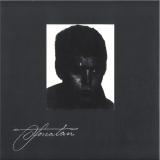
Whether via Yung Lean, JonatanLeandoer96, Död Mark, or through visual art and acting, Jonatan Leandoer Håstad has consistently reinvented himself and pushed the boundaries of self-expression throughout his decade-plus career. With Jonatan, he makes his most direct artistic statement yet, one that synthesizes his career to date into a singular and powerful statement of intent. “Take off your mask” he sings on lead single “Forever Yung,” a fitting metaphor for this new, more direct, and earnest approach.
Roberta Flack & Donny Hathaway’s BACK TOGETHER AGAIN is truly a masterpiece.
The James Mtume and Reggie Lucas penned gem is timeless - as proved by this sumptuous remake by the unlikely pairing of Sarah Jane Morris (ex The Communards) and velvet voiced Italian growler Mario Biondo.
Unlikely yes, but the result is an instant Modern Soul classic snapped up for worldwide exclusive 7” vinyl release by
ANORAX. The duet, catchy and guaranteed to make you smile, brings back memories of Lisa Stansfield sparring with Barry White (Mario really does sound like the great man).
The sound of yesterday made for today with a touch of House prodding along a happy reincarnation of one of Soul Music’s most glorious moments.
Futuristica is 20!
This independent imprint has been producing and releasing music for friends and family for 20 years, so what better way to celebrate than by releasing a 2xLP limited edition 20 track compilation of rare and never before released on vinyl recordings exclusively selected by label manager Simon Skolfield.
This is a beautifully varied selection of deep soul, jazz and hip-hop music from a group of like-minded independent artists creating their own brand of soulful gems. From the early electro soul of Electric Conversation, the multi layered jazz samples of Kira Neris to the lush vocal harmonies of Deborah Jordan, production and remix class from Marc Rapson and the contemporary spiritual soundtracks of The Peter Franks Group.
Over the years there has been generous support from Gilles Peterson, Tony Minvielle, Marc Mac, Patrick Forge, Kev Beadle and so many more worldwide. Artists like As Valet, Emanative, LaNote and Georgie Sweet have gone on to produce fine work with several different independent labels with our artists garnering fine remixes and production work from the likes of DJ Spinna, Nostalgia 77, Kev Bown, Mr Beatnick, Nicolay, Kaidi Tatham, Atjazz, Simbad, K15, Domu, Mecca:83 and so many others. And all of this organically grown since the release of Low Budget Soul, the label’s debut project back in 2006.
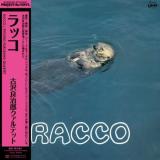
Powerful, exhilarating, and refreshing. Whether exploring deep modal jazz or basking in the warmth of calypso-infused jazz, every note is delivered with uncompromising conviction. Here, the essence of Ryojiro Furusawa reaches its fullest expression.
From the 1970s through the 2010s, drummer Ryojiro Furusawa was an active force not only in jazz but across the broader Japanese music scene. His music, marked by unmatched individuality and overwhelming power, is free-spirited yet unwavering, rugged yet inviting, and endlessly captivating.
Among his many achievements, his masterpiece Racco stands as the most complete representation of his artistry. Every composition on the album is an original by Furusawa, yet each piece reveals a distinct musical character. One moment, he delivers a beautifully crafted ballad; the next, he unleashes a dynamic burst of funky jazz. Just as the listener settles into a deep modal jazz groove, he effortlessly shifts gears, wrapping the music in the gentle warmth of calypso rhythms.
The album is eclectic, but never unfocused. Its diverse musical elements are tied together by Furusawa's unwavering vision, with every idea pursued boldly and to the fullest. The result is a listening experience that feels consistently invigorating and rewarding.
Powerful, exhilarating, and refreshing. Few musicians, and few albums, embody such a joyful sense of freedom and vitality. Racco is where the artistry of Ryojiro Furusawa reaches its peak.
(180gr) The 1980 solo album by legendary jazz bassist Isao Suzuki, who has earned worldwide acclaim, is set to be repressed in a new heavyweight pure clear vinyl edition! Created entirely by Suzuki himself through extensive multitrack recording, the album layers an extraordinary range of instruments, including double bass, Hammond organ, vocoder, Taisho koto, and erhu, together with his own vocals. Suzuki handled not only the composition and performances, but also the jacket artwork and liner notes, making this an extraordinary one-man album that literally brings together and embodies every aspect of Isao Suzuki.
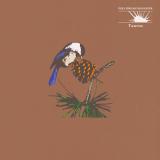
One year on from the release of acclaimed album Rose Main Reading Room, Peel Dream Magazine return with new mini album Taurus.
Spanning eight previously unavailable tracks that were originally recorded for their lush and inviting 2024 full length, Taurus offers a wider glimpse into songwriter Joseph Stevens’ process and creative output from those sessions.
The band, whose name nods to the BBC Radio 1 legend John Peel — arbiter of all things underground, quality, and (it must be said) "cool" — has since its inception been a genre-hopping experiment, jumping from motorik krautrock to shoegaze and space age pop.
On Taurus, Peel Dream Magazine remain explorative, drifting effortlessly across a gamut of styles that range from the twee indie pop of lead single “Venus In Nadir,” the title track’s cozy vibraphones, and the bubbly space-synths of “Seek and Destroy.”
Although unbound by genre, Peel Dream Magazine still inhabit the sonic milieu of warm woodland tones and droning repetition. In the entrancing standout “Believer,” they evoke Rose Main Reading Room’s atmosphere through vocalist Olivia Babuka Black’s mantric melodies and Philip Glass-like woodwinds and mallets, bringing Taurus into focus as a welcoming companion piece to its predecessor.
OMRI. returns to Crosstown Rebels with his latest three-track release, ‘Signals’. Out on 24th July 2026, the in-demand DJ/producer follows up one of the label’s standout tracks of recent years with a collection of hypnotic, after-hours club cuts.
OMRI.’s relationship with Damian Lazarus’s Crosstown Rebels imprint began last summer when he made his debut with ‘Nothing Wrong’, a record that quickly became one of the imprint’s defining releases of the season while being awarded Pete Tong’s Essential New Tune on BBC Radio 1, and introduced his distinctive blend of understated yet driving dancefloor psychedelia to a wider audience. Returning to the label a year later, following a prolific run of recent releases on the likes of Hot Creations, TSZR, Higher Ground and AFFAIRS, plus his own burgeoning Collecting Dots Records imprint, his ‘Signals’ EP picks up where that breakthrough left off, while pushing deeper into his unmistakable sonic world.
Opening the release, the title track ‘Signals’ is quintessential OMRI. throughout. Rolling low-end pressure, spiralling effects, and an infectious female vocal hook all combine to create a track that feels playful and hypnotic. Built with a light touch yet packed with personality, it showcases the instinctive groove-led approach that has become central to his rise. On the flip, The Space dives further into late-night territory, pairing punchy drums and a wicked bassline with warped, stuttering vocal fragments that drift in and out of focus. Meanwhile, Scenius closes the EP through crisp percussion, acid-dipped textures, and cleverly manipulated samples, steadily drawing listeners deeper into its hallucinatory atmosphere.
"Al Festa's musical genius was revealed at the age of 14 when was released ''Starway to Escher'' with the Italian prog rock band Bauhaus (1974). His talent continued with "Miss Manhattan" by Metropole Al Festa, Francesco Puccioni (aka Mike Francis), Claudio Giorgi, Sharon Russell vocalist), his very first disco-music song in 1981. Over his career - a dozen movie soundtracks and hundreds music videos - his involvement in the Italo-Disco scene of the early 1980s is noteworthy. Undoubtedly, his contribution to Kristal (himself Al Festa, with Anne Dattner and Max Liofredi) remains most memorable. "Ete Super" was written with Helene Chauvin, a close friend of the now legendary Jeanne Mas. Helene attempted success as Abilene with "Tout Tout Tout Mais Pas Ca" arranged by another Italo-disco legend, Pierluigi Giombini (1987). Returning to Kristal, what convinced Claudio Casalini - one of Al Festa's best friends - to create this vinyl reissue was not only the memory of this talented artist, who passed away prematurely, but also the track "Fallin'" on the B-side, which embodies all the composer's post-Romanticism, a song rich of emotional and sensitivity, with intimate and often dramatic tones. When you are about to purchase Kristal, keep this excellent B-side in mind. You will not regret the choice."
Repress of the 13th chapter of this highly acclaimed compilation series, originally released in 2017.
As usual FSOJ is compiled by Compost head honcho Michael Reinboth with a solid sense of leftfield tracks, punchy floorfillers, ghostly, cinematic, balearic, frazzled, bitter-sweet or mind-shaking hybrid tunes.
Several magazines voted FSOJ as the one of the best compilation series of all time. With this series starting 1995 the term Future Jazz became a genre landmark.
FSOJ 13 including some exclusives, sought-after tracks and previously unreleased tracks. Some highlights are: First of all the Van Hai track in a Ripperton remix is a perfect opener into a tranquil music venture. A sheer bliss tune. Montezumas Rache „Wu Du Wu“, which was only released on vinyl before - still difficult to find the original 12“ - is a freaky outstanding funk hybrid. Karim Sahraoui – with a punchy Detroit-ish track, picked up from Derrick May’s Transmat label - is currently in the works with a follow up 12“ later in 2017 on Compost. Acid Pauli delivers a brand new dubby balearic remix, which he recently did for Matanza, a live band from Chile. Peter Kruder came up with something special exclusive, a warm breath in the open air tune, which drives listeners into a chilled wormhole. Beside new names, bigger names like Axel Boman, Tony Allen with a Ricardo Villalobos & Max Loderbauer remix, you’ll find more lefties tracks from respected labels like Studio Barnhus, Innervisions, Lovemonk, Transmat, Mule, Tru Thoughts, Rebirth, Ninja Tune and m.o. next to other exclusive deliveries by Manuel Tur, Marsmobil, coupled up with semi exclusives: the first time on vinyl or digital.
Following a nine-year hiatus, Willie Burns' WT Records imprint is back in business. To kick off a new era, the New York producer has chosen to reissue sometime L.I.E.S man Entro Senestre's hard-to-find 2016 EP 'ES'. It remains one of the producer's greatest moments. For proof, check deep, emotive opener 'Rosegold', where cascading pianos and melancholic chords ride tough house drums and a moody bassline, and the techno-tempo deep acid shuffler 'DOHC'. 'TriState' sees him go deeper still on a hybrid ambient/deep breaks flex, while 'Sb Dauntless' fixes similar ambient sonics to an experimental, oddly swung, lightly UKG-influenced beat.
Very very very pleased to be able to put this release out, as so many of these Phineus II tracks have been mainstays in my sets for a number of years & it feels good to finally have them out for everyone else to be able to hear and enjoy.
To me, these tunes fully represent the unique sound and style that only he can capture in his music. It was hard to narrow the track pool down to a 4 track EP, so it had to be expanded to an 8 track release, featuring some of my favourite tunes of his, some of which have been unreleased for close to a decade!
Big up to Phineus II for his one of a kind production skills & ideas & to Kid Lib for his archiving of these tunes & for allowing me to release some of these tracks, as some of them were marked for release on his label Green Bay Wax.
A counterculture movement united by an expansive, experimental and deeply soulful sensibility, Japan’s rebel protest music challenged the status quo and changed the country’s music industry in the process.
The birth of Japan’s nascent acid folk scene was rooted in the messy and invigorating political climate of the late 1960s. It is a story of Dadaists, communists, pharmacists and cult leaders, led by a young generation of upstart students, artists and dreamers hellbent on turning their world upside down.
Born on the campuses of Tokyo, Kyoto and Osaka, and centred around newly formed independent label and left-wing stronghold URC, this uniquely Japanese form of folk expression provided an outlet for musicians who were tired of aping Western sounds and instead found ways to sing in Japanese and integrate traditional forms in new ways.
At the forefront of this movement was Yellow Magic Orchestra’s Haroumi Hosono, a polymath innovator whose band Happy End released the first Japanese language rock album, and whose influence would go on to be felt across Japanese music for decades. Alongside, and informed by the Kansai scene’s Takashi Nishioka and Happy End collaborator Ken Narita, they experimented with cadences and accents of the Japanese language to open the door for others to experiment with their own forms of psychedelic folk too.
Some, like Nishioka, were more inspired by Dadaism than drugs, while others, like Kazuhisa Okubo, would ultimately find work as a chemist, having founded two further folk groups that flirted with varying levels of success. Obstinately uncommercial, relentlessly creative, the music featured on Time Capsule’s Nippon Acid Folk represents a broad church of influences.
Perhaps the wildest addition to this congregation however was Hiroki Tamaki, a classically-trained violinist and committed iconoclast, whose synth-prog odysseys hinted at his obsession with the divine. Subsumed by the teachings of Bhagwan Shree Rajneesh, he penned an album in praise of the infamous religious leader of which two superbly mind-bending tracks are featured on this compilation.
Charting the decade from 1970 to 1980 as the dreams of political and spiritual liberation seeded in the ‘60s turned to dust, Nippon Acid Folk surveys a little explored corner of Japanese music history, but one which ultimately laid the foundations for an independent music industry, launching the careers of Hosono and others in the process.
Nippon Acid Folk 1970-1980 is pressed on 12” vinyl and represents the start of Time Capsule’s deep dive into Japan’s rich history of folk and psychedelic soul music.
Curió Curió came to flight by chance. Two artists, Rio-born, Austria-based singer and actress Luiza Monteiro and German producer Dustin Braun, had separately reached a fork in their journeys. An opportune encounter soon blossomed into an uplifting, heartfelt Brazilian MPB-groove project shaped by psychedelic disco and studio experimentation. In their own words Curió Curió’s sonic vision “is not straight disco, not straight samba, not strictly old-school but inspired by all of them, creating something contemporary but still nostalgic”.
A modern fusion influenced as much by Gal Costa and Jorge Ben Jor as Say She She and Bala Desejo, their sound deftly plots a course all of its own. A celebration of freedom, movement, love and life, intertwined with introspective moments of reflection. Treating tradition as something alive, migratory and unresolved, the album is not simply bound by a shared love of Brazilian music, but by a deeper question that runs through every track; where does one belong when home becomes plural? As a Brazilian living in Europe, Luiza's lyrics explore themes of identity, culture, and existence. The tracks move between cities and emotional registers without settling, tracing a sense of identity that shifts rather than resolves. Songs like ‘Amor Doente’ and ‘Mar sem Dar Pé’ circle around relationships that resist clarity, while ‘Menina Passarinho’ captures the fear and necessity of committing to music as a path. For Luiza, deepening her commitment to music alongside years in theatre was both inevitable and difficult. Braun’s production follows a similar logic. Initial ideas were often built without obvious reference points, only later incorporating rhythmic and vocal elements that hint at Brazil without reproducing it. Analogue techniques, tape, ribbon microphones and live ensemble recording bring a tactile quality that reflects the duo’s interest in process as much as outcome. Highlights include ‘Bem Querer’, built on an authentic samba street vibe with a super-catchy sing-along chorus, and ‘Vem pra Casa’ with its cosmic-tinged Brazilian boogie flavour. The album closes with ‘A Cor do Meu Sonho’, a quiet act of insistence. A refusal to shrink in unfamiliar environments, and a belief in the strength of difference. It is less a conclusion than a continuation, leaving the central question open. “I started to understand that I can belong to many places at once”, Luiza reflects. “And that can be something to embrace”. Lyrics from the song ‘Raiz’ translate in English to “I value a burning sun and the cold in the air. Constant change is my companion”. With Curió Curió, that idea is lived through sound, story and collaboration. A debut that feels both searching and assured, grounded in heritage yet shaped by distance.
Back in stock and highly coveted, The Smiths - Best… I is a compilation of some of The Smiths’ biggest tracks including This Charming Man, How Soon Is Now?, Panic and more.
The free folk/jazz sound of modern Los Angeles. Featuring a heavy bunch of musicians and vocalists including Moor Mother.
"Fearlessly Accessing the Divine Spirit From Here on Out" is the vinyl debut from pianist, composer, and producer Diego Gaeta. He has previously released projects as Club Diego and with the trio Human Error Club (whose members Mekala Session and Jesse Justice helped produce this record). He has quickly become a fixture in a number of Los Angeles musical environments, working with Lionmilk, The Pan Afrikan Peoples Arkestra, Carlos Niño, Black Nile among others. This album is a synthesis of these many LA environments, and carries chamber, jazz, ambient, and folk influences, ultimately giving it an uncategorizable feel similar to works by Arthur Verocai or David Axelrod.
Gaeta recorded the initial ideas for the album by himself after experiencing a burst of creativity during the lockdown of 2020, in the aftermath of a season of protests in Los Angeles, on a piano at his home in El Sereno. "I was constantly not in tune with myself, always awaiting outrage and tragedy in a very unstable world. However, hitting the streets in support of various ongoing pandemic community actions felt necessary and it marked a point in time that ushered in large societal changes. The weight of that era made me feel allergic to making art at the time. All of these ideas came after that period, expressing my reflections subconsciously. I remember that the ideas came in a short amount of time, and then they developed."
Once he had created the tracks as Ableton sessions, he realized the gravity and context of how he was processing his ideas so he, as he puts it, "felt like taking them outside the hands of midi and into the hands of friends." Gaeta was able to assemble his dream band, which ended up being a 9-piece ensemble, or a nonet. "I felt that at some point I was channeling the geometrical balance of that nonet...it's almost as if I had a sextet and then the three of the sextet that's not the rhythm section were doubled. It's a really dense sextet, that's how I see it."
The recording process began the following summer in June 2021 as the musicians were all adjusting to the newfound dynamic of getting tested for COVID, waiting a few days, and then meeting up to record. "We were eating Indian food, some of us were smoking, it was a nice memory, but I felt a little stressed, because I was the bandleader, and I felt the emotional weight of my music."
The title track and single, featuring vocals by Jimetta Rose, begins with a speech by Gaeta delivered when playing with Black Nile in 2019 at the Levitt Amphitheatre in MacArthur park. Gaeta provides the following account: "Even though it was in 2019, socio-political tensions and issues were at the forefront for me at that time. I wrote a speech that was intended to be critical of the US but it ended up becoming a collage inspired by different women that had messages of freedom that spoke to me the most. I quoted Nina Simone and Georgia Anne Muldrow, it wasn't something that I read but something that she said "kicking it with consciousness and style" that phrase stuck with me, so I used it in that speech. Although critical, the speech had a positive feeling to it, and it was hopeful. I gave that speech while fireworks were going off."
Moor Mother & Zeroh are found on their respective tracks, Memory Screen & Eccolo - both delivering a distinct, commanding vocal performance. Low Leaf colors the track Soft Spot with harp, a beautiful ballad nestled in the center of the album. Other players include Gregory Uhlmann on guitar, Jon Kaye on violin, Devin Daniels on alto saxophone, Caleb Buchanan on bass, Dante Luna on vibraphone, Patrick Behnke on viola, Bryan Baker on tenor saxophone/flute, and Mekala Session on drums.
"I’d like for us tonight to embody a freedom oriented life. Freedom isn’t just a dream, it’s a place we must all arrive at together, as one by one the people of the Earth help each other to be Free of power, hate, and insecurities. Let’s kick it with consciousness and style. Can y’all dig that? YEAH. I can too. So now we’d like to present to you a spiritual transmission I like to call: 'Fearlessly Accessing the Divine Spirit of Freedom From Here On Out.' YEAH" - Diego Gaeta
Originally composed by Collage in 1985, Herzschlag returns in a newly recorded cover version by Berlin-based synth-wave duo Bionda e Lupo. Describing themselves as a “boy/girl band like no other,” Lupo recreated the NDW-electro tune from the ground up using an impressive array of vintage instruments and studio equipment, including classic synths such as a Pro-One, a Roland Juno-60, and a Farfisa Syntorchestra. Bionda’s distinctive voice adds a new emotional depth to Katrin A. Kunze’s lyrics while still remaining true to the original spirit of the song.
Lupo of Bionda e Lupo has long been a devoted fan of Mit den Puppen tanzen, Collage's only release at the time, originally issued as a 12" single in 1984. Despite never managing to acquire an original copy, he considers the record unique within the German NDW landscape thanks to its unmistakable "Bravo-breakdance-meets-synth-pop" character. Indeed, Markus Kammann, Jürgen Grah, and Katrin A. Kunze drew significant inspiration from the electro-funk pioneers of the era, particularly Afrika Bambaataa's iconic Planet Rock. When we approached Bionda e Lupo about re-editing a track from the Collage's Motel d'amour release, they instead proposed recording an entirely new cover version.
Work on the project began in spring 2025 in coordination with Markus Kammann, who, together with Jürgen Grah, originally composed the music. Sadly, Kammann, born in 1958, passed away unexpectedly on October 17, 2025. This release is dedicated to his memory.
The liner notes reveal additional details about Kammann's remarkable life and achievements. He was the founder of the legendary Beatbox club in Wuppertal, which was once recognized as the "Best Club in Europe," and a co-founder of the Groove Attack record store. Groove Attack would later grow into one of the world's most influential music distributors, especially for Hip-Hop.
The 12" release is limited to 200 copies. Pressed on transparent red vinyl with black "smoke" effects, it comes housed in a picture-disc sleeve with an accompanying sticker. As an additional highlight, the record includes a previously unreleased NDW bonus track recorded around 1983 by Collage. It features Katrin A. Kunze as well as Thomas Kohl, the vocalist of Schwarze Bewegung.
- Red transparend vinyl with black smoke
- Housed in a picture-disc sleeve with large sticker
- Released in memory of Markus Kammann (1958-2025)
- Contains A4-sheet with liner notes
- 5 tracks, including the vinyl only bonus track "Hallo E.T.",
- Quality lacquer cut by Manmade Mastering
Bruno Berle is a singer, songwriter, producer, multi-instrumentalist and figurehead of a contemporary Brazilian music movement. With a quiet mastery of songwriting and an astonishing voice, his music has won hearts around the world. Since the release of his debut album No Reino Dos Afetos (2022), Berle has performed across the UK, Europe, Japan, South Korea, and China, only leaving his home country for the first time in 2023. Shaped by these journeys, Berle’s third studio album, Sem Fronteiras (Without Borders), reflects a utopian vision of a unified world.
Recorded across London, São Paulo, Minas Gerais, Germany, and Maceió, the album–co-produced alongside his longstanding musical partner Batata Boy–is the most expansive canvas Berle has worked on to date. Shot through with the imagery that has always animated his songwriting: open skies, morning light, vivid colours and the magic of human connection, Berle’s carefully crafted poetics and warm, delicate instrumentation drive this vivid body of work.
“I came from nothing”–Berle doesn’t take his rise to global prominence for granted.
Born to a working class family from Brazil’s northeastern Alagoas state, one of Brazil’s most economically deprived, Bruno moved frequently in his youth to follow any job opportunities his parents could find, before eventually settling in the coastal capital of Maceió. “I used to travel to Caruaru, Santa Cruz, Recife, Garanhuns, Arapiraca, which I loved and feel it made me ready to be in this rhythm i’, but at the same time I think not having friends from childhood and being in constant change made me a little numb to the constant upheaval”. On Sem Fronteiras, there is a similar duality at play. The album celebrates the collective joy and human connection that live touring brings, but it also sits with the darker realities of crossing borders. While music moves more freely around the world than ever before, our bodies are not granted the same privilege.
Though he’s never lacked self-belief, Berle recognises that talent alone doesn’t guarantee opportunity. “Before my second album No Reino Dos Afetos 2 everything I had ever recorded was made with the help and kindness of people who believed in my ability”. Determined to pay that kindness forward and help others from the sharp end of Brazil’s desperately unequal society, Berle produced and featured on the recent self-titled albums by his northeast Brazilian compatriots, Nyron Higor and Phylipe Nunes Araújo (both 2025), helping propel both onto the international stage. In turn, following the successes of Nyron & Phylipe’s albums alongside his own, Bruno finds himself at the forefront of a thriving community of artists now based in São Paulo, but primarily originating from northeastern states like Alagoas and Pernambuco.
Much like the famed Clube Da Esquina movement that spawned in 1970’s Minas Gerais, they operate with a free-exchange of ideas, writing songs with and for each other, performing on each other’s albums and on the live circuit together. Lead single ‘Manha’ flows from this ethos. It was written by Berle’s friend and fellow Alagoan João Menezes (writer of ‘Ate Meu Violao’ and ‘Te Amar Eterno’ from Bruno’s previous albums) and Marvin Viera, and originally recorded on their 2018 album Areia e Mar.
Sem Fronteiras opens with ‘Você Já Sabe Que Eu Te Amo’, just six beats of one nylon guitar chord ring out before changing key, paving the way for the gentle strike of fender rhodes and the arresting call & response duet between Berle and Higor. On ‘Amor Inteiro’, the album reaches a celebratory burst of catharsis, with the punch-packing drums of Pedro Lacerda and Nina Maia’s joyous backing vocals encapsulating the live energy that Berle and his band bring to the stage.
With the abundant talents of this musical community at its heart, Sem Fronteiras releases 10th July 2026 via Far Out Recordings, supported by a summer tour across Europe. Bruno Berle will perform in a four-piece band alongside Nyron Higor, Phylipe Nunes, and Batata Boy, culminating in an appearance at Roskilde festival, Berle’s biggest live show to date. He’ll continue to carry a hopeful vision of a world where artists and musicians can move as freely as their music flows.
Tracklist:
A1 “Você Já Sabe Que Eu Te Amo”
(Nyron Higor / Bruno Berle)
Nyron Higor – drums, bass, acoustic guitar, electric piano, synthesizers, vocals
Bruno Berle – piano, vocals
Batata Boy – piano
Jorik Bergman – score preparation and conducting
Klara Gronet – violin
Ségolène de Beaufond – violin
Cristina Ardelean Montelongo – viola
Ilektra Stevi – cello
A2 “Não Posso Viver Sem Você”
(Batata Boy / Bruno Berle)
Batata Boy – electric piano, organ, synthesizer
Bruno Berle – drums, bass, synthesizer, vocals
Jorik Bergman – score preparation and conducting
Klara Gronet – violin
Ségolène de Beaufond – violin
Cristina Ardelean Montelongo – viola
Ilektra Stevi – cello
A3 “A Noite de Estrelas”
(Nyron Higor / Bruno Berle)
Nyron Higor – synthesizers
Bruno Berle – bass, drums, vocals
A4 “Outra Noite”
(Bruno Berle)
Nyron Higor – drums
Bruno Berle – acoustic guitar, bass
Felipe Berle – congas
Lucca Francisco – guitar, vocals
B1 “Amor Inteiro”
(Bruno Berle)
Pedro Lacerda – drums, choir
Nyron Higor – bass, choir
Batata Boy – guitars, organ, electric piano, choir
Nina Maia – choir
Bruno Berle – guitars, acoustic guitar, congas, vocals
B2 “Ideias Mágicas”
(Batata Boy / Bruno Berle)
Heloisa Alvino – trombone
Batata Boy – synthesizers, beats, electric piano, organ, bass
Bruno Berle – synthesizer, vocals
B3 “Vim Dizer”
(Batata Boy / Bruno Berle)
Batata Boy – electric piano, organ, synthesizer
Thomas Stankiewicz – synthesizer
Nyron Higor – synthesizer
Bruno Berle – acoustic guitar, bass, vocals
B4 “Tô Assim”
(Bruno Berle)
Bruno Berle – acoustic guitars
Batata Boy – synthesizer
Nyron Higor – bass, synthesizer
B5 “Manhã”
(João Menezes / Marvin Silva)
Bruno Berle – acoustic guitar, vocals, congas, shaker
Batata Boy – piano, shaker, electric piano, vibraphone, synthesizers
Nyron Higor – drums, bass
B6 “Sem Fronteiras”
(Bruno Berle)
Filipe Mariz – guitar
Bruno Berle – acoustic guitar, vocals, bass
Jennifer Souza – vocals, acoustic guitar
Rudson França – drums
Credits:
Produced by Bruno Berle and Batata Boy
Mixed and mastered by Bruno Berle, Batata Boy and Felipe Berle
Audio engineering:
Nyron Higor (track 1 – production; track 4 with Felipe Berle)
Joe Osborne (tracks 7 and 9)
Victor Gelling (strings on tracks 1 and 2)
Filipe Mariz (track 10)
Photography: Claudio Virgínio
Design: Minchai
Recorded in:
Maceió, Alagoas, Brazil
Tamandaré, Pernambuco, Brazil
Belo Horizonte, Minas Gerais, Brazil
São Paulo, São Paulo, Brazil
London, England
Cologne, Germany
Enter the debut LP of the now Spatial regular Chronicle - Expect a joyous, varied blend of old school brand new atmospherics from one of the scene’s most talented producers. A1 - 20th Century Man Straight into the beats for the deliciously cheery opening, 20th Century Man encapsulates so much of what Chronicle does best - old school breakbeat sensibilities delivered with an inimitable atmospheric charm, strongly reminiscent of that peak Good Looking era we all adored. Incredible synthwork and analogue drums layered with danceable 2-step breaks and melodies take your mind exactly where you want to be. A2 - Terraformers Seminal synths and birdsong effects prepare us for an impossibly crisp breakbeat and 808 bassline to drive this track along, coloured by a myriad of subtle blips and bleeps, delicately flecked across a detailed and optimistic soundscape. Very DJ-friendly from the first to the final bar, the purity of Chronicle’s approach to atmospheric drum & bass is once again at its best here on Spatial. B1 - Boundless Space Playful twittering birds, gentle hi-hats and panning synths introduce Boundless Space, a blissful, serene treat for the senses which soon kicks into flourishing life with the timeless Circles break. Vocal samples punctuate the soothing breakdown with exquisitely programmed effects dotted here, there and everywhere, completing a stunning composition that both reflects on the past and looks forward in equal measure. B2 - Ephemeral Style A light, delicately calming pad-laden intro with echoing melodies opens Ephemeral style, soon punctuated by a sublime 808 bassline preceding the drop. Chronicle showcases his dancefloor breakbeat prowess with an energetic 2-step break pattern, expertly programmed and riddled with detail and density, creating a wonderful collage of sound and a perfect addition to any era-spanning atmospheric set. C1 - Modular Expansion Eerily reminiscent tones harking back to the golden, ultra-classic Good Looking era introduce us to Modular Expansion, a track which quickly adds layer upon layer of original identity to the vibe with crisp breaks, a wonderful metallic backdrop snare and subtle vocal samples. The joyously retrospective breakdown complements the energy of the track beautifully, capping off another gem for the record box. C2 - Limbic System Chronicle introduces Limbic System with swathes of swirling pads and synths, straddled with a subtle yet enigmatic melody carrying us through the drop, where we are treated to a lusciously constructed old school break pattern with a modern twist. Enter the breakdown and the keen ear will spot sampled quotes from Total Recall, which fit the vibe perfectly. “You went to Recall?” - yes, we sure did. And we enjoyed the trip! D1 - Non-Euclidian Continuing the blissful retrospective atmospheric tone of the album, Chronicle serves up Non-Euclidian which opens with a wonderfully synthy intro flecked with old school break samples and an earworm melody, before the onslaught of layered breaks provides variety as well as a thoroughly danceable pattern to unleash on the discerning dancefloor. Trademark dotted effects punctuate the track throughout. D2 - Deep Thought Capping off the LP we have Deep Thought, setting a calming and quietly brooding vibe before impossibly crisp beats kick in and elevate proceedings nicely. Chronicle effortlessly leads the listener through the drop with an analogue punch, earthy basslines and fluttering effects with the kind of flair we’ve come to love from such a vastly experienced and talented producer - perfectly complementing the vibe here at Spatial. Words by Chris Hayes (Spatial / Red Mist)
Goldmin Music label founder Romain Lanteaume alias EinKa meets Detroit minimalism master Terrence Dixon aka Population one for a truly conceptual techno 12".. Terrence Dixon is one of our favorite artists and biggest inspiration.. Detroitborn artist released his first 12" back in 1994 followed by several quintessential records and 2 epic albums "From the far future" on legendary Berlin-based label Tresor. Terrence is not only a great techno producer who makes subwoofers roar in clubs, he is a man obsessed by a concept, an idea that he's following from the very beginning.. "Minimalism" in the reaaaaal sense of the word.. For example, when thousands producers are wondering what's eventually missing in their new track, Terrence is rather wondering what's useless, what could be removed and that's definitely what he gets to share on his own "Reduction" imprint. After the release of Terrence's track "Steve Austin's mile" on Goldmin Theme Lp, Romain got to meet him in Detroit during summer 2014. The aim was to make an abstract record that could still be linked to a feeling or a situation.. A1 The edge track is probably a good example as it's designed and built to make you feel like you get closer and closer to the edge while the track is slowly growing until you fall.. Can you feel it :) As for the other tracks, there is also a special idea behind them but we better let you interpret it your way
EVPHORIA is not just a record. It’s a trigger.
140 BPM of tension, ascent and release — engineered to push the dancefloor into collective hypnosis.
Balancing power house propulsion, techno pulse and large-scale emotional lift, the track transforms a strangely familiar sensation into something raw, direct and uncompromising. No nostalgia — only forward motion. A rise that refuses to come down.
The original version unfolds as a sustained euphoric surge: driving percussion, insistent hooks and controlled repetition built for peak-time unity.
The edit version distills that energy into a tighter DJ weapon — immediate, sharp, floor-focused.
On the B-side, Inflammable Noise appears in its instrumental form — pure club mechanics, no vocals, no distraction. A stripped version that amplifies tension and turns the track into a true dancefloor weapon. Already tested in demanding environments, it notably detonated a peak-time moment when Chloé Caillet played it at Berghain — a point where the room tipped over.
EVPHORIA moves freely across scenes — from house floors pushing tempo to techno basements and high-intensity dance spaces — built for DJs chasing the rupture point.
Pressed in a strict limited edition.
Vinyl only — no digital release.
Created under the EVPHORIA imprint by Hardrock Striker — dancefloor architect and driving force behind the Skylax universe — this release stands as a physical, autonomous club statement.
Sleeve artwork by H5 (Daft Punk, Air, Étienne de Crécy, Logorama, Kanye West / Adidas), reinforcing EVPHORIA as both a sonic and visual manifesto.
EVPHORIA doesn’t ask permission.
EVPHORIA triggers.
A record for the moment the room tips over.
Strong international support from Richie Hawtin, Arnaud Rebotini (Black Strobe), Kristian Beyer (Âme / Innervisions), Dax J, Ilario Alicante, Chris Fortier, Michel Gaubert, DJ Mag, KEXP Seattle, Byte FM, Tsugi, Waveform Transmitter and many more.
Outstanding reactions included: "This is just perfect... one of the best things I've heard in recent weeks. Supported!" (Club Furies), "Great release! Adding to Waveform Recommended." (Ste Knight), "Excellent work here! Will play on my show." (Fly Radio 104 FM), "Great – will play." (Radio Reverb), "Energetic and ethereal club energy." (CJSW Canada)
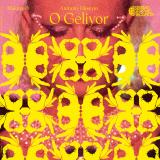
Anthony Hüseyin presents their new album O Geliyor (Making O), in which they return to the rediscovery of their gender, their childhood, and their attachment to Zeki Müren.
Müren is widely regarded as the most important queer exponent in the history of Turkish Art Music (Türk Sanat Müzigi). This genre of music was open to musical hybridism, and Müren himself also included elements of jazz and pop music.
Stylistically, O Geliyor (Making O) is a combination of contemporary discoid electro-pop music, based on Turkish Art Music by Zeki Müren. After successful current re-interpretations of Turkish music styles like neo-Anatolian pop and neo-Arabesk, this album provides a first take on neo-Turkish Art Music.
The album title is referring to the third genderless person pronoun in Turkish called "O", which encompasses all gender possibilities in one word. The album reflects on the memories that haunt us and the indescribable wounds of displacement. Set against the backdrop of Berlin, home to many immigrants and political and queer refugees, it exposes the profound emptiness in a metropolis wishing to imagine itself as a safe haven for the free-spirited, yet always reminding the Other that they don't belong. At the same time, it delivers anthems for the displaced, for the queer migrants who traverse internal and external landscapes in search of a place called home.
Anthony Hüseyin is a non-binary musician and performance artist of Kurdish-Turkish and Arabic descent who works with voice, text, film, dance, and installation. Raised in Urfa in Southeastern Turkey, where they learned traditional local music, they went on to study both classical and jazz singing in Istanbul and Rotterdam. Their works combine the personal and political to explore memory, identity, community, collective consciousness, and the body.
Bassmæssage is the oldest and most consistent bass night in Leipzig Germoany, pushing local soundsystem culture and grass roots artivism. We are about to welcome a fresh release "for all who like it low and want it vibrant"!
After two installments of bass-heavy multi-genre various-BPM grooves on Volume One in 2015 and on Second Drop in 2023 here comes the full triplet in this line of bass music vinyl compilations featuring acts who have been mÊssaging our nights. This time on Threenity, one side side is running garagewise 130, flipped by a more dubsteppish 140 area, all drowning in dark sinister midranges, mindful drum programmings and heavy-weight lows for huge speakers, to be released around 9th May 2026 on a 2 floor DIY soundsystem night in Connewitz!
Opening with genre wizzard LUI from Leipzig, showing how dirty and fonkey a garage bit can actually go. Bricks of beats on a fundament of nasty bass concrete, roofed by a vast selection of uplifting samples are vibing for sure.
Trainsient is the deep bass moniker of Leipzig's Plastiks running DDNBC, delivering a heavy tribal statement of a lost place of a deep grime, overgrown with flutey leaves and dreamy synth lianes hiding da moddership.
Psionide from Dresden with estonian roots is celebrating a vinyl debut with a slow-jungle dream-breaks bit between retro and future, braindance and dance, listening and bassline coaster.
Son du Maquis outa Toulouse sneaks in low in a classic dubstep manner, only to drop the lowest wobble possible right throughout the ride.
Miles Won transmitting from Plugwhiz, nails headnodding with his beat writing skills. Where bass meets hip hop, the grass has never been greener.
Finally, veteran like Dub Across Borders cabling from Copenhagen is delivering the contemplating outro: a melancholic 140 halftime not only to send you home but right into the night sky.
These six peaces are found on a heavy cut vinyl, ready to shake your system. As bonus there is another papercraft Basstelbogen cover, which lets you build your own BM logo and a 1:3 ratio record player on top. Mach's mit, mach's nach, mach's b‰sser!
Trinidad-born, Bristol-based vocalist and multi-instrumentalist Corysan releases his first new single in five years on the newly launched Nine Channel Records.
He met producer and label boss Grant Dell in 2016, the pair hitting it off and collaborating on 2018’s Hijacked single for the latter’s Legsman reggae imprint. Described as “proper righteous business” by Andrew Weatherall before spinning the single on his Music’s Not For Everyone NTS radio show, Corysan deeply intones his lyrics over Dell’s supremely deep, heavyweight roots manoeuvres.
When Dell asked Weatherall’s long-time studio partner Nina Walsh to pick one of the three artists on his planned new label to remix shortly after his untimely passing in 2020, she selected Corysan’s “Heavy Load”, not knowing Andrew had been such a major fan but, at that difficult time, relating to the song’s positive punchline: “The burden that I carry here, can only make me stronger now.”
Nina’s modern dub masterpiece graces the flip of Dell’s two mixes, her seismic bassline and other-worldly music perfectly complimenting Corysan’s message, represented in spatially planted extracts along with a new spirit-flying midsection.
Now it’s time to let “Heavy Load” into the world as a roots milestone from this unique artist, with enough extra weight to anchor it anywhere from sound systems and clubs to front-room dancehalls. Those few years since its creation have given its timeless message of hope and defiance a deeper relevance in turbulent modern times.
Sa Pa launches Dub Techno For Life: a dedicated outlet for the artist’s more dancefloor-focused material - work that has largely sat outside the conceptual frame of his previous releases.
The label’s first release, Girls on Tour EP, opens with “Mokira Ultra Dub”, a 10-minute club rework of Mokira classic “Manipulation Musik”. Originally produced alongside an ambient version commissioned for Kontra Musik’s 2016 Kontra X compilation, the dancefloor mix was ultimately shelved until now. With Andreas ‘Mokira’ Tilliander’s blessing, it finally surfaces as a standalone Sa Pa production. A track too banging to go unreleased.
“Waiting For You” traces back to Sa Pa’s orbit around the giegling ecosystem via FORUM. Once lined up for an official release on the parent label before plans stalled, the track slipped into the archives. Buoyant and disarmingly pop by Sa Pa standards, it finds its place here as the A2 - tuned to the collective memory of mid-2010s German house music.
Harnessing the spirit of Chain Reaction from the abandoned patches and borrowed machines of a rainy night’s recording in Taipei, the B-side’s “Modular System” captures a late-night, one-take modular jam. A broken yet hopeful “World Saving Banger” closes the EP with some raw and IDM-leaning force, showcasing Sa Pa’s new label - and the Girls On Tour EP - as a space for neo dub techno ideals to take shape.
LP,180g, 2027 REISSUE - REMASTERED FROM ORIGINAL TAPES, CAREFULLY REPRODUCED ORIGINAL ART
Veteran library musician Alan Parker recorded with session vocalist Madeline Bell for his Themes International Music label and the result was 1976's The Voice of Soul.
The sensational uptempo dancer 'That's What Friends Are For' is probably the most well known track on the record, and is a big hit on the rare groove scene, but it is by no means an anomaly. The Voice of Soul is essentially a perfect, sophisticated soul album with heaps of swagger and sass from beginning to end.
Its once generic-sounding title is now deservedly defnitive.
And the whole LP oozes sex. It oozes sex so much that it could have soundtracked a period porn flm. Indeed, parts of it did. 'Love Is All' and 'You've Got What It Takes' both featured on the infamously banned Pretty Peaches from the same year.
As is usual with library records, The Voice of Soul was hard to get even when it was frst released. It's next to impossible now. So here's your opportunity to own what is in our opinion one of the fnest rare soul LPs of the late 70s, and a superb example of Madeline Bell's superlative vocal talents.
But that's not the whole story. As well as pitching the record as 'a varied selection of modern female vocal features which are equally suitable for background or radio programme usage', the original release notes go on to explain that 'the corresponding backing tracks are issued on TIM 1022 The Sound of Soul. Therefore it is possible to edit from vocal to instrumental version and vica versa where commentary or scene changes occur.'
So yes, all of the backing tracks from The Voice of Soul were released as The Sound of Soul, and we couldn't re-issue one without re-issuing the other.
As with all ten re-issues, the audio for The Voice of Soul comes from the original analogue tapes and has been remastered for vinyl by Be With regular Simon Francis. We've taken the same care with the sleeves, handing the reproduction duties over to Richard Robinson, the current custodian of KPM's brand identity.
LP,180, 2018 REISSUE - REMASTERED FROM ORIGINAL TAPES, CAREFULLY REPRODUCED ORIGINAL ART
The two sides of 1973's Big Business / Wind of Change are mainly the work of thegreat Keith Mansfeld but there's a killer cameo each from Alan Hawkshaw and David Snell to help deliver a thematic suite, diverse in mood, applicable to dramatic and environmental situations'. A Be With favourite and truly one for the heads.
The Big Business of side A is all the work of Keith Mansfeld. It's heavy on the suspense and features the vital Hot Property', an insistent groove so good that Madlib sampled it to lace the ace Long Awaited' by Lootpack with Dilated Peoples.
Sleeping Giant 1' is a more feshed out version of the equally-dazzling Fatal Error', evoking the orchestral magic of David Axelrod. Indeed, it conjures images of Diamond D falling over himself in the early-to-mid 90s to loop its intoxicatingly
eerie soundscape. Complete with guitar flls that recall Paris, Texas-era Ry Cooder, you need this record for this piece alone.
The horn-and-fute-led "Tycoon" is a head-nodder and "Power Complex" has some fantastic percussion. Other highlights include the breezy glide of Whistle Stop Tour' and its sister groove Clean Air.'
Over on Side B is the more expansive Wind Of Change, which includes the David Snell and the Alan Hawkshaw contributions. But these ain't no fller. Snell's shufing International Flight' sounds like a smooth Dorothy Ashby track tossed from the heavens. Hawkshaw's Road And Rail' is about as luxurious and strung-
out as the great man gets and it might just be the highlight of this whole set.
Not to be outdone, if Mansfeld's Balance Of Power' doesn't make you feel like king of the world then you must be playing it wrong. Oh, and did we mention World In Action'!
As with all ten re-issues, the audio for Big Business / Wind of Change comes from the original analogue tapes and has been remastered for vinyl by Be With regularSimon Francis. We've taken the same care with the sleeves, handing the reproduction duties over to Richard Robinson, the current custodian of KPM's
brand identity.