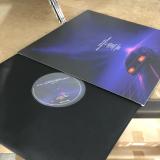
Ot to not to is the experimental RnB recording project of Virginia natives Ian Mugerwa and Noah Smith - These are the remixes!
.
Ot to not to is the experimental R'n'B recording project of Virginia natives Ian Mugerwa and Noah Smith. In 2016, Mugerwa released the first Ot to Not to LP Goshen through Nicolas Jaar's OTHER PEOPLE imprint after being discovered by Jaar in 2015 while recording. Goshen was a very deliberate effort to create an R'n'B concept album that explored aesthetics and recording methods usually more associated with European experimental electronic music. More specifically, it was an effort to subvert tropes in pop R'n'B, whether those be the stereotypical, sterile cleanliness of radio R'n'B or the safe themes and song structures. Forthcoming LP "It Loved to Happen" will be released March 1 and is preceded by a remix 12 featuring abstract interpretations of tracks by Xiu Xiu, Carlos Nino, Ben Chatwin & Machinefabriek.
Beautiful Deluxe Artwork, Limited ot to not to is an experimental RnB project by VA native Ian Mugerwa that combines low fidelity electronic recording techniques with unconventional song structures to produce music that serves as homage to dusty old blues recordings. At 19, Ian left his hometown of Fairfax for Richmond, where he slept on friends' floors for several months while recording Goshen. During the day he would "hunt dussy" and during the night he would haul borrowed equipment over to the VCU music facilities and record until the morning. He was moderately successful on both fronts. The resultant recordings form a coming of age album, a snapshot of Ian from the ages of nineteen to twenty. Ian's goal was to explore new aesthetics in black music through use of nontraditional methods, creating less polished, less sterile RnB in the process. Such methods included layering 40+ cello tracks to create the illusion of an orchestra, or collaging four, separate, 4-minute tracks of improvised percussion into one. Most drums were recorded last. Despite the focus on experimentation, it was important to Ian that he be crafting pop music. It is his belief that an impactful artist has, at least to some degree, a moral responsibility to deliver their art to the maximum amount of people (to efficiently help art as a whole progress). In other words, if restraint can be exercised, it ought to be. Similar artists include James Blake, Phil Elvrum, Mark Hollis, and D'Angelo.
out of Stock
Last delivered 7 years ago available to reorder, subject to availability
*2026 repress - with new labels and small hole. NOTE NEW CATALOGUE NUMBER! One of Shella’s most popular reissues, “Rebel” by Jamaican Canadian roots maestro Rothadam is finally back in stock! Pressed with a small hole (as opposed to the 2017 re-issue with the jukebox punch-out). Supported by King Shiloh, Gilles Peterson and countless others, Rothadam’s “Rebel” is one of the deepest and most sought after roots 45s to ever come out of Canada. “Rebel” evokes Black Ark studio wizardry with Rothadam’s delicate yet defiant vocal, thunderous bass and a massive horn section. This release is a monster double-sider: Two different versions of “Rebel” were recorded in Toronto circa 1975, 76 by different producers (Sid Lovejoy at LMP and Ron Lewis at Half Moon) and backed by different bands. The “Rebel” message in Rothadam’s music is obvious, but more than anything the song is a call for peace and unity reflecting on his life in Trenchtown, Jamaica. Rothadam explains: “…..because where I was living , It’s hard to don’t get involved. It wasn’t an easy thing to just live and just be happy….. Hard life man, hard life…most of my friends when they were doing things that aren’t right…Not me. So in other words, I was born to be a strong man.” Rothadam passed away in 2026 but was delighted with the new audience his music had found. This latest reissue is dedicated to his eternal memory.
The almighty Joe of the Farr’s is a highly accomplished UK techno DJ, producer and mastering engineer. Originally associated with Bristol's electronic music scene, Joe studied TV and film sound design before building a solid reputation through hard-hitting, technically sophisticated techno releases on labels including Turbo, DSNT, Bloc, Soma and Power Vacuum. His concentrated output combines aggressive club-focused rhythms with melodic and IDM-inspired elements. Now based in Wales, performing internationally and on home turf, he also operates a professional mastering engineering operation of the highest esteem of which RIOT could simply not operate without, as many others will gladly attest too.
Continuing with the ‘Limited As Fuck’ series of releases, on our fiercely independent techno label based in Scotland, we’ve finally let loose the screamer of a release, from such an integral member of RIOT HQ, that’s been patiently ‘Left Alone’ and waiting for the right time to unleash its User Experience. Joe’s totally went one step beyond and cranked out a pressure filled release of not only persistent anthemic prowess but one of such rigorous determination, all those on the dance floor MUST ‘Obey’ to its diligent beats. And with Rant & Rave Records boss Maedon serving up such an iconoclastic relentless remix, you will absolutely need to submit complicitly to all things RIOT.
The full digital release also features two bonus meticulously disciplined tracks to fulfil your obedient, subservient requirements.
WARNING: NON STOP BREAKIN’ N’ STOMPIN’ N’ BOPPIN’ TO THE RIOT BEATS WILL MANIFEST ITSELF
A collection of previously unreleased material (between '75 & '90) by Enno Velthuys.
Compiled by Hessel Veldman.
"Hello boys and girls, my name is Enno Velthuys and I am the idiot of the group (and also the
most intelligent, the most sensitive, the most artistic and he who has to carry the heaviest
load, because this boy's luggage, DAMN, it's pretty heavy).
Luckily, I had already been through a lot when I got this ‘knock in the head’. Sex, drugs, lots
of rock and roll and a sunny childhood with beautiful views I look back on with nostalgia.
Later on I lost my focus and I only thought about one thing: how to get out of it (that damn
problem, my shifted reality, my blind spot, that piece of poisoned apple of forbidden
knowledge choking my throat)!
But I can't think my way out of it, psychiatrists are just ordinary people, and very heavy pills
suppress everything (I'll just take my pills) FLASH!
You ask me what it takes to create music or art that is meaningful and tells a story. It’s hard
when you haven't had enough setbacks, nothing more than maybe a little blues. I'm not
saying it was the right path, but at least I've come a long way. And now I'm a fish in a pool.
Please understand that this is very disturbing. It's not my waterway. A fish belongs in a river.
And my star sign is fish. >))D
Annie Bloch’s luvt is a quiet reorientation of the organ: away from its monumental image and ritualised spaces, towards the delicate mechanics of touch, air and friction. Across seven compositions marking her debut on OOH-sounds, the Cologne based organist and composer turns to the chest organ, a small and mobile counterpart to its larger relative, traditionally used to accompany Baroque music. On luvt, Bloch limits herself to just three stops of wooden pipes, using the instrument’s sensitive keyboard, mechanical subtle effects to crystalline sound world shaped by meditative strategies and fanciful detailing. Bloch’s approach sits at the crossroads of modern composition, new psychedelia, ambient and minimalist traditions, with occasional traces of an avant pop sensibility, while keeping the unique sound and physical character of the chest organ at its core.
The title luvt derives from the German luven, “to turn to the wind” and Luft, “air”, a gesture Bloch extends beyond the mechanics of the chest organ towards what cannot quite be grasped or put into words. Bloch follows the organ into quieter, more intimate territory, letting its monumental potential fade into the background while exploring the sensual its sound. luvt is a gentle and immersive meditation on the sound of the chest organ, revealing the instrument’s contemporary relevance while pushing its expressive possibilities into new territory.
Annie Bloch (*1994) is an organist, composer and songwriter based in Cologne, Germany. As an organist she performs solo and in alternating constellations with an improvisational and situational approach. The reality that every pipe organ as well as the space it speaks in is unique, is something she not only adapts to, but actively works with. The resulting composed improvisations explore states of change. Her pieces focus on the in-between-spaces, that are already leaning towards the next event. Searching for the ambivalences in a sound and lingering on them, her music resists singular truths. The musical material she draws from is informed by her engagement with the experimental music scene, but also by compositional styles of pop and ambient music. She has performed at Huddersfield Contemporary Music Festival, Orgelpark Amsterdam, Philharmonie Köln, Moers Festival and others. As an indie-folk artist Annie Bloch released the album „I DEPEND“ (Papercup Records) with a chamber orchestral band, that she regularly performs with.
The first release on Edition Hawara's new sublabel Hawara International is a record that leaves little room for ambiguity about its intended use. Produced by Takashi Shima of the band Piper and released as part of the Sun Tan Club series, "For Light Tanning" was designed to accompany the pursuit of the perfect summer tan. It came complete with tanning instructions and oil recommendations, and was the subject of a promotional partnership with Hawaiian Tropic. The music drifts between ambient, new age and lifestyle soundtrack genres, providing an elegant backdrop for beaches, pool parties and other seasonal activities. Having long been forgotten outside a small circle of collectors, the record now returns as an unusually thorough document of late-1980s leisure culture. Whether it actually improves the tanning process remains unverified.
The exclusive Soul Jones Records debut release SJR101, "I Never Had It So Good (Uncut)."
Produced by Elijah Baker (ex-Tony! Toni! Toné! bassist) and Oakland studio maestro BJ Kemp (Ms. Monét / Raphael Saadiq), the record channels early-'70s sweet soul with a contemporary nous that keeps it fresh.
Inspired by a gospel recording by Elijah's father, Reverend Elijah Baker Sr., this romantic serenade brings together an all-star Bay Area line-up: Otis Cooper (Otis & Shugg – "Journey" / "Thank You For My Baby"), R&B hotshot Adrian Marcel and vintage soul specialist Mario Corbino, once part of The Temptations.
It’s not just since James Bond and the introduction of World Overshoot Day that we’ve known: The world isn’t enough. We need an Extrawelt! Arne Schaffhausen and Wayan Raabe have been tinkering with this celestial body for over two decades, and it seems to be slowly nearing completion. You certainly can’t accuse Extrawelt of lacking ideas. They are, so to speak, the legitimate descendants of the legendary planet designer Slartibartfast from Douglas Adams’ “The Hitchhiker’s Guide to the Galaxy”. No doubt, the downright insanely creative bossa nova-techno bastard “Honey Hunter” will be mentioned in the same breath as Slartibartfast’s award-winning Norwegian coastlines by future civilizations. The other three tracks aren’t half bad either. Take our word for it.
Nicht erst seit James Bond und der Einführung des world overshoot days wissen wir: Die Welt ist nicht genug. Wir brauchen eine Extrawelt! Die Herren Arne Schaffhausen und Wayan Raabe werkeln seit über zwei Jahrzehnten an diesem Himmelskörper und er scheint so langsam bezugsfertig zu sein. Man kann Extrawelt nun wahrlich keine Ideenarmut vorwerfen. Sie sind quasi die legitimen Nachkommen des legendären Planetendesigners Slartibartfast aus Douglas Adam’s “Per Anhalter durch die Galaxis”. Der geradezu irrwitzig kreative Bossanovatechno-Bastard “Honey Hunter” wird von künftigen Zivilisationen in einem Atemzug mit Slartibartfast’s preisgekönten norwegischen Küstenlinien genannt werden. Auch die anderen drei Tracks sind nicht von schlechten Eltern. Glaubt’s und werdet selig.
Downloads
Some records are about rhythm. Others are about atmosphere. Hidden Soul EP exists somewhere in between -- a collection of electronic transmissions where intricate programming, analogue textures, melody, breaks and acid come together in a constantly shifting landscape. For their debut on Analogical Force, The 89th Passenger delivers five tracks that move between detailed electronic structures, hypnotic rhythms and deeply atmospheric passages. Beneath the machines and intricate programming, there is an unmistakable sense of melancholy, giving the record a depth that goes beyond its electronic foundations. Hidden Soul EP moves between intricate electronics and abstraction, reaching unexpected emotional heights while maintaining a strong sense of sonic depth and physicality. A record for close listening, late-night journeys and those moments when machines become something more than machines.
The latest update to the Dream Software sonic catalogue is a glossy re-mastered version of the 2003 release ‘Fears’ from ‘Shuffle Progression’. A soundtrack for the space between reality and the higher spiritual planes. Grounding yet otherworldly, an organic groove doused in a warming sensuality and atmospheric liminality. This one is optimised for hazy spaces, morphing layers of floating essence, slowly obscuring all thats visible into blurry shapes of an abstract existence.
Kito Jempere has spent more than two decades building a universe of his own, with releases on Mule Musiq, DFA and other influential labels, alongside remixes from Ewan Pearson and others. With Other People’s Aesthetics, that universe finally opens outward. After years of protecting his own musical language, Kito lets the outside world in—embracing the sounds, artists and scenes that have shaped him, from house and techno to Aphex Twin, Warp, Ninja Tune and Omar-S. The result is a personal universe merging with the world beyond it. The album opens with “Change For Now,” a collaboration with longtime friend Lipelis (L.I.E.S., Public Possession, Running Back), marking a friendship that has grown over the past decade. “Teaser,” originally released on Mule Musiq, returns in a new album “Dub” version, with fewer vocals and a stronger garage-house feel—a direct statement of love for David Lynch. “OPA” looks back to Kito’s original half-jazz, half-drum’n’bass sound and the Uniquetunes era of the early 2000s, alongside the music he absorbed from CDs by Amon Tobin, Squarepusher, Skalpel and The Cinematic Orchestra. “Listens To Selected Ambient Works Once” is a direct homage to Aphex Twin, given a Warehouse-style treatment for bigger dancefloors. “I’m Not A Doctor, Either,” featuring mishinuki—previously heard on Green Monster in its Moloko homage—builds towards an epic, euphoric string finale. “Kobayashi Porcelain” closes the record by combining memories of Usual Suspects with Moby-like atmosphere and an Omar-S-type beat. The release of Other People’s Aesthetics will be followed by a Japan tour in December 2026 and Kito Jempere’s ongoing residency at Honeycomb Hi-Fi in Dubai. Early support from: Ata, Reznik, Horse Meat Disco, Vladimir Ivkovic, Tim Sweeney, Max Pask, Rich Thair of Red Snapper, Ame, Ellen Allien, Benji B, John Tejada, The Blessed Madonna, Hard Ton
On Last Night At Marienbad's latest, the imprint brings together three of the brightest souls found within the realms of Jazz, namely Mauricesax, 9ick and Milan93, with their collective talents synergising effortlessly on 'A Garden Between Us', alongside a stellar cast of remixers who add even further delight between the grooves….
As a genre, Jazz has perhaps lent itself the most to other musical universes, in that its curious heart, endlessly experimental nature, and parameter-defying spirit have wrapped itself deep within the core of countless albums, scenes, and music makers. It's a genre that welcomes reinvention, consistently defying its contents and always reaching out to find new methods of expressionism. Electronic music, in its many forms, has truly embraced Jazz perhaps like no other movement of music has, with a truly astonishing array of records surfacing in the past 40 years which have blended Jazz's unique motifs with grooves, chords, and emotive excellence. From 90s Jazz house and UR Techno, through to Future Jazz, downtempo, and Hip Hop, and around many other suns, there remains such an intrinsic and symbiotic relationship between the two musical realms that caters to those who wish to live music both within and out with themselves.
As practitioners of blending electronica and Jazz, few do it like the trio of Mauricesax, 9ick, and Milan93. All three are known for their distinctive soundscapes, yet share commonalities in terms of musical language, feel, and sense of progression. Bringing them together allows for overlaps in their sounds to emerge, and just like Jazz itself, this is where the intrinsicness of sound begins to blossom. 9ick brings his softly evolving vibe to the table, one which was so prevalent and celebrated on his 2025 album 'SMIL'; Milan93 draws from his focal point of exploring fill-laden grooves and a myriad of emotive sensibilities; and Mauricesax draws up his extensive musicality that exists at the corner of jazz, electronic, and experimental music, along with running musical workshops all over the globe.
'A Garden Between Us' represents the trio's core tenets, with this immediately obvious from the record's opener, 'Rhodora'. A gentle solo piano quickly evolves into a series of powerful rhythmic pulses, with brass lines bringing vitality and feel to proceedings. The track shifts gears with purpose, transitioning between musical vignettes of the highest order, with the synth work doing much to bind the transitions together. 'Tulip' emerges slightly differently, with glossy Rhodes tones and an unravelling rhythmic undercurrent setting an enthralling stage. The track flourishes amongst sweeping textures, coming up for air amongst a deeply hypnotic rhythmic section that holds on and never lets up. 'Honeysuckle' lands next, which sees the trio emerge with a boundless, dynamic soundscape. The drums shift within the undertones, as keys, chords, horns and hip-hop vocal samples dance around the pulse, capturing the imagination with their narrative-like placement. Wrapping up the A side comes 'Camellia'. A dazzling array of harmonic sounds converges around the transfixing rhythm section, which emerges from deep below to lavishly roll out over the midsection, with the delicateness of the instrumentation a real highlight here.
The B side features two exquisite remixes, with Pacific Coliseum's version of 'Tulip' landing first. Beginning with a signature four to the floor to get things going, his careful handling of the source material is seen in the tactful introduction of the blissful elements that made the original cut so impactful, with great focus placed on emotive fidelity. The result is a summer-bound house number that reimagines the original in all the right ways, flipping it into a euphoria-driven jazz-laden pacer that reaches for the heavens as much as it drives right into the heart. Teuteu then showcases their take on 'Honeysuckle', and at 9 minutes long, represents the longest cut on the record - and the experience is all the richer for it. Leaning heavily into dance music flavours, Teuteu shifts perspective totally into the realm of the club, with the walls beating hard to the kicks. The sax lines that drift ethereally up top keep eyes closed and souls full, as the dance shifts into the next phase.
An experience that drifts from the daydreaming, to soul-warming through to the club shaking - what else is left to experience, except for 'A Garden Between Us' and how it will brighten up life itself….
The sun sat high above the desert outside Joshua Tree on October 17, 2024, baking the rocks and shrubbery outside the Farrington Observatory as a small group of invited guests ventured up a steep path towards the telescope. Kyle Simon, the artist and printmaker who founded the Observatory, was standing outside the print studio sat below the towering cylindrical building, greeting friends alongside his wife Sarah and lifelong friend Brian Weitz, the musician widely known as Geologist of Animal Collective. Simon and Weitz had spent the previous day testing and retesting a system that would transform the light of the oncoming full moon captured by the gigantic telescope into a signal that would modulate the control voltage of Weitz’s modular synthesizer. As the sun dipped below the horizon line, the audience gathered on a small wooden patio surrounded by speakers while Weitz readied himself behind the array of patches and knobs. Simon addressed the group, presenting the history of The Sirens, the sonic exploration of the night sky’s mystical and scientific significance about to unfold.
The music conjured under the Hunter’s Moon that night is now documented on this first official release of The Sirens, which was conceived by Simon and Weitz as a recurring performance piece and sound installation. Over a decade ago, Simon began immersing himself in literature on humanity’s sonic relationship to the celestial realm, including Homer’s Odyssey, Plato’s “Spindle of Necessity, ” Kepler’s Harmonices Mundi, and the field of astroseismology. He fitted homemade telescopes with photodiodes and optical sensors to make the images audible, finding latent patterns in the noisy sonic signals he began receiving from the stars. With Weitz, the process expanded as the signal was routed through an analog amplifier and set to modulate the pitch, filter, and other elements of his synthesizer. Together they developed a system of improvisation, with Simon adjusting the telescope to change the intensity of the light based on its relationship with the moon’s position (imagine a theremin player moving their hands in subtle, meaningful motion), and Weitz responding to that input in real time: bending it, amplifying it, or letting it stand on its own. The duo debuted the piece at the Integretron in Joshua Tree in 2018, providing a crucial proof of concept for the performance at Farrington featured here.
The first thing the listener hears on The Sirens is the opening of Farrington Observatory, the cranking of motor and metal. As the lens of the telescope is exposed to the evening air, a wavering drone emerges from the synthesizer, flickering at the margins, the tuning of the oscillators adjusting to the rapidly cooling desert air. The piece progresses and the drone becomes a luminous, spherical constant, bathing the listener in pure tone as Weitz draws out harmonically ambiguous melodies that spiral upwards. Electronics crackle and convulse, coalescing into dense dissonance before widening out into an open octave. Just as the moon orbits the Earth and the stars shift as the planet rotates, so each sonic element appears in flux, interrelationships slowly forming and falling away. Divided into two parts, The Sirens flows as a continuous conversation between the artists and the starlight completing its thousand-year journey across the galaxy.
The Sirens belongs primarily to a lineage beyond music: of sea captains navigating by looking skyward, of astrophysicists studying the formation of the Milky Way, of the modern myths of werewolves, of the stories embedded in constellations. As Simon writes in the album’s extensive liner notes, “These stories and explorations reveal a collective yearning to become conscious of our connection to the universe, our deep-seated desire to understand how we fit into it all.” This music underscores the history of the night sky as the place where poetry and science find common ground, where exploration hinges on the imagination. Driven by curiosity and ingenuity, Weitz and Simon look up and wonder.
We Welcome Ed Longo And His Studio Project The Applied Arts Ensemble Debut On Early Sounds With the Other Fantasy', The Result Of Many Recording Sessions That Took Place In Different Places Around Europe.
Conceived With A Strong Jazz-funk, Fusion And Boogie Sound It Has Been Conceptualized Around The Idea That The Schizophrenia Of The Internet-age, The Visions Of Otherness (the Undiscovered Lands, The Primitive Happiness, The Impossible Love) Permeate The Collective Consciousness And The Idealized "other" Loses Any Correspondence With The Physical World.
Two dancefloor bombs, recorded in Peru in the mid-'70s by bandleader, producer, and keyboardist Otto de Rojas. It's no coincidence that "Choca las caderas" was originally released as a single backed with "Al ritmo del Bump-Bump," a clear tribute to the classic "Soulful Strut," making the artist's affinity for the soul and funk sounds coming out of the States unmistakable. "Choca las caderas" is made for dancing and partying hard, with irresistible horn arrangements and an incredibly groovy rhythm section. "El tema de Coco" is another superb instrumental recorded by Otto de Rojas, who plays the electric pianos and Moog on this track.
These two tracks are now reissued together on a 45 for the first time.
What an unbelievable record. From the wild cover to the iconic breakbeats, Roots from Ian Carr’s Nucleus is one of the dopest albums we know. This is seriously thick, funky-prog jazz-rock heaven. Originally released on Vertigo in 1973, other than a couple of versions at the time for other territories, Roots was never re-pressed since so it’s gone on to become another one of those impossible to find records.
Maybe it was a little too out there for the time, but it’s aged very, very well indeed and this Be With re-issue, re-mastered from the original analogue tapes, shows off just why this deserves to be back in press.
Genius trumpeter and visionary composer Ian Carr was one of the most respected British musicians of his era. He was a true pioneer and saw the potential in fusing the worlds of jazz with rock, just as Miles Davis and The Tony Williams Lifetime did in the US. In late 1969, following the demise of the Rendell-Carr quintet, and tiring of British jazz, Carr assembled the legendary Nucleus. Regarding music as a continuous process, Nucleus refused to “recognise rigid boundaries” and worked on delivering what they saw as a “total musical experience”. We can get behind that.
Under bandleader Carr, Nucleus existed as a fluid line-up of inventive, skilled musicians. This constant evolution and revolution was all part of the continuous musical exploration and discovery that took jazz to new levels.
Working together with producer Fritz Fryer and engineer Roger Wake, the seven compositions by Carr, Brian Smith and Dave MacRae that make up Roots flirt with perfection, and Nucleus at that time made up of the cream of 1970s UK jazz with Brian Smith on tenor saxophones and flutes, Dave MacRae on piano and electric piano, Jocelyn Pitchen on guitar, Roger Sutton on bass, both Clive Thacker and Aureo De Souza on drums and percussion, Joy Yates delivering the vocals and of course Carr on trumpet.
The spellbinding title track immediately renders the album indispensable. Riding the illest of loping breakbeats, “Roots” is low-slung, doped-out heist-funk. An absolute monster. If it sounds familiar then that’s likely down to it being sampled by Madlib for Lootpack and Quasimoto’s “Loop Digga”, as well as by a whole host of beat manipulators. “Roots” conjures prime instrumental hip-hop / beat music, only 20 years ahead of its time. Truly, these are the roots. Through sinuous bass, twinkling keys and a hypnotic guitar riff, a smoky brass motif weaves its way into a gloriously deep haze around Carr’s solos. “Roots” is over 9 minutes long, but there’s not a single wasted second, not surprising given that this is a condensed version of an originally 40 minute long commissioned composition.
The soothing vocal fusion delight of “Images” follows. Meticulously constructed, with gorgeous flute work from Brian Smith, with Joy Yates’ silky vocals and Dave MacRae’s Rhodes never sounding better. The cool, driving “Caliban” closes out the first side. Originally the third movement in a four part commission to celebrate Shakespeare’s birthday it stands up on its own, all robust rhythms and blended brass. Keyboard colour and Carr’s trumpet are splashed across the funk drums and basslines (and there’s even some bamboo flute). This really is fusion: the elements of jazz and rock coming together in beautifully synthesis.
Side two opens in riotous fashion with the short, thrilling samba of “Wapatiti”. Next up, “Capricorn” forms a smoothed-out, jazzy constellation. Mellow and dreamy, its twinkling percussion and languid horns slowly build the vibe before head-nod drums and a killer bassline enter the fray. With a distinct heaviness that Black Sabbath would’ve envied, “Odokamona” is a venomous slice of riff-soaked jazz metal (yes, you read that right), elevated by Carr’s wah-wah horns.
The album closes with MacRae’s exceptionally cosmic “Southern Roots and Celebration”. Very much in conversation with Weather Report, it opens as a languorous, spiritual jazz of chiming keys and serene guitar that turns slowly, gorgeously into a mid-paced, brass-laced banger. It’s another sure-fire party starter and the sound of the band having a righteous blast, building an ecstatic chaos that ends with Yates screaming.
And of course we need to talk about Keith Davis’ cover for Roots. Perhaps the coolest record cover of all time? Certainly one of the most bonkers. Just your run-of-the-mill high-gloss, acid-tinged airbrush dystopian/utopian living-room party scene. Consider this your chemical flashback trigger warning.
Front-and-centre the hip-to-death green robot holds court with their giant ball of yellow barbwire wool, hooked up to… something(?) being teased out from under the stairs (probably best not to ask). A thoroughly zoned-out, long-legged Pop Art party-goer lounges half-plugged in to the painting behind her as a pair of legs flail into shot from the the top of the stairs opposite. We won’t even begin to guess what the chap’s up to in the middle, but the view out of the windows is rather nice, and someone’s already got the hoover out ready to tidy up. All of the Nucleus sleeves are something special, but this particular one? Crikey.
This Be With edition of Roots has been re-mastered from the original Vertigo master tapes, Simon Francis’ mastering working together with Pete Norman’s cut to weave their usual magic with these wonderful recordings. The crazy cover has been restored at Be With HQ as the finishing touch to this long overdue re-issue.
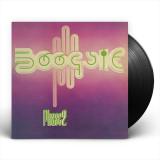
"Steve Watson's roots lie in Paramaribo, at that time the capital of the Dutch colony, where he won the 1975 Suriname Song Festival. This artist had a very strong connection with the music of his country, although unlike other artists - such as Max Nikman, for whom he acted as vocalist too - he performed his songs in English. Siegfried Boerleider, his real name, moved shortly thereafter to the Netherlands, where he also played in the groups The Backlot (with Laura Fygi and Rowan Moore) and Soul Conference. He released several singles on various labels, shaking off the "kaseko" music genre, which fused many different styles from Africa, Europe and the Americas, but considered rhythmically complex. He took time to move toward a simpler, yet well-structured, melodic genre in the recording studio, producing songs that were enjoyable to listen to on the radio and sensually danced to in the disco. With 1981's "Born To Boogie," we risk a seductive journey into the soul music of Suriname, which also possesses the fragrance of Dutch tulips. Then thanks to its charm, exploded in the Netherlands and subsequently in the world. Steve Watson - in addition to his personal style, rich in that simple and genuine expressiveness - also deserves recognition for his excellent songwriting, which led him to write for other Dutch artists, even though his two best songs are on this vinyl: "May Little One" and "Born to Boogie", ....the latter title has never been more fitting !!! Listen to it and go crazy !!!"
A collection of vinyl and limited digital releases, curated by Millsart, an alias of Jeff Mills, of his most eclectic and transcendent compositions that derive from his Every Dog Has Its Day project as well as new unreleased works. Vernacular creations that fall off from the "other side" of the Electronic Music tree, this project is designed for the experienced Techno music listeners, and its goal is to reflect upon the pure artistry of the craft of storytelling. A realization between music and life. Whereas "dancing" is the goal of Dance Music, the goal of this music is about "reflecting on the complexity and simplification of life".Soundtracks for people in their evolutionary process.
This release 'Drifter' is about 'Hype'.
Hype
An animal that prowls on the vulnerable - it excites those who might be looking the other way or with their eyes and minds wide shut.
What is life without hype?
As a transitional tool, hype can be most effective especially when impulse reactions are at play. Something of a psychological currency, there is a lot to gain by giving people what they want - the rush that comes with taking part in a process of making something bigger, more successful and more preferred. Even if there is nothing there.
What's wrong with getting exciting about something?
There are only a few rare masterclass cases that have lasted a lifetime.
As Andy Warhol proclaimed that "everyone will be World famous for 15 minutes" rings darkly true in an era when each one of us can be the talent scout, artist, critic, audience.......and then a revisionist, hoping to bring hype back again by reminding people how great the first round felt.
We are all free to use our attention and time anyway we please. This is the freedom we have, right?
In most cases, we wake up and at some point, the question of justification becomes a debate between those who found unconditional solace and those who re-discovered the subject of substance and "kicked the tires".
Should I care if others like or dislike something?
For some, the hype of something never ends. It hardens and becomes part of a foundation like a cement podium. Something to be stood on to speak over all dissenting voices.
Welcome Tori Kudo back to A Colourful Storm with a new edition of Maher Shalal Hash Baz's Faux Départ, a document of a stateside tour that culminated in a recording session at the legendary Dub Narcotic Studio with a one-time ensemble of Greg Saunier and Chris Cohen (Deerhoof), Andrew Maxwell, McCloud Zicmuse, Arrington de Dionyso, Takashi Ueno, Saya Ueno, Naoki Otani, Akiko Hotaka, Masaaki Endo and Naoki Otani. Always spontaneous, never rehearsed. Music in and of this world, seemingly teetering on the verge of collapse.
"We flew to the US for a show with Red Crayola in Los Angeles and initially stayed at Rick Potts' house. There, I met up with The Curtains and hit the road in their car. We headed north, writing down every melody that came to mind. I slept in the gap between the wall and the sofa and got interrupted by a herd of cows along the way, but I finally arrived in Olympia and recorded all the melodies I'd written down, which became Faux Depart. There, I found McCloud, a noble beggar who was sleeping in the studio and playing the bassoon on the street." - Tori Kudo, 2026
"Chris Cohen, who played in Deerhoof from 2001-2006 or so, was an obsessive Maher fan. When our other band, The Curtains, was given a chance to support Maher on a West Coast tour, we got to see up close how Tori leads - often by not leading. He is an unpredictable, wild musical genius and card-carrying eccentric." - Greg Saunier, 2026
The Dutch composer and conductor, born in 1993, has assembled a powerful collective with his "hugely inventive and fast- thinking" (UK Jazz News) Brainteaser Orchestra, uniting the vanguard of the current Amsterdam scene - including guitarist Teis Semey , saxophonist Kika Sprangers , drummer Jamie Peet , violinists George Dimitriu and Yanna Pelser , trombonist Nabou Claerhout , clarinetist Federico Calcagno, and bassist Alessandro Fongaro. This lineup has been making international waves, highlighted by invitations to major European festivals and a recent performance alongside Pat Metheny at the North Sea Jazz Festival. Now comes Tonepool Paradox, the orchestra's second album, commissioned to celebrate the 50th anniversary of Amsterdam's legendary BIMHUIS. Wybenga's compositional approach radically breaks with big band conventions. His process mirrors that of a hip- hop producer: he records solo improvisations by his musicians, chops the material into pieces, and uses these fragments as samples to build entirely new tracks. Wybenga layers jazz, electronics, and contemporary classical music without ever sounding academic or overintellectualized. For Tonepool Paradox , he expanded this concept internationally, bringing in guests such as Berlin-based saxophonist Otis Sandjo, Parisian violinist Theo Ceccaldi, singer Lizz Wright , and hip- hop vocalist Pink Oculus . Mixed by Grammy winner Nic Hard (Snarky Puppy), the sound brings together the diverse musical styles of everyone involved, juxtaposing the angular lines of the horns with sweeping, melodic string passages.
Born in São Paulo, Caetano Malta embodies the vibrant creative energy of one of Latin America's most dynamic cities. A singer, songwriter, and multi-instrumentalist, he has spent more than twenty years crafting a distinctive musical universe shaped by Brazil's rich and diverse traditions. Tropicalia, MPB, Afro-Brazilian rhythms, psychedelic folk, and contemporary pop blend seamlessly in his work with effortless elegance.
Over the years, he has become a highly sought-after collaborator. Since 2004, he has performed with numerous leading Brazilian artists, including Lucas Santtana, Bixiga 70, Karina Buhr, and many others. After two decades of international touring, he eventually settled in Paris, where he became the guitarist for Flavia Coelho, Luiza, Guts, among others. As a songwriter, he has also co-written with artists such as Lucas Santtana, Wado, MOMO, Rubinho Jacobina, and Arto Lindsay.
With Eterna Juventude, his long-awaited debut solo album, due for release in autumn 2026, Caetano Malta reaches a new artistic milestone. The record reveals a radiant songwriting style where harmonic sophistication, organic rhythms, and instantly memorable melodies come together naturally. Filled with joyful energy and deep tenderness, Eterna Juventude celebrates imagination, movement, and childhood's unique ability to reinvent the world. It is a remarkably accomplished debut, showcasing an artist whose singular voice and musical identity are already fully formed.
Teen of Denial: Joe’s Story is a freshly reimagined take on Car Seat Headrest’s beloved breakout, Teens of Denial, now celebrating its 10th anniversary.
On the original album, Toledo often used the name “Joe” as a pseudonym – a sly homage to Daniel Johnston. Revisiting Teens in the run-up to its 10th birthday, he felt called to give Joe a unique backstory and began tweaking the album to tell that tale. The group returned to the studio with Teens producer Steve Fisk to update accordingly – tweaking lyrics, revising arrangements, and recording new songs in the “Denial-style,” including ‘Optimistic Son” and the anthemic ‘Joe Drives Again’. The result retains Teens’ dark edge and youthful cynicism, but allows a bit of hard-won compassion into the mix.
From Will Toledo:
Sometime last year, it was suggested to me that we do something for the ten-year anniversary of ‘Teens of Denial,’ so I started looking back on the album to see what we might do. In spite of some of its songs being a regular part of my life for the past decade, it wasn’t a record I’d thought much about as a whole since it came out. Most of the songs I’d come up with over a two-year period at the end of my college days, when I was struggling a lot with cynicism and misplaced aggression. But by the time the songs were done, I was living in Washington, Car Seat Headrest was a full band with a record label, and in spite of the turmoil of the writing process, the final album was pretty enjoyable for everyone to work on.
This time, looking back at the songs, I started to feel like there was a story being told through the album, though I’d never imagined it as being a narrative work. On ‘Hi, How Are You?’ Daniel Johnston had used the name “Joe” in the titles of a few tracks –“No More Pushing Joe Around,” “Keep Punching Joe” – as a sort of joke, a stand-in for himself. I borrowed the idea, and the name, for titling songs on ‘Denial.’ This time, I started thinking - who is Joe? And how do the songs, in the way they’re sequenced on the album, reflect what he’s going through? As I started asking this question, a story emerged with startling wholeness and clarity, like finding the foundations of an ancient city while digging in my backyard. As I kept digging, certain songs from the original album fell by the wayside, as they seemed misplaced in this new context; others asked for new lyrics, to fully give birth to the story contained in the music.
The resulting work feels more like the album ‘Teens of Denial’ was meant to be. When you’re writing from a dark space, it’s hard to have perspective on where you’re at. This time, I could pull from memories of that darkness, and use the distance and additional perspective of ten years of life to shed a fuller light on the experience. Joe is a character going through some of what I experienced, and some of his own problems. Telling his story, and not just my own impressions of life at the end of the teen years, brought a new level of compassion and wholeness to the album. It gave us the opportunity to write new material in “Denial style”, embracing a snappy and simple(ish) rock aesthetic, and in an additional blessing, we were able to team up once with Steve Fisk, a joy and inspiration to get back into the studio with after ten years. We mixed the material at his house in Tacoma, and were constantly amazed at the lack of divide between past and present, as we’d punch in vocal overdubs ten years later into the same gear, hearing my voice now running alongside a 2015 Will. For someone coming across this album or this band for the first time, this is how they’d hear the record, not as a relic of the past but as a new piece. It was immensely rewarding to experience that on our side.
For anyone familiar with ‘Teens,’ comparisons with the original will be inevitable, but I do hope that as much as possible, people can come to this album on its own terms, approaching it as a teen, hearing the music and story for the first time. I believe music is an ongoing story, and albums don’t always do justice to its dynamic, ongoing nature. What gives it life is the new ears that hear it, and the new hearts that engage with it. I’m so grateful that this is a work that people have kept coming to, and I hope that this presentation does them honor with a fresh offering to the conversation. We’ve known that “it doesn’t have to be like this”; now we can wonder - “what it if were like this?”
David Norland is an Emmy-nominated English composer, known for his scores for drama and documentary, alongside his experimental choral and electronic music. Bringing stories to life through sound, he received critical acclaim for his debut solo album ‘Glam Tear Stain’ (2019) and is set to release follow-up album ‘La Source’ in June 2026 via Denovali Records.
Relocated back to his London home after many years in Los Angeles, and free from years of drug and alcohol problems, recent commissions for two choral works allowed Norland to return to the innocent origin of his musical world, and his experience as a parent prompted a lot of outward reflection. What kind of world are we leaving to our children?
Inspired by his score to the forthcoming silent black and white film ‘Carousel’ (2026), Norland found other music emerging that refused to be ignored. The film’s director opened the door to an entirely free scoring process – no temp music, no expectation, no guidelines, just pure intuitive expression. ‘La Source’ draws on this experience, alongside his childhood as a touring chorister, the honkytonk upright piano in the north-east London bedroom of his early 20s, his early recording experiments with a TASCAM 4-track cassette recorder, and his intense preoccupation with bells, flutes, stone architecture, and mysticism.
From the haunting, choral beauty of ‘E-Car Soul’ to the breezy album title track, Norland blends minimalist classical structures with electronics. A unified tapestry of blended voices, harmonies and textures, ‘La Source’ is a deeply emotional and melancholic journey for Norland. “In the end, I’m looking to find meaning through the music, like when I was a kid singing in choirs. But I get the most sense of meaning through transcendent experiences, rather than anything intellectual or dogmatic. I have to feel it, not think it. I’m trying to make work that’s luminous, wondrous, shimmering and strange, so I can keep having those experiences,” says Norland.
On his inspiration for the album, Norland adds, “I love making patterns in things and finding patterns. That’s why minimalism was so enticing to me, the patterns are so explicit. I love word play and anagrams. The big sadness coming through as I was making the record is this clarity over the future of my kids. Everything else is a complete distraction. This incredible nurturing planet and its ecosystem are being rapidly destroyed, and the forces destroying it are relentless and punitive. And they seem to be fine with consigning our children to live in an ever-more-hostile wasteland. You can’t pretend that’s not coming, if you do I think you’re lying to yourself. And perhaps eventually it will be the fact that people love their kids that will stir wider fear and action. It’s hard to think of anything more connected to the idea of spirit.” The result is the reflective, ecstatic, mystical and sad world of ‘La Source.’
Norland’s screen work includes the award-winning documentary Anvil! The Story Of Anvil (2008), directed by Sacha Gervasi, and since 2010, he has composed much of the music for US broadcasting giant ABC’s primetime news documentaries. His work for ABC is broadcast in the US and around the world on a daily basis.
In 2012, he was the music supervisor for Hitchcock (2012) featuring Anthony Hopkins, Helen Mirren & Scarlett Johansson and in 2017, he teamed up once again with Gervasi for the score to November Criminals starring Chloe Moretz and Ansel Elgort. The following year, he composed the score for the Emmy-nominated HBO film My Dinner With Herve, starring Peter Dinklage and Jamie Dornan.
Norland will be performing the score of Carousel later this year, and the score itself will be a forthcoming release on Denovali. 2026 will also see the release of documentary All Permits Secured, a valentine to the history of EDM, featuring Norland’s score.
The premise of this compilation is simple: music we’d like to hear at the airport.
The idea came after learning that Honolulu’s international airport has been playing AI-generated music over its speakers since November 2025. First reported by Civil Beat, the news has caused frustration and disappointment among residents and visitors, as well as within the local music community.
Everyone knows Hawaii is one of the most musically rich regions in the world — why then is the airport using AI music? 'Music For The Airport' is our response.
Located in the middle of the Pacific at the outskirts of one the most remote cities on the planet, Honolulu’s Daniel K. Inouye International Airport (HNL) is for most people the first place they encounter when they arrive in Hawaii. Warm sun, tropical tradewinds, playful palm trees and majestic mountains welcome every traveler, as do the sounds of birds, familiar music from Hawaiian artists like Aunty Genoa Keawe and Israel Kamakawiwo’ole, and—at least for now—seventeen “island-themed” AI-generated songs.
In late 1977, while sitting in Germany’s Cologne Bonn Airport on a Sunday morning, Brian Eno noticed how terribly uncomfortable he felt hearing the airport’s “muzak” overhead. For a harried, hurried place like the airport where travelers scramble to their gates, stand in long border control lines, and wait impatiently for their luggage at the carousels, music can create more anxiety than calm. Asking himself, "What should we be hearing here?", Eno soon created ‘Ambient 1: Music For Airports’, a sonic remedy aimed at reducing nervousness in public spaces.
When we heard the news that HNL airport is playing AI-generated “muzak”, we were immediately reminded of Eno’s genre-defying 1978 album. And we were similarly inspired to react. But how? Recreating an ambient masterpiece wasn’t in our wheelhouse. We started digging through our catalog of licensed music which we haven’t yet re-released. We quickly realized this was our chance to highlight some of favorite songs from the so-called CD era: the 1990s and 2000s (with a few exceptions). In less than 20 minutes, we pulled 17 original songs recorded by local artists between 1984 and 2017.
The speed at which this project came together surprised us; reactionary gut instinct often produces swift and lasting results. Ironically, our new compilation likely took less time than it did for the state Department of Transportation to commission its AI songs in question. But even though ‘Music for the Airport’ came together in less than one week, the truth is that this collection of 17 songs is the result of years of hard work, trust, sacrifice, patience, and understanding. Building relationships with and licensing music from artists doesn’t happen overnight, but more importantly: these songs are the result of people pouring their hearts and souls into something they believe in. This music wouldn’t exist today without the artists and their loved ones who supported them along the way.
As of this writing, the DOT states its intention in creating AI-generated songs is to “highlight different aspects of the islands, aviation and the airport” and that “no state funds were used to produce them”. Okay, but at what cost? Technology disrupting the music industry isn’t news to anyone. AI music in public spaces are cost-saving measures, since its users (airports, for example) don’t have to pay the licensing fees typically required, which can be a worthwhile source of revenue for artists. But what happens when a place like HNL airport, which hosts more than 21 million passengers annually, uses music created by machines instead of people to represent Hawaii? The identity of a place beings to erode, diluted by a language learning model’s conceptual summary of what a people and its culture sounds like. To echo Brian Eno: what should we be hearing here? In other words: what should the music of Hawaii sound like?
We believe in the power of music, especially when it comes from the soul. We believe in supporting artists, especially as AI disrupts our lives. We believe that Hawaii must be represented authentically, especially when it comes to song. And of course we believe in vinyl, especially since it was a record from 1978 (Mackey Feary Band’s debut LP) that inspired Aloha Got Soul’s origins in 2010.
We hope you find as much joy in this compilation as we have. Perhaps it’ll soundtrack your next journey to Hawaii. At the very least, we hope some people take a moment to hear these sounds: in your headphones for now‚ maybe someday overhead at the airport in Honolulu.
Trumpeter, rapper and sonic wanderer Pan Amsterdam has carved out one of the most distinctive voices operating at the intersection of jazz and hip-hop today.
Pan Amsterdam is a musical enigma wrapped in an enduring riddle. His creator is a jazz musician from Houston who’s found fame working with Detroit punk rock God, Iggy Pop, and British indie royalty, Metronomy, and now makes shapeshifting, adventurous hip hop out of the music’s spiritual home, New York.
He’s an irreverent character born out of frustration and named after a misunderstanding, yet one who’s on the verge of releasing his fifth album of truth-slaying, genre-crossing rhymes and beats. The result is a catalogue that feels both deeply rooted in Black American musical tradition and completely untethered by convention.
Pan Amsterdam returns with ‘Panarama’, his fourth full length album and a bold reassertion of his hip hop identity, released via Def Pressé. Created by Houston-born, New York-based musician and composer Leron Thomas, the record finds Pan Amsterdam embracing the harder edges of his sound while continuing to blur the lines between jazz improvisation, abstract rap, punk attitude, and experimental production
Written as a response to contemporary life and the endless cycle of information, conflict and distraction that defines modern culture, ‘Panarama’ unfolds as a stream of consciousness journey through hyper-normalised realities. Across sixteen tracks, Thomas navigates social commentary, personal reflection, absurdist humour, and cultural critique, delivering his observations with the same spontaneity and freedom that have become central to the Pan Amsterdam project
Lead single ‘Szechuan Beef’, produced by acclaimed collaborator 1FS, serves as one of the album’s defining statements. Built around Thomas’ signature free-flowing delivery, the track explores the overwhelming nature of contemporary life, where domestic conflict, social division, entertainment scandals and political discourse become flattened into a constant stream of content.
In Thomas’ own words: “My stream of consciousness style comes quite naturally to me due to the conditioning of scroll down culture where everything, no matter how minor or extreme, is hyper normalised.”
Elsewhere, the track ‘Vanilla Ice’ was written in response to widely publicised ICE killings and the speed at which tragedy is absorbed and forgotten within online culture. Thomas channels the anxiety and emotional disorientation of endlessly consuming information, allowing his thoughts to unfold in real time as social commentary collides with everyday digital noise. The result is both deeply personal and sharply observational, reflecting the fragmented reality of modern life. Other album highlights include the cinematic, Interpol-esque opener - ‘Old Friend’ complete with shimmering guitar lines and an far-reaching introspective, no-filter vocal as Thomas teams up with Nick Zinner (Yeah Yeah Yeahs) and Brad Truax (Interpol) across multiple tracks, often the production traverses left-field indie territory, but always maintaining Pan Amsterdam’s unique musical identity throughout. For the hip hop purists and beats lovers there are plenty of riches to discover from the clever nostalgic sample flips of ‘Cutlery’, the sleepy lofi of ‘Shuriken’ and the wonky LA beat scene / early Flying Lotus era beats of ‘Drunken Noodles’ - all boasting quick witted lyricism. ‘Deep Fried Shiney Things’ explores early electro and industrial sonics while album finisher is an upbeat new wave / indie band cut which sees Thomas take a break from rapping, but of course never letting up on the sharp observations nonetheless
While his previous record explored more alternative territory, ‘Panarama’ marks a deliberate return to rap, as Pan Amsterdam explains:
“I just wanted to do a rap album again.I enjoyed making my last album, but I felt like rapping again. I like to have the freedom to move in between musical worlds that suit the current state I’m in. Frequency accommodating frequency.”
This philosophy runs throughout the album. Tracks move effortlessly between jazz-inflected arrangements, experimental beats, punk energy and underground hip hop aesthetics, allowing ideas to evolve organically rather than conforming to traditional structures. Thomas describes himself as an improviser first and foremost: “I think like an improvisor. That’s how my albums pretty much move. It’s improvisation.”
Featuring additional contributions from Spice Programmers, AnOtter and Mr. Shn, ‘Panarama’ presents a wide-ranging cast of collaborators while remaining firmly rooted in Thomas’ singular creative vision. The record embraces contradiction, humour and unpredictability, capturing fleeting thoughts and observations with the same freedom and spontaneity that define jazz improvisation itself.
A musical enigma wrapped in an enduring riddle, Pan Amsterdam has built a reputation as one of contemporary music’s true outsiders. The project emerged from frustration, experimentation and artistic freedom, with Thomas drawing equally from his background as a jazz musician and his collaborations with artists including Iggy Pop and Metronomy. Operating from New York while carrying the spirit of Houston’s musical heritage, Pan Amsterdam has developed a distinctive voice that sits comfortably between avant-garde jazz, underground hip hop and experimental music.
Reuniting with Def Pressé for ‘Panarama’, Thomas explores what he describes as the more hardcore side of his artistic identity:
“They let me do anything and everything I wanna do so long as it’s on audio, and I need that freedom. What may verbally be perceived as vulgar to one group of people may be very thoughtful and a poignant description of the times that we’re presently in, so I’m glad that I’m part of a label home that understands that.”
The track titles on Post Dub Cities – the new album by Adriano Zanni, photographer, sound artist, and field recordist – evoke the aftermath, that moment when a place continues to exist and live on, but no longer serves anyone. The human element has vanished, whether it happened overnight or through a slow abandonment that lasted for years. The perspective shifts: buildings, homes and palaces reveal a dimension of reality all their own, in which even the ruins give shape to this landscape that endures, transforming into pure presence.
This, after all, is our fate. The fate of us human beings, of our civilisation, of every civilisation: to pass away, to be forgotten, to erect monuments whose significance no one will remember once we are gone.
The opening track Crisopoli transforms the sonic dimension of a city into an echo chamber: a dark, urban dub built from delays and resonances, holding the imprint of what is no longer there — like a bassline that keeps vibrating even after its source has gone silent. What we see is not the presence, but its reverb.
Available from September 11, second excerpt Warosha gives us a minimalist, enveloping, solemn beat, like the symbols on a map that no one can read anymore. Warosha was the district of luxury hotels overlooking the sea in the city of Famagusta. After the island of Cyprus was invaded by the Turkish army, the entire area, emptied of its inhabitants, who had fled south, was fenced off and surrounded by barbed wire. No one has been allowed to enter it since 1974. Now, on these unspoilt beaches, sea turtles have found the perfect place to breed.
Fordlândia, on the other hand, is the symbol of Henry Ford’s failed dream of conquest. An industrial settlement built deep within the Amazon rainforest, several hours’ boat journey from the nearest towns, to gain access to natural rubber for the tyres of his mass-produced cars in Michigan. An extremely costly project, it quickly became a ruinous pipe dream: a town that has been uninhabited for almost a century and has since been reclaimed by nature.
For a long time now, Adriano Zanni has been exploring, through music and photography, the landscape that unfolds before our eyes, as attentive yet silent observers. As if we were absent, a civilisation that has long since vanished: human presence has dissolved, preparing to fade into oblivion. The precise depiction of places through field recordings, and the black-and-white imagery, give rise to apparitions, hallucinations, and memories. The less present we are, the more we seek meaning. We resist abandonment and the indifference of time.
In the ten tracks (plus three bonus tracks) of Post Dub Cities the echoes and reverberations of dub grant us access to an unknown future, as yet untold – in which we are nothing more than a vague memory. The deep sound guides us through a landscape that is familiar yet unknown, unrecognisable. The cold, distant, industrial rhythm resonates within us as if we were the last, all too aware, inhabitant of a now-deserted village.
Every place – be it an abandoned mining settlement on an island in Svalbard, or a ghost town in Pennsylvania evacuated following an underground fire that has been burning for sixty years at a depth of one hundred metres – leaves questions unanswered, shrouds itself in mystery, and makes us wonder, ceaselessly: what happened here?
In the end, we realise that we don’t really care that much about knowing the details of the disappearance. We can guess them, we’ve seen it happen a thousand times before. Just like in the photos accompanying the album, portraits of ghostly, deserted cities: Belgrade, like Venice, Dublin, Sarajevo, Lisbon, Kraków, Sofia, Naples, Hanoi, Lampedusa, Tehran. Unexpectedly, pleasantly emptied of people, and of their obsessions, struggles, illusions.
Then, suddenly, the crowd returns. Busy, feverish, hardworking. The record ends, the spell is broken. We feel a sense of longing for a future that has not yet come to pass, for a place we were only able to observe because we were not there.
SECOND REISSUE ON THIS HEAT’s OWN NEW IMPRINT FOLLOWING ‘THIS HEAT’ (TH01LP) WHICH WAS UNCUT ‘REISSUE OF THE MONTH’ RECENTLY WITH 9/10 REVIEW + 4-PAGE FEATURE WITH Q+A.
*24 bit/96 kHz re-master from original analog tapes.
*Heavyweight 180gm vinyl and heavyweight sleeve with pantone printing to match original 1979 release.
Simon Reynolds on Health and Efficiency:
“For some fans, Health and Efficiency is This Heat’s peak achievement – their most concentrated blast of visceral intensity and wayward experimentalism….Lead track “Health & Efficiency” combines fierce angular rock that fully lives up to Cunningham’s belief that This Heat could become a postpunk King Crimson, with a multi-part babble of vocals, clattering percussive timbres, and found sounds.’’
Flipside “Graphic/Varispeed” is more subdued and hypnotic: a wavering tonescape whose duration depends on whether you play it at 45 rpm or 33 rpm. This reissue reproduces the original release’s striking cover image of a human figure painted in blue by Pete Cobb, along with the cryptic flipside of text in many different languages.
Although widely considered to be Post-Punk’s finest, This Heat actually began performing and recording their music in 1976, the early days of London’s punk era. Within their two albums and an EP they perfected a strange and volatile new strain of avant-garde rock that time has proved to be massively influential, a blueprint for much that would follow: post-rock, math rock, homemade musique concrète, experimental electronica. Numerous critics have recognised the band's influence on the music of Sonic Youth, Glenn Branca, Steven Wilson, Public Image Ltd., Radiohead, Swans, Shellac, Young Knives, Black Dice, Lightning Bolt and numerous other experimental and post-rock bands.
Disbanding in 1982 they have left an undeniable legacy that has only continued to grow in stature and relevance.Having recently passed the 50 year anniversary of their first gig, and the recording of material that appears on their debut album, the group’s surviving members Charles Bullen and Charles Hayward, true to their DIY roots, have set up an imprint to release their recordings for their growing fan base that is increasingly recognising their influential place in music history.
‘They went beyond punk before punk had properly started…the entire album is a controlled explosion of ideas. Nearly fifty years on, This Heat’s debut is something the world has still not completely caught up with.’ - Simon Reynolds
‘Over the years, there have been bands to play as aggressively, or even as strangely, but very few have been able to rise from their collective influences and histories to create music so singularly distinctive and inspiring.’ – Pitchfork 9/10
‘This Heat sounded like the future then ... and still do now.’ - Dan Snaith (Caribou)
‘This Heat had a certain kind of force the post-punk bands were unable to adequately control without falling foul of rawk excess, and which the punk bands—albeit blitzing and rowdy—were too basic in form to build.’ – John Calvert , The Quietus
Balvanera is the project of Agustina Vizcarra and Lucas Palavecino from Buenos Aires, Argentina.
Since 2016, the duo has been building a sonic narrative that moves between the corporeal and the spectral, exploring waves and minimal synth as well as more intense and rhythmic directions closer to Body music, all while sharing the stage with artists such as Clan of Xymox, Boy Harsher, Die Selektion, Kontravoid, NNHMN and Ashcode.
New album Hasta tocar el fondo vacío del lenguaje arrives as an attempt to push expression to the limit, focused on language and sound as expressive forms.
With all tracks sung in Spanish, the album is a declaration of identity and at the same time an exercise with Spanish itself: how to play with a language that sometimes feels baroque and turn it into something stark while retaining its richness. Musically direct, the album occasionally returns to some minimalism reminiscent of the band’s early releases while preserving the intensity and club-oriented feel of their later work. At times intensifying in speed, the record brings the energy of their live performances to visibility, while other tracks feel like an unsettlingly dreamlike atmosphere. The title – meaning Until Touching the Empty Bottom of Language – borrowed from a fragment of Arturo Carrera’s poem Escrito con un nictógrafo, offers a clue to Balvanera’s nocturnal sensibility: those thoughts and images that can only emerge in the sleepless hours of the night, when they reach their most revealing edge.
Hasta tocar el fondo vacío del lenguajen explores death as something hidden within language while allowing each track to find its own form rather than adhering to genre conventions.
Split released with DKA. Out October 1st, 2026 on aquamarine vinyl LP limited to 500 with lyrics insert.
After decades contributing to records where a single riff could transform a dancefloor, Charlie May turns that instinct inward on Trusted Farms.
For over thirty years, Charlie has occupied a position that seems increasingly rare in electronic music: the musician’s musician, the person behind the machines, the extra pair of hands in the studio, and quite often, the person responsible for the melody you end up carrying around in your head for weeks on end.
Alongside Duncan Forbes as Spooky, Charlie helped shape some of the most important electronic music to emerge from the UK in the early ’90s. That partnership would also sow the seeds for one of Sasha’s defining records: the central riff behind Xpander began life in Spooky’s live material, before Charlie brought the idea into the studio with Sasha and helped transform it into one of electronic music’s most enduring anthems.
Listen closely to Charlie’s work and there’s a particular instinct that keeps returning: knowing when a simple synth line is enough. Knowing which note needs to change. Knowing when repetition stops being repetition and starts becoming the entire reason a track works. More recently, as one-third of Quiet Places on ASIP, he’s taken those same instincts somewhere looser — beatless, gridless and led by improvisation.
Trusted Farms puts those instincts front and centre.
Tiny melodic phrases appear and refuse to leave. Synth lines repeat just long enough to become lodged in your head. Parts rub against each other without being tidied into submission. There’s a sharpness and directness to it all amongst the purposeful analogue warmth.
Some of these tracks feel almost ridiculously simple at first. But simplicity is difficult when you’ve spent decades learning every possible way to complicate something. Many of the parts on Trusted Farms were performed live with minimal editing. A synth line might be doubled, distorted, re-recorded and pushed back through another piece of equipment, but it remains the same idea. Instead of filling the gaps, Charlie works on the weight and character of what is already there. The melodies become physical; slightly worn around the edges.
For someone whose fingerprints can be found across some genuinely monumental moments in electronic music, Charlie has spent decades knowing what to add.
Trusted Farms is about knowing exactly what to leave alone.
Available on black 12”, mastered by Andreas Lupo LOOP-O Lubich and featuring artwork by Peter Skwiot Smith,
There is a hush most of us only knew as children, the warm drift between familiar household sounds and being carried to bed, a place that belongs to you and to some self you have not met yet. June McDoom’s debut full-length, Follow the Light, lives in that dream space and then keeps walking, slipping out of time and waking somewhere new, barely familiar enough to feel like home yet wholly your own. She came up in a Jamaican household on the edge of the Florida Everglades, an existence built of extended family, communal care, bass and harmonics. Her father, a carpenter and a student of sound, built his own speakers and kept three sound systems going across as many rooms. His low end would rise through her bedroom floor like some wayward cat while she lay above it with folk records, finding harmonies that were new and hers alone. Two musics in one room. Lushness as past and premonition. She found folk on her own, somewhere between the cast recording of The Sound of Music and Simon and Garfunkel, while everyone around her called it sleepy music. She did not mind being the only one. The solitude let her fall for harmony first, before words, before anything else, and harmony is still the thing she reaches for. Generationally speaking, the music was already in the air. Her grandfather, Colin Smith, is a distinguished mento man who played banjo and guitar and built his own rumba boxes, worked to keep Jamaica’s oldest acoustic folk form alive. Mento is the root of all of it: ska, rock steady, reggae, dub and everything after. He is the one who put a guitar in her hands. An inheritance, a gift and a map. Even her name is part of it, though she will tell you she landed on it more by feel than reason. She records as June McDoom, born Alyssa, June being a nickname one of her grandmothers, Joan, went by, a name she thought was cool to carry and simply liked the sound of. An etheric channel that reverberates all the same. A dub all its own.
Made slowly and by hand with her longtime partner Evan Wright, Follow the Light lays the harmony of folk over the rhythm of dub, with Dionne Warwick, Minnie Riperton, Pentangle and the washed guitars of Cocteau Twins haunting its outer edges. Voice and guitar seeking each other out first, then everything else stacked across long days in the studio they keep at home, restraint kept on purpose. The lead single “Without You” is the whole method surfacing, split open and sparkling like a geode in a creek bed. Angelic heroics, and nothing less.
At the heart is family. Her grandmother Aggie, the light behind “Memory,” guiding still. And underneath, the quieter truth the record keeps: none of us are only one person, but a continuum of selves, the ones who shaped us and the ones we have yet to meet. Future you is an ancestor your current self gets to greet. Press play and the same invitation is yours: A few minutes out of time, a place that turns familiar the longer you stay until you surface somewhere new and find it was yours all along
There is a hush most of us only knew as children, the warm drift between familiar household sounds and being carried to bed, a place that belongs to you and to some self you have not met yet. June McDoom’s debut full-length, Follow the Light, lives in that dream space and then keeps walking, slipping out of time and waking somewhere new, barely familiar enough to feel like home yet wholly your own. She came up in a Jamaican household on the edge of the Florida Everglades, an existence built of extended family, communal care, bass and harmonics. Her father, a carpenter and a student of sound, built his own speakers and kept three sound systems going across as many rooms. His low end would rise through her bedroom floor like some wayward cat while she lay above it with folk records, finding harmonies that were new and hers alone. Two musics in one room. Lushness as past and premonition. She found folk on her own, somewhere between the cast recording of The Sound of Music and Simon and Garfunkel, while everyone around her called it sleepy music. She did not mind being the only one. The solitude let her fall for harmony first, before words, before anything else, and harmony is still the thing she reaches for. Generationally speaking, the music was already in the air. Her grandfather, Colin Smith, is a distinguished mento man who played banjo and guitar and built his own rumba boxes, worked to keep Jamaica’s oldest acoustic folk form alive. Mento is the root of all of it: ska, rock steady, reggae, dub and everything after. He is the one who put a guitar in her hands. An inheritance, a gift and a map. Even her name is part of it, though she will tell you she landed on it more by feel than reason. She records as June McDoom, born Alyssa, June being a nickname one of her grandmothers, Joan, went by, a name she thought was cool to carry and simply liked the sound of. An etheric channel that reverberates all the same. A dub all its own.
Made slowly and by hand with her longtime partner Evan Wright, Follow the Light lays the harmony of folk over the rhythm of dub, with Dionne Warwick, Minnie Riperton, Pentangle and the washed guitars of Cocteau Twins haunting its outer edges. Voice and guitar seeking each other out first, then everything else stacked across long days in the studio they keep at home, restraint kept on purpose. The lead single “Without You” is the whole method surfacing, split open and sparkling like a geode in a creek bed. Angelic heroics, and nothing less.
At the heart is family. Her grandmother Aggie, the light behind “Memory,” guiding still. And underneath, the quieter truth the record keeps: none of us are only one person, but a continuum of selves, the ones who shaped us and the ones we have yet to meet. Future you is an ancestor your current self gets to greet. Press play and the same invitation is yours: A few minutes out of time, a place that turns familiar the longer you stay until you surface somewhere new and find it was yours all along
Superfan is the songwriting veil of Kali Priya Flanagan, the Brooklyn-based multi-instrumentalist and producer. While initially imagined as a solo act, ambitious string arrangements crafted in collaboration with cellist Omeed Almassi have come to define Superfan’s noisy and magnetic pop soundscape.
Today, Superfan announces their forthcoming album ‘My Piledriver Heart’ (MPDH), out October 16 via new label home AD 93 (Joanne Robertson, Dagmar Zuniga, YHWH Nailgun). Along with the announcement, Superfan presents his new single “In the Gold Room” paired with the live version filmed by Garrett Winston inside Agger Fish Building in the Brooklyn Navy Yard.
MPDH marks the first release outside of the record deal Flanagan signed at age 14. The album finds Flanagan embracing a more expansive, experimental vision of indie rock - melding deeply tuned acoustic guitar, cello, and Eastern musical influences into what he calls his “Acousticello” sound. Recorded largely live with cellist Omeed Almassi and producer Hudson Pollock, the record explores heartbreak, independence, and hopeful melancholia. Kali says “This time around it was about being (myself) versus becoming myself. This album was made to acknowledge the ebbs and flows in chugging along with life and love, from a place of comfort within the self that opens you up to the beauty in everyday life.” He does so through intimate performances that blur the line between folk, chamber music, pop-rock ballads, and alternative rock. Last year, he released the singles “Apeiron (Fantasy Football)” and “Miss W Jones” and earlier this year he released “Picture of Return.”
Following his acclaimed debut Tow Truck Jesus, Flanagan opened for The Strokes at Red Rocks, and has quietly become a fixture of New York’s DIY scene, performing alongside artists like Horsegirl, Knifeplay, and Quiet Light, while also playing support shows with King Woman and Victoryland this summer. He is also in the rising emo band Holidays in United States.
Before Superfan, Flanagan found success during the pandemic under his first moniker, “KALI.” His initial releases garnered millions of streams and led to collaborations with seasoned high-profile producers and industry teams. Despite his budding career as an indie-pop star, Flanagan was dissatisfied with the conditions of his artistic output and community as he reached adulthood. His coming-of-age years in Los Angeles were marked by an ever-present new-wave pop music oblivion: “hits” made in 5-hour sessions with strangers, a social life suffocated by others’ aspirations for fame, and an absent audience for live music that pushed past the prescriptions of recorded music. On MPDH, Kali says “I can’t help my urge to write these pop-rock ballads, but we really wanted to push the boundary of genre and expressing the sentiments of the songs through experimentation.”
Fontaines D.C. announce their fifth studio album, Dopamine Chamber, released on 16th October via XL Recordings. Produced by James Ford, it is the follow-up to 2024’s UK platinum-certified Romance – and the sound of a band moving decisively away from the guitar language of their early records into something colder, stranger and more synthetic. It arrives today alongside lead single “Marianne” and its accompanying video, directed by Dave Meyers.
Dopamine Chamber arrives like a constellation behind undulating sighs of smog: potent balladry, anthemic melodies glinting through the murk. In a world tipping towards collapse, it asks how pleasure mutates amid peril—and what our pursuit of it reveals about us. Across the album, Fontaines D.C. – Grian Chatten, Carlos O’Connell, Conor Curley, Conor Deegan and Tom Coll – move between gratification and dread until the two meld together, reflecting the overwhelm of artificial intelligence, environmental collapse and political violence all riding the same algorithms as memes, jokes and celebrity culture. “The album itself is a dopamine chamber,” says Chatten. “You step inside and we test these different mind- or mood-altering pieces of music on you.”
Where Romance held its tension in balance, this record tips it. “I think Romance was maybe 60 per cent human and 40 per cent corrupted by automation, and a loss of feeling,” says Chatten, who spent time among the faded grandeur of Venice, Vienna and Sicily in search of lyrical inspiration. “This one feels more like 60 per cent corrupted — the mask is wearing the face a little more.” He resisted any pull towards easy optimism: “I felt it would be more powerful to leave the hope out and reflect the ugliness honestly. This one needed to feel more like a catastrophic warning.”
“Our albums have always questioned a sense of place,” says bassist Conor Deegan. “First Dublin, then being away from Dublin, and then trying to find the romance elsewhere. On this record, the question became: where do you escape to?” Into the self, perhaps – or hedonism, fantasy, cosmetic perfection, eternal youth or the endless refresh of a screen.
Fontaines D.C. have spent five albums refusing to repeat themselves – from Dogrel (2019) through A Hero’s Death (2020), the No. 1 Skinty Fia (2022) and the anarchic, kaleidoscopic Romance (2024). Dopamine Chamber is their most radical turn yet: cold synthesiser tones, marching drums, samples and triggers, several songs with no guitars at all, and the swooning strings of 1960s Italian pop pulled into something synthetic. For guitarist Conor Curley, the aim was to break from the band’s own reference points: “I was trying to find stuff that pointed into the future.” It was made with James Ford between London, the English countryside and Palermo, where Chatten recorded vocals in a makeshift booth built from mattresses and cushions.
“There’s a poignant sense of us being on the brink of some other kind of form of humanity, or non-humanity,” says Chatten. For their fifth album, Fontaines D.C. have built the chamber. What happens to the listener inside it will be the experiment.
Fontaines D.C. announce their fifth studio album, Dopamine Chamber, released on 16th October via XL Recordings. Produced by James Ford, it is the follow-up to 2024’s UK platinum-certified Romance – and the sound of a band moving decisively away from the guitar language of their early records into something colder, stranger and more synthetic. It arrives today alongside lead single “Marianne” and its accompanying video, directed by Dave Meyers.
Dopamine Chamber arrives like a constellation behind undulating sighs of smog: potent balladry, anthemic melodies glinting through the murk. In a world tipping towards collapse, it asks how pleasure mutates amid peril—and what our pursuit of it reveals about us. Across the album, Fontaines D.C. – Grian Chatten, Carlos O’Connell, Conor Curley, Conor Deegan and Tom Coll – move between gratification and dread until the two meld together, reflecting the overwhelm of artificial intelligence, environmental collapse and political violence all riding the same algorithms as memes, jokes and celebrity culture. “The album itself is a dopamine chamber,” says Chatten. “You step inside and we test these different mind- or mood-altering pieces of music on you.”
Where Romance held its tension in balance, this record tips it. “I think Romance was maybe 60 per cent human and 40 per cent corrupted by automation, and a loss of feeling,” says Chatten, who spent time among the faded grandeur of Venice, Vienna and Sicily in search of lyrical inspiration. “This one feels more like 60 per cent corrupted — the mask is wearing the face a little more.” He resisted any pull towards easy optimism: “I felt it would be more powerful to leave the hope out and reflect the ugliness honestly. This one needed to feel more like a catastrophic warning.”
“Our albums have always questioned a sense of place,” says bassist Conor Deegan. “First Dublin, then being away from Dublin, and then trying to find the romance elsewhere. On this record, the question became: where do you escape to?” Into the self, perhaps – or hedonism, fantasy, cosmetic perfection, eternal youth or the endless refresh of a screen.
Fontaines D.C. have spent five albums refusing to repeat themselves – from Dogrel (2019) through A Hero’s Death (2020), the No. 1 Skinty Fia (2022) and the anarchic, kaleidoscopic Romance (2024). Dopamine Chamber is their most radical turn yet: cold synthesiser tones, marching drums, samples and triggers, several songs with no guitars at all, and the swooning strings of 1960s Italian pop pulled into something synthetic. For guitarist Conor Curley, the aim was to break from the band’s own reference points: “I was trying to find stuff that pointed into the future.” It was made with James Ford between London, the English countryside and Palermo, where Chatten recorded vocals in a makeshift booth built from mattresses and cushions.
“There’s a poignant sense of us being on the brink of some other kind of form of humanity, or non-humanity,” says Chatten. For their fifth album, Fontaines D.C. have built the chamber. What happens to the listener inside it will be the experiment.
You've never played a game like Blippo+ before, and you've never heard a video game soundtrack quite like Greatest Hits from Planet Blip.
Composed by Rob Kieswetter and Jona Bechtolt from the LA-based trio YACHT, the soundtrack collects 71 tracks from the cult classic video game Blippo+, reworked and sequenced into a continuous listen for this special release —a TV static-speckled gatefold double LP, out Oct. 16 via Hologram Opera, marking the soundtrack’s physical debut.
Taking the form of a cable TV simulator, Blippo+ captures the magical feeling of seizing a mysterious signal from outer space and discovering the television programming of an alien culture. Soundtracking the game’s pastiche of programs is Rob and Jona’s genre-spanning score—synth-heavy, eccentrically electronic, with a skewed sensibility that pays homage to cable access, library music, video art, and the late-night margins of the 80s and 90s underground.
TV obsessives will find plenty to love in Greatest Hits from Planet Blip: with surreal theme songs, jangly jingles, zippystings, catchy kitsch, period-accurate menu music and even pop hits from the alien airwaves, this propulsively playful soundtrack will have channel-flippers tingling with nostalgia.
“Planet Blip is an alien planet where art and music are the only currency and ‘consciousness particles’ form the basis of all media. To capture the spirit of this world, we drew inspiration
from all the music we felt best embodied this ethos and ran it through our own utopian blender,” say Bechtolt and Kieswetter.
Blippo+ is an award-winning, experimental, live-action video game created by YACHT and Telefantasy Studios, along with developers Noble Robot and Dustin Mierau, and published by Panic Games. It was released for Steam, Playdate and Nintendo Switch in 2025 to widespread
critical acclaim and has earned a devoted fandom. A Mac version followed earlier this year, and was nominated for an Apple Design Award.
"Simultaneously nostalgic and futuristic, otherworldly yet
welcoming, Blippo+ is an absolute artistic triumph.
" —Deven McClure, Screen Rant
"Blippo+’s presentation might ape old traditions, but the collective impact of its content is richer, deeper, and more entertaining than any mere remembrance.
" —Garrett Martin, Paste/Endless Mode
"In the increasingly reactionary and prescriptive landscape of video games, it is remarkable to encounter something so distinctive, so hopeful, so celebratory, so devoted to expanding the possibility space of art beyond a single medium." —Sam Bodrojan
Gold Nugget Vinyl, limited to 400 copies. "Firebreather formed in Gothenburg in 2016, rooted in crushing, sludge-doused doom from the very beginning. Never wavering from that commitment across all three of their incendiary full-length releases, the trio has pursued weight with purpose, not as spectacle, nor as an exercise in excess, but as the only language broad enough to hold the emotional reach and sonic heft of their sound. The music arrives in a way that writes itself with no distance between the words and the sound; they rise from the same cursed ground, and that honesty has become the band's defining force. Firebreather is a band that never postures or asks to be admired for their heaviness- and to see them live is to experience exactly why. Their weight takes on another life entirely. The band's towering tone and consuming grit don't fill a room so much as alter it. Volume presses against the body before the first lyric lands and riffs arrive like shifting earth. The drums don't drive the songs forward; they anchor them while the line between sound and physical force begins to disappear. Years spent crossing Europe and North America have only sharpened that purpose, and a decade on with a fourth album on the way via the notorious Heavy Psych Sounds Records, Firebreather remains exactly where it belongs. Head down. Volume up."
Heavyweight psychedelic improvisers EarthBall are back with their third and most monstrous record to date: ‘Outside Over There’, released on Upset The Rhythm (Nov 7th). Born from the haunted basements of Nanaimo, Canada, the quintet thrives on spontaneity, shaping improvisation into jagged hallucinations and ecstatic eruptions.
Recorded live-off-the-floor in 2024 in Jeremy, Izzy, and Kellen’s basement, and mixed by drummer John Brennan, ‘Outside Over There’ is an album that feels both summoned and inevitable. Each track lands with uncanny purpose, as if uncovered rather than written.
The opener, 100%, features a cameo from comedian and English icon Stewart Lee, who lent his blessing for the band to use a fragment of his stand-up. The album was mastered by John Dieterich (Deerhoof), with liner text contributed by longtime comrade John Olson (Wolf Eyes). Olson describes the album in his unmistakable style:
“This eight-track odyssey unfolds like a dreamscape, where whispered incantations brush against the shadowy fringes of the cosmos, and wild, Cézanne-inspired rock anthems erupt like geysers of color in the midst of a western warm and wet rain storm… culminating in the sprawling eleven minute masterpiece, ‘And The Music Shall Untune The Sky,’ aptly dubbed the Earth Crusher. A creation so utterly deconstructed and intertwined with the pulse of nature itself that if AI was called upon to conceive ‘Outside Over There’ anew, it would just spit back, “F.U. in Tree Font”. An enchanting invitation for even the flat-earthers to join the circle, if only just a little.”
EarthBall’s trajectory has been relentless. Their 2024 album ‘It’s Yours’ was praised by The Quietus as “fully aggressive and fully life-affirming,” and by The Wire as "a boisterous mind-melting album”. The band’s live double set LP ‘Actual Earth Music Vol. 1 & 2’ (2025) captured blistering performances: a performance opening for Wolf Eyes at the Fox Cabaret, and a Café OTO improvised throw-down featuring Chris Corsano and Steve Beresford. These releases on their own confirm them as one of Canada’s most vital experimental exports, not to mention the impressive self-released discography on their Bandcamp. The band’s reach has stretched far beyond their west coast roots with a UK tour May 2024, plus this past June, EarthBall closed Montreal’s Suoni Per Il Popolo Festival alongside Pulitzer Prize-winning composer Raven Chacon. This November they will perform at Le Guess Who? Festival in Utrecht, with a European tour to follow (tour dates below). Outside of EarthBall, each member carries their own torch. Jeremy Van Wyck, founding member of the legendary Shearing Pinx, has toured extensively, released over 100 records, and has been a vital force in the Vancouver and West Coast underground for the past 25 years. He and Isabel Ford (Izzy) play together not only in EarthBall, but also in Psychedelic Dirt, Shearing Pinx, Behaviours, and Crotch.
John Brennan collaborates widely, including recently with Endlings (Raven Chacon and John Dieterich), Evichen (Victoria Shen), Francesco Fonassi, Plan Your Future (with Greg Saunier of Deerhoof), Brennan/Corsano duo and Physics with John Dieterich. Kellen Maclaughlin performs with KVMP and Ora Corgan, while saxophonist Liam Murphy is a west coast staple, playing with the best across Vancouver Island and the mainland. On three of the tracks of ‘Outside Over There’, the band is joined by their comrade Justin Patterson, who also plays with Brennan in the duo Modale. This cross-pollination fuels EarthBall’s sound - a collective improvisation, psychically overdriven, and grinding into bloom.
Outside Over There’ is more than an album though, it is a ritual, a gathering of sound at the forest’s edge; where feedback, saxophone screams, and ecstatic vocals dissolve the boundary between chaos and clarity. EarthBall invite you into their circle, to share in the joyful terror of spontaneous creation. ‘Outside Over There’ will be released on November 7th through Upset The Rhythm digitally and as a limited blue-in-black vinyl LP.
"Firebreather formed in Gothenburg in 2016, rooted in crushing, sludge-doused doom from the very beginning. Never wavering from that commitment across all three of their incendiary full-length releases, the trio has pursued weight with purpose, not as spectacle, nor as an exercise in excess, but as the only language broad enough to hold the emotional reach and sonic heft of their sound. The music arrives in a way that writes itself with no distance between the words and the sound; they rise from the same cursed ground, and that honesty has become the band's defining force. Firebreather is a band that never postures or asks to be admired for their heaviness- and to see them live is to experience exactly why. Their weight takes on another life entirely. The band's towering tone and consuming grit don't fill a room so much as alter it. Volume presses against the body before the first lyric lands and riffs arrive like shifting earth. The drums don't drive the songs forward; they anchor them while the line between sound and physical force begins to disappear. Years spent crossing Europe and North America have only sharpened that purpose, and a decade on with a fourth album on the way via the notorious Heavy Psych Sounds Records, Firebreather remains exactly where it belongs. Head down. Volume up."
Folksongs and Ballads by Tia Blake & Her Folk-Group, is more than just a “lost classic”. As clear and honest as can be, Folksongs and Ballads is a magnetic record, a refuge like only Nick Drake, Nico, and a few others have been able to create. A graceful, delicately minimalist approach to classic Appalachian and British folk songs.The perfect balance between melancholy and daydream. Originally released only in France in 1971, Ici Bientôt is very pleased to present the first-ever reissue on vinyl.
When she recorded her only album, Tia Blake was nineteen years old and had just arrived in Paris a year and a half beforehand. She spent most of her time at Disco’Thé, a record shop in the Latin Quarter, a free space, peaceful and inspiring, a hub for students as well as the local artistic community.
There, Tia would occasionally sing—when she managed to overcome her shyness. Two young guitarists who were passionate fans of folk music and regulars at the shop began to accompany her, forming “Her Folk Group.” One year later, they cut 11 tracks at Pierre Barouh’s Studios Saravah.
Folksongs and Ballads is composed of traditional tunes that have been covered many times, but they’re not the best-known folk standards. A collection of stories ranging from the Middle Ages to the 1960s, bringing together sublimely doleful ballads, lamentations for a lost lover, and an unexpected, brilliant version of the road anthem “Plastic Jesus.”
Tia Blake's haunting, unaffected voice captivates and comforts us, wrapping us in its cool embrace. Meanwhile, the tasteful, stripped-down, mellow acoustic arrangements provided by the guitarists, reminiscent of Bert Jansch and John Renbourn, occasionally supported by a kena flute, have created the space Tia Blake needed to reinvent these traditional songs.
Folksongs and Ballads is a timeless record, deep and unique, a longtime companion for repeated listening, in the vein of works by Sibylle Baier, Bridget St. John and Vashti Bunyan.
4/5 REVIEW IN MOJO: “HEARTBEAT TONES DISSOLVE INTO BEAUTEOUS SHIMMER AND STELLAR SYNTH MEDITATIONS GIVE WAY TO CAREFULLY ORCHESTRATED ELECTRONICA.”
4/5 REVIEW IN UNCUT: “IT'S MASTERFUL, THOUGH IT WILL LEAVE YOU FEELING LIKE A SPECK OF GRAVEL IN A SELF-DESTRUCTING WORLD.”
NME - 8/10 review (w/c 14 October) "He’s mastered this stylistic skittishness and you’ll do well to find much dispute about his talent."
NARC - 5/5 review (October issue) "An immersive soundtrack to your own personal psychodrama."
WIRE - ONE PAGE REVIEW (October issue) "The sentiments it stirs to life are shadowed and ambiguous, simultaneously personal and impersonal. It is also fantastically immersive, dragging the listener into its turbulent undertows, then washing them back on dry land, intact but changed.’’
Virgins was recorded during three periods in 2012, mostly in Reykjavik, Montreal and Seattle, using ensembles in live performance.
While this album remains committed to a painterly form of musical abstraction, it is also a record of restrained composition recorded live primarily in intimate studio rooms. This record employs woodwinds, piano and synthesizers towards an effort at doing what digital music does not do naturally—making music that is out of time, out of tune and out of phase.
Some pieces go off the rails before forming into anything, others eschew crescendo
compositional structures or bombastic density while going sideways instead. It points to the ongoing development of Hecker's work. It suggests illusory memories of drug- hazed jams or communal music performance that may have never been performed or been heard.
It is an offering of music into the void, a gift of digital filler between distractions. Yet hopefully it also stands as a document of the enduring faith in the narcotic, enigmatic function of music as long-form expression.
Mixed by Valgeir Sigurðsson and Tim Hecker. Additional assistance by Randall Dunn and Ben Frost. Mastered by Mandy Parnell at Black Saloon Studios in London, UK.
To kick off our 5th year party celebrations the label begins its new set of releases starting with the joined forces of Regal86 and IMOGEN. The artists contribute two tracks each to the four track vinyl alongside remixes of each other's work, meeting at sonic crossroads.
The EP journeys through rave nostalgia filled with warmth and hope for the future, recollecting some favourite memories of the dance floor.
The A side is fast, driving with a sense of longing for the Halcyon Days and the offline times of partying when things felt easier. The release opens with ‘One Night In 1992’, IMOGEN’s nostalgic ode to an earlier rave era, built around a vocal recollection of her mother’s experiences on the dancefloor in the 90’s. Raw, hazy and deeply personal, it sets the tone for a record rooted in memory while remaining firmly in the present. Regal86 follows with ‘Rush’, bringing a different energy to the record. Driven by rolling rhythms, playful movement and a strong sense of groove.
The B side takes a more optimistic turn looking into the future with dubby aquatic pads and euphoric breakdowns, carrying a feeling of forward motion. There is a lightness to the tracks, a sense of joy running beneath NC Station and keeping the momentum locked whilst turning inwards on the final track, IMOGEN’s ‘Midnight At Bret’ rounds out a release that moves naturally between nostalgia, propulsion and the shared language of the dance floor.
As the next release launches, IMOGEN takes wigs on tour for a five year special run of shows starting on release at Tresor for a two club take over following with further cities: London, Milan, Dublin and more.
MEMORIALS jump off the waterslides and head above the clouds with their stunning second album, ‘All Clouds Bring Not Rain’. The duo of Verity Susman and Matthew Simms (formerly of Electrelane and WIRE) locked themselves away in a studio in a barn secluded deep in the woods in southwestern France and re-emerged with a beautiful, unusual record that is both melodic and unconventional. For such an ambitious album it’s striking that it was written, performed, recorded and mixed solely by the two of them. Sounding like an unearthed classic, MEMORIALS twist their influences into their own unmistakable sound. Imagine Nico singing with Can produced by David Axelrod and you’re somewhere in the right ballpark.
The record draws inspiration from a wide range of music including folk, dub, post punk, experimental tape music, 60s soul, garage rock, 70s spiritual jazz and Canterbury prog. This attention to detail in their sound meant finding several other studios to get what they needed to record with, including a harpsichord at 4AD’s studio in London and a vibraphone and vintage Leslie speaker in Stereolab drummer Andy Ramsay’s studio Press Play. Verity’s distinctive, unadorned singing is a focal point of the record, moving from tender to wild. Her vocal melodies quickly become earworms, providing the tuneful heart around which the songs’ more unorthodox elements are arranged, which is where Matthew’s unconventional approach to recording and production comes to the fore. With their adventurous arrangements, classic songwriting skills and innovative production techniques, MEMORIALS have created another mesmerising listen that’s accomplished and compelling in its unique approach yet remains dizzyingly immersive - just like their acclaimed live shows.
In their own words, it's "more focussed, paced and thought-out." Over 13 tracks that explore the horrors of the outside world and the internal minefield of the brain, Mould's debut also hits with the thrills of a brilliant live band who've distilled that energy to tape. The title comes from a line taken from the time signature-warping 'Emotive Language' that distills what it means to be a band in 2026 down to one concise sentiment. "This has always been the dream, playing with your mates and making good songs and getting to tour and make records," says Kane. "But the realities of trying to start a band now, when you're 30 and also have other goals at the same time are hard. We'd be doing it regardless, but you have to learn a lot. " This duality runs throughout the record, where tracks like lead single 'Float' speak of "strolling through hellscapes" of social media yet surround their frustrations with the sort of barbed, visceral musicality that sounds like if Interpol had grown up in gloomy, rain- soaked Britain. "You're endlessly doom scrolling, past a funny video of a sausage, and then there's Farage and then there's an ad for something," Joe says of the track. "That mindnumbing flashy distraction turns you into idiots."
In their own words, it's "more focussed, paced and thought-out." Over 13 tracks that explore the horrors of the outside world and the internal minefield of the brain, Mould's debut also hits with the thrills of a brilliant live band who've distilled that energy to tape. The title comes from a line taken from the time signature-warping 'Emotive Language' that distills what it means to be a band in 2026 down to one concise sentiment. "This has always been the dream, playing with your mates and making good songs and getting to tour and make records," says Kane. "But the realities of trying to start a band now, when you're 30 and also have other goals at the same time are hard. We'd be doing it regardless, but you have to learn a lot. " This duality runs throughout the record, where tracks like lead single 'Float' speak of "strolling through hellscapes" of social media yet surround their frustrations with the sort of barbed, visceral musicality that sounds like if Interpol had grown up in gloomy, rain- soaked Britain. "You're endlessly doom scrolling, past a funny video of a sausage, and then there's Farage and then there's an ad for something," Joe says of the track. "That mindnumbing flashy distraction turns you into idiots."
The year was 1989, and Derrick May was at a creative peak as both a DJ and producer. Under his Rhythim Is Rhythim moniker, he released a string of landmark records on Transmat, while his residency at Detroit's The Music Institute showcased the distinctive DJ style that would soon take him onto the international stage. Around the same time, he hosted a weekly radio show on Detroit radio station WJLB, alongside influential programs by The Electrifying Mojo and The Wizard (Jeff Mills).
For one of these broadcasts, May assembled a 15-minute megamix in his studio during the week leading up to the show. He opened his radio set with this continuous mix, blending his own tracks and versions into a seamless introduction that reflected his approach to DJing at the time. It includes unreleased versions of classics such as ‘Nude Photo 88’ and ‘Strings Of Life’.
‘All of this is unreleased because I made it as I was playing it on the spot as a special Mayday Mix for my show on the radio station WJLB in 1989, edited together straight from the keyboards live to tape. There is no other recording of these tracks in this form, only here’.
The original WJLB master tapes have since been lost, and no official recording is known to survive. Fortunately, many listeners recorded the broadcasts at home. One such cassette, preserved by Richie Hawtin, eventually made it our way. It has been carefully restored and mastered, with the artist’s approval.
To highlight this remarkable document of techno history, the recording is now available as a limited-edition, one-sided 12-inch release. The mix has been cut as a continuous side, visually divided into eight sections, while the reverse features a custom engraving.
Those albums that never age, that never cease to surprise with their innovative freshness_listen after listen_defying the years that go by. Released in 2016, Heimat's debut album is one of those records you love knowing is there on the shelf or on the turntable, like a reassuring talisman. To mark its 10th anniversary, and such an awaited repress, we decided to honor this landmark album as it deserves: with a powerful remaster by Tioma Tchoulanov (UVB76, NzeNze) featuring enhanced dynamics, and an ultra-limited edition on blue splatter vinyl. What a beautiful object this is, celebrating_alongside Armelle and Olivier Demeaux_ten years spent exploring the outer limits of music, in France and abroad, from SMAC venues to squats and other joyful initiatives. Their deeply sincere music loses none of its naive tension; the emphasis is there, yet it remains restrained, contained, almost nervous, without any show of. Here, then, is something to make this fantastic album, a subtle milestone in a teeming musical landscape. A fine achievement indeed!
Murmuration’ is the low hum made by vast, beautifully choreographed flocks of starlings as they simultaneously flap their wings and take to the sky. Some people say that the frequency of this unique, rumbling, oscillating sound can cure diseases...
One of the most exciting live bands in the UK, British Birds combine the garage-punk energy of Billy Childish, the wry English sophistication of XTC and the witty pop inventiveness of The Lovely Eggs. Like a murmurating flock of starlings, they create a unique sound, and might even be able to cure diseases.
Based in Chorley, Lancashire, British Birds are a resolutely DIY band. Bobby records and mixes all the music; Emma creates all the artwork. Their first two albums were self-released, selling hundreds of copies at gigs and at a few chosen record stores. British Birds didn’t wait for permission to take flight. They just got on with it. Their songs are sophisticated, hard-hitting, and very skilful. It may be DIY, but it’s big and it’s ambitious.
Sessions for Marc Riley and Gideon Coe have followed, along with tours supporting The Bug Club, BC Camplight and Lovely Eggs.
‘Murmurate, Oscillate’ kicks off with Lie Down With Dogs, Stand Up With Fleas, a rousing expression of exasperation at our passivity in the face of lame authority. British Birds are acute observers of the English political scene, shrouding their observations in humour and surrealism. Polka Dot Eyes is another piece of sharp social observation: it portrays Lancashire lads – friends from school – who join the Army and return home physically and mentally damaged. The song is simultaneously disturbing, funny and catchy as hell. From the fog of disinformation and doubt that surrounds us all in 2020s Britian, British Birds embrace the darkness, but with wit and verve – no slogans, no easy answers – and with an energy that helps us escape the mundanity of a declining island. This might all sound a bit bleak, but it’s not: every single one of the songs on this album has a chorus as big as a house.
There are personal songs too: Scary Movies is a poignant description of Bobby and Emma’s grandfather, who delighted in showing them horror films when they were kids – giving them sneak previews of the darkness they’d come to embrace as adults; Just Like Them is a celebration of introversion: it might not be fun, but it’s better than being an idiot. (Paradoxically, any other introverts who hear this song will feel impelled to join in in the chorus.) Blame Game and Thunder Claps examine the darkness inherent in relationships: there is always an impending storm, if you recognise the low hum of the imminent thunder. Once again: the choruses of these songs confound the melancholy sentiment.
You’ll get the same impression if you see British Birds live: Bobby’s ferocious guitar and dark lyrics are counterpointed with Emma’s sometimes haunting, sometimes playful vocal responses and insistent rhythms. You’ll be swept away by the energy of a band who don’t know the meaning of limits. And as the songs get darker and darker the smile on your face gets wider and wider.
The core members of British Birds are siblings Bobby and Emma Townson, working from their HQ-cum-nest in Chorley. Drums are by Dominic Lawson (apart from Michael Aindley on ‘Just Like Them’). Bass is by James Robinson.
British Birds will be embarking on a headline tour of the UK in early 2027.
On Dummy’s new album, do you love the color of the sky?, the Los Angeles-based 5-piece deliver a breathtaking piece of work that introduces new textures and rhythms to their already varied and refined catalog. For the band’s third album, and first for new label home Polyvinyl, the group split time between self-recording at their home studio as well as Studio 22, linking up with frequent collaborator and engineer Joo-Joo Ashworth (Corridor, Automatic, Spiral XP). The band focused on intentionality and experimentation, exploring downtempo dance beats and electronic music while pushing the guitar as far as they could, using new self-sampling and processing techniques. Percussionist Alex Ewell’s overall sound design and production skills can be heard across the album, with layered drum sounds and rhythmic tremolo techniques shining throughout. Tracks like “Full Spectrum Dominance” and “Alluvial Fan” showcase the band’s tasteful pop sensibilities, while closing track “Heaven’s What You Make Of
It” features perhaps the strongest vocal delivery yet from vocalist/keyboardist
Emma Maatman. Additionally, the dynamic exchange between guitarists Joe Trainor and Nathan O’Dell is absolutely gorgeous, adding a new layer of immersion and directness that is unlike anything the band has done before. The result is Dummy’s most ethereal and sincere record to date, with more feminine and delicate undertones that sit beautifully alongside the gritty and noisy textures the band has become known for. Dummy has been praised in numerous outlets such as Paste, Stereogum, Aquarium Drunkard and Pitchfork, who described their second album, Free Energy, as “the
sound of a band turning all its potential energy into music that’s dazzlingly kinetic and powerful." The band has toured the US, UK, and EU extensively, with festival appearances at Austin Psych Fest, Treefort Music Festival, and others. In addition to larger outlets and festivals, the band’s strong ties to community and DIY ethos are ever-present, oftentimes preferring to play and connect with different local artists on tour, uplifting those around them while shining a light on the history of independent music.
On Dummy’s new album, do you love the color of the sky?, the Los Angeles-based 5-piece deliver a breathtaking piece of work that introduces new textures and rhythms to their already varied and refined catalog. For the band’s third album, and first for new label home Polyvinyl, the group split time between self-recording at their home studio as well as Studio 22, linking up with frequent collaborator and engineer Joo-Joo Ashworth (Corridor, Automatic, Spiral XP). The band focused on intentionality and experimentation, exploring downtempo dance beats and electronic music while pushing the guitar as far as they could, using new self-sampling and processing techniques. Percussionist Alex Ewell’s overall sound design and production skills can be heard across the album, with layered drum sounds and rhythmic tremolo techniques shining throughout. Tracks like “Full Spectrum Dominance” and “Alluvial Fan” showcase the band’s tasteful pop sensibilities, while closing track “Heaven’s What You Make Of
It” features perhaps the strongest vocal delivery yet from vocalist/keyboardist
Emma Maatman. Additionally, the dynamic exchange between guitarists Joe Trainor and Nathan O’Dell is absolutely gorgeous, adding a new layer of immersion and directness that is unlike anything the band has done before. The result is Dummy’s most ethereal and sincere record to date, with more feminine and delicate undertones that sit beautifully alongside the gritty and noisy textures the band has become known for. Dummy has been praised in numerous outlets such as Paste, Stereogum, Aquarium Drunkard and Pitchfork, who described their second album, Free Energy, as “the
sound of a band turning all its potential energy into music that’s dazzlingly kinetic and powerful." The band has toured the US, UK, and EU extensively, with festival appearances at Austin Psych Fest, Treefort Music Festival, and others. In addition to larger outlets and festivals, the band’s strong ties to community and DIY ethos are ever-present, oftentimes preferring to play and connect with different local artists on tour, uplifting those around them while shining a light on the history of independent music.
THEODOR are a musical export from Darmstadt who are now well known far beyond the insider scene, enchanting audiences worldwide with their atmospheric, slightly psychedelic-sounding sweet soul. GERD JANSON, meanwhile, whoseNew Release Information musical roots also lie in Darmstadt, has been sending house, techno and disco
ravers into ecstasy worldwide as a DJ for decades. The @robertjohnsonclub resident also runs the @runningbackrecords label, which has been in existence since 2002, and regularly tinkers with electronic productions and remixes alongside his sound engineer @lopazz_mixmastering.
Sundae Soul, a Darmstadt-based label, has now, in a mathematical masterstroke, put two and two together and brought THEODOR and GERD JANSON together musically. It just had to be done. The result is a 7” single featuring the boogie-style track “Your Love” (to be found on THEODOR’s second album “Holocene”) on one side and the “Your Love – Gerd Janson 7” Mix” on the other. The term “mix” is almost misleading in this context. For his remix, Gerd has taken “Your Love” apart on the musical dissection table, filleted it and put it back together completely from scratch. The remix builds on the original with great skill and squeezes a technohouse club hit out of the producer-DJ’s repertoire.
We all agree – this one’s got to go straight into the club. So let’s get down to business and grab that vinyl.
Fused around saxophonist Ornella Noulet and a shared devotion to the spiritual jazz of John Coltrane, OLA TUNJI is a Brussels-based quartet whose music channels the intensity and openness of the 1960s “New Thing” movement.
Deeply inspired by John and Alice Coltrane, Pharoah Sanders, and Albert Ayler, the group embraces improvisation as a political and spiritual act. On stage, their performances often take on a trance-like intensity, carrying musicians and audience alike toward a sense of shared elevation. The music becomes a reminder that it can still be a medium for love, sister and brotherhood, and collective uplift.
Debut album ‘TRUST’ was born from a long artistic and spiritual journey, with music playing a central role as a space for inner exploration. Trust, a key concept for the group, lies at the foundation of this journey. The album’s title embodies an approach rooted in self-awareness, connection, and the sharing of love.
‘TRUST’ presents itself as a cohesive body of work, moving through moments of intensity, calm, spirituality and joy, each track contributes to a shared intention: to remind us that personal transformation is the starting point for a more authentic relationship with ourselves, with others and with the world around us.
Compositions such as ‘DEVOTION,’ WE CHOOSE LOVE’ and ‘SPEAK UP! (YOUR VOICE IS YOUR STRENGTH)’ reveal the album’s guiding thread: self-knowledge, resilience and the awakening of consciousness. Each track invites the listener to reconnect with their inner voice, cultivating a deeper sense of awareness and view of the world through a lens of reflection and humanity. Modal and physical, the album is built on long-form playing and moves between a deeply meditative and ecstatic sound.
More than eighty years ago in southwestern Virginia, Carter and Ralph Stanley (The Stanley Brothers) - forged a sound that became a cornerstone of bluegrass and old-time music yet they remain far less known outside the genre than their influence warrants Where the Soul Never Dies sets out to change that. Producers Alison Brown and Garry West assembled an eclectic cast spanning bluegrass and Americana, pairing the genre's next generation with roots voices who grew up on these songs. Standout contributors include Billy Strings , Dolly Parton , Willie Nelson , Sierra Ferrell , Jamey Johnson, Steve Martin, and Ralph Stanley II, among others. The album arrives October 16th two days before The Stanley Brothers' induction into the Country Music Hall of Fame
Dolly Dubs welcomes none other than techno royalty Dan Curtin to the label with four forward thinking cuts! In his signature, energetic idea-rich style, Curtin meanders from vibey electro to uptempo Detroit-esque euphoria, and from innovative techno to broken beat lushness. A perfect mini techno-journey!!!
Ąnis is a Lithuanian producer and DJ working in the space between broken rhythms and atmospheric weight. His tracks blur the line between club tools and introspective pieces - raw, textured, and unpolished in the best way.
Ąnis’ debut album “I Swear I’m Not Delusional” builds from late-night sketches into fully formed pressure systems. Ambient passages fall into break-driven grooves, each track shifting like a mood swing. It's rooted in tension, repetition, and space - think the grit and movement of early Skee Mask filtered through a more personal, less polished lens. Tracks like “Mountain People” carry warmth without needing to explain themselves, while others feel like they were made at 3am with no lights on. It’s not chasing a scene - just locked into its own pulse. This isn’t background music. It asks you to sit with it - or move to it. Either way, it sticks.
Credits
Original tracks written, produced, arranged and recorded by Jonas Zubavičius in Vilnius. Mastering by Pranas Gudaitis aka audiomastering.lt. Artwork and design by Povilas Baranauskis.
Yuvi Havkin aka Rejoicer returns with an exceptional collaborative album, California Space Craft. On this aptly titled record, he joins forces with seasoned LA bass polymath Sam Wilkes — known for his inspired studio work with Sam Gendel and his dynamic live performances alongside Louis Cole and KNOWER — and drummer Tamir Barzilay, completing the LA-connected trifecta alongside a select handful of key featured guests. The idea for California Space Craft was born out of a series of inspired live sessions in Los Angeles between 2019 and 2022, notably at Listen to Music Outside in the Daylight Under a Tree, where the trio’s natural chemistry first began to bloom. The resulting recordings encompass a wide variety of inspired sound stylings, as one would expect from any of these accomplished artists on their own; however, the sum is truly greater than the parts here, with the fluidity of their freeform improvisations over a dedicated three-day recording session feeling remarkably focused as a cohesive whole. Opening track “Traveling Light” sets the LP’s tone with equal parts Sly & Robbie-style, space echo– drenched rhythms and the cozy kosmische, guitar-led feel of early-2000s genre-fluid explorers like Tortoise. As we continue on to “Ritual in G#,” we are reminded that this is indeed a unique and timeless sonic space the trio has created, as Havkin’s crisp Rhodes chords anchor an ever-evolving psychedelic sound bed. The soaring trumpet of Avishai Cohen adorns the Afrobeat-indebted “Lion Water,” with Barzilay laying down a proper Allen-esque groove, while “Further (with you),” featuring Nitai Hershkovits on keys, offers a defining look at the titular concept of the album — with pure Cali feels coalescing effortlessly into sciNew Release Information fi narrative modes and a proper dose of Rejoicer futurism. Elsewhere, “Her Hair in the Air” shines with fresh polyrhythmic intention, illustrating the balanced bond between the three collaborators at their conversational peak, and the brisk synth strokes of “Early Porpoises,” alongside LP closer “Oceanic Friends” — again ideally named — double as a grand, in-stereo ride into the blissful Pacific sunset horizon. California Space Craft embodies the power of open, collective intention and musical kinship, offering memorable, uplifting moments and an aural glimpse of hope, warmth, and loving melodious calm in an otherwise quite chaotic time for humanity.
Kick'n Dance Records strikes again with it's third release, "Vert Emeraude EP" by
parisian producer Lucas Moinet. Infused with nature sounds, deep atmospheres
and jazz elements, this four-tracker goes from spiritual jazz deep house to club
groove with a distinctive french signature. All tracks were composed and recorded
by Lucas Moinet at Studio 937, with a traditional 90's house music set up. "Vert
Emeraude" & "Dark Woods" are paying tribute to the sound of the infamous Dance
Culture party at Djoon and it's dancers community. On the other hand, "The Deep"
explores deeper territories while "Franklyn Avenue" brings more energy to the
record, with a faster and powerful track. For the ones into deep chords and
musical explorations
Back in November 2015, after years of collaborations with such as Ghostface Killah, Raekwon, Obie Trice, Sean Price, Kool G Rap, Eternia and countless others, Toronto-based producer MoSS released his debut producer album entitled "Marching To The Sound Of My Own Drum". Since the beginning of his career, the Canadian beatsmith, record digger and music connoisseur has been making a name for himself with his signature sound and on this record he gives an amazing display of what he's capable of doing being backed up by an all stars team that features AZ, Havoc, Slum Village, Onyx, Inspectah Deck, Ill Bill, Skyzoo, Guilty Simpson and 20+ other legendary MC's. A few years after its original release, we've decided to team up with MoSS to bring you this masterpiece on wax and, for the occasion, he's also added an unreleased bonus track called "We Here" that features Smif-N-Wessun that, together with "Emotional Redux", we've put on a 7" together with its instrumental. Limited edition of 500 hand-numbered copies, with the first 200 pressed on orange/black A-side B-side vinyl, and 300 on black vinyl.
BONUS 7”
A1. Emotional Redux (feat. Big Gov, Guilty Simpson, Jon Connor, Vstylez, Willie The Kid)
B1. We Here (feat. Smif-N-Wessun) UNRELEASED
B2. We Here (Instrumental)
Legendary Gabber/Hardcore dj & producer Rob GEE is famous in New York as “the hardest DJ to ever play the Limelight.” In the early 90’s, GEE kept delirious audiences going – spinning at Limelight’s “Future Shock” dance/techno nights and performing with his live band and spinning at the club’s “Rock And Roll Church” metal/rock/industrial nights.
Rob GEE is the only artist of his kind to collaborate and create with members of respected rock, metal, hardcore and hip-hop acts such as Slipknot, Hatebreed, Biohazard, Wu-Tang Clan, Cypress Hill, & System Of A Down, creating a unification of electronic, metal, hardcore, hip-hop, and any other style for that matter known as gabber music. GEE is writing history launching gabber onto the world scene.
To celebrate its 30th anniversary, Rob GEE's legendary 1996 hardcore masterpiece Punk, Funk & Live is now officially available on vinyl again. For several years, this EP has become a highly sought-after holy grail, for both old-school gabbers and new harddance, hardtechno and hardstyle collectors.
Punk, Funk & Live features the classic anthems "Ecstasy, You Got What I Need", "Gabberslam", "Son Of Rob GEE" and exclusive bonustrack "Rob GEE Megamix", mixed by Bass-D & King Matthew.
This limited 30th anniversary edition of Punk, Funk & Live is available on purple vinyl.
It all began in the late 1980s with *Calypso of House* by K.T.E. (released by Irma Records), a track that made history
in Italian house music.
The man behind the project, Francesco "Kekko" Montefiori, went on to collaborate with Claudio Rispoli (aka DJ
MozArt) under the name SOFTHOUSE COMPANY, creating cult classics like *What You Need*.
He later formed the duo Montefiori Cocktail with his twin brother, Federico "Chicco" Montefiori, touring the world together.
Now, the story continues.
Kekko Montefiori and Lorenzo "Meo" Meoni (resident DJ at BICIO PAPAO)
are launching OTUM Records to revive the Softhouse Company and Keytronics Ensemble projects.
The goal: to capture the original energy of the Italian House Music "Golden Age" and project it into the future.
No nostalgia—just high-quality dance music.
"Otum" means "excellent" in the slang of Italy’s Romagna region.
Pure underground fire from D'Julz, with deep grooves and a killer remix by Satoshi Tomiie. Paris-crafted, late-night approved. Limited press – lock in or miss out.
2026 Repress
Oh yes! First ever official reissue of the positively sublime and very rare Butterfly LP, recorded in Tokyo in 1979 by Japanese songstress Kimiko Kasai and jazz legend Herbie Hancock.
Due to it's super-rare status as a Japan-only release, this exquisite collection of covers never got the recognition it deserved at the time, despite incredibly inspired performances from Kimiko, Herbie and the supremely talented musicians assembled for the project. From heavenly drummer Alphonse Mouzon and renowned organist Webster Lewis to bassist Paul Jackson, reedman Bennie Maupin and the master percussionist Bill Summers, the legendary performers crafted amazingly good vocal versions of Herbie / Headhunters jazz-funk. Unsurprisingly, it has been heavily in demand for many years.
The LP opens with Kimiko's highly desirable version of "I Thought It Was You", an elegant take on Herbie's own anthem. Other superb re-workings include the delicately soulful "Butterfly", jazzy groover "Sunlight", the smooth and sexy "Tell Me A Bedtime Story" and the beautiful ballads "Maiden Voyage" and "Harvest Time". A wonderful example of perfectly understated and masterful jazz-funk soul fusion that shouldn't be missed, the set closes with a jaw-dropping version of Stevie Wonder's "As".
This lovingly curated reissue enables a long overdue reappraisal of this hitherto unavailable masterpiece. The stunning artwork which adorned the original jacket - complete with OBI strip and sumptuous
4 page folded insert - has been faithfully restored. Simon Francis' sensitive mastering elevates the sound throughout and, as ever, it has been pressed at a reassuringly weighty 180g. Essential.
V Don and Da$h are not strangers to each other. Connecting in the past for memorable tracks like “Glad Bag”, “Redrum”, and “Now or Never”. They picked right up where they left off with a menacing five track EP back in July. “5 Deadly Venoms” put V Don’s expert production and the many flows of Da$h on front street. A duo that has always held themselves to high standards.
Life In Patterns welcomes Uncertain for his first appearance on the label with “Defeat”, a five-track EP bringing together five warehouse-focused techno tracks, moving between darker industrial tones and the classic rave influences that have long been part of his sound. “Defeat” will release on vinyl and digital formats on 16 October 2026. Across the EP, Uncertain explores a broad range of peak-time energy. “Anxiety” and “Dismiss” take a darker route, built around tense atmospheres, heavy percussion, and industrial textures, while the remaining tracks introduce classic rave chords and a more open, melodic character. Despite the differences in tone, the five tracks share the same directness and focus, designed with the dance floor firmly in mind. Uncertain, formerly known as Boriqua Tribez, has been active in electronic music since 1989. Over the past two decades, he has released and remixed more than 50 tracks for labels including KMS, Recycled Loops, and Ingoma, before starting a new chapter under the Uncertain name in 2018. Since then, his more frantic approach to techno has found a home on labels such as Rekids, Symbolism, Beard Man, H-Productions, WRKTRX, ANAOH, Illegal Alien, Mind Medizin, Intec, and Uncage. Alongside his productions, Uncertain is an experienced DJ known for fast, precise three-deck sets, with international performances and support from artists including Ben Sims, Radio Slave, Truncate, Mark Broom, Carl Cox, Blasha & Allatt, Chris Liebing, Richie Hawtin, Luke Slater, DJ Rush, DJ Bone, and others. With “Defeat”, Uncertain makes his Life In Patterns debut with a focused collection of five techno tracks — from dark industrial pressure to classic rave energy, all built for the warehouse.
Seven years after 2019’s ‘The Dusk Loom’, Petrels returns with a pair of new albums, Infangthief and Outfangthief. The first of these releases, Infangthief, was originally written and recorded in 2022, before being reworked in light of a subsequent album, Outfangthief, due to be released later this year.
The two albums act as companion pieces, mirrors revealing facets of the other, overlapping in sound and subject matter. Though Outfangthief may have been written after Infangthief, it is no mere follow-up, with it's own creation causing a re-visiting and re-working of the earlier album, which in turn informed the writing of its twin.
Taking their titles from Old English legal terms ("thief seized without" and "thief seized within”), the central thread running through both albums is the illusion of assumed human authority - that which is given and that which is taken by force. With Western society seemingly hellbent on willingly embracing a brutally destructive economic model (even in its death throes), these albums attempt - in their own small way - to undertake the essential task of imagining alternative ways of being.
Petrels is the solo project of musician and artist, Oliver Barrett. Since releasing his debut, Haeligewielle, in 2011 (#9 in A Closer Listen's Best Albums of the Decade), Petrels has toured across Europe and shared a stage with the likes of Jóhann Jóhannsson, Tim Hecker, FIRE!, Nate Young (Wolf Eyes), Trouble Books, Demdike Stare, Nadja, and Hans-Joachim Roedelius (Cluster). Working from his home in Somerset, UK, Barrett has released numerous albums through his Floating Limb imprint, as well as mixing and/or mastering hundreds of releases for the likes of Keiji Haino, Loren Connors & Alan Licht, Judith Hamann, Incapacitants, Mette Rasmussen & Sofia Jernberg, Yasunao Tone and more
“Petrels sidesteps the chilliness found in much of the music of his peers, replacing it instead with an almost spiritual ecstasy, his ravishing synths and almost choral vocal treatments calling out in cosmic, wide eyed wonder at the universe.” – Paul Margree, Louder Than War
"Things are looking better than ever for GENERATION STEEL! The quintet from Wetzlar/Germany, has reinvented itself on all fronts and is set to take the music world by storm with its upcoming third studio album, Steelmachine.
With the addition of guitar wizard and songwriter Thilo Herrmann - who made his debut in 1985 on the FAITHFUL BREATH classic “Skol” and has written heavy metal history throughout his career with RISK (including “Ratman”), RUNNING WILD (including “Black Hand Inn”, “Masquerade”), and GRAVE DIGGER (including “Ballads of a Hangman”) - bandleader and guitarist Jack the Riffer now has a living legend by his side.
There has also been a change behind the mic: from now on, Swedish vocalist Mike Stark - who currently sings for the Argentinian band FEANOR and the Swedish group STORMBURNER - is setting the tone. His powerful, high-pitched yet dynamic voice gives the new tracks an absolute seal of quality.
GENERATION STEEL stands for authentic, traditional, '80s-influenced heavy metal, combining the styles of ACCEPT and JUDAS PRIEST.
The ten neck-breaking tracks on the band's third full-length album were produced by Piet Sielck (IRON SAVIOR), who has previously refined classics by GAMMA RAY, GRAVE DIGGER, HEADHUNTER, STORMWARRIOR and BLIND GUARDIAN.
The cover artwork, designed by Gyula Havancsak (who has also created artworks for POWERWOLF, ACCEPT and BLIND GUARDIAN, among others), is equally eye-catching.
Anyone who loves honest, traditional German metal will quickly embrace “Steelmachine”, because the quintet not only takes us back to the '80s, but also shows just how timeless true metal is. Ten home runs, including the four singles “Steelmachine”, “Witches Cross”, “Wings of Fire” and “Fields of Pain”.
Stay Metal – Stay Steel!"
Norman Gervais and Charles Bals return after last year’s Transcoastal compilation with their first project for the Italian label Periodica Records and its newly founded imprint, Periodica International.
The concept behind SiRENE 89 is quite particular and took six years to develop. It is presented as the live recording of one long evening, with different bands taking the stage one after another on the terrace of a Mediterranean holiday resort in 1989, inspired by the places Charles and Norm remember from their summer holidays around that time.
The songs were recorded between 1982 and 1993 and gathered from small-time artists, beach-club vagabonds, local micro-labels, library records and privately released tapes. The music moves lightly between mystical ballads, digital samba and loose, sunburnt dance songs, carried by drum machines, not-quite-tuned guitars and college-band voices.
The audience on the terrace remains quietly present throughout, joining the tracks into one continuous, partly improvised set. By the end, it feels less like a compilation and more like a place where you have spent the night, proving that charm can carry further than perfection.
Mr Bongo reissues, in full for the first time, a pioneering Trinidadian steelband album from 1979. Masterminded by the key and highly influential calypso / soca steelpan player, Len "Boogsie" Sharpe, Phase2 showcases Boogsie’s innovative fusion of jazz, funk and Caribbean rhythms in stunning style.
Dubbed ‘the Mozart of Pan’ by Wynton Marsalis, Boogsie began playing pan at the age of five and composed his own music by the age of nine years old. Across a long and illustrious career, he has won seven National Panorama Championships in Trinidad and Tobago with his compositions and band, a world Steelband Music Festival with his original compositions “In the Rainforest”, and two Notting Hill Panorama Championships with Mangrove Steel Orchestra. Over the years he has also played with Andre Tanker, Lord Shorty, Lord Kitchener, Leston Paul, Clive Zanda, and other amazing Caribbean greats. Len became an arranger for the National Steelband of Trinidad and Tobago and is a cultural ambassador for the country promoting the instrument.
A stylish selection of city pop, funk and modern soul from Japanese label Nippon Columbia, selected by DJ Notoya and featuring cult classics and rarities by Hiroshi Sato, Hatsumi Shibata, Hitomi 'Penny' Tohyama & many more.
Annotated by Notoya with journalist Nick Luscombe and artwork by Optigram.
Newly remastered audio.
The selection on ‘Tokyo Glow’ starts with 'Kimugare' a relaxed mid-tempo track by Kumi Nakamura, actually a famous actress who only recorded one album in 1980 for Columbia.
The set continues and flows effortlessly with the sunshine grooves of Miyuki Maki, Hatsumi Shibata and cult keyboard player Hiroshi Sato before the pace starts going faster and funkier with New Generation Company, Kengo Kurozumi - with his superb boogie, 'Juggler'
- and one of the queens of the genre, Hitomi 'Penny' Tohyama with 'Tuxedo Connection'.
Another fine example on the set is the mid-tempo groove of "I Wander All Alone Part III" by New Generation Company, an aggregate group of some of the best Japanese session musicians led by arranger Katz Hoshi and including Hiroyuki Namba (key), Kazuo Shiina (gtr) and Yutaka Uehara (ds) who all played with Tatsuro Yamashita among many others.
There are many other excellent examples in 'Tokyo Glow', showcasing the diversity and specificity of Japanese City Pop during the late 70s and 80s.
Nippon Columbia opened their much-guarded vaults to curator DJ Natoya. Tracks were remastered in Tokyo and the result, ‘Tokyo Glow’, is a unique insight into a most creative period in Japanese music.
Hallelujah Trial is Tom Roberts (Cranebuilders, Beatowls) and John Canning Yates (Ella Guru): two Liverpool songwriters who knew each other for twenty years before they ever played a note together. Roberts brought a folder of songs to Yates' front room. Yates answered with piano. A weekly ritual of tea and talk became a repertoire, the repertoire became a debut performance at the final La Violette Società, and a few weeks later the songs became an album, recorded in May 2026 in the Gustav Adolf Church, the Scandinavian seamen's church on the edge of Liverpool's Baltic Triangle.
The sound is spacious, stripped back and gloriously melodic: voice, guitar and piano, songs in a room, storytelling that recalls Bill Callahan, Lee Hazlewood and the late Johnny Cash records. Yates' Ella Guru drew a Peel session and 'the best debut album since Marquee Moon' from the Independent on Sunday. Roberts' Cranebuilders recorded two Peel sessions of their own. The pedigree is genuine. The songs are better.
Recorded, mixed and produced by John Canning Yates. Mastered by Jason Mitchell (PJ Harvey, Aldous Harding). Sleeve by Pascal Blua, after a rose from William Turner's herbal of 1568. The closing 'Reprise' carries a hallelujah chorus of friends and family, recorded live in the ch
With Golden Crown and his interpretation of Prefab Sprout’s Enchanted, Forest Law brings together two songs that reflect both his songwriting and his musical influences. One is an original composition from 2018, rediscovered years later and revived almost unchanged, pairing bright pop melodies with a sharp meditation on power.
The other pays tribute to a song that became a personal obsession after his long-overdue discovery of Prefab Sprout. Together, these recordings highlight Forest Law’s gift for understated arrangements, memorable melodies and lyrics whose depth unfolds with every listen.
This five piece combines their love for pop music and dark sentiments with a punk ethos. Drawing inspiration from a wide range of artists they've crafted a sound that's truly and twistedly their own. Part of the Dutch indie wave that includes bands like Personal Trainer, Real Farmer, Lewsberg and Pip Blom, The Klittens consists of Yaël Dekker (vocals), Winnie Conradi (guitar), Katja Kahana (guitar), Marrit Meinema (bass guitar), and Laurie Zantinge (drums) (vocalist Dekker is also a member of The Hobknobs with Lewsberg's Arie van Vliet). This debut album follows their EP's "Citrus" (2022) and "Butter" (2024). With these EP's the band has toured extensively across Europe and the UK, including as the support for Otoboke Beaver and BODEGA during their European tours. The band combine their love for pop music and dark sentiments with a punk ethos, drawing inspiration from a wide range of artists - such as The Ronettes, MF Doom, Dry Cleaning and Kate Bush - crafting a sound that's truly and twistedly their own. Reviews for Klittens Butter EP: 'Ambition meets weirdo cool on Amsterdam gang's superb EP. By executing both indie-pop and brittle post-punk styles with ease, the band unearth a vibrant space of their own' NME, 4/5 - 'With glorious harmonies, off kilter beats, jangly guitars and a whole manner of instruments throughout it's a joy.' CLASH
Bloodhound Gang’s irreverent brand of comedy-rock and rap-rock is collected here on this essential 1LP hits package, pressed on exclusive Milky Clear vinyl and including a collectible poster. Featuring the band’s biggest and most enduring tracks, the set is led by the international smash “The Bad Touch”, a multi-million-selling single that reached No.1 in Germany, Sweden and several other European territories, while also hitting the UK Top 5. Also included are fan favourites “Fire Water Burn”, “The Ballad Of Chasey Lain”, “Along Comes Mary”, “Foxtrot Uniform Charlie Kilo”, “Uhn Tiss Uhn Tiss Uhn Tiss” and “I Hope You Die”, spanning the band’s most successful era from the platinum-selling Hooray For Boobies through to Hefty Fine. Bloodhound Gang have sold millions of albums worldwide, with Hooray For Boobies reaching No.1 in both Germany and Austria and achieving Platinum certification in the US. Combining the group’s biggest chart hits, cult classics and live favourites, this specially curated single-LP edition delivers the definitive Bloodhound Gang experience in a concise, collector-friendly format.
2026 Repress
30 years of Fuse means 30 years of road paving.
An ode to the past and a hint to the future, Fuse shares this milestone with its original guests from 1994 all the way to its fresh party goers of the past years as a promise to keep its dance floor focused on quality music and timeless moments.
In over a quarter century, the Brussels club has stood the test of time by rooting itself in ageless music and employing pioneering artists - large or small, international or local - to command the decks of Belgium's longest running dance floor. A celebration of this legacy and the renewed imprint is in order, coming in the form of a 30 track compilation of techno's best and brightest from around the world. One track for one year, this collection of recordings highlights the status quo of enduring club music, beginning with a nod to the past: a re-release of Jeff Mills iconic 'Step to Enchantment' from 1993. This glance to the past quickly shoots us forward into the current state of techno with legendary artists like Planetary Assault Systems, DVS1, Steffi, Rodhad, Donato Dozzy, DJ Nobu and many others who headlined the club in recent years. Cementing itself as a respected escapist institution, Fuse also calls on its growing local scene to prove why Brussels continues to remain a reference in the scene even outside of its own borders.
For the second installment of its renewed imprint, Fuse's own in-house resident and one of Belgium's proudest exports Phara takes the reins for a deep dive into thick percussion and vibrant club landscapes. 'The Wall' puts current dance music under a microscope with a brush of truly vintage spontaneity, merging techno's confrontational nature with house's harmonic genuineness. This duality is reflected through Phara's own relationship with his home base Fuse and the complementary contrast between its two rooms.
The EP's title track serves as a hypnotic introduction for the A1, imposing a bass-heavy rhythm and a persistently oscillating synthline. A dense production full of energy, 'The Wall' inspires intrigue throughout its duration, revealing its true intentions through a capable sound system. Sharing the first side of the press is 'Blaes 208', a name that Fuse club goers will likely recognise, that guides the listener from effect into embrace. With lush keys echoing past a comforting drum sequence fit for a close-eyed dancefloor experience, Phara's impactful tendencies meet his affinity for the melodic through a blissful six minutes of crowd to selector connection. Switching sides, a return to a cold cold aesthetic is quickly apparent through 'Hush Now 206'. A pummeling, saturated bass competes with a kick of equal effect, rolling through a storm of metallic stabs. Mastering the message of urgency, Phara presents a lightshow of resonating percussive work, defining his space just to cut right through it. To close out with a lasting impression, the producer mutes the acoustics of his work through razor-sharp sound design dotting along playful snares, a duality reminiscent of the dynamism of Detroit electro. 'Motion Steps', referring to the stairs that ascend from Fuse's main room to its more left-field counterpart, captures the atmosphere of the almost shimmering music that can be expected to be played there; a place where Phara and many others have been known to explore the extremities of their music. He swiftly throws in melodic elements to recontextualize an otherwise pressing composition, and after three chapters of considerable weight, he concludes his record with infectious groove that flaunts technical ability.
Killer Groove Records presents a new 7" by Electric Circus, pairing "High Fever" and "Ogres": raw, hypnotic funk built on obsessive bass lines, sharp horns, dub delays and wah-wah guitars.
Both tracks are taken from Rites, the band's second studio album, out November 27 on limited-edition LP, CD and digital. The 7" is limited to 500 copies worldwide and is out September 25.
On the A-side, "High Fever" maps Electric Circus's territory: '70s funk, Afrobeat and psychedelia meet in a steady build toward a climax of synths and groove. The track grew from a bass line written over one feverish weekend and runs as a single continuous rise in tension.
The groove takes its cue from The Meters, locking syncopated accents into place while a punchy horn section cuts through from the opening bar. Dub delays and layered textures then open the arrangement out, trading space with wah-wah guitars and a treated clavinet that sounds vintage without dating the mix. After a darker, nocturnal passage, the saxophone rises over percussion and synths for the climax.
On the B-side, "Ogres" was the first track conceived for the album and the last to be completed. It began as a bass-and-percussion ostinato in an Ethiopian pentatonic scale, modelled on a war march, and grew into a dense groove with psychedelic and trip-hop textures. Its rhythm conjures a twilight bestiary of dark, menacing or perhaps merely curious creatures, building to a tense climax before resolving into a smooth, dreamlike finale that suggests awakening, or re-emergence.
Like the rest of Rites, both tracks started in jam sessions and were recorded in stages: live takes of the core arrangements first, then dedicated sessions for synths, horns and overdubs. Marco Sirio Pivetti engineered at Metrò Rec Studio in Riva del Garda, Gio Solo at Sberdia Studio in Turin. Overdubs were reamped through tube amplifiers and analog outboard. The band co-produced with Pivetti, who also mixed; Riccardo Ricci mastered at Velvet Room Mastering Studio in Brighton.
Electric Circus are based in Turin. They released their debut album, Canicola, in 2018 and have toured the U.S. Scoring Contrecourant (2021), a documentary series shot in Senegal and Mali, led them to Sahel Roots, a duo from the north of the country. The two groups recorded On est ensemble (Mieruba, 2023) remotely between Turin and Bamako, each writing two pieces for the other to finish.
For fans of The Heliocentrics, Calibro 35, BADBADNOTGOOD.
Often credited as the father of multi-media theatre, Alwin Nikolais (1910-1993) took complete creative control over his productions - including cutting-edge approaches to lighting and costume that transformed human bodies into shifting sculptural shapes, while also composing wildly innovative electro-acoustic and synth-based audio as accompaniment.
After initially experimenting with musique concrète and tape manipulation (as demonstrated on the 1959 LP Choreosonic Music of the New Dance Theatre of Alwin Nikolais) Nikolais became the first owner of Robert Moog's synthesizer at the Audio Engineering Society convention in New York in late 1964. Relying heavily on the Moog and later the Synclavier synth/sampler, these 21 tracks document Nikolais' highly-prescient compositions across the mid 1960s through to the late 1980s - existing not only as extensions of his other-worldly choreographic productions, but standalone pieces of foundational mid-century American electronic and experimental music.
"Born in Southington, Connecticut in 1910, Nikolais’s early years and early career were in acting, music and puppetry. It was not until the late 1930s that he began his work as dancer/choreographer in Hartford, Connecticut, where he was commissioned by the Avery Memorial Theatre, a part of the Wadsworth Atheneum, to create an evening-length work to the music of Ernst Krenek. Previously his work and study as a pianist-organist found him accompanying silent films. This sort of accompaniment required from the musician not only a playing skill but also a versatility in improvisation, matching movement to sound, and evoking mood to situation.
Nik was drawn initially to dance by his involvement with the percussion scores used by the illustrious early twentieth century German dancer Mary Wigman. In trying to learn more about percussion, he was lured into dance class and thus his career began. His development of music and dance occurred simultaneously. His introduction to the twelve-tone technique opened his mind to the expanding areas of atonal music, and his dealing with music as sound per se. In 1948, after being appointed director of the Henry Street Playhouse in New York, Nikolais formed the Playhouse Dance Company, later known as the Nikolais Dance Theater, and began his aesthetic orientation toward dance as a study of motion. By the 1950s, he had ceased creating literal dances and began his explorations and eventual milieu as an abstractionist.
Sound became an important part of his abstract theatre. For his first dances, which involved his new thinking of dance as both a visual and kinetic art, he used live percussion scores in which he directed his dancers to play instruments of all nature. There was a combination of children’s toy instruments as well as harsh and resonant automobile brake drums, and other pitched auto parts which he also used to accompany classes. Once he installed his own tape recording machines, he quickly used the limited range these instruments provided in a new way, slowing and increasing speed and reversing sound. He also made the sounds adhere to the choreographic structure (not the other way around), thereby giving the dance its independence from the musical phrasing. But the real need remained: the search for new sound. Nik made a sound library, recording noises and percussion and vocal sounds, which the French aptly called musique concrète. Needless to say, he became a master at splicing bits and pieces.
From 1956 to 1962 Nikolais composed eleven major scores for his theatre pieces using such techniques. In 1963, James Seawright, who at the time was assisting Nik in his productions and also working at the Columbia-Princeton Center for Electronic Music, recorded a sound bank for the production Imago (1963). With this material, Nikolais created his first synthesizer score. Imago won the Paris Grand Prix in 1968 and launched the Nikolais Dance Theatre towards its national and primarily international acclaim.
During the same period, Seawright came to Nik and told him of a young man who had invented and constructed a simplified synthesizer and insisted that Nik visit the electronic fair currently being held in New York. Nik did so and met Robert Moog. He was completely taken by the new machine and after making some suggestions to Moog, (which Moog made), Nik bought the inventor’s first machine with the aid of a Guggenheim Fellowship. Moog himself was astonished by what his machine could produce for Nik. This machine was later acquired by the Museum of Musical Instruments at the University of Michigan at Ann Arbor as the first Moog synthesizer. The Synclavier was Nik’s next source of sound and since the mid-1970s remained the major instrument in the Nikolais soundroom.
Alwin Nikolais has been honored and awarded throughout the world. He has received the French Legion of Honor, the Kennedy Center Honors, National Medal of the Arts, two Guggenheim Fellowships, as well as Mellon, Ford, and Rockefeller grants. He has been a recipient of NEA grants since 1966, been awarded five honorary doctorates, all for his remarkable achievements in Dance Theater. His genius has influenced several generations of artists."
—Murray Louis
Indie shops only. Limited red vinyl rerelease. 500 for the World (just 80 copies for the UK) After falling out with Sir Coxsone, the legendary head of the Kingston label Studio One, Lee Perry first founded his own band and then, in 1973, set up his own studio in his backyard. What was born out of necessity developed into a unique success story. With both the Upsetters and the Black Ark, Perry made music history - most notably with the 1976 release of the album Super Ape, on which he made the genre of dub bubble and boil from the mixing desk in previously unheard ways. For Perry, the studio is like a living organism. Whether he truly experiences it that way or simply lets too much ganja go up in smoke, for Perry the equipment is organic, empathetic, and intelligent. The catch is that the results sound exactly like that as well. Long before sampling was invented, he layered tracks of deep basslines, echoes, and reverb with various self-recorded sound sequences – often played in reverse - on top of, into, and beneath each other. In other words, Perry was the first producer who made the music instead of the band. Among other things, this earned him the title ‘Salvador Dali of Dub.’
Premier release of the Never before released iconic, cult & paramount original holy grail soundtrack recording for the action packed partisansploitation movies and TV series - Otpisani and Povratak otpisanih (The written offs & The return of the written offs). This music composed by Milivoje Markovic and recorded in 1972 & 1976 represents the epitome for original Jazz Funk music recorded in ex-Yugoslavia. The series had people glued to their television screens awaiting for their own ‘Inglorious basterds’, the Belgrade guerilla group, to appear gunning down nazis by the hundreds - backed by an original deep funk soundtrack.
Compiled onto one vinyl album for the first time, Landlocked (Numbers, 2026) presents Hallucinator’s 1999 debut album originally released under Mark Ernestus and Moritz von Oswald’s label Chain Reaction. Writing much surrounding the culture of what would be later considered ‘Dub Techno’ and its’ primary distribution center, Hard Wax, leads one down roads of shifting primary sources and decades old overheard smoke break recollections. Maybe brevity primes the listener to the paralinguistic to approach the sound on its terms; focusing on how things are uttered and not what.
This theory will remain unconfirmed. Hallucinator original press release left us with three or so gestures to consider over the years since:
“A new act on CHAIN REACTION”s distinct productional thesis. HALLUCINATOR are 3 people from he UK/London and this their first release ever- that’s all what the artists want to let us know…. This record is dedidacted to the memory of Stephen Lawrence!”
The first gesture is one of personnel. Since ’99, we’ve gotten to learn a bit more about the artists behind the Hallucinator project. All London-based, all writers, composers, and sound-designers— Anna Piva, Edward George, Trevor Mathison. These three seem to flow between parameters as aesthetic tactic and tacit structure to the work itself. For example, other collaborative shapes have come from this lineup including Flow Motion (Piva, George and Mathison) as well as the now defunct Black Audio Film Collective of which George and Mathison are founding members.
The second gesture is in the second line of the previous press release, “distinct productional thesis.” Much of Landlocked’s affect and sequencing seems to suggest an emotional study of entropy at the level of sediment. Rhythms play with space and capacity through polyvalence. The production chose subtractive vertigo, often switching and bringing back in elements that vanished from the track 6 minutes ago. Dubbing out so much of a track, one begins to associate sound akin to memories held in the experience of running your hand across a concrete block as a child. Felt (re)memberance in lieu of narrative tale. Using textures that flicker between colour and percussion, Hallucinator’s 12-tracker of loudspeaker perception music might be a mediation on the psychic wake of the Cold War. Intermittent strata of ambience and groove convects an active margin rifting event underneath a scorched geology of power in Western Europe. Again, this is all grapevine hearsay.
But it’s silence that voices the third gesture. The album’s sparse application of the written word touches on the ennui paradox of being landlocked on an island. Stuck. Trapped in the psychosis of occidental hypercentricism. A looping silence of Black British tragedy: “to the memory of Stephen Lawrence”. 18 year-old Lawrence was stabbed to death at a bus stop in southeast London by six white men in 1993. The rift of grief and implicit reiteration of modern subordination left by this hate act went legally silent for almost two decades until Lawrence’s killers were ultimately sentenced to virtually life in jail in 2012. Only six years removed at the time of Hallucinator’s initial invocation of rememory, the mind-numbing accretion of what Black Studies Professor Denise Ferreira da Silva might call “unpayable debt”, finds demonic ground across Landlocked, forming an aural sense of what continues to be refused.
The album ventures through spaces of overactive non-happenings: ‘Red Angel’’s factory floor dub flashes between smokestack and jungle visions, or the halfway mark’s stilted breath of ‘Dusk’ lending its mood to the sort of sedated dreams built from daily life under colony rule for instance. That linked rhythm links us back to our linked fates across Black and Brown folk is real, thus the syncopated signals through this work behave on the level of transnational radiotelegraphy, sounding out its windswept tension of a body negotiating a meat-grinder schema of linear production and wage for others to know that unspeakable thing can be broadcast in every drum tongue.
As the silence continues to reverb, we return to the sort of meaning-making that cannot be told but felt. Soothing to some, disturbing to others. Landlocked, a Rorschach test for a crumbled empire.












![Maher Shalal Hash Baz - Faux Départ [LP]](https://www.deejay.de/images/l/6/9/1252969.jpg)