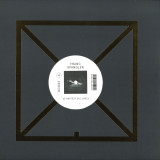
The second instalment of Healthy Scratch comes direct from Phoenix Arizona via the godson of house, Kareem Ali. In short order, Kareem has ascended with a relentless production output and focus like none-other.
Here we present his first vinyl release as well as what may be the only release, he does outside of Cosmoflux, his personal imprint. A producer of all music, for us he’s made 4 house tracks, perfect for any occasion and sure to get your feet moving, in the living room or on the dance floor.
out of Stock
Last delivered 11 months ago available to reorder, subject to availability
LA producer Blake Robin aka LUXXURY’s new full-length album finds the bassline obsessed disco addict experimenting with funk, synthpop and even (gasp!) pure instrumentals. ‘Increasingly in my most recent singles I’ve been treating vocals like instruments’ says Robin, ‘backgrounding and balancing them as sonic elements instead of centerpieces, so the listener gets lost in the groove.’ And indeed the star of these 11 songs is undoubtedly the 11 stellar basslines that ground the swirling synths and melodies as vocal fragments coolly dip in and out of the mix along.
Highlights include: KCRW fave ‘What Are We Gonna Do?’; the slap bass workout ‘Somebody Tonight’; the contemplative ‘…At Any Moment’ (playlisted by Purple Disco Machine) and its sister track, the title track ‘Alright’; while playful disco-house burner ‘Let’s Stay Together’ blends house and jazz funk rhythms with his trademark dusty basslines.
The album was 100% created by Robin, who wrote, performed, recorded and mixed all 11 songs, and even created the artwork. The 11 songs on LUXXURY’s album are all infectiously rhythmically-oriented while exploring new disco direction
out of Stock
Last delivered 3 months ago available to reorder, subject to availability
1970’s Cloud One disco brilliance and one of P&P’s most well-known cuts gets a much-needed official reissue. A studio project masterminded by the legendary Patrick Adams and P&P Records’ Peter Brown, Cloud One’s ‘Disco Juice’ showcases the genius of Adams’ songwriting and production prowess. A bundle of joy from start to finish, every element is given space and arranged exquisitely from the soaring strings and Venus Dodson’s celestial vocals, to the vibraphone twinkles and power piano keys. Deliriously good grooves.
On the B side, ‘Charleston Hopscotch’ a cosmic funk-fuelled jam bouncing guitar riffs, sweltering synths and piano stabs out to the stratosphere and back again, returning with another Patrick Adam’s masterclass.
out of Stock
Last delivered 4 months ago available to reorder, subject to availability
Introducing Bavhu, a dynamic Kiwi duo who have delivered an absolute belter, 'Always Dancin' out on TMRW Music.
Sporting some knocking drums, heaving rhythms, funky bass, irresistibly hooky vocals and filthy disco percussion, 'Always Dancin' is a joyous disco-sampling house outing that’s already garnered heavyweight attention from the likes of Danny Howard, Pete Tong and Zane Lowe, who have already thrown their support behind the track.
DJ Support:
Plays on Radio 1 from Danny Howard, Pete Tong, Dance Anthems + on KISS from TCTS
out of Stock
Last delivered 2 years ago available to reorder, subject to availability
Still on and about after years of the most intense crate digging, gem mining, desperate head-scratching and avid schooling, thirsty as ever for the next musical thrill to wrap our ears and brains around, here comes the fruit of our life-long love story with Japanese electronics, Denshi Ongaku No Bigaku Vol. 1 and Vol.2. From the soul-fulfilling first crush felt upon hearing the iconic soundtrack of ‘Merry Christmas Mr. Lawrence’ by Ryuichi Sakamoto onto our release of Inner Science ‘Cosmo Tracks’, through the life-affirming sets of Laurent Garnier at Dijon’s seminal club, l’An-fer, which have at all times nurtured and expanded our taste for Easternmost delicacies, the influence of Japanese music on our vision and endeavours was paramount to the development of our catalogue, whether directly or indirectly.
This first volume gets the ball rolling with a fine assortment of mostly ambient, electronica and deep house-focussed joints. Draped in organic membranes and ASMR-like synth tapestries, K. Inoue’s nu-agey opener ‘Em Paz’ takes us on a ride across the most serene dreamscapes. Jazzing up these lush and oneiric coastal vibes, Gabby & Lopez ‘Drive form the Miracle’ merges a sense of Californian psychedelia with a straight out hard-bop swing. No stranger to our catalogue, Inner Science returns to serve up a crystalline slice of laid-back house on a mystique-imbued tip he holds the secret to. Flip it over and here comes Aquarium with the splendidly immersive ‘Rainy Night in Shibuya’, which very much feels like wandering amidst its neon-upholstered streets and swarming hallways in a bubble of your own.
Naohito Uchiyama treats us to a synth-drenched nocturnal ballad with the ‘80s-inflected vibes of ’Shugetsu’, whereas Keta Ra cuts a path of ethereal sublimation via the mischievously fun and bouncy balearic lounge of ‘equals’. Masterly crafted by Yuu Udagawa, ‘Infinite Possibility’ eases us in a realm where weightless pop and low-slung abstract hip-hop combine to further exhilarating effect. All in harp-driven brittleness and velveteen sub-bass stealth, Noah ‘Gemini - Mysterious Lot’ has us drifting to a lavishly orchestrated headspace, laying down an impressive work on textures and arrangements. All in on the sedated drip-tease flex, Sauce81 ’Sign of Secret Love’ is a blast of freaky hedonism, just as ready to cast its hypnotic spell down the sweatbox as it was upon its original release ten years ago.
Languid jacking house tune ’Tai+Dai’ from Keita Sano blows the winds of discoid luvin’ across the room with its impeccable balance of sharp, glimmering synthwork and driving bass onslaughts from the depths. An odd slice of reshuffled folk music, Waltz ‘Folkesta’ makes for some eerie invitation of sorts, enchanting and spookily haunting in equal measure. Back to a fevered, hip-swaying mindset, Kuniyuki hi-NRG jazz number ‘Free’ is an absolute wonder of piano and drums-driven boogie, cut from the same cloth as some of Blue Note’s finest Cuban jazz classics. Rounding off the package, Japanese legend Ken Ishii’s version of Larry Heard’s house Hall-of-Famer ‘Can You Feel It’ is pure bliss in a can, tailored to turn any crowd into a shapeless cloud of balmy euphoria and universal love, whatever the place or time.
out of Stock
Last delivered 2 years ago available to reorder, subject to availability
Still on and about after years of the most intense crate digging, gem mining, desperate head-scratching and avid schooling, thirsty as ever for the next musical thrill to wrap our ears and brains around, here comes the fruit of our life-long love story with Japanese electronics, Denshi Ongaku No Bigaku Vol. 1 and Vol.2. From the soul-fulfilling first crush felt upon hearing the iconic soundtrack of ‘Merry Christmas Mr. Lawrence’ by Ryuichi Sakamoto onto our release of Inner Science ‘Cosmo Tracks’, through the life-affirming sets of Laurent Garnier at Dijon’s seminal club, l’An-fer, which have at all times nurtured and expanded our taste for Easternmost delicacies, the influence of Japanese music on our vision and endeavours was paramount to the development of our catalogue, whether directly or indirectly.
This first volume gets the ball rolling with a fine assortment of mostly ambient, electronica and deep house-focussed joints. Draped in organic membranes and ASMR-like synth tapestries, K. Inoue’s nu-agey opener ‘Em Paz’ takes us on a ride across the most serene dreamscapes. Jazzing up these lush and oneiric coastal vibes, Gabby & Lopez ‘Drive form the Miracle’ merges a sense of Californian psychedelia with a straight out hard-bop swing. No stranger to our catalogue, Inner Science returns to serve up a crystalline slice of laid-back house on a mystique-imbued tip he holds the secret to. Flip it over and here comes Aquarium with the splendidly immersive ‘Rainy Night in Shibuya’, which very much feels like wandering amidst its neon-upholstered streets and swarming hallways in a bubble of your own.
Naohito Uchiyama treats us to a synth-drenched nocturnal ballad with the ‘80s-inflected vibes of ’Shugetsu’, whereas Keta Ra cuts a path of ethereal sublimation via the mischievously fun and bouncy balearic lounge of ‘equals’. Masterly crafted by Yuu Udagawa, ‘Infinite Possibility’ eases us in a realm where weightless pop and low-slung abstract hip-hop combine to further exhilarating effect. All in harp-driven brittleness and velveteen sub-bass stealth, Noah ‘Gemini - Mysterious Lot’ has us drifting to a lavishly orchestrated headspace, laying down an impressive work on textures and arrangements. All in on the sedated drip-tease flex, Sauce81 ’Sign of Secret Love’ is a blast of freaky hedonism, just as ready to cast its hypnotic spell down the sweatbox as it was upon its original release ten years ago.
Languid jacking house tune ’Tai+Dai’ from Keita Sano blows the winds of discoid luvin’ across the room with its impeccable balance of sharp, glimmering synthwork and driving bass onslaughts from the depths. An odd slice of reshuffled folk music, Waltz ‘Folkesta’ makes for some eerie invitation of sorts, enchanting and spookily haunting in equal measure. Back to a fevered, hip-swaying mindset, Kuniyuki hi-NRG jazz number ‘Free’ is an absolute wonder of piano and drums-driven boogie, cut from the same cloth as some of Blue Note’s finest Cuban jazz classics. Rounding off the package, Japanese legend Ken Ishii’s version of Larry Heard’s house Hall-of-Famer ‘Can You Feel It’ is pure bliss in a can, tailored to turn any crowd into a shapeless cloud of balmy euphoria and universal love, whatever the place or time.
out of Stock
Last delivered 19 months ago available to reorder, subject to availability
DeForrest Brown Jr., the writer and producer behind Speaker Music, describes Techxodus as "abstracting Blackness through information overload". On the album he explores the intersection of tech, Blackness and resistance via music taken from his archived live shows, which are then edited, ordered and reassembled in the studio. The main line of inquiry that feeds into Techxodus is Drexciya, whose myths have informed much recent afrofuturist creativity. DeForrest researches and reimagines the artifacts and stories of Drexciya with new maps, ideas and music, particularly reflecting on the 'Seven Storms', seven albums that came out in quick succession around the death of Drexciya member James Stinson, which seemed to herald Drexciyans in the attack mode. The artwork by Abu Qadim Haqq, who also created artwork for Drexciya, links the work too, with Deforrest re-orienting charts and timelines familiar from Drexciyan mythology, working up clues to all possible environments where Drexciyans could survive, from the depths of the Atlantic, to oceanic islands or even outer space. Like Sun-Ra, another touchstone of Afrofuturist music, it might be that the Drexciyans wanted to leave the planet they hated. With these elements, DeForrest creates a soundtrack for an alternate history, a sort of sci-fi sonic fiction which threads together the sonic warfare and mythos of the Drexciyan records with ideas and references to Ishmael Reed's 'Mumbo Jumbo', which tracks the story of 'Jes Grew', an audio virus, back to the coastal black cities of Alabama and the American South. Musically the album is as intense as its inspirations. DeForrest skilfully hand-plays rhythms which amalgamate trap and jazz drumming, but feel at times like orca-song as they pulse through the thick waves of digital sound. Equally the music evokes the ocean, with deep cold drones, or as if it's floating through time like in 'Holosonic Rebellion' which mixes in recordings of African Warriors. Sometimes there is an energetic turbulence as on 'Jes Grew', where punched-in passages of jazz brass bounce against DeForrest's drums to create a weird disassembled jazz. Towards the end the album begins to feel like a spaceship taking off, the rushes of ascending noise and distortion, distant Southern Gospel Vocals feel like music that's leaving earth. Listen to it without the references or feed your imagination; this is a powerful and immersive original work from one of electronic music's most unique creators.
out of Stock
Last delivered 3 years ago available to reorder, subject to availability
Daniel Ögren is one of the key artists in Sweden’s contemporary, underground music scene. He has already accrued quite the back catalogue, both as a member of the sensational quartet Dina Ögon and also as a solo artist with eight albums already under his belt. ‘Fastingen-92’ was originally released as a limited-edition vinyl pressing in 2020 on the independent label Sing A Song Fighter Records (the same label that first introduced us to Dina Ögon's music). The album came to our attention after hearing Daniels' solo band performing live at the Stockholm Jazz Club, Fasching. The band featured Love Örsan and Christopher Cantillo of Dina Ögon fame (who also records with the incredible Sven Wunder), and their sensational genre-busting set blew us away. It convinced us that this now out-of-print album needed to reach a wider audience.
‘Fastingen-92’ doesn't sit in one genre, it draws from Daniels's love of South American folk music, soul, Nordic folk music and film soundtracks, resulting in something unique, dreamlike and transformational.
It features 'Idag’, an epic, beautiful, cinematic song that introduces the ethereal vocalist Anna Ahnlund. ‘Idag’ has gained a cult following and Daniel has stated that it was the spark that started the Dina Ögon project. Tracks like 'Annalena' and 'Kristinehamn by Night (for Christopher)' sound like a new club sound that hasn't yet been invented (which Nicola Cruz would spin in his DJ sets), mysterious, hypnotic, and engaging. Other songs like 'Maj (for Tintin)' and 'Picasso' venture into blissed-out Scando-Balearic realms. Daniel's love of nature and the inspiration he draws from the geographic environment of the Swedish countryside can be felt in these tracks, they take you to other places and times and are simultaneously familiar, ancient and alien.
Alongside the collaborations with Anna and Christoper, the album features Josefin Runsteen playing the drums on 'Idag' and Swedish musicians Edvin Nahlin and Ulrik Ordin. The majority of the album was played, recorded and mixed by Daniel. For the Mr Bongo edition, we have added the bonus track 'April’, which was previously only available digitally. ‘Fastingen - 92’ is a truly remarkable record that gets into your soul, so please delve in!
out of Stock
Last delivered 2 years ago available to reorder, subject to availability
Death Is Not The End sub-label 333 turns up the gold again with this repro of the much in-demand Flames cut of Nairobi Sisters' Promised Land. Sampled by Q-Tip for "Whateva Will Be" (appearing on ATCQ's final long-player) and on a range of earlier 90s boom-bap era productions, it is not at all hard to figure out why it's a coveted record. That break is as low-slung and funky as it gets, and best showcased on the superbly stripped-back dub on the flip.
The Nairobi Sisters were singers Terrie Nairobi and Judy Mowatt (later of the I-Threes, alongside Rita Marley & Marcia Griffiths). Promised Land was originally recorded together with The Gaytones for Sonia Pottinger's Gay Feet label, with this later version cut for Winston Jones' Brooklyn-based Flames Records. It is issued here under license from producer and songwriter Jones - the original singer and composer of Stop That Train (later made world-famous by Keith & Tex's version) with his Spanishtonians in the early 1960s - who later moved from JA to NYC where he established and ran the Flames label, a core imprint in Brooklyn's reggae scene from the mid-1970s until the early 1990s. 333 has licensed a range of Flames-era productions from the now Texas-based Jones, so keep and eye out for more as it comes... but for now, jump on this before it's gone!
out of Stock
Last delivered 18 months ago available to reorder, subject to availability
«Opening Soon» is a culinary buddy movie with a background of gourmet grooves where body tricks at the turntables have been replaced by acrobatic pizza tricks. This album from Jean Tonique and Mi Man is a real tomato concentrate and ingredients cleverly dosed which abound in suave and feel good tracks. 11 tracks that we can imagine as the perfect soundtrack to accompany the dolce vita 2.0 of this great musical duo (between Mario Bros and Cheech & Chong).
A tasty and pop cuisine that gives pride of place to a nostalgia that gathers behind the tiled counter («No One Really Knows», «Memories») or on the dancefloor («Running After Time», «The Music»). We let ourselves slide and be lulled by the smoothness of the arrangements as silky as an «Extra Virgin Olive Oil».
Do The Right Thing, as they say, and it seems like those two found a way to celebrate a lifestyle full of friendly looks.
Tonique, who had already accustomed us to the spiciness of his sharp guitars continues to demonstrate a knowledge all in funk and finesse. He is accompanied by Man, who brings his sweetness and harmony. They combine their strength on this project initiated with the title «Day & Night» and its languorous disco tinged with rhodes and percussions with Salsoul accents.
If the tablecloths are white and red, we don't doubt that the inside of the delivery van is lined with silk and velvet of the most beautiful effect to "cruise" the night as in Brooklyn and East Harlem to the rhythm of «Never Get Old». Lightness and nonchalance for a songwriting full of coolness and analogical charisma boosted by a Moog which invokes the best of the 70/80's.
Iconic and timeless, with or without a disco ball, wouldn't the key word be Pizza-Yolo?
out of Stock
Last delivered 3 years ago available to reorder, subject to availability
The concept behind the debut album by Neapolitan producer Paolo Petrella, (also known for Fratelli Malibu, SuperMegaFuckinMachine, and Nu Genea's live band bass player) is both straightforward and unparalleled. It involves re-imagining Renato Carosone's iconic hits infused with the vibrant essence of Cumbia. An original and fresh perspective of the history of Napoli, re-thinking traditions while blending cultures, like an imaginary colony of South Americans living in Napoli’s fishermen neighborhood of Santa Lucia.
Cumbia Luciana sounds like the manifestation of a dream, as the poem on the liner notes recites:
“It's 3pm in the afternoon, the sea is calm and there are some clouds in the sky from time to time the sounds of mopeds can be heard in the street. A boy is in his bedroom and out of boredom keeps time by tapping his fingers on the bed frame.
He leaves the house for a walk keeping the sea on his side. Rumor has it that ten days ago immigrants arrived from Peru,
the boy walks and listens it's Sunday, day of celebration, it's 3.30pm the boy walks and listens he is interrupted by a whole new sound, never heard before from a window of a ground floor house men are playing, the boy stands under that window for a while”
out of Stock
Last delivered 2 years ago available to reorder, subject to availability
Balishark will be finally out on earth physically, on twelve with a pretty handprinted cover with love. This record is something very special for us, its a bunch of eternal "souvenirs" of smile, light, sun, fun.... with our friend, this beauty man on the back cover, sunbeams filled!! !! ! !
Five songs compose this album, the first one, balishark is a proper "pièce sonore", its a lot of Pierre Sharki's field recordings he did in the wonderland of Balì, they, with Guitos Samba, Jonas Taupe Gun and Grand Matthias fixed a composition from this atmos sound in La Cabane, studio in Lyon. "Jawabarat" is a pure interpretation of west java gamelan rhythm and logic. And the B face are jams only, excerpt from early mornings! A multi world sounds around our friend Guitos Samba :)
out of Stock
Last delivered 3 years ago available to reorder, subject to availability
The early days of "Baltimore Club Music" saw it played at popular venues like Club Fantasy, The Ozone, Hammerjack's, and Paradox. DJs Sean Marshall, Marc Henry, Shawn Caesar (at DJs Outlet in Old Towne Mall), Scottie B and Danny Class (at Inner City Records), Technics (at Music Liberated), DJ Patrick (at Sound of Baltimore), and Diamond K and Kenny B (at Electronics & More) all contributed to the mix of hip-hop, house music and homemade beats that made up this new sound. "Booty Mission" (1992) is a creation of Shawn Caesar and Ty "Flex" James and is considered one of the most influential releases, an essential for any Baltimore Club Music fan. It is sure to remain timeless.
out of Stock
Last delivered 3 years ago available to reorder, subject to availability
After years of unforgettable releases on the mighty Hospital Records,
Cambridge-raised producer Hugh Hardie, having recently made the move over to Soulvent Records, prepares to deliver his third and arguably most exciting album to date in 'Juicebox'
With the tone set by the first two singles 'Blush' featuring Zara Kershaw and 'Face Off' with PAV4N of Foreign Beggars, 'Juicebox' highlights the remarkable extent of Hugh's musical prowess and boasts a wealth of rich collaborations, including the likes of Footsie, Degs, Killa P and more.
out of Stock
Last delivered 2 years ago available to reorder, subject to availability
The elusive Hackney basement dweller Alpha Delta colloquially known as Alpha D drops his debutsingle “The Moat” as the very first 12” output on the mysterious new hybrid Berlin++Sydney based label Delphic Iris Records. The headline single inspired by a faithful rave session in Croatia whereAlpha D was simultaneously emotionally touched, scarred and sonically pummelled by kick drums ata wild and stormy Dimensions Festival.
This dark techno beast was the aggressive, distorted acid offspring of that faithful night ravingbetween the mud and tears of the crowd at the formidable Moat stage at Punta Christo. His OG Mixis classic 132bpm heavy pounding acid techno at its moodiest. In the Remix department we have support from the entire Delphic Iris Records crew on this one. Afitting introduction to the labels sound. Sydney based Drox of Analog Cabin fame has a low end electro bass bin rattler for us that delvesinto melancholic and psychedelic 303 territory, deep, minimal and functional a perfect mid setgroover in our opinion. Critical Automator takes us on a deep and elegant techno journey transcending both murky seasand lush hazy skies in his dub mix. Definitely dialled back from the OG mix but there is no shortage ofkick drum energy in this one. 16 Faces cooks up complex drum work and funk driven baselines in a hybrid 146 bpm number that’sa just a touch rave, grime and idm in his 5am mix. The off beat stabs and euphoric strings areplentiful, more than enough to get your through any wobbly kneed sunrise.
out of Stock
Last delivered 3 years ago available to reorder, subject to availability
Norm Talley returns to his Upstairs Asylum label alongside fellow US house pioneer Delano Smith for Straight Up No Chaser, an eight-track opus featuring four solo cuts each.
Talley's gritty, dubbed-out, low-rolling house style is present and correct throughout with the loopy chords of 'Blak Bottom' getting things going, 'The Flip' getting more cavernous and aqueous and 'ISO Vision' leaning into dub techno.
'Believe It' is a soulful deep house looper, while Smith gets bubbly with 'The Bassline', lays down thumping kicks on 'Travels 23' and his trademark synth smears on 'The Drive' while 'Remembrance' is a heady dub house cut that locks you into a state of perfect hypnosis.
out of Stock
Last delivered 67 days ago available to reorder, subject to availability
Jimpster makes a welcome return to Delusions, donning his Franc Spangler cap and serving up three funked-up, disco-infused tracks to get down to.
Opening up the release we have party starter Fight The Feeling which sees Spangler work up a rolling groove laced with dubby percussion, horn solos and souring lead synth.
Powerslide goes full retro with clav and guitar chops, hammond slides and an irresistible bassline bringing the funk, making for a high energy club cut to nice up the dance floor.
Closing out the release we have the deeper, lo-slung bounce of Dance The Funk which comes complete with Prelude-inspired synth stabs, heavy Moog bassline and crunchy house drums.
out of Stock
Last delivered 23 months ago available to reorder, subject to availability
Hi This is Moscoman, I Love SX2, they are the artist i work with the most, I try to keep a super tight relationship and share with them all my knowledge, these days it’s super hard to get the attention of the Media, Fellow DJs and even your own mother , But I will say this, if you listen to their material you will be transcended to a time when everything was possible, when guitars ruled the airwaves, when you just wanted to stare at the floor and shake your head violently. Steady Up is a pure banger, Featuring Uprising Meteor and fellow Irish Pat Lagoon, Which I could only describe as Nirvana playing with Grime.
Check it out, play it loud.'
out of Stock
Last delivered 14 months ago available to reorder, subject to availability
Andres Klein alias Ackermann hails from beautiful Stuttgart and has been in the music producing biz for about 20 years. He's been running is own imprint Traktor records for a long time, churning out House, Techhouse, Techno and anything in between. His tune „I Got My Man“ got remixed by italian Mattia Borriello aka M.I.T.A. for Marco Faraone's Uncage label. This tune got heavy play by quite a few A-list Techno DJs around the globe, one of them Answer Code Request who couldn't stop dropping that diva drama belter in his sets in „The Big House“ in East Berlin. That's where it caught All That Jelly label head Mr. Fonk's ear and so it had to get pressed on hot waxxx! The 12“ is accompanied by two equally cheerful Techno slammers with a groovy House edge. You're gonna love 'em!
out of Stock
Last delivered 87 days ago available to reorder, subject to availability
My Light, My World is a gorgeously slammin’ four track release by Brooklyn-based Ryan Clover on Eris Drew’s Ecstatic Editions imprint. We fell in love with Ryan’s music as we wore out the grooves on his killer 12 inch for ARTS. The tracks featured on My Light, My World are a perfect fit for Ecstatic Editions because, much like Eris’s sets, the tracks are beautiful musically and genuinely emotional, but they also seriously slap and translate powerfully on large sound systems. It is hard to find Big Room records with so much heart, so the label jumped to sign the tracks and prepare the project for release.
Clover’s arrangements on the EP unfold in truly magical and unexpected ways with buildups giving way to gorgeous musical passages. “We Love (We Feel)” is a heartfelt instrumental which sets the tone for the record, while the title tune “My Light, My World” declares boldly “ITS ON!” before heeding to woozy chords and a sax riff that sounds amazing in the mix. Flip the record over for “Here We F***ing Go!” which is a total boast track for deck players but doesn’t lose its sweetness in the process, and the powerfully fun closer “Let Me Tell U Sumthin’” which reminds sweaty dancefloors that “Love Is Special.” Ecstatic Editions hopes you’ll put your needle in the groove and dance hard to one of the season’s sweetest bangers.
The EP features original art by Karina A. Linares and mastering by Trutone legend Carl Rowatti.
out of Stock
Last delivered 2 years ago available to reorder, subject to availability
It’s been nearly eight years since the last Mondo Drag album came out. In that time, the Bay Area psych-prog band toured the US and Europe, performed at major festivals and—once again—reformed their rhythm section. But in the context of the band’s nearly two-decade existence, this period may have been the most fraught. Vocalist and keyboardist John Gamiño lost friends and family members. Meanwhile, humanity suffered the throes of a global pandemic. “It was a dark chapter,” he recalls. “I was going through a lot of stuff personally—there’s been a lot of death, loss of family members, and grief. Plus, the band was inactive. It felt like time was slipping away from me. I felt like I was wasting my opportunities. I felt like I wasn’t participating in my story as much as I could have.” This feeling of time slipping away is the prevailing theme on Mondo Drag’s new album, Through the Hourglass. “For me, Through the Hourglass really encompasses the quarantine/pandemic years,” Gamiño says. “But in a way that includes a couple of years before that for us, because the band was stagnant during that time. Living with that was really impactful on our daily lives. So, the album is reflective. It’s looking at time—past, present, future.” Luckily, Mondo Drag emerged from this dour period reborn. Freshly energized by bassist Conor Riley (formerly of San Diego psych squad Astra, currently of Birth), who joined in 2018, and drummer Jimmy Perez, who joined in 2022, Gamiño and guitarists Jake Sheley and Nolan Girard have triumphed over the seemingly inexorable pull of time’s passage. “Astra was the one contemporary band that we felt was on the same tip as us,” Gamiño says. “We saw the similarities and felt the same vibe. Conor moved to San Francisco in 2018 and heard we were looking for a bassist, so we got in touch. For us, it was like, ‘The synth player from Astra wants to play bass for us?’ We couldn’t think of anybody more perfect.” Perez, meanwhile, brings deep psych-prog knowledge and impeccable skill. “He’s an amazing drummer, and he allowed us to do what we’ve been trying to do,” Gamiño says. “Before he came along, it was like, ‘Where are the drummers who like psych and prog and can play dynamically?’ We ended up trying out metal drummers, but they couldn’t swing. Jimmy was the final piece of the puzzle.” The result is a dazzling and often plaintive rumination on the hours, days, and years—not to mention experiences—that comprise a lifetime. Two-part opener “Burning Daylight” smolders with melancholy, offering a whirl of multi-colored and hallucinatory imagery. “It’s about the California wildfires and a feeling of helplessness,” Gamiño explains. “There’s a juxtaposition between the dark lyricism and upbeat music which is meant to imply a sort of delusional state—and choosing our own delusion to overcome the crushing despair of reality.” Eleven-minute centerpiece “Passages” is a sprawling prog-rock adventure, festooned with lofty guitar melodies, sweeping organ flourishes and a delicately finger-picked outro. But the heaviest song, thematically speaking, might be the mournful and hypnotic “Death in Spring,” which borrows its title from the like-named Catalan novel. “In the novel, people are placed inside opened trees and their mouths filled with cement before they die to prevent their souls from escaping,” Gamiño explains. “The song is about three people I knew who lost their lives to gun violence, addiction, and mental health. It’s my way of cementing their souls in song form.” Mondo Drag fans might be surprised by this blend of hard reality with literary surrealism, but it’s a perfect example of how the last several years have impacted Mondo Drag—and Gamiño in particular. “On all of our previous albums, the lyrical content is more psychedelic and out there,” he acknowledges. “This is the most personal stuff I’ve ever done, so I’m definitely feeling vulnerable on this one.” The title Through the Hourglass comes from the opening of the long-running soap opera Days of Our Lives. It’s less inspired by a predilection for daytime TV than Gamiño’s connection with his late mother, who passed during the time since the last album. “I used to watch Days of Our Lives with her everyday growing up,” he explains. “The song is kind of a reinterpretation of the theme song, although it’s different enough that probably no one will catch it. Now that I’m getting older, I like to put these little Easter eggs in the songs for myself and for archival purposes—for memories.” Through the Hourglass was tracked at El Studio in San Francisco, with an additional ten days of recording at the band’s rehearsal space, which doubles as a hybrid analog-digital recording studio. The album was engineered and mixed by Phil Becker, drummer of space-punk mainstays Pins Of Light. “We’re still here,” Gamiño says. “We’ve been in the studio working on our craft and honing our skills. Now we’re re-emerging for the next stage of our life cycle.”
Michael Mayer’s IMARA imprint is proud to announce a reissue of German electronica maestro Schlammpeitziger’s second album, Freundlichbaracudamelodieliedgut. Originally released in 1996 by Köln’s A-Musik label, it was the first Schlammpeitziger release to signal to a much wider audience that there was something very special going on in the music of Jo Zimmermann, the mastermind behind Schlammpeitziger. And while he’s subsequently gone on to release a further eight albums for labels like Sonig, Pingipung, and Bureau B, Freundlichbaracudamelodieliedgut is where it really all started for this most singular musician, illustrator and performance artist. Named after the ‘Schlammpeitzger’ or Weather Loach, a fish that breathes through its intestines, moves through substrate, and is surprisingly sensitive to changes in barometric pressure – hence its name – Schlammpeitziger is a similarly remarkable, singular creature.
Like all Schlammpeitziger’s music, Freundlichbaracudamelodieliedgut is overflowing with melody. Using the simplest of set-ups – much of his early music was made with Casio keyboards – Zimmermann magics entire worlds of joy and melancholy. The nine songs here are both rich tributes to the joys of the everyday, and surreal fantasias. “Cosmic Fick” sails out to sea on clouds of taffy and spindrift; “Winterschlafsüßbärentraum” slips and slides around a dream aviary of the mind; the closing “Mango und Papaja auf Tobago” is a diorama spun from springs and Slinkys. Sometimes there are echoes of more peaceable Kosmische music – think Cluster circa Sowiesoso – and both the pacing and the amorphous, tactile textures sometimes recall Chris & Cosey. But Zimmermann’s unique signature is everywhere on Freundlichbaracudamelodieliedgut – simply put, no one else makes music quite as lovely and incandescent as this.
The album’s initial release coincided with an explosion of interest in the music coming out of Köln. This was a unique moment – one where pop, techno, house, ambience, avant-gardism, musique concrete, heavy DSP, and all kinds of other creative phenomena got muddied up in the ‘general jelly’ of Köln’s fast-moving, spirited musical communities. Zimmermann was closely aligned with the music coming out of the A-Musik and Sonig labels – a tightly-knit collection of artists centred around the A-Musik record store, making all kinds of weird and wonderful music, from the electronica of Mouse On Mars to the compositions of Marcus Schmickler, from the electro-acoustics of C-Schulz and Hajsch to the digitalia of FX Randomiz. Zimmermann himself would collaborate with the latter on an album under the name Holosud; friends such as Mouse On Mars and Kompakt’s Reinhard Voigt turned up on Freundlichbaracudamelodieliedgut’s remix EP.
Here, then, is one of the loveliest albums of its era, a pop-electronics album of serious play, one as moistly melancholy as it is melodically riveting. Freundlichbaracudamelodieliedgut is rare beauty indeed.
Michael Mayers Label IMARA ist stolz darauf, eine Neuauflage des zweiten Albums des deutschen Electronica-Maestros Schlammpeitziger, “Freundlichbaracudamelodieliedgut”, bekannt zu geben. Ursprünglich 1996 vom Kölner Label A-Musik veröffentlicht, war es die erste Veröffentlichung von Schlammpeitziger, die einem viel breiteren Publikum signalisierte, dass in der Musik von Jo Zimmermann, dem Mastermind hinter Schlammpeitziger, etwas ganz Besonderes vor sich ging. Obwohl er seitdem weitere acht Alben für Labels wie Sonig, Pingipung und Bureau B veröffentlicht hat, ist “Freundlichbaracudamelodieliedgut” der Ort, an dem alles für diesen einzigartigen Musiker, Illustrator und Performance-Künstler begann. Schlammpeitziger, benannt nach dem “Schlammpeitzger” oder Wetterbarsch, einem Fisch, der durch seine Därme atmet, sich durch den Untergrund bewegt und erstaunlich empfindlich auf Veränderungen im Luftdruck reagiert – daher der Name – ist ebenfalls eine bemerkenswerte, einzigartige Kreatur.
Wie alle Musik von Schlammpeitziger ist auch “Freundlichbaracudamelodieliedgut” voller Melodien. Mit einfachsten Mitteln – ein Großteil seiner frühen Musik wurde mit Casio-Keyboards gemacht – zaubert Zimmermann ganze Welten voller Freude und Melancholie. Die neun Songs hier sind sowohl reiche Hommagen an die Freuden des Alltags als auch surreale Fantasien. “Cosmic Fick” segelt auf Wolken aus Karamell und Gischt hinaus aufs Meer; “Winterschlafsüßbärentraum” schlittert und gleitet durch einen Traum-Vogelkäfig im Geist; das abschließende “Mango und Papaja auf Tobago” ist ein Diorama aus Federn und Slinkys. Manchmal gibt es Echos von friedlicherer Kosmischer Musik – denke an Cluster circa “Sowiesoso” – und sowohl das Tempo als auch die amorphen, taktilen Texturen erinnern manchmal an Chris & Cosey. Aber Zimmermanns einzigartige Signatur ist überall auf “Freundlichbaracudamelodieliedgut” zu hören – ganz einfach, niemand sonst macht Musik so lieblich und leuchtend wie er.
Die ursprüngliche Veröffentlichung des Albums fiel mit einem Aufschwung des Interesses an der Musik aus Köln zusammen. Dies war ein einzigartiger Moment – einer, in dem Pop, Techno, House, Ambient, Avantgardismus, Musique Concrete, Heavy DSP und allerlei andere kreative Phänomene sich in der “Allgemeinen Gelee” der schnelllebigen, lebendigen musikalischen Gemeinschaften von Köln vermischten. Zimmermann stand in enger Verbindung mit der Musik der Labels A-Musik und Sonig – eine eng verbundene Gruppe von Künstlern rund um das A-Musik-Plattengeschäft, die alle möglichen seltsamen und wundervollen Musikrichtungen produzierten, von der Electronica von Mouse On Mars bis zu den Kompositionen von Marcus Schmickler, von der Elektroakustik von C-Schulz und Hajsch bis zur Digitalia von FX Randomiz. Zimmermann selbst würde mit letzterem an einem Album unter dem Namen Holosud zusammenarbeiten; Freunde wie Mouse On Mars und Reinhard Voigt von Kompakt tauchten in der Remix-EP von “Freundlichbaracudamelodieliedgut” auf.
Hier also eines der schönsten Alben seiner Zeit, ein Pop-Electronics-Album voller ernsthaftem Spiel, so feucht melancholisch wie melodisch fesselnd. “Freundlichbaracudamelodieliedgut” ist wahrlich eine seltene Schönheit.
out of Stock
Last delivered 3 years ago available to reorder, subject to availability
Woods are in bloom again, inviting you to disappear into a new spectrum of colors and sounds and dreams on Perennial. Formed in Brooklyn in 2004, Woods have matured into a true independent institution, above and below the root, reliably emerging every few years with new music that grows towards the latest sky. Operating the Woodsist label since 2006 and curating the beloved homespun Woodsist Festival for the musical universe they’ve built, Perennial is the sound of a band on the edge of their 20th anniversary and still finding bold new ways to sound like (and challenge) themselves. Perennial grew from a bed of guitar/keyboard/drum loops by Woods head-in-chief Jeremy Earl, a form of winter night meditation that evolved into an unexplored mode of collaborative songwriting. With Earl’s starting points, he and bandmates Jarvis Taveniere and John Andrews convened, first at Earl’s house in New York, then at Panoramic House studio in Stinson Beach, California, site of sessions for 2020’s Strange To Explain. With a view of the sparkling Pacific and tape rolling, they began to build, jamming over the loops, switching instruments, and developing a few dozen building blocks. The album’s resulting 11 songs, 4 of them instrumental, are in the classic Woods mode--shimmering, familiar, fractionally unsettling--but with the half-invisible infinity boxes of Earl’s loops burbling beneath each like a mysterious underground source. From source to seed to bloom, each loop unfolds into something unpredictable, from the jeweled pop of the aching “Little Black Flowers” to the ecstatic starlit freak-beat of “Another Side.” They are blossomings both far-out and comforting, like the Mellotronic cloud-hopping of “Between the Past,” or sometimes just plain comforting, like the widescreen snowglobe fantasia of the instrumental “White Winter Melody,” touched by Connor Gallaher’s pedal steel. Woods have long used the studio as a place of songwriting, naming 2007’s At Rear House after their shared dwelling and recording space. But Perennial also carries with it an even longer view of Woods. Emerging from the process alongside the music was Earl’s reflection that “perennial plants and flowers are nature’s loops,” an idea rolling under the album’s lyrics like the loops themselves. It certainly applies to the band, too, who have quietly tended to a long, committed project of being a band in the weird-ass 21st century, both individually and communally. Though separated by coasts, the communal sprit carries through Earl, Taveniere, and Andrews’ collaboration, a living embodiment of the freedoms rediscovered every time a new collectively created piece of music emerges. For nearly two decades, Woods have survived subgenres, anchored in the fertile soil below hashtags like lo-fi and freak-folk and psychedelic and indie, and built a shared history that’s something to marvel at. As the flagship band for Woodsist, they’ve accumulated a striking extended family of collaborators (and Woods alum) that have made the label one of the most dependable imprints in the kaleidoscopic low-key underground. It’s a glow that’s transferred whole to the blissed-out Woodsist Fests held in Accord, New York in recent years, which have folded in a wide range of diverse sounds, from the the jazz cosmoverse of the Sun Ra Arkestra and adventurous legends Yo La Tengo, to a hard-to-even-count family tree of contemporaries, like Kevin Morby (who served a few tours of duty as Woods bassist) and Kurt Vile (who released his 2009 debut on Woodsist), a living community in sound. Perennial carries all of this, shaped by decades, but made in the moment, and here right now. The smell of the flowers doesn’t remain, but sometimes the flowers do. Jesse Jarnow Recorded and mixed by Jarvis Taveniere at Panoramic House in Stinson Beach, CA with additional recording at The Ship in Los Angeles, CA and Cottekill Bird Sanctuary in Stone Ridge, NY. Produced by Jarvis Taveniere and Jeremy Earl. Mastered by Timothy Stollenwerk at Stereophonic Mastering in Portland, OR. Jeremy Earl - vocals, guitars, drums, percussion, sk-5, mellotron, vibraphone, autoharp, loops Jarvis Taveniere - guitar, bass, upright bass, hammond, vocals John Andrews - piano, organs, mellotron, drums, vocals Connor Gallaher - Pedal Steel Kyle Forester - sax, wurlitzer
Woods are in bloom again, inviting you to disappear into a new spectrum of colors and sounds and dreams on Perennial. Formed in Brooklyn in 2004, Woods have matured into a true independent institution, above and below the root, reliably emerging every few years with new music that grows towards the latest sky. Operating the Woodsist label since 2006 and curating the beloved homespun Woodsist Festival for the musical universe they’ve built, Perennial is the sound of a band on the edge of their 20th anniversary and still finding bold new ways to sound like (and challenge) themselves. Perennial grew from a bed of guitar/keyboard/drum loops by Woods head-in-chief Jeremy Earl, a form of winter night meditation that evolved into an unexplored mode of collaborative songwriting. With Earl’s starting points, he and bandmates Jarvis Taveniere and John Andrews convened, first at Earl’s house in New York, then at Panoramic House studio in Stinson Beach, California, site of sessions for 2020’s Strange To Explain. With a view of the sparkling Pacific and tape rolling, they began to build, jamming over the loops, switching instruments, and developing a few dozen building blocks. The album’s resulting 11 songs, 4 of them instrumental, are in the classic Woods mode--shimmering, familiar, fractionally unsettling--but with the half-invisible infinity boxes of Earl’s loops burbling beneath each like a mysterious underground source. From source to seed to bloom, each loop unfolds into something unpredictable, from the jeweled pop of the aching “Little Black Flowers” to the ecstatic starlit freak-beat of “Another Side.” They are blossomings both far-out and comforting, like the Mellotronic cloud-hopping of “Between the Past,” or sometimes just plain comforting, like the widescreen snowglobe fantasia of the instrumental “White Winter Melody,” touched by Connor Gallaher’s pedal steel. Woods have long used the studio as a place of songwriting, naming 2007’s At Rear House after their shared dwelling and recording space. But Perennial also carries with it an even longer view of Woods. Emerging from the process alongside the music was Earl’s reflection that “perennial plants and flowers are nature’s loops,” an idea rolling under the album’s lyrics like the loops themselves. It certainly applies to the band, too, who have quietly tended to a long, committed project of being a band in the weird-ass 21st century, both individually and communally. Though separated by coasts, the communal sprit carries through Earl, Taveniere, and Andrews’ collaboration, a living embodiment of the freedoms rediscovered every time a new collectively created piece of music emerges. For nearly two decades, Woods have survived subgenres, anchored in the fertile soil below hashtags like lo-fi and freak-folk and psychedelic and indie, and built a shared history that’s something to marvel at. As the flagship band for Woodsist, they’ve accumulated a striking extended family of collaborators (and Woods alum) that have made the label one of the most dependable imprints in the kaleidoscopic low-key underground. It’s a glow that’s transferred whole to the blissed-out Woodsist Fests held in Accord, New York in recent years, which have folded in a wide range of diverse sounds, from the the jazz cosmoverse of the Sun Ra Arkestra and adventurous legends Yo La Tengo, to a hard-to-even-count family tree of contemporaries, like Kevin Morby (who served a few tours of duty as Woods bassist) and Kurt Vile (who released his 2009 debut on Woodsist), a living community in sound. Perennial carries all of this, shaped by decades, but made in the moment, and here right now. The smell of the flowers doesn’t remain, but sometimes the flowers do. Jesse Jarnow Recorded and mixed by Jarvis Taveniere at Panoramic House in Stinson Beach, CA with additional recording at The Ship in Los Angeles, CA and Cottekill Bird Sanctuary in Stone Ridge, NY. Produced by Jarvis Taveniere and Jeremy Earl. Mastered by Timothy Stollenwerk at Stereophonic Mastering in Portland, OR. Jeremy Earl - vocals, guitars, drums, percussion, sk-5, mellotron, vibraphone, autoharp, loops Jarvis Taveniere - guitar, bass, upright bass, hammond, vocals John Andrews - piano, organs, mellotron, drums, vocals Connor Gallaher - Pedal Steel Kyle Forester - sax, wurlitzer
"It's so difficult to produce the feel and the excitement of the classic northern sound, but The Faithful Brothers were born to do it and they do it so well." Craig Charles, The Craig Charles Funk & Soul Show, BBC Radio 6 Music.
Is there a Northern Soul scene in Tel Aviv? The surprising answer is – yes, there is. If you're a soulie and in town, look for the Tel Aviv Soul Club, and you might find yourself swaying across a talcum-powder covered floor to Tel Aviv's own unique blend of classic Northern Soul 45s and early 1960s R&B sounds.
Chances are that those 45s will come out of the record boxes of one of the brothers Neeman, Johnnie and Bin. Sons of an Israeli diplomat, they travelled abroad extensively as children, in the 1960s and 1970s, discovering the wonderful world of rare soul music on the way. Tel Aviv Soul Club, aka TASC, is the brainchild of Yashiv Cohen, a DJ who, in 2006, lured the brothers Neeman, whose massive soul collections been hitherto confined to their respective living rooms, into playing their records to the Tel Aviv public. Yashiv is also the lead singer of Men of North Country (MONC), a Tel Aviv band with a distinct sound, blending rock, British pop and soul, that has recorded two albums for the London based label Acid Jazz Records, and toured Europe numerous times.
Since Neeman means Faithful in Hebrew, Yashiv woke up one morning with the crystallization that MONC must create a spin-off, a more puristic soul band, called the Faithful Brothers. There the biological Neeman/Faithful brothers would be joined by some of the members of MONC and a few more musical brothers from Tel Aviv to create new, original soul and R&B music. With a nod to the Northern Soul slogan "Keep The Faith", the name seemed too perfect to waste. The fact that the Neeman brothers were collectors, and not musicians, did not bother a man of vision like Yashiv. One day, he sent Johnnie some lyrics he wrote, asking him to compose music for it. Well, Johnnie called Bin, and they met in Johnnie's record room. With Johnnie playing some of the few chords he knew on his dusty old acoustic guitar, out came Teenage Frost, the first-ever musical composition of the Neeman brothers, recorded by MONC.
It took a few more years, but gradually the brothers succumbed to their fate, to continue their musical progression, from collectors to DJs to musicians. Johnnie took his guitar, Bin took to the piano, and the brothers began pouring out some of their influences, creating new songs. It is finally all coming together. The Faithful Brothers – now an eight-piece band, complete with a mighty brass section – release their first album "The Faithful Brothers".
RYUICHI SAKAMOTO'S LANDMARK 1981 ALBUM REISSUED FOR THE FIRST TIME IN DECADES OUTSIDE OF JAPAN. THE ALBUM WILL BE REISSUED IN ITS RARE JAPANESE EDITION TOGETHER WITH A 2-LP LIMITED EDITION FEATURING THE ALBUM PLUS A 2ND LP FEATURING ITS NEVER-RELEASED FULL INSTRUMENTAL MIX, ALL REMASTERED BY BERNIE GRUNDMAN.
Wewantsounds is proud to announce the reissue of Ryuichi Sakamoto's third solo album "Hidari Ude No Yume" (Left Handed Dream), originally released in 1981 on the Alfa label. Save for a small-scale Dutch vinyl release in 1981, it is the first time the album's original Japanese edition is released outside of Japan (the European release on Epic Records included significantly different tracks and mixes). Newly remastered from the original tapes by renowned engineer Bernie Grundman, this LP edition comes with original artwork featuring a striking cover shot by famous photographer Masayoshi Sukita (sourced from the original negative), OBI strip and 4-page insert with new introduction by journalist Anton Spice. The album will also be released as a 2-LP limited edition gatefold including the album's full instrumental mix.
Ryuichi Sakamoto's third album, "Hidari Ude No Yume" was recorded at the legendary Alfa Studio 'A' in Tokyo during the Summer of 1981. it came after "B-2 Unit" in 1980 and his debut album "Thousand Knives Of" in 1978, the very year Sakamoto was invited by Haruomi Hosono to join Yellow Magic Orchestra alongside Yukihiro Takahashi. In the process, they became global stars as the group rewrote the rules of electronic pop and toured around the world, yet Sakamoto was keen to remain active as a solo artist.
?In 1981, the musician decided to record an album rooted in Pop, following "B-2 Unit" which had a more of an experimental edge and his landmark electro debut from 1978. For this new album entitled "Hidari Ude No Yume," Sakamoto invited British producer Robin Scott, who had had huge hit with 'Pop Muzik,' to co-produce. They entered the Alfa studio in July 1981, accompanied by a handful of musicians. These included his fellow YMO musicians Haruomi Hosono and Yukihiro Takahashi, keyboard programmer extraordinaire Hideki Matsutake who'd been on Sakamoto's first two albums and became YMO's unofficial fourth member, violinist Kaoru Sato, saxophonist Satoshi Nakamura and American guitarist Adrian Belew who'd played with David Bowie, The Talking Heads' "Remain In Light" and more recently, Tom Tom Club’s debut (co-writing 'Genius Of Love').
?Together, they created a fascinating mix of pop, ambient and electronic music with elements of avant garde and traditional Japanese music, the whole firmly rooted in a solid groove. Sakamoto wanted to give the album a spontaneous feel and decided to let ideas flow and evolve organically during the sessions as musicians would develop them together. From the funk of 'Relâché' to the new wave feel of 'Venezia' and the ambient minimalism of 'Slat Dance,' the album is remarkably consistent while displaying a wealth of global influences as shown by the diversity of instruments featured on the credits: Marimba, didgeridu, traditional Japanese instruments such as the Sho and Hichiriki flutes.
?The album was released in Japan in 1981 and Epic Records picked it up for Europe a year later but decided to release it in a significantly altered version. The sequencing was completely reshuffled and two tracks, 'Saru No Ie' and 'Living In The Dark' were completely dropped while three others, ‘Relâché’, ‘Tell 'em To Me’, ‘Venezia’ were heavily remodelled with english lyrics and became 'Just About Enough', 'Once In A Lifetime' and 'The Left Bank'. Last but not least, a new English-sung track, 'The Arrangement,' was added, making the album nine tracks instead of ten for the Japanese edition.
Altogether this International version called "Left-Handed Dream" was a very different album from the Japanese one and although both were successful at the time and further established Ryuichi Sakamoto as a global solo artist, the Japanese edition of "Hidari Ude No Yume" remains largely unknown to international ears.
Wewantsounds is now delighted to release this original Japanese edition for the first time in decades as a single LP together with a 2-LP limited-edition set adding, as a bonus, its fascinating instrumental mix, discovered in the label's vaults a few years ago (Note that 'The Garden Of Poppies', 'Slat Dance' and 'Saru No Ie' are instrumentals but for the consistency of the album we kept them on the Instrumental Mix). "Hidari Ude No Yume" is an essential album in Ryuichi Sakamoto's rich discography. It is now available in its purest original Japanese form.
out of Stock
Last delivered 4 years ago available to reorder, subject to availability
Nonesuch releases Sorry I Haven’t Called, the new album by Vagabon, the moniker of Lætitia Tamko. Co-produced by Tamko and Rostam (Vampire Weekend, Haim, Clairo), it finds Tamko reinventing herself once again and features the most playful and adventurous music of her career, as evidenced by its lead track and opening song ‘Can I Talk My Shit?’. Vagabon has also announced an autumn tour that includes a headline run in the US, as well as European dates with Weyes Blood.
“I didn’t feel like being introspective,” says Tamko of her new album. “I just wanted to have fun.” Following her intimate 2017 debut Infinite Worlds, the New York artist favoured expansive and evocative electronic textures in her breakthrough 2019 self-titled follow-up. But her latest album feels like a wholly new era for Tamko, one that’s transformational and uncompromising. Across 12 vibrant tracks she wrote and produced primarily in Germany, she channels dance music and effervescent pop through her own confident sensibilities. These conversational songs are alive and unselfconscious, a document of an artist fully embracing her vision and reclaiming her joy.
The first words she sings on the album are, “Can I talk my shit? / I got way too high for this.” It’s a statement of purpose for the rest of the album that this is an unapologetic artist. “This whole record is how I talk to my friends and how to talk to my lovers,” says Tamko. “I think honesty and conversational songwriting can become poetry. There’s beauty in plainly speaking without metaphors and without flowery imagery.”
The story of Sorry I Haven’t Called started in grief after Tamko’s best friend died in 2021. This devastating and unexpected loss unmoored Tamko but also gave her a newfound clarity. “The things that I thought I cared about, I no longer cared about,” she says. “I had a realization that I need to make sure to feel everything that comes my way.” She decided to sell her things and move to a small lakeside village a few hours north of Hamburg in northern Germany to process everything. “There's no linear path to grief, and everyone handles it differently, but uprooting my life just felt like exactly what I had to do,” says Tamko. “I needed a place to think and go through my discomfort privately but to also explore the newness and urgency I was feeling in my life.” In the village, her phone didn’t work and there were no close grocery stores or restaurants, so she spent her time alone working on music.
Despite the palpable absence in her life, her new songs were her most disarming and ebullient yet. The first one she wrote was ‘Carpenter’, a mesmerizing track anchored by a tangible bass groove, where she sings, “I wasn’t ready to move on out / but I'm more ready now.” It’s a fully-realised track and feels like the culmination of her catalogue so far. “A lot of the music that I was making there had nothing to do with my grief at all,” says Tamko. “Once I gave myself permission to make a record that's full of life and energy, I realized that’s the point of this album. In the midst of going through all of these tough things, it became a record because of the vitality that these songs had.” For Tamko, there’s power in pursuing happiness.
While writing in Germany, Tamko nurtured her love for dance music and let it seep into her new songs. “The only things that were giving me access to a feeling were dance music and going to a rave in an extremely dark club where if I wanted to cry, I could do it and be around other people,” she says.
After a few months in Germany that included marathon writing sessions and a whirlwind romance, Tamko decided to stay with friends in Los Angeles and finish her record. She enlisted co-producer Rostam to help her unify her vision.
Sorry I Haven’t Called is a warm and resilient album about embracing the ecstatic moments wherever you can by knowing how you love and how you mourn. It’s an album born of both communal dancefloor revelations and the clarifying peace from solitude, an emotional rebirth as well as an artistic one. “This record feels like what I've been working towards,” says Tamko. “When I think of this album, I think of playfulness. It's completely euphoric. It's because things were dark that this record is so full of life and energy. It’s a reaction to what I was experiencing at the time, not a document of it.”
"If you can imagine a love child between MAC DEMARCO and SPAR-KLEHORSE, then this would be what you're left with." - SO YOUNG MAGA-ZINE
Raised in North Queensland, Australia, Jarrod Mahon is not one to shy away from bold new endeavors. Once parting ways with his previous record label in 2019, Mahon chose to go fully independent, relocating to Berlin in 2019 (where he still resides), despite having no contacts at all in the country. What’s more, having recorded/performed under the pseudonym Emerson Snowe for over a decade - during which time he home-recorded five albums and 13 EP’s, toured with the likes of King Krule or Ariel Pink, played showcases SXSW and the Great Escape, the works - Mahon took that brave, most uncommercial decision to release under his own name and start almost totally anew.
“There was never really a concept to that name Emerson Snowe other than having some kind of separation from who I was as a person,” Mahon explains, “using a moniker gave me that confidence to push myself further mentally and to give myself some kind of a freedom”. And through the process of creating what would become his debut album, Mahon saw that he had outgrown the need for this protective persona. ‘Everything Has A Life’ was meant to be the debut Snowe album”, he admits, “but after I finished mixing it with Syd Kemp, co-producer I realized that I had actually grown a lot and was much more comfort-able with who I am and what my personal beliefs are.”
The choice of ‘Everything Has A Life’ as the album title, pulled from beauteous opening track ‘All I Know’, neatly summarizes this new outlook: moving on from ‘self-pity’ of the past-self by becoming present for the loved ones around you, improving understanding of one’s own self, via the wider world at large.
That track marks the first written during a lockdown stint in LA where Mahon wrote and recorded every day for 2 months, produced nigh on 250 demos and birthed the bulk of the record. It also brought Mahon back to his all-time favorite, Sufjan Stevens’ Ilinois and its blend of widescreen orchestral landscapes and more candid, naked acoustic-leaning variations - an important influence for the album's stylistic contrasts. Another key inspiration for the record too brought Mahon back to his roots - those full-bloom strains of his Mum’s Beloved Neil Diamond, an annual Christmas irritant to Mahon as a child, yet an artist he’s come to respect in adulthood. “Whatever the reason, with age I came to love the big show band sounds,” he says, “the idea of a performer on stage with a mas-sive orchestra with strings was amazing to me.”
With the help of producer Syd Kemp (Ulrika Spacek, Vanishing Twin), such grand designs could be met. - “When we first met, he asked me if I would like real strings on it. I said of course.” Enter Magda Mclean on violin (Caroline/the Umlauts), and Gamaliel Rendle Traynor on Cello (Sweat, Fat White Family), whose strings helped lift the record to romantic new heights.
He continues: “I said to Syd that the only thing I wanted to achieve with this rec-ord was that I wanted it to make me cry at one point. And we got there eventual-ly.” The final culmination of all these strands, ’Everything Has A Life’ is indeed a treasure trove of emotive riches. Locking into that bittersweet, quintessentially ‘pop’ combination of triumphant rhythms and confessional, stream-of-consciousness lyrics plucked straight from the heart, Mahon faces up to years of substance abuse with a series of gorgeous, blushing melodies: “I was using, I was drinking, I was lying to my friends, I was messing up again, I was hiding from myself”, he joyously chants on ‘The Growing’.
A banquet fit for an indie king, Everything Has A Life is loaded with psych-pop lusciousness (‘All I Know’) and anthemic glam fuzz (‘Death Of The Ladies Man’, ‘Deadstar’, or ‘Sonny is my Best Friend’); recalling that foundational Sufjan Ste-vens influence too with shambling flecks of country (‘Charly (Romantic Heart)’). There’s also those lo-fi crepitations of ‘My Man’ and ‘I can’t’ harking back home-recorded demos that lie at the core of Mahon’s creative process.
On Rock Island, their second LP, Palm produces evidence of a distinct musical language, developed over time, in isolation, and out of necessity. On the island, melodies are struck on what might be shells or spines. Rhythms are scratched out, swept over, scratched again. Individual instruments, and sometimes entire sections, skip and stutter. There is the sense of a music box with wonky tension or a warped transmission in which all the noise is taken for signal.
Like other groups so acclaimed for their compulsive live show, Palm has been burdened by the constant comparison between their recorded material and their touring set. On Rock Island, they render this tired discussion moot, using the album form to present that which could never be completely live, reserving for performance that which could never be completely reproduced.
Despite appearing behind the instruments typical of rock music, Palm trades in sounds of their own making. On these songs, one of the guitars and the drum kit are used as MIDI triggers, producing an index that can be combed through later and replaced with new information. The percussion is sometimes augmented so as to suggest a multiplication of limbs. The strings are manipulated to choke, crack, and hum like other instruments, or other bodies, might.
Working again with engineer Matt Labozza, the band spent the better part of a month in a rented farmhouse in Upstate New York. With the benefits of time and space, Palm recorded the various elements piecemeal, only rarely playing together in groups larger than two or three. While some members tracked, others holed up in the next room, experimenting with quantization, beat replacement, and other methods borrowed from electronic music. Even accounting for the many labors that brought them to be, these materials seem produced by an organic logic. Their complex friction forms a habit of thought, scores a network of grooves on the floor of the mind.
This is music with dimensionality. Sonic objects are deployed, developed, and dissected in various states of mutation. The listener flits about between the field and the lab. The tone is warm in a way only the sun could make, the pace as forceful and as variable as a gale. Whether one locates Rock Island in a sea or in a refinished attic (as in Greg Burak's album cover), whether one escapes to there or is banished, its psychic environs are charted clearly enough. Only at this remove from the mainland can we sense the conditions necessary for such a strange species of sound.
out of Stock
Last delivered 3 years ago available to reorder, subject to availability
Das mit Spannung erwartete neue Album von Staind, Confessions of the Fallen - das erste neue Studioalbum der Band seit 2011 - wird am 15. September 2023 veröffentlicht.
Die 10 Tracks auf Confessions of the Fallen erkunden eine Vielzahl von klanglichen Nischen. Die Debütsingle "Lowest In Me" (derzeit auf Platz 2* der aktiven Rockcharts), "Cycle of Hurting", "Was Any of it Real?" und "Hate Me Too" preschen mit unerbittlicher Wut voran, wobei die Elektronik die frenetischen Angriffe der Musiker noch verstärkt. Tracks wie "Out of Time", "In This Condition" und "The Fray" zeichnen sich durch fließende Arrangements und mitreißende Dynamikwechsel aus, während "Here and Now" und das vorsichtig optimistische "Better Days" uns daran erinnern, dass Staind das Hübsche nicht fremd ist - wenn es angebracht ist, versteht sich. Textlich schöpft Confessions of the Fallen wieder aus den dunklen, nachdenklichen Ecken, die Lewis in Stainds Songs schon immer einbezog, trotzdem sind diese 10 Songs so persönlich wie nie zuvor. "Ich arbeite mich immer noch durch meine Probleme", sagt Aaron. "Und bis dahin träume ich von besseren Zeiten. Ich hoffe, so fühlt sich jeder im Moment... bessere Tage stehen uns noch bevor."
Eine Legion von Staind-Fans wird ihre besseren Tage sicherlich in den neuen Songs der Band finden.
Das mit Spannung erwartete neue Album von Staind, Confessions of the Fallen - das erste neue Studioalbum der Band seit 2011 - wird am 15. September 2023 veröffentlicht.
Die 10 Tracks auf Confessions of the Fallen erkunden eine Vielzahl von klanglichen Nischen. Die Debütsingle "Lowest In Me" (derzeit auf Platz 2* der aktiven Rockcharts), "Cycle of Hurting", "Was Any of it Real?" und "Hate Me Too" preschen mit unerbittlicher Wut voran, wobei die Elektronik die frenetischen Angriffe der Musiker noch verstärkt. Tracks wie "Out of Time", "In This Condition" und "The Fray" zeichnen sich durch fließende Arrangements und mitreißende Dynamikwechsel aus, während "Here and Now" und das vorsichtig optimistische "Better Days" uns daran erinnern, dass Staind das Hübsche nicht fremd ist - wenn es angebracht ist, versteht sich. Textlich schöpft Confessions of the Fallen wieder aus den dunklen, nachdenklichen Ecken, die Lewis in Stainds Songs schon immer einbezog, trotzdem sind diese 10 Songs so persönlich wie nie zuvor. "Ich arbeite mich immer noch durch meine Probleme", sagt Aaron. "Und bis dahin träume ich von besseren Zeiten. Ich hoffe, so fühlt sich jeder im Moment... bessere Tage stehen uns noch bevor."
Eine Legion von Staind-Fans wird ihre besseren Tage sicherlich in den neuen Songs der Band finden.
'The double Oscar-nominated and multi-award-winning Icelandic composer Jóhann Jóhannsson (1969-2018), known for his film scores for "Arrival", "Sicario", or "The Theory of Everything", was renowned for his innovative and unique blend of classical and electronic elements. With his original, profound, and moving works for film and stage, he achieved worldwide fame and is considered one of the most celebrated film composers of the last decade.“Jóhannsson’s music gives the impression of having arrived in a time capsule from a distant planet that is a mirror image of our own. His own absence now adds further mystery and magic to his music’s unique sound world.” - Gramophone.The monumental orchestral work "A Prayer to the Dynamo," reminiscent of a lost symphony, was inspired by Jóhannsson's great fascination with technology. In particular, he drew inspiration from recordings of electrical installations and generators that he had made at the Elliðaár Power Station in Iceland, which are deeply intertwined with the orchestral sound. Furthermore, he was also captivated by the works of Edison, Tesla, and especially a chapter in the memoirs of American historian Henry Adams (1838-1918). In that chapter, Adams described his impressions of the 1900 Paris World Exhibition and the hidden power of the enormous machines he had seen there. Deutsche Grammophon now releases the world premiere recording of this outstanding orchestral work performed by the Icelandic Symphony Orchestra, conducted by Daníel Bjarnason. The album also includes two suites from Jóhannsson's soundtracks for "The Theory of Everything" and "Sicario", both of which were nominated for Oscars and various other awards, with the former winning the Golden Globe for Best Original Score.
Read any article or comment thread about the Seattle noise-rock outfit GREAT FALLS and you're likely to see descriptors like cathartic, heavy, crushing, and unhinged. Maybe even psychotic. And sure, those are all apt: For over a decade, vocalist/guitarist Demian Johnston and bassist Shane Mehling (who also played together in the early-2000s noisecore band PLAYING ENEMY and the experimental duo HEMINGWAY) have honed their sludgy, overwhelmingly intense brand of heaviness, punctuated by delectably discordant riffs, terrifyingly low, thwacking bass lines, and mesmerizingly tight percussion. In the live setting, too, they’re notorious for a stage presence that is so aggressively confrontational and menacing that Mehling once broke his own arm mid-set.
But the most striking aspect of GREAT FALLS, setting them apart from the murky sea of sludge metal and AmRep-inspired noise-rock bands, is their ability to paint a deeply, utterly human story through an all-out assault on the senses: an art the band has perfected on their fourth full-length album OBJECTS WITHOUT PAIN, out September 15 via NEUROT RECORDINGS.
The album is not only their NEUROT debut, but also the first LP featuring drummer Nickolis Parks (GAYTHEIST, BASTARD FEAST), who joined the band prior to the release of their exhilarating, cacophonous 2023 EP,FUNNY WHAT SURVIVES.
OBJECTS WITHOUT PAIN takes us on a bleak, purgative journey through a separation–a snapshot of the turmoil and indecision that occurs after the initial realization of someone's misery, and before the ultimate decision to end a decades-long partnership. From the foreboding intro riffs of “DRAGGED HOME ALIVE” to the end of the 13-minute closer “THROWN AGAINST THE WAVES,” its eight tracks explore the thoughts that come up when a person is staring down the barrel of blowing up their life: How did this happen? Is it too late for a new life? Will the kid be OK? What will make me happier: familiar torment or unknown freedom?
Adrian Borland and Graham Bailey might be better known as members of legendary post-punk group The Sound, but the two were childhood friends and had been playing together even earlier in The Outsiders, and continued their deep musical rapport as a duo, creating these intense and engaging songs as Second Layer at the same time as their higher profile band output. Following our release of Courts Or Wars, combining their early material, we are proud to reissue their only full length album, World Of Rubber.
Fueled by experimentation in both song construction and recording techniques, the duo leave you enveloped in what The Quietus described as, “a monochrome worldview morbidly obsessed with the dehumanizing effect of war, nuclear weapon annihilation, and the fracturing and negation of the self within an increasingly distorted and technologically mediated society.” Indeed, the goal had been to make each album a concept album, with this to be titled: Second Layer’s World Of Rubber. Alas, this was to be the first and last of those efforts. New detailed liner notes from Graham Bailey shed considerable light on the creation of this cold classic and its immediate aftermath.
Bailey’s inventive construction and deconstruction of various electronics, effects boxes and tape loops form the propulsive base for these songs. Borland’s guitar playing is jagged and unleashed. Above it all is an undeniable sense of melody and Adrian’s distinctive vocals. Soon, they would wonder where Second Layer ended and The Sound began, but World Of Rubber would stand as a document of this fertile period. It would also be a lasting testament to their desire to push the boundaries of their creativity. Dark and brooding the result is what Bandcamp described as “brutally bleak, blank-eyed post-punk that remains chillingly compelling.”
Fake Yourself is an act of revolt as much as it is a celebration of life and an expression of human alienation. As usual in most of his work, soFa here reflects contrasts and contradictions as our existence so often does. It’s about sadness and joy, ups and downs and the fine line which connects them to tell a story. Fake Yourself comes as a spontaneous output of an artist escaping a scene of which the constant superficiality is unavoidable. Mistakes and wrong production with a strong DIY flavor are a conscious choice to not lose the spontaneous feeling which defines these recordings. A pure and direct self, exploring a realm of sound with sharp curiosity, emotion and humour. Where simplicity and complexity marry. This album is a good example on how some of the most authentic musical explorations are the most personal ones. soFa leaves all boundaries behind and let many of his influences confluence. Unconsciously or not, traces of IDM, Disco, New Beat, Dub and mostly Krautrock cross heavenly paths, followed by ironic and confronted vocals and his hypnotic signature basslines. Everything seems to make sense, to fill the chapters of an adventurous short novel. What makes Fake Yourself remarkable is not the deep blend of genres, but the definition of one man shaping and finding his authentic sound. Killing boundaries to create this journey in his very own "style-no-style". All tunes were improvised, recorded and arranged within 10 days in a wooden cabin, isolated in the middle of the nature in Alentejo/Portugal in 2022. This album was not meant to happen and one can strongly feel its spontaneous soul. No overdubs.
out of Stock
Last delivered 3 years ago available to reorder, subject to availability
Legendary guitarist Steve Hackett presents his brand new live audio/visual extravaganza, with the release of ‘Foxtrot at Fifty + Hackett Highlights: Live in Brighton’. Filmed & recorded live on his 2022 UK tour, in the coastal city of Brighton, this release documents Steve and his band celebrating the 50th anniversary of the much-loved Genesis album ‘Foxtrot’. Played in full, this album features fan favourites including ‘Watcher Of The Skies’ and ‘Supper’s Ready’. The show also features a set of Hackett solo material, including ‘The Devil’s Cathedral’ from his latest studio album ‘Surrender of Silence’, and the powerful ‘Ace of Wands’. Mixed by Chris Lord-Alge & mastered by Ten Jensen at Sterling Sound. Available on Ltd 2CD+Blu-ray & Ltd 2CD+2DVD, both including the full show (in 5.1 surround sound) as well as behind the scenes interviews. Also available as a Ltd 180g 4LP edition featuring individual printed disco-bags inside a slipcase.
Der legendäre Gitarrist Steve Hackett präsentiert sein brandneues audio-visuelles Live-Spektakel mit der Veröffentlichung von "Foxtrot at Fifty + Hackett Highlights: Live in Brighton". Gefilmt und live aufgenommen auf seiner 2022 UK-Tournee in der Küstenstadt Brighton, dokumentiert diese Veröffentlichung Steve und seine Band bei der Feier des 50-jährigen Jubiläums des beliebten Genesis-Albums "Foxtrot". Auf diesem Album sind Fan-Lieblinge wie "Watcher Of The Skies" und "Supper's Ready" zu hören. Die Show enthält auch ein Set mit Hackett-Solomaterial, darunter 'The Devil's Cathedral' von seinem letzten Studioalbum 'Surrender of Silence' und das kraftvolle 'Ace of Wands'. Gemischt von Chris Lord-Alge und gemastert von Ten Jensen bei Sterling Sound.Erhältlich auf Ltd 2CD+Blu-ray & Ltd 2CD+2DVD, beide mit der kompletten Show (in 5.1 Surround Sound) sowie Interviews hinter den Kulissen. Auch erhältlich als limitierte 180g 4LP Edition mit individuell bedruckten Disco-Bags im Schuber.
Le Magnifique is a cult film. Many a viewer has memorized the lines of this character, whose role was tailor-made for Jean-Paul Belmondo. In the year of our Lord 1973, Belmondo reunited with director Philippe de Broca, a pair who, decades before the Jean Dujardin version of OSS 117, were unknowingly making meta cinema. The film's soundtrack, by Claude Bolling, successfully navigates between the first and second degree, without ever sinking into the clumsiness of "fantasy music". For the record, Claude Bolling is none other than the chief composer of the all-female group Les Parisiennes and of some 100 film scores, including Borsalino, which is certainly the best-known. Above all, he is a genius of French jazz, whose talent makes his music sound relaxed and familiar, even when you're listening to it for the first Tme. From the very first track on the album, "TaQana", postcard images of Mexico spring to mind. Claude Bolling plays with the codes of film music without ever losing a certain communicaTve jubilaTon. With the soundtrack to Le Magnifique, Claude Bolling equals the Anglo-Saxon masters of the easy-jazz pop genre, such as Henri Mancini. Fans of jerks to dance to at the ambassador's parTes will be delighted by the composiTon "Pop Mod". Even today, those who invented the term "lounge core" would go out of their way to own an original Claude Bolling vinyl. Thanks to Claude Bolling and his original French Touch, before thedays of Dimitri From Paris and Bob Sinclar who, if they hadn't been able to take advantage of this musical and cinema to graphic heritage, wouldn't have had anything to sample.
Legendary guitarist Steve Hackett presents his brand new live audio/visual extravaganza, with the release of ‘Foxtrot at Fifty + Hackett Highlights: Live in Brighton’. Filmed & recorded live on his 2022 UK tour, in the coastal city of Brighton, this release documents Steve and his band celebrating the 50th anniversary of the much-loved Genesis album ‘Foxtrot’. Played in full, this album features fan favourites including ‘Watcher Of The Skies’ and ‘Supper’s Ready’. The show also features a set of Hackett solo material, including ‘The Devil’s Cathedral’ from his latest studio album ‘Surrender of Silence’, and the powerful ‘Ace of Wands’. Mixed by Chris Lord-Alge & mastered by Ten Jensen at Sterling Sound. Available on Ltd 2CD+Blu-ray & Ltd 2CD+2DVD, both including the full show (in 5.1 surround sound) as well as behind the scenes interviews. Also available as a Ltd 180g 4LP edition featuring individual printed disco-bags inside a slipcase.
Der legendäre Gitarrist Steve Hackett präsentiert sein brandneues audio-visuelles Live-Spektakel mit der Veröffentlichung von "Foxtrot at Fifty + Hackett Highlights: Live in Brighton". Gefilmt und live aufgenommen auf seiner 2022 UK-Tournee in der Küstenstadt Brighton, dokumentiert diese Veröffentlichung Steve und seine Band bei der Feier des 50-jährigen Jubiläums des beliebten Genesis-Albums "Foxtrot". Auf diesem Album sind Fan-Lieblinge wie "Watcher Of The Skies" und "Supper's Ready" zu hören. Die Show enthält auch ein Set mit Hackett-Solomaterial, darunter 'The Devil's Cathedral' von seinem letzten Studioalbum 'Surrender of Silence' und das kraftvolle 'Ace of Wands'. Gemischt von Chris Lord-Alge und gemastert von Ten Jensen bei Sterling Sound.Erhältlich auf Ltd 2CD+Blu-ray & Ltd 2CD+2DVD, beide mit der kompletten Show (in 5.1 Surround Sound) sowie Interviews hinter den Kulissen. Auch erhältlich als limitierte 180g 4LP Edition mit individuell bedruckten Disco-Bags im Schuber.
CELESTE have been breaking the outer boundaries of heavy music for over fifteen years. When they first evolved from the Lyon hardcore punk scene, they were absolutely brutal and entirely unique, delivering extremity on their own terms that they pushed further and further with each successive album. “We just wanted to get darker and more violent,” says drummer Antoine Royer, until 2017’s Infidèle(s) saw the incorporation of a more melodic streak. Their most focussed record yet, it was tremendously received, critically adored, and backed with the band’s biggest shows to date.
Its follow-up was always going to be something radical. Even by their own inordinately high standards, however, new record Assassine(s) is one hell of a step forward. Even if this album still contains cyclonic walls of guitar, of battering rhythm, and passages of blissful, rushing release. it’s unlike anything the band have ever released; embracing a modern and forward-thinking production, they're just as complex but more direct, diverse and accessible than before. “Our leitmotif here was to open our minds,” says guitarist Sébastien Ducotté. “We made a real effort to think outside of our box.”
During lockdown CELESTE’s members were forced to each write individually. “We each went further into our personal, inner views of what the songs were,” says bassist and vocalist Johan Girardeau. When eventually they began sessions under producer Chris Edrich, it was gruelling. “We ended up exhausted, physically and mentally” says Johan. “There was no break in two weeks. We didn’t see the sun at all during that time. Every night we were so tired that we didn’t enjoy being together as much as we’re used to.” Nevertheless, in the same way the hardships of isolation led to richer and more complex songwriting, it’s that relentlessness that led to the record’s razor-sharp edges.
Above all else, CELESTE are innovators. Whether by pioneering French avant-garde metal when they formed at the turn of the millennium, by making their boldest leaps despite being seven albums deep into their career, or using two years away from live shows to tightly finetune their stagecraft, they refuse at all costs to rest on their laurels. There can be consequences to this instinct – fans of the band’s older work might be thrown off by their constant shifts of pace – but they’re throwing caution to the wind. A bit of backlash “would be a good thing, because it would mean that we’ve really changed,” says Guillaume . “It's not disrespectful, it's just that we never made music to please people, but just to enjoy what we're doing.” In the end, CELESTE are a band so forward-thinking that they can only be judged on the strength of their latest work. And when it comes to a record as bold as Assassine(s), they’ve hit a whole new peak entirely.
The latest project by "El Gusano", a moniker of the elusive Pablo Arrangoiz, aka Dj Fitness, Bauzer Vep, Señor Faxwater, Glue Boy, Goiz and too many more to list (seriously, check out his Bandcamp/discogs). Arrangoiz is a Mexican native based in Miami, known as much for his ever varying aliases as he is for his scrupulous production and sui generis live and DJ sets. Focused on incorporating Latin ritmos with contemporary elements of his other influences such as house, techno, free jazz, German new wave, electro, Miami bass, noise, and more, Arrangoiz’s production, much like the artist himself, is one of a kind.
Saka La Bolsita", the inaugural release on Impacto, the new label and love child of Miami powerhouse producers Nick León and Jonny From Space, is a sonic conglomeration of acid cumbia with slivering jazz chords, microtonal reggaetón constructed with a tuning system made by finding the overtones of air conditioners, demonic dembow with a dash of house, Autotune Festival sex music, and all out pure ratchet core with an El Chavó sample. Including collaborations with lifetime friend Matt Angel AKA "El Descarao".
out of Stock
Last delivered 2 years ago available to reorder, subject to availability