Teemon and Poomba go looking for light in the darkness on their new EP “Hopeless.” The Madrid duo have a knack for dragging nostalgic sounds into the present, and this release is no exception. With equal parts Hi-NRG euphoria and dark disco dread, the four tracks feel like a glitchy transmission beamed in from another decade, or perhaps another galaxy…
The title track, “Hopeless,” sends us hurtling down a wormhole. Powered by a cavernous bass, we are propelled through kick drums, warp effects and sparkly synths, while a distant voice calls at us through the darkness.
Iranian producer Amirali takes “Hopeless” somewhere a little lighter with his remix, easing the intensity down before letting it slowly climb again. His version foregrounds the track’s earworm synth line and builds on it, layering and expanding on the vocal line until it sounds celestial. Amirali’s skills as a classically trained pianist feel reflective here in his compositional approach.
If “Hopeless” is the wormhole down, then “Moon Connections” is what’s waiting on the other side. The track leans heavily into sharp, percussive sounds that form a grounding contrast to the high synths that glitter above. With a spoken word line that sounds like it’s being transmitted through a space-age radio and enough deep warp effects to get lost in, this B side sends us to the stars.
Closing things out, the Eagles & Butterflies remix of Moon Connections brings us down to earth. Chill, deep-house adjacent and with a hint of Daft Punk in its DNA, it wraps a heavily filtered guitar line around a softened groove built for the comedown – the sound of the sun coming up on the last people left on the floor.
Flowgeist emerges from a shared inquiry into sound and aesthetics. Genre remains peripheral; meaning stays tethered to sensation. The self-titled debut, released on Evighet Records (EVIGHET007), follows that logic across a full record, moving from matter to memory and giving passing states somewhere to stay. Trip Hop, Drum and Bass, post-punk, breakbeat, EBM, Techno and modular electronics all surface within it, summoned only where a feeling demands them, with acoustic instruments retaining their grain inside the electronic frame. The A side keeps its instruments close and its focus intimate, opening on "Molecules," where Zainab J Lascandri's voice and Arthur Boudet's guitar set the album's tone before it moves through cycles that won't break: a life stuck in place, a trust already gone bu14t still being tended, an attraction whose charm thins out under repetition. That inward attention eventually turns outward, closing the side on a colder note about how influence gets performed and mistaken for substance. The B side works through broken rhythm and cinematic scale. It examines political language for the seams in its polish, follows a relationship reduced to proximity without real contact, and rises to the record's most forceful club passage before settling into "Crystal Muse," where Massimo Capobianco's guitar moves alongside an extended modular passage, luminous and unhurried. The album closes by turning its attention to composition itself, treating the act of writing music as a way of holding onto experience before it disappears. Across both sides, the record travels from immediate, bodily feeling toward something more contemplative, carrying the same emotional attention from private entanglement into wider systems and finally into the quiet work of making the record itself.
Last summer, Psychederek released his four-part cosmic journey Thinkin' 'Bout U as the debut release on his label, Via Jupiter.
This summer, he's brought together a gang of local mates to deliver a fresh and unexpected set of remixes of the underground psychedelic hit.
Synkro, Moodymanc, ATM Musick and Bobby Thorpe serve up a diverse selection of remixes, bringing Psychederek's galactic world into the realms of drum and bass, deep disco, baggy krautrock swagness and pure-up voodoo energy.
Black Truffle is pleased to present Even Colder Spring, the latest release from the mysterious and wildly prolific Cities Aviv (a.k.a. Wilbert Gavin Mays, who also records as African-American Sound Recordings), a rare appearance from the artist outside his own D.O.T. Audio Arts label. For over a decade, Cities Aviv has twisted hip-hop conventions into the most skewed and splayed forms, layering and lacerating twitching loops, extreme production techniques and his mercurial vocal stylings into hermetic décollage. Across 16 tracks, Even Colder Spring charts Mays’ restlessly experimental approach: what sound like fully formed productions are interrupted suddenly after seconds; interjections of field recordings cue unexpected shifts; details drown under layers of fuzz. His vocal delivery takes in rhythmically intricate rap, barely articulate murmurs and freely melodic song, the latter often with a disorientating lack of connection to the track’s harmonies. The lyrical shifts are as paratactical as the musical movements. Apocalyptic visions of social and cultural uniformity alternate with reflections on mortality, glimpses of everyday life and head-scratching one-liners: ‘Maybe Mars is bougie?’ His reference points are as surprising as ever, the Dante quotes of previous releases joined here by a track named after Henri Bergson’s idea of the élan vital. Australian listeners, in particular, might be especially taken aback to hear ‘Closing Door’ open with the phrase ‘the tyranny of distance’.
While Mays’ work can sometimes be claustrophobically bleak, the productions here are often sparkling, at times touching on the shimmer of private-issue New Age sounds and the more playful end of krautrock. The instrumental ‘Martine Drift’ could almost be a snatch of Cluster’s Zuckerzeit caught through dial-up internet. The distant echoing drums of ‘L_area’ cross Persona’s Som with lo-fi IDM, while closer ‘Final Heaven’ dissolves a cloud of loops across almost seven minutes into ecstatic, rippling distortion. The graphic design, at the artist’s request closely modelled on the format of Corwood Industries, offers as good a clue as any to what awaits the listener on Even Colder Spring: a world at once impossibly opaque and intensely personal.
Jewel Kid debuts on Rekids with the ‘Explicit Behaviour’ EP. Malta’s Jewel Kid debuts on Radio Slave’s Rekids with the ‘Explicit Behaviour’ EP on 14th August 2026. It follows two decades carving out his place in the House scene with releases on labels including Abode and Toolroom, while heading up his own Alleanza imprint. He was a winner of the Carl Cox Worldwide Remix Competition and a recipient of the Best Dance Production award at the Malta Music Awards, while his music routinely dominates charts such as the Beatport Top 10.
The title track of Jewel Kid’s ‘Explicit Behaviour’ EP opens with swirling synths, sirens and filtered vocals before erupting into chunky drums, classic piano stabs and crisp percussion, while ‘In The Dance’ channels early Chicago infl uences through hypnotic vocal hooks, tense synth work and bold analogue grooves. Closing cut ‘The Tribute’ rounds things off with rolling drums, sweeping filters and fuzzy synth textures that steadily build pressure into another heads-down dancefloor workout.
Cold, Bold & Together (CBT) CBT was founded in Bellingham, Washington in 1971 by percussionist Tony Gable and musicians Solomon Harris, Keith Hooks and twin brothers TC & Jamar Jenkins. It soon became evident that Bellingham was not a particularly welcoming environment for R&B music, so they moved to Seattle to try their luck and plumb the rich supply of venues, which they successfully did until disbanding in 1978. They spent their early Seattle years playing a combination of covers and originals in clubs, later becoming the "go to" opening act for various nationally known artists, such as Ohio Players, Kool and the Gang and Earth, Wind & Fire. While they were paying their club circuit and opening act dues, they squeezed in recording sessions whenever they could and released their own material, which was well-received and got strong regional airplay. However, because of the feudal nature of the music business at the time, they just couldn't break out, and like a lot of Northwest bands with great potential, they inevitably broke up and went their separate ways. Upon disbanding, they left behind a collection of original recordings at Seattle's legendary Kaye-Smith studios.
Unfortunately for CBT, the studio passed through several owners and at some unknown point in time, one of them did the unforgivable and destroyed the storied studio inventory of two-inch tapes and quarter-inch masters. Unknown to the band, a copy of their masters was smuggled out by their producer who added them to his legacy collection of cloned quarter-inch masters. After several years and many moves, he became concerned about the tendency for magnetic tape to deteriorate over time.
He sent the tapes to a Seattle lab to be restored and digitized, with the hope that perhaps, some day, they might be made available for the listening pleasure of R&B fans. The hoped-for day has finally arrived. Russell Paine and Super Disco Edits has pressed two of the Kaye-Smith CBT tracks: "Go For It", a jazz-influenced instrumental, featuring Kenny G, and "Unity", sung by the group en masse with Tony Gable singing lead. The musicians on these tracks are: Tony Gable, leader, vocals and percussion Harry Alexander, drums Kenny Gorelick (now world-renowned "Kenny G"), sax, flute and horn arrangements Chris Ishi, trumpet Michael Young, Trombone Jamar Jenkins guitar, vocals TC Jenkins bass, vocals 1 Philip Woo, keyboards Footnotes: CBT gave legendary saxophonist Kenny G his start in the music business. Kenny was still in high school when he was recruited to play sax and write horn arrangements. Kenny co-wrote, arranged and played sax and flute on the instrumental "Go For It." He rips a smoking tenor sax solo in the middle, which showcases his already masterful technique and solidifies his R&B bona fides. He went on to have a spectacular career recording for Clive Davis and Arista Records. Before his untimely passing in 2016, Tony Gable went on to found contemporary Jazz group, "Tony Gable and 206" (206 being Seattle's then only area code). With songwriting, performance and production help from Kenny G.
Seven-piece instrumental group Let Your Hair Down herald their triumphant return with super heavy new 7” Pingu’s Anthem b/w Gronk.
Hailing from the hotbed of Melbourne / Naarm, Australia, Let Your Hair Down step out from the shadows for the first time since their 2021 album‘Waiting Room’. The seven-headed cinematic funk group is a conglomerate of Melbourne’s thriving cinematic soul movement, comprising members of Surprise Chef, Karate Boogaloo, Owelu Dreamhouse and Temporary Blessings. The band’s sound is a sturdy mix of dusty minor key funk, off-kilter conguero psychedelia and horn-heavy boogaloo, represented robustly across both sides of the forthcoming College of Knowledge 45‘Pingu’s Anthem b/w Gronk’.
Side A, ‘Pingu’s Anthem’, pays tribute to the tune’s titular penguin protagonist. Emblematic of Pingu himself, LYHD’s horn section sticks its chest out boisterously atop the rock-solid drum feel of Hudson Whitlock. The tune is laced with a resolute flute solo from saxophonist Will Morrissey.
Side B, ‘Gronk’, is a punishing funk cut; relentless rhythm section careening through the tune, punctuated by the metallic, percussive sound of an empty gas bottle being struck. Razor sharp farfisa and menacing horns reinforce this deadly joint as one to handle with care.
Pingu’s Anthem b/w Gronk is out worldwide on 45RPM 7” vinyl on College of Knowledge Records August 7th 2026.
Unlock the allure of The Hot Spot through its unforgettable soundtrack, a captivating collection that brings the film's sultry ambiance to life.
Set against the backdrop of a small Texas town, The Hot Spot follows Harry Madox, a charming drifter with a dark past. As he arrives in town, he becomes embroiled in a web of seduction and deceit, navigating his way through a love triangle involving the sultry waitress, Gloria, and the alluring femme fatale, Dolly. Tensions rise and passions ignite, leading to a thrilling climax where desire and danger intertwine. Directed by the visionary Dennis Hopper, the film is a masterclass in mood and atmosphere, capturing the essence of 1990s neo-noir.
The Hot Spot has garnered acclaim for its stylish cinematography and gripping narrative, but it's the music that truly sets it apart. It's an amalgamation of swampy blues, jazz and rock — all mixed and recorded in a sparse, bloomy and eerie sort of way.
Critics hailed the soundtrack as "an electrifying fusion of jazz and blues that perfectly complements the film's seductive undertones." The blend of sultry melodies and haunting instrumentals creates an immersive experience that resonates long after the credits roll.
This recording is just so damn fine, so airy and warm. And the musicians aboard on this Dennis Hopper film are a who's who, including Miles Davis, John Lee Hooker, Taj Mahal, Roy Rodgers, Earl Palmer and Tim Drummond. This has long been a highly sought-after and collectible record among audiophiles. This soundtrack is essential for any music lover or film buff, capturing the very essence of the film's seductive spirit.
DJ Support: Shy One, Macca, Jaye Ward, Secretsundaze
For the 10th ITTY release, Comb has recorded two new interpretations of a 303 Post-Punk classic, reimagined in a Street Soul-inspired style.
The Juicy Mix pairs soulful female vocals with a popping DX bassline, crisp 808 drums and the iconic saxophone solo. The After Hours Dub is a deeper cut, with stripped-back instrumentation and breaks, M1 bass, and a repeated male vocal refrain built for serious head nodding.
The Jazzcodes and Michele Chiavarini kick off this fine survey of contemporary deep house with 'Wolf Dust (Saison Rework)' which draws on jazz-inflected motifs and feeds them into a steady groove with layered keys sitting over a controlled kick pattern. 'Friday' from DJ Romain works in a more direct frame driven by looping piano stabs and clipped drums with diva vocals injecting heat. 'In The Moment' has an air of cool jazz to it with deft horns and spoken word that muse on the great genre while Saison's 'This Is A House Record' sure is that: classic drums and knotted little synths bring a warming vibe for grown-up floors.
David Rodigan MBE and Defected Records announce the release of House Of Roots; a specially curated three-track remix project by the legendary tastemaker, DJ & broadcaster, reimagining Defected classics as they’ve never been heard before.
House Of Roots has been born out of a partnership that’s blossomed since David first touched down at Defected Croatia in 2025, with his performance becoming one of the defining moments of the entire festival. After returning to Croatia for this summer’s festival finale, Rodigan - this time armed with the House Of Roots remixes - delivered another landmark set, underlining exactly why he remains such a revered DJ & selector.
The House Of Roots project reimagines Defected’s rich catalogue through the lens of reggae, dub and drum & bass in a celebration of music genres that have continually inspired one another throughout the decades.
Enlisting legendary drum & bass originator Shy FX, jungle maximalist CLIPZ, and fabled dub reggae producer & engineer, Prince Fatty, to remix three of the label’s seminal records - Fish Go Deep’s 2006 classic ‘The Cure & The Cause’, Soul Central’s ‘Strings Of Life’ (2004) and The Vision’s ‘Heaven’ (2019) - House Of Roots marks some of David’s most important and intriguing curatorial work yet.
House of Roots comes as a limited edition 7” box set including the 3 remixes plus exclusive dubs and instrumentals plus a 16 page sleeve note collectors booklet.
Nachdem seine legendären Aufnahmen aus den 1970er Jahren zu grundlegenden Meilensteinen des modernen Reggae geworden waren, setzte der einflussreiche Musiker und Produzent Augustus Pablo in den folgenden zwei Jahrzehnten fort, neue Ausdrucksformen seines einzigartigen Sounds zu entdecken. Ob er nun seine Dub-Meisterschaft mit digitalen Techniken verfeinerte oder die instrumentale Palette seiner basslastigen Melodica-Grooves erweiterte - der wegweisende jamaikanische Künstler blieb während seiner kurzen Zeit auf dieser Welt stets ein Innovator. Nur wenige Wochen vor seinem vorzeitigen Tod im Jahr 1999 erschien ,Valley Of Jehosaphat" - das letzte Album von Augustus Pablo und ein zeitloses Statement eines Künstlers, der seiner Vision stets treu blieb . Mit einer Produktionsqualität, die die körnigen Klassiker seiner frühen Karriere bei weitem übertrifft, erklingen die fesselnden Instrumentalarrangements dieser Sammlung mit Klarheit und fangen die friedliche Essenz von Pablos Kreativität ein. Jetzt erscheint ,Valley Of Jehosaphat" zum ersten Mal überhaupt als vollständige Vinyl-Veröffentlichung. Dank Nature Sounds und dem neu gestarteten Label Rockers International enthält diese 2-LP-Vinyl-Edition außerdem fünf Bonustracks mit seltenem Material von Augustus Pablo aus den 1990er Jahren.
“Nothing grows in the shadow of great trees,” said Constantin Brancusi when leaving Auguste Rodin’s studio. The same holds true in music, as Richard Raux’s journey proves. At the end of 1970, after recording the debut album of the legendary band Magma, which he co-founded, Raux set out to explore new musical horizons. Under the names Faarmadin and later Hamsa, he crafted a sound deeply rooted in jazz and improvisation, yet daringly open to experimentation.
A devoted admirer of Charlie Parker, Raux played bebop alongside René Urtreger and performed with Bernard Lubat’s Percussion Expérience. Jazz is a cornerstone of Hamsa’s iconoclastic approach, blending seamlessly with psychedelic and progressive rock, and the rich musical traditions of Madagascar, where Raux spent his formative years.
Hamsa is as much a personal endeavor as it is a “family affair.” Alongside his brother Patrice on guitar, Raux brought together a circle of friends—Alain Lecointe (double bass), Jean-Lou Besson (drums), John Faure (guitar), and Alain Pistre (percussion)—to record at the iconic Château d'Hérouville, just outside Paris, at the end of 1974. Yet the spirit of Hamsa is deeply Malagasy, rooted in the village of Andranomadio, which gives its name to the album’s opening track: a vibrant explosion of percussion and color. Africa’s presence resonates throughout the record, whether invoking Brotherhood of Breath (Chris McGregor) on “Johanna,” the Malagasy-infused work of Jef Gilson, or paying homage to John Coltrane’s Africa.
Far from being “just another fusion,” Raux’s music dazzles and transports. The saxophone-guitar unison on “Ahiri Lalita” captivates, the vocals of “Fahamadina” sweep you away, and the manifesto of “L’exploité” hits hard—yet with a liberating warmth. Sunshine and joy shine through on the album’s closing track, “Cultivate the Garden of Your Heart” (with Alby Cullaz on double bass and Jean Padovani on drums), capturing the ethos of Richard Raux and Hamsa—and now, ours too.
The evolution of Andreas Tilliander's moniker TM404 has reached its third stage. The first TM404 album was a heavily self-restricted concept album, live recorded with classic Roland machines. The subsequent album had a more playful vibe, shaped by Tilliander's extensive live touring. This third TM404 album on Kontra-Musik simply tells the story of what he's been up to since. The third part of a musical diary, initiated in 2013. The TM404 venture might have started out as a dreamy acid dub project, more suited for the chill-out than the main floor. But by popular demand Tillander found himself touring big clubs around the globe and the TM404 sound adapted organically. As a result, the album features tracks like Vactro and Rymdeko: fast paced acidic techno tracks in the same vein as classic Plus 8 releases, but with more space echo. Much more. But never fear, fans of the classic warm and bubbling TM404 sound. You'll certainly get yours as well. A substantial portion of this album was recorded in a studio flat in Berlin as part of an artist residency. For obvious reasons, Tilliander could only bring a small portion of his studio gear to this German sanctuary. As a consequence, this album has a more stripped down vibe than its predecessors, which creates more space for Tilliander's glowing melodies. The last track on the album, a loving homage to Kontra-Musik's label boss, is a sublime example. And for the Instagram generation, here's the short version: The album is called Syra. That translates to Acid. You're welcome.
Sohrab Karimi is doing a fine job of establishing his still young but increasingly vital label Kolony Gorky with another superb two-tracker here. 'Work It!' kicks off at pace with slick, punchy tech house drums, but the structure of them is offset by liquid synths, trippy details, and warped melodies that bring an after-party vibe where space and time melt away to a fuzz. On the flipside is a deeper jam, 'Yousef Abad, which is slower, more dubby and soothing for those late-night hours when you just want to lock into a groove and zone right out.
FatCat was recorded in a single session-live, with all four musicians together in the same place. What you hear on the record isn't a polished production, but a one-of-a-kind recording of four people playing at the same time in the same room.
This is not a nostalgic gesture. It's a stance. As music is increasingly understood as the output of a prompt, the question of what actually makes music becomes urgent again. Not flawless, efficient production, but the imperfect moment and its context. Not the result, but the process in which four people listen to each other, react to each other, misjudge, and find one another. This fallibility - the hesitation before an entrance, the slight pull in the timing, the glance between musicians that signals a turn - is not a weakness but the substance itself. It cannot be synthesized, because it isn't a data point but a lived relationship: between the instruments, between the people, between their shared history and what emerges new in this one take. The album is thus also a statement on the question of where, in the age of generative music, authorship and art can still be located: not in the result alone, but in the shared risk taken in creating it.
"The question was always: how do I bring my work as a producer and beatmaker onto the stage? How can something that usually happens alone behind closed studio doors become a live experience?" With the album FatCat, Sepalot pursues this question to its logical conclusion: what began as a live performance now becomes the recording itself - the studio becomes a stage for a day, and the stage becomes the definitive version of the album.
The love for electronic music remains, the raw pressure of hip hop is still palpable - and yet everything on FatCat sounds like a fresh start, captured in the very breath in which it was played.
On stage as in the studio, the four characters fit together like a puzzle. Sepalot's signature as producer and mastermind is unmistakable. On drums, Fabian Füss, longtime partner behind the kit and the voice that makes Sepalot's radio hit "Rainbows" so unforgettable. On bass, Robin Jermer. On trumpet, Matthias Lindermayr, multiple award-winning jazz virtuoso with his own albums on Enja Records. And then there's Sepalot himself, who turns it all into more than just the sum of its parts.
The eclectic beats, the pulsing bass, Sepalot's passion for atmospheric sound design - all of it remains, now joined by an element of jazz and captured in its most immediate, unpolished form. The album shows what four people in one room are capable of: a sound born of shared experience, and precisely for that reason, unique.
TM Shuffle teams up with Konstantin Kost to deliver a pair of deep, meticulously crafted tracks designed to transport the listener. Built on sprawling echoes, immersive reverbs, and subtle vocal textures, the duo weaves an ethereal sonic journey that resonates just as powerfully in the intimacy of your living room as it does on a packed dancefloor. On remix duties, Brenno reworks the original samples into a weightier, club-focused weapon. Stripping back the atmosphere in favor of driving dub house sensibilities, he pairs classic drum machine rhythms with crisp, dry dub aesthetics, allowing listeners to sink completely into the duo's heavy basslines. Following TM Shuffle's stellar remix on our fifth release, we are thrilled to welcome him back alongside Konstantin Kost for a release that demands your full attention.
Elypsia Records presents A Future Tribe, the new album from Italian electronic music producers CEM3340 & 2030. Rooted in the formative language of electro and early techno, A Future Tribe channels the past through a lens very much focused on the future. Across the album, analogue warmth, machine-driven funk, synthetic textures and futuristic atmospheres come together in a sound that channels the pioneering spirit of early Detroit while remaining unmistakably connected to the present. For CEM3340 and 2030, machines are not simply tools, they are central to the creative process. Both producers have spent years immersed in the culture of electronic hardware. They've been carefully building and refining their own approach to production through an extensive collection of synthesisers, drum machines, sequencers and studio equipment. Based in Bari, southern Italy, their work reflects a deep fascination with the physicality of electronic music: oscillators, circuitry, voltage, rhythm and the unpredictable character of machines programmed and played with a human touch. That philosophy is deeply embedded in A Future Tribe. Rather than treating the early years of techno as a museum piece, CEM3340 & 2030 approach its foundational ideas as a living language - one that can be stripped back, re-translated and taken somewhere new. The influence of Detroit's first generation of electronic innovators is unmistakable. There are echoes of the futuristic electro and techno pioneered by artists including Juan Atkins and his contemporaries, where funk, science fiction, machines and the possibilities of tomorrow became part of a new musical vocabulary. It is an approach that has already earned the duo recognition within that lineage. Their previous Machines Awake EP, released through Atkins' Metroplex Records, was described as paying homage to the classic foundations of the genre while pushing them into new territory. Juan himself gave the release his sonic approval. But A Future Tribe is not an exercise in retro-futurism for its own sake. The album comes from two producers who understand the history, have the hardware to explore it and, crucially, are interested in what happens when those influences are given space to evolve. The result is electronic music that is full of funk, groove and a kind of nostalgia that is pure and intentional without being a pastiche. Together, they make music that is rooted in one simple truth: machines can't come to life without human creativity.
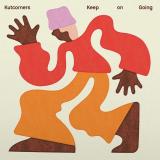
Infusing his cinematic, psychedelic musical vision into cutting-edge, bass-heavy electronics, Kutiman presents a euphoric club journey through UK garage, D&B, post-dubstep, and futuristic dance music.
With syncopated drums, deep basslines, and R&B-soaked vocals from standout artists like Jenny Penkin, Misha Sutherland and Odelya Illouz, the project bridges the gap between the indie electronica of Four Tet, Caribou, and Jamie xx and classic alternative club sounds.
Club music is emotional at its heart, and this release captures its essence perfectly; the peak-time euphoria, the moments of introspection & the times spent lost in the music.
Aura Safari are taking it back to the source with new album Spaced Out Disco on Hell Yeah. The eight-track record is inspired by the iconic sound, feel and studio techniques of the original 1970s disco and was played entirely live with real instruments.
Aura Safari are Andrea Moretti, Lorenzo Lavoratori, Daniele Melloni and Nicholas Iammatteo, and they have been releasing EPs, LPs and remixes on this label since 2020. They have long been entrenched in the local scene of Perugia and are live specialists with a unique chemistry that allows them to translate funk, jazz, soul, disco and house into their own timeless and universal musical language.
Integral to the album is the live performance aspect. All the band members hooked up in the studio and played together, often laying down tunes in one take and then adding some post-production for a modern edge. Disco, dub, jazz-funk and instrumental grooves define the sounds while the creative use of classic delay, echo, spacey FX and dubbed out arrangements lead the record the same Jamaican character that inspired original dub-disco pioneers like Arthur Russell, the Compass Point Studio and labels like Prelude and West End.
'Starlove' opens with low-slung grooves and squelchy bass that twist you inside out before 'Spaced Out' shimmers with astral melodies and synths that rise like a rocket disappearing into the night sky. Funky claps and flashes of Dexter Wansel-inspired soul complete the picture, while 'Santa Barbara' eases the pace with a brain-bending dub workout full of weighty low-end and warm, sun-kissed chords. 'Cosmic Affair' lives up to its name, gliding through the galaxy on uplifting guitars and slinky drums, all wrapped in irresistible retro-futurist magic and lit by the moon.
'Disco Mirage' turns inward with simmering bass, dusty open hi-hats and hazy synth trails drifting through effervescent jazz keys that rise like champagne bubbles. 'Magik Space Dust' stretches towards the stars with soaring leads and knotted bass locked into an effortless groove.
Spaced Out Disco does exactly what it promises and plots a richly imagined journey that never stops looking towards the stars while keeping its feet firmly on the dancefloor.
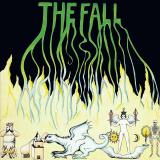
7–Early Years–79 was The Fall's first comp ever. Originally released on Step-Forward in 1981, the LP compiles the group's first four singles recorded for the label between 1977 and 1979 – Bingo-Master's Break-Out, It's The New Thing, Rowche Rumble and Fiery Jack – none of which appeared on any of the band's studio albums. (Also included is "Dice Man" from 1979's Dragnet.) Taken together, these 7-inches are The Fall as they initially emerged from the primordial soup of '77 Manchester, pushing out from founder Mark E. Smith's poetry-collective origins into the early punk scene.
Right from the first track, "Repetition," Smith and crew's working-class art punk is in full effect. His obtuse lyrical brilliance and inimitable vocal delivery ride atop the band's ringing atonal guitar, looping basslines and propulsive drumming – complemented by wheezy combo organ tones. The tracks from each 7-inch are presented here in reverse chronological order. The Fall's fierce contrarianism defines the early UK punk sound and, at the same time, sounds nothing like any of their contemporaries.
The revolving cast of band members includes Martin Bramah, Una Baines and Karl Burns as well as Marc Riley, Craig Scanlon and Stephen Hanley who would remain in The Fall's classic '80s lineups. Many of their best-known songs are featured here – from "Psycho Mafia" and "Rowche Rumble" to the Mayo Thompson-produced "Fiery Jack."
Superior Viaduct's edition is the first time that 77–Early Years–79 has been reissued on vinyl. Includes liner notes by Stephen Malkmus.
Originally released on Flying Nun in 1983, Fall In A Hole is a double LP of an especially incendiary Fall show at Mainstreet Cabaret in Auckland, NZ in August 1982. The second of a two-night stand, this would be the band's final concert of its successful first tour of Australia and New Zealand. Recorded by longtime Flying Nun associate Chris Knox – who also made the striking cover artwork – Fall In A Hole follows the release of earlier live albums Totale's Turns and A Part of America Therein, 1981.
Besides capturing The Fall onstage during one of its most feral and exhilarating periods, Fall In A Hole is historically significant for several reasons. It heralds the end of Marc Riley's tenure with the band, an era considered by many Fall fans to be the group's peak, and showcases the two-drummer lineup heard on 1982's Hex Enduction Hour, with both Paul Hanley and Karl Burns sharing drumkit duties onstage. With Riley and Craig Scanlon on dual guitars and Stephen Hanley on bass, The Fall was stepping out in its final iteration with a majority of personnel rooted in their late '70s lineup.
The setlist is peppered with a mix of singles and album tracks old and new – including several that had yet to be released. Rarities like "Fantastic Life," "Backdrop" and "Solicitor In Studio" are given epic, feedback-drenched airings, while fan favorites like "Hip Priest," "Prole Art Threat" and "The Classical" radiate with lively, raucous energy.
Superior Viaduct's edition is the first time that Fall In A Hole has been reissued on vinyl. Includes liner notes by Roy Montgomery. Digital transfers made from analogue master tapes in the Flying Nun Collection and Chris Knox Collection held at the Alexander Turnbull Library (National Library of New Zealand).
Kisah Pasar Baru: The Modern Sound of 1950s Indonesia
When Indonesia gained its independence from the Dutch colonial government in 1945, politicians and soldiers weren’t the only ones playing a major role in building the sense of national identity.
Also working on the nationalist front were merchants and traders of phonograph records, who prior to the country’s independence served as local agents for foreign labels like Odeon and Beka. In Batavia, one of these traders were Tio Tek Hong, distributor of the international label Odeon and the other figure was Soejoso Soekarso, who also served in the Indonesian Military as an Air Force Marshall.
Irama Records, the music label he founded in 1951, was first attempt to “nationalize” the means of production of “indigenous music” from both foreign labels and intermediaries like Tio.
Soejoso stood at the intersection of music, business, and nationalism. He was the vanguard in the process of popularizing of a new breed of “national” music, especially the type he showcased in the compilation Kisah Pasar Baru: The Modern Sound of 1950s Indonesia, released in 1958.
Yet, the idea of an indigenous music championed by Soejoso was in fact the amalgamation of a myriad of cosmopolitan strands. As an air force officer, Soejoso spent some of his time playing in the Hawaiian band Lieve Souvenier in Semarang before relocating to Jakarta and started jamming with the band Elshinta Hawaiian Senior.
In addition to Hawaiian music, Soejoso was a versatile musician who also had the chops for jazz, a musical genre wildly popular in the 1940s and early 1950s Indonesia. And it was jazz that he first recorded for his Irama Records label.
One night in 1951, he squeezed pianist Nick Mamahit, bassist Max van Dalm, drummer Dirk van der Capellen, and guitarist Dick Abel into a 2×3-meter studio on Jl. H. Agus Salim, Central Jakarta, to record the first local jazz album of the post-independence era.
Kisah Pasar Baru is a compilation of hybrid music that Soejoso and his coterie of musicians championed in the early 1950s, a mix of Hawaiian, Keroncong and Jazz and it became a hit soon after being release.
One of the best compositions on this album, “Pajung Fantasi,” composed by the legendary composer Ismail Marzuki, is essentially built from Bing Slamet’s baritone—Indonesia’s equivalent of Bing Crosby--and the distinctive Hawaiian-styled steel guitar. The most famous song on the album, “Sabda Alam,” also written by Ismail Marzuki, follows the same pattern, its steel-guitar works now backing Theresa Zen’s hauntingly ethereal vocals.
Kisah Pasar Baru was never designed to be a long-playing record, and its presence on the market was to capitalize on a new trend in the recording industry. The album is a greatest-hits compilation, with songs in this album previously circulating individually on 78-rpm discs—a format that was gradually abandoned following the invention of the 7-inch single and the 12-inch long-play vinyl.
This is the first time this monumental record is being reissued for the international market outside of Indonesia.
Teeing up the next dynamite release on Brighton-based label Murmurations is prolific UK producer Michael James. Spread across four cuts, the fifth vinyl release from the label - MURM005 - continues to focus on essential, stripped-back, driving dancefloor energy with a nostalgic edge. The Moving Music founder delivers exactly that throughout his four excursions here, laced with infectiously swung grooves from top to bottom, synonymous with his sound. “Ultra Realism” kicks off the record with heady peak-time action, its enormous elastic bassline winding itself around intricately arranged, skippy drums, rarely letting up as the track evolves.
Dubby, golden-era tech house sounds arrive on the A2, titled “More Of That”, a fitting name for this after-hours future anthem. As we land on the B-side, we’re greeted by “Lazy River Express”, another slick encounter with a distinctly charming attitude to it. Hard not to move to this one. Rounding off the EP is another example of punchy, rolling action, begging to be played loud. “Stargazer” leaves us with a crisp yet dreamy finish, rounding off the EP with another standout cut for the record bag. In its early days, Leo Christopher has managed to build a sought-after catalogue with the Murmurations imprint, and long may that continue. The curation is always one step ahead, and the label has very quickly become a buy on sight imprint for devoted diggers. An exciting combination here as a growing label joins forces with a staple name on the UK circuit.
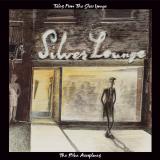
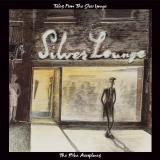
The Blue Aeroplanes have been delivering their distinctive brand of rackety sprechgesang for four decades now, and they are showing no signs of slowing down. Their new studio album, ‘Tales From The Silver Lounge’ is based on overheard conversations between the clientele of The Silver Lounge, a rather louche café/bar in an unnamed city on an unknown planet much like ours, and in an unknown time, though the decor tends to the late 50’s, early 60’s.
The identities of the members of the Silver Lounge are, of course, confidential.
This is the 14th Blue Aeroplanes studio album and the third with the current line-up, which is:
Gerard Langley: vocals
Bec Jevons: guitar, vocal and backing vocals
Mike Youé: guitar, vocal and backing vocals
Rita Lynch: guitar, vocal and backing vocals
Chris Sharp: bass and backing vocals
John Langley: drums and percussion
Ed Taylor: many different instruments and backing vocals
Wojtek Dmochowski: dance
Alexander Dmochowski guests on saxophone and clarinet, Will Diamond on violin and Steve Bush adds backing vocals.
After two best-of compilation albums were released by Chrysalis Records in 2025 (‘Magical Realism’: The Best Of The Blue Aeroplanes’ and ‘Outsider Art’: The Other Best Of The Blue Aeroplanes’), the band are now back firmly in a sort of present with a new album that features all the guitar-band flavours that anyone could need, with poems that cover name-doppelgangers, falconry terms, Don Marquis, postcards, Greek mythology, abandoned Teslas, the First World War and the surreal nature of music-hall jokes.
“The Blue Aeroplanes? Not my cup of tea, but I can see what people see in them.” Mark E. Smith
The Blue Aeroplanes have been delivering their distinctive brand of rackety sprechgesang for four decades now, and they are showing no signs of slowing down. Their new studio album, ‘Tales From The Silver Lounge’ is based on overheard conversations between the clientele of The Silver Lounge, a rather louche café/bar in an unnamed city on an unknown planet much like ours, and in an unknown time, though the decor tends to the late 50’s, early 60’s.
The identities of the members of the Silver Lounge are, of course, confidential.
This is the 14th Blue Aeroplanes studio album and the third with the current line-up, which is:
Gerard Langley: vocals
Bec Jevons: guitar, vocal and backing vocals
Mike Youé: guitar, vocal and backing vocals
Rita Lynch: guitar, vocal and backing vocals
Chris Sharp: bass and backing vocals
John Langley: drums and percussion
Ed Taylor: many different instruments and backing vocals
Wojtek Dmochowski: dance
Alexander Dmochowski guests on saxophone and clarinet, Will Diamond on violin and Steve Bush adds backing vocals.
After two best-of compilation albums were released by Chrysalis Records in 2025 (‘Magical Realism’: The Best Of The Blue Aeroplanes’ and ‘Outsider Art’: The Other Best Of The Blue Aeroplanes’), the band are now back firmly in a sort of present with a new album that features all the guitar-band flavours that anyone could need, with poems that cover name-doppelgangers, falconry terms, Don Marquis, postcards, Greek mythology, abandoned Teslas, the First World War and the surreal nature of music-hall jokes.
“The Blue Aeroplanes? Not my cup of tea, but I can see what people see in them.” Mark E. Smith
After the worldwide techno hit that was Darc Marc's "Dirty Rocking Bass" comes the next Cluster X instalment from French legend GANEZ THE TERRIBLE. "The Rave..." is another prime time techno monster from the Acid Techno/Techno underground that is going to cause massive dancefloor mayhem with its cheeky 'The rave, the sound, the people, the party" sample and hard funky beats and 303 stabs. With pounding remixes from D.A.V.E. THE DRUMMER, and new kid-on-the-block SEON, and a kicking bonus track "Elevator" from Ganez himself this gives a nod to all areas of harder techno.
DJ Support: Glenn Underground, Crazy P, Terry Farley, Aroop Roy, Chris Coco, Frank Tope, Greg Wilson, Dom Servini, Francois K, Max Essa, Oliver Dollar, Pete Herbert and many more
Danny Ward’s Balaphonic project, one of many the long-serving performer, producer, percussionist, drummer and DJ has utilised over a career spanning over three decades, has evolved considerably since his first release under the alias 11 years ago. Conceived as a platform to explore his love of Afro-Cuban and Brazilian musical culture, it gathered new impetus during lockdown and the recording of superb first album Resolution Revolutions, which fused these influences with nods to Balearica, dub, dancehall and deep house.
On the Organic Matters EP, Ward’s follow-up to that critically acclaimed set, the Balaphonic musical universe has expanded once more, with the Manchester native showcasing a wealth of eye-catching collaborations and an even more intricately layered and sonically detailed sound rich in live percussion and instrumentation. It’s an ambitious and widescreen musical vision wrapped in sun-soaked melodies, morning-fresh motifs and simmering, sunset-friendly soundscapes.
The dizzying new heights scaled by Ward on Organic Matters is evident from the opening bars of ‘Dew Drops’, a piece created in unison with internationally renowned composer and arranger Robin Dewhirst. Between them, the pair have conjured up a yearning, life-affirming samba shuffler where picturesque piano, xylophone and balafon melodies rise above Ward’s dense, layered Latin percussion and warming bass.
Next, Ward delivers a thrillingly different take on his 2005 composition ‘Switch’, featuring legendary Brazilian jazz vocalist Flora Purim and her equally talented daughter Diana Moreira Booker. Whereas that was a jazzy deep house workout, Ward’s Balaphonic re-make is a shuffling, gentle exploration in 7/4 time – a heartfelt tribute to the Brazilian records with which Purim first made her name in the 1960s and ‘70s.
‘Balaventurers’ sees Ward join forces with an old friend from the North-West scene, R.S.L founder Joe Botham AKA Baleardelica – a multi-instrumentalist and producer whose Flamenco-inspired acoustic guitar motifs provided the starting point for another vividly colourful exploration rich in layered vocalisations, twinkling keys and impeccably arranged percussion.
It’s followed by ‘Life of Strings’, a more up-tempo and dancefloor-leaning excursion written and recorded alongside Amsterdam-based violinist, and composer Katya Gabeli. While Ward’s percussion-rich groove provides propulsion and a rock-solid foundation, it’s Gabeli’s evocative string arrangement that provides the focal point and emotional resonance. It’s a genuinely brilliant collaboration.
To round off a second stunning Balaphonic release on NuNorthern Soul, Ward delivers two simmering, slow-motion delights: the Afro-Cuban rhythms, cascading melodies and melodic percussion motifs of ‘Boxfresh’, and stunning EP closer ‘Home’ – an almost overwhelmingly poignant and beautiful number that gently ebbs and flows on waves of tracked piano, dreamy chords and a comforting sense of closure. It’s a genuinely sublime conclusion to another wonderful Balaphonic release.
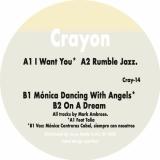
Mark Ambrose has been a serious house head since the 1980s and has always brought his own flavours to the original Chicago and Detroit sound. He heads up the Crayon label, which is where much of his music comes from, including this latest deep dive into groove. 'I Want You' (feat Talia) kicks off with a meandering lead synth that comforts over a warm bed of drums as a sultry vocal whisper brings some intimacy. 'Rumble Jazz' then rocks back and forth a little more with swaggering attitude and hints of darkness and 'Monica Dancing With Angels' is a smooth cruiser with a far-sighted melodic edge. 'On A Dream' brings a sultry jazz flourish with some sombre trumpets lingering above classic deep house drums and bass that take you way back.
Power Of Soul is the third record as a bandleader by legendary jazz drummer Idris Muhammad, originally release in 1974. He embarked on his solo career in 1970 after years of work as a sideman for the absolute biggest names in jazz such as George Benson, Lou Donaldson, Grant Green, Ahmad Jamal, Pharoah Sanders, and many, many others.
This record was produced by Creed Taylor, founder of CTI, and engineered by Rudy Van Gelder. The architect of the Blue Note sound developed a deep relationship with Muhammad and played a big role in finetuning his sound. But, don't forget the rest of the line-up; the recorded features arrangements and compositions by keyboard legend Bob James and smooth jazz founder Grover Washington Jr., supplemented with performances by Randy Brecker, Joe Beck, and Ralph MacDonald. All in all, you can see why Muhammad's works ended up as samples on so many hip-hop records.
Power Of Soul is available as a limited edition of 2000 individually numbered copies on white vinyl.
Often credited as the father of multi-media theatre, Alwin Nikolais (1910-1993) took complete creative control over his productions - including cutting-edge approaches to lighting and costume that transformed human bodies into shifting sculptural shapes, while also composing wildly innovative electro-acoustic and synth-based audio as accompaniment.
After initially experimenting with musique concrète and tape manipulation (as demonstrated on the 1959 LP Choreosonic Music of the New Dance Theatre of Alwin Nikolais) Nikolais became the first owner of Robert Moog's synthesizer at the Audio Engineering Society convention in New York in late 1964. Relying heavily on the Moog and later the Synclavier synth/sampler, these 21 tracks document Nikolais' highly-prescient compositions across the mid 1960s through to the late 1980s - existing not only as extensions of his other-worldly choreographic productions, but standalone pieces of foundational mid-century American electronic and experimental music.
"Born in Southington, Connecticut in 1910, Nikolais’s early years and early career were in acting, music and puppetry. It was not until the late 1930s that he began his work as dancer/choreographer in Hartford, Connecticut, where he was commissioned by the Avery Memorial Theatre, a part of the Wadsworth Atheneum, to create an evening-length work to the music of Ernst Krenek. Previously his work and study as a pianist-organist found him accompanying silent films. This sort of accompaniment required from the musician not only a playing skill but also a versatility in improvisation, matching movement to sound, and evoking mood to situation.
Nik was drawn initially to dance by his involvement with the percussion scores used by the illustrious early twentieth century German dancer Mary Wigman. In trying to learn more about percussion, he was lured into dance class and thus his career began. His development of music and dance occurred simultaneously. His introduction to the twelve-tone technique opened his mind to the expanding areas of atonal music, and his dealing with music as sound per se. In 1948, after being appointed director of the Henry Street Playhouse in New York, Nikolais formed the Playhouse Dance Company, later known as the Nikolais Dance Theater, and began his aesthetic orientation toward dance as a study of motion. By the 1950s, he had ceased creating literal dances and began his explorations and eventual milieu as an abstractionist.
Sound became an important part of his abstract theatre. For his first dances, which involved his new thinking of dance as both a visual and kinetic art, he used live percussion scores in which he directed his dancers to play instruments of all nature. There was a combination of children’s toy instruments as well as harsh and resonant automobile brake drums, and other pitched auto parts which he also used to accompany classes. Once he installed his own tape recording machines, he quickly used the limited range these instruments provided in a new way, slowing and increasing speed and reversing sound. He also made the sounds adhere to the choreographic structure (not the other way around), thereby giving the dance its independence from the musical phrasing. But the real need remained: the search for new sound. Nik made a sound library, recording noises and percussion and vocal sounds, which the French aptly called musique concrète. Needless to say, he became a master at splicing bits and pieces.
From 1956 to 1962 Nikolais composed eleven major scores for his theatre pieces using such techniques. In 1963, James Seawright, who at the time was assisting Nik in his productions and also working at the Columbia-Princeton Center for Electronic Music, recorded a sound bank for the production Imago (1963). With this material, Nikolais created his first synthesizer score. Imago won the Paris Grand Prix in 1968 and launched the Nikolais Dance Theatre towards its national and primarily international acclaim.
During the same period, Seawright came to Nik and told him of a young man who had invented and constructed a simplified synthesizer and insisted that Nik visit the electronic fair currently being held in New York. Nik did so and met Robert Moog. He was completely taken by the new machine and after making some suggestions to Moog, (which Moog made), Nik bought the inventor’s first machine with the aid of a Guggenheim Fellowship. Moog himself was astonished by what his machine could produce for Nik. This machine was later acquired by the Museum of Musical Instruments at the University of Michigan at Ann Arbor as the first Moog synthesizer. The Synclavier was Nik’s next source of sound and since the mid-1970s remained the major instrument in the Nikolais soundroom.
Alwin Nikolais has been honored and awarded throughout the world. He has received the French Legion of Honor, the Kennedy Center Honors, National Medal of the Arts, two Guggenheim Fellowships, as well as Mellon, Ford, and Rockefeller grants. He has been a recipient of NEA grants since 1966, been awarded five honorary doctorates, all for his remarkable achievements in Dance Theater. His genius has influenced several generations of artists."
—Murray Louis
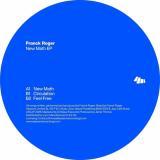
Classy Frenchman Franck Roger is one of the most consistent performers in the deep house game and he is back with another MVP performance on Seasons Limited this Autumn. This all-new trio of tunes opens with a delightfully airy, light-footed blend of Afro drum patterns and buffed metal melodies that have a lovely late-night glow to them. It's a persuasive rhythm that will infect your hips in no time, while 'Circulation' is more humid and bouncy, with nods to the deep and smoky foundations of house but still one foot in the here and now. 'Feel Free' closes with an elastic groove and the sort of introspective melodies that mean more than most throwaway synth lines in the modern scene. Tasteful and timeless as always from Roger.
Kampinos returns to GAMM with a 12" dedicated to that spiritual entity up in the sky - Drum 'N' Bass style !
Expect big, soulful gospel vocals layered over rolling D&B rhythms, perfectly tuned for both club systems and personal headphones.
Opening track 'Blessings' pairs deep gospel choir R&B vocals with a tasteful D&B bounce and live organ work.
On the flipside, 'Head To The Sky' delivers a massive jungle rework of a cover version of Sounds of Blackness' gospel classic 'Optimistic' - a guaranteed head-turner.
Toka Project was a collective from Nottingham's fertile 90s party scene, including members Andrew Macari, Andy Riley and Steve Walker amongst others, and they dropped their 'One Day' EP in 1999 on Filter Flow, which now revisits the title cut with a new set of remixes. The original is a deep house sound with a rough metallic edge and humid pads infused with whispered vocals. Di Saronno remixes it into something more light and airy, with a subtle skip in the drums that recalls the best of Melchior LTD. Andrew Macari's version has a little cheeky wiggle and sunny synth work, then Latenight Society remixes it into a slower sound with a swirling backdrop of pastoral melodic colours. A dreamy close to a fine set of new versions.
Some things in life are meant to be consumed whole: a perfectly paced movie, an oyster at Whitstable Bay, a novella on a sunny afternoon. Into this pantheon of singular experiences comes Runners, the second album from London instrumental rock quartet Dog Unit. The follow-up to At Home, the band’s cult favourite 2024 debut album, Runners moves seamlessly across its 42-minute runtime. It finds the quartet – comprising Sam Walton, Henry Scowcroft, James Weaver and Lucy Jamieson – crafting tracks that undulate, churn and yearn in service of a greater purpose as they plough fertile fields of sonic storytelling. Made over the first four months of 2026 at the band’s studio in Limehouse, East London, Runners finds the core group, alongside producer and long-time collaborator Mark Estall, operating with greater ambition and scope than ever before. This time they commissioned a string quartet specifically for this project, and reappointed noted experimental bass clarinetist Heather Roche, as well as taking in a cavalcade of instruments at their studio, including vintage synths, drum machines, pianos, and harmonium. The band’s music is often compared to cinema, and if At Homewas a charming micro-budget indie flick bursting with potential, Runners is a widescreen realisation that stands up to repeat viewings.
Audio Werner opens with "Major Relief," a floor-forward technoid cut featuring slamming drums and skittering chords. Jozef Conor follows on the A2 with "Hand it Over," a pacy hands-up moment for the night. On the B side, Melina and Jakob Seidensticker deliver "Gold Diggin"," toting classic percussion wrapped in slinking sampled pads. Anderson closes with "Sine Language," a nod to the Italian deep house greats.
Hamburg's GOME joins the roster of Cinthie's 803 Crystal Grooves Collective Cuts sub-label here with a new fourtrack EP entitled 'Free Refill', featuring a collaboration with James Juke. GOME is shaking up dance floors worldwide with a raw, 90s-inspired House sound infused with Funk, Soul and Disco.
Having built a strong reputation through releases on Heist Recordings and his own Snackwax imprint, GOME has earned support from leading DJs and performed at renowned venues including Robert Johnson (DE), Berghain (DE), Golden Pudel (DE), Shelter (NL), Lofi (NL) or Blitz, to name but a few. Alongside celebrated live hardware performances and the community-focused "GOME + The Gang" events, GOME has become known for an authentic DIY approach, making this new 'Free Refill' project a fitting addition to the Collective Cuts catalogue. Leading the EP is the collaborative 'Keep The Party Going' with James Juke, an apt title for a frenzied five-anda- half-minute House jam featuring swinging, snappy drums, siren-like synth swells, gritty chord stabs and an amalgamation of vocal hooks throughout. 'Extraordinary' follows, employing a gritty electro-leaning bassline, a crunchy off-kilter rhythm section, twitchy arpeggio lines and a loopy, infectious vocal refrain. On the flip-side, 'CONGRATULATIONS' sees GOME lean heavily into House roots, perfectly aligned with the Crystal Grooves sonic aesthetic. Harkening back to 90s rave culture, it combines shimmering piano hooks, squelchy 303 licks, robust 909 drums and murky low-pitched vocals. 'You Make' then closes the EP, a loop-led cut fuelled by circling synth lines, bright strings, a bouncy low end and a fluttering vocal hook.
Techno innovator Regent has already made his mark on Mutual Rytm with two previous outings highlighting his refined but powerful style. The Berlin-based artist joins the dots between bold percussive grooves and distinct cerebral layers, with his productions continuing to receive wide support from DJs and tastemakers across the globe. This return to SHDW's flourishing label features one of his most anticipated tracks to date - a truly timeless warehouse anthem that marks an exciting new chapter for both Regent and the label.
'Permean' is a raw but sophisticated piece of techno that merges powerful drums with hypnotic pads. It brims with surgical sound design. While the groove is fierce, a haunting melodic touch adds a soft and deeply emotional edge
as Regent explores the tension between permanence and decay, delivering a timeless and essential track.
The first remix comes from Steve Rachmad under his Sterac guise. This version channels the spirit of his early work - pure, stripped-back techno at its finest. Tightly programmed and deep, it features burrowing bass and impish synths dancing up top to occupy the mind while the body moves.
Next comes a remix from one of the most innovative producers of our time, Rene Pawlowitz, under his Head High alias, a project reserved for his more house leaning sounds. His 'Power Tool Mix' brings his signature loopy style with thudding kicks, raw hi-hats and twitchy synths - already shaping up to be a summer hit. Pawlowitz then steps out under his renowned techno alias Shed. His 'Forceful Pressure Mix' is a blistering and unrelenting weapon, with rusty textures and powerful bass locking you in its glitches, unresolved loops and booming low end.
DJ Support: Sam Don, Severino Panzetta (Horse Meat Disco), Chris Howler, Sean Johnston, Bill Brewster, For Mankind, Craig Thompson, Andy Taylor, Massimiliano Pagliara, Dean Dixon, Nathan Detroit and many more
Underground Institution Stompa Phunk Re-Launches Vinyl Label with Raw, Chi-House-Inspired Energy. After three decades of defining the UK’s underground club landscape, legendary Brighton party collective Stompa Phunk is officially moving from the dancefloor to the wax with the relaunch of Stompa Phunk Records Inc.
The Heritage: From The Warehouse: The releases will directly honour the roots of house music, a genre born in 1977 at Chicago’s legendary nightclub, The Warehouse. As that scene matured, a grittier, faster, and more experimental counterpart emerged. Defined by an uninhibited, bass-heavy style, it was a movement driven by local innovators who pushed drum machines and synthesisers to their breaking point... It wasn't just a genre; it was a collision between pure imagination and raw machines. A true "sound klash" transformed the local underground subculture into something global...
Release 1: You Had It (Edit) / Music Got (Dub): Capturing the exact spirit of rough, tape-spliced dubbed cuts. The 12-inch from SP resident Sound Klash pairs a vintage production ethos with old hardware pushed to its limits...
The Philosophy: This EP perfectly mirrors the exact philosophy that has fueled Stompa Phunk’s dancefloors since 1996: uncompromising electronic music rooted in heavy sample-delia, jackin' bodies, Acid energy, disco-dub mentality and second-hand technology. Jackinacidiscotech!
2026 Repress
Berlin-based duo Disguised land on Mutual Rytm with a splash of signature driving techno on ‘Nightrun’. German-born, Berlin-based pairing Alvaro and Domenik are Disguised, a duo that feels closely connected to their favourite club RSO and its Robus Floor, where most of their musical inspirations happen. They head up their own label, Inherit Records, and also host parties at Berlin's new C115 venue on the Berlin highway. Already this year, they have dropped an impressive collaborative EP with their studio partner and close friend Fabio, aka FANK, who features on this EP with his own vocals. Their sound is always defined by driving drums and hypnotic melodies that build up to intense dancefloor peaks, and here they showcase this to its fullest on their Mutual Rytm label debut via five vinyl-only cuts and three digital bonuses built and crafted to make a lasting impact. The powerful 'Where Thoughts End (ft. FANK)' rises up through the ground like an oncoming train, as drums rumble, synths peel off the groove, and moody voices have you looking over your shoulder. 'Nightrun' is glitchier and more textured, with a fractured energy that keeps you on your toes. 'Crusher Wheels' is a deep, back-lit, and trance-inducing sound made for 4am, while 'Ashes and Algorithms' layers up eerie melodic details with bulky drums for a spare but atmospheric trip. 'All You Find (ft. FANK)' is dubby, greyscale techno with a muscular rhythm and unsettling synths, taut and tensile, balancing right on a knife-edge. Three digital bonuses explore different moods - the subtle melodic touches of 'Silent Pulse', the cosmic energy of 'Sceptre Rd', and the rising optimism of 'Twinfall’.
Industrial badman Sei2ure back on PRSPCT release with a huge 2 track vinyl EP.
Some say industrial hardcore is dead. If that were the case then this one is for sure the one to bring it back to life!
On the A side we have Send You To Hell. A 175BPM monster containing almost everything both Sei2ure and PRSPCT stand for. Driving pounding kick drums, catchy hooks and that perfect dose of snare drum warfare making this the perfect track to kill it on both Hardcore & Drum & Bass events. Huge track!
On the flip we have Push The Prozac. A 190BPM beast tune pushing up the tempo a bit without losing the groove and that dark Industrial vibe we love to death and have been missing so much.
Again another release on PRSPCT that is All Killer, No Filler. Enjoy!
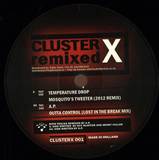
Originally a massive hit from D.A.V.E. The Drummer and The Geezer on Cluster, 'Mosquito's Tweeter gets an up to date dark techno mix from new school scene leader A.P.
A.P returns to one of most loved tracks which originally appeared on Cluster 80 with a tough energised remix.
Ribe & Roll Dann serve up potent techno on Mutual Rytm with 'Virtus Occulta'.
Built around concepts of unacknowledged work and enduring merit, the release marks their first EP on SHDW's widely
respected label.
Based in Toledo and Madrid, Ribe & Roll Dann are exciting residents at Laster Madrid and Lanna Club, two of Spain's leading venues. Emerging as driving forces in their national techno scene, they have also made an impact on the global landscape, making wider moves through collaborative releases on Klockworks, and individual outings on a number of other influential labels. Having previously featured in the label's Federation of Rytm IV compilation, the pair make their full EP label on SHDW's Mutual Rytm imprint to open March with a deep dive into their expansive sound.
Opener 'Sub Terra' is a pure club tool that is direct, physical and rooted in the underground with a seriously heavy low end. 'Extra Lumen' is more restrained but still built on a steady, forceful rhythm with controlled energy that prefers to operate in the shadows. 'Ars Non Placens' stays true to the idea that music is not made to please, but to exist on its own terms with hunched drums and dubby undercurrents. Next, 'Meritum Negatum' fizzes with static electrical charge and minimal drum funk and is a direct reflection on overlooked skill and unacknowledged work, before closer 'Virtus Persistens' delivers a continuity and a steady pulse rather than an explosive ending, keeping you locked throughout.
In addition, three digital bonus cuts come alongside the vinyl package. 'Labor Inauditus' speaks to hours of technique, production and booth experience that remain invisible. Next come the taught, rubbery rhythms and unrelenting atmosphere of 'Silentium Testium', while 'Sine Aplausu' - which means without applause - brings a ghostly late night vibe that you will never want to end.
ANNE and Sera J close their Symbiosis series on Mutual Rytm with third and most refined EP yet.
This final chapter reflects everything the collaboration has stood for across a trio of inventive techno releases on SHDW's imprint. Creative and life partners ANNE and Sera J have been two voices growing in parallel, evolving separately but moving with the same pulse. ANNE is well established thanks to standout EPs on the likes of Soma and Hardgroove, while Sera J has released on the likes of Life in Patterns and Renegade Methodz, and both have featured on Mutual Rytm's 'Federation Of Rytm' series before now. 'Symbiosis III' is the moment where everything comes full circle: the culmination of a journey built on respect, creativity, and the freedom to explore their own paths while lifting each other forward.
Sera J kicks off with 'Ransomware', a commanding and driving techno cut lit up with flashy synths but always moving with urgency. 'Phosphate' keeps the energy levels high with stripped-back drums and bass designed to perfection, while 'Anthrax' has an anxious edge. The synths are wispy but evocative as bass kills and swiping filters bring the drama.
ANNE then ups the ante with the acid-tinged 'Dementia', which is loopy and unrelenting before 'A Taste of a Real Woman' gets more seductive with a sultry spoken word and sustained chords that bring the paranoia. 'Heart Rate' is propulsive with Detroit-style synth soul and an aching vocal, before Sera J returns with 'On the Run' - a percussive, trippy and eerie roller. His final Cut 'Similar Minds' has a searching synth surveying a desolate landscape, before ANNE then closes the EP with the punchy drum patterns and icy hi hats of 'Primal Howl Of Ego' and a blend of deep drums and evocative synth work on the 'Analog Heartbeat' - which proves potent techno can be beautiful.
SHORT INFOS
Because Music celebrates the 50th Anniversary of Cerrone's debut album "Love In C Minor (Cerrone I)" .
A record which is one of the mots important of its time. It brought French Disco to the World and established Cerrone as the French King of Disco.
- Pressed in exclusive 2026 Apple Green Crystal Clear vinyl
- Original 1976 artwork - Digitally remastered from original tapes.
BIOG
Cerrone I
Love in C Minor (1976)
The story behind Cerrone's first album could be summarised in the libertarian atmosphere and the creative energy of the 70s, inherited from the 60s revolutions, spiritual, aesthetic or sexual. Looking back now, this record is one of the most important of its time. It helped creating the sound of an era and brought French disco to the world. It is also, and this is fundamental to understand its success, the result of a man's vision: Marc Cerrone, a free spirit inhabited by music, who ended up with a major work of art. With this album, Cerrone accumulated the main elements that make a record timeless, even bigger than its creator: the pure originality, the madness of a vision without compromise, a sense of the market and a great dose of luck too. To some extent, this is the perfect record to start a career, even though Cerrone's one already existed in an implicit way. He actually began in a rather popular band, Kongas, signed by Barclay. Between 1972 and 1974, the band was famous and made it abroad, particularly in Japan, where people loved its sound. Despite this success, probably fed up with the music and not ready to follow the orders of a label that wanted the band to sound more pop, Cerrone disbanded Kongas. He had the sound of his instrument in mind and mostly its central element: the bass drum. The idea of this first solo album came to him after a detour via selling records. Wishing to forget about the studios, he took the head of a small chain of stores, selling records imported from the States. That's when he discovered a daring new sound coming from New York: disco music. This energy inspired him to record again. He then remembered the crazy reaction of the audience when, during the Kongas' concerts, he used to hit his bass drum hard. Cerrone felt like going back into the studio but to make something different. He decided to record a sixteen minutes long track, driven by its beat, that would fit on its own on one side of a LP (during these vinyl days, musicians used to think in terms of sides…), with girls' voices simulating sex. This concept of musical and physical orgasm was recorded at Trident Studios in London (where pop stars used to record at the time… ) with Don Ray, of Kongas, man in the shadows and brilliant arranger who'd follow Cerrone during his whole career. Obviously, like always in pop music (it happened to the Beatles), record companies started by turning this weird track down, convinced that radios would never play sixteen minutes of beats and moaning. Cerrone, a born fighter, decided to trust his instinct (a mix of ego and business sense) and chose to believe that if the radios wouldn't play the track, people would dance to it in the clubs. He released the record himself, with a sexy cover a bit provocative where he wore a black bathrobe, a young short-haired girl leaning on him. Being played here and there, thanks to Cerrone's own network, the record started to work a bit in France. But luckily, things really happened in the States. Due to a mistake, a box of "Love In C Minor" albums were sent to the States via Cerrone's record shop instead of some unsold American LPs. Once in New York, the box was opened and the record with its intriguing cover was instantly loved and passed through the hands of radio and club DJs. All of a sudden, and unknown to its creator, the track that was turned down by every French label, became a hit on the New York disco scene. Casablanca, the US disco label, released a cover recorded by an ad hoc band because nobody knew Cerrone of how to find him. Once he discovered what was happening in the States, Cerrone flew to New York. He realised he had a hit, one of the biggest then, that opened the doors to every record company and especially Atlantic. He was welcome by Ahmet Ertegun, one of the main visionaries of the American music who, among other artists, signed Aretha Franklin and John Coltrane. It's believed that Ertegun understood that the French young musician, like some Atlantic artists, was about to define the sound of his time and that his work would live long after its birth date. "Love In C Minor" was the first step, adamant and successful.
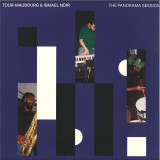
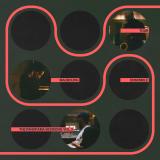
Between 2024 and 2025, Tour-Maubourg launched his Ensemble live formation alongside saxophonist Ismael Ndir and drummer Fréjus Méa. Fresh from Panorama Studio in Brussels, they unveiled two EPs featuring live reworks and exclusive tracks, a project that has already gathered millions of streams and led the trio to perform in some of Europe's most exciting venues.
Between 2024 and 2025, Tour-Maubourg launched his Ensemble live formation alongside saxophonist Ismael Ndir and drummer Fréjus Méa. Fresh from Panorama Studio in Brussels, they unveiled two EPs featuring live reworks and exclusive tracks, a project that has already gathered millions of streams and led the trio to perform in some of Europe's most exciting venues.
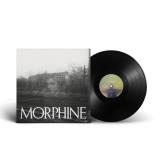
At the height of grunge, Morphine sounded like nobody else. The Boston trio built their own strange, seductive musical language (coined "low rock" by frontman Mark Sandman), built around Sandman's two-string slide bass and unmistakable voice, Dana Colley’s baritone & tenor saxophone, and stripped-back drums (Jerome Deupree, Billy Conway). Morphine became one of the defining cult bands of the ’90s, but their story came to an abrupt end in 1999, when Sandman suffered a fatal heart attack on stage during a concert in Italy.
More than 25 years later, Cocoon offers an extraordinary final chapter. Its eight songs were recorded during Morphine’s late-’90s sessions before Sandman ultimately shelved the material on the path toward what would become their final album. Rediscovered in the band’s archives decades later, Sandman’s life partner and Morphine estate manager Sabine Hrechdakian and producer Paul Q. Kolderie (Radiohead, Pixies) transferred the original tapes and carefully assembled this unified collection of Morphine songs. Dana Colley returned to add new saxophone parts, and Kolderie then brought new mixes to the table. Rather than a collection of demos or outtakes, Cocoon is a fully realized Morphine album revealing a band still pushing forward that somehow waited nearly three decades to find its way into the world
Album Background
The background on the album is that the majority of the songs existed in demo form on a CD release called "Sandbox" a semi-legit release of Mark Sandman music on 2004. These versions are the completed tracks that include contributions from Morphine saxphonist
Dana Colley and produced and mastered by Morphine's long time producer Paul Kolderie.
At the height of grunge, Morphine sounded like nobody else. The Boston trio built their own strange, seductive musical language (coined "low rock" by frontman Mark Sandman), built around Sandman's two-string slide bass and unmistakable voice, Dana Colley’s baritone & tenor saxophone, and stripped-back drums (Jerome Deupree, Billy Conway). Morphine became one of the defining cult bands of the ’90s, but their story came to an abrupt end in 1999, when Sandman suffered a fatal heart attack on stage during a concert in Italy.
More than 25 years later, Cocoon offers an extraordinary final chapter. Its eight songs were recorded during Morphine’s late-’90s sessions before Sandman ultimately shelved the material on the path toward what would become their final album. Rediscovered in the band’s archives decades later, Sandman’s life partner and Morphine estate manager Sabine Hrechdakian and producer Paul Q. Kolderie (Radiohead, Pixies) transferred the original tapes and carefully assembled this unified collection of Morphine songs. Dana Colley returned to add new saxophone parts, and Kolderie then brought new mixes to the table. Rather than a collection of demos or outtakes, Cocoon is a fully realized Morphine album revealing a band still pushing forward that somehow waited nearly three decades to find its way into the world
Album Background
The background on the album is that the majority of the songs existed in demo form on a CD release called "Sandbox" a semi-legit release of Mark Sandman music on 2004. These versions are the completed tracks that include contributions from Morphine saxphonist
Dana Colley and produced and mastered by Morphine's long time producer Paul Kolderie.
Yesterday's Tomorrows is Moomin's 3rd album and the first of his to be released on WOLF Music Recordings. The album see's Moomin showcasing the natural, organic sound he is known for, applying his production technique to House, as well as venturing into beatdown territory with 90s New York Hip Hop, and his uniquely Moomin take on liquid Drum & Bass.
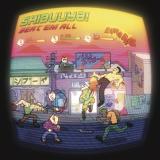
BEAT'EM ALL is french hip-hop/jazz instrumental trio SHIBUUYA!'s latest LP release. A blend of nu-jazz, fusion, hip-hop and future beats, all in original compisitions from the band's keyboardist and drummer, the album goes against the polished image we usually have of jazz music to deliver a raspy, energic and groovy sound that shakes the listener instead of nurturing him. With prestigious featurings such as CHiLi GiRL aka Shinobu Kawasihma, a Tokyo-raised Shamisen (a traditional japanese guitar) player, Melbourne rapper Nelson Dialect, french virtuoso saxophonist Hugo Afettouche, or the "french problem kid of jazz" trumpetist Daoud, SHIBUUYA! pushes forward its identity with references to japanese pop-culture through anime samples, powerful hip-hop beats, progressive broken-beat grooves and crazy deliveries on all three instruments (keys, drums and bass), all of it served by an original manga-inspired cover art by the band's keyboardist and leader. A reference to the japan-popular videogame genre (Shibuya being a neighborhood of tokyo centered around fashion and pop culture), BEAT'EM ALL tries to beat the odds on what we expect from a jazz album and to make it sound more like a garage-produced LP rather than a million-dollar studio album, to make as authentic and as generational as possible, a true product of today's young jazz scene.
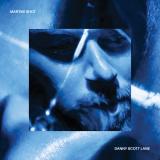
Martini Shot is the new album from Danny Scott Lane-a catchy, nostalgic and slightly manic collection that feels a little like one drink too many. Moving between lounge, soul, indie pop and exotica, the record plays more like a mixtape than a single idea, with a distinctly '90s streak running through it.
Lane sings on seven of the album's ten songs, a departure from his largely instrumental past work, and plays drums and percussion for the first time alongside his usual synths, keyboards, guitar and bass. Longtime collaborator David Lackner contributes flute, joined by new collaborators Logan Hone on flute and Katie Jacoby on violin.
Martini Shot marks Lane's second release with Records We Release, following the well-received House of Alice. The result is loose, romantic, restless and a little unpredictable.
Martini Shot is the new album from Danny Scott Lane-a catchy, nostalgic and slightly manic collection that feels a little like one drink too many. Moving between lounge, soul, indie pop and exotica, the record plays more like a mixtape than a single idea, with a distinctly '90s streak running through it.
Lane sings on seven of the album's ten songs, a departure from his largely instrumental past work, and plays drums and percussion for the first time alongside his usual synths, keyboards, guitar and bass. Longtime collaborator David Lackner contributes flute, joined by new collaborators Logan Hone on flute and Katie Jacoby on violin.
Martini Shot marks Lane's second release with Records We Release, following the well-received House of Alice. The result is loose, romantic, restless and a little unpredictable.
London-based Frankfurt export Claus Fuss brings his vibrant creativity to Rant & Rave with the Läuft! EP. Claus’ output includes a whole bunch of solo productions and collaborative projects with OneOneOne and LANDER, as well as co-productions with UK legends such as Zed Bias, Emerald a.o. His analogue-produced cuts have been signed to labels such as Khemia, Crème Organization, Neighbourhood, Heras and Kaizen. With his arrival on Rant & Rave, Claus drops four scintillating examples of rough and ready techno, including a collab with label head MAEDON. The EP kicks off with the title track ‘Läuft!’ (Running! in English), a mesmerising cut with a repetitive vocal snippet that forms part of the main riff. The beats are exquisitely programmed, and Claus keeps that track progressing, shifting and evolving masterfully.
Subtle layers add depth, while the main thrust of ‘Läuft!’ remains potent and captivating throughout. Next up is ‘Schwarze Löcher’ (Black Holes). As the title suggests, this one is dark and deep, sucking you into the sonic void. Elastic kick drums propel this one forward, as a rhythmically peppered, resonance shifting riff rises and falls. Claus gradually ramps up the intensity until we reach a breakdown, where that riff really works its magic. When the drums are reintroduced, it’s a powerful moment. Then we have ‘TopUp’, a lively, upbeat cut with contagious energy. Claus hooks the listener with an irresistible rhythmic structure, the bassline is especially addictive. Fast paced, dynamic drum programming keeps this one moving at a frenetic pace. On the surface it’s deceptively simple, but attentive listeners will pick up on all the details that make this one a compelling listening (and dancing) experience. Finally, we have ‘Zwanzig’ (Twenty), a heady collaboration with Rant & Rave boss MAEDON. This one brings together MAEDON’s earworm melodies and Claus’ penchant for hypnotic grooves. An insistent groove gives this cut a feel of urgency, while a relentless riff and punchy beats aim squarely at mind and body. A masterclass in dance floor engagement and connection.
Erol Alkan returns to his vinyl Reworks series for ‘Part 6’ the first new pressing since 2017. A long-awaited addendum to a series that has previously encompassed artists including Daft Punk, Justice, Hot Chip and Tame Impala, Alkan delivers two club-friendly tracks from his own Phantasy Sound imprint, both previously only available digitally.
For a propulsive take on Josh Caffe’s emotionally defiant, warehouse-bound ‘You’, originally produced in collaboration with Quinn Whalley of Paranoid London, Alkan delves deep into a lifelong appreciation of Chicago house. Stripped, spacious and tough on the drums, Alkan keeps Caffe’s demands front and centre while riding out an irresistible bassline and conjuring a brooding, typically psychedelic atmosphere.
Flipping from minimal jack to maximal funk, Alkan pays a visit to the esoteric archives of Cowboy Rhythmbox, the partnership of much-loved London DJ Nathan Gregory Wilkins alongside pop-provocateur Richard X. ‘Rock Music’ arrives rescued from a dormant hard drive of demos, its frenetic collage of samples stitched back together and fully recharged for a circuit-frying electro workout by Alkan, operating here at full tilt for the dancefloor.
Al Wahem (“The Illusion”) is the new full-length release by PRAED, the Swiss–Lebanese duo of Raed Yassin and Paed Conca. Recorded between Beirut and Berlin, the album returns to the group’s central aesthetic: a rhythm-driven weave of Egyptian shaabi, electronics, improvisation and the gritty pulse of street-level sound. Nearly twenty years into the project, PRAED have distilled their approach into four pieces that subtly shift the listener’s bearings, reordering grooves and fragments until familiar elements take on new identities.
The twenty-minute title track sets the tone. A tightly interlocking two-drum foundation from Pascal Semerdjian and Ayman Zebdawi shapes a structure that expands steadily: synth figures branch outward, clarinet and bass lines act as internal guideposts, and brief vocal calls from Yassin and guest singer Mayssa Jallad sit inside the texture rather than leading it. PRAED’s shaabi keyboard language is present, but the duo stretch it outward, building tension and movement through patient accumulation.
“Al Hathayan,” at 4:46, tightens the focus. Conca’s clarinet moves between melodic arcs and clipped rhythmic gestures, threading through electronic loops that surface and disappear. Zebdawi’s percussion adds a raw, tactile quality, placing acoustic patterns and electronics in direct conversation. The piece acts as a bridge between the album’s two long-form compositions.
Side B begins with “Al Maraya,” a thirteen-minute piece that relies on electronic, bass and clarinet interplay. The atmosphere nods to the breadth of PRAED Orchestra!, but remains anchored in the duo’s rhythmic foundations. Rather than building mass, the layering creates a sense of depth, as if new spaces were opening inside the groove.
The album closes with “Assarab,” featuring keyboardist Amr Said. Semerdjian and Zebdawi again form a dual percussive axis, while synths hover between melody and pulse, and themes recur in widening circles rather than building vertically. The porous boundary between electronic and acoustic sources — processed clarinet mistaken for a sequencer, rhythmic figures springing from live drums — is where the album’s theme of “illusion” shows itself most clearly.
Al Wahem follows a long arc: early releases on Annihaya, a key appearance on Ruptured Sessions Vol. 5 – Live at Radio Lebanon (2013), later albums on Akuphone, and the large-scale PRAED Orchestra! documented on Morphine Records. This new Ruptured/Annihaya co-release brings the duo back to a concentrated format, reorganizing their familiar materials with renewed clarity and intent.
Bringing mutant verve and a deadly swing to the bassweight discipline, Lyeform lands on Sneaker Social Club in resonantly rude form. Strong doses of UKG, wormhole techno and dubstep course through the veins of this muscular four-deep drop, but the London-based producer's metabolism strips the strands down to an atomic level and rebuilds the dance in his own design.
There's a dense and dank mood hovering over 'Drift Into Dread,' shaped out by rugged, noisy percussion steering towards mind-melting immersion. Rather than resting in technoid repetition, the landscape keeps shifting as dislocated rhythmic phrases slide in and out of earshot, led by the disembodied toasting of a mysterious MC.
'Vintage Gilly' has a much starker sound palette, all crackling drums sparking static interference into negative space with subs so low you might mistake them for heart murmurs. All the better to savour the subtleties as they tease into the mix, not least the understated lead lines loping lazily on the threshold.
The 2-step swagger is unmistakable on 'Godkiller' as it comes bowling into earshot, but there's not a whiff of garage revivalism in earshot as we channel hop between metallic feedback interference and needlepoint noise snaking around the minimalist framework of the beat.
'Glass Eater' closes the record out on another skippy stepper, but here Lyeform makes room for cavernous dub techno chords, overdriven bass harmonics and teeth-grinding noise. It's a final maverick swerve from an artist carving out a formidable impression via micro-level textural exploration within the context of dark and deadly soundsystem tackle.
The Shroud's appearance on Droogs is a masterclass in the fundamentals with four tracks that wear their influences proudly without ever becoming slavish to what has come before. Opener 'Cross' dives deep and rarely surfaces, rewiring classic shapes in murky bass underworlds. The title track is a rhythm slasher with steely-plated drums and growing low end menace, then 'Ouroboros' cranks the pressure to new levels without ever veering too far from meticulously programmed breaks. It has a schizophrenic panic to it in the scratchy textures and vocals that bleed in and out, then 'Restless Minds' closes things out with the sort of rhythm that gets you dropping your shoulder and fully locked in to each and every bump.
Canadian producer Kutcorners lands on vinyl with two standout tunes that come hot off the heels of his recently sold out 'Full Circle' 7". Again inspired by finding common ground between classic and contemporary house, 'Keep On Going', opens with springy drums and a rounded bassline flecked with subtle chord stabs. 'Play Me' leans into disco filter techniques, opening and closing the spectrum across a steady four-four pulse. Short vocal phrases punctuate the groove while muted guitar chops and filtered strings build tension before release. Playful and effective with an effortless charm.
Bogdan Ra kicked off his new label Love Affair with some banging house cuts that threw it back to early Chicago styles. This third outing flips the script and shows his range with four disco sounds that take their cues from the late 70s and 80s: all the hallmarks are there, from the classic synths and vocoders to dusty drum machines. 'Complimento' is a smooth title track, while 'Shout' is a French-tinged funk workout., 'Paramour' glides through cosmic disco textures, while 'Fire in Cairo' brings an unexpected vocal twist and acrobatic bassline full of movement. Charming stuff.
Epicentre was an R&B/funk group formed in Seattle, Washington by keyboardist Ric Ulsky. The band developed a loyal following, playing the extensive NW club, concert and dance venues throughout the mid-to-late 1970s. Their sound was a blend of melodic R&B and powerhouse funk that dependably filled music venues throughout the Western US. Bernadette Bascom was the lead vocalist, who captivated audiences with her powerful yet velvet-smooth voice and commanding, magnetic stage presence.
In 1978, Epicentre worked with Seattle producer Don McKinney to record their music in Seattle's now legendary Kaye-Smith studios. The result was seven strong, fully -produced R&B songs, with occasional horn and string orchestrations tastefully added to the final versions.
Their music quite literally sat on a shelf for decades until McKinney decided that all the hard work and talent should no longer remain undiscovered and it needed to find its audience. He restored and digitized his copies of the master tapes and looked for an opportunity. A chance call to the former leader of the group, Kell Houston, led to a serendipitous introduction to UK boutique/funk/R&B label founder Russell Paine. The result was an agreement to release their music, starting with two songs, "When You Were In Love With Me", and "Magic Carpet."
And now the follow up single of "Searchin/Tongue Tied"
Footnotes: Lead singer Bernadette Bascom became a protegé of Stevie Wonder, and was the first artist to be signed to his label Black Bull , starting a period of collaboration between the two. Bermadette is the daughter of Reverend Dr. Marion C. Bascomb (1925-2012), one of Baltimore's major civil rights voices and pastor emeritus of Baltimore's Douglas Memorial Community Church. Ric Ulsky eventually left the group to play keyboards and tour extensively with The Association. You can also find Epicentre's music on the compilation album "Seattle Funk, Modern Soul & Boogie: Volume II 1972-1987." In addition to Bernadette, the musicians on the 1978 sessions are Kell Houston, keyboards, Michael Cox, bass, John Carmondy, guitar, and Ricky Lynn Johnson, drums and vocals. While their recorded material is primarily original, Stacy Christensen from Seattle's Gabriel contributed two of his compositions.
Since the early 2010s, photographer and producer Izaak Schlossman has been surreptitiously using the Topdown Dialectic moniker to frame his most enigmatic and most psychedelic productions: faceless pure sound experiments that ogled dub and techno archetypes from somewhere far beyond the veil. This generous 2LP collection surveys over a decade of persistent activity, pulling together recently unearthed gear written between 2013 and 2016 (the same time period as the iconic Peak Oil trilogy) and muddling it with more contemporary material. It's a rare chance to fully comprehend the slow, measured evolution of the project: its genesis as a method to fractalize various bass music frequencies with suggestion rather than over-compression, and its ongoing advancement through sensitively finessed ASMR ambiance towards spangled neo-psychedelia.
So it's no surprise that the lengthy suite of five-minute snapshots was initially devised while Schlossman was preparing for his first ever Topdown Dialectic live appearance in 2025. A hazed early morning, open air performance that's still lodged in the memory banks of anyone who witnessed it, the set provided the narrative anchor for the album, blurring the past and present and reaching tentatively into the future - ideal material for audiences whose brains are fully plasticized. The tracks, while divided, sound as if they're breathing over and into one another; beats and phrases materialize and dissolve just for moments, leaving the mind to fill in the gaps with any available sonic material. What might reflect the bright neon light of acid house at first soon embodies the flicker of a candle over a desk of drum machines in a Midwestern basement, or the first blush of sunlight over a tiny campground as subwoofers creak in the distance.
It's music that asks the listener to be involved in the creation itself, projecting their own shapes on the negative space, their discreet fantasies on haunted stretches of near silence. Schlossman's identity was never the point, Topdown Dialectic was always a scrying stone intended to divine far more personal revelations.
First released 30 years ago (...) We're talking about 1990. Written and produced by 'FSOL' before they became The Future Sound of London.
This EP brings together the original recordings of the 3 main tracks released by Mental Cube, while the forth was released under a different name, it was intended to be a Mental Cube track.
Q - quickly became a dance floor favourite funky 909 drums and speak n spell top line and big warm strings; Chile of the Bass Generation - Clanking Breakbeat wig-out. So this Is Love! A masterclass in classic UK House-Music, that sounds so good even 30 years on...
In The Mind Of A Child - Originally released as Indo Tribe but in fact was intended as a Mental Cube Release - Bouncy heavy bass 909 drums beautifully constructed top melodies.
"Potency continues apace with 'Jackin Shit', a gleefully self-explanatory EP from label founder Cromby. Following widely-played recent releases from Malik Kassim aka Retromigration, Trax Unit and Rhythms of Prescott, the prolific DJ and producer reaffirms his imprint's fundamentals with four upfront, high-energy tracks, each reflecting a different facet of the Belfast-via-Berlin producer's decades-deep understanding of house and techno history. Title track 'Jackin' Shit' gets things moving with a rich blend of rolling basslines, liquid keys and diva'ed up vocal snippets. Lucid and groovy in the style of seminal East Coast vocal pleasures, Cromby's vision of house is nonetheless driven by a dusty kick drum that references Head High/WK7, or Paul Woolford in a warehouse somewhere... In contrast, 'Sense Control' places percussion front and centre, locking in a tight rhythm in order to ride out a liquid collage of acid lines, ecstatic piano and other blissfully wavy elements. 'Con Gas' establishes a tougher direction on the flip, finding Cromby's busier instincts reduced the simplest of ingredients - sub, bass and stabs - taking dancers deep into the bowels of house, replete with classic vocal call-outs, and yes, even a well-earned inbuilt spinback. Having exhibited such restraint, we're unceremoniously booted out of the cubicle and back toward the strobes for 'Cheeky Bump', a rubbery, driving dancefloor tool guaranteed to delay any impending cab home. Colourful, charismatic and exclusively engineered for true party people, 'Jackin' Shit' finds Cromby returning to home turf on definitive form."
House and techno's most innovative improviser, KiNK, lands on Mutual Rytm X.
Offering four more thrilling dancefloor weapons, the iconic talent lands on SHDW's new Mutual Rytm X Series to deliver the label's second release.
Legendary Bulgarian artist KiNK is widely regarded as one of the most respected live acts on the global scene. He is a noted tech wizard who creates loops on the fly, crafts killer drums and never fails to hypnotise dancefloors. He has released on almost every influential label of the last 15 years and taken his unrivalled live show to all corners of the world, often drawing on those sets to bring aspects and inimitable qualities from his performances into his tracks. This innovative approach has helped to solidify his reputation as a groundbreaking figure, inspiring a new generation of musicians and producers, and he once again showcases precisely why he's in a league of his own here with a first appearance on SHDW's newly minted Mutual Rytm X.
'Unicord' opens up this new EP in thrilling fashion with sleek, Detroit-style synth loops flashing up top as the heavy, pounding while warm drums drive things down low. 'Quantum Shake' brings 90s energy with new school sound deists - the dubby drums are fast and urgent, the synth craft is deft, and the percussion adds texture to a straight-up but sophisticated techno anthem. 'Pitch Down' then brings fantastically unhinged synth leads that spray and zip about the mix to boggle the brain. Rattling percussive loops and chunky drums keep things moving as those synths get even more wild. To close, the digital bonus 'Highpass Lowpass' is a masterfully muscular cut with rugged bass and taught synths interlinking to mind-melting effect.
Macedonian artist Stojche kicks off Mutual Rytm Xs 2025 schedule with his blistering new EP, Stomping Ground.
Stojche is an exciting DJ and producer from Skopje, Macedonia, who is currently based in Madrid. He heads up his Tangible Assets imprint and has been making waves in the electronic underground for over 20 years. His music takes inspiration from the classic sounds of Detroit and dub techno, and in 2024, he impressed with his Metaphor EP on F.U.S.E. Following on from his superb contribution to Mutual Rytms Federation of Rytm II compilation, here, he now serves up his first EP of the year with a first outing on X, the sister label of SHDWs Mutual Rytm, w Stomping Ground.
This EP opens up with the powerful Stomping Ground, a scintillating blend of tightly programmed kicks and reverberating percussive lines. The textured percussion shimmers over the racing beats and cannot fail to sweep dancers off their feet. Oberheim is another high-class, high-impact sound with muted melodies thinking over the twisting and turning drums and bass which never let up and ooze warm machine soul. Consequence keeps the pressure on with tight drums and raw percussive layers softened by smeared dub chords. Digital bonus The Vault shuts down with thumping kicks and rave ready synth stabs that will erupt on peak-time floors.
Naarm/Melbourne-born, now Berlin-based, Willem shows us the house side of his work. Techno-leaning grooves lay the foundation of the record, while leaving room for textures that drift into the realm where dub techno meets house.
On the B side, we hear the debut release from Naarm/Melbourne-based justjoe. His dreamy, pad-heavy productions round out the release perfectly, riding a line of tech house-inspired drums whilst holding a mood that taps into those deep, inward states.
Highscore is one of the newest-and quite sensational-discoveries in funk of the 1980s out of Germany. Two tracks Breakin' Out and Girls So Fine, both recorded about 40 years ago and shelved ever since, are finally receiving a long-overdue 12" release.
Label founder DJ Scientist tells the story of how the tracks were uncovered:
"Several years ago, while researching the Crea label-after we had already licensed 'You're Not The One For Me' by Peter Patzer-I also wanted to find out more about another band on the label: Nuages, who had released the stunning jazz-funk/fusion album Cumulus.
Interestingly, a Discogs user had uploaded a hand written promo letter from one of the band members along with the LP. In it, drummer Mike Bach mentioned plans for a second album, as well as a single featuring a 'coloured singer'-which caught my attention. (A note on language: the original letter from 1985 uses the term 'coloured.' We've chosen to quote it directly as a historical document, but want to be clear that this reflects the terminology of the era and not language we would use today.)
Digging deeper, more information was found on Bach's own website, where a project called 'High Score' was mentioned. I immediately got in touch and asked if the recordings from that project still existed. Unfortunately, Bach couldn't locate any of the material at the time.
Years passed before we reconnected, when we featured 'Strange Weekend' by Nuages on our recent yacht rock compilation. I still had the Highscore project in mind and asked again. Once more, Mike had to deny-but he made another effort and reached out to former collaborators. A few weeks later, guitarist and composer Hermann Behrens discovered cassette tapes containing tracks from the Highscore project. I couldn't wait to hear them…"
To go back a bit: Nuages were a jazz-rock band from Bremerhaven, originally formed by guitarist Joachim "Fussy" Fuß in 1982. The lineup included Mike Bach (drums and percussion), Klaus Hinners (bass), and Frank Fischer (keyboards). In 1984, John Dillard, a U.S. GI stationed in Germany, joined Nuages for several live performances as a soul singer.
Around 1985/1986, Dillard and Bach then teamed up with Hermann Behrens with a new focus on electro funk and disco: Highscore was born.
When the three demo recordings were finally sent to us, they immediately blew us away. Breakin' Out stood out as an incredible electro-funk boogie gem-exactly what we had been looking for. What's more, it didn't sound like a rough demo at all, Breakin Out was a well-arranged and almost perfectly recorded track, driven by fresh, vibrant synths, drum machines and guitar. The cassette mix wasn't entirely final, but the remaining details could be refined during mastering.
The B-side, Girl So Fine, impressed just as much-equally strong and just as captivating as the A-side. Our reaction was immediate: this had to be released without delay!
Most importantly, there are a few more recordings from Highscore. However, these only exist as multi-track studio reels, which currently cannot be transferred. In the best case, more material from the band may surface soon-hopefully without another long wait.
The 12" release Breakin' Out / Girl So Fine" comes with a newly designed picture sleeve, featuring an original photo of the band members, including background singer Ruben Hopkins who does not appear on these two recordings.
Swedish talent Dold drops nuanced techno cuts on 10" via SHDW's Mutual Rytm X.
Stockholm-based Patrik Eriksson, aka Dold, is a cultured producer known for crafting hypnotic loops with a minimalist, emotive touch-bridging underground dancefloors and introspective listening.
As a DJ, producer, and co-founder of Arsenik, Dold has championed raw, unembellished techno since 2015. His releases on Key and Fuse blend Detroit techno's legacy with IDM's intricacy and ambient's ethereal tones, creating a style that is both timeless and forward-thinking. Whether it's crafting tapestry's recorded via hardware in the studio or performing live, Dold continues to innovate, honouring techno's roots while exploring its future, and his talent is on full display across his label debut on Mutual Rytm X.
'Grainy' opens the EP and showcases Dold's ability to craft deep and loopy techno with a stripped-back, emotive
edge. It's deft but enthralling, with innovative synths rising and falling through the minimal drums. 'Surface' is another compelling deep cut with hurried drum funk and subtle synth pulses, adding a futuristic edge to the groove. The fantastic 'Blush' brings smears of warm synth and machine soul to a dynamic dub techno rhythm that bends the
past with the present. Digital bonus cuts 'Dub at Heart (Club Version)' and 'Dub at Heart (Sofa Version)' offer
contrasting perspectives of the same track, with the first aiming directly for peak-time sessions, while the latter closes the package on a laid-back tip.
Swiss techno icon Deetron shows his class with a new four-track EP on Mutual Rytm's sub-label, X.
Deetron is one of the most respected producers of his time. From sleek house to deep techno, he brings impeccable sound designs and melodic elegance to his work while remaining true to his authentic signature sound. He always delivers, whether landing via labels like Ilian Tape under his Soulmate guise or via the likes of Axis and Music Man, and that quality is on show once again as he brings the class on this new EP via the sub-label of SHDW's Mutual Rytm.
First up, 'Translate Rhythms' layers jazzy, de-tuned melodies into a quick and slick deep techno groove. It's a colourful and playful sound with a serious impact. 'Cause' is a more heads-down and moody sound with walls of drums and bass rolling beneath raw percussive loops and tight vocal stabs that ramp up the energy levels. The fantastic 'Move' brings grainy pads, inescapable bass weight and bulky drum loops to make for an immovable wedge of serious concrete techno funk. Last is the digital bonus cut 'Orbit', which heads off to the stars with a deepspace
vibe, swirling pads and minimal drums that tap out a rumbling groove.
Exos inaugurates the new sub-label on SHDW's Mutual Rytm with four 90s techno cuts, with offshoot imprint X building on the main imprint's DJ-friendly tools to delve deeper into a broader spectrum of electronic music.
Founded in 2022, SHDW's Mutual Rytm label has quickly become one of techno's most supported labels, with wide-reaching love and well-earned hype following a series of carefully curated VA offerings and solo EPs from a wealth of the scene's best. Continuing to push the pace, with more records capturing high-quality, fresh soundscapes, April brings a new project to the mix with the launch of a new sub-label X, with techno pioneer Exos drafted to deliver the first instalment.
Hailing from Iceland, the Planet X boss is a master of crafting perfect dancefloor weaponry. Over the last twenty years, his high-octane sounds have come via vital labels like Figure and X/OZ, never failing to make an impact with both DJs and dancers. Whether dubby or hard, his techno is always authentic and channels the purity of the 90s sound, and he brings this signature sound to four fresh productions across his 'Infrared' EP, marking an impressive debut for both label and artist.
The title cut 'Infrared' opens up the package in style and showcases a track that looks set to be a go-to anthem for many in the months ahead. With searing synth lines and drilling bass, the blistering production delivers a thrilling, high-impact techno sound that will devastate the dancefloor. The well-designed 'Kaldur Klaki' ups the ante even more with tightly coiled loops of drums, rusty hi-hats and stuttering synth lines that canter along with a muscular feel. 'The Bad' is twitchy and paranoid, anxiety-riddled techno that is perfect for dark warehouses and freaky dancers before digital bonus 'DS4BR' lands with a more stripped-back aesthetic with dubby undercurrents and static electricity fizzing across the face of the cut.
Each of the releases on Mutual Rytm X will be available on limited edition, coloured 10" vinyl, hence the Roman numeral X, and Exos' 'Infrared' EP kicks off the series on 19th April ahead of a new wave of killer releases scheduled across 2024.
Mount Kimbie’s forthcoming contribution to the acclaimed fabric presents series marks one of the duo’s most dancefloor-focused bodies of work in years. More than simply a release on fabric Records, the project sits within the revered fabric presents mix series, placing Mount Kimbie alongside artists such as Daniel Avery, Midland, Helena Hauff and Overmono, artists who have each delivered defining entries for the series.
Leading the project is first single “Monroe”, a warm yet uplifting club track that unfolds gradually through loose percussion, driving synth work and subtle vocal fragments drifting in and out of the mix, adding flashes of emotion without interrupting the track’s momentum. An ode to their 2017 hit ‘Marilyn’ featuring Micachu, the track carries elements of the original throughout, with flourishes over reverb washed vocals that float around you amongst driving drums and bass. There’s a summery energy running throughout the track, making it equally suited to late-night club systems and open-air festival stages.
Long celebrated as pioneers of the post-dubstep and future garage movements, Mount Kimbie continue to evolve beyond genre boundaries while maintaining the unmistakable sonic identity that has made them one of the defining acts in UK electronic music. Their contribution to the fabric presents series captures the duo at their most refined and exploratory, without losing the emotional atmosphere and understated intensity that has always defined their work.
Released as part of the prestigious fabric presents series via fabric Records, the project signals a bold new chapter for Mount Kimbie.
Pure Motorised Instinct drives over to Dark Entries with At Last I’m Leaving the Earth, an LP of industrial-tinged ambient and new age. When legendary industrial outfit Nagamatzu went dormant in 1991, band member Stephen Jarvis moved forward with Pure Motorised Instinct, a name he pulled from a line in George Romero’s Dawn of the Dead. Throughout two cassette albums - 1991’s Between Intimacy and Elsewhere, and 1993’s Everything Is True - Jarvis pushed the Nagamatzu spirit in new directions. At Last I’m Leaving the Earth collects 9 tracks from this era, which are appearing on vinyl for the first time, along with 3 additional tracks on a bonus CD. The material here sits between the brooding and the optimistic, the claustrophobic and the soporific. Jarvis’s digital synths are pushed so far into tape-scuffed terrain that they talk and squawk analog-like, scurrying with vibrant curiosity. The late-night vibes peak on pieces like “Vincent V,” with its reverb-drenched digital drum machines, or “Geek,” which taps into a wide-eyed proto-vaporwave zone. At Last I’m Leaving the Earth is Black Lodge ambient for the empty set.
Two years after Introducing, this 1977 release—the second installment in Toshiba EMI’s acclaimed “Pro Use Series”—returns on clear green vinyl.
Joining the returning rhythm section of Shuichi “Ponta” Murakami (drums) and Ray Ohara (bass), percussionist Nobu Saito and others further strengthen the album’s rhythmic foundation. Highlights include the classic “Left Handed Woman”, where Jun Fukamachi explores new possibilities for the analog synthesizer while engaging in electrifying solo exchanges with the song’s composer, Kenji Ohmura, as well as “Take It Easy Mr King Kong”, which makes inventive use of a talk box.
More accessible, more thrilling, and even more refined than its predecessor, this album stands as a superb showcase of Fukamachi’s evolving musical vision.
A pioneering keyboardist of crossover music in Japan, Jun Fukamachi recorded and released this hidden masterpiece of the early Japanese fusion era in 1975 as part of Toshiba EMI’s audiophile-oriented high-fidelity analog “Pro Use Series”.
Now, it returns on clear red vinyl.
Backed by a powerhouse rhythm section consisting of drummer Shuichi “Ponta” Murakami and bassist Ray Ohara, Fukamachi showcases a rich palette of analog synthesizer sounds, while Kenji Ohmura delivers breathtakingly intense and fluid guitar solos.
The centerpiece of the album is the approximately 14-minute jazz-funk epic “Bamboo Bongo”, a standout track that perfectly captures the virtuosity and adventurous spirit of this landmark recording.
2026 Repress
The dream team is back! Borrowed Identity and his boyhood friend Mechanical Soul Brother have been doing hot sessions in their studio and the output is the fantastic „Return to yourself EP“. All tunes have a classic yet modern house flair. The A-side is full of groovy rhythms, deeeeeep basslines, splendid vocals and subtle acid lines - „just be yourself“ might even slightly recall Larry Heard/Mr. White’s „the sun can’t compare“! The club friendly b-side offers two versions of „point of no return“. The 2 am version has those old schoolish drums and some blissful sounds and voices, just the way we love it, whereas the 6am version is the more straight forward, catchy early morning groover. What a return from Borrowed Identity & Mechanical Soul Brother! Watch out for the limited coloured vinyl edition!
Hard-hitting limited 7” floppy disk by West Coast beat maestro Mophono, mashing up two 8bit mini epics by disrupt and shooting them into outer space.
“Budokan Dub” is the instrumental cut of Roger Robinson’s “Bristol Crystal” from the Jahtarian Dubbers Vol. 6 compilation: a bass heavy mutation of Rob Hubbard’s 1989 fighting game soundtrack, re-worked by disrupt on a DIY commodore synth, with added extra rocket fuel by Mophono, cranking the psychedelics up to eleven.
Made with the same DIY synth, “Proper Tings version” on B is based on the original riddim track for Tikiman’s “Who Goes There”. Mophono now sent it through the cosmic slice machine, turning it into a deadly sound system rattler, designed to take the roof off at those very special moments.
Coming with the additional beat tool “Dub Form Creator” and a nice’n’gritty floppy disc sleeve this crucial little data package is not to be missed!
DiscoGram's self-titled label is quickly becoming our disco dealer of choice. This third massive gets us further hooked on the groovy goods. After a Brazilian flex last time out, there is more of an Afro overtone to this 12": 'Africa Tribal' is a percussive sun-soaked sound with expressive horns and equally expressive vocals over a ton of percussion, hand claps and wiggly grooves. 'Chillin' Out' is more US-flavoured with a low-slung and breezy vibe and sunny vocals. 'Coconut' ups the pace and injects florid feels with Philly strings and stomping drums. 'Hi Tension' then keeps its foot down with a heavy but funky disco sound and irresistible double-claps.
2026 Repress
Moving Pressure marks its fifth release, and the first one to stretch across a double vinyl with full sleeve artwork. It isn't framed as an album, yet its sequencing carries a narrative weight that lingers between immediacy and introspection.
MP05 welcomes on board Australian producer Connor Wall, whose work fuses tightly wound rhythm and immersive atmosphere, balancing precision with a sense of openness. His sound is rooted in the physical pull of the dancefloor, yet drawn toward zones of suspension and elusion. And Moving Pressure 05 captures that duality very clearly. Momentum sets the tone from the outset - taut drum programming, metallic accents, and structures that build energy in decisive bursts. There's a sense of propulsion that feels engineered for peak hours, exuding a tightening grip on the floor. Gradually, tension loosens up, stretching patterns into spirals, layering vaporous pads and resonant low-end that opens a more interior space.
Together, the two arcs trace Wall's range with clarity: body and mind, force and dissolve. Rather than presenting opposites, they reveal different angles of the same language. An exploration of density, atmosphere, and the subtle thresholds between the two.






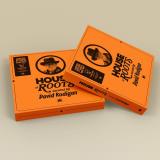




![TM Shuffle & Konstantin Kost - Dub Stories [180 grams,Colored Vinyl]](https://www.deejay.de/images/l/7/4/1266974.jpg)