The track "I'm So Crazy" by Par-T-One vs. INXS (a remix of INXS's "Just Keep Walking")
is widely praised in dance/electronic circles for successfully fusing classic rock attitude with driving house beats,
retaining the iconic guitar and vocals while adding powerful drums,
making it a timeless and energetic club anthem that captured the spirit of the original for a new generation.
Produced in 2001 by the Italian electronic duo Par-T-One (Sergio Casu aka Sergione and Andrea Pareo),
reviews highlight its infectious energy, inspiring guitars, and effective dancefloor appeal.
The song has been classified as "Punk House" because the video depicts people performing the Pogo move and Michael Hutchence's skinhead-like vocal style.
The song also features samples of Dennis Parker's "Like an Eagle" and "I'm So in Love."
The single reached number 19 in the UK singles chart and the video (directed by Sam Brown and Paul Gore,
who later found success directing videos for James Blunt and The Bravery) won and was nominated for various awards
in the Short Film category and Best Promotional Video.
2026 re-release remastered by Gianni Bini at HOG Studio
out of Stock
Last delivered 77 days ago available to reorder, subject to availability
It's been 4 years since the last music compilation on MindTrip. Mutable Minds brings together a mixture of five exceptional and talented artists whose sound matches perfectly with the MindTrip philosophy. Head honcho, Pfirter, and Swedish Pär Grindvik contribute the first track of the release with their diversified collaboration embodied in a hypnotic and extraordinary tune whilst Diego Amura takes the lead with a track that is characterized by driving rhythm and haunting sequences. Savas Pascalidis debuts on the label with a trippy-sci-fi interpretation and the release closes with one of the latest guests on MindTrip Podcast, Fanon Flowers, who takes us into a dark, mental and conceptual techno journey. The final outcome is mesmerizing and all four tracks can be seen on different aspects of an all night long set. This is MindTrip!
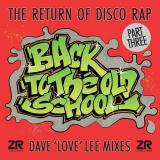
They say 3 is the magic number so here we are with Part 3 of our 'Back To The Old School' 12" series. Four cuts of the finest Disco-Rap remixes by Dave 'Love' Lee, we start things right off with some uptempo disco in the shape of Eddie Cheeba's " Lookin' Good" with it's clav stabbing & synth jabbing funk, ready to rock any dance floor with it's brilliant part-rapped, part-sung vocal play. Two versions are included of the B-Boys early 80's breakers anthem 'Rock The House'. First up is the breakbeat underpinned 'Magic Funk' mix that utilises one of the funkiest basslines of all time. On the flip the 'Roller Rink' mix is a mid tempo floor filler reprising a much loved 90s r&b jam to great effect. Finishing affairs is the 'Maximus Boogie Mix' of Maximus Three, leaning heavily into the classic disco-rap sound of fat Good Times bass, squelching synths under the bragging raps of TJ Swann and Pee Wee Mel.
Big welcome to Time is Now for J Wax for a bit of a statement EP and I am coming out swinging here cos this is a really good record. There’s good, and then there’s this, the kind of good that stays good.
You know that feeling when something’s just right. When flow state becomes clarity. Well listening to this EP from J Wax gives me that feeling. This is proper Goldilocks business. It’s equal parts Gun Fingers and Loved up hugs. Just right.
By now we all know that something very special happens when Speed Garage collides with 1st wave UK Hard House - but - what makes this just right is that J Wax didn’t stop there, just like the Dutch 2nd Wave of Hard House he’s slid onwards into euphoric trance and oh boy am I here for it. In 1997 we got Double99’s Rip Groove and Nalin & Kane’s Beach Ball and for me this EP has as much in common with perfectly formed ‘97 Trance as it does with Speed Garage. Who says you can’t have it all!
We’ve been following J Wax’s output for years. He has been grafting hard. And for me he’s already firmly a part of the long lineage of globally significant Scottish party starting producers and DJ’s. So when we signed this EP to Time is Now I was gassed. Four big tunes. Sick EP. For me it’s crystal. J Wax is now a producer operating in rarefied air.
Run the Tracks….
A1. The dubplate of ’Peaches’ has been causing mayhem for a minute. Gliding in smooth before that big diva vocal screams down the bassline.
A2. J Wax tags in Edinburgh local RUA.DJ. The pair double up on ‘Shift’ for a slice of Trance infused but no-nonsense Speedy G. Reece bass & gun shots + bouncy synthline & ethereal chords. Lose it and yourself.
B1. ‘Soul Movement’ is a big room weapon. Serious levels on this one that leave no doubt - this is a producer at the top of his game, writing high energy weapons to destroy the dance.
B2. ‘Smokin’ is peak time bizness. Harder darker house with a diiirty dirty south vocal chop. This one is heads down & lock in…
The first release on Edition Hawara's new sublabel Hawara International is a record that leaves little room for ambiguity about its intended use. Produced by Takashi Shima of the band Piper and released as part of the Sun Tan Club series, "For Light Tanning" was designed to accompany the pursuit of the perfect summer tan. It came complete with tanning instructions and oil recommendations, and was the subject of a promotional partnership with Hawaiian Tropic. The music drifts between ambient, new age and lifestyle soundtrack genres, providing an elegant backdrop for beaches, pool parties and other seasonal activities. Having long been forgotten outside a small circle of collectors, the record now returns as an unusually thorough document of late-1980s leisure culture. Whether it actually improves the tanning process remains unverified.
From the fires and floods of the Australian bush on her debut, Soon, which Phil Elverum reissued via his label, P.W. Elverum & Sun, tiarn now takes us to the shores of the Pacific Ocean where classical and electronic arrangements move with an ever-present longing for connection and nature. Stretton has weaved a new world, set on the brink of night, when the world is soft and suspended in blue. Living in isolation near the ocean, overlooking the winter migration of whales, Stretton would regularly swim during the brief 20-minute period known as the blue hour. Ideas would come to her in the icy salt water, and walking home in the dark, she would carry melodies back to record that night. At its heart, tiarn reflects ecological grief and the search for connection in a changing world. tiarn is also inspired by a piece of home camera footage Stretton found of her family in Japan where they lived in the ‘90s before she was born.
It shows the distant mountains, and Stretton’s young family looking over the valley in the soft static of one summer evening. Decades later, using the untouched synth her parents had bought in Tokyo in 1991, Stretton began recording music directly to that footage, letting the images dictate the melody. Voices, insects, weather, movement, and the ambient sounds of the valley are woven throughout the record itself, blurring the line between documentation and composition. The result is an album that feels less created than uncovered — something remembered rather than made. Stretton’s work continues to carve a singular path in contemporary music, balancing environmental awareness, experimental composition, and deeply personal storytelling.
"Memory Remains" A Vinyl Cover Painted by 20 Children Who Believed They Could
A new album where the artwork is as personal as the music, created entirely by first-graders from Croatia.
When it came time to design the cover for Memory Remains, there was only one group of artists who felt right for the job: the first-grade class 1A of Osnovna škola Luka in Sesvete, Croatia.
Every single child in the class took part. Each student was given the chance to draw whatever came to mind: memories, dreams, imaginary worlds, the people and animals they love, and every one of those drawings made it onto the final cover. Nothing was left out, nothing was "corrected." The front and back panels of the vinyl are a patchwork of more than two dozen individual visions, side by side, unfiltered and unmistakably their own.
The idea grew directly out of the album's centrepiece track, "World Child", a song about the simple, often-overlooked truth that every child carries a talent that belongs only to them, and that no two ways of seeing the world are the same. Rather than illustrate that idea with a single artist's interpretation, it felt right to hand the canvas to an entire classroom of six- and seven-year-olds and let them prove the point themselves.
The result is a cover that doesn't try to look polished or professional, because that was never the goal. It looks like a classroom wall covered in a year's worth of drawings, each one different, each one someone's best effort, each one worth keeping. Which is exactly what "World Child" is about.
Memory Remains is out on vinyl.
Track of note: "World Child"
Artwork by: The students of 1A, Osnovna škola Luka, Sesvete, Croatia 2026
Charlotte de Witte now unleashes her slamming three-track EP ‘The Resistance’, featuring Theo Nasa and XSALT, out on KNTXT. It follows the astonishing summer tour of her new audiovisual show ‘The Resistance’, including a spectacular ‘XXL’ version at Belgium’s Rock Werchter in July, for a 40,000 audience watching from inside and outside the tent.
World #1 techno artist Charlotte de Witte’s new show continues a standout year of experimental ventures and celebrations, global pop-up shows, monster street parties, incredible new music (EPs and Deluxe LP)… and most recently ‘The Resistance’ AV show world premier at UNVRS Ibiza and the EU tour. The new ‘The Resistance’ EP is hard, fast, and uncompromising. It features Theo Nasa, whose raw, deep techno EP ‘Lifeline’ was released on her KNTXT label; vocal artist / longtime collaborator XSALT, (previously on ‘No Division’, ‘Overdrive’, ‘Roar’, ‘How You Move’); and Charlotte’s own vocals on a personal track ten years in the making.
‘The Resistance’ EP title track feat. Theo Nasa is urgent, demanding, unapologetic. Juddering main theme, rattling hyperspeed beat, spacey hoover swoops form a matrix for the deep, amused authoritative voice of Nasa – ‘we are unity, we are techno’. The brief ‘The Resistance (Intro Version)’ opens with futuristic FX and Nasa’s voice to the fore introducing the techno credo.
‘Never have I ever teased a track this much as I teased ‘The Resistance’. From the moment the track was being made in the studio, I knew this was going to be a special one. Theo Nasa captures the spirit of the underground and guides you through the essence of club culture like no one did before. An entire A/V show grew out of this feeling, this philosophy. It’s one of the biggest tracks I’ve ever made.’ Charlotte de Witte
‘See Through The Lies’ feat. XSALT: futuristic FX, fast stabby synth theme, and XSALT intoning ‘see through the lies. It’s time to take control’. A message of defiance. ‘XSALT delivers again on ‘See Through The Lies’, offering his own take on the EP's theme. Open your eyes. Break the illusion, see through the lies. Release the pressure. It’s time to take control!’ de Witte says.
‘Another Place’ has relentless pace, twanging pizzicato synth, and de Witte’s whispered phrases becoming full voice. ‘’Another Place’ has been in the making for over a decade. It saw the light of day in Brussels, where the lyrics took shape together with my friend One Track Brain. The track was forgotten and resurfaced years later, leading to an entirely new track created around that magical vocal from all those years ago. This is an EP very close to my heart.’
At the heart of ‘The Resistance’ EP and AV show is a message central to de Witte’s work: Protect Club Culture and the communities that sustain it. That’s why de Witte is donating all proceeds from The Resistance EP to The Nighttime Foundation, a global nonprofit dedicated to safeguarding and shaping the future of nightlife, empowering grassroots communities and promoting nightlife as a vital form of culture worldwide.
We release our second record, COPPIES002. Another hand stamped white label EP, collecting tunes from thecommunity, for the community. This time with tracks by Kerr Wilson, Salomo, illousion and APRS. Kerr starts on A1 with his "The Key To My Heart". He showed the first version of the track to Robert around 4 years ago in a memorable summer spent together. We made the promise that this will be pressed on record one day and, here it is! Thanks Kerr! It's a melancholic late-summer tune that makes you tear up and feel like the warm euphoria won't last forever, but it will surely return if you're patient. Salomo follows with a similar moody approach on "Say less (on the DF)", even though we can argue about the meaning of the title ;). illousion builds more tension on the flipside with "Masc or Mask". Entering dubby, rolling terrains with more high intensity drum patterns for later moments of the night. APRS is closing the EP with "I Want to Speak" on B2, maybe the counter argument to Salomos desire of a less noisy dancefloor. He crafted a minimal, loopy trip that drags you down the rabbit hole and won't iet you go til the party is over. COPPIES002 is available on vinyl only with digi download option
With Picture About You, Recut opens a new chapter, blending the heritage of house music, acid textures and underground electronic culture into a contemporary vision for today’s dancefloors. Rooted in the essence of club culture, the EP explores hypnotic grooves, evolving patterns and the timeless dialogue between the DJ, the sound system and the crowd, where emotion, movement and energy become a universal language. The title track, “Picture About You”, reflects Recut’s artistic identity through the lens of his personal history and family roots. An important part of this story comes from his uncle, known as Mr. Steve, who in 1975 founded one of the pioneering independent radio stations in Southern Italy during the early years of independent broadcasting. His connection with radio, disco culture and the first generation of Italian clubs embodied a spirit of discovery, sharing and musical exploration that continues to shape Recut’s approach to music.
Musically, “Picture About You” unfolds through a hypnotic and emotional groove, blending old-school character with a contemporary perspective. A timeless club track where past and present come together in Recut’s own musical language. “Hey Jack” is a powerful dancefloor weapon driven by unstoppable grooves, hypnotic acid lines and captivating arpeggios. Built for peak-time moments, it pushes the energy forward with a relentless rhythm designed to ignite the crowd.
“Subwave” takes the journey into a deeper and more massive dimension. Driven by powerful low-end pressure, evolving dynamics and explosivetransitions, the track builds tension throughout its progression before releasing its full impact on the dancefloor. Closing the EP, “Neon Flux” delivers the final impact: fierce, electric and uncompromising, a track designed to push intensity beyond the limit and leave a lasting impression. Recut Music — Fun for DJing!
Celebrating ten years of independent music, Nerang Recordings returns with its sixteenth vinyl release, A Decade of Nerang Recordings - Mix Selections. Bringing together six artists from across the label’s history and extended community, the compilation showcases the diverse sounds that have shaped Nerang over the last decade. Featuring DJ Swagger, Nasty King Kurl, Subjoi, DOS, Low Tape and Moody McIvor, the release moves effortlessly between UK Garage, House, Tech House, Lo-Fi House, Electro and Synthwave while maintaining a clear identity throughout. Since its inception, Nerang Recordings has never been interested in following a single genre, scene or trend. Instead, the label has always focused on releasing music based on quality, individuality and atmosphere. Over the years that philosophy has resulted in a catalogue that crosses stylistic boundaries while remaining connected by a shared spirit. A Decade of Nerang Recordings - Mix Selections serves as both a celebration of the label’s first ten years and a statement of intent for the future. Each track represents a different corner of the Nerang universe, reflecting the sounds, influences and artists that have helped shape the label’s journey so far.
From rolling UK Garage rhythms and club-focused house cuts through to hazy lo-fi textures, cinematic synth work and darker electronic excursions, the compilation highlights the freedom that has always sat at the heart of the label. Rather than being confined by genre expectations, Nerang continues to embrace music on its own terms, allowing each release to find its own identity and audience. While thisrelease reflects on the past decade, it is equally focused on what comes next. The goal remains the same as it was on day one: support great artists, release music without limitations and continue exploring new territory wherever it may lead. Ten years in, Nerang Recordings remains committed to doing things its own way
Terrestrial Funk welcomes Parisian producer Raymond D. Barre with a fun exploration into FM Synthesis. Bouncing in that sweet sweet midtempo zone all six tracks squelch to your heart’s delight. Simply put, “light-hearted and good vibes electro acid tracks”, as Monsieur D. Barre described them when he demoed the tracks to Terrestrial Funk two years ago. But they’re much more. Perfect programming brings that slow swing, wonky warped vocals on songs like ‘Broken Nose’, and the bells that chime in the releases final song ‘Mes Bêtes’ leave you in a paradox of fulfillment and desire. That’s the best part, you can flip the record back and listen to the release right over. DJs and home listeners alike are in for a treat with this one. Heck, get yourself two copies and mix every track back to back in the club. We guarantee it’ll go off.
2026 re-issue, 180g vinyl, remastered from the original tapes
Be With have raided the KPM archives to re-issue another of our favourites from the KPM 1000 series. They say: Hard Afro Pop featuring large percussive rhythm section and front line. We say: One of the best-loved of all the KPM LPs. Afro Rock was recorded at Morgan Studios by John Cameron and Alan Parker in London in 1973 as a collection of stripped-down African rhythms, virtuoso jazz instrumentation, fuzzed up wah wah guitars and spaced out library breaks. The percussion is effortlessly funky, and those flutes so melodic, it’s as if the LP was crafted with the beat lovers of the future firmly in mind. As Cameron himself described it in Unusual Sounds, this is “heavy duty drum-and-bass salsa music”. As with all of our KPM re-issues, the audio for The Road Forward comes from the original analogue tapes and has been remastered for vinyl by Be With regular Simon Francis. We’ve taken the same care with the sleeves, handing the reproduction duties over to Richard Robinson, the current custodian of KPM’s brand identity. And don’t worry! Those KPM stickers aren’t stuck directly on the sleeves!
What an unbelievable record. From the wild cover to the iconic breakbeats, Roots from Ian Carr’s Nucleus is one of the dopest albums we know. This is seriously thick, funky-prog jazz-rock heaven. Originally released on Vertigo in 1973, other than a couple of versions at the time for other territories, Roots was never re-pressed since so it’s gone on to become another one of those impossible to find records.
Maybe it was a little too out there for the time, but it’s aged very, very well indeed and this Be With re-issue, re-mastered from the original analogue tapes, shows off just why this deserves to be back in press.
Genius trumpeter and visionary composer Ian Carr was one of the most respected British musicians of his era. He was a true pioneer and saw the potential in fusing the worlds of jazz with rock, just as Miles Davis and The Tony Williams Lifetime did in the US. In late 1969, following the demise of the Rendell-Carr quintet, and tiring of British jazz, Carr assembled the legendary Nucleus. Regarding music as a continuous process, Nucleus refused to “recognise rigid boundaries” and worked on delivering what they saw as a “total musical experience”. We can get behind that.
Under bandleader Carr, Nucleus existed as a fluid line-up of inventive, skilled musicians. This constant evolution and revolution was all part of the continuous musical exploration and discovery that took jazz to new levels.
Working together with producer Fritz Fryer and engineer Roger Wake, the seven compositions by Carr, Brian Smith and Dave MacRae that make up Roots flirt with perfection, and Nucleus at that time made up of the cream of 1970s UK jazz with Brian Smith on tenor saxophones and flutes, Dave MacRae on piano and electric piano, Jocelyn Pitchen on guitar, Roger Sutton on bass, both Clive Thacker and Aureo De Souza on drums and percussion, Joy Yates delivering the vocals and of course Carr on trumpet.
The spellbinding title track immediately renders the album indispensable. Riding the illest of loping breakbeats, “Roots” is low-slung, doped-out heist-funk. An absolute monster. If it sounds familiar then that’s likely down to it being sampled by Madlib for Lootpack and Quasimoto’s “Loop Digga”, as well as by a whole host of beat manipulators. “Roots” conjures prime instrumental hip-hop / beat music, only 20 years ahead of its time. Truly, these are the roots. Through sinuous bass, twinkling keys and a hypnotic guitar riff, a smoky brass motif weaves its way into a gloriously deep haze around Carr’s solos. “Roots” is over 9 minutes long, but there’s not a single wasted second, not surprising given that this is a condensed version of an originally 40 minute long commissioned composition.
The soothing vocal fusion delight of “Images” follows. Meticulously constructed, with gorgeous flute work from Brian Smith, with Joy Yates’ silky vocals and Dave MacRae’s Rhodes never sounding better. The cool, driving “Caliban” closes out the first side. Originally the third movement in a four part commission to celebrate Shakespeare’s birthday it stands up on its own, all robust rhythms and blended brass. Keyboard colour and Carr’s trumpet are splashed across the funk drums and basslines (and there’s even some bamboo flute). This really is fusion: the elements of jazz and rock coming together in beautifully synthesis.
Side two opens in riotous fashion with the short, thrilling samba of “Wapatiti”. Next up, “Capricorn” forms a smoothed-out, jazzy constellation. Mellow and dreamy, its twinkling percussion and languid horns slowly build the vibe before head-nod drums and a killer bassline enter the fray. With a distinct heaviness that Black Sabbath would’ve envied, “Odokamona” is a venomous slice of riff-soaked jazz metal (yes, you read that right), elevated by Carr’s wah-wah horns.
The album closes with MacRae’s exceptionally cosmic “Southern Roots and Celebration”. Very much in conversation with Weather Report, it opens as a languorous, spiritual jazz of chiming keys and serene guitar that turns slowly, gorgeously into a mid-paced, brass-laced banger. It’s another sure-fire party starter and the sound of the band having a righteous blast, building an ecstatic chaos that ends with Yates screaming.
And of course we need to talk about Keith Davis’ cover for Roots. Perhaps the coolest record cover of all time? Certainly one of the most bonkers. Just your run-of-the-mill high-gloss, acid-tinged airbrush dystopian/utopian living-room party scene. Consider this your chemical flashback trigger warning.
Front-and-centre the hip-to-death green robot holds court with their giant ball of yellow barbwire wool, hooked up to… something(?) being teased out from under the stairs (probably best not to ask). A thoroughly zoned-out, long-legged Pop Art party-goer lounges half-plugged in to the painting behind her as a pair of legs flail into shot from the the top of the stairs opposite. We won’t even begin to guess what the chap’s up to in the middle, but the view out of the windows is rather nice, and someone’s already got the hoover out ready to tidy up. All of the Nucleus sleeves are something special, but this particular one? Crikey.
This Be With edition of Roots has been re-mastered from the original Vertigo master tapes, Simon Francis’ mastering working together with Pete Norman’s cut to weave their usual magic with these wonderful recordings. The crazy cover has been restored at Be With HQ as the finishing touch to this long overdue re-issue.
There is a hush most of us only knew as children, the warm drift between familiar household sounds and being carried to bed, a place that belongs to you and to some self you have not met yet. June McDoom’s debut full-length, Follow the Light, lives in that dream space and then keeps walking, slipping out of time and waking somewhere new, barely familiar enough to feel like home yet wholly your own. She came up in a Jamaican household on the edge of the Florida Everglades, an existence built of extended family, communal care, bass and harmonics. Her father, a carpenter and a student of sound, built his own speakers and kept three sound systems going across as many rooms. His low end would rise through her bedroom floor like some wayward cat while she lay above it with folk records, finding harmonies that were new and hers alone. Two musics in one room. Lushness as past and premonition. She found folk on her own, somewhere between the cast recording of The Sound of Music and Simon and Garfunkel, while everyone around her called it sleepy music. She did not mind being the only one. The solitude let her fall for harmony first, before words, before anything else, and harmony is still the thing she reaches for. Generationally speaking, the music was already in the air. Her grandfather, Colin Smith, is a distinguished mento man who played banjo and guitar and built his own rumba boxes, worked to keep Jamaica’s oldest acoustic folk form alive. Mento is the root of all of it: ska, rock steady, reggae, dub and everything after. He is the one who put a guitar in her hands. An inheritance, a gift and a map. Even her name is part of it, though she will tell you she landed on it more by feel than reason. She records as June McDoom, born Alyssa, June being a nickname one of her grandmothers, Joan, went by, a name she thought was cool to carry and simply liked the sound of. An etheric channel that reverberates all the same. A dub all its own.
Made slowly and by hand with her longtime partner Evan Wright, Follow the Light lays the harmony of folk over the rhythm of dub, with Dionne Warwick, Minnie Riperton, Pentangle and the washed guitars of Cocteau Twins haunting its outer edges. Voice and guitar seeking each other out first, then everything else stacked across long days in the studio they keep at home, restraint kept on purpose. The lead single “Without You” is the whole method surfacing, split open and sparkling like a geode in a creek bed. Angelic heroics, and nothing less.
At the heart is family. Her grandmother Aggie, the light behind “Memory,” guiding still. And underneath, the quieter truth the record keeps: none of us are only one person, but a continuum of selves, the ones who shaped us and the ones we have yet to meet. Future you is an ancestor your current self gets to greet. Press play and the same invitation is yours: A few minutes out of time, a place that turns familiar the longer you stay until you surface somewhere new and find it was yours all along
There is a hush most of us only knew as children, the warm drift between familiar household sounds and being carried to bed, a place that belongs to you and to some self you have not met yet. June McDoom’s debut full-length, Follow the Light, lives in that dream space and then keeps walking, slipping out of time and waking somewhere new, barely familiar enough to feel like home yet wholly your own. She came up in a Jamaican household on the edge of the Florida Everglades, an existence built of extended family, communal care, bass and harmonics. Her father, a carpenter and a student of sound, built his own speakers and kept three sound systems going across as many rooms. His low end would rise through her bedroom floor like some wayward cat while she lay above it with folk records, finding harmonies that were new and hers alone. Two musics in one room. Lushness as past and premonition. She found folk on her own, somewhere between the cast recording of The Sound of Music and Simon and Garfunkel, while everyone around her called it sleepy music. She did not mind being the only one. The solitude let her fall for harmony first, before words, before anything else, and harmony is still the thing she reaches for. Generationally speaking, the music was already in the air. Her grandfather, Colin Smith, is a distinguished mento man who played banjo and guitar and built his own rumba boxes, worked to keep Jamaica’s oldest acoustic folk form alive. Mento is the root of all of it: ska, rock steady, reggae, dub and everything after. He is the one who put a guitar in her hands. An inheritance, a gift and a map. Even her name is part of it, though she will tell you she landed on it more by feel than reason. She records as June McDoom, born Alyssa, June being a nickname one of her grandmothers, Joan, went by, a name she thought was cool to carry and simply liked the sound of. An etheric channel that reverberates all the same. A dub all its own.
Made slowly and by hand with her longtime partner Evan Wright, Follow the Light lays the harmony of folk over the rhythm of dub, with Dionne Warwick, Minnie Riperton, Pentangle and the washed guitars of Cocteau Twins haunting its outer edges. Voice and guitar seeking each other out first, then everything else stacked across long days in the studio they keep at home, restraint kept on purpose. The lead single “Without You” is the whole method surfacing, split open and sparkling like a geode in a creek bed. Angelic heroics, and nothing less.
At the heart is family. Her grandmother Aggie, the light behind “Memory,” guiding still. And underneath, the quieter truth the record keeps: none of us are only one person, but a continuum of selves, the ones who shaped us and the ones we have yet to meet. Future you is an ancestor your current self gets to greet. Press play and the same invitation is yours: A few minutes out of time, a place that turns familiar the longer you stay until you surface somewhere new and find it was yours all along
Trumpeter, rapper and sonic wanderer Pan Amsterdam has carved out one of the most distinctive voices operating at the intersection of jazz and hip-hop today.
Pan Amsterdam is a musical enigma wrapped in an enduring riddle. His creator is a jazz musician from Houston who’s found fame working with Detroit punk rock God, Iggy Pop, and British indie royalty, Metronomy, and now makes shapeshifting, adventurous hip hop out of the music’s spiritual home, New York.
He’s an irreverent character born out of frustration and named after a misunderstanding, yet one who’s on the verge of releasing his fifth album of truth-slaying, genre-crossing rhymes and beats. The result is a catalogue that feels both deeply rooted in Black American musical tradition and completely untethered by convention.
Pan Amsterdam returns with ‘Panarama’, his fourth full length album and a bold reassertion of his hip hop identity, released via Def Pressé. Created by Houston-born, New York-based musician and composer Leron Thomas, the record finds Pan Amsterdam embracing the harder edges of his sound while continuing to blur the lines between jazz improvisation, abstract rap, punk attitude, and experimental production
Written as a response to contemporary life and the endless cycle of information, conflict and distraction that defines modern culture, ‘Panarama’ unfolds as a stream of consciousness journey through hyper-normalised realities. Across sixteen tracks, Thomas navigates social commentary, personal reflection, absurdist humour, and cultural critique, delivering his observations with the same spontaneity and freedom that have become central to the Pan Amsterdam project
Lead single ‘Szechuan Beef’, produced by acclaimed collaborator 1FS, serves as one of the album’s defining statements. Built around Thomas’ signature free-flowing delivery, the track explores the overwhelming nature of contemporary life, where domestic conflict, social division, entertainment scandals and political discourse become flattened into a constant stream of content.
In Thomas’ own words: “My stream of consciousness style comes quite naturally to me due to the conditioning of scroll down culture where everything, no matter how minor or extreme, is hyper normalised.”
Elsewhere, the track ‘Vanilla Ice’ was written in response to widely publicised ICE killings and the speed at which tragedy is absorbed and forgotten within online culture. Thomas channels the anxiety and emotional disorientation of endlessly consuming information, allowing his thoughts to unfold in real time as social commentary collides with everyday digital noise. The result is both deeply personal and sharply observational, reflecting the fragmented reality of modern life. Other album highlights include the cinematic, Interpol-esque opener - ‘Old Friend’ complete with shimmering guitar lines and an far-reaching introspective, no-filter vocal as Thomas teams up with Nick Zinner (Yeah Yeah Yeahs) and Brad Truax (Interpol) across multiple tracks, often the production traverses left-field indie territory, but always maintaining Pan Amsterdam’s unique musical identity throughout. For the hip hop purists and beats lovers there are plenty of riches to discover from the clever nostalgic sample flips of ‘Cutlery’, the sleepy lofi of ‘Shuriken’ and the wonky LA beat scene / early Flying Lotus era beats of ‘Drunken Noodles’ - all boasting quick witted lyricism. ‘Deep Fried Shiney Things’ explores early electro and industrial sonics while album finisher is an upbeat new wave / indie band cut which sees Thomas take a break from rapping, but of course never letting up on the sharp observations nonetheless
While his previous record explored more alternative territory, ‘Panarama’ marks a deliberate return to rap, as Pan Amsterdam explains:
“I just wanted to do a rap album again.I enjoyed making my last album, but I felt like rapping again. I like to have the freedom to move in between musical worlds that suit the current state I’m in. Frequency accommodating frequency.”
This philosophy runs throughout the album. Tracks move effortlessly between jazz-inflected arrangements, experimental beats, punk energy and underground hip hop aesthetics, allowing ideas to evolve organically rather than conforming to traditional structures. Thomas describes himself as an improviser first and foremost: “I think like an improvisor. That’s how my albums pretty much move. It’s improvisation.”
Featuring additional contributions from Spice Programmers, AnOtter and Mr. Shn, ‘Panarama’ presents a wide-ranging cast of collaborators while remaining firmly rooted in Thomas’ singular creative vision. The record embraces contradiction, humour and unpredictability, capturing fleeting thoughts and observations with the same freedom and spontaneity that define jazz improvisation itself.
A musical enigma wrapped in an enduring riddle, Pan Amsterdam has built a reputation as one of contemporary music’s true outsiders. The project emerged from frustration, experimentation and artistic freedom, with Thomas drawing equally from his background as a jazz musician and his collaborations with artists including Iggy Pop and Metronomy. Operating from New York while carrying the spirit of Houston’s musical heritage, Pan Amsterdam has developed a distinctive voice that sits comfortably between avant-garde jazz, underground hip hop and experimental music.
Reuniting with Def Pressé for ‘Panarama’, Thomas explores what he describes as the more hardcore side of his artistic identity:
“They let me do anything and everything I wanna do so long as it’s on audio, and I need that freedom. What may verbally be perceived as vulgar to one group of people may be very thoughtful and a poignant description of the times that we’re presently in, so I’m glad that I’m part of a label home that understands that.”
After 10 years of Andy Shauf"s The Party... it"s time for the afterparty. The Party (10th Anniversary Edition) adds nine never-before-released tracks to the original studio version of this essential indie album of the last decade, including two brand new songs plus alternate cuts and demo recordings. With The Party, Shauf masterfully creates a cast of memorable and unique characters. They show up "Early to the Party," reveal secrets ("To You") or try to reveal nothing ("The Magician"). In "a city the size of a dinner plate," everyone knew the guy who keeled over after smoking what he promised would be his last pack of cigarettes ("Alexander All Alone"). There"s the girl dancing by herself in the middle of the room, with the "Eyes of Them All" upon her. One moment you"re dancing with someone who bears an uncanny resemblance to your ex ("Martha Sways") and later slagging your best friend as way of endearing yourself to his recently dumped ex ("Quite Like You"). All of this is set to ornate arrangements of fuzzed-out guitars, string sections, clarinets and dreamy synths, all draped over delicate piano, acoustic guitars and rainy-day drums.
The premise of this compilation is simple: music we’d like to hear at the airport.
The idea came after learning that Honolulu’s international airport has been playing AI-generated music over its speakers since November 2025. First reported by Civil Beat, the news has caused frustration and disappointment among residents and visitors, as well as within the local music community.
Everyone knows Hawaii is one of the most musically rich regions in the world — why then is the airport using AI music? 'Music For The Airport' is our response.
Located in the middle of the Pacific at the outskirts of one the most remote cities on the planet, Honolulu’s Daniel K. Inouye International Airport (HNL) is for most people the first place they encounter when they arrive in Hawaii. Warm sun, tropical tradewinds, playful palm trees and majestic mountains welcome every traveler, as do the sounds of birds, familiar music from Hawaiian artists like Aunty Genoa Keawe and Israel Kamakawiwo’ole, and—at least for now—seventeen “island-themed” AI-generated songs.
In late 1977, while sitting in Germany’s Cologne Bonn Airport on a Sunday morning, Brian Eno noticed how terribly uncomfortable he felt hearing the airport’s “muzak” overhead. For a harried, hurried place like the airport where travelers scramble to their gates, stand in long border control lines, and wait impatiently for their luggage at the carousels, music can create more anxiety than calm. Asking himself, "What should we be hearing here?", Eno soon created ‘Ambient 1: Music For Airports’, a sonic remedy aimed at reducing nervousness in public spaces.
When we heard the news that HNL airport is playing AI-generated “muzak”, we were immediately reminded of Eno’s genre-defying 1978 album. And we were similarly inspired to react. But how? Recreating an ambient masterpiece wasn’t in our wheelhouse. We started digging through our catalog of licensed music which we haven’t yet re-released. We quickly realized this was our chance to highlight some of favorite songs from the so-called CD era: the 1990s and 2000s (with a few exceptions). In less than 20 minutes, we pulled 17 original songs recorded by local artists between 1984 and 2017.
The speed at which this project came together surprised us; reactionary gut instinct often produces swift and lasting results. Ironically, our new compilation likely took less time than it did for the state Department of Transportation to commission its AI songs in question. But even though ‘Music for the Airport’ came together in less than one week, the truth is that this collection of 17 songs is the result of years of hard work, trust, sacrifice, patience, and understanding. Building relationships with and licensing music from artists doesn’t happen overnight, but more importantly: these songs are the result of people pouring their hearts and souls into something they believe in. This music wouldn’t exist today without the artists and their loved ones who supported them along the way.
As of this writing, the DOT states its intention in creating AI-generated songs is to “highlight different aspects of the islands, aviation and the airport” and that “no state funds were used to produce them”. Okay, but at what cost? Technology disrupting the music industry isn’t news to anyone. AI music in public spaces are cost-saving measures, since its users (airports, for example) don’t have to pay the licensing fees typically required, which can be a worthwhile source of revenue for artists. But what happens when a place like HNL airport, which hosts more than 21 million passengers annually, uses music created by machines instead of people to represent Hawaii? The identity of a place beings to erode, diluted by a language learning model’s conceptual summary of what a people and its culture sounds like. To echo Brian Eno: what should we be hearing here? In other words: what should the music of Hawaii sound like?
We believe in the power of music, especially when it comes from the soul. We believe in supporting artists, especially as AI disrupts our lives. We believe that Hawaii must be represented authentically, especially when it comes to song. And of course we believe in vinyl, especially since it was a record from 1978 (Mackey Feary Band’s debut LP) that inspired Aloha Got Soul’s origins in 2010.
We hope you find as much joy in this compilation as we have. Perhaps it’ll soundtrack your next journey to Hawaii. At the very least, we hope some people take a moment to hear these sounds: in your headphones for now‚ maybe someday overhead at the airport in Honolulu.
For the label's latest, Oath is proud to present 'Honey Tangerine', the newest mini-album from producer extortionaire Olsvangèr, who serves up his signature blend of hyper-kinetic, ever-shifting dance music.
Olsvangèr's sound and musical journey are forever rooted in the liminal spaces that make up the broad-reaching and ever-shifting electronic music landscape, with his records consistently channeling that in-betweenness that imprints lasting impressions. A classically trained musician with a profound passion for house and techno, Olsvangèr's sonic palette is one of both broad and delicate brush strokes, applying an array of compelling motifs within amorphous arrangements that blend and blur perspectives. His records seek out the faraway fringes as much as focusing on the intensity found in the detail, creating cavernous soundscapes that are impeccably tuned and effortlessly free-flowing. Seemingly genreless, his records are anchored in all that is known and loved, yet due to the music's perspective situated at the intersectionality of electronica, a beautiful anticipation resides within every stanza of his tracks at what may come next. His musical language has found him releasing on the likes of Kalahari Oyster Cult, Hooj Choons and Craigie Knowes, and follows through within his imprint Tofistock, which has been pushing some of the most forward-thinking dance music of recent times.
'Honey Tangerine' touches upon the classic motifs of Olsvangèr's sound, and as always, the room for growth within the record's parameters remains truly endless. Over six tracks, Olsvangèr lays bare the directions of travel, with paths unravelling that feel well trodden yet with some that branch out towards new horizons. 'Source of Thought' opens up proceedings with a captivating ambience, where twinkling hues and lively tones paint the parameters of sound. The chuggy breaks that land deep within the mix drop in and out of view, allowing a deft balance between pure ambiance and rhythm to exchange dialogue between one another. 'In a Nutshell' shifts gears in atmosphere and energy, with all eyes placed upon the club. The shifting rhythm section lifts the acidic melodic features up above, with driving bass notes and a euphoric vocal like lead linking the depths to the heavens. 'Tulpa Nine' swings into heads-down territory, where the drums swing slow and the throbbing bass hits heavy. The auto-tune vocal line up above creates an atmosphere of hazy, smoke-filled rooms, where the party yearns for downtime in anticipation of the next shift in energy.
'Sunrise on the Lips' gives over further chill out room vibrations, where the lights remain low, and smiles reside all around. The enriching drums provide the basis for sitars and glossy keys to glide across the top ends, with the mind invited to dip deep within this enthralling ensemble. 'Zoom It Out' provides the release into the room, with the ante upped. A breaky house leaning number, this cut grooves through its chiming melodic section and groove-laden bass line, with the polyrhythmic drumming pattern doing much to keep the energy residing very high indeed. The record is wrapped up with 'Some Air', which gives over one final jaunt through the airy, slowed-down slipstreams. A wondrous beat is complemented by melodic elements that chime, absorb and quiver, glowing through the night with such charm and feel. An engrossing composition that demonstrates what Olsvangèr is all about - a crafter of sound, where adventure is sought and found, never wavering but curating new connections, feelings, and tones, with an eye on what might come next.
Whether softly undulating or boundlessly expressive, Olsvangèr's music remains a beautiful enigma that serves up both the glorious knowns and the captivating unknowns - 'Honey Tangerine' is yet another chapter in his glorious discography.
R.M.F.C. sound like? Let’s stay with the overused descriptors – I think R.M.F.C. is rock music band, more specifically a post-punk band. Indulge me. If you could say anything about post punk it means post-Wire, who were past punk before punk had an opportunity to codify and become everything brilliant and stupid that we’ve spent 40 years unpacking. Wire’s opening Pink Flag jab – Chairs Missing straight – and 154 hook knockout has haunted the mixing desks of ambitious post-punk bands since, and every major city in the western world has at least one Pink Flag band, one Chairs Missing band, one 154 band. Few bands manage to sound like all 3 records, but R.M.F.C. are a Rock Music Fan Club...
Anyone paying attention to underground Australian guitar overdose would relate: the R.M.F.C. Club Hits LP has been the culmination of five years of work, patience and discipline. If you’ve heard these songs live at any of their shows over the past couple of years you’ll understand – the wait is over and the result is exhilarating.
‘Bands like Devo, The Fall, and The Birthday Party have set the way for this type of post-punk rock (all in their own way). Surely, also, the rock scenes of the past fifteen years in Australia have also been influential. Thinking of bands like Royal Headache, Dick Diver, and Eddy Current Suppression Ring, there’s even been a fairly recent tradition of expanding styles of rock and roll (let alone the bigger, famous rock-centered acts). The Sydney based R.M.F.C., and the scene (or friend circle) from which it’s emerging, is carrying a torch of rock music which has the potential of a wider appeal.’ - POST-TRASH
British electronic music pioneer Dave Angel returns to R&S Records with “A Time And Place”, his first full-length album release for the seminal Belgian label. Arriving thirty-five years after Dave first joined the R&S family, the album reunites one of UK techno's defining voices with the imprint that helped launch his career, renewing one of electronic music's most enduring creative partnerships.
That relationship began in 1991, when R&S founder Renaat Vandepapeliere discovered Angel's ‘Rolling Thunder’ project and invited the young London producer to Belgium. Personally welcoming him into the R&S family alongside a new generation of forward-thinking electronic artists, Vandepapeliere released the landmark “1st Voyage” EP, helping establish Dave Angel as one of British techno's most distinctive new voices. A succession of acclaimed releases followed, including “Stairway To Heaven”, “3rd Voyage”, appearances on the influential “In Order To Dance’” compilation series, and releases on sister imprint Apollo, charting an artistic partnership that helped shape both Angel's career and the wider evolution of UK techno.
Three and a half decades later, “A Time And Place” feels less like a return than the continuation of a conversation left unfinished. Rather than revisiting former achievements, the album reflects the perspective of an artist whose creative journey has continued to evolve. Reconnecting with the label that first championed his work, Angel delivers his most personal and musically expansive statement to date.
Across fifteen compositions, “A Time And Place” reaches beyond the conventions of techno to reveal the full breadth of Angel's musical identity. Drawing on jazz, soul, improvisation and richly textured electronic production, the album balances rhythmic precision with warmth, melody and emotional depth. Reflections on family, heritage, nature and the communities that have shaped his life sit alongside broader observations of the world around him, creating a body of work that feels both intimate and expansive.
That openness is reflected in a carefully chosen cast of collaborators. Celebrated trumpeter Steve Waterman features on both “Réflexion” and “The Yellow Butterfly”, bringing a lyrical, Miles Davis-inspired voice to the album after first catching Angel's attention through his work on Paul Hazel's “Out Of This World”. Elsewhere, legendary Chicago vocalist Robert Owens appears on “Harmony Serenade”, while guitarist Merv Carswell and vocalist Aurii Sky (Dave’s daughter, adding a poignant family connection) add further colour and texture to a record rooted in musicianship and shared expression.
While Dave Angel's influence on British electronic music has long been established, “A Time And Place” reveals another dimension of an artist whose foundations were laid long before techno. Raised in a household immersed in live music and jazz culture, Angel has spent a lifetime absorbing sounds beyond the club, allowing those influences to surface naturally throughout a career defined by curiosity rather than convention.
For R&S Records, the album renews a relationship that stretches back to the label's formative years. For Dave Angel, it reflects both the path travelled and the road ahead. Thirty-five years after “1st Voyage” first announced his arrival, “A Time And Place” reunites artist and label with the same forward-looking spirit that brought them together in 1991, proof that the strongest creative partnerships continue to evolve.
Norman Gervais and Charles Bals return after last year’s Transcoastal compilation with their first project for the Italian label Periodica Records and its newly founded imprint, Periodica International.
The concept behind SiRENE 89 is quite particular and took six years to develop. It is presented as the live recording of one long evening, with different bands taking the stage one after another on the terrace of a Mediterranean holiday resort in 1989, inspired by the places Charles and Norm remember from their summer holidays around that time.
The songs were recorded between 1982 and 1993 and gathered from small-time artists, beach-club vagabonds, local micro-labels, library records and privately released tapes. The music moves lightly between mystical ballads, digital samba and loose, sunburnt dance songs, carried by drum machines, not-quite-tuned guitars and college-band voices.
The audience on the terrace remains quietly present throughout, joining the tracks into one continuous, partly improvised set. By the end, it feels less like a compilation and more like a place where you have spent the night, proving that charm can carry further than perfection.
ADULT. kooperiert nicht. Seit über 25 Jahren verkörpert die dystopische Detroit-Synth-Punk-Institution, gegründet von Nicola Kuperus und Adam Lee Miller, unbeirrbare Frustration, Misstrauen und Beklemmung. Man könnte erwarten, dass sich die Kanten mit der Zeit abschleifen, doch ADULT. hat kein Interesse am Komfort eines Vermächtnisses. Noch nie klang die Musik des Duos so unmittelbar, so dringlich und so unverhohlen wütend wie auf dem abschließenden, kompromisslosen Kissing Luck Goodbye.Mit aufgerüstetem Equipment und einer neuen Klangbibliothek gebaut, ist das Material erdrückend dynamisch, lauter - und zugleich klarer. Kuperus' dominante Darbietung rückt im Mix stärker in den Vordergrund und skizziert ein Arsenal aus lebhaften, ätzenden Rufen, Sprechchören und Gedankensplittern. Lachen - ob in den Texten oder als besessene Präsenz - fungiert als Leitmotiv und verweist auf die bedrohliche Absurdität der modernen Zeit.,THE CHAOS IS WHAT THEY WANT", singt sie in ,R U 4 $ALE" - zugleich eine Absichtserklärung: einer brennenden Welt aus Gier und Unordnung mit trotzigem, meisterhaft zusammengebautem Chaos zu begegnen. ,Du hast in dieser Höllenlandschaft, in der wir gerade leben, zwei Möglichkeiten: kämpfen oder depressiv sein", sagt Miller. ,Beides ist okay. Aber, na ja, die Entscheidung war einfach."ADULT. ist bekannt für hochriskante Katharsis auf der Bühne und griff kürzlich auf seinen Backkatalog an Bassgitarren-Songs aus den 2000ern zurück, wobei sie die vorausschauende Anxiety Always-Ära erneut nachzeichneten - teils aus Notwendigkeit angesichts der heutigen politischen und technologischen Angsttemperatur. Die Reaktion war sofort spürbar: ,Wir waren in Paris, und die Kids sind von der Bühne gesprungen. Und ich dachte nur: Das ist großartig. Das ist irgendwie die Energie, in die ich wieder zurückwill", sagt Kuperus.Diese Erkenntnis fiel mit einer Reihe von Rückschlägen zusammen - Kuperus' Anfällen von chronischem Schwindel, dem Verlust ihres engen Freundes und Kollaborateurs Douglas McCarthy von Nitzer Ebb, dem das Album gewidmet ist - alles unter dem drohenden Regime noch einmal erheblich verschärft. ,Wir dachten nur: Alles zerbricht. Wir zerbrechen. Wir sind kaputt." Dieses Gefühl hielt jedoch nicht an, denn letztlich waren sie viel zu sehr von Wut aufgeladen, um stillzuhalten. Die Stimmung vor Kissing Luck Goodbye waren vier Mittelfinger, die kerzengerade nach oben zeigten.Anstatt sich zurückzuziehen, konzentrierten sie sich auf den Prozess und überarbeiteten ihr Setup - inklusive der ersten neuen Mikrofone seit 20 Jahren. Hält man das Album an irgendeiner Stelle an, zählt man wahrscheinlich ein Dutzend Dinge, die gleichzeitig passieren, in seltsamer, schwindelerregender und dissonanter Harmonie. ,No One Is Coming" attackiert Untätigkeit angesichts des Faschismus - ,NO ONE IS COMING TO YOUR RESCUE". ,None of It's Fun" feuert mit atemloser Dringlichkeit, rasenden Glissandi und pointierten Zeilen wie: ,OH I AM TEARING MY GUTS OUT / LOOK AT ME_ DO YOU THINK THAT THIS IS AMUSING?"Eine geradlinige Basslinie und Kickdrum prallen im Abschlusstrack ,Destroyers" auf pulsierende Mantras, werden dann vollständig gesättigt und kakophonisch. Ihre jüngeren Ichs hätten den Song vielleicht sich selbst zerstören lassen, doch hier gelang es ihnen, die Lautstärke durch alle Extreme hindurch zu stabilisieren und Raum für ein eindringliches, abschließendes A-cappella zu schaffen: WE PAY THE PRICE FOR THOSE IN POWER EXPLOITING YOU EXPLOITING ME CONSUMING YOU CONSUMING ME SICK SICK SICK SICKENING IT IS US THAT ARE DEVOURED BY EVERYTHING I WILL EAT YOUR HATE
After decades contributing to records where a single riff could transform a dancefloor, Charlie May turns that instinct inward on Trusted Farms.
For over thirty years, Charlie has occupied a position that seems increasingly rare in electronic music: the musician’s musician, the person behind the machines, the extra pair of hands in the studio, and quite often, the person responsible for the melody you end up carrying around in your head for weeks on end.
Alongside Duncan Forbes as Spooky, Charlie helped shape some of the most important electronic music to emerge from the UK in the early ’90s. That partnership would also sow the seeds for one of Sasha’s defining records: the central riff behind Xpander began life in Spooky’s live material, before Charlie brought the idea into the studio with Sasha and helped transform it into one of electronic music’s most enduring anthems.
Listen closely to Charlie’s work and there’s a particular instinct that keeps returning: knowing when a simple synth line is enough. Knowing which note needs to change. Knowing when repetition stops being repetition and starts becoming the entire reason a track works. More recently, as one-third of Quiet Places on ASIP, he’s taken those same instincts somewhere looser — beatless, gridless and led by improvisation.
Trusted Farms puts those instincts front and centre.
Tiny melodic phrases appear and refuse to leave. Synth lines repeat just long enough to become lodged in your head. Parts rub against each other without being tidied into submission. There’s a sharpness and directness to it all amongst the purposeful analogue warmth.
Some of these tracks feel almost ridiculously simple at first. But simplicity is difficult when you’ve spent decades learning every possible way to complicate something. Many of the parts on Trusted Farms were performed live with minimal editing. A synth line might be doubled, distorted, re-recorded and pushed back through another piece of equipment, but it remains the same idea. Instead of filling the gaps, Charlie works on the weight and character of what is already there. The melodies become physical; slightly worn around the edges.
For someone whose fingerprints can be found across some genuinely monumental moments in electronic music, Charlie has spent decades knowing what to add.
Trusted Farms is about knowing exactly what to leave alone.
Available on black 12”, mastered by Andreas Lupo LOOP-O Lubich and featuring artwork by Peter Skwiot Smith,
Love or its absence dominates the intimate songs on the new album from ARBORIST – the musical outlet of Mark McCambridge. Looking For Love, Arborist’s fourth album of exquisitely inventive Americana, places us firmly in his hometown of Belfast, allowing it to act as a microcosm of the wider-world, with all its foibles and charms. We find fictional protagonists scouring the dark corners of the city, wiling-away afternoons in strip clubs, wandering the streets in all weather and reflecting on the harsh reality of modern society, all in search of an elusive love – emphasising our need for it now more than ever.
Looking for Love is ARBORIST’s first album to be self-produced by McCambridge, largely from his home studio in Belfast – and at times it feels like we are in the room with him. It’s a different kind of record for him as previously he has always sought collaboration; whether it be with Kim Deal who chose to sing intertwined harmony on his debut single “Twisted Arrow”, or recording in The Curfew Tower owned by The KLF’s Bill Drummond who described Mark’s songwriting as being “riven with more loss than any record since Leonard Cohen quit this world”, and who Matthew E White and his Spacebomb band collaborated with to such astonishing effect on the previous Arborist LP, 2023’s An Endless Sequence of Dead Zeros, winner of the prestigious Northern Ireland Music Prize. This time, with no outside producer steering the way, McCambridge found that the quiet hours were where he felt most at ease, despite periods of trial and error, and, by his own admission, moments of feeling genuinely lost in it all.
Despite playing many of the parts himself, McCambridge still called upon old friends from the community around him; Spacebomb’s resident bassist Cameron Ralston (Bonnie Light Horseman, Hiss Golden Messenger) again features throughout the record, alongside Eamon Ferris (The Waterboys) on drums, with the great and the good from Belfast’s vibrant music scene. Grainne Meyer plays concert harp and Aga Olek plays violin for the quasi-title track “Looking 4 Love” – an off-kilter love-letter to Belfast. Meilana Gillard provides a sleazy saxophone on “Bye Bye Johnny Cash” – a seedy tale of a man obsessively visiting a dancer in a club, and The Larne Community Youth Choir provide backing vocals for “Go Kill The Fatted Calf” – a song Mark wrote about his son growing up, a take on the parable of the prodigal son, with Jonny Ashe’s blistering guitar solo adding an album highlight. The Errigal Ensemble String Quartet and Aisling Agnew’s breathtaking flute solo feature on “What Is It You’re Asking” – a song about love, or its absence, both personally and universally in these times.
McCambridge was recently honoured with a “Fellowship” by the Seamus Heaney Centre at Queen's University Belfast where he collaborated with such illustrious names from the literary world as Nick Laird, Caoilinn Hughes and Conor McPherson. Through the University he was given access to the music department's Steinways and pipe organs, and decided to try one out for the album’s centrepiece “I’ve Been A Flaneur”. As Mark explains, "The drone on the pipe organ — and the sound of it starting and stopping — was so visceral that I decided to try a half-written song against it right there and then, and this came out in one take… The song was a breakthrough artistically - I don't think I'll ever record in the same way again after this."
The album was engineered by longtime collaborator Ben McAuley (Van Morrison) and mixed by Jimmy Robertson (Anna Calvi, Beth Gibbons, Fat Dog). The results are staggering, devastating and uplifting in equal measure, calling to mind albums such as Songs Ohia’s Magnolia Electric Co., The Divine Comedy’s Regeneration, The Blue Nile’s Hats and Wilco’s Ode to Joy, as well as early-70s records from John Cale, John Lennon and Bill Fay.
Belfast native Mark McCambridge played his first show as Arborist supporting James Yorkston. A solo tour followed, and impressive performances led to notable support slots alongside Low, Cat Power, Echo & The Bunnymen and Guy Garvey. Arborist's debut single, the Americana-tinged "Twisted Arrow," caught the attention of the critics with an astonishing duet with Kim Deal of The Breeders. The debut album Home Burial (2016) and its follow-up, A Northern View, both received glowing praise, from The Guardian ("instant classic" ----) to MOJO ("devastatingly bleak… upliftingly beautiful" ----) to Uncut (8/10), with BBC 6 Music play from Cerys Matthews, Cillian Murphy, Lauren Laverne, Radcliffe and Maconie and Gideon Coe — and Steve Lamacq calling single "Taxi" "one of those records that makes you immediately stop what you're doing." He went on to even greater success with the 2023 Northern Irish Music Prize winning third LP, An Endless Sequence of Dead Zeroes, which was recorded at SpaceBomb Studios in Virginia with musician and producer Matthew E White. For his fourth LP, Looking For Love, he has signed with Fika Recordings and with a tour approaching in November, 2026 looks set to be a seminal year for the Irish artist.
Once upoun a time Fat Mike came up with the idea of calling up 101 of the best old and new punk rock band around, have them each record a 30-second long song, then put all the tracks out on one record to make the best punk compilation ever. And guess what, the dream came true. The 101 most famous punk rock bands around doing each a 30 seconds long song Back in print for the first time in ten years! Pressed to Lime Vinyl Features super rare songs (recorded exclusively for this compilation) by Green Day, The Offspring, Blink- 182, Pennywise, Rancid, Less Than Jake, The Vandals, Bad Religion, and more
"Steve Watson's roots lie in Paramaribo, at that time the capital of the Dutch colony, where he won the 1975 Suriname Song Festival. This artist had a very strong connection with the music of his country, although unlike other artists - such as Max Nikman, for whom he acted as vocalist too - he performed his songs in English. Siegfried Boerleider, his real name, moved shortly thereafter to the Netherlands, where he also played in the groups The Backlot (with Laura Fygi and Rowan Moore) and Soul Conference. He released several singles on various labels, shaking off the "kaseko" music genre, which fused many different styles from Africa, Europe and the Americas, but considered rhythmically complex. He took time to move toward a simpler, yet well-structured, melodic genre in the recording studio, producing songs that were enjoyable to listen to on the radio and sensually danced to in the disco. With 1981's "Born To Boogie," we risk a seductive journey into the soul music of Suriname, which also possesses the fragrance of Dutch tulips. Then thanks to its charm, exploded in the Netherlands and subsequently in the world. Steve Watson - in addition to his personal style, rich in that simple and genuine expressiveness - also deserves recognition for his excellent songwriting, which led him to write for other Dutch artists, even though his two best songs are on this vinyl: "May Little One" and "Born to Boogie", ....the latter title has never been more fitting !!! Listen to it and go crazy !!!"
"Collect Records welcomes Byron the Aquarius to the family! Hailing from Alabama, Byron the Aquarius has established himself as one of the most respected names in contemporary underground house music. Classically trained as a pianist, his productions effortlessly blend deep house, jazz, soul and broken beat, earning support from artists such as Theo Parrish, Moodymann, Gilles Peterson and Floating Points, while releasing on labels including Sound Signature, Wild Oats, Shall Not Fade and Atjazz Record Company. Last Dance in Church features five original productions that perfectly capture Byron's unmistakable sound, warm, soulful and deeply musical. From stripped-back dancefloor grooves to rich harmonic compositions, the EP is a timeless journey through deep house, house and jazz-infused rhythms."
TIM HECKER’s latest work approaches a form of secular musical transcendentalism from within the battered temple of spirituality.
Recorded in a church in Reykjavik, Iceland and using a pipe organ as the primary sound source, this new piece is essentially a live recording. In reality, it exists in a nether world between captured live performance and meticulous studio work, melding the two approaches to sonic artifice as a unity. It is in parts a document of air circulating within a wooden room, and also a pagan work of physical resonance within a space once reserved for the hallowed breath of the divine.
While the title of the piece “Hatred of Music” might be a clue, the album is also partly an attempt to confront a pervasive negativity surrounding music. Historical rituals of destroying pianos, mountains of pirated CDRs pushed by bulldozers in Eastern Europe, or the melancholy of the digital music era began as sideline motifs which quickly informed the work on this record. They also really didn't at all. Despite that the context is wide open in such a form of musical abstraction, the substance of these immersive compositions showcases Heckerʼs continued mastery of organizing sound into a visceral near entity. It is an almost physical presence that the listener feels as much as hears.
This work is a significant contribution to Hecker's oeuvre, one which spans over ten years of musical production. Ravedeath is an enigmatic document of beauty and force. The album was recorded mostly over the period of one day in July of 2010. Iceland-based musician Ben Frost assisted with the engineering and performs on this recording.
RECEIVED AN 8.6 BEST NEW MUSIC RATING FROM PITCHFORK.
Following hot on the heels of the Frequency Damage EP, DJ Quest returns to Cyberfunk with Squeaks / Snake Style— a two-track release that dives deep into the unmistakable sound that made Quest’s productions stand out during the early 2000s.
Rather than simply recreating the past, both tracks tap directly into the DNA of the original Cyberfunk sound: rolling breakbeats, huge basslines, twisted analogue synths and the kind of distinctive production that became synonymous with DJ Quest at the height of the Bassline Breaks era.
Built around original analogue synth work throughout, Squeaks / Snake Style is a deliberate throwback to the raw, futuristic sound of the early 2000s, produced with the weight and clarity needed for today’s sound systems.
It’s classic Quest, strange noises, big bass, rolling drums and plenty of attitude.
A. Squeaks
Everything DJ Quest became known for rolled into one track. Squeaks is an unapologetic throwback to the classic Quest sound of the early 2000s, driven by heavyweight breaks, deep bass and original analogue synth work throughout.
Twisted electronic squeaks and evolving analogue sounds weave their way around the drums, giving the track that instantly recognisable combination of funk, darkness and futuristic weirdness that characterised so many of Quest’s early productions.
Raw, energetic and built firmly for the dancefloor, Squeaks takes the spirit of the original Bassline Breaks era and brings it straight back onto a modern sound system.
AA. Snake Style
On the flip, Snake Style takes the same analogue-driven approach but moves into deeper rolling territory.
A more hypnotic, heads-down breaks roller, the track develops around a heavyweight bass groove, rolling drums and constantly shifting analogue synth lines. There’s less emphasis on the immediate impact of the A-side and more on building a groove that locks into a DJ set and keeps moving.
Still unmistakably Quest, Snake Style combines the rawness and character of early-2000s breakbeat with modern low-end weight and production, proper rolling Cyberfunk business.
Special Vinyl Edition
Making this release particularly special for collectors, the 12” vinyl comes with an exclusive book showcasing the artwork from some of DJ Quest’s biggest and most memorable releases.
The book looks back through Quest’s extensive catalogue and the visual identity that accompanied the records, bringing together a selection of classic release artwork from across his career plus photo collages of memories made across his journey.
It turns Squeaks / Snake Style into more than just a new DJ Quest 12”, it’s also a celebration of the music, artwork and history surrounding one of the original pioneers of the Bassline Breaks sound.
For long-time followers it offers a piece of Quest history alongside two brand-new productions, while newer listeners get an introduction to the catalogue and imagery behind the sound
Familiar. Usually reserved for things we think we know. A face, a place, a feeling, a record perhaps. Until, of course, they aren’t quite the same anymore. Or maybe you aren’t.
Jennifer’s debut album lives somewhere around there.
It’s a record about time, which is already a fairly ambitious subject considering nobody seems to have figured that one out yet. More specifically, it’s about what
time does to a person. The old versions, the new versions, and all the ones in between that you only notice when something suddenly brings them back. Someone you
haven’t seen in years. A room you used to know. A certain way the light falls. That sort of thing.
There’s a bit of a doppelgänger situation going on, too. Finding something completely new and somehow recognising it. Meeting yourself again without immediately realising who you’re talking to.
Which can be nice. Or strange. Usually both. The songs on Familiar sit comfortably with that contradiction. Looking backwards without wanting to go back. Missing things without necessarily wanting them
returned. Realising that people who once occupied most of your waking hours can become people whose address you don’t know. Meanwhile, some tiny, seemingly irrelevant detail from fifteen years ago remains perfectly intact.
Memory has its own filing system. Not a particularly sensible one.
Jennifer wrote a series of poems alongside the album. In them, familiarity appears in melting snow, rough coastlines, a kitchen already warm in the morning, somebody’s hands fitting into yours. Elsewhere she wonders about someone she
once knew everything about and now knows nothing about. They could live around the corner. They could live on another continent. They could, technically, be dead. Probably not. But that’s time for you.
Maybe Familiar is less about remembering who you were than realising you never entirely stopped being them. Things get added. Things disappear. Things come back looking slightly different.
And somehow, you recognise them.
To kick off our 5th year party celebrations the label begins its new set of releases starting with the joined forces of Regal86 and IMOGEN. The artists contribute two tracks each to the four track vinyl alongside remixes of each other's work, meeting at sonic crossroads.
The EP journeys through rave nostalgia filled with warmth and hope for the future, recollecting some favourite memories of the dance floor.
The A side is fast, driving with a sense of longing for the Halcyon Days and the offline times of partying when things felt easier. The release opens with ‘One Night In 1992’, IMOGEN’s nostalgic ode to an earlier rave era, built around a vocal recollection of her mother’s experiences on the dancefloor in the 90’s. Raw, hazy and deeply personal, it sets the tone for a record rooted in memory while remaining firmly in the present. Regal86 follows with ‘Rush’, bringing a different energy to the record. Driven by rolling rhythms, playful movement and a strong sense of groove.
The B side takes a more optimistic turn looking into the future with dubby aquatic pads and euphoric breakdowns, carrying a feeling of forward motion. There is a lightness to the tracks, a sense of joy running beneath NC Station and keeping the momentum locked whilst turning inwards on the final track, IMOGEN’s ‘Midnight At Bret’ rounds out a release that moves naturally between nostalgia, propulsion and the shared language of the dance floor.
As the next release launches, IMOGEN takes wigs on tour for a five year special run of shows starting on release at Tresor for a two club take over following with further cities: London, Milan, Dublin and more.
For Louis Johnstone, making music has never been about waiting for the right equipment, the right environment or the right moment. Across more than a decade of work as both Wanda Group and A Large Sheet Of Muscle, the Huddersfield-based musician has built one of British experimental music's most singular bodies of work by embracing whatever happens to be within reach, allowing instinct, improvisation and circumstance to shape the outcome as much as conscious composition.
"'Chinese Benefits' was made over a year ago on an iPhone that had a broken microphone and was on its way out," he explains. "I have made many records after this with clearer sounds. Sharper ideas. That is never the point, though. You work with what you hold in your hands."
Recorded entirely on a failing iPhone 6 that stopped working shortly afterwards, 'Chinese Benefits' isn't a record about damaged technology. It is a record shaped by it. Rather than resisting the limitations of the device, Johnstone allows them to become part of the music itself, where distortion, interference and deteriorating fidelity are inseparable from the recording process.
Across twenty brief but disquieting pieces, corroded spoken word, environmental recordings, abrasive noise and fractured electronics continually emerge and dissolve. Voices drift in and out of range, reverberation stretches everyday sounds beyond recognition, and bursts of white noise interrupt moments of uneasy calm. There are echoes of radio transmissions, field recordings and musique concrète throughout, yet 'Chinese Benefits' never settles comfortably into any one tradition. Instead, it inhabits a space where accident and intention become almost impossible to separate.
That philosophy has long defined Johnstone's work. Through a vast catalogue of self-released recordings on his Umbro G imprint, alongside releases for labels including The Trilogy Tapes, he has consistently favoured immediacy over refinement, embracing imperfection not as an aesthetic but as a practical reality. His recordings are less concerned with perfection than with capturing the conditions in which they were made.
Looking back on 'Chinese Benefits', however, Johnstone's own assessment is characteristically understated.
"Listening back fully, it's quite a nice record actually. Fair enough, I make them and never really listen again TBH. Even better, it was the last Large Sheet Of Muscle record made on that phone with grit and damaged guts."
Like much of his work, 'Chinese Benefits' offers few fixed meanings. Its titles remain cryptic, its voices partially obscured and its structures deliberately unstable. What emerges instead is a deeply personal document of process over perfection, where the limitations of the tools become inseparable from the music they produce, and where the act of making something matters far more than the conditions in which it was made.
Murmuration’ is the low hum made by vast, beautifully choreographed flocks of starlings as they simultaneously flap their wings and take to the sky. Some people say that the frequency of this unique, rumbling, oscillating sound can cure diseases...
One of the most exciting live bands in the UK, British Birds combine the garage-punk energy of Billy Childish, the wry English sophistication of XTC and the witty pop inventiveness of The Lovely Eggs. Like a murmurating flock of starlings, they create a unique sound, and might even be able to cure diseases.
Based in Chorley, Lancashire, British Birds are a resolutely DIY band. Bobby records and mixes all the music; Emma creates all the artwork. Their first two albums were self-released, selling hundreds of copies at gigs and at a few chosen record stores. British Birds didn’t wait for permission to take flight. They just got on with it. Their songs are sophisticated, hard-hitting, and very skilful. It may be DIY, but it’s big and it’s ambitious.
Sessions for Marc Riley and Gideon Coe have followed, along with tours supporting The Bug Club, BC Camplight and Lovely Eggs.
‘Murmurate, Oscillate’ kicks off with Lie Down With Dogs, Stand Up With Fleas, a rousing expression of exasperation at our passivity in the face of lame authority. British Birds are acute observers of the English political scene, shrouding their observations in humour and surrealism. Polka Dot Eyes is another piece of sharp social observation: it portrays Lancashire lads – friends from school – who join the Army and return home physically and mentally damaged. The song is simultaneously disturbing, funny and catchy as hell. From the fog of disinformation and doubt that surrounds us all in 2020s Britian, British Birds embrace the darkness, but with wit and verve – no slogans, no easy answers – and with an energy that helps us escape the mundanity of a declining island. This might all sound a bit bleak, but it’s not: every single one of the songs on this album has a chorus as big as a house.
There are personal songs too: Scary Movies is a poignant description of Bobby and Emma’s grandfather, who delighted in showing them horror films when they were kids – giving them sneak previews of the darkness they’d come to embrace as adults; Just Like Them is a celebration of introversion: it might not be fun, but it’s better than being an idiot. (Paradoxically, any other introverts who hear this song will feel impelled to join in in the chorus.) Blame Game and Thunder Claps examine the darkness inherent in relationships: there is always an impending storm, if you recognise the low hum of the imminent thunder. Once again: the choruses of these songs confound the melancholy sentiment.
You’ll get the same impression if you see British Birds live: Bobby’s ferocious guitar and dark lyrics are counterpointed with Emma’s sometimes haunting, sometimes playful vocal responses and insistent rhythms. You’ll be swept away by the energy of a band who don’t know the meaning of limits. And as the songs get darker and darker the smile on your face gets wider and wider.
The core members of British Birds are siblings Bobby and Emma Townson, working from their HQ-cum-nest in Chorley. Drums are by Dominic Lawson (apart from Michael Aindley on ‘Just Like Them’). Bass is by James Robinson.
British Birds will be embarking on a headline tour of the UK in early 2027.
A stylish selection of city pop, funk and modern soul from Japanese label Nippon Columbia, selected by DJ Notoya and featuring cult classics and rarities by Hiroshi Sato, Hatsumi Shibata, Hitomi 'Penny' Tohyama & many more.
Annotated by Notoya with journalist Nick Luscombe and artwork by Optigram.
Newly remastered audio.
The selection on ‘Tokyo Glow’ starts with 'Kimugare' a relaxed mid-tempo track by Kumi Nakamura, actually a famous actress who only recorded one album in 1980 for Columbia.
The set continues and flows effortlessly with the sunshine grooves of Miyuki Maki, Hatsumi Shibata and cult keyboard player Hiroshi Sato before the pace starts going faster and funkier with New Generation Company, Kengo Kurozumi - with his superb boogie, 'Juggler'
- and one of the queens of the genre, Hitomi 'Penny' Tohyama with 'Tuxedo Connection'.
Another fine example on the set is the mid-tempo groove of "I Wander All Alone Part III" by New Generation Company, an aggregate group of some of the best Japanese session musicians led by arranger Katz Hoshi and including Hiroyuki Namba (key), Kazuo Shiina (gtr) and Yutaka Uehara (ds) who all played with Tatsuro Yamashita among many others.
There are many other excellent examples in 'Tokyo Glow', showcasing the diversity and specificity of Japanese City Pop during the late 70s and 80s.
Nippon Columbia opened their much-guarded vaults to curator DJ Natoya. Tracks were remastered in Tokyo and the result, ‘Tokyo Glow’, is a unique insight into a most creative period in Japanese music.
Yuvi Havkin aka Rejoicer returns with an exceptional collaborative album, California Space Craft. On this aptly titled record, he joins forces with seasoned LA bass polymath Sam Wilkes — known for his inspired studio work with Sam Gendel and his dynamic live performances alongside Louis Cole and KNOWER — and drummer Tamir Barzilay, completing the LA-connected trifecta alongside a select handful of key featured guests. The idea for California Space Craft was born out of a series of inspired live sessions in Los Angeles between 2019 and 2022, notably at Listen to Music Outside in the Daylight Under a Tree, where the trio’s natural chemistry first began to bloom. The resulting recordings encompass a wide variety of inspired sound stylings, as one would expect from any of these accomplished artists on their own; however, the sum is truly greater than the parts here, with the fluidity of their freeform improvisations over a dedicated three-day recording session feeling remarkably focused as a cohesive whole. Opening track “Traveling Light” sets the LP’s tone with equal parts Sly & Robbie-style, space echo– drenched rhythms and the cozy kosmische, guitar-led feel of early-2000s genre-fluid explorers like Tortoise. As we continue on to “Ritual in G#,” we are reminded that this is indeed a unique and timeless sonic space the trio has created, as Havkin’s crisp Rhodes chords anchor an ever-evolving psychedelic sound bed. The soaring trumpet of Avishai Cohen adorns the Afrobeat-indebted “Lion Water,” with Barzilay laying down a proper Allen-esque groove, while “Further (with you),” featuring Nitai Hershkovits on keys, offers a defining look at the titular concept of the album — with pure Cali feels coalescing effortlessly into sciNew Release Information fi narrative modes and a proper dose of Rejoicer futurism. Elsewhere, “Her Hair in the Air” shines with fresh polyrhythmic intention, illustrating the balanced bond between the three collaborators at their conversational peak, and the brisk synth strokes of “Early Porpoises,” alongside LP closer “Oceanic Friends” — again ideally named — double as a grand, in-stereo ride into the blissful Pacific sunset horizon. California Space Craft embodies the power of open, collective intention and musical kinship, offering memorable, uplifting moments and an aural glimpse of hope, warmth, and loving melodious calm in an otherwise quite chaotic time for humanity.
A collection of vinyl and limited digital releases, curated by Millsart, an alias of Jeff Mills, of his most eclectic and transcendent compositions that derive from his Every Dog Has Its Day project as well as new unreleased works. Vernacular creations that fall off from the "other side" of the Electronic Music tree, this project is designed for the experienced Techno music listeners, and its goal is to reflect upon the pure artistry of the craft of storytelling. A realization between music and life. Whereas "dancing" is the goal of Dance Music, the goal of this music is about "reflecting on the complexity and simplification of life".Soundtracks for people in their evolutionary process.
This release 'Drifter' is about 'Hype'.
Hype
An animal that prowls on the vulnerable - it excites those who might be looking the other way or with their eyes and minds wide shut.
What is life without hype?
As a transitional tool, hype can be most effective especially when impulse reactions are at play. Something of a psychological currency, there is a lot to gain by giving people what they want - the rush that comes with taking part in a process of making something bigger, more successful and more preferred. Even if there is nothing there.
What's wrong with getting exciting about something?
There are only a few rare masterclass cases that have lasted a lifetime.
As Andy Warhol proclaimed that "everyone will be World famous for 15 minutes" rings darkly true in an era when each one of us can be the talent scout, artist, critic, audience.......and then a revisionist, hoping to bring hype back again by reminding people how great the first round felt.
We are all free to use our attention and time anyway we please. This is the freedom we have, right?
In most cases, we wake up and at some point, the question of justification becomes a debate between those who found unconditional solace and those who re-discovered the subject of substance and "kicked the tires".
Should I care if others like or dislike something?
For some, the hype of something never ends. It hardens and becomes part of a foundation like a cement podium. Something to be stood on to speak over all dissenting voices.
Rasante Gitarren, hämmernde Drums und eingängige, aber tiefgründige Texte. Das sind die Mittel, mit denen Pardoner seit über einem Jahrzehnt ihre ,Slacker"-Songs formen. Auf ihrem fünften Album ,Target Practice" verfeinern sie ihren Ansatz weiter, auf der Suche nach einem himmlischen Pop-Hit Ö. Da sie einen kulturellen Rückfall in Richtung Math-Rock und Prog spüren, ist dies ihr bisher geradlinigstes Album. Fehlende sind die überraschenden Blast Beats und Szenenwechsel, die die Markenzeichen von ,Came Down Different" (2021) und ,Peace Loving People" (2023) waren. Übrig bleiben 10 prägnante Songs, geprägt von verspielter Boshaftigkeit und Satire. Es ist schwer, inmitten der feindseligen Kräfte dieser Welt kein ,Blackpilled"-Doomer zu sein. Die Angriffe der Band auf pseudo-intellektuelle Hochkunst und Kollegen aus der Szene sind jedoch nicht frei von Selbstkritik. ,Driving across the country // Preaching bulls**t gospel" wird auf der Lead-Single ,Twisted" halb gesungen, begleitet von klirrenden Gitarrenklängen. ,Target Practice" - vom ,Record Store Final Boss" abgesegnet - ist eine moderne, spritzigere Interpretation des College-Rock der 80er/90er. Flying Nun, Smudge und die lautere Seite von Yo La Tengo sind alle im Geiste präsent. Die Single ,Don't Slouch" ist ein Versuch, einen Blessed-Virgins-Song auf Xanax-Art zu interpretieren. Wann wurde diese Band das letzte Mal auf einem One-Sheet erwähnt? Vor ihrem Album-Closer ,Changing Mags", bei dem die Band ihr Herz auf der Zunge trägt, covern sie die Nuggets-nahen The Barracudas, deren Text ,Target Practice" auf den Punkt bringt: ,Ich bilde mir das nicht ein, ich sehe die Zeichen. Wir leben in gewalttätigen Zeiten."
Originally released by Umor Rex on cassette in 2018, Rafael Anton Irisarri’s Sirimiri is now available on vinyl for the first time, newly remastered for this edition. This LP marks the fourth and final installment in a series of four reissues released throughout 2026 to celebrate the 20th anniversary of Umor Rex.
It is a fitting way to close such a special anniversary year. Rafael is not only an artist who has released three albums on Umor Rex, but someone who has been part of the label’s history for more than a decade. His sensibility and way of listening have complemented and nourished the label throughout the years, while his mastering work has helped shape the sound of many of our releases. A close friend, and an essential part of what Umor Rex is today.
Sirimiri roughly translates as “drizzle” in Basque, and we can’t think of a better word to describe its content. The album consists of four long-form pieces, each shaped through different processes and with its own distinct identity, in which Irisarri seeks to blend subjective time with the listening experience through loops, repetition, and subsequence-based sound. Following Eno, nothing happens in quite the same way twice: perception is constantly shifting, and nothing stays in one place for long. The desolation and despair—in a strangely positive way—that we heard in The Shameless Years (Umor Rex, 2017) and later in FAÇADISMS (Black Knoll, 2024) are present here, but the impression is more concrete, unfolding through rawer, less rhetorical landscapes. If The Shameless Years existed somewhere between beauty and active tragedy, this record travels through the beauty and melancholy of an observing eye—a quiet, rebellious insurrection.
Written, produced, mixed & mastered by Rafael Anton Irisarri at Black Knoll Studio, NY. Carl Hultgren: Guitars on “Sonder”, Taylor Jordan: Electric Piano on “Mountain Stream”. Design by Daniel Castrejón.
On January 17th, 2026, Grammy Award-winning hip-hop icon Lupe Fiasco joined Miami’s Nu Deco Ensemble, a hybrid orchestra dedicated to reimagining music from all genres, for a special concert at Miami Bandshell. This Juneteenth, Lupe and Nu Deco will release the recording for the whole world to hear, presenting Lupe Fiasco’s hits and new classics as they have never been heard before. Invigorated by the backing of the 33-person full orchestra, led by conductor Jacomo Bairos, Lupe forcefully rhymes every word of career highlights like “Daydreamin’,” “Kick, Push,” and “Paris, Tokyo,” emphasizing the musicality innate to Lupe’s tongue-twisting bars. In addition, Lupe presents unique live versions of new hits, including “Samurai,” from his critically acclaimed 2024 album of the same title, and “SOS,” an outtake released for the first time on 2025’s Samurai DX. The Nu Deco version of 2015’s “Dots & Lines” begins with a solo guitar exhibition from Aaron Lebos, while songs like “Daydreamin’” and thrilling closer “Superstar” benefit from the powerful pipes of backing vocalist Kelley Kessell and J Howard. The 9-track set is a scorcher, reaffirming Lupe’s status as one of the most proficient and electrifying live performers in hip-hop today.
In the spring of 1971, somewhere between Brussels, Paris and a collective pop fever dream, Le Monde Fabuleux Des Yamasuki landed on vinyl. It sounded like nothing else then and it still does not today. More than half a century later, Sdban Records proudly presents a reissue of this singular cult album, available from April 3, 2026 on vinyl.
The album was produced by Jean Kluger and written both by Jean and Daniel Vangarde (aka Bangalter, later the father of Thomas Bangalter of Daft Punk), who were alreadywell ahead of their time, long before electronic music rewrote the rules of pop culture.
Released under the name Yamasuki, also referred to as The Yamasuki Singers, or The Yamasuki's, the project was never intended as a conventional band. It was a studio-born fantasy, a concept album disguised as a pop record. What began as a standalone single quickly expanded into a full-blown pan-cultural pop opera that ignored genres and common sense with joyful abandon.
Musically, the album sits at a delirious crossroads. Psychedelic pop collides with funk rhythms, samba and bubblegum melodies, full of chants and choruses in a phonetic pseudo-Japanese, written with the help of a dictionary. Kluger and Vangarde famously recruited a children's choir to perform the vocals, and for added spectacle, they brought in a Japanese judo grandmaster, whose ritualistic shouts and battle cries erupt throughout the record.
Several singles were released. One of them, Yamasuki, with accompanying dance move, appeared in the United Kingdom and France on John Peel's Dandelion label, a fitting home for a record that thrived on the margins of pop culture. Its B-side, Aieaoa, proved even more potent. In 1975, the song was reborn as A.I.E. (A Mwana) by Black Blood, an African group recording in Belgium, this time sung in Swahili. That melody would travel even further. Aie a Mwana became the debut single of English pop group Bananarama, and in 2010 it resurfaced once more as Helele, an official song of the FIFA World Cup, recorded by South African singer Velile Mchunu with Danish percussion duo Safri Duo. That version became the most widely known incarnation of the song. With Jean Kluger directly involved, it was less a cover than a continuation of the original idea.
The album's afterlife did not stop there. Over the years, Yamasuki has been quietly sampled, covered, and featured across media far beyond the realm of novelty pop. Kono Samourai was sampled in The Healer by Erykah Badu (2007), produced by Madlib, while Yama Yama has found its way into recent pop culture as well: appearing in the television series Fargo, on Angus Stone's project Dope Lemon, and on the 2008 Late Night Tales compilation curated by Arctic Monkeys drummer Matt Helders. Proof, if any were needed, that this strange little record carries a deeper musical DNA than its playful exterior might suggest.
This new reissue of Le Monde Fabuleux Des Yamasuki proves the renewed interest and respect for this cult album, faithful to the original spirit while finally giving it back the physical presence it deserves. In an era obsessed with genres and algorithmic neatness, Yamasuki still laughs, dances and karate-kicks its way past definitions. It reminds us that pop music can be playful without being disposable, strange without being cynical and joyfulwithout explanation. The world of Yamasuki was always fabulous, we are just lucky it found its way back to us!
Argentinian artist Juan Hansen presents his debut album 'Ultrasonido'; twelve tracks spanning indie dance, tech house, and soft melodic house, released on his own newly founded label Ultrasonido, with the second single 'Inside My Mind' coming out via belonging by Innellea.
After his breakthrough Boiler Room appearance in 2019, Juan has been on a relentless quest to push the boundaries, playing major stages around the globe, becoming one of the figureheads of the Argentinian electronic music world. As an exceptional live artist, multi-instrumentalist and vocalist, Juan brings a real sense of groove to the stage, merging two worlds effortlessly: deeply emotional songwriting and direct, dancefloor-focused club tracks. 'Ultrasonido' brings both sides together. The album is a clear evolution of Juan Hansen, presenting a wider range of his sound, which he also presents in his live performances. A journey through the musical world of Juan Hansen.
Across twelve tracks, with contributions from Clér Letiv, Santi Portillo, Franco BA, Rocio Giorgi, Miko Franconi, Brigado Crew and Marley Waters, Juan shifts between club-focused tracks and more intimate, song-driven moments, moving naturally between Spanish and English. It’s a debut album that captures both his roots and the direction he’s evolving toward.
Juan Hansen's story doesn't start on the dancefloor, it starts with acoustic instruments. He built his foundation in the indie and rock scenes of Argentina before crossing into electronic music, a journey that's still audible in every track he makes. After years of building his profile with live performances, mesmerizing audiences from Cosquín Rock and Ultra in Argentina to Watergate in Berlin, Burning Man in the Nevada desert, and Grand Factory in Beirut.
His search is real and visceral; a search for the different, mixing genres without prejudice, with a seriously playful attitude. Positioned within a new generation of artists dedicated to improvising on stage, Juan fuses electronic sounds with analog instruments and organic soundscapes. There's no genre cage. 'Ultrasonido' is his debut album and the launch of his own label, also named Ultrasonido. A long-form statement after years of singles, EPs, and shows around the globe.
Kick'n Dance Records strikes again with it's third release, "Vert Emeraude EP" by
parisian producer Lucas Moinet. Infused with nature sounds, deep atmospheres
and jazz elements, this four-tracker goes from spiritual jazz deep house to club
groove with a distinctive french signature. All tracks were composed and recorded
by Lucas Moinet at Studio 937, with a traditional 90's house music set up. "Vert
Emeraude" & "Dark Woods" are paying tribute to the sound of the infamous Dance
Culture party at Djoon and it's dancers community. On the other hand, "The Deep"
explores deeper territories while "Franklyn Avenue" brings more energy to the
record, with a faster and powerful track. For the ones into deep chords and
musical explorations
On Last Night At Marienbad's latest, the imprint brings together three of the brightest souls found within the realms of Jazz, namely Mauricesax, 9ick and Milan93, with their collective talents synergising effortlessly on 'A Garden Between Us', alongside a stellar cast of remixers who add even further delight between the grooves….
As a genre, Jazz has perhaps lent itself the most to other musical universes, in that its curious heart, endlessly experimental nature, and parameter-defying spirit have wrapped itself deep within the core of countless albums, scenes, and music makers. It's a genre that welcomes reinvention, consistently defying its contents and always reaching out to find new methods of expressionism. Electronic music, in its many forms, has truly embraced Jazz perhaps like no other movement of music has, with a truly astonishing array of records surfacing in the past 40 years which have blended Jazz's unique motifs with grooves, chords, and emotive excellence. From 90s Jazz house and UR Techno, through to Future Jazz, downtempo, and Hip Hop, and around many other suns, there remains such an intrinsic and symbiotic relationship between the two musical realms that caters to those who wish to live music both within and out with themselves.
As practitioners of blending electronica and Jazz, few do it like the trio of Mauricesax, 9ick, and Milan93. All three are known for their distinctive soundscapes, yet share commonalities in terms of musical language, feel, and sense of progression. Bringing them together allows for overlaps in their sounds to emerge, and just like Jazz itself, this is where the intrinsicness of sound begins to blossom. 9ick brings his softly evolving vibe to the table, one which was so prevalent and celebrated on his 2025 album 'SMIL'; Milan93 draws from his focal point of exploring fill-laden grooves and a myriad of emotive sensibilities; and Mauricesax draws up his extensive musicality that exists at the corner of jazz, electronic, and experimental music, along with running musical workshops all over the globe.
'A Garden Between Us' represents the trio's core tenets, with this immediately obvious from the record's opener, 'Rhodora'. A gentle solo piano quickly evolves into a series of powerful rhythmic pulses, with brass lines bringing vitality and feel to proceedings. The track shifts gears with purpose, transitioning between musical vignettes of the highest order, with the synth work doing much to bind the transitions together. 'Tulip' emerges slightly differently, with glossy Rhodes tones and an unravelling rhythmic undercurrent setting an enthralling stage. The track flourishes amongst sweeping textures, coming up for air amongst a deeply hypnotic rhythmic section that holds on and never lets up. 'Honeysuckle' lands next, which sees the trio emerge with a boundless, dynamic soundscape. The drums shift within the undertones, as keys, chords, horns and hip-hop vocal samples dance around the pulse, capturing the imagination with their narrative-like placement. Wrapping up the A side comes 'Camellia'. A dazzling array of harmonic sounds converges around the transfixing rhythm section, which emerges from deep below to lavishly roll out over the midsection, with the delicateness of the instrumentation a real highlight here.
The B side features two exquisite remixes, with Pacific Coliseum's version of 'Tulip' landing first. Beginning with a signature four to the floor to get things going, his careful handling of the source material is seen in the tactful introduction of the blissful elements that made the original cut so impactful, with great focus placed on emotive fidelity. The result is a summer-bound house number that reimagines the original in all the right ways, flipping it into a euphoria-driven jazz-laden pacer that reaches for the heavens as much as it drives right into the heart. Teuteu then showcases their take on 'Honeysuckle', and at 9 minutes long, represents the longest cut on the record - and the experience is all the richer for it. Leaning heavily into dance music flavours, Teuteu shifts perspective totally into the realm of the club, with the walls beating hard to the kicks. The sax lines that drift ethereally up top keep eyes closed and souls full, as the dance shifts into the next phase.
An experience that drifts from the daydreaming, to soul-warming through to the club shaking - what else is left to experience, except for 'A Garden Between Us' and how it will brighten up life itself….
Born in São Paulo, Caetano Malta embodies the vibrant creative energy of one of Latin America's most dynamic cities. A singer, songwriter, and multi-instrumentalist, he has spent more than twenty years crafting a distinctive musical universe shaped by Brazil's rich and diverse traditions. Tropicalia, MPB, Afro-Brazilian rhythms, psychedelic folk, and contemporary pop blend seamlessly in his work with effortless elegance.
Over the years, he has become a highly sought-after collaborator. Since 2004, he has performed with numerous leading Brazilian artists, including Lucas Santtana, Bixiga 70, Karina Buhr, and many others. After two decades of international touring, he eventually settled in Paris, where he became the guitarist for Flavia Coelho, Luiza, Guts, among others. As a songwriter, he has also co-written with artists such as Lucas Santtana, Wado, MOMO, Rubinho Jacobina, and Arto Lindsay.
With Eterna Juventude, his long-awaited debut solo album, due for release in autumn 2026, Caetano Malta reaches a new artistic milestone. The record reveals a radiant songwriting style where harmonic sophistication, organic rhythms, and instantly memorable melodies come together naturally. Filled with joyful energy and deep tenderness, Eterna Juventude celebrates imagination, movement, and childhood's unique ability to reinvent the world. It is a remarkably accomplished debut, showcasing an artist whose singular voice and musical identity are already fully formed.
Tiki for the Atomic Age feels like a mid-century transmission intercepted from a parallel timeline—one where hi-fi futurism, Polynesian fantasy, and postwar optimism never lost their sense of wonder. Kava Kon isn’t recreating exotica so much as reviving its original promise: escape, elegance, and possibility, rendered in warm, widescreen stereo.
Built on shimmering vibraphones, reverb-drenched guitars, analog organs, and ritual-leaning percussion, these tracks move at an unhurried pace. This is oceanic music—designed for dim lights, glowing glassware, and time stretched just enough to breathe. The lineage is clear: lounge exotica, bachelor-pad modernism, space-age pop. But this isn’t pastiche or museum work. It’s retro-futurism with intention, imagined from the future looking back.
The “Atomic Age” isn’t just aesthetic shorthand. It speaks to contrast—leisure in the shadow of anxiety, beauty alongside uncertainty, fantasy as a necessary technology. Kava Kon understands that tiki was never about geography; it was about psychology. A constructed elsewhere. A permission slip to slow down.
Pressed on vinyl, Tiki for the Atomic Age comes fully alive: tactile, immersive, and meant to be lived with. For listeners drawn to mid-century dreamscapes and modern exotica that honors the past without freezing it, this is an invitation—step sideways out of the present and into something more elegant.
Few records sit between genres as confidently as Schöneberg. Not quite techno, not quite trance, not quite house, and precisely because of that, instantly recognisable as something of its own. Originally released in 1993 as part of Marmion's Berlin E.P. on Superstition Records, the track became one of the defining anthems of early European club culture, championed by Tony De Vit at London's legendary Turnmills Trade events and played in the best clubs across the UK, Benelux and beyond.
Schöneberg grew directly out of the duo's DJ sets at the Bunker in Berlin-Mitte. Between techno and trance, Mijk van Dijk and Marcos López were looking for a common ground. The track was recorded in a single night, the result of that search. Its defining details were deliberate: the hi-hat arriving unusually late, the short disorienting break that became a trademark. As López puts it: "For me the piece is still a condensed version of an entire DJ set."
In 2023, Superstition marked the 30th anniversary with a 21-track remix collection spanning three decades of reinterpretations. Now the track returns to vinyl, focused and stripped back to three versions: the original 1993 mix, the in itself legendary Marmion Remix, and the interpretation by DJ T., appearing on vinyl for the first time.
Pressed on orange coloured vinyl, this 2026 reissue sees all three versions carefully remastered from the original sources and newly recut for vinyl, bringing renewed depth and clarity while preserving the character that made Schöneberg a classic.
Kelton Prima from Paris makes his debut on the label (more to come) with 2 great original tracks .
On the remix duty we find the legendary Ian Pooley and one of the most anticipated electronic artist from south Africa when it comes to deep house, Radic The Myth !
Whilst Animalia's worldwide web of a family grows, we're also fostering relationships with our integral alumni, the ones that have helped build Animalia's identity, and made the label what it is today. A year on from part one, chapter two of Sub Basics' series has arrived, flowing organically from his 2026 release ''Wavelengths''. Familiar textures are woven throughout the release; the signature Sub Basics sound; dubby interpretations of UK techno, dubstep and tech house, all interwoven with an undefinably Animalia sound. The artists classic, rolling tunes slide naturally into the labels catalogue of psychedelic, groovy and genre bending sounds.
Theory Therapy presents “Smoker’s Choice,” the second release and first full-length from Alien D, the project of New York producer Daniel Creahan. Following last year’s “For the Early Hours of a World in Bloom” EP, the record takes on a decidedly more spacious, inward bent, with softened rhythms and arrangements given more room to breathe, folding electronics and acoustic composition into a shifting, ethereal wash.
Featuring a range of collaborations across the record, including guest vocals from his wife Ellen, Creahan’s electronics serve as a base for a series of dubwise interpolations of his collaborators’ work, from washed-out zither and bowed banjo to scorching saxophone leads.
There’s a particular pleasure in the obfuscation here, each instrument buffed into a mass of sound. A sub-bass tone might linger beneath the surface before receding into the haze; a groove can feel steady one moment and subtly shift the next. Repetition becomes less about locking into a pattern than watching it slowly change, like the same view seen through moving water.
“Smoker’s Choice” finds its depth in these small shifts, with dub rhythms, soft-edged electronics and acoustic inflections reaching something dreamlike but tactile, where atmosphere and groove are never quite separate. The record feels like a snapshot of several forces moving in slow motion – a landscape of drifting forms and blurred boundaries, where nothing feels entirely fixed.
It's hard to explain an album when one listen is enough. All the more so with MaMaMa: there's no room to stay passive. Listening to his new album, EST, means immersing yourself in an atmosphere that's softly psychedelic, comforting and organic all at once. A dreamy, electronic pop that proves this Strasbourg-at-heart, Paris-by-adoption musician, arranger, singer, songwriter and producer never stops reinventing himself. After changing his name — formerly Petit Prince — and delivering two critically acclaimed albums ("MaMaMa-gnificent." / "Hooks you carry in your head for a long time" / "sumptuous arrangements"), Elliott Diener now offers an even more sincere record. Real songs in French, after two albums where production sometimes took up all the space: "when you make heavily produced music, once you strip away the layers of sound, there's no fruit left underneath. On EST, I don't need makeup for the songs to work," he admits.
That's what this new album is about: the song and the French language first, then the pleasure of sound. An album less concerned with talking about its own making, more inhabited, more embodied, within a contemporary folklore. With this new album, don't expect to be bored: EST is his best record yet.
No pretense
Entirely conceived in his studio in Pantin — a room of his own, at last — imagined as a space free of any daydream, open to every sonic landscape, MaMaMa offers a record that's both hazy and downy soft. Often composed very early in the morning, it has become nostalgic without being dark, melancholic without being sad, with a few lineages showing through: Flavien Berger, Moodoïd, Feu! Chatterton for the taste for words and unease, Mount Kimbie for the approach to sound and rhythm. Unsurprising, given that EST was finalized with the British duo's producer. Live, MaMaMa is preparing a show in the style of Nicolas Jaar or UTO. Hypnotic and immersive.
The most liberating thing is that EST is an album without pretense. With it, we move through perseverance (in Aussi loin qu'il tiendra debout), the small arrangements we make to avoid facing reality (Tout sauf la vérité), and the fragility of bonds we thought were solid (Si bien ensemble). We also touch on lasting conflicts with the people we love (Anywhere You Are, There You Are), misunderstanding (Elle me parle une langue), and the erosion of friendships (S'envoler). EST draws an intimate and redemptive map of human relationships, in a body of work that's both lucid and sensitive — like when he also addresses social masks such as filial love (in Beau garçon, dedicated to his son) or relationships that have become impossible.
"It's really the album that sounds most like me, in terms of sonic landscape," Elliott points out. A record that rises above the noise of an imperfect, shifting world — like us — joyful in its words, liberating in its production. A true gem.
Selva Discos is proud to present its latest release: the EP by the band Discoteca Tropicana. This record features 4 original tracks that celebrate the rhythms that have influenced Brazilian disco music, showcasing the best of this fusion: the swing and tropical flavour that bring sunshine to any dance floor.
The project is the result of a collaboration between Kiko Costato, the enfant terrible of the Brazilian music scene, and Zé Nigro, a producer and multi-instrumentalist who has won two Grammy Awards and has worked with major names in Brazilian and international music such as João Donato, Antonio Carlos & Jocafi and Natasha Diggs.
This EP is based on 4 different themes. For each one, Kiko and Zé Nigro recruited some of Brazil’s finest studio musicians – people who work with Seu Jorge, Céu, Criolo, Metá Metá, Cidadão Instigado and Tulipa Ruiz – as well as pioneering artists from the Brazilian Black music scene, such as the backing vocalists who work with the legendary Gilberto Gil.
“Corpos Celestes” is a more classic “disco diva” track, featuring string arrangements and a grand piano, as if it were the start of the evening, a magical moment straight from the heyday of disco in the United States; “Corpo Treme” is the sweat, the vuco-vuco, a song for that moment when you’ve already let yourself go, a sprint to the frenetic rhythm of the carimbó; “Tobina” is the meeting of Brazil and Africa, from which Brazilian swing is born, an original chant straight from the Congo, with a characteristic African guitar, adapted to Brazilian rhythms, just like the afoxé. Finally, the dancefloor hit “Não Pode Acabar”, a more urban disco track, which works just as well for kicking off a party with the right vibe as for closing a set with the highest energy.
Iconic Dutch techno pioneer Stefan Robbers returns to De:tuned with Nodes, a mesmerizing new 8-track album under his legendary Terrace alias. Serving as the sixth Terrace LP and the highly anticipated follow-up to 2025's Branches, Nodes further refines Stefan's signature blend of Detroit-inspired futurism and warm, dub-infused textures. Drawing on decades of studio experience, he delivers another finely balanced collection of expertly produced techno, enriched with warmth, groove and precision. Stefan's relationship with De:tuned spans many years and reflects a shared passion for timeless electronic music. From his acclaimed Phosphenes EP (2017) and his memorable remix of LA Synthesis - Agraphobia, to standout appearances on label compilations such as 10 Years of De:tuned with Estrings, Terrace has remained an integral part of the label's catalogue. Nodes is the latest chapter in that enduring collaboration. Rich in detail, depth and emotion, Nodes once again demonstrates why Terrace remains one of the most respected and enduring names in Dutch techno. The creative heartbeat of Eindhoven is still beating stronger than ever. Artwork has once again been created by Al White and Kevin Foakes (Openmind, DJ Food, Ninja Tune), while mastering duties were handled by Matt Colton at Metropolis. A separate digital edition will also be available through all major digital platforms.
Iconic Dutch techno pioneer Stefan Robbers returns to De:tuned with Nodes, a mesmerizing new 8-track album under his legendary Terrace alias. Serving as the sixth Terrace LP and the highly anticipated follow-up to 2025's Branches, Nodes further refines Stefan's signature blend of Detroit-inspired futurism and warm, dub-infused textures. Drawing on decades of studio experience, he delivers another finely balanced collection of expertly produced techno, enriched with warmth, groove and precision. Stefan's relationship with De:tuned spans many years and reflects a shared passion for timeless electronic music. From his acclaimed Phosphenes EP (2017) and his memorable remix of LA Synthesis - Agraphobia, to standout appearances on label compilations such as 10 Years of De:tuned with Estrings, Terrace has remained an integral part of the label's catalogue. Nodes is the latest chapter in that enduring collaboration. Rich in detail, depth and emotion, Nodes once again demonstrates why Terrace remains one of the most respected and enduring names in Dutch techno. The creative heartbeat of Eindhoven is still beating stronger than ever. Artwork has once again been created by Al White and Kevin Foakes (Openmind, DJ Food, Ninja Tune), while mastering duties were handled by Matt Colton at Metropolis. A separate digital edition will also be available through all major digital platforms.
Manfredi and Marijn met for a studio retreat in Paris and quickly found common ground in their love for synthesizers, strange vocals, punk, leftfield electronics and music that doesn't necessarily fit into one box.
In the early '90s, Manfredi joined Wide Records in Pisa, becoming part of a post-punk and DIY network that stretched from Fugazi and The Make-Up to Coil, Clock DVA and early Nine Inch Nails, while spending time on the road tour managing bands across Europe.
Marijn grew up in a completely different generation, but has always had an old soul when it comes to making music. He's drawn to old machines, unconventional sounds and records made long before he ever entered a studio himself. The weirder the vocal or synthesizer, the better. credits
4/5 REVIEW IN MOJO: “HEARTBEAT TONES DISSOLVE INTO BEAUTEOUS SHIMMER AND STELLAR SYNTH MEDITATIONS GIVE WAY TO CAREFULLY ORCHESTRATED ELECTRONICA.”
4/5 REVIEW IN UNCUT: “IT'S MASTERFUL, THOUGH IT WILL LEAVE YOU FEELING LIKE A SPECK OF GRAVEL IN A SELF-DESTRUCTING WORLD.”
NME - 8/10 review (w/c 14 October) "He’s mastered this stylistic skittishness and you’ll do well to find much dispute about his talent."
NARC - 5/5 review (October issue) "An immersive soundtrack to your own personal psychodrama."
WIRE - ONE PAGE REVIEW (October issue) "The sentiments it stirs to life are shadowed and ambiguous, simultaneously personal and impersonal. It is also fantastically immersive, dragging the listener into its turbulent undertows, then washing them back on dry land, intact but changed.’’
Virgins was recorded during three periods in 2012, mostly in Reykjavik, Montreal and Seattle, using ensembles in live performance.
While this album remains committed to a painterly form of musical abstraction, it is also a record of restrained composition recorded live primarily in intimate studio rooms. This record employs woodwinds, piano and synthesizers towards an effort at doing what digital music does not do naturally—making music that is out of time, out of tune and out of phase.
Some pieces go off the rails before forming into anything, others eschew crescendo
compositional structures or bombastic density while going sideways instead. It points to the ongoing development of Hecker's work. It suggests illusory memories of drug- hazed jams or communal music performance that may have never been performed or been heard.
It is an offering of music into the void, a gift of digital filler between distractions. Yet hopefully it also stands as a document of the enduring faith in the narcotic, enigmatic function of music as long-form expression.
Mixed by Valgeir Sigurðsson and Tim Hecker. Additional assistance by Randall Dunn and Ben Frost. Mastered by Mandy Parnell at Black Saloon Studios in London, UK.
On Oath's latest, the imprint keeps the jazz-fuelled atmospheres going with 'Seven Dogs', an EP that serves up an astonishing excursion through deeply hypnotic melodies and idiosyncratic grooves, courtesy of an iconic link-up between Rteph88 aka Robin Taylor-Firth and Steve Cobby.
Taylor-Firth and Cobby are musicians whose careers are so richly storied, broad-ranging, and impactful that it's difficult to summarise their output and impact in so few words. Both Taylor-Firth and Cobby firmly established themselves in the 90s, being involved in some of the era's most prominent and celebrated groups and for releasing some truly era-defining records. As such, their discographies reach far and wide, from house and techno cuts through to downtempo, drum'n'bass and leftfield, there is little that is left uncovered, and this spirit remains with them both as they continue to explore the outer parameters of their sounds.
Taylor-Firth, a songwriter, arranger, and producer, is perhaps best known for his long association with Warp Records and its sublabel Nucleus, and for his work as a member of Nightmares on Wax, where his signature keyboard playing style became a staple of the group's legendary sound. Alongside this, he has hundreds of songwriting and arranging credits on a dizzying array of records, and was a member of house music group Anon and Pio Bo alongside Richard Barratt - to name but a few selected highlights of his extraordinary career. Cobby's career is distinguished by his multitude of releases under a variety of aliases, along with his helming of a number of imprints, including Pork Recordings and his most recent label Déclassé. Experimenting with a wide variety of genres and sounds, perhaps his best-known work was with the duo Fila Brazillia alongside Dave McSherry, who released a plethora of immersive and innovative records in the 90s and beyond.
'Seven Dogs' represents a shared passion, vision, and musicality, two languages borne of similar spaces but reaching through time, space, and existence in creating a richly veiled musical experience that draws from lifetimes spent within the nucleus of music's soul. The EP speaks of the present as such as the past and indeed future, hinting with motifs that feel right at home within sun-kissed skies and within the walls of the chill out rooms. 'Early Doors', the EP's opener, displays the core fundamentals of the unfolding experience, namely the intrinsic relationship between keys and drums and how they express tone and mood. The piano gently caresses, ethereally floating with space to grow, as the drums lightly swing into life, providing an engrossing and rhythmically diverse groove that nods as much as it dives. The title track lands next and leads with a more driving feel. Sonically, the track leads with an oozing bass sequence that worms through the mid range before retreating under an array of compelling piano chords. The drums once again provide a strong backbone, allowing the melodic elements up top to fully express themselves - in a myriad of ways, murmuring and clamouring all at once.
'Visiting Hobo' brings the groove down a few notches. Slightly sombre in its delivery, the piano and bass interchange above a sparse yet hard-hitting groove, with as much emphasis placed on the emptiness as on the melodically full sections. The piano has a certain tonality here, with the notes containing a large amount of textural reverb that helps the track feel alive, almost growing out of the speakers. Wrapping things up is 'Titled', which begins with the keys and an array of whimsical features. The drums allow themselves time to grow into being, but when they do, they simmer within an enriching melange. It's a fitting end to a record that abounds with sonic consideration, environmental and emotive feeling, where two technicians bring their best and serve up four tracks of such sublimeness and thoughtfulness. One to drift deep within, on those hot summer days….
A cosmic collision between Perzeptiverdampfkesselqualmtbesinnlich, the psycho-cognitive alter ego of acclaimed electro alien entity pdqb, and Edward Ka-Spel, experimental music icon, apparent half-Earthling and vocalist of The Legendary Pink Dots and The Tear Garden - and, according to pdqb, the owner of the most beautiful voice in the universe.
A storytelling dream team brought together by a fortunate twist of fate, with visual transmissions by the enigmatic Nicola Samorì.
Two Songs. Four Transmissions. One Missing Captain.
Corps Perdu emerges from Lamin Fofana’s ongoing practice of creating immersive and multisensory sound environments, informed and inspired by the historically rich texts of scholars and poets working in the tradition of Black Studies. The words of W.E.B. Du Bois, Sylvia Wynter, Dionne Brand, Fred Moten, Édouard Glissant, Suzanne Césaire and Aimé Césaire are transmuted and circulated as sound, offered to listeners through radio, live events, albums and installations. Fofana honours his sources with an audible historical awareness, yet his sounds always simultaneously open out into the turbulent uncertainties of the present.
The music we hear on the album Corps Perdu was previewed within a series of collective reading and listening sessions carried out in Paris, Barcelona, Tunis and New York City, where voices from the audience read aloud fragments from a body of texts Fofana had selected. The spontaneous unfolding of close reading and listening, mixed live by Fofana in these collective listening experiences, speaks to the open-ended quality of Corps Perdu. The album, now published, is but one iteration of this ongoing inquiry into the relationship between sound and text.
Corps Perdu presents an introspective journey with no return, and as such is full of omens of all kinds. Across ten tracks Lamin Fofana creates a sibling or companion to the transformation he initiated in his previous album Works in Metal, building a narrative that takes us into Krakatoa prior to its eruption, and lets us listen to Césaire’s ‘flying seed dreaming very loudly’. The album’s track titles and narrative arc hum in and out and alongside Césaire’s poetry, mainly Césaire’s 1950 collection Corps Perdu, in which the ten poems are accompanied by engravings by Picasso merging fragments of bodies and plants—a collaboration that emerged from their first encounter two years earlier, at the Communist-led World Congress of Intellectuals for Peace, in Wroclaw, Poland.
The music on Corps Perdu labours intuitive hand-held melodies through dense processing. There are many rhythms throughout, though these never surrender to the density of the dancefloor grooves we’ve heard Fofana craft on previous albums (think of the ‘Obscure Light’ pair from Works in Metal for example). Instead, Fofana gently releases the clenched hands Césaire’s Corps Perdu begins with: ‘Among me, from myself, to myself, outside any constellation, clenched in my hands only, the rare hiccup of an ultimate raving spasm, keep vibrating word’. The album carries through sound the scattering and liquid fragmentation that shape the desperate metamorphosis of a ‘lost body’.
GERBlair / Huber - ECLIPSE ist das eindrucksvolle Debut eines der spannendsten neuen Jazz-Duos Europas. Der preisgekronte Frankfurter Saxophonist Darius Blair und Gitarrist Niko Huber entwickeln in reduzierter Besetzung einen eigenstandigen, modernen Sound zwischen Jazz, Hip-Hop-Asthetik und improvisierter Musik. Entstanden aus ihrer langjahrigen Freundschaft und intensiven Zusammenarbeit seit der Pandemie, lebt das Album von intuitiver Interaktion, klanglicher Prazision und emotionaler Tiefe. Die neun kompakten Stucke verbinden subtile Grooves, atmospharische Weite und starke melodische Ideen. Aufgenommen im Berliner Funkhaus mit einem Grammy-pramierten Produktionsteam, steht ECLIPSE fur die kraftvolle Verschmelzung zweier musikalischer Personlichkeiten - reduziert, innovativ und zeitlos.ENGBlair / Huber - ECLIPSE marks the striking debut of one of Europe's most exciting emerging jazz duos. Award-winning Frankfurt saxophonist Darius Blair and guitarist Niko Huber craft a distinctive and modern sound from a minimalist setup, blending jazz, hip-hop influences, and improvisation. Rooted in a long-standing musical partnership, the album thrives on intuitive interplay, sonic clarity, and emotional depth. Across nine concise tracks, the duo balances subtle grooves, open textures, and strong melodic ideas. Recorded at Berlin's renowned Funkhaus with a Grammy-winning production team, ECLIPSE captures the powerful alignment of two artistic voices-refined, innovative, and timeless.
The fifth album from Saint Abdullah & Eomac began as a poem and became a record that refuses to stay in one place. The title arrived in a cab in Paris. Mohammad Mehrabani read it aloud from a list of options. Ian McDonnell said: that's interesting, what does that mean? The answer, it turned out, was the album. Their fifth album When The Sandbox Has No Edge is rooted in hip hop, but its cast tells you how far it travels. Abbas Zahedi, Richie Culver, and Armand Hammer contribute vocals and poetry. Lester St. Louis brings cello. Che Chen of 75 Dollar Bill brings guitar. The producer and sound designer Seraphim contributed textures and sound designs throughout. Samples run deep, from records pulled from charity shops to market stalls on road trips across the UK. Raw fragments were shaped into fully formed compositions, structuring the chaos without flattening it. The sandbox, rendered without an edge.
Another Day on Earth (2005) was Brian Eno’s first song-based album since Nerve Net in1992, and remains one of his most acclaimed solo records. It featured a young Jon Hopkins alongside long-standing collaborators Nell Catchpole, J. Peter Schwalm and Leo Abrahams, with lyrics co-written by Michel Faber and Danny Hillis. The album was launched with a public conversation between Eno and the writer Michael Bracewell at the Marble Palace in St Petersburg and its cover photograph was taken by Eno himself in Beijing, during his first Chinese audio installation in the city’s Ritan Park. Following Warner Bros’ purchase of Hannibal Records in 2006, the licence for Another Day on Earth lapsed in 2008 and the album has been unavailable outside Japan ever since.
“Grand, sweeping choruses ... that insinuate themselves deep into the memory, but also moments of whispering intimacy - a wistful, haunting record that runs warm with understated emotion. ★★★★★” - Matthew Collin, The Observer (2005)
Label co-founder CRYME releases his third solo EP on the Berlin-based imprint, paving the way for a new, more subtle direction. Across these four tracks we find the artist diving deeper into a sound he's been shaping over the last few months. More adventurous, experimental, still driving and dancefloor-focused. This one is for the early mornings at festivals - that moment when the sunlight starts to break through the fog and the night turns into day. From bubbly, techy and quirky minimal on the A-side to more dubbed and spaced-out cuts on the B-side with a more atmospheric feel. Overall complex music full of movement that's still easy to listen to but keeps the crowd moving.
Label co-founder CRYME releases his third solo EP on the Berlin-based imprint, paving the way for a new, more subtle direction. Across these four tracks we find the artist diving deeper into a sound he's been shaping over the last few months. More adventurous, experimental, still driving and dancefloor-focused. This one is for the early mornings at festivals - that moment when the sunlight starts to break through the fog and the night turns into day. From bubbly, techy and quirky minimal on the A-side to more dubbed and spaced-out cuts on the B-side with a more atmospheric feel. Overall complex music full of movement that's still easy to listen to but keeps the crowd moving.
Injury Reserve was originally a trio, consisting of rappers Ritchie With a T and Stepa J. Groggs and producer Parker Corey. Their mixtapes Live From The Dentist (released in 2015) and Floss (2016) earned them underground buzz, and they capitalized on the attention with their debut album in 2019, the eponymous Injury Reserve.
The group's momentum was put on hold when in June of 2020 Groggs tragically passed away. By the Time I Get to Phoenix was largely completed ahead of Groggs' passing with his contributions, and will be the first Injury Reserve music to be released since their eponymous debut album. Ritchie and Corey took the past year to complete the record, and the title has meaning past simply referencing Injury Reserve's hometown. It's an homage to a song that has been covered countless times, which is in line with Injury Reserve's ethos and approach when it comes to creating music. The group pulls from several styles and eras of hip hop, but runs each one through the Injury Reserve lens, putting their own distinct and cohesive sound across their references. Nowhere is that dynamic more present than on By the Time I Get to Phoenix.
Yesca is back on Shall Not Fade with ‘Paint on Walls’ 12” EP.
2024’s Yesca EP on SNF - “Mood Loops” - set a high bar, so when we say this record is something special you should take note. Of course if you already know Yesca’s music or have had the pleasure of a Yesca DJ set then you will have already this queued up.
Sweet Spot: Ben Sims, Deetron, Oliver Ho, Vince Watson, Grain (Artwork’s Techno alias). Planet-E, Primate Recordings, Paul Mac & Stimulus Recordings found the sweet spot.
According to the OED the first use of the phrase “Sweet Spot” was in 1976 in reference to tennis rackets and golf swings. It’s where everything hits just right. And that’s what this EP does, hits just right. What strikes me is how descriptive the phrase ‘Sweet Spot’ is. Given enough swings and some luck we all know what it feels like to hit the sweet spot in some regard. Finding the sweet spot regularly though takes time and skill. But being able to hit the sweet spot by design every time, well that’s something different. That’s what makes the greats great.
For us at SNF there’s a consensus that in the lineage of electronic music there have been many moments where artists & labels converged on a sweet spot. One such sweet spot for us is in Techno
around 2003 when at the tail end of Hardgroove tempos began to slow and a groovier more refined tech house infused goodness appeared in the racks from a group of killer techno labels & artists (some mentioned above) that moment before the fuller emergence of the 2nd wave of Tech House in the mid 00’s.
That sound, while often emulated, never quite hit the same for us at least – until Yesca came along. His music has everything that we love about that sweet spot. Raw driving groove, rolling basslines and hip shaking percussion. What’s different on ‘Paint on Walls’ is that Yesca stepped on - he had already found the sweet spot on 2024’s Mood Loop EP - now his sound (or swing) is natural. Repeatable, refined and seemingly effortless. To revisit the tennis and golf analogy, this is the start of a Grand Slam run from an artist ready to etch their name in dance music history. Tiger..... Serena......Yesca.
Run the Tracks:
‘How I Do It (They Wonder)’ - A masterclass in less is more, and a serious DJ tool. Full of groove - slow it down and it will light the touchpaper in a house set - speed it up and you’ve got techno weaponry. Forget gatekeeping, this will make you feel like you just found a 2004 techno white label from the likes of Grain or Ben Sims.
‘I Desire’ - House music that I reckon Deetron would be proud of... Blissed out machine funk, whispered vocals, slick jazzy chords and dubbed out techno stabs are all grounded by Yesca’s impeccable, loopy drum programming. The best tunes always end too soon.
‘Domination’ - The ever rising bass, err, dominates this track and this track will dominate on many a dancefloor, but Yesca's knack for dubbed out swinging synth lines has to get a shout out here too. He turns what would be melodic elements into what feels like part of the percussion. Double Threat. Hands Up and Heads Down business.
‘Paint on Walls’ - It would be a tough call to say Yesca’s saved the best til last with the EP’s eponymous track given what’s come before, but Paint On Walls works all the highlights from the rest of the EP into a latin techno/house infused anthem. Skittering percussion, a hint of Detroit goodness and a deep deep rolling bassline and THAT vocal. In every way hopeful yet resistant, and that is what techno is all about.
Folksongs and Ballads by Tia Blake & Her Folk-Group, is more than just a “lost classic”. As clear and honest as can be, Folksongs and Ballads is a magnetic record, a refuge like only Nick Drake, Nico, and a few others have been able to create. A graceful, delicately minimalist approach to classic Appalachian and British folk songs.The perfect balance between melancholy and daydream. Originally released only in France in 1971, Ici Bientôt is very pleased to present the first-ever reissue on vinyl.
When she recorded her only album, Tia Blake was nineteen years old and had just arrived in Paris a year and a half beforehand. She spent most of her time at Disco’Thé, a record shop in the Latin Quarter, a free space, peaceful and inspiring, a hub for students as well as the local artistic community.
There, Tia would occasionally sing—when she managed to overcome her shyness. Two young guitarists who were passionate fans of folk music and regulars at the shop began to accompany her, forming “Her Folk Group.” One year later, they cut 11 tracks at Pierre Barouh’s Studios Saravah.
Folksongs and Ballads is composed of traditional tunes that have been covered many times, but they’re not the best-known folk standards. A collection of stories ranging from the Middle Ages to the 1960s, bringing together sublimely doleful ballads, lamentations for a lost lover, and an unexpected, brilliant version of the road anthem “Plastic Jesus.”
Tia Blake's haunting, unaffected voice captivates and comforts us, wrapping us in its cool embrace. Meanwhile, the tasteful, stripped-down, mellow acoustic arrangements provided by the guitarists, reminiscent of Bert Jansch and John Renbourn, occasionally supported by a kena flute, have created the space Tia Blake needed to reinvent these traditional songs.
Folksongs and Ballads is a timeless record, deep and unique, a longtime companion for repeated listening, in the vein of works by Sibylle Baier, Bridget St. John and Vashti Bunyan.
Acclaimed, Swedish composer, producer and live artist Sebastian Mullaert, and Georgian electronic artist Tamarma (Tamara Davitashvili), are set to release the deeply personal and genre-fluid album ‘Holds the Sky’ on the 25th September via Awesome Soundwave, the label curated by Christopher Coe and Carl Cox.
Spanning ambient, experimental and alternative electronic forms, alongside a set of dancefloor-oriented reworks that expand the project’s sonic spectrum, at its core, the album is the result of an unusual artistic convergence that traces back to 2020. Tamarma entered Mullaert’s successful In Bloom mentorship programme on a scholarship, and over a year-long deep exploration of album creation, her work revealed a rare clarity and emotional depth.
One piece in particular became the catalyst. Developed further through Mullaert’s 4 step studio process, it unfolded into a full length album collaboration. What began as a single composition has since grown into an album that documents an organic and intuitive exchange between two distinct artistic voices.
The result is less a collection of tracks than a continuous unfolding; a dialogue shaped by trust, listening and shared curiosity. Rather than aiming for a fixed genre position, the album operates as a living process: a meeting point between tradition and experimentation, between voice and synthesis, between two artists allowing something larger to emerge through their collaboration.
With compositions such as the chiming ‘Being Colours’ and hypnotic ‘Holds The Sky,’ Mullaert and Tamarma have created a body of work that resists easy categorization. The album moves through intimate, meditative passages and more rhythmically driven moments, always anchored in a sense of presence and emotional immediacy. The flickering beats of ‘Winnow’ and ambient manifestations of ‘Lost In Dimension’ and ‘Field of Us’ add a sense of tranquillity, stillness and convergence.
Tamarma’s voice carries both a personal and cultural depth throughout the album, while remaining fluid and responsive to the moment. The result is a sound that feels both intimate and spatial, where voice, texture and atmosphere are closely connected. Her Georgian musical heritage combined with Mullaert’s open-ended electronic exploration, allows something beautiful to emerge, shaped by listening, space and a sense of something larger than either artist alone.
Widely celebrated in the electronic music community, Mullaert has spent the last three decades moving beyond the boundaries of electronic music, from shaping the sound of cult duo Minilogue to creating the fully improvised global platform, Circle of Live, which has seen him perform and collaborate with artists such as Mathew Jonson, Âme, Amp Fiddler, Aurora Halal, Speedy J, Sam Barker, Dorisburg, Move D, Sleep D, Kuniyuki, Pantha du Prince, Leafar Legov, Wayne Snow, Laurence Guy, VRIL, Neel and Erika.
Initially making a name for himself in the world of techno, his performances have moved fluidly between environments, from underground spaces including Berghain’s Panorama Bar to festivals around the world, and venues including the Barbican, London, where he has appeared alongside artists including Joep Beving, Laura Misch and JakoJako. Platforms such as ARTE have featured his performances, placing his work within a broader European cultural context, while support from Resident Advisor and Boiler Room reflect his continued presence within the core of electronic music culture. He has received a Swedish Grammy and the P3 Guld award from Swedish National Radio.
His 2020 album ‘Natthall,’ developed in collaboration with Tonhalle Orchestra Zürich and performed with Subchamber Ensemble, saw Mullaert enter the world of contemporary composition, and merged electronics with chamber music and improvisation. The album was later named among the top post classical releases of the year by BBC Music Magazine.
A new documentary film by Ableton, set for release this summer, captures Mullaert’s Circle of Live project through a performance at Brighton Dome in the UK, featuring Mullaert and electronic artists Clark and Rival Consoles. The film offers a rare insight into the inner workings of collective improvisation at a high artistic level, further cementing Mullaert’s role as a leading voice in contemporary live electronic practice.
Tamara's background is rooted in the landscapes and traditions of Georgia. Raised near the Caucasus Mountains, classically trained in piano and shaped by years as a jazz vocalist, her work carries traces of Georgian polyphonic singing and a strong connection to nature and place. Her transition into electronic music is not stylistic but transformational; a recontextualisation of heritage into new sonic forms.
‘Holds The Sky’ will be available on vinyl and digitally on the 25th September via Awesome Soundwave. The digital release includes three exclusive album track reworks from Mullaert.
Over the last two decades, Ste Roberts has quietly established himself as one of the UK's more distinctive underground electronic producers. Drawing equally from house, techno, electro, IDM and experimental electronic music, his productions blur the line between dancefloor functionality and sonic exploration. His debut release for Cyphon Recordings continues that trajectory. Four transmissions exploring machine rhythms, synthetic environments, and fractured dancefloor architecture, where melody emerges through corrosion and groove survives mutation.
Two of the most prolific remixers in the world of Disco,Dave 'Love' Lee and John Moraleshave teamed up for one of their biggest projects to date - 'Mixed To The Maxxx'. After gaining access from the legendary original artists, the pair take the multi-track tapes of many classic Disco, Funk & Soul tracks and re-work them...to the Maxxx!
Where Remixed With Love stands as Dave Lee's own gold-standard body of work, Mixed To The Maxxx sets that legacy alongside Morales' own decades-deep M+M body of work: Lee brings his musically dense, groove-first touch to the likes of Harold Melvin, Syreeta, Lenny Williams and The Brand New Heavies, while Morales applies his extended, dancefloor-built M+M treatment and crushes the likes of Barry White, The Temptations and Loleatta Holloway, plus Dennis Coffey's breakbeat classic "Scorpio" for the DJs and collectors alike. Both work from original tapes, surfacing parts barely audible or entirely unheard in the source mixes, and both know when to let a classic breathe rather than bury it under modern production. It's a pairing a long time in the making. Lee and Morales first talked about working together around a decade ago, and getting Mixed To The Maxxx off the ground took five years of patient work: tracking down usable stems, securing approvals, and navigating a licensing landscape where much of the best material is now tied up with major labels increasingly cautious about clearing remixes. What's landed here is the product of that graft as much as the pair's shared ear for a great record, the sound of two people who know exactly what they're looking for and are willing to put in the time to find it.
A double 12" sampler in summer 2025 previewed the record's range. A bass-driven overhaul ofThe Brothers Johnson's "The Real Thing" and an extended mix of Philly legends Bell & James' "Livin' It Up (Friday Night)" showcased Lee's side, while an anthemic take on Inner Life's "Ain't No Mountain High Enough" and a tempo-lifted Light Of The World"London Town" flew the flag for Morales. Both drew strong early support ahead of the full LP.
And they can't. Tiny things are important - This house could be anywhere, These things could happen to anyone." With this reflection, Charlie Parr introduces the characters of Rooming House, a conceptual folk opera that chronicles the lives of Upper Midwesterners through his quietly raucous, deeply rooted, and empathetic blues. These are songs of lost memories and hardship, but also of the improvised acts of kindness that help neighbors make do. Joined by celebrated drummer and fellow Minnesotan Dave King (The Bad Plus, Happy Apple), Parr cements his role as one of the great troubadours of our time with an album that becomes its own small yet profound offering of care. * "A gritty blend of Delta blues and Depression- era roots music soaked in his hardscrabble voice. It's a sacred realm of folk wisdom and sorrowful vulnerability." - Rolling Stone * "Expertly-picked resonator guitar and lyrics that puncture the soul" - NPR * "Arguably America's finest living troubadour." - Songlines (UK) * Compelling character-driven portraits on a folk opera concept album that chronicles the lives of Upper Midwesterners through his quietly raucous, deeply rooted, and empathetic blues. Driving, groove- driven resonator guitar pulls you in. Working through the material realities of our contemporary moment but also weaving that narrative with his hypnotic sound reveals the near-mythic scale importance of these stories
Swivel inaugura su nuevo sello Swivel Traxx produciendo cinco tracks originales recién salidos del horno.
Swivel Traxx steps up with ‘Out of Circle EP’, a 5-track trip delivered by label head Swivel. Blending raw 90s vibes with modern hypnotic soundscapes, the EP shifts gears from tense ambient to direct, Birmingham-influenced techno and high-energy cosmic madness. Built for both deep head-trips and pure dancefloor mayhem:
A1. Out of Circle (Prelude): A beatless atmospheric opener setting a mystical vibe for the whole record. A hypnotic, bell-like arpeggio glides over a warm Moog bassline and thick tension, teasing the concept behind the EP.
A2. Out of Circle: The title track drops straight into club territory while keeping things dark and mysterious. Massive cavernous pads, a driving rhythmic base, and a relentless sequenced synth loop pay homage once again to classic Birmingham techno.
A3. The Black Knights: A dark, dystopian trip. Driven by a hypnotic groove and sharp triplet hi-hats, this one brings a combat-ready energy made for peak-time dancefloor moments.
B1. Starlight: The fastest joint on the record (140 BPM). Equal parts melodic and club-focused, it locks TR-909 drums, Moog bass, and lush pads together for an astral trip into the unknown.
B2. Roundtable: A heavy, mental, and dark closer. Packed with raw analog-filtered synths, broken beats, and a relentless interplay of open and closed hi-hats, it delivers pure energy for the floor.
Wewantsounds is delighted to continue its Ziad Rahbani reissue program with Ana Moush Kafer, a classic album by the Lebanese legend Ziad Rahbani, recorded at his By-Pass Studio in Beirut during the height of the Lebanese Civil War in 1985. Showcasing Rahbani’s signature blend of Arabic music infused with touches of jazz-funk and bossa nova, the album has attained cult status over the years. Originally released on cassette, it has never before been available on vinyl. Newly remastered, this edition features the original Relax-In cassette artwork from 1985 and includes new liner notes by Mario Choueiry of the Institut du Monde Arabe in Paris.
Ziad Rahbani, who passed away in 2025, remains one of the most influential figures in modern Arabic music and a cultural icon in Lebanon. A musician, composer, pianist, producer and playwright, he helped modernize Arabic music over five decades. The son of composer Assi Rahbani and singer Fairuz, he shaped her late 70s–80s recordings producing Wahdon and Maarifti Feek, while building a major solo career with classics such as Abu Ali and Houdou Nisbi, which have become cult favourites for a new generation of DJs and music lovers.
Released in 1985 in Lebanon, Ana Moush Kafer stands as one of Rahbani’s key achievements. Recorded at his By-Pass Studio during the Lebanese Civil War, it blends Arabic melodic traditions with jazz-funk, bossa nova and Western arrangements. Originally cassette-only, it became one of his most revered releases. Throughout the album, Rahbani’s writing reflects the turbulence of wartime Beirut with a blend of sharp social observation, political satire and melancholy. It captures a moment in Lebanese cultural history where experimentation, satire and popular song intersected, giving the album its enduring influence among music lovers.
Sung by Rahbani and Sami Hawat, alongside Beirut-based musicians, the album features both Western and traditional Arabic instruments. It balances refined arrangements with lyrical irony, social commentary and political reflection, which remain deeply resonant in today’s context in Lebanon.
One of the highlights of the album is the song “Shou A’ada Ma Bada,” with lyrics by Joseph Harb, which reveals a clear bossa nova influence, while the closing track, “Al Mokawama Al Watania Al Lobnani,” offers a deeply human view of war, avoiding patriotic cliché in favour of a nuanced perspective rooted in lived experience.
As Mario Choueiry observes in his liner notes, “Ana Moush Kafer stands as one of the high points of modern Arab political songwriting, yet transcends its historical and geographical context through the universal relevance of its themes and the timeless quality of its music.”
Forty years on, Ana Moush Kafer remains a landmark of Arab music. Wewantsounds presents it on vinyl for the first time, newly remastered and featuring original artwork. This long-awaited reissue restores one of Ziad Rahbani’s most important works to circulation, reaffirming its place as a defining statement in modern Arabic music.
a 1. Ana Moush Kafer 5:03
b 2. Shou Hal Ayyam 5:46
c 3. A'anitham 4:37
d 4. Shou A'ada Ma Bada [3:45]
[e] 5. Yessa'ed we Yea'en [5:05]
[f] 6. Bi Halyawmayn [3:46]
[g] 7. Bharf Esheen [1:12]
[h] 8. Bhaneek [5:34]
[i] 9. Al Mokawama Al Watania Al Lobnani [3:06]
[a] 1. Ana Moush Kafer [5:03]
[b] 2. Shou Hal Ayyam [5:46]
[c] 3. A'anitham [4:37]
[d] 4. Shou A'ada Ma Bada [3:45]
[e] 5. Yessa'ed we Yea'en [5:05]
[f] 6. Bi Halyawmayn [3:46]
[g] 7. Bharf Esheen [1:12]
[h] 8. Bhaneek [5:34]
[i] 9. Al Mokawama Al Watania Al Lobnani [3:06]
[a] 1. Ana Moush Kafer [5:03]
[b] 2. Shou Hal Ayyam [5:46]
[c] 3. A'anitham [4:37]
[d] 4. Shou A'ada Ma Bada [3:45]
[e] 5. Yessa'ed we Yea'en [5:05]
[f] 6. Bi Halyawmayn [3:46]
[g] 7. Bharf Esheen [1:12]
[h] 8. Bhaneek [5:34]
[i] 9. Al Mokawama Al Watania Al Lobnani [3:06]
[a] 1. Ana Moush Kafer [5:03]
[b] 2. Shou Hal Ayyam [5:46]
[c] 3. A'anitham [4:37]
[d] 4. Shou A'ada Ma Bada [3:45]
[e] 5. Yessa'ed we Yea'en [5:05]
[f] 6. Bi Halyawmayn [3:46]
[g] 7. Bharf Esheen [1:12]
[h] 8. Bhaneek [5:34]
[i] 9. Al Mokawama Al Watania Al Lobnani [3:06]
[a] a1. Ana Moush Kafer [5:03]
[b] a2. Shou Hal Ayyam [5:46]
[c] a3. A'anitham [4:37]
[d] a4. Shou A'ada Ma Bada [3:45]
[e] b1. Yessa'ed we Yea'en [5:05]
[f] b2. Bi Halyawmayn [3:46]
[g] b3. Bharf Esheen [1:12]
[h] b4. Bhaneek [5:34]
[i] b5 Al Mokawama Al Watania Al Lobnani [3:06]
[a] a1 | Ana Moush Kafer [5 03]
[b] a2 | Shou Hal Ayyam [5 46]
[c] a3 | A'anitham [4 37]
[d] a4 | Shou A'ada Ma Bada [3 45]
[e] b1 | Yessa'ed we Yea'en [5 05]
[f] b2 | Bi Halyawmayn [3 46]
[g] b3 | Bharf Esheen [1 12]
[h] b4 | Bhaneek [5 34]
[i] b5 | Al Mokawama Al Watania Al Lobnani [3 06]
[a] a1 | Ana Moush Kafer [5 03]
[b] a2 | Shou Hal Ayyam [5 46]
[c] a3 | A'anitham [4 37]
[d] a4 | Shou A'ada Ma Bada [3 45]
[e] b1 | Yessa'ed we Yea'en [5 05]
[f] b2 | Bi Halyawmayn [3 46]
[g] b3 | Bharf Esheen [1 12]
[h] b4 | Bhaneek [5 34]
[i] b5 | Al Mokawama Al Watania Al Lobnani [3 06]
[a] a1 | Ana Moush Kafer [5 03]
[b] a2 | Shou Hal Ayyam [5 46]
[c] a3 | A'anitham [4 37]
[d] a4 | Shou A'ada Ma Bada [3 45]
[e] b1 | Yessa'ed we Yea'en [5 05]
[f] b2 | Bi Halyawmayn [3 46]
[g] b3 | Bharf Esheen [1 12]
[h] b4 | Bhaneek [5 34]
[i] b5 | Al Mokawama Al Watania Al Lobnani [3 06]
2026 Repress
30 years of Fuse means 30 years of road paving.
An ode to the past and a hint to the future, Fuse shares this milestone with its original guests from 1994 all the way to its fresh party goers of the past years as a promise to keep its dance floor focused on quality music and timeless moments.
In over a quarter century, the Brussels club has stood the test of time by rooting itself in ageless music and employing pioneering artists - large or small, international or local - to command the decks of Belgium's longest running dance floor. A celebration of this legacy and the renewed imprint is in order, coming in the form of a 30 track compilation of techno's best and brightest from around the world. One track for one year, this collection of recordings highlights the status quo of enduring club music, beginning with a nod to the past: a re-release of Jeff Mills iconic 'Step to Enchantment' from 1993. This glance to the past quickly shoots us forward into the current state of techno with legendary artists like Planetary Assault Systems, DVS1, Steffi, Rodhad, Donato Dozzy, DJ Nobu and many others who headlined the club in recent years. Cementing itself as a respected escapist institution, Fuse also calls on its growing local scene to prove why Brussels continues to remain a reference in the scene even outside of its own borders.
Over the last decade and a half, Rotation Sound System’s annual gathering in the Staffordshire countryside has become one of underground dance music culture’s true success stories – an intimate gathering of like-minded friends and partygoers, powered by a custom-built six-way sound system, with music provided by a carefully curated line-up of dusty-fingered diggers, selectors and hand-picked live performers.
At the heart of the collective’s unique and much-loved approach lies a dedication to finding and sharing lesser-known gems and audio obscurities – fantastic records whose charm and quality has long been overlooked.
Last year, the core members of the crew – founders Dean Meredith and Ben Shenton (renowned for their productions as Mind Fair), and Wrekin’ Havoc trio Rob J, Stuart Robinson and Rich Hall – offered a snapshot of their unique musical approach via debut compilation Everything You Are About To Hear Is True, Volume 1, in the process introducing a global audience to some of the countless unknown mid-tempo classics nestled in their collections.
Fresh from another sold out edition of their acclaimed micro-festival, they’re back with volume two, another must-have collection of slept-on classics, loved-up shufflers and wide-eyed Balearic beats, all of which have played a part in Rotation’s story over the last 13 years.
Appearing on gatefold double vinyl with extensive liner notes telling the stories behind the tracks, Everything You’re About To Hear Is True, Volume 2 is full to bursting with music that sounds mind-blowing on the crew’s high-end sound system.
For proof, check the analogue-rich intergalactic shuffle of Paul Atreides’ 2015 jam ‘Arrakis Walk’, the relaxed boogie-soul of Rocky Winters’ Chaz Jankel produced ‘Vicious Circle’, the easy-listening-jazz-rock bliss of Vincent Maclin’s ‘Should’ve Took a Chance’, the 80s soul squelch of ‘Ecstasy (Centurion Mix)’ by Endgames and the immersive British dub drift of Sigma’s ‘Remember (Dub Style)’.
Everywhere you look, you’ll find eye-opening and ear-pleasing delights. There’s Pinky’s lightly acid-flecked, breakbeat-fuelled, acid house-era street soul classic ‘I Wanna Be The One (Instrumental Groove)’, the 1992 new age downtempo seduction of Linda Myers (‘Shine On Me’), the Clavinet-and-synth sporting jazz-rock/space-rock fusion of Wolfhound (1984 gem ‘Another Moon Song’), the Gallic colour of Buzy’s ‘Keep Cool (Version Maxi)’ and the guitar solo-laden electrofunk explorations of mid-80s UK act Lifesighs (‘Get Serious’, here presented in its extended instrumental form).
This one means a lot to us. A project we’ve been working on for a couple of years. One where we hand over the curatorial keys of the label to very specific artists in whom we have absolute trust and who have an almost academic knowledge of a specific rhythm or a specific region where our eyes and sensitivity cannot reach. In order to amplify powerful voices from the global south, where the true underground is happening today, and that move away from the traditional axis of New York, London, Berlin. We present to you: Mzansi Bass curated by Shannen SP.
A project meant to explore the space between 3-step, Gqom, the dark sides of Amapiano, and mutations of Pritori rap deeply rooted in Black African rave music from the local scenes of Durban, Johannesburg, Cape Town, Eastern Cape, and their global mutations from Brazil and the Netherlands. The project is anchored around the legacy act of DJ Lag and new comers of South African bass whose music has broken international barriers with pure-emotionally-rich dance music. The release works as both a celebration of the roots and the future offering it projects. As Shannen puts it, it's electronic music with a futuristic feel, both raw but minimal, trance-inducing and deeply physical, built in a very particular geographic space for
the whole world to enjoy.
Indulge into this special soundscapes crafted by their own inhabitants. Expect a couple each year from now on.
This Diggers Delights 09 is a LIMITED EDITION 45 - Hand numbered 45 !
Another Fun one from lads down under just in time for the sunshine and irie vibes in the south or penguin dancing in the north!!
Won't last!
Side A: J pulls out a rare Batucada sample and mashes it up into a Tropical party ting with a skank to match played on the keytar. Bringing a real party vibe to your crate. DD Drop it!
Side B: We bring back the badman! : The S-Man to release his classic mashup that is just so nice smooth and funky it will bring a vibe to any down moment.
In 2000, after almost two decades of hibernation under the ambient waves and dub currents of the Sargasso Sea, LSD revived the seminal ‘Auntie Aubrey's' series, an Orb Remix Project. Released as a 2 x CD compilation, Part 3 is a veritable smorgasbord of classic, new and unreleased labour-of love remixes that span three decades yet still transcend space and time.
Many influential artists have been involved with The Orb since the beginning, and the project keeps evolving and adapting. Dr. Alex Paterson, the gravitation centre of the Orb is known for his playfully subversive remixes and true to form this album highlights the diversity of his musical mind.
We see the good doctor remix the melancholy and evocative “The Last Lighthouse Keeper” from The Transit Kings, an early British electronic music group that included Jimmy Cauty of The KLF, one of the original members of The Orb. The remix of ‘Davy Jones’ Locker’ from System 7 takes you surfing on a sun-dappled sea of ambient dance nostalgia, while Killing Jokes’ ‘European Super State’ remix (in which LSD label founder Martin ‘Youth’ Glover plays bass guitar) sounds like the soundtrack for an imaginary spy thriller with the powerful lyrics and hypnotizing voice of Jaz Summers.
Legendary producer Youth teams up with Lx yet again on a psychedelic rocker with spellcasting vocals by Lara Smiles, and this is just the beginning! Boasting an all-star lineup, the compilation includes many of our scenes most esteemed electronic music producers such as Coldcut, David Harrow, Sendelica and Gaudi as well as the ambient blissed out vibes from the enigmatic DF Tram, Duende India Collective and The Gyuto Monks of Tibet, this collection offers up such the variety to appease even the most dedicated Orbsessives and music connoisseurs
High Focus Records are proud to present the latest collaboration from Verb T & Illinformed. ‘Stranded in Foggy Times’ both continues and completes the trilogy that began back in 2015, with ‘The Man with the Foggy Eyes’, before broadening the horizons with last year’s release ‘The Land of the Foggy Skies’. This final chapter returns to the same conceptual landscape as its predecessors, but also sees Verb T & Illinformed returning to a more classic approach to album making. In spite of its concept, the Foggy Trilogy is something of a personal outpouring for Verb T, with the original aim being to vicariously discuss the trials and tribulations that play a part in his life, including his struggles with chronic illness and the feeling of alienation from leaving his hometown, while also reflecting on the state of the world as a whole. Their approach to making the album meant taking it back to the most natural form, where the idea for the track would be outlined, Illinformed would make the beat, Verb T would write to it and then they would tweak and adjust accordingly. The result is 19 of the most finely crafted tracks to emerge from the UK shores this year. As with the previous albums, ‘Stranded in Foggy Times’ finds Illinformed moving away from the more rugged sound that has shrouded the British scene over the last few months, thanks to his collaborations with the likes of Datkid and Wish Master, instead providing Verb T with an arguably more mellow backdrop. From the string and piano driven introduction on ‘Legacy’, to the blissful head-nod vibes of the closing track, ‘Blind Faith’, the union between beats and rhymes sits at the perfect level. The album also boasts one of the most impressive guestlists of the year, one that is very much a product of both players’ worlds. Thanks to Illinformed’s Bristol connection, there are features from the likes of Res One, Datkid, Leaf Dog, Smellington Piff and Chillman, as well as some locally sourced cuts from DJ Rogue. While on Verb T’s side of the fence, we have features from Rye Shabby and Moreone, along with a collaboration that reignites the same creative spark he found in his early days, as King Kashmere steps into the booth on Feeling Strange. All in all, ‘Stranded in Foggy Times’ does exactly what it sets out to do, by drawing the trilogy to a close while also providing insights into Verb T’s personal world and the world at large. The fact that it also happens to be one of the strongest rap albums of the year is the icing on the cake
Apex militant late '70s style here, if you think you are into steppers you should have this one firmly in your sights. One of Mr. Smart's hardest records, this originally appeared only as an album track, but also had some fame as a dubplate played at the time by Jah Shaka and others. We've long had that cut in our sights, and while some nice new re-mixes of this tune appeared in the last few years, here is the real thing from '79 steel. The A-side features the raw dubplate cut vocal, no horns or other adornment, HARD to the point stepping drum and bass style. The B-side features the original Gussie Clarke dub mix aptly titled "Hot Steppers", also previously released only on album. This cut as well was run on dubplate back at the time, a killer mix with full horns but no vocal. Leroy Smart is one of our all time favorite artists and we take pride in having re-released a handful of his all time best records, this one now added to that list.
Compiled onto one vinyl album for the first time, Landlocked (Numbers, 2026) presents Hallucinator’s 1999 debut album originally released under Mark Ernestus and Moritz von Oswald’s label Chain Reaction. Writing much surrounding the culture of what would be later considered ‘Dub Techno’ and its’ primary distribution center, Hard Wax, leads one down roads of shifting primary sources and decades old overheard smoke break recollections. Maybe brevity primes the listener to the paralinguistic to approach the sound on its terms; focusing on how things are uttered and not what.
This theory will remain unconfirmed. Hallucinator original press release left us with three or so gestures to consider over the years since:
“A new act on CHAIN REACTION”s distinct productional thesis. HALLUCINATOR are 3 people from he UK/London and this their first release ever- that’s all what the artists want to let us know…. This record is dedidacted to the memory of Stephen Lawrence!”
The first gesture is one of personnel. Since ’99, we’ve gotten to learn a bit more about the artists behind the Hallucinator project. All London-based, all writers, composers, and sound-designers— Anna Piva, Edward George, Trevor Mathison. These three seem to flow between parameters as aesthetic tactic and tacit structure to the work itself. For example, other collaborative shapes have come from this lineup including Flow Motion (Piva, George and Mathison) as well as the now defunct Black Audio Film Collective of which George and Mathison are founding members.
The second gesture is in the second line of the previous press release, “distinct productional thesis.” Much of Landlocked’s affect and sequencing seems to suggest an emotional study of entropy at the level of sediment. Rhythms play with space and capacity through polyvalence. The production chose subtractive vertigo, often switching and bringing back in elements that vanished from the track 6 minutes ago. Dubbing out so much of a track, one begins to associate sound akin to memories held in the experience of running your hand across a concrete block as a child. Felt (re)memberance in lieu of narrative tale. Using textures that flicker between colour and percussion, Hallucinator’s 12-tracker of loudspeaker perception music might be a mediation on the psychic wake of the Cold War. Intermittent strata of ambience and groove convects an active margin rifting event underneath a scorched geology of power in Western Europe. Again, this is all grapevine hearsay.
But it’s silence that voices the third gesture. The album’s sparse application of the written word touches on the ennui paradox of being landlocked on an island. Stuck. Trapped in the psychosis of occidental hypercentricism. A looping silence of Black British tragedy: “to the memory of Stephen Lawrence”. 18 year-old Lawrence was stabbed to death at a bus stop in southeast London by six white men in 1993. The rift of grief and implicit reiteration of modern subordination left by this hate act went legally silent for almost two decades until Lawrence’s killers were ultimately sentenced to virtually life in jail in 2012. Only six years removed at the time of Hallucinator’s initial invocation of rememory, the mind-numbing accretion of what Black Studies Professor Denise Ferreira da Silva might call “unpayable debt”, finds demonic ground across Landlocked, forming an aural sense of what continues to be refused.
The album ventures through spaces of overactive non-happenings: ‘Red Angel’’s factory floor dub flashes between smokestack and jungle visions, or the halfway mark’s stilted breath of ‘Dusk’ lending its mood to the sort of sedated dreams built from daily life under colony rule for instance. That linked rhythm links us back to our linked fates across Black and Brown folk is real, thus the syncopated signals through this work behave on the level of transnational radiotelegraphy, sounding out its windswept tension of a body negotiating a meat-grinder schema of linear production and wage for others to know that unspeakable thing can be broadcast in every drum tongue.
As the silence continues to reverb, we return to the sort of meaning-making that cannot be told but felt. Soothing to some, disturbing to others. Landlocked, a Rorschach test for a crumbled empire.
Genesis' Foxtrot is the band's fourth studio album, released in 1972. Regarded as one of the seminal albums of the progressive rock genre, it marked a significant milestone in Genesis' discography.
AllMusic's Stephen Thomas Erlewine says Foxtrot is where where Genesis began to pull all of its varied inspirations into a cohesive sound. The startling thing about the opening "Watcher of the Skies" is that it's the first time that Genesis attacked like a rock band, playing with a visceral power, he writes, giving the album a 5-star review.
"There's might and majesty here, and it, along with 'Get 'Em Out by Friday,' is the truest sign that Genesis has grown muscle without abandoning the whimsy. Certainly, they've rarely sounded as fantastical or odd as they do on the epic 22-minute closer "Supper's Ready," a nearly side-long suite that remains one of the group's signature moments. It ebbs, flows, teases, and taunts, see-sawing between coiled instrumental attacks and delicate pastoral fairy tales. If Peter Gabriel remained a rather inscrutable lyricist, his gift for imagery is abundant, as there are passages throughout the album that are hauntingly evocative in their precious prose." — AllMusic
This is the rare art-rock album that excels at both the art and the rock, and it's rightly celebrated for its enduring impact on the progressive rock genre, making it an essential listen for Genesis fans.
Analogue Productions has given Foxtrot the deserving full reissue treatment: Mastered directly from the original master tape by Chris Bellman at Bernie Grundman Mastering and cut at 45 RPM. Pressed on 180-gram vinyl at Quality Record Pressings, and housed in tip-on old style gatefold double pocket jackets with film lamination by Stoughton Printing.
180g Heavy double vinyl LP with liner notes by Tyran Grillo. Limited Japanese Obi for the first pressing. Original artwork by Russell Mills and photography by Jean-Baptiste Mondino.
The third Time Capsule is a body of dub reinterpretations by celebrated producer Bill Laswell of Ethiopian singer Gigi. Curated by Tokyo record collector, music researcher and seasoned reissue supervisor Ken Hidaka, it is the first time Illuminated Audio is pressed to vinyl after its CD release in 2003.
Ejigayehu Shibabaw was born in 1974 in Chagni, northwestern Ethiopia and by pursuing a career as a singer, went against her father’s strict, traditional gender roles. As Gigi, she embraced the same musical freedom she had strived for in her personal life, incorporating the Ethiopian church, funk, hip-hop, West and South African music into her work. She first settled in Nairobi, then Addis Ababa, where she quickly established herself as one of the city’s leading singers. A move to San Francisco in 1998 led to a long and fruitful creative partnership with bassist and producer Bill Laswell.
Around the same time, Chris Blackwell had stepped away from Island Records to start the art house film company and label Palm Pictures. He took an interest in Gigi and together with Laswell, pulled together an all-star cast of musicians for her self-titled US debut album, including Herbie Hancock, Pharoah Sanders and Wayne Shorter. It won international critical acclaim, not just for its musicianship but for making Gigi a “defining voice for the Ethiopian expatriate community”, as journalist Tyran Grillo praises in his Time Capsule liner notes. From the nation-defining 1896 victory over Italian invaders to the quiet revolutionaries who wear simple shemma garments, Grillo believes the themes in Gigi make it “a shower of sunlight on her homeland for those ignorant of its struggles.”
After its success, Blackwell encouraged them to go back into the studio to rethink the album and Illuminated Audio was born. “Anyone can make a voice sound worldly”, Grillo remarks, “but rare are those who can make one sound inner-worldly.” Gigi was clear with Laswell to give her vocals a minor role “because it’s already been done.” Instead her Amharic verse is fleeting, exhaling through the textures like ghostly fragments; soaring yet muted. Yet the album is still titled under her name, an assertion by Laswell of her central role in the album’s creation. Not only was it a fully endorsed project by Gigi, but she would be present throughout its development, giving feedback on half-finished ideas as Laswell played them back in the studio. “It works perfectly”, she reflected after the album’s release. “We wanted to capture the whole spirit of each track, and Bill’s remixes create a different music language that really puts you in a pleasant place”.
This new vocabulary takes its lead from a technical approach that Laswell had been perfecting during a furtive creative period at the turn of the millennium. Much like his ambient interpretations of Miles Davis (Panthalassa, 1998), Bob Marley (Dreams of Freedom, 1997), and Carlos Santana (Divine Light, 2001), Laswell approached Illuminated Audio by returning to the original multitrack masters. Gigi wasn’t just reworked, but recomposed into an expansive lattice of instruments, submerged in a watery ambience of dub and trance undercurrents.
Sonically, this new language that Gigi refers to, is manifested by the original album’s more understated parts being pushed to the fore. Explaining his contrasting methods, Laswell saw Gigi as being “put together in a way that fits”. Contrastingly, in Illuminated Audio, “a lot of things that I featured in the remix weren’t as audible in the original.” Instrumentation laying near-dormant, deep in the mix, are brought to the fore: the acid rock guitar and Wayne Shorter’s saxophone on ‘Tew Ante Sew’, Graham Haynes’ flugelhorn on ‘Nafekeñ’, Laswell’s bass on ‘Kahn’, the melodica in Mengedegna or the floating synths and talking drums in ‘Gud Fella’.
Brought to his attention by mentor DJ Nori, Hidaka describes Illuminated Audio as a “masterful sonic exploration into ethereal ambience and dub” and made sure this reissue also contained a full remaster to give its “deep musicality” much better dynamics and density in the overall sound. Hidaka admits that Laswell's music “is sometimes so out-there, it is often misunderstood” and, indeed, to dub album non-believers this might seem like a prolific producer imposing himself on another artist’s work; eternally developing rearrangements that never quite get to its destination. But that’s missing its true power and triumph. This is more than the reissue of a remix, but “a wholly unique musical entity”, as Hidaka describes. Illuminated Audio refers to the illuminated manuscripts that comprise the major part of Ethiopian art and its new compositions stand in proud solitude as a rare body of reworks that both informs and enhances their originals.
RANDY'S 50th ANNIVERSARY CHAPTER ONE / VARIOUS - First time on vinyl for Chapter Two second part of the acclaimed previously CD only set that was released to celebrate the 50th Anniversary of Randy's Records. From Augustus Pablo's groundbreaking 'Java' to Carl Malcolm's UK pop crossover hit 'Fattie Bum Bum' Chapter Two showcase classic after classic from a all-star line up of the 70's reggae music greats including Black Uhuru, Horace Andy, Dennis Brown, Gregory Isaacs, The Heptones & Big Youth. Beautifully packaged with inner sleeves featuring rare photos and liner notes by reggae historian, Dennis Katz.
Building up from his multiple appearances on the label, one of our closest producers, Luca Durán, makes his full studio album debut on TraTra. This work is meant to showcase the vast world of influences the diasporic experience comes with: his rhythm-driven tracks coexist in high contrast, but fluidly, with the experimental and textures of his european school of sound. The title itself works amongst these two edges of Luca's aesthetic existence, the softness from the flight of a Mariposa with the harsh hit of a death blow.
Killing Mariposas is filled with seemingly clashing techniques, field recordings, acoustic instruments, and analogue synthesis, which converge with modern and forward-thinking production tools to build heavily layered music. Constructing an emotional narration from the contemplative to the euphoric. A sort of contextual shapeshifter, with hints of cumbia, grasps of reggaetón and dembow, but always submerged deeply in a windy and fragmented memory.
This whole project gets rounded up by the packed lineup of collaborators, both vocal features and production partners. Astute minds from distinct internet niches: Kelman Durán, Gavsborg, Iceboy Violet, Debit, Rosa Pistola, BEBE YANA, Kamohelo & Kacha.
One true reflection of Luca's production abilities and sonic poetry.
Two years in the making, “Talk About It” delivers on all the hype and promise of Blimes and Gab's 20-million-view YouTube sensation “Come Correct,” which blew up the Internet. (It’s included here as a vinyl-only bonus song on side D!) Hip-hop heavyweights Method Man, Jay Park, Bahamadia, and Iamsu! each drop by for features. The song “Feelin It” appeared on HBO’s Insecure. Single "Hot Damn" was featured in the soundtrack for the movie Cut Throat City. Uproxx Music named "Talk About It" one of their top albums of the year. Billboard says “Blimes and Gab drip with pure swagger: Seducing the listener with entrancing melodies and hot-and-heavy lyrics,” while Variety describes “Feelin It" as "the perfect summer song.” This deluxe double LP is pressed on yellow and black vinyl and includes liner notes by Miss Casey Carter. Only 500 individually numbered copies have been made.
The Nu’rons were a family group consisting of two sets of brothers and cousins, the four young men in question being brothers Daryl Howard and Raymond Gibson (Daryl’s mother registered him under his father’s surname of Howard and Raymond under her maiden name of Gibson) together with Otho Bateman and Charles Bateman. They were all born and raised in Salem, New Jersey and from the age of ten and eleven began singing with a fifth member and Gibson brother Rudolph as a group called The Gospel 5. They eventually decided to crossover to secular music and as a group known for their energetic dance routines they came up with the new performing name of ‘The Nu’rons’ (taken from the word ‘Neuron’ which is a cell that transmits nerve impulses). However Rudolph was soon to leave the group due to physical illness. Also Daryl Howard and Charles Bateman had also been part of a working group known as The Devotions prior to becoming The Nu-Ron’s.Following hours of practice The Nu’rons eventually felt confident enough to put their own shows together and began to perform at local dances and parties around New Jersey and Philadelphia, often being used as a non-paid warm up act for bigger named artists. They moved between several different managers including Jimmy Bishop (Duo Dynamic Productions) until they came under the tutelage of WDAS radio DJ Georgie Woods (his wife Gilda, being the owner of the Philadelphia Gil, Dion and Top & Bottom record Labels). It was Georgie who introduced them to Manny Campbell who in turn invited them to an audition at his and partner Charles Bowen’s Emandolynn Music studio in Chester P.A. The song The Nu’rons chose to audition with was the self penned “I’m A Loner”, the audition went well, as during late January/early February of 1970 Manny and Charles took The Nu’rons into the Sigma Sound Studio’s with Tom Bell and the TSOP musicians to record “I’m A Loner” and “All My Life” which was released on the Nu-Ron label in April of the same year. The two studio takes presente don this release came short after the band moved on from the collaboration with producer Emanuel Campbell to take music matters in their own hands. Beside recording "Disco Hustle" to be part of the disco boom in Philly of the times, they recorded also “You Came Thru”, a rough yet beautiful heavy bassline driven soul funk recording, and the just amazing “Hurry Up Tomorrow”, here presented in one of the original Studio takes.
In 1996, Busta Rhymes delivered his debut album, The Coming, three years after the Leaders of the New School unofficially disbanded. Though his talents were evident on those Leaders of the New School releases, Busta went on a series of features that only built up the public's desire for a solo Busta album. Right out of the gate, Busta dropped his classic debut single "Woo Hah!! (Got You All in Check)" that made it abundantly clear he was to be mentioned among Hip Hop's greatest solo artists. The energy and originality packed on that one song set a tone for the album that displays Busta's raw talent and ability to bend words with his ever rambunctious flow. The album features production by Easy Mo Bee, DJ Scratch, Q-Tip, and J Dilla. Songs such as "Everything Remains Raw", "Abandon Ship", and "Still Shining" all rise above as The Coming's stand-out tracks, but "Ill Vibe" is the album's crown jewel moment. Busta sounds right at home over this J Dilla beat, trading verses with his Native Tongue cohort Q-Tip. The Coming was a critical and commercial success for Busta Rhymes. It reached #6 on the Billboard 200 chart in 1996 and has since received a platinum certification from RIAA. As mentioned, The Coming boasts the hit single "Woo Hah!! Got You All in Check " which reached #8 on the Billboard Hot 100 chart in 1996. It was nominated for a 1997 Grammy Award for Best Rap Solo Performance. It also ended up sporting another hit single, It's a Party featuring Zhané. The Coming shows amazing variety where Busta can break free from the bells and the whistles of the Busta Dungeon Dragon flow to explore other ways of leaving our jaws open by his incredible lyricism. The Coming surely lives up to its title, as Busta delivers a performance that ignited his impeccable solo career.
New York's contemporary deep house guardian Fred P has a smoky, spiritual sound that is always inescapably immersive and evocative. For this new EP on Base, he kicks off with something brighter and more extroverted: 'Pardon Me' has long been a staple of his sets and balances his signature musicality with a more playful sax lead and bold rhythm that will get floors bumping. 'Freedom Fam' has one of his classic spoken word monologues drifting next to starry cosmic keys like a voice from the heavens. 'In The Light (Still Wanting)' rewires soulful house in his own vision - deep, insular, brilliantly humid. 'Factory Sound (Edit 1)' is as peak as Fred gets - a driving, musical house rhythm that twists and turns freely as sustained chords layer in some of that trademark emotional pull. Superb.
Muyei Power or Orchestre Muyei (muyei means 'our country') was one of the top dance bands of the1970s in Sierra Leone. Soundway Records' first collection of music from this West African country ('Muyei Power: Sierra Leone in 1970s USA') is an album of rock-infused, 'afro' music from a group that traveled the world throughout the mid 1970s. Fusing elements of electric Congolese and Nigerian music with fast, syncopated, uptempo modernised arrangements of traditional music, Muyei Power produced a series of unique single-only releases that have been unavailable for 35 years. The rare recordings featured here are a glimpse of a dynamic and powerful band at the very height of its powers.
Even though lyrically Orchestre Muyei focused on traditional themes and songs, the arrangements and formulation of the instrumental side of things still very much reflected the mixed nature of urban Sierra Leone music, exemplified by a small collection of bands that also included Afro National, Sabanoh 75 and Super Combo.
For the early part of 1970s the band toured extensively throughout Sierra Leone, Liberia and Côte d'Ivoire before making a handful of 45s in local TV and radio studios. The recordings featured here however come from a period of touring the college circuit in California during late 1975 and early 1976. Later that year, as they played the colleges of the east coast, they gave the tracks to the owner of the African Record Centre in Brooklyn, New York. He initially released two of them on his in-house Makossa Records label as 7-inch 45rpm singles in 1976. The tracks from 1975/6 were then not heard of again until 1979/80 when the African Record Centre released many of them on a series of Makossa Records 12's that sounded far superior than the records that had been released a few years earlier.
Orchestre Muyei Power finally split up in 1979 leaving no proper album releases and only a handful of recordings for us to enjoy all these years later.
The roots of hard rock act Tucky Buzzard lie in psychedelic group, The End, who supported The Rolling Stones on an early tour, leading Bill Wyman to produce their sole LP. The band then morphed into Tucky Buzzard, now with scorching lead guitar licks and Hammond organ parts to the fore, and Wyman still on board as producer and manager. For their final album, Buzzard, released on Deep Purple’s Purple imprint in 1973, there is a mix of hard-edged blues rock, with a fine interpretation of perennial classic, “Who Do You Love,” and wistful originals like “Hanging On In There.” As ever, Wyman’s sterling production and presence on acoustic and electric piano makes this one a must for all Stones fans.
The fifteenth album by Stevie Wonder, originally released in October 1972. As the second of five consecutive albums which made up Stevie's classic period, Talking Book found Wonder at the top of his game, combining tight song writing with warm electronic arrangements and effervescent vocal performances. Released in 1972 and sandwiched between the release of Music of My Mind and Innervisions, Talking Book saw the then 22 year-old Wonder enjoying more artistic freedom from Motown, taking over the production reins and playing most of the instruments himself. As a result, the sound of the album is sharply defined by Wonder's exquisite keyboard work, and his use of the Hohner clavinet model C on Superstition became widely regarded as one of the definitive tracks featuring the instrument. Despite making the majority of Talking Book himself, the album also benefits from the talents of guest guitarists Jeff Beck, Buzzy Feton and Ray Parker, Jr who featured on Maybe Your Baby and Lookin' For Another Pure Love.
Italian cinematic funk heroes Calibro 35 announce a limited edition 45 rpm vinyl featuring two previously unreleased singles. The record is pressed on clear orange vinyl, limited to 600 copies, making it a must-have collector’s item.
On the A side, Calibro 35 reimagine Grover Washington Jr.’s jazz-funk classic “Mister Magic” with an ultra-groovy cinematic funk stormer, perfect for DJs and collectors alike. On the B side, the Milan-based combo revitalizes Can’s krautrock anthem “Vitamin C” with a fresh jazz-punk energy, a track recently brought back into the spotlight through Kanye West’s sampling. Both tracks are taken from the Deluxe Edition of their latest studio album Exploration, set for digital worldwide release on February 6th via Record Kicks.
Praised by Rolling Stone as “the most fascinating, retro-maniac and genuine thing that has happened to Italy in the past few years,” Calibro 35 have built an international reputation as one of the coolest independent bands around. Their music has been sampled by Dr. Dre, Jay-Z, and The Child of Lov (featuring Damon Albarn), and they’ve collaborated with icons such as PJ Harvey, Mike Patton, and Stewart Copeland, continuing to push their cinematic funk universe further.
To celebrate the release, Calibro 35 will hit the road starting mid-October, with two special U.S. shows in Miami and Los Angeles, followed by a European tour including Barcelona, Berlin, Paris, and London.
Devotional music most often gets distilled into earthy chants and ancient folklore, it doesn't always ascend to the sky like Julinko’s ‘Naebula’ an album that from the first organ note clearly trades in terrestrial dreams for ethereal visions. A feverish quality permeates the whole record, as if a ritualistic performance was being captured from start to finish, a collection of hallucinatory doom, synthetic neo-folk hymns and ghostly art-rock.
Julinko, stage name for Giulia Parin Zecchin, has long been one of the best kept secrets of the experimental community in North-East Italy, with three records that helped define her unique blend of heavy psychedelia, slowcore and dark ambient. On ‘Naebula’ what really stands out is how powerful and soaring her voice is, a weapon of undeniable force that can transform into a vessel of raw fervour or glide effortlessly as a delicate lament. Her unconventional approach shines through on tracks like ‘Jeanne De Rien’, where a marching pulse acts as a pillar for an extended mantra, almost verging into powwow territory. ‘Peace Of The Unsaid’ uses its arrhythmical structure to create space, a crepuscular night ode that reaches the heights of Sinead O’Connor’s most intimate force-fulness while retaining a sweet composure. Whether it’s glacial murderous shrieks or gospel-esque vitality, songs like ‘Cloudmachine’ or ‘Kiss The Lion’s Tongue’ seem to draw as much from a tradition of European minimalism, the use of drones and repetition, to the tradition of folksongs as hymns, where modal harmonies make way for an apparent stasis. Another key element in Julinko’s songwriting is the seamless blend of her minimalistic approach with these dense textures borrowed from a distant outsider metal heritage, Lynchean noir on steroids or wordless exorcisms with deep undercurrents.
You wake up abruptly on cold floorboards, your body aching as if from a great fall. White light floods your vision. Where are you? Last thing you can remember you were hurtling through the Genesis Domain at breakneck speed, but this is definitely somewhere different. As your eyes come into focus you see the hall is grand, intimidatingly opulent. A full house of seated onlookers peers at you expectantly. You’re on a stage, you realize. Flames creep up the walls, engulfing the room and lighting the faces in the audience; the heat is oppressive, but nobody seems to notice. A voice booms out.
“And now, ladies and gentlemen, the moment you’ve all been waiting for! Presenting: a performer of great renown all across the land, yours for one night only… introducing—”
Tiny bells jangle around your head as you shift your weight, obscuring whatever name the announcer just called out. You try to sit up. The jester’s hat tumbles off with a clatter. Not this again, you groan. Your head spins with vertigo. You grimace, trying to remember something. You had just gleaned an urgent and existential truth in the Genesis Domain, but it’s slipping away now… what was it?
Off to your left, a whip cracks. The impresario glares at you from the wings, fist clenched around a diamond-encrusted whip, mouthing at you to get up.
You try to run, but the weight of an incorporeal authority bears down upon you. The impresario cracks his whip again, an impish smirk forming on his lips.
With resignation, you begin to work the room. What else can you do? Tendrils of giggling and gossip creep through your periphery. The heat is suffocating and the smoke stings your eyes, but the show goes on. Remembering your bag of tricks as if from a dream, you raise your hands in the air, invoking the universal call to audience participation. The crowd goes wild. You feel the rush of a familiar thrill. Being the Fool comes naturally to you, you realize, as the palace burns around you.
Hackney based Hidden Sounds Records launches – with support from Emotional Recordings – it’s Dark Times label by diving in the the music of Alkahest, a short-lived project from Canadian brother-production duo Lex and Rew MacCrimmon.
For the second EP, the Twisted Up release is re-examined, with a tweaked track list to represent the times and how their sound continues in relevance today. Released in 2 years (1994-1996), Alkahest was the darker side of the MacCrimmon’s productions and allowed them to focus on twisted, psychedelic electronics, away from their main Legion Of Green Men project.
Self-described music obsessives from a young age – lying under a home-made harpsichord, with their heads in the resonator box was an early indication of a love outside the norm. Experiments with forks and pencils on strings – totally unaware of the likes John Cage – highlighted an interest in sound from unusual places.
Anything with a synth notably grabbed their attention, going to the public library to take out BBC Sound Effects and Morton Subotnick albums, sat alongside contacting European mail order catalogues, to grow their knowledge and record collections.
As early productions formed, working under the sound production name of Incarnate, their love of art was just as influential as music. The likes of M.C. Escher, Salvador Dali, Bridget Riley and the Op Art movement, was all part of brothers in their progression to form the Post Contemporary label in 1992.
Following the DIY ethos of the music they had long been buying, their “indie ethic” influences all coalesced in the label, not conforming to one sound or tempo, placed them within the electronic music coming from Canada, but also, out on their own.
Twisted Up expands the Alkahest sound, the title cut a stomping anthem, it’s unrelenting drums and lifting strings a call to arms. The compelling Shake arrives, acid techno rewiring synapsis, dub static between the beats.
On the flip, Twisted Another is just that, a reversion excursion, pushing the psychedelic synthesis to the forefront, stabs call and respond. Closing the EP with the perfectly titled, Kiss My Acid, a journey of industrial bang, reflexed, Alkahest showing their sound is pulsating, widescreen overtures.
Following on from his electric appearance on Diamonds in the Night, Tallac returns with a four‑tracker of low‑orbit elation. Tessitura blends floor‑facing energy with sleek space synths, elegant undercurrents washed in bold bars to produce a one‑of‑a‑kind sound. Drums hit hard on “Carbon Copy,” driving percussion providing the launchpad for synthlines to swoop and soar. Tempos are taken down a notch for the analogue embrace of “Kiss Me Quick.” Notes bend and flow in this smoky dreamscape, samples pulling the listener ever deeper. The rumbling kicks and hissing hi‑hats of “Pythia” are punctured by a throbbing beat; gliding above the rolling snares and luxurious breaks is a melody that thrums with palpable intensity and unbridled joy, a track made to ignite audiences. Never adhering to genre tags or style pigeonholes, Tessitura closes with “Cybersyn.” Touches of cosmic melt into late‑night glow‑stick energy, dawn’s light piercing the warehouse windows while the speakers continue to bounce blissfully.
Dan Kye is the mysteriously evoked moniker from multi-instrumentalist, producer, and vocal sensation Jordan Rakei. The New Zealand-born artist - who now resides in London - presents his first long-player from Dan Kye, ‘Small Moments’, on Bradley Zero’s Rhythm Section INTL. An ode to the dancefloor, the musical project was born out of Jordan’s lockdown experience, created from the comfort of his own home. Recorded with just a laptop, extra live instruments and guest musicians, ‘Small Moments’ seamlessly transcends across electronica, jazz and funk, with each genre being effortlessly fused with Jordan’s melancholy vocals. Allowing himself to push the boundaries, Jordan’s Dan Kye moniker draws on the energetic and uplifting elements of house and techno and perfectly mixes it with the sultry vocals and emotion that come with the live elements we know and love from Jordan Rakei. The record offers listeners a journey through more floor-heavy tracks such as ‘Mogeri’ and ‘Raro’ to more groove infused offerings such as ‘Rainbow Road’ (which is named after one of the maps in Mario Kart and inspired by the energy of Prince’s iconic live concert at The Aladdin in Las Vegas), whilst tracks, like ‘Sober’, take on a more lyrical and anthemic feel.
Jordan Rakei: “Rhythm Section INTL was my entry point into dancefloor orientated music, and it was Bradley who asked me whether I could head in that direction so he could play my music out in the clubs. Dan Kye has still got melodies, but the main focus is to keep it high energy.”
After meeting Bradley Zero online whilst living in Australia, Jordan eventually moved to London in 2014. The same day he landed, he went straight to a Rhythm Section party to meet Bradley, and it was here that he first got a taste for house music. He enjoyed Rhythm Section INTL’s ability to draw on both live and electronic talent; and thus, after Bradley asked him for some productions for the parties, the idea for Dan Kye was born. ‘Small Moments’ is a musical masterpiece that can be enjoyed as much on the dancefloor as it can in the comfort of your own home and is a perfect step into Jordan’s landscape and idealism of dance orientated music.
Bradley Zero - “In around 2014 the proprietor of the famous Northside Records in Melbourne handed me a self released 12” from a new, unknown artist based in Brisbane. It was Jordan Rakei - Franklin’s Room. I’d been home almost a year before I actually got round to listening to it and I remember that moment like it was yesterday. I lay down on the sofa, put the record on and was transported! The Dan Kye project is a testament to the experimental and independent ethos Jordan lives by and is a product of an artist reaching full stride but not afraid to still try something new. This ‘Small Moments’ LP was conceived in a record store, born in a club on Rye Lane and is now flying the nest, throwing caution to the wind and making a bold statement.”
12th Isle return to familiar downtempo, club-adjacent ambient and analogue house stylings with eight tracks from Japan’s sprawling metropolis. After a series of split releases and dancefloor focused EPs over the last decade, Tokyo based producer Igaxx lands on the label with their debut full length album to close out the year.
Influenced by leftfield electronic music from the 1990s such as releases on Elektrolux and Rising High, Igaxx (Shota Ikawa) works with multi-tracked hardware synthesizers manufactured throughout the 1990s and 2000s, embracing subtle variations and unexpected moments that emerge through performance. Allowing chance and unpredictability to become an integral part of the music, Ikawa’s process and sound design also speaks to the lighter side of vintage UK labels such as Irdial and Radioactive Lamb or the psychedelia-infused touch of the West Coast scene in the states. New Lights exists somewhere between the dancefloor and music for focused listening, carrying a sense of weightlessness and a quiet sense of humour, balancing immersive sonic environments and moments of sly unexpected detail and improvisation.
“To date, I have released several EPs on my own label in Japan as well as on labels across Europe. I am truly happy to finally present my work in the form of a full-length album. It has allowed me to express and unify a broader musical world than was possible within the format of an EP, and that, to me, is one of the album’s greatest meanings.”
Two decades after its original release, Herbert Boese’s “Charger“ / „Hypnotoad” returns to vinyl.
Originally released as the second record on Jaktronik, the label Herbert Boese ran together with Marc Romboy, the two-tracker captures a very particular moment in German electronic music: stripped back, physical and functional, yet deeply rooted in the sound of Detroit.
At the time Boese was a resident DJ at Düsseldorf’s legendary Harpune club and one of the people shaping the city’s underground electronic music scene. His Jaktronik productions became an extension of that world, music made by a DJ, for the dancefloor.
“Charger” was an immediate standout. Marc Romboy selected the record for his chart at the time, describing its combination of heavy bass and Detroit-influenced strings as a track that made dancefloors scream.
On the flip, “Hypnotoad” goes deeper and more hypnotic: reduced, trippy and relentlessly effective, built around repetition, tension and groove.
Twenty years later, neither track sounds like a museum piece. Quite the opposite. In a time when a new generation is rediscovering the raw, minimal and machine-driven sound of the mid-2000s, “Charger“ / „Hypnotoad” feels remarkably current again.
The original tracks, remastered and finally back on vinyl.
Party Store Records is back with their third release and are digging deep into the current Detroit
underground with a debut EP from live duo Lock & Hammer and an ethereal remix from legend
Terrence Dixon as Population One.
The four cuts are locked in across a range of vibes making this record a useful weapon across
the spectrum of peak time intensity to deep after-hours absurdity.
The title track, “Hofmann’s Bicycle”, is a mind melter that has the promise of a psychedelic
anthem. A driving, swirling stomper that will push you to limits you didn’t know existed. Fire up
the grill as your brain’s about to get cooked.
Population one aka Terrence Dixon delivers a cathartic and ultra deep remix of “Hofmann’s
Bicycle”, injecting a classic Detroit take with heavy strings overlaying a dense kick and hypnotic
groove.
“Freq” is a trip into the void, with sinister synth lines and hard hitting percussion propelling the
journey. Peak time engagement awaits any dancefloor it’s played on.
To round the package out “Sour Monkey” dives right back into pure absurdity, hanging at the
edge of right and wrong with drug addled rhythms and low end attack, this is already a cult hit in
the darkest of rooms.
here is a direct and enduring connection between the roots of Italian electronic music and the underground club culture of today.
Boldly pulling that thread are Marta Paradise, the duo from Martina Franca (Puglia, Italy), who have established themselves as a go-to name for anyone craving an elegant, refined sound that remains unapologetic.
For their latest release, they team up once again with a true legend: Fred Ventura. As one of the most iconic artists of early Italo Disco, Ventura brings an unmistakable vocal timbre that turns every track into an instant classic.
The result of this cross-generational collaboration is Call In The Night, a track that bridges authentic Italian heritage with the sharpest edges of modern Indie Dance. It delivers everything discerning clubbers live for: shimmering synths cutting through the dark, an octave-driven bassline that locks you to the dancefloor and a nocturnal, dreamy, relentlessly catchy vocal line.
Elevating the package even further is a stellar remix package featuring some of the hottest names on the current circuit, including Mystery Friend, Day Ventura, the unmistakable touch of the legendary Flemming Dalum, and Slow Motion label boss Franz Scala.
Far from a simple nostalgia exercise, Call In The Night is a forward-looking journey with a vintage soul that never falls into cheap clichés. Past and present merge to set the world’s most visionary DJ booths ablaze.
Written by GIANLUCA SERVETTI
HEY CABRERA
Owner of the Magazine “rockerilla”
Yes, yes funky people, another super sexy, soul, classic dancer makes it onto the DYNAMITE CUTS 7” series. This all-time soul gem “That what friends are for” by the amazing Madeline Bell and Alan Parker. This version is taken from her solo album, uplifting, with a touch of Latin hip movement, is the fresh, must-have 45 everyone is waiting for. On the flip “That’s the way I like it” is a banging version club mover. When you get the best British Library musicians with one of the hottest American soul singers, the magic happens. The band is made up of some of the biggest library legends; Alan Parker, Alan Hawkshaw, Chris Karan and Duncan Lamont to name a few.
For its second release, the Parisian vinyl-only imprint Mustard & Pickles takes a bold step into the V/A format, a challenging one where balancing diverse styles is key—here, the gamble paid off. The EP kicks off with a stellar deep house cut from Berlin based Hustache, using a hypnotic vocal to lure us straight into 'That Beautiful Place'. Over on the A2, things get bouncy yet mysterious, featuring an addictive vocal loop that keeps you hooked. Flip the record, and M&P label head Tom Cler serves up a tailor-made break-to-4/4 weapon, packed with deep leads and the VA's signature : insane vocal lines. Closing out the wax, Numero 6 drops a gorgeous deep house gem. With its lush pads, quirky textures, and enchanting vocals, it feels like he’s casting a spell on the dancefloor—and we’re totally here for it.
Dark Entries is ecstatic to announce Terminal Fascination, a retrospective release of the music of Camille O’Grady, subversive artist, leather witch, punk poet, and gender saboteur. O’Grady cut her teeth in New York’s burgeoning punk scene at clubs like CBGB’s, where her band Leather Secrets would share the stage with acts like Television. She became one of the few women to be welcomed into the Mineshaft, Wally Wallace’s legendary Manhattan gay BDSM club. Towards the end of the 70s, she would trek west to San Francisco to be with her partner, performance artist and gallerist Robert Opel, who was tragically killed in 1979. O’Grady would pass away from COVID in 2020, with her voluminous works across various media - text, image, and sound - having been unpublished during her lifetime.
Working with O’Grady’s estate, Dark Entries has assembled thirteen of her finest recordings, including instant classics like “James Dean to the Rescue,” “Tourniquet,” and, of course, “Toilet Kiss.” Two songs, “Angel with a Key” and “Love Comes Like a Cutthroat,” were recorded at a studio in Los Angeles for a 7” release that never materialized, while the rest of the material was recorded live in 1979 at The Ambush, a San Francisco leather club. O’Grady’s songs, often written from the perspective of a gay man, explode like a genderfuck version of Patti Smith, like Buffy St. Marie in leather, like the hedonic utopianism of the 1960s dragged (blissfully) through the broken glass of the 1970s. The release of Terminal Fascination coincides with the publication of ‘A Cross-Worlds Angel,’ a 300-page book of O’Grady’s work by Phillip Zimmerman. The record includes an insert featuring liner notes, lyrics, and photographs. Celebrate Camille O’Grady, the artist Jack Fritscher described as an “earth mother, a leather lioness of the arts.”
TECH043 brings A.B.E.L. and Eluna Vex together through a shared sense of rhythm and purpose.
Both authors have already developed a clear and confident approach, even if wider recognition has yet to catch up. Their music is ready to reach beyond the circles that already know their work.
Across both sides of the record, firm drums, driving percussion and deep atmosphere keep the motion steady. Each track has its own shape and detail, while the shared weight and mood allow the four tracks to be heard as one complete work. DJs get four reliable cuts that can build tension, hold the groove or move a set forward without a break in tone.
The difference between the artists is clear, but never disruptive. Eluna Vex and A.B.E.L. bring separate ideas to the record, yet their tracks feel closely related in character, depth and attitude. This balance gives TECH043 range without losing focus: two artists and one consistent physical drive.
A1. “Unsafe Road” opens the record by setting its rules: full pressure, forward drive and several lines developing at once. It tests the listener’s attention, offering a choice between following the whole structure or focusing on one thread within it.
A2. “Getting Away” works like a spell that pulls the dancefloor together. It follows one clear narrative and a direct sequence of events, building towards a climax where every element lands as one shared impulse.
B1. “Test And Run” opens a more exploratory side of the record. It moves through changing forms and gradually reveals its language, without showing the full picture at once. Structurally complete on its own, the track invites the listener into less predictable territory.
B2. “Subconscious” is built on balance, giving equal weight to every part of the sound without allowing one element to take control. It makes no loud statement, but closes the record with a complete and carefully held form.
GRAMMY® Award-winning reggae icon Buju Banton returns to familiar ground with renewed purpose, setting the tone for a bold new era. Officially reunited with longtime partner VP Records, this full-circle moment reconnects one of Jamaica’s most influential voices with the label that helped define a pivotal chapter of his career. “Butterflies” serves as the first offering from his upcoming al bum, arriving Summer 2026. Produced by internationally acclaimed hitmaker Supa Dups (Rihanna, Drake, Bruno Mars), the track delivers a vibrant, feel-good sound anchored on a re-lick of the ‘Answer rhythm.’ Buju’s unmistakable cadence glides effortlessly across the track, blending classic dancehall energy with a modern sonic edge. The single exemplifies a confident return, one that bridges legacy with evolution while reintroducing the essence of dancehall to a new generation!
Hara Discs is proud to present the first EP from Sheffield-based DJ Harry Shackleton, co-owner of Grub Records and one half of DJ duo Wow & Flutter. This release draws influence from their longstanding residency at underground electro party Control., melding together sounds which have made this one of the North of England’s best kept secrets for the past 7 years. In an extremely long-winded and uncertain move, he has finally donned his rather fetching production hat and completely self generated the alias Hypno Disc with which he aims to unleash some music that is 100% OK.
The EP and alias are a homage to the late 90s and early 00s TV show Robot Wars. The title track combines the carnage of Craig Charles with something a bit UK and tribal. The remaining tracks bear the names of robots which took part in the wars. These are written from the perspective of the robots and as such are internal monologues of what each robot was thinking. The concept comes from an early fascination with this show and how it made the artist feel as someone growing up in the UK around 2000.
We hope you enjoy this release. Complaints will be tolerated.
Veteran Chris Carrier keeps his steady reputation for well-produced EPs with this one. The latest Dancefloor Rituals sees the Parisian icon delivering a trance-induced selection of tracks. From two peak-time weapons to a warm-up groover and an afters tip. What we call a complete release.
YARN welcomes René Audiard for its tenth release with "Makes Me Feel", a four-track EP from one of underground electronic music’s most singular voices.
Across years of dub techno, minimal and leftfield electronic experimentation, René has developed an approach to stripped-down music that feels anything but limited. Where minimalism can often become an exercise in taking things away, his work finds possibility in what remains. "Makes Me Feel" is a particularly fitting example: immersive, at times strange, but always full of feeling.
‘Lovin’ opens the EP in familiar Audiard territory: murky low-end, locomotive groove, reduced rhythmic compositions and an understated framework swimming in a pool of detail. 'Possession' lets in more light. Vocal echoes, persistent rhythms and occasional string phrases give it a cinematic quality, while a groove that seems to circle endlessly takes on an almost shamanistic pull. The EP’s 11-minute behemoth, 'Flesh', fills most of the release’s B-side while making a convincing case for patience and sophistication. There are echoes of minimal’s golden age here, but Audiard never mistakes repetition for standing still. Tiny rhythmic fragments sit alongside expansive orchestral gestures, with samples working at every scale of the arrangement. Warmth and cinematic drama run through the track, but it's the playful programming underneath that keeps it moving. 'Night' closes the record on a different note, recalling Audiard’s work with Ali Çakır in Düve. Percussive samples, accordion and Middle Eastern guitar phrases bring a more acoustic character to his reduced 808-infused broken beats, making for a playful, occasionally melancholic ending with a distinctly microtonal feel.
What makes René Audiard’s music so rewarding is how readily you recognize his hand in it. There is a particular grain to the sounds, a way of placing details within a groove, and a willingness to follow an idea wherever it leads. Across “Makes Me Feel”, those instincts give four quite different tracks a shared identity. Even when working within familiar forms, Audiard makes them sound entirely his own. It’s the holy grail of music production: a personal sound signature. And a thoughtful addition to YARN’s growing repertoire of reduced, sophisticated dancefloor music.
For ONO006 we welcome born ‘n’ based Palermo producer, DJ, record shop owner and label head Riccardo Schirò to the ever evolving ONO roster. The Sicilian madman plates a killer exxxtended single, Raga Della Sera, complete with a royal remix treatment from downright hero DJ Sotofett.
Riccardo’s Raga Della Sera is a ritualistic summoning of the 303s and 808s of the past, calling on the sounds of old to conjure up a thrilling 11-minute freakout. Signor Schirò combines an acid-inflected proto-trance and a certain Gregorian Giallo flavour to bring forth one truly unique piece of music. Bellissimo!
On the flip, DJ Sotofett reshapes Raga Della Sera with a signature 909 dub, tried and tested at his preferred romping grounds, Globus. The maestro contorts, unravels and reassembles the mystical original into a club demon – ferociously dance-direct and itching to possess heads around the world.
Riccardo has been producing and releasing music on his excellent Gravity Graffiti imprint since 2019, with more than 20 records under his belt he is a hard working and brilliant musician and label curator in our humble opinion. We are proud to be welcoming him to the family and have this brilliant record as a part of the ONO arsenal.
We are beyond excited to unleash this disc upon the world, with both versions coming to a dancefloor near you very, very soon! Let it rip and turn it up!
It’s one thing to edit a song; extending sections, taking parts out, even adding a kick. Karizma uses his Knevrm!nd moniker to completely re-imagine tracks, producing completely new music and re-arranging vocals to create something completely different.
After building up a substantial catalogue of these in demand cuts we thought it was time to make some available on vinyl for the first time.
Knevrm!nd Vol.1 comes blasting out of the gate with four essential jams from the vault.
Even if Ancient Greek isn’t part of general knowledge anymore, the word mega is. Hence, you might admire our modesty to say that Roman Flügel’s first outing on Running Back in 2022 is perfectly headed. Greta, large, mighty and somewhat the love- or brainchild of his earlier Garden Party and the previous D.I.S.C.O., Mega pulls out all the stops: hi-nrg melodies, circus bells, cowboy funk and honey hooks at 140 beats per minute. While it is nearly impossible not to take this bait or decorate it with the Bobby-O medal of honor, Roman proves one more that you can be catchy and classy at the same time.
Rules on the other hand, puts some of these stylistic devices in reverse or down-tempo mode and feels like brushing your teeth after an extended feast or the perfect hors d’oeuvre.
Completing the picture with Film 1, Film 2 and Film 3, Flügel flexes his freethinking muscles and lands in-between art school new wave bands and soundscape science. Music that is masterly made, magical in its impact and perfectly described with a misquoted line from Get The Balance Right: it’s never predictable.
It’s rare for a hardcore punk band to make four full-length albums, and rarer still for the fourth album to be the band’s masterpiece. Yet Paratiisi, the fourth album from Helsinki punks Kohti Tuhoa, stands as the undeniable coup de grâce of a catalog overflowing with classic hardcore punk. If you’re already a fan, it’ll comfort you to know Paratiisi leans heavily on the strengths Kohti Tuhoa has possessed since their earliest releases: a timeless sound that combines UK82 drive and hooks with dramatic metal flourishes; a captivating vocalist with the perfect balance of grit and clarity, who can both howl like a banshee and carry a tune; and a particularly Finnish way with a driving, medium-fast tempo. But for all the continuities with Kohti Tuhoa’s excellent previous records, Paratiisi almost feels like the work of a new band. The riffs and choruses that anchor the album are impossibly catchy; Paratiisi bulges with huge moments that practically force you to air guitar and sing along (even if you don’t speak a word of Finnish), the band’s peerless chops and the rich and clear recording driving these climaxes to dizzying highs. But while the hooks are memorable, there isn’t a moment on Paratiisi that feels dumbed-down or overly familiar.
In fact, the album feels notably ambitious, pulling influences from across punk’s historical and aesthetic breadth and digesting them seamlessly into Kohti Tuhoa’s distinctive sound. The lyrics (don’t worry: English translations are included!) meet the same high bar as the music. They’re direct, assertive, and punk, but they’re also subtle and insightful, whether they’re tackling huge issues like microplastics or sharing a very personal account of a sexual assault and its aftermath. And then there’s Paratiisi’s most unexpected moment, “Eliitin Psykopatia,” a free punk freakout in the tradition of “Why (Reprise)” and “L.A. Blues.” If Kohti Tuhoa’s brief foray into free jazz tries your patience, though, don’t worry, because after three minutes of building tension, they reward you with what is bound to be the best riff of 2026, a clash of chords potent enough to blow holes through walls the world over. Paratiisi is the sound of one hardcore punk’s most exciting bands at the height of their powers.
There's a moment during every great dance floor experience when the music takes over and everyone becomes part of something bigger. "SHOUT!", the latest release from 2SoulFusion Presents Ascension, captures that feeling in its purest form. Featuring the powerhouse voices and ad-libs of Dames Brown and Dawn Tallman, along with an all-star ensemble of master vocalists including Josh Milan, Rahsaan Patterson, Lisa Fischer, Cindy Mizelle, Audrey Wheeler, Ramona Dunlap, and Lea Lorien, this joyful anthem is an invitation to let go, lift your spirit, and celebrate through music.
Produced, written, arranged, and mixed by 2SoulFusion—Louie Vega and Josh Milan—"SHOUT!" draws inspiration from the communal spirit of gospel while embracing the energy and freedom of house music. Driven by simple yet powerful affirmations—"Shout," "Sing," "Move," "Love," "Get Up On Your Feet," "Listen Up," and "Let This Music Take You Higher"—the song transforms into an experience where every voice becomes part of the celebration. It's a journey of anthemic hooks, soaring harmonies, infectious grooves, and unforgettable melodies designed to ignite dance floors, uplift hearts, and remind us that music has the power to unite people through rhythm, joy, and love.
The inspiration for "SHOUT!" was born from a creative exchange between Louie Vega and Charaf Tajer, founder and creative director of the internationally acclaimed fashion house Casablanca. Introduced by longtime friend Joseph Capriati, Charaf shared a bold vision—to bring together the worlds of fashion, gospel, and house music for one unforgettable Casablanca runway presentation in Paris.
Louie Vega recalls: “Charaf was introduced to me by my friend Joseph Capriati, who said Charaf was looking to meet me about an idea he had. His vision was to marry fashion, gospel, and house music within Casablanca's collection. At first, he wanted me to DJ and play gospel house music. I said, 'Instead of playing existing music, why don't I create an original song with a gospel house flavor?' I immediately got together with my 2SoulFusion partner Josh Milan, and together we came up with 'SHOUT!'”
That vision came to life during Casablanca's spectacular Paris presentation inside a breathtaking cathedral, where Louie Vega premiered the original twelve-minute and nine-second composition live. As the music echoed through the cathedral, Dames Brown joined the London House Gospel Choir in a soul-stirring performance while the models walked the aisle on Casablanca's carpet made of their signature green color and a dashing vibrating giant mirror echoing the runway visually. Renowned DJs Luciano and Chloé Caillet were among those who walked the runway, while friends of Charaf Tajer and special guests—including Jaden Thompson, Folamour, Dimitri From Paris, Kapela, and many others—were in attendance, making it an unforgettable gathering where music, spirituality, fashion, and culture merged into one extraordinary experience.
Inspired by that magical evening in Paris, Louie Vega and Josh Milan returned to the studio to expand the original composition into the powerful recording heard today. Built around rich live musicianship, Josh Milan's keyboards, organ, piano and synth bass provide the foundation alongside Axel Tosca's expressive grand piano recorded live, Sherrod Barnes' soulful guitar, and Gene Perez's unmistakable bass groove. Together they create an infectious, organic driving sound that allows the vocals to soar while delivering the unmistakable musical depth and musicianship that define 2SoulFusion.
Leading the celebration are Dames Brown and Dawn Tallman, whose commanding performances are elevated by an extraordinary choir of world-class vocalists. Dames Brown's spirited sermon and ad-libs, and Dawn Tallman’s powerful ad-lib vamping out together with the soaring harmonies of Lisa Fischer, Cindy Mizelle, Audrey Wheeler, Rahsaan Patterson, Ramona Dunlap, Lea Lorien, and Josh Milan, recreate the feeling of a joyful gospel congregation—not confined to four walls, but alive on dance floors around the world. Every chorus encourages listeners to get up, listen up, feel it, sing, move, love, and become part of the experience. Recorded between Honeycomb Studios in Pennsylvania, The Hub Ibiza and Manhattan Center Studios, New York City, and mixed at The Hub Ibiza, "SHOUT!" reflects the continuing vision of the Ascension project, where spirituality, musicianship, community, fashion, and dance music become one.
As part of the 20 Years of BM anniversary celebrations, Bondage-Music proudly presents Bondage Games Pt. 11 — a special five-part vinyl series. Each release is named after a constellation, together forming a unique tribute to two decades of Bondage-Music.
With Bondage Games Pt. 11, the label's iconic vinyl series returns in its most ambitious edition to date. Created to celebrate 20 years of Bondage-Music, the series unfolds across five constellation-themed releases, each featuring four exclusive productions from artists closely connected to the label.
The first chapter, Ursus, brings together four exclusive tracks from Roger Gerressen, Sascha Dive, Rhadow and Lola Palmer. From Roger Gerressen's hypnotic groove-driven Patterned Shards and Sascha Dive's unmistakable deep house craftsmanship on Dub Chronicles #10 to Rhadow's atmospheric Ripples and Lola Palmer's warm and emotional Slow Down, the record perfectly reflects the timeless musical identity that has defined Bondage-Music since day one — deep, soulful, groove-focused and made for both intimate listening and late-night dancefloors.
Pressed on heavyweight 180g vinyl and housed in an individually printed sleeve, Ursus continues Bondage-Music's longstanding commitment to exceptional quality in both music and design. The artwork was created by BM's longtime Head of Artwork, Pete Bombart — a close friend and an integral part of the label since its earliest days. His unmistakable visual language has become inseparable from the Bondage-Music identity, earning a loyal following far beyond the music itself.
Whether collected as part of the complete anniversary series or enjoyed on its own, Bondage Games Pt. 11: Ursus is a celebration of the artists, the friendships and the unmistakable sound that have shaped Bondage-Music over the past twenty years.
As part of the 20 Years of BM anniversary celebrations, Bondage-Music proudly presents Bondage Games Pt. 11 — a special five-part vinyl series. Each release is named after a constellation, together forming a unique tribute to two decades of Bondage-Music.
With Bondage Games Pt. 11, the label's iconic vinyl series returns in its most ambitious edition to date. Created to celebrate 20 years of Bondage-Music, the series unfolds across five constellation-themed releases, each featuring four exclusive productions from artists closely connected to the label.
The first chapter, Ursus, brings together four exclusive tracks from Roger Gerressen, Sascha Dive, Rhadow and Lola Palmer. From Roger Gerressen's hypnotic groove-driven Patterned Shards and Sascha Dive's unmistakable deep house craftsmanship on Dub Chronicles #10 to Rhadow's atmospheric Ripples and Lola Palmer's warm and emotional Slow Down, the record perfectly reflects the timeless musical identity that has defined Bondage-Music since day one — deep, soulful, groove-focused and made for both intimate listening and late-night dancefloors.
Pressed on heavyweight 180g vinyl and housed in an individually printed sleeve, Ursus continues Bondage-Music's longstanding commitment to exceptional quality in both music and design. The artwork was created by BM's longtime Head of Artwork, Pete Bombart — a close friend and an integral part of the label since its earliest days. His unmistakable visual language has become inseparable from the Bondage-Music identity, earning a loyal following far beyond the music itself.
Whether collected as part of the complete anniversary series or enjoyed on its own, Bondage Games Pt. 11: Ursus is a celebration of the artists, the friendships and the unmistakable sound that have shaped Bondage-Music over the past twenty years.
It was in the year 2008 when Too Much came out: a 15-track debut that turned Berlin's underground upside down and made excess into a musical principle.
The album sounds like a party that has already gone off the rails - and is getting better because of it. Tobias Jundt's deadpan, heavily accented delivery collides with jagged guitars, rattling bass, vintage synths and restless dance grooves. Rock'n'roll, electroclash and dance-punk blur into something that never quite sits comfortably in any genre.
The songs are deliberately ridiculous, catchy and hedonistic. Too Much is full of party anthems, absurd one-liners and hooks that get stuck in your head whether you want them to or not. The title track itself became one of Bonaparte's signature songs - one of the early Myspace-era tracks that helped turn the band into a genuine underground sensation.
But Too Much was never just a record. Bonaparte's world extended into circus costumes, provocative performances, striptease, queer aesthetics and wildly excessive live shows. What began with illegal gigs under Alexanderplatz quickly moved to the Montreux Jazz Festival, international tours and legendary parties - with the band becoming one of the most distinctive acts to emerge from Berlin in the late 2000s.
Now Too Much returns on vinyl. A document of a particular Berlin moment - chaotic, funny, sweaty and impossible to ignore.
15 songs. Zero restraint. Still too much.
Breakbeat Paradise Recordings proudly welcomes back one of the undisputed heavyweights of the international funk and breaks scene, Basement Freaks, for another scorching edition of the Toxic Funk series.
The brainchild of Greek producer George Fotiadis, Basement Freaks has spent more than two decades building a worldwide reputation for infectious grooves, heavyweight beats and dancefloor-destroying funk. With releases on labels including Jalapeño Records, Bombastic Jam, Good Groove Records and many more, Basement Freaks has become a staple in DJ sets around the globe and one of the most respected names in modern funk.
Opening the release is Got That Funky Stuff, an irresistible slice of raw party funk packed with chunky breakbeats, killer basslines and soulful samples that are guaranteed to get any crowd moving. Flipping over, Life For Dat Sweet Ting keeps the energy flowing with another irresistible groove, combining vintage funk flavors, rolling drums and signature Basement Freaks swagger into a certified dancefloor weapon.
Whether you're a funk DJ, breakbeat selector or simply a lover of timeless grooves, Toxic Funk Vol. 25 delivers two expertly crafted cuts that showcase why Basement Freaks remains at the very top of the global Nu Funk scene. Another essential 7-inch for collectors and DJs alike, and another dose of pure funk from Breakbeat Paradise Recordings.