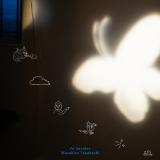
For more than two decades, Vidmantas ?epkauskas has occupied a singular position within European underground culture. As the driving force behind Opium Club and gallery 1986 in Vilnius, founder of Ant Bangos, Alfavilnius and OLE festivals, curator, label owner, promoter, DJ and artist, he has spent much of his life creating the conditions for other people's music to be heard.
It makes sense then that he has no shortage of friends and collaborators in play. Across ten tracks, V presents shades of Italo, krautrock, post-punk, minimal synth, industrial pop and neon-noir romanticism, arriving somewhere between the dancefloor and a dream-state. The cast of collaborators both contextualize and help sharpen the vision.
First and foremost, much of the album was crafted alongside Frankfurt's Philipp Lauer, whose friendship with V grew through marathon studio sessions. Curses lends his unmistakable blend of dark romance and theatrical energy to "Is This What You Want?", Australian cosmic journeyman Dreems joins for the kaleidoscopic "Blitz Disc," Domenique Dumont brings their unmistakable emotive touch to "Avventura," while Lithuanian artists Noyus and Ruta MUR, both distinctive voices from the country's queer scene, whose vocals add another dimension to the record's emotional palette. As V puts it, "These are the people I've been vibing with."
That he finally delivers a full-length LP with such elusive qualities is more than a clue to his character. The title itself, a nod to Magritte's famous paradox and his years living in Brussels, suggests that any attempt to define V through a single image is destined to fail. At once playful and philosophical, 12:55 (Ceci n'est pas une V) questions ideas of identity and artistic value while marking the closing chapter of the musical persona that followed ?epkauskas' earlier success as Vidis. Neither retrospective nor statement of intent, it feels like a connected set of reflections spanning a lifetime of influences.
Jess Sah Bi is well-known as half of the legendary duo Jess Sah Bi & Peter One who brought homegrown Country-Americana to the West African masses with their smash debut Our Garden Needs Its Flowers in the mid-1980s. Touring stadiums and reaching listeners worldwide, their music has racked up millions of spins on YouTube and remains imprinted in the hearts of Ivorians of a certain age. ATFA reissued their album in 2018, garnering critical acclaim from publications including Pitchfork and Rolling Stone and reaching a new generation of listeners outside Ivory Coast (Cote d'Ivoire). Sometime in the early 90s, Die Sahbi - or Jesse, as he known to friends-became gravely ill with an unknown ailment and almost died. He visited various doctors and all kinds of religious healers and nothing helped. One day he went down to an Evangelical Christian revival in his neighborhood. They prayed over him and he was delivered. He says, "Their prayers helped chase out whatever demons and unhealthy spirits were inside me. After that my illness went away. When I went to the United States a few months later on an exchange program I wanted to make music to thank God because I was saved." He recorded an album of music praising God in order to honor a promise he made to himself at the depths of his desperation in the hospital. The album Jesus-Christ Ne Deçoit Pas Jesus Christ Does Not Let Us Down came out in 1991 and sold around 3000 cassettes in Ivory Coast. The master tape was lost along the way so the recording has never been on digital platforms until now. Jesse didn't have much time to record while visiting South Carolina, hence the relatively short album, 6 songs including two reprises for filler. A local pastor connected him with a studio and some American musicians (Robert Fortner and Gary Davis) to help. They added acoustic guitar, percussion and keyboard accompaniment to Jesse's soaring French and Gouro vocals, harmonica and finger-picked acoustic. The resulting recording is deeply soothing and contemplative music that perfectly compliments the songs already embraced by millions. But he had to find the rest of the studio expenses-$600 total-which he secured drawing cartoons for UNICEF. Jesse is Ivory Coast's first political cartoonist, a vocation for which he was widely celebrated at the time. It also made him a few enemies which lead to him leaving the country permanently a few years later. Jesus-Christ Ne Deçoit Pas is Jess Sah Bi's first and only gospel album. Fortunately, fans responded with enthusiasm: widespread radio airplay and concerts followed, along with a growing solo profile in the country. The first big gospel artists in Ivory Coast were the duo Mathieu et Constance, who emerged in 1989. There was a bigger gospel music movement in English-speaking counties like Ghana and Nigeria (Christians make up roughly 40% of the population in Ivory Coast, slightly less than Muslims). Jesse didn't have any intention of working in Christian music but he realized, "You don't make music to make money-you want to send a message." In the years since Jesus-Christ's release, gospel music in Ivory Coast has grown to become a key part of music culture in the country. Spiritual music appears in community actives across the public and private spectrum from religious gatherings and parties to television broadcasts and music festivals. And, as it has evolved and indigenized locally, gospel music has picked up elements of traditional Ivorian music, reggae and soul. The album ultimately precipitated the demise of the duo, who were soon separated geographically as Peter One relocated to Nashville. He went on to become a nurse and release a successful solo album on Verve following the ATFA collaboration. Nowadays Jesse lives in the Bay Area and continues to record and perform music wherever and whenever he has the chance. He is publishing a new book of humorous cartoons in 2025 and his most recent album Never Give Up came out in 2020
je prie pour que la goutte ne tombe pas
(I pray that the drop does not fall) is the first international release by Japanese trio Chi To Shizuku. While they have released five albums and a 7” in Japan, their spectral, haunted rock songs haven’t yet reached a much wider audience overseas. With this album, then, a live recording taken at Koenji HIGH, Suginami, Tokyo on 23rd November 2021, the unique, quartz-like character of Chi To Shizuku’s music is writ large, the bleak bliss of their songs carved onto twelve-inch vinyl.
Perhaps the best-known member of Chi To Shizuku, at least for audiences with an ear turned to Japanese psychedelia, is drummer Takahashi Ikuro, known for his membership of almost every group worth a damn from that scene – Fushitsusha, Nagisa Ni Te, Ché-SHIZU, Kousokuya, High Rise, Maher Shalal Hash Baz, LSD March, the list goes on. But the core of Chi To Shizuku’s music is the collaboration between vocalist, bassist and lyricist Morikawa Seiichirou, and guitarist and arranger Yamagiwa Hideki. Morikawa is a member of long-running punk/goth group Z.O.A., and has also played with YBO , Zzzoo, and as collaborator with Takeshi and Atsuo of Boris in A/N; he’s also recently been performing with Mitsuru Tabata. Yamagiwa’s history takes in stints with Katsurei and Cock C’ Nell, and he also recently guested with la scene 裸身.
All this contextual information does relatively little, though, to prepare you for the unique vibration of Chi To Shizuku’s lustrous songs. They shimmer in the same half-light, perhaps, as Shizuka and the quieter moments of LSD March, sharing a similar poise and classicism, and there’s a tenderness and wracked poetry to Morikawa’s voice that reminds of the emotional intensities both of traditional Japanese folk, and of British folk music: on “Musuu No Nemuri No Naka De Kumo Wo Tukamu”, the combination of his singing, backed with gorgeously plangent guitar, reminds of no-one so much as it does The Pentangle or Spriguns Of Tolgus. Chi To Shizuku’s love for the ballad as form gifts their music an archaic, sometimes arcane resonance, and from what you can hear on this album, it’s clear they’re in love with graceful melancholy.
But this is not a folk album, by any means; it just shivers with the same eternal spirit. There are also hints of prog rock, and you can catch some passages of scratchy, distended free rock, on the extended spirit invocation of “Nanhito Hanhito”. je prie pour que la goutte ne tombe pas is an extraordinary album, a melancholy surprise, that reminds dedicated listeners of the seemingly bottomless well of great music to be found via the Japanese underground in its many forms. Perhaps Michel Henritzi says it best, though, in his liner notes, when he writes, “Chi To Shizuku’s music reminds us that our life is a dream that lasts only a season, and that oblivion will follow.”
Recorded at Koenji High Suginami, Tokyo, 23 November 2021
Mix & Mastering: Taku Unami, photography : Noriko Akiyama
Liner notes by Jon Dale Printed by Alan Sherry
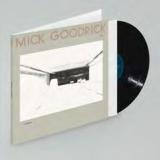
Mick Goodrick (1945–2022), den das Magazin DownBeat in seiner Rezension dieses Albums als „technisch
einen der besten Gitarristen überhaupt“ pries, war ein subtiler Meister der Gitarre und ein ebenso zurückhaltender Komponist – beide Qualitäten treten auf dieser einzigen ECM-Aufnahme unter seinem eigenen
Namen deutlich hervor. Der Pianist Fred Hersch nannte ihn „den Gitarrenflüsterer“, während John Scofield
bemerkte: „Ich durfte mit Mick spielen, was eine wertvolle Lernerfahrung war – ganz abgesehen davon,
dass es Spaß gemacht hat. Ich liebe sein ECM-Album In Pas(s)ing – ein besonderes Werk, das auch heute
noch relevant klingt.“ Für In Pas(s)ing wurde der Gitarrist, der maßgeblich zu Gary Burtons erfolgreicher
ECM Albumserie der 1970er Jahre beigetragen hatte, von hochkarätigen Begleitern unterstützt: John
Surman, hier überwiegend am Baritonsaxophon zu hören, Bassist Eddie Gomez sowie Schlagzeuglegende
Jack DeJohnette. In weit-offenem, lyrischem Zusammenspiel entfalten die vier Improvisatoren eine leiseeruptive Session voller filigraner Interaktion und heimlich einprägsamer Melodien. Das Magazin Melody
Maker bezeichnete Goodrick in seiner Rezension von 1979 als einen „Komponisten und Bandleader, der
seiner Musik erlaubt an Ort und Stelle anmutig Pirouetten zu drehen“, und führte weiter aus: „Unter den
gegenwärtigen Gitarristen der ECM-Schule scheint er die gelungenste Verbindung von Tradition mit einer
modernen Konzeption zu besitzen. Modisch unaufdringlich versieht er die Musik dennoch mit einer unverwechselbaren Handschrift – durch seinen kühlen, singenden verstärkten Ton, sparsam eingesetzte, aber
feste Hintergründe und das wunderbare Zusammenspiel mit Surman.“ Auch die Mitmusiker würdigte der
Artikel ausdrücklich: „Dies ist jedenfalls eine der besten Aufnahmen Surmans seit Jahren. Natürlich sind
Gomez und DeJohnette entscheidend für den Erfolg der Platte – der Vorwärtsdrang, den sie erzeugen, ist
beinahe übernatürlich diskret, aber absolut real.“ Das Album wurde im November 1978 im Talent Studio
in Oslo aufgenommen und von Manfred Eicher produziert.
Im Rahmen von ECMs Luminessence Reihe neu aufgelegt, erscheint In Pas(s)ing in einem hochwertigen
tip-on Klappcover mit neuen Linernotes von Joel Harrison sowie Photographien aus dem Archiv.
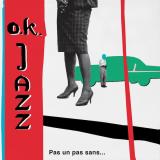
'This compilation Pas Un Pas Sans… The Boleros of O.K. Jazz 1957-77 is a selection of songs from what is one of the most unique and passionate music genres on earth, the Congolese bolero.
'Of all Congolese bands venturing into the bolero, the O.K. Jazz orchestra is by far the king of this musical style which originated in the late 19th century in Cuba. In its nearly forty years of existence, the illustrious band released dozens of boleros, with beautiful compositions, mainly by Franco and Vicky, and occasionally from Kwamy, Edo, Simaro and Mujos among others. The slow form of the bolero allowed Franco, who said in various interviews that he loved all forms of ‘slow music’, to express his most profound soul stirrings and create a style of his own. With the suave voice of Vicky and the breathtaking and dramatic guitar touch of Franco, O.K. Jazz was able to capture the true essence of the bolero.
'The favorite theme in the bolero songs of O.K. Jazz was, without doubt, the joy and pain of love, but it also touches on friendship, city life in Kinshasa, laments, politics and even advertising for a shoe brand like the remarkable song ‘Pas Un Pas Sans Bata’ featured on this compilation.
'All of the songs, except one, were restored and remastered from the original 45 rpm or 78 rpm release. The selection chronologically presented here consists – as always – for a good part of songs never reproduced after their original release.'
Candy Pink ltd 270 copies.
Printed sleeve with a little comics by ExpExp with inserts !
A first tune with a lost in the forest intro ^^
4 bangers of Hardtek, the pure Tribe kick and its round and round way... Small little structures for a sweet dancefloor moment and a peaceful banger feeling... ^^
out of Stock
Last delivered 10 months ago available to reorder, subject to availability
Jess Sah Bi is well-known as half of the legendary duo Jess Sah Bi & Peter One who brought homegrown Country-Americana to the West African masses with their smash debut Our Garden Needs Its Flowers in the mid-1980s. Touring stadiums and reaching listeners worldwide, their music has racked up millions of spins on YouTube and remains imprinted in the hearts of Ivorians of a certain age. ATFA reissued their album in 2018, garnering critical acclaim from publications including Pitchfork and Rolling Stone and reaching a new generation of listeners outside Ivory Coast (Cote d'Ivoire). Sometime in the early 90s, Die Sahbi - or Jesse, as he known to friends-became gravely ill with an unknown ailment and almost died. He visited various doctors and all kinds of religious healers and nothing helped. One day he went down to an Evangelical Christian revival in his neighborhood. They prayed over him and he was delivered. He says, "Their prayers helped chase out whatever demons and unhealthy spirits were inside me. After that my illness went away. When I went to the United States a few months later on an exchange program I wanted to make music to thank God because I was saved." He recorded an album of music praising God in order to honor a promise he made to himself at the depths of his desperation in the hospital. The album Jesus-Christ Ne Deçoit Pas Jesus Christ Does Not Let Us Down came out in 1991 and sold around 3000 cassettes in Ivory Coast. The master tape was lost along the way so the recording has never been on digital platforms until now. Jesse didn't have much time to record while visiting South Carolina, hence the relatively short album, 6 songs including two reprises for filler. A local pastor connected him with a studio and some American musicians (Robert Fortner and Gary Davis) to help. They added acoustic guitar, percussion and keyboard accompaniment to Jesse's soaring French and Gouro vocals, harmonica and finger-picked acoustic. The resulting recording is deeply soothing and contemplative music that perfectly compliments the songs already embraced by millions. But he had to find the rest of the studio expenses-$600 total-which he secured drawing cartoons for UNICEF. Jesse is Ivory Coast's first political cartoonist, a vocation for which he was widely celebrated at the time. It also made him a few enemies which lead to him leaving the country permanently a few years later. Jesus-Christ Ne Deçoit Pas is Jess Sah Bi's first and only gospel album. Fortunately, fans responded with enthusiasm: widespread radio airplay and concerts followed, along with a growing solo profile in the country. The first big gospel artists in Ivory Coast were the duo Mathieu et Constance, who emerged in 1989. There was a bigger gospel music movement in English-speaking counties like Ghana and Nigeria (Christians make up roughly 40% of the population in Ivory Coast, slightly less than Muslims). Jesse didn't have any intention of working in Christian music but he realized, "You don't make music to make money-you want to send a message." In the years since Jesus-Christ's release, gospel music in Ivory Coast has grown to become a key part of music culture in the country. Spiritual music appears in community actives across the public and private spectrum from religious gatherings and parties to television broadcasts and music festivals. And, as it has evolved and indigenized locally, gospel music has picked up elements of traditional Ivorian music, reggae and soul. The album ultimately precipitated the demise of the duo, who were soon separated geographically as Peter One relocated to Nashville. He went on to become a nurse and release a successful solo album on Verve following the ATFA collaboration. Nowadays Jesse lives in the Bay Area and continues to record and perform music wherever and whenever he has the chance. He is publishing a new book of humorous cartoons in 2025 and his most recent album Never Give Up came out in 2020
out of Stock
Last delivered 17 months ago available to reorder, subject to availability
Following their groundbreaking collaboration with Art Ensemble of Chicago, Comme à la Radio, Areski and Brigitte Fontaine began recording almost exclusively together as a duo.
Deeply rooted in North African and European folk traditions, the album features evocative vignettes with breezy vocals and minimal accompaniment of classical guitar, strings and woodwinds.
As always, there is a mercurial quality to their lyrics. The title track (translated as "I Do Not Know This Man") suggests at once Apostle Peter's denial and a poetic acknowledgement. On "C'est Normal" Fontaine playfully questions the status quo while Areski offers satirical answers. What makes Je Ne Connais Pas Cet Homme one of their best-loved albums, though, is its remarkable sense of intimacy – as if Areski and Fontaine beckon listeners into their strange and beautiful world.
This first-time domestic release continues Superior Viaduct's reissue campaign of Fontaine's classic '70s catalog.
Getting into an album by Cyril Cyril is being invited to a party where you thought you didn't know anyone, only to realize that this chap's gal is your bro's cuz, and leave with everyone's cell. Their music seems familiar because it's not deaf to its neighbors, in the broadest sense : Geneva, their lair, Europe, their playground as a duo, and the world, their grocery store. There's plenty in those two heads, but just the two of them on stage. For their third Born Bad album, they have invited two lads from Orchestre Tout Puissant Marcel Duchamp, Ines Mouzoune, multi-instrumentalist from Amami, and Violeta Garcia's cello on Le Futur ca marche pas. On the ruins of Switzerland, people dance hard but consciously, and won't complain about them having a go at the homeland - notably in " Sweetzerland Bunker Love ", where they claim it's time to "free the money from the banks". There's something rotten in the state, wherever it may be, and they prefer to put its fall to music. And they're not shy about it, either: this album features heavy guitar/drums text-driven ballads (beautiful "Mensonge" opens the album with a certain gravitas), polyrhythmic noisy drum splatter with crafty vocal knitting ("Plus rien a? faire"), deconstructed and harmonically ambitious compositions ("Les Phoenix de l'amour"), and latino frogs croaks, because yes, why not. Since their previous efforts "Certaine Ruines" and "Yallah Mickey Mouse", it turns out that the future isn't working out so badly for the two Cyrils. (Not so) Quietly sitting on crates of records, they patiently build their sound. Never tired of sick networks and never-ending struggles, Cyril Cyril is a rousing mess, shouting out the common spleen while still managing to have a good laugh.
out of Stock
Last delivered 9 months ago available to reorder, subject to availability
Très bonne nouvelle ref pour Mackitek Records, les track A1 et B1 sont bien dans le style Tribe dancefloor (B1 est mortel imo), et les track A2 et B2 sont dans un style Hardtechno un peu plus lent et du coup plus lourde...
out of Stock
Last delivered 2 years ago available to reorder, subject to availability
Laszlo Umbreit's album Pas de Regrets combines electronic sounds with recorded memories and various materials to create a unique listening experience. The album features complex soundscapes and techniques of layering and editing, drawing on Umbreit's experience as a sound designer for films. Pas de Regrets is an immersive and rich listening experience, with a narrative quality that places it between prospective electronics and experimental radio.
Laszlo Umbreit (*1986) is a Belgian sound designer and musician based in Brussels. Laszlo's work is anchored in sound research yet usually dialogues with the moving image, whether as present or absent. His musical practice mixes improvisation on electronic instruments, field recordings and a long meticulous editing and mixing process of sonic materials.
With a discography held in such high esteem amongst fans of conceptual French pop and soundtrack composition, the likelihood of finding an unturned stone amongst maestro Jean-Claude Vannier’s fertile psychedelic rockery falls somewhere between slim and skeletal. Even the most intrepid explorers of the most fearless and fastidious nature should naturally expect to encounter one or two shadowy characters when braving the oblique corners of the Vannier vault, but few lost souls cast a darker silhouette than the cinematic obscurity known only as La Bête Noire (The Black Beast).
Lost and presumed missing for decades the soundtrack tapes to this lesser-known 1983 French thriller (featuring a cast culled from films such as Alphaville, The Modern Couple and Sweet Movie) captures the revered composer and arranger of Serge Gainsbourg’s Histoire De Melody Nelson embarking on a darker exploration of free jazz, frenzied batucadas and cyclic carousel psychedelia. Counting key players of the French jazz scene within its ranks, The Insolitudes group comprises a crack team of Palm/Futura/Actuel/Saravah regulars such as saxophonist Philippe Mate´ (Acting Trio/Mate´-Vallancien/Tacet) alongside drummer Bernard Labat (Mad Ducks) and legendary Arpadys/Voyage rhythm masters Marc Chantereau and Pierre-Alain Dahan (Brutus Drums) all of whom alongside Michel Zanlonghi (Ensemble De Percussion De Paris) make up this thunderous, tumultuous, four-headed rhythm machine bridging an authentic gap between The Jef Gilson Groups and France’s signature “cosmic” revolution. Naturally these previously unheard compositions are spearheaded by lead pianist and composer Vannier and for devotee’s of his 1972 concept album L’Enfant Assassin Des Mouche there is much to admire and cross-reference herein.
Having been the most loyal and long-running guardians of Jean-Claude’s monster archive over the past two decades Finders Keepers Records are proud to present this first catch of newfound vintage Vannier discoveries on this limited and unlikely free jazz 45 single (which should find a perfect home between coveted Euro jazz 7”s by Krzysztof Komeda, Franc¸ois Tusques and Brussels Art Quintet). Almost 15 years since Finders Keepers once liberated the
The funky French duo is back with a new 7 inch!
Once again, DjeuhDjoah & Lieutenant Nicholson push the boundaries of the traditional "French song" to make the world dance. Two funky electronic flow, ready to electrify clubs worldwide. Our two
"chansonniers" are the leaders of "Afropeanité" and the Creolity.
The song "Pas si vite" champions deceleration and positivity during our complex period.
"Caipirinha" is a soft tribute to Bossa Nova, the dream of hot and sweet destination in a cold winter.
Recorded at « Le Triangle des Bermudes » the home studio of Lieutenant Nicholson, produced and mixed by him with a electro analog sound dear to them. Horns, live drums, percussions and vocal choir were recorded at Bastille village at the label basement, even during the pandemic…
out of Stock
Last delivered 20 months ago available to reorder, subject to availability
Best known for their participation in the 1983 Eurovision Song Contest, Belgian synth pop band Pas De Deux present their complete collection. These songs were made in 1982 and 1983, including the cult hits 'Cardiocleptomanie', 'Mani Meme' and various versions of 'Rendez-Vous'. These songs were never together on one album. Some of them were only released as a single or on some special compilations made in Spain and Germany after their much discussed participation to the Eurovision Song Contest (ESC) in 1983.
The 2LP vinyl compilation is a tangible thing, a must-have for the fans with some new photos from the band's first video and all the info, credits and lyrics of the songs. Remastered & compiled on this deluxe 2LP with a special etched D side. The inner sleeves include some reactions triggered in the national printed press at that time. Are we lucky that it was before the social media took over?
Highlights of the release:
"RENDEZ-VOUS IN MÜNCHEN", for the first time on vinyl!
"At the ESC we performed Rendez-Vous, a 'minimalistic synth-pop song', accompanied by the Dieter Reith Orchestra, directed by Freddy Sunder, on a backing track with synthesizers and drum machines. Apart from the Eurovision broadcast on 23 April 1983, this (mono!) recording was never released before. We've put it on this compilation, together with 4 other alternative versions of the original song."
CARDIOCLEPTOMANIE, MANI MEME
"Cardiocleptomanie was part of the compilation 'The Hidden Tapes' by Minimal Wave in 2011. It was also the title of a personal compilation of our songs by Veronica Vasicka of Minimal Wave (sold out vinyl). It became our N°1 digital track (thank you Lieven De Ridder)."
"On our mini-LP Des Tailles (Parsley, 1982) we covered Mani Meme, an unreleased song by DE NOTA. To our happy surprise, the song was chosen by the GUCCI Epilogue collection 2020 for their campaign video. It boosted our audience internationally."
7" on photoluminescent vinyl. In 1981 Walter Verdin recorded the demos for two songs of Lennon's Plastic Ono Band before he formed the group Pas De Deux, the Belgian entry for the Eurovision Song Contest 1983.The artwork of this 7" is inspired by the artwork of the original record sleeves.
out of Stock
Last delivered 5 years ago available to reorder, subject to availability
James Murphy’s DFA heralds the return of Montreal electronic duo Essaie Pas - who include Marie Davidson, who found success last year with her solo hit single ‘Work It’ - with a brand new single. ‘Earth’ is a deliberately retro-sounding collision of Nineties trance and techno, released with another new track ‘Corps E´tranger’ and a Marco Passarani remix of the title track.
out of Stock
Last delivered 4 years ago available to reorder, subject to availability
Sterns Edits returns after the sell-out success of its debut edition with another two catalogue reworks from Ben Gomori. This time he turns his attention to Burkina Faso's much-loved taxi-driver- turned-singer, Amadou Balake´.
Balake´ ('porcupine' in Mandinka) is Burkina Faso's proudest musical export, and in 2013 he recorded his final album before passing away: 'In Conclusion'. The record saw him revisit some of his most popular tracks from his remarkable 50-year career, backed by an eight-piece Burkinabe´ band who took the country's traditional sounds and brought them into a contemporary light.
Gomori retains the essence of the original recordings - which were mostly captured in one take - and marries them to vigorous afro-house stylings. 'Bar Konon Mousso (Musicien C'est Pas Quelqu'un)', in which Balake´ tells of a bar lady being unimpressed by his profession, gets a gentle push towards the modern dancefloor, its wonderful sax lines resplendent. 'Massa Kamba' is taken for a drive down the more traditional route, with commanding drums bolstering the original grooves and a marvelous triple harmony brass section at its core. Balake´'s freewheeling style suits the hypnotic feel of the edits to a tee.
Sterns Edits is an official collaboration between African music stalwarts Sterns Music and London's Ben Gomori.
A milestone in electronic music, is finally receiving its well-deserved re-release: Liaisons Dangereuses' legendary self-titled debut album still fascinates today, through its innovative sound and the mystery encompassing it. Since its release in 1981, it has become a classic in electronic music. The 10 electrifying songs produced by Chrislo Haas (DAF) and Beate Bartel (Mania D. / Matador) - reinforced by Krishna Goineau's French and Spanish Speech-Attack-Lyrics - created a unique style. The album - anything other than a Berlin or Düsseldorf 'thing' - was propelled to an international favourite. Songs such as 'Peut Être... Pas' and 'Los Niños Del Parque' played a decisive role in the development of Detroit and Chicago's house sound, as well as various forms of European techno
out of Stock
Last delivered 11 days ago available to reorder, subject to availability
After A First Ep Acclaimed As A « Summer Soundtrack 2018 » In France, Young Miel De Montagnewill Release His First Lp, Between Pop (muddy Monk, Flavien Berger ..) And Electronics (salut C'est Cool, Jacques ...), That Makes Him One Of The Most Attended French Electro-pop Artist.
out of Stock
Last delivered 4 years ago available to reorder, subject to availability
Art is a matter of different phases and influence. The artists' core reaches out like heat waves. And very rarely do these artists' core merge like Brigitte Fontaine and Arseki Belkacem have. Their Saravah Era lasted ten years (1969 to 1979), ten years of "folle sagesse" (crazy wisdom), above all genres and song limitation.
"Le plaisir secret que donne une chanson, dessin à la craie sur le mur de tes sons" (the personal delight within song, a chalk drawing on your wall of sounds) whispers Areski, right after Brigitte's voice on the penultimate song of the double album "Vous et nous". Released in 1977, this free flowing record contains 33 songs, it's their 6th album after "Comme à la radio", "Brigitte 4", "Je ne connais pas cet homme", "L'incendie" and "Le bonheur", and it continues to spread the wide and generous spectrum of the couple fully blossoming talent. Electronic experiments, North African trance, refined acoustics and medieval drones gracefully blend with the acid and candid tongues of the singers, surprising us each step along the way. The making of this record was also full of twists and turns. It started out as a solo effort by Areski at Jean-Pierre Chambard's studio. Little by little, as Areski was filling tapes with poems and improvised skits, Brigitte would sneak into the studio at nightfall, adding her voice here and there, her whispers then became screams, giving fuel to the fire in a total blaze, a surreal blaze. The solitary work ("je") thrived to become us ("nous") and you ("vous") ...
Guizmo has for many years left a strong imprint in the French rap scene with his unique personal universe and an acknowledged gift to writing. Three years after release the album 'Dans Ma Ruche' and the surprise street album 'GPG 1 in 2016, the singles of this fifth album are already receiving praises from the fans and the medias, paving the way for another success for the 26-year old rapper. Guizmo is a viral sensation and strategizes his own social campaigns to reach his fans directly. He's gathered 400+K followers on YouTube and 160+M views, 730+K Facebook fans, 100+K Twitter followers and more than 95K followers on Instagram
The 2nd album from French pop act Yelle gets a long-awaited reissue, the first one since the initial release in 2011! Following her first album 'Pop-Up' (2007) and an unexpected international success which brought Yelle on tour with Katy Perry, 'Safari Disco Club' is an explosive cocktail of rich pop melodies and tribal rythms filled with the peculiar childish energy of singer Julie Budet (aka 'Yelle'). The release of the album was followed by an international tour which included a second appearance at Coachella. This deluxe edition includes the original album featuring productions from Yelle's long-time partners in crime Jean-François Perrier (aka 'Grand Marnier') and Tanguy Destable (aka 'Tepr') and also from German producer Siriusmo. It also includes an additional vinyl compiling on vinyl for the very first time remixes from Madeon, Lo-Fi-Fnk, The Shoes and Logo, among others.
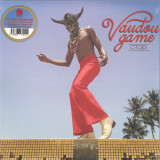
No one had been through those doors in years. Unchanged, seemingly untouched, just a Guard watching over it, one wondered whether the place would ever see the light of day again. Built in the 70s by Scotch, there were only twenty such places in the entire world. Twenty studios, all identical. Most had undergone a digital makeover in the 80s, but not this one; situated in Lomé, this studio had stayed true to its original form. Silent and uninhabited but waiting for one thing, and one thing only: for the sacred fire to be lit once again. That of the Togolese Recording Office, is studio OTODI for those in the know. Through thick layers of dust, the console was vibrating still, impatient to be turned on and spurt out the sound so unique to analog. That sound is what Peter Solo and his band Vaudou Game came to seek out.
The original vibrations of Lomé's sound, resonating within the studio space, an undercurrent pulsing within the walls, the floor, and the entire atmosphere. A presence at once electrical and mystical sourced through the amps that had never really gone cold, despite the deep sleep that they had been forced into. In taking over the studio's 3000 square feet, enough to house a full orchestra, Vaudou Game had the space necessary to conjure the spirits of voodoo, those very spirits who watch over men and nature, and with whom Peter converses every day.
For the most authentic of frequencies to fully imbibe this third album, Peter Solo entrusted the rhythmic section to a Togolese bass and drum duo, putting the groove in the expert hands of those versed in feeling and a type of musicianship that you can't learn in any school. This was also a way to put OTODI on the path of a more heavily hued funk sound, the backbone of which maintains flexibility and agility when moving over to highlife, straightens out when enhanced with frequent guest Roger Damawuzan's James Brown type screams, and softens when making the way for strings. Snaking and undulating when a chorus of Togolese women takes over, guiding it towards a slow, hypnotic trance. Up until now, Vaudou Game had maintained their connection to Togo from their base in France. This time, recording the entire album in Lomé at OTODI with local musicians, Peter Solo drew the voodoo fluid directly from the source, once again using only Togolese scales to make his guitar sing, his strings acting as channels between listeners and deities...
out of Stock
Last delivered 12 months ago available to reorder, subject to availability
Emotional Rescue returns to the music of Elaine Kibaro with a special 7" single to accompany the Pour L'Amour album collection (ERC066). Here then are two bonus versions of songs from the LP with a unique Arabic recording of her "hit" Aurore and also, the previously unreleased on vinyl instrumental version of her balearic / boogie jam, Ne Doute Pas.
Having moved from Tunisia to France at the age of 13, Kibaro's duel sensibility has long been apparent in her music and performance. The early success of her debut 7" De L'autre Cote Du Miroir in 1977, was soon followed by her most 'successful' song in Aurore, first released as a 7" in 1978, before appearing again as 9 minute extended version on the 1979 Miroirs LP.
In the same year she recorded a special 7" single on the little known World Music label. Singing the lyrics in Arabic - renamed here to its true translation - much else remained the same. The music of the original, the spoken intro soon gives way to what is essentially a leftfield disco groove, with building strings, funky bass and some late archetypal 70s Euro drumming. Atop this the vocals are delivered in Kibaro's ubiquitous chanson delivery, her heartfelt singing, the congos breakdown and then chorus, as the songs builds, all lead to head-nodding smiles all round.
With this is Ne Doute Pas. A stand out from Pour L'Amour, the vocal version appeared in 1989 as a single and on the now sought after, Kiroel album. This instrumental simply let's the music shine. A Linn rise and fall bassline, soft, layered keys and mode horns are run and rerun in a catchy, incessant flow like a PWL demo. The 10 years between the 2 tracks is apparent in the instrumentation but the link between the two - Kibaro herself - is clear and worth enjoying for that.
Fifteen track completion of deep biguines and Gwo Ka from the '60s French West Indies. The vinyl edition included a 4 page booklet + download code.
Biguine is a rhythmic style of music that originated in Guadeloupe and Martinique in the 19th century, which fuses 19th-century French ballroom
dance steps with African rhythms. Gwo Ka is found among all ethnic and religious groups of Guadeloupean society.
It combines responsorial singing in Guadeloupean Creole, rhythms played on the Ka drums and dancing. Gwo Ka is the musical and cultural product of the
region's African ancestry, forcibly brought to the Caribbean through slavery. Gwo Ka exists only in Guadeloupe, which is a very different island from much of
the Caribbean, in that it remains a 'department' of its original colonial master, France. Here the currency is the Euro and the baker sells croissants and café
au lait. This constant 'European-ising' of the island means that Gwo Ka plays a fundamental and important role in the defining of Guadeloupean identity.
'Antilles' Méchant Bateau', a low-tempo number with a bolero feel, indeed a pure case of the blues, and a terrific saxophone solo. What else would you
expect to set the tone for this selection, in which beguine regains its original colours, in the darkness of the Gwo Ka drums. This 45 by André Mahy, released
under the Aux Ondes sublabel, was recorded in the 1960s at Célini's, one of Guadeloupe's two main houses. Through its drum rolls and harrowing chant, it
recalled how, long before the mid-1960s, the Antilles' history was written in an ocean of teardrops - namely the Black Atlantic.
Look we're five records deep and yes, we aren't sure which tune is on which side... But luckily, this release is as high concept as Speed 2: Cruise Control. On one side you will find 'AD', which samples an inspiring speech given by the heroic Angela Davis at Southbank in 2017. Listen to her wisdom as you play this in your front room at 7am to people who suddenly can't quite look at their hands properly. The other side "PAS" greets you with warnings of atomic explosions over a riotous jam between a Yamaha CS-10 and a sturdy analogue 808 clone. If you have a pressing need for air raid sirens, this is for you. We hope you like this West Friends Release. There will be more..
Original year of release: 1989. Features the tracks 'Zobi La Mouche', 'C'est Pas La Mer A Boire', 'Voilà l'Eté', etc. Les Négresses Vertes was the biggest French act touring the world in the beginning of the 90's. The band has just reunited and will tour Europe this year to celebrate the 30th anniversary of 'Mlah". The album has been unavailable on vinyl since their first original pressing.
Original year of release: 1989. Features the tracks 'King Kong Five', 'Pas Assez De Toi', 'Sidi H'bibi', etc. Mano Negra the legendary first band of French singer Manu Chao ... featuring songs in Spanish, French, English and Arabic.. We are celebrating this year the 30th anniversary of its foundation. The album has been unavailable on vinyl since its first original pressing.
Blue fabric-covered deluxe replica gatefold with circle cut on the front and white hot stamp, printed paper inner-sleeve and black vinyl. includes CD (inserted in a clear pvc wallet) the new album! vinyl tracklisting : Side A: Sous le sable, Lasso, Fontaine de lait, Seeds, Les loups, Je ne mâche pas mes mots Side B : Twix, Nuit debout, Piscine, Fille à papa, Langue The internationally celebrated artist, award winning singer and composer Camille releases 'OUÏ' her fifth studio album and first for Because Music on June 2nd. Recorded over a year in La Chartreuse, a 14th century monastery-turned-artist's residence in Avignon, France 'OUÏ' is a cornucopia thrumming with folk, hymns, ballads, pop, lullabies and breathtaking a cappella. 'The story of the album is like this, moving from the arcane drums' - percussion is used throughout as the bedrock - 'to the treble and harmonics and light in my voice.' An instrument of exhilarating range and phenomenal power, Camille's voice provides all the vocal parts on 'OUÏ'. 'All the voices are telling a story,' she says, 'and I am all the voices. Co-produced by Camille with two of her longtime collaborators, composer and multi-instrumentalist Clement Ducol and sound and mixing engineer Maxime Leguil, and featuring the versatile Moog analogue synthesiser, 'OUÏ' is a work with a pulse. 'It really resonates,' says Camille, 'On some songs there are no drums, just this sub-bass like a kick drum, which leads the way and gives it a beat.' While she sets out to write politically charged songs inspired by drum-driven French traditional dances, that reflect upon the country's recent, tragic events, she was equally led to something peaceful, vowel-oriented and vibrational in her exploration of sound. The latter explains the album's title, 'Oui' - ooo...eee - a playfulness with sounds and language, a breaking free from its oft imposed restrictions.
In 1980 Ilitch mastermind Thierry Müller released his second LP, 10 Suicides, on the French imprint S.C.O.P.A. Unlike his debut Periodikmindtrouble (also available from Superior Viaduct), which featured intricately layered instrumentals, 10 Suicides explores a more art-damaged pop sensibility. While distorted guitars and atmospheric synth workouts remain a part of Müller's signature sound, several songs credit the mysterious Ruth Ellyeri, who was not an actual person, but rather Müller's female alter-ego. Opening track "Elle Voulait Que Je Sois Drôle" shows Ilitch's new direction with overloaded vocoders, driving Moog basslines and soft, Eno-like melodic flourishes. The androgynous vocals on "Waiting For Mabelle (Je Ne Viendrais Pas)" resemble an upbeat Gregorian chant bent through a 20th century lens. 10 Suicides is a staggeringly personal album that still sounds years ahead of its time.This first-time vinyl reissue comes with 16-page booklet and is recommended for fans of Ghédalia Tazartès, Chris & Cosey and Monoton.
LCN was present on the 'Noblesse Oblige' compilation (Gooiland 23) with a sweaty EBM influenced track... on this 4 track EP you can expect dark and cold elektro sounds... it is reminiscent of Invasion Planete and Kommando 6 output but with a cleaner and more modern sound... still if you like(d) these early 2000's elektro sounds you will love this too... this EP follows up on the steady stream of releases LCN has been putting out lately... among them on labels as Frigio Records and Return To Disorder... but this is probably his most dark and freaked out release up till now...
Past releases - Crosstown Rebels, One Records, Leftroom Limited and FFRR Party Affiliations - Circoloco, Flying Circus, Luciano & Friends Francesca Lombardo has cultivated a sound of her own, one that represents her multi-disciplinary musical background and transcends the dancefloor with ease. Creating emotional narratives via wistful soundscapes, stirring melodies, hypnotic rhythms and her own mesmerising voice distinguishes her from the crowd.
This is France in the Mitterrand years: fashions fleet as fast as governments. In the early eighties, the happy-go-lucky gather the nectar of each and every new release.
Believing in a bright future for videotex, and loosened up by the sexy talks broadcasted on the budding pirate radios, the new generation dreams of dance floors and holiday clubs. French Boogie, which preserves the spirit of these years of boodle and bunkum, is the ideal soundtrack to their dreams.
What the web now refers to as French Boogie is some synthetic funk reflecting the spirit of those days when nothing was impossible, or so it seemed. Its syncopated flow heralded the dawning of French rap. Often considered as some kind of post-disco, inspired as much by black music as by new wave, this carefree pop music with bawdy lyrics indulged in simple pleasures: holidays, swank and sun were recurrent themes. Totally in tune with its time, it incidentally glorified luxury, success, and a certain consumerism embodied, for instance, in Bernard Tapie.
In popular clubs such as La Main Bleue in Montreuil, or L'Echappatoire in Clichy-sous-Bois - where Micky Milan could be seen behind the decks - an enthusiastic audience discovered this new sonic wave, influenced as much by French pop as by Sugar Hill Gang or Kurtis Blow. The artists who first launched the movement engaged in it wholeheartedly, but as often the case with new music trends in France, humour and casualness quickly became a decoy to impose a new style. This explosive mixture, in which startling and typically Frenchy French lyrics go along New-York-style tunes, is sometimes reminiscent of the kinky comedies directed by Max Pécas or Claude Zidi. On this prolific scene, partly originating from the Jewish community, everybody was looking for success, trying to hit the jackpot with what was to hand. Famous media personalities, one-hit wonders or John Does in quest of fame, all had a go at French Boogie - more or less successfully. Apart from « Vacances j'oublie tout » by Elégance, « Un fait divers et rien de plus » by Le Club, or « Chacun fait ce qui lui plaît » by Chagrin d'amour (produced by Patrick Bruel), very few songs became hits: the story of funk in France is that of a half-baked robbery.
In this myriad of new musicians, the very young François Feldman and Phil Barney pioneered a fresh and hybrid style. Other well-known artists like Gérard Blanc from Martin Circus (Attaché Case), Richard de Bordeaux (Ich), or Jean-Pierre Massiera (Anisette, Pirate Scratch Band, Mandrake, Scratch Man...) added an eccentric touch to this sound-wave, making it often entertaining, and sometimes showy.
Capture d'écran 2015-10-26 à 12.55.43Singers like Agathe (the author of 'La Fourmi' and of the hit song 'Je ne veux pas rentrer chez moi seule') were far more than just window dressing. They even tried to give an ironic and subversive twist to this rather harmless genre. The very vindictive rebel Gérard Vincent shared in this spirit, but as a whole, French Boogie became associated with nonchalance and sauciness. Thus, Stéphane Collaro, Gérard Jugnot, Alain Gillot Pétré and other TV clowns would clumsily contribute to this French variation on funky sounds. In a few but intense years, French Boogie gave all the tips to party with style.
If some hits made it possible for the happy few to get a real house under truly exotic palm trees, the wave actually ebbed away very quickly, leaving quite a few musicians stranded on the shore. Whether they were sincerely motivated, or simply opportunistic, they had failed. In 1984, French Boogie was already breathless, and got merged with other genres: on the one hand, rap and breakdance adapted its flow to a more urban world, especially with Sydney's show, H.I.P.H.O.P, and Dee Nasty's broadcasts on Radio Nova; on the other, italo, new beat and house began to rule over dance floors, even more strongly asserting the will to develop music for clubs.
Squeezed in between the age of disco and that of modern electronic music, French Boogie was a transitional phase, but it remains an amazingly refreshing testimony to the intermingling of pop and underground cultures. The genre was hastily categorized as anecdotal in spite of its pioneering synthetic groove and matchless bass lines. An attentive ear will discover the poetry of the ephemeral beyond the eccentricities of the genre, as well as a certain unexpected avant-gardism. At the origin of major music trends, always cheerful and catchy, French Boogie is what you need to party.
Pursuing their explorations of international Funk and Disco music, Favorite Recordings and Patchworks present us Voilaaa. Following a first 2 tracks single acclaimed this summer and clearly revealing the Afro-Disco inspiration of this new experience, here comes Voilaaa's first album, titled On te l'avait dit. After his projects such as The Dynamics, Mr President, Mr Day, Patchworks Galactic Project, or Taggy Matcher, the insatiable French producer therefore returns to his first love and specialty, Disco music, staring this time at the African and Caribbean influences. The 10 tracks of the album are instantly up to expectations, chaining hit after hit tirelessly, and offering brilliant collaborations with Sir Jean, Pat Kalla, Renaud Bilombo, or label mates Hawa and Fouley Badiaga.
out of Stock
Last delivered 87 days ago available to reorder, subject to availability
*2026 repress - with new labels and small hole. NOTE NEW CATALOGUE NUMBER! One of Shella’s most popular reissues, “Rebel” by Jamaican Canadian roots maestro Rothadam is finally back in stock! Pressed with a small hole (as opposed to the 2017 re-issue with the jukebox punch-out). Supported by King Shiloh, Gilles Peterson and countless others, Rothadam’s “Rebel” is one of the deepest and most sought after roots 45s to ever come out of Canada. “Rebel” evokes Black Ark studio wizardry with Rothadam’s delicate yet defiant vocal, thunderous bass and a massive horn section. This release is a monster double-sider: Two different versions of “Rebel” were recorded in Toronto circa 1975, 76 by different producers (Sid Lovejoy at LMP and Ron Lewis at Half Moon) and backed by different bands. The “Rebel” message in Rothadam’s music is obvious, but more than anything the song is a call for peace and unity reflecting on his life in Trenchtown, Jamaica. Rothadam explains: “…..because where I was living , It’s hard to don’t get involved. It wasn’t an easy thing to just live and just be happy….. Hard life man, hard life…most of my friends when they were doing things that aren’t right…Not me. So in other words, I was born to be a strong man.” Rothadam passed away in 2026 but was delighted with the new audience his music had found. This latest reissue is dedicated to his eternal memory.
French composer, artist and co-founder of Transversales Disques, Jonathan Fitoussi has developed a distinctive body of
work over the past two decades, blending analog synthesis, minimalism and electronic music.
Inspired by the mineral landscapes and luminous atmosphere of southeastern France, DELTAS is his fifth solo studio album.
Combining hypnotic drum patterns, flowing pulses, shimmering electronic textures and contemplative movements, it unfolds as a deeply immersive journey through space, light and motion.
A rich and evocative work from one of the most singular voices in contemporary electronic music.
Since its original release, Aging has taken on an interesting wider significance. OCA’s music came to the attention of Kelela, who featured the duo in her Aquaphoria mix before later working with Yo van Lenz and Florian T M Zeisig in their Berlin studio. Those sessions would go on to play an important role in shaping the sound of her acclaimed 2023 album Raven, on which both artists are credited.
2019 Press Release:
Berlin based duo OCA present Aging, their sophomore album and first for Métron Records. Following up last year's Preset Music (recently featured in Kelela's Aquaphoria mix) Aging is an album that focuses on memory, experience and the passing of time.
A collaboration between producers Yo van Lenz and Florian T M Zeisig, OCA formed after the pair met and became friends while studying in Berlin. Originally from small towns in Bavaria, the duo now live and work in the German capital.
Through a series of 10 vignettes, Aging transports the listener on a trip across a series of life events that retain a special personal importance to both of the artists. These emotional touchstones range from the profound to the prosaic - the discovery of something new, the relief from annoyance or the familiarity found in an old companion - and have been fully explored with playful sonic introspection.
Whilst the concept retains a certain ambiguity, it is the sound palette, created solely on an Alesis QS6 synthesiser - that brings these experiences to life. OCA blend and weave classic dance music motifs with shimmering synths, Japanese wet ambient, and even anthemic 80s rock to create a soundscape rich with texture and sensation.
The bass notes and tentative lead of ‘Baby’s First Blade of Grass’ reference the memory of first consciously or subconsciously experiencing something new, whilst the decaying ripples of ‘Stretching in Water’ paired with sounds of flowing streams conjure up images of tranquil pools. Their most developed work to date, Aging showcases OCA as rising stars of progressive pop and modern ambient.
A mysterious artist pays tribute to Scandinavian dark synth pop pioneers, featuring reimagined versions of two cult classics.
Blending contemporary production techniques with the timeless atmosphere of the original recordings, the record offers a fresh perspective on these beloved tracks while preserving their distinctive vintage character.
Bridging past and present, celebrating the legacy of the genre's pioneers for both longtime fans and new listeners..
Repress 2026
Two years after releasing the acclaimed Crash Recoil, Anthony Child aka Surgeon returns to Tresor with new LP, Shell~Wave. Retaining the minimal equipment list and studio-version-of-live-show-sets approach of the previous album in order to focus on the work itself, Shell~Wave is a deeply personal document of both where Surgeon is and has been, converging three decades of experience with a continued curiosity in the untested.
“To make this project, I had to dig really deep in terms of what my relationship was to techno; I’ve been involved with it for a really long time and there’s a lot about it I feel dislocated from, so I had to really think hard about what techno is to me. I often get asked “what is techno to you?” but I can’t answer that with words; this album is the answer.” From the complex, twisting track Infinite Eye to the caustic Soul Fire, the eight tracks that make up the body of the album are single-take explorations of the vast, hard yet minimal techno Child is synonymous with.
Neatly dividing the record in two, the emotional centre of the record comes in the form of Dying, a vibrating, beatless piece that with a mantra-like vocal loop steeped in reverberating effects. Further echoes of dub production appear throughout the record as tracks like Divine Shadow, and Empty Cloud have an almost ever-present mist of reverberation, driven by the appearance of a new delay unit in the equipment list; while much of the philosophy of Crash Recoil’s creation is present, the process and the instruments have changed as Child again switches up his approach to studio work.
This insistence on trying novel techniques doesn’t preclude returning to old ones, as this use of modern digital machines with live, hands-on takes that are as inspired by 60s producer Joe Meek and 70s reggae as they are by this year’s synthesiser expos.
“For me, it’s an interesting experience returning to old techniques again after 30 years. I’m always exploring and finding myself back at the beginning. Connecting the present with the past.”
This philosophy of ‘time travel’ is inherent to the music itself as the synchronised loops repeat while the delay and effects branch out, forming unique eddies; distinct quantum moments within the circular whole; the future leaking through the spaces between the sounds. All of the concepts on the album are perfectly communicated through the painting by Taiwanese artist Jazz Szu-Ying Chen which suggests the movement of water, sound waves, and the chitinous shells of sea creatures.
2026 Repress
Sonic Groove Old Gold, the new sub-label of Sonic Groove releasing rare techno obscurities from decades past, debuts with two rare 1996/97 deep acid gems by CAT 1, originally released on Germany's Overdrive. With scarce original copies fetching very high prices online at over €100, "Revolution" and "Axion" have been updated for modern sound systems. Adam X has layered new, prominent kicks onto both tracks, bolstering the drive for today's dancefloors while keeping the original arrangements 100% intact.
"Memory Remains" A Vinyl Cover Painted by 20 Children Who Believed They Could
A new album where the artwork is as personal as the music, created entirely by first-graders from Croatia.
When it came time to design the cover for Memory Remains, there was only one group of artists who felt right for the job: the first-grade class 1A of Osnovna škola Luka in Sesvete, Croatia.
Every single child in the class took part. Each student was given the chance to draw whatever came to mind: memories, dreams, imaginary worlds, the people and animals they love, and every one of those drawings made it onto the final cover. Nothing was left out, nothing was "corrected." The front and back panels of the vinyl are a patchwork of more than two dozen individual visions, side by side, unfiltered and unmistakably their own.
The idea grew directly out of the album's centrepiece track, "World Child", a song about the simple, often-overlooked truth that every child carries a talent that belongs only to them, and that no two ways of seeing the world are the same. Rather than illustrate that idea with a single artist's interpretation, it felt right to hand the canvas to an entire classroom of six- and seven-year-olds and let them prove the point themselves.
The result is a cover that doesn't try to look polished or professional, because that was never the goal. It looks like a classroom wall covered in a year's worth of drawings, each one different, each one someone's best effort, each one worth keeping. Which is exactly what "World Child" is about.
Memory Remains is out on vinyl.
Track of note: "World Child"
Artwork by: The students of 1A, Osnovna škola Luka, Sesvete, Croatia 2026
With Picture About You, Recut opens a new chapter, blending the heritage of house music, acid textures and underground electronic culture into a contemporary vision for today’s dancefloors. Rooted in the essence of club culture, the EP explores hypnotic grooves, evolving patterns and the timeless dialogue between the DJ, the sound system and the crowd, where emotion, movement and energy become a universal language. The title track, “Picture About You”, reflects Recut’s artistic identity through the lens of his personal history and family roots. An important part of this story comes from his uncle, known as Mr. Steve, who in 1975 founded one of the pioneering independent radio stations in Southern Italy during the early years of independent broadcasting. His connection with radio, disco culture and the first generation of Italian clubs embodied a spirit of discovery, sharing and musical exploration that continues to shape Recut’s approach to music.
Musically, “Picture About You” unfolds through a hypnotic and emotional groove, blending old-school character with a contemporary perspective. A timeless club track where past and present come together in Recut’s own musical language. “Hey Jack” is a powerful dancefloor weapon driven by unstoppable grooves, hypnotic acid lines and captivating arpeggios. Built for peak-time moments, it pushes the energy forward with a relentless rhythm designed to ignite the crowd.
“Subwave” takes the journey into a deeper and more massive dimension. Driven by powerful low-end pressure, evolving dynamics and explosivetransitions, the track builds tension throughout its progression before releasing its full impact on the dancefloor. Closing the EP, “Neon Flux” delivers the final impact: fierce, electric and uncompromising, a track designed to push intensity beyond the limit and leave a lasting impression. Recut Music — Fun for DJing!
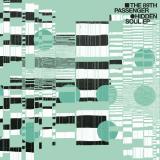
Some records are about rhythm. Others are about atmosphere. Hidden Soul EP exists somewhere in between -- a collection of electronic transmissions where intricate programming, analogue textures, melody, breaks and acid come together in a constantly shifting landscape. For their debut on Analogical Force, The 89th Passenger delivers five tracks that move between detailed electronic structures, hypnotic rhythms and deeply atmospheric passages. Beneath the machines and intricate programming, there is an unmistakable sense of melancholy, giving the record a depth that goes beyond its electronic foundations. Hidden Soul EP moves between intricate electronics and abstraction, reaching unexpected emotional heights while maintaining a strong sense of sonic depth and physicality. A record for close listening, late-night journeys and those moments when machines become something more than machines.
Celebrating ten years of independent music, Nerang Recordings returns with its sixteenth vinyl release, A Decade of Nerang Recordings - Mix Selections. Bringing together six artists from across the label’s history and extended community, the compilation showcases the diverse sounds that have shaped Nerang over the last decade. Featuring DJ Swagger, Nasty King Kurl, Subjoi, DOS, Low Tape and Moody McIvor, the release moves effortlessly between UK Garage, House, Tech House, Lo-Fi House, Electro and Synthwave while maintaining a clear identity throughout. Since its inception, Nerang Recordings has never been interested in following a single genre, scene or trend. Instead, the label has always focused on releasing music based on quality, individuality and atmosphere. Over the years that philosophy has resulted in a catalogue that crosses stylistic boundaries while remaining connected by a shared spirit. A Decade of Nerang Recordings - Mix Selections serves as both a celebration of the label’s first ten years and a statement of intent for the future. Each track represents a different corner of the Nerang universe, reflecting the sounds, influences and artists that have helped shape the label’s journey so far.
From rolling UK Garage rhythms and club-focused house cuts through to hazy lo-fi textures, cinematic synth work and darker electronic excursions, the compilation highlights the freedom that has always sat at the heart of the label. Rather than being confined by genre expectations, Nerang continues to embrace music on its own terms, allowing each release to find its own identity and audience. While thisrelease reflects on the past decade, it is equally focused on what comes next. The goal remains the same as it was on day one: support great artists, release music without limitations and continue exploring new territory wherever it may lead. Ten years in, Nerang Recordings remains committed to doing things its own way
Tronic has a 20-30 year long history with releasing melodic house and techno. While we opted for the more raw sound in the past few years, Christian wanted to go back to his roots and produce more emotive, groovy, and melodic house and techno again. Lamour Toujours is a progressive groover that has a disco-influenced bassline and adds an emotive chord progression in the break. We asked Argentinean legend Hernan Cattaneo to make a remix. As a long time supporter of Tronic we felt that he would be a great candidate for this remix. Hernan Cattaneo and Kevin Di Serna teamed up and delivered a stunning remix focusing on the melodic chord progression of the original! Italian maestro Gai Barone mutates 'L'Amour Toujours' into a stunning, mind-bending interpretation that proves his insane ability to rewrite the rulebook. Meanwhile, Colombian powerhouse Kamilo Sanclemente stays closer to the original, injecting a massive, chord-driven progression built to elevate any room. Three classy, high-caliber remixes. We're absolutely buzzing with this drop.
Across the past decade, KAS has established herself as a unique voice in experimental electronic music, a composer and synthesist whose work dissolves the boundaries between ambient electronica, contemporary classical, composition, and immersive sound design. Her new album “Ruin: It’s Not Just Music” arrives with a distinctive gravitational pull. The record moves with greater physical force, placing rhythm and impact at the centre of its architecture, revealing a more confrontational and embodied dimension of KAS’s musical language.
The first single “Ruin” arrives May 22nd, with the full album released October 2nd via SOMEONE SPECIAL the new label co-founded by KAS.
Where much of KAS’s earlier work explored harmonic environments, the forthcoming album is built around tension and release. Inspired by the sound of drum and bass, breakbeats fracture through dense fields of synthesis, percussive patterns and her signature melodic fragments – motions that feel closer to the kinetic language of club music than the meditative spaces often associated with her past catalogue. The result is a body of work that feels both recognisably hers and newly charged, music that moves through the body as insistently as it engages the mind.
For listeners who first encountered KAS through the glowing synthesis of “Ears” (2016) or the intricate experimental pop of “The Kid” (2017), this direction may feel initially surprising, yet the shift has been quietly unfolding across the past several years. KAS’s practice has steadily expanded beyond the expectations placed upon experimental electronic artists, moving between orchestral composition, audiovisual installations, film scoring, and large-scale commissions while retaining the unmistakable sonic signature that defines her work.
The 2022 albums “I Could Be Your Dog / I Could Be Your Moon” (2022) and “Let’s Turn It Into Sound” (2022) explored a deeply immersive approach to composition, expanded her reputation and instinct for constructing detailed sonic ecosystems while continuing to blur the lines between experimental electronics and contemporary pop structures. KAS’s most recent output has continued to widen that field including the rhythm oriented electronic album “Gush” (2025) and her return to more orchestral roots with “Thoughts on the Future” (2025). Together these releases underscored the breadth of her practice.
Her prolific collaborators and creative partners have ranged from Patti Smith and Suzanne Ciani to Danny Elfman, Tycho, Glass Beams, RY X, Caribou, Four Tet, Reggie Watts, and Max Richter, while her compositions have appeared in projects with Apple, Chanel, Meow Wolf, the BBC Orchestra, and major film and television productions.
On “Ruin: It’s Not Just Music”, that vocabulary becomes more kinetic than ever before. The record draws energy from jungle, drum and bass, and dance-floor focused electronic music while retaining the intricate synthesis and tonal curiosity that have defined KAS’s work from the beginning. The result is a record that feels equally at home within club culture, contemporary composition, and the experimental spaces that have long championed her artistry.
On May 27th KAS will present a major performance at London’s Barbican Centre alongside the London Contemporary Orchestra, marking the ten-year anniversary of her landmark album Ears. The evening will trace the arc of her creative evolution while also introducing material from the new album.
R.M.F.C. sound like? Let’s stay with the overused descriptors – I think R.M.F.C. is rock music band, more specifically a post-punk band. Indulge me. If you could say anything about post punk it means post-Wire, who were past punk before punk had an opportunity to codify and become everything brilliant and stupid that we’ve spent 40 years unpacking. Wire’s opening Pink Flag jab – Chairs Missing straight – and 154 hook knockout has haunted the mixing desks of ambitious post-punk bands since, and every major city in the western world has at least one Pink Flag band, one Chairs Missing band, one 154 band. Few bands manage to sound like all 3 records, but R.M.F.C. are a Rock Music Fan Club...
Anyone paying attention to underground Australian guitar overdose would relate: the R.M.F.C. Club Hits LP has been the culmination of five years of work, patience and discipline. If you’ve heard these songs live at any of their shows over the past couple of years you’ll understand – the wait is over and the result is exhilarating.
‘Bands like Devo, The Fall, and The Birthday Party have set the way for this type of post-punk rock (all in their own way). Surely, also, the rock scenes of the past fifteen years in Australia have also been influential. Thinking of bands like Royal Headache, Dick Diver, and Eddy Current Suppression Ring, there’s even been a fairly recent tradition of expanding styles of rock and roll (let alone the bigger, famous rock-centered acts). The Sydney based R.M.F.C., and the scene (or friend circle) from which it’s emerging, is carrying a torch of rock music which has the potential of a wider appeal.’ - POST-TRASH
Mazouni is one of the great voices of Algerian exile music. This compilation retraces his years in France from 1969 to 1983, when he brilliantly blended Algerian popular song, yé-yé, rock and traditional music. A sharp yet affectionate chronicler of immigrant life, he recorded classics such as 20 ans en France, Clichy and Mini-Jupe. An essential body of work, bridging cultures and telling the story of immigration through music, with a modernity that remains strikingly relevant today.
Teen of Denial: Joe’s Story is a freshly reimagined take on Car Seat Headrest’s beloved breakout, Teens of Denial, now celebrating its 10th anniversary.
On the original album, Toledo often used the name “Joe” as a pseudonym – a sly homage to Daniel Johnston. Revisiting Teens in the run-up to its 10th birthday, he felt called to give Joe a unique backstory and began tweaking the album to tell that tale. The group returned to the studio with Teens producer Steve Fisk to update accordingly – tweaking lyrics, revising arrangements, and recording new songs in the “Denial-style,” including ‘Optimistic Son” and the anthemic ‘Joe Drives Again’. The result retains Teens’ dark edge and youthful cynicism, but allows a bit of hard-won compassion into the mix.
From Will Toledo:
Sometime last year, it was suggested to me that we do something for the ten-year anniversary of ‘Teens of Denial,’ so I started looking back on the album to see what we might do. In spite of some of its songs being a regular part of my life for the past decade, it wasn’t a record I’d thought much about as a whole since it came out. Most of the songs I’d come up with over a two-year period at the end of my college days, when I was struggling a lot with cynicism and misplaced aggression. But by the time the songs were done, I was living in Washington, Car Seat Headrest was a full band with a record label, and in spite of the turmoil of the writing process, the final album was pretty enjoyable for everyone to work on.
This time, looking back at the songs, I started to feel like there was a story being told through the album, though I’d never imagined it as being a narrative work. On ‘Hi, How Are You?’ Daniel Johnston had used the name “Joe” in the titles of a few tracks –“No More Pushing Joe Around,” “Keep Punching Joe” – as a sort of joke, a stand-in for himself. I borrowed the idea, and the name, for titling songs on ‘Denial.’ This time, I started thinking - who is Joe? And how do the songs, in the way they’re sequenced on the album, reflect what he’s going through? As I started asking this question, a story emerged with startling wholeness and clarity, like finding the foundations of an ancient city while digging in my backyard. As I kept digging, certain songs from the original album fell by the wayside, as they seemed misplaced in this new context; others asked for new lyrics, to fully give birth to the story contained in the music.
The resulting work feels more like the album ‘Teens of Denial’ was meant to be. When you’re writing from a dark space, it’s hard to have perspective on where you’re at. This time, I could pull from memories of that darkness, and use the distance and additional perspective of ten years of life to shed a fuller light on the experience. Joe is a character going through some of what I experienced, and some of his own problems. Telling his story, and not just my own impressions of life at the end of the teen years, brought a new level of compassion and wholeness to the album. It gave us the opportunity to write new material in “Denial style”, embracing a snappy and simple(ish) rock aesthetic, and in an additional blessing, we were able to team up once with Steve Fisk, a joy and inspiration to get back into the studio with after ten years. We mixed the material at his house in Tacoma, and were constantly amazed at the lack of divide between past and present, as we’d punch in vocal overdubs ten years later into the same gear, hearing my voice now running alongside a 2015 Will. For someone coming across this album or this band for the first time, this is how they’d hear the record, not as a relic of the past but as a new piece. It was immensely rewarding to experience that on our side.
For anyone familiar with ‘Teens,’ comparisons with the original will be inevitable, but I do hope that as much as possible, people can come to this album on its own terms, approaching it as a teen, hearing the music and story for the first time. I believe music is an ongoing story, and albums don’t always do justice to its dynamic, ongoing nature. What gives it life is the new ears that hear it, and the new hearts that engage with it. I’m so grateful that this is a work that people have kept coming to, and I hope that this presentation does them honor with a fresh offering to the conversation. We’ve known that “it doesn’t have to be like this”; now we can wonder - “what it if were like this?”
Heavyweight psychedelic improvisers EarthBall are back with their third and most monstrous record to date: ‘Outside Over There’, released on Upset The Rhythm (Nov 7th). Born from the haunted basements of Nanaimo, Canada, the quintet thrives on spontaneity, shaping improvisation into jagged hallucinations and ecstatic eruptions.
Recorded live-off-the-floor in 2024 in Jeremy, Izzy, and Kellen’s basement, and mixed by drummer John Brennan, ‘Outside Over There’ is an album that feels both summoned and inevitable. Each track lands with uncanny purpose, as if uncovered rather than written.
The opener, 100%, features a cameo from comedian and English icon Stewart Lee, who lent his blessing for the band to use a fragment of his stand-up. The album was mastered by John Dieterich (Deerhoof), with liner text contributed by longtime comrade John Olson (Wolf Eyes). Olson describes the album in his unmistakable style:
“This eight-track odyssey unfolds like a dreamscape, where whispered incantations brush against the shadowy fringes of the cosmos, and wild, Cézanne-inspired rock anthems erupt like geysers of color in the midst of a western warm and wet rain storm… culminating in the sprawling eleven minute masterpiece, ‘And The Music Shall Untune The Sky,’ aptly dubbed the Earth Crusher. A creation so utterly deconstructed and intertwined with the pulse of nature itself that if AI was called upon to conceive ‘Outside Over There’ anew, it would just spit back, “F.U. in Tree Font”. An enchanting invitation for even the flat-earthers to join the circle, if only just a little.”
EarthBall’s trajectory has been relentless. Their 2024 album ‘It’s Yours’ was praised by The Quietus as “fully aggressive and fully life-affirming,” and by The Wire as "a boisterous mind-melting album”. The band’s live double set LP ‘Actual Earth Music Vol. 1 & 2’ (2025) captured blistering performances: a performance opening for Wolf Eyes at the Fox Cabaret, and a Café OTO improvised throw-down featuring Chris Corsano and Steve Beresford. These releases on their own confirm them as one of Canada’s most vital experimental exports, not to mention the impressive self-released discography on their Bandcamp. The band’s reach has stretched far beyond their west coast roots with a UK tour May 2024, plus this past June, EarthBall closed Montreal’s Suoni Per Il Popolo Festival alongside Pulitzer Prize-winning composer Raven Chacon. This November they will perform at Le Guess Who? Festival in Utrecht, with a European tour to follow (tour dates below). Outside of EarthBall, each member carries their own torch. Jeremy Van Wyck, founding member of the legendary Shearing Pinx, has toured extensively, released over 100 records, and has been a vital force in the Vancouver and West Coast underground for the past 25 years. He and Isabel Ford (Izzy) play together not only in EarthBall, but also in Psychedelic Dirt, Shearing Pinx, Behaviours, and Crotch.
John Brennan collaborates widely, including recently with Endlings (Raven Chacon and John Dieterich), Evichen (Victoria Shen), Francesco Fonassi, Plan Your Future (with Greg Saunier of Deerhoof), Brennan/Corsano duo and Physics with John Dieterich. Kellen Maclaughlin performs with KVMP and Ora Corgan, while saxophonist Liam Murphy is a west coast staple, playing with the best across Vancouver Island and the mainland. On three of the tracks of ‘Outside Over There’, the band is joined by their comrade Justin Patterson, who also plays with Brennan in the duo Modale. This cross-pollination fuels EarthBall’s sound - a collective improvisation, psychically overdriven, and grinding into bloom.
Outside Over There’ is more than an album though, it is a ritual, a gathering of sound at the forest’s edge; where feedback, saxophone screams, and ecstatic vocals dissolve the boundary between chaos and clarity. EarthBall invite you into their circle, to share in the joyful terror of spontaneous creation. ‘Outside Over There’ will be released on November 7th through Upset The Rhythm digitally and as a limited blue-in-black vinyl LP.
From Richmond, Virginia, Shy, Low have a reputation as one of the most compelling voices within the modern instrumental underground. Their music speaks to fans of post-rock's emotional grandeur and post-metal's crushing intensity alike, while simultaneously appealing to listeners drawn to experimental, atmospheric, and cinematic forms of heavy music. The band's ability to merge these seemingly disparate qualities has resulted in a body of work that is immediately recognizable and continually evolving. Luminous melodies, driving heaviness, layered textures, and carefully controlled tension allows `Purity Spiral' to move effortlessly between fragile moments of introspection and towering passages of intensity. Whether constructing intricate layers of harmony or driving songs toward explosive climaxes, there is a deep understanding of pacing, atmosphere, and the power of restraint. Momentum is at the heart of this album, through intricate rhythmic detail, and explosive bursts of energy, drums become the anchor and catalyst, supporting the band's expansive arrangements while pushing them toward moments of cathartic release. What distinguishes Shy, Low is their ability to balance enormity with restraint. Their music unfolds patiently, allowing tension to accumulate through layers of texture, melody, and dynamics. Moments of delicate clarity often coexist with overwhelming weight, creating a sense of organic motion. At the core of the band's sound lies an acute understanding of contrast. From shimmering, expansive passages to towering walls of distortion, the rhythm section provides both propulsion and atmosphere, becoming integral narrative voices that shape the emotion. There is a disciplined sense of purpose in their writing, an understanding that every note serves a larger arc. Shy, Low thrives in the space between introspection and catharsis, where subtle details become as impactful as the heaviest climaxes, and listeners are taken on a journey that is as visceral as it is profound. FOR FANS OF Caspian * Russian Circles * If These Trees Could Talk * Pelican * Toundra
From Richmond, Virginia, Shy, Low have a reputation as one of the most compelling voices within the modern instrumental underground. Their music speaks to fans of post-rock's emotional grandeur and post-metal's crushing intensity alike, while simultaneously appealing to listeners drawn to experimental, atmospheric, and cinematic forms of heavy music. The band's ability to merge these seemingly disparate qualities has resulted in a body of work that is immediately recognizable and continually evolving. Luminous melodies, driving heaviness, layered textures, and carefully controlled tension allows `Purity Spiral' to move effortlessly between fragile moments of introspection and towering passages of intensity. Whether constructing intricate layers of harmony or driving songs toward explosive climaxes, there is a deep understanding of pacing, atmosphere, and the power of restraint. Momentum is at the heart of this album, through intricate rhythmic detail, and explosive bursts of energy, drums become the anchor and catalyst, supporting the band's expansive arrangements while pushing them toward moments of cathartic release. What distinguishes Shy, Low is their ability to balance enormity with restraint. Their music unfolds patiently, allowing tension to accumulate through layers of texture, melody, and dynamics. Moments of delicate clarity often coexist with overwhelming weight, creating a sense of organic motion. At the core of the band's sound lies an acute understanding of contrast. From shimmering, expansive passages to towering walls of distortion, the rhythm section provides both propulsion and atmosphere, becoming integral narrative voices that shape the emotion. There is a disciplined sense of purpose in their writing, an understanding that every note serves a larger arc. Shy, Low thrives in the space between introspection and catharsis, where subtle details become as impactful as the heaviest climaxes, and listeners are taken on a journey that is as visceral as it is profound. FOR FANS OF Caspian * Russian Circles * If These Trees Could Talk * Pelican * Toundra
The track titles on Post Dub Cities – the new album by Adriano Zanni, photographer, sound artist, and field recordist – evoke the aftermath, that moment when a place continues to exist and live on, but no longer serves anyone. The human element has vanished, whether it happened overnight or through a slow abandonment that lasted for years. The perspective shifts: buildings, homes and palaces reveal a dimension of reality all their own, in which even the ruins give shape to this landscape that endures, transforming into pure presence.
This, after all, is our fate. The fate of us human beings, of our civilisation, of every civilisation: to pass away, to be forgotten, to erect monuments whose significance no one will remember once we are gone.
The opening track Crisopoli transforms the sonic dimension of a city into an echo chamber: a dark, urban dub built from delays and resonances, holding the imprint of what is no longer there — like a bassline that keeps vibrating even after its source has gone silent. What we see is not the presence, but its reverb.
Available from September 11, second excerpt Warosha gives us a minimalist, enveloping, solemn beat, like the symbols on a map that no one can read anymore. Warosha was the district of luxury hotels overlooking the sea in the city of Famagusta. After the island of Cyprus was invaded by the Turkish army, the entire area, emptied of its inhabitants, who had fled south, was fenced off and surrounded by barbed wire. No one has been allowed to enter it since 1974. Now, on these unspoilt beaches, sea turtles have found the perfect place to breed.
Fordlândia, on the other hand, is the symbol of Henry Ford’s failed dream of conquest. An industrial settlement built deep within the Amazon rainforest, several hours’ boat journey from the nearest towns, to gain access to natural rubber for the tyres of his mass-produced cars in Michigan. An extremely costly project, it quickly became a ruinous pipe dream: a town that has been uninhabited for almost a century and has since been reclaimed by nature.
For a long time now, Adriano Zanni has been exploring, through music and photography, the landscape that unfolds before our eyes, as attentive yet silent observers. As if we were absent, a civilisation that has long since vanished: human presence has dissolved, preparing to fade into oblivion. The precise depiction of places through field recordings, and the black-and-white imagery, give rise to apparitions, hallucinations, and memories. The less present we are, the more we seek meaning. We resist abandonment and the indifference of time.
In the ten tracks (plus three bonus tracks) of Post Dub Cities the echoes and reverberations of dub grant us access to an unknown future, as yet untold – in which we are nothing more than a vague memory. The deep sound guides us through a landscape that is familiar yet unknown, unrecognisable. The cold, distant, industrial rhythm resonates within us as if we were the last, all too aware, inhabitant of a now-deserted village.
Every place – be it an abandoned mining settlement on an island in Svalbard, or a ghost town in Pennsylvania evacuated following an underground fire that has been burning for sixty years at a depth of one hundred metres – leaves questions unanswered, shrouds itself in mystery, and makes us wonder, ceaselessly: what happened here?
In the end, we realise that we don’t really care that much about knowing the details of the disappearance. We can guess them, we’ve seen it happen a thousand times before. Just like in the photos accompanying the album, portraits of ghostly, deserted cities: Belgrade, like Venice, Dublin, Sarajevo, Lisbon, Kraków, Sofia, Naples, Hanoi, Lampedusa, Tehran. Unexpectedly, pleasantly emptied of people, and of their obsessions, struggles, illusions.
Then, suddenly, the crowd returns. Busy, feverish, hardworking. The record ends, the spell is broken. We feel a sense of longing for a future that has not yet come to pass, for a place we were only able to observe because we were not there.
Ąnis is a Lithuanian producer and DJ working in the space between broken rhythms and atmospheric weight. His tracks blur the line between club tools and introspective pieces - raw, textured, and unpolished in the best way.
Ąnis’ debut album “I Swear I’m Not Delusional” builds from late-night sketches into fully formed pressure systems. Ambient passages fall into break-driven grooves, each track shifting like a mood swing. It's rooted in tension, repetition, and space - think the grit and movement of early Skee Mask filtered through a more personal, less polished lens. Tracks like “Mountain People” carry warmth without needing to explain themselves, while others feel like they were made at 3am with no lights on. It’s not chasing a scene - just locked into its own pulse. This isn’t background music. It asks you to sit with it - or move to it. Either way, it sticks.
Credits
Original tracks written, produced, arranged and recorded by Jonas Zubavičius in Vilnius. Mastering by Pranas Gudaitis aka audiomastering.lt. Artwork and design by Povilas Baranauskis.
On his sixth LP In Another, Toronto-based, Japanese-born, musician and composer Masahiro Takahashi (髙橋 政宏) continues the collaborative expansion of his sonic universe that listeners witness on his 2023 release, Humid Sun. Here he enlists a rotating ensemble of ten guest artists from Toronto’s vibrant music community, including his labelmate Joseph Shabason, who also serves as the album’s co-producer and engineer.
Spurred by his longtime admiration for chamber pop spanning the High Llamas and Free Design to the Beach Boys, Takahashi deviates from the underlying processes of his past two outings, trading Ableton sequences for lead sheets, focusing on creating robust melodic and harmonic foundations first. This difference is audible straight away; the album opens with a dialog between upright piano and plucked double bass that’s so gentle and transparent you can hear the breath of the players.
On his sixth LP In Another, Toronto-based, Japanese-born, musician and composer Masahiro Takahashi (髙橋 政宏) continues the collaborative expansion of his sonic universe that listeners witness on his 2023 release, Humid Sun. Here he enlists a rotating ensemble of ten guest artists from Toronto’s vibrant music community, including his labelmate Joseph Shabason, who also serves as the album’s co-producer and engineer.
Spurred by his longtime admiration for chamber pop spanning the High Llamas and Free Design to the Beach Boys, Takahashi deviates from the underlying processes of his past two outings, trading Ableton sequences for lead sheets, focusing on creating robust melodic and harmonic foundations first. This difference is audible straight away; the album opens with a dialog between upright piano and plucked double bass that’s so gentle and transparent you can hear the breath of the players.
In the spring of 1971, somewhere between Brussels, Paris and a collective pop fever dream, Le Monde Fabuleux Des Yamasuki landed on vinyl. It sounded like nothing else then and it still does not today. More than half a century later, Sdban Records proudly presents a reissue of this singular cult album, available from April 3, 2026 on vinyl.
The album was produced by Jean Kluger and written both by Jean and Daniel Vangarde (aka Bangalter, later the father of Thomas Bangalter of Daft Punk), who were alreadywell ahead of their time, long before electronic music rewrote the rules of pop culture.
Released under the name Yamasuki, also referred to as The Yamasuki Singers, or The Yamasuki's, the project was never intended as a conventional band. It was a studio-born fantasy, a concept album disguised as a pop record. What began as a standalone single quickly expanded into a full-blown pan-cultural pop opera that ignored genres and common sense with joyful abandon.
Musically, the album sits at a delirious crossroads. Psychedelic pop collides with funk rhythms, samba and bubblegum melodies, full of chants and choruses in a phonetic pseudo-Japanese, written with the help of a dictionary. Kluger and Vangarde famously recruited a children's choir to perform the vocals, and for added spectacle, they brought in a Japanese judo grandmaster, whose ritualistic shouts and battle cries erupt throughout the record.
Several singles were released. One of them, Yamasuki, with accompanying dance move, appeared in the United Kingdom and France on John Peel's Dandelion label, a fitting home for a record that thrived on the margins of pop culture. Its B-side, Aieaoa, proved even more potent. In 1975, the song was reborn as A.I.E. (A Mwana) by Black Blood, an African group recording in Belgium, this time sung in Swahili. That melody would travel even further. Aie a Mwana became the debut single of English pop group Bananarama, and in 2010 it resurfaced once more as Helele, an official song of the FIFA World Cup, recorded by South African singer Velile Mchunu with Danish percussion duo Safri Duo. That version became the most widely known incarnation of the song. With Jean Kluger directly involved, it was less a cover than a continuation of the original idea.
The album's afterlife did not stop there. Over the years, Yamasuki has been quietly sampled, covered, and featured across media far beyond the realm of novelty pop. Kono Samourai was sampled in The Healer by Erykah Badu (2007), produced by Madlib, while Yama Yama has found its way into recent pop culture as well: appearing in the television series Fargo, on Angus Stone's project Dope Lemon, and on the 2008 Late Night Tales compilation curated by Arctic Monkeys drummer Matt Helders. Proof, if any were needed, that this strange little record carries a deeper musical DNA than its playful exterior might suggest.
This new reissue of Le Monde Fabuleux Des Yamasuki proves the renewed interest and respect for this cult album, faithful to the original spirit while finally giving it back the physical presence it deserves. In an era obsessed with genres and algorithmic neatness, Yamasuki still laughs, dances and karate-kicks its way past definitions. It reminds us that pop music can be playful without being disposable, strange without being cynical and joyfulwithout explanation. The world of Yamasuki was always fabulous, we are just lucky it found its way back to us!
Six years after their last full-length release, Satoshi & Makoto return with Mirage Café, the highly anticipated new album on 8mm Records, in collaboration with Standart Magazine.
A carefully crafted and long-awaited work, Mirage Café is more than an album — it is a fully immersive sensory experience. The Japanese duo expand their signature sound into deeper and more cinematic territory, blending refined electronica, ambient textures, subtle jazz inflections and understated groove with remarkable elegance and control.
The title evokes an imaginary café — a space of contemplation, connection and inspiration. The partnership with Standart Magazine reinforces this conceptual layer, bridging music and coffee culture into a cohesive narrative that feels both intimate and international. The result is an album that unfolds like a slow ritual: warm, enveloping and meticulously detailed.
Throughout the record, Satoshi & Makoto demonstrate a mature and confident songwriting approach. The production is rich yet restrained, atmospheric yet rhythmically engaging — balancing introspection with forward motion. Lush harmonies, delicate arrangements and immersive sound design create a listening experience that rewards both focused attention and late-night drifting.
With Mirage Café , the duo not only meet expectations after a six-year silence — they surpass them. This is a masterwork of nuance and vision, poised to become a defining chapter in their discography and a standout release in the contemporary electronic landscape.
On his new album Chott, German-Tunisian producer and composer Taroug confronts his origins. Named after the Chott El Djerid, a vast salt lake in southern Tunisia, the ten-track album revolves around personal history and the search for identity. Chott is a conceptual work shaped by contrasting atmospheres, from minimalistic melancholy to raw, bass-heavy intensity. It blends traditional instruments with contemporary electronic text- ures, drawing lines between past and present.
Personal materials—such as vocal samples from family members—add layers of intimacy and cultural depth, most notably on the title track, featuring an original Arabic poem spoken by Taroug’s father, and on 1995,
a song reflecting on early childhood memories in Tunisia. Beyond these intimate dimensions, he works with sonic imagery that captures the sensory experience of heat and landscape in pieces like Saraab and Sirocco. In Nakhla, recordings of palm trees transformed into repetitive movements evoke scenes of southern Tunisia’s palm plantations, where organic and mechanical sounds converge.
For the artwork, Taroug once again collaborated with architect and designer Marie Brosius, assembling an experimental collage from old personal photographs of Tunisia that visually echoes the album’s themes of heritage and remembrance.
Ohm & Octal Industries made their mark on this label with their Northwest Passages album back in 2023, and now they return with more heavy but equally serene dub tech excursions. 'Blizzard' has none of the frenzy of that weather type but does have gentle synth winds swirling around the rooted drums. 'Fly Boy' is a delicate dub with the most subtle pads and effects marbling the airwaves, while 'Goodbye Sunshine' has more forward intent and beautifully hits that glide over the minimal drums. 'Jah Rule' then dials into a heads-down and more warehouse-ready dub techno sound built from the sort of perfect loops that could play for days and never get annoying.
* 2026 REPRESS *
Handed to the legendary Channel One Soundsystem in exclusivity over a year ago, Don Fe's Jericho has been on constant rotation around the globe ever since. Cut to dubplate by Mikey Dread this tune has been securely locked down and spun exclusively as Channel One's last tune at places such as Notting Hill Carnival and many of the soundsystem's international sessions and festival appearances. After a very patient wait Steppas Records are extremely pleased to be able to offer this plate to the world, pressed to 12' vinyl, featuring two new mixes of Jericho and two exclusive cuts of the equally powerful Weep Not.
UK born musician and producer based in Spain for over 20 years, Don Fe's passion since the age of five has been music, classically trained in piano, flute and theory and as from sixteen reggae. From his humble beginnings in the 80s with a 4 track and a TDK D90 his riddims and productions are now being played by the world's most respected sounds - Channel One, Jah Shaka, Aba Shanti, Iration Steppas and many more all over the world.
On Last Night At Marienbad's latest, the imprint brings together three of the brightest souls found within the realms of Jazz, namely Mauricesax, 9ick and Milan93, with their collective talents synergising effortlessly on 'A Garden Between Us', alongside a stellar cast of remixers who add even further delight between the grooves….
As a genre, Jazz has perhaps lent itself the most to other musical universes, in that its curious heart, endlessly experimental nature, and parameter-defying spirit have wrapped itself deep within the core of countless albums, scenes, and music makers. It's a genre that welcomes reinvention, consistently defying its contents and always reaching out to find new methods of expressionism. Electronic music, in its many forms, has truly embraced Jazz perhaps like no other movement of music has, with a truly astonishing array of records surfacing in the past 40 years which have blended Jazz's unique motifs with grooves, chords, and emotive excellence. From 90s Jazz house and UR Techno, through to Future Jazz, downtempo, and Hip Hop, and around many other suns, there remains such an intrinsic and symbiotic relationship between the two musical realms that caters to those who wish to live music both within and out with themselves.
As practitioners of blending electronica and Jazz, few do it like the trio of Mauricesax, 9ick, and Milan93. All three are known for their distinctive soundscapes, yet share commonalities in terms of musical language, feel, and sense of progression. Bringing them together allows for overlaps in their sounds to emerge, and just like Jazz itself, this is where the intrinsicness of sound begins to blossom. 9ick brings his softly evolving vibe to the table, one which was so prevalent and celebrated on his 2025 album 'SMIL'; Milan93 draws from his focal point of exploring fill-laden grooves and a myriad of emotive sensibilities; and Mauricesax draws up his extensive musicality that exists at the corner of jazz, electronic, and experimental music, along with running musical workshops all over the globe.
'A Garden Between Us' represents the trio's core tenets, with this immediately obvious from the record's opener, 'Rhodora'. A gentle solo piano quickly evolves into a series of powerful rhythmic pulses, with brass lines bringing vitality and feel to proceedings. The track shifts gears with purpose, transitioning between musical vignettes of the highest order, with the synth work doing much to bind the transitions together. 'Tulip' emerges slightly differently, with glossy Rhodes tones and an unravelling rhythmic undercurrent setting an enthralling stage. The track flourishes amongst sweeping textures, coming up for air amongst a deeply hypnotic rhythmic section that holds on and never lets up. 'Honeysuckle' lands next, which sees the trio emerge with a boundless, dynamic soundscape. The drums shift within the undertones, as keys, chords, horns and hip-hop vocal samples dance around the pulse, capturing the imagination with their narrative-like placement. Wrapping up the A side comes 'Camellia'. A dazzling array of harmonic sounds converges around the transfixing rhythm section, which emerges from deep below to lavishly roll out over the midsection, with the delicateness of the instrumentation a real highlight here.
The B side features two exquisite remixes, with Pacific Coliseum's version of 'Tulip' landing first. Beginning with a signature four to the floor to get things going, his careful handling of the source material is seen in the tactful introduction of the blissful elements that made the original cut so impactful, with great focus placed on emotive fidelity. The result is a summer-bound house number that reimagines the original in all the right ways, flipping it into a euphoria-driven jazz-laden pacer that reaches for the heavens as much as it drives right into the heart. Teuteu then showcases their take on 'Honeysuckle', and at 9 minutes long, represents the longest cut on the record - and the experience is all the richer for it. Leaning heavily into dance music flavours, Teuteu shifts perspective totally into the realm of the club, with the walls beating hard to the kicks. The sax lines that drift ethereally up top keep eyes closed and souls full, as the dance shifts into the next phase.
An experience that drifts from the daydreaming, to soul-warming through to the club shaking - what else is left to experience, except for 'A Garden Between Us' and how it will brighten up life itself….
SECOND REISSUE ON THIS HEAT’s OWN NEW IMPRINT FOLLOWING ‘THIS HEAT’ (TH01LP) WHICH WAS UNCUT ‘REISSUE OF THE MONTH’ RECENTLY WITH 9/10 REVIEW + 4-PAGE FEATURE WITH Q+A.
*24 bit/96 kHz re-master from original analog tapes.
*Heavyweight 180gm vinyl and heavyweight sleeve with pantone printing to match original 1979 release.
Simon Reynolds on Health and Efficiency:
“For some fans, Health and Efficiency is This Heat’s peak achievement – their most concentrated blast of visceral intensity and wayward experimentalism….Lead track “Health & Efficiency” combines fierce angular rock that fully lives up to Cunningham’s belief that This Heat could become a postpunk King Crimson, with a multi-part babble of vocals, clattering percussive timbres, and found sounds.’’
Flipside “Graphic/Varispeed” is more subdued and hypnotic: a wavering tonescape whose duration depends on whether you play it at 45 rpm or 33 rpm. This reissue reproduces the original release’s striking cover image of a human figure painted in blue by Pete Cobb, along with the cryptic flipside of text in many different languages.
Although widely considered to be Post-Punk’s finest, This Heat actually began performing and recording their music in 1976, the early days of London’s punk era. Within their two albums and an EP they perfected a strange and volatile new strain of avant-garde rock that time has proved to be massively influential, a blueprint for much that would follow: post-rock, math rock, homemade musique concrète, experimental electronica. Numerous critics have recognised the band's influence on the music of Sonic Youth, Glenn Branca, Steven Wilson, Public Image Ltd., Radiohead, Swans, Shellac, Young Knives, Black Dice, Lightning Bolt and numerous other experimental and post-rock bands.
Disbanding in 1982 they have left an undeniable legacy that has only continued to grow in stature and relevance.Having recently passed the 50 year anniversary of their first gig, and the recording of material that appears on their debut album, the group’s surviving members Charles Bullen and Charles Hayward, true to their DIY roots, have set up an imprint to release their recordings for their growing fan base that is increasingly recognising their influential place in music history.
‘They went beyond punk before punk had properly started…the entire album is a controlled explosion of ideas. Nearly fifty years on, This Heat’s debut is something the world has still not completely caught up with.’ - Simon Reynolds
‘Over the years, there have been bands to play as aggressively, or even as strangely, but very few have been able to rise from their collective influences and histories to create music so singularly distinctive and inspiring.’ – Pitchfork 9/10
‘This Heat sounded like the future then ... and still do now.’ - Dan Snaith (Caribou)
‘This Heat had a certain kind of force the post-punk bands were unable to adequately control without falling foul of rawk excess, and which the punk bands—albeit blitzing and rowdy—were too basic in form to build.’ – John Calvert , The Quietus
A dream come true for A Colourful Storm to be releasing an early gem by Tenniscoats, a duo whose DIY spirit, boundless creativity and lust for life and collaboration has left an indelible mark. From self-releasing albums and tapes on their own Majikick imprint to meeting kindred spirits The Pastels, Bill Wells and Jad Fair in between outings for Morr Music, Chapter and Häpna, to name but a few, Tenniscoats have embodied an understated determination and optimism for over two decades.
"A foghorn melodica, voice, fractions, fragments, nothing and everything all at once. We Are Everyone opens out slowly, a little eerily, magic tumbles into play in well-measured rations. Meanwhile, on the cover, Saya and Ueno's heads seem to merge into the sky as if living amongst the wisdom of the clouds. Or maybe somewhere between sleep and reality, like Ueno's description of Tenniscoats' music. We Are Everyone is one of those records where you almost feel engulfed in its making - you feel like you're in the room with Tenniscoats as they push themselves to the limit, trying to make the very best record they can." - Stephen Pastel
2024 feiern die Broilers ihren runden Geburtstag: 1994 - 2024, 30 Jahre Broilers. 30 gemeinsame Jahre bedeuten Wachsen und Zusammenwachsen. Auch miteinander streiten und zusammen streiten – für die gute Sache. Zusammen feiern und zusammenstehen, in den Besten aller Zeiten und den Schlechtesten aller Zeiten. Und weil es für jede gute Geburtstagsparty auch die passende Musik geben muss, hat die Band zum ersten Mal alle ihre Hits und Lieblingslieder auf einem Album versammelt. Und nicht nur das, die Broilers machen sich selbst ein Geschenk: Zehn der 22 enthaltenen Songs, nämlich alle, die vor 2011 eingespielt wurden, haben sie noch einmal komplett neu aufgenommen. So erstrahlen legendäre Broilers-Klassiker in zeitgemäßem Glanz, ohne ihre Wurzeln zu verleugnen. Die Broilers sind ein Phänomen: Seit über einem Jahrzehnt gehören sie konstant zu den erfolgreichsten Rockbands im deutschsprachigen Raum. Millionen verkaufter Konzertkarten, Nummer- 1-Charts-Platzierungen, Edelmetallauszeichnungen in Folge, kaum ein Superlativ, den die Gruppe sich noch nicht zu eigen gemacht hätte. Ein paar Schulfreunde aus den Vierteln am Stadtrand von Düsseldorf gründeten 1994 eine Band, die sich am ruppigen Sound einer Streetpunk-Variante orientierte, der schon Anfang der 80er-Jahre unter der Bezeichnung „Oi!“ auf der britischen Insel das Licht der Welt erblickte. Die bedingungslose Liebe, die ihnen bis heute von vielen ihrer Anhängerschaft entgegengebracht wird, hat ihren Ursprung in dieser Zeit. Neben den Liedern, mit denen sie über die Jahre ihren Hörern stets aufs Neue aus dem Herzen sprachen, führte aber auch die Kombination der individuellen Charaktere der einzelnen Musiker an die Spitze: Wie fünf Superhelden aus einer Comicserie bündeln sie als Team ihre Kräfte, begeistern so die Fans und können aus dieser Unterschiedlichkeit Kraft schöpfen und spenden. Die Broilers haben keine Angst vor Pathos, Emotionen und Kontrasten: In ihrer Musik sind wuchtige Bläsersätze, Offbeats, da ist Soul und Rocksteady, da sind Flirts mit Power-Pop und Kitsch und das alles, als wäre es das Logischste und Normalste auf der Welt. Diese eklektische Mischung trauen sich nicht viele. Die Broilers wollen es sich anders gar nicht mehr vorstellen. »Jolly Good Fellas – Best of Broilers 1994 - 2024« legt davon eindrucksvoll Zeugnis ab!
Tiki for the Atomic Age feels like a mid-century transmission intercepted from a parallel timeline—one where hi-fi futurism, Polynesian fantasy, and postwar optimism never lost their sense of wonder. Kava Kon isn’t recreating exotica so much as reviving its original promise: escape, elegance, and possibility, rendered in warm, widescreen stereo.
Built on shimmering vibraphones, reverb-drenched guitars, analog organs, and ritual-leaning percussion, these tracks move at an unhurried pace. This is oceanic music—designed for dim lights, glowing glassware, and time stretched just enough to breathe. The lineage is clear: lounge exotica, bachelor-pad modernism, space-age pop. But this isn’t pastiche or museum work. It’s retro-futurism with intention, imagined from the future looking back.
The “Atomic Age” isn’t just aesthetic shorthand. It speaks to contrast—leisure in the shadow of anxiety, beauty alongside uncertainty, fantasy as a necessary technology. Kava Kon understands that tiki was never about geography; it was about psychology. A constructed elsewhere. A permission slip to slow down.
Pressed on vinyl, Tiki for the Atomic Age comes fully alive: tactile, immersive, and meant to be lived with. For listeners drawn to mid-century dreamscapes and modern exotica that honors the past without freezing it, this is an invitation—step sideways out of the present and into something more elegant.
Special poster on 250gram paper. Postcard with photo taken by Sandrien. Hand-numbered sticker. Shrinwrap
After more than a decade without releasing new music, Amsterdam DJ and producer Sandrien returns with her debut album Compass, released on her own new label, inspi. Created during a stay in Spain, where she finally found the space to create freely again, the album marks a new chapter: no genres, no expectations, just music made purely on feeling. Compass is an album about finding your own path, personally and musically, a cycle of searching and finding, letting go and beginning again. Lead single 'Life' laid the foundation for it all. The visual world of the album is just as personal: photographs Sandrien took around her house formed the basis for its artwork and imagery. With 27 years of experience behind her, Compass proves that mastery doesn't lead to routine, but to exploration. This double LP includes a beautiful double-sided poster featuring two original artworks of ‘Compass’ by Dutch artist Pieter Jan Boterkoek. Releases October 9, 2026 Written and produced by Sandrien Mixed by Julien Chaptal Mastered by Giuseppe Tillieci at Enisslab Artwork by Studio Pieter Jan Boterhoek This album is made with love in Spain, Volkshotel Amsterdam and Groenekan.
In Living Color proudly presents Wasi Wasi EP, the debut label release from
Kenyan-born, Berlin-based artist Emo Rugene.
A striking first statement from one of the most exciting emerging voices in African electronic music, Wasi Wasi introduces Rugene's distinctive sound while reflecting the bold, forward-thinking vision at the heart of Living Color. Blending deep cultural roots with contemporary electronic production, the EP marks the arrival of an artist helping shape the future of the genre.
Deeply rooted in African rhythm and musical heritage, Wasi Wasi is a body of work that embraces the past while looking confidently toward the future. Blending hypnotic grooves, organic percussion, and contemporary electronic production, the EP reflects a new generation of artists drawing inspiration from their roots while carving out their own unique artistic identity.
The release features two compelling vocal collaborations that enrich its storytelling. “Wasi Wasi (Vocal Mix)” features Alai K, whose deep ancestral vocal brings a powerful spiritual presence to the title track. “Sahara Dena” features Soukou, whose soulful vocal performance adds warmth, emotion, and depth, creating a beautiful dialogue between tradition and contemporary sound.
With Wasi Wasi EP, Emo Rugene stands among a new generation of African electronic music artists redefining the future on their own terms. His music is deeply connected to where it comes from, yet unafraid to explore new ideas, proving that heritage is not something to preserve behind glass, but something to carry forward with imagination and purpose.
More than a collection of tracks, Wasi Wasi EP is a celebration of movement, identity, and possibility, a record that honours the voices of those who came before while contributing to the sound of tomorrow.
The premise of this compilation is simple: music we’d like to hear at the airport.
The idea came after learning that Honolulu’s international airport has been playing AI-generated music over its speakers since November 2025. First reported by Civil Beat, the news has caused frustration and disappointment among residents and visitors, as well as within the local music community.
Everyone knows Hawaii is one of the most musically rich regions in the world — why then is the airport using AI music? 'Music For The Airport' is our response.
Located in the middle of the Pacific at the outskirts of one the most remote cities on the planet, Honolulu’s Daniel K. Inouye International Airport (HNL) is for most people the first place they encounter when they arrive in Hawaii. Warm sun, tropical tradewinds, playful palm trees and majestic mountains welcome every traveler, as do the sounds of birds, familiar music from Hawaiian artists like Aunty Genoa Keawe and Israel Kamakawiwo’ole, and—at least for now—seventeen “island-themed” AI-generated songs.
In late 1977, while sitting in Germany’s Cologne Bonn Airport on a Sunday morning, Brian Eno noticed how terribly uncomfortable he felt hearing the airport’s “muzak” overhead. For a harried, hurried place like the airport where travelers scramble to their gates, stand in long border control lines, and wait impatiently for their luggage at the carousels, music can create more anxiety than calm. Asking himself, "What should we be hearing here?", Eno soon created ‘Ambient 1: Music For Airports’, a sonic remedy aimed at reducing nervousness in public spaces.
When we heard the news that HNL airport is playing AI-generated “muzak”, we were immediately reminded of Eno’s genre-defying 1978 album. And we were similarly inspired to react. But how? Recreating an ambient masterpiece wasn’t in our wheelhouse. We started digging through our catalog of licensed music which we haven’t yet re-released. We quickly realized this was our chance to highlight some of favorite songs from the so-called CD era: the 1990s and 2000s (with a few exceptions). In less than 20 minutes, we pulled 17 original songs recorded by local artists between 1984 and 2017.
The speed at which this project came together surprised us; reactionary gut instinct often produces swift and lasting results. Ironically, our new compilation likely took less time than it did for the state Department of Transportation to commission its AI songs in question. But even though ‘Music for the Airport’ came together in less than one week, the truth is that this collection of 17 songs is the result of years of hard work, trust, sacrifice, patience, and understanding. Building relationships with and licensing music from artists doesn’t happen overnight, but more importantly: these songs are the result of people pouring their hearts and souls into something they believe in. This music wouldn’t exist today without the artists and their loved ones who supported them along the way.
As of this writing, the DOT states its intention in creating AI-generated songs is to “highlight different aspects of the islands, aviation and the airport” and that “no state funds were used to produce them”. Okay, but at what cost? Technology disrupting the music industry isn’t news to anyone. AI music in public spaces are cost-saving measures, since its users (airports, for example) don’t have to pay the licensing fees typically required, which can be a worthwhile source of revenue for artists. But what happens when a place like HNL airport, which hosts more than 21 million passengers annually, uses music created by machines instead of people to represent Hawaii? The identity of a place beings to erode, diluted by a language learning model’s conceptual summary of what a people and its culture sounds like. To echo Brian Eno: what should we be hearing here? In other words: what should the music of Hawaii sound like?
We believe in the power of music, especially when it comes from the soul. We believe in supporting artists, especially as AI disrupts our lives. We believe that Hawaii must be represented authentically, especially when it comes to song. And of course we believe in vinyl, especially since it was a record from 1978 (Mackey Feary Band’s debut LP) that inspired Aloha Got Soul’s origins in 2010.
We hope you find as much joy in this compilation as we have. Perhaps it’ll soundtrack your next journey to Hawaii. At the very least, we hope some people take a moment to hear these sounds: in your headphones for now‚ maybe someday overhead at the airport in Honolulu.
There is a hush most of us only knew as children, the warm drift between familiar household sounds and being carried to bed, a place that belongs to you and to some self you have not met yet. June McDoom’s debut full-length, Follow the Light, lives in that dream space and then keeps walking, slipping out of time and waking somewhere new, barely familiar enough to feel like home yet wholly your own. She came up in a Jamaican household on the edge of the Florida Everglades, an existence built of extended family, communal care, bass and harmonics. Her father, a carpenter and a student of sound, built his own speakers and kept three sound systems going across as many rooms. His low end would rise through her bedroom floor like some wayward cat while she lay above it with folk records, finding harmonies that were new and hers alone. Two musics in one room. Lushness as past and premonition. She found folk on her own, somewhere between the cast recording of The Sound of Music and Simon and Garfunkel, while everyone around her called it sleepy music. She did not mind being the only one. The solitude let her fall for harmony first, before words, before anything else, and harmony is still the thing she reaches for. Generationally speaking, the music was already in the air. Her grandfather, Colin Smith, is a distinguished mento man who played banjo and guitar and built his own rumba boxes, worked to keep Jamaica’s oldest acoustic folk form alive. Mento is the root of all of it: ska, rock steady, reggae, dub and everything after. He is the one who put a guitar in her hands. An inheritance, a gift and a map. Even her name is part of it, though she will tell you she landed on it more by feel than reason. She records as June McDoom, born Alyssa, June being a nickname one of her grandmothers, Joan, went by, a name she thought was cool to carry and simply liked the sound of. An etheric channel that reverberates all the same. A dub all its own.
Made slowly and by hand with her longtime partner Evan Wright, Follow the Light lays the harmony of folk over the rhythm of dub, with Dionne Warwick, Minnie Riperton, Pentangle and the washed guitars of Cocteau Twins haunting its outer edges. Voice and guitar seeking each other out first, then everything else stacked across long days in the studio they keep at home, restraint kept on purpose. The lead single “Without You” is the whole method surfacing, split open and sparkling like a geode in a creek bed. Angelic heroics, and nothing less.
At the heart is family. Her grandmother Aggie, the light behind “Memory,” guiding still. And underneath, the quieter truth the record keeps: none of us are only one person, but a continuum of selves, the ones who shaped us and the ones we have yet to meet. Future you is an ancestor your current self gets to greet. Press play and the same invitation is yours: A few minutes out of time, a place that turns familiar the longer you stay until you surface somewhere new and find it was yours all along
There is a hush most of us only knew as children, the warm drift between familiar household sounds and being carried to bed, a place that belongs to you and to some self you have not met yet. June McDoom’s debut full-length, Follow the Light, lives in that dream space and then keeps walking, slipping out of time and waking somewhere new, barely familiar enough to feel like home yet wholly your own. She came up in a Jamaican household on the edge of the Florida Everglades, an existence built of extended family, communal care, bass and harmonics. Her father, a carpenter and a student of sound, built his own speakers and kept three sound systems going across as many rooms. His low end would rise through her bedroom floor like some wayward cat while she lay above it with folk records, finding harmonies that were new and hers alone. Two musics in one room. Lushness as past and premonition. She found folk on her own, somewhere between the cast recording of The Sound of Music and Simon and Garfunkel, while everyone around her called it sleepy music. She did not mind being the only one. The solitude let her fall for harmony first, before words, before anything else, and harmony is still the thing she reaches for. Generationally speaking, the music was already in the air. Her grandfather, Colin Smith, is a distinguished mento man who played banjo and guitar and built his own rumba boxes, worked to keep Jamaica’s oldest acoustic folk form alive. Mento is the root of all of it: ska, rock steady, reggae, dub and everything after. He is the one who put a guitar in her hands. An inheritance, a gift and a map. Even her name is part of it, though she will tell you she landed on it more by feel than reason. She records as June McDoom, born Alyssa, June being a nickname one of her grandmothers, Joan, went by, a name she thought was cool to carry and simply liked the sound of. An etheric channel that reverberates all the same. A dub all its own.
Made slowly and by hand with her longtime partner Evan Wright, Follow the Light lays the harmony of folk over the rhythm of dub, with Dionne Warwick, Minnie Riperton, Pentangle and the washed guitars of Cocteau Twins haunting its outer edges. Voice and guitar seeking each other out first, then everything else stacked across long days in the studio they keep at home, restraint kept on purpose. The lead single “Without You” is the whole method surfacing, split open and sparkling like a geode in a creek bed. Angelic heroics, and nothing less.
At the heart is family. Her grandmother Aggie, the light behind “Memory,” guiding still. And underneath, the quieter truth the record keeps: none of us are only one person, but a continuum of selves, the ones who shaped us and the ones we have yet to meet. Future you is an ancestor your current self gets to greet. Press play and the same invitation is yours: A few minutes out of time, a place that turns familiar the longer you stay until you surface somewhere new and find it was yours all along
V Don and Da$h are not strangers to each other. Connecting in the past for memorable tracks like “Glad Bag”, “Redrum”, and “Now or Never”. They picked right up where they left off with a menacing five track EP back in July. “5 Deadly Venoms” put V Don’s expert production and the many flows of Da$h on front street. A duo that has always held themselves to high standards.
Superfan is the songwriting veil of Kali Priya Flanagan, the Brooklyn-based multi-instrumentalist and producer. While initially imagined as a solo act, ambitious string arrangements crafted in collaboration with cellist Omeed Almassi have come to define Superfan’s noisy and magnetic pop soundscape.
Today, Superfan announces their forthcoming album ‘My Piledriver Heart’ (MPDH), out October 16 via new label home AD 93 (Joanne Robertson, Dagmar Zuniga, YHWH Nailgun). Along with the announcement, Superfan presents his new single “In the Gold Room” paired with the live version filmed by Garrett Winston inside Agger Fish Building in the Brooklyn Navy Yard.
MPDH marks the first release outside of the record deal Flanagan signed at age 14. The album finds Flanagan embracing a more expansive, experimental vision of indie rock - melding deeply tuned acoustic guitar, cello, and Eastern musical influences into what he calls his “Acousticello” sound. Recorded largely live with cellist Omeed Almassi and producer Hudson Pollock, the record explores heartbreak, independence, and hopeful melancholia. Kali says “This time around it was about being (myself) versus becoming myself. This album was made to acknowledge the ebbs and flows in chugging along with life and love, from a place of comfort within the self that opens you up to the beauty in everyday life.” He does so through intimate performances that blur the line between folk, chamber music, pop-rock ballads, and alternative rock. Last year, he released the singles “Apeiron (Fantasy Football)” and “Miss W Jones” and earlier this year he released “Picture of Return.”
Following his acclaimed debut Tow Truck Jesus, Flanagan opened for The Strokes at Red Rocks, and has quietly become a fixture of New York’s DIY scene, performing alongside artists like Horsegirl, Knifeplay, and Quiet Light, while also playing support shows with King Woman and Victoryland this summer. He is also in the rising emo band Holidays in United States.
Before Superfan, Flanagan found success during the pandemic under his first moniker, “KALI.” His initial releases garnered millions of streams and led to collaborations with seasoned high-profile producers and industry teams. Despite his budding career as an indie-pop star, Flanagan was dissatisfied with the conditions of his artistic output and community as he reached adulthood. His coming-of-age years in Los Angeles were marked by an ever-present new-wave pop music oblivion: “hits” made in 5-hour sessions with strangers, a social life suffocated by others’ aspirations for fame, and an absent audience for live music that pushed past the prescriptions of recorded music. On MPDH, Kali says “I can’t help my urge to write these pop-rock ballads, but we really wanted to push the boundary of genre and expressing the sentiments of the songs through experimentation.”
Almost immediately after hearing the Beatles' North American debut album at eight years old, Al Di Meola decided he wanted to become a musician. Just 11 years later, he was recruited by Chick Corea to replace Bill Connors in the legendary jazz fusion band Return to Forever, together with Stanley Clarke and Lenny White. His tenure turned out to be a short one—just two years—but turned out to coincide with the group's career peak.
Around the time the group broke up, he released his first record Land of the Midnight Sun, followed by Elegant Gypsy in 1977. On this album Al showcased his prowess for fast electric guitar riffs, lyrical acoustic passages, and every technique in between. The record clearly showcases his predilection for flamenco and Latin jazz, exemplified by the record's two most important tunes: "Mediterranean Sundance" and "Race With Devil On Spanish Highway".
Elegant Gypsy is available as a limited edition of 1000 individually numbered copies on red vinyl and includes in insert.
Kvrk makes a debut on Distant Gaze with Synthetic Memories, a four-track EP exploring shadowy electronics where organic textures and synthetic forms constantly blur into one another.
Opening with Pulsewidth, the EP begins as a slow burn – a restrained piece of synthwave shaped by drifting ambience, hypnotic sequences and a steady sense of tension.
The pace gradually lifts with Void Caller and title track Synthetic Memory, pushing deeper into prog sound. Straight, driving rhythms form the backbone, occasionally dissolving into broken-beat passages, while warped synths and psychedelic details keep everything in constant motion.
Beneath the electronic framework runs something more primal: forest-like soundscapes, mystic undertones and subtly shamanic motifs give the music an earthy, ritualistic dimension.
Closing the release, Blu:sh reworks Void Caller through his signature deep and trippy approach, stretching the original into a spacious late-night interpretation with a submerged, dreamlike pull.
With the fire of chariots, these moments are passing us. Preserve me with your tears, come save me from the burning years. The Burning Years. An album by Jason Priest.
The Antoni Maiovvi-fronted Jason Priest returns with new album The Burning Years. On this latest effort, the band draws influence from 90s shoegaze, indie alternative, and Britpop. For fans of Slowdive, New Order, The Cure, and Smashing Pumpkins.
Midnight Mannequin Records is proud to present Jason Priest's The Burning Years on deluxe transparent orange vinyl, complete with insert and OBI strip.
It's hard to explain an album when one listen is enough. All the more so with MaMaMa: there's no room to stay passive. Listening to his new album, EST, means immersing yourself in an atmosphere that's softly psychedelic, comforting and organic all at once. A dreamy, electronic pop that proves this Strasbourg-at-heart, Paris-by-adoption musician, arranger, singer, songwriter and producer never stops reinventing himself. After changing his name — formerly Petit Prince — and delivering two critically acclaimed albums ("MaMaMa-gnificent." / "Hooks you carry in your head for a long time" / "sumptuous arrangements"), Elliott Diener now offers an even more sincere record. Real songs in French, after two albums where production sometimes took up all the space: "when you make heavily produced music, once you strip away the layers of sound, there's no fruit left underneath. On EST, I don't need makeup for the songs to work," he admits.
That's what this new album is about: the song and the French language first, then the pleasure of sound. An album less concerned with talking about its own making, more inhabited, more embodied, within a contemporary folklore. With this new album, don't expect to be bored: EST is his best record yet.
No pretense
Entirely conceived in his studio in Pantin — a room of his own, at last — imagined as a space free of any daydream, open to every sonic landscape, MaMaMa offers a record that's both hazy and downy soft. Often composed very early in the morning, it has become nostalgic without being dark, melancholic without being sad, with a few lineages showing through: Flavien Berger, Moodoïd, Feu! Chatterton for the taste for words and unease, Mount Kimbie for the approach to sound and rhythm. Unsurprising, given that EST was finalized with the British duo's producer. Live, MaMaMa is preparing a show in the style of Nicolas Jaar or UTO. Hypnotic and immersive.
The most liberating thing is that EST is an album without pretense. With it, we move through perseverance (in Aussi loin qu'il tiendra debout), the small arrangements we make to avoid facing reality (Tout sauf la vérité), and the fragility of bonds we thought were solid (Si bien ensemble). We also touch on lasting conflicts with the people we love (Anywhere You Are, There You Are), misunderstanding (Elle me parle une langue), and the erosion of friendships (S'envoler). EST draws an intimate and redemptive map of human relationships, in a body of work that's both lucid and sensitive — like when he also addresses social masks such as filial love (in Beau garçon, dedicated to his son) or relationships that have become impossible.
"It's really the album that sounds most like me, in terms of sonic landscape," Elliott points out. A record that rises above the noise of an imperfect, shifting world — like us — joyful in its words, liberating in its production. A true gem.
Iconic Dutch techno pioneer Stefan Robbers returns to De:tuned with Nodes, a mesmerizing new 8-track album under his legendary Terrace alias. Serving as the sixth Terrace LP and the highly anticipated follow-up to 2025's Branches, Nodes further refines Stefan's signature blend of Detroit-inspired futurism and warm, dub-infused textures. Drawing on decades of studio experience, he delivers another finely balanced collection of expertly produced techno, enriched with warmth, groove and precision. Stefan's relationship with De:tuned spans many years and reflects a shared passion for timeless electronic music. From his acclaimed Phosphenes EP (2017) and his memorable remix of LA Synthesis - Agraphobia, to standout appearances on label compilations such as 10 Years of De:tuned with Estrings, Terrace has remained an integral part of the label's catalogue. Nodes is the latest chapter in that enduring collaboration. Rich in detail, depth and emotion, Nodes once again demonstrates why Terrace remains one of the most respected and enduring names in Dutch techno. The creative heartbeat of Eindhoven is still beating stronger than ever. Artwork has once again been created by Al White and Kevin Foakes (Openmind, DJ Food, Ninja Tune), while mastering duties were handled by Matt Colton at Metropolis. A separate digital edition will also be available through all major digital platforms.
Iconic Dutch techno pioneer Stefan Robbers returns to De:tuned with Nodes, a mesmerizing new 8-track album under his legendary Terrace alias. Serving as the sixth Terrace LP and the highly anticipated follow-up to 2025's Branches, Nodes further refines Stefan's signature blend of Detroit-inspired futurism and warm, dub-infused textures. Drawing on decades of studio experience, he delivers another finely balanced collection of expertly produced techno, enriched with warmth, groove and precision. Stefan's relationship with De:tuned spans many years and reflects a shared passion for timeless electronic music. From his acclaimed Phosphenes EP (2017) and his memorable remix of LA Synthesis - Agraphobia, to standout appearances on label compilations such as 10 Years of De:tuned with Estrings, Terrace has remained an integral part of the label's catalogue. Nodes is the latest chapter in that enduring collaboration. Rich in detail, depth and emotion, Nodes once again demonstrates why Terrace remains one of the most respected and enduring names in Dutch techno. The creative heartbeat of Eindhoven is still beating stronger than ever. Artwork has once again been created by Al White and Kevin Foakes (Openmind, DJ Food, Ninja Tune), while mastering duties were handled by Matt Colton at Metropolis. A separate digital edition will also be available through all major digital platforms.
For the label's latest, Oath is proud to present 'Honey Tangerine', the newest mini-album from producer extortionaire Olsvangèr, who serves up his signature blend of hyper-kinetic, ever-shifting dance music.
Olsvangèr's sound and musical journey are forever rooted in the liminal spaces that make up the broad-reaching and ever-shifting electronic music landscape, with his records consistently channeling that in-betweenness that imprints lasting impressions. A classically trained musician with a profound passion for house and techno, Olsvangèr's sonic palette is one of both broad and delicate brush strokes, applying an array of compelling motifs within amorphous arrangements that blend and blur perspectives. His records seek out the faraway fringes as much as focusing on the intensity found in the detail, creating cavernous soundscapes that are impeccably tuned and effortlessly free-flowing. Seemingly genreless, his records are anchored in all that is known and loved, yet due to the music's perspective situated at the intersectionality of electronica, a beautiful anticipation resides within every stanza of his tracks at what may come next. His musical language has found him releasing on the likes of Kalahari Oyster Cult, Hooj Choons and Craigie Knowes, and follows through within his imprint Tofistock, which has been pushing some of the most forward-thinking dance music of recent times.
'Honey Tangerine' touches upon the classic motifs of Olsvangèr's sound, and as always, the room for growth within the record's parameters remains truly endless. Over six tracks, Olsvangèr lays bare the directions of travel, with paths unravelling that feel well trodden yet with some that branch out towards new horizons. 'Source of Thought' opens up proceedings with a captivating ambience, where twinkling hues and lively tones paint the parameters of sound. The chuggy breaks that land deep within the mix drop in and out of view, allowing a deft balance between pure ambiance and rhythm to exchange dialogue between one another. 'In a Nutshell' shifts gears in atmosphere and energy, with all eyes placed upon the club. The shifting rhythm section lifts the acidic melodic features up above, with driving bass notes and a euphoric vocal like lead linking the depths to the heavens. 'Tulpa Nine' swings into heads-down territory, where the drums swing slow and the throbbing bass hits heavy. The auto-tune vocal line up above creates an atmosphere of hazy, smoke-filled rooms, where the party yearns for downtime in anticipation of the next shift in energy.
'Sunrise on the Lips' gives over further chill out room vibrations, where the lights remain low, and smiles reside all around. The enriching drums provide the basis for sitars and glossy keys to glide across the top ends, with the mind invited to dip deep within this enthralling ensemble. 'Zoom It Out' provides the release into the room, with the ante upped. A breaky house leaning number, this cut grooves through its chiming melodic section and groove-laden bass line, with the polyrhythmic drumming pattern doing much to keep the energy residing very high indeed. The record is wrapped up with 'Some Air', which gives over one final jaunt through the airy, slowed-down slipstreams. A wondrous beat is complemented by melodic elements that chime, absorb and quiver, glowing through the night with such charm and feel. An engrossing composition that demonstrates what Olsvangèr is all about - a crafter of sound, where adventure is sought and found, never wavering but curating new connections, feelings, and tones, with an eye on what might come next.
Whether softly undulating or boundlessly expressive, Olsvangèr's music remains a beautiful enigma that serves up both the glorious knowns and the captivating unknowns - 'Honey Tangerine' is yet another chapter in his glorious discography.
On Oath's latest, the imprint keeps the jazz-fuelled atmospheres going with 'Seven Dogs', an EP that serves up an astonishing excursion through deeply hypnotic melodies and idiosyncratic grooves, courtesy of an iconic link-up between Rteph88 aka Robin Taylor-Firth and Steve Cobby.
Taylor-Firth and Cobby are musicians whose careers are so richly storied, broad-ranging, and impactful that it's difficult to summarise their output and impact in so few words. Both Taylor-Firth and Cobby firmly established themselves in the 90s, being involved in some of the era's most prominent and celebrated groups and for releasing some truly era-defining records. As such, their discographies reach far and wide, from house and techno cuts through to downtempo, drum'n'bass and leftfield, there is little that is left uncovered, and this spirit remains with them both as they continue to explore the outer parameters of their sounds.
Taylor-Firth, a songwriter, arranger, and producer, is perhaps best known for his long association with Warp Records and its sublabel Nucleus, and for his work as a member of Nightmares on Wax, where his signature keyboard playing style became a staple of the group's legendary sound. Alongside this, he has hundreds of songwriting and arranging credits on a dizzying array of records, and was a member of house music group Anon and Pio Bo alongside Richard Barratt - to name but a few selected highlights of his extraordinary career. Cobby's career is distinguished by his multitude of releases under a variety of aliases, along with his helming of a number of imprints, including Pork Recordings and his most recent label Déclassé. Experimenting with a wide variety of genres and sounds, perhaps his best-known work was with the duo Fila Brazillia alongside Dave McSherry, who released a plethora of immersive and innovative records in the 90s and beyond.
'Seven Dogs' represents a shared passion, vision, and musicality, two languages borne of similar spaces but reaching through time, space, and existence in creating a richly veiled musical experience that draws from lifetimes spent within the nucleus of music's soul. The EP speaks of the present as such as the past and indeed future, hinting with motifs that feel right at home within sun-kissed skies and within the walls of the chill out rooms. 'Early Doors', the EP's opener, displays the core fundamentals of the unfolding experience, namely the intrinsic relationship between keys and drums and how they express tone and mood. The piano gently caresses, ethereally floating with space to grow, as the drums lightly swing into life, providing an engrossing and rhythmically diverse groove that nods as much as it dives. The title track lands next and leads with a more driving feel. Sonically, the track leads with an oozing bass sequence that worms through the mid range before retreating under an array of compelling piano chords. The drums once again provide a strong backbone, allowing the melodic elements up top to fully express themselves - in a myriad of ways, murmuring and clamouring all at once.
'Visiting Hobo' brings the groove down a few notches. Slightly sombre in its delivery, the piano and bass interchange above a sparse yet hard-hitting groove, with as much emphasis placed on the emptiness as on the melodically full sections. The piano has a certain tonality here, with the notes containing a large amount of textural reverb that helps the track feel alive, almost growing out of the speakers. Wrapping things up is 'Titled', which begins with the keys and an array of whimsical features. The drums allow themselves time to grow into being, but when they do, they simmer within an enriching melange. It's a fitting end to a record that abounds with sonic consideration, environmental and emotive feeling, where two technicians bring their best and serve up four tracks of such sublimeness and thoughtfulness. One to drift deep within, on those hot summer days….
Corps Perdu emerges from Lamin Fofana’s ongoing practice of creating immersive and multisensory sound environments, informed and inspired by the historically rich texts of scholars and poets working in the tradition of Black Studies. The words of W.E.B. Du Bois, Sylvia Wynter, Dionne Brand, Fred Moten, Édouard Glissant, Suzanne Césaire and Aimé Césaire are transmuted and circulated as sound, offered to listeners through radio, live events, albums and installations. Fofana honours his sources with an audible historical awareness, yet his sounds always simultaneously open out into the turbulent uncertainties of the present.
The music we hear on the album Corps Perdu was previewed within a series of collective reading and listening sessions carried out in Paris, Barcelona, Tunis and New York City, where voices from the audience read aloud fragments from a body of texts Fofana had selected. The spontaneous unfolding of close reading and listening, mixed live by Fofana in these collective listening experiences, speaks to the open-ended quality of Corps Perdu. The album, now published, is but one iteration of this ongoing inquiry into the relationship between sound and text.
Corps Perdu presents an introspective journey with no return, and as such is full of omens of all kinds. Across ten tracks Lamin Fofana creates a sibling or companion to the transformation he initiated in his previous album Works in Metal, building a narrative that takes us into Krakatoa prior to its eruption, and lets us listen to Césaire’s ‘flying seed dreaming very loudly’. The album’s track titles and narrative arc hum in and out and alongside Césaire’s poetry, mainly Césaire’s 1950 collection Corps Perdu, in which the ten poems are accompanied by engravings by Picasso merging fragments of bodies and plants—a collaboration that emerged from their first encounter two years earlier, at the Communist-led World Congress of Intellectuals for Peace, in Wroclaw, Poland.
The music on Corps Perdu labours intuitive hand-held melodies through dense processing. There are many rhythms throughout, though these never surrender to the density of the dancefloor grooves we’ve heard Fofana craft on previous albums (think of the ‘Obscure Light’ pair from Works in Metal for example). Instead, Fofana gently releases the clenched hands Césaire’s Corps Perdu begins with: ‘Among me, from myself, to myself, outside any constellation, clenched in my hands only, the rare hiccup of an ultimate raving spasm, keep vibrating word’. The album carries through sound the scattering and liquid fragmentation that shape the desperate metamorphosis of a ‘lost body’.
Hallelujah Trial is Tom Roberts (Cranebuilders, Beatowls) and John Canning Yates (Ella Guru): two Liverpool songwriters who knew each other for twenty years before they ever played a note together. Roberts brought a folder of songs to Yates' front room. Yates answered with piano. A weekly ritual of tea and talk became a repertoire, the repertoire became a debut performance at the final La Violette Società, and a few weeks later the songs became an album, recorded in May 2026 in the Gustav Adolf Church, the Scandinavian seamen's church on the edge of Liverpool's Baltic Triangle.
The sound is spacious, stripped back and gloriously melodic: voice, guitar and piano, songs in a room, storytelling that recalls Bill Callahan, Lee Hazlewood and the late Johnny Cash records. Yates' Ella Guru drew a Peel session and 'the best debut album since Marquee Moon' from the Independent on Sunday. Roberts' Cranebuilders recorded two Peel sessions of their own. The pedigree is genuine. The songs are better.
Recorded, mixed and produced by John Canning Yates. Mastered by Jason Mitchell (PJ Harvey, Aldous Harding). Sleeve by Pascal Blua, after a rose from William Turner's herbal of 1568. The closing 'Reprise' carries a hallelujah chorus of friends and family, recorded live in the ch
Following hot on the heels of the Frequency Damage EP, DJ Quest returns to Cyberfunk with Squeaks / Snake Style— a two-track release that dives deep into the unmistakable sound that made Quest’s productions stand out during the early 2000s.
Rather than simply recreating the past, both tracks tap directly into the DNA of the original Cyberfunk sound: rolling breakbeats, huge basslines, twisted analogue synths and the kind of distinctive production that became synonymous with DJ Quest at the height of the Bassline Breaks era.
Built around original analogue synth work throughout, Squeaks / Snake Style is a deliberate throwback to the raw, futuristic sound of the early 2000s, produced with the weight and clarity needed for today’s sound systems.
It’s classic Quest, strange noises, big bass, rolling drums and plenty of attitude.
A. Squeaks
Everything DJ Quest became known for rolled into one track. Squeaks is an unapologetic throwback to the classic Quest sound of the early 2000s, driven by heavyweight breaks, deep bass and original analogue synth work throughout.
Twisted electronic squeaks and evolving analogue sounds weave their way around the drums, giving the track that instantly recognisable combination of funk, darkness and futuristic weirdness that characterised so many of Quest’s early productions.
Raw, energetic and built firmly for the dancefloor, Squeaks takes the spirit of the original Bassline Breaks era and brings it straight back onto a modern sound system.
AA. Snake Style
On the flip, Snake Style takes the same analogue-driven approach but moves into deeper rolling territory.
A more hypnotic, heads-down breaks roller, the track develops around a heavyweight bass groove, rolling drums and constantly shifting analogue synth lines. There’s less emphasis on the immediate impact of the A-side and more on building a groove that locks into a DJ set and keeps moving.
Still unmistakably Quest, Snake Style combines the rawness and character of early-2000s breakbeat with modern low-end weight and production, proper rolling Cyberfunk business.
Special Vinyl Edition
Making this release particularly special for collectors, the 12” vinyl comes with an exclusive book showcasing the artwork from some of DJ Quest’s biggest and most memorable releases.
The book looks back through Quest’s extensive catalogue and the visual identity that accompanied the records, bringing together a selection of classic release artwork from across his career plus photo collages of memories made across his journey.
It turns Squeaks / Snake Style into more than just a new DJ Quest 12”, it’s also a celebration of the music, artwork and history surrounding one of the original pioneers of the Bassline Breaks sound.
For long-time followers it offers a piece of Quest history alongside two brand-new productions, while newer listeners get an introduction to the catalogue and imagery behind the sound
Reissued in 2026 for its 10th Anniversary on limited edition double vinyl 1 X Blue 1 X White, showcasing sought-after tracks from the catalogue.
Rebirth 10, a limited double CD released in 2016, celebrated the 10th anniversary of Rebirth Records. Curated by one of the greatest names in House Music, Larry Heard, aka Mr. Fingers, it featured key releases from the label's first decade.
Featuring original music and remixes from Larry Heard himself alongside further legends of the scene such as Motor City Drum Ensemble, Joe Clausell, Andrés, Jamie 3:26, Ripperton, and Mr Fingers himself. This compilation shines a light on forgotten classics from one of House Music’s most influential labels of the past 20 years. True house from THE house producer of the scene.
Life In Patterns welcomes Uncertain for his first appearance on the label with “Defeat”, a five-track EP bringing together five warehouse-focused techno tracks, moving between darker industrial tones and the classic rave influences that have long been part of his sound. “Defeat” will release on vinyl and digital formats on 16 October 2026. Across the EP, Uncertain explores a broad range of peak-time energy. “Anxiety” and “Dismiss” take a darker route, built around tense atmospheres, heavy percussion, and industrial textures, while the remaining tracks introduce classic rave chords and a more open, melodic character. Despite the differences in tone, the five tracks share the same directness and focus, designed with the dance floor firmly in mind. Uncertain, formerly known as Boriqua Tribez, has been active in electronic music since 1989. Over the past two decades, he has released and remixed more than 50 tracks for labels including KMS, Recycled Loops, and Ingoma, before starting a new chapter under the Uncertain name in 2018. Since then, his more frantic approach to techno has found a home on labels such as Rekids, Symbolism, Beard Man, H-Productions, WRKTRX, ANAOH, Illegal Alien, Mind Medizin, Intec, and Uncage. Alongside his productions, Uncertain is an experienced DJ known for fast, precise three-deck sets, with international performances and support from artists including Ben Sims, Radio Slave, Truncate, Mark Broom, Carl Cox, Blasha & Allatt, Chris Liebing, Richie Hawtin, Luke Slater, DJ Rush, DJ Bone, and others. With “Defeat”, Uncertain makes his Life In Patterns debut with a focused collection of five techno tracks — from dark industrial pressure to classic rave energy, all built for the warehouse.
SIGNUM REGIS was founded in 2007 and stands for finest melodic Power Metal with both progressive and symphonic elements. Their upcoming new and eighth studio album „Beyond Spacetime“ will be released on October 9th through Fireflash Records and will feature different vocalists. Among them their current singer Mayo Petranen, who just returned to the band, his successor Jota Fortinho as well as top class names, such as Ripper Owens (ex-JUDAS PRIEST), Matt Smith (THEOCRACY), Ralf Scheepers (PRIMAL FEAR), Johnny Gioeli (HARDLINE, AXEL RUDI PELL), Tasos Lazaris (STEEL ARCTUS, WHITE WIZZARD), David Åkesson (SYMPHONITY; QUANTICE), but also Victor Smolski (ALMANAC, ex-RAGE), with a guitar solo on the first single-release „Throne Of Gold“.
„We are so satisfied and proud of it! Even though the last 3 years were not easy for the band, this is definitely not just a ""next"" Signum Regis"" album, we are a band, we are always aiming to create something special - for us and for fans“, comments guitarist Filip Koluš, who also mixed and produced the album.
„Beyond Spacetime“ is rounded up by an excellent artwork from Uwe Jarling, known for his work for acts like HEAVEN’S GATE, GRAVE DIGGER or recently FRONT ROW WARRIORS. „The result is awesome! We are definitely a band that considers the artwork a very important part of our artistic vision. Over the years this approach has only grown stronger, so having a real cover artist has become an absolute must for us“, comments Tommy.
SIGNUM REGIS will celebrate their 20th anniversary next year. „Beyond Spacetime“ already feels like kind of a best-of journey through their past, present and future. „We grew up on the values of traditional melodic metal - this focus will most probably never change“, says Filip Koluš and explains: „At the same time, we are also a group of great friends, who have a common goal - to make the best quality metal music together.“
Another Day on Earth (2005) was Brian Eno’s first song-based album since Nerve Net in1992, and remains one of his most acclaimed solo records. It featured a young Jon Hopkins alongside long-standing collaborators Nell Catchpole, J. Peter Schwalm and Leo Abrahams, with lyrics co-written by Michel Faber and Danny Hillis. The album was launched with a public conversation between Eno and the writer Michael Bracewell at the Marble Palace in St Petersburg and its cover photograph was taken by Eno himself in Beijing, during his first Chinese audio installation in the city’s Ritan Park. Following Warner Bros’ purchase of Hannibal Records in 2006, the licence for Another Day on Earth lapsed in 2008 and the album has been unavailable outside Japan ever since.
“Grand, sweeping choruses ... that insinuate themselves deep into the memory, but also moments of whispering intimacy - a wistful, haunting record that runs warm with understated emotion. ★★★★★” - Matthew Collin, The Observer (2005)
4 more reworks from the crates of JUNIOR SANCHEZ. Massive hits from DRIZZY, RIRI, CVRCHES, and BEY get the JUNEBUG floor filling, hands-in-the-air treatment.
Marcos Valle is one of those artists you simply can't overlook if you have even a passing interest in Brazilian music. Whether your taste leans toward bossa jazz, samba, psychedelic folk, or modern soul, Valle has surely recorded a great album for you. By the late 1960s he had already released enough outstanding records to secure a place among the greatest Brazilian artists of all time, but fortunately his career didn't stop there. He has continued recording fabulous albums over the following decades, right up to the present day. Widely regarded as one of the finest recordings in Marcos Valle's catalog, Vento Sul (1972) represents a pivotal moment in his artistic evolution, revealing a composer unafraid to reinvent himself and push the boundaries of Brazilian popular music. From the hypnotic title track to highlights such as "Democústico," "Revolução Orgânica," "Paisagem de Mariana," and "Pista O2," the album remains a breathtaking achievement whose influence continues to resonate more than five decades later. This reissue shines a well-deserved spotlight on a landmark recording -- an essential chapter in Brazilian music and an indispensable addition to any collection of psychedelic, progressive, jazz, or MPB classics. Pressed on 180g vinyl.
Kito Jempere has spent more than two decades building a universe of his own, with releases on Mule Musiq, DFA and other influential labels, alongside remixes from Ewan Pearson and others. With Other People’s Aesthetics, that universe finally opens outward. After years of protecting his own musical language, Kito lets the outside world in—embracing the sounds, artists and scenes that have shaped him, from house and techno to Aphex Twin, Warp, Ninja Tune and Omar-S. The result is a personal universe merging with the world beyond it. The album opens with “Change For Now,” a collaboration with longtime friend Lipelis (L.I.E.S., Public Possession, Running Back), marking a friendship that has grown over the past decade. “Teaser,” originally released on Mule Musiq, returns in a new album “Dub” version, with fewer vocals and a stronger garage-house feel—a direct statement of love for David Lynch. “OPA” looks back to Kito’s original half-jazz, half-drum’n’bass sound and the Uniquetunes era of the early 2000s, alongside the music he absorbed from CDs by Amon Tobin, Squarepusher, Skalpel and The Cinematic Orchestra. “Listens To Selected Ambient Works Once” is a direct homage to Aphex Twin, given a Warehouse-style treatment for bigger dancefloors. “I’m Not A Doctor, Either,” featuring mishinuki—previously heard on Green Monster in its Moloko homage—builds towards an epic, euphoric string finale. “Kobayashi Porcelain” closes the record by combining memories of Usual Suspects with Moby-like atmosphere and an Omar-S-type beat. The release of Other People’s Aesthetics will be followed by a Japan tour in December 2026 and Kito Jempere’s ongoing residency at Honeycomb Hi-Fi in Dubai. Early support from: Ata, Reznik, Horse Meat Disco, Vladimir Ivkovic, Tim Sweeney, Max Pask, Rich Thair of Red Snapper, Ame, Ellen Allien, Benji B, John Tejada, The Blessed Madonna, Hard Ton
"Broken Home"tells the story of an escape that doesn"t really lead anywhere. The song depicts leaving a dysfunctional home hoping to find something better,only to end up in a worldthat feels just as chaotic and empty. The journey takes on a surreal tone, filled with striking, symbolic images: glittering but hollow figures, cheap messiahs, plastic saints-signs of a society that builds superficial, interchangeable idols. Surrounded by a hyperconnected crowd, there"s still a deep sense of isolation running through everything. The city itself feels saturated with excess, addiction, and illusion, where even moments of "cleanliness" or redemption seem fake, as if something as simple as rain could wash everything away. At its core, the song explores alienation and disillusionment, suggesting that escaping your past doesn"t mean much if the world you run into is just as broken.
ADULT. kooperiert nicht. Seit über 25 Jahren verkörpert die dystopische Detroit-Synth-Punk-Institution, gegründet von Nicola Kuperus und Adam Lee Miller, unbeirrbare Frustration, Misstrauen und Beklemmung. Man könnte erwarten, dass sich die Kanten mit der Zeit abschleifen, doch ADULT. hat kein Interesse am Komfort eines Vermächtnisses. Noch nie klang die Musik des Duos so unmittelbar, so dringlich und so unverhohlen wütend wie auf dem abschließenden, kompromisslosen Kissing Luck Goodbye.Mit aufgerüstetem Equipment und einer neuen Klangbibliothek gebaut, ist das Material erdrückend dynamisch, lauter - und zugleich klarer. Kuperus' dominante Darbietung rückt im Mix stärker in den Vordergrund und skizziert ein Arsenal aus lebhaften, ätzenden Rufen, Sprechchören und Gedankensplittern. Lachen - ob in den Texten oder als besessene Präsenz - fungiert als Leitmotiv und verweist auf die bedrohliche Absurdität der modernen Zeit.,THE CHAOS IS WHAT THEY WANT", singt sie in ,R U 4 $ALE" - zugleich eine Absichtserklärung: einer brennenden Welt aus Gier und Unordnung mit trotzigem, meisterhaft zusammengebautem Chaos zu begegnen. ,Du hast in dieser Höllenlandschaft, in der wir gerade leben, zwei Möglichkeiten: kämpfen oder depressiv sein", sagt Miller. ,Beides ist okay. Aber, na ja, die Entscheidung war einfach."ADULT. ist bekannt für hochriskante Katharsis auf der Bühne und griff kürzlich auf seinen Backkatalog an Bassgitarren-Songs aus den 2000ern zurück, wobei sie die vorausschauende Anxiety Always-Ära erneut nachzeichneten - teils aus Notwendigkeit angesichts der heutigen politischen und technologischen Angsttemperatur. Die Reaktion war sofort spürbar: ,Wir waren in Paris, und die Kids sind von der Bühne gesprungen. Und ich dachte nur: Das ist großartig. Das ist irgendwie die Energie, in die ich wieder zurückwill", sagt Kuperus.Diese Erkenntnis fiel mit einer Reihe von Rückschlägen zusammen - Kuperus' Anfällen von chronischem Schwindel, dem Verlust ihres engen Freundes und Kollaborateurs Douglas McCarthy von Nitzer Ebb, dem das Album gewidmet ist - alles unter dem drohenden Regime noch einmal erheblich verschärft. ,Wir dachten nur: Alles zerbricht. Wir zerbrechen. Wir sind kaputt." Dieses Gefühl hielt jedoch nicht an, denn letztlich waren sie viel zu sehr von Wut aufgeladen, um stillzuhalten. Die Stimmung vor Kissing Luck Goodbye waren vier Mittelfinger, die kerzengerade nach oben zeigten.Anstatt sich zurückzuziehen, konzentrierten sie sich auf den Prozess und überarbeiteten ihr Setup - inklusive der ersten neuen Mikrofone seit 20 Jahren. Hält man das Album an irgendeiner Stelle an, zählt man wahrscheinlich ein Dutzend Dinge, die gleichzeitig passieren, in seltsamer, schwindelerregender und dissonanter Harmonie. ,No One Is Coming" attackiert Untätigkeit angesichts des Faschismus - ,NO ONE IS COMING TO YOUR RESCUE". ,None of It's Fun" feuert mit atemloser Dringlichkeit, rasenden Glissandi und pointierten Zeilen wie: ,OH I AM TEARING MY GUTS OUT / LOOK AT ME_ DO YOU THINK THAT THIS IS AMUSING?"Eine geradlinige Basslinie und Kickdrum prallen im Abschlusstrack ,Destroyers" auf pulsierende Mantras, werden dann vollständig gesättigt und kakophonisch. Ihre jüngeren Ichs hätten den Song vielleicht sich selbst zerstören lassen, doch hier gelang es ihnen, die Lautstärke durch alle Extreme hindurch zu stabilisieren und Raum für ein eindringliches, abschließendes A-cappella zu schaffen: WE PAY THE PRICE FOR THOSE IN POWER EXPLOITING YOU EXPLOITING ME CONSUMING YOU CONSUMING ME SICK SICK SICK SICKENING IT IS US THAT ARE DEVOURED BY EVERYTHING I WILL EAT YOUR HATE
TV Star aus dem Raum Seattle-Tacoma präsentieren mit ,Music For Heads" ihr Debütalbum und verbinden darin Psychedelic Rock, Jangle Pop, Garage Rock, Shoegaze und klassischen Indie-Rock zu einem warmen, zeitlosen Sound. Inspiriert von Bands wie The Brian Jonestown Massacre, Mojave 3 sowie der alternativen Gitarrenmusik der 1990er Jahre, vereint die Band eingängige Melodien mit atmosphärischen Gitarrenlandschaften und treibenden Rhythmen. Die fünfköpfige Gruppe entwickelte ihren Sound über mehrere Jahre hinweg und schafft auf den zehn Songs eine gelungene Mischung aus psychedelischer Tiefe, Pop-Sensibilität und roher Garage-Energie. Mit ,Music For Heads" liefert TV Star ein ebenso nostalgisches wie eigenständiges Debüt, das klassische Indie-Einflüsse in einen frischen, modernen Kontext setzt.
The Lemonheads release a strictly limited edition 12” single on 21st September featuring three classic tracks on white vinyl. Lead cut is ‘Roky’, Evan Dando’s homage to the late, great outsider genius Roky Erickson (of garage psyche legends 13th Floor Elevator and much solo strangeness).
"If Roky Erickson had vanished from the face of the earth after The 13th Floor Elevators released their epochal debut single, ‘You're Gonna Miss Me’, in early 1966, in all likelihood he'd still be regarded as a legend among garage rock fanatics for his primal vocal wailing and feral harmonica work." AllMusic
‘Roky’ is Evan's incisive take on the songwriter’s struggles and features a searing guitar break from the song's co-writer Nick Saloman (The Bevis Frond)
The Bevis Frond toured with The Lemonheads in support of the latter’s much-praised ‘Love Chant’ album of 2025 from where ‘Roky’ originally comes. And, to complete this unique package, the Frond cover two Lemonheads’ songs, ‘The Great Big No’ and ‘My Drug Buddy’; both sounding like the kind of UK-based left field power pop that inspired Kurt Cobain in the formative days of grunge – indeed, they could have snook out on the original Rough Trade or 53rd & 3rd labels at any time.
Fact fans looking for Roky-styled curveball ley line between events, might note that The Lemonheads covered The Bevis Frond’s ‘Old Man Blank’ on 2019’s ‘Varshons II’, the same year that Roky sadly passed.
Stars & Quotes:
“One of the most distinctive voices of the ‘90s” The New York Times
“The Lemonheads are one of my favorite bands” Jimmy Fallon
“Gloriously euphoric melancholy” MOJO (on Roky)
Injury Reserve was originally a trio, consisting of rappers Ritchie With a T and Stepa J. Groggs and producer Parker Corey. Their mixtapes Live From The Dentist (released in 2015) and Floss (2016) earned them underground buzz, and they capitalized on the attention with their debut album in 2019, the eponymous Injury Reserve.
The group's momentum was put on hold when in June of 2020 Groggs tragically passed away. By the Time I Get to Phoenix was largely completed ahead of Groggs' passing with his contributions, and will be the first Injury Reserve music to be released since their eponymous debut album. Ritchie and Corey took the past year to complete the record, and the title has meaning past simply referencing Injury Reserve's hometown. It's an homage to a song that has been covered countless times, which is in line with Injury Reserve's ethos and approach when it comes to creating music. The group pulls from several styles and eras of hip hop, but runs each one through the Injury Reserve lens, putting their own distinct and cohesive sound across their references. Nowhere is that dynamic more present than on By the Time I Get to Phoenix.
Orbe Records presents its most ambitious release to date: a special edition vinyl signed by its founder and main catalyst, Orbe. Comprising 4 meticulously crafted tracks, this record stands as the Andalusian artist's most mature work since his beginnings in the electronic music scene.
Far from looking back, this EP is a definitive statement of intent—a sonic manifesto that clearly outlines the artistic direction and evolution towards which Orbe is driving his sound. The record is a total immersion into hypnotic, deep techno, engineered for both physical trance on the dancefloor and mental introspection.
Through cyclical sequences, organic textures, and flawless rhythmic architecture, every cut on this vinyl shuns passing trends to reclaim a techno with a truly timeless vocation. An essential collector's item capturing an artist at the absolute peak of his creative maturity.
“I marvel afresh at Béla’s extraordinary vision, his indefatigability as a creator, his galvanizing presence as a bandleader, and of course, his freaking banjo playing. Live Heart will reverberate through and energize the bluegrass community forever.” – Chris Thile Live Heart: My Bluegrass Heart at the Ryman is a 3LP set that captures one legendary night in bluegrass. On January 8, 2022, in the aftermath of a Nashville blizzard, Béla Fleck was joined by three generations of renowned players who together brought the fire: Sam Bush, Michael Cleveland, Jerry Douglas, Stuart Duncan, Sierra Hull, Edgar Meyer, Justin Moses, Mark Schatz, Billy Strings, Bryan Sutton, Tony Trischka, and Molly Tuttle. The celebrated banjo virtuoso and musical adventurer has both dug deep into his instrument's complex global history and unlocked the breadth of its possibilities. He has earned 19 Grammy awards, and his acclaimed studio album My Bluegrass Heart, was a homecoming in sound. The music Fleck composed for his GRAMMY-winning My Bluegrass Heart is the third chapter in a decades-spanning trilogy that began with 1888’s Drive and the Bluegrass Sessions in 1999. This live record encompasses bluegrass in its core – the intergenerational passing down of music – and is nothing short of a masterpiece in sound, artistry, and community.
Folksongs and Ballads by Tia Blake & Her Folk-Group, is more than just a “lost classic”. As clear and honest as can be, Folksongs and Ballads is a magnetic record, a refuge like only Nick Drake, Nico, and a few others have been able to create. A graceful, delicately minimalist approach to classic Appalachian and British folk songs.The perfect balance between melancholy and daydream. Originally released only in France in 1971, Ici Bientôt is very pleased to present the first-ever reissue on vinyl.
When she recorded her only album, Tia Blake was nineteen years old and had just arrived in Paris a year and a half beforehand. She spent most of her time at Disco’Thé, a record shop in the Latin Quarter, a free space, peaceful and inspiring, a hub for students as well as the local artistic community.
There, Tia would occasionally sing—when she managed to overcome her shyness. Two young guitarists who were passionate fans of folk music and regulars at the shop began to accompany her, forming “Her Folk Group.” One year later, they cut 11 tracks at Pierre Barouh’s Studios Saravah.
Folksongs and Ballads is composed of traditional tunes that have been covered many times, but they’re not the best-known folk standards. A collection of stories ranging from the Middle Ages to the 1960s, bringing together sublimely doleful ballads, lamentations for a lost lover, and an unexpected, brilliant version of the road anthem “Plastic Jesus.”
Tia Blake's haunting, unaffected voice captivates and comforts us, wrapping us in its cool embrace. Meanwhile, the tasteful, stripped-down, mellow acoustic arrangements provided by the guitarists, reminiscent of Bert Jansch and John Renbourn, occasionally supported by a kena flute, have created the space Tia Blake needed to reinvent these traditional songs.
Folksongs and Ballads is a timeless record, deep and unique, a longtime companion for repeated listening, in the vein of works by Sibylle Baier, Bridget St. John and Vashti Bunyan.
Komatssu se ha encargado de cocinar el primer lanzamiento de su sello Dramalax: cinco cortes con sonidos que recorren desde el electro afilado y potente hasta los breaks ácidos, pasando por sonidos que recuerdan al electroclash más pistero.
Paradoxia abre la referencia con un primer corte implacable, construido sobre kicks profundos y una cadencia mecánica que recuerda al pulso constante de una fábrica en funcionamiento. Un mundo robótico donde todo encaja como parte de una inmensa cadena de montaje.
Nanobot trae un ritmo electro bien marcado, una sensación de avance constante a través de un túnel donde atmósferas cálidas nos acompañan liberando la tensión, un tema perfecto para cambiar el color del set.
Recovering Faith, una herramienta perfecta para el club. Arpegios envolventes, sintetizadores de sabor noventero y una energía marcadamente eléctrica construyen una atmósfera perfecta para sumergirse en la pista de baile.
Alligator viene después, con un pulso firme marcado por una percusión potente, donde lásers y hits vocales se entrelazan con un bajo eléctrico y punzante, creando un ritmo macarra y pistero. Un track con mucho carácter.
Etainen le pone el lazo a este primer lanzamiento. Aquí, el sonido sintético y robótico del electro que hemos visto en ‘Nanobot’ y ‘Alligator’ se da la mano con un break de batería clásico, generando atmósferas tensas y ácidas. Un track divertido y pistero, perfecto para crear momentos de tensión en tus sets.
En conclusión, Komatssu presenta con esta referencia una declaración sonora de lo que Dramalax quiere traer a vuestras maletas: sonidos potentes y versátiles para los aficionados al electro y los breaks con sabor clásico, sin perder de vista el sonido de hoy.