In Woodland is a journey through the duality of solace and survival, marking the artist’s first solo EP since the war in Ukraine began. This five-track release delves into the tension between finding peace and enduring conflict.
At its heart, In Woodland is a tribute to the forest—a sanctuary of strength and reflection, offering escape from life’s chaos. Yet, the title also evokes the woodland camouflage pattern, symbolizing how war leaves an indelible mark on identity.
The EP oscillates between quiet introspection and raw confrontation, blending delicate melodies with haunting textures. Deeply personal and cathartic, it reflects resilience and reminds us of the sanctuaries—both physical and artistic—that sustain us through the darkest times.
Dark Entries has raided the bathhouse to bring us Deep Entries: Gay Electronic Excursions 1979-1985, 10 tracks of obscure queer synth bliss. One of Dark Entries' most important missions has been illuminating neglected facets of gay musical history, with crucial archival works by legends like Patrick Cowley, Sylvester, and Man Parrish. On Deep Entries, the label spans 6 years of gay electronics - from sultry to angsty to camp, these songs are overflowing with snappy 808 snares and sinewy analog synth leads. The '80s were a difficult period for many in the gay community as they grappled with the horrors of the HIV/AIDS crisis. The 10 tracks on Deep Entries, varied in genre and vibe, are united in their portraiture of 1980s gay life, and the hope for love or fleeting romance. Previously unreleased cruising soundtracks come courtesy of Patrick Cowley’s “Love Me Hot” featuring vocalist Paul Parker and Boytronic’s “Tonight (Alternate Mix)” set on Hamburg’s famous “Mile of Sin.” Brisbane-based Megamen deliver the proto-electroclash number “Designed for Living,” which prefigures Madonna’s Marlene Dietrich rap in “Vogue.” Trans vocalist Paula "Ula" Villagrá declares, “Everyone is gay!” on Muzak’s “Happy Song,” a skittering tecnopop anthem. Dereck Higgins' “This Was Something” rings like a lost Joy Division cut draped in bizarre effects, and Polar Praxis’ “(I Want) To Be Different” is a seething ode to alterity. Nightmoves’ “Nightdrive,” is best known as the brooding instrumental B-side to their epochal “Transdance.” Transistor Jet’s “Master Of The Universe (BW's f-w)”, Maxx Mann’s “Just Like a Razor” and Bachelor’s Anonymous’ “A Stranger’s Bed” are mood music for the pleasures of BDSM and one-night stands. The record comes housed in a retro bathhouse fantasy sleeve designed by Gwenaël Rattke and includes a double-sided poster with photographs and lyrics. Deep Entries arrives on December 1st in honor of World AIDS day, and proceeds will go to the San Francisco AIDS Foundation.
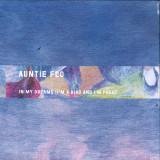
Brian d’Souza, better known as Auntie Flo, delivers his brand-new fourth studio album, ‘In My Dreams (I’m A Bird and I’m Free)’, set for release on 21st November. The album, a rich blend of electronic music, live instrumentation, and global influences features collaborations with the likes of Nicola Cruz, Joshua Idehen, Shingai Shoniwa, Yohan Kebede (Kokoroko) and even his Goan Auntie Florie, where the Auntie Flo moniker is derived from. Each track on the album transports you to a different location: Goa, Istanbul, Nairobi, Mexico City, Waiheke Island, Rio De Janeiro, Havana, Seoul are all destinations to nest in across its ten tracks. It will be available in both digital and vinyl formats on his own label, A State of Flo Records.
Auntie Flo’s latest body of work is the culmination of a five-year journey that has seen d’Souza expand both personally and musically. Known for his unique ability to fuse electronic sounds with rhythms and influences from across the globe, d’Souza takes his craft to new heights in this album, offering listeners an intimate look into the experiences, places, and stories that have shaped his artistic evolution. The groundbreaking DJ and producer presents an expansive, deeply personal exploration of global sounds, collaboration, and migration.
Following the success of the Afro-disco single Green City—a dynamic tribute to the legendary Fela Kuti and Luke Una’s ‘track of the year’—In My Dreams (I’m A Bird and I’m Free) ventures further into uncharted musical territory. The album, however, is more than just a continuation of Auntie Flo’s signature sound. It is a reflection of d’Souza’s life and career, capturing his exploration of identity, migration, and cultural fusion. With tracks that draw inspiration from field recordings collected around the world, the album resonates with a profound sense of place and memory.
In My Dreams (I’m A Bird and I’m Free) is not only a reflection of d’Souza’s creative journey but also a commentary on migration—both human and musical. The album draws on the freedom of birds to migrate across borders as a metaphor for artistic and personal freedom, juxtaposed with the challenges that political barriers impose on human migration. As d’Souza explains, “Birds have the freedom to migrate wherever they choose, while humans face constant barriers”.
A State of Flo supports Earth Percent. 10% of the revenue generated from this release will be paid to environmental charities.
LP + insert with extended liner notes and download code including extra bonus track 'Movements of The Mind'.For his second album on the Belgian leftfield imprint Cortizona, Devin Brahja Waldman gathered a group of insanely gifted and talented musicians to start a new and highly moving musical chapter titled 'Nebulizer'.
From the first moment the pulsating tone of Devin's synth blends with the whispering voices of Earth, Wind and Choir and the menacing bells Naima Karlsson set in motion this record you just know and feel immediately 'Nebulizer' will be a soul-searching journey, soaking you deep into an unknown and very personal musical world.
Devin Brahja Waldman is a New York saxophonist, drummer, synthesizer player and composer who leads the group BRAHJA. He has performed with Patti Smith, William Parker, Nadah El Shazly, Malcolm Mooney, Thurston Moore, Godspeed! You Black Emperor, Charles Hayward, Luke Stewart and Yoshiko Chuma. Waldman is also a member of NYC's Heroes Are Gang Leaders (led by poet Thomas Sayers Ellis and saxophonist James Brandon Lewis), of Sam Shalabi's Land of Kush, and of the Norwegian hardcore group MoE.
In 2022 BRAHJA released the critically acclaimed album 'Watermelancholia' on the Belgian leftfield imprint Cortizona. For his second album on the same Cortizona label, Devin Brahja Waldman gathered a group of insanely gifted and talented musicians to start a new and highly moving musical chapter titled 'Nebulizer'.
Together with Adam Kinner, Georgia Wartel Collins, Earth, Wind and Choir, Luke Stewart, Kenichi Iwasa, Naima Karlsson, Alexis Mercelo, Janice Lowe, Watson and Damon Hankoff, Devin forms a slow-burning fireball unity.
A devotional séance channelling unknown powers proving music is a healing force of the universe.
Rejoicing the Holy Jazz Spirit.
Ready to nebulize the world and bring light out from the darkness. Head cleaning the world in 4 musical parts: Geological Drum, Nebulizer, Bushido and Movements of The Mind. Nebulizer is an elevating meditation on our estrangement of nature.
Interstellar sonic stardust from a mindblowing collective that will leave you flabbergasted.
Be prepared and hear it to believe it.
For fans of: Art Ensemble of Chicago, Archie Shepp, Pharoah Sanders, John & Alice Coltrane, Kamasi Washington, Shabaka Hutchings, SAULT, Ill Considered, Jamie Branche, Angel Bat Dawid, Mackaya Craven, Matana Roberts, Sun Ra and other good music.
Leng’s San Francisco connection has long been strong, with the 40 Thieves collective – and their friend Cole Odin – providing some of the label’s most memorable releases of the last decade. That Bay Area connection comes to the fore once more on the imprint’s latest release, which sees Odin join forces with fellow San Francisco resident Marshall Watson, a long-serving producer, engineer and live performer known globally for his Balearic-minded productions.
‘Voyager’, the pair’s first collaborative single, is a genuine meeting of minds. It combines Odin’s love of low-slung dub disco, dancefloor psychedelia and low-tempo cosmic house with Watson’s
picturesque Balearic synths, sparkling piano riffs and immersive sound design. It’s this blend that dominates on the EP-opening Original Mix, an infectious workout that gets progressively more blissed-out and saucer-eyed as it progresses. Listen carefully and you’ll hear some suitably psychedelic guitar solos nestling amongst the heady washes of sound, sun-bright piano riffs and weighty bass.
Those languid, stretched-out guitar parts naturally take a more prominent role on the Extended
Guitar Mix. On this alternative take, the pair deliver a lightly tweaked take on the original groove, stretching it out while overlaying eyes-closed guitar solos, pots-and-pans percussion and a more DJ-friendly outro. It’s effectively an extended club mix – the club in question being a Bay Area basement at 5am. To round off the EP, Odin and Watson dust off their dancing shoes and pay tribute to San Francisco great Patrick Cowley. On the appropriately titled Cosmic Rave Mix, the pair swap their bass guitar for a pulsating sequenced bassline, trance-inducing synth sounds, and locked-in electronic loops designed to take you to a higher state of consciousness. By the time the track’s familiar piano refrain drops midway through, you’ll be reaching for the lasers in no time at all.
Dark Entries has assembled a superb collection of covers celebrating 60s garage and soul music by the one and only Patrick Cowley. This LP showcases another side of the great producer's diverse influences, in particular his psychedelic San Francisco roots which can be heard in most tracks. They were mostly written between 1980 and 1982 when he was in prolific form and highlight his virtuosity while paying respects to the music that shaped him. The collection features a reimagined version of Loverde's 'Iko Iko,' a hi-NRG cover of The Doors' '20th Century Fox,' and a haunting take on The Who's "Shakin' All Over." It concludes with a swinging rendition of the Four Tops' 'Baby I Need Your Loving' and is another essential one for the collection.
Have you ever been to Miyazaki? It’s a prefecture on Japan’s southern island of Kyushu, facing the Pacific. Palm trees. Humid subtropical climate. This is the home of Maple Fyshh, a musical artist whose late-80s/early-90s recordings have been collected and reissued here. Liberated by the advent of 4-track cassette home recording technology, inspired by a love of 60s pop oddball production mavens like Phil Spector and Joe Meek, as well as American hot rod and surf music, these Maple Fyssh songs glow with an outsider’s love of the transformative power of newly-available sound technology, allowing him to pull his inspirations across decades and oceans to his 1990s Miyazaki home studio. The tracks here are a d.i.y. dream-pop wonderland, compiling songs from his first LP “Mariko” and second LP “Dokitto Station!!”, both self-produced, both released in 1995. The A-side of this release features tracks from the concept album “Mariko”, a masterpiece of daydream pop introspection, recorded in 1994-95, inspired by a poem submitted to a manga magazine. The B-side features tracks from “Dokitto Station!!”, slightly earlier recordings that draw inspiration from a range of 60s pop including girl groups, surf music and acid folk. All the music here demonstrates Maple Fyshh’s deep understanding and appreciation 60s pop moves, and also his mastery of the limited technology at his disposal.
Remastered in 2024, the sound of Miyazaki has been reborn for a new audience. Available on Vinyl LP and download, with a DL card, English/Japanese lyrics and entertaining and informative English/Japanese liner notes by the artist.
EN:
I am thrilled to present my new musical work, "Oscillations" – an album that explores the harmonious connection between the natural world and electronic sound art. The title "Oscillations" symbolizes the vibrations and rhythms that are omnipresent in both
nature and music.
Nature is an inexhaustible source of inspiration. From the gentle waves of the ocean to the subtle oscillations of leaves in the wind – everywhere, there are rhythms and patterns that are music in their own right. These natural movements and sounds inspired me to incorporate them into my compositions and weave them with
electronic elements.
"Oscillations" attempts to bridge the organic world and the synthetic soundscape.
Electronic sounds meet acoustic instruments and merge into a new, fascinating unity.
It's about uniting the natural beauty and the technical possibilities of music to create something unique.
With a piano, a double bass, a harmonium and a Moog synthesizer, I would like to invite my listeners on a journey into my sound universe.
DE:
Mit großer Freude präsentiere ich mein drittes musikalisches Werk "Oscillations" – ein Album, das die harmonische Verbindung zwischen der natürlichen Welt und elektronischer Klangkunst erforscht. Der Titel "Oscillations" steht symbolisch für die Schwingungen und Rhythmen, die sowohl in der Natur als auch in der Musik
allgegenwärtig sind.
Die Natur ist eine unerschöpfliche Quelle der Inspiration. Von den sanften Wellenbewegungen des Ozeans bis hin zu den subtilen Schwingungen der Blätter im Wind – überall findet man Rhythmen und Muster, die auf ihre eigene Weise Musik sind. Diese natürlichen Bewegungen und Geräusche haben mich dazu inspiriert, sie in
meine Kompositionen einzubinden und sie mit elektronischen Elementen zu verweben.
"Oscillations" versucht, eine Brücke zwischen der organischen Welt und der synthetischen Klanglandschaft zu schlagen. Elektronische Klänge treffen auf akustische Instrumente und verschmelzen zu einer neuen, faszinierenden Einheit. Es geht darum, die natürliche Schönheit und die technischen Möglichkeiten der Musik zu
vereinen und daraus etwas Einzigartiges zu schaffen.
Mit einem Piano, einem Kontrabass, einem Harmonium und einem Moog Synthesizer möchte ich meine Hörer auf eine Reise in mein Klanguniversum einladen.
Sam Shepherd alias Floating Points hat heute angekündigt, dass sein neues Album, „Cascade“, am 13. September 2024 via Ninja Tune erscheint.
„Cascade“ ist eine Eruption unvollendeter Angelegenheiten. Ende 2022 fand sich Shepherd, der dafür bekannt ist, so frei zwischen den Genres zu wechseln, wie es sein Künstlername andeutet, in der kalifornischen Wüste wieder, um an etwas Neuem zu arbeiten. „Mere Mortals“, seine erste Ballettmusik, die in Zusammenarbeit mit dem San Francisco Ballet entstand, sollte eine Kollision von Klang und Tanz sein, die die antike Parabel von Pandora durch das Prisma der Technologie erforscht. Auf „Promises“, seinem Vorgängeralbum, das 2021 veröffentlicht wurde, tauschte er seine typischen modularen Synthesizer-Teppiche und komplizierten Drum-Patterns gegen luftige Traumlandschaften aus, die er mit dem legendären Saxophonisten, Pharoah Sanders, und dem London Symphony Orchestra entwickelte. Diese Zusammenarbeit war so beliebt, dass eine Mercury Prize-Nominierung und ein ausverkauftes Konzert im Hollywood Bowl im September 2023 folgten. Zwischen diesen Projekten und einem bevorstehenden Anime-Score für Adult Swim, könnte es von außen betrachtet so aussehen, als ob Shepherd die Tanzfläche für immer verlassen würde. Aber während er tagsüber an seiner Ballettmusik schrieb, sehnte er sich nachts nach der schweißtreibenden Gemeinschaft einer Tanzfläche. Nach der pulsierenden Unbekümmertheit der elektronischen Musik. Im November 2019 veröffentlichte Shepherd sein von Kritiker:innen hochgelobtes zweites Studioalbum, „Crush“. „Cascade“ wurde als Nachfolger:in von „Crush“ konzipiert, um Album (und Publikum) die Möglichkeit zu geben, Floating Points noch einmal in seiner traditionellen Form auf einer Tanzfläche zu erleben: voller Buchla-Rhythmen, glitchenden Melodien, die einen Raum voller wogender Körper verzaubern. Die neun Songs dürfen bis zu acht Minuten am Stück schwelen und funken, was eine weitreichendere Erkundung von Sounds und Grooves als zuvor ermöglicht. Fast ein Jahrzehnt nach seinem vielbeachteten Debütalbum, „Elaenia“, hat der Komponist Wege gefunden, seine Experimente außerhalb der Clubmusik nahtlos in seine für die Tanzfläche konzipierte Musik einzubinden.
An anthology spanning three decades of haunting funk, soul, and disco, from the undisputed godfather of Yemenite-Israeli music, Aharon Amram.
Eine Anthologie, die drei Jahrzehnte eindringlichen Funk, Soul und Disco vom unbestrittenen Paten der jemenitisch-israelischen Musik, Aharon Amram, umfasst.
Seattle's own Manatee Commune (aka Grant Eadie) makes his long-awaited return to
Bastard Jazz with his fourth album, 'Simultaneity'. Lush and vibrant production is
familiar to his previous works, though Eadie has significantly matured in the activation of
space and character. A step away from standard songwriting, and a total disassociation
from lyrics at all, has made this record closer to the ambient genre than anything
Manatee Commune has released, all the while keeping one solid foot in the realm of
dance music.
'Simultaneity', as a whole, is an exploration of the collision between texture and time.
Captured recordings reminiscent of wind in wheatgrass, soft rain showers in the open
plains, and cascading beach sand wash over the mix, splashing into warm drones and
ascending melodies that cleanly syncopate against a steady rhythm. Though decidedly
electronic at times, a raw human element is ever-present in the form of a vocal motif:
just tiny moments of a loving voice lost in a sea of reverberation.
The album is a noticeably positive evolution from previous works. All nine tracks depict
a calmness and subtlety in musicianship, relying primarily on tenuous snippets of live
instrumentation and synthesis that hypnotically coil and coalesce with one another.
'Love Tone', the opening track, features Eadie's partner, a small voice memo clipped
and expanded into an ethereal vocal melody. A crisp felt piano delivers a complex
arpeggiation in 'Mosaic', a warm sonic bath scape reminiscent of Olafur Arnalds or
Kiasmos. Simple, undemanding bass lines drive tracks 'Path' and 'Faulted', though their
simplicity is contrasted with a variety of patterns that combine to create unique auditory
shapes, both building and landing in satisfying climactic movement. The album
culminates in the final track, 'Touch Theme', where a block of sound in the form of a
broad, open synthetic chord warms the ears, eventually twisting and shifting to rhythmic
chunks that shove against a familiar house rhythm.
I lean upon this,
I lean on all of this
and I know
her dress upon my arm
but
they will not
give her back to me.
Early support: Truss, Tommy Four Seven, Truncate, Marcel Dettmann, Psyk, AnD, Pfirter, Eomac, Perc, Rebekah, Svreca, Paula Temple, Dax J, Joseph Capriati, Joachim Spieth, Henning Baer, Lag, Takaaki Itoh, Go Hiyama, D. Carbone, Par Grindvik, Max M, Wire, Paul Mac, Kriz, Octave, Drvg Cvltvre, Dimi Angelis, Joe Farr, Ryuji Takeuchi, Slam, Rivet, Gary Beck, Nuno dos Santos, Manni Dee, Luis Ruiz, Mark Morris, Mattias Woot, Mike Darkfloor, Erphun, Radial, Exium, P.E.A.R.L., Mr. Jones, Joseph Mcgeechan, Joton, UVB, Juho Kusti, Aiken, Operator, Jeff Rushin, Martyn Hare, Inigo Kennedy, Sebastian Kokow, Roberto, Shards, L.A.W, Ricardo Garduno, Space DJz, Operator, Blank Code, Patrick DSP...
Hi-NRG synth pioneer Patrick Cowley moved away from his usual robotic steeliness on 1982’s “Primitive World,” drawing instead on the groove rock of early 1970s gay discos. It’s a percussion track influenced by Baba- tunde Olatunji’s 1959 hit “Jin-Go-Lo-Ba,” made more famous by Santana’s 1969 cover. Cowley updated the sound for the 1980s with electronics and drum machines but kept the playful attitude of the original. Two choirs of voices chant back and forth to each other, giving Cowley a chance to include many of his friends from the San Francisco dance music community.
This has been DJ Hifi Sean’s year, with a best-selling album with David McAlmont , count- less live gigs and high-profile remixes to his name. His interpretation of Cowley’s “Primitive World” can be counted among his best, bringing an intense TB-303 acid house vibe that perfectly complements Cowley’s weird electronic blips and bleeps. The effect is a disorienting mix of psychedelic 70’s groove, 80s synth pop, and 90s tacky house vibes. “Primitive World,” is one of the brilliant standouts on Cowley’s final record, Mind Warp, the so-called “death album” written as his health was rapidly sinking. Hifi Sean’s new remixes pay tribute to Cowley’s genius while fusing the track even more strongly to dance music’s electronic future.
Nine months after the well received MXMN002, SAMA is back on his own imprint with his third release. 4 tracks, all centered around a general theme; each track consists of textural soundscapes and heavy growl-like sounds, but with vastly different flavours.
Whereas “There’s Not A lot To Say” is the most subdued and atmospheric track, “Benefit The Masses” is the more in-your-face track, driven by a heavy broken-beat kick pattern.
On the B-side, “Fragments Of Distrust” is a more tribal and groovy track, and to top it off “Gentle Reminder” is the most driving track, with a forward-pushing locked groove. Long story short: there should be a track in there for everyone’s needs.
As with the first two releases, the artwork is painted by Argentinian artist Ric Santesteban.
Mr. K’s series of edits on Most Excellent Unlimited is nothing if not eclectic, and utilitarian — as befits a veteran DJ of Danny Krivit’s stature. For our latest, Krivit pulls two disparate gems out of his bag of tricks and fits them neatly on a single 7-inch piece of vinyl.
In 1972 Ralph Bakshi’s landmark underground animated film Fritz the Cat was released, featuring a soundtrack performed by an all-star cast of San Francisco area musicians associated with the Berkeley-based Fantasy label. Perhaps Fantasy’s biggest artist was the vibes player Cal Tjader, who debuted in 1955 and was still going strong when songs were gathered for the movie’s soundtrack nearly twenty years later. Rather than simply using one of his older, already-recorded tunes, Tjader laid down a completely new version of his earlier hit record “Mamblues.” This time however, he swapped his standard latin percussion accompaniment for a can’t-miss rhythm section of Bernard Purdie, Chuck Rainey, and Arthur Adams. The result was a searing funk workout that took the latin jazz classic to new heights. Mr. K subtly warms this one up by adding a hint of reverb and bringing the tempo down a notch, pushing things from frenetic to funky, and firmly into friendly mixing territory for the DJs.
For our flip side, we turn to an unsung jewel amongst Philadelphia’s many contributions to disco music. Executive Suite released a series of singles in ’74 and ’75 that were recorded at the famed Sigma Sound Studios and had ties to a number of better known disco luminaries, among them the holy trinity of Baker-Harris-Young and, on “You Believed In Me,” the mighty Patrick Adams. Along with his longtime associate Stan Lucas, Adams garnished the vocal quartet’s composition with a driving arrangement and epic, soaring strings. The combined effect produced a vibrant, uplifting club cut that echoes the positive spirit of Curtis Mayfield’s “Move On Up” while being altogether its own thing. For our latest release Mr. K focuses solely on Adams’s instrumental section, returning repeatedly to that addictive string riff and creating a propulsive rhythm track that just doesn’t quit. And we don’t want it to!
As always, these connoisseur’s choice cuts have been remastered and pressed to Most Excellent Unlimited’s standards, and are primed and ready on 7-inch for DJs and home listeners alike.
'After a first album as a duo released on Okraina Records: "Le Corps Défendant", Delphine Dora and Mocke invite us to join them again in listening to a new album. We slip into it as if in a dream, the music carries us away with its floating images.
Heard before on a handful of disturbingly beautiful solo albums and in collaborations such as Midget!, Arlt, Chevalrex, Mohamed Lamouri, Mocke (Dominique Dépret's nom de plume) is a subtle and inventive guitarist, who draws melancholic arpeggios, with a beautiful languor, that walk the line between tensions and tears. Delphine Dora has been heard with Roxane Métayer, Sophie Cooper, Andrew Chalk, Jackie McDowell, Helena Espvall, Valentina Magaletti ... meeting in a moment of improvisation, a solitary sincopated voice blooming between the black and white keys of her piano, tuning betwist these keys, or at other times in the gap of the right note. Here improvisation feeds on melody, or is it the other way round?
Recorded in an old church in the village of Mauzun in the Puy-de-Dôme, by Cyril Harrison, "L'invisible est multiforme" is an invitation to join them, to let these abstract songs erase our obsessive thoughts of the day, to open ourselves to the vibrant poetry of the air and the evening, to finally forget ourselves. Each note played by these four intertwined hands is like a slight break in the fabric of time, sliding one over the other, reminding us of mortality and its beauty. Ritornellas flow out of mechanical clocks, fragile, taking care not to hurt the silence. Both seek to dig and open up new paths to enrich their duet, to open up imaginary landscapes. Sometimes the guitar cuts through the fabric of an organ, fractures the song, just as the rain erases a landscape, redrawing it. But very quickly, both of them continue to follow this new path, improvising what will serve as a framework, a perspective, a language. There is a kind of praise for slowness in this "invisible", a desire to hold back the song, not to let it slip away, to let the listener's ear enter its course, to share the last note, its illumination. Each of these thirteen short sound pieces merge into a common colour, a vibration close to the different tonalities, which inter-penetrate, like a cubist painting. Words cannot take away the mystery of this record, words can only fail to describe the music, you must hear it.'
- Michel Henritzi
Halbert kicks off "OUR STORY“ EP with no fear and no compromises to his sound legacy. It has been produced during the last year in the neighborhood of Santa Catalina - where everything is happening - under the experience and influence of local parties such as private villas and small sweaty clubs.
A1 "OLEEVA" features a weird half-tempo break, grooving along a 4x4 kick and Bmore loop style. The "Spanish" trumpets act as an irresistible hook, leaving a long lasting impression. A fusion of folklore and timeless sounds, "Oleeva" is a true party anthem that defies genres. Continuing the journey, A2 "WHAT IS IT?" is a playful cocktail-Molotov made of fat FM rolling bassline, slap bass guitar, arabic strings, and other mind-bending surprises. Get ready to let loose and immerse yourself in this freaky gem.
On the flip, B1 "SECRET PATH" delivers a functional old catchy house jam with a non-directional arrangement where organic meets dark electronic synth sound. An ideal companion for a pool party or daytime vibes. Wrapping up the EP, B2 ”POWER UP!" shines as a high energy breakbeat tune influenced by Plank Records sound. Featuring an evolving big guitar synth stab, lively percussion, uplifting trancy synths and robust old school bass.
Mixed by Halbert and Hamid at MariaDiaz Studio. Mastered by Marco Pellegrino at AnalogCutMastering Berlin.
Die bereits mehrfach für die GRAMMYs nominierte brasilianische Sängerin Bebel Gilberto veröffentlicht ihr mittlerweile achtes Studioalbum 'João'. Das Album ist eine Sammlung von Liedern ihres Vaters João Gilberto, der weithin als Erfinder und Wegbereiter des Bossa Novas gilt und 2019 nach einer 70-jährigen Musikkarriere verstarb. Bebel begann schon als kleines Kind mit ihm zu singen und die Lieder, die sie nun in neuem Gewand präsentiert, begleiten sie schon ihr ganzes Leben - 'João' ist ihr ganz persönlicher Liebesbrief an João Gilberto und seine Musik.
Sound artist and researcher Amit Dinesh Patel aka Dushume began working in the field of music technology in 2000. In 2021, he began a research project addressing the distinctive lack of visibility for Black and Brown artists within the field of experimental music and sound: "Exploring Cultural Diversity in Experimental Sound", hosted at the Sound/Image Research Centre, University of Greenwich.
Disruptive Frequencies is one output of this research. Patel, together with five other Black and South Asian experimental and electronic artists recorded new music to release as part of this compilation:
Crossing noise, high-energy electronic music, deep bass, ambient and experimental soundscapes, this compilation is a statement challenging institutional Whiteness, racist biases, lack of visibility and access to experimental practices. Each contribution pushes the boundaries of sound manipulation, turntablism, field recording, audio fragmentations and sound collage techniques.
Carved out from between the cracks of life over a 2 year period, Low Flung presents his eighth full length album ‘The Wheel’. Together, the 11 tracks provide a space to process and sit with difficult change. This takes the form of microscopic minimalist landscapes. Presented in both audio and physical form as micro grooves on a 12” vinyl.
At times the sound wanders and walks, other times it remains still, clear and precise. The omni-present artifacts found in ‘The Wheel’ are left to breathe a different life during each listen. Drones act like familiar trails losing their path as space transforms like a breeze over a table of sand. Hyper focused spores evolve around blurred waves of time. Electronic tones are captured flowing to the rhythm of a decaying natural world.
‘The Wheel’ is a patchwork of sonic experiments made using modular synthesis, fixed architecture synthesis, Buchla Music Easel (replica), outboard effects, cassette manipulation techniques, samplers and field recordings taken along the texturally rich and historically questionable eastern coastline of Australia.
The tracks have been composed with a materiality that embraces the acoustics of different listening environments. Much like mood, this means each listening experience is unique due to the natural acoustics of your listening space. The sounds on this album embrace this phenomena, creating a rich, visceral listening experience that slowly scratches away at discrete moments of time
Rather than attempting to traverse new sonic fields of experimentation in ‘The Wheel’, the album touches on the various spaces Danny has explored over the past ten years as an Audio Visual artist. Although technically eighth, it would be more fitting to say this album draws a clear line from ‘Blow Waves (2018)’ to ‘Outside The Circle (2020)’ to become the third and final chapter in the expanded non linear, unintentional landscape series. Serendipitous that each was conceived over 2 year periods of time.
While the key focus is sitting with difficult change, this album is also a celebration of any moment you might find yourself in. Good, bad, easy or hard, this album is an attempt to help with feeling content wherever you are along your path. With each cycle a new context.
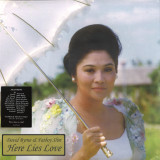
David Byrne & Fatboy Slim’s acclaimed 2010 album Here Lies Love receives its first-ever vinyl release to coincide with a new production opening on Broadway this summer. Here Lies Love is a double-disc song cycle – improbably poignant, decidedly surreal, surprisingly thought provoking – about the rise and fall of the Philippines' notorious Imelda Marcos. It was conceived by David Byrne; composed by Byrne and DJ/recording artist Fatboy Slim, AKA Norman Cook; and performed by a dream cast drawn from the worlds of indie rock, alt country, R&B and pop. Byrne's taste in collaborators is as imaginative as it is impeccable, including Cyndi Lauper (who recounts, to lighthearted disco beats, Imelda's courtship with Ferdinand Marcos), Steve Earle (as the power-hungry Ferdinand), Dap-Kings vocalist Sharon Jones (recalling Imelda's introduction into New York society) and Natalie Merchant (as spurned Imelda confidante Estrella, anticipating the onset of martial law). Along with vocals turns from such stars as Tori Amos and the B-52's Kate Pierson, Byrne works with rising indie rockers St. Vincent and My Brightest Diamond; New York chanteuses Nellie McKay and Martha Wainwright; and dance-music divas Róisín Murphy and Santigold. Byrne himself appears as the voice of imperialistic America on ‘American Troglodyte’, a send-up that wouldn't have seemed out of places in Talking Heads' True Stories.
Byrne originally envisioned this as a musical theatre piece, to be mounted in disco and nightclub settings, reflecting the globe-trotting Marcos' taste for such velvet-roped spots as Studio 54 and Regine's. In 2006, he performed work-in-progress versions to enthusiastic audiences at New York City's Carnegie Hall and the Adelaide Festival in Australia. While plans for a US theatrical production continued to evolve, he delivered this unique recording. The award-winning theatrical production eventually premiered at The Public Theater in New York in 2013, travelled to London’s National Theater for a sold-out run (2014–15), and was remounted at the Seattle Repertory Theater (2017).
Here Lies Love has an effervescent disco feel, redolent of Fatboy Slim's own dance-floor anthems, with warm undercurrents of the Latin rhythms that have percolated through Byrne's recent solo work. The sunny arrangements act in counterpoint to the reality of the Marcos' increasingly repressive regime, reflecting the imagined inner life of the glamour-obsessed Imelda. Explains Byrne, "For me, the darker side of the excesses are, for the most part, a matter of record. A lot of the audience is going to come with that knowledge already. What's more of a challenge is to get inside the head of the person who was behind all of that, and understand what made them tick." Byrne offers no judgment and avoids the obvious – there is no mention of Imelda's infamous shoe collection.
Many of Byrne's lyrics are, astonishingly enough, constructed from actual Imelda quotes, including the project's title, the words that Imelda, now returned to the Philippines from US-assisted exile in Hawaii, would like to have inscribed on her gravestone. In addition to his new liner note, Byrne illustrates the story with archival photos. In a detailed preface, he reveals what drew him to this subject and the bumpy route he took to launch the project and, ultimately, record this album. The booklet is indeed a page-turner, just as Here Lies Love is a wonderfully old-school album that rewards start-to-finish listening. Once again, Byrne – beloved as musician, thinker and bicyclist-about-town – reveals the breadth and singularity of his vision.
The new production of Here Lies Love will premiere at the Broadway Theatre in New York City. Performances begin June 17, ahead of an official opening night on July 20. Tony Award winner Alex Timbers (direction) and Olivier Award nominee Annie-B Parson (choreography) reunite with Byrne (concept, music, and lyrics) and Fatboy Slim (music) to bring Here Lies Love to Broadway, continuing a ten-plus year collaboration on the project. Tom Gandey and J Pardo contribute additional music. Here Lies Love is produced on Broadway by Hal Luftig, Patrick Catullo, Diana DiMenna for Plate Spinner Productions, Clint Ramos, and Jose Antonio Vargas. The staging at the Broadway Theatre will transform the venue’s traditional proscenium floor space into a dance club environment, where audiences will stand and move with the actors. A wide variety of standing and seating options will be available throughout the theatre’s reconstructed space. The producers of Here Lies Love said, “As a team of binational American producers – Filipinos among us – we are thrilled to bring Here Lies Love to Broadway! We welcome everyone to experience this singularly exuberant piece of theatre. The history of the Philippines is inseparable from the history of the United States, and as both evolve, we cannot think of a more appropriate time to stage this show. See you on the dance floor!”
David Byrne’s recent works include the launch of Reasons to be Cheerful, an online magazine focused on solutions-oriented stories about problems being solved all over the world (2019); Joan of Arc: Into the Fire, a theatrical exploration of the historical heroine that premiered at the Public Theater in New York (2017); The Institute Presents: NEUROSOCIETY, a series of interactive environments created in conjunction with PACE Arts + Technology that question human perception and bias (2016); Contemporary Color, an event inspired by the American folk tradition of color guard and performed at Brooklyn’s Barclays Center and Toronto’s Air Canada Centre (2015); Here Lies Love; Love This Giant, a studio album and worldwide tour created with St. Vincent (2012); and How Music Works, a book about the history, experience, and social aspects of music (2012).
Byrne curated Southbank Centre’s annual Meltdown festival in London in 2015. A co-founder of the group Talking Heads (1976–88), he has released eight studio albums as a solo artist and worked on multiple other projects, including collaborations with Brian Eno, Twyla Tharp, Robert Wilson, and Jonathan Demme, among others. He also founded the highly respected record label Luaka Bop. Recognition of Byrne’s various works include Obies, Drama Desk, Lortel, and Evening Standard awards for Here Lies Love; an Oscar, Grammy, and Golden Globe for the soundtrack to Bernardo Bertolucci’s The Last Emperor; and induction into the Rock and Roll Hall of Fame with Talking Heads. Byrne’s work as a visual artist has been published and exhibited since his college days, including photography, filmmaking, and writing. He lives in New York City. In addition to 2019’s cast album for American Utopia on Broadway, Nonesuch has released eight other David Byrne records since 2003, including 2018’s American Utopia studio album and two versions of his musical Here Lies Love.
This live album — released on vinyl for the first time — is made up of three European dates in 2001, and introduced Shorter’s ‘Footprint Quartet’: pianist Danilo Perez, bassist John Patitucci and drummer Brian Blade.
All are in top form, especially on challenging reimaginations of the title track and ‘Masquelero’, both from his time with the 1960’s Miles Davis Quintet.
Contagion Vapors was recorded between May 2020 and March 2021, in tandem with 'Transgressive Transmissions'. Both albums have been released by Castles in Space, however they feature completely different sonic energies.
Caught up in the first wave of pandemic doom/gloom which resulted in a bizarre creative bloom for Patrick, both albums have unique sounds anchored in the immense Patrick R Pärk/Kösmonaut discographies. This one is definitely a Kösmonaut record, however.
Patrick’s Contagion Vapors is a vaporwave sonic adventure which
soothes the worn soul like an icy balm with its motorik repetitions and sonic patterns and swirls.
Uncharacteristically upbeat and always positive, the album was a personal exercise in not becoming consumed by COVID isolation and misery. Major influences were Patrick Cowley, Cybotron, Automat, Cluster, and Harmonia and the entire album was recorded / mixed in the midnight witching hours over the course of only 2-3 days.
Ever prolific, Patrick is currently deep diving hard into post Y2K New Age conjurations with his massive Galactic Mirage project which should see another CD box set later this year. There's also some forthcoming Teeth Of Glass vinyl coming from Library Of the Occult later this year and plenty of Patrick’s self released "chrome sonic babies" in between.
Two years after his acclaimed ‘Darkos LP’, Jonquera is back to Charlieu’s surrounding vales for his second album on Bamboo Shows.
Through ‘La Croix des Cros’, the French Musician delivers a loner-folk eclogue about the fantasized inner demons of a country dweller. Just like clay, audio recordings here are a malleable substance, slowly reworked over a year, following a sinuous production process where all mishaps are welcomed as breaches to step into.
Far from the spaghetti western myth of the reckless bounty hunter, riding his faithful horse in the great outdoors to spill blood; this 14-track album is the grieving lament of a wistful cowboy, longing for a simple patch of peace where one’s free to cultivate the earth and noodle on the guitar.
Heldon’s cosmic space-rock, Badalamenti’s Twin-Peaksesque foggy jazz or Morricone’s glorious soundtracks, so many references to portray another fertile imprint by Jonquera, available from February 13, 2023 on a 12” vinyl.
*MILKY CLEAR VINYL - 300 COPIES ONLY FOR WORLD!!* Technology + Teamwork’s fizzling synths, interweaving textures and punchy rhythms are beguiling on their long-awaited debut album We Used To Be Friends. However, at the heart of it all it’s the connection between the group’s two members, Anthony Silvester and Sarah Jones, the friendship the much-travelled duo have managed to maintain for nearly 15 years and a showcase of the slow-burning construction of the electronic world that they’ve surrounded themselves with. We Used To Be Friends is ultimately the tale of two storied artists in their own right, holding onto each other through personal and career twists and turns, relocations and broader movements through respective phases of their lives. Silvester and Jones first met and then collaborated as part of biting post-punk five-piece XX Teens in 2008, eventually breaking off to forge their own path together even as the latter’s demand as a drummer grew. Performing with everyone from Hot Chip, Harry Styles and Bloc Party among many others, Jones has been a constant percussive presence across the sphere of alternative UK pop music – she’s also found time for her own solo project Pillow Person and played on records by the likes of Puscifer and Kurt Vile. Silvester meanwhile has performed in art galleries across Europe including: Fridericianum in Kassel, Kölnischer Kunstverein in Cologne, and Vleeshal in Middelburg, as well as providing sound design and composing work for several art films. Technology + Teamwork is the constant throughout all of that though. “Technology + Teamwork's name perfectly describes how we work” Silvester explains. “Sometimes the teamwork is between each other and sometimes it’s between us and the technology.” Although going by the name Technology + Teamwork as far back as 2014, two events conspired that pulled the project into focus for the pair of them: firstly, Silvester spent a year constructing a soundproof studio shed on the border of London and Essex where he lives. Secondly, inevitably, the pandemic brought the globe-trotting Jones back home to just seven miles away from her long-time collaborator and friend. “We probably hung out more than we had for a few years” says Silvester. “Also, after all her Pillow Person releases Sarah had gotten really good with recording vocals and knowing what did and didn’t work and had a really good home studio set up. We still worked separately though, exchanging ideas via email and WhatsApp.” As with many artists through 2020 and early 2021, working separately was a new necessity that they were forced to adapt to. However, it became clear that there were creative benefits to it. “It really changed our sound and our sounds became a lot more focused as a result” Jones says. “I wanted to use the same ideas of improvisation that I might use while playing the drums for myself and apply that to melodies and lyrics.” The album bristles with hyperpop modernity. You can hear it in the manipulated vocals most prominently on Big Blue’s disco strut and on Moving Too’s heady mix of pitched up voice and burrowing sub bass. However, the pair also looked to San Francisco and the West Coast synthesis movement of the 60s, Silvester inspired by the likes of Suzanne Ciani and Don Buchla. The plaintive lo-fi and melancholy of Amsterdam incorporates Mutable Instrument’s Marbles by Émilie Gillet which – inspired by Buchla’s own synthesis work – outputs random voltages to give the track an air of unpredictability. It’s something that occurs throughout the album, the duo revelling in the happy accidents that disrupt the flow of their hook-laden pop. “The ‘Buchlian’ ideas of music having randomness and uncertainty, completely freed us up” Silvester explains. “It felt a bit like having more members in the band, machines that didn't do what you expected or intended.” Perhaps more subtly, is the influence of 17th and 18th century Baroque music, with Silvester drawing a line between it and the 90’s R’n’B he and Jones both love – exemplified perhaps best on K+B’s percussive claps and sultry grooves. The portentous juddering synthpop of the title track, meanwhile, alludes specifically to Handel’s Sarabande. It’s typical of an album that only needs a scratch of its seemingly glossy surface to unearth a myriad of contorted touchstones and reference points that’ve fermented beneath it. Thematically there’s an anxious sense to the record, with tracks often balancing above a quiet sense of unerring tension even at their most bombastic. Moving Too is the result of an existential doubt that hit Silvester while out cycling, with the outro refrain "it's not enough to die you also have to be forgotten" a take on something Samuel Beckett once said. These worries are echoed on the album’s closing track What A Year, which borrows a lot of lines from the late drag performer and fashion designer Dorian Corey including the grimly defiant "you're gonna leave your mark somewhere in this world just by getting through it”. Those clouds offer a counter point to We Used To Be Friends, but then isn’t that what great pop albums do? Technology + Teamwork undoubtedly love the craft of the hook and the song, but they always position themselves left of centre, prepared to scuff things up, pull something out of shape or manipulate something to leave it sounding warped. Much like their friendship, nothing here is particularly linear – and it’s all the better for it. Bio: Anthony Silvester & Sarah Jones first collaborated as part of biting post-punk five piece XX Teens in 2008, eventually breaking off to forge their own path together even as the latter's demand as a drummer grew. Performing with everyone from Hot Chip, Bat for Lashes, Harry Styles and Bloc Party (among many others), Jones has been a constant percussive presence across the sphere of alternative UK pop music - she's also found time for her own solo project Pillow Person and played on records by the likes of Puscifer and Kurt Vile. Silvester meanwhile has performed in art galleries across Europe including Fridericianum in Kassel, Kölnischer Kunstverein in Cologne, and Wleeshal in Middelburg, as well as providing sound design and composing work for several art films. Technology & Teamwork is the constant throughout all of that though. "We Used To Be Friends" proves that Technology & Teamwork undoubtedly love the craft of the hook and the song, but they always position themselves left of centre, prepared to scuff things up, pull something out of shape or manipulate something to leave it sounding warped. Much like their friendship, nothing hear is particularly linear - and it's all the better for it.
Flautist Johanna Orellana teams up with Carmen Villain for a collection of horizontal, pastoral field recordings and close mic-ed flute sounds that zero in on the instrument’s unstable resonance and levitational magic. There’s no cringe virtuoso business or fourth world firewalking here - just sonic purity, sublime minimalism and the precise capture of time, place and poetry.
You might have come across Johanna Orellana before if you’ve listened to Carmen Villain’s music (or seen her perform live), and Villain appears here in a producer’s role, using her engineering expertise to impart a level of restraint and sonic fidelity that’s quite startling. There are only really two central elements to the album: environmental recordings and flute. There’s no psychedelic delay, no cavernous reverb; no audible treatments at all - Orellana and Villain instead force us to consider the flute and its musical lineage.
‘El Jardín I’ introduces the instrument as a physical conduit; Orellana allows her breath to distort the sound - the padded pat pat of the keys forms a kind of rhythm, closely recorded so it’s amplified and jarring, linking to primal wind instruments like conch shells, bamboo flutes and wooden whistles. Recalling the way in which Debit interfaced with the ancient world using AI- assisted tech on last year’s ‘The Long Count’, Orellana uses a comparatively modern contemporary transverse flute, an instrument with roots that stretch back through the baroque era, into Medieval Europe, back to the Byzantine era and into Asia. The component that connects the instruments and eras is breath, and its amplification and modification through differently shaped pipes and vessels.
Orellana lets the environment sing: insects, rushing water and zephyr-like winds form a stage that presents her mortal energy, suggesting a harmony between our use of breath and its environmental ubiquitousness. Her technique is steeped in folk history and decouples itself from expectation by rooting itself in nature. It allows her to bridge the gap between equal temperament and less ordered (less commercially-focused) microtonality without overstating the concept. Other sounds waft in from the sidelines; what might be an Indian bansuri, stray notes, a gust of air.
There’s a link to the foundational new age recordings that Joanna Brouk made with Maggi Payne back in 1980, but Orelanna also absorbs the outdoor folk magic of Fonal or Stroom, and the improvisational grist of Bendik Giske or legendary US horn duo Nmperign.
Neroli is back with a new album project by long time hero and music mastermind Kirk Degiorgio. This project links the Planetary Folklore aesthetics and Kirk’s praised contribution to The First Circle, the beautiful ‘Leave Everything Behind’, in a very spiritual and ethereal way.
Born after witnessing Pharaoh Sanders performance at We Out Here festival in 2022, ‘Robe Of Dreams’ represents Degiorgio’s tribute to the artists that shaped his musical world.
11 track album by Patrick Cowley. Perhaps one of the most revolutionary and influential people in the cannon of disco music, Cowley created his own brand of Hi-NRG dance music coined 'The San Francisco Sound.' By the mid-70ies, Patrick's synthesizer skills landed him a job composing and producing songs for disco superstar Sylvester such as 'You Make Me Feel (Mighty Real)', 'Dance Disco Heat' and 'Stars.' This helped Patrick obtain more work as a remixer and producer. Of particular note was his 18-minute long remix of Donna Summer's 'I Feel Love'. By 1981 Patrick released a string of dance 12inch singles, like 'Menergy' and 'Megatron Man', creating the soundtrack for a generation. Prior to his passing on November 12, 1982, he recorded two more Hi-NRG hits, 'Do You Wanna Funk' for Sylvester and 'Right On Target' for Paul Parker. In 1981 Patrick was contacted by John Coletti, owner of famed gay porn company Fox Studio in Los Angeles. John had heard about Patrick's music from the legendary Sylvester and proposed he write music for his films. Patrick jumped on this offer and sent reels of his college compositions from the 70s to John in LA. Coletti then used a variable speed oscillator to adjust the pitch and speed of Patrick's songs in-sync with the film scene. 'School Daze' is a collection of Cowley's instrumental songs recorded between 1973 and 1981 found in the Fox Studio vaults. Influenced by Tomita, Wendy Carlos and Giorgio Moroder, Patrick forged an electronic sound from his collection of synthesizers, modified guitars and self-constructed equipment. The listener enters a world of dark forbidden vices, introspective and reflective of Patrick's time spent in the bathhouses of San Francisco. The songs on 'School Daze' range from sparse prototechno to high octane funk to somber post-punk to musique concrete, revealing the depth of Cowley's unique talent.
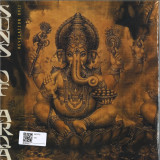
Suns of Arqa is a sonic mission created by luminary Michael Wadada, who began in 1979 after receiving higher guidance in Jamaica while working with roots reggae chanter Prince Far-I. It is a prolific traveling music collective that has seen over 200 collaborators, meant to connect people from all cultures and walks of life through a “deeply spiritual vibration that merges cultures, faiths and musical genres”. Wadada combines ancient Hindustani raga systems with Piobaireachd and Nyabinghi roots drumming, creating ritualistic world music infused with dub and reggae.
The lyrics combine both mystical and sensory elements, often including prayer and referencing a higher power but finding root in experiences common to all people- memory, sight, and physical sensation.
Their first album, Revenge of the Mozabites, was a collaboration between Wadada and On-U Sound creator Adrian Sherwood. Following its 1980 release,Peter Gabriel invited them to perform at the first WOMAD festival. Today, the record is regarded by some as a cult classic. Over the years they have played at many major music festivals including Glastonbury, Big Chill, Telerama Dub Festival, and Transmusicales, and released over 40 albums on Virgin, EMI, Interchill Records, Antler Subway, Red Rhino, and their own label, Arka Sound.
Suns of Arqa has had a seminal influence on the World Beat sound, and continued to make appearances at seasonal festivals and sacred ritual spaces all over the world until 2021. Michael Wadada passed away in the midst of planning their U.S. tour for this release. The record is a compilation of some of Wadada’s and Sleepers Record’s favorite old Sun of Arqa tracks, mixed by Youth and Adrian Sherwood, and mastered by Eroc (drummer of Grobshnitt).
Notable collaborating artists include: Guy Called Gerald, UK producers Youth and John Leckie, Greg Hunter, 808 State's Graham Massey, Finley Quaye, Sounds From the Ground, Bryn Jones aka MuslimGauze, Adrian Sherwood, John Cooper-Clarke, The late great Professor Stanley Unwin, Eric Random, New age guru Tim Wheater, Astralasia, Prince Far-I, The Orb's Alex Patterson, Zion Train, and Gaudi.
"And although the Great Spiritual being Michael Wadada has returned to source and his body to earth at our time, his music is alive and will continue to be a great force for higher spiritual realms and raising vibration through occult frequencies...Suns of Arqa will continue to raise the vibration of the hearts and minds of humanity" – Angela aka Angel-Eye (Wadada's wife and bandmate)
30 years as a full-time touring nightclub DJ sounds like one hell of a career, and for Kenny Summit it's as much of a milestone as it is a turning point. Having shared the stage with greats such as David Byrne, Stevie Wonder, Chaka Khan, George Michael, Kylie Minogue and Prince over the years, Kenny took that influence and inspiration and decided it was time for him to get behind the mic too.
‘Burnin’ is a song written, produced and performed by Kenny Summit that speaks on a desire that's been burning inside of him for three decades. Across those 30 years he’s made many an influential friend too, three of which come on board to remix ‘Burnin’ - the late great Paul Johnson, D&B icon DJ Aphrodite and Brooklyn legend DJ Spinna.
"I caught the fever for house in 1990 and by 1992 I was booked for my first DJ gig at New Jersey's famed Zanzibar nightclub where house legend Tony Humphries held court on a weekly basis. Something changed that night, a fire started and its been building, growing inside of me and now it's time to put paper to pen and write my own songs."
Clearly influenced by the artists Kenny's worked with over the years, ‘Burnin’ is a culmination of one man's journey through dance music; from the Nile Rogers-ish 70s guitar riff to the whining Steely Dan-like keys, to the lush strings and synth pop stabs that would make Moroder blush, the track itself is masterfully produced and punctuated with Kenny's unique uplifting vocals, sang in a manner as if David Byrne and Boz Scaggs were put together and yet still very uniquely Kenny Summit.
Up on remix duties the late great Paul Johnson, Chicago's shining star, serves up a dark, very much after house vibe, that still keeps that trademark Paul Johnson sound. Drum & Bass icon DJ Aphrodite applies his unique sound to ‘Burnin’ with a stellar remix the D&B community has been patiently waiting over three years for. And finally, long-time friend, Brooklyn's DJ Spinna steps up, who after hearing the track commented 'this needs a dope DUB! Leave it to me, imma hook you up bruh!'. The Discoelectric Dub does not disappoint.
In 1982, Bukky's path led him to London, where he became one of the forerunners in the Acid Jazz scene. A young A&R man named Gilles Peterson signed him to the newly formed Acid Jazz label and his first release "Rejoice In Righteousness" went straight to the heart of the Acid Jazz world, reaching number 1 in the rhythm and blues, dance and jazz charts. The follow-up album "River Nile" led to a nomination at the US African Music Awards in New York. There he became acquainted with the legendary, late tenor saxophonist Joe Henderson who invited Bukky to his home in San Francisco.
The Parisian jazz / funk collective The Big Hustle returns with the release of their third LP titled For Life published by Betino’s records. The Big Hustle here definitively asserts its identity, once again demonstrating the strength of the collective, and positions itself as the guardian of "real" organic music from the US jazz / funk tradition of the 70's.
The group has chosen for this new opus to refocus on the musical core of the band. However a few selected guests are present, for example the virtuoso saxophonist Baptiste Herbin, and Marie Sané, rising star of the Parisian soul scene.
The group returns to a musical approach close to their first LP, favoring instrumental titles to vocal pieces. The artistic orientation here has been to favor mastery and precision over spontaneity and the raw side of the beginnings. Funk in all its forms remains the essence of this album, especially on « 78 Funk ». We can also identify influences from jazz, afro pop, hip hop, modern gospel to rock. The overall sound of the album is marked by a more advanced and worked production. We can discover new sounds brought by the post production work that evoke the sound of dub, hip hop etc ... Nicolas Gueguen (Beat Assailant, NTM, Booster…) is once again in charge of the mixing process and brings his savoir-faire to reveal the best of each track and highlight all the subtleties of the arrangements and the interpretation.
For Life stands as the continuation of the artistic path of The Big Hustle : an odyssey in the making through the African American musical tradition of yesterday, today and tomorrow. The Big Hustle is definitely ready to evolve in the current musical world and well beyond. For Life!
Alésia Cosmos was a collective of musicians led by Bruno de Chénerilles formed in the early 1980s in Strasbourg, France. The group consisted of Pascal Holtzer (guitar, synthesizer, tapes, drum machine, vocals), Pierre Clavreux (vocals, gong), Marie-Berthe Servier (vocals), Bruno (guitar, tapes, synthesizer, drum machine, vocals) and Tunisian percussionist Lotfi Ben Ayed (darbukas, bendir). In 1981 Bruno composed and wrote some sci-fi radio plays for French state radio channel France Culture. Under the influences of William Burroughs, John Cage, Pierre Henry and others, he developed tape music studio work. By 1982 he appeared for the first time under the name Alésia Cosmos Furi Show. It was a solo performance on guitar, voice, analog synth and tapes. This experimental show lead to a music project based on Bruno and Pascal's compositions to be performed and recorded with other musicians in the beginning of 1983.
Exclusivo! was the group's debut album recorded and self-released in 1983 on Planetarium. Pascal and Bruno would compose tunes in their personal home studios. Then they would bring the tapes, electronics, guitar lines and lyrics to experiment and rehearse with the other members of the group. Improvisations and adaptations brought more ideas and the album was recorded in a few days. The result was a musical mixing of electronic music, field recordings, North African and Asian percussion, electric guitars and voices, compositions and free improvisations. All four musicians take turns singing onomatopoeic phrases and backing vocals, even sometimes in an unknown language, a sort of mixed bag between Breton and Japanese. All songs have been remastered cut by George Horn at Fantasy Studios in Berkeley. Each LP is housed in a replica of the 1983 cover and includes a 6-page insert with photos, lyrics, reviews and liner notes by Bruno de Chénerilles.
Dark Entries and Honey Soundsystem Records have teamed up again to release another volume of gay porn soundtracks by San Francisco-based musician and producer, Patrick Cowley. Perhaps one of the most revolutionary and influential people in the canon of disco music, Cowley created his own brand of Hi-NRG dance music, ''The San Francisco Sound.'' Born in Buffalo, NY on October 19, 1950, Patrick moved to San Francisco at the age of 21. He studied at the City College of San Francisco where he founded the Electronic Music Lab. During this time, Patrick, along with his classmates Maurice Tani and Art Adcock, would create radio jingles and electronic pieces using the school's equipment: first a Putney, then an E-MU System, and finally a Serge synthesizer. He would make experimental soundtracks by blending various types of music and adapting them to the synthesizer.
Every record includes a downloadcode to get the whole digital release for free via Facebook !!
Moenstrous teamplay EP on Moensterbox. The family in form of Moenster and Rene Onze gets joined
by newcomer Tasaka and Dan Caster & Toby Montana (Stil Vor Talent, Shaker Plates).
Played & supported by Monika Kruse, Hanne & Lore, Patrick Kunkel, Gunjah, Arts & Leni, Paco Osuna, Carlos Sanchez and many more.
fter 25 years of exploring music from different angles, Chillum Trio lands on Faith In Truth with his third EP on vinyl. Driftlines is a cinematic, multicultural trip through the deeper and dubbier corners of house music, moving freely between hazy atmospheres, broken rhythms, acid lines and warm instrumentation. Across four tracks, eclectic influences blur together and settle into a club-oriented frame.
The EP opens with Dustfire, a deep night-drive cut that slowly draws its scenery around a low-slung beat. A cinematic breakdown gives way to a restless yet understated percussive acid groove, before a Rhodes hook emerges through the dust, carrying a touch of desert heat into the night.
Keeping things mellow and midtempo, Deepskin heads somewhere warmer: a humid tropical beach after midnight, all body heat and salt in the air. What begins loose and sensual gradually turns into ass-shaking garage house, surrounded by cosmic layers, drifting pads and spacious atmospheres.
On the flipside, the tempo picks up while the story continues with Thin Air. A long, lush, phase-soaked horn intro settles into a melancholic dream state, slowly pulling you under. The slow-burning build eventually breaks into a memorable piano line and fractured drums. After a trippy bridge, gentle acid lines lock into place and hold the dancefloor until the wistful finale.
Closing the record, Serotone slips back into downtempo territory with a jazzy, trip-hop-infused groove. Soft vocal fragments, piano and rising arpeggios keep the tension suspended through the middle, before the track mutates into something reminiscent of early-2000s dubby, acid-tinged future jazz and Latin fusion.
Like patterns drawn by wind across desert sand, Driftlines traces the points where different currents meet, overlap and interfere. Rhythms, places and memories crossing paths, briefly forming shapes before drifting somewhere else.
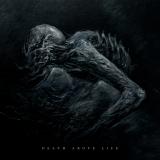
Nur wenige Bands der Heavy-Metal-Szene haben im vergangenen Jahr einen ähnlich kometenhaften Aufstieg erlebt wie ORBIT CULTURE. Das Album "Death Above Life" des schwedischen Quartetts ist nicht nur ein Beweis dafür, wie weit die Band gekommen ist, sondern es ist der Sound von Metal in seiner modernsten Form. "Das Album steht für einen Neuanfang", sagt Niklas Karlsson, Gitarrist, Sänger und Songwriter von ORBIT CULTURE. Produziert von der Band und gemischt von Buster Odeholm (Humanity's Last Breath, Vildhjarta, Thrown), ist "Death Above Life" ein Statement für Metal allgemein: seine Gegenwart und Zukunft. Zudem ist es ein entscheidender nächster Schritt für ORBIT CULTURE.Neben ihrem DIY-Ethos und ihren kompromisslosen Dark-on-Dark-Visuals prägt laut Karlsson seine Vorliebe für Soundtracks und cineastische Soundscapes ihren Sound und ihre Vision. Komponisten wie Hans Zimmer (Dune, Interstellar) und Howard Shore (Der Herr der Ringe) hätten einen großen Einfluss auf die Band. "Wahrscheinlich deutlich mehr als aktueller Metal", sagt Niklas. "Jeder von uns würde sich lieber den Soundtrack von 'Inception' anhören, weil er zeitlos ist. Wenn ich beim Schreiben nicht weiterkomme, bieten mir z.B. Cello oder Klavier neue Möglichkeiten. Wir schreiben einfache Riffs und Strukturen, und wenn wir uns dabei von einem Künstler wie Hans Zimmer inspirieren lassen, kommt ein Song wie 'Inferna' heraus, weil wir den Chorus größer und cineastischer machen." Die "Death Above Life (Deluxe Edition)" vertieft das filmische Konzept und enthält zwei bisher unveröffentlichte Titel sowie den japanischen Bonustrack "Nuclear God" und eine ganz besondere Version des herzzerreißenden Schlussstücks: "The Path I Walk ft. Tina Guo". Beide physischen Ausgaben, das Ltd. Deluxe transp. sea blue-golden yellow splattered 2LP-Artbook und das Ltd. 2CD-Mediabook, kommen mit umfangreichen 40-seitigen Booklets, die auf die vergangenen 1,5 Jahre zurückblicken und Einblicke hinter die Kulissen gewähren.
"Burning Down Paradise", das sechste Studioalbum der NWOBHM-Legende Tokyo Blade, erblickte ursprünglich im Jahre 1995 über Fresh Fruit das Licht der Welt. Fresh Fruit war ein Sublabel von SPV in Hannover. High Roller Records legt »Burning Down Paradise« jetzt zum allerersten Mal als Vinyl auf.
Die Platte markierte die Wiedervereinigung von Gitarrist Andy Boulton und Sänger Alan Marsh, die das erste Mal seit dem Debütalbum von Tokyo Blade im Jahre 1983 wieder gemeinsame Sache machten. Die damalige Besetzung wurde komplettiert von John Wiggins an der zweiten Gitarre, Colin Riggs am Bass und Marc Angel hinterm Schlagzeug.
„Ich denke, alle zwölf Songs haben den Test der Zeit gut überstanden“, kommentiert Gitarrist und Gründungsmitglied Andy Boulton heute. „Allerdings war es eine schwierige Zeit für Hardrock und Heavy Metal. Der musikalische Geschmack hatte sich drastisch verändert. Das Album wurde in einem kleinen Studio direkt außerhalb von Marlborough in Wiltshire aufgenommen. Zusammen mit einem Tontechniker namens Nick Beer. Ich nehme an, man könnte sagen, dass die ganze Band »Burning Down Paradise« produziert hat. Als Hauptsongwriter hatten Alan und ich am Ende aber wohl den größten Einfluss auf den Sound der Platte.“
Laut Aussage des Gitarristen erntete das Album zum Erscheinungszeitpunkt unterschiedliche Reaktionen: „Die Meinungen gingen auseinander, einige alte Fans mochten unsere neue Richtung nicht, während andere positiver eingestellt waren. Und was die Kritiker an sich betrifft, auf die höre ich eh nicht. Meine Einstellung ist: Wenn dir die Musik nicht gefällt, hör sie dir einfach nicht an.“
Nach der Veröffentlichung von "Burning Down Paradise" gingen Andy Boulton und Alan Marsh abermals getrennte Wege. Tokyo Blade lösten sich (zwischenzeitlich) auf: „Wir hatten die Schnauze voll, ohne Unterstützung von irgendwoher weiterzumachen. Es war eine schlechte Zeit für unsere Art von Musik, und wir sahen keinen Sinn darin, die Band weiterhin am Leben zu halten und unsere Kraft zu vergeuden.“
Remastered von Patrick W. Engel at TEMPLE OF DISHARMONY im März 2026.
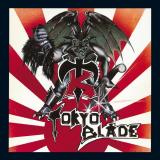
Die Wurzeln der NWOBHM-Legende Tokyo Blade gehen zurück bis in die frühen achtziger Jahre, als die Schulfreunde Andy Boulton (Gitarre), Andy Robbins (Bass) und Steve Pierce (Schlagzeug) in Wiltshire unter dem ursprünglichen Namen White Diamond starteten. Irgendwann tat man sich mit Sänger Alan Marsh zusammen und machte zuerst als Killer und dann als Genghis Khan weiter. Die Doppel-Single »Double Dealin’« erschien 1982 und sicherte Tokyo Blade einen Plattenvertrag beim neu gegründeten Label Powerstation Records. Im November 1983 stand schließlich das Debütalbum in den Läden.
Gründungsmitglied und Gitarrist Andy Boulton erläutert: “Die Platte wurde im Wickham Studio in Ost-London aufgenommen. Wir hatten lediglich vier Tage zur Verfügung und es war ein Albtraum. Immer wenn wir fertig waren, fielen wir todmüde um und schliefen sofort auf dem Studioboden ein. Und am nächsten Tag ging alles wieder von vorne los.“
Es wundert demnach kaum, dass Andy die Atmosphäre im Studio als angespannt bezeichnet: “Wir dachten, uns würden wenigstens zwei Wochen zur Verfügung stehen, aber am Ende mussten wir alles mehr oder weniger live aufnehmen. Im Grunde genommen haben wir die Songs für das Album ausgewählt, die uns am besten gefallen haben zu diesem Zeitpunkt.”
Während die Pressereaktionen im Vereinigten Königreich, speziell beim Kerrang!, nicht überwältigend waren, wurden Tokyo Blade in Kontinentaleuropa von Magazinen wie dem Aardschok (Niederlande) und Rock Hard (Deutschland) bereits als die neuen Iron Maiden gefeiert.
Diese erweiterte Re-Issue des ersten Albums von Tokyo Blade kommt mit einer Fülle von Bonus-Material: als da wären die vier Songs der »Midnight Rendezvous«-EP, nämlich “If Heaven Is Hell”, “Highway Passion”, “Midnight Rendezvous” und “Mean Streak”, sowie “Powergame” und ”Death On Main Street” von der »Powergame« 7”, plus ein Stück namens “Machine Run”, das 1982 auf der Ebony-Compilation »Metal Maniaxe« unter dem Bandnamen Madame Guillotine erschienen ist und in Hull aufgenommen wurde.
Transfer, Audio-Restaurierung und Mastering durch Patrick W. Engel bei TEMPLE OF DISHARMONY im Februar 2021 / Januar 2026. Cutting durch SST Germany auf Neumann-Geräten für optimale Qualität auf allen Ebenen. Die ultimative audiophile Ausgabe dieses zeitlosen NWOBHM-Klassikers!