Search:patterns

Styles
All
OHM HOURANI - SHAKE

OHM HOURANI

SHAKE

12inchU_STRETCH11
Ultrastretch
27.10.2020

Bringing a combination of two conceptual artists Ultrastretch 11 moves away from dance music to present this comtemporary off kilter.


On the A side, Montreal based producer Ohm Hourani, known for minimalistic jazz influenced works on his own imprint ANOMA and beyond, with compositions showcasing infusions of organic sounds combined with modular synthestisers, drum machines and vocalists such as his collaboration with award winning Jazz singer and Vocalist Diminique Fils Aime.


On this release he presents a 14 minute stripped down, intrinsically and subtly arranged combination of elements Initiale by a minimalistic kick drum joined by a synth driven, quirky / hypnotic mind drilling element paired with the finest straight hihats delicately placed on the background as the Constant. The subtle movement of the track is introduced by percussive drumming, vocals and piano keys forming the most beautiful atmospheric melody. The last element of surprise brings shuffling hihats bringing amazing swing to the overall elegantly slick piece.

The B side brings the highly sought-after drummer Samuel Rohrer. Ranging from ECM sideman to member of KAVE, a quartet alongside techno pioneer Max Loderbauer, Stian Westerhus and Tobias Freund as well as collaborative works with Ricardo Villalobos and Laurie Anderson, he is known for his unique sound aesthetics on advanced musical cross-pollination, developments of improvisation in acoustic jazz and wider horizons of live electronics.
Rohrer also brings a hypnotic reinterpretation but in a very different manner / mood than the A side. Initiated by strings combined with Rohrer’s tight drumming patterns at the forefront and bass line underneath as the constant, combination by which forms a tense yet peaceful core pattern to this track. To compliment this, synths create movement by adding cosmic and quirky sounds forming an atmospheric soundscape with the whispering vocal “shake it” on top. Overall, the paradoxical relationship between tight (rhythm) and lose (soundscape) is presented in perfect harmony with each other.

In Stock

On Stock and ready to ship

Last In: 55 days ago
10,04 €
Kölsch - Now Here No Where LP 2x12"

2025 Repress

On his fourth album proper, Now Here No Where, Danish producer Kölsch (aka Rune Reilly Kölsch) is charting new terrain. Fans of his ‘years trilogy’ – 1977, 1983 and 1989, released on Kompakt over the past decade – were privy to a kind of sonic diary, an autobiography, tracking the artist’s early years through three albums of superior, meticulously rendered techno. Calling in collaborators where needed – most notably, the strings of Gregor Schwellenbach – there was still something deeply personal going down, not quite hermetic, but internally focused; the albums proved not only Kölsch’s mastery of his chosen form, but also his capacity to make techno personal, individual, and to trace histories of the self through music. But on Now Here No Where, Kölsch finds his feet firmly planted in the present. Reflecting on his new album, he notes, “It is fascinating to write about memories and feelings that have had years to manifest and develop, but how would I approach current emotions?” It’s a good question: our past coheres through the narratives we build around memories, but the moment we’re in, the newness of the now-ness, is harder to navigate; this story is as yet untold. For Kölsch, this makes Nowhere Now Here “an album about life in the year 2020. A time defined by confusion, misinformation and environmental challenges. It is an emotional interpretation of personal and mental challenges, observations and personal growth.” Kölsch does this with music that effortlessly balances emotional heft with the dancefloor’s brimming desires. It’s a space that Kölsch has navigated for a while now – one of techno’s breakthrough acts, an in-demand DJ across the globe and a prolific and restlessly creative producer, he’s also Kompakt’s biggest-selling act – but Now Here No Where ratchets up the lushness, making for a delirious drift across twelve tracks that are at once perfectly poised and deeply trippy. “Great Escape” is an elegant swoon, an opener that pivots on a sigh and a prayer; then “Shoulder Of Giants” bustles into view, subliminal clatter and an aching violin line giving way to a riff that glows with fluorescence and iridescence. “Remind You” combines an odd ECM jazziness with notes from a twenty-first century torch song; “Sleeper Must Awaken” mines huge buzzing synths and lets them float, in and out of sync, with reduced, ticking beats; “Traumfabrik” (dream factory – there’s a giveaway) is oddly lush, the tones malleable and plastic, morphing across a glitching undertow. There are sad, emotional washes of strings throughout the penultimate “While Waiting For Something To Care About”, while “Romtech User Manual”’s patterns twist and shape in the light. Throughout, Kölsch never keeps his eye off the dancefloor, and you can tell this is his still his home. “The amount of energy and joy I experience every time I perform, has a profound effect on me. It has inspired me so much of late and has become an integral part of my musicality.” “The way we join in expressing our hope for the future every weekend has given me so much,” Kölsch concludes. The club as a temporary autonomous zone, as a space both of freedom and of politics; somehow, that’s all here, Now Here No Where. “Most of all, it is an album about hope.”

Auf seinem vierten Album “Now Here No Where” betritt der dänische Produzent Kölsch (alias Rune Reilly Kölsch) neues Terrain. Seine Trilogie mit den Jahreszahlen 1977, 1983 und 1989, die in den letzten zehn Jahren bei Kompakt erschienen war, hatte seine Fans durch eine Art akustisches Tagebuch, eine Autobiografie geführt, die die frühen Jahre des Künstlers über die Länge von drei großartig produzierten Techno-Alben nachgezeichnet hatte. Wo es nötig war, wurden Kollaborateure hinzugezogen - allen voran für die Streicher, arrangiert von Gregor Schwellenbach -, dennoch zeichnete die Musik immer auch etwas zutiefst Persönliches aus, etwas nicht Hermetisches, auf eine bestimmte Art immer auch nach Innen fokussiert. Die Alben bewiesen nicht nur, wie sehr Kölsch die von ihm gewählte äußere Form beherrscht, sondern auch seine Fähigkeit, Techno zu etwas Persönlichem und Individuellem zu machen und der eigene Geschichte durch Musik näher zu kommen.

Auf “Now Here No Where” steht Kölsch nun mit beiden Beinen fest auf dem Boden der Gegenwart. Mit Blick auf sein neues Album stellt er fest: "Es ist faszinierend, über Erinnerungen und Gefühle zu schreiben, die Zeit hatten, sich zu manifestieren und zu entwickeln, aber wie nähere ich mich meinen aktuellen Emotionen?”. Eine gute Frage: Unsere Vergangenheit wird im Innersten zusammengehalten durch Geschichten, die aus Erinnerungen entstehen, aber der Moment, in dem wir uns befinden, die Neuheit des Neuen, ist schwieriger zu beschreiben; die Geschichte ist noch nicht erzählt. Für Kölsch ist “No Here Now Where” daher "ein Album über das Leben im Jahr 2020. Eine Zeit, die von Verwirrung, Desinformation und ökologischen Herausforderungen geprägt ist. Es geht dabei um die emotionale Interpretation von persönlichen und mentalen Herausforderungen, von Beobachtungen und der eigenen, individuellen Weiterentwicklung".

Kölsch tut dies mit Musik, die mühelos kleine Gefühlsausbrüche mit den großen Sehnsüchten der Tanzfläche in Einklang bringt. Es ist dieser Zwischenraum, in dem sich Kölsch schon seit einiger Zeit bewegt, als weltweit gefragter und gefeierter Live Act, DJ und so unermüdlicher wie kreativer Produzent (nicht umsonst ist Kölsch der “biggest-selling-artist” bei Kompakt), doch “Now Here No Where” treibt all das noch weiter auf die Spitze: ein enormer Sog entsteht, der uns über zwölf Tracks hinweg gefangen hält wie ein perfekt ausbalancierter Trip. Der Opener "Great Escape" ist pure Eleganz, ein Track, der irgendwo zwischen Seufzer und Gebet hin und her schwankt; dann drängt "Shoulder Of Giants" ins Blickfeld, ein unterschwelliges Geklapper, eine wehende Geige, schließlich ein schillernder Riff, der in der Dunkelheit zu leuchten und zu glühen scheint.

"Remind You" kombiniert seltsamen ECM-Jazz mit einem sentimentalen Liebeslied des 21. Jahrhunderts; "Sleeper Must Awaken" schürft im Bergwerk riesiger Synthesizer, mal im Takt, mal aus dem Takt ticken die minimalen Beats; "Traumfabrik" ist ungewöhnlich “lush”, die einzelnen Töne, geschmeidig und modelliert, zerfließen in einem glitzernden Abgrund. Das vorletzte Stück "While Waiting For Something To Care About" wird von traurigen, emotionalen Strings untermalt, während sich die Strukturen von "Romtech User Manual" im Licht drehen und immer wieder neu formieren. Die ganze Zeit über behält Kölsch die Tanzfläche im Auge, und man merkt ihm an, dass sie immer noch sein Zuhause ist: "Die Menge an Energie und Freude, die ich bei jedem Auftritt erlebe, hat eine tiefe Wirkung auf mich. Sie hat mich gerade in letzter Zeit stark inspiriert und ist zu einem integralen Bestandteil meiner Musik geworden.”

"Die Art und Weise, wie wir an jedem Wochenende gemeinsam unsere Hoffnung auf eine bessere Zukunft zum Ausdruck bringen, hat mir viel gegeben", so Kölsch abschließend. Die Vision des Clubs als eine temporäre autonome Zone, als ein Raum von großer Freiheit aber auch von politischen Ideen, das ist irgendwie alles hier drin, Now Here No Where. "Es ist vor allem ein Album über Hoffnung."

In Stock

On Stock and ready to ship

Last In: 11 days ago
24,33 €
ASOK - MISTRESS 14

ASOK

MISTRESS 14

12inchMISTRESS014
Mistress Recordings
27.02.2020

The Liverpool-based DJ and producer ASOK returns to DVS1's Mistress Recordings with his most diversified EP yet: "Mistress 14" unfolds ASOK's raw, analog-heavy sound aesthetic full of broken kick drum patterns, stepping basslines, and lush synths.


With 25 years of record collecting, DJing, and promoting parties around the UK, there is little of the dance music spectrum that Stu Robinson has not been involved with. The Liverpool-based artist has amassed a fine understanding of a wide array of scenes, styles and sounds from drum & bass to electro-funk, disco to house and techno – underpinned by a love of breakbeat. The music under his alias ASOK is an amalgamation of this diversity that has found favor with labels like M>O>S, Lobster Theremin, Crème Organization, and Mistress Recordings.


"Mistress 14" opens with "Space Rockets" which is a nod to his breakier love affairs without using actual breakbeats. While second track "Is Anyone" displays his take on classic Chicago House with a little Roland JD-800 euphoria thrown in. On the flip, "Last Refuge" explores driving, rhythmical techno with ASOK's typical ravey pad-like break in the middle until "The Alchemist" closes the 12-inch by laying more focus on melody and texture with a growing, always changing bassline and an ethereal synth that carries the track's energy. The digital bonus track "Apano Sin" concludes the package with a scruffy somewhere in between everything vibe.


ASOK about Mistress 14:


"Mistress 14 is probably the most important EP I have ever made in terms of showing all the different things I am into. I’m difficult to pin down because I’m not really a techno DJ, or a house DJ, or anything like that. I like all forms of electronic dance music. As a DJ, I mix up old and new, familiar with unfamiliar, playing everything from Italo disco to really dark high-bpm breakbeat. As a producer, it’s not easy to put an EP together that covers a little of everything, yet still sounds cohesive. Especially considering that all my tracks were recorded in long live takes, then edited down with no ability to change parts. Sometimes that requires some pretty heavy editing, but that’s one of the good things you get when making music this way. I’m in control of the creative process, rather than feeling like some kind of colored block administrator drawing blocks out on arrangement view of my computer."

In Stock

On Stock and ready to ship

Last In: 7 months ago
12,56 €
Iori - Galaxy (lord Of The Isles Remix)

Iori

Galaxy (lord Of The Isles Remix)

12inchPHONICAWHITE001.5
Phonica White
15.01.2020

LAs the first release on Phonica White back in 2009, 'Galaxy' by Japan's Iori is an expertly crafted piece of dancefloor-focused Techno, led by a rolling bassline and crisp hi-hats, with hypnotic melody patterns skittering off the surface. As we described it upon release, it's a trippy but accessible heads-down affair that has the depth and the bite to do damage at peak-time and in the after-hours alike. A decade later, those words still ring true and as it's now one of the most sought after records on Phonica White it's the perfect time to revive it - with a twist.

This time we have freshened up the record by swapping original B-side 'Urge' with a previously unreleased remix of 'Galaxy' from Lord Of The Isles, the producer behind two of Phonica's best received 12's on the main label, 'Year Of The City' & 'Greane / Gigha'. Countering the original's functional sonics, his remix takes the track in a deeper, widescreen direction, swirling the original's components around immersive pads and piano.

To keep collectors of the first pressing happy as well as to differentiate the two versions, the label artwork is the same Pedro Carvalho de Almeida design yet inverted and slightly tweaked to reflect the new tracklist and catalogue number.

In Stock

On Stock and ready to ship

9,20 €
Seb Zito - Theory To Start EP

FUSE resident Seb Zito returns to home turf to close October as he delivers his ‘Trying To Start’ EP. A key member of FUSE since its inception ten years ago, London-based DJ and producer Seb Zito has remained at the heart of the city’s scene featuring as a core resident for the brand across their homes of Village Underground, 93 Feet East and beyond, whilst also serving as the A&R of sister imprint Infuse. Following a busy summer that welcomed outings and remixes on the likes of Four Thirty Two, Play It Say It, ORIGINS RCRDS and Moxy Muzik, plus material via his own Seven Dials Records and two collaborations as part of Enzo Siragusa’s ‘A Decade Of Rave Volume 2’, Zito now returns to FUSE to deliver his second solo EP of the year on the label as he unveils four new cuts in the form of his ‘Trying To Start’ EP. Title cut ‘Trying To Start’ opens proceedings with authority as bright vocals meet skipping percussion, bubbling sub bass and slick hats, whilst ‘Arped Edge’ harnesses a slightly more stripped back aesthetic, introducing infectious vocal snippets amongst hazy pads, sci-fi electronics and menacing low-ends. Next, ’10AM Fuse’ takes cues from its title as snaking bass patterns go to work alongside sharp drum licks to reveal a cut primed for some huge early morning moments, before rounding out the package with ‘Geo Theory’, a lively peak-time production armed with shuffling drums and a signature driving bassline at its core.

In Stock

On Stock and ready to ship

Last In: 23 days ago
14,71 €
G.U.S - REVOLT!004

G.u.s

REVOLT!004

12inchREVOLT!004
Revolt
16.11.2018

Vinyl Only

New Release By Revolt! Featuring Four Tracks By Athens Based Eclectic Producer G.u.s. Late-90s Inspired Personal Experience Stands Out With Its Groovy Baseline, Raw Patterns And Melodic Parts, While Complexity Gives A Modern Twist To The A Side With Fast Tempo, Classic Houzy Pads And Electric Chords. B1 Side Has The Taste Of Detroit, With Melodic Midnight In Mars, Which Has A Tech House Character And Was Recorded In A Live Jam. B2 Breakbeat Rat Run Finishes The Release With Groovy Hypnotic Sounds, Synths And Pitched Hi-hats. Vinyl Only.

In Stock

On Stock and ready to ship

Last In: 13 days ago
9,20 €
Positive Centre - Ancestor One

Positive Centre marks the 5th release on his In Silent Series label
with 4 tracks of weighted mechanical workouts that feature his
honed atmospheric style with brooding scenery and sharp
percussive accents. Isolated Loop takes a crunched and spat out
growl of an acid synth and blends it with ever developing drum
machine patterns as a weaponised techno tool. Tension Arm builds
on this with sharp percussion piercing over a hard edged bassline
and atmospheric scenery. Idle Roller is a deep, sub-aquatic rhythm
journeying to parts unknown with subtle switch in rhythm keeping
the momentum going through this textured sound world. Sum
Tolerance fractures open with stretched sounds of otherworldly
instruments, sludge laden beats and humming bass pressure.

In Stock

On Stock and ready to ship

11,13 €
Klaus Krüger - Advanced Dance

After more than 30 years Early Sounds and Halfway Ritmo are finally releasing unpublished recordings (1982-1989) from former Tangerine Dream and Iggy Pop's drummer Klaus Krüger.
Advanced Dance combines a sweeping mix of Krüger's handcrafted acoustic drums and distinctive electronic sounds of the late Berlin-School years, creating a unique blend of advanced polyrhythms.
Krüger achieved a balance between creativity and classic drum patterns giving birth to an unconventional and avant-garde type of music that could be easily defined as a precursor of techno.
His progressive mentality led him to delve further into the tape collage technique and unique ways of triggering his drums. It was a whole new world of music - sustained by his artistic surroundings, which included collaborations as well as friendships with other influential artists such as David Bowie, Martin Kippenberger and Helmut Newton.
In the time of German division, the pulsating West Berlin became a melting pot of creativity and international encounters. Advanced Dance is the result of the blazing heat feeding the unstoppable thirst of discovery which characterized that generation, creating tunes that transform the listener's experience into one blissful moment amidst beautiful confusion.

In Stock

On Stock and ready to ship

13,82 €
Oren Ambarchi - Grapes From The Estate 2x12"

Black Truffle is pleased to make Oren Ambarchi's Grapes from The Estate available once more on vinyl. Originally released on CD on Touch in 2004 and reissued on Southern Lord as a limited double LP in 2006 during Ambarchi's tenure as a member of Sunn O))), Grapes from the Estate was a landmark release for Ambarchi, seeing him expand his sonic palette beyond the clipped, bass-heavy electric guitar tones he was known for at that point. Incorporating subtle layers of strings, keyboards, percussion over a bedrock of his signature guitar tones, in retrospect this album can be seen as the beginning of a broadening and evolution in Ambarchi's work that would lead to his acclaimed, densely layered epics for Editions Mego, Quixotism (2014) and Hubris (2016). Beginning with the shuddering pure tones of opener 'Corkscrew', which looks back to previous guitar-only releases such as Suspension (2001), the album's next two pieces show a progressive broadening of the instrumental palette and a corresponding move away from textural abstraction and sustained tones towards more traditional notions of musicality. This reached its high point on the album's third piece, the fifteen-minute long 'Remedios The Beauty', where guitars, both acoustic and electric, strings, piano, and bells build from a murmur to an interlockinging web of repeating melodic patterns over gently swinging brushed snare and cymbals. The epic closer, 'Stars Aligned, Webs Spun', returns us to a space populated only by the electric guitar, but unlike everything Ambarchi had produced up until this point in his career, the piece has a liquid, psychedelic edge that looks forward to the shimmering harmonics of his more recent work. As Brendan Walls wrote at the time of the original release, this is 'another outpouring of personal, intimate and enduring music from Oren Ambarchi'. Presented in a stunning gatefold sleeve featuring the original artwork and design by Jon Wozencroft. Redesigned by Stephen O'Malley Remastered and cut by Rashad Becker at D&M, Berlin.

In Stock

On Stock and ready to ship

27,31 €
DsorDNE - É Un Sole LP

Dsordne

É Un Sole LP

12inchDE206
Dark Entries
29.03.2018

DsorDNE (pronounced Disordine) is a project from Torino, Italy that evolved as group out of the electronic experimental post punk project Novostj in 1987. At the core of DsorDNE is Marco Milanesio, musical engineer and co-founder of the HAX record label, joined by a revolving cast of musicians. Their spectrum ranged from experimental to structured electro-poetry and Soundtrack like instrumental electronic music. In 1987 they released their first track on a split-single with The Legendary Pink Dots. Between 1987 and 1994 they released 6 full length albums, 3 split-EPs and appeared on various cassette compilations. à Un Sole (Itâs a Sun) was the groupâs only vinyl full length originally released in 1990 on HAX. Itâs 8 tracks of electro-beat poetry and experimentation recorded between July 1989 and January 1990 by Marco Milanesio (music) and Roberta Ongaro (vocals) with guests Claudio Burdese (guitar), Danilo Beltrame (guitar) and Cristiana Bauducco (vocals). The album is broken up into two distinct halves. Side A contains four chunks of hard hitting, percussive patterns and rushing bass sequences. Dark, moody female vocals force their monologues through the machinery in their native Italian tongue. The traditional song structure is carefully avoided by giving lyrics equal opportunities be they recited, half-sung, whispered or spoken. Side B displays moodier moments, less savage attacks and subtler sensuality, veering towards the more melodic and existential. All songs have been remastered by George Horn at Fantasy Studios in Berkeley. The record is housed in an exact replica of the original jacket featuring a black and white drawing with silver metallic spot color housed in a clear PVC plastic cover with a three color screen-printed design. Each copy includes a 11x11❠double-sided lyrics sheet with English translations as well an 8x11❠sheet with original press notes from 1990 by Marco Pustianaz.

In Stock

On Stock and ready to ship

Last In: 89 days ago
17,86 €
One Day - Untitled

One Day

Untitled

12inchOFFICE12
Office Music
06.10.2017

Office Recordings continues to surprise us. After Baaz' Techno-/Ambient-hybrid on Office 011 the label from Berlin comes up with a stunning new and anonymous project called 'One Day' featuring four also unnamed tracks. The A-side of the record starts off with a with a superb Deep Techno track which tempts us with very emotional pads and a strong kick and bass fundament - an irresistible combination. A2 goes in the same direction but feels like the slightly mellower and softer brother of its predecessor - a little bit moody but still straightforward at the same time. The flip side is dedicated to two freestyle electronic tracks standing in the tradition of the best Warp offerings from their heyday in the 90s. We're talking charming melodies and sparse but elaborate rhythmic patterns. The record comes in a hand stamped and with a lovely artwork also hand made by Office art director Super Quiet. All tracks have been mastered and cut by sound engineering proficient Pole at Scape Mastering.

In Stock

On Stock and ready to ship

Last In: 81 days ago
7,98 €
Drafted - Frame Secrets Ep

After starting out with EP's showcasing tracks by various artists, Invite's Choice is back with a 3 track EP by Drafted.

The EP is opened by Detached with it's dominating, repeating tom/percussive low-end sound. The frequential spectrum is filled up by other percussive elements and reverb-filled effects, which give the track a spacious feel. Oxidian starts out in your face with it's droning and repetitive synth. The track evolves into an abstract apogee with intense synthesis before it breaks down again, allowing for a smooth mix to be made. Sphere closes down this 3-track EP on the B-side and does so with lot's of fast changing hi-hat and ride patterns and one sharp sounding synthesizer, which makes it a perfect B-side closing track. Once again a great showcase of sustainable modern day electronic music by Invite's Choice!

In Stock

On Stock and ready to ship

7,86 €
Anthony Parasole - Infrared Vision

Parasole's music fits the bill for cutting-edge electronic music. Infrared Vision is a display of his love for polyrhythmic drum patterns, post-club sketches, twisted dance floor gems and classy, big room-ready tunes.
.
Few words of the artist:

''When I started to conceptualize my album I had a few end goals'', explains Parasole. ''I wanted to string my own style through Infrared Vision, so it would be familiar to the people who like my music. In tandem, I strived to produce a fresh voice sonically and experimented with a few new production techniques. I also grabbed ideas outside of techno and house, because I didn't want to be influenced by anything new. I was listening to a lot of jazz, hip-hop, Nine Inch Nails and Prince for example.''

Parasole took his time to write, produce and record Infrared Vision, dividing the process into three steps. ''First I wrote the album in words, pinning down ideas and track concepts on a notepad. Subsequently I transferred my ideas to my gear. Due to a heavy tour schedule I sometimes brought gear with me on the road, to continue my sketch process on the hardware. I then recorded it at home and at Phil Moffa's studio in New York. When the music was fully finished the album morphed to its final version. Phil Moffa laid down the final mixdown at Butcha Sound Studios, while Marco Spaventi handled the mastering.''

In Stock

On Stock and ready to ship

17,61 €
Adam Stromstedt / Flord King - Gdep

LYR002 'GDEP' sees Adam Stromstedt and Flord King split the credits with both producers getting one track on either side. A side 'SINBAD' by Adam Stromstedt is a 12 minute long piece that takes you through intertwining chord patterns and delay heavy percussions to create a multi layered low-end journey. B side 'Dapper' by Flord King is an already proven secret weapon of some of this scene's most influential DJ's. It kicks off from the first bar with minimal inspired percussion, dreamy chords and tight groove, a real cruiser.

In Stock

On Stock and ready to ship

Last In: 38 days ago
9,45 €
&apos - Lichtdrank

&Apos

Lichtdrank

12inchBEP009
BEPOTEL RECORDS
19.09.2016

&apos's music veers between abstract, experimental compositions and more beat driven tracks, all held together by a defined aesthetic of sonic impurities and random patterns thrown up by algorithmic computations. In &apos's music compositional decisions are not merely reliant on himself but also on a range of processes from constrained randomness to full fledged neural networks. That is to say, the 'instruments' he creates have -to a certain extent- a mind of their own. There will always be a dynamic between the musician and something else that triggers, proposes or decides what will happen to the music.It is exactly from this human-machine interaction that &apos extrapolates his musical ideas that are both intricate and detailed while never losing an overall sense of emotional value.
His first solo project 'Lichtdrank' is a selection of four tracks made during his time studying Sonology at The Hague's Royal Conservatory and the time following. It is the third and final installment of bepotel's startupLabel trilogy. Previously, he has released music together with Walrus and Sagat under several musical projects like smaakwaterval and bepotel. The artwork of the Lichtdrank EP is based on screenshots from an interactive multiplayer video game where the musical universe of &apos can be explored.

In Stock

On Stock and ready to ship

Last In: 4 months ago
10,50 €
Cute Heels - Spiritual

Cute Heels

Spiritual

12inchDE062LP
Dark Entries
24.04.2014

Cute Heels is the solo project of Bogota´ born, experimental producer Victor Lenis. Since the early 2000's Lenis has been working on a myriad of electronic projects, including the management of the labels Black Leather Records and Romance Moderne, in his current home of Brussels. Drawing on the influences of the radical punk scene that surrounded him growing up in Columbia while nurturing his passion for synthesizers and drum machines, Lenis developed the broody, gloomy brand of electro-techno that is Cute Heels. Deemed by Juan Atkins as ''the new blood and spirit for the next step in techno music'' Cute Heels has released various digital only releases over the years, as well as his first vinyl release, an EP on Gooiland Elektro. His debut album Spiritual, rides the line between cold electro-techno and left field electronic body music. Inspired by equal parts Liaisons Dangereuses and Drexciya, Spiritual takes the listener on a journey over 8 tracks and 40 minutes of music. Listening to "Spiritual" you can see why. The songs on this full length reveal a sublime influence from Detroit techno, early Chicago house and new wave; advanced electronics for the dance floor, pumping and sophisticated. The album was recorded and mixed by Victor at Sensorium Studio in Zagreb, Croatia in November 2013. Each song has been mastered for vinyl at Fantasy Studios in Berkeley by George Horn. Each LP is packaged in a custom-made jacket by our in-house designer Eloise Leigh and incorporates the geometry of analog synthesizers and celestial rose patterns. 

In Stock

On Stock and ready to ship

15,08 €
Hannah Addams - Que no te eduquen, aprende!

CBR010 Que no te eduquen, aprende! EP by Hannah Addams First solo EP in vinyl for Domingo aka Hannah Addams. 5 Original Cuts, printed in wax to celebrate the 10th vinyl release on Casanova Bar Records. Raw, Hypnotic, Powerful and rolling grooves. No downs, but straight Techno, just the way Hannah Addams understands Techno Music. Playing with the patterns between a 4/4 kick and 5 or 7 or even 3/8 patterns on the bass line. Artwork by Domingo Casanova. Picture taken by himself to "El Gran García" while playing Damas back in 2021. Mastered at Koschitzky Mastering All rights reserved © Casanova Bar 2026

out of Stock

Order now and we will order the item for you at our supplier.

Last In: 3 days ago
14,08 €
KAITLYN AURELIA SMITH - 'RUIN : IT”S NOT JUST MUSIC LP

Across the past decade, KAS has established herself as a unique voice in experimental electronic music, a composer and synthesist whose work dissolves the boundaries between ambient electronica, contemporary classical, composition, and immersive sound design. Her new album “Ruin: It’s Not Just Music” arrives with a distinctive gravitational pull. The record moves with greater physical force, placing rhythm and impact at the centre of its architecture, revealing a more confrontational and embodied dimension of KAS’s musical language.
The first single “Ruin” arrives May 22nd, with the full album released October 2nd via SOMEONE SPECIAL the new label co-founded by KAS.
Where much of KAS’s earlier work explored harmonic environments, the forthcoming album is built around tension and release. Inspired by the sound of drum and bass, breakbeats fracture through dense fields of synthesis, percussive patterns and her signature melodic fragments – motions that feel closer to the kinetic language of club music than the meditative spaces often associated with her past catalogue. The result is a body of work that feels both recognisably hers and newly charged, music that moves through the body as insistently as it engages the mind.
For listeners who first encountered KAS through the glowing synthesis of “Ears” (2016) or the intricate experimental pop of “The Kid” (2017), this direction may feel initially surprising, yet the shift has been quietly unfolding across the past several years. KAS’s practice has steadily expanded beyond the expectations placed upon experimental electronic artists, moving between orchestral composition, audiovisual installations, film scoring, and large-scale commissions while retaining the unmistakable sonic signature that defines her work.
The 2022 albums “I Could Be Your Dog / I Could Be Your Moon” (2022) and “Let’s Turn It Into Sound” (2022) explored a deeply immersive approach to composition, expanded her reputation and instinct for constructing detailed sonic ecosystems while continuing to blur the lines between experimental electronics and contemporary pop structures. KAS’s most recent output has continued to widen that field including the rhythm oriented electronic album “Gush” (2025) and her return to more orchestral roots with “Thoughts on the Future” (2025). Together these releases underscored the breadth of her practice.
Her prolific collaborators and creative partners have ranged from Patti Smith and Suzanne Ciani to Danny Elfman, Tycho, Glass Beams, RY X, Caribou, Four Tet, Reggie Watts, and Max Richter, while her compositions have appeared in projects with Apple, Chanel, Meow Wolf, the BBC Orchestra, and major film and television productions.
On “Ruin: It’s Not Just Music”, that vocabulary becomes more kinetic than ever before. The record draws energy from jungle, drum and bass, and dance-floor focused electronic music while retaining the intricate synthesis and tonal curiosity that have defined KAS’s work from the beginning. The result is a record that feels equally at home within club culture, contemporary composition, and the experimental spaces that have long championed her artistry.
On May 27th KAS will present a major performance at London’s Barbican Centre alongside the London Contemporary Orchestra, marking the ten-year anniversary of her landmark album Ears. The evening will trace the arc of her creative evolution while also introducing material from the new album.

pre-order now

This item has not yet been released. You can pre-order the product now.

21,64 €
Mark Fell - Servitude in Context EP

Following one of 2025’s standout EPs, the CEO of the National Centre for Mark Fell Studies fires from the hip in brilliant, club-troubling motion. In step with 30 years of prism-pushing work — and particularly the »Nite Closures« EP, which signalled a concerted return to the dancefloor — Fell pulls aspects of hypermodern dance and electronic music from Chicago, Tanzania, and Japan into his own peculiar agenda.

The hugely distinctive results pull the body into thrillingly unusual, typically ascetic arrangements, activating every pointillist drum hit with attack and decay in a soberly ludic play of rhythmelodic tension and release, executed to delirious ends; 40 minutes of computer music.

As an artist who witnessed first-hand the explosion of electronic music in early ’80s Sheffield, and its interplay with house and rave as it refracted into wild new styles during the ’90s, Mark Fell is uniquely positioned to pursue his passion for the dynamics of electronic dance music to the nth degree. »Servitude In Context« continues to develop ideas around music for movement in the mid-2020s, placing decades of keen observation — from the macro and historical to the niche and hypermodern — at the service of flexing bodies in new directions.

Long-held notions of multistability manifest in what feels like two machines playing chess on the dancefloor, attempting to adapt to each other’s playing styles and patterns in real time, anticipating and zigzagging around the next move. The result is a plethora of options for limber dancers and those who only bust a move inside their heads.

The slow-fast play of accelerating and decelerating strikes, alongside monotonic chatter in »Actuations #1 (Extended)«, acclimatises the body to a uniquely sensual physics. This develops into the rudely screwed, asymmetric angularity of »Time-Slur« and the shatterproof elasticity of »Taut Manifold«, which feels like an LLM trained on Autechre.

»Low Energy Mantra« offers the EP’s closest resemblance to melodic structure, like gamelan and footwork refracted through lab-grown diamonds. Then »Anode« flashes its teeth with a rudeness recalling the latter stages of Fell’s Pat Thomas jams, before »3 Lost Contours (Pts 1–5)« tilts into 12 minutes of proper quicksilver madness, balancing the sexiness of his Sensate Focus work with an updated, clean-hoofed step and parry.

pre-order now02.10.2026

expected to be published on 02.10.2026

23,32 €
Jason Dungan (aka Blue Lake) / Johan Carøe - Routine LP

Jason Dungan (aka Blue Lake) and Johan Carøe find beauty in the rhythms
and repetitions of domestic life for collaborative album, 'Routine' - out September 25

Copenhagen-based multi-instrumentalists Jason Dungan and Johan Carøe didn't set out to make an album. Instead, as the title 'Routine' suggests, they found their way there through a process of habitual making and listening, developing an intuitive musical language to reflect the dreamlike meanderings and creative play of life's quiet moments. 'Routine' blends pop orientated sounds, Avant-garde minimalism, folk and new age with the emotive depth of film-score.

Their meeting was not entirely coincidental. Previously in bands such as Squares and Triangles, Jason Dungan has since recorded multiple albums under the moniker Blue Lake, including the lauded 'Sun Arcs', pursuing his passion for self-built percussion and multi-string instruments. Johan Carøe meanwhile is a composer whose film soundtrack work has seen him collaborate with Angelo Badalamenti, Arp, and Sofie Birch, at whose Andersabo residency (curated by Dungan) the pair first met, resulting in the highly praised album 'Repair Techniques' written by Birch and Carøe.

'Routine' emerged organically over many years against the backdrop of great personal change. As Carøe said goodbye to his father and welcomed his first child, the pair sent each other fragments of melodies and patterns, working up responses when time allowed to assemble a sonic palette that combined acoustic instrumentation of zither, clarinet, cello, saxophone (among others) with the textures of tape, drum machine and Yamaha DX7 synth. Inspired by the vulnerability and DIY ethos of Arthur Russell's home recordings, the vision of labels like Disques de Crepescule, and the art pop, experimentation inherent to late '70s and early '80s recordings from NYC and Japan alike, Dungan and Carøe conjured new forms for their folk, leftfield pop and avant garde influences from the low-lit living rooms of Copenhagen and rural Sweden. "I'm very interested in the ways in which music and art emerge from our wider experiences as people, workers, parents and in the daydreaming activity of making music," Dungan explains of a process which allowed the duo's individual styles to drift apart and merge together seamlessly. "I think the process was definitely capturing moments in time, but over a long time," Carøe adds. "It was a bit like improvisation, but with time stretched."

The music floats with grace and humility, remaining sophisticated yet acutely introverted.
Whether on 'Clouds', where soft layers of zither and clarinet are moved along by a featherlight bass riff and the hypnotic clip-clop of the primitive groovebox, or the gentle grandeur of cello rising and falling through 'Routine 1', the album reveals itself over 10 instrumental tracks, evoking the ineffable calm that descends when the light changes and the world turns inwards. The act of time passing became a key creative ingredient to the evolution of the album, enriched with the exciting challenge to transform their passing rounds of home recordings via a slow release musical dialogue. Jason found creative moments in the twilight hours to lay down zither, melodica, acoustic guitar to name but few, while Johan utilising "line-in and headphones" would manipulate, stretch and pitch Jason's melodic pathways during newly born naptimes.

Carøe rhythmically plucks and slides the stringed cello instrument, leaving palpable foundations on 'Hymn' and 'Chords', in a treated, stylistic approach akin to Mabe Fratti, while 'Silence' draws to a close with a gospel touch. Dungan's harp-motion zither flourishes reveal more classical connotations on 'Reunion' with inspiration of Bedroom Community's Nico Muhly as organs rise with Moogs, culminating with a climatic choral outro from friend, mezzo-soprano Anna Caroline Olesen.

'Routine' then is their first collaboration, an album of deep and sincere reflection with inviting overtones that gesture with unrushed authenticity. A document of a new-found friendship that opens a window into the most personal of spaces, where the daily practices of music and life exist side-by-side to wondrous effect.

pre-order now25.09.2026

expected to be published on 25.09.2026

22,48 €
WHILE MY SEQUENCER GENTLY BLEEPS - LIVE (AT OPEN GROUND) (TAPE)

While My Sequencer Gently Bleeps. Live. 60 minutes of deep bass, clever drum patterns and shimmering melodies on tape. Experience the essence of Stefan Schwanders latest musical self (aka Harmonious Thelonious, A Rocket In Dub or Antonelli Electr.) as he is pushing the Monomachine to its limits. This live set with quite a few unreleased tracks was recorded on a funkscapes night at Open Ground in Wuppertal.

pre-order now25.09.2026

expected to be published on 25.09.2026

15,92 €
Marja Ahti & John McCowen - Errands

Errands is the first duo recording from Marja Ahti, Swedish-Finnish sound artist and electroacoustic composer, and John McCowen, a native of Southern Illinois, now residing in Iceland, whose work centres on a radical exploration of clarinet multiphonics. Working without the aid of electronics, McCowen has spent years finessing performance techniques that allow him to layer beating patterns and split tones that belie their source in a monophonic instrument. Ahti, in contrast, has built up a stunning body of work in recent years using a classic electroacoustic palette of electronic, field recordings and instrumental sounds. Sharing a bill at the 2024 iteration of Stockholm’s Edition Festival, the pair discovered a sensibility shared across their different sonic means, beginning the collaborative process that would eventually result in the mercurial side-long pieces heard on Errands.

The word ‘errand’ suggests something purposeful but routine, and Ahti’s and McCowen’s work is suffused with the everyday. Meeting with McCowen to record in Iceland, Ahti used the opportunity to gather field recordings, capturing not the natural sublimity often associated with the country—think Chris Watson’s shifting glaciers—but everyday life in Reykjavik. Snatches of bustling streets and what could be humming engines thread between static sinewaves, stretches of clarinet resonances and fleeting textures, the latter often at once visceral and impossible to identify. Errands: we are a long way from the grandiose framing devices favoured by the pioneers of electroacoustic music, yet many of their principles are at work here. The gradual metamorphosis of one sound into another, the carefully achieved ambiguity between the acoustic and electronic, the treatment of the stereo field as a compositional element: all of these link Ahti and McCowen’s music to the electroacoustic tradition, yet their sensibility is radically different. The overall effect is a kind of stillness, but one at peace with continuous change. Like the unwieldy but somehow stylish everyday forms captured in the Hertta Kiiski photographs that adorn the record's sleeve, the music seems to prize a kind of deliberate awkwardness, interrupting static held textures not with an abrupt cut, but with a quick fade, suddenly revealing background as foreground.

Ahti and McCowen’s world is everyday and unornamented, but also shadowed by the numinous. Halfway through 'Chorales', we hear an arrangement for overdubbed recorders of an early motet of Messiaen’s, O sacrum convivium! Played on recorders, the piece shrinks into delicacy and dim memories of childhood music lessons, while at the same time its harmonies retain the grandeur of their liturgical origin. This double quality inflects much of what follows on Errands, including snatches of field-recorded water or air, which seem at once elemental and domestic. Enlivened with countless details that repay repeated relistening, Errands is a record that leaves the listener ready to open their ears anew to their own sound environment.

pre-order now25.09.2026

expected to be published on 25.09.2026

24,58 €
Mary Jane Leach - Pipe Dreams II / III

»Pipe Dreams II & III« presents two new, side-long organ works by Mary Jane Leach, extending the sonic investigations of her 1989 landmark »Pipe Dreams«. Recorded in Ghent and Cologne, the two side-long pieces use shifting stops, resonance and beating tones to turn the pipe organ into a vivid, physical field of sound.

When »Pipe Dreams« was issued on vinyl for the first time by Blume in 2017, it was effectively the first time many of us encountered Mary Jane Leach’s music, finally placing her work in its proper historical context amid the searching Downtown milieu of Julius Eastman, Arthur Russell, Arnold Dreyblatt, Ellen Fullman, Philip Corner, Daniel Goode, and Peter Zummo. Leach collaborated with most of these artists at one point or another, either in Downtown Ensemble or as a guest on their records.

Now »Pipe Dreams II« and »Pipe Dreams III« arrive, recorded in 2023 and 2024 at Miry Concertzaal in Ghent, Belgium, and Kunst-Station Sankt Peter in Cologne, respectively.

»When I was a young child, my family lived next door to a church, where my mother was the organist. I spent many hours lying on the floor of the sanctuary listening to the music, letting the sound of the organ envelop me. I also liked to play the piano loudly with the pedal down, producing clouds of sound, much to my family’s annoyance. These two organ pieces explore some of my earliest musical interests and aesthetics.

In 1989, I lived in a tower attached to St Peter’s Church in Cologne, where I had access to its organ. It had two sets of pipes, front and back, which could create antiphonal effects. I spent countless hours exploring the possibilities of all the permutations of notes, space, and the resulting sound phenomena. I wrote »Pipe Dreams« for that organ. Fast forward to 2023, when I was asked to create a piece for organ for a concert at the Miry Concertzaal in Ghent, Belgium: »Pipe Dreams II«. I had a few days to familiarise myself with the organ, its available stops, and the layout of the console. I choreographed stop changes for a volunteer, as I couldn’t reach them myself. Some amazing sounds began to happen, and at one point the sound was so visceral that I felt as though I were taming a wild beast.

»Pipe Dreams III« was performed in 2024 on the organ that I had spent so much time playing in 1989–90. One big difference, though, was that the console was totally new and computerised. Having access to the organ for only a few hours before the concert, I decided that I did not have enough time to feel comfortable with the console and should not attempt to recreate the piece I had written in 1989. I would instead use the same sequence of stops and perform an improvised piece. I loved the sounds that were being created, and I was having so much fun that at one point I even started to laugh quietly. I began to visualise the beating notes as if they were atoms, opening them up to expose their innards, with the beating, higher-pitched notes — neutrons and protons — shimmering at the top, and the lower notes — the electrons — throbbing away at the bottom. I was playing notes not so much for their pitch value, but for how they affected the notes and sound phenomena already being played. Instead of a time signature, I timed the entries by listening to the beating patterns, waiting for the right moment to enter. And no, I wasn’t hallucinating.«

Mary Jane Leach, 2026

pre-order now25.09.2026

expected to be published on 25.09.2026

30,67 €
TEODROS MAKONNEN - Teodros Makonnen With His Organ LP 2x12"

Some recordings herald the future in ways that are impossible to see in real time. Teodros Makonnen With His Organ (ቴዎድሮስ መኮንን ከኦርጋኑ ጋር), by the artist Teodros Makonnen, also known as Teddy Mak, is one of those. Today, electronic sounds, synthesizers, and digital production are taken for granted in Ethiopian music, but in the early 1980s, they were novelties that polarized opinion. Even to this day, the story of Teodros Makonnen’s legacy has never been properly told. He played a decisive role in defining the sound of the digital era of Ethiopian music that emerged in the 1980s and beyond, both as a keyboard player and as a producer, songwriter, performer, and sound designer.

Ethiopian music was at a crossroads in the early 1980s. Much like music in the rest of the world, technology and automation heralded either a quantum leap in musical development or the annihilation of musicianship, depending on who you’d ask. The changes were incremental nonetheless, but with the benefit of hindsight one can clearly see that the changes meant different things in different contexts. Drum machines and electric organs came to replace many hotel bands because, all of a sudden, one musician could control drums, melody, and accompaniment. Teodros was one of the first musicians in Ethiopia to explore the possibilities this opened up.

Teodros’ father, Captain Makonnen Beri, was a chief pilot at Ethiopian Airlines and a music enthusiast at that. This would prove important to his development, as Makonnen brought back a piano from Germany, which would lead to the first steps in Teodros’ long musical career. Captain Makonnen’s work as Head of Flight Operations and as a pilot exposed him to the wider world that was far from commonplace for most Ethiopians. In a house where music captivated the whole family, the piano gave Teodros’ talent an outlet. Not only was a piano at home rare in Ethiopian households, his father also brought an Indian teacher to their home to teach Teodros and his brother, Captain Samuel Makonnen, music theory (solfeggio or ear training) and piano. Teodros and his youngest brother, the late great Dereje, a member of both the legendary Ibex Band and the Ethiopian reggae group Dallol, took up music from that point onward, with Teodros beginning to develop his proficiency at the age of eight. His father encouraged him to practice tirelessly at home, and Teodros later received musical schooling at the German School in Addis Ababa.

His obvious talent led to studies and formal education at the Yared School of Music, followed by continued studies in American jazz at Northern Virginia Community College in Virginia. Teodros cut his teeth professionally in his mid-teens, not only as a keyboardist, but also as an arranger for the Wabi Shebelle and Dahlak bands in the 1970s. He mastered electronic sequencing early, rising to prominence through the midnight recording sessions held during the military curfew. The pressures imposed by the curfew required precise and disciplined recordings, and Teodros delivered just that. This, in turn, led to collaborations with iconic artists such as Mulatu Astatke, Aster Aweke, Menelik Wossenachew, Tilahun Gessesse, Mahmoud Ahmed, and Alemayehu Eshete.

In those days, he sat in as a keyboardist with the Dahlak Band when Dawit Yifru took a hiatus to study in Russia, and also with the Ethiostar Band. He secured a residency at the Wabi Shebelle Hotel with the Shebele Band, together with Zelalem Tadese (drums), later succeeded by Elias Bekele, Mulugeta Hailu (bass), Teferi ‘Bibisha’ Mengesha (guitar), Kumelachew G/Selassie (trumpet), and Teshome Deneke (saxophone). A friendly competition developed between the bands associated with the Ras Hotel (the Ibex Band), Ghion Hotel (the Dahlak Band), and Wabi Shebelle Hotel (the Shebele Band). The music scene at Wabi Shebelle saw teenagers commanding the spotlight in an industry otherwise dominated by musicians of an older generation.

At the Wabi Shebelle Hotel, Teodros met a diplomat from Saudi Arabia and later visited him at his home in Addis Ababa, a meeting that had unexpected musical consequences. The man owned a Yamaha double-deck keyboard. That evening, they recorded Teodros Makonnen With His Organ (ቴዎድሮስ መኮንን ከኦርጋኑ ጋር) in one take. This recording, a cornerstone in the early digital sound of Ethiopian music, came about almost by chance, simply because Teodros got the opportunity. Traditional Ethiopian songs were cast in a wholly electronic style.

Once freed from backing duties, Teodros’ keyboards could explore dreamlike soundscapes that took Ethiopian music in new directions. Even though the cassette contained well-known Ethiopian songs, they were given highly original arrangements, performed on an electric organ with drum machine backing and rhythm patterns that left the listener with suggestive, lingering sounds. “Libesh Kabashen” (also known as “Anchi Bale Game”) and “Odu Gol Golesa” wrap you in the very stuff that dreams are made of.

Originally released on cassette only, this recording exudes a mystique that surpasses even some of the most obscure Ethiopian recordings of the day. It remained more or less unknown outside of Ethiopia until now. Some of the tracks, like “Addis Fikir,” are permeated with an almost naive buoyancy, free-floating sounds that lost contact with the ground the moment they were conceived. Others, like “Meche New Hageren Yemayew” and “Lelitu Alnega Alegn,” carry a moodier, quirkier timbre, with pulsating rhythms in the background. Yet even the darker pieces contain an unmistakable wave, something essentially Ethiopian. If most recordings of Teodros’s contemporaries at the time were teeming with atmosphere, his songs seem instead at home in the stratosphere, almost ethereal. Some of the music here could be filed under “lullabies,” were it not for the recurring, almost brooding feeling that engulfs the listener on the aforementioned tracks. You could easily be forgiven for drifting into a blissful haze as the music washes over you.

Up to the advent of electronic music production, Ethiopia was totally dominated by big bands on the one hand, and small groups on the other. The former were tied to large institutions such as the military, the latter emerged from the entertainment industry, in hotel bars and nightclubs. These groups were commercially driven, and bands ultimately had to foster a mercenary approach to employment, albeit not to the passion for music. In the light of this, Teodros’ musical legacy can be seen in two ways. On the one hand, he is a key player in Ethiopian music from the 1970s onwards, leaving an indelible mark through hundreds of compositions and arrangements, including soundtracks for numerous documentary films and advertisements for different companies. On the other hand, the way he and others employed electronics brought Ethiopian music onto a fork in the road.

The replacement of traditional instruments with electronic equipment was seen as impending doom by some. Others, like Teodros, saw new avenues for performance, production, and creativity. Just as later producers like Abegasu Shiota of Admas, Teodros was a trailblazer who opened paths that it took Ethiopian music as a whole more than a decade to rush into. The hotel scene had already been pushed toward electronic music by financial necessity and cost-cutting. Today’s revived global interest in Ethiopian music from the seventies and eighties, alongside a broader resurgence, has changed the reasons for using digital means of music production. They have become tools for musical dreaming. This is where the dreaming began.

stock from06.10.2026

Last In: 12 days ago
24,16 €
Amosphère - Cosmogonical Ears
 
1

»Cosmogonical Ears« is Amosphère's first album for Hallow Ground. Following her contribution to the Swiss label’s »Epiphanies« compilation and her 2021 full-length debut »More Die of Heartbreak« on 33-33, it features three expansive pieces. The Paris-based composer and multidisciplinary artist delves deeper into themes of time, space, cosmology, human perception, and psycho-physical effects, crafting profound sonic meditations. Drawing on a minimalist approach while blending electronic and acoustic elements, Amosphère’s long-form compositions are living, breathing entities whose sonic richness and evocative power unfold gradually over time, putting »Cosmogonical Ears« in direct kinship with previous Hallow Ground releases by artists such as Kali Malone and FUJI|||||||||||TA.

The album opens with its longest piece, »Land of eternal delight,« composed for the Buddha10 exhibition at the Museo d'Arte Orientale in Turin. Written during three years of isolation—a period in which Amosphère explored meditation practices and diverse belief systems—it merges mythology with personal transcendental experiences, reflecting on a challenging time for humanity. »By blending Buddhist philosophy and sculpture with my own meditation practices, I sought to explore a way for people to transcend the boundaries of space and time—not as a believer, but as an observer,« she explains. Featuring handmade ceramic instruments and recorded by Thomas Lefevre, the piece combines Amosphère’s electronic organ with Marc Lochner’s flute contributions, creating a sound that is simultaneously minimalist and expansive.

The concept of teleportation and how it challenges traditional notions of time and space serves as the foundation for the second piece. »Recent advances in quantum physics suggest that teleportation might be possible through quantum entanglement,« Amosphère notes. »What if science fiction is becoming reality—or has already existed in ancient times?« Drawing inspiration from theories proposed by physicists such as Roger Penrose, Amosphère again worked together with flutist Lochner, this time using her VCS 3 synthesizer. »Teleportation« weaves single notes into intricate, non-linear patterns that defy conventional logic, creating a complex auditory tapestry. The last piece »Black hole in, white hole out« was recorded on Corsica and features Miao Zhao’s bass clarinet drones alongside Amosphère’s church organ. It imagines the possible sound of crossing a black hole while also suggesting the study of its theoretical exit and its potential applications for large-scale time and space travel.

The questions posed by »Cosmogonical Ears« do not yield straightforward answers. Instead, Amosphère’s restrained yet intricately layered compositions require full immersion and concentration from the listener. As expressed by the album’s title—which envisions the birth of a new universe through listening—»Cosmogonical Ears« offers an experimental approach to auditory perception as a tool for seeking truth, freedom, and harmony between the outer world and the inner self.

pre-order now21.09.2026

expected to be published on 21.09.2026

25,17 €
Anushka Chkheidze + Robert Lippok - The Sky Was Out of Tune

Anushka Chkheidze + Robert Lippok continue their collaboration with »The Sky Was Out of Tune«. Its eight movements form a long-form ambient piece in constant flux: soundscapes emerge from electronic synthesis and layered textures, while small melodies, rhythmic patterns, metallic noises, or distortions drift through like clouds across the sky. But a sky that is out of tune is still a sky. What shifts is the register in which it speaks.

»The Sky Was Out of Tune« emerges from a live performance for »Festival of Future Nows« at Berlin’s Neue Nationalgalerie. Its organically tangled sounds mirror the artists’ attention to nature as a system that is never quite in equilibrium. Ecosystems lean, compensate, tip, and recover—balance, in the natural world, is not a fixed state but a perpetual negotiation. Chkheidze and Lippok take this as both subject and method. Their sounds shift weight between one another, approach resolution and then withdraw from it, hold tension without release—they find form in the unstable. »Preparing something unstable completely changed the method of how we would normally split our skills or roles,« Chkheidze says. »I think in this one looong piece you feel how much we listen to each other.«

pre-order now18.09.2026

expected to be published on 18.09.2026

26,47 €
Anushka Chkheidze + Robert Lippok - The Sky Was Out of Tune

Anushka Chkheidze + Robert Lippok continue their collaboration with »The Sky Was Out of Tune«. Its eight movements form a long-form ambient piece in constant flux: soundscapes emerge from electronic synthesis and layered textures, while small melodies, rhythmic patterns, metallic noises, or distortions drift through like clouds across the sky. But a sky that is out of tune is still a sky. What shifts is the register in which it speaks.

»The Sky Was Out of Tune« emerges from a live performance for »Festival of Future Nows« at Berlin’s Neue Nationalgalerie. Its organically tangled sounds mirror the artists’ attention to nature as a system that is never quite in equilibrium. Ecosystems lean, compensate, tip, and recover—balance, in the natural world, is not a fixed state but a perpetual negotiation. Chkheidze and Lippok take this as both subject and method. Their sounds shift weight between one another, approach resolution and then withdraw from it, hold tension without release—they find form in the unstable. »Preparing something unstable completely changed the method of how we would normally split our skills or roles,« Chkheidze says. »I think in this one looong piece you feel how much we listen to each other.«

pre-order now18.09.2026

expected to be published on 18.09.2026

31,72 €
Volodja Brodsky - Whispering Ln. Vol. II
  • Green Spring Gardens
  • Bethanie’s Salt Water Taffy
  • Low-Tide Observations
  • Monteluka
  • Wind Clock
  • Slow Turn to Port
  • Rehoboth
  • Deep-Brain Stimulation

Whispering Ln. Vol. II was recorded between 2018 and 2019 in America, alongside the pieces that formed the first album. These recordings belong to the same time and space, shaped by the same quiet focus and slow attention to sound.

While remaining rooted in minimalism, this album introduces several more rhythmic pieces, drawing inspiration from early electronic music – echoes of composers such as Tom Dissevelt and Raymond Scott.

Movement and stillness coexist throughout this record. Rhythms and patterns shift and occasionally dissolve. The music asks for little and offers even less explanation, inviting listening without urgency – to slow down and remain present. May it offer a moment of calm, where time loosens, and attention gently settles.

pre-order now18.09.2026

expected to be published on 18.09.2026

23,95 €
Robbert Mononom - Sensory Overload EP

Originally released in 1998 on Mononom, Sensory Overload EP captures the darker, psychedelic side of the Dutch free party scene. Robbert Latumahina builds three intense tracks from relentless rhythms, twisted sequences, heavy modulation and distorted electronics. Raw, hypnotic and experimental, the EP moves between freetekno and acid, with constantly evolving patterns that feel both mechanical and psychedelic. A powerful snapshot of the DIY spirit and uncompromising sound of late-90s Dutch tekno.

out of Stock

Order now and we will order the item for you at our supplier.

Last In: 18 days ago
17,23 €
DEA - FAIRLIGHT

DEA

FAIRLIGHT

12inchRH-STOREJAMS030
Rush Hour
14.09.2026

Precious Bloom producer Dea returns on the Rush Hour Store Jams imprint with a fresh four tracker... tip!

The idea for Fairlight began shortly after Aradea Barandana purchased a Yamaha DX1 synthesizer. While exploring its presets, one sound in particular—called Fairlight sparked the initial concept for the EP. From there came the desire to create an Italo wave inspired track that would feel fresh to contemporary ears while still referencing the character of early electronic music.

Rather than following the traditional structure of dance music where drum machines and synthesizers lock into repetitive synchronized patterns the EP approaches composition more like a narrative. The music gradually unfolds, allowing melodies and harmonies to evolve so the listener is encouraged to stay with the piece from beginning to end.

Some of the harmonic ideas draw inspiration from Baroque music, particularly chromatic ascending progressions and voice-leading techniques. In contrast, other moments introduce playful bubblegum-inspired synth lines, adding lightness and color to the overall sound.

The result is a small collection of tracks that sit between nostalgia and experimentation where vintage synthesizers meet a compositional approach that values movement, surprise, and a sense of musical journey.

stock from08.10.2026

Last In: 12 days ago
12,56 €
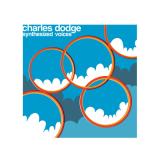
Charles Dodge - Synthesized Voices (Tape)

The compositions recorded here are a product of work with computers in synthetic speech, song and vocal sounds and were created between 1972 and 1975. The music was realized on two different computer music systems and takes advantage of, and attempts to extend and explore their features. The system employed to realize speech songs was created at the Bell Telephone Laboratories for research in synthetic speech and speech communication. Since the system was not designed for musical purposes, its limitations were severe and its musical use a great (and often rewarding) challenge. The system used for In Celebration and The Story of Our Lives was designed with the expressed purpose of creating synthetic musical voices, and was therefore much better suited to the task at hand. As with any high technology project, there was extensive collaboration in the production of the works.

The works on this disk are called computer music because the sounds were created numerically in a computer before reaching magnetic tape and loudspeakers. The computer did not compose the music. However, it was only used as a sound synthesis and analysis medium. In order to hear the sounds which are represented in the computer as successions of numbers it was necessary to attach a digital-to-analogue converter to the computer. The converter transformed the succession of numbers into a fluctuating voltage which was recorded directly on to audio tape.

The technique used to create the synthetic voices is called speech synthesis-by-analysis. For this method of speech synthesis, only those words, phrases and sentences which have been spoken into the computer previously (via an analogue-to-digital converter) may be synthesized. First the digitally-recorded speech is analyzed by programs which extract the attributes (parameters) of the speech for short time segments (.01 sec.). From these parameters the speech may be recreated in a form which resembles the original recording very closely. But for musical purposes the parameters are most often altered before synthesis. It is possible, for example, to change the natural pitch contour of the speech into a melodic line or to change the speech speed without altering the natural pitch level.

The variety of musical patterns which may be created from the analytic parameters is limited only by the composer's imagination. Most of the speech sounds on the recording were created by changing the pitch and duration attributes of the original on resynthesis, but for a few, the resonances (the formants) of the speech were altered as well. The voice of the book in The Story of Our Lives was created by replacing the program which simulates the sound of the human vocal cords with one consisting of 64 sine tones glissandoing at different rates. All the textures in which more than one voice is heard were obtained by mixing the synthetic voices together digitally.

pre-order now11.09.2026

expected to be published on 11.09.2026

16,60 €
Shep` - Common Decency

Shep`

Common Decency

12inchPEEPS02
People Pleasers
07.09.2026

2026 Repress

Shep' is a new project from respected UK veteran Jay Shepheard. He debuted it with the inaugural release on his People Pleasers label last year and backs it up with more heady fusions of dub, minimal and house. 'Smiling Beaver' has tight drum patterns and dusty hi-hats but nice woozy vocal smears and jangling synths that keep things organic. 'Honey By The Pound' is a perfectly aged tech house cut that throws it back to the 90s and hits like Fresh & Low, while 'Fur Burger' gets a little more direct but keeps a playful charm with tin-pot percussion, cheeky whirring motifs, bleeps and balmy vocals. The closer, 'Good Schit,' is another colourfully infused late-night tech house sound that balances motion and emotion perfectly.

out of Stock

Order now and we will order the item for you at our supplier.

Last In: 27 days ago
13,87 €
Robbert Mononom - Mononom 4

Two tracks extending towards the 10 minute marker, very much in the unique style of Robert Mononom which was already being refined throughout his previous 3 EPs, now culminating in 2 excursions throughout deep hypnotic/psychedelic machine made sounds. A side is built on an aggressive triple and double beat kick drum with a very dubby "big room" presence upon which waves of other nuances in noise get overlayed slowly transforming the 165+ BPM experience throughout what sounds like an extended live mix. B side goes in more spacial/atmospheric direction where hi hats take control over the kick, capturing the witness in a whirlwind of dubbed out overlaying rhythmic patterns. A sound so raw and pure in its introspection, clearly showing Robert's capacity of developing an aesthetic of his own.

out of Stock

Order now and we will order the item for you at our supplier.

Last In: 27 days ago
20,80 €
Protocol - Channel Zero

Protocol

Channel Zero

12inchINT291
Interiør
30.08.2026

'Channel Zero is a new release produced by the London-based Brazilian artist Protocol. It is made up of 4 unprocessed live jam recordings of heavy, stripped-down techno. Composed over a period of 2 years, the artist focuses on experimenting on the far edges of techno, inspired by early avant-garde music, drone, and Musique Concrete. It comes in a hand-numbered limited edition of 180g black labels, in a 3mm inside-out cover with a black inner-sleeve.
'The work is a confirmation that techno still thinks forwardly, but pays homage to its mostly overlooked origins. The titles come from one of the early Cybernetic Culture Research Unit essays, also named Channel Zero.
'Lost Signal (Noise) opens up the EP with reverberated static noise, followed up by a deep bass with more layers of percussion and atmospheric noise patterns, slowly evolving into unexpected rhythms. The second track, Blind Belief, is composed of a deconstructed kick sequence, with machinic-like sound structures in the background and a hi-hat that morphs with various envelopes, together with a nostalgic 909 rim-shot. Turning to the B side, Electromagnetic Shadow is an atmospheric four-to-the-floor techno track, where deep kick drums and polyrhythmic noise soundscapes move into industrial noise pattern. Closing Protocol's debut EP, Black Snow Cult brings together the EP's sound palette into aggressive patterns of Birmingham-esque industrial percussions, where synthetic sounds are put together in primitive sounding sequences together with high pitched frequencies.'

pre-order now30.08.2026

expected to be published on 30.08.2026

14,08 €
Cadentia Nova Danica - Mc Gub Gub / Ode To Skt. John / Pladepip

John Tchicai (1936 – 2012) was one of the most important free improvising saxophonists of the 20th Century: an artist of rare vision and aptitude whose lines soared and stood out even in the most hallowed company, and whose body of work as a leader / composer is among the most singular and distinct within the entire canon of that music. But Tchicai’s importance doesn’t end there. Born in Copenhagen, Denmark, to a Danish mother and a Congolese father, his life and career represent a crucial bridge between the European and American traditions of free jazz. Initially trained on violin as a child, Tchicai shifted his focus to the clarinet and alto saxophone during his mid-teens, and began touring Europe as a professional musician by his early 20s, which landed him at a socialist youth festival in Helsinki, Finland, where he met the trumpeter Bill Dixon and saxophonist Archie Shepp. Impressed by what they heard, Dixon and Shepp encouraged the young saxophonist to move to New York, and in so doing changed the history of jazz forever.

Tchicai’s arrival in New York marks the rare occurrence of a European player joining the intimate circle that was first wave of American free jazz. Following his landing in the city in November of 1962, in addition to regularly sitting in with Don Cherry’s group, Tchicai began playing with Bill Dixon's band alongside Archie Shepp and Roswell Rudd, forming the nucleus of the foundation of the New York Contemporary Five - one of the most important groups of the era - which counted Tchicai, Shepp, Cherry, Don Moore, and J. C. Moses as its members. From the ashes of this group, Tchicai would go on to found the legendary ensemble, New York Art Quartet, with Roswell Rudd, Milford Graves, and Lewis Worrell, as well as working within Albert Ayler's band, recording “New York Eye and Ear Control”, Shepp’s band, recording “Four for Trane”, the ensemble that recorded John Coltrane's “Ascension”, and the Jazz Composer's “Orchestra”.

By the time he decided to return to Denmark in 1966, had Tchicai chosen to record little else, his legacy within the history of music would have been ensured. Incredibly ambitious, his arrival home marked the beginning of an incredible period of activity which saw him radically expanding his creative explorations, which by the end of the decade would include becoming a founding member of Amsterdam's Instant Composers Pool and helping to record John Lennon and Yoko Ono's “Unfinished Music No.2: Life with the Lions”. This, however, was proceeded the formation of a new orchestra, Cadentia Nova Danica, led by Tchicai, dedicated to radical cross-disciplinary exploration. Remaining together between 1966 and 1971, the group and its shifting membership regularly fell into collaboration with artists and composers, notably Musica Elettronica Viva, who existed beyond the realms of jazz, as well as participating within multi-media events that incorporated the visual realms.

Cadentia Nova Danica’s only two LPs - “Cadentia Nova Danica” (Polydor, 1968), and “Afrodisiaca” (MPS, 1969) - are effectively Tchicai recorded efforts as a leader, and are legendary. There’s little mystery, once heard, why the later landed on Thurston Moore’s iconic “Top Ten from the Free Jazz Underground”, published by Grand Royal in 1996. Sadly, despite playing extensively during their five year run, with exception of a CD documenting a performance at Jazzhus Montmartre, in 1966, until now there has been no other publicly available recordings that allow us to capture a glimpse of this astounding band at work. Alga Marghen / Formalibera’s vinyl pressing of a never before released body of recordings, made in Copenhagen between 1969 and 1970, changes that in the most exciting of ways.

Comprising three pieces - “Mc Gub Gub, (I–VIII)”; “Ode to Skt. John”; and “Pladepip” - the material on this stunning LP comes from two specific events. The first, which encompasses the first side, “Mc Gub Gub, (I–VIII)” was recorded by Cadentia Nova Danica - in this instance, Tchicai, Sune Weimar, Theo Rahbek, Christian Kyhl, Niels Holt, Jørgen Thorup, Michael Schou, Morgens Bollerup, Allan Gregersen, Ole Matthiessen, Pierre Dørge, Willy Jaegert, Anthony Barnett, and Jon Finsen - on May 29th, 1969, at the ABC-Theatre in Copenhagen. Penned by Tchicai, the piece is a sprawling, evolutionary composition at the outer reaches of free jazz, rooted in large blocks of colliding tonality and rhythm - a sound only accessible to larger ensembles - that push territories explored by Charles Mingus to previously unimagined heights, threaded by moments of hard blown fire. Writhing like a stormy sea - skronking and devilish - “Mc Gub Gub, (I–VIII)” is a work of profound complexity that singlehandedly illuminates not only Tchicai’s singular vision as a composer, but also the power and uniqueness of Cadentia Nova Danica during the band’s most vital period.

The two pieces - “Ode to Skt. John” and “Pladepip” - taking up the flip side, were recorded on February 21st, 1970, at the Danish Broadcasting Corporation’s Radio House, and are the outcome of Cadentia Nova Danica’s extended residency there between 1969 and 1970. In many ways, these two recordings offer some of the best insights into the broad collaborative approaches that defined the band, in this case encountering them working with Danish experimental composer, Svend Erik Werner, who was among the earliest in his country to embrace stylistic pluralism and the use historical forms within a modern context. “Ode to Skt. John” - based on aspects of Gregorian music - was penned by Werner, incorporating heady improvisation by the members of Cadentia Nova Danica, this time made up by Tchicai, Sune Weimar, Hugh Steinmetz, Theo Rahbek, Christian Kyhl, Michael Schou, Morgens Bollerup, Ole Kühl, Torben Enghoff, Mauritz Tchikai, Kjeld Ipsen, Willy Jaegert, Ole Matthiessen, Ole Thilo, Pierre Dørge, Steffen Andersen, Jon Finse, and Clause Bøje. The piece is a fascinating binary of the composed and improvised, utilising the band’s large scale to introduce a remarkable sound within its slow progressions and furious, driving free moments, in this incredible meeting of worlds.

The album’s final piece, “Pladepip”, is arguably its most historically significant: an entirely singular piece, unlike anything in Tchicai’s recorded canon as his foray into musique concréte. Drawing upon two recordings of full-band improvisations by Cadentia Nova Danica, for its creation Tchicai also gouged the surfaces of 78rpm records in his collection to skip and create repeated phrases and patterns, creating a stunning sound collage of hard angles and abrupt phrase, that creates a striking counterpoint to the band’s flowing improvisations that bookend those passages. The result is an engrossing listen and easily one of the most unique and culturally important gestures in the entire history of musique concréte.

Truly incredible, Alga Marghen / Formalibera’s vinyl pressing of this never before released body of recordings, made by John Tchicai’s Cadentia Nova Danica, in Copenhagen between 1969 and 1970, offers an unprecedented window into one of the most important groups working in Europe during that period, significantly expanding their rare and slim discography to date. Accompanied by extensive exploratory liner notes by veteran jazz writer, Ed Hazell, this is easily one of the most historically important archival releases of the year and is impossible to recommend enough. Absolutely essential on every count.

pre-order now28.08.2026

expected to be published on 28.08.2026

28,15 €
Charles Dodge - Synthesized Voices LP
  • 01: In Celebration
  • 02: Speech Songs I: When I Am with You
  • 03: Speech Songs II: He Destroyed Her Image
  • 04: Speech Songs III: A Man Sitting in the Cafeteria
  • 05: Speech Songs IV: The Days are Ahead
  • 06: The Story of Our Lives I: We Are Reading the Story of Our Lives
  • 07: The Story of Our Lives II: We are Reading the Story of Our Lives
  • 08: The Story of Our Lives III: This Morning I Woke and Believed
  • 09: The Story of Our Lives IV: Before You Woke
  • 10: The Story of Our Lives V: If Only There Were A Perfect Moment in the Book
  • 11: The Story of Our Lives VI: The Day Goes On
  • 12: The Story of Our Lives VII: The Book Will Not Survive
also available

Tape[16,60 €]


The compositions recorded here are a product of work with computers in synthetic speech, song and vocal sounds and were created between 1972 and 1975. The music was realized on two different computer music systems and takes advantage of, and attempts to extend and explore their features. The system employed to realize speech songs was created at the Bell Telephone Laboratories for research in synthetic speech and speech communication. Since the system was not designed for musical purposes, its limitations were severe and its musical use a great (and often rewarding) challenge. The system used for In Celebration and The Story of Our Lives was designed with the expressed purpose of creating synthetic musical voices, and was therefore much better suited to the task at hand. As with any high technology project, there was extensive collaboration in the production of the works.

The works on this disk are called computer music because the sounds were created numerically in a computer before reaching magnetic tape and loudspeakers. The computer did not compose the music. However, it was only used as a sound synthesis and analysis medium. In order to hear the sounds which are represented in the computer as successions of numbers it was necessary to attach a digital-to-analogue converter to the computer. The converter transformed the succession of numbers into a fluctuating voltage which was recorded directly on to audio tape.

The technique used to create the synthetic voices is called speech synthesis-by-analysis. For this method of speech synthesis, only those words, phrases and sentences which have been spoken into the computer previously (via an analogue-to-digital converter) may be synthesized. First the digitally-recorded speech is analyzed by programs which extract the attributes (parameters) of the speech for short time segments (.01 sec.). From these parameters the speech may be recreated in a form which resembles the original recording very closely. But for musical purposes the parameters are most often altered before synthesis. It is possible, for example, to change the natural pitch contour of the speech into a melodic line or to change the speech speed without altering the natural pitch level.

The variety of musical patterns which may be created from the analytic parameters is limited only by the composer's imagination. Most of the speech sounds on the recording were created by changing the pitch and duration attributes of the original on resynthesis, but for a few, the resonances (the formants) of the speech were altered as well. The voice of the book in The Story of Our Lives was created by replacing the program which simulates the sound of the human vocal cords with one consisting of 64 sine tones glissandoing at different rates. All the textures in which more than one voice is heard were obtained by mixing the synthetic voices together digitally.

pre-order now28.08.2026

expected to be published on 28.08.2026

22,27 €
Demian - Bandido EP

Demian

Bandido EP

12inchAKSH003
Akasha Records
18.08.2026

Bling bling akashics, the new EP “Bandido” is here. Five direct shots for the dancefloor by Demian aka Ariel Me Llamo.

Side A hits hard with raw, energetic rocker vibes while Side B drifts deeper into dreamy, hypnotic techno territory.

Two different sides, same late-night spirit — sweaty dances that slowly turn into full trance. Expect raw sounds, heavy basslines, and hypnotic patterns. heavy basslines, and hypnotic patterns.

out of Stock

Order now and we will order the item for you at our supplier.

Last In: 47 days ago
13,87 €
Michaela Turcerová - šumum

Michaela Turcerová’s compositions unfold in slow motion. The saxophonist and composer’s glacial music zeroes in on the granularities of each note as it rings, soaking in every subtle shift in texture and pitch.

Šumum exemplifies this patient approach to writing music, branching out from themes of loss and togetherness into an intricate tapestry of introspective sound. These four pieces invite deep collaboration between performers, who together shape the music through the shared process of listening and interpreting Turcerová’s relatively open scores. And while these works often grow from long, stretched-out tones, they also foreground forward direction: no note stays in one place, no melody is without action. Instead, Šumum chronicles how the tiniest shifts can lead to major transformation.

Šumum builds from Turcerová’s longheld interests in place and minimalism. Many of the composer’s works explore perception: how a room can shape the music we hear, and how repetition alters a melody. Like the music of Éliane Radigue, Šumum embraces the rainbow of colors that appear when close listening with the wave-like flow of looped melodic and rhythmic patterns. All the album’s pieces observe the subtle changes that happen as music grows.

Group communication yields the constant evolution that defines Šumum. The album feels like a conversation, with each instrumentalist swapping phrases or trading places when the moment feels right. “Straty” builds from a series of strongly accented drones that appear as quickly as they fade away; underneath them is a perpetual rhythm that drives the color of each long held note, from melancholy into radiance and back again. With “Vlny,” pitch eventually disappears, leaving a delicate rhythm, and with “Masy,” a matrix of brassy tones link together and eventually burst. No matter where the music goes, one thing remains true: Šumum invites close listening, and in the process, reveals the beauty of continual motion.

pre-order now14.08.2026

expected to be published on 14.08.2026

23,95 €
Connor Wall - Moving Pressure 05 (2x12")

2026 Repress
Moving Pressure marks its fifth release, and the first one to stretch across a double vinyl with full sleeve artwork. It isn't framed as an album, yet its sequencing carries a narrative weight that lingers between immediacy and introspection.
MP05 welcomes on board Australian producer Connor Wall, whose work fuses tightly wound rhythm and immersive atmosphere, balancing precision with a sense of openness. His sound is rooted in the physical pull of the dancefloor, yet drawn toward zones of suspension and elusion. And Moving Pressure 05 captures that duality very clearly. Momentum sets the tone from the outset - taut drum programming, metallic accents, and structures that build energy in decisive bursts. There's a sense of propulsion that feels engineered for peak hours, exuding a tightening grip on the floor. Gradually, tension loosens up, stretching patterns into spirals, layering vaporous pads and resonant low-end that opens a more interior space.
Together, the two arcs trace Wall's range with clarity: body and mind, force and dissolve. Rather than presenting opposites, they reveal different angles of the same language. An exploration of density, atmosphere, and the subtle thresholds between the two.

stock from07.10.2026

Last In: 3 days ago
19,75 €
F.K. Raeithel - Aber Was Ändert Das? / Quantitative Unbestimmbarkeit I–IV (TAPE)

In December 2025, I performed alongside Asmus Tietchens and Jetzmann at the final Hörbar Ausklang Festival. This cassette was produced for that occasion. It contains preliminary studies for my live modular synthesiser performance.

The tape wasn't sold on the night, and its release ended up being postponed until now. At one point I had almost forgotten that I had even produced it. Now it's finally here—but what does that change?

Side A features a 24-minute piece titled Aber Was Ändert Das? (What Does That Change?)
Aber Was ändert Das? – Two oscillators coupled via a comparator and routed through a filter bank form the foundation of this piece. Eight filters within the bank are modulated by a synchronised octal triangle wave. Over time, the modulation gradually unfolds like an abanico (fan), shifting into different patterns. The impulses slowly dissolve into noise. A looping voice tape is added to the texture, and the piece concludes with a melody of comb-filtered sine tones.

Side B presents several variations and adjustments of a self-generative patch.

Quantitative Unbestimmbarkeit I-V (Quantitative Indeterminacy I–IV) – At the core of these pieces is a source of uncertainty and three function generators programmed in mutual feedback. The tonal material is derived from a wave-folded sine wave, a noise source, and a pinged state-variable filter. This type of self-generative patch is commonly known as a Krell patch.

The edition is limited to 50 copies. Release day will be the August 7th, 2026.

The title Miszellen Band is derived from the term Miszelle (plural: Miszellen), which refers to a short informative text or brief scholarly essay, often published in academic journals or collected volumes under a "Miscellanea" section. The word originates from the Latin miscella, meaning "mixed things". Such texts typically explore highly specific subjects without the scope or depth of a full-length study. They often consist of etymological notes, addenda to previously published work, concise discussions, or small discoveries from archives.

pre-order now07.08.2026

expected to be published on 07.08.2026

15,08 €
Items per Page:

Language