Suffering can be a borderline experience, opening doors to the divine. Canadian black-metal-outfit GIVRE has dedicated its fourth album to this concept, well known throughout Christian history: On "Le Cloitre" (engl. "The Cloister") the band continues its exploration of the atoning side of pain and the austere aspects of faith through music that goes all the way from elegiac elegance to disturbing outbursts. Even the band deals with Christianity, through a historic lense, they should not be understood as religious band in any way!
The group was founded back in 2010 in Rouyn-Noranda by David Caron-Proulx (Composition, guitars, keys), Jean-Lou David (research, vocals), and Mathieu Garon (bass) when they were just 16 years old. They self-produced a demo album, then moved away from their hometowns. David is now a composer for film and mixed media and Jean-Lou is a writer and historian. In October 2020, ten years after their first collaborative endeavors, they reunited and recorded two more albums: "Le Pressoir mystique" and "Destin Messianique".
The creation of "Le Cloitre" was a lengthy process. While most recordings were made right after "Destin Messianique" in 2021, extensive work was done over an extended period of time to add layers and perfect the album's concept. Each of the six songs corresponds to a holy woman from Christian history. The lyrics are taken directly from their writings or hagiography (an idealized biography), delving into their connection to the divine through suffering. The words are sometimes rearranged, but they are all direct citations without anything new added to them, from the symbolic poetry of Hildegard Von Bingen (1098-1179) to the disturbing and factual depictions of Marthe Robin (1902-1981).
The compositions vary to reflect these different perspectives: sometimes dark and eerie, other times blissful or sorrowful. Therefore, a crucial addition to the album's atmosphere was the inclusion of female vocal performances. Additionally, samples from the French film "Le dialogue des Carmelites" from 1959 are incorporated. Excerpts of a piece by Hildegard von Bingen are used in the song dedicated to her. The album was recorded in the band members'home studios. Mixing and mastering were done by long-time-collaborator Gael Poisson-Lemay (Gris, Sombre Forets, Miserere Luminis), who also contributed guitars to the song about Marthe Robin. Vinyl mastering was done by Greg Chandler (Esoteric) at Priory Recording Studios.
Cerca:perspectives
- A1: Samba 00 04:58
- A2: Panorama 00 04:39
- A3: Golfo Mistico 00 04:34
- A4: Open Sky With Tears Of Blue 00 04:56
- A5: Contemporary Lullaby 00 03:05
- A6: Requiem 00 02:55
- B1: Whispers 00 04:19
- B2: Modular Clouds In Rome 00 03:21
- B3: Piano Bells 00 03:30
- B4: Space Call From Mars 00 03:01
- B5: Tuning The Orchestra With Tears Of Blue 00 03:22
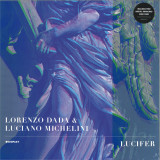
With Lucifer, Kompakt presents an album of rare beauty from two masters of modern music. A family affair, it’s a collaboration between the Italian father-and-son duo of Luciano Michelini and Lorenzo Dada, whose combined histories bring to Lucifer a depth of experience alongside clarity of vision and a finely tuned, neatly developed combined compositional voice. A lovely, beguiling suite of music that combines the electronic and the acoustic, the urban and the pastoral, its gorgeous night-eye vision and tender melancholy sits neatly within the Kompakt universe, while offering the curious listener some rich new perspectives.
There is already plenty to know both artists by. Lorenzo Dada creates across multiple fields – a techno producer and DJ who has already worked with the likes of Jay Haze, Fete, Leo Benassi, and Der, he’s released a small clutch of stylish, smartly designed EPs, and a solo album, Second Life (2018). His complementary background in classical music and composition informs his ensemble project, Tears Of Blue (who appear on Lucifer), where Dada paints with neo-classical tones for a quartet of violin, viola, cello and grand piano, supplemented by electronics for live performance.
Luciano Michelini’s history is yet richer. He may be best known, to many, for his piece “Frolic”, the theme to Larry David’s Curb Your Enthusiasm series; it was also sampled by Snoop Dogg for 2022’s “Crip Ya Enthusiasm”. But there’s much more to Michelini’s story. A successful soundtrack composer, Michelini both studied and taught at the Conservatoro di Santa Cecilia, and worked for RCA from the sixties to the eighties; his soundtracks from this period are gorgeous examples of the form, particularly his work for Il Decamerone Nero (1972), L’Isola Degli Uomini Pesce (1979), and the devastatingly gorgeous Dimensione Donna (1977).
In the eighties, Michelini and his wife Anna Gutling founded the Electronic Music Division studio and academy in Rome, which is where the majority of Lucifer was recorded. Dada reflects on the experience: “We never worked together before, so it was all new for both of us,” with Michelini adding, “I truly love this experience with my son. He’s a talented pianist and composer. I am not very familiar with electronic music nowadays, but we did it fluently.” There’s certainly a familial energy at play through Lucifer, and you can hear how Dada and Michelini, through exploration and experiment, find a shared language, balancing Dada’s tendency toward minimalism, and Michelini’s composerly voice.
Lucifer flows as a suite that interweaves electronic music with acoustic instruments: the lonely sigh of saxophone; Michelini’s lush, verdant piano; the weeping strings of Tears Of Blue (recorded at the studio of Michelini’s friend, the late Maestro, Ennio Morricone). These multiple voices are located within the electronic sighs and swarms from Dada’s kit; there are moments of propulsion, and passages of lambent drift, where the album revels in its tonal sweetness. If it flows so effortlessly, that’s because Lucifer was designed that way, as a suite or a sonata of sorts.
And the title? Dada reflects, “Lucifer was an angel who decided not to be one anymore. The miracle of life is that we can decide what we want to be, even if we are born as angels or vice versa.” This feels somehow apposite: there’s certainly something of the transformative, and the transportive, in Lucifer, a unique family collaboration of rare poetry and sensitivity, where two generations meet in the modern crucible that is the electronic music studio.
"Philadelphia’s So Totally are a portrait of utmost devotion, and how longevity in any kind of relationship can’t occur without it. Since 2015, the band originally called So Totally In Love has humbly studied their surroundings and themselves, perfecting a sound that from inception was present. So Totally’s shimmering guitars and melodies typically sit underneath lush vocals that concurrently embed themselves in a listener’s subconscious, haunting them with heavy mood and nostalgia for 90’s rock groups like Swirlies, Pixies, and The Breeders. Previous releases, and their dedication to spending years playing regionally, brought So Totally to the point of singular focus on drafting a third album, entitled Double Your Relaxation, while in quarantine in 2020.
Upon formation, So Totally collectively bonded over an admiration of Land of Talk. While the influence is certainly present in vocalist/guitarist Roya Weidman’s sugary vocals, the band's love of comfortably resolving melodies, and auxiliary percussion, So Totally sonically have more in common with bands like Sonic Youth, My Bloody Valentine, and Spirit of the Beehive…creating massive walls of sound on each record that plainly implies the quartets towering live experience. Such huge tones aren’t only because of Weidman and guitarist/vocalist Matt Arbiz playing, but the collective effort of the band, which is rounded out by bassist Ryan Wildsmith and drummer Joe McLaughlin.
Lyrically and thematically, Double Your Relaxation explores where influence and “hypnosis” exist in life, specifically in environment, media, relationships, and self (via mental illness), bouncing between perspectives of witnessing, interacting with, and contributing to illusion and how that ultimately affects our idea of identity. The moody and, at times, surreal nature of the songs lends itself very appropriately to the shoegaze and heavy indie style So Totally plays, making them a perfect addition to the canon of the genre."
Get ready to embark on a hypnotic journey as Full Circle presents the highly anticipated re-release of Danny J Lewis' iconic track, "Spend The Night," accompanied by a brand new Archie Hamilton remix that brings a fresh new perspective to the classic garage anthem. Not to mention not one but two mesmerizing dub versions by H-Man and DJL VIP. These carefully crafted dubs take the original masterpiece to new heights, offering unique perspectives on the timeless classic.
Kee Avil's music is both adventurous and intimate, intellectually challenging and emotionally resonant. The Montréal guitarist and producer's 2022 debut LP Crease garnered plaudits from outlets like The Wire, The Quietus, Mojo and Foxy Digitalis, picking up a Canadian Juno Award nomination and Bandcamp Album Of The Day and Albums Of The Year along the way. Its intricate construction, unnerving atmospheres, and knife-edge take on avant-pop prompted comparisons to early PJ Harvey, This Heat, and Gazelle Twin. A remix EP with work by claire rousay, Ami Dang, Cecile Believe, and Pelada brought collaborative perspectives to four Crease tracks, offering new pathways within those songs. With Spine, Kee Avil strips back her heavily textured compositions, opening up a much rawer sound. She calls it folk—and while traditionalists might scoff, this is urgent music that reflects the precarity of modern life, as well as the jarring mixture of electronic and real-world interactions that have become the fabric of our day-to-day experiences. There's a hypnotic post-punk somnambulance to it all, using the repetition and fracturing of melodic phrases interwoven with delicate electronics to create curious and persistent hooks. While not a concept album, themes of time's passage, remembrance, and decay crop up across multiple tracks. Each track intentionally only has four elements—guitar, electronics, and two other instruments, with Kee's voice and guitar pushed to the front. Within this minimalist framework, the juxtaposition of beauty and discomfort that is key to the Kee Avil sound stands out in skin-prickling relief. "We're shaped by many versions of ourselves," says Avil. "I was looking back at these versions of myself and what could have been, what didn't end up being and what did end up being, and going back like that through time. Seeing the future, the past." Spine was written in Kee Avil's home studio after a lapse in writing while touring Crease and working on other projects. She is a well-known and respected member of the Montréal experimental scene, and formerly ran Concrete Sound Studio with Zach Scholes, who continues to work with her as a producer on Spine. Compared to the three years that went into making her debut, Spine emerged in a matter of months—a process that may also be a factor in its intensity and sharpness: "This record was much harder, like it was really discovering everything from scratch." In her desire to not simply replicate or extend the sound of Crease, she felt she had to rip up the rule book, write in a different way, and pare back songs against her usual instincts. Sometimes, when we work against our ingrained habits, we get to the core of who we really are. Spine is an exercise in that process. Without over-intellectualizing or being didactic, it hits immediately and emotionally, especially if you are a person who has spent much time in the process of self-examination. Kee's voice hisses, whispers, and chants; her guitar bends and rings; electronics skitter and crackle; violin creaks like a door in the wind. There is something so evocative about the atmospheres she creates that it's easy to overlay one's own feelings onto her work, but to do that wholly would be to overlook one of the most important things about Spine: Kee Avil's clear and thoughtful vision. This isn't just the next step forward in her artistic trajectory; it's a stunner of a record that stands on its own, a bracing and thrilling listen that has much to reveal about the contradictions inherent in being human. — jj skolnik.
Spanning more than two decades, Mike Kinsella's widely influential songwriting has steadily sharpened and evolved with each new chapter. In his solo vehicle as Owen (in addition to his roles along the way with American Football, Cap'n Jazz, the more recent LIES, and other collaborative ventures), Kinsella’s ability to seamlessly stitch jagged emotional currents into crushingly beautiful songs has remained at the forefront of his art. The Falls of Sioux, Mike Kinsella’s newest Owen full-length, represent a type of reinvention; feeling like the natural next step in Kinsella’s growth, both artistic and personal. The album perforates an established sound to explore unlikely musical ideas, while the songs document a time of moving through life-altering turmoil into brighter days. Heavy themes are turned over with a gentle hand, and Kinsella inhabits the deeper perspectives that come with hard-earned life experience. This contrast has become more distinct as Owen expanded from unassuming acoustic beginnings into more ornate production, reaching new levels of complexity and clarity by the release of 2020’s The Avalanche.
At once a hazy relic and a digital snapshot of the human experience, Your Day Will Come is the debut album from Chanel Beads, arriving April 19 via Jagjaguwar. The remarkable project announces the arrival of New York-based musician Shane Lavers as a new force in experimental music, capturing the many contradictions of modern existence and the strange infiniteness of the digital world. The songs feel like a memory in which you can't distinguish between what actually happened or what was a false reproduction in your mind - although the burning emotion remains intact. Lavers pushed himself to strip his own sense of ego from “Your Day Will Come”. Throughout, Lavers weaves in contributions from his live bandmates, singer-songwriter Maya McGrory (Colle) and experimental instrumentalist Zachary Paul, who offer their own layers of feeling. As McGrory offers a more full-bodied tone and Lavers often sings with his higher-pitched head voice, the two collaborators meet in the middle; it's an intermingling of identities or a subconscious pining for androgyny. In this slippery space, different perspectives merge together, and there's a sense of empathy and humility that arises from the blending of these voices. These days, Chanel Beads live shows see all three performers weaving together in absolute catharsis. This catharsis is pushed to its peak on "Idea June," which sees McGrory taking over lead vocals to project Lavers' lyrics. As McGrory sings, "The waves wash onto my shore," in a voice that's both earnest and digitally processed, it's as though she's speaking as a separate embodiment of Lavers. In under two minutes, the track of clunky acoustic guitar and gutting strings lands somewhere between detachment and kinship. Similar to the off-kilter structure of "Police Scanner," these songs are strangely affecting in their unfinished and liminal forms. Lavers, who is drawn to poor MP3 rips and transitional moments in DJ mixes, knows that these inexact musical artifacts evoke human imperfection. The title of Your Day Will Come could be read as a promise of the arrival of good karma, or it could be a reminder of one's mortality, said out of spite. Yet as Lavers unpacks the haunting feelings of the past that he must release in order to move into his future, he reminds us that grief and hope might be closer than they seem to the naked eye.
A Chaos Of Flowers is an album that builds on their ferocious 2023 album nature morte. BIG|BRAVE"s music has been described as massive minimalism. Their fusillades of textural distortion and feedback emphasize their music"s frayed edges as much as its all-encompassing weight. The potency of the trio"s work is their singular artistry combining elements of traditional folk techniques and a modern deconstruction of guitar music. Gain, feedback, and amplitude are essential. For A Chaos Of Flowers guitarist/vocalist Robin Wattie drew heavily on the poems of artists whom Wattie found kinship in, their words resonant with experiences of those often sidelined by cultural norms. "I discovered that most poems from folk traditions or in the public domain seem to be by men - to which I could not quite relate. In my search, I rediscovered some of my favorite works and poets," says Wattie. Guitarist Mathieu Ball and drummer Tasy Hudson help Wattie shape poetry into pieces as dense and impenetrable as they are vulnerable. BIG|BRAVE achieve their colossal sound through minimalist approaches, a deft understanding of dynamics and an inventive employment of percussion and distortion. The trio reconceptualize what it is to be heavy or minimal, challenging perceptions with their illumination of painfully overlooked perspectives. Guest guitarist Marisa Anderson lends earthen, blues-inflected atmospheres to the album, where guitarist Tashi Dorji and saxophonist Patrick Shiroishi amplify the squall. Working closely with frequent collaborator and producer/engineer Seth Manchester, the internal tumult of Wattie"s voice rings out in warbles, haunting echoes, and unearthly harmonies across bold immense walls of distortion. BIG|BRAVE have collaborated with metal monsters The Body on a previous Thrill Jockey release, Leaving None But Small Birds, and have toured internationally with bands like SUMAC, Godspeed You! Black Emperor, SUNN O))), and Lingua Ignota. As they continue to ascend in their journey as pioneers in the contemporary metal scene, it"s safe to say that BIG|BRAVE are here to stay.
“In search of an afterparty” the name of this split EP we are witnessing coming straight from a miraculous country called Uruguay.
The story of a teacher and a student, the tale of different senses and perspectives, the dance of elusive, fictional Jair himself and the spies of the afterparty which can be on either way of self-data collection or when levels of paranoia have come to a boiling point and sense that the eyes are watching doesn’t go away that easily.
The A side is taken by Muten, an artist who has already made a lot of noise not just in his native country but all over the world too whether it’s with an outstanding liveset, flawless dj set or a timeless record that he has crafted. The B side is a story of a rising and promising producer Flhez, and his quest of frequency manipulation + sound perfection. True honor to have these Uruguayan performers to join Exarde and deliver this outstanding body of work for it.
Exactly two years after their debut album, the project formerly known as Weltschmerzen returns as Pain Palace. The project's new moniker resolves potential confusion with the eponymous record label, but it is a change in name only // the music remains ambiguous in genre but emotionally resolute, an amalgam of approaches bound by an awareness of the remorseful nature of the world.
This is a continuity in creed rather than sound. Apart from the occasional drums // peculiarly captivating in tempo and rhythm // Pain Palace do little to invoke their first album. Despite the similar setting of an intensive week-long recording session in rural Slovakia, the trio arrives at a place that is distinct even from all their earlier projects. From a viewpoint where the world's indifference is recognised as a landscape, the tracks are presented as seven distinct perspectives that range from brutalist chaos to tenderness but always remain compassionate.
This is best revealed in On the Height of Despair // the album's nearly ten-minute-long climax that seemingly borders on collage only to become an engulfing suite of severe movements. The music of Pain Palace stands apart from what Tomáš Pristiak, Matus Mordavsky and Dominik Suchy create either solo or in their respective bands (Tante Elze, Tittingur), and it is the 13th release by the wistful label Weltschmerzen.
Some artists embrace their success by repeating the steps that originally granted them fame. Billy Joel did the opposite, refusing to be contained by prescribed approaches or constrained by a given label. The follow-up to the breakthrough The Stranger, 52nd Street further expands on its predecessor's bold production techniques and inventive arrangements, incorporating more sophisticated textures as well as reflecting a jazz edge gleaned from New York City's thriving club scene.
A key piece of Mobile Fidelity's Billy Joel catalogue restoration series, 52nd Street is here sourced from the original master tapes and pressed on 45RPM 180g LP at RTI. The wider and deeper grooves – as well as the meticulous mastering – yield resplendent dynamics, broad soundstages, three-dimensional perspectives, and tonal balances absent from prior editions. This is how you want to experience the 1978 LP that captured the Grammy Award for Album of the Year.
Teaming again with producer Phil Ramone, Joel capitalizes on his momentum, churning out another direct-sounding affair replete with captivating melodic devices, showmanship accents, and penetrating lyrics. The singer's concision and focus is evident via the tune's lengths, with only "Until the Night" breaking the six-minute mark. Hit singles "Big Shot" and "My Life" rattle forth with an urgency and intensity that Joel had not previously demonstrated, the combination of passionate deliveries, snide overtones, and insistent grooves setting the table for what follows.
Broadening his palette, and drawing from New York's thriving jazz club scene and the city's late-70s grit, Joel splashes Latin and jazz colours on several pieces, employing veterans such as Dave Grusin and Freddie Hubbard to contribute along with a cast that includes a team of background vocalists and horn players. Everything is tastefully appointed, and yet the vocalist's trademark Broadway gaze and knack for the grand gesture coincide with the straight-ahead swagger.
52nd Street is one of the main reasons why Joel has always been championed for consistency. Everything here, from the production to the stand-up songs, helped redefine mainstream pop-rock. Decades later, it's finally available in fidelity that nears that of the Columbia Records' master tapes produced right on 52nd Street.
London soul star Jordan Mackampa returns with a new album titled Welcome Home, Kid! out 16 February 2024 via AWAL. This new music sees Jordan come back to his love of R&B, soul, funk and gospel with references to Dru Hill and Blackstreet, producing a new sound that nods to his earlier soundcloud works and the nostalgia of his childhood. It's brazen and bold and presents an incredibly assured artist that is no longer afraid to show off their Blackness, queerness, or sexual expression in all their forms. Getting to this place has taken Jordan decades of growth, patience & gruelling lessons to reach this state and now he can stand in his Blackness proudly. This album tells the story of how he got to this place of self-worth and the stories of the varying complex but beautiful perspectives about the Black experience. He is open and honest about sex, intimacy, imposter syndrome and how he navigates healthy love, toxic heartbreak, friendships and forgiveness. The core theme of this record is introspection with Jordan explaining, “This was a big theme for me in writing a lot of these songs because no one else has lived life in my shoes, I really had to take other peoples’ opinions & stories out of the writing and put myself at the forefront of everything. Which in turn, made me put the guitar down more and stand centre stage naked in a way. This new album for me feels even more personal now - I use more self language of “I” over “we” because all of these stories are about me and my life in even more depth than the first record touched upon, whilst covering more bases either through my own first person story telling of something current I’m dealing with or a past situation I’m using music to heal through. The debut was me figuring out shit, this album is me putting the last puzzle piece on the board.”
Having failed at rapping, what’s next for an endlessly passionate rap nerd? In this sequel to the acclaimed memoir Wiggaz With Attitude, it turns out what’s next is a sometimes controversial career in rap journalism.
Write Lines: Adventures in Rap Journalism tells the tale of hip-hop writing from the inside. From death threats to interviewing Lauryn Hill while she’s in the shower. From calling Jay-Z a c*** to his face, to letting a notorious rapper sleep in his bath, it’s a hilarious, anecdote-studded tale that takes in hip-hop's first-ever magazine and lifts the lid on rivalries, squabbles and how music journalism really works.
Brutally honest, and endlessly opinionated, this story is also a love letter to hip-hop as it changed seismically through the decades. Write Lines charts those changes from the front line through encounters with many of the greats of rap: Chuck D, Missy Elliott, RZA, Eminem, Jazzy Jeff and Gang Starr among them. This is an unfiltered tale of hip-hop that is both heartfelt and scabrously funny.
“With its relatable take on growing up in the 80s, Andrew Emery’s Wiggaz With Attitude marked his card as a vivid memoirist. He might have failed as a wannabe rapper, but the music he loved gained multitudes from his work for Hip-Hop Connection. A pivotal force in the magazine’s 90s/00s heyday, never short of a telling opinion or four, Andrew set a high bar for its other writers to reach. Write Lines is a transportive account of his many travails in that murky world. Packed with eye-watering encounters and witty asides, his compulsive, self-deprecating and brutally honest reflections will resonate widely and change perspectives on rap journalism forever.” - Andy Cowan, HHC Editor & Publisher, author of B-Side: A Flipsided History of Pop.
A discreet but essential figure in the field of musical creation, Horacio Vaggione has been crafting an ambitious, precise and highly significant body of work for over the last fifty years, coupled with a demanding research activity. This disc offers four purely electroacoustic pieces which illustrate, each in their own way, this singular and fascinating grammar developed by Horacio Vaggione, a complex but fertile grammar which establishes a very special relationship between structure and texture, between matter and formula, to create a fascinating musical space, made up of polyphonies and metamorphoses. (François Bonnet, Paris, 2022)
--
«Schall» (1994), 07’30
Schall exclusively uses piano sounds sampled and processed with various digital techniques. The sound palette focuses on several shapes of various sizes which reiterate, altered to varying degrees, throughout the process. The granular paradigm is clearly assumed here, as is also that of the interactions between various temporal scales. Basically, there is a concern for the articulation of micro-events. The piece essentially plays with low-intensity frames, composed of various planes and punctuated by stronger objects, in a kind of polyphonic dialogue between proximity and distance. (H. V.)
«Rechant» (1995), 15’51
Initially, a few brief sounds of instrumental origin — percussions, flutes, strings. Processed by means of various digital techniques, projected on various temporal scales, analyzed and re-synthesized, worked in their parts (in their saliences), articulated in their edges as well as in their interactions, these sounds show, as Bachelard would say, «pluralism under identity». I thus tried to compose morphologies by targeting properties contained in the material and by projecting them on temporal perspectives of all sizes. The title, an allusion to the old polyphonic technique, refers to the iterative content of these morphologies as well as to the modalities of their interweaving. (H. V.)
«24 Variations» (2001), 09’50
The word «variations» applies here to the morphological transformations of the material, as well as to the various contexts in which these transformations appear. The result can be heard as a continuous interaction between sound particles of different sizes, composed of several layers, reflecting a preoccupation with detailed articulation spanning different time scales. (H. V.)
«Gymel» (2002), 09’25
In Gymel I tried to compose a space-trajectory using layered sounds, produced by morphological operations (splits, clusterings) that spread out from location to location in variously dense objects. The space was treated through phase-decorrelation, a technique which I use extensively, both to create spaces and to locate sounds and movements within a polyphonic (stratified) context. (H. V.)
Four dazzling, extended engagements with mbalax master-drumming.
The contribution from Holy Tongue is chase-the-devil steppers — thumping, clangorous, reverberating — super-charged with energy and atmosphere. From the off drummer Valentina Magaletti detonates a hard rain of small bombs, rounds of fire, ticking fuses. Musical co-ordinates are somewhere between classic On-U Sound crew like African Head Charge, The Mothmen, and Creation Rebel, and the experimental funk of the Pop Group and 23 Skidoo, at their funkiest. Thrillingly, the two dubs are increasingly deranged.
Adjusting the same wavelengths as her superb Workaround LP, Beatrice Dillon plays spaced-out, abstract synth-work against the bodily physicality of the ancient, shifting mbalax rhythms. The music is poised, mindful, tentative; but also limber, fleet, and magical.
Phantasmagorical and efflorescent, Lamin Fofana’s one-two is simply stunning. Both excursions are wide-open, beautiful, epic, and propulsive — the first mix is banging and headlong, the second more syncopated and serpentine — teeming with freshly sublime, funkdafied updates on Jon Hassell’s Fourth World possible musics.
The two parts of LABOUR’s Etu Keur Gui engage the same sequence of drum patterns (called bakks) from different perspectives. The duo performed portions of this piece at the opening ceremony of the Dakar Biennial in 2022, at the Grand National Theater, with thirty sabar players from the family of Doudou Ndiaye Rose. This Wolof phrase for the inner-court of a home — a meeting-place — doubles here as a metaphor for inner space on a metaphysical level; and Pan Sonic, Muslimgauze, Zoviet France, early Shackleton… all ghost across the threshold.
Music On Hold's second album raises to its climax an altogether well-cultivated ambiguity between new ambitions and the waiting posture of a band which has never lived up to its name so well. Produced in a cellar in the 7th arrondissement of Paris, supported by Ray Jane and "surrounded by a group of people who manage to concentrate on something for more than 15 minutes", "MOH4Ever" is one of the most personal things that Emile Cartron-Eldin delivers today, "from the salt-dough workshops in kindergarten". Opening, "His Master Voice" transforms the tribute to a recently deceased loved one into a sad clown's dancing homily. With no surprise follows "Wander" and roaming in a Paris traveled up and down at least ten thousand times already. "Music On Hold 4 Ever" then releases the title of this album in a cry accompanied by an invitation to "unplug" his singer. We hear a bit of the group's very first single, "Bread", taken through the prism of Beck's "Up all night". "Citadel", 6'30" end of side A, loudly proclaims as a chain-breaking the nostalgia of truant school and a desire not to die (at least not like Darby Crash). Mixed in - like this entire album - are the versatile ingenuity of LCD Soundsystem and Gorillaz with Italo-disco arrangements from Roberto Zanetti (aka Savage). With "Over", "Home", "Taming a Tiger" and "Last Laugh", side B prolongs the tightrope walker's delirium by summoning in no specific order, memories in Vienna, resumption of excessive consumption, the fact that "the director of the US Federal Reserve is a real fake-ass" and the cynical humo(u)rous swings of a guy overwhelmed by them in an everlasting after-party. From the first LP, "30 Minutes Of..." and its already delayed release, its chopped tour, "Music On Hold 4 Ever" digs a refined pop, no longer as "solar" as some could have described it when everything seemed to be going quickly. Retaining a semblance of immediacy, the 8 pieces of this second album open up new perspectives with their elegant sophistication, in a quite French and truly original touch of DIY and experimentation that the group can pride themselves on. " I'm twenty-nine, and i don't wanna die ".
Fixed Abode labelhead Rainy Miller met Space Afrika through regular nights he runs at Salford’s The White Hotel, a hub for leftfield electronic music. What started out as an idea for a collaborative EP between Rainy and Space Afrika turned into a longer form project, with features from Mica Levi, Coby Sey, Richie Culver, Voice Actor and Iceboy Violet, amongst others. ‘A Grisaille Wedding’ is an immersive experience that fills the space these artists have come to dwell in during their creative journeys. It not only pushes the boundaries of music but also bridges regional dialects within the conversation of contemporary electronic music. Rainy Miller: “‘A Grisaille Wedding’ is a project based in the personification of the semi-fictitious world that Space Afrika have come to build over the years. Using musique concrete and British soundscapes, I wanted to fuse the sonic with both noise and the contemporary.” Space Afrika: “The record’s title figuratively describes the marriage of two similarly motivated perspectives, each affected by a common backdrop and familiar ground tread amongst the scrimmage of urban sprawl, sombre, a boisterous landscape and clouds of uncertainty.” Rainy Miller’s 2022 solo album was included in 6 Music’s Albums Of The Year and Crack Magazine’s Best Albums Of 2022. Following the LP release, Rainy Miller and Space Afrika will be announcing joint UK and EU live shows taking place at the start of 2024. For fans of Actress, Dean Blunt, Lee Gamble, Loraine James
On Side A, smile your way through two songs by The Teacher Haters — in fact, we challenge you to get through these tracks without smiling. Even the name of the band invokes a chuckle as it suggests what these guys are about — and that’s the P-A-R-T-Y. Straight out of the 60s comes a group that could have been played with Sam The Sham & The Pharaohs back in the day. These whimsical works are deceptively deep as they take us to a time when garage punk fused with R&B.
Big Pig Alley is uncomplicated, and that’s what makes it great — it sounds like a bunch of college guys having a good time, writing lyrics on the spot: “If you’re lookin’ for romance, take a train, take a plane...or a raft to France.” The guys have something other than romance on their minds as they chug along on acoustic guitar and trash can drums (and possibly other things). What really makes the track, though, is the witchy background voice — the performance is loose enough, while the witch is doing his own thing entirely.
The witch returns on the second track on Side 1 in the up-tempo, dance-ready Cut Loose. No obscure artistry here — these guys tell you exactly what the song is for in the title. In fact, just in case you missed it, they state their thesis in the opening lines: “I wanna shake all night, I wanna do it right, I wanna dance, dance, dance with you…” All of their collegiate effort is put toward getting you to move your hips in this groovy, rockabilly-flavored mix.
Let's talk about Side B...
We Got A Thing is up first — a crossover soul dancer that invites you to sing along with an infectious, call-and-response chorus. It pairs nicely with The Teacher Haters as fun, simple party music from the 60s — though this time from a female perspective.
Things go deeper with Guys Today. As the name suggests, the content is about the enduring tension between the sexes and the heartbreak it can lead to. It’s a deep soul beat ballad in the vein of Betty Wright or Helene Smith. A grand opening is followed by a clear, crisp female vocal that brings the singer’s lament into focus. The band is tight, and it all comes together to portray a woman who has made up her mind and is offering a warning about guys today: I know you love your man, but I know they will hurt you in every way they can.
At first glance, these artists seem to share only a few things in common — party-themed music conceived in the 60s with an R&B flavor. But between sides A and B, it feels like these groups are talking to each other — perhaps different perspectives of the same party. Perhaps the party itself and then the fallout. The result is a balanced EP release that feels whole and satisfying. We hope you feel the same as we proudly present these found recordings as an exclusive 12” on 180 gram vinyl. Please enjoy.
- 1: I'll Slip Away
- 1: 2 After Laughter (Comes Tears)
- 1: 3 How Could You Let Me Go
- 1: 4 We'll Understand
- 1: 5 Key To Love Is Understanding
- 1: 6 If I'm In Luck I Might Get Picked Up
- 1: 7 Low Life
- 1: 8 Once I Was
- 1: 9 We Don't Run
- 1: 0 Won't You Tell Your Dreams
- 1: The Kneeling Drunkard's Plea
- 1: 2 Heidecker
- 2: 1 You've Become A Habit
- 2: Honey Moon
- 2: 3 Send It On
- 2: 4 Le Chant Des Fauves
- 2: 5 Same Old Man
- 2: 6 Something On Your Mind
- 2: 7 Blink
- 2: 8 Plain As Your Eyes Can See
- 2: 9 Rabbit Hills
- 20-track collection includes Charles Bradley & The Menahan Street Band covering Sixto Rodriguez, Iggy Pop & Zig Zags performing a Betty Davis classic, Ethan & Maya Hawke interpreting Willie Nelson, and Angel Olsen paying homage to Karen Dalton - Double LP pressed on special limited edition color wax - Featuring new cover art by renowned British artist Sophy Hollington - Booklet with track-by-track notes by Lydia Hyslop // For more than 20 years, acclaimed reissue label Light in the Attic Records has shined a spotlight on some of music's most unique - and often forgotten - voices. But reviving these long-out-of-print recordings is only half of the process. "We believe that an essential component of archival work, aside from simply honoring the music, is to seek ways in which to bring fresh perspectives, context, and reverence to the original artists and their work," says LITA founder, Matt Sullivan. Thus, LITA's acclaimed cover series was born, in which contemporary acts pay homage to their favorite LITA artists and songs. Spanning more than a decade, 20 of these inspired cover songs will be available together for the very first time on the 2xLP Light in the Attic & Friends. From Charles Bradley & The Menahan Street Band covering Detroit singer-songwriter Sixto Rodriguez and Mac DeMarco performing a song by Japanese icon Haruomi Hosono, to Iggy Pop & Zig Zags honoring funk queen Betty Davis, and Ethan & Maya Hawke covering country great Willie Nelson, these performances bridge the gap between generations, languages, and musical traditions.
- A1: Sarco - Haich Ber Na & Oliver Torr 02 59
- A2: Pettels - Andriy Kostyukov & Timmi 03 52
- A3: The Darkness Of The Captive - Jay Glass Dubs & Rlung 07 07
- A4: Caviar - Oliver Torr & Andriy Kostyukov 03 23
- A5: Nice & Simple - Jay Glass Dubs & Timmi 04 10
- B1: Sandy Dub - Jay Glass Dubs & Andriy Kostyukov 10 38
- B2: Köre - Jay Glass Dubs & Oliver Torr 03 27
- B3: Sequence 1009 - Haich Ber Na & Rlung 03 46
- B4: Dew On The Desert - Rlung & Timmi 05 10
Extra Muros - Czech Republic is the result of the fourth edition of FLEE's creative residency program which took place in December 2022 on the dance floor of Prague's most infamous nightclub Ankali.
For two weeks on wooden floor, and under a yellow-tinted skylight, the room usually filled with movement and vibrations became home to six musicians and producers from the Czech Republic and all over the world who came together to experiment on new sounds, inspired by a large variety of artistic environments and soundscapes.
Documenting from various perspectives the music production process, capturing those exchanges, this compilation celebrates a unique form of artistic expression and collaboration.
LP
Extra Muros - Czech Republic is the result of the fourth edition of FLEE's creative residency program which took place in December 2022 on the dance floor of Prague's most infamous nightclub Ankali.
For two weeks on wooden floor, and under a yellow-tinted skylight, the room usually filled with movement and vibrations became home to six musicians and producers from the Czech Republic and all over the world who came together to experiment on new sounds, inspired by a large variety of artistic environments and soundscapes.
Documenting from various perspectives the music production process, capturing those exchanges, this compilation celebrates a unique form of artistic expression and collaboration.
We're proud to announce renewal of our near-ten year relationship with raw black power ambient ritualists Sutekh Hexen in announcing the band's colossal new 2LP "P:R:I:S:M", a full collaboration with Canadian nightmare-weaving enigma Funerary Call (AKA field recording and experimental soundscaping artist Harlow MacFarlane), to be released this summer in collaboration with our good dearest frequent co-conspirators from the US Sentien Ruin.
With "P:R:I:S:M", magisterial sonic-alchemists Sutekh Hexen and Funerary Call join forces to deliver a fully collaborative album of eight highly experimental tracks. Throughout this octonary journey, concepts and unseen source energies are refined into spectrums of deeper consciousness. The resulting narrative guides the listener through a vastness of (dis)charging energies, rebirth through dissolution, and harrowing harmonic passages in tremendous spaces. Inner-workings suspend transformations in time. Pushing their respective boundaries, Sutekh Hexen and Funerary Call initiate the listener with the crystalline, static miasma of the album’s opener 'Meridian غ', only to enshroud them in the manifesting psychosis of 'Infernal Folly'. The churning mysticism of 'Perilous Shade' offers temporal sanctuary, and 'Toward the Eastern Gate' calls forth tectonic-prophecies as the album's centerpiece, tipping the scale into 'Fractal: Void'—a blistering disarmament in a storm of guitars, scathing electronics, and the disembodied calls we all anticipate and fear. 'Æscend Obsidia' tests the preceding tension and overwhelms in shimmering radiance before declaring release in 'Pangæa Ultima² (Dread)'. Closing with 'Shores of Purgatory', thresholds are breached anew with hectic guitar feedback, spectral synthesis and meditative melodic embellishments. Where the mirror blinds, the "P:R:I:S:M" offers vision—refractions of new perspectives, dissolving the shadow-self.
Chicago"s Axis: Sova hit the beaches of southern California with Ty Segall to make a total hi-fi classic. Often feral and consistently catchy, Blinded By Oblivion is lit up with interlocking drum kit + drum machine, adventuresome guitar, bass, and harmonic vocals on every song. Icy lyrical perspectives, rendered in a sunshiny natural paradise, transmit the fun and fraud of human polarities with urgency and an occasional eye roll. Making for an undeniably good/bad time, streamlined and more reflexibly physical than previously known, Blinded By Oblivion begs the universe to bring back rock and roll radio. All the elements are there: compassion for our collective fallibility, rebuke on the tip of the tongue, all rolled tight with hook-laden, high-energy construction. "Bout halfway through Blinded By Oblivion, we hear Sova say, "I think my heart is made of metal." Yuuuup. But we"d argue there"s at least a ventricle or two made of post punk! And with vena cavae split between psych and southern boogie. And cardiac veins of glam, power pop, and punk Sometimes the heart is simply filled with sweet melody - so man, the beats of this metallic muscle are insane!
original[14,08 €]
Roy Davis Jr. & Byron The Aquarius and Jamie 3:26 & Danou P remix Radio Slave’s Wildlife.
‘Wildlife’, released a few months back, found Radio Slave tapping into his house and disco roots. It proved a dancefloor smash that got support from a wide array of artists, from DJ Bone and Tim Sweeney to Roman Flugel and Axel Boman. As such, the artists chosen to remix come from similar backgrounds and bring all new perspectives to this irresistible gem.
First up are Chicago house legend Roy Davis Jr. and keys playing maestro Byron The Aquarius. Both make the sort of dusty, feel-good deep house that will never grow old and have done so on the scene's best labels. Their sizzling seven-minute rework of 'Wildlife' has jazzy, life-affirming keys and smeared synths that bring the warmth. The drums are rubbery and inviting, and the whole thing brings real musicality to the floor.
The second remix is from original Chicago innovator, deep digger and edit king Jamie 3:26 and a young Dutch artist he has long since mentored, Danou P. Between them, they have cooked up gems like 'What It Is' together on Shake Records and remixed for Defected, all with a healthy respect for disco, funk and soul from the 80s onwards. Their take on 'Wildlife' is a piano-laced and upbeat party starter. Noodling bass riffs,zippy synth details and lavish chords make for a sophisticated sound that will swell the heart.
SPLIT's debut vinyl EP is a tour de force of German Dubstep, featuring masterfully crafted original tracks and expertly executed remixes from Jafu, Zecher, and Schulzone.
From the opening track, the listener is taken on a journey through a soundscape of deep, driving basslines and mesmerizing melodies that are sure to leave a lasting impression. SPLIT's unique style is evident throughout the EP, blending elements of traditional Dubstep with a fresh,
contemporary twist. The remixes from Jafu, Zecher, and Schulzone add an exciting new dimension to the EP, showcasing their own unique perspectives on SPLIT's original tracks.
Overall, this is a must-have release for any Dubstep fan and a strong indication of the bright future ahead for SPLIT.
Highly recommended.
Perth-based artist hub 823, led by the extraordinary producer / creator Ta-ku joins forces with Berlin's Jakarta Records for the release of Godblesscomputers's fourth full-length LP, "Faded Views." The LP melds bright electronic flourishes with laidback synth-driven backdrops, weaving tapestries of mellow folktronica and groovy jazz harmony with continuous sonic intrigue that will keep you grooving into a tropical disposition. Paying homage to his musical moniker, the Bologna-based producer makes timely metallic interjections amidst lush, effortlessly groovy soundscapes. Explore a world of found, recycled, and synthesized sound on "Faded Views" out everywhere September 8.
Bologna-based producer, DJ, and sound collector Godblesscomputers (122k Spotify listeners) has returned with the release of his fourth full-length record, "Faded Views." Godblesscomputers's latest LP "The Island" (2020, La Tempesta Dischi) earned him placement on Spotify playlists like "Brain Flood" and "Coffee Club." Since then, his appearance on Willie Peyote's track "La colpa al vento" landed GBC on "Best of Indie Italia 2022." On "Faded Views," it was Godblesscomputers's creative project to explore the sonic potentials of his direct environment, picking up recordings and threads of inspiration from the most commonplace occurrences. A sonic scavenger, Godblesscomputers explored the expanses of his-both digital and physical-soundscapes. "Faded Views" does the work of crafting a unified, yet complex compilation of the noises that mark the experience of being digital natives in ever-expanding dimensions.
Godblesscomputers's use of musique concrète and found-sound composition melds curiously with his undeniable electronic and techno acumen. Superimposing metallic electronica onto esoteric sound bytes creates the occasion for complex sound collage. "Faded Views" marks a decade since the genesis of the Godblesscomputers project; the entire LP testifies to how time warps perception and sound. Godblesscomputers's music seems to decorate time, both commemorating the moments passed with mind-melting sonic collages and looking forward to the infinitudes of the future with frenetic electronic experimentation.
Themes of impermanence and transience-hence "Faded Views"-pervade the record. Godblesscomputers blurs time as each track seeps into the next in what feels like a seamless transition. He makes these swift passages in genre as well-the record opens on "Colors" with a rich horn section which frictionlessly becomes a lo-fi dance groove. It is this melding of the analog and the electronic that makes sense of his found approach to beat-making: Godblesscomputers marries the found and the synthesized; the creator and the created; the past and the future. The process of sonic dissection and recomposition that drives much of Godblesscomputers's creative process yields not only assertive breakdowns and animated dance tracks, but also complex tapestries of sound that keep the listener ever-intrigued-piano, saxophone, and modular synthesis all find a natural home on tracks like "Hello." In an apt description, the producer's work has been described as "sounding like wood, metal, and microchip."
Godblesscomputers's artistic objective lies in blurring definitive lines, constantly shifting perspectives, genres, and origins of inspiration. On "Faded Views," this design cultivates a folktronica record that truly evades definition.
Feelgood lead single "Mirrors" is out June 30th and features a rich meld of warbling layers, mixing upbeat dance music with complex instrumentation. Stream second single, "Above the Lake," for a mellow summer cut on July 21. Finally, the effortlessly groovy third single "You Feel Me" captures a genre-warping foray into folktronica. Listen to "You Feel Me" on August 11.
All LP artwork and stunning single visualizers were single-handedly put together by multi-disciplinary designer Michael Norman. "Faded Views" will be available everywhere physically and digitally on September 8, 2023. Be sure to listen for focus track "Hello" that captures the vast scope of Godblesscomputers's musical prowess. Find the LP, CD, and digital release on 823's and Jakarta Records's Bandcamp and local record stores.
- A1: Guillaume De Machaut –C’est Force, Faire (14Th Century)
- A2: Tobias Hume –Touch Me Lightly (Circa 1607)
- A3: Silvestro Di Ganassi –Ricercar Quarto (1542)
- A4: Guillaume De Machaut –Hélas! Et Comment (14Th Century)
- A5: Charles Curtis –Unfinished Song (1998)
- B1: Terry Jennings –Song (1960)
- B2: Morton Feldman –Durations Ii (1960)
- B3: Anton Webern –Drei Kleine Stücke, Op. 11(1914)
- B4: Olivier Messiaen –Louange À L’éternité De Jésus (From Quatuorpour La Fin Du Temps) (1941)
- C1: Richard Maxfield –Perspectives For La Monte Young (1961-62)
- D1: Charles Curtis –Music For Awhile (1999)
- D2: Charles Curtis –Music For “Lester” (2009)
New double-LP edition of a selection from Saltern’s acclaimed collection of recordings surveying the career of renowned, American cellist, Charles Curtis. Selected by Curtis and Tashi Wada from recordings spanning two decades, Performances & Recordings 1999-2018 offers a broad, inclusive view of Curtis’ activities across the diverse worlds of music he inhabits, featuring the music of
As time moves forward, it becomes increasingly clear that the need for emotional expression through artistry is more important than ever, especially in the wake of emerging AI technology that threatens to replace human creativity. Minus & MRDolly's new album, "Giant Stops," is a testament to the enduring power of art to connect with audiences on a deep emotional level.
Named in direct reference to arguably one of the greatest albums ever created, "Giant Steps" by John Coltrane, "Giant Stops" pays homage to the rich legacy of jazz while pushing the boundaries of the genre with a contemporary twist. The album seamlessly blends jazz, hip-hop, and electronic elements to create a unique sonic landscape that is both nostalgic and modern.
For Minus & MRDolly, "Giant Stops" represents a new chapter in his evolution as a musician, showcasing his growth and commitment to pushing boundaries in his genre-bending style. Taking inspiration from the creative process of Makaya McCraven, the album features dynamic instrumentals backed by a live band, with Minus & MRDolly's signature lyricism and storytelling shining through both the instrumentals and the lended work of guest musician such as Meta_ or Luca Argel. By using this production method the album takes a bold stand for the importance of sampling as an art form hoping to encourage listeners to appreciate the rich history and evolution of hip hop and to recognize the essential role that sampling has played in shaping the genre.
As a nod to his Portuguese roots, "Giant Stops" represents a deeper exploration of the artist's identity and a commitment to looking inward to find creative inspiration. With this album, Minus & MRDolly hopes to inspire others to embrace their own unique perspectives and use them to create art that connects with audiences on a deeply emotional level.
In a world where technology threatens to replace human creativity, "Giant Stops" is a reminder that the power of art to connect with people on a fundamental level is enduring and will continue to shape our world for generations to come.
- Hold The Building Up
- The Prison Within
- Hold ‘Em Up
- Comin’ Down On Me
- Low Hangin’ Disco Ball
- So Alone
- I Always Get What I Want
- Playin’ Pool With The Planets
- Destroy
- Cookin’ With Heat
Downstate[34,41 €]
Straight outta Rockaway Beach, Queens, New York City, USA, THE WORLD, Prison is a state of mind, an experience, a loose collective, a band, a jam band and a bunch of psychedelic dudes who aren"t your average bunch of jambanders. All that, all at once, ALL THE TIME. You get what you"re dealing with here? No...you don"t. The only way to REALLY get it is to go to Prison -- and if you"re not from greater NYC and haven"t showed at any of the shows, here"s your best bet: their breakout album, Upstate. And whatta breakout! So high, you can"t get under it; so wide, you can"t get over it! How wide? Every song has two titles, that"s how wide. And almost everybody sings, like, all the time. That wide. Sure, you can break down the numbers -- five guys, five songs and four sides of vinyl in one gatefold sleeve -- but that won"t get you Upstate, either. Prison is the sound of everybody in the room figuring out where to go, individually and collectively. As they go through it, the meaning changes, the destination changes, the words mean something different. It"s meaning and no meaning, rising and falling, sinking and flying on the back of something massive cacophonized by three guitars, four vocals, a bass and drums. A lot of information bouncing around and enough time to really get you out of yourself! Take a look at the titles: each one a dichotomous inquest that the assembled Prison-ers march upon with fervor, glee, vengeance -- a whole spectrum of feels and perspectives woven into the jam for you to see. The Prison population changes with the seasons, and during the season this album was recorded, Sarim Al-Rawi, Mike Fellows, Sam Jayne, Matt Lilly and Paul Major were in Prison. Sarim you might know from Liquor Store, Mike"s made a bunch of scenes and records as Mighty Flashlight, Sam, who passed away in 2020 (R.I.P., brother) was in Love as Laughter -- and Paul Major you know from Endless Boogie, who Matt had roadied for -- and despite being "just a skateboarder who loves music" with no previous experience on the drums, he and Sarim inaugurated the Prison experience, like, seven years ago. Since then, it just fell together and it keeps doing so. A free thing called Prison.
Fiddlehead's third album Death is Nothing to Us is a defiant, new chapter for the band. Since 2014, the Boston-based group have been honing their unique sound, bringing together the energy of hardcore, the anthemic melodies of `90s alternative, and the unbridled passion of Revolution Summer era emo. Their previous albums, 2018's Springtime and Blind and 2021's Between The Richness, dealt heavily with grief from different perspectives, and now their latest feels like a de facto culmination, drawing together many of the catalog's through-lines sonically and lyrically. The band again teamed with producer Chris Teti for their third record, and his punchy production captures Fiddlehead's live energy while showcasing the massive guitars and undeniable catchiness that makes their music so immensely satisfying. The album's concise 27 minutes sound like a natural extension of all of the band's strengths, but is glued together by vocalist Pat Flynn's singular tuneful roar. Flynn, since his time as the vocalist of Have Heart and now as Fiddlehead's frontman, has earned a reputation as one of hardcore's most thoughtful lyricists. He interweaves his ruminations on life, death, and all the joy and tragedy in between with references to Roman philosopher Lucretius; the author Jean Améry; other musicians like Bad Brains, Alex G, or Wire, and even references to the band's own back catalog. The humanity across Death Is Nothing To Us is palpable in every note. It's the kind of art that observes pain with real honesty rather than prescribing a solution for it-and in doing so, inadvertently offers some sense of hopefulness. The album finds Fiddlehead so deeply delving into the pain, confusion, nuances, and contradictions of sadness-so willingly wrapping their arms around a concept as existentially baffling as death itself-that they've created an album that is truly life-affirming. Death is Nothing to Us exemplifies so much of what makes Fiddlehead a special band: taking these heady, unanswerable questions and wrestling with them in a very earthbound way, all wrapped up in the urgent power of a three minute punk song.
Stephen Steinbrink discovered a short YouTube video of a street magician who approaches a highschooler walking home in Barstow, California. “Here, let me show you my idea,” he says, as he places a quarter on the kid’s hand. The magician performs some relaxed flourishes, and the coin vanishes. In silence, the kid stares at his hand at the nothing where there once, indisputably, was something, until his wonder finds a single word: “Cool.” The title of Disappearing Coin, the new album from Oakland songwriter Stephen Steinbrink, comes from this short clip. “When I look at it now,” he says, “I relate to the kid, who’s obviously uneasy in his body, and going through the experience of being a teenager in the early 2000s growing up in a bleak desert town like I did. I also relate to the coin, an inanimate disc of possibility. And I relate to the magician, an absurd facilitator of sending what is tactile and concrete into the wispy conceptual realm.” “I’ve watched it probably a hundred times,” he says. “It cracked me up but also blew my mind open the feeling of wonder I experienced watching this video became a guide as I navigated new ways of staying in the realm of what’s both real and magical.” Following the 2018 release of Utopia Teased, Steinbrink completed an apprenticeship in the nearly-lost art of Stained Glass, becoming a glazier at a studio that over three years, fully restored the enormous 90-year-old windows in San Francisco’s Grace Cathedral. He committed to his Buddhist study, beginning lay monastic training before the process was thwarted by the pandemic. He dove deeper into music production for other artists, engineering two albums by Boy Scouts released on Anti- Records in 2018 and 2021. Steinbrink delighted in the way these pursuits pulled at the thread of ego’s tapestry and decentralized him from his craft, allowing him to embody a new role as a creative caretaker engaging in practices that felt communal and restorative. “As I slowly began writing for myself again, I tried to imbue my new songs with this sense of playfulness and wonder I felt while exploring these other interests.” He says. Feeling unlocked from the pressures of perfection that he often felt in his earlier work, creating Disappearing Coin felt buoyant and healing. “The album feels like an integration of all of my past musical selves zeroing in on the present,” Steinbrink explains, “I felt free to explore new ways of writing, through different perspectives, experimenting with fictional songwriting, visual archetypal language, and total collaboration.” This “total collaboration” was a joyous new venture after years of solo performing and recording. The album can be seen as a 42 minute session of show and tell, the manifestation of Steinbrink repeating the mantra of “Here, let me show you my idea” to himself over and over. Disappearing Coin is at once a welcome return for the veteran Steinbrink and the debut of a totally new artist, one who has found a new path to himself with new goals of openness, curiosity, and self-acceptance. “Recalls the magic pop purity of Arthur Russell...its minimalism manages to feel enlightened and transformative.” PITCHFORK // “Melodic and self-assured. Steinbrink delivers his knotted lyricism with a smooth lilt.
orbit is the electronic project of 28 year old producer and songwriter Marcel Heym. With a soundscape marked by a blend of raw acoustic guitars and atmospheric synth leads, orbit combines imagery of life in the countryside with an immersive dream world. After releasing three EPs since 2020 and having an international Hit with his track “Perspectives” as well as several live shows and a Support Tour through Europe with Parra for Cuva, orbit announces his upcoming EP for April ‘23 alongside a special concert in the Berlin Zeiss Planetarium. The new EP is moving a newly dark sphere into the artist’s universe - a powerful piece of gloomy, vast synthie soundscapes, orbit’s characteristic hazy vocals and soft acoustic guitars.
Quiet landscapes and deep perspectives.
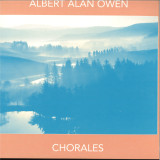
British composer Albert Alan Owen’s first widely available new work in many decades. Chorales is a meandering yet wonderful piano solo album recorded during the summer of 2020.
The album, through a series of beautifully simple piano pieces, features 20 ethereal compositions that are simply allowed to hang there in the air. Deeply emotional and spiritual, Albert Alan Owen’s Chorales ushers minimalism into the intimacy of aprofoundly elevating listening experience. Captivating.
Tucked in the heart of Koreatown, Los Angeles, lies The Libra Hotel—the titular architecture of Nick Malkin's new album and site of his musical and psychogeographic exploration. Unlike most musical "site-specific" studies, Malkin remains wholly ambivalent to the documentarian approach, instead sharpening an auteur-like focus on the site as a conceptual and highly expressive backdrop. The Libra is musically explored as a space that houses a noir fragmentation of identity—the exhausted trope of a complicated protagonist walking through rain-soaked street corners and fumy neon lights—where an inner monologue is rendered in both miniature and at a cosmic scale. Casting aside stifling tropes around field recording, ambient, and improvised music, Malkin's work finds its own unique fidelity and emotional core through the assembly and reassembly of memory. Nearly every sound on the album—from frayed saxophones, lambent pianos, and dissected jazz drum kits—are multiplied, shattered, and reconstituted into shapes that adorn The Libra in a motion-blurred fog. The narrative of the Hotel suddenly appears as if out of the mist, with intersecting characters interacting within its walls by happenstance. Adminst the languid set pieces, wraith-like sonic grains gravitate around wide subbass beams that give structural form to The Libra, a narrative tension like when a scene is shot from hundreds of different perspectives: an image both luminous and veiled.
Much like Frank Sinatra's own spatial residency immortalized on "Live at The Sands," "At The Libra Hotel" showcases an exuberant view of entertainment, hospitality, and a form of masculinity, one that can quickly detourn into darkness. Knowing this, Malkin extracts a melancholic core out of The Libra locale. The flickering shadows of American decadence are shown in their ephemeral honesty, lines that trace how even in everyday life virtue is tested, sanity is tested, even reality is tested within the confines of desire, within the night. The album is draped in fleeting textures, carefully arranged with a trance-like microtonality, the faint inflections and articulations of a jazz band cascading into dissipated stillness. Voicemails about changed locations and covert eavesdropping on guests' whispered conversations provide an atmosphere of missed connection and voyeurism—a purloined letter of desire receding into a vanishing point. Like the music itself, The Hotel, a chapel perilous at the intersection of desolation row, the center of it all, yet simultaneously at the edge of town, becomes a structure between libidinous virtuality and actuality—our inevitable half-light.
Ultimately, the pensive atmosphere of "At The Libra Hotel," powerfully asserts a plea for the kinds of intimacy only possible in transient spaces. Here, memory cascades into a force that feels like something supernatural, perhaps even religious, yet always subject to the infidelity of our imagination. Here, the album opens into its primary psychodrama, the transient nature of subjectivity itself and how this becomes fractured in the tumult between our commitments and desires. Within this nocturnal space, to quote Louise Bourgeois, "you pile up associations the way you pile up bricks. Memory itself is a form of architecture."
Repress!
**NEW 2018 ALBUM FROM KIKAGAKU MOYO**The shifting dimensions of Masana Temples, fourth album from psychedelic explorers Kikagaku Moyo,are informed by various experiences the band had with traveling through life together, ranging from the months spent on tour to making a pilgrimage to Lisbon to record the album with jazz musician Bruno Pernadas. The band sought out Pernadas both out of admiration for his music and in an intentional move to work with a producer who came from a wildly different background.
With Masana Temples, the band wanted to challenge their own concepts of what psychedelic music could be. Elements of both the attentive folk and wild-¬-eyed rocking sides of the band are still intact throughout, but they're sharper and more defined.
Kikagaku Moyo started in the summer of 2012 busking on the streets of Tokyo. Though the band started as a free music collective, it quickly evolved into a tight group of multi-¬-instrumentalists. Kikagaku Moyo call their sound psychedelic because it encompasses a broad spectrum of influence. Their music incorporates elements of classical Indian music, Krautrock, Traditional Folk, and 70s Rock. Most importantly their music is about freedom of the mind and body and building a bridge between the supernatural and the present. Improvisation is a key element to their sound.
More than the literal interpretation of being on a journey, the album's always changing sonic panorama reflects the spiritual connection of the band moving through this all together. Life for a traveling band is a series of constant metamorphoses, with languages, cultures, climates and vibes changing with each new town. The only constant for Kikagaku Moyo throughout their travels were the five band members always together moving through it all, but each of them taking everything in from very different perspectives. Inspecting the harmonies and disparities between these perspectives, the group reflects the emotional impact of their nomadic paths. The music is the product of time spent in motion and all of the bending mindsets that come with it.
‘Where is Agartha? What is the specific region in which it lies? Along what road, through what civilizations, must one walk in order to reach it?.’ Saint-Yves d’Alveydre in 1886
Agartha, the debut full-length album by Japanese producer Wata Igarashi, is a mysterious, divine thing. Named for the mythical secret kingdom, understood as a complex maze of underground tunnels, perhaps designed by Martians who colonised the Earth tens of thousands of years ago, it’s a similarly mystical, perhaps even cosmic trip – but this time, exploring an inner, deeply personal cosmos. Beautifully detailed and bustling with rich incident, it takes Igarashi’s music to new places, which still retaining his unique sonic imprimatur; in this respect, it’s perfectly at home with Kompakt, a label that’s always encouraged artists to make the visionary music they need to create, to take risks and make sideways steps into uncharted territory.
An eloquent producer and DJ, Igarashi has been releasing techno for eleven years now, appearing on such imprints as The Bunker NY, Delsin, Midgar, and Time To Express; he has also self-released his productions via his WIP net label. Throughout, Igarashi has consistently explored his unique approach to techno and electronic music, one that’s eloquent and poised, even when it shifts into more psychedelic terrain; he’s a master at balancing the sensual and the functional, and he has an unerring ear for the right texture, the right tone, at the right time. He brings all of this into Agartha, his most thorough-going expression of self to date.
For Agartha, Igarashi had a strong concept he wanted to explore. Visualising specific scenes from an imaginary film based on the titular secret kingdom, he created soundtracks for those scenes, spending time during the pandemic in his studio, working away carefully at the ten tracks here. Given his background in creating music for television and advertisements, Igarashi is well-placed to explore the marriage of the sonic and the visual in such intimate ways, but freed from commercial concerns, he let his imagination run riot. He also drew on a rich palette of musical influences – techno is in there, of course, but you can also hear the smoky, improvised jazz of the likes of Miles Davis (to whom the album’s title is an indirect nod), and the minimalism and systems music of Steve Reich.
The latter is particularly pronounced on the gorgeous, beatless drift of “Floating Against Time”, where an arpeggiated sequence lingers, lovingly, around your ears for nine blissful minutes, coasting across swooning drones and waves of ambient noise. “Ceremony Of The Dead”, originally composed as part of a Sony 360 Reality Audio spatial sound concert, is a deep pass into systems composition, with various patterns overlaid and interlocking, before a wordless vocal rises from the depths, a gorgeous counterpoint to the swarming textures that gather across the track. On the other hand, tracks like “Burning” and “Subterranean Life” nudge toward Fourth World territory, painting deluxe dreamscapes of uncertain provenance; the title cut is an abstract drift-world, Igarashi painting an alien tableau dotted by shape-shifting creatures.
Agartha’s conceptual framework means that everything on the album sits perfectly together; listening to it in one sitting is a dizzying, lush experience. Its imaginings of inner landscapes recall, in some respects, the nautical, aqueous mythologies of the Drexciyan universe, though from different perspectives. But the result is Igarashi’s own creation, a deluxe, enchanting trip through the visionary Agartha of this unique producer’s cinematic mind’s-eye.
Wo liegt Agartha? In welcher spezifischen Region liegt es? Auf welchem Weg, durch welche Zivilisationen muss man gehen, um dorthin zu gelangen?'
Saint-Yves d'Alveydre im Jahr 1886
Agartha, das Debütalbum des japanischen Produzenten Wata Igarashi, ist ein geheimnisvolles, göttliches Ding. Benannt nach dem mythischen, geheimen Königreich, das als ein komplexes Labyrinth unterirdischer Tunnel verstanden wird, die vielleicht von Marsmenschen angelegt wurden, die vor Zehntausenden von Jahren die Erde kolonisierten, ist es eine ähnlich mystische, vielleicht sogar kosmische Reise - aber dieses Mal erforscht es einen inneren, zutiefst persönlichen Kosmos. Wunderschön detailliert und voller reichhaltiger Begebenheiten, führt es Igarashis Musik an neue Orte, die dennoch seine einzigartige klangliche Handschrift bewahren. In dieser Hinsicht hat es bei Kompakt ein perfektes Zuhause gefunden - einem Label, das Künstler immer ermutigt hat, jene visionäre Musik zu machen, Risiken einzugehen und seitwärts Schritte in unbekanntes Terrain zu tun.
Der eloquente Produzent und DJ Igarashi veröffentlicht seit elf Jahren Techno auf Labels wie The Bunker NY, Delsin, Figure und Time To Express; außerdem hat er einige Produktionen über sein Label WIP net selbst veröffentlicht. Dabei hat Igarashi stets seinen einzigartigen Ansatz für Techno und elektronische Musik verfolgt, der kontrolliert und ausgeglichen ist, selbst wenn er sich in psychedelisches Terrain begibt; er ist ein Meister der Balance zwischen dem Sinnlichen und dem Funktionalen und hat ein untrügliches Gespür für die richtige Textur, den richtigen Ton zur richtigen Zeit. All das bringt er in Agartha ein, dem bisher umfangreichsten Ausdruck seiner selbst.
Für Agartha hatte Igarashi ein starkes Konzept, das er erforschen wollte. Er stellte sich bestimmte Szenen eines imaginären Films vor, der auf dem titelgebenden geheimen Königreich basiert, und schuf Soundtracks für diese Szenen. Während der Pandemie verbrachte er Zeit in seinem Studio und arbeitete sorgfältig an den zehn Tracks. Mit seinem Hintergrund als Komponist von Fernseh- und Werbemusik ist Igarashi prädestiniert dafür, die Verbindung von Klang und Bild auf solch intime Weise zu erforschen, aber frei von kommerziellem Dünkel ließ er seiner Fantasie freien Lauf. Er schöpfte auch aus einer reichen Palette musikalischer Einflüsse - Techno ist natürlich dabei, aber man hört auch den rauchigen, improvisierten Jazz von Miles Davis (an den der Titel des Albums eine indirekte Anspielung ist) und den Minimalismus und die Systemmusik von Steve Reich.
Letzteres ist besonders ausgeprägt in dem wunderschönen, beatlosen "Floating Against Time", wo eine arpeggierte Sequenz neun Minuten lang liebevoll um die Ohren fliegt und über schwelende Drones und Wellen von Umgebungsgeräuschen gleitet. "Ceremony Of The Dead", ursprünglich als Teil eines Sony 360 Reality Audio-Raumklangkonzerts komponiert, ist ein tiefes Eintauchen in eine Systemkomposition, bei der sich verschiedene Muster überlagern und ineinander greifen, bevor sich ein wortloser Gesang aus der Tiefe erhebt, ein wunderschöner Kontrapunkt zu den wimmelnden Texturen, die sich über den Track legen. Andererseits bewegen sich Tracks wie "Burning" und "Subterranean Life" in Richtung der Vierten Welt und malen luxuriöse Traumlandschaften ungewisser Herkunft; der Titeltrack ist eine abstrakte Scheinwelt, in der Igarashi ein außerirdisches Tableau malt, das von formwandelnden Kreaturen übersät ist.
Der konzeptionelle Rahmen von Agartha ermöglicht, dass alles auf dem Album perfekt zusammenpasst; es in einem Zug durchzuhören ist eine schwindelerregende, opulente Erfahrung. Wata's Vorstellungen von inneren Landschaften erinnern in gewisser Hinsicht an die nautischen, wässrigen Mythologien des drexciyanischen Universums, wenn auch aus einer anderen Perspektiven betrachtet. Aber das Ergebnis ist Igarashis ureigene Schöpfung, ein luxuriöser, bezaubernder Trip durch das visionäre Agartha dieses einzigartigen Produzenten mit seinem cineastischen Blick.
The "Weimar EP" from singer/songwriter Albyrd is not only his ¦rst release under a new moniker; as his ¦rst selfproduced record, it also marks one of many new beginnings.
The end of the pandemic, the blossoming and withering of relationships - and of course, a tribute to his time in the city and how life's perspectives change. In 8 songs, Albyrd shows not only the range of his magni¦cent voice, but also how well soul and RnB can be interwoven with electronic music.
With a feature from Miles Bonny, Mr. Lumberjack Soul himself, this tape is de¦nitely one for the shelf. Artwork by Nänni Pää Mastering by Herb LF
Today sees Belgian-Caribbean provocateur Charlotte Adigéry and her long-term musical partner, Bolis Pupul announce their debut album Topical Dancer, due for release on March 4 2022 via Soulwax’s iconic label DEEWEE.
Cultural appropriation. Misogyny and racism. Social media vanity. Post-colonialism and political correctness. These are not talking points that you’d ordinarily hear on the dancefloor but Charlotte Adigéry and Bolis Pupul are ripping up the rulebook with their debut album Topical Dancer. The Ghent-based duo, who broke out with their 2019 Zandoli EP, are rare storytellers in electronic music: they take the temperature of the time and funnel them into their playful synth concoctions – never didactic and always with a knowing wink.
Their debut studio record – which cements them as a duo under both their names for the first time and is co-written and co-produced by Soulwax – is both a triumph of kaleidoscopic electro-pop and “a snapshot of how we think about pop culture in the 2020s.” It captures Charlotte and Bolis’s essence as musical collaborators and the conversations they’ve had over the past two years on tour, as well as their perspectives as Belgians with an immigrant background, Charlotte with Guadeloupean and French-Martinique ancestry and Bolis being of Chinese descent.
Beyond the album’s thematic heft, Topical Dancer reflects Charlotte and Bolis’s idiosyncratic sound: it’s thoughtful but it bangs. Their take on familiar genres is always off-kilter; songs sound undone or a little wonky; but these are nocturnal heaters to make the club throb. “We like to fuck things up a bit,” laughs Bolis. “We cringe when we feel like we're making something that already exists, so we're always looking for things to combine to make it sound not like a pop song, not like an R&B song, not a techno song. We’re always putting different worlds together. Charlotte and I get bored when things get too predictable.”
Topical Dancer is fizzing with ideas – there’s certainly no filler among its 13 tracks. But above all, perhaps, it has a restlessness, a desire not to be boxed in and to escape others’ narrow perceptions of who they are. It’s summarised by the refrain of their new single, ‘Blenda’: “Don’t sound like what I look like / Don’t look like what I sound like.” “One thing that always comes up,” says Bolis, “is that people perceive me as the producer, and Charlotte as just a singer. Or that being a Black artist means you should be making ‘urban’ music. Those kinds of boxes don’t feel good to us.”
‘Blenda’ in particular references how “I am a product of colonialism,” says Charlotte, “and I feel guilty for taking up space in a white country.” The song was inspired in part by Reni Eddo-Lodge’s book Why I’m Not Longer Talking To White People About Race. “It talks about the colonial past and post-colonial present in the UK,” Charlotte continues, “but that isn’t merely a British or American problem, Belgium is part of that as well.” She says that her home country is likewise “oblivious to a big part of its history” which “results in general ignorance and a lack of understanding and empathy towards Belgian inhabitants of immigrant descent.”
On Topical Dancer, it’s less about finger pointing or being dogmatic about all the things they speak about. It’s about emancipation through humour. “I don’t want to feel this heaviness on me,” says Charlotte. “These aren’t my crosses to bear. Topical Dancer is my way of freeing myself of these issues. And of having fun.”
BAG X COLLAPSING DRUMS is a collaboration between experimental producer Collapsing Drums (Charlie Behrens) and spoken word/electronic duo BAG (Jody DeSchutter and Dan Allison). Modular synth, spoken word, field recording, experimental play and abstract guitar are a few of the practices visited by the project.
Momentary Lapses was born of an improvisational outburst sewn into a back and forth process, the three diverse perspectives nurturing creation and dissection along the way. This album maps multiple landscapes and conditions as drawn by the trio in an exploratory document, providing a journey through textures and atmospheres, beats and spaces, construction and reassembly. During the 18 months of the album’s creation, a series of bereavements disrupted and informed BXCD’s journey.
DeSchutter’s dada-esque verse moves purposely forward, fragmented through synaesthetic habitats. Her words, woven into the electronic compositions of Behrens and Allison, touch on themes of re-interpretation, incongruity, and longing. Momentary Lapses celebrates all that is unknown, pluralistic, and paradoxical as proposed antidotes to a binary mode of knowing. Sonically bridging the gaps between postpunk, IDM and experimental, BAG X COLLAPSING DRUMS promises a fresh take on the possibilities of sonic abstraction.
Akhira Sano was born in 1992 in Niigata, Japan. Focusing on the imperfections and irregularities of form and sound, he creates, observes, records, and extends them secondarily through drawing, graphics, installation, videography, and music composition.
His major works include "Penetrating, For Filtration" (Important Records, 2019), "Particle Dialogue - Observation and Recording" (The Trilogy Tapes, Inc. 2022), and major solo exhibitions include "Perspectives of Possibility" (FAITH, 2021) and "mē on - Seeing the Absent" (TOH, 2022).
Calisthenics is the first album by Institute for Certified Nomadic Illicit Sonic Practices (ICNISP), the Berlin-based duo of Brazilian musicians Marina Cyrino (flute) and Matthias Koole (el.guitar).
With a mixture of electronic and acoustic sound sources, objects and preparations, inside amplification and no-input mixing, the duo leads guitar and flute towards a common hybrid terrain. Sound perspectives are shifted, instrumental identities are displaced. The piccolo can function as a noise generator and a percussion instrument, the guitar can sound like a bird, the alto flute can be played by an external balloon that moans. Partly inspired by drawings of the Handbook of Calisthenics and Gymnastics: A Complete Drill- book with Music to Accompany the Exercises by J. Watson, first published in 1864, ICNISP came up with a series of musical exercises to stay healthy and fit during the several lockdowns over the past few years. In a playful way, the title Calisthenics also translates an agitation present in many of the duo's energetic playing modes.
On Side A, Calisthenics comprises 7 tracks - or exercises - of different lengths, with a focus on specific instrumental materials or preparations. Side B consists of one track in which a larger form unfurls, with elements of the exercises concatenated into a Full Arch.
No cuts or overdubs.
Marina Cyrino - Amplified Piccolo and Alto Flute.
Matthias Koole - Electric Guitar.
Recorded and mixed by Rabih Beaini at Morphine Raum in Berlin.
Mastered by Paulo Dantas in Rio de Janeiro.
Cover art by Sara Lambranho.
New year, new energy, new music...
We’re all waiting for that tune to land in our lap, reach up and slap us simultaneously in the ears, feels, souls and feet. That big sonic blast of emotion and inspiration that sets the tone and gets us excited about a new season of shows.
Hard Times Records present ‘All I Need’, a powerful, slab of house music positivity that smacks of ‘first anthem of the year’ vibes and comes courtesy of one of house music’s biggest pioneers AND a certified UK House music institution that permanently changed the face of global club culture over 30 years ago... Steve ‘Silk’ Hurley and Hard Times.
Neither Hurley or Hard Times need any introductions, but both have histories that deserve so much more than this hype-fuelled promo blurb. Steve ‘Silk’ Hurley is a certified legend. As one of the pioneering House music artists to emerge from Chicago’s primordial 80s phenomenon and the first ever to score a UK number one Hit with ‘Jack Your Body’, the multiple Grammy nominated artist has been a powerful source of energy and inspiration ever since as one of the most consistent forefathers of this scene.
Hard Times have played an equally influential role and are arguably responsible for some of the most defining moments in uk House Music. One of the first club nights to import the US titans to UK dancefloors, the Yorkshire brand were instrumental in creating a blueprint in international DJ culture as they invited the biggest pioneers and legends to their events that began in the sleepy town of Mirfield, but eventually sprawled across the UK with line-ups that ranged from Todd Terry to Masters at Work to Deep Dish and every titan in between. A dominant force throughout the 90s, Hard Times wound down in the 2000s as its founder Steve Raine took a break from the industry to become a sheep farmer, which he still does to this day... Safe in the knowledge that he helped to create an ethos for uncompromising underground House Music that remains steadfast to this Day.
The Hard Times label originated back in 1994 And ran alongside the club night, boasting a small but elite catalogue. It’s about to thrive on a whole new level as Hard Times returns as a label with its first new material for over 20 years with ‘All I Need’.
Timeless yet forward-thinking, loaded to the brim with precision groovemanship, glazed with a strong Latin twist and sprinkled with the gorgeous vocals of Sara Garvey, who many will instantly recognise from her Nightmares On Wax collaborations, ‘All I Need’ is a pedigree house anthem-in-waiting. Universal in vibe and spirit, fully transcending trend or flavour-of-the-month fickleness, this taps into the source and has full potential to be the first big boundary-breaking house hit of 2023... 36 years after Steve ‘Silk’ Hurley topped the charts with ‘Jack Your Body’!
It comes complete with a rainbow of remixes from some equally eye-opening heavyweights: Alex Arnout, Eddie Leader, Terry Farley & Kevin Swain and DJ Skip (who runs S&S Records with ‘Hurley) all provide different perspectives on ‘All I Need’, giving it even more scope and depth to slap us simultaneously.
Fusion Sequence is a new offshoot from the Mellophonia label that kicks off with a heavyweight release both literally - its 180g vinyl - and metaphorically. It features seven different artists offering up one track each on what is a widescreen exploration of fresh deep house. They are A Vision of Panorama, Eternal Love, Pool Boy, Wolfey, Laseech, Larry Quest and Jay Sound and between them everything from cuddly depths to more moody late-night deepness is covered on an EP that brings plenty of new perspectives. A fine inaugural 12", then.
Ben Glas (b. 1992) is an experiential composer based in Berlin. Through ephemeral compositions Glas' work questions preconceived notions between the acts of passive hearing and active listening. In seeking to discover open ended forms of music and pragmatic listening perspectives, Glas' compositions focus on the realms of subjective perception and cognition, via the use of acoustics, psychoacoustics and space as tools for sonic composition. His work has been exhibited and performed internationally, including the Portland Institute for Contemporary Art (PICA), Glasgow's Radiophrenia Festival, the Soundwave Biennial (SF) and the Czong Institute for Contemporary Art (CICA). He is currently receiving his M.A. in Sonic Studies at the UdK.
Ben Glas writes… "Anonymous Sextet for Perverted Piano is a conceptual performance piece that combines a traditional grand piano, six long-distance remote controlled vaginal/anal vibrators and the prolonged use of the piano's sustainer pedal.
The six vibrators were strategically (and preparedly) placed atop of the strings of a various grand pianos (and one harpsichord), while random strangers around the globe connected to and operated the sex toys remotely. After the random and unwitting performers had befriended and synced-up with a catfishing account linked to the six individual vibrators and controlled by three different smartphones, they then sent vibrational patterns and pulses to stimulate their assumed target. The then-kinetic vibrators bounced, slid and bopped aleatorically through the tonal possibilities that the piano and piano's soundboard itself permits. The piano's sustain pedal was held down throughout the performance, elongating the triggered notes and the good vibrations.
All tracks on side A are performed by those unwitting performers, while side B's single track was performed with (more than) a little help from my friends (Anonymous (1), Genesis Victoria, Harry Hudson-Taylor and Hayden Dean)." – Ben Glas, Berlin, 16 February 2023.
Kate NV's WOW offers listeners a prismatic shift in perspective and scale, a parallel dimension in which the mundane becomes funny, unfamiliar, and altogether sensational. Turning the contents of her 2020 album Room for the Moon upside down and spilling them across a floor checkered with intrigue and surprise, Kate places sound, object, and ritual under the microscope to magnify the delight hidden in plain sight of everyday life. WOW is Kate Shilonosova's fourth full-length release as Kate NV in six years, and third for RVNG Intl. Her prolific musical output aligns with a highly attuned aesthetic and a deep commitment to visual world building. WOW is one of many of these worlds in which music is fully saturated with color, deeply tactile and textural. Shiny, sproingy, plastic. Where Room for the Moon embraced structure (abstractly speaking) and veered pop, WOW happily abandons conventional song shapes, parsing the experience of musical time into ecstatic fragments. It's difficult to imagine a more fitting album title: pure exclamation, an organic pitch of delight leaving the mouth, with no clear etymological links. On Room for the Moon, Shilonosova's voice was layered and lyrical, with sweeping and urgent melodies. WOW finds her as a peripheral purveyor of high jinks, peeking out from the corners, commenting on her surroundings in non-verbal, and arguably non-human, utterances. Instead of employing lyricism, Shilonosova steps outside of language, and rewards us with a gum ball machine of textures: soda fizz and wind-up teeth and scraps of bubble wrap become comically huge, as if heard from an insect's perspective. Words are tasty plosives, onomatopoeias, percussive chirps and one-liners, and singing serves as another form of what Shilonosova refers to as "funny tiny sounds." WOW skews and skitters, trips over its own feet and laughs about it, plays out of tune on purpose, tilts and leans like a top-heavy flower. Shilonosova is a longtime user of Found Sound Nation's Broken Orchestra sample pack, a sound catalog of over one thousand dilapidated instruments sourced from Philadelphia public schools. These perfectly imperfect instruments are tightly spliced into WOW's patchwork of synthesizer and reworked snippets of Shilonosova's friends playing clarinet, flute, and marimba. It's central to the record's internal logic: a disregard for what is, and isn't, broken, what is, and isn't, a sentence or a song. A commingling of subject and object, with a firmly new wave sensibility. Shilonosova has long had an unusual relationship with inanimate objects (citing her bicycle as her best friend), as if the joys they evoke for her are personality traits of the objects themselves. On WOW, she evinces a kind of inverted anthropomorphism: she shrinks her voice and becomes an object among multitudes, toylike in size and perspective, cohabitating with sedentary, indifferent roommates. This pursuit of childlike perspectives is a thread that runs through much of her catalog, and places her work on a plane with that of her personal hero Nobukazu Takemura, who for decades has treated his music as a portal to childlike curiosity, both in subject matter and tone. With an invitation to pursue this curiosity, WOW further confirms Kate NV's deeply inventive, fluid and technically dizzying artistry. By refusing constraints and rules, Shilonosova embodies a profound freedom, allowing objects, sounds, and processes to unfold organically; or, as she puts it, a commitment to "accepting randomness." She succeeds terrifically at a breed of auditory defamiliarization that is all her own, and the rewards for listeners are many: through her lens, the small becomes monstrous, the abstract becomes sensorial, and the old becomes new. Kate NV's WOW will be released on February 10, 2023 on vinyl and digital formats. On behalf of Kate NV and RVNG, a portion of the proceeds from this release will benefit War Child, an organization that supports children and their families impacted by conflict, and working to build sustainable peace for generations to come.
Yellow Vinyl
Kate NV's WOW offers listeners a prismatic shift in perspective and scale, a parallel dimension in which the mundane becomes funny, unfamiliar, and altogether sensational. Turning the contents of her 2020 album Room for the Moon upside down and spilling them across a floor checkered with intrigue and surprise, Kate places sound, object, and ritual under the microscope to magnify the delight hidden in plain sight of everyday life. WOW is Kate Shilonosova's fourth full-length release as Kate NV in six years, and third for RVNG Intl. Her prolific musical output aligns with a highly attuned aesthetic and a deep commitment to visual world building. WOW is one of many of these worlds in which music is fully saturated with color, deeply tactile and textural. Shiny, sproingy, plastic. Where Room for the Moon embraced structure (abstractly speaking) and veered pop, WOW happily abandons conventional song shapes, parsing the experience of musical time into ecstatic fragments. It's difficult to imagine a more fitting album title: pure exclamation, an organic pitch of delight leaving the mouth, with no clear etymological links. On Room for the Moon, Shilonosova's voice was layered and lyrical, with sweeping and urgent melodies. WOW finds her as a peripheral purveyor of high jinks, peeking out from the corners, commenting on her surroundings in non-verbal, and arguably non-human, utterances. Instead of employing lyricism, Shilonosova steps outside of language, and rewards us with a gum ball machine of textures: soda fizz and wind-up teeth and scraps of bubble wrap become comically huge, as if heard from an insect's perspective. Words are tasty plosives, onomatopoeias, percussive chirps and one-liners, and singing serves as another form of what Shilonosova refers to as "funny tiny sounds." WOW skews and skitters, trips over its own feet and laughs about it, plays out of tune on purpose, tilts and leans like a top-heavy flower. Shilonosova is a longtime user of Found Sound Nation's Broken Orchestra sample pack, a sound catalog of over one thousand dilapidated instruments sourced from Philadelphia public schools. These perfectly imperfect instruments are tightly spliced into WOW's patchwork of synthesizer and reworked snippets of Shilonosova's friends playing clarinet, flute, and marimba. It's central to the record's internal logic: a disregard for what is, and isn't, broken, what is, and isn't, a sentence or a song. A commingling of subject and object, with a firmly new wave sensibility. Shilonosova has long had an unusual relationship with inanimate objects (citing her bicycle as her best friend), as if the joys they evoke for her are personality traits of the objects themselves. On WOW, she evinces a kind of inverted anthropomorphism: she shrinks her voice and becomes an object among multitudes, toylike in size and perspective, cohabitating with sedentary, indifferent roommates. This pursuit of childlike perspectives is a thread that runs through much of her catalog, and places her work on a plane with that of her personal hero Nobukazu Takemura, who for decades has treated his music as a portal to childlike curiosity, both in subject matter and tone. With an invitation to pursue this curiosity, WOW further confirms Kate NV's deeply inventive, fluid and technically dizzying artistry. By refusing constraints and rules, Shilonosova embodies a profound freedom, allowing objects, sounds, and processes to unfold organically; or, as she puts it, a commitment to "accepting randomness." She succeeds terrifically at a breed of auditory defamiliarization that is all her own, and the rewards for listeners are many: through her lens, the small becomes monstrous, the abstract becomes sensorial, and the old becomes new. Kate NV's WOW will be released on February 10, 2023 on vinyl and digital formats. On behalf of Kate NV and RVNG, a portion of the proceeds from this release will benefit War Child, an organization that supports children and their families impacted by conflict, and working to build sustainable peace for generations to come.
Since the late aughts, Helsinki-based multi-instrumentalist, linguist, and skateboarder Olli Aarni has released a steady stream of diverse and remarkably consistent recordings via labels such as Mappa, Longform Editions, Cotton Goods, Laaps and Superpang. “Koko maailma” constitutes a major new work in his discography, finding a fertile middle ground between what might be understood as his two primary compositional modes: organic/chaotic/aleatoric music and rule-based, longform works of minimalism. The source material for these compositions was recorded exclusively using the Serge system at EMS Stockholm, but the timbres that Aarni arrives at do not recall archetypal Serge music as most know it. Meticulous editing and processing of the material with an array of digital tools has resulted in music that preserves the erratic and cybernetic character of the Serge system but sounds totally unique unto itself. The first piece, “Ylhäällä,” has the sonic character of fireflies at dusk or ants in the dirt — mercurial, hypnotic, flittering, and scattering tones presented in the spirit of the best environmental music. “Alhaalla” functions almost like a zoomed out impression of what precedes it, with just intonation tuning applied to sine wave generators to create grid-like, harmonically rich, and surprisingly emotive drone music. Micro and macro — two pieces of music, two perspectives of a world.
It's album time for Sam Goku aka Robin Wang: "Things We See When We Look Closer" is the second album from the Chinese-German artist, releasing nearly two years after his debut album "East Dimensional Riddims", that combined traditional Asian instruments and field recordings with his own modern take on dance music that focuses on fluid rhythms, beautiful melodies and ambient haze.
Based in Munich, things came together naturally with Permanent Vacation as a label for the DJ and producer. Not only sharing the same hometurf, but also a certain eclectic approach on music. After two EPs on the label, that found their way into DJ Sets from the likes of Ben Ufo & Four Tet, DJ Voices, Call Super and many more, Robin is drawing ever wider circles with his new album.
On eleven tracks he is refining his unique approach in his productions, probably described best as a deeply nature-rooted and aethereal sound from twinkling ambience over bright, bouncy kickdrums to shuffling breaks. Robin is hunting for the bigger picture by taking a closer look. Finding new life in the different microcosms and gaining new perspectives on things by switching the angle and developing a meditative and psychedelic swirl.
- A1: It Took The Night To Disbelieve
- A2: Engine Of Future Ruins
- B1: Imperial Ghosts
- B2: Sink The Bismarck
- B3: Breathe The Frequency
- C1: It Took The Night To Disbelieve - Lamin Fofana Rework
- C2: Engine Of Future Ruins - Frktl Rework
- C3: Imperial Ghosts - Elsa M‘bala Rework
- D1: Sink The Bismarck - Cedrik Fermont Rework
- D2: Breathe The Frequency - Jay Glass Dubs Rework
AMP WALL MONUMENT CONFRONTATION critically engages with the imperialist history of the Otto von Bismarck Monument at the Deutsches Museum in Munich by re-contextualising it through sound and performance. For one day in June 2021, a sculpture made of 21 guitar amplifiers was installed in front of the monument, with seven electric guitars connected to it. Seven guitarists performed a four-hour drone composition.
Sides A and B comprise arrangements of the sound material recorded on site, taking up the structure of the score. Sides C and D feature interpretations of the same material by Lamin Fofana, Sarah Badr aka FRKTL, Elsa M'bala, Cedrik Fermont and Jay Glass Dubs. The LP is accompanied by a booklet with the original score and an essay by the Australian art historian Damian Lentini (curator, Haus der Kunst, Munich), which proposes further perspectives to a critical engagement with German colonial history and current polyphonic postcolonial discourses.
The previously untold story of British dance music’s first sub-bass revolution, tracing the origins, development, impact and influence of bleep techno, and the subsequent musical styles it inspired, on UK club culture.
Originally published in 2019, it has now been revised, updated and expanded. Errors have been corrected, some chapters have been expanded, analysis has been added and further footnotes have been included to include even more information and citations.
There’s also now an additional ‘Afterword’ chapter that reflects on the story, the author’s journey as a researcher, and changing perspectives around UK dance music history.
Embracing his career path as an emcee/entertainer, CRIMAPPLE returns with his latest solo effort, El Cantante, which serves as an ode to Hector Lavoe and The Fania Era of salsa music's profound storytelling.
Although devoid of any guest appearances, CRIME is joined by a supporting cast of praise-worthy producers throughout the project whom include Bohemia Lynch (Westside Gunn), Michaelangelo (Avenue, Vel the Wonder) as well as his frequent collaborator, Buck Dudley, among others. And while there’s tracks that borrow aesthetics akin to latin music—such as the syncopated rhythm patterns on “Tuesday,” or the looping pan flute heard on “Out the Way”—you’ll still find the archetypal soundscapes that have defined CRIME’s discography. These include the soulful/zone-inducing loops on tracks like the album opener, “My Song,” as well as “Together,” “Encore,” and “Precious.” And then there’s the chest-pounding bangers like “Cosos,” where CRIME lyrically remains in his bag with unrelenting, braggadocious rhymes: “You cheesecake, rappers know I get on this shit and eat great / Get better at any take and drop on anyone’s release date”.
All in all, El Cantante is a self realization of sorts as the New Jersey emcee shares his current life perspectives as he touches on what it’s like to be considered a hip-hop legend by many, while also reflecting on the path that brought him to this point in his career.
Eva Louise Goodman’s Nighttime project locates itself on a musical tree planted on the British Isles, perched atop the branch of folk leaning into sixties rock. Her upstate New York environs don’t stray far from that image. With tempered percussion, floating mellotron, and singing that evokes Bleecker & MacDougal on a fervent Saturday afternoon, her new album Keeper Is The Heart reaches deep into the essence of musicians such as Vashti Bunyan, Sibylle Baier and Pentangle, breaking down the decades into a sound thoroughly and bizarrely modern.
Through her years performing with Mutual Benefit, Goodman fell in love with life on the road and the collaborative energy of a band. In this third Nighttime album, she channels these experiences into her own music. The creative journey from writing to recording to mixing drove her deeper into a sense of self while expanding her sound. In the process, she put aside lo-fi origins and challenged herself to achieve the same intimacy with a bigger production.
Like most paths of self-discovery, the journey started with displacement. In October 2019, Goodman set out to record the album on her own, while cat-sitting at a friend’s empty Brooklyn apartment. Rather than recording, she was drawn to the overgrown garden, where she spent her days listening to music and reading old journals. Charlie Megira, The Incredible String Band and Roy Montgomery invoked the spirit of the album, as she realized that a new, more collaborative approach would be necessary to bring the songs to life.
In March 2021, after a pandemic year immersed in sound experimentation and writing, she entered the upstate New York studio of recording engineer Rick Spataro (Florist). Together, Spataro and Goodman dove into creating the album, recording one song a day, letting the spark and excitement of spontaneity be their guide. “I've always been fascinated with ‘automatic’ arts,” Goodman says, “where things are created intuitively and without premeditation, from the subconscious.” In this light, they worked with abandon–pushing through the heaviness of songs written years earlier with the same energy as songs which were not yet fully developed. Taking chances, improvising, they sought to strip away pretense, and elude perfectionism at all cost.
Among their experiments, the duo manipulated tape speeds–slowing or speeding up different instrument tracks, imbuing passages with altered perspectives. Improvisation was the key in track five, ‘The Way,’ a song about “the magical act of carving out a path through life, amidst all possibility.” After a long day of recording, the song was feeling heavy and uninspired. As night fell, Spataro picked up the Stratocaster and, in one take, laid down a rolling, roiling guitar line that defined the track.
This spirit of surrender weaves through the album. “Break free from time, and sink in the pool of the mind,” begins ‘Garden of Delight’, an energetic highlight, propelled by 60’s-era organ and Jefferson Airplane-esque vocals. The song was accidentally deleted after the first day of recording. By luck or fate, the one surviving file captured the song’s loose and free-wheeling essence. Inspired, Goodman encouraged her circle of collaborators to work similarly: “I gave everyone trust and total freedom to contribute as they felt called to, encouraging an intuitive approach of simply improvising, playing through the song a few times and then sending over the results.” Synth, cello, violin, saxophone and flute all appear, but often in unconventional ways.
Keeper Is the Heart reflects Goodman’s process towards greater creative freedom. The first words she sings: “Lift the veil of all of this hate/To see the fear at its base.” Her last lines: “We’ll follow the fates across the great expanse of time/To the source of the light within our mind.” In between is a work of art awash in personal awakenings that revel in the freedom of intuition, the lifting of veils, and the beauty of transformation. As Goodman states, “What is it you find when you look inward to see beyond, past your fears, to your heart's true desires?”
Eclectic Italian quartet Eugenia Post Meridiem are ready to reveal their sophomore full-length record, a rather magnificent musical masterpiece. The gloriously kaleidoscopic, dazzling celebration of sound ‘like i need tension’ is available everywhere now. Demonstrated over eight tracks, the all encompassing, musical odyssey, ‘like i need tension’ features initial single ‘willpower’; which burst across our radar with lashings of personality, and became the introduction to the now familiar Indie outfit. Next up was the punchy and fearless ‘around my neck’ and last but by no means least came the intriguing, alluring ‘whisper’, the calm before the sophomore album storm. Gifted with a further five previously unheard gems, listeners certainly have plenty to sink their teeth into. With focus track ‘crucial spring’ traversing the spectrums of shadow, the progressive and percussive ‘unchained will’, the slow voluminous ballad ‘ocean flows’ and the infectious, chaotic energy of ‘tiny perspectives’ and ‘mazes of gazes’. Oozing with iridescence, flavour and texture, there’s something to suit all manners of music fans. Completed over a span of two years plus a two week post-lockdown writing and recording stint, it was then that like i need tension truly came to life in a small converted barn near the village of Montaldo Bormida, in northern Italy. “It was a totally collaborative process... All the composing was done together, right there in the room.” and thus, like i need tension was born. “Tension is a powerful force. It drives things forwards, its friction producing interesting and unexpected results. Above all, it fuels creativity, inspiring and focusing in equal measure.” Such togetherness and chemistry as a band truly shines through across the eight track project. There’s a bold, fearless tenacity to experiment and to go against the tide as each track is filled with quality, curiosity and ingenuity. With purpose and intention studded throughout, like i need tension is as poetic and reflective as it is meditative and utterly transcendent. Placing its roots somewhere in the mystical universe of Hiatus Kaiyote, Christine and the Queens, PYJÆN and Tame Impala. Eugenia Post Meridiem’s sound holds an intrinsic synergy, refreshingly intangible, allowing space for the listener’s own interpretation and understanding. The depth they venture as a collective rewards those who journey beyond the initial passive listening. With technical structures, composition and developed time signatures just waiting to be unearthed, depicted and understood, Eugenia Post Meridiem offer a treasure trove for the adventurous and devoted musical palate yet still remain accessible and incredibly generous to all those who decide to listen. “And so it is that all eight tracks hang together beautifully, linked not by some overarching concept or narrative, but simply a band exploring their talent and the vast space afforded by an open-minded approach.”
If, among the Afro-Peruvian music groups that have emerged in recent years, there is one that has dared to take the sound to new dimensions, it is Perkutao. Heirs to the best Afro-Peruvian tradition, they have been able to integrate Afro-Cuban elements and various contemporary popular styles, which they play with amazing with speed and precision. "Mis ancestros", is their debut album for Buh Records. Perkutao is an Afro-Peruvian percussion ensemble founded in 2005, directed by Percy Chinchilla, musician, percussionist, zapateador and teacher of young generations of percussionists. "Mis Ancestros" (My ancestors) is their first record under the production of Manongo Mujica and is the fourth title of the collection "Perspectivas de la Música Afroperuana" (Perspectives on Afro-Peruvian Music). Chinchilla shares the artistic direction of Perkutao with William Nicasio 'Makarito', another outstanding percussionist. Both grew up in the famous Callejón del Buque, in the district of La Victoria, a spot preferred by bohemians and known by local music partying -jaranas criollas. Both were also formed in Perú Negro, an emblematic Afro-Peruvian ensemble, and both carry in their blood the cult of percussion and Afro tradition. Chinchilla comes from a family of Afro-Peruvian musicians including Caitro Soto and Ronaldo Campos. And Makarito is the son of Macario Nicasio and grandson of El Niño, legendary Cuban percussionist in charge of introducing congas and bongo to Afro-Peruvian rhythms. Perkutao arose precisely from the merging of these traditions, Afro-Peruvian, Afro-Cuban and Caribbean music, and have become one of the most sought-after percussion ensembles due to the intensity of their sound and their powerful performances that include stage movements and surprising acrobatic skills. In addition to Chinchilla and Makarito, the ensemble is completed by Edu Campos, Andree Liendo and Víctor Sánchez Pitín. "I follow in the footsteps of my ancestors, to the beat of the cajita, the quijada and the cajón, to the rhythm of a zamacueca, a festejo and a good landó". This is an excerpt of the lyrics of "Poema", the opening track of the album, the rhythmic base accompanies Chinchilla's voice and then increases in a crescendo that announces the paths to be explored by Perkutao. "Azañero Colorao", "Trucutum Kiti Pa" and "Cancha con Sabor", composed based on minor percussion (cajita, quijada), zapateo and cajón, respectively, are compositions that serve as an introduction, a tribute to the essential instruments of the Afro-Peruvian tradition. The last one in particular already defines Perkutao's style: a trepidant and orgiastic rhythm, hypnotic and hard hitting, Dionysian and cathartic. With "Madre Africa" and "Al Tayta Bukense", for djembes and congas, respectively, we find Perkutao retaking the Afro-Cuban heritage embedded to the Afro-Peruvian sounds, abakuá and festejo. "Lloraré", a version of a famous Cuban song, mirror the ensemble's fascination with Caribbean music (salsa is another genre cultivated by its members). "Mis ancestros" is an album about a tradition, but it is also a renewal. Perkutao opens a new direction for Afro-Peruvian music, its sound is an evocation and the here and now, it is deep-rooted but freely flowing percussion. Perkutao are Percy Chinchilla, William Nicasio "Makarito", Edu Campos, Andree Liendo y Víctor Sánchez Pitín. Produced by Manongo Mujica y Daniel Mujica. Recorded and mixed by Juan José Salazar at La Encía del Leopardo Estudio, Chorrillos, Lima, Perú. Mastered by Mario Breuer en Sensei Mastering, Córdoba, Argentina. Cover and Design by Yerko Zlatar.
Although Los Hermanos Ballumbrosio are one of the most emblematic groups of Afro-Peruvian music, no single recording has been able to portray the essence of the group... Until now. "Homenaje a El Carmen" ("Homage to El Carmen"), their debut album for Buh Records, sets the record straight: it captures the true spirit of the musical tradition of El Carmen, a city located a few miles to the south of Lima that is home to the largest black community in Peru. Songs based on percussion and zapateo bring back the memories and experiences of a culture that has produced one of the greatest treasures of Peruvian music. "Homage to El Carmen", the third volume of the series "Perspectives on Afro-Peruvian Music", signals the return of the group to the recording studio, and also to the sources of rhythms such as festejo and panalivio, which they interpret with cajón, quijada (jawbone), congas, bongo and batá. The result is a distillation and a testimony of the memories and experiences that portray the cultural universe of El Carmen. We have access to a selection of traditional songs that are heard during the festivities, such as "Guanchivalito", which is played during the Yunza Negra, a ceremony in which a willow tree is cut to bring benefits to the community. "Panalivio " and "Serrana Vieja" are two traditional Christmas carols that are played in the "Hatajo de Negritos" and which reflect the syncretic character of the Afro-Peruvian culture. These songs speak of the difficulties of rural life, but they also serve as a vehicle to demonstrate the Ballumbrosio brother's mastery in the art of zapateo, a dance that is accompanied by violin and bells. The classic "La Esquina de El Carmen" is perhaps the song that best expresses the erotic character of festejo, also known as baile de cintura (waist dance). "Homage to El Carmen" is the highly anticipated return of the Ballumbrosio brothers to the recording studio. They have become indisputable references of Afro-Peruvian music and have displayed their sound and dances around the world. It was time for an album that portrays the essence of the group: a collective spirit, where the tutelary image of Amador Ballumbrosio always shines, and which traces a history from Africa to El Carmen. This album is published in vinyl format in a limited edition of 300 copies. Include 8 full-page booklet with liner notes in Spanish and English. Produced by Manongo Mujica and Daniel Mujica. Cover by Yerko Zlatar.
Christian Scott aTunde Adjuah, Nachkomme einer großen Künstlerfamilie aus New Orleans. Neffe von Donald Harrison, Jr. und Enkel des legendären Big Chief Donald Harrison Sr. (d. 1998) und New Orleans Legend Award Preisträger, Herreast J. Harrison. Er ist außerdem der eineiige Zwillingsbruder des ausgezeichneten Regisseurs Kiel Adrian Scott, einem Schützling Spike Lees. Als Vater der "Stretch Music" und Designer innovativer Trompeten, bringt Christian den Jazz auch mit seiner Stretch Music App technologisch auf ein neues Level. 2007 wurde er für den Grammy nominiert und 2010 und 2012 erhielt er den renommierten Edison Award. 2008 bat ihn der Regisseur Steven Soderbergh eine kleine Rolle neben George Clooney in dem Film ,Ein verlockendes Spiel" zu übernehmen.
Originally from West Wales now residing in Amsterdam in a studio nestled beside the river Ij, Maroki now joins the ROOS family following a string of stellar releases. He leaves nothing to chance, using his classically trained skills and expertly engineered sounds into a pool of influences that range from breaks, moon-lit acid and headsdown chuggy goodness.
The record launches with title track 'Emerald City' a moody cut that whisks you away from the city's bustling streets and off the beaten track. Maroki's fixed hand helps elements blend seamlessly into another, in what feels like a personal guide through the emerald's subterranean. Then comes the gentle and tranquil electronics of 'Alfred Stole My Brain' both welcoming and meditative, while the swing in drums provide dance-floor functionality and set the pace. The A side comes to a grand close with 'Talk2Me' a brooding acid cut that mixes in elements of breaks and aquatic synths. The track's swelling energy feeds from the A side's previous two, culminating in a build up of emotion and speed.
'Total Recall' raises its hypnotic head, a series of winding synths and 4/4 kick drums creating a maze of sound, before perhaps the record's hidden gem 'All Be Over' arrives like an old friend. The track's familiar sound design coupled with Maroki's distinct personality create a warm and lasting friendship; melting together old and new perspectives. 'Slower' rounds off the EP, an equally stunning and fiery mix of breaks and angelic electronics.l
Y Bülbül is back on the controls accompanied by Yumurta, a percussionist from Istanbul. Pingipung introduced the London based artist in 2020 with his psychedelic, synth-laden debut “Fever”.
“Not One, Not Two” is based on a one-way transmission of improvised drum recordings from an industrial estate in Maslak, Istanbul to another one in Tottenham, London, where Y Bülbül laid down fragmented layers of bass, synths, guitars and field recordings over Yumurta’s singular drum takes. The result is a free-form deep listening album for fans of dub, ambient and kosmische music, where the groove and harmonies are mystically interwoven, yet somehow manage to stay on the brink of collapse. Although the sessions were non concurrent and scattered over two continents, the collaboration evokes scenes of a telepathic communion where individual perspectives, circumstances and stories are exchanged between the two.
Resembling Moondog, Holy Tongue or Luis Paniagua in the sense that they favor the raw over the polished, holistic presence over conceptual perfection and questions over answers, the duo’s focus on bare sounds and repetition guides the listener throughout the album. The ride cymbal opening the minimalistic “I’m This”, for instance, briskly disarms the listener who might have been looking for more traditional songwriting or production clues. There are plenty of immediately rewarding moments too in “Not One, Not Two,” like the organic acid bassline in “Maurin Quina”, the euphoric drum fills of “Big K” and the intoxicating groove of the hypnotic vibe-setter “Jah Oto”.
Bülbül is Turkish for a singing bird while Yumurta simply means egg. Which one is first? Who is to follow? It’s this enigmatic entanglement between the two artists which creates the lurking tension, emphasized by the Zen Kōan-like title. The beauty in this album is a peculiar one, and it certainly is a rabbit hole too. Dissonance is fluid as everything moves, and whenever two sounds collide, a third one emerges.
Jude Woodhead AKA Saint Jude is a born and bred South London based producer who first approached songwriting after being diagnosed with Tinnitus which prevented him from pursuing his DJ career. While his previous works found space between genres, with elements of indie, ambient pop, hip-hop, Uk garage and noise, his debut self-produced album 'Signal' - out in November 2022 - rejects the limitations of genres altogether while anchoring his music firmly in the sounds of his native South London.
Conceptualized during the lockdown in 2020, ‘Signal’ is a self-portrait about coming of age during a time of political crisis and social change. Enlisting the help of past collaborators and friends (Aga Ujma, Low Loudly - Sarah from Drug Store Romeos - Louis Culture, Trim, HALINA and Zeke Ultra), Jude uses a wide range of voices to communicate different perspectives on his subject matter.
Ingredient is the elegant collaboration of Toronto poets, composers, producers and dear friends Ian Daniel Kehoe and Luka Kuplowsky. Their self-titled release is an enigmatic electronic avant-pop record attuned to the micro and macro perspectives of the natural world. Ingredient is an album whose lyrics are more poem than lyric, and whose songs exist in a merger of house music, philosophically-minded lyricism and contemporary R&B. One might recall electronic and art-pop luminaries such as Yukihiro Takahashi, The Blue Nile, and Arthur Russell, or connect it to contemporaries like Nite Jewel, Westerman and Blood Orange. A distinct world of dance, of questions, of secrecy and ultimate softness.
Eight years of friendship forges strange telepathy.
In the summer of 2020, Ian Daniel Kehoe was entrenched in a new feeling of heaviness; psychosomatic symptoms had started to proliferate; stress made new pores across the body, bending sensitivity into pain. His days were met with confusion, detachment, sleeplessness and pain without causation. Disfigured, he felt that what had been central and centering was blown out to the periphery of things. In a moment of self-preservation he reached out to his dear friend Luka Kuplowsky to make an album together. For Kehoe, it was an instinctual grasp for the anchoring truthfulness of deep friendship and the potential for a dedicated creative collaboration. Kuplowsky’s presence was light, supportful and curious, eager to explore musically the sounds they were mutually drawn to: house music, ambient pop, dub. The duality between Kuplowsky and Kehoe – between the Aflight and the Unmoored – is a portrait of a friendship whose exchanges came easy and produced an outpouring of song. Creation and therapy crisscross. In email correspondence that catalogs their process of collaboration, affection abounds: “feels bare without the Luka Licks”, or “Love you so much”, or “Kinda just overwhelmed with deadliness coming in at all angles.” When their voices first come in together on “Wolf,” that harmony arrives in a dramatic avant-pop sound that is bold and wondrous.
Kuplowsky and Kehoe both arrive at Ingredient as established artists whose works are committed to language’s propensity to provoke and mystify. Kuplowsky’s 2020 album Stardust is an idiosyncratic and otherworldly blend of pop and jazz romanticism grounded by Cohen-esque vocals and a stirring philosophical curiosity. Kehoe’s entrance into the new decade has hatched four records of pop experimentation, most recently 2022’s Yes Very So, a euphoric and bold album of poetic synth-pop and meditative ambient instrumentals. Kuplowsky and Kehoe’s union as Ingredient is a beautiful and unusual chemistry that integrates their distinct approaches while bringing forth a newness: a sound that alternates between cinematic technicolor and dubbed out fogginess; a lyricism that exchanges their lucid and clear poetics for a playful and obtuse verse. The album intuitively taps into the opposing emotional states of Kuplowsky and Kehoe during the conception of the record, contrasting the buoyancy of trumpeting keyboards (“Resurface”), angelic synthesized voices (“Come”), and rolling bass (“Photo”) with the record’s underlying darkness of whirring buzzsaw textures (“Transmission”), whooping sirens (“Wolf”) and murky ambience (“Illumination”). Lyrically, this duality arises in the record’s flux between openness (“Variation”, “Raindrop”) and existential dread (“Wolf”). “Illumination” most clearly crystalizes this opposition, reconciling the verses’ neurotic yearning for enlightenment with the chorus’ liberating doctrine of negation: “no more devotion… no more delusion”. Amidst the gradations of light and dark, Kuplowsky and Kehoe trade indelible, lush melodies as though their voices are made of a substance that melts easily one into the other. The harmony of poetry, sound, and texture cuts through your brain fog like a wet diamond.
Ingredient’s self-titled record was assembled by Kuplowsky and Kehoe over the course of six months in a home studio they frequented daily. Amidst synthesizers and drum machines they composed, re-composed, and workshopped a wide array of music, ultimately focusing on a set of eight songs that lived in a shared musical and philosophical world. Recording days often ended in basketball games at a local court or a rooftop commune over a pot of tulsi tea and a crossword puzzle. Kuplowsky brought in the Blue Cliff Record – the classic anthology of Chan Buddhism – whose inscrutable and sublime insights remained constant throughout the recording process as an activator of reorientation and reflection. While Kehoe was frequently rendered physically immobile by bouts of anxiety, a patience and mutual caring governed the pace of their creation; rest, stretching and meditation became equally important as the act of arrangement. Invited into their intimate circle of composition was Thom Gill, whose heavenly voice uplifts “Variation” and “Raindrop,” and Karen Ng, whose alto sax simmers and dances around the funky strut of “Raindrop.”
The lyrics on Ingredient reflect the persistence of change, the infinite variability of nature where randomness and divergence are no accidents. In Daoism, duality, in the form of Yin and Yang, is not contradictory as it is in Western idealist philosophy, but rather composes the eternal and lived paradox of our changeless-changing universe: changeless because all is change, and changing because the dynamism of the Dao makes each moment transformational. Kuplowsky and Kehoe refract this way of seeing the world, as in Variation: “Variation in the natural world / there it is.” Ingredient is an experience of the manifold ways of saying there it is of the transformational world, and there it is, unfolding. Elsewhere, change and ephemerality is addressed through the record’s preoccupation with non-human perspectives, reorienting the listener to the wolf, the mouse, the emerald frog, the centipede, the bird, the fly in the lamp. The album cover visualizes this fascination with the striking image of a reddish-orange frog atop a defamiliarized landscape of dark green leaves. Mirroring the exploratory process of the record’s collaboration, the frog also signals the amphibian’s natural inclination to leap into boundless potential. Kuplowsky and Kehoe’s lyrics manifest philosopher and ecologist Timothy Morton’s concept of “the mesh,” drawing attention to the “vast, entangled web” of interconnectedness that connects all life forms and interweaving the songwriters’ shared wonder into the Animal’s unknowability. As Luka narrates in the breakdown of the dance-floor ready “Photo,” “the closer we observe things, the further they retreat into abstraction.” In Ingredient’s ecosystem, perception is a reversible fractal where the world’s minutest details mirror the shape of the cosmos.
According to the Dao, the path to healing starts by reorienting perception away from the self and toward the self’s subsumption in Totality. For Kehoe, collaborating with Kuplowsky became the reorientation necessary for the self-preservation he was seeking, opening up a shared creative practice to navigate and soften the complexity of his psychological shattering. The album begins with Kuplowsky intoning “colossal faith” which bounces around the stereo field in a cloud of echo, and it is the enormity of “faith” that centers both Kuplowsky and Kehoe’s collaboration and their inquisitiveness in the vast mysteries of our very being. Truth in Ingredient is not an essential nugget, but a bending of the light – it is the equivocal entanglement of how we are in nature as nature, but with a plea or prayer under our breath that marks our felt distance from what we are a part of: “carry me towards the mountains of my birth / returning to the nest / the silence of the earth.”
From the mid-90s to 2005, Sweden’s Defleshed churned out a white hot blend of thrash, death metal, and grindcore, marking themselves as one of the most vital bands in all three of those genres. Having run out of inspiration and wanting to try other things they called it a day the same year they released their fifth album Reclaim The Beat, and ever since fans have hollered for their reunion. In 2021 they got what they were asking for when the band’s core lineup - guitarist Lars Löfven, drummer Matte Modin and bassist/vocalist Gustaf Jorde - got back together. None of the members took any convincing to reform or to push ahead with the full-length, starting to seriously write in Autumn 2021, and there was no masterplan guiding them. “We just wanted to see what we sounded like today, with new perspectives on things. We knew it had to be fast and furious yet diverse.” The result is an album “filled to its maximum with power and energy”, this made clear by opener “Bent Out Of Shape”, which is perhaps the greatest start to any of their records. They do not take it easy on the listener from there on, with the likes of the thrashy “Dear Devil” and groove-laden “Unburdened By Genius” taking very different tactics in the damage they wreak, the band making a point of not repeating themselves while staying true to that classic Defleshed sound.
Big AC Records and renowned music photographer, Dean Chalkley, present ‘So Pure’, an astonishing soulful single written and recorded in just 48 hours by six musicians working together for the first time.
The collective, named Phono 48, features neo-soul singer Laville, Kitty and Lewis Durham (of Kitty, Daisy and Lewis), Amané Suganami (Maisha), Solomon Douglas and Nick Corbin, all of whom entered the studio with no preconceived ideas of what they would create.
The result is a beautifully crafted, contemporary-sounding song; Laville’s positive lyrics and smooth, laid-back vocal are soundtracked by an infectious piece of music, with all participants blending seamlessly to create a track at the intersection of soul, funk and jazz.
‘So Pure’ anchors the multi-media ‘New Perspectives’ project devised by Dean Chalkey, who captured the magic of the two days’ studio time in a vast series of documentary style images.
Additionally Chalkley and art director Ciaran O’Shea created a short experimental film with different abstract elements reflecting this brilliant creative journey, inspired by Jean Luc Godard’s ‘Sympathy For The Devil’, where the director shot the Rolling Stones as they made their famous record.
The multi-faceted ‘New Perspectives’ project also includes a one-off journal written by music journalist Andy Thomas. The project will launch on 17th February at The Museum of Youth Culture with a photography exhibition and film screening.
White Vinyl[27,31 €]
Polly Paulusma follows up her critically acclaimed 2021 album 'Invisible
Music' with 'The Pivot On Which The World Turns' out via One Little
Independent folk subsidiary Wild Sound.Affectionately shortened to
'Pivot', the album marks a return to her singular brand of insightful songs
that, in their subject matter, roam around the badlands of love, sex and
parenthood, death and grief, failure and success, violence and healing
Most poignantly the album focuses on the roles of women, in our lives and
across history, from a variety of perspectives.'Pivot' swings from the warm, bluesinspired Americana of 'Back Of Your Hand' and 'Dirty Circus', to the more
traditional folk of 'Brambles and Briars' and 'Robin', as well as poetic, pop
curiosities such as 'Snakeskin' and the effervescent 'Luminary', all of which
combine to make up Polly's most sonically adventurous album to date. As always,
she delights in the telling of stories, with littered spoken word aiding her as she
utilizes infectious melodies and a light delivery to explore her characters.
The product of a decade of writing, she tells us that "the album's title 'The Pivot
On Which The World Turns' is a corruption of a moment in the Russian novel Anna
Karenina by Leo Tolstoy, in which Stepan Arkadyitch knowingly confesses,
"women, my boy, they're the pivot everything turns upon". In context, Stepan and
Levin are discussing romantic relationships, but I saw wider interpretations of this
epithet".
Each track on the LP examines a different aspect of life that women play, and
"charts a development for me through all the roles I pivot on in a day, a week, a
year, a decade". 'Snakeskin' represents the daughter, 'Back Of Your Hand' is the
love interest, 'Dirty Circus' the mother and so on. "I truly believe, having travelled
the last few years, having endured grief and horror and having discovered and
pivoted on all these people that I am capable of being, that by learning how to
love, and re- learning, and learning again, so many of the wartier and knobblier
parts of me can be forgiven, and translated into something better".
Black Vinyl[27,31 €]
Polly Paulusma follows up her critically acclaimed 2021 album 'Invisible
Music' with 'The Pivot On Which The World Turns' out via One Little
Independent folk subsidiary Wild Sound.Affectionately shortened to
'Pivot', the album marks a return to her singular brand of insightful songs
that, in their subject matter, roam around the badlands of love, sex and
parenthood, death and grief, failure and success, violence and healing
Most poignantly the album focuses on the roles of women, in our lives and
across history, from a variety of perspectives.'Pivot' swings from the warm, bluesinspired Americana of 'Back Of Your Hand' and 'Dirty Circus', to the more
traditional folk of 'Brambles and Briars' and 'Robin', as well as poetic, pop
curiosities such as 'Snakeskin' and the effervescent 'Luminary', all of which
combine to make up Polly's most sonically adventurous album to date. As always,
she delights in the telling of stories, with littered spoken word aiding her as she
utilizes infectious melodies and a light delivery to explore her characters.
The product of a decade of writing, she tells us that "the album's title 'The Pivot
On Which The World Turns' is a corruption of a moment in the Russian novel Anna
Karenina by Leo Tolstoy, in which Stepan Arkadyitch knowingly confesses,
"women, my boy, they're the pivot everything turns upon". In context, Stepan and
Levin are discussing romantic relationships, but I saw wider interpretations of this
epithet".
Each track on the LP examines a different aspect of life that women play, and
"charts a development for me through all the roles I pivot on in a day, a week, a
year, a decade". 'Snakeskin' represents the daughter, 'Back Of Your Hand' is the
love interest, 'Dirty Circus' the mother and so on. "I truly believe, having travelled
the last few years, having endured grief and horror and having discovered and
pivoted on all these people that I am capable of being, that by learning how to
love, and re- learning, and learning again, so many of the wartier and knobblier
parts of me can be forgiven, and translated into something better".
Belgian instrumentalists Glass Museum have found the perfect balance between piano and drums, where jazz and electronics collide, uniting the surgical precision of the best contemporary jazz, à la Gogo Penguin and Badbadnotgood, with the electronic influences of Jon Hopkins or Floating Points.
In motion since 2016, the duo consisting of keyboardist Antoine Flipo and drummer Martin Grégoire, have a rich history written around a powerful connection to duality. From the initial impact of the 'Deux' EP in 2018, to the synthetic and organic textures of the critically acclaimed 2020 album 'Reykjavik', Glass Museum has found its balance in symmetry.
Released 29th April via the groove-obsessed Sdban Ultra label, 'Reflet' was born out of a desire for freedom, a wish to innovate and travel differently. This new piece stands out as an artistic climax crafted at the crossroads of time and genres, an electronic proposition wrought by two brave hearts, tempered by the organic reflections delivered through computer free melodies. An album which places the human at the core of its compositions and in order to return to a more instinctive and instantaneous means of creation, the duo retreated to a secret location in one of the most remote parts of the Ardennes. It's there, in the shade of spruces, that the album was first born.
Extremely cinematographic, 'Reflet' delivers a panoramic view point: jazz, breakbeat, minimal techno and deep house, collide on neo classical grounds. From the dynamic instrumentation of album opener 'Caillebotis' to the absorbing oscillations of 'Shiitake' and grand gestures of the album title track, 'Reflet' is an odyssey running through troubled times, an ode to night time, to life, dreams and to all rhythms that convey emotions beyond words. Like its immersive creative process, the album offers a counterpoint and, above all, endless perspectives. Elsewhere, the pulsing, melodic 'Auburn' and entrancing electronic textures of 'Opal Sequences' continue the exploration before the strutting 'Kendama' showcases the electronic sensibilities that are buried within their productions.
Shining as a true instrumental tour de force, 'Reflet' also takes inspiration from the progress of the Ohme Collective. At the crossroads of art disciplines, science, new technologies and societal challenges, this creative community draws the future of visual arts and created the album artwork for this resolutely futuristic album.
Having initially won the opportunity to perform at the Dour Festival, Tournai back in 2016, Glass Museum have picked up a series of awards and distinctions back home in their homeland and they now find themselves dining at the top table of Europe's contemporary music scene. The international music scene opened itself to the band once again in 2019, with the duo performing at Elb Jazz in Hamburg, the legendary Ancienne Belgique in Brussels and the Iceland Airwaves Festival, Reykjavik.

In 2020, Glass Museum distinguished themselves by remixing a track for electronic artist, Rone. Having recently received a César Award for his soundtrack to the Jacques Audiard film, Les Olympiades, the French producer called on the Brussels duo's know-how - a mark of confidence which once again underlines the international reach of Glass Museum. Germany, Iceland, Turkey, Romania, Greece, France or Czech Republic have already approved Glass Museum's singular recipe.
- A1: Pawkarmayta - Qaaq
- A2: Qoqeqa - Xi
- A3: Sebuky - A Que No Me Lleva El Alcatraz
- A4: Mangle - Cacerola
- A5: Cruzloma - Brisas (Feat Humazapas)
- A6: Selvagia - Flores (Feat Corina Lawrence)
- A7: La Color - El Baucha (Yoyoyo Remix)
- A8: Akilin - Guaca Amarilla (Feat Bomani)
- A9: Maga Bo - Cade Ze (Feat Rosangela Macedo)
- A10: Galo Vermelho - Domingo Cura
- A11: Tremor - Subibaja
Born out of an underground Buenos Aires party and first launched in 2008, ZZK Records has spent more than a decade at the forefront of Latin American music, carving out space for artists putting a futuristic (and often electronic) spin on classic rhythms and folklore traditions. Along the way, the label spread across the globe and helped launch a few stars-Nicola Cruz, Chancha Vía Circuito, La Yegros and Son Rompe Pera among them-but ZZK's search for new artists, sounds and perspectives is never complete. ZZK Sound Vol. 4 brings together a fresh crop of talent from across Latin America, along with a pair of choice selections from veteran acts Maga Bo (Brazil) and Tremor (Argentina). Compiled by ZZK co-founder DJ Nim-the label's original A&R (and Chancha Vía Circuito's older brother), he'd actually taken a five-year hiatus from the project prior to 2020-the compilation's origins can be traced back to the early days of the pandemic. As the world went into lockdown, he put out a call for submissions, and within three months, he'd received more than 1000 tracks. Nim literally listened to them all, whittling the pile down to his 11 favorites, and after hearing his selections, Grant C. Dull-another ZZK co-founder, who runs the label's day-to-day operations-couldn't believe his ears. Nim had done it again. There were no notes, and no changes to the tracklist. ZZK Sound Vol. 4 was quickly put into production. At this point, few music fans need to be sold on the appeal of Latin music, but ZZK, which has been operating in this sphere long before the genre became the "next big thing," is dedicated to the idea that the potency of these sounds extends well beyond the pop charts. Hopping between continents and recontextualizing rhythmic lineages that date back centuries, ZZK Sound Vol. 4 is both an arresting snapshot of Latin America's electronic avant garde and a thrilling preview of its next wave.
- A1: Microphone (Intro) (Feat. Rio Amor)
- A2: Watch Watch (Feat. Mike Marshall)
- A3: Clones
- A4: Artsy
- B1: Favorite Folks
- B2: Yardwork
- B3: God Bless The Elephant (Feat. Abstract Rude)
- B4: Show You The World (Feat. Raphael Saadiq)
- C1: The Bay To La (Feat. Murs)
- C2: Mom & Pop Killer
- C3: Never Die
- C4: Shero
- D1: Bring It Back
- D2: Hot Air Balloons (Feat Bicasso & Scarub)
- D3: The Time (Feat. Marty James)
- D4: Breath
Originally released in 2008 following the birth of his daughter, Show You The World takes Living Legends MC, The Grouch, on a new path of growth and maturation as he navigates his new world of fatherhood and the new perspectives it brings. With topics ranging from his experience as a new father, partner, and son to drug addiction in the family, as well as his own personal struggles and triumphs, The Grouch succeeds in showing us his world. At 16 tracks, the album features appearances from Murs, Bicasso, Scarub, Mike Marshall, Raphael Saadiq, Abstract Rude, Marty James, & One Block Radius, and is best known for the hit singles, "Artsy," "The Bay To LA," &"Breath."
Three years after Stroom TV released his debut album Modified Perspectives, Kolàr released, Loops & Pieces, a documentation of sounds he has been working on in the period 2017-2020. According to Kolàr, this tape, also his first release for Dauw, was full of vaporous drafts transforming into solid forms with the help of time and distance. Compared to his previous work, the music on Loops & Pieces is much more stripped down and minimal, yet the dreamy character remained.
On Liquid Rhythm, we see Kolàr combining approaches of both albums. Using synths and acoustic instruments, he created 10 songs reflecting his typical playful yet melancholic aesthetics.
- 01-01: Desiderii Marginis - The Wind From Nowhere
- 01-02: Troum - Outside (Archaic Landscape)
- 01-03: Troum - In-Side (Archaic Mind-Scape)
- 02-01: Martin Bladh _ Karolina Urbaniak - The Poisoned Well
- 02-02: Anemone Tube - Road Of Suffering I-Iii (I. Hunger For Sense Pleasures, Ii. Hunger For Existence, Iii. Hunger For Non-Existence)
- 02-03: Anemone Tube - Primordeal Recollection
- 02-04: Anemone Tube - Sea Of Trees - Taking Death As Path
Desiderii Marginis, Troum, Martin Bladh & Karolina Urbaniak and Anemone Tube, who have gathered to pay homage to the first four novels of British writer J.G. Ballard: »The Wind from Nowhere«, »The Drowned World«, »The Drought and The Crystal World«, which are often seen as disaster novels. Each of the four projects presents a very unique take on the chosen work, using the respective text as a starting point to offer sonic representations of and (further) perspectives on these books, using drones, field recordings, words and much more to create evocative and richly layered soundscapes.
Adorned by a painting of German artist Alex Tennigkeit depicting a sphinx-like hybrid creature, a phoenix rising from the ashes of our civilization, the double album also includes an in-depth essay by Michael Göttert (African Paper) on Ballard's works in which he argues that the novels can best be understood as texts of transformation, as well as texts by the sound artists.
The double album starts with Desiderii Marginis' track “The Wind From Nowhere”, on which field recordings and intense drones suck the listener into a stormy vortex. Troum interpret The Drowned World, and their two dynamic tracks illustrate both the changes happening to the (outer) landscape and the (inner) world of the protagonists. Martin Bladh & Karolina Urbaniak make use of sound and words on “The Poisoned Well”, their interpretation of The Drought, referring to Shakespeare, the Bible and scorched earth policy amongst other points of reference. The album closes with Anemone Tube's take on The Crystal World, using field recordings made in Japan’s Mount Fuji forest. “Sea Of Trees” aims to show a devolutionary process, in which man gains access to his actual spiritual home – a primordial wisdom, which lets him discover an internal non-dual space, allowing to ultimately becoming one with the earth as body-being consciousness – the ‘perfect dream’ landscape.
Siavash Amini is a composer from Tehran, Iran. He Has worked with labels like Room40, Hallow Ground, Opal Tapes and Umor Rex for the better half of the past ten years. He has performed at festivals like CTM & MUTEK and many other well known international events. Apart from it Siavash is a co-founder of the “SET experimental art events” and “SETfest” in Tehran, Iran. His work ranges from fragile ambient pieces and brittle IDM (incorporating his distinctive style of atmospheric guitar playing) to noisy drones and bleak modern classical pieces. His compositions have been inspired by films such as Andrei Tarkovsky's The Mirror as well as novels by Dostoyesvky and poems by T.S. Eliot.
Saffronkeira is the Sardinian sound researcher Eugenio Caria being active in the electronic music scene since almost two decades. His most recent work - a cooperation with the Italian jazz trumpet legend Paolo Fresu - earned a lot of praise from the international music press for the pure timelessness of the album.
"Upon hearing a small snippet of sound an image is conjured, not a memory but not unfamiliar. A shell of a memory, thousand events superimposed on each other. While trying to extract points of a narrative to ease the discomfort of this recollection, I try to separate and unfold the image and with it the points of the spectrum which make up the sound, a shell of a narrative. Here is an album based upon an almost entirely imagined/ synthesized happening upon hearing a snippet of sound. It sounded like of a whole story that never happened but yet I felt myself amongst it’s participants, a sound triggering a false memory. Each sound in Eugenio’s collection of sounds and ideas guided me a to a point in the narrative and it’s construction. He had handed me a portals of some kind to a few scenes of the whole narrative. This is the soundtrack for that false memory from all the perspectives I can think of."
Today sees Belgian-Caribbean provocateur Charlotte Adigéry and her long-term musical partner, Bolis Pupul announce their debut album Topical Dancer, due for release on March 4 2022 via Soulwax’s iconic label DEEWEE.
Cultural appropriation. Misogyny and racism. Social media vanity. Post-colonialism and political correctness. These are not talking points that you’d ordinarily hear on the dancefloor but Charlotte Adigéry and Bolis Pupul are ripping up the rulebook with their debut album Topical Dancer. The Ghent-based duo, who broke out with their 2019 Zandoli EP, are rare storytellers in electronic music: they take the temperature of the time and funnel them into their playful synth concoctions – never didactic and always with a knowing wink.
Their debut studio record – which cements them as a duo under both their names for the first time and is co-written and co-produced by Soulwax – is both a triumph of kaleidoscopic electro-pop and “a snapshot of how we think about pop culture in the 2020s.” It captures Charlotte and Bolis’s essence as musical collaborators and the conversations they’ve had over the past two years on tour, as well as their perspectives as Belgians with an immigrant background, Charlotte with Guadeloupean and French-Martinique ancestry and Bolis being of Chinese descent.
Beyond the album’s thematic heft, Topical Dancer reflects Charlotte and Bolis’s idiosyncratic sound: it’s thoughtful but it bangs. Their take on familiar genres is always off-kilter; songs sound undone or a little wonky; but these are nocturnal heaters to make the club throb. “We like to fuck things up a bit,” laughs Bolis. “We cringe when we feel like we're making something that already exists, so we're always looking for things to combine to make it sound not like a pop song, not like an R&B song, not a techno song. We’re always putting different worlds together. Charlotte and I get bored when things get too predictable.”
Topical Dancer is fizzing with ideas – there’s certainly no filler among its 13 tracks. But above all, perhaps, it has a restlessness, a desire not to be boxed in and to escape others’ narrow perceptions of who they are. It’s summarised by the refrain of their new single, ‘Blenda’: “Don’t sound like what I look like / Don’t look like what I sound like.” “One thing that always comes up,” says Bolis, “is that people perceive me as the producer, and Charlotte as just a singer. Or that being a Black artist means you should be making ‘urban’ music. Those kinds of boxes don’t feel good to us.”
‘Blenda’ in particular references how “I am a product of colonialism,” says Charlotte, “and I feel guilty for taking up space in a white country.” The song was inspired in part by Reni Eddo-Lodge’s book Why I’m Not Longer Talking To White People About Race. “It talks about the colonial past and post-colonial present in the UK,” Charlotte continues, “but that isn’t merely a British or American problem, Belgium is part of that as well.” She says that her home country is likewise “oblivious to a big part of its history” which “results in general ignorance and a lack of understanding and empathy towards Belgian inhabitants of immigrant descent.”
On Topical Dancer, it’s less about finger pointing or being dogmatic about all the things they speak about. It’s about emancipation through humour. “I don’t want to feel this heaviness on me,” says Charlotte. “These aren’t my crosses to bear. Topical Dancer is my way of freeing myself of these issues. And of having fun.”
Ltd Black & White LP
Today sees Belgian-Caribbean provocateur Charlotte Adigéry and her long-term musical partner, Bolis Pupul announce their debut album Topical Dancer, due for release on March 4 2022 via Soulwax’s iconic label DEEWEE.
Cultural appropriation. Misogyny and racism. Social media vanity. Post-colonialism and political correctness. These are not talking points that you’d ordinarily hear on the dancefloor but Charlotte Adigéry and Bolis Pupul are ripping up the rulebook with their debut album Topical Dancer. The Ghent-based duo, who broke out with their 2019 Zandoli EP, are rare storytellers in electronic music: they take the temperature of the time and funnel them into their playful synth concoctions – never didactic and always with a knowing wink.
Their debut studio record – which cements them as a duo under both their names for the first time and is co-written and co-produced by Soulwax – is both a triumph of kaleidoscopic electro-pop and “a snapshot of how we think about pop culture in the 2020s.” It captures Charlotte and Bolis’s essence as musical collaborators and the conversations they’ve had over the past two years on tour, as well as their perspectives as Belgians with an immigrant background, Charlotte with Guadeloupean and French-Martinique ancestry and Bolis being of Chinese descent.
Beyond the album’s thematic heft, Topical Dancer reflects Charlotte and Bolis’s idiosyncratic sound: it’s thoughtful but it bangs. Their take on familiar genres is always off-kilter; songs sound undone or a little wonky; but these are nocturnal heaters to make the club throb. “We like to fuck things up a bit,” laughs Bolis. “We cringe when we feel like we're making something that already exists, so we're always looking for things to combine to make it sound not like a pop song, not like an R&B song, not a techno song. We’re always putting different worlds together. Charlotte and I get bored when things get too predictable.”
Topical Dancer is fizzing with ideas – there’s certainly no filler among its 13 tracks. But above all, perhaps, it has a restlessness, a desire not to be boxed in and to escape others’ narrow perceptions of who they are. It’s summarised by the refrain of their new single, ‘Blenda’: “Don’t sound like what I look like / Don’t look like what I sound like.” “One thing that always comes up,” says Bolis, “is that people perceive me as the producer, and Charlotte as just a singer. Or that being a Black artist means you should be making ‘urban’ music. Those kinds of boxes don’t feel good to us.”
‘Blenda’ in particular references how “I am a product of colonialism,” says Charlotte, “and I feel guilty for taking up space in a white country.” The song was inspired in part by Reni Eddo-Lodge’s book Why I’m Not Longer Talking To White People About Race. “It talks about the colonial past and post-colonial present in the UK,” Charlotte continues, “but that isn’t merely a British or American problem, Belgium is part of that as well.” She says that her home country is likewise “oblivious to a big part of its history” which “results in general ignorance and a lack of understanding and empathy towards Belgian inhabitants of immigrant descent.”
On Topical Dancer, it’s less about finger pointing or being dogmatic about all the things they speak about. It’s about emancipation through humour. “I don’t want to feel this heaviness on me,” says Charlotte. “These aren’t my crosses to bear. Topical Dancer is my way of freeing myself of these issues. And of having fun.”
"Europe's greatest clarinetist and free spirit" (Jazzthetik) plays ballads and
legendary love songs on his new MPS album. In so doing, he delivers new
meaning and a fresh sound to the pieces. A sentimental look back is simply not
his thing. Together with his new quartet of pianist Frank Chastenier, bassist Lisa
Wulff, and percussionist Tupac Mantilla, Kühn contrasts his sensitive side with
his unbridled desire to experiment. "I've chosen some of my favourite ballads for
this album. These pieces have nothing to do with any sort of trend. For me, they
are poignant and beautiful; they are simply timeless," says Kühn. "I found it
especially appealing to combine these particular choices with my latest
compositions. The album opens with "Both Sides Now", a classic by Joni
Mitchell. Kühn liked the poetic text, and says that, "Somehow, in life there are
always two sides, but it's best when they enrich each other and can smoothly
merge in order to create something new."
One of five new compositions, the title song "Yellow + Blue" encapsulates the two
perspectives: the flamboyant, the impulsively vibrant yellow next to the soft,
sensitive, warm bluesy-blue tonal colour. In turn, a new musical color is created
out of the contrast.
- 1: Atlas' Push
- 2: Inside Our Perspectives
- 3: Out In Space
- 4: Juno's Quiet Determination
- 5: Jupiter's Intuition
- 6: Juno's Power
- 7: Space's Mystery Road
- 8: In The Magic Of Cosmos
- 9: Juno's Tender Call
- 10: Juno's Echoes
- 11: Juno's Ethereal Breeze
- 12: Jupiter's Veil Of Clouds
- 13: Hera/Juno Queen Of The Gods
- 14: Zeus Almighty
- 15: Jupiter Rex
- 16: Juno's Accomplishments
- 17: Apo 22
- 18: In Serenitatem
The work, inspired by NASA’s ground-breaking mission by the Juno space probe and its ongoing exploration of Jupiter, is a multi-dimensional musical journey featuring the voice of opera superstar Angela Gheorghiu. The album includes sounds from the Juno launch event on earth, from the probe and its surroundings and Juno’s subsequent journey that have been sent back to earth from the probe, which continues to study Jupiter and its moons: 365 million miles away.
- Atlas' Push
- Inside Our Perspectives
- Out In Space
- Juno's Quiet Determination
- Jupiter's Intuition
- Juno's Power
- Space's Mystery Road
- In The Magic Of Cosmos
- Juno's Tender Call
- Juno's Echoes
- Juno's Ethereal Breeze
- Jupiter's Veil Of Clouds
- Hera/Juno Queen Of The Gods
- Zeus Almighty
- Jupiter Rex
- Juno's Accomplishments
- Apo 22
- In Serenitatem
Vangelis, ein Pionier der elektronischen Musik, hat mit seiner sich ständig erweiternden Fantasie und seinen innovativen Experimenten wie niemand zuvor die perfekte Verbindung zwischen der akustischen und der elektronischen Welt geschaffen. Seine Orchestrierungen für das neue Album „Juno to Jupiter“ erweitern erneut die Horizonte der elektronischen Musik und verwischen die Grenze zwischen ihr und der akustischen symphonischen Musik. Das Ergebnis ist eine atemberaubende und gleichzeitig beruhigende musikalische
Reise durch den Weltraum.
Das Werk fand seine Inspiration in der wegweisenden NASA-Mission, der Raumsonde Juno und ihrer laufenden Erkundung des Jupiters. Es handelt sich um eine multidimensionale Musikreise, begleitet von
der Stimme des Opernsuperstars Angela Gheorghiu .Das Album enthält Klänge vom Juno-Start auf der Erde, von der Sonde und ihrer Umgebung sowie von Junos anschließender Reise, die von der Sonde zur Erde zurückgeschickt wurden. Die Sonde untersucht weiterhin den Jupiter und seine Monde: 365 Millionen Meilen entfernt von der Erde an ihrem nächstgelegenen Punkt.
Die NASA hat Vangelis mit ihrer Public Service Medal ausgezeichnet. Außerdem hat das Minor Planet Center der Internationalen Astronomischen Union den Asteroiden 6354, der sich zwischen Jupiter und Mars befindet, ihm zu Ehren „Vangelis“ genannt, um die internationale Wirkung und Wertschätzung seiner Arbeit sowie seine Beziehung zum Universum zu unterstreichen.
BEFORE BREAKFAST are thrilled to announce that their debut album ‘I Could Be Asleep If It Weren’t For You’ will be released on 14th January 2022. The Sheffield duo have always explored feminist issues through the telling of personal stories – fusing their classical knowledge and rich arrangements with raw expression. Their debut album is no exception to this, exploring themes that will resonate with many women in their 30s who are experiencing the shift in perspectives that this decade can bring.
It’s a sign of definite quality when a band can look back at a career which started as early as 1972 (!) and are still capable of thoroughly awing their fans with every new album. Magnum deliver this kind of quality on a regular basis and are set to prove their outstanding position once again with their latest studio offering ‘The Monster Roars’. Even after difficult months marked by pandemic-related concert cancellations, contact restrictions and uncertain perspectives for the whole music industry, the English rock act have succeeded in creating a vibrant, homogeneous work that impresses its listeners from the first to the last note and includes a number of surprises.
Massachusetts hardcore band Defeater have announced their new self-titled album. Defeater will be released May 10 on Epitaph. This is Defeater's fifth full-length release and their first in 4 years. The first new single, "Mothers' Sons" features blistering guitars that take the song into something chaotic and beautiful. Defeater was produced with Will Yip (Quicksand, La Dispute, Blacklisted, Ms. Lauryn Hill) whose enthusiasm and talent pushed the songs to their fullest potential. Defeater showcases the band at their most devastating and sonically arresting to date. It is as pummeling as it is atmospheric. Yet it's been a long journey to where the band is now. Years of touring took their toll on the friends that make up the current lineup of Derek Archambault (vocals), Jake Woodruff (guitar), Adam Crowe (guitar), Mike Poulin (bass) and Joe Longobardi (drums). Health, substance abuse issues, and ejecting a longtime member had made a touring hiatus necessary. After a few months at home, working and decompressing, the fire to write a new record caught everyone in a major way. The result of time off and the band's renewed energy, Defeater has created their most organic batch of songs yet. And in Defeater fashion, the instrumentation is complimented by a narrative approach. Archambault explores his own "Glass family" (an homage to the J.D. Salinger characters) from new perspectives.
A multidisciplinary voyage through exploratory listening: Oddysee offers experiences through carefully-curated events, podcasts, radio and Buy Music Club playlists. Established in 2020 and operating with a heartfelt passion for electronic music culture, the Amsterdam-based platform connects the dots between like-minded music aficionados in their hometown and beyond.
Their inaugural release is a compilation that features musical works from artists that they had the pleasure of collaborating with over the first 12 months. A carefully curated assembly of a rather talented bunch of creatives. This special first edition vinyl featuring high-grade dance floor excursions from Eva Geist & Steve Pepe, Budino, Massimilano Pagliara and Christian S. Accompanied with exclusive artwork from Vancouver-based (CA) contemporary artist Amy Stewart.
100% of profits from the vinyl will be directly donated to NATV - a close-to-heart platform that amplifies indigenous voices and perspectives to a global audience. At a time when indigenous peoples' identities and their right to traditional lands continue to be violated, we hope to support these communities, many of whom protecting vital ecosystems to insure biodiversity for generations to come.
Since her debut onto the techno scene with the 2018 release of her EP 'Post-Traumatic Rave Syndrome' on Paula Temple's "Noise Manifesto" and a string of international festival and club appearances, Femanyst has gained a reputation for militant individuality. Akua Grant sets herself apart from the crowd with her aggressive & unrelenting industrial techno sets tinged with elements of Hardcore and Gabber. She has become known for her rebellious and innovative style in her adopted home of Berlin. Her self-assured approach to gripping and brawling techno tension sees her perform a fast paced and fervent flow on the dance floor. Femanyst continues to bring her unapologetically bold signature sound with her own techno imprint "Dark Carousel" as an extension to her much revered DJ sets of twisted and aggressive, high octane electronic music.
A2 Fluid - Post Industrial Transformation
Fluid is a queer DJ and producer based in Berlin. Supporting FLINTA* DJs, producers and party events are one of his priorities. His first release begun in January 2021 and he is still modelling his sound. His interest in electronic music goes from industrial techno to ebm to trance to hypnotic techno.
Post Industrial Transformation is a track which combines aggressive sounds and a lot of industrial elements. The transformation refers to Fluid's evolving own path. This evolution is similar to the tension that builds up all through the track. This track evokes change, modification, passage from one form to another.
B1 Hybral - Unheard Voices
Hybral is a Berlin-based non-binary DJ and producer drawn to eerie energetic industrial techno. They mix and produce haunting techno, EBM, and noisy-driven experimental sounds. Hybral's productions are made of dark atmospheric patterns linked with pushing percussions and basslines as well as heavily distorted kicks and harsh industrial noises. Mixing DJ sets the track selection is ranging from contemplative ambient to stern and fast techno - connecting vast influences from Hybral's personal experiences of spending days and nights on Berlin's dancefloors. They are founder of the queer label, podcast, and event series 'Subverted' which focuses on a distinct program aiming to lead dance music back to its roots of resistance and diversity.
B2 Marsch - Mrs. Jones
Marsch is a Berlin-based dj and producer from France, who initially began 8 years ago as a music curator and selector. She started to produce when she moved to Berlin, and has mostly been focusing on this for the past few years. She would define her music as a balance between melody, energy and texture, with a blend of minimalistic elements, rhythmic and percussions, and voices and futuristic synths.
DURCH BLN/TLV is a queer collective with a clear vision of solidarity and community building. DURCH operates in Tel Aviv and Berlin trying to bring queer people together, building a culture of inclusion, diversity and tolerance. In the tradition of original raves DURCH organizes solidarity events ranging from parties, to art and community events, with the strong belief that raves are a much needed place for people to come together, celebrate their diversity and learn to respect each other. Musically DURCH is eclectic inspired by hardcore, straight forward techno, ghetto and scouse house and 90s acid.
We proudly announce the release of our first vinyl record "dogged boldness". This is a long held dream by the entire crew. With Femanyst, Hybral, Marsch and Fluid we are happy to showcase four artists that are close and dear to DURCH BLN/TLV. The record is a compilation of four hard-hitting, inciting techno tracks. Rough, bold and aggravating, just the way we like it. We are proud that we are able to continuously work with queer artists and to be a platform to further queer artists visibility.
Disclaimer: The world needs more queer artist, more queer music, more queer techno, more queer perspectives, more queer love and more queer intimacy.
No place for any racist, sexist, trans- or homophobic shit.
Artwork by Rory Midhani
Mastering by Chlar
Have we ever needed great storytellers so badly? Voices to snap us out of our collective grey funk, to pull us out of our narrow, hemmed-in worlds and to lighten our days and enlighten us with their perspectives, Immersing us in their worldview and history. People who can make us laugh, cry, gasp or nod sagely, to see our world anew and not feel so alone. We need stories, vignettes, new windows to look out of, and narrators to help those new visions make sense.
In short, we need Scott Lavene. Born and raised in Essex, but a man of the world who has wandered far and wide, Lavene’s a storyteller who can capture all the madness, joy and frustration of life while singing about worms writhing in the ground. Lavene’s been in bands since his teens, but only really located the voice that makes his new album Milk City Sweethearts so remarkable – that combination of wry observation, humble wisdom, unguarded vulnerability and unpredictable humour – in a music workshop for alcoholics and addicts, long after he’d bid farewell to childhood dreams of pop stardom, and the ghosts and demons that accompany those dreams.
He released an album as Big Top Heartbreak, 2016’s Deadbeat Ballads, and followed it with his first album under his own name, 2019’s droll and marvellous Broke. “I was signed to a little label in Bristol, but then they went skint,” he remembers. This time, however, the disappointment didn’t shake his confidence or his resolve. “I started writing prose, like ‘flash fiction’, and I’ve begun a novel,” he says. “And I’ve started some creative writing workshops for people who’ve come out of my situation.”
Amid all this activity, the songs that became Milk City Sweethearts began to take shape. Lavene noticed the border between his prose and his songwriting beginning to become porous, and the album feels like a clutch of excellent short stories set to music. Without a label, he recorded the album at home, and assembled it in a week in his mum’s garage during lockdown’s heavy manners. It’s a warm, witty, charismatic record with a dark heart at the centre, Lavene sounding dislocated and therefore able to write his everyday stories with a left-handed brilliance and blunt honesty that keeps them so fresh, like classic Kinks, or David Bowie if he’d never had to go to space to feel otherworldly. His songs are talking blues, set to loose and minimal and excellent art-rock with a pop sensibility, the honk of Roxy sax and the guttural weird-funk of Ian Dury’s Blockheads haunting their grooves.
Have we ever needed great storytellers so badly? Voices to snap us out of our collective grey funk, to pull us out of our narrow, hemmed-in worlds and to lighten our days and enlighten us with their perspectives, Immersing us in their worldview and history. People who can make us laugh, cry, gasp or nod sagely, to see our world anew and not feel so alone. We need stories, vignettes, new windows to look out of, and narrators to help those new visions make sense.
In short, we need Scott Lavene. Born and raised in Essex, but a man of the world who has wandered far and wide, Lavene’s a storyteller who can capture all the madness, joy and frustration of life while singing about worms writhing in the ground. Lavene’s been in bands since his teens, but only really located the voice that makes his new album Milk City Sweethearts so remarkable – that combination of wry observation, humble wisdom, unguarded vulnerability and unpredictable humour – in a music workshop for alcoholics and addicts, long after he’d bid farewell to childhood dreams of pop stardom, and the ghosts and demons that accompany those dreams.
He released an album as Big Top Heartbreak, 2016’s Deadbeat Ballads, and followed it with his first album under his own name, 2019’s droll and marvellous Broke. “I was signed to a little label in Bristol, but then they went skint,” he remembers. This time, however, the disappointment didn’t shake his confidence or his resolve. “I started writing prose, like ‘flash fiction’, and I’ve begun a novel,” he says. “And I’ve started some creative writing workshops for people who’ve come out of my situation.”
Amid all this activity, the songs that became Milk City Sweethearts began to take shape. Lavene noticed the border between his prose and his songwriting beginning to become porous, and the album feels like a clutch of excellent short stories set to music. Without a label, he recorded the album at home, and assembled it in a week in his mum’s garage during lockdown’s heavy manners. It’s a warm, witty, charismatic record with a dark heart at the centre, Lavene sounding dislocated and therefore able to write his everyday stories with a left-handed brilliance and blunt honesty that keeps them so fresh, like classic Kinks, or David Bowie if he’d never had to go to space to feel otherworldly. His songs are talking blues, set to loose and minimal and excellent art-rock with a pop sensibility, the honk of Roxy sax and the guttural weird-funk of Ian Dury’s Blockheads haunting their grooves.
There are records with empathy, records which are your friends and then there's the others... There might be little difference between them, a certain "je ne sais quoi", an "almost nothing but still something" which makes the difference between almost pointless and vital records. Despite, or rather thanks to his cynical despair, Matt Elliott's music never holds up a moralizing mirror to us - on the contrary, it creates a compassionate dialogue with listeners like the rhythm of two steps that synchronize to become as one. In 2016, Matt Elliot brought out his seventh solo album The Calm Before whose obscure title is neither exactly threatening nor comforting... the calm before what? Before the storm for sure but maybe also before the great record, the immediate classic we felt might be coming for a long time in the dual discography of the Bristol-born artist working under his own name and his electronic alias Third Eye Foundation. The elegant details and perspectives of Little Lost Soul (2000) already hinted at the upcoming masterpiece from the English singer-songwriter. The Mess We Made (2003) was Matt Elliott's first solo album and portrayed a universe in a kind of flight towards Balkan horizons made up of visceral despair. With the Songs trilogy, he put aside the electronic side of his work to continue working with a minimalist, stark and lucid style of writing. The Broken Man (2012) was full of tears and long laments sometimes carried by Katia Labèque's piano on a record which painted new shades of grey. On this record Matt began working with the producer, arranger and multi-instrumentalist David Chalmin (La Terre Invisible) who has kept on collaborating with the Bristol-born singer since then. Their partnership continued on Only Myocardial Infection Can Break Your Heart (2013) and The Calm Before (2016). Stéphane Grégoire is the head of the Ici D'Ailleurs label which has accompanied Matt Elliott since 2005 and perhaps he describes this album the best: "This new record by Matt is without a doubt his best album to date, a record that takes him into another dimension where he fully asserts himself as a songwriter and singer of the calibre of artists like Bill Callahan, Leonard Cohen or Johnny Cash." Matt Elliott's other records all seemed like empathic links between each other. Farewell To All We Know is an instant classic based on the sensitive piano and superb arrangements of David Chalmin, the sensitive cello of Gaspar Claus, the subtle bass of Jeff Hallam (who has also played with Dominique A and John Parish). There is a clear form of alchemy in all of this and still we find Matt Elliott's usual atmospheres and scenery, the same Eastern European folk music, long songs that take time to settle over time. Everything is the same but also is transfigured. By making his music stark and purifying and redefining the subject matter, Matt Elliott's work became so much more delicate. However this work is never frail nor really turned in on himself and thus becomes like a vital tune that vibrates and unfolds. The opening song Farewell To All We Know seems torn between the fear of what tomorrow may bring, inevitability and hope for the future in a permanent and progressive dramatic tension expressed by his Spanish guitar, the impressionist style piano and Matt's voice teetering on the edge of whispers. A funereal tribute to endless twilights and the dawns we all dream of seeing. There are touches of Leonard Cohen from Songs from a Room or Thanks For The Dance in The Day After That with Gaspar Claus's counterpoint cello. There is no spirit of resignation in Matt Elliott's work - life's path has to be followed against all odds. We have to follow the river's flow to reach the immense ocean and its infinite freedom. The haunted instrumental Guidance Is Internal harks back to the atmospheres of Howling Songs (2008) with its guitar parts full of scansions and muted threats. The music is transcendental but never seems afraid of the risk of falling. This is also what Bye Now tells us with its quasi-obsolete simplicity and sunburst melancholy reminiscent of the work of Luiz Bonfá, Bill Evans on Peace Piece or laidback crooners of the 50s. In Farewell To All We Know, Matt Elliott incessantly alternates between the dual desires to face up to the world or to protect himself from it. Hating The Player, Hating The Game is a lucid statement about the dullness of our daily lives sometimes, our right to get out of the game and no longer want to be part of it. Matt Elliott is tender but spares no one, particularly himself. Aboulia speaks of the tiredness of living and of looming death while Crisis Apparition says that there is always a time for reconstruction after chaos. This is like initially wearying wandering in the ruins of Aleppo with the slow dilution of the melody into a hallucinated drone. However the smell of great fires always fades and the earth always regenerates. Matt Elliott seems to suggest that the survival instinct is stronger than any cold winds could ever be. Matt Elliott never sings of certainties and prefers possibilities. Possibly the worst is over? Maybe... Maybe the storm has passed and devastated everything, now we just have to rebuild and live again. Farewell To All We Know shows us the distance that still needs to be walked and he walks next to you - right next to you, he is the friend who doesn't spare you the truth like all true friends really do.
- Time, Love & Fun
- Get Down
- Summertime
- God Of Death
- Be Gone From Me
- Good Right Now
- Life Is Suffering
- Resolve It
- Mother Of The World
- Double Rainbow
- All Around The World
‘Time In The Sun’ is the fourth full length album
from Charleston, SC band Susto. The album was
written and recorded in the midst of a lot of life
changing events for lead writer / singer Justin
Osborne.
Like everyone around the world, Osborne was
navigating the global issues felt from the pandemic
while normal life continued with its own blessings
and challenges. “We were navigating the global
and national issues that everyone else was dealing
with, but also I became a father and also lost my
father. There was a lot of contemplation going on
in my brain, a lot of personal evolution going on in
my life, and songwriting was my way of working
through it all. The title ‘Time In The Sun’ is meant
to be a monument to my own human existence
and also a tribute to the human experience in
general. I wouldn’t claim to understand what it
means to be a human, from the countless different
perspectives of the world, but I do have my own
experience to reflect on and I want to be able to
express and explain that in some way. I guess this
album is an attempt at that. At the core though, it’s
just a collection of songs about my life and my
feelings.”
Clap de fin for the "Cabinet des Curiosités" : 15th and last episode of Vol.1 with The Architect.
Since last fall, Al'Tarba has been able to mix his talents with those of a beatmaker, a producer or a rapper, for hybrid experimental collaborations, composed with 4 hands or more, mixing styles and sounds. In November 2020, somewhere in France, we could hear the noise of some machines breaking a silence of lead, due to the general fever of the cultural scene. In a studio-laboratory looking like a "Cabinet des Curiosités", where far-fetched ideas are piled up on as many dusted shelves, Al'Tarba and his instruments were still running at full speed.
Anxious to find the antidote, a handful of beatmakers, producers and rappers, all gathered under the aegis of the Toulouse-based scientist, have been fine-tuning, week after week and month after month, the ingredients of their new serum. Over the seasons, they have unveiled, with regular intake, hybridizations of composed styles. Between sharing sounds, ideas, sample loops and vocal takes, like a "Cabinet des Curiosités" containing a thousand and one unusual objects.
On this foggy road and until the lightning, crossed Mounika, Structural Anomaly, Aguirre and Prometheus, Yous MC, Beus Bengal, Goomar, DeZordre, ProleteR, Degiheugi, K.D.S and Stabfinger, DJ Low Cut, DJ Nix'on, Sarbacane, Mani Deïz, Slim Paul and Grin. The day when the echo of the party is heard again in the distance, the sky is discovered the time of a new story. The clouds finally dissipate, for the last chapter of this first volume.
Between two rocks, the sea and its blue, bathed in sunlight. On the horizon, the authentic "Orange Sea" sailing in the distance. It is Al'Tarba and The Architect who arrive against all odds, to tell us the last story of the "Cabinet des Curiosités", first volume. The Architect, overproductive beatmaker and informed digger, knows how to take his audience on a journey through the world and styles. A last collaboration which promises the great crossing, its hot and ardent breath like fire, bell sound of the beginning of summer found and its epics.
Melancholy of a past world and dreamlike flights of fancy, hope of the world after, will rub shoulders in a double-vinyl album that will bring together the entire adventure. Pre-orders are now open !
So many bright perspectives, which would even let us foreshadow a forthcoming release of Al'Tarba's second solo album on I.O.T Records: "La Fin des Contes".
Hey!Tonal was the first album by Hey!Tonal, a project helmed by the
guitarists, multi-instrumentalists and sound designers Mitch Cheney
(Rumah Sakit, Sweep the Leg Johnny) and Alan Mills (Chiisai-oto).
Released in 2009 French label Africantape on CD only it has now been remastered by Carl Saff and pressed to vinyl for the first time. 2LP white vinyl, gatefold sleeve with poster and aluminium outer sleeve.
Cheney initially conceived it as a project to be named “Drummers’ Perspectives”, and that working title sums up its ethos. He became inspired to write
melodies based on the drumbeat being the starting point of the composition.
A fortunate meeting with Alan Mills meant collaborator was now involved with
this rhythmic and melodic building blocks.
The basic concept for their compositional process stemmed from Cheney’s experience with television editing.
They manipulated all the catalogued sounds as if they were visual elements.
The result of this unusual approach is a striking record, full of delicate incongruities hidden in the music; happy accidents were meticulously given purpose
during mixing, malleable drums and guitars intertwined with a myriad of improvised and shaped sounds.
The overall impression is of some oblique explanation to an unsolved mystery
and should be manna from heaven to anyone who dug the first Battles EP’s.
Ben Bertrand weaves transverse waves into otherworldly compositions. He embodies the singular motion of these melodic and harmonic forms in order to draft new sonic possibilities freed from the laws of the physical plane. Pulsating at the kernel of Ben Bertrand’s musical universe are vivid dreams generating the fabric of these tapestries. Dokkaebi is deeply familiar yet refreshingly unknown, like a comforting whisper from your subconscious. It gently drifts into perception, glistening like the sun sparkling off a glacier gliding along the edge of your vision.
Deep listening to these tonal sculptures is enriching. By opening oneself to their deliberate unfolding, you will discover new principles for sound organization far afield from common modes of operation. The gradual, rhythmic progression of his compositions are ever-shifting grains, which upon thoughtful contemplation, reveal astonishing worlds. Bertrand’s music is constructed from blueprints drafted with honest intentions aspiring to bring humans closer to a sense of wonder.
Ben Bertrand welcomes each listener to discover his music anew from their own perspectives. It is infinitely in time with your time. These are the ripples in the wake of successive revolutions of universal evolution. Dokkaebi is an example of musical expressions adapting to the contours of the human psyche through gentle reflection of multiplicity. They are sounds reshaping themselves to suit the contours of each individual’s subconscious—sonic entities projected simultaneously as molecular and holistic.
Dokkaebi is an oceanic expression softly set in motion by honest aims that echo and grow. Ben Bertrand beckons you to listen up and look in. There is great reward in this generous flow.
Ben Bertrand was accompanied by Christina Vantzou, Geoffrey Burton, Indré Jurgeleviciuté, Echo Collective: Margaret Hermant & Neil Leiter, Otto Lindholm.
one hand on the steering wheel the other sewing a garden is the name of the second album by Canadian songwriter Alexandra Levy, publicly known by the moniker Ada Lea. On one hand, it’s a collection of walking-paced, cathartic pop/folk songs, on the other it’s a
book of heart-twisting, rear-view stories of city life. Ada Lea has followed up the creative, indie-rock songcraft of her debut what we say in private with surprising arrangements and new perspectives. The album is set in Montreal and each song exists as a dot on a personal history map of the city where Levy grew up. Due on September 24th from Saddle Creek and Next Door Records in Canada, the physical record will be released alongside a map of song locations and a songbook with chords and lyrics, inspired by Levy’s love of real book standards.
Levy penned and demoed this batch of songs in an artist residency in Banff, Alberta. After sorting and editing she made her way to Los Angeles to record with producer/engineer Marshall Vore (Phoebe Bridgers) who had previously worked on 2020’s woman, here E.P. After a long walk to the studio each morning, Levy spent her session days diving into the arrangements, playfully letting everything fall in place with complete trust for her collaborators. She notes “Marshall’s expertise and experience with drumming and songwriting was the perfect blend for what the songs needed. He was able to support me in a harmonic, lyrical, and rhythmic sense.” Other contributors that left a notable fingerprint on the soundscape include drummer Tasy Hudson, guitarist Harrison Whitford (of Phoebe Bridgers band), and mixing engineer Burke Reid (Courtney Barnett). Many songs came together with a blend of studio tracks and elements from the pre-recorded demos.
The resulting sounds range from classic, soft-rock beauty to intimate finger-picked folk passages and night-drive art-pop. And the textures are frequently surprising due to the collage of lo-fi and hi-fi sounds that tastefully decorate the album without ever clouding the heart-center of the song. Tracks like “damn” and “oranges” feel timeless with their AM gold groove and 70’s studio sheen, while songs like “my love 4 u is real '', “salt spring” and “can’t stop me from dying” sound completely modern in their use of electronics, sound effects, and pitched vocals. In their subtle, sonic variety, all of the album’s songs flow together with ease into one big, romantic dream for Levy’s silken vocals to float above.
Inspired by personal experience, daydreams, and Elena Ferrante’s Neapolitan novels, the lyrics of one hand... center storytelling on a bigger scale. The experience and emotions of a year are communicated through Levy’s vignettes of city life. Her prose is centered in its setting of the St Denis area of Montreal as it draws up memories from local haunts like Fameux, La Rockette, and Quai des Brumes in rearview reverie. Levy creates a balance through the album’s year by splitting her songs evenly into four seasons. Opening track “damn”, as a song of winter, kicks off the narrative with the events of a cursed New Year’s Eve party. Immediately this timeline becomes jumbled into a Proustian haziness. The listener is then led through the heat-stricken, brain fog of Summer song, “can’t stop me from dying” and then into the autumnal romanticism of “oranges” before returning back to New Year’s on “partner,” which Levy describes as “a woozy late-night taxi blues reflection on moments when timing can be so right, yet so wrong…”. These collected stories as a whole chart the unavoidable growth that comes with experience. “All is forgiven in time. All is forgotten in time. And when the music stopped, I heard an answer” (from “my love 4 u is real”).
Whether to consider these songs fiction or memoir remains unknown. On one hand, Levy says “Why would I try to write a story that’s not my own? What good would that do?” but on the other hand, she is quick to note the ways that language fails to describe reality, and how difficult this makes it to tell an actually true story. The poetic misuse of the word “sewing” in the album’s title serves as a nod to the limitations words provide. What does it mean to sew the garden? And how can we appreciate its carefully knit blooms when the rearview mirror is so full of car exhaust?
one hand on the steering wheel the other sewing a garden is the name of the second album by Canadian songwriter Alexandra Levy, publicly known by the moniker Ada Lea. On one hand, it’s a collection of walking-paced, cathartic pop/folk songs, on the other it’s a
book of heart-twisting, rear-view stories of city life. Ada Lea has followed up the creative, indie-rock songcraft of her debut what we say in private with surprising arrangements and new perspectives. The album is set in Montreal and each song exists as a dot on a personal history map of the city where Levy grew up. Due on September 24th from Saddle Creek and Next Door Records in Canada, the physical record will be released alongside a map of song locations and a songbook with chords and lyrics, inspired by Levy’s love of real book standards.
Levy penned and demoed this batch of songs in an artist residency in Banff, Alberta. After sorting and editing she made her way to Los Angeles to record with producer/engineer Marshall Vore (Phoebe Bridgers) who had previously worked on 2020’s woman, here E.P. After a long walk to the studio each morning, Levy spent her session days diving into the arrangements, playfully letting everything fall in place with complete trust for her collaborators. She notes “Marshall’s expertise and experience with drumming and songwriting was the perfect blend for what the songs needed. He was able to support me in a harmonic, lyrical, and rhythmic sense.” Other contributors that left a notable fingerprint on the soundscape include drummer Tasy Hudson, guitarist Harrison Whitford (of Phoebe Bridgers band), and mixing engineer Burke Reid (Courtney Barnett). Many songs came together with a blend of studio tracks and elements from the pre-recorded demos.
The resulting sounds range from classic, soft-rock beauty to intimate finger-picked folk passages and night-drive art-pop. And the textures are frequently surprising due to the collage of lo-fi and hi-fi sounds that tastefully decorate the album without ever clouding the heart-center of the song. Tracks like “damn” and “oranges” feel timeless with their AM gold groove and 70’s studio sheen, while songs like “my love 4 u is real '', “salt spring” and “can’t stop me from dying” sound completely modern in their use of electronics, sound effects, and pitched vocals. In their subtle, sonic variety, all of the album’s songs flow together with ease into one big, romantic dream for Levy’s silken vocals to float above.
Inspired by personal experience, daydreams, and Elena Ferrante’s Neapolitan novels, the lyrics of one hand... center storytelling on a bigger scale. The experience and emotions of a year are communicated through Levy’s vignettes of city life. Her prose is centered in its setting of the St Denis area of Montreal as it draws up memories from local haunts like Fameux, La Rockette, and Quai des Brumes in rearview reverie. Levy creates a balance through the album’s year by splitting her songs evenly into four seasons. Opening track “damn”, as a song of winter, kicks off the narrative with the events of a cursed New Year’s Eve party. Immediately this timeline becomes jumbled into a Proustian haziness. The listener is then led through the heat-stricken, brain fog of Summer song, “can’t stop me from dying” and then into the autumnal romanticism of “oranges” before returning back to New Year’s on “partner,” which Levy describes as “a woozy late-night taxi blues reflection on moments when timing can be so right, yet so wrong…”. These collected stories as a whole chart the unavoidable growth that comes with experience. “All is forgiven in time. All is forgotten in time. And when the music stopped, I heard an answer” (from “my love 4 u is real”).
Whether to consider these songs fiction or memoir remains unknown. On one hand, Levy says “Why would I try to write a story that’s not my own? What good would that do?” but on the other hand, she is quick to note the ways that language fails to describe reality, and how difficult this makes it to tell an actually true story. The poetic misuse of the word “sewing” in the album’s title serves as a nod to the limitations words provide. What does it mean to sew the garden? And how can we appreciate its carefully knit blooms when the rearview mirror is so full of car exhaust?
Fractal City, the latest Cubenx album is a collection of terrestrial jams and arachnean ambient ballads that are particularly apt for urban listening. If its predecessors cracked the musical codes in force and shone by the versatility of their references, this new opus offers its listener an intense and symbolic sound environment.
The raw material of Fractal City was first conceived as a series of sound patches, designed to run in parallel with Canadian digital artist Maotik's installation. Broadcasted in real-time by generative patches reacting to various external and non-human data, those musical excerpts have been rendered in hundreds of nuances and extended over infinite durations. This unusual approach confers to the recording of the finished album's outstanding immersive strength.
Recorded live on a single track over a short period of a few weeks, the nine compositions of Fractal City capture the obsessions of its author for postmodern urban landscapes, and the revelation of new perspectives on the city of Paris.
The opening piece `Ssarg´ seems to hide the figure of the Mexican ambient producer Jorge Reyes. Cubenx built a cocoon of energetic layers, a new home of the mystical kind harmoniously integrated in a flourishing rainforest ecosystem.
`Transect ´refers to the urban development model of the same name, which is based on a division of the city into autonomous "fractal" zones. It also echoes the concept of "metro polarities" which considers the city as a mosaic of social groups. "By cycling in the evening with a friend, we could get away from the city centre to the suburbs of Paris. The contrasts are striking. You move from chic districts to bedroom communities, from industrial zones to improvised caravan camps. But there is a kind of energy in this heterogeneity that pushes you to always pedal further."
A few miles away, it would look like Art and urbanism have tried to level the cultural and social discrepancies of the outskirts of Paris. "Architectural sites like the Arcades of Bofill are splendid. There are completely extravagant projects, which seem to emerge from nowhere."
These buildings with ambitious aesthetics off the beaten tourist track, deteriorate over time and often remain far from the expectations of the local population. A feeling of nostalgic beauty is particularly perceptible on the slowest and most introspective ballads of the album as 'Urban Decay', 'Hagel' or 'Axe Majeur'. The producer leaves nonetheless no room for melancholic emptiness. "Every time, I have the impression that urban culture is taking its rights back and that young people appropriate the places in one way or another."
Just like `Transect', ` Quantified' and `Fractal City' present themselves as mirrors of a daily urban life in constant motion. All three are empowered by an overheated factory, which dispatches hypnotic beats and burst of analogue compressors with a clinical precision and direct them straight away to the reptilian areas of their listener's brains.
The sequencing leaves however space and time to take breath and makes way for aerial sonic excursions of spiritual and enlightened nature. On `Human Dilemma', Cubenx shows some concerns to opening the Pandora's box of transhumanist theories. While a long cosmic wave gives the listener a feeling of perfect fullness, a dizzying guitar distortion cast doubts on long term outlooks. `Smash Other' on the other way alternates gentle dissonances over an ocean of white noise and concludes the album on ethereal note.
With ´Fractal City", Cubenx eludes his irreconcilable love for shoegaze pop song and techno to concentrate exclusively on the production of mutant experimental materials. The result is an uncanny musical object, rich in image and sensation. Cubenx give us a guiding framework, enthralling enough to engage the listener to a tour of town. But he leaves it to the sole listeners to design their own projection of the city.
Bonander is the shorthand for Ellinor Sterner Bonander. Sporting the role
of musician, arranger and producer, the native Swede is a woman
unchained, injecting darkness into the vein of candied pop with her tropes
of existentialism and feminist revolt.
Following the arc of ‘Backseat’ and ‘Martha’, Bonander’s latest single, ‘Gone
In The Wind’ leads the way for the album with its emotional outpour of lost
sisterhood. Tribal thrashes of drums, pipe organ and soaring vocals combine to
manifest the pain and frustration at the heart of the song.
She says, “The song is about abandonment of a person who’s been like a sister
to you, someone you admire and cherish... The pipe organ and strings are the
most emotional instrumentation I can think of. They represent that suppressed
feeling of anger and frustration, that later in the song is set free.”
The album tells the stories of women both from history and her personal life
whose contributions have previously been overlooked.
“The idea for the album is to create a musical, cinematic and dramatic journey
full of contrast between intimate string sections and huge synth landscapes,
between mechanical rhythms and flowing tempos.
The lyrics will together speak of the identities and emotional life of different
women, both through private and historical perspectives. All of the songs discuss subjects concerning women that ought to be talked about more, but sadly
are not...” // Bonander
2021 Repress
Rone is a stalwart of the French electronic scene and returns with his fourth album, 'Mirapolis', a synesthetic journey with features from Bryce Dessner (The National), Baxter Dury, John Stanier (Battles) and Saul Williams. The artwork was created by the critically acclaimed director Michel Gondry.
Stepping into Rone's music is like sleepwalking through a vividly colourful dream, eventually stumbling across a strange, scintillating Megapolis of saturated light and colours: 'Mirapolis'. Its twelve tracks / districts, each with their own specific planning, pulsate as though animated by their musical mastermind.
The project was an opportunity to get reacquainted with long- time stage and studio partners John Stanier, Gaspar Claus and the Vacarme band and Bryce Dessner (guitarist for The National,) while bringing in new collaborators (and thus, new interpretation of Rone's dreams). We find American slam-poet Saul Williams, who happened to be in Paris for a moment and contributes a searing anti-Trump screed, Baxter Dury, who brings an irresistible East London touch to 'Switches', a kind of fan fic that reimagines the Beatles' Sergeant Pepper lounging pensive in a club chair, Israeli electronic music muse Noga Erez, who inspired 'Waves' which, despite being recorded remotely, betrays a euphoric partnership, and finally, Kazu Makino, Blonde Redhead's bewitching singer and multi- instrumentalist, who contributes to the album's closer, the gauzy 'Down For The Cause'.
Rone remains a producer of grand instrumental pieces, which cannot be easily categorized in the architectural canon of our electronic music galaxy. Hypnotic, cinematic opening track 'I Philip' is an offshoot from the score for the first French virtual reality fiction, built around Philip K Dick - the perfect gate into a city that then opens up myriad temporal perspectives.
Dauw welcome Spanish based artist Jason Kolàr to the label with his new work Loops & Pieces (2017-2020). It’s a prelude to his new full-length album coming in October 2021 through Dauw.
Three years after Stroom TV released his debut album Modified Perspectives, Kolàr now offers a documentation of sounds he has been working on in the period 2017-2020. According to Kolàr, this tape is full of vaporous drafts transforming into solid forms with the help of time and distance. Compared to his previous work, the music on Loops & Pieces is much more stripped down and minimal, yet the dreamy character remains.
- A1: Brihang & Compact Disk Dummies - Steentje / I Remember (Live)
- A2: Millionaire - Dig A Ditch
- A3: Mauro Pawlowski - Spotlight
- A4: Het Zesde Metaal - De Onvolledigen (Feat. Stefanie Callebaut) (Live)
- A5: Sam De Nef - Satelliet Suzy
- A6: Hydrogen Sea - These Days
- B1: School Is Cool - Close
- B2: Stuff. - Cumulus
- B3: Flying Horseman - Flare
- B4: Nordmann - Cascade(S)
- B5: Faces On Tv - Keep Me Close
- B6: Willy Organ - Autostrade
ith canceled shows, closed venues and lost incomes, the pandemic was bad news for many music artists. But it wasn't only bad news in 2020, as many artists used their struggle to do what they do best during difficult times: create great music. This is why N.E.W.S. Records, a record company based in Ghent releases 'Bad News. Good News.'. A limited edition vinyl record with great songs that couldn't be played live because of the pandemic. The record itself is made from the ashes of newspapers and magazines containing the bad news that hit the music industry in 2020 (and prevented artists from performing live). As proof that great music always survives bad news, no matter how desperate things can get. To create the records, N.E.W.S. Records worked with And Vinyly, a UK-based company specialized in pressing vinyl records with ashes.
Many artists collaborated on the project and shared their insight on how the bad news happening in the music world influenced their music, like Johannes Genard, lead singer of School is Cool: "The one good thing about bad times is that they open new perspectives on things you've grown accustomed to, and that is exactly our core business as artists: comforting during challenging times; challenging during comfortable times and finding new ways to look at old things."
The compilation contains some exclusives like the Brihang & Compact Disk Dummies 'Steentje / I Remember' mash up, recorded live for 'Week van de Belgische Muziek' and Sam De Nef's cover of the belpop classic 'Satelliet Suzy' recorded for StuBru.
Juan Wauters’ fifth solo album, Real Life Situations, is a multifaceted ode to sur- rendering control and taking life as it comes. References to radio abound on its 21 tracks, and with good reason - the album spans genres, narrators, languages, and perspectives with the ease of spinning a rotary knob. Mining older songs, phone notes, new material, and snippets from TV and YouTube, Wauters has crafted an aural document of the year through his eyes.
Despite the circumstances of its creation, Real Life Situations is not a quarantine record. In many ways it’s the opposite of one, taking togetherness as both its subject and its primary medium. Pre-lockdown collaborations with Mac DeMar- co, Peter Sagar (AKA Homeshake), Nick Hakim, Cola Boyy, El David Aguilar, and more playfully offset Wauters’ more pensive solo tracks, and even in its sparest moments the album pulses with life. This is due in part to an impressive array of interludes and samples, most of which are field recordings that Wauters collects on his phone, ranging from the innocuous (“A Peter Pan Donuts Conversation”) to the intense (“Crack Dabbling”).
Under his care, these small moments become coordinates for the peaks and valleys of human experience, coloring the album with Wauters’ unique shade of realism. “Some people think I’m an optimist”, he explains, “but I’m not. I’m always seeing all sides of things.”
Of course, Wauters himself never disappears in the boisterous crowd - he lends his chameleonic songwriting to experiments in hip-hop (“Unity”), lo-fi R&B (“Mon- soon”), and deft indie folk (“Lion Dome”). Themes of loneliness, personal growth, patience, and companionship arise again and again; we can feel Wauters navi- gating a rapidly-changing world in real time. Jubilant choruses and spoken word poetry bleed into city noises and overheard conversations. Real freedom, the album suggests, comes not from gaining control, but from accepting its artifice. Like the programming on a radio station, there’s something here for everyone. All you have to do is listen.
‘In Praise Of Shadows’ is a delirious dreamland of soulful
vocals, D’Angelo-ish guitars and muted electronic beats.
Its fourteen tracks are a contemplation on “the balance
of light and dark, the painful things you have to heal
from or accept, that bring you through to a better
place,” says the 25-year-old Puma Blue, real name Jacob
Allen. “It’s about finding light in darkness - and realising
that it’s what got me here today.”
Puma Blue’s nocturnal, soul-searching sound was born
from a decade in which the 25-year-old was plagued
with insomnia, “for literally a decade, I just couldn’t
sleep,” says the cult-acclaimed London
songwriter/producer. That certainly helps to explain the
hazy, late-night “voicemail ballads” of the early EP
releases that propelled him to prominence, 2017’s
‘Swum Baby’ and 2018’s ‘Blood Loss’ earning him a
reputation as affecting chronicler of unrequited love and
inner turmoil.
It’s an intimacy still present across ‘In Praise Of
Shadows’ but there’s also a new maturity and lucidity to
the way in which Allen deals with his demons and
celebrates beauty across his debut album, influenced no
doubt by his journey over the last two years in which a
blossoming romance has finally helped him to sleep
whilst a burgeoning career forced the previously
bedroom-bound songwriter out into the open, driving
him to find new perspectives on loss, love and
everything in-between.
2LP pressed on 180g milky clear vinyl (first pressing
only).
- 1: The Ballad Of Crowfoot
- 1: 2 Peruvian Dream (Part )
- 1: 3 Charlie
- 1: 4 Broker
- 1: 5I Pity The Country
- 1: 6C Razy Horse
- 1: 7L Ouis Riel
- 1: 8 S Hool Days
- 1: 9 Te Carver
- 1: 0O Canada!
- 1: Down By The Stream (Starlight Maiden)
- 1: 2 Rattling Along The Freight Train (To The Spirit Land)
- 1: 3 Pontiac
- 1: 4 The Pacific
- 1: 5 Nova Scotia
- 1: 6 The Dreamer
- 1: 7 Sonnet 33 And 55 / Friendship Dance
- 1: 8 Wounded Lake
- 1: 9 Métis Red River Song
- 1: 20 Son Of The Sun
- 1: 2 The Lovenant Chain
- 1: 22 Bear And Fish
- The definitive overview of one of Canada's unsung musical heroes - Rare/previously unreleased recordings, photos, and interviews - Lyrics, discography, and filmography - Audio re-mastered by John Baldwin Mastering - Artwork by Christi Belcourt and Alanna Edwards - Liner notes by Kevin Howes (Voluntary In Nature) - Contributions from the Dunn family, Bob Robb, and Alanis Obomsawin (OC) // How did you first experience the poetry, music, and film of Willie Dunn? In a Montreal coffeehouse during the mid-1960s? On a CBC Indian Magazine broadcast with host Johnny Yesno? At a Toronto record store or Native Friendship Centre at the turn of the 1970s? Waiting outside of the Mohawk Nation Longhouse? Maybe in your parent's record collection on the Rez? A White Roots of Peace gathering? Pow wow? The Mariposa Folk Festival? Or was it that Save James Bay Benefit back in '73? On a good friend's stereo? Sitting around a crackling campfire? How about an old NFB film reel or VHS tape in high school? Or while attending Manitou College? A German concert hall in the 1980s? Maybe a direct action protest on the colonial streets of Canada? Busking in Ottawa during the 1990s? College radio? At Willie's celebration of life service in 2013 alongside Alanis Obomsawin and Willy Mitchell? LITA's Grammy-nominated Native North America (Vol. 1) compilation or the very anthology you hold in your hands? There should be no judgment for coming to things when you do. All that's important is remaining open to life-changing messages such as these_ Willie Dunn shared truth through song and celluloid. His original composition, "I Pity the Country," is an unparalleled statement on the greed and hate created by humankind, recorded in 1971 and still unfortunately needed today. "It's like the reason you're supposed to make music," said Kurt Vile about the song to MOJO Magazine in 2015. With "Charlie," Willie was the first to deliver the devastating story of Chanie Wenjack and the Canadian residential school system to the music community, nearly 50 years before the much-celebrated Secret Path, yet ignored outside of Indian Country and the folk festival circuit. Dunn's film technique, featured in 1968's The Ballad of Crowfoot (NFB), predates the "Ken Burns effect" to great effect. Are you catching the drift? Willie Dunn was not only a trailblazing leader in his time, but well ahead of the curve, simply without the PR push and big money backing of major label players. "He was our Leonard Cohen," said singer-songwriter Eric Landry about his musical hero. The only difference is that Willie refused to play the Hollywood showbiz game. In talent, he is Cohen, Dylan, and Cash rolled into one and along with Buffy Sainte-Marie, Floyd Red Crow Westerman, and A. Paul Ortega, brought a new set of perspectives and realities to the folk music tradition. Willie spoke directly to his people and Mother Earth through his creations, not only from experience but by examining his roots and connecting with the world in which he lived. We are humbled to help honor Willie Dunn. May he never be forgotten_ PEACE
"Do you feel what I feel too?" Brijean Murphy floats the question at the start of Feelings, the full-length Ghostly International debut from Brijean, her collaborative project with Doug Stuart. Guided by a lush mix of charismatic keyboard chords, grooving bass lines, and radiant bongo-driven rhythms, the "Day Dreaming" lyric doubles as an invitation and a statement of intention. Brijean want you to move, physically, mentally, dimensionally; this is dance music for the mind, body, and soul. With Feelings, they've manifested a gentle collective space for respite, for self-reflection, for self-care, for uninhibited imagination and new possibilities. The album cultivates a specific vibe, a softness Murphy has come to call "romancing the psyche." Growing up in a family immersed in jazz, Latin and soul music, Murphy would become an accomplished DJ, session and live player in Oakland's diverse music scene and one of indie's most in-demand percussionists (Poolside, Toro Y Moi, U.S. Girls). In 2018, she began recording songs with multi-instrumentalist and producer Doug Stuart, who shares a background in jazz and pop in bands such as Bells Atlas, Meernaa, and Luke Temple. Following their first sessions, which resulted in the mini-album Walkie Talkie (released in 2019 on Native Cat Recordings), the duo continued freeform hangs in Oakland, inviting friends Chaz Bear, Tony Peppers, and Hamir Atwal. "We improvised on different feels for hours," says Murphy. "Nothing quite developed at first but we had seeds. We re-opened the sessions a couple months later, after returning from tours, and spent a month developing the songs in a little 400 square foot cottage." Aforementioned album opener "Day Dreaming" is a dynamic celebration of newness: the excitement in finding deeper understandings of yourself as you get to know someone, something, or somewhere new. "Wifi Beach" drops a pin in pure psych-pop exotica. With Atwal on drums, Stuart on bass, Peppers on keys, and Bear engineering, the group improvised the track's intro sequence based on the vision of a lavish 1970s pool party. Establishing the scene is a mid-frequency drum kit disco shuffle augmented by tight congas and timbale effect, as Murphy sings in spurts: "I want to be / Deep in love / I want to be / Say you love me too / I want to be / Honey." The stanzas cut between "reflective moments of wants and being overwhelmed by feelings of the present," she explains. "A lot of the `love songs' I write are to my psyche, self-reflections on how to encourage tender perspectives and make more time for the sweet stuff." Though there is a loose, dance-oriented motif throughout, the material gives way to somnolent turns. On "Ocean," Brijean's anodyne lyrics, reminiscent of Astrud Gilberto's airy croon, float atop a brushed drum pattern, sparkling rhodes lines, and pittering and softly funky woodblock bops. The opening line sets up the rest, "In this gentle space we lay" _ among the album's propensity for movement, tracks like "Ocean" stand out by leaning back for momentary sways of blissful introspection. Murphy calls the charming "Hey Boy" a "psychedelic guide _ the exploration of finding what feels good _ through sorrow, anxiety, apathy." This mentality applies to Feelings on the whole: in these nebulous and verdant worlds of hazy melodies, feathery hooks, and percussive details, the songs simply want us to feel alive. They radiate in wonderful abandon and with a sense of devotion to the self. RIYL: Stereolab, Astrud Gilberto, Air, Little Dragon, Broadcast, Khruangbin, Poolside.
LTD. BLUE & PINK SWIRL VINYL
"Do you feel what I feel too?" Brijean Murphy floats the question at the start of Feelings, the full-length Ghostly International debut from Brijean, her collaborative project with Doug Stuart. Guided by a lush mix of charismatic keyboard chords, grooving bass lines, and radiant bongo-driven rhythms, the "Day Dreaming" lyric doubles as an invitation and a statement of intention. Brijean want you to move, physically, mentally, dimensionally; this is dance music for the mind, body, and soul. With Feelings, they've manifested a gentle collective space for respite, for self-reflection, for self-care, for uninhibited imagination and new possibilities. The album cultivates a specific vibe, a softness Murphy has come to call "romancing the psyche." Growing up in a family immersed in jazz, Latin and soul music, Murphy would become an accomplished DJ, session and live player in Oakland's diverse music scene and one of indie's most in-demand percussionists (Poolside, Toro Y Moi, U.S. Girls). In 2018, she began recording songs with multi-instrumentalist and producer Doug Stuart, who shares a background in jazz and pop in bands such as Bells Atlas, Meernaa, and Luke Temple. Following their first sessions, which resulted in the mini-album Walkie Talkie (released in 2019 on Native Cat Recordings), the duo continued freeform hangs in Oakland, inviting friends Chaz Bear, Tony Peppers, and Hamir Atwal. "We improvised on different feels for hours," says Murphy. "Nothing quite developed at first but we had seeds. We re-opened the sessions a couple months later, after returning from tours, and spent a month developing the songs in a little 400 square foot cottage." Aforementioned album opener "Day Dreaming" is a dynamic celebration of newness: the excitement in finding deeper understandings of yourself as you get to know someone, something, or somewhere new. "Wifi Beach" drops a pin in pure psych-pop exotica. With Atwal on drums, Stuart on bass, Peppers on keys, and Bear engineering, the group improvised the track's intro sequence based on the vision of a lavish 1970s pool party. Establishing the scene is a mid-frequency drum kit disco shuffle augmented by tight congas and timbale effect, as Murphy sings in spurts: "I want to be / Deep in love / I want to be / Say you love me too / I want to be / Honey." The stanzas cut between "reflective moments of wants and being overwhelmed by feelings of the present," she explains. "A lot of the `love songs' I write are to my psyche, self-reflections on how to encourage tender perspectives and make more time for the sweet stuff." Though there is a loose, dance-oriented motif throughout, the material gives way to somnolent turns. On "Ocean," Brijean's anodyne lyrics, reminiscent of Astrud Gilberto's airy croon, float atop a brushed drum pattern, sparkling rhodes lines, and pittering and softly funky woodblock bops. The opening line sets up the rest, "In this gentle space we lay" _ among the album's propensity for movement, tracks like "Ocean" stand out by leaning back for momentary sways of blissful introspection. Murphy calls the charming "Hey Boy" a "psychedelic guide _ the exploration of finding what feels good _ through sorrow, anxiety, apathy." This mentality applies to Feelings on the whole: in these nebulous and verdant worlds of hazy melodies, feathery hooks, and percussive details, the songs simply want us to feel alive. They radiate in wonderful abandon and with a sense of devotion to the self. RIYL: Stereolab, Astrud Gilberto, Air, Little Dragon, Broadcast, Khruangbin, Poolside.
Mondo, in partnership with Sony Masterworks, is proud to present the premiere physical release of Gustavo Santaolalla and Mac Quayle’s soundtrack to the highly anticipated 2020 sequel, THE LAST OF US PART II.
The music for THE LAST OF US is striking and emotionally powerful. In the original, the plucky guitar performance by Gustavo Santaolalla almost singlehandedly took the post-apocalyptic horror narrative of the game and grounded it firmly in the western genre. For PART II, with dual revenge narratives and opposing perspectives, the games team brought on an additional composer to bring another sonic soundscape into the mix: Mac Quayle. His synth contributions to the soundtrack to PART II might be the most terrifying, underlining the true physical and psychological horror that players face.
This vinyl release features stunning new artwork and double-sided cover by Tula Lotay, liner notes by Co-Writer / Director Neil Druckmann.
Music by Gustavo Santaolalla. Additional Music by Mac Quayle
Goat Girl’s new album ‘On All Fours’ was produced by Dan Carey (Kae Tempest, Black Midi, Franz Ferdinand) in South London in early 2020. This new record sees the band veer away from the confrontational lyricism of their debut and indicates Goat Girl’s maturing perspectives in discussing the world’s injustices and social prejudices, using the music to explore global, humanitarian, environmental and mindful wellbeing.
Throughout ‘On All Fours’, Goat Girl’s frequent use of sci-fi synthesisers, off-beat chord progressions, analogue drum machines, diverse vocal styles and distinct, gritty guitars fuses a musical language that expresses both former characteristics and newer developments of the band’s sound and vision.
• Ace’s 45th anniversary 7-inch selection continues this month by taking us back to our roots, and bringing you incredible previously unreleased alternate takes of two all-time classics of rockin’ 1950s rhythm & blues.
• R&B lovers will need no introduction to either Roy Brown’s ‘Boogie At Midnight’ or Lloyd Price’s ‘Lawdy Miss Clawdy’, but these recently discovered ‘Take One’s put whole new perspectives on two proven classics. The fast and furious ‘Boogie’ makes the issued 1951 master sound like a lullaby in comparison, while ‘Clawdy’ has an alternate opening line that would have guaranteed no airplay would have been forthcoming back in 1952.
• Both tracks are taken from new transfers of the original acetate and tape sources, and both play loud and proud. Each side of the 45 offers a representation of the original label design that would have been used, had they been issued at the time of recording.
• No self-respecting R&B singles collector will want to be without a copy of this essential commemorative single, featuring two of the greatest names in 1950s black American music.
Ahead of the Meakusma Festival 2019 Don't DJ and NWAQ did an artist residency developing new music together from scratch. Their resulting performance at the festival was a mesmerising descent into the artistic perspectives of two singular artists active in off-kilter club music.Some of the eight tracks on this record were recorded live at the festival while others were recorded during the residency. All
dwell in distorted and eccentric bliss and play around with rhythmic arrhythmic and post-rhythmic tension.
- A1: Gong
- A2: Satori
- A3: California
- A4: Babel
- A5: Oui
- A6: Formantor
- A7: Avant Org
- A8: Berg
- A9: Touch
- A10: Supercussion
- A11: Dx7 Angel
- A12: Cassette
- A13: Healing
- A14: Scr Op42
- B1: Git L9
- B2: Hedges A
- B3: Hedges B
- B4: Karunesh
- B5: Cow
- B6: Marienbad
- B7: Click & Schwell
- B8: Sonic Island
- B9: Bird Snap
- B10: Engelschor Lo
- B13: Liquid
- B14: Gone
- B11: Marina
- B12: Mingus
Waves 1 is the rst release of Curd Duca since the legendary Elevator series (1998-2000). Waves is an album trilogy. Waves 2 and 3 will be released on Magazine in 2021.
If we think of Curd Duca’s Waves in terms of sound, rather than in terms of form, each track on Waves is actually like the large, illuminated, richly decorated initial letter that introduces the narrative of so many medieval manuscripts. It is as if Duca was collecting extraordinary letters, opening up an alphabet of sounds, and developing a musical phonetics between adjacent terms. From gong to gone; bell to bells minus drone; dome to father.
The real beauty of Curd Duca’s cycle lies in the fact that it opens up differently from so many perspectives. That we can understand it as a collection of treasures, as a commentary on our acoustic environment, as an attempt to dissect the world and stylize its parts. Much like a printer's typesetting box, Duca proposes an inventory of everything that sounds. Some of the pieces are exaggerations. Some allusions. Others abstractions, parodies, and trans gurations. It is often not even clear whether the music is based on a recording or a synthetic sound. Is the nightjar real or is it a synthetic imitation? Did Duca really use brass and zither sounds or simulate them on the computer? The hermaphroditic nature between reality and arti ciality is a central aspect of Duca’s sound world.
There is only one thing you must not do with this music: trivialize it or underestimate it. With Waves, Duca is exploring the very essence of sound, and its possible meanings and contradictions.
After two years since her debut full-length release, Grand River presents her second album “Blink A Few Times To Clear Your Eyes” on Editions Mego. The 8 track LP shows an evolution towards a more experimental side of the Dutch-Italian composer which is here superbly combined with her ability of creating melodies previously heard on her 2xLP “Pineapple”, released on Spazio Disponibile in 2018.
“Blink A Few Times To Clear Your Eyes” expresses how acoustic instruments can be perfectly merged with electronic and analog synthesizers to become one new organic whole. The composer, whose birth-name is Aimée Portioli, brings the listener along on her personal explorational journey of expressions within a certain genre. The title of the album indicates the desire to explore what is new and see what is around us from different perspectives.
The album opens with the track “Side Lengths”, a complex and dreamy sequence made with one of her favorite synthesizers, the Yamaha DX-7. From there we are brought from extended panoramic sound design and cinematic ambiences, back and forth to synthetic melodies, field recordings, strings and for the first time ever, Aimée’s own modified voice in the closing track “All There Now”.
Recorded primarily at her home base in Berlin, Grand River’s music is pure, magnificent and elegant which documents a solemn atemporal story where her experiences are translated into another language.
VENT’s 21st release, a remix EP edition of 120 copies all hand numbered with a risograph printed cover, sees the collaborative works of 2019’s Kına LP by MAYa & Tolga Baklacioglu (VENT017) being reinterpreted through the lens of four prolific remixers. Each has brought their own perspectives and experiences to the table, challenging and redefining the original versions in their own way. Palestinian producer Muqata’a, for instance, has taken the track “Jyoti”, a track dedicated to Jyoti Sing, who was gang raped and murdered in India, reconstructing it so as to emphasize the continuous violence against women, whereas Martial Canterel has universalized the notions of yearning for a homeland in his remix. As a release featuring a broad range of bold and uncompromising remixes in different styles, the themes of nostalgia and yearning helps each remix highlight the qualities of the others. As keys to decrypt each remix more carefully, the artists have provided their brief comments, below:
Silent Servant (legendary dj/producer):
"I tried to give this remix a different approach than what has been my usual. Something based on perceived nostalgia but mixed in a modern way. I wanted it to feel like a lost RMX for the Hacienda from 1984 but hit in a modern club standard.”
Martial Canterel (cult poster boy for 21st century minimal synth):
"In approaching the work of my very dear and old friend, Maya, and her collaborator, Tolga Baklacioglu I wanted to situate differently the atmosphere and longing, to word it entirely otherwise. I wanted to dramatize this yearning for home and homeland, what the Welsh call Hiraeth. I want to place her plaintive strivings for home and tranquility in a festival of upbeat rhythms and releases."
Muqata’a (Palestinian beatmaker):
"It was very interesting remixing this powerful piece, working with the concept and different elements of the track, 'Jyoti', creating a more loop-based structure in an attempt to represent repeated violence against women."
Decimus (uncompromising esoteric artist):
"What I find amazing about the original version of this track is how colossally monolithic it is. It shifts and morphs over its 13 minutes but it never relents in its intensity and density. It feels epic and gigantic. I chose it to remix because I saw it as a challenge to carve something quieter and perhaps more narrative, in form, out of it while trying to stay true to the intensity of the original."
Secretly in the making for 25 years, 1995 marks point zero for this native electronic side project from Rico Puestel (Cocoon Recordings, TAU, Exhibition).
Back in the days, the basic idea of pure electronic song writing, the project name "Tetzlaff" as well as tidbits of first melodic themes, motivs and lyrical notes came into being - followed by a roller coaster ride of emotions, amendments, rejections and the dreadful search for the equipment (in the days before eBay) to make it sound the way it should.
"Reisen", illuminating two perspectives and homages to travelling, is the vanguard single, performing within the prospective shadows of what's to come...
Black Vinyl Edition
The Log and the Leeway follows a 6 year journey of personal exploration and drastic change for Bram Bosteels and his singular Kaboom Karavan universe. What entails is a sound-curiosity of rare format, following a metamorphosis that goes beyond the musical.
Early in the process, Bram was struck by the word/concept of a Leeway : the gradual departure from an intented course due to external influences. Following a boyish fascination for explorers travel journals, logbooks and the far fetched corners of the world, he could not have forseen how fitting of a title he had chosen. Drastically all of a sudden one day, completely unexpectedly, Bram experienced his own father dying in front of him from a rare disease. Shocked and confused by this intense encounter, his perspectives and musical course departed from its original path. But at the same time it was an enlightenment and a necessary influence for him to realise the initial idea and finish this album, started over half a decade before.
The ones familiar with Kaboom Karavan already know that nothing really sounds quite like it. Bram’s musical (and non-musical) universe is of the rare breed that seems to be entirely his own. Self-contained, but never opaque. Quite the opposite actually. Bram never pushes us away, instead, by listening to his music we are given view to a synesthetic wunderkammer of images, places, objects and possibilities. Distant but magnetic, alien but intimately familiar, Kaboom is folk music from another dimension. Listening to The Log and the Leeway is like waking up next to a bonfire in the middle of a swamp wearing somebody else’s clothes: You may not know how you got here, but whatever is happening seems to very directly involve YOU. What will happen?
Note from Erik K Skodvin (Miasmah): All the sounds, fabrics, instrumentation and stories that binds The Log and the Leeway together go far beyond what can be touched up in this simple writeup. As someone who have followed this journey since the beginning, and seen it shift from lighthearted fun to the most crepuscular personal experience, heard the stories behind (almost) every field recording and gone through boundless amounts of clips, visual details, notes, and inspirations – I can only say that it is with great pleasure and certain nostalgia I can present this record in full through Miasmah and close this quite extraordinary chapter. Bram is without doubt the most fascinating person I know. Like I told him in April 2020 during a trying time: “If everything fails, we´ll open a Kaboom Karavan museum” - an idea that might not be as far-fetched as it sounds.
Featuring: Cover painting by John Lurie. 16 page booklet of Musical illustration / collagés by Walter Dhoogh & Erik K Skodvin that more or less connects (or confuses) the dots between the music and stories behind. Mastered by Lupo at Loop-O
Fully immersive electronic music by US composer Maggi Payne, inspired by the arctic winds. Maggi Payne's sound worlds invite the listeners to enter the sound and be carried with it, experiencing it from the inside out in intimate detail. The sounds are almost tactile and visible.
The music is based on location recordings, with each sound carefully selected for its potential—its slow unfolding revealing delicate intricacies—and its inherent spatialization architecting and sculpting the aural space where multiple perspectives and trajectories coexist. With good speakers, some space in your schedule, and a mind-body continuum willing to resonate with Payne’s electroacoustic journey, but then it will take you to places that other music can’t reach.
From the sounds of dry ice, space transmissions, BART trains, and poor plumbing she immerses the listener in a world strangely unfamiliar. Maggi Payne is a composer, video artist, recording engineer, photographer, and flutist and is Co-Director of the Center for Contemporary Music and a faculty member at Mills College, in the San Francisco Bay Area.
An album of reconstructions and remixes, revealing some of the lovely, secret perspectives hidden in Yasmine's Hamdan impressive, successful second album 'Al Jamilat', courtesy of 9 distinguished artists and producers.
These include the mighty Parisian electronic music crew Acid Arab, Chilean maverick Matias Aguayo, elegant German ensemble Brandt Brauer Frick, Berlin techno artist Shed, Crammed's own Greg Bauchau, Cubenx from
Mexico, Olga Kouklaki from Greece, and mysterious, reclusive Middle-Eastern produced George Bshoum. Yasmine Hamdan herself has contributed a great remix of La Chay'.
10” clear vinyl) Five years on since their last joint outing in Stroboscopic Artefacts Monad series, Speedy J and Lucy team up again as Zeitgeber on 'Seventeen Zero Four', a new three-tracker descending deep into the filthy, tenebrous outskirts of club music.
Five years on since their last joint outing in Stroboscopic Artefacts Monad series, Speedy J and Lucy team up again as Zeitgeber on 'Seventeen Zero Four', a new three-tracker descending deep into the filthy, tenebrous outskirts of club music. Torchbearers of techno as a life-affirming vehicle for human expression, as can be experienced through their multi-dimensional back catalogue of solo records and shared live performances at some of the finest clubs and events including Concrete, Goa Club and London’s E1, it's safe to say Jochem and Luca share a certain taste for taking things off the beaten path and into new perspectives. True to their bold approach towards production, 'Seventeen Zero Four' proudly continues the pair's tradition of chiselled floor-focused shifts and divagations outside the ringfenced domain of no-nonsense 4/4 mechanics initiated on their self-titled debut album in 2013.
Drawing first blood, the title-track 'Seventeen Zero Four' submerges us in a state of amniotic solitude as hell's all set to break loose around. Sonar bleeps drip and dissolve across invisible plateaux as thunder rumbles and roars in the distance, mirroring and shattering all linearity between the bars. 'One Zero Five' then implements a further straightforward groove, sequenced hats and kicks carving out a more familiar scenario for the dancers to appropriate, whilst maintaining that oddball, slightly off kind of minimal, dubbed-out blur. Rounding off the package, 'Twenty Zero Two' throws further jazz into the mix, letting its sine curves hula hoop into the upper layers of the outer-audio-space as a shrewdly engineered industrial swing drops the hammer for an epic last stretch.
WE JAZZ RECORDS presents ' Pu: ', the boundary-breaking solo debut of bass player Ville Herrala, to be released on 21 February 2020. Utilising only the double bass but looking at the instrument from various different perspectives. The end result is an inspired set of 14 miniatures, each pushing the concept forward in a highly personal way.
The first single "Pu: 12" presents a rhythmic approach with echoes of from the world of minimal classical music and electronic music. Bowed tracks such as "Pu: 2" offer another perspective, as does the second single "Pu: 10", going back to the essence of the instrument and opening new doors while doing so. Each of the tracks is a compact musical adventure unto it's own.
Ville Herrala (b. 1979) is one of the most higly-regarded bass players working in the Finnish scene. He's known from the ranks of such top ensembles as PLOP, Jukka Perko Jazztet, U-Street All Stars, Jukka Eskola Orquesta Bossa and UMO Helsinki Jazz Orchestra, to name but a few.
Fresh from the release of their third album ‘Autonomy’ earlier this summer, comes Autonomy Variations: four brand new perspectives from four exciting, innovative kindred spirits of the avant-pop duo.
South London’s Medlar breaks the seal. Following a series of incredible live collaborations with Dele Sosimi (Fela Kuti), he’s has turned ‘Autonomy’ into a minimal, percolating house track. Swapping the acid spikes for analog bleeps, Medlar’s signature can be felt every step through this vivid energetic stomper.
Fabric resident Anna Wall follows with another beautiful subversion as ‘New Politik’ is given a smouldering take. Moody, intimate, downtempo; there’s some serious late night HTRK-esque vibes to Anna’s twist.
Further into the remix trip we glide to find Dischi Autunno, Ombra International affiliate Curses pulling ‘Electric Light’ into the fringes. Taking the upbeat, crystalline pop of Penelope and Stephen’s original and flipping it into a stark postpunk Bauhaus-inspired take, Curses’ live bass and driving new wave beat shine a whole new light on the original and write it a whole new chapter.
Finally, brand new act, Isolating have the honour of closing the EP with industrial modular apocalyptic take on ‘Infinity’. A vast playground of contrasts, at points it’s dirty and pounding. At others it’s quiet and menacing. File under ‘Dystopian Techno.’
Four extensions on one of the most interesting electronic albums released this year, if you haven’t treated yourself to ‘Autonomy’ yet, you’d be wise to. DJ Mag stated it’s The Golden Filter’s best work yet while Clash called a it a bruising return. These remixes follow with complete forward-thinking consistency. Enjoy…
- A1: Lotus Eater - Tripholium
- A2: Shifted - K Pop
- B1: Efdemin - Entropie
- B2: L.b. Dub Corp - Look Shiny
- C1: Rrose - The Myth Of Purity
- C2: Lucy - The Goat God
- D1: James Ruskin - From Here On
- D2: Denise Rabe - Paralysed Spheres
- E1: Zeitgeber - Double Down
- E2: Adriana Lopez - It All Adds Up
- F1: Chevel - Va Lavorar
- F2: Alessandro Adriani - Two Journeys
- F3: Serena Butler - Giubia
Stroboscopic Artefacts releases ‘X – Ten Years Of Artefacts’, a 13-track album curated by Lucy, the nom de techno of Luca Mortellaro. It celebrates ten years of his label by boldly confirming its raison d’être: a continual redefinition of modern techno.
‘X – Ten Years Of Artefacts’ is a various artists album in which the label’s key artists respond to its tenth anniversary with fresh compositions. Artists with divergent perspectives and MOs are equally at home expressing themselves. These tracks’ timbres, tempos and moods differ greatly yet—somewhat improbably—they seem together, ideologically unified.
The album will be later complemented by a special remixes EP, with four new reworks of pivotal back catalogue material from the label (Donato Dozzy, Caterina Barbieri, Xhin and Klock). And from fall 2019, Lucy and an incredible cast of Stroboscopic Artefacts artists will begin an extended club tour to mark the anniversary.
On ‘X – Ten Years Of Artefacts’, Mortellaro features solo as Lucy, in collaboration with Rrose as Lotus Eater and together with Speedy J as Zeitgeber. (Rrose also appears alone with “The Myth of Purity.”) Shifted, Efdemin, L.B. Dub Corp (Luke Slater), James Ruskin, Denise Rabe, Adriana Lopez, Chevel, Alessandro Adriani and Serena Butler each feature, representing a group of singular artists whose relationships with the label range from years to months—Stroboscopic Artefacts’ past, present and future must exist simultaneously.
Back in September 2009, Lucy released “Why Don’t You Change/Dub Man Walking,” the first record from Stroboscopic Artefacts, which began a discography that, ten years later, is almost unparalleled in its ambition and vision. Put simply, Mortellaro wanted to create something that didn’t exist. Stroboscopic Artefacts would be respectful of, and indebted to, the great techno and electronic music artists of the past but would develop new paths forward for the label and the genre. The label refused to perpetuate the established dichotomies of electronic music — between the dance floor and home listening, between club music and experimental music, between the past and the future. It took risks knowing it wouldn’t always work. But within a year or so of the label’s inception, it was obvious Stroboscopic Artefacts’ approach had captured imaginations far beyond its Berlin base, showing us that the boundaries of techno are often constructs of limited imagination.
The label pursued constantly evolving methods of releasing music. It created concept-driven series like Monad, Stellate and Totem, establishing frameworks that would give freedom in limitation. Standout albums by Lucy, Xhin, Dadub, Zeitgeber, Chevel, Kangding Ray, Lotus Eater and Alessandro Adriani were deeply considered longform presentations.
With this new album, remix EP and tour, now is the moment for Stroboscopic Artefacts to look fondly at its past while drawing breath, reenergised, and hinting at new chapters.
‘Green & Gold’ is the second collaborative release from Mr Key & Greenwood Sharps, the long awaited follow up to their
critically acclaimed 2015 album ‘Yesterday’s Futures’. The record was written and recorded between Greenwood Sharps’
cottage in the verdant English countryside and the off grid Finca in the foothills of the Andalusian Sierra Nevada, Spain where
Key is based.
The title has multiple meanings none of which are anything to do with weed or money. First and foremost, green and gold are
the colours which synesthete (a person who sees sound) Greenwood Sharps, composed the record in. It also alludes to the
dialogue between the green of the UK and the dusty gold of Andalucia which created the project. Finally green and gold speaks
of the dynamic between the sun and photosynthesising organisms, the driving force of life on earth.
‘Yesterday’s Futures’ took the listener on a meandering journey through a vast landscape of moods, sounds and ideas,
leading ultimately to redemption and the possibility of resolution. Thematically, ‘Green & Gold’ picks up where ‘Yesterday’s
Futures’ left off, but structurally it takes the opposite tack; an extended exploration of a single ubiquitous idea: universal love for
all things and all people and the challenge of maintaining these shiny ideals in day to day life, as our cynical side reasserts itself.
Key’s first output after an extended hiatus from releasing music makes it obvious that during this time he continued honing his
craft. The unique perspectives and disarming honesty which set him apart from his peers remain, but his technical prowess and
capacity to convey sentiment are notably enhanced. The same applies to Greenwood Sharps, who’s masterful production has
risen to new heights yet still maintains the rich and subtle sonic palette he has become known for.
Dropping alongside the EP is a short film featuring the works of long time collaborator Jamie Johnson, the man behind the
artwork for both ‘Green & Gold’ & ‘Yesterday’s Futures’. The short film is the visual counterpart to the EP and serves as the
perfect introduction to the world of ‘Green & Gold’ as it visually explores all the themes present in the music & provides a snap
shot of the incredible tracks on offer.
In a troubled and busy world, marred with anxieties and uncertainties, ‘Green & Gold’ comes as a breath of fresh air and offers some valuable food for thought for those searching for real heart felt substance rather than the sanitised, individualised &
commodified norm we have all become accustomed to.
Time for the host to show up: HomeMadeZucchero co-founder Giesse gets in the game with a one track EP plus Demdike Stare's rmx able to fully scan one composition from two absolutely different perspectives. Main track Goji is a deep and overwhelming embrace among decadent IDM sounds, grooves oscillating between jungle and drum'n'bass, and rarefied atmospheres based on vague hip-hop reminiscences turned into echoing and saturnine shards.
The remix brought by Demdike Stare, strips the original piece to its bare bone by subtracting elements and shaping everything in three different blocks, working like independent acts that climax in a stunning drums maelstrom and resolves into a dramatic ending tending to a relentless sonic collapse.
Featuring work by a group of 7 international artists, poets, scientists and designers, this record offers a look at the concept of Transparency from a variety of cultural, creative and scientific perspectives. In conversation with Research of Waves curatorial team, 6 of the contributors synthesised their interpretation of the theme within a 5 minute long audio piece, many of them working within the medium for the first time. The front and back cover of the album are designed by graphic designer and digital artist Galina Kruzhilina, creating a visual response to the 6 sound pieces.
Apparel Tronic comes back after the heat of summer introducing the first V/A on the catalogue as well as its 10th release overall (Varioustronic 1). This 3 tracks V/A is an ambitious project that unites 3 great artists with diverse approaches to music production, 3 different minds and visions, 3 declination of the same verb brought together under the same roof, our roof. We always like to experiment, to try and push our boundaries over again in everything we do and surely this is an organic evolution to the so-called "Bliss-Beat": the identificative concept behind our ideas. The 3 producers we chose, Anton Kubikov, Artizhan & Tommy Vicari Jr. need no introduction so we're simply grateful to them for their availability to huddle up and create some great music for one cause and it's surprising how the three tracks, colliding, offer different but likeminded perspectives, like fragmenting planets creating new ones. This release is the result of 2 years of research, ending up choosing Anton's "Freak Out Little Bit", Artizhan's "Birthday" and Tommy's "Conceal" amongst many others. APLTRONIC010 V/A is clear for the take-off, on vinyl and digital versions, and we hope you'll like it!
South east London songwriter and visual artist Jerkcurb has today announced his hotly-anticipated debut album Air Con Eden - set for release on Friday 13 September via Handsome Dad Records. The culmination of several years of intense creative focus, Air Con Eden reflects on Jerkcurb instigator Jacob Read’s recent real life events, losses and tragedies as well as more cryptic, fictitious perspectives and surreal adopted personalities. The record’s euphoric lead single ‘Timelapse Tulip’ arrives alongside today’s news - accompanied by a stunning, intricate 3D animated video courtesy of a collaboration between Read, director Gilbert Bannerman and production designer Theo Boswell. Read will tour the U.K. in October to celebrate the album's release with a hometown headline at Chat's Palace included on the run.
Having fully emerged in 2016 with the flourishing ‘Night On Earth’ - a streaming hit with 2,700,000 spins to date - and subsequent tracks ‘Voodoo Saloon’ and ‘Little Boring Thing’, there’s been a growing sense of an artist climbing into maturity with each succeeding release, video and gig laying the foundations for Jerkcurb’s burgeoning cult status. Radio and press took to Jerkcurb instantly with BBC Radio 6 Music inviting him in for a live session on Tom Ravenscroft’s show, also making an appearance as a guest on Steve Lamacq’s Thursday Round Table, while esteemed publications like Dazed, Vice, Noisey and Wonderland have all thrown their weight behind his music and art. Indeed, Read has been heavily immersed in his art and animation all the while, exhibiting at the Tate Britain and also being commissioned by them to create a promo for their installation Aftermath: Art in the Wake of World War One and drawing praise from It’s Nice That along the way.
There’s a near impossible richness to Read’s songwriting form on Air Con Eden, with its as-yet-unheard title track offering perhaps the clearest distillation of the record’s predominant theme: time at its malleable and fraught. Inspired by Victor Gruen - the pioneering designer of shopping malls in the United States - Read unpacks the idea of being trapped in an eternity that feels like an endless present tense, the passing of the seasons reduced to a standstill in a pristine shopping mall; a symbol of both stasis and comfort; an Eden without the possibility of an ending.
- A1: A Strong Move For Truth (Feat Nadine Charles)
- A2: Good Morning (Feat Samii)
- A3: Remini Dream (Feat Ivana Santilli)
- A4: I Don't Wanna Know (Feat Obenewa)
- B1: Unknown Faults
- B2: Life Can Be Unreal (Feat Sarina Leah)
- B3: Too Much (Feat Sharlene Hector)
- B4: You Are Virgo
- C1: Come Of Age
- C2: Just Leave It (Feat Lady Alma)
- C3: Ogawa Okasan Said Just Play
- D1: A Where Pringle Deh
- D2: My Standards Are (Not) Too High
After a steady stream of releases from the 2000 Black label which serve as a first course, Dego returns with his third album ; A full length LP of his contemporary adventures in modern sound. This album combines Dego's consistent forward looking musical explorations with a host of instrumental and vocal collaborators introducing us to new talents and reminding us of those we may have heard before. Dego continues to find new perspectives within the musical landscape.
Collaborating with singers and songwriters all expressing a distinct sense of where, collectively, we are now. There can be no doubt that this is a time of questions in every way, changes in the world and industry that will affect us all. How and what role music plays in this journey is explored as with any artist in a personal and pensive way from a tear to a smile. There is no preaching here, only statements and explorations. Individuality and sonic diversity combine and reflect the many inspirations and evolutions of style. Cooking up a strong and distinct genre-defying mix of soul, two step, funk, jazz, boogie and R&B, all dance music's that focus on heritage and natural rhythms.
Listening to the music is a relief and delight for lovers of groove and song-craft. It's a 21st century statement accessible and raw, whilst highly advanced in sound design and production. Holistic in breadth and deep in vision, it provides a way into this music for many, and challenges the cultural conversation about jazz without compromising or pandering. Music that utilizes a raw and sincere true openness narrative.
‘One of our favourites’ iD Magazine
‘Mesmerizing’ The Guardian
‘Keep an eye on this guy!’ - Gilles Peterson
Catching Flies’ music draws from a wide-ranging palette of influences including jazz, soul, hip-hop, house and electronica and has previously seen him handpicked by Bonobo to provide support on his World Tour. Over the past few years, his music has gathered the support of Gilles Peterson, Annie Mac, Lauren Laverne, Julie Adenuga & Huw Stephens, critical acclaim from the likes of iD Magazine, The Guardian, Dazed & Confused, and Nowness, and a growing fanbase which has seen him perform both Live and DJ sets across the UK, Europe, the USA and Asia. This has culminated in over 60,000,000 streams to date.
Catching Flies is set to release debut album ‘Silver Linings’ on 5th July 2019. Containing shades of house and jazz, to hip-hop and electronica, ‘Silver Linings’ is a melodic mesh of bright electronics and intricate rhythms. It’s a beautiful, moving record, with sounds that unmistakably come straight from the heart.
Producer, multi-instrumentalist and DJ George King began Catching Flies in late 2012, when he recorded and self released his first two EPs. With huge radio and press support around the world - including multiple #1’s on Hype Machine, BBC Radio support from Gilles Peterson, Mary Anne Hobbs, Lauren Laverne, Tom Ravenscroft, Nemone, Annie Mac, Huw Stephens; praise from i-D, Dazed, The Guardian, Complex, Notion, The Line Of Best Fit, Clash, Dummy and more - he’s since attracted millions of listeners.
Against his instincts he signed with a big management agency and got talking to a label: it almost derailed his career. He explains “What I'd found so inspiring originally was the total freedom to make a tune on my own terms and just decide to put it out the next week. There was a hunger that came with that, and a sense of achievement from being the driving force, but as soon as I tampered with that ecosystem, it wasn't as exciting anymore”.
Touring with electronic music giant Bonobo - who also included him on his BBC Radio 1 Essential Mix - allowed him to watch up close someone who had taken a slow and steady path from tiny clubs in Brighton to arenas worldwide, and see it was possible to do without any compromise. After being teased through a succession of warmly received singles this past year, and seven years on from that first EP recorded and released from his bedroom, his debut album ‘Silver Linings’ is now ready to be revealed.
“It's taken me a while because I didn't want to speak until I had something to say. I wanted to make something positive, hopeful and colourful...The world isn't in the best place at the moment, and the last thing it needs is another dark and moody electronic record. I wanted ‘Silver Linings’ to be a scrapbook of the last three years. It’s definitely eclectic, and it’s supposed to be. Over three years a lot changes, your perspectives change, your tastes change; and I wanted to celebrate that by picking tracks that meant the most to me. One of my favourite things about making music is that it takes me right back to where I made it - the keyboard I used, the chair I was sitting on, the room I was in. It kind of teleports you back to a certain point in your life. A bit like a diary entry.”
Recalling those moments brings back a range of memories: ‘Satisfied’ began by being tapped out on a £15 keyboard bought from Kentish Town Cash Converters, ‘Yǔ’ was made in the mountains of China during a few days off from touring, while an evening on Hampstead Heath inspired ‘Kite Hill Theme’. Also featuring on the album is ‘New Gods,’ a collaboration with London’s bright stars Jay Prince and Oscar Jerome and the beautiful and meditative ‘Opals,’ inspired by the likes of Ryuichi Sakamoto and Alva Noto.
Catching Flies is already looking to the future, closing the first chapter in an exciting and inspiring story, ‘Silver Linings’ is only the beginning.
“A few weeks after I finished the album, I moved out of my house I made all the music in, so it feels like the closing of one chapter and the beginning of another. I can’t wait to make the next one now.”
- A1: Three 4:28
- A2: Uncle Joe 3:05
- A3: Seriousfeaturing - Joell Ortiz 2:38
- A4: By Law Featuring - Jazzy 3:55
- A5: Flex Featuring - Fabolous, Tory Lanez 4:11
- A6: Forget 1:31
- B1: I Gotta Ask 2:55
- B2: Time For Work Featuring - Emanny 3:25
- B3: Wrong One 3:28
- B4: I Wanna Know Featuring - Stacy Barthe 5:54
- B5: Idols 6
oe Budden is one of the mainstays of rap. Originally hailing from New Jersey, Budden entered the game after heating up the streets via mixtapes that made the rounds, and eventually caught the attention of Def Jam recordings. After a successful stint there, and a Grammy Award for “Best Male Rap solo Performance” for “Pump It Up”, Budden parted ways and soon after formed the supergroup, “Slaughterhouse” alongside Royce Da 5’9”,Joell Ortiz, Crooked I, which were signed to Eminem’s, Shady Records. After a slew of releases and starring 2 successful shows on VH1; “Love & Hip-Hop: New York”, and “Couples Therapy”, Joe Budden’s brand has never been bigger. Throughout the summer he dominated headlines and timelines via an open and running dialogue with Drake, a dialogue that has resulted in millions of Soundcloud and Youtube streams. With momentum at its peak, Joe Budden returns with his highly anticipated new solo album Rage & The Machine.
Rage and the Machine, is produced entirely by super producer, AraabMuzik and features the likes of Tory Lanez, Fabulous, Joell Ortiz, and more. The music, as Joe describes it is for listeners who still appreciate lyricism with an updated twist. Backed by AraabMuzik’s sonic landscape, the album delves into Joe’s life, thoughts, and perspectives. Budden, never one to shy away from the spotlight announced the album via Complex by jumping out of a plane.
The B-52's The B-52's on Numbered Limited Edition LP from Mobile Fidelity Silver Label
Ranked at #152 on Rolling Stone's List of the 500 Greatest Albums of All Time Delightfully Campy, Intentionally Goofy, Lyrically Kitschy: 1979 Set Is Nothing But a Good Time
Mastered on Mobile Fidelity's World-Renowned Mastering System and Pressed at RTI (America's Best Record Plant): LP Bursts Forth With the Color and Vibrancy of the Brilliant Pop Within
The B-52's' Wild Planet and Cosmic Thing Also Available on Silver Label LP Boffo! Beehive hairdos, goofy sci-fi humor, lava-lamp kitsch, thrift-store fashions, party-starting tunes, unconventional perspectives, and the unique blending of the underground aesthetic with mainstream accessibility: The B-52's mix all this and more into a dizzying cocktail on their self-titled debut, which remains one of the most ahead-of-its-time, endlessly enjoyable, and vividly colorful albums ever released.
Ranked at #152 on Rolling Stone's list of the 500 Greatest Albums of All Time, The B-52's has its roots in the band's improbable genesis, itself reflective of the record's gleeful moods and quirky charms. The five members first played after sharing a tropical alcoholic beverage at a Chinese restaurant, the ironic silliness and spontaneous irreverence indicative of the music on its breakthrough record. Not to mention how it mirrors the unusual hodgepodge of instrumentation: organs, walkie talkies, bongos, glockenspiels, tambourines, toy pianos, smoke alarms, and more!
Musically, the band proves just as adventurous and whimsical. Using pleasant harmonies as a backdrop and Kate Pierson's squealing organ as a starting point, the B-52's draw upon surf-rock grooves, beach-bound soul-pop, herky-jerky funk riffs, minimalist rhythms, and Ricky Wilson's unusual guitar lines to craft songs that tower above the sarcastic suggestiveness and campy declarations. Of course, the latter are plenty entertaining on their own, but there's no denying the dance-bound persuasiveness and melodic shimmy associated with the classic cult single 'Rock Lobster' and splendid cover of the ubiquitous Petula Clark standard 'Downtown.' You've never heard anything like this.
Indeed, the B-52s were about a decade ahead of the alt-rock revolution when they recorded this delightfully campy, intentionally goofy, lyrically tawdry, and undeniably harmonic 1979 new-wave set that comes off as the best dance party you might ever hear. This is 40 minutes of nothing but a good time.
Mastered on Mobile Fidelity's world-renowned mastering system and pressed at RTI (America's best record plant), Silver Label numbered limited edition LP presents the B-52's brilliant debut in a fidelity it's never previously enjoyed. So detailed and realistic are the timbres, accents, and harmonies, you'll think the band's bright outfits are appearing right in front of you. Plus, the LP is worth the cost alone for the iconic album cover, which spotlights those bouffant 'dos.
Erol Alkan welcomes Joshua James to Phantasy for his debut release 'Coarse' featuring The Bunker NY producer Justin Cudmore on remix duties.
A fixture of London's dedicated queer club scene, James maintains a trio of distinct residencies, including XOYO, the notorious 'Savage' parties, as well as fortnightly on Rinse FM. On this unapologetic and upfront track, the DJ-turned-producer instantaneously captures the raw energy and sexuality that underpin his life by night, backed by a remix from a key figure in the US underground, Justin Cudmore.
Designed with sweatboxes and serious sound-systems in mind, 'Coarse' wastes no time in establishing its rude intent; hammering jack-bass, orgasmic cut-up vocals and larger-than-life synthlines flirt expertly from the off, before the track descends into outright sleaze in the spirit the of gnarlier edge of acid-house. Only a series of breathless gasps indicate you've safely reached the other side... A personal weapon for James each week behind the decks, as well as for Phantasy founder, Erol Alkan, 'Coarse' is a powerful dancefloor paean with only one (well, maybe two) things on its mind.
Having turned heads with his own uncompromising acidic perspectives on labels such as The Bunker NY, Phonica White and Honey Soundsystem, New York-based DJ and producer Justin Cudmore unfurls 'Coarse' in a trippier, deeper direction, nonetheless still bumping in a style that subtly recalls the peak-time sound of classic 90s NYC clubs like The Tunnel.
Lance Ferguson's Raregroove Spectrum is a collection of newly recorded versions of classic funk, soul, jazz and latin vinyl rarities, which features some of Melbourne's finest musicians across the album, including past and present members of The Bamboos, The Putbacks and Hiatus Kaiyote.
As the man at the helm of many musical projects over the years including Cookin' On 3 Burners, Menagerie & his solo project Lanu, Lance is no stranger to the art of imaginative musical re-interpretation, be the material soul, funk and jazz based or the works of James Blake, Roxy Music and Prefab Sprout.
For Raregroove Spectrum, Lance explains that much of the inspiration for the re-works comes from his experience as a DJ, "Some of these versions can almost be looked at as DJ re-edits, sometimes we're extending what may be a really short track into something longer, or teasing out the elements in a song that really make it work on a dance-floor. It's essentially what someone does with a club re-edit, except we went the extra step and re-recorded the whole thing with a live band".
In other cases, top-shelf classics have been re-imagined in different guises: James Mason's 'Sweet Power, Your Embrace' as a sun-drenched Samba, or Anderson Paak's sure shot tune 'Am I Wrong' given an 1980's style Boogie/Jazz Funk makeover. Stir into this musical gumbo stew the raw Deep Funk of 'Egg Roll', the swinging Mod R&B of Googie Rene's 'Smoky Joe's La La' to the epic, widescreen Jazz-Funk of Pleasure's 'Joyous' - Rare Groove Spectrum provides new perspectives on the obscure to the well-loved, from old-school to new sounds - this is rare grooves re-grooved... beautifully.
Listen Up. Moomin Is Back On His Label closer'. Following His Album yesterday's Tomorrows', Released Last May On wolf', The Northern German Berliner-by-choice Sebastian Genz Deepens His Warm Significant Sound Jungle From Hip-hop, Jazz And House. On Catalogue No. 9 He Explores Further Exciting Depths Of Closer And Related Genres.
The A-side Starts With concrete' Creating A Warm Breakbeat Mood. Including Soft Pads, Long Strings And Light Spacey Elements The Track Opens The Door To A Warm Winterly Club Fireplace.
Moomin's Most Ravey Track So Far Is grounds'. A Massive And Dry 4-to-the-floor Banger Which Has Strong References To Uk Garage And Comes With Long Cleaned Up Snares Cool And Crisp. Big Room Emotions While Carrying Moomin's Distinct Flavor. An Exciting Change Of Perspectives. Big Up.
Lance Ferguson's Raregroove Spectrum is a collection of newly recorded versions of classic funk, soul, jazz and latin vinyl rarities, which features some of Melbourne's finest musicians across the album, including past and present members of The Bamboos, The Putbacks and Hiatus Kaiyote.
This 2 track single provides just a hint of what delights the full Raregroove Spectrum album contains - Lance explains that much of the inspiration for the re-works comes from his experience as a DJ; "Some of these versions can almost be looked at as DJ re-edits, sometimes we're extending what may be a really short track into something longer, or teasing out the elements in a song that really make it work on a dance-floor. It's essentially what someone does with a club re-edit, except we went the extra step and re-recorded the whole thing with a live band".
First up is a reinterpretation of a super obscure deep funk acetate 45 released by Keb Darge, Egg Roll - the follow on track is Lance's take on The Soul Vibrations The Dump.
The forthcoming album reaches further - and includes James Mason's 'Sweet Power, Your Embrace' as a sun-drenched Samba, or Anderson Paak's sure shot tune 'Am I Wrong' given an 1980's style Boogie/Jazz Funk makeover to the epic, widescreen Jazz-Funk of Pleasure's 'Joyous' - Rare Groove Spectrum provides new perspectives on the obscure to the well-loved, from old-school to new sounds - this is rare grooves re-grooved... beautifully.
Sarah Davachi presents her masterpiece, Gave In Rest. Her most fully studio-recorded album ever, she collaborates with Montreal heavyweights to create an album that uses both modern minimalism and early church music as departure points.
Sarah Davachi has quickly risen in prominence since her first release five years ago, and Gave In Rest represents her highest artistic achievement. By infusing her compositional style within a predilection for medieval and Renaissance music, Davachi unearths a new realm of musical reverence, creating works both contemplative and beatific, eerie yet essentially human. Gave In Rest is a modern reading of early music, reforming sacred and secular sentiments to fit her purview and provide an exciting new way to hear the sounds that exist around us.
Between January and September of 2017, Sarah Davachi lived in flux; storing her belongings in Vancouver, she spent the summer in Europe, occasionally performing in churches and lapidariums and seeking respite from her transitional state while surrounded by such storied history. This latest album echoes that emotional state of solitude and ephemerality, reaching towards familiar musical landscapes but from oblique perspectives.
'I named each track after a particular time of day as a way of expressing my experiencing different moments of quietude, how morning and night are both independent and interconnected entities in this regard,' she says. Her titles evoke canonical phrases referring to morning or evening prayers, as well as Latin and German phrasings for metaphors about the time of day. 'From my perspective, there is a lot of loneliness on this record, and I think it is as much about beginnings as endings,' she continues. 'In a way, it's about the prospect of the unknown as it manifests alongside a very inward form of grieving—really the essence of what constitutes a period of transition.
Davachi has mined a bottomless landscape where listeners can witness music's participation in their solitudes. Gave In Rest lends a voice to her personal exploration with a firm, intuitive stance.
Tracklisting
- A1: Talk To Me (Discomix) (Feat. Fox) Kohib
- A2: Moneymaker (Radio Version) (Feat. Ando) Vinny Villbass
- A3: Serve Chilled (Short Version) Third Attempt
- A4: Errand Boy (Feat. The Man Called Fro) Mørk
- A5: Ting Som Vi Gjør (Feat. Sisi) Peanut Holmes
- B1: High Hopes (Of Norway Short Version) Linnea Dale & Of Norway
- B2: Dare To Touch (Edit) (Feat. Hanna Paulsberg) Legs 11
- B3: Unveil Taigatrost
- B4: Petrified (Skl Floating Mix) Flunk
- B5: Breathe High Heeled Giants
ArchiPOP#2 is the 200th release on Beatservice Records, and the LP-version is a special limited edition celebration vinyl version. It contains a collection of the best electro-pop and house tracks from the last few years of digital singles from Beatservice Records.
ArchiPOP is a series of curated selections from the Beatservice Records archives. Songs that have been on single/EP releases or standout tracks on albums are put together in a new and well-selected environment by label boss Vidar Hanssen. The artwork following these compilations are mirrored and manipulated architectural images from Tromsø, Norway, the hometown of Beatservice Records. The pictures are taken by German born, now Tromsø resident architect and photographer Kristina Schröder. Many of her pictures show familiar architecture in new and unusual perspectives.
Archive curating + architectural manipulations = ArchiPOP!!
An Invitation To Disappear is the debut LP by British electronic musician Inland aka Ed Davenport - and his first release for A-TON. Based on his soundtrack for a video installation by conceptual artist Julian Charrière, Davenport has recast the material and field recordings into eight tracks of rhythmically intricate electronics and spectral, ambient techno, inspired by Charrière's visually striking, 76-minute tracking shot through a palm plantation toward a totemic soundsystem on full blast.
Both the album and original soundtrack were created in response to the 200th anniversary of the eruption of Indonesia's Tambora volcano in 1815, which plunged the world into darkness and caused a series of extreme weather conditions. At the time, the natural climate change crisis resulted in numerous global famines and is known throughout the northern hemisphere as 'The Year Without Summer', with global communities forced to adapt to sudden radical changes in temperature and weather.
An Invitation To Disappear offers a contemporary parallel, leading viewers - and listeners - down a seemingly endless direct path of gridded palms from dawn to dusk; a bio-commercial monoculture where ancient jungle once flourished. Light flickers between rows of fruit-laden trees and a distant fire burns in the undergrowth where the border between natural image and computer simulation breaks down. At the same time, formerly incoherent rumblings of sub-frequencies begin to transform into the contours of rhythm. This is reflected sonically in eight perspectives on the lush, synthetic jungle, made of myriad buzzing fauna, morphing melody and colossal bassweight. All paths lead toward an apocalyptic dancefloor, though speeds vary widely; rhythms dissolve from straight to broken, synth tempos operate by their own internal clocks (and logic). Juxtaposing industrial agriculture with rave culture, the album explores the industrialization and refinement of nature, and the new strange forms emerging from the synthetic grids of both.
As Inland, Davenport has previously contributed soundtracks to other installations by the Swiss-born Charrière, whose artistic practice focuses on bridging environmental science and cultural history, often taking place in remote geophysical locations, including ice fields, volcanos and radioactive sites.
Julian Charrière is a French-Swiss artist based in Berlin. A former student of Olafur Eliasson at the Institut für Raumexperimente, Charrière's art explores post-romantic constructions of nature, staging tensions between deep or geological timescales and those relating to mankind. His work has previously been shown across the globe, including at the main exhibition of the Venice Biennale in 2017, a solo show at Kunsthalle Mainz this past Spring and an upcoming solo show at the Berlinische Galerie opening September 26.
Inland (real name Ed Davenport) is a British producer, DJ and founder of Counterchange Records based in Berlin. Known for his detailed and explorative house and techno releases on his own label, Infrastructure, Naïf and more, Davenport has recently gravitated toward the contemporary art world, finding inspiration in the cross-pollination between Berlin's art and music scenes. Previous sound design collaborations with Charrière have been exhibited in institutions such as the Musée des Beaux-Arts de Lausanne in 2014 and Thyssen- Bornemisza Contemporary in Vienna in 2017.
The gallery version of An Invitation To Disappear premiered this past April at the Kunsthalle Mainz and will be on display at the Berlinische Galerie as part of Charrière's solo exhibition As We Used to Float, opening September 26, 2018. The LP will premier live together with the video installation during a special presentation in Berghain the same day for Berlin Art Week.
- A1: Gunnar Haslam - Versione Antica
- A2: Minimal Violence - Travel By Night
- B1: Matrixxman & Riccardo Limiti - Inferno
- B2: Russell E.l. Butler - Run Away With My Heart
- C1: D'marc Cantu - Regular People
- C2: Earth Trax X Newborn Jr. - Paradox
- D1: X-Altera - Entry (Jtc's Sparkz Mahlecyul Remix)
- D2: Nigel Caenaan - January's End
For over 18 years, Spectral Sound, the dance music imprint of Ghostly International, has thrived at the forefront of techno and house. It has been a source of support for numerous DJs and producers during that time, from Matthew Dear and Benoit & Sergio to Avalon Emerson and Hieroglyphic Being. Now, Spectral brings the past alongside the present with its latest release, a compilation that offers a vibrant cross-section of the current moment in underground dance music. Despite the wide-ranging selections on Spectral 139, a throughline of classic style and infectious energy emerges from the up-and-coming and established artists alike. Rising talents such as Minimal Violence, Russell E.L. Butler, and Earth Trax x Newborn Jr. bring unique perspectives to their hardware-centric productions. Veteran producers bring their own edge as well: D'Marc Cantu blows the roof off with the outsized funk of "Regularly People," and Nigil Caenaan's "January's End," a low-key Detroit classic from the late '90s, closes Spectral 139 with a whirlwind of manic rhythms and sedate synths. Gunnar Haslam opens the tracklist with his acidic mindbender, "Versione Antica." And Ghostly regulars like Tadd Mullinix, who drops a lush JTC remix of his new X-Altera alias, and Matrixxman, who collaborates with Riccardo Limiti on the cavernous "Inferno," tie everything back to the label's roots. The double-12" compilation, as well as each individual single, features original work by Los Angeles-based artist Nina Hartmann. Her designs have appeared on releases from labels such as Ascetic House and Big Love, and the pieces for Spectral 139 continue to develop her cryptic aesthetic. The marriage of Hartmann's striking, high-contrast symbols with such bold dance music speaks to a collection that aims to stand out.
David Mayer's career and background is marked by a desire to keep moving and experiencing new perspectives. Having finally settled in Berlin, the German DJ and producer has built up an enviously diverse back catalogue on labels such as Connected Frontline, Objektivity, Gruuv, Audiomatique and Keinemusik. With his first release on Acid Pauli and Nico Stojan's Ouie label, Mayer brings his trademark groove to the fore once more.
'The Call' is a mid tempo chugger built around a kick, clap and 808 blip, before a more organic groove develops. The slowed down chants and wigged out synth line take the vibe into afro cosmic territory, without losing the original energy.
'Sooner' is a little more urgent - a crisp, forward leaning rhythm and a deep, subby bass lead the way, before another frazzled synthesiser takes us on a melodic walkabout.
Ground Tactics arises with a transformative release, building bridges between sonic fields. Immaterial Breath EP raises energy levels by creating peculiar momentums of inner reflection. Spanning from IDM to conceptual techno, every single element in his sound is hand crafted, transmitting intimate feelings through grainy textures and subtle distortions. Immaterial Breath projects disorder in construction, inducing a chronic loss of established conditioning, extending the mind to unfamiliar perspectives.
"It was the most beautiful summer of my life."
Memories — places, vacancies, allusions — are fundamental characters in Mary Lattimore's evocative craft. Inside her music, wordless narratives, indenite travelogues, and braided events skew into something enchantingly new. The Los Angeles-based harpist recorded her breakout 2016 album, At The Dam, during stops along a road trip across America, letting the serene landscapes of Joshua Tree and Marfa, Texas color her compositions. In 2017, she presented Collected Pieces, a tape compiling sounds from her past life in Philadelphia: odes to the east coast, burning motels, and beach town convenience stores. In 2018, from a restorative station — a redwood barn, nestled in the hills above San Francisco's Golden Gate Bridge — emanates Hundreds of Days, her second full-length LP with Ghostly International. The record sojourns between silences and speech, between microcosmic daily scenes and macrocosmic universal understandings, between being alien in promising new places and feeling torn from old native havens. It's an expansive new chapter in Lattimore's story, and an expression of mystied gratitude. A study in how ordinary components helix together to create an extraordinary world.
Awarded a residency at the Headlands Center for the Arts, Lattimore spent two summer months living with 15 fellow artists — writers, playwrights, musicians, poets, painters, activists, curators — in a cluster of old Victorian military buildings on the Northern Pacic Coast. Days offered solitude, Lattimore set up in a spacious barn, able to arrange her instruments at will. Nights welcomed new perspectives. "Hanging out with a lot of accomplished artists with poetic ways of looking at the world was really inspiring. My heart was in a bit of a tangle after leaving Philadelphia. I was holding onto things instead of moving forward. My time there was a nostalgia detox, a way to press reset in a healthy way. Also breathing in the freshest air in America, straight off of the ocean, felt good."
Throughout the shifting locales there is one consistent companion Lattimore engages: a 47-string Lyon and Healy harp. The instrument wires directly into her psyche. Pitchfork's Marc Masters posits, "she can practically talk through it at this point, she's created a language." The space and stillness of the Headlands afforded Lattimore freedom to her expand her vocabulary, to stretch out and experiment with layers of keyboard, guitar, theremin, and grand piano. Lattimore's voice sweeps beneath the plucks and washes of opener It Feels Like Floating,' enraptured by the winding current, and reappearing in the second minute of the immense "Never Saw Him Again." The track elevates towards a shimmering apex of static and percussion before organ drone yields to signature halcyon utters. As with much of Lattimore's work, the track titles are telling, "Baltic Birch" is a somber windswept march that sways gracefully out of step, a remembrance of a recent trip to Latvia where she was struck by the abandoned resort towns along the Baltic Sea. Hello From The Edge of The Earth' is an earnest reection of Lattimore's love of the natural world, recognizing the thresholds of varying terrains.
The album's fth track borrows its name from Lattimore's favorite line in Denis Johnson's short story Emergency' from Jesus' Son. A character, lost in a blizzard, reassesses a disjointed universe, a clash between curtains of snow and angels descending out of a brilliant blue summer: it isn't an apocalypse, it is a drive-in movie, with stars hovering above the lot, off the screen, in the throes of the Midwestern storm. This mix-up is disorienting and existentially tragic, Lattimore's darkly strummed piece is a melancholic parallel, mimicking Johnson's elegant suture attaching two remarkably discontinuous spaces.
Micro-revelations, not quite as bright as torn skies but nonetheless enlightening, were everyday occurrences during Lattimore's residency. Living small days with small tasks — feeling little dramas within the arcadian universe of a national park — rendered her the sense that disjointed spaces can be interconnected no matter the enormity that divides them. It's in this elastic scale of perception that something as simultaneously simple and intricate as Hundreds of Days can ourish.
- Second solo album for Ghostly, past releases on Thrill Jockey
- Recently toured w/ Sharon Van Etten, Jarvis Cocker, Kurt Vile, Steve Gunn, Julia Holter, Iceage
- Mary Lattimore has been featured on Pitchfork, NPR, The Wire Magazine, and more
First outing for this collaborative effort from the prolific Posh Isolation mainstay Loke Rahbek and Frederik Valentin of KYO, also on the revered Danish label. As old friends circling around the same scene this is the first time they have combined their respective perspectives. The results are an ambitious aquatic infused audio environment. Recorded near water at Valentin's studio within the vicinity of the new aquarium in Copenhagen, Buy Corals Online channels the sensual floating aspects of such environments.
"During Japan's Edo period (1615-1868) the phrase "the floating world" (ukiyo) evoked an imagined universe of wit, stylishness, and extravagance—with overtones of naughtiness, hedonism, and transgression. Implicit was a contrast to the humdrum of everyday obligation. The concept of the floating world began in the Japanese heartland, migrated eastward, and came to full flower in Edo (present-day Tokyo), where its main venues were popular Kabuki theaters and red-light districts." - Wikipedia
Buy Corals Online arrives as a suite of works embracing the joy of being close to something you don't require interaction in order to experience. This enchanting aquatic infused audio hovers a sensual world rich in sensory experience. Loke Rahbek & Frederik Valentin's debut outing conjurer's a world both sensual and abstract as it moves casually alongside fantasy.
Orbis X is a sublabel of Orbis Records and will be mainly focusing on softer yet often usable as DJ material for the broader mass interested in Electronic music. This sublabel is an extension of Orbis Records softer, more melodical and experimental side.
Music will be ranging from house, dub, chicago over melodic acid and even breaks. Not any track makes it to this sublabel if it can't stand on its own and stand the test of time! We warmly welcome the Dutch duo Dennis Pors & Stephan de Bruijn to OrbisX. New fresh talent, ready to conquer the world. We feel obliged to support these
fine gentlemen to get their music spread across the globe. Dennis & Stephan know each other through their musical perspectives.
They share a similar taste for music, Detroit techno. Before they worked together, Dennis experimented with deep house through digital synths and learned the ins and outs of programming music in Logic.
Stephan was well known with the detroit techno scene. His passion goes out to well balanced electronic music with hypnotizing emotional feeling to it. Add a layer of atmospheric grooves on top of that and you have the perfect blend to potential timeless music.
Soon enough they made the switch to analog gear to be able to create a cleaner and better sound. After three years of hard work, they have reached the sound they were looking for. And this is it!
Their debut on vinyl. D&S servers a full EP called Thoughts EP. A great cocktail of dreamy and diverse electronic tunes. This EP fits well in the back of any DJ bag to warm up the place or fix the atmosphere on roof-top bar in NYC. Smooth cruising, roof down car music or background music on a spring night with a summery breeze This EP is amazing and works best on a big sounds systems and major festivals! Childs play , what s in a name. Nothing like that melody. Creating a generously opening atmosphere, but actually brilliantly mixed creating the perception of simplicity. Groovy, acid touches and funky. Can t keep still when being played. A-track for sure! Thoughts might have a dark feel to it but evolves in a very uplifting track in just a few moments, making
it very bright and fun to play. Shed light to the place, should have been a great title as well, but thoughts is the best name for this track. The story in this track is definitely there to be told and listened to. Edge Of Insanity kicks of the B-side. Goosebumps, as from the start. Building up slowly to a very melodic and yet simply track, it s the perfect translation for a sunrise at the beach. Potential
Ibiza hit if you ask us. Submission is a track straight out of a movie. Clever, nice build up, dreamy, spacey and above all so amazingly subtle. This is what falling in love should sound like. We re humble. We re amazed. We re honoured to host D&S. We hope this duo gets the attention
From time to time, you hear an EP and instantly can sense that it s going to be significant. Sad Girl Seasonal Affective Disorder does what few manage to do - it tells us not only a story from different perspectives but describes the journey of the heart and mind when losing someone we love - the conflicting emotions when we hurt and the evolution of emotions we experience as we heal. It achieves this by using a rich and diverse collection of sounds as its vocabulary, and a brilliant integration and structure as its grammar. Also, this strategy manages to give each track its unique character, allowing them to stand on their own.
Released on 180 grams limited - vinyl only.
Cologne's electronic music community keeps on giving, drawing on a dense plethora of fresh talent ready to shake up our little big grassroots industry. The latest ace up the city's sleeve must be Tim Engelhardt, part of a new breed of incredibly versatile young producers that get their cues from all sorts of genres and listening situations, combining profound musical knowledge with intuitive playfulness and multiple perspectives on sound. In Tim's case, we're dealing with a solid pianist background - which becomes rather obvious in the great care he takes over harmonies and an expanded melodic structure. However, that's just one side of the story, as the organic fluidity and atmospheric dexterity of his music most certainly hark back to an upbringing among the rolling hills and sprawling forests of Germany's Westerwald - one of the country's best known mountain ranges that has already inspired artists such as Dominik Eulberg or Gabriel Ananda. Having released your first recordings at the tender age of 14 - as Tim did in 2012 - might put you in a 'wunderkind' category - a flattering, but ultimately risky proposition, finding many a prodigy overwhelmed with the dubious honour. Not so much our hero, who chose to put his skills to work: in only four years, he grew his portfolio with plenty outings on labels such as Traum Schallplatten, WIR, Babiczstyle, Amuse Gueule, Ostwind Records, Popart Music, Playmusic Productions, Parquet Recordings, Manual Music and more - but his breakthrough release was hands-down the 2015 EP 'Everything Is All You Have' on Steve Bug's iconic Poker Flat imprint, followed by 'Enigmatism' on the same label.
This is the remix edition of Dino Sabatini's recent second album "Omonimo" (April 2016, Outis Music).Like the recent album, this EP "Concentrica" features renowned Italian veteran pianist/accordionist Antonello Salis on the tracks "If" and "It All Ends Here", albeit here in different versions. Out of these two tracks the former is on "Concentrica" reworked by Dino Sabatini and the latter in a collaborative live variation between Salis and Dino Sabatini. Simultaneously with the announcement of "Concentrica" was it announced that Dino and Antonello are launching their new live project: Dino Sabatini & Antonello Salis present 'Electronic Opera Concentrica'. Howie B is veteran producer mainly known as a purveyor of early trip hop, having produced cuts from Tricky's debut album, Björk's "Post" and "Homogenic" as well as other major like U2.
After inaugurating the 'Opera' sub-series of his Outis Music label with the sublime 'Omonimo' double LP this April, Dino Sabatini has invited some choice allies to help define the vocabulary and expand the vision of the new imprint. The aforementioned album, which wove together Sabatini's atmospheric conjuring skill with the piano flourishes of Antonello Salis, already exhibits the label's commitment to dismantling the 'either-or' logic of contemporary genres by successfully merging a variety of supposedly irreconcilable styles, talents, and worldviews (e.g. both mythological and the technological perspectives). The follow-up EP, 'Concentrica', draws on the material from 'Omonimo' and delivers it into the hands of additional remixers in order to continue the Outis Opera voyage.
'Sidetracking - Part 1: Prologue' is the first vinyl taste of Jona's de- but album project for Alex Niggemann's forward-thinking AEON la-bel. The musical puzzle will be completed in February 2016 with the release of a second vinyl instalment, featuring 6 more original tracks, and the full 10-track album on CD format. Created over the course of two highly creative years, the concept for 'Sidetracking' was for Jona to invite some of his musician and producer friends to collaborate with him in the studio and compli- ment his album's solo productions. This impressive coming together (to be fully revealed over the coming months) features Varoslav (Rue de Plaisance, Paris), Usio (Studio Barnhus), David K (Cocoon), Bo- livian percussionist Daniel Aguilar, Italian pianist Giovanni Verga, and Edinburgh-based producer The Reverse Engineer. Driven by his desire to explore new sound perspectives and ideas, Jona has carefully forged his career path by consistently creating exciting and forward-thinking music. His previous label outings: 'Traffic' on 'Lost Tapes Volume 1' (AEON010) and 'Gemini EP' (AE- ON016) have seen him fine-tune his own unique sound. By incor- porating a wide range of styles into his tracks, Jona strives to break down unnecessary boundaries and explores new ideas and ways to ignite that hallowed dancefloor flame. It is therefore no wonder that his collaborative creations for 'Sidetracking' have yielded such stimulating aural delights. Fittingly, the album prologue opens with a track whose style is heav- ily influenced by the jazz music that Jona was so in love with dur- ing his formative years. Calling on the somewhat mysterious Usio (whose 'Kuwa Huru' LP on Studio Barnhus should be checked by everyone) to join him in a studio jam, has resulted in 'The Chase', an utterly compelling afro-beat influenced percussive groove, topped with swirling funk-fuelled stabs and strings, mesmerising chiming piano, and a large helping of pure, hip-swinging goodness. Taking 'The Chase' on an entirely different and yet perfectly com- plimentary twisted trip, AEON family members Simone Sinatti and Marco Paladin (aka Speaking Minds) conjure up a futuristic technoid disco demon that is all about throbbing energy, sweat, darkness and hissing smoke machines - perfect ingredients for an unforget- table strobelight serenade. Changing the mood entirely and cutting the tempo to a dublicious skank, 'Transmission Breakdown' sees Jona's experimental creative juices in full flow, as he teams up with Edinburgh-based digital com- poser and sound artist Dave House (aka The Reverse Engineer) for a delightfully hazy downtempo jam. Both as an artist and a DJ, Manchester's Marcus Intalex has been at the forefront of soulful, musical drum & bass for what seems like forever. A passion for techno has always run deeply through his music and under his Trevino moniker he is also a powerful creative force (check his recent 'Front' album to get the full picture). Here, he takes 'Transmission Breakdown' on a magical excursion, filled with subtle, hypnotic, evolving energy, anchored with an irresistible pul- sating bassline throb - a perfectly synergetic interpretation to round off Jona's 'Sidetracking' album prologue in style.
in the past ten years lots of little and big stories happened in the music culture. house literally disappeared almost from the scene in order to come back as strong as never before.
minimal morphed back into techno while leaving the question mark why the term minimal ever got invented. some originators like frankie knuckles or romanthony passed away, while others like larry heard just stopped to perform.
in-between countless new artists appeared, twisted dance music with new perspectives on the old, and released their fresh ideas on even more countless labels out there in the void called music market.
one of the rare platforms that stayed solid as a rock in all these years is mule musiq, the tokyo based label that spreads miscellaneous sound vibes that long from jazz to disco, house, and unobtrusive ambient since 2004.
with a versatile artist roster consisting of producers such as henrik schwarz, lawrence, dj sprinkles, dj jus-ed, kuniyuki, eddie c, roedelius, or new kids on the blog like barnt or lord of the isles the japan based record company developed a status of her own for being one of the most free spirited organisations in contemporary music.
'if the music is good, any kind of music is welcome. i don't like labels which release one style music.'
mule musiq's mastermind toshiya kawasaki once said in a rare interview. now he celebrates a ten years of freedom jubilee with the sixth instalment of his famed 'i'm starting to feel ok' compilation serial. a real massive international anniversary celebration that is ventilating all what happened in the past ten years in order to form something that travels right into the future. and that is where mule musiq tries to be since a decade to tell some unheard musical stories that stay for good even when the future is long past.
“A Typical Night in the Pit” is a collection of new music by Los Angeles’ Nick Malkin. It is an album that finds the artist absorbed in the density and chaos of the urban complex. It is unquestionably an “LA album”, but not the LA of hi-fi listening bars and twinkling, Instagram-ready New Age. Rather, Malkin navigates something more akin to the LA found in the films of Robert Altman or Alan Rudolph — overheated, tense, hazy, frayed — with blue-lit, nocturnal compositions that at times recall Mark Isham’s noirish scores for those subversive (anti-)Hollywood pictures. Enlisting a revolving cast of LA experimentalists, Malkin has assembled a record that is as chameleonic as it is cohesive, offering up vignettes ranging from the skewed MIDI-jazz of “Sixth Street Conversation” to the skulking menace of “Estacionamiento Privado,” before giving way to the wide-eyed, cloudy closer “View From Two Perspectives.” C’mon, let’s go in here and get outta this heat.
Mastered by Kassian Troyer at D&M, Artwork by Alex McCullough and Niall Wynne Lewis.