Philadelphia band Stereo League has always been about discovering new genres and working with artists who can bring unique sensibilities to their music. On their latest EP Endless Mirage, the band, comprised of boyhood friends Alex Savoth and Dan King, collaborated with the Synth & Soul record label and production crew Eraserhood Sound. The result is a timeless, shimmering collection of songs which tell evocative tales of loneliness and longing, set against the backdrop of Eraserhood Sound's signature analog production. Stereo League, who have been named Artist to Watch by NPR station WXPN, believe this release to be the clearest and best representation of their vision to date, delivering the soulful sound they have been searching for. Lead single "Money In Your Mouth" is a force to be reckoned with, featuring pulsating "Superfly"-esque drums and percussion, electrifying synthesizer stabs, and a powerful lyric from lead singer Savoth. Follow up single "Miss Me" is a tough as nails r&b burner, and features Saundra Williams (Mavis Staples, Saun & Starr, The Resonaires) providing background vocals that are as sweet as honey. Look for Stereo League to be performing their new EP in Philadelphia and beyond in the coming year, as well as their first 7" vinyl courtesy of Eraserhood Sound in 2022.
Suche:phil back d
After almost three years of silence OPAQ finally returns with the debut album of STIGMA, Steve Marie's new alias.
Through noticeable releases on Libertine, Better Sound, Philoxenia or more recently on Mahres, Steve Marie has built a reputation of an extensive and very talented producer, he's back with what appears to be his biggest outlet to date. An album at the crossroads of genres with inspirations ranging from synth-pop to EBM and paying homage to the 80's sound. The 11 tracks will not leave anyone indifferent, as much for a gentle listening as for destroying dancefloors.
- A1: Elle Cato - I Feel Love
- A2: Ultra Nate - I Can Dream
- A3: Michelle Perera - Never Give Up
- B1: Mr V - Dj Rae - Scott Paynter - The Feels
- B2: Blondewearingblack - What Can I Do
- B3: Blakkat - Second Chance
- C1: Joe Roberts – Easy
- C2: Dj Rae - Come Undone
- C3: Blakkat - Can’t Get Enough
- D1: Michelle Perera - Life Is A Song (Philly Mix)
- D2: Lea Lorien - Never Looking Back
- D3: Michelle Perera – Addicted
There is nothing quite like an evening under the rhythmic spell of the legendary David Morales. Stepping on the dancefloor while he's behind the decks requires full trust and surrender. You agree to hand the reins of your mind, body, and spirit to his intuition and ability to guide you to where you need to be at all times. It will occasionally be cathartic and intense. It will often make the hairs on your body stand on end, and make you sweat more than you ever have before. The endorphin release will be powerful. You will feel like you can touch joy and euphoria it in the air around you. As he gently brings you back down to reality, you will feel renewed and ready for anything life brings your way. This is more than a night of dancing. This is an experience at the hands of a magical maestro of music. How is this possible from a night on the dancefloor? Well, it begins with the brilliant mind of an artist at the peak of his creative power, imbued with the empathy necessary to connect with what has become a global legion of fans. "If there is any secret, it's really simple: I love what I do with all of my heart," Morales says. "I'm a DJ first. I thrive on human interaction. I am always adjusting my sets based on what the people in the room need. Each night, we form an emotional connection that inspires the music as it comes."
For Morales, "working in the studio is important, but it exists as a way of supporting the DJing experience. It's all to inform how it will work on the dancefloor."
To that end, you're reading these words as you dive into a new collection of Morales classics. Ever the collaborator, he has enlisted the input of a wide range of voices and talent. There is the diva power of fellow legend Ultra Nate, who brings her signature sass to "I Can Dream," while Michele Perera's explosive chemistry with David is all over the inspiring "Life is a Song" and "Never Give Up", as well as the impassioned "Addicted."
Morales reminds the listener of his ever-evolving musical scope in collaborations with blondewearingblack ("What Can I Do"), Lea Lorien ("Never Looking Back"), and Blakkat ("Can't Get Enough"). There's the clubland supergroup of David with Mr. V, Scotty P. and DJ Rae on "The Feels." Rounding out the set is a reunion with longtime muses Elle Cato ("I Feel Love") and British soul icon Joe Roberts ("Easy"). Just be sure to listen closely, because there's bound to be a surprise tucked between these grooves to tickle your ears and move your body.
The beauty of this sparkling new foray into electronic music is the heightened intimacy between Morales and the music. What you are hearing here is almost exclusively from the man's own fingertips. "The technology has evolved in the most extraordinary and liberating ways," he says, adding that he is now able to be far more directly hands-on during the building of each track. "Back in the '90s, I had to have more people involved, With the changes and growth in technology, I can now do it, myself. I don't even have to be in the studio anymore. It's smart, financially, but it's also way more fun and creative."
David adds, "I don't have to wait to manifest an idea anymore. I can just build my ideas as they come to me." In fact, he reveals that many of these new tracks were born in unique places, like planes, cars, his bedroom, and a host of other settings. "Music is always spinning around my mind. I no longer worry about losing an idea."
Surviving the highs and lows of an ever-changing world has also brought Morales back to the basic essentials of life and music. "The pandemic has brought things full circle for me," he says. "I love what I do and I still have the passion of a kid who is just getting started"
Yet, we know that Morales has been in the game for longer than a minute. He's a Grammy award-winning producer, remixer, and songwriter. He has lent his skill to countless of records by icons that include Mariah Carey, Madonna, Whitney Houston, Michael Jackson, Aretha Franklin, Donna Summer, Seal, and Jamiroquai. As a turntable artist originally from New York City, he earned his bones of credibility back in the '80s and '90s in clubs like the Paradise Garage, Red Zone, Tunnel, and Club USA. He initiated the concept of DJs touring beyond their hometowns with countless, wildly successful treks that have taken him the farthest-reaching corners of the world. As electronic music thrives on pop radium, David tops the list of every young artist and DJ as a primary influence.
Even with such a staggering legacy, Morales never looks over his shoulder.
"That is how you stumble and fall," he says. "If you get all caught up in the past, you're going to lose sight of what is right in front of you. You lose the excitement of discovery. That is what gets me off; taking what I know and combining it with what I don't know as I learn it. There is nothing better than experiencing how it all comes together. It's different every time."
And that is the ultimate secret to that extraordinary spell that David Morales casts over us all every single time.
- A1: Dick Khoza And The Afro Pedlars - Chapita
- A2: Ensemble Of Rhythm And Art - Pelican Fantasy
- A3: Spirits Rejoice - Sugar Pie
- B1: Makhona Zonke Band- The Webb
- B2: Abacothozi - Night In Pelican
- C1: The Black Pages - There Goes
- C2: The Headquarters - Moshate
- C3: The Shyannes - Asso-Kam
- D1: Almon Memela’s Soweto - Pelican City
- D2: The Drive - I Have A Dream
‘The Afro Modern Seventies Sounds of Soweto’s First Nightclub
• Over ten years in the making, this is the first compilation from South African vinyl re-issue specialists Matsuli Music
• Ten track double gatefold album journey through jazz, funk, fusion and disco, detailing the incredible story and sounds behind the Soweto nightclub during the height of apartheid
• Uniquely South African take on the trans-Atlantic sounds of Philadelphia, Detroit and New York City
• Cover artwork by Zulu Bidi (of Batsumi fame) with unseen photographs, and liner notes by Kwanele Sosibo featuring interviews with key musicians, players and a former president of South Africa
• Audio mastered and cut for vinyl by Frank Merritt at The Carvery with heavyweight 180g vinyl pressed at Pallas in Germany
A night-time haunt in the backstreets of Soweto run by a well-known bootlegger should have been a prime zone for nefarious underworld activities. Instead, it nurtured an underground of a different kind. Soon after its opening in 1973, Club Pelican became a spot where musicians steeped in the tradition of South African jazz began to cook up experimental sounds inspired by communion, competition and the movements in funk and soul blowing in from the West. Located in an industrial park on the western edge of Orlando East, Soweto, Club Pelican was off the beaten track, among a matrix of railway and industrial infrastructure. In a different time and place, this would have been a prototypical nightclub location, except there was no local precedent to follow. This was Soweto’s first night club.
In the intervening years, this location has served to heighten the now-defunct spot’s legendary status as a singular venue, one that ruled the night in the Seventies. Initially called Lucky’s and established in 1973, the Pelican’s impact on the Soweto cultural landscape was immediate. Lorded over by a charismatic figure known as Lucky Michaels, the club became the jewel in a nondescript collection of family businesses. It boasted a diverse pool of talent in its succession of house bands and an A-list of ghetto-fabulous singers as
its cabaret stars. Its VIP section was a veritable who’s who of Soweto society and its stage, hosting a mix of the day’s pop culture infused with the creativity and individual histories of the musicians, the Pelican filled a live music vacuum.
One Night in Pelican captures the halcyon seventies period with a single nightclub embodying an indomitable spirit of its troubadour players. While schooled and rooted in “standards” and local forms, the music could take any direction, at a moment’s notice. This compilation features all the key groups and players of the time: Abacothozi, Almon Memela’s Soweto, The Black Pages, Dick Khoza and the Afro Pedlars, The Drive, Ensemble of Rhythm and Art , The Headquarters, Makhona Zonke Band, the Shyannes and Spirits Rejoice.’
- A1: Tonight's The Night
- A2: Prayin’
- A3: Baby I'm Back
- B1: I Should Be Your Lover
- B2: If You're Looking For Someone To Love
- B3: Your Love Is Taking Me On A Journey
• Harold Melvin & The Blue Notes; one of the most successful worldwide cross-over hit-making soul groups of the early to
mid-1970s.
• Having signed to Philadelphia International Records under the watchful eyes of Kenny Gamble and Leon Huff, the band
featured the raspy golden tones of the late, great Teddy Pendergrass. Between 1973 and 1977, they had six UK Top 40 hits.
• After leaving PIR and recording two albums for ABC, they ended the decade recording an album on Logan H. Westbrooks
label, Source Records, which gave prominence to the Group’s long-term singer, Sharon Paige.
• “The Blue Album” spawned three Billboard R&B Chart Hits, including ‘Prayin’ and ‘I Should Be Your Lover’, whilst the
album hit the main Billboard Album Charts.
• Keeping with the contemporary soulful vibe, three of the tracks were written by McFadden & Whitehead during their own
hit Singles period, with the other tracks penned by Gamble & Huff, Alicia Myers and Kevin McCord (from One Way) and
James Mitchell.
• Make no mistake, this is no second-rate album! This is forgotten gem that heralded the Group into the 1980s, during which
they resurrected their chart career with two further albums, ‘All Things Happen In Time’ (1981) and ‘Talk It Up (Tell
Everybody)’ (1984).
• This is the first vinyl reissue of ‘The Blue Album’, since the album was initially released.
Six months on from the release of their critically-acclaimed fourth album, ENTERTAINMENT, DEATH, Philadelphia trio SPIRIT OF THE BEEHIVE closeout 2021 with brand new 7” THE DOOR, comprising two previously-heard but never physically released songs in “THE DOOR IS OPEN” and “THE DOOR IS CLOSING”.
A special and limited release, 500 copies of the single have been pressed on cloudy teal vinyl. The 7” is led by “THE DOOR IS OPEN”, a 2020 single that marked a new chapter for the band ahead of the release of ENTERTAINMENT, DEATH. The song “continues to defy definition”, Stereogum said upon its initial release, before adding: “It’s amazing that they made such a short track feel like such a dreamy journey.”
It’s backed by “THE DOOR IS CLOSING”, a bright and skewed gem of a track that was originally released earlier this year via Through The Soil, a charity compilation that benefited the NAMI COVID-19 Mental Health Support Fund.
Whether opened or closed, THE DOOR is a bold reminder of SPIRIT OF THE BEEHIVE’S many layered and colourful ideas. It also ribbon-ties a brilliant 2021 for the band, one which saw ENTERTAINMENT, DEATH labelled as “an intensely beautiful, intensely difficult record” by Pitchfork, a “sprawling odyssey of haunting dissonance and blissful euphoria” by Flood Magazine, and a "storm of sound with a deep humanity coming through” by Fader.
SPIRIT OF THE BEEHIVE is Zack Schwartz, Rivka Ravede and Corey Wichlin.
»Infuso Giallo aka Philipp Carbotta originally hails from rural Western Germany, first cut his teeth in the music scene of nearby Cologne and conducts a host of activities in Berlin for a couple of years now – co-running the label Kame House, designing graphics and producing and playing leftfield electronic music. His debut LP Ocular Soda presents an intersection of these activities – self-released, self-designed and of course self-produced. Even before the first synth chords and reverse atmospheres of the two-part opener 'Every Waking Hour' tickle the ear, it is the eye that is drawn to the bright, cut-out style cover art – itself made up of two eyes on the front and what seem to be their rough shapes or discarded counterparts on the back.
To stay within that metaphor, Infuso Giallo's music is indeed of a reflective and calm nature, taking cues from Berlin School, library and New Age musics from roughly the 1970s to the 1990s – steadily repeating and slowly evolving ostinatos, lush digital pads, quirky filtered toplines and electronic percussion that mostly eschews four-four monotony in favor of much more subtle syncopations. Balearic bomb 'The Big Rip' with its big drums and acid bass turns the energy level up a notch while retaining the somnambulistic, lingering quality that makes Ocular Soda such a coherent listening experience – music on the sheath of waking and dreaming, both worlds and their inherent logics freely bleeding into each other. There are moments of great expanse, such as in 'Mole Gaze' – I couldn't help but see myself hovering somewhere in mid-air while the music unfolds as if on a great deserted plane below me. Maybe this is what it sounds like once the mole leaves his tunnels and takes in the sound of the world overground. 'Hello World', indeed, in its multitude of information to eye and ear, in its gently overwhelming quality. The title track 'Ocular Soda' closes the proceedings with a whimsical nod to 1970s botany-centered library music, its brooding chord sequence and sweet lead lines gradually fading in the distance. A fitting ending to an impressive LP of highly evocative, at times sombre and at times blissfully naive pieces that leave me yearning for more.«
Written, recorded & produced by Infuso Giallo in 2020 & 2021 in Berlin. Mixed by Philipp Janzen & Sebastian Blume at Dumbo Studios, Cologne. Mastered by Sam Irl in Vienna. Design by Infuso Giallo.
- A1: Unknown Artist – When She Finds The Way Back Home
- A2: The Lavenders – Wanderer
- A3: Nancy Lee Jordan – Happpy Don't Last Forever
- A4: Artie Minz, Ellie Shepperd & The Countryment – Just Another Name
- A5: Curley Fields & The Kentuckians – Firsco Flower Tale
- A6: Dave Davis – Kentucky Sunshine
- A7: Patti Whipp – It's Gone
- B1: Gene Ski & The Troubadours – Six Foot Down
- B2: Dixie Drifter – Little Hero
- B3: Larry Phillipson – Challenge
- B4: Harrison Two – Run Little Girl
- B5: Johnny Madrid – Hello Houston (Goodby Ol' L.a.)
- B6: Duane And The Drifters – Tell Me
- B7: Sam Podany – There's A River
- C1: Shunka Wa Kaon – Legend Of The White Buffalo
- C2: Frank Gay & The Gayblades – Down Bound Train
- C3: Unknown Artist – Now They're Gone
- C4: Rog Winters & The Plainsmen – When I See You
- C5: Harrison Two – La Fraja
- C6: The Chieftones – The Sun Is Shining
- C7: Patti Whip – Walkin
- D1: Gary Chamberlain & The Country Cats – Muleskinner Blues
- D2: Rod & Terry – I Still Love You
- D3: Janet Kaye – Heaven Help The Working Girl
- D6: Tom Sheehan – God Help The World
- D7: Sam Podany – Highway
- D4: Curley Fields & The Kentuckians – Trouble Sweet Trouble (Just A Barstool Away)
- D5: Georgette Beltran – This Lovely Day Is Mine
Black vinyl[43,99 €]
Home to Cuca Records and hundreds of Nashville-fantasizing pluckers and singers, Wisconsin’s Driftless region was a hotbed of country music in the 1960s. Influenced by old-timey ethnic songs, Bakersfield outlaws, countrypolitan rainbows, and the lonesome twang of every rural route roadhouse, these 17 Driftless Dreamers washed up at Jim Kirchstein’s Sauk City record plant with little more than $100 and a longing. Collected here are the fruits of Cuca’s documentary approach to record making, capturing the voices and stories of a culture and glacier in abatement.
From its earliest utterances, experimental music has been particularly disposed to transnational and cross-cultural collaboration. Seeking the answer for a fundamental problem - how to transcend the boundaries of difference, distance, and time - it presents a means to find common ground and communicate through the elemental form of sound. Over the last 5 years, this precisely what the duo of Félicia Atkinson & Jefre Cantu-Ledesma has achieved, intertwining sublime sonorities across the geographic expanses between their respective homes in France and the United States. Their third album for Shelter Press, ‘Un hiver en plein été’ (‘A winter in the middle of summer’) - the first to have been largely recorded by Atkinson and Cantu-Ledesma together in the same space - distills a mesmerizing pallet of acoustic and electronic sources into an open discourse of radically poetic forms, offering glimpses of warmth and intimacy waiting in the post-covid world to come.
Both veteran experimentalists with celebrated bodies of solo work behind them - each traversing the challenges of electroacoustic practice in their own singular ways - prior to their first recorded outing in 2016, Félicia Atkinson and Jefre Cantu-Ledesma had only crossed paths in person once, initially meeting in San Fransisco during 2009. The mutual bond formed during that brief encounter flowered into their first LP, ‘Comme Un Seul Narcisse’, followed two years later by 2018’s ‘Limpid As The Solitudes’. Both recorded remotely - sending files back and forth, fortified by conversations on a vast range of subjects - these two albums were guided by impassioned conceptual nods to Guy Debord, Baudelaire, Brion Gysin and Sylvia Plath, while seeking resolutions for the challenges and unique possibilities that working at a distance provoked.
Where the triumphs of its predecessors rose from the bridging of disparate moments and divergent spaces, ‘Un hiver en plein été’ culminates as a celebration of closeness, a result of Atkinson and Cantu-Ledesma working together in the studio, responsively in real time, for the first time. Recorded in Brooklyn during August of 2019 - a handful of months before the pandemic would impose chasmic distances across the globe - its six discrete works, carefully crafted and finalized over the ensuing year, evolve seamlessly across the album’s two sides, weaving a sprawling tapestry of sonority, within which both artists retaining their own voices and visions, while drawing each other towards uncharted ground.
Atkinson likens the recording of ‘Un hiver en plein été’ to have been akin to “a playground”, each artist “hungry for each sound, a bit like the rush in the Louvre in Godard’s Bande à part”, to which Cantu-Ledesma adds that the process seemed to have had “a mind of its own”, with both “along for the ride”. This organic sense of entropy and enthusiasm - a joyous exploration of the unknown - guides the momentum of the album’s evolving arc, as unfolding chasms of ambient space ripple with humanity, life, and fleeting glimpses of the actions that led to its material core.
Crafted from deconstructed melodic elements and drifting long-tones - laden with subtle nods to Indian classical ragas and free jazz - searching patterns of speech, textural elements captured within the studio and the outside world, and searching tonal and percussive interventions, ‘Un hiver en plein été’ coheres as a multi-faceted series of electroacoustic dialogues; nesting conversations between two artists working at the juncture of abstraction and narration, field recording and harmony, and the philosophical and phenomenological, in search for the meaning of friendship, and its manifestation in pure sound.
Alogte Oho & His Sounds of Joy are back with a new single release after their album debut "Mam Yinne Wa", which can be seen as a harbinger of the second album. You can hear another Frafra Gospel masterpiece by the king of this genre.
"Doose Mam" is a soulful piece that goes straight to the limbs with its repetitive rhythm. The jubilant middle section, in which the wind instruments and the choir pass the balls to each other, is to be emphasized. "Gure Yose Me" ties in with the Frafra Gospel tradition of making use of reggae rhythms. Here we hear a stepper played by Josie Coppola, Europe's No.1 reaggae drummer. Both pieces were produced both in Berlin and in Kumasi by Max Weissenfeldt in Philophon's in-house Joy Sound Studios.
Duane Pitre returns to Imprec with Omniscient Voices, an articulate, intense and emotionally resonant set of five pieces for justly tuned piano and electronics.
Omniscient Voices is a uniquely distinct work that follows Pitre's trilogy of releases which culminated with 2015’s Bayou Electric and included the critically acclaimed Feel Free (2012) and Bridges (2013) albums. Where those albums were rooted in long form pieces, Omniscient Voices is a collection of shorter pieces, offering more harmonic variety than previous works, with a unique sound and feel that is still unmistakably the work of Duane Pitre.
In 2019, after a five year period where Pitre did not focus on outward facing music, but instead on his own personal practice, a small idea in the form of a question came to him: would the combination of his latest computer- and electronic-based experiments, used in conjunction with justly tuned piano, produce interesting results; simply put, would it “work”? Concurrently, Pitre was studying a handful of Morton Feldman scores for their focus on tonal clusters, reading a book on Arvo Pärt’s life and work, and contemplating the pulse-based rhythms of Steve Reich and Phillip Glass.
In 2020, with no intention of making a new album, the composer tried to answer this question. The results would spawn five pieces that would become Omniscient Voices. On this new work, Pitre finds himself giving equal priority to both piano and electronics, utilizing his Max/MSP-based generative network to real-time convert precomposed piano motifs, into data, which is then used to communicate with two polyphonic, microtonal hardware synthesizers whose patches Pitre authored; this process generates the electronic component of the album. Pitre also utilizes controlled improvisation to interact with the piano-reactive electronics in a spontaneous and inspired manner, going back and forth between these two pianistic approaches. In all, this approach creates a “musical feedback loop” of sorts.
Despite Omniscient Voices being the culmination of 15 years of hard work and inspiration, this beautiful album somehow materialized in a natural, intuitive and effortless way (like any artist's best work.)
Artist's statement: “When making the pieces that would become Omniscient Voices, I often viewed the piano as human action, a single note becoming a single gesture that has the potential to change the electronic environment, the electronics becoming the environment surrounding that human in the natural world, who then has the power to change their actions based on their surroundings. All actions have consequences. The interconnectedness of everything. Single actions making waves of change.”
RIYL: Arvo Pärt, Morton Feldman, Steve Reich, Phillip Glass
Mastered and cut by Golden and pressed at RTI for maximum fidelity.
Wiseblood is one of the most well-known Corrosion of Conformity albums and was released in 1996 as the fifth studio album by the American heavy metal band. The album charted on the Billboard Top 200 Album Charts and peaked at #104. The history of Corrosion of Conformity in modern heavy music is highly significant, not least due to guitarist Pepper Keenan’s formation of all-star project Down, along with Pantera’s Philip Anselmo and members of Crowbar.
Wiseblood includes the tracks “Drowning in a Daydream”, which was nominated for Best Metal Performance at the 40th Grammy Awards, and “Man Or Ash”, on which Metallica’s James Hetfield provides backing vocals.
Wiseblood is available on black vinyl.
Wendell Harrison was born in Detroit in 1942 where he began formal jazz studies for piano, clarinet and tenor saxophone. At 14, while still in high school, Harrison started performing & recording professionally with artists such as Marvin Gaye, Grant Green, Sun Ra, Hank Crawford … and many others.
In 1971, Harrison began teaching music at Metro Arts (a multi-arts complex for youth) where he also connected with Marcus Belgrave, Harold McKinney and Phil Ranelin…soon after they formed the (now legendary) Afro-centric TRIBE record label and artist collective. TRIBE used the Metro Arts complex as a vehicle to convey a growing black political consciousness. Wendell Harrison also published the very popular TRIBE magazine, a publication dedicated to local and national social and political issues, as well as featuring artistic contributions such as poetry and visual pieces.
In 1978 Harrison and McKinney co-founded REBIRTH, a non-profit jazz performance and education organization, in which many notable jazz artists have participated. Around the same time Wendell Harrison also created the WENHA record label and publishing company, which released many of his (now classic) recordings as well as those of other artists, such as Phil Ranelin, Doug Hammond and Reggie Fields (The Real ShooBeeDoo).
In the early 1990s, Wendell Harrison was awarded the title of “Jazz Master” by Arts Midwest. This distinction led Harrison to collaborate with fellow honorees and gave him the chance to tour throughout the United States, Middle East and Africa. Even to this day Wendell Harrison's recordings for the TRIBE, WENHA and REBIRTH labels have a large worldwide fanbase.
It is on WENHA that Harrison released the opus: DREAMS OF A LOVE SUPREME (1980), which we are presenting you today.
DREAMS OF A LOVE SUPREME is a monster album that features an all-star line-up that includes Phil Ranelin (Freddie Hubbard, Solomon Burke, Mulatu Astakte) on trombone, Harold McKinney (Tribe) on Keyboards and Roy Brooks (Yusef Lateef, Chet Baker, Mingus) on percussion. Although you can hear the 80ies creeping in with a smoother sound, more synths, and disco/R&B vocals… this remains a very spiritual (and soulful) jazz record. The record’s an irresistible blend of soul jazz combined with funky electric instrumentation…a groovy sound which is very much of its time, yet overtly timeless and as relevant today as it was back when it was initially released.
Tidal Waves Music now proudly presents the first ever vinyl reissue of ‘Dreams of A Love Supreme’ since its release in 1980. This official reissue is now available as a deluxe 180g vinyl edition (limited to 500 copies) and comes with an unreleased bonus track.
The latest thrilling incarnation of master rock'n'roll storyteller Tex Perkins (The Cruel Sea, Beasts of Bourbon, Thug, Tex Deadly and the Dum Dums, Tex, Don et Charlie.) and the Fat Rubber Band began with a rare vinyl copy of Link Wray's Beans and Fatback album, recorded in 1971. Perkins and his respected musician, songwriter, producer and bandmate Matt Walker share a mutual admiration of the American electric guitar innovator, whose iconic power chords in his signature 50s rock'n'roll instrumentals, had a profound influence on the evolution of rock guitar. The Fat Rubber Band is borned with this rare vinyl, the pair have enjoyed countless musical conversations over the decade while hanging out backstage and on the road. Walker offered the debut album's opening track, the wide-screen drama of "Pay The Devil's Due". Perkins responded with the plaintive blues of "My Philosophy". Walker replied with the album's fuzz driven debut single "Danger Has Been Kind" and Perkins countered with the glacially-paced, intimate "Poor Simple Minded Fool". The pair road-tested their works in progress as a duo before enlisting bassist Steve Hadley, drummer Roger Bergodaz and Evan Richards on percussion to complete the Fat Rubber Band line-up to record the album's ten tracks at Walker's Stovepipe Studios in Victoria's Dandenong Ranges. "At Matt's studio - you open the door to the studio and nature floods in," Perkins says. "We wanted it to sound rural, to feel the dirt and the grass and the leaves." Even after all these decades, when you think you know that gravelly baritone inside out, Perkins finds new emotional tones in the service of the Fat Rubber Band's songs vivid narratives, with their characters wrestling, but sometimes dancing, with the tougher, darker qualities of the human condition. This is truly existential blues. Bubbling underneath those upfront vocals and raw harmonies are intricately entwined guitar conversations and unexpected percussive flourishes. "Another aspect that we wanted was for the sound to be sometimes a collision and sometimes a marriage of acoustic and electric instruments. We wanted that tension between mandolins and bouzoukis meeting fuzz guitars." "We also considered percussion to be a vital element of the sound we were going for; we noticed in the recordings we loved from the 50s and 60s that often the tambourine hit, or the maracas, or whatever percussion, was right up there in the mix, right next to the vocal," Perkins says.
Four Flies' new record series, ITALIAN LIBRARY SONGBOOK - Masters of Cinematic Music Reimagined into Song, hopes to build a bridge between the modern and the contemporary. Producers and songwriters from today's music scene put their spin on hidden tracks and outtakes from the catalogues of Italian soundtrack maestros, reimagining them into new, previously unheard songs poised between pop and club culture – a sound nestled somewhere in between Balearic, downtempo, and organic grooves.
Volume I focuses on Alessandro Alessandroni, a composer whose trajectory is emblematic with respect to Four Flies' journey as a label and publisher. Despite being best known in his lifetime for his unmistakable whistle in Ennio Morricone's soundtracks for Sergio Leone's spaghetti westerns, Alessandroni was way more than that. He was a refined composer and multi-instrumentalist, and one always ahead of his time. Partly thanks to Four Flies and its contribution to the rediscovery of the Maestro with releases such as the EP "Afro Discoteca" and the compilation album "Lost & Found", this has become unquestionably clear in the past few years, which have seen his name climb to the top of collectors' want lists and gain recognition in the international music industry.
This release goes back to one of Alessandroni's lesser known film scores, Sangue di sbirro (written for Alfonso Brescia's 1976 poliziottesco Cop's Blood), where he created his own version of the soul-infused jazz-funk music typically found in 70s Blaxploitation movies.
More specifically, Neapolitan producer pAd and London singer-songwriter Jessica Duncan reimagine the original "Philadelphia", which appears on Side B and whose title clearly refers to the city that, back in the 70s, saw the birth of (mellow) disco. The result of their collaboration is "Do You Wanna Get Close?" on Side A, a downtempo, jazz-funk and Balearic gem pervaded by warm, sexy and elegant pop-soul vibes that make it a perfect club track to enjoy the night until the early hours of the morning.
To ensure maximum audio quality, the mastering was done by Fabrizio De Carolis at his Reference Mastering studio in Rome's Prati neighborhood (the same neighborhood that was once the epicenter of Roman library music) while the vinyl cut at the The Carvery, the multiple Grammy-nominated London studio behind some of the best organic grooves records of the past decade. The result is a deep, full, rich and three-dimensional sound that enhances the beauty of both tracks.
The series and volume artwork is by graphic designer and calligrapher Luca Barcellona, an artist used to working with analog tools such as ink, brushes and pencils. He drew inspiration from the world of literature, imagining each release as one of the volumes in an elegantly bound classics book series - an analogy that reminds us of the tactile element that makes vinyl records so unique and precious, while also suggesting the cultural value of a music that aims to connect the legacy of the past and the creativity of the present.
- A1: The High Numbers - I Am The Sea
- A2: Cross Section - The Real Me
- A3: James Brown - I'm One
- A4: The Kingsmen - 5.15
- A5: Booker T & The Mgs - Love Reign O'er Me
- B1: The Cascades - Bell Boy
- B2: The Chiffons - I've Had Enough
- B3: The Ronettes - Helpless Dancer
- B4: The Crystals - Doctor Jimmy
- C1: Zoot Suit
- C2: Hi Heel Sneakers
- C3: Get Out & Stay Out
- C4: Four Faces
- C5: Joker James
- C6: The Punk & The Godfather
- D1: Night Train
- D2: Louie Louie
- D3: Green Onions
- D4: Rhythm Of The Rain
- D5: He's So Fine
- D6: Be My Baby
- D7: Da Doo Ron Ron
Replica LP reissue of the soundtrack from the classic and influential 1979 film, adapted by director Franc Roddam from the Who’s 1973 rock opera, that gave rise to the self-styled mod revival in the UK.
Features a searing, star-making performance by Phil Daniels as Jimmy the disaffected mod. Set in 1965, and also starring Leslie Ash, Ray Winstone and Sting as the ‘ace face’, the film is set against a backdrop of the mods and rockers battles of the period.
Includes 13 Who tracks, including 5:15, Love Reign O’er Me, Bell Boy & others – several re-recorded and remixed exclusively for the soundtrack.
Also features 3 tracks not featured on the original 1973 album – Get Out And Stay Out, Four Faces & Joker James, and classic tracks from the 60's mod era by James Brown, Booker T & The MGs, The Ronettes and others.
Tough Love have partnered with West Coast imprint Mt St Mtn for the release of Free Advice, the instant slowcore/dreampop classic by San Fran four piece, Cindy. The full album is available to stream/download now, while a highly limited transparent vinyl pressing will be released on 20th November. Limited to just 250 copies, this pressing follows the long sold-out edition of 100 released earlier in the year and which was previously only available in the US. Free Advice offers a somber-yet-uplifting take on sobered dream pop. Imagine if Galaxie 500’s On Fire didn’t have a guitar solo or if The Trinity Session was stripped of its folk & blues roots; it’s just pure mood. Like sitting in a half-empty movie theater that’s playing Alphaville or Wild Strawberries and watching patron’s heads briefly illuminated from the screen; Free Advice (and all of the Cindy output) transfers you to these momentary worlds. Cindy is Karina Gill on guitar/vocals, Aaron Diko on synth/keys, Simon Phillips on Drums/Percussion, and Jesse Jackson on Bass/Keys + Simon and Jesse on backing vocals. The songs on Free Advice are these moments in mood: Phillips & Jackson’s rhythms create the foundation, while Diko’s keys rise and fall. Gill’s guitar rattles, vocals brood, and lyrics create these narratives that depict observers, not necessarily wronged rather, cautious and investigative of the world around them
**LIMITED BLACK VINYL** Rival Consoles returns with a resonant
and explorative soundscape of original
music, composed for renowned
choreographer Alexander Whitley’s
contemporary dance production
Overflow.
Exploring themes of the human and emotional
consequences of life surrounded by data, the piece
echoes the concept of social media, advertising,
marketing companies and political factions
exploiting our data to gain wealth, political
advantage and sow division. Key reading for the
project was based around the contemporary
philosophical work Psychopolitics: Neoliberalism
and New Technologies of Power by Byung-Chul
Han.
“The piece opens with Monster which has a kind of
drunken madness to it, highly repetitive to mirror the
repetitive nature of how we as humans engage with
technology such as social media. It’s sometimes
edging towards chaos but yet always returning back
to the same starting point, but eventually giving way
to exhaustion. I wanted to create a bold opening
piece for Overflow,” states West.
I Like features the mapping of data from dancer Tia
Hockey’s personal monologue, which allows chords
to be heard - but only based on the activity of her
voice, drawing attention to things happening behind
the curtain, invisible systems, algorithms.
The album also features the previously released
standalone slice of euphoria, Pulses of Information
— described by UK mag Clash as “typically
entrancing, Pulses of Information seems to
encourage a form of internal dialogue, between our
inner and outer selves.”
Overflow was premiered by the Alexander Whitley
Dance Company in May 2021 at the Sadler’s Wells
in London and is scheduled to tour through theatres
in Europe in spring 2022. The score will be released
by Erased Tapes on limited edition vinyl and CD as
well as digital formats on December 3.
- A1: Let Her Rest
- A2: Queen Of Hearts
- A3: Under My Nose
- A4: The Other Shoe
- A5: Turn The Season
- B1: Running On Nothing
- B2: Remember My Name
- B3: A Slanted Tone
- B4: Serve Me Right
- C1: Truth I Know
- C2: Life In Paper
- C3: Ship Of Fools
- C4: A Little Death
- D1: I Was There
- D2: Inside A Frame
- D3: The Recursive Girl
- D4: One More Night
- D5: Lights Go Up
In 2011, Toronto’s Fucked Up delivered an album
that chafed the edges of punk rock’s conceptual
boundaries - a set of songs that splayed freely into
unexpected instrumentation, psychedelic drift, and
situationist philosophy. Its ambition was limitless
and its run time opulent. Which is to say, they
made a concept album.
Matador Records celebrate the 10th Anniversary of
Fucked Up’s titanic 78-minute early ‘10s
masterpiece, ‘David Comes to Life’, with a special
edition double LP reissue on lightbulb-yellow vinyl.
‘David Comes to Life’ is a story of lost love, global
meltdown, depression, bombs, guilt and madness.
Or is it? A modern-day morality tale set amid the
dour backdrop of a British industrial town in the
late ’70s, it’s a four-part play that follows the dark
moods and inner psyche of the titular hero. At the
same time, the reliability of the narrator gets called
into question. The tables are turned, responsibility
shifts, and the story goes meta. Of course, you
could always ignore the backstory and just listen to
a fiercely imaginative double album of blistering,
melodic rock ‘n’ roll shot through with all manner of
psychic weirdness.
Baltimore, Maryland’s Angel Du$t have announced details of their new album ‘YAK: A Collection of Truck Songs’, which will be released on CD on 10th December on Roadrunner Records and the band have also shared the new song ‘Big Bite’, which is joined by a music video directed by Ian Shelton.
Vocalist / guitarist Justice Tripp commented, “People get really married to the idea of making a record that sounds like the same band. If one song to the next doesn’t sound like it’s coming from the same band, I’m ok with that.”
Put simply, Angel Du$t are the guys who do whatever you don't expect.
Produced by Rob Schnapf (Kurt Vile, Elliott Smith), ‘YAK: A Collection of Truck Songs’ follows Angel Du$t’s 2019’s album ‘Pretty Buff’, and sees the group channelling an anything-goes philosophy into their tightest, most forward-thinking material yet. Recorded over a two-month period in Los Angeles last year, the album is a rotating smorgasbord of percussion, guitar tones, effects, genres, and influences, fashioned in the spirit of a playlist as opposed to a capital-R ‘Record.’ The album’s 12 tracks span jangle-rock gems (‘Big Bite’), piano-spiked power pop (‘No Fun’), and a breezy duet with Rancid’s Tim Armstrong (‘Dancing On The Radio’).
‘YAK: A Collection of Truck Songs’ also features ‘Love Is The Greatest’, ‘All The Way Dumb’, ‘Turn Off The Guitar’ and ‘Never Ending Game’, all of which appeared on Angel Du$t’s 2021 EP ‘Bigger House’,
Breezy but determined as they imbue their laid-back acoustics with sharpness, Angel Du$t continue to prove they are band averse to boundaries. The band’s Roadrunner Records debut ‘Pretty Buff’ was produced by Will Yip and earned the band critical acclaim. Widespread international attention included UK praise from Kerrang! (“13 super-accessible, honest and artfully crafted songs… there’s lots to love about them”), NME (“the fun-first hardcore group bringing ‘90s pop-rock to the pit”) and The Line of Best Fit (“a cacophony of good times and soul”).
The 7th edition in the Exit Planet Earth vinyl series features another serving of electronic cuts designed for space travel with 20/20 Vision debuts from The Exaltics & Paris The Black Fu, Alex Jann, Lost Souls of Saturn and Kim Cosmik.
Opening with an interstellar serving of classic electro funk from the pivotal figurehead of Germany's electro-tipped underground 'The Exaltics' of 'SolarOneMusic' and 'Paris The Black Fu' from the mighty 'Detroit Grand Puhbas'.
This heavy weight collaboration comes in the form of 'wea poni zedin form ation' a masterclass in acid-influenced and undoubtably charismatic electro, complete with distinctive Kraftwerk-esque vocals. Alex Jann follows up on the A side with 'Android Memory' combining bleep techno elements with futuristic electro in an expertly crafted high paced does of sci-fi funk peppered with chaotic glitches, driving grooves and punchy kicks.
On the flip side we're joined by Seth Troxler and Phil Moffa under their inter dimensional moniker 'Lost Souls Of Saturn'. L.S.O.F offer up a mind altering hybrid of sci-fi inspired electronica, techno, electro, acid, free-jazz and more, blurring genre lines and pushing boundaries deep into the cosmos. Under-pinned by a predominately break beat groove 'Rave is Back' incorporates a plethora of un expected elements, from orchestral drones and harmonic melodies to unidentifiable machine glitches.
Wrapping up the 7th outing in the Exit Planet Earth vinyl series, we're joined by long-time purveyor of UK Electro -
Cybersoul's 'Kim Cosmik', firing on all cylinders with a tripped out assault on the senses. Her track 'Moonrise' hammers home with a fast paced, glitch heavy groove, serving up complex patterns across an ominous soundscape littered with ghost like echoes.
Glimmering medieval weaponry forged, polished and brandished, Zhenya Lavrinov arrives to take us back in time and beyond the stars. As LVRIN, he appeared opposite Maoupa Mazzochetti on a split EP for Arma – but one pockmark in a scattering of machine-powered ruminations for respected, proudly underground labels – and now he returns to wield a new alias across five tracks of ominous, night-creeping sonics.
The tracks making up Milky Way were recorded by Bryansk-based Lavrinov between 2013 and 2020, reflecting a side of his musical demanour not betrothed to the demands of the dancefloor. Golden Axe is far from ambient though – this is still resolutely rhythmic music spoken by specifically sculpted synths and powered by purposeful sequencers.
There’s a cosmic theme at play here, but ‘Moon Influence’ speaks as much to ancient rites and man’s obsession with lunar forces as any space-age sci-fi symbolism you might associate with gurgling electronic patterns. ‘Rhythmbox From Space’ may be brimming with analogue freakery, but it’s also locked into a rhythmic mantra which tracks back to the dawn of humanity.
Cementing the philosophy of the record visually, Milky Way comes clothed in a striking artwork by Alina Vinogradova. Lavrinov’s Golden Axe seems to hail from this very space depicted on the cover, speaking through time-honoured tools and revelling in universal mysticism as it opens a new chapter in his darkly seductive, psychosomatic music.
Spoken word recordings from Gregory Corso, Tina May Hall, Sam Lipsyte, Christine Schutt, Gary Lutz, Allen Ginsberg, Dawn Raffel, Jason Schwartz, Kathryn Scanlan, Scott McClanahan, & Terry Southern. About 40 years ago, in a record shop on Long Island during a weekend visit there to see my parents, i found a double-LP that looked like something i should definitely buy. It was called "BIG EGO", by the The DIAL-a-POEM POETS. On the cover was a picture of John Giorno (a great poet Ed Sanders had turned me on to) on a NYC rooftop with Philip Glass, Meredith Monk, and two kids. It cost $2. I bought it and rushed back to my parents house, where i still had my old turntable in the basement, not far from my Jimi Hendrix and Zappa Crappa posters, and my framed portrait of John Cage. My copy of Eno's "Discreet Music" was still on the turntable, having been left there years before, when i'd fled Long Island for good. I lifted it from the platter, gently slid it back into its sleeve, like a priceless religious artifact, and put Side A of the Dial-a-Poem LP on. I almost lost my mind while listening to it. The next day i went back to the same record shop looking for more DIAL-A-POEM LP's. i found two. One had a long list of names on the back, some famous, and some i'd never heard of before. I bought both LP's, and an hour later, for the first time in my life, i was exposed to the art of Laurie Anderson, whom i'd never heard of before. This was 1978. Her contribution was a piece called "Time To Go". It changed my life. Or at least, that’s how I remember it. I was just a kid, so there were a lot of moments like that, around then. Nowadays, these moments can be had in seconds, with a click of the cursor. That evening, as i sat alone by my imaginary campfire (ie; that record player in my parents basement), i promised myself that someday, somehow, i would embark upon a WORDS & MUSIC project that might move people the same way i was moved when i first heard Laurie, and Robert Wilson & Christopher Knowles, and Burroughs, and Ginsberg, and Corso, and Anne Waldman, and John Ashbery, and the great Charles Olson, and so many others. Words, for the very first time, had wielded the same power as music. And it was visceral. Just like music. It ran deep. It was a FEELING. John Giorno died in 2019, but he kept poetry alive like nobody's business. I was lucky enough to have spent some time with him in the early 1980's, when i was briefly a member of The Fugs, and often found myself surrounded by those Ginsberg called, "...the greatest minds of my generation". Ed Sanders (who'd ushered me into that scene) once told me that when he came to NYC, it was easy to go to a cafe, or to St Marks Church, and hear Burroughs, Corso, Ginsberg, and all the greats, reading their poetry. He said that even if you were just a bum on the street, you could just walk right up to them, and start a conversation. They were totally accessible, if they were in the right mood at that particular moment. So i was shocked when Sanders told me he didn't approach any of them, not even once, til he'd been going to their readings for nearly ten years. "For almost a decade, I went to every reading, every lecture, every panel discussion. But I never went near them. Never approached them. Not even once", Sanders told me. "For ten years, all I did, was listen." It took me four decades, but ... better late than never. I finally made WORDS & MUSIC, Book One.
In November 1976, Jef Gilson’s phone rang. What a surprise! It was Serge Rahoerson, one of the musicians he had met in Madagascar at the end of the 60s and who had played on his first album “Malagasy”. Rahoerson announced that he was in Paris for a few days.
Immediately, Jef wanted to organise a recording session, starting the next day. He thought of a trio including Serge, Eddy Louiss on organ and cellist Jean-Charles Capon, who had also been on one of the trips to Tananarive and so had also known Rahoerson there. Unfortunately, Eddy Louiss –who had already played with Gilson and Capon on the album “Bill Coleman Sings And Plays 12 Negro Spirituals” in 1968- had to drop out at the last minute: he was delayed by a session with Claude Nougaro. Jean-Charles Capon had also become a sought-after studio musician since his trip to Madagascar in 1969. He appeared on several key albums on the Saravah label including the now famous “Comme À La Radio” by Brigitte Fontaine, “Un Beau Matin” by Areski and “Chorus” by Michel Roques, without mentioning the album by his own Baroque Jazz Trio. He was also to be found with Jef Gilson for his album on Vogue with the ex-drummer from Miles Davis’ first great quintet, Philly Joe Jones, or also in the orchestra led by Jean-Claude Vannier for the album “Nino Ferrer & Leggs”. He also played regularly on albums by Georges Moustaki.
Jean-Charles Capon and Serge Rahoerson found themselves thus in the studio, with Jef at the controls. He had decided to record the rhythmic structure right away. He would find the soloists later, that didn’t worry him. Serge Rahoerson was on drums. Though a saxophonist by training, Jef remembered that Serge was also capable of great things behind a drum kit: he was the improvised drummer on their cover of “The Creator Has A Master Plan” on the album “Malagasy”... The great memories came flooding back (the nod on the title “Orly - Ivato”), and the old magic worked again.
Brought in momentarily from Europamerica, Gilson’s new big band, in which JC Capon also played, the saxophonists Philippe Maté, from France (another Saravah stablemate) and the American Butch Morris (soon to be a key member of David Murray’s band) were invited to record their parts later and Gilson mixed it all as if it had been one single session (as he had already done on other albums, with the tracks by Christian Vander recorded before the creation and success of Magma).
The album would not appear until 1977, on Palm, Jef’s own label, and was dedicated to the memory of Georges Rahoerson, Serge’s father, who had also played on the album “Malagasy” and who had died prematurely at the age of 51 in 1974.
“I only received my own copy of the album in 1981 when I came to live in France definitively”, a still-moved Serge Rahoerson told us in 2013. “I was playing in a club one night and Jef turned up by surprise with a copy of the album for me, I was so pleased to see him again. When I arrived in France, I told everyone that I had played with Jef Gilson a few years previously, and I was surprised to learn that so few people knew of him. For us, he was of one of the great jazz visionaries.” (Jérôme "Kalcha" Simonneau)
We welcome Philadelphia's Snad who has been cooking some most excellent music while being inspired by his life as a Dj expat in Berlin. 3 Deep house cuts that oscillate back and forth between wonky fxs, lush pads, tight percussion and the odd break beat rhytthm. Snad is one to look out for and we are very glad to have him join the Balance family. Enjoy
The Cool Feedback Quartet’s music is quite similar to a philharmonic orchestra manipulating new material:
feedback, or in other words, the unexpected beauty of sound when it is let loose. Becoming its master so as to make the
best use of it, like a new instrument, the guitar pick up plays again on request. Harmonizing sounds like a string section
gone wild would, like light piercing through ether, tearing up the background and taking us for good to unknown territory.
The bandleader, Grégoire Garrigues, who first got the idea of the concept and got the ball to roll, is a well-known and
respected French guitarist.
- A1: Unknown Artist – When She Finds The Way Back Home
- A2: The Lavenders – Wanderer
- A3: Nancy Lee Jordan – Happpy Don't Last Forever
- A4: Artie Minz, Ellie Shepperd & The Countryment – Just Another Name
- A5: Curley Fields & The Kentuckians – Firsco Flower Tale
- A6: Dave Davis – Kentucky Sunshine
- A7: Patti Whipp – It's Gone
- B1: Gene Ski & The Troubadours – Six Foot Down
- B2: Dixie Drifter – Little Hero
- B3: Larry Phillipson – Challenge
- B4: Harrison Two – Run Little Girl
- B5: Johnny Madrid – Hello Houston (Goodby Ol' L.a.)
- B6: Duane And The Drifters – Tell Me
- B7: Sam Podany – There's A River
- C1: Shunka Wa Kaon – Legend Of The White Buffalo
- C2: Frank Gay & The Gayblades – Down Bound Train
- C3: Unknown Artist – Now They're Gone
- C4: Rog Winters & The Plainsmen – When I See You
- C5: Harrison Two – La Fraja
- C6: The Chieftones – The Sun Is Shining
- C7: Patti Whip – Walkin
- D1: Gary Chamberlain & The Country Cats – Muleskinner Blues
- D2: Rod & Terry – I Still Love You
- D3: Janet Kaye – Heaven Help The Working Girl
- D6: Tom Sheehan – God Help The World
- D7: Sam Podany – Highway
- D4: Curley Fields & The Kentuckians – Trouble Sweet Trouble (Just A Barstool Away)
- D5: Georgette Beltran – This Lovely Day Is Mine
Glacier Blue vinyl[41,81 €]
Home to Cuca Records and hundreds of Nashville-fantasizing pluckers and singers, Wisconsin’s Driftless region was a hotbed of country music in the 1960s. Influenced by old-timey ethnic songs, Bakersfield outlaws, countrypolitan rainbows, and the lonesome twang of every rural route roadhouse, these 17 Driftless Dreamers washed up at Jim Kirchstein’s Sauk City record plant with little more than $100 and a longing. Collected here are the fruits of Cuca’s documentary approach to record making, capturing the voices and stories of a culture and glacier in abatement.
Known for his soothing trumpet work in German jazz group Fazer, Matthias Lindermayr is back on Squama with an all-new trio and his third album 'Triptych'.
With Philipp Schiepek on acoustic guitar and Simon Popp on percussion, the Munich-based musician created a forward-thinking record between jazz and contemporary classical, conceptually bold and utterly beautiful.
'Triptych' is a thrillingly quiet record. While the album's predecessor 'Newborn' (2018) featured a quintet, the rather unusual trio line-up on 'Triptych' gave Matthias more room to share the nuances of his playing.
His compositions, most written especially for this group, are of a noble simplicity allowing the musicians to focus more on interaction and sound.
Built around the successes of his soundtracks and songs for the movies of Christophe Honoré, Alex Beaupain’s profile in the ‘chanson française’ landscape is quite unique. Beaupain alternates between soundtracks, songs he writes for others (mainly great French actresses) and his own solo albums.
In march 2021, Beaupain paid tribute to the late Serge Gainsbourg for the 30th anniversary of his passing during a special live on air event where he covered in full, with the Radio France Philharmonic Orchestra, Gainsbourg’s penultimate shocking album from 1984 : Love On The Beat.
This experience led him directly in the studio with Saint DX as producer, the French American duet Faux Real singing backing vocals and a full string section to re-record this cult album with a 2021 twist. He had also dreamed of covering that particular album that had so much impact on him, musically and lyrically, when he first discovered it. The 80s funky sound of the record, produced by Billy Rush, was a new start for Gainsbourg and at the time, the lyrics schocked everyone but achieved to avoid any censorship.
“I was 10 when Love On The Beat was released in 1984. Covering the full album was an idea I always kept somewhere in my mind as I was fully aware of the long lasting impact this particular record had on all the teenagers at the time. This collection of songs is far from being the most covered or talked about works form Gainsbourg, but I’ve always had the feeling they were ‘mine’. That everything started there for me and that, one day or the other, I would have to come back to it.” (Alex Beaupain)
Left Ear returns where they started, further highlighting the music of the enigmatic Leong Lau. Arguably one of the most unique artists to come out of Malaysia/Australia during the 70’s, Leong migrated to Australia to pursue an education in Engineering. He finished his degree but instead took a different ’career path’, choosing to explore his creativity.
From an early age Leong had been trained in the arts including both Chinese opera and flute. Leong recalls “making flutes out of grass weeds”, as he couldn’t afford a flute. It was this DIY ethos that Leong attached to his lifestyle. He found himself promoting festivals in the infamous town of Nimbin before moving to Sydney where he would record a small body of music with the sessional musicians he was playing with daily in the venues of Sydney’s Circular Quays. Leong’s ‘Late Night Flyer’ was the single to his supposed second album, which was allegedly manufactured but unfortunately a copy of the LP is yet to surface. One thing is for certain, two tracks landed on a 7” and together with a predominantly Chilean backing band known as ‘The East-West Unity Band’ they created two raw latin influenced jazz-rock tracks that stand the test of time.
The A-side a homage to the omnipresent characters that frequented the after-hours jazz clubs Leong performed at. Whereas the B-side is named after his favourite philosopher Herbert Marcuse’s novel ‘One Dimensional Man’, which sees Leong take a more psyched out approach.
Storage units hold possessions on pause from the outside world, objects capable of reconnecting us to a time or place. Hana Vu (born in 2000s California) grew up with her family making regular use of public storage spaces in Los Angeles, moving every few years, leaving a mix of the sacred and the mundane to sit inside concrete and steel. The 20-year-old musician sees the art of making and releasing songs in a similar sense: “these public expressions of thoughts, feelings, baggage, experiences that accumulate every year and fill little units such as ‘albums.’” She lived next to one of these buildings when she started writing her full-length Ghostly International debut, Public Storage, and its towering presence lends a metaphor to a record that sounds far bigger than the bedroom it came from.
Vu’s relationship with music began when she picked up a guitar her dad had lying around and taught herself to play. She’d wake up every day and listen to LA’s ALT 98.7, home to ‘90s and ‘00s alternative rock; later in high school, she found the local DIY scene. She remembers, “A lot of my peer musicians were surf rock/punk type bands and so I tried to fit into that when I was gigging around. But what I was listening to at that time St. Vincent, Sufjan Stevens was very different from what I performed.” Ultimately she’d do her own thing, keeping a journal of bedroom pop ex-periments on Bandcamp, including a low-key Willow Smith collaboration and covers of The Cure and Phil Collins. She caught the ear of Gorilla vs. Bear, who released Vu’s self-produced debut EP in 2018 on their Luminelle Recordings imprint, followed by a double EP the next year.
Public Storage builds on the sound of Vu’s early work underscoring her strengths as a songwriter with a deeper sense of luster, sophistication, and urgency. She calls it “very invasive and intense sounding music,” refreshingly out of step with contemporary trends; this is music to engage with rather than lean back to. For the first time, she welcomes a co-producer, Jackson Phillips (Day Wave), who helps Vu create a vast, grainy, multifaceted world to stretch into vocally, her distinct contralto drifting freely between evocative low-lit ruminations and soulful, skyward bursts.
Storage units hold possessions on pause from the outside world, objects capable of reconnecting us to a time or place. Hana Vu (born in 2000s California) grew up with her family making regular use of public storage spaces in Los Angeles, moving every few years, leaving a mix of the sacred and the mundane to sit inside concrete and steel. The 20-year-old musician sees the art of making and releasing songs in a similar sense: “these public expressions of thoughts, feelings, baggage, experiences that accumulate every year and fill little units such as ‘albums.’” She lived next to one of these buildings when she started writing her full-length Ghostly International debut, Public Storage, and its towering presence lends a metaphor to a record that sounds far bigger than the bedroom it came from.
Vu’s relationship with music began when she picked up a guitar her dad had lying around and taught herself to play. She’d wake up every day and listen to LA’s ALT 98.7, home to ‘90s and ‘00s alternative rock; later in high school, she found the local DIY scene. She remembers, “A lot of my peer musicians were surf rock/punk type bands and so I tried to fit into that when I was gigging around. But what I was listening to at that time St. Vincent, Sufjan Stevens was very different from what I performed.” Ultimately she’d do her own thing, keeping a journal of bedroom pop ex-periments on Bandcamp, including a low-key Willow Smith collaboration and covers of The Cure and Phil Collins. She caught the ear of Gorilla vs. Bear, who released Vu’s self-produced debut EP in 2018 on their Luminelle Recordings imprint, followed by a double EP the next year.
Public Storage builds on the sound of Vu’s early work underscoring her strengths as a songwriter with a deeper sense of luster, sophistication, and urgency. She calls it “very invasive and intense sounding music,” refreshingly out of step with contemporary trends; this is music to engage with rather than lean back to. For the first time, she welcomes a co-producer, Jackson Phillips (Day Wave), who helps Vu create a vast, grainy, multifaceted world to stretch into vocally, her distinct contralto drifting freely between evocative low-lit ruminations and soulful, skyward bursts.
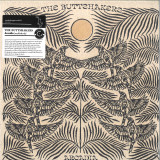
Dark and yet still luminous, the new album of The Buttshakers, Arcadia remains true to
the spirit of soul : hope out of struggle, light out of fear; even when the cracks expose the
darkest side of humanity, soul music has always given us the assurance that out of this
chaos, a better day will come. A philosophy on which they built their discography and their
stage presence; founding principles that the group has always been faithful to: to awaken
the listener, to ignite the fire, to bring the dance.
- A1: Check Out This 4 25
- A2: Stay Back (Keep Your Distance) 3 52
- A3: Yum 3 49
- B1: Jorun It (Live On Air) 3 21
- B2: Lower Your Expectations 3 32
- B3: Down With Jorun 3 04
- B4: Funky Fresh For '83 2 10
- C1: Rock The Party 4 29
- C2: The Truth Is Forever Featuring – Jay Quan 2 12
- C3: Mdm Freestyle (Live At Echo Park) 3 18
- D1: Can't Hang With Us 3 22
- D2: Q S. 3 42
- D3: Boom Box 3 56
The long awaited Jorun PMC album is finally here! Available on all formats – double vinyl, download from Jorun and Phill’s bandcamp pages plus limited CD and Cassette. Jorun Bombay and Phill Most Chill have impressive individual catalogues and together on AE Productions have a clutch of vinyl releases as Jorun PMC stemming from the debut ‘Magic Disco Machine’ EP with the associated 7” ‘The Champ’ from 2013. After a brief hiatus while working on other projects they returned with the ‘Check Out This’ 12” in September 2018 followed by the Stay Back (Keep Your Distance) b/w Sammy Davis 7” in February 2019. Due to some delays at the label the album was unfortunately delayed from it’s intended 2019 release but is now available including stunning sleeve artwork by the amazing Dan
Lish with design and layout by regular AE artwork supremo Mr Krum.
Nottingham don Lukas Wigflex and "The Wizard" Tom Smith come correct with their Me & Meds project. Following on from their debut together on Wigflex, the follow up is just as inventive & playful.
2 years in the making- the studio skills of the pair shine through across the 3 tracks. The opener "Curtains Nine Tails" moves and warps over the first few minutes only to penetrate the listener with a crescendo of god-like basslines and tripped out vocals.
Faffhammer which gained big popularity when Lukas played it on that boat party at Love International is an atmospheric, wonked out euphoric number of the highest order.
The records finished off with the offside ramblings of another notorious Notts head - Des Hagenasty. This is his first outing on wax and it does not disappoint, backed by the analog wobbles and techno grit of Me & Meds, this one bites. The videos an eye opener too, just you wait!
0115 is alive.
Vivian Jones' debut album, released in 1983 and backed by Undivided Roots. Heavy slow sparse rhythms (in a Roots Radics style) and floating keyboards. Superb roots by this inspired UK singer, including the well-known tunes Flash It And Gwan and Third World Man.
Born in Jamaica but raised in the UK, Vivian Jones is an important voice in the UK Roots scene. Started in the 70’s as deejay on local sound systems but also as a member of several UK Roots bands. Disillusioned with the music industry he returned to Jamaica in 1982 and recorded some material there. He returned to London, began recording again in his spare time and released his debut album Bank Robbery on Ruff Cut. He went on to work with Jah Shaka, Bobby Digital, Junior Reid and many others. In the 90’s he started his own ‘Imperial House’ label. Nowadays a welcome guest on every reggae festival in Europe, Vivian still plays live shows and even with more than 130 single releases under his belt, he keeps on recording new and uplifting tunes.
Vivian on the creation of the album: At that time I never had a band to work with or anything so I spoke to Crucial Tony Phillips and he said I must come in. I went down to Ruff Cutt and they had some rhythms down there that they didn't know what to do with and I think they were even going to wipe some of them off the tape. They played me a few of them and I said, "What? You gwaan wipe off this?? A me tek this!" so they say "Alright, come voice it..." and the tune was Flash It And Gwaan. When I heard that rhythm I said, "Bwoy you mad???" and they said, "we cyaan get nobody to sing 'pon this riddim" so I said, "gimme the riddim". And, in fact, before I sang it, when I heard the rhythm I went to a sound party. I went there and they gave me the mic and I started singing Flash It And Gwaan right there and then. Then I went to the studio and sang it for Ruff Cutt.
After Flash It And Gwaan I sang about three more tunes that night and then they decided to make an album so they started giving me different rhythms and I kept voicing them until we had an album. That was the album Bank Robbery, because at the time the bank robbery was a real thing that happened on my birthday, 1st April, when they robbed some gold bullion or something like that. Whole heap of millions. And because it was on my birthday, I remembered that and then one day they gave me a rhythm and so I sang Bank Robbery on it for the album title track.
- 1: Want You! Like A Cigarette
- 2: I Can Hardly Wait
- 3: Hey Boy
- 4: Night Time (The Boy Of Mine)
- 5: R.i.n.g.o
- 6: Until You're Mine
- 7: Trash Can Honey
- 8: Hop The Twig
- 9: Misfits & Freaks
- 10: My One And Only Baby
- 11: Too Late To Say I'm Sorry
- 12: Edge Of My Nerves
- 13: Won't Let You Go
- 14: Cry Cry Cry
LIMITED EDITION PICTURE DISC[21,22 €]
Das brandneue Studioalbum des brasilianisch-dänischen Garage-Rock-Duos! The Courettes präsentieren stolz ihr drittes Album, Back In Mono. Es ist ein Meilenstein in ihrer bisherigen Karriere. "Spit 'n'Snarl Garage Rumble-meets-Phil Spector Pop", der die Band in Bestform zeigt - großartiges Songwriting, Spector-esque Arrangements, mit weiteren Nuancen, Einflüssen und Produktionsqualitäten, die ihr Garagenrock-Rezept ergänzen. Vierzehn wagnerianische Teenie-Tragödien-Meisterwerke - es ist, als wären The Ronettes und The Ramones zu einer wilden Party in die Echokammer der Gold Star Studios eingeladen worden. Fuzz-Gitarren, laute Drums, trashige Pianos, Jingle Bells, Tamburine und dreiminütige Dancefloor-Garagenkiller, bei denen eine Wall of Sound die Songs aus den Lautsprechern schmettert! Produziert und aufgenommen von Soren Christensen in den Starr Sound Recording Studios in Dänemark und abgemischt vom Top-Produzenten und Wall of Sound-Liebhaber Seiki Sato in Japan.
January 1969 – The Beatles planned to return to live performance, setting up in Twickenham Film Studios, London, for 21 days of rehearsals. They then decamped to their new studio in their Apple office building in Saville Row and on January 30th performed their last ever live group performance on the rooftop. All of this was filmed for a proposed documentary (eventually released in 1970). During the rehearsal process, they asked Glyn Johns, who had been hired to help with the live sound, to attempt a mix to create an album. This was never released, becoming known as one of the great ‘lost’ albums in rock history and is now included in this Super Deluxe Set. The album was delayed further and in fact became their 12th and final official album release on 8th May 1970 following additional production by American producer Phil Spector.
Tape
Marc Romboy presents his upcoming album "Voyage de la planète' his first solo full-length production in over eight years. Released on his newly launched Hyperharmonic label, Voyage de la Plantète signifies an exciting new chapter for Marc as he experiments with his sound - pushing the boundaries between classical and electronic music to create both an emotional and atmospheric experience.
The first impression of this new sound can be heard on album opener forerunner 10" "Monde futuriste" (February 17th 2017) which blends together beautiful strings and soft flittering synths. "Jules Verne" named after the French science fiction writer, combines echoing arpeggios and a subtle woodwind harmony to create a cosmic soundscape. Whilst "Atome de danse", "Symphonie oblique" and "La machine du temps" use elegant strings to further enhance an unearthly effect, title track "Voyage de la planète" mixes the two mediums together with fluttering synths and somber strings before "La lune et l'étolie" builds introduces the bustling sound of the piano to create an upbeat melody.
Whilst there is a strong classical influence, there are tracks on the album that reference Marc's electronic background. This can be heard in
"L'univers étrange", which has an ambient sound, whilst pitched-down chords take "L'universe parallèle" to a dark and moody space.
"Phénix" is a bass-driven track, layered with crashing synths, taking the journey to a high before the celestial experience draws to a close on an uplifting note with "Nocturne" a laid-back soothing track that exudes optimism and wonderment.
Inspired by a concert with the Dortmund Philharmonic Orchestra where he performed Claude Debussy works in a contemporary way, "Voyage de la planète' signifies the start of a new chapter for Marc Romboy. Combining the strange, fascinating sounds of electronic music with the sublime beauty of classical music to create an extraordinary sonic experience for the listener.
New album by french producer Joakim on his label Tigersushi. Through 16 tracks, he explores a world of sounds that blur the line between the natural and the artificial, a psychedelic journey on a modern Noah's Ark, back to his roots in IDM, Classical music, avant-garde Pop and Ambient.
Featuring an impressive list of collaborators, including Ty Segall and
members of Woods, Cibo Matto, Sharon Van Etten’s band, Wand,
Heatwarmer, Mega Bog and Bonnie “Prince” Billy, ‘Geist’ is the
follow-up to Shannon Lay’s 2019 Sub Pop debut, ‘August’, which
featured friends and collaborators Ty Segal (whose band Shannon
played in) and Mikal Cronin.
‘Geist’ feels like a window - or a mirror - into possibilities of the self
and beyond. Shannon Lay’s new album is tender intensity, placeless
and ethereal. It exists in the chasms of the present -- a world
populated by shadow selves, spiritual awakenings, déjà vu and past
lives. “Something sleeps inside us,” Lay insists on the opening track,
and that’s the guiding philosophy throughout. A winding, golden,
delicate thread of intuition that explores the unknown, the possibility.
Its title, ‘Geist’, the German word for spirit, is rife with an otherworldly
presence, the suggestion of another. The promise that you are never
alone.
Lay tracked vocals and guitar at Jarvis Tavinere of Woods’ studio,
then sent the songs out to multi-instrumentalists Ben Boye (Bonnie
“Prince” Billy, Ty Segall) in Los Angeles and Devin Hoff (Sharon Van
Etten, Cibo Matto) in New York; trusting their musical instincts and
intuition. She then sent those recordings to Sofia Arreguin (Wand)
and Aaron Otheim (Heatwarmer, Mega Bog) for additional keys, while
Ty Segall contributed a guitar solo on ‘Shores’.
As a whole, ‘Geist’ is both esoteric and accessible. Songs range from
a concise, pared-back cover of Syd Barrett’s tilt-a-whirl-esque ‘Late
Night’, to the meditative, Dune-inspired ‘Rare to Wake’, to the mostly
a-cappella ‘Awaken and Allow’, which channels Lay’s deep Irish
roots, a moment of reflection, before a drop happens - its intensity
mirroring the anticipation and anxiety that come with taking the first
step to accepting change for yourself. And the title track ‘Geist’, a
song about the power living in all of us, is a love song to the
possibility of healing, an ode to falling into the arms of what you’re
becoming. It’s a glimpse into the parts of yourself you have yet to
meet.
Initial copies of the LP pressed on Sun Yellow coloured vinyl.
Der Klassiker des einstigen Pfarrers und Kreuzzügler des Allgemeinwohls PASTOR T. L. BARRETT & THE YOUTH OF CHRIST CHOIR von 1971 gilt bis heute als der heilige Gral des Gospel-Soul. Mit dem seinerzeit selbst veröffentlichten Werk des JESSE JACKSON JR.-Mitstreiters demonstrierte BARRETT seine Leidenschaft für die Musik, seine wilde Entschlossenheit, Kinder vor der Straße zu bewahren und sein Talent für mitreißende Predigten (die nebenbei Künstler wie EARTH, WIND & FIRE und DONNY HATHAWAY dazu brachten, seine Kirche zu besuchen) mit einem Album, das vom Chess Records Saxophon Helden Gene Barge und einer Reihe von Musikern wie Richard Evans, Phil Upchurch und dem stürmischen Gesang des YOUTH FOR CHRIST CHOIRs profitiert. Heilige Grooves, Breaks, Beats und Lobpreisungen mit eingängigen Refrains. Chicago pastor and activist T.L. Barrett's rare gospel soul classic Like A Ship. (Without A Sail) is one of the holy grails of gospel soul. Self-released in 1971, Like A Ship was the result of Barrett channeling his passion for music, a determination to keep children off the streets, and his charismatic preaching (which attracted the likes of Earth, Wind & Fire and Donny Hathaway to his sermons at Mount Zion Baptist Church) into the production of the album, a project bolstered by the saxophonist and arranger Gene Barge of the famed Chess Records, and backed by a cast of players that included Richard Evans, Phil Upchurch and the rapturous vocals of the Youth For Christ Choir. Like A Ship... is filled with sanctified grooves and spiritual praise delivered with a righteous, infectious chorus.
* Kamana is a multiformat release inspired by and channeling the cultu- re and traditions of the Aeta, an indigenous group from the Zambales region in the Philippines. One of the oldest inhabitants of the region the Aetas are also some of the most fascinating and ancient nomadic and hunter gathering cultures. The release goes from the realms of the
real to the imaginary, from transcription to syncretism, from concrete to abstract. An (un)real Sonic Exorcism filled with
*Ancestral Frequencies, Haunted Ghosts and other animistic spirits roaming the Pinatubo forests.
The release features a series of materials released in different formats from the Field recording digital only release, an LP and CD release to a special 7inch vinyl featuring an Interview with a bat hunter.
* Kamana is a long due homage to the Aeta community that hosted me a few years back, fascinated by the endurance of these people and their connection to their land, devastated by the eruption of the Pinatubo volcano in 1991, they continued to go back to their ancestral lands surviving on basic agriculture and hunting bats and wild pigs. Living with them for weeks, I managed to capture some essential field recordings and sounds that form and com- pose the basis for this release, from the more reprocessed and interpreted LP release to the pure field recording documentation of the digital release. It is meant to be accessible to all and provide a window to the livelihoods of these unique communities. For this reason, this release serves as both an archival document and a syncretic one, trying to channel memories and feelings of living in these jungles whilst listening to their stories as well as witnessing their lifestyles.”
Carlos Casas, 2021
The Cool Feedback Quartet’s music is quite similar to a philharmonic orchestra manipulating new material:
feedback, or in other words, the unexpected beauty of sound when it is let loose. Becoming its master so as to make the
best use of it, like a new instrument, the guitar pick up plays again on request. Harmonizing sounds like a string section
gone wild would, like light piercing through ether, tearing up the background and taking us for good to unknown territory.
The bandleader, Grégoire Garrigues, who first got the idea of the concept and got the ball to roll, is a well-known and
respected French guitarist.
The vinyl version was pressed in two vinyl options - transparent white (100 copies) and black. Both on 180g.
Moo Latte:
"Snax", my 5th longplay album, is a collection of 16 compositions, contrasting flavours and textures. Each of them is served as a small appetizer. Some are easily digestible, even dietary, some are greasy and full of calories. Each individual song is rather brief and can be a perfect little snack in the middle of a day. However! They will taste the best if you take your time, have a bite of one after another and enjoy the feast. From starters to desserts.
Warning! This album may contain peanut products!
Cooking those instrumental tracks, I yet again explored my jazz background and combined instrumental improvisations with hip-hop, ethno and soul inspirations. Whole album is kept in a non-binding lo-fi vibe but maintaining the hi-fi level of attention to details. With "Snax" I decided to go for a much wider palette of sounds unlike my previous, more conceptual albums. The last track "Worth it" features a charizmatic Philadelphia based artist - Ler Stevens which has shed a new light on my instrumental joint "Coins". The artwork has been created in a collaboration with a talented Polish illustrator - GBUR.
Originally from Philadelphia, invited to New York by Miles Davis, playing at Antibes in 1960 with Charles Mingus and Eric Dolphy, here is trumpeter Ted Curson in 1971... in Paris. With him, a legendary trio: Georges Arvanitas (piano), Jacky Samson (double bass) and Charles Saudrais (drums). A new transatlantic alliance in the service of jazz of all kinds: classic, modal, fusion and even free... Pop Wine is – between Coltrane and Miles with a nod to roots in the club the Caveau de la Huchette – an explosive cocktail but which leaves no stains!
In 1960, trumpeter Ted Curson played with Charles Mingus and Eric Dolphy on stage at the Antibes jazz festival. Eleven years later he was in Paris to record one of the gems of his discography, with a hard-hitting French trio: Georges Arvanitas (piano), Jacky Samson (double bass) and Charles Saudrais (drums).
Arvanitas was also someone who had travelled widely. Originally from Marseille, he had accompanied visiting American musicians in Paris before moving to the States. It was when he came back that the charismatic trio was created with Samson and Saudrais and who recorded, in 1970 on Futura, the unforgettable In Concert and then, the following year, Pop Wine with Ted Curson.
Pop Wine: don’t be fooled into thinking you are going to hear jazz musicians trying to play pop after uncorking too many bottles. For, although the album occasionally tends toward fusion, it is first and foremost a wonderful jazz recording; and a recording with enough fizz to make your head spin!
There are five tracks in total: Quartier Latin reminds us a little of Olé Coltrane (Curson, like the saxophonist, is originally from Philadelphia), Flip Top where the trumpet and piano play out a chase scene through the streets of Paris, Pop Wine where funk and cool jazz meet on the barricades of black and white, L.S.D. Takes A Holiday which breaks out in a style close to free jazz, and finally Lonely One, with the impression that ends this unclassifiable album. Unclassifiable, unless we decide to elevate Pop Wine to the rank of a great vintage.
Kamana is a multiformat release inspired by and channeling the culture and traditions of the Aeta, an indigenous group from the Zambales region in the Philippines. One of the oldest inhabitants of the region the Aetas are also some of the most fascinating and ancient nomadic and hunter gathering cultures. The release goes from the realms of the
real to the imaginary, from transcription to syncretism, from concrete to abstract. An (un)real Sonic Exorcism filled with Ancestral Frequencies, Haunted Ghosts and other animistic spirits roaming the Pinatubo forests.
The release features a series of materials released in different formats from the Field recording digital only release, an LP and CD release to a special 7inch vinyl featuring an Interview with a bat hunter.
“Kamana is a long due homage to the Aeta community that hosted me a few years back, fascinated by the endurance of these people and their connection to their land, devastated by the eruption of the Pinatubo volcano in 1991, they continued to go back to their ancestral lands surviving on basic agriculture and hunting bats and wild pigs. Living with them for weeks, I managed to capture some essential field recordings and sounds that form and com- pose the basis for this release, from the more reprocessed and interpreted LP release to the pure field recording documentation of the digital release. It is meant to be accessible to all and provide a window to the livelihoods of these unique communities. For this reason, this release serves as both an archival document and a syncretic one, trying to channel memories and feelings of living in these jungles whilst listening to their stories as well as witnessing their lifestyles.”
Carlos Casas, 2021
Spirits Having Fun records are ones made from and for shows and spaces—arrangements rooted in a deeply collaborative process, that come to life through intuitive and locked-in live improvisation. Following their 2019 debut Auto-Portrait, Two finds the New York and Chicago based four-piece continuing to challenge ideas of what a rock band can be, pulling apart their musical experiences and reimagining them as kinetic compositions, equally studied but palpably organic.
Two is constructed around gut feelings and strong grooves, elastic rhythms and playful pacing. Its twelve songs expand, contract, and make sharp turns between melodies under singer-guitarist Katie McShane’s meditative lyrics. “Broken Cloud,” which was also released last year on a compilation in support of Chicago Community Jail Support, offers a glimpse into her reflections on the natural world: "A city grew out of the ground / to a mountain it's only a blur."
True to its name, the internal logic of the band is also just a lot of fun, built on trust and deep-rooted musical relationships. Before there was Spirits Having Fun, McShane, bassist Jesse Heasly, guitarist-vocalist Andrew Clinkman, and drummer Phil Sudderberg had performed together in various arrangements over the years. McShane, Heasly and Clinkman met in a specific corner of the Boston underground in 2013, a time when a scene had coalesced around students from local music conservatories frequently collaborating with punk bands and noise artists, exchanging ideas and warping musical worldviews. Heasly and Clinkman played together in Cowboy Band, making mutant, free jazz-inspired takes on old country tunes. When Clinkman moved to Chicago, Heasly and McShane played in experimental groups like EKP and Listening Woman; in Chicago, Clinkman met Sudderberg playing in projects like jazz scene fixture Ken Vandermark’s high-powered band Marker.
Spirits first came together as an attempt at a long-distance collaboration among friends in 2016, driven by the simple feeling of missing each other; they’d meet up for marathon weekends here and there to practice, playing small loops through dive bars and art spaces around the Midwest—just enough for McShane and Heasly to afford plane tickets back home. Being split between Chicago and New York forced the project into a deliberate pace. “We tried to take it slow and let it be what it was,” said McShane. That sense of patience unexpectedly prepared them for March of 2020, when their planned tours and the release of Two were indefinitely delayed.
Two was mostly recorded in the summer of 2019 with the help of omnipresent Chicago engineer Dave Vettraino and DPCD’s Alec Watson, whose contributions on organ, synths, and piano are laced throughout the record. The album reflects a synthesis of solitary and communal songwriting processes—each song drawing on fragments written by individuals, which McShane threaded together and shaped through her distinct compositional lens, making the songs whole before returning to them to the band to mature collectively. When composing, McShane writes first on the keyboard before adapting parts for guitars played by herself and Clinkman. Their dueling approaches to guitar are complementary: McShane, being a newer guitarist, brings a freshness to the project (“I'm just discovering the whole time,” she says) while Clinkman has been playing since childhood.
“There's a lot more collaboration on this record,” says Clinkman, “in terms of all of us letting stuff bloom a little bit more.” The record’s first single, “Hold The Phone” is a good example of this process—it started with a playful intro riff from Clinkman, a melody and bridge added by McShane, a wobbly outro groove added by Heasly, which Sudderberg brought to life. Another single, the dynamic “See a Sky,” written primarily by Heasly, underscores the rhythm section chemistry at play across the record, the song ebbing and flowing around Heasly and Sudderberg’s eclectic percussive palettes.
“Entropy Transfer Partners” is the only song on the record with lyrics by Clinkman, and the album’s most politically direct—a call for solidarity in the face of systemic failures, an acknowledgment of the shared material devastation caused by our country’s ongoing healthcare and housing crises: “These are not things we're experiencing individually. We struggle through them collectively. And we could actually declare, all of us, that it doesn't have to be this way, and fight and organize to ameliorate some of those conditions.” (“We won't work to create the shit you monetize, to run our lives,” they sing.)
From front to back, Two is an absorbing listen simply for its impressive range. But as the members explain themselves, the complexity of the record is about more than its intricate riffs, or how often they count out an odd time signature, but how they reject the notion of boxing the songs in, letting the melodies take on lives of their own. “Making music that feels alive is important to us,” says Clinkman. “Music feels most powerful to me when it deepens our sensation of feeling alive and connected to other humans. It’s so easy to feel worn down and isolated; that your life’s value is fixed to your productivity at your job, or the things that you have or don’t have. Making music that feels joyful and fun seems like one effective antidote to that feeling.”
MIEKO SHIMIZU is a London based Japanese singer, songwriter, composer
and producer. She first erupted onto the scene as Apache 61, fusing layers
of cross-woven breaks and battling shards of sub-bass within stateless
melodies drawn from the fringes of the avant-garde.
Mieko has produced scores for contemporary dance company Phoenix Dance
Theatre as well as the Ballet ‘The Red Balloon’ at the Royal Opera House’s
Linbury Theatre. She was made an ‘Emerging Artist in Residence’ at London’s
Southbank Centre where she collaborated with the London Philharmonic Orchestra on her own compositions.
ROAD OF SHELLS was originally released back in 1990 and now being released
for the very first time on vinyl. Recored at Wold Studios in London, the record
features an array of talented musicians from Claude Deppa on trumpet and
guitar from Dominique Brethes. ‘Blue Dancer’ and ‘In The Garden’ features
Mieko’s brother Yasuaki Shimizu on saxophone.
20 years on from Road Of Shells original release date the record has now has
be released for the very first time on Vinyl in Japan and available in the UK
and worldwide.
Mieko has worked with David Cunningham from The Flying Lizards, Robert
Lippok of To Rococo Rot and re-mixed the likes of Coldcut. Haruomi Hosono
of the cult electro-pop act ‘Yellow Magic Orchestra’, signed Mieko to his label
‘Daisy World’.
Mieko has performed at Sonar, alongside Kraftwerk and supported Massive
Attack at their Melt Down Festival.
- A1: Say Yes (Detest Of Sirens)
- A2: Stay True (Vinyl Version)
- A3: Back Again (Vinyl Version)
- A4: Run The Streets (Vinyl Version)
- A5: Rekontext #1 (Berger&Apos;S Theme)
- A6: Where We At (Vinyl Version)
- A7: Cthru (Vinyl Version)
- B1: Cleanser #1 (Vinyl Version)
- B2: Losing Mine (Vinyl Version)
- B3: Rekontext #2 (Vinyl Version)
- B4: What I Meant (Vinyl Version)
- B5: Cleanser #2 (Detached Observer&Apos;S Theme)
- B6: Deià (Bends)
- B7: Test Of Sirens (Vinyl Version)
Oliver Torr is about to release his first full length solo album. The album features many moods and colours, with Oliver exploring the use of his voice and lyrics as a new form of his expression. Successfully mixing electronic avant-garde/experimental forms with pop-like harmonic structures is the main theme of the record.
The idea of recontextualisation and themes of observation are mainly inspired by the philosophical literature and ideas of John Berger, Marshall McLuhan, and many others was a driving force during the creation of the album. The lyrical and sound design content is mainly inspired by panic attacks and depression, and serves as a therapeutic tool to aid in personal psychological healing.
Tracks make use of creative sound design by utilising field recordings and various experimental instruments and sources of sound, such as the Radical Chip, designed by John Richards (one of Oliver's mentors) and Max Wainwright. Tracks like 'Deià' which create a chaotic sonic palette are the author's representation of his mind under the siege of an intense panic attack, experienced in the seaside town of the same name that is located on the island of Mallorca.
Oliver feels like the album has been writing itself for the past 5 years, and in the past few months it has decided to finally show its form. With the help of Aid Kid, who is mixing the album and providing additional production, Oliver has put together a 14-track rollercoaster record, with the help of some special guests. Guests on vocals include Chrysalism, BCAA's Bilej Kluk, and sci fi RnB newcomer LVCIFER. Other sonic collaborators include Sunnbrella (guitars on two tracks), Bastl Instruments' David Strobach (distorted samples in intro), Peter Kutin, and Radio Laude's DeSteffan and R.A. (distorted samples/vocal on one track).
The record's sonics are a combination of Oliver's conscious influences, including experimental music, classical avant-garde, shoegaze, IDM, EBM, electronica, hints of modern club music, as well as PC music influences.
Oliver Torr is known as a composer, music producer, performer and installation artist. Outside of his solo projects, he has worked with many prominent musicians and creative companies/film makers worldwide. He is the founder of XYZ project, a music label concentrating on electronic music and audiovisual art (xyzproject.bandcamp), and a member of the noise.kitchen crew (a music and synth shop run by Bastl Instruments in Prague). Oliver is also a part of the 2020 SHAPE Platform roster (shapeplatform.eu), and the 2021 Gravity Network roster (gravitynetwork).
Oliver releases the album prior to the release of his 'Trans Europe Postal Express' project (supported and arranged in collaboration with SHAPE Platform) and gallery exhibition at MeetFactory art space Prague, that will take place in March, and will further the sonic palette of the album.
The album's artwork is directed and designed by Kristyna Kulikova and photographed by Lukas Havlena (VICE, National Gallery of Prague).
The album's pre-release sees a teaser trailer shot and directed by Tereza Halamova and Filip Kettner that will be released 1st of February. A short movie music video with the same crew is scheduled a month after the album's digital release.
A remixed version with reworks from established European electronic musicians (including Peter Kutin, Fausto Mercier, Wim Dehaen, Natalie Plevakova, Evil Medved, NobodyListen, David Herzig, Ancestral Vision and Trauma), will be coming in the next few months after the release.
Mega Bog (der kosmopolitische Moniker der Musikerin/Künstlerin Erin Birgy) wendet sich von von der schwülen Atmosphäre der Grünlilien-Plantage des Vorgängeralbums "Dolphine" (2019) ab und bringt uns mit "Life, And Another" zurück auf unseren Heimatplaneten, in den dünnen Luftdruck eines Wüstentals, wo die vierzehn Songs geschrieben und wie Steine in der Landschaft verstreut wurden, jeder einzelne ein kostbares Juwel, das Birgy gemeißelt hat. Es ist eine weitere fantastische Off-World-Übertragung und ihr bisher anspruchsvollstes, forschendstes und zugänglichstes Statement. "Life, And Another" inszeniert ein halb-fiktionalisiertes Drama im Inneren des Ichs, mit Szenen kollektiver Sehnsucht auf der Bowlingbahn, Auseinandersetzungen über eine aufgeblähte Erinnerung außerhalb der Bar und einsamen Kreisen auf der Terrasse, die in sturer Ehrfurcht über den Hof hinausschauen. Diese Erinnerungen, sowohl aus der Vergangenheit als auch aus der Zukunft, sprudeln das ganze Album hindurch und präsentieren ihre Charaktere als neue Einträge in das Mega Bog Book of Symbols. Zusammen mit dem Co-Produzenten, Tontechniker und Perkussionisten James Krivchenia (BIG THIEF) lebte Erin Birgy in einer kleinen Hütte in der Nähe des Rio Grande und war zwischen ihren Tourneeplänen oft allein. In diesen Isolationen erlebte sie den teilweisen Verlust des "bekannten" Selbst inmitten der Weite. Aufgenommen in mehreren Sessions in verschiedenen Studios enthält "Life, And Another" instrumentale Beiträge von langjährigen und neuen Mitstreitern, darunter Aaron Otheim, Zach Burba, Will Segerstrom, Matt Bachmann, Andrew Dorset von Lake, James Krivchenia von Big Thief, Meg Duffy von Hand Habits, Jade Tcimpidis, Alex Liebman und die Co-Engineers Geoff Treager und Phil Hartunian. Ihre Hörer wissen inzwischen, dass sie MEGA BOG vertrauen können, dass sie kontinuierlich in tiefere und wildere, spirituelle Pop-Gefilde geführt werden. Flirrende Piano-Glissandi, eindringliche psychische Hintergrundstimmen und Tequila-inspirierte Improvisationen schleichen und kriechen über die dunkle Nacht-der-Seele-Rock'n'Roll-Traumlandschaft, bevor sie verschwinden, um Platz zu machen für Beschwörungen von stiller Klarheit und lebendig-atmenden Instrumentalpassagen. In "Life, And Another" verwandelt Mega Bog die brutale Schwere der Welt in den kollektiven Kampf des Lebens.
Freiburg based Italian stallion Enea releases his 2nd longplayer "Overview" on his own, soulful South-German imprint, Beatalistics Records.
The 10 track album once again showcases the versatile background of the former Bass-Player, who grew up on the picturesque Lake Constance. Having been a familiar name in the international Drum'n Bass scene for more than a decade, Enea now also takes us beyond the classic 170+ bpm rhythm structures to give us a proper "Overview" of his musical philosophy.
Comprising his typical softer rolling, Liquid based tunes like "Wonders" featuring label partner MC Fava, "Earthrise" with "Freebird" or "Moon" alongside the vocal talent Vavunettha, he additionally presents various influential styles throughout the album. "Interstellar Dub" and the dub remix of "Nuh Smile" featuring Kyrad from Switzerland lead us off the beat on dubby paths, whereas the title track "Overview", "Clouds" or the remix of "Fly High" with Meks Sample & El Tronic show his affinity for smoother Trip-HipHop grooves. By the way, you might recognize an organic and pulsating bass here and there, of course played by the maestro himself! This is warm and beautiful music for sophisticated and open minded souls. Enea!
- A1: Arifa - Naomi's Dance
- A2: Kijk Een Ster - Freedom Feat Gregg Green
- A3: Scallymatic Orchestra Autumn - Forest Song
- A4: Monsieur Dubois S Amuse - Wicked Jazz Sounds (Leroy Rey Remix)
- A5: Sophia - Over Feat Cloud Orchestra
- B1: Ranie Ribeiro - Morning Meditations
- B2: Maarten Hogenhuis - Lemniscate
- B3: Melle Jutte - Man Up And Create
- B4: Benny Sings - Hold That
- B5: Kraak Smaak - Naked Ft Ivar And Berenice Van Leer
- C1: Jesse Koolaas - About Time
- C2: Greyheads - Beat1(Lo Fi Session)
- C3: Hvnly - Sacred
- C4: Gino Cochise - Fo Woa
- C5: Planty Herbs - Back Into The Night
- D1: Rippps - Ar ..Ps
- D2: Bruxas - Sirocco
- D3: Kofi The Unkown - Bubinga Drum
- D4: Duke Hugh - Greenleaf
- D5: Sykes - Jazz
An ecletic musical representation of infamous Rotterdam Jazzclub BIRD with well-known and lesser-known Dutch artists from the black music spectrum, varying from Jazz, soul, hip-hop to electronic music. Compiled by BIRD musical curators Philip Powel and Guido van Dieren.
Tré Burt is no stranger to coincidence. Much of his music career has been marked by chance encounters and happy accidents, the kind of stuff you see in movies but rarely experience in real life. It'd be easy to chalk such happenstance up to luck, then, but for Burt, being in the right place at the right time is a phenomenon born from his lifelong passion for music and his unwavering adherence to living authentically as an artist. 'You, Yeah, You' is Tré's 2nd full length album release though Oh Boy Records and is the follow up to his debut album release, 'Caught It From The Rye'. This new collection of original songs was recorded with the help of producer Brad Cook and backed by a talented cast of guest musicians including Phil Cook, Matt McCaughan, Alex Farrar, Amelia Meath and Kelsey Waldon.
- A1: The Boys Are Back In Town
- A2: Jailbreak
- A3: Don't Believe A Word
- A4: Dancing In The Moonlight (It's Caught Me In Its Spotlight) (It's Caught Me In Its Spotlight)
- A5: Waiting For An Alibi
- A6: Rosalie/ Cowgirl's Song (Live)
- B1: Do Anything You Want To
- B2: Chinatown
- B3: Sarah (Version 3)
- B4: Fighting My Way Back
- B5: Killer On The Loose
- B6: Hollywood (Down On Your Luck) (Down On Your Luck)
- C1: Thunder & Lightning
- C2: Renegade
- C3: Still In Love With You
- C4: The Sun Goes Down
- D1: Whiskey In The Jar
- D2: Bad Reputation
- D3: The Rocker
- D4: Showdown
- D5: Cold Sweat
- D6: Wild One
Formed in Dublin in 1968 few would dispute that Thin Lizzy helped define the genre Hard Rock.
The band scored 8 top 20 hits over 8 years and place no less than 8 albums in the UK top 20, 3 of which would make the top 10 and 4 the top 5.
From the mid-70s onwards, they championed the use of two lead guitars, it gave them a unique sound which evolved down the years and influenced the likes of Def Leppard, Metallica and Iron Maiden
After numerous line-up changes, Thin Lizzy called time in 1983
With 1986 just 4 days young lead singer and main songwriter Phil Lynott died aged 36. All music’s John Dougan wrote, “As the band’s creative force, Lynott was a more insightful and intelligent writer than many of his ilk, preferring slice-of-life working-class dramas of love and hate influenced by Bob Dylan, Bruce Springsteen and virtually all of the Irish literary tradition.”
This 2-LP set contains all that is great about the band – the tracklisting overseen by Lizzy Expert Nick Sharp covers what is the best of the band’s output throughout the years.
Airplay from Mary Ann Hobbs, Liz Alker and Tom Ravenscroft and beyond
Reviews in Mojo, The Wire, Quietus, Uncut and more
On October 9ththe multi-instrumentalist Jack Wyllie (Portico Quartet/Szun Waves) presents his new project Paradise Cinema. It was recorded in Dakar, Senegal in collaboration with mbalax percussionists Khadim Mbaye (saba drums) and Tons Sambe (tama drums).
The impressionistic and dream-like quality of 'Paradise Cinema' is a stunningly effective realisation of Wyllie's experience, in ahypnagogic state of aural consciousness:
"I had a lot of nights in Dakar, when the music around the city would go on until 6am. I could hear this from my bed at night and it all blended together, in what felt like an early version of the record."
Atmospherically 'Paradise Cinema' is vaporous and enigmatic, but also percussive; existing in a paradoxical sound-space that's amorphous,yet still purposeful, serene, but propulsive and aesthetically sharp.
Khadim Mbaye and Tons Sambe, provide the rhythmic backbone of the record. There are traditional elements of mbalax rhythm, but it is often deconstructed or played at tempos outside of the tradition, so while it hints at a location it occupies a space outside of any specific region.
'Paradise Cinema' is also informed by notions of hauntology – a philosophical concept originating in the work of French philosopher Jacques Derrida– on possible futures that were never realised andhow directions taken in the past can haunt the present.
On the album's title Wyllie comments, "there are a handful of old cinemas in Dakar – these big modernist buildings dotted around the city built around independence. They're old and derelict now, but feel to me like monuments to that period, when the city was flooded with utopian ideas about its potential futures."
As such it sits closely to 4thworld music – situated in an imagined culture and time that never came to pass. And while it contains rhythmic references to Senegal it combines these elements with ambient and minimalist music to produce a sound that sits outside of any tradition.
Setting the tone for the long-player's themes is the optimism-driven, balmy beauty of 'Possible Futures', where rich-toned drums throb and levitate in a stratospheric ether.
Like a time-lapse video of plants in bloom, 'It Will Be Summer Soon' is the sound of anticipation and growth. Rhythmically it flickers and flutters, evoking rainfall, or the blurred wings of a bird in in flight.
Casamance moves through field recordings drifting in and out of focus, beats pitched-down low and unfurling saxophone, whilst the ambient 'Utopia' was made mainly with processed saxophone and suggests a longing for a perfect world.
Galloping percussion juxtaposes with a wistful mood on 'Liberté' – a title that referencesa derelict modernist cinema in Dakar of the same name– a hauntological landmark, made more poignant by the its name being part of the French national motto.
Tying into the cover artwork, Jack explains, "the 'Digital Palm is a telecommunications mast disguised as a palm tree in central Dakar. As a modern piece of technology that on first glance looks natural, it mirrors the combination of modern and acoustic elements."
Perhaps eliciting a time that never came, or maybe still in hope of it yet to come, 'Eternal Spring' concludes the LP's otherworldly beauty with hypnotic drums powering a subtly-building, sparkling and powerful crescendo.
Jack Wyllie is a musician, composer, electronic producer who draws on influences of jazz, ambient, and the trance-inducing repetition of minimalism.
Wyllie performs and records in Portico Quartet, Szun Waves (withLuke Abbott and Laurence Pike)and Xoros. He has also collaborated with Charles Hayward, Adrian Corker and Chris Sharkey and released on Ninja Tune, Babel, Leaf, Real World and Gondwana.
Khadim Mbaye and Toms Sambe play in various mbalax groups in Dakar. Khadim has also toured internationally with Cheikh Lo.
- A1: Territory (Feat David Ellefson)
- A2: Cut-Throat (Feat Scott Ian)
- A3: Sepulnation (Feat Danko Jones)
- A4: Inner Self (Feat Phil Rind)
- B1: Hatred Aside (Feat Angelica Burns, Mayara Puertas & Fernanda Lira)
- B2: Mask (Feat Devin Townsend)
- B3: Fear,Pain,Chaos,Suffering (Feat Emmily Barreto)
- B4: Vandals Nest (Feat Alex Skolnick)
While the pandemic paralyzed the entire world and prevented bands from touring, Latin America's biggest metal export SEPULTURA refused to sit back and act like an animal trapped in a cage. Like the flowers growing out of the deceased bird’s body depicted on the stunning colourful cover artwork by Eduardo Recife, the thrash metal pioneers from Belo Horizonte made good use of their unexpected free time to start a project that kept them busy throughout the entirety of 2020:
‘SepulQuarta’ was born at the very beginning of the pandemic when everything was halted”, guitarist Andreas Kisser remembers. “We had a new album out, but we couldn’t tour for it. Therefore, we created this recurring event where we could talk with our fans around the world, play our music and exchange ideas, it was a blast! »SepulQuarta« kept us alive and strong throughout one of the most difficult times in human history.”
“Doing Sepulquarta during this period allowed me to stay in contact with music. Playing my instrument was the only thing left to do in this pandemic,” adds drummer Eloy Casagrande, and indeed, music seemed to be a good way of coping with the never-ending lockdown and fear of loss and isolation that haunted people worldwide. Obviously, the Brazilian pioneers were not the only musicians feeling this way, so they started to connect with friends and colleagues worldwide and asked them to not only be part of their weekly podcast, but also join them in playing one of SEPULTURA’s classics tracks. From the safety of their homes, international stars like David Ellefson, Scott Ian, Danko Jones, Devin Townsend, Matt Heafy and many more recorded a SEPULTURA track together with the band, which have now been mixed and mastered by Conrado Ruther.
“We invited our amazingly talented friends to be a part of our project, either jamming with us or as a guest in the many Q&A’s we promoted,” Andreas explains. “We talked about our history, music, politics, sports, philosophy, depression and the environment among other things. We learned a lot with specialist guests and many of the great minds of today. Here you will find unique performances of SEPULTURA’s music from the many phases of our career, with amazing guest musicians that lent us their talent and energy to record these historical versions!”
The Cold Stares will release their new album "Heavy Shoes" on August 13, 2021 via Mascot Records.
"Heavy Shoes" will be available on CD Digipack w/ 12 page booklet and 180 Grams Shiny Gold Vinyl w/ printed insert.
The great state of Kentucky is world renowned for many things. Bluegrass music? Of course. The smoothest, best-tasting Bourbon created by the hands of man? It doesn’t get any better. One thing that folks don’t always associate with Kentucky however is visceral, in-your-face rock and roll. The Cold Stares are determined to change that perception.
Chris Tapp and Brian Mullins have known one another for a long, long time. They grew up in Western Kentucky, just a stone’s throw from the border or Indiana, and attended different High School mere minutes down the road from one another. They originally started playing together in their early twenties before going their separate ways only to reunite in another outfit a decade down the line. “We were playing together in 2009 in another band that was doing really well,” Tapp said. “It didn’t work out, so we both kind of exited that band and contemplated retirement.” It didn’t take long before they were thankfully disabused of that notion.
That band is an intense amalgam of Led Zeppelin meets Free, Soundgarden meets Black Crowes; rock and roll wizardry where the riffs are hard, the vocals are searing, and the low end is capital “H,” heavy. Most of the album was recorded in a single day at Sam Phillips fabled recording studio in Memphis. “That’s our second record there, so there was a lot of familiarity going back in,” Mullins said. “The thing about that studio is that it’s old, and vibey. Sometimes you gotta bang on the gear a little bit to make it work. It’s kinda like the Millennium Falcon. It’s badass, but you just gotta get it running right.”
‘Heavy Shoes’ is Cold Stares’ best record yet, and they know it. It took a lot of blood, sweat, tears and doubt before Chris Tapp and Brian Mullins reached this moment, but it’s all the sweeter knowing they did it their way. “We’ve been through some tough times, and I’d say our band is a pretty good representation for blue collar people in general. People that work hard. We’re just a blue-collar American rock and roll band.”
First ever vinyl reissue of rare private pressed Florida Funk/Soul from 1980. Featuring founding members of 'The Winstons' (the 'Amen Break', most sampled track in electronic/hip hop music). 180g Black Vinyl Edition limited to 500 copies, comes with obi strip and insert featuring unseen pics & liner notes. Streetlife was a short-lived soul-funk band from the Tampa Bay area and released just one album in 1980. The group was composed out of several dynamic musicians (ranging from street players to college professors) but at that time nobody knew (yet) that their Nite Songs LP would become such a much sought-after private pressed holy grail within the record collecting community! Streetlife was founded in 1979 by Sonny Pekerol and Phil Tolotta who were both members of the top-selling 1960s Washington DC Grammy Award-winning hit band 'The Winstons'. Their track Amen, Brother is the most widely sampled instrumental in the history of the electronic music & hip hop genres_it would become known as the Amen Break. When `The Wintstons' story came to an end, Sonny Pekerol (founding member and originally playing the bass - then successfully evolving into the manager and promoter) and pianist/vocalist extraordinaire Phil Tolotta would continue their musical friendship/collaboration under the name `Streetlife'. Their high-energy sound got the attention of local crowds in no time_so the decision to record and cut a vinyl album came as a natural thing. Nite Songs (produced by Sonny & Phil, who also wrote the bulk of the songs) saw the light in 1980 and quickly gained attention and airplay (receiving radio & television coverage nation-wide). Described as the hottest band from the state of Florida, `Streetlife' had the magnetism to captivate you, be it on concerts, nightclubs or on vinyl. Other members included: Octavia (responsible for the amazing lead & backing vocals on the album), Mark Halisky (on keyboards & the writer of two songs on Nite Songs), Ray Butler (on drums), Mike Milhoan (on trumpet), Bryan Mann (on the guitar) and Stephen Nathan (playing the trombone, flugelhorn & doing the arrangements). Charles Davis also played bass in the band for a while (he and bandmate-drummer Ray Butler were members of the `Washington Jamb Band' back in 1977). Mike Flore (Sax) and Ramon Lopez (from the well-known `Stan Kenton Orchestra') would also join them on the Nite Songs recordings. Collectively `Streetlife' had more than 75 years of experience_and these extraordinary talents (with almost as many varying backgrounds) are meticulously coming together on the album we are presenting you today. The entire album is filled with sexy (yet strong) unique vocals that make the listener experience a lot of emotions, aggressive `slap & thumb' bass lines & small yet groovy horn sections _one can clearly hear the influences of artists like Otis Redding, Curtis Mayfield, as well as several Motown, acts like Marvin Gaye softly slipping in. If you like your songs either slow, sexy and groovy or prefer them fast-paced and more experimental & cosmic_look no further, Nite Songs has it all. This is THE perfect combination of slick soul, blasting Hammond B-3 organ funk, smooth jazz and melancholic R&B piano works. This album just begs for a prominent space in record collections fans and crate diggers worldwide!
- A1: Don Cornelius– Introduction By Master Of Ceremonies Don Cornelius Of Soul Train
- A2: Mfsb– Freddie's Dead
- A3: Harold Melvin And The Blue Notes– If You Don't Know Me By Now
- A4: Harold Melvin And The Blue Notes– The Love I Lost
- B1: Harold Melvin And The Blue Notes– I Miss You
- B2: The Three Degrees– I Didn't Know
- B3: The Three Degrees– Dirty Ol' Man
- C1: Mfsb– T.s.o.p. (The Sound Of Philadelphia) Theme From Soul Train
- C2: Billy Paul– East
- C3: Billy Paul– Me And Mrs. Jones
- D1: The O'jays– Back Stabbers
- D2: The O'jays– When The World's At Peace
- D3: The O'jays– Sunshine
- D4: The O'jays– Love Train
Wackelkontakt are the trio that currently spearheads the Jerusalem scene, playing music that's precise yet eclectic, cruel and abrasive even when vulnerable. An unholy mixture of trap, industrial, experimental and power electronics. Wackelkontakt have already made a global mark with the sensory overload of their live multimedia performances and the scintillating presence of frontwoman Tomer Damsky AKA MC Slice, backed by Eyal Lally Bitton (electronics, visuals, scenography) and Marco Milevski Tomasin (drums and electronics). Wackelkontakt's wildly eclectic approach, bound by an impossibly consistent sound, is a direct result of the band living a minute away from The Old City's Damascus Gate and recording in the ultra-orthodox neighbourhood of Me'a She'arim; Jerusalem is present in the music, not in the shape of touristic exotica but in a sense of conflict, paranoia and isolation. The lyrics are equally contradictory, schizophrenic and chaotic. Emotional manipulation clashes with a desire to shake and be shaken, to allow oneself to become sucked as far as possible from self-loathing. When self-reflection arises it is bitter, ridiculous, pathetic, interweaving with philosophical texts lifted directly from the likes of Deleuze & Guatarri, Foucault, Artaud, WJT Mitchell and others.
Anne-Marie’s second studio album, ‘Therapy’, is the official follow-up to her multi-platinum and four million-selling 2018 debut, ‘Speak Your Mind’ the UK’s biggest-selling debut release of that year. An artist whose everywoman candour and knock-you-down vocal range has reverberated across the globe, ‘Therapy’ is a collection of songs that embody Anne-Marie’s characterful artistry, self-effacing attitude and beautiful honesty; attributes that have not only catapulted Essex-born Anne-Marie to platinum status in the UK to the USA and everywhere in-between, but ones that have seen her reign supreme a fearless Gen Z role model.
With the full tracklisting yet to be announced, Mind Charity ambassador Anne-Marie is delighted to confirm that ‘Therapy’ will feature her already-released UK Top 3 and Gold-selling ‘Don’t Play’ with KSI and Digital Farm Animals; recent feel-good Nathan Dawe and MoStack collaboration ‘Way Too Long’; as well as Niall Horan collaboration, ‘Our Song’, which the pair wrote with Phil Plested and TMS (Lewis Capaldi), with the latter also on production.
An album of candour and vivacity in equal measure, Anne-Marie wrote ‘Therapy’ with Max Martin (Ariana Grande, Taylor Swift), Kamille (Little Mix, Headie One), MNEK, Raye, TMS, Blake Slatkin (The Kid Laroi, 24kGoldn), Ed Sheeran, Nathan Dawe and Plested (Lewis Capaldi) – production comes from Mojam (Aitch, Fredo), Fred Ball (Rihanna), TMS and Blake Slatkin.
Anne-Marie has become one of the globe’s most successful pop stars since hear breakthrough in 2016. An artist with over five billion streams to her name, in her home market, she has secured 1 x platinum album alongside five Top 10 singles to date. And 2021 has seen her continue her winning streak, too – her January release ‘Don’t Play’ spent twelve weeks inside the Top 10 in the UK’s Official Singles Chart and has subsequently become the biggest song of 2021 so far by a British female artist (OCC). Not to mention her prime time debut as the new, and winning, judge on talent show, The Voice, earlier this year.
Rewind to 2020 and alongside charitable work and recording, Anne-Marie released her first-ever documentary titled ‘How To Be Anne-Marie’, exclusively with YouTube. Shot in her home county of Essex at a time when her years’ plans were turned upside down due to the pandemic, Anne-Marie took us back to where it all began. In the hour-long film, we saw her recounting her difficult school years, the close bonds she shares with her family, fans and friends, as well as the plights of stardom that she candidly spoke about with her peers, Little Mix.
Hell Yeah's debut Buena Onda compilation proved hugely successful. It also kept people drenched in exotic dance floor sounds while the pandemic has kept everyone apart. Now the Berlin-based party is back and on a mission to redefine what Balearic means with a first-ever vinyl-only sampler featuring exclusive, unreleased tunes and remixes compiled by Marco Gallerani and Gallo from brothers around the world.
The a-side is all about new kids on the block: Australian cyborg disco don Kayroy appeared on the label in 2020 with his Imaginary Expeditions EP and now links with his friend Jaspar Robinson, a dreamer with his head amongst the stars. He provides the vocals which speak of an astronaut lost in space and aching for a missing loved one while sombre chords and downbeat bass make for a beautifully longing groove. It's a blue-eyed Balearic classic. The up-and-coming Italian Feel Fly of labels like Internasjonal then goes widescreen with his 'Esperanto.' The chords shimmer, the baseline percolates and the guitar riffs arc up to the heavens for some late-night intergalactic bliss.
The flip side features more mature and established artists: label regular Max Essa offers a remix of The Vendetta Suite 'Neon Secrets,' which has naive Eastern melodies and rueful 80s chords with a subtle new age feel that dumps you right on the beach at sundown. Last of all come Chris Coco and Micko Roche with true-school Balearic classic complete with cicada-like shakers, mellifluous Spanish guitar licks, flutes and soft, frothy, rolling beats that break like waves on a sun-kissed Mediterranean coastline.
Balearic Beats 2021 Sampler 1 offers something for every hour of the day, making this a perfectly functional 12" for the modern Balearic DJ.
Support by Prins Thomas, Calm, Chris Coco, Andy Wilson (Ibiza Sonica), Pete Gooding, Severino (Horse Meat disco), Will Nicol, Phil Cooper, Leo Mas, Mike Salta, Balearic For You, Jon Sa trinxa
Compilation of all new productions from a wealth of international talent, put together by Knekelhuis.
Label Text "This is a story of friendship, about how it grows stronger through the years. But it’s just as much about fledgling togetherness and shared art in times of crisis. The result is an introspective document of contemporary music, in spirit of Eno and Hassell. A space where we embrace our differences and speak the language of collectivity together, where we reflect, adapt and value each artist's contribution equally. To witness a multitude of cultural backgrounds that speak one like-minded language. Soothing and illuminating. And felt like...
Mastered by Amir Shoat and artwork by Keziah Phillips and Steele Bonus."
A deep dive into the one of most collectable jazz catalogues in the world, a selection of some of the rarest and most sought-after recordings from the 60s and 70s, a time when British jazz began to find its own identity. Drawn from the iconic labels of Decca, Deram, Argo, EMI Columbia/Lansdowne Series, Fontana, Mercury, & Philips. A figure in British modern jazz for over half a century, Don Rendell was both active protagonist and key witness to the main developments in the music from its rise out of tiny clubs and back rooms on up to the most prestigious national stages. From his earliest performances in London’s West End and his work of the 50s and 60s — most not ably with the Don Rendell-Ian Carr Quintet — to the lower profile work of the 70s and 80s, his quite assurance and consistent performance marked him out as a highly respected figure among his peers. He is one of a handful of British artists to feature on Blue Note Records and appeared on some of the most distinctive and characterful British jazz albums by the likes of Michael Garrick, Stan Tracey, Amancio D’Silva, and Neil Ardley. Even though Rendell eschewed much of the free and electric fusion styles that came to the fore in the late 60s, in the main sticking to an acoustic sound with melody and rhythm at its heart, he similarly bridled at any notion that he was merely a ‘bopper’, a description he positively hated. In many ways, Space Walk was as much a valedictory as transitionary album for Rendell. It was his last for Denis Preston, the fabled producer behind Lansdowne Studios, described by Neil Ardley as a ‘rare Diaghilev like figure’ who steered many of the key figures of the British jazz scene into the studio when nobody else would record them. It was also Rendell’s final project for EMI Columbia and his last as a leader for a major record label. After Space Walk, Rendell would record for smaller, independent labels like Spotlite. But as much as the album is a farewell to one chapter, it also marked the way forward to the next..
- 1: Road To Avalon
- 2: Click Click Domino (Feat. Marcus King)
- 3: Line On The Page
- 4: Raining For You
- 5: Little Liars
- 6: Deep River (Feat. Marcus King)
- 7: Heartworn Traders
- 8: Calico Coming Down
- 9: Learn To Love You Better
- 10: Long Gone & Heartworn (Feat. Jake Kiszka)
- 11: Mountain Lion Blues
- 12: Sing A Hallelujah
- 13: Has My Midnight Begun
For nearly two straight years following the release of their critically acclaimed debut, Chasing Lights, Ida Mae lived on the road, crisscrossing the US from coast to coast as they performed hundreds of dates with everyone from Willie Nelson and Alison Krauss to Marcus King and Greta Van Fleet. And while those shows were certainly formative for the electrifying British duo, it was what happened in between — the countless hours spent driving through small towns and big cities, past sprawling suburbs and forgotten ghost towns, across rolling plains and snow-capped mountains — that truly laid the groundwork for the band’s transportive new album, Click Click Domino. Written primarily in the backseat of a moving car, the record embodies all the momentum and possibility of the great American unknown, offering up a series of cinematic vignettes full of hope and disappointment, promise and regret, connection and loneliness. The songs on Click Click Domino are raw and direct, fueled by an innovative mix of vintage instruments and modern electronics, and the performances are loose and exhilarating to match, drawing on early rock and roll, classic country, British folk, and 50’s soul to forge a sound that’s equal parts Alan Lomax field recording and 21st century garage band. Turpin and Jean produced the album themselves, recording primarily on their own in their adopted hometown of Nashville during the COVID-19 pandemic, and while the collection is certainly bolstered by appearances from high profile guests like Marcus King, Greta Van Fleet’s Jake Kiszka, and Ethan Johns, the heart and soul of the record remains Ida Mae’s intoxicating chemistry, which has never felt more vibrant, ambitious, or self-assured. Now married, Turpin and Jean first met a little over a decade ago while attending university in Bath. The pair bonded immediately over their love for the sounds of bygone eras, and they quickly earned rave reviews everywhere from the BBC to the NME with their raucous first group, Kill It Kid. Starting over fresh as a duo named for Sonny Terry and Brownie McGhee’s “Ida Mae,” the first song they ever harmonized on, Turpin and Jean relocated to Nashville in 2019 and released Chasing Lights to similarly widespread critical acclaim. Rolling Stone hailed the album’s “stomping swirl of blues and guitar-heavy Americana,” while The Independent lauded its “retro lustre” and “impressive experimentation,” and NPR’s Heavy Rotation called it “tightly drawn, harmonic and hypnotic.” The music helped the earn the duo a slew of support dates with the likes of Greta Van Fleet, The Marcus King Band, Blackberry Smoke, Josh Ritter, Rodrigo y Gabriela, and The Lone Bellow, as well as performances at Bonnaroo, the Telluride Blues & Brews Festival, the Philadelphia Folk Festival, Germany’s Reeperbahn Festival, and Switzerland’s Zermatt Unplugged.
Synth legend Suzanne Ciani, Demdike Stare’s Sean Canty & Finders Keepers’ Andy Votel come together on this killer hour-long 2014 synapse popper of a collaboration pooling the occasional group’s esoteric collage-based approach into a remarkably foreboding session pregnant with a dread that’s never quite resolved. Think Vladimir Ussachevsky, Todd Dockstader, Spectre and Company Flow melted thru the Deutsch-Italo industrial DIY tape era and funneled thru an almost impenetrable fog of Ann Arbor basement noizze.
Hustling some of Neotantrik’s most amorphous gestures, ’241014’ is a four-segment movement of reduced Buchla treatments, destroyed vinyl loops and scraping foley suspense; like a cosmic dream diary layered into a collage of drones and clatters. Little in Ciani’s extensive catalogue has hinted at what’s on display here; the joyful lullaby-pop of “Seven Waves” or metallic alien soundscraping of “Flowers of Evil” are only hinted at. She instead paints new sonic vistas, allowing space for her collaborators to make themselves known; Votel’s chiming toy autoharp and Bubul Tarang (a Punjab string instrument) add a distinctive flavor, while Canty’s grimy drones and noise-soaked textures drizzle pitch-black molasses into the cracks and crevices. Together, the effect is a bit like hearing Philip Jeck improvising over Popol Vuh’s peerless Moog-led debut “Affenstunde” or Demdike Stare knocking out impromptu reworks of Tangerine Dream’s abstrakt early run.
Perhaps unusually, the trio have still never set foot in a studio together, exclusively maintaining their practice in-the-moment and on stage when schedules intersect. So it’s all the more remarkable that their improvisations naturally find a democracy of role and such a heightened level of intuition, beautifully converging their thoughts to mutual, open-ended conclusions that leaves billowing room for interpretation. In a most classic sense, it’s like the sensation of sleep paralysis or dream/nightmare ambiguity, with a level of suggestiveness that’s disorienting from end to end.
For the first time the recordings are now available in high fidelity (there was a tape version a couple of years back) - now remastered by Rashad Becker to better represent the otherworldly scope of their actions on stage, from the NWW-like queues and drone of ‘Scanned Accents’ and keening silhouette of ‘Second Action,’ to new sections of subaquatic Porter Ricks-like murk in ‘Anti-Contraction’ and the levitating webs of synth and tactile, sampled textures in ‘Last Canción.’ Tape music and synth music have long shared a passionate embrace, and here turntablism coolly slides in on the action. Canty and Votel’s background in beat tape assembly and crate digging pays off: they’re keenly experimental creators but bring an unfussy sense of rhythm and performance that’s miles beyond any facile repetition of a nostalgia for vintage glory. Combined with Ciani’s delicate Buchla work - it’s a unique proposition.
The ethereal harmonies of Eve were ever present, but the psychedelic girl group feel of their previous band, Honey Ltd, was replaced with funky grooves and a stoned country rock vibe that permeated Los Angeles in the early 1970s. In the late 1960s, four teenage girls from Detroit hitch-hiked to Los Angeles to follow their dream. Known as the Mama Cats, their combined voices, created a magical instrument, a holy harmonic vehicle built upon the inspiration and improvisation of four close friends. Their ethereal voices and heavenly harmonies sounded like no one. Upon meeting Lee Hazlewood in Los Angeles, he was bowled over, offering them a recording contract on his label, Lee Hazlewood Industries (LHI), renaming them, Honey Ltd. Their sole 1968 LP never saw the light of day. Out of the ashes of the group, the three remaining members continued on under the name Eve. In the spring of 1970, Eve and producer Tom Thacker went into the studio to record "Take It And Smile". The ethereal harmonies were ever present, but the psychedelic girl group feel of the Honey Ltd album were replaced with funky grooves and a stoned country rock vibe that permeated Los Angeles in the early 1970s (Think John Philips "Wolfking Of L.A.). Backed by another amazing group of musicians, the recording sessions included members of the Wrecking Crew, Elvis' TCB band, Ry Cooder, Sneaky Pete and Glenn Frey from the Eagles. Featuring songs by James Taylor, Fred Neil, The Gibb Brothers, Burt Bacharach, Bob Dylan, Mac Davis and a handful of amazing originals including the beautiful "Dusty Roads" and the title track "Take It And Smile," co-written with Glenn Frey. Upon its release, the album failed to find an audience. After recording one last song, "So Tired" for The Vanishing Point soundtrack, the girls went their separate ways, each continuing to sing professionally with artists that include Bob Seger, Neil Young, Tina Turner, Loretta Lynn and countless others. Remastered from the original analog tapes by GRAMMYr-nominated engineer John Baldwin, the reissue is complimented by a new Q&A interview with Eve members Laura Creamer, Temmer Darigan & Joan Glasser and GRAMMYr-nominated reissue producer Hunter Lea. This record is the first release in a new series of full albums reissues from the LHI (Lee Hazlewood Industries Records) catalogue that Munster will be releasing over the next months. All the releases include liner notes and exclusive interviews with the artists, rare photos, and restored original artwork
_asstnt & Roll Dann collaborate to deliver the inaugural release on their Opera 2000 imprint entitled "Back From The Morgue".
Roll Dann has been in contact with music from a very young age and picked up inspiration from the destructive techno sound that invaded Spain between 2005 and 2010. With releases on the likes AINE, PoleGroup, Modularz and Clergy the young producer is quickly leaving his imprint on the techno world which hasn't gone unnoticed seeing him being signed to Slam's Soma imprint in 2019. "Back From The Morgue" sees him team up with _asstnt on their new Madrid based techno project, Opera 2000 for his first full EP following their track together on a compilation celebrating five years of Involve Records. _asstnt's sound comes from the heart of a passionate artist conveying romanticism, truth and dedication within his music and philosophy.
"Back From The Morgue" kicks things off with blistering drums scattered around growling modulations and twisted vocals keeping the atmosphere weird yet wonderful before "The Hill of Hanged" continues with resonating kicks fused with undulating, grime-influenced strings and sinister elements throughout. On the flip, "Coalescence" maintains the effervescent moods through storming grooves, dramatic soundscapes and powerful oscillations while "Dirty Mistress" features heavy, syncopated percussion peppered with distortion and dystopian leaning oscillations to bring this beautifully dramatic EP to a close.
Order OPR001 now
unsubscribe from this list update subscription preferences distribution.triplevision.nl
Triple Vision Record Distribution BV · Achterhaven 160 · Rotterdam, Zuid-Holland 3024 RC · Netherlands
Coming from Oslo, Norway, Bizarrekult is bridging the two identities of it mastermind - philosophical depth
of frozen Siberian steppe and the majestic beauty of Norwegian soil on this debut album. Bizarrekult was
formed back in 2006 as a response to the chaos of the surroundings and already with
a first demo got attention through 2000 copy split CD release. However, following the second studio demo
and then a two track rehearsal demo in Bergen, the project was laid on ice. “Vi Overlevde” (we survived)
speaks to the heart of every post-Black Metal fan that is looking for something different. The tracks
are filled with great riffing and beautiful melodies, tightly connected to the lyrical themes of frustration,
despair, sorrow, forgiveness and finally - hope.
Re-mastering by: Ray Staff at Air Mastering, Lyndhurst Hall, London
Morgan was one of the most active artists in the Los Angeles underground jazz scene, and a member of the late great Horace Tapscott‘s artist collective Union of God’s Musicians and Artists Ascension (UGMAA). He performed alongside Tapscott, and other Nimbus recording artists like Jesse Sharps, who he introduced to Tapscott. He also performed with Arthur Blythe, Gary Bartz, Azar Lawrence, as well as soul icons Willie Hutch (notably on the Foxy Brown soundtrack) and Rufus & Chaka Khan. Most recently he contributed to Carlos Niño’s 2016 album Flutes, Echoes, It’s All Happening!, and was a part of Niño and vocalist Dwight Trible’s soul-jazz group Build An Ark (which also featured Tribe’s Phil Ranelin).
Journey Into Nigritia was Morgan’s debut as a leader, and the first of three recordings he released for Nimbus West. The album has a strong post-Coltrane spiritual feel, with some modal-based melodies, and some fiery solos from saxophonist Dadisi Komolafe. The record also features a solid rhythm section featuring bassist Jeff Littleton and drummer Fritz Wise.
Review by T J Gorton
At the dawn of the Reagan years, LA jazz pianist Nate Morgan recorded his first album for Nimbus West. Journey Into Nigritia portrays an artist marked by the icons of his day, and striving for reinvention. Although he came from a solid jazz background, coming up through the Pan Afrikan People's Arkestra, Morgan found more exciting work with pop bands in the seventies, including glory years with Rufus w/Chaka Khan. On Journey into Nigritia, Morgan re-embraces jazz. Included in the band are Jeff Littleton on bass, Fritz Wise on drums, and Dadisi Komolafe on alto sax.
The collection opens with the Trane-ish Mrafu. Komolafe blasts off in short order, and while the modal chording recalls Tyner, Morgan shows flashes of the nimble loquacious gift that define him. While Alice Coltrane incense perfumes "Morning Prayer, Morgan's devotional sincerity and personnel expression triumph.
Suitably complex with yearning minors, Mother features the trio performing a memorable composition. Littleton's deep-note sustain contrasts Wise's shimmering cymbals, while Morgan tells heart-wrenching truth. With a somewhat solemn theme, He Left Us a Song regularly bursts through into straight-ahead fast break sprints up and down the court. The unexpected "Study in C.T. offers an homage to Cecil Taylor and Morgan's musical roots with free improvisations on a dense and spiky theme. The exhilarating result has Morgan exploring his own way, with a winking slinging of jagged bass chords halfway through.
While a quarter century's experience has nurtured Morgan's prodigious gifts beyond this ambitious debut, Journey Into Nigritia offers enjoyable insights into his artistic evolution, while adding another precious title to the discography of one of the most woefully under-recorded greats of our time.
Robert Schwarz’s background lies in both architecture and computer music. Across a handful of labels, he’s presented field recordings and experimental works, and he’s participated in exhibitions with some of Europe’s most prominent institutions for adventurous art practices. He is also the co-founder and curator of the Viennese festival ”PARKEN; Or, Live in the Park”, which aims to mediate experimental forms of music in public spaces and co-author of the works ”Los Bar”, ”Strookoffer” and ”Lax Bar”, a series of artist run spaces in Los Angeles, Brussels and Vienna.
Recently he presented a row of debut releases with new side projects like She Was A Visitor, Privat and Ausgsburger Messer.
- A1: Queen - Another One Bites The Dust
- A2: Def Leppard - Pour Some Sugar On Me
- A3: Bon Jovi - Livin' On A Prayer
- A4: U2 - Pride (In The Name Of Love) (In The Name Of Love)
- A5: The Who - You Better You Bet
- A6: Rainbow - I Surrender
- A7: Huey Lewis & The News - The Power Of Love
- B1: Iron Maiden - Run To The Hills
- B2: Motorhead - Ace Of Spaces
- B3: Black Sabbath - The Mob Rules
- B4: Twisted Sister - We're Not Gonna Take It
- B5: David Lee Roth - Just Like Paradise
- B6: Scorpions - Rock You Like A Hurricane
- B7: Robert Plant - Big Log
- C1: Yes - Owner Of A Lonely Heart
- C2: Zz Top - Gimme All Your Lovin
- C3: Gary Moore & Phil Lynott - Out In The Fields
- C4: Iggy Pop - Real Wild Child (Wild One) (Wild One)
- C5: John Mellencamp - Hurt So Good
- C6: Snowy White - Bird Of Paradise
- C7: Poison - Every Rose Has It's Thorn
- D1: Kiss - Crazy Crazy Nights
- D2: Simple Minds - Don't You (Forget About Me) (Forget About Me)
- D3: Robert Palmer - Addicted To Love
- D4: Cher - If I Could Turn Back Time
- D5: Status Quo - In The Army Now
- D6: Steve Winwood - Higher Love
- D7: Billy Idol - Rebel Yell
Jimmy Smith was a self-taught pianist who abandoned the instrument in 1954 in favour of the Hammond B3 organ, renting a Philadelphia warehouse and woodshedding for a year until he emerged with a revolutionary style that immediately caught the ear of Alfred Lion. The Blue Note boss dubbed him The Incredible Jimmy Smith and recorded the B3 innovator as frequently as he could between 1956 and 1963. It’s a testament to Smith’s volcanic creativity that he recorded not one but two soul jazz classics — Midnight Special and Back at the Chicken Shack — when he entered Rudy Van Gelder’s studio on April 25, 1960 with Stanley Turrentine on tenor saxophone, Kenny Burrell on guitar, and Donald Bailey on drums. This Blue Note Classic Vinyl Edition is all-analog, mastered by Kevin Gray from the original master tapes, and pressed on 180g vinyl at Optimal.
RIYL MELVINS/GOATSNAKE/NEUROSIS/ASCEND
Asclepius comprises two long-form tracks, “Healing The Ouroboros” and ‘Dahlia Rides the Firebird’, the latter is based on an old traditional Greek tune. With some members majoring in classics/philosophy, music/composition and studying ethnomusicology - classic mythology has always been a key reference point for the themes of their music. That the new record is named after the god of healing and medicine and arriving at this moment in time is coincidence, as the band comments, “It felt like we needed healing even before this pandemic hit.”
The line-up on Asclepius represents the core of Iceburn through the early formative years. Iceburn, later the Iceburn Collective, initially existed from 1990 to 2001. Later reuniting in 2007 with this current lineup again at the core. The band's initial output slowly evolved from hardcore and metal to free improvisation and noise, The 10 year arc saw the band following their own path and becoming more and more obscure as they got deeper into unknown musical worlds. By 2000 the cycle seemed complete and Iceburn did their final tour in Europe 2001. In 2007 this early core crew reunited to play a local anniversary show focused on the earliest material. Every few years since they would get together for another 'reunion' until that word became more of a joke, it was clear the band was back, getting together every week, and working on new material.
ICEBURN LINE UP:
Joseph 'Chubba' Smith - drums, founding member of Iceburn from 1990-'93 then 2007-present
James Holder - guitar, was also a founding member from '90-'95 and '07 to present
Cache Tolman - bass, '91-97 off and on, and '07 to present
Gentry Densley - guitar and vocals, 1990 to present
Asclepius was recorded and engineered by Andy Patterson (SubRosa, INVDRS, Insect Ark, and The Otolith) a collaborator also for Gentry's other band's Eagle Twin and Ascend.
Eight years passes like nothing for Birds of Maya. Their fourth
album kicks out the Philly jams with every bit as much fervour
as their earlier releases - in fact, as it was recorded in 2014, it
kind of is one of their earlier releases.
A long era of dull ringing and nothing else in our ears is over.
Once again, winds of warm guitar and humid thunderheads of
bass and toms rumble all around. With ‘Valdez’, Birds of Maya
are back in flight. And like the first song title explicitly states, this
latest is a soaring blast of riffers, rife with punk rock abandon,
sludge, treble, distortion, neck-throttling rock ‘n’ roll solos,
pummelling drums and bass and half-shouted/half-gargled
vocals, all of it half on and half off the mic.
‘Valdez’ was recorded in 2014 at Black Dirt Studios in otherstate New York. After a Purling Hiss session there, Birds of
Maya got a bunch of tunes they liked into shape - that is,
different shapes on different days. But nice shapes. Once they
got to the studio, they loaded in and set up, curious to see how
they felt playing in a different room. Pretty good as it turned out
- running through the songs that first night, they accidentally
recorded the whole album. Then they finished up the next day,
mostly. Trading the crushed harmonics of their basement tapes
for studio-grade mics, overdubs in the mix and only slightly lessbruised harmonics, their roiling essence not only survives but
thrives, non-stop, on ‘Valdez’, stuttering, screaming and
stomping through six circuitous numbers.
At the time this was recorded, Birds of Maya were standing on
the other side of ten years kicking around town, suddenly far
away from the primordial ooze they’d flopped forth from. The
streets where all this had happened on were changing, with new
money rolling in, but they were the same old Birds, content with
their libations and ear-splitting variations on old favourite
Stooges chords. The cover art of Valdez is a couple of images
from those days, glimpses at the old grass roots before they
were ripped up by developers to build condos. But nothing ever
really goes away. ‘Valdez’ is a totem of the wildness that refuses
be tamed
- A1: The O'jays - Back Stabbers
- A2: Harold Melvin & The Blue Notes - The Love I Lost (Part 1)
- A3: Billy Paul - Me & Mrs Jones
- A4: The Three Degrees - When Will I See You Again
- A5: Lou Rawls - You'll Never Find Another Love Like Mine
- A6: Mfsb - Tsop (The Sound Of Philadelphia) (The Sound Of Philadelphia)
- B1: Mcfadden & Whitehead - Ain't No Stoppin' Us Now
- B2: Harold Melvin & The Blue Notes - If You Don't Know Me By Now
- B3: The Intruders - I'll Always Love My Mama (Part 1)
- B4: The O'jays - Love Train
- B5: Teddy Pendergrass - Close The Door
- B6: Patti Labelle - If Only You Knew
50th anniversary of the legendary Philadelphia International Records label founded in 1971 by innovative and prolific songwriters/producers Kenneth Gamble and Leon Huff. This superb compilation showcases the sophisticated sound associated with the label also known as 'The Sound of Philadelphia'. Featuring the legendary roster of music stars who helped bring these chart topping disco, R&B, soul and funk sounds to life including The O’Jays Patti LaBelle, Harold Melvin & The Blue Notes, Billy Paul, Teddy Pendergrass, Lou Rawls, McFadden Whitehead, The Three Degrees, Phyllis Hyman, The Intruders and the ultimate 'house band' MFSB. A 12 song album pressed on a standrad single black vinyl. Marketing.
It all starts with a great song and “You Baby” has it all! Penned by husband and wife team Barry Mann and Cynthia Weil with the magic touch of Phil Spector – what an awesome trio – and the bedrock of a future classic.
The song was originally produced by Spector for the Ronettes, signed to his Philles label, and appeared on their 1964 breakthrough album ‘Presenting The Fabulous Ronettes’ featuring, of course, his wife to be Veronica Bennett. The song was also recorded in the U.S. by pop/rock band the Lovin’ Spoonful for their 1965 debut album ‘Do You Believe In Magic’.
However, in January 1966 Pye Records unleashed JACKIE TRENT’s epic Northern Soul version produced by her husband Tony Hatch. Heralded by a pounding drum beat and trumpet blast it is no wonder that Jackie’s definitive cover shook the walls at Wigan Casino a decade later. And its popularity has never gone away, hence its current price tag of £300-400! Check out Jackie’s performance on the Morecambe and Wise Show on YouTube, what an intro!
“You Baby” was also recorded in May ’66 by Cameo Parkway’s Lovenotes in a very similar vein and in November ’66 by the legendary Len Barry. Other notable cover’s include Sonny & Cher, the Bubblegum pop group Salt Water Taffy and, in 1975, John Holt’s reggae version.
“Lost Summer Love” was originally recorded in 1964 by U.S. actress Shelley Fabares known for her long-running role as Mary Stone in the sitcom ‘The Donna Reed Show’ and as Elvis Presley’s leading lady in ‘Girl Happy’, ‘Spinout’ and ‘Clambake’. She also scored a No.1 pop hit in 1962 with the teen anthem “Johnny Angel”. But, as with our ‘A-side’, it was reborn as a Northern Soul classic when Pye Records picked the song up in 1965 and recorded it on their latest signing, teenager LORRIANE SILVER. Once again the stomping drum track, percussion and handclaps propel you to the dancefloor where you’re greated with an unforgettably catchy tune, a bevvy of backing vocals and Lorraine’s effervescent vocal.
Two fabulous reasons to make this one of the top reissue 45s of 2020!
Be With is delighted to present Jorge López Ruiz’s El Grito (Suite Para Orquesta De Jazz), eternal Argentinian magic released on CBS in 1967 that must be one of the most sought-after South American jazz LPs.
Living in Buenos Aires in the 60s, driven by creative impulse and rage Jorge López Ruiz used music as his platform to protest the Argentine military dictatorship: “I could never stand dictatorships, to be told how you have to think, what you have to do. Nor did I endure discrimination”.
A young López Ruiz had appeared on a television panel alongside writer, politician and philosopher Arturo Jauretche, criticising the Onganía dictatorship. Jauretche told López Ruiz “Now say it with music”. This was the deep inhale that lead to El Grito, literally “The Scream”. As López Ruiz later explained “Jauretche urged me that my protests should not remain in words and acquire the consistency of a work… but it was not so much what he told me but how he told me, what prompted me to make the work take shape, first in a live concert and then in a recording”.
As the police and military began resorting to kidnapping, torture and summary executions to quiet dissent, with depressing inevitability the artist community and their work were a particular target of the increasingly brutal regime. El Grito was banned not long after it was released and the majority of original copies were unceremoniously destroyed.
The work of a genius artist living under an opressive dictatorship, erased by the government of the time, this is buried treasure in every sense and it’s been a rare record for over 50 years. But it isn’t just being hard to find that has pushed up the prices of those few original copies that survived, this is a foundational record in the development of jazz in South America.
El Grito (Suite Para Orquesta De Jazz) is a showcase for Jorge López Ruiz’s skills as a composer and arranger as he leads a virtuoso orchestra of the likes of Mario Cosentino (alto sax), Baby López Furst (piano), Pichi Mazzei (drums), Gustavo Bergalli (trumpet), Oscar López Ruiz (guitar), Arturo Schneider (flute) and Jorge López Ruiz himself plays double bass on the fourth and fifth movements.
As the album’s sub-title explains, The album is a Jazz orchestra concept suite. Five movements, to be heard as a whole, that end where they begin.
“When I wrote it there was no history of a cyclical work in jazz. But I didn't notice that, I needed to express something and I did it. At that time they told me I was crazy, that such a thing was very difficult to do. But hey, I like challenges”.
Yet this is not challenging jazz. There are certainly avant garde, free jazz flourishes, but the hard bop characteristics make this a very accessible album: easy to listen to without being easy listening. López Ruiz’s love of film brings a definite cinematic feel.
The title movement opens the album in bombastic style. “El Grito” grabs you by the lapels and refuses to let go. Raw then controlled, it’s by turns stabbing then soothing, with rage weaved in and out of the elegant styles. “M.A.B. = Amor” is our favourite here. With a tense introduction and a patient build, a gentle sax sweeps in to lift everything up to meet the serene piano and soft drums. Elegantly paced, it moves back and forth between deep contemplation and a more urgent call and response between strings and horns. A near-eight-minute, slow motion marvel.
The second side eases in with the beautifully-titled “Hasta El Cielo, Sin Nubes, Con Todas Las Estrellas” (“Up To The Sky, No Clouds, With All The Stars”) a relatively brief mid-tempo piece featuring López Ruiz’s insistent bass notes high in the mix, and again blending the sublime with the emotive with its wild horns and tight rhythm section.
It’s followed by “Tendré El Mundo” (“I Will Have The World”) which also leads with hypnotic bass, but this time swifter, driven by crashing drums, rapid horn conversations and effortlessly cool piano flourishes. Rounding out the suite, “De Nuevo El Grito” (something like “The Next Scream” or “The Scream Renewed”) is a stylish closer. Whilst López Ruiz’s bass shifts the track along, the horns and piano are more restrained, yet no less stunning.
This Be With edition of El Grito sounds sensational, if we do say so ourselves. Working with audio from the original analogue tapes, the vinyl mastering chops of Simon Francis are on full show here in what he considers to be some of his best ever work for Be With. Pete Norman’s cutting skills have made sure nothing is lost. The tortured artwork has been restored here at Be With HQ as the finishing touch to helping this revered work find a rightful place in every protest art collection.
Backed by members of the David Nance Group, Rosali (Long Hots, Wandering Shade, Monocot) wades through the emotional mire with infectious, earworm melodies led by her luminous voice. With their rich, raw instrumentation, these rock ballads sound like the resilience discovered in facing one’s darkest moments, the assurance of the calm and clarity that comes after the storm. As she sings on the second track, “Bones,” “Through the darkness of the field / I walk through without yielding / To the rest of the feelings / I’m carrying.” With her confident song craft, Rosali illustrates the ability to push through, moving toward something greater without being destroyed by the weight of trauma.
Engineered by James Shroeder and featuring Kevin Donahue (Simon Joyner), James Shroeder (Simon Joyner, DNG, Connor Oberst), David Nance, Noah Sterba, Colin Duckworth, and Daniel Knapp, the album was recorded in ten days and the raw immediacy of the music is palpable across these ten tracks. Added adornment was contributed by Philadelphia's Robbie Bennett (War on Drugs) on organ and keys, and Matt Barrick (The Walkmen, Jonathan Fire Eater, Muzz) makes a percussion cameo on “Whisper,”which was tracked at Philly’s Silent Partner Studio, where No Medium was mixed by Quentin Stoltzfus (Mazarin, Light Heat). The open creative collaboration elevated the songs, resulting in the exciting, vibrant sound of the album.
Rosali wrote the bulk of these songs in January of 2019 while on a self-imposed two week residency in the hills of South Carolina. Alone in an old farmhouse, she experienced supernatural events and faced her own demons in the deepest darkness. Perhaps as a result, there is a boldness that permeates the album, a daring vulnerability in both the lyrical themes and their musical accompaniment. Rosali says, “I approach guitar playing the same intuitive way I sing, which is profoundly spiritual for me. Where words fail, the guitar becomes the conduit for raw feelings, providing a direct connection to them. I’m constantly working on being fearless in my work, which means showing the rough side, the mistakes along with the triumphs.”
While writing No Medium, Rosali was inspired by harmonographs—swinging pendulums that create beautiful illustrations of the mathematics of music—considering how the mind, too, creates images through song. She imagined herself as the swinging pendulum—“a body suspended from a fixed point” (Encyclopedia Britannica), governed by the forces surrounding her. She thought about the pendulum’s relationship to time, movement, and even its use in divination practices. The album’s title, lifted from Charlotte Brontë’s, Jane Eyre, resonated with this vision: “I know no medium: I never in my life have known any medium in my dealings with positive, hard characters, antagonistic to my own, between absolute submission and determined revolt. I have always faithfully observed the one, up to the very moment of bursting, sometimes with volcanic vehemence, into the other.” With the multiple meanings of “medium”—as middle ground, a term for psychics, and as the material of artistic expression—No Medium felt like the appropriate name, describing how the self is shaped by the patterns of life .
The influences for the sound of No Medium reflect this pairing of assured vulnerability, in the stylistic coherence of Bob Dylan’s Desire, the tender delivery in Iain Matthews’ Journey From Gospel Oak, the strut and swagger of Bowie’s Hunky Dory, the ambition and beauty of Gene Clark’s No Other, and the playful catharsis of Harry Nilsson’s Nilsson Schmilsson. The Richard and Linda Thompson-esque album opener “Mouth,” places Rosali within both a physical and emotional space. “East of the river I was travelling on / watch me lie, undone / rest me in a forest, overgrown / until I am free of all that I’ve known,” she sings. There is movement, both within a cityscape, and in her outlook on love. Speaking of her thought process when writing the song, she says, “I imagine confidently walking away from the past, toward a new approach to love and intimacy to achieve a closer relationship with myself.”
In “Pour Over Ice,” Rosali explores her relationship with alcohol and her former reliance upon it as a social lubricant to quell her social anxiety, an energizer to keep moving, a means to cope and self-medicate, and most addictively, to lure out her wild side as a free flowing, good time girl. While drinking helped her through some shitty times, it eventually got the upper hand and became an insatiable hole within. She says, “The ‘you’ in the song is really me, talking to that component of myself struggling with drinking and self-sabotage, caught up in the cycle, and all the bad choices I made.” She sings, “Maybe I didn’t care enough / or can’t remember / chasing small pleasures / making fire from embers.” Rosali wanted her lead guitar on this track to simultaneously sound like a slow motion car crash propelling her through the day, and the sound of a gnawing hunger for something more.
Rosali’s alliance with the Omaha musicians that orbit David Nance Group (including Nance himself) came about while on a Long Hots / DNG tour in the summer of 2019. Great friendships formed and one night after playing in Detroit, Dave suggested they be her backing band. The pairing was effortless and natural, and in November of the same year, they were recording No Medium in a basement in Omaha.
“My vision was big,” says Brighton-based singer Macve of the road to her second album. “I knew I wanted to do something more expansive than my first record.” With reach, feeling, storytelling power and a stop-you-dead voice, Macve sizes up to that mission boldly on Not The Girl. Following on from the rootsy saloon-noir conviction of her 2017 debut, Golden Eagle, Holly sets out for
deeper, often darker territory with a firm, unhurried sense of direction on her second record: on all fronts, it’s an album that looks its upscaled ambitions in the eye fearlessly.
For Macve, the combination of influences such as Nancy & Lee with time spent touring helped widen her horizons. “I wasn’t afraid of trying new things, and I wanted to explore sounds and develop my skills in production, composing and engineering. When I wrote the songs on Golden Eagle I had never toured, it was just me in my bedroom playing acoustic guitar. I then got the chance to tour the world with a band and sing with a symphony orchestra with Mercury Rev in 2017. My little world grew and I realised there was so much for me to learn about how I can use my skills as a singer and writer. I didn’t want to limit myself – I wanted to push my boundaries.”
At every turn, Macve’s powers of evocation are matched by the depth and strength in her voice. Witness the meeting of a plangent pedal-steel with her elastic vocal on the atmospheric “Be My Friend”, or the sultry verses and soaring chorus of “You Can Do Better”, which bring to mind a prairie-sized Mazzy Star. Guest guitarist Bill Ryder-Jones’ spacious contributions help enhance its sense of space. “Bill was an important part of the story of this record,” says Holly. “I love his playing – it helped create that kind of heavy, lazy, dreamy sound I’m such a fan of.”
Elsewhere, rich seams of contrast and counterpoint emerge. The Velvet Underground-ish “Sweet Marie” is epic drone-country, “Little, Lonely Heart” a symphonic waltz around the rootsy stuff of bad love, jealousy, and guilt. “Who Am I” merges a Phil Spector-ish wall of sound with a grunge-y melodic insouciance, while “Daddy’s Gone” finds Macve reflecting on the death of her father over Memphis soul-style backing, rendering complex emotions with controlled reserves of detail and drama before a roistering climax.
“My vision was big,” says Brighton-based singer Macve of the road to her second album. “I knew I wanted to do something more expansive than my first record.” With reach, feeling, storytelling power and a stop-you-dead voice, Macve sizes up to that mission boldly on Not The Girl. Following on from the rootsy saloon-noir conviction of her 2017 debut, Golden Eagle, Holly sets out for
deeper, often darker territory with a firm, unhurried sense of direction on her second record: on all fronts, it’s an album that looks its upscaled ambitions in the eye fearlessly.
For Macve, the combination of influences such as Nancy & Lee with time spent touring helped widen her horizons. “I wasn’t afraid of trying new things, and I wanted to explore sounds and develop my skills in production, composing and engineering. When I wrote the songs on Golden Eagle I had never toured, it was just me in my bedroom playing acoustic guitar. I then got the chance to tour the world with a band and sing with a symphony orchestra with Mercury Rev in 2017. My little world grew and I realised there was so much for me to learn about how I can use my skills as a singer and writer. I didn’t want to limit myself – I wanted to push my boundaries.”
At every turn, Macve’s powers of evocation are matched by the depth and strength in her voice. Witness the meeting of a plangent pedal-steel with her elastic vocal on the atmospheric “Be My Friend”, or the sultry verses and soaring chorus of “You Can Do Better”, which bring to mind a prairie-sized Mazzy Star. Guest guitarist Bill Ryder-Jones’ spacious contributions help enhance its sense of space. “Bill was an important part of the story of this record,” says Holly. “I love his playing – it helped create that kind of heavy, lazy, dreamy sound I’m such a fan of.”
Elsewhere, rich seams of contrast and counterpoint emerge. The Velvet Underground-ish “Sweet Marie” is epic drone-country, “Little, Lonely Heart” a symphonic waltz around the rootsy stuff of bad love, jealousy, and guilt. “Who Am I” merges a Phil Spector-ish wall of sound with a grunge-y melodic insouciance, while “Daddy’s Gone” finds Macve reflecting on the death of her father over Memphis soul-style backing, rendering complex emotions with controlled reserves of detail and drama before a roistering climax.
Cuernavaca / Stateville / Frankincense And Myrrh / Apsara / Ancestral / Spin / Zincali
Approaching his eighty-fifth birthday, sharp and lean, Phil Cohran lives a couple of blocks from the lake on the north side of Chicago. His modest apartment is filled with a palpable richness. His cornet and trumpets, zithers, French horn, harp and frankiphones (an electric kalimba of his own invention); his beloved telescope; African art; a mural of the Chinese monastery where Muslim monks bestowed on him the name Kelan ('holy scripture'); hand-printed posters from the culture wars of 1960s Chicago; all reflect a life dedicated not just to music, but also to science and astronomy, to history and activism. In its range of subject matter the track-list of Kelan Philip Cohran & The Hypnotic Brass Ensemble embodies this invigorating and all-embracing curiosity: a Mexican hill-town filled with perfume and flowers... an Illinois state prison where Cohran taught inmates in the 1960s... heavenly dancers in the temples of Cambodia... a tribute to a sixteenth-century Venetian musicologist. Welcome to the musical world of Kelan Philip Cohran.
Cohran was born in Mississippi and grew up in St Louis. In the immediate post-war years St Louis was a jazz heartland, home of stalwarts like Clark Terry and Oliver Nelson (both of whom he played with), not to mention a genius called Miles Davis. In 1950 Cohran moved to another heartland, Kansas City, where he played trumpet in one of the hardest swinging swing-groups, led by Jay McShann (who famously had given Charlie Parker his first job). With McShann he spent 'the best year of my life', touring as far as Mexico and playing proto-rock'n'roll in Texas with the likes of Big Mama Thornton on vocals. Back in St Louis Cohran led his own group, the Rajas Of Swing, whose show involved wearing red jackets, grey slacks, blue suede shoes and turbans.
Then in the mid-50s he moved to Chicago. He had a small group with a friend, the legendary tenor saxophonist John Gilmore, whose regular gig was to play at Sarah Vaughan's weekly 'birthday' parties, an excuse for the Sassy One to splash the cash and have some fun. ('What, Sarah Vaughan would sing with you and John Gilmore' 'No way, Sarah didn't sing, she was too busy partying.') And in 1959, through Gilmore, he was invited to join Sun Ra's Arkestra, at a crucial period in the evolution of that extraordinary group. Effortlessly wrapping traditions as divergent as boogie-woogie and electronica in an Afro-centric, intergalactic mythology of his own making, Sun Ra casts a huge shadow across conventional narratives of jazz history. 'With Sunny', Cohran simply says, 'I found my own voice'.
You can hear the emergence of this voice on the LP Angels And Demons At Play, recorded in 1960 - Sun Ra's masterpiece from the period. On the track Music From The World Tomorrow, against the urgent whipped and chopped percussion of the Arkestra, it is Cohran's zither, initially bowed and then plucked and strummed, which is the track's magic ingredient. More profoundly it was Sun Ra's example - his defiant self-confidence and sense of purpose - that set Cohran on his own (to quote another Ra composition) 'pathway to unknown worlds'. Indeed this spirit of self-belief led Cohran to turn down the invitation to accompany the Arkestra when Sun Ra moved east in 1961.
Staying in Chicago, Cohran founded the Affro-Arts Theater and performed with the Artistic Heritage Ensemble, recording the group for his own Zulu Records imprint. (Co-members went on to become Earth Wind & Fire; Cohran taught the group's leader Maurice White the mysteries of the frankiphone). The AACM, a musicians' collective of immense influence and importance, had its first meeting in Cohran's front room. With Oscar Brown Jr and Gene Page he wrote and performed in a show celebrating the nineteenth-century Afro-American poet Paul Lawrence Dunbar. He taught music tirelessly in schools and prisons. His studies into music theory and history led him to the discovery of a key book in his life, Gioseffo Zarlino's treatise on harmony, published in Venice in1558. Astronomy is another passion and another area of expertise. One of the gems of the Cohran discography is African Skies, with its lovely harp playing, commissioned by the Chicago Planetarium in 1993.
In Chicago he also raised a large family. Many of his children have gone on to become professional musicians; eight of them are the Hypnotic Brass Ensemble. For each of them, their first teacher was their father, who famously insisted on giving them music lessons not just for several hours after school, but for several hours before school as well. Their father's music was all around them as children; they all vividly remember lying in bed at night not being able to sleep because their father was rehearsing with the Jazz Workshop downstairs.
For the Hypnotic Brass Ensemble, the voyage to where they are now - whether tearing up festivals from Glastonbury to Melbourne, or touring with Gorillaz, or recording their first album on Honest Jon's - has involved a necessary stepping away from their father's shadow. Phil Cohran is the first to recognise this, happily allowing their sound - heavy on the funk, with the urgency of hip hop never far away - to blossom.
But likewise this album is for all of them a natural step. Recorded in Chicago in June 2011, the idea was beautifully simple - 'my music and their band' as Phil puts it, 'we don't have to rattle on more than that'. Only to point out perhaps that here - in the majestic surge of Zincali, for instance, or in the sheer verve and bounce of Cuernevaca - is music not just filled with the warmth of home. This is music that plumbs the depths and rings with joy.
'Cuernevaca is a town in the mountains south of Mexico City. I was there in 1950 when I was on the road with Jay McShann's band. It's a place close to paradise, a city filled with the fragrance of flowers. I always wanted to go back... In 1974 I taught workshops at the prison in Stateville, the Big House where Al Capone spent time. There's a huge wall around the prison, and once I took Hypnotic there - ha - to see what the future holds for them... Makeda, the Queen of Sheba, sent a caravan of gifts to King Solomon - a caravan that took more than a day to pass one point - and the main gifts were Frankincense And Myrrh... I wrote Apsara in 1967, when Jackie Kennedy was in the news with her visit to the temple of Angkor Wat in Cambodia. Apsara were celestial beings, dancers who brought forth the civilization of ancient Cambodia, by dancing in the holy nectar called Amrita... Ancestral is a meditation drone written for my Friday-night residence at the Ethiopian Diamond Restaurant in Chicago's Rogers Park... Spin is the latest of these compositions. Everything in the cosmos spins, from the smallest objects we can see in a microscope to the largest galaxies. Spin is the motion of all things whether it looks like it or not... Zincali is a name Spanish gypsies call themselves. 'Zin', East Africa; 'cali', the people. One of the offshoots in my research into Moorish Spain has led me to Gioseffo Zarlino, the sixteenth-century master of music at St Mark's in Venice. It's said that Bach lost his sight reading Zarlino's treatise on counterpoint. His greatest composition is his setting of the Song of Songs - 'Nigra Sum', 'I am black'. This is my tribute to Zarlino and to the zincali.'
- A1: Esther Phillips – That’s All Right With Me
- A2: Al Green – I Wish You Were Here
- A3: Eddie Kendricks – Intimate Friends
- A4: Sylvia – Sweet Stuff
- A5: Betty Wright – Girls Can’t Do What The Guys Do
- A6: The Ambassadors – Ain’t Got The Love Of One Girl (On My Mind)
- B1: The Dynamics – Get Myself High
- B2: Carolyn Sullivan – Dead ! / B3. Brenton Wood – Trouble
- B4: The Floaters – Float On / B5. Faze-O – Riding High
- C1: Ernie Hines – Our Generation
- C2: Jerry Butler – I’m Your Mechanical Man
- C3: J.j. Johnson – Keep On Movin’ (Vocals By Martha Reeves & The Sweet Things)
- C4: Monk Higgins & Alex Brown – A Good Man Is Gone (Vocals By Barbara Mason)
- C5: The East St. Louis Gospelettes – Have Mercy On Me
- D1: Jean Plum – Here I Go Again
- D2: The Staple Singers – Let’s Do It Again
- D3: The Sylvers – Only One Can Win
- D4: Della Humphrey – Don’t Make The Good Girls Go Bad
- D5: Freda Payne – I Get High (On Your Memory)
- D6: Carla Thomas – What The World Needs Now
Duke Ellington once said that there are 2 kinds of music: the good one and the bad one. With the compilation series “Shaolin Soul” we are always certain to be on the right side of the line since its 1st episode released in 1998 and which compiled two dozens of tracks sampled by RZA and the Wu-Tang Clan. Following a second episode in 2001 and a third one in 2014, the famous curator Uncle O is back to celebrate the 20th anniversary of the Shaolin Soul series with a fourth episode compiling 22 tracks among the rarest and finest treats of soul music, because “everybody’s talking about the good ol’ days !”.
Divine Invasions is the sophomore release from Welsh electro post-rock duo Ritual Cloak. The album builds on the cinematic soundscape themes of their debut, with the addition of vocals scattered throughout the record.
Work on Divine Invasions began as soon as the first album had been finished back in September 2019. The first album saw sparing use of guitar, instead mainly writing around piano. When it came to writing the second, Sanders and Barnett didn’t want to fall into the same routine, choosing to embrace exploring new sounds, experiment with new effects, making guitars sound like synths and using vocals for the first time.
The title Divine Invasions is inspired by the Philip K Dick biography. Dick was plagued by nervous breakdowns and driven to near insanity by visions of God.
For Fans Of:Mogwai, Radiohead, Sigur Ros, Kiasmos
After two UK #1 albums, 2 million album sales and an array of international acclaim, you might’ve thought you knew what to expect from Royal Blood. Those preconceptions were shattered when they released ‘Trouble’s Coming’ last summer. Hitting a melting pot of fiery rock riffs and danceable beats, they delivered something fresh, unexpected and yet entirely in tune with what they’d forged their reputation with.
The reaction was phenomenal, with highlights including 20 million streams, a premiere as Annie Mac’s Hottest Record and a run on Radio 1’s A-list and earned alternative radio support and media attention across the globe. In short, Royal Blood are primed to be bigger than ever before. That feat is set to be realised when they release their eagerly anticipated third album ‘Typhoons’ on April 30th via Warner Records.
When Mike Kerr and Ben Thatcher sat down to talk about making a new album, they knew what they wanted to achieve. It involved a conscious return to their roots, back when they had made music that was influenced by Daft Punk, Justice, and Philippe Zdar of Cassius. It also called for a similar back-to-basics approach to what had made their self-titled debut album so thrilling, visceral and original.
“We sort of stumbled on this sound, and it was immediately fun to play,” recalls Kerr. “That’s what sparked the creativity on the new album, the chasing of that feeling. It’s weird, though - if you think back to ‘Figure it Out’, it kind of contains the embryo of this album. We realised that we didn’t have to completely destroy what we’d created so far; we just had to shift it, change it. On paper, it’s a small reinvention. But when you hear it, it sounds so fresh.”
Those traits pulsate throughout the new single and title track. Kerr’s spiralling bass riff casts an hypnotic allure as it grows in intensity, while his vocals switch at will between a raw rock roar and a soulful falsetto. It’s underpinned by Thatcher’s thundering beats, his taut rhythms infused with groove-laden hi-hats.
After setting the tone with ‘Trouble’s Coming’, the album opens in breathless, take-no-prisoners style with the fierce metallic grooves of ‘Who Needs Friends’ hitting an early visceral peak. Royal Blood further reference their fresh array of influences by deploying vocodered vocals on ‘Million & One’ before dynamically switching between the biggest contrasts of their sound with ‘Limbo’. Already a fan favourite having been a regular during the duo’s 2019 shows, ‘Boilermaker’ lives up to its reputation and is more than matched by ‘Mad Visions’, which evokes a hyper-aggressive Prince. It ends with a final surprise in the shape of the stark piano ballad ‘All We Have Is Now’, a vulnerable and revealing reminder to live in the moment.
That song’s unguarded sentiments gives the album a redemptive finale. Whether directly or allusively, the album focuses on exploring the flipside of success that they’ve experienced. It comes from the realisation that success is much more complicated than it seems and that having the time to regain perspective is a precious commodity which becomes ever more elusive. The situation called for reflection and change, which Kerr addressed in Las Vegas. He downed an espresso martini and declared it to be his last drink, and soon discovered that his new-found sobriety would have a positive impact upon his creativity and life as a whole.
That new approach manifested itself in the duo’s decision to produce the majority of ‘Typhoons’ themselves. ‘Boilermaker’ was produced by Queens of the Stone Age frontman Josh Homme, the two bands having first connected when Royal Blood supported them on a huge North American tour. Meanwhile, the multiple Grammy Award winner Paul Epworth produced ‘Who Needs Friends’ and contributed additional production to ‘Trouble’s Coming’.
After two UK #1 albums, 2 million album sales and an array of international acclaim, you might’ve thought you knew what to expect from Royal Blood. Those preconceptions were shattered when they released ‘Trouble’s Coming’ last summer. Hitting a melting pot of fiery rock riffs and danceable beats, they delivered something fresh, unexpected and yet entirely in tune with what they’d forged their reputation with.
The reaction was phenomenal, with highlights including 20 million streams, a premiere as Annie Mac’s Hottest Record and a run on Radio 1’s A-list and earned alternative radio support and media attention across the globe. In short, Royal Blood are primed to be bigger than ever before. That feat is set to be realised when they release their eagerly anticipated third album ‘Typhoons’ on April 30th via Warner Records.
When Mike Kerr and Ben Thatcher sat down to talk about making a new album, they knew what they wanted to achieve. It involved a conscious return to their roots, back when they had made music that was influenced by Daft Punk, Justice, and Philippe Zdar of Cassius. It also called for a similar back-to-basics approach to what had made their self-titled debut album so thrilling, visceral and original.
“We sort of stumbled on this sound, and it was immediately fun to play,” recalls Kerr. “That’s what sparked the creativity on the new album, the chasing of that feeling. It’s weird, though - if you think back to ‘Figure it Out’, it kind of contains the embryo of this album. We realised that we didn’t have to completely destroy what we’d created so far; we just had to shift it, change it. On paper, it’s a small reinvention. But when you hear it, it sounds so fresh.”
Those traits pulsate throughout the new single and title track. Kerr’s spiralling bass riff casts an hypnotic allure as it grows in intensity, while his vocals switch at will between a raw rock roar and a soulful falsetto. It’s underpinned by Thatcher’s thundering beats, his taut rhythms infused with groove-laden hi-hats.
After setting the tone with ‘Trouble’s Coming’, the album opens in breathless, take-no-prisoners style with the fierce metallic grooves of ‘Who Needs Friends’ hitting an early visceral peak. Royal Blood further reference their fresh array of influences by deploying vocodered vocals on ‘Million & One’ before dynamically switching between the biggest contrasts of their sound with ‘Limbo’. Already a fan favourite having been a regular during the duo’s 2019 shows, ‘Boilermaker’ lives up to its reputation and is more than matched by ‘Mad Visions’, which evokes a hyper-aggressive Prince. It ends with a final surprise in the shape of the stark piano ballad ‘All We Have Is Now’, a vulnerable and revealing reminder to live in the moment.
That song’s unguarded sentiments gives the album a redemptive finale. Whether directly or allusively, the album focuses on exploring the flipside of success that they’ve experienced. It comes from the realisation that success is much more complicated than it seems and that having the time to regain perspective is a precious commodity which becomes ever more elusive. The situation called for reflection and change, which Kerr addressed in Las Vegas. He downed an espresso martini and declared it to be his last drink, and soon discovered that his new-found sobriety would have a positive impact upon his creativity and life as a whole.
That new approach manifested itself in the duo’s decision to produce the majority of ‘Typhoons’ themselves. ‘Boilermaker’ was produced by Queens of the Stone Age frontman Josh Homme, the two bands having first connected when Royal Blood supported them on a huge North American tour. Meanwhile, the multiple Grammy Award winner Paul Epworth produced ‘Who Needs Friends’ and contributed additional production to ‘Trouble’s Coming’.
On February 27, 2018, Chris Forsyth & The Solar Motel Band (comprised, in this iteration, of long-time SMB bassist Peter Kerlin and Kerlin’s Sunwatchers battery mate Jason Robira on drums) were close to wrapping up an 18-date tour of the EU and UK with a two-set, one hour and 45 minute show at Cafe OTO, London’s premier venue for adventurous music. Highlights of that show are included in this live release, RARE DREAMS: SOLAR LIVE 2.27.18, recorded before a packed house seated mere feet from the band’s amplifiers. These recordings reveal a band that is clearly in high spirits and high gear, operating with an expansive, improvisatory fleetness that allows them to stretch the material to almost ludicrous extremes and then let it to snap back to some semblance of form while somehow seemingly never wasting a note, a beat, a gesture. The four tracks included here comprise material culled from (at the time) the two most recent Solar Motel Band records DREAMING IN THE NON-DREAM (No Quarter, 2017) and THE RARITY OF EXPERIENCE (No Quarter, 2016) plus covers of two Neil Young songs - the autobiographical plaint “Don’t Be Denied,” lyrically relocated by Forsyth from Young's Canada and Hollywood to the more personally relevant geography of New Jersey and Philadelphia, and encore “Barstool Blues” (they’d run out of material to play, so another Neil Young tune it was). While the covers establish Forsyth’s basis, serving as an homage to Young and the quest for self-realization, the long tracks’ jams showcase the trance-inducing power of the Solar Motel Band as a performing entity. Kerlin’s gymnastically propulsive bass playing locks in with Robira’s relentless thud, each serving as counterpoint to some of the most blistering guitar work of Forsyth’s career. The telepathically dynamic interplay of the trio explodes with whiplash intensity across the 15-plus minute takes of “Dreaming In The Non-Dream” and “The First 10 Minutes of Cocksucker Blues,” each song’s structure serving as a framework for extended lava flows of energy. At one point late in the “Dreaming” jam, Forsyth unplugs the jack from his guitar, dragging it across the strings and lashing the body of his single-pickup “parts" Esquire, producing a desiccated barrage of percussive static. This is music beyond the notes; it is an expression of pure electric ecstasy, a simultaneous negation and celebration of rock music’s (indeed all musics’) essential energy. In contrast to the expansive but meticulously detailed guitar arrangements of his recordings, here Forsyth’s unhinged live guitar sound positively roars with a barely restrained vocal intensity, from liquid melodic lines to gnarled blasts of free jazz scree, to pulsating lead/rhythm vamping. I’ve had the pleasure of witnessing this band up close for a number of years now and I can authoritatively attest that while every show is different, when the SMB is running down a steep hill at full speed (as on these takes), they become a single leaderless vibrating sonic tornado, possibly beyond the control and logic of the players themselves, picking up listeners along the way and taking them along for the ride straight into a solar furnace of sound. - Jerome Onfront, Philadelphia
2LP on crystal clear vinyl. In these trying times, where intimacy and closeness are fraught with danger, Dans Dans (Dance Dance) brings you the sound of connection, communication, passion and togetherness.
In these trying times, where intimacy and closeness are fraught with danger, Dans Dans (Dance Dance) brings you the sound of connection, communication, passion and togetherness.
Dans Dans unites the talents of three of Belgium's most prolific music makers in Bert Dockx (Flying Horseman), Fred 'Lyenn' Jacques (Lyenn, Lanegan band) and Steven Cassiers (Dez Mona, DAAU). An utterly unique musical collective, the trio are set to release new album 'Zink' on the 23rd April via Ghent based independent, Unday Records.
From jazz, psychedelic blues and ecstatic noir soundtracks to spacey rock 'n' roll, Dans Dans cut their teeth on the cool jazz cafe scene in Flanders, Brussels with their sensational live performances and have since gone on to become a mainstay on the flourishing Belgian musical landscape.
Releasing their self-produced, eponymous debut album back in 2012, their highly distinctive, intuitive mix of musical styles and their ever-imaginative live shows caught the attention of discerning music lovers, journalists and promoters. A relatively unknown tour de force outside the Benelux region, Dans Dans have built a solid fan base since their inception with limited edition runs of early releases becoming collector's items among vinyl enthusiasts.
Well-received appearances at Cactus Festival, North Sea Jazz and Pukkelpop, as well as Gent Jazz, Ljubljana Jazz and Jazz Middelheim have confirmed their reputation as one of the most unique and exciting bands to come out of Belgium. In recent years, the group has been touring throughout Europe, garnering enthusiastic reactions beyond the Belgian borders as well. There's a case to be made that Dans Dans even played a key role in breaking down the wall between the Belgian jazz scene and the pop/rock circuit (years before pop journalists began referring to a New Wave of Belgian Jazz).
Opening with the moody noir rhythms of 'Cinder Bay', Dans Dans look to construct their own musical universe across 'Zink'. 'Naiad' unfolds into a devastating explosion of heavy feedback and wild, crashing drums before subtle electronica and baroque art-rock collide on 'Anemone' giving a good indication of Dans Dans' eclecticism. There's unquestionably a deep, underlying filmic beauty to the music, an evolving darkness and a perpetual sense of dread and paranoia. Elsewhere, 'Ravine' is intoxicating, provocative and uncompromising while the beatific 'Shell Star' is an infectious exploration of hypnotic grooves, atmospheric sounds and mind-bending melodies.
Producer Christine Verschorren (Philippe Catherine, Ivan Paduart) accentuates the music's wondrous fluidity throughout 'Zink'; the intriguing interplay; the subtle ties; the deep layering. Musical styles and influences are being blended organically and sublimated into what can only be called Dans Dans-music. "This is no fusion, no rock or jazz or ambient. This is the sound of the searching, intuitive human; of a timeless, mysterious dream; of the heart, the gut and the soul," says Dockx.
‘Any Other City’ by Life Without Buildings, the only
album recorded in their brief existence, is
repressed and available again. Originally released
on Tugboat Records (a Rough Trade affiliated
label) in February 2001, ‘Any Other City’ has slowly
become a widely admired cult album.
Life Without Buildings formed in Glasgow in 1999,
they existed for three years and then split in 2002,
having released just one album and three double A
side singles, yet they’ve continued to build a
strong underground following in the years since,
which has culminated in copies of the original
album on vinyl changing hands for exorbitant
figures and numerous musicians citing it as a
major influence and inspiration.
Frontwoman Sue Tomkins’ unique vocal delivery
which is somewhere between talking and singing,
a kind of narrative, combined with the often spiky,
course backing that the rest of the band provide,
tends to prove magnetic after a few listens.
Life Without Buildings managed to be utterly
unique in the sound they made and ultimately
that’s what has made this album’s reputation grow
over time to be deemed absorbing, timeless and
utterly essential listening.
"Where Do We Go From Here" is Dumpstaphunk's first album in seven years. It will be released on April 23, 2021 on The Funk Garage, an imprint of Mascot Label Group.
Over its past 17 years, Dumpstaphunk has earned its reputation as the most well-regarded next-generation New Orleans live powerhouse, the type of band whose live shows attract sit-ins from legends like Carlos Santana, Bob Weir and Trombone Shorty. Alongside Hall, Daniels, Alex Wasily, Ryan Nyther and drummer Devin Trusclair, cousins Ivan and Ian Neville have built upon their family’s iconic NOLA legacy as they’ve transformed Dumpstaphunk into the city’s pre-eminent 21st-century funk-fusion export.
The band’s mix of classic and modern influences can be heard throughout the party-friendly mix of R&B, funk, rock, swamp-pop and blues of "Where Do We Go From Here," from the slap-bass rave "Make It After All" to the band's contemporary renderings of NOLA R&B rarities (the 1975 Blackmail gem "Let’s Get At It") and early Seventies classics (Sly and the Family Stone's "In Time”).
‘Where Do We Go From Here’ is perhaps the best evidence yet of Dumpstaphunk’s ability to strengthen and transform their singular NOLA roots in combination with the deeper outside musical and philosophical influences on which the band is founded.
Holy Hive is back with a new set of songs while they are still enjoying the growing success of their 2020 debut album, Float Back To You. Their signature "Folk Soul" sound has earned them a diverse group of fans around the globe and sets them apart from fellow groups lumped into the indie/folk algorithm. These two songs were written and recorded at a small house in the desert of the Yucca Valley. Both of them are stripped down to Holy Hive's core instrumentation of bass, drums, guitar and vocals. The A side "I Don't Envy Yesterdays" is a tune that deals with the role time plays in the human experience. Spring's falsetto vocals wax poetic about futility and acceptance while Homer Steinweiss' drumming in itself creates a subplot about the boundaries of time. In true Holy Hive fashion, they take on these deep philosophical and abstract concepts yet come out sounding as light and easy as a Summer day. The B side is a story of lost love. Paul paints a beautiful picture for the listener. But this time, instead of committing to not living in the past, he is overcome by the memories that the rain conjures up. The title "Color It Easy" aptly describes Holy Hive's ability to capture emotion with simple songs and arrangements. While these songs might not paint the most detailed and intricate picture, the simplicity of the colors and brush strokes are filled with longing and love. This 7" should hold everyone over while they put the finishing touches on their sophomore full length record due out in Fall of 2021.
- 1: Invocation Summoning
- 2: Heart Of The Mind World
- 3: Scarlet Cassocks
- 4: The Death Knell Tolls
- 5: A Cabalist Under The Gallows
- 6: I Am The Ritual
- 7: Radiant Transcendent
- 8: Wayward Confessor 9. Diamonds
- 10: A Stranger's Grave
- 11: Conversations With Rosa
- 12: The Tunnel At The End Of The Light
- 13: Solomon's Song
- 14: Wychwood Shrine
- 15: Oracle Of The Starlit Dawn
Hexvessel and Svart Records celebrate the 10 year anniversary of Hexvessel’s debut album Dawnbearer with a set of reissues, including CD, double vinyl. “Dawnbearer is a very important album for us, being our first album but also the first original album release for Svart Records. It’s also a very special record for our fans, and one that’s particularly close to my heart, in a world of its own when compared to the other records we have made. Considering that it’s been out of print now for some time, I’m delighted to be able to oversee a reissue of this album, together with original demos and out-takes, and liner notes showing the making of this album which carries the initial DNA of Hexvessel’s musical and spiritual journey”, says band leader Mat McNerney, “We haven’t touched a thing on the original layout, but added some bonus material for the limited edition, should you wish to own a luxury edition of this, our now classic debut.” Hexvessel band was founded by English singer/songwriter Mat McNerney (Beastmilk, Grave Pleasures, Carpenter Brut etc) after he moved to Finland in 2009. Their style of music has been referred to as “forest folk” or as Noisey/Vice puts it: “Weaving English folk, lilting Americana, and mushroom-induced psychedelia”. Their debut album 'Dawnbearer' was released worldwide in 2011 on Svart Records and is considered to be an influential classic record of the modern Occult Rock revival. Highly popular with Hexvessel fans and unique in their catalogue, featuring guitars by Andrew McIvor (Code), violin work of Daniel Pioro (who works on Paul Thomas Anderson’s soundtracks with Jonny Greenwood from Radiohead), the early production work of Jaime Gomez Arellano (Ghost, Paradise Lost), and guest vocals from Carl Michael Eide (Virus, Ved Buens Ende, Aura Noir). “Think Woven Hand, haunted ’60s/’70s pastoral folk, or a darker riff on Midlake. McNerney covers Clive Palmer’s post-Incredible String Band crew C.O.B. and successfully transforms and darkens Paul Simon’s “Diamonds On The Soles Of Her Shoes.” He quotes Crowley, Truman Capote, Isaac Babel, etc. Unlike black metal-ready folk, this is folk by a talented, ambitious black metal musician. But the energy’s there. As is the atmosphere.” - Stereogum “(Part of) a new wave of bands who share many of the original occult bands' musical and philosophical characteristics, spearheaded by Ghost, from Sweden, and the Devil's Blood, from Holland – have begun to lure in a new generation of fans, predominantly from the metal scene, their names alone – Ancient VVisdom, Hexvessel, Blood Ceremony– point to a focused step back to the age of Wheatley and Hammer. ” - The Guardian (2011)
Available again on vinyl for the first time in seven years, ‘The Fact Facer’ is
now pressed on jaundice vinyl (clear with hi-melt green and yellow).
Holy Sons is Emil Amos, a musician whose chameleonic tendencies and
technical versatility has lead to him becoming an in demand multiinstrumentalist as a founding member of Grails and Lilacs & Champagne, as
well as a member of Om and a hired gun for Jandek, to name a few.
Holy Sons is at the centre of his many musical personalities and is his
longest standing project, acting as an outlet for some of his most personal
and direct songs. In Holy Sons, Amos puts his restless imagination to work
using a variety of inventive home recording methods to turn melodic slowburners into multi-layered, atmospheric missives.
While his methods and prolificacy provide a kinship with Sebadoh, Ariel Pink
and other musicians who have offered countless transmissions from their
bedroom floor, Holy Sons comes from the mind of someone who has
internalized the minutia of 70s rock music and eschews the stereotypical lofi sound for a much deeper and more varied palate.
‘The Fact Facer’, his Thrill Jockey debut, bathes Amos’ thoughtful and even
at times philosophical, songs in Technicolor darkness and reinforces Holy
Sons as his musical centrepiece. The album is a collection of home recorded
atmospheric slow-burners steeped in 70s rock with an experimentalist edge.
The songs on ‘The Fact Facer’ creep up on the listener, their fiercely
addictive melodies unravelling slowly and purposefully. Jumping smoothly
between many facets of Amos’ songwriting, the album does much to
establish him as a talented multi-instrumentalist.
From the lysergic leads of ‘Selfish Thoughts’ to the Danny Kirwan
referencing solos of ‘Transparent Powers’ and the skilful acoustic flourishes
of ‘The Fact Facer’, Amos proves himself as adept and creative a guitarist as
he is a drummer.
It is telling that Amos has built up two Holy Sons bands simultaneously: one
based in Portland and one based in New York. Wherever the wind takes
him, there are musicians willing to pick up their instruments and follow his
lead.
“The most admirable thing about Amos’s songwriting is his willingness to
leave empty space in his songs, even though multiple tracks of vocals and
instruments go into each composition” - Pop Matters
“‘The Fact Facer’ is easily Amos’ most focused offering yet, and a perfect
entry point into a back catalogue that’s sure to have listeners drinking the
Kool-Aid again and again.” - Exclaim
Limited edition audiophile pressing, 180g premium vinyl.
The magic of Nina’s voice and piano in an intimate small group live setting.
Her first album for Philips, it consists of selected performances recorded live at Carnegie Hall in March and April 1964.
“Here, the singer and pianist is backed by a spare, jazzy quartet, and some of the songs rank among her most socially conscious declarations of AfricanAmerican pride: ‘Old Jim Crow,’ ‘Pirate Jenny,’ ‘Go Limp,’ and, especially, ‘Mississippi Goddam’ were some of the most forthright musical reflections of the Civil Rights movement to be found at the time. In a more traditional vein, she also reprises her hit ‘I Loves You, Porgy’ and the jazz ballad ‘Don’t Smoke in Bed’.” - Richie Unterberger, AllMusic
Philly Groove and Brookside are back at it! This time with a remix edit of Finishing Touch - 'Second Best (Is Never Enough)'.
Side A gets a Mike Maurro Remix, edited down to a DJ friendly 7'' version and the B Side contains the original single version. Pressed on limited edition blue vinyl 7'' for the collectors.
There’s something new under the sun. If you look at it closely,
something new is only (and always) created at crossroads –
when different and signi¦cant traditions are connected and
combined. On their own, these traditions have often existed
for a while. However, in this new form they have never
appeared together. The latest manifestation of something
new can now be found on the album “No Future Dubs”, the
interpretations of “No Future Days” – the most recent album
by German band Messer – by Finnish producer and old
friend of the group Kimmo Saastamoinen aka Toto Belmont.
The intentional traditions that merge on this grand and
digni¦ed album are post-punk, dub and techno. A new
chapter in the culturally constant narrative of dub is written
here. Through their past and parallel activities in hardcore
and post-punk bands, Messer drummer Philipp Wulf met and
befriended Kimmo, originally a drummer too. In their
continuous dialogue discussing their musical journey, Philipp
and Kimmo over the years more and more immersed
themselves in the aesthetic possibilities of dub and reggae.
Indeed, lots of musicians do not listen to the type of music at
home that they write and play in their respective projects
(Take me as an example: House is the music that I produce
and put on as a DJ. On my own, I listen to various stuff,
music by Monk and Messer for example). The same applies
to the protagonists involved here. By discussing dub und
through Toto Belmont’s steadily increasing producingexpertise, the idea of creating dub versions of selected
Messer tracks was born. The Messer album “No Future
Days”, released in 2020, proved to contain the perfect raw
material as the songs on this album are already produced in
a much more transparent way than on previous LPs – and
are hence more suitable for dub. Still, it’s a giant leap from
the originals to the dubs. These add a third dimension to the
described character of the post-punk/dub amalgam: techno.
The result is a sound that hasn’t existed before, especially
not with German lyrics (which scarcely, however, carry
meaning or messages here. Hendrik Otremba’s voice is used
more like an instrument, as if he was the ghostly ¦gure which
he often sings about and which now §oats and screams
through the sound space). The history of mutual contact and
in§uence of (post-)punk and dub (reggae), which Messer
have kept on writing, is glorious and reaches back far in
musical history. Still, it has always been a rather marginal
chapter not only in punk but also in dub history. But already
in the beginnings of punk (the British version, less the
American one), the presence and in§uence of reggae was
obvious in many places as both are united in their resolute
attitude as rebel music. This is how the two genres
recognized each other – especially the punks regarded
reggae as rebellious. As is known, already Johnny Rotten
mainly listened to dub in private. By using the name John
Lydon, he then – together with bass player Jah Wobble –
established the group PiL as one of the most exemplary
bands at the crossroads of dub and punk. The Slits, Pop
Group, Killing Joke, The Ruts and last but not least The Clash
along with the Mick Jones offshoot Big Audio Dynamite –
the thriving British music scene in the early 80s was full of
dub-in§uenced acts. The echoes meandered everywhere. In
the USA, it took longer until the in§uence of dub became
noticeable and it has never been as distinctive as in the UK.
The history of US hardcore, however, cannot be told without
bands like Bad Brains from Washington D.C. who on their
albums occasionally inserted conscious reggae and dub
tracks between breakneck hardcore tracks. Another
important group is Blind Idiot God who similarly included
dub tracks on their LPs – the contrast between densely
droning rock tunes and widely breathing dub versions can be
experienced very vividly here. In the 90s, dub’s in§uence on
post-punk decreased while turning up even more distinctively
somewhere else: Techno was in many respects susceptible
to dub, to say nothing of the music from the so-called British
hardcore continuum (jungle, drum & bass etc.), which directlydeveloped from dub and reggae. But also “pure” techno –
meaning techno without breakbeats – discovered its a¨nity
for the possibilities of dub at an early stage, in England for
instance in projects like Left¦eld or The Orb. In addition, the
project Rhythm & Sound was established in Berlin with close
ties to the Hardwax record store. With regard to this project,
you can’t really say where dub ends and where techno begins
(or vice versa) because of the interconnection of the two
genres here – everything is based on the steppers pulse
which links the two styles like a common DNA. With dub
techno a new genre was created. Until the present day, there
are producers who don’t produce anything else and DJs who
don’t put on any other music. The Messer dubs are
characterized by a grand majestic manner and force that
presumably someone like Mad Professor is able to produce
and that is also inherent in many Scandinavian productions
of the last 15 years; a crystal-clear aesthetic which locates
itself far away from Kingston or Brixton, but features a pulse
referring clearly to Berlin and Helsinki. The songs appear in a
completely new and deconstructed form, the instruments are
exclusively used as particles and raw material, not as riffs;
merely glaring guitar textures ¦ll the wide dub space. There
are many new elements that were added by Toto Belmont,
especially synthesizer sounds and drums. The ¦nal result
creates an enormous aesthetic power and dignity, and an
atmosphere you don’t want to leave anymore. “No Future” is
a well-chosen title as a reference to the protagonists’ punk
association; as a main thrust of the album, however, a
comma between these two words is imaginable as well.
As long-time fans of this sublime four-track compacto 7" by the illustrious Brazilian duo Luli Lucinha e O Bando, we have floated the idea of re-issuing this beauty for several years now. So finally, the time feels right to release this beloved gem back into the world.
Originally issued on Som Livre Records in Brazil in 1972, this rarity has long been lost to only but the most hardened Brazilian record collectors and those lucky few who own an original copy. The four genre-defying compositions blend elements of psychedelic rock, MPB and folk, and are glued together by the synergy of Luli and Lucinha's vocals and the outstanding arrangements by Zé Rodrix. Whether it be the lost Brazilian-psych anthem of 'Flor Lilás’, or the tripped out folk-funk of 'Dourado Da Manhã’, the EP oozes magic and brilliance. The record also features the Brazilian percussionist, Alyrio Lima, who later became a member of the iconic Weather Report.
Luli (Heloisa Orosco Borges da Fonseca) and Lucinha's (Lucia Helena Carvalho e Silva) records have become extremely sought-after in recent years. Their inclusion on John Gómez's superb 2017 'Outro Tempo' compilation helped spread the gospel about their beautiful folky, MPB, private press albums from the late '70s and '80s. Prior to their musical partnership back in 1965, Luli released a heavenly Bossa Nova 7" nugget entailed 'Baleiro' and a self-titled solo album on Philips Records, which are now also highly-prized by collectors.
Here at Mr Bongo we feel Luli and Lucinha's names should be more widely recognised and break out of their cult artist status. They should be rated up there amongst some of the progressive, left-field greats of Brazilian music of their era. Sadly Luli passed away in 2018, but left behind an inspiring musical legacy for us all to savour.
12" Vinyl with Download Code. Expanding their rich sound palette Forbidden Dance moves on to the next plateau with their third release. After releasing two legends Alton Miller and Vick Lavender, new EP is signed by a young and sound broad producer from Naples - The Mechanical Man. Drawing influences from the sound of Chicago, Philadelphia and Motor City he achieved to catch the multi essence of the house sound into a four-track journey marked with slow and fast-paced soulful corners dominated by toned vocals and stripped-down beats all the way to the underexposed lounge sections and playful intermissions.
Drum programming is a strong point for The Mechanical Man and it can be clearly heard in "A1 - The Streets Of Revelation". Infused with most probably vintage Linn Drum hits, the track intertwines numerous elements in a hoppy and gentle swirl riding on double vocals. Everything takes a full sonic conclusion in the third quarter when the main synth starts to breathe fully.
Residing on almost the same rhythm hits, "A2 - I Keep Thinking" is more of a deep dive into love dreams. Emotional and subtle pads and chords progression are really felt here as the track rubs under soft vocals in need of a response.
The light essence is captured on "B1 - What Your Eyes Don't See". While the delayed vocals are cutting the motion and the rhythm is rougher, it still manages to keep the terrace vibe movement. Rhode-like section carries the track all the way with occasionally reduced percussion hits spicing up the background.
On the other note, "B2 - Take Her In Your Arms" is a gentle dance of maracas and rhodes. The acoustic bass is quite seductive and inviting whilst flutes and other elements riddle the track with a toned-down lounge feel and sway into hypnotic slow-motion.
Diverse, rich and enchanting tunes by The Mechanical Man!
Sam Gendel’s new album, DRM, is the follow-up to his Nonesuch debut, Satin Doll, released earlier this year. DRM features Gendel’s solo musical experiments with vintage instruments such as a forty-year-old Electro Harmonix DRM32 drum machine, antique synthesizers, and a sixty-year-old nylon-string guitar — accompanied by his voice. While Satin Doll was a futuristic homage to classic jazz, DRM includes just one cover song: Lil Nas X’s ‘Old Town Road’, which Gendel interprets as an instrumental, playing the melody on an old German analogue synthesizer. The album’s accompanying short films were directed by Marcella Cytrynowicz and filmed at various locations around Gendel’s home state of California during COVID lockdown.
“I’m imagining people listening to DRM and thinking, ‘What the hell is this?’, like they’d just encountered some sailing ship in the sky,” Gendel says of the new work. “I imagine it as if someone many years into the future listened to the popular music of today and then tried to recreate it, without any of the tools or the understanding. Stylistically, it’s not too far from so much contemporary pop-rap music that you hear on the radio. A lot of those electronic backgrounds and instrumentals you hear today are tending towards something really out-there and experimental. It’s rhythmic and pointillistic, collaging different, seemingly unfitting elements together in cool ways. The visuals aren’t necessarily dictated by the music, but they both share the same slightly surreal feel, like I’m a video game character, inhabiting all these different backgrounds,” says Gendel.
Gendel is best known as a world-class saxophonist — it’s the instrument with which he’s led most of his bands, as well as the instrument on which he’s guested with the likes of Vampire Weekend, Ry Cooder, Moses Sumney, Sam Amidon, and Louis Cole’s Knower — but DRM is saxophone-free. “There was no active effort on my part not to include it; it just wasn’t part of the equation when I started recording it,” he says. “I just found a formula, working around this DRM32 drum machine, and rolled with it. I don’t consider myself just a saxophonist, I’m just someone who works in music.”
DRM was recorded in one sixteen-hour session, and then manipulated by Gendel with electronic percussionist Philippe Melanson. It was mixed by Blake Mills, and mastered by Grammy-nominated engineer Mike Bozzi. Gendel’s previous discography includes 2018’s Music for Saxofone & Bass Guitar with bassist Sam Wilkes, 4444, and Satin Doll, which the Los Angeles Times called “a woozy, blissfully twisted album.” He also performs on two other Nonesuch releases this month: Joachim Cooder’s Over That Road I’m Bound and Sam Amidon’s new self-titled album.
A cheeky riff on the Beatles’ White Album, Cleaners From Venus frontman Martin Newell’s second solo album from 1995 is a sophisticated follow-up to the critically-acclaimed The Greatest Living Englishman. Produced by él Records fixture Louis Philippe and featuring XTC’s Dave Gregory on guitar, it’s a vivid snapshot of Newell’s life with a French chanson-inspired ease.
A longtime fan of French music, Newell sought a Gallic quality on this record - with the vocal riding at the top of the mix, rather than blurred under indie rock guitars, as was common at the time. Philippe was happy to oblige. The effect is a clarity of both form and content - on “Arcadian Boys,” Newell’s impassioned voice careens over a heartbreaking string quartet (arranged by Philippe himself) as he wonders what’s become of those “too late for the sun.” It’s a much more emotional take on the song than the guitar-laden, uptempo version that appears on the Cleaners From Venus’ My Back Wages. But The Off White Album doesn’t dwell too long in solemnity - it’s still a Martin Newell record, after all. His classic wit is on full display, whether he’s putting an irreverent spin on the Smiths (“Some Girls Are Bigger Than Others”) or fondly warning a neighbor to “watch your chemicals, girl” (“The Girls In The Flat Upstairs”).
A rich cast of characters make up The Off White Album, via both the process of its recording and the subjects of its songs. It’s a record born on the road, inspired by Newell’s experiences travelling through Europe and Asia the year of its inception. Perhaps the clearest portrait that emerges as the album draws to a close, however, is one of Newell himself: as poet, coffee shop customer, bandleader, lover and neighbor. By his own admission, The Off White Album is “a more intimate portrait of my life at that time than I’d intended.”
- A1: Missing Highs
- A2: Caveat Emptor
- A3: Ultra Blue (Feat Newborn Jr)
- A4: An Obstruction In The Clear Plastic
- A5: What Else Do You Want? (Feat Baltra)
- A6: Utica
- A7: Salvaged Copper (Feat Terrence Dixon)
- B1: Basic Needs (Feat Nick Murphy)
- B2: Asmr/Exhaustion
- B3: Cement Object, Vacuum Sealed
- B4: Pain Tolerance
- B5: Muscle/Maintain/Feen (Feat Danny Scales)
- B6: Faith For The Weak
- B7: Life Out Of Balance (Feat Santpoort, Shigeto & Krzysztof Wodiczko)
Since his 2012 debut as Heathered Pearls, Jakub Alexander has constructed art — music, objects, installations, performances — as a way of re-imagining fragments of his past and mapping ideas for his future. The Polish-born, Michigan-raised, New York-based artist and producer sees imagery and narrative framework as fluid components to his craft. Alexander’s first album, Loyal, mimicked the hypnotic motions of ocean waves at night, offering melodic, loop-based ambient music as a tribute to the tasteful influence of his mother and aunt. The second Heathered Pearls album, Body Complex, found inspiration from comfort, imperfection, and visions of interior architecture, transforming Loyal’s soft textures into driving 4/4 figures, glacial tone drifts, and starry synth plateaus. His 2017 EP, Detroit, MI 1997 - 2001, reflected on a formative era through ephem- eral dance music. The third Heathered Pearls full-length,
Cast, returns to moodier loop formats joined by the distinctly new presence of the spo- ken word. The move mirrors the multitudes of its namesake: collaborators comprise a cast, healing in the bind of a cast, complex emotions and the shadows they cast. Alexander started work on Cast when living in Berlin and in Queens.
“I hit a wall listening to these tracks when they were instrumental.” This is where he diverged from previous modes, deciding to integrate speech. With a healthy distaste for aspects of performance art, he invited strictly non-scripted recordings, a series of anti-performances. This new format adds a surprising human element to music that has previously operated as sea-shapes or infrastructure. These flashes of language, Alexander’s close friends speaking about things, narratively and cerebrally, casually and profoundly, turn the distinctive Heathered Pearls sound into some- thing surprisingly gritty, tangible, and in certain sweeps, cinematic. It is as if the world outside of these compositions bleeds into the music, casting their verbal being from just off the surface, like the album’s cover artwork where the light hits the plexi object but misses the wall.
Alexander sees his covers as naturally unfinished workstations; the gauzed and patinaed copper on Cast continues in this philosophy. This is all to say Cast deals with absence as much a presence. Among the guest storytellers is Alexander’s friend and tourmate Nick Murphy (formerly Chet Faker), who unwinds a series of tender observations on “Basic Needs.” The swirling synthesizer immerses a series of empathies; feeling like an egg yolk, a window’s view, his love for the color yellow, and wanting yellow to love him back.
Florence Adooni shares a long history with Philophon. Being part of Guy One's group she is the voice on his radio hit "Estre". Furthermore, she is a member of Alogte Oho's Sounds of Joy and can be heard on his smasher "Mam Yinne Wa". Last but not least, Jimi Tenor chose her to sing on his instant club classic "Vocalize My Luv". In addition to all these cooperations, Florence has locally released a series of albums under her own name and with no doubt she can called the queen of Frafra-Gospel.
"Mam Pe'ela Su'ure" is a typical Frafra-Gospel Hymn, sung during Sunday services accompanied only with shakers and hand clapping. Our version here is backed up by Kumasi's finest High Life players, who transform the song into a massive wave of groove. "Naba Aferda" is a homage to the Chief of Zuarungu, Florence's home village, which was also the home village of the legendary Christy Azuma, who became the first international Frafra-Star in the 70s. Christy was always a big inspiration for Florence and makes her proud to be from a small village called Zuarungu.
“I made this record for young women to feel invincible.” - Izzy B. Phillips, Black Honey Having last week been pre-empted by the landing of their colossal new single ‘Run For Cover’, today Black Honey have announced their brand-new album – ‘Written & Directed’. ‘Written & Directed’ will be released on the 29 th of January 2021 on Foxfive Records. ‘Written & Directed’ is Black Honey’s second album. It follows their outstanding self-titled debut released back in 2018 when the world that surrounded the Brighton four piece looked and felt like a very different place. Black Honey however are still the bad-ass, truly original band they have always been, they’ve just graduated from the intriguingly anomalous newcomers to becoming one of UK indie’s most singular outfits. They've travelled the world and released a Top 40 album; graced the cover of the NME and become the faces and soundtrack of Roberto Cavalli's Milan Fashion Week show; smashed Glastonbury and supported Queens of the Stone Age, all without compromising a shred of the wild, wicked vision they first set out with. It's now time for the next instalment of their story – ‘Written & Directed” – which see’s Black Honey deliver one, very singular, message – a 10 track mission statement that aims to unashamedly plant a flag in the ground for strong, world-conquering women. For fierce frontwoman and album protagonist Izzy B. Phillips – it’s the most important message she could send to inspire her cult-like fanbase and fill the female-shaped gap that she felt so acutely when she was growing up and discovering rock music for the first time. Written throughout 2019 and recorded in fits and spurts between touring, ‘Written & Directed’ is drenched with a hedonistic, anything-goes attitude. It’s also the most full-throttle collection of music that Black Honey have ever-written – egged-on by their run of shows supporting long-term friends and collaborators Royal Blood. Exploring everything from womanhood, to identity and power, it’s an album that revels in the rich history of pop culture, throws a wink to its rock- and-roll heroes, but ultimately (and in true Black Honey fashion) it stands on its own two feet. With a typically hyper-visual world referencing grindhouse cinema, kitschy pulp films and a flip-reverse of female cinematic representation all primed to unfurl and explode around them, 'Written & Directed' is the sound of Black Honey strapping in and saddling up, of harnessing their quirks, and, as the Phillips has always hoped, riding them joyously into the sunset.
- 1: Capitalism A..f
- 2: The Flood
- 3: Two Minutes To Midnight
- 4: Riffin On Jimi
- 5: De-Escalate And Dialogue Now
- 6: Music Is The Sound Of Life
- 7: I Nt Ernationalism
- 8: Mutual Aid
- 9: Weed
- 10: Lamenting Autotuned Life
- 11: Musica Sin Fronteras
- 12: Noise Dancer
- 13: Who Controls The Past
- 14: The Ol' Mass Extinction Blues
- 15: Robot Flamenco Shit
- 16: The Chickens Are Coming Home
- 17: The Machine
- 18: From Civilization To Barbarism
Consolidated, the political dance/industrial music band from the early 90ties joined again for a studio session in San Francisco last summer, resulting in a new album. 'We're Already There'. The first release on Consolidated's own label 'The End Of Records'. What else to expect, the new recordings are an innovating mix of industrial, to hip-hop, to rock and funk with mixtures of live instruments and electronics. Topped with left political activism and politically radical lyrics address issues such as America, Covid and ecocide with song The Flood, demand *'Free Music, Stop America'* with Musica Sin Frontieras & welcome guest vocalist GRETA THUNBERG on the track The 'ol Mass Extinction Blues. The album starts in 'traditional Consolidatedgroove' with the song 'Capitalism A.F.', a mix of beats, industrial sounds and hiphop. Followed by funkypop songs, danceable industrial jams, techno beats, reggae and blues influences plus a remarkable noise track. Main musicians are Adam Sherburne (guitar/vocals) and Mark Pistel (synths/beats) backed by Lynn Farmer (Meat Beat Manifesto) on drums, who replaces the original drummer Phil Steir. The complete album is recorded, mixed and mastered by Mark Pistel at 'Room 5' in San Francisco. The cover shows art paintings from Ayelet Hay (front) and William Kendall (back). On 'We're Already There' Consolidated plays more music than ever. "I have zero interest in being in a band, especially my own_" "I had to develop a different way to be involved with music for aesthetic and mental health reasons_" "FREE MUSIC! is not to the detriment of artists, it's literally the end of artists-as anyone perceives them in the last 500 years" -Adam Sherburne - Consolidated are known for their live performances, in which a microphone is passed among audience members to discuss, rebut, argue or elaborate on song topics. Consolidated: Adam Sherburne & Mark Pistel.
White Void is absence of direction and sense in life. It’s a description of the fundamental disharmony between the individual's search for meaning and the meaninglessness of the universe.
Eclectic hard rockers White Void are a curious bunch. Forged in the space between the occult rock of the seventies, the no-excuses-hard rock of the eighties and the British New Wave movement, they balance on the event horizon that separates old from new. Aggression from melody. Dream from drive.
Add to that the fact that the bandmembers of White Void have their backgrounds in Norwegian black metal, chiptune electronica, pop music and blues, and you’ll see why “Anti” is an album that’s hard to pin down. It’s darkly melodic, it’s driven, and it’s infused with earworms, hooks and licks. Boasting a shameless attitude, though, it comes forth as deeply true to the core of our shared hard rock heritage.
In the center of White Void stands Lars Are Nedland, long time member of Borknagar and Solefald. Leading a team of musicians including Tobias Solbakk of Ihsahn fame, electronica staple Vegard Kummen and blues rock virtuoso Eivind Marum, he navigates the waters of hard rock riffs, new wave harmonies and blues rock solos with determination and elegance.
Still, “Anti” probably doesn't sound like you think. It’s an album riddled with contrasts and references, musically as well as philosophically. The concept is based on Albert Camus’ Absurdism and deals with how you cope with an existence that is in its core absurd. Musically it draws on the past while forging towards the future. And the result? Well, enter the Void to find out!
The first EP from Nottingham’s like-minded music collective, Plates.
Originally established as a record shop and now a record cutting studio and music community, this EP showcases sounds close to its core and original supporters.
A1 is a track salvaged from a box of long-lost cassette tapes dating back to the mid-90s, bursting with raw and uplifting grooves, a soundtrack to moody city nights in Nottingham. Facehugger a long-time friend and supporter of Plates, alongside musical partner, Mark Warden aka DeviantRIP brings a tearing live analogue jam mashed together on a Roland 202, 808, 909 and JD800 - ave it!
A2 offers a completely different take on the typical ‘jungle’ style. Citizen Griot, an already prolific local beatmaker, better known for his hip-hop grooves and collaborations with local rappers, brings moody and enchanting jazz club vibes over subtle but constantly moving breakbeats.
B1 is the first ever ‘finished’ track from Plates founder, DJ Squid who has spent the last 10 years focusing on DJing and wasting precious time. This tune dedicates his love for early 90s jungle, and hardcore with the roots of soul, rare groove, weird library music and the simplicity of hand-picked samples, an MPC 2000XL and a dust-covered Mackie mixing desk.
B2 brings you back down to earth in a smoky spaced-out back room courtesy of long-time crate digger and local hero Mr Wilson. Head-nodding beats cushioned by a soothing bassline and hypnotic chords that surround you and carry you away to another dimension that is neither new or funky.
This record is dedicated in memory of Rita, Philpotts, Pete Woosh, Adam XTC and Harry McCormick.
I’ve known Alex Bleeker my entire life. Well, okay, maybe not since I was born, but there’s no doubt that I’ve shared a fair bit of memories with him over the years. We’ve acted in high school productions of Shakespeare together, gone on late-night diner runs, argued about which Weezer album is the band’s best, and swapped mutual appreciation for the music of Yo La Tengo on car rides careening around the snaky suburbia of our hometown. Just like his Real Estate bandmates Martin Courtney and Julian Lynch, we attended high school in the New Jersey enclave of Ridgewood, a place where sticky summer days yielded cool nights with a glow so nocturnal that you can practically hear the fireflies buzzing off of this sentence alone.
Indie rock—a type of music that can easily be made or listened to in someone’s garage—often dominates teenage suburban preoccupations, and both Alex and I were no exception. You can hear this legacy of listening on his new album Heaven on the Faultline, which departs from his last full-band outing as Alex Bleeker and the Freaks, 2015’s Country Agenda. Whereas that album had a more full-bodied explicitly folk-y feel, Heaven on the Faultline finds Bleeker getting back to his homespun roots over the course of its 13 songs, from the jangly guitar pop of New Jersey heroes the Feelies and YLT’s hushed, acoustic reveries to the open-hearted folk rock that marks so much of the Grateful Dead’s early catalog.
Written and recorded over the last several years, Heaven on the Faultline’s songs were initially recorded straight to GarageBand in Bleeker’s bedroom before receiving further studio refinement in co-producer Phil Hartunian’s Tropico Beauty space in Los Angeles. With contributions from Confusing Mix of Nations’ Josh Da Costa, Cameron Stallones of Sun Araw, singer-songwriter Kacey Johansing, and Parting Lines’ Tim Ramsey, Heaven on the Faultline achieves a warm and intimate feel that defines Bleeker’s mission for the album: “I wanted to capture the moment in which I fell in love with making music to begin with. This is music for myself—me getting back to music for music’s sake.”
The unsteady times we live in certainly creep into view on Heaven on the Faultline. The deceptively easygoing “D Plus” was written on the day of President Donald Trump’s inauguration with the cursed event in mind, while the anxiety of climate change hovers just above the lovely guitar loops of “Felty Feel.” “The album is very much about dealing with the anxiety of a sense of impending doom,” Bleeker states while discussing the album’s portentous vibes. “When is the hammer going to fall? How do we go forward in the face of such anxiety and experience the complexity of life?”
Tough questions with few answers, but try not to stress too much. It’s possible to experience such existential doubt while also enjoying the simple pleasures that life has to offer, and that ethos is square at the heart of Heaven on the Faultline. It defines who Alex Bleeker is, too, and is one of many reasons why I’m proud to have known this special person and artist for so long.
Larry Fitzmaurice
Johnny Cash had a birth certificate marked J. R. Cash because his parents couldn’t decide what to call him. Their environment was the recurrent poverty that reigned in Thirties America, a background of depression where J. R. went to work in flooded fields, learned music and sang along with other cotton pickers, picking up jobs here and there, and finally signing up for three years in the Army.
In 1954 he went back to civilian life, married Vivian Liberto, and went through the studio doors at Sun Records, where Sam Phillips recorded his first hits. In ’57 he joined Columbia Records and a decade later married June Carter (of The Carter Family) in 1968. The following years were complicated by drugs, alcohol and constant tours, yet the pair remained together until June passed away in 2003. Johnny Cash only survived another four months.
His original country music showed empathy for those who had been rejected, and his vision of the misery around him. But he also had an especially warm baritone, and it gave Johnny Cash an immense and faithful audience. He sold 90 million albums, confirming him as one of the greatest artists in music, all genres included.
Lost Souls Of Saturn (Seth Troxler and Phil Moffa) launch their new label ‘Holoverse Research Labs’ as the hub for both LSOS’s audio transmissions and their adventures in media and technology.
The first release HRL 001 presents special interpretations of Lost Souls Of Saturn’s eponymous debut album by the legendary Pépé Bradock. ’Cycloned by Pépe Bradock’ finds Lost Souls of Saturn, in the words of Bradock, “Dreamed, Weighted and Micro-Waved”. This is the album shattered into pieces and brought back together into new forms as the parts and files fall. Deconstruction or reconstruction? It’s unclear. What’s tangible is that the new tracks are very special, with Pépé bringing his unique talents to the control room / operating table.
“Bouillabaisse From Space Remix” is the sound of Pepe singlehandedly launching the French space program to find lost dance floors deep in our own cerebral cortex. “Pacific Limbo Bonus Beat” channels more of the same. This is head music for the dance floor. No amateurs.
Further remixes of tracks from the ‘Lost Souls of Saturn’ album are to follow in March from Mathew Jonson, Freedom Engine and Carl Craig.
Lancaster had initially cut his musical teeth with the avant-garde on New York’s Lower East Side in the 1960s (famously on sessions with pianist Dave Burrell and drummer Sunny Murray) and in Paris during the ‘70s after an appearance at the Actuel festival but, throughout his career, his path was built around community engagement, positivity and “the Philly jazz sound, Germantown style.” He became an ambassador for the music of the City Of Brotherly Love, starting his own Dogtown label, helping launch the Philly Jazz imprint and campaigning tirelessly to improve the circumstances of the city’s street musicians. Lancaster’s sessions for Black Fire were planned following a gig at Caverns Jazz Club in Washington DC. “Jimmy Gray of Black Fire and I originally met during the ‘riotous blisters’ of the late Sixties there,” explained Lancaster. “We became the best of friends.” Backed by a band of Philly musicians including percussionist Keno Speller and Baba Robert Crowder (drummer for Olatunji and Art Blakey), the album also featured the Drummers From Ibadan led by Tunde Kuboye, another influential figure dedicated to community jazz with whom Lancaster had bonded while teaching in Lagos. The result was a free-flowing set of spirituality and positivity, built around full band groove workouts, solo pieces and heavy African roots. “We had big fun documenting this music,” remembered Lancaster. The message of the album remains as relevant today as ever, “I dedicate this album to all African Americans in the USA. To the youth, I ask ‘What does it profit a man to gain the whole world and lose his soul?’”
-LTD. 180G RED VINYL-
Jonathan Bree's fourth album `After The Curtains Close' sees the producers trademark orchestral pop take a few unexpected turns both into the experimental and into kitschy territory populated by some of his french heroes of the 1960s. The end result is an album that retains Bree's musical DNA while being fun and varied. What could be described as Bree's `sleazy' album could also be described as Bree's break-up album. Dealing with the break-down of a major relationship Bree opens up to reveal a year of loneliness and mental trauma while also channelling positive feelings by embracing sex and sleaze in his music, subject material more traditionally reserved for the single man. Bree strikes a great balance here between darkness and silliness and he does this without appearing snide, which is a line some artists can seem all too happy to cross. Bree's vocals are on display in a full range of styles, his baritone croon jumps octaves and everywhere in between across the 12 tracks and he is even present singing his own back-up vocals in child like falsetto. Opening track `Happy Daze' is a ray of heady sunshine and wall of strings celebrating worrying about nothing else while in a lovers arms. First single `Waiting on The Moment' has been accurately described as a celebratory break-up song, with cynical and slightly mean lyrics set to a grand and danceable 80s pop arrangement. Bree celebrates new romantic encounters with fun orchestral pop songs full of double entendres ('Heavenly Visions', 'Kiss My Lips' feat Princess Chelsea, '69' feat Crystal Choi) and his talent for writing for the female lead vocal has not been so obviously on display since his work with The Brunettes, also evident on 'Meadows in Bloom', a tragic Shangri-La's inspired narrative about the pitfalls of sleeping with the drummer, in which Britta Phillips (Luna) takes lead vocal duties.
Born in Newtownards, County Down, Northern Ireland, singer/songwriter/guitarist Ricky Warwick was cut from the cloth of a mill workers’ jacket. Raised on a diet of Patsy Cline, Johnny Cash, Thin Lizzy, Stiff Little Fingers, Motown and everything in between. Saving his money from a newspaper round and a little help from his father, Ricky got his first electric guitar at age 13. “That cheap electric guitar changed my life....it saved me, it was more than just notes on a fretboard, it was the deepest breath of life I ever experienced.“ explains Warwick.
At age 14 Ricky and his family relocated to Strathaven, Scotland. It was here that Warwick fully immersed himself in the sonic seas of Rock n Roll. Writing and practicing every free moment he wasn’t working on his father’s farm, Ricky got a call to join acclaimed U.K. Punk/Folk band New Model Army as rhythm guitarist on their 1987 ‘Ghost Of Cain‘ World Tour. Following New Model Army, Ricky went on to form The Almighty in Glasgow who enjoyed ten top forty singles and four top twenty albums in the U.K. during the late 80’s/early 90’s, touring worldwide with such iconic bands as The Ramones, Motorhead, Megadeth and Iron Maiden.
In 2002, after relocating back to Ireland, Ricky recorded his first solo album ‘Tattoos & Alibis‘ in Joe Elliott of Def Leppard’s studio in Dublin with Joe also handling production duties. It marked a shift in direction “I realized that I didn’t need to yell over a wall of sound to make my point...less is more, stripped back instrumentation could achieve the same goal just as effectively. I learned so much making that record, primarily about myself”. Warwick would go on to release two more solo albums between 2002 -2010 and tour globally opening for the likes of Def Leppard, Cheap Trick, Bryan Adams and Lynyrd Skynyrd.
In January 2010 Ricky received a call from his old friend Scott Gorham who was spearheading a reformation of Ireland’s favourite sons Thin Lizzy and wanted Ricky to front the new line up. ”I was shocked, terrified, excited and extremely humbled when I got that call. Phil Lynott was my hero and Thin Lizzy were the soundtrack of my life. I realized that I could never hope or even dare to try and stand in Phil’s shoes. All I could do was try and stand beside them and sing his songs with as much heart, soul and passion possible. In late 2012, with a necessity to write and perform new material, out of respect for the Thin Lizzy name, Black Star Riders were born. Warwick is the frontman and main songwriter for the band and 2013 saw the release of Black Star Riders acclaimed debut album
‘All Hell Breaks Loose‘.
Black Star Riders have now released four critically-acclaimed and commercially successful albums, the most recent being 2019’s ‘Another State Of Grace‘. They have achieved two U.K. top 15 albums and one U.K. top 10 album as well as mainstream radio play which includes claiming two “singles of the week” on BBC Radio 2.
Following 2016’s lauded ‘When Patsy Cline Was Crazy... And Guy Mitchell Sang The Blues’, Warwick is getting ready to unleash his 5th solo album in 2021. Titled ‘When Life Was Hard And Fast‘, it was recorded in Los Angeles and produced by Keith Nelson (ex-Buckcherry), who also co-wrote the majority of the songs on the record with Warwick. “Keith Nelson and I share a passion for good, honest, rock ‘n’ soul. Making the album with Keith who shares a similar outlook and work ethic as myself was a no brainer ....also the fact that he has a killer collection of vintage guitars contributed greatly”
“I wanted to create an album that had the simplistic melodies of Tom Petty and the Heartbreakers charged with the electric hedonistic fury of Johnny Thunders And The Heartbreakers. Recording the album as live as possible with a full band was requisite to achieving the desired effect”. Xavier Muriel (Ex-Buckcherry) on drums and Robert Crane (Black Star Riders) on bass completed the core band and turned in stellar performances, giving the songs a real lease of life.
Also, once again, Warwick tapped some of his closest friends for guest appearances on the record, including Andy Taylor (Duran Duran & Power Station) Luke Morley (Thunder), Joe Elliott (Def Leppard), Dizzy Reed (Guns n Roses). Ricky also duets with his daughter Pepper on the song ‘Time Don’t Seem To Matter‘. “I can’t wait for people to hear this album and to hit the road touring it whether it’s with my band The Fighting Hearts or just myself and my acoustic - it will be amazing. I’m grateful that after 30 years of making records my appetite for writing and playing is the same as it was that day all those years ago when I got my first electric guitar”
For those intrigued by the album cover, it depicts a crash scene from the famous Ards TT Motor Car Race in County Down Northern Ireland. The race ran from 1928 until 1936 was watched by over 250,000 spectators annually. The embankment in the photograph that the spectators are on is actually a field belonging to Ricky’s Great Grandfather’s Farm, which he grew up on for the first fourteen years of his life.
- A1: Phantoms Of Dreamland (Lh Mix)
- A2: Men In Green (Neue Grafik Rework)
- A3: End Of An Era (Felicia Atkinson Fennel And Moon Mix)
- B1: Our Man In (D.k. Remix)
- B2: Rainwater Fjit (Jimmy Edgar Remix)
- B3: Phil 5 (Lucrecia Dalt Remix)
- B4: Ball Of Fire (Object Blue Version)
- C1: Maid Of The Mist (Nick Höppner Remix)
- C2: Spookie Boogie (Luca Durán Remix)
- D1: El Teb (Mehmet Aslan Remix)
- D2: Are You Psychic (Parco Palaz Remix Pt I)
- D3: Are You Psychic (Parco Palaz Remix Pt Ii)
- D4: Maid Of The Mist (Oso Leone Rework)
Born in Croydon, UK in 1960 and working in Switzerland for decades, Michal Turtle has led a storied career as a composer, arranger, technician and producer, consistently aligned with some
of the most exciting bands and projects within the realms of pop and experimental music. A figure as masterful in the realm of expansive ambient recordings as advertising jingles, it’s only in recent
years that Michal’s solo productions have gained acclaim and a cult following that continues to grow ever wider.
Turtle made a long-awaited return earlier in 2020 with the extended ‘On a Canvas Lived a Baby’, a one-sided twelve of new material released on Planisphere Editorial. Now, the Basel based label
invites a diverse and international cross-section of electronic musicians to reinterpret the artist’s back-catalogue, each delivering a thoughtful remix driven by the same sense of curiosity,
exploration and genre-blurring that Turtle himself helped pioneer. Each track on the remixes collection was originally recorded between 1980 and 1985, in between Turtle’s regular tours with established bands. Opening the collection, Laurel Halo adopts her LH alias for a textural and tripping revisit to ‘Phantoms of Dreamland’, transporting the haunting original to a hyper-detailed alternate dimension. Zoning back in, Neue Grafik finds typically eclectic form with ‘Men in Green’, turning the dials and blending ideas as if tuning between the emerging musical scenes that defined Turtle’s early-eighties life in Camden, London. In stark contrast, avant-garde polymath Felicia
Atkinson designs a ‘Fennel and Moon’ version, weaving between earthy field recordings and an aching piano line, conjuring an almost ritualistic atmosphere, far from the city. Radical musical turns continue to define the collection as son of Detroit, Jimmy Edgar takes
‘Rainwater Fijit’ down a dark, damp tunnel, expanding on the pitter patter of Turtle’s more outlandish studio experiments, blending vocal experiments with fresh funk. Colombian experimentalist Lucrecia Dalt pulls further bizarre shapes from a patchwork of samples, a heaving,
gasping industrial shuffle, before French producer D.K. returns a stronger rhythm, both building on Turtle’s lovingly naive tributes to the legacy of sample culture and his trusty ARP2600.
Ostgut Ton mainstay and Panorama Bar resident Nick Höppner proceeds to sensitively rewire ‘Maid Of The Mist’ into a blossoming, introspective celebration of melody and ambience, an
almost weightless experience that lends itself well as a breather before Luca Duran’s analogue, acid-tinged take on Spookie Boogie takes Turtle’s esoteric touches back into the direction of the
funk and italo records at the heart of his initial inspiration.
The Remixes final chapter continues to expand in distinct and wide-reaching sonic directions. London’s Object Blue seems to slow time itself across her sublime interpretation of ‘Ball Of Fire’.
Initially Turtle’s tribute to Howard Hawks 1941 film classic and the legacy of old Hollywood, worlds further collide into rolling, weightless bliss.
Fellow Swiss citizen Mehmet Aslan stirs an enchanting, percussive mystery that unfolds with great
pleasure on El Teb, while Parco Palaz conjures not one but two radically different remixes of ‘Are
You Psychic?’, demonstrating both their imaginative nous, as well as the depth of Turtle’s legacy.
Finally, an irresistible vocal contribution from Oso Leone adds even further colour and joy to ‘Maid
of The Mist’, sending off this ambitious collection on a transformative, dream-pop high.
With further details set to be revealed, there is an ongoing development focused around the
accompanying art and visuals. The Peruvian born and now Amsterdam based graphic designer
Jonathan Castro leads the art direction, along with visual artist Chris Harnan. Both artists look to
explore the intersection between sound, imagery and its reorientation, exhibited through the
musical contributors and visual translation.
“I am happy and honoured to have been the spark for this remarkable compilation.
The magnificent work done by this collection of very special people speaks for itself, so listen and
be transported. It has been half a lifetime since my original tracks were written, and I am gratified
to know that they are somehow still relevant enough to be reworked and reinvented.”
- A1: Yes We Can Can – Allen Toussaint
- A2: World I Never Made – Dr. John
- A3: Back Water Blues – Irma Thomas
- A4: Gather By The River – Davell Crawford
- A5: Cryin' In The Streets – Buckwheat Zydeco
- B1: Canal Street Blues – Dr. Michael White
- B2: Brother John Is Gone / Herc-Jolly-John – Wild Magnolias
- B3: When The Saints Go Marching In – Eddie Bo
- B4: My Feet Can't Fail Me Now – Dirty Dozen Brass Band
- B5: Tou' Les Jours C'est Pas La Meme (Every Day Is Not The Same) – Carol Fran
- C1: L'ouragon (The Hurricane) – Beausoleil
- C2: Do You Know What It Means To Miss New Orleans –Preservation Hall Jazz Band
- C3: Prayer For New Orleans – Charlie Miller
- C4: What A Wonderful World (Feat. Donald Harrison) – The Wardell Quezergue Orchestra
- C5: Tipitina And Me – Allen Toussaint
- C6: Louisiana 1927 (With Members Of The New York Philharmonic) – Randy Newman And The Louisiana Philharmonic Orchestra
- D1: Do You Know What It Means – Davell Crawford *
- D2: Let's Work Together – Buckwheat Zydeco & Ry Cooder *
- D3: Crescent City Serenade – Dr. Michael White *
- D4: Walking By The River – Dr. John *
- D5: Do You Know What It Means (Feat. Donald Harrison) – The Wardell Quezergue Orchestra *
Nonesuch releases a remastered, special edition of the 2005 record Our New Orleans for the first time on vinyl. The two-LP set, also available digitally, includes five previously unreleased tracks: ‘Do You Know What It Means’, by Davell Crawford; ‘Let's Work Together’, by Buckwheat Zydeco and Ry Cooder; ‘Crescent City Serenade’, by Dr. Michael White; ‘Walking By the River’, by Dr. John; and ‘Do You Know What It Means’, by The Wardell Quezergue Orchestra featuring Donald Harrison.
The $1.5 million raised from the 2005 release went toward providing housing in partnership with low-income musicians and others through the New Orleans Habitat Musicians’ Village, a concept that was developed by New Orleans Area Habitat for Humanity, working with Branford Marsalis and Harry Connick, Jr. Habitat–built homes in the village now provide musicians and others of modest means the opportunity to buy decent, affordable housing. The centerpiece of the village is the Ellis Marsalis Center for Music, dedicated to celebrating the music and musicians of New Orleans and to the education and development of homeowners and others who live nearby.
For Our New Orleans, many of the Crescent City’s best-known musicians recorded songs that are integral to their lives and that express their feelings about the city and the trauma of Katrina. The album was made swiftly and simply, over the course of a month, in one-day sessions across the country. Nick Spitzer, host of public radio’s New Orleans–based American Routes, contributed liner notes to the record, as did Pulitzer Prize–winning author Richard Ford, also a Crescent City resident. Other producers who made enormous contributions include Mark Bingham, Ry Cooder, Joel and Adam Dorn, Steve Epstein, Joe Henry, Doug Petty, Matt Sakakeeny, and Hal Willner.
Nonesuch’s parent company – Warner Records, part of the Warner Music Group – donated all production costs for Our New Orleans as part of the Group’s larger efforts on behalf of hurricane victims on the Gulf Coast. Many others involved in creating the album also generously donated their time and services.
Nonesuch President David Bither recalls, “What was most remarkable to me was the immediate response of the musicians. Many were in New Orleans when Katrina struck. Many lost everything they owned including even the musical instruments that are their livelihood. Yet they responded within days to the question of whether they might participate in this project. The emotion and the power of Our New Orleans come both from their anguish and from their incredible generosity.”
And the label’s Chairman Emeritus Bob Hurwitz said, “When we pick up a CD booklet, we usually skip over the page that says, ‘Special thanks to…’, but in the case of Our New Orleans, it is, after the listing of the musician’s names, the most important part of this package. Everyone wanted to help – studios that insisted on contributing free time, caterers, photographers and videographers, instrument rentals, producers, engineers – every step down the line, people gave, not only their profits, but absorbed all of their costs. It was an incredible outpouring of generosity.”
“Our New Orleans is a testament to the power of music to heal and provide a sense of community,” said Marguerite Oestreicher, Executive Director of New Orleans Area Habitat for Humanity. “Musicians helped the city heal after Hurricane Katrina, and Musicians’ Village helped them come home. We’re grateful to Nonesuch and everyone who worked on this album. This year has brought new challenges to everyone, but especially to our culture-bearers. This re-release could not be more timely.”
MSG is a legendary name. After two phenomenal records under the guise of Michael Schenker Fest, a true guitar hero is returning to his roots. By forming Michael Schenker Group (MSG) back in 1979, Michael Schenker laid the foundations for one of hard rock’s most glorious solo careers of all times. And while nobody expected anything less from a former guitarist for Scorpions and UFO, it’s close to impossible mentioning everything Michael has built over the past 50 years, or the countless people he influenced or played with. This, truly, is the stuff that hard rocking myths are made of.
“I never looked back,” is how Michael dryly sums up an extraordinary career. Due to this mindset, he only realised much later what a huge impact his playing had made on the world of metal and hard rock. Very few guitarists can be cited as a primary influence for the likes of James Hetfield, Kirk Hammett, Dave Mustaine, Dimebag Darrell, Slash or Kerry King. However, to understand Michael Schenker means to understand one primary thing: he’s not here to be worshipped or adored, he’s not here to get rich, he’s here to play. And at 65, he’s doing it with the same swagger, verve and dizzying artistry as always. “I’m still 16 in my head,” he laughs.
Right in time for his 40th anniversary as a solo artist and his 50th birthday as a musician, he resurrects the immortal Michael Schenker Group. “Immortal” is also the name of his new album, recorded by likely the strongest line-up in his long history. Its a lightning bolt of an album that sounds fresh, bloodthirsty and agile. “Immortal” showcases the gargantuan vocal talents of Chilean hard rock prodigy Ronnie Romero (Rainbow), backed by singers Ralf Scheepers (Primal Fear), Joe Lynn Turner (ex-Deep Purple) as well as Schenker’s brother in arms, Michael Voss (Mad Max) who again produced the record alongside Michael Schenker – flawlessly, punchy and at full steam as if their very lives depended on it.
Next to Michael Schenker caressing his iconic black and white Dean Flying V, we hear bass player Barry Sparks (Dokken), keyboard player Steve Mann as well as the three drummers Bodo Schopf, Simon Phillips (ex-Toto) and Brian Tichy (ex-Whitesnake) pumping gallons of fresh blood through the tracks. And that’s not all, keyboard wizard extraordinaire Derek Sherinian (Dream Theater, Black Country Communion) gives the listener a baptism of fire in the blistering, heavy hitting opener “Drilled to Kill”, powered by Ralf Scheepers’ unbelievable vocal tornado.
Michael Schenker doesn’t live to play, he plays to live, and there’s no better way of summing up his relationship to his music than this – now for half a century and counting. The most emblematic representation of this relationship is the monumental closing track “In Search Of The Peace Of Mind”, a new recording of the very first song he ever wrote. “I composed this track in my mother’s kitchen back when I was 15,” he looks back half a century and smiles broadly: “The solo is just so perfect, I wouldn’t change a single note even today. This is the most important song of the last 50 years for me. It’s what started it all.”
When it finally got released in 1972 on the Scorpions’ debut “Lonesome Crow” Schenker had already moved on to UFO. What followed were several decades of pure hard rock ecstasy on and off stage, featuring a rotating cast of stellar players, always pressing the pedal to the metal. Now, in 2020, he reaps what he sowed. Alongside many of his peers, friends and contemporaries, he is celebrating 50 years of hard rock – fittingly with an album that is something like a zeitgeisty reminiscence of everything he’s ever done. The massive midtempo smasher “Don’t Die On Me Now” sees Joe Lynn Turner going all in, Ronnie Romero works his magic in “Knight Of The Dead” while Michael Voss cuts a grand figure before the microphone as well as behind the mixing desk on the furious second single “After The Rain”.
Towering above them all, Michael Schenker and his guitar prove they’re truly and utterly invincible. The celebrated icon pulls out all the stops – including his legendary “howler”, the fabled magnet he’s used on his fingerboard for a while now. And here’s yet another thing that’s just so archetypically Schenker, when bringing up his fiery and dedicated performance on “Immortal” he nonchalantly shrugs it off: “I simply played from the heart, as always.” This, dear Michael, is the understatement of the year – all the more so for a record that is already one of the top contenders for hard rock/metal album of the year.
MSG is a legendary name. After two phenomenal records under the guise of Michael Schenker Fest, a true guitar hero is returning to his roots. By forming Michael Schenker Group (MSG) back in 1979, Michael Schenker laid the foundations for one of hard rock’s most glorious solo careers of all times. And while nobody expected anything less from a former guitarist for Scorpions and UFO, it’s close to impossible mentioning everything Michael has built over the past 50 years, or the countless people he influenced or played with. This, truly, is the stuff that hard rocking myths are made of.
“I never looked back,” is how Michael dryly sums up an extraordinary career. Due to this mindset, he only realised much later what a huge impact his playing had made on the world of metal and hard rock. Very few guitarists can be cited as a primary influence for the likes of James Hetfield, Kirk Hammett, Dave Mustaine, Dimebag Darrell, Slash or Kerry King. However, to understand Michael Schenker means to understand one primary thing: he’s not here to be worshipped or adored, he’s not here to get rich, he’s here to play. And at 65, he’s doing it with the same swagger, verve and dizzying artistry as always. “I’m still 16 in my head,” he laughs.
Right in time for his 40th anniversary as a solo artist and his 50th birthday as a musician, he resurrects the immortal Michael Schenker Group. “Immortal” is also the name of his new album, recorded by likely the strongest line-up in his long history. Its a lightning bolt of an album that sounds fresh, bloodthirsty and agile. “Immortal” showcases the gargantuan vocal talents of Chilean hard rock prodigy Ronnie Romero (Rainbow), backed by singers Ralf Scheepers (Primal Fear), Joe Lynn Turner (ex-Deep Purple) as well as Schenker’s brother in arms, Michael Voss (Mad Max) who again produced the record alongside Michael Schenker – flawlessly, punchy and at full steam as if their very lives depended on it.
Next to Michael Schenker caressing his iconic black and white Dean Flying V, we hear bass player Barry Sparks (Dokken), keyboard player Steve Mann as well as the three drummers Bodo Schopf, Simon Phillips (ex-Toto) and Brian Tichy (ex-Whitesnake) pumping gallons of fresh blood through the tracks. And that’s not all, keyboard wizard extraordinaire Derek Sherinian (Dream Theater, Black Country Communion) gives the listener a baptism of fire in the blistering, heavy hitting opener “Drilled to Kill”, powered by Ralf Scheepers’ unbelievable vocal tornado.
Michael Schenker doesn’t live to play, he plays to live, and there’s no better way of summing up his relationship to his music than this – now for half a century and counting. The most emblematic representation of this relationship is the monumental closing track “In Search Of The Peace Of Mind”, a new recording of the very first song he ever wrote. “I composed this track in my mother’s kitchen back when I was 15,” he looks back half a century and smiles broadly: “The solo is just so perfect, I wouldn’t change a single note even today. This is the most important song of the last 50 years for me. It’s what started it all.”
When it finally got released in 1972 on the Scorpions’ debut “Lonesome Crow” Schenker had already moved on to UFO. What followed were several decades of pure hard rock ecstasy on and off stage, featuring a rotating cast of stellar players, always pressing the pedal to the metal. Now, in 2020, he reaps what he sowed. Alongside many of his peers, friends and contemporaries, he is celebrating 50 years of hard rock – fittingly with an album that is something like a zeitgeisty reminiscence of everything he’s ever done. The massive midtempo smasher “Don’t Die On Me Now” sees Joe Lynn Turner going all in, Ronnie Romero works his magic in “Knight Of The Dead” while Michael Voss cuts a grand figure before the microphone as well as behind the mixing desk on the furious second single “After The Rain”.
Towering above them all, Michael Schenker and his guitar prove they’re truly and utterly invincible. The celebrated icon pulls out all the stops – including his legendary “howler”, the fabled magnet he’s used on his fingerboard for a while now. And here’s yet another thing that’s just so archetypically Schenker, when bringing up his fiery and dedicated performance on “Immortal” he nonchalantly shrugs it off: “I simply played from the heart, as always.” This, dear Michael, is the understatement of the year – all the more so for a record that is already one of the top contenders for hard rock/metal album of the year.
MSG is a legendary name. After two phenomenal records under the guise of Michael Schenker Fest, a true guitar hero is returning to his roots. By forming Michael Schenker Group (MSG) back in 1979, Michael Schenker laid the foundations for one of hard rock’s most glorious solo careers of all times. And while nobody expected anything less from a former guitarist for Scorpions and UFO, it’s close to impossible mentioning everything Michael has built over the past 50 years, or the countless people he influenced or played with. This, truly, is the stuff that hard rocking myths are made of.
“I never looked back,” is how Michael dryly sums up an extraordinary career. Due to this mindset, he only realised much later what a huge impact his playing had made on the world of metal and hard rock. Very few guitarists can be cited as a primary influence for the likes of James Hetfield, Kirk Hammett, Dave Mustaine, Dimebag Darrell, Slash or Kerry King. However, to understand Michael Schenker means to understand one primary thing: he’s not here to be worshipped or adored, he’s not here to get rich, he’s here to play. And at 65, he’s doing it with the same swagger, verve and dizzying artistry as always. “I’m still 16 in my head,” he laughs.
Right in time for his 40th anniversary as a solo artist and his 50th birthday as a musician, he resurrects the immortal Michael Schenker Group. “Immortal” is also the name of his new album, recorded by likely the strongest line-up in his long history. Its a lightning bolt of an album that sounds fresh, bloodthirsty and agile. “Immortal” showcases the gargantuan vocal talents of Chilean hard rock prodigy Ronnie Romero (Rainbow), backed by singers Ralf Scheepers (Primal Fear), Joe Lynn Turner (ex-Deep Purple) as well as Schenker’s brother in arms, Michael Voss (Mad Max) who again produced the record alongside Michael Schenker – flawlessly, punchy and at full steam as if their very lives depended on it.
Next to Michael Schenker caressing his iconic black and white Dean Flying V, we hear bass player Barry Sparks (Dokken), keyboard player Steve Mann as well as the three drummers Bodo Schopf, Simon Phillips (ex-Toto) and Brian Tichy (ex-Whitesnake) pumping gallons of fresh blood through the tracks. And that’s not all, keyboard wizard extraordinaire Derek Sherinian (Dream Theater, Black Country Communion) gives the listener a baptism of fire in the blistering, heavy hitting opener “Drilled to Kill”, powered by Ralf Scheepers’ unbelievable vocal tornado.
Michael Schenker doesn’t live to play, he plays to live, and there’s no better way of summing up his relationship to his music than this – now for half a century and counting. The most emblematic representation of this relationship is the monumental closing track “In Search Of The Peace Of Mind”, a new recording of the very first song he ever wrote. “I composed this track in my mother’s kitchen back when I was 15,” he looks back half a century and smiles broadly: “The solo is just so perfect, I wouldn’t change a single note even today. This is the most important song of the last 50 years for me. It’s what started it all.”
When it finally got released in 1972 on the Scorpions’ debut “Lonesome Crow” Schenker had already moved on to UFO. What followed were several decades of pure hard rock ecstasy on and off stage, featuring a rotating cast of stellar players, always pressing the pedal to the metal. Now, in 2020, he reaps what he sowed. Alongside many of his peers, friends and contemporaries, he is celebrating 50 years of hard rock – fittingly with an album that is something like a zeitgeisty reminiscence of everything he’s ever done. The massive midtempo smasher “Don’t Die On Me Now” sees Joe Lynn Turner going all in, Ronnie Romero works his magic in “Knight Of The Dead” while Michael Voss cuts a grand figure before the microphone as well as behind the mixing desk on the furious second single “After The Rain”.
Towering above them all, Michael Schenker and his guitar prove they’re truly and utterly invincible. The celebrated icon pulls out all the stops – including his legendary “howler”, the fabled magnet he’s used on his fingerboard for a while now. And here’s yet another thing that’s just so archetypically Schenker, when bringing up his fiery and dedicated performance on “Immortal” he nonchalantly shrugs it off: “I simply played from the heart, as always.” This, dear Michael, is the understatement of the year – all the more so for a record that is already one of the top contenders for hard rock/metal album of the year.
In 2019, the power-acoustic musician Francisco Meirino presented A New Instability a commission for the venerable Ina-GRM in paris. Of course, this institution is the pre-eminent center for the research and study of electro-acoustic music dating back to founding of Groupe de Recherches Musicales in 1958 by Pierre Schaeffer. To this day, Ina-GRM continues to be at the vangarde of the electro-acoustic composition, and it is quite an accomplishment and very appropriate for Meirino to receive such a commission.
This recording for A New Instability condenses the 32-channel original piece down to a still very active stereo version. here, Meirino continues to amplify and refine his compositions that walk a fine tightrope between raw expressivity of brutalist noise and conceptual rigor of more academic pursuits. Such a work ranks him in with the likes of Zbigniew Karkowski, Dave Phillips, Puce Mary, and Illusion Of Safety.
Field recordings from a kendo dojo in his hometown of Lausanne, Switzerland cast a pugilistic, combative arch to these recordings which snap, burst, explode, and erupt with utterances of men and women engaged in hand-to-hand combat. Searing frequencies build, swarm, and amass out of these episodes rise to psychologically tense crescendo that rupture at their heights, quickly turning attention towards a violence that originates from within. It is as if the objective observations of those martial arts recordings are sublimated within a subjective experience of psychic unease, disquiet, and imbalance.
A New Instability is another magnificent chapter in the ongoing body of work for this accomplished composer of electro-acoustic noise.
- A1: Idrissa Soumaoro Et L´eclipse De L´ija - Nissodia
- A2: Rail Band - Mouodilo
- A3: Ambassadeurs Du Motel De Bamako - M’bouram-Mousso
- B1: Super Tentemba Jazz - Mangan
- B2: Sory Bamba - Yayoroba
- B3: Super Djata Band - Worodara
- C1: Zani Diabate Et Le Super Djata Band - Fadingna Kouma
- C2: Salif Keita, Ambassadeurs International - Mandjou
- C3: Alou Fane & Daouda Sangare - Komagni Bela
- D1: Super Djata Band De Bamako - Mali Ni Woula
- D2: Idrissa Soumaoro Et L´eclipse De L´ija - Fama Allah
Malian music is arguably deeper, more sophisticated and lyrical than any other form of African music. Those of us deeply entranced by Malian culture, and, in particular, the immense hypnotic beauty of Malian music, have put together a selection of songs from across the country.
Compiled by Vik Sohonie & Dave 'Mr Bongo’ Buttle, the story of this release began in 2015 when Dave happened upon the Soul Bonanza blog. A treasure chest of rare finds from around the world! One mix in particular stood out and totally enthralled Dave - le monde à change: a tribute to mali 1970 - 1991. He already knew of Malian legends such as the Rail Band, Salif Keita, & Les Ambassadeurs du Motel de Bamako, but this mix was something else! Deep & culled from the collections of some of the heaviest African music collectors in the world; legends like Vik Sohonie, Hidehito Morimoto, Philippe Noel, Gregoire Villanova, and Rickard Masip. Dave immediately contacted Vik and a journey of discovery tracking down the rights-holders began. He also turned to the font of Malian music knowledge; Florent Mazzoleni. Florent has written the definitive book about Malian music – 'Musiques modernes et traditionnelles du Mali’. He proposed some incredible tracks to include and provided the back bone of the sleeve notes and photos that are used in the album. No Malian album would be complete without a striking front cover photo, and ours is sourced from the late great Malian photographer Malick Sidibé.
On this album you will find well-known artists sitting next to rarer discoveries. The Rail Band, who are one of the best known of all the big bands in Mali, gave us the stars Mory Kanté and Salif Keita. Les Amabassedeurs du Motel de Bamako were another big act that had Idrissa Soumaoro, Kanté Manfila, and for a while Salif Keita in their ranks. Sometimes Salif would play in both bands in one night, quite a feat considering the bands were fierce rivals. As an albino Salif has had to face considerable prejudice from society, focusing on his musical career to help overcome this.
A major discovery on the album has been Idrissa Soumaoro et L'Eclipse de L’Ija. L'Eclipse de l'Institut des Jeunes Aveugles was a Blind teenagers institute and their record was produced by the German association that took care of blind Malian teenagers in Bamako. It was never properly released commercially and was the first recordings by the legends of Malian music Idrissa Soumaoro, Amadou Bagayoko and Mariam Doumbia. Amadou & Mariam later got married and became household stars, including making an album with Manu Chao.
This album is a concerted global effort to showcase the most vital cornerstone of Malian culture in an attempt to preserve its reputation in the face of its current, grim reality. We hope our highlights of Mali's rich history of musical innovation will serve as a starting point for reclaiming an image tainted by unnecessary conflict. May peace and music return to Mali soon.
Cobalt Chapel release ‘Orange Synthetic’, the follow-up to their much lauded self-titled debut album and its companion piece ‘Variants’. ‘Orange Synthetic’ is an exploration of the epic county they call home, Yorkshire. Written during this tumultuous turn of the decade, it is inspired by the humanity, anecdotes and folklore of the region, and the surrounding landscape.
The album delves into stories which exist at the edge of history and myth: the drowning of a village under Lake Semerwater, the mystery of the lost geodesic domes of RAF Fylingdales, the fate of John Hotham of Hull, beheaded for treason during the English Civil War, a psychedelic folk song about an infamous Cragg Vale farmer killed in a fight over a flock of sheep, the cry of Skylarks over Erringden Moor.
The album’s name stems from a line in the title track, telling the story of the fateful Yorkshire Folk, Blues & Jazz Festival in Krumlin, fifty years ago. Hit by a violent storm, it resulted in the devastation of the site, near-deaths from exposure and the promoter being found wandering the moors, days later.
Cobalt Chapel’s atmospheric style remains distinctively their own, through Cecilia Fage’s crisp English vocals and choral arrangements, and Jarrod Gosling’s use of organs such as the Vox Continental, Philicorda, and the USSR-era Elektronika Organ. These are the foundations of their rich, experimental yet melodic sound, and this album sees them expand on it with the addition of mandolin, guitars, and drawing on Cecilia’s classical background, with clarinets and recorders.
- 1: Fender Iv - Everybody Up
- 2: The Sonics - Marlene
- 3: James Mask - Hootchie Coochie Gal
- 4: John Worthan - The Cats Were Jumpin
- 5: Vince Maloy - Hubba Hubba Ding Ding
- 6: Don Wade - Gone, Gone, Gone
- 7: Billy Wayne - I Love My Baby
- 8: Wally Willette And His Globe Rockers - Pink Elephantssi
- 1: Darrell Rhodes And The Falcons - Four O'clock Baby
- 2: Arlie Miller And The Bullets - Lou Ann
- 3: Cruisers - Betty Ann
- 4: Joe D. Johnson - Rattlesnake Daddy
- 5: Bobby Mcdowell - Lonely
- 6: Jerry Arnold And The Rhythm Captains - Can't Do Without
- 7: Gene Terry - The Woman I Love
- 8: Glen Glenn - Blue Jeans And A Boys' Shirtside C
- 1: Red Moore - Crawdad Song
- 2: Maylon Humphries And His Tri-Seniors - Worried 'Bout Yo
- 3: Van Brothers - Servant Of Love
- 4: Sonny Fisher - Sneaky Pete
- 5: Benny Cliff Trio - Shake Um Up Rock
- 6: Gene Norman - Snaggle Tooth Ann
- 7: Tommy Nelson - Hobo Bop
- 8: Lloyd Mccollough - Gonna Love My Babyside D
- 1: Don Ellis And Royal Dukes - Blue Fire
- 2: Sonny Wallace - Black Cadillac
- 3: Floyd Mack - I Like To Go
- 4: Rod Morris - Alabama Jailhouse
- 5: Carl Trantham And The Rhythm Allstars - Where There's A
- 6: Jim Oertling - Back Forty
- 7: Hodges Brothers - I'm Gonna Rock Some Too
- 8: Lonesome Drifter - Eager Boy
Nach Crazy Rhythms Of Mata Hari, Shake Your Bones, dem Cool Cat Club und Born To Hula! Folgt nun der 5. Teil der DJ-Set Serie auf Stag-O-Lee. Wie auch bei den Vorgängern handelt es sich hier um einen auf 80 Minuten eingedampftes DJ-Set von einem verdienten Recken der Zunft - Keb Darge. Gaz Mayall folgt direkt mit Volume 6. Linernotes: Rockabilly didn't cross my world until the early nineteen eighties at a Dirtbox weekender in Bournemouth, until then I was a pure northern soul boy. I didn't really get stuck into collecting the stuff until a decade later, but when I did what a wonderful world of tunes opened up to me, and I went wild on it. I was very lucky to be doing a record stall in Camden market at the time just across from Boz Boorer and Neil Scott's stall. They along with other serious collectors Dave Vickers, Barney Koumis, Cosmic Keith, Jim Fox, Dave Crozier, and many others taught me all I needed to know. I only ever made one great rockabilly discovery which none of them knew, "Little Bit Lonesome" by Charles Ross, but I was happy enough buying all their recommendations as they were all new and exciting for me. I have done several rockabilly comps before, but sadly the Philippines typhoon in 2013 destroyed my village and forced me to sell the bulk of my collection. Here are some of my favourites that I never got round to putting out before that happened. Two of the aforementioned collectors are no longer with us. I therefore dedicate this comp to Dave Vickers and Cosmic Keith who both had a huge influence on my life and my musical taste.
Kiwi Jr. is a phenomenal "rock" and/or "punk" and/or "indie-rock" (whichever you like more) band from Canada, made up of Jeremy Gaudet (mic, guitar), Brohan Moore (drums), Mike Walker (bass), and Brian Murphy (guitar). Cooler Returns is their second album, and their first for Sub Pop. Despite being a snapshot of the pandemic-infused beginnings of this decade, Cooler Returns is truly a whole lot of fun. RIYL indie-pop from down under, things that are smart/exuberant/catchy all at once. Buildings burning in every direction; macabre unknowns in your friendly neighbor's basement; undecided voters sharpening their pencils: under pressure we could call Kiwi Jr.'s Cooler Returns "timely." But what year is it, again? On Cooler Returns, Kiwi Jr. cycle through the recent zigs & looming zags of the new decade, squinting anew at New Year's parties forgotten and under-investigated small town diner fires, piecing together low-stakes conspiracy theories on what's coming down the pike in 2021. Put together like a thousand-piece puzzle, assembled in flow state through the first dull stretch of quarantine, sanitized singer shuffling to sanitized studio by streetcar, masked like it's the kind of work where getting recognized means getting killed, Cooler Returns materializes as a sprawling survey from the first few bites of the terrible twenties, an investigative exposé of recent history buried under the headlines & ancient kings buried under parking lots. Not so long since their debut Football Money in archaeological time, unending gray eons later in the dog years of quaran-time, spiritually antipodean Canadians Kiwi Jr return to disseminate this year's annual report to the shareholders, burying the incriminating numbers in the endless appendices of a longform narrative record, a 3,000 word tract for stakeholders to pore over. These stories - memories of Augusts past, unrepressed & transcribed fast - go down easier thanks to meaningful changes enacted in 2019's KiwiCares Pledge: delivering on a promise to transition from Crunchy to Smooth by 2021, the caveman chug of Football Money has been steamed & pressed with the purifying air of a saloon piano - operated with bow-tie untied - and a spring green side-salad of tentatively up-tempo organ taps & freshly fluted harmonica. A chronically detuned spin of the dial through swivel-chair distractions & WFH daydreams, an immersive ctrl-tab deluge cycling through popular listicle distractions like the unentombing of Richard III, or the deja vu destruction of the Glasgow School of Art, Kiwi Jr. sing this song to an indoor audience, crisscrossing canceled, every other prestige distraction source wrung dry, only songwriting remaining to deliver engrossing tales to the populace, just how I imagine it worked in the old days. Fixing loose ingredients into a sturdy whip, Kiwi Jr. beam in live from the 9-5, striding into 2021 with a mastered brainwave that comes equally from the back room of the record store as the penalty box. And how do we, left holding this box of deliberate entanglements, sign off to those as yet uninitiated, undecided, uncertain, unseen, absent return coordinates - Best Wishes, Warm Regards, Good Luck? Cooler Returns, Cooler Returns, C o o l e r R e t u r n s ! Cooler Returns was produced by Kiwi Jr., mixed and engineered by Graham Walsh (METZ, Bully) in Toronto, and mastered by Phillip Shaw Bova at Bova Labs in Ottawa, Ontario.
LTD. LOSER EDITION
Kiwi Jr. is a phenomenal "rock" and/or "punk" and/or "indie-rock" (whichever you like more) band from Canada, made up of Jeremy Gaudet (mic, guitar), Brohan Moore (drums), Mike Walker (bass), and Brian Murphy (guitar). Cooler Returns is their second album, and their first for Sub Pop. Despite being a snapshot of the pandemic-infused beginnings of this decade, Cooler Returns is truly a whole lot of fun. RIYL indie-pop from down under, things that are smart/exuberant/catchy all at once. Buildings burning in every direction; macabre unknowns in your friendly neighbor's basement; undecided voters sharpening their pencils: under pressure we could call Kiwi Jr.'s Cooler Returns "timely." But what year is it, again? On Cooler Returns, Kiwi Jr. cycle through the recent zigs & looming zags of the new decade, squinting anew at New Year's parties forgotten and under-investigated small town diner fires, piecing together low-stakes conspiracy theories on what's coming down the pike in 2021. Put together like a thousand-piece puzzle, assembled in flow state through the first dull stretch of quarantine, sanitized singer shuffling to sanitized studio by streetcar, masked like it's the kind of work where getting recognized means getting killed, Cooler Returns materializes as a sprawling survey from the first few bites of the terrible twenties, an investigative exposé of recent history buried under the headlines & ancient kings buried under parking lots. Not so long since their debut Football Money in archaeological time, unending gray eons later in the dog years of quaran-time, spiritually antipodean Canadians Kiwi Jr return to disseminate this year's annual report to the shareholders, burying the incriminating numbers in the endless appendices of a longform narrative record, a 3,000 word tract for stakeholders to pore over. These stories - memories of Augusts past, unrepressed & transcribed fast - go down easier thanks to meaningful changes enacted in 2019's KiwiCares Pledge: delivering on a promise to transition from Crunchy to Smooth by 2021, the caveman chug of Football Money has been steamed & pressed with the purifying air of a saloon piano - operated with bow-tie untied - and a spring green side-salad of tentatively up-tempo organ taps & freshly fluted harmonica. A chronically detuned spin of the dial through swivel-chair distractions & WFH daydreams, an immersive ctrl-tab deluge cycling through popular listicle distractions like the unentombing of Richard III, or the deja vu destruction of the Glasgow School of Art, Kiwi Jr. sing this song to an indoor audience, crisscrossing canceled, every other prestige distraction source wrung dry, only songwriting remaining to deliver engrossing tales to the populace, just how I imagine it worked in the old days. Fixing loose ingredients into a sturdy whip, Kiwi Jr. beam in live from the 9-5, striding into 2021 with a mastered brainwave that comes equally from the back room of the record store as the penalty box. And how do we, left holding this box of deliberate entanglements, sign off to those as yet uninitiated, undecided, uncertain, unseen, absent return coordinates - Best Wishes, Warm Regards, Good Luck? Cooler Returns, Cooler Returns, C o o l e r R e t u r n s ! Cooler Returns was produced by Kiwi Jr., mixed and engineered by Graham Walsh (METZ, Bully) in Toronto, and mastered by Phillip Shaw Bova at Bova Labs in Ottawa, Ontario.
Limited edition cloudy clear vinyl. Combining processed recordings of wind and water with analog synthesizers and chamber orchestra, Elori Kramer's The Blue of Distance is an audio dissertation on the role technology plays in our relationships to geography and nature, unspooling into an examination of memory and longing across seven sections that layer filmic minimalism over churning electronic soundbeds. Half of the suite was written in the Adirondack mountains during summer amid lakes, rivers, and moss-laden forest floors, while the other half was conceived on a frozen Lake Superior island in deep winter, creating a subtextual dialogue between the two extreme settings. Kramer, who was born in 1990 and grew up alongside the internet, uses her music to explore nature in the actual and the virtual world, through direct experience and facsimile alike, focussing and blurring the line between the two. "Looking back at my videos of that summer-- which is where the processed audio came from-- I tried to remember what it had felt like to be there," she recalls, "thinking about questions of reality versus imagination; physical versus digital; and the ways in which memory shifts through our minds and technology." The title The Blue of Distance was derived from Rebecca Solnit's book A Field Guide to Getting Lost, referring to the phenomenon of faraway mountains appearing blue due to light particles getting lost over distance. "If we were to go up to the mountains that appear blue from far away, we would see that they weren't actually that color." she says. "This beauty is made possible because of their distance," much in the same way that the splendor of a lush season is only fully realized in the throes of a bleak one, and the joy of an event can only be felt when it has long since been consigned to remembrance. R.I.Y.L Kaitlyn Aurelia Smith, Philip Glass, Steve Reich, Josiah Steinbrick, Emily Sprague
When Ajax Tow travels in his Pop Western landscapes, you can be sure there’s always a perfect 70’s road trip soundtrack. Italians cowboys meeting the legendary Miriam Makeba in Rennes suburbs... For his 3rd album The Soul Vegetable Orchestra, Ajax Tow is bringing us on a ten tracks sonic adventure, where many inspirations and references collide. The succession of tracks inspires many feels and moods from sipping a good old bourbon, dance in the kitchen, or gallops though the plains of Napoli.
We can found the influence of Danger Mouse paying hommage to the late Ennio Morricone (Roma, 2011), a cinematic side of Shawn Lee and Misha Panfilov, from music library à la Jean-Claude Vannier to the Band Voilaa, a little glimpse of pimped Ninja tune, a Reworked organic Mo’Wax vibe, all mixed up and spiced up with a Tricky style.
This album is also the result of a collaboration with Dan Voisin (Modul-Club, Eighty…) at the production and drums with Rennes city scene musicians who gives a hand on this album: Romain Baousson (Coupe Colonel, Bikini Machine…) on drums, Sax Machine and Racecar (Saxtoys Records) on horns and vocals, Dj Marrrtin (Funky Bijou, Lord Paramour) on beatmaking, Medline (My Bags) on Flûte.
As a special guest, the late and legendary Miriam Makeba appears on “Magic Miriam”. “Feel it” is definitely setting a west coast on the LP with a Jurassic 5 inspiration, accompanied by a spicy rhythm, MC Racecar (Sax Machine) flows and lyrics brings even more energy to the track. On “Movie” and “Silence”. Ajax Tow give us a nice taste of his favorite psychedelic blends, romantic and intimate at the same time, where we found back Fuzz guitar with 60’s Eric Clapton style (Cream era) and Pink Floyd synths Flavors. The cinematic style and first notes of “So What” reminds Air first EP and the beautiful bass of “Melody Nelson”. For the dessert, “Smallville” is a kind of wedding cake with 70’s loops sprinkling that brings us to Phillipe Sarde’s La Grande Bouffe soundtrack, but with a more contemporary feeling.
"When Candy Opera first appeared on the kaleidoscopic early 1980s Liverpool music scene, by rights they should have changed the world" ~ Louder Than War
"Very welcome news as a highly underrated band who is now back with a force. While their previous output is stellar, this new single is even more commanding of attention. This is absolutely stunning, the band reaching higher than ever before" ~ Big Takeover Magazine
Sometimes it takes a while to realise what you’ve got. So it goes with pop craftsmen Candy Opera, who emerged during Liverpool’s 1980s golden age and whose new LP 'The Patron Saint of Heartache' is their first collection of new material in nearly three decades.
Ahead of that, they present 'These Days Are Ours', a rally cry of hope for the current times and the first single from this long-play, which is due for release in mid-November via European / UK label A Turntable Friend Records. The video was created / produced by James
Davies and Paul Malone.
Mixed by Grammy award-winning producer Guy Massey and featuring back vocals by Paul Simpson of The Wild Swans, the track was recorded at Elevator Studios in Liverpool.
With all the hallmarks of an enduring pop anthem, this impeccably produced, adrenalin-fuelled song captures the essence of Candy Opera’s infectious energy and celebrates life with a genuine wonder-lust, whilst delivering the excitement of their live performances.
Following the overdue release of two archival sets - '45 Revolutions Per
Minute' and 'Rarities' (released in 2018 by Firestation Records., quickly selling out of their first runs) - their new album 'The Patron Saint of Heartache' picks up where the band left off, with 14 fresh songs ready for discovery of a sound as timeless as any Candy Opera output.
Candy Opera were formed in Liverpool in 1982 and went through various incarnations before calling it a day in 1992. By 1985, the band had played alongside the likes of The Pogues, The Go-Betweens and The Redskins, as well as appearing on Granada TV.
The band's current line-up is drawn from all eras of the band’s existence and features Brian Chin Smithers (guitar, vocals), Alan Currie (drums), Frank Mahon (bass), Paul Malone (vocals, guitar), Ken Moss (guitar) and Gary O'Donnell (keyboards, vocals, percussion).
This new LP also features a swathe of friends and contemporaries, including Paul Simpson (The Wild Swans) and Phil Jones (Afraid of Mice). The result is an exquisite piece of pop craftsmanship that brings their songs into the light. This is a labour of love born of experience, but retaining the sense of wonder that brought the band together in the first place.
"When Candy Opera first appeared on the kaleidoscopic early 1980s Liverpool music scene, by rights they should have changed the world" ~ Louder Than War
"Very welcome news as a highly underrated band who is now back with a force. While their previous output is stellar, this new single is even more commanding of attention. This is absolutely stunning, the band reaching higher than ever before" ~ Big Takeover Magazine
Sometimes it takes a while to realise what you’ve got. So it goes with pop craftsmen Candy Opera, who emerged during Liverpool’s 1980s golden age and whose new LP 'The Patron Saint of Heartache' is their first collection of new material in nearly three decades.
Ahead of that, they present 'These Days Are Ours', a rally cry of hope for the current times and the first single from this long-play, which is due for release in mid-November via European / UK label A Turntable Friend Records. The video was created / produced by James
Davies and Paul Malone.
Mixed by Grammy award-winning producer Guy Massey and featuring back vocals by Paul Simpson of The Wild Swans, the track was recorded at Elevator Studios in Liverpool.
With all the hallmarks of an enduring pop anthem, this impeccably produced, adrenalin-fuelled song captures the essence of Candy Opera’s infectious energy and celebrates life with a genuine wonder-lust, whilst delivering the excitement of their live performances.
Following the overdue release of two archival sets - '45 Revolutions Per
Minute' and 'Rarities' (released in 2018 by Firestation Records., quickly selling out of their first runs) - their new album 'The Patron Saint of Heartache' picks up where the band left off, with 14 fresh songs ready for discovery of a sound as timeless as any Candy Opera output.
Candy Opera were formed in Liverpool in 1982 and went through various incarnations before calling it a day in 1992. By 1985, the band had played alongside the likes of The Pogues, The Go-Betweens and The Redskins, as well as appearing on Granada TV.
The band's current line-up is drawn from all eras of the band’s existence and features Brian Chin Smithers (guitar, vocals), Alan Currie (drums), Frank Mahon (bass), Paul Malone (vocals, guitar), Ken Moss (guitar) and Gary O'Donnell (keyboards, vocals, percussion).
This new LP also features a swathe of friends and contemporaries, including Paul Simpson (The Wild Swans) and Phil Jones (Afraid of Mice). The result is an exquisite piece of pop craftsmanship that brings their songs into the light. This is a labour of love born of experience, but retaining the sense of wonder that brought the band together in the first place.
ACCEPT ARE BACK! The German kingpins of heavy metal will release their new, eagerly-awaited studio album via Nu- clear Blast on January 15th 2021. The ingenious title of the masterpiece is “Too Mean To Die”.
Speaking of heavy metal kingpins, when ACCEPT first launched at the end of the 70s, the metal genre didn’t even exist - at first the band could only be labelled with the (quality) seal “crazy loud and crazy wild”. Today we know that this was (and is) metal par excellence. And we also know that ACCEPT opened the door to thrash metal, inspiring giants such as Metallica. Guitarist Kirk Hammett recently stated in the German magazine “Gitarre & Bass”: “Wolf Hoffmann has a huge influence on me.“
ACCEPT, who once had their origins in the city of Solingen, a city of sound, have been a worldwide music phenomenon for more than 40 years. They still impress with razor-sharp guitar licks and a steel-hard sound. The band created all-time metal classics like “Balls To The Wall”, “Metal Heart” and many more.
Countless world tours and headline slots at the biggest, cutting-edge festivals cemented the band’s reputation as one of the best, hottest and loudest live acts ever. In addition, the band has sold millions of records, has achieved gold status in the USA, top 10 chart positions worldwide and a number 1 album (Germany, Finland) for “Blind Rage” (2014).
Now with “Too Mean To Die” their 16th studio album is in the starting blocks - it is the fifth album that US vocalist and front man Mark Tornillo has put his incomparable vocal stamp on.Recorded in the world music capital of Nashville (USA), ACCEPT’s music was once again produced by British master producer Andy Sneap, who is responsible for the mix. Sneap, who works for Judas Priest and Megadeth among others, has also been responsible for all ACCEPT productions since 2010.
Special circumstances often lead to very special albums. This is certainly true for “Too Mean To Die”, which of course alludes to the Corona period, although in a different way than one might assume. Hoffmann says: “Its to be expected that many musicians will address the Corona situation in their songs. There will certainly be slogans for cohesion, through which positive vibes should be spread, which is also good. But we have decided to not let ourselves be influenced by it. The fans will get a hard, direct and uncompromising metal album, but of course accompanied with a wink: We are too mean to die! Weeds do not go away! ACCEPT do not let themselves get down!”
Wolf isn’t wrong - the title track is a classic Accept cracker: dynamic and unwavering, turned up to eleven!
Zombie Apocalypse’, also relentless and hard, strikes the same note in the band’s signature style.
The first single - which will be released on October 2nd 2020 together with a remarkable video - is different. Titled ‘The Undertaker’, its a terrific midtempo number with great vocals and a built-in character that chugs along – certain to deliver some mermorable live moments! According to Wolf Hoffmann its one of the most catchy, pleasing pieces of the album.
New to the band, and thus to be heard for the first time on an ACCEPT album, is Philip Shouse (Gene Simmons Band, among others). The US guitarist fights hot duels with Hoffmann, while Uwe Lulis makes the guitar trio perfect and pro- vides the right rhythm. “Phil was part of our orchestra project and was also completely convincing live. We recognised his great talent immediately and simply didn’t let him go,” explains Hoffmann.
Just how varied the ACCEPT guitar trio performs on the new album is proven by one of the secret highlights: ‘The Best Is Yet To Come’ – a beguiling ballad in which Mark Tornillo is at his best. The metal world knows that Mark can scream like no other, but here it shows once again that the frontman can also sing magnificently. “Mark sang this, for us rather unusual song stunningly well. The fantastic thing about Mark is that he not only masters the typical metal screams, but can also sing melodically and beautifully. He proves this impressively in this song”, chief guitarist Hoffmann raves.
In addition, ACCEPT have strengthened their team even further with newcomers Martin Motnik (bass) and Philip Shouse (guitar), thus forming an unbeatable team together with “Drum God” Christopher Williams and “Rhythm Mas- ter” Uwe Lulis.
There’s no doubt that with “Too Mean To Die” Accept are once again playing at the top of the Champions League of the genre. Wolf Hoffmann & Co. present the (music) world eleven masterpieces at the beginning of 2021 - eleven songs for eternity!
Alfredo "El Inca" Linares is one of the best and most beloved musicians in the history of salsa. Fans love his piano playing because of his authentic Cuban feel and 'swing' combined with progressive arrangements and uncompromising phrasing. "Lo Que Tengo" is full of rock solid dance floor killers and no filler, recorded in 1980 with some of the cream of the crop of contemporary Venezuelan salsa musicians (members of Mango, Madera, El Trabuco Venezolano, Los Dementes, Los Melódicos, Dimensión Latina, Guaco, and La Salsa Mayor) and launched there on the indie label A.L.G. Records as ¡Con Todo!, and then a year later on the much larger Velvet Records with a different cover. This a classic Alfredo Linares album, but with the updated studio sound of 1980s Caracas. With five perfectly paced salsas, one funky cha cha chá, a steamy bolero and a dance-friendly Latin jazz number to top it off, there is something for everybody on this record. Thankfully today's generation can now enjoy this rarity at a fraction of the cost of an original copy. Presented in its original artwork and pressed on 180g vinyl. Good to know: Alfredo "El Inca" Linares is one of the best and most beloved musicians in the history of salsa. Fans love his piano playing because of his authentic Cuban feel and 'swing' combined with progressive arrangements and uncompromising phrasing that puts one in mind of Eddie Palmieri. As a composer, arranger and band-leader Linares is highly respected as well. Ever since the 1960s in Lima Peru when his career began, his records have always been on point, being super tight, sharp, and hard as hell, what salseros call salsa brava con afinque. It's no surprise that Lo Que Tengo is exactly that: full of rock solid dance floor killers and no filler, played with verve and flair. Unlike some of his other records that were patched together from various sessions made in different studios (sometimes even in several countries!), this album has the advantage of being produced, recorded and mixed by Alfredo Linares all in one studio and block of time, and backed by hand-picked seasoned professionals who Linares had already played with, both in the studio and on stage, lending it a consistency and sonic integrity that is excitingly manifest in every groove. The album was recorded in 1980 in Caracas with some of the cream of the crop of contemporary Venezuelan salsa musicians (members of Mango, Madera, El Trabuco Venezolano, Los Dementes, Los Melódicos, Dimensión Latina, Guaco, and La Salsa Mayor) and launched there on the indie label A.L.G. Records as ¡Con Todo!, and then a year later on the much larger Velvet Records with a different cover. The LP was also released in Colombia (INS, 1982) and the US (Gallo, 1984), both editions utilizing the Velvet Records cover. During this time Linares had been in Venezuela for some five years and was under contract with a nightclub in Caracas. Through being on the salsa scene there he became friends with the band Mango and even guested on an album with them in 1976. After the contract was up Linares was a free agent again and he was able to draw on his friendship with Mango and assemble a band to back him, first for the Colombian/Venezuelan production Salsa de Verdad (Fonodisco, 1976) and then again with ¡Con Todo! / Lo Que Tengo. One of the distinctive aspects of Alfredo Linares tunes is the 'break' (la cierre)-there are always plenty of dramatic hand-clapping breakdowns followed by an infectious tumbao (sustained vamp) section that sends shivers up the spine and makes the dancers go crazy. In addition, Linares always lets his musicians stretch out, especially in the percussion section. Again, Lo Que Tengo is no exception: there are so many examples of typical arrangements here that one could call this a classic Alfredo Linares album, but with the updated studio sound of 1980s Caracas, which was awash in petro-dollars at the time and so had the latest equipment and a strong consumer base for the salsa market. The album's title tune (originally credited on the Venezuelan edition as 'Lo que tengo que crear'-'What I Have To Create') is by Mango's timbalero José "Cheo" Navarro and sums up Linares' central career philosophy: the musician lives every day to create music, to spread joy and create a party, without complications, wherever he goes. With five perfectly paced salsas, one funky cha cha chá, a steamy bolero and a dance-friendly Latin jazz number to top it off (note the bluesy piano solo from Linares and the sublime vibes of Mango's Freddy Roldán), there is something for everybody on this record. Thankfully today's generation can now enjoy this rarity at a fraction of the cost of an original copy.
Let’s go out! A suggestion that might sound like an absurdity in current times, but feels like the true promise of Bella Boo’s debut EP on Running Back. The Studio Barnhus affiliate refines and elevates her bright, genial and dissenting take on deep house into something greater than its parts.
What was supposed to be an album with features and collaborations was turned into an introspective solo-practice by Covid-19 and subsequently into this rich 8-track-EP. A writer’s block and the pitfalls of the aforementioned deep house genre were overcome with the help of Axel Boman’s knowledge of football philosophy and a 140bpm tempo advice. So, everything fell in its right place.
„Let’s Go Out“ is like the gateway into a wonderful coherent musical universe and an entertaining listening experience. Imaginative and sparkling, tender-hearted as well as bouncing when it needs to be. Bella’s EP is as much of a tribute to the UK scene that inspired her over the years as it’s entirely her own and distinctive thing. Like a perfect mixtape, it ebbs and flows, and once you reached its finish, it makes you want to start again – or to go out.
Short version: Bella Boo’s bright and genial debut EP on Running Back. Eight tender-hearted, imaginative and bouncing tracks that are as much of a tribute to the UK Scene that inspired her over the years, as they are the gateway into a wonderful coherent musical universe that is Bella’s own entirely.
2023 Restock
Within the elusive confines of this film awaits an unreleased album that defies categorisation by a musician who in a different time and space would be revered amongst some of the most important exponents of progressive rock, dark ambient, Krautrock and pioneering synthesiser composition - not to mention sound design and art-house film scores. As a protégé of François Bayle and Luc Ferrari who had studied classical music before immersing himself in found-sound manipulation and oscillators, Alain Pierre quickly became an enthusiastic go-to man for sound sculpture and technical studio proficiency in Belgium’s small film industry.
To the many generations of dedicated fans of the visual work of Philippe Druillet it might seem virtually impossible to adequately “score” the alien, futurist landscapes of the man who many called the “space architect” (on account of his space age reductions of Gothic cathedrals, Art Nouveau, and Indian temples), but once you have heard the sonic reactions of Alain Pierre on this the first-ever dedicated Druillet documentary, Ô Sidarta, complete with his own equivalent sound palette, it will be difficult to “hear” Druillet’s world via any other composer. Despite Druillet’s truly incredible record sleeve designs for projects like cosmic disco ensemble Black Sun, concept albums such as Attention by Jean-Pierre Mirouze (composer of Le Mariage Collectif), Parisian metal bands like Sortilège, gatefold portraits of Jimi Hendrix, later period albums by William Sheller and most relevantly on albums by Igor Wakhévitch (Docteur Faust, 1971) as well as separate releases by both Richard Pinhas and Georges Grünblatt (both from the cosmic prog outfit Heldon), it is fair to say that this criminally unreleased album by Alain Pierre would conjure up the closest synergy between sound and vision that either artist would come close to.
The almost twelve of continuous music that Alain Pierre supplied for Ô Sidarta in 1974 fortunately appears in its entirety, unedited, as it does here for the first time ever away from its original broadcasts. Broadcast on Belgian and French TV that autumn, the film received a warm reception from Druillet fans, prospective film producers and space rock fans lucky enough to catch the short feature.
Throughout his career Alain’s commitment to conceptual music excelled within both cinematic realms as well as with the live arena. Never shying away from the constraints of transporting heavy synthesiser technolog and unpredictable analogue equipment to public spaces, Alain took his self-initiated “live” work very seriously. It was within his lesser-documented performances that you would find the closest sound to the music on Ô Sidarta, proving that the Druillet collaboration was naturalistic and conceptually close to Alain’s personal stylistic agenda. A rare recording of a one-off concert at the Université libre de Bruxelles in October 1976 reveals a very similar set of movements and soundscapes found on Ô Sidarta. This rare artefact has been included on the second side of this record under its original title Notions de physique intérieure (Notions Of Interior Physics) and stands as a perfect companion piece to Ô Sidarta - complete with a very similar “kit list” including the welcome addition of an Arp Sequencer, a Korg Vocoder and a Theremin (a back line whose total would far surpass any stationary studio of the era never mind a live show!).
By looking back at his original composition for one of his very first solo soundtrack commissions, Ô Sidarta, you can hear that back in 1974 Alain had already successfully managed to combine more unlikely musical influences, experimental techniques, and previously unheard soundscapes and studio tricks in to one twelve-minute score than most musicians fail to cram in to a whole discography. But still there is so much music yet to be discovered and Ô Sidarta is just the tip of the iceberg in the middle of a cosmic sea. Much like a character from one of Philippe Druillet’s books, Alain Pierre is a rogue pilot, steering his own ship in to the unknown, uncharted, unnoticed and quite unbelievable.
Philipp Otterbach’s psychedelic music never been a sunshine pleasure pill. But yet, the souls of his notes are deeply gentle. With “Everything Else Matters” the Berlin based DJ and producer now introduces his debut album, that follows a long introduction. Already since a while he devotes himself with endurance to music. He was an early resident at Düsseldorf’s shrine for outernational grooves Salon Des Amateurs. Since 2014 he releases music under his given name or as Grand Optimist on labels like Grokenberger Records, Knekelhuis or Themes For Great Cities and leaves marks as a remixer for artists like DJ Normal 4, Brainwaltzera, Wolf Müller and Niklas Wandt on labels like Growing Bin Records or Second Circle. His long DJ nights and already released music prefigures the spirits, that he now bunched on his first album. It’s a record, that does not want to pursue a straight categorization. It rather aims to spellbound with an atmosphere, that is made for moments in the absence of hysteria. Tribalistic, trip-hopping rhythms, menacing sounds, cold cool vocal passages, drone chants, morbid goth-ambient spheres, Indie rock indications: its many facets meld into some kind of black highway sound for thoughtful night prowlers in a dissociative state of mind. In context all particles achieve delicate sculptural effects that operate like the surprising architecture of a dream. A forward- thinking dream, that bundles something otherworldly, something unspeakable, that lives hauntingly between the sounds, rhythms and suggested melodies.
Off the back of their stunning reissue of Minnie Riperton – Les Fleur / Oh By The Way, Selectors Series hit you with a 7 inch reissue of two straight from the heart, Philly Soul gems by none other than Bettye Swann.
Released on Atlantic Records in 1974 on separate 7 inch’s, the A side houses ‘When the Game Is Played on You’ a quintessential soul number with a bold and passionate message that Swann’s exquisite voice effortlessly delivers. “How does it feel baby, when the game is played on you”... payback of the sweetest kind.
Flip it over to find the smooth, soulful ‘Kiss My Love Goodbye’, a Spinners-esque track with stirring vocals that hit the heartstrings from the off.
Although late bloomers in the Northern / Modern soul scenes they became bona fide classics. Further interest was aroused when Tom Moulton remixed both songs in the ‘00s, igniting dancefloors wherever they were played. Not surprising though when you look at the credits on both tracks.
The Young Professionals were the new crack production team in Philadelphia at the time. Made up of the masterminds Phil Hurtt, LeBaron Taylor, Bunny Sigler and Tony Bell their incredible studio prowess shines bright in both these Bettye Swann recordings.
'Kind of Strange' is taken from Edinburgh super group, Out of the Ordinary's debut album, 'Stranger Things Have Happened'. The original version is an eerily, atmospheric track with a classic film noir vibe, underscored with beats provided by Joseph Malik on the ones and twos, in collaboration with Check Masses members Vic Galloway, Saleem Andrew McGroarty and Philly Collins. Vocal powerhouses, Rosanne Erskine and Philly Collins will have you looking over your shoulder with their edgy, unsettling vocal delivery – was that a ghostly outline or just a curtain blowing in the breeze?
Combine all of these elements with the mighty Steven Christie's keyboard, Paulo ‘Brother’ Riddle’s anchoring percussion and Saleem Andrew McGroarty at the production controls, something rather special comes out of the speakers.
To prepare for their ‘North Street’ remixes, Jo Wallace and Darren Morris immersed themselves in continuous re-runs of iconic TV series, ‘Randall + Hopkirk Deceased’ and ‘Tales of the Unexpected’ enabling them to channel their inner John Barry. Throughout the track, Darren provides swirling, cinematic vamps and lush string arrangements echoing the Warsaw Concerto whilst Chris Greive’s haunting trombone and Vic Galloway, on his electric guitar, beautifully underpin the melody, transporting the listener back to a world of Black and White mystery and suspense.
Michel Baumann is one of Germany's most respected artists. You probably know him as Soulphiction, his iconic alias Jackmate and head chief of Philpot - a label pushing the sounds of dance music in every possible way since the beginning of 2000.
Now making his debut on the very first release from 18437 Records, after teasing everyone with his recent 12" for Matthew Herbert's Accidental label, Jackmate is back in full swing.
Opening track Modulate Nightdrive is a mind expanding, deep techno affair. Remember when techno had funk and made you sweat? This is it.
Next up is CubanLinx, a percussive machine voodoo exercise. Last but not least, Test Drive shows why Jackmate is still relevant as a producer and worthy of your record collection.
The recipe is simple, a drum machine, a few thick bass notes and whack on some chords - voila - timeless dance music delivered by Michel Baumann.
Label info:
18437 Records is a brand new label by focused on the outer fringes of house and techno.
Hungarian “minimalist” instrumentalist/composer Tibor Szemző is considered a genius by many, although his accomplishments as an artist are sometimes overshadowed by the likes of superstars, Steve Reich and Philip Glass. Snapshot From The Island was originally released by Leo Records in 1987 and now 33 years later the album gets the proper reissue on his own label.
Snapshot From The Island is a wonderful excursion into ambient-electronic-acoustic dreamscapes which could also be considered an offshoot of what many call the “minimalist movement” The title track, “Snapshot From The Island” is a 24-minute tone poem featuring Szemző performing on computer drums and flutes of various pitch. Here, Szemző provides a soft rhythmic undercurrent to balance the somewhat ethereal and delightfully hypnotic motif as he also electronically emulates bird and animal sounds which magnifies the mood or imagery of a far away “Island” paradise.
Szemző is a true artist, a painter with a fertile imagination, as he invites the listener into his introspective world of thoughts and dreams. Szemző’s lush, yet subtle flute work evokes a surreal landscape on ”Water-Wonder”. On this piece, Szemző pursues circular passages while also intelligently utilizing a dash of echo to enhance the aura of a magical or mystical place, which for all intents and purposes seems timeless or otherworldly. “Let’s Go Out And Dance” is a dream-laden piece, featuring Szemző’s “cosmic” flute performances atop a soft pulse and László Hortobágyi’s synthesizer backwashes which conveys a sense of fulfillment or perhaps a scenario of – peaceful celebration. Again, Szemző offers up more visions of paradisen, which could very well have been a subtitle to this beautiful recording. The overall organic nature of Tibor Szemző’s music makes it all seem so real or something that our imaginations can easily grasp. There are no hidden clues or underlying mysteries behind all of this as Szemző’s artistry speaks for itself. A museum piece for the ears.
Tibor Szemző - flutes, voice, drum computer, sound installation
László Hortobágyi - synth. on "Let's go out and dance”
Mixed by László Hortobágyi and Tibor Szemző
Remastered by István Szelényi 2020
- A1: Volume (Lp1 Gyrate)
- A2: Feast On My Heart
- A3: Precaution
- A4: Weather Radio
- A5: The Human Body
- A6: Read A Book
- B1: Driving School
- B2: Gravity
- B3: Danger
- B4: Working Is No Problem
- B5: Stop It
- C1: K (Lp2 Chomp)
- C2: Yo-Yo
- C3: Beep
- C4: Italian Movie Theme
- C5: Crazy
- C6: M-Train
- D1: Buzz
- D2: No Clocks
- D3: Reptiles
- D4: Spider
- D5: Gyrate
- D6: Altitude
- E1: The Human Body (Lp3 Razz Tape)
- E4: Working Is No Problem
- E5: Precaution
- E6: Cool
- E7: Functionality
- F1: Efficiency
- F2: Information
- F3: Dub
- F4: Modern Day Fashion Woman (Version 2)
- F5: Danger
- F6: Feast On My Heart (Working Version)
- G1: Untitled (Lp4 Extra)
- G2: Cool
- G3: Dub
- G4: Recent Title
- G5: Danger!! (Danger Remix)
- H1: Crazy (Single Mix)
- H2: Reptiles (Channel One Version)
- H3: No Clocks (Channel One Version)
- H4: Spider (Alternative Mix)
- H5: 3 X 3 (Live)
- H6: Danger Iii (Live)
- E2: Modern Day Fashion Woman (Version 1)
- E3: Read A Book (Instrumental)
In the late-1970s Athens, Georgia was buzzing with a raw but sophisticated music scene. Traditional Southern rock had been the Georgia musical export for years before but the turn of the decade began producing new sounds from bands like the B-52’s, REM and Alt Rock luminaires Pylon.
Before they were a band, Pylon were art-school students at the University of Georgia: four kids invigorated by big ideas about art and creativity and society. However, Pylon were less of a band and more of an art project, which meant they had very specific goals in mind, as well as an expiration date.
While their time together as a band was short lived (1979-1983), Pylon had a lasting influence on the history of rock and roll. Throughout their brief history, they were able to create influential work that would help foster the post-punk and art-rock scene of the early 80s. Artists like R.E.M., Gang of Four, Sonic Youth, Sleater-Kinney, Interpol, Deerhunter and many more claim inspiration from the band.
Their 1979 single ‘Cool’ / ‘Dub’ reached legendary status, with Rolling Stone titling it one of the 100 Greatest Debut Singles Of All Time.
In 1980 the band released their first record, ‘Gyrate’, and began touring across the country in support of the release. The band would soon develop a following across the country and specifically in the bustling music scene in New York City. One of their earliest gigs was opening for the Gang of Four in the Big Apple.
Following the critical acclaim of their debut release, Pylon went back into the studio. They gleefully pulled their songs apart and put them back together in new shapes, revealing a band of self proclaimed nonmusicians who had transformed gradually but noticeably into real musicians. The resulting album, ‘Chomp’, was barely off the press when Pylon were booked to open a run of dates for a hot new Irish band called U2 (after previously playing two arena shows with them in the month leading to the album release). Most bands would have jumped at the opportunity but Pylon were sceptical. At a critical point in the life of Pylon, they opted to become a cult band rather than stretch their defining philosophy too far.
“We fully intended Pylon to be an almost seasonal thing that we were gonna do for a minute and then get on with our lives,” says Curtis Crowe, drummer for the band. “But it just never went away. It still doesn’t go away. There’s a new subterranean class of kids that are coming into this kind of music, and they’re just now discovering Pylon. That blows my mind. We didn’t see that coming.”
New West Records are proud to partner with Pylon to reissue ‘Chomp’ and ‘Gyrate’ back into the masses. Beautifully remastered from the original audio sources and pressed on vinyl (140g) for the first time in over 30 years.
New West Records also present ‘Pylon Box’, a comprehensive look at the band that features the remastered studio LPs ‘Gyrate’ and ‘Chomp’, the 11-song collection ‘Extra’ - which includes rarities and previously unreleased studio and live recordings - and ‘Razz Tape’, Pylon’s first ever recording: a 13-song unreleased session that pre-dates the band’s seminal ‘Cool’ / ‘Dub’ debut.
‘Pylon Box’ also includes a hardbound 200-page full colour book featuring pieces written by the members of R.E.M., Gang of Four, Steve Albini, Corin Tucker and Carrie Brownstein of Sleater-Kinney, Sonic Youth, Interpol, B-52’s, Bradford Cox of Deerhunter, Mission of Burma, Calvin Johnson of Beat Happening and K Records, Anthony DeCurtis, Chris Stamey of the dB’s, Steve Wynn of the Dream Syndicate and many more. Features an extensive essay chronicling the band’s history, with interviews with the surviving members of the band as well as members of R.E.M., B-52’s, Gang of Four, Method Actors and more. It also features never before seen images and artifacts from both the band’s personal archives as well as items now housed at the Special Collections Library at the University of Georgia and the Georgia Museum of Art, UGA.
In the late-1970s Athens, Georgia was buzzing with a raw but sophisticated music scene. Traditional Southern rock had been the Georgia musical export for years before but the turn of the decade began producing new sounds from bands like the B-52’s, REM and Alt Rock luminaires Pylon.
Before they were a band, Pylon were art-school students at the University of Georgia: four kids invigorated by big ideas about art and creativity and society. However, Pylon were less of a band and more of an art project, which meant they had very specific goals in mind, as well as an expiration date.
While their time together as a band was short lived (1979-1983), Pylon had a lasting influence on the history of rock and roll. Throughout their brief history, they were able to create influential work that would help foster the post-punk and art-rock scene of the early 80s. Artists like R.E.M., Gang of Four, Sonic Youth, Sleater-Kinney, Interpol, Deerhunter and many more claim inspiration from the band.
Their 1979 single ‘Cool’ / ‘Dub’ reached legendary status, with Rolling Stone titling it one of the 100 Greatest Debut Singles Of All Time.
In 1980 the band released their first record, ‘Gyrate’, and began touring across the country in support of the release. The band would soon develop a following across the country and specifically in the bustling music scene in New York City. One of their earliest gigs was opening for the Gang of Four in the Big Apple.
Following the critical acclaim of their debut release, Pylon went back into the studio. They gleefully pulled their songs apart and put them back together in new shapes, revealing a band of self proclaimed nonmusicians who had transformed gradually but noticeably into real musicians. The resulting album, ‘Chomp’, was barely off the press when Pylon were booked to open a run of dates for a hot new Irish band called U2 (after previously playing two arena shows with them in the month leading to the album release). Most bands would have jumped at the opportunity but Pylon were sceptical. At a critical point in the life of Pylon, they opted to become a cult band rather than stretch their defining philosophy too far.
“We fully intended Pylon to be an almost seasonal thing that we were gonna do for a minute and then get on with our lives,” says Curtis Crowe, drummer for the band. “But it just never went away. It still doesn’t go away. There’s a new subterranean class of kids that are coming into this kind of music, and they’re just now discovering Pylon. That blows my mind. We didn’t see that coming.”
New West Records are proud to partner with Pylon to reissue ‘Chomp’ and ‘Gyrate’ back into the masses. Beautifully remastered from the original audio sources and pressed on vinyl (140g) for the first time in over 30 years.
New West Records also present ‘Pylon Box’, a comprehensive look at the band that features the remastered studio LPs ‘Gyrate’ and ‘Chomp’, the 11-song collection ‘Extra’ - which includes rarities and previously unreleased studio and live recordings - and ‘Razz Tape’, Pylon’s first ever recording: a 13-song unreleased session that pre-dates the band’s seminal ‘Cool’ / ‘Dub’ debut.
‘Pylon Box’ also includes a hardbound 200-page full colour book featuring pieces written by the members of R.E.M., Gang of Four, Steve Albini, Corin Tucker and Carrie Brownstein of Sleater-Kinney, Sonic Youth, Interpol, B-52’s, Bradford Cox of Deerhunter, Mission of Burma, Calvin Johnson of Beat Happening and K Records, Anthony DeCurtis, Chris Stamey of the dB’s, Steve Wynn of the Dream Syndicate and many more. Features an extensive essay chronicling the band’s history, with interviews with the surviving members of the band as well as members of R.E.M., B-52’s, Gang of Four, Method Actors and more. It also features never before seen images and artifacts from both the band’s personal archives as well as items now housed at the Special Collections Library at the University of Georgia and the Georgia Museum of Art, UGA.
Videosphere, the debut album by Kompakt’s latest signing, the London-based artist Lake Turner (aka Andrew Halford), swoons into focus with “The Sunbird”, a teasing drift of lilting, ambient tones, riding out a submerged piston-pulse rhythm. Across its brief 109 seconds, it manages to traverse evocative terrain – something mythopoetic, something both humble and grandiose, a glimpse of the other behind the sky’s curtain. “I wanted to conjure up something resembling an ancient ceremony or death procession,” Turner nods. “Like a hymn to the surroundings of a faraway hill.” It’s both sky-bound and earthen, a ritual incantation to call in the music of the spheres.
Turner was introduced to the Kompakt family by his sometime collaborator Yannis Philippakis of Foals. He’d previously made music in post-punk and indie groups Great Eskimo Hoax and Trophy Wife, but Videosphere is the first time he’s fully articulated his own vision of electronic music, aside from one limited lathe-cut 12”, 2018’s Prime Mover EP, on Algebra. The lush ambient-disco-techno dreams of Videosphere were constructed and completed in his London studio and at his parents’ arable and sheep farm in Worcestershire, which might help explain the hazy, unhurried pastoralism of the album.
“There was a slight bittersweetness in finishing the record (in Worcestershire) as my parents were in the middle of selling my childhood home,” he sighs, before quipping, “on the plus, I ended up shearing a lot of sheep over the summer.” A student of archaeology and ancient history, Turner is no doubt carefully attuned to the twisting cogs of history and memory, and it’s no surprise that Videosphere has a nostalgic, melancholic cast; much of its beauty rests in the way it tugs, gently, at the heart strings – see the tear-stained cheeks of the lush, dappled “Honeycomb”, or the sweetly sad electro-roundelay of “No Way Back Forever.”
It’s not all drift-dream hypnosis, though – Videosphere is very much grounded in the now. ““No Way Back Forever” is a nod to the linear nature of time,” Turner explains by way of example, “and the tipping point of the world climate crisis that scientists have now declared.” Jayne Powell’s vocals are sent spinning through the song, wound like candyfloss; she takes centre stage on the techno hymnal title track, too. Throughout, there’s a sense of forward movement, despite the life stasis we find ourselves collectively bound by in mid-2020; there’s also a yearning for the communal, for community, that’s captured in the album title, a nod to an object Turner encountered at London’s Geoffrey Museum, “a television set in the shape of a spaceman’s helmet from the 1970s.”
“The vision I loosely had was to make an electronic record that had a communal warmth and almost ceremonial or ritual feel. I wanted to examine the relationship of our archaic minds in the trappings of the modern world,” Turner concludes. “What the Videosphere also symbolizes for me is the oneness of humanity and community, prevailing.”
Eröffnet wird "Videosphere", das Debütalbum von Kompakts jüngstem Signing, dem in London ansässigen Künstler Lake Turner (alias Andrew Halford), mit "The Sunbird" - einem herausfordernden Strom aus Ambient Sounds, die zu schweben scheinen, um sich dann in einen subtilen, maschinellen Rhythmus zu verwandeln. In gerade mal 109 Sekunden gelingt es dem Stück, ein gewaltiges Terrain abzuschreiten - etwas Mythopoetisches, bescheiden und grandios zugleich, gibt uns eine Ahnung davon, was sich hinter dem Himmel verbirgt. "Ich wollte etwas heraufbeschwören, das einer alten Zeremonie oder Totenprozession ähnelt", sagt Turner, "wie eine Hymne an die Umgebung eines weit entfernten Hügels." Himmlisch und irdisch zugleich, eine rituelle Beschwörung von Sphärenmusik.
Der Kompakt Label-Familie wurde Turner von dessen zeitweiligen Mitarbeiter Yannis Philippakis (Foals) vorgestellt. Zuvor hatte er in den Post Punk- und Indie-Bands Great Eskimo Hoax und Trophy Wife gespielt. Bis auf eine limitierte lathe-cut 12", der "Prime Mover EP" auf Algebra von 2018, artikuliert Turner mit "Videosphere" zum ersten Mal seine eigene Vision von elektronischer Musik.
Die üppigen Ambient-Disco-Techno-Träume von "Videosphere" hat Turner in seinem Londoner Studio und auf der Schaffarm seiner Eltern in Worcestershire produziert, was den nebulösen, gemächlichen und beinahe pastoralen Charakter des Albums erklären könnte.
"Es gab einen bittersüßen Moment als ich mit der Platte (in Worcestershire) fertig geworden war, da meine Eltern gerade dabei waren, das Haus meiner Kindheit zu verkaufen", seufzt er, bevor er witzelt, "das Positive war, dass ich im Laufe des Sommers eine Menge Schafe geschoren habe". Als Student der Archäologie und der Geschichte des Altertums ist Turner zweifellos mit den sich unaufhörlich drehenden Rädern der Geschichte und der daran geknüpften Erinnerungen vertraut, und es ist keine Überraschung, dass "Videosphere" einen nostalgischen, melancholischen Einschlag hat; viel von seiner Schönheit liegt in der Art und Weise, wie es einem sanft ans Herz geht - die Tränen benetzten Wangen von "Honeycomb" oder der ambivalente Elektro-Reigen von "No Way Back Forever".
Trotz allem hypnotischen Driften und Träumen - Videosphere ist sehr stark im Jetzt verankert. "`No Way Back Forever`ist eine Anspielung auf die lineare Natur der Zeit", erklärt Turner beispielhaft, "und auf den Wendepunkt der globalen Klimakrise, den Wissenschaftler gerade ausgerufen haben". Jayne Powells Gesang wirbelt dabei wie Zuckerwatte durch den Song und steht auch im Mittelpunkt des technoid hymnischen Titelstücks. Überall ist ein Gefühl der Vorwärtsbewegung zu spüren, trotz der Stagnation, in der wir uns Mitte 2020 kollektiv befinden; trotzdem existiert eine Sehnsucht nach dem Gemeinsamen, nach Gemeinschaft, die im Albumtitel eingefangen ist - eine Referenz an ein Objekt, dem Turner im Londoner Geoffrey-Museum begegnete, "ein Fernsehgerät in Form eines Raumfahrerhelms aus den 1970er Jahren".
„Die lose Vision, die ich hatte, bestand darin, eine elektronische Platte zu machen, die eine soziale Wärme und eine fast zeremonielle oder rituelle Atmosphäre ausstrahlt. Ich wollte die Beziehung unseres archaischen Geistes in den Fallstricken der modernen Welt untersuchen", so Turner abschließend. "Was `Videosphere` für mich auch symbolisiert, ist die Einheit von Menschlichkeit und Gemeinschaft, die am Ende obsiegt".
Counterchange presents 'Eigenlicht' by Portuguese-German multi-instrumentalist, producer and award-winning film composer John Gürtler.
Gently teetering between krautrock-influenced synth mantras and saxophone improvisations, down-tempo electronica, sound design experiments and moments of rich ambience, 'Eigenlicht' is a diverse album of electro-acoustic music. The 11 tracks were recorded between two studios and on location at Berlin's infamous Teufelsberg, the abandoned Cold War era US spy-radio and radar outpost named 'Field Station Berlin', surrounded by forest to the west of the city.
A document of Gürtler's development, many of the pieces here were first laid down in his bunker-like former basement studios at Drontheimer Straße in north Berlin, before he eventually elevated above ground - both physically and musically - building his current Paradox Paradise studio and becoming an established film music composer. In 2019 John won the European Film Academy Award for Best Score, for his soundtrack for Nora Fingscheidt's debut feature 'Systemsprenger' (System Crasher).
In recent years John collaborated on a number of projects with acclaimed German producer and composer Phillip Sollmann aka Efdemin, performing live and releasing the 'Gegen Die Zeit' EP on Sky Walking, a subsidiary of Dial records where he also remixed Efdemin's 'Parallaxis' under the moniker The Borderland State.
In part an ode to the Macbeth Systems M5 modular synthesizer, with its three oscillators, much of the album features the towering instrument, whose uniquely rich tone and rumbling, pure bass end characterises tracks like 'Eigenlicht', 'M5', 'Synthetics' and 'Five Voice'.
"The M5's built in spring reverb and huge sliders and faders - as opposed to all the tiny knobs on Eurorack synths - make it as playable as any acoustic instrument."
John's primary background is in acoustic music, coming from woodwind and keyboard instruments, improvisation and composition. The leap into working with computers and electronic instruments found him exploring ways to make synths and samplers sound as organic as possible.
- A1: Think
- A2: Don't Play That Song (You Lied) (You Lied)
- A3: I Say A Little Prayer
- A4: A Brand New Me
- A5: (You Make Me Feel Like) A Natural Woman (You Make Me Feel Like)
- A6: Angel
- B1: Border Song (Holy Moses) (Holy Moses)
- B2: Let It Be
- B3: People Get Ready
- B4: You're All I Need To Get By
- B5: Son Of A Preacher Man
- B6: Respect
In January 1967, a 24-year old Aretha Franklin signed to Atlantic Records and began one of the most legendary runs in music history, releasing five U.S. hit singles in that year alone. Rhino celebrates the 50th anniversary of Franklin's historic signing with an opportunity to hear her classic Atlantic masters like never before.
A BRAND NEW ME: ARETHA FRANKLIN WITH THE ROYAL PHILHARMONIC ORCHESTRA pairs classic vocals from some of the most iconic songs that the Queen of Soul recorded for Atlantic Records with new arrangements performed by The Royal Philharmonic Orchestra, recorded the music at Abbey Road Studios in London, with brand new backing vocals led by Grammy®-winning singer Patti Austin.
The result is another timeless record that retains the soul, groove, and gospel power of Franklin's revered talent. Among the standout tracks are newly re-imagined versions of classics like the Billboard #1 R&B hits Respect,' Think,' Don't Play That Song (You Lied),' and Angel.'
The album was produced by Nick Patrick and Don Reedman, the masterminds behind the massive worldwide success of If I Can Dream: Elvis Presley With The Royal Philharmonic Orchestra, which recently topped the charts in multiple countries and has sold more than 1.5 million copies.
Aix Em Klemm is the moniker of the ambient music project consisting of Adam Wiltzie (Stars Of The Lid / A Winged Victory For The Sullen) and Robert Donne (Labradford / Anjou).
As Wiltzie told Sadness Is In The Sky fanzine, his collaboration with Donne began when “we all met during a Texas swing of a Labradford tour that Stars Of The Lid opened for back in 1996. They stayed at my house for a few days and we became close.”
A year later Wiltzie was asked to join Labradford for their Mi Media Naranja European tour of 1997 as the sound technician. This tour also included Bruce Gilbert of the legendary band Wire who was the opening act and joined them in the van for the entire tour. With Gilbert’s nightly improvisations of minidisk field recording explosions running through a Sherman Filterbank, it left a profound effect on Wiltzie and Donne, and led to inspiring internal philosophical discussions on the importance of improvisation. After concluding six weeks in the van, the idea of creating a unique collaboration separate from their other projects was realized. The duo exchanged tapes over the course of a year and then Donne ventured to Austin, TX for a week to record at Wiltzie’s home studio in 1999. The in-person collaboration moved much more quickly than the exchange of tracks by mail. One track on the Aix Em Klemm album, “Sparkwood And Twenty-One”, was written and recorded in one day. The duo took the mysterious name Aix Em Klemm and the self-titled debut was released in the autumn of 2000.
As of late, Wiltzie lives in Brussels, and Donne joined Stars Of The Lid on their last tour of Europe in 2016 playing modular synth. They still collaborate musically so new Aix Em Klemm recordings remain a possibility.
“The two extracted some morsels of sound from their respective group’s structures and constructed an altogether different and Zarathrustian ‘building of sound’—one that combines the haunting spirits of the old with the mystique of the new unknown.” —Tape Op
ATA's newest release comes from The Yorkshire Film & Television Orchestra and features the vocal talents of Bugalu Foundation & Mind On Fire vocalist Martin Connor. This cover of the Georgie Fame classic "Somebody Stole My Thunder" features a powerhouse vocal performance from Martin Connor alongside the heavyweight big band brass sound of the Yorkshire Film & Television Orchestra's 10 piece horn section. This 7" single is backed with Rachel Modest's debut recording for the label, her intense vocal rendition of the Ben E King classic "I Who Have Nothing". Both tracks feature the trademark elements of the ATA sound: Big brass arrangements sit alongside the propulsive rhythm section, perfectly supporting both singers incredible performances.
Originally appearing as part of ATA Records free download series "Hard Work, No Pay" these 2 tracks have been sought after on vinyl for some time after garnering radio play and positive responses from BBC6 Music's Craig Charles Funk & Soul Show and the Huey Morgan show.
The Yorkshire Film And Television Orchestra is the brainchild of ATA founders Neil Innes & Pete Williams and multi-instrumentalist/arranger Steve Parry, who was approached by Neil & Pete in 2014 to provide the horn arrangements and brass performances for a then untitled British library style track intended for release as a 45. That track went on to become the track "Hawkshaw Philly" and features on the compilation "Early Works: Funk, Soul & Afro Rarities From The Archives" released earlier this year. Their shared love of huge big band arrangements and British library music ensured future collaborations, notably on this year's "ATA Records: The Library Archive Vol. 1".
Martin Connor is a well known face to anyone familiar with the Mancherster music scene and has spent 10 years as part of the Manchester collective "Mind On Fire" before providing vocals for the Latin-Funk band Bugalu Foundation (Legere Recordings).
Sheffield born,Rachel Modest developed her unique vocal ability within the churches and gospel choirs of her local community. Now based in Leeds she has developed a powerful and soulful vocal style that takes inspiration from artists such as Madeleine Bell, Dee Dee Warwick, and Dusty Springfield. Her debut for the label was this cover of the Ben E King classic "I, Who Have Nothing", which was later followed by an appearance on the debut 45 by The Magnificent Tape Band "Patterns in My Mind"and her own solo 45 "I Try/Forbidden Love", as well as collaborating with The Magnificent Tape Band on their debut LP "The Subtle Art Of Distraction" all of which received radio support from the likes of Gilles Peterson (BBC6 Music), Huey Morgan (BBC6 Music/Radio 2) and Lauren Laverne (BBC6 Music).
- A1: John Coltrane - A Love Supreme - Pt 1 Acknowledgement
- A2: Elvin Jones - Fantazm
- A3: Max Roach - Lonesome Lover
- A4: Yusef Lateef - Sister Mamie
- B1: Freddie Hubbard - The 7Th Day
- B2: Mccoy Tyner - Three Flowers
- C1: Elvin Jones - Half & Half
- C2: Mccoy Tyner - Groove Waltz
- C3: Archie Shepp - Le Matin Des Noire
- D1: Michael White - The Blessing Song
- D2: Alice Coltrane - Turiya & Ramakrishna
- D3: Phil Woods - A Taste Of Honey
- E1: Pharoah Sanders - Hum-Allah-Hum-Allah-Hum-Allah
- E2: John Klemmer - Constant Throb (Part 1)
- F1: Pharoah Sanders - Thembi
- F2: Marion Brown - Maimoun
- F3: Alice Coltrane - Journey In Satchidananda
In our latest chapter of Spiritual Jazz, we return to the source – the Impulse! label, and the monumental influence of its most prominent artist, John Coltrane.
Since the first release in the series back in 2008, we have mapped out the growth of the spiritual sound in jazz. Spiritually energised and politically conscious, the spiritual sound in jazz music is one of the most important currents in the music. Our series has charted the growth of the style from early experiments at Blue Note and Prestige to European excursions, exiled experimentalists, and sounds from across the globe. But whenever you think of spiritual jazz, it's a fair bet that the double exclamation mark and orange and black spine of Impulse quickly comes to mind. Home to John and Alice Coltrane, Pharaoh Sanders, Yusef Lateef, McCoy Tyner and countless other musical pioneers, Impulse! was the most important and forward-thinking jazz label of the 1960s. With the music-first attitude of an independent but the clout of a major, producers Creed Taylor and Bob Thiele made Impulse the defining imprint of a crucial decade. They hand picked the top players of the moment and gave them freedom to record the music they wanted, setting out their stall with a bold slogan – 'The New Wave Of Jazz Is On Impulse!'
Here we dive deep into the Impulse! catalogue, bringing celebrated masterpieces from Alice Coltrane and Pharaoh Sanders into the arena, together with lesser known cuts from Phil Woods and John Klemmer as well as straight-up classics such from Yusef Lateef and Elvin Jones. Fifty years on and the new wave of jazz still sounds fresh, vibrant and as relevant as ever.
We're glad to be back with our latest reissue, a couple undercover soul gems from the Midwest originally self-released in 1984: LaVerne Washington's "The Promise" and "I Found What I've Been Searching For".
LaVerne has dedicated her life to the arts in every possible way. As an artist herself but also behind the scenes, helping and supporting her contemporaries fulfil their callings. Charlie Parker, Count Basie, Ella Fitzgerald, Mary Lou Williams - LaVerne grew up in Kansas City listening to the all time jazz greats, and soon discovered she was blessed with a keen sense for playing music by ear, playing the piano to what she would hear on the radio. In her teens whilst the 60s transitioned to the 70s' disco and funk era, LaVerne was there to witness it all, and she would go on to study music at the Charlie Parker Academy where she was inspired to become an entertainer.
At Langston University, LaVerne kept studying music where her career blossomed, founding and touring the US with the gospel group "Emery Shaw and the Voices of Praise", singing in several college bands and with her choir "The Voices Of Bethel". LaVerne would go on to perform notably with her bands "LaVerne Washington and Rococo" and the "LaVerne Washington Quartet", and record several songs in KC including "The Promise" and "I Found What I've Been Searching For" in 1984 before moving to Washington DC.
In DC, LaVerne was offered a position as a Program specialist with the National Endowment For The Arts where she started supporting other artists through her work. Over the next couple decades, LaVerne became an associate producer for the Rhythm and Blues Foundation and the Pioneer Awards Ceremonies held in New York, Philadelphia and Los Angeles, which saw the likes of Prince, Aretha Franklin and Jerry Butler attending among others. She has also managed and was mentored by DeeDee Sharp and consulted with artists including Bonnie Raitt (who acted as a mentor to Laverne as well), Kim Weston, Kathy Sledge (SisterSledge), Smokey Robinson and G.C Cameron (Spinners). During that time, LaVerne has kept singing, on her own and as a backing vocalist for DeeDee Sharp and Freda Payne and has never stopped her lifelong dedication to music and the Arts.
The Promise original 7" was LaVerne's last recording in Kansas City before her move to DC and the beginning of her involvement behind the scenes. Channelling her gospel roots - with impeccable arrangement, a contagious drum machine led rhythm section, soaring vocals and relatable lyrics, "The Promise" is guaranteed to bring back smiles to dancefloors and living rooms alike! "I Found What I've Been Searching For" on the flip is a beautiful soul ballad which really showcases the strength and emotion in LaVerne's voice.
Back again in it's original 7" format, we've had the audio transferred and restored from the original 24 track tape provided by LaVerne, and got the recordings re-mixed for the best possible sound! Floating Points behind the mixing desk for this new iteration of a lost classic, comes with a 14"x14" poster of the original picture
Philadelphian multi-instrumentalist, producer and engineer SWARVY makes his solo debut on Kamaal Williams's imprint Black Focus with a stunning new EP entitled ‘Sunny Days Blue’, his first release as
the primary vocalist.
Smoked-out sound beds and lofi guitars sit gently with SWARVY’s voice, creating a juxtaposition of melancholic, yet sweet, melodies that loop in your mind’s ear long after the record stops spinning.
‘Bones’ opens with a stripped back rhythm section and existential observations referencing the human condition of overthinking, a recurring theme throughout the EP. ‘Cool’, ‘No Compute’ and ‘Smile’
subtly infuse jazz, funk and hip hop elements, while ‘New Moon’ plays out as a low slung hypnotic hymn echoing gracefully into the record’s closer ‘Ginger’ - a meditative ambient spiritual for solo piano.
Since relocating to Los Angeles in 2015, SWARVY produced a variety of records via DJ House Shoes’ Street Corner Music, Leaving Records and Fresh Selects. His writing and engineering credits extend to dozens of tracks by artists such as Maxo, Earl Sweatshirt, Nia Andrews, Mndsgn, Liv.e and the late, legendary Tony Allen.
Green vinyl includes digital download card.
Wow, this one's a biggie! Some smoothed out modern Soul for the discerning right here... dig it!
Released in 1980 Charles Johnson's "Baby I Cried, Cried, Cried / Never Had A Love So Good" is a formidable double-sider, the A-side is a sweet slow jam where Charles lays it on the line in true grown man's fashion over a slick backdrop that is not a million miles away from some Philly style loving. The B-side is the big one though, a proper modern dancer, lovely production and the band is fully in the pocket. Drop this one and watch the dance light up, real music for the dancefloor! This particular 45 has long been a collectors item, and on a good day it can fetch hundreds on the Soul scene. This is a fully legit reissue, and features the classic golden Alston label artwork. A truly beautiful record, with each side primed to be played at the right time. Don't sleep!
Released with love and respect by: Above Board and TK Disco, Miami FL. 2020.
Washed Out is Atlanta-based producer/songwriter/multi-instrumentalist Ernest Greene. Over three enchanting, critically-lauded albums and an EP, his music has proved both transportive and visual, each release inviting listeners into immersive, self-contained universes. With Purple Noon, his fourth album, and his return to Sub Pop, he delivers the most accessible Washed Out creation to date. Life of Leisure, Washed Out's 2009 debut EP, set the bar for the Chillwave era, shimmering in a warm haze of off-the-cuff Polaroids and pre-IG filters. Within and Without, his 2011 full-length debut on Sub Pop, morphed into nocturnal, icy synth-pop and embraced provocative imagery. 2013's Paracosm was Greene's take on psychedelia, with a full live band and kaleidoscopic light show, and saw him playing to the largest audiences of his career. The sample-heavy Mister Mellow (2017, Stone's Throw) delivered a 360 audio/visual experience, with cut-n-paste and hand-drawn animation to match the hip-hop influences throughout the album. With each release, Greene has approached his evolving project with meticulous detail and a steadfast vision. For Purple Noon, Greene again wrote, recorded, and produced the entirety of the album, with mixing handled by frequent collaborator Ben H. Allen (Paracosm, Within and Without). Production of the album followed a brief stint of writing for other artists (most notably Sudan Archives) which enabled Greene to explore genres like R&B and modern pop. These brighter, more robust sounds made their way into the songs of Purple Noon and mark a new chapter for Greene as a producer and songwriter. The vocals are front and center, tempos are slower, beats bolder, and there's a more comprehensive depth of dynamics. One can hear the luxuriousness of Sade, the sonic bombast of Phil Collins, and the lush atmosphere of the great Balearic beat classics. Mediterranean coastlines inspired Purple Noon, and Greene pays tribute to the region's distinct island culture - all rugged elegance and old-world charm - and uses it as a backdrop to tell stories of passion, love, and loss (Purple Noon's title comes from the 1960 film directed by Rene Clement and based on the novel The Talented Mister Ripley by Patricia Highsmith). Much like romantic Hollywood epics, the melodrama throughout is strong: a serendipitous first meeting in "Too Late"; a passionate love affair in "Paralyzed"; disintegration of a relationship in "Time to Walk Away"; a reunion with a lost love in "Game of Chance." Purple Noon adds a layer of emotional intensity to the escapism of Washed Out's oeuvre, taking the music to dazzling new heights.
Ramrock Red Records are incredibly excited to present Kameelah Waheed – straight outta New Jersey. Brought to our attention by London DJ/promoter, Barry King, Kameelah immediately delighted us with her direct, no messin’ delivery, compelling, earworm hooks and beautifully crafted lyrics.
Teaming up with Kelly Murray on co-production on the ‘Original Version’, Kameelah unleashes a stripped back, jazzy hip-hop vibe punctuated with a Donald Byrd’ish trumpet riff. The North Street gang take the Donald Byrd flavour a step further with a full on nod to the Mizzell Brothers in the first North Street West dusty funk production. Releasing digitally around April 24th as a five track EP with a further 7” vinyl release around May/June, ‘Holding On’ is set to tick a lot of musical heads boxes.
Growing up in an Islamic household, sneaking snippets of worldly music into her household was close to pulling off a major heist during Kameelah’s teenage years. She was introduced to the world of sound from MTV, rap and house music and the live bands of the 80's courtesy of her older sister, along with tribal and island music that her mother played. Kameelah was encouraged to consider song writing as a career option when she received an opportunity to write for Bunny Sigler of Philadelphia International Records. Heading up the hip-hop rock band band, Gov’t Cheaze in 2000, Kameelah performed at Philadelphia’s Black Lily Film Festival as well as a set at the very first Roots Picnic.
Previous releases have included ‘Traveling’ by Kameelah Waheed & GC, produced by Larry Gold, featured on the ‘Beat Generation Compilation’ released on BBE, making the Top 10 Most Played on UK urban radio stations. In 2011, Kameelah Waheed and Government Cheaze signed with indie label, Philly Through My Ear (PTME) founded by Will Smith Sr. The self-titled CD can be found on iTunes.
Finnish multi-dimensional artist Jimi Tenor is back with a new 7" on Philophon to announce the upcoming album Aulos, which is going to be released in October.On Sugar And Spice he reunited with Ghanaian drummer Ekow Alabi and German producer Max Weissenfeldt.
Sugar And Spice is the perfect summer hit for Jazz, Boogie, Soul and Afro-Beat lovers. A bouncy bass with hip chords, some sharp horns and a sweet voice are driven forward by Ekow's rolling beat. On Lover's Bridge Jimi creates some reminissence to the classic Sun Ra compositions from the 50s and early 60s. A singing organ calls some heroic horns, carried away by a rhythm section, which practice the power of repetition formula par excellence.
"On this seven track album we hear MinaeMinae (alias Bastian Epple) playfully scurry through his dense soundscapes on a tightrope. The sounds lying somewhere on the crossroads of psychedelic trance, exotica, ambient and melodic dance music – veering further off orbit with nontypical rhythms and dystopian percussive patterns.
MinaeMinae understands musical material similar to documentary footage which he would cut up, repitch, and rearrange freely. Most of his tracks are a mix of analog, synthetic sounds and recordings of ethnic percussion and guitar. Recently Bastian began experimenting with modular synthesis and self made tape echoes - seeking a more reduced and minimal composition style compared to his earlier quite whimsical tunes.
Growing up in a small village in southern Germany, Bastian was never interested in kitschy folk sounds that everyone would mindlessly clap and sing along to, rather he took solace in the time he would spend delving into patterns and repetitions that pleased him. His guitar strumming and what sounded to his mother like a young Philip Glass on a cheap Casio keyboard encouraged little Epple to continue on this self-taught path of developing his musical language. He then started to experiment with a tape recorder and layering sounds with non-musical samples, which his former village friends found too weird – then to eventually working with a small freeware DAW. Bastian went on to study Media Art at the Center for Art and Media (ZKM) in Karlsruhe – initially enrolled in music but the frustration and doubt of not being able to produce the music he wanted led him into film and documentary media. During his studies, Bastian was living with Florian Meyers (Don’t DJ) for several years where they would philosophize life and music into the wee hours – he encouraged Bastian to start sharing what he’s been quietly working on all these years and slowly emerge from this anonymity which eventually led to his first release on Human Pitch last fall.
Disproportionate forms, color changes, backdrops weaved into the foreground, all lay the dense earth for Gestrüpp through Benjamin Kilchhofer’s artwork."
The globe-trotting Robert Millis returns to Helen Scarsdale for this beautifully fragile album of dissolved glass rendered as a collage of recontextualized minimalism. To astute listeners, Millis should be a household name due to his work in the unpredictably diverse Climax Golden Twins as well as his impeccable curations for Sublime Frequencies (collections include the Deben Bhattacharya: Men and Music on the Desert Road and Indian Talking Machine books). Hie previous solo work include Relief (released here on The Helen Scarsdale Agency in 2013) and The Lonesome High for the Sun City Girls’ Abduction Records in 2016. His scholarship into the hidden corners of music across the world has also earned him Guggenheim and Fulbright fellowships.
Related Ephemera is an album composed mostly from the hiss, the crackle, the surface noise of 78rpm shellacs and wax cylinders. “Horrifying,” Millis explains “is the concept to record collectors that vinyl degrades and can be easily damaged. however, initially records were considered ephemeral, especially 78rpm records. They were novelties. Fleeting. Entertainment.” Millis intends for the album to be a feedback loop whereby the patina of handling, playing, living with the record will circle back to the original source material. Furthering that metaphor, Millis amplifies and dilates feedback tones generated from his collection of vintage gramophones.
That said, Millis does cite the intrusion of exactly one field recording, a broken toy, and a few notes from a cello. But the construction of these rarified tones, crispy textures, ghostly rattles, and fluid resonance that ripples through all of Related Ephemera has its origins in the tactile nature of the vinyl medium. It’s hardly the stuff of sentimental nostalgia though. Related Ephemera is more an act of time travel, slipping backwards and forwards with the scratch of a needle (Watch out! What pre-recorded needle jump sound is not your turntable going haywire!). The emotional core to the album is that of a resigned melancholy, almost Bergman-esque in its starkness but not without a brief moment of dark humor.
Here is an album that aligns itself aesthetically with Nurse With Wound’s Soliloquy For Lilith, Philip Jeck’s more languid collages, and even some of Harry Bertoia’s sculptural atmospherics.
The vinyl was mastered and cut by Helmut Ehler at D&M Berlin, whose expertise was necessary given that part of the original compositions from Millis’ reworked surface noise were exceedingly problematic to cut. The D&M cut does temper the composition into a mysterious, diaphanous cloud; where the digital-only mastering provides a cascade of insects gnawing within your inner ear. Two facets. One piece of music.
Josh Wink joins Ellum Audio for a stellar new single backed with a remix from DJ Seinfeld.
Josh Wink needs little introduction to fans, or even occasional listeners to dance music. The American DJ and producer has been one of the most enduring figures in the scene with a catalogue of music on labels like R&S, Strictly Rhythm, Nervous, Pokerflat, MNus and of course his own long standing Ovum Recordings imprint. As a DJ, he has travelled the globe since the mid-nineties, headlining festivals and clubs wherever he goes. What he has never done in his almost 30-year career is ever lose touch with the roots of underground dance music, something he demonstrates once again here with a standout new single for Maceo Plex’s label.
As Josh says, “Eric and I have known each other since the 90’s, when I would come to Dj in Houston Texas, and now so many years later, I’m excited to have my music released on his mighty Ellum imprint, including a great remix from Dj Sienfield”.
‘Feel’ is classic Josh Wink, near eight minutes of spacey, hypnotic dancefloor wonderment fuelled by syncopated percussion and arpeggiated bass which builds the tension before a spacious drop and meditative, spoken word vocal take the reins. Timeless and heartfelt this is a gem from the Philadelphia legend.
Remix duties fall to Sweden’s DJ Seinfeld, the lo-fi house pioneer and Young Ethics label boss who chops things up with a warped bassline, wonky FX and dancing synth lines to bring a brilliant alternative to the table.
Presenting Shirley Scott’s deeply personal album, ‘One for Me’ - a defiant tribute to the music she always desired to create but was shrouded by the demands of her vibrant career. Thoughtful curation of the band, tracks, and completely self-funded, this project set off on an innovative trajectory supported by Harold Vick on tenor saxophone and Billy Higgins on drums. Originally released on the revolutionary artist-owned label, Strata-East Records, in January 1975, this unique project will be available to enjoy again on Arc Records from 15th May 2020.
The impetus for this record was a real desire for Shirley to express herself more freely and create something for herself, taking back the power she’d seemingly relinquished throughout her career. Maxine Gordon, Scott’s close friend, and executive producer on the original record, expresses thatthey often had intimate discussions about how Scott was being told what to play, what to wear, how to look and how to speak in public for many years. Having had enough of these restrictions, she created this record to please no one but herself.
As Scott expresses on the back of the original LP sleeve:
“All of the music recorded in this album is both personal and very purposeful to me, because it is the first step toward honesty about what and how I want to play. I’ve done a lot of other albums, a lot of different ways for a lot ofdifferent people and now, with the help of the Creator, in whom all things are possible, I have done one for me too.”
Having self-raised funds to make the record, with complete control over the masters, and with her dream band together, Scott recorded at Blue Rock Studio in November 1974. Harold Vick, often referred to as one of the “unsung tenor saxophonists” of his time, was cherry picked to bring Scott’s vision to life. Throughout his career, he released records on Blue Note, RCA as well as performing and recording with a string of legendary artists such as Ray Charles, and Aretha Franklin. Completing the dream trio was highly sought out drummer Billy Higgins, who is the most recorded drummer in the history of Blue Note Records, having played on 45 Blue Note albums. The key to their success was that Higgins tuned his drums to fit with the organ’s bass sound which, of course, Scott played with her feet.
Scott was also known as “Little Miss Half-Steps,” a name given to her by tenor saxophonist George Coleman, (who wrote a composition by that name in her honor) - she regularly played with both George & Harold. Coleman is known to have admired Scott’s half-steps (when you play two adjacent keys on the organ or piano) and their close bond and mutual respect is solidified on this record through a track titled ‘Big George’ - specifically written for Coleman.
“Queen of the Organ”, Shirley Scott was born in Philadelphia in 1934 and lived there most of her life until her early death in March 2002 at the age of 67. Having mastered the piano at an early age, Scott switched from piano to organ at the tender age of 21. Scott had a legendary recording career as a leaderwith 45 albums mainly released on Impulse and Prestige and is often remembered for her work with Eddie “Lockjaw” Davis and Stanley Turrentine.Boasting a thriving career as a musician and composer, Scott progressed to a professor at Cheyney University in her later years. She was a treasured mother and grandmother, and a cherished friend of music scholar, Maxine Gordon, who’s honour it is to collaborate with Arc Records on shining a new bright light on this monumental body of work.
hree years on from their debut collaborative album “Passive Aggressive“, Jonny Nash and Suzanne Kraft return with "Knife", the lead single from their forthcoming album, “A Heart So White”.
The single comes with an exclusive bonus digital track, "Processing The Negative", which will not appear on the full album.
“A Heart So White” represents a continuation of the working philosophy adopted during the recording of their debut; immersion in an unfamiliar recording environment with a limited set of tools and the goal of exploring the possibilities that lie within these limitations.
The album was written and recorded in the Willem Twee Concertzaal, a converted synagogue in Den Bosch, Holland. Whilst “Passive Agressive” explored virtual instruments and environments, “A Heart So White” shifts the focus to acoustic instrumentation, breath, air and physical space. Using the hall’s mechanical drawer organ and Steinway piano, the pair craft a delicately balanced suite of compositions, stripping things back to reveal the bare essence of their shared musical language.