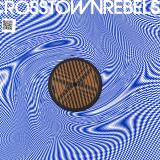
JAMIIE & Ape Drums reunite for captivating collaboration ‘4ME’ on Crosstown Rebels.
Out on 27th February 2026, the Berlin-based DJ/producer and Miami-based Major Lazer member make their first appearance on Damian Lazarus’ label, featuring a bold reinterpretation from Whitesquare.
Following their widely championed 2025 collaboration ‘111’, a standout of the summer season, JAMIIE and Ape Drums reconnect for ‘4ME’, a track born from long-distance sessions and a unique creative flow. Crafted via a partnership that thrives on spontaneity, with ideas bouncing seamlessly between Berlin and Miami, the result is a production that feels alive, organic, and meticulously detailed as they both make their debut appearance on Damian Lazarus’ renowned Crosstown Rebels imprint.
The original ‘4ME’ moves at its own pace, layering resonant synth textures, alluring vocal phrases, and subtle melodic chords to create a hypnotic pull. Moments of intimacy give way to rolling, percussive grooves, pulling the listener into a slow-burning, immersive journey.
On the flip, Italian DJ/producer and returning Crosstown Rebels talent Whitesquare sharpens the track, injecting jittering percussion, bubbling organ stabs, and a taut, club-ready pulse that transform the hypnotic original into a late-hours weapon without losing its emotional core. A continuation of their creative dialogue, ‘4ME’ showcases JAMIIE and Ape Drums’ ability to fuse emotive depth with kinetic energy, offering a release that captivates from the first listen to the final drop.
out of Stock
Last delivered 13 days ago available to reorder, subject to availability
Straight from Honolulu, Bombye is a newly found Hawaiian soul trio led by Nick Kurosawa, one of Hawaii’s most captivating voices. Known for his rich,
velvet tone and vintage-inspired phrasing, Nick and his band channel the essence of 1970s soul, funk, and R&B into a deeply organic soundscape that feels both nostalgic and new.
The EP features four tracks that showcase the band’s musicianship and emotional depth.
Mixing by Andrew Garma and mastering by Wax Alchemy deliver exceptional clarity and analog warmth, while Shiro Ishihara (SNEA) provides the minimalist yet evocative artwork
that perfectly complements the record’s soulful aesthetics. This limited-edition vinyl includes a bonus “Bombye” sticker exclusive to CONNECT RECORDS. Each copy is pressed with
care for collectors, DJs, and analog enthusiasts seeking authentic, heartfelt soul music with timeless groove and depth.
"deathcrash’s third album, Somersaults, glimmers with an everyday euphoria. The London-based slowcore/ post-rock quartet has always had an affinity for building worlds only to crush them. From their breakout EP, People thought my windows were stars (2021), through two critically acclaimed studio albums, Return (2022) and Less (2023), they have been both the architects and the destroyers, the creationists and the ones manning the flood barrier. But, recorded between Black Box Studio in the Loire Valley and Haggerston’s Holy Mountain, Somersaults is almost joyful.
Its ten tracks are more vocal heavy than any of the band’s catalogue – think Mark Linkous via The Kinks – but lyrically, Somersaults resists revelation. For all its abrasion, phrases appear half-swallowed, broken off at the edge of meaning, consumed by the smaller textures of living. “Thirty, no career, it fucking worries me / And doing the band doesn’t help,” Banks sings in ‘NYC’. But, “This life is the best life,” he finishes in ‘CMC’ on top of the ambient white noise of an office printer, thankful that the band is still there, “still making noise in the doorway.”
Their role as caretakers of Duster, Low and Codeine’s slowcore lineage is all across Somersaults – songs scud to a narcotic crawl, sound monolithic and inwards before spotlighting a crystalline nothing. Cathartic builds are muddied with tenderness, the bass a heavy grounding, the drums an exhausted heartbeat grasping for air. But more so than ever, even the silence feels collaborative – a gesture of communal trust – friends celebrating the room they’ve made for each other’s ghosts, and some of the biggest, brightest songs they’ve made to date."
(Early support by Ben Klock, DVS1 & Rene Wise) DHÆÜR makes his debut on Dustin Zahn's Enemy Records with 4 stripped down Techno tools ranging from "relentless and heavy" to "grooving and introspective." Each track offers a different approach to minimalistic Techno, all rich in moody atmospherics.
In classic A1 fashion, "Bayes Theorem" is the heaviest track on the record. Throbbing sub bass meshes together with pedaling hi hats while vocal chops and modulating synth work cover the top end. It's sinister and pounding, yet retains a sense of groove without becoming too aggressive. "Perception" closes the A side with a deeper and more introspective approach. The bass fills in only where necessary,leaving the pads and bleepy synths to do all the heavy lifting.
"Scanning" kicks off the B-side, defined by a rolling bass line and moody chord stabs. It gives the dance floor exactly what it needs and nothing more. The record comes to a close with "5th Avenue." It's deep, steady, rolling, and dripping in polymeter synth pulses. Brief glimpses of vocal phrases offset the darkness, giving it a bit of funk and playfulness...making it essential for deeper late night sets.
out of Stock
Last delivered 7 months ago available to reorder, subject to availability
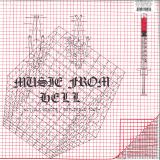
Nervous Gender’s legendary synthpunk LP Music From Hell burbles up from infernal depths to resurface on Dark Entries. Confrontational, unhinged, and unabashedly queer, Music from Hell is an unholy grail for fans of the strangest underbellies of post-punk, minimal synth, and early industrial music, and is presented here newly remastered and on expanded double LP.
Nervous Gender (de)formed in LA in 1978 at the hands of Phranc, Gerardo Velaquez, Edward Stapleton, and Michael Ochoa. Phranc, the androgynous embodiment of the band’s name, left in 1980. Following her departure, a wide cast of LA freaks would find themselves drawn into the band’s orbit, including Alice Bag of the Bags, Paul Roessler of the Screamers, the Germs’ Don Bolles, and an 8-year old drummer named Sven Pfeiffer. In 1980, Nervous Gender appeared on the seminal Live at Target compilation alongside Factrix, uns, and Flipper. With the band’s notoriety cemented, Music from Hell followed in 1981 on Subterranean Records (as no LA label would touch this material).
Side A, dubbed “Martyr Complex”, presents a more punk-forward sound with live drum salvos and slabs of aggressive synth. These twitchy, unsettling shockers ooze with the kind of snotty misanthropy that will endear them to fans of the Screamers or Crass.
Side B, known as “Beelzebub Youth”, is a live performance the band labeled "an electronic bruto-canto dissertation on the banality of spiritual transcendence." Mutant melodies cede way to synthesized clangs, whirs, bleeps, manipulated tapes, and howls of despair.
In addition to all the material from the original LP, we’re treated to a full disc of the band’s demos, the material from the Live at Target compilation, and early live recordings. Included are unrecognizable covers of Carly Simon and Lou Reed, and the Sex Pistols that are so despairingly skewed they fall into the void. This reissue of Music From Hell includes a 36 page lyric booklet, foldout poster, and gatefold sleeve with photos, flyers, and news-clippings designed by Eloise Leigh. Tackling taboo issues like sexual kinks, mental illness, drug use, and childhood molestation, Music From Hell is still surprising – even shocking - over 40 years after the album’s release. Nervous Gender stand as one of the most genuinely anti-establishment outfits in underground music, a colossal fuck you to social norms from religious strictures to gender essentialism.
out of Stock
Last delivered 6 months ago available to reorder, subject to availability
Nat King Cole was one of the most distinctive and beloved voices in popular music, whose warmth, elegance and effortless phrasing defined an era. Very Best Of Nat King Cole brings together a superb selection of his most enduring recordings, from timeless ballads like Unforgettable, Mona Lisa and When I Fall In Love to upbeat classics such as (Get Your Kicks On) Route 66, Straighten Up And Fly Right and Ramblin’ Rose. Showcasing his remarkable range as both a romantic crooner and a swinging entertainer, this vinyl LP offers a perfect introduction to his extraordinary legacy. Pressed on highquality 180g black vinyl, it is an essential collection for long-time fans and new listeners alike.
Mess Esque are a duo featuring music and instruments by Mick Turner
and words and voice by Helen Franzmann. Their self-titled album is a
beguiling travelogue of restless, somnambulant wanderings.
Perhaps best known as one of the Dirty Three, Mick’s been playing
guitar and making music with many collaborators for forty years. He’s
loved his paintings too but revered especially for his solo music - since
1997, Drag City have released four of his albums, plus an EP and an
album of the Tren Brothers (Mick with percussionist and fellow Dirty
Three-ite, Jim White) and two EPs featuring Mick as the Marquis de Tren
with Bonnie ‘Prince’ Billy.
Mick’s last record was 2013’s ‘Don’t Tell the Driver’, a work that found
him departing from his traditional hermetic instrumental template by
employing a rhythm section and brass charts and even collaborating with
a vocalist. After all the purely instrumental music he’s made with Dirty
Three and solo, a singer is now part of the sound he’s hearing in his
head these days; while demoing new material, he realized that he was
again writing music that needed lyrics - and for that matter, someone
other than himself to sing them. But who? In 2019, he was introduced to
Helen through a mutual friend who’d produced her last album. Under the
name Mckisko, Helen has released three albums over the past 12 years,
working and touring with a range of Australian musicians along the way.
Her music has been described as numinous and transformative. Her
most recent album, ‘Southerly’, saw her moving into a more expansive
sound which led to an openness and excitement around further
collaboration.
Helen’s words are carefully observed, her phrasing responding intuitively
to Mick’s looping guitar figures with vocal repetitions of her own. Starting
with a feeling or a voicing, there are often no words - both players are
searching on their own paths. Then suddenly they have arrived and are
passing the emerging meaning back and forth, the rising intensity
forming a kind of undertow that pulls the listener deeper into their world.
Often, Helen would record her vocals in the middle of the night, seeking
that 2am flow, a moment of greatest isolation through which to trace her
melodie with fragility and strength. This crystallizes Mess Esque’s
intention: riding the sleepy drift through the blurred edges of the day…
time-traveling to that moment beyond stasis where sense and no sense
coincide and share space and time and energy. Viewing from afar the
immense peace of this planet when its ghost world of spirits below - the
madness of crowds, people sliding past each other faraway in the night -
are quieted at last.
Bass: Takashi Mizuhashi, Teruo Nakamura
Drums: Bruno Carr
Piano, Electric Piano: Herbie Hancock
Recorded on February 22, 1977, in New York, this rare session captures Japan’s proud bassist Takashi Mizuhashi performing alongside Herbie Hancock.
Throughout the album, Mizuhashi’s deeply resonant bass tone and melodious phrasing shine, making this a quintessential “international” Japanese jazz classic.
Following her compelling debut EP Mending, Frida Touray returns with Homebody, a work of raw emotional clarity, crafted duringa time when her voice was literally fighting back. Diagnosed mid-process with a rare condition that forced her into silence andstillness, Touray chose not retreat, but rebuild. From the quiet corners of domestic life, she’s shaped a collection of songs thatradiate warmth, vulnerability and quiet endurance.Musically, Homebody expands on Touray’s jazz-soul foundations with sparse, atmospheric production that amplifies her voiceand message. There’s a newfound looseness in her phrasing, a deeper sense of presence in every word she sings. You can hearthe letting go, of perfection, of control, and the deepening of purpose in its place. Each track lands with unfiltered intimacy andemotional architecture, a subtle act of defiance wrapped in softness.This is music built on stillness and shaped by resilience. A reflection on self-worth, illness, femininity, community and healing.Songs that speak to the unseen parts of recovery and the small rooms we build ourselves back up in. Homebody is a record foranyone rebuilding from the inside.
out of Stock
Last delivered 8 months ago available to reorder, subject to availability
Loaded with tension and anchored by bold textural and stylistic contrasts, Sam Slater’s third solo full-length finds the British sound artist, composer, and engineer grappling with his creative contradictions head-on.
Having spent a life time in bands and producing records, Sam transitioned somewhat by accident through his work with Johan Johansson into working as a composer on high profile projects such as his collaboration with Hildur Guðnadóttir on the Grammy Award-winning Joker and Chernobyl, and with Pulitzer Prize-winning journalist Mstyslav Chernov on the soundtrack to the lauded 2000 Meters to Andriivka. Having a vast set of interests and influences is an asset when helping realise a directors vision for a soundtrack, but one's own musical voice can end up being constrained. In Lunng, Slater has gone back to his wildly divergent range of influences and rather than shy away from the extremes, he's used them to create a singular vision.
Take the opening track “Heatsick”: Slater imagines an extravagant fusion of 2000s drone metal and vintage British brass, welding ear-splitting overdriven drones and blown-out choral vocals to stirring trombone swells from veteran player Hilary Jeffery. On paper, it’s hard to imagine—but Slater’s intentionality conducts these polarizing elements into a surreal blur of sonic extremes, with the guitars’ relative harshness softened by Jeffery’s eerily nostalgic colliery echoes.
His last solo album, I do not wish to be known as a Vandal (Bedroom Community, 2022), showcased this breadth by assembling a team of collaborators including Sam Dunscombe and Yair Elazar Glotman. On this record he’s linking up with acclaimed multi-instrumentalist Maria W. Horn, idiosyncratic sax virtuoso Bendik Giske, versatile percussionist Adam Betts, and the aforementioned Jeffery, Slater ushers these players toward a lattice of calculated confutations.
Working to explore the tension between the divergent practices of his collaborators—Lunng was meant to be challenging. On “Praya”, Giske’s familiar overblown horn phrases are almost vaporized, vanishing among Slater’s weightless synths and Horn’s chillingly hoarse vocals. There are traces of Horn’s Funeral Folk project, but Slater shifts the emphasis, letting her voice brush past the other elements like a hallucination.
Slater’s use of extremes isn’t just in the micro; dynamics drive the album’s overall flow. “Praya” sets the stage for the record’s heaviest, most prickly moment: “Passengers”. Here, Horn’s voice cracks, rasps, and gurgles over serrated synths and Betts’ ritualistic drums. Slater turns an industrial symphony into a folk opera—dark, dramatic, and strangely beautiful—etched with Giske’s fluttering phrases.
But the mood soon shifts. Slater careens toward chaos, unleashing double-time rhythms and piercing textures familiar to anyone with a soft spot for classic black metal. These grotesque incongruities are deliberate; Slater surveys years of musical conflict and leans in, using dissent as fuel to build kinetic energy.
The weight of sentimentality bears down on “Black Metal Rewind (Night Drive Astra, 2006)”, melting teenage memories into hypnagogic ambience—shoegaze dreams whirled with angelic choral delusions. On “Death by Nostalgia, 1688”, he ventures further into polarizing territory, distorting AutoTuned voices with cryptic strings and medieval tonalities, unsettling any stable sense of past or present.
In this record Slater focuses on pure energy, color, and mood. Lunng distills years of listening into a bracing brew—boiling each sound down to its essence, then serving it with unflinching intent.
This record is a tribute to Jackie Mittoo, a key figure in the development of reggae, ska, and rocksteady. Known for his work at Studio One and his role as keyboardist for The Skatalites, Mittoo left a profound mark on Jamaican music with his melodic style and rhythmic approach to the keyboards.
The track is built on a classic reggae foundation produced by Sergio Caño, with a restrained rhythm and simple structure. The focus is on the organ, played by Joan Sobrevals, who carries the main line with a sober, respectful sound clearly influenced by Mittoo's school. Without seeking to imitate, the performance takes characteristic elements of his style — melodic phrasing, spaced chords, marked beats — to shape a coherent piece that remains faithful to the style.
The production maintains a minimalist aesthetic, without overloading, leaving space for each instrument to breathe and fulfil its function. The result is a serene, mid-tempo piece that invites you to listen carefully, without virtuosity, but with a clear intention: to pay tribute to a great musician who defined a sound, an era, a style.
Thank you, Jackie!
out of Stock
Last delivered 8 months ago available to reorder, subject to availability
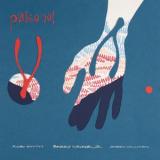
Barry Walker Jr. is a pedal steel player and guitarist whose roots in Americana, Country and Folk traditions influence his melding of minimalism, ambient and spiritual music. The Portland-based instrumentalist is also a member of the Rose City Band, known for his gorgeous phrasing and deft interplay with guitarist Ripley Johnson. On Paleo Sol, Walker demonstrates his singular voice as a pedal steel player and composer. Evoking the American western ranges and basins, the album embodies a longer, geologic view of time that patiently marvels at the ripples of change throughout lifetimes and ages. Walker is joined on Paleo Sol by drummer Rob Smith (Rhytion, Pigeons) and bassist and Mouth Painter bandmate Jason Willmon (Fruited Planes). Paleo Sol"s tranquil landscapes glide, built on warm finger-picked guitar figures and pedal steel swells coupled with deft percussion and bass touches by Smith and Willmon respectively. The trio plays with exceptional fluidity either completing each others phrasing or working together to build momentum. Smith notes: "The drums are not keeping time as much as evidencing its elasticity, mixing into the other instruments, changing phase states." Every gesture on the album is rich with intention, moving with grace and playing with timbre and time.
'In 2023, sound artist and composer Weston Olencki toured across the American South. Beginning in their hometown in South Carolina, they snaked a circuitous path from the mountains of West Virginia to the banks of the Mississippi River. As the miles accumulated, so did the initial seeds of new work.
'Instruments and artifacts they acquired hitched a ride in the backseat, while songs and sounds filled their portable recorder: water in its various states, the familiar insectoid buzz of those summer nights, trains cutting through the landscape, the traditional music that lived alongside the communities that kept it. Olencki took it all in, and over time, found ways that these experiences coalesced into a bramble-like perspective of time, where past, present, and future intersect in ways both barbed and beautiful.
'Broadsides, Olencki’s newest solo full-length is the multilayered result of this journey. The album follows their landmark release Old Time Music from 2022, which presented radical interpretations of traditional tunes from Appalachia and throughout the South alongside original compositions that drew significantly on archival recordings. On Broadsides, Olencki rejects delineations between the unmoored avant-garde and the rootedness of one’s cultural heritage, revealing their porous and intertwined nature. “My mother was a quilter. Her mother before that,” they write in the album’s liner notes. “Quilting, like music, is a practice of embedding knowledge and remembrance into the very core of the thing you are making. It’s not just about the materials, but how they’re reassembled, recontextualized, stitched, woven to form new patterns - the minutiae of craft holding significance to those looking to find it. Stories woven from stories, never told the same way twice.”
'Like all great road trips, Broadsides unfolds slowly and continuously, with moments of dramatic reverie punctuating the endless melt of highway in the rearview. We’re immediately confronted by the uncanniness of revisiting old haunts, as Southern storms break through the initial churn of the freight locomotives of Alabama. Olencki’s interpretation of the bluegrass standard “Foggy Mountain Breakdown” captures the euphoria of melancholy in motion. The permutational plucks of banjo are bounced around the frame by a computer, its pitches determined within algorithmic sequences and transcriptions of classic three-finger licks. The tonalities of old-time are smeared and stretched until all that’s audible is the insistence that Heaven might be real.
'In the album’s second half, “Omie Wise,” a murder ballad made famous by Doc Watson, follows an interlude recorded on the river in North Carolina in which the titular character’s body was laid. Ghostly echoes of a dozen other renditions float through the substrata as Tongue Depressor’s Henry Birdsey accompanies them on the pedal steel guitar. The album’s central composition, “all my father’s clocks,” is a profound meditation on entropy and impermanence. The sound of their father’s extensive clock collection ticks away as Olencki pulls a bow across the length of an autoharp sourced from a rural strip mall. The instrument was left as detuned as it was found, the resonance of its deep bass drone and clanging high-end the result of years of neglect and the warping effects of Southern humidity.
'Historically, broadsides were an early form of broadcasting, an often- musicalized telling of current news pasted in the public square. The name was later taken up by Sis Cunningham and Gordon Friesen in the 1960s, whose Broadside magazine published songs and social commentary when American folk music resurfaced as an urgent way of communicating the multifaceted politics of its time.
'Olencki borrows the phrase to recall both this old form of songmaking and that later prominent reexamination of traditional music’s role in modern life, but also to draw attention to the fragmented and machine- mediated way heritage is diffused in this very different, but no less pivotal, moment.
'As a sanitized past is used as justification for current violence and domination, we can turn to these artifacts to better understand the history of ourselves, but only if they are consciously pushed to evolve. Broadsides represents one personal, striking vision of what far-flung futurisms could be respun from = these high, lonesome sounds: a reflection of the unbridled joy and deep sorrow inherent to living together through time, and a desire to push further into the untold and unknown.'
Die italienische Singer-Songwriterin Marta Del Grandi veröffentlicht Ende Januar 2026 ihr neues Album Dream Life bei Fire Records, ihre erste neue Musik seit dem raffinierten, hingebungsvollen Pop ihres Albums Selva aus dem Jahr 2023. Del Grandi kehrt mit einem Album zurück, das in einem Feld der Träume spielt, einer multidimensionalen Panoramaaufnahme, unterbrochen von gelassener Desillusionierung, die musikalische Grenzen überschreitet, während persönliche Hoffnungen und Sehnsüchte gegen die Weite der Sterne und darüber hinaus geworfen werden. Das Album beginnt mit ,Antarctica", einem Song, der sich mit dem ethischen Dilemma der Welt auseinandersetzt und uns mit einem Riff, das an Talking Heads in ihrer Blütezeit erinnert und mit abstrakten Phrasierungen à la Laurie Anderson durchsetzt ist, aus unserer Komfortzone reißt. ,Neon Lights" unterstreicht diese Stimmung, geht jedoch auf einer persönlicheren Ebene darauf ein. Die verzerrten Gitarren und der wandernde Bass bieten einen härteren Einblick in rebellische Selbstfindung, eingebettet in einen symphonischen Klangteppich. Weiter in ,Dream Life" ist ,Alpha Centauri" ein eindringliches, introspektives Stück Pop-Magie, das Martas wunderschöne Stimme in Nostalgie für die Teenagerzeit schwelgen lässt und ihr inneres Kind wiederentdeckt, während eine entfernte Tuba eine Gegenmelodie trägt. Der Titeltrack untersucht den Quantensprung zwischen Realität und unseren Träumen und Ambitionen und bildet einen Kontrapunkt zu ,Shoe Shaped Cloud" und seiner grüblerischen Untersuchung einer gescheiterten Beziehung, die von einer schmerzerfüllten Stimme vorangetrieben wird, die an Radiohead in ihrer zerbrechlichsten Phase erinnert. Das Album spiegelt das wachsende Bewusstsein wider, dass wir die Zukunft oder das Ergebnis unserer Pläne nicht vollständig kontrollieren können. Dieser rote Faden zieht sich durch das gesamte Album, eine Reise, die poetisch, ironisch und tief in der Gegenwart verwurzelt ist. ,Mein vorheriges Album Selva hatte einen poetischen und bukolischen Charakter - in meinem Kopf kann ich mir jeden Song als Ölgemälde vorstellen - Dream Life hat einen zeitgemäßeren Ansatz, mit Texten, die politische und soziale Themen berühren, einer expliziteren persönlichen Erzählweise und einem klareren Pop-Sound. Es ist eher wie ein Fotobuch, klarer und detaillierter." - Marta Del Grandi Limitiertes, goldfarbenes Vinyl, bedruckte Innenhülle, mit DLC oder Digi-Sleeve CD.
One of the leading Japanese alternative rock band, GEZAN’s leader, MahitoThePeople’s director debut film, i ai was released in March 2024, and it is an atypical coming-of-age film decorated with tinge of red.
The film takes place in Akashi and Kobe, Hyogo prefecture. This film’s main characters are Ko (Kentaro Tomita), a rookie member of a band and a brother-like figure of his, Hee (Mirai Moriyama) who Ko idolizes and the story of this movie is based on their struggles with life and death. The story is also based on Mahito's real-life experiences and while reality and fiction are duplicated, the boundary between them slowly melts away. The film co-stars Honami Satoh, Kazuki Horike, Mitsuru Fukikoshi, Eita Nagayama, Kyoko Koizumi, K-BOMB, Ichi Omiya and many other unique personalities. It should also be noted that the transparent images filmed by photographer, Masafumi Sanai gives the film, a special emotional quality.
The film is not bound by any film theory but it poses a theme common to GEZAN's recent works and Mahito's writing activities: How can we live in a crumbling society while interacting with others? We can never live alone but living with others is also never easy. How can we overcome this time of extreme division of the world?
What left quite a strong impression in this film that not only Mahito personally directed but also wrote the script and composed the soundtrack as well was the main theme song, entitled “i ai”. This new piece of GEZAN is an extension of the work that this band has continued doing over the last few years. This 12" single, contains the song, “i ai” and it will be the first time released on vinyl.
Led by soft guitar arpeggios, the song gradually builds to a fever pitch, condensing the mood of the film which encompasses both tranquillity and intensity. The chorus of ineffable, multiple voices united together sounds like a lament that has spilled out of society or a cry of joy. GEZAN's collaboration with the 15-member chorus group, Million Wish Collective has been in development of late and the cultivated sensibilities through their activities are put to use in this song.
The song can also be considered a slow, relaxed dance track that lasts 9 minutes and 8 seconds. It has something in common with organic dance tracks from South America and other regions, and it is significant that GLOCAL RECORDS which represents glocal music from around the world in Japan are releasing it as a DJ-friendly 12-inch single.
The B-side features a remix by COMPUMA who is also closely associated with GEZAN. The song starts with an African styled percussion, with a thumb piano in the middle of the song and then returns to that memorable chorus. This song feels like a 18 minutes and 18 seconds long short movie like suite, with some dizzying changes from the beginning to the end. It is remix filled with enormous drama!
The cutting and mastering of this 12” was done by TOREI who is also active as a DJ and the artwork was created by jvnpey, a visual artist and graphic designer based in Tokyo. Their loving work also makes this 12" very special.
When I asked AI to find a synonym for the word, “division,” it displayed in succession, a series of words: “integration,” “consolidation,” “unification,” “unity”, and “reconciliation". All of these phrases are somewhat whitewashed and embarrassing but the mirage-like chorus echoing in the song, “i ai” seems to be trying to find a new word, that is a synonym for the word, "division. In this film, “i ai”, the message, “Let's live together after the end roll” was thrown out but included in this 12-inch, the message, “Let's live together after the music stops”, emerges.
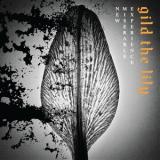
NEW MISERABLE EXPERIENCE are a Philadelphia-rooted collective that reshapes heavy-music rigour into expansive, melody-forward songs through alternative synth-rock. What started as a file-trading collaboration between vocalist/bassist David Grossman (ex- ROSETTA) and multi-instrumentalist Joshua Mahesh Kost expanded into a full band that now includes ROSETTA drummer Bruce "B.J." McMurtrie Jr., technical-metal bassist Brett Bamberger (REVOCATION), and guitarist Brody Uttley (RIVERS OF NIHIL). The group forgoes technical exhibitionism in favour of mood and melody, composing introspective songs designed to reward close listening. Across the twelve tightly arranged tracks of 3rd album "Gild The Lily", the band pares its palette to essential elements: clear melodies, precise dynamics, and richly textured production. The album trades overt bombast for craft, building emotional weight through small gestures and patient arrangements rather than moments of spectacle. "We started saying `infinite sadness' as a bit of a catch phrase with the last album. I think that sums up the vibe of the album and project overall. We are very much in the `sadboi' world with Jeff Buckley, Puma Blue, Radiohead, Deftones, The Black Queen", says Grossman. Sonically, `Gild the Lily' combines alternative synth rock with chorus-tinted guitars, and a rhythm section that alternates between taut propulsion and roomy, reverb-soaked space. The arrangements both electronic and instrumental negotiates smooth and slick danceability alongside sinister edges. The band's aesthetic is one of deliberate economy: textures are chosen to serve mood and narrative rather than technical exhibitionism, and arrangements reveal their depth across repeated listens. Slick, sorrowful and cinematic in atmosphere, `Gild the Lily' is an eclectic collection that can not only groove in vibe and inspire movement, but also pierce to the nerve in ethereal lamentation. RIYL Crosses * Black Queen * Ulver * Vowws * Rosetta * Revocation * Rivers of Nihil
"Dialogues and Shadows" by Goncalo Almeida & Pierre Bastien invites you on a transcendental musical journey, rising above mere notes and timbres. With mechanical instruments and rich harmonics, their music sparks a conversation where listeners may actively participate. Surprises unfold as melodic phrases emerge from diverse sources, including Pierre Bastien's pocket trumpet and Goncalo Almeida's double bass, along with custom-made instruments.
out of Stock
Last delivered 8 months ago available to reorder, subject to availability
'3 x hullo, hullo' is the latest work from Jeugdbrand, the duo of Dennis Tyfus and Jeroen Stevens. A collection of fragmented snapshots, with odd phrases and playful remarks colliding, while musical ideas are tossed about with ease. Instead of a clear narrative, it's a series of disconnected sketches--emotions shift quickly, laughter turns to tears, and the ride is anything but smooth.
out of Stock
Last delivered 8 months ago available to reorder, subject to availability
Known for their exhilarating live-to-record albums such as last year's critically acclaimed Wood Blues and Giant Beauty, سماع Sama'a (Audition) is the first of two releases that will surface after أحمدAhmed’s first studio recording sessions at North London’s The Fish Factory in early 2025.
Since 2014, Ahmed أحمد have excavated and re-imagined the music of Ahmed Abdul-Malik, in an ever ongoing search for future music. Over a decade on, the group were given the opportunity to set up in the studio for the first time and, with the aid of meticulous engineer Benedic Lamdin, سماع Sama'a (Audition) is the quartet's most detailed work to date.
Fastidious fans may recognise the album's tracklisting as that of Ahmed Abdul-Malik’s Jazz Sahara. After his success collaborating with the pianists Thelonious Monk and Randy Weston, Jazz Sahara was the first record Abdul-Malik made as a leader and was released in 1958. It used the flame of late Fifties jazz to light the wick of North African folk music and acted as a reminder of the Arabic origins of jazz, creating a distinct, unique sound that was far beyond its time. In Malik’s Jazz Sahara, there is no piano. The ongoing work of each member of [Ahmed] then is to think differently, to wonder how the music will work and to take a risk on trying it out - an extraordinarily compelling feat of imagination. Using group improvisation strategies and recording in single takes, سماع [Sama'a] (Audition) tackled the full suite of Jazz Sahara in just one session, with ‘Ya Annas [Oh, People’] and ‘Isma'a [Listen’] being previously unrecorded. 'Farah 'Alaiyna’, also released on 2019’s Super Majnoon, sounds unrecognisable - the slow, heady stomp and repeated phrasing of 2019’s embryonic [Ahmed] having been blast furnaced and sped up four-fold. The result is four kaleidoscopic, relative miniatures that move, unfold and re-imagine at a very different scale and proportion than [Ahmed]’s previous records. It’s a dizzying, euphoric music and an extraordinary record of a group moving through space-time like no other.
[b] Isma'a [Listen]
[c] El Haris [Anxious]
[d] Farah 'Alaiyna [Joy Upon Us]
[b] b1 Isma'a [Listen]
[c] c1 El Haris [Anxious]
[d] d1 Farah 'Alaiyna [Joy Upon Us]
[b] b1 | Isma'a [Listen]
[c] c1 | El Haris [Anxious]
[d] d1 | Farah 'Alaiyna [Joy Upon Us]
out of Stock
Last delivered 7 months ago available to reorder, subject to availability
Solo Suono is the first collaboration between saxophonist Filippo Ansaldi and electronic musician Simone Sims Longo, both based in Cuneo, Italy. Solo Suono is an album between acoustic gesture and electronic treatment, beyond the classical while starting from the classical. Breath, amplified mechanics, residual sounds, expressive freedom, and different forms that integrate electroacoustic composition. Passing through looped gestures, electronic processes, and concrete sound explorations, it investigates textures that blur the line between organic and synthetic, emphasizing subtle timbral shifts, evolving patterns, and the interaction between chance and structure. Fragile, immersive, and at times meditative, the music opens a space where the listener can inhabit both the immediacy of performance and the expanded sound world of electronic manipulation. Solo Suono is a phrase open to multiple interpretations, a naïve description of music.
The capstone of Miles Davis’ electric period, Agharta reigns as a funk-rock fireball — a blazing comet streaked energy and elan, a fearless organism feasting on adventure and freedom, a seven-headed Godzilla stomping its way through Osaka, Japan. Recorded on February 1, 1975 at Osaka Festival Hall at the first of a two-show stand, the double album offers an endless abundance of surprises and shifts — as well as a road-proven ensemble whose chemistry and abilities equal that of any of Davis’ celebrated bands. If the true measure of jazz is the capacity to adapt to the moment and challenge perception, Agharta is consummate.
Sourced from the original master tapes, housed in a Stoughton gatefold jacket, and pressed at Fidelity Record Pressing in California, Mobile Fidelity’s numbered-edition 180g 33RPM 2LP set of this epic live release presents it in audiophile sound on a domestic pressing for the first time. Offering greater degrees of separation, detail, and richness than the compressed CD editions and more clarity, openness, and presence than older vinyl copies, this version of the 1975 release helps bring the concert stage to your home. Just make sure your turntable and speakers are up to the challenge of Davis and Co.’s explosive performances — and producing the decibels they demand.
Teeming with vibrant colors, tones, and pace, Mobile Fidelity’s reissue captures the hear-it-to-believe-it flow, sweep, and moodiness of the music. Though the group honors looseness and freedom with religious verve, the specificity and scale rendered by this remaster allows you to detect methods behind the alleged madness that are often otherwise harder to discern. This insight extends to the understated changes in volume, harmonics, and phrasings. In many ways, you can listen as Davis himself did that early February evening as he helped coordinate the overall direction and decided on whether to blow his wah-wah-wired trumpet or take a turn on the organ.
Tellingly, Agharta would likely never have been made if not for Davis’ ventures overseas and, specifically, to the Land of the Rising Sun. Having for years faced a backlash on his native soil for his choices to experiment and blow past all known borders, Davis was welcomed with open arms in Japan. The concert documented on Agharta — as well as the day’s later show, captured on the equally exciting Pangea — stemmed from a sold-out three-week tour that would ultimately mark Davis’ final public appearances for years, as he soon settled into semi-retirement and nursed the wounds connected to an unprecedented stretch of restless and relentless output.
For all the band-fueled merit of Agharta — and there’s plenty, given the cast of saxophonist Sonny Fortune, bassist Michael Henderson, drummer Al Foster, percussionist James Mtume, and guitarists Reggie Lucas and Pete Cosey seemingly blasts off to outer space and travels distant galaxies by the time this minimally edited record runs its course — Davis’ own playing often remains overlooked. As critics Richard Cook and Brian Morton observed, it is “often fantastically subtle, creating surges and ebbs in a harmonically static line, allowing him to build huge melismatic variations on a single note.” He attacks like a man on a mission, out to prove naysayers wrong and bent on trailblazing another new path forward. Convention and skeptics be damned.
Noisy and furious, dark and discordant, abstract and off-balance, radical and intense, abrasive and atmospheric, strangely beautiful and hypnotically eccentric: Agharta evades simple description, and refuses to be pinned down in any established category — rock, jazz, punk, ambient, prog, avante-garde, or otherwise. Shot through with trench-deep grooves, screaming riffs, scalding solos, and free-improv leads, its cosmic thrust comes on as the equivalent of an animated pointillist painting comprised of millions of textured dots, dashes, and dabs that hold your attention so raptly you want to revisit the ideas again and again.
Always steps ahead of everyone else, Davis knew what he was doing even when Agharta debuted in Japan before later hitting U.S. markets. Though “Maiysha” and “Theme from Jack Johnson” are identified in the track listing, the record contains a number of uncredited references to other Davis works, including a nod to “So What.” This decision to bypass labels only adds to the art of the reveal — the rare black magic in which Agharta expertly deals.
Winner of the Gold Medal at the 2024 Jazz Audio Disc Awards, a jazz critic magazine!
This best-of album features selections from three of Alessandro Galati's most talked-about albums!
Alessandro Galati, a master of Italian jazz who has released numerous albums on Terashima Records, released his standards collection "Plays Standards" series
at the end of 2024, following "European Walkabout," a collection of European traditional music, and "Portrait in Black and White," a collection of Jobim's classic
bossa nova works. All three albums (23 tracks) of Galati's standards collection, released at the end of 2024, are now being released simultaneously! The album
won the Gold Medal at the 2024 Jazz Audio Disc Awards, a jazz critic magazine magazine, and caused a stir. This long-awaited best-of album, featuring selected
tracks from the three albums, is finally being released on limited-edition vinyl. Enjoy this collection of gentle, warm, and beautiful standards, woven with a touch
that evokes the warmth of human skin and refined phrasing.
Alessandro Galati - piano
Ares Tavolazzi - bass
Bernardo Guerra - drums
Cintura Interna is João Hã’s new release for Sucata Tapes, a work shaped by accident, drift, and unlikely connections. Its guiding notion comes from “Música Careca” (Bald Music) — a strange term apparently used by Jean Dubuffet to describe his own sound experiments. Dubuffet wasn’t a musician, but he was bald; the phrase lingers as an apt description for music that is naïve without innocence: amateur bruitism, soft sound, raw and direct, where intention is left exposed to errancy.
The piece itself came together without project or plan, eventually forming what Hã calls an “accidental Frankenstein” — or perhaps Frankenoise. Built from recordings made more than 15 years ago on cassette and obsolete equipment, mixed with more recent material, Cintura Interna bridges time and decay, refusing diaristic or documentary framing.
As an unexpected detour, the release also includes a version of the garage classic Louie Louie.
'In collaboration with the children of Nico Kasanda, better known as Docteur Nico, Planet Ilunga proudly presents an anthology dedicated to African Fiesta Sukisa, available as a 3LP set and a digital release with bonus songs. This release is the result of many years of preparations and was realized in close partnership with Liliane Kasanda, Nico’s eldest daughter. Marking forty years since his passing, we felt that the year 2025 was the right time to honor Docteur Nico’s legacy with this original collection.
'Almost all of the African Fiesta Sukisa songs were released on Nico’s Sukisa label which translates in Lingala for “the final accomplishment”. The music on Sukisa, crafted by Nico and legendary vocalists such as Chantal, Sangana, Apôtre, Mizele, Lessa Lassan and Josky, embodies the essence of that powerful phrase with genius, class and depth. The label ran between 1966 and 1975 and released approximately 280 songs. Ngoma also issued the group between 1967 and 1971 and, in addition, reissued material from the Sukisa label. Many of these songs have become part of the collective memory of Congolese society and are still heard, discussed, and analyzed daily across digital platforms worldwide, as well as on numerous Congolese radio and TV stations.
'The album we put together features some of Nico’s signature songs alongside never before reissued tracks from the Sukisa catalog. It furthermore contains a large booklet with song commentary, testimonial interviews from well-known musicians, journalists, fans and Nico’s entourage, besides never before published photography about his personal and musical life.
'Alastair Johnston, author of the book ‘A Discography of Docteur Nico’ and longstanding Planet Ilunga collaborator, designed a stylish booklet and cover using all our collected material. Audifax Bemba, longtime admirer, compiler and connoisseur of Nico’s music, and the author of most of the song commentary in our accompanying booklet, offers his portrait of Docteur Nico:
“After displaying technical virtuosity with African Jazz, expert and accomplished guitar with African Fiesta, which musicologist Sylvain Bemba described as a dream guitar, Nico Kasanda was consecrated ‘dieu de la guitare’ by the public in the late sixties. With his band African Fiesta Sukisa, Docteur Nico displays his wide palette of unusual sounds. While exploring the Hawaiian guitar with its clear, airy, plangent, psychedelic effluvia, he continues to replicate the piano comping technique, and adds two missing strings to his bow: a simulation of the sanza (likembé or thumb piano), whose sounds he reproduces right down to the noisemakers of the tiny tin rings, on the one hand, and the sounds of the Luba balafon on the other. The right note, in the right place, at the right time, is the triptych on which Nico Kasanda’s playing is based, a note dressed in the perfect sound. A guitar of pure emotion. With African Fiesta Sukisa, his playing takes a ‘Chopin-esque’ turn, sending out more notes in a sublime adagio. The true artist is the one who simplifies everything. Docteur Nico is a genius of our time, whose style makes him the supreme exponent of the most important guitar school in Congolese music. He is recognized by his peers as the greatest African solo guitarist of all time. Sculpting sound in a tireless quest for beauty, Nico Kasanda has sublimated the guitar throughout his career.”
With Lentement, Julie Jains presents her debut EP, the result of a writing and composition process focused on repetition and the passage of time. Each track is built on simple phrases that return, evolve, and gradually generate their own intensity.
Julie's voice, at once fragile and assured, becomes part of this interplay of repetition and lends the project a distinctive identity. Rowan van Hoef's productions reinforce this approach with electronic textures that are both dense and precise, highlighting the voice while establishing a coherent, singular atmosphere.
Together, they offer a work that explores the power of slowness and minimalism, inviting attentive listening beyond conventional formats.
For SEVEN's first anniversary, we've brought together a roster of talented artists, each with a distinct style, to reimagine CRYME's hit "London Boy" originally released on The Backroom EP in 2024. This 5-track remix EP features a remastered version of the original alongside fresh interpretations by none other than Ghettotech heavyweight MCR-T, Prog House queen Roza Terenzi, modular wizard JakoJako, and Amsterdam's legendary Stef de Haan as a digital bonus. The vinyl will be limited to 500 copies.
With full marketing and PR support around the anniversary SEVEN7000LTD is set to be SEVEN's biggest release of the year.
A1 - CRYME - London Boy (MCR-T Remix)
CRYME's 808-driven electro, ghetto house hybrid "London Boy" gets the MCR-T treatment, spiced up with a dose of Garage. The Berlin-based artist reshaped the bassline into a gritty reese bass and put in the iconic UK hardcore vocal "your name is not down, you not coming in," perfectly amplifying the track's original UK flair.
A2 - CRYME - London Boy (Roza Terenzi Remix)
Roza Terenzi joins the "London Boy" Remix EP with a sleek, modern tech house cut. Flipping the distinct 808 cowbells into heavily processed percussive elements that bounce through the mix while carrying a melodic line. Her remix is packed with her quirky yet precise sound design and kinetic frequencies. The original vocal phrases are creatively chopped up into fragments and reassembled so they become part of the rhythmic backbone.
B1 - CRYME - London Boy (JakoJako Remix)
JakoJako shows off her genre diversity with a steezy Tech House flip of "London Boy." The talented Berlin-based live act lays down a solid drum foundation and a bouncing bassline - no frills, just a steady groove built for the dancefloor. The composition stays laidback, leaving space for a raw synth melody and her reworked, chopped-up vocal layers that add just the right touch of playful silliness to the track.
B2 - CRYME - London Boy (Original Mix)
On the B-side you will find CRYME's remastered original "London Boy", first released in 2024 and featuring ANTICALM, a British rapper, vocalist, and songwriter whose "You Don't Want This" vocal sample takes center stage. Merging 808-driven Electro and Grime with a touch of Ghetto House, the track reimagines a genre-bending battery of block-party energy in the club setting. With its driving rhythm and unmistakable vocal hook, it remains a powerful tool for DJs and a highlight on any dancefloor.
out of Stock
Last delivered 10 months ago available to reorder, subject to availability
On a "Balearic-Jazz trip", the phenomenally hyped Thought Leadership returns with another X ideas: the deck this time chooses the Ace of Swords. In the acclaim garnered by III of Pentacles, there were many whispers of “Balearic” from those in the know. As soon as you drop the needle on XI you will be basking in turbo Balearica.
Originally out on cassette only, we present the first ever vinyl issue. It's a hideously limited pressing of 300 for the world, so don't sleep on this.
The sonic palate has been augmented by the addition of synth and bass; there are more guitar layers, more pedals and more organic drums this time – a much fuller production. Still DIY, and still recorded straight to multitrack, just ever so slightly grander in scale; think a rough-hewn, long-lost Claremont 56 cut and you’ll have some idea of how XI opens this future classic LP.
The touchstones so key to the vision of Pentacles (Cocteau Twins, Dif Juz, Durutti Column) are all still present and correct; XII could be a piece from Extractions, XIII is pure Garlands-era Guthrie and, now with the shuffling jazz drums, XV makes TL even more LC – but more disparate influences are found this time out too. ECM guitar legends John Abercrombie and Pat Metheny in the more considered melodic phrasing and harmonic structure of the ideas and a nod to the cosmic Balearic spirit in the overall vibe, means more is offered to the listener across Swords.
XVI and XVII are the biggest indicators to Thought Leaderships’ new found love of The Real Book and their grasp of jazz chords. The former sounds like if Mike Hedges had produced on a heavily sedated ECM date in the early 80s, whilst the latter is Bright Size Life condensed into a most post-punk shard of Strat conversation. The syrupy Phase 90 on the lead parts lends much weight to the guitar melodies, a beautiful tonal counterpoint to the Vox-ish chimes of the plangent chords we’ve all come to love.
The flip again treats us to three extended, improvised jams. XVIII owes as much to Canterbury as it does to Krautrock, another modal voyage through the stars. Light the incense and drift away, guided by delayed cymbals and weaving ribbons of guitar. XIX has almost a New-Wave/Sophisti-Pop energy to it in tone, if not in structure and execution. Something almost Tears for Fears-esque in the chiming chorus guitars. An interesting outlier that has already received a lot of love from those that have heard it. XX is the starkest idea, and the only piece this time with no drums. What we do get, however, is a free exploration over a two chord-vamp. It’s Harvest Time meets Planet Caravan and a fitting end to this Balearic jazz trip.
Be With is honoured to present the first ever vinyl release of Ace Of Swords, carefully remastered by Be With's engineer Simon Francis to ensure it sounds better than ever after its initial tape release. Cicely Balston's expert skills have made sure nothing is lost in the cut at Abbey Road Studios whilst the records have been pressed to the highest possible standard at Record Industry, in Holland. The original tape cover artwork, so crucial to Thought Leadership's striking visual aesthetic, has been rejigged for vinyl issue here at Be With.
The last one flew. You have been warned.
out of Stock
Last delivered 10 months ago available to reorder, subject to availability
Following releases on Longform Editions and her own Paralaxe imprint, Dania descends on Somewhere Press with crepuscular, quixotic pop that hits a sweet spot between Mark Clifford’s Cocteau Twins remixes and Massive Attack.
Parked next to Alliyah Enyo, Slowfoam, and Angel R, Dania’s found an ideal home at Somewhere Press, and »Listless« is her most confident, transcendent set to date. Her last few albums were steeped in meaning – a way for the Iraq-born, Tasmania-raised artist to explore her identity and probe the impacts of colonisation. Here, she gives herself more room to breathe, thriving in the mysteries of nighttime – a direct reference to her nocturnal existence as an emergency doctor in Australia. The album was completely composed in the midnight hours, but it’s not self-consciously dark in the way you might expect. Opening track »On a Grassy Knoll« is one of the prettiest – and poppiest – tracks Dania has released, cracking open her voice with thrumming harmonies that she complements with granulated, Guthrie-esque guitars and, most unexpectedly, half-speed drums. It’s the first time Dania’s used percussion, and it suits her extremely well.
In fact, even when the powdery breaks drop away in the album’s final breaths, you can almost hear an outline of where they might remain. On »Write My Name«, Dania loops her voice between waved strings and slippery piano phrases, and the hypnotic closer »A Hunger« is a thudding, sub-heavy 4/4 away from being Peak Oil-style contemporary dub techno.
But the big draw here is Dania’s batch of hazy dream-pop miniatures, like the Seefeel-adjacent »Heart Shaped Burn« (with Rupert Clervaux on drums), and the Bristolian »Car Crash Premonition«, that features a rolling bassline taking us right back to 1998. Very strong – peak listening if you’re into Bowery Electric, MBV, or Mark Van Hoen.
out of Stock
Last delivered 10 months ago available to reorder, subject to availability
'Mauricio and Horns' by Bossa Nova legend and harmonica master Mauricio
Einhorn is produced by Jacques Muyal, with the Idriss Boudrioua Orechestra
arranged by Rafael Rocha and with guest artists Paquito D'Rivera and Lula
Galvao
In jazz, we all know the harmonica master, Mr. "Baron" Toots Thielemans, but we are
equaly fortunate to have our "Prince", Mauricio Einhorn. His early contributions in the
1950s to the birth of the Samba Jazz movement in Brazil played a pivotal role in the
creation of Bossa Nova, a genre that quickly became an integral part of the jazz world.
The influence of jazz on Brazilian music - exemplified by the great Carlos Lyra in
"Influencia Do Jazz" - was so profound that local musicians embraced it to forge a
new musical identity. Many of Einhorn's compositions have become timeless
standards performed worldwide since the early 1950s and '60s.
Together with another giant of the scene, alto saxophonist Idriss Boudrioua,
Mauricio's music gets an even grander presentation than ever before. This time, he
teamed up with an exceptionally talented young musician: a big band arranger and
trombonist named Rafael Rocha, who wrote all the arrangements and conducted the
recordings. Rafael's arrangements are nothing short of magical. They are never
overdone, always respecting the beauty of the original harmonies while infusing them
with his deep passion for jazz. His trombone solos recall the phrasing of Frank
Rosolino, and he modulates the pieces with swirling harmonies that evoke the very
roots of Brazilian jazz. In every track, Rafael enhances Mauricio's elegant and
expressive phrases without ever overpowering the artist, creating a "wall of sound"
that gracefully floats alongside Mauricio.
Amand returns to All Day I Dream alongside Belgian newcomer Capoon for their collaborative two-track Ouverture EP. The release arrives with a bonus remix from producer/DJ Khen.
Guided by a shared sense of musical storytelling, Amand and Capoon find common ground in organic instrumentation and cinematic rhythm. Across its two movements, Ouverture unfolds like a passage through dusk and dawn part meditative, part ascendant. The title track’s first part opens in a space of gentle introspection, carried by fluid percussion and softly woven synths. Its counterpart rises with quiet momentum, layering melodic phrasing, captivating vocals, and subtle rhythmic tension into a transportive finale. It’s a delicate and dreamy 12-minute journey that encapsulates the wondrous imagination of All Day I Dream curation.
Khen’s remix expands the emotional arc further, blending the original’s warmth with his signature precision and dynamic melodic control. The result feels both grounded and dreamlike, aligning seamlessly with the label’s ethos of soulful progression and timeless sound design.
out of Stock
Last delivered 77 days ago available to reorder, subject to availability
The new album The Cinnamon Show by Cinnamon Gum is a juicy journey into the golden era of the 1970s, filled with a warm and rich blend of soul and funk.
Recorded using classic analog instruments, this album is a tribute to authentic sound and musical craftsmanship. A unique approach to sound engineering creates a cohesive and immersive atmosphere that accompanies the listener from start to finish. Each single is enhanced by a vibrant music video inspired by iconic music programs like Soul Train and The Midnight Special.
The artist's vocals shine throughout the album, combining deep, sensual phrases with subtle melodies, drawing inspiration from soul legends such as Marvin Gaye and Curtis Mayfield. The lyrical layer explores both personal stories and universal themes of love, loss, and hope, making the album an exceptionally intimate and authentic experience.
Kai Winding (1922 -1983) was a Danish-born American trombonist and jazz
composer, particularly remembered for his collaborations and solo
exchanges with fellow trombonist JJ Johnson
Fans of their classic album 'The Great Kai & JJ' (Impulse!) will welcome 'Duo Bones'
with Kai trading solos with renowned Italian valve trombonist Dino Piana (1930 -
2023). The programme includes three original compositions by Kai, 'Duo Bones', 'Lady
H', and 'Stop Following Me', and one by Piana aptly titled, Kai & Dino. The rest of the
programme includes Cole Porter's 'Get Out Of Town', Bronislawl Kaper's 'On Green
Dolphin Street', Gorden Jenkin's 'This Is All I Ask', and an original composition by
producer Enrico Pieranunzi titled 'Soul Dance'.
"A series of pieces played very well, characterised by a marked swing and with solos
that transmit to the ear the joy felt by the musicians in performing them. An album of
pure fun, impeccable in execution, full of dizzying and spectacular phrasing,
impressive in the speed with which Winding and Piana intertwine their sounds in
elaborate counterpoints." - Marco Giorgi, from the liner notes
Kai Winding: trombone
Dino Piana: valve trombone
Enrico Pieranunzi: piano
Giovanni Tommaso: bass
Tullio De Piscopo: drums
Recorded by Francesco Melloni, Giovanni Fornari, Emmequattro Studio, Rome, Nov. 17
& 18, 1979.
Sie sind zurück. Lauter, klarer, größer – und »immer unter Feuer«. Frei.Wild schlagen 2025 das nächste, vielleicht sogar das stärkste Kapitel ihrer Bandgeschichte auf. Geschmiedet vom Leben, mit scharfer Zunge. Das neue Studioalbum ist ein Manifest – für alle, die mit ganzem Herzen brennen.
Voller Kraft, Schmerz, Hoffnung – ein wuchtiger Mix aus hartem Deutschrock und Gänsehaut-Balladen. Texte, die Mut machen, Grenzen sprengen, Brücken bauen. Echte Geschichten, keine leeren Phrasen. Mit Haltung, mit Tiefe – mit der Freiheit, auch unbequem zu sein. 2x 12 brandneue Songs bündelt das Doppel-Album im dreifach ausklappbaren Digipack plus 32 Seiten Booklet mit allen Songtexten, Band-Fotos und heißen Insider-Infos. Das Box-Set befeuert Frei.Wild noch dazu mit 6 weiteren, exklusiven Songs, die sich ausschließlich auf dieser Fan Edition eingebrannt haben. Wer aufs Streaming hofft, muss leider sehr, sehr lange warten … falls diese 6 Tracks überhaupt jemals den Weg auf die digitalen Plattformen finden.
Seit über 20 Jahren beweisen die Südtiroler, dass man mit klarer Haltung und Meinung Großes bewegen kann. Vom Proberaum im Kinderdorf bis an die Chartspitze, durch Gegenwind und im Feuer der Kritik – wo andere verbrannt sind, geht Frei.Wild aufrecht weiter. »Immer unter Feuer« ist ihr Dank an alle, die füreinander brennen. Und ein Antrieb für die, die noch kommen. Frei.Wild-Songs beugen sich nicht, nennen beim Namen, was unausgesprochen ist. Geliebt und gemieden. Es gibt gefühlt niemanden, der keine Meinung zu diesen Rock-Revoluzzern aus dem Grenzland hat. Südtirol ist nicht Berlin – doch im Kern lodert in Großstädten wie auf dem Land dieselbe Kraft. Frei.Wild zieht seine ungezähmte Energie aus der Heimat, den Familien, der Freundschaft. Gewachsen im Schmelztiegel von Kulturen und uralten Bräuchen und Geschichten haben sie ihre ganz eigene Prägung erfahren. »Immer unter Feuer« trägt das Album das Geweih so stark wie nie!
»Immer unter Feuer« erscheint als Doppelvinyl-Version im Gatefold Cover mit UV-Spotlack Parts und zwei weißen 180g Vinylplatten mit bedruckten Innenhüllen.
Elations Recordings presents "Depois do Silêncio", an intimate, forward-looking acoustic bass, digital keyboard and synthesiser recording by Brazilian avant-garde jazz luminaries Zeca Assumpção and Lelo Nazario. This release celebrates almost fifty years of the duo's friendship and musical affinity, continuing a musical dialogue between long-time collaborators. The duo began working together with Hermeto Pascoal's "Grupo Vice Versa" in the mid 1970s before forging one of Brazil's most adventurous experimental jazz groups "Grupo Um" in 1976; releasing three albums with a shared avant-garde and lateral, exploratory approach to sound fusing jazz and contemporary synthesis with expanded and prepared acoustic playing.
"Depois do Silêncio" reflects the duo's long development of a shared conception of music, resulting in a work that is both timeless and modern. The music on the album was primarily recorded in Nazario's UTOPIA Studio, São Paulo, in 1994, featuring Assumpção on acoustic bass and Nazario on his newly acquired Ensoniq TS-12; these recordings were supplemented with acoustic bass for "Quintal da Memória" in 2018 and completed with an additional layer of rich, complex analog and virtual synthesis following their rediscovery of the material in 2022.
Assumpção's deeply expressive acoustic bass playing forms the backbone of these compositions, augmented by Nazario's expansive and exploratory approach to synthesis, its constantly shifting timbres "making music a living organism, which adapts to situations as they appear." Nazario explains that "although the themes are written, much of the music is improvised based on an organic development of ideas, all intertwined and interrelated exactly as happens in a living organism".
The album title "Depois do Silêncio" (After Silence) references a phrase by the writer Aldous Huxley; "after silence, that which comes nearest to expressing the inexpressible is music". Assumpção and Nazario continue a search for new forms of musical expression, and here they succeed in creating music that "expands the sound of musical instruments, so opening new horizons in the minds of listeners".
out of Stock
Last delivered 11 months ago available to reorder, subject to availability
Recital releases The Holy Restaurant, the new full-length album by Derek Baron, and their first solo LP since Curtain (Recital, 2020).
The album is built from years of miniature transcriptions of improvisations, functioning in many ways as a sister to Curtain. Half-thoughts and mistakes are revisited, gilded, and illuminated. The floorboards of the album are laid with piano, organ, string pads, while serrated accruements (distortions, flourishes, and recording interferences) step and drop overhead. The resulting conflux, as Baron notes in the accompanying booklet “becomes the point and the problem to explore.”
The second track “Oven Girls” opens with us galloping on a horse in some video-game meadow on a bed of MIDI strings. Abruptly, a helicopter soars over us and we transition to a latticed guitar and woodwind exploration. The album rolls on in this fashion, juxtaposing musical half-sentences within a museum of sounds rag-picked from history and daily life. Emotional interviews with Midwestern friars who build and sell caskets are set against gothic piano and guitar duets. On “Music in the Casket,” A disorienting and hilariously epic guitar solo erupts. The penultimate titular piece, “The Holy Restaurant,” sets a text written by Baron’s grandfather. A small chorus voices his words, echoing the humanistic storytelling of “Blue” Gene Tyranny’s A Letter From Home. Under sunlit piano progressions, a fleet of smokey trumpets emerges.
Running throughout the album is a series of “traces”: short melodic phrases painted over again and again with different real and MIDI instrumentation. The “luxurious asceticism of doubling” as Baron puts it. They explain, “Part of the allure for me is that the ‘original’ material is itself kind of thin, sketchy, meaningless, maybe calling attention to itself only by way of a felicitous mistake. Hearing, transcribing, and learning what was basically only ever played first on accident becomes the guiding concern.”
The album’s shifting, variegated forms and voices pass quickly; the record feels both comforting and elusive, suitable for any hour of the day.
The Holy Restaurant features guest players Ed Atkins, Lucy Liyou, Quentin Moore, Emily Martin, Dominic Frigo, Jacob Wick, and several of Baron’s family members. It is released in a limited edition vinyl pressing of 200 copies, accompanied by a booklet of effusive program notes by the composer, alongside an assemblage of photographs, scores, and artwork.
out of Stock
Last delivered 10 months ago available to reorder, subject to availability
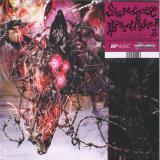
Arriving two years after the first chapter, Absurd Matter 2 isn’t just a sequel, it’s an evolution, redrawing the boundaries established by its acclaimed predecessor. The Berlin-based Italian producer tempers his confrontational sonics with rare moments of introspection, shifting seamlessly between blown-out noise, warped hip-hop, mutant club experimentation, and weightless ambience. Textures disintegrate and reassemble, rhythms flex and crumble, and every detail balances on the edge of fantasy. It’s a poetic, layered response to Nino Pedone’s changing physical reality: the gradual hearing loss and perceptual renegotiation triggered by Ménière’s disease, which struck him in 2022. At first, the experience felt like betrayal, a brutal disconnection from the very sense that had shaped his life. But over time, the disorientation turned into a strange kind of focus. The silence between sounds became as expressive as the sounds themselves.
The first Absurd Matter was a visceral reaction to trauma; the second is more reflective – an ambiguous chronicle of sensory recalibration. Pedone doesn’t represent his altered inner reality through extremes, but through depth, zooming in on illusory distortions, tense rhythmic fluctuations, and fragmented sonics. Dense, immersive, and mystical, the album mirrors Pedone’s evolving relationship with perception itself.
Tinnitus-like feedback wails and noir-ish strings introduce “Repeater”, making it immediately clear that Pedone is painting a more delicately finessed image this time around. Fleshed out by raps from cult MCs billy woods and E L U C I D, the track is marked by subtle, sophisticated contrasts: the blurred, inverted rhythms that couch Armand Hammer’s haunted back-and-forth, and the glitchy interference that offsets the lavish orchestral phrases. Backwoodz associate Fatboi Sharif lends his Lynchian drawl to “Bandage Chipped Wings”, grounding Pedone’s lysergic rhythmic distortions with syrupy, horror-inspired couplets. Pedone also invites discomfort into “Crash Landing”, with droning, metallic tones that contradict South Central rapper ICECOLDBISHOP’s elastic flow. “Bitch, I don't give a fuck about anybody,” he squawks over Pedone’s incongruous rasping textures and time-warped beats, “cash out at any party.” Working alongside London’s Loraine James on production, Pedone reunites with Moor Mother on “I Saw The Light”, blending James’ soft-focus atmospherics with soundsystem-damaging, overdriven bass hits and rusted percussive snips. Moor Mother’s assertive words hover over the wreckage, tightening Pedone’s themes of overstimulation and altered awareness as they stutter and veer off course, vanishing into the backdrop.
Contrasting his more pensive experiments, Pedone’s dancefloor deviations are more concentrated on Absurd Matter 2 than ever before. He torches a stuttering dembow structure on “X”, obfuscating the rhythm’s familiar energy with disturbing audio hallucinations. On “Splintered”, he reunites with Kenyan prodigy Slikback, mangling neon-lit trance arpeggios with dissociated trap rhythms. He sharpens his skills to a fine point on “Oblivion Step”, observing 2- step through a lens of distortion and personal abstraction, shaking blipping synth leads over neck-snapping drums and counteracting the momentum with airless sci-fi soundscapes.
Perhaps the album’s most surprising moment arrives with “Viel”, which features vocals from Los Angeles-based composer Kaitlyn Aurelia Smith. Together, Pedone and Smith chance upon their notion of dub techno, fogging synth stabs and ghostly vocal traces into eerie harmonic distortions. On some level, it’s almost pop music, a far cry from the bleak dissonance of Absurd Matter and a hopeful way to reframe turbulence as transformation. Absurd Matter 2 doesn’t simply document a process; it enacts one. It doesn’t offer clarity; it invites disorientation. It’s not a map of the labyrinth, but a foghorn piercing the darkness.
out of Stock
Last delivered 10 months ago available to reorder, subject to availability
In einer Welt, die von zwei Monden umkreist wird, tanzen die Mondphasen im Gleichklang und beeinflussen die Gezeiten. Unter diesen Lichtamuletten liegt die Landschaft, in der SAINTSENECAs neues Album ,Highwallow & Supermoon Songs" entstanden ist. Zac Little wirkt an der Oberfläche subtil, aber die Kunstfertigkeit in jeder seiner Phrasen ist fast überwältigend. HIGHWALLLOW & SUPERMOON SONGS findet seine Stimme in ihrer elastischsten Form, reitet auf den Hügeln seiner Heimat, schwirrt vorbei wie eine Libelle und legt sich dann ruhig wie ein alter Hofhund.
Eyvind Kang ist Komponist und Bratschist, dessen Werk experimentelle, klassische und traditionelle Musikformen umfasst. Zu seinen Kollaborationen zählen unter anderem Jessika Kenney, Bill Frisell, Laurie Anderson, Bennie Maupin, Stuart Dempster, Sun City Girls und SUNN O))). Kang ist bekannt für seine Erkundungen der Mikrotonalität, der modalen Improvisation und des Klangrituals. Seine Werke wurden weltweit auf führenden Festivals und Veranstaltungsorten präsentiert. Kang ist derzeit Fakultätsmitglied am CalArts und unterrichtet Komposition und experimentelle Klangpraktiken. Seit über dreißig Jahren erforscht Eyvind Kang die verschwommenen Grenzen zwischen Komponist, Interpret und Zuhörer. Auf Riparian präsentiert er eines seiner bisher intimsten und fokussiertesten Werke: zwei Langformstücke für Viola d'amore, improvisiert innerhalb mikrotonaler Systeme, die er während der Pandemie entwickelt hat. Kang bezeichnet diese Improvisationsmethode als ,Riparian" und beschwört damit das Bild eines Flusses herauf, der in verschiedene Richtungen überquert wird - fließend, nichtlinear und lebendig mit subtilen Variationen. ,Ich stellte mir Pizzicato und Arco wie das Springen von Stein zu Stein in einem Bach vor", sagt er. ,Es gibt eine geerdete Zufälligkeit, wie bei einem Frosch oder einer Schildkröte, die sich zwischen Land und Wasser bewegt." Jedes Stück auf Riparian ist eine erste Aufnahme, die im Studio als Teil dessen aufgenommen wurde, was Kang als ,eine Art Geschichtenerzählen unter gleichgesinnten Freunden" bezeichnet. Das Ergebnis ist Musik, die mit stiller Intensität und emotionaler Klarheit fließt und Melodien entfaltet, die sich sowohl uralt als auch lebendig präsent anfühlen. Produziert und aufgenommen von Randall Dunn (SU NN O))), Omar S ouleyman, Kali Malone) produziert und aufgenommen, fängt Riparian die volle Resonanz der Viola d'amore in einem reichen, dimensionalen Klang ein. Dunns Handschrift verleiht Kangs lyrischer Phrasierung Wärme und Transparenz und offenbart subtile Klangtexturen, die ein tiefes Hören belohnen. Meditativ und ausdrucksstark zugleich lädt Riparian den Hörer in einen Raum ein, in dem die Zeit weicher wird und Klang zu einer Form der Einstimmung wird .
Chloe Kim ist eine in Korea geborene, in Sydney lebende Schlagzeugerin und Improvisatorin, deren Musik Traditionen und Geografien miteinander verbindet. Bekannt für ihren unerschrockenen Improvisationsansatz und ihre ausdrucksstarke Beherrschung des erweiterten Schlagzeugs, ist sie in ganz Australien und international in den Bereichen Jazz, Experimental und Neue Musik aufgetreten. Aufgewachsen in Korea und heute in Sydney ansässig, hat sich die Perkussionistin Chloe Kim als einzigartige Stimme im zeitgenössischen Schlagzeugspiel etabliert, indem sie furchtlose Improvisation mit kompositorischer Klarheit und interkultureller Tiefe verbindet. Ratsnake markiert ihren kühnen Einstieg in den Kanon der Solo-Schlagzeugalben, indem sie viszerale Kraft mit Präzision und Fantasie verbindet. Kims internationales Ansehen stieg 2023 nach ihrer ,herkulischen" (The Guardian) 100-stündigen Solo-Drum-Performance über 10 Tage. Auf Ratsnake kanalisiert sie dieselbe Ausdauer und Vision in ein zutiefst persönliches Studioalbum, das das vollständige klangliche Potenzial des Schlagzeugs auslotet und es als melodisches und skulpturales Instrument behandelt. Der Titel des Albums stammt aus einem Traum, den Kims Mutter vor ihrer Geburt hatte und der sich auf die Rattennatter bezieht, ein koreanisches Symbol für Widerstandsfähigkeit, Verwandlung und seltenes Glück. Dieses symbolische Erbe zieht sich durch das gesamte Album, während Kim komplexe rhythmische Ideen mit Eleganz und Kraft entfaltet. ,Als ich zum ersten Mal in New York war, spürte ich, wie die Energie der Stadt neue Ideen aus mir hervorbrachte ", sagt Kim. ,Jeder Track hebt eine Facette meiner Solo-Sprache hervor - von ausgedehnten Percussion-Parts und langen rhythmischen Zyklen bis hin zu Texturen, die ich noch nie live verwendet habe ." Auf dem gesamten Album greift Kim auf jahrelange persönliche Motive zurück: eine im Laufe der Zeit verfeinerte Zwei-Takt-Phrase im Titeltrack, komplexe Strukturen in ,The First Gift" und weitläufige Arrangements in ,Birth Dream". Jedes Stück baut auf ihrer fortwährenden Auseinandersetzung mit Rhythmus, Form und verkörpertem Klang auf. Produziert und aufgenommen von Randall Dunn (SU NN O))), Annea Lockwood, Kali Malone), fängt Ratsnake Kims dynamische Phrasierung mit räumlicher Fülle und Detailtreue ein. Es ist ein kraftvolles , nuanciertes Debüt, das die Möglichkeiten der Solo-Percussion neu definiert .
Mister Water Wet returns to Soda Gong with "Things Gone and Things Here Still," an album that radically expands the project’s purview while preserving the homespun warmth and oblique tactility that have long defined Iggy Romeu’s work. Where earlier records tilted toward the dusty swing of sample-based beatcraft or spectral minimalist jazz, here Romeu opens the frame to a more ensemble-minded approach, inviting a stellar cast of supporting musicians, including SG alumni Memotone and K. Freund, into the fold.
The result is an album that feels both broader and more intimate, with live instrumentation such as piano, strings, and reeds woven into MWW’s signature lattice of hand percussion, production sleights, and slippery time signatures. Acoustic and electronic textures bend toward each other like plants angling for the same light: bowed strings blur into vaporous pads, brushed drums scatter under riffing guitars, a horn phrase lingers in the same space as a cracked cassette loop.
A tension between decay and presence - the “things gone” and the “things here still” - runs throughout the record. At times, the music evokes a chamber session refracted through waterlogged tape; at others, it recalls the afterimage of a hip-hop instrumental slowed into an oneiric haze. In the world of MWW, memory functions less as nostalgia and more as a living fabric - mutable and resonant. "Things Gone and Things Here Still" finds Iggy Romeu at his most expansive, offering up a generous record of open spaces and porous boundaries.
out of Stock
Last delivered 11 months ago available to reorder, subject to availability