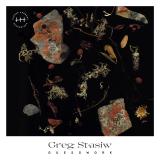
Experimental musician Greg Stasiw presents his debut album of radiant, free-flowing electronics ‘Guesswork’. Music for psychoactive exploration made over a four year period, incorporating ambient, minimalism, intricate sound design & Japanese environmental music. An exceptional listening experience of wonder, tranquility, melancholy & discovery, contemplating the relationship between sound & space.
Greg Stasiw is an experimental musician, visual artist and writer from New England, Northeastern USA. An itinerant polymath, Stasiw has spent time living, working and traveling in New York, Tokyo, Toronto, Paris, Boston, and Bratislava. As well as studying anthropology, animation and illustration, Stasiw has always had a close connection with music.
His earliest musical involvements started with ambient music on Sunday drives, microcassettes, the Windows 98 Sound Recorder and free play with Casio keyboards. Then came a formative procession of piano lessons, orchestras, choirs, taiko, metal, indie rock, tinnitus, and ultimately; the acquisition of music production software.
With his debut album ‘Guesswork’, the aural and visual inspirations that underpin Stasiw's creative life intersect, in a pure, radiant soundworld of space, depth and immaculate clarity. Futuristic, pellucid soundscapes incorporating ambient, minimalism, intricate sound design, and Japanese environmental music are deftly arranged with evanescent chimes, serene tone float, suspended organ notes and curious sci-fi resonances.
Like stepping into some space age meditation garden, if soundtracked by the likes of Hiroshi Yoshimura, Harold Budd, Norman McLaren, and Pauline Anna Strom, the thirteen tracks of ‘Guesswork’ create an exceptional listening experience of wide-eyed wonder, sleek tranquility, gentle melancholy, and singular discovery.
"Tonight At Noon" compiles tracks from two earlier recordings sessions: one session from 1957 with Jimmy Knepper on the trombone, the drummer Dannie Richmond, Saxophone player Shafi Hadi and the pianist Wade Legge, which were released on the album "The Clown" (Atlantic 1260). The second session took place in 1961 with Booker Ervin and Roland Kirk on the saxophone, Knepper, the bassist Doug Watkins, Mingus at the piano and Richmond on the drums, and was released on "Oh Yeah" (Atlantic SD 1377).
The two sets differ in mood, but this does not mean that it is an album that uses leftovers. While Mingus in the first session strives for European harmonics and melodic approaches with a hard bop tempo (particularly on the title track) in the direction of the blues, the second session with its vespertine elegance and spatial explorations comes over rather as a sort of exercise à la avantgard Ellington with sophisticated harmonies that pave the way for sluggish marches and gospel-like blues. Kirk and Ervin complement one another particularly well, their swing is appararently boundless. Mingus’s piano playing is deeply rooted in the blues, and his sense of tempo and lightness anhances these numbers, particularly in "‘Old’ Blues for Walt’s Torin".
In these compositions one already finds hints of Mingus’s later recordings. The most beautiful number is taken from the 1957 session and concludes the album: "Passions Of A Woman Loved", almost ten minutes in length, feels like an Ellington suite. Although, or maybe simply because several years passed between the two sessions, one cannot deny this album’s magic.
Great Day is one of the very best albums on the Music De Wolfe label and certainly one of the most sought after library records, full stop. It's been sampled by such heavyweights as Madlib, LTJ Bukem, El-P and The Alchemist (among many others). You likely already know all this. If you don't, get to know. One listen through and the £350 asking price for a VG copy starts to all make sense...
Originally released in 1972, it's credited to Music De Wolfe legends Simon Haseley (real name Simon Park) and "Peter Reno" (a collaborative alias used by composers Clifford "Cliff" Twemlow and Peter Taylor) Confused? No matter. It's one of the most consistent libraries you'll ever hear, packed with heavy blaxploitation-esque drama-funk break themes.
It opens with the feel-good, breezy piano beat number "Little Big John" before switching up to modern sweeping orchestral with heavy drums on the warm, deeply emotive "Summer Friend". Total highlight "Hammerhead" is as heavy as you'd want, from a track so-titled. It's a driving, imposing, orchestral funk-rock monster, famously used by The High & Mighty for their classic "Dirty Decibels" and, also, it was used as the backing for Beyonce's ace "Woman Like Me".
Up next, "Crimson" is melodic, plaintive and moodily introspective; a soft, oboe-enhanced instrumental of delicate beauty. Again, ace beats and breaks abound. The expansive title track, "Great Day" is melodic and bold; a horn-fuelled, mid-tempo rhythmic workout which builds to rather big end. Rounding out this first side, "Hard Crust" ups the ante with thrilling wah-wah funk-rock, a dramatic, pounding and aggressive thriller. Killer!
Side B opens with the steady, stealthy crime-funk of "Highball" before segueing brilliantly into the Hammond-laced relentless flute-funk of the driving "Bora". The powerful wah-wah wonderful "Hold Back" is haunting orchestral funk-rock, sampled by Madlib, El-P, Rakim, Sean Price and The Alchemist. It's easy to see why. Swaggering and staggering.
The cop show funk of "Silver Thrust" is fast, purposeful and persistent. Is it a cover version of the godlike "Stepping Stones" from Johnny Harris's Movements album? Either way, with up-tempo drums, bongos and flute you're going to be thrusting all night. The dynamic "Convoy" is a brassy, organ-fuelled sports-soundtrack b-boy breaks monster. Super Bowl Soul! Essential. To close out this quite extraordinary set, the insistent "Barracuda" presents dramatic rock feels over a persistent funky flute beat. It was sampled by LTJ Bukem for his classic "Sunrain" from 2000.
The audio for Great Day has been meticulously remastered by Be With regular Simon Francis, ensuring this release sounds better than ever. Cicely Balston's expert skills have made sure nothing is lost in the cut whilst the records have been pressed to the highest possible standard at Record Industry in Holland. The original, iconic sleeve has been restored here at Be With HQ as the finishing touch to this long overdue re-issue.
out of Stock
Last delivered 7 months ago available to reorder, subject to availability
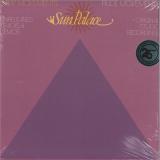
Way back in 1981, two musicians got together to make a record. Mike Collins played guitar and had just bought a Roland CR78 - the first programmable drum machine. Keith O'Connell played Fender Rhodes piano and Prophet 5 synthesizer. Excited about the quirky and unusual instrumental track they'd composed, when the duo entered London's Utopia Studios to finish off their creation, neither could have predicted what was to follow... Now viewed by many as one of the most influential early electronic dance records, 'Rude Movements' was swiftly picked up on by David Mancuso, who used it to devastating effect at his infamous 'Loft Parties', in turn introducing it to Larry Levan, Frankie Knuckles, David Morales and Kenny Dope, a group of young DJs who would go on to write the blueprint for dance music as we know it.
In the more than 35 years since its release, 'Rude Movements' has continued to inspire and excite, sampled by The Bucketheads' classic House track 'Whew!' (featured on recent BBE compilation '20 years of Henry Street Records') and listed by a veritable 'who's who' of dance music's elite as an all-time favourite. Rare and much sought-after on vinyl, BBE are happy to announce the release of a fully remastered version of 'Rude Movements' presented alongside the original demo version 'Raw Movements', plus three other versions of the iconic track. Also included on the vinyl package are the Afrika Bambaata inspired 'Street Beat' and 808/MiniMoog workout 'Palace Strut', as well as three other 80s SunPalace compositions. CD and digital versions expand the catalogue still further, with more experimental SunPalace magic. Timeless original, quirky and unique, these recordings are set to inspire yet another generation of DJs,
producers and music fans.
Taroug is the solo project by drummer and electronic music producer Tarek Zarroug with roots in the suburbs of the Tunisian desert and having grown up in Germany. Following the release of his 2020 EP, "Perpetual," as well as a number of notable remixes for artists such as Archive, Taroug has continued to refine his musical aesthetic.
Taroug's debut album Darts & Kites, set to be released on Denovali Records, draws inspiration from the Penrose tiling and explores themes of change and transformation. Fascinated from the pattern's unending possibilities, Taroug incorporated its infinite permutations not only into the album's nine tracks, but also in the cover art design. Darts & Kites showcases a blending of genres and styles, resulting in a sonic landscape, that is both hunting and beautiful. Experimental and abstract soundscapes are enriched by oriental influences, collected field recordings, pulsating dark beats and hypnotic vocals.
The album also features the contributions of other notable artists, including Beate Wolff's cello performance on Jewels I. Benedikt Koch's saxophone adds a sense of controlled chaos with delayed and swelling notes to the track Deguech, while Timo Schieber's piano provides a crucial element of the album's title track, Darts & Kites. Niklas Genschel lends his vocals to Queen of Carthage, which also features the saz playing of Abdallah Abozekry.
Created in collaboration with architect and designer Marie Brosius, the album artwork captures different ornaments reflecting the album's content. Darts & Kites is a mosaic of sound, blending together elements of unfamiliar and familiar.
out of Stock
Last delivered 7 months ago available to reorder, subject to availability
West Mineral returns with lushly amorphous actions by Shiner, Pontiac Streator & Ben Bondy aka Shinetiac; together fused for an immersive flux of vapoured dub, chopped and droned Billie Eilish, and fidgety algorithmic jams.
There's not a single, specific sound you can peg to the West Mineral axis at this stage in the label’s evolution - it's rather a set of shared aesthetics that freely bend into various interconnected shapes. Shinetiac's contemptuous, critic-baiting gear is the ideal example; on their last album, 2023's 'Not All Who Wander Are Lost', skittery, ketamized IDM sparkled over Spice Girls samples and the Foo Fighters' 'Everlong' was transmuted into Sneaker Pimps-style trip-hop. 'Infiltrating Roku City' might be a little less blatant with its out-and-out poptimism, but it takes a similarly dim view of conservative "big ambient" snobbishness. Just a few minutes of 'Bluemosa' should be enough to let you know what's up; the overall character of the sound is hazed, with frozen pads and garbled, dubbed-out voices smudged into a mess of effects and samples. But it sups up different nuances as it wriggles, absorbing scampering breaks, dizzy acoustic guitar strums and half-heard wordless vocals, flipping in the third act to emerge from its shell as minimalist balearic folk-pop - something like Bon Iver doing 'Electric Counterpoint'.
Brooklyn's Shiner, Philly's Pontiac Streator and Berlin-based Ben Bondy navigate the labyrinthine streaming landscape, guided by their own private experiences of mindless doom-scrolling and cruising the darkest corners of YouTube. They formulated 'Infiltrating Roku City' while they were rehearsing last year and spent the winter stitching together various recordings and jams into a layered, dry-witted commentary on our algorithmic reality. Laden with inside jokes and refried memes, it's surprisingly elegant gear; handling the most unseemly elements like sonic recyclers, earnestly repurposing pop and nostalgia to create an atmospheric echo of contemporary reality.
Screwing Chief Keef's enduring 'Citgo', 'Clublyfe (hulu)' emphasises the original's AFX-pilled euphoria with Robert Miles-style piano hits, replacing Young Ravisu's brittle 128kbps trap rhythm with a glitchy rattle that picks up dembow spikes as it rolls. 'I Hate Being Sober' vaporises the Chicago drill pioneer's 'Hate Bein' Sober', blocking out his voice with glitchy, downsampled interference and elasticated Rhodes. The trio team up with Orange Milk's goo age on the sublime 'Crisis Angel', catching a ray of Malibu's sunshine in the process, and reduce Billie Eilish's voice to a Romance-does-Celine cinder on 'Billie', stretching it to fit next to gassed Future ad-libs and swooping 808 Mafia sub womps. And although the album takes a murky diversion on 'Roku Axes Ultra’, and a cloud-stepping centrepiece ‘Purelink’ in homage to the eponymous dubbed ambient dynamos, it's back on course with 'Jiafei (NETFLIX)', taking aim at TikTok bot videos and welding screams from Florida metal band Underoath to AI-strength vocal curlicues.
out of Stock
Last delivered 7 months ago available to reorder, subject to availability
The Communards’ sophomore album ‘Red’ consolidated the genius of the musical partnership between Bronski Beat singer Jimmy Somerville and pianist Richard Coles. Fusing synths and hi-NRG production with lush string and horn arrangements, The Communards straddled pop and the political, the album’s themes set against the political unrest and moral panic of late 80s Britain. A global smash upon its release, this remastered and expanded 35Th Anniversary Edition features an extensive array of B-sides, live tracks, demo versions and remixes, including classic mixes by legendary 80s club doyens Shep Pettibone, Clivilles & Cole (better known as C&C Music Factory) and a euphoric new 2022 remix of ‘Never Can Say Goodbye’ by UK outfit The 2 Bears (Hot Chip’s Joe Goddard and DJ Raf Rundell). Available on Deluxe Double CD , Collector White & Red Double Vinyl , Black Vinyl. All editions remastered , with new sleeve notes.
out of Stock
Last delivered 7 months ago available to reorder, subject to availability
The Amazing Nina Simone reveals Nina Simone at the dawn of her recorded legacy—already assured, deeply expressive, and impossible to categorize. Moving effortlessly between jazz, blues, folk, and classical influences, Simone delivers performances of striking intimacy and emotional precision, pairing a distinctive, searching voice with elegant, commanding piano work. This special repressing on 180g orange vinyl brings renewed warmth and presence to these recordings, enhancing their dynamic range and tactile immediacy. A timeless listening experience, The Amazing Nina Simone remains a powerful introduction to one of the most singular voices in modern music
When Soulox sent me a bunch of tracks he had been working on last year, there were some really good bits in there, but I noticed that there also seemed to be a lot of remixes that him & Xtra Spice Mikey (previously known as Phineus II) had been doing of each other's music.
I felt like even though I had no clue what the originals of the tunes were or what they sounded like (or if they even really existed!), that it could make sense to put this all of this together into an 8 track joint release of original productions & each other's remixes. It also gave me the opportunity to include in some older bits from XSM which had never seen the light of day.
Big up to both of them for being up for putting this release together & thanks to Skr0nz for the illustrations used on the artwork.
out of Stock
Last delivered 6 months ago available to reorder, subject to availability
Shall Not Fade welcomes Pugilist for SNF140 "Maternal".
If you don't already know (and love!) Pugilist's prolific output, you need to get to know! The Naarm/Melbourne based DJ, producer and Rinse resident has released on Martyn's 3024, Melbourne's killer Modern Hypnosis, Silent Era's Of Paradise, Samurai, Rupture, ZamZam, J:Kenzo's Artikal, Sub Basics' Temple of Sound, Whities/AD93, Al Wooton's Trule, Banoffee Pies, Best Intentions and now his own buy on sight Ruff Kutz imprint.
'Maternal' is four blissey dubwise house blurring cuts. Embracing, medicinal, lush & corrective. Vibrations for heads and feet.
'Title track 'Maternal' is deep grooving infectious and honeyed house. Hypnotic, pulsating with head-meltingly warm padwork. 'Bona Fide' sees Pugilist team up with UK duo Mystic State. Drums sidestep with jazz swing while graceful piano and an ensemble of pads are topped with an introspective vocal sample dialing for your subconscious. The B1 'Anomaly' is a stepper - FWD charging drums backed with sub low pulses all brought together by trumpet echoes and woozy melodics. Finally comes 'Marigold', a soulful jungle excursion > early hours business, caressed nostalgic percussion, brushed rhythms, fleeting guitar licks and undulating vibes.
out of Stock
Last delivered 5 months ago available to reorder, subject to availability
TrioRox is a project born from the encounter between three leading figures on the Italian music scene (and beyond):
pianist Giovanni Guidi, bassist Joe Rehmer, and electronic musician DJ Rocca (Luca Roccatagliati).
Three individuals boast eclectic and impressive resumes. Guidi, a child prodigy of jazz piano, has released several
albums for the prestigious ECM label and has collaborated with top jazz and electronic musicians, from Enrico Rava
to Matthew Herbert, Joe Lovano, and Ricardo Villalobos. Joe Rehmer, an American living in Italy, is one of the most
sought-after bassists, sharing stages and recording studios with such luminaries as Bob Mintzer, James Moody, and
Danny Gottlieb. DJ Rocca has been a DJ and musician since the 1990s, boasting numerous albums, singles, and
remixes with and for key figures in the alternative dance scene (Andrew Weatherall, Dimitri From Paris, and Howie
B), as well as a stint in the jazz scene, releasing several albums with Franco D’Andrea.
The trio's music is a blend of electronic, dance, jazz, and pop, with hints of groove in house and techno, as well as
blends of electro, classical, and minimalism. A melting pot of styles between Keith Jarrett and Carl Craig. The album
will be released on IRMA Records in September 2024, featuring guests Luigi Di Nunzio, Gianluca Petrella, Dan
Kinzelman, and Jacopo Fagioli.
This EP of remixes is by:
Zed Bias: Manchester-based electronic musician, producer, and DJ in the Garage/2-step, Broken, and Funky
Breakbeat genres.
Alexander Robotnick: Italian record producer, DJ, and composer considered a cult figure in the New Wave and Italo
Disco scene.
Daniele Bladelli: One of the first and most important Italian DJs, famous for pioneering Afro and Cosmic music.
Bjorn Torske: Norwegian house and breakbeat producer. He has collaborated extensively with Röyksopp.
out of Stock
Last delivered 5 months ago available to reorder, subject to availability
Political thriller Je Suis Karl, produced by German director Christian Schwochow, has a strong Czech connection. The soundtrack has been created by Czech musician and composer Tomáš Dvořák, a.k.a. Floex, who joined forces with British composer and pianist Tom Hodge. The soundtrack for Je Suis Karl will be released on September 16, 2021.
"In this project, Tom and I built on music that we wrote together three years ago for the album A Portrait Of John Doe. While this was the first feature film for me, Tom has extensive experience with composing music for movies and series," commented Dvořák.
Co-produced by the Czech company Negativ and filmed in part in the Czech Republic, the movie features characters played by Czech actresses Anna Fialová and Elizaveta Maximová. The picture makes use of the story of a young German girl, Maxi, and her family to draw attention to rising extremism among right-wing nationalists. Je Suis Karl was premiered during this year's Berlinale film festival in the Berlinale Special section.
At the director's initiative, music for Je Suis Karl was composed based on the script before the emergence of the COVID-19 pandemic. “Christian Schwochow asked for a demo, but when Tom and I set to work in Prague, we came up with a huge amount of inspired stuff within a short time, and the music became the foundation of the soundtrack. Because of the pandemic, the music itself was created on a long-distance basis. It was a game of ping pong of sorts," Dvořák added.
The soundtrack for Je Suis Karl features a unique timbre, far from the traditional symphonic sound. Instead, the sonic design relies on a fusion of dark, discordant, dirty sounds that present the symphony orchestra in a novel fashion.
Floex and Hodge created a database of loops, sounds, soundscapes, and sonic experiments with no specific compositional context. In composing music for individual scenes, they used this musical database, remixed themes and versions of compositions, and worked with vintage equipment, such as the Yamaha MT4X cassette player. Considering the large quantity of music recorded, the album contains 14 compositions from the movie itself, plus bonus tracks that did not make it into the film.
Tomáš Dvořák, a.k.a. Floex, is a Czech clarinetist, composer, producer, and multimedia artist, the recipient of multiple Anděl Music Awards. His discography includes two long-play records, Pocustone and Zorya, soundtracks for the games Samorost 2, Machinarium, Samorost 3, Pilgrims, and Papetura, remix albums, and extended-play records. In 2018, he joined forces with Tom Hodge to release the album A Portrait Of John Doe.
British composer, pianist, and clarinetist Tom Hodge challenges the boundaries of contemporary experimental music. He composes music for film, series, documentaries, advertising, and ballet. His most recent projects include the soundtrack for Je Suis Karl and music for the movie The Mauritanian filmed by director Kevin Macdonald. He has released several solo albums, including Piano Interrupted and Second Moon of Winter, and has pursued a long-term collaborative partnership with musician Max Cooper.
DJ Quik is a giant of West Coast hip-hop. With his fourth album Rhythm-Al-Ism he created his masterpiece, a perfect hip-hop album. As Quik explains, “the name Rhythm-Al-Ism alone tells you what I was doing. I was mixing up rhythms. I was meshing R&B with hip-hop and jazz. And a little bit of comedy”. It’s absolutely sensational and as with a lot of mid-90s albums those original vinyl copies are now rare so here’s the Be With re-issue.
A preternaturally gifted producer/rapper, DJ Quik has produced scores of LA gangsta rap classics. He’s released platinum and gold records of his own, as well as helped craft them for the likes of Tupac, Snoop Dogg, and Dr Dre. Quik has always been quirkier and more interesting than his gangsta rap peers, both musically and lyrically. An old-school funk producer at heart, he’s also incredibly nice on the mic. His raps often deal in boasts, jokes and good times but also cover his beefs, his trials and his trauma. Partying and pain, all mixed up. DJing and producing hype beat tapes from age 14, Quik’s tracks blended the languid funk and rubbery synths of Zapp and George Clinton with a gangsta aesthetic, creating a more danceable foil to Compton’s more typical nihilistic hedonism. Ultimately, his records sound custom engineered to drift out over sun-soaked barbecues.
Released in 1998 on Profile, Rhythm-Al-Ism was the closest Quik ever got to making a commercial splash. “You’z A Ganxta” and “Hand in Hand” made radio waves across the country and the less radio-friendly tracks like “Medley For A ‘V’” were bumping out of car stereos. Combining his soulful, jazzy P-Funk/G-Funk beats with his effortlessly smooth flow, Rhythm-Al-Ism was the quintessential West Coast Party. Squelchy synths, bouncy bass, monstrously knocking drums and freaky keys - this is peaking acidic party-rap, straight out the gate. Music for gliding, for skating, for time with your people and your poison. Sunshine. No cares. BBQs. Heavy smoke in the air. Dripping with wit and good humour. A real swing to the vibe.
The album opens with Quik setting out his mission statement with “Rhythm-Al-Ism (Intro)”, telling us what this is all about before the self-explanatory “We Still Party” rocks the spot. It’s definitely all about the party here, complete with Quik’s signature head-nod/body-moving beat. Next up, the undeniable laidback funk and dripping swing of groove-laden “So Many Wayz”. This positively slaps.
Then we get to the three huge singles. The R&B-tinged radio-friendly minor-hit “Hand In Hand” closes the first side only for the flip to get straight into the rolling and scratching of bleepy computer-funk banger “Down, Down, Down” (featuring a particularly nice use of Howard Johnson’s epochal “So Fine”). The effortlessly smooth, flute and guitar-laced “You’z A Ganxta” completes the trio. Next up the fast-paced, vocoder-enhanced, woulda-beena-global-hit “I Useta Know Her”. This coulda (shoulda) been a single too. Head-nod funk workout “No Doubt”, with its ace sample of Prince's “Sexy Dancer”, closes out the second side.
“Speed” races out the gate on the second disc, sampling Edwin Birdsong’s “Rapper Dapper Snapper” in a harder, better, faster, stronger way than those daft Parisian punks. Amphetamine-swift raps over soaring, string-drenched b-boy beats. A total anthem. Up next, the staggering, near 8-minute laconic, lounge-y sax-rap of “Whateva U Do” cools things down and smooths things out with its flute wrapping around a sample of Smokey Robinson’s “So In Love” and some oh-so-classy lounge-piano tinkling. And speaking of smooth, things don’t get much smoother than the blissfully melodic glider-anthem “Thinkin’ ’Bout U” riding that ace flip of SWV’s “Use Your Heart”. Exceptional.
The exquisite funky-flute-slapper “Medley for a ‘V’ (The P***Y Medley)” opens the fourth and final side, with star turns from Snoop Dogg and a typically suave Nate Dogg. It’s followed by the supremely skanked-out “Bombudd II”, a beautifully sweet reggae-fuelled ode to the herb. “Get 2Getha Again” is slick funk. Stunning.
This 2022 Be With double LP re-issue has been mastered for vinyl by Simon Francis, cut by Pete Norman and pressed at Record Industry. Unusual for the time, Rhythm-Al-Ism was originally pressed as a double and we’ve reproduced the original LA vibe picture sleeve and insert to match.
As that original front cover says, this is “over 70 minutes of commercial free music” and it’s absolutely perfect from start to finish. There are no stand-out tracks here. It’s all gold.
: Rhythm-al-ism (2LP)
out of Stock
Last delivered 19 months ago available to reorder, subject to availability
Nach dem 2023 erschienenen „Are You Lost Here?“ betritt der junge belgische Singer-Songwriter mit diesem Album neues Terrain – ein Werk, das gleichermaßen weitläufig wie zutiefst persönlich klingt. „Salt Moon City“ verwebt die bekenntnishafte Songwriting- Intensität von Künstlern wie Sufjan Stevens und Paolo Nutini mit der majestätischen Klangfülle von Coldplay – und deutet zugleich subtil auf die harmonische Raffinesse von Bach und Debussy hin.
Dieses Album wirkt wie eine Verfilmung in Breitbildformat. Nach zwei Jahren gemeinsamen Spielens mit seiner Band hat sich Moon´s Sound geöffnet: Streicher und Bläser durchziehen die
Arrangements, verwandeln stille Selbstbeobachtung in etwas Strahlendes und Gemeinschaftliches.
Im Mittelpunkt steht Moon´s Stimme – leise, rau und ungeschützt – und sein Gespür für Songs, die Zerbrechlichkeit und Selbstbewusstsein gleichermaßen in sich tragen. Auf „Salt Moon City“ zeigt sich Moon als Produzent, Arrangeur und Multiinstrumentalist, der seinen Sound vollständig im Griff hat. Er spielt Schlagzeug, Bass, Gitarre und alle Klavierparts selbst und erschafft eine Atmosphäre, die zeitlos und lebendig zugleich wirkt – eine Stadt aus Salz und Erinnerung, irgendwo zwischen Traum und Tageslicht leuchtend.
The artistry of Midori Hirano lives in the resonance between sonic and visual worlds. Over her distinguished career the Berlin-based, Kyoto-born composer, pianist, and synthesist has crafted a distinctive voice straddling the spheres of classical music and harmonies with abstraction and invention. In addition to works under her own name, Hirano has released dynamic experiments under her MimiCof moniker as well as composed for film, television, art exhibitions and architectural expos. Hirano has also been a prolific collaborator, working with CoH, Brueder Selke, Nils Mosh, Teodor Wolgers, Ben Lukas Boysen & Paul Emmerich, SPECIMENS, Mami Sakurai, Atsuko Hatano, and more, contributing to dozens of releases. Hirano is acclaimed for crafting emotive works that stimulate all the senses with impressionism, or painting with sound. OTONOMA is the culmination of her work synthesizing these elements and highlights her acumen as a practiced and intuitive artist. The album infuses Hirano"s more classical sense of harmony on the piano with the endless textural possibilities of synthesizers.
Don Leisure has cemented his name as one of the most forward-thinking and experimental beatmakers & producers within the current musical ecosystem. As well as being 50% of Darkhouse Family (alongside Earl Jeffers) he has collaborated with the likes of Angel Bat Dawid, Gruff Rhys, DJ Spinna and First Word label-mates Amanda Whiting & Tyler Daley (Children of Zeus). Garnering serious support from Lauren Laverne, Tom Ravenscroft, Huw Stephens, Gilles Peterson, Huey Morgan, The Vinyl Factory, Clash, Uncut and many more. Following the release of ‘Cynnau Tân (feat. Carywyn Ellis)’ (which gained support across BBC Radio from Tom Ravenscroft, Zakia & Huw Stephens) Welsh beatmaker Don Leisure announces the release of a new album ‘Tyrchu Sain’) as he returns with a new single ‘Tyrchu’ due for release on 22nd January 2025. ‘Tyrchu’ features the soft-spoken vocal stylings of Gruff Rhys over a gently rolling, tape saturated and expertly chopped instrumental, creating (in Gruff’s own words) ‘Shiny new beat-treasures with ghostly reflections of Welsh pop’s past - skillfully dug from Sain Records’ deepest veins’
A dedicated student of music, over the years, Don has amassed a vast encyclopaedic knowledge of music genres and subcultures, including a fascination with Welsh psychedelic folk music from the mid-20th century. This introduction was made by respected musician, producer & selector Andy Votel’s 2005 two-part compilation series ‘Welsh Rare Beat’ (in collaboration with Gruff Rhys and Don Thomas), comprising twenty-five tracks from Sain Records’ back catalogue. Now the oldest independent record label in Wales, Sain is a wildly influential bastion of home-grown Welsh talent, co-founded by Welsh-language folk singer Dafydd Iwan, whose music has seen a cultural resurgence in recent years with his 1983 song Yma o Hyd (We’re Still Here) becoming a huge anthem for Wales football fans. Set up in the Welsh capital, many of Sain’s early releases were recorded at Rockfield Studios in Monmouthshire, but in the early 1970s the record company moved to the Caernarfon area and opened their first recording studio in 1974 near Llandwrog. Announcing a huge digitisation project throughout 2024, Sain Records took on the mammoth task of painstakingly digitising their entire back catalogue spanning 55 years, working in partnership with the National Library of Wales the resulting archive then be submitted for to the National Library of Wales in Aberystwyth, preserving them for future generations to enjoy. Taking this period of rediscovery as an opportunity to reimagine their impressive inventory, Sain invited Don Leisure to dig into their musical treasure chest, creating a sprawling sonic tapestry from the dusty gems within. On this exhilarating excursion, Sain Records founder Dafydd Iwan explains: ‘Imagine someone gave you access to over 50 years of Welsh popular music – almost all of it unknown to you before. It would be a strange experience of discovery, an unknown territory which could baffle and excite. This happened to Jamal (Don Leisure) – and he was captivated by a world of music he barely knew existed, and when he was asked to distill the experience into one album, he immediately warmed to the idea. And this is the result – a kaleidoscope of sounds to encapsulate a half century of Welsh music. To call it unique would be superfluous: no-one could ever recreate this album. Listen, and enjoy.’.
The resulting product is ‘Tyrchu Sain' (translating to ‘Digging Sain’), a fearless and exploratory album, which sees Don put his signature unparalleled and unpredictable skills to work, weaving together moments of forgotten beauty into celestial and otherworldly compositions. The record features appearances by artists from Wales who have a similar obsession as Don Leisure in these classic Welsh rarities including Gruff Rhys, Carwyn Ellis, Earl Jeffers Amanda Whiting and Boy Azooga. A shimmering patchwork quilt of sound, ‘Tychru Sain’ traverses a shifting landscape of acid folk, eerie vocal melodies and interstellar soundscapes, propelled forth by crisp, head nod-inducing drums and grainy textures. Breathing new life into compositions lost to time, and paving a path for new listeners to discover the magic that lies within.
Zeitlose Eleganz: Klassik trifft Lounge – die ultimative Klavier-Entspannung
Diese LP interpretiert klassische Meisterwerke als raffinierten Lounge-Soundtrack neu und verbindet die zeitlose Romantik der Vergangenheit nahtlos mit der kontemplativen Ruhe der Gegenwart.
Von Debussys schimmerndem „Clair de lune” und der stillen Tiefe des langsamen Satzes aus Beethovens „Pathétique” über die introspektive Wärme von Brahms' "Intermezzo" bis hin zu Griegs „Notturno” fließt die Auswahl wie ein Late-Night-Gespräch. Populäre neoklassische Komponisten wie Joep Beving, Max Richter, Ludovico Einaudi, Jóhann Jóhannsson und Yann Tiersen steuern ihre hypnotischen, filmischen Texturen bei und schaffen eine Stimmung, die sowohl zutiefst entspannend als auch intellektuell fesselnd ist.
"EYE OF MELIAN open the gates to a different world with their new album Forest Of Forgetting, out February 20th, 2026 via Napalm Records. Named after a powerful primordial singing spirit from the world of J. R. R. Tolkien, EYE OF MELIAN draws inspiration from the master of fantasy and expands on his ethereal concept. Created by Delain’s Martijn Westerholt and featuring Auri’s Johanna Kurkela as a lead vocalist, EYE OF MELIAN’s Forest Of Forgetting is a masterclass in symphonic songwriting so whimsical the real world fades away. Completing the all-star lineup on their debut with Napalm Records are orchestral arranger Mikko P. Mustonen and backing vocalist and lyricist Robin La Joy, blessing twelve lush compositions with immortal life. Mesmerizing from the first gentle notes of opening track “Of Willows And Shadows”, Forest Of Forgetting weaves otherworldly piano melodies and epic strings around angelic vocals worthy of the powerful Valar themselves. “Child Of Twilight” deepens EYE OF MELIAN’s dreamy and bombastic Hollywood movie score approach, carefully building up an exceptionally enchanting atmosphere that carries on into the equally cinematic “Blackthorn Winter”, ever so elegantly broadening the view into the alluring realms the band is melodizing. “Dawn Of Avatars” features Nightwish multi-instrumentalist Troy Donockley on flute and uilleann pipes, as well as hurdy-gurdy fairy Patty Gurdy, before EYE OF MELIAN turns in the direction of heavy metal with a charming rendition of Bruce Dickinson’s anthem “Tears Of The Dragon” (originally released on Balls To Picasso in 1994 after the singer had left Iron Maiden). Forest Of Forgetting also comes with all its tracks as instrumental versions to dwell in the impressive orchestrals alone. With this opulent album, EYE OF MELIAN extends an invitation to faraway lands full of wonder. Forest Of Forgetting unfolds as quite the opposite of its title: utterly unforgettable."
Dem Tenorsaxofonisten Ike Quebec hatte es Thelonious Monk zu verdanken, dass er 1947 Alfred Lion, den
Mitbegründer des Labels Blue Note, kennenlernte. Der Produzent erkannte auf Anhieb die Originalität des
Pianisten und Komponisten und nahm ihn sofort unter Vertrag. In den folgenden fünf Jahren nahm Monk
in verschiedenen Konstellationen für das Label auf und dokumentierte so seine einzigartige Musik. Die
1956 erschienene 12-inch-Compilation “Genius of Modern Music, Vol. 2” enthielt Erstaufnahmen einiger
der heute bekanntesten Monk-Kompositionen und begründete dessen Ruf als originelles musikalisches Genie.
Denmark s forward forward-thinking trio Human Being Human return with a luminous new collaboration featuring acclaimed American saxophonist Chris Cheek. Rooted in lyricism, groove, and connection, Being captures the essence of what it means to create music as a shared act of humanity. Formed by bassist Torben Bjornskov, pianist Esben Tjalve, and drummer Frederik Bülow, Human Being Human have quickly earned a reputation as one of Europe s most distinctive piano trios. Their blend of Nordic lyricism and modern rhythmic vitality has drawn international acclaim for its compositional voice and cohesive ensemble sound. On Being , the trio expand their world through the unmistakable voice of Chris Cheek - a player known for his warm tone and intuitive lyricism, whose credits include work with Paul Motian, Brad Mehldau, and Charlie Haden. A long long-time admirer of Cheek s work and humility, Bjornskov reached out and invited him to Denmark to collaborate with the trio. In the studio, the chemistry was undeniable, as most of the album s tracks were captured in just one or two takes, preserving a sense of immediacy and spontaneity. Reflecting on what it means to be human, our capacity to make decisions and shape the world around us, as well as the damage our species has done to our planet, the quartet channels a spirit of contemplation and rediscovery through elegant, organic compositions. Tracks like Human Rights showcase the group s deft interplay and melodic clarity, while the tender ballad Being highlights Cheek s burnished tone and Tjalve s spacious harmonic sense. On Filia , a duo between bass and saxophone, the music unfolds in weightless dialogue and pure musical empathy. True to the group s name, Being reflects on what it means to live, connect, and create as humans in a complex world. The essence of music is working together, being open, being positive, and wanting to experience new things, things," says Bjornskov. That s essentially what jazz is - it s influenced by any and every culture in the world, every kind of music and race, and every person is part of it.
Danish bassist and composer Jesper Thorn has become one of Scandinavia s most distinctive musical voices, known for blending introspective storytelling with the understated lyricism of Nordic jazz. His award award-winning albums Boy and Dragor earned international praise for their emotional honesty and cinematic depth, establishing a sound world where fragility, melancholy, and quiet beauty intertwine. A deeply personal meditation on the search for calm, connection, and meaning in a world that often feels overwhelming, the album continues his exploration of sound as refuge, a place to pause, reflect, and breathe. Joined by long long-term collaborators Marc Méan (piano), Andreas Bernitt (violin), Cecilie Strange (saxophone), and Maj Berit Guassora (trumpet), Thorn reunites with producer Mette Damm and engineer August Wanngren to craft an atmosphere both intimate and expansive. Where 2023" s Dragor confronted the ghosts of Thorn s past, STILLE (meaning quiet " or silent " in Danish) looks outward - and inward - toward reflection. For me, music has always been a refuge, Thorn writes. It s a place where I can reflect and immerse myself - both as a listener and, maybe even more, as a composer. Each composition functions as a kind of musical still image : fragments of emotion captured in time, responding to both the chaos and fragile beauty of the modern world. From the flickering calm of Fragmentarium , to the urgent, primal fear of Run (written as wildfires swept through California) to the tender domestic peace of Stilleben , these pieces balance melancholy and hope in equal measure. Thorn s writing continues to thrive on collaboration and trust. Such is Fate emerged from a discarded melodic fragment, reimagined through the expressive playing of Bernitt on violin. Recover and Rebuild form a quiet hymn to resilience, with Guassora and Strange lending understated, breath breath-like power to the ensemble. The closing track, Shimmering (for MM) MM), is dedicated to pianist Marc Méan, a constant presence in Thorn s projects since 2014 and, as Thorn puts it, the touch and sound I hear in my head when I compose ". I wanted to create a space that feels like silence, peace and quiet in a noisy world that often moves faster than it feels possible to keep up with. says Thorn.
What or who is Arawak? It's the library music pseudonym of Italian pianist and composer Benito / Luciano Simoncini. Here, he was asked to produce a series of background cues for the Lupus label in 1974. So he began with a track called London 1965. Then proceeded to do what the hell he wanted, writing musical love letters, playing with strange noises, treated trumpets or keeping it simple with his piano and some heavy but controlled reverb.
The result is a consistently interesting album full of passion, joy and beautiful fun, and not a million musical miles away from a classic Morricone release. The original album was repressed five years later on the small Titian library label, and now, at last, there's this final commercial pressing.
It's great to know these near legendary and rare background recordings are moving slightly more into the important foreground.
Six years after his Grammy-nominated LP5, Sascha Ring - aka Apparat - takes a bold dive into the complexities of life with his sixth studio album.
A Hum Of Maybe is detailed, finely crafted, and wonderfully unpredictable. At its core, the record is about love - for himself, his wife, and his daughter - and holding onto it, protecting it, and constantly recalibrating as it is in a constant state of flux. As the title suggests, the songs explore being stuck in between: not a clear yes or no, but A Hum Of Maybe.
Ring elegantly combines the perspectives of an electronic producer and a classical composer, working closely with long-time collaborators Philipp Johann Thimm (cello, piano, guitar) - who also co-wrote and co-produced the record - Christoph “Mäckie” Hamann (violin, keyboard, bass), Jörg Wähner (drums), and Christian Kohlhaas (trombone). The album also features Armenian-American artist KÁRYYN - Apparat’s Mute labelmate - on ‘Tilth’, and Berlin-and Rome-based musician Jan-Philipp Lorenz (aka Bi Disc) on ‘Pieces, Falling’.
A Hum Of Maybe is complex, deeply personal, and embraces a state of limbo, marking an exciting new chapter for Apparat.
out of Stock
Last delivered 7 months ago available to reorder, subject to availability
Minority Records is releasing a unique boxset Politique du silence with three early albums from Sylvain Chauveau, French composer of minimalist neoclassical music.
“When I made my first albums as a composer, I was obsessed with minimalism, and this quote from the film director Robert Bresson summed up my state of mind. I set myself three principles: 1) Use silence as a starting point, 2) Only add sound when it's absolutely essential, 3) Don't imitate the Anglo-Saxon musicians I admired, but draw on the musical culture of my country, France which lead me to listen intensively to Satie, Debussy and Ravel.” Chauveau explains the background to his work.
The collection Politique du silence contains the recordings of Des plumes dans la tête (2004), Un autre Décembre (2003) and Nocturne impalpable (2001) on coloured 180 gram vinyls. The cover features artwork by French photographer Valéry Lorenzo.
“When I discovered the simple and powerful black and white pictures by Valéry Lorenzo, in the 90s, I immediately fell in love with them. We became good friends and since then I ask him to let me use one of his photos for most of my album covers, or to make my portrait for press shots. It has become a real collaboration, music and images, for more than 25 years. It was then logical to ask him again for the cover of this boxset, like a gentle reflection on my piano and strings era. It's a true honour for me to see my early music recollected, repackaged, remastered after all this time. Which gives me hope that this music, in which I've put all my soul and heart during the years 2001 to 2003, is maybe not forgotten yet.” Chauveau himself adds of his collaboration with Valéry Lorenzo.
Nocturne impalpable and Un autre Décembre were re-issued by Minority Records in 2014 and 2015 and both titles completely sold out. This year’s release also includes the album Des plumes dans la tête in its world premiere on vinyl.
Nocturne Impalpable is a world of minimalism, abstraction, and contemporary rendition of classical music with variations for the piano, clarinet, strings, and accordion which are often compared to the compositions of composers Harold Budd and Claude Debussy. Here, Chauveau partially reveals his versatility as a composer by connecting electronic elements, noises, and ambient planes with monumental strings and piano preludes. The
album of piano variations Un autre Décembre is interspersed with field recordings and electronic noises. The inspiration for the recording of the album and for its name was the song Jaurès by the Belgian singer and composer Jacques Brel. This song tells the story of the grandparents’ generation who toiled in the mines. “Comfort and health won’t protect our generation from sadness and discontent. We also live through winter times, even if these are slightly warmer due to the current climate.” An album of 20 short instrumental sketches with several delicate intermezzos for the piano, string quartet, and the clarinet, Des plumes dans la tête, was composed for the eponymous film by director Thomas de Thier.
Sylvain Chauveau was born in 1971 in the French town of Bayonne and currently lives in Barcelona. His extensive discography of mainly meditative neo-classical recordings for the music labels FatCat, Sub Rosa, Sonic Pieces, and Flau is enriched by several collaborations and his participation in the Ensemble 0, Arca, and On projects. Chauveau has also composed many film soundtracks as well as music for the theatre. He has presented his works in Prague several times, most recently in the spring of 2024 at the Spectaculare festival. His compositions get tens of millions of streams on streaming services, and he’s been called the French king of minimalism.
At the start of this summer, following a three-year hiatus for Daphni (punctuated only by his first ever collaborative Daphni track ‘Unidos’ alongside Sofia Kourtesis), he dropped ‘Sad Piano House’. The track represented something of a continuation in the Daphni catalogue, its roots growing from Cherry’s ‘Cloudy’ and its subsequent Kelbin remix, something in that song’s makeup having a profound effect when played on dancefloors by Snaith and countless others. ‘Sad Piano House’ deployed more intangibly irresistible bendy piano to equally satisfying effect and continues to achieve similarly rhapsodic dancefloor saturation.
Though a sizeable gap for Daphni releases, between Cherry and Butterfly however of course sits Honey, the latest Caribou album and one that saw the more instantaneous and dancefloor leaning traits of Daphni peaking through the cracks more than ever before. This blurring of the lines leads to an intriguing collaboration in Butterfly’s lead single ‘Waiting So Long (feat. Caribou)’. An unlikely duo - in that both artists are the same man, Dan Snaith - ‘Waiting So Long’ is not so much an identity crisis, ego trip, or the result of a chemical spill in the Snaith laboratory. It’s simply a track that Snaith felt for the first time belongs to both aliases, and might appeal to fans of both. He has never sung on a Daphni track before, and did not set out with the intention to do so this time, and yet this strange billing was born.
Daphni music has always been Snaith’s way of hitting directly to the core of the dancefloors he spends so much of his time playing to, and those dancefloors have been steadily expanding as his name grows, with the music following suit. This album however also draws from further back with a definite kinship to the very first Daphni album, the invigorating bag of ideas that was Jiaolong.
Butterfly is a showcase of the wonderful variety and surprising twists and turns that made that album such an exciting new prospect and that still to this day make Snaith such an intriguing DJ. There are more heavy hitters here, tracks that fill those dancefloors better than anyone, like ‘Clap Your Hands’ which picks up the energy of ‘Sad Piano House’ and flips it, exposing the gritty and intoxicating underbelly of Snaith’s hitmaking side, while retaining the playful urgency that runs through all of his work of late. Meanwhile ‘Hang’’s comic-strip horns are unpinned by gleeful force, unrelenting and thrillingly unshakeable. Elsewhere though comes a clutch of other tunes that might creep out somewhere more off the beaten path, a path Snaith has never stopped seeking in amongst his larger billings. ‘Lucky’ is squirmy and elusively intoxicating, ‘Invention’ skitters down meandering, inviting corridors, ‘Talk To Me’ grumbles and broods in the murk, and ‘Miles Smiles’ could roll on endlessly, so confident in its groove. There are no obvious peaks in these tracks or unifying moments, in fact many of them really have no business being on the dancefloor at all, and yet in the right setting, they could be the most fun to be had all night.
One such club is a good microcosm for the ethos of Butterfly as a whole. “Around the time I was finishing up this album I played a long set in a club called Open Ground in Wuppertal, Germany.” Snaith recalls, “It’s kind of, in one sense, the platonic ideal of the kind of club I’d want to play in. Every single decision has been taken, at great expense, with the aim of making the perfect sounding medium sized club room. But on top of it being the perfect acoustic environment it also is run by an amazing collection of people in a way that gives it a sense of community that dance music at its best provides. It is an absolute pleasure to play in that room to a crowd of people who come from all over. Playing in there you feel like you can play anything, and I played works in progress of pretty much every track on this album in my set there. Don’t get me wrong, I love playing a short set at a festival or in a more raw warehouse kind of club where you bang it out and only really functional music works but on record I guess the point of these Daphni records is to keep in mind a more expansive idea of dance music where the parameters are broad and the church is broad. I think that actually, putting really functional stuff next to weirder tracks (both on an album and in a dj set) might be the thing that’s still most interesting to me.”
This is the feeling that’s most palpable on Butterfly, and in every single time you see Snaith DJ. Right from the inception of the Daphni alias - and even before that – the thrill of trying stuff out, pushing at the boundaries has always been there and on Butterfly is present in all its twists and turns. It leaps all over the place and yet it hangs together, never feeling like a grab bag of dancefloor utilities but rather a distillation of all the strings to Snaith’s bow, exhilaratingly human and unified by one singular concept – simple and joyful exploration.
out of Stock
Last delivered 84 days ago available to reorder, subject to availability
Vinylneuauflage von Mobys "Ambient" Album von 1993, seine erste Exkursion in die Ambient-Musik, die seitdem zu einem seiner Markenzeichen wurde. Mit Ausnahme einer limitierten Clear-Vinyl-Ausgabe 2022 gab es dieses Album nur als CD, nie flächendeckend auf Vinyl. Moby hat die Techno/Electronic-Szene massgeblich beeinflusst, später den Popmarkt erobert und Acts wie David Bowie, Public Enemy, Ozzy Osbourne, die Beastie Boys und Daft Punk produziert und geremixt.
out of Stock
Last delivered 7 months ago available to reorder, subject to availability
You don’t need to be Freud to regard teeth as a delicate issue. They can make joy look joyous and pain look painful, and on the cover of the new múm album they do both at the same time. As »Yesterday Was Dramatic – Today Is Okay« (2001), »Finally We Are No One« (2002) and »Sing Along To Songs You Don’t Know« (2009) »Smilewound« is another example of the band’s art of juxtaposing two conflicting meanings and taking advantage of the energy created through the tension between both.
Sparser in sound than many of its predecessors, »Smilewound« is an airy, relaxed record. The múm-core-duo of Örvar and Gunni doesn’t make you laugh out loud (except maybe for the quirky vintage Arcade-sound-start of »When Girls Collide«), but it will make you smile often - despite the heavenly voices singing about violence in one form or another in most songs. Musically, múm’s capability to build playful electronic sound-ornaments around simple melodies is in full bloom. And these days they know that trimming the ornamentation can strengthen the melody. Take »The Colorful Stabwound«: an aguish drum’n’bass piece and »Smilewound« gets close to a straight pop-song. Even that isn’t very close, but it combines its rhythmic strength with a simple yet effective piano-line and the soothing lushness of a female voice to something compelling that follows you like the smell of a delicate eau de toilette. Or »Candlestick« which started out as a little ditty strummed on an acoustic guitar many years ago and has grown into this bouncy piece of synth-pop that changes its musical colours every couple of beats until you feel comfortably dizzy. Perfect pop in very fancy clothes. No wonder that antipodean pop-princess Kylie Minogue wanted to collaborate with múm on the »Whistle«, the main song in 2012-movie »Jack & Diane«.
Recorded in, among other places, the band’s practice-space, an old baltic farmhouse and on the kitchen-table after dinner, the album was produced by múm themselves. And being the revolving collective they are, it comes as no surprise that we see the return of former member Gyda. Defining satellites as part of the core fits nicely with the band’s penchant for ambivalence - in fact that's part of the album's charm.
out of Stock
Last delivered 7 months ago available to reorder, subject to availability
In 1999, on December 23 to be precise, the electronic music landscape changed forever. On that day, the now legendary Icelandic band múm released their debut album “Yesterday Was Dramatic – Today Is OK”. The thing is though, back in the day, hardly anybody realized. It was Christmas after all, people were busy with potentially more important things and didn’t pay attention to some kids selling records on Reykjavík’s high street. Little did those shoppers know.
Thankfully, those 10 tracks weren’t overlooked for long. On the contrary: the album went on to become one of the most influential building blocks of what back then was called electronica and today is considered an art form playing a crucial and important role in shaping and defining the rich electronic music culture of the 21st century. Now, 20 years after the record dropped onto planet Earth, Morr Music is re-issuing the remastered album with its original artwork, adding newly commissioned re-works: A note-for-note representation of “Smell Memory“ by Kronos Quartet (with additional drums by múm’s Samuli Kosminen), a gentle reinterpretation of “Random Summer” by acclaimed pianist and composer Hauschka and an otherworldly new version of “Ballad Of The Broken String” recorded by label mate Sóley. Additionally, four remixes produced in the early 2000s are made available for the first time ever on vinyl here.
In 1999, electronic music was in full bloom. The dance floors were thriving worldwide.Yet the concept of using electronic sounds in acoustic-based productions (or vice versa) was still in its infancy. Many producers were trying, most of them failed. The results felt often forced, fabricated, unimaginative, random and forgettable. New ideas require new mindsets after all. With “Yesterday Was Dramatic – Today Is OK”, múm established a new approach in music production. Instead of setting a fixed agenda and working with a distinct hierarchy for their sonic palette, Gyða Valtýsdóttir, Kristín Anna Valtýsdóttir, Gunnar Örn Tynes and Örvar Smárason let each instrument and sound source be true to itself, creating an ever-evolving universe of sonic bliss. Listening to the album in 2019 still makes every music lover’s heart jump. Combining Drill-and-Bass-inspired beat-chopping, future-informed DSP-programming, ethereal vocal work, indie rock’s boominess, folk music’s soulful brittleness and a lofty feeling for melody and arrangement, the album is a rare example of musical transcendence and remains impossible to categorize.
Many of the ideas formulated and recorded for the album quickly became an integral part of the canonical self-conception musicians around the world were and still are aspiring to. How these ideas really came about, though, is not known – the dynamics, the struggles, the qualms, the sudden realization of having achieved something which might actually stick. Maybe that is a good thing. Örvar Smárason remembers that most of the album “was recorded in a tiny, sweaty room in the summer of 1999 with carpenters banging nails around us, but sometimes we put on headphones so we couldn’t hear them.” It is a good thing they did. As is often the case with classics, all one can do is listen closely and let the magic sink in – again and again.
out of Stock
Last delivered 7 months ago available to reorder, subject to availability
Allowing yourself to find meaning or beauty in the mundane is an act of generosity, Whether it’s seeing a smiling face in an electrical outlet socket, or discerning cosmic design amidst the forest floor detritus, it comes from a place of kindness to yourself and senses – and openness to hidden spirit of the world. These tracks came together during a period of intense personal change for adaa, rooted in a fruitful reflection on the connections between spirit and body, “feeling my flesh so I can feel and understand my spirit,” as adaa puts it. The sense of a crossover and clash of multiple connected realities – on-screens, on-line, on-earth, off-world, after-life – unites adaa’s multifaceted productions.
Ostensibly an assemblage of found sounds. scribbled thoughts and poems from diaries, and musial snippets, the album's scattered production reflects adaa’s own many mirror worlds. Field recording sit behind most tracks, alongside VST synths, guitars, and a variety of voices, from adaa’s own mangled vox to EVP samples taken from YouTube (recorded sounds believed to be spirits or paranormal activity), all processed to varying degrees.
While the music was mostly produced either in adaa’s studio in Providence, Rhode Island, or in bed, the field recordings bring the outside world in. The result of walks in the woods, hum of roads and highways, hiss of beaches, warmth of walks with friends and past lovers “around the East Coast”. It sits behind tracks like ‘sight’ where a lilting piano lin bobs atop a pond of rustling and distant whistles. Is that birdsong? Or ghosts? Saccharine hyperpop arpeggiation crossfades sharply into noise guitar squall. Angelic demon voices yawn into a hefty crescendo. Pure drones duet with gales of undefinable field sounds.
“Sometimes I feel like a seed in frosted soil,” says adaa. “If i choose to be optimistic.”
out of Stock
Last delivered 7 months ago available to reorder, subject to availability
To decay is also to transform. Rusting metal is the visible traces of passing time, as the oxidation process accumulates dampness in our atmosphere and imprints it as unpredictable patterns onto hard iron and steel. Working in construction for a year now, Kensho Nakamura sees rust all the time, clambering up ageing chunks of material. Normally discarded as waste, Nakamura began discerning beauty in the phenomenon, organically spiralling around and consuming some of the very hardest of manufacturing stuffs into unique new forms.
‘Electric Rust’ continues the conceptual electronic composition mode of Nakamura’s previous works with a series of fractured musical dioramas. These scurrying notes, sparse hums, and quivering bleeps explore the topics of rust and the accumulation of time. The music ticks like a clock, drips like a tap, and manifests unknowable inorganic shapes. Recognisable musical snippets of bells, pianos, or murmured voices are buried inside counterintuitive synthetic rhythms and tension.
On ‘wet air’ piano notes tinkle and pipes gargle, digital detritus tap dances and arpeggios stumble. On ‘unique faces’, idle marimbas and malfunctioning animalistic squeaks flounder. This is music from the promethean space between being forgotten and being conceived. ‘Electric Rust’ is a topography of a world of rust, where corroding structures evolve into new — and beautiful — patterns of life.
out of Stock
Last delivered 7 months ago available to reorder, subject to availability
Jackie Mittoo, organ and piano maestro, was also one of the founding members of Jamaica's top session band The Skatalites. Musical arranger for Studio One he provided the backbone to so many of Jamaica's finest tunes. The invention of Ska music and the sounds that rode through the Rocksteady and Reggae period all carry his stamp. Whether it be in his various incarnations, the aforementioned Skatalites, The Soul Brothers, Soul Vendors and the Sound Dimension or under his own name, his distinctive organ and piano sound and musical arrangements have all played a major part in Jamaica's musical history.
Jackie Mittoo (born 1948, Kingston, Jamaica) began playing musical instruments at a very early age. Taught piano by his grandmother he was performing live by the age of 10 and recording by the age of 15. Two Kingston bands that he played with the Rivals and the Sheiks brought him to the attention of Studio One's founder Coxsone Dodd. Who at the time was putting a group of musicians together to be his studio band. Impressed by his skills on both the organ and the piano, Jackie was asked to join in what would become Jamaica's foremost band The Skatalites. The fellow band members were Lloyd Brevett (bass), Lloyd Knibbs (drums), Don Drummond (trombone), Tommy McCook, Roland Alphonso and Lester Sterling (Sax), Johnny Moore (trumpet), Jah Jerry (guitar) and Mr Mittoo (piano). This line up ruled the Jamaican scene between 1964 - 1965 as well as inventing the Ska sound, they also performed the backing duties for the other top labels of the time including Duke Reid's Treasure Isle and Justin Yap's Top Deck label.
1965 saw The Skatalites disband and Jackie Mittoo move on to his next musical project The Soul Brothers. Formed with fellow Skatalite Roland Alphonso, this band would back all the hits coming out of Studio One for the next three years with Jackie Mittoo working as band leader and musical arranger. Around this time Jackie also had his own single released, a Ska underground classic called 'Got My Bugaloo'. Rare, as it also features Jackie in the unusual role for him, as lead singer!!!!.
1966 saw the Ska sound evolve into Rocksteady, again with Jackie's band at the helm, and his first hit single the Rocksteady cut 'Ram Jam'. The success of which would lead to a solo career and album releases under his own name such as 'Now', 'Macka Fat', 'Evening Time', 'In London' and 'Keep on Dancing', to name but a few. In1967 the hits at Studio One were still flowing when The Soul Brothers morphed into The Soul Venders and began backing such luminaries as Ken Boothe, Alton Ellis, Delroy Wilson, The Heptones, The Cables, The Wailers and many other of the labels solo artists.
By 1968 Jamaican music was ready for another change and Rocksteady rolled into a slower groove soon to be called Reggae. Jackie Mittoo would be at the forefront with his latest band The Sound Dimension. A line up that included Leroy Sibbles (bass), Roland Alphonso and Cedric Brooks (saxophone), Eric Frater and Ernest Ranglin (guitar) and Bunny Williams (drums). Being the house band at Studio One they backed all the leading names of the time, John Holt, Horace Andy and Alton Ellis, all of Studio One's output carried his sound.
Jackie Mittoo emigrated in the late 60's to Canada, but travelled to Jamaica and London to record with many of the big new names, who were trying to redress Studio One's supremacy and needed his magic touch. Such Producers as Bunny Lee used Jackie Mittoo on many of his sessions, Sugar Minott among others were always glad of his services.
We have captured some fine 1970's cuts that feature Jackies numerous talents, showing his ability to embellish tracks with a feel that few could better, Musical arranger, band leader all round studio ace. We hope you enjoy the set and I'm sure you'll agree with us Jackie Mittoo does indeed Ride On.........
Bass: Sam Jones
Cello, Bass: Isao Suzuki
Drums: Billy Higgins
Electric Guitar: Kazumi Watanabe, Kazumasa Akiyama
Recording & Remix Engineer: Yoshikane Okada
Executive Producer: Toshinari Koinuma
Piano, Electric Piano, Fender Rhodes: Cedar Walton
A gem of a crossover album from Isao Suzuki, who has continued to lead the Japanese jazz scene as a bassist.
Capturing the vibrant energy of the 1970s, this record has been rediscovered by club music aficionados and rare groove collectors alike.
The album fuses Van Morrison–like bluesy grooves with deep funk and jazz sensibilities, along with a uniquely Japanese melodic sense.
Bass: Takashi Mizuhashi, Teruo Nakamura
Drums: Bruno Carr
Piano, Electric Piano: Herbie Hancock
Recorded on February 22, 1977, in New York, this rare session captures Japan’s proud bassist Takashi Mizuhashi performing alongside Herbie Hancock.
Throughout the album, Mizuhashi’s deeply resonant bass tone and melodious phrasing shine, making this a quintessential “international” Japanese jazz classic.
BBE Music’s acclaimed J Jazz Masterclass returns with its 20th release, a super rare private press from one of the more laudable female jazz figures of Japan, saxophonist and composer Sachi Hayasaka, together with her band, Stir Up! Released in 1988 on the private label Mobys, Free Fight was Hayasaka’s debut album and announced the arrival of an essential and primal force onto the Japanese jazz scene. Part free jazz, part post-bop, and part heavy groove, Free Fight is one of the most varied yet engaging albums BBE Music has reissued in the J Jazz Masterclass Series, showcasing Hayasaka’s inventive and muscular playing as well as her highly original and surprising compositional powers. Given the album’s eclectic yet cohesive sound, it’s no surprise that it originally found a home at Mobys, the label established by esteemed jazz critic and promoter Teruto Soejima. Mobys only issued a handful of albums from some of the leading free and open players including J Jazz Masterclass alumnus, pianist Aki Takase, as well as free jazz guitar icon Masayuki Takayanagi, and free jazz figureheads Itaru Oki and the great Masahiko Satoh. Born in Tokyo in 1960, Hayasaka took lessons from saxophonist and recording artist Toki Hidefumi and fully immersed herself in the jazz life, working part-time at various jazz kissas including Peter-Cat, a kissa managed by novelist Haruki Murakami. She has performed regularly across Japan at venues like the famous Pit Inn and formed a strong alliance with the classic Tokyo jazz kissa Paper Moon, which continues to this day. Heavily influenced by players such as Roland Kirk, David Murray and Ornette Coleman, Hayasaka has played with free jazz legend Yosuke Yamashita and performed around the world (as well as up Mount Fuji!). In the late 1980s she moved to New York for several years and worked with notable musicians including drummer Pheeroan akLaff and pianist Cliff Korman. She has recorded a number of albums to her name for Japanese jazz labels such as Three Blind Mice and Kitty as well as leading European imprints such as Enja.
For over a decade, Hyunhye Seo a core member of Xiu Xiu, in her solo work navigates the precarious edges where composition dissolves into pure gesture. Through ecstatic piano improvisations, restless percussive attacks and an expansive use of acoustic space, she constructs layered sonic environments that move across the boundaries of noise, avant-garde jazz, ambient and contemporary classical music. Her performances reveal an unfiltered process of listening and creation - a practice in which thinking becomes the enemy, and surrender the only viable strategy.
Continuation captures one such surrender. Recorded live at MAO - Museo d'Arte Orientale in Turin during the exhibition Rabbit Inhabits the Moon – The Art of Nam June Paik in the Mirror of Time, this cascading piano improvisation unfolds as a dialogue between performer, space and the particular acoustics of a museum built to house contemplative objects. Jamie Stewart processes the sound in real time; Giuseppe Ielasi shapes the final mix. What emerges is a work of charged immediacy - restless gestures giving way to passages of unexpected tenderness, noise and silence trading places in continuous exchange. The title is precise: this is music that refuses conclusion, that exists in a state of perpetual becoming. On Side B, Continuous Extension offers an unprecedented response. Phew - the pioneering figure of Japanese avant-garde music since the late 1970s - was invited by curators Chiara Lee and Freddie Murphy to reinterpret Seo's performance. Working with synthesizer and subtle processing, Phew distills the resonances of Continuation into a new electronic landscape - waves of abstraction that echo like reflections in sound, tracing the harmonic tensions of Seo's playing into territories she herself did not visit.
The accompanying booklet includes an essay by Bruno Lo Turco exploring the deep connections between improvisation and Buddhist thought, and a written reflection by Seo on her own practice of surrender and listening.
Continuation is released on Ubi Kū, the record label of the Unione Buddhista Italiana. The cover reproduces Avalokitesvara "Water and Moon" from the Museo d'Arte Orientale "E. Chiossone" in Genoa - the bodhisattva of compassion gazing at the reflection of the moon in water. Like that reflection, this music exists fully in the present, complete and unrepeatable.
Joe Allotta's solo project (drummer, composer, and singer) was born from his need for freedom of expression after numerous experiences
as a session musician for artists such as Davide Shorty, Johnny Marsiglia, Funk Shui Project, Mario Biondi, Leburn Maddox, Giles Robson,
Amy True, and Imaani (Incognito).
His compositions embody the desire to make jazz, in its various forms and influences, accessible to the widest possible audience without sacrificing the impact of an engaging and captivating live performance.
Joe Allotta blends hip hop, funk, and drum 'n' bass with contemporary jazz, perfectly blending vocals with his performances. He combines
his rhythmic exploration with a sweet and surprising voice, capable of lending further emotional depth to his music.
"Transition" is a musical journey that reflects a life in constant motion, where everything seems fleeting, fast, and fleeting, immersed in the
frenetic rhythms that surround us every day. The title also encompasses a more intimate dimension: the growth of his artistic identity. Joe is
no longer just a drummer and composer, but also a singer. His intense and surprising voice intertwines with his drumming in a continuous
dialogue, opening up new expressive possibilities and adding further depth to his musical language.
The album was produced in the studios of the Sghetto Club in Bologna, where Joe, together with his producer Jacopo Trapani, spent weeks
researching and experimenting: rehearsing, playing, processing and synthesizing sounds, developing and arranging ideas, thanks also to
the collaboration of extraordinary musicians. The result is a work that blends instinct and research, intimacy and openness, movement and
transformation: exactly what Transition aims to convey.
CREDITS
Giuseppe "Joe" Allotta: Compositions, Vocals, Drums, Bass, Keyboards
Jacopo Trapani: Compositions, Recording, Mixing
Chicco Allotta: Piano (Track 1)
Giovanni Galdo: Bass (Track 1)
Riccardo Dalle Vedove: Trombone (Track 1)
Piergiorgio Perrella: Guitar (Tracks 2, 5, 8, 9)
Elijah Lee Last Jacinto: Piano (Track 6)
Matteo Diego Scarcella: Sax (Track 6) Francesco Brini: Master
The Max Roach Trio Featuring the Legendary Hasaan is an album by American jazz drummer Max Roach with pianist Hasaan Ibn Ali, recorded in 1964 and released 1965.
This is a classic of its kind, and it is fortunate that it was made, but it is a tragedy that Hasaan would not record again and that he would soon sink back into obscurity
This is the only record where you can hear pianist Hasaan.
But beyond the historic nature of the session comes the music and for that the word “legendary energetic” seems more appropriate.
This album is available as a limited edition of 750 individually numbered copies on translucent green coloured vinyl
The beautiful new world that master bassist Isao Suzuki built with the support of a diverse group of musicians finally returns to life after nearly 50 years!
With his deep musical insight and collaboration among some of Japan’s finest jazz artists, Isao Suzuki created a work of timeless beauty that now resonates
once again in the modern era.
Epic Anime ist eine außergewöhnliche Sammlung neuer, offiziell von den originalen Studios und Verlagen autorisierter Orchesterarrangements einiger der bekanntesten Anime-Titel. Das Album der NDR Radiophilharmonie unter der Leitung von Dirigent Michael England erscheint als 2×180g-Vinyl in "Oxblood"-Färbung und auf CD. Das Album entstand in Koproduktion mit dem Norddeutschen Rundfunk.
Auf Epic Anime findet sich eine hochkarätige Auswahl an Gast-Solist*Innen, darunter die Geiger*innen Esther Abrami, Andrea Cicalese und Niklas Liepe, die Cellistinnen Mariko Muranaka und Raphaela Gromes, Akkordeonist Martynas sowie die Pianisten Tim Allhoff und Louis Philippson. Auf ausgewählten Titeln ist der Chor Pop-Up zu hören, als auch eine Rockband bestehend aus einigen der besten Sessionmusiker*Innen.
Das Album präsentiert neue sinfonische Interpretationen populärer Anime-Themen aus Demon Slayer, Neon Genesis Evangelion, Naruto, JoJo's Bizarre Adventure, Bleach, Kikis Delivery Service, Spirited Away und weiteren Produktionen. Sämtliche Arrangements und Aufnahmen entstanden mit ausdrücklicher Zustimmung der jeweiligen Rechteinhaber und gewährleisten damit höchste Authentizität. Das Album würdigt die vielfältige musikalische Tradition des Anime-Genres und verleiht den Originalwerken eine eindrucksvoll cineastische Dimension.
Epic Anime richtet sich an Anime-Fans, Soundtrack-Enthusiasten und Liebhaber orchestraler Musik gleichermaßen.
Ein Album, das das Herz höher schlagen lässt. Nikolai Kapustin war ein russischer Komponist, der Klaviermusik in einem ausgesprochen jazzigen Stil schrieb, mit all der Spontaneität, die man mit Improvisation
assoziieren könnte – mit dem einzigen Unterschied, dass die Musik vollständig und akribisch notiert war.
Seine Musik ist heute regelmäßig in Konzertsälen als publikumswirksame Zugaben zu hören, aber zum
Zeitpunkt der Aufnahme (2003) war sie noch relativ unbekannt. Marc-André Hamelin war einer der ersten
Fürsprecher Kapustins, und diese Aufnahme (praktisch Marcs meistverkauftes Album) trug wesentlich dazu
bei, die Musik des Komponisten einem breiteren Publikum bekannt zu machen. Gramophone schrieb bei
der ursprünglichen Veröffentlichung: „Alles auf dieser bemerkenswerten CD wird mit einer nonchalanten
Gelassenheit und magischen Fingerfertigkeit gespielt, die man sich von keinem anderen Pianisten vorstellen
kann.“
Mit „Filin“ legt Saxofonistin Melissa Aldana ein Balladenalbum mit Liedern aus der kubanischen Musiktradition vor, interpretiert im Quartett mit dem legendären Pianisten Gonzalo Rubalcaba, Bassist Peter
Washington und Schlagzeuger Kush Abadey sowie Gastsängerin Cécile McLorin Salvant.
Seit ihren Anfängen hegt die in Chile geborene Aldana den Wunsch, ein Balladenalbum aufzunehmen.
Nach ihrem GRAMMY-nominierten Blue Note-Debüt „12 Stars“ (2022) und dem Nachfolgealbum „Echoes
Of The Inner Prophet“ (2024), zwei von der Kritik begeistert aufgenommenen spirituellen Modern-JazzWerken, geht sie mit ihrem dritten Blue-Note-Album ihr Traumprojekt jetzt auf ungewöhnliche Weise an.
Pianist Gonzalo Rubalcaba, schlug vor, sie solle die Filin-Musik seiner Heimat interpretieren, kunstvoll
arrangierte romantische Lieder, die zwischen den späten 1940er und frühen 1960er Jahren ihre Blütezeit
erlebten. Das Ergebnis ist ein sinnliches Jazz-Werk der Spitzenklasse.
Der Titel “Brass/Trio/Solo” wäre für dieses legendäre Verve-Album von 1958 noch treffender gewesen, denn
der Tenorsaxofonist zeigt sich hier von drei Seiten: mit einem von Ernie Wilkins arrangierten BlechbläserEnsemble plus Rhythmusgruppe, mit seinem eigenen pianolosen Trio und schließlich zum krönenden Abschluss als unbegleiteter Solist
For the first time, all the 1978 recording sessions of Lino Capra Vaccina's legendary Antico Adagio - including Frammenti da Antico Adagio and Echi Armonici da Antico Adagio - collected in one definitive deluxe edition. Minimalism, and so much more. Sheets of resonance, stunning harmonic interplay, intricate rhythms rising as one. Sidelong works of pulsing, hypnotic, ritualistic drone built from vibraphones, marimbas, gongs, bells, and cymbals, threaded by the sustained vocal tones of Juri Camisasca and Dana Matus. A trance-inducing, meditative, cosmic world of sonic interplay - the world beyond, joined with that which lays within.
Before an aberrant idea of progress ludicrously sped up our daily lives, even in hectic Milan it was possible to "play slowly" - with no pressure, simply following the path your art was showing you. This music moves between modal fascinations, ritual evocations, and states of hypnotic trance, evoking the acoustic environment of Tibetan and Zen Buddhist ceremonies and the temporal structures of Noh theatre, from which Vaccina took the name of his original label, Nō. Now, fittingly, this complete collection appears on Ubi Kū, the label of the Italian Buddhist Union.
Lino Vaccina (1953) first gained note as a member of Aktuala, creating a hybrid of rock, avant-garde, and ancient musics while incorporating sonic traditions from across the globe. After leaving in 1974, he studied at Milano's Civica Scuola di Musica, collaborating with Franco Battiato and Juri Camisasca, and forming Telaio Magnetico in 1975. In 1978 he self-released Antico Adagio in a tiny edition and wouldn't be heard from again until 1992. From 1979 to 1985 he was percussionist with the Orchestra of Teatro alla Scala under maestros such as Abbado and Ozawa. His career has been marked by an incredibly high bar of quality and a tragically slim recorded output - a rigorous and sensual language fusing Oriental, Mediterranean, and African influences with ritual elements and a cosmic sense of time.
As Massimo Torrigiani writes: "Lino Vaccina's music captivates through its internal coherence and its ability to generate states of suspension and deep listening - through undulations, small melodic fragments, dialogues between acoustic instruments and resonances that seem to evoke a phantom orchestra. An example of personal exploration, discipline and openness that speaks across time to anyone willing to be drawn into its sound."
Frammenti da Antico Adagio and Echi Armonici da Antico Adagio contain material from the original sessions, restored and issued by Die Schachtel in 2014 and 2017. The new masters, prepared by Giuseppe Ielasi, are based on those restorations and the original material. The package includes previously unpublished photographs from the May 1978 sessions and liner notes by Mauro Radice in Italian, English, and French. Cover art by Dana Matus. Printed by Legno, Milano & Mother Tongue, Verona.
Personnel: Lino Capra Vaccina (vibraphone, marimba, tablas, wooden drums, darbuka, cymbals, gong, metal sheets, bells, bass drum, tom, snare drum, piano, voice), Dana Matus (voice, percussion, cetra), Juri Camisasca (voice), Mario Garuti (violin), Roberto Mazza (oboe). Original production by Massimo Villa & Lino Vaccina with Piero Cannizzaro. Recorded May 1978 at Circle Studios, Milano.
The heights of the Italian avant-garde, at their very best.
NA ZAROT opens a portal into a universe of darkness, chaos and spiritual upheaval. The sound is raw, jagged like cold iron and radically unpolished-an antithesis to any romanticized or völkisch fantasy, firmly rooted in an anti-fascist stance. NA ZAROT shapes lo-fi black metal infused with traces of punk as a counter-space: a place where archaic directness meets a dense, spiritually charged atmosphere that unfolds a hypnotic pull even within the noise. The production remains deliberately fragmented and unrefined-a kind of emotional excavation protocol that exposes the core of the genre without glorifying it. Lyrically, the tracks revolve around death, decay, isolation, spiritual disintegration and those threshold moments in which the abyss releases a strangely unsettling calm. Musically, sawing guitars, brutal screams, driving drums, sickly strings, ghostly voices and a distorted piano collide. Above it all lies a weight of leaden sorrow, until sudden ruptures drag the pieces without warning into even deeper darkness. Side A presents the tracks from the On Death and Dying tape, where literary spaces intersect with personal experiences. The lyrics brush against literary references such as Mallarmé's death poems, the legend of La Llorona or motifs from Romain Gary's The Dance of Genghis Cohn.Side B offers new, previously unreleased material titled "Alpensterben." The four songs preserve those unheard screams that would otherwise vanish into nothingness. Alpensterben becomes a blood-marked journey through the final hours of an existence scraping against its own ending-an intense, haunting echo of lived despair. Comes with printed 28page 10" magazine!
NA ZAROT opens a portal into a universe of darkness, chaos and spiritual upheaval. The sound is raw, jagged like cold iron and radically unpolished-an antithesis to any romanticized or völkisch fantasy, firmly rooted in an anti-fascist stance. NA ZAROT shapes lo-fi black metal infused with traces of punk as a counter-space: a place where archaic directness meets a dense, spiritually charged atmosphere that unfolds a hypnotic pull even within the noise. The production remains deliberately fragmented and unrefined-a kind of emotional excavation protocol that exposes the core of the genre without glorifying it. Lyrically, the tracks revolve around death, decay, isolation, spiritual disintegration and those threshold moments in which the abyss releases a strangely unsettling calm. Musically, sawing guitars, brutal screams, driving drums, sickly strings, ghostly voices and a distorted piano collide. Above it all lies a weight of leaden sorrow, until sudden ruptures drag the pieces without warning into even deeper darkness. Side A presents the tracks from the On Death and Dying tape, where literary spaces intersect with personal experiences. The lyrics brush against literary references such as Mallarmé's death poems, the legend of La Llorona or motifs from Romain Gary's The Dance of Genghis Cohn.Side B offers new, previously unreleased material titled "Alpensterben." The four songs preserve those unheard screams that would otherwise vanish into nothingness. Alpensterben becomes a blood-marked journey through the final hours of an existence scraping against its own ending-an intense, haunting echo of lived despair. Comes with printed 28page 10" magazine!
Tears Before Bedtime is the sparkling new album by the Would-be-goods, Jessica Griffin’s band of pop adventurers. Since The Camera Loves Me, their cult classic 1988 debut for the legendary él Records, they have blazed a musical trail through indie guitar pop, with a garage band edge and forays into other territories - glam rock, tango, French chanson… The result is unique and timeless.
The songs on Tears Before Bedtime balance delicacy and power. Perfect pop melodies are delivered in Jessica’s gorgeous and idiosyncratic voice. Her lyrics are intelligent and wry, wistful and witty. Every song tells a story, taking us on a journey through space and time, from belle époque Paris to a 1960s London biker café, from a riverbank in ancient Greece to a 1970s teenage bedroom.
Listening to a Would-be-goods album is like wandering through a gallery of portraits. Innocence gives way to experience. Danger lurks amid the lights of the funfair in the 1950s carousel whirl of The Gallopers. The sinister Dr Love promises heaven but sends you down to hell, to the sound of a last dance in a smoky soul basement. A nymph meets a god in disguise in a garage-band take on a Greek myth (Tears for Leda). The Rose Tattoo is the tale of a doomed love in a sultry Southern state. Don't Come Crying To Me flames an ex-lover to the sound of Bollywood horns and shivery guitar. In Madame X a portrait painter vents his fury on a spoilt socialite beauty. The album closes with a sweetly jazzy lullaby (The Moon Doesn't Mind).
The Would-be-goods began playing as a full band in the 2000s and have been previewing some of these songs at recent shows in England, Scotland, France, and Spain. The album was recorded in London with Jessica on guitar and vocals, Peter Momtchiloff (Heavenly, Talulah Gosh) on guitar, Debbie Greensmith (Thee Headcoatees and many others) on drums, and Andy Warren (The Monochrome Set, Adam and the Ants) on bass. Guest musicians have contributed organ, piano, vibraphone, cello, trumpet, and flute to make this the richest-sounding Would-be-goods record yet.
Hania Rani is a pianist, composer and musician who splits her life between Warsaw, where she makes her home, and Berlin where she studied and often works. She has written for strings, piano, voice and electronics and has collaborated with the likes of Christian Löffler, Dobrawa Czocher and Hior Chronik, and released an album with her Polish group teskno last year. She has performed at some of the most prestigious venues in Europe - from the National Philharmony in Warsaw, to Funkhaus in Berlin, to The Roundhouse in London (where she made her debut at the Gondwana 10thanniversary festival last October) and at festivals such as Open'er, Scope Festival and Eurosonic. Her compositions for solo piano were born out of a fascination with the piano as an instrument, and her desire to interpret its sound and harmonic possibilities in their entirety and in her own way.
LP comes with heavy weight reverse board sleeve including a double sided printed insert plus digital download code.
Esja is her debut solo album and for Rani it is her first, real, personal statement as an artist. "No hiding behind the "collaborations" or "projects" anymore. For the very first time, finally - just me, as I am".
Recorded at Rani's apartment in Warsaw (the piano room has a beautiful reverb and the space has become part art studio and part sound laboratory for Rani) and at her friend Bergur Þórisson'sstudio in Reykjavik, Esja is a series of beautiful melodic vignettes. Sensual, sensitive, rhythmic, atmospheric, free but harmonious, beguiling and hypnotic, collectively they project a sense of unlimited space and time.
Expect support from accross the media spectrum from Mojo to Uncut and Gilles Peterson and Mary Ann Hobbs on 6 Music to Radio 3 and beyond. Full servicing to the Gondwana Records datebase.
Mate is one of Spain's finest when it comes to quality deep house and this 22nd outing is further evidence. Shaka is behind the beats and kicks off with 'Love & Pain' which turns the joys and anguish of romance into a jazzy number with a feel-good groove and happy chords full of musicality. 'Sonic Of Joy' (feat Eve) is another one rich in jazzy synth work and swaying, vibey grooves that show off some serious piano chops. 'Inner Balance' shuts down with streaming organ chords lighting up the soft and cuddly kicks. It's an unmistakably uplifting end to a cultured EP.
out of Stock
Last delivered 61 days ago available to reorder, subject to availability
Thanks All is an EP that fuses nostalgia and futurism through hypnotic textures and dancefloor-ready grooves, highlighting Braga Circuits' knack for blending the ethereal with the grounded. "Break It Down" opens with classic house-inspired piano and organ layered over a modern groove. "Too Much to Ask" drifts into dreamy, hypnotic territory, while "Walk With Me Gentle" builds a shamanic vocal into a mesmerizing peak. Closing track "With the Bats" grounds the journey in rhythm, maintaining Braga Circuits' melodic and surreal sound design.
out of Stock
Last delivered 3 months ago available to reorder, subject to availability
Anthony Naples returns with his second full length album, "Take Me With You", arriving first as a 'Mixed Version' cassette inspired and commissioned by the Good Morning Tapes series, followed by Digital, Vinyl and even Long Sleeve T-Shirt formats.
Originally conceived as a D.J. mixtape dedicated to friends and the time spent with them in the morning hours after the parties over (or beginning) - it quickly morphed into a soft focused meditation on all things warm and intangible.
'Take Me With You' fires off in all styles - the opening triptych of the extra-cosmic 'Alto', post-rave pianos of 'Goodness' and slow-dance-inducing 'Drifter' bring the attention inward — taking cues from a host of personal favorites including: 'Space' LP by Space, The Theater Of Eternal Music, Panda Bear's 'Person Pitch' , Atlas Sound's 'Let The Blind Lead...', Arthur Russell's 'World Of Echo', Suzanne Ciani's 'Buchla Concerts: 1975', The Microphones 'The Glow Pt. II' & 'Mount Eerie', A mixtape of Krautrock from DJ Ivan Berko and most definitely Holger Czukay, 'Take Me With You' is a fresh turn for Naples as he ascends into a blend of his most personal work to date — touching on trip-hop, psychedelic pop, ambient house, and much more along the way.
Make no mistake - 'Take Me With You''s message is undoubtedly about escapism, given away by its happy-abductee cover art done by the legend Biscuit— but first and foremost it reflects on that lingering feeling one gets when walking away from the ones they love.
out of Stock
Last delivered 8 months ago available to reorder, subject to availability
In an unprecedented collaboration, Formula 1 star Charles Leclerc and world-renowned pianist Sofiane Pamart present Dreamers, a unique piano composition project.
Auf seinem neuen Album "Chopin Orbit" eröffnet Piano-Shootingstar Hayato Sumino einen ganz eigenen musikalisch Kosmos rund um den berühmten Komponisten Auf dem konzeptionell vielfältigen und emotional bewegenden Album, stellt der weltweit gefeierte japanische Pianist und Komponist Hayato Sumino (alias "Cateen") die Musik von Frédéric Chopin in den Mittelpunkt und baut seinen ganzen eigenen musikalischen Kosmos darum auf. Frédéric Chopin, der zu Hayato Suminos Lieblingskomponisten gehört, ist seit Langem eine treibende Kraft in dessen künstlerischen Leben. Diese Verbindung wurde erstmals während seiner vielbeachteten Auftritte beim Internationalen Chopin-Wettbewerb 2021 deutlich und kommt nun in "Chopin Orbit" voll zur Geltung. Zum Programm gehören Chopins Polonaise-Fantasie op. 61, Nocturne Nr. 20 in cis-Moll, Berceuse Des-Dur op. 57 und das "Regentropfen"-Prélude op. 28 Nr. 15. Daneben stellt Hayato Sumino eigene Werke wie "White Keys" und "Post Rain", als auch Stücke von so unterschiedlichen Komponisten wie Thomas Adès, Leopold Godowsky und Leoš Janáček, die Chopins Einfluss über Generationen hinweg unterstreichen. Hayato Sumino erklärt dazu: "Für mich war Chopin schon immer wie ein Idol, und seine Musik liegt mir seit meiner Kindheit sehr am Herzen. Als ich mich als Musiker weiterentwickelte, wurde mir bewusst, wie natürlich sein Einfluss in meine eigenen Kompositionen einfloss. Irgendwann dachte ich mir: Warum nicht ein Album mit Chopin als Mittelpunkt aufnehmen? Dieser Moment war der Ausgangspunkt für dieses Projekt. Meine Stücke entstanden aus der Inspiration durch Chopins Werke. Manchmal zitiere ich ein Motiv oder verwende eine Melodie, aber ich habe nie einfach versucht, 'im Stil von Chopin' zu komponieren. Ich wollte vielmehr seinen Geist mit meiner eigenen modernen Sensibilität und Kreativität verbinden."Und weiter: "Der Titel 'Chopin Orbit' spiegelt diese Idee wider. Ich habe Chopins Musik in den Mittelpunkt gestellt, und von dort aus nehmen verschiedene Reaktionen und Ableger Gestalt an - als würden sie von seiner Schwerkraft angezogen und bildeten ihre eigenen neuen Umlaufbahnen. Aus Respekt vor Chopin ist jedes meiner Stücke mit dem Original gepaart, das es inspiriert hat, sodass das Album abwechselnd seine Werke und meine Reaktionen darauf präsentiert.""Chopin Orbit" folgt auf das gefeierte Sony-Debütalbum "Human Universe" dieses außergewöhnlichen jungen Musikers, das im November 2024 bei Sony Classical erschien und auf dem Sumino mühelos ein vielfältiges Repertoire von Bach bis Zimmer sowie einige seiner eigenen Kompositionen präsentierte. Für das Album und seine herausragenden Leistungen als Pianist erhielt Hayato Sumino als erster Künstler überhaupt gleich drei Preise bei der Opus Klassik Preisverleihung 2025. Wie schon auf "Human Universe" kombiniert Hayato Sumino auch auf "Chopin Orbit" unterschiedliche Klaviere und Flügelklänge bei der Aufnahme.Das Album "Chopin Orbit" erscheint als CD und Doppel-Vinyl.
Designers is a new trio by Joachim Florent (double bass), Will Guthrie (drums) and Aki Rissanen (piano). Florent and Guthrie are based in Nantes, France, Rissanen in Helsinki, Finland, and their debut album on We Jazz Records presents a band with highly original, forward-reaching sound that builds on the long tradition of the jazz piano trio, updating it successfully.
out of Stock
Last delivered 3 years ago available to reorder, subject to availability
In February 2021, Jan Jelinek's seminal album "Loop-Finding-Jazz-Records" turned 20. The anniversary repress, a double LP with two bonus tracks (B-sides from the Tendency EP, 2000), is a little late to the party.
What the press said about Loop-Finding-Jazz-Records:
“Don’t be misled by the title, though for there isn’t a finger-snapping rhythm c bebop lead anywhere on the album. Instead, Jelinek chooses to explore the visual effect moiré - two shifting patterns creating an implied third dimension - in the audio realm.” (Alternative Press)
“The title acts as explanation for the studio technique that provided the basis for this album, snippets of other people’s arrangements deconstructed through a sampler into loops and then splashed onto an audio canvas.” (ATM)
“Jelinek’s sound evolved out of his dislike for (and inability to play) keyboards.” (RPM)
“Jelinek has abstracted his sources beyond recognition, looping his millisecond samples into flickering patterns of sonic moiré laid atop a dub Techno framework. (...) Jelinek might as well have sampled a horn player’s hissing intake of breath – it would have been ‘jazz’ enough for his purposes.“ (The Wire)
“It’s a perfect inversion of conventional music, a sonic negative. Everything that would typically be foreground is moved back or pushed off the screen altogether, and the flecks of sonic debris that would normally be covered by other sounds are left to carry the melody and rhythm.” (Pitchfork)
“All you need to know is that these onomatopoeic non-specific songs (...) are warm, paradisical creations”. (NME)
“Listen carefully and you’ll hear textures slowly unfolding and mutating. Presuming you’ve not fallen asleep of course.” (iDJ)
“At times, it’s all a bit dripping tap Japanese water torture; so sedentary it drowns in its own motionlessness” (DJ)
“Loop Finding Jazz Records' is a genuine modern classic whose re-release is anything but a cynical mortgage repayment exercise. Consider this a second chance, then pretend you had it all along.” (Boomkat)
PS:
“I’ve been fortunate enough to see Jan Jelinek live once, at Tonic NYC (...). Wearing a black and white striped shirt, he looked like a nihilistic Charlie Brown.” (beachsloth)
out of Stock
Last delivered 69 days ago available to reorder, subject to availability
From Johannesburg, via Tsukuba. This is Japanese Amapiano.
The pinnacle of Japanese-made Amapiano albums, which took the club scene by storm, is finally available on vinyl!!
audiot909, one of Japan's foremost amapiano producers and DJs, will release his album “JAPANESE AMAPIANO THE ALBUM” on vinyl three years after
its initial digital-only release in 2023.
Featuring 11 tracks domestically interpreted and woven together without losing respect for the Amapiano genre and the culture and background that shaped it.
Der armenische Klaviervirtuose Tigran Hamasyan kehrt mit Manifeste zurück – eine kraftvolle Fusion aus Jazz, Progressive Rock und armenischer Folklore. Das Album wurde in fünf Ländern aufgenommen und verbindet rhythmische Komplexität, kinematografische Tiefe und spirituelle Intensität.
Tigran Hamasyan gilt als einer der einzigartigsten Pianisten und Komponisten seiner Generation, der Jazz und Rock miteinander verbindet. Als Klaviervirtuose mit einem einzigartigen Gespür für Groove verbindet Hamasyan mühelos Jazzimprovisation, Progressive Rock und die reiche Folkloretradition seiner armenischen Heimat.
Preisgekrönt und von Kritikern gefeiert hat sich Tigran Hamasya eine treue Fangemeinde auf der ganzen Welt aufgebaut und die Anerkennung von Herbie Hancock, Brad Mehldau und Chick Corea gewonnen.
Der einmalige Pianist Yunchan Lim präsentiert eine zutiefst persönliche Interpretation von Bachs Meisterwerk als „eine Reise durch das Leben in Musik” (Lim).
Es ist der 25. April 2025. Die ausverkaufte Carnegie Hall wartet gespannt auf die Rückkehr der 21-jährigen
Yunchan Lim, derBachs Goldberg-Variationen spielen wird – ein musikalischer Moment, der Geschichte
schreiben wird.
Lims Interpretation der Goldberg-Variationen begeisterte weltweit das Publikum und Kritiker. Der Guardian
lobte seine Aufführung des Stücks in der Wigmore Hall für ihre „jugendliche Lebendigkeit mit interpretatorischer Reife“, und die Financial Times hob seine „intellektuelle Präzision, barocke Eleganz, expressive
Ausgewogenheit und virtuose Brillanz“ hervor. International berichtet El País, dass es „von vielen als die
derzeit beste Version dieses Werks angesehen wird”.
Seit er 2022 im Alter von 18 Jahren als jüngster Gewinner aller Zeiten bei der Van Cliburn International
Piano Competition triumphierte, wo seine mitreißende Darbietung von Rachmaninoffs Klavierkonzert Nr. 3
die Dirigentin Marin Alsop zu Tränen rührte, ist Lims Aufstieg nicht mehr aufzuhalten. Mit seinen Goldberg
Variations setzt er nun ein klares Zeichen: er ist an der Spitze angekommen.
This 1983 period in which Gyllensköld was recorded was a fantastic time for the evolution of Steven Stapleton’s audio art. His collaborations with Diana Rogerson, Robert Haigh (Sema), David Tibet, and Thirlwell around this time elicited some of the most exciting work Nurse With Wound had yet recorded. Listen to this material and compare it to Chance Meeting and it becomes clear that in just a few years, Stapleton’s art had grown by leaps and bounds. The production quality on these tracks is remarkable, and the widening out of the NWW soundworld opened up a whole new audio toybox that Stapleton has continued to experiment with up to today. This new sound encompasses vocal experiments, vintage LPs of easy listening music, demented nursery rhymes, lateral references to disposable pop music, avant-garde jazz and minimalistic piano composition, all glued together with evocative atmospheres redolent of things unholy, troubling and perverse, but always oddly indefinable and puzzlingly misshapen. In retrospect, Gyllensköld can be seen as the beginning of the “mature” period of NWW, and thus it is an indispensible release for fans of the project. : Brainwashed
Merzbild Schwet, the second album opus released in 1980, is considered one of Nurse With Wound's major releases, and is part of the famous "Silver Edition" on Rotorelief Records, with a luxurious chrome-plated cover in double Gatefold sleeves, and sumptuous 200g vinyl discs issued in 300 copies on silver and black vinyl, and 700 copies on black vinyl.
The first track, Futurismo, begins with clanking rhythms, record skip clicks, and horn riffs before veering off into a crazed quilt of women singing, laughing, and talking in French. About halfway through, wild screeches of distortion disrupt the piece, and then more bizarre sounds take over before the piece ends with a collage of over modulated electronic hum and rambling piano. The other cut, Dada X, goes further into weirdness with lots of silences, creepy creaking noises, tones that build up and collapse, and scattered spoken word in French and English from Eve Libertine from the political punk band Crass, and the piece certainly lives up to the Dada of its title.
Helsinki's We Jazz Records presents "Ateneum 2019", part 2 of their ongoing "We Jazz Live Plates" series documenting the label's live activity. Recorded at the historic Ateneum Art Museum in Helsinki during spring 2019, the intense live compilation brings together three acts on the label's roster: Timo Lassy & Teppo Mäkynen, OK:KO and Alder Ego, each performing two tracks here.
OK:KO opens proceedings with their sound electrified by Toomas Keski-Säntti changing from piano to Fender rhodes, a little touch that opens up new avenues in their sound. The band who made a big splash with their 2019 debut album "Syrtti", present energetic new versions of the title track and the looping "Piik". Alder Ego, led by drummer Joonas Leppänen, shifts gears with a new deep version of their 2018 album track "Cubism", and add a new track "Mystery Room Nr. 6" into the mix. Timo Lassy & Teppo Mäkynen strecth out their compact tracks "Fallow" and "Goldenrod", which grow into new lenght and depth in the live setting.
"Ateneum 2019" released together with "Lonna 2019", We Jazz Live Plates vol. 3, is an inspiring example of the active and high quality jazz scene in Helsinki.
Gothenburg trio Dark Horse present their new album "Listen", released by We Jazz Records on 13 November. The band, comprising of John Holmström (piano), Alfred Lorinius (bass) and Mårten Magnefors (drums) recorded their second album in a remote cabin by the ocean in Norway, owned by Holmström's family. The natural sound of the album owes a lot to the relaxed surroundings and the result is some high degree of improvised music turning into collective composition as the music unfolds.
The album recording took place at a very active spot in the trio's calendar, following extensive touring in Europe, Japan and their native country Sweden. The two days of improvising were edited down to highlights that easily fill an album's worth of quality listening and reveal what playing live brought to the three musicians: A natural ability to react to ideas, build on them and form coherent, compositional tracks on the spot. A task much easier said than done.
"We're a non-conceptual basement band all the way", laughs pianist Holmström. "We have been moving from free form music into collective composition and this is our pinnacle recording with that idea thus far. We just set out to play as honestly as possible and this is what followed."
A testament to the power of a fixed band unit developing over time, "Listen" comes across as a work by a group constantly keeping its nose to the wind when it comes to developing their music. The long-form opener "Allas Favorit" is a monumental piece building and releasing tension along its 12+ minute length. First single "Brutet Groove" assumes a fascinating, almost mechanic-sounding swing while assembling and reassembling the pieces of the puzzle, and the closing track "Fjäll-låten" gives us something of an ever-shifting sonic landscape in glorious colors, much akin to its name ("Mountain Song" in Swedish).
"That one Fjäll-låten includes some of the best musical moments of my life so far" confirms bassist Alfred Lorinius. "It's actually an edit of a 20-minute improvised sequence, and it has the real feeling of the band coming together and doing something new and fresh in the moment. I feel it's something you can revisit as many times as you like and there's always something to find in there."
Dark Horse formed in 2012 after Lorinius joined Holmström and drummer Mårten Magnefors to complete the group. Things quickly started taking shape musically from there on, but the group took their time in honing their craft with a method they now refer to as "tryout development". Their self-titled debut album appeared in 2015 and the current We Jazz album "Listen" marks the first internationally distributed release for the trio.The roots of Dark Horse lay firmly in the buzzing creative music scene of Gothenburg, Sweden, where the members have close ties with local establishments such as the legendary venue BrÖtz, and the city's vast scene of highly-regarded musicians.
In brief, "Listen" presents Dark Horse gloriously putting into use their musical philosophy what they describe "improvising as composing together".
"Listen" by Dark Horse is released by Helsinki's We Jazz Records on 13 November 2020 on vinyl and digitally. The vinyl comes in a heavy duty tip-on sleeve and the album design features the painting "Overwhelming Structure" by the Helsinki-based visual artist Maija Lassila.
out of Stock
Last delivered 5 years ago available to reorder, subject to availability
Swiss artist Lukas Traxel releases his powerful debut album One-Eyed Daruma on We Jazz Records, March 10. The trio features Traxel on double bass, Otis Sandsjö on sax and Moritz Baumgärtner on drums. Compact, deep, and organic to the bone, Traxel & co's sound echoes the innovations of rhythmically driven avantgarde jazz while keeping things moving at all times. There's both drive and freedom to this sound.
ONe-Eyed Daruma features eight new compositions by Traxel, who crafted the outline for the album while dealing with the loss of his father. The group came together after an open invitation from the Zurich jazz club Moods to present a new group. The trio of Traxel, Sandsjö and Baumgärtner creates a full, symphonic, and powerful body of sound despite the instrumentation without a harmony instrument. The trio functions as a collective where the boundaries between composition, melody, and accompaniment are in flux, while keeping the common goal of creating new music together in sight at all times. Traxel reports that after playing bass in various groups with guitar and/or piano, he wanted to create a counterpoint of sorts with his new group and specifically go about it with a more sparse setup. As One-Eyed Drama proves, the idea behind the trio dynamic is a strong one and the unit makes use of their extra space in creating evocative, moody, swinging creative jazz with a distinguishable fingerprint of its own.
Lukas Traxel says:
"The process of composing this music while dealing with the loss of a loved one resulted in a writer's block at first. The notes would just not flow out of my pen until I noticed a mysterious-looking figure in the right upper corner of my piano. It was a daruma, an eyeless figure that in the Japanese tradition brings luck and prosperity. According to the myth, the first eye must be drawn onto the figure while expressing a wish. The second eye can be added only if the wish comes true. My daruma is meant to stay one-eyed as my wish, strongly connected and intertwined with my now gone father, is not meant to be fulfilled. The feeling of unfulfillment and imperfection of life serves as a common thread throughout this album, right down to its title. In a similar fashion, a composition remains incomplete until it is interpreted by musicians, and given form as music. That being said, for me playing together with this trio symbolises the upside: the sense of fulfillment in music and life.
Our musical influences include the American composer and singer Caroline Shaw, Swiss pianist Colin Vallon's trio, and composer/singer-songwriter Gabriel Kahane. In addition, I have listened a lot to the trio albums of Jimmy Guiffre and Sonny Rollins. Besides that, my musical heroes like Charlie Haden, John Coltrane, and Keith Jarrett always flow into the music. Another very important influence in the music is the work of American visual artist Agnes Martin, in whose works the imperfection of a multiplicity of repetitions results in a lively big whole in the end. (See "Wild Flower")
Live, the trio takes a lot of freedom in interpreting this music, yet we have a deeper, almost pop-like attitude towards the live performance as an experience. For me it's always important to build a strong narrative with the band while on stage."
One-Eyed Daruma by Lukas Traxel is released on 10 March 2023 by We Jazz Records on LP/CD/digitally. The LP edition is shelved in an inside-out sleeve and pressed on white vinyl. The CD is housed in a cardboard digisleeve with UV lacquer finish.
out of Stock
Last delivered 3 years ago available to reorder, subject to availability
Celestial, melancholic, romantic and heart-spoken black metal spiked with piano arrangements and melodic passages. Selvatt’s debut EP has taken the black metal world by storm and shows his raw, unbristled talent on display, showing he is a true force to be reckoned with. This is the extended edition of the EP featuring two extra bonus tracks, including the single "Pale Stars" with fellow Ukranian raw black metal artist FELVUM.
For fans of Këkht Aräkh, Draugveil and other romantic black metal acts
Available on pink vinyl, includes double-side lyric sheet
All Nice Records returns with NICE005, the second release from label co-founder Bobby Dreams--a five-track excursion through deep, functional, and emotionally rich house music. Opening with The Signal, a peak-time piano workout laced with congas and classic Chicago house energy, the record sets an infectious tone right away. Let It Be Real follows with smooth, warm textures perfect for early or late hours. On the A3, Stranger Than Fiction delivers a pure 303 exercise--acid lines twisting and mutating over a tight, hypnotic groove. Flip the record for New Horizon, a hopeful, driving cut built for forward momentum, and Enter The Simulation, a deep, late-night closer with a touch of mystery and tension. Crafted for selectors, designed for the floor--NICE005 is house music for any hour of the night. All nice, all night!
out of Stock
Last delivered 8 months ago available to reorder, subject to availability
Supercoole Debüt-7"-Single von Marco Benevento, einem echten Klaviervirtuosen, der schon seit seinem siebten Lebensjahr spielt. Seine Karriere hat ihn schon oft um die ganze Welt geführt, wodurch er eine umfangreiche Diskografie und einen Ruf als gefragter Session-Musiker aufgebaut hat. Leon Michels, Mitbegründer von Big Crown und Grammy-Gewinner, hat Marco zum ersten Mal während der Aufnahmen zum Album ,Adult Themes" von El Michels Affair ins Boot geholt. Seitdem hat er sein Talent in unzähligen Big Crown-Projekten eingebracht. Außerhalb des Labels ist Marcos unverwechselbarer Stil unter anderem auf Alben von Clairo, Kevin Morby und Freddie Gibbs zu hören. Aber genug davon, was er für andere gemacht hat - diese Veröffentlichung zeigt Marco von seiner besten Seite: Er macht sein eigenes Ding und das richtig gut. Die A-Seite ,Frizzante" ist pure Feierlichkeit, eingefangen auf Vinyl, die darauf wartet, von der Nadel befreit zu werden. Es ist ein energiegeladener, gut gelaunter Kracher, bei dem Marco Melodien mit sich selbst über einem unerbittlichen Groove austauscht. Von der ersten Note an zieht dich der mitreißende Topline-Riff in seinen Bann und macht Platz für kaskadenartige Klavierläufe, üppige Bläserarrangements und Schichten von E-Piano und Synthesizern, die die Energie immer weiter steigen lassen. Es gibt keine Pause, keine Entspannung - nur einen richtigen Soul-Jazz-Tanz. Auf der 2. Seite zeigt Marco mit ,Turnadot" eine ganz andere Seite seines Sounds, zusammen mit der italienischen Sängerin Marianne Mirage. Der Song ist eindringlich schön und filmisch und passt perfekt zwischen Portishead und Serge Gainsbourg. Mariannes Gesang schwebt über Marcos perfekt ausgewogenem Arrangement - seine Produktion ist sowohl zurückhaltend als auch ausdrucksstark und macht den Song universell fesselnd, unabhängig davon, ob man Italienisch spricht oder nicht.
out of Stock
Last delivered 5 months ago available to reorder, subject to availability
Rekids begins 2016 with the launch of an exciting new talent. South Korea-born DJ and producer Peggy Gou has been honing her production skills since her days in London. Having moved to the UK capital at age 14, she began producing tracks at a prodigious rate while studying university, honing her sound and refining her skills with advice from some of the city's most renowned DJs and producers until she had crafted an initial selection that will form her debut EP, set for release Rekids in January 2016.
Now based in Berlin, Gou has drawn on her years of DJing to help shape a sound that draws on Detroit & NYC house, as well as the African rhythmic sensibility and boogie funk influences she shares with Early Sounds duo Nu Guinea, with whom she had piano lessons and sought production advice from as her music took shape. In addition to her work as a stylist and fashion producer, Gou has also drawn on her art & design abilities to create the EP artwork.
The Art of War 12" includes two original productions plus a remix from White Material's Galcher Lustwerk. The original mix of Troop centres on a funk bassline which propels its dream-like tropical groove, while Lustwerk's remix re-purposes the track as a Fred P-esque jazz-infused star-gazer. The EP's other original production, In Sum, again asserts Gou's talent for raw, propulsive rhythms and subtle melodies.
The only album by Descendants Of Mike and Phoebe, a family band made up of Bill Lee and his brothers, who are also known as the father of Spike Lee, the director of films such as 'Crooklyn' and 'Do The Right Thing'. A Sprit Speaks. The great song 'Coltrane' by Bill Lee, also famous for his performance of Clifford Jordan, is a miraculous balance of dignified and beautiful piano tones and a heavy waltz beat. M3 'Chick Chick', which seems to have been dedicated to Chick Corea, is an up-tempo, fast-moving song. From there to the last track, 'Too Little, Too Late', a beautiful, tear-jerking piece that conveys the depth and greatness of 70s spiritual jazz!
out of Stock
Last delivered 5 months ago available to reorder, subject to availability
Viktoria Tolstoy, celebrated for her expressive voice, emotional storytelling and cross-genre artistry, seamlessly blends jazz, pop and original songs.
Her standout tracks ‘Autumn Breeze’ (4.6M streams) and ‘Calling You’ (6.5M streams) have reached millions of listeners worldwide.
Collaborations with top Scandinavian and European jazz artists, including Nils Landgren and Esbjörn Svensson, have positioned Viktoria as one of the leading female voices in European jazz.
Jacob Karlzon, renowned Swedish pianist and composer, is recognized for his virtuosic technique, cinematic soundscapes and inventive harmonic language.
Their collaboration began in the mid-1990s, forming one of the most enduring and successful partnerships in Scandinavian jazz.
Their music bridges Nordic lyricism and modern jazz sophistication, appealing to both jazz and a wider crossover audience. A trusted name on the European scene, they continue to tour internationally and attract strong streaming and media presence.
Their new duo album reflects and renews that bond - an intimate conversation shaped by time, friendship, and change. The world has shifted since their last recording and so have they. Yet their shared musical language endures - evolving, deepening, and gathering new shades of emotion. There is a rare ease between them: two Artists who no longer need to explain, only to listen and respond.
The result is music that feels unforced, sincere and alive - born of trust and the courage to explore the unknown. In the end, it’s the simple beauty of reunion: two musicians meeting again, with everything they’ve lived and everything still to discover
Grupo um celebrate 50 years with release of lost dictatorship-era album nineteen seventy seven!
First time release - vinyl comes with printed innersleeves
Brazilian avant-jazz vanguardists Grupo Um celebrate their 50th anniversary, sharing a second previously lost 1970s album from the vaults. Nineteen Seventy Seven (titled after the year it was recorded) is another rip-roaring instrumental fusion treasure from the band which spawned from within Hermeto Pascoal’s famed mid-1970s São Paulo collective.
Like their debut album Starting Point, Grupo Um’s Nineteen Seventy Seven was recorded when Brazil's military dictatorship was at its most repressive. “There were no open doors to those who dreamt to be protagonists in creative instrumental music”, remembers drummer Zé Eduardo Nazario, “even popular composers and singers had to submit their songs to censors and many records were banned and confiscated from the stores.”
Just like Hermeto Pascoal's Viajando Com O Som (1977) and Grupo Um's previous album Starting Point (1975), both of which remained unreleased until the 21st century, Zé Eduardo asserts that the 1977 album was flatly 'without any chance to be released at that time."
Recorded at Rogério Duprat’s Vice-Versa Studios in São Paulo, the group were under both time and space restraints, “we chose the small Studio B,” Lelo Nazario recalls, “which had a Tascam (TE AC) 12x8 console and a 4-channel AMPEX AG 440 machine. Therefore, we had to record without overdubs, everything straight to tape.”
Expanding from a trio to a quintet, original Grupo Um members Lelo Nazario (keys), Zé Eduardo Nazario (drums), and Zeca Assumpção (bass) were joined by saxophonist Roberto Sion and percussionist Carlinhos Gonçalves. Carlinhos, Zé and Zeca had already played together in the group Mandala, while brothers Lelo and Zé had just finished a stint backing Hermeto Pascoal during his years in São Paulo.
Lelo was deeply immersed in modular synthesizer experimentation during this period, working extensively with the ARP2600 and EMS Synthi AKS. These electroacoustic explorations formed the sonic foundation for "Mobile/Stabile," one of his first compositions to merge modular synthesis with Brazilian music, a fusion that would ripple throughout the Brazilian jazz scene. The piece premiered at the first São Paulo International Jazz Festival in 1978, performed by Grupo Um with guest trumpeter Márcio Montarroyos. In a shocking moment, festival organizers interrupted the show mid-performance, sparking fierce backlash from both audience members and journalists who denounced the incident as artistic censorship during Brazil's era of political and cultural repression. The version on Nineteen Seventy Seven is the first recording of the composition.
Nineteen Seventy Seven combines Afro-Brazilian rhythm, modular synthesis and a plethora of whistles, percussion and effects pedals. Album opener “Absurdo Mudo” - so titled for the absurd difficulty it poses to the musicians performing it - starts out in a cloud of mysterious dissonance, before the haze breaks for a glorious keyboard and saxophone interplay atop an uptempo samba groove. “Cortejo dos Reis Negros (Version 2)” (Procession of the Black Kings), based on the maracatu rhythm, inverts the traditional jazz song structure by beginning with improvisations, which are followed by the theme and a final coda. “The studio also had two Parasound electronic reverb units,” Lelo notes, “and the timbre is very audible on the soprano sax and percussion.”
Grupo Um’s daring music represents a manifesto of resistance during the dictatorship years, but it’s one which remains just as relevant today. As Lelo puts it: “For me, the aesthetic issue has always been about combining contemporary avant-garde languages with Brazilian music, independent of categories and commercial interests. The result of this fusion takes music to a new level.”
Recording credits (1977)
Recorded at Vice-Versa B Studio, São Paulo, November 9, 1977
Produced by Lelo Nazario and Zé Eduardo Nazario
Engineered by Ricardo “Franja” Carvalheira
Lelo Nazario – Wurlitzer electric piano, acoustic piano, signal generator, percussion
Zé Eduardo Nazario – drums, percussion
Zeca Assumpção – electric bass
Carlinhos Gonçalves – percussion
Roberto Sion – soprano sax, clarinet
Release credits (2025)
Produced by UTOPIA Studio, São Paulo
Project Coordination in Brazil by Irati Antonio (Utopia Studio)
Tape Restoration and Digital Mastering by Lelo Nazario at Utopia Studio, July 2025
Liner Notes by Lelo Nazario and Zé Eduardo Nazario
Photography by Jorge Las Heras, Lelo Nazario, and artists' personal archives
Photo Restoration by Lelo Nazario
Artwork and Design by Alessandro Renaldin
„Zuversicht“, das jetzt erscheinende fünfzehnte Album des laut Crescendo „klanggenialen Trompeters und Ausnahmekomponisten“ Nils Wülker, strahlt die Lebensenergie des Titels aus – in vielfacher, wunderbarer Hinsicht. Die elf Eigenkompositionen, eingespielt im Quartett mit den Jazz-Stars Aaron Parks (Grammy-Gewinner an der Seite von Terence Blanchard oder Joshua Redman) am Piano, Linda May Han Oh am Kontrabass (Grammy-Gewinnerin, u.a. mit Pat Metheny oder Kenny Barron zu hören) und dem laut Jazz Magazine „Drummer seiner Generation“ Greg Hutchinson, drängen den ECHO-Gewinner und Top Ten-Jazzer Nils Wülker bewusst aus seiner Komfortzone in eine schöne, neue Klangwelt. Wülkers Personalsound ist eindringlich und unverkennbar, das Ergebnis dennoch überraschend. Gemeinsam haben die Vier in nur dreieinhalb Tagen voll gemeinschaftlicher Schaffenskraft in den legendären Hansa Studios in Berlin (U2, David Bowie, Depeche Mode u.a.) ein Album geschaffen, das gleichermaßen zeitgemäß wie richtungsweisend ist – und in seinen starken Melodien und dem sagenhaften Interplay voll Zuversicht.
Das Resultat spricht für sich: „Zuversicht“ ist ein sehr organisches, in jeder Note lebendiges Album, dem die Kompositionen des Leaders in Kombination mit der kreativen Zusammenarbeit der drei weiteren Bandmitglieder enorme Größe und Eleganz verschaffen, eine immer wieder überwältigende Energie. Auch live auf Tour wird die Besetzung des Albums zu erleben sein – mit Nils Wülker an der Seite von Linda May Han Oh, Greg Hutchinson und anfangs, aufgrund von Termingründen, mit keinem Geringeren als Omer Klein am Piano. Gute Gelegenheiten, Nils Wülkers spontan entwickelte neue Stücke und die traditionsreiche, moderne Klangwelt dieser Musik unmittelbar zu erleben.
36 Jahre nach dem Fall der Mauer, präsentieren Dirk Zöllner (Die Zöllner) und Manuel Schmid (Stern-Combo Meißen) die schönsten Balladen aus dem
Land vor unserer Zeit. Keine Nostalgie Show, sondern Pflege eines hochwertigen Kulturerbes. Ein opulentes klangliches Erlebnis mit zwei Sängern,
zwei Klavieren, Saxophon, Gitarre. Lieder von Lift, Karat, Biege, Bartzsch, Bicking und Lakomy. Sänger und Pianist Manuel Schmid sorgt auch mit
eigenen Alben in der deutschsprachigen Musikszene für Aufsehen und hat 2024 mit der EP „Die Himmelsscheibe von Nebra“ die Stern-Combo Meißen
wieder in aller Munde gebracht. Saxophonist Marek Arnold ist in der internationalen Progressive-Rock Szene längst eine feste Größe und hat
gemeinsame Alben mit Steve Hackett (GENESIS), Jon Anderson (YES) oder Derek Sherinian (DREAM THEATER) veröffentlicht. Das vorliegende
Konzertmitschnitt wurde von ihm bearbeitet und gemixt. Sänger Dirk Zöllner und der Pianist André Gensicke arbeiten seit November 1987 zusammen
und gründeten im Juni 1988 ihre Bigband „Die Zöllner“. Sechzehn Alben erschienen in den vergangenen 35 Jahren. Zöllner veröffentlichte außerdem
vier Bücher und engagiert sich als Kolumnist der „Freien Presse“ für einen friedvollen gesellschaftlichen Zusammenhalt. Das Raue und das Weiche,
das Improvisierte und das Klare – schon mehrfach kam es zur Symbiose der sehr unterschiedlichen Stimmen von Dirk Zöllner und Manuel Schmid. In
Zeiten von Corona veröffentlichten die beiden ein Wohnzimmerkonzert mit besagtem Liedgut. 2024 wurde die Symbiose nun live erlebbar und als
Mitschnittfestgehalten.
Una interpretación de Soinuarenbidea II debería partir de esta premisa: todo es posible, nada es aleatorio, y en sí mismo es un imposible de aleatoriedades. El escenario planteado explora la idea de realidad aumentada desde una percepción sonora, ambiental y colectiva. La obra transita hacia adelante y hacia atrás recreando experiencias extintas de porvenir incierto, tratando de facilitar un fin pacificador. Cada pieza sonora se crea, se despliega, se repliega y se destruye, en una torsión permanente de toda la realidad que hace posible cada fragmento musical, cada identidad acústica, cada espacio sonoro. Lo onírico, la ficción, y el viaje están continuamente presentes, y es en el transitar de cada fragmento donde se produce el diálogo de la exposición musical. Los elementos de esta ficción se recrean continuamente, en un continuum donde se entrelazan y se van contorsionando a medida que crecen o decrecen con cada fragmento de síntesis concreta. Los temas explícitamente musicales son el magma que conduce a dar voluptuosidad al disco, siendo la piel un contexto o límite que en sí mismo fluctúa indefinidamente en texturas y configuraciones posibles. Y la urdimbre del silencio es la síntesis que está continuamente presente y que trata de cohesionar los fragmentos en continua colisión expresiva. Las grabaciones de campo proporcionan el material sonoro concreto, y como un fractal sonoro cada una de ellas ofrece diferentes grados de interpretación que a su vez conduce a nuevos fragmentos y nuevas creaciones. Así que se puede pensar que esta es una síntesis de una posible realidad, pero interpretable en infinidad de maneras. Un movimiento y una estaticidad implícitas que generan estructuras y dinámicas acústicas. Lo que se escucha no es real, pero en sí mismo forma parte de la realidad, creando un escenario expectante. Lo cinematográfico, plástico y teatral, danzante y dinámico cobra importancia en este juego, porque se trata de contar una historia, una experiencia recreada desde los puntos de vista del arte visual. Es a su vez hilo conductor y entretenimiento, discurso político y puro divertimento. Es desde este espacio de convivencia artística que tiene sentido la totalidad y justifica el formato sonoro planteado. La contradicción de la obra es patente en el formato, y es a su vez el planteamiento de una accidentalidad en el devenir vital. Contenedor de Ruido recoge todas estas contradicciones y las manifiesta en la obra Soinuarenbidea II. Es una historia sonora, es un cuento acústico. Es un fragmento de vitalidad en imágenes audibles. Es una invitación a la reflexión, a la crítica, al disfrute, a la meditación, a la celebración. Y sobre todo es esperanzadora apreciación de la realidad como algo maleable que confeccionamos colectivamente, que requiere de una paciente observación y la participación colectiva global, en un mundo finito pleno de diversidades y del que ignoramos prácticamente todo, al que deberíamos volver con respeto y devoción.
Soinuarenbidea II-ren interpretazio batek premisa honetatik abiatu beharko luke: dena da posible, ezer ez da ausazkoa, eta, berez, ausazkotasun ezinezko bat da. Planteatutako agertokiak errealitate areagotuaren ideia aztertzen du, soinu-, ingurumen- eta talde-pertzepzio batetik abiatuta. Lanak aurrera eta atzera egiten du, etorkizun zalantzagarriko esperientzia desagertuak birsortuz eta helburu baketsua lortzen saiatuz. Soinu-pieza bakoitza sortu, hedatu, tolestu eta suntsitu egiten da, musika-zati bakoitza, identitate akustiko bakoitza eta soinu-espazio bakoitza ahalbidetzen dituen errealitate osoaren etengabeko bihurdura batean. Onirikoa, fikzioa eta bidaia etengabe daude presente, eta pasarte bakoitzaren joan-etorrian gertatzen da musika-erakusketaren elkarrizketa. Fikzio honen elementuak etengabe birsortzen dira, continuum batean, non sintesi zati zehatz bakoitzarekin hazi edo txikitu ahala elkar lotzen eta bihurritzen diren. Esplizituki musikalak diren gaiak diskoari atsegintasuna ematera eramaten duen magma dira, azala testuingurua edo muga izanik, testura eta konfigurazio posibleetan mugarik gabe aldatzen dena. Eta isiltasunaren irazkia etengabe presente dagoen sintesia da, zatiak etengabeko adierazpen-talkan kohesionatzen saiatzen dena. Landa-grabazioek soinu-material zehatza ematen dute, eta soinu-fraktal batek bezala, horietako bakoitzak interpretazio-maila desberdinak eskaintzen ditu, eta horrek, aldi berean, zati eta sorkuntza berrietara eramaten du. Beraz, pentsa daiteke errealitate posible baten sintesia dela, baina hamaika modutan interpreta daitekeena. Egitura eta dinamika akustikoak sortzen dituzten mugimendu eta estatikotasun inplizitu bat. Entzuten dena ez da erreala, baina, berez, errealitatearen parte da, eta agertoki espektakularra sortzen du. Zinematografikoak, plastikoak eta antzerkikoak, dantzariak eta dinamikoak garrantzia hartzen dute joko honetan, ikusizko artearen ikuspegitik birsortutako istorio bat, esperientzia bat, kontatzea baita helburua. Aldi berean, hari gidaria eta entretenimendua da, diskurtso politikoa eta dibertimendu hutsa. Elkarbizitzarako espazio artistiko honetatik osotasunak zentzua du eta planteatutako soinu-formatua justifikatzen du. Obraren kontraesana nabarmena da formatuan, eta, aldi berean, bizi-bilakaeran istripu-tasa bat planteatzea da. Zarata-edukiontziak kontraesan horiek guztiak jasotzen ditu eta Soinuarenbidea II obran adierazten ditu. Soinu istorio bat da, ipuin akustiko bat. Bizitasun zati bat da, irudi entzungarrietan. Hausnarketarako, kritikarako, gozamenerako, meditaziorako eta ospakizunerako gonbidapena da. Eta, batez ere, itxaropentsua da errealitatea modu kolektiboan egiten dugun gauza xaflakor gisa hautematea, behaketa pazientea eta partaidetza kolektibo globala eskatzen dituena, dibertsitatez betetako mundu mugatu batean, ia guztia kontuan hartzen ez duguna, eta errespetuz eta debozioz itzuli beharko genukeena.
An interpretation of Soinuarenbidea II should start from this premise: everything is possible, nothing is random, and in itself is an impossible randomness. The proposed scenario explores the idea of augmented reality from a sonic, environmental, and collective perception. The work moves back and forth, recreating extinct experiences of an uncertain future, seeking to facilitate a peaceful end. Each sound piece is created, unfolds, retreats, and is destroyed, in a permanent twisting of all reality that makes each musical fragment, each acoustic identity, each sonic space possible. The dreamlike, the fictional, and the journey are continually present, and it is in the transit of each fragment that the dialogue of the musical exposition takes place. The elements of this fiction are continually recreated, in a continuum where they intertwine and contort as they grow or diminish with each fragment of concrete synthesis. The explicitly musical themes are the magma that leads to the work's voluptuousness, the skin being a context or boundary that in itself fluctuates indefinitely in possible textures and configurations. And the warp of silence is the synthesis that is continually present and seeks to unite the fragments in a continuous expressive collision. The field recordings provide the concrete sound material, and like a sonic fractal, each one offers different degrees of interpretation that in turn lead to new fragments and new creations. So one can think of this as a synthesis of a possible reality, but interpretable in an infinite number of ways. An implicit movement and staticity that generate acoustic structures and dynamics. What is heard is not real, but in itself is part of reality, creating an expectant scenario. The cinematic, plastic and theatrical, dance and dynamic aspects take on importance in this game, because it is about telling a story, an experience recreated from the perspective of visual art. It is at once a common thread and entertainment, political discourse and pure entertainment. It is from this space of artistic coexistence that the whole makes sense and justifies the proposed sound format. The contradiction of the work is evident in its format, and it is, in turn, the presentation of an accidentality in the course of life. Noise Container gathers all these contradictions and manifests them in the work Soinuarenbidea II. It is a sound story, an acoustic tale. It is a fragment of vitality in audible images. It is an invitation to reflection, to critique, to enjoyment, to meditation, to celebration. And above all, it is a hopeful appreciation of reality as something malleable that we collectively craft, requiring patient observation and global collective participation, in a finite world full of diversity and of which we know practically nothing, to which we should return with respect and devotion.
Paisajes sonoros, diseño sonoro, drones y música grabada, realizada y arreglada para Contenedor de Ruido por David Aranaz. Coro: Basandere Ahotsak. Producido y mezclado por David Aranaz. Mástering: Estanis Elorza. Fotografía: David Aranaz. Texto: David Aranaz. Traducción: Saioa Aranaz Oreja. Trabajo y Diseño artístico: Cristina Martinez. Edición: Contenedor de Ruido Producciones y Sarbide Music. Distribución: Contenedor de Ruido.
Contenedor de Ruido agradece el apoyo en la realización de Soinuarenbidea II al coro Basandere Ahotsak y en especial a Eva Orbara Goicoa.
Soinuarenbidea II está dedicado al pueblo palestino.
Paisajes y objetos Sonoros, samplers y otras músicas transformadas para Soinuarenbidea II
Burlada: Paseos sonoros matinales por Merindad de Sangüesa, Calle Mayor, Capuchinas, Parque Uranga y varias iglesias y plazas. Pasajes del cotidiano: basura de papel, cristal y plástico.
Pamplona: Cementerio de San José. CEIP Sanduzelai /// Quinto Real: Fábrica de Armas, Puerto de Urkiaga y alrededores. Suite del silencio, bosques en movimiento /// Fábrica de armas de Orbaiceta: regatas, biosques, paseo sonoro hasta regata /// Belate: Puerto de Belate y alrededores. Vacas en pradera junto a las turberas /// Bardenas Reales: Suite de guitarra y Suite del silencio, estepa desértica /// Austria: Tranvías de Graz y Viena. Muchedumbre del metro de Viena.
Voces cinematográficas de: Matanza en Texas, Robocop, Espíritu Sagrado, Solo los Amantes Sobreviven, Voces de Gaza, Yojimbo, Terciopelo Azul, Los 7 Magníficos.
La pista A2 está dedicada a la memoria de David Lynch.
La pista B4 está dedicada a Eva Orbara Goicoa.
Pista A4: Contiene interpretaciones de piano de Three Piano Pieces Op.11 de Arnold Schoenberg.
Pista A5: Es una interpretación expandida con síntesis FM del Concerto Op. 24 - Etwas lebhaft - de Anton Webern.
Pista A7: Contiene la canción Besarkatu ninduzun (Letra de Josune López y música de Josu Elberdin) en interpretación de Basandere Ahotsak en la iglesia de Burutain bajo la tormenta.
Pista B2: Contiene la canción Recuerdos de la Alhambra (Fernando Tárrega) en interpretación torsionada de David Aranaz Sarasa.
Pista B14: Contiene la canción Agur María (Letra y Música de Estíbaliz Robles “Estitxu” y arreglo exclusivo de Alfonso Ortiz para Basandere Ahotsak) en interpretación de Basandere Ahotsak.
Equipamiento para Soinuarenbidea II.
Micros de condensador SE7, configuración XY y ORTF; Micros de cinta ORTIZ LUTHIER configuración XY y Blumlein; Grabadoras MARANTZ y ZOOM; Sintetizadores y samplers Elektron MONOMACHINE SPS-1, MACHINEDRUM SFX6 y MODEL:SAMPLES. Dave Smith MOPHO. Torso Electronics S-4. Sintetizador Modular 333 DIY; Guitarra clásica ALHAMBRA 6P; Esculturas Sonoras tipo Baschet, cristal y metales; Mesa Soundcraft FX16ii; Interface de Audio RME Babyface Pro FS; DAW Logic Pro; Procesamiento de modelado analógico con Acústica Audio, Waves, Softube, Brainworx, Sonible, Analog Obsesion, Tokio Dawn. Metering de Logic y RME DigiCheck . Amplificación Hafler PRO2400. Monitorización BW DM602 S3. Mezcla digital; Mastering híbrido.
Best known for his film and TV scores ( Dirty Harry, Enter The Dragon , Mission Impossible , The Eagle Has Landed , to name just a few) Lalo Schifrin (1932-2025) began as a jazz pianist who worked with some of the most important musicians of his day. The Insensatez session was cut during Schifrin's involvement in Dizzy Gillespie's band, which explains the participation of musicians from that aggregation. First issued as Piano, Strings & Bossa Nova in 1962 (produced by Creed Taylor), this album was reissued with one less title, as Insensatez on Verve in 1969. Featuring 12 Brazilianized themes and four Lalo Schifrin originals - 'The Wave', 'Rio After Dark', and 'Silvia' from Schifrin's movie score El Jefe, and 'Lalo's Bossa Nova' written for Quincy Jones' 1962 album Big Band Bossa Nova. Insensatez offers a rare insight to Schifrin's superb musicianship, not only as a composer, but also as a pianist
c 3 You And Me [voce E Eu]
[d] 4 Lalo's Bossa Nova [samba Para Dos]
[j] 10 Samba Do Perroquet [parrot Samba]
[c] 3 You And Me [voce E Eu]
[d] 4 Lalo's Bossa Nova [samba Para Dos]
A duo album by guitarist Kazuma Fujimoto and pianist Masaki Hayashi
A sonic dialogue between two artists creating a trend in Japan's quiet music scene.
This acoustic duo, characterized by tranquil, ever-changing tones, has been mastered for vinyl and will be released on vinyl! "Unfolding in Time," a duo album
by guitarist Kazuma Fujimoto and pianist Masaki Hayashi, has been mastered and released!
Time when listening to music is a strange thing; it doesn't progress linearly. Sometimes it passes by in the blink of an eye, and other times it feels as if time has
stopped. Rather than simply playing a song, Kazuma Fujimoto's guitar and Masaki Hayashi's piano manipulate time, slowly enveloping the listener in the resulting
space. This music never ceases to captivate, no matter the situation. This seems to be the ideal form of duo performance, the ultimate expression.
British singer-songwriter Lucy Kitt unveils her highly anticipated second album, Telling Me, a deeply personal collection that shifts focus from introspection to storytelling, capturing the lives and struggles of those closest to her. Drawing from her love of 70’s Laurel Canyon folk, 90’s indie rock, and country music, Kitt crafts narratives that blend her own experiences with compassionate observations of loved ones. Based on a raw acoustic “three chords and the truth” style of songwriting that ripples throughout, the album expands with full-band arrangements that give a huge range and richness to the sound.
Though influenced by American musical traditions, the Essex-native maintains her distinctive voice and authenticity, ensuring the music remains unmistakably her own. Following her 2018 debut Stand By, this new record represents a more mature approach to songwriting, written during her early 30s and completed in the 2021 lockdown – a storybook of songs capturing that moment in time.
Musically, Telling Me showcases Kitt's stripped-down acoustic foundations, while incorporating fuller arrangements that blend her love of Nick Drake, Bob Dylan, Gram Parsons, Joni Mitchell and Joan Baez, with music she loved as a teenager such as The Lemonheads and Veruca Salt. The album features collaborations with an impressive roster of musicians, including Jay Starkey on drums, Nashville-based pedal steel virtuoso Spencer Cullum, Treetop Flyer’s Sam Beer and longtime collaborator Pat Kenneally on drums and piano.
Recorded between 2021-2023 at London's Lightship 95 studio at Trinity Buoy Wharf, the album was co-produced and engineered by Dave Holmes, with some musicians contributing remotely from Nashville and London.
Kitt's commitment to authenticity extends to every aspect of the album, from the down-to-earth, home-based album artwork which represents her life right now as a musician and a working mum, with all the wonderful chaos that comes along with it. Also her decision to maintain her natural accent throughout her vocals. "I have always retained my authentic self in my songs," she explains. "Always singing with my own accent, despite the influences of all the bands and artists over the years."
Kitt has been songwriting and performing for over 20 years, starting in a riot grrl band in her teens in her hometown of Romford, Essex, before evolving into the thoughtful folk storyteller she is today. A semi-finalist at the BBC Young Folk Awards in the early 2000s, she has performed at major festivals including Glastonbury and Cambridge Folk Festival, building a reputation for intimate, lyrically-focused performances.
Telling Me is a resplendent collection of songs, capturing the human experience with great empathy, honesty and musical sophistication that has become Lucy Kitt's signature.
Founded in 2012, Vision String Quartet quickly became one of the most innovative ensembles in contemporary chamber music. What sets them apart is their fearless flexibility: combining classical stringquartet mastery with fearless, genre-defying creativity. They perform from memory, showcasing extraordinary musical communication and freedom on stage. They write and perform their own music, blending influences from folk, rock, jazz, minimalism and improvisation.
Based in Berlin - part of a vibrant creative scene, constantly experimenting - Vision String Quartet are expanding the definition of chamber music by making it accessible, relevant and visually engaging for a new generation.
‘In the Fields’ is the young quartet’s bold return - their ACT debut and first recording in five years. It’s a single, choreographed journey that fuses the spirit of folk, the pulse of dance and the depth of classical tradition into one seamless arc.
Inspired by Béla Bartók’s Fourth String Quartet and its dramatic fivemovement form, the album reimagines the string quartet as a living, breathing band, one that thrives on improvisation, rhythm and fearless experimentation. Movements from Bartók are interwoven with music by Ravel and Dvořák, original works by the quartet’s own Florian Willeitner and their guest collaborators, and arrangements of traditional folk tunes.
Joined by pianist Joel Lyssarides, guitarist Mahan Mirarab and drummer Bernhard Schimpelsberger, the ensemble expands the sonic possibilities of the string quartet, exploring new tonal Worlds where classical mastery meets jazz, folk and global influences.
‘In the Fields’ is an album that bridges past and future - timeless yet full of fresh energy - and a declaration that the string quartet still has endless horizons. The quartet invite listeners to press play, lean in and be carried across fields of sound, memory, invention and tradition.
Lofi-surf producer Shimon Hoshino presents the pre-release single "Nagisa" as a 7-inch vinyl, featuring one of South London’s most promising artists, edbl.
The track combines Shimon Hoshino’s beautiful piano melodies and slow-tempo lofi beats with edbl’s soulful, mellow guitar, creating a gentle wave-like groove that rises
and falls like the shore. The laid-back sound feels comforting, wrapping the listener in a musical embrace that stretches endlessly like the sea.
Another track, "Pages in the Breeze" was inspired by Shimon Hoshino’s home base in the Shonan area, particularly the multi-use commercial complex Shonan T-SITE,
which supports local life while proposing new lifestyles. The track captures the warmth of turning book pages and the gentle flow of everyday moments, resulting in a
soothing sonic experience.
The artwork and design are by UNCUTS, a graffiti artist active on the Chilly Source label.
A miraculous collaboration comes to life! DJ Mitsu the Beats, a globally active member of the Sendai-based hip-hop crew GAGLE, joins forces with beatmaker and
producer STUTS for the new track "Stack Wave" now released as a 7-inch single.
The track features DJ Mitsu the Beats’ gently swaying, looped beats and layered choruses, combined with STUTS’ sophisticated multi-layered instrumentation.
The result is a delicate, immersive sound that evokes the quiet stillness of a seaside setting while capturing the beautiful yet fleeting reverberation of the vast ocean.
Included is the instrumental track "On the edge of the water" from the original album "New Horizon" scheduled for release in November 2025. With jazz-infused beats
and electric piano, the track reflects the theme of sea and chill, creating a relaxed, timeless atmosphere.
The jacket artwork is a collaborative design featuring ocean photography by Yasuma Miura, a photographer based in Shonan and Kamakura who travels the world while
surfing, and design by So Iguchi (soiguchi design), known for his work on outdoor brand catalogs and lookbooks.
Since 2018, BBE Music’s J Jazz Series of compilations and album reissues has been at the forefront in focussing attention on the hitherto cloistered and rarified world of Japanese jazz. True to the ethos of the series, curators Tony Higgins and Mike Peden have once again dug up a truly rare gem in the form of a 45 from the mysterious Christal Zone, originally released in 1971 only as a promo and reissued here for the very first time. Several years before pianist Tohru Aizawa and brothers Tetsuya and Kyoichiro Morimura formed the now-celebrated Tohru Aizawa Quartet — whose 1975 private- press spiritual jazz LP Tachibana Vol 1 has become a cornerstone of the J Jazz canon and previously reissued by BBE — they were already venturing into bold, experimental territory. Their 1971 single Rai Rai, released as a promotional 7-inch on Liberty Records under the short-lived moniker Christal Zone was written and arranged by koto player and composer Hideakira Sakurai. An almost unclassifiable hybrid of jazz, Japanese folk, Algerian raï, and free improvisation. Sakurai’s visionary approach dominates the track, blending traditional Japanese instrumentation with a dense polyrhythmic groove that evokes not only avant-garde jazz but also the raw street energy of Algerian raï — celebratory, unfiltered, and joyfully unrestrained. The story behind the recording of Rai Rai is as spontaneous as the music itself. While casually rehearsing at Sakurai’s villa, the group was overheard by producer Kunihiko Murai, who was so stunned by what he heard that he arranged a studio session for them the very next day. The resulting 7-inch — Rai Rai / Kanashiyana, released under the one-off Christal Zone name — is now one of the rarest artefacts in Japanese jazz, with original copies fetching astronomical prices among collectors. BBE Music has faithfully reproduced the original artwork and packaging to celebrate this extraordinary and super rare piece of J Jazz history. A piece that bridges the ancient and the future, Japan and North Africa, in under four minutes of controlled chaos. A truly one-of-a-kind artefact, Rai Rai is a manifesto from a generation unafraid to rip up the rulebook and follow their own path.
Biblische Motive macht Vibrafonist Joel Ross zum Thema seines fünften Blue-Note-Albums, mit einem
erweiterten Set-Up seiner Band Good Vibes, feat. Josh Johnson (Alto-Sax), Maria Grand (Tenor-Sax),
Jeremy Corren (Piano), Kanoa Mendenhall (Bass) und Jeremy Dutton (Drums). Die Botschaft von Liebe
und Hoffnung vermitteln sie mit spirituellem, groovendem Jazz.
Das Album vereint die Komplexität früherer Alben des Vibraphonisten mit der Direktheit und Zugänglichkeit
seiner späteren Werke und kreiert so einen neuen, unverkennbaren „Joel-Ross-Sound“. Es erscheint, nachdem er sich in den letzten Jahren intensiv mit den theologischen und historischen Dimensionen seines
Glaubens auseinandergesetzt hat. Indem er einige seiner älteren, unveröffentlichten Kompositionen neu
interpretiert und im Lichte neuer Erfahrungen betrachtet, schuf er ein Album, das mehr denn je von seiner
Persönlichkeit offenbart. „Dies ist wohl das bisher mutigste Beispiel dafür, wie ich versuche, die biblische
Botschaft zu verkünden und gleichzeitig meinen Wurzeln Tribut zu zollen“, erklärt er.
"Brooklyn-based pianist Eva Novoa returns with The Freedom Suite: Novoa / Carter / Mela Trio, Vol. 2 — the second radiant release from her compelling trio with saxophone icon Daniel Carter and celebrated drummer Francisco Mela. This marks Novoa’s sixth album with 577 Records. The trio first came together live in 2021, followed by a series of performances, including appearances in Cambridge (Boston) and later at the Brooklyn edition of the NY Forward Festival.
"The Freedom Suite is an homage to jazz titan Duke Ellington — particularly his masterful big band suites and legendary orchestra featuring Johnny Hodges and other luminaries who helped define an era of jazz greatness. In contrast, Novoa presents her Suite in a more intimate format: the piano trio. The album comprises twelve pieces — mostly brief — with a few extended tracks such as Free to Be Free and Cyborgs.
"For this recording, Novoa also steps in as a vocalist on several tracks, including Mainstream Media, Big Grande, Global, Free to Be Free, Dream, and Cyborgs. These pieces often feature a vocal dialogue between Novoa and Mela, whose expressive, word-infused style draws from rich Cuban traditions.
'Words are powerful,' says Novoa. 'They define who we are, where we come from, and who we hope to become. Without words, there is no conversation — and without conversation, there is no real sense of time, space, or connection.'
The Freedom Suite emerged from deep philosophical and creative conversations — spoken, written, and improvised — between Novoa, Carter, and Mela. In the studio, Novoa introduced printed texts that served as thematic foundations for spontaneous, in-the-moment musical interpretation. The result is an urgent and organic interplay, where instruments speak to one another in a language as fluid as it is fearless.
"Standout track Cyborgs begins with Novoa’s percussive piano, exemplifying the trio’s dynamic, conversational energy. Creative Destruction features Novoa on electric harpsichord in a wild, electric exchange. While Free to Be Free stands out as the album’s leading single, it also captures the essence and message of the entire Suite.
"Recorded in 2021 at New York City’s legendary Sear Sound Studio, the album captures a creative explosion of sound and spirit. Novoa dazzles on piano, Fender Rhodes, electric harpsichord, Chinese gongs — even whistle — showcasing her expansive sonic palette. Together, the trio embodies the power of free improvisation and emotional storytelling.
"Originally from Barcelona, Spain, Eva Novoa has been cultivating her distinctive voice since childhood. Now a staple of the New York creative music scene, she has performed across the globe and collaborated with some of the most adventurous voices in jazz and beyond."
If you've been following the Payfone story over the last 13 years, you'll know that Phil Passera and Jimmy Day's long-running collaborative project has specialised in one-off musical morsels - sublime songs cooked up in cahoots with all manner of guest musicians and vocalists. Never ones to rest on their laurels, Day and Passera have now delivered a full six-track tasting menu in the shape of Lunch, their hotly anticipated debut album.
Recorded over an 18-month period at Passera's Barcelona studio and Day's studio in Brighton, Lunch is an unsurprisingly assured and musically detailed affair that's entirely made up of previously unheard songs. Unlike acid-flecked recent single 'Volt To Volt', which delivered a tweaked take on late 1980s house music, the album's six tracks showcase the trademark sound the duo has been developing since first joining forces 13 years ago.
Trawl back through Passera and Day's high-quality catalogue, which includes outings on Leng, Golf Channel Recordings and Defected as well as their own OTIS imprint, and that distinctive musical recipe becomes clear. Rooted in their love of classic drum machines and their trusty JUNO-60 synthesiser, the Payfone sound combines equal amounts of electronic and organic instrumentation, warm and inviting downtempo and mid-tempo grooves, and pertinent and thoughtful lyrics delivered with panache by an impressive roll call of guest vocalists.
Lunch, then, is a standalone sonic statement - an initially vinyl only album on their own OTIS imprint - that continues this impressive lineage. Like all Passera and Day's collaborative work, it is free of samples, with the pair preferring to create their own sounds from scratch. Opener 'Movin' On', featuring the honeyed vocals of former XL Recordings artist Willis Earl Beal AKA Nobody and slap-bass from Jo Gabriel Harris (who also features on three other songs across the album), is a deep and effortlessly evocative mid-tempo delight that perfectly sets the tone for what's to come.
Brooklyn-born April Pittman and Russian/Armenian vocalist Zara Kian lend their talents to woozy, sun-baked shuffler 'Paperman' before regular Payfone collaborator Ludmilla Rodriguez headlines 'Joan of Arc', a veritable Mediterranean breeze rich in tumbling analogue synth synths, elastic bass and tumbling guitar solos. Those yearning for a touch of lightly disco-flecked dancefloor heat will savour 'Spend The Night', where Los Angeles singer Collette Tibbetts AKA Carmella The Balls, accompanied by virtuoso keys courtesy of Parisian pianist Gabriel Cazes, rises above a sweet, melodious, dub disco-adjacent backing track. In contrast, 'Pamela' is low-slung and hypnotic, with 'Sofian' vocalist Barbara Alcindor ushering us through a deep, heady groove-scape.
Fittingly, Passera and Day round off Lunch via a vibrant and potent sweet treat, 'Pony Bar'. Headed up by the J.J Cale-esque lead vocals of man of mystery Leon Lace, the pedal steel-sporting song joins the dots between dusty Americana, kaleidoscopic Balearic beats and lilting, slow-motion disco. Like the rest of the album, you'll be thinking about it long after you've washed down the last few musical mouthfuls.
out of Stock
Last delivered 3 months ago available to reorder, subject to availability
Building logically on the natural development of their two previous collections, this time the fearless threesome can be heard roaming further than ever before into the uncharted hinterlands where the deep jazz tradition of the classic tenor trio format, laden with melody and swing, ventures into the untamed regions of free improvisation. At the heart of the band is the unmistakable beat of drummer Spike Wells, who this year celebrates his 80th birthday and the 65th year of his extraordinary career at the forefront of jazz in the UK, providing the driving force behind everyone from homegrown heroes Tubby Hayes to Bobby Wellins to visitors like Stan Getz and Roland Kirk and countless others. Riding at his side to represent the current Londonbased millennial cohort is saxophonist Riley Stone- Lonergan , whose intriguing compositions and boundless creative imagination as an improvisor continue to add to his burgeoning reputation.
Representing the diversity of tastes and interests and uncompromising creative stance typical of Gen X, big- toned bassist Eddie Myer rounds up the posse. The trio initially got together through their mutual love of Sonny Rollins' touring pianoless trios of the late 50s and early 60s, but soon found themselves expanding their repertoire to explore the rich and varied territory opened up by their unique combination of individual tastes. This album is their most coherent, wide-ranging and adventurous set of recordings yet. From Ayler to Strayhorn, from be-bop to calypso, from cowboy movie to free-jazz shootout, there's a surprise at every turn, but always delivered with total sincerity and conviction and a driving desire to bring the audience with them every step of the way. 'The Rule of Three' is a bold and confident statement of intent from a real long-term project that's as invested in the music's future as it is inspired by and reverent of its past.
Takin' Off was pianist Herbie Hancock's first album under his own name. Released in 1962 by Blue Note, the album features his own compositions, including the iconic Watermelon Man, which made it to the Top 100 in the singles pop charts. The tune became a jazz standard covered by countless musician, including the great Cuban percussionist Mongo Santamaria, among others
The Modern Sound Quartet represents one of the most treasured, yet least documented, outfits in the history of Italian library music. An exceptional studio band of session musicians with a formidable groove, they released only a handful of albums under this name in the second half of the 1970s. However, their sound indelibly shaped dozens of "invisible" soundtracks, often without ever receiving an official credit on the back sleeve.
Led by pianist and composer Oscar Rocchi, and featuring Andrea Surdi (drums), Luigi Cappellotto (bass), and Ernesto Verardi (guitar), the quartet embodies the more jazz-funk, cinematic, and irresistibly groovy side of the 1970s Milan scene. They established themselves as a compelling alternative to the already established groups operating primarily out of Rome, such as I Marc 4 or I Gres.
Juggling late-night club jam sessions, tours supporting Italian pop giants like Ornella Vanoni, and creating rhythmically intense library records, the Modern Sound Quartet forged a unique sonic aesthetic: sophisticated, electric, and profoundly metropolitan.
This boxset celebrates their funkiest side—an irresistible combination of incandescent drum breaks, tight grooves, and high-intensity fusion passages—bringing together some of the most sought-after tracks from legendary LPs like Erbe Selvatiche (1977), Floreama (1977), Horoscope (1978), and I Tarocchi (1980). The selection also delves further back to the roots of their sound, including two powerhouse tracks from Pop-Paraphrenia (1973), a project where Oscar Rocchi—backed by a young, lethal Tullio De Piscopo on drums—sowed many seeds that would fully blossom in the subsequent Modern Sound Quartet output.
Created with DJs, beatmakers, and collectors of Italian library music in mind, this boxset deliberately features tracks that were never previously released on 7 inch—an ideal format for maximizing the rhythmic punch of the quartet's sound.
Available in a limited worldwide edition (500 copies), enriched by iconic 70s-style artwork conceived and designed by Eric Adrian Lee.
After two decades in the experimental music scenes of New York and Western Massachusetts, Wednesday Knudsen might be known equally as a sought-after improv collaborator and the vocalist and guitarist for the beloved long-running psych band Pigeons or, more recently, as a member of the New England psych-folk ensemble Stella Kola. Though her forthcoming release, Atrium, is Knudsen’s fifth solo album, it is both her first solo work to appear on vinyl and a double LP, marking her rich recording history with a stunning masterwork. Channeling the “atmosphere of presence” alongside the legions of Éliane Radigue, Hiroshi Yoshimura, and Joanna Brouk, on Atrium, Knudsen plays it all—alto saxophone, flute, guitar, synth, piano, autoharp, bass guitar, and vocals. The collected compositions are studies in the tones, timbres, and pacing particular to the woodland environment of the Taconic Mountains where she lives. Atrium’s tracks are sculptural rather than ambient, with a release into the gorgeous hold of gravity that insists we don’t escape or drift away. This is music for remembering time. This is music that reinforces the power of art as resistance. The songs on Atrium distill our attention in a language that Knudsen calls “the opening of the heart,” reminding us that subsistence and community results from our own actions and engagement with our exterior. Atrium is a refuge, vital in our current moment and imbued with resonant power for our future.
The journey through French-speaking pop archives continues with this fifth volume, packed with fuzz, gimmicks, and dissent. Far from the charts, the selected tracks display a great creative freedom, often backed by corrosive humor. Welcome to the surprising, kaleidoscopic, and colorful world of the late sixties and early seventies, Wizzz!
Born in Montauban, Robert Pico stumbled into music by chance when he met René Vaneste, then artistic director at Pathé-Marconi. René brought him to Paris to record his first 45 RPM EP in 1964. A year later, Pierre Perret introduced him to Vogue, where he recorded his second album with Claude Nougaro’s orchestra. Sylvie Vartan then introduced him to RCA, where he recorded four singles, including the astonishing "Chien Fidèle," a track backed by a hair-rising fuzz guitar. Alongside his solo career, he also composed for other artists like Alain Delon (the song was recorded but remains unreleased), Magali Noël, Bourvil, and Georges Guétary. In the Paris of the sixties, he mingled with Mireille Darc, Elsa Martinelli, Marie Laforêt, France Gall, Françoise Hardy, Petula Clark, Régine, Dani, Serge Gainsbourg, Joe Dassin, Franck Fernandel, Charles Level, and Roland Vincent. Despite his efforts and winning a Grand Prix Sacem for his final record, Robert Pico didn’t achieve the expected success in show business and decided to leave Paris and return to the Southwest, where he devoted himself to writing. He is the author of 23 books (including Delon et Compagnie, Jean-Marc Savary Editions 2025, a memoir about his youth and his many encounters). Today, he is relieved to never have become a celebrity and devotes himself to his work with passion.
In 1969, the Franco-Italian movie Erotissimo was released, directed by Gérard Pirès (who later directed Taxi in 1998, written and produced by Luc Besson). This pop comedy features Annie Girardot, Jean Yanne, Francis Blanche, Serge Gainsbourg, Nicole Croisille, Jacques Martin, and Patrick Topaloff. The soundtrack was written by Michel Polnareff and William Sheller, with lyrics by Jean-Lou Dabadie. "La Femme Faux-cils," performed by Annie Girardot. It recounts the feelings of a rich CEO's wife who seeks to develop her sex appeal under the influence of advertisement and magazines. Groovy, sparkling and light, this track, with ITS lush arrangements humorously critiques consumer society and feminine beauty standards.
“Je suis l’Etat” (1967) is the flagship track of the first EP by singer-songwriter Spauv Georges, aka Georges Larriaga, better known as Jim Larriaga (1941-2022). Born into a family of bakers, the young man was initially planning to become a hairdresser when he discovered English-speaking music through Elvis Presley and the Beatles. After this revelation, he decided he would become a songwriter and gave himself five years to succeed. He recorded his first two EP’s independently for RCA under the pseudonym Spauv Georges; meaning “that poor George”, a nickname given to him by the mother of her friend Jean-Pierre Prévotat (future drummer of the Players, Triangle, or Johnny Hallyday). Portraying a depressed and eccentric young man, Spauv Georges created corrosive and amusing songs that didn’t reach a wide audience, despite a TV appearance with Jean-Christophe Averty.
Supported by his loyal friend and fellow songwriter Jean-Max Rivière, Georges Larriaga met the future singer Carlos in the early '70s, then Sylvie Vartan’s assistant. He wrote songs for Carlos, including the popular "La vie est belle," "Y’a des indiens partout," and "La cantine", which went onto become a huge hit in 1972. He also composed for Claude François (“Anne-Marie”, 1971), Charlotte Julian (“Fleur de province”, 1972), helped launch child singer Roméo (who sold 4 million records), and later wrote the hit "Pas besoin d’éducation sexuelle" (1975) for the young Julie Bataille. In 1971, Jim recorded an album for Disc'Az: “L’univers étrange et fou de Jim Larriaga”, which featured pop gems like “La maison de mon père”.
The story of the song "Zoé" began when Pierre Dorsay, artistic director at Vogue Records, asked Swiss singer and musician Pierre Alain to write a song for a new female singer. The inspiration came when he realized that Zoé (the artist's name) was also the name of France's first atomic battery, created in 1948, which consisted of uranium oxide immersed in heavy water! The lyrics reflect a bubbling energy that must be handled with caution, while the instrumentation echoes this atomic theme, notably with the use of a theremin.
Zoé’s career lasted only as long as a single 45 RPM, but it seems Christine Fontane was the vocalist behind this pseudonym, who is known for several EPs, a good "popcorn" album in 1964, and a handful of children’s singles in the '70s. Regardless, the photograph on the cover is of a different girl entirely.
Later, Pierre Alain continued his career, writing songs for himself, Marie Laforêt, Danièle Licari, Alice Dona, Arlette Zola (3rd place in Eurovision 1982), and achieving multiple gold and platinum records in Canada. Also an inventor with several patents, president of the Romande Academy, and head of the French Alliance in Geneva, he now composes atonal music, books, and poetry. Moreover, he is also the host of "Les Mardis de Pierre Alain" at "Le P'tit Music'Hohl" in Geneva.
Filled with oriental choruses and fuzz guitar, "Fou" is from Jacques Da Sylva's only EP released by Vogue in 1967. Despite the quality of this recording, all traces of this singer disappear after this first effort.
Valentin is a baroque pop singer born in Belgium. He is the songwriter and composer of most of the tracks on his three singles released in the late 60s in Canada. A legend says that he reincarnated himself as Jacky Valentin during the 1970s for a rock'n'roll revival career in Belgium, but his older brother sadly debunked this story. Valentin's first two singles were arranged by Claude Rogen, a Parisian session pianist who had come to Canada to promote the song “Mister A Gogo”, a cover of David Bowie’s “Laughing Gnome”, adapted by singer Delphine, his wife at the time. Far from his usual network, Claude Rogen arranged music for Polydor, including the arrangements for “Je suis un vagabond” in 1969, a jerk tune with string arrangements and a furious optimism.
Jacques Malia wrote, composed, and recorded his only 45 EP for Festival in 1966. “Histoire de gitan” is an incredible beat track with bohemian scat that tells the story of a gypsy musician who came to Paris to make it in the Music-Hall, to no avail. The hero of the song and its author probably shared a similar fate, as Jacques Malia faded into anonymity after this remarkable attempt.
Bernard Jamet recorded two EPs for Barclay in the late sixties and co-wrote several songs with Christine Pilzer, Pascal Danel, and prolific songwriters Michel Delancray and Mya Simile. The track “Raison Légale” (1968), his masterpiece, immerses the listener in a courtroom right when a murderer is being judged, with jerk rhythm and free arrangements. A unique, paranoid, judicial, and psychedelic oddity.
Jean-Pierre Lebrot-Millers started his career in show business in 1967 as a singer and songwriter for the Philips label. After three singles, he wrote several songs of a new kind with his friend Pierre Halioche, in the midst of the sexual liberation movement and the democratization of drugs. With provocative lyrics, “Les filles du hasard” and “Barbara au Chapeau Rose” were released on a Philips singles in 1968. The character of Barbara was inspired by a queen of Parisian nightlife during the psychedelic years: model Charlotte Martin, who dated Eric Clapton from 1965 to 1968, then Jimmy Page from 1970 to 1983. Jean-Claude Petit’s arrangements, with a table-filled intro, soul brass, and Hendrixian guitar, emphasize the flamboyance of a hedonistic and sexy character, whose dog is named Junkie because “Junkie est un nom exquis”! The track was recorded live in three takes with a full orchestra.
Upon its release, the record was censored by Europe 1 and RTL due to its references to drug use. Jean-Pierre Lebrot was then banned from the airwaves and later dismissed by his record label. He changed his artist name to Jean-Pierre Millers, while his companion Pierre Halioche became D. Dolby for a new dreamy composition, “Chilla”, which Jean-Pierre produced himself with arrangements by Jean Musy. Once again, the song was immediately censored everywhere. After this setback, he decided to stop singing and started taking on odd jobs to support his Swedish wife and their son until the day he met Jean-Pierre Martin, then production manager at Decca, who had worked with Manu Dibango. Martin offered Jean-Pierre Lebrot-Millers, then employed at Rank Xerox, the position of artistic director at Decca. He accepted and became, a year later, promotion director (radio, press, TV). He worked on Julio Iglesias’s first album for Decca, which became a massive hit and allowed him to meet Claude Carrère. The latter asked him to write new songs and find their performers, much like a “talent scout.” It’s through him that Jean-Pierre discovered Julie Pietri and Corinne Hermès. He composed “Ma Pompadour” for Ringo, Sheila’s husband, and took the microphone again for the syncope hit “Rendez-Vous” in 1982.
That same year, Jean-Pierre Lebrot-Millers tried to release a track for which he had heavily gone into debt: “Si la vie est un cadeau”. Having recorded it in London, he presented it to numerous professionals, all of whom refused to get involved. The same thing happened with Antenne 2 and the Sacem when he proposed the song as France’s entry for Eurovision. He then met Haïm Saban, who was producing cartoon soundtracks and had just launched the Goldorak theme song. Saban, having listened to the song, declared it had the potential to become a hit. He sent Jean-Pierre and Corinne Hermès to meet the CEO of the Luxembourg radio and television network. The latter received them, asked to hear a verse and chorus a cappella in his office, and immediately hired them to represent Luxembourg at Eurovision 1983. They reworked the arrangements and recorded a new version with Haïm Saban as co-producer. The song ended up winning Eurovision 1983, a great comeback for our hero. He continued producing and hung out with the band Nacash in Belgium when a couple came to introduce their daughter for an impromptu audition in a hotel room. The girl sang “Les démons de minuit” while dancing to a radio cassette. Impressed, he had her take singing lessons for a year and composed a song for her (for which he had the melody and title, but no lyrics). This required him to go on the hunt for a lyricist, who ended up being Guy Carlier. They recorded the song, which was initially a ballad, at Bernard Estardy’s CBE studio, and gave the singer a new name: Melody. They showed the song around their industry network without success. Later, Estardy called Jean-Pierre to suggest changing the rhythm and making it pop-rock. Orlando, Dalida’s brother, liked the result and decided to co-produce the track. “Y’a pas que les grands qui rêvent » became a classic hit. The song has since been covered by Juliette Armanet (as a ballad, like the original) and Valentina.
Born into an aristocratic Breton family, Hervé Mettais-Cartier worked as a DJ at Queen Kiss, a nightclub in Poitiers, where he formed the band Les Concentrés with Michel (an actor) and Christian (a radio technician). Together, they created a repertoire of whimsical songs (“Ma bique est morte”, “J’suis un salaud”, “Fils de dégénéré”...) that they performed on stage dressed in white (in homage to “concentrated milk”). They performed at Bliboquet and Olympia in 1968 for the 10th edition of the “Relais de la chanson Française” organized by L’Humanité-Dimanche and Nous les Garçons et les Filles, sponsored by Pepsi Cola. Winners in the author-composer category, alongside Danish singer Dorte, their visibility allowed them to record a 45, and appear on television in Jean-Christophe Averty’s show. The A-side of the disc features Bruno le ravageur, a casatchok dedicated to Bruno Caquatrix, the director of Olympia, nicknamed in the song “Coq Atroce” or “croque-actrices”. The B-side is dedicated to “Fils de dégénéré”, a quirky tribute to Hervé's aristocratic roots, mixing absurdity with sophisticated vocal harmonies.
After Les Concentrés, Hervé Mettais-Cartier formed the duo La Paire et sa Bêtise with his friend Olivier Robert. They performed in Parisian cabarets and toured with Pierre Vassiliu. In the late 1970s, Hervé began a solo career. He recorded two albums for the Motors label in 1978 and 1979, which did not achieve their anticipated success due to lack of promotion. In 1980, he met Bernadette, with whom he started a family and created a “Chansons à voir” (songs to see) show that he performed until his death at the end of 2024.
Publicité comes from the final EP by the Missiles (Ducretet Thomson, 1966), a disc that also includes “La (nouvelle) guerre de cent ans”, featured on Volume 4 of our Wizzz! series. Please refer to the booklet for the story of the band.
“He’s 1.82 meters tall, 28 years old, weighs 135 kg, is black and Belgian”: this is the description of singer Hegesippe on the back of his sole single (Decca, 1967). He appears on the album cover wearing a Greek toga, like a hippie gag – we are at the end of the year 1967. In “Le crédo d’Hegesippe”, this former bodyguard of Antoine and the Charlots plays the delightful card of the thick brute converted to Flower-Power and non-violence, with arrangements by Jean-Daniel Mercier, aka Paul Mille.
“Ethéro-disco” was released on a promotional record for clients of the Maréchal company (Liège, Belgium) for the New Year 1979. Over a funky rhythm, celebrity impersonations (Brigitte Bardot, Jacques Dutronc, Fernandel…) deliver an enigmatic text about pharmaceutical products like ether, bismuth, and aspartate. The track was composed by Dan Sarravah (responsible for Joanna's “Hold-up inusité” featured on Wizzz! Volume 3) and Tony Talado, who was also a singer (one 45 in 1967), songwriter (with over a dozen credits between 1964 and 1985 in various styles from surf music to disco), author (Devenez Végétarien, Dricot Editions, 1985), ad designer, and psychologist.
Décollez-les is on the A-side of Mamlouk's only single, a pseudonym for Marsel Hurten, who is known for his work on several EPs in the late sixties, as well as composing music for Hervé Vilard’s “Capri, c’est fini”, Claude Channes' “La Haine”, Annie Philippe’s “On m’a toujours dit”, and Nancy Holloway’s “Panne de Cœur”.
This strange song, with Afrobeat horns and absurd dialogues between a chef and his kitchen staff, is the result of a collaboration between Marsel Hurten and one of his neighbors, a photographer from Pavillon-sous-Bois (93), where the musician settled after returning from the Algerian War. A music video was shot to promote the record.
Marsel Hurten was born in Tourcoing (59) into a musical family. At a young age, he joined the brass band founded by his grandfather, playing the piston before studying trumpet at the conservatory, as well as teaching himself how to play the guitar. As an orchestra musician, he toured in France, Belgium, Germany, and England. He released a series of solo 45’s between 1965 and 1968 for the DMF and Az labels before stopping recording to focus on working for other artists (Gilles Olivier, Noëlle Cordier…).
“L’amour nu” (Vogue, 1971) is the work of the short-lived Belgian band Mozaïque. The track, written by singer Jacques Albin, closely resembles another of his compositions, “Carré Blanc”, which he recorded in 1969 for Disc’AZ.
Represented by the Lumi Son micro-label based in Marignane (Côte d'Azur), Jean-Marc Garrigues released two 45 RPMs in the late sixties, defending the French jerk sound. The song “Je dis Non” is a short, joyful ode to youth, pop music, and rebellion.
Songwriter and performer Jacques Penuel released three singles. The first one, “Astronef 328” (Fontana, 1969), features a dizzying series of chords punctuated by sound effects, a sci-fi story, and arrangements by Jean-Claude Vannier.
We would like to sincerely thank Pierre Alain, Moon Blaha, Marsel Hurten, Bastien Larriaga, Jean-Pierre Lebrot-Millers, Bernadette Mettais-Cartier, Robert Pico, Olivier Robert, Claude Rogen, Micky Segura.
out of Stock
Last delivered 8 months ago available to reorder, subject to availability
Delve into the quirky and psych-tinged world of Brazilian pianist, composer and multi-instrumentalist Mauricio Fleury.
With more than a hint to Brazilian jazz greats like Azymuth, Deodato and CTI Records in their prime, Revoada is a groove based jazz-framed record, primed with other transitory musical vignettes which touches on Turkish psych and soul-jazz born out of the 70's film soundtrack genre.
Revoada is a 6 track album and storyboard of Mauricio's migration and travels through Brazil's geographical oddities , its rural and urban enclaves. Recorded in Brazil, it's the result of numerous treks through funky flea markets, soaking up old vinyls and vintage cultural artefacts combined with a new life led in Berlin since 2022.
Mauricio, as well as a founding member of Bixiga 70 (google Brazilian Afrobeat pioneers), a band he fronted for over 12 years, is also an in-demand collaborator and musician who as a pianist, guitarist and even percussionist has shared stages and studios with the likes of Brazilian greats including Gal Costa, Emicida, Lucas Santtana, João Donato and Liniker.
In 2007 he had a life-changing experience meeting Tony Allen, at the Red Bull Music Academy. After hanging out, chatting music and life, Tony insisted to Mauricio to participate with Tony in a jam with blacktronica and soulful house music pioneers Ron Trent, Theo Parrish and Steve Spacek. Mauricio sums it up, "From that moment on, I was never afraid to collaborate musically with anyone, no matter who's playing. It also brought me to researching the connection between Brazilian music and Afrobeat which is something that still means the world to me".
Another unforgettable session Mauricio undertook happened alongside João Donato and Marcos Valle, playing Donato's classic album Quem É Quem, live, a record seen as a blueprint for second generation bossa nova. Mauricio has worked with Gal Costa on two albums, Estratosférica Ao Vivo and her last studio album A Pele do Futuro. Fabio Sá and Vitor Cabral (bassist and drummer on Revoada) were playing with Gal at her last concerts, including in Berlin in 2022 before she passed.
In contemporary music, Mauricio was part of Toy Selectah and Mexican Institute of Sound's Compass project. He's worked with Colombia's Los Pirañas and has even recorded a mysterious and unreleased album with Quantic.
Revoada shows signature traces of Thelonious Monk, Ramsey Lewis' swinging soul sound, Deodato's drama, and styles from further afield, spreading into Turkish psych and Ethiopian jazz, when the time is right. Each track, led always by Mauricio playing multiple instruments with a choice selection of guests and core members on bass and drums, highlights Fleury's meticulous approach to finding the right timbre, utilising his arsenal of organs and effects pedals to set the mood, taking the listener to a specific place or memory that has shaped him.
A vinyl DJ for over 25 years and someone who is immersed in digger and collector's culture, Mauricio places a lot of emphasis on the importance of the complimentary relationship between two artforms (DJ and composer/producer) in the sense of having a broad repertoire of musical knowledge, references and perhaps predictably, being a Brazilian, understanding the connection between rhythms. This is an impressive debut album that struts itself right into the runout groove.
out of Stock
Last delivered 8 months ago available to reorder, subject to availability
High-definition audiophile pressing - 180g premium vinyl - the complete album plus bonus track from the same session, but not included on the original LP
This special edition presents the complete Grant Green LP 'Gooden's Corner' (1961) with an additional track recorded at the same session with saxophonist Ike Quebec joining the quartet on the seldom heard standard, Count Every Star by Bruno Coquatrix and Sammy Gallop. Grant Green - guitar Sonny Clark - piano Sam Jones - bass Louis Hayes - drums Ike Quebec - tenor sax (on 'Count Every Star' only) Rudy Van Gelder Studios, Englewood Cliffs, New Jersey, December 23, 1961. Original sessions recorded by Rudy Van Gelder & produced by Alfred Lion. "This is an album of real beauty and synergy between Green and pianist Sonny Clark, who along with Sam Jones on bass and Louis Hayes on drums rounds out the quartet. Green, an expert with standards, offers 'Moon River', 'What Is This Thing Called Love?', and 'On Green Dolphin Street'." - ****1/2 Michael Erlewine, All Music
Kaninchenbau label head The Funk District has joined forces with Argentinian keys specialist Sokur for a new four-tracker that collides bluesy samples with sleek electronic grooves. 'Till My Feet Got Numb' kicks off with waves of synth energy run through with sampled vocals that hark back to Robert Johnson. 'Never Satisfied' is another mix of funky drums, jazzy pianos and crackly blues vocals that is unusual but effective. 'Took My Babe Away' repeats this combination, this time with hints of St Germain in the melancholic spoken words and ever more thumping and acid-laced beats. 'Sunshine From The Sky' completes the quartet with more hurried grooves laced with wonky synth work. It's peak time stuff with plenty of deeper meaning.
out of Stock
Last delivered 75 days ago available to reorder, subject to availability
Childhood Intelligence Six coming from German-Austrian Audio/Visual Pioneers of digital Culture "STATION ROSE“. Gary Danner & Elisa Rose have been continuously progressing their own Vision of Music and Art since the late 80s, f.e through their own Label Gunafa, Sony Music, PIAS, International Deejay Gigolo Records & collaborations with producers like Atom Heart. Their Project has been highly respected by Media & Press (Hr-fernsehen/ARD Digital, Wire, Mixmag, FAZ) since the early days. With the Child Six Mini Lp we are celebrating their Gunafa 30.0 anniversary.
out of Stock
Last delivered 8 months ago available to reorder, subject to availability
Composer, arranger, and multi-instrumentalist Yoshiharu Takeda's long-awaited first album, released in 2018, is now available as a reissue LP with obi strip.
He plays various instruments himself, including piano, clarinet, pedal steel guitar, and percussion.
Fantastical, crystalline melodies constructed through masterful use of multi-tracking and programmed elements.
This richly textured work possesses an organic quality, unfolding dynamically through colorful arrangements while maintaining a mysteriously serene atmosphere.
Highly recommended not only for jazz and world music fans, but also for enthusiasts of ambient and new age music.
Second LP of duets by these longtime VHF family staples, here delivering 2 side-long epics of “minimalist” bliss. Both sides feature Daniel on piano and Richard on zither, with rippling waves of sound recalling classics like Charlemagne Palestine’s “Strumming Music” (Dan is a frequent collaborator with C.P.) and Richard’s “Advent.” “Persian Carpets I” is a real-humans performance full of tiny variants in rhythm and attack, rising and falling in intensity – sometimes a rush of sound, sometimes a cloud of soft overtones and phantom notes. “Persian Carpets II” is more spare, with quiet and careful piano alongside Richard’s subdued accompaniment – a gorgeous bath of pointillist sound that rewards close listening.
"Eau" is the lovely new album from aus, the solo project of Tokyo-born composer and producer Yasuhiko Fukuzono, who has gained attention, in Japan and overseas, for his thoughtfully paced and sensitively skillful music as well as his intriguing sound design for exhibitions and experimental cinema. Having worked primarily with keyboards and electronic sound up to this point, "Eau" is a slight yet fascinating shift for aus; the album, while still primarily an electronic work, revolves around the sonic world of a stringed acoustic sound source, the koto, that most characteristically Japanese of musical instruments. The very accomplished Eden Okuno provides the delicate-yet-rich koto sounds on offer here; Fukuzono, in the liner notes, acknowledges the importance of Okuno's artistry to the project.
The compositions on the album are designed to balance the sound of the koto, with its subtly variable attack and flickering resonance, with the timbre of other instruments. The delicate decay and metrical flexibility of the koto is enveloped by sustained synthesizer sounds and contrapuntally constructed piano melodies, creating a flowing ambience with absorbing undercurrents, a languid and liquid quality that reveals the suitability of the title.
Avid fans of contemporary Japanese music might hear the influence of pioneering works such as the the 1979 Hiroshi Yoshimura composition "Clouds for Alma", realized by koto player Tadao Sawai, and the 1993 album "Koto Vortex I: Works by Hiroshi Yoshimura" which featured performances of Yoshimura's works by the Japanese koto quartet Koto Vortex. These works attempted to remove the koto from its traditional context and place it within the context of ambient and techno. "Eau" is available on CD/LP/cassette/digital, with E/J liner notes by aus. "Eau" is the first collaborative release by EM Records and FLAU, the label run by Yasuhiko Fukuzono (aus).
out of Stock
Last delivered 8 months ago available to reorder, subject to availability
One of the leading Japanese alternative rock band, GEZAN’s leader, MahitoThePeople’s director debut film, i ai was released in March 2024, and it is an atypical coming-of-age film decorated with tinge of red.
The film takes place in Akashi and Kobe, Hyogo prefecture. This film’s main characters are Ko (Kentaro Tomita), a rookie member of a band and a brother-like figure of his, Hee (Mirai Moriyama) who Ko idolizes and the story of this movie is based on their struggles with life and death. The story is also based on Mahito's real-life experiences and while reality and fiction are duplicated, the boundary between them slowly melts away. The film co-stars Honami Satoh, Kazuki Horike, Mitsuru Fukikoshi, Eita Nagayama, Kyoko Koizumi, K-BOMB, Ichi Omiya and many other unique personalities. It should also be noted that the transparent images filmed by photographer, Masafumi Sanai gives the film, a special emotional quality.
The film is not bound by any film theory but it poses a theme common to GEZAN's recent works and Mahito's writing activities: How can we live in a crumbling society while interacting with others? We can never live alone but living with others is also never easy. How can we overcome this time of extreme division of the world?
What left quite a strong impression in this film that not only Mahito personally directed but also wrote the script and composed the soundtrack as well was the main theme song, entitled “i ai”. This new piece of GEZAN is an extension of the work that this band has continued doing over the last few years. This 12" single, contains the song, “i ai” and it will be the first time released on vinyl.
Led by soft guitar arpeggios, the song gradually builds to a fever pitch, condensing the mood of the film which encompasses both tranquillity and intensity. The chorus of ineffable, multiple voices united together sounds like a lament that has spilled out of society or a cry of joy. GEZAN's collaboration with the 15-member chorus group, Million Wish Collective has been in development of late and the cultivated sensibilities through their activities are put to use in this song.
The song can also be considered a slow, relaxed dance track that lasts 9 minutes and 8 seconds. It has something in common with organic dance tracks from South America and other regions, and it is significant that GLOCAL RECORDS which represents glocal music from around the world in Japan are releasing it as a DJ-friendly 12-inch single.
The B-side features a remix by COMPUMA who is also closely associated with GEZAN. The song starts with an African styled percussion, with a thumb piano in the middle of the song and then returns to that memorable chorus. This song feels like a 18 minutes and 18 seconds long short movie like suite, with some dizzying changes from the beginning to the end. It is remix filled with enormous drama!
The cutting and mastering of this 12” was done by TOREI who is also active as a DJ and the artwork was created by jvnpey, a visual artist and graphic designer based in Tokyo. Their loving work also makes this 12" very special.
When I asked AI to find a synonym for the word, “division,” it displayed in succession, a series of words: “integration,” “consolidation,” “unification,” “unity”, and “reconciliation". All of these phrases are somewhat whitewashed and embarrassing but the mirage-like chorus echoing in the song, “i ai” seems to be trying to find a new word, that is a synonym for the word, "division. In this film, “i ai”, the message, “Let's live together after the end roll” was thrown out but included in this 12-inch, the message, “Let's live together after the music stops”, emerges.
For over six decades, Charlemagne Palestine (b. 1947, New York) has been a pioneering composer, performer, and multimedia artist, celebrated for his ecstatic sonic explorations and ritualistic, metaphysical performances. Emerging from the cross-disciplinary New York art scene of the 1960s and ’70s, he helped shape a heretical edge of minimalism alongside figures like Conrad, Riley, Niblock, and Glass. Trained as a Jewish cantor and later as the carillonneur at St. Thomas Church, Palestine cultivated a deep fascination with resonance and overtone—an obsession that evolved through his use of percussion, early synthesizers, and monumental piano works, influencing artists from John Cale to Nick Cave.
Animated by a spirit of ecstatic play and what he calls his »meschugge« (Yiddish for »crazy«) sensibility, Palestine’s universe blends the sacred and the absurd, filled with soft toys, ritual gestures, and immersive sound environments. Rejecting the »minimalist« label in favor of a maximalist, »spontanimalist« approach, he creates long-form, resonant performances that transform spaces into vibrating, living organisms—opening portals into the nature of time, sound, and devotion.
In the same vein, the aptly titled live record »The Organ is the World’s Greatest Synthesizer« – performed during the Sonic Acts Festival at Amsterdam’s Oude Kerk in 2025, and taking its title and cover art from a drawing realized by Palestine himself during the concert – adds to his opaque yet vibrant personal mythology and intimate transcendence, marking a return to the Staalplaat catalog after »Fffroggssichorddd« (2020) and »Music for Big Ears« (2001).
Beginning with a resonating bell and his falsetto overtone singing, then surrendering to the endless, wild soundscapes of tone-feeling and beat frequencies generated by the church’s organ, across 40+ minutes, single sound sources evolve into clusters, entangle fully with one another, and establish their own spatial existence and aural architectures. We witness the traces of something that can be described as a perpetual performance, a test for the ever-changing interaction between artist, instrument, space and, ultimately, us.
Since Palestine has always defined his execution as a form of anti-composition - of simply »being in the music« as if inhabiting a space - the true power of »The Organ is the World’s Greatest Synthesizer« lies in encapsulating a moment of Palestine’s practice in its most authentic, live dimension. Sound becomes at once subtle substance and strange telluric force, animating physical forms from some unknown channel beyond and within, accessible only through our sensorium. The point in this liminal temple of tone, timbre and frequency is not to learn anything but to simply enter. Palestine earns once again his self-given title of contemporary shaman by keeping this sonic portal open, allowing us to witness and make it last.
»I have always felt and heard and mixed the sounds in my world as liquids not as solids. Sonic liquids are material that is endlessly transformable. But I’m not crazy about people who go around defining stuff.«
MOON haewon and Tsuyoshi Yamamoto present a collection of love songs on 10-inch LP.
Following their jazz ballad-focused album ‘Fascination’ by Korean jazz singer MOON haewon and pianist Tsuyoshi Yamamoto, their new work ‘Love Songs
from Moon’ is set for release on 10-inch vinyl!
In addition to the analog release of two tracks exclusive to the previous CD edition, it newly includes the previously unreleased recordings “I'll Be Seeing You”
and “A House Is Not a Home.” The duo, who continue to captivate jazz and audiophile fans worldwide, deliver exquisite love songs.
“Diesmal bin ich mit dem Wunsch an meine Musik herangegangen, sie als etwas Gleichberechtigtes zu
verstehen, nicht als etwas nach dem Motto ’Ich bin der Chef’”, sagt Julian Lage über sein fünftes BlueNote-Album und Nachfolger des GRAMMY-nominierten ”Speak To Me”, erneut produziert von Joe Henry.
Diesmal wird der Gitarrenvirtuose mit einer neuen Band feat. John Medeski (Hammond B3, Piano), Jorge
Roeder (Double Bass) und Kenny Wollesen (Drums, Percussion) zu hören sein.
Während „Speak To Me“ Lages großes Statement als improvisierender Bandleader war, geht es ihm auf
seinem neuen Album darum, sich selbst mehr als Bandmitglied zu verstehen und die von ihm geschriebenen Stücke gemeinsam mit seinem neuen Ensemble zu erkunden. Ein prominenter Teil des neuen Sounds
ist dabei Organist John Medeski. Julian Lages moderner Gitarren-Sound trifft in dieser Kombination auf
Anklänge klassischer Gitarre/Orgel-Sessions der Jazzgeschichte, wie z.B. von Grant Green & Larry Young,
Wes Montgomery & Jimmy Smith oder Kenny Burrell & Jack McDuff.
Ray Charles (1930–2004) was a groundbreaking musician who fused gospel, blues, jazz, and country to create the sound of soul music.
A master pianist, singer, and songwriter, he delivered timeless hits like “What’d I Say,” “Georgia on My Mind,” “I Got A Woman,”
“I Can’t Stop Loving You,” and “Hit the Road Jack.” Known as ‘The Genius,’ Charles transformed American music and influenced countless artists across every genre.
L. Eugene Methe is an Omaha based singer-songwriter and musician with a discography spanning over twenty years. His last two lyrical based albums were released on Grapefruit Records. As a studio musician he has contributed violin and piano on a diverse group of albums by Simon Joyner, Refrigerator, Mountain Goats, the Renderers, Naturaliste, Expensive People and many more.
Dennis Callaci from the band Refrigerator has released collaborative records with John Davis, Heimito Kunst, Simon Joyner and others as well as a myriad of solo LPs over the last 35 years. He runs the Shrimper record label. His fourth book is out in 2025 on Bamboo Dart Press.
The Last Chance Lottery is a collaborative record featuring the music of Methe and the vocals/lyrics of Callaci. Cinematic and outre in tone, the record does not forsake melody or tunesmithery, but strips much of it bare to paint it with surprising found sounds, abstraction and a balance between what these two fellas do best. The album was mastered by Al Jones as Marginal Frequency to further tightrope those two worlds. Features cover art and liner notes by Callaci.
A3: When You're A Ant And You Wake Up In An Awesome Mood, About To Drive Your Son To School, Only To Discover That You Left The Lights On In The Car Last Night So Your Battery Is Drained
To mark what would have been Mikis Theodorakis' 100th birthday in 2025, Intuition released a very special album: 'Lost Songs' - fourteen previously unpublished compositions by the world-renowned Greek composer, presented here for the first time in a remarkable solo piano version by German pianist Henning Schmiedt. A remarkable moment took place in 2009 at Mikis Theodorakis' studio in Athens: Henning Schmiedt personally played his piano arrangements of the 'Lost Songs' to Theodorakis himself. Some of the melodies sparked the composer's memory, while others did not - but he listened attentively, offered comments and gave guidance that directly influenced the final versions of the pieces.
As such, 'Lost Songs' can be considered a posthumous release with the composer's blessing. These pieces offer a glimpse into Theodorakis' expressive power and artistic maturity from a very young age - most of the 'Lost Songs' were written in the early 1940s and provide a compelling window into the formative years of one of the most important composers of the 20th century.
'Lost Songs' is available on 180g vinyl and digipak CD editions.
“There's a clarity here that feels hard-won. Honing ideas first explored with his Organic Music series, Tiago Sousa unlocks the final puzzle pieces on Sustained Tones Vol 1. This music is enchanted, the way each layer moves in conjunction with the others: complex structures that feel less constructed than discovered, like stumbling upon ancient mechanisms still whirring beneath the earth. "Readily Reliance" opens as an effervescent sea, waves gilded in neon creating an enveloping sense of eternal motion. Bright organ timbres throw silhouettes and cast Sousa as the deft puppeteer keeping everything moving with an effortless precision. These evolving shapes suspend listeners somewhere between the physical and the cosmic, held in place by nothing but intention and sound.
Drones build rippling foundations in other places, using slower tempos to construct immersive, off-kilter sound worlds where minimalism becomes emotive, almost poignant. The fluctuating tones have a gossamer sheen, creating this interesting sonic dichotomy: a solid surface with fragile rotations beneath. It's music that commands attention; it is so much more than simply aural furniture. Sousa writes these beautiful sequences that are all interconnected, intricate sonic architecture that pulls us further into some kind of unknowable ether.
On the piano pieces, "Smooth Flow Into It" and "Swirling Mist and Thin Dust," Sousa shines sunlight through all the cracks. Washes of melody are effervescent, clouds clearing to reveal the day has not gone. Not yet. Positioned in the middle of Sustained Tones Vol 1, these pieces ground the album in something transcendent yet still earthen: moments of breath inside all that cosmic drift. Darkness finds its way through on "Restlessness," where Sousa smears sinuous electronics into a ghostly sonic mesh that seeps through the skin. It feels like a slow inhale, time suspended long enough to take note of where we are and how we feel before moving forward. Expressive, almost sparkling synth arrangements return to send us back into reality on closer "Becoming a Landscape." Its title hints at larger concepts at play throughout this album, where lines between our physical beings and the wider environment are blurred. The tones that echo throughout these six pieces mirror the echoes inside our bodies, from heartbeats and voices to something quieter, something much smaller and more elemental. By immersing us inside these mesmerising, beautiful soundscapes, Sousa immerses us within ourselves.’’
With her new album, Spira (Sprout), Olof Arnalds has found her joy in writing songs rekindled. In many ways it harkens back to her debut: it is exclusively in Icelandic, the arrangements are markedly stripped back compared to her last two records, and it is mostly recorded in single takes in the control room of Sundlaugin, much like Vio og vio. Although a classically trained singer and violinist, Olof has been an active practitioner of popular music for thirty years, the watershed moment was the 2007 release of her debut solo album Vio og vio (Now and Again, wider international release in 2009), produced by Sigur Ros' Kjartan Sveinsson in the band's converted swimming-pool studio Sundlaugin. It seemed to appear fully formed out of the ether, and became a local classic almost overnight, winning accolades such as 'Best Alternative Album' at the Iceland Music Awards, named 'Record of the Year' by Iceland's principal daily newspaper and recognised as one of the decade's 100 best albums by eMusic. Spira is produced by Skuli Sverrisson, who also contributes bass and guitar. His mind-melting resume includes musical direction for Laurie Anderson, recordings with Blonde Redhead and work with artists such as David Sylvian, Jon Hassell, Ryuichi Sakamoto, Bill Frisell and Arto Lindsay. Davio por Jonsson contributes piano and guitar to the record-much as he did during Olof's busiest touring schedule nearly fifteen years ago when the two of them toured the world for months on end. There is hardly a jazz musician in Iceland he hasn't played with but lately he is perhaps best known for his close collaboration with Ragnar Kjartansson, one of this century's most celebrated visual artists.
Gigi Masin's sparkling sonic magic leads us to the light in “Implodendo in una accecante oscurità” (Imploding in a blinding darkness). The mirror reflects nothing but a faint, unfamiliar, mysteriously hostile face, but a glimmer survives, evoked by a painfully solemn romanticism that is salvific, glimmers of light bounce off broad synthetic volutes, a bewitching ambient, airy quiet, they spread, a few veins of darkness shine through, aesthetic beauty equates to clear spirituality, sax and female voices, the elegy that intertwines piano and vocal loops, that omnipresent melancholy, nostalgia, reassuring, which is openness to tomorrow. It is the moment of light, the powerful feeling that nothing is lost, that what awaits to be grasped is more than a remnant, perhaps an overcoming, light that “is not what it shows but what it reveals”, that light that becomes memory that does not need to illuminate to be perceived where it most needs to spread, where darkness has resided for too long
out of Stock
Last delivered 8 months ago available to reorder, subject to availability
Soul Visions is an instrumental journey into the world of Deheb, who, after several years of continuous sound research, continues to draw inspiration from jazz, soul, funk, and progressive rock records, first discovered through his father and then through his fellow collectors and DJs, including his partner DJ Marrrtin from Funky Bijou.
The Breton artist is renowned in the beatmaking world for his collaborations in New York in the mid-2000s (Moka Only, Sean Price, Torae, Tye Phoenix, Apani B, etc.) and for his album “LEAF”, released in 2015 with Swiss producer Chief. He is best known for producing classic Funky Breaks in the global breakdance scene with Marrrtin under the name Funky Bijou, whose tracks have been played at the world's biggest breakdance events since 2011 (Battle Of The Year, Red Bull BC One, etc.). All their tracks have been listened to more than 30 million times on various platforms and social networks.
A prolific artist who draws much of his inspiration from funk and jazz, he is based in Nantes and has collaborated with groups from the French Neo Soul scene, such as J-Silk from Bordeaux, Jo Wedin from Sweden, and Keysuna from Nantes. Close to the dance scene, he has also collaborated with dancer and choreographer Mackenzy Bergile, which led him to join the CCNRB's choreographic project “Earthbound” by choreographers Saïdo Lehlouh and Johanna Faye in 2023.
Deheb has also been composing for documentary projects since his first collaboration with director Shyaka Kagamé in 2015 for “Bounty”. In 2024 and 2025, he worked on two critically acclaimed projects: “Boulevard du village noir”, produced by Radio Television Suisse, and “IMIHIGO, le pacte rwandais”.
This year, 2025, he brings us “Soul Visions”, a journey through the cinematic sound of the early 1970s to the soul funk and jazz funk of the late 1970s, a pivotal period in his own musical identity that contributed to the funk sound of his guitars and the texture of his synthesizers and electric pianos.
Soul Visions is first and foremost a tribute to the artists and composers, the geniuses of that era, such as the Mizell brothers in “Larry and Fonce”, the Bell brothers in “Ron and Don”, and giants of the genre such as Isaac Hayes, Yuji Ohno, Roy Ayers, and Clarence Reid. All these masters of the genre had their own distinctive sound and arrangements, which were easily recognizable and which are among Deheb's major inspirations.
out of Stock
Last delivered 7 months ago available to reorder, subject to availability
A student of the Weatherall school of DJing, Asa Tate has showcased an astonishingly mature approach to production over the years that belies his age. You’d be forgiven for thinking these 4 tracks had been discovered from a dusty DAT tape, locked away in the vaults of a northern Italian club and rediscovered after 30 years....Listen more closely and you’ll notice the contemporary production flair and more recent influences that make this EP a perfect reinterpretation of the mid 90s house sound: sitting somewhere between dream house and Morales finest work under the red zone moniker.
The EP wastes no time in setting it’s intentions with the A1 Title Track, “Replica” - after a brief and floaty progressive house intro the refrain “ E-e-e-e-e-e-e-ECSTASY” echoes loudly over sampled vocals, euphorias piano chords, throbbing lead synths and a bouncy tech house bass line.
“89” is a sultry deep house cut featuring rising Spanish star, Dariam Coco on Vocals. It floats like a butterfly, but stings like a bee, as the soft chords are interrupted with huge drum fills deftly transforming an after party jam to a peak time moment.
We continue to “ Unknowns” - a masterclass in building tension and holding it - this track simmers with restrained intensity for almost 6 minutes. It’s trademark Asa Tate production at its most understated and classy. We round of the EP with the fittingly titled “Last Dance” , a wistful composition that brings us back down to earth slowly, safely and gently; always grooving but never pushing - this one is the soundtrack to the end of a long summer day and reaffirms Asa Tate’s claim to be a modern master of Deep House.
out of Stock
Last delivered 28 days ago available to reorder, subject to availability
Ploughing a different furrow, Alone in a World of Wounds is an album of sweeping gothic tinged Americana, tripped out drones, beautiful world weary vocal melodies and slowly unfurling cello arrangements. Initially inspired by the harmonic resonance of piano and synths and his long standing love of ambient music, Alone in a World of Wounds follows 2021’s No Wilderness Deep Enough in reflective ambience. Opening up his voice in ways he has never done before, the album's genesis came via intuitive improvisations.
The search for deeper connection, living with the sorrow of our separation from the natural world, and relying on gut level intuition to get closer to the primal creative state are all key to Von Till’s creative process.
Recorded mostly at his barn studio at home in Idaho and mixed at Circular Ruin in Brooklyn, NY, with storied producer Randall Dunn (Jóhann Jóhannsson, Sunn O))), Earth, Jim Jarmusch), Alone in a World of Wounds also boasts cover artwork from Spokane, WA based alternative process photographer Brian Deemy - who works with colloidal wet plate ‘tintype’ aesthetics, which compliment Von Till’s uniquely ancient yet grounded aesthetic, and one that perfectly matches his desire to reimagine the connection between the human and the more than human world.
out of Stock
Last delivered 8 months ago available to reorder, subject to availability
In keeping with tradition, the new year brings another offering from Portuguese pianist and composer Tiago Sousa.
The fourth volume of the Organic Music Tapes series concludes this cycle that has significantly transformed Tiago Sousa’s music. Compositions in a fluid state, forming nebulae of sounds with vague contours for piano, organ, and tape loops, based on techniques pioneered by American minimalism, particularly by composers such as Steve Reich, Terry Riley, and Charlemagne Palestine.
While throughout this series the electric organ has played a more prominent role in contrast with pre-recorded loops, this is the moment when this technique is extended to the piano compositions. New opportunities arise for the repetition and variation of small motifs to induce subtle perceptions and psychoacoustic effects. This final edition represents the maturation of the Portuguese composer’s intentions surrounding the idea of organic music. In music, too, the organic world is quite different from the one built on the rules of syntax and grammar. It refers instead to a type of interdependent relationships and patient, repetitive processes that are simultaneously spontaneous and unpredictable, which shape rivers and mountains, the grain of wood, muscle fibers, or marks on a jade stone.
Enter then the fourth volume and be locked in a new theatre of eternal music by an artists that keeps pushing his own style to ebullient highs.
out of Stock
Last delivered 8 months ago available to reorder, subject to availability
Michiko Ogawa's Pancake Moon drifts between darkness and light, weaving sho, piano, and synthesizers into a soundworld where memory, loss, and rebirth dissolve into one another.
out of Stock
Last delivered 8 months ago available to reorder, subject to availability
A1: Eldbjørg Hemsing & Norwegian String Quintet & Tim Bach Partita Variation (After Violin Partita No. 3 in E Major, BWV 100: I. Preludio)
A2: Eldbjørg Hemsing & Norwegian String Quintet & Tim Ertönt uns durch dein Güte Variation (After Jesus nahm zu sich die Zwölfe, BWV 22, No. 5: Ertöt uns durch dein Güte)
A3: Eldbjørg Hemsing & Norwegian String Quintet & Tim Ave Maria Variation (After The Well-Tempered Clavier I: Prelude and Fugue No. 1 in C Major, BWV 846: I. Prelude)
A4: Eldbjørg Hemsing & Norwegian String Quintet & Tim Minuet in G Major Variation (After Notebook for Anna Magdalena Bach, BWV Anh.116, No. 7: Menuet in G Major)
A5: Eldbjørg Hemsing & Norwegian String Quintet & Tim Concerto in A Minor Variation (After Violin Concerto No. 1 in A Minor, BWV 1041: II. Andante)
A6: Eldbjørg Hemsing & Martynas & Norwegian String Qui Melancholy Variation (After Concerto for Violin & Oboe in C Minor, BWV 1060R: III. Allegro)
A7: Eldbjørg Hemsing & Norwegian String Quintet & Tim Herz und Mund und Tat und Leben Variation (After Herz und Mund und Tat und Leben, BWV 147: VI. Wohl mir, daß ich Jesum habe)
A8: Eldbjørg Hemsing & Norwegian String Quintet Air Variation (After Orchestral Suite No. 3, BWV 1068: II. Air)
A9: Eldbjørg Hemsing & Norwegian String Quintet & Tim Bach Brandenburg Concerto Revisited (After Brandenburg Concerto No.1 in F Major, BWV 1046: I. Allegro)
B1: Eldbjørg Hemsing & Norwegian String Quintet & Tim Ich steh an deiner Krippen hier, BWV 469 (Arr. for Violin, String Quintet & Piano by Jan-Peter Klöpfel) 2:30
COLORS OF BACH: Violinistin Eldbjørg Hemsing lässt die Musik von Bach in völlig neuen Klangfarben leuchten Auf ihrem neuen Album COLORS OF BACH lässt Violinistin Eldbjørg Hemsing die ausdrucksstarke Musik von Johann Sebastian Bachs in völlig neuen Arrangements erklingen und eröffnet zeitgenössische Perspektiven auf sein Werk.Vielschichtig, fein nuanciert und mit ungezügelter Spielfreude, schöpft das Album seine Inspiration aus der strukturellen Raffinesse und der expressiven Schönheit von zwanzig ausgewählten Werken. Die renommierten Arrangeure Tim Allhoff, Jan-Peter Klöpfel und Jarkko Riihimäki rücken bekannte Meisterwerke durch buchstäblich neue "Farben", die in Bachs Musik eingeführt werden - durch Klang, Harmonie und Emotion - in neues Licht.Im Zentrum des Projekts steht eine gemeinsame künstlerische Philosophie: Bachs Musik zu erweitern, neu zu denken und zu formen - ohne sie zu verfälschen. Die Arrangeure schöpfen ihre Inspiration aus der positiven und universellen Kraft seiner Themen und Harmonien und bewahren dabei die innere Zuversicht, die Bachs Werk so einzigartig macht.Von der verspielten Brillanz der Partita Variation bis zur tief berührenden Neuinterpretation von Bachs Brandenburgischem Konzert - ikonische Melodien erhalten neue Vitalität, eröffnen emotionale Dimensionen, bewahren aber zugleich größten Respekt vor den originalen Meisterwerken. Die dichte, melodische Gestaltung des Orgelpräludiums in C-Dur geht nahtlos in eine virtuose Fassung für Solovioline und Streichorchester über und schafft ein fesselndes Hörerlebnis. Air nimmt die Eleganz eines italienischen Konzerts an, während das geliebte Erbarme Dich aus der Matthäuspassion als intime instrumentale Ballade neu erstrahlt. Gemeinsam zeigen diese kreativen Arrangements die Wandlungsfähigkeit und Zeitlosigkeit von Bachs Musik - und entfalten ein eindrucksvolles Kaleidoskop musikalischer Farben."Bach ist so ein genialer Komponist", reflektiert Eldbjørg Hemsing, "dass es unendlich viele Möglichkeiten gibt, seine Formen und Strukturen zu betrachten. Jede Melodie, die er geschrieben hat, vereint auf faszinierende Weise technische Präzision und tiefes Gefühl - und genau darin liegt die unerschöpfliche Vielfalt seiner Musik." COLORS OF BACH ist eine Hommage an diese zeitlose Musikalität - eine Einladung an die Hörerinnen und Hörer, Bachs Werke auf spielerische Weise neu zu entdecken. Im Herzen des Albums stehen Freude, Hoffnung und ein Sinn für Leichtigkeit. "Wir wollten dem Publikum die Möglichkeit geben, sich mit diesen bedeutenden Werken der Musikgeschichte neu zu verbinden", sagt Eldbjørg. "Und vielleicht dabei auch ihre ganz persönliche Interpretation zu entdecken."Eines der emotionalsten Arrangements des Albums ist Air. Das Stück, das oft mit Abschied und Trauer in Verbindung gebracht wird, hat für Eldbjørg eine tief persönliche Bedeutung: "Dieses Werk ist eines der wichtigsten, die ich je gespielt habe", erzählt sie. "Es wurde bei der Beerdigung meines Vaters aufgeführt, und ich habe es lange mit dem Schmerz des Verlustes verbunden. Aber so wollte ich ihn nicht in Erinnerung behalten. Musik hat die Kraft, unsere Emotionen zu lenken - und indem ich diesem Stück eine neue Perspektive gebe, kann ich selbst entscheiden, wie ich mich damit verbinden möchte. Genau das ist der Geist dieses Albums."COLORS OF BACH bildet eine Brücke zwischen Vergangenheit und Gegenwart. Mit seinen überraschenden Momenten, facettenreichen Klangbildern und tief empfundenen Arrangements lädt das Album sowohl neue als auch erfahrene Hörerinnen und Hörer ein, die unendlichen Farben in Bachs Musik neu zu entdecken.
[a] a1 Eldbjørg Hemsing & Norwegian String Quintet & Tim Bach Partita Variation (After Violin Partita No. 3 in E Major, BWV 100: I. Preludio) [Arr. for Violin, String Quintet & Piano by Tim Allhoff] 2:18
[b] a2 Eldbjørg Hemsing & Norwegian String Quintet & Tim Ertönt uns durch dein Güte Variation (After Jesus nahm zu sich die Zwölfe, BWV 22, No. 5: Ertöt uns durch dein Güte) [Arr. for Violin, String Quintet & Piano by Jan-Peter Klöpfel] 2:58
[c] a3 Eldbjørg Hemsing & Norwegian String Quintet & Tim Ave Maria Variation (After The Well-Tempered Clavier I: Prelude and Fugue No. 1 in C Major, BWV 846: I. Prelude) [Arr. for Violin, String Quintet and Piano by Tim Allhoff] 2:08
[d] a4 Eldbjørg Hemsing & Norwegian String Quintet & Tim Minuet in G Major Variation (After Notebook for Anna Magdalena Bach, BWV Anh.116, No. 7: Menuet in G Major) [Arr. for Violin, String Quintet & Piano by Jan-Peter Klöpfel] 2:12
[e] a5 Eldbjørg Hemsing & Norwegian String Quintet & Tim Concerto in A Minor Variation (After Violin Concerto No. 1 in A Minor, BWV 1041: II. Andante) [Arr. for Violin, String Quintet & Piano by Jan-Peter Klöpfel] 2:30
[f] a6 Eldbjørg Hemsing & Martynas & Norwegian String Qui Melancholy Variation (After Concerto for Violin & Oboe in C Minor, BWV 1060R: III. Allegro) [Arr. for Violin, Accordion, String Quintet & Piano by Jan-Peter Klöpfel] 3:11
[g] a7 Eldbjørg Hemsing & Norwegian String Quintet & Tim Herz und Mund und Tat und Leben Variation (After Herz und Mund und Tat und Leben, BWV 147: VI. Wohl mir, daß ich Jesum habe) [Arr. for Violin, String Quintet & Piano by Jan-Peter Klöpfel] 2:42
[h] a8 Eldbjørg Hemsing & Norwegian String Quintet Air Variation (After Orchestral Suite No. 3, BWV 1068: II. Air) [Arr. for Violin & String Quintet by Tim Allhoff] 2:37
[i] a9 Eldbjørg Hemsing & Norwegian String Quintet & Tim Bach Brandenburg Concerto Revisited (After Brandenburg Concerto No.1 in F Major, BWV 1046: I. Allegro) [Arr. for Violin, String Quintet & Piano by Jarkko Riihimäki] 2:11
[k] b2 Eldbjørg Hemsing & Norwegian String Quintet & Tim Aria Goldberg Variation (After Goldberg Variations, BVW 988: Aria) [Arr. for Violin, String Quintet & Piano by Tim Allhoff] 1:48
[l] b3 Eldbjørg Hemsing & Norwegian String Quintet & Tim Prelude in C Major Variation (After Prelude and Fugue in C Major, BWV 553: I. Prelude) [Arr. for Violin, String Quintet & Piano by Tim Allhoff] 1:57
[m] b4 Eldbjørg Hemsing & Norwegian String Quintet & Tim Es ist gewisslich an der Zeit Variation (After Nun freut euch, lieben Christen gmein, BWV 734) [Arr. for Violin, String Quintet & Piano by Jarkko Riihimäki] 1:27
[n] b5 Eldbjørg Hemsing & Norwegian String Quintet Invention in F Major Variation (After Invention in F Major, BWV 779) [Arr. for Violin & String Quintet by Jan-Peter Klöpfel] 1:57
[o] b6 Eldbjørg Hemsing & Norwegian String Quintet Organ Sonata Variation (After Organ Sonata No. 4 in E Minor, BWV 528: II. Andante) [Arr. for Violin & String Quintet by Tim Allhoff] 2:42
[p] b7 Eldbjørg Hemsing & Norwegian String Quintet Befiehl du deine Wege Variation (After Matthäuspassion, BWV 244, No. 53: Befiehl du deine Wege) [Arr. for Violin & String Quintet by Tim Allhoff] 1:33
[q] b8 Eldbjørg Hemsing & Norwegian String Quintet & Tim Erbarme dich, mein Gott Variation (After Matthäuspassion, BWV 244, No. 47: Erbarme dich, mein Gott) [Arr. for Violin, String Quintet & Piano by Tim Allhoff] 2:08
[r] b9 Eldbjørg Hemsing & Louisa Tuck & Tim Allhoff Ich ruf zu dir, Herr Jesu Christ Variation (After Ich ruf zu dir, Herr Jesu Christ, BWV 639) [Arr. for Violin, Cello & Piano by Tim Allhoff] 2:39
[s] b10 Eldbjørg Hemsing & Norwegian String Quintet Concerto in D Minor Variation (After Concerto in D Minor, BWV 974: III. Presto) [Arr. for Violin & String Quintet by Jan-Peter Klöpfel] 2:06
[t] b11 Eldbjørg Hemsing & Norwegian String Quintet Choral Aria Variation (After Widerstehe doch der Sünde, BWV 54: I. Aria) [Arr. for Violin & String Quintet by Tim Allhoff] 3:37