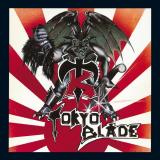
Die Wurzeln der NWOBHM-Legende Tokyo Blade gehen zurück bis in die frühen achtziger Jahre, als die Schulfreunde Andy Boulton (Gitarre), Andy Robbins (Bass) und Steve Pierce (Schlagzeug) in Wiltshire unter dem ursprünglichen Namen White Diamond starteten. Irgendwann tat man sich mit Sänger Alan Marsh zusammen und machte zuerst als Killer und dann als Genghis Khan weiter. Die Doppel-Single »Double Dealin’« erschien 1982 und sicherte Tokyo Blade einen Plattenvertrag beim neu gegründeten Label Powerstation Records. Im November 1983 stand schließlich das Debütalbum in den Läden.
Gründungsmitglied und Gitarrist Andy Boulton erläutert: “Die Platte wurde im Wickham Studio in Ost-London aufgenommen. Wir hatten lediglich vier Tage zur Verfügung und es war ein Albtraum. Immer wenn wir fertig waren, fielen wir todmüde um und schliefen sofort auf dem Studioboden ein. Und am nächsten Tag ging alles wieder von vorne los.“
Es wundert demnach kaum, dass Andy die Atmosphäre im Studio als angespannt bezeichnet: “Wir dachten, uns würden wenigstens zwei Wochen zur Verfügung stehen, aber am Ende mussten wir alles mehr oder weniger live aufnehmen. Im Grunde genommen haben wir die Songs für das Album ausgewählt, die uns am besten gefallen haben zu diesem Zeitpunkt.”
Während die Pressereaktionen im Vereinigten Königreich, speziell beim Kerrang!, nicht überwältigend waren, wurden Tokyo Blade in Kontinentaleuropa von Magazinen wie dem Aardschok (Niederlande) und Rock Hard (Deutschland) bereits als die neuen Iron Maiden gefeiert.
Diese erweiterte Re-Issue des ersten Albums von Tokyo Blade kommt mit einer Fülle von Bonus-Material: als da wären die vier Songs der »Midnight Rendezvous«-EP, nämlich “If Heaven Is Hell”, “Highway Passion”, “Midnight Rendezvous” und “Mean Streak”, sowie “Powergame” und ”Death On Main Street” von der »Powergame« 7”, plus ein Stück namens “Machine Run”, das 1982 auf der Ebony-Compilation »Metal Maniaxe« unter dem Bandnamen Madame Guillotine erschienen ist und in Hull aufgenommen wurde.
Transfer, Audio-Restaurierung und Mastering durch Patrick W. Engel bei TEMPLE OF DISHARMONY im Februar 2021 / Januar 2026. Cutting durch SST Germany auf Neumann-Geräten für optimale Qualität auf allen Ebenen. Die ultimative audiophile Ausgabe dieses zeitlosen NWOBHM-Klassikers!
The practice of dub techno and its tendrils is a fundamental for me, both aesthetically and from an engineering perspective.
I start every recording session with a dub inspired jam, the first piece I ever recorded in 1996 was an effort to recreate Phylyps Trak with only a Korg X3 and an Ibanez PUE5 (borrowed from Gary Howell). It was an awesome introduction to jamming, and the footing stones of noise, delay and saturation were explored with my foot hard on the enthusiasm pedal.
These practice jams are in some sense cathartic, the first step taken again & again, which helps me move forwards each session and additionally helps to 'warm the circuits' both of myself and the machines.
After realising the genius of Basic Channel is akin to the genius of peasant food, using every ingredient with nothing left to waste, (up to and including the oft maligned working noise of the machines themselves), this was a watershed moment for my own subjective progression. No longer tied to just emulation of something inspiring, but taking these learned tools into other areas of music helped to break free from a strong current of influence and also to progress into other areas with the new toolbox.
Dub:
The importance of the dub pioneers should never be understated, in modern music and my own practice. Yet with my initial inspiration being two german dudes issuing extreme techno variants with obscured label designs, who then signposted their listeners to their own inspirations (via their Wackies re-issues or nodded to on their Rhythm & Sound/Burial Mix sub-labels), meant that I started late and travelled backwards.
Learning to notice the live mixing of Mikey Dread or Lee Perry when the faders are bleeding through even when turned down, (echoed in BC's Quadrant Dub), or the brash send effects literally thrown into the mix also taught me that 'rough' mixing can inject a recording with life, uniqueness and the most right wrongness. Looking back Basic Channels very few elements helped me realise that the rules to be understood, are also the best ones to be broken.
Push the mixer into the red.
Amp that noise up from the tape delay cos it sounds sick.
Pseudo side-chain effects cos the kicks are way too loud and the mixer can't sum it nicely.
Spam the send knob into the delay units now, now and now.
Carelessness.
Noise:
Once I wrapped my head around the intrinsic 'noise' element that set those records apart, this became a torchlight into the alt noise movements which I was tentatively exploring at the time, and also is evidently a connection or thread into them.
Whether the Industrial/Post Punk UK scene (This Heat, TG, A Tent, F.E.) or the prolific output of the US Noise scene (Wolf Eyes, Live & Shave in LA, and subsequently following the lineage all the way back to Chrome's Alien Soundtracks), I had finally discovered a connection from techno to this 'free for all' corner of music.
This input from the Noise arena of sound is, in my experience, an all important step for a sonic artist, taking it's roots and extending out from Stockhausen/Pierre Henry and utilised/warped/mangled by thousands of adventurous pioneers ever since, I now see the line separating the high brow and the low brow is actually an artery carrying information from the head to the heart.
Vault is a selection of these jams that precede each of my solo recording sessions, for 30 years I've recorded hundreds of these 'workouts'. They are never intended as serious statements, just moments of naive enjoyment, yet most importantly they are time & space captured as practice.
The objective is always a warm up exercise, but sometimes those exercises turn a different corner, with a certain focus or direction dependent on what random samples are left in my machines from the previous session, instead of conscious choices, these unconscious elements can facilitate those 'positive mistakes' that make a piece of sound retain a different feel or colour and thus become special, or at least special to the creator.
I am quite conscious that the 'record everything' aspect of my ethos has been invaluable in cataloguing and saving these jams, while the attitude of carelessness during this process (after all, it's only a warm up jam) invites more enjoyment than seriousness ever could. Even if you don't feel the piece at the time, record it, because some years later it may well fit, or become relevant in a way you never intended.
-Miles
out of Stock
Last delivered 18 days ago available to reorder, subject to availability
Picture Disc: Seit 2006 haben sich Pierce The Veil auf unaufdringliche, aber beständige Weise ihren Weg in
die Herzen von Millionen Menschen weltweit gebahnt – dank ihrer unerschütterlichen Hingabe an ehrlichen
und mitreißenden Hardrock. Das Quartett aus San Diego – Vic Fuentes Gesang, Rhythmusgitarre, Keyboard, Mike Fuentes [Schlagzeug, Percussion], Tony Perry [Sologitarre] und Jaime Preciado [Bass] – bleibt
dieser Tradition auch auf ihrem vierten Studioalbum „Misadventures“ wieder einmal treu. Das Album
erschien 2016 bei Fearless Records, erreichte Platz 4 der Billboard 200 und enthielt Hits wie „The Divine
Zero“ und „Texas Is Forever“.
Anlässlich des 10-jährigen Jubiläums kehrt das Kultalbum nun mit einer brandneuen Picture Disc mit
dem Cover-Artwork zurück.
Standard White LP: Seit 2006 haben sich Pierce The Veil auf unaufdringliche, aber beständige Weise ihren
Weg in die Herzen von Millionen Menschen weltweit gebahnt – dank ihrer unerschütterlichen Hingabe an
ehrlichen und mitreißenden Hardrock. Das Quartett aus San Diego – Vic Fuentes [Gesang, Rhythmusgitarre, Keyboard], Mike Fuentes [Schlagzeug, Percussion], Tony Perry [Sologitarre] und Jaime Preciado
[Bass] – bleibt dieser Tradition auch auf ihrem vierten Studioalbum „Misadventures“ wieder einmal treu.
Das Album erschien 2016 bei Fearless Records, erreichte Platz 4 der Billboard 200 und enthielt Hits wie
„The Divine Zero“ und „Texas Is Forever“.
Anlässlich des 10-jährigen Jubiläums kehrt das Kultalbum nun mit einer Neuauflage der weißen LP zurück.
Picture Disc: Seit 2006 haben sich Pierce The Veil auf unaufdringliche, aber beständige Weise ihren Weg in
die Herzen von Millionen Menschen weltweit gebahnt – dank ihrer unerschütterlichen Hingabe an ehrlichen
und mitreißenden Hardrock. Das Quartett aus San Diego – Vic Fuentes Gesang, Rhythmusgitarre, Keyboard, Mike Fuentes Schlagzeug, Percussion, Tony Perry [Sologitarre] und Jaime Preciado [Bass] – bleibt
dieser Tradition auch auf ihrem vierten Studioalbum „Misadventures“ wieder einmal treu. Das Album
erschien 2016 bei Fearless Records, erreichte Platz 4 der Billboard 200 und enthielt Hits wie „The Divine
Zero“ und „Texas Is Forever“.
Anlässlich des 10-jährigen Jubiläums kehrt das Kultalbum nun mit einer brandneuen Picture Disc mit
dem Cover-Artwork zurück.
Standard White LP: Seit 2006 haben sich Pierce The Veil auf unaufdringliche, aber beständige Weise ihren
Weg in die Herzen von Millionen Menschen weltweit gebahnt – dank ihrer unerschütterlichen Hingabe an
ehrlichen und mitreißenden Hardrock. Das Quartett aus San Diego – Vic Fuentes [Gesang, Rhythmusgitarre, Keyboard], Mike Fuentes [Schlagzeug, Percussion], Tony Perry [Sologitarre] und Jaime Preciado
[Bass] – bleibt dieser Tradition auch auf ihrem vierten Studioalbum „Misadventures“ wieder einmal treu.
Das Album erschien 2016 bei Fearless Records, erreichte Platz 4 der Billboard 200 und enthielt Hits wie
„The Divine Zero“ und „Texas Is Forever“.
Anlässlich des 10-jährigen Jubiläums kehrt das Kultalbum nun mit einer Neuauflage der weißen LP zurück.
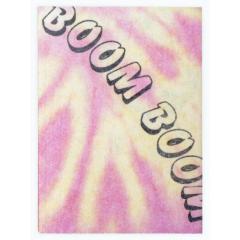
Boom Boom by Belgian photographer Jente Waerzeggers offers a unique glimpse into his work at night over recent years. In this book, Waerzeggers explores his deep fascination with self-expression in all its possible forms. Clothing, make-up, tattoos, piercings, hairstyles and accessories all reveal something about the individual. Presented as a series, the images reflect contemporary nightlife culture.
As an integral part of the nightclub’s scenography, the dancer becomes a body of symbols. Waerzeggers’ photographs are filled with bootlegged corporate logos, wordplay, subversion and references to pop culture.
Waerzeggers builds a relationship with his subjects that is entirely mutual. He documents while participating, and his subjects want to be seen. The night is dark and not easily captured, but Boom Boom succeeds remarkably well in doing so.
Jente Waerzeggers (•1999) is a Belgian photographer and musician. He is part of Not So Difficult Magazine, the label Kontakt Group, the band Lieve Jongens, and is the founder of (Y)-Publishing.
From 2018 until 2026 Jente Waerzeggers worked as a nightlife photographer; this book marks the end of that endeavour. Starting out at friends’ parties and ‘nacht’ in Stelplaats, Leuven, he has gone one to photograph for venues and collectives in Brussels, in Belgium and abroad such as V23, Slagwerk, Horst, C12, Listen Festival, Celebration of Life, and Dekmantel.
Waerzeggers is interested in the ways people consciously and unconsciously present themselves in society. What do their houses look like, their trash, their advertisements, their selfies? By sifting through his archive of photos and screenshots, he looks for through lines that paint a bigger picture.
280 pages
150x210mm
Soft cover with remarkable textile texture
Mit der neuen Ausgabe der Vintage Sounds Vinyl Collection steht diesmal die traditionsreiche Welt der Country Music im Mittelpunkt. Die sorgfältig zusammengestellte Compilation vereint 18 zeitlose Klassiker und präsentiert einige der bedeutendsten Künstlerinnen und Künstler des Genres in klanglich überarbeiteten Versionen. Von den unverwechselbaren Stimmen von Dolly Parton und Patsy Cline bis zu den legendären Interpretationen von Kenny Rogers und Willie Nelson bietet diese Sammlung einen repräsentativen Querschnitt durch die Geschichte der Country-Musik. Zwischen Nashville-Sound, Honky-Tonk, Country-Pop und klassischen Balladen entsteht ein stimmungsvolles Hörerlebnis, das die Vielfalt und den nachhaltigen Einfluss des Genres eindrucksvoll dokumentiert. Eine hochwertige Zusammenstellung für Vinyl-Liebhaber, Sammler und alle, die die großen Songs des amerikanischen Country neu entdecken oder wieder erleben möchten.
In 2026 viert Eva De Roovere het 20-jarig bestaan van “De Jager”. Ze trekt er op uit en speelt haar succesalbum integraal. Met klassiekers als “Fantastig Toch” (35 miljoen streams !), “Laat Me Je Lied Zijn” en “De Jager” wordt deze concertreeks vanaf het najaar een groot feest van herkenning en vernieuwing, met als kern: liefde voor muziek én publiek.
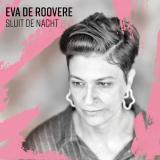
Want wat is er mooier dan de 20ste verjaardag van een album vieren met… een nieuw album? ‘Sluit De Nacht’ (productie Koen Gisen) wordt een eigentijdse mix van levenslied en liefdeslied: een ode aan poëzie, melodie en ritme. Een zoektocht naar verbinding en troost in deze woelige tijden. Eigen werk en ook straffe songs geleverd door of samen geschreven met Gert Bettens, Rick De Leeuw, Dirk Blanchart, Sabine Tiels, Wouter Berlaen, Lennaert Maes, Vincent Pierins… Ingespeeld door Eva zelf en Ward Dhoore: gitaren, Eva Hautekiet: akoestische en electrische piano, Philippe Thuriot: accordeon & bandoneon, Lara Rosseel: contrabas en Kobe Proesmans: percussie & drums.
ENG
In 2026, Eva De Roovere will celebrate the 20th anniversary of “De Jager.” She’s hitting the road to perform her hit album in its entirety. Featuring classics like “Fantastig Toch” (35 million streams!), “Laat Me Je Lied Z?n,” and “De Jager,” this concert series starting this fall will be a grand celebration of familiarity and renewal, centered on a love for music and the audience.
After all, what could be better than celebrating an album’s 20th anniversary with… a new album? “Sluit De Nacht” (produced by Koen Gisen) is a contemporary blend of life songs and love songs: an ode to poetry, melody, and rhythm. A search for connection and comfort in these turbulent times. Original material as well as powerful songs written by or in collaboration with Gert Bettens, Rick De Leeuw, Dirk Blanchart, Sabine Tiels, Wouter Berlaen, Lennaert Maes, Vincent Pierins… performed by Eva herself and Ward Dhoore: guitars; Eva Hautekiet: acoustic and electric piano; Philippe Thuriot: accordion & bandoneon; Lara Rosseel: double bass; and Kobe Proesmans: percussion & drums.
For their third album, Under The Reefs Orchestra explores the skies, rides the winds, and communes with the spirits that blow across the world. After making volcanoes roar on Sakurajima (2022) and unveiling a mineral, obsessive, and telluric music, the Brussels trio led by Clément Nourry (guitar), joined by Marti Mélia (baritone saxophone) and Jakob Warmenbol (drums), now opens a new chapter. Recorded at Robot Studio in Ghent by Pieterjan Coopejans,
orchestra also expands with distinguished guests – An Pierlé, Catherine Graindorge, and Alejandra Borzyk – who upset the balance and ignite the embers of improvisation. Surf jazz, cinematic rock, hypnotic trance: Under The Reefs Orchestra continues to roam uncharted sonic landscapes, heirs to Moondog, Adrian Belew, Morphine, and Sons of Kemet. Their ever-adventurous music composes a visionary, incandescent soundtrack for a world in turbulence. Praised by the international press (Earmilk, Spin Magazine – which ranked Sakurajima among the 22 best albums of 2022), the group stands out as one of the most daring projects on today’s vibrant Belgian scene.
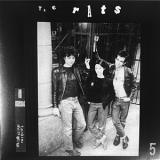
Das ist es! Die allererste gemeinsame Platte von Fred und Toody Cole (von Dead Moon, The Range Rats, Pierced Arrows usw.)! Ein primitives Punk-Meisterwerk. Die perfekte Mischung aus raffiniertem Songwriting und dem rohesten Rock, den man sich vorstellen kann. Der Ursprung des Portland-Punks, remastered, aber immer noch Lo-Fi.
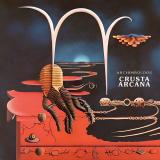
Archimboldos have clawed their way out of the starcaves of their primordial past and into the tranquil light of a coral garden on their third full length album, Crusta Arcana, a gumbo stewpot of transcendent electronica suffused with tribal rhythms and liquid ambience. Across a stereo field smeared with tolling bells, post-industrial folk percussion, and tinkling keys, Archimboldos soundtrack a science fictional journey, not into the depths of space, but deep beneath the waves.
In the past the Chilean duo of Nicolás Carcavilla and Felipe Crocco have described their music as “liminal shrimp folk.” Here they continue this strange exploration when they visit the court of the prawns, producing stately electronic chamber orchestrations. Perhaps these are the frequencies used for ritual dream initiation into the mystery schools of drowned Atlantis. Weaving an ancient sacred science, Archimboldos take listeners on a mystic vovage into their singular crustacean mythology, the crusta of their hidden arcana.
Archimbolodos are masters of conjoining cyclonic and centrifugal lines of electricity into spellbinding incantations. These deep-sea transmissions envelope the listener into aquamarine forcefields that are as hallucinatory as they are hypnotic. Navigating these strange fantasias could lead one to getting lost at sea, but the work is buoyed by the somnolent melodies of lonely harpsichords and swelling synth pads whose sustained tones reach towards distant shores. Sailing across a vast expanse of oceanic harmonies and percolating percussion, these pieces are as precise as the hand of a sailor on the rudder, moving with the tide.
Casting their net wide across eight pieces, Archimboldos have made a big catch. From the emotive electronic counterpoint found on “Bursting Armor” to the blocks of seaweed tangled sonic sculpture trawled up from the ocean floor on “Aphelion IX.” Other songs are like samples of biological ambience collected from luminous tide pools: resplendent tones placed into a Petri dish of sound, swirled, cultured and fermented until it undulates with the rhythmic movement of microscopic lifeforms. Alternating between rippling minimalist sonority and pounding, progressive, synth-heavy entrancement, Crusta Arcana charts its own idiosyncratic itinerary of instrumental invention.
All the while light is down streaming from the heavens to pierce the waters, here calm, there choppy. The intrepid musical captains commanding Archimboldos have laid a course for new archipelagos of the imagination, guided by heavenly constellations.
-Justin Patrick Moore, author of The Radio Phonics Laboratory, Telecommunications, Speech Synthesis and the Birth of Electronic Music
For theirthird album, Under The ReefsOrchestra explores the skies, rides the winds, and communes with the spirits that blow across the world. After making volcanoes roar on Sakurajima (2022) and unveiling a mineral, obsessive, and telluric music, the Brussels trio led by Clement Nourry (guitar), joined by Marti Melia (baritone saxophone) and Jakob Warmenbol (drums), now opens a new chapter. Recordedat Robot Studio in Ghent by PieterjanCoopejans, orchestra also expandswith distinguished guests - An Pierle, Catherine Graindorge, and Alejandra Borzyk - who upset the balance and ignite the embers of improvisation.Surf jazz, cinematic rock, hypnotic trance: Under The Reefs Orchestra continuesto roam uncharted sonic landscapes, heirs to Moondog, Adrian Belew, Morphine, and Sons of Kemet. Their ever-adventurous music composes a visionary, incandescent soundtrack for a world in turbulence. Praisedby the international press (Earmilk, Spin Magazine - which ranked Sakurajima among the 22 best albums of2022), the groupstands out as one of the most daring projectson today's vibrant Belgian scene.
They live! If this summer’s endless bout of heatwaves seems an odd setting for a new Altar Of Eden record, maybe we should consider that the fast-accelerating destruction of life on Earth is an appropriate setting for more deathrock. The eagle-eyed among you might recognise guitarist Ben Redman from recent lineups of symphonic noiseniks …And You Will Know Us By The Trail Of Dead, while vocalist Albert Efraim has been making a thrillingly unholy racket with Texan hardcore faves like the Creamers and Nosferatu - and they both played together in gothed-out sensations Altar Duata before that band’s untimely demise. Altar Of Eden have thus far produced two mighty LPs of smartly chilling post-punk for Drunken Sailor - 2020’s wondrous The Grotto Screams and 2022’s superb follow-up Chimeras - but now they return with a sequel to their debut: The Grotto Screams II.
In keeping with their previous offerings, it’s superb. Redman’s guitar is brittle and minimal, but lurches into eardrum-lacerating strafes of deafening, brutal noise without warning, while Jake Cloud brings driving, pulsating basslines to the fore, dripping with the influence of Killing Joke’s Youth as they hold it all together somehow. Efraim intones his lyrics solemnly over the top, drenched in reverb and tucked deep into the mix; as much a texture as a means of delivering hooks. He’s cited the poetry of Jean-Pierre Duprey and Rene Daumal as influences in the past, and tracks like The Erasure and Light And Shade certainly contain their own suffocating sense of surrealism and obfuscated reality. It all builds to the epic finale of closing track The Moon, which handles their signature tricks in moodily grandiose fashion - a bleakly compelling version of post-punk that sears and soars even as it chills the heart. Arguably Duprey’s most famous line goes, “I shouldn't have got stuck in this galaxy,” and as humanity brings about its own destruction, it’s worth suggesting that this applies to us all. But at least Altar Of Eden bring a hell of a soundtrack while we all burn.
Héritage Mélodies is the meeting point between saxophonist and composer Jean Vernhères and Black Stamp Music, brought together by a shared passion for the warm colors of music, groove, and the beauty of sound.
Nurtured from an early age by jazz and African-American music—from blues and soul to hip-hop—Jean Vernhères also ventured into Highlife, Afrobeat, and Funk, exploring the fertile “Black Atlantic” that runs throughout his musical journey.
For his first album as a bandleader, he brings together Pierre Bauzerand on Steinway piano, Laurent Vanhée on double bass, Guillermo Roatta on drums, and, as a special guest, Alfio Origlio on Fender Rhodes and piano. Six original compositions where Soul Jazz, Latin Groove, Afro-Caribbean rhythms, spirituality, and intimate melodies come together.
Recorded at Bernard Estardy’s legendary Studio CBE and mastered in Berlin at East Side Mastering, Héritage Mélodies embraces a true audiophile aesthetic: from the breadth and spaciousness of Haumea City, a nod to CTI Records, to the delicacy of Marion.
More than a jazz record, Héritage Mélodies is a story of lineage, travel, and transmission: a personal tribute to all those who have carried forward a musical heritage that transcends time.
Neues Tea Glass Coloured Vinylformat des erstes Albums von Resavoir auf seinem neuen Label L'UNIVERS - nach drei von der Kritik gefeierten Releases bei International Anthem und Touren mit Khruangbin, BADBADNOTGOOD und Kassa Overall. ""Themes For Dreams"" markiert eine Kehrtwende und zeigt den Chicagoer Musiker/Produzenten Will Miller von seiner meditativen Seite. Auf 13 bemerkenswert stimmigen Tracks verzichtet die LP auf Schlagzeug und setzt stattdessen auf eindringliche Melodien, die schweben, verklingen und nachklingen. Mit Arrangements, die sich wie eine warme Decke anfühlen. Als Gastmusiker dabei sind Marta Sofia Honer, Jeremiah Chiu, Macie Stewart, Matt Gold, William Corduroy und Molly Rife. ""Man denke an die Ambient-Werke von Künstlern des elektronischen Jazz der 70er und 80er Jahre wie Beverly Glenn Copeland und Laraaji."" - Tasha Viets-VanLear, Chicago Reader
John Tchicai (1936 – 2012) was one of the most important free improvising saxophonists of the 20th Century: an artist of rare vision and aptitude whose lines soared and stood out even in the most hallowed company, and whose body of work as a leader / composer is among the most singular and distinct within the entire canon of that music. But Tchicai’s importance doesn’t end there. Born in Copenhagen, Denmark, to a Danish mother and a Congolese father, his life and career represent a crucial bridge between the European and American traditions of free jazz. Initially trained on violin as a child, Tchicai shifted his focus to the clarinet and alto saxophone during his mid-teens, and began touring Europe as a professional musician by his early 20s, which landed him at a socialist youth festival in Helsinki, Finland, where he met the trumpeter Bill Dixon and saxophonist Archie Shepp. Impressed by what they heard, Dixon and Shepp encouraged the young saxophonist to move to New York, and in so doing changed the history of jazz forever.
Tchicai’s arrival in New York marks the rare occurrence of a European player joining the intimate circle that was first wave of American free jazz. Following his landing in the city in November of 1962, in addition to regularly sitting in with Don Cherry’s group, Tchicai began playing with Bill Dixon's band alongside Archie Shepp and Roswell Rudd, forming the nucleus of the foundation of the New York Contemporary Five - one of the most important groups of the era - which counted Tchicai, Shepp, Cherry, Don Moore, and J. C. Moses as its members. From the ashes of this group, Tchicai would go on to found the legendary ensemble, New York Art Quartet, with Roswell Rudd, Milford Graves, and Lewis Worrell, as well as working within Albert Ayler's band, recording “New York Eye and Ear Control”, Shepp’s band, recording “Four for Trane”, the ensemble that recorded John Coltrane's “Ascension”, and the Jazz Composer's “Orchestra”.
By the time he decided to return to Denmark in 1966, had Tchicai chosen to record little else, his legacy within the history of music would have been ensured. Incredibly ambitious, his arrival home marked the beginning of an incredible period of activity which saw him radically expanding his creative explorations, which by the end of the decade would include becoming a founding member of Amsterdam's Instant Composers Pool and helping to record John Lennon and Yoko Ono's “Unfinished Music No.2: Life with the Lions”. This, however, was proceeded the formation of a new orchestra, Cadentia Nova Danica, led by Tchicai, dedicated to radical cross-disciplinary exploration. Remaining together between 1966 and 1971, the group and its shifting membership regularly fell into collaboration with artists and composers, notably Musica Elettronica Viva, who existed beyond the realms of jazz, as well as participating within multi-media events that incorporated the visual realms.
Cadentia Nova Danica’s only two LPs - “Cadentia Nova Danica” (Polydor, 1968), and “Afrodisiaca” (MPS, 1969) - are effectively Tchicai recorded efforts as a leader, and are legendary. There’s little mystery, once heard, why the later landed on Thurston Moore’s iconic “Top Ten from the Free Jazz Underground”, published by Grand Royal in 1996. Sadly, despite playing extensively during their five year run, with exception of a CD documenting a performance at Jazzhus Montmartre, in 1966, until now there has been no other publicly available recordings that allow us to capture a glimpse of this astounding band at work. Alga Marghen / Formalibera’s vinyl pressing of a never before released body of recordings, made in Copenhagen between 1969 and 1970, changes that in the most exciting of ways.
Comprising three pieces - “Mc Gub Gub, (I–VIII)”; “Ode to Skt. John”; and “Pladepip” - the material on this stunning LP comes from two specific events. The first, which encompasses the first side, “Mc Gub Gub, (I–VIII)” was recorded by Cadentia Nova Danica - in this instance, Tchicai, Sune Weimar, Theo Rahbek, Christian Kyhl, Niels Holt, Jørgen Thorup, Michael Schou, Morgens Bollerup, Allan Gregersen, Ole Matthiessen, Pierre Dørge, Willy Jaegert, Anthony Barnett, and Jon Finsen - on May 29th, 1969, at the ABC-Theatre in Copenhagen. Penned by Tchicai, the piece is a sprawling, evolutionary composition at the outer reaches of free jazz, rooted in large blocks of colliding tonality and rhythm - a sound only accessible to larger ensembles - that push territories explored by Charles Mingus to previously unimagined heights, threaded by moments of hard blown fire. Writhing like a stormy sea - skronking and devilish - “Mc Gub Gub, (I–VIII)” is a work of profound complexity that singlehandedly illuminates not only Tchicai’s singular vision as a composer, but also the power and uniqueness of Cadentia Nova Danica during the band’s most vital period.
The two pieces - “Ode to Skt. John” and “Pladepip” - taking up the flip side, were recorded on February 21st, 1970, at the Danish Broadcasting Corporation’s Radio House, and are the outcome of Cadentia Nova Danica’s extended residency there between 1969 and 1970. In many ways, these two recordings offer some of the best insights into the broad collaborative approaches that defined the band, in this case encountering them working with Danish experimental composer, Svend Erik Werner, who was among the earliest in his country to embrace stylistic pluralism and the use historical forms within a modern context. “Ode to Skt. John” - based on aspects of Gregorian music - was penned by Werner, incorporating heady improvisation by the members of Cadentia Nova Danica, this time made up by Tchicai, Sune Weimar, Hugh Steinmetz, Theo Rahbek, Christian Kyhl, Michael Schou, Morgens Bollerup, Ole Kühl, Torben Enghoff, Mauritz Tchikai, Kjeld Ipsen, Willy Jaegert, Ole Matthiessen, Ole Thilo, Pierre Dørge, Steffen Andersen, Jon Finse, and Clause Bøje. The piece is a fascinating binary of the composed and improvised, utilising the band’s large scale to introduce a remarkable sound within its slow progressions and furious, driving free moments, in this incredible meeting of worlds.
The album’s final piece, “Pladepip”, is arguably its most historically significant: an entirely singular piece, unlike anything in Tchicai’s recorded canon as his foray into musique concréte. Drawing upon two recordings of full-band improvisations by Cadentia Nova Danica, for its creation Tchicai also gouged the surfaces of 78rpm records in his collection to skip and create repeated phrases and patterns, creating a stunning sound collage of hard angles and abrupt phrase, that creates a striking counterpoint to the band’s flowing improvisations that bookend those passages. The result is an engrossing listen and easily one of the most unique and culturally important gestures in the entire history of musique concréte.
Truly incredible, Alga Marghen / Formalibera’s vinyl pressing of this never before released body of recordings, made by John Tchicai’s Cadentia Nova Danica, in Copenhagen between 1969 and 1970, offers an unprecedented window into one of the most important groups working in Europe during that period, significantly expanding their rare and slim discography to date. Accompanied by extensive exploratory liner notes by veteran jazz writer, Ed Hazell, this is easily one of the most historically important archival releases of the year and is impossible to recommend enough. Absolutely essential on every count.
pre-order now28 Aug
expected to be published on 28 Aug
28,15 €
0 Cart
Nino Antonellini, Roland Kayn, Coro da Camera della RAI, Roma,
Marino Zuccheri
Album #6 der brandneuen Vinyl-Serie mit zukunftsweisenden Aufnahmen der musikalischen Avantgarde.
Luigi Nono (1924–1990) genoss während seiner gesamten Karriere große Anerkennung. Als zentrale Figur
des Nachkriegsserialismus trat der venezianische Komponist in den 1950er Jahren als eines der drei Mitglieder der „avant-garde trinity“ neben Karlheinz Stockhausen und Pierre Boulez in Erscheinung.
„Contrappunto“ wurde 1968 für 2-Kanal-Tonband komponiert, in einer Zeit, in der Nono sich intensiv für
die internationalen Studentenbewegungen sowie gegen den Vietnamkrieg engagierte. Nono stützte das
Werk auf eine Madrigal-Komödie von Adriano Banchieri aus dem frühen 17. Jahrhundert und erklärte,
er habe „versucht, die Art des musikalischen Prozesses widerzuspiegeln, den Banchieri verwendete: die
Konzentration auf die Stimme, die Einbeziehung von Klangmaterial der damaligen Zeit, humoristische und
parodistische Verzerrungen, insbesondere in den lyrischen und dramatischen Elementen … aber in der heutigen Aktualität“.
Roland Kayns „Cybernetics III“ nimmt auf beeindruckende Weise die Fortschritte in den Bereichen Synthese, Computer- und Aufnahmetechnik sowie die Entwicklung von Samplern und Sequenzern vorweg. Die
Art und Weise, wie diese Werkzeuge von den Künstlergenerationen, die in Kayns Fußstapfen traten, aufgegriffen wurden, hat die Rahmenbedingungen der elektronischen Musik grundlegend verändert. In diesem
Sinne hat „Cybernetics III“ tiefgreifende Veränderungen im kreativen Denken vorausgesehen.
Gemastert und geschnitten von den originalen analogen ¼-Zoll-2-Spur-Masterbändern von Rainer Maillard
und Sidney Claire Meyer in den Emil Berliner Studios.
Limitierte und nummerierte Auflage mit Original-Artwork und einem neu gestalteten, wunderschön gearbeiteten Sammler-Cover mit neuen Liner Notes von Bradford Bailey, gepresst auf 180-g-Vinyl.
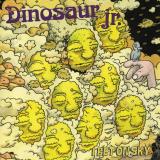
I Bet on Sky is the third Dinosaur Jr. album since the original trio – J Mascis, Lou Barlow and Murph – reformed in 2005. And, crazily, it marks the band’s 10th studio album since their debut on Homestead Records in 1985. Back in the ‘80s, if anyone has suggested that these guys would be performing and recording at such a high level 27 years later, they would have been laughed out of the tree fort.
The trio has taken everything they’ve learned from the various projects they tackled over the years, and poured it directly into their current mix. J’s guitar approaches some of its most unhinged playing here, but there’s a sense of instrumental control that matches the sweet murk of his vocals (not that he always remembers to exercise control on stage, but that’s another milieu). This is head-bobbing riff-romance at the apex. Lou’s basswork shows a lot more melodicism now as well, although his two songs on I Bet on Sky retain the jagged rhythmic edge that has so often marked his work. And Murph…well, he still pounds the drums as hard and as strong as a pro wrestler, with deceptively simple structures that manage to interweave themselves perfectly with his bandmates’ melodic explosions.
After submerging myself in I Bet on Sky, it’s clear that the album is a true and worthy addition to the Dinosaur Jr. discography. It hews close enough to rock formalism to please the squares. Yet it is brilliantly imprinted with the trio’s magical equation, which is a gift to the rest of us. For a combo that began as anomalous fusion of hardcore punk and pop influences, Dinosaur Jr. have proven themselves to be unlikely masters of the long game.
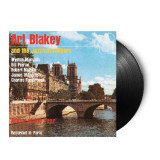
Art Blakey, whose career spanned nearly 50 years of Black music history, exemplifies the timeless role of the drums in jazz. This Album of the Year LP, originally released in 1981, features the Jazz Messengers: trumpeter Wynton Marsalis, saxophonists Robert Watson and Bill Pierce, pianist James Williams, and bassist Charles Fambrough, alongside drummer and bandleader Art Blakey.
The album was recorded in Paris, and tracks include “Cheryl” (written by Charlie Parker), “Soulful Mister Timmons,” and “Little Man,” among others. The accompanying liner notes were written by Ted Panken.
For the 10th Anniversary of the iconic and unique For Honor, Kid Katana Records teamed up with Ubisoft to bring you this high quality album on an exclusive double vinyl. With over 35 million players since its release, For Honor has kept on bringing new content in the game, enriching the players’ experience with new Heroes, Factions and Music to keep the battle for survival and honor alive.
The physical edition is a premium 2LP designed in close relationship with the game's creative team:
● Track selection handpicked by For Honor team, including 2 new tracks (Year 10 exclusive) and a track never released before from Y1 Season 7
● 2 Golden vinyls
● Exclusive cover art with glossy effect on the logo
● Exclusive 16-page booklet with insights on each faction’s music, liner notes
from the game’s creative team and composers Luc St-Pierre, Danny Bensi and
Saunder Jurriaans
The tracklist is a selection of music from the 10 seasons of the game, one side per faction:
Future Sounds Of Jazz Vol. 14 - Compiled By Permanent Vacation Benjamin Fröhlich & Tom Bioly!
28 Tracks By Move D, Roman Flügel, Slowdive, Isolée, Cobblestone Jazz, Luke Abbott, Remixes By Avalon Emerson, Russ Gabriel, Kassem Mosse, I:cube A.m.o. Including 3 Exclusive And Previously Unreleased
Wow, A New Chapter Of This Legendary Series. This And The Very First Time It's Not Compiled By Michael Reinboth, Rather By Benjamin Fröhlich And Tom Bioly, The Founders And Masterminds Behind Permanent Vacation.
Why Simply Because They Both Are Very Close Friends Of The Compost Famlee, With An Amazing Musical And Dj-like Tastefulness, With The Knowledge-based Trust Of Music In The Vein Of Vibrant, Jazzy Electronica Hybrids. And They Are From Compost Records' Hometown Munich, Too.
Maybe Volume 14 Differs Slightly To What The Previous 13 Brought Up Music-wise, But That's The Score, Idea And Open Mindedness Of This Series, As It Was By The Compilers, And Last But Not Least A Great Time For A Change, Too. So We Welcome This, We Very Much Appreciate And Like Their Selection. We Are Sure, This Will Convince You.
28 Tracks, 3 Exclusive Tracks. Enjoy!
The Exciting Package Comes As 2-cd / 4-lp Vinyl
Cd 1 Is Bit More Clubby, Cd 2 Is Bit More Sublime Downbeat/electronica Or Relaxed Feel, Well Both Are True Listening Pleasure Anyway.
Several Magazines Voted Fsoj As One Of The Best Compilation Series Of All Time. With This Series, Starting In 1995, The Term Future Jazz Became A Genre Landmark.
Emotional Rescue returns after a much-needed year hiatus, refreshed and ready, as it moves into its 15th year, to further explore the environs of oft-forgotten musical secrets and present them to new heads and minds.
To celebrate, the label looks back to one of its favourite collaborations, the music of French ‘Ethno-Industrialists’ Vox Populi! in presenting a truly unique EP of “In Dub”, inspired remixes by 4 fellow Paris based artists of today in Full Circle, Froid Dub, Krikor and Shelter.
“In Dub” takes a selection of songs from the series of albums reissued or compiled on Emotional Rescue and sister label, Platform 23, and gives the Master tapes to this talented ensemble to offer their own, unique dub reworks. The project explores the on-going advances in technology offered, mixed with pure talent and a respectful homage.
Formed by Axel Kyrou and including wife Mitra, as well as long-term music and art partners Pierre Jolivet aka Pacific 231 and Francis Lafont aka FR6 Man, they forged a path from obscure, drum and drum-based cassette releases on to fully realized albums and compilations on their now cult Vox Man Records.
Alexis Le Tan and Joakim’s Full Circle project starts, with their electronic dub remake of Soleyman Dub from the ‘Alternatif Réalisme’ compilation (ERC079). With releases on Good Morning Tapes, Offen and their own “Released” label, their plaudits as master diggers and producers of dubby tripped-out inspired electronics – releasing slowed Trance some 10 years before anyone else – is inspired. Tuning in and turning on the original dub into a mantra style slow-breaks (Digi)dub is the perfect experimental flavour.
Jube Man is next, a twisted, psychedelic dub out by rising stars Froid Dub. The stand-out from the ‘Magiques Creations’ release (ERC052), an album that explored Vox Populi’s furtive post-industrial period of 1984 to 1988, Jube Man was the perfect selection by the duo of François Marché and Stéphane Bodin.
Froid Dub have steadily developed their “cold” Digidub style to acclaim –
releasing a steady flow of dub inspired electronics on their own label Delodio, as well as recently appearing on sister label Emotional Response’s 10th year anniversary collection, ‘All Trades’. Their haunting, shuffling and murky acid / piano dub, with the drifting “Space Echoing” of Mitra’s vocals from the live desk mix, creates a ghostly version to effect.
Next, master mixer, producer and engineer Krikor serves a steppers remake with his “OverDub” of Zen-Dub. With a career that spans releases on Tigersushi, LIES and Soul Jazz, his sound has developed from Electro, House and Techno, to Acid, Bleep, Dancehall, Dub and touches of Gabba.
Taken from Vox Populi!’s master-opus Aither (ERC030), the first of our reissues dating back to 2016, Zen-Dub’s pacey, lo-fi dub experience is transformed and overdubbed into an incessant sound system throb, a true bass quaking “steppa”.
To close, Micro Climax is put through Shelter’s increasing avant dub exposition. Appearing on the likes of Growing Bin, Emotional Response and his own Protopost, as well for – and being in-house designer – on the much-missed Séance Centre, Alan Briand aka Shelter productions have developed from Balearic, Edits and House to explore Avant, Raga and live Dub productions.
Appearing on the recent ‘Ethniques Pyschedeliques’ compilation on Platform 23 (PLA032), in original form Micro Climax is a sprawling 10-minute ethno-dub of whispered vocals, drone and sub bass. Shelter strips it back, keeping background effects, adding live bass and percussion to create a wonky, slow, shuffling ska-lite excursion to complete a true “In Dub”.
out of Stock
Last delivered 38 days ago available to reorder, subject to availability
The legends of the golden era of Italian soundtracks and library music go by many names, but the backbone of that era’s definitive sonic identity is most often identified as I Marc 4 (also known as Marc 4 or I Marc Quattro). While the moniker might be less familiar to the uninitiated, it is a simple acronym derived from its founding members: Maurizio Majorana (bass), Antonello Vannucchi (organ), Roberto Podio (drums and percussion), and Carlo Pes (guitar). The number "4" serves to highlight the core synergy of these four master musicians. Their journey began in Rome’s vibrant jazz scene of the 1950s and early 1960s, where they honed their craft as members of the RAI national orchestra and collaborated with the most prominent jazz and pop icons of the day. However, it was their pivotal role in defining the Italian cinematic sound of the 1960s and 1970s that secured their legacy. Their unmistakable style was an eclectic fusion of beat, jazz, classical, and Latin influences—textured with early synthesizers, experimental sound effects, and a blend of electronic and baroque instrumentation. Consequently, their initials are etched into the credits of countless landmark recordings by legendary composers such as Nino Rota, Armando Trovajoli, Gianni Ferrio, Alessandro Alessandroni, Piero Umiliani, and Ennio Morricone.
Beyond their work as session luminaries, they produced a vast body of library music under their own name at the legendary Telecinesound Studios in Rome. These recordings were released through prestigious library labels like Sermi, Ricordi, and Fonit Cetra, as well as through their own imprints: Nelson Records, Silver Men, and Silver Music, spanning a definitive series of sixteen albums. Ten of these volumes were issued on Nelson Records during the 1970s, featuring the now-iconic military stencil design. Each release was color-coded: red (G.L.P. 1001), dark blue (G.L.P. 1002), gold (G.L.P. 1003), light green (G.L.P. 1004), brown (G.L.P. 1005), black (G.L.P.1006), light blue (G.L.P. 1007), yellow (G.L.P. 1008), orange (G.L.P.1009), and cool green (G.L.P. 1010). The series was completed by two elusive companion releases: S.M. 2001 on Silver Music and S.M. 2002 on Silver Men, both presented in the same distinctive brown sleeve. Rediscovered in the 1990s and 2000s, these Nelson releases have since achieved cult status among collectors, producers, and DJs worldwide. The final two installments, S.M. 2001 and S.M. 2002, remain the rarest and most enigmatic of the set.
Often overlooked, they contain some of the most profound "hidden gems" in the group’s catalog. The tracklist traverses a wide stylistic spectrum: from the rare groove and proto-hip hop energy of "Trama Nella Metropoli", "Beat Morbido", and "Candy", to the lush cinematic atmospheres featuring the ethereal vocals of Edda Dell'Orso on "Summer In Love", "On The Rain", and "Arcobaleno". The collection is rounded out by sophisticated jazz pieces like "Flauti Ensemble", "Passeggiata", and "Atmosfere Dolci”. Sonor Music Editions has meticulously curated the finest moments from these two rare albums for this first-ever dedicated reissue. Bringing together the best of Silver Music (S.M. 2001) and Silver Men (S.M. 2002), this release retains the iconic stencil artwork but introduces a striking silver finish. This design choice honors the original ten-album sequence while shedding new light on these outstanding recordings—works that remain, in every sense, golden.
out of Stock
Last delivered 72 days ago available to reorder, subject to availability
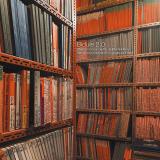
Bidule 2.0 is an unique reinterpretation of Pierre Henry’s little-known sound heritage combined with ErikM’s original composition. The album explores previously unused raw materials, transformed through ErikM’s highly digital approach, balancing fixed composition and unexpected sonic events, a singular sonic experience where where historical archives and contemporary creation converge.
"Bidule 2.0 is a composition by ErikM that revisits a selection of the unused sonic heritage of composer Pierre Henry, covering the period from 1950 to 1974, sourced from the Son/Ré studio and digitized by the BnF (Bibliothèque nationale de France). Over the decades, Pierre Henry and his team accumulated a vast collection of sonic materials from their studio research.This sound library, recorded on analog tape, is a testimony to the recording techniques of that era — including the quality of microphones and recording media, as well as the acoustics of the recording spaces — all of which define the sound of a time. Not wanting to create a remix from the composer’s iconic sounds, I chose instead to work with selections of raw material from unused recording sessions, 168 sequences ranging from one to twenty-two minutes each. Isabelle Warnier and Bernadette Mangin provided me with sessions of prepared piano, series of electronic sounds, feedbacks, and voice recordings. Pierre Henry’s analog sounds were, for the most part, processed through successive stages (up to five generations of transformation), using a custom electronic device: Idiosyncrasie 9.3, built on Max/MSP and Lemur." - ErikM
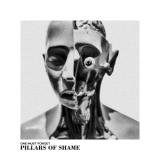
ONE MUST FORGET, the post-industrial polish/french alignment of MK (michał kiełbasa of whalesong, lugola, and harmony of struggle) and enigmatic female vocalist EA, emerges as a singular force of cold minimalism and unfiltered emotional intensity. rooted in classic industrial aesthetics yet fiercely contemporary, the project rejects digital sterility in favor of raw hardware and tactile analog decay. their debut album, PILLARS OF SHAME, manifests as a terrifyingly elegant monument to human fractures, functioning as a severe, ritualistic purification for the disillusioned through what is defined as angstpop.
the sonic architecture of the record balances suffocating minimalism with mechanical violence, where hypnotic, industrial pulses hit with the weight of heavy machinery. shards of piercing feedback and raw white noise tear through the compositions, yet beneath this abrasive exterior lies a seductive, deeply unsettling undercurrent of melancholic melodies. EA’s volatile vocal presence collides with MK’s suffocating grim architecture to create a psychological landscape of collapse and introspection.
For the first time in its 27-year history, Defected compile its greatest hits, underground anthems and bonafide house music classics into a 5 volume triple vinyl collectors series.
Spread over the three records, Volume Three collects twelve of Defected’s most established and sought after releases. Featuring the UK No.1 hit; MK’s remix of Storm Queen’s ‘Look Right Through’, Bob Sinclar’s anthemic ‘I Feel For You’ that has seen an Ibiza revival this summer, Jamie Jones’ ‘My Paradise' and Pete Heller’s classic ‘Big Love’, plus productions and remixes from Inner City, Louie Vega, Dennis Ferrer and more.
out of Stock
Last delivered 4 days ago available to reorder, subject to availability
K' Alexi Shelby is a prominent figure in electronic music with a career spanning decades. The cultivation of his massive music catalogue has overflowed into albums and the three labels he heads. It's also led to legendary collaborations with artists like The Pet Shop Boys, Robert Owens, Kenny Dixon, Roy Davis Jr., Joe Smooth, Steve Silke Hurley, Tyree Cooper, Ron Trent, Glenn Underground, Larry Heard, DJ Pierre, Carl Craig, Felix da Housecat, Marshall Jefferson and more. He makes a welcome return to COD3 QR with the jazzy house of opening track, "House Music de Chicago".
Voltaire has built his career through passion and a perfectionist approach to music, creating a richly emotional eclecticism, with inspiration from the pioneers of Detroit to the glorious electro decades of the 2000s and 2010s. Today he's a COD3 QR regular and released his debut album, "Echoes" on the label last year. He leans into the realms of house with a deep techy edge, for new track "Some House".
Finder is the alias of Radial (Jeroen Liebregts), originally from The Netherlands but today residing in Spain. He started mixing records around '98 and in 2002 teamed up with Bas Mooy to started the now legendary label, Audio Assault. He's also released on Token, Perc Trax, Mote-Evolver, Numb, Drumcode, Planet Rhythm, Mord, Will & Ink and MDR, alongside his label, Radial Records. As Finder he goes in a new direction with "Team Dream".
Benny Rodrigues a.k.a. ROD's other moniker, The Lost Souldancer has already seen him drop "No More Voices" and "Life and Death" for the label. In his own words, Benny says: "The Lost Souldancer is about coping with the loss of what once was. Finding comfort in the invisible rather than what can be seen. Disconnect to connect in order to be loved rather than liked." He returns with another emotional journey on "Magnolia".
Producer and manager of Slates Records, Squal G is a French artist who has been passionate about electronic music since the '90s. Initially a DJ, he soon turned to machines and computers. This enabled him to progress with his production and remixes. He never tries to stick to a single style, which, depending on his inspiration, can lead him to be more or less hard, while remaining in the spirit of techno. A popular COD3 QR regular, he's back with the intense techno of "Crackle".
French producer, DJ and live artist, Electric Rescue is world renowned. His productions have been signed on labels like Cocoon, Virgo, Arts, F Communications, COD3 QR, Soma, Sci + Tec, Boys Noize and his own Skrypto¨m. Ahead of his forthcoming artist album (to be released on COD3 QR in October) he closes the vinyl with the electro-tech and wonderfully wonky machine funk of "Internet Was an Illusion".
out of Stock
Last delivered 24 days ago available to reorder, subject to availability
Through an intimate, conversational approach, free from any trace of mannerism, pianist Enrico Pieranunzi and guitarist Bebo Ferra probe the innermost mystery of a genius whose expressive language combined charm and intellect are in equal measure. Drawing on languorous ballads at unhurried tempos, the program alternates reinterpretations of emblematic Evans themes - 'Song for Helen', 'Very Early', 'Once Upon a 'Summertime' - with a series of inspired original pieces. Occasionally joined by the deep, reassuring double bass of Diego Imbert ('Song for Helen', 'Calling Enrico'), they move from post- romantic atmospheres to more introverted lyrical passages, steering clear of both sentimental excess and detached formalism.
Following the solid showing of global love and support for the collective Point Winona Sound Library Vol 1, LA’s Elbow Grease label runs it back with a sultry summer scene LP entry from one of the compilation’s most promising new talents.
Nashville-born/LA-bred Michael Griffin aka Gryph’s aptly-titled debut album Nash Angeles is a rare and refreshing example of true musical worlds colliding, that never loses focus of keeping the big fun in funky. The Tennessee-raised rock and blues guitarist/singer-songwriter’s newfound passion for dance music roots and devotion to the sonic feels of his current Cali home base are on full display here. Along with the studio-ace touches of co-producer Dave Aju and a cast of brilliant feature vocalists and live session musicians, the LP offers up only the most adventurous twists on contemporary genre fusion - from disco to dub, modern soul to post-punk, italo to r&b, and jazz-funk to classic house music, all while firing loved-up arrows straight through the hearts of any dance floors or fellow party animals, just in time for open-air bbq season
Already in heavy support rotation by legends such as: Glenn Underground, Francois K, Bill Brewster, Daniele Baldelli, Pete Herbert, Louise Chen, Graeme Park, Felix Joy, DJ Rocca, Massimiliano Pagliara, and many more..
out of Stock
Last delivered 40 days ago available to reorder, subject to availability
Marlon George is a British DJ and producer based in London renowned for his "slightly spacey, casually jazzy, and fully groovy house music," with support from names as illustrious as Kyle Hall and Jimpster. But really, if he's getting signed by the legendary Trelik, then that's all you need to know about his skills. He lays them bare across three tasteful cuts here, starting with the liquid dub of 'My Secrets Are Safe With Me' with its wispy shards of light piercing the water's surface and glistening against the dusty hi-hats. 'Najagen' has more drive but no less depth and warmth to it and 'Do The Rha!' is another smoky, minimal, heady dub house roller that sneaks right under your skin.
out of Stock
Last delivered 19 days ago available to reorder, subject to availability
Ever since the late 1950s bossa-nova revolution, Brazil’s influence on French music has been undeniable. Pierre Barouh, Georges Moustaki and a vast array of lesser known artists, all made the Musica Popular Brasileira (MPB) an axis of promotion at the service of a cool and metaphysical, modern and mixed Brazilian lifestyle. Some were seduced by the poetic languors of the bossa, some were looking for fun, and others just loved the American hybridization of jazz-bossa, jazz-samba.
What is bossa nova? One of its creators, Joao Gilberto said: "Its style, cadence, everything is samba. At the very start, we didn't call it bossa nova, we sang a little samba made up of a single note - Samba de uma nota so .... The discussion around the origins of bossa nova is therefore useless”. It is nevertheless useful to remember that these magnificent Brazilian songs, which the guitarist describes as samba, were shifted and balanced around improbable chords. "I like things that lean, the in-betweens that limp with grace," said Pierre Barrouh, quoting Jean Cocteau.
With emotion, arrangements for violin and supple guitar licks, bossa nova rapidly changed. A transformation that can be heard in the Tchic, tchic, French Bossa Nova 1963-1974 compilation, the result of a cultural reappropriation, which traveled through the United States and supplemented itself in France.
A musical revolution that has remained significant, bossa nova was born in Rio. From 1956 to 1961, Brazil lived through its golden years. In five years, the country had invented its modernist style. Elected president in 1956, Juscelino Kubitschek de Oliveira, an elegant man with a broad forehead, brandished a promising slogan: "Fifty years of progress in five years". He quickly got to work. Not worried about increasing debt, he launched the project for a new federal capital, Brasilia, designed by the communist architect Oscar Niemeyer. Volkswagen opened state-of-the-art factories and created the “fusquinha”, the Beetle. In Rio, the Vespa made its first appearance. The Arpoador Surf Club crew run into the “girl” from Ipanema, Helô Pinheiro - the tanned garota ("chick"), between a flower and mermaid, who at 17 walked by the Veloso bar, where the fiery author and composer, Tom Jobim and Vinicius de Moraes, were getting drunk on whiskey. From then on, bossa symbolized cool.
In 1958, Joao Gilberto recorded Chega de Saudade, which the directors of Philips denied, calling it "music for fagots". The marketing director, who believed in it, secretly pressed 3000 78-inch vinyls and distributed them at schools around Rio, creating a tidal wave.
American jazzmen then took over. In particular, trumpeter Dizzy Gillespie and guitarist Charlie Byrd. In November 1962, the Brazilian Ministry of Foreign Affairs funded a "Bossa-Nova" concert at Carnegie Hall in New York, inviting the genre’s pioneers. Unprepared, the show soon turned to disaster. But the troupe was invited to the White House by Jackie Kennedy. The first lady loved "the new beat" and in particular Maria Ninguem, a song by Carlos Lyra, later covered by Brigitte Bardot.
In Brazil, the 1964 military coup quickly ended this euphoria. The destructive atmosphere that ensued pushed many Brazilian musicians to leave, if not to exile. Thus, Tom Jobim, Sergio Mendes and Joao Gilberto arrived to the United States. In New York, Joao Gilberto met saxophonist Stan Getz. At the time, he was married to the Bahianese Astrud Weinert Gilberto, who had a German father. She had never sung before, but she knew how to speak English. Getz therefore asked her to replace her husband on The Girl From Ipanema. The Getz/Gilberto record with Tom Jobim on piano, was released in March 1964. Phil Ramone, the "pope of pop" was in charge of sound.
Bossa nova arrived in Paris through the classic “guitar-voice” channel (Pierre Barouh, Baden Powell, Moustaki…) But France loved jazz and Paris had already welcomed its American contributors. All these good people were to pass through Saint-Germain-des-Prés. The cabaret l'Escale became the Mecca of Latin American sound where one could find Pierre Barrouh and his friends, such as the Camara Trio, samba-jazz aces, whose only record was published by the Saravah label. With a band strangely called Les Masques (a band that included Nicole Croisille and Pierre Vassiliu, among others), the Camara Trio recorded an interesting Brazilian Sound, including the track Il faut tenir which is present on this tasty compilation of rarities.
Other enlightened musicians can also be found on the compilation, such as Jean-Pierre Sabar (songwriter for Hardy, Auffray, Leforestier ...) and the French pop rock organist Balthazar. In 1975, Sabar recorded Aurinkoinen Musiikkimatka on a Finnish label, which featured the crazy Vai, Vai, included on this record. We are now following the footsteps of Brazilian electronic musicians such as Sergio Mendes, Eumir Deodato or Marcos Valle who created funk and disco sounds on their keyboards and synthesizers. A style that influenced Véronique Sanson when she wrote Jusqu’à la Tombée de la nuit in 1969 for Isabelle de Funès, the niece of Louis and a great friend of Michel Berger - Sanson did end up singing this track on her 1992 Sans Regret record.
The pinnacle of exoticism and travel, Sylvia Fels’ Corto Maltese includes bongos, sea mist and ocean sounds. The title was taken from Jacky Chalard’s concept album written in 1974, Je suis vivant, mais j’ai peur (I am alive, but I am scared), based on Gilbert Deflez’s science fiction novel.
However, bossa nova extended the scope of popularity. "In the 1970s, I was a fan of Sergio Mendes, Getz / Gilberto. I fell in love with this music that I knew because I had been an orchestral singer, " explained Isabelle Aubret, who in 1971 delivered a composite record of covers by the very funky Jorge Ben, Orfeu Negro, Tom Jobim, Vinicius de Morais and Jean Ferrat. "I recorded this album for Meys Records in Paris, far from Brazil, with wonderful musicians, François Raubert, Roland Vincent, Alain Goraguer...". The latter wrote the arrangements for Casa Forte, a very percussive title borrowed from Edu Lobo, one of the initiators of the bossa who spent time in California. "Jazz and bossa came together and produced very rhythmic music. I love singing, it allows me to dream, to have fun, to feel a high on stage, and these songs brought me joy, made me swing, my singing felt like a dance.”
The world tours of French singers and their desire for the tropics, often brought them to Rio with its hills, forests, caipirinhas and tanned bodies. There are surprises though, like this Iemenja (Iemenja is the goddess of the sea in the Afro-Brazilian candomblé religion). Not unlike the composer and musician Jean-Pierre Lang, based in Sao Paulo, Claire Chevalier taught Brazil to Brazil. In 1970, the singer and painter published a 45-inch vinyl, Mon mari et mes amants (My husband and my lovers), under the improbable pseudonym of Clarinha (little Claire). She was then living in Rio, with her husband, Joël Leibovitz, who founded a band called Azimuth, and who owned a record label specialized in "sambas enredos" songs for samba school parades.
For its B side, she asked Pierre Perret to come up with lyrics for a song composed by Carlos Imperial: "Oh goddess of the sea, o goddess Iemenja, I bring a white rose to adorn your long hair ..." . "Perret came to see us, and we had fun, remembers Joël Leibovitz. We wrote Lemenja for fun, we recorded it at the Havaí studio, behind the Central do Brasil the central station. Erlon Chaves, the arranger who worked with Elis Regina, joined us" adding his share of Afro-Brazilian percussions and funky brass to the mix.
There is a common misunderstanding in Franco-Brazilian history: that bossa, admittedly hedonistic, is perceived as funny, even though the poets who wrote the texts are often philosophizing on the human condition. Its French interpreters pull it towards a carnival inspired universe, far removed from its fundamental essence. Thus, Jean Constantin covered the famous Samba da minha terra, an ode to the art of samba written by the classic Bahian composer Dorival Caymmi, renaming it with the enticing title of Pas tant de tchi tchi pompon: "On your pier there is no tchi tchi / when you arch your back, you know everything is alright ”(lyrics by Gérard Calvi). This expedited bossa aims for the absurd, but retains a certain elegance.
Indeed, Jean Constantin was not an idiot, the rather large man had a huge mustache and liked fantasy, (Les pantoufles à papa, Le pacha, inspired by cha-cha-cha-cha, salsa and jazz) but he was also the lyricist of Mon manège à moi interpreted by Edith Piaf, the composer of Mon Truc en plume by Zizi Jeanmaire and the soundtrack of François Truffaut’s 400 Blows. Le Poulpe, published in 1970, from which this bossa is extract, was arranged by Jean-Claude Vannier, an accomplice of Serge Gainsbourg’s Melody Nelson. In short: "There is enough of samba / By looking at the parasol / Because my poor cabeza / Is going to die in the sun".
Even the American actress Marpessa Down, who was at the heart of the bossa nova revolution with her role as Euridyce in Marcel Camus’ film Orfeu Negro, winner of the 1959 Cannes Palme d'or, fed the clichée with Je voudrais parler au petit cuica - "Tell me how you manage to always make people want to dance / It's true, I must admit that I cannot resist your magic" - in consequence, once can hear the cuica, a little drum inherited from the Bantu.
But bossa nova had many angles. Societal, of course, pushing actresses who were symbols of women's liberation like Brigitte Bardot, Jeanne Moreau, or Sophia Loren to engage in the exercise of accelerated bossa. In February of 1963, Sophia Loren made a record in French in Rome, Je ne t'aime plus, featuring the song De jour en jour, a bossa written by two Italians, Armando Trovajoli and Tino Fornai, which was released a little later by Barclay. Bossa accompanied the 1960s, a decade of moral liberation. Ann Sorel, who interpreted La Poupée des favellas, caused a sensation with L’amour à plusieurs, a provocative song written by Frédéric Bottom and Jean-Claude Vannier. As for the actress Andrea Parisy, she displayed her bourgeois cheekiness in Marcel Carné's Les Tricheurs before interpreting Les mains qui font du bien. And Magalie Noël, the friend of Boris Vian, who sung Johnny fais-moi mal, was hired to sing Une énorme Samba, composed by Alain Goraguer (arranger to Gainsbourg, Bobby Lapointe and Jean Ferrat) with lyrics by Frédéric Botton.
But in the end, of what wood is bossa nova made of? The answer is given by Christianne Legrand, daughter of Raymond the conductor, and sister to Michel the composer: "With me, with jà" - jà means "immediately" in Portuguese. In 1972, the singer, an expert in vocal jazz and a member of the Double Six, published Le Brésil de Christianne Legrand. Two songs included on the Tchic Tchic compilation that demonstrate how bossa, jazz, funk, rock, etc. work like a swiss army knife: the music is used to denounce broken systems, or miracles, HLM et ciné roman, Cent mille poissons dans ton filet, two songs from the O Cafona soundtrack, a successful telenovela broadcast, at the time in black and white, on TV Globo. The first was adapted in French by the fighter and friend of the Legrand tribe, Agnès Varda. The second is content with a play on words, jostling them into a summer fun.
Véronique Mortaigne
out of Stock
Last delivered 3 months ago available to reorder, subject to availability
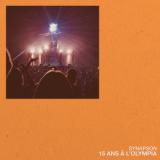
On October 16, 2025, Synapson took over the Olympia for a sold-out anniversary concert, celebrating 15 years of their career. A symbolic night in an iconic venue, in front of a crowd that came to relive the tracks that shaped their journey.
Today, the duo unveils “15 ans à l’Olympia”, a live album recorded during this unique show, a vibrant testament to their stage energy and the evolution of their project.
April 1, 1996, saw Tina Turner release her ninth studio album, Wildest Dreams. It peaked at #26 in the Billboard R&B Chart, #4 in the UK Album Chart, and secured numerous Top 5 placements across European charts, earning double platinum status in the UK and Europe. The album featured the hit song "Goldeneye", the James Bond theme tune which saw the franchise relaunch with Pierce Brosnan in the starring role, the song was penned by U2’s Bono and The Edge. Five further singles were also released, including collabs with Sting and Barry White.
The set will be rounded out with Live In Amsterdam / Wildest Dreams Tour, originally released on Eagle Rock DVD, with newly remastered audio and on Blu-ray for the first time, and with a new booklet featuring new liner notes by UK music writer and former Record Collector editor, Jason Draper.
The 2LP 140g vinyl will feature the remastered album, now spread across two vinyl for superior sound.
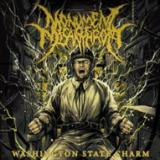
Originally founded as a solo project by singer Georg Wilfinger (ex-Miasma) in 2010 in Austria, In 2012, the project evolved into a studio band with drummer Romain Goulon (ex-Necrophagist) and guitarist Jean-Pierre Battesti, releasing the demo "Bandroom Misanthropy" MONUMENT OF MISANTHROPY have released three studio albums, and an EP Previous full-length album "Vile Postmortem Irrumatio" was released in August 2024 and drew roaring reviews worldwide. The new opus is a wholesome little concept album chronicling the coming- of- age story of a serial killer: the awkward upbringing, the early extracurricular activities, and the grand finale on the electric chair, America's probably most prolific serial killer , Ted Bundy.
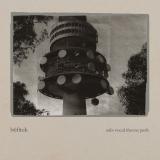
Portal Replica welcomes cult Australian duo, B(if)tek, onto the label with a first-time-on-vinyl release of their debut album ‘Sub-vocal Theme Park’ released in 1996 exclusively onto CD. The 2x12” release includes the original album, plus additional never-heard-before 'lost' tracks from the pair. The album has been mastered by Rashad Becker at Clunk Studios (DE) and pressed to 180g heavyweight vinyl.
Kate Crawford and Nicole Skelty’s pioneering electro-femme outfit ‘B(if)tek’ can be traced back to 1994 in Canberra, where lack of blueprint blossomed their playful and bizarre experimentations in techno — ‘feminism with a wink and a bleep’. Thirty years on, the uniqueness and ingenuity of B(if)tek’s deep analogue exploration endures.
“Monstrous clowns dressed as princes whose role is to laugh at themselves and entertain outlandish beings, suffocated by etiquette, conspiracy and lies, bound by confession and remorse … and beyond that, the auto-da-fe and silence.” – Ferdinand (Pierrot), from the film “Pierrot Le Fou” .
Photography by Kate Crawford.
Design by Jesse Sappell.
Mastered by Rashad Becker at Clunk Studios, DE.
out of Stock
Last delivered 57 days ago available to reorder, subject to availability
Kercha’s debut album ‘Open The Door’ arrives this April via DNO Records. The Black Sea artist’s mystical, disorienting style has set the tone for the label since he dropped the inaugural release six years ago. Now, across 16 tracks — including collabs with Mystic State, Congi, NST, Khromi and Finnoh — his smoky sampledelic dubstep is tighter, heavier, and more curious than ever, with a new sense of danger and bubbling rage that feels fit for our chaotic times.
Themes of movement and change course through the LP. On the opening gambit ‘A Path Into The Unknown’, twinkling arpeggios emerge from the gloom like stars lighting the way. Tracks like the eponymous ‘Open The Door’ and ‘Mind Extraction’ deliver that classic Kercha sound, where left-field samples dart in at right angles. ‘Dangerous Road’ weaves between the call and response action of grotty stabs and devilish subs. ‘Take A Break’, featuring Mystic State, goes on the attack with searing acid. ‘Can’t Wait For Today’, though lethargic in its pace, sees San Francisco-based rapper Finnoh deliver stream-of-consciousness bars that skewer our present and nudge us to revolution.
Work took place over the course of several years, during which Kercha relocated with his family from Russia to Georgia, where he now resides in the capital, Tbilisi. “Sometimes I wrote music while travelling on a bus, sometimes late at night while my family was asleep, sometimes just sitting on the grass in a park, and of course in my home studio as well,” he says. “By the time the album was finished, it included music from different periods, and it may vary in sound and concept.”
Any major upheaval in life will result in moments of hardship, but also hope. Both can be found throughout ‘Open The Door’. There’s times when the darkness threatens to envelope everything: during the cold, crackling ‘Disclosed’ and the eerie, dystopian ‘Infection Of Lies’; on ‘Trigger Activation’, with its grunting lows and broken glass hook, and ‘Ballistics’, where a wall of sub-bass is pierced by shrapnel stabs.
The balancing light comes on ‘4 AM’, featuring Nottingham duo Congi, when clashing swords and cinematic strings, meet a soft Rhodes piano — the juxtaposition between heavy low-end and floaty keys and vox reflecting those moments of transcendence often found in the early hours. From the injection of garage energy on ‘Bubs’, with Edinburgh’s Khromi. And on with ‘My Feeling’, featuring South Russian vocalist NST, which closes the album on a deep but expansive note, bookending the experience with more starlight synth tones.
“It’s a reflection of my life journey and the changes connected with emigration and overcoming various difficulties,” explains Kercha. “This period means a lot to me, which is why the album includes tracks from the time of preparing to leave up to adapting to a new country.”
Still, he wants listeners to be able to derive their own understanding. “I think the essence lies in the ability to contemplate, not in any predetermined meaning,” he says. “I can only say one thing: thank you for appreciating what I do and for your support. I hope it inspires you to make the same firm decisions to change for the better as it did for me.”
Out via 4 x 12” vinyl, ‘Open The Door’ is a captivating artistic statement, showcasing the journey of an artist with a truly original signature sound — a rarity that should be treasured and celebrated.
Rhythms of postmodern realism at the very bottom of the DNO.
out of Stock
Last delivered 19 days ago available to reorder, subject to availability
DYING VICTIMS PRODUCTIONS is proud to present IRON KOBRA’s highly anticipated third album, Eternal Dagger, on CD and vinyl LP formats. Additionally their two previous albums will be re-released at the same time. Formed in 2008, Germany’s IRON KOBRA began with a noble mission: to bring heavy metal back to its unpolished, rough, and weird roots. Influenced by heroes of old like Iron Maiden, Cirith Ungol, Living Death, Manowar, and Tank with a sprinkle of punk, the band brewed up a venomous concoction of catchy-yet-speedy heavy metal with maximum potential for engagement – whether it was singing along to, banging your head, and / or raising your fist! Their first few years were busy, releasing the Cult of the Snake demo in 2009 and the Battlesword EP the year after. After playing extensively all throughout Europe and earning a reputation for being a force to be reckoned with live, IRON KOBRA teamed up with DYING VICTIMS in 2012 for the release of their momentous debut album, Dungeon Masters, and three years later for their more refined second album, Might & Magic.
The years after – especially those around the pandemic – brought the band’s external momentum to a crawl. But behind the scenes, they were still writing and playing select shows, even venturing as far as Japan. Now, at very long last, IRON KOBRA return to stake their claim as kings of swords & sorcery metal with Eternal Dagger! Granted, the characteristically amazing cover artwork suggests a sci-fi bent, but the timeless HEAVY METAL the Germans unleash here is vintage IRON KOBRA: immediately recognizable as them, but still reflecting on (and refining) their past, incorporating influences from their favorite bands to result in something that will be YOUR favorite soon enough! Aided by the gleaming & glorious production of Stefan Castevet (Vulture, Luzifer), Eternal Dagger explodes with excitement at every turn, its nine songs ranging speed metal tracks like “Trembling Dungeons” to NWOBHM-fueled rockers like “Shibuya Nights” and epics like "Mountains of Madness.” It goes without saying that IRON KOBRA’s arsenal here offers a wide variety of pure metal gold, evoking the likes of Exciter, Brocas Helm, Diamond Head, and early Running Wild but, of course, with their undeniable personality and panache. So strap yourselves to your seats, maniacs: the Cult of the Snake is back, bringing you heavy hymns that will pierce your eardrums like a heavy metal drill
London based producer Akhavelli’s debut (instrumental) album "Moorthodox Psyence", operates like a recovered transmission from a fractured timeline. The project is built around a fictional rupture in 1996 where memory, signal and culture begin drifting out of phase, framing the music as something intercepted rather than composed. Drawing on the dense collage tradition of sample-based production, the record blends experimental Trip-Hop, turntablism and psychedelic rhythm with the hypnotic repetition of Krautrock and the tactile grit of analogue Hip-Hop. Its palette pulls from Japanese Soul and Funk, ex-Soviet Psychedelia, Turkish and North African sources, Arabic textures and classic 90s vocal cuts and scratches. Beneath the surface sits a subtle Sufi influence, positioning the producer less as author than as receiver: sampling as remembrance, sound as a way of piercing the veil between timelines. The result is what Akhavelli calls Breakbeat Psyence: a hypnotic, transportive body of work that feels less like a conventional album and more like a lost artefact recovered from inside a loop in time.
The name Akhavelli is a layered reference. It plays on Machiavelli, both the historical figure and Tupac’s Makaveli, filtered through his background and perspective. Even though "Moorthodox Psyence" is Akhavelli's first release, he has been working under the name Yvng Face, as a producer and as a professional mixing and mastering engineer for over two decades now. He runs a high-end hybrid analog studio and has mixed and mastered major records across multiple genres. That technical background feeds directly into the precision, sonics, and consistency of this album, even though Akhavelli is a distinct artistic identity.
Nous'klaer Audio introduces Maask with four sculptural works of sound: layers upon layers, each carrying a sense of life moving through every frequency. Built from field recordings gathered in remote corners of the world and transformed into powerful tracks for the dancefloor. Across these tracks you can hear a storm moving the branches of an oak in Powys, reeds photosynthesising beneath a lake in Rajasthan, highland moss, thunder above Kumasi and wind moving through a neolithic burial chamber on an island off Cornwall. As delicate as these unprocessed sounds are, as powerful are the synergies in their final forms.
out of Stock
Last delivered 33 days ago available to reorder, subject to availability















![Various - [QR]V.205.DTON.26](https://www.deejay.de/images/l/7/1/1248271.jpg)