King Street Sounds continues to deliver deep house classics with the third various artist sampler in the series. This release taps into the essence of original house music and features iconic names such as DJ Pierre, Blaze, Kenny Bobien, Palmer Brown, Dannell Dixon, and Big Moses.
The EP begins with Dannell Dixon's track 'Dance Dance (DJ Pierre’s Wild Pitch Mix).' This engaging piece features a steady groove, multiple percussive elements, and captivating vocal hooks that keep listeners immersed in the rhythm.
Next is Big Moses' 'Brighter Days (Extended Mix),' which showcases the unmistakably smooth and sultry vocals of Kenny Bobien. As is often the case with Kenny's lyrics, this song explores themes of love, hope, and the promise of 'brighter days,' delivering uplifting dance music.
On the B-side, DJ Pierre makes a second appearance with 'Dancin’ (Club Mix).' This track radiates sunshine and block-party vibes, effortlessly transporting listeners to a lively street party in New York City.
Finally, the record concludes with 'Shine (Shelter Vocal Extended Mix)' by Blaze. This track brings down the tempo just a notch, making it a perfect addition to sets when the dancefloor needs a moment to catch its breath and regain its energy.
Once again, King Street Sounds delivers a knockout release that is a must-have for collectors and DJs alike
out of Stock
Last delivered 75 days ago available to reorder, subject to availability
In den frühen 1960er Jahren übte Paris eine magische Anziehungskraft auf amerikanische Jazzmusiker aus.
Zu den Stars, die sich dort vorübergehend niederließen, zählten u.a. der Tenorsaxofonist Dexter Gordon,
der Pianist Bud Powell und der Schlagzeuger Kenny Clarke. Auf diesem Album von 1963, das oft als
Dexters bestes bezeichnet wird, interpretieren die drei zusammen mit dem großen französischen Bassisten
Pierre Michelot traumhafte Bebop-Klassiker und Balladen.
Fresh from beasting the end-of-year charts with her 'I Miss Your Love' remix project, Ghost Assembly, aka Manchester DJ and writer Abigail Ward, is back with a double A-side: RESIST! / I Keep on Making the Same Mistake.
RESIST! (Extended 12" Mix)
Laid down quickly and angrily after attending a demo in Manchester city centre, RESIST! aims to capture the galvanising spirit of protest and put it on wax.
A 111bpm acid chugger that will leave dancefloors of an ALFOS or Optimo persuasion begging for more, this is uncompromising machine funk at its crudest.
Duelling 303s twist around each other whilst a taut, snaking 707 groove underpins unexpected blasts of Arabic rhythm, almost as if DJ Pierre had remixed 'Get UR Freak On', relocating it to the Middle East.
As a stuttering Harper Hay vocal sample urges us to RESIST!, the track climaxes with an ice-cold acid house string coda banged out on a disobedient synth. Please note: the sub on this record may trouble your duodenum.
RESIST! (Utter Kunt Mix)
The Utter Kunt mix is a sparse and daring Sleng Teng-inspired avant-dub affair strictly for discerning dancefloors only. Improbably combining hints of the Mission Impossible theme, Les Negresses Vertes' 'Zobi La Mouche' and the rough-hewn sampling of 'Duck Rock', this is a radiant obstacle in the path of the obvious. Warning: collectors of On-U, EBM and New Beat could experience a spate of nocturnal emissions upon purchasing this record.
The A-side closes with a BONUS BEATS version of the Utter Kunt Mix: a must-have DJ tool.
I KEEP ON MAKING THE SAME MISTAKE
Picking up the pace to 120, 'I Keep on Making the Same Mistake' sees Ghost Assembly returning to her string-drenched sad banger comfort zone, pairing a chilly breakbeat with a bass riff reminiscent of Joey Beltram having a gut-wrenching cry wank. Keening vocals supplied by Hazel Grove are chopped up, tormented and eventually hurled down a K-hole as the strings build and the drama escalates.
When the credits roll on this cinematic masterpiece we hear a wistful French lesbian talking about 'borrowed bliss'.
A future comedown classic; also sounds good slowed down to 33rpm.
The E.P. signs off with a stunning string-a-pella that will linger long after the needle hits the run-out groove.
out of Stock
Last delivered 20 months ago available to reorder, subject to availability
Strut proudly reintroduces a classic from the Topomic catalogue, Ice’s ‘Each Man Makes His Destiny’, officially available on vinyl for the first time.
After relocating from the United States to Paris, Ice began performing regularly in the city’s Barbès district, a vibrant area with a large North African immigrant community. The band’s heavy Afro-funk sound caught the attention of producer Pierre Jaubert, leading them to become the resident session musicians at his independent Parisound studio.
Immersed in the local influences, Ice began integrating African-inspired chants, textures, and rhythms into their distinct funk style. In 1973, the group recorded their debut album, ‘Each Man Makes His Destiny’, a psychedelic funk exploration that hinted at the evolving sound that would later define them as the Lafayette Afro-Rock Band and, eventually, Ice once more.
Produced by Jaubert, the album brings some powerful social commentary on claustrophobic tracks like ‘Too Little Room’ and ‘Suicide’, under-pinned by a determination to succeed despite the adversity.
Remastered by The Carvery.
out of Stock
Last delivered 20 months ago available to reorder, subject to availability
Paris-based talent Manda Moor arrives on Hot Creations for the first time this May with the three-track The Climax EP, continuing a standout 2022 for the Danish-Filipino artist.
Rustling with tribal undertones and a rolling four-four groove, The Climax instantly transports us to the dancefloor and beyond. Jungle-like melodies live beside infectious lyrical samples before the minimal-sounds of Sandy Groove soon arrive, as fast-paced drums drift beneath a pummelling bassline throughout. Besame rounds things off, ratcheting up the tempo with bell-like percussion and driving kick-hat combos, forming an upbeat, club-ready cut.
Manda Moor has fast-become an esteemed force in contemporary house circles. Racking up acclaimed releases on labels such as Kaluki, Tamango and DJ Pierre’s Afro Acid, her MOOD EDITS series - in conjunction with Sirus Hood - has garnered support from true industry heavyweights, including Pete Tong, The Martinez Brothers and Loco Dice to name a few. Each edition of MOOD EDITS has reached the number one spot on Bandcamp’s House / Deep House / Minimal chart, proof of Manda’s keen ear for production, whilst her club and festival sets include performances at Amnesia, The BPM Festival, Elrow and many more besides.
out of Stock
Last delivered 11 months ago available to reorder, subject to availability
Canadian DJ and producer Marie Davidson releases her latest single “Contrarian,” made in collaboration with Pierre Guerineau and Soulwax via their DEEWEE label. An all-out onslaught of raw circuitry and electronics, “Contrarian” might just be one of Davidson’s finest club cuts to date.
Earlier in the year, Davidson debuted on the legendary DEEWEE imprint with her single Y.A.A.M. (Your Asses Are Mine), reuniting the Belgium powerhouse Soulwax, who previously reworked Davidson’s acclaimed “Work It” anthem
her wittiest and most biting" - DJ Magazine
“raving under surveillance capitalism” - Pitchfork (8.1)
"funny and wonderfully weird." - Bandcamp (Album of the day)
"reaches new heights" - CLASH 8/10
“packed with party-ready bangers” - The Quietus (Album of the week)
“takes on the big room to take down big tech.” - Resident Advisor (RA Recommends)
“a rallying call for a more humane digital future.” - The Skinny ****
Marie Davidson’s album City Of Clowns, effortlessly weaves through crunching techno straight out of 90s Detroit, fired-up circuitboard breakbeats, and skewed club cuts - a body of work which continues the use of her music as a tool to navigate her place in the world, as an artist, as a woman, and as an entertainer. As high concept as it is open-hearted, she pushes the boundaries of electronic music to digest the most urgent questions of our time – and the result is disarmingly human.
“Contrarian" is an all-out onslaught of raw circuitry and electronics and might just be one of Davidson’s finest club cuts to date.
Limited to 500 copies
out of Stock
Last delivered 19 months ago available to reorder, subject to availability
30 years of Fuse. That’s 1,560 weekends of love, techno, I LOVE TECHNO, Motion Room, party flyers, La Demence, renovations, label nights, sound isolations, Jeu de Balle, long shifts, noise complaints, stylus replacements, after-hours, legendary b2bs, compilations, resident DJs, On The Beach, emergency loops, and an unfathomable amount of tickets boisson.
2024 marked the nightclub Fuse’s 30th year of continuous operation on Rue Blaes in Brussels. Belgium is home to cultural visionaries, break-the-mould characters, and prolific producers who helped shape the foundations of the electronic music scene we enjoy today. As a result, Fuse’s story traces the outlines of the house and techno history at large. Through striking visuals, quotes, research, and storytelling, this book connects the dots between the rise of renowned artists and uniquely Belgian characters that crystallised Fuse as a temple of underground dance music.
From Detroit to the Marolles, Ricardo Villalobos to DJ Pierre, Carl Craig to Trish Van Eynde, Daft Punk to Deg, Laurent Garnier to Charlotte de Witte, Warp to Music Man Records, even Depeche Mode to Björk, this book documents not only the iconic performances and moments over the years but also the stories of those who took the risk of running a nightclub and the tens of thousands of dancers who poured their love, sweat, and tears into the labyrinthine walls of Fuse.
An essential for any raver or lover of electronic music history, this book is an archival work dedicated to the music heads who have kept their minds and ears open since 1994.
This is the first ever stand-alone vinyl release of the Bel Canto Orquestra"s legendary concert in Montpellier in 1983. Founded by Pascal Comelade, Pierre Bastien, Cathy Claret and Laurent Churet, the Bel Canto Orquestra was constituted of toy instruments only. During its lifetime from 1983 to 2015, other members included Victor Nubla, Pip Pyle, Jac Berrocal and many more. Includes bonus track "Résumé Du Concert Du Bel Canto Orquestra Du 7 Mai 1992" which is a never before released piano summary of the Orquestra"s 1992 concert.
his release marks the first complete album reissue on Canopy. Originally released in Nigeria in 1987, “Oppressor” was executive produced by Myke Moul himself and distributed domestically by EMI Nigeria & Tropic Records.
“Oppressor”, the album, finds the sweet spot between synth reggae, boogie, and euphoric Balearic island vibes.
Written by Myke Moul and arranged in collaboration with reggae star Majek Fashek in Nigeria, it was later re-crafted and recorded in France with a host of French musicians. Most notably the contribution of multi instrumentalist Pierre de St Front added engaging synthesiser parts and electronic drums.
Unfortunately the pressing of the album suffered from inherent technical flaws which adversely affected the sound quality and therefore even those lucky enough to find a copy, will not be able to enjoy it without considerable sonic defects. Therefore this remastered reissue will prove welcome to both collectors and new discoverers.
The titular track “Oppressor” stands out as a mid-tempo synth-reggae-boogie jam espousing the turbulent political times in Nigeria that were present in the late 80s. Elsewhere “Shadows in the Rain” is an instrumental cut displaying a jazz-funk sensibility which was unusual for a Nigerian artist at that time, and reflects Myke’s influences outside his home country. “Heading for the Top” is a boogie dance floor gem that shows the popularity of this genre at the time, as evidenced in many Nigerian releases and still sounds just as vital today. “Rescue us. O! Lord” shows Myke’s great song writing and Pierre’s fine musical skills working in tandem to create a reggae boogie tune, displaying the reggae & ska tendencies that were present in pop music in this era, from artists such as Grace Jones, Sly & Robbie or The Police.
All in all, the album demonstrates something fresh & exciting for Nigerian album reissues, touching down in a reggae fusion direction, with some fuller sounding production aesthetics, making the dynamics full and crisp on sound systems while also well suited to home listening.
out of Stock
Last delivered 22 months ago available to reorder, subject to availability
Pascal Obispo, französischer Singer-Songwriter aus Bergerac, begann 1988 ber der New-Wave-Band Senso als Bassist und übernahm später die Rolle des Leadsängers. Sein erstes Soloalbum, Le Long du Fleuve, erschien 1990 und wurde mit den Mitgliedern von Senso aufgenommen. Das Album blieb von den Kritikern weitgehend unbeachtet, aber es verhalf Pascal Obispo zu einem Plattenvertrag mit Epic, wo 1992 Plus Que Tout au Monde erschien. Mit dem Titeltrack und anderen Singles wie Tu vas me manquer" festigte er seinen Status als einer der am schnellsten aufsteigenden Stars der französischen Popmusik. Diesem Erfolg ließ er 1994 Un Jour Comme Aujourd'hui folgen, das Platz 17 der französischen Charts erreichte und mit Platin ausgezeichnet wurde. Sowohl Superflu (1996) als auch Soledad (1999) erreichten in Frankreich Platz 2, und das Live-Album Live 98 (1998) brachte ihm seine erste Nummer-1-Platte ein. In den folgenden Jahren wiederholte Pascal Obispo dieses Kunststück noch einige Male mit den Alben Studio Fan - Live Fan (2004), Les Fleurs du Bien (2006), Millésimes (2013) und Billet de Femme (2016). France, sein elftes Album, erschien 2021 und verfehlte nur knapp den Spitzenplatz der Albumcharts und landete auf Platz 2. Das neue Album L'Archipel des Séquelles besteht aus unveröffentlichten Songs von Pascal Obispo - aufgenommen und abgemischt von seinem treuen Begleiter Youri Benaïs in seinen Pariser Studios. Dieses Konzeptalbum mit intimen, akustischen, jazzbeeinflussten Liebesliedern wurde erneut von seinen beiden New-Wave-Jazz-Freunden Fred Nardin und Max Pinto produziert und basiert ausschließlich auf Begegnungen mit Künstlerinnen mit inspirierenden Stimmen: Da wären Zazie, mit der Obisipo seit ,Les meilleurs ennemis" nicht mehr gesungen hatte, mit einem Lied, das sie gemeinsam geschrieben und nie aufgenommen hatten, Carla Bruni, die zwei Songs beisteuert, Elodie Frégé, mit der er bereits auf ihrem Album ,Le grand amour" gemeinsam aufgenommen hat. Oder Nolwenn Leroy, für die er seine allererste Single ,Cassé" produziert hat. Anne Sila, die grandiose Interpretin der Maria in seinem Musical über Jesus von Nazareth. Sharon Laloum, die Interpretin der Myriam in der neuen Version der Zehn Gebote, und nicht zu vergessen sind Isabelle Boulay, die große Künstlerin aus Quebec, für die er bereits Lieder geschrieben hat, und Nawel Ben Kraïem, die junge tunesische Künstlerin, mit der er an seinem ersten Musikprojekt gearbeitet hat. Der Rest des Albums wurde gemeinsam mit Pierre-Dominique Burgaud geschrieben. Mit dem Album ,L'archipel des Séquelles" setzt Pascal Obispo seine Suche nach Schönheit und Stille fort. Als CD oder farbiges Vinyl.
Double insert using an original photo by JP Leloir from 1955.
Each record has been visually checked to prevent defects.
Recorded December 27 and 29, 1955 at the Pathé Magellan studio, Paris.
Original LP issue: Barclay 84.023.
After hitting Paris in 1950, saxophonist Bobby Jaspar enthralled jazz fans and jazzmen alike with his smooth, elegant playing, with the lyricism of his tranquil phrases heavily influenced by Stan Getz in particular. So when Jaspar began regularly performing with a small ensemble at the Club St-Germain five years later, he adopted the same instrumentation as that of his idol’s illustrious quintet, with Sacha Distel on guitar and René Urtreger on piano in the roles of Jimmy Raney and Al Haig, respectively.
Contrary to what its title might suggest, ‘Modern Jazz au Club St-Germain’ was actually recorded in the studio. It features compositions by Milt Jackson, Dizzy Gillespie and Miles Davis along with a handful of standards, in which the angular aridity of bebop gives way to the generous and yet sensitive idiom of cool jazz.
Jaspar’s premature death in 1963 robbed the jazz world of a promising talent; this record is among his best efforts as a leader. Bobby Jaspar is in top form here !!!
Text – Pierre de Chocqueuse
Bobby Jaspar (Tenor Saxophone & Flute)
Sacha Distel (Guitar)
René Urtreger (Piano)
Benoit Quersin (Bass)
Jean-Louis Viale (Drums)
"You're Under Arrest is a 1985 album recorded by Miles Davis, presenting a mixture of pop covers (including Cyndi Lauper's ""Time After Time"" and Michael Jackson's ""Human Nature""), and original material dealing with politics, racism, pollution and war. It is the first Davis album since On the Corner in 1972 to include electric guitarist John McLaughlin. This version comes as a limited edition of 1500 individually numbered copies on red & clear marbled vinyl."
Steve Leach's Balearic beach-funk beast Ocean Potion, recorded with the Crystal Grass Orchestra is an absolutely ace, Ned Doheny-adjacent funky AOR / blue-eyed soul BBQ classic from 1976.
Who is Steve Leach, you ask? None other than Seasick Steve in a previous life! A French-only release on Philips, it's a hugely immediate, pop-funk firecracker. It features a wonderfully lush, full orchestral sound throughout, underpinning Steve's gorgeous voice and an army of brilliant backing vocalists.
The supporting cast is phenomenal and is arguably the salient reason this is such a fantastic record. We're talking legendary players from the French scene (think Arpadys, Voyage, Kongas, CCPP, Giant, Swing Family) such as Don Ray with his arranger-conductor hat on as well as synths, Marc Chantereau on percussion, Slim Pezin on guitar, André Ceccarelli on drums, Christian Padovan on bass and Pierre Halation on flute.
With these snakes behind the scenes, it remains a mystery how Ocean Potion is so relatively unknown. Hopefully, this long overdue reissue rectifies this and puts a stop to people dropping $200 on it.
Triumphant, horn-forward opener "The Light Of The Mind" has that uniquely Ned Doheny fidgety funk feel with a fantastically irresistible chorus and great harmonies. Just magic. The insouciant, swaggering "Hey! Hey! What You Doin To Me" is straight up white-hot feel-good funk with by turns sweeping and stabbing strings and a neck-snapping break. Crucial. Coming off like something off The Beach Boy's Surf's Up or Holland (including a sneaky "reason to live" reference that surely nods to "The Trader") is the brilliantly ominous, driving wall of sound of "Take Strength". Cavernous drums, urgent strings and a staggeringly good vocal performance make this a real highlight amongst an album of highlights. The blissful folk-funk of "The Lady Of The Sea" is a real naked heartbreaker, melancholic vibes and a beautiful flute line complementing each other perfectly. Side A closes out with "All My Life", a groovy island-funk white-reggae-tinged lilter which just about lands the right side of acceptable.
Side B opens with the gorgeous "You're The Only One Girl" before the propulsive Philly soul of "At Least We Got Love" elegantly glides into focus. Pulsing beats and piano working with that irresistible orchestra of grass. Glacial ballad "All Love's Children" has a deep New Orleans soul feel that truly soars whilst the breezy "Get Out In The Sun" owes a debt to "Crocodile Rock". It's pure pop for now people and wouldn't have been out of place on a late 70s Nick Lowe effort. Deep late-period Beach Boys gem "Golden Hues" is another heavy melancholic down lifter that really beguiles before the real reason you're all here. Pastoral closer "I Meditate Each Day" is just beautiful, and likely the reason this reissue is giving you that special feeling. Another gorgeous flute-led, folk-funk groover, it featured in a memorable mix from the Creme2laCreme crew (Raphael Top-Secret, Jerome Qpchan and Antoine Kogut) live on Red Light Radio over a decade ago and has been top of many heads' wants list never since. Just mellow out.
As ever, the audio for Ocean Potion has been carefully remastered by Be With regular Simon Francis, ensuring it sounds better than ever. Cicely Balston's expert skills have made sure nothing is lost in the cut whilst the records have been pressed to the highest possible standard at Record Industry in Holland. The original, iconic sleeve featuring a topless Steve reclining next to his piano on a flatbed truck on the beach (of course?!) has been restored here at Be With HQ as the finishing touch to this long overdue re-issue.
out of Stock
Last delivered 23 months ago available to reorder, subject to availability
First time vinyl reissue of Univers Zero's legendary Crawling Wind, originally released in 1981 on the Japanese 'Chaos International Series' label, with the original cover artwork has been beautifully redesigned by Thierry Moreau.
Toujours Plus à l'Est, as the title suggests, is heavily influenced by the traditional music of Eastern Europe, particularly Bulgaria., and paying tribute to the iconic catchphrase of Professor Calculus (Tournesol), the character from the Belgian comic series Tintin. Before The Heat, played live a few times, is an ambient composition by Andy Kirk, who is part of the EP's lineup alongside Daniel Denis, Guy Segers, Alan Ward, and Dirk Descheemaeker. Central Belgium in the Dark is a live improvisation from a period when Univers Zéro dedicated part of their concerts to complete improvisation. What makes this recording unique is that one of Andy Kirk's effects pedals picked up and emitted the sound of a mysterious radio signal, seemingly coming from "nowhere," especially noticeable at the end of the piece. The title of this improv is a nod to contemporary composer Charles Ives' work Central Park in the Dark. Central Belgium refers to the concert venue where the piece was recorded (Haine-St-Pierre).
Univers Zero represents one of the longest-living bands in Belgium. It was established in 1974. Drummer Daniel Denis had the brilliant idea to gather together a team of professionals sharing the same taste for music. The band has adopted an instrumental progressive style. Over the last couple of decades, the band has also implemented a series of influences from chamber music - most commonly, chamber music from the 20th century. Even if the line-up changes a lot over the years, the overall sound of UZ remained fairly consistent.
The debut recording from the duo of multi-award-winning Scottish author David Keenan and Bruce Russell, the guitarist from the greatest underground rock band of the late 20th century, New Zealand’s The Dead C, was recorded live in Christchurch, NZ, as part of the WORD festival in August 2023. A series of live improvised settings that pair readings from Keenan’s monolithic and critically-acclaimed modernist masterpiece, Monument Maker (White Rabbit 2021), with guitar and electronics from Russell, the music takes off on the kind of post-VU fantasy of punk-primitive free music posited by Russell in projects like A Handful of Dust while expanding on Russell’s no-technique blues w/scalpel sharp riffs and aformal blats of pure electricity that match the religious eroto-mania of the text. Keenan reads w/shamanistic intensity and with a sonorous, incantatory rhythm, while Russell conjures the very ghost of the book straight out of the air. Think the early Patti Smith/Lenny Kaye spoken word/guitar jams informed by religious painting, Bach cantatas, Pierre Reverdy, Goya, Charles Olson, Arthur Doyle and Rudolph Grey. Features full colour photography by musician and artist Heather Leigh taken in-situ during the writing of Monument Maker in France in 2018. Bruce Russell is a practitioner in sound, who for forty years has been a member of The Dead C and A Handful of Dust. He mixes rock, electro-acoustics, noise and improvisation in equal measures. Also directed two of New Zealand’s vanguard independent labels, Xpressway and Corpus Hermeticum. His solo guitar practice reconfigures the blues as a form of improvisational auto-destruction. He is also a writer and his next book is titled ‘Rock’n’roll: my part in its downfall’. David Keenan is the author of six novels; This is Memorial Device (Faber & Faber) which won the London Magazine Prize for Debut Fiction and was shortlisted for the Gordon Burn Prize; For the Good Times (Faber & Faber), which won the Gordon Burn Prize and was shortlisted for the Encore Award for Second Novels; Xstabeth (White Rabbit), which was shortlisted for the Dublin Literary Prize; The Towers The Fields The Transmitters (White Rabbit); Monument Maker (White Rabbit), which was a Rough Trade Book of the Year; and Industry of Magic & Light (White Rabbit). Edna O’Brien has said of him “I sometimes think David Keenan dreams aloud. His prose has the effortless, enigmatic, unsettling quality of dreams… reading him feels like being cut open to the accompanying sound of ecstatic music.”
Cover designed and silkscreen printed by Arsi Keva in Kalasataman Seripaja, Helsinki (Finland).
Recycled innersleeves linocut printed by Gilles Lostale in Saint-Pierre-des-Corps, France.
''The bass-clarinetist Ville Lahteenmäki's raucous, ruggedly braying style makes him a notable addition to the Dolphy-Murray-Mahall lineage that produces maximum excitement with every outpouring of notes. His accompanists, drummer Nicolas Leirtre and bassist Trym Saugstad Karlsen, are like himself, students at the renowned Trondheim Conservatory, an institution whose impact on European jazz has been significant in modern times.''
- Kevin Le Gendre / Jazzwise
''Lähteenmäki is indeed very distinctive and original in his music. Although in some of the quietest parts the thought of John Coltrane, for example, creeps into the back of my head, the voice is that of a young and skilled musician who knows the history of the genre well.''
-Arto Murtovaara / Kulttuuritoimitus
''Straight to the point, no fuss – and greedy tough!'' Jan Granlie / Salt Peanuts
"Auto-Reverse" is a compilation of the greatest hits of Guillaume Fédou, a pioneer of French independent pop since 2003, the year of his first single "Garçon Moderne" released by Village Vert. Presented as a best-of and not an anthology, this project of 12 hand-picked tracks tells the sentimental and offbeat story of a "singer since 1974" who is both vintage and furiously contemporary.
Coming from collaborations with Arnaud Fleurent-Didier, Plaisir de France, Benjamin Diamond, Jérôme Plasseraud or les Soucis (his group composed of Victor le Masne, Pierre Leroux, Philippe Monthaye, Judah Warsky and Mattias Mimoun), these 12 songs are as many chapters of a melodic novel that defies the laws and especially the spirit of the times.
The Circus is a place of lights and colors, but also of shadows, even darkness. Admittedly, it delights children and makes adults laugh. But you only need one rainy autumn evening near a circus tent and the smell of fodder to think of the sadness of the clowns, the endless training of the animals and the freaks who are hidden in some caravan... cinema, the essence of the circus – movement, light, danger and burlesque – will have been admirably rendered in Notes on the circus by Jonas Mekas (1966), one of the inventors of the filmed diary. With Cirque, Michèle Bokanowski does similar work, entirely dedicated to spinning, in the musical field.
She distinguished herself in particular in the composition of musique concrète, among others Tabou and Trois chambres d'inquiétudes, after having studied with Pierre Schaeffer and Éliane Radigue. The latter, great lady of drone and minimalism, fell under the spell of Cirque and wrote the booklet for the piece as a poem.
The piece, divided into five movements, is based on the handling and editing of recordings captured within one or more circuses (this is not specified and is of no importance) between 1988 and 1993. The initial allegro reveals the gallop of a horse joined gradually by other images. The idea of the circular space of the circus tent is immediatly and magnificently rendered and will be constantly recalled by an insistent use of the loop technique. Children's laughter, applause and drum rolls are thus sheared, repeated before being brutally interrupted. Accordion interludes and the distortion of sounds create a dreamlike atmosphere. This beautiful nightmare reminds us, to quote Éliane Radigue, the "Magic of childhood still living in the heart of man even beyond its abrupt end."
Words by Alexandre Galand, from the book “Field Recording – L’usage sonore du monde en 100 albums” (ed. Le mot et le reste, 2012)
Major member of the french musique concrète scene, Michèle Bokanowski was born on August 9, 1943 in Cannes, FR, to a musician mother and a writer father. She now lives and works in Paris.
Music lover since adolescence, it was relatively late, at the age of 22, that Michèle Bokanowski decided to study composition. Reading In Search of a Concrete Music by Pierre Schaeffer was decisive. After classical training on harmony, she met Michel Puig, a student of René Leibowitz, who taught her writing and analysis based on the Treatise of Schönberg. In September 1970 she began a two-year internship in the ORTF Research Department under the direction of Pierre Schaeffer. She takes part in the same time in a research group on sound synthesis, studies musical computing at the Faculty of Vincennes and electronic music with Éliane Radigue.
Her main works are intended for concert: Pour un pianiste, Trois chambres d’inquiétude, Tabou, Phone Variations, Cirque, L’étoile Absinthe, Chant d’Ombre, Enfance, Rhapsodia, Cadence, Elsewhere. She has also composed for theater (with Catherine Dasté), dance (with choreographers Hideyuki Yano, Marceline Lartigue, Bernardo Montet) and cinema: music for the short films of Patrick Bokanowski and his two feature films L'Ange ( 1982) and A Solar Dream (2016).
S
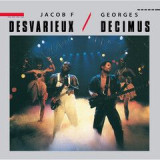
Brand new vinyl reissue to celebrate the 40th anniversary of seminal
album Yelele by Georges Decimus and Jacob Desvarieux, from zouk
pioneers Kassav', includes the massive worldwide crossover hit "Zouk-la
se sel medikaman nou ni"
Whether in concert, or on the radio or TV, the image of Kassav' remains vivid in
the minds of listeners and spectators. The group, founded in 1979 by Jacob
Desvarieux, Georges and Pierre-Edouard Decimus, has become legendary, putting
Guadeloupe and Martinique on the musical map of the world. Touring the world
with zouk, a musical movement introduced and popularized by Kassav', their
albums have repeatedly been rewarded with both gold and platinum discs.
A victim of Covid in 2021, the loss of Jacob Desvarieux leaves a huge void.
The mix of Jacob Desvarieux and George Decimus with Jocelyne Beroard, JeanPhilippe Marthely, Patrick Saint-Eloi and Jean-Claude Naimro has played sold out
concerts in 82 countries. With texts recounting real life in the Caribbean world
their lively music draws on the rhythms of Guadeloupe's gwo-ka and Martinique's
ti-bwa. Transcending the well-defined codes of Caribbean music, they have turned
the 1980s and all the succeeding decades into a fabulous ballroom.
They have been welcomed in Japan and the USSR, where they became the first
group of black musicians to tour. Forty years after the group's creation, their
timeless hits continue to resonate
Da Best Riddim Eternal Action Krew ! Here is the mission that DA BREAK has given itself for this 3rd album : To drop a new
opus of great quality, which will remain eternally engraved in the memories of Soul Music... BOOM! As simple as that! ;)
Jennifer "Hawa" Zonou & Rémy Kaprielan, founding members of the group, have decided to tighten the ranks and clarify
the content of their music: an aesthetic still anchored in their dear 90's Soul Hip Hop culture, but also with a sharpened ear,
attentive to today's world and sounds, always searching for federating grooves and warm vibes.
DA BREAK has entrusted the production of the LP to Pierre Vadon (also the band's Live keyboard player) who has already
proved the quality of his compositions and arrangements on the second album LET IT SHINE. The mission remains
unchanged: to gather, in the line of the social values defended in the 90s urban music, crib of their inspiration. Grounded,
conscious, questioning, celebrating, comforting, staying open to the world and to each other. Each song is a painting, a
story, a reflection...
Composed during an intense period on the emotional level, this album is a subtile mixture of musical influences: from the
most old school Hip Hop beat to the most contemporary flow, going from West Coast vibes to Caribbean colors. DA BREAK
IS BACK and its key word remains the same: GROOVE.
out of Stock
Last delivered 3 years ago available to reorder, subject to availability
My Dinosaur Life is the fourth studio album by the American rock band Motion City Soundtrack. Produced by Mark Hoppus (bassist Blink-182), the album was released on January 19, 2010, by Columbia Records. The album's theme largely centers on growing older; its lyricism, written by Pierre, concerns such subjects as relationships, drug abuse, and procrastination. Musically, the album retains the band's sound with less of an emphasis on the Moog synthesizer. Drummer Tony Thaxton broke his arm prior to recording, which led the band to use a drum machine on early recordings. The album's music is inspired by post-hardcore music; Pierre cited Archers of Loaf, Fugazi, and Dinosaur Jr. as inspirations for the album's sound. Their only major-label release, My Dinosaur Life was well received by music critics. The album represented their highest peak position in the U.S., charting at #15 on the Billboard 200. My Dinosaur Life is available as a limited edition of 1000 numbered copies on purple & red marbled vinyl and includes a printed innersleeve.
First in a series of reissues from Pierre Jaubert’s Parisound studio archive on Strut Record IS Lafayette Afro Rock Band's elusive funk/Afro original album, 'Malik,' originally released in 1974. Transparent blue colored LP
In 1971, an undocumented seven-member Afro-American ensemble known as the Bobby Boyd Congress made a transformative journey from the United States to France. Bandleader Frank Abel recollects, "We sensed that the soul and funk market was saturated back home, and our original plan was a brief 6-month stint in Paris. Surprisingly, we ended up staying for a decade." Upon lead singer Bobby Boyd's return to the U.S., the group rebranded as Ice and crossed paths with independent producer Pierre Jaubert, a seasoned studio professional with credits on groundbreaking recordings alongside Charles Mingus, John Lee Hooker, and Archie Shepp, among others.
Drawing inspiration from Motown's work ethic, Jaubert initiated regular rehearsals with Ice. He recalled, "I didn't want to mimic Berry, but with seven talented musicians collaborating daily, something unique emerged." The band, residing in Paris and immersed in the African-dominated Barbesse district, began infusing African elements into their music frequently performing with Paris-dwelling Camaroonian and legendary composer Manu Dibango.
Under the new moniker Lafayette Afro Rock Band, the group's music transitioned to predominantly instrumental compositions, featuring a denser Afro-funk sound. Their inaugural recording with the new name, 'Soul Makossa,' included a compelling rendition of Dibango's classic and the impactful break in 'Hihache.' The subsequent release a year later, 'Malik,' refined their sound with the percussive Afro party jam 'Conga,' the atmospheric vocoder and piano-led piece 'Djungi,' and the robust funk of 'Darkest Light.' Despite a limited impact upon its initial release, 'Malik' found appreciation as hip-hop culture flourished in the '80s, establishing itself as a rich source of samples and riffs. 'Conga' was featured in the 'Ultimate Breaks And Beats' series, while the opening horn line from 'Darkest Light' became a pivotal hip-hop motif, employed by Jay-Z, Public Enemy, Wreckx 'N' Effect, and many others
out of Stock
Last delivered 23 months ago available to reorder, subject to availability
Second in a series of reissues from Pierre Jaubert’s Parisound studio archive on Strut Record IS Lafayette Afro Rock Band's elusive funk/Afro original album, 'Soul Makossa' originally released in 1973. Transparent blue colored LP
In 1971, an undocumented seven-member Afro-American ensemble known as the Bobby Boyd Congress made a transformative journey from the United States to France. Bandleader Frank Abel recollects, "We sensed that the soul and funk market was saturated back home, and our original plan was a brief 6-month stint in Paris. Surprisingly, we ended up staying for a decade." Upon lead singer Bobby Boyd's return to the U.S., the group rebranded as Ice and crossed paths with independent producer Pierre Jaubert, a seasoned studio professional with credits on groundbreaking recordings alongside Charles Mingus, John Lee Hooker, and Archie Shepp, among others.
Drawing inspiration from Motown's work ethic, Jaubert initiated regular rehearsals with Ice. He recalled, "I didn't want to mimic Berry, but with seven talented musicians collaborating daily, something unique emerged." The band, residing in Paris and immersed in the African-dominated Barbesse district, began infusing African elements into their music frequently performing with Paris-dwelling Camaroonian and legendary composer Manu Dibango.
Rechristening themselves Lafayette Afro Rock Band, the group's musical direction shifted towards predominantly instrumental compositions, characterized by a weightier, more intricate Afro-funk sound. Their debut recording under this new moniker, 'Soul Makossa,' made a powerful impact with a dynamic rendition of Dibango's classic, coupled with the intense break of 'Hihache' and the contagious 'Nicky.' Initially released by Musidisc in France and later in the U.S. via Editions Makossa, the album omitted the title track due to publishing clearance issues.
Despite modest sales upon its initial release, the album's enduring influence became evident as hip-hop culture surged in the '80s, establishing it as a primary source for samples and riffs. The iconic 'Hihache' break found fame in Biz Markie's 'Nobody Beats The Biz,' and tracks from the album were lifted by LL Cool J, The Beatnuts, Kruder & Dorfmeister, and numerous others.
Gambian kora virtuoso Dawda Jobarteh and Danish master drummer Stefan Pasborg join forces to release their exhilarating live album, "Live In Turku"Turku". A captivating fusion of traditional West African sounds and contemporary improvisation. Jobarteh was born and raised in Brikama, Gambia into a musical legacy - his uncle and grandfather before him are recognized as great masters of the kora. Initially learning calabash and all other kinds of percussion at the feet of his uncle, it wasn t until Dawda s travels to Denmark that he picked up the 2121-stringed kora. He s since gone on to tour worldwide with the famous Pierre Dorge & New Jungle Orchestra and release five albums under his own name to rave reviews from leading magazines such as Songlines. Stefan Pasborg, godson and protege of famous Danish drummer Alex Riel, is a world class drummer with a deep understanding of African music few western musicians possess, evidenced by his many collaborations with the likes of Morocco s Majid Bekkas and their joint project Magic Spirit Quartet, as well as Danish trio Ibrahim Electric. Drawing on their rich musical backgrounds and extensive experience, Jobarteh and Pasborg deliver an electrifying performance that transcends borders and genres. Recorded during a mesmerizing live set at a festival in Turku, Finland in April of 2023, the album captures the essence of their collaborative spirit and explorative energy. A followup to their landmark 2016 release "DUO"", at the heart of "Live In lies a deep connection between two extraordinary musicians. Jobarteh brings his soul soul-stirring melodies and innovative approach to the traditional instrument - going electric and drawing from the explosive energy of Jimi Hendrix in jangling improvisations soaked in psychedelic futurism. Meanwhile, Pasborg, renowned for his dynamic drumming style and eclectic musical palette sits somewhere between Art Blakey, Mitch Mitchell and John Bonham, providing a rhythmic foundation that propels the music to new heights. The album"s repertoire spans a diverse range of influences, from traditional West African rhythms to contemporary jazz and beyond. Tracks such as " first recorded in 1979 by a band of Ornette Coleman alumni, pay homage to the Jazz s origins in African music, while originals like "Communication of a Kind" showcase the duo"s improvisational prowess and boundless creativity.
Panoram makes soundtracks for daydreams gone sideways. Picture the scene: an afternoon nap with the television on, quietly, in the corner; snatches of conversation drift in through the open window. Wandering, half-formed thoughts take unexpected detours; before you know it, there’s a movie playing out against closed lids, the colors bright, the characters unfamiliar. Accidental rhythms, incidental melodies, imitations of life, messages in code.
Across 17 fragmentary, sketch-like tracks, Panoram carves a labyrinthine path in which nothing is what it seems: a fantasy world of breathy vox pads, faux guitar, detuned synths, bursts of flute and orchestral percussion, and even the occasional cheeky cartoon sample. It’s chillout music with a chilly edge, ambient with a darkly ironic undertone. (The briefest glance at your news outlet of choice should be enough to confirm that the title—Great Times—ought to be taken with a healthy dose of skepticism.)
Panoram has been making music under his principal alias for more than a decade now, releasing albums on labels like Firecracker, Running Back, and his own Wandering Eye. (He has also performed and recorded with Amen Dunes, and has co-production credits on Amen Dunes’ forthcoming Sub Pop album Death Jokes.) Panoram’s output has ranged widely, taking in abstract pop, classical composition, twisted takes on library music, and cyborg funk. One record of “bio-acoustic transmissions” came with a cannabis leaf pressed in clear wax; his 2021 album Pianosequenza Vol. 1 gathers his experiments on the Yamaha Disklavier. But Great Times offers the truest picture yet of a project that has never been easy to pin down.
Loath to overshare details about his personal life, Panoram instead lets the music do the talking, using his cryptic tracks to express the slipperiest sorts of ideas—the thoughts that take root where anxiety, distraction, and the most fleeting traces of grace commingle. Panoram’s approach flies in the face of contemporary ambient orthodoxy, with its emphasis on immersion and uplift. Great Times expresses something thornier, more difficult to translate, yet also more tantalizing to contend with. Its 17 tracks offer a chance to get lost—and an invitation to remain in the maze as long as you like.
out of Stock
Last delivered 2 years ago available to reorder, subject to availability
The follow up and his second (4 Track) on a (Black) classic (TRAX) RECORDS (LOGO) from the
(LATE NITE 'DUB' ADDICT). Is another 'BIG' release on the inprint that pionnered (Chicago) & (Acid House). Making waves with DJ's such as (Marshsll Jefferson) / (DJ Pierre) / (Farley 'Jackmaster' Funk) & the late, great (Frankie Knuckles). The (Late Nite 'DUB' Addict) has been releasing a string of hits on Traxsource and winning through hearts of both 'HOUSE HEADS' & DJ's alike. His RAW Underground style has seen Bookings & has seen this talented (DJ /Producer) make waves & play with legends in the scene such as (Lenny Fontana, Victor Simolli, Ian Van Dahl, Filta Freqz & Dave Seamen (Brothers In Rhythm). His productions have had Chart success through (Traxsource) and through channels including his last solo release another (4Tracker) his (DEEP IN 'DUB' EP). In the last 10 years he has let his music do the talking. If you like beats deep - You are in
for a treat!!!
out of Stock
Last delivered 2 years ago available to reorder, subject to availability
When I arrived in Geneva, Claude picked me up in his Aston Martin. He had a tape deck playing Lowell Fulsom – a guy who used to come to Memphis a lot and I knew some of his musicians. I grew up around the Blues, so this was a natural sound for me. Claude didn’t tell me until much, much later that he played Blues harmonica. He took us to the hotel where we had a warm and cordial welcome. Montreux was a quaint and sleepy town in 1967. However, there was a palpable excitement in the air and we could feel it. Everyone seemed to know that they were about to launch something great – the Montreux Jazz Festival - and there was no turning back. I was their first international artist to perform there with my quartet with Keith Jarrett, Jack DeJohnette and Ron McClure.
We played two concerts at the Casino one in the afternoon and one at night. That was the start of three great and lasting friendships; Claude Nobs, Montreux Jazz Festival co-founder, Rene Langel, and the engineer of the recording, Pierre Grandjean, from Radio Suisse. And - a fourth person, who was 6 at the time, Yvan Ischer. We did not meet until many years later and have become good friends. It is thanks to Yvan’s persistent belief in this music and Pierre Grandjean’s safe keeping of the tapes, that we hear them now, more than fifty years later. live at Montreux Jazz Festival, June 18, 1967. Featuring Charles Lloyd, Keith Jarrett, Ron McClure, and Jack DeJohnette.
Gwendoline ist ein (ehemaliges) Underdog-Duo der Indie-Szene in Frankreich. Micka und Pierre, sensible Verlierer und große Blasierte der Start-up-Generation, erschaffen ihre ganz besondere Art des Elelektro Wave miteindringlichen und poetischen Sprechgesang, wobei ihre Inspirationsquelle in erster Linie die Gespräche an der Theke sind und die Menschen, die sie um sich herum beobachten. Zwischen fatalistischen Texten, Selbstironie, Sarkasmus und Verbitterung über die Mittelmäßigkeit der Welt, ist ihr aufrichtiger Cold-Wave ein Symbol für eine desillusionierte Jugend und der perfekte Soundtrack für Demonstrationen. Schon 2017 nehmen sie diese erstes Album auf, indem sie sich zwei Wochen lang selbst wegschließen und alles in einem Rutsch komponieren, wobei sie sich von ihrem täglichen Umfeld in Rennes, zahlreichen in Bars verbrachten Abenden und den Ängsten unserer Zeit nähren. ,Après c'est Gobelet!" wurde zunächst selbst digital veröffentlicht sowie in Kleinauflage auf Vinyl beim spanischen Underground-Label Dead Waxveröffentlicht. Eine zweite Auflage folgte selbstveröffentlicht 2021 (hier auch CD). Im Vorfeld der neuen, remasterten Ausgabe des Albums ,Après C'est Gobelet" wurden drei Singles und Musikvideos (,Chevalier Ricard", ,Audi RTT", ,Voldebière") veröffentlicht, die das Anliegen der Band zwischen Selbstironie und scharfer Kritik am Lebensstil der Underground-Millenials wunderbar illustrierten. Von da an ging es steil bergauf. Born Bad veröffentlichte das zweite Album zu Beginn des Jahres 2024 und findet sich im Zentrum eines Rummels, der dem seinerzeit um La femme gleicht! Da muss auch das Debut de beiden dann wieder her, nun also in der dritten Auflage.
Favorite Recordings proudly presents this new official single reissue of Music Madness by Beckie Bell: A killer disco anthem produced in 1980 by famous French producer, Pierre 'Berjot' Jaubert.
Pierre Jaubert has been one of the great producers from the Funk and Disco French music scene during the 70s and 80s, mostly known for his work with the group ICE, who he then transformed into Lafayette Afro Rock Band. During his long and prolific career, he's been involved with many artists and labels, including Motown, Chantal Curtis, Brenda Mitchell or Robert Helms to name just a few.
'Music Madness' is a brilliant disco track from Beckie Bell's rare album, In Need Of... After highlighting it in an extended version, on the compilation French Disco Boogie Sounds (2015), Favorite Recordings decided to reissue this killer song on a proper 12inch single. The package including the original album version and two hot remixes by Tom Noble and Voilaaa.
out of Stock
Last delivered 5 days ago available to reorder, subject to availability
The eleventh issue of We Jazz Magazine, "Oni Puladi" for Carla Bley.
All articles presented IN ENGLISH. Carla Bley by Stewart Smith, Gondwana Records by Debra Richards, Ahmed by Seymour Wright, Amirtha Kidambi by Ayana Contreras, Ruth Goller by Daryl Worthington, Abdul Wadud by Pierre Crépon / David Neil Lee, François Jeanneau by Bret Sjerven, Mette Henriette by Debra Richards, Nduduzo Makhathini by Rob Garratt, Discaholic column by Mats Gustafsson, We Jazz Festival 2023 photo essay by Julius Töyrylä, album & live reviews, plus more.
128 pages, 170 x 240 mm in size and printed on 140g Edixion paper with laminated 300g Invercote covers.
Freedom Weaver: The 1959 European Tour Recordings is the first official release of the 'Saxophone Colossus' Sonny Rollins’ European tour in 1959 with bassist Henry Grimes, and drummers Pete La Roca, Kenny Clarke and Joe Harris. Available previously only as a bootleg release, this is the first official release in cooperation with Sonny Rollins and released as a 3-CD set. Freedom Weaver includes an elaborate booklet with rare photos by Ed van der Elsken, Jean-Pierre Leloir, Bob Parent and many others; lead liners by jazz scholar Bob Blumenthal, and new interviews with Rollins himself, Branford Marsalis, James Carter, Joe Lovano, James Brandon Lewis and Peter Brötzmann. Mastered by the legendary mastering engineer Bernie Grundman.
out of Stock
Last delivered 2 years ago available to reorder, subject to availability
Roland Leesker has kept the legendary Get Physical label right at the forefront of the scene in his years at the helm. His music has been a small but vital part of that: he doesn't release often, but when he does it is timeless house music that always makes its mark. As well as a steady stream of singles, he also curated and mixed the crucial 20 x Get Physical compilation back in 2022. He has collaborated with greats of the scene like DJ Pierre, Roland Clark and Terrence Parker and will soon serve up his latest sonic statement with new full-length 'Searching For Peace' which will arrive in August following two more singles after this one.
The brilliant 'Respect' is a spritely and serene deep techno journey. The shimmering chords echo early Detroit techno and the supple drums are packed with warmth and bounce. Together they make for a cut that subtly uplifts as it unfolds in an engaging fashion over seven fantastic minutes.
Remixer Robert Hood is one of the foundational figures of techno. The Motor City innovator works under his own name and as Floorplan and has mastered the art of seductive loops, whether making stripped-back minimal or gospel-laced house. Here, he flips 'Respect' into a thumping and emotionally intense cut with faster drums than the original but just as much machine soul and a little extra texture in the percussion.
out of Stock
Last delivered 68 days ago available to reorder, subject to availability
"After an acclaimed run of performances at the National Theatre in 2018, Hadestown returned to London in February 2024 for its long-awaited West End premiere at the Lyric Theatre, Shaftesbury Avenue.
This Grammy award winning recording represents the Broadway show in its entirety. It features vocal performances by Reeve Carney (Spider-Man: Turn Off the Dark); Tony nominees Eva Noblezada (Miss Saigon), Patrick Page (Spring Awakening), and Amber Gray (Natasha, Pierre and the Great Comet of 1812); and Tony winner André De Shields (The Wiz).
Following two intertwining love stories - that of young dreamers Orpheus and Eurydice, and that of King Hades and his wife Persephone - Hadestown, the 8x Tony-winning musical (including Best Score and Best Musical) by celebrated singer-songwriter Anaïs Mitchell, invites audiences on a hell-raising journey to the underworld and back.
Mitchell's beguiling melodies and innovative director and Tony Award nominee Rachel Chavkin's poetic imagination pit industry against nature, doubt against faith, and fear against love.
Performed by a vibrant ensemble of actors, dancers, and singers, Hadestown delivers a deeply resonant and defiantly hopeful theatrical experience. This album was produced by Grammy® winner David Lai (the 2009 West Side Story Cast Album) alongside Todd Sickafoose and Anaïs Mitchell, who also collaborated on Mitchell’s celebrated modern folk album Young Man in America. This is a new 2LP version in standard packaging making it cheaper than previous deluxe versions. 2 x 140g discs in a gatefold sleeve"
Earth, Our Planet?”: A call for environmental awareness. This time, Pedro Vian - the founder of Modern Obscure Music - presents his fourth solo album (following his 2020 release, "Ibillorca"). Due for release in spring 2024, "Earth, Our Planet?" promises to immerse us in a moving odyssey, crossing the boundaries of musical genres to provoke an urgent meditation on the protection of our planet. On this occasion Vian has composed the album influenced by the myth of the eternal return, the compositions are long and repetitive, generating states of pure trance.
Pedro Vian, singular for his fusion of genres and styles, ventures into even more complex territories in "Earth, Our Planet?". From the first listen, it is evident that this work treads the line of convention and breaks the boundaries of electronic and experimental music with artistic dexterity. The album weaves together texture, hypnotic rhythms and melody. Each track reveals his distinctive ability to create immersive landscapes, guiding the listener into deep emotional introspection. This is not just music; it is a transformative experience.
The beauty of this album lies not only in the musical vision. The album features high-calibre collaborations that add layers of creativity and elegance. Trumpeter Pierre Bastien, whose early productions left an indelible mark on Aphex Twin's Reflex label, infuses "A Day in Rotterdam" with a unique emotional resonance. Violinist, Asia, renowned for her avant-garde approach and ability to conjure unique landscapes, elevates the album's opening tracks "Urobóros" and "Les Tambours Subterraniens". Their skill and sensitivity intertwine perfectly with Vian's artistic vision. In addition, Italian producer Daniele Mana, with whom Pedro Vian collaborated closely on his previous album "Cascades", known for his experimental approach and talent for creating extraterrestrial atmospheres also contributes to "Les Tambours Subterraniens". His artistic perspective adds more complexity and texture to the piece, pushing the boundaries of contemporary electronic music. There is also a collaboration with Raül Refree, an artist with whom Vian worked with last year, presenting “Font De la Vera Pau”, an album that The Guardian defined as "a wonderful piece of electroacoustic music, a captivating mix of strings and analogue synth drones which sometimes flirts with Alice Coltrane-ish spiritual jazz". With "Earth, Our Planet?", Pedro Vian not only offers up some of his best work to date, but it is also a call to reflect on our relationship with the natural world. As a part of a planet where environmental awareness is more crucial than ever, he urges us to protect and preserve our world as an extension of ourselves. This extensive work is a statement, Vian addresses the notion that too often we prioritise immediate needs over the well-being of the planet. It highlights the fact that we often consider the Earth as a possession when, in reality, we are but a part of it.
out of Stock
Last delivered 9 months ago available to reorder, subject to availability
Second in a series of reissues from Pierre Jaubert’s Parisound studio archive on Strut Record IS Lafayette Afro Rock Band's elusive funk/Afro original album, 'Soul Makossa' originally released in 1973. Transparent blue colored LP
In 1971, an undocumented seven-member Afro-American ensemble known as the Bobby Boyd Congress made a transformative journey from the United States to France. Bandleader Frank Abel recollects, "We sensed that the soul and funk market was saturated back home, and our original plan was a brief 6-month stint in Paris. Surprisingly, we ended up staying for a decade." Upon lead singer Bobby Boyd's return to the U.S., the group rebranded as Ice and crossed paths with independent producer Pierre Jaubert, a seasoned studio professional with credits on groundbreaking recordings alongside Charles Mingus, John Lee Hooker, and Archie Shepp, among others.
Drawing inspiration from Motown's work ethic, Jaubert initiated regular rehearsals with Ice. He recalled, "I didn't want to mimic Berry, but with seven talented musicians collaborating daily, something unique emerged." The band, residing in Paris and immersed in the African-dominated Barbesse district, began infusing African elements into their music frequently performing with Paris-dwelling Camaroonian and legendary composer Manu Dibango.
Rechristening themselves Lafayette Afro Rock Band, the group's musical direction shifted towards predominantly instrumental compositions, characterized by a weightier, more intricate Afro-funk sound. Their debut recording under this new moniker, 'Soul Makossa,' made a powerful impact with a dynamic rendition of Dibango's classic, coupled with the intense break of 'Hihache' and the contagious 'Nicky.' Initially released by Musidisc in France and later in the U.S. via Editions Makossa, the album omitted the title track due to publishing clearance issues.
Despite modest sales upon its initial release, the album's enduring influence became evident as hip-hop culture surged in the '80s, establishing it as a primary source for samples and riffs. The iconic 'Hihache' break found fame in Biz Markie's 'Nobody Beats The Biz,' and tracks from the album were lifted by LL Cool J, The Beatnuts, Kruder & Dorfmeister, and numerous others.
out of Stock
Last delivered 2 years ago available to reorder, subject to availability
First in a series of reissues from Pierre Jaubert’s Parisound studio archive on Strut Record IS Lafayette Afro Rock Band's elusive funk/Afro original album, 'Malik,' originally released in 1974. Transparent blue colored LP
In 1971, an undocumented seven-member Afro-American ensemble known as the Bobby Boyd Congress made a transformative journey from the United States to France. Bandleader Frank Abel recollects, "We sensed that the soul and funk market was saturated back home, and our original plan was a brief 6-month stint in Paris. Surprisingly, we ended up staying for a decade." Upon lead singer Bobby Boyd's return to the U.S., the group rebranded as Ice and crossed paths with independent producer Pierre Jaubert, a seasoned studio professional with credits on groundbreaking recordings alongside Charles Mingus, John Lee Hooker, and Archie Shepp, among others.
Drawing inspiration from Motown's work ethic, Jaubert initiated regular rehearsals with Ice. He recalled, "I didn't want to mimic Berry, but with seven talented musicians collaborating daily, something unique emerged." The band, residing in Paris and immersed in the African-dominated Barbesse district, began infusing African elements into their music frequently performing with Paris-dwelling Camaroonian and legendary composer Manu Dibango.
Under the new moniker Lafayette Afro Rock Band, the group's music transitioned to predominantly instrumental compositions, featuring a denser Afro-funk sound. Their inaugural recording with the new name, 'Soul Makossa,' included a compelling rendition of Dibango's classic and the impactful break in 'Hihache.' The subsequent release a year later, 'Malik,' refined their sound with the percussive Afro party jam 'Conga,' the atmospheric vocoder and piano-led piece 'Djungi,' and the robust funk of 'Darkest Light.' Despite a limited impact upon its initial release, 'Malik' found appreciation as hip-hop culture flourished in the '80s, establishing itself as a rich source of samples and riffs. 'Conga' was featured in the 'Ultimate Breaks And Beats' series, while the opening horn line from 'Darkest Light' became a pivotal hip-hop motif, employed by Jay-Z, Public Enemy, Wreckx 'N' Effect, and many others
out of Stock
Last delivered 2 years ago available to reorder, subject to availability
2024 krempelt Sarah Lesch ihr Liedermacher-Image komplett um und läutet mit dem neuem Album "Gute Nachrichten" und neuem Sound den Anfang einer neuen Ära ein.
Lauter, leichtfüßiger und kantiger als je zuvor dreht sie 2024 so richtig auf! Ihre ansteckende Energie paart sich mit der wunderbaren, neuen und doch vertrauten Mischung aus rockigen Sounds und nachhaltigen Worten.
GUTE NACHRICHTEN ist ein Befreiungsschlag - und was für einer! Sarah lebt genau das, wo für Rockmusik steht: Befreiung, Liebe, Respekt und Diversität. Musikalisch wird es episch, punkig und bluesig. Neuer Sound mit gewohnter Haltung!
Sarah Lesch singt über sich und erzählt damit gleichzeitig viel über uns: Wie wir uns gerade selbst zerfleischen, zweifeln, trauern, lachen, sinnlose Diskussionen fuhren, verzweifeln an der Welt, Liebe machen und wie man überhaupt mit dem ganzen Gefu?hlschaos umgehen kann. Das, was wir alle kennen, worüber wir aber nur ungern mit jemandem sprechen
In pointierte Texten erzählt die Leipzigerin Geschichten, voller Kraft, Botschaft und Lebensfreude. Es ist, als hatten sich endlich die richtigen gefunden: Sarah, Rock und Punk. Definitiv GUTE NACHRICHTEN für 2024!
SOYUZ (СОЮЗ) stole our hearts back in 2022 when we released their album Force Of The Wind to critical acclaim. Here we proudly present the predecessor to that LP, the band’s sophomore long player from 2019 that was previously only available digitally. It captures a pivotal evolving period in the band's career, the recordings giving a snapshot of what would become their sound on Force Of The Wind, yet with echoes of avant-psychedelic-pop footprints from yester years.
Produced at a time when band leader Alex Chumak had moved from Minsk to Kyiv, torn between the need to try something new and the homesickness it brought about. Travelling back to Minsk almost weekly, Alex joined fellow band members Mikita Arlou and Stanislav Murashko to lay down II at Studio 42. The album captures these transient feelings, contextualised through the broad scope of influences the band were nourished by. From MPB to Ethio-Jazz and the Italian library soundtracks of Piero Piccioni and Piero Umiliani, the album shines with touches of joy from across the globe.
The opening track 'Verocai' is a tribute to the Brazilian maestro and 'Mirouze', whilst being named after a French favourite of the band, Jean-Pierre Mirouze, pays clear homage to Milton Nascimento and Lô Borges. A ghostly sample and invisible connection to music made miles away in a different era that has influenced and become part of the band’s lives. This is further reinforced in the album's enchanting closer, the aptly titled 'Nascimento', another nod to the great Brazilian musician and singer.
The beginnings of the cinematic, soul-laden jazz SOYUZ are now known for, are on display across the likes of ‘Lyric’ and 'Motive I'. The latter an orchestrated jazz instrumental with sensuous string sections, all of which were recorded on the warmth of a Studer reel-to-reel and waltzing Rhodes keys.
SOYUZ’s wide-ranging palate is further demonstrated in tracks like ‘Business Partners’ with its Krauty, kosmische, new wave production featuring Inturist, and the oh-too-short Anatolian-influenced interlude 'Corrida'. Elsewhere, 'Tezeta' and ‘ES-2 Jazz’ hint at the psychedelic haze of soul-funk, with the former featuring verses from Serbian rapper Petar Martic.
For this new physical and digital release, the whole album was mixed from scratch by Ryan Power before Joker worked his magic on the remaster. More excellence is to come from SOYUZ, but in the meantime, we are thrilled to present this essential recording from the band’s foundational years, mixed to a level that does it the justice it deserves.
out of Stock
Last delivered 22 months ago available to reorder, subject to availability
On a faim!" was originally an anarchist music fanzine created in 1984.
An entire network, with no geographical ties, grew up around the fanzine, helping to write articles and distribute them (often by hand). The fanzine's name even began to appear in connection with the organisation of concerts (Ludwig Von 88, Raymonde et les Blancs Becs, les Thugs, Les Ejectés, Kortatu, Yo Pizza Jump, etc.) and the creation of radio programmes.
The On A Faim ! label came into being at the end of the 80s, following the release of a host of live tapes and themed compilations: "A Bas Toutes Les Armées", "Cette Machine Sert A Tuer Tous Les Fascistes", "Ni Jah Ni Maitre", "Pogo Avec Les Loups". Then came the first artistic albums with Désert Culturel, Un Dolor, Have Nots, Kargols, Pleum, Mister Moonlight, Rude Boy System... Here again, the artistic choices were made primarily on the basis of human encounters, the attention paid to the bands' approach and discourse, and their attitude to the public... even before listening to the slightest demo!
Archives de la Zone Mondiale wanted to pay tribute to this inspiring label, which marked the history of independent and committed music for nearly 15 years. With one of its founders, Jean Pierre Levaray, we have cleverly concocted a sort of musical anthology retracing the essential bands that have marked the history of the label and the fanzine.
On A Faim ! - Anarchy & Musik is a double 20-track vinyl compilation in a highly graphic gatefold sleeve, retracing the label's extraordinary trajectory regardless of musical style: punk, of course, but also ska, hardcore and popular chanson...
Last but not least, all the royalties from this double vinyl compilation are donated to the Uzine (Le Havre) and Fanzinarium (Paris) fanzine libraries.