The notion of house music as a form of uptempo soul music is intrinsic evidence with a record like the one on hand. Professor Supercool’s If You Love Somebody is many things at once: an example of a special brand of British pop music, influenced by US-American soul more or less from the get-go, the Second Summer of Love, the conception of Balearic as a music genre, the cultural interchange of European dance floors and DJs from across the pond and underground music marketing through the vessel of special one-time pressings. The mysterious Professor Supercool is actually a moniker for Dr. Rob of The Blow Monkeys’s fame, who produced the song with a veteran and legendary DJ of the Northern Soul scene „The Real Hector“ – a resident at the famous Wag Club.
Originally a part of the band’s Album Spring Time For The World, it appeared first as a special For-Promotion-Only-12“ in 1989 with limited information as a trial ballon to „avoid preconceptions“. The fear was without reason. Like the band’s other big dance floor record and Balearic fave LA Passionara a year later, it got played and supported by the DJs of its time. Next to Graeme Park at the Hacienda or Paul Oakenfold, it also got picked up by Mastermixer Tony
Humphries and became a staple at his radio and club sets for KissFm respectively Club Zanzibar. While the vocal mix found its way on said album, the preferred 12“ instrumental version has never been released anywhere else up until now and made the record go for a substantial amount of Discogs dollars.
Expanded with an edit by the label’s in-house DJ Gerd Janson that is supposed to work as a dub alternative to the vocal mix, the 12-inch and bundle download contain the original plus a faithfully restored and remastered version of the instrumental in demand. If you love this record it is impossible to let it go.
Search:play paul
LTD MAGENTA TRANSPARENT LP[34,03 €]
LTD MARBLED YELLOW-OXBLOOD LP[22,73 €]
CLEAR LP + SLIPMAT & POSTER[27,31 €]
16 Jahre nach dem letzten Studioalbum kommt das neue Album von LOIKAEMIE mit Namen "Menschen"! "Anschnallen! Unglaublich, aber wahr! Verdammte Axt!" Die Worte von Sachsens größtem Punkfestival hätten keinen Funken kleiner sein dürfen. Mit ihrem Überraschungs-Headliner verkündete das Back To Future 2019: LOIKAMIE ist wieder da! Innerhalb von fünf Jahren ging so gleich zweimal ein Ruck durch die europäische Oi!- und (Street-)Punk-Szene: Schwer die Emotionen beim Abschied 2014, umso größer die Euphorie beim Live-Comeback! Und noch größer angesichts 12 neuer Songs! Seit 2019 ist LOIKAEMIE wieder eine feste Größe, weit oben in den Lineups der Festivals und den Clubs, und das weit über Deutschland hinaus. Thomas, Eddie, Paul und Bruno konnten live nicht nur nahtlos anknüpfen, sondern eine Stufe emporsteigen, auf den Konzerten trifft sich Jung und Alt in seiner ganzen subkulturellen Vielfalt, LOIKAEMIE ist eine Band, auf die sich - im besten Sinne - alle einigen können. Auch die Kreativität ist wieder erwacht: 2022 erschienen mit "Lumpenmann" und "Tief im Herzen" die ersten neuen Songs seit 2007 (digital und als limitierte 7"-Single), dazu gesellen sich bisher "Was Soll Die Ganze Scheisse?" und "Lasst Uns rein", alles Vorboten des nun erscheinenden fünften Studioalbums "Menschen" und schon auf einer Menge Playlists zuhause. Kein Wunder, dass nach 16 Jahren die Erwartungen riesig sind, bei den Fans wie der Band selbst. Und ,Menschen" ist nicht weniger als ein Manifest dessen, wie Punkrock im Jahr 2023 klingen muss: Rotzig und melodisch, kompromisslos und reflektiert, politisch und gut gelaunt. Alle zwölf Ohrenfräsen atmen den unverkennbaren LOIKAEMIE-Spirit und doch ist ,Menschen" ein Riesenschritt nach vorn. Schon der überaus modern klingende Opener ,Wenn wir alle so wären" fegt alles weg, was derzeit belanglos auf Allgemeinplätzen durch den Punk pogt, vom anschließenden hymnischen Titeltrack bis zur abschließenden Selbsteinladung ,Lasst und rein" bleibt die Energie ganz oben, gleichzeitig ist das Album vielschichtig wie nie zuvor in der Bandgeschichte. Zu Streetpunk- und Rock'n'Roll-Brettern gesellt sich Reggea, Sprechgesang, Ballade und Melodien, die sich auch im Pop nicht verstecken müssten. Statt markiger Statements erzählen die Texte pointierte Geschichten, teilen durchdachte Gedanken zu aktuellen Miseren in der Welt, der Szene oder im eigenen Kopf. Aber es gibt auch keine Scheu vorm hymnischen Refrain, den fortan volle Konzertsäle gemeinsam intonieren können. Oi!, was sind das knallende Hits! Im Klappcover mit bedruckter Innenhülle, hier auf klassisch schwarzem Vinyl!
Bomp Records of Burbank, California was likely the most significant American independent record label of the 1970s. In 1979 Voxx was founded as a subsidiary of Bomp as a specialty label for '60s-styled garage and psychedelic inspired music and was home to the debut album of the Pandoras. The Pandoras really got started back in 1982 when triple threat Paula Pierce (guitar, vocals AND songwriter) met singer and guitarist Debbie Mendoza at Chaffey College Rancho Cucamonga, one of those dozens of small communities that make up the greater Los Angeles area. According to stories told around the campfire, Paula had posted an advertisement on the bulletin board inside the college's cafeteria. The ad was both simple and direct: Wanted: female musician to jam with. As legend has it, the ad also stressed a keen interest in 60's garage punk music. Debbie answered Paula's ad, and soon the two girls were bringing guitars to school and holding impromptu jam sessions between classes. A little later that year, Paula brought in Gwynne Kahn on keyboards and second guitar, and Debbie convinced drummer Casey Gomez to join. People who were around at the time pinpoint December 1982 as the official beginning of the Pandoras as a band. The Pandoras didn't waste any time getting down to business. They started gigging regularly, and their repertoire of tasty garage nuggets expanded substantially, fueled both by Paula's talented songwriting and also no doubt by her relationship with Unclaimed frontman Shelley Ganz and his extensive knowledge of obscure 60's gems. The Pandoras unleashed their first recordings on the world in 1983 with the "I'm Here, I'm Gone" EP on Moxie records. It was a meaty slab of girls in the garage punk rock, and while maybe not as polished as subsequent efforts, it clearly showed off the talent of the band. Greg Shaw had been alerted to the band a few months earlier, and always one to know a good thing when he heard it, he quickly signed them. "It's About Time" saw the light of the day in 1984 on Voxx Records and became one of the first and best efforts of authentic 1960's-styled garage punk to emerge from the revival scene. It was pure garage gold! Today, 40 years after its original release date, we are thrilled to reissue this essential '80s garage punk gem as part of a series of releases celebrating Bomp! 50th anniversary. Our issue includes 3 bonus tracks and liner notes by Gravedigger V's John Hanrattie. "Paula Pierce refused to play it cute. On The Pandoras' debut album she out-snarled, out-screamed, out-fuzzed and out araged the male-dominated competition-like a well-aimed go-go boot to the jugular." - Mike Stax, Ugly Things Magazine "As good a '60s punk record as any contemporary combo is likely to make." - Trouser Press
Released in 1956 as the debut album by the Miles Davis Quintet, “Miles” features a combination of pop and jazz standards. Originally released on Prestige Records, the album features an all-star cast of players with John Coltrane (tenor sax), Red Garland (piano), Paul Chambers (bass) and Philly Joe Jones (drums). This new edition of the album is released as part of the OJC Series and is pressed on 180-gram vinyl at RTI with (AAA) lacquers cut from the original master tapes by Kevin Gray at Cohearent Audio. It is presented in a Tip-On Jacket.
- Throw It Up In The Air
- Clear As Day
- Killing Crimson
- Fiend
- Closer
- The Awakening
- Beyond This Fiction
CLOUDY SEA BLUE VINYL[28,53 €]
"One of the best bands to come out of NYC since who gives a shit." -CVLT Nation. When you enter White Hills' lair in Brooklyn, the duo's insatiable desire for music and art is immediately palpable. Crates of vinyl from floor to ceiling line the long hallway. Guitars appear at every angle, one lying across a sofa in obvious mid-play with others in cases tucked beside amplifiers into every conceivable corner. Synthesizers and cables cover the purple satin bed while gouache paintings in various stages of progress strewn the floor. Album covers, movie posters, books, paintings, prints and souvenirs of subversive culture occupy the remaining wall space. A sanctuary of adoration, creation and imagination, it's also the nerve center of their record label Heads on Fire Industries and the site where the final mixes of their latest album Beyond This Fiction took shape. For nearly two decades, White Hills have been blowing minds with their sonic alchemy: a unique mix of neo-psychedelia, art rock, and post-punk- at once original and recognizable. Their cult reputation emblazoned in celluloid following their performance in Jim Jarmusch's sultry vampire romance Only Lovers Left Alive, the duo has toured vigorously since their inception. With a vast catalogue that astounds and a relentless punk ethos, time seems to energize the duo, making them increasingly daring and prolific. "Music creates a bliss beyond sex and drugs," professes one-woman rhythm section Ego Sensation. "We'll never stop making music. It's the highest high to be had in life." Founding member Dave W, whose signature other-worldly guitar sorcery defines the White Hills sound, grabs his Les Paul to record a melody lingering in his head from last night's dream before it escapes. Outside, the sound of passing sirens, honking horns and bits of conversation remind you that you're in the middle of New York, a city so flush with rock legacy and artistic innovation it would take lifetimes to drink it all in. A voice from outside shouts, "This shit is going for 3! These people got to be out of their fucking minds!" Dave shakes his head and laughs, "There's no place I'd rather be." Committed to a vocation marked by extremes, doubt, struggle and moments of ecstasy, Dave and Ego continue this torrid affair with music bearing their latest fruit Beyond This Fiction. Inspired by the ideas of Joseph Campbell, the writer/philosopher known for the book The Power of Myth, the album explores the idea of "riding between opposites"- forging one's own path unrestrained by the dualistic constraints of society. It's a cry to all the seers among us- call us outsiders or rebels- who feel smothered by convention and see nonconformity as the gateway into divine mystery. Recorded with Martin Bisi, known for his iconic NYC sound developed through his work with no-wave titans Sonic Youth, Swans and Lydia Lunch, Beyond This Fiction sees Dave W (guitar/vocals/synths) and Ego Sensation (drums/bass/vocals) orchestrating their distinct guitar heavy meditations into songs with a stronger focus on vocals than previous albums. Opener "Throw It Up In The Air" and closer "Beyond This Fiction" both have a lush quality that flirts with shoegaze. "Killing Crimson", a song that takes inspiration from Killing Joke and King Crimson, has a driving beat and a catchy hook that begs for a sing-a-long. "The Awakening" plunges into the meditative ambient abyss the band is well known for, featuring the unique voice of frequent collaborator poet Dan McGuire to deliver the meaning behind Beyond This Fiction. The album harnesses the seductive accessibility of 2015's Walks For Motorists while evoking the tempestuous soul of the band's seminal 2011 H-p1. Notorious shapeshifters, White Hills make Beyond This Fiction a familiar surprise. Back in the lair, Dave draws eyes on his hands in preparation for the day's video shoot. Ego reaches in the closet pulling out the red velvet jacket she wears on the cover of Beyond This Fiction where she stands in a NYC alley holding a glowing orb. "That's the portal- the gateway into the mystery. The music will take you there.".
BBsitters Club is a rock band based in Chicago that features Doug Kaplan and Charlie Olvera on guitar and vocals, Max Allison on bass, and Paul Birhanu on drums. As the label’s de-facto in-haus band, BBsitters Club satisfies Hausu Mountain co-founders Allison and Kaplan’s urge to remain connected to the rock and roll music they grew up loving and playing — far across the spectrum from the experimental electronics featured on the lion’s share of HausMo releases.
A solid four years after the one-two-punch releases of BBsitters Club & Party, the band’s 2020 debut studio album, and Joel’s Pick’s Vol. 1, the first volume in a series of audience-recorded live takes from shows around Chicago, we find the BBs reviving the Joel’s Pick’s series with Vol. 2. Charged with the energy of a close-knit group of friends willing to follow along with each other’s most outlandish ideas both in composition and live performance, JPV2 offers us a bewildering yet always tongue-in-cheek palette of ideas cherry-picked and mashed together into amalgams that both embrace “rock traditions” and defy them with a cherubic grin.
BBsitters Club’s amorphous compositions land somewhere between the world’s most baked prog band and a jamband that’s never content to lapse into wheel-spinning complacency. On JPV2, BBsitters Club cartwheel between eras and styles of rock music with abandon — a TV stuck flipping channels after your dad falls asleep with one leg on the remote. We encounter the elliptical dueling guitars and autumnal atmospheres of midwest emo / math rock, the gregarious stomp of electrified country rock, blues rock that has melted from ingesting one too many hallucinogens, and fried Devo-style art punk that breaches into the realms of ska before melting into free-form noise rock flecked with the bizarro imitative instrument tones of Kaplan’s MIDI guitar.
Luminice Blue Transparent Vinyl. Can you hear the war drums beating? Prepare for battle! Lost In Cult Records, Black Screen Records, Gaziter and Deadpan Games are proud to present Wildfrost: the Original Game Soundtrack. For the first time on vinyl, enjoy the complete and unabridged orchestral score from composer Paul Zimmermann. Rich with folk roots and powerful crescendos, it's the perfect soundscape for your journey through the cold. No Pengoons were harmed in the making of this vinyl. Composer Paul Zimmermann on working on this soundtrack and vinyl: "Writing the music for Wildfrost was a blast. I loved mixing a ton of different instruments from all around the world to bring to life the colourful and unique setting of the game. The gameplay can get very challenging, so I wanted to make sure the music felt playful and uplifting, while also providing those big and heroic moments for our boss fights. I'm super pleased to partner with Lost in Cult and Black Screen Records to bring this soundtrack to vinyl. Seeing the positive response from players has been amazing and I hope this vinyl, with its unique artwork by Nuri Durr and the additional extras, provides fans of the game and its music another great way to connect with the world of the eternal winter!"
Steve Marion, the critically acclaimed-and completely wordless-songwriter and guitarist known as Delicate Steve, has unveiled a new album called Delicate Steve Sings. Is the album title a reference to the instantly recognizable "voice" of his guitar? Does he actually sing this time? Has he not been singing all along? That"s the crux of Sings-Marion is the rare guitarist where you can put on any of his records and know exactly who"s playing. In an indie rock landscape stuffed end-to-end with guitars and amplifiers, nobody else sounds like this. That unique voice has kept Steve busy in an unpredictable variety of settings. The sheer spread of his work outside his own records-collaborating with Miley Cyrus and Paul Simon, playing in Amen Dunes and the Black Keys, and being sampled by Kanye - doesn"t mean Steve"s a chameleon. It means he"s singular. Delicate Steve Sings is a record centered on channeling iconic voices with his guitar. In doing so, Marion is casting himself in the role of iconic singers like Willie who make standards their own. In the process, he reveals just how singular (dare we say iconic) that voice is. The guitar sings these songs-smoothly, sweetly, boldly, and on its own terms. Recorded with Jonathan Rado on bass, Kosta Galanopolous on drums, Renata Zeiguer providing strings, and co-writer Elliot Bergman, the album features both original songs with titles that suggest they might be new recordings of classics. "I"ll Be There" is smooth like a lost Bill Withers track; "Easy for You" isn"t the Elvis song of the same name, but there"s a hint of the king in there, in addition to Marion"s own takes onclassics such as the Emersons" "Baby," The Beatles" "Yesterday" and Otis Redding"s "These Arms of Mine." "You"re tapping into something universal and in the consciousness of pop music," Steve says-tacit permission for his guitar to drift into vocal expressions he"s internalized through years of close, repeated listening. Just like all the great singers.
- A1: Still Ridin' Clean (Feat. Juicy J)
- A2: The Porch 3 (Skit)
- A3: Fight
- A4: Weak Niggaz (Feat. Dj Paul)
- A5: Make Dat Azz Clap (Back Clap) (Feat. Juvenile)
- B1: Choose U
- B2: Smokin' Out (Feat. Lord Infamous)
- B3: Show Dem Golds
- B4: This Pimp
- B5: On Nigga
- C1: That Drank
- C2: Mc Flyjo
- C3: Posse Song (Feat. Hypnotize Camp Posse)
- C4: 90 Days
- C5: Shut Ya Mouth, Bitch (Feat. Dj Paul, Juicy J, Crunchy Black And Frayser Boy)
- D1: Take Da Charge
- D2: Smoke & Get High (Feat. Crunchy Black)
- D3: County Jail
- D4: I'm Mo (Feat. Lord Infamous, Dj Paul And Juicy J)
- D5: Outro
FIRST TIME ON VINYL! AVAILABLE IN A BROWN & WHITE COLORED VINYL PRESSING IN A GATEFOLD JACKET WITH OBI LIMITED TO 1000 NUMBERED COPIES.
Memphis Rap legend Project Pat released his third studio album Layin' Da Smack Down in 2002 on CD and Cassette via Loud/Columbia/Hypnotize Minds. Following up Mista Don't Play, Project Pat spits rapid-fire street tales of the dirty south over DJ Paul and Juicy J's signature Three 6 Mafia bangin' 808 beats. From rowdy club tracks to smoother pimp tales and true-to-life stories of being incarcerated, Project Pat delivers another Hypnotize Minds North Memphis classic. The album also contains the single "Choose U" which would be reworked in 2007 for UGK's "International Players Anthem." Get On Down in partnership with Sony Music's CERTIFIED is proud to present Layin' Da Smack Down for the first time on vinyl. Pressed on colored vinyl packaged in a gatefold jacket with a printed insert and numbered OBI limited to 1000 copies.
- Drive In
- Black Network News
- Splish Splash
- Inergy
- Johnny Better Get
- Dingy Bars Suck
- Seen That Movie Before
- High Places
- Blood's Good
- Human Body
- Mom's Wallet
- Positive Change
- Amerika
- New Generation
- Livin' In The '80S
- Stoned To Death
- Stick To Your Guns
- I'm Bored
- Piece Of Me
- Livin' In The 80S Live At Crazy Al's, September 6Th, 1980
- Stick To Your Guns Live At Crazy Al's, September 6Th, 1980
- Commies Live At Crazy Al's, September 6Th, 1980
- I'm Absent Live At Crazy Al's, September 6Th, 1980
LP+7" (Clear Vinyl). When the Ramones lost it, the Zero Boys found it; Adding a slam brigade fist to the Blitzkrieg Beat. The Zero Boys managed to come with one of the best early 80's punk records, or one of the best records ever, period. From 1979 to 1983, the Indianapolis-based Zero Boys were the finest hardcore blitz in the Midwest if not all the lower 48 states. Compiled and released as a post-mortem following the band's breakup, History Of_ is the proof, if more was needed, that their take of American hardcore wasn't all white bread numbers. Yeah, they played shows with Minor Threat, Dead Kennedys, Subhumans, and others but in Terry "Hollywood" Howe's guitar there was harmonious terror and unstoppable cadence. Terry's licks and chops _ a leap beyond two or three chord punk _ offered a zone and measured count for drummer Mark Cutsinger and bassist David "Tufty" Clough, a rhythm unit in par with the Minutemen if not The Meters, to run lines like quicksilver. Meanwhile, frontman, Paul "Z" Mahern provides a constant wash from beginning to end. Originally released in 1984 with a limited-edition reissue in 2009, this 40th anniversary edition includes the original LP of `History Of...' and a 7" featuring four live recordings never previously pressed to vinyl and recorded at iconic hardcore/punk venue Crazy Al's in 1980: "Livin' In The 80's", "Stick To Your Guns", "Commies", and "I'm Absent".
At the muddy miracle that was Woodstock, the most miraculous performance just might have been Jefferson Airplane’s. The band had been one of the first to sign on for the festival, their imprimatur prompting many other acts to hop on board, and their stature had landed them a coveted headlining slot closing Saturday night’s schedule. But, as the torrential downpours and the unexpected crush of half a million people kept on delaying their set, the chances of putting on anything approaching a quality performance seemed to diminish.
According to Paul Kantner, “We were supposed to go on at 10:30 at night and we’d been up and down about four or five times on acid that night, getting ready to go on, and then everything was delayed for whatever reasons. So, we didn’t get on until like 7:00 the next morning and everybody was pretty much burned out.” Kantner’s protestations to the contrary, the Airplane (with guest pianist Nicky Hopkins in tow) played a scorching two-hour set that defied the elements and the circumstances. Grace Slick led the charge as the band plunged into a frenetic version of Fred Neil’s “The Other Side of This Life”: “Alright, friends, you have seen the heavy groups. Now you will see morning maniac music. Believe me, yeah. It’s a new dawn!” What followed was an adventuresome (and surprisingly tight) set that not only featured the band’s big hits like “White Rabbit” and “Somebody to Love” but also premiered songs from the Volunteers album that was still three months away from being released, including a 21-minute version of “Wooden Ships!” Indeed, about the only members of the crew who weren’t up to snuff were the ones filming the concert documentary, which explains why the Airplane is not one of the acts that commonly come to mind when thinking about Woodstock; they didn’t appear in the film due to subpar footage, and only one of their songs (“Volunteers”) was included the chart-topping 3-LP Woodstock release.
Now, Real Gone Music is proud to present Jefferson Airplane’s complete Woodstock performance. The 3-LP set comes inside a gorgeous, double-gatefold jacket sporting photos of the band at Woodstock, most of them taken by the legendary Henry Diltz; liner notes by folk-rock guru Richie Unterberger complete the package. Pressed in iridescent, “clouds breaking” blue for its 55th anniversary, this release makes a convincing claim that Jefferson Airplane’s Woodstock performance ranks right up there with those of Jimi, Sly, and Santana as a festival highlight. Limited to 1000 copies!
YESYESPEAKERSYES is the first vinyl release of the remarkable collaboration between Chicago foot-work founder Kavain Wayne Space (aka RPBoo) and London duo experiment XT (drummer Paul Abbott and saxophonist Seymour Wright). The trio’s synthesis of rhythms, sounds, strategies, technologies and traditions collapse genre, distance, boundaries and preconceptions into a total, and totally unique, brain-body music.
Its two 15-minute vinyl sides are cut from a 60-minute live set at Cafe OTO, London on Friday 8th October, 2021 also available as digital download. This was the fourth meeting of the trio followed, instead of being followed by*, an RPBoo DJ set.
Each time the trio play it pushes further into new technical, emotional and creative space. The collaboration needs ears, instruments, imaginations and bodies to be used in new ways. This need is transformative. Together they – and we – learn. This unique trio combination is rooted in deep conceptual foundations, that push into real and imaginary spaces of innovation and learning in a creative practice of 'interruption' far beyond genres or what is supposed to be. And what emerges each time is a trio technology - a total dance technology for any and all bodies.
Kavain, Paul and Seymour share a fascination with the musical history of Chicago – a source of which is of continual nourishment to their ongoing practice. While Kavain’s pioneering footwork work develops the rhythmic structures of Chicago house and the samples, grooves and melodies of 60’s/70’s Chicago soul, disco and R&B, Seymour and Paul share a fascination with these musics, and bring to this lineage a long-term engagement with Chicago’s jazz traditions, from Baby Dodds to the AACM through their unique prism of club, dance, free-jazz and improvised club structures, technologies and musics.
The LP was expertly mixed by Billy Steiger and mastered by Amir Shoat. Every purchase comes with a bonus download of the full, unedited live set from Cafe OTO.
The album includes artwork by Benedict Drew and text by Edward George.
2024 Repress
180 Gram, Tip On Sleeve RSD version of this classic. One of the rarer records of the mythical Strata East albums is finally reissued for the first time on Heavenly Sweetness!
The recording of Earth Blossom, the John Betsch Societys one and only album, seems something of an enigma nowadays. For even though Nashville is clearly one of the towns in the US with the highest number of recording studios, who would have thought that the capital of country music would give birth to one of the forgotten masterpieces of 1970s spiritual jazz. The path leading to the album starts in 1963 when John Betsch, originally from Jacksonville in Florida, arrives in Nashville to study at Frisk University. He is a young drummer and joins Bob Holmes trio. Holmes is one of the towns major jazz organists and pianists; he becomes Betschs mentor and, over the space of two years, John will play alternately with him and with the trumpeter Louis Smiths group. However, in 1965, John leaves town to go to the prestigious Berkeley University in Boston and do a two-year course along with his fellow debutants with names like John Abercrombie, Ernie Watts and Alan Broadbent. Two years later, he is invited by a pianist friend, Billy Chilf, to join the legendary singer/songwriter Tim Hardins group. Just after Woodstock, John Betsch and Tim record a psychedelic album Columbia will never release together with the members of the future group Oregon: Colin Walcott, Glen Moore, Paul McCandles and his friend Billy Chilf. But he soon leaves this group to return to Nashville where he hooks up again with his friend Bob Holmes. Two years later, he is accepted on Archie Shepp and Max Roachs famous course at the University of Massachusetts Amherst (UMASS) and for the next four years he participates in this collective of intellectuals and musicians under the aegis of the two masters.
During this period he returns to Nashville to form his Society whose music is obviously influenced by the Afrocentric ideas of the UMASS student and political movement. However, the album, recorded in one day and in one take, also bears the hallmark of their generations psychedelic experiences, and in the themes and playing of the musicians we can hear a less violent form of music than the radical free jazz of New York or Chicago. Nature and environmental themes are the inspiration behind tracks touched by the spirit of Coltrane but also of Flower Power.
After Amherst, John Betsch joins Marion Browns group in 1976, leaves Tennessee for good and makes his home in New York over the next ten years or so. He plays and records with Dollar Brand, Kalaparusha Maurice McIntyre and many others, before heading off to France. He has lived in Paris for the last twenty years and played in Steve Lacy, Mal Waldron and Archie Shepp bands, as well as forming groups of his own. He now lives in Paris and plays with many musicians/bands.
Long-awaited reissue of an interesting and rare masterpiece by jazz guitar virtuoso Joe Pass, who took on jazz funk! (Made in 1971) This is the first release on Gwyn Records, a minor label in California, and features a very impressive lineup. Paul Humphrey and Earl Palmer on drums, Carol Kaye (label owner) and Ray Brown on bass, J.J. Johnson, Tom Scott, and Conte Candoli on horns, this is truly a historical session that brought together the top musicians of the West Coast at the time. From the cool funk of "Better Days" at the beginning of the session, almost the entire album was a storm of jazz funk. Free Sample" by Joe Sample, "Burning Spear," with its impressive undulating beat, "Head Start," with its too-subtle bass line, and the boogie shuffle "Gotcha! The jazz bossa "Balloons" and the weepy medium soul "It's Too Late" also have an outstanding presence. Not only can you enjoy Pass' intelligent soul-jazz guitar playing that hits all the right notes in a single tone, but the groovy, funky rhythm section is the best you'll hear on the West Coast.
Big thanks to a certain Mr. Gilles Peterson who first alerted Paul Murphy, Head of Jazz Room Records to this Spiritual Jazz meets Bebop gem when he played the track "I've Known Rivers" on his show on BBC6 MUSIC. Paul immediately took steps to contact Mr. Noviello with a view to release this previously unknown (to him anyway) hidden delight. It's Frank Noviello's debut album and a mixed bag of Jazz Standards and highly original covers and originals. Randy Westons's "High Fly" has a really grooving arrangement, Vocal Bebop in the original "Tribal Dance" and the highlight in the Gary Bartz/Langston Hughes Spiritual Jazz outing "I've Known Rivers". If you're known to glide in and around to that Mark Murphy bag then this is hip to the trip for you!...
KEYS has just completed their second album, “The Grand Seduction”. This all-keyboard band is the brainchild of singer Jake E (Cyhra, Amaranthe and others) and keyboardist Mark Mangold (Touch, Drive, She Said, Michael Bolton, Cher, Paul Rogers and others) with Emanuel Bagge (Sweden’s Got Talent Finalist) on additional vocals and keys, Irwan Fabrien (noted keyboard guitar sound designer) with help of drum gurus Alex Landenburg (Kamelot, Cyhra and others).
Featuring live performances with three keyboardists and a huge battery of keyboards, this ambitious band brings keyboard and instrumental prowess to new heights while playing songs that run the gamut from scathing progressive melodic forays to catchy and melodic rock anthems …and Jake’s award-winning voice (Burrn Vocalist of the year 2020). Previous KEYS album also featured guest keyboard additions by Charlie Calv of Angel and others.
Though songs are first and foremost, this band shows the versatility of keyboards in this day and age. These artfully crafted songs are ripe with scathing synth, organ and “guitar” pyrotechnics, dazzling time signatures and drumming, bombastic choruses and “guitar” riffs (played on keyboards with the now available plug in’s that perfectly emulate guitars). As Mark and Jake are first and foremost award winning songwriters, they never lose sight of the composition and melodies, though couched in the very signature and hard to pigeon hole sound (isn’t that the whole point?) of this band and Jake's 4 octave vocal range.
7A Records are proud to present our deluxe reissue of Mungo Jerry’s Electronically Tested. Released on July 19th, the album has been remastered and expanded with four bonus tracks and features extensive liner notes including Ray Dorset’s own recollections.
Electronically Tested, Mungo Jerry’s second album, was first released in March 1971. Even the title clued in listeners that this was no ordinary record. As Ray Dorset reveals, “I came up with the name of the album. Durex used to have ‘electronically tested’ written on their packets. I thought that was quite the talking point, if people in the know said, ‘That’s the same name as on the packet of condoms!’ It was taboo to mention stuff like that.” Electronically Tested offered hints of the familiar via its inclusion of the UK #1 Hits “In the Summertime” and “Baby Jump,” but elsewhere, the album was pure, eclectic Mungo Jerry. Every side of Dorset’s talents as a singer, songwriter, and musician came to the fore on Electronically Tested, with his bandmates John Godfrey, Paul King, and Colin Earl–as well as producer Murray– joining him to create a joyful noise: “It’s got a lot of tracks that could have been singles in their own right. It was good for me to be able to play all that kind of stuff”. Mungo Jerry’s singular sound has been described as rock, folk, blues, country, good-time music, jug band music, pub rock, and gypsy rock–and that’s just a partial list. One can hear all of those elements in the disparate, timeless songs that form Electronically Tested. How would Mungo himself describe it? “It’s kind of rocky stuff. It’s got social commentary. It’s got all sorts of influences in there. It’s really best to say it’s Mungo Jerry music.” Electronically Tested originally peaked at # 14 on the U.K. Albums Chart the week of April 14, 1971.
After remaining unavailable for years, here's the long-awaited vinyl reissue of the debut album (originally released in 1972) by one of the epoch-making groups in the history of Peruvian rock: We All Together. Their original compositions -all sung in English- betray their passion for McCartney, taking Beatle centrism to new heights in South America. While the Uruguayan Los Shakers could remind us of the first phase of the Fab 4, We All Together is like their '70s version. Amazing compositions, with nods to prog rock and the twilight imprint of singer-songwriters living the end of the hippy dream, that show both diversity and a defined identity. A must for any '70s rock collector. DESCRIPTION Between 1967 and 1974 Saúl and Manuel Cornejo led a series of epoch-making groups on the MAG label (New Juggler Sound, Laghonia and We All Together) in the history of Peruvian rock. All these bands were directly influenced by the British invasion and used new sounds from Hammond, phase shifters, synthesizers and tapes played backwards, which stimulated rivalry with other groups. Another hallmark of the brothers was the technical quality of their records, thanks to Saul's supervision of all MAG recordings between 1972 and 1974. At the end of 1971, when Laghonia was working on the last tracks of "Etcétera", they met Manuel Antonio Guerrero's (MAG) son, Carlos, who had just got back from the USA, and gladly joined in the choruses of the last songs Laghonia was recording. They met up again soon after to rehearse some of Paul McCartney's songs. As soon as he heard them play, Guerrero Senior urged them to form a group focused on cover versions of foreign hits not yet known in Peru. Initially, the Cornejo brothers weren't enthused by a project so different from Laghonia, but ended up accepting as it gave them the opportunity to spend time in the studio. Carlos' melodic voice was another incentive, although they made it clear that the new group, We All Together (WAT), would stick to the mixing desk: "The group isn't into presentations or shows, we're about recording music and purifying it to the max," stated Saúl at that time. Their first album included four covers of Paul McCartney and Badfinger, several compositions by Carlos Guerrero -appealing Beatles-style melodies- and two songs from Saúl and Manuel's archives. 'Children', by keyboardist Carlos Salom, opens the LP: a nostalgic description of childhood, with the distinctive piano sound (achieved through mixing) that permeates the record. Although WAT sang and composed in English, they had no intention of undermining or alienating national culture. Their aim was much more innocent: they simply wanted to make it in the English-speaking world. 'It's a Sin to Go Away' was composed during Laghonía's lifetime as a band and it features guitars played backwards and a psychedelic-progressive style closely attuned to the era. After being included on several compilations, praise for the song has flowed from Europe and the United States in recent years. The album was released in July 1972 and became one of the best-selling Peruvian rock LPs.
PATRICK HIGGINS is an American composer, guitarist, and producer from New York City, known for his work in experimental and contemporary classical music. Higgins plays guitar and composes in the band Zs, described by The New York Times as "one of the strongest avant-garde bands in New York." Heralded as a "formidable concert music composer" (Boston Globe) and "one of the most gifted guitarists working today" (The Quietus), Higgins has received attention for bridging traditions including baroque chamber music, contemporary noise, electronics and 20th century minimalism. His work has been performed in over 25 countries internationally, and he has composed works for some of the world's leading ensembles, ranging from chamber orchestra works, percussion cycles, and string quartets to smaller ensembles and soloists. He has scored works for television, museum exhibitions, and films both short-form and feature-length. Since 2013, he has operated Future-Past Studios, a recording studio in upstate NY.
He recently had a solo exhibition of artworks and sheet music, as well as two world premiers, at The Clark Museum in MA, USA. In 2019, he was a curator and headliner of the Le Guess Who festival in Holland. Higgins has performed and presented works at many of the world's largest festivals and venues across the past 12 years, including The Broad Museum (LA), The Warhol Museum, SF MOMA, Unsound Festival (Poland), Pioneer Works (NYC), Monom Berlin, Sony Ginza Park (Tokyo), ReWire (Holland), Cleveland MOCA, ICA Boston, Teatro Carignano (Torino IT), Sacrum Profanum (Kracow), Merriweather Post Pavillion, Donau Festival (Austria), Paula Cooper Gallery (NYC), Club Unit (Tokyo), Shakespeare Theater (Gdansk), The Netherlands Philharmonic Orchestra and many more.
New album of piano pieces by Matthew Bourne, provocatively titled This Is Not For You. The album is a return to solo piano following a series of recent collaborations with other artists playing a variety of instruments, including Keeley Forsyth, Alabaster Deplume, Keith Tippett, MINING, Nightports, Mzylkypop, Visionist, Paula Rae Gibson, Shiver, Jameszoo, Emil Karlson and Marcus Vergette. This Is Not For You. showcases Bourne"s more contemplative side, but there are flashes of the unpredictability that makes him such a unique and inspirational performer.
- 01: Double Take (Feat. Lucas De Mulder)
- 02: Hey! (Feat. Lucas De Mulder)
- 03: El Gato (Feat. Lucas De Mulder &Amp; The Haggis Horns)
- 04: Guinnee Drop (Feat. Lucas De Mulder)
- 05: Sugar Man (Feat. Lucas De Mulder)
- 06: Galáctico (Feat. Lucas De Mulder)
- 07: Retiro (Feat. Lucas De Mulder)
- 08: Dame Lo Que Tienes (Feat. Lucas De Mulder)
- 09: Moonbow (Feat. Lucas De Mulder)
- 10: Lost On You (Feat. Lucas De Mulder)
An exciting new collaboration between New Mastersounds Hammond organist and Madrid based guitarist Lucas De Mulder plus drummer Luke Flowers (Cinematic Orchestra). Recorded at Joe's home studio on his cherished C3 Hammond (where The New Mastersounds' latest album "Old School" was recorded Galáctico will delight vintage jazz-funk fans with nods to Jimmy Mcgriff, Dr Lonnie Smith,George Benson etc etc. Joe and Lucas worked together on Lucas's album "Feel the spirit" in 2019 on Color Red label based in Denver.
The trio will be launching the record at the Saint Paul Soul Jazz festival in the south of France on 7th July and continue to play a series of other fgigs through-out the summer
The album starts with the frenetic James Brown groove of Double Take - a catch jazz guitar head that builds moving up in key to a frenetic hammond solo punctuated by The Haggis Horns.
Track 2 is the Meters-esque "Hey!" The only English language vocal track on the record and at that only one word
Next up is "El Gato" featuring Sam Bell on Congas and Atholl Ransome and Malcolm Strachan from the Haggis Horns a latin four to the floor vibe with solos traded throughout
Guinnee Drop is a swaggering funk jam with Luke Flowers funk drums breaks a feature
The only cover on the album is Sixto Rodriguez' Sugarman - Lucas and Joe were both inspired by his story and loved the song so much it had to go on the album with a mellow instrumental twist
The title track "Galáctico" is has funky soundtrack tune - the horns are back and take the track out with some blistering solos
"Retiro" inspired by the park near Lucas's pad in Madrid is a laid back boogaloo vibe and has Sam Bell on Congas and an upright piano solo from Tatton
"Dame Lo Que Tienes" - The first single from Joe Tatton's second album "Give me what you got!"- led by a funky guitar riff followed by a cutting hammond melody - a little "Meters, Booker T, The Crusaders "!
"Moonbow" a hypnotic slower tune with a nod to Khurangbin
The final track on the album is "Lost on You" A Breezy George Benson nod along
Out on vinyl, CD and digital on 5th July !
We are happy to continue our series of Electric Bird reissues in collaboration with King Record with the a killer jazz-funk release, saxophonist Toshiyuki Honda's "Burnin' Waves", originally released in 1978. Son of jazz critic Toshiyuki Honda, the Japanese composer was a skillful flute and saxophone player, and in the 70's he worked with George Otsuka and the Burning Waves ensemble. In the 1980s he worked with Chick Corea, Tatsuya Takahashi, and Kazumi Watanabe, lead his own ensemble, Super Quartet as well as being a member of the ensemble Native Son. His 1978 debut album "Burnin' Waves" boasts with hectic saxophone explorations over funky bass and happy keyboards, making it one of the grooviest releases of the Electric Bird catalog, now available on vinyl again for the first time!
Danny Paul Grody's position within the modern instrumental guitar underground is unique - he isn't a polymath or a virtuoso. What he is is someone who plays with extreme feeling and deep emotion, sensations that pour through his audio to anyone listening. It has been this way for his work in his former band Tartentel as well as his solo work over the past 15 years.
2023's "Arc of Day" saw Grody step into a new environment, one where an album bearing his name featured other players, prominently his old friend Rich Douthit on drums / percussion. That glorious album was such an emotional success for the two players that they quickly recorded a sibling album in a darker tone. "Arc of Night" was born. The nature of writing was such that they re-titled the project the Danny Paul Grody Duo as well. Whereas the prior LP focused on "daytime" sounds, such as they are, with bright and ringing acoustic tones, this LP focuses on the darker side. Deep, shimmering electric tones take hold and guide the listener through those hours that can enrich, enchant and haunt us all.
Joined on some tracks by Chuck Johnson (pedal steel) and Trevor Montgomery (bass), this is an album that will make anyone tuned into material by Steve Gunn, William Tyler, Six Organs of Admittance, Jack Rose, Marisa Anderson, Eli Winter or Daniel Bachman quite excited. A great adventure that you and your inclined customers will not soon forget.
The music industry, once revered as a realm of artistic expression and creativity, has gradually transformed into a breeding ground for commercial nonsense. The rampant commercialization of music has resulted in an environment where genuine talent often takes a backseat to profit-driven motives. It’s high time we unmask and challenge the prevailing commercial bullshit that plagues the music scene today.
In the midst of all this commercial nonsense, it’s essential to recognize that there is a thriving underground and independent music scene where authenticity and creativity still flourish. Listeners can play a vital role in reshaping the music industry by supporting independent artists, seeking out diverse sounds, and rejecting the homogenized offerings of major labels.
To combat the commercial bullshit in the music scene, we must prioritize artistry over profit, diversity over uniformity, and creativity over conformity. Only by championing these values can we hope to revive the music industry as a bastion of authentic expression and genuine talent, free from the shackles of commercial exploitation.
Rare debut LP by the eccentric Peruvian singer Jean Paul "El Troglodita", known for his wild performances and extreme way of life. Enrique Roberto Tellería made his Peruvian television debut in 1965 under the stage name Jean Paul El Troglodita and wearing an imitation leopard skin suit. He would switch from melodic calm to shouting wildly or suddenly drop to the floor on his knees and smash the furniture like crazy. At the age of 19, DisPerú signed him to the label on the strength of these early performances. His first single included a freely translated version of 'Secret Agent Man' in Spanish. He began to work on the eleven cover versions that would feature on his first LP immediately, writing all his own lyrics and accompanied by the beat band Los Steivos. Despite the predominance of English beat music in Peru, the album only included three songs directly related to the British invasion: 'Bus Stop' by The Hollies, also played in raga rock style; 'Paint it Black' by The Rolling Stones; and 'The House of the Rising Sun', which follows the arrangement recorded by The Animals. So most songs come the American songbook. Apart from 'Tema de El Troglodita' (a versión of 'Secret Agent' by The Challengers), we find the bluesy 'Mustang Sally' (Sir Mack Rice). Two other US numbers, originally performed with orchestral accompaniment, were adapted to fit the rock band format: 'Poor Side of Town' (Johnny Rivers) and 'Take Me to the Moon' (Kaye Ballard). 'El verdadero amor' ('True Love'), an uncredited version is in a similar vein. The Spanish song 'Negro es negro' (Los Bravos) and the Brazilian track 'Que todo se vaya al infierno' (Roberto Carlos) also feature on the LP. El Troglodita's association with the so-called nueva ola, indicated on the back cover, needs clarification. In Peru, nueva ola was a mixed bag rather than a specific musical style and encompassed slow rock, twist, bossa nova and all the styles that the record industry produced to tame the wild rock 'n' roll impulses of teenagers in the early sixties. The Peruvian artists that performed these inoffensive Spanish adaptations of Paul Anka, Neil Sedaka or Frankie Avalon, were presented as successful models of youth culture. This was until 1964, when the Beatles with their mop-top haircuts hit the charts, vindicating rock 'n' roll and imposing the group format over the soloist model. Meanwhile the press continued to call any youth music recorded during the rest of the decade nueva ola. Jean Paul noted these distinctions early on and distanced himself from it in several statements. He saw his performance more in a style as a solo artist as following in the footsteps of e.g. Los Saicos. His 'hippie' lifestyle got him arrested by the new de facto military government in 1968, who accused him of promoting drug consumption and corrupting the Peruvian youth. The charges were soon dropped but his reputation was tarnished, and he ended up emigrating to Central America. The album includes Spanish sung versions of British beat songs and covers of the American songbook as well as various international hits.
In a testament to Ireland’s vibrant musical history, Allchival presents an anthology celebrating the disco era’s hidden gems from Stuart Bingham's Sunshine. Culled from the annals of their studio recordings, this collection shines a light on the country’s lesser-known contributions to the global disco phenomenon.
Kicking off the compilation with Sunshine's electrifying "Boogie on Up," a testament to the band's prowess in embracing disco rhythms despite their pop cover origins. Produced by the acclaimed Paul Curtis, the track embodies the infectious spirit of disco, marking a pivotal moment for Irish disco hits. Accompanying it is "Don't Stop Me," radiating with Euro-disco vibes, further exemplifying Sunshine's versatility. Bingham recounts the bittersweet journey of "If This Is Free." Initially slated for success under Curtis's wing, the disco era's abrupt demise altered its trajectory, leading to an independent recording that retains a raw, garagey edge reminiscent of the era's ethos.
"Give It To Me" is another standout, blending Nile Rodgers-inspired arrangements with a Euro-disco flair. Stuart Bingham's production prowess and Rosey's captivating vocals converge to create an irresistible groove that transcends disco conventions.
Venturing into more experimental territory, "The Boogie Bug" showcases some Irish ingenuity in rap-infused grooves. Despite its ahead-of-its-time sound, the track faced resistance in a disco-weary landscape and rounding out the compilation is "Oh Gee, I Got U B.B.," a playful nod to dub-mix traditions.
This Sunshine anthology is a journey through Ireland's disco era, unearthing forgotten gems and shedding light on the country's rich musical tapestry. From Sunshine's infectious rhythms to Stuart Bingham's resilient spirit, each track encapsulates the era's vibrancy and innovation.
- A1: I'm A Believer — Idris Muhammad
- A2: No Communication Pt.1 — True Transfusion & Linco
- A3: Fantasy Ride — Uneda Dennard And The Shandells Band
- B1: She's So Good (Feat. Ray Crumley) — Sold Gold Revue
- B2: Yes It's You (Feat. Essence Of Love) — Eugene Smiley
- B3: Superstar (Extended Version) — Ruth Waters
- C1: Las Venganzas De Beto Sanchez — Oscar Lopez Ruiz
- C2: Vale Volar — Paulina Viroga
- C3: Be My Friend — Laine August
- C4: Deeper — Colour
- D1: Why Did You Do It — Margaret Singana
- D2: Milionbimbo (Ric Piccolo Edit) — Bimbo E I Milionari
- D3: It's Over — Milan Kymlicka
Compiled by label founder Dom Ore Miles Away: One is a collection of tracks that spans continents, era and genres. Rooted in soul this compilation features recordings from legendary musical figures side-by-side with perhaps lesser-known soulful gems – all beautifully bought together in one cohesive long player. Setting the tone is Idris Muhammad's spiritual-jazz recording I'm A Believer before moving into the modern soul and funk selections Miles Away have built their reputation around. We have the crossover-soul rarity Yes It's You by Eugene Smiley, the remarkable foot-to-the-floor soulful dance cut She's So Good by Solid Gold Revue, enduring soul funk explosion No Communication by True Transfusion, the gospel-infused Fantasy Ride by Uneda Dennard & the full length extended version of Superstar by Ruth Waters. Many tracks appearing here for the first time since their original release. On the second disc the compilation begins to weave a slightly different direction compared to the...
LP Ltd Edition CREAM Vinyl, DL card. Originally released in 2002 ‘Edge Of A Dream’ will be reissued on limited edition Cream vinyl as part of ‘Bert Jansch 80’, celebrating the enduring legacy of Bert Jansch’s peerless guitar playing and songwriting. Following ‘Crimson Moon’, ‘Edge Of A Dream’ is one of Jansch’s last studio records featuring original and traditional songs that are modal with his trademark bluesy and folk sound. It features some traditional reworkings including the lesser-known instrumental ‘Gypsy Dave’ with fiddler Dave Swarbrick and the stunning ghostly track ‘All That Remains’ with Mazzy Star’s Hope Sandoval. Known for his collaborations, ‘Edge Of A Dream’ sees Jansch accompanied by Bernard Butler, Ralph McTell, Johnny ‘Guitar’ Hodge’, Makoto Sakamoto, Paul Wassif, Colm Ó Cíosóig and Loren Jansch. “One of the most revered artists of his generation” Shindig. “Edge Of A Dream remains that period's most overlooked beauty, featuring some beautiful playing and some great collaborations” The Quietus. “Despite 40 years at folk’s vanguard, Jansch was still bright and inventive, as new generation of musicians embraced his music” Mojo
"A 'Pear' of albums on one vinyl LP... a combo of heavy psychedelia, drum and bass grooves, bouncy boogie, catchy tunes and sprinkles of tastee horns, keys and strings thrown in... kinda like a thumb over the genre-hose nozzle, something for everyone and nothing for someone... guaranteed! 'Grow A Pear' has been in the works for 5 years. What started as my contributions for the 'new' Butthole Surfers' album that was not to be... turned into a solo album I recorded with contributions from some of my favorite flavor players to create an album that most represents where I came from and bridges to where I'm at right now. My wishes for the future, is that everyone in the world will finally 'Grow A Pear'" - JD Pinkus 'Grow A Pear' features a veritable cornucopia of American Indie music radicals: Åsa Söderqvist and Lina Ericcson of Shitkid, Paul Leary of Butthole Surfers, Sam Coomes of Quasi and Jon Spencer's Hit Makers, Mike Savino of Tall Tall Trees, Walter Daniels of Bigfoot Chester, Mike Alfred of Shed Alford, Jed Willis of Khandroma, Michael Brueggen of Honky and Syrup, and Billy Sheeran.
Repress!
Landing next on Toolroom is our most recent instalment in our 4-track vinyl sampler with some of our biggest recent releases including Kurd Maverick vs Adeva, Friend Within, Retna, Toolroom head-honcho, Mark Knight and label favourite, GW Harrison.
First up is Kurd Maverick vs Adeva who makes a huge return with the infectious 'In & Out My Life'. A straight up cut of 90's house & rolling tech house influences mixed into one, sampling cuts from the feel-good classic 'In & Out My Life' by Adeva, turning the original on its head.
Next on the sampler is fresh heat incoming from DJ and producer Friend Within, the artist behind previous toolroom hits 'Lonely', 'The Truth' and 'Waiting'. Having been a secret weapon of choice for the likes of Paul Woolford, John Summit, Dombresky and Danny Howard to name a few, 'Monkeys Bars' has been bubbling for months and is now set to blow!
London based producer Retna returns to the label with Mark Knight as the pair deliver a debut collab that's been carving up dance floors worldwide in 2022. 'What I Need' takes things to the next level, focusing on Retna’s raw, arpeggiated synth line that cuts through the records tough, chunky bassline and groove. Throw in Mark Knight's magic touch for creating top-quality, club focused productions that'll tear through any system it's played through, and you'll get their latest outing – 'What I Need'.
Abode resident DJ and frontrunner GW Harrison completes the package with latest outing, ‘Feels Good’, enlisting the powerful voice of Laura Davie, the vocalist behind some of Toolroom’s most popular releases from Mark Knight’s ‘If It’s Love’ to Illyus and Barrientos’ ‘Disco Hearts’. Feels good’ offers a summertime piano house belter featuring a staunch bassline and pumping groove that pushes that euphoric, hands in the air feeling to the max.
Four killer cuts that you will not want to miss, this is ‘Toolroom Sampler Vol. 3’!
Radio:
Radio plays on Radio 1 from Danny Howard, Sarah Storie, Pete Tong
Alongside plays on Kiss Fm, Toolroom Radio, Sirius Xm, Data Transmission Radio, Radio 1 Dance Anthems, Radio 1 Party Anthems, Rinse Fm, Select Radio, Tomorrowland Radio
DJ Support:
Danny Howard, Annie Mac, Mistajam, Pete Tong, Charlie Hedges, Kraak & Smaak, Maxinne, Todd Terry, Alex Preston, Full Intention, Rudimental, Alaia & Gallo, Illyus & Barrientos, Johan S, David Penn, Sam Divine, Riva Starr, Claptone, Nice7, Dario D’attis, Mousse T, S-Man, Huxley, Dombresky, Gorgon City, Pirupa, TCTS, Alan Fitzpatrick, Low Steppa
Originally released in 1963 on Prestige, Kenny Burrell & John Coltrane features Burrell and Coltrane alongside Tommy Flanagan, Paul Chambers and Jimmy Cobb playing across 5 tracks. This new edition is released as part of the Original Jazz Classics Series and is pressed on 180-gram vinyl at RTI with all-analogue mastering from the original tapes by Kevin Gray at Cohearent Audio and presented in a Tip-On Jacket.
avigating vibrant influences of Latin-jazz, Tropicália and joyful grooves; multi-instrumentalist, songwriter, singer and producer Inês Loubet presents her utterly gorgeous debut album ‘Senga’. The album covers Inês’ experiences over the past five years, originating in Portugal, travelling through Brazil, before finding home in London.
Previously, Inês co-wrote and performed on Caravela’s album 'Orla' on None More Records, which was praised by the likes of Gilles Peterson and The Line of Best Fit. Her music has been played on Jazz FM, BBC 6 Music, BBC Radio 3, NTS and Soho Radio. A relentless live performer, she’s played alongside Brazilian legends Gilberto Gil & João Bosco, graced the stage of The Royal Albert Hall, Union Chapel, and O2 Shepherds Bush, around UK and international tours.
The album explores a range of profound themes including nature, travel, grief, unconditional love, separation, family dynamics, and the nuanced experience of womanhood in contemporary society. Dedications to the music, philosophy and revolutionary history of samba (‘Sambo Mesmo Sem’), everyday observations of joy (‘Guri’), and motivating generational change for the better (‘Sab Sabim’); glide across romantic harmonies and the Brazilian rhythms at the melodic heart of the album.
“I started writing whilst living in Salvador da Bahia, Brazil, in February 2020”, says Inês. “I was shy and hadn't written fully composed tracks before then. During lockdown I received support from The Arts Council’s DYCP, started making demos, gained confidence and started playing them live”. In October 2022 Inês was presented with the Drake YoLanda award and went to Giant Wafer studio in Wales for three days, before recording the final vocals at her home studio and mixing and mastering in Porto, Portugal.
Inês is joined on the album by a band of close friends. Percussionist and long-time collaborator Jansen Santana from Salvador da Bahia brings the soul of the drums, the tambor. “I always have the Bahia drums present in my mind when I write a new composition. I studied Latin percussion at University and then lived in Salvador absorbing all that heritage and knowledge”. Playing four different stringed instruments on the album, Greg Sanders is a long-time friend and collaborator from London “I met him in a samba band in 2015 and he was the first person I ever showed my songs to and played with”. The band is completed by Ruta Sipola on flute, Jake Burgess on tenor sax, Peu Meurray who recorded a lot of the percussion and lead vocals, and bassist Julio de Castro from Sao Paulo. “I was blown away by his bass playing, his swing and creativity, his ton of experience and professionalism but also his voice - he's an amazing singer and I believe that adds a lot to the magic”.
Inês concludes, “Last year, I had a show in London and I asked everyone in the audience to write down what they felt when they listened to the music. These are some of the things they wrote: wholesome, refreshing, lifted, moving, joyful, happy, nostalgic, warmth, force, goosebumps, emotional, togetherness, transported, rooted”. ‘Senga’ captures all of these feelings and more in a memorable first impression from a highly talented musician.
In a flurry of madcap sampling pitched towards the heat of the night, Pedro Zopelar builds on the premise of his 2022 electro- funk love letter Charme, shifting his approach towards a particular
90s flair and a method with a specific end result. Ritmo Freak took root in studio experiments for a momentous — and rare — live set at São Paulo festival Não Existe in 2023, where Zopelar was caught up in one of those right-place, right- time moments we carry with us through life. As he explains himself: “This album is dedicated to freaky club culture. While I was playing at the festival there was a crazy tropical storm outside and the room was packed with the freakiest crowd. I’ve tried hard to immortalize that feeling on this record.” With the intended energy in mind, Zopelar focused on a particular mode of production centred around 12-bit sampling from his ample record collection. Considering his background as a trained pianist, here his musical instincts are forced to work within the limitations of short, snappy cuts from dusty 12”s. The lo-fi sound sources and the resourceful ways Zopelar works them gives the record an unmistakable old-skool flavour which he applies to forthright house, techno and electro funk rhythms, always taking care to draw out the soul of the music.
The stylistic touchstones flow past thick and fast on Ritmo Freak. From the amped up fierceness of the title track with its gaudy, cut n’ paste, vintage techno flavour to the effervescent electro funk of ‘Gabriellinha’s Boogie’ on to the surreal Balearic inversion of ‘Distraction’, this is a high-velocity, endlessly charming record bursting with the musicality Zopelar has made his name on. As the driving force behind many warehouse parties in São Paulo,
Zopelar has been immersed in club culture for a long time, and his distinctive catalogue of jazz, funk, acid and techno has graced highly respected labels like Apron, Selva Discos and Mother Tongue. Throughout, he’s displayed an affinity for the tangled roots of the groove with an open-eared, big-hearted sound. That’s what comes through on Ritmo Freak
ora’s most innovative modern exponent bathes in communion with a re-imagined classical guitar, unveiling a new and previously unsuspected musical universe. In a meeting between instruments, not traditions, these maestros emerge from quite different and distant musical worlds. Ballaké Sissoko’s kora tradition and lineage traverse the once powerful West African empire known as Kaabu. South African Derek Gripper’s roots are in European classical guitar but infused with a unique jeli music mastery that takes guitar’s modern history in a captivating new direction.
But we are not hearing these traditions in dialogue: these masters meet on the sonic groundings of the kora, instrument of the griots, resonant vessel of the sacred and profane, sound carrier of history and wisdom. Through two decades of commitment and study, it is to this terrain that Gripper brings his guitar to meet its multi-stringed cousin.
The two men do not share a spoken language, but if it is true that music speaks universally, then they were already involved in profound dialogue long before they met for the series of London concerts which yielded this recording session – a session which matches deep communion with sparkling improvisation, which pushes a living tradition into brand new sonic spaces, and opens a live and direct channel of communication between kora and guitar. In the complex web of theme and variations spun by Sissoko’s twenty-two strings and Gripper’s six, a new African string theory is elaborated.
“Musically we tested each other,” says Sissoko, explaining that the most magical aspect of their encounters are spontaneity. “We have the mastery of our instruments, the technique and a good ear. Derek is very curious, that’s very important.”
“He’s just such a good listener,” says Gripper about Sissoko. “It’s not what he plays, it’s how he plays it. He’s an amazing interpreter, the prime master of timbre.”
Recording by Taylor Pollock at Platoon Studios, London.
Mixed, edited and produced by Derek Gripper.
Mastered by Murray Anderson at Milestone Studios, Cape Town.
Produced for vinyl by Chris Albertyn and Matt Temple at Matsuli Music.
Mastered for vinyl and lacquers cut by Frank Merritt at The Carvery, London.
Vinyl pressed at Pallas GmbH, Germany.
Sleeve notes by Francis Gooding, French translation by Paulo Goncalves.
Cover design by Toby Attwell at Twoshoes, Cape Town.
Repress!
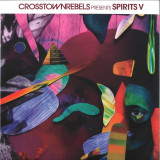
The release of Crosstown Rebels’ SPIRITS compilation is always a bastion moment for the label. The first edition came to prominence in 2017 and we’ve been graced with an annual compilation ever since, showcasing a consistent habit to champion established artists and breakthrough ones alike. Now, Crosstown Rebels’ lauded SPIRITS series will see the light of day once more in June, with the release of SPIRITS V.
NYC-native Layla Benitez leads proceedings with Fides, a progressive-leaning, introspective number that retains an inherent danceability throughout. It kicks off the compilation with a driving energy, one that’s perfectly matched by Trabajar - the Crosstown Rebels debut of recent Hot Creations inductee Mr.Diamond.
A techy-inspired cut, punchy four-four drum patterns create a distinctive late-night feel, as UK-talent Denney soon arrives with Kill The Soundboy. Showcasing the groove-laced house sound with which he’s become best known, the near seven-minute piece is sure to light up many a club setting this year, paving the way for Talk To Me. It’s a collaborative venture between Munich-based artist ASK:ME and El Muerto, with Soulfoot featuring on vocals. Retaining a vintage Detroit style, the fast-paced tempo creates a natural excitement before Romanian-born mainstay GruuvElement’s gifts us the minimal-toned Boom Room.
Building with tribal-like percussion and salsa-inspired instrumentals, it’s a playful excursion into dance music’s outer realms, paving the way for young Peruvian producer Chinonegro with My Moment. Whether it be the pluck of a guitar string or a jazzy trumpet solo, there’s an inherent authenticity to the six-minute piece, as a mid-track breakdown gives way to whispering hats and a rhythmic underlying backbone.
The penultimate offering comes from French-born, London-based regular Maglia, who serves up the enchanting Rayiys. The chirping of birds resides atop an ever-changing bassline, leaving us open and ready for the VA’s closing saga: Thanks Moon, by Spain’s I AM JAS. A heady combination of beautiful lyrical contributions combines with softly moving electronic elements, to leave us in a state of calm, inward reflection. Rounding off proceedings on a note of quietude, it reminds us of the final moments in clubland, transporting our psyche to sunrise, fond memories and everything in between.
Over a period of nineteen years, Damian Lazarus’ Crosstown Rebels has evolved into a world-renowned institution, garnering global audiences thanks to a consistent schedule of quality releases. In years since it’s earliest beginnings, the likes of Maceo Plex, Art Department, Seth Troxler, Ali Love, Mathew Jonson, Pier Bucci, Acid Pauli, Dennis Kurtel, Francesca Lombardo, Glimpse, Aphrohead, Fur Coat and a plethora of other figureheads have all found their home on the label.
The roster is international, showcasing how Crosstown has shaped a truly global scene. Releases are born in different continents by artists who hail from different countries, resulting in a sound that resonates worldwide. Perhaps most pivotal to the label’s success is its musical output: no part is governed by boundary or genre. It’s underpinned by a truly eclectic sound, one that reflects the diversity of Damian’s love for music itself. An album from drum and bass icon DJ Krust here, a maiden LP from Audiojack there… traversing genres has been Damian’s forte for decades - and Crosstown epitomises that as a result.
- Pebolim
- Pega Leve
- Compro Ouro
- De Quebrada
- De Boas
- Quebra Queix
Ladies and Gentlemen, meet Jogo Duro, a collaboration between Ilhan Ersahin and some outstanding São Paulo musicians Guizado, Ze Nigro, Samuel Fraga, Chicao & Tony Gordin who also happen to be great friends. These are players who will be familiar to those following the careers of Céu, Otto, Curumin, Tulipa Ruiz and the late, great Gal Costa. This record is the result of the amount of time Ilhan has spent in São Paulo over the last decade due to putting on the Nublu Jazz Fest there every year. With all the contacts, connections and friendships formed over the course of making an annual music festival happen, musical cross-pollination (usually simply referred to as "jams") was inevitable but this time it was decided to do it in a studio with tape rolling rather than on stage, which is certainly a more productive approach than merely talking about it over beers at a local bar! Everything happened fairly spontaneously over three days in the studio, everybody brought songs, ideas and creative energy and before you know it an album was born
Blue Vinyl[21,64 €]
180GM BLACK VINYL : 500 PRESSED WORLDWIDE.
Furthermore, Billy Mahonie now have their own label, Whistling Sam Projects, an almost sold-out London launch show at The Lexington on May 4th, and they are confirmed to play Portals Festival Saturday May 25th in East London. After nearly quarter of a century, Billy Mahonie are very much back.
Formed in the first wave of British post-rock alongside the likes of Mogwai in the late 90s, John Peel favourites Billy Mahonie are set to return with the first new music from their original line-up in some twenty-four years. Whilst their debut album ‘The Big Dig’, released in 1999 on Too Pure Records, is considered a classic of the post rock genre, Billy Mahonie always crafted their intricate music with memorable hooks and melodies and performed it with energy and gusto. Theirs was not an aimless, meandering sound, instead the songs and attitude were rooted in punk rock, and still are. Billy Mahonie put the rock into post-rock.
Set for release this coming May 24th via Whistling Sam Projects, ‘Field Of Heads’ sees the band returning with their classic original line-up of Gavin Baker (guitar), Howard Monk (drums), Hywell Dinsdale (bass and guitar) and Kevin Penney (bass and guitar). Whilst this line-up has been semi active for a few years, no new material came to fruition. After their last gig in 2017, however, the band decided it was time to get back into the studio, but with two members living abroad new challenges were faced, but ideas were shared, old ones were resurrected and finally in October of 2019, Billy Mahonie were back in the studio.
Recorded over two long weekends on either side of the Covid 19 lockdowns, the band tracked at The Church studios, owned by their former collaborator and front of house engineer Paul Epworth, with senior engineer Luke Pickering at the controls, allowing ‘Field Of Heads’ to quickly take shape.
New single ‘Kaiju’ gives the music world the first taste of ‘Field Of Heads’ and right from the off, it’s classic Billy Mahonie. Immediately bursting into life with the energy and melody that is so unique to their sound, Howard’s driving drums thrust the music ahead as the guitars and synths weave their way around them. Intricate and shifting, but never at the expense of a tune that sticks in your head.
“This one came from a chord progression myself and Gav first tried out jamming in 2010,” explains drummer Howard. “Needless to say, when Hywell and Kev got their hands on it, it became something no-one ever envisaged. Kev's great title is, of course, the Japanese name for the subgenre of monster-based science fiction. A frenetic riff opens the song and for a counter guitar part only two options remain, play in the minimal gaps or find an overarching theme. We chose both. Kaiju films influence the additional Synths, echoes of those early Japanese movie themes. Some people we have played this to in advance have suggested this track is one we should lead with, as it is kind of where we left off. We agree. It rocks pretty hard. And is a bit funky too. What’s not to like?!”
Furthermore, Billy Mahonie now have their own label, Whistling Sam Projects, set up for global distribution through SRD, an almost sold-out London launch show at The Lexington on May 4th, and they are confirmed to play Portals Festival Saturday May 25th in East London. After nearly quarter of a century, Billy Mahonie are very much back.
Certainly one of the most obscure and perhaps one of the most fascinating work of the English jazz revolution. Master of ceremonies is cellist Paul Buckmaster, known for his work with the Third Ear Band and for his (later) collaborations with Miles Davis, David Bowie and Elton John. Chitinous is his the only album as leader and it was recorded between 31 March and 13 April 1970, by an orchestra of no less than 51 players, with violins, violas and cellos. In this enormous line-up we find the cream of English musicians involved, starting with trumpeter Ian Carr and ending with drummer John Marshall. The leader is on cello, his main instrument, but also on keyboards, which he shares with the excellent Pete Robinson. The music is organized in suites, with very broad suggestions that draw from classical and contemporary music and then move back into jazz territory.
180GM BLACK VINYL : 500 PRESSED WORLDWIDE.
Furthermore, Billy Mahonie now have their own label, Whistling Sam Projects, an almost sold-out London launch show at The Lexington on May 4th, and they are confirmed to play Portals Festival Saturday May 25th in East London. After nearly quarter of a century, Billy Mahonie are very much back.
Formed in the first wave of British post-rock alongside the likes of Mogwai in the late 90s, John Peel favourites Billy Mahonie are set to return with the first new music from their original line-up in some twenty-four years. Whilst their debut album ‘The Big Dig’, released in 1999 on Too Pure Records, is considered a classic of the post rock genre, Billy Mahonie always crafted their intricate music with memorable hooks and melodies and performed it with energy and gusto. Theirs was not an aimless, meandering sound, instead the songs and attitude were rooted in punk rock, and still are. Billy Mahonie put the rock into post-rock.
Set for release this coming May 24th via Whistling Sam Projects, ‘Field Of Heads’ sees the band returning with their classic original line-up of Gavin Baker (guitar), Howard Monk (drums), Hywell Dinsdale (bass and guitar) and Kevin Penney (bass and guitar). Whilst this line-up has been semi active for a few years, no new material came to fruition. After their last gig in 2017, however, the band decided it was time to get back into the studio, but with two members living abroad new challenges were faced, but ideas were shared, old ones were resurrected and finally in October of 2019, Billy Mahonie were back in the studio.
Recorded over two long weekends on either side of the Covid 19 lockdowns, the band tracked at The Church studios, owned by their former collaborator and front of house engineer Paul Epworth, with senior engineer Luke Pickering at the controls, allowing ‘Field Of Heads’ to quickly take shape.
New single ‘Kaiju’ gives the music world the first taste of ‘Field Of Heads’ and right from the off, it’s classic Billy Mahonie. Immediately bursting into life with the energy and melody that is so unique to their sound, Howard’s driving drums thrust the music ahead as the guitars and synths weave their way around them. Intricate and shifting, but never at the expense of a tune that sticks in your head.
“This one came from a chord progression myself and Gav first tried out jamming in 2010,” explains drummer Howard. “Needless to say, when Hywell and Kev got their hands on it, it became something no-one ever envisaged. Kev's great title is, of course, the Japanese name for the subgenre of monster-based science fiction. A frenetic riff opens the song and for a counter guitar part only two options remain, play in the minimal gaps or find an overarching theme. We chose both. Kaiju films influence the additional Synths, echoes of those early Japanese movie themes. Some people we have played this to in advance have suggested this track is one we should lead with, as it is kind of where we left off. We agree. It rocks pretty hard. And is a bit funky too. What’s not to like?!”
Furthermore, Billy Mahonie now have their own label, Whistling Sam Projects, set up for global distribution through SRD, an almost sold-out London launch show at The Lexington on May 4th, and they are confirmed to play Portals Festival Saturday May 25th in East London. After nearly quarter of a century, Billy Mahonie are very much back.
- Ygm
- Little Math You
- Full Moon
- The Things That Hate Us
- Jewelry
- Get It To Get Her
- Domestic Dog
- Crewed Up Feat. Stage One, St. Paul Slim, Muja Messiah, Yz, Brother Ali, Toki
- What They Sittin' For?
- That's Not Beef, That's Pork
- The Old Style Feat. Cuts By Dj Plain Ole Bill
- You Played Yourself
- Road To The Riches Feat. Cuts By Dj Plain Ole Bill
Atmosphere, die vielen als eines der beständigsten und produktivsten Duos im Independent-Hip-Hop gelten, erreichten zwischen Juli 2007 und April 2008 einen selbst für ihre Verhältnisse außergewöhnlichen Output. Innerhalb dieser 9 Monate veröffentlichten sie ein komplettes Album, vier EPs und ein 42-minütiges Mixtape mit exklusivem Material, insgesamt 48 neue Songs, und das alles, während sie ständig auf Tournee waren. Diese rasante Veröffentlichungsreihe brachte einige ihrer bis dato populärsten Songs hervor und zeigte ihre dynamische Bandbreite, von stimmungsvoll und nachdenklich über fröhlich und optimistisch bis hin zu einem Boom-Bap-Rap-Stil, der auf dem Mixtape am deutlichsten zu hören war. Das am Weihnachtstag 2007 veröffentlichte Mixtape war ein "Geschenk" an die Fans in Form eines kostenlosen Downloads mit dem treffenden Titel „Strictly Leakage“ - eine Anspielung sowohl auf die Abkehr von den standardisierten Praktiken der Industrie zugunsten des Verschenkens der Musik als auch auf einen anderen prominenten Albumtitel aus der Ära. „Strictly Leakage“ überraschte Fans und Kritiker gleichermaßen, nicht nur, weil die Einladung zum Download ohne Vorwarnung im Posteingang auftauchte, sondern auch, weil das Projekt so einzigartig anders klang als die typischen Aufnahmen von Atmosphere. Ant griff tief in die Funk- und Soulkiste, zog Samples der Live-Instrumentierung vor und produzierte Tracks, die klangen, als seien sie neben Hip-Hop-Klassikern der späten 80er und frühen 90er Jahre entstanden. Slug rappte mit neuer Leidenschaft und klang dabei irgendwie lässiger und unbekümmerter und lieferte endlose Wortspiele mit technischeren Reimschemata als bei anderen Atmosphere-Veröffentlichungen. Gemeinsam schufen sie 13 exklusive Songs, die so klangen, als hätten sie einfach nur Spaß daran, sie zu machen, ohne den Druck irgendwelcher Album-Erwartungen - zweifellos eine ebenso lohnende Übung für sie selbst wie für die Hörer. Zu Beginn wurde „Strictly Leakage“ in einer limitierten Auflage auf Vinyl und CD gepresst, aber es dauerte nicht lange, bis sie ausverkauft waren und die Fans sich auf die Jagd nach Streams und digitalen Dateien machen mussten, um das Projekt zu hören. Nun ist „Strictly Leakage“ auf Vinyl-LP und CD zurück und wird für den Handel verfügbar gemacht, damit Hip-Hop Fans überall dieses einzigartige Kapitel in der Geschichte von Atmosphere besitzen und schätzen können.
Bruno Berle, the young songwriter and poet originally hailing from Maceió, the capital of Brazil’s Alagoas state, crafts songs that are simple, direct, and full of tender nuance. With his first album No Reino Dos Afetos (which translates to "In the Realm of Affections” and was released in 2022), Berle firmly established himself as a unique and important voice in the burgeoning scene of new Brazilian artists making a global impact, including peers like Ana Frango Elétrico, Tim Bernardes, Bala Desejo, Sessa and more. Now back with his second album, No Reino Dos Afetos 2, he stretches that further.
Bruno Berle’s music lives between two worlds – a traditional Brazilian folk talent steeped in history, and a contemporary, dreamy electronic pop; the result is songwriting that’s genre-bending, intentional, iconoclastic and consuming, spacious and sinewy and singular, a striking reflection of its composer while leaving space for the listener to settle in. The album follows Bruno’s relocation to São Paulo, and the songs are a reflection of his past and present. A rebuke of former categorizations of his work in Brazilian music scenes, and an idea of where his music can move, unfettered.
Berle’s music is purposeful in being a true portrait of himself, and a reflection of the music, art, and fashion scenes he personally moves through. Berle aims to provide an entrypoint for Black queer joy in his music, in his storytelling, in his presence and vision as a creative. For him, it feels subversive to be playing MPB laced with dubstep and lo-fi, a sort of intentional sacrilege, capturing a dialogue of modernity in traditional music.
Berle wrote most of the arrangements and co-produced his new album, Reino Dos Afetos 2 with longtime friend and musical partner Batata Boy, who is also from Maceió; the album was recorded in Rio de Janeiro, Maceió, and São Paulo, his new home, and picks up the conversation begun in 2022 on Berle’s debut album No Reino dos Afetos. Both records are the result of a nonlinear but coherent seven-year music creation process culminating in these albums, holding hands across space and time.
“Tirolirole,” the first single from the record, was released at the end of 2023; sun-soaked rhythms and soft voice coat the song, the lilting refrain of “Tirolirole” throughout – hushed, gentle, but somehow almost tactile, a golden-hour moment unlocked in the mind. “Tirolirole” is a triumphant future classic about the temporality of a blossoming love, with Bruno’s stunning vocal soaring over melodies which ebb and flow like the waters on the Atlantic shore. Of the track, Berle explains: “Despite ‘Tirolirole’ being an expression that evokes my childhood, just like the light words about nature, the harmony, and the poetry are epic, carrying a great hope for love.”
In fact, the guiding theme of No Reino dos Afetos 2 is a relationship, unfolding in the arc of a weekend. It traverses the innocence of an early young love, how that can be formative, can stretch on to take new shapes, or shape you. The album happens at the genesis of meeting someone and falling for them, before the relationship is thrown into overdrive – set in a big city, against a backdrop of major life changes, rising energy, the sound of São Paulo.
Something transcendental emerges in “Dizer Adeus,” with an arrangement that echoes a gospel atmosphere (evangelical and Catholic environments were pivotal to Berle’s upbringing). On “É Só Você Chegar,” piano and flute gracefully intertwine, a dance, while “Quando Penso” skews sparser, the voice-and-guitar minimalism somehow cultivating an entirely different shape – somehow both cozy and melancholy, with the background sound of a rainy day. Coupled with the lo-fi aspects that shape much of the album’s personality in the vocals and the production, No Reino Dos Afetos 2 is meticulously elaborated by Berle’s sonic alchemy, like on the mid-album instrumental “Sonho,” which feels like floating. “It’s the apex. It’s when lovers are sleeping together,” Berle explains of the feeling he wanted to encapsulate in the song.
On “Love Comes Back” Berle interprets Arthur Russell, the late Iowa musician who only reached greater visibility after he died in 1992. “His way of making music is similar to mine,” Berle explains. “He sings in a more fragile way, has more of an experimental way of recording, letting ‘chance’ appear in the final work.”
Even so, Berle doesn’t want his music to be buried in sentimentality – and the purposefulness of his craft serves as a sort of north star. The production, the arrangements, his restraint and intentionality in crafting his songs feel just as vital as their emotional cores. His songwriting is amorphous, fluid, an encompassing genre-bending movement in-and-of-itself, quietly daring. The songs are often in conversation with other works – drinking in fountains as diverse as the filmmaking of Ingmar Bergman, the poetry of Walt Whitman, the rhythm of Djavan, and the painting of Maxwell Alexandre. Musically he weaves together a rich tapestry of Brazilian folk, UK 2-step garage/dub, trip hop and sun soaked west coast songwriters; something akin to the worlds of Milton Nascimento, Arthur Russell, James Blake, Feist, and Sade colliding into one. But even then No Reino Dos Afetos 2 floats separately, a romanticism driven by a simplicity and intimacy, an open-ended possibility, Berle’s singularity as an artist at the helm of the ship.
Both Tymon Dogg and Richard Dudanski had musical roots playing in The 101'ers with future Clash singer/guitarist Joe Strummer. All three shared a deep love for southern Spain, due perhaps to the influence of the Romero sisters, Paloma (later "Palmolive" of The Slits) and the artist Esperanza, who were among the first Spanish punk refugees in London. Tymon's career began with beguiling interactions with Apple Records, The Moody Blues and future Led Zeppelin members John Paul Jones and Jimmy Page before he discovered his true musical self as a punk / folk experimentalist, opening shows for the likes of The Slits, Raincoats and Pop Group and becoming the longest-running musical foil in Strummer's career, continuing into The Clash and Mescaleros. Similarly, Richard played in Basement 5, Public Image Ltd, The Raincoats and others before following Esperanza back to Granada...which subsequently became second home to Tymon and Joe. Spain is not without its own punk heroes, and chief among them was Granada's Antonio Arias, another pal of Joe's and leader of Spain's musical heroes, Lagartija Nick, which also included Dacoits members Juan Codorniu and JJ Machuca. Antonio sings the albums two Spanish-language songs. while Tymon sings the other nine...and there's an instrumental, "Mongols", which the band considered too epic as a stand-alone instrumental to mess with! Tymon sings three songs from his past: "The Wheel Of Life And Death" has been heard before as a live bonus track on the expanded reissue of "Battle Of Wills", "Conscience Money" was heard in a very different version on the impossible-to-find "Made Of Light" album, and an embryonic take of "Something To Prove" turned up the even rarer 1989 solo album, "Relentless". If you imagine the playful elasticity of "Sandinista!" recast into a more straightforward record, with Tymon taking the lead on something more than that album's "Lose This Skin", you're halfway there. Guests include Killing Joke bassist / famed producer Youth and Dr Robert from The Blow Monkeys
As mood changers go, this track is up there with the best. Last year whilst DJing with miche at Shapes festival in the snow-capped mountains of Switzerland, a breathtaking yet ominous Alpine sky suddenly became a picture postcard moment. The clouds parted and a double rainbow formed, as miche dropped Studio Rio's bossa nova remake of Bill Withers’ all-time classic 'Lovely Day'. From there, the dancefloor shifted gears and morphed into full-swing feel-good vibes, in a beautiful, spontaneous moment nobody could have planned for.
Mr Bongo now proudly presents a reissue of this brilliant, bossa-channelling Bill Withers reinterpretation from Studio Rio’s 2014 release ‘The Brazil Connection’. Masterminded by the German Grammy award-winning Berman Brothers, the project was born out of their deep love of Brazilian music. “Our goal was to bring the Brazilian joie de vivre to iconic performances by well-known artists. What would these classic songs sound like had they been recorded in the studios of Rio de Janeiro in the first place, with the best Brazilian musicians and arrangers?” the brothers reflect.
Capturing the life force of Brazil, the beating heart that is its music, they set out to find the musicians who would fit best with their concept. Landing in Rio in 2013 a series of coincidences led to them being introduced to their idols Marcos Valle and Roberto Menescal, who both agreed to come on board. The Berman Brothers also wanted to find some of the musicians who recorded with one of Brazil’s most influential composers Tom Jobim. “Fifty years after Jobim made the music that really defines bossa nova, we found that many of his sidemen were still active, including Paulo Braga of Jobim’s famed rhythm section. It was magic; everything just fell into place.”
There's no question that the original of ‘Lovely Day’ is up there as one of the most feel-good, spirit-lifting anthems of all time. Here the brothers, with the help of a whole host of Brazil’s finest musicians, rework Bill’s soul-fuelled groove into a bossa nova slice of sunshine. With the blessing of Bill and Sony, they were given access to the original multitracks so they could incorporate Bill’s vocals perfectly into the new arrangement.
Joy-injected horns and bouncing double bass blend with the smile-inducing samba flavour of Pretinho da Serrinha’s cavaquinho playing. Tying it all together Torcuato Marinao who worked with the likes of Gal Costa, Gilberto Gil and Caetano Veloso, completes the line-up as arranger of the songs.
The perfect end-of-the-night track, mood lifter or soul warmer, remakes don’t get much better than this.
“Suddenly it’s ok to be a square” - Twelve Cubic Feet, a clear case of a band which should have been bigger than The Beatles but, for some malignant reason, became a blurry footnote in the history of underground music. Formed from the ashes of Exhibit A in the Spring of 1981, the band disappeared leaving no trace shortly after 1983. During their brief existence they released a series of stickers, a monthly newsletter, two cassette tapes and their incomparable ‘Straight Out Of The Fridge 10”, which was at the very top of our dream records to release since we started Sealed Records. Twelve Cubic Feet released this perfect 22 minute 7 track album in 1982 on Namedrop Records (home to Doof, Philip Johnson and Cold War and ran by Philip Johnson and 12CF guitarist Paul Platypus). It is a glorious scratchy DIY indie pop gem with a post punk spirit. The sound is naive and fragile yet very addictive. Based around jangly clean guitars, drums that are on the edge of falling apart, haunting keyboards and a female vocalist that has a knack for a golden pop hook. Hard not to fall in love with. It’s beautiful with a ragged charm that deserves to be heard by the masses. Anarcho Indie pop anyone?? The band played a lot of the anarcho punk haunts of the early 80’s - Autonomy Centre in Wapping, Centro Iberico and London Music Collective and were equally heralded by punks (Andy Martin from The Apostles released one of their tapes) and the DIY music crowd. The line up changed after the 10” and they recorded a Joe Foster produced demo and fell in with Alan McGee's Communication Club crowd. Twelve Cubic Feet burned bright for just a handful of years and now it’s time to burn bright again. Hopefully this reissue will help them reverse one of their sticker statements “today we’re nobodies but tomorrow you’ll know who we are”. This reissue comes with the 16 page booklet that came with the original 10". Twelve Cubic Feet feature members who did time in bands such as Khmer Rouge, The Reflections, Solid Space, Doof and What Is Oil? Amongst others. For fans of the Marine Girls, Girls at our Best, Hornsey At War, Swell Maps and Postcard Records
Sonic Behavior by Driftmachine & Ammer is an album exploring the origins of sound, noise, and various music genres. Alongside lyrical declarations of love for noise ("Song To Noise"), the album delves into sonic reflections on how beauty and emotion emerge from mundane vibrations in the air ("The Siren Is A Simple Device"). For the first time, the analog sound researchers of Driftmachine (Andreas Gerth, Florian Zimmer) incorporate spoken language and noise into their sound research. They have collaborated with word and sound artist Andreas Ammer, renowned for his radio plays with Acid Pauli, aka Console ("Spaceman 85"), or FM Einheit ("Radio Inferno," "Symphony of Sirens").
In "The Siren Is A Simple Device," the words are spoken by 81-year-old musician and poet legend Ted Milton (Blurt, Loopspool). Despite its simplicity and obvious ability to produce high volumes, the siren has led a marginal existence as a musical instrument. Yet, it is capable of evoking the most intense emotional states in the listener in the shortest possible time, like almost no other sound-producing mechanism. "Sonic Behavior" capitalizes on this fact. The familiar hypnotic sounds of Driftmachine are accompanied by a siren organ inspired by the revolutionary Russian futurist Arsenij Avranov and built by Andreas Ammer, while the lyrics talk about the simple physical reasons behind the sound chaos that has just been unleashed: A siren ... chops the air into sound.
The core of the album is "Song To Noise," an electro-acoustic mini-symphony about the beauties of noise and all its producers, which is based on a poem by the British poet Deryn Rees-Jones and spoken by the poet herself and Alexander Hacke (Einstürzende Neubauten, Hackedepicciotto). Driftmachine & Ammer develop a soundtrack that is as powerful as it is loud and danceable (which is why the LP also includes a textless version of the composition).
"Sonic Sculpture" is the zenith of the work: a text/music track spoken by Ted Milton, which creates the possibility of a sound sculpture that encompasses the universe: What if one could imagine the infernal sound that encompasses all conceivable harmonies at the same time? A piano does when you throw it down an earthly staircase (the epitome of music is a piano falling down the stairs) through silent space to the next theoretically life-filled, Earth-like planet, Proxima Centauri B. The radio makes it possible. Driftmachine & Ammer tried it. The result will be heard there in 4.24 light-years. On planet Earth, the time has come on May 2, 2024. On this day, Sonic Behavior will be released, a conceptual album by Driftmachine & Ammer exploring sound, its creation, and its power.
"All our dreamers lose to the light" - from "Angels Go Home" When the pandemic began, and the world shut down, so did the process of creating for Iron & Wine's Sam Beam. In its place was a domesticity that the singer hadn't felt in a long time, and although it was filled with many rewards, making music was not one of them. Reflecting on that time, Beam notes: "I feel blessed and grateful that I and most of my friends and family made it through the pandemic relatively unscathed compared to so many others, but it completely paralyzed the songwriter in me. The last thing I wanted to write about was COVID, and yet every moment I sat with my pen, it lingered around the edges and wouldn't leave. This lasted for over two years." The journey back began with a recording session in Memphis to record a handful of Lori McKenna tracks for the EP Lori with friend and producer Matt Ross-Spang. The cathartic experience reconnected Beam with his love for making music, and soon enough the paralysis had passed, and he was finishing lyrics and booking studio time for what would become Light Verse. Light Verse was recorded with engineer and mixer Dave Way at his studio Waystation high up in Laurel Canyon (with an additional session at Silent Zoo Studio with a 24-piece orchestra), with a host of talented musicians joining Beam: Tyler Chester, Sebastian Steinberg, David Garza, Griffin Goldsmith, Beth Goodfellow, Kyle Crane, and Paul Cartwright. And, Fiona Apple joined Beam on vocals for the duet "All In Good Time." Beam lyrically once again takes focus on a series of both fictional and personal insights, filled with desperate characters and wide-eyed optimists, offering promise and a dose of heartache, tears and laughter, life and love. Taking stock in the album's title, he jokes, "Light verse is a form of poetry about playful themes that often uses nonsense and wordplay, and it's my first official Iron & Wine comedy album!_. Just kidding_." While true this may be Iron & Wine's most playful record, Beam says the title mostly reflects the way the songs were born with joy after the heaviness and anxiety of the pandemic. Where recent records like Beast Epic or Weed Garden gave air to the disquiet of middle-aged frailty and brokenness, these songs trade that for the focus acceptance can bring. Moment by moment, they delight in being pointed or silly (or both) and attempt beauty over prettiness. Light Verse arrives April 26th, and it's Iron & Wine's seventh full-length overall and fifth for Sub Pop Records. Fashioned as an album that should be taken as a whole, it sounds lovingly handmade and self-assured as a secret handshake. Track by track, its equal parts elegy, kaleidoscope, truth, and dare.
4 track 7” on green vinyl . Individual hand painted sleeves. Limited to 500 copies
worldwide. Includes poster.
Part of the Optic Sevens 5.0 Reissue Series.
Originally released in 1986 on Australian label Voyeur Records.
This is the first time that the single has been released in the UK.
Even As We Speak is an indie band from Sydney, Australia. Formed in the mid 1980s, founding members Matthew Love (guitar, banjo, vocals) and Mary Wyer (vocals, guitar) were later joined by Rob Irwin (bass) Anita Rayner (drums, banjo, mandolin), Julian Knowles (guitar, keyboards, production), and Paul Clarke (guitar, vocals.)
After a series of vinyl releases on Australian independent labels including Phantom Records, and success on the Australian indie scene, they came to the attention of BBC Radio 1 DJ John Peel who started to play the band’s ‘Goes So Slow’ Phantom Records release on his show. This brought them to the attention of UK audiences and began a relationship with UK indie label Sarah Records.
The band released several singles and an album on Sarah Records, three of which reached the Top 5 of the Melody Maker and New Musical Express UK independent music charts in 1992 and 1993.
You are listening to a Studio Teepdek production
Performed by The Kryng
Mark ten Hoor - guitar
Peter Kroes - bass
Arjan Spies - drums, guitar
Paul Zoontjens plays the Planet and piano on 'Laisse-Moi Faire!'
Recorded, produced, mixed and mastered by Arjan Spies at Studio Teepdek
Lyrics translated by Lou Szymanowski
Irresistible Brazilian blues reggae from the heart of the Amazon rainforest. A psychedelic guarana induced trip and ode to the fading indigenous cultures and shifting hegemony in Brazil. This one-off release by Manaus native Natacha Fink was originally written in 1986 as the lead track on NOSSA MUSICA - a compilation celebrating regional music from the Amazon. Emerging out of the dictatorship, Natacha and her fellow artists rejected the aesthetic standards driven by internal colonialism and sought out new ways to express themselves away from the styles of the dominant Rio-São Paulo axis. What surfaced was a melodic blend of genres, with Natacha’s haunting vocals and playful lyrics gliding over an arrangement of guitars and double bass. Vocal backing is led by Torrinho, well known for his layered composition style, whose song ‘Porto de Lenha’ is recognised throughout Amazonas as an unofficial anthem. Hidden within the Amazon, Pirarublue lies in that wonderful space between innocence and honesty. Proudly exploring cultural and ecological spaces through a refreshing, ghostly infectious groove. For fans of Gal Costa, Elis Regina, Chico César, Jorge Ben Jor and Joni Mitchell.
Accompanying Natacha’s beguiling single is the field recording “Unseen Songlines” by artist and academic Nimalan Yoganathan. The composition immerses the listener in the soundscapes of Mamori Lake, a remote village inside the Brazilian Amazon. Nimalan explores the ambiguous perception of sounds emanating from the dense rainforest and deep beneath the Amazon River, where we hear the sounds but cannot see their sources: an acousmatic concert performed by the rainforest itself. Processed field recordings of birds and frogs, as well as underwater hydrophone recordings of dolphins and fish subtly weave throughout electroacoustic textures and beats. The listener is invited to hone in on the musical subtleties hidden throughout the environment. The compositional methods employed in this piece draw on the concepts of sonic rupture, presence, absence and memory found in the dub music tradition.
This limited edition 7” by Sticky Buttons puts these two outlying works together for a unique listening experience, combining the human and more-than-human experience of life at the heart of Brazil. Both uniquely Amazonian but with a universal appeal.
Bruno Berle, the young songwriter and poet originally hailing from Maceió, the capital of Brazil’s Alagoas state, crafts songs that are simple, direct, and full of tender nuance. With his first album No Reino Dos Afetos (which translates to "In the Realm of Affections” and was released in 2022), Berle firmly established himself as a unique and important voice in the burgeoning scene of new Brazilian artists making a global impact, including peers like Ana Frango Elétrico, Tim Bernardes, Bala Desejo, Sessa and more. Now back with his second album, No Reino Dos Afetos 2, he stretches that further.
Bruno Berle’s music lives between two worlds – a traditional Brazilian folk talent steeped in history, and a contemporary, dreamy electronic pop; the result is songwriting that’s genre-bending, intentional, iconoclastic and consuming, spacious and sinewy and singular, a striking reflection of its composer while leaving space for the listener to settle in. The album follows Bruno’s relocation to São Paulo, and the songs are a reflection of his past and present. A rebuke of former categorizations of his work in Brazilian music scenes, and an idea of where his music can move, unfettered.
Berle’s music is purposeful in being a true portrait of himself, and a reflection of the music, art, and fashion scenes he personally moves through. Berle aims to provide an entrypoint for Black queer joy in his music, in his storytelling, in his presence and vision as a creative. For him, it feels subversive to be playing MPB laced with dubstep and lo-fi, a sort of intentional sacrilege, capturing a dialogue of modernity in traditional music.
Berle wrote most of the arrangements and co-produced his new album, Reino Dos Afetos 2 with longtime friend and musical partner Batata Boy, who is also from Maceió; the album was recorded in Rio de Janeiro, Maceió, and São Paulo, his new home, and picks up the conversation begun in 2022 on Berle’s debut album No Reino dos Afetos. Both records are the result of a nonlinear but coherent seven-year music creation process culminating in these albums, holding hands across space and time.
“Tirolirole,” the first single from the record, was released at the end of 2023; sun-soaked rhythms and soft voice coat the song, the lilting refrain of “Tirolirole” throughout – hushed, gentle, but somehow almost tactile, a golden-hour moment unlocked in the mind. “Tirolirole” is a triumphant future classic about the temporality of a blossoming love, with Bruno’s stunning vocal soaring over melodies which ebb and flow like the waters on the Atlantic shore. Of the track, Berle explains: “Despite ‘Tirolirole’ being an expression that evokes my childhood, just like the light words about nature, the harmony, and the poetry are epic, carrying a great hope for love.”
In fact, the guiding theme of No Reino dos Afetos 2 is a relationship, unfolding in the arc of a weekend. It traverses the innocence of an early young love, how that can be formative, can stretch on to take new shapes, or shape you. The album happens at the genesis of meeting someone and falling for them, before the relationship is thrown into overdrive – set in a big city, against a backdrop of major life changes, rising energy, the sound of São Paulo.
Something transcendental emerges in “Dizer Adeus,” with an arrangement that echoes a gospel atmosphere (evangelical and Catholic environments were pivotal to Berle’s upbringing). On “É Só Você Chegar,” piano and flute gracefully intertwine, a dance, while “Quando Penso” skews sparser, the voice-and-guitar minimalism somehow cultivating an entirely different shape – somehow both cozy and melancholy, with the background sound of a rainy day. Coupled with the lo-fi aspects that shape much of the album’s personality in the vocals and the production, No Reino Dos Afetos 2 is meticulously elaborated by Berle’s sonic alchemy, like on the mid-album instrumental “Sonho,” which feels like floating. “It’s the apex. It’s when lovers are sleeping together,” Berle explains of the feeling he wanted to encapsulate in the song.
On “Love Comes Back” Berle interprets Arthur Russell, the late Iowa musician who only reached greater visibility after he died in 1992. “His way of making music is similar to mine,” Berle explains. “He sings in a more fragile way, has more of an experimental way of recording, letting ‘chance’ appear in the final work.”
Even so, Berle doesn’t want his music to be buried in sentimentality – and the purposefulness of his craft serves as a sort of north star. The production, the arrangements, his restraint and intentionality in crafting his songs feel just as vital as their emotional cores. His songwriting is amorphous, fluid, an encompassing genre-bending movement in-and-of-itself, quietly daring. The songs are often in conversation with other works – drinking in fountains as diverse as the filmmaking of Ingmar Bergman, the poetry of Walt Whitman, the rhythm of Djavan, and the painting of Maxwell Alexandre. Musically he weaves together a rich tapestry of Brazilian folk, UK 2-step garage/dub, trip hop and sun soaked west coast songwriters; something akin to the worlds of Milton Nascimento, Arthur Russell, James Blake, Feist, and Sade colliding into one. But even then No Reino Dos Afetos 2 floats separately, a romanticism driven by a simplicity and intimacy, an open-ended possibility, Berle’s singularity as an artist at the helm of the ship.
Coloured[29,83 €]
EIGHTEEN AND I LIKE IT… (MISC. COLOURED VINYL))if you survived trips 1-17 with one tiny speck of psychedelic sunshine intact, Brown Acid The 18th Trip will be your coming of age nightmare. Vintage underground '70s hard rock, coming at you from bizarre angles, local scene wasteland America when everybody was out for themselves and the drugs went bleak. The guitars kill, the attitude is twisted, even the sex is headed down the wrong road. Real people, no compromise, pure and potent. Get stoked, take the 18th Trip and know that the artists will get paid for pulverizing your soul! "People… are you ready?, 'cause the music now is getting so heavy"… Back Jack out of St. Louis, Missouri in 1974 launch our trip with "Bridge Waters Dynamite". It's an invocation to rock flashing on Mark Farner whooping up a Grand Funk crowd, then getting to the point quickly with berserk guitar assaults. Heavy riff with power chord stalks beneath as you take their advice… get loose and blow up the past. Smokin' Buku Band dropped my jaw with the audacious track "Hot Love" coming on like some fractured fever dream burlesque of Led Zep moves out of Hollywood in 1980. Swooping elongated vocals above, a total Zep chord move at the end of each verse. Writer/producer Steve Shauger aka Shag Stevens gets a brilliantly messed up sound quality here, the ideal polar opposite of slick. The extended guitar break is an epitome of serendipitously crude virtuosity, simply outrageous! Coming at you from way outta left field is "Moby Shark" by Atlantis, a hilarious and strange Baltimore pre-punk vibed dose of D.I.Y. meets hard rock. Lon Talbot is the mastermind, the flip side of this impossibly rare Mekon Records label single was featured in an obscure 1978 B-movie titled "The Alien Factor". Follow the lyrics closely, when the ominous jaws jaws jaws start coming after you you you… the song's big hook is so preposterously catchy the shark attack feels like good news. Inquiring minds should know that the band formerly known as Atlantis can now be found by searching for the Lon Talbot Group! Tommy Stuart and the Rubberband's "Peeking Through Your Window" from 1970 opens with a spooky organ riff, slips into a gushy fuzz/organ groove akin to "Mustache In Your Face” by Pretty. The singer creates downright creepy vibes, a stalker peeking through the girl's mind like a peeping Tom at the window up to no good. The lyrics evoke a disturbing scenario. Tommy Stuart also made a strange LP titled Hound Dog Man in 1977 and some terrific rare garage singles under the names Magnificent Seven and The Omen & Their Love in the mid '60s. Nothing better than an angry two chord guitar attack with cowbell to set the stage for this rant about getting "Ripped Off" by love. Taken from their rare 1977 LP on Dynamite Records, Chicago Triangle was Marvey Esparza, Dave Guereca, Jose 'Tarr' Perez and Robert Aguilera. They unleash such strong brain-scrubbing wah wah frenzy in the guitar break here that it seems to perversely mock it's own intensity! Like I said, Brown Acid the 18th Trip comes at you from all kinds of uncanny angles. Damnation of Adam Blessing out of Cleveland, Ohio unleashed a stone killer psychedelic hard rock classic "Cookbook" in the late '60s, this track "Nightmare" from 1973 has them cooking again at full power. A different singer, name change to Damnation and then Glory, unleashing a deadly dose of dark progressive heavy rock drama peaking when spooky 'oooo-wa-oooo' background vocals emerge during a bizarre spoken bit. It unfolds like a mini-epic and includes some remarkably brutal guitar and turbulent organ, too. "Swing your sword, all aboard… bid farewell to the dreamer" Dalquist exclaims. Cynical view of human nature, idealism is over, war is coming, it always does. Opens with a cold menacing riff and atmosphere reminiscent of "Synthezoid Heartbreak" by Maya. Mournful despondent vocals ride an insistent churning groove, gnarly guitar break moves into free noise territory. This rare track is from a local various artists benefit album titled Kangaroo Jam issued for the Waco Family Abuse Center in Texas circa 1980. The Pawnbrokers "Realize" is prime proto heavy rock emerging out of psychedelic garage roots in 1968 Fargo, North Dakota. Unusual arrangement, terrific sustain guitar tones like on the first Blue Cheer LP, even a rip on Hendrix "Manic Depression" with unison voice and guitar ascent near the end. They made three 45s and were active from '65 to '69. Hats off to Blake English, Kent Richey, Paul Rogne and Steve Harrison, you nailed it in just a hair over two minutes! As pure and creative as the original psychedelic garage hard rock gets. Parchment Farm from Union, Missouri gigged with the likes of ZZ Top and Foghat back in the day and unleashed the amazing "Songs Of The Dead" in 1971. Primitive riff/chord pattern dosed with some funky prog moves, sky turning black, 'is this heaven or hell' type disoriented confusion… may as well grab your guitar and sing songs to the dead. Robert 'Ace' Williams on bass, Paul Cockrum on guitar, Gary Reed on keys and Micky Waterman on drums, replacing Mike Dulany (R.I.P.) Cool that they use the Blue Cheer misspelling from Vincebus Eruptum for the band name! Ominous organ, thick minimalist fuzz riff, funky psychedelic wah wah flashes and freaky sex combine in one twisted dance titled "Rockin' Chair" by Brothers Of The Ghetto. Out of Chicago in 1975 with some Santana atmospherics and a delicious fuzz wah screamin' guitar break, the groove is highlighted by an off the wall vocal which sounds eerily detached in a subtly sleazy way. Rene Maxwell is the writer of this hard-rock boogie-down hybrid straight out of the twilight zone. It was issued on Ghetto, a subsidiary of the peculiar Kiderian label that released the Creme Soda LP. Now that your head is totally skewered, go Back Jack and play side one again! (Words by Paul Major)
Black[28,15 €]
EIGHTEEN AND I LIKE IT… (MISC. COLOURED VINYL))if you survived trips 1-17 with one tiny speck of psychedelic sunshine intact, Brown Acid The 18th Trip will be your coming of age nightmare. Vintage underground '70s hard rock, coming at you from bizarre angles, local scene wasteland America when everybody was out for themselves and the drugs went bleak. The guitars kill, the attitude is twisted, even the sex is headed down the wrong road. Real people, no compromise, pure and potent. Get stoked, take the 18th Trip and know that the artists will get paid for pulverizing your soul! "People… are you ready?, 'cause the music now is getting so heavy"… Back Jack out of St. Louis, Missouri in 1974 launch our trip with "Bridge Waters Dynamite". It's an invocation to rock flashing on Mark Farner whooping up a Grand Funk crowd, then getting to the point quickly with berserk guitar assaults. Heavy riff with power chord stalks beneath as you take their advice… get loose and blow up the past. Smokin' Buku Band dropped my jaw with the audacious track "Hot Love" coming on like some fractured fever dream burlesque of Led Zep moves out of Hollywood in 1980. Swooping elongated vocals above, a total Zep chord move at the end of each verse. Writer/producer Steve Shauger aka Shag Stevens gets a brilliantly messed up sound quality here, the ideal polar opposite of slick. The extended guitar break is an epitome of serendipitously crude virtuosity, simply outrageous! Coming at you from way outta left field is "Moby Shark" by Atlantis, a hilarious and strange Baltimore pre-punk vibed dose of D.I.Y. meets hard rock. Lon Talbot is the mastermind, the flip side of this impossibly rare Mekon Records label single was featured in an obscure 1978 B-movie titled "The Alien Factor". Follow the lyrics closely, when the ominous jaws jaws jaws start coming after you you you… the song's big hook is so preposterously catchy the shark attack feels like good news. Inquiring minds should know that the band formerly known as Atlantis can now be found by searching for the Lon Talbot Group! Tommy Stuart and the Rubberband's "Peeking Through Your Window" from 1970 opens with a spooky organ riff, slips into a gushy fuzz/organ groove akin to "Mustache In Your Face” by Pretty. The singer creates downright creepy vibes, a stalker peeking through the girl's mind like a peeping Tom at the window up to no good. The lyrics evoke a disturbing scenario. Tommy Stuart also made a strange LP titled Hound Dog Man in 1977 and some terrific rare garage singles under the names Magnificent Seven and The Omen & Their Love in the mid '60s. Nothing better than an angry two chord guitar attack with cowbell to set the stage for this rant about getting "Ripped Off" by love. Taken from their rare 1977 LP on Dynamite Records, Chicago Triangle was Marvey Esparza, Dave Guereca, Jose 'Tarr' Perez and Robert Aguilera. They unleash such strong brain-scrubbing wah wah frenzy in the guitar break here that it seems to perversely mock it's own intensity! Like I said, Brown Acid the 18th Trip comes at you from all kinds of uncanny angles. Damnation of Adam Blessing out of Cleveland, Ohio unleashed a stone killer psychedelic hard rock classic "Cookbook" in the late '60s, this track "Nightmare" from 1973 has them cooking again at full power. A different singer, name change to Damnation and then Glory, unleashing a deadly dose of dark progressive heavy rock drama peaking when spooky 'oooo-wa-oooo' background vocals emerge during a bizarre spoken bit. It unfolds like a mini-epic and includes some remarkably brutal guitar and turbulent organ, too. "Swing your sword, all aboard… bid farewell to the dreamer" Dalquist exclaims. Cynical view of human nature, idealism is over, war is coming, it always does. Opens with a cold menacing riff and atmosphere reminiscent of "Synthezoid Heartbreak" by Maya. Mournful despondent vocals ride an insistent churning groove, gnarly guitar break moves into free noise territory. This rare track is from a local various artists benefit album titled Kangaroo Jam issued for the Waco Family Abuse Center in Texas circa 1980. The Pawnbrokers "Realize" is prime proto heavy rock emerging out of psychedelic garage roots in 1968 Fargo, North Dakota. Unusual arrangement, terrific sustain guitar tones like on the first Blue Cheer LP, even a rip on Hendrix "Manic Depression" with unison voice and guitar ascent near the end. They made three 45s and were active from '65 to '69. Hats off to Blake English, Kent Richey, Paul Rogne and Steve Harrison, you nailed it in just a hair over two minutes! As pure and creative as the original psychedelic garage hard rock gets. Parchment Farm from Union, Missouri gigged with the likes of ZZ Top and Foghat back in the day and unleashed the amazing "Songs Of The Dead" in 1971. Primitive riff/chord pattern dosed with some funky prog moves, sky turning black, 'is this heaven or hell' type disoriented confusion… may as well grab your guitar and sing songs to the dead. Robert 'Ace' Williams on bass, Paul Cockrum on guitar, Gary Reed on keys and Micky Waterman on drums, replacing Mike Dulany (R.I.P.) Cool that they use the Blue Cheer misspelling from Vincebus Eruptum for the band name! Ominous organ, thick minimalist fuzz riff, funky psychedelic wah wah flashes and freaky sex combine in one twisted dance titled "Rockin' Chair" by Brothers Of The Ghetto. Out of Chicago in 1975 with some Santana atmospherics and a delicious fuzz wah screamin' guitar break, the groove is highlighted by an off the wall vocal which sounds eerily detached in a subtly sleazy way. Rene Maxwell is the writer of this hard-rock boogie-down hybrid straight out of the twilight zone. It was issued on Ghetto, a subsidiary of the peculiar Kiderian label that released the Creme Soda LP. Now that your head is totally skewered, go Back Jack and play side one again! (Words by Paul Major)
- A1: Sebb Junior Feat. Paula – All Of My Life (Kaidi Tatham Remix)
- A2: The Realm X Atjazz X Kelli Sae – On The Road (Kaidi Tatham Remix)
- A3: Reel People Feat. Mica Paris – I Want To Thank You (Kaidi Tatham Remix)
- A4: Daz-I-Kue Feat. Hadiya George – Pedigree (Kaidi Tatham Remix)
- A5: Eric Ericksson & Reel People Feat. Debra Debs – Don’t Hold Back On Love (Kaidi Tatham Remix)
- B1: Reel People Feat. Eric Roberson – Save A Lil Love (Kaidi Tatham Remix)
- B2: Aaries – Don’t Give It Up (Kaidi Tatham Remix)
- B3: Monkey Brothers Feat. Shaun Escoffery – Losin’ My Head (Kaidi Tatham Remix)
- B4: Sebb Junior Feat. Muhsinah – Special (Kaidi Tatham Remix)
- B5: Tony Momrelle – Fly (Kaidi Tatham Remix)
Reel People Music breathes new life into its gleaming vault of back catalogue classics with brand new series Fusion Moves. The series will offer talented music-makers the opportunity to remix and reinterpret label releases of their choosing, kicking off with soulful progressive Kaidi Tatham in the hot seat.
Tatham’s modus operandi is clear from the get-go. Opening selection Sebb Junior feat. Paula’s All Of My Life flows dreamily upon that trademark Tatham mix of organic beats, polished horns and immersive keys. As Paula rightly sings, “the beautiful can happen.” And keep happening…. Reel People feat. Mica Paris’ reworked I Want To Thank You gains elegant funk and boogie bounce, a bubblin b-line and those upweighted backing vocals adding new urgency and depth, whilst some extended bass-end manoeuvrings on the collective’s 2020 hit Save a Lil Love provide a hugely effective counterpoint to Eric Roberson’s super-smooth vocals.
Tatham switches things up for his re-take of The Realm x Atjazz x Kelli Sae’s deep afro-house burner On The Road, adding wonderfully carefree jazz-funk flow ‘n’ feeling replete with sweet synth solos and guitar licks. The snappy syncopated rhythms propelling Daz-I-Kue feat. Hadiya George’s Pedigree and Monkey Brothers feat. Sean Escoffery’s stunning Losin’ My Head align to the rich broken beat heritage for which most admirers associate him but, true to form, he continues to glide compellingly between mood and moves….
From the loose bass-guitar groove of Eric Ericksson & Reel People feat. Debra Debs’ Don’t Hold Back On Love and sultry strut and swagger of AAries’ Don’t Give It Up to Sebb Junior feat. Muhsinah’s infectiously jammin’ Special – lovingly framed by nimble jazz-piano play – and the liberatingly upbeat dressing applied to Tony Momrelle’s seminal Fly, Tatham’s sonic upholstery right across Fusion Moves is as skilful as it is impactful. One expert body of work built upon another.
Expect to hear further Fusion Moves in the coming months. Fresh twists on quality songs and sounds. Always with soulful authenticity at the heart.
On her new album Sun Without the Heat, McCalla brings more playfulness and joy than she has on previous records when she speaks to the concerns that have shaped her career, mainly including an ethos in which you must look back at lost and erased histories before you can embrace a forward vision of Afrofuturism and the importance of music making to heal and forge relationships across differences. Across Sun Without the Heat"s ten tracks, she achieves this with music that combines jazz, Haitian Twoubadou, American blues, folk and Brazilian Tropicalismo. Born in New York City to Haitian emigrants and activists, McCalla possesses a stunning mastery of the cello, tenor banjo and guitar. A founding member of Our Native Daughters alongside Rhiannon Giddens, Amysthyst Kiah and Allison Russell and an alumna of Grammy award-winning band The Carolina Chocolate Drops, McCalla has also received considerable praise and attention for her solo works, including 2014"s Vari-Colored Songs: A Tribute to Langston Hughes, which prompted the New York Times to rave that "her voice is disarmingly natural, and her settings are elegantly succinct" and 2022"s Breaking The Thermometer (4/5 review from The Guardian). Lyrically on Sun Without the Heat, McCalla draws from the writings of Black feminist Afrofuturist thinkers Octavia Butler, Alexis Pauline Gumbs and Adrienne Maree Brown, among others, with frequent themes being grief, connection and motherhood. Like these authors, McCalla is thinking hard about collaboration as a means of creative expression, community thinking, personal salvation, and rectifying social injustice. "The stories we"ve been told about ourselves and the stories that we have to learn to undo the stories we"ve been told," she explains."Sometimes these are painful stories to tell. This is especially vivid in the title song, "Sun Without the Heat.""
Wewantsounds is delighted to announce the reissue of Fumio Itabashi's highly sought-after album "Watarase" hailed as one of the great Japanese jazz albums and featuring Itabashi on solo piano playing an inspired mix of standards and originals. Recorded in 1981 for Denon and released in Japan the following year, the album has since reached cult status among international jazz connoisseurs, thanks to Itabashi's inventive piano playing and to its cult title track, a superb lyrical spiritual composition. Newly remastered by Nippon Columbia using their ORT mastering technology, the album reissue features original artwork including a 2 page insert with a new introduction by Paul bowler.
Locked Down And Stripped Back Volume Two features home recordings of Wedding Present classics along with a previously unreleased song: 'That Would Only Happen In A Movie'. The first volume in the series came about when David Gedge's annual festival At The Edge Of The Sea went 'virtual' in 2020 and the band recorded semi-acoustic versions of songs to be streamed. An album of the tracks was compiled and released due to popular demand. The same thing happened the following year and so Volume Two features tracks initially recorded for 2021's online festival. There's a bevy of guest stars on this second album! Jon Stewart of Platinum-album-selling Sleeper fame reprises his new role as Wedding Present guitarist but is joined here by some Wedding Present members of old. Peter Solowka, from the band's first line-up appears on 'Nobody's Twisting Your Arm' playing his second instrument, the accordion, while Hit Parade guitarist Paul Dorrington contributes to a re-working of the Top 30 single 'Blue Eyes'. Long-time Wedding Present bass player Terry de Castro returns to infuse the album with her own unique style, while current Wedding Present bass player Melanie Howard takes over the lead vocal duties on a beautiful version of 1986's 'At The Edge Of The Sea'. Last, but certainly not least, Amelia Fletcher - backing vocalist on George Best and Bizarro - also returns to the party! As on the first volume, each musician recorded and filmed their parts at home and, as before, it is fascinating to see how stripped-back arrangements bring out different aspects of these brilliant songs.
We’re hugely excited to announce the brand new album from Dee C. Lee - ‘Just Something’, out 22 March on Acid Jazz. It follows the incredible response to the new single ‘Walk Away’ and last year’s double-sider ‘Don’t Forget About Love’ / ‘Be There In The Morning’, marking the return of one of the UK’s most revered soul singers. Dee is known for her work with The Style Council, Wham!, Slam Slam and Animal Nightlife, and an illustrious solo career (including the Top 3 hit ‘See The Day’). ‘Just Something’ is her first new record since 1998, and her debut for Acid Jazz. Available on LP and CD, all pre-orders from the Acid Jazz Store will be signed by Dee.
‘Just Something’ features 11 songs: nine originals co-written by Dee, a song penned by her daughter Leah Weller, a successful singer/songwriter in her own right, and two inspired covers. Produced by Sir Tristan Longworth, the album is a soulful collection that frames her instantly recognisable vocals in luxurious horns, percussion and keys, and heritage soul with a disco backdrop. While making the record has been a collaborative process, ‘Just Something’ is nevertheless the sound of a singer in charge of her own style and direction. Her vocal delivery and phrasing steal the show throughout, bright and lilting one moment, passionate and ringing the next. She cites Chaka Khan and Jean Carn as major influences, but Lee’s voice is resolutely her own, the product of a life lived.
Inspired by classic Motown, current single ‘Walk Away’ was written by Dee with one of her ‘brothers from another mother’, former fellow Style Council member Mick Talbot, and features Talbot’s distinctive piano and Wulitzer playing on the track. Talbot also plays on another of the album’s many standouts, the Leah Weller-penned ‘Everyday Summer’.
Three of the album’s songs, opener ‘Back In Time’, first single ‘Don’t Forget About Love’ and ‘How To Love’ were co-written with Michael McEvoy and Ernest McKone, whom Dee wrote with back in the 1980s. All three songs channel her musical past, from the thrill and excitement of those early Wham! days, going out and partying, to The Style Council’s trademark jazzy soul, and expressive balladry and killer choruses, which places Lee in the lineage of classic soul singers.
Elsewhere, on ‘Anything’, co-written with Paul Barry, Dee sings her heart out on a song full of optimism and hope for the future, while ‘For Once In My Life’, the oldest song here dates back to 1998, is effortlessly commercial and has hit written all over it, with Lee empowered and regal sounding over a warm blanket of bassy funk.
The album’s two covers, meanwhile, were both suggested to Lee by Acid Jazz’s Eddie Piller. In Lee’s hands, Renee Geyer’s ‘Be There In The Morning’ is pure celebration, taking its cue from the Norman Connors version from 1979. ‘I Love You’, written by Don Blackman and recorded by Weldon Irvine in 1976, could have been written with Lee in mind. A big club tune, Dee recalls hearing it everywhere she went and I wanted to keep as close to the original vibe as she could.
Dee’s relationship with Acid Jazz the goes back to The Style Council days, and it was the 2019 documentary ‘Long Hot Summers’ that renewed Dee’s friendship with label founder Ed Piller and director Dean Rudland. We’re honoured to release this record and be a part of Dee’s return to the forefront of UK soul music.
Ltd edition classic black 7inch vinyl. The Lemonheads' long-awaited return, a slice of perfect pop, with a grittier Evan Dando at the helm. Playing all the instruments on the lead track, the new single was recorded and produced by Apollo Nove in Sao Paulo, Brazil. Evan is currently working on the first Lemonheads songs since 2006. This limited seven-inch is backed with another piece of carefully selected outsider pop, a cover of Eugene Kelly's (Vaselines and Eugenius) bittersweet 'Seven Out', on which Evan is joined by Jeff Berg on bass and Erin Rae on backing vocals.
Lewis Brooker: A Collaboration between Andy Lewis and Hugh Brooker. Andy Lewis was one of the founding fathers of legendary Camden night Blow Up and was recruited by Blur to DJ on their Parklife tour. Always a musician as much as a DJ, Andy played bass for Pimlico, Spearmint and later spent eight years performing with Paul Weller. He also signed to Acid Jazz Records in 2002 for whom he’s recorded a number of albums and singles. Hugh Brooker founded The Night Trains in 1987, who became one of the first acts signed to Acid Jazz records. He also formed The Humble Souls with UK rapper and Fatboy Slim cohort MC Wildski and released the all-time classic single “Beads Things And Flowers”, still played on the jazz dance scene to this day.
- A1: Hopeton Lewis - This Music Got Soul
- A2: Hopeton Lewis - Let Me Come On Home
- A3: The Zodiacs - Walk On By
- A4: Termites- We Gonna Make It
- A5: The Dynamites - Fountain Bliss
- B1: Hopeton Lewis - Rock A Shacka
- B2: Hopeton Lewis - Don't Cry
- B3: The Royals - House Upon The Hill
- B4: The Tartans - Real Gone Sweet
- B5: The Tartans - Rolling Rolling
- C1: Hopeton Lewis - I Don't Want Trouble
- C2: Lester Sterling - Lester Sterling Special
- C3: The Dynamites - If You Did Love Me (Take 1)
- C4: The Tartans - Don't Take That Train
- C5: Lynn Taitt & The Jets - Batman (Early Take Version)
- D1: Hopeton Lewis - Oh Tell Me Darling (Take 1)
- D2: The Tartans - I'm Ready
- D3: Henry Buckley - Take Me Back
- D4: Roland Alphonso - Sounds Of Silence
- D5: Lynn Taitt & The Jets - Batman (Rehearsal Version)
- D6: The Federal All Stars - Merritone False Starts (Pt. 2)
Part 1[31,72 €]
repress !
The birth of rock steady portrayed in a consummate collection from the vaults of Federal Records
Most of them drawn directly from Ken Khouri's master tapes this miscellany of cool rock steady includes marvellous music from the originator of the genre, the one and only Lynn Taitt, alongside an array of Jamaica's greatest singers and vocal harmony group
American rhythm & blues fervour, boosted by a multitude of sound systems playing 78rpm records on increasingly larger sets, gripped Jamaica from the late forties onwards but, towards the end of the decade, the American audience began to move towards a somewhat softer sound. The driving rhythm & blues discs became increasingly hard to find and the more progressive Jamaican sound system operators, realising that they now needed to make their own music, turned to Kingston's jazz and big band musicians to record one off custom cut discs. These were not initially intended for commercial release but designed solely for sound system play on acetate or 'dub plates' as they would later be termed. These 'specials' soon began to eclipse the popularity of American rhythm & blues and the demand for their locally produced music proved so great that the sound system operators began to release their music commercially on vinyl and became record producers. Clement Coxsone' Dodd, Duke Reid 'The Trojan' and Prince Buster, who operated his Voice Of The People Sound System, were among the first to establish themselves in this new role and the nascent Jamaican recording industry now went into overdrive.
In 1954 Ken Khouri had numbered among the first far sighted entrepreneurs to produce mento records with local musicians (mento is Jamaica's original indigenous music) before progressing to opening Jamaica's first record manufacturing plant. Three years later he moved his operation to Foreshore Road (later renamed Marcus Garvey Drive) where, with the assistance of the inestimable Graeme Goodall, he updated and upgraded his recording studio. The importance of this enterprising move was critical to the development of Jamaican music and its influence both profound and far reaching.
"It was Ken Khouri's Federal Recording Studio, the womb that gave birth to the talented writers, artists and musicians that gave Jamaica its musical identity." Prince Buster
Federal Records was not only the place for the sound system men to record their music but it was also where they had their records manufactured and, consequently, the company enjoyed a near total monopoly on recording and record pressing in Kingston. In 1963 Ken Khouri sold his one track board to Clement 'Coxsone' Dodd, who established Studio One, and Ken imported the first stereo equipment to Jamaica and Federal began making stereo records. The following year WIRL (West Indies Records Limited) opened but the competition served to drive the company on to higher heights. Ken Khouri continued to work on his own productions and, in 1966, the seven inch release of Hopeton Lewis' 'Take It Easy', recorded under the guidance of Trinidadian guitarist Lynn Taitt, ushered in the rock steady era.
These two essential albums showcase a stunning selection of well known hits, and not so well known rarities, from the vast Federal catalogue. All tracks have been transferred direct from the master tapes and assembled with the invaluable assistance of Ken Khouri's son, Paul Khouri, who generously gave Dub Store unlimited access to the Federal tape vaults. The extensive liner notes feature extracts from extensive interviews with Paul Khouri whose knowledgeable recollections of working on Marcus Garvey Drive, not only as a producer but as an engineer and musician, are illuminating and educational. Both sets present an insight into the birth and growth of Federal Records and the Jamaican recording industry and are essential to an understanding of the real roots of reggae music.
Janis Joplin wouldn't be denied on Pearl. The powerhouse vocalist had kicked her addictions, teamed with a stupendous band, and partnered with a producer that knew how to best showcase her voice on record. She came to the sessions with an armload of astonishing songs, and a burst of creative energy that mirrored her rejuvenated emotional state and undeniable spirit. You can hear it on every note of the 1971 record. Ranked #135 on Rolling Stone's 500 Greatest Albums of All Time list, Pearl sold more than four million copies and stands as the first female rock superstar's definitive studio work.
Mastered from the original master tapes, cut at 45RPM, and pressed on dead-quiet vinyl at RTI, the iconic audiophile label's reissue takes Joplin and Co.'s stupendous performances to newly transcendent levels. Boasting a fidelity that further magnifies the singer's passion and producer Paul A. Rothchild's clear production, this pressing benefits from increased spaciousness, dynamics, and openness afforded by the wider grooves. Joplin's husky, strong, and penetrating singing has never sounded so vibrant or made deeper connections. Warm, organic, and free of any artificial ceilings, this version lets you step into Sunset Sound Recorders with the performers, such is the degree of realism and authenticity. Indeed, few, if any words, describe Joplin better than "authentic," and her spirit comes to life on this 2LP set in positively transcendent fashion. Like its headliner, this pressing leaves it all on the floor.
While Joplin's electrifying vocal prowess is universally lauded – she's recognized as the greatest white female blues singer the world has ever seen – her mix of compassion, confidence, and charm play as large a role in attracting listeners and keeping them ensnared more than four decades after her tragic death. And on Pearl, she burrows into deeper stylistic veins, teasing out sides of her persona and craft she'd never previously displayed. Her signature desperation, sadness, and vulnerability remain – the harrowing, lonely wail that begins her soul-ravishing take on Jerry Ragovoy's "Cry Baby," underlined with a Wall of Sound-like piano accompaniment, could only come from a person severely scarred by loss and disappointment – yet Joplin also reveals a sense of humour and beatnik innocence that helped propel the album to the top of the charts for nine straight weeks.
Playfully introduced as "a song of great social and political import," the acapella "Mercedes Benz" reflects Joplin's throaty timbre as well as her enhanced, sunnier mood. Similarly, her definitive read of Kris Kristofferson's "Me and Bobby McGee" signals a laidback demeanour and a move into country strains, with the delivery as natural, carefree, and loving as any in the rock canon. As she does throughout the record, Joplin invests her all in the narrative so that there's no line between the performer and the song. She makes everything on Pearl feel autobiographical, and by extension, gut-wrenchingly honest, and devastatingly intimate. Joplin achieved these feats often during her brief career, yet there are differences on Pearl, chiefly among them her balance of impeccable timing and raw emotion. Heart-aching anthems such as "A Woman Left Lonely" offer both grit and control, subtlety and attack, resulting in cathartic releases distinguished with originality, personality, and instinctual passion.
Pearl remains Joplin's finest hour, with credit also owed to the Full Tilt Boogie Band – the only group she ever considered to be her own – as well as the Doors alum that sat behind the boards. Joplin and Rothchild both admitted to sharing a common bond and understanding, with the latter inheriting the role of teacher and Joplin, a willing student ready to discover how she could use her voice in new, more expressive ways. The fruits of the pair's labours fill Pearl, be it the guardedly optimistic "Get It While You Can" or assertive, fleet-footed "Move Over."
Experienced in the new light brought to fore by this definitive Mobile Fidelity edition, Joplin's swan song is no longer about a masterpiece that its creator never lived to see finished. Rather, it's about a once-in-a-lifetime vocalist realizing mammoth potential and wringing passion out of every note. It's not a tragedy, but a triumph. Get it while you can.
Miles Davis' boundlessly influential On the Corner was so far ahead of its time upon release in 1972, the jazz cognoscenti rejected its groundbreaking concoction as middling in nature. Yet time has a way of righting wrongs and shifting views by adding needed context and perspective to visionary ideas, music, and approaches — the likes of which fill Davis' boldest and most controversial — undertaking. Designed to bring the focus back on the groove and bottom-end frequencies, the funk-loaded On the Corner revolutionized jazz. It also set new standards for record production, presaging remixing and electronica by more than a decade. And the work has never sounded more thrilling thanks to this very special pressing.
Sourced from the original master tapes and pressed on MoFi SuperVinyl, Mobile Fidelity's numbered-edition 180g 33RPM SuperVinyl LP of On the Corner exposes the internal mechanisms, free-associated playing, and then-unmatched studio techniques in vivid fashion. The low end, crucial to every composition here, is both heard and felt, with locked-in bass lines and low-range percussion conveyed as taut, solid, and visceral passages. You can discern the multiple layers of rhythm Davis employed on complex tracks such as "Black Satin," as On the Corner stands as his first effort to use overdubbing and multiple tape machines. As a pioneer, Davis likely would’ve loved MoFi’s groundbreaking SuperVinyl profile that features the lowest-possible analogue noise floor as well as pristine transparency, dead-quiet surfaces, and superb groove definition.
New degrees of spaciousness and airiness — equally important to the musique concrete arrangements — give the impression Davis and Co.'s creations float in space. Instruments are portrayed in three-dimensional manners, rhythmic loops retain tonal purity, and horn solos skitter across an extra-wide soundstage that takes listeners into Columbia's Studio E. Mobile Fidelity's SuperVinyl LP captures Teo Macero's innovative production — and the trumpeter's cutting-edge aural collages — in definitive fashion.
Heavily inspired by Sly and the Family Stone, On the Corner portrays street vibes and remains Davis' Blackest-sounding record. The conscious attempt to connect with youthful audiences tapped into rock and funk is evident not only on the colorful cartoon cover art depicting hot-pants and zoot-suit revelers, but in the music's emphasis of recurring drum and bass grooves. Distinct from Davis' earlier fusion experiments, the record's long-misunderstood set dials back improvisation in favor of beats, loops, and atmospherics that generate trance-like effects. While Davis utilizes his band for core duties — Chick Corea and Herbie Hancock prominently figure — he also relies on an all-star cast of side-men for concentrated soloing and additional support.
With rhythm providing the basic foundation, other notes fall into place, with their positioning steered by Macero and Davis' editing-room techniques. Looking to the manipulation-based work of Karlheinze Stockhausen and teaming with Stockhausen disciple Paul Buckmaster, Davis re-imagines what grooves constituted and could accomplish throughout On the Corner. The shapes of the songs become completely transformed as they progress. Faint melodies, spacey chords, chunky riffs, wah-wah fills, and repeated motifs bounce in and out of a sonic funhouse that wouldn't be out of place at a Harlem block party.
Exotic, intrepid, and filled with Davis' "jungle sound," On the Corner remains daringly hip more than four decades later.
- A1: You Already Know
- A2: Keep Me In Mind
- A3: One Call, That's All
- A4: The Simple Life
- A5: Coasting On Fumes (Feat. Jordana)
- A6: Kiss Me In The Rain
- B1: Heaven On Wheels
- B2: Time Flies When You're Having Fun (Feat. Pearl & The Oysters)
- B3: Cactus Flower
- B4: Don't Stop Doing What You're Doing
- B5: Singing For My Supper
- B6: Let's Take It From The Top (Feat. Jimmy Whispers)
Every morning when Dent May wakes up, the first thing he says is, “What’s for breakfast?” For the Los Angeles-based songwriter and pop auteur, this question is part inside joke with his girlfriend, part sitcom-style catchphrase, and part mantra about getting up every day and persevering in the face of good or bad is happening around you in your life. It’s also the title of his sixth album, which is out on March 29, 2024 via Carpark Records. What’s For Breakfast? is May’s most immediate, nostalgic, and rollicking LP yet, one that’s concerned with breaking daily routines and rediscovering the joys of songwriting.
Over the past 17 years, May has been a consistently adventurous and prolific bedroom pop pioneer and connoisseur of impeccably crafted melodies. Though his songs are always well-written and comfortable, with What’s For Breakfast?, May has freed himself up to more playfully experiment with new and vintage musical inspirations. “I’ve occupied a lot of different lanes over the years,” says May. “I’ve always been drawn to making kaleidoscopic pop inspired by old soul, disco, country, whatever. This time around, I was tapping into music from my childhood, like The Strokes, Weezer and Elephant 6 Collective bands.” By revisiting the music of his youth—energetic and infectious guitar rock—he found a vibrant palate to explore for this new LP.
Lead single “One Call, That’s All” kickstarts with frenetic guitar-driven intensity. While the track slyly takes its name from the slogan of an ambulance-chasing Mississippi lawyer, May sings of unrequited love and phone-based ennui. “It’s a fast tempo pop-rock song that isn’t like anything I’ve done before,” says May. Elsewhere, opener “You Already Know” showcases May’s goofball lyrical charm with lines about playing chess online and looking like a Dawson’s Creek character. Beyond the jokes in the song, there is a bittersweet recognition of time passing and a call to action when May sings, “Now you already know what time it is / It’s time to live your life / Cuz it’s flying by / No matter the day, week, month or year / It’s time to do a lot / Ready or not.”
What’s For Breakfast? marks another first for Dent in being his most collaborative LP yet. Alongside guest appearances from Jimmy Whispers and co-writes with Paul Cherry, are two standout singles with Jordana and Pearl & The Oysters respectively. Jordana assists on the wistful “Coasting on Fumes,” which captures the feeling of being stuck in a rut while the yearning “Time Flies When You’re Having Fun” guests Pearl and the Oysters. “My first album came out almost 15 years ago, so bringing in others to help out is crucial to keep things interesting,” says May. “I’m constantly falling back in love with music through the eyes of others. This album is about remembering why I like music.”
Cookin’ is the first of four albums derived from the Miles Davis Quintet’s fabled extended recording session on Octobre 26, 1956; the concept being that the band
would document its vast live-performance catalogue in a studio environment, rather than preparing all new tracks for its upcoming long-player. The bounty of material in the band’s live sets –
as well as the overwhelming conviction in the quintet’s studio sides – would produce the lion’s share of the Cookin’, Relaxin’, Workin’ and Steamin’ albums.
As these recordings demonstrate, there is an undeniable telepathic cohesion that allows this band – consisting of Miles Davis (trumpet), John Coltrane (tenor saxophone), Red Garland (piano),
Paul Chambers (bass) and Philly Joe Jones (drums) – to work so efficiently both on the stage and the studio. This same unifying force is also undoubtedly responsible for the extrasensory dimensions
scattered throughout these recordings. The immediate yet somewhat understated ability of each musician to react with ingenuity and precision is expressed in the consistency and singularity of each
solo as it is maintained from one musician to the next without the slightest deviation. « Blues by Five » reveals the exceptional symmetry between Davis and Coltrane that allows them to complete each others’ thoughts musically.
Cookin’ features the pairing of « Tune Up / When the Lights Are Low » which is, without a doubt, a highlight no only of this mammoth session, but also the entire tenure of Miles Davis mid-‘50’s quintet.
All the éléments converge upon this fundamentally swinging medley. Davis’s pure-toned soloes and the conversational banter that occurs with Coltrane, and later Garland during
« When the Lights Are Low », resound as some of these musicians’ finest moments.
For fans of: Adolescents, Fear, Idles, Agent Orange, Christian Death, Rocky Horror, Magazine. LP on Blue, White, Red blended vinyl. True Sounds of Liberty date back to 1978 and the birth of punk rock/hardcore in Los Angeles. Playing with the fury of their hardcore contemporaries but with a goth/death rock image and poppier melodies, T.S.O.L. quickly set themselves apart from the pack and made it a mission to continually explore new sounds and styles. On this, their 12th long-player, the band has combined a handful of recent singles alongside all-new recordings helmed by Paul Roessler at Kitten Robot Studio. Fronted by singer Jack Grisham alongside guitarist Ron Emory and bassist Mike Roche (all from the band’s first line-up), they are joined by longtime keyboardist Greg Kuehn and Antonio Hernandez on drums. New punk anthems such as “Low-Low-Low,” “Never Go Home” and “The Way You Groove” are paired with covers of “The Rhythm of Cruelty” (Magazine), “1 Thing” (Amerie), “Sweet Transvestite” (yes, that one, featuring Circle Jerk Keith Morris as Brad) and a reasonably straight-forward reading of “What a Wonderful World.” Punk Rock means giving the high sign to the rules, and this is most definitely punk rock.
- 1: Fairy Tale Lullaby (J. Martyn)
- 2: Sandy Grey (R. Fredericks)
- 3: London Conversation (J. Martyn, J. Sundell)
- 4: Ballad Of An Elder Woman (J. Martyn)
- 5: Cocain (Traditional Arranged By J. Martyn)
- 6: Run Honey Run (J. Martyn)
- 7: Back To Stay (J. Martyn)
- 8: Rolling Home (J. Martyn)
- 9: Who’s Grown Up Now (J. Martyn)
- 10: Golden Girl (J. Martyn)
- 11: This Time (J. Martyn)
- 12: Don’t Think Twice (B. Dylan)
John’s debut album was recorded at Tony Pyke’s home studio in Dryburgh Road, Putney in glorious mono and then mastered at Pye Studios, Marble Arch, London for the princely sum of £158. Recording and mastering was completed by 9 August and London Conversation was released when John was just nineteen in October 1967. Theo Johnson took the role of producer under the supervision of Chris Blackwell and the cover photograph of John perched amongst chimney pots was taken on the roof of Blackwell’s apartment. Talking to Music Week magazine in 2007 John recalled that he recorded the whole album in one afternoon in a two-track studio on Putney High Street.
The album is in the folk tradition and contains some excellent lyrics and jazzy instrumentation including the sitar and flute in Rolling Home. As a result it won praise and the instrumentation distinguished John from his contemporaries in the folk scene. Back To Stay is a beautiful love song with a sad and dreamy melody, a sign of things to come.
John took up guitar whilst at school and although he was only nineteen he was already acknowledged locally as an accomplished guitarist. He was influenced by two people in particular, amongst others, that he knew. “Les Brown, who is completely unknown and has never recorded…he plays a kind of American Doc Watson guitar very very well. Lovely voice. Also a friend of mine called Paul Wheeler who is featured on the second album.”
'Pussy Plays Again' the follow up album to the original 1969 classic is finally here. The original 'Pussy Plays' album was released in 1969. That album had a psychedelic and freaky, fuzz n' wah-wah guitar with swirling keyboards and a classic '60s production loaded with all the studio effects of the era. Pussy Plays is undoubtedly also one of the most obscure and beautiful psychedelic albums of the 1960s.
So here at last, after 55 years, the follow-up album to that first hugely iconic British Psych album, 'Pussy Plays'. The original Pussy drummer Steve Townsend and ex-Iron Maiden guitarist Bob Sawyer, along with friends Paul Jackson and Rick Cullen, came together for the follow up album 'Pussy Plays Again'. The recording techniques were basic, the sound is lo-fi, and where this is less than puurrrfect, we believe the quality of the music itself and the imagination and creativity shine through.
In 2014, Wye Oak released Shriek, their fourth album. It was a necessary departure for Jenn Wasner and Andy Stack, who found themselves on uncertain ground after two years of constant touring for 2011's Civilian, living on opposite ends of the country and trying to revitalize their creative partnership. Wasner set aside her guitar for a bass. Stack took on the band's upper register, playing syncopated, meditative keyboard parts that interacted with Wasner's voice, which was newly freed from its call-and-response relationship to the guitar_what had been, until then, a signature of Wye Oak's sound. "This idea and the ensuing creative reworking of our band did what it was meant to do," Wasner writes in 2024. "It ended a long, painful period of creative stagnancy and reconnected me with the joy of making music." During that period, Wasner and Stack were introduced to William Brittelle, the Brooklyn-based composer whose 2019 LP Spiritual America featured Wye Oak, the Metropolis Ensemble, and the Brooklyn Youth Chorus. His orchestral reimaginings of five songs from Shriek (Shriek: Variations, if you will) are the centerpiece of this package, which serves not only to mark the tenth anniversary of a great album, but to demonstrate the richness of Wye Oak's compositions. Stack says of Shriek: Variations: "It's like looking at the songs in a funhouse mirror. The songs on Shriek can be stripped down or embellished_this is maximal embellishment. William took the album and blew it to smithereens, looking at it in a weird, prismatic way." Through Brittelle, Wasner and Stack found themselves at the intersection of classical, experimental, and pop music. Further collaborations, like the Brooklyn Youth Chorus- featuring No Horizon and Paul and Michi Wiancko's string arrangements on "My Signal" from The Louder I Call, The Faster It Runs, followed, as this connection fundamentally changed the way Wye Oak approached making records, incorporating an entirely new palette of sound into their work. That shift began here. Shriek: Variations may feel like a startling take on the material, something like light bursting into a room through drawn curtains, but Brittelle's arrangements are largely original to his first collaborations with Wye Oak a decade ago, suggesting that his maximalist arrangements have lived comfortably within the framework of Shriek the whole time, waiting for the right moment to emerge. It's a fitting reintroduction to the album, which upon its initial release was pigeonholed into the easy one-note talking point of being the "no-guitar" record. But even so, as that happened, Shriek quietly started to become a staple among Wye Oak's core fans. Here, with help from Brittelle's expansive compositions, the release draws attention back to the songwriting_how, regardless of the instrumentation, Wasner and Stack's uncanny musicwriting partnership at the core is what makes both Shriek and Wye Oak excellent. Joined by the Metropolis Ensemble, Paul Wiancko, and Lizzie Burns, Wye Oak turn songs like "Logic of Color" inside out, reaching towards a kind of pastoral bombast, Brittelle's aesthetic with Wasner and Stack as an anchor. In fact, "Logic of Color" in this iteration takes that "no-guitar" script and flips it, with Wasner playing the synthesizer ostinato on acoustic guitar at its center. If Shriek is a record that charts the depths of solemnity and inner space, its Variations, roiling in a sea of winds, brass, and strings, recolors that space and complicates it, a gorgeous, unexpected response to the original's siren call.
- A1: Love Images (Ka Baird Remix)
- A2: For Papa (Xiu Xiu Remix)
- A3: Return From La Ii (Moor Mother Remix)
- A4: Nocturnes No 4 (Jlin Remix)
- A5: Return From La Ii (Tom Vr Remix)
- A6: Love Valentine (Lex Luger Remix)
- B1: Bounding (Levon Vincent Remix)
- B2: Return From La Ii (Jlin Remix)
- B3: For Pauline (Yu Su Remix)
- C1: Return From La I (Jefre Cantu-Ledesma Remix)
- C2: Vibrafono Studio (Prefuse 73 Remix)
- C3: For Papa (Dj Marcelle/Another Nice Mess Remix)
- C4: Vibrafono Studio (Fennesz Remix)
- D1: Jennifer (Loraine James Remix)
- D2: Divertimento (Lafawndah Remix)
- D3: Roman (Xiu Xiu Remix)
- D4: For Pauline (Prefuse 73 Remix)
- D5: Jennifer (Carmen Villain Remix)
'Moments Remixes' began from a conversation with Jlin. We did an interview together for Talkhouse in fall of 2019, in season with the original Moments release on Unseen Worlds. Her poignant and effusive dialogue sparked the inspiration for us to do a remix together. That organically evolved into a full project idea. Xiu Xiu did the second remix in January 2020, and before things continued further - the pandemic was upon us. During the course of the pandemic, it evolved more, and organically became a more focused project for the isolation and lack of in-person collaborative environments/performance halls. All of but one remix were completed by 2021, and then refined and curated further over the following (four) years. The highlighted dialogue across the album is how these sparse, melodic minimalism of piano and vibraphone could manifest in a diversity of experimental sub-genres: electronica, IDM, avant-rock, drone/ambient. The careful curation and illustrative collaborators elicit the transportive 'new moments' and permeable qualities of the core compositions, that discover uncharted life in this project. (Michael Vincent Waller, October 2023)
After the Three 6 Mafia hit album The End proved that Memphis Rap was commercially viable, DJ Paul and Juicy J released Koopsta Knicca's classic Gangsta Rap album, Da Devil’s Playground. The album featured older remixed, edited and remastered Koopsta Knicca solo material that had only been released to a small under-ground audience long before the rapper saw fame via his membership in Three 6 Mafia. It was an instant hit!!
One of the most in demand albums from the Memphis rap scene now finally sees and official vinyl release.
On A Golden Shore arrives as The Hanging Stars reflect on a year of triumphs. With an Americana Music Association Bob Harris - sanctioned award and a Nashville sell-out in Third Man’s Blue Room with Jack White approvingly looking on, they’re a leading light in the UK Cosmic Americana cohort. Their standing has allowed them to pay less attention to any preconceptions of what they are ‘supposed to be’. On A Golden Shore - their fifth album and their second for the pioneering Loose Music, following 2022’s Hollow Heart - finds them definitively themselves and presents a set of disparate songs whose fundamental linkage is the band that made them. On A Golden Shore was recorded at Edwyn Collins’ Clashnarrow Studios with Sean Read producing. Singer/guitarist Richard Olson, drummer Paulie Cobra, multi-instrumentalist Patrick Ralla, plus freshman bassist Paul Milne – laid down the album’s backbone over eight days. Mostly recorded live, even the solos done as a piece. Much is first take because trying better, it never worked as well. Pedal-steel player Joe Harvey-Whyte created and added his parts at his London studio bringing ‘shimmery psychedelic goodness’. Smartly sequenced On A Golden Shore proceeds in clusters of songs; commencing with the free and easy choogle of ‘Let Me Dream Of You’, encompassing the sunny glam of ‘Sweet Light’, the baggy Balearic waft of ‘Happiness Is A Bird’, the pan pipes and bongos of the exotic ‘Golden Shore’, through to the rolling banjo of ‘No Way Spell’ and the celestial cascades of ‘Heart In A Box’. Fashioned instinctively On A Golden Shore is ultimately an album of sensation as much as thought, filled with fleeting moments of blissful excess, and stumbling, rushing flutters of sound; its evanescent psychedelia, divine choruses, and shards of strings combine into an infectious, compelling Cosmic Heartbreak Boogie.
Jards Macalé’s biography is a testament to the electrifying energy of music and the unwavering spirit of artistic rebellion. Macalé has remained true to his vision, unapologetically embracing the unconventional and challenging the status quo. His music, a conduit of emotion and a mirror to society, continues to weave a sonic tapestry that resonates with the souls of listeners.
In 2022, Macalé celebrated the momentous 50th anniversary of his debut solo album, a groundbreaking masterpiece released by Philips in 1972. This iconic record gifted us timeless tracks such as “Vapor Barato”, “Mal Secreto”, “Farinha do Desprezo”, “Revendo Amigos”, and “Hotel das Estrelas”. Its sheer brilliance united the realms of Brazilian music, infusing samba and bossa nova with the fiery essence of rock, classical harmonies, and the improvisational spirit of jazz. As the years passed, a new generation of musicians and fans discovered this gem, fueling its resurgent popularity and inspiring fresh collaborations.
Last year, Jards Macalé assembled a formidable new band, igniting stages across Brazil with a tour that now sets its sights on Europe. Together with Gui Held on guitar, the Paulo Emmery on bass, and Thomas Harres on drums, Macalé conjures an exhilarating homage to his illustrious body of work. This live performance embodies the untamed spirit and boundless musical freedom that define this visionary artist, transporting audiences to a realm where the past intertwines with the present in a breathtaking display of artistic prowess.
Miles Davis created just one studio album with his original sextet: Milestones. And he made every moment count. Pairing with Cannonball Adderley, John Coltrane, Red Garland, Paul Chambers, and Philly Joe Jones, Davis not only laid the groundwork for the modalism that immediately followed but tailored a genuine modern-jazz masterwork laden with performances among the most explosive of his distinguished career. Sandwiched between the more famous 'Round About Midnight and the epochal Kind of Blue, Milestones remains a seminal work of art.
Sourced from the original master tapes and pressed on dead-quiet SuperVinyl, Mobile Fidelity's numbered-edition 180g LP grants each musician their own space amid broad soundstages. Afforded the benefits of a nearly non-existent noise floor and supreme groove definition, this vinyl reissue doubles as a time machine back to the February-March 1958 recording sessions.
Colors, shapes, and dimensions appear in the manner that resembles what you'd glean from behind a studio control room's window. Davis' burnished trumpet is rendered in three-dimensional perspective and seemingly coaxes the band to play with unburdened zest. Coltrane's trademark saxophone teems with lifelike tonality and images with specificity; his solos work in tandem with and against the driving rhythms. Garland's swaggering piano lines? Visualize the keys as he hits full stride, the chords and fills slithering around skeletal frameworks.
Inducted into the Grammy Hall of Fame and selected as a "Core Collection" record by the Penguin Guide to Jazz, Milestones is as famous for its title track – widely considered ground zero for modalism and bolstered by Jones' hallmark "Philly Lick" rim shot – as the players that produced it. The launching pad for many of Davis' improvisational flights, the album teases the explorations Coltrane would soon chase. Davis' own solo work broaches territories that far exceed what he had done in his bop-rooted past. Every song is a highlight.
Take the bravado "Dr. Jackle," featuring a hot-foot pace and bebop strains, or "Sid's Ahead," which continues the album's blues theme while juggling edgy harmonics and inside-out structures. On "Billy Boy," distinguished with an arco bass solo from Chambers, Garland gets a turn in the spotlight and channels the openness practised by one of his heroes, Ahmad Jamal. Even more instructive is the band's reading of Dizzy Gillespie's "Two Bass Hit." Three years removed from the version Davis and company recorded for the trumpeter's Columbia debut, this interpretation demonstrates the extent to which the group had jelled in a relatively short amount of time.
Then there's "Straight, No Chaser," the definitive rendition of Thelonious Monk's signature piece. Coltrane's marbled playing pulls at the tune's borders, Adderley takes liberty with solos, and Davis dances around his mates, at one point quoting "When the Saints Go Marching In" while demonstrating his knowledge of tradition and casting an eye towards the future.
About that future. Garland already had one foot out the door during the Milestones sessions to the extent Davis spells him on "Sid's Ahead." Jones would stick around for a bit longer but soon plot his exit. History proves Davis navigated the changes with visionary aplomb. Yet the chemistry, excitement, and beauty the sextet achieves on Milestones cannot be overstated. This reissue helps put the album in proper perspective – and presents the music the fidelity it deserves.
Dire Straits never made a big to-do about its final run. In classic understated British fashion, the band simply let its music speak for itself. And how. Originally released in September 1991, On Every Street became the group's swan song – a lasting testament to the influence, musicianship, and integrity of an ensemble whose merit has never been tainted by cash-grab reunions or farewell treks. It remains an essential part of the Dire Straits catalog and a blueprint of the distinctive U.K. roots rock the collective played for its 15-year career.
Sourced from the original master tapes, housed in gatefold packaging, and pressed at RTI, Mobile Fidelity's 180g 45RPM 2LP set of On Every Street presents the album like it has always been meant to be experienced: in reference-grade audiophile sound. Recorded at AIR Studios in London and produced by Dire Straits leader Mark Knopfler, it features all of the band's sonic hallmarks – wide instrumental separation, visceral textures, seemingly limitless air, broad soundstages, atmospherics that you can almost reach out and feel. Each element is made more vibrant, physical, and lifelike on this collectible reissue, which marks the first time this 60-minute work has been available at 45RPM speed.
Afforded generous groove space and black backgrounds, the songs from On Every Street burst with nuanced details and vibrant colors. Dire Straits' playing appears to float, their intricate performances organized amid hypnotic, fluid, three-dimensional arrangements. Mobile Fidelity's definitive-sounding set also brings into transparent view Knopfler's finely sculpted guitar lines, expressive tones, and laid-back vocals – as well as the balanced accompaniment from his band mates. Here's a record on which you can hear the full blossom and decay of individual notes, and imagine the size and shape of the studio. It is in every regard a demonstration disc. And it happens to be filled with timeless fare.
Remarkably, On Every Street almost never came to light. Dire Straits initially dissolved in September 1988 after touring behind its blockbuster Brothers in Arms and suffering the departure of two members. At the time, Knopfler professed his desire to work on solo material; bassist John Illsley also explored side projects. But Knopfler's decision in 1989 to form the country-leaning Notting Hillbillies reignited a spark to reconvene his primary band and craft a fresh batch of songs. Six years removed from Brothers in Arms, Knopfler, Illsley, keyboardist Alan Clark, and keyboardist Guy Fletcher teamed with A-list session pros – steel guitarist Paul Franklin, percussionist Danny Cummings, saxophonist Chris White, guitarist Phil Palmer included – to create what still stands as an unforgettable farewell.
The platinum record brings the band full circle in that it returns Dire Straits to a quartet formation; finds the group refreshingly out of step with the era's prevailing trends; and sees Knopfler and Co. knocking out song after song with the deceptive ease of a punter tossing back a pint at a pub. That subtle cool, clever poise, and innate control – signature traits that no other band ever matched – dominate On Every Street. Knopfler's clean, virtuosic six-string escapades unfurl with dizzying melodicism and economical efficiency. Led by his winding fills and focused solos, Dire Straits traverse a hybrid landscape of rock, jazz, country, boogie, blues, and pop strains with near-faultless prowess.
More than any other entry in the group's oeuvre, On Every Street welcomes quick detours down back alleys and into the depths of human souls. What makes it more brilliant is its staunch refusal to cater to commercial expectations or take advantage of prior successes; every passage feels true, every measure echoed in the service of song. It's evident in the humorous satire of "Heavy Fuel," closeted desperation of the witty "Calling Elvis," and shake-and-bake bounce of "The Bug." It pours from the album's darker corners, as on the high-and-lonesome melancholy of the title track and bruised emotionalism of "When It Comes to You."
Hinting at the open-minded approaches and boundless curiosity he'd embrace as a solo artist, Knopfler doesn't limit himself when it comes to style or subject matter. Look no further than "You and Your Friend," a shuffle whose all-inclusive lyrics encourage an array of interpretative meanings. Another of the album's deep cuts, "Iron Hand," comes on as one of the band's most memorable moments – the narrative addressing the abuses of power at the 1984 Battle of Orgreave during the U.K. miners' strike. Given cinematic heft by the expert production, the true-fiction account puts into perspective the richness, poetry, and depth of On Every Street.
"Every victory has a taste that's bittersweet," sings Knopfler on the title track. At least that bittersweetness seldom sounded so damn good on record.
Funeral Folk is a collaboration between the grammy nomineed folk musician Sara Parkman and the international touring composer Maria W Horn This album was released in July 2022 by Kali Malones label XKatedral and have gained great reviews in The Wire, Lira and Boomkat. In february 2023 the music was played live at Berghain in Berlin. Funeral Folk is music in the land between black metal and folk, drone and hymns, archaic songs and experimental andscapes. Somewhere in between Pauline Oliveros, Bjork, Anna Von Hausswollf and Wardruna.
Musician and visual artist Kim Gordon returns with her second solo album, The Collective, which will be released March 8th on Matador. Recorded in Gordon"s native Los Angeles, The Collective follows her 2019 full-length debut No Home Record and continues her collaboration with producer Justin Raisen (Lil Yachty, John Cale, Yeah Yeah Yeahs, Charli XCX, Yves Tumor), with additional production from Anthony Paul Lopez. The album advances their joint world building, with Raisin"s damaged, blown out dub and trap constructions playing the foil to Gordon"s intuitive word collages and hooky mantras, which conjure communication, commercial sublimation and sensory overload. Die erste Single "BYE BYE," is out now, driven by a snaking drill bassline which guides us through a haunting packing list. Gordon will also play six live shows around The Collective"s arrival, beginning March 22 in Washington, D.C.
Bosconi Records is thrilled to announce a distinctive vinyl release that harks back to berlin 2000’s good old days
The featured track of this release unveils Console’s , known and active as Acid Pauli, reinterpretation of a track that gained fabio’s attention during his stay in Berlin in 2000. Fabio Della Torre, the owner and A&R of Bosconi Records, stumbled upon this hidden gem during his year in Berlin as many djs in the city were spinning it. Finally his quest to uncover the origins of this track led him to a CD release on the label of Angelika Köhlermann. The track in question is Console’s reimagining of “Let’s Rock Baby” a composition by the independent musician and video artist Anne Laplantine, who adopted the Japanese-sounding alias Michiko Kusaki. This version was originally released alongside a series of remixes by artists such as Dmx krew, Felix Kubin, and Adult, all featured on Angelika Köhlermann’s label.
Today, Bosconi Records is thrilled to bring this iconic track to light again on vinyl, accompanied by fresh interpretations. It’s important to note that these reinterpretations breathe life into Console’s work, not Laplantine’s original track, making Console’s version the centerpiece of this release. We have a banger version from German electro luminary The Exaltics which his typilcal electro techno trademark sound. The Exaltics had just released his new album on Clone and has been featured by Helena hauff in her Fabric Mix compilation. Italian producers Voodoos & Taboos, known for their homonymous label and with an recent “banger” on Bordello a Parigi with an electro playful version. The vibrant Queen of Coins have breathed new life into Console’s track, delivering a fresh new-beat acid ebm burner, giving the track a new and personal perspective.
This project mirrors Bosconi Records’ commitment to exploring diverse dimensions of electronic music and featuring compelling compositions. The release looks to resonate with DJs and electronic music enthusiasts, offering a contemporary perspective on a timeless track.
Since the early 80's Allan Crockford has been a major figure in Medway's garage rock scene, including playing for The Prisoners, Billy Childish's Thee Headcoats, the original line-up of the James Taylor Quartet, The Solarflares and many more. Since 2010 he has fronted his own band, The Galileo 7, as writer, guitarist, and lead vocalist. Their unique blend of powerful '60s garage rock'n'roll, psychedelic vocal harmonies and quality songwriting has now featured on no less than eight albums. Their ninth, You, Me and Reality, sounds like the work of a seasoned rock 'n' roll band dialling things up one and approaching its zenith. The group performances of the quartet of Allan Crockford, Viv Bonsels, Paul Moss and Mole ooze energy and dynamics - whether it's the garage ramalama of opener 'Can't Go Home', the woozy psychedelics of 'Slow Down', the chipper folk-rock of 'A Simple Man' or the '60s mod-pop stomp of the title track. As with 2019's last album proper, There Is Only Now, all four group members share lead vocal duties, with Viv's contributions adding an affecting indie-pop flavour that coyly suggests new directions. You, Me & Reality largely eschews its predecessor's predilection for ambling unplugged off the beaten path, instead sticking with up-tempo ensemble performances that showcase the players' musical chops and vocal interplay in the kind of warm, fizzy, analogue soundscape that's become a touchstone of many Medway bands.
- A1: Intro
- A2: One Life 2 Live
- A3: Nobody Crosses Me
- A4: Midnight Hoes
- A5: Lookin' For Da Chewin
- B1: Long Story
- B2: Y'all Ain't No Killaz
- B3: Hear My Dear/Anger
- B4: I Don't Lov'em
- C1: We Ain't No Playa Hatas
- C2: Pimpin' And Hoin
- C3: Don't Test Me
- C4: Let's Start A Riot
- D1: King Of Da Playaz Ball
- D2: All About Them Prophets
- D3: Outro
- D4: Blaze Up Another 1
For 46 minutes Alex Zhang Hungtai punctures our perception of linearity, working like a conductor, encouraging percussive flurries to trip and fall over each other, sometimes tempered by contact mic feedback to help skewer the chronology. He’s assisted by three additional percussionists - Wet Hair’s Ryan Garbes and Shawn Reed, and Leonard King - while Signal Decay’s Nick Yeck-Stauffer plays trumpet, with each extra voice blurred into the middle distance, curling like pipe smoke into convulsive whorls.
The piece is frankly astonishing in its grasp of the maelstrom. Initially tentative, searching, with higher register hits like moths butting lone lightbulbs in an abandoned apartment block, the distant, plangent peal of twin brass wafts between rooms to impart a distinctly floating, OOBE- like feel for space. The brass recedes while the drums’ low end thickens and roils like a gamelan tempest, blurring impressions of knackered buildings or the temple rituals of ancient epochs, with sounds wafting in from other rooms to mess with the stereo field like ghosts of worshippers doing their thing. Remarkably, it conjures a fever dream miasma of ricocheting, thunderous polymetric clatter and proprioceptive fuckry without ever losing its head.
Hungtai’s canny use of contact mic feedback drone and cymbal saw gives the whole thing a sense of gauzy delirium that unites the grouches like mildewed grout and cobwebs, coarsely gelling the elements in a way that resonates with Pauline Oliveros and co’s Deep Listening band acousmagique as much as Basil Kirchin’s keeling ‘World Within World’ classic, the ghosts of Sun Ra’s ‘Nuclear War’, the possessed atmosphere of the cabin where Harley Gaber recorded ‘Wind Rises in the North’, and no doubt Harry Bertoia’s massive metallic sculptures, agitated at midnight.
Humid, menacing, and wraithlike, the album’s’ sense of keening chronics belies a visionary hand at the tiller, here tightened by Rashad Becker’s mastering, which faithfully brings to light, and shadow, the depth of perception and wild but concentrated energies at play, sealing in place a truly staggering session for adventurous ears, cineastes and Lynchian acolytes alike.
- 1: Dali De Saint Paul & Maxwell Sterling
- 2: Dali De Saint Paul & Maxwell Sterling
- 3: Dali De Saint Paul & Maxwell Sterling
- 4: Dali De Saint Paul & Maxwell Sterling
- 5: Dali De Saint Paul & Maxwell Sterling
- 6: Dali De Saint Paul & Maxwell Sterling - Interlude
- 7: Dali De Saint Paul & Maxwell Sterling - Late Junction
Cassete comes with 3 extra panels of artwork from Ciaran Birch
Outerwordly collaboration between two great artists at the forefront of their scene, a release that was sparked by a commission from the BBC!
Dali de Saint Paul is known for her vast amount of collaborations, most notably with Moor Mother & Valentina Magaletti.
Maxwell Sterling's previous work includes sublime & diverse albums on The Death Of Rave & AD93.
When they met to create an improvised session for the famous experimental music radio show Late Junction on BBC Radio 3. Their encounter was so prolific that day that a lot of their music was not played on the show, so they have decided to give their audience the chance to listen to the fragile, brilliant and dark composition they have produced together.
Les Disques du Crepuscule presents a unique anthology by artful Brussels postpunk-funk band Marine, fondly remembered for their dazzling debut single ‘Life In Reverse’ in 1981, and now back with a clutch of brand new studio tracks.
The cover art is by LDDC art director Benoit Hennebert and based on the ‘Same Beat’ single sleeve from 1982. The vinyl edition s of TWI 143 is limited to 500 copies pressed on blue vinyl and includes a digital link. All tracks are newly remastered in 2023.
Formed in late 1980 around charismatic frontman Marc Desmare together with musicians from infamous punk band Mad Virgins, Marine made an early splash supporting Orange Juice and Josef K at the legendary Plan K venue, Postcard Records afterwards keeping tabs on the Sound of Young Brussels.
Snapped up instead by chic boutique label Les Disques du Crepuscule, Marine released their infectious debut single ‘Life In Reverse’ in April 1981, attracting rave reviews in the Belgian and UK press, reaching the giddy heights of #6 on the NME indie chart, and even being invited to record a radio session for John Peel - a world first for a Belgian band.
Soon favourable comparisons were being drawn with The Pop Group, A Certain Ratio, Defunkt, James White and Fire Engines, some pundits even sensing a new Haircut 100. ‘We’re not a fashion band,’ insisted Marc in UK rock weekly Sounds, ‘and it’s not really dance music. But all the same I’m glad people dance to it.’
Alas, artistic differences caused the fast-rising group to part ways in a London studio, when half the band quit to form pop-funk sophisticates Allez Allez. With new Marines on board, Marc and bassist Paul Delnoy went on to release two further singles (‘How to Keep Cool’ and ‘Same Beat’), gigged extensively around France and the Low Countries, and played a headline show at The Venue in London. ‘Fine, disciplined and gleeful rhythm workers,’ enthused Chris Bohn in NME. ‘A happy, contagiously clean aural equivalent to a Serge Clerc cartoon.’
Alas by the summer of 1982 Marine were all washed up, with Marc going on direct films and documentaries as Marco Laguna. Four decades later, finally heeding desperate pleas from Crepuscule that his sensational first band never cut an album, Marc has written and recorded another 6 remarkably authentic sounding Marine songs with help from like-minded friends in Brussels and Paris, once more drawing on a heady mix of supercool funkabilly, jazz and soundtrack influences.
‘It was an incredibly strange experience to revisit my past,’ says Marc, ‘but definitely fun. I’m glad, and I’m proud!’
Canadian bowed guitarist and multi-instrumentalist C. Diab announces his fifth album Imerro, out February 16th, and presents the trip-infused lead single 'Lunar Barge'.
(Real name) Caton Diab creates soundscapes that evoke the spectacular wilderness of his childhood home in northern Vancouver Island. Incorporating experimental textures, folk overtones and tape manipulations, C. Diab uniquely finds the unseen spaces in-between, and fittingly dubs his creations "post-classical grunge". Imerro explores new sonic realms and is the culmination of a sound world that Diab has built up since the critically acclaimed 'No Perfect Wave' (2016, Injazero) and subsequent releases 'Exit Rumination' (2018), 'White Whale' (2020) and 'In Love & Fracture' (2021). The Wire calls it "ambient music in the best sense - music for living, which can be both non-invasive and immersive...epic"
Imerro was recorded in late July and August of 2021 at Risque Disque Studio in Cedar, BC, during the summer's unprecedented second "heat dome", which saw temperatures soaring to over 40 degrees. Recorded with regular collaborator and engineer Jonathan Paul Stewart, the pair journeyed by boat to the studio to a place with minimal distraction with a plan of "simple ecstatic improvisation." Diab explains: "I wanted to place myself in a space for creation with little thematic pretence, with the belief that music 'shows its face' as you move along. I would pick up an instrument, whether I had experience playing it or not, and make a sound. If it wanted to be played, it would play."
Neue Vinylfarbe 2024, klare LP, im Klappcover mit bedruckter Innenhülle! 16 Jahre nach dem letzten Studioalbum kommt das neue Album von LOIKAEMIE mit Namen "Menschen"! "Anschnallen! Unglaublich, aber wahr! Verdammte Axt!" Die Worte von Sachsens größtem Punkfestival hätten keinen Funken kleiner sein dürfen. Mit ihrem Überraschungs-Headliner verkündete das Back To Future 2019: LOIKAMIE ist wieder da! Innerhalb von fünf Jahren ging so gleich zweimal ein Ruck durch die europäische Oi!- und (Street-)Punk-Szene: Schwer die Emotionen beim Abschied 2014, umso größer die Euphorie beim Live-Comeback! Und noch größer angesichts 12 neuer Songs! Seit 2019 ist LOIKAEMIE wieder eine feste Größe, weit oben in den Lineups der Festivals und den Clubs, und das weit über Deutschland hinaus. Thomas, Eddie, Paul und Bruno konnten live nicht nur nahtlos anknüpfen, sondern eine Stufe empor steigen, auf den Konzerten trifft sich jung und alt in seiner ganzen subkulturellen Vielfalt, LOIKAEMIE ist eine Band, auf die sich - im besten Sinne - alle einigen können. Auch die Kreativität ist wieder erwacht: 2022 erschienen mit "Lumpenmann" und "Tief im Herzen" die ersten neuen Songs seit 2007 (digital und als limitierte 7"-Single), dazu gesellenen sich bisher "Was Soll Die Ganze Scheisse?" und "Lasst Uns rein", alles Vorboten des nun erscheinenden fünften Studioalbums "Menschen" und schon auf einer Menge Playlists zuhause. Kein Wunder, dass nach 16 Jahren die Erwartungen riesig sind, bei den Fans wie der Band selbst. Und ,Menschen" ist nicht weniger als ein Manifest dessen, wie Punkrock im Jahr 2023 klingen muss: Rotzig und melodisch, kompromisslos und reflektiert, politisch und gut gelaunt. Alle zwölf Ohrenfräsen atmen den unverkennbaren LOIKAEMIE-Spirit und doch ist ,Menschen" ein Riesenschritt nach vorn. Schon der überaus modern klingende Opener "Wenn wir alle so wären" fegt alles weg, was derzeit belanglos auf Allgemeinplätzen durch den Punk pogt, vom anschließenden hymnischen Titeltrack bis zur abschließenden Selbsteinladung "Lasst und rein" bleibt die Energie ganz oben, gleichzeitig ist das Album vielschichtig wie nie zuvor in der Bandgeschichte. Zu Streetpunk- und Rock'n'Roll-Brettern gesellt sich Reggea, Sprechgesang, Ballade und Melodien, die sich auch im Pop nicht verstecken müssten. Statt markiger Statements erzählen die Texte pointierte Geschichten, teilen durchdachte Gedanken zu aktuellen Miseren in der Welt, der Szene oder des eigenen Kopfes. Aber es gibt auch keine Scheu vorm hymnischen Refrain, den fortan volle Konzertsäle gemeinsam intonieren können. Oi!, was sind das knallende Hits!
United Kingdom-based Dirty Water Records has signed the California-based rock and roll / Power Pop outfit The Tearaways to a 5-year deal. The label has released the Ed Stasium-produced (Ramones, Talking Heads, Smithereens) digital version of their new record called “And For Our Next Trick.” The band features the dual lead singers of bassist John “Fin” Finseth and rhythm guitarist Greg Brallier, lead guitar David Hekhouse and Rock & Roll Hall of Fame drummer Clem Burke (Blondie). Also, from Tom Petty & The Heartbreakers, Benmont Tench played keyboards and Steven McCarthy (Jayhawks, The Long Ryders) added pedal steel guitar. The new record was recorded at legendary Village Recorders in Los Angeles and mastered at Sterling Sound by Greg Calbi. The first single being released to radio was “Charlie, Keith and Ringo,” along with the the award-winning video (Raindance Festival directed by Stephen David Brooks (“Flytrap”). The spring single is called “Saturday Everyday” and is being serviced to radio stations and other outlets right now. Label chief Paul Manchester: “We are thrilled to have assembled an all-star team of distributor Cargo Records UK, Wipe Out Music Publishing, Seán Crossey from the UK promotion firm High Violet PR & Plugging, and US publicity specialist Lou Mansdorf to help launch this project.“
• The first up to date, post-pandemic, no-borders era book to cover Berlin’s role as an electronic music and cultural capital. Coming To Berlin breaks the tradition of Berlin’s perception as techno ground zero and shows the true diversity and richness that make up the city.
• Connects musical and cultural dots over a 120 year timeline, including the Weimar era, krautrock, the 80s art scene that involved Einsturzende Neubauten and Nick Cave, the East Berlin punk movement, through to Berlin’s role as a techno capital with the Love Parade, Tresor and Berghain, and into the post-techno, post-genre, post-gender future that takes in the refugee crisis, gentrification, ambience and lockdown.
• Written by a former Londoner who made Berlin his home, the book captures nuances and details of living in Berlin that will be immediately relateble to fellow Berliners yet at the same time captures the city’s creative, free-living essence to anyone with a curiosity for Berlin and a love of electronic music.
Coming To Berlin reflects, through the lives and music of migrants, settlers and newcomers, how a constantly in flux city with a tumultuous history has evolved into the de facto cultural capital of Europe. And how at the heart of this, electronic music and club culture play a unique role. A plea for multiculturalism and a love letter to the borderless potential of music, the book breaks the tradition of Berlin’s perception as techno ground zero and shows the true diversity and richness that make up this city.
Told through Paul Hanford’s novelistic narration, Coming To Berlin mixes imagination and interview, psychogeography and narrative, humour and horror. Each chapter follows encounters with people who have made the city their own. Club legends Mark Reeder, Danelle DePicciotto and Monika Kruse. The journey of a young Syrian refugee who has immersed himself in DJing and UK Drill. Ferruccio Busoni, an Italian Weimar era composer whose influence has echoed subliminally for over a century.
We catch glimpses of the 1980s punk and art movement, the Genialle Dillentanten, and how it led towards the birth of modern club culture in the city. We follow the Turkish hip-hop scene on the streets of Kreuzberg. And under threat from gentrification, into the post-pandemic world where clubs, a thirty-year long pulse stopped, we hang out with artists reshaping electronic music into new genres and even new genders.
he second Mandalaband album - The Eye of Wendor: Prophecies - took two full years to create. Recorded at Strawberry Studios with the help of Barclay James Harvest plus a plethora of musician friends and colleagues with whom David had worked with over the years including Eric Stewart (10cc), Maddy Prior (Steeleye Span), Justin Hayward (Moody Blues), Graham Gouldman, Lol Creme & Kevin Godley (10cc) and Paul Young (Sad Cafe / Mike and the Mechanics).
The narrative is based on a Tolkienesque fantasy of a magical gemstone, set in prehistory, the music and lyrics telling the tale through different vocalists playing the roles of the leading characters in the story. The Mandalaband founder carefully created this classic symphonic rock album on a budget of just GBP 8,000.
As well as presenting the original album remastered, David gained access to the original 24-track analogue master tapes, having them restored and digitised at Abbey Road Studios before reinforcing the sound and instrumentation before remixing the entire album.
Listening to David's newly remixed version is a stunning sonic journey, with elements of prog, electronica, soft rock and instrumental soundscapes, the influence of these recordings on prog-music that followed is clear.
Format: 2LP 180g gatefold edition featuring the original album and David Rohl 2024 remix of entire album, newly remastered at AIR Mastering. Comes with the original 6-panel booklet telling the full Eye of Wendor story with beautiful illustration and newly written liner notes.
Dave Brubeck himself received the most acclaim for his work as a composer; his best-known tunes include “The Duke,” “In Your Own Sweet Way,” and “Blue Rondo a la Turk.” The quartet achieved their greatest commercial suc- cess in 1960 with the Desmond composition “Take Five,” a widely acknowled- ged jazz classic and the best-selling jazz single of all time. This 2LP is an overview of the best tracks of Dave Brubeck playing together with Paul Desmond, Norman Bates, Joe Morello, Gene Wright a.o. This is a limited coloured Solid Turquoise Edition.
1000 miles away from the beating musical hearts of Rio and São Paulo in the late ‘70s, the Brazilian city of Belém gave rise to a little-known record label called Erla - Estudio Rauland. Though not prolific in its output, the label made up for it in quality and experimental offerings, with several records on the label now becoming sought-after pieces among collectors. One such release is the sublime four-track psych, MPB, rock EP by singer-songwriter Jarbas Mariz.
They say never judge a book by its cover, though on this occasion you pretty much can. The wonderful tripped-out ‘70s artwork by Baby is a sure-fire indication of the music lying within. Though the EP was recorded in ‘77, it clearly gained inspiration from the psychedelic hippy idols of the previous decade and could easily have been a soundtrack to an acid trip scene in an obscure Brazilian movie.
Low-fi and quirky, there are moments of beauty and splendour but also hints of darkness; with a sublime balance of music and styles throughout. At points Jarbas will have you drifting through a folk flute daydream, the next moment a growling, psych-distorted guitar breaks and parts the calm. An ability to make those elements blend cohesively is where Jarbas’ true brilliance shines through.
Jarbas played, and still plays, with some of the key figures in Brazil's musical underground. Guilherme Coutinho (whose Guilherme Coutinho - E O Grupo Stalo album from ‘78 was also re-issued on Mr Bongo) features on electric piano for this release, with fans of his work being able to pick out his tones and playing style. Elsewhere, Jarbas also collaborated with the late great Lula Côrtes on the 'Bom Shankar Bolenath' album from 1988 and 'Rosa De Sange' from 1980. He was a member of the wonderful Cátia de França band and is a regular in the legendary Tom Zé group.
'Transas Do Futuro' is a special record and one we are honoured to be reissuing.
FOLLOWING THEIR RECENT REUNION, THE DELGADOS REISSUE THEIR FOURTH STUDIO ALBUM HATE ON COLOURED VINYL AND CD TO MARK ITS 21st ANNIVERSARY
Ushering in a new era of emotionally vulnerable and cinematic songwriting for celebrated Glasgow group The Delgados, 2002’s Hate is the group’s most ambitious recorded statement to date. Recorded amidst a backdrop of personal change and international crisis, Hate’s internal alchemy transmogrifies darkness into light. It’s an enclosed universe full of tragedy and magic, a swirling galaxy of lush orchestration, misanthropy dealt with kindness and black humour. Above all it showed a band coming to terms with their fragility with a new power and grace.
In Hate, the band’s ambition saw them striving to reflect the breadth of human experience, both the joy and tragedy of living in tumultuous times. Initially commissioned by The Barbican in London to compose music for a film about artist Joe Coleman, the instrumental music that instigated Hate was laden with darkness from the outset. The Delgados’ worldview has always been informed by nuance, an oblique but incisive lyrical perspective but on Hate a new rawness is woven throughout the songs. Coleman’s original subject matter - portraits of troubled historical figures like Ed Gein, Mary Bell and Jayne Mansfield - influenced the tonality of the music but the songs were written against a backdrop of international tumult and personal life changes for the band members. Beginning writing sessions following a family bereavement in drummer Paul Savage’s family, Hate was then recorded while both Alun Woodward and co-singer/guitarist Emma Pollock were expecting new additions to their young families, the latter with drummer Paul Savage. In the background to the recording process were the attacks on the World Trade Center of September 2001 and their aftermath. In this context, it’s remarkable that an album was made at all, let alone one so grand and compassionate. It’s a masterclass in restraint and imagination.
Hate sounds like the world in all its ugly glory. Recorded in Glasgow and New York with Tony Doogan, Dave Fridmann and the band as producers and using over 20 additional musicians, Hate grabs the baton from the group’s breakthrough critical and commercial success The Great Eastern. Bolder, broader and more all-encompassing than anything the band had previously attempted, the album’s palette is furnished by a string section, brass and reed instrumentation, a choir and electronic elements augmenting the core group of Emma Pollock, Alun Woodward, Paul Savage and Stewart Henderson. Far from being over the top, the group’s skill is in attention to detail, in honing and refining each arrangement, allowing each element its space.
It’s a fine balancing act that pays massive dividends. Woodward’s new lyrical vulnerability is spotlighted on tracks like The Drowning Years, which throws elegiac string arrangements against the narrative of characters living in darkness, punctuated by couplets that bring a real-life documentary feel to the narrative. All Rise brings a black comedy to the idea of a confessional before a transcendent, choir-led refrain brings ecstatic resolution to Woodward’s vocal in its highest register. On the single All You Need Is Hate, Woodward’s trick of subverting the Beatles standard showcases the dark humour at the centre of Hate. Here The Delgados’ perversity is in full flow, nurturing a glowing light from darkness, the resolving melody and Fridmann production recalling contemporaries The Flaming Lips (whose Michael Ivins assisted in mixing) or Mercury Rev. The perversity is the surging serotonin induced by the group while singing the lines “Hate is everywhere, inside your mother’s heart and you will find it there. You ask me what you need? Hate is all you need.”
It’s a dark magic that pervades Hate, indeed it’s almost the driving force throughout the album. Flipping minor to major and back again, Favours is fuelled by fear and violence before blasting into the heavens with the gauche line “and you’re feeling fine,” operating in stark contrast to the verses’ tone. Album opener The Light Before We Land finds Emma Pollock in the aftermath of recent family trauma. Her vocal is effortless; a study in steady restraint against the massive, Fridmann-patented drum sound powering Savage’s playing and Henderson’s instantly recognisable melodic basslines. Coming In from the Cold is Pollock in full flight, lifted to the heavens by wide-screen, instrumental texture. Her presence on Hate highlights her knack for lyrical impressionism, the timbre of her voice lending itself to drama while always retaining a mystique. Never Look At The Sun, inspired by the Coleman painting The Big Bang Theory (itself an explosives-themed study), revels in paranoia, her performance ringing out in the eye of the storm conjured by the swirling arrangements. It reaches the peak of a redemptive arc while seemingly parodying the very idea of redemption.
Hate was the sound of The Delgados completely fulfilling their potential, a fully realised vision buoyed by the weight of coming through a darkness into light. For its 21st anniversary, the album is being reissued on the band’s own Chemikal Underground on coloured vinyl and CD. Hate is all you need
Record Kicks presents two northern soul belters on limited edition 45 from The Tibbs
Record Kicks presents a new Soul 45 from Dutch combo The Tibbs that features two northern soul belters taken from the new album "Keep It For Yourself". The 45 will hit the streets on January 12. On the A side the soul stomper "Ain't It Funny" which is also the first single taken from the upcoming album, while on the B side "Give Me a Reason" an uptempo R&B soul stomper. Copies are limited to 500 worldwide, which makes it an instant collector's item and an essential buy for soul fans and djs.
Produced by Paul Willemsen (Lefties Soul Connection, Michelle David & The Gospel Sessions) both tracks are taken from the new album Keep It to Yourself, the third Long Play from The Tibbs that is set for release on January 26th on LP, CD and digital format. Based around Amsterdam, The Tibbs took off in 2012 working right from the start with producer Paul Willemsen (Beans & Fatback, Lefties Soul Connection, Michelle David & The Gospel Sessions). In 2016, their first LP Takin' Over marked their debut with Milan-based imprint Record Kicks. The release of Takin' Over delivered the band rich rewards, like playing sold-out shows and wonderful festivals across Europe. In late 2018, singer Elsa decided to focus on a solo career and The Tibbs duly began their search for a truly worthy successor, bringing astonishing vocalist Roxanne Hartog and the band together for the first time with their sophomore album Another Shot Fired, released in November 2020. Now, with new recordings in the bag and an astounding third album ready to be released, The Tibbs are once more ready for lift off.
Contradictory accounts of Miles Davis’ creation of the soundtrack to Louis Malle’s film noir Ascenseur pour l'Échafaud have all become part of its legend. Rarely has a soundtrack been so decisive. Nearly seventy years on, beyond the myth, this taut, feverish recording, imbued with extreme dramatic tension, remains one of the Miles’ finest records. The basic outline remains: Jean-Paul Rappeneau suggested to Malle asking Miles Davis to create the film's soundtrack who agreed to record the music after attending a private screening. Davis was performing at the Club Saint-Germain in Paris in November 1957 and on December 4, he brought his four sidemen to the recording studio without having had them prepare anything. Davis only gave the musicians a few rudimentary harmonic sequences he had assembled in his hotel room, and, once the plot was explained, the band improvised without any precomposed theme, while edited loops of the musically relevant film sequences were projected in the background. Bassist Pierre Michelot recalled in 1988 that “Miles just asked us to play two chords, D minor and C7, 4 bars of each, ad lib.” Typically, Miles planned very little but know exactly what he wanted. François Leterrier, the film’s Second Assistant Director picks up the story: “The session started at around ten o’clock and went on until dawn. The screen in the auditorium was showing the scenes for which Miles had devised some harmonies, and they were edited into a loop. And that’s what makes this music unique: it was entirely improvised in conditions that went back to the days of silent films, while watching frames shot in black and white by cinematographer Henri Decaë: tracking shots of Jeanne Moreau wandering down the Champs-Elysées at night, passing in front of lit window displays or going into bars, while looking for her lover/murderer alias Maurice Ronet … All of us there in the dark auditorium were aware that something extraordinary was taking place, something that had definitely never happened before. … In the small hours we all met up again at the Pied de Cochon in Les Halles, and Louis was looking at Miles with the disbelieving eyes of a child … as if he couldn’t believe the gift he’d just received. Even in his wildest dreams he had probably never imagined what his film would be like once it had been as if illuminated by the trumpet of Miles, incisive or wrapped softly in cotton.” The music was released on 10” by Fontana and received the Grand Prix from France’s Académie Charles Cros. It was released in the USA on Columbia as the A-side of the 12” LP Jazz Track, which received a 1960 Grammy nomination for Best Jazz Performance, Solo or Small Group. This beautiful re-issue of the original recording is pressed on 180g vinyl at GZ, and packaged in a deluxe gatefold tip-on jacket with Boris Vian’s original liner notes and Jean-Pierre Leloir’s iconic studio photo of Miles and Jeanne Moreau, and an essay on the circumstances that led to this out-of-the ordinary music by Franck Bergerot.
Studio One was founded by Clement "Coxsone" Dodd1 in 1954, and the first recordings were cut in 1963 on Brentford Road in Kingston.1[2] Amongst its earliest records were "Easy Snappin" by Theophilus Beckford, backed by Clue J & His Blues Blasters, and "This Man is Back" by trombonist Don Drummond. Dodd had previously issued music on a series of other labels, including World Disc, and had run Sir Coxsone the Downbeat, one of the largest and most reputable sound systems in the Kingston ghettos.
In the early 1960s, the house band providing backing for the vocalists were the Skatalites[3] (1964–65), whose members (including Roland Alphonso, Don Drummond, Tommy McCook, Jackie Mittoo, Lester Sterling and Lloyd Brevett) were recruited from the Kingston jazz scene by Dodd. The Skatalites split up in 1965 after Drummond was jailed for murder, and Dodd formed new house band the Soul Brothers (1965–66), later named the Soul Vendors (1967) and Sound Dimension (1967-). From 1965 to 1968 they played 9 a.m. to 5 p.m., 5 days a week, 12 rhythms a day (about 60 rhythms a week) with Jackie Mittoo as music director, Brian Atkinson (1965–1968) on bass, Hux Brown on guitar, Harry Haughton (guitar), Joe Isaacs on drums (1966–1968), Denzel Laing on percussion, and on horns (some initially and some throughout): Roland Alphonso, Dennis 'Ska' Campbell, Bobby Ellis, Lester Sterling, among others on horns during the era of Rock Steady. Headley Bennett, Ernest Ranglin, Vin Gordon and Leroy Sibbles were included among a fluid line-up, to record tracks directed by Jackie Mittoo at Studio One from 1966-1968.
During the night hours at Studio One from 1965-1968, singers like Bob Marley, Burning Spear, The Heptones, The Ethiopians, Ken Boothe, Rita Marley, Marcia Griffiths, Judy Mowatt, Alton Ellis, Delroy Wilson, Bunny Wailer[4] and Johnny Nash, among others, would put on headphones to sing lyrics to original tracks recorded by the Soul Brothers earlier each day. These seminal recordings included "Real Rock" (by Sound Dimension), "Heavy Rock", "Jamaica Underground", "Wakie Wakie", "Lemon Tree", "Hot Shot", "I'm Still In Love With You", "Dancing Mood", and "Creation Rebel".
Jackie Mittoo, Joe Isaacs, and Brian Atkinson left Studio One in 1968, recorded drums and bass for Desmond Dekker's and Toots' biggest hits at other Kingston studios, then moved to Canada. Hux Brown stayed in Jamaica to record on the soundtrack The Harder They Come, The Harder They Fall, and toured in Nigeria with Toots and the Maytals and Fela Kuti. The Soul Brothers (a.k.a. Sound Dimension) formed the basis of reggae music in the late 1960s, being versioned and re-versioned time after time over decades by musicians like Shaggy, Sean Paul, Snoop Lion, The Clash, String Cheese Incident, UB40, Sublime, and countless other Billboard originals and remakes trying to emulate their original Rock Steady sound at Coxsone's Studio One.
The label and studio were closed when Dodd relocated to New York City in the 1980s.
Studio One was founded by Clement "Coxsone" Dodd1 in 1954, and the first recordings were cut in 1963 on Brentford Road in Kingston.1[2] Amongst its earliest records were "Easy Snappin" by Theophilus Beckford, backed by Clue J & His Blues Blasters, and "This Man is Back" by trombonist Don Drummond. Dodd had previously issued music on a series of other labels, including World Disc, and had run Sir Coxsone the Downbeat, one of the largest and most reputable sound systems in the Kingston ghettos.
In the early 1960s, the house band providing backing for the vocalists were the Skatalites[3] (1964–65), whose members (including Roland Alphonso, Don Drummond, Tommy McCook, Jackie Mittoo, Lester Sterling and Lloyd Brevett) were recruited from the Kingston jazz scene by Dodd. The Skatalites split up in 1965 after Drummond was jailed for murder, and Dodd formed new house band the Soul Brothers (1965–66), later named the Soul Vendors (1967) and Sound Dimension (1967-). From 1965 to 1968 they played 9 a.m. to 5 p.m., 5 days a week, 12 rhythms a day (about 60 rhythms a week) with Jackie Mittoo as music director, Brian Atkinson (1965–1968) on bass, Hux Brown on guitar, Harry Haughton (guitar), Joe Isaacs on drums (1966–1968), Denzel Laing on percussion, and on horns (some initially and some throughout): Roland Alphonso, Dennis 'Ska' Campbell, Bobby Ellis, Lester Sterling, among others on horns during the era of Rock Steady. Headley Bennett, Ernest Ranglin, Vin Gordon and Leroy Sibbles were included among a fluid line-up, to record tracks directed by Jackie Mittoo at Studio One from 1966-1968.
During the night hours at Studio One from 1965-1968, singers like Bob Marley, Burning Spear, The Heptones, The Ethiopians, Ken Boothe, Rita Marley, Marcia Griffiths, Judy Mowatt, Alton Ellis, Delroy Wilson, Bunny Wailer[4] and Johnny Nash, among others, would put on headphones to sing lyrics to original tracks recorded by the Soul Brothers earlier each day. These seminal recordings included "Real Rock" (by Sound Dimension), "Heavy Rock", "Jamaica Underground", "Wakie Wakie", "Lemon Tree", "Hot Shot", "I'm Still In Love With You", "Dancing Mood", and "Creation Rebel".
Jackie Mittoo, Joe Isaacs, and Brian Atkinson left Studio One in 1968, recorded drums and bass for Desmond Dekker's and Toots' biggest hits at other Kingston studios, then moved to Canada. Hux Brown stayed in Jamaica to record on the soundtrack The Harder They Come, The Harder They Fall, and toured in Nigeria with Toots and the Maytals and Fela Kuti. The Soul Brothers (a.k.a. Sound Dimension) formed the basis of reggae music in the late 1960s, being versioned and re-versioned time after time over decades by musicians like Shaggy, Sean Paul, Snoop Lion, The Clash, String Cheese Incident, UB40, Sublime, and countless other Billboard originals and remakes trying to emulate their original Rock Steady sound at Coxsone's Studio One.
The label and studio were closed when Dodd relocated to New York City in the 1980s.
Amazing floaty modern soul / disco goodness out of late 70s Queens, NY. 'Love Is The Same' two brilliant and different versions, both dancefloor fire…
Mark Beiner met Ben Iverson in 1976 when I was 17 years old, at the time he was a junior at Newtown High School in Elmhurst, Queens. Mark had taken a part time job as a Produce Clerk at Walbaum's Supermarket on Northern Boulevard in Jackson Heights, Queens, where I met Ben Iverson, the "Frozen Food Manager."
Back then Mark remembers, 'I was going to work early just to talk to him about his musical background and his time spent in the 50's and 60's with the Ohio Doo Wop Group, "The Hornets", or better known as, "Ben Iverson and The Hornets."'
In 1978 after Ben and I discussed getting together and composing music, I started writing poetry and expressing in writing my break-up with my college girlfriend, Paula. Ben and Mark went on to writing two albums worth of material, which in turn gave us a lot of time and presence on stage at our live gigs.
The regular Coast to Coast Band members consisted of Ben Iverson on Lead Vocals, Rhythm Guitarist and Co-Executive Producer, Joe Crowley, who is known today as "New York Congressman Joe Crowley." Carl (Woody Wood) Morton on Bass Guitar, Jimmy Johnson on Keyboards. Lead Guitarist, Lou Jimenez, currently owns his own recording studio, Music Labs in Elmont, Long Island. On Drums, Eddie Byam, on Alto Sax, Jay Cohen, who in the 70's used to record for "Gary U.S. Bonds." Gary Pevols on Trumpet. On Bone, Scott Burrows, Trumpet player, Steve Becker, along side Neil Levine, Stan Stockley, Tom Russo.
Andy Sharrocks started writing songs in 1976. He found a vehicle for these songs with punk band Accident On The East Lancs. This started out as a covers band, but Andy soon became frustrated when the other members wanted to stay that way. The band disintegrated but Andy retained the name, forming a new cutting edge four piece playing his songs. He financed their first single in 1979 on his own label Roach Records. This was a double A side as one of the sides was a ditty called We Want It Legalised. The other side was a Bo Diddley kind of groove called Tell Me What Ya Mean, which Record Collector magazine recently said sounded like a song The Strokes should cover. This line up fell apart when immediate success failed to arrive, but Andy formed another band out of the ashes of local band Wilful Damage, and the guitarist out of the original covers band. They recorded and released on Roach Records another double A sided single in 1981 as well as an album released on cassette tape on Cargo Records. The singles now exchange hands on the collectors market for over seventy pounds, the album has been rereleased on vinyl twice, once on a German label, and once on UK’s OZIT/MORPHEUS Records which came with a bonus live album The singles have been released on many punk compilations and We Want It Legalised is about to be released on a new Manchester punk compilation on Cherry Red Records. They played many free festivals including Deeply Vale three times, and did many great supports including The Fall, Tractor, Here And Now and Crass. Andy left the band in 1982 for personal reasons, and had a one single deal with I Believe In Love on the Vibes and Vibes record label in 1985. Refusing to compromise and do covers, Andy found it impossible to make a living doing his own material which was now primarily Americana, after discovering alt.country through Steve Earle and Lyle Lovett in 1985. He went on the road as a tour manager, which is where he met Hilly Briggs, who went on to produce Andy’s first solo album in 2004 called Walking In Familiar Footsteps, which featured ex Rolling Stones Guitarist Mick Taylor, Bluesband and Manfreds frontman Paul Jones and Bobby Vee’s sons Jeff and Tommy on drums and bass respectively. Andy was now living in London and was gigging regularly on his own or with a revolving circle of musicians going under the collective title of Andy Sharrocks & The Smokin’ Jackets. He played over five hundred gigs all over London and the UK. He also did many supports for Mick Taylor, Buddy Whittington, Steve Gibbons, The Strawbs, Curved Air, and supported John Mayall on a UK nationwide tour, and played the Jazz Café in Camden twice with John. He also played The Hells Angels Bulldog Bash three times, The Skegness Rock n Blues Festival, The Herelbeke Blues festival in Belgium and The Colne Blues Festival. In 2009 he released another album called Dirt with The Smokin’ Jackets, which came out to great critical acclaim. Andy is now releasing a triple album of truly magnificent UK Americana, called Country Rock n Roll n Durty Blues. Press Quotes : "Country Rock ‘n’ Roll ‘n’ Durty Blues is a sprawling album of original rock and blues which takes you from Muddy Waters to modern Americana" – Nigel Carr, Louder Than War // "Good honest earthy rock ‘n’ roll done the old fashioned way with passion and aplomb" – Mark Radcliffe, BBC // "Country Rock ‘n’ Roll effortlessly lives up to its title … and more" – Pete Feenstra, Get Ready To Rock // "As a listener it really is bloody good fun - Briticana, Americana with a very English voice
This is one of the most obscure records ever released in Venezuela in the 60s and the only recording of The Pets. This 1967 album shows perfectly what the influences of the Venezuelan nueva ola (new wave) scene were at the time, including versions of The Doors, Beatles, Rolling Stones, Paul Revere & The Riders_ as well as the outstanding original "El Entierro De Un Hombre Rico Que Murio De Hambre", one of the finest garage tunes to emerge from Latinamerica. It followed the global triumph of the Beatles that made the wave of beat groups gets bigger and bigger and lots of new bands emerged, some of which would last while others would definitively go into oblivion, and a small number of them would leave at least one recording that today is considered a highly valuable collector's item. This is the case of The Pets. Originally, they were not called The Pets, but The Playboys, and basically the group was formed to liven up the parties and gatherings at Casa Italia, a very important institution in Los Teques, near Caracas, where they formed. At one of these parties, they were heard by a representative of the Discomoda label who insisted on recommending the group to the company, completing the signing of their contract almost immediately. First time reissue, audios remastered from the original tapes and pressed on 180g vinyl.
This is the second 7” single of the Turma da Bênção project by Conjunto Angola 70 & Paulo Flores. Botto was the guitar player for Os Bongos and played with Os Kiezos, Carlos Burity, Paulo Flores, Semba Tropical etc. He is called the living soul of Angolan guitar.
To explore the musical connections of Angola & Brazil, we asked Tahira to spice up the session. Tahira says he listened to “Memoria De Gui” for hours when we sent him the album to choose a track. ‘I love the way Botto plays the guitar, so beautiful. It made me think of the Ciranda rhythms, a style of music from the northeast of Brazil. It is usually more raw and bass driven. Not much instruments and melody. We added the great Botto touch to this traditional rhythm from Brazil.’
An autumnal treasure, East Village’s Drop Out has spent the past thirty years finding new ears to bewitch and new hearts to melt. The only album from this British four-piece, recorded and released in the early nineties, it’s long been considered one of the hidden jewels of its time, and is talked of with hushed reverence by people who know. Bob Stanley of Saint Etienne once called it “an elegy for a particular brand of eighties guitar music, sweet minor chords and Dylanesque lyrics”, which captures what makes it so special; in summarising its era, though, it also effortlessly transcends it.
Like all great guitar gangs, East Village fell together as a four-piece; having relocated from High Wycombe to London in mid ‘80s, brothers Martin and Paul Kelly on bass and guitar, set on forming a group together, were joined by John Wood (guitar) and Spencer Smith (drums). Wood and the Kellys shared writing and vocal duties; it was an ideal combination, and one of the many charms of East Village is their various song writing voices, a tip of the hat, seemingly, to the 60s folk-rock groups who influenced them.
Originally influenced by garage-rock and freakbeat, the band eventually came through via the same scene as groups like Felt, The Go-Betweens, The Weather Prophets, and Primal Scream. They’d formed as Episode Four, releasing an EP, Strike Up Matches, in 1986, which has gone on to become one of most sought after releases of the C86 era. Their first two singles as East Village, ‘Cubans In The Bluefields’ (1987) and ‘Back Between Places’ (1988), were released on Jeff Barrett’s Sub Aqua label.
When it came time to record Drop Out, East Village found a supporter in Bob Stanley, who bankrolled the album sessions until Barrett re-signed the band to his new imprint Heavenly Recordings in 1990. The album that took shape is dusky, heartfelt, lamplit, full of chiming minor chords, close harmonies, rattling organs, all buoyed by a rhythm section that moves as one, steady and elegant. There’s melancholy here, certainly, on songs like ‘What Kind Of Friend Is This’, but also pleasure and freedom, on ‘When I Wake Tomorrow’ and ‘Silver Train’. The group were obsessed with Dylan’s Eat The Document at the time, and the album’s rich with references to the film; Drop Out’s character is also somehow close to the thin wild mercury sound of Blonde On Blonde, and the lambent light of the Byrds’ Notorious Byrd Brothers.
In one of life’s gentler surprises, ‘Silver Train’ became an unexpected radio hit in Australia when released there as a single in 1993. The story of East Village seems marked by such unexpected turns and surprising events. None was more surprising for their fans at the time, though, than their onstage split in 1991, leaving an unreleased album in the can. Encouraged by Jeff Barrett the band revisited the tapes two years on and while mixing the album for its posthumous release in 1993 invited Debsey Wykes (Dolly Mixture, Coming Up Roses, Saint Etienne, Birdie) to sing the quietly devastating album closer, “Everybody Knows”, a perfect, sad-eyed sign-off.
Listening now to Drop Out, its timelessness is clear. It could have been recorded by young folk-pop hopefuls in the late sixties, taking their shot at the big time; but it could just as easily have been recorded yesterday, by a group that’s both reverent to music’s past, but forward looking in spirit and temperament. It’s that kind of album. Drop Out’s pop poetry is fully formed, with a singular charm that takes in wistfulness, romance, and good times, and a clutch of deeply moving songs that are overflowing with melody and gracefulness. It’s pretty much everything you’d want from a guitar pop record.
It's also an album that’s slowly accrued its own legend. From its stunning cover art, photographed by Juergen Teller originally for a Katherine Hammett campaign, to the ten perfectly formed songs within, Drop Out’s significance in the scheme of things is such that, a decade ago, it was given a rare 10/10 rating in Uncut magazine, who called the album “the lost classic of its era”. Drop Out comes round every decade or so, each edition introducing new fans to its understated beauty, and this latest reissue is its most elegant and deluxe yet.
The 30th anniversary edition of Drop Out lands in two formats: an LP with tip-on style jacket and four-page insert, designed to partner with the 2019 vinyl reissue of their singles and rarities compilation, Hot Rod Hotel; and a double CD, featuring an extra disc compiling the group’s early singles and alternative versions. This CD edition previously has only been available in Japan, though it now features a new, superior mix of their second single, ‘Back Between Places’. Both feature new, typically eloquent liner notes from writer Jon Savage.
The members of East Village have all gone on to do inspired things: Martin Kelly joined Jeff Barrett at Heavenly and has managed label mainstays Saint Etienne since 1993; Paul Kelly formed Birdie with Debsey Wykes, and is now a renowned film director and graphic designer; both Paul and Spencer Smith played in Saint Etienne’s live band; John Wood moved to China to teach, and released a lovely, understated folk album, Quiet Storm, in Japan in 2006. But with the hazy perfection of Drop Out, they’ve all already etched their names in the firmament.
Ladies and Gentlemen, meet Jogo Duro, a collaboration between Ilhan
Ersahin and some outstanding Sao Paulo musicians Guizado, Ze Nigro,
Samuel Fraga, Chicao & Tony Gordin who also happen to be great friends
These are players who will be familiar to those following the careers of Ceu, Otto,
Curumin, Tulipa Ruiz and the late, great Gal Costa. This record is the result of the
amount of time Ilhan has spent in Sao Paulo over the last decade due to putting
on the Nublu Jazz Fest there every year. With all the contacts, connections and
friendships formed over the course of making an annual music festival happen,
musical cross-pollination (usually simply referred to as "jams") was inevitable but
this time it was decided to do it in a studio with tape rolling rather than on stage,
which is certainly a more productive approach than merely talking about it over
beers at a local bar!
Everything happened fairly spontaneously over three days in the studio,
everybody brought songs, ideas and creative energy and before you know it an
album was born, which will be released in November after three singles come out
over the spring and summer
There are two versions of the vinyl - classic black and triple-color limited Indie Shop edition.
Both have special insert inside with the bands bio and photos.
Generacja JAZZ is a project showing a fragment of the new wave of Polish jazz, treading its own path, creating, touring and jamming across Europe. Borders don't exist - especially musical - the new generation is engaging with nightclubs, festivals and playlists. The time has now come to show its broader perspective. We created a project which involves a handful of groups that have already racked up debut albums and festival wins, as they set out on their musical odyssey. The groups also have other things in common, like their passion, originality and, for the needs of the project, age - all the artists during the recording of this album were under 30 years old. This is the new generation - the Jazz Generation.
For the Jazz Generation record we invited five bands who had already released debut albums: Immortal Onion, Klawo, Rejoin, Twoosty Mayonez and USO 9001. We also reserved two spots on the compilation for the winners of our open call competition, whereby on the basis of the jury's choice (jury: Monika Borzym, Paulina Przybysz, Envee, Wojtek Mazolewski i Marcin Groh Grośkiewicz) we met the winning bands: Kosmos and quietet.
The sleeve artist is Kornelia Nowak, who won our open call for young designers and graphic artists. Here once again we could rely on the opinion of a prestigious jury comprised of: Beata Śliwińska Barrakuz, Bovska, Maciej Animisiewasz Grochot, Grzegorz Forin Piwnicki i Marcin Groh Grośkiewicz.
Generacja JAZZ LP is also a start of the new imprint - U JAZZ ME, which will be focused on jazz from Poland.
And here are the bands from the album:
1. Immortal Onion - A band from the Tri-City playing a broad spectrum of instrumental music.
Band members: Wojtek Warmijak (percussion), Tomir Śpiołek (piano, synths), Ziemowit Klimek (Upright Bass, synths).
The band Immortal Onion has already established itself as one of the most interesting projects of the new wave of Polish jazz, and is consistently being labelled as such abroad. After two well received albums ("Ocelot of Salvation" (2017) and"XD Experience Design" (2020) U Know Me Records) they released their third album "Screens" in 2022, which was recorded with the well known Tri-City composer and saxophonist - Michał Jan Ciesielski.
The inspiration behind the band's formation were such artists as: Esbjörn Svensson, Hiromi Uehara, Tigran Hamasyan and Tosin Abasi.
The group's guiding principle from the very beginning was the fusion of often disparate musical styles, which bore "post instrumental aggressive gay pop". Despite the stylistic discrepancies, between which they swim, the group has forged its own identifiable language, characterised by complicated rhythmical structures, energetic riffs and trance beats with lyrical melodies.
The trio has performed its original material at many venues and festivals around Europe and Asia.
2. Klawo - seven adventurous adventurers from Gdańsk, who were brought together by their love for music, halvah and throwing Frisbee. Their self-named début album, released in 2022 on the local label Coastline Northern Cuts, is an amalgam of the inspirations of each of the team members and played backwards contains tips on how to reach the Kashubian pyramids. After a win at the international competition Jazz in the Park, held in Cluj-Napoca in Romania, the band began work on their second album. Meanwhile, they were also travelling the length and breadth of Poland on a mission to infect people with the idea of Baltic Funk.
3. Kosmos is a Łódż based jazz quintet. It was formed in 2020 by Pianist Stanisław Szmigero, Saxophonist Iwo Tylman and Trumpeter Jan Ostalski. However, it wasn't until 2022 that Kosmos found its true form when Kamil Gużniczak (Upright bass) and Kacper Kuta (Percussion) joined the line-up.
Their compositions are influenced by Polish yass bands, electronic music and hip-hop. Kosmos music is a mix of lyricism, space, intensity and elements of experiment.
The band members are all eccentric characters possessing different means of musical expression - looking at them, one could even argue they are a group of oddballs. Despite this, for reasons unbeknownst to themselves, the members of Kosmos complement each other on stage and form a unified artistic vision of the world around them.
Kosmos officially released their début single "Ja" in June 2023. They regularly play concerts across Poland and recently were selected as distinguished artists at JAZZiNSPIRACJE (JAZZiNSPIRATION) - a competition held during the 13th Lublin Jazz Festival.
4. Quietet (formed at the beginning of 2023) is the result of meetings between five talented musicians with a deep passion for musical creation. Its sound is a unique blend of Jazz and classical music with a hint of hard rock. The band is inspired by the Scandinavian approach to making music, which brings a characteristic atmosphere and melodies to their work. Their music captivates listeners with its originality, refined improvisations and flawless technique. Both classical and modern musical trends feed their inspiration when creating passionate and emotional compositions.
Their works are full of sound experimentation, which equally surprise and expose new musical horizons. Through their compositions, "Quietet" aims to share their emotions evoked during performances, creating a musical journey that affects and inspires.
5. Connecting jazz with electronic music in fresh interpretations, six young musicians make up the group Rejoin. The group re-formed in 2020 after a four-year break, playing their debut concert at Lotos Jazz Festival Bielska Zadymka Jazzowa. The musicians in Rejoin have performed alongside such artists as: Urszula Dudziak, Krystyna Prońko, Marcin Masecki, Szczyl, Kuba Więcek and Paulina Przybysz.
Most of the members of Rejoin are students from the Katowice Music Academy, where they also develop their own projects. Rejoin was a recipient of the Fabryki Norblin Music Masterclass Foundation scholarship.
6. Twoosty Mayonez is something your grandad would listen to with his younger sister. The non-standard approach to jazz alongside a pursuit of strange sounds, culminated in the conceptual album entitled "Carmin". The material was created by Bartosz Wolerta (percussion) and Dominik Kaniewski (bass guitar/synths). "Triceradiplodocus" tells the story of a mechanical dinosaur that lives on the yet undiscovered planet Carmin.
SOURCED FROM THE ORIGINAL MASTER TAPES: 2LP SET PRESENTS 1991 ALBUM IN 45RPM SPEED FOR FIRST TIME.
PCM Digital Master to Analog Console to Lathe.
Dire Straits never made a big to-do about its final run. In classic understated British fashion, the band simply let its music speak for itself. And how. Originally released in September 1991, On Every Street became the group’s swan song – a lasting testament to the influence, musicianship, and integrity of an ensemble whose merit has never been tainted by cash-grab reunions or farewell treks. It remains an essential part of the Dire Straits catalog and a blueprint of the distinctive U.K. roots rock the collective played for its 15-year career.
Sourced from the original master tapes, housed in gatefold packaging, and pressed at RTI, Mobile Fidelity’s 180g 45RPM 2LP set of On Every Street presents the album like it has always been meant to be experienced: in reference-grade audiophile sound. Recorded at AIR Studios in London and produced by Dire Straits leader Mark Knopfler, it features all of the band’s sonic hallmarks – wide instrumental separation, visceral textures, seemingly limitless air, broad soundstages, atmospherics that you can almost reach out and feel. Each element is made more vibrant, physical, and lifelike on this collectible reissue, which marks the first time this 60-minute work has been available at 45RPM speed.
Afforded generous groove space and black backgrounds, the songs from On Every Street burst with nuanced details and vibrant colors. Dire Straits’ playing appears to float, their intricate performances organized amid hypnotic, fluid, three-dimensional arrangements. Mobile Fidelity’s definitive-sounding set also brings into transparent view Knopfler’s finely sculpted guitar lines, expressive tones, and laid-back vocals – as well as the balanced accompaniment from his band mates. Here’s a record on which you can hear the full blossom and decay of individual notes, and imagine the size and shape of the studio. It is in every regard a demonstration disc. And it happens to be filled with timeless fare.
Remarkably, On Every Street almost never came to light. Dire Straits initially dissolved in September 1988 after touring behind its blockbuster Brothers in Arms and suffering the departure of two members. At the time, Knopfler professed his desire to work on solo material; bassist John Illsley also explored side projects. But Knopfler’s decision in 1989 to form the country-leaning Notting Hillbillies reignited a spark to reconvene his primary band and craft a fresh batch of songs. Six years removed from Brothers in Arms, Knopfler, Illsley, keyboardist Alan Clark, and keyboardist Guy Fletcher teamed with A-list session pros – steel guitarist Paul Franklin, percussionist Danny Cummings, saxophonist Chris White, guitarist Phil Palmer included – to create what still stands as an unforgettable farewell.
The platinum record brings the band full circle in that it returns Dire Straits to a quartet formation; finds the group refreshingly out of step with the era’s prevailing trends; and sees Knopfler and Co. knocking out song after song with the deceptive ease of a punter tossing back a pint at a pub. That subtle cool, clever poise, and innate control – signature traits that no other band ever matched – dominate On Every Street. Knopfler’s clean, virtuosic six-string escapades unfurl with dizzying melodicism and economical efficiency. Led by his winding fills and focused solos, Dire Straits traverse a hybrid landscape of rock, jazz, country, boogie, blues, and pop strains with near-faultless prowess.
More than any other entry in the group’s oeuvre, On Every Street welcomes quick detours down back alleys and into the depths of human souls. What makes it more brilliant is its staunch refusal to cater to commercial expectations or take advantage of prior successes; every passage feels true, every measure echoed in the service of song. It’s evident in the humorous satire of “Heavy Fuel,” closeted desperation of the witty “Calling Elvis,” and shake-and-bake bounce of “The Bug.” It pours from the album’s darker corners, as on the high-and-lonesome melancholy of the title track and bruised emotionalism of “When It Comes to You.”
Hinting at the open-minded approaches and boundless curiosity he’d embrace as a solo artist, Knopfler doesn’t limit himself when it comes to style or subject matter. Look no further than “You and Your Friend,” a shuffle whose all-inclusive lyrics encourage an array of interpretative meanings. Another of the album’s deep cuts, “Iron Hand,” comes on as one of the band’s most memorable moments – the narrative addressing the abuses of power at the 1984 Battle of Orgreave during the U.K. miners’ strike. Given cinematic heft by the expert production, the true-fiction account puts into perspective the richness, poetry, and depth of On Every Street.
“Every victory has a taste that’s bittersweet,” sings Knopfler on the title track. At least that bittersweetness seldom sounded so damn good on record.
Reissue of this super hard to find self-released Brazilian garage-beat 7" from 1965. Still very unknown even among hardcore collectors of the genre, but surely an amazing example of genuine teenage garage rock from 60s Brazil reissued for the first time The band would later become Loyce e os Gnomos, a cult band featured on the compilation Brazilian Guitar Fuzz Bananas. The reissue includes an insert with liner notes and a previously unseen photo of the band. Unearthing a forgotten chapter in Brazil's musical scene, Gatos Malucos emerges as an enigmatic garage/psychedelic band from the small city of Limera, in the Sao Paulo countryside. Comprising friends aged 14 to 16, Gatos Malucos combined their admiration for iconic acts like the Beatles and Yardbirds with an unmistakable Brazilian essence. Years later, two band members went on to form the amazing proto-punk band Loyce e os Gnomos. "I literally went crazy. I became a fanatic for the Beatles and proceeded on collecting everything related to them. Records, clothes, newspaper clippings and magazines and song lyrics. Even the Gretsch guitar, similar to the model that George Harrison played, I had the opportunity to pick up in the US. Then when the movies came up, it was pure bliss. The mood was set and, to assemble our band, it was a no brainer. After all, the music flowed harmoniously through our veins." Raphael (Gatos Malucos Guitarrist)
- A1: The Power Of The Dark Side (Gabba Mix)
- A2: Rainbow In The Sky (Dj Paul's Forze Mix)
- A3: Die Like A Pig (Rape Remix)
- A4: Code Red
- A5: Do Not Go In There
- A6: Bass!
- B1: Paul's Nightmare
- B2: Play My Game (Hardcore Remix)
- B3: Bad Boy (Kick The Remix)
- B4: Luv You More (Dj Paul's Forze Remix)
- B5: I Am A Bitch
- B6: Life Is Like A Dance (Forze Dj Team Mix)
- B7: 4 Steps In Hardcore (Featuring Mc Irvin)
More than 25 years already, DJ Paul Elstak is the myth, the man, the legend, in the Hardcore scene. This release is the special ‘Hardcore Edition’ version of the very successful ‘May The Forze Be With You’ album, originally released in 1995 and now again available as a limited edition LP on blue vinyl. Including the special ‘Forze hardcore versions’ of “Rainbow In The Sky”, “Luv U More”, “Life Is Like A Dance” and many more hardcore classics.
LP reissue of Collective Calls, the first duo LP from Evan Parker and percussionist Paul Lytton. Mythically alluded to as ‘An Improvised Urban Psychodrama In Eight Parts”, Collective Calls utilises electronics, pre-records and homemade instruments to wryly in/act self investigation. Having just recorded the cliff jumping Music Improvisation Company with Derek Bailey, Christine Jeffrey, Hugh Davies and Jamie Muir, Parker was at the point where he was thinking, ‘what’s the next thing?’ On Collective Calls, only the 5th release to appear on the newly minted Incus label, percussionist Paul Lytton arrives with an arsenal of sound making sources to push Parker into ever new territory. Recorded in the loft of The Standard Essenco Co on Southwark Street by Bob Woolford (Topography of the Lungs, AMM The Crypt), Collective Calls has more in common with noise or music concrete than with jazz; sitting comfortably alongside Italian messrs Gruppo di Improvvisazione Nuova Consonanza or the husband-wife duo of Anima Sound. According to Martin Davidson, it was a Folkways record that Lytton was obsessed with around the time of this release - Sounds of the Junkyard - its track titles like “Steel Saw Cutting Channel Iron in Two Places” working to give you a good idea of the atmosphere of Collective Calls. Paul Lytton had encountered the use of electronics in music in 1968 when he was invited to play drums on the recording of An Electric Storm by White Noise (along with David Vorhaus, Delia Derbyshire and Brian Hodgson). He had seen Hugh Davies using contact mics in the Music Improvisation Company, and soon set about assembling a Dexion frame akin to drummer John Stevens’, except that his own was armed with several single-coil electric guitar pickups, long wires and strings with connected foot-pedals to modulate pitch. Influenced as much by Stockhausen, Cage and David Tudor as he was by Max Roach and Milford Graves, Lytton’s percussion is abstract, expressionist and at times totally mutant. Sometimes rolling extremely fast, then screeching almost backwards over feedback, Lytton gives Parker room to play some of his weirdest work. Parker is listed as performing both saxophones, but also his own home made assemblages, including one dubbed the ‘Dopplerphone’ - a length of soft rubber tubing (activated by a saxophone mouthpiece and manipulated to alter the rate of airflow) attached to a longer length of clear plastic tubing (whirled around the head whilst being played) ending in a plastic funnel. Thickening the brew even more, Parker would also add a cassette recorder, on which he would play back collected sounds and previous recordings of the duo. Imagining the set up in a 70s loft, it’s an assemblage more akin to what today's free ears might see at a Sholto Dobie show, spread out on the floor of the Hundred Years Gallery, the shadow of Penultimate Press lurking in the corner. It’s a testament to Parker’s shape shifting sound - the ever present link to birdsong being at its most warped here - terrifically free and unfussy, wild and loose from any of the dogma that might come in later Brit-prov years
Big Thief's music, rooted in the songs of Adrianne Lenker, paints in vivid tones "the process of harnessing pain, loss, and love, while simultaneously letting go, looking into your own eyes through someone else's, and being okay with the inevitability of death," says Adrianne.
Masterpiece, Big Thief's debut album, is -lled with characters and visceral narratives, songs that pivot in the space of a few words. Adrianne's voice and guitar playing speak of rich emotional territory with grace and insight. In her words, the record tracks "the masterpiece of existence, which is always folding into itself, people attempting to connect, to both shake themselves awake and to shake o the numbness of certain points in their life. The interpretations might be impressionistic or surrealistic, but they're grounded in simple things.'
Adrianne met her longtime musical partner, guitarist and singer, Buck Meek, in Brooklyn a few years ago, and they quickly formed a creative bond tempered by the experience of traveling and performing for months on end in old dive bars, yards, barns, and basements together. They recorded a pair of duo albums (A-Sides and B-Sides), and Adrianne showcased her songs on a solo album, Hours Were The Birds.
Now, as a full rock and roll band, with Buck on guitar, Max Oleartchik on bass, and James Krivchenia on drums, they bring a steady wildness, giving the songs an even deeper layer of nostalgia. "These guys feel like a pack of wolves at my back," says Adrianne, "they make the songs howl and bark with a fierce tenderness that gives me courage."
After spending last July in an old house that they turned into a studio on Lake Champlain with producer Andrew Sarlo, the resulting collection soars on what Big Thief fan Sharon Van Etten calls "...a real journey, with intelligent stories and twist-and-turn melodies.
This vinyl contains analog live one-takes by DJ Lily, recorded during April to June 2023 in Gothenburg. A1, A2 & B1 rely on playfulness, whereas B2 & B3 are blistering. Sequences were made with a Syntrx, the bass module of a Pulsar23 and a modern FM synth.
Mastered by Paul Mac at Hardgroove Mastering.
- A1: Scooter - Rhapsody In E
- A2: Marco V - Simulated
- B1: Fiocco - Afflitto
- B2: Da Hool - Meet Her At The Love Parade
- C1: Zolex - Beautiful Inside
- C2: Carlos - The Silmarillia
- D1: Tom Wilson - Techno Cat (Dance Like Your Dad Mix)
- D2: Der Dritte Raum - Hale Bopp (Raumgleiter Version)
- E1: Dave Swayze - Sunstroke
- E2: Lunatic House Sounds Feat. D.j.l.b. - The Day (Dj Lb Efficient Mix)
- F1: The Mackenzie Feat. Jessy - Innocence (Club Mix)
- F2: Dj Furax Vs Redshark - Big Orgus
- F3: Puncher - The Wall (Dub Wall Dub Mix)
- G1: Silvio Ecomo - In No Dip
- G2: Joe T Vannelli Feat. Csilla - Play With The Voice In Germany (Paul Van Dyk Remix)
- H1: 4 Strings - Take Me Away (Into The Night)
- H2: Team Deep - Morninglight
- I1: Mox Epoque Vs Bk - Be Sure!
- I2: X-Press 2 - Muzik X-Press
- J1: Rmb - Redemption
- J2: Dream Your Dream - Belgium Jump
- J3: Nikolai - Ready To Flow
TOPradio, the trailblazing force in dance music, proudly announces the release of its highly anticipated 5 x 12" Vinyl Box Set, showcasing the very essence of timeless classics through the revered Retro Arena brand.
Renowned for curating unforgettable musical experiences, Retro Arena has meticulously handpicked 22 iconic tracks that continue to set dancefloors ablaze. This limited edition vinyl collection is a testament to the enduring allure of the classics, encapsulating the spirit of an era that defined the electronic dance music landscape.
From anthems that resonate with the golden age of dance to tunes that have stood the test of time, the Retro Arena 5 x 12" Vinyl Box Set promises an immersive journey through the evolution of electronic dance music.
- A1: The Kryptic Krew - Jazzy Sensation (Feat Tina B - Manhattan Version - Remix
- A2: Afrika Bambaataa & The Soulsonic Force - Planet Rock (Vocal & Bonus Beats I)
- A3: Planet Patrol - Play At Your Own Risk
- B1: Jonzun Crew - Pack Jam (Look Out For The Ovc) (Look Out For The Ovc)
- B2: Afrika Bambaataa & The Soulsonic Force - Looking For The Perfect Beat (Vocal)
- B3: Pressure Drop - Rock The House (You'll Never Be) (You'll Never Be)
- B4: Globe & Whiz Kid - Play That Beat Mr Dj
- C1: Force Md's - Itchin' For A Scratch (Lp2 1984-1985)
- C2: Globe & Whiz Kid - This Beat Is From The Bronx (Edit)
- C3: Rock Squad - Facts Of Life
- C4: Double Cross Mc's - Believe In Yourself
- D1: Sweet Trio - Non-Stop
- D2: Globe & Pow Wow - Celebrate! (Everybody) (Everybody)
- D3: Force Md's - Force Md's Meet The Fat Boys (Feat Fat Boys)
- D4: Stetsasonic - Just Say Stet
- E1: Stetsasonic - Go Stetsa I (Lp3 1986-1989)
- E2: Chilly Reds - Chilly Reds
- E3: Ss2 - It's Time (Edit)
- E4: Mc Globe - Get Ridiculous (Edit)
- F1: Stetsasonic - Talkin' All That Jazz (Radio Version)
- F2: Digital Underground - The Humpty Dance (Album Version - Edit)
- F3: De La Soul - Plug Tunin' (Last Chance To Comprehend) (Last Chance To Comprehend)
- F4: Queen Latifah - Ladies First (Feat Monie Love - Radio Edit)
- F5: Digital Underground - Doowutchyalike (Radio Mix)
- G1: De La Soul - Me Myself & I
- G2: Queen Latifah - Come Into My House
- G3: Digital Underground - Kiss You Back (Smack On The Cheek Mix)
- G4: Prince Rakeem - Ooh I Love You Rakeem (Baggin' Ladies Mix)
- G5: Naughty By Nature - Opp
- H1: Naughty By Nature - Uptown Anthem
- H2: Queen Latifah - Latifah's Had It Up 2 Here
- H3: House Of Pain - Jump Around
- H4: Apache - Gangsta Bitch
- H5: Naughty By Nature - Hip Hop Hooray
- I1: K7 - Come Baby Come (Lp5 1993-1996)
- I2: Leshaun - Wild Thang
- I3: House Of Pain - Back From The Dead
- I4: Coolio - Fantastic Voyage (Timber Mix)
- J1: Lord Finesse - Hip 2 Da Game
- J2: Naughty By Nature - Feel Me Flow
- J3: Coolio - Gangsta's Paradise (Feat. Lv)
- J4: Capone N Noreaga - La, La (Feat Mobb Deep & Tragedy Khadafi - Kuwait Mix)
- K1: Capone N Noreaga - Tony (Top Of New York) (Top Of New York)
- K2: Coolio - C U When U Get There (Feat 40 Thevz)
- K3: Everlast - Money (Dollar Bill) (Dollar Bill)
- K4: Prince Paul - More Than U Know (Feat De La Soul)
- L1: Noreaga - Superthug
- L2: Above The Law - Deep Az The Root
- L3: Handsome Boy Modeling School - Once Again (Here To Kick One For You) (Here To Kick One For You)
- L4: Coo Coo Cal - My Projects
Tommy Boy Music veröffentlicht ein Compilation-Projekt mit dem Titel "... And You Don't Stop", um das 50-jährige Jubiläum des Hip Hop mit einem 6 LP Box-Set zu feiern. Es wird einige der größten Hits aus dem Katalog enthalten, von den kultigen Naughty By Nature, De La Soul, Digital Underground und Queen Latifah bis hin zu digital unveröffentlichten Hits von G.L.O.B.E & Whiz Kid, Sweet Trio und mehr.
The new recordings from The Dengie Hundred unfurl on Tain Records after a busy year releasing a solo tape on Sagome and a collaborative LP and tape with Japan Blues on Demdike Stare's DDS imprint.
Lammas Land is an album which meditates on the Walthamstow Marshes, an ever-changing watery landscape, rich with history and wildlife. The Dengie Hundred writes:
"I am sitting at my table overlooking the marshes listening to Lammas Land in November 2023, watching crows fight a never-ending aerial battle with the gulls. In summer, you can see bats from here every evening, fluttering around the windows as the light begins to fade, but today it is colder so there is smoke rising from the boats on the River Lea and the dog walkers are wrapped up tight against the wind.
Most of Lammas Land was made sitting right here, playing guitar and recording the sounds passing by. I would hang a microphone out of the window to capture the ‘putput’ boat which delivers provisions, or the trains that rattle along the tracks that cut across the marshes and up to Stanstead, carrying passengers to the airport and away.
I wonder what tourists make of the marshes as they cross them, the landscape opening up for a moment between the urban sprawl of the East End and the rampant development of Tottenham. They offer a jarring pause of green and sky. I feel very lucky to be living in that pause, a resident, for now…
The album contains a whole year of found sounds recorded from the window and while out walking. It is full of bird song and radio sounds, singing, life.
Many others have been inspired by this space, this pause. The author Esther Kinsky who wrote River, published by Fitzcarraldo Editions, captures this area so perfectly. I borrowed the two track names for this album from her book. I hope she doesn’t mind.
Also, the photographer Paul Fuller whose work reflects the atmosphere I feel here precisely. On hearing the music he wanted to collaborate on the Lammas Land project, He spent a year filming the marsh through the seasons. Some of his images are included with the vinyl release, and there is an accompanying film close to completion. I am so pleased this project is continuing in new forms.
The vinyl also contains a piece of writing, ‘Sound Fishing’, by Gemma Blackshaw, an author, art historian and curator who in a twist of fate also found herself spending time on the marshes, but that is her story, for another day."
The Dengie Hundred
Lammas Land
LP, with essay insert + five photographic prints
Cat No: TAIN02
Price: £14.49
Due next week
A: A hand full of ever thickening twilight
(Sample clips 1 / 2 / 3)
B: A string of pearls pulling
the night away
(Sample clips 1 / 2 / 3)
- I Feel Free (Ft. Deborah Bonham, Bernie Marsden And Malcolm
- White Room (Ft. Pete Brown, Malcolm Bruce And Clem Clempson)
- Theme For An Imaginary Western (Ft. Pete Brown, Malcolm Bruc
- We're Going Wrong (Ft. Malcolm Bruce And Clem Clempson)
- Sunshine Of Your Love (Ft. Ginger Baker, Joe Bonamassa, Malc
- Deserted Cities Of The Heart (Ft. Joe Bonamassa, Bernie Mars
- Sweet Wine (Ft. Ginger Baker,Nathan James,Pee Wee Ellis,Bern
- Tales Of Brave Ulysses (Ft. Ginger Baker, Nathan James, Pee
- Crossroads (Ft. Ginger Baker, Bernie Marsden, Joe Bonamassa
- Take It Back (Ft. Maggie Bell, Bernie Marsden And Malcolm Br
- Spoonful (Ft. Bobby Rush, Bernie Marsden And Malcolm Bruce)
- Sitting On Top Of The World (Ft. Bobby Rush, Maggie Bell, Be
- Badge (Ft. Deborah Bonham, Bernie Marsden And Malcolm Bruce)
- Politician (Ft. Pete Brown, Bernie Marsden And Malcolm Bruce
- Born Under A Bad Sign (Ft. Paul Rodgers, Bernie Marsden And
Heavenly Cream 'An Acoustic Tribute To Cream' features Ginger Baker, Cream lyricist the late Pete Brown, Free front man Paul Rodgers, Bernie Marsden, Joe Bonamassa, Bobby Rush, Malcolm Bruce (son of Jack Bruce), Debra Bonham, Maggie Bell and others.
For a band that only existed for two and a half years, the influence and fame of Cream seems to have only grown and grown over the decades.
One of the highlights of this project was the participation of Cream's original drummer Ginger Baker. It turned out, sadly, that these were the last recording sessions he ever did.
Another big plus was getting the great Bobby Rush. The 85 year old blues/ funk master verve and energy is spectacular.
Joe Bonamassa didn't quite realize that we were all- acoustic, but plugged in for his slide work on "Sunshine" to great effect.
The powerful vocals of Deborah Bonham gracefully shook the walls of Abbey Road studios when she came in to lay down a couple of tracks. Her husband Peter Bullick also added to the mix, displaying his guitar finesse with great ease.
Maggie Bell's performances were a welcome reminder that she is still one of the greatest British blues/ soul artists of our time. And multi- instrumentalist and singer Malcolm Bruce, who played on every track, did some magical work that his late father Jack would surely have been very proud of.
If that wasn't enough, the phenomenal voice of Paul Rodgers puts the sweetest icing on this fine collection of tracks with his unmistakable presence.
In 2006 Cream won the Lifetime Achievement Award at the Grammys. Features Joe Bonamassa 3 times Grammy Nominee, Bobby Rush 2 time Grammy Winner, Son Of Jack Bruce, Malcolm Bruce, plays on every track.
Produced by Rob Cass, also producer of Silver Rails, Jack Bruce's final album.
Black Vinyl[18,07 €]
LTD MARBLED YELLOW-OXBLOOD LP[22,73 €]
CLEAR LP + SLIPMAT & POSTER[27,31 €]
LTD MARBLED YELLOW-OXBLOOD LP
16 Jahre nach dem letzten Studioalbum kommt das neue Album von LOIKAEMIE mit Namen "Menschen"! "Anschnallen! Unglaublich, aber wahr! Verdammte Axt!" Die Worte von Sachsens größtem Punkfestival hätten keinen Funken kleiner sein dürfen. Mit ihrem Überraschungs-Headliner verkündete das Back To Future 2019: LOIKAMIE ist wieder da! Innerhalb von fünf Jahren ging so gleich zweimal ein Ruck durch die europäische Oi!- und (Street-)Punk-Szene: Schwer die Emotionen beim Abschied 2014, umso größer die Euphorie beim Live-Comeback! Und noch größer angesichts 12 neuer Songs! Seit 2019 ist LOIKAEMIE wieder eine feste Größe, weit oben in den Lineups der Festivals und den Clubs, und das weit über Deutschland hinaus. Thomas, Eddie, Paul und Bruno konnten live nicht nur nahtlos anknüpfen, sondern eine Stufe emporsteigen, auf den Konzerten trifft sich Jung und Alt in seiner ganzen subkulturellen Vielfalt, LOIKAEMIE ist eine Band, auf die sich - im besten Sinne - alle einigen können. Auch die Kreativität ist wieder erwacht: 2022 erschienen mit "Lumpenmann" und "Tief im Herzen" die ersten neuen Songs seit 2007 (digital und als limitierte 7"-Single), dazu gesellen sich bisher "Was Soll Die Ganze Scheisse?" und "Lasst Uns rein", alles Vorboten des nun erscheinenden fünften Studioalbums "Menschen" und schon auf einer Menge Playlists zuhause. Kein Wunder, dass nach 16 Jahren die Erwartungen riesig sind, bei den Fans wie der Band selbst. Und ,Menschen" ist nicht weniger als ein Manifest dessen, wie Punkrock im Jahr 2023 klingen muss: Rotzig und melodisch, kompromisslos und reflektiert, politisch und gut gelaunt. Alle zwölf Ohrenfräsen atmen den unverkennbaren LOIKAEMIE-Spirit und doch ist ,Menschen" ein Riesenschritt nach vorn. Schon der überaus modern klingende Opener ,Wenn wir alle so wären" fegt alles weg, was derzeit belanglos auf Allgemeinplätzen durch den Punk pogt, vom anschließenden hymnischen Titeltrack bis zur abschließenden Selbsteinladung ,Lasst und rein" bleibt die Energie ganz oben, gleichzeitig ist das Album vielschichtig wie nie zuvor in der Bandgeschichte. Zu Streetpunk- und Rock'n'Roll-Brettern gesellt sich Reggea, Sprechgesang, Ballade und Melodien, die sich auch im Pop nicht verstecken müssten. Statt markiger Statements erzählen die Texte pointierte Geschichten, teilen durchdachte Gedanken zu aktuellen Miseren in der Welt, der Szene oder im eigenen Kopf. Aber es gibt auch keine Scheu vorm hymnischen Refrain, den fortan volle Konzertsäle gemeinsam intonieren können. Oi!, was sind das knallende Hits! Im Klappcover mit bedruckter Innenhülle, hier auf klassisch schwarzem Vinyl!
Black Vinyl[18,07 €]
LTD MAGENTA TRANSPARENT LP[34,03 €]
CLEAR LP + SLIPMAT & POSTER[27,31 €]
LTD MARBLED YELLOW-OXBLOOD LP
16 Jahre nach dem letzten Studioalbum kommt das neue Album von LOIKAEMIE mit Namen "Menschen"! "Anschnallen! Unglaublich, aber wahr! Verdammte Axt!" Die Worte von Sachsens größtem Punkfestival hätten keinen Funken kleiner sein dürfen. Mit ihrem Überraschungs-Headliner verkündete das Back To Future 2019: LOIKAMIE ist wieder da! Innerhalb von fünf Jahren ging so gleich zweimal ein Ruck durch die europäische Oi!- und (Street-)Punk-Szene: Schwer die Emotionen beim Abschied 2014, umso größer die Euphorie beim Live-Comeback! Und noch größer angesichts 12 neuer Songs! Seit 2019 ist LOIKAEMIE wieder eine feste Größe, weit oben in den Lineups der Festivals und den Clubs, und das weit über Deutschland hinaus. Thomas, Eddie, Paul und Bruno konnten live nicht nur nahtlos anknüpfen, sondern eine Stufe emporsteigen, auf den Konzerten trifft sich Jung und Alt in seiner ganzen subkulturellen Vielfalt, LOIKAEMIE ist eine Band, auf die sich - im besten Sinne - alle einigen können. Auch die Kreativität ist wieder erwacht: 2022 erschienen mit "Lumpenmann" und "Tief im Herzen" die ersten neuen Songs seit 2007 (digital und als limitierte 7"-Single), dazu gesellen sich bisher "Was Soll Die Ganze Scheisse?" und "Lasst Uns rein", alles Vorboten des nun erscheinenden fünften Studioalbums "Menschen" und schon auf einer Menge Playlists zuhause. Kein Wunder, dass nach 16 Jahren die Erwartungen riesig sind, bei den Fans wie der Band selbst. Und ,Menschen" ist nicht weniger als ein Manifest dessen, wie Punkrock im Jahr 2023 klingen muss: Rotzig und melodisch, kompromisslos und reflektiert, politisch und gut gelaunt. Alle zwölf Ohrenfräsen atmen den unverkennbaren LOIKAEMIE-Spirit und doch ist ,Menschen" ein Riesenschritt nach vorn. Schon der überaus modern klingende Opener ,Wenn wir alle so wären" fegt alles weg, was derzeit belanglos auf Allgemeinplätzen durch den Punk pogt, vom anschließenden hymnischen Titeltrack bis zur abschließenden Selbsteinladung ,Lasst und rein" bleibt die Energie ganz oben, gleichzeitig ist das Album vielschichtig wie nie zuvor in der Bandgeschichte. Zu Streetpunk- und Rock'n'Roll-Brettern gesellt sich Reggea, Sprechgesang, Ballade und Melodien, die sich auch im Pop nicht verstecken müssten. Statt markiger Statements erzählen die Texte pointierte Geschichten, teilen durchdachte Gedanken zu aktuellen Miseren in der Welt, der Szene oder im eigenen Kopf. Aber es gibt auch keine Scheu vorm hymnischen Refrain, den fortan volle Konzertsäle gemeinsam intonieren können. Oi!, was sind das knallende Hits! Im Klappcover mit bedruckter Innenhülle, hier auf klassisch schwarzem Vinyl!
Another of the albums that Prestige would issue several years after it was recorded, Bahia is drawn from a couple of sessions that the iconic tenor saxophonist recorded for the label in the late 1950s, during a time in which he was exploring different genres with various players, including pianist Red Garland, bassist Paul Chambers, plus drummers Jimmy Cobb and Art Taylor. The album has plenty of Trane hallmarks in the saxophone lead, and there is noteworthy contribution from trumpeter Wilbur Harden on ‘My Ideal’ and Freddie Hubbard on ‘Something I Dreamed Last Night.’ This is simply a great Coltrane listening experience.
Frozen reeds presents the only recorded duo playing of two legendary musical figures. Derek Bailey and Paul Motian – two longstanding pioneers of distinct strains of improvised music – came together for a brief period of collaboration in the early 1990s. Tapes of their two known live performances (one at Groningen’s JazzMarathon festival in the Netherlands, the other a year later at New Music Cafe, NYC) were recently unearthed in the Incus archives, and their contents will surprise and delight fans of both supremely idiosyncratic musicians.
The Groningen concert (1990) is released on vinyl, while the New York date (1991) is included with the digital download, free of charge for all purchasers. A conversation between Bill Frisell and Henry Kaiser on Bailey, Motian, their intertwined backgrounds, and the significance of these recordings is included as sleeve-note insert.
“This is one of those moments that we’re always hoping for, and it's so rare. And it's so hard to talk about, because it's so beautiful. It's like you're seeing some new species of plant that you never knew existed or something.” – Bill Frisell
Each player bringing decades of crucial experience to their encounters – with histories taking in vast swathes of the development of jazz and free improvisation – these fleeting shared moments provide some of the most riveting playing in the career of either.
There is precious little recorded evidence of Motian as a free improviser, but his mastery is beyond any doubt in these recordings. From knife-edge precision to textural haze, Motian’s palette is astounding, but perhaps even more impressive is his confidence in the non-idiomatic conversation itself. Pushing far beyond the established vocabulary of free percussion, his playing allows a measured degree of repetition to take form, giving rise to almost song-like structures. The covert influence of the drummer’s work on the post-rock genre (just taking its first nascent steps in the early 1990s) is made overt here.
In turn, Bailey allows some of his most unashamedly melodic passages to unfold without a mote of his trademark contrariness or antagonism. Patterns that would be acerbically disrupted elsewhere are allowed to settle, with variations of note and timbre introduced more gradually than is typical of his playing. When forceful changes in dynamics or tone do arrive, they do so in such close tandem with Motian’s rhythmic and textural transitions as to beggar belief. The guitarist’s duos with percussionists (Jamie Muir, Han Bennink, John Stevens…) arguably provide some of the highlights of his discography. ‘Duo in Concert’ represents a strong addition to the list.
An elegant sense of construction pervades the sets, as the duo ably fulfil the promise of free improvisation: carving out hugely compelling, expertly balanced, and thrillingly paced music as if from thin air.
Clear Marbled Vinyl[23,74 €]
To celebrate the 10th Anniversary of Major Arcana, Speedy Ortiz will release a remastered edition, on Carpark Records.
On their debut full-length, Western Massachusetts' Speedy Ortiz manages a bit of magic by conjuring the spirits of classic American indie rock, while twisting those ghosts into new shapes. It's easy to hear the influences of Helium, Jawbox, and Chavez on this album, as well as nods to their contemporaries including Grass is Green, Pile, and Roomrunner. Sweet vocal harmonies run up against gnarly distortion, aided by basic, chunky bass parts and heavy, fill-laden drums.
The album was recorded in a few days in November at Justin Pizzoferrato's (Dinosaur Jr., Chelsea Light Moving) studio, Sonelab, a huge space in an old factory in Easthampton, Mass. The sessions went from very early in the day until very late at night, with the band taking its time to experiment. Pizzoferrato's collection of old distortion pedals were utilized on both the record's guitars and vocals.
The theme of the occult and the supernatural runs deep through Major Arcana, inspired by singer-guitarist Sadie Dupuis' reading on black magic. Dupuis' sometimes knotty and abstract lyrics bring to mind fellow wordsmith Stephen Malkmus, while referencing horror film tropes, chemistry, and neuroscience. Major Arcana's literal translation is 'major mysteries,' a phrase from tarot cards. 'I don't write in a narrative way and am more concerned with use of language than meaning,' Dupuis says, 'so I like the open-endedness of the title and the way it invites interpretation.'
After too much time freelance writing and watching re-runs in a windowless Brooklyn basement, guitarist and songwriter Sadie Dupuis left New York City for the wilds of Northampton, MA in order to pursue a master's degree in poetry. In doing so, she began Speedy Ortiz, a self-recorded lo-fi project named after a minor character from the Love and Rockets comic series. Speedy Ortiz soon became something else entirely as bassist Darl Ferm, guitarist Matt Robidoux, and drummer Mike Falcone teamed up to form a full band, balancing abrasive noise with infectious earworms. The newly minted Speedy Ortiz quickly found an audience in the Boston DIY scene, playing frequently with their friends Pile, Grass is Green, Fat History Month, Sneeze, Krill, and Arvid Noe.
Almost immediately, the band recorded a two-song single, 'Taylor Swift' and 'Swim Fan,' with Paul Q. Kolderie (Pixies, Hole) and Justin Pizzoferrato (Chelsea Light Moving, Dinosaur Jr.), and self-released it in March of 2012. Shortly thereafter they spent a few weekends at the dingy yet atmospheric Sex Dungeon Studios in Philadelphia recording the Sports EP, a five-track, loosely conceptual 10' released that June on Exploding in Sound Records.
The creation of Major Arcana, their full-length debut, marks the evolution of Speedy Ortiz into a wholly collaborative effort. Darl leans toward basic, chunky parts, while Mike, a talented songwriter in his own right, helped arrange while also providing aggressive, boisterous drums. And Matt is a classically trained guitarist, but his experience in noise and experimental music comes through in his anti-melodic guitar solos, which counterbalance Sadie's angular, scalar guitar riffs and poppy vocals.
The end result is a band able to distill their influences and creative impulses into something at once dissonant and melodic, noisy yet undeniably pop.
It’s quite amazing that in a world that has become increasingly digital and where ‘stuff’ has become invisible, vinyl has made such a spectacular comeback.
Yet it is very likely also one of the main reasons for its resurgence. People like to collect. The physical aspect of playing a record adds to the listening experience and creates memories.
An album can take you back to an important time or place. And buying a new record is a great way of supporting a favorite artist and their label. That’s also the reason why new generations of music lovers have embraced vinyl.
This new edition of Passion for Vinyl tells these stories. It’s about the records that inspire people. The way they shaped their lives. How they sparked them to pick up an instrument,
become a DJ, or start a label, pressing plant or YouTube channel.
Passion for Vinyl features exclusive interviews with Blue Note recording artist Gregory Porter, CEO of Linn Gilad Tiefenbrun, Bettina Richards of Thrill Jockey Records,
YouTube personality Melinda Murphy, Beggars Group US president Nabil Ayers, Ben Blackwell of Third Man Records, Classic Album Sundays’ Colleen ‘Cosmo’ Murphy,
Liz Dunster of Erika Records, Robert Trujillo of Metallica, DJ, collector and label owner Gilles Peterson, Jenn D’Eugenio of Gold Rush Vinyl and Women in Vinyl,
Bad Seed member Warren Ellis, Paulo Jr. of Sepultura, Chad Kassem of Acoustic Sounds, and many others.
This book offers close to 30 interviews with a very diverse cast of characters. They have in common a deep love of music.
Passion for Vinyl shares the unique experience of making, buying, collecting, and enjoying vinyl. Its purpose is to inspire.
Passion for Vinyl is written by the Dutch author, music journalist, audiophile, and vinyl collector Robert Haagsma.
- A1: String Quartet No. 5 I
- A2: String Quartet No. 5 Ii
- A3: String Quartet No. 5 Iii
- A4: String Quartet No. 5 Iv
- A5: String Quartet No. 5 V
- B1: String Quartet No. 4 (Buczak) I
- B2: String Quartet No. 4 (Buczak) Ii
- B3: String Quartet No. 4 (Buczak) Iii
- C1: String Quartet No. 2 (Company) I
- C2: String Quartet No. 2 (Company) Ii
- C3: String Quartet No. 2 (Company) Iii
- C4: String Quartet No. 2 (Company) Iv
- D1: String Quartet No. 3 (Mishima) 1957 – Award Montage
- D2: String Quartet No. 3 (Mishima) November 25 – Ichigaya
- D3: String Quartet No. 3 (Mishima) 1934 – Grandmother And Kimitake
- D4: String Quartet No. 3 (Mishima) 1962 – Body Building
- D5: String Quartet No. 3 (Mishima) Blood Oath
- D6: String Quartet No. 3 (Mishima) Mishima/Closing
When Kronos plays a piece, they become fellow composers, true collaborators. Without them, we wouldn’t have the kind of string quartet playing that we find around us today. There are two kinds of string quartet playing: the ‘Before Kronos’ and the ‘After Kronos’.” – Philip Glass
‘Kronos Quartet has broken the boundaries of what string quartets can do.’ – New York Times
Nonesuch releases Kronos Quartet’s acclaimed album Kronos Quartet Performs Philip Glass on vinyl for the first time to coincide with Kronos Quartet: Five Decades, a year-long celebration marking the quartet’s 50th anniversary. Originally released in 1995, the album features David Harrington (violin), John Sherba, (violin), Hank Dutt (viola) and Joan Jeanrenaud (cello) performing Quartet No. 2 (Company) (1983), No. 3 (Mishima) (1985), No. 4 (Buczak) (1990), and No. 5 (1991), the first piece Glass wrote especially for Kronos. Recorded at Skywalker Sound in California, the album was produced by Judith Sherman, Kurt Munkacsi and Philip Glass. The cover art features Francesco Clemente’s painting The Four Corners (1985). At the time of the album’s release, the New York Times said, ‘It contains some of Glass's best music since Koyaanisqatsi. His ear for sumptuous string sonorities is undeniable,’ while the Washington Post called it ‘An ideal combination of composer and performers.’ It was a top 10 hit on Billboard’s Top Classical Albums, and spent 12 weeks on Billboard’s Classical chart.
In his original liner note, critic Mark Swed wrote, ‘Glass’ string quartets may contain his most intimate music. They are works through which a very public composer, perhaps the most important opera reformer of our age and a longstanding collaborator in large-scale music theater, holds up a mirror to himself and his way of composing. “In an odd way,” Glass explains, “string quartets have always functioned like that for composers. I don’t really know why, but it’s almost impossible to get away from it. It’s the way composers of the past have thought and that’s no less true for me. It’s almost as if we say we’re going to write a string quartet, we take a deep breath, and we wade in to try to write the most serious, significant piece that we can.” Glass says that as he sat down to write String Quartet No. 5, he had discovered that perhaps not taking a serious tone might be the most serious way to deal with it. “I was thinking that I had really gone beyond the need to write a serious string quartet and that I could write a quartet that is about musicality, which in a certain way is the most serious subject.”’
Glass’ first numbered quartet was written in 1966; however, he did not return to the string quartet medium until 1983, when he provided incidental music for a dramatization of Samuel Beckett’s prose poem, Company. During those 17 years, Glass had formed an ensemble and developed his style in a series of increasingly elaborate pieces for it. String Quartet No. 3 is also adapted to dramatic music, this time from his score to the 1985 Paul Schrader film, Mishima. It was with the music of Mishima that Kronos became associated with Glass, recording the string quartet sections of the soundtrack and subsequently working extensively with the composer on all five of his numbered quartets. Kronos also gave the first concert performances of Company and Mishima. String Quartet No. 4 was composed in remembrance of the artist Brian Buczak, who died of AIDS in 1988.
As Kronos’ anniversary season continues with further concerts around the world, Nonesuch will reissue Black Angels on vinyl on February 16. First released in 1990, the award-winning album includes George Crumb’s title piece, which inspired David Harrington to found the quartet. Called ‘an unusually elevated and searing Vietnam War protest’ by the New York Times, it sets a dark, powerful tone for this collection, which addresses the political/physical/spiritual consequences of war. Also featured are works by Charles Ives, István Márta, Thomas Tallis, and Dmitri Shostakovich. ‘Stylishly packaged, intelligently programmed, superbly recorded and brilliantly performed,’ proclaimed Gramophone. ‘In short, very much the sort of disc we’ve come to expect from the talented and imaginative Kronos Quartet.’ The Evening Standard included it among its ‘100 Definitive Classical Albums of the 20th Century’.
Born in Baltimore, Maryland, in 1937, Philip Glass is a graduate of the University of Chicago and the Juilliard School. By 1974, he had created a large collection of music for The Philip Glass Ensemble. The period culminated in the landmark opera, Einstein on the Beach. Since Einstein, Glass’s repertoire has grown to include music for opera, dance, theatre, orchestra, and film. His scores have received Academy Award nominations (including Kundun and The Hours, as well as Notes on a Scandal) and a Golden Globe (The Truman Show). Recent works include his memoir, Words Without Music, his first Piano Sonata, opera Circus Days and Nights, and Symphony No. 14. Glass received the Praemium Imperiale in 2012, the US National Medal of the Arts from President Barack Obama in 2016, and 41st Kennedy Center Honors in 2018.
Nonesuch’s relationship with Glass began in 1985, with the release of the score for Paul Schrader’s Mishima featuring Kronos Quartet. Over the years other Glass works on Nonesuch have included Einstein on the Beach (1993), Kronos Quartet Performs Philip Glass (1995), Music in Twelve Parts (1996), Glass Box (2008), as well as the soundtracks for Powaqqatsi (1988), Kundun (1997), Koyaanisqatsi (1998), and The Hours (2002), amongst others.
For 50 years, San Francisco’s Kronos Quartet – David Harrington (violin), John Sherba (violin), Hank Dutt (viola), and Paul Wiancko (cello) – has challenged and reimagined what a string quartet can be. Founded at a time when the form was largely centred on long-established, Western European traditions, Kronos has been at the forefront of revolutionizing the string quartet into a living art form that responds to the people and issues of our time. In the process, Kronos has become one of the most celebrated and influential groups of our era, performing thousands of concerts worldwide, releasing more than 70 recordings of extraordinary breadth and creativity, and collaborating with many of the world’s most accomplished composers and performers. Through its nonprofit organization, Kronos Performing Arts Association, Kronos has commissioned more than 1,000 works and arrangements for string quartet – including the Kronos Fifty for the Future library of free, educational repertoire. Kronos has received more than 40 awards, including three Grammy Awards and the Polar Music, Avery Fisher, and Edison Klassiek Oeuvre Prizes.
Kronos is prolific and wide-ranging on recordings. The ensemble’s expansive discography on Nonesuch includes three Grammy-winning albums: Terry Riley’s Sun Rings (2019), Landfall with Laurie Anderson (2018), and Alban Berg’s Lyric Suite featuring soprano Dawn Upshaw (2003); the 40th-anniversary boxed set Kronos Explorer Series; Nuevo (2002), a Grammy- and Latin Grammy–nominated celebration of Mexican culture; Pieces of Africa (1992), a showcase of African-born composers that simultaneously topped Billboard’s Classical and World Music charts; and Folk Songs (2017), Nonesuch’s 50th album with Kronos, which featured Sam Amidon, Olivia Chaney, Rhiannon Giddens, and Natalie Merchant singing traditional folk songs.
With a voice of pure gold and a startling sensitivity for heartfelt pop songwriting, on No Reino Dos Afetos (In the Realm of Affections), Berle firmly embraces earnestness, through starry-eyed Brazilian love songs, ambient vignettes, warm, home-cooked beats and gentle strokes of MPB genius.
Maceió, the capital of Brazil’s Alagoas state on its sprawling east-coast, is home to pastel coloured colonial houses, white sand beaches and a brilliant young composer, poet and multi-instrumentalist named Bruno Berle.
With a voice of pure gold and a startling sensitivity for heartfelt pop songwriting, on No Reino Dos Afetos (In the Realm of Affections), Berle firmly embraces earnestness, through starry-eyed Brazilian love songs, ambient vignettes, warm, home-cooked beats and gentle strokes of MPB genius.
“It’s an album that was built from my desire to find beauty”, Berle explains - his simple, graceful words mirroring the graceful simplicity in his music. But amongst the simplicity, the compositions, arrangements and productions on No Reino Dos Afetos tingle with nuance and detail.
On the contemporary R&B inspired lead single “Quero Dizer” - produced by Berle and longtime friend and collaborator Batata Boy - the swirling, lo-fi, kalimba and guitar-fronted beat is turned into a feel-good hit by the ingenuity of Berle’s honey-soaked vocal melody.
Powerfully intimate, “O Nome Do Meu Amor” (My Love’s Name) is a guaranteed tearjerker, with Berle’s stunning voice soaring over gently plucked acoustic guitar and the textural flutter of soft movement, as if we hear him writing the song in the moment.
Drawing upon a close-knit, collaborative scene of Maceió artists and musicians, (of which Berle and Batata Boy are vital members), Berle also recorded some of his friends songs on the album, including João Menezes’ “Até Meu Violao”, the album’s beautifully laid back sunshine soul opener, which has all the charm of early-70s João Donato.
Having cut his teeth in soft-rock group Troco em Bala, and more recently finding himself embedded in both Rio and Sao Paulo’s contemporary music scenes - collaborating with the likes of Ana Frango Eletrico, who took the photo for the album cover - No Reino Dos Afetos is as musically diverse as Bruno himself. It’s hazy indie rock (“É Preciso Ter Amor”), calming ambient and field recording (“Virginia Talk”) as well as Berle’s own take on West African High Life (“Som Nyame”).
Instantly recognisable as a truly special artist, Berle’s character fills every corner of the sound, which is unsurprising considering he played most of the instruments.
The late percussionist Milford Graves was one of the most unique artists the world has ever seen. Born in Jamaica, Queens in 1941, he began his career in the early '60s as a part of New York's vibrant Latin jazz scene. His focus quickly turned inward, shifting towards a practice that explored the very nature of self. From his work in the New York Art Quartet and collaborations with Albert Ayler, Sonny Sharrock and more to his important contributions during NYC's loft era – he is, simply put, free jazz royalty.
In April 1966, the duo of Graves and pianist Don Pullen played at Yale University. As John Corbett writes in the liner notes, "This performance was something of a turning point for Graves. Until then he had been working in other people's bands or collective ensembles. He was phenomenally busy. In 1965 alone, he recorded with NYAQ (two LPs), Giuseppi Logan Quartet, Paul Bley Quintet and Lowell Davidson Trio, and he made his first recording released under his own name, Percussion Ensemble. Every one of these is important in its own way, but none of them quite anticipate how radical was the music that he and Pullen would unleash that evening in New Haven."
Originally released on the artists' own Self-Reliance Program label, this legendary one-night performance would be split into two volumes: In Concert At Yale University and Nommo. While rooted in African rhythms, Graves' music has its own sense of time. As the drummer stated in a 1966 DownBeat interview, "Time was always there, and the time I see is not the same as what man says time is. It works by impulsion."
The late percussionist Milford Graves was one of the most unique artists the world has ever seen. Born in Jamaica, Queens in 1941, he began his career in the early '60s as a part of New York's vibrant Latin jazz scene. His focus quickly turned inward, shifting towards a practice that explored the very nature of self. From his work in the New York Art Quartet and collaborations with Albert Ayler, Sonny Sharrock and more to his important contributions during NYC's loft era – he is, simply put, free jazz royalty.
In April 1966, the duo of Graves and pianist Don Pullen played at Yale University. As John Corbett writes in the liner notes, "This performance was something of a turning point for Graves. Until then he had been working in other people's bands or collective ensembles. He was phenomenally busy. In 1965 alone, he recorded with NYAQ (two LPs), Giuseppi Logan Quartet, Paul Bley Quintet and Lowell Davidson Trio, and he made his first recording released under his own name, Percussion Ensemble. Every one of these is important in its own way, but none of them quite anticipate how radical was the music that he and Pullen would unleash that evening in New Haven."
Originally released on the artists' own Self-Reliance Program label, this legendary one-night performance would be split into two volumes: In Concert At Yale University and Nommo. While rooted in African rhythms, Graves' music has its own sense of time. As the drummer stated in a 1966 DownBeat interview, "Time was always there, and the time I see is not the same as what man says time is. It works by impulsion."
Yellow / black marbled vinyl. The Sensitives is a rough-haired mixed race dog of punk, rock'n'roll, SKA and folk! It's been touring around Europe, playing over 300 shows, spreading its musical wild oat resulting in a solid fanbase of people who, to their knockout punk, raises their middle finger to racism and sexism. The band have always kept the energy on a constant high, jumping between different styles and switching between the two singers Martin and Paulina, driven by the never resting Magnus behind the drums! The new album, Patch It Up and Go! is no different! The frustration from no touring during the pandemic and the emotional shock from a year of heavy touring as soon as the restrictions were lifted resulted in a worn out and damaged band coming home to lick their wounds. But they did what they've always done, turned their experiences and battles into songs, patched themselves up to go for it again! The result is the new album, Patch It Up and Go! and it covers topics like sex, mental health, animal rights and the importance of celebrating the good times we have while we have them! All of that in a high tempo with a positive vibe and high intensity, Patch It Up and Go! is the most personal and probably the best album from The Sensitives so far! Feet will be moving, hips will be shaking and throats will be singing!
Celebrating the 30 anniversary of this legendary cult band from Argentina, with more than 150 releases in labels from Japan, Europe, Oceania, Latin America and USA and shows played and their music presented all over the world. A nondescript, experimental, truly original band with a story to match their legacy. LP includes fold out insert. At last! A comprehensive compilation documenting the exciting career of the legendary experimental Argentinian cult band. A career overview through eight of their most mesmerizing compositions. The fact that their drummer and singer Miguel Tomasin has down syndrome not only makes them one of the longest-running and most notable inclusive rock bands of all time, but also allows us to appreciate the importance of Miguel's creative contribution, both for his singular way of singing and for his inimitable verbal inventions. For his work with the band, Miguel stands as one of the most relevant personalities with down's syndrome in the world and his name appears mentioned in diverse books of neuroscience and neurodiversity. Their long list of collaborators includes luminaries such as Lee Ranaldo (Sonic Youth), Pauline Oliveiros, Damo Suzuki (Can), The Nihilist Spasm Band, Michael Snow, N U Unruh (Einstürzende Neubauten), Alan Licht, Pajarito Zaguri, Acid Mothers Temple, John Oswald and many more.
I want to introduce this work ‘Halos of Perception’ to you in the way Lisa introduced me to it, through the sharing of experiences.
Lisa and I met for a walk near South Yarra station to talk about this work, when inclement weather made it too wet to visit the tunnels. Moving almost seamlessly from a world of leisurewear, infinite milk alternatives and blaring neons to stretches of green by the water that brimmed with sounds and life, we saw a few people climbing the Burnley bouldering wall, butterflies suspended in the hot wind and lots of plants I wish I knew the names of. Overhead the cars rumbled like a ceaseless animal as we talked about hidden ecosystems, imagined spaces and networks of care.
Stemming from a serendipitous encounter with an original Cave Clan member that led to many underground adventures, this work explores the worlds that exist outside of our perceptions. By the river, I leafed through a selection of tunnel photos Lisa had printed off at Officeworks, revealing alien textures, tunnels that stretch on into abysses of their own, underground flowing streams. Light is sparse and delicate, something reflected by the flickering and wavering in Lisa’s piano compositions.
As we walked, we noticed the ways in which infrastructure is often designed to keep people out—cut doors into fencing and clipped wires show an active and ongoing defiance of this. We spoke about how her Cave Clan friend used to go down to this painted room and read in solitude, using candles for light. The way sound exists underground, encased in these hollow cement tunnels, a painted room with its own deep hum. How people used to hold underground shows, how there were rules for safety (no exploring after rain, never alone) that was shared with each other. This warmth and absorption of other’s experiences is present in Lisa’s work—it’s immersive, like wading in water.
We paused on the walk to eat berries and talk about how The Caretaker creates transitory worlds with recorded sound, how this technology captures memory, and the exploratory pursuits of Pauline Oliveros’ Deep Listening Band. These citations of memory and deep listening inform Lisa’s use of analogue and classical instruments, playback artefacts and acoustic feedback in her own world-building. When speaking about ‘Halos of Perception’, she describes it as a fascination with timbre and acoustic artefacts.
Ideas of networks and enmeshment are felt deeply in Lisa’s compositions, motifs overlaid over each other evoking the image of many hands interlinking playfully, tenderly, softly. The way her compositions delve into refraction and echo makes me think about the tunnels and the way they splinter off into many possibilities. Manipulated textures reminiscent of the chalky, earthy, moss air that perfumes the tunnels’ subterranean air. Tactile details that gesture towards close attention, verging on obsession.
This work is also about imagining ecosystems of potential. Lisa shared with me that during this project, she has been reimagining subterranean networks in dreams, thinking about oral traditions, and the way water moves—from the sky to the earth, through the ground, connecting all these spheres. Realised in collaboration with hyperreal video artist Tristan Jalleh, Lisa’s dream landscape melds waterfalls, leaks, flower graffiti, and hidden messages lit up by imagined light sources with existing subterranean networks. There’s a real sense of wonder in this world she has built, how the city can reveal itself to you with some patience and care, how the city and its secrets can find its way into your dreams.
— Panda Wong
Dreyblatt"s minimalist conception - a rhythmic drone played on a double-bass strung with piano wire, playing in concert with other stringed instruments performing in 20 unequal microtones per octave and changing key but keeping the same fundamental pitch - dates back to the 1970s, while he studied under La Monte Young and Pauline Oliveros. Resolve acts in intermittent dialogue with the first Orchestra of Excited Strings release, 1982"s Nodal Excitation.
Since then, Dreyblatt has formed new orchestras across various countries and decades, with each phase of his music requiring several overlapping periods of gestation and arrangement.
The current Orchestra is formed by Konrad Sprenger, Joachim Schütz and Oren Ambarchi. On Resolve, each of the members" playing brings new angles to the compositions. Konrad Sprenger"s involves solenoids, sine waves and a computer-controlled multi-channel electric guitar (as well as a relentless style behind the drum kit and oversight of the album production), while Joachim Schütz"s individual conception of electronics and electric guitar and Oren Ambarchi"s undeniable innovations with signal path work together with Dreyblatt"s bass (still strung with piano wire) as magnetic component parts of Resolve.
These contributions lead to Resolve"s dialogue with the early Orchestra of Excited Strings canon - for instance, the track previewed here, "Flight Path" takes off at a pace not often found in the minimalist genre - a rolling lope! Yet the sense of play is palpable: the ensemble scale their microtonal keys with punkish brio, a stance sharing much with the original Orchestra"s downtown pulse, even as as the new Orchestra burn their own path through Dreyblatt"s music.
Approaching his 70th birthday, with over 40 years of work as a solo artist, collaborator, composer, educator and bandleader, Arnold Dreyblatt views Resolve as an important expression within the long story of The Orchestra of Excited Strings. The album title"s tendency to mean different things is an indicator of the dynamic qualities of his music in all its different phases - an evolution that continues to produce new dimensions in acoustic sound with every new release.
The Blowback is the new album by Emily Wolfe. Emily wrote or co-wrote most of the tracks with bassist Evan Nicholson. Produced by Emily Wolfe Engineered by Matt Gerhard (Spoon, Tennis, Future Islands) Mixed by Cian Riordan (St. Vincent, Sleater-Kinney, Paul McCartney, Lana Del Rey) Mastered by Chris Gehringer - Sterling Sound Emily Wolfe asserts her talent as a dynamic vocalist, sharp songwriter, and an accomplished guitarist and producer. She delivers a brand of rock ‘n’ roll that’s raw and relevant, anchored by emotionally charged lyrics and a powerhouse stage presence. This young and impassioned artist has amassed millions of streams and garnered widespread acclaim from The Wall Street Journal, MTV, Guitar Player, PASTE, American Songwriter as well as her hometown paper, the Austin-American Statesman and many others. Recognized as a force on the instrument, Emily has collaborated with Epiphone/Gibson Guitars on two signature Sheraton models which is a rarity for an artist that isn't yet selling out stadiums. After quietly emerging as a phenomenon, Emily projects her voice like never before on her third full-length album, which she produced
Neo Noir Swing! The modern Les Paul from the Dark Side! PO and his band catapult you right into a ball room filled with misfits and goons and smack you with 12 songs including the terrific cover version of Niagara's 80's disco hit L'amour a la plage Pierre Omer was born in London of an Indian father and a Swiss mother. He is a founder member of the legendary Swiss funeral Rock'n'Roll band The Dead Brothers (guitars and accordion). In 2009 he started several solo projects along with Robert Butler (the Shit, the Miracle Workers), Roland Bucher and Christian Aregger (Blind Butcher) in 2013 the Swing Revue was born, along with: Pierre Omer: vocals, guitar Julien Israelian: drums, Géraldine Schenkel: Fender Rhodes, Christoph Gantert: vocals, trumpet, and the one and only Lalla Morte: Sings Fakir and Dances. They played many shows and festivals such as: Binic Folk Blues Festival, Montreux Jazz Festival, Buskers Bern, Festival Les Athénéennes, Pod'Ring Biel, Vinelz, Le Cirque Electric Paris etc. This new album is recorded by the band itself in true DIY-style - Pierre already produced some Voodoo Rhythm Records (mama rosin) in the past - and was mixed in Berlin's Big Snuff Studio with Nene Baratto (movie star junkies, black lips, Heat, Jimi Tenor, King khan, Black Mass Rising. The whole album Stands out with Pierre's amazing song writing skills, the lazy laid back dark vocal and his irritating guitar playing, along with Christop Gantert's devil possessed trumpet playing. The Music of the swing era of the 30's and 40's, combined with a garage spirit and an eye for everything else make for a special album. Classic black vinyl with dlc and printed inlay, CD as gatefold wallet with 12page booklet.
Produced by legendary rock historian and Bomp! Label founder GREG SHAW, the Los Angeles all-female combo delivers a neo-60's garage punk classic.
"Paula Pierce refused to play it cute. On the Pandoras' debut album she outsnarled, out- screamed, out- fuzzed and out araged the male- dominated competition--like a well-aimed go-go boot to the jugular." - Mike Stax
Heart's Ann Wilson is releasing a new record with Tripsitter, 'Another
Door'
Prior to starting the 2023 tour, Ann Wilson and her band Tripsitter finished
'Another Door', a record of all-original material, which marks the first time since
the '70s that Ann has written a full- length album collectively with a band.
Tripsitter features Tony Lucido (bass), Ryan Wariner (guitars), Sean T. Lane
(drums), and Paul Moak (guitars and keyboards). Tom Bukovac (guitars) was also
a primary contributor.
ANOTHER DOOR marks the first time in her career where Ann was the sole lyricist
and her presence on a record has never been greater. Ann says, "This is an
exciting time in my creative life; so much new and fresh to remind me of why I
love my calling!"
The cover for 'Another Door' was created by Storm Studio which began in the
early 1990s with Storm Thorgerson, Peter Curzon, Rupert Truman, and Dan
Abbott. Storm Thorgerson and Aubrey Powell co- founded Hipgnosis, who
between 1968 and 1983 created artwork for the likes of Pink Floyd, Led Zeppelin,
Paul McCartney & Wings, 10cc, AC/DC, Genesis, Peter Gabriel, and many others.
Following Storm's passing in 2013 Aubrey Powell has worked closely with Storm
Studio on numerous projects since.
** Widely praised as one of the greatest singers in the history of Rock, Ann's
extraordinarily powerful voice has been sending chills down her audience's
collective spine for over five decades, earning record sales of more than 35
million, an induction into the Rock and Roll Hall of Fame, and a Grammy Lifetime
Achievement Award.
** "Barracuda," "Crazy On You," and "Magic Man" are among the many songs she's
written that now reside in the pantheon of Rock's greatest hits. "This Is Now" from
ANOTHER DOOR plays seamlessly alongside the classics in her current live set.
** Last year Ann sang with Disturbed's frontman David Draiman on the duet,
"Don't Tell Me," from their recently released DIVISIVE album, and lent her voice to
Dolly Parton's forthcoming rock record "Rock Star." Ann Wilson defies genre!!
- Needed That - A Boogie Wit Da Hoodie , Pnb Rock
- Food For Thought
- B.r.o. (Better Ride Out) (Feat. Roddy Ricch)
- Take Shots (Feat. Tory Lanez)
- Water (Drowning Pt.2) (Feat. Kodak Black)
- Money Conversations
- Turn Off The Radio
- Last Time (Feat. G Herbo)
- I Need It
- Ballin
- Emotions
- Bounce Back
- Come Here
- Damn Homie (Feat. Lil Durk)
- Friends With Benefits
- Chanelly (Feat. Don Q)
- February
- Regular
- Soul Snatcher
- 24: Hours (Feat. Lil Durk)
- Man In The Mirror
- Back It Up
- Playa (Feat. H.e.r.) (Bonus)
A Boogie Wit da Hoodie veröffentlicht Vinyl-Version seines aktuellen Albums " Me vs. Myself ".
Die Doppel-LP ist ab 20. Oktober im Handel erhältlich.
Der globale Multi-Platin-Superstar A Boogie Wit da Hoodie ist seit seinem Erscheinen in der Szene im Jahr 2016 eine Kraft, mit der man rechnen muss. Der aus der Bronx stammende Rapper wurde von der New York Times als "der vielversprechendste junge Rapper, den die Stadt seit einiger Zeit hervorgebracht hat" bezeichnet und kann bis heute fast 18 Milliarden globale Streams und über 50 RIAA-Platin- und Gold-Zertifizierungen vorweisen.
Mit einem dynamischen Katalog weltbekannter Hits ("My Shit", "Drowning (feat. Kodak Black)", "Swervin", "Look Back At It" und mehr) und drei von der Kritik gefeierten Alben (HOODIE SZN, THE BIGGER ARTIST und ARTIST 2.0) hat A Boogie bewiesen, dass er einer der hellsten Stars der Musikindustrie ist.
A Boogie ist auch einer der gefragtesten Kollaborateure der Musikbranche und hat mit einer Vielzahl von Künstlern zusammengearbeitet, von Ed Sheeran, Maroon 5 und Khalid bis hin zu Chris Brown, DJ Khaled, Paulo Londra, Meek Mill, Pop Smoke und vielen anderen.
TOP PRIORTY RELEASE. Escape Music is delighted to announce the release date for the long awaited Jelusick debut album title “Follow The Blind Man” featuring Dino Jelusick the most well loved and respected vocalist in the Rock World! will be available on CD, Vinyl, and digital platforms! The Vinyl will be limited edition to 500 copies only! “Blade Bullet” colour and all will be numbered 1-500.Jelusick is: Dino Jelusick – vocals, keyboards, guitar / Ivan Keller – guitar / Luka Broderick – bass, backing vocals / Mario Lepoglavec – drums, backing vocals / Produced by Dino Jelusick, Mixed and Mastered by Simon Jovanovic, Executive Producer Dario Jelusic - JELUSICK played on 4 European tours during 2021- 2023 which also included Guitar Scene festival 2021 where they played with all star band together with John Norum and Gus G. The same line up also played there in 2022 and shared the stage and jammed with Airbourne, Johnny Depp & Jeff Back, Black Label Society, and Beth Hart. Dino Jelusick, born 4 June 1992, is a Croatian rock singer, musician, and songwriter. He was the founder, principal songwriter and lead singer of hard rock band Animal Drive, which was formed in 2012. and dissolved in 2020. Since 2016 Dino became a permanent member of American rock band Trans-Siberian Orchestra. He also worked with Gus G, Mike Mangini, George Lynch, Will Hunt, Michael Romeo, Jeff Scott Soto, Joel Hoekstra, Steve Smith, Jon Oliva, Kip Winger, John Macaluso, Deen Castronovo, Phil Demmel, Mike Portnoy, Henrik Linder, Justin Johnson, Tony Franklin, Kyle Hughes, Virgil Donati, Kiko Loureiro, Jordan Rudess, David Coverdale, Tommy Aldridge, Reb Beach, Michele Luppi, Lachy Doley etc. On July 27th, 2021, upon direct phone call from David Coverdale shortly after that David announced that Dino had become the new member of Whitesnake! In 2009 he started recording a new studio album in Melbourne, Australia which was finalised with producer Robert Ahrling in Malmö, Sweden. The album named “Living My Own Life” was released in August 2011. Between 2012 and 2013 Dino was hired to take part in an international project in South Africa named “Synkropation” where he was featured in several songs and played to an audience of 50.000 people in Johannesburg and also participated in two rock operas. In 2015, American drummer John Macaluso (Ark) invited him as singer and the keyboardist for his new American-Croatian band Stone Leaders. During this time, Dino was also a member of Croatian metal band The Ralph with whom he released the album “Enter Escape” in February 2017. In February 2016 he was noticed by American rock band Trans-Siberian Orchestra. After auditioning and meeting with producer Paul O’Neill and Dino was chosen to join the group. 2018 his band Animal Drive released debut album, “Bite!”, to critical acclaim. April 2019, they released a covers EP titled “Back to the Roots”. Dino was also featured singer on two songs on Magnus Karlsson “Free Fall” album. 2020 Dino Joined ex-Krokus members and Mandy Mayer (Gotthard, Asia, Unisonic…) for a concert project named Gotus and they released a video for the song “Souls Alive” (Unisonic). July 2021 Michael Romeo, guitar master from NY insisted that Dino should sing on his new album “War of the Worlds part 2” and it became a great and successful collaboration. 2022 Dino toured Europe with Whitesnake. As the last part of the EU tour was cancelled due to some DC health issues, Dino joined The Dead Daisies tour replacing Glenn Hughes who got unwell at the end of November 2022.A 2 year long legal battle with Dino’s ex-label was over and he immediately started recording new songs for his band JELUSICK…Welcome back Dino!
Second Second Coming', Mary Vision’s sophomore LP, is a pastiche of many of Alex Fippinger’s influences, from Lou Reed to Spacemen 3. It is an effort to maximalize the minimal, and to create sound that is at once layered and clear. With that, the lyrics also touch on many subjects with an overarching general thesis: the exploration of self and culture under duress. The album allows you to tune into these explorations via different sonic sounds. You’ll find the pop sound in the first single, 'Fantasy (Ba Ba Ba)', for instance, right before you find yourself indulged in the psychedelic swirl of 'Love Drone'.
The writing experience was one initially based in home recordings. Alex Fippinger would manifest these recordings in his Brooklyn apartment and show them to the 7-piece band who always added a flavor not imagined by Alex himself. Yukary Morishima, who played bass on the record, is very prominent throughout. Aaron Peart found himself to be an integral piece to the writing as well, providing a specific flavor to the songs via lead guitar. Jack Dawson played keys for the first time on a Mary Vision record, adding a playful vibe that Mary Vision fans haven’t heard before. Guido Colzani added drums that are full, yet simple, giving the simple song structures a meaningful foundation. Max Braun held it down on the rhythm guitar, the crux of the songs. Mark Perro was a utility man, adding major guitar licks throughout as well as playing harmonium and providing next level backup vocals. Paul Blackwell engineered and produced this record to where it is now. From the opening chords of 'Window Pane' all the way to the come down of 'Riding Into the Sun', the album is a novel, an unforgettable night out on the town that you won’t forget. If a record could have a character-arc, 'Second Second Coming' would be the textbook example.
Beograd (Belgrade in Serbian) is a four-piece Serbian electronic band, formed in the capital of the former Yugoslavia in 1980. Influenced by bands such as Kraftwerk, Depeche Mode, Ultravox and Human League, it played a role pioneer on the Yugoslav synth-pop scene. Their first studio album, Remek Depo, was released in late 1982 on cassette and early 1983 on vinyl by public label PGP RTB. It was a huge media success, released at the time of the effervescence of Belgrade's alternative scene, a vibrant underground movement of avant-garde artists and musicians that included leading bands such as Sarlo Akrobata, Ekatarina Velika, Idoli, Electricni Orgazam, etc. Unfortunately, the band disbanded shortly after the album's release. The album contains politically provocative lyrics for the time. Produced by Saša Habić, it stands out for the quality of its guest musicians - timpanist Borislav "Bora Longa" Pavićević, avant-garde saxophonist Paul Pignon and veteran jazz trumpeter Stjepko Gut - who contributed to its soulful side. , creating a unique combination of hot and cold.
- A1: Mato - What You Won’t Do For Love (Ft Ethel Lindsey)
- A2: Taggy Matcher - Supernature (Ft Phoebe Killdeer)
- A3: Mato - Lady Marmalade (Ft Lady Gatica)
- A4: Simon Nyabinghi - You'll Never Know Dub
- B1: Taggy Matcher - Teenage Kicks (Ft Wolfgang Valbrun)
- B2: Paula Mirhan - Walk On By
- B3: Taggy Matcher - That's The Way (I Like It)
- B4: Soul Sugar - Still In The Groove
Stix Records, a sub-label of Favorite Recordings, proudly presents Disco Reggae Vol. 5, pursuing the highly acclaimed series started 10 years ago.
Birth land of the Reggae music, Jamaica has also always been fed by Soul, Funk, R&B and Pop music from the US scene, delivering some of the best covers anyone could think of. With it’s Disco Reggae series, Stix Records therefore simply carried on this tradition, offering new versions of classic songs from a wide spectrum of musical styles.
On this 5th edition, the list extend to famous name such as The Undertones, Bobby Caldwell, Cerrone, Patti LaBelle, or Ray Parker Jr. to name a few. At the control to tailor these hits with new and exclusive Reggae suits, you’ll find the best producers from the Stix’ roster like Soul Sugar aka Booker Gee, Taggy Matcher, Simon Nyabinghi, or Mato.
Together they signed again a perfect soundtrack to extend your summer and fill your playlists, whether to light the dancefloors or just sip a nice cocktail facing the Negril’s sunset!
'New World Artifacts' is the debut album from Rouen, France-based group Unschooling, arriving following their 2021 'Random Acts of Total Control' EP and 2019's 'Defensive Designs' tape. Out October 6th via Bad Vibrations, it's a collection of lo-fi post-punk clocking in at 30 minutes, underscored with subtle pop melodies and structures but never far away from bouts of chaotic no-wave dissonance. Here, Unschooling claim loud and clear their desire to return to a sound which is less calibrated, less obvious. As they themselves write, "New World Artifacts is an ode to the unexpected, a tribute to many art rock bands who are always where you least expect them." Already heralded as one of the most exciting up-and-comers in the new school of post-punk revivalists, having spent the last couple of years playing to busy crowds and festival fields across the continent, 'New World Artifacts' might just mark them out as the best in class. The Unschooling quintet, as referred to on the album's collage artwork, is made up of Vincent Fevrier (Vocals/Guitar), Damien Tebbal (Bass), Paul Morvant (Guitar), Marc Lebreuilly (Guitar/Synth) and Thomas Fromager (Drums). Although their music might revel in discord, it is a calculated one. The musicianship is complex and meticulous, hardened by their time spent together playing on the road. For 'New World Artifacts', additional musicians were also brought in to expand the sound in new ways, including saxophonists Levi Gillis (The Dip, Beat Connection) and Emeline Morisset (Les Agamemnonz), and Kyleen King (Stephen Malkmus & The Jicks, My Morning Jacket) on strings. Pressing Info: 180g blue vinyl, limited to 300 hand-numbered copies ww, download card included.
- A1: Rinky Dink Records (Skit)
- A2: We 'Bout To Ride - Hypnotize Camp Posse
- A3: Drive By - Project Pat
- A4: Azz & Tittiez - Hypnotize Camp Posse
- B1: Die A Soldier - Hypnotize Camp Posse
- B2: We Ain't Playin' - Gangsta Boo & Koopsta Knicca
- B3: Fie It On Up - T-Rock W/Tear Da Club Up Thugs & La Chat
- B4: Big Mouth, Big Talk - Pastor Troy & T-Rock
- C1: What's Going On (Skit)
- C2: D-Suckin'-H - Gangsta Boo & Juicy J
- C3: Don't Make Me Kill - Lord Infamous (Feat Killa Klan)
- C4: Don't Trust 'Em - Crunchy Black & T-Rock
- D1: Who Run It - Three-6-Mafia
- D2: Project Hoes - La Chat
- D3: Da First Date - Tear Da Club Up Thugs & Koopsta Knicca
- D4: Hoes Can Be Like N****Z - La Chat
- D5: Outro
Three 6 Mafia fans canget their hands on Hypnotize Camp Posse's one and only album on limited edition vinyl. Originally released in 2000 only on CD and cassette, Get On Down gives this southern Hip-Hop classic a proper release on vinyl. Featuring all The Hypnotize Minds affiliates DJ Paul, Juicy J, Project Pat, Lord Infamous, Crunchy Black, Gangsta Boo, La Chat, T-Rock, & Koopsta Knicca.
Quartabê’s identity was built upon the metaphor of the classroom: the group sees itself as a school class, which chooses its own teachers from among great masters of Brazilian music. Assuming that the learning and creative processes have in common experimentation and play, the quartet is characterized by its bold versions coupled with irreverent performance.
In addition woto its sound, marked by the group’s various music references - from the São Paulo avant-garde movement to the free improvisation, passing through pop and electronic music - Quartabê also stands out for the formation composed mostly of women who, besides instrumentalists are also arrangers, composers, singers and improvisers - which is unusual in Brazil and it has high political relevance in a music scene where positions of creation and power are still held disproportionately by men. The band started its studies by recording a first album about the work of maestro Moacir Santos, “Lição # 1: Moacir” (2015). After performing this show in Brazil and Europe, the group took a break to record ‘Depê’ (2017), also dedicated to the oeuvre of Santos. In 2018 Quartabê released their third album, starting new studies: “Lição # 2: Dorival”, which was released by the Natura Musical / label RISCO
Hans Hulbækmo, a driving force in the groups Moskus, Skadedyr, Flukten and Reolo, and a prominent member of bands like Atomic, Hanna Paulsberg Concept, Broen and Hulbækmo & Jacobsen Familieorkester, is now ready with his first solo album - "Tilfeldig Næpe".Hulbækmo was born into a musical family, where both his mother Tone Hulbækmo, and father Hans Fredrik Jacobsen, were active musicians within Norwegian Folk Music. Hans and his brother Alf were taken on tours around the world from an early age. His upbringing has shaped his identity as a musician and has made music a natural part of everyday life. His versatile musicality makes it as natural for him to express himself through the drum set as through other instruments. On "Tilfeldig Næpe" he explores a variety of instruments that form an "expanded drum kit".Throughout the album, the listener is introduced to Hulbækmo's passion for Dadaism and European improvisational music, while also finding inspiration in the everyday and in Norwegian traditional and functional music. Each track is improvised and showcases his unique musicality, strongly characteristic playing style, and ability for spontaneous composition. The love for interaction, communal improvisation, and the social aspect of music has always been essential to Hulbækmo. On his first solo album, he has found ways to play with or against himself, both in the spontaneous creation and in the process of putting the album together as a whole. At times, he plays several different instruments simultaneously. This framework creates both opportunities and limitations. "Tilfeldig Næpe" draws the listener into Hans Hulbækmo's creative world, a world full of coincidences and exciting compositions
Nach dem Ausstieg von Sänger Matti bei den "GUMBLES" beschlossen die übrigen Mitglieder das Erbe der seit über 20 Jahren erfolgreichen Band fortzuführen. Mit der Umbenennung in "Barney Army" (einen der kultigsten Gumbles-Lieder) und neuem Sänger (Paul von "Rotz & Wasser") meldete sich die Band 2020 mit der schnell ausverkauften Mini-LP "Ein kleines bißchen Oi-Punk" zurück. Drei Jahre später nun endlich ihr brandneues Album "BA positiv", denn den "Barney Army"-Virus wird man nicht so einfach los: Ein Dutzend neuer frenetischer Oi/Punk/ Hymnen leicht angereichert mit etwas Metal, perfekt eingebauten Leadgitarren und dem prägnanten neuem Gesang, der wie die Faust aufs Auge passt.Pogo-taugliche Gassenhauer treffen auf melodische Singalong-Hymnen von smart bis hart, die sich sofort in den Gehörgängen festsetzen. Manchmal mit dem Finger in die Wunde der Gesellschaft, manchmal unter der Gürtellinie mit dem typisch Norddeutschen Humor und jeder Menge Spaß. Der "Neuanfang" hat der Band spürbar gut getan und den beliebten Gumbles-Sound nicht nur spielerisch auf ein neues Level gesteigert. Lieder wie "Stiefelemotionen", "Heimathafen" oder den komplett neu arrangierten "Kneipenüberfall" belegen das eindrucksvoll und dürften bald in jeder Punkrock-Playlist ein fester Bestandteil sein! Barney Army machen einfach Spaß, sind aber beileibe keine Spaß-Kapelle.
- A1: Monuments Of Mars
- A2: Running Around
- A3: Darker Than A Shadow
- B1: Brother To Brother
- B2: Speak Your Peace
- B3: Imagine A Nation
Mr Bongo is thrilled to announce a special RSD Black Friday edition of 'Speak Your Peace,’ a stunningly beautiful album by the legendary Terry Callier. This remarkable record not only showcases Terry Callier's immense talent, but also features production by Bluey (Incognito) and Marc Mac (4 Hero). It includes the single, ‘Brother to Brother’, a song co-written and performed with British musical icon, Paul Weller. This stellar cast of producers and collaborators infuses the album with modern sensibilities while maintaining the integrity of Terry Callier's unique sound.
'Speak Your Peace' is a testament to Terry Callier's enduring legacy as a singer-songwriter and guitarist. Known for his ability to blend genres seamlessly, here he takes listeners on a transcendent journey through soul, jazz, folk, and blues. His captivating voice and exceptional guitar playing create a musical landscape that is both timeless and profound. This collection of songs tackles a range of themes, from love and introspection to social justice and the human experience. Terry Callier's poignant lyrics and soul-stirring melodies intertwine, creating a multi-dimensional work of art. It rates with his incredible Cadet work in its vision, articulation, and execution.
Mr Bongo Records is honoured to present 'Speak Your Peace’ and to celebrate the legacy of Terry Callier and his impact on the musical landscape.
Ladies and Gentlemen, meet Jogo Duro, a collaboration between Ilhan
Ersahin and some outstanding Sao Paulo musicians Guizado, Ze Nigro,
Samuel Fraga, Chicao & Tony Gordin who also happen to be great friends
These are players who will be familiar to those following the careers of Ceu, Otto,
Curumin, Tulipa Ruiz and the late, great Gal Costa. This record is the result of the
amount of time Ilhan has spent in Sao Paulo over the last decade due to putting
on the Nublu Jazz Fest there every year. With all the contacts, connections and
friendships formed over the course of making an annual music festival happen,
musical cross-pollination (usually simply referred to as "jams") was inevitable but
this time it was decided to do it in a studio with tape rolling rather than on stage,
which is certainly a more productive approach than merely talking about it over
beers at a local bar!
Everything happened fairly spontaneously over three days in the studio,
everybody brought songs, ideas and creative energy and before you know it an
album was born, which will be released in November after three singles come out
over the spring and summer.
Ladies and Gentlemen, meet Jogo Duro, a collaboration between Ilhan
Ersahin and some outstanding Sao Paulo musicians Guizado, Ze Nigro,
Samuel Fraga, Chicao & Tony Gordin who also happen to be great friends
These are players who will be familiar to those following the careers of Ceu, Otto,
Curumin, Tulipa Ruiz and the late, great Gal Costa. This record is the result of the
amount of time Ilhan has spent in Sao Paulo over the last decade due to putting
on the Nublu Jazz Fest there every year. With all the contacts, connections and
friendships formed over the course of making an annual music festival happen,
musical cross-pollination (usually simply referred to as "jams") was inevitable but
this time it was decided to do it in a studio with tape rolling rather than on stage,
which is certainly a more productive approach than merely talking about it over
beers at a local bar!
Everything happened fairly spontaneously over three days in the studio,
everybody brought songs, ideas and creative energy and before you know it an
album was born, which will be released in November after three singles come out
over the spring and summer.
• It was standard practice in the 1960s for British beat groups to pepper their repertoires with American R&B songs. Formed by five music-loving schools from Blackpool, the Missfits were no exception. Although they group released no records during their time together, for two brief years they were the toast of Blackpool clubland. They played at the same veues as local bands such as the Rockin’ Vickers, including some gigs at the famous Oasis Club in Manchester and at the short-lived Blackpool branch of the Twisted Wheel.
• In February 1964, they won a recording test in a talent competition and travelled to London that summer to commit some of their favourite songs to tape. The tape reel was soon forgotten and thought lost but Janet had thankfully kept it safe, enabling the appearance of the four tracks on this 60s-style vinyl EP. Drummer Janet Baily provides lead vocals on their version of John Lee Hooker’s ‘Dimples’, and bass player Pauline Moran sang lead on Bo Diddley’s ‘You Can’t Judge A Book By The Cover’, Chuck Berry’s ‘I’m Talking About You’ and Ray Charles’ ‘What’d I Say’, with guitarists Andrea Hine, Carola Daish and Liz Hall joining in on backing vocals.
Miles Davis is regarded to be one of the most influential and acclaimed figures in the history of jazz and 20th-century music. Quiet Nights is the fourth and last studio album that Davis collaborated on with Gil Evans. The 1963 release took inspiration from the bossa nova genre that rose to popularity during the time.
Quiet Nights is a mix of situations and sources: Brazilian folk (“Prenda Minha”, titled “Song #2” on the album), Spanish classical (“Adelita” by guitar pioneer Francisco Tárrega, here called “Song #1”), and a few ballads, including one that stands out from the rest of the big band album: “Summer Night,” a quintet take featuring Miles playing muted then open trumpet and the start of a new band: tenor saxophonist George Coleman, pianist Victor Feldman, bassist Ron Carter, and drummer Frank Butler.
The album was produced by Teo Macero. Some of the additional performers on this album include Paul Chambers, Bill Barber, Steve Lacy, Jimmy Cobb, Willie Bobo, and George Coleman amongst others.
"Paul, Rick and River" is a programmatic title for the new album from Munich-based Paul Brändle Trio, a Modern Jazz group led by the eponymous 31-year old guitar player and band leader. Playing together for years and across continents, this recording manifests the trio's current state of matter, focusing on a no-gimmicks approach and a classic, melodic style of musical world-building.
Le Magnifique is a cult film. Many a viewer has memorized the lines of this character, whose role was tailor-made for Jean-Paul Belmondo. In the year of our Lord 1973, Belmondo reunited with director Philippe de Broca, a pair who, decades before the Jean Dujardin version of OSS 117, were unknowingly making meta cinema. The film's soundtrack, by Claude Bolling, successfully navigates between the first and second degree, without ever sinking into the clumsiness of "fantasy music". For the record, Claude Bolling is none other than the chief composer of the all-female group Les Parisiennes and of some 100 film scores, including Borsalino, which is certainly the best-known. Above all, he is a genius of French jazz, whose talent makes his music sound relaxed and familiar, even when you're listening to it for the first Tme. From the very first track on the album, "TaQana", postcard images of Mexico spring to mind. Claude Bolling plays with the codes of film music without ever losing a certain communicaTve jubilaTon. With the soundtrack to Le Magnifique, Claude Bolling equals the Anglo-Saxon masters of the easy-jazz pop genre, such as Henri Mancini. Fans of jerks to dance to at the ambassador's parTes will be delighted by the composiTon "Pop Mod". Even today, those who invented the term "lounge core" would go out of their way to own an original Claude Bolling vinyl. Thanks to Claude Bolling and his original French Touch, before thedays of Dimitri From Paris and Bob Sinclar who, if they hadn't been able to take advantage of this musical and cinema to graphic heritage, wouldn't have had anything to sample.
- Word Games (Live)
- Love The One You’re With (Live)
- Sugar Babe (Live)
- Do For The Other (Live)
- Jesus Gave Love Away For Free (Live)
- 49: Bye-Byes/For What It’s Worth (Live)
- You Don’t Have To Cry (Live)
- The Lee Shore (Live)
- Cherokee (Live)
- Black Queen (Live)
- Know You’ve Got To Run (Live)
- Band Introduction (Live)
- Ecology Song (Live)
- Bluebird Revisited (Live)
- Lean On Me (Live)
Founding member of Buffalo Springfield and folk-rock supergroup Crosby, Stills, Nash & Young, Stills' first solo album, Stephen Stills, earned a gold record, is the only album to feature both Jimi Hendrix and Eric Clapton, and climbed to #3 on the album charts. Stephen Stills’ single "Love the One You're With" became his biggest solo hit, peaking at number 14 on the Billboard Hot 100 and is the first track on this collection. 14 tracks from Stephen Still’s First US Tour, previously unissued and recorded Live at The Berkeley Community Theater in 1971, featuring David Crosby on two songs. In 1971 Stephen Stills embarked on a US tour, opening each show with an intimate acoustic first set, and closing each night with a riveting electric set featuring the Memphis Horns. These historic, previously unreleased recordings took place over two nights at the Berkeley Community Theater, with David Crosby joining him on vocals and guitar for "You Don’t Have To Cry" and "The Lee Shore." These recordings find Stills at peak performance in both vocal delivery and musicianship, effortlessly incorporating alternate instrumentation on his instantly recognizable tracks, including a seamless medley of “49 Bye Byes" and "For What It’s Worth” unexpectedly played on piano. Hand-picked by Stills from his personal archives, this album captures timeless and era defining performances. Fans who were lucky enough to catch his historic debut trek, dubbed “The Memphis Horns Tour,” were treated to the balladeer, the raving troubadour, the acoustic bluesman, the soul driver, and by far the most passionate music maker. Backed by a loyal cast of friends, including his usual steady rhythm section—drummer Dallas Taylor and bassist Calvin “Fuzzy” Samuels—along with keyboardist Paul Harris, guitarist Steve Fromholz, and percussionist Joe Lala, these Northern California shows were one of the most unique and intimate stops on the tour This album, rather than being an artifact from a bygone era, sparkles and stimulates. It cajoles you into thinking, feeling and—most importantly—moving. Stephen Stills Live At Berkeley 1971 is a cornucopia of priceless sound—and all of it bears the distinct and loving fingerprint of Stephen Stills.
Stomu Yamash'ta's ultra-rare cult 1971 LP is reissued for the first time, it is a deep, cosmic, at time ambient performance recorded live and
featuring two other Japanese legends: Takehisa Kosugi from the TajMahal Travellers and jazz pianist Masahiko Satoh
Remastered from the master tapes with original gatefold artwork, obi and newintroduction by Paul Bowler. Recorded live at Yamaha Hall in Tokyo on April 18, 1971, the all- night concert was recorded in front of an invite- only audience consisting of friends and musicians. Yamash'ta had Satoh on keyboards along with Fluxus master and leader of the Taj Mahal Travellers Takehisa Kosugi on violin and Hideakira Sakurai on electric shamisen.
Edited down to fit two sides of an album that will become 'Sunrise From West
Sea', the performance is both hypnotic and ethereal. It starts with Kosugi's
distinctive electric violin and develops into a deep, spiritual free form
conversation between the four musicians, giving them all the space, they need to
freely improvise and interact with each other, mixing electronics, percussion,
electric organ and shamizen without ever clashing. The interaction alternates
between quiet, tranquil Eastern meditations and more paced parts, fuelled by
Yamash'ta's extraordinary percussion playing.
Yamash'ta never reached the creativity heard in 'Sunrise From West Sea' again.
The album was recorded during one of the most fertile periods in Japan where
such groups as Les Rallizes Denudes and Taj Mahal Travellers and jazz
musicians like Masahiko Satoh and Yamash'ta were revolutionising the Japanese
music scene.
Minor Science—aka UK-born, Berlin-based musician Angus Finlayson—makes his Balmat debut with Absent Friends Vol. III, the third installment in a shape-shifting series across a variety of formats and platforms. And with it, he pushes forward his vision of ambient music as neither static vista or merely mood-setting atmosphere, but rather a dynamic matrix of textures, sensations, and even rhythms.
The first two Absent Friends—a 2014 set for Blowing Up the Workshop, and a 2017 cassette and web player for Whities (now AD93)—were hybrid affairs, part DJ mix and part collage, mostly featuring music made by other people. Then, in 2020-21, Finlayson developed the project into a live show of his own material. Armed with hundreds of bespoke stems created in his studio—idiosyncratic FX chains, feedback loops through cheap rack gear, heavily post-processed field recordings, found voices, etc.—he would improvise on four CDJs, mixer, FX, and live synths, extending techniques he learned as a club DJ into a live context, accompanied by visuals by Stockholm-based artist Paul Witherden.
Absent Friends Vol. III is an album of studio versions of the music developed for the live show. But in Minor Science’s world, even a category as simple as “studio versions” is slightly opaque. “Most of these tracks weren’t ‘composed’ in the studio,” Finlayson explains: “The sounds started out as stems and source material for the live show, and might not have been intended to go together—but then through performance, they settled into shapes that worked. I then recreated those performances in the studio.” That organic process of ideation and realization might help explain the unusual coherence of the album, in which sounds and textures flow seamlessly from one to the next, sometimes seeming to stand still, and sometimes looping back. There are virtually no melodies, few recognizable motifs or riffs, yet the eight-track album nevertheless moves with a distinctive logic and a determined sense of purpose, from the frozen-in-time shimmer of the opening “Introduction” through the early cuts’ studies of space and light; from the seemingly autobiographical “Summer Diary” through the rushing trance (yes, trance) arpeggios of “Contingency” and on to the dulcet denouement of the closing “Gather Your Party (Dispersed Mix).”
- A1: The Shadows Dance
- A2: Mojave
- A3: Fields Of Green
- A4: Colorado-Red Sky
- B1: Wet Dreams
- B2: It All Comes Around
- B3: Be With Me
- C1: Playin' Your Game
- C2: Mystery Man
- C3: Storm In The Sky
- D1: Autumn
- D2: Von Aspen Shaden
- D3: Over & Over
- E1: Surfer Girl
- E2: In-Passing
- E3: She Misses You (Children Of The Sun Version)
- F1: Nur Gitarre
- F2: Don't Ever Say Never (Instrumental)
- F3: Aranha
- F4: The Light
Paul Hillery's third compilation in this series of rare and hard to find grooves is as much a geographical journey as it is a musical one. With acts, artists and tracks linked to London, Florida, Atlanta, the Netherlands, Switzerland, California, India and Germany and more this compilation is very much proof of the global language that is music. With many of the recordings only previously existing on sold out and obscure private pressings and small runs on indie labels this collection of tracks really is a must have. Complementing the previous two albums curated by Paul Hillery we really do get to see and hear the history of studio recordings from a plethora of touring and travelling troubadours, jobbing composers and song-writers, session musicians, producers and engineers. Again, as with the previous two volumes in the 'Children of the Sun' series, this is an eclectic gathering of styles and genres that have been curated into an accessible fusion of Jazz, Rock, AOR and Folk tinged grooves that all have soul. With many tracks getting a first time digital release this 3 LP album sits nicely alongside the previous albums in the series and rates as an essential compilation for any serious lover and collector of music. In Paul Hillery's words: "Let us gather one more time on another journey through the rhythmic sands of time, traversing continents and genres one track at a time. Taking in joyful places and wide-open spaces while dropping out to the musical pulse that unites us all An album to remind us that we are all made of stardust with more to connect than drive us apart, for . . . We Are The Children of the Setting Sun"
Wewantsounds continues its Akiko Yano series with the reissue of her cult classic 'Ai Ga Nakucha Ne' recorded in 1982 and co-produced by Ryuichi Sakamoto. Featuring Japan, the album includes additional recording in Tokyo with YMO and is mixed by Steve Nye and Shinichi Tanaka. It is the first time the album is released outside of Japan and the deluxe LP features the original artwork with gatefold sleeve and a lavish 24-page colour booklet with sessions photos by Pennie Smith (famous for The Clash's London Calling photo). The reissue also includes a new introduction by Mac DeMarco and a dual interview with Akiko Yano and Steve Jansen by journalist Paul Bowler. The audio remastered from the Original tapes by Mitsuo Koike.
'Ai Ga Nakucha Ne' ('there must be love' in Japanese) is Akiko Yano’s 6th studio album and follows 'Tadaima' in 1981. It continues exploring the electro-pop sound of its predecessor, hot on the heels of her touring with Yellow Magic Orchestra between 1979 and 1980. For this album, Akiko decided to try something new; she enrolled English fellow musicians Mick Karn, Steve Jansen and David Sylvian from Japan and booked the Air Studios in London under the supervision of engineer Steve Nye. Over a couple of weeks, the musicians created a fascinating soundscape full of catchy pop tunes, sung in both Japanese and English. Reminiscing about the studio sessions, Steve Jansen notes "Our music’s different but we maybe had a similar process of working. It was a great environment because the studio was a great place to work. It was very insular. There were four studios and there were always groups working in there 24/7."
The eleven tracks featured on "Ai Ga Nakucha Ne," mostly composed by Akiko - are a great collection of catchy tunes featuring her distinctive vocals and accompanied by the Japan musicians. As Akiko explains about the creative process, "I didn’t think to imitate or to make another Tin Drum. But I had Steve Jansen and Mick Karn, these excellent musicians. They were eager to understand the songs, then they put in everything they had. I knew the material was different from what they usually played in Japan. But it was a great experience working with them.
There are many highlights on the album, from the pop edge of "Aisuru Hito Yo" to the avant groove of "Another Wedding Song", each song is memorable and the album ends with the superb “Good Night” sung by Akiko and David Sylvian.
The original 1982 LP release included a 24 page booklet featuring many photos by Pennie Smith and Japanese photographer Bishin Jumonji. The booklet is reproduced in its entirety here and the album on top of contributions by Mac DeMarco, a longtime fan of the album, Akiko and Steve Jansen making this release of 'Ai Ga Nakucha Ne' a unique testament to Akiko Yano's greatness.
"One Sunday afternoon in 1990, I had a phone call from Keith saying that Sarah Records had received the demo cassette the two of us had recorded on a 4-track in a friend's shed and were interested in putting out two of the songs as a single. T
hey were Clearer and Alison. Delighted by this news, we booked some recording time with a studio we'd regularly used in our previous incarnation as Feverfew, the White House in Weston-super-Mare.
This was the first time we'd ever played a note of music that was using someone else's money, so the pressure was being felt. We recorded Clearer, Fearon and Chelsea Guitar, with Clearer becoming Sarah 55, the first of eight singles for the band across two labels. At that time, we were still toying with a name for ourselves and had settled with the Art Bunnies.
While driving us back home from Weston, though, I declared that I really couldn't see how people would take us seriously with a name like that. Disappointed, Keith (Girdler) then got out a piece of paper upon which he'd written several other contenders. These included Opal Trumpet, the Smiling Monarchs and (thankfully) Blueboy."
A Colourful Storm presents Blueboy's singles collection and the band's final retrospective release. Beautiful gatefold sleeve designed by Sarah Records' own Matt Haynes with original artwork insert, postcard and liner notes by Paul Stewart.
As frontman of The Rifles, Joel Stoker has released a host of acclaimed albums, the most recent two of which achieved the highest chart positions of their career, as well as playing numerous riotous sold-out tours, and picking up famous fans including Madness and Paul Weller. Now he introduces a completely different side of his creativity with the news that he will release his debut solo album ‘The Undertow’ on September 1st via Cooking Vinyl. The first taste of the album is provided by its lead single ‘My Own War’.
This release presents the very best performances from the legendary 1961 Village Vanguard sets by the Bill Evans Trio. It would be the last recording by this formation of the group, with Scott LaFaro on bass, and Paul Motian on drums, as LaFaro died ten days later in a car crash, on July 6, 1961, at the age of 25. Evans, who loved LaFaro's playing, would take a long hiatus before forming a new trio.
Phil Upchurch is the kind of guitarist who makes a strong point by what he chooses not to play. There are speedier chopsmeisters, players who undertake more daring intervallic leaps, those who navigate trickier lines, but it would be hard to imagine a more soulful guitarist than Upchurch. From his laidback phrasing on Nat Adderley's bluesy boogaloo "Jive Samba" to his buttery-smooth vocal inflections on Steely Dan's "Jack of Speed" and on the bluesy title track, Upchurch's understated approach on Tell the Truth! is more about pure feeling than technique. And yet he's holding in that department too, as he so capably demonstrates on Roland Vasquez's "Long Gone Bird" and on his own stunning arrangement of Paul Desmonds' "Take Five," done up in a similar fashion to his arrangement for that tune on George Benson's crossover smash hit from 1976, Breezin'. His unaccompanied rendition of "St. Louis Blues" is another guitaristic highlight, showcasing what Upchurch calls his stride guitar technique: incorporating bass, chords and melody lines simultaneously, a la Joe Pass. The prolific studio guitarist covers a lot of basses and blows his own horn in fine style on his Evidence debut.
Rare Jazz-Funk album from 1978 by Headhunters founder.
Featuring an all-star line-up including Herbie Hancock.
Originally released in 1978 on Tobisha EMI Japan.
First vinyl reissue outside of Japan released in collab w/Totown Records. Comes with double side insert.
Paul Jackson (born in Oakland, California in 1947) needs little introduction. Paul began playing bass at the age of nine and was considered by many of his teachers to be a musical prodigy. Jackson was known as a “Musician’s Musician” and shaped a sound that launched a new direction in contemporary music: the so-called ‘Pulse Playing’, a trademark sound of close-meshed funk grooves combined with sensational rhythms. With this innovative approach, he influenced entire generations of jazz and funk musicians to come. Paul’s compositions were sampled by big acts from the likes of Prince, TLC, Mobb Deep and NWA…just to name a few.
Paul Jackson was a founding member of the Headhunters under Herbie Hancock (THE group responsible for their ground-breaking fusion and jazz-funk compositions that took the world by storm in the 70’s). The solid union between Hancock and Jackson has been especially evident in the many international tours they have made together…not to mention that he participated on most of the Headhunters albums and Herbie’s solo albums.
Paul has also worked as a producer and as a studio/live musician alongside acts such as Santana, Sonny Rollins and The Pointer Sisters. He was a frequent guest performer at renowned international festivals such as the Montreux and Newport events. Jackson’s composing has not gone without recognition and was nominated for Grammy Awards in 1974, 1975 and 1976. Like other highly talented, creatively motivated engineers of music, Paul has expanded his career to other mediums such as playing on blockbuster movie soundtracks such as “Death wish” and “Dirty Harry”.
Paul Jackson also wrote five solo albums worth listening to – including the monster of an album that is known as “Black Octopus” which is considered to be a kind of lost Headhunters album.
His debut album “Black Octopus” saw the light of day in 1978 and is a total piece of art filled with abstract sticky funky grooves, floating electric piano playing, strong thumping bass lines, raw heavy drums and amazing vocal acrobatics (Jackson himself takes vocals in 3 out of 5 songs, and his soulful singing voice strikes an emotional chord that does not go unnoticed).
On “Black Octopus” you’ll also find some of the best all-star musicians from the likes of Alphonse Mouzon (Roy Ayers, Betty Davis, Azar Lawrence)…and last but not least fellow Headhunters Bennie Maupin and Herbie Hancock himself.
With “Black Octopus” Paul Jackson wrote the book on how a jazz-funk-fusion album should sound like. The fact that the album was only distributed in Japan at the time (Jackson resided in Tokyo since the late 70’s, where he passed away in 2021) continues to increase its reputation as an album that is VERY hard to find. This is a must-have gem…not only for fans of jazz, funk and rare grooves, but also for DJs and collectors around the globe.
- Hold The Building Up
- The Prison Within
- Hold ‘Em Up
- Comin’ Down On Me
- Low Hangin’ Disco Ball
- So Alone
- I Always Get What I Want
- Playin’ Pool With The Planets
- Destroy
- Cookin’ With Heat
Downstate[34,41 €]
Straight outta Rockaway Beach, Queens, New York City, USA, THE WORLD, Prison is a state of mind, an experience, a loose collective, a band, a jam band and a bunch of psychedelic dudes who aren"t your average bunch of jambanders. All that, all at once, ALL THE TIME. You get what you"re dealing with here? No...you don"t. The only way to REALLY get it is to go to Prison -- and if you"re not from greater NYC and haven"t showed at any of the shows, here"s your best bet: their breakout album, Upstate. And whatta breakout! So high, you can"t get under it; so wide, you can"t get over it! How wide? Every song has two titles, that"s how wide. And almost everybody sings, like, all the time. That wide. Sure, you can break down the numbers -- five guys, five songs and four sides of vinyl in one gatefold sleeve -- but that won"t get you Upstate, either. Prison is the sound of everybody in the room figuring out where to go, individually and collectively. As they go through it, the meaning changes, the destination changes, the words mean something different. It"s meaning and no meaning, rising and falling, sinking and flying on the back of something massive cacophonized by three guitars, four vocals, a bass and drums. A lot of information bouncing around and enough time to really get you out of yourself! Take a look at the titles: each one a dichotomous inquest that the assembled Prison-ers march upon with fervor, glee, vengeance -- a whole spectrum of feels and perspectives woven into the jam for you to see. The Prison population changes with the seasons, and during the season this album was recorded, Sarim Al-Rawi, Mike Fellows, Sam Jayne, Matt Lilly and Paul Major were in Prison. Sarim you might know from Liquor Store, Mike"s made a bunch of scenes and records as Mighty Flashlight, Sam, who passed away in 2020 (R.I.P., brother) was in Love as Laughter -- and Paul Major you know from Endless Boogie, who Matt had roadied for -- and despite being "just a skateboarder who loves music" with no previous experience on the drums, he and Sarim inaugurated the Prison experience, like, seven years ago. Since then, it just fell together and it keeps doing so. A free thing called Prison.