A maelstrom of music and metaphysics, a crushing conduit for connection, contemplation and catharsis; ritualistic sludge-metal juggernauts Pothamus return to this plane of existence with new album `Abur', the highly anticipated spiritual successor to their colossal debut, `Raya'. The search for meaning stands central as a pillar of belief in the enigmatic world of Pothamus. Whilst blending eastern philosophy and western esotericism into a unique ontology, the band stay true to the fundamentals of music: sounds, instruments and bodies coming together just as they too drift away. To experience Pothamus is to open yourself to an immersive, out-of-body experience that transcends the ordinary and delves deep into the profound. `Abur', Pothamus' sophomore full-length is an odyssey of truly epic proportions. As well as honing their already formidable live sound in the intervening years, the band have widened their musical palette in order to explore a truly original take on heavy music that steers them ever further away from well-trodden post-metal paths. On `Abur' the Pothamus' signature ritualistic sound is elevated by the glacial sounds of the Surpeti, an drone instrument originating from the Indian subcontinent traditionally used for mantra singing, whilst drummer Van Hulle adds his voice in harmony with guitarist Coussens' to create an astounding richness and depth. Capturing Pothamus at their creative zenith was musical contemporary and close friend Chiaran Verheyden (Psychonaut, Hippotraktor) who recorded, mixed and mastered `Abur'. A 44-minute pilgrimage through nature, animism and the depths of the human soul, `Abur' is Pothamus' answer to the big, existential questions that keep us all awake at night. Titanic, all-consuming heaviness is met with ethereal, airy beauty as the band contemplates the interconnectedness of all things, creating a singular sonic universe balanced perfectly between cosmic creation and absolute destruction. FOR FANS OF: Amenra, Heilung, Om, Wardruna, Briqueville, The Black Heart Rebellion 3-panel gatefold CD + 28 pages booklet, gatefold LP + 28 pages booklet
Ivory coloured vinyl! A maelstrom of music and metaphysics, a crushing conduit for connection, contemplation and catharsis; ritualistic sludge-metal juggernauts Pothamus return to this plane of existence with new album `Abur', the highly anticipated spiritual successor to their colossal debut, `Raya'. The search for meaning stands central as a pillar of belief in the enigmatic world of Pothamus. Whilst blending eastern philosophy and western esotericism into a unique ontology, the band stay true to the fundamentals of music: sounds, instruments and bodies coming together just as they too drift away. To experience Pothamus is to open yourself to an immersive, out-of-body experience that transcends the ordinary and delves deep into the profound. `Abur', Pothamus' sophomore full-length is an odyssey of truly epic proportions. As well as honing their already formidable live sound in the intervening years, the band have widened their musical palette in order to explore a truly original take on heavy music that steers them ever further away from well-trodden post-metal paths. On `Abur' the Pothamus' signature ritualistic sound is elevated by the glacial sounds of the Surpeti, an drone instrument originating from the Indian subcontinent traditionally used for mantra singing, whilst drummer Van Hulle adds his voice in harmony with guitarist Coussens' to create an astounding richness and depth. Capturing Pothamus at their creative zenith was musical contemporary and close friend Chiaran Verheyden (Psychonaut, Hippotraktor) who recorded, mixed and mastered `Abur'. A 44-minute pilgrimage through nature, animism and the depths of the human soul, `Abur' is Pothamus' answer to the big, existential questions that keep us all awake at night. Titanic, all-consuming heaviness is met with ethereal, airy beauty as the band contemplates the interconnectedness of all things, creating a singular sonic universe balanced perfectly between cosmic creation and absolute destruction. FOR FANS OF: Amenra, Heilung, Om, Wardruna, Briqueville, The Black Heart Rebellion 3-panel gatefold CD + 28 pages booklet, gatefold LP + 28 pages booklet
Celebrating over ten years in the game, Seth Troxler and The Martinez Brothers' carefully cultivated Tuskegee Music imprint returns with a deeply rooted collaboration between West Coast-based talents Late Delivery and BL SUEDE. Reinterpreting a club classic from Sheila E. and Prince, blending soul, deep tech house and freestyle influences at 130 bpm, ‘Glam Life’ lives up to the prosperous vibe of its title.
Originally from Washington D.C. and New Orleans respectively, Late Delivery have been refining their shared love of house culture since meeting in 2008. Collaborating with Inglewood, CA raised producer and vocalist BL SUEDE, this ode to a iconic time in Black music culture is imbued with the same sense of musicality, with BL’s fluid vocals in a heavenly posture amid joyous horns and irresistible percussion.”
Kenny Glasgow’s smooth, restrained take presents a champagne room mirror perspective on this particular ‘Glamorous Life’, with the former Art Department man and US rave scene lifer tapping directly into sensual, minimal pleasure. Afriqua meanwhile takes BL SUEDE's versatile vocals in a bright, diverse direction, conjuring fresh elements from an archive of breaks and bubbling basslines, landing between modern Amapiano and vintage EBM.
out of Stock
Last delivered 19 months ago available to reorder, subject to availability
Possessing lyrics heavily focused on political and social justice, inspired heavily by West Coast gang culture and Islam, Da Lench Mob made waves throughout the hip-hop scene when they first appeared on the track "Rolling With Da Lench Mob", off Ice Cube's famed 1990 solo record AmeriKKKa's Most Wanted. Initially, the titular "Lench Mob" of the track namesake referred to Ice Cube as well as the other participating rappers, but J-Dee, Shorty, and T-Bone would adopt the name for their own in time. Their standout appearance on the Ice Cube track would earn the trio critical interest, (as well as shout-outs on Ice Cube's 1991 follow-up Death Certificate) and generate palpable anticipation for a studio album of their own. Guerillas In Tha Mist, their 1992 debut record, was recorded in the wake of the Rodney King riots, taking its name from infamous comments made during the riots. The record was uncompromising and confrontational in its depictions of urban decay and an unjust system wreaking havoc on an economically disadvantaged Black population. It was starkly realistic (bordering on abrasive) in the content of tracks like the armed revolution-advocating "Freedom Got An A.K.", the kill-your-idols style of "You And Your Heroes", and the anti-pusher anthem "All On My Nut Sac." These harsh manifestos were made all the more smooth via Ice Cube's jazzy G-funk and Bomb Squad-influenced production, which sampled heavily from classic songs by Parliament, Kool & The Gang, The Incredible Bongo Band, and even Vangelis. Cube himself would make guest appearances throughout the record, as well as an appearance by B-Real of Cypress Hill on the track "Ain't Got No Class." Guerillas In Tha Mist was a Billboard success upon its release, reaching #24 on the Billboard 200, and rendering rap radio hits out of its title track and "Freedom Got An A.K.", but Da Lench Mob would fall into obscurity over the years, eventually going their separate ways after creative differences, financial rifts, and the life conviction of rapper J-Dee for suspected murder in 1993. Despite their loss of commercial fortunes, Guerillas In Tha Mist would develop a strong reputation as an unheralded gem among hip-hop heads, and would be considered one of the great lesser-known releases of the era among critics (in 2018 Complex would declare the title track as one of the 100 Best L.A. Rap Songs). Decades after its initial release, and in tribute to the memory of Da Lench Mob member Shorty, who passed in 2019, Get On Down now presents an exclusive LP reissue of Guerillas In Tha Mist, which previously was only released officially on wax in Europe. The LP is pressed on a deluxe Green and Orange Splatter-colored vinyl, and features remastered audio and a painstakingly recreated full color jacket.
Black Vinyl / 350 mcn double white coated paper / Poster sleeve / PVC outers / Original artwork / Exclusive 30x30 cm insert with Q&A by Tony Higgins with Ole Matthiessen printed on on 250 gram Gardamat coated paper. Archive picture from original recording session printed on 350 gram Gardamat paper. Archive pictures printed on 375 gram Vintage Bindakote Monolucido. All papers are acid free an printed with food based inks.
Personnel:
Jesper Nehammer - tenor saxophone
Ole Mathiessen – piano
Jon Finsen – drums
Henrik Hove - bass
Notes:
Danish jazz band founded in 1969. Band line up: Henrik Hove on bass, Ole Mathiessen on piano, Jesper Nehammer (later Thors Hammer, Alrune Rod and Entrance) on tenorsax, and Jon Finsen on drums. Played for a while every Monday in the famous Jazzhouse Montmatre in Copenhagen. Tordenskjolds Soldater only made this record (1970). The small record label Spectator Records was founded in 1969 by Jørgen Bornefeldt a former journalist from Danmarks Radio in coorporation with the jazz musician Carsten Meinert. Meinert recorded two albums on the label. He only joined the company in the beginning. Cindarellaistudiet The studio was destroyed august 6th 1972 by a major fire. And that was the end of Spectator Records. From 1969 to the end, the label recorded at least 23 lp albums and 9-11 singles/EP's. The picture shows Henning Kragh Pedersen from Cinderella in Spectators studio. The great Danish rock band Gasolin recorded their first single – Silky Sally - on Spectator Records. It was no success and sold only 155 copies. Silky Sally is now one of the most sought after Gasolin singles among collectors and is of course very expensive.
The music from Spectator Records is mostly jazz, progressive rock and hippie free style. But they also made strange records for children, education etc. Most records were issued in very small numbers (300-500). Some of the best progressive rock in Northern Europe was recorded here.
Quality of vinyl was often poor - even new looking records can have audible problems. Covers and labels are primitive and cheap. On the other hand the creativity could be outstanding - check the Furekaaben cover gallery or the artwork of William Skotte Olsen from Green Grass. Several record from the labels are cult today. A perfect copy of certain records costs a fortune.
Master tapes was never found after the fire in 1972. Unofficial reissues and bootlegs are therefore made on the base of the original records. Recordings that never made it to the vinyl got lost in the fire. Both Cinderella and The Copenhagen based band, Lines lyst, had material readdy for lp's which was never recorded. (Tony Higgins)
Black vinyl / 505mcn paper / Insert with extensive liner notes by Tony Higgins printed on 200 gram "Shiro Eco"paper and a special Manifesto with exclusive pictures printed on 90 gram Favini recycled paper.
Personnel:
Clarence Peter - Drum
Patrick Gauthier - Piano
Jean-Jacques Avenel - Bass
Steve Potts - Sax
Notes:
We're delighted to announce the reissue one the most sought-after European private press spiritual jazz albums: The Magnetic Atmospher by Clarence Peters Quartet. Never reissued in its entirety before, The Magnetic Atmosphere is a solid album of deep, post modal spiritual jazz that will appeal to fans of the Strata East, Tribe, and Black Jazz labels.
Resident in France since the 1970s, drummer Peter recorded the album with a French rhythm section: Patrick Gauthier on piano, and Jean-Jacques Avenel on bass. On sax is American-born Steve Potts, resident in France since 1970 and, like bassist Jean-Jacques Avenel, alumni of Steve Lacy.
The Magnetic Atmospher features four killer tracks, all composed by Peter. This is an opportunity to hear a truly remarkable record and sells for hundreds of dollars on the collector circuit. Long thought to be missing in action, we tracked Clarence Peter down and secured the license, direct from the man himself. (Tony Higgins)
Vinyl Only / Sleeve manufactured with 400 mcn Fedrigoni "Shiro Eco" paper / Original unreleased poster with alternative artwork insert with notes by Tony Higgins printed on schedography peach past color paper / PVC outers / original artwork /
Personnel:
Tete Mbambisa - Piano
Basil Coetzee - Tenor Sax and Flute
Zulu Bidi - Bass
Monty Weber - Drums
Notes:
Mbambisa first gained prominence as a pianist in 1961 as a member of the Jazz Giants, this time with Pukwana as saxophonist, bassist Martin Mgijima and drummer Makaya Mtoshoko, setting the sound and shape of a scene that became known as Cape Jazz. Following an introduction from Chris McGregor, Mbambisa formed a band, The Swinging City Six, with saxophonist Ronnie Beer before going on to play at the end of the 1960s in the groups The Soul Jazzmen and Spirits Rejoice with Duku Makasi. As a member of The Soul Jazzmen, Mbambisa recorded the breakthrough album 'Inhlupenko Distress' in 1969 for the City Special label. After a recording hiatus, Mbambisa returned in 1974 with an octet album, 'Tete's Big Sound' released on a newly formed label, As Shams or The Sun, established by South African record store owner and independent producer Rashid Vally. 'Tet's Big Sound' included tracks like 'Unity' and the 'Black Heroes Lamentation', now considered a classic in the South African jazz underground.
The sound that Mbambisa carved in this period was wholly acoustic, and is a style that now is often loosely labelled spiritual jazz, a sound that alludes to deep African textures and rhythms balanced with clear nods to American hard bop and modal jazz, sometimes edging toward free improvisation in echoes of John Coltrane and Pharaoh Sanders. The music is often centred around a fulcrum of trance like vamps with repeated motifs that allow for extended pieces that create a hypnotic effect. This clearly exemplified on Mbambisa's next album, 'Did You Tell Your Mother', released in 1979, once more for The Sun label. (Tony Higgins)
"Love Conquers All" is a collection of deeply moving songs by The Moody Blues’ John Lodge. All written during difficult times, yet reflecting the positive way in which John sees the world. As John explored his journey of healing, he invited different musicians to collaborate with him on each song, making each song unique, yet at the same time they all carry the same message... that love does conquer all. ‘Love will Conquer All’, ‘Whispering Angels’, and 'Sunset over Cocohatchee Bay’ were all written through personal health challenges, and 'In These Crazy Times’, and ‘The Sun Will Shine’, originally written in lockdown, have been reimagined and remixed for 2024, reflecting how this time is now firmly in the past. 'Whispering Angels' was written by John and his son-in-law Jon Davison, of YES, and Jon features on all the tracks on the release. ‘Love Will Conquer All’ isan almost Christmas song full of hope, plus there are guest appearances on the album by Geoff Downes of YES, Tim Maple, Dave Colquhoun, Ray Nesbit, John’s 10,000 Light Years Band, and also John’s wife, Kirsten and son, Kristian. As you journey with John through the songs, starting with the instrumental ‘Sunset Over Cocohatchee Bay’, and ending with the more anthemic ‘Whispering Angels’, you will be moved by these beautifully crafted songs, surrounded by the incredible musicianship, and feel the love brought to each song by John and his friends and family. This release truly is a journey of love and recovery and John is delighted to be able to share it with you today.
As soon as Martin Circus was born in 1969, the band laid foundations for the French "Pop Musique" genre, deliberately turning its back on both French yéyés and rock'n'roll to better embrace psychedelia and the French language. In 1971, they were a pioneering, innovative group moving as fast as a speeding train, building upon everything they found on the way. However, faced with band members changing often, management issues and music evolution, Martin Circus ended up trying to fit in every style: soul, R&B, glam rock, disco, new wave, 80s mainstream music. To follow their journey is to listen to the world shifting along music charts. Behind the scenes, since the very first days of the band, one man had been pulling all the strings. Manager and artistic director Gérard Hugé used to work for both the band and the label - this has never been good news. What he cared about the most was getting records out, no matter who played on them. In the mid-70s, he registered the Martin Circus name, granting himself full power over the band. Deciding that it no longer had either a lyricist or a composer, he made the remaining musicians embark on a series of American 60s hits adaptations. As a result, they made tons of money : "Marylène" was a huge hit and gave them a new impulse. The Martins adopted a new look by wearing shiny Courrèges-style suits and platform boots, and on stage they performed dance moves choreographed by the eccentric Amadeo. They completely fit into the disco craze which was about to take over. Still, their music blended doo-wop and rockabilly with glam rock and funk music. They eventually hit disco with a soundtrack in the mannerof French disco groups such as Space and Voyage. Effortlessly, they released the epic 14- minute "Disco Circus", a track which was to become a real underground gem. DJ and remixer François Kevorkian then released it on the American Prelude label in a self-edited version, shortened to 7 minutes while retaining all the dazzling passages of the original track. It came to be a hit in the clubs of New York and Chicago, making a lasting impression on everyone who heard it. It got sampled on at least 40 tracks over the following decades and featured in dozens of bootlegs and prestigious compilations - by Laurent Garnier, Carl Craig, Juan Atkins, Joey Negro, The Beatnuts, The Rapture, and by Danny Krivit in the DJ culture film Maestro. As the 80s arrived, Martin Circus once again changed the way they looked and their style. Inspired by Devo and their cold dance music, by Buggles' synthpop and Plastic Bertand's postpunk. Throughout their career full of ups and downs, Martin Circus nonetheless managed to keep up with one stable element: contrary to what they seemed, the musicians never took the easy way out. Their playing and arrangements were consistently flawless and polished, they relentlessly dedicated themselves to playing quality music and this can only compel admiration. As Coco Chanel once said, "Fashion goes out of fashion, style never does."
Here it is, Decultivate's selftitled debut full-length, even if all tracks find their home on a single LP side (vinyl plays same both sides!). Nine oppressive chaotic hardcore songs in the best tradition of bands like Converge, Baptists or Gaza. Make Hardcore harsh again.
Scanning Backwards, Phase Fatale’s second full-length album originally released on Berghain’s in-house label Ostgut Ton in 2020 is now reissued via his label BITE on limited edition pink marble vinyl after being long sold out and sought after. Using the connection between weaponized sound and psychological manipulation as a conceptual foundation, Hayden Payne explores the ways in which music – and sub frequencies in particular – are used to influence thinking and to synchronize emotions and behavior: from military technology to sound systems and the physicality and sexuality of queer techno culture.
Known for his innovative post-punk takes of dance music as featured on EPs for unterton and Ostgut Ton, the Berghain resident draws on his background as both a guitarist and sound engineer to create a heady mix of broken rhythms, noise-, and shoegaze-inflected techno, often at slower tempos. The result is music with space and pace to expand, highlighting the intense rushes of frequencies found in both sonic warfare and functional dance music. Over eight tracks named after a combination of historical and fictional narratives from literature and science fiction, Payne’s rhythmic excursions explore different manifestations of sound as power – specifically within the context of seeing Berghain as an instrument itself. This is also reflected in the album artwork, taken from an early flyer for the SNAX party series and an obvious ode to the fetishization of power dynamics.
In his own words: “All tracks on the album, no matter the style, were tailored to sound a certain way in Berghain – something I figured out through years of dancing in the middle of the floor, DJing as a resident and investigating what frequencies really penetrate the body. This includes speech and high-frequency, brain-penetrating instrumentation and drilling textures that I had not utilized so often before, but which I think also have an effect on thought and memory. It’s especially true in a space where gay and fetish roots combine with music in unexpected ways, almost in a cultish manner. A musical and physical deprogramming and reprogramming, psychic driving and de-patterning, the erasing and replacing of memories.”
Ultimately, Scanning Backwards surveys not only the manipulative properties of electronic music (mantras, loops, subliminal messages) but also how rhythm facilitates both moving and thinking in synchrony; a pulse of coordinated sound- and brainwaves.
out of Stock
Last delivered 82 days ago available to reorder, subject to availability
1021 is the third studio album from Toronto singer/songwriter, Rochelle Jordan. Originally released in 2014, 1021 is the album that forever changed Rochelle’s trajectory as an artist. Filled with moments of honest and pure self expression yet still showing signs of who she has eventually become, the album showcases Rochelle’s resilience as an indie artist, her unapologetic risk taking, and her drive and uncompromising belief in herself. The album’s production is filled with lush, airy, evocative beats, with her vocals drawing comparison to the iconic R&B superstar, Aaliyah - in fact, “Ease Your Mind,” was co-produced with Eric Seats, who produced the iconic Aaliyah track, “Rock the Boat.” Since then, Rochelle has gone on to become a major player in the R&B and dance spaces, most recently working with Kaytranada on his new album. To celebrate the 10 year anniversary since it’s release, 1021 will be making its debut on vinyl for the very first time. 2xLP, pressed on Baby Blue Galaxy vinyl and includes a 24x36 double-sided poster, as well as three additional songs not originally included on the album - this is strictly for the Day Ones.
out of Stock
Last delivered 10 months ago available to reorder, subject to availability
JORDY arrived as a pop disruptor with the 2018 breakout “Just Friends,” gathering tens of millions of streams in the process. He continued to progress from Mind Games 2021 to the critically acclaimed BOY 2023. Huffington Post hailed the latter as “an introspective listen that doesn’t skimp on sonic joy,” and Rolling Stone applauded its lead single “Story of a Boy” as “a welcome twist with lyrics that speak to JORDY’s all-too-relatable experience as a queer person coming of age.” Meanwhile, JORDY not only shined on stage at festivals such as Lollapalooza, Firefly, OUTLOUD at WeHo Pride, and Bottle Rock, but he also ignited television on NBC’s TODAY and The Kelly Clarkson Show. And during his ascent, his diaristic, authentic voice earned him nominations at the GLAAD Media Awards (Outstanding Breakthrough Music Artist), the iHeartRadio Music Awards (Social Star), and the Queerty Awards (Favorite Music Video i get high + Best Anthem [Story of a Boy]).
JORDY's third studio album, SEX WITH MYSELF, is a bold and uninhibited exploration of love, pleasure, and self-discovery. Packed with danceable, retro-infused tracks that delve into hookups, heartbreak, and unapologetic self-love, the LP showcases JORDY’s signature diaristic lyricism, creative evolution, and newfound artistic confidence. SEX WITH MYSELF includes the singles, “NICE THINGS,” & “SECOND MINUTE HOUR.” Pressed on Coke Bottle Clear Vinyl.
out of Stock
Last delivered 15 months ago available to reorder, subject to availability
FELT welcomes back Civilistjävel! with »Följd«, the follow-up to last year’s »Brödföda«. 7 tracks further chronicling his melancholic murk, ever drifting towards that faint dub glow. Features a collaboration with Thomas Bush Jolly Discs.
Uncanny are the nocturnal sounds that ebb patiently from Tomas Bodén and his machines. His music continues to uncover equal parts beauty and dread from isolation, a purposeful slow pace guiding those gentle noises through the arctic air surrounding its author. No matter the weather, these expressions as Civilistjävel! continue to find a loving home on Fergus Jones’s FELT imprint.
On »Följd«, he naturally develops on the inclinations found on »Brödföda«. »XIII«’s unsettling warble melts into the dusky spurts of »XIV«. Further on, the dew-glowed ambience of »XV« precedes »XVI«’s dub trudge which casts a hypnotic grey shadow. »XVII«’s wind-swept acid redux then quietly transitions into the stunning introspective drone of »XVIII« before closer »XIX« comes into view, its positive dawn enacted through Thomas Bush’s croons lilting amongst organs, guitars and tempered sound design.
Civilistjävel! continues to emote a great deal with very little, a reliable abstract practitioner that posits »Följd« as an arresting audio tale within his celebrated oeuvre.
out of Stock
Last delivered 17 months ago available to reorder, subject to availability
Moshe Fisher-Rozenberg returns to Altin Village & Mine with his second album as Memory Pearl. »Cosmic-Astral« reimagines a music programme used by psychotherapists in the 1970s in combination with LSD. While the original album was designed to take the listener on a cosmic journey of personal discovery through classical music, Fisher-Rozenberg draws on the sounds of electronic instruments and a collage-like approach: he converted the scores of the original pieces by Richard Strauss, Alexander Scriabin, and others into MIDI files, manipulated those into entirely new shapes and sounds using a variety of techniques, while also combining them with improvisational input from artists such as Sam Prekop, Joseph Shabason, Moritz Fasbender, Alec O’Hanley, Bram Gielen, and Brandon Valdivia.
Besides his work as a multi-instrumentalist, producer and collaborator of bands such as Alvvays as well as a member of the group Absolutely Free, Fisher-Rozenberg is also a registered psychotherapist and certified music therapist. »Cosmic-Astral« is hence marked by his expertise in both fields while also displaying the conceptual rigour and aesthetic playfulness that had already been in full effect on his Memory Pearl debut, 2021’s »Music for 7 Paintings« for Altin Village & Mine. Aiming to create his own version of the »Cosmic-Astral« programme, but making it more »delicate and tender,« as he puts it, Fisher-Rozenberg combines the ethereal with the terrestrial, abstraction and concretion, synthesization and the organic across these nine tracks.
As a whole, the resulting album is quite literally trippy. »Each piece is meant to bring the listener deeper into their journey,« explains the Toronto-based artist. »You can think of it in terms of space travel, with each tune taking you further out of yourself and deeper into a cosmic realm.« Think about »Cosmic Astral« as a map through which you can find your way towards sonic healing.
out of Stock
Last delivered 19 months ago available to reorder, subject to availability
Volume 1 of this expertly curated project of 90s Italian House - put together by Don Carlos.
If Paradise was half as nice… by Fabio De Luca.
Googling “paradise house”, the first results to pop up are an endless list of European b&b’s with whitewashed lime façades, all of them promising “…an unmatched travel experience a few steps from the sea”. Next, a little further down, are the institutional websites of a few select semi-luxury retirement homes (no photos shown, but lots of stock images of smiling nurses with reassuring looks). To find the “paradise house” we’re after, we have to scroll even further down. Much further down.
It feels like yesterday, and at the same time it seems like a million years ago. The Eighties had just ended, and it was still unclear what to expect from the Nineties. Mobile phones that were not the size of a briefcase and did not cost as much as a car? A frightening economic crisis? The guitar-rock revival?! Certainly, the best place to observe that moment of transition was the dancefloor. Truly epochal transformations were happening there. From America, within a short distance one from the other, two revolutionary new musical styles had arrived: the first one sounded a bit like an “on a budget” version of the best Seventies disco-music – Philly sound made with a set of piano-bar keyboards! – the other was even more sparse, futuristic and extraterrestrial. It was a music with a quite distinct “physical” component, which at the same time, to be fully grasped, seemed to call for the knotty theories of certain French post-modern philosophers: Gilles Deleuze, Félix Guattari, Paul Virilio... Both those genres – we would learn shortly after – were born in the black communities of Chicago and Detroit, although listening to those vinyl 12” (often wrapped in generic white covers, and with little indication in the label) you could not easily guess whether behind them there was a black boy from somewhere in the Usa, or a girl from Berlin, or a pale kid from a Cornish coastal town.
Quickly, similar sounds began to show up from all corners of Europe. A thousand variations of the same intuition: leaner, less lean, happier, slightly less intoxicated, more broken, slower, faster, much faster... Boom! From the dancefloors – the London ones at least, whose chronicles we eagerly read every month in the pages of The Face and i-D – came tales of a new generation of clubbers who had completely stopped “dressing up” to go dancing; of hot tempered hooligans bursting into tears and hugging everyone under the strobe lights as the notes of Strings of Life rose up through the fumes of dry ice (certain “smiling” pills were also involved, sure). At this point, however, we must move on to Switzerland.
In Switzerland, in the quiet and diligent town of Lugano, between the 1980s and 1990s there was a club called “Morandi”. Its hot night was on Wednesdays, when the audience also came from Milan, Como, Varese and Zurich. Legend goes that, one night, none less than Prince and Sheila E were spotted hiding among the sofas, on a day-off of the Italian dates of the Nude Tour… The Wednesday resident and superstar was an Italian dj with an exotic name: Don Carlos. The soundtrack he devised was a mixture of Chicago, Detroit, the most progressive R&B and certain forgotten classics of old disco music: practically, what the Paradise Garage in New York might have sounded like had it not closed in 1987. In between, Don Carlos also managed to squeeze in some tracks he had worked on in his studio on Lago Maggiore. One in particular: a track that was rather slow compared to the BPM in fashion at the time, but which was a perfect bridge between house and R&B. The title was Alone: Don Carlos would explain years later that it had to be intended both in the English meaning of “by itself” and like the Italian word meaning “halo”. That wasn’t the only double entendre about the song, anyway. Its own very deep nature was, indeed, double. On the one hand, Alone was built around an angelic keyboard pattern and a romantic piano riff that took you straight to heaven; on the other, it showcased enough electronic squelches (plus a sax part that sounded like it had been dissolved by acid rain) to pigeonhole the tune into the “junk modernity” section, aka the hallmark of all the most innovative sounds of the time: music that sounded like it was hand-crafted from the scraps of glittering overground pop.
No one knows who was the first to call it “paradise house”, nor when it happened. Alternative definitions on the same topic one happened to hear included “ambient house”, “dream house”, “Mediterranean progressive”… but of course none were as good (and alluring) as “paradise house”. What is certain is that such inclination for sounds that were in equal measure angelic and neurotic, romantic and unaffective, quickly became the trademark of the second generation of Italian house. Music that seemed shyly equidistant from all the rhythmic and electronic revolutions that had happened up to that moment (“Music perfectly adept at going nowhere slowly” as noted by English journalist Craig McLean in a legendary field report for Blah Blah Blah magazine). Music that to a inattentive ear might have sounded as anonymous as a snapshot of a random group of passers-by at 10AM in the centre of any major city, but perfectly described the (slow) awakening in the real world after the universal love binge of the so-called Second Summer of Love.
For a brief but unforgettable season, in Italy “paradise house” was the official soundtrack of interminable weekends spent inside the car, darting from one club to another, cutting the peninsula from North to centre, from East to West coast in pursuit of the latest after-hours disco, trading kilometres per hour with beats per minute: practically, a new New Year’s Eve every Friday and Saturday night. This too was no small transformation, as well as a shock for an adult Italy that was encountering for the first time – thanks to its sons and daughters – the wild side of industrial modernity. The clubbers of the so-called “fuoriorario” scene were the balls gone mad in the pinball machine most feared by newspapers, magazines and TV pundits. What they did each and every weekend, apart from going crazy to the sound of the current white labels, was linking distant geographical points and non-places (thank you Marc Augé!) – old dance halls, farmhouses and business centres – transformed for one night into house music heaven. As Marco D’Eramo wrote in his 1995 essay on Chicago, Il maiale e il grattacielo: “Four-wheeled capitalism distorts our age-old image of the city, it allows the suburbs to be connected to each other, whereas before they were connected only by the centre (…) It makes possible a metropolitan area without a metropolis, without a city centre, without downtown. The periphery is no longer a periphery of any centre, but is self-centred”.
“Paradise house” perfectly understood all of this and turned it into a sort of cyber-blues that didn’t even need words, and unexpectedly brought back a drop of melancholic (post?)-humanity within a world that by then – as we would wholly realise in the decades to come – was fully inhuman and heartless. A world where we were all alone, and surrounded by a sinister yellowish halo, like a neon at the end of its life cycle. But, for one night at least, happy.
out of Stock
Last delivered 85 days ago available to reorder, subject to availability
Die 1987er Black Uhuru-Alben "Positive" und "Positive Dub" zählen zu den besten Arbeiten der legendären Reggae-Band und erscheinen nun kombiniert in remastered Qualität. Produziert von Steven Stanley, mit Sly & Robbie als Studiomusiker, war "Positive" das letzte Album mit Delroy "Junior" Reid on vocals. Beide Formate enthalten die vollständigen 16 Tracks, die LP ist auf schwarzem 180g Doppelvinyl im Gatefold gepresst.
- "At its best, Black Uhuru combines the persistent dance-inciting rhythms of pure reggae with substantial pop melodies and soulful vocals." - St. Petersburg Times
- "The sheer tunefulness the band has displayed in the past." - The Washington Post
- "Uplifting, yet realistic. It paints real, and often graphic, pictures of conflict in the Third World." - Ottawa Citizen
out of Stock
Last delivered 20 months ago available to reorder, subject to availability
Miki Yui is a musician, artist, and composer, originally from Tokyo, who has been based in Düsseldorf since 1994. Her whose work has long explored multiple forms of media, while documenting liminal zones of perception. On her latest album, As If, Yui creates a subtly connected suite of electronic music, drawn from improvisations and randomised processes that she has engaged with modular synthesis. Deeply poetic in its expression, even at its most minimal, the six pieces on As If have a curious tenor – they are, each of them, intensely sensuous, almost haptic listening experiences, as though the laser focus that Yui displays towards her compositions allows her to engage them as almost physical presences in the world.
One of the keys that unlocks the intimate complexity-in-simplicity of As If was Yui’s encounters with the Amazonian rainforest in Manaus, Brazil in 2018. Finding that the sounds in the rainforest both shadowed and echoed the music she had been making for two decades, she embraced the possibilities of modular synthesis, the sounds of which she discovered “have astonishing similarities to the sounds I experienced in the rainforest.” There is, indeed, something natural about the way these sounds bloom in real time; in their dedicated focus to the subtle development and mutation of several discrete parameters of sound, they grow slowly, gradually, their rhizomic structures suggesting that we are always situated within the middle of sound.
Sometimes, the material here has a kind of febrile energy, as on the ticking, clacking electronics of “Generativ”, a track that seems to rotate in the air in front of the listener, the light reflecting off its multiple surfaces as we catch the intricacies of its micro-patterns. Elsewhere, we slide into a cooled but welcoming environment, like the late-night fire-fly horizon of “Song 4”; there’s also the humid, dripping tropical sunset that’s documented on “Summernight”. It’s a music that’s hard to locate external coordinates for, though there are, perhaps, some parallels with the work of Laurie Spiegel, Eliane Radigue’s Vice Versa, and Pauline Oliveros’s “Roots of the Moment”. But As If is an extraordinary collection of naturally developing, rich studies for slowly mutating, enveloping, elemental electronics.
Der UK-Postpunk-Geheimtipp des noch jungen Jahres!
Produziert von UK-Indie-Produzenten-Legende Dan Carey, der schon lange mit Heartworms zusammenarbeitet, verbindet 'Glutton For Punishment' die treibenden, motorischen Tendenzen der Gothic-Urgesteine Depeche Mode mit der lyrischen Gewandtheit von PJ Harvey und den schrägen Rhythmen von LCD Soundsystem zu einem kraftvollen Klanggewitter.
"Blackbirds and the Sun of October" von Pianist und Komponist Federico Albanese ist inspiriert von seiner Heimat Monferrato im Norden Italiens, wo das Album vollständig geschrieben und aufgenommen wurde. "Es ist ein Album über Heimkehr, vor allem aber über Herkunft und Erbe", sagt der Pianist, Komponist und Produzent.Nachdem er mehrere Jahre in Berlin gelebt hatte, kehrte Federico Albanese mit seiner Familie im Herbst 2022 in seine Heimat zurück - in eine malerische Landschaft und mit der Empfindung, wie er sagt, "tief mit diesem Ort verbunden zu sein". Dies erwies sich auf vielerlei Weise als inspirierend. "Es ist ein Gefühl der Freiheit, das mit der Rückkehr einhergeht und in alles einfließt, was man tut - auch in die Musik." Seine Kompositionen spiegeln die tiefe, natürliche Schönheit seiner Umgebung wider - die Farben, die Tierwelt, den Wechsel der Jahreszeiten, aber auch die reiche Geschichte und die vielen Mythen und Legenden, die über Jahrtausende hinweg von Generation zu Generation weitergegeben wurden. "Dieser Ort atmet Geschichte", fügt er hinzu. "Es ist sehr romantisch in diesem Sinne."Während seine früheren Alben sich oft um Erinnerungen, innere Welten und imaginäre Landschaften drehten, schöpft "Blackbirds and the Sun of October" aus der konkreten, physischen Welt um ihn herum - aus der Geschichte, der Natur und der Schönheit. "Ich spüre die Freiheit in dieser Musik", sagt er, "und es steckt mehr Positivität darin. Ich merke, dass etwas anders ist als zuvor."
Der Pianist Louis Philippson begeistert seine Generation mit emotionalen und virtuosen Videos auf Social Media für die klassische Musik. Für sein Debütalbum "Exposition" verfolgt er die gleiche Idee und verbindet eigene Kompositionen mit neuen Arrangements bekannter Melodien klassischer Werke, sowie von Anime- und Pop-Songs. Selbstgeschriebene, epische Stücke wie "Supernova" und das groß-orchestrierte "C'est toi" stellt er seinen reduzierten Klavierminiaturen wie "Paulette", "Memories of Moldau" und "Dragon's Lullaby" gegenüber. Seine Eigenkompositionen ergänzt Louis Philippson durch frische, farbenfrohe Arrangements von Melodien aus verschiedenen Genres. Nach dem Motto von Duke Ellington, dass es "nur gute oder schlechte Musik" gibt, vereint er eine poetische Klavierversionen von "OMG" der K-Pop-Band NewJeans mit einer dynamischen Bearbeitung von Tschaikowskys Klavierkonzert, kreiert elegische Klavierversionen über Melodien aus Mahlers Symphonie der Tausend oder "In Trutina" aus Carl Orffs Carmina Burana, und spielt Puccinis "O mio babbino caro" begleitet von einem Cello. Auch Anime-Klassiker wie "A Town with an Ocean View" und "Lover's Oath" spielt er am Konzertflügel.Über sein Debüt-Album sagt Philippson: "Die Entstehung von 'Exposition' war eine unglaubliche Reise. Ich wollte ein Album schaffen, in dem ich alle Genres verbinden kann, die mich inspirieren. Es gibt so viele großartige Melodien, die man neu auf dem Klavier entdecken kann. Mein Ziel ist es meine Generation für die Schönheit der Klaviermusik auf neue Weise zu begeistern."Lange vor seiner TikTok-Karriere wurde Louis Philippson im Alter von sieben Jahren auf YouTube von seinem zukünftigen Klavierlehrer entdeckt, einem Professor an der Robert Schumann Hochschule in Düsseldorf. Dort wurde er später Jungstudent und nahm an zahlreichen nationalen und internationalen Klavierwettbewerben teil, darunter der prestigeträchtige Bach-Wettbewerb, den er gewann. Während der Pandemie im Jahr 2022 startete Louis Philippson seinen TikTok-Kanal und begeistert seitdem die Gen Z mit Vlogs, Humor und eindrucksvollen Klavierdarbietungen. Seine Posts haben inzwischen über 750.000 Follower erreicht. Philippson hat bereits mit einer Vielzahl von Künstlern aus unterschiedlichen Genres zusammengearbeitet. Unter anderen dem Konzertpianisten Martin Stadtfeld, der Geigerin und Influencerin Esther Abrami sowie dem italienischen TikTok-Pianisten Gabriele Bagnati. Ein besonderes Highlight seiner Kooperationen war die Zusammenarbeit mit der Sängerin Teya Dora für eine akustische Version ihres weltweiten Top-50-Hits "Dzanum".
Bakermat’s upcoming album, Grace Note, is a heartfelt tribute to the powerful connection between House music and Gospel. Celebrating the joy and spiritual essence of these genres, the album invites listeners to rediscover the magic of the dancefloor, where Bakermat's music has fostered moments of joy and connection for over a decade.
Drink Ring Jesus, the second album from Nashville based singer-songwriter Simmons was originally released in 2006 during a period of vast political and social change in America. Post 9/11 the age-old battle between good and evil, God versus Satan if you want to get personal, once again eased into view agitating hearts and minds. Like all songwriters with just their art to carve themselves a foothold in a world becoming less identifiable, Simmons produced an album that is both intimate and deeply inquisitive yet, like all the great folk records, its universal themes of hope, redemption, pain and despair will resonate with all who hear it.
Nearly twenty years on from its initial release Drink Ring Jesus feels as relevant now as it did then. From the opening lines of the title track Simmons is clearly caught in a time of intense personal reflection. It’s not an unusual pathway to tread for songwriters and artists alike, indeed many have fell by its wayside over the years, yet here our narrator is both looking for a way through and calling on something deeper than just instinct for guidance. We are right on the frontline, characters battling on the very precipice of sanctuary or sacrifice on the likes Time To Pay and Devil’s Work Is Never Done, before literally scavenging a ticket to Hope Station on the evocative Next Stop Redemption. There isn’t a moment where you feel Simmons is taking the easy way out or shying from titanic confrontation. Anything but. It’s in the no-mans land where these songs impact the most, at the very alchemy where despair turns to optimism or defeat.
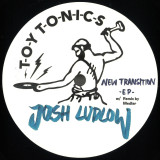
Here comes a first EP by Josh Ludlow for Toy Tonics. Mastermind of Make a Dance aka M.A.D. records. London’s best kept secret (or not so secret anymore) of new underground dance weapons that are played by everybody who counts in the scene.
Josh delivers a hot 4 -tracker that will move people on dance-floors worldwide. Combining 1990es filterhouse influences, 2000’s indie dance and some of the edgy contemporary funk moods that are lighting up clubs these days. The post - techno generation likes it funky and Josh delivers. Fitting perfectly with the vibe of Toy Tonics this EP will find a lot of friends. In fact Josh knows how things work.
Josh Ludlow has been steadily honing his craft over the past 15 years. Starting out releasing Drum & Bass under the ‘Squash!’ moniker in the late 2000’s whilst also playing drums in bands. The former gave way to live touring and it was only in 2020 when Josh resurfaced with some new electronic music.
The impetus for releasing this new material was when Josh Ludlow & Ben Lewis formed there beloved project ‘Make A Dance’ (which then went on to establish the imprint) M.A.D. Records during the pandemic.
Since then M.A.D have made a big impact on the underground scene, become regulars at places such as Fabric, Heidegluhen, Gottwood and gained DJ support of propel such as Laurent Garnier, Optimo, Palms Trax and Peggy Gou and across BBC Radio1 and regularly Cover show’s on NTS for Long Running Host’s Moxie and Apiento.
This is just the beginning.
out of Stock
Last delivered 6 months ago available to reorder, subject to availability
Veyl is pleased to welcome Harlem back to the label with a new 8 track LP titled Cage. The Stockholm-based duo of Martin Thomasson and Johan Skugge last appeared on the imprint with 2021’s, Bait, and the project now returns diving deeper in to their infectious cocktail of menacing electronics.
Bringing with them a vast body of work, ranging from dub to minimal techno, with Harlem the pair fuse electro, no wave, post-punk, disco, proto-body, dub, hip-hop, and grime, creating a unique sound that cannot be categorized. Cage opens with “Shut Your Body”, a muscular piece which drills into the surface, setting the stage for what’s to come. Next up is “Fantasy Scan” a dance floor ready jam that picks up the pace and lures us into the pleasure dome. “Blow by Blow” brings a nihilistic energy to a fictional scenario that takes its cues from the past while remaining firmly in the now.
“Kiss The Steel” continues on the slow burning path, dropping us into a dream like state, blurring the lines of reality and plunging us into a surrealist nightmare or reverie? “Dummy Up” comes roaring back, injecting a dose of electro and body that sounds like a soundtrack to your favorite cult gathering. With “Sleuth”, we hear the repetitive grind of a man at work, searching for the unknown, unlocking new mysteries along the way. As we head toward the finale, “Contact High” brings back a seductive dance, ready to movie bodies and stir emotions. Closing things out is “Wiggle Walker”, returning us to a drifter’s journey, a wanderer’s melody that carries us to the end, or is it just the beginning?
out of Stock
Last delivered 10 months ago available to reorder, subject to availability
House of Flying Daggers is a multiple Satellite, LA Film Critcs & Boston Film Critics award winning 2004 wuxia romance film directed by Zhang Yimou and starring Andy Lau, Zhang Ziyi and Takeshi Kaneshiro. Unlike other wuxia films, it is more of a love story than purely a martial arts film. The film features the theme of a beautiful woman who brings woe to two men. The soundtrack is produced and created by legendary Japanese composer Shigeru Umebayashi and features vocals by Zhang Ziyi and Kathleen Battle. Shigeru Umebayashi is perhaps best known for “Yumeji’s Theme” (originally from Seijun Suzuki’s Yumeji), included in director Wong Kar-wai’s In the Mood for Love. In celebration of Umebayashi’s 70th birthday on February 19, 2021, the House of Flying Daggers soundtrack is released on vinyl for the first time. It is pressed on green marbled vinyl as a limited edition of 2000 copies. The packages comes with an exclusive replica of the movie poster and a 4-page booklet.
Beaten To Death’s brutal and innovative sound is somewhat melodic, in a strange way, and that’s why their sound is often called ‘melodic grindcore’; an oxymoronic definition, some might even say a moronic definition, but still the definition that best applies to this Norwegian quintet’s music. Beaten To Death consists of members from Insense, Tsjuder, The Cumshots, Gothminister and She Said Destroy and have won fans over globally for their energetic, strangely melodic and innovative approach to grindcore. With their combination of hysterical blast beats, meaty grooves, double guitar twang attack, asshole-of-god-earthquake bass and tongue in cheek lyrical approach to the shittiness of life, Beaten To Death have dug out their very own little niche in the music world. Their new sixth album “Sunrise Over Rigor Mortis” was recorded and mixed by Tommy Hjelm, and the amazing artwork is once again by William Hay. Since their last album from 2021, all the band members have aged horribly, and this is also the theme of the album. The positive thing about getting closer to the grave, is that profound grindcore poetry comes much easier than when the member were still carefree youngster, frolicking in the Norwegian forests…
25th Anniversary Reissue. Remastered With New Artwork.
By the late 90s the independent music scene in San Diego, CA had become synonymous with noisy, post-hardcore bands that were pushing the boundaries of what it meant to be punk. Camera Obscura cut their teeth on the angular and abrasive sounds of Antioch Arrow, Clickatat Ikatowi, and Heroin, and incorporated synths and electronics to create their own dark, jarring, experimental rock sound. ‘To Change the Shape of an Envelope’, released in 2000 on Troubleman Unlimited, was their only LP. The album runs the gamut sonically with dark, high energy songs like “Twenty-Five Diamonds” and “Sarasota”, the early industrial sounds of “Something About a Nightmare”, and the shoegaze influenced “Cinematheque”.
25th Anniversary Reissue. Remastered With New Artwork.
By the late 90s the independent music scene in San Diego, CA had become synonymous with noisy, post-hardcore bands that were pushing the boundaries of what it meant to be punk. Camera Obscura cut their teeth on the angular and abrasive sounds of Antioch Arrow, Clickatat Ikatowi, and Heroin, and incorporated synths and electronics to create their own dark, jarring, experimental rock sound. ‘To Change the Shape of an Envelope’, released in 2000 on Troubleman Unlimited, was their only LP. The album runs the gamut sonically with dark, high energy songs like “Twenty-Five Diamonds” and “Sarasota”, the early industrial sounds of “Something About a Nightmare”, and the shoegaze influenced “Cinematheque”.
Ginnels never let up. Though it has been, staggeringly, eight long years since the last irresistible jangle pop transmission under the Ginnels moniker, nothing much has changed in Mark Chester's approach when it comes to the practice of music making, even if much everything else for Chester has seen considerable flux – he's now a father of two, and most shockingly of all for an indie popster of his ilk, gainfully employed. "It definitely started the same way all Ginnels stuff starts," Chester explains, "which is just me looking through five years of phone demos and going 'that's a decent song' and 'that's a decent song', and if you keep that up then you have a full album."
The man himself might be coyly committed to making his process sound as pedestrian as possible, but from the moment the delicate chiming introduction of album opener 'The Body Was Gone' goes widescreen – revealing an expanded sonic palette richer in timbre and exponentially wider in scope than anything Chester has let out into the world thus far – it is apparent that "The Picturesque" is poised to be less than parochial in its sonic purview.
From here, "The Picturesque" plays like a gauzy road trip Super 8 footage cutting between scenes of sunset at Monument Valley and B-roll from around middle-Ireland, entirely soundtracked by some enchanted mixtape of heretofore unheard B sides from REM, XTC and The Go-Betweens, unexpected guest appearances from the surprisingly together-sounding ghost of Johnny Thunders and snippets from your coolest friends' unreleased instrumental experiments. All liberally rippled with Chester's unique ear for melody and appetite for the unexpected when it comes to crafting guitar parts. And this, by design, feels like a Guitar Record, above all else.
For all its effortlessly sticky lyrical and melodic twists, "The Picturesque" separates itself within the mighty Ginnels catalogue in both the dexterity in playing and diversity in tone on show across these 12 tracks. And 12, of course as we know, being the optimum number of tracks for any LP to have, so bonus points for that too.
Das Debut-Album "Eerie Nostalgia" der Band Fotokiller aus Berlin versetzt die Hörer*innen direkt in die Post-Punk-Ära der 80er-Jahre, ohne dabei sowohl musikalisch als auch textlich den Aktualitätsbezug zu verlieren. Nachdenkliche, ja sogar zuweilen mit dem Tenor der Trostlosigkeit versehene Texte mit hohem Sehnsuchtsfaktor werden kontrastierend mit tanzbaren, catchy Melodien kombiniert. Fotokiller begleiten die Hörer*innen dabei mal sanft, mal aufbrausend, wecken nostalgische Erinnerungen, Gedanken an die unausweichliche Zukunft und den Wunsch nach Beständigkeit in einer Welt, die außer Kontrolle scheint. Nicht zu überhören ist der Einfluss großer Bands wie The Cure oder Joy Division, aber auch Soft Kill, Wipers oder Pink Turns Blue haben die Inspiration für diese LP geliefert.
Limited edition classic black vinyl mini-album of cathartic slowcore by The Declining Winter, the new vehicle of Richard Adams, formerly of Domino Records post-rockers, Hood. The next release on the acclaimed boutique English independent label, Second Language Music, will be ‘Last April,’ the new mini-album by The Declining Winter, a raw, deeply emotional monument of loss, grief and heartbreak that treads in the footsteps of Red House Painters’ ‘Down Colorful Hill,’ Low’s ‘I Could Live In Hope’ and Songs: Ohia’s ‘Didn’t It Rain.’ This is not a heart-on-your-sleeve record. It does away with the sleeve and goes straight for carving a heart on the arm. Recordings which emerged out of a period of shock, grief and trauma, these six songs were all written on the same night and form a stately tribute to a loved one lost. The Declining Winter strip things back to just Richard Adams’ plaintive voice and acoustic guitar, alongside the beautiful, irrefutably melancholy string arrangements/playing of Sarah Kemp (Brave Timbers). There’s been no attempt to plane off any rough edges – here and there, the creak of a chair, a guitar note missed, a voice almost cracking with emotion – these recordings are like cathartic scrawls in a diary. Only this one has been left out for anyone to read. As with his previous band, Hood, Adams has a way of evoking a particularly pastoral, English melancholy, of lonely morning hikes in inclement weathers, of rain on slate in the West Yorkshire streets where he was raised and still lives.
Colemine Records is proud to present the first 45 from Aaron Frazer's latest LP, Into The Blue. The A side, "Fly Away" is a tune largely built on a sample of the Hi-Five track of the same name, and features thudding drums and dense guitar riffs. Cowritten by Lydia Kitto of Jungle, this tune is a perfect mix of 70's soul and 90's R&B. A true summertime jam! On the flip, "Play On" sits a little bit more in the midtempo cut with super tight drums, bass, and synths anchoring the track. The lyrics are a coaching up session and serve as positive encouragement, and Frazer's vocal delivery pushes that home. Mega catchy hook with just the right amount of swagger....play on player.
2025 feiert THE OCEAN das 15-jährige Jubiläum ihrer Alben ,Heliocentric" und ,Anthropocentric". Aus diesem Anlass werden die Instrumentalversionen dieser Alben zum ersten Mal überhaupt auf Vinyl veröffentlicht, mit neuem Artwork von Martin Kvamme. Konzeptionell sind ,Heliocentric" und ,Anthropocentric" eine umfassende Kritik am Erbe des Christentums: Während ,Heliocentric" sich dem Thema historisch-chronologisch nähert, liegt der Schwerpunkt von ,Anthropocentric" auf dem ,Großinquisitor"-Kapitel in Dostojewskis weltberühmtem Roman ,Die Brüder Karamasow", das sich über drei Tracks des Albums erstreckt. Andere Songs wie das heitere ,TheThe Almightiness Contradiction" greifen Ideen von Richard Dawkins auf, der Speerspitze des modernen Ästhetizismus. Seit 2001 hat das Berliner Musikerkollektiv THE OCEAN zehn von der Kritik hochgelobte Studioalben und eine Split-EP mit den japanischen Post-Rock-Legenden Mono veröffentlicht. Mit einer ständig wechselnden Besetzung aus verschiedenen Musikern und bildenden Künstlern auf und abseits der Bühne ist die unermüdlich tourende Gruppe für ihre gewaltigen, bewusstseinserweiternden Liveshows bekannt geworden, die sie in die entlegensten Winkel der Welt getragen haben, von sibirischen besetzten Häusern bis zu kolonialen Theatern in Ecuador. Schwarze oder farbige 2LP erhältlich, 9mm Rücken-Gatefold & Metallic-Farben, bedruckte Innenhüllen. Insert sowie Etching auf der D-Seite
2025 feiert THE OCEAN das 15-jährige Jubiläum ihrer Alben ,Heliocentric" und ,Anthropocentric". Aus diesem Anlass werden die Instrumentalversionen dieser Alben zum ersten Mal überhaupt auf Vinyl veröffentlicht, mit neuem Artwork von Martin Kvamme. Konzeptionell sind ,Heliocentric" und ,Anthropocentric" eine umfassende Kritik am Erbe des Christentums: Während ,Heliocentric" sich dem Thema historisch-chronologisch nähert, liegt der Schwerpunkt von ,Anthropocentric" auf dem ,Großinquisitor"-Kapitel in Dostojewskis weltberühmtem Roman ,Die Brüder Karamasow", das sich über drei Tracks des Albums erstreckt. Andere Songs wie das heitere ,TheThe Almightiness Contradiction" greifen Ideen von Richard Dawkins auf, der Speerspitze des modernen Ästhetizismus. Seit 2001 hat das Berliner Musikerkollektiv THE OCEAN zehn von der Kritik hochgelobte Studioalben und eine Split-EP mit den japanischen Post-Rock-Legenden Mono veröffentlicht. Mit einer ständig wechselnden Besetzung aus verschiedenen Musikern und bildenden Künstlern auf und abseits der Bühne ist die unermüdlich tourende Gruppe für ihre gewaltigen, bewusstseinserweiternden Liveshows bekannt geworden, die sie in die entlegensten Winkel der Welt getragen haben, von sibirischen besetzten Häusern bis zu kolonialen Theatern in Ecuador. Schwarze oder farbige 2LP erhältlich, 9mm Rücken-Gatefold & Metallic-Farben, bedruckte Innenhüllen. Insert sowie Etching auf der D-Seite
2025 feiert THE OCEAN das 15-jährige Jubiläum ihrer Alben ,Heliocentric" und ,Anthropocentric". Aus diesem Anlass werden die Instrumentalversionen dieser Alben zum ersten Mal überhaupt auf Vinyl veröffentlicht, mit neuem Artwork von Martin Kvamme. Konzeptionell sind ,Heliocentric" und ,Anthropocentric" eine umfassende Kritik am Erbe des Christentums: Während ,Heliocentric" sich dem Thema historisch-chronologisch nähert, liegt der Schwerpunkt von ,Anthropocentric" auf dem ,Großinquisitor"-Kapitel in Dostojewskis weltberühmtem Roman ,Die Brüder Karamasow", das sich über drei Tracks des Albums erstreckt. Andere Songs wie das heitere ,TheThe Almightiness Contradiction" greifen Ideen von Richard Dawkins auf, der Speerspitze des modernen Ästhetizismus. Seit 2001 hat das Berliner Musikerkollektiv THE OCEAN zehn von der Kritik hochgelobte Studioalben und eine Split-EP mit den japanischen Post-Rock-Legenden Mono veröffentlicht. Mit einer ständig wechselnden Besetzung aus verschiedenen Musikern und bildenden Künstlern auf und abseits der Bühne ist die unermüdlich tourende Gruppe für ihre gewaltigen, bewusstseinserweiternden Liveshows bekannt geworden, die sie in die entlegensten Winkel der Welt getragen haben, von sibirischen besetzten Häusern bis zu kolonialen Theatern in Ecuador. Schwarze oder farbige 2LP erhältlich, 9mm Rücken-Gatefold & Metallic-Farben, bedruckte Innenhüllen. Insert sowie Etching auf der D-Seite
2025 feiert THE OCEAN das 15-jährige Jubiläum ihrer Alben ,Heliocentric" und ,Anthropocentric". Aus diesem Anlass werden die Instrumentalversionen dieser Alben zum ersten Mal überhaupt auf Vinyl veröffentlicht, mit neuem Artwork von Martin Kvamme. Konzeptionell sind ,Heliocentric" und ,Anthropocentric" eine umfassende Kritik am Erbe des Christentums: Während ,Heliocentric" sich dem Thema historisch-chronologisch nähert, liegt der Schwerpunkt von ,Anthropocentric" auf dem ,Großinquisitor"-Kapitel in Dostojewskis weltberühmtem Roman ,Die Brüder Karamasow", das sich über drei Tracks des Albums erstreckt. Andere Songs wie das heitere ,TheThe Almightiness Contradiction" greifen Ideen von Richard Dawkins auf, der Speerspitze des modernen Ästhetizismus. Seit 2001 hat das Berliner Musikerkollektiv THE OCEAN zehn von der Kritik hochgelobte Studioalben und eine Split-EP mit den japanischen Post-Rock-Legenden Mono veröffentlicht. Mit einer ständig wechselnden Besetzung aus verschiedenen Musikern und bildenden Künstlern auf und abseits der Bühne ist die unermüdlich tourende Gruppe für ihre gewaltigen, bewusstseinserweiternden Liveshows bekannt geworden, die sie in die entlegensten Winkel der Welt getragen haben, von sibirischen besetzten Häusern bis zu kolonialen Theatern in Ecuador. Schwarze oder farbige 2LP erhältlich, 9mm Rücken-Gatefold & Metallic-Farben, bedruckte Innenhüllen. Insert sowie Etching auf der D-Seite
The Durutti Column, Linda Perhacs, Penguin Cafe Orchestra, Judee Sill. Hello and welcome to Decide Which Way The Eyes Are Looking, the new record by Lina Tullgren. It is a deeply gorgeous intervention, a carefully ornamented dilemma, the most inviting crisis. Made with a host of Los Angeles musicians, Decide exposes Tullgren's daring and trust. Each song is a ring of curious sound: the skip of harp strings, the flutter of woodwinds, the ratchet of percussion, the euphonium's sigh. And at the center of each wreath, Tullgren sings, finding this space between Judee Sill and Sam Jayne. It's a tone that signals weariness, but a weariness hand-in-hand with tenacity. There's a clarity, a kind of immovability. Lina Tullgren's first record came in 2016, a homemade, under-the-skin set of laments. Subsequent LPs and constant touring cemented Tullgren's reputation as a composer of "wide-eyed wonder paired with a resonant despair." 2019's Free Cell showed Tullgren lingering in the margins of their songs, finding places both aloof and spare. Floodgates opened; Tullgren spent the subsequent years exploring deep listening, improvised music, and extended technique. They developed a patience and faith in cooperation that ranged at the far edge of song. Collaborations with Mayo Thompson and Claire Rousay furthered this development. This was not a break with the past for Tullgren, rather it was an opportunity to see how far a song could go. And from that distance, deep in a landscape of drone and tension, Tullgren returned to the bright vulnerability of a lyric and a hook. Weaving together the affective and the radical, Tullgren took the quiet isolation of a shoreline cabin to write the songs that would become Decide Which Way The Eyes Are Looking. For Tullgren, Decide is a culmination of all the work they've done throughout their life: the melodic, the dense, the confessional, the unknowable. It's also a tribute to collaboration. Describing the sessions as having "a lot of space and a lot of ease,"" Tullgren invited musicians from a vast field of songmaking to play on the recording: Leng Bian, Zach Burba, Luke Csehak, Corey Fogel, Jenny Hirons, Tara Milch, Tim Ramsey, Michael Sachs, Jude Tedaldi, Marta Tiesenga and Ben Varian. Jonny Kosmo's backhouse was offered as a cozy, easygoing space for the players to create their parts together, and the record was completed by Tullgren and Luke Csehak together at their Los Angeles home. In Tullgren's words: "I feel really strongly that this album is a portrait of the community I found in Los Angeles." Decide Which Way The Eyes Are Looking is a quiet masterpiece: a generous, memorable journey. It is the result of five years of labor, the product of abandoning the pop song entirely and starting over. Whatever wanderings or doubt fueled it, Decide is also entirely at ease: a record on which Tullgren sings "and I know/what to do now" and "I know exactly what to do" in subsequent songs, clear in the revelations this path has given the