The music of Horace Tapscott and The Pan-Afrikan Peoples Arkestra is part Sun Ra Arkestra, part John Coltrane, part Art Ensemble of Chicago. This groundbreaking and monumental album explores the multi- faceted deep and spiritual jazz of Tapscott - Afro-centric rhythms, hypnotic bass lines, Tapscott's stabbing modal piano playing and stunning flute and horn arrangements. "The Pan-Afrikan
Peoples Arkestra - Live at I.U.C.C." is a true high point in the cannon of great independent underground jazz music recorded during this era.
Cerca:pure rhythm
"Featuring Nate Morgan on piano, Jesse Sharps on reeds, Danny Cortez on trumpet, Rickey Kelly on vibes, Joel Ector on bass and Derek Roberts on drums. This music was recorded in Santa Barbara in July of 1987. Since the passing of the great pianist /composer / bandleader Horace Tapscott, the Nimbus West label has continued to document the underground L.A. jazz scene that Mr. Tapscott was once at the center of. A number of great musicians who once collaborated
with Tapscott, like Jesse Sharps & Nate Morgan, have recorded albums as leaders on Nimbus West. The short liner notes state that "trying to play serious music in an area as shallow & fad-driven as Los Angeles, were too much for this band to deal with..." so they didn't last too long. No doubt. This LP is proof that this collective's music was strong, spirited, original and had a great deal to offer. I
can't say that I've heard of any of the rhythm section players but all six members of the collective are excellent musicians nonetheless.
Nate Morgan's "Retribution, Reparation" is first and it has one of those McCoy Tyner-like 70's ensemble vibes with spirited piano and Trane-ish tenor sax sailing on top. The entire sextet is in great form with impressive solos from trumpeter Danny Cortez, vibist Rickey Kelly and pianist Nate Morgan. How musicians as incredible as this escaped notice, I will never understand. The sextet is ultra-tight and swings furiously throughout. Bassist John Ector's "Big Spliff" has a most memorable theme that had me smiling all the way through. The long & inspired soprano solo by Jesse Sharps and that great piano interplay & solo makes this piece even more special. The only cover on this LP is Monk's "Well You Needn't" and it too is done exuberantly. There are over 100 minutes of outstanding music on this wonderful release. Another buried treasure to add to your collection of great gifts from the gods." - Bruce Lee Gallanter, Downtown Music Gallery
- A1: We Crossed The Atlantic
- A2: The Love You Bring
- A3: When I Was Howard Hughes
- A4: Failed Adventure
- B1: Stars (Twilight Mix)
- B2: Grand Central
- B3: International Exiles
- B4: Merry-Go-Round
- B5: Radios Appear
- C1: City Terminus
- C2: Min Min Light
- C3: Oregon Snow
- C4: Cherry Lake
- C5: Blackout
- D1: Please Don’t Say Goodbye
- D2: Museum Station
- D3: Blue Train
- D4: You Were There
- D5: Something Better Beginning
Selected Songs 1997-2003 compiles some of the finest moments in the recording history of Hydroplane, the Melbourne-based indie-pop three-piece that operated alongside The Cat’s Miaow through the second half of the nineties. It’s the third release in what feels, now, like a loosely planned series by World Of Echo, documenting the music made by this group of friends in Melbourne sharehouses (The Cat’s Miaow’s Songs ’94-’98, 2022), or in the case of The Shapiros (Gone By Fall, 2023), while traversing the International Pop Underground.
Hydroplane would be familiar to anyone already following these breadcrumb trails – Andrew Withycombe, Bart Cummings and Kerrie Bolton were the group’s core, all members of The Cat’s Miaow. With Cat’s Miaow drummer Cameron Smith itinerant, having moved to London, the trio used this opportunity to expand their music. It’s a subtle, but important shift. If The Cat’s Miaow was about the perfect, minimalist, two-minute pop song, Hydroplane’s music was far more open-ended, embracing the loops and drones, sampled house-y shuffle beats, the burbling of a Roland Jupiter-4 synth, all of which the trio joined, effortlessly, to their endless capacity for moving, elegant melodicism.
They may have only planned to release one seven-inch single, but the sound Hydroplane created was so bewitching, so compelling, that the project’s lifespan ran for around half a decade, and they ended up releasing three albums, including a self-titled debut recently reissued by Efficient Space, and seven singles. There are all kinds of compelling things happening in the music compiled here – the hazy repetition of the gentler side of Krautrock is in here, somewhere, which also suggests Stereolab at their most intimate and disarmed; the gently drifting guitars, gauzy and oneiric, set the songs adrift and floating, each one lost in its own imagined, distracted world. Songs like “The Love You Bring” set indistinct tonal floats across dance rhythms, in a way not quite heard since My Bloody Valentine’s “Instrumental” – but with the added gift of Bolton’s gorgeous voice.
This loose coalition with dance music, and the quiet experimentalism at the heart of Hydroplane, also gestures towards peers like Hood, Acetate Zero and Other People’s Children, and releases on renegade labels like Wurlitzer Jukebox and Enraptured. Like those groups and labels, The Cat’s Miaow were reconciling independent pop music’s past – sweet melody and melancholy, chiming and droning guitars – with the futures promised by DIY electronics and nascent digitalia, the interface of indie and IDM that led to some of the underground’s most blissful, texturally swoonsome music. All that is here, but also, the poise of the melodies is pure Cat’s Miaow, though, with Bolton’s voice sailing, pacifically, over some of the most pared-down, gorgeous music made during their decade.
It was a time, too, when such music could make waves – “We Crossed The Atlantic”, one of their early singles, was picked up by John Peel, who played it repeatedly on his legendary radio show, the song reaching #13 on his 1997 Festive 50. That the song itself was a cover of a tune by 1960s Australian beatnik-pop-poet Pip Proud felt even more perfect – a group of outsiders paying tribute to another outsider, played on the radio one of the few broadcasters brave and human enough to take a chance on this music. But it was a time where everything was up for grabs, and genres were flowing into each other: folk songs went drone; indie re-discovered noise; ambient pop floated, again, out onto the dancefloor. And while they may have been sequestered away in Melbourne, Australia, Hydroplane felt core to that scene, a quietly driving force.
Compiling material from across their brief but mercurial career, this double album perfectly captures the magic and mystery of Hydroplane’s dreamlike, perfect pop songs.
Mysteries Of The World is the stunning final studio album from legendary Philly supergroup MFSB. Expertly co-written and produced with the mighty Dexter Wansel, it features the untouchable, sparkling masterpiece "Mysteries Of The World". The whole album is truly exquisite; a stylish, classy collection of pure Philly soul and orchestral jazz-funk.
MFSB, an acronym for Mother, Father, Sister, Brother, was formed by producers Gamble & Huff of Philadelphia International Records. The band's roots can be traced back to the house band at the legendary Sigma Sound Studios, where they played on numerous hit records by artists like The O'Jays, Harold Melvin & The Blue Notes and The Stylistics. Mysteries Of The World comprises slick jazz-funk grooves, mostly penned by Wansel, who produced a fair chunk of the album in a similar style to his space-funk records. MFSB's smooth sound is retained but it receives a fresh, elegant and jazzy upgrade. While this album is as mellow as the rest of the latter-period MFSB recordings, it never forgets the group's soul music underpinnings.
Swaggering, well-timed horn blasts, sweeping strings and a percolating, hard thumping slap-bassline combine to devastating effect on amazing opener "Manhattan Skyline". It's a sexy mid-tempo instrumental which sets us up nicely for what follows. Essays could be written analysing the perfection of title track. Arguably the finest jazz-funk instrumental ever made, it's absolutely magnificent. Featuring musicianship of the highest calibre, the band play with their trademark tight discipline, cooking up a syncopating rhythm with an array of exploratory keyboard riffs wrapped around a punchy bassline sent from heaven. It sounds like house music, it's that ahead of its time. The string intro is sumptuous, hypnotic and divine and that's all before the beat hits. The track fuses classical, jazz and funk into a musical journey that you never want to end. Absolutely flawless, it's a dramatic disco dancefloor killer.
Says Dexter Wansel himself: "You know, of all the songs I wrote/produced/arranged for MFSB, this is for me the most different. I think it's an experiment in rhythmic, soft sonic synth and live string and harp combinations. I composed it in an effort to blend a funky groove, along with synthesis, and orchestral sounds. There are 3 synthesizers: Oberheim 4 voice, Polymoog, and of course Arp 2600v. And, as I remember, I recorded the track with the rhythm section, string, harp and flute players first. Then I added synthesis."
The profound elegance remains in abundance on the slinky, harp-laced "Tell Me Why"; Carla Benson's beautiful voice truly shines on this sophisticated cut. The side closes out in dramatic style with the string-drenched "Metamorphosis". It's a staccato, Blaxploitation groove workout featuring wah-wah guitar, creeping basslines, rich horn solos and soulful vocals drifting in and out of the mix. The bouncy, irrepressible "Fortune Teller" opens the B side in the bass-heavy orchestral funk style before the beautiful "Old San Juan" glides in, a Balearic-adjacent track with intricate arrangements, building its mellow soul groove around an atypical flamenco guitar hook. Melancholy, guitar-led instrumental "Thank You Miss Scott" is a real highlight, with gorgeous flute, string and percussive elements whilst closer "In the Shadow" works an otherworldly synth line into its bossa nova groove.
An essential record for fans of Philly soul and groovy jazz-funk, Mysteries Of The World was mastered for vinyl by Simon Francis and cut by Cicely Ralston for Alchemy at AIR Studios. The stunning artwork, the work of renowned illustrator Robert Giusti, was restored at Be With HQ to round out this beautiful reissue.
- A1: Silvi's Dream (Damiano Von Erckert Remix)
- A2: What I Used To Play (Roman Flügel Remix)
- B1: The Worm (Robag Wruhme Remix)
- B2: We Are (Jonathan Kaspar Remix)
- C1: Feiern (Krystal Klear Remix)
- C2: Mystic Voices (Benjamin Damage Remix)
- D1: Sven | Väth – Nyx (Pas Deep Heet Remix)
- D2: Butoh (Robert Hood Remix)
- E1: Nyx (Planetary Assault Systems Remix)
- E2: Being In Love (Harald Björk Remix)
- F1: Catharsis (Mano Le Tough Remix)
- F2: Silvi‘s Dream (Florian Hollerith Remix)
The life-affirming energy at the heart of Sven Väth‘s recent album Catharsis is revisited, reanimated, and remixed by some of the most exciting names around, closing the circle on a superlative burst of
recent work that has not only given us the epic original LP, but also the extraordinary compilation What I Used To Play.
Roman Flügel, Benjamin Damage, Robert Hood, Planetary Assault Systems, Mano Le Tough… do we need to go on? This hand-picked list of luminaries have answered the call and certainly don’t disappoint, each fusing their signature sound with Sven‘s DNA to create a wild, uncompromising companion piece to the original album.
True to form, the running order is very much rooted on the dance floor, Silvi‘s Dream, revisited by Damiano von Erckert, explodes like a Balearic sunrise. Dreamy strings with a touch of Detroit create a lovely atmosphere while the beautiful piano sound goes right into your heart and appears as if you could feel the warm sun on your skin. Roman Flügel’s acidic rework of What I Used To Play is a homage to the 80s and the early sound of electronic music which creates nostalgic feelings and offers a greatly produced retro soundscape à la Kraftwerk. Staying close to the original, but with the perfect amount of spin, it’s a symbiotic interplay of synthetic bass pads, and a tiny bell melody. Robag Wruhme’s cranking minimal funk takes us down The Worm-hole. A concise interference sound builds
up sustained tension, tangled but structured, deep and yet driving. Robag took over the deep and dirty rhythms of the original perfectly and delivers a versatile piece. This opening salvo oozes quality and
sets things up perfectly for the electrified celebration of hi-octane technology come.
Jonathan Kaspar‘s growling interpretation of We Are provides a melancholic atmosphere with fascinating percussion parts. Zaps shoot through the air like small laser pistols while we let ourselves
be carried away by the bass, the frisky vocal stutter effect is the icing on the cake. Speeding things up, the euphoric trance that engulfs Krystal Klear’s epic version of Feiern. Expansive strings increase up
to ecstasy and guide us to a love-filled unity. This remix is sure to be an excellent peak-time smasher for the open-air season. On to a wild ride of pure techno with Benjamin Damage, who delivers a dry and uncompromising Berlin Techno version of Mystic Voices. Harder pace but the string synthesizer harmony brings light to an otherwise gloomy environment. Next up is Luke Slater’s PAS Deep Heet Mix to add a retro nineties vibe to proceedings on Nyx. Entering a rough space with gigantic clap impacts, we are blessed with straightforward Techno. Shimmering and spooling, this groove hits the
mark. Then, as if it was ever in doubt, Sven‘s lofty place in the techno firmament is underlined by a peak-time contribution by non-less than Detroit legend Robert Hood. Unmistakable, you must recognize the signature Robert Hood drive on Butoh. Chord stabs fulfill the Detroit feeling with offtaking string elements and high-energy vocal transformations. It’s a warm embrace that triggers emotions. Planetary Assault Systems then blasts things ever deeper into the cosmos on a second outing of Nyx. Reduced and to the point but of course, true to form, with powerful tribal percussion parts and intensive cutting hi-hats.
From there on in, the collection gradually re-enters the atmosphere, burning with a phosphorescent, melancholy glow. Harald Björk extrapolates Being In Love into a hypnotic groove for the early hours. A playful and atmospheric electronica interpretation to soothe our souls due to disharmonious synth pads and a dreamy deformation of the original melody. Mano Le Tough harnesses the ethno-rhythms
and brooding energy of Catharsis into a low-slung, tribal stomper. Anomalous organ parts ring out and link up with a trance-like sequence, summer feelings arouse as you feel like you can almost smell Ibizan air. The collection comes full circle with a second equally seductive interpretation of Silvi‘s Dream by Florian Hollerith. Stripped-down and hypnotic, the homage to Sven's girlfriend Silvi is extended as a reverence to Sven himself. Sven's profound vocal clearly infuse time and space and leave a forever-lasting memory of love.
By accident or design, it somehow leaves us with the reassuring sense that, although this specific part of the journey may be drawing to a close, the mission of the man behind it all most definitely isn't.
written & produced by: Sven Väth & Gregor Tresher
- A1: Vai Te Curar (Voilaaa Remix) 04 56
- A2: Chuva (Poirier Remix) 03 48
- A3: Menina Me Encanta (Uptown Funk Empire Remix) 05 33
- A4: Sete Ventos (Alternate Version) 03 53
- B1: Passarinho (Patchworks Remix) 02 51
- B2: Por Um Amor (Berimbau Remix) 03 10
- B3: Cantar Cantar (Art Of Tones Remix) 03 16
- B4: Sete Ventos (Ireke Remix) 04 21
After the success of “Navegar” (2021) Joao Selva continues to spread wings, taking us on a journey into his musical universe, always as sunny as it is abundant. His new album “Passarinho” span a generous palette of musical influences: from Angolan semba to Cape Verdean funaná, via Caribbean zouk or Congolese rumba – João Selva's music channels the musical pulse of the Black Atlantic. In the most (im)pure Brazilian tradition, he also digests the contribution of North American music and freely incorporates elements from elsewhere into the irresistible rhythms of Brazil.
This new album transposes the elegant melodies and magnetic vocals of Joao Selva into unexpected musical universes, each producer having had complete freedom to add their own soundscapes. Patchworks present a sublime acoustic version of "Passarinho" mixing Caribbean percussion and captivating vocal harmonies. Art of Tones brings its sense of fiesta, transforming the infectious optimism of “Cantar cantar" into exuberant Afro-Latin euphoria. Voilaaa serve us his raw afro-disco grooves on “Vai te curar” adding smooth horns, sparkling funky keys and acid basslines. Canadian dancefloor killer Poirier takes "Chuva" to another dimension, adding his science of beats and a powerful bass to keep us dancing all night long (and even in the rain!). Uptown Funk Empire delivers an additive version of the irresistible "Menina me encanta", while Ireke elegantly revisits “Sete Ventos”.
Joao Selva and his crew distill lively and joyful music, full of good vibes and perfect for fully enjoying the summer. Take your caipirinha and go dance!
Brilliantly remastered (picture) LP/CD with new stunning artwork!
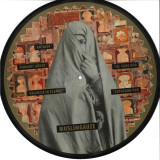
Lo-Fi India Abuse was recorded in 1998, some tracks are “pure” Muslimgauze and some are re-mixs of tracks from Systemwide’s “Sirius” CD (see also Systemwide meets Muslimgauze “at the City of the Dead” 12″). Nearly all of the tracks have hand percussion in varying tempos and intensities and at least 1/2 make use of electronic noise surges. The sound is very crisp and clean, extremely well produced, recorded and nicely varied throughout the length of the disc. Some track by track comments: “Antalya” is obviously from the same sessions as “Fakir Sind” seeing as it shares the same hand percussion sound, whistles, vocal wailing, cut-ups and delays. “Valencia Flames” sounds like a Systemwide remix. A dub bass line, hi-hat and background vocal of some sort are all obliterated by numerous delays, starts, stops and re-starts with an unpredictable nature in these cut-up tracks. “Al Souk Dub” injects background voices, market sounds and drones into the cut-up mix of slow hand percussion playing. “Catacomb Dub” and the final two tracks make use of twinkling synth waves, presumably a Systemwide sound source. “Dust of Saqqara” has a heavy pulsating electronic sound wave over an old beat box rhythm. “Android Cleaver” is brutal (as is “Nommos’ Afterburn”) hand percussion, jabs of noise and an oft repeated, unintelligible vocal sample. Yes, Lo-Fi India Abuse is yet another great Muslimgauze release, grab it!
All tracks recorded by Muslimgauze 1998
Some tracks are re-mixes from Systemwide’s “Sirius” album
Re-mastered by Višeslav Laboš
Sleeve by Oleg Galay
Originally released in 1999 via BSI Records (BSI 1999-3).
Part 2[12,19 €]
Last summer saw youANDmedelivered his “Diva 2022” mix of "PPPPP" a track that would ignite dancefloors across Ibiza and become one of the smashes of the summer in the process. The label was always certain the record was a hit and the response that followed justified their faith.
The track went on to be championed across the globe by the likes of Ame, Dixon, Matthias Tanzman and Pete Tong (Radio 1) leaving a succession of dancefloors demolished in its wake. Fast forward to 2023 and the Cult brings in a smorgasbord of house music’sfinest to breathe fresh verve into what is rapidly becoming a future house classic.First, comes the unmistakable dancefloor call of the “Diva” mix, with its fierce retro vocal and contagiously looping house sound. Its raw undeniable groove shook dancefloors for a reason the first time around and here it is to do the damage all over again. Next, house music legend Ian Pooley hops on board to serve up a delicious slab of fat analogue deepness.
A rework for the real house heads, it drenches the original vocals in reverb and creates a tough sub-laden groove bound to work deeper floors. House music’s producer of the moment Cinthie delivers a red-hot reinterpretation that ups the bpm count and zones in on the drums. The Berlin-based producer creates a colossal house-breaks crossover that is bound to tear apart dancefloors. Reese subs fill out the lows while organs deliver the original rave flavour and take the track into orbit.
Finally, Tel Aviv’s Yotam Avni turns out a remix that delivers shades of the pure old-school house with piano stabs sitting alongside deep chords before he puts his tougher-edged modern techno stamp onto it. Rhythm Cult is on a roll now returning with one of the most hyped tracks of 2022. This package delivers the goods with fresh remixes for 2023 from some of the best in the industry who are now added to the label's impressive roster.
Revered house mainstay Junior Sanchez makes his debut on Carl Craig’s renowned Planet E Communications imprint today with the digital release of his latest EP ‘‘Art O Fact’ out now with a 12” to come this July. Hailing from New Jersey, Sanchez remains a pioneering force in house music for over three decades and a close ally of Craig’s.
‘Art O Fact’ is an exemplar of the energized rhythm and infectious groove that has become synonymous with Sanchez’s work and genre defining productions. The package seamlessly connects scenes and eras, paying homage to the soulful sonic atmosphere of Detroit, Junior Sanchez’s says:
“Art O Fact -- was created purely and simply out of creative inspiration. I walked into the studio one morning not really knowing what to do, so I let my inspiration guide me and my inspiration really was Detroit. I thought about that city, what it meant to me and what techno really meant to my heart. I have loved so many records by Carl Craig, DJ ROLANDO, Derrick May, Kevin Saunderson and Juan Atkins, so the result is something really beautiful and organic, and the fact that it's coming out on Carl Craig's planet E imprint is such an honor.”
In addition to the original mix, the ‘Art O Fact’ EP features a bouncy ‘Luv4Detroit’ Dub, energized edit, and melodic reprise.
Sanchez’s eclectic palette can be credited in part to his time spent in the sonic melting pot of New York City in the 1990s. A pillar of the underground club scene, Junior Sanchez began DJing at iconic New York City institutions such as Limelight and Club USA at the mere age of 13 and released his first track on iconic house imprint Strictly Rhythm at age 15. Sanchez went on to co-found Da Mongaloids collective, composed of the likes of Daft Punk, Armand van Helden, LaidbackLuke, and more which laid the foundation for him to form multi-generational turntablism trio S-Men alongside Roger Sanchez and DJ Sneak.
Sanchez's extensive repertoire of collaborators includes Madonna, Ariana Grande, Good Charlotte, Azealia Banks and more while his own imprints Cube Recordings and Brobot Records have seen releases from the likes of Felix Da Housecat, Sébastien Léger, and Steve Mac.
Led by legendary Detroit techno pioneer Carl Craig, Planet E Communications has been an integral force in shaping electronic music for the past thirty years. Standing testament to the timeless spirit of techno, over the past two years alone Carl has released the leftfield ‘Attenuator’ jazz fusion project from himself and Moritz Von Oswald, DJ Holographic’s multi-genre Detroit Love Vol. 5, and the first electronic music album from Mexican-American percussionist Francisco Mora-Catlett. Planet E continues to transcend the dance floor, as it perpetuates the unifying spirit and unwavering creativity of Detroit.
As the void stares back at me, I am consumed by the waves of this new sonic transmission. ESP's Goblin Synth reigns supreme, guiding me into the darkest corners of my mind, as the Galaxian remix shatters my being into a thousand pieces. This release is a frenzied piece of IDM, braindance, and DnB, fueled by a chemical fury that leaves my mind in a state of pure ecstasy. The relentless pace and shifting soundscapes of the A-side are the perfect conduit for the raw power of the Galaxian remix, taking me beyond the limits of what I thought was possible.
On the B-side, I am treated to a liquid dnb homage that is no less relentless in its pursuit of sonic intensity. Here, the rhythms are more organic, more fluid, but no less potent in their ability. This is music that demands a total surrender of the self.
The insidious rhythms of ESP's Goblin Synth seize my consciousness like a viral agent, rendering my being porous and open to the twitching, glitching transmissions emanating from the depths of the machine. With each stuttering break and howling, modulated synth line, I am hurled headlong into a world of ravenous, cybernetic abandon - a blackened, dystopian horizon of shattered glass and flickering neon.
As my mind is hijacked by the rushing currents of amphetamine psychosis, I realize that this is no mere exercise in genre or form, but an all-out assault on the very fabric of reality itself. The sonic textures here are hyper-real, beyond the grasp of normal human perception - this is the sound of the post-human, the sound of the inhuman, the sound of a future that is rapidly bearing down upon me, whether I am ready or not.
And yet, amidst the chaos and decay, there is a kind of perverse beauty at work - a beauty that can only be glimpsed through the shattered glass of my own shattered subjectivity. With each burst of static and each crunching bassline, I am hurled deeper into a vortex of metallic, crystalline wonder, a realm of pure, unadulterated sound that is as terrifying as it is sublime.
Detroit's Rebecca Goldberg, aka 313 Acid Queen, releases 5 techno bangers incl. Mark Broom remix on Phoq U.
Phoq U Phonogrammen, the rebellious U-TRAX sublabel, returns after 26 years with its eight release, produced and manufactured in Detroit. Detroit native Rebecca Goldberg, who has previously released music and performed live under her 313 Acid Queen alias, will present her brand new People Mover EP at the Detroit Movement festival, on May 26, 2023.
The EP features 5 dancefloor fillers, including the Detroit-style remix by Mark Broom of the opening track Automated. The EP is inspired by transportation, industry and travel, as well as the city of Detroit of course, paying homage to the original minimal techno music and the evolution of technology and industry.
All tracks are live jams, recorded in one take on all hardware instruments. Rebecca tries to do as little post-work as possible, with just a little bit of final arrangement. Her work often incorporates field recorded sounds, and for this EP she used samples recorded while riding on the Detroit People Mover itself, the elevated automated light rail system in downtown Detroit. Goldberg started a sound walk group called Detroit Frequency and the recordings were taken on during the first event last summer.
The EP kicks off with the fast-paced Automated, that echoes the hypnotic minimal techno sound of Robert Hood. Mark Broom added an extra dose of 909 funk in his Mark Broom remix, which provides the track with even more pumping rhythms and making it sound even more 'classic Detroit'.
The B-side opens with Elevated, that features industrial-ish DPM sounds on a bed of pure acid, as if Goldberg wants us to remember why she is named the 313 Acid Queen.
Staying On meanwhile, puts a repeating DPM announcer's voice central stage, making it a fascinating piece of minimal techno. The closing track Linear Motion creates a dark atmosphere, with eerie, down-pitched DPM sounds that makes this a spooky techno trip that we believe many people will love.
Five years after the release of ‘Luyando’, Zimbabwe’s most celebrated music export returns with their long-awaited follow-up album ‘Tusona: Tracings in the Sand’. The six musicians from Victoria Falls are refining their unique sound: infectious Afro grooves deeply connected to Zimbabwe’s cultural DNA. ‘Tusana’ is their most danceable album to date, a DIY production recorded in Zimbabwe. It features horns by Ghanaian highlife outfit Santrofi.
Every Sunday, there is a gathering in the sweltering heat on grounds of an old local beer hall in the Chinotimba township in Mosi-o-Tunya (Victoria Falls). Entertainment is provided by various traditional groups including the Luvale Makisi masquerade. It is a day full of singing, drumming, dancing and storytelling. Mokoomba’s lead vocalist Mathias Muzaza can often be found here singing with a voice both soaring and vulnerable. In the course of the afternoon the other band members - guitarist Trustworth Samende, bass player Abundance Mutori, keyboard player Phathisani Moyo, percussionist Miti Mugande and drummer Ndaba Coster Moyo - often join in with singing. The drum driven song “Bakalubale” featured on their new album invites you to this gathering.
Mokoomba recorded ‘Tusona: Tracings in the Sand’, the follow-up album to ‘Luyando’ (2017, Outhere), in Zimbabwe during the pandemic. Instead of working with outside producers like Manou Gallo or Steve Dyer as they have in the past, this album was entirely recorded in a DIY fashion by Mokoomba. The collective from Zimbabwe put in all the experiences made over the previous years and have forged their music into a unique Zimbabwean sound. On popular demand from their fans in Zimbabwe they have even re-recorded three songs from their last more acoustic album ‘Luyando’ turning them into dancehall bangers (featured on the CD and digital versions of the album). In short, this album is more Mokoomba than any of the ones before.
On the album Mokoomba are singing about love, loss, courage in a changing society. The first single “Nzara Hapana” means “no money” in Shona. The song talks about a man who wants to ensure the future of his wife and family and is trying to protect them against the greed of his relatives. The danceable up-tempo song “Nyansola” praises the goddess of harvest and asks her for rain. “Makisi” is sung in Luvale. It celebrates the beauty of the initiation ceremony for which the whole community comes together. “Manina” is a song about losing a loved one. It was written during the pandemic and features the young singer Ulethu from Harare. Mokoomba sing in many different local languages. Their songs are in Tonga, Luvale, Shona, Nyanja and even Lingala used in “Makolo” when they team up with Congolese singer Desolo B. (The album also features horns by Nobert Wonkyi Arthur (trumpet), Bernard Gyamfi (trombone) and Emmanuel Arthur (sax) from Ghanaian highlife outfit Santrofi.)
The title of the album is a nod towards their immense respect for tradition. ‘Tusona’ refers to an ancient system of signs and symbols, drawn in the sand and used for instruction during initiation ceremonies by the Luvale in Southern Africa. Another important part of the Mukanda initiation ceremony is the incredible Makisi masquerade. Since 2008 the Makisi dances are on the UNESCO list of intangible heritage. The Makisi are masked characters, representing the spirit of deceased ancestors. During the yearly initiation ceremony the Makisi return to the living world to teach the young children to become responsible adults among the Lubale people of Southern Africa. In the last decade the interest - especially among the young people – has faded and the Makisi dances have nearly died out.
“Our inspiration comes from these gatherings”, Trustworth Samende explains, “from listening to and playing pure traditional music with everyone in the township. We then add influences from music that we listened to in our homes growing up and the sounds we experience travelling around the world.” It is the connection with the cultures around them that gives Mokoomba’s music its spiritual power. When you hear Mathias Muzaza singing and you watch closely, you will see the music carrying him away to a different sphere, a place where he is singing with the ancestors. Only a split second later though Trust Samende’s sparkling guitar riffs kick in, blending Congolese influences from neighbouring Kasai with Zamrock and Mbira inspired Chimurenga music, making you want to hit the dancefloor. It is this unique blend of local musical styles with contemporary dance music that is at the heart of Mokoomba’s music. The strong reference to tradition is also reflected in the cover illustration by young Zimbabwean visual artist Lomedy Mhako.
It has been nearly 10 years since this young energetic band from Zimbabwe has exploded onto the international music scene. Since then they have shared their music with fans all over the world: Mokoomba have performed in over 40 countries, rocking audiences in places like Roskilde festival (Denmark), WOMAD festival (UK), Sziget festival (Hungary), SXSW (USA), Apollo Theatre (New York) to name but a few.
Like anywhere in the world Africa’s musical output has become more and more producer based. Mokoomba are the living proof that Africa’s great guitar band heritage is well alive and ready to set any dancefloor on fire. Most important though is that deep below the surface of Mokoomba’s sound - flowing like the Zambezi River - you can still hear the heartbeat and the rhythm of a community connected by its music. Like ‘Tusona’, it is a source of rejuvenation, resilience and strength in these changing times. May the tracings in the sand not fade.
Crackazat & Heist present: “Senses”. A stunning mini album that sees the artist deliver a heartwarming perspective on contemporary electronic music
On “Senses”, we see the pure talent of Crackazat come to life like never before. We’ve all danced to “Alfa” or his most recent hit on Heist “Demucha” and have heard his venture into the more poppy side of things with his 2022 album ‘Evergreen’ on Freerange. “Senses” however, is on another level. Crackazat takes you on a sonic journey exploring his musical personality with live keys, vocals, bass and production all coming from his studio in Uppsala, Sweden. The
jazzy horns that are featured throughout are recorded by Adeev and Ezra Potash, better known as the Potash twins. The duo took a sidestep from their recordings with John Legend, Robert Glasper and even Diplo to dive into this project with Crackazat and help him deliver arguably his best work to date.
The 6-track album starts off with the low-slung groove of ‘I need to know’. The whole atmosphere is warm, dreamy and seems to be written to lift your spirits, no matter where you are in life. Plucked strings, arpeggios and long horn notes give this song its energy, which is subtly supported by lo-fi drums and sparse bass licks.
“Do you think about me”, keeps the energy tight with a lovely drum groove and a sparse bass section. From the first note of the track, you get the feeling like the energy could change any moment. Halfway through this is exactly what happens, when uplifting keys and a buzzing lead take control of the track. The string arrangement is subtle enough to never overshadow the other instrumentation, but simply adds a beautiful layer to a track that’s already filled with
emotion. It’s all smiles when the energy of this track is set loose!
If “Do you think about me” is Crackazat in pop mode, “Freddie’s Groove” is Crackazat in full-on jazz mode. The nod to Freddie Hubbard is clear, and Crackazat cleverly takes ideas from both the jazz legend and his legendary French sampler, Pepe Bradock for this track. The horns are deep and moody, the groove is jazz-house at its best and Crackazat’s soft vocals have the perfect amount of fragility to fit the groove. The changeover into a stabby synth section
halfway through the track is a subtle reminder from the skilled producer that – even with all these musical elements – he can direct you to the front of the dancefloor with the twist of a note.
“Phantom” sees Crackazat move into a shuffling Latin-dance vibe. Here, the song reaches its full potential through the horn section, so it’s only fitting that this is the feature track for the Potash Twins. The Latin rhythms are lush, the key progression is on point and the energy on this track just keeps on going with layers and layers of horns, powerful vocal chops, and subtle but effective percussion changeovers.
“Endless life” is a track that feels like it’s building up momentum with every repetition. Whether it’s the broken beat groove, the offbeat keys or the sparse horn hits, chord hits or leads, there’s a certain energy in this track that takes a hold of you and simply doesn’t let go.
The outro “When we last met” is built around vibey drunk keys and a downtempo hip-hop groove. There’s a hint of old school D’angelo in this track and you can clearly hear the artist feels at ease with the path he’s taking the listener on. It’s a perfect ending to a record that showcases the beautiful world that Crackazat has crafted through his compositions and one thing is for sure: This is an album we will all keep coming back to for a long time to come.
Yours Sincerely,
Maarten & Lars
- 1: Past And Present Ft. Pupajim
- 2: Good Lovin Ft. Lady Ann
- 3: Sugarwater Ft. Hollie Cook
- 4: Riddim General Ft. Kiko Bun
- 5: We Pulsating Ft. Solo Banton
- 6: Only Love Ft. Prince Alla
- 7: Rain Keeps Falling Ft. Johnny Clarke
- 8: Total Disaster Ft. Shanti D & Ranking Levy
- 9: Control The Border Ft. Charlie P & Daddy Freddy
- 10: Birds Of Vice
Mungo’s Hi Fi return with their exciting new vocal project Past And Present. Released on their Dumbarton Rock label, it’s the eagerly awaited vocal companion piece to 2021 dub album Antidote. Past And Present is unique for Mungo’s in being devoted to the Rub A Dub reggae style that arose in late 70s and early 80s Jamaica. The record has its roots in both past and present. Back in 2021, Mungo’s responded to the pandemic with the dub project Antidote, an album of reflection among wide spaces and nature. As the world has reopened, Past And Present celebrates the return of verbal communication and dancing to hypnotic basslines, with the original vocal cuts by veteran and rising microphone talent. The haunting voice of French pure singjay Pupajim encourages us to face living in the now, on title track Past and Present. Pioneering Jamaican female deejay Lady Ann toasts the importance of Good Lovin’ over a sensual, waist-winding rhythm. Ethereal UK neo lovers rock singer Hollie Cook revisits her classic Sugar Water, floating above a sparse and eerie future Rub A Dub soundscape. Honey-toned Londoner Kiko Bun exudes confidence and humility as a Riddim General while veteran talker Solo Banton shakes up the dance on his seismic, much requested, We Pulsating. The biblical voice of Jamaican legend Prince Alla sounds fresh on a revisit to his immortal Only Love Can Conquer. Fellow elder statesman of reggae Johnny Clarke contributes the sole non Rub A Dub offering with the “Flying Cymbals” driven, deep roots track Rain Keeps On Falling. French singjay Shanti D and Israeli chanter Ranking Levy pair up on the mighty Jaqueline rhythm for a warning against Total Disaster. The prodigious Charlie P joins Godfather of UK emcee-ing, Daddy Freddy, to request freer movement on Control The Border. The final statement is without words or vocals: as Mungo’s production team take centre stage for the soaring Birds Of Vice – the A side to Antidote’s closing dub, Birds Of Pleasure. In reggae, the vocal traditionally precedes the dub. By completing their pairing of Antidote with Past and Present, Mungo’s have flipped the script and reversed the process – crafting a loving tribute to Rub A Dub’s rolling basslines and upward vibes in a modern style
It's always good to have Norbak onboard again with this brand new slice of plastic. Four cuts of precise and gymnastic techno aimed for the most advanced dancefloors energetic and intelligent at the same time, as we like.
A side starts with "Tell me I'm wrong" a fast paced hypnotic exercise with adrenalinic synth lines running over complex rhythms, properly arranged in a constantly changing structure.
"Amongst Them" follow, textured flanged sounds running across the stereo field, shuffled beats and lots of space, the definition of how profound techno should be.
Flipping the vinyl, B1 is "Pure and Faithful", funk infused sequences constantly altered in shape, complex grooves and as always a profound structure full of twists.
Last cut in this exercise is "Unbearable Lightness", continuous and repetitive randomized synth lines spiced with lots of reverb over a well crafted drum workout, intense and spacious at the same time.
Another demonstration of studio skills and sound design from this young Portuguese producer.
Two of the most prominent activists on the current European reggae scene join forces on this brand new song. ‘END OF THE DAY’ is a combination between Bristol singer JOE YORKE and Swiss reggae band THE 18TH PARALLEL.
Written by master storyteller Eeyun Delroy Purkins from The Co-Operators who recently released a highly acclaimed album with Joe Yorke titled ‘A Distant Beat’, ‘End of The Day’ showcases the remarkable talent of both crews: on the one hand enchanting melodies and thought-provoking lyrics provided by Joe’s soulful voice and Eeyun’s brilliant pen, on the other infectious grooves and impeccable musicianship by The 18th Parallel.
This mesmerizing collaboration is highlighted by Westfinga’s perfect early 80’s rub a dub mixing. When these extraordinary forces collide, magic happens. Step into the rhythm and embrace a state of pure musical bliss!
- A1: Madman (4 22)
- A2: Keep Right On (5 30)
- A3: Reconsider (3 51)
- B1: When Will I Ever Learn 2 (3 44)
- B2: Out Of My Head Is The Way I Feel (3 05)
- B3: Carried Away (3 32)
- C1: Stoned Part 2 (4 13)
- C2: Positively Beautiful 2 (4 09)
- C3: Throw Me A Line (3 42)
- D1: Shame 2 (3 34)
- D2: Won’t Fade Away (4 05)
- D3: Keep On Keeping On (4 47)
Part 1[30,21 €]
Stoned Part II is Lewis Taylor's pure, perfect dance-pop album. His second self-released album and fourth album proper, it initially appeared on his own label Slow Reality in 2004. It's been licensed to Be With for this long-awaited double LP release, its first ever vinyl edition. Gravely misunderstood at the time by hardcore fans and the music press alike, it has aged quite magnificently. An experiment in the sounds of contemporary pop and dance music, Lewis's wonky take on funky pop would annihilate anything kicking around the charts, then or now. If only it were given half a chance.
Stoned Part II is brimming with Lewis's trademark soul, his singing as beautiful as ever, but the rhythms throughout are more upbeat, the overall sound a more smooth and slicker dance-funk presentation. Roughly half the tracks are absolutely essential, fascinating re-workings of tracks from the eternal Stoned Part 1, as Lewis explains: "When we were doing Stoned we were trying different approaches with everything so we ended up with more than one version of nearly all the songs which left us with more than an album's worth of material. There was a lot of really cool house tunes around at the time which we were both really into and that shaped the sound and production, some songs more directly than others." Amen to that.
The swoonsome, string-drenched opener "Madman" is quite the departure, a bleepy, bumping soulful disco-house record with a bassline to die for. Is there anything he can't do? It's followed by another huge dancefloor stomper, "Keep Right On" again riding another killer bassline over funky drums and featuring Lewis's dazzling vocals. There's no let-up with the sparkling "Reconsider" which sounds an awful lot like Daft Punk meets Nile Rodgers (prescient as ever, our Lewis). The wide-eyed French filtered house vibe is to the fore here, and how this wasn't picked up by someone like Kylie and taken wholesale to the top of the charts is something we'll never understand.
Opening the B-Side, "When Will I Ever Learn 2" really slaps, presenting a breezier, more upbeat funk take on the brilliant original and incorporating "From The Day We Met" from Stoned Part I. "Out Of My Head Is The Way I Feel" is absolutely fantastic and one of Lewis's very best songs. The vocals, self-harmonising and virtuoso playing are next level. To close out the side, "Carried Away" is a real standout, Lewis's gorgeous falsetto riding a quasi D&B groove to begin with before adorning a more classically funky 2-step rhythm. The marriage of undulating synths and guitars is stunning, giving way to Lewis indulging his goosebump-inducing Brian Wilson harmonies.
The funky, Rhythm King drum machine soul of "Stoned Part 2" refashions the original in the style of an unearthed Sly Stone classic, circa There's A Riot Going On. Yes, it's that good. On we then glide to "Positively Beautiful 2" which, if it's even possible, manages to be better than the original. The epic, orchestral opening truly captivates before Lewis truly gets down with kaleidoscopic dancefloor-slaying Philly soul-funk. It's surely tracks like this which help explain why he was soon to be tapped up by Dangermouse and Cee-Lo for the musical director role with Gnarls Barkley. "Throw Me A Line" closes out the side
"Shame 2" is a blissful, restrained version of the massive original, without the crazy psych-soul wig-out. Definitely more radio-friendly, that's for sure. The gorgeous mellow vibe continues with "Won't Fade Away", featuring more Beach Boys harmonies over a barely-there pulse (a version of which later pops up in an altered state on The Lost Album). The album bows out with - you guessed it - a psych-soul wig-out! "Keep On Keeping On", a real highlight, opens with looped sampled drums a la Massive Attack and Lewis's multi-layered self-harmonising again very much high in the mix. It amps up gradually to feature vocals dripping with tune and bite before screaming guitars and crashing drums really blast this whole set into the stratosphere.
Simon Francis’s vinyl mastering, approved by Lewis himself, presents the twelve tracks over a double LP so it sounds exactly as it should. The records have been cut by Cicely Balston at Air Studios and pressed at Record Industry. Allow Lewis Taylor to get you Stoned, Part II.
Oorsprong is a tube, a line in a forest, a sound sculpture. Acoustics to be revealed. Activated by entering, it becomes a giant flute producing a tone that is so low, the body crashes into waves of pure pressure instead of sound. Untranslatable energy. CERCHI CERCHI by Lukas De Clerck (FKA: Bloedneus & de Snuitkever) is a quest in a forest to find traces of that untranslatable sound, its impact, its imprint, its memory. A hide and seek in which the body is concealed in the instrument, becoming its second voice, hidden but exposed.
I
whistling, organ pipe, voice
A whistle, a whisper, a play of breath. Echoes of a low pulse, colliding into each other.
Party in the background, a coach blows a whistle, a haunting scream echoes the whistling from inside, kids returning from a party.
II
voice, whistling
To give away your voice, a gesture. The initiative for an introduction.
Birds chirping, an F16 piercing through the sky.
III
kaval
A circular breath gently caresses a line of circles, making its surface ringing.
Birds chirping, voices of kids, kids shouting, the door of Oorsprong closes.
IV
oorsprong, two bass recorders
When tuning becomes rhythm, when rhythm becomes a beat of breath. A beat underneath the beating of tones. Feedback of flutes.
The clanging of 2 bass recorders, the ventilator of Oorsprong is turning on.
Portuguese maestro Lewis Fautzi drops his 2nd EP on Soma of 2020 with the State Of Pressure EP. As well as two top drawer originals from Lewis, the EP features two specially commissioned remixes from fellow Portuguese rising stars Nørbak & Temudo, both of whom have featured this year on Soma to high acclaim.
Title track State Of Pressure opens and doesn't mess about as thumping, driving drums lay the foundation before pure, hypnotic rhythms begin their descent delivering that typical Fautzi sound. Nørbak's remix of State Of Pressure takes note of the originals hypnotic vibe offering a deeper and more percussive driven affair. Epidemic Of Wellness has Fautzi working in darker elements and delivering more tension with his use of each particular strain of the track, pulsing and modulating perfectly in sync. Temudo closes out the EP with his remix of Epidemic Of Wellness. Always focussing on groove and momentum, Temudo goes sub heavy on his version but retains the dark tones of the original whilst almost adding an Electro-like flex on the groove.
Mastered By Conor Dalton @ Glowcast Mastering.
Mattias Petersson debuts on the Swiss label Hallow Ground with »Triangular Progressions,« a suite in nine parts written entirely in the SuperCollider environment using additive synthesis. The starting point for the evocative piece is a magic number triangle that Petersson invented during his early composition studies and which has been an obsession of the artist for over twenty years, previously forming the foundation of many other of his works. By exploring the harmonic progressions found hiding within the triangle, »Triangular Progressions« at once emits a sense of introspective calm that fosters deep listening and evokes a whole spectrum of emotions, mediating between the abstract and the visceral.
The Stockholm-based Petersson, also known under the moniker Codespira1 and for his long-term collaboration with violinist George Kentros as There Are No More Four Seasons, has been active as a composer of computer music as well as an artist in the realms of live coding and modular synthesis for over two decades. Originally trained as a classical pianist, he also holds a diploma in electro-acoustic composition from the Royal College of Music in Stockholm, where he currently works as an associate professor. Besides his activities as a musician and teacher, Petersson is pursuing a PhD in composition at the Luleå University of Technology. Researching modular systems comprising both human and non-human modules, he is part of the GEMM))) Gesture Embodiment and Machines in Music cluster.
»Triangular Progressions« can be considered a perfect synthesis of Petersson’s academic interests and aesthetic ideas, combining a mathematical approach with artistic rigour. The magic number triangle highlights the beauty of symmetrical properties. By exploring its idiosyncrasies, the composer manages to translate them into engaging sounds. The lush melodies and harmonies of the music at times call to mind the intimate organ and drone works by label mates Kali Malone and Maria W Horn while also maintaining a unique signature sound. The addition of pure sinusoidal waves enables a deep listening exploration of the counterpoint between melodic and harmonic rhythms, chord structures and spectral harmonies that Petersson extrapolates from those magic numbers.
After releasing their debut project “Voyage” in 2022, Tapioca, the Brussels-Kigali-based, Brazil-inspired duo return with LP “Samba em Kigali.” Building on their sound and influence, “Samba em Kigali” is a definitive step up and clear sonic growth for the twosome, whose debut, RA wrote, is "if Anderson Paak. & Marco Valle made a Brazilian pop-funk record.” Arriving via Berlin’s Jakarta Records May 19th.
Tapioca (32k Monthly Listeners on Spotify), the Belgian duo made of rapper / lyricist Alessandro “Le Tagarel” Vlerick and producer & composer Simon “SiKa” Carlier, tapped into a unique and infectious groove with their debut LP “Voyage,” released in 2022 via Jakarta Records’ “Dubplates” series. Positive reviews came flooding in, including coverage from, among others, BBC Radio 6, KCRW, Resident Advisor, JAZZIZ as well as performances and features on Worldwide FM and Bandcamp Daily. Their debut also landed on global editorial playlists such as Spotify’s “Global Groove,” (600k) “Tulum Vibes” (110k) and Deezer’s “Chilling Pool” (31k). “Voyage,” as the name indicates, was an ode to freedom, escape and the discovery of alternative cultural horizons that brought together various spoken-word testimonies from Portuguese friends around the world. Tapioca’s upcoming LP, “Samba em Kigali,” picks up the thread where “Voyage” left off, acting as an ode to traveling and, more broadly, of the inherent beauty of the African continent. Le Tagarel has worked as a teacher in Kigali, Ruanda, for the past years and his time there is reflected in the album’s buttery lyricism, putting forth the proposition that Africa and Brazil are in fact not so far apart - Africa is, and will always be, present in Brazilian culture. Featuring the Dillaesque sound infused with inspiration from rap, jazz, MPB and funk of the 70/80’s to the stunningly fleshed out lyricism - the LP sways like a ship on the smoothest of seas, a pure ray of aural sunshine to welcome the warm weather. Artwork was stunningly put together by Simone Cihlar (Anderson Paak. Tom Misch, Ivan Ave) and visualizers done by the stalwart crew at Die Ottos (Flofilz, K Le Maestro, Suff Daddy, S.Fidelity, Gianni Brezzo). Jakarta is ecstatic to share such a high-water mark of an album, out everywhere physically / digitally May 19th.
Kicking off “Samba em Kigali” is the impeccably smooth 1st single, “Lagoas de Ruanda” out March 22nd along with LP pre-order announcement. Instantly catchy, the crisp guitar, funky bass and buoyant underlying percussion are the perfect vitamin of joy that gives rise to Le Tagarel’s vocals. The track is a perfect sonic voyage that encapsulates the continued growth of Tapioca’s sound and gives a sonic peek into the LP. Infectious and groovy, the song skirts a line along samba, R&B and jazz with an almost hip-hop bounce.
2nd single, “Sabor Swahili,” out April 12th, is a nostalgic groovy splash that melds soft keys, bass and a percussive edge that slides you into an aural pocket. The song moves in a joyous melancholy that is almost impossible to move to, the under-water synth stabs keep your shoulders loose while the rhythm keeps you bouncing along. Even if you don’t know Portuguese, you’ll be singing along by the tracks end. The joyous 3rd single “Terra Preta” is out April 26th and will lift you up high to keep you in a serene mood anytime, anywhere. Focus track is the headnodding grooves of “Cara de Arabe.” Building from “Voyage,” Tapioca provides a fresh, rare vibe, adding a slight dose of disco to the R&B-driven progressions. “Samba em Kigali” is a unique album that is soaked and marinated in a sonic and visual aesthetic that brings with it feelings of joy, movement, and a global home, and sonic moods ranging from Bruno Berle and Marcos Valle inspired arrangements to bouncing progressions with a swingin’ percussive edge. Besides online promotion from the label and artist profiles, the album will further be promoted by external agencies within the US and UK.
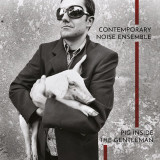
After a creative break of more than 10 years finally the comeback: In line with the long-awaited new album called "An Excellent Spiritual Serviceman" a limited colored vinyl reissue of the classic Contemporary Noise Ensemble debut record "Pig Inside The Genleman" from 2006.
"Jazz music without jazz, film music without movie but something splendid instead! Despite the band's name suggesting noisy music for the chosen ones, Contemporary Noise Ensemble appears to be a revelation for everyone. Beautiful, hard, romantic piano tunes in the dialogue with brass section. Simple and extraordinary emotional compositions leading to the climax which makes the flesh creeps while listening. Hair bristle on the heads of those who remember the musical past of the The Contemporary Noise Ensemble members..."
"The Contemporary Noise Ensemble impresses with maturity and class. There's elegance as well as punk energy. The compositions are unbelievably spacious but on the other hand all fulfilled with instruments - from the superb rhythm combo to the greatly equipped brass section. The roots of the most of The Contemporary Noise Ensemble musicians reach harder music, sometimes even heavy metal what bears excellent interest. The compositions are vigorous and expressive. The name of the band must be remembered because it undoubtedly is Polish export commodity."
"There’s no doubt that the Contemporary Noise Ensemble is one of the most fascinating musical projects from Poland which catches the attention of both pure jazz fans and people who are interested in experimental instrumental music in general. For fans of Cinematic Orchestra & jazz influenced film sounds."
- A1: Cannibal Holocaust (Main Theme) 2:56
- A2: Adulteress' Punishment 3:21
- A3: Cameramen's Recreation 3:15
- A4: Massacre Of The Troupe 3:53
- 5: Love With Fun 2:4
- B1: Crucified Woman 2:19
- B2: Relaxing In The Savana 3:06
- B3: Savage Rite 3:41
- B4: Drinking Coco 3:23
- B5: Cannibal Holocaust (End Titles) 3:52
- C1: Savage Rite (# 2) 1:50
- C2: Crucified Woman (Short Version) 1:26
- C3: Savage Rite (# 3) 2:31
- C4: Cannibal Holocaust (Terror) 2:16
- C5: Savage Rite (# 4) 3:53
- D1: Adulteress’ Punishment (Long Version) 4:01
- D2: Savage Rite (# 5) 2:04
- D3: Cannibal Holocaust (Main Theme)
THE SOUNDTRACK OF THE MOST CONTROVERSIAL FILM EVER.
FOR THE FIRST TIME IN FULL IN A SPECIAL DOUBLE VINYL EDITION!!! (NON-RETURNABLE)
This Legacy Edition of “Cannibal Holocaust” includes the film score remastered and released in its entirety for the first time ever on double LP; graphically speaking, it includes a gatefold cover with glossy title letters printed on a special soft touch paper, OBI and an 8-page booklet complete with reproductions of posters, lobby cards and photographs from the set, plus presentation essays written by Fabio Capuzzo (one of today’s best soundtrack experts), Stefan Dimle (Landberk, Anekdoten, Paatos, Morte Macabre) and Mikael Åkerfeldt.
AMS Records is proud to present a special edition of the “Cannibal Holocaust” soundtrack, exclusively released on the occasion of Record Store Day 2023. It is, of course, one of the many 'cannibalistic' movies, but perhaps it’s also the only one of its a genre that even today generates mixed feelings and strong controversy.
The excellent soundtrack, composed by Riz Ortolani, makes extensive use of string instruments, masterfully arranged and directed to match the strong contrast between the more relaxed scenes - the incipit of the film is memorable, with the main theme accompanying the spectator in a flight over the Amazon forest - and those full of rhythm and tension; in the first case, the strings go along with guitar arpeggios, while in the second they vibrate alone or together with glacial electronic beats. There are also funk-rock episodes such as in “Cameramen’s Recreation”, “Relaxing In The Savana” and “Drinking Coco”, while “Cannibal Holocaust (Terror)” is pure noise mixed with haunting percussion.
Are you ready to embark on a wild ride through the sonic wonderland of ‚Life Of Phoroma‘? This isn‘t your average V/A extended player compilation – it‘s a pulse-pounding journey through chaos, confusion, and pure eclecticism that‘ll take you beyond just dancing.
Terra Magica Rec. sixth release is a passionate ode to the fusion of EBM and psychedelic, perfectly blending lightning-fast new age and tribal hypnotic soundscapes with 1980s synth atmospheres high on Trance.
It’s Electronic Disco gone Techno gone HiNRG gone wrong folks! Enjoy. The SH-101‘s aggressive cuts, the Sequential Circuits‘ mesmerizing melodies, and the heavily processed Neumann TLM 193 vocals seamlessly weave in and out of acid-ish and electro breakbeat grooves, „Why am I suddenly standing at Tokyo Teleport Station? What happend to my last week?“ Welcome to relaxed Rave-basslines and lo-fi rhythms that will intoxicate your senses.
Get loose and fall into your next portal of unexpected spiritual flows. Catch your six unique tracks for a highly eclectic journey through mysterious and magical moments. So strap in and become one with the sound, because ‚Life Of Phoroma‘ is your roller coaster ride to unforgettable sonic adventures.
Recorded with a who's who of fusion titans including trumpeter Eddie Henderson, bassist Stanley Clarke, and keyboardist Herbie Hancock, Dance of Magic channels the lessons drummer Norman Connors learned in the employ of Pharoah Sanders, Sam Rivers, and Sun Ra, marshalling Latin rhythms, electronic textures, and cosmic mysticism to create non-denominational yet deeply spiritual funk-jazz. The sprawling 21-minute title cut spans the entirety of the record's first half, capturing a monumental jam session that explores the outer edges of free improvisation but never steps past the point of no return.
Connors' furious drumming is like a trail of bread crumbs that leads his collaborators back home. The remaining three tracks are smaller in scale but no less epic in scope, culminating with the blistering "Give the Drummer Some." by Jason Ankeny
Spatial & Co Vol. 2 may well be the best album in the Spatial & Co series. It's absolutely flawless. Again created by French disco lord and Arpadys maestro Sauveur Mallia for French library label Tele Music in 1979, it leans far more into the space disco sound than the clean cosmic funk of its predecessor. And it's all the more thrilling for it.
Wide-eyed opener "Discomax" is starts as pure piano-disco brilliance with a bassline to die for before heading off into wigged out territory, all acidic squelches and jaw-dropping percussive breakdowns. Perfection. "Space People" follows, an eerie, half-beatless sci-fi synth workout played out against a hauntingly metronomic pulse for the first half - proper slow-mo space disco business - before the beat kicks in, the electric guitar solo wails beautifully and the bassline that emerges at its conclusion rides in on some other shit.
Closing out the A-Side, the six minute long "Bass Power" is, unsurprisingly, a deep, low-end roller with head-nod drums, whizzing synths, blissed out ambient vibes and Mallia's otherworldly bass playing super high in the mix. It's white hot funk, make no mistake, and it sounds like a re-geared library version of Roxy Music. Yes, *that* good.
Side B is laced firstly by "Holidays Morning", an emotional disco-pop groover, all electric guitars, skipping drums and synthy bleeps with more than a few moments of pure driving funk.
One for the deep heads, longtime favourite "Electric Maneges" follows, a bleepy, haunted dancehall gem, uncut tropical balearic-funk from another dimension. The sophisticated digi-soul of "Loving Discovery" comes on like a weird, interplanetary Sade instrumental, all swelling synths, warm keys and syrupy guitar rhythms. Hearing is believing.
Arguably saving the best til last, the fierce, proto-techno of "Exotic Guide" closes out this extraordinary set. The intro genuinely sounds like Detroit would a good few years later - just wild - before it glides into a driving percussive funk break complete with both stabbing, insistent synths and those of a more winding, laconic variety. The one complaint? It's over far too soon. Remarkable.
Sauveur Mallia is a crucial figure in the history of electronic and dance music and a hugely underrated French library bass player and composer from the Arpadys / Voyage crew. This is just the beginning of Be With's Mallia - Tele Music reissue campaign!
The audio for Spatial & Co Vol. 2 has been remastered by Be With regular Simon Francis, ensuring the punch of Sauveur's bass and those sick drums come through to the fullest. Pete Norman’s expert skills has made sure nothing is lost in the cut whilst the original and iconic sleeve has been restored here at Be With HQ as the finishing touch to this long overdue re-issue.
Brainticket was an obscure Krautrock band born out of a 60's jazz group featuring Belgian born keyboardist Joel Van Droogenbroeck, based in Switzerland. The leader went for a fortunate solo career after the former group disbanded, reaching a cult status especially in Italy with a series of sought after libraries. Released in 1978 on Cenacolo, Images Of Flute In Nature is pure magic translated in music. Conceived by Joel with a little help from vocalist Carole Muriel (an American performer already involved in Brainticket and Drum Circus), the album is literally a deep connection between kosmische music, ambient and ethno-global rhythms.
Since its beginnings, Hypnótica Colectiva has always shown a special interest in the music recorded and released in the city of Detroit.
A place with which we have both a blood and spiritual bond because of what occurred there socially and artistically during the 20th century.
This love led us to become ambassadors of what was happening there on a musical level, holding cultural events to screen documentaries translated into Spanish, as well as a number of themed sets at our events, dedicated motor city sections in our record shop or recently lectures on the history of the city and its music at the Museum of Illustration and Contemporary Art of Valencia (Muvim).
The time has now come to bring all this history, this musical influence, to the editorial section of our label HC records.
Detroit Legacy was born from the idea of capturing these influences on vinyl. Seeking artists from all over the world who share this passion that inspires them to create their music, what we can define as the universal Neo-Detroit.
For this first edition or first volume, the collective has enlisted in its ranks creators affiliated to the label who have shown us in their careers, this influence and this feeling.
Paul Cignol opens the record with Distance. From Dublin he offers us a track of warm sequences inspired by Deep Techno, with deep pads responding to organ keys and a subtle touch of 303.
Mallorcan LLuis Barcelo Sureda is responsible for the second track Funk Station. With a Techno Soul character that we might hear from Detroitish labels like Acacia or producers like Blake Baxter.
A real eminence in Techno is the Catalan Don Alex Martín, who already released in the mid-90s on Monssieur Garnier's label (France Communications). The Barcelona native brings his wealth of experience and wisdom through Megatech, which transports us to the spectrum of Derrick May’s Transmat who, in his day, was nicknamed "The Innovator". This track provides agile sequences of complex syncopated rhythms, combining with a dreamy Michigan style synth.
The anthem of the album comes from Ghent. The sublime Belgian creator, Mariska Neerman, once again makes our hairs stand on end and our hearts melt with a heavenly composition entitled Stellium.
No one interprets Neo-Detroit quite like Mariska, whom we baptise as a sovereign heiress of the genre in the world. If we have to think of an influence for this piece, we go straight to the genius of Detroit, the one and only Jeff Mills, in his most symphonic and harmonic facet of tracks released on his label Axis Records such as "The March", A Universal Voice That Speaks To All That Will Listen or A New Found Sense Of Being.
Some of these songs have been re-interpreted by world class philharmonic orchestras such as the Montpellier Philharmonic Orchestra at the 2005 Blue Potential (Pont Du Garde). Mariska's score in this song fuses organ keys with harmonic layers and violin - favourite instruments of the Detroitian extraterrestrial - with a harmonic result of strength and hope. An authentic anthem of classic emotional Techno.
Old School electro takes centre stage with the Master from Terrassa Ivan Arnau a.k.a. Dark Vektor. In the influence of Juan Atkins (the creator) as Cybotron or Model 500 and later creators who developed this sound like Aux 88. Metaverso Frik is a great recital of a urban poetry created and interpreted by Ivan, to completely devastating effect.
Croatian Bojan Jascur a.k.a. N-TER, closes the vinyl with We Will Emerge, in a exercise of vindication, a common weapon in the context of Detroit music. Raging, trippy electro in the purest style of Cosmic Force or Dynarec.
This first tribute to 8 Mile doesn't end with the vinyl, as 2 digital bonus tracks are included in the release.
We return to Barcelona with Pastin Futon in another sequence of consecutive oscillated rhythms oscillated much like Kevin Saunderson (The Elevator) in his day and the Techno Groove that we know today.
The most robotic touch of the release is the closer with this synthetic jigsaw puzzle of a track with echoes of the 1967 Detroit Riot, the Detroit Rebellion. Again produced by another Barcelona native, The Bandit (Dj Spy / Util Records). The sequences are very reminiscent of Arpanet and Drexciya.
The idea for the cover comes from Motor City itself by Jon Yowell, first cousin of HC records founder and head of HC records David Verdeguer.
Born, raised and a lifelong resident of Detroit, Jon is an enormously talented musician capable of writing lyrics, performing them on the mic and manipulating a number of stringed instruments as well as the drums, where he is a true master.
The cover is a tribute to the formative backgrounds of many of the city's musicians in every sonic trend. Wayne State University in the capital of Michigan.
Founded in 1868, it has offered didactic teaching to many of the city's musicians.
Not all of Detroit's creators went to university, and even less so when talking about Techno, many artists are self-taught or learned in a non-academic way, but it seems to us a good base to begin to highlight the origins of the city's music in a historic building, where those who have the opportunity to learn about music have been and continue to be educated.
The adapted designs are the work of our image manager Dani Requeni.
Mastering by Steve Voidloss at Black Monolith Studios in London (UK).
The triumvirate of Roky Erickson, Tommy Hall and Stacy Sutherland had to feature. Transcendent slower songs (often) don’t feature full band performances – so, no Splash One. The song had to be a band original. So, no Baby Blue. 13 unlucky for some. This compilation launches a new phase in the 13th Floor Elevators catalogue and previews the forthcoming series THE QUEST FOR PURE SANITY: the release in optimal quality of all surviving source material for all of the band’s recordings. ‘13 OF THE BEST’ has been mastered separately to vinyl, CD, digital and streaming for the best possible sound quality for each format. Each original source has been referenced to the earliest vinyl pressing and meticulously transferred at 96khz 24- bit resolution. Multitrack tapes of the original recording sessions have been newly mixed in strict accordance with the records as first released. ‘You’re Gonna Miss Me’, the band’s seminal single, is presented here for the first time in true stereo. Taken from the original multitrack session tape, the song has been mixed to stereo in accordance with the iconic mono 45 as recorded and engineered by Walt Andrus. ‘Slip Inside This House’ viewed by fans and critics alike as the Elevators’ masterpiece and one of the key psychedelic recordings of the era, is included on the LP as the edited mono single mix so the loudest possible cut can be achieved. The eight-minute stereo version is included on all other formats. ‘Never Another’, ‘Dr Doom’ and ‘Livin’ On’ from the band’s final sessions have been newly mixed but without the overdubs added almost a year after recording. While the session tapes survive, the overdubs do not. ‘Livin’ On’ features Roky Erickson’s original superior vocal performance instead of the overdub used on the ‘BULL OF THE WOODS’ LP. What is uniquely presented here is 100% Elevators as mixed and intended for the LP. No embellishments! ‘13 OF THE BEST’ is produced by 13th Floor Elevators official archivist and historian Paul Drummond who has also written sleeve notes with full track-by-track information.
Brilliantly remastered (picture) LP/CD with new stunning artwork!
Lo-Fi India Abuse was recorded in 1998, some tracks are “pure” Muslimgauze and some are re-mixs of tracks from Systemwide’s “Sirius” CD (see also Systemwide meets Muslimgauze “at the City of the Dead” 12″). Nearly all of the tracks have hand percussion in varying tempos and intensities and at least 1/2 make use of electronic noise surges. The sound is very crisp and clean, extremely well produced, recorded and nicely varied throughout the length of the disc. Some track by track comments: “Antalya” is obviously from the same sessions as “Fakir Sind” seeing as it shares the same hand percussion sound, whistles, vocal wailing, cut-ups and delays. “Valencia Flames” sounds like a Systemwide remix. A dub bass line, hi-hat and background vocal of some sort are all obliterated by numerous delays, starts, stops and re-starts with an unpredictable nature in these cut-up tracks. “Al Souk Dub” injects background voices, market sounds and drones into the cut-up mix of slow hand percussion playing. “Catacomb Dub” and the final two tracks make use of twinkling synth waves, presumably a Systemwide sound source. “Dust of Saqqara” has a heavy pulsating electronic sound wave over an old beat box rhythm. “Android Cleaver” is brutal (as is “Nommos’ Afterburn”) hand percussion, jabs of noise and an oft repeated, unintelligible vocal sample. Yes, Lo-Fi India Abuse is yet another great Muslimgauze release, grab it!
All tracks recorded by Muslimgauze 1998
Some tracks are re-mixes from Systemwide’s “Sirius” album
Re-mastered by Višeslav Laboš
Sleeve by Oleg Galay
Originally released in 1999 via BSI Records (BSI 1999-3).
Milan based label Positive Not Happy collect its first various artists release called “Quadrifonia”, exploring a wide range of styles connected by a common sound aesthetic. The four tracks leads you into a realm of profound and psychedelic grooves with accurate sound design and effective rhythms, music for the body and the mind, from the soul. The selection of artists includes true gems from Dawl, Modex, TC80 and The Lumens, representing today’s underground club scene in its pure beauty.
Liturgy transcends the traditional parameters of what constitutes a rock band. Founded by Ravenna Hunt-Hendrix, Liturgy is a part of a shared discipline of composition, art, and philosophy that thrives on exploring the spaces between. Liturgy"s signature use of rhythmic complexity and repetition are exponentially amplified to maximalist proportions on 93696. Along with guitarist Mario Miron, bassist Tia Vincent-Clark, and drummer Leo Didkovsky, Hunt-Hendrix utilizes Liturgy"s past ruminations on burst beats and circuitous phrases as colors to paint rich murals that overwhelm and invigorate the senses. 93696 is the purest synthesis of the diversity of Liturgy, a sprawling and monumental double album exploring religion, cosmic love, the feminine, and metamorphosis while manifesting the ecstatic with breathtaking grandeur. Liturgy is the project of Ravenna Hunt-Hendrix, whose yearning, energetic "transcendental black metal" exists in the space between metal, art music and sacred ritual. Its current lineup features Mario Miron (guitar), Tia Vincent-Clark (bass) and Leo Didkovsky (drums).
Elias Devoldere is the drummer in bands such as Nordmann, Hypochristmutreefuzz, Suwi, Robbing Millions, and John Ghost. Following an ep, Kaiku, released last summer, Bloomed > Exploded is his debut full length as a solo artist. Besides writing and singing, he composed, played, recorded, and produced the bulk of the ten songs himself. 'Everything blooms', he explains the title of his first album. 'Until it explodes, and something else is able to grow from it'. In this case, what came full cycle is an intimate coming-of-age album of intangible atmospherics, crisp melodies, and understated rhythmical patterns.
BLOOMED >
'As a kid, I just wanted to play football, you know?', says Elias. 'But when I was eight years old, my parents made me choose between drawing school and music school'. And thus began a dedication to rhythm for Elias. At 18, he enrolled at the Royal Academy of Fine Arts in his hometown of Ghent, opting for a jazz education. 'Not because I aspired to become a master 'jazz drummer', but to learn music, to become a good musician'. It was at the academy that, after an impromptu jam session, Nordmann first came together. The exhilarating instrumental quartet went on to win second place at the prestigious Humo's Rock Rally in 2014, and released three albums to critical acclaim, with a new one in the works.
Devoldere, in the meantime, had completed his degree with a craving - ironically - for music. 'I was in over my head with jazz for such a long time, and went on an epic discovering spree. Moses Sumney, James Blake, Kendrick Lamar, Connan Mockasin... Lots of stuff I had missed over the years. In a way, I reconnected with the kind of music I was into before jazz dominated my life. Pink Floyd was my first love, for instance, and later Radiohead proved to be a game changer. Diving back into those kind of sounds, I was feeling the urge to follow my old dreams, of being a solo artist - or something more than 'just' a drummer, anyway. So I bought a guitar, an interface for my laptop, and started writing'.
EXPLODED
When he released his 5 track ep Kaiku in the summer of 2021, it summarised a lot of firsts for Elias. First time writing lyrics, first time as a lead vocalist, first time recording his own songs all by himself. The songs had been around for a while, but taking those leaps took a long time. 'Making the ep helped me to find my voice, in every way possible'. Still, in the aftermath of the pandemic, the songs on Bloomed > Exploded sprouted in a time of upheaval. 'Musically the album is quite serene, gentle even. But the themes speak of internal unrest and uncertainty. There are a lot of questions on the album, as it turned out. Duality, as the title suggests, coming from the struggle between a wish to turn everything upside down and a search for peace. Honestly: the prospect of my 30th birthday was messing with my head too'.
Recording during a period of solitude in France, Elias initially relied heavily on synthesizers and drum machines. 'Explode / Boalis was one of the first songs I wrote for this album, and pivotal for its atmosphere, based mostly on electronic elements. Later, I did use 'real' drums on most of the other songs, though, and contributions from other musicians, but the overall mood is very cohesive'. 'Pure', that's how Bruno Ellingham, the UK engineer who mixed the album, described it. Much to the delight of Elias, who reached out to Ellingham because of his previous work with bands such as Massive Attack and Portishead. 'Hearing the end result, I thought he really captured the essence of the original demo's. For me, that adds to this album being a sincere reflection of my true self. 'Take a dive/ Into the place where it's more quiet', as I sing in the last song, that kind of sums it up for me'.
Steve Gunn has always had one foot in indie rock and the other in an expansive improvisational scene. His songwriter albums alternate with freewheeling jams, most notably in his Gunn-Truscinski Duo, but are not confined to that. So when Gunn decided to revisit Other You, it made sense that he brought in some guests from the far side of the commercial/experimental spectrum to reimagine his songs. Nakama presents five tracks from that last album, reshaped by artists that Gunn admires. The process loosens the songs up considerably.
To start, he calls in Mdou Moctar’s backing band (the American bassist Mikey Coltun and the other guitarist Ahmoudou Madassane) for “Protection.” The song already had a bit of blues-y swagger to it, with sharper-edged guitar rhythms also heard on the ultra-smooth Other You, but here the heat has an otherworldly desert sheen. Its caravan-traveling rhythm sways from side to side, digging in to to the upbeats in a way that is both kinetic and also hypnotically still. There’s some crowd noise in the background, the knot of people that regularly forms when Mdou and his compatriots plug in from Agadez, and a few mournful afro-blues licks arcing off the vamp. But mostly it’s a cut that reminds you how much African guitar music Gunn has absorbed (listen to “Tommy’s Congo” from Way Out Weather for proof), and how well it fits with what he does.
Gunn also brings in Circuit Des Yeux’s Haley Fohr to reconfigure “Ever Feel That Way,” and she sets the song’s drifting melancholy amid pensive minor-key piano chords. She strips back the ambient whoosh that surrounds the original, slows down the pace and presents the song in startling, unadorned clarity. Her version removes some of the sticky, over-prettiness that I found so distracting in Other You. The melody is better, purer and more focused without the frills. There is also an electronic remake of “Reflection” from David Moore’s ambient ensemble Bing and Ruth, which traps Gunn’s fragile vocals in a shivering palace of synthetic tones. It’s enjoyable in its way, but the two sensibilities never quite meld together.
The best part comes when Gunn joins forces with Joshua Abrams’ Natural Information Society in remakes of “Good Wind” and “On the Way.” The former is a matter of subtle differences: the gentle pitch and roll under Gunn’s voice, the intermittent liquid runs of bass between widely spaced phrases. Abrams and his crew open up the jazz-leaning, reiterative possibilities under Gunn’s song, but they don’t change it fundamentally. “On the Way” is even stronger, a glowing drone and a pattern of hand drums enveloping the melody. It makes the music seem more spiritual, more resonant, more deep and full of mysteries. It was striking enough that I had to go back to Other You to hear again an album that had left me cold. This new version of “On the Way” didn’t change that chill, but it gave me an idea of how strong the songs might have sounded in another setting. (by Jennifer Kelly)
Less of Everything was released on April 3rd 2020 on Upset The Rhythm and sold out quickly. This limited repress on sun-yellow vinyl sees the album finally available on vinyl again, around the release of the group's new EP and upcoming tour plans.
Less of Everything. The title of Es’ first full length LP could be interpreted as a manifesto pledge, an outright demand or a purely literal sonic descriptor of the London quartet’s glacial form of punk rock music. This tension between intent and interpretation has been a fundamental element of the group’s output from their formation.
Es is Maria Cecilia Tedemalm (vocals), Katy Cotterell (bass), Tamsin M. Leach (drums) and Flora Watters (keyboards). Their 2016 debut EP, Object Relations, released on influential London punk label La Vida Es Un Mus, was described as “mutant synth-punk for our dystopian present” (Jess Skolnik, Bandcamp, Pitchfork). The band has since become a vital presence in London’s underground DIY music scene, as well as having toured the UK with the Thurston Moore Group in 2017.
After a period with members split between Glasgow and London, Es recorded Less of Everything with Lindsay Corstorphine (Sauna Youth, Primitive Parts) in Tottenham in 2019. As in Object Relations, the dynamic between Cotterell’s bass and Watters’ keyboard is at the heart of Less of Everything’s sound: intertwining sub-zero melodies, gothic anarcho-punk influences (think KUKL, MALARIA, X-MAL DEUTSCHLAND) and some kind of entirely unlocatable aquatic component. When combined with Murray Leach’s precise drumming, the outcome is original and immediately recognisable. Es are a group who know how to leave space, how to strive for minimalism without sacrificing aggression or dynamism. This dynamic provides the perfect backdrop for Tedemalm’s relentless, pointed vocal style. While comparable ‘cold’ sounding groups might affect an impersonal, safer mode of lyrical or vocal detachment, Tedemalm’s strategy is to “push the lyrics as far as I can thematically until they become absurd … overly dramatic ... while still being sincere in the feeling they’re trying to invoke. I try to apply as much emotion as I can.” The result is something intense but nuanced, confrontational but complex. Owen Williams, 2020
- A1: Maggie's Theme 1
- A2: Juke Box Source
- A3: Evelyn Story
- A4: Beetle Search*
- A5: Rosehaven Motel
- A6: Trip To La
- A7: Maggie's Theme 2
- A8: Stressed Out/Choked Up
- A9: Janet's Mazurka
- A10: Maggie Retraced
- A11: Factory Vibe
- A12: A Wet Nothing
- A13: Suspense*/Wills' Trance Pt. 1
- A14: Bell Signals
- A15: Taken Away
- A16: Radio Source
- B1: Fm Groove
- B2: Forest Finale
- B3: Penultima Trance
- B4: Parking Lot Shuffle
- B5: Dialatone
- B6: Wills’ Trance Pt. 2/Wills’ Trance Pt. 3
- B8: Gratitude
- B9: Empty Torch/Mailman/Phone Voice
- B10: On The Move
- B11: Wills' Last Trance
- B12: End Credits
- B13: Radio Source Rhythm
- B14: Juke Box Source
By the time Lalo Schifrin composed the soundtrack for Frank Perry's psychological thriller in 1974, starring Cliff Robertson and Joel Gray (who'd just won an Oscar for his role in Bob Fosse's Cabaret) he was Hollywood royalty having worked on such iconic films as Bullitt and Dirty Harry. Perry on his side, had caused a stir with The Swimmer in 1968 starring Burt Lancaster (although he would dismiss the film after being fired from the production) and followed up with a string of great cult movies including ‘Last Summer’ (1969), Diary of a Mad Housewife (1970) starring Carrie Snodgress - whom Neil Young famously fell in love with upon seeing the film and "Play It as It lays" in 1972, adapted from Joan Didion's eponymous novel.
Breaking from the social dramas from of his previous films, Perry decided to shoot a thriller based on journalist William Arthur Clark's book "The Girl on The Volkswagen Floor." The film follows a police officer investigating a murder with the help of a strange ambiguous clairvoyant played by Gray. For the score Perry went to Lalo Schifrin who'd just come out of a bad experience on The Exorcist working with William Friedkin who'd rejected his music in favour of Tubular Bells by Mike Oldfield! The score was recorded in LA with the Wrecking Crew and, although the full line up is not known, it included Emil Richards, Howard Roberts, Bud Shank and of course Schifrin on piano.
'Man on a Swing' is pure undiluted Schifrin from the early 70s. The score plays like a long suite alternating Bossa Nova ("Juke Box Source"), Lounge Jazz ("Trip to LA") and groove ("FM Groove") with superb "suspense” soundscapes like "Rosehaven Hotel". The label has gone back to the Paramount 3-track tape transfers and come up with an updated tracklist (a CD version briefly appeared in the 2010s) - re-sequenced and augmented with a handful of bonus tracks and alternate takes. A highlight is certainly "Radio Source Rhythm" which, losing the guitar and organ, reveal a jaw dropping funk breakbeat that is in the league of Dirty Harry and Enter the Dragon. This and the whole soundtrack, will ravish all the funk diggers and Lalo Schifrin fans around the world.
Avid Habibi Funk listeners may be familiar with Libyan composer / producer Najib Alhoush, who’s track “Ya Aen Daly” - the Bee Gee’s “Stayin Alive” cover - was included in our second compilation. While the original track never excited us, Najib’s version managed to strip it from its pop approach that had taken over disco during the genre`s peak. At that time, disco tracks mostly were aiming to appeal to the widest audience possible. Najib had turned the original track into something different and very unique. Upon further research we found that Najib was actually the singer and founder of The Free Music band alongside Fakhreddin, Salim Jibreel, Abdulrazzak ‘Kit-Kat’, Mukhtar Wanis and Mohameed Al Rakibi.
Initially, we only licensed Najib Alhoush’s “Ya Aen Daly” from Yousef Alhoush, Najib’s son, who was pleased to hear that there was interest in his father’s music form someone abroad. In the process of exchanging and learning about Najib’s music and career, our understanding was that The Free Music only recorded the one album. This couldn’t be further from the truth, in fact, there were ten albums produced by the group, all impressively coherent with a clear influence from disco, soul, funk and reggae.
The Free Music album was probably the longest it ever took us to gather information, photos and musical source material in a good enough quality to be reissued. This is largely due to the complicated political situation in Libya, compounded by the fact that Libya is still largely cut off from international payment systems, so getting an advance payment to the right person can be a process that takes weeks. The same goes for getting master tapes to a studio abroad and afterwards back to Libya.
When we look for music that works under the umbrella of Habibi Funk, we often come across albums where bands experimented with influences from Soul, Jazz, Funk, Disco and more, usually on a single track or two but then they often go down to a different path for the rest of the album. This was not the case for The Free Music. All their albums are fully dedicated to their unique blend of Disco, Reggae and Funk and it feels that when we made the selection for this album, we could have chosen a completely different number of tracks and the album would be been equally strong.
The lead-off single is the stupendously groovy “Ana Qalbi Ehtar” out February 3rd along with LP pre-order to capitalize on Bandcamp Friday. From the outset, the rhythmic strumming of the funkified guitars give way to the galloping drums and bass, opening up to anthemic vocals and rounding out with a blistering guitar solo, a certified disco-funk classic through-andthrough.
Second single, out February 17th is the disco slammer “Hawelt Nensa Ghalaak.” Guitars, harmonized horns, synths and bouncing bass and drums collide w/ spaced out vox to make the track a dancefloor sureshot for any party.
Third single is “Mathasebnish,” out March 3rd, a pure disco-funk slammer if there ever was one – with stabbing horns, funky bass riffs, a riding rhythm guitar and anthemic vocals, rounded out with stunning flute and guitar solos – the track will surely be on repeat along with the arrival of warmer weather.
Album focus track “Men Awel Marra” is another standout disco-infused tune, showcasing the immense creativity out of Najib and The Free Music. This past summer we finally had the opportunity to get together with Yousef face-to-face at a coffee shop in Istanbul’s central Istiklal road together with our friend Anas El Horani. Yousef told us the whole story of how his father got into music, the start of the band and his father’s continued conflicts with the Gaddafi regime that probably kept his career from becoming even bigger. As always, both vinyl and CD come with an extensive booklet featuring background on The Free Music and Najib Alhoush, including words from Najib’s son, Yousef, as well as unseen photos, cassettes and more.
Veils Of Transformation 1972 - 1980 is a collection of the earliest works of Gregory Kramer, one of the 20th century masters of textural electronic music. This collection is available on CD and cassette with liner notes from Gregory Kramer and Kaitlyn Aurelia Smith, who first brought this fascinating work to the attention of Important Records.
“Greg is one of the pioneers of electronic music and these pieces are unique opportunities to discover how intricate and dynamic early synthesizers are.” Kaitlyn Aurelia Smith
Kramer developed a musical language focused on continuous transformation of timbre, yielding a continuity of attention. This musical language, formed of timbral change, is a compelling aesthetic in its own right and a source of meditative experience. The four works on this album share a deep sense of order derived not from organizing pitches or rhythms, but from the evolution of timbre itself.
Gregory Kramer (b. 1952) is a pioneering electronic composer, inventor, researcher, teacher and author. In 1975 he co-founded Electronic Musicmobile, a synthesizer ensemble later renamed Electronic Musicmobile, a series of synthesizer concerts in New York from which he formed the Electronic Art Ensemble, a highly regarded all electronic quartet. His work extended to developing synthesizers and related equipment. Kramer also co-founded the not-for-profit arts organization Harvestworks in New York City. He is recognized as the founding figure of the intensely cross-disciplinary field of data sonification. Since 1980, Kramer teaches Buddhist meditation.
The four compositions collected here each represent Kramer’s unique approaches:
The structure of Meditations on 32 Parts of the Body (1978) is derived from the means of its production. Recording 5 people chanting an ancient meditation text, then layering to gradually achieve more than one million voices. The layering was all done using analogue tape recorders. The decomposition of the sound reflects the anomalies of tape machines out of sync, and the build up of artifacts from the audio tape itself, such as uneven response curves and tape hiss, are all engaged as musical materials.
Role (1972) was generated using one complex patch on a large hybrid Buchla 200/100 system. Emerging from a zeitgeist that valued pure synthesis as a combined artistic and technological research. At the time this piece was realized its as exceedingly difficult to produce electronic sounds that were internally complex.
Blue Wave (1980) is built on Kramer’s timbral development technique Veils Of Transformation which allows for disparate timbres to be woven into a continuously developing sound.
Monologue (1977) is a virtuosic performance of a massive patch on a Buchla/Electron Farm hybrid electronic instrument. Built into the patch is a pathway for continuous transformation of voice and voltage-controlled synthesizer. The blunt, raw and sometimes harsh sounds of this piece reflect an attitude prominent among composers that music can, or even should, be difficult, contrary to what’s already been done and, by all means, new.
Jonas Kopp pumps the drums hard on opener 'Shibu'. It is pure peak-time material, fit with siren-like synths, heavy kicks and hi-hats to get the shoulders moving. Kopp's tracks are always masterfully tailored for the dancefloor, and this is no exception; the six-and-a-half-minute ride is richly detailed with ups, downs and subtle changes. Dadub take the record deeper with 'Force Continuum Abuse'. For the first three minutes of stretched soundscape, the percussion warms up with sparse and off-kilter hits. The track's second half sees fierce breakbeats cut through the walls of reverb, and with that can Daniele Antezza and Giovanni Conti really show-off their unique talent at sound design. They blend a gift for rhythm and titanic production to engaging effect. Eomac begins the B-side with 'I Am Starting To Believe'. The track's echoing synths hang free in a spacious mid-range, intermittently making way for long chords and elusive vocal snippets. Eomac draws on the light/dark contrast and unsettling motifs that made his Monad release special, and delivers a techno epic so rich it requires repeated listens. Last but not least, Chevel; his sound is distinctive amongst the SA roster, mostly due to his acute focus on the percussive elements and intriguing take on minimalism. On 'Alicia', he works a groove out of tripping drums and metallic perc, all with a UK-influenced flair that lends itself to a wide range of DJs. Chevel's track ends what may be the most varied collection of 'Chapter V' material yet, leaving a lasting reminder of the depth and quality of artists SA have accrued.
- A1: Breezeplate (2022 Remaster) 03 44
- A2: Squarewave Colorwheel (2022 Remaster) 04 33
- A3: Toypieceplate (2022 Remaster) 03 33
- A4: Dodecatheon (2022 Remaster) 04 21
- A5: Sunsculpture One (2022 Remaster) 03 10
- B1: Sienna (2022 Remaster) 02 42
- B2: Kekker (2022 Remaster) 04 45
- B3: Gauss (2022 Remaster) 02 30
- B4: Billionwatt (2022 Remaster) 03 44
- B5: Continentsunderclouds (2022 Remaster) 03 08
- B6: Sunsculpture Two (2022 Remaster) 04 30
»Holo« by the US-American three-piece Kiln, first released in 1998, is one of those rare records that managed to carve out a niche of its own while also building bridges to variety of genres like Chicago-style post-rock, the ambient mysticism of projects like Rapoon or the music made at the intersection of shoegaze, and electronic music in the late 1990s. Lush textures, subtle rhythms, jazzy inflections and electronic experimentation seamlessly blend into each other over the course of the eleven tracks. This reissue through the German label Keplar makes the fully revised version, self-released by the group in 2007 under the name »Holo re/lux,« available on vinyl for the very first time. »Twenty-five years later this newly mastered vinyl edition is evidence that the sound of ›Holo‹ continues to attract like-minded listeners,« says member Clark Rehberg III. »Which on many levels means that our mission was successful.«
Rehberg had embarked on this mission together with Kevin Hayes and Kirk Marrison in 1993. They had first worked together under the name Fibreforms as a live trio that used treated guitars, kit drums, and tapes of found sound to explore the balance between band composition and recording experiments, while Marrison made heavy use of the Akai S612 sampler as a fabricating strategy with the project Waterwheel. »Kiln seemed to encapsulate the evolution and melding of those previous approaches to one that insisted on the continual opening up of the compositional process, allowing more of the mystery that can be discovered through studio experiments—and accidents—to become important elements of creating our music,« says Rehberg of the trio that is still going strong after three decades. »The word Kiln implies heat and transformation, an attitude that we apply to every sound we use—we begin with notes and performance and then mosaic with shape and colour.«
»Holo« followed up on the trio’s debut self-titled EP that had been recorded in the summer of 1996. »That same year, during a lull in our collabs, Kirk began building pieces on a low-memory Mac using an early 8-channel DAW,« explains Rehberg. Enchanted by the unprecedented fidelity and energy of those recordings, the three reconvened to build upon them and make more music in that manner. »I’d say our intention was no different than any other time: create something immersive and compelling: dense melodic blasts of uniquely constructed but ultimately accessible audio moments.« The group worked individually and in pairs for about 18 months while being spread across the United States. »We poured everything into it that we had at the time, working dead-end jobs by day and on audio in every other open moment. I remember the struggle of that process, but also the pure joy as we pulled down countless moments of magic while the pieces took shape.«
Rehberg says that he still hears »a time-stamp of those efforts and the belief that we were creating a special audio experience« when listening back to »Holo,« a record the band itself chose to revise almost a decade after its initial release. »Ultimately we just felt those pieces needed more impact and we had the tools and ability to make that happen,« he explains. 16 years after that and a quarter of a century after it first introduced Kiln as a force to be reckoned with, the remastered version feels indeed timeless. It is both a snapshot of the first extensive album project by a group whose bond is still »diamond strong,« as Rehberg puts it, and a record that continues to sound fresh, if not visionary also today.
All tracks composed and recorded by Kevin Hayes, Kirk Marrison, Clark Rehberg III.
Originally released on Thalassa in 1998.
Remaster by Stephan Mathieu. Vinyl cut by LUPO.
Cover art by Kirk Marrison & Clark Rehberg III.
Text by Kristoffer Cornils.
Parisian quintet En Attendant Ana have dazzled since day one. From the muted strains of their 2016 EP "Songs From The Cave", to the assured 2018 TiM debut "Lost & Found", to the sparkling refrains of "Juillet"; released just before the world collapsed around us, and which stood as the band's rebirth and purest statement of their music ambitions - until now. "Principia" is the band's third album and is without a doubt their best yet. Bandleader & principal songwriter Margaux Bouchaudon's voice anchors many of the songs on "Principia", her crystalline delivery ringing out like a bell as the band swoons & sways beneath her. The songs on "Principia" were composed from a place of confusion about the state of the world and her place in it, looking outward and inward for answers. They question our perception of others, the one they have of us and finally the one we have of ourselves in a society where the individual is king and the group is forgotten. Guitarist Max Tomasso - newly joined just before the recording of "Juillet"- feels more "moved-in" on these tunes, his sly guitar-work gliding effortlessly through. No showboating - only prickling at the precise moment necessary in suit of the song itself. New member Vincent Hivert (their touring sound man, Hivert joined the group just as touring was underway for "Juillet", replacing founding member Antoine Vaugelade)'s bass-work is rubbery & flexible, bouncing around and thru the melodies on a rhythmic sugar-high, practically urging on drummer Adrien Pollin's metronomic swing. The band's secret weapon, multi-instrumentalist Camille Frechou's trumpet & saxophone are more present & considered in the arrangements, adding a new layer of sophistication to the group's already debonair indie pop. Her beatific harmonies add a yearning to Bouchaudon's lilting phrases; sometimes uplifting, other times melancholic. Bouchaudon says "One of the most important points we tried to focus on was the place given to each instrument. For the first time, we withdrew parts, we were careful not to play everyone at once and I think that the result is a much lighter album in which every musician has a specific place and moment". But this album is also the first one to have been shaped entirely by the band, from the conception to the production. The meeting of Vincent Hivert and Margaux Bouchaudon gave birth to a duet in which the technical and artistic aspects were intertwined from the very beginning of the conception of "Principia". Apart from reshaping En Attendant Ana's dynamic, Vincent Hivert was able to think as a musician and producer as soon as they started working on Margaux Bouchaudon's demos which brought a new dimension to their music. The two of them recorded and mixed the album together reuniting their references and artistic goals. "Principia" is a great step forward without sacrificing the things that make the band unique. The nods to French pop (both current & classic) still permeate the proceedings, and the group's penchant for Anglo-Saxon indie pop from The Nineties (think Electrelane, Stereolab, American Analog Set) still rings out, but there's an air of - dare we say - maturity in "Principia"s twelve songs. The group always felt a little 'out-of' and 'ahead-of' its time, but tunes like "Wonder" "The Cutoff" and "Same Old Story" are cinematic and romantic, and absolutely feel like the next great phase of an already great band.
Peach Vinyl
Parisian quintet En Attendant Ana have dazzled since day one. From the muted strains of their 2016 EP "Songs From The Cave", to the assured 2018 TiM debut "Lost & Found", to the sparkling refrains of "Juillet"; released just before the world collapsed around us, and which stood as the band's rebirth and purest statement of their music ambitions - until now. "Principia" is the band's third album and is without a doubt their best yet. Bandleader & principal songwriter Margaux Bouchaudon's voice anchors many of the songs on "Principia", her crystalline delivery ringing out like a bell as the band swoons & sways beneath her. The songs on "Principia" were composed from a place of confusion about the state of the world and her place in it, looking outward and inward for answers. They question our perception of others, the one they have of us and finally the one we have of ourselves in a society where the individual is king and the group is forgotten. Guitarist Max Tomasso - newly joined just before the recording of "Juillet"- feels more "moved-in" on these tunes, his sly guitar-work gliding effortlessly through. No showboating - only prickling at the precise moment necessary in suit of the song itself. New member Vincent Hivert (their touring sound man, Hivert joined the group just as touring was underway for "Juillet", replacing founding member Antoine Vaugelade)'s bass-work is rubbery & flexible, bouncing around and thru the melodies on a rhythmic sugar-high, practically urging on drummer Adrien Pollin's metronomic swing. The band's secret weapon, multi-instrumentalist Camille Frechou's trumpet & saxophone are more present & considered in the arrangements, adding a new layer of sophistication to the group's already debonair indie pop. Her beatific harmonies add a yearning to Bouchaudon's lilting phrases; sometimes uplifting, other times melancholic. Bouchaudon says "One of the most important points we tried to focus on was the place given to each instrument. For the first time, we withdrew parts, we were careful not to play everyone at once and I think that the result is a much lighter album in which every musician has a specific place and moment". But this album is also the first one to have been shaped entirely by the band, from the conception to the production. The meeting of Vincent Hivert and Margaux Bouchaudon gave birth to a duet in which the technical and artistic aspects were intertwined from the very beginning of the conception of "Principia". Apart from reshaping En Attendant Ana's dynamic, Vincent Hivert was able to think as a musician and producer as soon as they started working on Margaux Bouchaudon's demos which brought a new dimension to their music. The two of them recorded and mixed the album together reuniting their references and artistic goals. "Principia" is a great step forward without sacrificing the things that make the band unique. The nods to French pop (both current & classic) still permeate the proceedings, and the group's penchant for Anglo-Saxon indie pop from The Nineties (think Electrelane, Stereolab, American Analog Set) still rings out, but there's an air of - dare we say - maturity in "Principia"s twelve songs. The group always felt a little 'out-of' and 'ahead-of' its time, but tunes like "Wonder" "The Cutoff" and "Same Old Story" are cinematic and romantic, and absolutely feel like the next great phase of an already great band.
Tape
Parisian quintet En Attendant Ana have dazzled since day one. From the muted strains of their 2016 EP "Songs From The Cave", to the assured 2018 TiM debut "Lost & Found", to the sparkling refrains of "Juillet"; released just before the world collapsed around us, and which stood as the band's rebirth and purest statement of their music ambitions - until now. "Principia" is the band's third album and is without a doubt their best yet. Bandleader & principal songwriter Margaux Bouchaudon's voice anchors many of the songs on "Principia", her crystalline delivery ringing out like a bell as the band swoons & sways beneath her. The songs on "Principia" were composed from a place of confusion about the state of the world and her place in it, looking outward and inward for answers. They question our perception of others, the one they have of us and finally the one we have of ourselves in a society where the individual is king and the group is forgotten. Guitarist Max Tomasso - newly joined just before the recording of "Juillet"- feels more "moved-in" on these tunes, his sly guitar-work gliding effortlessly through. No showboating - only prickling at the precise moment necessary in suit of the song itself. New member Vincent Hivert (their touring sound man, Hivert joined the group just as touring was underway for "Juillet", replacing founding member Antoine Vaugelade)'s bass-work is rubbery & flexible, bouncing around and thru the melodies on a rhythmic sugar-high, practically urging on drummer Adrien Pollin's metronomic swing. The band's secret weapon, multi-instrumentalist Camille Frechou's trumpet & saxophone are more present & considered in the arrangements, adding a new layer of sophistication to the group's already debonair indie pop. Her beatific harmonies add a yearning to Bouchaudon's lilting phrases; sometimes uplifting, other times melancholic. Bouchaudon says "One of the most important points we tried to focus on was the place given to each instrument. For the first time, we withdrew parts, we were careful not to play everyone at once and I think that the result is a much lighter album in which every musician has a specific place and moment". But this album is also the first one to have been shaped entirely by the band, from the conception to the production. The meeting of Vincent Hivert and Margaux Bouchaudon gave birth to a duet in which the technical and artistic aspects were intertwined from the very beginning of the conception of "Principia". Apart from reshaping En Attendant Ana's dynamic, Vincent Hivert was able to think as a musician and producer as soon as they started working on Margaux Bouchaudon's demos which brought a new dimension to their music. The two of them recorded and mixed the album together reuniting their references and artistic goals. "Principia" is a great step forward without sacrificing the things that make the band unique. The nods to French pop (both current & classic) still permeate the proceedings, and the group's penchant for Anglo-Saxon indie pop from The Nineties (think Electrelane, Stereolab, American Analog Set) still rings out, but there's an air of - dare we say - maturity in "Principia"s twelve songs. The group always felt a little 'out-of' and 'ahead-of' its time, but tunes like "Wonder" "The Cutoff" and "Same Old Story" are cinematic and romantic, and absolutely feel like the next great phase of an already great band.
Tape
A full length collaboration from DUANE PITRE and ELEH. PITRELEH use high resolution analog and digital tools to create music utilizing natural vibrations and harmonics as rhythm and melody. Inspiration is drawn directly from vibrational waves (sound, gravity, water). The electronics, of which both pieces are constructed, are tuned using pure intonation which utilizes the prime numbers: 1-3-5-7. The debut live performance of Pitreleh was recently presented at the Issue Project Room in Brooklyn as well as the Museum Of Contemporary Art in Cleveland.
Clear Vinyl
Dutch singer and songwriter Caroline Van der Leeuw is back - with a new name, a new sound, a new mission. Emphasising the depth and breadth of her artistic transformation, Nowhere Near The Sky (produced By David Kosten - Bat For Lashes, Everything Everything) is The Jordan"s extraordinary, game-changing debut album, a new chapter that comprehensively rewrites Caroline"s story as former singer of Dutch pop group Caro Emerald. Gone is the jazz, the swing, the Latin rhythms, the rockabilly, the heavily stylised wardrobe. In their place: total candour and unvarnished truth, vocals purer and more powerful than anything she has recorded before, trip-hop and folktronica textures that wrap her voice in magic and mystery, and songwriting that, after years of doubt and repressed feelings, finally pulls back the veil.
Paul Wise aka Placid is the driving force behind ‘We’re Going Deep’ – a thriving online community and record label that keeps you coming back for more. Born out of a lifelong affair with the many shades of electronic rhythm and an obsession for collecting records since 1988, Paul is known and respected by many in the realms of underground House and Techno. Renowned for making hips and feet move at parties, clubs and fields across the UK and beyond over the last few decades.
As a label owner, his mission couldn’t be clearer - releasing new music for heads of all persuasions. Fresh cuts aimed squarely at the dance floor, front room or even just your headphones. Rather than staying too hung up on the past, he continues to serve up the freshest in Acid, Electro, Techno, Deep House alongside sweet slices of Electronica.
Sticking to the format of 4 superlative cuts from equally talented producers, the quality remains unquestionably consistent on Volume 8 of his various artist series. Kicking off A1 in style with a family affair from Acid House aficionado Affie Yusef and his daughter Leila, ‘Dublovr’ is a Class A slice of pure late night chug that rides clockwork rhythms to a rolling bassline. As dubbed out synths ring out to lift you skywards – eerie sweeping undertones add another dimension. Tried and tested since the summer season, the added layer of a TB-303 brings everything nicely to a head. Not to be outdone, Bristol based Electro emissary Zobol delivers a pure slice of machinist joy on A2 ‘Sense The Consesus’, showing his ability to finesse and balance uplifting melodies with warm synthesis on this finest of jams.
Over on the flipside, Maltese producer Acidulant takes up the reins with the hushed tones of ‘The View of Her Shade’ on B1 – a thoughtful excursion into electro hinterland that’s a textbook lesson in making more with less. Last but not least, mysterious I Love Acid affiliate Type-303 turns out an exquisite IDM inflected serving of woozy broken Electronica on the mysterious ‘Knowhere’. Steeped in rippling melodies and aquatic
Split System, the Aussie group featuring Jackson Reid Briggs (Jackson Reid Briggs & The Heaters) on vocals and Arron Mawson (Stiff Richards) on guitar, took the punk world by storm with its debut EP this past spring. That was hardly surprising given the talent involved. But whatever my expectations were for Split System, the Melbourne-based outfit far exceeded them. Not just another "super group" (also on board are guitarist Ryan Webb Speed Week, bassist Deon Slaviero, and drummer Mitch McGregor [No Zu]), Split System is straight-up one of the most powerful and exciting punk rock and roll bands of recent memory. The band's EP was a smasher, and now debut album Vol. 1 emphatically follows suit. My god, this record is a monster! Essentially Split System's sound is classic Aussie punk. That may sound like nothing new, but this band executes the style with a force and fury rarely heard these days. It doesn't hurt that Jackson Reid Briggs is one of the best rock and roll screamers going. He's got a fire inside of him. Meanwhile, Mawson and Webb form one hell of a guitar tandem. And that rhythm section is insane. These are all brilliant players who come together to make an extraordinary band. Vol. 1 comes storming out of the gates with "The End" and never lets up. Of course we knew some of the previously-released tracks ("Hit Me," "Demolition," "Climbing") were going to rip. But the newer material is just as good and will just about melt your face off. Songs like "Ringing In My Head" and "Grip" are pure energy and ferocity, while closing track "Feelings" has a mellowed-out Saints feel. This band knows how to rock and roll, and there are literally no songs on this album that don't entirely kick ass. Sometimes we think of these all-star groups as "side projects," but such categorization would sell Split System woefully short. If we're talking about the top three or four punk bands in Australia right now, this has to be one of them! Josh Rutledge/ Faster and Louder
Balearia Records continues its personal trip around the pure house rhythms.
"Playa d'en Bossa" is a mix of beautiful melodies drifting over a shuffling drum pattern and tumbling percussion.
Heady and hypnotic mood, and who better to kick things off than some Italian heroes like Daniele Baldelli, Marco Dionigi, Fabrizio Fattori, Claudio Tosi Brandi and more. Cosmic lovers, unmissable calling for your decks!
Berlin’s Pure Hate releases the first record in their new Various Artist series ‘Noise Bleed’ featuring tracks by Ryuji Takeuchi, Gaja, Swarm Intelligence & STRISC. Ryuji Takeuchi: Making a return to Pure Hate after his infamous ‘Essentials EP’ on PH002, Ryuji Takeuchi is renowned for his driving, hypnotic, atmospheric, raw, emotional interpretation of Techno. he has released on some key labels over the years including Inner Surface Music, LK Rec, Arms, Clan Destine Records, Infidel Bodies, Instruments Of Discipline, Depth. Request, his own LSN & Hue Helix imprints and more recently Mord and Dax J’s Monnom Black. Gaja: Once locked into the throes of Berlin’s ceaseless techno throb and now back home in Albenga, Italy, Gaja represents the gnarly, noisy extremity of modern dance music. It’s a desolate, distorted place where blasts of noise spit in the empty footprints once shaped by snares and hi-hats, and the bass bleeds out over everything. Having recently released his debut album ‘Morning Fist’ on his own Ophism imprint, Gaja makes his Pure Hate debut in style with track ‘Hangman’. Swarm Intelligence: From rhythmic noise to the brutal and bleak constitute a distinctive sound that Simon Hayes has been honing for more than a decade under his Swarm Intelligence guise. Having remixed MDD on PH003 The Dublin-born artist has cemented his place in the Techno underground with critically acclaimed LPs and EPs on labels like 47, Instruments of Discipline and Voitax plus standout sets at clubs like Berghain and Basement NY. Simon also recently launched his own self titled vinyl imprint Swarm Intelligence as a platform to explore his own imaginings of futuristic industrial music. STRISC.: Last but not least and rounding the record off in his trademark brutal style, label head STRISC. finally makes his anticipated debut on Pure Hate with track ‘Melt Pit’. VHXX1 is available in stores from 16th January 2023, distributed by Ready Made Distribution, Berlin. Mastered by Joe Farr. Artwork by Slave To Society. Tracklist: A1. Ryuji Takeuchi – Spur A2. Gaja – Hangman B1. Swarm Intelligence – Deviant B2. STRISC. – Melt Pit
Wunderblock Records and La Notte Di Architetto label are proud to present a debut release of a new project, Urstadt, ruled by Michael Teplov of Wunderblock and Nikita Melnikov, also known as Relic Radiation. Been released on the Planet Rhythm label before, and now the duo appears in a pure new form with fresh techno material.
The EP is called "Ritornels Of Decay" and presents the Urstadt duo's view on the state of the electronic music scene during the post-Covid times, through the prism of classic Detroit and Birmingham techno grooves. As a special VIP guest featured Andreas Sandoval, also known as Developer, with a hyperkinetic, ultra-minimalistic rework of the first track.
Overall, all the tracks of the EP are like polyrhythmic, slowly developing mechanospheres with a touch of cold-euphoric and dreamcore harmonies, fused altogether in a modern superhybridic way. For true techno believers.
Released on cultish London based label Mushroom in 1972, this album brought together the anarchic genius of saxophone player Lol Coxhill, with the pure magic of a dutch rhythm section: Pierre Curbois on the drums and keyboard player Jasper Van’t Hof. A clash of the titans as a matter of fact, with the more classical and impro sounding lines of Coxhill and the straight – almost jazz-rock – harmonies of the other two players. A fascinating record comparable to Keith Tippett small groups and the rise of the most peculiar impro-jazz scene.
New Studio Album after long 8 years! Produced by Jack Endino in Chile and Mastered by Tony Cousins (The Verve, The Stone Roses) at Metropolis Studios U.K, Lacquer cut by Richard Simpson (Beck, Flamin’ Groovies, Lou Reed). After 8 long years The Ganjas returns with a new studio album, a joint production between Jack Endino and the band. Like the 2012 album ‘Resistance’, this LP combines sounds and styles that have marked the band since its inception; long space rock songs, neo grunge guitars, Manchester-reggae rhythms, and ballads with R&B vocal harmonies. For fans of: Sundial, Keith Richards, The Stone Roses, Swervedriver
A job that very well summarizes the more than 20 years of uninterrupted career. After the compilation album ́Ghost River ́ (2015) and having finished the European tour in September of the same year, the drummer changed, the long-lived founder Aldo Benincasa left and Nes entered, who had already replaced him on a couple of occasions. In March 2017 they embark on a trip to El Médano a mountain refuge that is on the border between Chile and Argentina, and in there for several days they shaped the songs that gave life to this album. Then, in 2018, Jack Endino, an old acquaintance of the group, travels from Seattle to Santiago to record 10 songs with different nuances and colors, lyrics in English and Spanish, radio cuts and long durations, rock, groovy and power ballads, at Estudios Lautaro. The album has songs like ‘America’ and ‘Ex-Pilot’ an opening and closing of almost 10 minutes in a cadenced and hypnotic groovy march, spatial and psychedelic in the purest style of The Verve's A Northern Soul album. While ‘Space Trees’ and ‘10.000 Años’ are short, powerful, fast and acid songs with the grunge and alternative rock stamp that sounded in the 90's, nothing to envy to Sundial and Swervedriver. There is room for Manchester-reggae moments in ‘New Berlin’, an instrumental dance song that was born in that city thanks to the collaboration with Andrés Bucci and ‘Listen To The Lion’, a trippy and deep Dub-Reggae cut. R&B ballads have always been part of the group's work and on this album they stand out with ‘Generation’, the title that gives the album its name, with a sound reminiscent of Keith Richards solo songs and the emotional nirvana-esque ‘Far Along The Way’. The mix was carried out in 2019 between Seattle and Santiago de Chile, during upheaval and social protests as a result of the October outbreak and was mastered in 2020 at the Metropolis studios in the U.K. by Tony Cousins, an engineer who had already worked with The Verve and The Stone Roses, influences recognized by The Ganjas. Due to the pandemic the release was postponed to the end of 2022. For the likes of: Sundial, Keith Richards, The Stone Roses, Swervedriver. Genre: Alternative / Indie
Flaminia’s first solo release on 47 features four mesmerizing techno rollers. London-based artist Flaminia makes her solo 47 debut with four sophisticated techno tracks that perfectly balance brooding intensity with dreamlike atmospherics. A producer with EPs on Samurai Music, VSK Series and her own label, Metempsychosis Records, Flaminia builds on her canon of previous work with 47033, adding to the label roster’s growing arsenal of expertly honed dance floor releases. On the A-side, two four-to-the floor heavyweights—”Pure” and “Burn Loudly”—offset bone-shaking kicks with plangent melodies that make these tracks uplifting despite their ferocity. The B-side takes a darker turn; “Back To Zero” is an icy broken beat that shines in its stuttering rhythmic complexity, while the closer, “Dissolved,” is just as foreboding: synths scrape and shatter like shards of glass against a spare and crunchy kick while Flaminia’s voice reverberates in the background. The entire package will be
Paryìa label head Marie Montexier announces the third installment on her imprint.
After kicking off the label with records by a.b.u.3.0.3. and Small Crab, Marie is having the Vancouver based acidic specialist Overland, who delivers three cutting-edge dance floor tracks that showcase her rich and versatile fusion of classic acid techno patterns and distinctive bass music rhythms.
Rounding off the record is a remix from the Chicago based up-and-comers Purelink. In contrast to Overland’s dark, fast, and bassy sound, Purelink re-arranged a trippy downtempo version of ‘Paloma’, resolving in the delicate, yet deliberate, chillout ecstasy, they are best known for.
Pique-nique Recordings is proud to present People’s Dream, the latest solo release from NYC-based vibraphonist and electronic producer Will Shore.
Inspired by Francis Bebey and Don Cherry’s electronic music from the 70s and 80s, People’s Dream draws heavily from modal jazz, minimalism, and dance music. It blends tightly composed percussive phrases with freely moving melodic improvisations that feel as much at home in a DIY loft space as they do on a custom-built sound system at Nowadays.
Shore says: “The vibraphone is the thing that I know best, but I’ve always found the instrument quite limited. Its pure bell-like tone can seem too pretty to evoke a wide range of feelings. I normally find ways to obscure that pure sound: I distort it, pitch it down, or layer rougher textures over it. But for People’s Dream and Lucid, instead of obscuring the sound quality, I decided to embrace it.
I used the vibraphone for not only melodic parts but also as a driving rhythmic element. I let the entrances and exits of melodies appear and disappear in a dream-like way, and added electronics and percussion as texture, to create a more cinematic atmosphere.”
On the B-side, UK producer and label-head Tom Blip (Blip Discs) flips Lucid into a driving, bass-oriented club track, fit for vibrant dancefloors this summer. On the back of successful collaborations with East African artists Swordman Kitala and Mubashira Mataali Group, Blip unleashes a trademark peak-time drum track designed to elude any dream-like state.
People’s Dream is the seventh release on NYC/Sydney label Pique-nique Recordings, which worked with Shore in 2019 on their signature event, Take Two. Shore led a nine-piece band through a reinterpretation of Albert Ayler’s Spiritual Unity for the occasion, utilizing his mentor Butch Morris’ conduction technique to rapturous effect.
- A1: Serpico
- A2: Headless In A Beat Motel
- A3: Surreal Madrid
- A4: Doorstop Rhythmic Bloc
- A5: Burgundy Spine
- B1: Black Death Ambulance
- B2: Chill Blown
- B3: Hungarian Suicide Song
- B4: Tina This Is Matthew Stone
- C1: Psychotic Now
- C2: Pdf
- C3: Screws
- C4: Kilometrica Banca
- D1: Pull Thru Barker
- D2: Dirge
- D3: They Slept In Darkness
- D4: Eopo
- D5: Pile Tent
Deluxe reissue of their 1994 debut album.
Completely remastered under band supervision.
Pressed on burgundy vinyl and Presented in a gatefold matt laminated gatefold sleeve, with spot UV varnish .
Features the original LP plus a bonus disc with the Cherry Red E.P tracks, plus a 16-page booklet containing photos, reviews, and sleevenotes from Mick Derrick, Steve Mack & John Robb.
Combining a metronomic krautrock beat played by a monster drummer, looping guitars and a boy/girl vocal that sounded like a bickering bed-sit argument turned into song, Prolapse had all the manic intensity of a nervous breakdown set against a backdrop of inventive guitar work and a really tough rhythm section. There were hints of the Fall, krautrock, PiL and a touch of the pure golden pop of Blondie along with the sense of restless dislocation shared by many of the post-punk bands.
Prolapse arrived in the middle of the Britpop era and their tense, almost neurotic music clashed with the stadium-filling, jolly knees- up pop that dominated the indie mainstream of the time. By 1996 indie had become the mainstream in terms of record sales and sound and was strutting around at the opposite end of the cultural spectrum to the indie bands of the Eighties and their war against popular culture. Late arrivals Prolapse were the last gasp of this genuine independence.
16 track compilation of 1980s classics.
Formed in Scotland in 1979, APB were a post-punk trio blending edgy
guitars with funk and new wave sounds
The band had many early 80s alternative radio and rock dance club hits including
‘Shoot You Down’, ‘Rainy Day’ and ‘Palace Filled With Love’.
New York-based Link Records originally issued ‘Something To Believe In’ in 1985,
and the ten- song title was perceived at the time to be APB's debut album
although it was actually a compilation drawn from the band's previous eight
independent singles. The band's 1981 debut single ‘Chain Reaction’ is now added
as a bonus track to the vinyl release, while that song and an additional five tracks
will appear on the expanded edition CD. ‘Danceability’ will appear in its original
mix on the vinyl LP, while the CD will feature the song in its extended ‘Danceability
Parts 1 & 2’ form.
"When I bought the second APB single, 'Shoot You Down'. I was blown away by
the pure energy and sparse funk groove that drove the record." said Matt Pinfield,
former host of MTV's 120 Minutes. "Over the course of the next few years, I saw
the band live about 15 times. They would always pack clubs in New York, New
Jersey, and Long Island -- anywhere they received airplay." In 2018's Beastie Boy
Book, band member Adam "Ad-Rock" Horowitz referred to ‘Shoot You Down’ as a
"punk dance-floor classic."
In 2022, APB remains an active touring band, which includes original members
Slater, Roberts and Cheyne. Over the decades, APB's sparse, rhythmic sound has
influenced everyone from the Red Hot Chili Peppers to Franz Ferdinand. A new
generation is primed to make their acquaintance.
The liminal space between storytelling and dreaming is full of noise. Like whispers, flickering lines of static travel to the rhythm of tension, moving through moments of stillness and chaos. The sharp details of the hyper-personal become shared memories.
Dreams can be stories, their fabric transient and their logic malleable - like folk songs carrying ancient knowledge or clairvoyant wisdom.
White Dove Dream tells a story that only sound can. One that defies language and closed narrative; a story that is both a personal rumination and collective conversation.
There are layers of healing synthesis and dream logic improvisation; captured recordings coalesce somewhere beneath the scramble like deja vu. Like a diary entry, or a manifesto - noise is folk music and Icebear is noisy.
Icebear is Eilis Mahon, a sound artist from Kildare, Ireland.
White Dove Dream is her debut release on Weeding - an independent label and collective of friends based primarily in Dublin, Ireland, who love to make and share noise.
Recent play of “Funny Games / Garfield” on Pure Soil - NTS.
Italian The Villains Inc. moves up a gear with its fourth release to date and already the second in less than a year!
Conscious “Time To Go Back EP” introduces the exclusive collaboration between label owner Gab.Gato (Dominance Electricity, Drivecom, SolarOne) and his partner in crime Jack Bags (La Sabbia) from Milan.
Together, they drop an untouchable dancefloor oriented five tracker based upon a terrific concept.
Coming from the year 2106 with a preventive message to save Earth from manhandled destruction, scientist Dr Boomer understands how much it’s too late to prevent the planet from Armageddon.
A side opens with insane “Man Of The Future”: a pure analogical time machine merging whispers a la Egyptian Lover to heading vocoder sequences over a sharp 808 programming.
Luminous and hypnotizing at the same, this oldschool anthem is instantly followed by enthusiastic “No Permission”.
A groovy bassline melt with acidic loops turns the song into a masterpiece enhanced by funny vocal scanding “You Have No Permission To Get Into My Head”.
Top notch! With its fierce rhythm and relentless beats, title track “Time To Go Back” coming next signs an ode to the glorious days of West Coast electro sound.
Vintage sonorities fuse into cutting-edge drums while a funky atmosphere will propel you through time and space. Ace!
The flipside goes deeper into the realm serving up what appears as the climax of the EP. Combining gloomy strings to progressive swirls and ethereal chords, well named “Darkness” delivers a scary yet prophetic message from the future that will spread guilty feelings to any listener: “There Will Be No Light, No Hope…”. You have been warned! Last cut “The Bad Place” concludes the 12” on a soulful note regarding the state of our world controlled by government and technology.
Completed by a fantastic comic style artwork, awaken and despair “Time To Go Back EP” offers an outstanding retrofuturist release from which no one will come out unscathed.
One of the best outings in The Villains Inc. so far, rush on it!
Blue Vinyl
Throughout his productive career, Carl Oesterhelt has proven to be an artist who finds it easy to move between musical genres and concepts. Much of his work has been within classical and chamber music, but he has also scored museum exhibitions and he is sometimes part of The Notwist crew as an angular figure on the Munich scene.
In Umor Rex we have been lucky enough to publish an array of Oesterhelt's universes. In Eleven Pieces for Synthesizer (Umor Rex 2019) we heard his kosmische side, where the connections with Harmonia or Klaus Schulze were amalgamated with ecclesiastical organ pieces and intense semi-automatic rhythms. A deeply melodic, fresh album. Pure syntax of the modern synthesizer. Further, in The Aporias of Futurism (Umor Rex 2021), in collaboration with Andreas Gerth (Driftmachine, Tied & Tickled Trio), Oesterhelt showed what is perhaps his darkest side —a work full of nuances within concrete music and midnight atmospheres. As deep and cerebral an album as it is surprising and catatonic.
Yet it seems that Carl Oesterhelt has another ace up his sleeve. Now he surprises us with The Dualistic Principle, a fantastic album full of weird but charming electronic melodies, rhythms that push the body to movement, sometimes syncopated and abstract, others permanent and fluid. In this work, Oesterhelt invited Johan Simons to give voice to the lyrics. The Dualistic Principle is a sort of rendition of a philosophical review or a nostalgic memory of the glamorous years. There is also underlying humor in the Post / Space-pop / Munich-disc assortment. The Dualistic Principle is the score to an imaginary film of contemporary hedonism.
All music & lyrics by Carl Oesterhelt. Voice by Johan Simons. Additional strings played by the Ensemble für synkretische Musik. Recorded in Munich & Bochum, Germany. Mastered by John Tejada in Sherman Oaks, USA. Artwork by Daniel Castrejón in Mexico City.
Rare Italo disco pop project Galvanica gets a beautiful re-issue! This is what the label writes about the release; "Galvanica, a voice with unusual qualities, refined, balanced, also high-pitched, sensual, embellished by an orgasmic inspiration with fluid and spaced solo's in hypnotic rhythms that often change scenery. 'Nightlights in Japan': an extraordinary piece of pure and profound creativity where each version seems to have been built apart and where the West meets the East. A splendid interpreter for a truly stunning piece, as fresh and far-sighted as the day it was recorded in Calenzano at Studio Emme by Marzio Benelli with the Yamaha DX7 synth and Linn 9000 drum sequencer that are at the base of the piece, made and re-interpreted in the four original versions, all sung in the Eastern Asian pentatonic scale. 'Nightlights in Japan' was also written by Massimiliano Orfei, at the time collaborator in the advertising projects from label Smash One Music of Pino Toma, the producer who drew new inspiration to venture into the record market which in 1987 became every day more difficult and this song was considered out of fashion, even if each version of this song was expertly arranged by the talented Giorgio Costantini. We've clarified as to whom Galvanica's velopendulus belongs, in order to be able to rightly consider this artist as a contributive voice of disco music, despite being part of the "second wave" of the Italo-Disco scene, has strongly contributed to it as Otero, Belen Thomas, Angelby and previously with the disco-project Plustwo creating 'Melody' (which after 40 years gets a new extraordinary success with over 134 million plays on TikTok and around 18 million streaming). However, it's clear as day that the gorgeous artist behind Galvanica was Antonella Bianchi and that Giorgio Costantini was not only her producer and composer - as in 1985 for 'I Know', a sweet synth-pop ballad sung with her stage name 'Angel', but above all her ... 'guardian angel'. For many artists using a stage name is a custom. The absolute record of pseudonyms as a true equalizer of identity is held by Stendhal having used 350 throughout his career. This multifaceted artist who, until now has never used so many 'a.k.a.', in a wonderful game of musical mirrors, has represented an opportunity to challenge the market, a trait of non-acceptance of the role that the discography attributes to certain artists. So also Galvanica was an invitation to reflect, with a pinch of provocation, a behavior that Antonella Bianchi has in the DNA of her family. Ultimately, Best Record is not at all worried about the modernization that surrounds it, sure that 'Nightlights in Japan' will be one of the most coveted vinyl reissues in the second half of 2022.
6 face-melting gurners for the 21st Century’s, wilted and jilted generation.
Glasgow’s Lady Neptune follows her New Gorbals Gabber cassette E.P. with her debut vinyl release NOZ. Over the course of 23 bloody fisted minutes, Lady Neptune’s – aka Moema Meade - hyper destructed take on Gabber and Happy Hardcore breaks down the genre tropes before rebuilding them as a new pop music. If 2020’s New Gorbals Gabber showed an artist building their own language from fragments of different genres, 2022’s NOZ goes harder into the cyberpunk-ass future and takes no prisoners. Recorded and mixed at Glasgow’s legendary Green Door Studios and mastered by Rashad Becker, here Lady Neptune evolves into a monster.
With the classic weapons of Dutch Gabber – distorted 909 kick drums, bursts of noise and world-eating Rave-O- Matic hoovering synth riffs, Lady Neptune’s 6 tracks constantly threaten to careen off the speaker into the sweatiest, most gibbering, messy corners of the club. The two years since her debut has seen Meade destroying festival dancefloors, training for the full assault that is NOZ. Live performances have seen foam guns, tequila-pistols, neon stage dancers and a full, maxed-out orgy of fast-as-hell BPM, rave music burning up the cones. The experience reaps rewards from the outset on recorded form here. APOCOLYPS begins with monstrous vocals and the all-consuming kick, pulled back and taut for launch. The arsenal builds; warbling synths and high-pitched synth-strings before dropping into Bald Terror-sized hoovers and stuttering 4/4s. It quickly bleeds into MASTERER, with a looped, pitched up vocal intersecting with the synth riff. The aesthetics might be Happy Hardcore but the dynamic feels like a synthetic, evil Nu Metal-influenced Industrial music. Constantly evolving and twisting with its own natural drama, the drop at 2:15 is pure ecstatic release. fusing Meade’s inclination for pop hooks with the first out-and-out 180BPM (ish, who’s counting?) anthemic melter of the E.P., TELL ME has THE big catchy chorus, used sparingly and sung by Meade with angelic devilishness, coming at you in waves of XTC. It’s a repeater.
It’s then massive fists in the air for the ruthless Side B opener WIT. In the Welsh-Brazilian artist’s adopted home of Glasgow it translates directly as WHAT!? Itt makes sense. g. Sharp, weaponised, rhythmic punishment abounds before OH responds. Pitched up vocals and another mid-frequency synth hook wipes the slate clean. Like the best Gabber, the tension and release dynamic is used to full effect by Meade, with the thunderous low end kick -expertly tweaked in the mastering by Rashad Becker – slipping into the ghostly cavern. Industrialized 4/4 and noise-snares propel onwards to be utterly squashed by that bloody synth, stinging and horribly brilliant. Proving her genius for a ridiculous A-N-T-H-E-M, TIME 2 MAKE U FEEL GOOD closes the 23 minutes of ragged, drugged glory with a festival-slamming chorus built from the wreckage. It’s a song that does that thing we all know and love but can’t put our finger on. Sad, happy, tragedy, ecstasy, joy, horror...There’s big, minor chord changes (yes there’s some CHORDS on this slammer), the kick is submerged in layers of pads and Meade’s actual secret weapon: her vocal and knack for writing a chorus line. In the listener’s mind it’s over before it’s begun, a track destined for the big rewind.
NOZ is a breathless, E-number riddled eternal ecstasy.
Hitting play on SEAMOSS2, the latest missive from Portland noisetinkerers Sea Moss, is like punching the big red button on a cartoon
bomb before it explodes into a multicolored mushroom cloud
From the second Nap Time revs up, vocalist Noa Ver and drummer Zach
D'Agostino absolutely clobber the listener with a distorted hodgepodge of sounds
as raw and violent as they are winkingly playful, as if Black Dice and Melt-Banana
were caught in the middle of some kind of psychotic square dance together.The
duo's setup "which involves a primitive assemblage of hacked feedback
oscillators, colorful Rococo tin boxes, and a contact mic plugged directly onto
Ver's neck to capture her barking intonations " harkens back to an era of DIY
where live performance meant everything. Blurring the line between reckless
improvisation and tightly- knit compositions, the band achieves a disorientingly
complex interplay. Though Sea Moss's music may initially seem to be an act of
pure blunt force, the duo's true prowess lies in the intricacy of their rhythmic
interplay. As freeform as it all might seem, SEAMOSS2 contains the band's most
potent, precise compositions yet, refining the distinct style they forged on
disorienting releases like Bread Bored and Bidet Dreaming into a thrilling act of
controlled chaos.
In an era where the communal spirit of DIY feels more difficult to achieve than
ever, Sea Moss embody the classic ethos of weirdo punk music in all its absurdity
and wonder. It's this same sense of scrappiness that's earned them attention
from legends like Lightning Bolt and Machine Girl, and SEAMOSS2 illustrates why
they're every bit as deserving of their own trophy in the noise-rock hall of fame
one adorned in broken contact mics and scuffed-up scratches from one too many
bloody basement shows.
Daniel Barenboim will turn 80 on November 15th. Warner Classics are celebrating the great musician, who has had tremendous success since the ‘60s both at the piano or conducting, with an album made in the mid-90s that is close to his heart and Argentinian origins, though aside of the classical repertoire. Tangos Among Friends - Mi Buenos Aires Querido (named after a tango by Carlos Gardel) proves again all the talent and swing Daniel Barenboim has, and has been a huge success since released by Teldec on CD in 1996.
“I spent the first nine years of my life in Argentina and only in Argentina. The rest of the world was far away. Everything Argentinian was close to my heart. The concepts of cosmopolitan existence or international thinking were not yet awakened. The air that I breathed was Buenos Aires, the language that I spoke was Spanish porteño and the rhythm to which I danced (figuratively speaking…) was the tango! My idol was Carlos Gardel. Nearly half a century later I came back not only to Argentina, not only to my childhood but especially to my Buenos Aires querido and many other wonderful melodies that make up this sentimental record.”
Daniel Barenboim – from album booklet
In an interview made in the 90s, Daniel Barenboim added: “In Argentina during the late 1940s there was no chasm between classical music and the tango, in the way there was a chasm between classical music and jazz. The tango is a basic part of Argentine popular culture; when you went to a restaurant or a party, that was the music you would hear. (…) Already as a child I was crazy about the tango. I still am.”
“The young Daniel found himself drawn to the bittersweet tales of passion, tragedy and nostalgia sung by Gardel, the tango singer and songwriter who exerted a major influence in popularizing the tango throughout the Western hemisphere and Europe. (…) Over the following decades Barenboim would regale friends at home or at parties with piano arrangements of tangos he heard in his youth. (…) Barenboim never thought of sharing his passion for tangos with the public until last year when he had returned to Buenos Aires for concerts with his Berlin Staatskapelle orchestra. At a reception he found himself talking tangos with a young Argentine. Learning of Barenboim’s interest in performing them, he offered to drum up a few local musicians with whom Barenboim could play tangos at home. That’s how he met Mederos and Console. “The first day we just played for fun,” Barenboim says. “Then we decided to make a recording. So we rehearsed for two days and made the record in one afternoon.” (…) Once he, Mederos and Console set out to record their tango program, Barenboim was surprised at how much of the characteristic tango rubato – a subtle alteration of rhythmic weight and accent – he still had at his fingertips, more than four decades after leaving Buenos Aires. That said, he insists on sharing credit for the success of the disc with his Argentine colleagues. “What they gave me was a pure sense of the tango, especially in the melodic freedom over a very strict rhythmic foundation. Performing tangos, you are constantly anticipating the downbeat or coming after it; this is part of the tradition. What I gave them was the necessity to rethink certain aspects – say, the volume and transparency of sound – so that playing tangos didn’t sound routine.”
– The Chicago Tribune, Oct. 1996
- A1: Fragments Of Yesterday
- A2: Wendys Hollow Path
- A3: Less Real Than You
- A4: In Sosteso
- B1: L'ennui Hâté
- B2: Moving Tiles
- B3: Melee
- C1: The Place Is What Emerges
- C2: Setting Things Apart
- C3: Perhaps Significant
- D1: Non C'é
- D2: Indefinable Basement
- D3: Dance Of The Forgotten
- D4: Shaping The Experience
- D5: L'anticipazione Del Futuro
"While focusing on the current conditions we find ourselves in and bracing for what seems like the collapse of humanity, I made this collection of music in an attempt to ignite the essential remnants of my inner euphoria, and perhaps yours too" - Feldermelder
Euphoric Attempts is a finespun, voluminous manifestation of euphoria, a testimony to creativity, produced at a time when the outside world seems to be slowly disintegrating. The musical language is pure, vast, resilient, and vulnerable. The compositions of Feldermelder have a tonality both strange and familiar, intensified and influenced by classical music, yet distinguished by the coalescence of contrasting styles.
Euphoric Attempts relates to the state of our external surroundings but also refers to our inner life: it passes through our memories — through our organism — through our stories, and intends to elude the cold grip of analytical listening, instead retrieving intrinsic truths. The track titles signify a form of homage to our inner individuality, existing in parallel with the severities of the tangible, the external.
For this album, Feldermelder draws together compositions from his extensive archives, focussing on material that reflects the simple joy of making music. As a counterpoint to the abstract complexities and intricate rhythms of his live performances, here Feldermelder creates candid compositions of purity and minimalism, finding a sense of elegance in the details. Euphoric Attempts discovers the prospect of liberation and vitality in concealed intimacies, capturing their resemblance in gentle, elaborate, and prodigious movements of sound.
Feldermelder is a Swiss musician, sound designer, producer, and installation artist. He is co-founder of -OUS and part of the audio-visual collective Encor.studio. He has previously released several releases on -OUS, both as a solo artist, and in collaboration with Sara Oswald and Julian Sartorius. Feldermelder's influences range from pioneering early electronic music to contemporary analogue electronics to classic jazz and beyond. The diversity of the music that inspires him is mirrored in his own work, which illustrates an ever-evolving sound, and indicates that influence is seen as both map and compass, guiding divergent inclinations.
Nation’s Sub label Kode presents a new project between Chicago’s visionary Traxx and Athens, Greece June Records label mates Tsampikos Fronas & Trenton Chase as External/Internal…a new wave electrabeat collaboration.
This 1st 12” showcases 2 tracks with different energy and emotions drawing musical influence from the early 80s pre-proto sounds of alternative and progressive chemistry and also offbeat rhythms that creates tension of feelings in character and musical arrangements with vocals sung on both productions from Trenton Chase.
A-Side:
Trespass concludes the storm of
emotion, reaching the end.
The need to find long gone harmony
and existence. Coming to peace with
the inner self while taking a self made
path into the kosmos without pushbacks and interruption. Pure melodic freedom
B-Side:
A Conviction of Fantasy is an eruption
of emotions and confusion while trying
to maintain sanity. Avoiding truth and confessing while keeping balance is impossible. Lost in the abyss where
reality and fantasy is hard to perceive.
DUBFIRE ANNOUNCES HIS DEBUT SOLO ALBUM ON HIS SCI+TEC IMPRINT
With a career spanning over 3 decades, Dubfire has achieved global success as an artist with relentless drive, talent, and intuition. Pioneering commercial notoriety came initially as one half of the Grammy award (2001) winning duo Deep Dish, before embarking on a truly groundbreaking solo career in 2007. A career filled with timeless tracks include his early works ‘Ribcage’ (2007), ‘Emissions (2007), ‘Roadkill’ (2007) and the highly acclaimed ‘Exit’ (2014) a debut collaboration with Kiss Kitten. Collaborative work highlights include Luke Slater, Moscoman, Oliver Huntemann, Chris Liebing, Tiga and co-producing two tracks on the legendary Underworld’s ‘Barking’ album. A true artist, he has always been heavily invested in exploring boundaries or audio and visual technologies, which he displayed more than ever with his HYBRID show. A two-year world tour with a goal to reinvent the concert experience in 2015, also became his muse for his retrospective album ‘A Decade Of Dubfire’. A collection of all his biggest tracks and remixes from the last decade, released in 2017. It may come as a surprise to many, with so many landmark releases, that Ali ‘Dubfire’ Shirazinia hasn't yet released a totally solo album, until now.
EVOLV is an 11-track visionary into the mind of Dubfire to be released on his long-standing label SCI+TEC. It’s concept? The journey of the ‘hybrid’ being and its evolution, which kicks off with ‘Dark Matter’ and ‘Dust & Gas’ set a brooding atmosphere. The rougher percussion, and eerie lead in ‘Dark Matter’ is accompanied by a stripped back sound and glitchy vocals sitting in a spaced-out atmosphere in ‘Dust & Gas’. Its deep and minimal drum work is exceptional. ‘Escape’, a deep, dark and pulsating track that sets the tone for the body of work on the album. Coupled with ‘Elevation’ and it’s understated arpNew Release Information and crisp percussion for the second single. ‘Bottom Dweller’ give you two different versions, the original is straight forward, yet effective for a late-night head down cut, where the ‘Meltdown Mix’ takes a minimal path, and faster pace. ‘Swerve’ sees Dubfire return to that stripped back sound with heavy swinging
percussion, a landmark and much-loved element in his music. Sonically, the journey so far has been like a dystopian landscape, but ‘Decent’ brings a kaleidoscope of colour and sound before dropping into the ‘CHALLNGR’ duo. ‘CHALLNGR 1.1’ is perhaps the most contemporary track on the album. Dubfire picks up the rhythm for a full-on dancefloor focused track. It’s no-nonsense techno at its best, with heaps of pure energy. Two versions appear on the album, ‘CHALLNGR 1.2’ retains the BPM but reigns in the percussion with a snappier approach and a more euphoric warped effect. Closing out, is a special digital only track ‘The Bells Tolls’. This one drives the energy back to ground level, into a more unsettling and mysterious end to a killer 11 track debut album. The music will also be accompanied by a new audio-visual show from the revered DubLab team based in Portugal. Test shows at DGTL (Amsterdam),
Caprices (Crans-Montana) and in Sofia between 2018 and 2019 had created lots of buzz just before the COVID-19 pandemic shut the world down for two years. But now the stage is firmly set for the new album
and live shows. As music evolves, so does Dubfire. EVOLV is a special project from this pioneering producer showing his interpretation of techno in his own unique vision.
- A1: Strawberry Wine 6 25
- A2: Good Advice 3 09
- A3: California 5 48
- B1: Mornin' Lights 5 10
- B2: Can't Stand Without You 9 59
- C1: Waitin' For Your Call 2 19
- C2: Clouds Flee Before The Wind 4 12
- C3: On The Way Out 4 46
- D1: Can't Stand Without You (Demo Version) 6 33
- D2: Clouds Flee Before The Wind (Demo Version) 4 53
- D3: I Want You To Stay (Demo Version) 7 12
We are proud to present the official 40-year anniversary issue of Imagination's debut album Shake It. Remastered from original tapes, this deluxe edition is a double vinyl LP with gatefold sleeve, featuring a newly available lyric insert.
Shake It covers a diverse spectrum of styles and sounds, all combining to a unique soulful amalgam that ranges from sunshine AOR funk ("Mornin' Lights") and leftfield disco ("Strawberry Wine") to psychy, epic, downtempo, vocoder grooves ("Can't Stand Without You") and more. Originally released in 1980, it fast became one of Germany's most collectible privately-pressed LPs.
Shake It was the creation of young thoroughbreds working hard on becoming professional musicians, trying to take their next big step in the music business. Starting out as a pure jazz-rock combo in the mid '70s (as we hear on the recently released lost studio tapes, I'm Always Right (The WDR Tapes 1977)) Imagination left behind their instrumental roots, incorporating new musical trends and styles.
Uwe Ziss, their saxophonist and flutist, became one of two lead singers in Imagination. He would be joined by the younger Roger Mork, a student of original guitarist Willi Hövelmann, around 1979. Roger's voice would best be heard on the aforementioned "Mornin' Lights", one of the various standout tracks on Shake It. However, there is much more that this album offers.
There are brilliant soulful soft rock ballads like "Clouds Flee Before The Wind" and "Waitin for your Call" or the catchy "California" song that switches from a dreamy Westcoast sound (as the title implies) to danceable rhythm & blues with equal ease. Last but not least, we have unearthed three unissued bonus cuts. On one, the demo take of "Clouds Flee Before The Wind", we hear, for the first time ever, the original refrain of this song, which, for some strange reason, was taken out from the final mix on Shake It.
When all eight original songs were recorded and mastered in June, at the well-equipped West Aix-La-Chapelle studio, the stage was set for Imagination's long-desired career push. They'd initially press about 2500 copies of Shake It selling it mainly, locally, directly to their hometown fanbase in Düsseldorf. Meanwhile, their manager would attempt to arrange a record deal with a music label. Unfortunately, this became more difficult than expected. Negotiations with a smaller publishing company were made by Imagination, and Shake It was repressed on Nash Records in 1981 without their consent, under the false promises of a nationwide promotional tour which would never come to fruition. At the same time, the group would face a UK band under the same name achieving mainstream success, making it difficult (not to say entirely impossible) to perform as "Imagination". Though the band would remain active after Shake It, they'd split shortly after Nash's duplicitous reissue hit store shelves.
Luckily, through time, Shake It itself has remained worthwhile, creatively, for those who stumbled upon it and financially, too, becoming quite the sought after gem in record collecting circles. This deluxe anniversary double vinyl issue makes the LP available once again at a far more reasonable price, featuring the original, illustrious, eye-catching, Roy Lichtenstein-influenced banana art, as well as previously unavailable press pictures and more.
Clear Vinyl
Laila Sakini and Lucy Van’s sought after 2017 EP Figures resurfaces on a newly expanded and remastered edition, deploying taut poetry and creeping electro-pulses for an alchemical suite of slowly encroaching trip hop x dub-pop.
Long before releasing her slow-burn classic ‘Vivienne’ and last year’s compelling Princess Diana of Wales album, Laila Sakini was at work with acclaimed poet Lucy Van for an impromptu session for a local noise and spoken word night in Naarm, Australia. Those initial ideas marinated and eventually resulted in ‘Figures’ - an EP that was originally released on tape via Purely Physical Teeny Tapes, offseting Sakini’s minimal production against Van’s text, spoken in a carefully enunciated dialect lifted and wrapped around Sakini’s nocturnes. It’s the sort of thing that reminds us of Tin Man & Rashad Becker’s ‘Wasteland’ sessions, fused with the spirit of the contemporary Naarm/Melbourne scene.
For all those references, Sakini and Van’s songs are displaced from the contemporary wellspring too. The dusky blue waltz of opener ‘Those Who See’ comes off like a lighter Leslie Winer or melodic, early AFX, as Van dryly intones “...all my enemies in an orgy, of IQ to body ratio,” while ‘Deep End’ sees them nudge into more claustrophobic introspection, before shoring up a dank sort of trip hop sleaze with the title song, slithering with a similar energy to early 90’s Autechre as the narration echoes to a blur.
The three previously unreleased songs flesh out the release into the full album it always should have been, cut of equally rare, hand-spun fabric. With its post-Sleng Teng B-line and noctilucent chords, ‘What You Need’ feels like an Eski rhythmic bump accompanied by sub-aquatic synth bass, and the opalescent, gumtree-shaking shimmer ‘Rough Desires’ secretes its intimations with an absorbingly hypnagogic slow-burn that pools into the perfect curtain closer; ‘Trees Make Me High’.
Bay Area Thrash Metal legend Blind Illusion returns after 34 years with a follow-up to “The Sane Asylum”, featuring Doug Piercy (ex-Heathen) and Andy Gallon (ex-Death Angel)! Thrash as a primitive, earthy genre has given us many greats: Metallica, Slayer, Exodus, Death Angel, Heathen and the like. But the more calculated, technical, and ultimately colorful inventors of progressive Thrash, a genre that blossomed handsomely after Watchtower’s debut in 1985, are what truly push the limits of Thrash and test its creative bandwidth. Blind Illusion on their new album “Wrath of the Gods”, achieve this to a degree that has seldom been approached, let alone passed, in the rest of Thrash history, just as they did 34 years ago on “The Sane Asylum”. What is most impressive and revealing about this album, however, is not the technical ability of the musicians involved (although there is nothing wrong with their ability). It’s the pure brilliance that shapes every song, and the demonstration of how focusing on the art of songwriting will work wonders for a band. “Straight as the Crowbar Flies” introduces us first to the astral energy this album exudes, with catchy riffing and Marc Biedermann’s raspy, growling vocals. The screeching guitar solos and the abrupt rhythm changes keep the song fresh, but the band’s incorporation of technical Thrash elements crossed with extremely catchy riffing and drum arrangements proves to be the strong attributes of this album. There are numerous instances where the band finds its virtue in slowing down, letting a power chord ring out, and then letting the drums restart and propel the song once again. When the band decides to let their guard down and get cagey or manic with the rhythm, it’s done so with precision and doesn’t come at the expense of the song structure. When they get technical, the notes still vibrate with emotion, and the song doesn’t just become a vacuum for skills to be shown off. This message is most evident in every song, which all feature catchy guitar licks and great guitar riffs. What Blind Illusion does best on this new masterpiece is deliver cleverly-written and fun songs with catchy riffs. At the heart of Thrash, that’s really all you can ask for. The effects of how masterfully composed this album is has lend the production a unique ethos that makes it feel human. This is a group of guys who know what die-hard Thrash fans want to hear, and they know how to put it on their 2022 album “Wrath of the Gods”.
RENAISSANCE is the highly anticipated new album from global icon Beyoncé. Packed with rousing anthems that resonate with everybody, RENAISSANCE is a culmination of freedom and escape that encourages unimaginable jubilation, agency, and movement with abandon. The singular intent of RENAISSANCE, a reinvention of four on the floor, is to showcase music that stirs you from the soul and encourages your dancing feet. It is a celebration of a club era when anyone who felt like an outsider sought each other and formed a community of freedom-seekers to express themselves creatively through the rhythm, which we still celebrate today.
Includes:
2 black vinyl LPs, 180 Gram, in printed jackets w/ printed inner sleeves, 36 page booklet, and folded collectable 24”x 36” poster (1 of 3 randomized) in a hard slipcase.
(Cargo Collective Title) RIYL: Barker, burger/ink, Andy Stott, Shackleton, Monolake, Jan Jelinek, Perila, Fax. 180gLP in 350gsm jacket + 190gsm inner + DL. CD in custom mini-gatefold paperboard jacket. T. Gowdy has kept up a productive albeit mostly virtual pace since the release of Therapy With Colour (his third full-length album and first for Constellation) which dropped just as things were locking down back in spring 2020: performances at numerous festivals including MUTEK Montréal, Node Festival and NEW NOW; audiovisual pieces exhibited at various European galleries and events; a track and video for Constellation’s Corona Borealis Longplay Singles Series; sound design for the documentary Atalaya by filmmaker Emma Roufs. Gowdy now returns with Miracles, his second full-length for Constellation, which draws on source materials originally performed in 2018 for an unreleased audio/visual project based around surveillance footage—a precursor to video1capped, monitor-based horizons that soon took on new meanings. Re-immersing himself in those recordings, Gowdy disassembles and deploys them as raw source material for new experiments with vactrols, noise gates and analog-to-digital triggering and aliasing, the original recordings juxtaposed anew amidst their successive textural and rhythmic treatments. Gowdy keeps this re-composition process stripped down, elemental and purposive, guided by an ascetic Aufhebung: synthesis as sublation—subjecting a temporal material/theme to analysis and transformation, reintegrating to form a whole that overcomes what it preserves without erasure, reshaping and intrinsically carrying its origins forward. Where Therapy With Colour was strictly and rigorously a set of stereo live performances, Miracles fuses iterative—though still spartan—layers of performance. “Therapy With Colour was about healing through self-hypnosis; Miracles is about forging a future with memory through subjection to trigger mechanisms” notes Gowdy. The result is a captivating collection of minimal IDM and oscillated electronics from the Montréal/Berlin producer, working primarily in a 120-140 BPM zone of tonal percussion and corrugated pulse. Gowdy’s sensibility and sound palette gets deeper and dirtier, summoning new pathways of alluvial flicker and abraded euphoria. As the album progresses, low-pass gate vactrols coalesce into a clear and vital theme, conveying immanence through woody timbres at times reminiscent of the Shinrin-yoku aesthetic (Japanese ‘forest bathing’), though always with a grainy transcendence rather than invoking any clean pure sheen. Gowdy consistently heats and heightens the presence of each component in the mix, balancing different elements in democratic compression/distortion, attaining an unornamental and earnest form of mantric-industrial majesty. Miracles is live, corporeal, activated electronic music of the highest caliber, deployed with monastic and meditative focus. Tracklist: 1 350J 2 Miracles 3 Déneigeuse 4 Transcend I 5 U4A 6 Vidisions 7 Clipse 8 Transcend II
Purple Vinyl
Concentric Records present this special edition EP by the Berlin-based duo YHDESSA - composed of Dutch-Italian composer and poly- instrumentalist Grand River and Sardinian electronic music experimentalist Enrica Falqui.
Entitled Along The Simple Line, the 5-track EP is a unique sonic journey that merges in pure form the distinct worlds of the two composers, exposing a warm and delicate essence. Perfectly punctuated, and in a pace of its own, the album gently and precisely unfolds through touching musical spaces, dramatic textures, entrancing rhythms and unexpected vocal lines, revealing a wonderful depth. The result is so perfectly uniting as if woven by the same two hands.
Yhdessa is a collaborative project made up of Grand River and Enrica Falqui which was conceptualised in 2017 while the duo shared a music studio and were living as a couple in Berlin. Their first piece, released in 2018 on the label One Instrument Records, was named after the Vermona E-Piano and is composed entirely using the analogue synthesizer that was built in 1978. Following this came their lingering soundscape Waldorf Micro Q featured on the record “One Instrument Volume 01” as well as an impelling remix of Dunes by Jiska Huizing and Rudi Valdersnes.
Aimée Portioli is a Berlin-based Dutch-Italian composer and sound designer who records and performs as Grand River. The name Grand River evokes nature, scale, and movement, all key forces in Portioli’s work. Her first release as Grand River was the resolute 2017 Crescente EP, which includes Flies, a composition named by XLR8R as one of the best tracks of that year. She followed this with her melodious debut album Pineapple (Spazio Disponibile, 2018), which garnered praise from The Quietus, amongst others. The moving and dynamic subsequent album, Blink A Few Times To Clear Your Eyes (Editions Mego, 2020) was lauded by Resident Advisor and The Verge, and was elected among the best albums of 2020 by Inverted Audio. Separately, Grand River’s work has appeared on compilations by Ghostly International, Tresor, Longform Editions and has composed an official remix for Tangerine Dream.
Enrica Falqui is a Sardinian music producer and DJ currently based in Berlin. With artistic versatility as one of her defining traits: she comfortably traverses between the dimensions of electronic music. For over a decade she has dedicated herself to the study of sound and the relentless excavation of lesser-known music, which has earned her bookings all over the world and commissions for her productions from some of the most respected labels including Marignal Returns which released Plexus, a mini-album of cool, divergent compositions. Enrica is also part of the coveted duo, ERIS, whose debut and sophomore EPs, Moments and Champions League, found their home on the illustrious Cabaret Recordings. The releases entwine the forceful with the ethereal and create an original, future-facing and club-orientated sound. Moloko, a drum-focussed track laced with weaving synths, was considered by Resident Advisor as one of the best tracks of 2019.
Aimée and Enrica’s musical union through Yhdessa, is one of colour and warmth. It expresses an experimental electro-ambient side of the two composers, to form a style that is meditative, other-worldly and at times introspective. Although, the two are now, no longer romantically engaged, they maintain a passionate friendship to match this profound musical partnership.
Guber is a blue-collar bass music producer from Paris. While you may think he’s newcomer in the local electronic scene, he has already released several records from Paris-based Beat X Changers, Bad Winners Records labels as well as several self-releases that has been heard all around Europe. His influences come from the 90’ metal scene to the UK Bass 2010 decade bangers, both following common paths of massive sub-frequencies shocks and obsessional drum loop. When Guber is self-releasing, his visual identity is heavily influenced by asset plants & machinery from the Energy Industry and enable to finally produce overall tracks with a universe deeply reflecting his own day-to-day work environment.
Wrong Ibiza EP follows 2 opposite dynamics from mental endothermic deployments to spontaneous exothermic loop deliveries. One face that is more uncertain, with bass lines densely packed with Brazilian-influenced drums, while the other is composed with tech-house cuts dimensioned and played around different rhythms and tempos. Guber shows in 'Wrong Ibiza' he is a savant in creating an engaging tapestry of sample loops, a sonic magic carpet ride of forgotten genres, a ride that does not lean on nostalgia to create magic but utilizing his uncompromising ears to weaves and waves decades of dance music sounds into a new end-product for the here and now.
The final remix from Ploy is overarching and consolidates the whole EP around sharp resequenced loops based on the main sample cuts. Diligent 148 bpm-remix, the track focuses on the development of hard cut vocals from the original mix, mechanically deployed among muddy atmospheric breaks. Side elements moving forward enhance the whole structure to deliver pure mental vibe construction.
New York electronic experimentalist Nicky Mao's 4th full-length, Silvercoat the throng, emerged against the backdrop of lockdown, compelled by an intuitive directive: “resist the urge to fill the space.” Compositionally this translated as a simmering, shadowy energy, veiled but variable, traced in a composite of strings, synthetics, rhythm, and voice. The title alludes to a poetic notion of “possibility, rescued from darkness,” which aptly evokes the shape-shifting, devotional feel of these ambitious and elegant sound designs, crafted in defiance of impermanence, driven by the pursuit of becoming “more and more articulated, differentiated.”
Collaborations with travis from ONO, Speaker Music, and Muqata'a further expand the album's lyrical, liminal palette, meshing elements of experimental techno, spoken word, neo-classical, and industrial noise into a fluid, encrypted dialect all its own. Mao speaks of creative strategies of solidification and reification, encounter and transformation, pure being and punctuation – a multitude
of sparks, fuses, and forking paths leading across fresh thresholds and twilit terrain. Taken as a whole, Silvercoat captures Hiro Kone at the peak of their powers, alchemizing disruption and decomposition into regenerative interior worlds: “Within the darkness and absence is an opportunity for discovery.”
Slave To Society is the new solo project of Andrew Bowen (Ex AnD / Shadows)
Dystopian concepts and themes help build the intense sound and vision of the project. Known for exploring the extremities of the hardcore sound, tempo unrelated this is about the amalgamation of industrial and
experimental noise music, mixed with cinematic atmospheres, technoid rhythms, mechanical breaks and raw low frequency distortion. Releasing music with PRSPCT, Bank NYC, Murder Channel, Cyberspeak, Pure Hate Trax and many more. Think for ourselves, create and move outside the realm of ordinary submission.
Don’t be a Slave to Society!
Written Produced and Recorded by Andrew Bowen
Mastered and cut by Dietrich Schoenemann
Published by BANK Records NYC Ltd
On High Flying Man, the third LP by Matt Berry’s pseudo-eponymous project The Berries, loss and desire take center stage. Berry delves deep into 21st century malaise, crafting densely layered songs which project an unshakable yearning for deliverance from the world’s shortcomings. Each track extends an outstretched palm towards universal connection, blending a complex of mix of pop hooks, rock swagger, and psychedelia into dejected populist anthems. Faced with the perils of an isolating world, High Flying Man reignites the tradition of great American songwriting, speaking in the voice of the longing masses. At heart, Berry demands more life, rejecting both arty cynicism and nostalgic escapism.
Berry cut his teeth at a young age playing in the bands Happy Diving (Topshelf Records) and Big Bite (Pop Wig), and has since regularly served as a touring member for bands like Angel Dust and Dark Tea. His early work with Happy Diving and Big Bite solidified his position as an upcoming star in the world of fuzzed-out indie rock, earning him tours and opening slots with the likes of Turnstile, Dinosaur Jr., Nothing, The Swirlies, and The Coathangers. With The Berries, however, Berry turns the Big Muffs down (although not off), creating sonic space to stretch his wings as a burgeoning pop songwriter. The psychedelic-surrealist textures of his earlier output are not gone, per say, but rather find themselves folded into more expansive, rock-oriented arrangements, becoming accoutrements as opposed to the driving force of each song itself.
High Flying Man follows The Berries’ previous releases, 2018’s Start All Over Again and 2019’s Berryland. While longtime listeners will undoubtedly recognize Berry’s disaffected drawl and melodic sensibility, High Flying Man’s complex arrangements and expansive sonic landscape place it well apart from its predecessors. Berry enlisted live band members Danny Paul (drums), Emma Danner (backing vocals), and Lance Umble (bass) during the recording of High Flying Man, as well as the mixing talents of Rob Schnapf (Elliott Smith, Beck, Guided by Voices), breaking from the self-produced home recording ethos of the previous Berries LPs. The collaborative nature of High Flying Man’s recording process is reflected in the quality of each song’s arrangement. Freed from the pressure of being individually responsible for every detail committed to tape, Berry was able to focus his attention more fully on the creative demands of constructing a dynamic and cohesive record. High Flying Man pivots away from any sort of obvious nod to Americana tropes, baggy British attitude, or Neil Young-esque riffing, leaning head on into a lush, idiosyncratic grandeur.
Each track evokes the irreverent and flashy style of a songwriting voice finding itself for the first time. Berry’s guitar heroics extend towards new heights, channeling the simple pop mastery of Lindsay Buckingham (“Prime”) and the wicked emotion of a 21st century “November Rain” (“High Flying Man”). Unusual stylistic juxtapositions give certain songs an almost timeless quality: Bert Jansch-esque crooning finds its counterpoint in sweeping, distortion-soaked riffs (“A Drop of Rain”), the primitive rhythms of Amon Duul are given an arena-sized, Britpop facelift (“Life’s Blood”). On High Flying Man, however, the ballad reigns supreme. “Down That Road Again” drips with sentimentality, powered by soft, undeniable pop melodies and pared-down chord progressions. Album-centerpiece “Eagle Eye” teeters between pure grace and extreme sorrow, unfolding into a massive, immediately memorable tide of melancholic beauty.
Lyrically, High Flying Man is both simple and direct. Although often bitter about the state of the world, Berry has no overtly political axe to grind. In some instances, he takes jabs at the moral laziness of aging millennials, expressing his yearning for a return to vitality and conviction (“Prime”). In other instances, Berry turns his criticism inwards, examining his longing for a better life and his repeated tendency to self-sabotage (“Down That Road Again”). These two poles balance each other out, creating a thematic tenor which is more so self-implicating and empathetic than critical. If anyone is to blame, it is the world we have been saddled with, not the people left to pick up its pieces. Although often personal, Berry’s words evoke a universal experience of continued belief in the face of loss. “High Flying Man” chronicles the growing distance between Berry and an old friend who has been shipwrecked by the weight of trauma, evoking the sorrow of trying to love someone who is no longer able to keep up with reality. Even the most somber passages of “Eagle Eye” (“long before I become aware of it, my friend/it’s 6 AM and I’m gonna die”) find their redemption in a burning devotion towards something worth living for (“If there’s one thing I can depend on/it’s my old friend/my shining light/my eagle eye”).
With High Flying Man, Matt Berry embraces undying love in the face of isolation. Daring to want more life becomes a spiritual rallying cry against a world that has failed to make life either meaningful or beautiful. At their core, these songs are not about revolution, but they are about the faith that gives something like revolution a purpose in the first place.
Ending a break of twelve years, The Villains Inc. returns from the past to deliver four lost tracks from the label mastermind himself! Author of a short yet remarkable discography on Dominance Electricity, Electro Empire, and Drivecom just to name, Italian don Gab.Gato takes this opportunity to revisit some of his classics by a quatuor of undisputed electro heavyweights.
UK veteran Phil Klein opens hostilities on A side with his outstanding remix of "Electro Empire". Originally released on German Electrocord back in 2003, Gab.Gato's version sees a luminous electro-funk treatment in pure Bass Junkie style. Needless to say this electro banger will hit you hard with its untouchable sub bass, oldschoolish tones, hammering drums and retrofuturistic atmosphere!
Italian techno / electro legend Max Durante, coming next, propels "The Villains Inc" cut to another dimension. Taken from the "No Light Or Shadow EP" (ATVS002 in 2008), the track mutes into a milestone of an experimental slaughter tinted with industrial sororities. Following a catchy Speak n' Spell overture, the song introduces some hot and sexy female orgasms, while a heading acid line enhanced by a straight to the point rhythm will drive you on the dancefloor.
US DJ / Producer Sinistarr on the flip goes deeper into the realm with his "Couterterrorism" rework of "A Scanner Darkly". Published on Boris Divider's Drivecom in 2007, the tune evolves into a completely fresh and transformed version. A frantic bassline carries you away on a fast inducing grimey dancefloor boogie combined with hi tones and no nonsense electro beat!
Last but not the least, Drexciyan Dj Stingray closes the EP with its groovy "313 Psycotropic mix" of "S.N.A", a tune written by Gab.Gato and Matteo Merlo in 2007 on "The Systematik Network Attack EP" (ATVS001). Stingray's mix sounds like a sonic, ethereal and thought after assault based upon cutting-edge sororities over playful vocals.
Craftily written and designed (artwork project by Gab.Gato, and illustrated by Simonloop aka Urbanmagic, in 2009 was prophetic on his own: clones programmed to reappear from the past), nasty "Reprogrammed EP" features the almighty ATVS signature we all know, a dark, magnetic and rough sound ranging from breakbeat acid-tinged to Detroit-influenced electro and techno style. Should we mention that this limited 12" (no digital) is expected to sell fast and earn the status of collectible masterpiece, just like the previous releases on the label!
The Idealist is one of the many projects of Joachim Nordwall who has a long history in Swedish experimental music running the quintessential iDEAL Recordings record label since 1998, as a member of the psych-drone duo Alvars Orkester, avant punk rock trio Kid Commando and ritual drone rock group The Skull Defekts and through his many solo recordings and collaborations with people such as John Duncan, Aaron Dilloway, Mika Vainio, Mats Gustafsson, Leif Elggren, Gabi Losoncy, Mark Wastell and Christine Abdelour.
As The Idealist, he has been delving into an amalgam of experimental techno, dub and industrial music since 2006. His new A Lion Is A Lion And Not A Lamb continues this perspective unabatedly, conjuring up six tracks that shimmer with an almost psychotropic intensity, sometimes including acidic touches, dwelling in a confrontational minimalist musical stance where repetition, bursts of gorgeous noise and dubbed out skeletal rhythms make for wayward yet driving grooves at home on the dance floor and a set of headphones alike. The Idealist looks for engagement within rhythm, in its almost purest
form.
Jon K & Elle Andrews' MAL imprint returns with its second release - a long rumoured excursion from Equiknoxx skippers Gavin “Gavsborg” Blair and Jordan “Time Cow” Chung operating under the Gav & Jord masthead for the first time. It’s their most probing x tight set of productions thus far - showcasing that naturally wild rhythmic mutability that’s earned them followers in every corner of the experimental paradigm over the last few years.
‘Writings Ov Tomato’ ties off a loop between Equiknoxx and their early supporter Jon K, who was pivotal in bringing their productions to the attention of Sean Canty at DDS, who went on to release their by-now seminal ‘Bird Sound Power’ album a good half-decade ago. This new set of tracks came about after MAL urged to the duo to explore any under-excavated musical territory they’d been thinking about since they began to tour the world, and the result is this incredible, purely instrumental LP that romps between Autechrian mutations, avant R&B swangers, Jersey-style sluggers and proper, wig-flipping club missiles.
Who else would boot off a new LP with a track titled ‘Childish House Mafia’? The fact it sounds like Actress formulating an industrial noise tape using ritual chants just makes it all the more screwy. The title track returns the duo to more familiar ground, with prickly “Bird Sound Power” drums notched up a few BPM and spliced with whirring trap hats and disorienting synths. ‘A Yow Jon K’ is a Kingston-fried take on sun-bleached Miami electro, with a rolling beat filled out by Gav & Jord’s hard boiled soundboard x foley crunches, before ‘Pig Pilot’, the record’s most substantial cut, loops JBC Radiophonic Workshop convulsions around a booming 4/4 that wouldn’t sound completely out of place at Berghain’s Klubnacht. Saturating the hook and allowing ferric hats to fill in the gaps, the pair manage to fabricate a sound closer to 1970s library music than Villalobos, and we’d wager you ain’t ever heard owt like it.
Combine all this with lower-key slithering industrial-ambient moments like the plughole-wonked outro ‘Brent Bird’ (named after Gav’s producer brother), the tuned tinkle of ‘No Sweat in my Sweatpants’ and the airborne elegance of ‘Appinness’, and you’ve got another Equiknoxx joint that draws from the syncretic mosaic of Afro-Latin-Sino-US influences and re-contextualises them into remarkably odd and effective structures that dance in the integers of a myriad styles.
Embodying the mutant nature of club music in the modern age, Cocktail Party Effect comes bowling into Sneaker Social Club with a taut, wiry sound which joins dots and melts barriers at will.
The brainchild of Charlie Baldwin, who previously recorded as Kasket, Cocktail Party Effect has been forged over the past six years through heavy bursts of sound design anchored by soundsystem dynamics veering between 140 and 160 tempo zones. From 2020’s self-titled LP on Tectonic to drops on Osiris, Cold, Transfigured Time and more, Baldwin’s deftly avoided allegiance to any specific scene and instead deployed shock-inducing gear for DJs with fortitude to test on their crowds.
On SNKRX010 the commitment to physicality is prevalent across all four tracks, veering from the deadly broken beat barbs and artful fills of ‘Racka’ to the splintered breakbeat rushes and stop-start aggravation of ‘C.A.T.C.R’. ‘Grims8’ is perhaps the purest manifestation of the Cocktail Party sound though, all monochrome rigour with the contrast turned way up, powered by steely, gleaming rhythmic impulses and writhing with dense layers of sonic matter. Watch out for the glutinous bass snarl of ‘58bethe7’ though, which slams in sideways with an unabashed rave instinct crushed through a post-modern production lens.
Baldwin may be operating on his own terms, but on this 12” he demonstrates versatility to match his originality, resulting in four inventive dance destroyers tooled to bridge between styles, sets and scenes.
'Accosting Form, Pure Intent" - Nathaniel Young's new album for Mysteries of the Deep - is a contradiction that makes sense. At once raw and elegant, it emerges from a place of constraint and desire. Its individual tracks reflect this paradox as the album unlocks itself like a koan: a riddle that, once solved, dawns on the listener like an epiphany.
Metallic emanations in "Communal Dysphoria" and "Comfort in Form," interpolated with echo and reverb, arise from the void and disappear back into it, moving like scattered precipitation over rugged, rhythmic terrain. Certain tracks speak to certain influences: in "Extrasolar" and "May I Speak Candidly," drone is tempered by synth pads and wistful ambience. "Zion Waits for No One" brings to mind a sense of the Chthonic: a dark, primitive creature submerged. A monster from the loch that at times breaks through the still, watery surface.
Despite the assorted elements at work, a visceral quality binds everything together. Even the record's more subdued works are textured and tangible, at times balancing or playing against the serrated edges of its more structured pieces. Like all compelling works, the sounds here exist in a liminal space that is not entirely classifiable. Still, it is wholly cohesive in both its moodiness and its adeptness.
Releases on Umor Rex, Blankstairs, Phinery Tapes, Hospital Productions
- A1: Please Send To Jf (With Marisa Anderson)
- A2: Richness Of Peace (With M Ward)
- A3: Golden (With Chris Funk)
- A4: Takoma (With Marisa Anderson)
- A5: Juxaposition (With Chris Funk)
- B1: Something Else (With M Ward)
- B2: Before & After (With Marisa Anderson)
- B3: Illumination (With Chris Funk)
- B4: Mid The Ice & Snow (With Marisa Anderson)
Jose Medeles feat. M Ward, Marisa Anderson & Chris Funk
Railroad Cadences & Melancholic Anthems Led by drummer Jose Medeles (Breeders, 1939 Ensemble, Revival Drum Shop), Railroad Cadences & Melancholic Anthems is a drummer's tribute to guitarist and DIY iconoclast John Fahey Joined for a series of guitar and drum duets with M. Ward, experimental guitarist Marisa Anderson, and Chris Funk (Decemberists, Stephen Malkmus), it's a genuinely honorific project, featuring not Fahey compositions, but rather a series of improvised rendezvous inspired and informed by his looseness and rhythmic idiosyncrasies. Recording in the comfortable setting of Bocce Recording in Vancouver, WA, in 2020, these duets are playful and spiritually deep, presented with snapshot clarity Medeles likens to the recordings of Alan Lomax or Chris Strachwitz, 'who boldly captured field recording of Southern chain gangs and juke joint raconteurs decades ago. The result here is similar: pure and honest recordings.'
Planet Battagon – Episode 01, a labyrinth of different sounds and textures was created live, purely on machines. Creating Experimental and other-worldly tones, all three tracks hail from the quirky "Planet Battagon" world, with "Like You, Like Me" the most likely contender for Club play by the more adventurous DJs. Touching on early Techno and Space-Jazz, Episode 01 is certain to take you on a sonic journey like no other...
Gilles Peterson – “Love it, I can’t wait to play this one out”
Rob Da Bank - “ WOW what a fresh and unique sounding record…drumtastic! "
Felix (Basement Jaxx) - " It's like the Clangers playing at a bass music festival ”
Rhythm Doctor - “ Explosive, Techno Jazz experiment. . .will become a classic ”
Toddla T - "Refreshing, Sic!”
Further support from Riton, Sinden, Canblaster and Brodinski
As the z-axis of our planet tilts away, and a gulf of dusty earth, air and searing fire is revealed before us, Minimal Violence holds a unflinching stare, unveiling upon us Phase Three in an act of pure psychic release. Consecutive of the destruction of Phase One and the restructuring of Phase Two it only seems appropriate that the third phase of the series finds the project reaching a state of transcendence and transition as it also aligns with the shift from a duo to the solo venture of Ash Luk following the departure of co-founder Lida P.
This third EP of the DESTROY ---> physical REALITY psychic <--- TRUST series launches straight into the 145 bpm stomper Flatline. It is a track founded by a family spirit, with lyrics co-written with Luk’s mother and their step-father Mad Johnny on vocals and guitar. It draws a hoarse chant of passion, ".. nothing matters .. I still love you .. resuscitation .. resurrection .." in answer to arching melodic euphoria. Cold (sex) follows down a scorched earth driveway into distorted whistles, detuned melodies and some of the best sequencer abuse out there.
We Suocate on the Violence of Light reveals perhaps the finest expedition so far in Minimal Violence’s particular vein of acid-singed euphoric trance. Its synths smeared and merged unholy, where the drums meddle with the tensions between drum and bass and nail to the ground four to the floor rhythm. Focus On That Form pummels hard within a deep noise volley, scratching hard to rid its environments of any longer lasting lustre.
As ever, the transformative sound of Minimal Violence emerges deep from fire. Denying any uncertain embers an escape route, Luk casts anew from a seemingly unending source of unique energy.
- A1: Orhythmo - Nagel
- A2: Spinnuts - Zweimal Schlafen Atmosphäre
- A3: Ypy - Ms
- B1: Keihin - Exhale
- B2: Dj Nobu - Yakou Gai
- C1: Gabber Modus Operandi - Kisah
- C2: Coni - Ängelsbäcksstrand
- C3: City - 9K
- D1: Ryo Murakami - Reminiscence
- D2: Sapphire Slows - Hinotori
- D3: Compuma - Flowmotion (In Dub)
- D4: Albino Sound - Celestial Sphere
Versatility does not even come close to describing how the humble Japanese ¥ØU$UK€ ¥UK1MAT$U is considered to be one of the best DJs in the world by many of his peers. From his debut at DJ Nobu’s FUTURE TERROR event to performing 3 years consecutively at Berlin Atonal Festival, Yukimatsu’s sets have to be heard for you to understand.
In this special mix album, Yukimatsu gathers round his producer friends to build vessels of the story structure. Threading the pages together, interweaved by friendship and sine waves, he has crafted a masterful presentation from their individual messages. Pulling and stretching all sonic shapes and shades while exploring the farthest reaches of sound, the result is a frequency soup of twelve outstanding tracks that when sequenced together, become part of a greater, grander story: Midnight is Comin’.
From the sound art experimentations of orhythmo – Nagel and wide yawning strings in Ryo Murakami – Reminiscence to the rhythmic slo-mo haze of Sapphire Slows – Hinotori and the exponentially pulsing colours from DJ Nobu - Yakou Gai. The DMT-like spacious virtual meditation hall of KEIHIN – Exhale follows the uneasy footsteps of YPY – MS to the intermissioning chapter of City – 9K. Fall into the wormhole of COMPUMA –Flowmotion (IN DUB) and be transported to the reverb-drenched, intimate experience of Coni – Ängelsbäcksstrand, the primal invocations of Gabber Modus Operandi – Kisah (which also means story in Bahasa Indonesian) to the transcendent notes of SPINNUTS - Zweimal schlafen atmosphäre. The soaring universe of Albino Sound – Celestial Sphere wraps up the album with crystalline notes.
“Versatile is not even close to describing his music selection and mixing skills as he plays anything without prejudice and is purely music loving. He is extremely humble, can mix anything and make it sound interesting.” – nolens.volens (Bangkok, Thailand)
- A1: Inner Life
- A2: Halfbaked (Feat Odyssee)
- A3: Space Forest
- A4: Voyage
- A5: Jazz Notes (Feat Tesk & Og Nuage)
- A6: What You Know
- A7: Keep It Close (Feat Devaloop)
- A8: Mula (Feat Fujibando)
- B1: Easy Life
- B2: Other Side
- B3: Cloudwalker
- B4: Beyond Pluto
- B5: Cotton Tweak (Feat Flitz&Suppe)
- B6: Wanna Be With You
- B7: She Is One Of A Kind (Part Ii)
- B8: Superlite (Feat Og Nuage & Fujibando)
B-Side is one of the cornerstones of the german Instrumental-beats scene and has been here for a minute. His unique approach for cutting and programming drums made him well known and gave his music a very distinct touch. His last LP came out three years ago and since then he released a number of collaborations with other international producers, rappers and singers. But now it’s time to show the world his interpretation of modern Instrumental-beats. Of course is he a man of the classic retro jazzsound but his record „Inner Life“ is pushing boundaries to the next level. Rhythmical Trap patterns clash with head nodding Boom-Bap vibes. B-Side really took his time. Three years of constant work on the right sound for this album did certainly pay off. This Record takes you on a journey that is not your average sleepy sound. It is hypnotizing and straight up futuristic, both sonically- and productionwise. It just sounds grown up, but in a good way.
He gathered a bunch of his friends for some partial collaborations. Devaloop, TESK, OG Nuage, ØDYSSEE and Flitz&Suppe are really contributing to the whole picture of „Inner Life“.
While the world is busy chasing the right sound for playlists, B-Side made an album that will stand the test of time. Purely good music by an artist that is passionate about his art. He mixed and mastered every single track and also took care of the complete artwork himself with photos shot by Flitz&Suppe. INNER LIFE is released on The Breed's WE RUN THIS Records.
Stefan Schwanders Repeat Orchestra presents “Infamous Lost Tracks”, an album appearing out of the blue, coming from spheres where time, space and Zeitgeist are nothing more than words.
With the Repeat Orchestra Schwander (who of course also is Harmonious Thelonious, A Rocket In Dub, Antonelli and a lot more) found a unique way of channeling deep House Music, a minimalistic setup and an idea of creating enjoyable music into amazing tracks that sound so effortless and natural. From first track "Call And Response" on it’s obvious that the main thing that this album is about is the groove, sometimes euphoric, sometimes quite unobtrusive but always irresistible, build from massive basslines, complex rhythms and the masterfully performed interplay of repetition and modulation. Warm harmonies, multilayered (at times quite unusual ("Nightdubbing")) melodies and subtle arrangements complete these Infamous Lost Tracks and their very own formular between Düsseldorf, Chicago and Lagos. There’s nothing harsh in this music, no aggression, still it’s far from being tame or tranquil: The pumping energy of "A Means To An End" or the sublime liquid shuffle of "Less Sensational" show the swing and kick inside these works that are made for delight but not to please.
And “Monks In A Club” is the most brilliant example of dancefloor understatement that you’ll ever hear in your life. Reduction, elegance and the right kind of mania concentrated into some minutes of pure club heaven. Handclaps, nonchalance & madness. An essential singularity and the swan song to the Repeat Orchestra, there will be no more of it. Get It And Smile.
Das CULK-Debutalbum zum zweiten Mal nachgepresst! Alternatives Cover-Artwork, farbiges Fucsia Vinyl! Die junge Wiener Formation überrascht mit unerwartet schönen Spannungsmomenten und Melodiebrüchen - hin- und hergerissen zwischen meditativer Trance, aufgewühltem Sein und purer Ekstase. Verzerrte, kantige Gitarren, Rhythmuswiederholungen aus dem Hause Psychedelic Rock, 60er Jahre Nonchalance à la Velvet Underground treffen Spuren von Shoegaze und Post-Punk. Das Resultat: von einer kalten Decke eingewickelt zu werden - wohlig und trotzdem unbequem, einladend und trotzdem herausfordernd, zugänglich und trotzdem komplex. Ein ausgeklügeltes Album zum immer wieder Hören.
ANATHEMA'S NIGHT OF ETHEREAL DOOM METAL MAGIC FROM
KRAKOW, POLAND, 1996, WITH A SELECTION OF CLASSICS FROM THEIR FIRST TWO ALBUMS - PRESENTED ON VINYL FOR THE FIRST TIME'A
Vision Of A Dying Embrace' contains a night of spellbinding Doom Metal from Anathema's live show in Krakow, Poland, in 1996 Whilst still reasonably early in the career of the band & with rhythm guitarist Vincent Cavanagh taking on vocal duties only relatively recently for the sublime 'The Silent Enigma' opus, the set contained a whole selection of now-established classics from Anathema's first two studio albums & 'Pentecost III' EP, with epics like 'A Dying Wish', 'Sleepless', & 'Mine is Yours' captured in their purest & rawest form in the live setting. Anathema has spent most of their career making music that defies description. As part of the "Peaceville three", along with Paradise Lost & My Dying Bride, Anathema have carved a strong legacy since their inception at the turn of the 1990's, to become a widely revered & respected band within both the metal world & beyond, as their sound & compositions progressed from doom/ death metal into more rock & progressive territory with each subsequent release, becoming one of the UK's most cherished & critically acclaimed rock bands. This edition of 'A Vision Of A Dying Embrace' is presented on the vinyl format for the first time & includes printed inner sleeve.
Fantasound is the fifth full length album from Slovenian Space Disco producer Ichisan. This debut LP on international label Gouranga Music follows recent singles Harmona and Margit Mono. Ichisan's sound is Space Disco Pop Bliss - swooshing synths collide with pulsing rhythms and twinkling melodies, creating a kaleidoscopic universe of pure joy.
The artist explains the process:
"The album was recorded during the 2020 lockdown period. In those long uncertain days I watched all kinds of movies and rediscovered the ‘1940 Fantasia' with my three year old son.
I started researching the story behind the production of the animated musical film and especially the sound production of Fantasia. Fantasound was a stereophonic sound reproduction system developed by engineers of Walt Disney and RCA. That is how I found the album title.
After the album was recorded I knew that the artwork must be related to Fantasia. I always had ‘The Sorcerer's Apprentice' in my mind as an inspiration for the album artwork. Mickey Mouse's dreams in the dark-blue space and Fantasia poster logo were guidelines. The illustrator Meta Wraber delivered the fantastic artwork in her signature watercolour technique."
'Fantasound' is a symphony of disco and italo rhythms, space synth waves and a happy-go-lucky driving rhythms. A sound that doesn't exist in the real world, the Fantasound is very much alive and in our mind during our happiest moments.
After teasing with several EPs, Ichisan blesses the world via Gouranga Music with the full Fantasound, an immersive ecstatic experience filled with twists and turns that will keep you on your Tip Top toes.
Gilmer’s first release came out in 2015, called ‘Brain Poacher’ on Lobster Theremin. Showcasing a production style taht lands between Ancient Methods, Sandwell district and a more rugged version of the live-orientated Karen Sound. Keeping the Rhythms and grooves undulating under booted foot. The next year after the nuclear arms test that was the ‘Brain Poacher’, Gilmer returns to the lobster family via Lucid, Murky sub-label Mörk with his second record called ‘Lost Tapes’. Taking a much more languid and contemplative approach to his follow up. ‘Lost Tapes’ finds itself washed ashore on waves of warm, translucent, salt-infused techno and house giving his next release the opportunity to make his debut in Turbo Recordings with a foour track EP called ‘Baker Shit Ton’. After releasing on Lobster Theremin and Turbo, Gilmer Galibard launches his own imprint ‘Gilmer Galibard Records’. This project is a pure expression of his personal experiences and stories through music and visual art using each release as a timeline of his life. The concept of the label is also to explore boundaries of introspective musical experiences, taking sound design as a way to connect with his body and soul. These tracks were written in a period of uncertainty and a s big change in Gilmer, seeking powerful change in his life and his music. Inspired by Austin Osman Spare and his book ‘Book of Pleasure’ Gilmer gave birth to Novaturient, to honour that important moment of his life. Novaturient (Rainforest Spiritual DUB) is the first track of GIL01 and delivers almost over 7 minutes worth of deep harmonics and metallic textures, manifesting Gilmer’s own sound design. Even though the core ideology remains correlative. B-Sides Komorebi (Getwaway To The Sun Mix) creates its own identity by venturing into a deep industrial techno with drops of light and hope accompanied by an organic percussion through the track. All tracks produced written and Mixed by Gilmer Galibard
It started, as it so often does, with two old friends hanging out.
John Shima and C P Smith were joking around one evening in their home city of Sheffield. At some point, Smith challenged Shima that, if the latter could produce a record using nothing more than a small modular synth setup, then Smith would release it on his Central Processing Unit label. As heads will know, while Shima has drops on imprints like FireScope and Subwax Excursions to his name, he had never previously released anything via CPU. Shima accepted, and thus we now have his CPU debut, the four-track EP CPU Modular 1.
The specific setup that Shima worked with for these tracks was Smith's Doepfer A-100P6 Suitcase, a small but mighty combination of modules and programmers. It's no surprise that Shima was able to familiarise himself with the equipment in double-quick time - after all, Shima was an early adopter of the Eurorack modular format back in the day. What emerged from the CPU Modular 1 sessions was a quartet of devastatingly effective DJ tools, mid-set rollers which will get the dance moving something crazy.
Opener '003' kicks the EP off as it means to go on. There's something at once stiff-necked and buoyant about the rhythms here, all thwacking Roland tones and snares which crack like someone whipping a length of sheet metal. While the beat barrels unyieldingly onwards, the programming in the tuned modulars is more exploratory and even trippy, full of delay-laced bleeps and flighty rhythmic motifs. It comes together for a cracking mix in the vein of artists like Jerome Hill and London Modular Alliance. Second A-side cut '010' is no different, the street-beat groove and grumbling low-ends underpinning all manner of modular wizardry.
CPU Modular 1 is really timeless stuff, a set of percussion-heavy, future-focussed beats which recalls Smith's own CPU drop 'DJ Tools Vol.1 - 808 Tracks'. '011' kicks of CPU Modular 1's second-half with a dose of Drexciyan dystopia, playing an atonal loop off of an insistent bass wiggle and neurotic hi-hats. Even when Shima tightens or slackens the modulars here, '011' remains unyielding, a dose of pure 'Wip3out' energy that you could happily groove to all day long. The EP closes out with '005', a gnarled, gurgling production which still retains the dancefloor punch of the rest of the record.
For his Central Processing Unit debut, John Shima was tasked to produce four tracks using a single small modular setup. Unsurprisingly given the pedigree of this seasoned machine-funk pro, Shima aced the assignment.
Featuring Squirrel Flower and Liam O’Neill (SUUNS). Recommended If You Like: Mount Eerie, Low, Richard Swift, the Weather Station, Lomelda, Fleet Foxes, Squirrel Flower, L’Rain. Cedric Noel is a songwriter, bassist, collaborator and producer currently based in Montréal, Québec. The newest longplayer from Tio'tiá:ke/Montreal staple Cedric Noel lands with a stunning sense of surety and self. Hang Time stands as a high water mark for a songwriter who's spent the past decade quietly expanding the borders of his music. Longtime fans will recognize the fluid elements of the album’s open-ended rock formations: reflective strumming, soaring choruses, searing guitar lines, subtle bass grooves; all occasionally dissolving into pools of pure ambience. New listeners will find surprises throughout: threads of folk pop, ambient and sound collage fasten the foundations of this expressive whole. However, what’s most striking on Hang Time is Noel’s newfound sense of voice, both literal and metaphorical. Written primarily in 2017-18 during an intense period of self-reflection, this collection of songs finds Noel wrestling profoundly with his sense of identity, self and place. The album’s material was captured faithfully at The Pines, a beloved downtown Montreal studio whose doors shuttered shortly after amidst the strain of the pandemic. Noel worked closely and patiently with friend and engineer Steve Newton, ensuring the songs had the time and space needed to come fully to fruition. Hang Time features subtle rhythm work from drummer Liam O’Neill (SUUNS) and guest spots from Brigitte Naggar (Common Holly) and Tim Crabtree (Paper Beat Scissors) among others. The album opens in mid-air with ‘Comuu’, a song that implores a becoming-more while hovering triumphantly. Then follows a suite of songs (‘Headspace’, ‘Keep’, ‘Stilling’) that recall the heart-rending power of y2k-era Low, albeit with a more vigorous beat. On ‘Bass Song’, an intimate duet with musician Ella Williams (Squirrel Flower) that explores the depths of interpersonal constriction. At the crux of the album sits ‘Born’, a deceptively pleasant-sounding song that explores the confounding emotionality of adoption before fading into a distended soundfield. Throughout the back half of the album, Noel double’s down on this commitment to his genuine, proud, Black self. The most confrontational track, ‘Allies’ finds him refraining “Are you on my side?” as a trailing guitar solo interweaves a Malcolm X soundbite, eventually engulfing the composition. Glorious lead single ‘Nighttime (Skin)’ traces the artist’s sense of ancestral dissociation through to a triumphant moment of pride in self-acceptance. Throughout Hang Time, Noel finds a way to ask hard questions (both of the listener and himself) in ways that are compassionate, open and honest. The ebb and flow of tension and tenderness that moves within these tracks helps to grow the heart and redefine what Black music can be in 2021.
RIYL: Velvet Underground, Lou Reed, Nick Cave, Patti Smith, Leonard Cohen, Iggy Pop, Radiohead & Tom Waits. "If you have never heard the Doctors of Madness, you should. Musically they are the Velvet Underground, New York Dolls with shades of glam, hippie, prog and punk all rolled into one, yet are still totally original. Vastly underrated, they should have been huge. Pure genius" Vic Reeves…. The DOM are “the missing link between David Bowie & The Sex Pistols” (The Guardian May 2017). Exploding onto the music scene in 1975 with their theatrical, William Burroughs-inspired Sci-fi nightmare, they were misunderstood by many, but those who knew understood the importance of the band’s dangerous, uncompromising approach to lyrics, to music and to performance. Among the many fans of the band were acts as diverse as The Damned, Vic Reeves, Joe Elliott of Def Leppard, Spiritualized, Julian Cope, The Adverts, The Skids and Simple Minds. The Sex Pistols supported them, so did The Jam & Joy Division. They were the first to combine the avant-garde approach of The Velvet Underground with a distinctly European aesthetic. The blue hair, exotic stage-names, the lyrical themes of urban decay, political propaganda, mind control and madness were all taken up by the punk bands who followed in their wake. The DOM were trailblazers, pioneers, adventurers…pushing the boundaries of rock music and theatre to see how far it would go before it bust. What happened after them was due, in no small part, to what they achieved in 3 short years. They may not have been Jesus Christ, but they were, arguably, John the Baptist!!! Now, 40 years after they imploded, they are back…with an album seething with lyrical anger and passion. It is the most potent and incisive musical dissection of modern life and contemporary politics released the decade. With tracks titles like “So Many ways To Hurt You”, “Sour Hour”, “Make It Stop!” and the ground-breaking sonic assault of the title track “Dark Times”, Richard “Kid” Strange proves once again that he has his finger firmly on the pulse of our times, just as he had when he founded the band in 1974. Produced by John Leckie (Radiohead, Stone Roses, Pink Floyd), the new album, Dark Times, features contributions from Joe Elliott (Def Leppard), Sarah Jane Morris (Communards), Terry Edwards (PJ Harvey, Nick Cave etc), Steve ‘Boltz’ Bolton (The Who, Scott Walker) and the young protest singer Lily Bud, alongside the current thrilling and thunderous DOM rhythm section of Susumu Ukei (bass guitar) & Mackii Ukei (drums) of the Japanese extreme glam-metal band Sister Paul, and Dylan O Bates (violin and keyboards). Julian Cope, another rock star who, like Strange, found the confines of music too tight for his ambition, his energy and his imagination, was blown away when he first heard the songs, declaring, “These Dark Times are enormously informing: the RULES OF THE FUTURE are indeed being forged right now”. Top producer Martyn Ware (Human League/Heaven 17) said the album “…reminds me of Iggy Pop’s Kill City album – love it.” and Biba Kopf (The Wire) declared, “Still listening to new DOM album with immense interest and pleasure”. The first single, Make It Stop!, is an impassioned howl against the global drift to right wing extremism and persecution of minorities, and is already a live showstopper for the band. It features the thrilling cross-generational combination of Def Leppard’s Joe Elliott and Lily Bud on backing vocals. In the period since the last DOM gig in 1978, Richard has written a memoir, collaborated on a cantata with internationally celebrated composer Gavin Bryars, worked as an actor on films with Tim Burton, Martin Scorsese, Harmony Korine & Jack Nicholson, toured the world in a Russian version of Hamlet with James Nesbitt as his grave-digging co-star, played Glastonbury, sung baritone in the British premiere of Frank Zappa’s200 Motels at the Royal Festival Hall, directed a multi-media evening celebrating the life and work of William Burroughs, won Best Art Film Prize at the Portobello Film Festival last year, had his own live talk show, worked with Tom Waits and Marianne Faithfull on the William Burroughs/Robert Wilson stage play The Black Rider, curated events for the Tate Gallery, and sung Walt Disney songs with Jarvis Cocker.
T. Gowdy has kept up a productive albeit mostly virtual pace since the release of Therapy With Colour (his third full-length album and first for Constellation) which dropped just as things were locking down back in spring 2020: performances at numerous festivals including MUTEK Montréal, Node Festival and NEW NOW; audiovisual pieces exhibited at various European galleries and events; a track and video for Constellation's Corona Borealis Longplay Singles Series; sound design for the documentary Atalaya by filmmaker Emma Roufs. Gowdy now returns with Miracles, his second full-length for Constellation, which draws on source materials originally performed in 2018 for an unreleased audio/visual project based around surveillance footage_a precursor to videocapped, monitor-based horizons that soon took on new meanings. Re-immersing himself in those recordings, Gowdy disassembles and deploys them as raw source material for new experiments with vactrols, noise gates and analog-to-digital triggering and aliasing, the original recordings juxtaposed anew amidst their successive textural and rhythmic treatments. Gowdy keeps this re-composition process stripped down, elemental and purposive, guided by an ascetic Aufhebung: synthesis as sublation_subjecting a temporal material/theme to analysis and transformation, reintegrating to form a whole that overcomes what it preserves without erasure, reshaping and intrinsically carrying its origins forward. Where Therapy With Colour was strictly and rigorously a set of stereo live performances, Miracles fuses iterative_though still spartan_layers of performance. "Therapy With Colour was about healing through self-hypnosis; Miracles is about forging a future with memory through subjection to trigger mechanisms" notes Gowdy. The result is a captivating collection of minimal IDM and oscillated electronics from the Montréal/Berlin producer, working primarily in a 120-140 BPM zone of tonal percussion and corrugated pulse. Gowdy's sensibility and sound palette gets deeper and dirtier, summoning new pathways of alluvial flicker and abraded euphoria. As the album progresses, low-pass gate vactrols coalesce into a clear and vital theme, conveying immanence through woody timbres at times reminiscent of the Shinrin-yoku aesthetic (Japanese `forest bathing'), though always with a grainy transcendence rather than invoking any clean pure sheen. Gowdy consistently heats and heightens the presence of each component in the mix, balancing different elements in democratic compression/distortion, attaining an unornamental and earnest form of mantric-industrial majesty. Miracles is live, corporeal, activated electronic music of the highest caliber, deployed with monastic and meditative focus.
The Ricardo Villalobos / Samuel Rohrer partnership has yielded increasingly interesting results over the past few years, with the former’s remixes of the latter’s trio Ambiq being supplemented by further reinterpretations of Rohrer’s solo work and live meetings at select events like Berlin’s Funkhaus and Radialsystem V. As should be the case with any strong collaboration, this partnership has been based on mutual challenge rather than compromise,
seeing each participant shuttle key technical and emotive aspects of the other’s work to previously unexpected places.
Those who have been closely following this relationship will notice a definite sense of continuity between previous outings and the new collaborative release entitled MICROGESTURES. As with those earlier Villalobos / Rohrer pairings, these four new pieces are defined by a special quality of being many things that once: that is to say, depending on the listener’s own level of focus, these can feel very tightly constructed and disciplined, or playful and freely wandering. That the tracks are equally engaging regardless of one’s chosen listening “mode” is a testament to the level of thought put into them; you could almost imagining the creators poring over some elaborate sketched set of architectural blueprints rather than coolly monitoring the usual multi-track editing software.
Altogether the music here is firmly a-melodic and percussive, but within these deliberate limitations there is still a greater variety of individual sounds than most would bother with. Each track is its own observatory of microgestures clustering together into a dense communicative fog or a sort of robotic sound swarm. Yet while all
these tracks are variations on that theme, each one has its own character and, consequently, its own rewards in terms of the exact sectors of the imagination that it activates.
Take for example “Cochlea” and its twin “Helix,” on which the magnetizing, busy layers of percussion are tempered with mischievously disruptive blossomings of digital noise, as well as sampled radio communications (which again bring us back to the idea of listeners’ attentiveness changing the meaning of this music - these
curious transmissions can either be taken as a purely aesthetic element or as something to be actively decoded).
Club-oriented elements are also not absent from this suite, particularly on “Incus” with its traditional sequenced baseline, crisp synthetic trap and hats, and dizzily sliding set of bell-like tones laid on top.?
Yet this track, too, is powered as much by its restless desire to deviate as by its rhythmic consistency: throughout the eleven-minute running time, a mass of ambiguous and restless machine sounds build a parallel narrative, and will maybe prompt the occasional glance over the shoulder as they seem to be taking on their own life. “Lobule” rounds out the program with the most rhythmically eventful sound set off the five.
What this all adds up to is a confident music which builds that quality from its faith in possibilities rather than firm conclusions: it’s an inspiring addition to both the musical landscape and reality in general
Vinyl Edition of 300 copies
Aesthetical in collaboration with Sync presents "Detect" by Marco Monfardini.
Originally developed as an audio/video live performance, Marco Monfardini based his research for Detect on the decoding of inaudible sounds, sound generated by electromagnetic emissions left from electronic devices and inaudible to the human ear. By using various electro-smog detectors Marco Monfardini creates a sort of detection mapping where electromagnetic emissions are the starting point for the sonorous development of each single composition.
A path that creates a parallel with our lives by questioning how much these emissions affect unconsciously our choices, tastes and perceptions, seeking a relationship between the massive use of technology in everyday life and our emotional state.
The album Detect is developed in 15 tracks in continuous play, an imperfect, faulty mosaic inhabited by invisible beings manifesting themselves in the form of sound streams, mutable entities that find a definitive form in the pattern of the compositional structure.
The album opens with “aR1 detection", sounds of pure detection place themselves in the sound space giving the initial coordinates for the exploration of unconscious parallel areas. The boundaries transform and gradually expand until they flow into the structure of "kernel variations", a growing rhythmic pattern decodes the impulses projecting a perspective that dissolves in the unstable and fluctuating electromagnetic emissions of the subsequent "[a]3020t detection", "binary defect "and "core[2] ". “[A.box]emission” confronts the use of sound downloaded random from internet sample banks and the emissions generated during the download itself, micro sound fragments arrange themselves in an organized and regular pattern, shaping a rhythmic structure. The first part ends with the short “[sa]6030” and “[det]x1a”, absence and presence provide an alternation of movements, inaudible and elusive signals all trying to establish a contact with our perception. “det : scan” opens the second part of Detect, a sort of scanning, leaving EMF (electromagnetic field) textures, a static multilayer that progressively expands until it dissolves into the rhythmic emissions of a common smartphone “[4s]detection”.The track “[rs]zone” " is pushing itself deeper, two minutes of sound speleology that reveal the existence of sound artifacts that seem to vanish getting in contact with the light accented by the bass drum of "[det] 0100+" a constant, rhythmic pumping, a luminous pulsation that reveals an apparent void, which seems to subside entering in the winding and waving atmosphere of "conductive [area]" and "[s3] microfunktion". Detect comes to the end with “[emf]terminal” a mirror of the unarrestable technological acceleration intercepting the flow of data that feeds the system of communication , digital micro waste suffocates the living space by centering up the invisible in an unconscious map.
[a] A1
[c] A3
[e] A5 core[2]
[f] A6 [A.box]emission (2)
[g] A7
[i] B2 [4s]detection
[j] B3
[k] B4 [det]0100+
[l] B5 conductive[area]
[m] B6 [s3]microfunktion
[n] B7 [emf]terminal
Belgian Metal frontrunners EVIL INVADERS are ready to unleash their third album, Shattering Reflection, on April 1, 2022 via Napalm Records! It took the band almost five years to craft a new record and it has been undoubtably worth the wait. EVIL INVADERS have found the perfect balance between fast, mid and slow tempo songs focusing on strong choruses, touching lyrics and even some progressive touches that will grab every Heavy Metal fan by the throat and screaming for more! EVIL INVADERS’s Shattering Reflection is promising to be a game-changer for the Belgian 4-piece as the band seems to have found their own formula to turn Heavy Metal into another extreme direction. Shattering Reflection takes off with a fast Heavy Metal banger “Hissing in Crescendo”, followed by the epic anthem “Die For Me”, already destined to become an EVIL INVADERS’s all-time classic. A calmer side is explored on tracks like mid-tempo opus ”Forgotten Memories“, creating a dense, heavy wall of sound with piercing vocals and ditto lyrics underlined by guitar solo virtuosity. That thrilling epos stands in line with “In Deepest Black”, which showcases even more how the band has managed to craft a pure classic Heavy Metal anthem with melodic guitar lines and catchy choruses, creeping relentlessly into the listener’s head. It also proves how Joe has matured as his vocals have entered a whole new dimension, both in the high and the low ranges. On the contrary, ”Sledgehammer Justice“ is a furious outburst of classic Thrash/Speed Metal in which the Belgian quartet goes full throttle with hammering rhythms and guitar solo madness! Another album highlight is the dark opus ”The Circle“, creating a horrifying atmosphere with stomping drums and excellent guitar lines. Fans of King Diamond will definitely dig this one! Throughout the album the band manages to keep the balance between fast Extreme Heavy Metal with sharp shredding and mosh-worthy tracks, as well as very melodic, more intense and chorus-oriented midtempo anthems. Shattering Reflection has turned out to be a monster of an album that will prove that in a new generation of Metal bands, EVIL INVADERS have been able to develop and mature record after record, just like the great classics did in the good old days. You will want to hear this record and also find out how EVIL INVADERS will deliver this masterpiece live on stage! credits
Very limited new repress coming, note new price. An air of the unsettled is a staple of Robert Lloyd’s career, from The Prefects’s dank dexterity and jittery paranoia of the first Nightingales’ release, Idiot Strength, onward through four decades of top-notch recordings. If the unique persona of Lloyd and crew always came across on their ten albums and countless line-ups, it was largely as an acquired taste of the musical cognoscenti. Labels good and bad seemed to feel, at one point or another, a public duty and a point of pride to release a Nightingales album before returning to the business of business. Four Against Fate is remarkable. It’s the work of what’s now the band’s longest-serving line-up. The instrumental precision of any version of Nightingales has been one of the band’s defining hallmarks, but the psychic interplay of a group can take a few albums to kick in with full majesty - here’s proof of that. The rhythm section of Fliss and Andi functions now on a purely intuitive level. Jim’s work now ranks with that of any guitarist in modern ‘rock’ music, not just in originality, but also across an egalitarian mass of inspiration. Each member sings. Although Robert’s voice functions as the band’s superego, Fliss takes lead in several songs. Few bands today sound as much like a single unit as do Nightingales, but this group has the bonus of a distinct and credible musical language, exemplified by The Desperate Quartet, which comes across as both a medieval war march and the anthem of looming apocalypse. When at the song’s halfway point, American classical musician Clara Kebabian’s violin and Mark Bedford’s (of Madness) double bass overtake the Robert, Fliss, Jim and Andi, it’s a jawdropper of such intense perversity that it alone defies the listener to not play the album again from the start. Not that this album lacks ‘hits’ - The Top Shelf, Everything Everywhere All Of The Time, Devil’s Due and The Other Side are stunners. Robert claims Four Against Fate is the first of his album on which he skips no tracks on playback! Finally, the world has awakened to one of British music’s last treasures. After forty years of new labels, this is the first time Nightingales have released an album on the same label as their last full-length.
Bristol's jazz daddies The Jazz Defenders drop their second album for Haggis Records (home of UK funk kings The Haggis Horns), in March 2022 and it's a real departure from their debut release "Scheming" (released in 2020). Whereas that album was a homage to the late 1950s/early 1960s classic jazz style known as hard bop, this release moves into new territory with hip-hop/jazz, cinema soundtrack flavours, Latin rhythms and soul-jazz all upfront in the mix. Three taster singles from the album released in mid/late 2021 and march 2022, "The Big Man/Love's Vestige, "Live Slow" (featuring US rapper Herbal T), and "Perfectly Imperfect" (feat Doc Brown) received great radio support from the likes of Craig Charles (BBC 6 Music), Helen Mayhew (Jazz FM), Jamie Cullum (BBC Radio 2), Ashley Beedle (Worldwide FM), Colin Curtis (Worldwide FM) amongst many others, all loving the Jazz Defenders' musical fusion of retro meets modern.
The classic sound that has inspired the band this time is very much from the mid-late 1960s era and the merging of soul and funk beats with jazz solos/improvisation. Tracks like "Wagger Jaunt" and "Munch" nod to the piano and organ-led soul-jazz of artists like Ramsey Lewis, Herbie Hancock, Reuben Wilson, and Jimmy Smith. Meanwhile "Saudade" and "Love's Vestige" feature Brazilian bossa rhythms but with some added film soundtrack overtones. Speaking of movie soundtracks, "The Oracle'' is a pure homage to the classic cinematic compositions of maestros like John Barry(James Bond, The Ipcress File) or Lalo Schifrin (Mission Impossible, Bullitt) right down to the very impressive string arrangement, beautifully scored and orchestrated by band leader George Cooper.
A big departure from the previous album comes via the two hip-hop/jazz tracks, both of which feature guest MCs. "Live Slow" has US rapper Herbal T blessing the mic over an uptempo soul-jazz number whilst "Perfectly Imperfect" features London MC/actor Doc Brown rapping on a nice and slow 90's style head-nodding hip-hop groove. Both compositions show George Cooper's love for old-school boom-bap hip-hop (by the way, he also plays keys with renowned UK hip-hop big band Abstract Orchestra). For classic jazz lovers who dug the first album, there are two pure jazz tracks that join the dots between that debut release and this sophomore one - "Twilight" and "From The Ashes" - with plenty of vibrant solos for the discerning listener.
"King Phoenix" is a statement in itself from The Jazz Defenders. After 2 years of music being destroyed by the pandemic and many musicians inactive, the band has risen from the ashes with new vigour, energy and vision to try something new and not just repeat past musical glories. A band that sticks to the same script every release might just end up having a short shelf life but the Jazz Defenders are planning on being around for a long time.
j Live Slow (Album Version) feat. Herbal T
Tropicantesimo is a music ritual extended over time and a celebration of sound and dance. It all started 10 years ago at the Fanfulla club in Rome. Nothing more than a party that over the years has transformed into a collective listening experience out of time and space. Meanwhile the collective animated by DJ Hugo Sanchez, Lola Kola, Rocco Bartucci, Gabor and Egeeno moved to a new club called Pescheria, and opened up to spontaneous live jams and collaborations with musicians and DJs from various backgrounds. Rhythms are incessant while the BPM is slow and hypnotic. Vocals flow between songs, messages and pure sound, while music is an organism which produces energy. The fruit of all this lives through extensive production work based on recordings collected over the years.
"Tropicantesimo Session 2" is the second of a series of three EPs presented as anticipations of the Tropicantesimo Gitania album release.
Like the first EP, this new chapter contains three songs recorded and mixed at Pescheria, the Tropicantesimo laboratory. "Perfidia" is a jazz and easy listening "classic" from the 1940s, re-sung on a recent techno dub track produced by Donato Dozzy and slowed down to become a new, sexy and enchanting tune. Egeeno's fluidity gives new soul to the piece and projects it right into the future. This is one of those pieces born during live sessions, even though the recorded version reflects the truth of the moment in which it was recorded. An Instant classic! ‘Oro Rosso’ comes from a summer session in which we decided to work on a song by a raw garage band called Gli Offesi. This is a song about submission, sexism, racism and eventually revenge, even though Lola Kola's singing opens up further interpreta ve scenarios. As for most of Pescheria sessions, guests can be very unpredictable, and here we have Maria Violenza the Punk queen. 'Bolla Napoli' is a journey through timeless sounds and feelings. From Neapolitan storytellers to the sublime world of Erik Satie with Lola Kola and Egeeno joining in a jam inspired by two classic songs "Maruzzella" and "Anema e core" both combined with the unpredictable sound texture of the backing track.
The new record by Eric Chenaux is his most immaculate and pristine. Say Laura perfectly incarnates the counter-intuitive interplay of instrument and voice that Chenaux has been revealing and revelling in throughout the past decade: his gently unhinged juxtaposition of resplendently smooth, seductively assured singing and puckish, frazzled, thoroughly destabilized guitar could come from no other musician. The five wandering, wondering ballads on Say Laura bring Chenaux's semi-improvised but keenly intentional songwriting to its fullest, clearest, warmest and coolest articulation; uncompromising and generous, hyper-specific and loose, spartan and luxurious, elemental and ornate. Say Laura might as well be a jazz record_certainly as much as his previously acclaimed albums Slowly Paradise and Skullsplitter tread that genre-adjacent territory_though it also features moments and melodies that come as close to pop flirtation as Chenaux is likely to get. But above all, Say Laura breathes like no other Chenaux album. Voice and guitar are inscribed with elemental clarity in a wondrously open, symbiotic sonic space. His pure tenor croon glides through a crisp, reverberant ether while his fried guitar careens dizzily and giddily, every gesture and timbre captured in unflinching detail by engineer Cyril Harrison. Chenaux has also made his most minimal, controlled, regulated and rhythmic record.
Reissue of George Duke's classic 1975 jazz-funk-fusion album 'I Love The
Blues'
On the fourth album of his fusion cycle, George Duke substantially expanded the
number of his colleagues. As before, drummer Leon "Ndugu" Chancler beats as
the heart of the rhythm section, and the Brazilian couple, Airto and Flora are again
on board. The ten tracks perform a stylistic balancing act. The jittery funk of
"Chariot" and the smooth ballad "Someday" show off Duke's soulful vocal flair.
Flora Purim crowns the complex "Look Into Her Eyes" with her spheric sound as
she and guitarist George Johnson take care of business on this stratospheric
piece with its bluesy electric shuffle. With two high- voltage guitarists (Daryl
Stuermer and Byron Miller), "That's What She Said" points to the tie between rock
and funk. The most eye- opening outing occurs with star guitarist Lee Ritenour
stomping on "Rokkinrowl, I Don't Know", and its Hendrix parody. "Sister Sirene"
shows that, naturally, the typical dreamy Duke instrumentals are not left off the
album. An almost animistic soundscape is woven into the fabric of "Mashavu",
and "Giant Child Within Us - Ego" is a small fusion suite encompassing the
spectrum from the classical to the Zappaesque finale. The title piece is indeed a
blues, dished out pure and simple - a far cry from the sounds of the preceding
piece with its mountains of synthesizers. Rather, the sultry delta heat, the
acoustic simplicity and raw truth of the song prevail - the blues.
Pure Space Records welcomes a newly emerging Naarm (Melbourne) producer, Dividens with his EP ‘Blueprints’. Across four tracks Dividens masterfully guides us through the fringes of modern drum n bass, eerie Dub and restrained Jungle styles.
Starting strong, ‘Audio Blueprint’ provides a fast and erratic baseline cushioned only by a deep, squelching synth. It’s a textural and delicately refined track, with each sound finding its perfect place with twisted effect.
Completing the A-side, in confidence, is ‘Rollin Smoke’. An acid tinged take on electro, composed with trancey pads and tight percussion.
Flipping over we find ‘Bionic’, luscious pads swirl amongst a deep sub bass rhythm before free-falling into stints of breakbeat. The ominous tone of the track is coloured by the disorienting vocals; lean in and let the bass hold your feet firmly on the ground.
Finally, ‘Tell Dem’ rounds out the release with a tasteful amount of dub. Here a mass of swamp-like synths envelop you completely, while the tight break patterns elevate the energy through to the final moments of the release.
~
Tracks written, produced and mixed by Dividens on Wurundjeri Land. Pure Space and Dividens both acknowledge the traditional custodians of this land and pay our respects to their elders past, present and emerging. Sovereignty was never ceded.
~
Pure Space Recordings is the label venture from the beloved radio show hosted by Andy Garvey, and produced by Mija Healey which has broadcast weekly on Eora Nation (Sydney) radio station FBi Radio for over four years. The label focuses on Australian music both for home listening and that made for the club.
Multi-instrumentalist UMUT ÇAĞLAR (KONSTRUKT, KARKHANA), former BABA ZULA-drummer FAHRETTIN AYKUT and the Finnish saxophone player / shakuhachi specialist JONE TAKAMAKI join forces in a stunning improvised live set that blends Free Jazz with East-Asian ZEN-sounds.
The idea for "Myth Of The Drum. Urban Transformation" dates from an art exhibition in Istanbul 2017 where FAHRETTIN AYKUT exhibited an installation called "Urvban Transformation" that combined painting and music, dealing with the relation of humankind and earth which is symbolized through a tree put upside-down.. AYKUT, former drummer in the Turkish group BABA ZULA and these days a well-known architect in Turkey, asked his longtime friend UMUT CAGLAR, multi-instrumentalist in KONSTRUKT and KARKHANA, to join for an actual performance … CAGLAR on his side was in touch with JONE TAKAMAKI who has been a central figure of the Finnish Free Jazz / Avantgarde scene since the 1970s. His album "Universal Mind" (1982) is a sought-after collector's item of European Spiritual Jazz, he was a member of the group ROOMMUSHKLAHN (with RAOUL BJÖRKENHEIM a.o.) and in 1991 he joined the ECM signed Finnish jazz/rock/improv collective KRAKATAU, founded and run by RAOUL BJÖRKENHEIM, and last but not least TAKAMAKI received the first ever Pekka Pöyry Award. Besides being deeply rooted in jazz, he is also a specialist in Japanese shakuhachi and hocchiku flute playing which makes this adhoc-trio so extraordinary: repetitive drumming, shamanistic throat sounds and plenty of string and reed instruments, a constant ebb and flow of sounds and energy … neither pure jazz nor world music but a blend of both, forming a fascinating third! Meditative in its continuously pulsating rhythm, cathartic in the moments of sonic outbursts …
A few months after the Istanbul art fair performance, the trio (augmented to a quartet by ALAN WILKINSON) played 2 showsatLondon's Cafe OTO and gossip has it saying that THURSTON MOORE who attended the show confessed afterwards that he was very touched emotionally.
Credits:
All Music by Fahrettin Aykut/Umut Çağlar/Jone Takamäki.
A Konstrukt Joint.
Jone Takamäki: tenor saxophone, ney, shakuhachi, clarinet.
Umut Çağlar: guimbri, kalimba, gralla, zurna, mey, flutes.
Fahrettin Aykut: electronic percussion; drums, cymbals.
Recorded live at BantMag. Havuz/Bina in Istanbul (October 3rd, 2017) through a Tascam portable recorder.
Produced by Umut Çağlar.
Mastered & cut by Anne Traegert at D&M, Berlin
Combining our favourite tracks from Situationism Records latest 2 part compilation, where ‘2UP 2DOWN’ met the 'In The Bag' series, we are releasing a special 12" vinyl sampler of only previously digitally released grooves…
Javonntte 'Soul People' – released digitally earlier this year on his 'JMarsFrank EP' is an Amp Fiddler style groove of pure soulful underground Detroit badness …enough said!
Laroye’s 'Best Girlfriends' (Soulful mix) - released digitally last year - is a lovely Rhodes laden bumping kinda groove. Nice and heavy organ driven chunkiness, bringing an infectious swing around those urgent vocal samples. Some pretty tasty synth solos in there too.
BRS 'Night To Remember' - released digitally as a single last year, is a classic BRS house groover, with deep chords over an irresistible 4/4 shuffle with rhythm guitar, meandering flute and boogie bass, building and keeping you locked until that vocal bursts through to finish the job.
Mike 'Agent X' Clark’s 'Journey Thru Afroism' was an exclusive for the compilation and is as the title suggests a true journey into Mike’s world of Afroism with cleverly hypnotic sampled chants over a deep tribal style groove and soaring synths and hints of jazz.
Following on from his 2021 debut on Phantasy, ‘Qué Sientes’ ft. Tee Amara, Cromby returns with another release that’s long been a secret weapon in his high-energy DJ sets everywhere from Berlin to his home city of Belfast, accompanied by an expertly-executed remix from Head High. Once again, Cromby provides one of his own sublime paintings as the artwork for 'Loving'.
Distinctly playable as either high-velocity house or pure rave with a refreshing streak of suspense, ‘Loving’ fires out the gate with inspired wonkiness, tripping on hardcore chords and a vocal sample manipulated to lunacy. Cromby reaffirms his instinctive ability to tip a dancefloor over the edge, planting multiple explosions of serotonin, the sort of drops that might shatter the windows of his beloved Panorama Bar, then confidently returning to a timeless groove.
Given the material, Head High, the alias of René Pawlowitz (AKA, Shed), proves a sublime choice to take on ‘Loving’. Delivering his first remix in a number of years, Pawlowitz induces a different kind of pressure, once again indulging in his lifelong devotion to classic organ chords, timeless breakbeats and the kind of chemically enhanced atmosphere bottled firsthand on the Frankfurt rave scene of the early nineties.
Complimenting the valleys of energy previously sculpted, Cromby winds things tighter on the rolling ‘Acid Trifle’, weaving percussive passages that speak for a reverence to Latin-House rhythms amid an undulating acid journey.
Grey Vinyl
Polymorphism Records continue their intercultural and cross-genre work with their third release E Source. Female vocals return to the label with four original tracks by Russian artist Sestrica, who brings in her characteristic emotional narrative. A remix by Konx Om Pax and
a rework by Antwood make up the crew boarding on a galactic grey/silver vinyl.
PM003 takes off with electro-to-techno beats fuelled by a mild, wrapping acid melody in Today We Meet, where the uplifting countdown to launch can be felt. Sentimental Value gets
us deeper into the spatial trip. Darker samples and a heavier bassline give extra gravity to the anthem of the journey across sonic galaxies. Floating to slow, surrounding sounds and loops we land on a calmer planet called Intention. Its tidal sensation is created by an
orchestral combination of meditative vocals and other layers of composition. New Era enters an orbit of elegant syncopation within a rotating reverb stardust. Ancestral beeps subtly acknowledge legacy to be taken forward to the next odyssey.
Musician and graphical artist Konx Om Pax from Glasgow beautifully introduces nostalgia to New Era with playful breaks and scratches, getting us back to our roots in this excursion visiting alien territoires. Sestrica’s vocals from her original track are drawn into the remix as
echoing words rendering a mysterious aura, travelling through a deep trance of diverse yet harmonic rhythms and effects. A journey within a journey.
Canadian producer Antwood’s rework of side A jumps into an epic vortex of more experimental, unexpected sounds. The album-closer builds up towards absolute chaos, to then create a vacuum to emptiness. A supermassive (tribute to black holes intended) drop
leads to the last minutes of the EP: up tempo cyber-influenced sounds that bring us to a bright futuristic landscape ironically far from a dystopian prophecy.
Purely coincidental fact: the last track of PM002’s originals being Crisis Apparition and its homologue in PM003 New Era, hope seems to be peeking through current times to send an accidental message with this first series of the label.
Mind the overuse of Space metaphors; in this year 2021 where humans are going farther and further in exploring new places out there, it is a tribute and celebration to discover new musical journeys like this out here, on Earth.
Environmental sustainability and social justice are core values of Polymorphism Records. Following their strong interest in contributing to a good cause, shown from the early days, all Bandcamp digital sales are donated to projects such as Team Trees or The Ocean Cleanup.meet f B3 E Source side A (Antwood rework)
The third release on U-TRAX in 1993 was also a third debut, this time by Natasja Hagemeier and Jeroen Brandjes. Early in their career, they used several artist names, but became most commonly known as The Connection Machine. With their debut mini-album The Dream Tec Album they more or less described their style: dreamy techno. It became an instant Dutch techno classic and U-TRAX is proud and delighted to offer a fully remastered re-release, including three never before released bonus tracks (one of which is digital-only).
Natasja and Jeroen resided in Utrecht back in the 90s. In 1991 they assembled all their ideas and recorded the track "24 Hours" with DJ Paradize. Soon after this experience, they started to buy their own gear, all strictly MIDI (which wasn't too obvious in those days). In their early recording years, they had three producer-names (Syndrome, The Connection Machine and Bitch&Bites), that were all collected under the The Utroid Machine Missions umbrella, which was used for their debut on U-TRAX.
All tracks on The Dream Tec Album are The Connection Machine's earliest works, from the 1991/1992 years.
"An Overflow of the Mind" is a beautiful, dreamy track with almost divine sounds and strange voice-samples that serves perfectly as an introduction to their entire repertoire.
Their first production was "24 Hours", and what a brilliant one it is! A well-known jazz-musician talks about a "24 hour party going on", on top of a sinister and trancey rug, woven of sampled sounds from pioneers in electronic music and nailed down to the floor with a deep pounding bassdrum. At the time they made this track, 141 bpm was unbelievably fast...
"Evilish Cosmos" is all about a very sad and personal emotion, so everything we say about it will be absolutely wrong. Just listen to the meandering piano line, distorted voice samples - and feel it.
The first bonus track on this release is "Recognized Pain", which was intended to be part of the original The Dream Tec Album. It had appeared on the Phuture Classical Section C cassette in 1993, on the famous Drome Tapes label that formed the roots of U-TRAX. It truly is an amazing track: pure sonic terror with haunting rhythms, psychedelic synth lines and shards of voice samples that make the listener feel slightly uncomfortable.
"X_Manray" is many electronic music lover's favorite track. It is sooo deep that it is hard not to get hypnotized by it. Warm strings are coupled with deep beats that show up and disappear every now and then. Could serve perfectly to start off any DJ's set, as long as she or he has the guts.
Though "Braindrain" is probably the most danceable track on this album, it is carefully designed to tease the listener. Everything in this track drops in too late and every tone, melody or loop last exactly a few bars too long. Designed as a DJ-teaser and so it is.
The second bonus track, "Cafe d'Anvers", is another previously unreleased work, of which unfortunately no master recording was saved. All that is left, as far as we know, was an old VHS Hifi tape from the U-TRAX Archives. And that is where this bonus track was taken from. Mastering engineer Thee J Johanz managed to restore the quality of the recording somewhat, while at the same time maintaining its dark, clubby sound, a tribute to the famous club of the track's name in Antwerp, Belgium.
"Dream Affected Dream" is one of the most recent productions on this album. It was recorded with CNN playing live on top of it. At this exact moment, CNN was having an interview with David Koresh, the leader of the infamous Branch Davidians sect from Waco, Texas, while they were under siege by an armed police force. Natasja and Jeroen were just ready to record Dream Affected Dream, and spontaneously decided to mix in the audio from CNN. Not very long after that, the cult members set fire to themselves. A very strange and oddly funky track, that also serves as a time-document.
The final track is another bonus track. Like Cafe d'Anvers, "Voight-Kampff" is taken from on old U-TRAX VHS Hifi tape and masterfully mastered into a lovely relaxed dreamtech piece. Very suitable to start the Sunday after a long night of clubbing. This track is available for free to buyers of the complete digital album only.
Original release date: July 1993.
After being out of print for several years, Duval Timothy’s phenomenal ‘Brown Loop’ has finally been reissued. Recorded in New York in the winter months of 2016, this brand-new edition features a slightly adjusted track listing. The release date is 2nd of October 2020, which happens to be the multidisciplinary artist’s birthday. Duval has asked me to write a few words about his record.
I often find myself listening to Duval’s music when travelling. On an aeroplane for example, where the comforting piano pieces are set starkly against the sound of the world passing by, the constant engine humming, air conditioning running. Or when I’m walking through a city I’ve not been to before, the music blending into the continuous noise of cars and motorbikes, anchoring me when I find myself in unknown surroundings. Grounding me, one note at a time, in contrast to a city that does the exact opposite. Duval’s compositions bring a sense of comfort where there is detachment. It’s the soundtrack for an immigrant (such as myself), alienated from wherever he came, but someone who also doesn’t fully belong to the place he set off to.
I heard Duval describe the music of Brown Loop as ascending a mountain, and after you reached the top you come down to the other end. Through rhythmic repetitive patterns, the music builds. Within the pieces, melodies stray away from the theme, into unknown territories, but always find their way back to a comfortable home. Most elaborately this happens on my favourite piece, Hairs. The patterns and melodies on pieces such as Through The Night and (recently added to the vinyl version) G are stripped down to their very essence.
It is not just jazz, it’s pure hip hop, as the hooks are reminiscent of the shards of melancholy legends like Dilla, Pete Rock and Havoc used in their best work. In terms of repetition, the music is also very techno. And like in all good techno, the patterns (perhaps contrary to popular belief) ooze humanity and emotion. But most of all Duval’s Brown Loop is a very personal record. it takes courage to expose your inner self like that in the most minimal of compositions. But once you find the right notes, the right pattern, music is the most beautiful thing in the world.
Tough Love have partnered with West Coast imprint Mt St Mtn for the release of Free Advice, the instant slowcore/dreampop classic by San Fran four piece, Cindy. The full album is available to stream/download now, while a highly limited transparent vinyl pressing will be released on 20th November. Limited to just 250 copies, this pressing follows the long sold-out edition of 100 released earlier in the year and which was previously only available in the US. Free Advice offers a somber-yet-uplifting take on sobered dream pop. Imagine if Galaxie 500’s On Fire didn’t have a guitar solo or if The Trinity Session was stripped of its folk & blues roots; it’s just pure mood. Like sitting in a half-empty movie theater that’s playing Alphaville or Wild Strawberries and watching patron’s heads briefly illuminated from the screen; Free Advice (and all of the Cindy output) transfers you to these momentary worlds. Cindy is Karina Gill on guitar/vocals, Aaron Diko on synth/keys, Simon Phillips on Drums/Percussion, and Jesse Jackson on Bass/Keys + Simon and Jesse on backing vocals. The songs on Free Advice are these moments in mood: Phillips & Jackson’s rhythms create the foundation, while Diko’s keys rise and fall. Gill’s guitar rattles, vocals brood, and lyrics create these narratives that depict observers, not necessarily wronged rather, cautious and investigative of the world around them
The third release on U-TRAX in 1993 was also a third debut, this time by Natasja Hagemeier and Jeroen Brandjes. Early in their career, they used several artist names, but became most commonly known as The Connection Machine. With their debut mini-album The Dream Tec Album they more or less described their style: dreamy techno. It became an instant Dutch techno classic and U-TRAX is proud and delighted to offer a fully remastered re-release, including three never before released bonus tracks (one of which is digital-only).
Natasja and Jeroen resided in Utrecht back in the 90s. In 1991 they assembled all their ideas and recorded the track "24 Hours" with DJ Paradize. Soon after this experience, they started to buy their own gear, all strictly MIDI (which wasn't too obvious in those days). In their early recording years, they had three producer-names (Syndrome, The Connection Machine and Bitch&Bites), that were all collected under the The Utroid Machine Missions umbrella, which was used for their debut on U-TRAX.
All tracks on The Dream Tec Album are The Connection Machine's earliest works, from the 1991/1992 years.
"An Overflow of the Mind" is a beautiful, dreamy track with almost divine sounds and strange voice-samples that serves perfectly as an introduction to their entire repertoire.
Their first production was "24 Hours", and what a brilliant one it is! A well-known jazz-musician talks about a "24 hour party going on", on top of a sinister and trancey rug, woven of sampled sounds from pioneers in electronic music and nailed down to the floor with a deep pounding bassdrum. At the time they made this track, 141 bpm was unbelievably fast...
"Evilish Cosmos" is all about a very sad and personal emotion, so everything we say about it will be absolutely wrong. Just listen to the meandering piano line, distorted voice samples - and feel it.
The first bonus track on this release is "Recognized Pain", which was intended to be part of the original The Dream Tec Album. It had appeared on the Phuture Classical Section C cassette in 1993, on the famous Drome Tapes label that formed the roots of U-TRAX. It truly is an amazing track: pure sonic terror with haunting rhythms, psychedelic synth lines and shards of voice samples that make the listener feel slightly uncomfortable.
"X_Manray" is many electronic music lover's favorite track. It is sooo deep that it is hard not to get hypnotized by it. Warm strings are coupled with deep beats that show up and disappear every now and then. Could serve perfectly to start off any DJ's set, as long as she or he has the guts.
Though "Braindrain" is probably the most danceable track on this album, it is carefully designed to tease the listener. Everything in this track drops in too late and every tone, melody or loop last exactly a few bars too long. Designed as a DJ-teaser and so it is.
The second bonus track, "Cafe d'Anvers", is another previously unreleased work, of which unfortunately no master recording was saved. All that is left, as far as we know, was an old VHS Hifi tape from the U-TRAX Archives. And that is where this bonus track was taken from. Mastering engineer Thee J Johanz managed to restore the quality of the recording somewhat, while at the same time maintaining its dark, clubby sound, a tribute to the famous club of the track's name in Antwerp, Belgium.
"Dream Affected Dream" is one of the most recent productions on this album. It was recorded with CNN playing live on top of it. At this exact moment, CNN was having an interview with David Koresh, the leader of the infamous Branch Davidians sect from Waco, Texas, while they were under siege by an armed police force. Natasja and Jeroen were just ready to record Dream Affected Dream, and spontaneously decided to mix in the audio from CNN. Not very long after that, the cult members set fire to themselves. A very strange and oddly funky track, that also serves as a time-document.
The final track is another bonus track. Like Cafe d'Anvers, "Voight-Kampff" is taken from on old U-TRAX VHS Hifi tape and masterfully mastered into a lovely relaxed dreamtech piece. Very suitable to start the Sunday after a long night of clubbing. This track is available for free to buyers of the complete digital album only.
Original release date: July 1993.
The latest entry from Furanum sees label boss Dominik Muller and repeat contributor Tomohiko Sagae return from remix duties on the label's preceding long play release for a four-track split vinyl treatment of Fu020. On The Other Colours of Poison, acting apart yet seemingly as one, they both dispense with nearly any pretense of an introduction, epilogue, or abstract ambiences, and instead opt for a pure and dancefloor-bound effort of four-to-the-floor industrial relentlessness encapsulated in two compositions to a man.
Sagae notably eschews his signature noise-manifesto driven approach in favour of a compelling centering of groove as a prime determinant of musical force. The results of this approach are on display first in 'Tartrazine,' where a rhythmic mind-worm seemingly burrows it's way in, assimilating and holding the beholder in a frantic dance of oscillatory sway. Likewise, in 'Amaranth' an ineluctable sense of technoid acceleration is achieved, with each of the composition's successive loops driving the sense of propulsive sonic force relentlessly forward,
not unlike the turning of a violent accretion disk tearing matter apart.
As for Muller, he builds on his previous work to construct two reliable aural vehicles for the delivery of unrelenting and thematically oriented vehemence. 'Demut' is like a scene of surrender to an engineered and shifting collosus, overwhelming all attempts at its full apprehension as cogent reverberations puncture the surrounding temporal space. On the flipside, in 'Toxic Environment,' he captures the narratively framed pulse of a phrenetically beating heart, beating on despite all odds through sheer force of will and self-overcoming.
Mastered by Kassian Troyer, The Other Colours of Poison will be available on vinyl
Interiors, the title of this new release from Ultramarine, may have a topical resonance for many listeners who have found themselves in involuntary confinement during the past year, but the five tracks on this EP were actually recorded in 2011, and they represent a significant opening out of the duo's evolving musical perspective.
Ian Cooper and Paul Hammond, who had become friends while growing up together in the Essex countryside, formed Ultramarine in 1989. Throughout the 90s their distinctive music, an enticing blending of acoustic with electronic instruments, secured a loyal following and won critical acclaim. Then, throughout the whole of the next decade, Ultramarine lay dormant. Interiors documents their reawakening, with Cooper and Hammond exploring approaches to music-making made possible by recently developed software, designed specifically with live performance in mind.
Four of the five tracks to be heard here were issued digitally last year. But as Paul Hammond has pointed out, "with Ultramarine the whole point is to create an artefact, so the form and the look of the finished product is central." That's an outlook shared passionately by Simon Lewin's label Blackford Hill, and the music now available on this vinyl record is appropriately enhanced with cover art by printmaker Katherine Jones. Her imagery matches the music neatly in its nuanced interplay of solidity and shadow, line and colour, geometric form and organic growth.
Ultramarine returned refreshed in October 2011, bursting back into public awareness with "Find A Way," issued as a 7" single on their own label, Real Soon. Clive Bell, writing in The Wire, extolled its engaging mix of electronic beats with cool vocals and tropical percussion. More generally Bell embraced Ultramarine's thoughtful hybrid electronica as "music you could enjoy at home without feeling your intelligence was being scorned, or that if you were not physically in a club, you were wasting your time."
On Interiors, the roots of that slinky single are laid bare on the purely instrumental track "Find A Way Back." Its two distinct parts stretch out the beats and flaunt those tropical flourishes, shuffling and flexing, vibrant and heady, languid and sultry. This is techno filtered through the fabric of magic realism, an exotically spiced concoction, chilled and ready to be savoured at home.
With the diagrammatic clarity of its punchy thrust and spooling loops "Even When" distils the essence of Cooper and Hammond's way of working with their musical material: layering and shaping, nurturing textures, plaiting rhythms and juggling accents. The cumulative impact is almost sculptural in its physical immediacy and looming presence. In contrast, on "By Return" the duo skew the outcome, projecting a selection of limber figures into dub's auditory hall of mirrors. They are clearly revelling in the reverb, relishing the recoil and decay.
Interiors ultimately opens out onto "Decoy Point (Version)." With its ozone saturated ambience, this closing track evokes marshland and mudflat soundscapes, seabird mews, maritime signals and tidal wash. Cooper and Hammond feel deep attachment to the Essex landscape and, in particular, to the local history and physical features of the Blackwater estuary. Blackford Hill provides an accommodating home for Ultramarine's ongoing project Blackwaterside, which has featured to date a 7" vinyl record plus 28-page booklet, and a photo film with soundtrack. Now, delving into the Ultramarine archive, this welcome incarnation of Interiors offers a fascinating glimpse of the duo finding their bearings, at a vital stage along the way.
Fine Place is a new duo comprising Frankie Rose (Vivian Girls, Crystal Stilts, Dum Dum Girls) and Matthew Hord (Running, Pop. 1280, Brandy). Based in Brooklyn, NYC together they’ve crafted a crystalline full length of nocturnal, electronic pop music that charts a way out the post-global, cyberpunk dystopian environment it was crafted in. Their debut album This New Heaven drenches minimalist song structures in post-industrial washes of sixstring delay and gothic post-punk synths. Presiding over it is the most evocative, emotive vocal performance Frankie
Rose has committed to tape to date.
Following Hord’s relocation from Chicago, the pair wanted to explore new avenues apart from their respective bands or solo projects. “The sound we were going for was an attempt to capture the dystopian feel of New York during a period of desertion by the wealthy. It was produced in a time-frame saturated in both uncertainty and serenity, and the soundscapes we created felt fitting and almost organic as a response to our surroundings. The title also reflects this in an arguably literal, maybe even satirical way.” Sonically, Fine Place references the pioneering mid-to-late 80s pioneers of icy melodrama The Cure and Cocteau Twins, while reflecting both the individuals’; music trajectories thus far. Modular synthesis triggers rhythm boxes and fluttery arps chirp around clanging 808-patterning as Rose’s reverb-laden vocal layering envelops the remaining headroom. The result is massive; a towering, shadowy music that embraces darkness while offering Rose’s bright vocal as chinks of light in the cracks; the production filling the head space of the beholder with preternatural imagery and emotional resonances that are real but not quite defined.
The title song propels forth out of the fog, scintillating with delayed guitar before the reverb-immersed vocal injects the human drama. The chorus constantly teases a big release but holds back creating a taut, dynamic tension. Cover Blind’s slow march makes full use of Rose’s layered vocal sinking and emerging from Hord’s bank of synths. Stand out It’s Your House is pure honey pouring from the speaker on a bank of of arps and near-hymnal vocal layering, a syrupy light offering in the mist. It’s an emotive highlight that only increases as the album progresses; Impressions Of Me is the Lynchian ballad that glides onward into the sunset. The album finishes on a choice re-interpretation of the 1989 track The Party Is Over by Belgian group Adult Fantasies, one of the great over-looked ballads of the era given an almost ecclesiastical makeover by Matthew Hord and Frankie Rose in 2021.
Says Hord: “This record was an incredibly challenging endeavor to make, as I had just come home from a European tour with another music project and wanted to invest into and focus on this collaboration with Frankie. I essentially reimagined how to approach writing basic sequences with the synthesizers I had been rehearsing and performing with for months prior to make something more accessible and pop- like for Frankie to build upon. Frankie is an unsung hero when it comes to mixing, and she was constantly mixing down and processing elements of the tracks to create different atmospheres as we forged forward with every song.”
This New Heaven is an ecstasy of sorts, a half-dream in the border between sleep and daylight.
A full length collaboration from DUANE PITRE and ELEH. PITRELEH use high resolution analog and digital tools to create music utilizing natural vibrations and harmonics as rhythm and melody. Inspiration is drawn directly from vibrational waves (sound, gravity, water). The electronics, of which both pieces are constructed, are tuned using pure intonation which utilizes the prime numbers: 1-3-5-7. The debut live performance of Pitreleh was recently presented at the Issue Project Room in Brooklyn as well as the Museum Of Contemporary Art in Cleveland.
Legendary Brazilian group Orquestra Afro-Brasileira are reborn for first new album in over fifty years, produced by Beastie Boys collaborator Mario Caldato Jr.
Led by maverick composer Abigail Moura, Orquestra Afro-Brasileira were one of the most influential yet overlooked groups in Brazilian music history. Operating for almost thirty years until 1970, they released just two albums - the first of which, Obaluayê, has recently been reissued by Day Dreamer Records - and left behind a legacy of Afro-Brazilian consciousness that continues to resonate today.
Combining Yoruba spirituality, folk tales, Candomblé chants and West African percussion with the instrumentation of the big band jazz tradition in the United States, the Orquestra placed Afro-Brazilian heritage in a new and vital context. Weaving emancipatory narratives into complex poly-rhythms and powerful, syncopated horn lines, the group educated and enlightened all those who saw them perform.
For Abigail’s protégé and percussionist on the group’s 1968 album Carlos Negreiros, the message of the group’s music had a profound impact: “I became aware of what it is to be black,” he says, “discovering the extraordinary potential of the Afro-Brazilian culture in the making of the national ethos.” Now the last remaining member of the original Orquestra, Carlos was tracked down by producer Mario Caldato Jr. - whose credits include Beastie Boys, Marcelo D2 and Seu Jorge among others - to oversee the first new album of Orquestra Afro-Brasileira material since 1968.
“I was overwhelmed with the percussive rhythms, beautiful deep vocals and combined energy,” Caldato Jr. explains. “It felt like the most authentic Brazilian roots music I had ever heard. It was raw and dynamic, a pure organic sound and energy. It was a spiritual experience.”
Alongside arranger Caio Cezar, Carlos assembled his Orquestra to record five tracks at Berna Ceppas’ Estudio Maravilha 8 studio in Rio De Janeiro. With percussion, horns and vocals cut in single takes over three days, the session captured the intuitive, pure and natural spirit of the group in full flow.
Following the success of the initial session, five additional tracks were recorded at the iconic Estudio CIA dos Tecnicos in Copacabana to complete the album. Mixed by Caldato Jr., 80 Anos is a contemporary incarnation of Abigail Moura’s vision, bristling with the flair of the original recordings.
"Free Jazz " - Ornette Coleman (as); Eric Dolphy (b-cl); Don Cherry, Freddie Hubbard (tp); Charlie Haden, Scott LaFaro (b); Billy Higgins, Ed Blackwell (dr)
The term 'free jazz' was already inexistence – but it had a quite different meaning, namely jazz without paying for an entrance ticket. The album "Free Jazz", however, was intended to lend its name to a quite different style of jazz. 'Free' playing – now this meant that no one was bound to conventions, you could let your imagination run loose. Free jazz gave one the chance to find new rules for every new composition. And it was to be the greatest boost to innovation in the world of jazz. Ornette Coleman’s album from December 1960 stands at the beginning of the free jazz era like a massive portal. Coleman thought big: he brought two quartets into the studio at the same time, both with two wind instruments and no piano, and let them play together for 36 minutes without a break – a collective improvisation. There aren’t any precise themes, although short, fanfare-like motifs do exist in which the winds come together. A continuousdense rhythmic beat underlies the music almost throughout – and the pulse is felt rather than heard. One musician after the other comes into the foreground to improvise, almost like at a jam session. First Coleman, then Dolphy, then the two trumpeters. The other winds, however, never remain silent, then make comments and support one another continually – the energy level is immense the whole time (it was cold in the studio ...). Only when it is the turn of the bass and drum players do the winds remain silent for about eleven minutes. This album is not only a historic caesura, but a truly great experience over andover again.
This Speakers Corner LP was remastered using pure analogue components only, from the master tapes through to the cutting head. More information under pure-analogue
All royalties and mechanical rights have been paid.
Recording: December 1961 in A&RStudios, New York City, by Tom Dowd
Production: Nesuhi Ertegun
"Life, Love And Faith" - Allen Toussaint (p, g, hca, arr); Alvin Thomas (ts); Francis Rousselle (tp); Clyde Kerr (tp, frh); George Plummer, Vincent Toussaint (g); Walter Payton (b); Joe Lambert, Joseph Modeliste (dr); a.o. & The Meters
Allen Toussaint had it all around him – the voices and spirits of black music, rhythm ’n’ blues, funk and soul. He was born in New Orleans and grew up there, the birthplace of jazz. As from 1960, he worked as a record producer and an A&R man at Minit Records, an independent label, which was closely associated with the transformation of the New Orleans Sound. His compositions for fellow musicians landed them in the charts, he frequently participated by performing with them on the piano, and so became a connoisseur and master of all possible sounds.
"Life, Love And Faith" marks his launch into his solo career, and quite rightly so. In the songs, Toussaint amalgamates all he had mastered with a rocking R&B, funky rhythms and expressive soul to create his highly personal sound.
Although it is a soul album through and through, one has the feeling that one is listening to an album from Reprise’s stable of singers/songwriters – including such artists as Randy Newman, Bonnie Raitt, Little Feat and Joni Mitchell – rather than what usually came out of New Orleans in the early Seventies. And also because "Life, Love And Faith" captures an eccentric genius who pursues his own idiosyncratic vision. It is a structured, multi-layered album, which does not show Toussaint in his purest form, but it is his only album that shows just how widely ranged and profound his many talents were.
This Speakers Corner LP was remastered using pure analogue components only, from the master tapes through to the cutting head.
All royalties and mechanical rights have been paid.
Recording: 1972 at Jazz City Studios, New Orleans, by Cosimo Matassa and Skip Godwin
Production: Allen Toussaint
Featuring Squirrel Flower and Liam O’Neill (SUUNS). Recommended If You Like: Mount Eerie, Low, Richard Swift, the Weather Station, Lomelda, Fleet Foxes, Squirrel Flower, L’Rain. Cedric Noel is a songwriter, bassist, collaborator and producer currently based in Montréal, Québec. The newest longplayer from Tio'tiá:ke/Montreal staple Cedric Noel lands with a stunning sense of surety and self. Hang Time stands as a high water mark for a songwriter who's spent the past decade quietly expanding the borders of his music. Longtime fans will recognize the fluid elements of the album’s open-ended rock formations: reflective strumming, soaring choruses, searing guitar lines, subtle bass grooves; all occasionally dissolving into pools of pure ambience. New listeners will find surprises throughout: threads of folk pop, ambient and sound collage fasten the foundations of this expressive whole. However, what’s most striking on Hang Time is Noel’s newfound sense of voice, both literal and metaphorical. Written primarily in 2017-18 during an intense period of self-reflection, this collection of songs finds Noel wrestling profoundly with his sense of identity, self and place. The album’s material was captured faithfully at The Pines, a beloved downtown Montreal studio whose doors shuttered shortly after amidst the strain of the pandemic. Noel worked closely and patiently with friend and engineer Steve Newton, ensuring the songs had the time and space needed to come fully to fruition. Hang Time features subtle rhythm work from drummer Liam O’Neill (SUUNS) and guest spots from Brigitte Naggar (Common Holly) and Tim Crabtree (Paper Beat Scissors) among others. The album opens in mid-air with ‘Comuu’, a song that implores a becoming-more while hovering triumphantly. Then follows a suite of songs (‘Headspace’, ‘Keep’, ‘Stilling’) that recall the heart-rending power of y2k-era Low, albeit with a more vigorous beat. On ‘Bass Song’, an intimate duet with musician Ella Williams (Squirrel Flower) that explores the depths of interpersonal constriction. At the crux of the album sits ‘Born’, a deceptively pleasant-sounding song that explores the confounding emotionality of adoption before fading into a distended soundfield. Throughout the back half of the album, Noel double’s down on this commitment to his genuine, proud, Black self. The most confrontational track, ‘Allies’ finds him refraining “Are you on my side?” as a trailing guitar solo interweaves a Malcolm X soundbite, eventually engulfing the composition. Glorious lead single ‘Nighttime (Skin)’ traces the artist’s sense of ancestral dissociation through to a triumphant moment of pride in self-acceptance. Throughout Hang Time, Noel finds a way to ask hard questions (both of the listener and himself) in ways that are compassionate, open and honest. The ebb and flow of tension and tenderness that moves within these tracks helps to grow the heart and redefine what Black music can be in 2021.
It's back-to-back hits with the return of the Names You Can Trust split single series featuring two new emerging artists and record debuts.
After years on the local New York scene as DJs, collaborators and permanent fixtures amongst the brightest of musicians and artists, Raspadura has spent a long time brewing behind the curtain, tucked away in the musical minds of real life partners Josue Granados (Sonidero Mixteco, Los Taxis) and Dayan Silva (Dayansiiita). Their coming out party as recording artists is a perfect encapsulation of the duo's raucous but delightful energy. "Pa Que Gocen" is pure punkera, but seasoned with a deep musical appreciation that abounds in the timeless tropical music universe, and surely a precursor to further recording adventures, as this debut should warrant. The appeal is obvious as soon as the needle drops. Silva's enchanting vocals grab you immediately, with tales of sweets upon sweets. Pure visions of dulce, panela and miel are chanted over the rhythm of Granados' low down ska-beat and hypnotizing tres cubano. For Raspadura, dessert is first!
Come fly with Grupo Pernil in this ode to the timeless vibes of gypsy rumba, merengue and guaracha. Featuring an international all-star cast of musicians from travelling adventures and collaborations of recent years, "Danza de la Cabra" was originally conceived at home in the NYCT studio, and later brought to life with additional sessions inside Amsterdam's Heat Too Hot and Barcelona's Nación Funk studios. This one-off instrumental recording turned into a case of severe psicodelica, under the influence and improvisation of the group's talented players and percussion professionals, then amped and electrified for maximum effect with a touch of studio magic and a taste for local iberico. Featuring members of Greenwood Rhythm Coalition, Conjunto Papa Upa, Fundación Tony Manero and Los Fulanos.
“ When I started working on the piece in March of 2020, I had only decided to record it in the way I wanted to. The coronavirus was spreading globally, and the situation was gradually changing into something very serious. With no gigs scheduled and hardly seeing anyone, I felt as if my spirit was in a slightly deeper place than usual during the production. I sat down in front of my equipment as if I were dropping a fishing line into a quiet lake. I kept feeling that something new was lurking beneath the water surface. I was trying to catch that something that seemed to be just out of reach, that floated in and out of sight like a speck of smoke. “ _Referenced from: Afterword of 7FO「Ran - Bouten」
2021 brings a new album by Osaka electronic musician / producer 7FO. This work is a departure from the recent global ambient / new age approach, and the unique sound aesthetic created using only hardware equipment is a new frontier of 7FO or a return to his origin. "Ran - Bouten" is a new electronic music album with a poetic sensibility using machines.Discovered by overseas labels such as RVNG intl., Bokeh Versions, and Metron-and with the release that followed EM Records in his hometown Osaka, it's like his personal folk craft that was once quietly played at his own pace. Music has reached listeners around the world. In recent years, he has been touring from a famous performance with Tapes at the Belgian "Meakusma Festival 2019" to a Japan-Korea tour. "Ran - Bouten" was born as a result of facing the sound alone without being asked by anyone to cool down the heat when the steaming and intense experience had settled down. Inside the cool electronic sound like a water bath, you can feel the maker's heart sending hot blood.Peep into the condensed universe of a home-recorded miniature world that looks like an independent production of unknown age. He was alone in a dark room, making full use of KAWAI's 1990 digital and FM synthesizers , tracing the shape of nature and resonating the micro and macro sound worlds. The Rhythm and melody that continues to the Paradise Pure Land, which floats in a dreamy atmosphere, is the true value of 7FO even without his guitar play.Mastering by Makoto Oshiro, which supports everything from home listening to club sound systems. Hiroaki Hidaka designed the jacket to make the image of the sound appear cool and friendly everywhere.
After being championed by John Digweed on his iconic Transitions radio show, London duo The Pressure team up with Digweed and his long-time studio partner Nick Muir on Counting Down The Days, a soaring, hypnotic, emotive progressive house cut that points to brighter times ahead.
The Pressure are a London-based electronic band. Diverse production and energetic performance form the pair’s foundations, with influences from rave culture and performance-centric dance acts such as Depeche Mode and Underworld prominent across their releases and live shows.
2020 saw them self-release Ride and Planes: two tough club tracks with songwriting at the heart of them. A statement of intent from the duo, both cuts showcased a varied production approach reminiscent of the Bristol-era of UK electronica. Earlier in 2021 they made their debut on Undisputed Music with Saturday Night, a distinctive dance cut that sat somewhere between deep house and crossover electronica, and has to date clocked up more than a million streams across all platforms.
John Digweed is one of the most celebrated electronic artists of all time, and alongside Nick Muir is responsible for an incredible catalogue of music, so even before you listen to it you know this is going to be something special. Counting Down The Days is a stunning collaboration, combining the pure, driving progressive house of Digweed and Muir with the poignant emotion and raw talent of The Pressure to incredible effect.
Passionate about breaking records and being immersed in the music that fuels our most cherished dancefloor moments, Undisputed Music is doing just that with a coalition of existing and new artists spanning many electronic genres, lining up releases to illuminate audiences across the globe.
Founded by industry aficionados Tony Garvey and Marc Thomas, they share over two decades of experience between them. From currently running the UK Electronic roster for world renowned management company, Red Light, to many years within the walls of, Island Records, Def Jam, Priority Records, MCA / Motown, AM:PM, Defected Records, Strictly Rhythm and Universal Music Publishing, their wealth of knowledge is well earned.
DJ Support:
Pete Tong, John Digweed, Nick Muir, Taiki Nulight
Grains is the debut album by Numinos on Mille Plateaux. The Cologne-based producer, DJ, author and lecturer has been writing the tech-reviews in "Groove" for many years, tests equipment for various specialist magazines and teaches at the Institute for Pop Music (IFPOM) and Institute for Computer Music and Electronic Media (ICEM) of the Folkwang University.In his current creative phase, he conceptually deals with the topic of "granular synthesis".
A "grain" is thus, to a certain extent, a tiny spectral snapshot from a larger musical context - an infinitely expandable, flowing intermediate state. This is also where the connection to the cover motif is found that shows the negative of a photograph of a wild field and has been taken Bernd Adamek-Schyma: The negative as an eternal intermediate state between the motif and the developed image. And despite the fact that "Numinos" has a fully equipped studio with a wide range of instruments, the 20 Euro iPad app "Borderlands Granular" turned out to be the creative catalyst that enabled the trained pianist to implement his sound ideas with direct haptic influence.The app gives the Cologne-based sound artist the opportunity to extract tiny fragments from the sample based on their specific tonality, to recontextualize them and thus work out structures that are not audible at the original tempo.
The results are polyrhythmic sound scenes that appear harsh, artificial and strange in a moment, only to transform into contemplative, warm and familiar frequency stratification minutes later. Numinos deceives the listener in many ways. Above all with the supposed rhythm that does not exist. Because in fact almost all granular clusters within the pieces run in completely asynchronous loops. The addition of a simple kick drum then forces the brain to suddenly hear apparent triplets, quintoles or dotted eighths in these mathematically completely chaotic structures, which are purely fallacy.
‘The Pulse of Iron’ an apt reflection of modern progression into the unknown industrial world. It comes from Narrm based artist, Consulate who has found a home on Pure Space Records for our 10th label release. On this EP, Consulate delivers four tracks of dance music for the dystopian with a slick DnB sheen.
On the A-side ‘Postrach’ the centres the record squarely within the realm of its influences, its intricate percussive patterns offset by industrial ambience. Here a half-time snare cuts through the abyss of ambience, while a floating topline carys you through dreary territories. Completing the A-side is ‘Spec 4’, a subtly staunch percussive track that is fueled by acute vocal sampling, weighty breaks and a hypnotic dub infused bassline.
The flip side heads back into half-time territory with ‘The Fear’. Delayed vocal samples paired with dub-style stabs pulse in a heady but immersive rhythm. Rounding out the record is ‘Warlock’, a percussive track that proves the restraint Consulate has in his craft. Moody, sliced vocals skitter through delayed percussion creating a sense of tension. When it feels as though the storm is just about to hit, you are enveloped by fast-paced jungle breaks drawing you deeper into the eye of the storm.
‘Here beyond man’s judgements all covenants were brittle.’
~
Tracks written, produced and mixed by Consulate on Wurundjeri Land. Pure Space and Consulate both acknowledge the traditional custodians of this land and pay our respects to their elders past, present and emerging. Sovereignty was never ceded.
~
Pure Space Recordings is the label venture from the beloved radio show hosted by Andy Garvey, and produced by Mija Healey which has broadcast weekly on Eora Nation (Sydney) radio station FBi Radio for over four years. The label focuses on Australian music both for home listening and that made for the club.
Vivid does a fine line in breakbeat, techno and bass and has killer cuts from Borai and Tomashi in its discography. Now they look to Yosh who has two EPs ready for the label. This one kicks off with the rinsing old school jungle breaks of 'Bless', which is all dark energy and jerking rhythms. 'We Come In Pieces' is just as kinked with devastating drum programming, and 'Too Dread' gets a little more euphoric with its warm pads strewn over the top of the knotted bass and busy drums. Closer 'All Out' is another bit of pure dance floor bliss.
The French electro genius returns to New Flesh Records. Author of a remarkable "Moving Corridors" contribution on the mighty "Elektro Diktators Vol.1 - The French Dissidents" compilation (New Flesh 15) back in 2015, dynArec delivers today on Umwelt's imprint four raw and dystopian slaughters calibrated for maximum impact on the dancefloor.
The title track signs a no nonsense aquatic electro/techno tune a la Drexciya, tinted with melancholic strings and heading Speak n' Spell samples. Pure madness! Cyberpunk "Correlation" goes harder, offering a pounding 4/4 song enhanced by appealing vocoder lyrics and deep synth flights while syncopated "Influoncers" coming next focuses on a more robotic, experimental yet unhealthy approach. Final cut "Clean It Up" concludes the EP on a machine funk note characterised by insane female vocals, distorted chords, relentless bassline and futuristic touch throughout.
Magnetic and emotional, forward thinking "Disenchanted EP" alternates in a minute between very melodic moments and epic hard techno sequences. With roots from both Germany and Detroit, this electro masterpiece sees dynArec in full effect, showing his unique sense of the dancefloor thanks to an incredible use of bass, rhythm and pads that makes the tracks effective and advanced at the same!
Prior to his release this record was simply ‘labeled’ as Punk-Rock but this one comes from the New York Dolls side of Glam Punk. Storm the Gates of Heaven reveals unusual aspects of County's work: serious, reflective and profound. The monologue introducing the title track is the only part that may be considered offensive. The sound is a blend of bass, lead & rhythm guitar, drums & percussion by the versatile Electric Chairs.
Embellished by Hammond organ, the title track rages against and laments the suffering caused by religious wars. Cry Of Angels is an eloquent, even anthemic defense of Enlightenment values on which the guitar textures and the hook around the chorus superbly complement one another. An artful blend of County's characteristic outrage and the pure pop genius that lay behind the garish accoutrements, Storm the Gates of Heaven jams its eight tracks between two undisguised classics, the anthemic title track and a so-optimistic reading of "Tomorrow Is Another Day, not to mention a stunning cover-version of the Electric Prune´s "I had too much to dream last Night"
2024 Restock
Space Afrika follow last year's heartbreaking x perception-bending mixtape "hybtwibt?" with an anxious patchwork of drill bass, reflective musique concrete and after-hours surrealism >> singular deep headspace exploration to file alongside Mark Leckey, Perila, Burial or Klein.
Assembled to accompany a short film from Manchester-born visual artist, poet and filmmaker Tibyan Mahawah Sanoh, Joshua Inyang and Joshua Tarelle’s newest is a cinematic audit of identity and ancestry. In the film, Sanoh works hard to visually illustrate an honest and vulnerable picture of her soul. Inyang and Tarelle respond by doing the same with sound, collaging disparate elements together in a way that should be familiar to anyone who heard "hybtwibt?" or their jawdropping RA mix from earlier this year.
Warped field recordings, overdriven rhythmic pressure, syrupy pads and disorienting vocals are cut and pasted over each other, generating a living, breathing study of the duo's Northern working class Black British reality. Unlike the duo's acclaimed "Somewhere Decent To Live" full-length, elements mutate and transform: mushy noise bends into street sounds, haunted vocals into echoing drill melancholia and muffled howls into shattered digital remnants.
The main event is the full 10-minute soundtrack, that's layered with Sanoh's disorienting and deeply personal poetry and echoes Mark Leckey's recent "In This Lingering Twilight Sparkle". Then the EP is bumped up with three sketches from the same sessions, two of which never made it to the final mixdown. 'Version 3' is a particular highlight, pasting heartbreaking piano and blowtorched vocal loops over winding drill bass > sounds like Burial remixing Unknown T into pure syrup.
a 1. Untitled (To Describe You) OST feat. Tibyan Mahawah Sanoh 10:50
a 1 | Untitled (To Describe You) OST feat. Tibyan Mahawah Sanoh 10 50
Native from south of France, Ogmah is a DJ/Producer of industrial and noisy techno, embellished with hardcore influences. Founder of the label Askorn Records, his music is raw, hard hitting and harsh, and his mixing style is fast, hard and precise.
A1) This first track deserves a powerful broken beat rhythm, combined with some aggressive noises & FX and a stormy atmosphere. Sounds like an unchained monster in a disaffected metallurgic factory.
A2) Pure violence into this hard hitting 4x4 industrial track. Collapse of the business techno. Heavy hammering kick with some organic noises, perfect soundtrack for a sacrifice.
B1) Keepsakes brings his famous crazy groovy drums patterns in this one! Boxing kick, scary atmosphere & disturbing synth, perfect for dancing until you die in a gloomy & wet Berlin cellar.
B2) Noisy as hell remix with a crazy sound design by Exome! Dark & violent, this track is a fucking tank that will crush your soul and chase you in your scariest nightmares...
B3) This last remix by Alessandro Nero will make you broke into a furious gallop! Metallic noises with a recognizable modular style, this track will make you remember some good old schoolish hardcorish vibes.
New York electronic experimentalist Nicky Mao's 4th full-length, Silvercoat the throng, emerged against the backdrop of lockdown, compelled by an intuitive directive: “resist the urge to fill the space.” Compositionally this translated as a simmering, shadowy energy, veiled but variable, traced in a composite of strings, synthetics, rhythm, and voice. The title alludes to a poetic notion of “possibility, rescued from darkness,” which aptly evokes the shape-shifting, devotional feel of these ambitious and elegant sound designs, crafted in defiance of impermanence, driven by the pursuit of becoming “more and more articulated, differentiated.”
Collaborations with travis from ONO, Speaker Music, and Muqata'a further expand the album's lyrical, liminal palette, meshing elements of experimental techno, spoken word, neo-classical, and industrial noise into a fluid, encrypted dialect all its own. Mao speaks of creative strategies of solidification and reification, encounter and transformation, pure being and punctuation – a multitude
of sparks, fuses, and forking paths leading across fresh thresholds and twilit terrain. Taken as a whole, Silvercoat captures Hiro Kone at the peak of their powers, alchemizing disruption and decomposition into regenerative interior worlds: “Within the darkness and absence is an opportunity for discovery.”
The second release on CWPT marks the label’s debut reissue, delving into the most propulsive corner of label-founder Palms Trax’s collection in order to deliver a rare and foundational record from Chicago house music history.
Recorded in 1987, Rog’e’s ‘Body Fidelity’ would have surely ticked all of Ron Hardy’s boxes and then jacked them right back out again. The alias of proto-house hero Reginald Rodgers collaborating with vocalist Tanya Stevens, ‘Body Fidelity’ is at once sensual, playful and commanding, the scent of freedom, sexuality and new musical horizons potent across each of the four distinct cuts.
The ‘Radio Mix’ offers the most upfront blend, a full-bodied mix that once filled the local Chicago airwaves with Stevens’ permissive and persuasive performance. Elsewhere, Rog’e breaks the track down to its core elements for alternate DJ sensibilities. His ‘Percussapella’ mix is a raw, rhythmic trip that erupts with acidic licks, whereas the ‘House Club’ mix is pure dancefloor pleasure sculpted in what would soon become the classic mold. Finally, analog freaks and the sleaze-adjacent will find the most allure in the instrumental ‘Bass-Ment’ mix.
Comet Records is excited to present Afro Rhythms Vol. 1 the first repress since 1999 of Singles and Remixes out of Black Voices’s LP from Tony Allen Afrobeat pioneer, along with the iconic Psyco On Da
Bus creating a new sound between experimental, electronica and afrobeat, both albums produced by sound activist Doctor L
The compilation is a proper trawl through the vault of the early years of Comet Records featuring producers and artists as IG Culture, Eska, Catalyst aka Alex Attias, Psycho On Da Bus Featuring Doctor L and Tony Allen, Cinematic Orchestra and the legendary Parisian duo Chateau Flight.
The tracks "The Drum" and "Brotherhood" produced respectively by IG Culture (Son Of Scientist) and Cinematic Orchestra are part of The Allenko Brotherhood Ensemble project, a collaboration between the
unique drumming style of Tony Allen and the best in contemporary producers.
Comet label continues its hypnotic elliptical orbit through radical funk realms and dancefloor wormholes, connecting to five decades of music from four continents and still heading for the future, a pure and positive light to guide our way on.
Audiophile 180glp pressing includes eight 12"x12" art print reproductions of analog film stills by renowned experimental filmmaker Daïchi Saïto. The first purely solo record by Jason Sharp - where every sound is created by his saxophone, breath, heartbeat & modular synthesis rig. Sharp's customized electroacoustic biofeedback system utilizes a heart monitor to turn his pulse into signal & tempo responsively synthesized in real time during peformance & recording. Produced by Radwan Ghazi Moumneh (MATANA ROBERTS, SUUNS, BIG | BRAVE, ERIC CHENAUX, JERUSALEM IN MY HEART). For Fans of Fennesz, Christina Vantzou, Tim Hecker, Klaus Schulze, Ben Frost, Gas, Windy & Carl, Colin Stetson. Montréal saxophonist and electroacoustic composer Jason Sharp presents his third album on Constellation. The Turning Centre Of A Still World is Sharp's first purely solo record and his most lucid, poignant, integral work to date. Following two acclaimed albums composed around particular collaborators and guest players, Sharp conceived his third as an interplay strictly bounded by his own body, his acoustic instrument, and his evolving bespoke electronic system. The Turning Centre... is a singular sonic exploration of human machine calibration, interaction, expression and biofeedback. Using saxophones, foot-controlled bass pedals, and his own pulse - patched through a heart monitor routed to variegated signal paths that trigger modular synthesizers and samplers - Sharp paints with organic waves of glistening synthesis, pink noise and digitalia. Melodic strokes and harmonic shapes ripple and crest across ever-shifting seas, through an inclement cycle from dawn to dusk. The album's six main movements navigate a world where placid surfaces are always roiled and disquieted by a deeper inexorable gyre: the gravitational pull and tidal perpetuity of our bodies made of water, buffeted by terrestrial atmospheric pressures, wrung out by emotions, coursing with blood, sustained by breath, inescapably yearning for and returning to ground again and again. Sharp's heartbeat literally courses through these compositions - while only occasionally surfacing as a clearly audible pulse or rhythm, it physically feeds into a spectrum of generative synthetic processes that help constitute and conduct the music.
The redoubtable renaissance man Barrie K Sharpe is back with a scorching vinyl 45 showing he’s lost none of his edge or ingenuity in producing a potent fusion of funk, soul jazz and beyond. This effusive cut sounds utterly unlike anybody else and is testament to his flamboyant superfly style cementing why he is considered to being one of the burgeoning spearheads in the Acid Jazz movement of yesteryear.
It’s interesting to note he hasn’t stood still either and has been extremely prolific releasing three exceptional albums under the banner of Rhythm Rhyme Revolution and this slow burning dance floor groove is the perfect distillation of his recent body of work.
‘BaDThingz’ falls between the sensual and the spiritual like all good dance music and the direct ‘come on’ lyrics becomes an injunction to move on the facts not just suppositions!
The groove is the epitome of seduction itself with a funkified blessedness as clear as a bell. A fantastic homily signalling the virtues of sexual chemistry whilst highlighting the modern era of cutting edge studio production to sonic perfection. The groove is simply total atomic explosiveness and DJ Tabu is someone you’d definitely want cooing in your ear!
Aided and abetted by multi instrumentalist Gareth Tasker and trumpeter Kenny Wellington it seems your man is riding his groove to glory - with a bit of added polish from Fritz Catlin. This is going to have untold longevity in any DJ’s trunk of funk. Grab it now for a shock of pure pleasure. (Emrys Baird – Blues & Soul)
Louie Vega and Dave Lee remix Anané’s single ‘Tell Me That I’m Dreaming’ on Nervous Records this summer.
The powerful yet intimate voice of Anané Vega, owner of Nulu Music, radiates rhythm, soul and style. Billboard Magazine described Anané as “combining earthiness with glamour and roots-deep house music knowledge with pop wise diversity” - a quote that her music and fashion adhere to effortlessly.
‘Tell Me That I’m Dreaming’ sees Anané join the legendary NYC label's roster as she combines funky electronic, funk-infused grooves and a compelling voice that gracefully floats over Louie Vega’s sensual production. A leader in global dance music and Grammy Award Winner, Louie Vega has painted an award-winning career from a palette mixed with everything from house, salsa and afro-beat, to jazz, hip hop, gospel and soul. Vega continues to lay down genuinely timeless music, rightfully earning him the title as one of The Kings of House Music.
Renowned UK artist Dave Lee blends low-slung disco rhythms, irresistible slap bass and acid zaps in his remix that sits wonderfully above Anané’s vocals that inspire strength and pure love.
- A1: A Los Soneros
- A2: Brisa Mananera (Mambo Man Film Version)
- A3: Cada Vez Que Te Veo
- A4: Carretero
- A5: Como Las
- B1: De Cauto Cristo A Rio Cauto
- B2: De Cuba Vengo Y Cubano Soy
- B3: Descarga Cubana
- B4: Finca Santaelena
- B5: La
- C1: Maidel Mambo
- C2: Mambo Man (Also Known As Ella Es Asi) (Also Known As Ella Es Asi)
- C3: Nada De Ti
- C4: No Critiques Al Nene
- C5: Pa Apartar Lo Malo
- C6: Quiero Cantar Son Del Llano
- D1: Romance
- D2: Son Para Envidiosos
- D3: There Is Still Hope
- D4: Yo Quiero Gozar
Re-mastering by: Ray Staff at Air Mastering, Lyndhurst Hall, London
With the Buena Vista Stars, including Candido Fabre. Based on a true story and filmed in the exotic countryside outside Havana, this remarkable and engaging film will move both your spirit and your feet with its unforgettable passion and intoxicating music. The soundtrack and live performances in the film include some of the legendary Cuban artists who appeared in the box office smash, Buena Vista Social Club.
MAMBO MAN is packed with musical contributions from Cuban legends including; Candido Fabre, Maria Ochoa, Alma Latina, David Alvarez, Arturo Jorge, Omara Portuondo, Eliades Ochoa, Juan De Marcos Gonzalez and the Afro-Cuban All Stars.
REVIEWS Rome Prisma Independent Film Awards
“There is rather the mature and conscious gaze of two authors who want to represent Cuba, and the story of the protagonist, with truth and love. With this awareness, each shot conveys a charm superior to that of a good staging. This film, made with passion, penetrates the audience to the rhythm of music and tells us about a whole, small, precious universe, absorbing its beauty and misery. “Mambo Man” is a bit like Cuba: beautiful, kind and melancholic.”
J.B. Spins, Joe Bendel
“It’s a dynamic, colourful film, with bustling markets, lively clubs, friendly outdoor cafes, and—best of all—a remarkable soundtrack of classic Cuban music, which is a focal point of the film.”
Whie Vinyl
TIP!!!
Berlin’s Pure Hate drops its first release for 2021 from Toronto’s MDD. The Consume + Impose EP consists of 3 original tracks with remixes from Swarm Intelligence & Mickey Nox.
MDD is a live performance and studio project created by Measure Divide and Dolgener.
Having released on HANDS, South London Analogue Material, Inner Surface Music and Drøne, MDD’s tough industrial infused rhythms oscillate frequencies ranging from the realm of techno to punk. On the performance front, each set is an improvisation of heavy drum grooves, edgy basslines and distorted elements.
No Pure Hate release would be complete without remixes and this time they welcome Swarm Intelligence & Mickey Nox to the label. A regular artist on 47, Swarm intelligence takes on lead track Apex Switch with his distorted broken beat style while S.L.A.M. & Perc Trax artist Mickey Nox hammers Hate Pusher squarely to the floor.
Schmer brought these two together to battle it out for Schmer019: Snazelle vs Loveland : Get this special 6 track maxi EP of pure techno and YOU will be the winner.
Brooklyn based techno producer and Snazzy Fx boss. Much of the hardware Dan uses in his productions and live sets was designed and built by him. His focus as an artist is on electronic music as a vehicle for achieving transcendent states. This comes out in his sets as a respect for both the funky and hypnotic aspects of dance music. As a DJ and live act, Dan has performed throughout Europe and is a regular fixture in NYC.
2018 saw Dan release the "Exposure to a Steady Stream Ep" on Jacktone records. Fact Magazine included the track " Broken Saucers" in their best of September round-up.
In early 2019 Nina Kraviz and Dan released their collaboration "u ludei est pravo"on the trip compilation "Happy New Year! We Wish You Happiness".
In August, Schmer released his newest EP, "Swarm Draze".
Jasen Loveland is a mercurial force about whom little is known with any certainty. Much of Loveland’s life and exploits are shrouded in an opaque and often contradictory mythology that includes many other characters who may or may not be Loveland himself. Born sometime around 1950, Loveland seems to have been operational within the dance music community for decades, allegedly interning for Giorgio Moroder in Munich after finishing a medical degree in the 1970s. It is rumored he was the individual who did the actual synth programming on “I Feel Love”, however this was never confirmed. Documentation of Loveland’s past was further obscured by a “studio fire” while operating out of Chicago in the mid-1990s that destroyed all of Loveland’s memorabilia from the past, except for a handful of lo-resolution, poorly-scanned photographs Loveland (an early user of Hyperreal.org and the #mw.raves listserv) had emailed to a friend. Fortunately, Loveland was able to save his two favorite synthesizers, a battered Roland TB-303 and it’s demented sibbling, the MC-202, but the rest of Loveland’s equipment, and the documentation of his past, was lost in the blaze, leaving Loveland homeless for several months. Regardless of the veracity of his tales, Loveland’s music speaks for itself; the intense, maniacial vibes that pervade the ouvre are undeniably suited for the most far-out, dancefloor head trips, thus making it only a matter of time before he joined the Interdimensional Transmissions family.
Most recently, Loveland has been presenting DJ-style musical performances under the name “Loveland & Friends”, which has become an umbrella term for all projects related to his work, including JL-303, DJ Curtis Chipp, Chip Curtis, MIDI Master, Remote Perception, The Limit, Acid Musik Department, The Gaze, Ace of Fades, East German Chemistry, The Universal Vision, Clonus, Gamma Polaris, R.O.M. and DJ Kline, and Da House Band. Many of these, such as the DJ Kline project (with Prof. Dr. Alice B. Kline, a self-described “unremarkable scientist” and researcher at CERN), seem to be collaborations or ghost productions, although even this is not clear. In fact, the only confirmed Loveland collaborations are LW Productions (with Clay Wilson) and Pervocet (with Patrick Russell), the latter presented as a 12” by Interdimensional Transmissions, Detroit.
Following up on their debut release of Herron’s ‘Lowflow’ EP, New York’s Club Night Club are back. For their second release as a label they have teamed up with mysterious Parisian producer Design Default to present a formidable club-centric four tracker. The ‘P.H.A.N.E.S’ EP represents the producer’s first official foray into club productions and does not disappoint. Consisting of three jagged peak time club joints plus a remix on the flip, the record is characterized by its playful balance of synthetic, futurist sound design alongside fierce percussive rhythms. The fusion results in a frenetic and at times punishing batch of club steamers. Across the three original tracks, the listener is delicately maneuvered through segments of pure textural chaos, masterfully teased out by the music’s creator. To round things off label co-founder Significant Other pulls out a sleazy remix for the B2. An 8pm, breakbeat riddled chugger which closes out the record in true CNC style
- A1: Africa Is My Root - Osayomore Joseph And The Creative Seven
- A2: Ta Gha Hunsimwen - Akaba Man The Nigie Rokets
- A3: Popular Side - Akaba Man And The African Pride
- B1: Iranm Iran - Victor Uwaifo And His Titibitis
- B2: Sakpaide No 2 - Victor Uwaifo And His Titibitis
- B3: Ta Ghi Rare - Akaba Man The Nigie Rokets
- C1: My Name Is Money - Osayomore Joseph
- C2: Ogbov Omwan - Akaba Man The Nigie Rokets
- C3: Aibalegbe - Victor Uwaifo And His Titibitis
- D1: Who Know Man - Osayomore Joseph And The Ulele Power Sound
- D2: Obviemama - Victor Uwaifo And His Titibitis
- D3: Ororo No De Fade - Osayomore Joseph And The Ulele Power Sound
Analog Africa Presents Edo Funk Explosion Vol. 1, available on
2xLP/Gatefold LP with 20-page booklet / CD with 36-page booklet. It was
in Benin City, in the heart of Nigeria, that a new hybrid of intoxicating
highlife music known as Edo Funk was born.
It first emerged in the late 1970s when a group of musicians began to experiment with different ways of integrating elements from their native Edo culture
and fusing them with new sound effects coming from West Africa s night-clubs.
Unlike the rather polished 1980 s Nigerian disco productions coming out of the
international metropolis of Lagos Edo Funk was raw and reduced to its bare
minimum.
Someone was needed to channel this energy into a distinctive sound and Sir
Victor Uwaifo appeared like a mad professor with his Joromi studio. Uwaifo
took the skeletal structure of Edo music and relentless began fusing them with
synthesizers, electric guitars and 80 s effect racks which resulted in some of the
most outstanding Edo recordings ever made. An explosive spiced up brew with
an odd psychedelic note known as Edo Funk.
That’s the sound you’ll be discovering in the first volume of the Edo Funk Explosion series which focusses on the genre’s greatest originators; Osayomore
Joseph, Akaba Man, and Sir Victor Uwaifo: Osayomore Joseph was one of the
first musicians to bring the sound of the flute into the horn-dominated world
of highlife, and his skills as a performer made him a fixture on the Lagos scene.
When he returned to settle in Benin City in the mid 1970s - at the invitation of
the royal family - he devoted himself to the modernisation and electrification
of Edo music, using funk and Afro-beat as the building blocks for songs that
weren’t afraid to call out government corruption or confront the dark legacy of
Nigeria’s colonial past.
Akaba Man was the philosopher king of Edo funk. Less overtly political than Osayomore Joseph and less psychedelic than Victor Uwaifo, he found the perfect
medium for his message in the trance-like grooves of Edo funk. With pulsating
rhythms awash in cosmic synth-fields and lyrics that express a deep personal
vision, he found great success at the dawn of the 1980s as one of Benin City’s
most persuasive ambassadors of funky highlife.
Victor Uwaifo was already a star in Nigeria when he built the legendary Joromi
studios in his hometown of Benin City in 1978. Using his unique guitar style as
the mediating force between West-African highlife and the traditional rhythms
and melodies of Edo music, he had scored several hits in the early seventies,
but once he had his own sixteen-track facility he was able to pursue his obsession with the synesthetic possibilities of pure sound, adding squelchy synths,
swirling organs and studio effects to hypnotic basslines and raw grooves. Between his own records and his production for other musicians, he quickly established himself as the godfather of Edo funk.
What unites these diverse musicians is their ability to strip funk down to its
primal essence and use it as the foundation for their own excursions inward to
the heart of Edo culture and outward to the furthest limits of sonic alchemy.
The twelve tracks on Edo Funk Explosion Volume 1 pulse with raw inspiration,
mixing highlife horns, driving rhythms, day-glo keyboards and tripped-out guitars into a funk experience unlike any other.
Snapped Ankles return to the forest, but it's not as they left it. Trees planted in neat rows. A well-ordered monoculture with access roads and heavy machinery. The smell of greenwashed money in the air. There's no sign of the ancient woodland they emerged from on debut album, Come Play The Trees. And it's far cry from the gentrified East London they found themselves hawking on Stunning Luxury. All is not well in the face of progress. Welcome to the Forest Of Your Problems. Even among the famously close-knit woodwose community there are factions forming. Meet The Business Imp, The Cornucopian, The Nemophile and The Protester. Each with their own motivations and belief systems. Their own sense of injustice: contradictions, anxieties and guilt. There are woodwose who have risen to the top in the boom and bust world of real estate and hedge funds. Grab what you can before the next crash. Others find euphoria in the absolute conviction that wealth and technology will see us through this. There are those with their recycling in order, who are well-versed in the prospect of imminent ecological and economic collapse, burying themselves in vegan cookery and extensive international holiday itineraries. And there's an increasing number angry at the state of the world, ready to take to the streets and the trees in an attempt to force real change. Forest Of Your Problems runs the gamut of modern woodwose emotions. In this neat human approximation of the forest, it's an increasingly knotted affair. Despite all of this, Snapped Ankles haven't lost their innate ability to make you want to move your feet - their Teutonic forest rhythms are still shot through with post-punk lightning. Whether they're exploring those opportunities which might arise when a Nigerian prince emails out of the blue on 'The Evidence', or referencing the crooked woodwose attempting to go straight on 'Rhythm Is Our Business', this is music to lose your inhibitions to. The moments of pure elation on 'Shifting Basslines Of The Cornucopians' are worth the admission price alone - "It's a great time to be alive!" ...apparently. Snapped Ankles outsider status has always allowed them to hold a mirror up to society. Now the boundaries are not so clear. In the four years since Come Play The Trees was released, their cult has flourished. Previous album Stunning Luxury saw the band invited to play the BBC 6 Music Festival and a KEXP session on the back of a sold-out UK tour which culminated with two nights at Village Underground in London. As those who have witnessed the shamanic ritual of their live shows will attest, they are a truly unique, communal experience. Forest Of Your Problems will see the woodwose bring their ancient forest rhythms and high-wire, multi-media live act to ever bigger stages - including Camden's iconic Roundhouse in October.
Re-mastering by: Cicely Baston at Alchemy/Air Mastering, London
Electric blues guitarist Melvin Taylor had been sporadically recording solo albums for 20 years when Dirty Pool arrived — and was somehow just beginning to find fame. Already a hit in Europe, it had taken a steady run of performing in Chicago’s famed blues clubs to slowly earn Taylor a well-deserved reputation as an equal talent among the giants before him, such as Otis Rush, Albert King and Stevie Ray Vaughan.
While early records like Melvin Taylor Plays the Blues For You show off an equally amazing jazz side, Taylor traded away his Wes Montgomery-inspired runs for more Luther Allison/Jimi Hendrix attacks with the formation of the trio Melvin Taylor and the Slack Band in the mid ’90’s.
The title song of the second album by that outfit, “Dirty Pool,” is actually more the balls-to-the-wall, no-compromise, hard-rockin’ electric Texas blues of Vaughan and Johnny Winter than the sweet Chicago soul of Buddy Guy.
Indeed, three tracks on this 1997 release, including “Dirty Pool,” were SRV tunes. Other standards, like “Kansas City” and “Floodin’ in California” also have more of a Lone Star State approach to them. But the Jackson, Miss.-born Taylor’s guitar is cleaner than his forebears and technically, he even surpasses them, yet the anger and sorrow of the blues is readily evident in his playing.
This rare combination of qualities really comes out in a slow blues tune like his solo in “Dirty Pool,” which after repeated listens, still makes me head shake in disbelief when I hear it.
“Too Sorry” is a good example of how well Taylor fares when he treads in Jimi Hendrix territory, whereas his rhythm work is the best I’ve heard from a lead guitarist since Vaughan; listen to “I Ain’t Superstitious,” “Born Under A Bad Sign” and the funky “Telephone Song” for your proof.
It also helps that Taylor’s drummer James Knowles is well in synch with him, while Ethan Farmer completely owns the low end of the sound. Farmer’s peppering bass lines in and “Floodin’ in California” is the textbook way electric blues bass should be. Overall, a tight little band.
Taylor’s vocals certainly won’t draw any comparisons to the Wide-Brimmed–Hatted One but he holds his own just fine until it’s cuttin’ time. This is right at the top of my list of best blues guitar playing on record over the last couple of decades. If you decide to give this one a listen, prepare to be blown away.
Tony Scott (born Anthony Joseph Sciacca June 17, 1921 – March 28, 2007) was an American jazz clarinetist and arranger with an interest in folk music around the world. For most of his career he was held in high esteem in new-age music circles because of his involvement in music linked to Asian cultures and to meditation. Tony performed with many star as Billie Holiday, Sarah Vaughan and Harry Belafonte and before moving to Italy in the early ‘70’s he just cut two sought after masterpiece moving forward from his early idea of bop and cool jazz. In particular ‘Djanger Bali’ (1967 Saba) - recorded with The Indonesian All Stars - and the self titled Tony Scott (1968 Verve) - featuring Richard Davis on bass, John Berberian on oud and Attila Zoller on guitar – set the pace for a revolution in terms. This set recorded in Africa around the mid 90’s is a pure rhythm festival pushing the boundaries of his afro fusion agenda
Parisian label Chuwanaga proudly presents Latitude, Saint-James label co-founder new studio project. Keeping it close to the deep jazz-funk ethos of the label, Latitude brings to the light two luminous songs of joy and hope for a better day, highly danceable yet rich and complex grooves with a human feel to feed your soul and make you move. Their new EP Leo / Attitude presents these first effort with a Dub Remix by Mato: plenty of diverse tastes for every music enthusiasts. Available as Vinyl 12" and Digital.
Latitude is french. Not a random collection of chansons sung in french. Latitude is so french in its sheer elegance, in its simple yet so sophisticated seemingly effortless attempt to groove in a pop context, trying to create moments of grace in the process. Latitude is here with the right vibe as the chorus of "Attitude" says it in french: "It’s the bad attitude, always the good latitude". Latitude is sprung out of the wicked musicianship of Parisian jazz-funk and fusion mavericks and Saint-James tight and adventurous compositions and production. All that jazz combined with David Cukier (Greita) retro-futurist engineering skills in these intense sessions captured in his cutting edge vintage Delta studio.
On A Side, "Leo (Extended Mix)" is an uptempo disco track for the dancers but also a beautiful song for the summer. A seductive number with a pregnant classic French jazz-funk feeling with the help of Parisian singer Club Celest’s energy and beautiful voice. It comes on digital as a short edit for radio but as a serious extended 12inch mix on the vinyl with 8 minutes and 10 seconds of pure pleasure, ending in a real climax after an irresistible percussion break.
On B1, "Attitude" enchanting quality shines with a banging rhythm section and goes for the win as an anthem chorus while sweeping synths keep on growing till the very last drop. On B2, Reggae/Dub don Mato (Stix Records) delivers a sweet dub wise riddim for the Lovers Rock massive.
- A 1: Sixty Years
- A2: Don't Trust A Woman (In A Black Cadillac)
- A3: When The Bells Don't Chime
- A4: That Someone Just Ain't You
- A5: Rat Pack Boogie
- A6: Drink Whiskey And Shut Up
- B 1: Ring, Ring, Ring
- B2: Smokin' 'N Burnin
- B3: Wild Wind
- B4: St. Jude
- B5: To Be Loved
- B6: When The Bells Don't Chime (Banjo Mix)
- B7: Luck Be A Lady (Single Version)
Surfdog Records and Brian Setzer have announced that for the first time, Setzer’s classic 2003 album Nitro Burnin’ Funny Daddy will be issued on vinyl. It will be released on limited edition 180 gram, red transparent vinyl on 25th June 2021.
Only Brian Setzer could cut an album with more lyrical honesty and musical diversity than anything he's ever done and then title it Nitro Burnin' Funny Daddy. Not that the name is misleading; Nitro is in fact packed with explosive performances. There's more than enough volatile picking and singing to mark this as a highlight of a catalog already crowded with great albums he's delivered as leader of the history-making Stray Cats and on his own too.
But there's more: street-corner doo-wop, heartbreak balladry, a foot-stomp hoedown, several lyrics that will shock and stun longtime fans, and always, somewhere in the mix, the blues. Every track is distinctive, none sounds like any of the others, yet all of them are pure Setzer. And it's all compressed into a tight trio format -- Setzer and his big band colleagues, standup slap-bass powerhouse Johnny Hatton and rhythm dynamo Bernie Dresel on snare and cymbals -- whose sound evokes Les Paul, Junior Parker, and even Earl Scruggs as much as Louis Prima or Eddie Cochran.
Originally released in 2003, Nitro Burnin’ Funny Daddy was Brian Setzer’s eleventh solo album and when it was released he said it was the most personal record he had ever done. The album followed his big-band release Boogie Woogie Christmas from the previous year and saw him back to his rockabilly best, taking in doo-wop (“To Be Loved”), bluegrass (“When The Bells Don’t Chime”), rootsy-rock (“Don’t Trust A Woman (In A Black Cadillac)”) and going on a cinematic Wild-West romp (“Wild Wind”).
African, funky, sarcastic, bewitching, green, ecstatic: these words collide to describe Vaudou Game and all of them are true.
Noussin is the fourth album of the french Afro Funk band. Forced into lockdown, like much of the planet, Peter Solo and his Vaudou Game had no choice but to retreat into the studio. A reunion to once again invoke the spiritual forces of the Voodoo Deities. A reunion that was Initially imagined for an EP…yet these spiritual forces behind that imagination yearned for something more, and as we all know, these forces are impossible to push away once they have decided to stay.
Under the strain enforced by the current socioeconomic climate, as much as by the environmental peril that faces us all today - they diverted the course of the groove towards daring new vibrations. Without extinguishing or diminishing its highly communicative power, they released Vaudou Game from its origins of pure Afro-Funk to gradually engage into compositions which crystallized themselves into tones resembling more rock than funk.
On this fourth album, with an entirely revisited line-up, Peter Solo separates for the first time in his career from his brassy guard, leaving saxophone, trumpet and trombone outside to invite an arsenal of keyboards to define, with him, this new voodoo sound. A sound, as usual, built on vintage and precise analogical material - grime even on the white side of the tape, a blunt instrument used to blanket anything that strived to shine too much in the mix.
Graced with tapered guitars stringing out rhythmic bumps or withdrawing a few beats to indulge in infectious solos, this album is boisterously alive with vintage 70's Funk, infused with a few digressions into other ethers of the funk timeline, nicking different sounds and frequencies to render the black and white keys of an inspired keyboard to reach new euphoric levels of melodic acidity.
Tearing off the enigmatic mask to reveal his true face: on a few titles, Peter Solo ventures outside of his sacred voodoo range to reconnect with his London years, these titles feature small nods to the time he spent in “The Smoke” where the incantations of British music culture were written within him.
Noussin which means “Stay strong” in Mina, a dialect spoken in the south-west of Togo. Noussin, a message of hope as much as a call to come together to weather the turmoil and to come out better on the other side. Don’t let them grind you down…Noussin!
Moving into 2021 Pure Space is excited to deliver another year of Australian electronic music. Lately we’ve found therapy through regular body movement to help us see that better days are ahead. We hope you feel this too with this new release…
For our first release of the year, Melbourne’s Third Space captures his most club-focussed exploration to date. It offers a broad path which melts genres, instead showing us an alternate domain.
Having started his own label ‘Nice Setting’ in 2020 and self-releasing an album and an EP, Third Space has established his sound of complex undulating rhythms. For his release on Pure Space, ‘Pattern of Spring’ continues this exploration of dramatic structures with continually shifting timbres - morphing them as they progress through energies, rumbles, and struck surfaces.
The two A-side tracks are powerful displays of organic instrumentation with fluttering pads and subtle resonations. An upbeat tempo and abright atmosphere underpins the opening side, anchored by dnb leaning programming and off-kilter polymetric rhythms.
‘170 Shitshow’ showcases complex percussion underwritten by a formidable resonating karplus-strong section throughout the track. Whilst ‘Pulsing Delay Mod’ builds upon this notion of polymetric rhythms continually at play with one another, it offers a crisp and menacing drum pattern pulsating amongst metallic timbres.
Flipping to the B-sides; ‘Cyclical Pan Workout’ reflects an unruly and evolving atmosphere, anchored by a wonderfully cerebral drum pattern and delicate pad toward the close.
The final track ‘Nonlinear (For Pillows)’ offers re-contextualised melodies and percussion, providing a sense of closure and sonic bookending by linking tones and timbres referenced throughout the EP into a pillow like state.
- A1: It Should've Been Me
- A2: Losing Hand
- A3: Heartbreaker
- A4: Mess Around
- A5: Sinner's Prayer
- A6: The Midnight Hour
- A7: Greenbacks
- B1: Bags Of Blues
- B2: The Man I Love
- B3: Doodlin
- C1: Mary Ann
- C2: I've Got A Woman
- C3: Hallelujah, I Love Her So
- C4: Lonely Avenue
- C5: It’s Alright
- C6: Am I Blue
- D1: What'd I Say (Part 1 & 2)
- D2: Come Rain Or Come Shine
- D3: Hit The Road Jack
- D4: Let The Good Times Roll
- D5: Unchain My Heart
- D6: Georgia On My Mind
Raymond Charles Robinson was not just a legend, “the genius”, a “force of nature” and “a presence”. He was also pure energy, the source of a radiant glow that dazzled everyone who ever came near him. His passion for music, women, and rhythm, coupled with his love of life and laughter, were ingredients that made his work a monument of 20th century culture. He left essential traces – in jazz, blues, soul and R&B – because music is something inseparable and Ray lived its rhythms from the inside.
Born in poverty, raised in America’s racist South, blind at seven and an orphan at 15, Ray had all it took to be a success… Those attributes, plus a few titles in his case that he’d recorded for Swing Time, made such an impression on Ahmet Ertegun that he signed Ray to Atlantic in 1952. The next ten years forged the legend of Ray Charles. And now, six decades later, the tracks on this album are still hits hummed by all generations.
After getting a handful a couple of weeks back, we now have a good supply of this wonderful album coming in: in for 14th May release date.
With her ambidextrous and pedidextrous, multi-instrumental
techniques of her own making and influences ranging from video
games to West African griots subverting the predominantly
white male canon of fingerstyle guitar, Yasmin Williams is truly
a guitarist for the new century. So too is her stunning sophomore
release, Urban Driftwood, an album for and of these times.
Though the record is instrumental, its songs follow a narrative
arc of 2020, illustrating both a personal journey and a national
reckoning, through Williams’ evocative, lyrical compositions.
Williams, 24, began playing electric guitar in eighth grade,
after she beat the video game Guitar Hero 2 on expert level.
Initially inspired by Jimi Hendrix and other shredders she
was familiar with through the game, she quickly moved on to
acoustic guitar, finding that it allowed her to combine fingerstyle
techniques with the lap-tapping she had developed, as well as
perform as a solo artist. Deriving no lineage from “American
primitive” and rejecting the problematic connotations of the
term, Williams’ influences include the smooth jazz and R&B
she listened to growing up, Hendrix and Nirvana, go-go and
hip-hop. On Urban Driftwood, Williams references the music
of West African griots through the inclusion of kora and hand
drumming of 150th generation djeli Amadou Kouyate, on the
title track.
Yasmin Williams is virtuosic in her mastery of the guitar and
in the techniques of her own invention, but her playing never
sacrifices lyricism, melody, and rhythm for pure demonstration
of skill. Storytelling through sound is important to her too. As
detailed in the liner notes, the songs on Urban Driftwood were
completed during the COVID-19 pandemic and subsequent
lockdown, in the midst of a national uprising of Black Lives
Matter protests in response to the killings of George Floyd and
Breonna Taylor. But while Urban Driftwood illustrates current
struggle, can’t help but open-heartedly offer a timeless solace.
Davide disanto is an amazing Italian producer born in bari, after multiple releases on excellent labels such as Let's play house, Politics of dancing or even Theory of swing, he delivers us a fabulous 12 inch which borrows as much from the heyday of the purest New-York City 90s deep house as well as the purest techno made in detroit. The 1st track from this EP seems to have come straight from an imaginary collaboration between Boo williams & Ron trent, the violence of the rhythm is counterbalanced by some airy & ultra deep pads, the aptly named Atmosfear. A banger as we rarely hear today. C'Mon, Let Me See on A2 sounds like a modern take on the awesome Jerzzey boy. On the B side, Da Love Feeling (Main Mix) & le (4am Underground Dub) revisits the 90s once again for our greatest pleasure, particularly the latter seems to have come straight out of a lost mix of the great danny tenaglia. And to end this ep in style, davide allows himself the luxury of summoning the spirit of MBG and all the best Italian deep house from the early 90s on the superb Lungomare (Ambient Reprise). ESSENTIAL ITEM !
SKYLAX RECORDS 4 EVER
Gold Marbled Vinyl
Homoagent’s 3rd EP ‘European Extreme’ operates on the fringes of industrial techno and rhythmic noise. Once again combining the exquisite sound design of Triames and the vintage drum machine worship of Antoni Maiovvi, European Extreme is a four track trip through the dungeons of your mind. Relentless and naked, complex and pure, perfect for dance floors and private films alike.
c b1 2L8[4Shuggoth]
Mother Freedom Band’s Cutting The Chord is a funky modern soul classic. It’s both a criminally under-appreciated album and a hard-to-find record so we’re delighted to be giving this sweet disco-funk groover the reissue treatment it deserves.
Produced by the great Al Goodman from The Moments and originally released in 1977, Cutting The Chord seems to be one of the lesser known releases on the curious, and often great “All Platinum” label. Other than a 7" of a couple of these tracks, the only thing that the band seem to have released is this album, and what an album it is. Unbeatable soul-funk of the highest quality.
The album bursts open with “Love Will Stay In Your Corner”. It’s a soulful dancer that reliably slays any funk set you care to drop it in. It’s followed by the lithe disco funk “Flick Of The Wrist” that’s all bubbling baselines and elegant horns. The groovy, horn-enhanced sweet soul of “Gotta Get It Back” is equal parts heartbreaker/hip-shaker and the acidic organs on “Mr Brother” are an experiment in synth soul.
Perhaps the group’s best known track, “Beautiful Summer’s Day” might well be worth the price of an original copy alone. It’s pure piano-driven paradise soul. A tropical birdsong intro sets the scene of a warm, perfect sunshine day and the lead vocal soars over the lush, clean production. The tempo oscillates between contemplative and stomping. Essential.
The brilliantly-named “(Assistants Rag) When You’re Hot, You’re Hot” opens side two. Another huge highlight, its title refrain repeated over this laid-back, power-funk workout. It still sounds incredibly modern, like something off the last D’Angelo record, and if Public Enemy and Diamond D both sampled it you know it knocks hard.
The horn-heavy, clav-stabbing-stomper “We Like To Boogie” keeps things fast and funky before the airy, heavenly harmony soul of “Come On Home” mellows us all out. Things pick up again with “Touch Me”, and you might recognise its addictive elements sampled in Jay-Z’s Kanye West-produced “A Star Was Born”. The magical, reggae-tinged, gospel-influenced “Sweet Love” closes out this assured, classy set.
We dare to say that Cutting The Chord is a rare example of a funk-soul LP which is killer from start-to-finish. Sure, there are the stand-out bombs, but the whole thing is a complete and varied album of feel-good vibes held together by its fluid horns, tight, tight rhythm section and beautiful vocals.
Mastered for vinyl from the original analogue tapes by Simon Francis, cut by Pete Norman and artwork restored at Be With HQ, this new edition should hopefully stop this album slipping any further into obscurity. It’s just too good to be forgotten.
Previously unissued 1999 live set from Alex Chilton (The Box Tops/Big Star) and Hi Rhythm Section Hi Rhythm Section has performed on seminal recordings from Ann Peebles, Ike & Tina Turner, O. V. Wright, Otis Clay, and Al Green Packaging contains liner notes from Memphis Mayhem author and Producer David Less “I never saw him have so much fun on stage. Without rehearsal, Alex called songs and the band locked in. The horn section consists of top Memphis session guys who huddled together when each song was called creating parts on the fly. The pure joy of playing this music so freely with such legendary musicians comes across in every groove of the record.” —David Less, from his liner notes Memphis is a city with music in its blood. When Fred Ford, co-founder of the Beale Street Music Festival, was diagnosed with cancer, David Less organized Fredstock, a fund raiser to help with his medical bills. Less contacted Memphis legend Alex Chilton (The Box Tops, Big Star), who was living in New Orleans, to ask him to participate. Alex said he didn’t have any musicians to play with in Memphis, so Less suggested the Hi Rhythm Section (the band behind classics from artists including Ann Peebles, Ike & Tina Turner, O. V. Wright, Otis Clay, and Al Green). Alex replied, “That will work.” This previously unissued live set contains versions of soul classics from The Supremes and Otis Clay, rock numbers from Chuck Berry and Little Richard, and even a cover of the KC & The Sunshine Band title track. Available on CD, Digital, and LP
Straight Outta Caledonia is the first commercially available “Greatest Hits” of the outsider songwriter Jackie Leven, an artist
who has largely remained in obscurity in his native Scotland despite being one of the greatest wordsmiths – and singers – it ever
produced. A well-travelled musician who began making psychedelic, progressive music in the late 60s before emerging as an
epic storyteller full of pathos, humour and humanity in the 90s, Leven lived and wrote like many of the fragile, gregarious
characters of his songs; large, full of life and empathy. Leven passed away in 2011 after recording 30+ albums under different
guises or with his briefly successful New Wave band Doll by Doll. Straight Outta Caledonia is a compilation collated by Night
School Records on its Archival label School Daze that seeks to introduce Leven’s music to new generations.
In an age of isolation, alienation and loss of visceral experience, Jackie Leven’s music can be massive and welcoming. It feels
connected to some universal humanity and vibrates with vitality. His songs are often full of tragedy and comedy simultaneously,
cutting straight to the heart, often plugging directly into the nervous system of the listener. His lyrics are rich, dense with imagery
that can veer from apocalyptic to the comically banal in a sentence, with a songwriting panache that can be heavy handed to
almost bursting point before skewering the song with a clownish, warm punchline. His productions ranged from Bob Dylan’s
Rolling Thunder Revue style rock band orchestrations with strings and organ as on the epic Ancient Misty Morning or they could
be pared down to the purest form of folk song as on Poortoun: Leven on stage alone with an acoustic guitar, albeit played with a
mastery of the instrument that he often only hinted at. Musically his sound can bend traditional structures or stay completely
confined within them yet still forever push towards an ecstatic release, as on the cinematic Snow In Central Park.
The most exciting, jaw-droppingly effective tool at Leven’s disposal was his voice. A multi-octave instrument that, though
damaged during a savage assault in Fife, he used with flair; he had both a brazen disregard for the rules and a deep humility, all
of which is evidenced with every phrasing. A baritone that could flit up through the register – always touched by his gentle
Kirkcaldy accent – it’s the prime delivery method for his songs. Leven’s voice enabled him to inhabit the characters in his songs to
an uncanny degree, a skill that in turn enables the listener to empathise with them and, subsequently, the singer. It’s most evident
in stand out song The Sexual Loneliness Of Jesus Christ, a breathtaking re-telling of the life of its protagonist, not as a pure,
sinless messiah but as a sexually frustrated, solitary man condemned to an existential loneliness no one else will ever feel. In
many ways the track is the archetypal Jackie Leven song. Produced by Pere Ubu’s David Thomas, what strikes the ear first –
after the samples of unemployed workers in Glasgow following the closing of the Clyde shipyards – is the audacious, rhythmic
tremolo effect Leven employs through the verses before the production opens up to allow Leven’s vocal to lift into a soar, a
freeing glide powered both by the force of the singer’s chutzpah and the inherent, doomed destiny of the protagonist. With any
other singer such subject matter could come across as gauche or worse, pretentiously sonorous, but Jackie Leven’s genius was
such that he could be this cinematic and brazen while touching something elemental and true in the beholder. It’s a skill evident in
every song on Straight Outta Caledonia, the trademark of a songwriter who revelled and excelled in intensity with a lightness of
touch.
In his lifetime, Jackie Leven toured, wrote and recorded at a ferocious rate. He recorded under aliases to avoid record contract
restrictions, played house shows in Europe after or instead of official concerts, events which were often spoken word story telling
masterclasses as well as performances of his often bewilderingly dense songbook. His music has traditionally been catalogued
as “folk” music and has been largely banished to a small, dedicated group of international fans and apostles both private and well
known, like author Ian Rankin or Glenn Matlock. Since his passing in 2011 however, there has been a growing recognition
amongst a newer generation, with artists like James Yorkston or Molly Nilsson publicly stating the influence of the unsung
troubadour on their own craft. Jackie Leven’s fairytales for hard men are often forensic deconstructions of masculinity, sad and
ecstatic, light and shadow, always endlessly rich, a resource as bountiful as Leven himself’s human spirit undoubtedly was.


![Space Afrika - Untitled (To Describe You) [OST]](https://www.deejay.de/images/l/2/7/977627.jpg)