First Word Records is very proud to present 'The Liminality of Her', a brand new 10-track album from their newest signing, Amanda Whiting; a highly-acclaimed Welsh harpist & composer. A virtuoso in her field, this classically trained musician has quickly established herself as an essential player in the UK jazz scene, carving her own unique sound, following on from the paths forged by Ashby and Coltrane. Amanda recently joined the First Word label roster, via a collaborative project with Don Leisure, 'Beyond The Midnight Sun', as well as a feature on his Welsh Music Prize nominated project 'Shaboo Strikes Back'. She's previously toured extensively with her own band, as well as with Matthew Halsall, Rebecca Vasmant, DJ Yoda and Chip Wickham (who also features on this new project), whilst previously releasing three solo albums on Jazzman Records, and a remix project for Scrimshire's Albert's Favourites imprint. Along the way, there's been a nomination for 'Instrumentalist of the Year'...
out of Stock
Last delivered 2 years ago available to reorder, subject to availability
Returning from a period of intense and concentrated seclusion in its purest form, WRISTMEETRAZOR make their return in 2024 with their upcoming third album, Degeneration. The US metalcore outfit’s latest full length will be released via Prosthetic Records on March 29. Following the release of their 2021 sophomore effort, Replica of a Strange Love, the WRISTMEETRAZOR’s line-up went through of metamorphosis with Justin Fornhof abdicating his role on bass in favour of lead vocals - bringing Elaine Dalton (bass) and Nate Billmyer (guitar) to the fold in the process. Extensive North American touring soon followed with stints on the road among the likes of Seeyouspacecowboy, Traitors, Eighteen Visions and festival appearances at Furnace Fest and Code Orange’s Code World, respectively. Having solidified and fine-tuned the strengths of their latest incarnation onstage, the newly upgraded quintet found themselves with a renewed focus leading into Degeneration’s gestation period. During this moment of rare quiet for the group, WRISTMEETRAZOR sought the production skills of Randy Lebeouf (The Acacia Strain, Dying Wish, Kublai Khan). Ushering themselves into near total isolation in the woods of New Jersey, the writing and recording process for Degeneration was one of acute solitude, only leaving the studio’s cabin three times during the 30 day lock-in between almost non-stop 12 hour recording sessions. Degeneration’s backdrop of self-imposed seclusion bore fruit as the album’s lyrical focus began to develop. Whilst there are still traces of WRISTMEETRAZOR’s established world of Nietzchian philosophy and twisted romanticism, Fornhof found himself gravitating towards themes of misanthropy, apoplexy, and moral, political and religious hypocrisy within society. With WRISTMEETRAZOR’s ire pointed outwards rather than inwards, societal degeneration is explored through allegorical tales of mechanical decline and system failure that pull together to reveal a larger picture of the band’s disdain for humankind’s more repulsive traits. Songs such as Turn On, Tune In, Drop Dead, DogdayGod and The Greatest Love Offering in the History of the World reference intentional exits from society and sordid real life stories of assassination, against deftly woven industrial and EBM influences with groove based nu-metal flourishes at the fore. Degeneration’s post-apocalyptic production values lend a cold and methodically calculated quality to WRISTMEETRAZOR’s new skin, without losing the visceral core of their identity. Seeking to ensure a fully realised aesthetic to represent the absurdity of seeking justice in an unjust world, the cover was put together by Philadelphia, PA visual artist Alex Eckman-Lawn (END, Dim Mak, Woe).
out of Stock
Last delivered 2 years ago available to reorder, subject to availability
To abandon animals for music – and avant-garde jazz at that –, could seeming shocking to some people. However, it is exactly what Manuel Villarroel did, as he was a vet for three years before leaving his native Chili for Europe and a career in music. And though the animals may have suffered, the world of music can be grateful.
Born in 1944, Manuel Villarroel lent an ear to the best pianists from North America: Oscar Peterson and Erroll Garner then Herbie Hancock, McCoy Tyner and Cecil Taylor. Manuel left Santiago in September 1970 to participate in the Contemporary Music Workshop in Berlin. To pursue his musical career, he rapidly decided to remain in Europe.
The following year in Paris, Manuel began a quartet with saxophonist Jef Sicard (who would also play with his brother Patricio, in the Dharma Quintet). But the group would rapidly expand: Villarroel and Sicard added Gérard Coppéré (saxophone), William Treve (trombone), François Méchali (bass) and Jean-Louis Méchali (drums). And with the arrival of Sonny Grey, a Jamaican trumpeter heard ten years earlier with Daniel Humair, the Matchi-Oul Septet was complete.
Complete and ready: on May 8th, 1971, Matchi-Oul was in the studio for Gérard Terronès’ Futura label. The septet recorded seven of the pianist’s compositions. A succession of tracks which flow magically from one to the next: from the first drum strokes to the last deep notes of the bass, the successive waves roll over the piano and whistle through the wind instruments. And when they all come together it gives even greater force to Villarroel’s beautiful songs. Terremoto is a masterpiece of collective expression: but what else could we expect from a “supergroup’’ of this stature?
In an exhilarating convergence of sonic exploration, experimental noise guitarist Nina Garcia and danish trombone virtuoso Maria Bertel have teamed up to create a heavy-hitting, collaborative record that pushes the boundaries between extreme improvisation and harsh noise. Both renowned in their respective fields, Garcia and Bertel bring their unique styles and influences to create a masterpiece of collaborative improvisation.
Known for her fearless approach to the guitar and her ability to conjure otherworldly sounds, Nina Garcia has carved a niche for herself in the experimental music scene. With a minimal setup consisting of only guitar, pedal & amp; constantly touring, collaborating and evolving, Garcia has established herself as a trailblazer, challenging conventional norms and redefining the possibilities of the guitar beyond tonality. There‘s as much free improvisation in her playing as it is informed by no wave and the energy of free jazz, but most of all, this is kinetic music.
And this might be the intersection where Garcia and Maria Bertel meet.
Bertel, an accomplished trombonist active in the free noise rock monolith Selvhenter and in the duo Gud Er Kvinde (God Is A Woman), is no stranger to pushing the limits of her instrument. Known for her dynamic performances and innovative approach, Bertel has earned international acclaim for her ability to seamlessly blend genres and traverse musical landscapes - from delivering the low end in Selvhenter to the drone explorations of G.E.K., together with Nina, she focuses on rhythmic possibilities of her instrument. The distorted, feedbacking trombone is as controlled and precise as it is sonically explorative.
KNÆKKET SMIL (meaning „broken smile“) is a living, breathing, moving entity. It‘s a testament to the raw and emotive power of these two players. Bertel and Garcia‘s practice of mutual listening, reacting and merging is as radically tender as lovers exploring each other‘s scars.
This approach to collaboration is also reflected in every other part of that record. It‘s a joint effort of three labels, french label No Lagos, which is a home to many of Garcia‘s ventures (and the graphic work of Helene Marian), germany‘s Otomatik Muziek, where Maria previously released with G.E.K., and belgian experimental stalwarts Kraak as focal point.
Out of print as a stand-alone release for decades since its original 1974 issue. Produced by George Harrison, Shankar Family & Friends is an almost-forgotten masterwork – an emotional and sonic pact between two like-minded souls to both advance their spiritually minded bond and unite musical styles, cultures, and sounds in wondrous fashion Contributions from Ringo Starr, David Bromberg, Billy Preston, Nicky Hopkins, Jim Keltner, Klaus Voorman, and a host of virtuosic Indian musicians add to a diverse album that melds Eastern and Western traditions; encompasses jazz, funk, bhajan, Indian, and pop; and represents the spirit and breadth of Harrison's Dark Horse Records imprint.
Memorable contributions from an A-list of American and English musicians — Ringo Starr (drums), David Bromberg (electric guitar), Billy Preston (organ), Nicky Hopkins (piano), Jim Keltner (drums), Klaus Voorman (bass), Robert Margouleff (Moog), Malcolm Cecil (Moog), Tom Scott (saxophone) included — add to the richness of a set that melds Eastern and Western traditions. These “names” mesh with a host of Indian virtuosos — Alla Rakha, Ashish Khan, Kamala Chakravarty, Hariprasad Chaurasia included — who turn Shankar Family & Friends into a journey laced with percussive, string, and vocal components that aren’t soon forgotten.
Throughout, Shankar Family & Friends remains true to its title — a mesmerizing record named to reflect the group participation approach of its creators. The idea started when Shankar told Harrison about a ballet he wrote. The Beatle, who first met Shankar in June 1966 — roughly a year after Harrison became interested in Indian music after overhearing it in a restaurant while filming Help! — immediately was convinced they needed to record it. Harrison’s staunch admiration of Shankar and serious approach to Eastern styles are reflected throughout the album.
Indeed, for Harrison, Shankar Family & Friends marks the culmination of a years-long effort to master the sitar, study Hinduism, and incorporate elements such as drones, unusual chords, and expressive picking into his own songs. The seeds of this unique collaboration can be heard in Beatles works such as “Norwegian Wood,” “Love to You,” and “Within You Without You.” Both musicians were also fresh from performing at the 1971 Concert for Bangladesh shows. Yet Shankar Family & Friends remains entirely unique in each visionary artist’s history — and ultimately, led to a collaborative tour Harrison and Shankar staged across North America.
Encompassing jazz, funk, bhajan, Indian, and pop, Shankar Family & Friends is thematically split into halves. Side One reveals Shankar’s uncanny ear for melody — even when applied to Western forms. The lead-off “I Am Missing You,” the first single ever released by Dark Horse Records and reportedly the first pop composition Shankar completed, underscores his skills as a composer and global ambassador. Beautifully sung across three octaves by his sister-in-law, Lakshmi Shankar, the devotional song features multiple drummers and production that mirrors Phil Spector’s Wall of Sound approach. Harrison plays autoharp and guitar; Starr sits in on drums; Scott handles flute and soprano saxophone. It’s the inviting start of a musical adventure teeming with color, majesty, and mysticism.
A second version of the track — designated with a “(Reprise)” tag — appears minutes later. Unfolding in different ways, it follows a folk ballad structure stitched together with Indian instrumentation. Here, according to Shankar, the musicians “attempted to convey the sounds and atmosphere of Vrindavan, the ancient holy place where Krishna grew up.” Both renditions speak to the cross-continental fusion that came so naturally to Harrison and Shankar, whose oversight on the side’s other vocal tracks ensures listeners familiar with Western methods gain easy access to the hypnotic allure of his native country’s music.
Nowhere is this more evident than on Dream, Nightmare & Dawn (Music for a Ballet), the side-long piece that served as the genesis for Shankar Family & Friends. Launched with an airy overture and unfolding across three movements, the mostly wordless suite features everything from call-and-response interplay and classical lyricism to uptempo dance figures, stacked rhythms, and intoxicating grooves. Blurring the lines between contemporary and traditional, and Western and Eastern, the inspirational work is the exclamation point on a record that defined “world music” well before the term became co-opted as a catch-all genre.
Recorded by award-winning mastering engineer Kevin Gray's record label, Anthony Wilson's Hackensack West is Cohearent Records' follow-up to Kirsten Edkins' Shapes & Sound album. Produced by Joe Harley and recorded all-analogue/all-tube at Gray's studio, Cohearent Recording, the AAA vinyl release is pressed on 180-gram vinyl at RTI and housed in a deluxe tip-on gatefold jacket.
From the liner notes:
The week before these sessions in the summer of 2023, I sat down each morning with the goal of composing one new song by day's end. I knew I'd soon be in the room with my dear friends Gerald Clayton, John Clayton, and Jeff Hamilton, three musicians whom I trust the most, and with whom I've played the most over the last couple of decades. I tried to imagine themes that would feel natural to us, the kinds of songs we could simply dive into without much thinking. When we headed to Kevin Gray's studio to record, I brought seven new songs along with me. Five are included on this album.
"Daido" is dedicated to Japanese photographer Daido Moriyama, who became known in the late 1960s for his grainy, sometimes blurry, high-contrast black and white images made throughout Japan. I love his pictures taken on the streets of various Tokyo neighbourhoods such as Shinjuku. His portrait of a menacing stray dong, from his series "A Hunter," is the kind of picture that, seen just once, is unforgettable. These days Daido is still out on the street making pictures, at the ripe young age of 85.
"Verdesse" has a sinuous, chorinho-like melody and rhythmic feel. The tune seems to weave and bob playfully in a space of brightness the way a grapevine seems to curl towards the sunlight. So I named it after a wine grape native to the pre-Alpine region of Isère, near Grenoble in eastern France, that makes a particularly delicious and drinkable white wine.
I wrote "Sunday," well...on Sunday. It unfolds slowly, like a good Sunday does when there's nothing to do, you can sleep in, you've got your person beside you, and you just relax into the day.
"The Lands" is dedicated to a family very dear to my heart: that of tenor saxophonist Harold Land. My mother met Harold when they were both teenagers growing up in San Diego, California. The two of them became lifelong friends, and a little later, Harold enjoyed a fruitful musical association and close friendship with my father, Gerald Wilson. Harold, his lovely wife Lydia, and their son Harold Jr. were extended family for us; they looked after me with love and care. Some of my first gigs ever as a young guitarist were with Harold's incredible band that included Oscar Brashear, Billy Higgins, Richard Reid, and Harold Land Jr.
I've loved Todd Rundgren's "Marlene" since I first heard it on his epic double-album Something/Anything. With its tender, well-contoured melody buoyed by a few special harmonic surprises, it almost seems like something from the pen of Burt Bacharach. It tells such a complete musical story. Rundgren's recorded version has a beautiful endlessly repeating tag. So we played the melody simply, and used the tag as a small staging area for a bit of improvising.
Hackensack West is our alias for engineer Kevin Gray's studio Cohearent Recording, a place inspired by Rudy Van Gelder's first studio in Hackensack, New Jersey. Located inside Van Gelder's parents' home, the musicians played in the living room! It was there, in 1954, that Thelonious Monk recorded his classic tune "Hackensack," a "contrafact" melody over the chord changes to the Gershwins' "Oh, Lady Be Good!" In contrafact-like fashion, my own bebop-spirited melody "Hackensack West" seems to nod toward the changes of a few recognizable standards, without corresponding to any particular one.
Miles Davis' boundlessly influential On the Corner was so far ahead of its time upon release in 1972, the jazz cognoscenti rejected its groundbreaking concoction as middling in nature. Yet time has a way of righting wrongs and shifting views by adding needed context and perspective to visionary ideas, music, and approaches — the likes of which fill Davis' boldest and most controversial — undertaking. Designed to bring the focus back on the groove and bottom-end frequencies, the funk-loaded On the Corner revolutionized jazz. It also set new standards for record production, presaging remixing and electronica by more than a decade. And the work has never sounded more thrilling thanks to this very special pressing.
Sourced from the original master tapes and pressed on MoFi SuperVinyl, Mobile Fidelity's numbered-edition 180g 33RPM SuperVinyl LP of On the Corner exposes the internal mechanisms, free-associated playing, and then-unmatched studio techniques in vivid fashion. The low end, crucial to every composition here, is both heard and felt, with locked-in bass lines and low-range percussion conveyed as taut, solid, and visceral passages. You can discern the multiple layers of rhythm Davis employed on complex tracks such as "Black Satin," as On the Corner stands as his first effort to use overdubbing and multiple tape machines. As a pioneer, Davis likely would’ve loved MoFi’s groundbreaking SuperVinyl profile that features the lowest-possible analogue noise floor as well as pristine transparency, dead-quiet surfaces, and superb groove definition.
New degrees of spaciousness and airiness — equally important to the musique concrete arrangements — give the impression Davis and Co.'s creations float in space. Instruments are portrayed in three-dimensional manners, rhythmic loops retain tonal purity, and horn solos skitter across an extra-wide soundstage that takes listeners into Columbia's Studio E. Mobile Fidelity's SuperVinyl LP captures Teo Macero's innovative production — and the trumpeter's cutting-edge aural collages — in definitive fashion.
Heavily inspired by Sly and the Family Stone, On the Corner portrays street vibes and remains Davis' Blackest-sounding record. The conscious attempt to connect with youthful audiences tapped into rock and funk is evident not only on the colorful cartoon cover art depicting hot-pants and zoot-suit revelers, but in the music's emphasis of recurring drum and bass grooves. Distinct from Davis' earlier fusion experiments, the record's long-misunderstood set dials back improvisation in favor of beats, loops, and atmospherics that generate trance-like effects. While Davis utilizes his band for core duties — Chick Corea and Herbie Hancock prominently figure — he also relies on an all-star cast of side-men for concentrated soloing and additional support.
With rhythm providing the basic foundation, other notes fall into place, with their positioning steered by Macero and Davis' editing-room techniques. Looking to the manipulation-based work of Karlheinze Stockhausen and teaming with Stockhausen disciple Paul Buckmaster, Davis re-imagines what grooves constituted and could accomplish throughout On the Corner. The shapes of the songs become completely transformed as they progress. Faint melodies, spacey chords, chunky riffs, wah-wah fills, and repeated motifs bounce in and out of a sonic funhouse that wouldn't be out of place at a Harlem block party.
Exotic, intrepid, and filled with Davis' "jungle sound," On the Corner remains daringly hip more than four decades later.
Maquis Son Sistem is a project from Stefan Dubs that lands only on its own eponymous label, but is also showcased on a radio show on Lyl Radio. The music is often made live and then recorded to tape where the multitrack is used "as a narrative instrument" while sound effects and dub sirens are also added. This one in particular is "dedicated to these temporary zones, fugitive interstices, where we are committed to forming and re-forming moments of collective trance." It features three sublime sounds from the broken rhythms of 'Cortegi Astral' to the wet and tribal dub of 'Spirituau' via the ethereal sound of 'Drone Chasseur' (version I, II & III).
In the previous year 1965, "A Fistful of Dollars" by Sergio Leone was a huge success, and had greatly increased the popularity of the 'spaghetti western' genre With the two lead actors Clint Eastwood and Gian Maria Volonte "For a Few Dollars More" is the natural progression of that movie, and the addition of the third major star - Lee Van Cleef - a trio that made history in another Sergio Leone masterpiece. Ennio Morricone's music is equally important. The Maestro here chooses a 'poor' registry, consisting of folk instruments such as ocarina, Jew's harp and chimes, respectively used to accompany the entrance of the three main actors. There is as usual, the contributions of Alessandro Alessandroni and his Cantori Moderni choir, for an incredibly exciting vocal climax. This edition sees the eight tracks of the original score in a brand new layout. 45rpm - Ltd. Ed. Crystal clear vinyl edition, new 12-inch sized gatefold cover.
Die atemberaubende Orchestermusik der Final Symphony-Konzertprogramme erscheint auf Vinyl. Vol. 1 beinhaltet prächtige Arrangements, symphonische Dichtungen, eine komplette Symphonie und ein stürmische Klavierkonzert, basierend auf unvergesslichen Partituren des Hauptkomponisten Nobuo Uematsu aus der beliebten Videospielserie Final Fantasy, die 1987 begann und bis heute 16 Teile veröffentlichte. Die Aufnahmen erfolgten 2014 in den Abbey Road Studios mit dem London Symphony Orchestra und der Pianistin Katharina Treutler. Schwarzes 180g Triple-Vinyl.
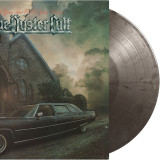
"After releasing three studio albums and lots of touring, Blue Öyster Cult released their first live album On Your Feet or on Your Knees in 197The album is a collection of 12 live recordings from performances that took place in the United States in 197It includes three songs from each of their first three albums, an original instrumental track, and two covers: “I Ain’t Got You” (Billy Boy Arnold, The Yardbirds) and “Born to Be Wild” (Steppenwolf). It was their first gold record in the US and became the band's highest-charting album, which put the band forever on the map as one of the essential rock live bands. On Your Feet or on Your Knees is available as a limited edition of 1500 individually numbered copies on silver & black marbled vinyl, housed in a gatefold sleeve and includes a 4-page booklet. "
On Your Feet Or On Your Knees by Blue Oyster Cult, released 29 March 2024, includes the following tracks: "Hot Rails to Hell", "Seven Screaming Dizbusters" and more.
This version of On Your Feet Or On Your Knees comes as a 2xLP in a(n) Gatefold Sleeve packaging. This release comes with (a) Booklet.
The vinyl is pressed as a marble, silver & black disc. Another vinyl is pressed as a marble, silver & black disc.
LIVERPOOL’S LONG LOST 90’s INDIE ROCK NOISEMAKERS. COMPILING THREE SINGLES AND UNRELEASED TRACKS. “If these guys were American they’d have a massive following” STEVIE CHICK. Back in the 1990's PLAYHOUSE were Liverpool's premiere 'honey souled indie rock band' (NME, 1997). They had a devoted following around the country after supporting the likes of Sleater Kinney, Unwound, Penthouse, Pavement, Sebadoh, Feeder and Gary Numan. With three 7" singles under their belt and support from the NME and John Peel, the band were due to record their debut album until disaster struck when the drummer, Simon, broke his leg in a bizarre incident. Simon later went on to play with the rock band - Black Spiders and now performs under the name of Blobb Ross. Singer and guitarist Pete continues to write songs, over a 1000 at this point. He is Liverpool's most prolific and enigmatic figure, writing some of the most beautiful songs around. Bassist Jason went on to perform with Mugstar, Sex Swing, Klamp, Domes, Twin Sister & JAAW. 'Dynamo' compiles the three singles they released, alongside unreleased tracks, including a cover of Sebadoh's 'It's So Hard To Fall in Love'
Whitney Houston’s self-titled debut album has few parallels. Viewed solely through the lens of sales numbers, Whitney Houston is a watershed statement on par with the most commercially successful and culturally dominant LPs ever released. Having sold more than 14 million copies in the U.S. and upwards of 25 million units worldwide, the 1985 LP became the equivalent of the television show or blockbuster film that everyone collectively experiences and discusses. Nearly four decades later, it’s lost none of its appeal or magnetism — and its artistic significance and historical import have only grown.
Sourced from the original master tapes, pressed at RTI on MoFi SuperVinyl, and strictly limited to 4,000 numbered copies, Mobile Fidelity's 180g SuperVinyl LP of Whitney Houston presents the breakthrough in audiophile sound for the first time. The signature traits Houston exhibits on every song — her three-octave range, radiant warmth, personal conviction, impossibly controlled register — come across with exceptional clarity, focus, and presence. Free of artificial ceilings and constricted dynamics, this reissue plays with an openness, airiness, and balance that put the singer’s once-in-a-lifetime instrument and immortal artistry into proper perspective.
It does the same for the songs’ cascading melodies and captivating arrangements. Individually produced by one of four renowned industry veterans — Kashif, Micheal Masser, Jermaine Jackson, and Narada Michael Walden — each composition feels grander, closer, more genuine. A vocal spectacular, Whitney Houston benefits from the high-end characteristics of SuperVinyl, which include a nearly inaudible noise floor, superb groove definition, and dead-quiet surfaces. This is how an album that changed the direction of popular music — opening previously inaccessible doors for Black artists; bringing smooth-singing vocalists back into the mainstream; kickstarting a movement that soon included several “divas” who would command the charts through the early 21st century — should look and sound.
Though Houston’s seemingly effortless performances suggest otherwise, creating the record Rolling Stone ranks as the 257th Greatest Album of All Time wasn’t easy. Nearly 18 months were required to identify songs suitable for a still-unknown singer who did not fit into the conventional frameworks of the mid ‘80s. Confident, powerful, and prodigiously talented, Houston would forge her own parameters with Whitney Houston. In the process, she obliterated the stubborn lines between R&B and pop, Black and white radio. She dared to reimagine who could be a superstar and then went out and defined the role. Recorded for nearly $400,000 and released on Valentine’s Day, the LP exceeded the wildest expectations of those most closely associated with it — save for Houston and her family.
Having made her first public appearance at the age of 11 singing at a Baptist church, Houston understood pressure and knew her way around, inside, and through a song. The invaluable guidance and support she received from her mother, Cissy, an accomplished gospel vocalist who backed Aretha Franklin and Elvis Presley, are on display throughout Whitney Houston. They arrive in the types of authoritativeness, discipline, and diction rare for even most seasoned veterans — and unheard-of for a 21-year-old newcomer. Houston brings a soulful elegance, understated glamour, and in-the-moment rapture to every note. Moving up, down, or staying in the middle of the vocal ladder; channelling softness or sweetness; showing restraint or increasing the volume, she is a marvel of emotionalism, a dynamo who can seamlessly transition from one mood to another within a verse.
Though the 10-track LP largely concerns itself with the ballad tradition, Houston covers the bases, getting into an R&B groove on the fleet “Thinking About You,” turning up the heat on the duet “Take Good Care of My Heart,” and investing the contagious dance-pop confection “How Will I Know” with all the anxiety, hope, energy, and enthusiasm its lyrics demand. Featuring her mom on background vocals and Houston’s pitch-perfect tone, uncanny precision, and skyscraper highs (no AutoTune here, friends), the synth-based anthem propelled Whitney Houston into the stratosphere, the vocalist into regular MTV rotation, and the term “crossover” into popular parlance. The double-platinum single reached No. 1 on the Hot 100, Hot R&B, and Adult Contemporary charts — a trifecta that foreshadowed accomplishments that would ultimately crown Houston as the most-awarded female artist of all time.
Whitney Houston became the first album by a Black female performer to top the Billboard charts. It remained there for 14 non-consecutive weeks en route to claiming the title of the best-selling LP of 1986. It stands as the first debut and first album by a solo female artist to spawn three No. Hits, as well as the first album by a Black female artist to top the year-end charts in Australia and Canada. These are just a handful of the accolades — along with four Grammy nominations — that surround a set that also contains the unforgettable ballad “Saving All My Love,” string-accompanied “Greatest Love of All,” and sensual “You Give Good Love.”
As TIME observed in an article written two years after the album took the world by storm: “This is infectious, can't-sit-down music, and her performance dares the listener not to smile right back.” We’re still smiling.
In 1972, Rick Hall moved distribution of his Fame label from Capitol to United Artists. This was to give his label more heft internationally as well as Stateside. The first single from this new agreement was Candi Staton’s ‘In The Ghetto’ which was released in May 1972. Not only did the single do well, but Staton received a personal note from Elvis Presley telling her how much he had enjoyed her version of the song.
Two more successful singles – ‘Lovin’, You, Lovin’ Me’ and ‘Do It In The Name Of Love’ – followed before her third Fame album – “Candi Staton” – became the first LP to be distributed under the new agreement with United Artists.
Containing all three singles and B-sides such as ‘You Don’t Love Me No More’ and ‘The Thanks I Get For Loving You’ “Candi Staton” is a ten track beauty, a fantastic album and a cornerstone of Southern Soul.
Ace have already reissued Staton’s first two Fame albums – “I’m Just A Prisoner” and “Stand By Your Man” – which received rave reviews and put Staton’s classic music on the turntables of an old and new generation. This is the third card in that three card trick to complete the series.
With liner notes by our own Ian Shirley and fantastic photos from the FAME archive, “Candi Staton” looks as good as it sounds.
decade-plus together, the four-piece - Julia Shapiro (guitar, vocals), Lydia Lund (guitar, vocals), Gretchen Grimm (drums, vocals), and Annie Truscott (bass, vocals) - have created a resonant body of work. Live Laugh Love is a natural continuation. Against the bizarre backdrop of the past few years, Chastity Belt remained a supportive space for the members to grow and experiment, drawing on the ingredients most essential to their process since the beginning: authenticity and levity. Recorded over three sessions in as many years (January 2020, November 2021 and 2022), the focus became more about enjoying their time together in the studio than making it feel like work. Their ease and familiarity with engineer Samur Khouja in LA, who also recorded their last album, made for a particularly enjoyable process. Once completed, they returned to renowned engineer Heba Kadry who mastered the album. Album opener "Hollow" sets the tone with a gently driving rhythm while guitar layers stream like sun rays through an open car window. A warmth radiates through Shapiro's voice, even while grappling with feeling lost and stuck. "The older I get," Shapiro says of the lyrics, "the more I realize that I might just always feel this way, and it's more about sitting with the feeling and accepting it, rather than trying to fight it." That wisdom seems to anchor Live Laugh Love . Chastity Belt has never shied from navigating the spectrum of difficult emotions, and an existential thread weaves throughout the subject matter. And yet the songs feel more grounded than ever; there's a sense of quiet confidence and self-assurance that comes with being less numb and more present. Facing discomfort takes more fortitude, after all. Live Laugh Love finds the members in their prime as musicians. Their parts trace intricate patterns over one another, but there's room to breathe between the layers. Everyone contributes to the writing, sometimes switching instruments, and for the first time, all four members sing a song. It's never been more apparent that they are creative siblings, cut from the same belt. "We've been playing music with each other for over a decade," says Shapiro, "so it really does feel like we're all fluent in the same language, and a lot of it just happens naturally." "Laugh" seeks in the balm of friendship, aware of the anticipatory nostalgia that hits during a good time that you're already missing before it's gone; the heavier guitar tones on "Chemtrails" streak ominous chord progressions over Grimm's precision timekeeping, lamenting memories that won't fade easily. During a transitional time, Truscott came across a note in their phone that read, "it's not hard all day, just sometimes," which inspired a poignant line in the chorus of "Kool-Aid," their first song as lead vocalist on a Chastity Belt recording. Another standout, "1-90 Bridge" shines with a silvery melody that soars as Lund belts one of the most resounding moments on the album: "Tell your girlfriend she's got nothing to fear/I'm set in my head/My body's a different story." The track "Blue" saunters nonchalantly with a wink; you can almost hear Shapiro's smile as she sings "Faking it big time/So I can hit my stride/Man, it feels good to be alive," channeling early Chastity Belt channeling early '90s before channeling the late Elliott Smith in a spiral of distortion and insight: "Don't get upset about it/It's gonna pass/Tell all your friends about it/They're gonna laugh." "We have such a strong sense of each other's musical inclinations" says Lund. "I think this allows for a lot of playfulness...we can kinda surprise each other, like a good punchline would."
Anna Gréta goes gentle...into her second album on ACT, “Star of Spring”. The Reykjavik-born pianist, singer and a songwriter, who has lived in Stockholm since 2014, has her own way of approaching the art of quiet, artful, deeply personal songs, often drawing inspiration from the beauty and power of Iceland’s natural landscape. Her 2021 ACT debut "Nightjar in the Northern Sky" was named after a bird, and this follow-up album lands gracefully on a flower, the “glory of the snow”, also known as the "star of spring", which symbolises the ending of winter and the arrival of spring.
But look closer, and there are always other levels of meaning. Her "Nightjar”, the rare bird she once saw in front of the northern sky, was a metaphor for the search for the things which are special and essential. In fact, almost all of Anna Gréta's lyrics have more than one significance, and her storytelling has now taken a leap forward on "Star of Spring". She says of the little flower on the title track: "I wasn't just inspired by the way it takes over the meadows in spring and turns them from green to blue, but also by the fact that it blooms because it is compelled to do so. It cannot do anything else."
Anna Gréta's starting point to creating music was and is the piano. She first studied classical music, then switched to jazz. She only started singing later, when she was writing the songs for Nightjar and wanted to express herself in words. Anna Gréta's debut as a singer, pianist and songwriter earned her international acclaim: Downbeat Magazine called it „an album with the metamophoric diversity of a year’s seasons and a voice like the everchanging colours of the Northern lights“, France Musique “a remarkably immersive experience” and Jazzwise “starkly beautiful”.
On "Star Of Spring" Anna Gréta has further developed her individual style. Her vocal lines can resemble piano motifs, often doubling them and resonating with an impressively quiet vibrato, sometimes quirkily reminiscent of Björk, at other times with the brooding ease of Norah Jones. The album also bears a very distinctive production style. For each of the songs, Anna Gréta has created her own little world of choirs, rhythmic textures and various smartly used keyboard instruments. The album ranges from the hymnal and elegiac - in "She Moves" or in the title track - to the playful and cheerful "Space Time" or the extremely pared-down melancholic ballad "Denouement". And even if the general mood of the music exudes above all warmth and comfort, Anna Gréta also deals with serious topics, such as the forced birth control of women in Greenland during the 60s and 70s in the song "The Body Remembers".
There is a directness of expression and emotionality, even sensuousness about the new album, and that is not least because Anna Gréta’s band has developed and become a properly played-in unit with the experience to take this album’s more complex arrangements in its stride. The sheen and brightness of her piano playing is contrasted with a deeper voice, that of her father Sigurður Flosason's bass clarinet, on three tracks. "This album is more playful and experimental," she says. "A lot of things were easier for me than on the first album. And while I was still completely focussed on my own world then, now I was even more conscious and aware of what was going on around me."
The result is music that is rooted in jazz, but at the same time goes far beyond it in a very subtle and deeply touching way.
DRIFT. Is British-Italian producer Nathalia Bruno, releasing music under the guise since 2015. Her 'techno-pop' EPs 'Black Devotion' and 'Genderland' released with Avant! records were the first explorations in finding the sound of DRIFT. but as the name suggests, is in constant flux. In 2020 'Symbiosis' the debut record was released on Hamburg's Tapete Records, an assemblage of lo-fi futurism reflecting on the breakdown of communication and interaction Nathalia felt was increasing around her. Channelling classic industrial electronica, haunting melodies, using samples, field recordings and curated sound as a 'canvas to rewire the vision of the future as colourful and old, ceremonial and rust beaten. A shrine like ornament and clinical machine language plaited together.'. In 2022 DRIFT. Self released 'The nature of things', a 30 minute piece entitled 'CTRL/ Algorhythm of love' written and produced for designer Mona Cordes' 'Cellusion' show for London fashion week. "_a journey into the dark heart of the dancefloor. The glimmering bass-heavy trance of its opening section could be classic Underworld, while its ambient center is genuinely Eno-esque. And then it all kicks off again as a Berlin school style banger. It's terrific" says Electronic Sound Magazine. This year, 2023 will give birth to DRIFT.'s second album released with God Unknown records '11 points In Time' written for and based on disappeared artist Rosi Crucci, compiled of sounds/field recordings recorded onto cassettes found in the attic of the home she last lived at, interpreted into song using some of her poetry and journal entries of what was happening in the world around her, attempting to finally give Rosi a voice. PRESS Louder Than War album review 'Symbiosis' (2020) "...blends passion with precision to create a tapestry of machine-made sounds that are bursting with ideas and filled with emotion. "We live in times where nothing means nothing," she sings on Visualise The Invisible. "And nothing is true." Never more so than now...Over the course of its ten tracks, Symbiosis draws from pretty much every strand of electronic music throughout its 50-year history" Shindig Magazine review 'Symbiosis' 2020 "A brilliant, fascinating album" Post Punk Magazine review 'Symbiosis' 2020 "is an exercise in disjointed meditation, a trip through the doors of the spirit lodge and inner workings of the human psyche." Pop Matters Review 'Symbiosis' 2020 "...One track in particular, "In Orbit", speaks to this new disturbing unknown we are creating. A distorted, three-note death knell drives it as repeated knocking seems to come from a dank tunnel. If it sounds bleak, it's likely also to be therapeutic and finds common ground with the entrancing industrial thud of Throbbing Gristle or Third Eye Foundation..."
Originally rumoured to be a double album the plan was shot down - Dave Thompson in conversation with Melanie managed to work out what it would look like and here we present all newly mastered the deluxe version. Woodstock and Glastonbury Fayre icon Melanie had been working with Easy Action on the deluxe vinyl and CD rerelease of one of the most legendary albums in her long catalogue prior to her very sad passing. In 1972, Melanie and her producer and husband Peter Schekeryk began work on what she intended to be her most ambitious album yet. Stoneground Words was to be a double album - the first such statement from any female rock artist. It would also be the first worldwide release on Neighborhood Records, the label she and Schekeryk established in 1971 - another first, as she entered territory into which only The Beatles, The Stones and The Moody Blues had previously stepped. Even more crucially, however, it was her personal response to the enormous success, earlier in the year, of the hit "Brand New Key" - "the bicycle song," as so many people recall it. Stoneground Words returned to the drawing board. Ten songs were selected; the remainder were placed to one side; and the album was released to generally positive reviews which included Melody Maker's assertion that it was "the most sophisticated she's made. The naiveté of the past has been replaced by deeper, more comprehensive methods of expression." She is the first to admit that the new edition of Stoneground Words is not a true facsimile of the original. The paperwork for all three projects, after all, disappeared long ago, as did the tapes ("who knows where?"). Stoneground Words will be released in March 2024 by Easy Action/Neighbourhood Records o Issued for the very first time as a double LP o Completely remastered. o Limited pressing on Pink Vinyl, CD Presented in large deluxe gatefold sleeve with full colour booklet o Brand new artwork o Originally recorded in New York in 1972 and released on Melanie's own Neighbourhood Records label.
Seth Price’s suite “Coinos Driftos“ announces itself with the sound of a rolling coin – a punctuation that repeats throughout the record – before dropping the listener into a storm of harsh winds and far-away bells. When the storm abates we find ourselves in a desolate field of stuttering electric harp and electronic sub-bass. Side B emerges from a mist of gentle tones that soon give way to a juddering contraption of dropped coins and clacking noises, which itself seems to summon the arrival of a war machine – a glorious squall of high tones, bristling with Helmholtz inner-ear sensations, all just barely kept in line by a loping, irregular bassline – that resolves into a final, more personal, piece of field recording. Seth Price made the music in 2023 by improvising three straight-through takes on Arp synthesizer, bells, and electric Nagoya harp, often playing two instruments at once, with all signals routed through pedals and processors; these tracks were sequenced before the addition of overdubbed bass guitar and field recordings.
out of Stock
Last delivered 2 years ago available to reorder, subject to availability
Kjetil Mulelid's various projects have received international acclaim, ranging from his duo with Siril Malmedal Hauge, his trio, and the quartet Wako. His first solo album, "Piano" (Rune Grammofon, 2021) received plaudits that placed him in the same company as pianists like Keith Jarret, Brad Mehldau, and Bill Evans. With "Agoja" Mulelid demonstrates what a musician and composer worthy of such acclaim can do with an ensemble cast of musicians of the highest calibre. On "Agoja" three features are immediately apparent. First, that Mulelid's compositions are melodic, yet frequently surprising in their path from their beginning to end; second, that he is a generous band leader, allowing the musicians both to be themselves and to express themselves, often while he merges almost completely into the background; finally, that each composition has its own unique identity, yet bears Mulelid's hallmark clearly and distinctly. Kjetil Mulelid (b.1991, Hurdal, Norway) has distinguished himself as an inventive artist, blending jazz, psalms, and improvised music in both his own playing and compositions. After graduating from the famous "Jazzlinja" in Trondheim back in 2014, he has been heavily touring the world's nooks and crannies with his own music and projects. He has played concerts in large parts of Europe and Japan and released several well-received albums as a solo artists, as well as with his own Kjetil Mulelid Trio, the jazz quartet Wako, with singer Emilie Storaas as the duo Kjemilie, and with singer Siril Malmedal Hauge - both as a band and as a piano / vocal duo.
Once billed as "Europe's First Lady of Jazz," Rita Reys was a legend overseas during the second half of the 20th century, and certainly one of the top European jazz singers. Two Jazz People finds Reys sharing the spotlight with Swedish jazz pianist Bengt Hallberg's trio. Hallberg (1932-2013) played with bassist Thore Jederby, saxophonists Arne Domnérus and Lars Gullin, and during the 1950s, performed with leading visiting American players, including the Stan Getz, Lee Konitz, Clifford Brown, and Quincy Jones.
"Two Jazzy People" by Rita Reys includes the following tracks: "Don't Get Around Much Anymore", "I'm Glad There Is You", "You Stepped Out Of A Dream", "Love For Sale" and more.
LP back in again soon, note new price. 5 stars; ‘50 Essential Albums of the 1970s.’ Eccentric & uncompromising, savage & beautiful, literate & guttural. Rolling Stone // Raunchy, pithy, and deeply redolent ... lines quiver with a raw vision rarely heard in folk or country. Pitchfork // Legendary Texan artist Terry Allen occupies a unique position straddling the frontiers of country music and visual art; he has worked with everyone from Guy Clark to David Byrne to Lucinda Williams, and his artwork resides in museums worldwide. Widely acclaimed as a masterpiece, his deeply moving (and hilarious) satirical second album, a complex memory palace to his West Texas hometown Lubbock, is often cited as the urtext of alt-country. Produced in collaboration with the artist and meticulously remastered from the original analog tapes, this is the definitive edition: the first to correct the tape speed inconsistencies evident on all prior versions; the first U.S. vinyl reissue. “Lubbock’s got a hard bark, with little or no self-pity; its music has an edge that can be smelled, like Lewter’s feed lot. No one from Lubbock ever apologized for what they were or where they lived.” – Terry Allen (2016) Three hundred forty-four miles of “blue asphaltum line” separate Ciudad Juárez, Mexico from Lubbock, Texas. Even if Allen’s music is more accurately described as art-country, Lubbock (on everything) sowed the seeds of alt-country’s emergence a decade later. It’s no accident that Lloyd Maines went on to play on classic albums like Uncle Tupelo’s Anodyne (1993) and Wilco’s A.M. (1995), and to produce Richard Buckner, nor that Sturgill Simpson and Jason Isbell play “Amarillo Highway” in concert. This is the urtext, the template for everything that followed
This EP was one of the fastest selling records we have released in the last few years and more importantly it marked the triumphant return of Messiah to the rave scene! All three remixes are just sublime but don’t take my word for it, listen to the sound clips. All of the artists involved brought their A-game and then some for this, quite frankly, gorgeous slice of wax.
out of Stock
Last delivered 19 months ago available to reorder, subject to availability
Causa Sui's three volumes of Summer Sessions are back in print! This time on the band's own label, on individual LPs for the first time since they were first released in 2008 and 2009. Re-packaged in El Paraiso's signature style. Originally the Summer Sessions were intended as a side project for the band - a chance to explore their love for other genres such as American free jazz, krautrock, 1970s soundtracks, as well as the psychedelia and detuned stoner-rock that characterized Causa Sui's first two albums. But these three albums came to define the band, and have become modern classics of psychedelia and progressive rock since their initial release ten years ago. In a scene often characterized by loyalty to a specific period, there's something refreshing about Causa Sui's eclectic approach. With several guest appearances by Coltrane-devotee Johan Riedenlow on sax and electronics wiz Rasmus Rasmussen, Causa Sui venture far beyond stoner-rock platitudes. Take the grandiose opening statement for example - the 24 minute "Visions of Summer" taking up the entire A-side: here new and old sounds dissolve in a mindbending excursion that recalls Future Days-era Can, breezy tropicalia or Herbie Hancocks Mwandishi group, as much as it sparks associations to Kyuss or Hendrix. Other tracks, such as the frenetic Rip Tide (vol. 2), heads into straight up free jazz territory with Riedenlow going absolutely bonkers on the sax. But this set also allows plenty of room for atmospheric pieces such as the sun-drenched "Venice by the Sea" (vol. 3) or the Morricone-esque "Cinecitta" (vol. 2).
out of Stock
Last delivered 2 years ago available to reorder, subject to availability
Toki Fuko – Hues Of Movement After his notable debut on
Submersive’s VA Osmotic Particles in 2021, Toki Fuko makes a
captivating return with his first solo release on the label. ‘Hues of
Movement’ comprises three original tracks and two remixes by Anthony Linell and Artefakt, embodying Submersive’s ethos of a deep, hypnotic journey into organic yet dancefloor-ready Techno. In the three original tracks, Toki Fuko once again mesmerizes with his evolving soundscapes. Electrical pulses are enhanced with expansive reverbs and woven into groovy drum sequences. The tracks gradually evolve, reminiscent of a drop of ink dispersing in water, inviting listeners to immerse themselves in the sound and lose control as they become one with the music. Anthony Linell, who performed at Submersive’s inaugural party in Paris in 2017, offers a Train remix that seamlessly bridges his signature style with Toki Fuko’s sound. The track emerges like a living entity, combining dub-influenced meditative atmospheres with ecstatic elements, growing into a full-length auditory experience.
Artefakt rounds off the release with their ‘Warble’ remix, taking listeners into depths where light cannot penetrate. The Dutch duo presents a darker take, subtly manipulating elements and maintaining high tension, keeping the end of this sonic adventure tantalizingly out of sight. Accompanying the EP is artwork by Swiss-Moroccan artist Zineb Mezzour, offering a fresh interpretation of the concepts of surface and water that Submersive explores in each release. Known for her intricate work on paper and ceramics that evoke a microscopic, organic, and spiritual world, Zineb has performed a unique visual for this vinyl. She began by drawing invisible shapes in water, then brought them to life by adding ink that transformed into unpredictable fractal shapes. This artistic process was captured to create both the cover and the video teaser for the EP.
out of Stock
Last delivered 14 months ago available to reorder, subject to availability
Damian Lazarus’ Crosstown Rebels imprint announces, ‘Portrait of the Obscure’, the stunning new album from Oceanvs Orientalis.
Following three superb singles on the label across the past four months, the nine-track LP offers a comprehensive exploration of the Instanbul-based talent’s rich, globally-infused and captivating sound, with the project set for release on 26th April 2024.
Safak Oz Kutle, known as Oceanvs Orientalis, is a producer and live performer based in Istanbul. His musical style intricately weaves together diverse sonic tapestries of wide-spanning genres and cultures, and through his creative fusion of these influences, he crafts an immersive world that takes you far away from the usual club music references. His music serves as a celebration of his musical heritage, and this has never been truer than on his superb new album ‘Portrait of the Obscure’, which again pushes traditional boundaries within the electronic sphere. Set for release on 26th April via Damian Lazarus’ renowned and celebrated Crosstown Rebels imprint, the nine-track LP project features a showcase of solo and collaborative material alongside close friends such as Tooker, Idil Mese and Tilahun Gessesse, delivering a journey into the creative mind of one of
the scene’s most intriguing talents.
The bold and riveting project kicks off with the captivating synthscapes, fluttering strings and plucked bass of the gorgeous ‘Pulse Antique’, before ‘Ministry Of Midnight’ cuts loose on more jumbled rhythms and intricate organic lines warmed with wordless vocals. Next up are two of the lead
singles - the tense and intricate house sonics of ‘Neutrality’ and the haunting atmospheres and ethereal synth lines of ‘IL Lupo’ featuring Tooker, while ‘Conritmo’ continues to bring exotic new string sounds, leftfield melodies and warped bass to this most vibrant exploration of candle-lit house sounds. ‘Soul of Calypso’ blisses out on far-sighted cosmic chords with sonorous bells and late-night spoken word musings that add all-new character to the innovative grooves. Then comes the laid-back, jazz-infused house of ‘Heart Pieces’ feat. Idil Mese, a deep and jazzy jungle shuffler
in ‘Mercury’ and the playful horns and lumpy, dub-wise swagger of ‘Lanchi Biye’.
An album project encompassing its title perfectly, ‘Portrait of the Obscure’ is just that - a magnificent snapshot of the unique musical mind of Oceanvs Orientalis.
out of Stock
Last delivered 6 months ago available to reorder, subject to availability
“An uplifting, tender, fun and imaginative music journey”
Warren Ellis, musician/composer (Nick Cave & The Bad Seeds, Dirty Three, Blonde)
“Carly’s score brings together both humour and haunting emotion, well crafted for this unique story”.
Martin Phipps, composer (The Crown, Napoleon)
Hear the soundtrack to British filmmaker Carol Morley’s spellbinding Typist Artist Pirate King by BAFTA nominated composer Carly Paradis.
Carly scores BBC’s Line of Duty and since 2022 plays live keyboards for Nick Cave and the Bad Seeds.
The atmospheric score beautifully balances witty percussion and angelic voice for a road journey that Audrey Amiss, the typist, artist, pirate king herself, takes in the film, elegantly reflecting her expanded sense of reality and the uncanny delights of her abstract art.
The music features the experimental vocal group SHARDS led by Kieran Brunt, percussion extraordinaire Joby Burgess and Anna Drysdale on other-worldly horn alongside prepared piano and a one-holed flute.
Paying homage to the yellow electric car at the centre of the film, it’s pressed onto transparent yellow vinyl, with art design by Jane Pollard and Iain Forsyth (20,000 Days on Earth) and examples of Audrey’s art on the label and sleeve.
In 2024, the singer and songwriter Oum is celebrating her fifteen-year career, with a live album, recorded in Marrakech, which plunges back into the magic of her three flagship records, here revisited in a different light. This seventh album, named Dakchi, which means "those things", is the opportunity for this daring off-roader to allow herself a suspended moment for a temporary assessment, a return to her roots. Dakchi is the first best-of live album, in which Oum brings together around ten titles from her repertoire woven throughout three albums with identities as singular as they are filled with a common sap: Soul of Morocco (2013), Zarabi (2015) and Daba (2019). It is the expression of typically Moroccan hybridizations - African, Berber and Andalusian - which irrigate the crossbreeding of Oum. It is also joyful and natural fireworks display of polyrhythms which galvanize her music : the Marrakech signature, playful, sunny, festive. Oum slips three unpublished pieces, including the sublime Arabic cover of the legendary bolero "Lagrimas Negras", "Toda la Gente", an introduction to "Mansit", signed by cuban musician Damian Nueva or the delicate "Intidhar", composed by Yacir Rami.
In 2024, the singer and songwriter Oum is celebrating her fifteen-year career, with a live album, recorded in Marrakech, which plunges back into the magic of her three flagship records, here revisited in a different light. This seventh album, named Dakchi, which means "those things", is the opportunity for this daringoff-roader to allowherself a suspended moment for a temporaryassessment, a return to her roots. Dakchi is the first best-of live album, in which Oum brings together around ten titles from her repertoire woven throughout three albums with identities as singular as they are filled with a common sap: Soul of Morocco (2013), Zarabi (2015) and Daba (2019). It is the expression of typically Moroccan hybridizations - African, Berber and Andalusian - which irrigatethe crossbreeding of Oum.It is also joyful and natural fireworks display of polyrhythms which galvanize her music : the Marrakech signature, playful, sunny,festive. Oum slips three unpublished pieces, including the sublime Arabic cover of the legendary bolero "Lagrimas Negras", "Toda a Gente", an introduction to "Mansit", signed by cuban musician Damian Nueva or the delicate "Intidhar", composed by Yacir Rami.
Following the success of the "Out Of Luck" single, we're wrapping up the Ghia reworks chapter with "The Other Side" - a dynamic 12" vinyl loaded with three contemporary funk tracks and three instrumental cuts.
The release starts off with the title track on which we can hear another collaboration with vocalist Adriano Prestel. The song is built on the foundation of "Message From The Other Side," a synth-funk instrumental from last year's "Don't Stop" LP. Jim Dunloop has skillfully rebuilt the infectious grooves from scratch, and guitarist Lucy Liebe has contributed to the guitar elements. Interestingly, the 1985 original version contained vocals that were preserved on a demo tape. These original lyrics conveyed the idea that everyone should learn to listen to the other side. Adriano picked up this idea and wrote new verses and a new chorus, beautifully transforming the song into a soulful bliss. In today's world, the message remains relevant: without listening, understanding, and compromise, solutions are elusive.
Next up, DJ Friction takes "Out Of Luck" to new heights with a remix infused with electro-funk. The synth bass replaces the original, a punchier kick and a clap snare give it a classic boogie feel. Additional strings on the chorus and an extended build-up complete the transformation, making it a fantastic tune for any DJ set.
Marian Tone returns to remix "The Other Side" in the '85 rework, blending parts of the original song with replayed instruments from the studio sessions. He adds clav sounds and retains the original marimba keys by Ghia's Lutz Boberg. If you are into the 80s vibes, this rework will be your choice.
The flip side features instrumental versions that, even without vocals, are a special treat for all boogie and funk enthusiasts. Last but not least, the release includes the original mixdown of "Out Of Luck" from when the recording was finalized at Ed Longo's Soundrays studio - offering a different take from the instrumental version on the previously issued 45 single.
The 12" is presented in a full-picture sleeve designed by The Raincoatman, also known as label owner DJ Scientist.
out of Stock
Last delivered 2 years ago available to reorder, subject to availability
After his Boomstraat 1818 debut on the various ep 'Durgan’s Odyssey', The Parallel is back with a solo ep.
Boomstraat had the privilege of choosing from dozens of unreleased tracks and these six made the cut.
‘Immersed’ is a selection of six Detroit techno and electro tracks all made by The Parallel in the last decade. The ep can roughly be divided into two styles, three warm club oriented Detroit techno tracks and three melodic electro tracks, both exemplary for his versatility in his musical productions.
out of Stock
Last delivered 10 months ago available to reorder, subject to availability
Canadian performer and composer Sarah Belle Reid’s 2021 acclaimed album, first time on vinyl, expanded with two new incredible songs, remastered featuring new artwork. From distant ocean song to the clang and howl of a murky forgotten memory, MASS is a dreamlike collage of shrill shrieks, gasps, corroded brass choirs, and melting modular synth soundscapes, all heard through a mist of hiss and noise. Fused with equal parts spastic improvisation, shrouded ritual, and meticulous arrangement, it presents a sonic topography at once tongue-in-cheek, sensitive, and nightmarish. With discordant chorales and angular trumpet improvisations churning in an ever-evolving wash of whispers and howls, MASS is a collection of three hazy, harsh, and frightful sound worlds. With tracks meandering between aggressive rhythms, eerie ambiances, and abrasive cut-up electronic textures, MASS draws inspiration from early tape music, horror film soundtracks, and grindcore. It was assembled between listening to extended doses of Else Marie Pade, Daphne Oram, Eliane Radigue, the Locust, Edgard Varèse, Maryanne Amacher, Dick Raaijmakers, Naked City, Mr. Bungle, and Thomas Ankersmit, bringing a little bit of all of them along with it. MASS was recorded and mixed over the course of three weeks in January–February 2021 while in the midst of a cross-country move. Recorded entirely in short-term housing away from her studio (and most of her instruments), Reid relied exclusively on her voice, trumpet, flugelhorn, household objects, and Make Noise's Strega semi-modular synthesizer for all sound materials. Original sound materials were recorded loosely and independently with little to no overdubbing, instead relying on meticulous editing and processing in the manner of classic tape music.
Canadian performer and composer Sarah Belle Reid’s 2021 acclaimed album, first time on vinyl, expanded with two new incredible songs, remastered featuring new artwork. From distant ocean song to the clang and howl of a murky forgotten memory, MASS is a dreamlike collage of shrill shrieks, gasps, corroded brass choirs, and melting modular synth soundscapes, all heard through a mist of hiss and noise. Fused with equal parts spastic improvisation, shrouded ritual, and meticulous arrangement, it presents a sonic topography at once tongue-in-cheek, sensitive, and nightmarish. With discordant chorales and angular trumpet improvisations churning in an ever-evolving wash of whispers and howls, MASS is a collection of three hazy, harsh, and frightful sound worlds. With tracks meandering between aggressive rhythms, eerie ambiances, and abrasive cut-up electronic textures, MASS draws inspiration from early tape music, horror film soundtracks, and grindcore. It was assembled between listening to extended doses of Else Marie Pade, Daphne Oram, Eliane Radigue, the Locust, Edgard Varèse, Maryanne Amacher, Dick Raaijmakers, Naked City, Mr. Bungle, and Thomas Ankersmit, bringing a little bit of all of them along with it. MASS was recorded and mixed over the course of three weeks in January–February 2021 while in the midst of a cross-country move. Recorded entirely in short-term housing away from her studio (and most of her instruments), Reid relied exclusively on her voice, trumpet, flugelhorn, household objects, and Make Noise's Strega semi-modular synthesizer for all sound materials. Original sound materials were recorded loosely and independently with little to no overdubbing, instead relying on meticulous editing and processing in the manner of classic tape music.
Floating-point re-master by Russell Haswell, August 2011
Cut at Dubplates & Mastering by Rashad Becker, August 2011
New artwork and layout: Dave Coppenhall
With the demise of the group Wire in 1980, founder members Bruce Gilbert and Graham Lewis joined forces to create Dome. With the assistance of engineer Eric Radcliffe and his Blackwing Studio Dome took the ethic of "using the studio as a compositional tool" and recorded and released three Dome albums on their own label in the space of 12 months: DOME (July 1980), DOME 2 (October 1980) and DOME 3 (October 1981). A final fourth album, WILL YOU SPEAK THIS WORD: DOME IV was released on the Norwegian Uniton label in May 1983.
These albums represent some of the most beautifuly stark and above all timeless exercises in studio experimentation from early 1980s alternative music scene.
Previously issued in the out of print DOME 1-4+5 box set in 2011. Now available as standalone LP with download card.
With the demise of the group Wire in 1980, founder members Bruce Gilbert and Graham Lewis joined forces to create Dome. With the assistance of engineer Eric Radcliffe and his Blackwing Studio Dome took the ethic of »using the studio as a compositional tool« and recorded and released three Dome albums on their own label in the space of 12 months: »Dome« (July 1980), »Dome 2« (October 1980) and »Dome 3« (October 1981). A final fourth album, »Will You Speak this World: Dome 4« was released on the Norwegian Uniton label in May 1983.
These albums represent some of the most beautifuly stark and above all timeless exercises in studio experimentation from early 1980s alternative music scene.
out of Stock
Last delivered 8 months ago available to reorder, subject to availability
For Forever folds time and space. While the sounds and stories will be recognizable to fans, they arrive with considerable bruises incurred on the journey from Set Free until now.
For those unfamiliar with The American Analog Set, this should be a simultaneously dark and vibrant introduction. Troubled lyrics permeate throughout, and the accompanying sounds are occasionally damaged and snarling. Not all things languid and dreamlike from past records have been abandoned or forgotten, but the dreams represented here are darker.
While the previous eras of the band are referenced, they are carried forward and incorporated without a hint of patronizing nostalgia. For Forever is a document of a group that acknowledges their past while they advance into new territories and evolve.
This release is entirely new material and is not connected to the forthcoming Numero reissues of the band's first three records.
Stolen Goods Records announce Pergola's cinematic techno 'Zed' EP, featuring a remix from indie-dance legend CURSES.
Exploring hypnotic, emotionally charged melodies and vast techno breakdowns, the title track opens up the EP with a strong sense of mystery. Suspenseful strings build in anticipation as the bassline filters in intensity, this deep space offenng is the perfect example of a tune fit for the club as well as headphone-listening.
'Freak' is a beautifully intense piece featuring soft synths marked by subtle scratches, a feel-good vocal and the catchy strum of a quitar. '"Zed' is then given the CURSES treatment, the Optimo Music, Bordello a Parigi and Correspondant artist amplifies its retro feel resulting in nine minutes of pure dark disco hedonism. Closing out the release is an ambient collaboration between Pergola and Luigi Sambuy, 'Tunnel' is an ode to the early days of IDM through to the '70s.
*"Zed' marks the third release on Lele Sacchi & Asian Fake's Stolen Goods Records and follows up their widely acclaimed 'Volume 0' compilation as well as the recent collaborative EP between Black Loops & Innocent Soul. Since its launch last summer, the label has seen the support of artists like Dixon, Sasha, DJ Seinfeld and DJ Sneak and has garnered plays on prestigious stations like NTS and BBC Radio 1. The imprint continues its strong start to the year with three new tracks from the hyper-talented Pergola: a newcomer to the scene whos aready listed on labels such as Multinotes, Sementa ano Adriatiques Siamese, the latter which saw/ him reach number one on Beatport's Electronica chart.
out of Stock
Last delivered 9 months ago available to reorder, subject to availability
"The Train I’m On was the fifth album by Tony Joe White. It was produced by Jerry Wexler and Tom Dowd and recorded in 1972 at the legendary Muscle Shoals Sound Studio. Acoustic textured for much of its length and built on a close, intimate sound overall, The Train I'm On is permeated with the dark side of White's usual swamp rock sound, filled with songs about unsettled loves and lives, and men caught amid insoluble situations. Betraying surprising vulnerability for much of its length, he shows off an emotional complexity that wasn't always obvious on his earlier work. Dark, pensive, soulful bluesy rock, highlighted by some bristling acoustic guitar work. The Train I’m On spawned three singles, including “I’ve Got a Thing About You Baby”, which was notably covered by Elvis Presley. The Train I’m on is available as a limited edition of 1000 individually numbered copies on yellow coloured vinyl.
Branko, the Portuguese producer and Enchufada label owner,announced his fourth solo album "Soma." The project pushes themaintained standard for over a decade in shaping theexpression of electronic global music to greater heights. Theproducer started the creative process with a three-day jamsession in Lisbon, with local musicians, over a framework ofmultiple beats, later recomposed as a repository of grooves thatserved as the blueprint for the album"s instrumental. Branko"sartistic vision for Soma is grounded in authenticity and theexpression of local and global talent. He has collaborated notonly with critical Lisbon-based musicians, but also with vocalistsfrom London, Cape Verde, and Brazil, including Jay Prince,June Freedom, BIAB, and Tuyo.