Reissue of a lost hit by the British composer Kevan Frost, now championed and given a brand-new Dub Mix by Mark Grusane. Up for pre-order now and due late-March on our RSS series!
Kevan Frost grew up in Jos, Nigeria where he became a self-taught musician and developed a deep understanding of rhythm and melody. In the 90's, Frost was a session musician for many studios in London, one of these was unable to pay him so they gave him a few free days in the studio and the result was "Give It Up" as he explains:
"I went in and recorded all the music in a day, and the vocals and mix on day two. This was the days of only having 24 tracks available on tape so I programmed the drums, bass and keyboard parts on C-Lab which was only available on the Atari computer and the samples I made on my Akai S-1000 sampler. Full of floppy disks I went in early on day one and printed all of this on tape. I then recorded the guitar parts. Day two was me layering the lead vocals and Backing vocal parts as quick as I could before starting to mix."
However, the track fell into obscurity with no major label backing or marketing budget. A friend of Mark Grusane’s came across it in Brooklyn at the African Record Centre and it eventually ended up in Mark's hands and from there he edited the original track to a more stripped-back dub mix and began playing it out to great effect on dancefloors.
After a bit of digging, we tracked down Kevan and a fully licensed reissue is due on Rush Hour in late March 2026, including a brand new ‘Dub Mix’ from Mark Grusane.
Diversion Ends EP highlights the classic sound of chicago acid house, whilst yet emerging into a much deeper and experimental lane of electronica. With three original tracks and an intellectual yet pumping remix from Berlin’s Cinthie, the EP is prepared for the most exciting club playing DJ’s - those who love a curveball yet appreciate a strong, consistent groove.
Lulah Francs has played some of the most respected venues and festivals in electronic music. Her DJ sets have spanned iconic institutions like fabric London, where she’s shared lineups with leading international talent, and she’s played at major events such as Gottwood, Lost Village, and La Terrrazza Barcelona. In addition, Lulah champions grassroots culture through her own event series sub:terra, a collective and club night inspired by the spirit of early acid house, having invited selectors such as Niks, Jaye Ward, etc and taken over strong institutional rooms such as Fabric Room 3.
Through his tracks, Jumo explores nostalgia and memory, from phili to memory, blending memories of youth and fleeting sensations. Tgthr encourages living the moment, while lula unfolds like a raw, cinematic road movie. The synthetic voices of sirens create a hypnotic theme, reflecting free souls suspended between a desire to escape and the fear of falling back. Euphoria tackles the madness of man's race to innovate and his indifference to the world, mixing mechanical urgency and emerging awareness. Each track plays with contrasts; melancholy and euphoria, darkness and light; combining synthesizers, persistent bass, and saturated textures. Together, they form a sonic journey where dancing becomes an act of memory and emotional survival.
Dive into the depths of deep house with "Unexpected EP", the debut vinyl release from an upcoming artist to watch.
This meticulously crafted 12-inch EP showcases a profound love for detail in every element. It´s a timeless record appealing to collectors and DJs alike who crave depth over fleeting trends.
Side A opens with the title track "Unexpected," a hypnotic journey through evolving synths and crisp percussion.
Following seamlessly is "Still Missing," a soulful cut infused with emotive melodies and rolling sub-bass.
Flip to Side B for "Crash & Bang," which thrives on a mesmerizing polymeter figure over which intimate string sounds evolve.
The EP closes with "Sheltered Place," a serene retreat with warm pads and playful percussion perfect for moody after-hours sessions.
Embracing a vinyl-first strategy, "Unexpected EP" drops exclusively on wax ahead of its digital counterpart.
Our next 7” release welcomes young and talented key player Stefano Nardon from Vicenza, Italy.
The record features two jazz-infused broken beat compositions, performed and recorded live, capturing an intimate and organic session feel.
On the A side, “Mangrovia” unfolds as a warm, floating piece built around Fender Rhodes textures, subtle harmonies and a slow-burning groove. A deep and immersive cut, balancing between jazz lounge aesthetics and cinematic mood.
The B side, “Underwater”, was created in collaboration with drummer Stefano Cosi (Padova). His live drum contribution adds movement and depth, giving the track a more dynamic pulse while maintaining the introspective character of the release.
Anywhere, Anyway captures a selection of club tools that Makèz and their close circle have tested, refined and played across dance floors worldwide. Each track carries that familiar equilibrium the duo keeps guard over, a steady pull between raw club energy and moments meant for intimate listening.
Much like their recent album on No Art, the EP took shape while traveling, moving from session to session with artists from different musical worlds. Those encounters left their marks, subtle shifts in rhythm, harmony and texture, shaping the edges of the EP. The Amsterdam duo keeps seeking creative impulses from unexpected angles, letting ideas find them wherever they are. Anywhere, anyway.
RNT co-founder JKriv joins forces with keyboard virtuoso Jason Lindner to drop the Real Ones EP, a clubby and musical 3-track excursion that includes a deep and polished remix from rising star Retromigration. Needing little introduction, JKriv is a driving force behind RNT, architect of edits, original productions, and the aesthetic direction of the label. Jason Lindner has a storied musical history that includes leading the in-house big band of legendary jazz club Small’s in the early 2000s through to performing on David Bowie’s final album Blackstar, and much more. The duo have been honing a musical alliance for the past few years through their work together in the A Joyful Noise band and hybrid-live sets on hometown Brooklyn Razor-N-Tape events, developing an inctricate musical interplay and incendiary energy that is captured perfectly here. Across these 3 melodic house tracks, lush layers of synths interlock and build toward big anthemic moments, with hard-hitting drums driving the energy forward. Retromigration steps up to deliver a gorgeously slick remix to round out this exceedingly musical and eminently playable 12".
Up Ya Archives returns with its first release of 2026, ‘Northern Step’, from Manchester-based jungle producer & DJ Worsleyy. The track arrives ahead of his upcoming EP of the same name slated for a 13th March release via Up Ya Archives Records.
Fuelled by crisp, tightly swung drums and a smooth, rolling bassline, ‘Northern Step’ is a salute to its junglist roots. Drawing from the Manchester rave records he was introduced to by his dad, and with the help of legendary Mancunion music mixologist Chimpo, Worsleyy channels those early warehouse energies and pairs them with his own progressive and futuristic lens. It’s heritage and evolution colliding, rooted, forward-thinking and built for sweat-drenched dance floors.
When speaking about ‘Northern Step’, Worlseyy said:
“Northern Step is a proper nod to the junglist past with the lush floaty vocals, calculated drum choppage, a smooth rolling bassline and Chimpo hopping on to drive forward the sound of the North.”
Worsleyy is a familiar face across the UK circuit, having played sets at The Warehouse Project and supporting Nia Archives on her 2024 UK tour in Manchester. Drawing from UK rave lineage and contemporary club sounds, his productions balance nostalgia with futurism, channelling the energy of Manchester’s acid raves. His tracks have travelled far beyond UK borders, spun by the scenes most forward-thinking tastemakers like DJ SWISHA, Sherelle, Pete Cannon, and Nia Archives on dancefloors around the world. Worsleyy’s rise has been as visible as it is audible — bold, bass-driven, and impossible to ignore.
Analog Fingerprints Vol. 0 is a compilation bringing together the early 2000s works of Marco Passarani under his Analog Fingerprints alias, collecting key tracks originally released on Rome’s Plasmek and Pigna labels.
For Numbers, the story starts long before the label itself. In their formative years, digging in Glasgow’s Rubadub, Passarani’s records felt like dispatches from a future city. Releases on his own Nature Records and on labels such as Generator and Interr-Ference Communications were mind blowing: rooted in Detroit techno, Chicago house and electro, yet pushing somewhere new. Much like fellow travellers Autechre, who would remix him in 2001, Passarani’s music balanced machine funk with restless experimentation.
Information was scarce, and you would hear these records first on the dancefloor or at listening stations in shops like Rubadub. Print fanzines like Ear and early web outposts such as Forcefield offered only fragments. But there was a palpable axis forming between Detroit techno and a new European wave of record labels including Skam, Rephlex, Clone, Viewlexx and Nature itself. It was the sound that defined Saturday nights at Rubadub’s ‘69’ parties in Paisley, just outside of Glasgow.
Passarani’s records, in particular, were instrumental in bringing together the future Numbers co-founders. Richard had already booked him pre-Numbers; meanwhile Calum (Spencer) and Jack (Jackmaster), then 16/17 year olds working alternate Saturdays in Rubadub, were so enamoured with the Roman sound that they travelled to Rome for the Bitz Festival in 2003 to seek out Passarani and Lory D at their source.
The first Analog Fingerprints release landed as a 12” on Plasmek in 2001, following the fractured, IDM-leaning 6 Katun material. For Passarani, the project marked a recalibration. A DJ first and foremost, he had moved into production via early computer setups, from a Commodore Amiga through primitive PC audio, Cubase and Logic, later experimenting with Ableton. The IDM scene had offered a playground for trial and error, but there was always a tension between abstraction and the dancefloor. Analog Fingerprints became the bridge: still intelligent, but with more dance than distance. After years of broken beats and complex arrangements, he wanted directness without surrendering identity.
Working closely with Francesco de Bellis and Mario Pierro in the Pigneto district, the trio formed Pigna as a vehicle for reclaiming a more accessible dance sound, deliberately steering away from the minimal wave beginning to dominate Europe. Sessions were fast, instinctive, often stretching late into the night with friends dropping by. It was a studio as social space, production as collective energy.
“In that constant search for balance, Analog Fingerprints was my way of expressing something closer to the classic dance floor. The track 'Tribute' - a tribute to my favourite early Detroit techno track of all time, 'First Bass' by Separate Minds - came after I realised I had almost lost my connection with the dance floor. The simplest step was to take inspiration from early Chicago and Detroit and twist it in our Roman ‘Pigna’ way. My goal was to create more accessible dancefloor tracks by mixing my unconscious Italo roots with my teenage love for that early US sound, ensuring the result was as far as possible from the minimal sound that was starting to dominate everywhere.” - Marco Passarani
Technically, the Analog Fingerprints tracks span a transitional era: Roland TR-909, SH-101 and Alpha Juno hardware met early software experiments. A Novation Drumstation rack stood in for the unattainable TR-808, syncing with TB-303 and TR-606. Yet the true secret weapon was Jeskola Buzz, a tracker-style modular environment that allowed step-by-step parameter control and strange melodic constructions, later exported into the audio sequencer. Even the lead on ‘Tribute’ came from an early PPG Wave-style plugin. It was hybrid thinking at a moment when digital tools still felt unstable but full of possibility for technologists like Passarani.
Behind the music sat Finalfrontier, a loose Roman collective orbiting Nature and Plasmek. Distribution and production were intertwined; importing obscure records into Italy built connections with like-minded outsiders across Europe and the US. Expensive phone bills and fax machines forged an “electronix network” that linked Rome to Clone, Viewlexx, Skam, Rephlex, Rubadub and Detroit’s Underground Resistance. There was a shared sense of survival and resistance, of operating against commercial systems.
Passarani recalls “The first time I found a sheet of paper inside an Underground Resistance 12” with info about upcoming releases... and a huge picture of Spock on the back. Imagine that: you love the music, you love Star Trek, and there’s someone on the other side of the ocean sharing those same values and sounds. It was the perfect match. We even gave our original company the suffix ‘Finalfrontier’: that says it all.”
Feedback in that era arrived physically: distributor faxes, conversations with visiting DJs, the experience of playing abroad and meeting kids who had connected with the records. Glasgow became a key node in a scattered outlier network. Passarani personally brought the first two Nature releases to Fat Cat in London, playing them in-store. Shortly after, a fax arrived from Rubadub in Glasgow requesting copies.
“I still remember that phone buzz and the fax paper slowly sliding out, with someone I didn’t know saying they wanted 75 copies of Nature 001. Or like the time we got a fax from the Rephlex crew just saying, “Hello Nature Records, Keep up the good work.” That was how we knew the message was getting through. It was a fantastic feeling; just one piece of thermal fax paper as an analog notification - the mood for the entire week would change.” - Passarani
The connection to Glasgow has since stretched across generations. As Passarani reflects, links often fracture as scenes renew themselves, but in Glasgow something different happened. New and old mixed seamlessly. There was a visible trust in what came before, and a willingness to carry it forward rather than discard it. Observed from Rome, it was deeply encouraging.
Analog Fingerprints Vol. 0 captures that moment of exchange: Rome to Glasgow, Detroit to Europe, experiment to dancefloor. It documents an artist recalibrating his sound and a network of scenes discovering one another in real time, connected by vinyl, faxes and shared intent.
French talent Hyden makes label debut on Mutual Rytm with conceptual new techno EP, 'To Whom It May Concern'. Hyden is a potent force in the French underground, creating powerful techno with dense percussion, immersive grooves and subtle nods to classic influences - all through his own unique lens. Having delivered standout releases in recent years, here he offers up sounds "anchored in psychoanalysis, time, and emotional residue" as he makes his mark on SHDW's Mutual Rytm imprint, delivering influences of dream logic and surrealism as the palette moves between brutality and introspection. "It's hypnotic music for moments of rupture where something breaks or breaks through". Opener 'Manifest Content' is inspired by Freudian theory and explores the surface illusions of thought and dream. It's about the dissonance between what we perceive and the deeper meaning that slips away beneath and is a deep and dubby techno track with flashes of unsettling melody. 'Bruises' is emotional trauma made sonic. This piece delves into invisible scars and traumas, residues of past conflict or intimacy - it's slow-burning, heavy and raw. 'Jikan' is a meditation built on time and its erosion. Inspired by the Japanese concept of impermanence, it reflects fleeting moments, decay and the tension between stillness and motion with jacked up but warm drums and turbulent bass. Next, 'Free Will' is born from inner conflict and plays with deterministic rhythms and evolving layers, questioning whether we are truly in control or just passengers in a prewritten sequence. The vocal mentions, "creatures, you're out of time" to bring darkness to the intense but sleek rhythms. The streamlined physicality of 'Swarm' channels the primal force of collective movement and is a nod to the loss of individuality in group behaviour. In addition, the package is loaded with digital bonus cuts. 'Yumehara' is a dive into surreal dream-states and evokes subconscious landscapes where logic dissolves and emotion reigns, while 'Lu Bu' is brutal and warlike and named after the legendary Chinese general that captures impulsive violence, betrayal and reckless glory with relentless energy and rhythm. Lastly, 'Neon Pale' is a synthetic dreamscape about fading beauty under artificial light - a melancholy ode to cities at night and the loss of warmth in modern life.
Audience’ was a 14-track record that signalled a shift back to Hayes Bradley's dancefloor roots. It was a collision of breakbeats, trip-hop, and ambient textures that perfectly balanced nostalgia and forward-thinking sounds, and now it gets spun into all new worlds by some of the scene's most acclaimed contemporary stars.
Special Request, aka UK powerhouse Paul Woolford, has shaken up the scene with his thrilling mix of jungle, bass, techno, rave, and hardcore in recent years. The hugely prolific producer knows exactly how to blow up the club and does that here with two reworks of '& I Love U'. The Special Request Extended Mix is a meticulously crafted jungle workout, featuring precision drums, rising synth tension, and gorgeous melodies that dart throughout and will appear on the vinyl release only. The VIP version focuses more on celestial memories for a heavenly escape.
Next is Shanti Celeste, a house and garage favourite who crafts emotional, high-impact sounds on her own Peach Discs. Her remix of 'Play It As It Lay' is a bubbly, soft-focus, late-night sound with earworm synth motifs and rich bass that sinks you in deep for a nice, heady trip.
Piori is an alias of Canadian musician Francis Latreille, who has built a sprawling discography full of hyper-detailed techno steeped in science fiction and fantasy. He flips 'Awareness' into a zoned-out affair, with broken beats and cosmic synth waves over a bold bassline that shows, once again, why his productions are in such demand.
Last but not least is Kaifeng-born sound artist, DJ, and producer Yu Su, whose truly unique sound has made her a cult underground star. She flips 'Dear Treasure' into a slow motion and sleazy chugger with dark disco energy and raw live drums, shady vocal loops and otherworldly melodies that seep into your consciousness.
Weiss has made a bit of a welcomed habit in recent years of dropping a Sun-drenched bomb on Toolroom around this time of year and following on from 'You're Sunshine' last year, 'Feel My Needs' is his submission for 2018!
Recent Weiss highlights have included him playing the main stage at Dirtybird's own Campout festival, regular dates at the world-renowned Fabric as well as a US tour and an album in the making.
In true Weiss style, this record will have the hairs on the back of your neck standing to attention in a matter of seconds. Lush, old skool piano riffs and sublime vocal licks, all laid over the top of a crisp and infectious house backing.
This is a sure-fire future anthem with two killer remixes to add to the vinyl from Purple Disco Machine and Gorgon City, both of which have been premiered on the mighty Radio 1 Dance shows.
DJ Support:
Pete Tong, Annie Mac, Danny Howard, MistaJam, Huxley, Gorgon City, Claptone, S-Man, Dario D'Attis, Robosonic, Dosem, Tube & Berger, Steve Lawler, Groove Armada, Sonny Fodera, Man Without A Clue, The Magician, Eli Brown, TCTS, Martin Ikin, Mat.Joe, Richy Ahmed, Low Steppa, Kry Wolf, Kraak & Smaak, The Golden Boy
“My auntie asked me what’s my path?” spits Lord Jah-Monte Ogbon on his de but from the celebrated Lex Records. The lyric relatably references the cross roads he’s at in his current life, especially as someone right on the cusp of rap stardom. “Recently I’ve been thinking more and more about what comes next in my life,” the artist reveals.
It’s fair to say Ogbon’s Lex LP features less of the sh*t-talking court jester of old. Instead, there’s more of an imperfect man re-examining past mistakes so he can avoid any future forks in the road. There’s a particular focus on over coming heartbreak, inspiring Ogbon to admit he’s haunted by an ex so badly he now needs to call up the Ghostbusters for assistance.
Since emerging in the late 2010s, Lord Jah-Monte Ogbon has consistently lit up America’s underground rap scene and this is thanks to a refreshingly honest writing style. Amid the exquisitely wavy strings of 2021’s The Missing Link / The Sneaky Link, for example, he rapped: “Everyone thinks they’re play er, until their bitch doesn’t come home.” Biting and snappy, the nasally vocals carry the playful verve of comedian Richard Pryor bravely excavating personal Demons to solicit giggles.
All this brash, wry Redman-inspired storytelling continues on the new pro ject. Its first single is titled I’m Signed to Lex, Now I’m Up – a name that mirrors what a big moment releasing a project on the label that once housed MF DOOM represents for Lord Jah-Monte Ogbon’s legacy. “I’m really driven by being able to level up and give my family more financial freedom,” he hopes.
And, if auntie asked what his path was right now, what exactly would the rap per say? Lord Jah-Monte Ogbon concludes: “Auntie: this rapping thing feels like it’s finally about to pay off!”
‘In Virus Times’ is an acoustic instrumental piece by Lee Ranaldo.
Composed during the pandemic, ‘In Virus Times’ is released as a onesided LP with an etching on Side B. The cover is a beautiful photo by
Lee’s friend, the great Brazilian photographer Anna Paula Bogaciovas.
Originally released as one track as part of a collaboration with Lucien
Jean for Le Presses du Reel, the music was featured on a mini CD that
accompanied a book that featured two short stories.
‘In Virus Times’, released by Mute, sees the track transformed into 4
pieces and is available on transparent turquoise vinyl with digital
download and an exclusive poster, designed, signed and individually
numbered by Lee Ranaldo. The poster design is based on an electron
microscope photo of the COVID-19 molecule.
Lee has written some of his own ‘loner notes’ for the release:
“This recording began on an evening in September 2020, stuck at home
in lower Manhattan during the dark days of the Covid-19 pandemic as
we came out of a deadly summer. A heightened sense of anxiety
stemming from the then-upcoming US Presidential elections as well as
the virus seemed to pervade all aspects of life, for myself and everyone I
knew. Its minimal quality reflects the sense of ‘motionless time’ that
many of us felt. I set up some microphones in our darkened living room
(studios being closed due to Covid restrictions), coaxing out one simple,
repetitive phrase, and then another, sounding them out into the air. The
casual home ambience - a siren or truck rumbling down the street out
the window; someone talking around the table in another part of the loft;
water running - intrudes at points. I worked to develop a few simple
thematic elements, but mostly I wanted to hear the notes and chords
ringing out, hanging in the air for a long time on that evening when the
world seemed close to stopped on its axis.
“I’d been listening closely to Morton Feldman’s catalog throughout the
pandemic. His sparse, long-duration music could often be heard playing
on repeat as we spent endless days locked inside. His willingness to do
very little, with very simple elements, and to such profound effect, has
been inspirational. I found the vast open spaces in his works thrilling,
miraculous, and comforting in those empty times. Additionally, the Drop
D guitar tuning used here has prompted my own variations on Bach’s
works for solo cello, open strings droning against melodic lines, so
simple and perfect…” - Lee Ranaldo, New York City, August 2021
Small Great Things / Small Great Beats returns with a shiny yellow vinyl by Quadrakey - the Summer Vibes EP.
With SGB003, Small Great Things delivers a warm and groove-driven vinyl release from Quadrakey, featuring four carefully crafted cuts designed for both late-night dancefloors and sun-soaked daytime sessions.
The EP opens with A1 Good For You, bringing uplifting, feel-good house energy driven by a steady groove, playful details, and a warm bassline that instantly sets a positive tone on the floor. A2 Feel Alone follows on a deeper and more emotional tip, exploring hypnotic rhythms and moody atmospheres, perfectly suited for intimate club moments and late-night transitions.
Flipping to the B-side, B1 Dancing With You delivers a smooth and infectious flow built around rolling rhythms and subtle melodic touches, balancing elegance with dancefloor functionality. Closing the record, B2 Summer Vibes lives up to its name with sunny chords, relaxed grooves, and an effortless open-air feel, ideal for daytime sessions and sunset sets.
From hypnotic grooves to feel-good summer moods, SGB003 showcases a refined and confident production style, staying true to the Small Great Things philosophy: quality music, pressed on vinyl, made for DJs who value depth, groove, and longevity over short-lived trends.
A solid addition to any record bag, SGB003 captures the essence of modern house music with a classic touch, simple, honest, and effective.
As Nathan Fake rises from the nocturnal subterranea and rave catharsis of his previous records, on Evaporator, he resurfaces into the domain of daylight, bringing a tangible sense of air rushing against your face, of big skies, and endless landscapes. The idea of pop accessibility that trickled into 2023’s Crystal Vision is refracted here through the prism of sweeping ambient, deep electronica, and trance uplift. Evaporator is Fake’s idea of “airy daytime music”, with each track a different barometer reading across the album’s varying atmospheres, which range from vibrant sunbursts, bracing rainscapes, and fine mists of clement melodics. “It’s not overtly confrontational electronic club music,” states Fake. “It’s quite pleasant, it’s accessible. As I was progressing through making the tracklist, I called it a daytime album. It doesn’t feel like an afterparty album.” For the past decade Fake has been gingerly introducing collaborations with heroes and friends alike into his lone, idiosyncratic working process. Border Community alumni Dextro AKA Ewan Mackenzie transmutes his ferocious drumming for Pigs Pigs Pigs Pigs Pigs Pigs Pigs into the blurred choral thump of ‘Baltasound’. ‘Orbiting Meadows’, meanwhile, is his second collaboration with Clark, an eerily idyllic duet where microtonal 18EDO piano clangs slowly twirl around wailing pads. Evaporator marks the junction point of old technology and ever fresh creativity for Nathan. The trusty “dinosaur” age software, particularly Cubase VST5, that has powered two decades of music is rarely updated. “I used to sort of feel a bit ashamed of using such old software, and then I kind of had an epiphany – that’s just how I work”, comments Fake. “That’s just how I play. I’m very fond of these old tools, and I get the most joy out of them, but now I’ve incorporated new technology too.” When an artist accumulates so much synergy with their instrument, music making becomes instinctual. By Fake’s account, much of Evaporator just fell into place. The album title arrived randomly in his head (“it felt completely perfect. Airy.”), ideas looped and developed until things locked into place and just felt right. ‘The Ice House’ is a fleeting glimpse of the sonic world he taps into in this creative state, its glassy FM synths built around a counterpoint between rough-hewn crystalline arpeggios and sparse yet gravitas-bearing bass. “That riff I just wrote out on the keyboard, I just played it forever and ever and ever. The original track ended up being really short. Here you go, and it’s gone!” These unplanned channellings of sound call forth records from Fake’s past while he looks ahead, perhaps getting at the very essence of his musicianship. The opener ‘Aiwa’ (“the breeziest,” he muses) reminds of the introspection that characterised Providence, excited by the fire and grit of Steam Days’ textural experiments, its chunky slams and clatters surging into a flood of harmonic buzzing as they reach out for old wisdom. ‘Hypercube’ stampedes in a similar chronological confluence, infusing an incessant synth line reminiscent of the golden age of rave with the crackling, ecstatic energy of modern festival anthems. Like the vaporisation of liquid to particles, everything that Evaporator presents has a mutant desire to be amorphous. Sounds rarely settle; the irradiated garage beat of ‘Bialystok’ is pitched downwards to driving, rebounding effect, while ‘You’ll Find a Way’ warps static into shivering energy, cinematic synth strings building anticipation into a gradual gush of chords. This translates into a more expansive stereo field than Fake has explored before. ‘Slow Yamaha’ saves the wildest, most kinetic transformations for last with a cornucopia of crispy melodies and fried drums; a sibilance of cymbals on the left, a susurrus of shakers on the right, and kaleidoscopic lasers pulsing and fizzing all around. Evaporation culminating in pure excited atoms. In a world where music has increasingly become background content, making albums remains lifeblood for Fake: “It makes me realise how long; twenty years is ages! It’s weird to see how much the world has changed. Release day back then you did fuck all, now you spend all day on socials. When I grew up the people who made the electronic music I was into were quite mysterious, and the artwork was very abstract. There was a massive distance between you and that music, and that was a key part of it, really. Now it helps to be an extrovert, and I'm just not, but the album marks the first time my face has graced the cover art. I’ve never wanted to do this before, I'm very shy, and generally I don’t like being seen,” he professes. “But, twenty years in, I supposed I could try something new. I'm very lucky that I'm somehow surviving in this world, where the media world favours extroverts and interesting looking people. It’s not my world but somehow I’m still in it.” Evaporator continues to prove Nathan’s necessary presence, with some of his most engaging, varied, and magical music yet.
Melodize is bringing the world back on the dance floor with Lauer and his 4-track “K1m Fantasy” EP. Behind the label is Brooklyn-based DJ and musician Beartrax, who is known for his groovy yet moody compositions. Philipp Lauer, known as Lauer, is a true veteran in the electronic music sphere, with over 20 years of experience, yet his sound remains novel and fresh.
This time, Melodize and Lauer shape the world of a fantasy dance floor where everything is possible. “K1m Fantasy” starts with Lauer letting his confidence shine through as an experienced professional with a signature sound in the first track “Boss Electro”, which will inevitably showcase why he’s the boss.
The playful tune of “Rabbits” takes the listener on a journey through electro-induced synths much like the image of curious rabbits playing on a grass field. The eponymous B-side “K1m Fantasy,” with its steadily unfolding mellow soundscape, is an introspective piece exploring the fantastical world of the techno dance floor where all becomes one.
Lauer’s last treat is “Choirs,” where brassy exclamations take turns with a haunting choir of electronic voices, reminding us that unity is key to pleasure and existence.
The upcoming release scheduled for 2026 is made by the Irish London-based artist Cherrie Bea. Emerging electronic artist carving out a distinct space in the UK scene with thoughtful, deep and atmospheric productions that blend house, ambient textures and soulful guitar work. Their debut EP Jafar’s 21st introduced a warm, late-night sound that’s already earned support from underground tastemakers and NTS. Their latest release, Pearlescent, highlights Cherrie Bea’s playful, experimental edge, a collection of carefully crafted tracks that invite listeners to feel, interpret and experience the music in their own way Cherrie Bea stands as a reserved and introspective figure within the electronic scene, serves as a true statement piece, live instrumentation, ethereal synths, processed vocals, and dense harmonies wrapped in a late-night / early-morning atmosphere. The forthcoming “Pearlescent” EP, released on Series of Taboo, fully embraces that mindset: 4 tracks blending house, funk, and a touch of electro.
140g vinyl, remastered, double LP with the original LP along with a second record of 14 rare tracks
Sweet And Nice is the vital debut album from Jamaica’s undisputed first lady of song Marica Griffiths. It’s reggae at its most soulful. Slinking through a tight ten tracks of R&B and pop-sourced material, it became an instant best seller. 45 years after its initial release the LP is available again on vinyl, now as a double LP, with an extra record collecting 14 rare tracks.
Sweet And Nice has appeared over the years with a revised running order and under different titles. But the original’s opening sequence of loping soul is legendary, even beyond reggae circles. These songs are now returned to how they were presented on that first Jamaican release, and under their intended album title. Be With doesn’t mess with magic.
Marcia’s version of “Here I Am (Come and Take Me)” has long been lusted after, played by genre-hopping selectors to snapping necks for decades now. It’s followed by the sophisticated, rollicking wah-wah funk of “Everything I Own” and the slice of smooth lovers soul par excellence that is “Green Grasshopper” and her ace, lilting Neil Diamond cover “Play Me”.
The thundering, humid funk of “Children At Play” “sounds uncannily like a precursor of Massive Attack”, as FACT Mag astutely noted when they put Sweet And Nice at number 16 in their list of the 100 best albums of the 1970s. Otherworldly, moody and essential.
Side two keeps the fire burning. “Sweet, Bitter Love” should leave you swooning, and is also one of the album’s alternate titles. Curtis Mayfield’s already-eternal “Gypsy Man” is up next, recast as proto-lovers rock.
“There’s No Me Without You” is elevated to canonical status by the majestic, forlorn horns of the Federal Soul Givers and Marcia’s heartbreaking delivery. And if this doesn’t get you then surely the next track will: arguably the definitive version of Ewan MacColl’s “The First Time Ever I Saw Your Face”. Yes, seriously.
“I Just Don’t Want To Be Lonely” re-takes its rightful place at the end of the LP’s second side… but we couldn’t leave it at that. So we added an entire second record of rare material recorded around the same time as Sweet And Nice, much of it unavailable since it was originally released. Some of these songs have only ever been found on now unattainable 7" singles and no, rarity doesn’t always correspond with quality, but in this case we’re talking about some seriously jaw-dropping music.
Amongst 14 extra tracks you’ll find the exquisite late-60s singles “Melody Life” and “Mark My Word” which, along with the sumptuous reading of “Band Of Gold”, are now £100 records, if you can find them! Just sayin’. There‘s also a fantastic version of “The First Cut Is the Deepest” and an alternate take of “Play Me” with producer Lloyd Charmers adding his own vocals.
Everything’s been remastered of course, including the original LP, so Sweet And Nice now sounds even sweeter, and even nicer.
We present an EP from two house masters Artem Stan & Matpri on Analog Concept records.
This record was born like in the classic 90s from jam sessions in the studio, when musicians caught the groove and connected their deep universes, showing true love for house music. Everything is combined here - the sound of drum machines 909 and not only, atmospheric acid impulses of 303, classic pads that paint these paintings bright and filled with deep meaning, as well as much more. Amazing two sides and four compositions, each with its own story.
The Midnight Seduction track opens the telling of these stories on side A. From the first seconds, immersing in the atmosphere of synthesizer temptation, the analog bass line combined with the default drum section and elements of bright metal claps quickly gain the necessary energy and immerse in the images of a closed nightclub with long corridors and hidden dance floors. The light plume of the classic M1 organ and the accentuating Acid lead maintain balance. Secret nocturnal seduction, light ecstasy and an atmosphere of love.
French Kiss - everything is great here, as soon as you listen to the harmony of accordion-like synthesizers and deeply addictive pads, you are instantly transported to the image of Parisian streets. Elements of bells, a rhythm section filled with unpredictable percussion, acid inclusions and an unexpected immersion into a broken beat in the middle of the composition, a real deep French kiss.
Matpri is known for its sophisticated approach to music and is rightfully the guru of micro and minimal house. Having created the maximum sound quality of the rhythm section and the deep bass that was addictive from the first seconds, mixing old-school vibe, while not losing touch with his minimalistic sound image, he filled the House Template track with the smallest details and percussion, which is confidently based on the B-side.
Four certainly high-quality compositions were created in the studio of Artem Stan in the mountains of Krasnaya Polyana and one of the tracks on the B-side - "Nasha Polyana" - is dedicated to this location, it conveys a certain playful atmosphere of a mountain village with a vibe of complete freedom and daily carefree. A complete release with decent house music.
Mean Field Mutation is a thermodynamic phenomenon occurring just below the vaporization point of voracious growth. It relies on the debris of false and almost forgotten narratives. Astral residue of consumer angst, echoes of obsolete newspeak and oscillations of promotional imbecilities collide with free floating particles hovering under the radar of the megamachine. In steady intervals, this results in a meltdown producing random waves of reconfigurations driven by cryptic but sanguine naivety.
Released on Lustpoderosa, Mean Field Mutation is the first musical output by Des Coda. Written and produced by Piero Scherer during the pandemic winter of 2021 in his bedroom studio in Zurich. Moving between playful
serenity and feral distortion, it was produced by layering sounds from field recordings, radio and TV clips, as wellas sequences from drum machines and analogue synthesizers. Taking a stance against commercial copyright, all stems of this production are available for download free of charge and ready to be reappropriated.
Des Coda is an open field for collaborative, cultural experiments beyond the conventional understanding of authorship and representation. It engages with an artistic position that defines the creative process as an interplay between context and concept. The resulting work is not a rigid product of authoritarian ingenuity, but a sensitive, living organism guided by the tensions between society and individual. Des Coda is the zestful curiosity rummaging through the rubble of the present in search of future aesthetics.
Todh Teri returns with a brand new record, and this time the spotlight falls on Hari Heart. The Return of Hari Heart marks the eighth release on Masala Movement Records and launches a fresh vinyl-only series that brings the mythical characters of Deep In India back to life in a bold new form. Todh Teri further expands his conceptual universe by focusing on deeper sonics & music explorations. Hari Heart guides the release with a delicious blend of nostalgia, analog warmth and a club-ready intentions - built for curious DJs (and listeners alike).
On the A side you will find Smriti (Remembrance) - a reimagined classic flipped into a peak-time driver - disco spirit, acid bite, and pure dancefloor release. Limited, loud, and made to move bodies. On the flipside we have ??a (Debt) - a deep, dubby slow-burn built around an evergreen melody which grows patiently - finally rewarding you with a sweet earworm.
The final tune on the record is Prem (Love) - a reinterpretation of a ’70s indie rock n roll gem. Unmistakably retrospective (if you know your history). Play it a bit longer into the dead wax, and you will catch a hidden acid sequence locked groove.
Art by Soju Aduckathil with creative direction from Masala Movement’s Manoj Kurian. This is the label’s eighth release, a vinyl-only exclusive, with more coming in 2026.
In a sharp-angled, fiercely inventive reflection on the nature of club culture and digital fatigue, Simo Cell and Abdullah Miniawy reunite to deliver their new album, Dying is the internet, to Dekmantel's UFO series.
French producer Simo Cell has blazed a singular path from his dubstep-influenced origins to become a leading light in contemporary leftfield club music, twisting up adventurous rhythms and flamboyant production in pursuit of a perpetual freshness for the floor. Egyptian singer, poet, producer and composer Abdullah Miniawy has become equally omnipresent in the past 10 years, straddling the arts world and leading with his piercing Arabic lyricism while maintaining an eternally curious spirit that leads into open-ended, experimental music from the abstract to the propulsive.
Following up on their 2020 EP for BFDM, Kill Me Or Negotiate, Miniawy describes their sharply focused new album as "a playful prophecy about the triggers of a new global revolution." Cell considers the title, Dying is the internet, to be a mantra about "how the internet lost its soul," becoming "less about sharing ideas and more about surviving in a digital business ecosystem." Deliberately at odds with the reel-ready two-minute attention span of the average social media surfer (i.e. everyone), the pair set out to make an album that takes its time to reveal nuanced ideas and expressions. Rather than one-note despair for the modern malaise, Cell and Miniawy offer a philosophical reminder that this present moment in the human experience is a temporary phase, no matter how overwhelming it feels.
Dying is the internet finds Miniawy experimenting with auto-tune across the record, while Cell has developed his voice design chops and compositional instincts, moving closer to fully realised song structures without losing the fundamental 'clubbiness' of each track. The result is a cohesive, wildly original kind of heavyweight dance music that slings out hooks left right and centre, from Miniawy's laconic trumpet looming through low-slung 'Reels in 360' and 'Travelling In BCC' to the persistent handclaps that bring 'Living Emojis' to life. Miniawy's poetry explores the power of insistent, repeated phrases in a break from his more typically structured form.
Kenyan powerhouse Lord Spikeheart adds extra snarl to stripped-back, slow-burn opener 'I See The Stadium', but otherwise Dying is the internet is purely the work of Miniawy and Cell casting their considerable chops out into unexplored territory. The results are electric, bound together by a consistent economy of sound that burrows into a shroud of bass-heavy minimalism barely masking Cell's incredibly detailed studio flex. Even the beatless flourish of the Miniawy-produced 'Tear Chime' comes loaded with physicality — a sensory rush at the mid-section of the album bookended by some of the most idiosyncratic club music in recent memory.
Both Simo Cell and Abdullah Miniawy have already proved themselves as fearless innovators across different fields. The strength of their partnership lies in their ability to make space for each other while letting their distinctive sonic identities ring loud and true. Dying is the internet has immediacy and physicality to translate over a soundsystem, but its intricacies are purpose-built for repeat visits and contemplation, unveiling hidden dimensions the deeper you dive into it.
Wolfgang Haffner is one of Europe's most respected jazz drummers, known for his impeccable sense of timing, groove, and atmosphere. Though rooted in jazz, his musical language transcends genre boundaries, guided by pulse and subtle nuance rather than tradition alone. For Cocoon Recordings, he now enters an entirely new dialogue, offering warm, organic reinterpretations that honor the spirit of the source material while opening a fresh sonic horizon. The result is a meeting of two artistic worlds where Sven Väth's timeless energy and Haffner's refined touch flow naturally into a new musical form, an encounter between two artistic universes, merging into something both unexpected and deeply musical.
Fusion is a groove driven piece built around a clear, flowing melody, allowing Haffner to reinterpret it acoustically through a jazz lens. Its straight, driving pulse lets him explore the track's rhythmic and melodic interplay with clarity and nuance.
L'Esperanza, originally a dreamy, trance like track, envelops listeners in strings, filtered downbeats, and a playful synth melody, a perfect canvas for Haffner's warm, organic touch. Its ethereal layers and subtle tension allow him to explore the track's emotional depth while preserving its entrancing charm.
Barbarella, emblematic of Sven Väth's early 90s vision, carries the energy and innovation of a club classic. Haffner's reinterpretation transforms it into a rich, acoustic exploration that honors its hypnotic essence. By emphasizing the track's iconic motifs and underlying drive, and by drawing out the track's essential elements, he bridges its electronic origins with a new, organic perspective.
Together, these three reinterpretations form a cohesive journey that celebrates the timeless essence of Sven Väth's music while revealing a new dimension through Haffner's masterful touch, a release that invites listeners to experience familiar classics in a completely new light.
As it often happens, while Richie Weeks and Jerome Derradji were working on Volume 3 of the Love Magician Archives, Richie uncovered a couple more unreleased Jammers tracks that never saw release on Salsoul. He believes these songs were intended for a second Jammers album that, sadly, never materialized.
So here you go—two absolute stormers of NYC Boogie and post-disco madness. All the usual suspects are on the tracks, delivering that signature sound. What can we say but: thank you, Richie, for giving us even more heat to play out!
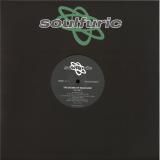
The Sound Of Soulfuric Vol. 2 continues the label’s reputation for vocal-led, groove-driven house music, bringing together strong vocals, solid songwriting and modern club-ready production across four DJ-focused cuts.
This is a release designed for dancefloor use. Whether it’s a vocal room, a terrace set or a packed house floor, every track is built to maintain momentum and keep the room moving.
Featuring voices from Donna Allen, Pearl Mae, Bobby Pruitt and J. Soul, this EP blends classic soulful house roots with current, punchy remixes, making it highly playable in today’s sets while still appealing to long-time Soulfuric fans.
Early Dj plays from Louie Vega, Dj Sneak & Carl Cox!
Brand new vinyl-exclusive music for 2026 from 4 legends of electronic music.
Teachers is a new series from Only Cuts showing love and respect to the architects of our sound.
5th release from the Only Cuts label run by Sydney maestros, Mo’funk & Encee
All new music from these Teachers, Dj Sneak returns with one of his best works in a long time with ‘Hear The Music’ Todd Terry appears under his ‘House of Gypsies’ alias with a horn driven percussive groover. Junior Sanchez with a brilliantly produced Wham flip & The Stanton Warriors come at it with an anthem used in their live sets, appearing for the 1st time on vinyl!
BODJ & ROKSI in true magician style, wear their top hats & capes as they come together once more under their Adult Sonics alias, this time shuffling the deck for the inaugural vinyl release of London based record label, Stay Restless.
An original 3-track EP with the signature ADS sound - trippy and dark yet playful, created having big sound systems in mind, it’s already been in rotation from Sunwaves festival to SASH in Sydney and back.
On a Sunday in the early 70s in South LA one could asily find themselves experiencing the Pan Afrikan Peoples Arkestra doing what they do for the community, performing incredible music. "Live at Widney High December 26th, 1971" is a previously unreleased PAPA recording. It finds director Horace Tapscott conducting the band at Widney Career Preparatory & Transition Center, a special-education magnet high school in Los Angeles. The band played shows here between 1970 and "72, often sharing the bill with contemporaries John Carter and Bobby Bradford"s group, and at one point the Sun-Ra Arkestra. These weekend shows were free and meant for the surrounding Black community. On this date the PAPA performed a range of compositions from the Ark"s expansive songbook, including arrangements of tunes by Pharoah Sanders and John Coltrane.
Recorded live at The Village Vanguard in New York on June 25, 1961, this was the fourth album by the Bill Evans Trio, composed of pianist Bill Evans, bassist Scott LaFaro, and drummer Paul Motian. Scott LaFaro was one of the supreme jazz bassists, a virtuoso player whose playing changed the very conception of his instrument. This album unfortunately also represents one of LaFaro's last performances, recorded just days before his tragic death at the age of 25 by automobile accident. Interestingly the album also contains tracks that Evans had recorded prior to working with LaFaro, so that this recording provides a very accurate index of the bassist's great contribution to the trio.
There’s a special kind of feeling when everything falls into place - when the drums bounce easy, the bassline rolls steady, and a bright guitar line cuts through the warmth of tape. That feeling became the heart of the FULLNESS, from Marcus I meets aDUBta. The sound of FULLNESS is built on simple, living elements: real drums, deep bass, a warm sound, and melodies that leave space to breathe. It moves between Early Reggae, Rocksteady, and Roots - sometimes straight and solid, sometimes stretching out into Dub and Echo. With its voice, from singer and lyricist Marcus I, FULLNESS carries the message about gratitude, love, freedom, and the small moments of everyday life. While Marcus’s singing style nods to the great singers, he stays grounded in his own experience, which perfectly complements aDUBta’s production, giving him space to shine. This LP is a complete, warm, balanced, and uplifting experience from start to finish.
FULLNESS grew from a steady musical exchange between Marcus I and aDUBta - two people on different sides of the Alps (Marcus I in France and aDUBta in Germany), finding a shared rhythm. What began in early 2022 with a few Riddims sent back and forth soon turned into a regular flow of songs. Every week brought new ideas, new words, and new melodies. When they finally met in person at aDUBta’s Attic Roots Studio in Bavaria, Germany, it all fell naturally into place. Most of the instruments were played by aDUBta, and the whole LP was mixed live on his Tascam 388, keeping that raw, handmade feel. With several friends helping bring even more color into the music, aDUBta brought in Viti Sanchez to lend his expressive saxophone and horn lines, Michael Salvermoser with his warm trombone tones, and members of the Black Oak Roots Allstars - King HuHa and Jannis Klenke on bass and guitars, along with Morry 'Da Baron' (Dub Inc.) on bass. FULLNESS means the fullness of music, of life, of friendship, of gratitude. It’s what happens when music becomes more than a project - when it turns into a shared space where things just flow.
At the core of the creative process behind “HPC” and “Bor3d” lies meta-irony, a quality that permeates much of today’s digital content landscape.
Both tracks are a deliberate attempt to push the sound toward a barely perceptible absurdity and ironic unseriousness in their interpretation of well-familiar styles of dance club music. It is a play with form, expectation, and recognizability — balancing sincerity with sarcastic exaggeration.
Okay
Okay is built around interruption. Voices, fragments of dialogue, yawns, irritation — people seem to step inside the track uninvited. Someone is bored, someone is annoyed, someone tries to stop the flow entirely. Just like in real life, the process is constantly disrupted. The track reflects the experience of being surrounded by opinions, noise, and skepticism — especially the kind that will never be convinced, no matter what you do. “Okay” becomes a quiet, ironic response to this pressure: not agreement, not approval, but endurance. The track continues anyway.
Tripatura
Tripatura is a fictional creature — a warped echo of cryptid mythology. In this narrative, Tripatura doesn’t simply exist, it hunts. Once it finds you, it drags you into an endless trip with no exit point. Time stretches, perception blurs, and the track itself becomes the trap. Its prolonged, unresolved ending mirrors the experience of being stuck inside a loop that refuses closure. Tripatura doesn’t rush. It lingers, slowly pulling you deeper, until the trip no longer feels temporary.
since his first ep tips' on luciano's label cadenza in 2007 producer and dj petre inspirescu emerged into one of the key figures of the romanian electronic music scene.
so far he released music on labels such as vinyl club, lick my deck or amphia. together with his buddies rhadoo and raresh he also launched in 2007 the label (a:rpia:r) - a platform where he, his two friends and many producers from romania and abroad released detailed grooving house and techno, that stands out with delicate structures and one-of-a-kind grooves.
both of his more dance floor oriented solo albums intr-o seara organica...' and gradina onirica for (a:rpia:r) are enlarged with melodies, sounds and harmonies that go beyond the usual characteristics of a dance album.
furthermore his love for classic musicians like mily alexejewitsch balakirev, alexander porfiryevich borodin or or nicolai andrejewitsch rimsky-korsakow can be felt in the album padurea de aur (opus 2 in re major) and two more eps that he released under the alias pensemble on the romanian label yojik concon in order to unite classical spheres with analogue electronic music production.
in february 2013 he also released his highly acclaimed fabric mix cd that only features dance floor leaning music produced by himself. with talking waters' he published in late 2014 his first 12inch on mule musiq that is now followed by the full-length album vin ploile' which he produced without the intention to entertain with easy to hook up rhythms, melodies and harmonies.
even tough he established himself as a internationally playing house dj that regularly performs at all major clubs, festivals and other party destinations around the globe: as a musician petre inspirescu always tries to enter new territories to explore with a heartfelt human touch the infinite space of sound.
for his latest album the man that originally comes from the eastern romanian town braila stepped away from his former experiments of melting classical spheres with electronic music. instead the 36-years old man from bucharest only used some piano, string and wind instrument elements and analogue electronics to arrange a gracefully deep ocean of sound.
all slow grooving tracks spread the atmosphere of live improvised sessions that are edited, tweaked and mixed to perfection. in-the-moment moods of strange and unusual analogue synth sounds groove in a fluid quality with subliminal bass shapes, latinate percussions, jazz rhythms and acoustic melodies.
together they create a gaseous kinetic atmosphere full of tangible rhythm patterns, delicate chords and ghostly modular synth pads - all mixed subtle to create space for the tones between the tones.
you can call it a hypnotic after hour album for after hours that are dedicated to a deep listening experience. you can tag his arrangements as brilliantly textured and musically super-charged ambient, which goes beyond the usual definition of the genre.
all nine suspenseful compositions seduce with a deep melodic sensibility, harmonic adventures and an overall rhythmic ambiance of freshness and laidback enthusiasm. together they represent a challenging auditory experience that will resonate in your mind long after the music has finished.
A fresh breeze of color, groove, and charm marks the first outing of OKAY OKAY, a new label from Germany that celebrates playful, soulful, and dance-ready sounds beyond genre borders.
With Marmelade Dew EP, Gelée serves up a vibrant debut full of disco shimmer, Italo-house warmth, and a sweet dose of pop sensitivity. It’s a record that feels both nostalgic and daring, sun-kissed melodies meet tight rhythm work and carefree emotional drive.
From early-morning club sets to slow-burn afterhours, Marmelade Dew EP is an invitation to smile, move, and surrender to simple pleasure. A lovingly crafted 12″ for those who like their house music playful, tactile, and just a little bit sticky.
The breakout underground star of the past year, the deservedly hyped Thought Leadership returns with another X ideas: the deck this time chooses the suit of Cups. This new collection is closer to the Post-Punk tonality of Pentacles, than the breezy Balearic Jazz of Swords. Gone are the brushed drum samples and airy synths and in their place are BIG guitars, 808 thumps and a decidedly more prominent use of bass as a melodic device.
As the suit of Cups reflects the emotional heart of the Tarot, presented within are a further X pieces, this time displaying the full range and fervour of Thought Leadership.
You know the drill by now. Originally out on cassette only, we present the first ever vinyl issue. It's a hideously limited pressing of 300 for the world, so don't sleep on this.
Side A explores the emotional levels of consciousness; angst, joy, love, sorrow, relief, regret – they are all represented across the first seven tracks, and often within the same piece. XXI kicks us off with a huge tumbling D minor passage, layers and layers of guitar front and centre, whilst the drums pound away in the distance. Release is provided with a gorgeous G Dorian section, where we hear the bass take flight with a high melodic line.
We’re still in familiar Durutti Column meets Dif Juz territory here, but things switch up with XXII. This piece showcases a darker, more angular palette of guitars; think Alan Rankine (The Associates), or Deb Demure (Drab Majesty) in the unexpected harmonic shifts, knotty arpeggiated patterns and heavy, goth-adjacent modulation. A real love letter to 45+ years of darkly inclined guitar heritage.
XXIII enters the fray with tight, thumping 808s and Marr-esque guitar figures; and again, the bass providing heavy melodic counterpoint to the guitars. Enter chiming, lyrical lead phrasing, reminiscent of the eternal opening to "Everybody Wants To Rule The World". Another accidental perfect pop moment from the Thought Leader. Whilst on the topic of Tears For Fears, XXIV comes swinging out of the gate with some serious Sophisti-chug; we’re reminded of "Shout" in the A section, before being beautifully juxtaposed in the B section with more Vini-eqsue patterns, reminiscent of his timeless classic, Another Setting.
XXV gives us welcome pause to take stock midway through the A side. No drums this time, but instead a heartbreaking conversation between two guitars; think Kevin McCormick and David Horridge’s masterful Light Patterns, or perhaps even the early solo-Bill Connors mid-70s cuts for ECM. The moment of quiet reflection passes, and is quickly shattered by the thudding march of XXVI – this piece comes across like The Associates playing "Wicked Game"; heavy, moody, and utterly compelling. XXVII ends our journey across Side A with more Marr-inspired playing; one for the heads and already featured on mixes, this one is real testament to the vision of Thought Leadership.
Side B again takes us on a trip through three long-form semi-improvised pieces. XXVIII is like those classic Jonny Nash, early Melody As Truth releases, slowly unfurling, additional details introduced deliberately piece by piece, this idea builds across 7+ minutes culminating in some utterly joyous ebow fireworks at the end – well Balearic.
XXIX again, like XXV before it, dispatches the drums with a focus purely on melody and mood. The piece feels like a lost Save Room Theme from the Resident Evil series, pure golden age Capcom Sound Team vibes. Unadulterated aural nostalgia for hours spent with a PS1 in haze of hash.
XXX completes this majestic voyage with another Modal exercise; this time the Thought Leader has opted for the Lydian Mode. Beautifully dreamy, undeniably Soundtrack-y, and arguably the most concise distillation so far of everything this project stands for; drum machines, guitars, pedals, one-take improvised solos – XXX has the lot, and is surely destined for greatness.
So, another X epic statements for guitar, homespun with the humblest of means, for all the dreamers out there. The first ever vinyl release of IV Of Cups has been carefully remastered by Be With's engineer Simon Francis to ensure it sounds better than ever after its initial tape release. Cicely Balston's expert skills have made sure nothing is lost in the cut at Abbey Road Studios whilst the records have been pressed to the highest possible standard at Record Industry, in Holland. The original tape cover artwork, so crucial to Thought Leadership's striking visual aesthetic, has been rejigged for vinyl issue here at Be With.
Black Truffle is thrilled to announce Dalbergia Retusa, an extensive double LP selection of the solo guitar music of Hans Reichel, compiled by Oren Ambarchi. Last heard on Black Truffle as one quarter of the joyously anarchic Bergisch-Brandenburgisches Quartett, Hans Reichel (1949-2011) is one of the great figures of experimental guitar music. Though perhaps lesser known than peers like Derek Bailey, Fred Frith and Keith Rowe, Reichel’s rethinking of the instrument was in some ways the most radical of all. Early on, he dispensed with existing guitars to build a series of his own that explored the use of additional strings and fretboards, moveable pickups, extra bridges, special capos, and other innovations documented in the extensive booklet accompanying this release.
Reichel was a long-term resident of Wuppertal, the small Western Germany city that became an unlikely centre of European free jazz in the late 1960s, also home to Peter Brötzmann and Peter Kowald. His solo debut Wichlinghauser Blues was an early entry into the FMP discography and began a relationship with the label that stretched into the 1990s; all the solo performances heard here were first released on FMP. As Reichel says in the charming archival interview with Markus Müller included here, he was ‘always a cuckoo’s egg at FMP’, a label that began as an outlet for roaring European free jazz. What strikes the listener right from the opening selection on Dalbergia Retusa—‘Return of the Knödler show’, from 1987’s The Dawn of Dachsman—is the extraordinary beauty of Reichel’s music, at once alien in the shimmering sonorities and unconventional pitch relationships made possible by his invented instruments, and deeply lyrical, even romantic in its harmonic content. Growing up in West Germany in the 1960s, Reichel’s formative influences were mainly British and American rock bands, a background that shines through in many of the pieces included here: ‘An old friend passes by’ is haunted by the ghost of Hendrix’s rhythm guitar, and the wild closer ‘Heimkehr der Holzböcke’, taken from a rare 1975 7” and the only piece to use overdubbing, layers errant hammer-on and slide tones over a Canned Heat boogie chug.
Reichel was an important source for the development of Oren Ambarchi’s own extended approach to the electric guitar. Appropriately enough, his selection opens with the very first piece by Reichel he ever heard, on a flexidisc included with a 1989 issue of Guitar Player magazine. Though Reichel collaborated with others extensively in many settings and also performed on violin and his other major contribution to instrument invention, the daxophone, his music for solo guitar remains at the core of his oeuvre. Focusing exclusively on solo pieces recorded between 1973 and 1988, the 23 pieces on Dalbergia Retusa showcase the range and consistency of Reichel’s work, allowing the listener to see how his performances developed hand-in-hand with his instrumental inventions. On a piece from his very first LP, played on an 11-string instrument (partly strung with piano strings and using a schnapps glass a slide), we hear his intensive exploration of fret-hammering to create zither-like, chiming tone, which Reichel would hone further in later years with a double fretboard guitar specifically designed to be hammered rather than fretted and picked. On a piece from 1979’s Death of the Rare Bird Ymir, Reichel uses two steel-string acoustic guitars at once, with beautiful results: ‘some even say too beautiful’, he jokes in the interview included here. Many of the pieces from the 1980s make use of varieties of the ‘pick behind the bridge guitar’, instruments of uncanny harmonic richness primarily designed to be played on the ‘wrong’ side of the bridge. At times the unexpected behaviour of attacks, resonance, and decay can almost seem electronic, conjuring up the technology-assisted work of Henry Kaiser or even Fennesz, but realised solely through Reichel’s unorthodox techniques on his invented instruments. Extensively illustrated with photos and Reichel’s own plans and drawings of his instruments, Dalbergia Retusa is an essential introduction to the unique world of Hans Reichel. Rarely has music been at once so strange and so beautiful.
After a decade away from new music, Jill Scott returns with To Whom This May Concern, a soul-stirring body of work rich with texture, rhythm, and emotional truth. Rooted in community, reflection, and sonic exploration, the album weaves melodies, horns, and rhythms into an immersive listening experience that invites audiences to feel deeply, reflect freely, and take exactly what they need.
The 38th Earwiggle release comes from one of our favourites, and a debutant on the label, Serbian studio supremo Commissar Lag. The "Absolution EP" finds Lag delivering his playful vision of techno, dipping into the past while also pointing us to the future, all framed through an exquisite production gleam. Dense, rolling rhythms reminiscent of early '00s Stockholm techno, combined with a catchy repeating vocal sequence (one of Lag's trademark techniques) and rising sirens, result in the monster opening title track "Absolution". "Aim Without Mercy" is another club destroyer - jabbing keys, broken jagged beats, and a series of rising pressure points making it another winner. "The Blessed" meanwhile, shifts the mood from mental to majestic, with interchanging leads and reverb-drenched climaxes marking the big-room peak of the record. Rounding things off is Irish wunderkind Dylan Fogarty, who reimagines "Aim Without Mercy" through a deep and psychedelic lens, layering textural collages over surging, jacking
909s.