Lucy Sissy Miller is a French/British singer-songwriter, performer and artist based in Paris. On her latest release for Mêtron Records, Pre Country, she renders her own personal take on country music, an ambient and airy ode to her love of Americana. Across 16 tracks, Miller recollects about love-like friendships, breakups, mermaids and missing girl mysteries - the album acting as a movie-like homage to girlhood and desire.
“With this album I really enjoyed blurring the lines between fiction and reality, a bit like what movies are able to do to us. I hide a little bit of personal truth behind each song.”
Influenced by the tones of Laurie Anderson and Imogen Heap, as well as the imagery found in Twin Peaks and Paris, Texas, Pre Country is a rich and explorative record that mixes a wide range of sonic sources. Though very much rooted in folk music, Pre Country is laced with layers of autotune, bringing an other worldly and haunted presence to the work.
“It’s an album about memories and how we stitch up these moments, making them movie-like to make sense of these experiences.”
The record was crafted with notes from journals, poetry, voice memos, transformed and collected sounds and here it carries the many layers of desire, loss and fear that Miller wanted to convey in the songs, communicating an unsteady, explosion of feeling whilst remaining delicate and personal.
In 2018, Glonti started collecting LPs of Soviet-era Georgian composers at Tbilisi’s “Dry Bridge” flea market.The records mostly consisted of classical and chamber music released on Melodiya, the singular, state owned record label of the USSR. It was through this process that the idea of Recollection was born, as Glonti aimed to create an album that would utilize samples from his growing collection.
Recollections I-II will be the first release in a series of 7’’ records, followed by three more releases which together will make up a full length album. The artwork by Dmytro Nikolaienko of Day Night reflects the generic qualities of Soviet-era cover art.
out of Stock
Last delivered 20 months ago available to reorder, subject to availability
"Color LP" is pressed on gold vinyl. Black Up is the new sonic move from Shabazz Palaces. Like rich velvet hijabs or gold threaded abayas. Luxury as understood by the modest. Shabazz Palaces. If Bedouins herded beats instead of goats and settled in Seattle instead of the Atlas Mountains, this would be their album. Forward thinkers but nostalgic for a sparer time when ancient astronomers only recognized five planets. Hip hop. Black light uses electromagnetic radiation to eradicate microorganisms, but shabazz didn't come to kill a sound, just to shine their own incandescent lamp on this. Hear. Hard and clear. Fifty thousand years in the making. Honorable._palaceer pink gators. Produced by Knife Knights.plcrs at Gunbeat Serenade Studio in Outplace Palacelands. It was recorded and mixed in Lixx-alog by Blood.
Jacob Long’s fourth full-length for Kranky began as a notion to reimagine Earthen Sea as a “piano trio,” inspired by a year-long immersion in the ECM label catalog, but the compositions soon grew more complex.
Elements were chopped and resampled, then layered with bass, drums, percussion, and additional keys. The result is a fusion of live band acoustics and downtempo loops, sculpted into nine smoke-and-mirror dubs of fractured jazz, soft-focus noir, and trip-hop dust: Recollection.
Like the title implies, Long’s playing and production share a mood of pensive movement, shuffling and rippling like uncertain memories at strange hours.
From looming fog (“Present Day,” “Neon Ruins”) and shadowy breaks (“Another Space,” “Cloudy Vagueness”) to rosy glows (“Clear Photograph”) and smeared reverie (“White Sky”), Recollection deftly wields its palette of gradient color and subdued states of beauty.
His is a music of reduction and reflection, kinetic but oblique, attuned to the silhouettes of sound.
out of Stock
Last delivered 20 months ago available to reorder, subject to availability
Debut collaborative album from Troth, the Nipaluna-based duo of Amelia Besseny and Cooper Bowman, and kindred spirit and legendary Mancunian free-form guitarist Jon Collin. A lavish dreamscape conjuring the dramatic beauty of uncharted mountains and streams, it documents both the crystilisation of ideas first shared during an Australian encounter in early 2023 and years of mutual appreciation.
Troth’s sonic universe, a constellation of drifting atmospherics, bedroom pop impulse and modern classical motifs, is deeply intimate and never rushed. Recent sides Forget The Curse and Idle Easel and live performances supporting the likes of Maxine Funke and Treasury of Puppies have seen Besseny’s soaring, celestial voice take centre stage, delicately adorned with Bowman’s synthesiser flourishes and homespun instrumentation. At their heart lies Bowman’s tireless collaborative instinct: his decade-long involvement in the Australian underground and his countless musical outfits (including contemporary trio Th Blisks, with Besseny and Yuta Matsumura).
Summer 2023 saw the duo host two shows for Collin in their former home of Mulubinba, regional New South Wales. Collin is perhaps best known for his playing, deconstructing and reconfiguring of the guitar and other stringed instruments, realised in solo works on his own Early Music and Winebox Press imprints, and collaborations on a trio of albums with Demdike Stare and live sessions with Sarah Hughes and Bill Nace. His unique style of playing, sometimes delicate, at other times frictional, refutes expectations of traditional instruments and fits perfectly within both Troth’s ethos and their lush sonic mise-en-scène.
The objects of devotion perhaps symbolise the group’s devotion towards each other during their music-making process, and the fruits from which they are borne. “I think, any music I have a hand in, is a dialogue with by the people I'm making it with. It's an ongoing conversation between people and sound”, reflects Bowman. The sacredness and ominousness of remote Tasmania is just as affecting, the interplay of Besseny’s haunting vocal washes, Bowman’s sparse instrumentation and Collin’s ritualistic strum evoking the eeriness that lurks beneath the seemingly limitless Australian landscape. “When I think about it, it sounds like being together at the bottom of the Earth. Watching, listening and playing together with no-one else in sight."
out of Stock
Last delivered 22 months ago available to reorder, subject to availability
Allt II: Cuimhne is a collection of newly composed settings of Irish and Scottish Gaelic poems and tunes - This recording forms the highly anticipated second release from the quartet featuring Julie Fowlis, Eamon Doorley, John McIntyre and Zoe Conway.
Cuimhne, the Gaelic word meaning a memory, a record, a memorial or a recollection, is a fitting title for this work, as the quartet are taking inspiration from the memories of Gaelic tradition and reworking and reframing them into a contemporary setting.
Poetry has been the dominant medium of art in Gaelic culture for hundreds of years and aligned with it is a tradition of setting music to poetry. Inspired by this, the quartet have created melodies which add an extra dimension to the lyrics that allows us to experience the emotional power of language.
With the addition of newly composed instrumental music, this album truly takes us on a journey of the shared heritage of Ireland and Scotland, Eire is Alba, and showcases the immense beauty of our traditions.
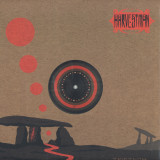
Woven together from home studio recordings that span two decades, and with some notable guest appearances including; The Bug, Douglas Leal of Deafkids, Wayne Adams of Petbrick, Dave French of Yob and Sanford Parker, this final part of the Harvestman Triptych seeks once again for a lost world, with the voice of poet Ezra Pound extolling the virtues of "gathering from the air a live tradition".
Cloudy Clear plus Black Galaxy effect vinyl in dub style jacket. Limited and Non-Returnable.
At its heart, music has always been a questioning of inheritance – a dialogue with predecessors and forebears, the forging of one’s own perspective in relation to what has come before, and for some, a plunge into the boundless realms between. For Steve Von Till, that process has always taken on an added dimension to become the most sacred of tasks. Whether through the apocalyptic uprising of Neurosis, the sonic deconstructions of their sister project, Tribes of Neurot, the invocatory intimacy of his eponymous solo albums or his instrumental psychedelic reveries in the guise of Harvestman, that dialogue has never just been with musical influences, but with what underpins them: the primordial, elemental forces now banished to the peripheries of our contemporary consciousness, yet still broadcasting a signal for all who will listen.
Drawn to the megaliths, ruins and ancient sites mapped out along the British and European mainland’s geographical and psychic landscapes, the folklore and apocrypha forever resurfacing as portals from a rational world, Triptych is a meditation forged from traces and residues, and an hallucinatory recollection of artists who have tapped into that enduring otherworldliness embedded within us all. It’s a dream diary narrating a passage through Summer Isle where Flying Saucer Attack are wafting out of a window, a distant Fairport Convention are being remixed by dub master Adrian Sherwood, celestial scanners Tangerine Dream are trying to drown out Bert Jansch and Hawkwind are playing Steeleye Span covers, all prised out of time yet bound to its singularity.
"Herne's Oak" provides seismic bass waves that physically halt the track in its steps - giant footfalls as Herne's antlers themselves are dragged along a corridor. Another curious and mysterious piece of British folklore brought to life by Harvestman.
If Triptych is a multi- and extra-sensory experience, it extends to the remarkable glyph-style artwork of Henry Hablak, a map of correspondences from a long-forgotten ancient and advanced civilization. As with Triptych itself, it’s an echo from another time, an act of binding, a guide to be endlessly reinterpreted, and a signpost to the sacred that might not indicate where to look, but how.
Cover art is by Henry Hablak, who also designed the art for Part One and Part Two.
out of Stock
Last delivered 8 months ago available to reorder, subject to availability
Auf seinem Sony Classical Debut-Album "Human Universe" zeigt der außergewöhnliche japanische Pianist und Komponist Hayato Sumino seine facettenreichen musikalischen Einflüsse in einer vielfältigen Auswahl an Stücken klassischer Komponisten wie Bach, Händel, Purcell, Chopin, Fauré und Debussy, ikonischer Filmmusik von Hans Zimmer und Ryūichi Sakamoto sowie seinen eigenen Kompositionen und Arrangements.Die Besonderheit an Hayato Suminos Klavierspiel ist sein einzigartiger, souverän-virtuoser Stil, bei dem er eine präzise klassische Technik mit dem feinen Gespür eines Arrangeurs und ausgeprägten Improvisationsfähigkeiten verbindet. So lässt er beständig Eindrücke aus Genres wie dem Jazz oder der Popmusik, in denen er ebenso aktiv ist, in seine fundierten klassischen Interpretationen einfließen."Für `Human Univers' habe ich mich von den antiken Vorstellungen des Universums und dem Zusammenhang zwischen Kunst und Wissenschaft inspirieren lassen. Die alten Griechen glaubten, dass Himmelskörper im Universum Töne aussenden und dass das gesamte Universum Harmonie und Musik erzeugt, die sogenannte 'Musik der Sphären'."Hayato Sumino ist ein außergewöhnliches Phänomen: Bereits als Teenager begeisterte der 1995 in Tokio geborene Pianist und Komponist unter dem Namen "Cateen" mit virtuosen Videos klassischer Klavierdarbietungen und emotionalen Klavierarrangements von Anime- und Games-Soundtracks ein Millionen Publikum bei YouTube. Bis heute hat über 200 Millionen Aufrufe erzielt und über 1,5 Millionen Follower bei YouTube und Instagram gewonnen. Wenngleich Hayato Sumino bereits seit seinem 2. Lebensjahr Klavier spielte und Unterricht erhielt, studierte er bis zu seinem ausgezeichneten Master-Abschluss im Jahr 2020 Informationswissenschaft und -technologie an der Universität Tokio. Noch vor Abschluss seines Studiums gewann er 2018 als Außenseiter völlig überraschend den Grand Prix bei einem der wichtigsten Klavierwettbewerbe Japan - dem PTNA-Wettbewerb. Der Gewinn war der Startpunkt seiner Karriere als professioneller Pianist. Im Anschluss nahm er für ein halbes Jahr Klavierunterricht bei Jean-Marc Luisada in Paris und avancierte seitdem auf einer Welle der Begeisterung zum Klavier-Superstar in Japan. So spielt er am 14. Juli 2024, seinem 29. Geburtstag, ein Klavierrecital vor 14.000 Menschen in der ausverkauften Tokioter Konzerthalle Nippon Budōkan.Internationale Aufmerksamkeit erregte er 2021 beim Internationalen Chopin-Wettbewerb, wo er mit seiner hervorstechenden Interpretationen das Halbfinale erreichte. Im April 2024 feierte Hayato Sumino sein spektakuläres Debüt in der Royal Albert Hall mit seiner Aufführung von Gershwins "Rhapsody in Blue", die sowohl online als auch im Konzertsaal für Aufsehen sorgte. Als Solist tritt er mit zahlreichen Orchestern auf der ganzen Welt auf, darunter die Hamburger Symphoniker, das NHK Symphony Orchestra, das Boston Pops Orchestra, das Chicago Symphony Orchestra, das Baltimore Symphony Orchestra, das Tokyo Philharmonic Orchestra, das Japan Philharmonic Orchestra und das Polish National Radio Symphony Orchestra. Sein Debüt in der Elbphilharmonie gibt Hayato Sumino im Januar 2025.
out of Stock
Last delivered 23 months ago available to reorder, subject to availability
An expedition in sound in 10 sequences: Enfoncement Deep Sink, Gouffre circulaire [Circular Abyss], Noyau secret [Secret Core], Apesanteur [Weightlessness], Entrailles [Entrails], Four solaire [Solar Furnace], Fissures [Cracks], Mer intérieure [Inner Sea], Éruption [Eruption], Remontée [Ascension]. "Labyrinthe !" is not only a very unique piece in Pierre Henry's masterful repertoire, but also a remarkable demonstration of his compositional skills and musical singularity. Indeed, for this piece, Pierre Henry was deprived of his own, otherwise essential, sonic material. Here, the sounds, provided by GRM collaborators at the time, carry their own distinct stories, sensitivities and qualities. Yet, despite this discrepancy, Pierre Henry's voice, the breath and dynamics of his own music, quickly appear. Through this sonic maze, a music arises, utterly focused on sounds, their development and their use, which Pierre Henry applies with extraordinary clarity and determination.
Erste Gesamtausgabe als Deluxeausgabe: 4xLPs in einem geprägten Gatefold-Cover, gestaltet von Stephen O'Malley, mit einem 30 x 90 cm großen Poster. "Divine Comedie" ist ein Opus Magnum, geschaffen von zwei der führenden Komponisten ihrer Zeit, mit einem musikalischen Anspruch, der Dantes Gedicht und seiner visuellen Interpretation durch Sandro Botticelli oder Gustave Doré gleicht. Lange Zeit wurde dieses Triptychon als ein zweiseitiges Werk präsentiert, in dem Bernard Parmegianis Hölle und François Bayles Fegefeuer aufeinander reagierten und sich gegenseitig erweiterten. Michel Hermons Stimme führt durch die Vorstellungskraft des Zuhörers. Erstmals wird "Paradise", ein gemischtes Stück, das gemeinsam komponiert und live aufgeführt wurde, auf Tonträger veröffentlicht. Tatsächlich wird "Paradise" fünfzig Jahre nach seiner Uraufführung für unsere Ohren enthüllt und wertet damit die erste Gesamtausgabe von "Divine Comedie" auf. - François J. Bonnet, Paris, 2023
Heated Garage is a sonic snapshot of what happened when boundless musical energy and middle American moxie combined to create a cultural phenomenon. The tracks are drawn from a vast archive of Kay Bank master tapes - some are ultra rarities you’d be hard pressed to snatch from the collectors’ market without mortgaging a kidney. Others are alternate versions and outtakes never before released in any form! “The joke was, some bands didn’t become garage bands because it was too damn cold...you can’t go outside when it’s 25 below zero. So, a lot of people are honing their craft in their basements.” High Spirits guitarist Owen Husney explains. Knowing more about them is not only unnecessary, it would mar their mystique. They exist forever in a moment of raw rock ‘n’ roll glory that transcends time, a space shared by their Heated Garage brethren. Looking back on The Pagans’ songs, for example, Kip Sullivan says, “They feel sacred to me.” Recollecting his High Spirits adventures, Owen Husney sighs, “I would go back to those heydays in a minute.” Now he can. And we can all come along.
Oliver Coates' Throb, shiver, arrow of time is a portal into somatic chiaroscuro, aglow with the embers of imperfect memories and smudged with the plumes of internal echoes, which augment in vast, mercurial dimensions. For his third album on RVNG Intl., the British cellist, composer and producer offers a capsule of personal resonance and remembrance, assembled over the past six years. Throb, shiver, arrow of time traces the familiar metallic anatomy and viscous string modulations of his 2020 release skins n slime, while recentering his inner compulsions following a procession of lauded score writing projects, including the films Aftersun (Charlotte Wells, 2022), The Stranger (Thomas M Wright, 2022) and Occupied City (Steve McQueen, 2023). While working on Aftersun, Wells asked Coates how music could signal that someone is going on a trawl through their memory_a question that has stayed with him ever since and fosters a heartbeat running through the record. Throb, shiver, arrow of time is "all about inaccurate transmissions from our memories, overlaid with emotions from other sources," says Coates. The release is imbued with the ache and glow of recollections mulched together, where the guttural dissonance of misremembering is shrouded by strange orbs of sentiment. At the record's inner core is "Shopping centre curfew," a swift yet cavernous track that emerged five years ago when two real world events, both occurring in South London during the pandemic lockdowns, became fused in a dream: the demolition of Elephant and Castle shopping center, and the discussion of a curfew as a real possibility for all men following a violent crime. A strange simultaneity occurred with this piece of music and Coates built the album out from there, a sense of temporal entropy refracting shimmers of lurking convulsions into lucid sonic topologies. The ten compositions of Throb, shiver, arrow of time find weightless melodies soaring across after-image gradients, magnified and compressed. Misted tones within "Please be normal" and "90" soften drone-soaked shudders of inner acoustics messing up. Vocal invocations appear from long-term collaborators Malibu and chrysanthemum bear, as well as drifting synth radiance from Faten Kanaan. Throb, shiver, arrow of time furthers Coates' reach in collapsing the digital into the analogue and vice versa, allowing serendipity to reorganize the material and push out against the confines of flatness. This sculptural approach to sound is deeply influenced by the intricate installations of artist Sarah Sze, whose permutations of visual matter with its own after-image form kaleidoscopic epitaphs for ephemera and emotion. Coates' thinking about Sze's work and processes flowed together with his own playing and editing techniques, superimposing the textural relief of a live take back into a composition, and allowing the sound to succumb to a dream of itself. As Coates expands, "The cello is a kind of melancholic instrument with a light ethereal spirit. When the sound is flattened into digital processes, with shifted frequencies and time stretching I'm trying to give it even more of those qualities. Sometimes I'm distancing myself from it, so it becomes a piece of discarded debris that has soul in it, a down-sampling. Or other times, it's trying to maximize the present tense in the act of playing, and collapse that vivid color into a burnished, photocopied kind of sound. So the music acts like weather, weathering the listener, or as flames licking at the sides of objects." As the record unfurls, the compositions swell in duration, until the granular glimmers of its finale "Make it happen" persist in almost violent delight. "There's a feeling of not wanting to let this album go, trying to defy the extinguishing sound at the end of the music, trying to push the colors beyond the confines of the structure, to defeat the silence." In the scramble to resist denouement, Coates suspends the arrow of time in its eternal flight, just for a moment, to reveal the solace of the dust settling in the afterglow. Oliver Coates' Throb, shiver, arrow of time will be released on vinyl, Japanese import CD, and digital editions on October 18, 2024. On behalf of Oliver and RVNG Intl., a portion of the proceeds from this release will benefit The Traditional Music and Song Association of Scotland, an organization fostering opportunities for people of all ages to participate in the traditional music and culture of Scotland.
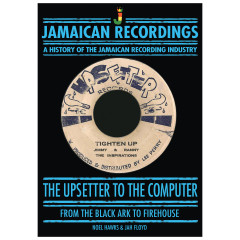
Records have played an integral part in the history of Jamaican music and the importance of making records, as opposed to making music, can never be overstated. These are the stories, told through first-hand accounts wherever possible, of the men and women… manufacturers, musicians, singers, deejays, arrangers and record producers… who made the records and who made the sound of reggae available worldwide.
“Clearly this series is set to become the standard reference work on Jamaican music, such is its dizzying depths of research and the vast amount of oral evidence it has compiled from many years of interviews alongside critical quotes from recognised existing literature.”
Steve Barker
The Wire
"In this third volume the authors skillfully weave interview material into its narrative. Among other histories, it examines the work of Lee ‘Scratch’ Perry, who transcended genre and became author of his own productions and, in the process, influenced the development of the major global artist Bob Marley. It examines the development of dub, the studio process that transformed the music, and in doing so exerted yet another influence on popular music on the world scale. It also examines the work of Lloyd 'King Jammy' James who utilised digital technological innovation to become a champion of sound system and record production and, thus, became the Eighties equivalent of the earlier innovator Clement ‘Coxsone’ Dodd.
All this, and much more, is told by many of the protagonists who created the phenomenon of reggae as a cultural force that has travelled far beyond the confines of Jamaica.”
Steve Barrow
Co-Author of “Reggae The Rough Guide”
“Noel Hawks’ & Jah Floyd’s third book on the history of the Jamaican recording business is another triumph. As with the first two volumes, they seamlessly weave quotes and recollections from the key players into the narrative, giving the reader a unique, and genuine, insight into the development of Jamaican music and the business of selling it. An essential read for anyone interested in ska or reggae and for all music lovers.”
Chris Lane
Fashion Records
“I can confidently say, without fear of contradiction, that the final part of Noel Hawks’ & Jah Floyd’s trilogy is every bit as meticulously researched and mentally stimulating as the first two volumes. It may be that no history of Jamaican music can ever be totally definitive given how many of reggae’s key singers, players and producers had already left Earth before anyone had the opportunity to get their takes on how it evolved. But, as of now, you will not find a more accomplished telling of the tale than that which is presented across the three volumes of ‘Jamaican Recordings’… an Order of Distinction-worthy accomplishment that should henceforth become an essential component of everyone’s reggae library.”
Tony Rounce
Ace Records Ltd
Records have played an integral part in the history of Jamaican music and the importance of making records, as opposed to making music, can never be overstated. These are the stories, told through first-hand accounts wherever possible, of the men and women… manufacturers, musicians, singers, deejays, arrangers and record producers… who made the records and who made the sound of reggae available worldwide.
“This volume of what promises to become a crucial series covers in comprehensive fashion Jamaican music’s pivotal phase, when the music absorbed its US influences from soul and moved on from rock steady and progressed to the uniquely Jamaican sound of reggae and rockers.
It was a period in which old and new rhythms became the cornerstone of the music and thus the true
foundation of reggae. This second volume in the trilogy, amply illustrated, contains a wealth of interview testimony from the creators of the music and is both utterly authentic and essential reading.”
Steve Barrow
Co-author of ‘Reggae The Rough Guide’
“Noel Hawks takes another deep dive into the history of Jamaica’s recording studios, the businessmen who owned them and the record producers who worked in them. While the previous volume, ‘The Birth Of Ska’, dealt with Jamaica’s nascent music business and the journey, from its mento and folk roots to rhythm & blues and then ska, ‘Rock Steady To Rockers’ picks up the story as ska is about to transform into the smoother rock steady style and carries us through to reggae and the sonically sophisticated dub of the Seventies.
The book contains a stunning collection of hard facts about the business of making records, as well as personal recollections from many of the leading lights of Jamaica’s music scene, and is a fascinating read for record collectors, reggae fans and anyone who loves music.
Chris Lane
Fashion Records
“The second part of this important trilogy is no less informative and engrossing than the first volume. The author’s blending of his own authoritative narrative and entertaining quotes from people who watched everything that’s chronicled here unfold… artists, producers and early collectors… makes for a seamlessly entertaining read from start to finish.
If you couldn’t be there, or even thereabouts, at the time consider this book your very own literary TARDIS to help you to relive the evolution of Jamaican music at (almost) first hand. I’m very proud to have had even the smallest involvement with this essential read. Roll on Volume Three…”
Tony Rounce
Author & Music Historian
Through X Scroll Era, Gabo Barranco, aka AAAA, conducts a rigorous overhaul of the aesthetics and statements of low-profile IDM, trance, and progressive-acid music typical of the early 2000’s. In addition to this inherent and undeniable veneration for the era, the pieces on this album — which originated from recordings and experimental exercises with gear and accidentally became an album — serve also as a kind of retrospective inspection of Mexico City's suburbs (Lomas de Sotelo), with landscapes full of indiscriminate concrete, highways of two and three levels, factories, and parking lots that have supplanted nature with their own detached beauty. It is a sound memory, a specific melancholy that praises skate squads of the area, friends from the past, parties, and substances. It reviews the decline of rave culture but also its resilience and capacity for transformation. What AAAA offers us with X Scroll Era is an almost multigenerational soundtrack, a memory that feels collective and recollects euphoria, ecstasy, and nostalgia.
After several LPs and EPs (Acid Test, Omnidisc, Janushoved) and several years active in the dance and contemplative electronic music circuit (MUTEK, BERGHAIN, iii Points, RBMA), X Scroll Era is the first album by Gabo Barranco, aka AAAA, published on the Mexican label Umor Rex.
Immerse yourself in a unique narrative experience, embarking on a vibrant journey that will awaken your senses and evoke warm memories.
Play as Mimi, exploring the precious recollections of your childhood and the times shared with your late grandmother. As past meets present, confront your adult choices with fond childhood memories to uncover lost family secrets.
For the OST, SUPERNAIVE brothers oscillates between melancholy and wonder. They build a strong narrative throughout the songs, taking the listener by the hand to discover their unique poetic universe.
Bad Man Possee is a classic early Eighties dub reggae recording by Junior Murvin, who made his name working with Lee ""Scratch"" Perry on his 1976 debut album Police & Thieves. This album features some stirringly hypnotic tracks to go along with the hit title track. ""Guitar"" is an eerie ode to Murvin's first guitar, riding craftily over a headnodding rhythm provided by Dread At The Controls studio musicians the Roots Radics Band. While Murvin changes speeds quite mercurially, from the love lost recollection ""Never Fall in Love"" to the politically charged ""Rebellion,"" the high quality of the music remains even throughout. Murvin's outstanding doo wop-inspired falsetto is a uniquely inspired nod to the R&B tradition as well as the stylings of ska, rocksteady, and dub. Murvin tops the album off with simply astonishing version ""Man Is the Fire."" Bad Man Possee is available as a limited edition of 750 individually numbered copies on translucent yellow coloured vinyl.
Pleasure Planet’s kaleidoscopic debut album has been a long time coming, but good things come to those who wait. Developed over years of late-night studio improvisations, ‘Pleasure Planet’ is an affectionate and colorful patchwork of the New York City-based trio’s knotted influences that’s suspended between the rave and the chill-out room, weaving glistening pads and chunky basslines into vocal earworms and warm, saturated rhythmic cycles. Bandmates Andrew Potter, Kim Ann Foxman and Brian Hersey enter into a lysergic dialog with their discrete personal musical histories, drawing inspiration from vintage EBM, ambient music and heady early ’90s West Coast rave sounds and launching these classic elements into a transcendent new sonic universe.
Celebrated DJ and producer Foxman was a lead singer of Hercules and Love Affair when she first ran into DC rave veteran Potter, and the two rapidly realized their musical interests overlapped. So when Potter was recording with his studiomate Hersey, a NYC underground club scene mainstay, and they needed to bring in a vocalist, the choice was simple. Working together was a refreshing, freeing experience for the three seasoned artists, and the more they experimented, the closer they became; Foxman ended up moving into the studio, and Pleasure Planet was manifested into existence. “We’re like family,” says Potter. “We’re always on the same page – we couldn’t make this music solo.”
For Foxman, the open-ended jam sessions provided her with a chance to try something new, a few steps from the dancefloor-forward DJ tracks she’s best known for producing. And as the trio pooled their adolescent rave memories, reflecting on them with more mature ears, they began to develop the signature sound that was first heard on the Throne Of Blood-released ‘Animals’ 12″. Pleasure Planet aren’t trying to re-capture the past, but suggest a poetic contemplation that layers their recollections and musical obsessions into a hypnotic sci-fi dream. Harnessing a self-described “Aladdin’s cave” of analog and digital gear that help galvanize the timeline, they bridge the gap between avant-pop and icy bleep techno, curving suggestive words through lattices of tightly-engineered electronics.
On ‘Endless’, Foxman’s voice is echoed into a glistening haze that hovers around ethereal pads and tense, electroid pulses. Slow-moving and evocative, it’s a track that capture the open endedness of post-rave euphoria, touching the afterparty but moving far beyond the material world. She’s more recognizable on ‘Alien’, the album’s most upfront track, singing in a glassy, upper-register coo over urgent bass bumps, taut guitars and florid electronic atmospheres. “Are you an alien, or are you an angel?” she asks, fractalizing the borders between genres. And the band’s sense of cosmic togetherness bubbles to the surface on ‘Saved by the Bells’, a meditative after-hours experiment that diminishes the pulsing beats for a moment to bring out a spectrum of interconnected, serpentine melodies.
Modular bleeps and echoing percussion anchor the swooning ‘Planet Love’, one of Pleasure Planet’s most recent compositions and one of the album’s most outwardly psychedelic cuts, while the urgent and anthemic ‘Go With Madness’ steps back towards the main stage, evaporating Foxman’s memorable calls into a thumping procession of analog drums and squelchy, acidic bass tweaks. But they save the best for last, tugging at the heartstrings with ‘Remember (In Dreams)’, a giddy spiral of blipping synth arpeggios and haunting, reverberated chorals. It’s the perfect way to conclude an album that cryptically gestures towards the vulnerability of friendship, celebrating the shared experiences that result in some of the most meaningful memories of all.
out of Stock
Last delivered 12 months ago available to reorder, subject to availability
7A Records are proud to present our deluxe reissue of Mungo Jerry’s Electronically Tested. Released on July 19th, the album has been remastered and expanded with four bonus tracks and features extensive liner notes including Ray Dorset’s own recollections.
Electronically Tested, Mungo Jerry’s second album, was first released in March 1971. Even the title clued in listeners that this was no ordinary record. As Ray Dorset reveals, “I came up with the name of the album. Durex used to have ‘electronically tested’ written on their packets. I thought that was quite the talking point, if people in the know said, ‘That’s the same name as on the packet of condoms!’ It was taboo to mention stuff like that.” Electronically Tested offered hints of the familiar via its inclusion of the UK #1 Hits “In the Summertime” and “Baby Jump,” but elsewhere, the album was pure, eclectic Mungo Jerry. Every side of Dorset’s talents as a singer, songwriter, and musician came to the fore on Electronically Tested, with his bandmates John Godfrey, Paul King, and Colin Earl–as well as producer Murray– joining him to create a joyful noise: “It’s got a lot of tracks that could have been singles in their own right. It was good for me to be able to play all that kind of stuff”. Mungo Jerry’s singular sound has been described as rock, folk, blues, country, good-time music, jug band music, pub rock, and gypsy rock–and that’s just a partial list. One can hear all of those elements in the disparate, timeless songs that form Electronically Tested. How would Mungo himself describe it? “It’s kind of rocky stuff. It’s got social commentary. It’s got all sorts of influences in there. It’s really best to say it’s Mungo Jerry music.” Electronically Tested originally peaked at # 14 on the U.K. Albums Chart the week of April 14, 1971.
I have no neat and tidy way to summarize Joan of Arc. The group's obdurate dedication to shape-shifting reinvention charmed and frustrated in equal measure, and often simultaneously. Any conversation of who or what Joan of Arc is must also consider what the band is not—beyond a unit that avoided convention. Only one person, bandleader Tim Kinsella, remained in Joan of Arc from its 1996 debut to its final days in 2020. For nearly a quarter century, Joan of Arc maintained a fluid lineup that drew from a multitude of subversive Chicago music communities. Every musician and behind-the-scenes collaborator that played a role in Joan of Arc (a number that exceeds 100) influenced the band's direction and character. All the while, Tim helped maintain Joan of Arc's singular identity throughout all the shifts. No two Joan of Arc albums sound identical, but if you listen close enough, you trace ideas that took root on one LP and blossomed in the next. This book expands and deepens the story of Joan of Arc's first five albums (its Jade Tree period) with archival photos and pages ripped from Tim's journals, presented alongside Tim's recollections and a compact early history. This book comes with a live recording of the one and only show by Red Blue Yellow the band Tim started just before Joan of Arc presented here on a 7", along with download code for a couple hundred bonus tracks from the group's archives.
First in a series of reissues from Pierre Jaubert’s Parisound studio archive on Strut Record IS Lafayette Afro Rock Band's elusive funk/Afro original album, 'Malik,' originally released in 1974. Transparent blue colored LP
In 1971, an undocumented seven-member Afro-American ensemble known as the Bobby Boyd Congress made a transformative journey from the United States to France. Bandleader Frank Abel recollects, "We sensed that the soul and funk market was saturated back home, and our original plan was a brief 6-month stint in Paris. Surprisingly, we ended up staying for a decade." Upon lead singer Bobby Boyd's return to the U.S., the group rebranded as Ice and crossed paths with independent producer Pierre Jaubert, a seasoned studio professional with credits on groundbreaking recordings alongside Charles Mingus, John Lee Hooker, and Archie Shepp, among others.
Drawing inspiration from Motown's work ethic, Jaubert initiated regular rehearsals with Ice. He recalled, "I didn't want to mimic Berry, but with seven talented musicians collaborating daily, something unique emerged." The band, residing in Paris and immersed in the African-dominated Barbesse district, began infusing African elements into their music frequently performing with Paris-dwelling Camaroonian and legendary composer Manu Dibango.
Under the new moniker Lafayette Afro Rock Band, the group's music transitioned to predominantly instrumental compositions, featuring a denser Afro-funk sound. Their inaugural recording with the new name, 'Soul Makossa,' included a compelling rendition of Dibango's classic and the impactful break in 'Hihache.' The subsequent release a year later, 'Malik,' refined their sound with the percussive Afro party jam 'Conga,' the atmospheric vocoder and piano-led piece 'Djungi,' and the robust funk of 'Darkest Light.' Despite a limited impact upon its initial release, 'Malik' found appreciation as hip-hop culture flourished in the '80s, establishing itself as a rich source of samples and riffs. 'Conga' was featured in the 'Ultimate Breaks And Beats' series, while the opening horn line from 'Darkest Light' became a pivotal hip-hop motif, employed by Jay-Z, Public Enemy, Wreckx 'N' Effect, and many others
out of Stock
Last delivered 23 months ago available to reorder, subject to availability
Second in a series of reissues from Pierre Jaubert’s Parisound studio archive on Strut Record IS Lafayette Afro Rock Band's elusive funk/Afro original album, 'Soul Makossa' originally released in 1973. Transparent blue colored LP
In 1971, an undocumented seven-member Afro-American ensemble known as the Bobby Boyd Congress made a transformative journey from the United States to France. Bandleader Frank Abel recollects, "We sensed that the soul and funk market was saturated back home, and our original plan was a brief 6-month stint in Paris. Surprisingly, we ended up staying for a decade." Upon lead singer Bobby Boyd's return to the U.S., the group rebranded as Ice and crossed paths with independent producer Pierre Jaubert, a seasoned studio professional with credits on groundbreaking recordings alongside Charles Mingus, John Lee Hooker, and Archie Shepp, among others.
Drawing inspiration from Motown's work ethic, Jaubert initiated regular rehearsals with Ice. He recalled, "I didn't want to mimic Berry, but with seven talented musicians collaborating daily, something unique emerged." The band, residing in Paris and immersed in the African-dominated Barbesse district, began infusing African elements into their music frequently performing with Paris-dwelling Camaroonian and legendary composer Manu Dibango.
Rechristening themselves Lafayette Afro Rock Band, the group's musical direction shifted towards predominantly instrumental compositions, characterized by a weightier, more intricate Afro-funk sound. Their debut recording under this new moniker, 'Soul Makossa,' made a powerful impact with a dynamic rendition of Dibango's classic, coupled with the intense break of 'Hihache' and the contagious 'Nicky.' Initially released by Musidisc in France and later in the U.S. via Editions Makossa, the album omitted the title track due to publishing clearance issues.
Despite modest sales upon its initial release, the album's enduring influence became evident as hip-hop culture surged in the '80s, establishing it as a primary source for samples and riffs. The iconic 'Hihache' break found fame in Biz Markie's 'Nobody Beats The Biz,' and tracks from the album were lifted by LL Cool J, The Beatnuts, Kruder & Dorfmeister, and numerous others.
The drone-pop consternations of Ekin Fil emerge through vaporous tone and forlorn, distant song, as if plucked from a dream. These exist on their own accord, moving with their own internal logic of an emotion heaviness that belies any the passing observation of this as mere shoegazing ambience. Her songs, her compositions find themselves adjacent the fragmented etherealization of Elisabeth Fraser's voice from a forgotten scene of a particular David Lynch film, as a ASMR trigger for Proustian recollection. Something profound. Something hidden. Something desolately sad.
The Helen Scarsdale Agency has had the pleasure of witnessing Ekin's continued development, maturation, and growth as a composer, having released now seven of her magnificent, under-the-radar gems. Her slow burning, dejected ballads continue to draw from the deep well of sorrow, with varying frequencies and intensities of bitter light poking through. Loves lost. A world broken. All is not hopeless, but there is a considerable amount of shit to wade through.
Sleepwalkers embraces a familiar set of metaphors in her work, that of narcolepsy and the unsettled state of existence between sleep and being awake. But she stretches herself with a set of compositions that run parallel to the work of Tim Hecker as in the gravitation soft-noise of "Stone Cold" or to a slow motion serialism that punctuates the ambient crawl of her ambitious "Gone Gone." Recommended for fans of Grouper, Rafael Anton Irisarri, A.C. Marias, and Carla dal Forno.
What is the connection between talented Theremin player and founder member of the Buggles Bruce Woolley and psychedelic pop band The Honey Pot? Well, in he autumn of 2008 Bruce kindly listened to Icarus Peel's newly-completed album Tea At My Gaffe" and suggested that he should stay on the psychedelic journey. Soon after, Icarus met DJ Marrs Bonfire of Bay FM, who featured the album on one of his "Smart Set" shows. The challenge from Marrs was for Icarus to write a Revolver" style album with shorter songs, and thus "To The Edge" was composed and produced with Wayne Fraquet on drums and Jacqueline Bourne and Iain Crawford on vocals.
It was two and a half years ago when a conversation took place between Sal Carmona and Dj Producer Jovonn Armstrong; talks of which planted a seed in Sal Carmona's ear, which years later would manifest what was once a dream into a reality. No stranger, nor a newcomer in the world of dance music, Sal's experience in the club scene goes way back to the days when his sisters, to whom he credits for helping shape the person he is today, took him to Dave Mancuso's The Loft. An experience that he recalls being nothing short of magical. It was a spiritual encounter that immediately took over thus steering him towards the direction of clubs such as The Paradise Garage, Bentley's, Underground, Red Parrot, Latin Quarters, Roseland, Studio 54, just to name a few. Years later, Sal decided to take on the role, of which he became quite successful at, of promoting his own events in New York City; throwing regular parties at venues such as Park Circle & USA roller skating rinks, Red Parrot, The Palladium, The Copacabana and many others, soon becoming one of the premier go to promoters in NYC. Taking a long and well-deserved hiatus from the club scene, in 2012 Sal decided to make his return back to what he loves. It was around this time that he began thinking what it would be like to venture into creating his very own record label. Envisioning his first release being a bona fide House Music Album, one that would include some of his favorite producers. Not one to let dreams drift into the ether, while recollecting on that conversation with Jovan way back, Sal set out to make that vision manifest into a reality and thus emerged this dope compilation titled Banger "Make My Body Shake" "Make the Speakers Shake"
A great idea which brings together an interesting mix that includes highly sought out and respected veteran producers in the scene, such as Timmy Regisford, Ron Trent, Dj Jovonn, and Joe Claussell. Alongside with up and coming DJ producers who are garnering their own adulation of fans, in the likes of Vick Lavender, Mark Francis, Conway Kasey, and DJ Punch. With valuable directional contributions from friend Joe Claussell, this, to say the least, has become far more than just a seriously dope compilation that consists of a unique coming together of serious dance music. More than the aforementioned, Sal Carmona has manifested a dream into a game changing music scripture that is one of a kind, especially in this day and age where it seems where things are thrown together hoping for something to stick. On the contrary, this is well planned and thought out dopeness at A higher level consisting of all new house music that hasn't been brought together like this in a very long time and probably not for a while afterwards.
out of Stock
Last delivered 71 days ago available to reorder, subject to availability
METAL HAMMER - 8/10 review. FOR FANS OF : Lustmord, Om, Sunn O))) . “An exercise in freeform ambience, ritualistic repetition and the rapturous, womb-like power of bass…strange and affecting. We remain lucky to share in the great man’s vision.”
It’s a dream diary narrating a passage through Summer Isle where Flying Saucer Attack are wafting out of a window, a distant Fairport Convention are being remixed by dub master Adrian Sherwood, celestial scanners Tangerine Dream are trying to drown out Bert Jansch and Hawkwind are playing Steeleye Span covers, all prised out of time yet bound to its singularity.
Released periodically on three of 2024’s full moons – April 23rd’s Pink Moon, July 21st’s Buck Moon and October 17th’s Hunter Moon – the three-album cycle, “Triptych”, is (Steve Von Till from Neurosis) Harvestman’s most ambitious undertaking yet.
Guest musicians including Al Cisneros of Sleep / OM who plays bass on one track for each LP, of which he will also mix a dub version on the B-Side of each LP. Dave French of Yob, Sanford Parker and Wayne from Petbrick all make appearances.
Released periodically on three of 2024’s full moons – April 23rd’s Pink Moon, July 21st’s Buck Moon and October 17th’s Hunter Moon – the three-album cycle, “Triptych”, is (Steve Von Till from Neurosis) Harvestman’s most ambitious undertaking yet.
Guest musicians including Al Cisneros of Sleep / OM who plays bass on one track for each LP, of which he will also mix a dub version on the B-Side of each LP. Dave French of Yob, Sanford Parker and Wayne from Petbrick all make appearances.
It’s a dream diary narrating a passage through Summer Isle where Flying Saucer Attack are wafting out of a window, a distant Fairport Convention are being remixed by dub master Adrian Sherwood, celestial scanners Tangerine Dream are trying to drown out Bert Jansch and Hawkwind are playing Steeleye Span covers, all prised out of time yet bound to its singularity.
Bone White opaque + Black Galaxy effect vinyl in dub style jacket (jacket sleeve with centre hole cut out so label shows throug
Drawn to the megaliths, ruins and ancient sites mapped out along the British and European mainland’s geographical and psychic landscapes, the folklore and apocrypha forever resurfacing as portals from a rational world, “Triptych” is a meditation forged from traces and residues, and an hallucinatory recollection of artists who have tapped into that enduring otherworldliness embedded within us all.
Woven together from home studio recordings that span two decades, this fifth outing as Harvestman finds parallels with nature’s cycles not just in its release dates but in the repeated structure that binds each album, like an imprint refracted though three separate strata. “Part One”, as with the forthcoming Parts Two and Three, starts on a collaboration with Om bassist and long-term friend of Steve’s, Al Cisneros, with a dub take opening the B-Side. Here, the opening track “Psilosynth" orbits a grandfather-clock mechanism passing through a nebula haze, all waved on by an acid-fried deity. From there on, “Part One” journeys through the elegiac “Give Your Heart To The Hawk”, with the sampled poetry like a documentary retrieved from a long-lost world, Philip Glass wistfully attending a rescue beacon from the far corner of the universe on Coma, as well as percussion recordings performed by Steve and friend Dave French (drummer of Yob) on a rusted torn open stock tank outside Steve’s barn, treated bagpipes and old reel-to-reel recordings, all reiterated across the next volumes in ever more out-there contexts.
If “Triptych” is a multi- and extra-sensory experience, it extends to the remarkable glyph-style artwork of Henry Hablak, a map of correspondences from a long-forgotten ancient and advanced civilization. As with “Triptych” itself, it’s an echo from another time, an act of binding, a guide to be endlessly reinterpreted, and a signpost to the sacred that might not indicate where to look, but how.
out of Stock
Last delivered 2 years ago available to reorder, subject to availability
The birth of rock steady portrayed in a consummate collection from the vaults of Federal Records
Most of them drawn directly from Ken Khouri's master tapes this miscellany of cool rock steady includes marvellous music from the originator of the genre, the one and only Lynn Taitt, alongside an array of Jamaica's greatest singers and vocal harmony group
American rhythm & blues fervour, boosted by a multitude of sound systems playing 78rpm records on increasingly larger sets, gripped Jamaica from the late forties onwards but, towards the end of the decade, the American audience began to move towards a somewhat softer sound. The driving rhythm & blues discs became increasingly hard to find and the more progressive Jamaican sound system operators, realising that they now needed to make their own music, turned to Kingston's jazz and big band musicians to record one off custom cut discs. These were not initially intended for commercial release but designed solely for sound system play on acetate or 'dub plates' as they would later be termed. These 'specials' soon began to eclipse the popularity of American rhythm & blues and the demand for their locally produced music proved so great that the sound system operators began to release their music commercially on vinyl and became record producers. Clement Coxsone' Dodd, Duke Reid 'The Trojan' and Prince Buster, who operated his Voice Of The People Sound System, were among the first to establish themselves in this new role and the nascent Jamaican recording industry now went into overdrive.
In 1954 Ken Khouri had numbered among the first far sighted entrepreneurs to produce mento records with local musicians (mento is Jamaica's original indigenous music) before progressing to opening Jamaica's first record manufacturing plant. Three years later he moved his operation to Foreshore Road (later renamed Marcus Garvey Drive) where, with the assistance of the inestimable Graeme Goodall, he updated and upgraded his recording studio. The importance of this enterprising move was critical to the development of Jamaican music and its influence both profound and far reaching.
"It was Ken Khouri's Federal Recording Studio, the womb that gave birth to the talented writers, artists and musicians that gave Jamaica its musical identity." Prince Buster
Federal Records was not only the place for the sound system men to record their music but it was also where they had their records manufactured and, consequently, the company enjoyed a near total monopoly on recording and record pressing in Kingston. In 1963 Ken Khouri sold his one track board to Clement 'Coxsone' Dodd, who established Studio One, and Ken imported the first stereo equipment to Jamaica and Federal began making stereo records. The following year WIRL (West Indies Records Limited) opened but the competition served to drive the company on to higher heights. Ken Khouri continued to work on his own productions and, in 1966, the seven inch release of Hopeton Lewis' 'Take It Easy', recorded under the guidance of Trinidadian guitarist Lynn Taitt, ushered in the rock steady era.
These two essential albums showcase a stunning selection of well known hits, and not so well known rarities, from the vast Federal catalogue. All tracks have been transferred direct from the master tapes and assembled with the invaluable assistance of Ken Khouri's son, Paul Khouri, who generously gave Dub Store unlimited access to the Federal tape vaults. The extensive liner notes feature extracts from extensive interviews with Paul Khouri whose knowledgeable recollections of working on Marcus Garvey Drive, not only as a producer but as an engineer and musician, are illuminating and educational. Both sets present an insight into the birth and growth of Federal Records and the Jamaican recording industry and are essential to an understanding of the real roots of reggae music.
Second in a series of reissues from Pierre Jaubert’s Parisound studio archive on Strut Record IS Lafayette Afro Rock Band's elusive funk/Afro original album, 'Soul Makossa' originally released in 1973. Transparent blue colored LP
In 1971, an undocumented seven-member Afro-American ensemble known as the Bobby Boyd Congress made a transformative journey from the United States to France. Bandleader Frank Abel recollects, "We sensed that the soul and funk market was saturated back home, and our original plan was a brief 6-month stint in Paris. Surprisingly, we ended up staying for a decade." Upon lead singer Bobby Boyd's return to the U.S., the group rebranded as Ice and crossed paths with independent producer Pierre Jaubert, a seasoned studio professional with credits on groundbreaking recordings alongside Charles Mingus, John Lee Hooker, and Archie Shepp, among others.
Drawing inspiration from Motown's work ethic, Jaubert initiated regular rehearsals with Ice. He recalled, "I didn't want to mimic Berry, but with seven talented musicians collaborating daily, something unique emerged." The band, residing in Paris and immersed in the African-dominated Barbesse district, began infusing African elements into their music frequently performing with Paris-dwelling Camaroonian and legendary composer Manu Dibango.
Rechristening themselves Lafayette Afro Rock Band, the group's musical direction shifted towards predominantly instrumental compositions, characterized by a weightier, more intricate Afro-funk sound. Their debut recording under this new moniker, 'Soul Makossa,' made a powerful impact with a dynamic rendition of Dibango's classic, coupled with the intense break of 'Hihache' and the contagious 'Nicky.' Initially released by Musidisc in France and later in the U.S. via Editions Makossa, the album omitted the title track due to publishing clearance issues.
Despite modest sales upon its initial release, the album's enduring influence became evident as hip-hop culture surged in the '80s, establishing it as a primary source for samples and riffs. The iconic 'Hihache' break found fame in Biz Markie's 'Nobody Beats The Biz,' and tracks from the album were lifted by LL Cool J, The Beatnuts, Kruder & Dorfmeister, and numerous others.
out of Stock
Last delivered 2 years ago available to reorder, subject to availability
First in a series of reissues from Pierre Jaubert’s Parisound studio archive on Strut Record IS Lafayette Afro Rock Band's elusive funk/Afro original album, 'Malik,' originally released in 1974. Transparent blue colored LP
In 1971, an undocumented seven-member Afro-American ensemble known as the Bobby Boyd Congress made a transformative journey from the United States to France. Bandleader Frank Abel recollects, "We sensed that the soul and funk market was saturated back home, and our original plan was a brief 6-month stint in Paris. Surprisingly, we ended up staying for a decade." Upon lead singer Bobby Boyd's return to the U.S., the group rebranded as Ice and crossed paths with independent producer Pierre Jaubert, a seasoned studio professional with credits on groundbreaking recordings alongside Charles Mingus, John Lee Hooker, and Archie Shepp, among others.
Drawing inspiration from Motown's work ethic, Jaubert initiated regular rehearsals with Ice. He recalled, "I didn't want to mimic Berry, but with seven talented musicians collaborating daily, something unique emerged." The band, residing in Paris and immersed in the African-dominated Barbesse district, began infusing African elements into their music frequently performing with Paris-dwelling Camaroonian and legendary composer Manu Dibango.
Under the new moniker Lafayette Afro Rock Band, the group's music transitioned to predominantly instrumental compositions, featuring a denser Afro-funk sound. Their inaugural recording with the new name, 'Soul Makossa,' included a compelling rendition of Dibango's classic and the impactful break in 'Hihache.' The subsequent release a year later, 'Malik,' refined their sound with the percussive Afro party jam 'Conga,' the atmospheric vocoder and piano-led piece 'Djungi,' and the robust funk of 'Darkest Light.' Despite a limited impact upon its initial release, 'Malik' found appreciation as hip-hop culture flourished in the '80s, establishing itself as a rich source of samples and riffs. 'Conga' was featured in the 'Ultimate Breaks And Beats' series, while the opening horn line from 'Darkest Light' became a pivotal hip-hop motif, employed by Jay-Z, Public Enemy, Wreckx 'N' Effect, and many others
out of Stock
Last delivered 2 years ago available to reorder, subject to availability
Offering fuzzy grunge-pop with doses of shimmering synths and emo angst, Ned Russin co-fronted Title Fight before halting in 2018 & Ned began playing music as Glitterer. Now a full band, Glitterer returns with Rationale combining 90s grunge, capital-R riffs a la The Stooges, & a keyboard lead that gives self-deprecating melodrama., After relying more on synths for the entirely solo, home-recorded Glitterer LP in 2017, he involved collaborators on the crunchier Looking Through the Shades in 2019. This trend toward driving indie rock grit with "90s influences continued on 2021"s Life Is Not a Lesson and now Rationale.
Immerse yourself in a unique narrative experience, embarking on a vibrant journey that will awaken your senses and evoke warm memories.
Play as Mimi, exploring the precious recollections of your childhood and the times shared with your late grandmother. As past meets present, confront your adult choices with fond childhood memories to uncover lost family secrets.
For the OST, SUPERNAIVE brothers oscillates between melancholy and wonder. They build a strong narrative throughout the songs, taking the listener by the hand to discover their unique poetic universe.
Repress! Soul, funk and rock recorded by US Army Servicemen during the height of the Vietnam War and released as a recruitment tool by the US Army as a recruitment tool. United States Army soldiers made the music contained on this album during the politically turbulent early 70s, towards the end of the Vietnam War. East of Underground was comprised of soldiers stationed in bases across Western Germany. While little is known about the band, the players, and the milieu they came from - other than what can be pieced together from a handful of photos and documents found in a box in the New York Public Library, and the vague recollections of some of those involved – we at Now-Again Records have worked diligently with the United States Army and researchers the country over to present this important document – and some damn good soul and funk music.
In the 1970s, Robert Cahen turned to the burgeoning field of video art, where he became a pioneering artist. He was originally trained in musique concrète, his creative background, and joined the Groupe de Recherches Musicales in 1972. The pieces on this record were composed in the GRM studios between 1971 and 1974. They testify to a lively inspiration and imagination combined with a precocious formal mastery that already carries the seeds of later developments, which the artist cleverly and inventively deployed in the field of visual arts. (François Bonnet, Paris, 2022)
--
«La nef des fous» (1974), 12’00
There are pieces of music whose title is obviously a mere label given afterwards to a finished product. And others, on the contrary, which develop in spiral around a bundle of images and impressions condensed into a few words. This is the case indeed with La nef des fous. However, this work by Robert Cahen oddly wraps itself around its title, with bends, breaks, and an impetus driven further every time to close a new circle, for such is the very essence of the spiral. This, at least, is the way I perceive the form of the work, with its theme-chorus which, in part one, both ponctuates and disrupts the emerging musical curve in various ways and at irregular intervals, as well as its broader and more open second part, which closes with a recollection of the beginning of the work. The challenge of a musical form justified by the topic it illustrates, right down to its gaps, its wanderings and its twists, and which would confer upon it the necessity of a profound logic, that of insanity, is the challenge attempted by Robert Cahen. In such a genre as tape music, so careful with respect to form, one can appreciate its audacity. La nef des fous, or Unity through heterogeneity, or Each to their own madness, but all in the same boat. This means that if we can listen to each of these sound characters, “broken chants”, which create the work for themselves, through the singularity of their delirium, we can also, from one to the other, trace the continuous chanting of a music that is inherently and spontaneously poetic, a music that carries “the unconscious under its skin” (Christiane Sacco). (Michel Chion, January 1976)
«Masques 2» (1973), 08’34
Concert version (for tape only) of an audiovisual work entitled Masques, in which the faces of old dolls and «masks», filmed during the Basel Carnival, were projected in 16mm. Masques 2 is a metaphorical version of Masques in which music is featured in its arcane musicality.
Through its concrete and suggestive music Masques 2 aims to bring to light hidden memories, buried within us, thus enabling an awakening, the resurgence of events from our own history. (R. C.)
«Plurielles» (1971), 08’35
Premiered at the Paris Biennale, 24 September 1971. Suite based on the score of a TV film directed by Sophie Talmon.
«Persona» (1971), 08’34
Premiered at the Paris Biennale, 24 September 1971.
A discreet but essential figure in the field of musical creation, Horacio Vaggione has been crafting an ambitious, precise and highly significant body of work for over the last fifty years, coupled with a demanding research activity. This disc offers four purely electroacoustic pieces which illustrate, each in their own way, this singular and fascinating grammar developed by Horacio Vaggione, a complex but fertile grammar which establishes a very special relationship between structure and texture, between matter and formula, to create a fascinating musical space, made up of polyphonies and metamorphoses. (François Bonnet, Paris, 2022)
--
«Schall» (1994), 07’30
Schall exclusively uses piano sounds sampled and processed with various digital techniques. The sound palette focuses on several shapes of various sizes which reiterate, altered to varying degrees, throughout the process. The granular paradigm is clearly assumed here, as is also that of the interactions between various temporal scales. Basically, there is a concern for the articulation of micro-events. The piece essentially plays with low-intensity frames, composed of various planes and punctuated by stronger objects, in a kind of polyphonic dialogue between proximity and distance. (H. V.)
«Rechant» (1995), 15’51
Initially, a few brief sounds of instrumental origin — percussions, flutes, strings. Processed by means of various digital techniques, projected on various temporal scales, analyzed and re-synthesized, worked in their parts (in their saliences), articulated in their edges as well as in their interactions, these sounds show, as Bachelard would say, «pluralism under identity». I thus tried to compose morphologies by targeting properties contained in the material and by projecting them on temporal perspectives of all sizes. The title, an allusion to the old polyphonic technique, refers to the iterative content of these morphologies as well as to the modalities of their interweaving. (H. V.)
«24 Variations» (2001), 09’50
The word «variations» applies here to the morphological transformations of the material, as well as to the various contexts in which these transformations appear. The result can be heard as a continuous interaction between sound particles of different sizes, composed of several layers, reflecting a preoccupation with detailed articulation spanning different time scales. (H. V.)
«Gymel» (2002), 09’25
In Gymel I tried to compose a space-trajectory using layered sounds, produced by morphological operations (splits, clusterings) that spread out from location to location in variously dense objects. The space was treated through phase-decorrelation, a technique which I use extensively, both to create spaces and to locate sounds and movements within a polyphonic (stratified) context. (H. V.)
Fuzz has abandonment issues. Abandoning expectation. Abandoning reservation, consummation, resignation and trite dictation. Instinct is all there is when it comes to the divination of harsh salvation. Segall, Moothart and Ubovich are exploring all the blank-ations of what will be, or has always been, Fuzz II. Tried and true methods mixed with tongue-twisting, teeth-shattering, seizure-inducing stabs at the norm. Who knows… maybe that’s wrong. Maybe it’s all done. Played out. Maybe it’s not for want of new but for lack of old. But probably not. Bathe in the heat wave that is Fuzz, and regret nothing in the time freeze. Necessity is the mother of creation; and devolution stakes its claim in the past as it continues to bind itself to the future. San Francisco, Los Angeles, heaven, hell, lunar fields, subterranean hallucinations, traffic jams, sleepless days, hazy nights, recollection or blind reflection. It is all there and so should be you. 2015 and 2016 will bring a new surge of slime, fuzz and otherwise bittersweet concoctions of earthly lettering. It will be heavy, chaotically controlled, softly serpentine and blindingly barbaric. To translate the auditory from ethereal to saliva- soaked semantics is to shatter a promise as it’s made. In the meantime, Ty, Charles and Chad walk on. It is what it is. Just like everything else. And if you don’t know, now you know. This message brought to you by In The Red Educational Services… as it was before and is it will be again.
After her stunning and well acclaimed debut album 'For Trainspotters Only' Ann Eysermans now releases 'Moonlight Shadoh', a tribute to her dog Shadoh. A record on which she explores the bond between herself and her faithful canine friend, Shadoh, through an extraordinary musical odyssey.
Ann Eysermans masterfully weaves together a tapestry of field recordings, candy-like harmonies,and Shadoh's distinctive houndly expressions. Creating otherworldly compositions that transcend genres which include recorded and integrated snarling feedback sounds. From the hauntingly beautiful melodies to the experimental sonic landscapes, every track tells a story that resonates deep within your soul.
Feel the heartbeat of Shadoh as his barks, whimpers and playful antics merge seamlessly with Ann's soothing vocals,harp and viola da gamba. These evocative arrangements will transport you to a realm where the bond between human and dog is translated into an aural spectrum swaying between desolate harp sounds, recollecting the eerie Jandek spirit lacing with doomy, and catchy as hell, new beat vibes.
Moonlight Shadoh is an exceptional journey blending acoustic instruments, phonic melancholy, analogue tape footage of Ann's personal sound archive and audio poetry.
RIYL:
Cross dressed Jandek in a vegan mood, Claire Rousay on expired XTC, Andy Stott with a hangover, William Bassinski on a happy moment, Kali Malone discovering new beat, Mica Levi in a dog shelter and other excellent music.
out of Stock
Last delivered 11 months ago available to reorder, subject to availability
Giovanni Di Domenico has now achieved a personal and unmistakable style within contemporary minimalism. His music always expresses a state of concentration, of recollection and contemplation toward a focal node. Repetition is experienced as alchemical state, as truth contained in the small nuances of change, in a crescendo that never reaches a climax. The atmosphere is intuition and is made up of a few compositional touches. To compose is to make synthesis, to unearth purity, simplicity and exactness. This new work for solo piano is almost an imaginary novel…the notes seem to tell of deserted streets, lonely walks in the night or runs down stairs. In this sense the musician is the writer of silence and the fleeting moment. And so, amid slow chords like Chopin or Satie, moods oscillate between brio and allegro, evoking the lightness of love, greater sadness and melancholy, as well as more restless and agitated ostinatos, the product of a more cathartic worldview.
Following on from recent works for 12k, The Trilogy Tapes, and Important, Far More Decentralized is a new collection of subtle, enchanting pieces from Tokyo-based sound and visual artist Akhira Sano. Working with electronic, instrumental, and concrete sounds, he crafts immersive assemblages of long overlapping tones and blurred resonance, cut through with textural crunch and hiss. The resonant bell-like tones of opener ‘Kouai’ invite the listener in, calling up the warm sound palette of ambient classics like Hiroshi Yoshimura’s Music for Nine Postcards, but leaving any sense of compositional anchor behind for a free-floating harmonic drift. Woven through this seductive tonal cloud is a wavering stream of white noise and tactile pops, its textural grit threatening to derail the calmly reflective pool of pitched sounds, but never quite doing so. Each of these seven pieces occupies a similarly ruminative harmonic space while possessing its own identity. On ‘Neow’, lush tonal swells form around fragmented samples, touching on the techniques of early 2000s glitch artists like Ekkehard Ehlers. ‘Orbv’ is particularly subtle in its combination of rippling back-masked tonal wash, almost subliminal suggestions of field recordings, and distant traces of raw electronic interference, as if a Toshimaru Nakamura recording is playing through an open window across the road. ‘Margin’ weaves together a skein of wistful slow-motion melodies while untraceable, resonant clinks and ambiguous static washes rise gradually to the surface. In comparison to his recent Phase Contrast for Recollection on 12k, recognisable instrumental sounds are a rarity here, yet a hand-played feeling is present throughout. On ‘Teens’, filtered electric guitar tones reminiscent of the melancholic miniatures of Andrew Chalk float over aqueous burbles, bringing the album to a magisterial close. In the crowded field of contemporary electronic music tending toward ambience, Sano is a distinctive voice. Like his elegant abstract paintings, here seemingly static surfaces of unhurried calm reveal rich interior worlds of subtle activity and gentle chaos. Where much contemporary ambient music aims for an almost stifling cleanliness of tone, Sano breathes life into Far More Decentralized through the acceptance of imperfection, accident, and rough edges. As the artist himself says, ‘In a world where everything can be made perfectly, I think it’s a beautiful and primal act to touch the fragile and imperfect’
Error Subcutaneo was born under the sweltering sun of Santo Domingo, Dominican Republic, but their project portrays the colder, more urban side of life in the Caribbean, where cacophonous violence and Cold War monoliths collide with dreams of a better tomorrow The duo take elements of hip- hop, modular electronics, island syncretism, and bebop to twist and distort contemporary narratives on music composition, representing the greater movement of Latin American resistance directly from its epicentre Temporada Ciclonica is a recollection of alibis from a quenched island imaginarium. Palm trees dance in sync with the gales, an omen of the upcoming hurricane season. Pictographic technologies seek refuge in time's embrace, as eerie scents of petrichor and blood fill the corridors beneath the temple steps.
The cyclone's ravaging beauty and destruction bring rain, fertility and life to the land, an allusion to the cyclical nature of creation. Masters of musical past ride the storm's eye, a semiotic double- entendre on the spinning nature of the vinyl medium. A pupil glimmers from the dark, a kid rubs its belly in the womb. Press: Truth and Lies - review "a challenging but exhilarating journey through the minds of two young artists who's deep knowledge of local and international music places no harness on their creativity. Raw and instant, these boys look at the world as it is and let its contradictions flow into their creations. 9/10" Received airplay on BBC Radio 6 Music (Gilles Peterson), BBC Radio 3 (The Late Junction - Wolf Eyes' Mixtape) + The Lot Radio NYC - Marco Wibel - Darker Than Wax
STEPS EP is set for release 14th November 2023 via Slow Dance. It is introduced today with the EP’s title track produced alongside Louis O’Breyen, guitarist in the London band Sorry, with this his debut production role.
STEPS is the Londoner’s third EP and features six new tracks that recollect her personal, painful experiences of sexual trauma, albeit painted and portrayed with unexpected splashes of colour, character, and Sarah’s ability to own those disturbing experiences through her own strength and power. She explains further,