""A Synonym for Repetition" weaves together a tapestry of parallels, all intricately linked to Japan. The project initiates with a collaboration with a Tokyo-based musician, which ultimately fails to materialise during Jason Kolar’s recent visit to the country.
From an original approach that has to mutate in its starting phase, the record was conceived from the beginning to embody a sincere homage to Ryuichi Sakamoto, also a Tokyo native. Shaping ideas within the context of a city with a vibrant soundscape, through an exploration where tradition and modernity intersect in an ongoing quest for correspondences.
Yet, the barriers of language and cultural disparity emerge, casting a veil over the perceived connections and rendering them more projection than reality. This dynamic delineates the space observed from an external perspective, perpetually distant from true understanding, framing it in the fields of imagination, both Japan and Sakamoto. Nonetheless, Kolar tries to pay an honest ode to the artist and its scenic background, with all the implications and contradictions of this kind of process, even with the risk of falling into clichés, pastiches, and Eurocentric bias.
Connecting it to ‘vertical listening’ rather than to an obvious tribute exercise, he has morphed his sound to a synthetic and midi approach, aiming to set an ironically fictitious stage, one that resembles something, but it’s not really it."
In a blizzard of breaks and surrounded by towering slabs of icy atmospherics, Quelza comes spinning into the Dekmantel UFO orbit with an EP of grandiose proportions.
Anyone who caught Quelza at Dekmantel Ten last summer will be well aware of the breakthrough producer's affinity for evocative soundscapes — amongst his keen instinct for dancefloor propulsion its his richly rendered atmospheres that have made him such a vital new talent in the industry and club scene. The curious, extraterrestrial quality to his sound is the perfect fit for the resurgent UFO series, and Quelza has more than risen to the occasion with four tracks that take in the widest spectrum of his sound to date.
The title track 'Pensa Poetico' is a dramatic, 11-minute epic that moves beyond dancefloor rigidity into a fractured zone where rhythms splinter and shudder around immersive dub chords pulses and IDM infused rhythms . There might be the anchor of an insistent, staggered kick drum, but it's a simple tool to allow the freedom of movement for intricate layers of steel, glass, ice and dust before the second half erupts in a powerful display of breakbeat science. It's the most adventurous expression from Quelza to date — a track he credits with unblocking his creative process on the path towards a more honest expression within his production.
This spirit of adventure maintains throughout the EP, balancing cathartic compositional shifts with hyper-detailed scene-building and energy shifts that push and pull with your expectations. Quelza's well-established affinity for dancefloor physicality holds true as he twists and turns through these constantly surprising, nail-biting arrangements. Even when everything seems to fall apart, he'll sense the perfect moment to return to a pinpoint groove. Toying with minimal, modernist 2-step and complex organic percussion as well as choppy breaks, this is the sound of Quelza breaking out into a new phase where anything feels possible and his production vocabulary allows him to land audacious moves with mind-blowing finesse.
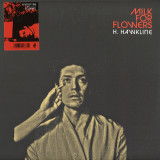
The fifth album from H. Hawkline (Huw Evans), ‘Milk For
Flowers’, is released via Heavenly Recordings.
Following the 2017 album, ‘I Romanticize’, and 2015’s ‘In
The Pink of Condition’, the album was produced and
features musical contributions from long-time collaborator
and celebrated solo artist Cate Le Bon. Artwork is
designed by H. Hawkline.
Recorded at Rockfield Studios in Monmouthshire, the
album features a host of musical collaborators - Davey
Newington (Boy Azooga) on drums, Paul Jones (Group
Listening) on piano, Tim Presley (White Fence, DRINKS,
The Fall) on guitar, Stephen Black (Sweet Baboo) and
Euan Hinshelwood (Younghusband, Cate Le Bon) on sax,
Harry Bohay (Aldous Harding) on pedal steel and John
Parish (PJ Harvey, Aldous Harding) on infrequent bongo.
The record was then engineered by Joe Jones (Aldous
Harding, Parquet Courts) and mixed, after an unlikely and
fortuitous crossing of paths, by the Grammy-nominated
Patrik Berger (Charli XCX, Robyn, Lana Del Rey), and
mastered by Heba Kadry (Deerhunter, Cass McCombs,
Cate Le Bon).
‘Milk For Flowers’ is at once visceral and enlightened, its
soundscapes verdant yet delicately rendered, and with this
latest, most intimate work, H. Hawkline bares his blood,
bones and soul beautifully. And quietly, along with the
entrails and rubble held in ‘Milk For Flowers’’ reliquary,
there hides a small, green kernel of life; hope, perhaps,
that today’s decay might nourish tomorrow’s blooms.
Available on CD and LP with rigid ‘tip-on’ sleeve with antiscratch matt lamination and digital download code.
The album’s title deftly gestures to the sheer vastness of astronomical dimensions, while simultaneously capturing the musical breadth within, where the eight planets are imagined as the eight notes of an octave. The work draws inspiration not only from earlier compositions —most notably Gustav Holst’s The Planets—but also from the rich astronomical and cultural contexts surrounding these celestial bodies. Here, the focus transcends direct citation of melodic motifs, instead embracing an intriguing conceptual approach on a meta level, unfolding in a series of vividly contrasting soundscapes. These contrasts shape a sweeping sonic journey, one that fully embraces the album format with both arms, inviting the listener to venture into realms both strange and wondrous, feeling the immensity of the interstellar space that lies between them. Contrast, after all, is the brushstroke that enriches our world.
Embarking on an auditory voyage, "Astral Guide" establishes the sonic framework that propels us into the boundless expanses of the cosmos. Its ethereal tones evoke the vastness of space, crafting a mood ripe for exploration within the realms of sci-fi. The subsequent tracks unfold like constellations, weaving a rich tapestry of sound that seamlessly marries cinematic soundscapes with pulsating, club-oriented rhythms. This album invites listeners to traverse its immersive landscapes, whether nestled in the comfort of home or dancing under the starlit sky, each note a guide through the transcendent experience of a nocturnal journey.
"Solar Flares" draws its inspiration from the awe-inspiring expanse of solar phenomena, capturing the majestic power of the sun as it reaches into the cosmos. This track resonates with the idea that energy, while vital, can also be a force of destruction when unleashed with overwhelming intensity. The composition beautifully mirrors the sun’s duality, where brilliance and devastation coexist, inviting listeners to reflect on the delicate balance between creation and annihilation. Through its rich textures and dynamic shifts, "Solar Flares" serves as both a homage to the celestial and a poignant reminder of nature's formidable power.
"Mercury – The Winged Messenger" embodies a meticulously crafted soundscape where artistry meets astronomy. The tempo of 173.6 BPM, derived from precise astronomical data, propels the composition into a vibrant realm that resonates with cosmic energy. Synthwave sound design intertwines seamlessly with the fluid rhythms of Drum’n’Bass, imbuing the piece with an uplifting dynamism that evokes the ethereal grace of Mercury itself. In this sonic exploration, listeners are invited to ascend on wings of sound, navigating the celestial tapestry of the universe with each invigorating beat.
"Venus, The Bringer of Peace" strikes a decidedly cozy note, presenting a poignant contrast to the more tempestuous themes often found in cosmic narratives. This composition evokes a nostalgic vision of an optimistic era, one in which humanity transcended borders and embraced the infinite possibilities of space exploration, where no destination felt too distant. The dense, languid atmosphere envelops the listener, creating a tangible sense of serenity that unfolds gradually, allowing for a meditative journey through sound. Each note serves as an invitation to linger in this tranquil embrace, reflecting on the harmonious potential of our collective aspirations and the beauty of connection in a vast universe.
The central theme of „Gaia, The Bringer of Life“ —originally not part of the planetary cycle— is the profound enabler of life on Earth. The arrangement delicately mirrors the slow, tentative unfolding of this potential, marked by an initially sparse orchestration that gradually builds in momentum. This progression crescendos, embodying the explosive dynamism of the Cambrian burst of life, ultimately culminating in a euphoric fanfare—a triumphant, celebratory flourish echoing life’s victorious emergence.
"Blue Moon" unfolds as a contemplative reverie on the tranquil clarity of a night sky, now seldom glimpsed in its natural purity, unclouded by the relentless haze of urban light. The listener is drawn into the vast embrace of the star-strewn firmament, a journey that sways between euphoric awe at nature’s sublime beauty and a profound melancholy for its fragile and imperiled state. Musically, this duality finds expression in the delicate interplay of modal mixtures, while an ever-shifting triplet groove, poised at the intersection of Outrun and melodic house, lends a pulse that is both nostalgic and forward-looking—echoing the beauty and transience of a world on the brink.
Rather than replicating the original composition of „Mars, The Bringer of War“, this interpretation seeks to evoke its profound, foreboding atmosphere. Cyberpunk emerges here as an ideal genre, channeling the dark, relentless march synonymous with Mars, the ancient god of war. The piece reverberates with intensity, as distorted vocalizations rise, embodying the anguish and visceral torment that shadow war’s violent crescendo. This auditory descent into conflict captures the relentless pulse of warfare, where sound itself becomes an embodiment of suffering and fury.
Majestically, "Jupiter, the Bringer of Jollity" emerges on the celestial stage, sweeping away the somber tones with its radiant vigor. Drawing inspiration from the triumphant strains of the original, and borrowing a melodic motif in the refrain, the piece expresses joy and buoyancy through a shift to a major key and the lilting sway of a danceable 12/8 meter. Spirited and exuberant, it leaps boldly from major to minor and back again, playfully shifting time signatures to capture a mood of unbridled festivity and jollity.
Here, a more conciliatory concept is chosen than in the original inspiration. „Saturn“ aligns with the number six, being the sixth planet from the Sun and bearing the iconic hexagonal pattern at its northern pole. What, then, could be more fitting than to render this piece in a 6/8 time signature? The arrangement unfolds with a multifaceted richness, mirroring the countless stones and ice fragments that form the foundations of Saturn’s majestic rings.
„Uranus“ adopts the theme of a light-footed, dancing instrumentation, giving the impression of perpetual motion, never quite settling. This musical choice harmonizes with the planet’s own orbit, as it spins with breathtaking velocity, teetering and swaying, seemingly unable to attain rest or stability.
The chill and vastness of the cosmos find expression in „Neptune, The Mystic“. At its core, an electronic soundscape envelops a classical arrangement, its unreachability intensified by an ethereal, otherworldly choir. Hovering at the outermost boundaries of the solar system, where warmth is but a distant memory, the composition lingers in a slow, contemplative tempo, evoking a realm where space for speculation stretches wide and silence reigns supreme.
Though Pluto may have lost its planetary status, and its companion Charon never achieved one, this shift in classification subtly aligns with the cosmic scale invoked here—one that mirrors the musical tradition of an eight-note sequence. Fittingly, the album closes with „Kuiper Belt“, a composition emblematic of the turbulence and vitality of countless smaller
celestial bodies that, though diminutive, find their rightful place within the vast architecture of the solar system.
They say nature is the greatest composer, shaping the universe with a symphony of chaos and order, beauty and danger. It is this duality that fuels the artistic vision of Edictum—a producer who, armed with a doctorate in chemistry, delves as deeply into the mysteries of molecules as he does into the depths of sound. In the tension between the vastness of the cosmos and the microscopic processes that dictate life’s rhythm, Edictum creates sonic landscapes that dissolve the boundaries between science and art.
His music is a story of contrasts—a sonic tale where the raw forces of nature clash with the intricate structures of human culture. Opposites intertwine to form a harmonious whole: the primal rhythms of the earth meet the celestial melodies of the cosmos, the rigid laws of physics blend with the boundless freedom of art. Edictum explores these polarities with meticulous devotion, each composition an expedition into uncharted soundscapes—a quest to give voice to the unfathomable.
With over 20 years immersed in the realms of electronic music, Edictum has honed a keen sense for rhythm and movement. His driving beats compel both body and mind into a hypnotic flow. Yet beyond the pulse of dance lies a complex framework of conceptual thought. Today, his creative focus revolves around holistic album projects—self-contained worlds with overarching narratives that embrace contrast and complexity. Each track stands alone as a fragment of the whole, but together, they weave a cohesive tapestry, much like the chapters of a novel that guide the listener on an emotional and sonic journey.
Edictum’s distinctive musical signature has earned him international recognition. With over 150 releases, many on prestigious platforms like the iconic *NewRetroWave* label, and collaborations with artists such as Jan Johnston, Azumi Inoue, Powernerd, and Turbo Knight, he has solidified his place in the global electronic music scene. His latest work, *A Cosmic Scale*, marks his seventh vinyl album and is released under his own label, *Echoes of Expanse*. The label’s name is no coincidence—it captures the essence of his art: echoes of infinity, the vibrations of the universe distilled into a singular sonic experience that carries the listener ever further into the boundless expanse of sound and space.
Over three years in the making, Needle Mythology Records is delighted to announce a super deluxe, expanded remastered reissue of The Lilac Time’s 1991 masterpiece, Astronauts. Released as a triple vinyl, triple CD or single vinyl, only 1000 copies of each format will be produced, there will be no further pressings. Both the 3LP and 3CD editions will come with an extensive 11,000 word oral history of Astronauts and liner notes by Needle Mythology co-founder and longtime Stephen Duffy fan, Pete Paphides.
All three albums including a 2024 remaster, a collection of works in progress entitled‘Softened By Rain The Making Of Astronauts’ and a live compilation ‘Any Road Up The Lilac Time Live 1990/91’ have been mastered for vinyl by Miles Showell at Abbey Roadand will be housed in a triple gatefold sleeve with a colour inner sleeve and new artwork for each disc, which has been especially created by designer Mike Storey. The main sleeve for Astronauts itself will replicate the original artwork but with the four distinctive “blobs” rendered in a red “foil” texture. In addition to these three disc sets, 1000 single vinyl remastered copies of Astronauts will also be made available, in a cherry red vinyl edition to match the outer sleeve.
With the shoegaze and baggy movements at their zenith, The Lilac Time’s fourth album was released at a moment when the left-field music zeitgeist was shaped by the nascent shoegaze, baggy and grunge movements. Whilst Astronauts conformed to none of those trends, neither was it the record Stephen had in his head when he finally finished working on it. We’ll never know how that record would have sounded, but it’s hard to imagine a better version of the album he did end up making. The songwriter who brought ‘A Taste of Honey’ and ‘Hats Off, Here Comes The Girl’ into the world envisaged the sort of choruses that would jump from the single speaker of your favourite transistor and lodge themselves into the collective memory bank.
But while he really was writing some of his most beautiful melodies, Astronauts is a family of songs that demands to be kept together in the sundazed cloud of inspiration that created it. It constitutes a partial retreat from the outwardfacing utopianism of its predecessors, choosing instead to dwell on the journey taken to get to this point. That this is an audibly different band to the pastoral expeditionaries of the group’s previous releases is almost entirely down to the departure of Nick Duffy and the arrival of Sagat Guirey. Suddenly, accordions, banjos and mandolins are out; jazz guitar is in. Sagat’s filigree work on the outro of ‘A Taste for Honey’ acts as a sublime parting shot to a lyric which acts as a wiser, wistful companion piece to Stephen’s 1985 solo hit ‘Kiss Me’, something tantamount to the camera retreating to reveal the years elapsed between the time depicted and the present day. The distance between the carefree youth of pop stardom and the first intimations of mortality can be measured between the first and second verses of the quietly devastating ‘Madresfield’; from the depiction of the deserted cricket pavilion obscured by fresh snowfall to the sudden shift in perspective from subject to protagonist: ‘No one ever told me/That killing time is harmful/For time cannot recover/What soon the ground will offer.’ For all of that, however, the resulting album didn’t correspond to the vision its creator had for it. At a loss as to what to do with it, Stephen surrendered Astronauts to Creation with no plans to promote or draw attention to it. The consciousness shift of which Stephen had hoped The Lilac Time might be a precursor hadn’t happened. Or, rather, it had – but it had happened elsewhere, in the Haçienda and Shoom and in Ibiza. Not on the hills of Herefordshire. In a nod to that sea change, Stephen handed over one song, ‘Dreaming’ to Hypnotone, who
In 2016, Universal Music and The Walt Disney Company France presented ‘Jazz Loves Disney’, followed in 2017 by ‘Jazz Loves Disney 2 – A Kind of Magic’, as part of the We Love Disney series.
Produced by Jay Newland, arranged and directed by Rob Mousey, the project brought together talented and renowned artists to pay tribute to the most beautiful and symbolic tunes of Walt Disney’s magic world and render exclusive jazz versions.
The remarkable cast includes Gregory Porter, Melody Gardot, Stacey Kent, George Benson, Madeleine Peyroux, Laura Mvula, Jacob Collier, Bebel Gilberto, Jamie Callum and Eric Cantona.
Since launching her own club night, “Motivation,” back in 2018, B.AI has played a key role in bringing the underground’s club sounds to her home country, China. While introducing some of the scene's most exciting artists to her local audiences, she emerged as one to look out for as well: first as a DJ and quickly thereafter as a producer. Her original takes – a sensitive, highly personal approach to melody and a knack for playing with expectations – crystallized in a slew of A+ releases and a couple of international tours. This trajectory, shaped by taking matters into her own hands and self-empowerment, now sees a logical next step, with the inception of a label that will also operate under the “Motivation” banner and features her own “Hope” EP as its first release.
Sparkling mallets, with synth-pop quality catchiness, open the title track. Rather than further evolving, their two-bar arrangement gets looped over and again, serving as the foundation for a slick FM bass rhythm and a variety of hooks. Although these incline to the bright, the overall vibe is melancholic. In vintage B.AI style, the aptly titled “Hope” is more ambiguous than its patches suggest. Similarly, the vocal this type of palette would call for ultimately comes in the form of aloof, covert musings. A bit buried in the mix, they are most efficient – just like the tension that keeps brooding underneath the surface.
“Murderbot Diaries 1991” turbocharges four-to-the-floor synthetic drums with an arpeggiated rolling bass. The blue note melody on top feels sequenced via a pocket calculator, and the dissonant, electroclash-reminiscent stabs that follow might sound even more angular. The tune is frantic, sinister – and perhaps above all tongue in cheek. It reaches fever pitch with the arrival of a tubular bell theme between the two breaks.
“Once”’s slomo cutoff modulation on the 16th note mid-bass instantly creates a sultry atmosphere that meshes greatly with the pastel cool of the gently delayed DX7 leads. The energy drifts between effortless control and uncertain outcome. These contrasts are amplified as the drums alternate amidst moderation and beat-repeat rendered havoc.
On “Only We Know,” a progressive sine lead lays out the central motif. Yet as briskly as it appears, it makes way for detuned, gliding square waves taking on the same theme. This outlines the track’s structure: as slightly morphed repetitions keep getting introduced almost haphazardly, a dreamlike, mesmerizing ambience unfolds. Techy drum rhythms and a 101-type bass make sure everything stays fuelled. Within the ingenious tapestry of melodies and new twists, it never loses touch with the dance floor. It illustrates B.AI’s club savvy neatly and is therefore a perfect closer for this EP.
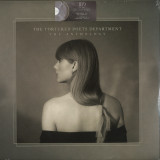
The Tortured Poets Department: The Anthology Vinyl
35 Tracks including 4 acoustic bonus songs
Never-Before-Seen 12” x 12” Poster
4 Marbled Translucent vinyl discs
Depiction of this product is a digital rendering and for illustrative purposes only. Actual product detailing may vary. Please note due to the custom manufacture process, each vinyl unit may be slightly different in coloration.
The machinic rapture of Van Boom’s debut album, ‘Prosthetics’, firmly planted the Kuwaiti artist in the underground of critical producers that stoke grisly and inhuman themes. Set against the backdrop of the Gulf Region, these themes remain exceptionally nefarious. His latest release, the ‘NUBORNE’ EP, mounts wider explorations of the eviscerating sonic grounds that he began to depict with his first long-playing document.
Gestured with the EP’s title, ‘NUBORNE’ stakes its significance on regeneration and permutation, clearly relishing in the aftermath of ‘Prosthetics’. Across four tracks, Van Boom crafts precisely to forge a set of works that are attached to their live performance state. It’s here that the EP is at home, for this is where unknowns come into play, this is where distortion leads to novel structures. Featuring collaborations with whiterose, Safety Trance, and Evita Manji, ‘NUBORNE’ is rendered evermore atypical. Accompanying the shift in design, there’s an unnerving ambience that’s given free reign across the EP, too. Snapshots of solitude prick the focal points amongst rhythmic tics, as if these shards deform the tracks in real time. With sheer relentless momentum, Van Boom seizes a new path wielding his familiar forces.
Matching breezy, Bossa nova-tinged sophistication with softly spiralling psychedelia, Testbild! arrive in the Quindi lounge as though they've always been there. On their 12th album, Bed Stilt, the Swedish collective cast their attention back to the earlier days of their 25-year trip through sweetly mysterious pop-not-pop rendered in warm tones and shot through with surrealism. It's tricky to get a precise fix on the story and structure of Testbild! The project was spearheaded by Petter Herbertsson in his hometown of Malmö in the late 90s, although the story on their website credits the inspiration and source material to a chance meeting and unpublished manuscript from a retiring scientist. The collective's evolution since then is a tangled web of facts and fiction spun by a revolving cast of collaborators including Siri af Burén, Katja Ekman, Rikard Heberling, Douglas Holmquist, Mattias Nihlén and Petter Samuelsson. Along the way, their music has touched on chamber pop, post-punk and modern jazz with the elaborate harmonies and catchy songwriting charm of the Canterbury scene. The tracks which make up Bed Stilt were in fact track recorded in Malmö back in the mid- 00s, lying in wait for the right opportunity to be brought to light with some delicate overdubs and finishing flourishes in the here and now. The core musicians working on the record were Herbertsson and Douglas Holmquist on a similarly expansive list of vocals, guitars, bass, synths and keys, Siri af Burén on lead vocals and Mattias Nihlén on synths and additional mixing. Meanwhile Tomas Bodén - better known as Civilistjavel - lent some additional synth work as well as mastering the record. Musically, Testbild! stay true to their idiosyncratic approach on Bed Stilt with six immaculately rendered sojourns through lilting harmonies and brushed rhythms, feeling nostalgic but beguiling in equal measure. Theirs is a luxurious sound, not least on the opening strains of 'The First New Years Eve,' which purrs to life draped in silky Rhodes and chiming vibes. Behind this comfortable veneer the enigmatic lyrical themes unfurl through Herbertsson, Holmquist and af Burén's vocal harmonies like fractalized puzzles waiting to be solved. The finger-picking delicacy and languid harmonica of 'Streams' strike a pastoral mood neatly countered by the elegant slide into dislocated ambience for the track's final stretch. By contrast, 'And Her Eyes Are Red' surges with a big beat urgency which plays beautifully with the mellow jazziness of the chord sequences, boldly toying with song structure to dart down curious tangents without losing the immediate impulse of a great pop record. Somewhere in this tension between clarity and chaos we can understand the addictive charm of Testbild! - a band steeped in the considerable craft of making accomplished and unconventional music so very easy to sink into. If that doesn't make for a perfect addition to the Quindi catalogue, we don't know what does.
A veteran of the great Malian orchestra, the Super Biton de Ségou, Mama Sissoko is an accomplished musician. His music traverses Mandingo, Bambara, Sarakolé, Songhai, Bobo, Peul, Malinke and Bozo traditions, all while flirting with jazz. On stage, Mama Sissoko is a purist who engages with the audience bringing his energy, urgent vocals and truly inspired guitar solos throughout the concert. ‘Live' brings together recordings from a concert given in Paris at La Villette in 1998 and takes us back to a high point in Mama Sissoko's career.
In ‘Live’, we find tracks from Mama Sissoko's second solo album 'Soleil de Minuit', which was released in 1999 by Buda Music. As on the album, the different guitars overlap without compromising the unity of the music, rendering an earthy atmosphere despite being very complex. The recording of this concert was superb. We can hear every note, every nuance, every instrument and voice in the many-layered compositions.
As on the album ‘Soleil de Minuit’, this live recording opens the session with ‘Diarabi’, followed by ‘Safiatou’. Both are up-tempo love songs in which Mama Sissoko's powerful voice sings with all of the passion that such love songs deserve over a clean rhythm driven by the percussion of several guitars. The heavy bassline of ‘Safiatou’ adds to the urgency of the song. After these two beautiful renditions, the energy continues with the guitar-driven ’Fisiriwale’ and then a surprisingly original version of Super Biton’s famous song, ‘Iri’. We are then treated to a lively version of his ‘Soleil de Minuit’, called out by the artist as a ‘salsa Africana’ with a shout out given to Cuban salsa mid-way through when he calls the song ‘El Sol de Medianoche’ in perfect Spanish.
Throughout this concert, Mama Sissoko’s deep and melodic voice seems to emanate effortlessly from his body and soul. Multiple guitars back up his signature solos adding depth to the music that harkens back to the traditional music of Mali. Perfect examples of this are given in the songs ‘Douga’, ‘Manssane’ and ‘Hommage a K’. The last song, before a rousing second version of ‘Soleil de Minuit’, is ‘Boma Ma’, a truly modern rendition of a traditional Malian hunters’ song with multiple guitars, shakers, lively djembe and an outstanding vocal duet with Toussaint Sainé, Mama Sissoko’s long time musical collaborator.
Accompanied by incredible musicians, including Toussaint Sainé, his partner in the Super Biton orchestra, "Live" plays in the timeless way of Malian music. What's more, it gives us the gift of its most direct and powerful dimension, that of live music, as if 20 years hadn't passed.
Time Splitters is a various artist compilation created and produced by Richmond VA based Deskulling in collaboration with veteran Spanish Town JA artist I Jahbar between 2021 and 2023. This 21 track 50 plus minute Dancehall epic also includes other veteran vocalists such as G Sudden, RDL Shellah, Buddydon, and Darkchild plus newer talents such as Fearless, Longdon, Latty, King Kush and 1 Solar Boss. Alexander West who passed away in 2023 contributes an ethereal and heartfelt album closing performance on “Granny Grenade”. Time Splitters is a sprawling creation that captures a multiplicity of emotions, life complexities, spiritual evocations, and musical dimensions. Deskulling's eclectic productions are rendered to the perfect minimalism and provide a rich and varied platform for vocal performances that move between dark and light, sad and joyful, heavy and soft. A lot of work went into this release over a few years from many people during times of inner and outer complexities, turmoils, and tribulations. This release musically, lyrically, emotionally, represents life's spectrum's fully. Thanks for listening.
Malted Milk's 1975 album tackles subjects that concern the band's singer in particular, but also paints a picture of a society with which many people identify. Difficult present times, a broken family and dependent children. The character oscillates between moments of great lucidity and optimism, and moments of anger. Feelings that are reflected in a general vision of the world we live in today, devastated by the abuses of the powerful ones and rendered insensitive to the "false" freedoms they offer us. Could it be that the personal condition of the album's character is also the result of a twisted society?
Malted Milk takes a stylistic journey from strong soul and funk roots to resolutely more modern musical influences, all seasoned with sweet hooks ranging from disco to folk-world. Malted Milk is newly committed to speaking openly about uncomfortable subjects and honestly reflecting its passion for American and pop music. The result is an authentic album, in which the singer becomes kind of a spokesman for the band and the listener.
Überkeine sets the tone of his own record label with four esoteric tracks, designed for the club. An obvious intention to establish a radical style with conceptualized sonorities, is revealed throughout the Ep. The sound materials are elaborate, and go straight to the point. Obsessing over the flow of creativity offered by his modular synthesizer, he delivers a very dense techno and already affirms a well-marked identity. Powerful and textured kicks, intricate synthetic sounds contained in an arrangement reduced to the essential. The tracks come to life as the forthright reflection of the thoughts of the producer. Guillotine Whistle instantly plunges into the unbridled world of the Ep. An ominous atmosphere hovers over our heads as it reveals organic and disconcerting tones. A gentle brutality emanates from this whistling guillotine that awaits to cut you up in two. Leading the way towards Drifting Data, a track inspired directly from Jungle Patterns. Überkeine is humbly trying to render DnB to a techno format. The dense, saturated Bassline sustains the idea of breaking the dancefloor in pieces. A hard hitting, broken beat environment accompanied by heavily filtered synthetic chaos. Third track’s the charm, the B side starts with Mirror Moist. A drop-down, wet and straightforward techno track with a carnal Bassline. As sensual as it gets, this track conveys a kinky loop urging intimacy and blasting heat throughout the club. Last but not least, Shaney’s remix of Mirror Moist. Picking up core elements of the original vibe and translating it into the off-beat techno nightmare it deserved to be. Full-on obscure dancefloor piece of equipment.
"Systolic" was conceived in the aftermath of K.A.L.I.L.'s experience with a stroke. During his hospitalization, he meticulously captured the rhythmic cadence of his own heartbeat during a medical examination, intending to incorporate this unique audio into a potential musical composition. Endeavoring to articulate the myriad emotions he grappled with during the challenging days when half of his body was nearly paralyzed, the song came to fruition.
The composition intricately weaves together the tumultuous thoughts that permeated K.A.L.I.L.'s mind with moments of solace. The distinctive presence of his recorded heartbeats permeates the entire track, rendering it a profoundly special and vibrant narrative of this pivotal moment in his life. Augmented by melodies that poignantly convey elements of fear, love, and self-awareness throughout the ordeal, the rolling bass line sustains an energetic undercurrent, laying the groundwork for a formidable and intense drop that serves as a visceral impact.
A defining time for many musicians pursuing the arts of exploring sonic palettes is the moment of learning a song, an instrument and recording it. The procedure of selection and layering of sounds. The idea of dissolving this mysticism and truly being in control of something. The realisation that there’s a lot more enigma coinciding with simplicity in music that you may not have realised before and discovering new journeys from there on in. The knowledge of its technicality brought with a background in contemporary songwriting becomes a quest for sounds surrounded by layers of storytelling. To establish a sonic aesthetic that represents yourself and what you want to present to the listener.
The recording of Passerella took place at the end of the summer of 2022 over one week of isolation and songwriting in a house on the shoreside of the lake Lugano. Layered with references from a contemporary approach to 80s synth pop, post-punk and dark wave, with subconscious derivations of Canzone Italiana as a foundation for a musical piece derived from Infesta’s childhood listening habits. Bare genuineness, emotional and aggressive at the right places, the way in which music captures the purity of intense feelings. Infesta’s work is presented in a raw quality which intimates the listener with an aspect of humanity grippingly relatable.
Cemented songs with a focussed vision, Infesta’s dark yet familiar world is one confused but shared among us all. The conceptuality of a traditional album dissolving into a musical diary. The music within this record is a rendering of the importance of having these songs compiled side-by-side as a way of storytelling. To keep the same picture of the exposure of a person through their music. Conflicting inner thoughts frolicking side by side. A gentle hand caresse gleaned by an author to its listener.
Building on their shared exploration of forward-leaning UK club sounds, EM + STAV herald the arrival of their new label JoyLift with the Endless EP. Having entrenched themselves within the free-spirited landscape of Bristol’s music community, the pair home in on a focused sound which draws on the city’s storied bass mutations as a springboard for their own take on modernist dance music.
There’s a tough, brooding quality to Endless EP which speaks to the meditative pressure of soundsystem immersion, but equally EM + STAV build out evocative, shifting narratives within that club-ready framework. From dubwise processing to deft sound design, a broad church of processes are wielded to shape out these pieces, and physicality comes in many forms whether in weightless sub lines or pointed, angular drum programming. Given their long-standing connection to developments within the underground music scene, there’s a keen instinct for the dynamic shifts which can set a dance alight, while the ill- defined shape of the wider genre-not-genre allows plenty of space for movement and experimentation.
Alongside the three original productions from EM + STAV, kindred spirit Forest Drive West steps up for a remix of ‘Odd' which aligns with the aesthetic intentions of JoyLift while demonstrating the idiosyncratic qualities associated with the scene’s most vital artists. The cohesive feel of Endless EP extends to Luke Griffin’s artwork, in which natural source material undergoes heavy processing to wind up in a striking new form, shot through with colour but ultimately shrouded in a moodiness that harks back through the lineage of hardcore-rooted UK dance music.
By its very nature the future is unwritten for JoyLift, but EM + STAV’s new project commits itself to an ever-evolving palette of sound, rendered as music with a strong sense of identity - tracks to shake the dance without resorting to obvious tropes, responding to and feeding into the inspiring tides of ideas emanating from the environment around them.
Lobster Theremin ambient sub-label Lobster Sleep Sequence announce their double LP + 7” album from Dutch producer nthng - featuring a limited run of copies on deep green vinyl. Themed around events in the artist's life, Unfinished is a deeply personal journey, yet there’s something very relatable to the world he has conjured. Lockdown has forced us to look inward, explore realities within ourselves and the fragility of our forgotten world. The album is a series of peaks and troughs - hopeful words, ominous tones and other-worldly soundscapes, giving way to a journey in no way linear - but a true reflection of our times. The title track sets the scene perfectly, while Son features deep bass notes, dreamy keys and spoken word - creating a visceral and unsettling scene. Subnautica resides in the fringes of ambient and techno - as tribalistic drums are suspended in our new rendered reality.
The marching bass and howling synths of Wrath of the Demon lull conspicuously in a vacuum, while the hauntingly beautiful vocals featured on Disappeared But Not Forgotten evoke a poignant, powerful reaction across the record’s B-side - “Everything stopped, you just disappeared...”
At its most tranquil Our Time offers a sense of rest - a space to appreciate, as we leave the window open, peer outside and feel the gentle breeze brush across our face. Saafe continues this theme, and feels like a warm embrace - “She saved my life in a matter of speaking, when she gave me back the power to believe.”
Ending Theme is beautifully organic as you hear the sound of the piano pedal touch the floor, tones are introspective and vulnerable - while the looming presence of uncertainty subtly takes form in thinly layered pads.
The album also sees the release of a digi only bonus track Only a Flash of Light and invites you outside while the stars are at their brightest.
You Can Can is an echoed affirmation, an album which traces song forms around silence, field recordings, and degraded analog memories. This is folk music transmogrified and mutated, as if recorded and reconstructed in Pierre Schaffer’s GRM studio.
Not your typical Mariposa folk duo, the group is comprised of Toronto avant-music scene stalwarts, vocalist Felicity Williams (Bernice, Bahamas) and bricolage artist and synthesist Andrew Zukerman (Fleshtone Aura, Badge Epoch). The album feels like a somnambulant conversation, fragmented and half-remembered with Williams’ vocals traveling through a landscape of field recordings and Zukerman’s saturated concrète topographies. It is an electro-acoustic assemblage, both analog and digital, comprised of air, electricity, minerals, wood, and water. Although the album nods towards traditional forms of folk and musique concrète (if at this point it can be called a traditional form), it is outwardly and inwardly contemporary; non-linear, citational, opaque, and sui generis. In a way it feels like a sonic index of the narrative experiments found on the infamous Language school-related publisher The Figures, in the work of Lyn Hejinian, Clark Coolidge, and Lydia Davis. In the musical continuum, the album picks up where Linda Perhacs left off in the early 70’s—explored by Gastr Del Sol in the ‘90s—a convergence of rural acoustic idioms and urban avant-electronics. This is country music for the discerning cosmopolitan citizen of the 21st Century.
RIYL: Luc Ferrari, Brannten Schnüre, William Basinski, Oval, Eric Chenaux, Emmanuelle Parrenin About Everything In Time and Failure Figures, Felicity Williams says:
Everything In Time is indebted to the language of Brazilian author Clarice Lispector (as translated by Alison Entrekin). Drawing on insights from psychoanalysis, we trace the roots of melancholy to render them available to consciousness; words from the ghostly realm of the transpersonal filter through dreams and shine a beam of light onto a lone trillium in a forest at night. Other influences include the experience of not knowing, of being subject to a gestation outside of one’s control. This is an ode to the power of naming to obliterate, to set free.
Failure Figures is a meditation on the radical contingency of reality and the vicissitudes of the will. With Slavoj Zizek as my guide (think: “Hegel for dummies” - I’m the dummy in this scenario), I wander through the valley of the shadow of death, and take heart. The last verse refers to an experience I had recording at a studio in Brussels. I was singing in French, with which I have some fluency, and the producer was complaining to the artist whose song it was that my delivery was not convincing. Thinking I was out of ear shot, he said in French, “c’est comme elle n'est pas là”; I was pronouncing the words correctly, but I failed to express anything. So what or whom is responsible for conveying meaning, if not the form of the word itself? And if the connection between meaning and form is broken, how do we fix it?
Gratitude to Thom Gill (guitar) and Daniel Fortin (bass) who joined us on the recording of Failure Figures. Thanks as well to my old roommate Christopher Willes, who unwittingly left behind his hand bells deep in the hall closet. We unearthed them by accident, and the bells became an important sound element. Thanks to other past roomies Robin Dann and Claire Harvie, whose childhood piano and guitar respectively still reside with us, and were used in the recording. Field recordings were made in Toronto, Canada and Celestún, Mexico in 2020.
British musician, multi-instrumentalist, producer and DJ cktrl returns with the release of his new EP ‘Yield’. Born from a desire to change the narrative around contemporary Black British music, the boundary-pushing musician aims with this project to prioritise the art of bonafide musicianship. A stark departure from cktrl’s previous work, ‘Yield’ is a celestial and palpably more inward body of work that harkens back to the pre-electric age of modal jazz while simultaneously pulling in elements from the disciplines of classical and baroque music. Speaking on the project’s sonic identity, cktrl says: “I want to be able to show that you can make things from scratch again that have that feeling and beauty without having to sample an old record. Even though that’s an art-form within itself, I want to show raw orchestration and instrumentation can be the sole source” The origins of the title came from a period where cktrl was looking to find solace in himself after an introspective period of grief and heartbreak. As an intentionally instrumental project with minimal vocals, cktrl wants prospective listeners to see these new songs as guided meditations where they can wholly insert themselves in it. Eliciting and reaping whatever feelings come to the fore. Speaking on what ‘Yield’ means to him as a concept, cktrl explains: “Some people who I've asked to define the word ‘yield’ have looked at it from a harvest point of view, whereas others have seen it as something to submit to, to render, like you're giving up yourself. I see it as a barometer for how you feel - no matter if you're at your lowest or your highest vibration, you still need to show up for yourself. You still have to be present. It’s about getting the best from yourself no matter where you are in life” The new project is the follow up to last year’s ‘Zero’ which featured collaborations with esteemed contemporaries like the GRAMMY-nominated Mereba and anaiis. Upon the project’s release, it was met with a plethora of critical acclaim from highly regarded publications and platform such as British Vogue, Dazed, CRACK Magazine, Resident Advisor, NOTION, Harper's Bazaar and ES Magazine for its sprawling and experimental scope, spanning avant-garde jazz, classical music, alternative R&B and electronica. cktrl has a tune for every occasion: as content making beats by himself at home in Lewisham as he is amongst this generation’s fashion and cultural vanguards. Music has been a part of his life for as long as he can remember: from clarinet lessons throughout his school life to fond memories from his NTS days. Moulded by a unique blend of his West Indian heritage, years of classical training in both the clarinet and saxophone, cktrl strives to do what hasn’t been done before. His approach to creation is decidedly wide-ranging and broad. In fact, where sonic descriptions might fail to encompass the breadth of cktrl’s scope, three words surface when he unpacks his musical aims: freedom, range and feeling. Elsewhere, throughout his career, cktrl has been recognised and heralded by fashion and film VIPs as he firmly embeds himself within the black cultural renaissance emerging here in Britain. Acquiring a global network of creatives that include the late Virgil Abloh, Bianca Saunders, Tremaine Emory, Saul Nash, Maximilian Davis, Ahluwalia, Stephen Isaac Wilson, Sean Frank, Campbell Addy, Ib Kamara and Jenn Nkiru who secured him a cameo in Beyoncé’s ground-breaking film ‘Black Is King’.
Mathis Ruffing’s Transatlantic debut cuts to the chase. This is getaway music, music designed to vaporise your long-dormant adrenal glands. ‘Skybox’ is made up of tracks that surge like quicksilver through veins, pulsing, flexing, relentlessly disciplined in execution. These tunes are crystalline and shimmering, eight sleek and streamlined club constructs rendered with what feels like the precision-engineering of some advanced alien DAW.
Opener ‘Ultranova’ hits like a cyborgian headbutt and refuses to let up. It’s followed by the one-two punch of the title track and ‘Hitherto’, which install cooling, gaseous pads and synths within breakneck drum&bassian exoskeletons. ‘Crater Edge’ and closer ‘Raytraced’ offer cryochamberesque respite from the cold-blooded fury enclosed within this release — well-earned breathing room in an album that takes hold with crisp and calculated force. Pure focus.
'Water Temple' is the debut album of the Berlin-based group Property. Comprised of Marijn Degenaar (NL) and Vivant de Non (AUS), the group use the theme of hydromancy to straddle the poetics of reverb from a post-punk perspective. The album wanders through dense end-of-world sensations without keeping away from piercing melodic instrumentation. As hazy as 'Water Temple' can get, Property just as easily trade the murky side of their post-punk sound for analogue synthesisers that feel almost celestial. Used to striking effect on 'Water Temple', the chorus-heavy bassline is interwoven with a strident melody that punctures the rhythm and accents the Neue Deutsche Welle energy that the pair play on at certain moments. Similarly, the vocals on 'Water Tempel' flirt with our cracked times from another angle, rendering a remarkable first transmission from this new duo. Foggy synthesisers fill the cavities of every track, though the driving leads ensure the ambience never overtakes the song-structures across the album. This tendency is best captured on the downer-anthem Blood Cube with its sharp drum machine rhythm, just as Clear Boys reprises this rowdy pop edge for a forceful album closer. The burning melancholy of 'Water Temple' is as shadowy as it is enlivening Track list: 1. Empty Leather Spell 2. Diet Of Worms 3. Water Tempel 4. Sea Wall 5. Blood Cube 6. Verbreek d Eed Niet 7. Het Oerslijm 8. Clear Boys
Limited edition to 200 copies. Comes with printed inner sleeve + 20 page Photo-booklet. La Linea Gialla is a sonic exploration of space and time, consisting of processed field recordings captured by travelling through different Railway Stations across Europe. The Lp vinyl includes a collection of 16 tracks which aim to find a meeting point between the intricate simplicity of puristic sounds heard & recorded in the context of the "Non Places", and how they can be transformed electronically through active manipulation thereafter, rendering them new realities of their own.
Following the "Tribute to Harry Bertoia 100th anniversary" released in collaboration with Important Records and Sonambient the sound artist EMG uses the confines of La Linea Gialla to excavate new forms of production by filtering, re-sampling and re-arrangements through the use of different cassette record players. A unique and unconventional listening experience consisting of unedited live compositions blending the vast possibilities within Field Recordings, Sound Art, Industrial-Ambient and Experimentalism, supported by an accompanying - and visually representative photographic - artwork.
DBLP – Black Vinyl Double vinyl version of Rhys Fulber’s latest album. Pressed on black vinyl with an extraordinarily designed sleeve. Photography by R. Fulber, graphics by Janina Schütz. Ships out from Berlin, Germany, using DHL. The package is tracked and insured. Includes unlimited streaming of Brutal Nature via the free Bandcamp app, plus high-quality download in MP3, FLAC and more.
Israeli DJ and collector Elado makes his debut on RNT with a pack of impossibly rare edit heat! A relative newcomer to the scene, Elado made some waves recently with a stunning entry on Eddie C’s Red Motorbike, and he’s clearly no novice when it comes to digging as this exceptional pack of tunes shows.
With rarefied material ranging from Africa, India and the Mideast, Elado works these 4 tunes with a careful editor’s touch, nipping and tucking only where necessary to let the incredible source selections shine through, but rendered eminently DJ-friendly. Already supported by Antal and many others, this 12” is the first essential add of 2021!
On his fourth album proper, Now Here No Where, Danish producer Kölsch (aka Rune Reilly Kölsch) is charting new terrain. Fans of his ‘years trilogy’ – 1977, 1983 and 1989, released on Kompakt over the past decade – were privy to a kind of sonic diary, an autobiography, tracking the artist’s early years through three albums of superior, meticulously rendered techno. Calling in collaborators where needed – most notably, the strings of Gregor Schwellenbach – there was still something deeply personal going down, not quite hermetic, but internally focused; the albums proved not only Kölsch’s mastery of his chosen form, but also his capacity to make techno personal, individual, and to trace histories of the self through music. But on Now Here No Where, Kölsch finds his feet firmly planted in the present. Reflecting on his new album, he notes, “It is fascinating to write about memories and feelings that have had years to manifest and develop, but how would I approach current emotions?” It’s a good question: our past coheres through the narratives we build around memories, but the moment we’re in, the newness of the now-ness, is harder to navigate; this story is as yet untold. For Kölsch, this makes Nowhere Now Here “an album about life in the year 2020. A time defined by confusion, misinformation and environmental challenges. It is an emotional interpretation of personal and mental challenges, observations and personal growth.” Kölsch does this with music that effortlessly balances emotional heft with the dancefloor’s brimming desires. It’s a space that Kölsch has navigated for a while now – one of techno’s breakthrough acts, an in-demand DJ across the globe and a prolific and restlessly creative producer, he’s also Kompakt’s biggest-selling act – but Now Here No Where ratchets up the lushness, making for a delirious drift across twelve tracks that are at once perfectly poised and deeply trippy. “Great Escape” is an elegant swoon, an opener that pivots on a sigh and a prayer; then “Shoulder Of Giants” bustles into view, subliminal clatter and an aching violin line giving way to a riff that glows with fluorescence and iridescence. “Remind You” combines an odd ECM jazziness with notes from a twenty-first century torch song; “Sleeper Must Awaken” mines huge buzzing synths and lets them float, in and out of sync, with reduced, ticking beats; “Traumfabrik” (dream factory – there’s a giveaway) is oddly lush, the tones malleable and plastic, morphing across a glitching undertow. There are sad, emotional washes of strings throughout the penultimate “While Waiting For Something To Care About”, while “Romtech User Manual”’s patterns twist and shape in the light. Throughout, Kölsch never keeps his eye off the dancefloor, and you can tell this is his still his home. “The amount of energy and joy I experience every time I perform, has a profound effect on me. It has inspired me so much of late and has become an integral part of my musicality.” “The way we join in expressing our hope for the future every weekend has given me so much,” Kölsch concludes. The club as a temporary autonomous zone, as a space both of freedom and of politics; somehow, that’s all here, Now Here No Where. “Most of all, it is an album about hope.”
Auf seinem vierten Album “Now Here No Where” betritt der dänische Produzent Kölsch (alias Rune Reilly Kölsch) neues Terrain. Seine Trilogie mit den Jahreszahlen 1977, 1983 und 1989, die in den letzten zehn Jahren bei Kompakt erschienen war, hatte seine Fans durch eine Art akustisches Tagebuch, eine Autobiografie geführt, die die frühen Jahre des Künstlers über die Länge von drei großartig produzierten Techno-Alben nachgezeichnet hatte. Wo es nötig war, wurden Kollaborateure hinzugezogen - allen voran für die Streicher, arrangiert von Gregor Schwellenbach -, dennoch zeichnete die Musik immer auch etwas zutiefst Persönliches aus, etwas nicht Hermetisches, auf eine bestimmte Art immer auch nach Innen fokussiert. Die Alben bewiesen nicht nur, wie sehr Kölsch die von ihm gewählte äußere Form beherrscht, sondern auch seine Fähigkeit, Techno zu etwas Persönlichem und Individuellem zu machen und der eigene Geschichte durch Musik näher zu kommen.
Auf “Now Here No Where” steht Kölsch nun mit beiden Beinen fest auf dem Boden der Gegenwart. Mit Blick auf sein neues Album stellt er fest: "Es ist faszinierend, über Erinnerungen und Gefühle zu schreiben, die Zeit hatten, sich zu manifestieren und zu entwickeln, aber wie nähere ich mich meinen aktuellen Emotionen?”. Eine gute Frage: Unsere Vergangenheit wird im Innersten zusammengehalten durch Geschichten, die aus Erinnerungen entstehen, aber der Moment, in dem wir uns befinden, die Neuheit des Neuen, ist schwieriger zu beschreiben; die Geschichte ist noch nicht erzählt. Für Kölsch ist “No Here Now Where” daher "ein Album über das Leben im Jahr 2020. Eine Zeit, die von Verwirrung, Desinformation und ökologischen Herausforderungen geprägt ist. Es geht dabei um die emotionale Interpretation von persönlichen und mentalen Herausforderungen, von Beobachtungen und der eigenen, individuellen Weiterentwicklung".
Kölsch tut dies mit Musik, die mühelos kleine Gefühlsausbrüche mit den großen Sehnsüchten der Tanzfläche in Einklang bringt. Es ist dieser Zwischenraum, in dem sich Kölsch schon seit einiger Zeit bewegt, als weltweit gefragter und gefeierter Live Act, DJ und so unermüdlicher wie kreativer Produzent (nicht umsonst ist Kölsch der “biggest-selling-artist” bei Kompakt), doch “Now Here No Where” treibt all das noch weiter auf die Spitze: ein enormer Sog entsteht, der uns über zwölf Tracks hinweg gefangen hält wie ein perfekt ausbalancierter Trip. Der Opener "Great Escape" ist pure Eleganz, ein Track, der irgendwo zwischen Seufzer und Gebet hin und her schwankt; dann drängt "Shoulder Of Giants" ins Blickfeld, ein unterschwelliges Geklapper, eine wehende Geige, schließlich ein schillernder Riff, der in der Dunkelheit zu leuchten und zu glühen scheint.
"Remind You" kombiniert seltsamen ECM-Jazz mit einem sentimentalen Liebeslied des 21. Jahrhunderts; "Sleeper Must Awaken" schürft im Bergwerk riesiger Synthesizer, mal im Takt, mal aus dem Takt ticken die minimalen Beats; "Traumfabrik" ist ungewöhnlich “lush”, die einzelnen Töne, geschmeidig und modelliert, zerfließen in einem glitzernden Abgrund. Das vorletzte Stück "While Waiting For Something To Care About" wird von traurigen, emotionalen Strings untermalt, während sich die Strukturen von "Romtech User Manual" im Licht drehen und immer wieder neu formieren. Die ganze Zeit über behält Kölsch die Tanzfläche im Auge, und man merkt ihm an, dass sie immer noch sein Zuhause ist: "Die Menge an Energie und Freude, die ich bei jedem Auftritt erlebe, hat eine tiefe Wirkung auf mich. Sie hat mich gerade in letzter Zeit stark inspiriert und ist zu einem integralen Bestandteil meiner Musik geworden.”
"Die Art und Weise, wie wir an jedem Wochenende gemeinsam unsere Hoffnung auf eine bessere Zukunft zum Ausdruck bringen, hat mir viel gegeben", so Kölsch abschließend. Die Vision des Clubs als eine temporäre autonome Zone, als ein Raum von großer Freiheit aber auch von politischen Ideen, das ist irgendwie alles hier drin, Now Here No Where. "Es ist vor allem ein Album über Hoffnung."
And now for something completely different ! - The second vocal lead EP on FireScope - This time introducing KineStatics ... A collaboration between Steven Rutter and Karla Hajman/Stereochemistry.
Downtempo techno and quirky vocals are what this EP is about, covering challenging topics such as labyrinths and obstacles we place in our own heads ; war ; destruction ; and the end of the the world.
Labyrinth a lush techno vibe with a marching drum; a song about the twists and turns of our own minds; leading into Grmi Seva where a balkan vibe built around a conflict themed remake of a Yugoslavian children's song continues our journey. The last track on Side A 'Till The End Of The World is a very downtempo affair where a baseline provides the underpinning for Karla to tell her tale of a world on its way to its own demise.
The B Side provides the beats and baselines of Grmi Seva followed by a dubby alternate rendering of Labyrinth
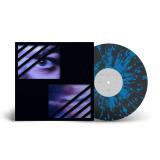
Finished in Clear with Blue splatter vinyl with exclusive artwork by Mass Roman.
Recognised for their solid contribution to the electronic & industrial scenes, the musicians in this collaboration (Daniel Myer & 14anger from Rendered, and Ushersan & All von Phllox from Black Egg) have given birth to this magnificent 5 tracks EP, constructed as a bridge between France and Germany. A trip into darkness and winter times, amongst Techno, Coldwave and EBM with a soul. From the hit-like 'No Compromise' to the electronica closing track 'Thelemic Breath', this is a pure techno industrial killer EP !
First pressing LIMITED white vinyl+limited screen print covers. 300 only. 300+ will be black vinyl in standard jacket
Luis Flores' upcoming New Flesh EP is the Mexican producer's second release for the American powerhouse techno imprint: Droid Recordings.The title track, built around the "new flesh" vocal sample from cult horror movie: Videodrome, is a dark, trance inducing affair, constructed around the soundscapes the modulated voice renders and the subsonic groove that identifies Flores' productions.
While composing the music for The Juniper Tree, Hirano drew on her own memories of touring Iceland, which included a stop at a waterfall featured in the film and rendered in sound on “Mother’s Path.” Folktales, like the origins of The Juniper Tree, are often attempts to contend with humans’ place in the natural world, with all its mysteries and intricacies, and both the film and Hirano’s soundtrack draw their sense of breathless wonder in part from the sensation of being engulfed by one’s environment. Margit, played by Björk, possesses a sublime sensitivity to her environment that allows her to receive messages from her mother, who was murdered for their shared inheritance of witchcraft. Hirano captures the relationship between the transcendental awe that is felt as supernatural and the private feelings of being immersed in that experience, creating a musical dialogue between the self and what lies beyond.
In the final sentences of her liner notes describing the film’s philosophical and feminist throughlines, Anna Bogutskaya says, “what we call Margit’s witchcraft is maybe just her willingness to listen.” This is the magic of music, and Hirano composes with an alchemist’s pen. Just as Keene seems to break down barriers between binary poles, Hirano uses both electronic and acoustic means to communicate the film’s emotive cues, uniting approaches she has explored under her own name and the alias MimiCof. There is an understanding that stillness can be understood as peaceful or foreboding, that dissonance and consonance are contextual, that efforts to protect one’s own kin can lead to tragic ends. At the film’s end we see Margit enthralled with birdsong, understanding it as something deeper, a connection to those she has lost. Through sound, we understand what lies beyond sight, beyond convention, and with this new soundtrack we hear the story anew.
The long-awaited vinyl re-issue of ‘Hawk’ from Isobel Campbell and Mark Lanegan.
Isobel Campbell (ex-Belle & Sebastian) and Mark Lanegan (ex-Screaming Trees, Queens of the Stone Age) third album Hawk, will be reissued on November 6th on LP and CD.
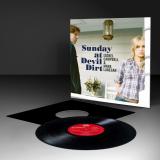
Hawk builds on the critical acclaim of 2006’s Mercury Prize-nominated Ballad of the Broken Seas and 2008’s Sunday at Devil Dirt, solidifying the duo's signature dynamic—Campbell’s ethereal, whispery arrangements juxtaposed against Lanegan’s deep, gravelly baritone. Written, arranged, and produced entirely by Campbell, Hawk was recorded across studios in Scotland, England, and the United States. The 13-track record expands their sonic palette far beyond classic country-folk, venturing into dusty Southern soul, garage-rock stomps, and soaring gospel arrangements. "With this record, I wanted to stretch the canvas further," says Isobel Campbell. "Mark and I have built a true shorthand together over the years, which gave us the freedom to push into heavier grooves, raw blues, and sweeping orchestral textures while keeping the core intimacy intact. Album Highlights & Key Collaborations "You Won't Let Me Down Again" — The album’s lead single, driven by a hypnotic rhythm and featuring a searing guitar solo from former Smashing Pumpkins guitarist James Iha. "Come Undone" — A moody, slow-burning Southern soul ballad showcasing Lanegan at his most vulnerable. Townes Van Zandt Covers — Faithfully rendered versions of "Snake Song" and "No Place To Fall," the latter featuring guest vocals from American singer-songwriter Willy Mason. "Lately" — A cinematic album closer that swaps the pair's vocal interplay for a rousing, brass-tinged gospel choir.
Courant Zéro is the new moniker of Montréal multi-media installation artist and Kohlenstoff label co-founder Maxime Corbeil-Perron, signalling his return to purely recording-based electronic music production following several years focused on award-winning experimental film and audio-visual works. Solari channels his cinematic sensibility and decade-long exploration of sound art and electroacoustic counterpoint into deep cuts of maximalist ambient electronica. Drawing on his early background as a pianist and jazz drummer, Corbeil-Perron weaves a fabric of melodic and rhythmic vectors with his unique timbral palette, intersecting modern composition, IDM, ambient, glitch, and noise on a debut album brimming with sonic detail and emotive resonance. A fixture of Montréal’s sound art community as both creator and curator since the early 2010s, Corbeil-Perron’s work has ranged from “hypnotic A/V onslaught” (FACT Magazine) to the “richly nuanced acousmatic journey” of his 2018 EP Polychrome (Bandcamp Best Contemporary Classical Of The Month), with earlier electronic and techno-adjacent projects like Political Ritual, Dresden, and Le poisson d’argent garnering accolades from avant-music outlets A Closer Listen, Silence and Sound, and Musicworks, among others. Courant Zéro mobilizes this cumulative wealth of explorative sonic experience in the service of distinctive compositional architectures and electronic music pathways that fans of Floating Points, Jan Jelinek, Squarepusher, Tim Hecker, and Oneohtrix Point Never should find compelling.
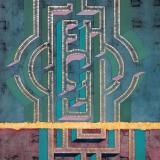
Courant Zéro’s debut is a vibrant sonic rebus at the junction of electronic, electroacoustic, noise and ambient music that resists easy categorisation. Solari strikes a compelling balance of unsettled disorientation and hospitable warmth, teeming with real feeling throughout. The album’s cover art painting Cryptography I by Yen-Chao Lin represents this prevailing sensibility, its mazelike circuitry distinctly carved and crisply rendered, while filigreed with handmade detail and artisanal patina. Thanks for listening.
Montréal-based sound artist Steve Bates expands his strategies and stylistic influences on An Infinite Antenna, his second solo album for Constellation, giving freer reign to melodic components and textural dynamics: leftfield synth work, deconstructed drum machine, pointillist electric guitar, and radiostatic blur are all part of the new brew swirling around his bruitist signal-bending and field-recording sensibility. Arguably a more ambient album than his acclaimed 2022 Constellation debut, An Infinite Antenna is at the same time more densely packed with ideas, dynamics, evocations and earworms. Coming out of the anarcho-punk scene of the Canadian Prairies in the 1990s, Bates founded Winnipeg’s experimental sound festival Send + Receive in 1998 before moving to Montréal to become Sound Coordinator at Hexagram (Concordia University), delving further into sonic research and theory, tape-based composition, and installation work. Alongside the curatorial arc of his own sound art label The Dim Coast, Bates released several solo and collaborative albums on ORAL_records leading up to All The Things That Happen, the 2022 Constellation debut praised by Boomkat for its “grittily iridescent ambient billow rendering maximalist panoramas” and by Backseat Mafia as “extraordinary soundscapes of unstable, destructive cacophony and tender calm, echoes of the threat of power.” Where that album was noisier and single-minded, made with the self-imposed limit of a Casio SK-1, Bates plays more widely with instrumentation and atmospheres on An Infinite Antenna, also drawing on his post-hardcore roots in seeking a sort of track-by-track concision nonetheless driven by the album’s coherence as a seamless work. “I was trying to set durations I associate with punk rather than the longer, sprawling music coming from more ambient styles (that I very much love), and while I wasn’t able to quite pare it down to Minutemen durations, I had that reduction to essential elements as a sort of whisper over my shoulder.” Incorporating source recordings made throughout 2023-2025, including at artist residencies and site-specific sound installation visits in Bosnia and Herzegovina (the album’s cover photo was taken in Sarajevo), Austria, Greece, and Saskatchewan, An Infinite Antenna combines Bates’ “idea of slowly scanning a radio dial” with a soundworld of recurring timbral and textural touchstones that forge an integrated whole.
The album’s 12 tracks work effectively as stand-alone pieces, replete with shifting undercurrents, buried melody, and stuttering kinetics, and as a sequential flow where the brief interstitial silences between them are like short pauses to flip the next page in a sketchbook of perspectival studies of a wide but singular tableau. The glistening atonal synth expressionism of opener “Pink pink pink pink…pink pink” drifts gently toward submerged ambience, darkened by the noised rumble and static interference of “Green as a ghost”, which introduces broken beats and piano chords in its denouement. Tracks like “Battles and sieges and street trees” and “Easier sad than done” work the foundations of low-end field-recording resonance, but dappled with lovely melodic droplets of treated guitar and synth. “Waste, songs of the world” and “Disaster loans” are among the album’s most explicit stylistic references to posthardcore, with distorted ambient bass and gently abrasive drum sampling. Closing track “Swamps and factories”, the album’s longest piece, is perhaps most reminiscent of Bates’ previous record with its sustained dissonant glimmer-drone, but the journey An Infinite Antenna traces to get there is Bates at his most dynamic, diverse, distinctive, and engaging. Thanks for listening.
Montréal-based sound artist Steve Bates expands his strategies and stylistic influences on An Infinite Antenna, his second solo album for Constellation, giving freer reign to melodic components and textural dynamics: leftfield synth work, deconstructed drum machine, pointillist electric guitar, and radiostatic blur are all part of the new brew swirling around his bruitist signal-bending and field-recording sensibility. Arguably a more ambient album than his acclaimed 2022 Constellation debut, An Infinite Antenna is at the same time more densely packed with ideas, dynamics, evocations and earworms. Coming out of the anarcho-punk scene of the Canadian Prairies in the 1990s, Bates founded Winnipeg's experimental sound festival Send + Receive in 1998 before moving to Montréal to become Sound Coordinator at Hexagram (Concordia University), delving further into sonic research and theory, tape-based composition, and installation work. Alongside the curatorial arc of his own sound art label The Dim Coast, Bates released several solo and collaborative albums on ORAL_records leading up to All The Things That Happen, the 2022 Constellation debut praised by Boomkat for its "grittily iridescent ambient billow rendering maximalist panoramas" and by Backseat Mafia as "extraordinary soundscapes of unstable, destructive cacophony and tender calm, echoes of the threat of power." Where that album was noisier and single-minded, made with the self-imposed limit of a Casio SK-1, Bates plays more widely with instrumentation and atmospheres on An Infinite Antenna, also drawing on his post-hardcore roots in seeking a sort of track-by-track concision nonetheless driven by the album's coherence as a seamless work. "I was trying to set durations I associate with punk rather than the longer, sprawling music coming from more ambient styles (that I very much love), and while I wasn't able to quite pare it down to Minutemen durations, I had that reduction to essential elements as a sort of whisper over my shoulder." Incorporating source recordings made throughout 2023-2025, including at artist residencies and site-specific sound installation visits in Bosnia and Herzegovina (the album's cover photo was taken in Sarajevo), Austria, Greece, and Saskatchewan, An Infinite Antenna combines Bates' "idea of slowly scanning a radio dial" with a soundworld of recurring timbral and textural touchstones that forge an integrated whole. The album's 12 tracks work effectively as stand-alone pieces, replete with shifting undercurrents, buried melody, and stuttering kinetics, and as a sequential flow where the brief interstitial silences between them are like short pauses to flip the next page in a sketchbook of perspectival studies of a wide but singular tableau. The glistening atonal synth expressionism of opener 'Pink pink pink pink_pink pink' drifts gently toward submerged ambience, darkened by the noised rumble and static interference of 'Green as a ghost', which introduces broken beats and piano chords in its denouement. Tracks like 'Battles and sieges and street trees' and 'Easier sad than done' work the foundations of low-end field-recording resonance, but dappled with lovely melodic droplets of treated guitar and synth. 'Waste, songs of the world' and 'Disaster loans' are among the album's most explicit stylistic references to posthardcore, with distorted ambient bass and gently abrasive drum sampling. Closing track 'Swamps and factories,' the album's longest piece, is perhaps most reminiscent of Bates' previous record with its sustained dissonant glimmer-drone, but the journey An Infinite Antenna traces to get there is Bates at his most dynamic, diverse, distinctive, and engaging. Thanks for listening
Courant Zéro is the new moniker of Montréal multi-media installation artist and Kohlenstoff label co-founder Maxime Corbeil-Perron, signalling his return to purely recording-based electronic music production following several years focused on award-winning experimental film and audio-visual works. Solari channels his cinematic sensibility and decade-long exploration of sound art and electroacoustic counterpoint into deep cuts of maximalist ambient electronica. Drawing on his early background as a pianist and jazz drummer, Corbeil-Perron weaves a fabric of melodic and rhythmic vectors with his unique timbral palette, intersecting modern composition, IDM, ambient, glitch, and noise on a debut album brimming with sonic detail and emotive resonance. A fixture of Montréal's sound art community as both creator and curator since the early 2010s, Corbeil-Perron's work has ranged from "hypnotic A/V onslaught" (FACT Magazine) to the "richly nuanced acousmatic journey" of his 2018 EP Polychrome (Bandcamp Best Contemporary Classical Of The Month), with earlier electronic and techno-adjacent projects like Political Ritual, Dresden, and Le poisson d'argent garnering accolades from avant-music outlets A Closer Listen, Silence and Sound, and Musicworks, among others. Courant Zéro mobilizes this cumulative wealth of explorative sonic experience in the service of distinctive compositional architectures and electronic music pathways that fans of Floating Points, Jan Jelinek, Squarepusher, Tim Hecker, and Oneohtrix Point Never should find compelling. Title track "Solari" opens the album with a cavernous ambient glitch-drone soundscape that envelops ever-shifting timbres of modular arpeggiation, serving as introduction to the clarion call of "En deçà du réel", an homage to video artist Manon Labrecque, where layers of interweaving melodic counterpoint played on Buchla and other synths slowly build to widescreen immersive intensities; "I have this vision of Labreque vibrating eternally between two frames of magnetic VHS tape_ the slow pace of the piece also inspired by Tarkovsky's approach to scenography" says Corbeil-Perron. "Strange Aorta" is ectoplasmic ambient with wistful melody lines transmuting along a central filament, awash in shifting waves of low-end and ricocheting tonal glitch, the title a reference to "the thumping rhythm beating around the main melody_and the heavy remnants of grief related to my father's passing and a brutal confrontation with my own mortality a few years back." Tracks like "La peau des dents" and "Eroding Us" are more firmly rooted in electroacoustic and aleatory systems music, where colliding loops are shaped into unstable flows of deconstructed slippage and reconvergence. Those two pieces bookend the album's pivotal center: the gorgeous piano digitalia of "Horizon n'arrête" and the skittering electronica of 9-minute opus "Unyeldd", its loping broken beat and cascading melodic glitter like a cluster of wind-up music boxes in a dappled forest _ and for Corbeil- Perron also partly inspired by now fellow Constellation labelmates Do Make Say Think: "I spent a lot of time rediscovering their records after seeing them last September 2024 which definitely influenced this piece." Courant Zéro's debut is a vibrant sonic rebus at the junction of electronic, electroacoustic, noise and ambient music that resists easy categorisation. Solari strikes a compelling balance of unsettled disorientation and hospitable warmth, teeming with real feeling throughout. The album's cover art painting Cryptography I by Yen-Chao Lin represents this prevailing sensibility, its mazelike circuitry distinctly carved and crisply rendered, while filigreed with handmade detail and artisanal patina. Thanks for listening.
By 2004, dub had a history stretching back more than thirty years. This remarkable longevity can easily be explained by the evolving nature of this musical genre, which is constantly changing both artistically and technically, from Kingston to London, New York, and more recently Berlin, Paris, Lyon and Saint-Étienne. For example, it is worth noting that for some years now, in France and elsewhere, a good number of artists have been thinking in terms of dub from the outset, breaking free from the original Jamaican model, which involved drawing inspiration almost systematically from an existing vocal track. Thirty years on, with the release of their second album, Brain Damage aim to reconnect with this tradition. Recent collaborations with the two vocalists, Learoy Green and Black Sifichi, have indeed provided the ideal source material for the creation of five tracks, each rendered in their respective dub versions, thus forming an album with a symmetrical, even geometric character - from its very structure right down to its title: 'Ashes to ashes / Dub to dub'. At the heart of the project lies the astute choice of two guests, each operating in diametrically opposed spheres yet brought together for the occasion, thereby emphasising a certain 'unity of the circle': 'the unity of the circle'. Born of a genuine artistic vision, this geometric, symmetrical aesthetic-omnipresent in every detail of the album, both auditory and visual-complements Brain Damage's 'square' and robotic side, with its three-dimensional evocations. Always working in close collaboration with the very latest digital technologies. This brings to mind 'the balance of the cube'. Finally, the title itself, 'Ashes to ashes / Dub to dub', should be understood as a reference to the transience of all things in this world, against a backdrop of widespread, globalised, international, national and local crises_
Curses' dark, romantic take on electronic music is often linked to EBM, new beat, synth-pop, and the offshoots in between - but, as the artist states, it's feelings, not genres, that motivate his music. Especially the underground and its niche sounds, brimming with collective energy, drive and passion, make for a major impetus. It's no coincidence that he's drawn to the era when man turned to the machine, as a collaborative force, and a new kind of liveliness, timelessness, emerged. In Curses' practice, this synergy translates into an enticing mix of synthesisers and voices, electronic drums and guitars. Nostalgia operates as an influence rather than a motive, though: despite its affinities with the past, his music is stridently contemporary and idiosyncratic. On the "Perfect High" EP, this approach is rendered in a resolutely dancefloor-oriented selection. It's rich in detail and constantly evolving; each time a new element appears, it's treated with such delight and care that you could imagine the track to flit off and turn it into the main theme. This doesn't happen, however, as the sense of cohesion and momentum is paramount: there's a relentless forward drive that keeps engagement tight from start to finish. The detuned, chorus-heavy leads of title track "Perfect High" and the clockwork-tinged percussion of "Weapon Of Time" jell with lustrous hooks. The ominous choirs on "Dare To Dream" and the proto rolling-and-scratching squelches of "Killer Instinct" similarly fall into place. Bravado never stands in the way of flow. Everything is kept in check by gated R-50 rhythms, and in the vocal department, Curses finds the sweet spot between his own voice and a slew of off-kilter samples. On closer "Blasted" NYC royalty Andi joins for a slab of synth-driven groove. It's shiny and sensuous, like patent leather - a perfect distillation of club music channeled through pop aesthetics, and thus a right coda for ALT028.
out of Stock
Last delivered 23 days ago available to reorder, subject to availability
Tucked in the heart of Koreatown, Los Angeles, lies The Libra Hotel—the titular architecture of Nick Malkin's new album and site of his musical and psychogeographic exploration. Unlike most musical "site-specific" studies, Malkin remains wholly ambivalent to the documentarian approach, instead sharpening an auteur-like focus on the site as a conceptual and highly expressive backdrop. The Libra is musically explored as a space that houses a noir fragmentation of identity—the exhausted trope of a complicated protagonist walking through rain-soaked street corners and fumy neon lights—where an inner monologue is rendered in both miniature and at a cosmic scale. Casting aside stifling tropes around field recording, ambient, and improvised music, Malkin's work finds its own unique fidelity and emotional core through the assembly and reassembly of memory. Nearly every sound on the album—from frayed saxophones, lambent pianos, and dissected jazz drum kits—are multiplied, shattered, and reconstituted into shapes that adorn The Libra in a motion-blurred fog. The narrative of the Hotel suddenly appears as if out of the mist, with intersecting characters interacting within its walls by happenstance. Adminst the languid set pieces, wraith-like sonic grains gravitate around wide subbass beams that give structural form to The Libra, a narrative tension like when a scene is shot from hundreds of different perspectives: an image both luminous and veiled.
Much like Frank Sinatra's own spatial residency immortalized on "Live at The Sands," "At The Libra Hotel" showcases an exuberant view of entertainment, hospitality, and a form of masculinity, one that can quickly detourn into darkness. Knowing this, Malkin extracts a melancholic core out of The Libra locale. The flickering shadows of American decadence are shown in their ephemeral honesty, lines that trace how even in everyday life virtue is tested, sanity is tested, even reality is tested within the confines of desire, within the night. The album is draped in fleeting textures, carefully arranged with a trance-like microtonality, the faint inflections and articulations of a jazz band cascading into dissipated stillness. Voicemails about changed locations and covert eavesdropping on guests' whispered conversations provide an atmosphere of missed connection and voyeurism—a purloined letter of desire receding into a vanishing point. Like the music itself, The Hotel, a chapel perilous at the intersection of desolation row, the center of it all, yet simultaneously at the edge of town, becomes a structure between libidinous virtuality and actuality—our inevitable half-light.
Ultimately, the pensive atmosphere of "At The Libra Hotel," powerfully asserts a plea for the kinds of intimacy only possible in transient spaces. Here, memory cascades into a force that feels like something supernatural, perhaps even religious, yet always subject to the infidelity of our imagination. Here, the album opens into its primary psychodrama, the transient nature of subjectivity itself and how this becomes fractured in the tumult between our commitments and desires. Within this nocturnal space, to quote Louise Bourgeois, "you pile up associations the way you pile up bricks. Memory itself is a form of architecture."
Whirr and Luster have been orbiting each other for years, bound by a shared language of glide guitar, buried vocals, and volume as emotion. A through line that’s only deepened by Nick Bassett’s hand in producing and mixing the majority of Luster’s previously recorded output. The Whirr & Luster Split pairs one of American shoegaze's most storied bands with one of its most vital new voices across four new songs. Out on 12" EP, CD EP, and digital via Freewhirl Records. Splits are sacred territory for Whirr. More than a decade after the band helped define the modern heavy-shoegaze landscape, the Bay Area five-piece returns with its first new material in years. “Spiral Again” opens the record in classic Whirr fashion: an avalanche of guitar wrapped around a lyric about losing yourself in someone else’s gravity — spiraling, intertwining, coming down together. “Wish I Could Give You The World” follows, one of the most openly romantic songs the band has ever recorded, all wildfire imagery and dizzy devotion, desire rendered at full volume. Produced by Whirr and Zac Montez, both tracks find the band in signature form: enormous yet tender. On the flip side, Los Angeles' Luster continue their run as the standouts of the new shoegaze generation. Formed with the intent of pushing the genre forward rather than reenacting it, Luster fold electronic pulse and '90s texture into walls of glider guitar, and the two contributions here find the band in peak form. "Against the World" is a love song as a locked door — it's you and me, us against the world — claustrophobic and comforting in the same breath. "Forever" closes the record in a haze of doomed-romance repetition, a mantra of do you feel it now dissolving into the knowledge that nothing lasts. Also produced with Zac Montez, the songs make the case plainly: Luster aren't students of the form. They're peers. Taken together, the four songs read like a conversation. About distance, obsession, and the ache of never being able to give someone enough — carried across two coasts and two generations of a genre that refuses to fade. Loud, longing, and gone too soon: the Whirr & Luster Split, out September 18th. Whirr and Luster celebrate the release and cement the collaboration with two shows — the only U.S. Whirr performances of 2026, with no shows planned beyond them. Each night features a unique set built from rarities and live debuts, alongside exclusive vinyl variants and merchandise available only in that room, on that night: 9/18 — Los Angeles, CA @ The Wiltern 9/20 — New York, NY @ Brooklyn Paramount Two nights, two coasts, and no telling if there’s a next time — for the songs, the pairing, or the band itself.