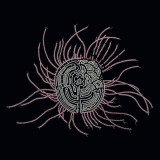
The Circus is a place of lights and colors, but also of shadows, even darkness. Admittedly, it delights children and makes adults laugh. But you only need one rainy autumn evening near a circus tent and the smell of fodder to think of the sadness of the clowns, the endless training of the animals and the freaks who are hidden in some caravan... cinema, the essence of the circus – movement, light, danger and burlesque – will have been admirably rendered in Notes on the circus by Jonas Mekas (1966), one of the inventors of the filmed diary. With Cirque, Michèle Bokanowski does similar work, entirely dedicated to spinning, in the musical field.
She distinguished herself in particular in the composition of musique concrète, among others Tabou and Trois chambres d'inquiétudes, after having studied with Pierre Schaeffer and Éliane Radigue. The latter, great lady of drone and minimalism, fell under the spell of Cirque and wrote the booklet for the piece as a poem.
The piece, divided into five movements, is based on the handling and editing of recordings captured within one or more circuses (this is not specified and is of no importance) between 1988 and 1993. The initial allegro reveals the gallop of a horse joined gradually by other images. The idea of the circular space of the circus tent is immediatly and magnificently rendered and will be constantly recalled by an insistent use of the loop technique. Children's laughter, applause and drum rolls are thus sheared, repeated before being brutally interrupted. Accordion interludes and the distortion of sounds create a dreamlike atmosphere. This beautiful nightmare reminds us, to quote Éliane Radigue, the "Magic of childhood still living in the heart of man even beyond its abrupt end."
Words by Alexandre Galand, from the book “Field Recording – L’usage sonore du monde en 100 albums” (ed. Le mot et le reste, 2012)
Major member of the french musique concrète scene, Michèle Bokanowski was born on August 9, 1943 in Cannes, FR, to a musician mother and a writer father. She now lives and works in Paris.
Music lover since adolescence, it was relatively late, at the age of 22, that Michèle Bokanowski decided to study composition. Reading In Search of a Concrete Music by Pierre Schaeffer was decisive. After classical training on harmony, she met Michel Puig, a student of René Leibowitz, who taught her writing and analysis based on the Treatise of Schönberg. In September 1970 she began a two-year internship in the ORTF Research Department under the direction of Pierre Schaeffer. She takes part in the same time in a research group on sound synthesis, studies musical computing at the Faculty of Vincennes and electronic music with Éliane Radigue.
Her main works are intended for concert: Pour un pianiste, Trois chambres d’inquiétude, Tabou, Phone Variations, Cirque, L’étoile Absinthe, Chant d’Ombre, Enfance, Rhapsodia, Cadence, Elsewhere. She has also composed for theater (with Catherine Dasté), dance (with choreographers Hideyuki Yano, Marceline Lartigue, Bernardo Montet) and cinema: music for the short films of Patrick Bokanowski and his two feature films L'Ange ( 1982) and A Solar Dream (2016).
quête:repeat
Søren Skov Orbit's debut album, "Adrift," is at once subtle and profound. The saxophonist and his collaborators have created something quite special and consistently deep. This record may not easily be classifiable, but the most interesting music creeps between the lines
Danish tenor and soprano saxophonist Søren Skov (Debre Damo Dining Orchestra) and keyboardist Peder Vind co-founded the trippy quintet Søren Skov Orbit in 2016 to explore “more jazzy ideas,” as the saxophonist puts it. Joined by a rhythm section steeped in contemporary improvisation and psychedelia, bassist Casper Nyvang Rask, drummer Rune Lohse and percussionist Ayi Solomon of the legendary 80's Ghanaian roots/highlife band Classique Vibes, the Orbit belts out a richly focused helping of broadly African-inspired modern jazz with a hazy sheen.
On the opening “Notifications of Nothingness,” Skov digs in his heels, a steely but languid unspooling of burnished tenor lines atop condensed, quavering piano and the thick footfalls of bass and percussion. As a tenor player, Skov has done his homework and has a kinship with Albert Ayler, Archie Shepp, J.R. Monterose, and the Dutchman Hans Dulfer, but he clearly has got his own robust phraseology and expressiveness. He also cites multi-reedists John Gilmore, Yusef Lateef, and Bilal Abdurahman as, “some of the players I’ve been listening to the most for the last 10-15 years.”
A healthy dose of reverb is present throughout the album, echoing Alton Abraham’s studio wizardry with the Sun Ra Arkestra or the trance-inducing and compressed fidelity of certain Ethio-jazz and Mystic Revelations of Rastafari sessions. Skov notes that, “everything is recorded live at the same time in the same room. I wanted to do it that way in order to catch the dynamics and authenticity of the music.” There is, in fact, a complex teeter- totter between crisp and hazy execution, achieved by a delicately balanced mix that keeps the group’s sound simultaneously advancing and receding. Vind’s phrasing is terse and introspective, a vibrating echo that nudges and reflects on Skov’s brusque tenor in a dance of sonic displacement.
“Orbiting” pits a chunky backbeat and the teetering, taut hand-rhythms of Solomon against an infectious, almost microtonal piano riff, while Skov’s arpeggios are clean and florid as he patiently rises up from under a carpet of funky loops. Following the freer “Reflections of Rif,” “Naration” lilts with a wink at “Footprints” and tugs between up-tempo polyrhythmic drive, clanging keyboard accents, and the innately steadfast keenness of the bandleader. The coupling of Solomon and Lohse is a big part of the group’s detailed energy; as the leader puts it, “Ayi knows everything about regional differences in drum patterns. He is always listening and super responsive, and his and Rune’s dynamics are amazing.” The music both presents a “vibe” and keeps the door open for engaging well under the surface as repeated listens will be extremely rewarding.
Steve Marion, the critically acclaimed-and completely wordless-songwriter and guitarist known as Delicate Steve, has unveiled a new album called Delicate Steve Sings. Is the album title a reference to the instantly recognizable "voice" of his guitar? Does he actually sing this time? Has he not been singing all along? That"s the crux of Sings-Marion is the rare guitarist where you can put on any of his records and know exactly who"s playing. In an indie rock landscape stuffed end-to-end with guitars and amplifiers, nobody else sounds like this. That unique voice has kept Steve busy in an unpredictable variety of settings. The sheer spread of his work outside his own records-collaborating with Miley Cyrus and Paul Simon, playing in Amen Dunes and the Black Keys, and being sampled by Kanye - doesn"t mean Steve"s a chameleon. It means he"s singular. Delicate Steve Sings is a record centered on channeling iconic voices with his guitar. In doing so, Marion is casting himself in the role of iconic singers like Willie who make standards their own. In the process, he reveals just how singular (dare we say iconic) that voice is. The guitar sings these songs-smoothly, sweetly, boldly, and on its own terms. Recorded with Jonathan Rado on bass, Kosta Galanopolous on drums, Renata Zeiguer providing strings, and co-writer Elliot Bergman, the album features both original songs with titles that suggest they might be new recordings of classics. "I"ll Be There" is smooth like a lost Bill Withers track; "Easy for You" isn"t the Elvis song of the same name, but there"s a hint of the king in there, in addition to Marion"s own takes onclassics such as the Emersons" "Baby," The Beatles" "Yesterday" and Otis Redding"s "These Arms of Mine." "You"re tapping into something universal and in the consciousness of pop music," Steve says-tacit permission for his guitar to drift into vocal expressions he"s internalized through years of close, repeated listening. Just like all the great singers.
Black Truffle is thrilled to announce a reissue of Chico Mello and Helinho Brandão’s self-titled release from 1984, the first return to vinyl of this classic of Brazilian experimental music with its original cover art and complete track listing. An under-recognised figure whose work inhabits a singular terrain where radical new music techniques and music theatre meet musica popular brasileira, Mello has lived and worked in Berlin since the late 1980s. A student of Dieter Schnebel, Mello played in the 90s iteration of Arnold Dreyblatt’s Orchestra of Excited Strings alongside compatriot Silvia Ocougne, with whom he produced a radical and hilarious deconstruction of MPB classics on Musica Brasileira De(s)composta (an early and rather atypical release on Edition Wandelweiser).
On this release, his only recording predating his move to Europe, Mello works with the alto saxophonist Helinho Brandão, who appears to be otherwise unknown outside Brazil. The record’s six tracks range from solo saxophone improvisation to densely layered ensemble works bridging minimalism, acoustic sound art and a plaintive melodic sensibility that calls up Edu Lobo or Milton Nascimento. Beginning with a dramatic, dissonant wind and string surge from which emerge ominously pounding piano chords, opener ‘Água’ slowly builds in intensity, a halo of clustered vocal harmonies gradually closing in on Brandão’s squealing sax until the piece opens up to reveal a gorgeous passage of melodic singing. The piano accompaniment reduces to tolling bass notes as the voice begins a repeated incantation, suggesting a ritualistic atmosphere reminiscent of parts of Xenakis’ setting of Oresteia. Dissonant, sawing tremolos on the strings climb to a crescendo before disappearing into the sounds of water being poured and splashed into metal vessels, presented not as a field recording but as a percussive element performed by the ensemble. A child’s voice then appears, singing to piano accompaniment the same melody heard earlier in the piece. After a brief solo alto improvisation from Brandão, working with the guttural pops and fleeting melodic gestures of Braxton or Roscoe Mitchell, the remainder of the first side is dedicated to the leisurely unfolding of ‘Baiando’ over the course of twelve minutes. A trio for Brandão on soprano saxophone, Mello on a very period-appropriate phased nylon string guitar and Edu Dequech on bongos, the performance eases its way hypnotically through subtle variations on a set of rhythmic and melodic patterns, almost derailed at points by Brandão’s wild forays into extended technique but held together by Mello’s droning guitar notes.
The second side opens with another multi-part epic for a larger ensemble, ‘Matraca’, which makes use of strings, electric guitars and a wide range of South American percussion instruments. Rasping violin harmonics hover as drum hits, repeated guitar notes and triangle accompany a slowly descending bass glissando. A sudden change in direction introduces a thrumming, incessantly repeated bowed bass tone, beginning a series of episodes of minimalist phasing and pattern variation, the combinations of electric guitars and orchestral instruments giving the ensemble an ad hoc charm like the early Penguin Café Orchestra but with more percussive drive. Eventually the piece is overrun by a cacophony of the titular matracas (a kind of ratchet/cog rattle). Following a lyrical trio improvisation by Mello, Brandão and Gerson Kornin on bass, the final ‘Danca’ focuses entirely on Mello’s layered acoustic guitars and vocals, using this restricted palette to build up a haunting piece of almost orchestral density, reminiscent of the 70s work of Egberto Gismonti in how it thickens a folkish ambience with harmonic sophistication.
Arriving in a starkly beautiful gatefold sleeve and sounding better than ever in its new remaster, one might call the stunning music contained on Chico Mello/Helinho Brandão ahead of its time. But what (other than some of Mello’s own work) produced in the years since its initial release has really touched the organic fusion of minimalism, free improvisation, radical instrumental technique and popular song achieved here? Forty years after its first release, Chico Mello/Helinho Brandão remains music of the future.
Specially prepared liner notes by renowned music writer Brian Morton.
After an impasse in which she mostly recorded with tightly arranged groups (for Commodore) and big bands with strings (for Decca), Billie Holiday signed her last long-term contract with Norman Granz who tried to repeat the small group magic of her early days.
Solitudewas among Billie's first studio sessions for Granz and features the singer backed by Charlie Shavers, Flip Phillips, the Oscar Peterson Trio, and Alvin Stoller or J. C. Heard.
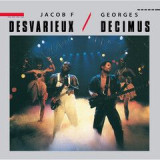
S
Brand new vinyl reissue to celebrate the 40th anniversary of seminal
album Yelele by Georges Decimus and Jacob Desvarieux, from zouk
pioneers Kassav', includes the massive worldwide crossover hit "Zouk-la
se sel medikaman nou ni"
Whether in concert, or on the radio or TV, the image of Kassav' remains vivid in
the minds of listeners and spectators. The group, founded in 1979 by Jacob
Desvarieux, Georges and Pierre-Edouard Decimus, has become legendary, putting
Guadeloupe and Martinique on the musical map of the world. Touring the world
with zouk, a musical movement introduced and popularized by Kassav', their
albums have repeatedly been rewarded with both gold and platinum discs.
A victim of Covid in 2021, the loss of Jacob Desvarieux leaves a huge void.
The mix of Jacob Desvarieux and George Decimus with Jocelyne Beroard, JeanPhilippe Marthely, Patrick Saint-Eloi and Jean-Claude Naimro has played sold out
concerts in 82 countries. With texts recounting real life in the Caribbean world
their lively music draws on the rhythms of Guadeloupe's gwo-ka and Martinique's
ti-bwa. Transcending the well-defined codes of Caribbean music, they have turned
the 1980s and all the succeeding decades into a fabulous ballroom.
They have been welcomed in Japan and the USSR, where they became the first
group of black musicians to tour. Forty years after the group's creation, their
timeless hits continue to resonate
Lebanon oud master Rabih Abou-Khalil's stunning 1996 album 'Arabian
Waltz' is appearing here on vinyl for the first time."Arabian Waltz is the
pinnacle of Rabih Abou-Khalil's achievement as a composer and arranger
It is a sublime fusion of jazz, Middle Eastern traditional music, and Western
classical. In addition to Abou-Khalil on oud (the Arabic lute), Michel Godard on the
tuba and the serpent (the tuba's antique kinsman), and Nabil Khaiat on frame
drums, the album also features the Balanescu String Quartet instead of the usual
trumpet or sax. The presence of the Balanescu might seem to pose a dilemma
for the composer: traditional Middle Eastern music uses no harmony but a string
quartet is all about harmony. Abou- Khalil achieves a compromise by generally
writing the string parts in unison (or in octaves), in effect using the quartet as a
single voice, but also letting the quartet split up to play parts in unison with the
other instruments or to provide ornamentation. Without surrendering jazziness at
all, the presence of the strings makes possible a wondrous atmosphere, almost
as if one is listening to the soundtrack of a classy movie set in Beirut or
Damascus during the '40s. This feeling is greatest on "Dreams of a Dying City"
with its brooding tuba and cello motifs and grave, repeated rhythms. "The Pain
After" starts with an impressive tuba solo that turns into a long interlude for tuba
and string quartet; sad, slow music that sounds like one of Beethoven 's late
quartets. Then Abou- Khalil finally enters on oud, bringing a sustained note of
wistfulness. Fortunately, beside the darker numbers lie the propulsive drama of
"Arabian Waltz" and the bobbing and weaving quirkiness of "Ornette Never
Sleeps." Abou- Khalil is known for experimenting with the possibilities his guest
musicians bring to his style. In this case, the guests have inspired the host to
reach a new height and maybe even a new style. This recording suits every fan of
world music, jazz, classical, or just good music." - Kurt Keefner
To experience Justin R. Cruz Gallego's pulverizing Sub Pop debut is to get burned down to ashes and burst forth, born anew. Grim Iconic...(Sadistic Mantra), the Tacoma-based artist's second album, is driven by opposing forces: noisy abstractions and tightly structured beats, anguish and dissolution at the outside world and empowerment within, apathy and catharsis. Grim Iconic...(Sadistic Mantra) weds scouring electronics to hooky songs and Gallego's powerful drumming in a way that feels visceral and new. It's his most personal statement to date, at once playful and intent, driven and combustible, total fucking chaos mixed into glints of broken-glass beauty. Born in Tucson, Arizona, Gallego experienced culture shock as a child after relocating to the frigid climes of the Pacific Northwest. He found solace in the Seattle punk scene centered around Iron Lung Records and has since remained a fixture in the underground community. "I see this record as first and foremost a musical statement," Gallego says. "I grew up in punk and DIY subcultures, but before that I had Latin music playing in the background through my childhood and every phase of adolescence. It was surprisingly natural to incorporate. I realized I wanted to go deeper into these rhythms. I wanted to make a record that felt as experimental as much as it felt from the perspective of a Latino. When I got a glimmer of that possibility, it felt exciting." Lead single "Dogear" is a face-melting party starter that sounds like someone forced Talking Heads and Rudimentary Peni to share a practice space. "I wanted a song that felt playful in the way it attempted to be dissonant without taking itself too seriously," Gallego says. "Cholla Beat" is even more ambitious, an anthemic mix of WAR and Wire led by unruly synthesizers spiraling down a labyrinth of production. Gallego's influences for the album are vast, ranging from British documentary filmmaker Adam Curtis to electric Miles Davis to audio miscreants like Demdike Stare and Oneohtrix Point Never. But it's Gallego's assured sonic vision that resounds the loudest. And, while J.R.C.G. is a solo project, conceived and executed primarily in Gallego's home studio, he found strength in opening the project to others, starting with Seth Manchester as co-producer. Manchester's penchant for bone-rattling frequencies, as seen in his production work with The Body, Battles, and Mdou Moctar, made him a natural fit for Gallego. Together, they retained the intimacy of Gallego's home recordings while taking advantage of the hi-fi stylings of his Machines With Magnets Studio in Rhode Island. The closing song, "World i," offers a glimpse into the live experience of Grim Iconic...(Sadistic Mantra), with upwards of seven band members blasting off. The album features a fascinating mix of supporting players, many of whom cycle through J.R.C.G.'s live lineup: Morgan Henderson (The Blood Brothers, Fleet Foxes), Jason Clackley (Dreamdecay, The Exquisites), Jon Scheid (Dreamdecay, U Sco), Erica Miller (Casual Hex, Big Bite), Veronica Dye (Terminator) Phil Cleary (U Sco), and Alex Gaziano (Dreamdecay, Kidcrash, Science Amplification). Taken as a whole, G.I.S.M. is a whirlwind of sound, pummeling, and cleansing. It's a sweaty, thrilling aural adventure and, like a great basement show, it'll leave you breathless, exhausted, and wanting to repeat it all over again. As any good mantra should.
It’s hard to overstate the importance of Fanny’s 1970 self-titled debut album. For the first time, a group of women (sisters June and Jean Millington, Alice De Buhr and Nickey Barclay) wrote and sang their own songs, played their own instruments and, perhaps most importantly, rocked just as hard as any male band out there. And, as the first all-female band signed to a major label (Reprise) and with superstar producer Richard Perry at the board, these four women became perhaps L.A.’s biggest “buzz band,” landing repeated bookings at the Whisky-a-Go-Go with a who’s who of rock’s glitterati in attendance. Fanny became the reference point for generations of female rockers to come after them, from Joan Jett to Girlschool to Courtney Love and beyond. They were truly the Godmothers of Chick Rock. The self-titled debut by Fanny is available as a limited edition of 750 individually numbered copies on silver coloured vinyl, housed in a gatefold sleeve.
Freefall Blue Vinyl[26,26 €]
Crack Cloud has always been something beyond a rock band: both profound and grand, vaporous and elusive. The first iteration of Crack Cloud was formed nearly a decade ago as a proxy-rehab outlet on the fringes of Calgary. Over time, two EPs and accompanying visual pieces were produced out of the residence known as Red Mile. By 2017, several members had relocated to Vancouver, working out of harm reduction centers and low-barrier shelters. Sobriety, self-reformation and the idealism of their work further formed an ethos for Crack Cloud. It was during these years that the band produced their astounding 2020 album Pain Olympics. At once, their vision became expansive, cinematic. Now, Red Mile is a bit of a homecoming. Members have returned to Calgary. But Calgary/home has become a liminal space, a place of flux. After a decade of personal and collective growth, what does home even mean? Red Mile is, for them, something like samsara: a return and a rebirth. Red Mile's sound breathes expansive energy into the circuitous, street bound sonics of Crack Cloud's prior material. Fizzling synths intertwine with chiming pianos. Songs layer like Russian nesting dolls; one may find a Ramones chorus set within a desolate Western prog soundtrack only to watch it erupt into a joyous anthem. Real-ass guitars _ alternately lilting, scuzzy and soaring _ ring out across wide sun-bleached spaces. In 2024, the cumulative effect is (in rock instrumentation terms) naturalistic. Any whiff of embalmed nostalgia is absent. Even the close of the album - a winding, almost Jerry Garcia guitar noodle that leads us out of Red Mile - is delivered without sentimentality. Principal songwriter Zach Choy's lyrics are cutting but merciful, with a sharp self-awareness that never slides into self-satisfaction. Crack Cloud as artists are critical _ and ultimately as forgiving _ of themselves as they are the melting world around them. The songs balance an easy charm and cathartic power: affirming life without denying death. Recorded predominantly between the outskirts of Joshua Tree California, and Calgary, Alberta, this record is informed by a bittersweet mélange of old and new. The sprawling, novelistic structures of their previous albums are condensed and sharpened, while maintaining their refusal to delve into superficiality. Through playful melodies and elliptical guitar soliloquy, they deliver a final product of exceptional depth and distinctly unprecious warmth. Crack Cloud have produced a mature, vital work that interrogates the platitudes of the rock-n-roll lifestyle, but ultimately exalts its sacredness. Red Mile's de facto thesis statement "The Medium" is itself a rock song meditation: an ode to the form and its practitioners. This genre that _ typical, repeatable, corporatized as it can be _ somehow still has the power to help us live through life. We see the dusty sentiment of "I love rock and roll" exhumed, taken apart, and stitched back together. It's a song guided by faith _ if the medium helps us proclaim our love today, it's worth protecting from derision tomorrow. We live in an era where music seems to love hitting its head against the wall. Crack Cloud's Red Mile is the sound _ the feeling! _ of the bricks giving way.
Black Vinyl[23,95 €]
Crack Cloud has always been something beyond a rock band: both profound and grand, vaporous and elusive. The first iteration of Crack Cloud was formed nearly a decade ago as a proxy-rehab outlet on the fringes of Calgary. Over time, two EPs and accompanying visual pieces were produced out of the residence known as Red Mile. By 2017, several members had relocated to Vancouver, working out of harm reduction centers and low-barrier shelters. Sobriety, self-reformation and the idealism of their work further formed an ethos for Crack Cloud. It was during these years that the band produced their astounding 2020 album Pain Olympics. At once, their vision became expansive, cinematic. Now, Red Mile is a bit of a homecoming. Members have returned to Calgary. But Calgary/home has become a liminal space, a place of flux. After a decade of personal and collective growth, what does home even mean? Red Mile is, for them, something like samsara: a return and a rebirth. Red Mile's sound breathes expansive energy into the circuitous, street bound sonics of Crack Cloud's prior material. Fizzling synths intertwine with chiming pianos. Songs layer like Russian nesting dolls; one may find a Ramones chorus set within a desolate Western prog soundtrack only to watch it erupt into a joyous anthem. Real-ass guitars _ alternately lilting, scuzzy and soaring _ ring out across wide sun-bleached spaces. In 2024, the cumulative effect is (in rock instrumentation terms) naturalistic. Any whiff of embalmed nostalgia is absent. Even the close of the album - a winding, almost Jerry Garcia guitar noodle that leads us out of Red Mile - is delivered without sentimentality. Principal songwriter Zach Choy's lyrics are cutting but merciful, with a sharp self-awareness that never slides into self-satisfaction. Crack Cloud as artists are critical _ and ultimately as forgiving _ of themselves as they are the melting world around them. The songs balance an easy charm and cathartic power: affirming life without denying death. Recorded predominantly between the outskirts of Joshua Tree California, and Calgary, Alberta, this record is informed by a bittersweet mélange of old and new. The sprawling, novelistic structures of their previous albums are condensed and sharpened, while maintaining their refusal to delve into superficiality. Through playful melodies and elliptical guitar soliloquy, they deliver a final product of exceptional depth and distinctly unprecious warmth. Crack Cloud have produced a mature, vital work that interrogates the platitudes of the rock-n-roll lifestyle, but ultimately exalts its sacredness. Red Mile's de facto thesis statement "The Medium" is itself a rock song meditation: an ode to the form and its practitioners. This genre that _ typical, repeatable, corporatized as it can be _ somehow still has the power to help us live through life. We see the dusty sentiment of "I love rock and roll" exhumed, taken apart, and stitched back together. It's a song guided by faith _ if the medium helps us proclaim our love today, it's worth protecting from derision tomorrow. We live in an era where music seems to love hitting its head against the wall. Crack Cloud's Red Mile is the sound _ the feeling! _ of the bricks giving way.
The album opens with a 13 minute improvisation titled “The Time Is Now For Change”. As Ranelin , Belgrave, and Harrison exchange flurries of notes and squeaks over improvised chaos from the rhythm section, the group builds to a spiritual high that calls to mind the best Albert Ayler recordings. Bebop lines and unison phrases occasionally rise to the surface, offering a glimmer of familiarity in what is largely a harsh soundscape. Yet what sets Ranelin (and indeed, all of his Tribe contemporaries) apart from the larger free and spiritual jazz scene at the time is their sense of rhythm. Even as Harrison evokes sounds that would make a Meditations era Coltrane blush, the drums stay in time, and the looping bass and piano riffs take on an almost hypnotic quality, repeating quietly under a whirlwind of sound.
Later tracks see the ensemble veer into soul jazz, and jazz-funk, with “Black Destiny” perfectly highlighting the group’s ability to meld the avant-garde with grooves that you won’t be able to stop yourself from tapping your foot to. Members of the Tribe were well known for their appreciation of African American popular music, and the influence of groups such as Sly And The Family Stone is clear in the song’s edgy rhythms and dense sound.
This double LP reissue also contains alternate versions and outtakes that are so good you’ll be wondering why they were originally left out! With modern remastering, three bonus tracks, and an obi-strip, you don’t want to miss the definitive version of Phil Ranelin’s The Time Is Now! "
Four years after his last album "TRICKSTER," DJ KRUSH has faced, sharpened, and overcome himself during a new coronavirus pandemic with "Rebirth -Saisei-,"
his first album since becoming independent. In Japanese, "Rebirth" means "Play" to regenerate music and art, "Rebirth" to be reborn, "Reconstruction" to be reborn,
"Renaissance" which is also translated as "literary revival".... With its multifarious connotations, the year 2024 will see DJ KRUSH take the opportunity of his
independence to "Play" and repeatedly "Rebirth" his way into the future. Guest artists include Jinmenusagi, Chinza DOPENESS, and D.O.
Oliver Dollar unveils part two of his ‘Contemporary’ EP on Rekids.The release features collaborations with Brillstein and Harvard Bass.
Part two of Oliver Dollar’s ‘Contemporary’ EP will be released this July via Rekids. It follows part one, released in April of this year, which saw him team up with ADMN, Austin Ato, and APROPOS and featured a remix from Brian Kage. With the first part winning support from the likes of Laurent Garnier, Nightmares On Wax, and Dam Swindle, this next EP continues with an equally promising cast behind the wheel, as Dollar brings in Brillstein and Harvard Bass for more irresistible house funk across three tracks in part two.
First up on the ‘Contemporary Part Two’ EP, Jesse Rose, Diplo and Switch collaborator Brillstein joins Oliver Dollar for ‘Pill Popper’, a real dancefloor-igniting underground cut with an unforgettable hushed vocal over infectious rhythms. It is followed by Oliver Dollar and Harvard Bass’ ‘Funky Brewster’, which sees the Tuskegee, Relief Records, and Turbo artist complement Oliver’s house style with signature jackin’ flair. A repeating vocal and hard-hitting drum beat keep centre in this party anthem before Dollar flies solo for ‘Funked Up’, in which a low-slung groove and dreamy, chopped-up vocal work in harmony before breaking down into a jazz-inflected midsection,
making for the perfect outro to a fantastic two-part series on Radio Slave’s Rekids.
"Sun Racket" is the brand new album from legendary Boston trio Throwing Muses, consisting of Kristin Hersh, David Narcizo and Bernard Georges. The follow up to 2013's 'Purgatory/Paradise' is an outpouring of modal guitars, reverbed shapes, echoey drums and driving bass set behind Kristen Hersh's well-thumbed notebook of storylines. A ten-song opus of suitably wrought tales set against a wall of sound that's at once calm and ethereal before building into glorious cacophonous crescendos.
When Throwing Muses wrote their last album, they were shattered. Pieces were coming and going, elements repeating and charging the whole. "It sounded beautiful jumping around like that". Two-minute songs reappearing as twisted instrumentals or another song's bridge.
They mimicked the effect live which kept them on their toes. Whatever was happening was already over in other words. 'Sun Racket' is the opposite. It refused to do anything but sit still. It says, "sit here and deal". "All it asked of us was to comingle two completely disparate sonic vocabularies: one heavy noise, the other delicate music box.
Turns out we didn't have to do much. Sun Racket knew what it was doing and pushed us aside, which is always best. After thirty years of playing together, we trust each other implicitly but we trust the music more" - Kristin Hersh And so, they continue. Business unusual.
"A ground-breaking band who changed the face of alternative music rather than follow the rule book." MXDWN "Pioneers of the 80'/early 90's college rock sound" Pitchfork "One of America's finest guitar bands" - The Quietus.
"Everyone you love will end up dead," Isaiah Neal sings on "Ivy Tech," the second track from Leisure Hour's upcoming The Sunny Side. It's a matter-of-fact lyrics delivered in a matter-of-fact way - but a second later, Grace Dudas and Raegan Gordon join in to harmonize on a booming "whoa-oh-oh-oh" chorus. In the span of about three seconds, Leisure Hour's whole ethos becomes clear. The Sunny Side is the result of years of writing and recording, the culmination of a half-decade of lineup changes; by now, Leisure Hour's reached their final form: bassist/vocalist Dudas, guitarist/vocalist Neal, and drummer/vocalist Gordon. The Sunny Side, according to the band, is about "love, loss, and struggle with mental health as a middle class individual," and maybe it was a case of life mimicking art. The three of them struggled to come up with enough money to record and produce these songs the way they envisioned; they picked up extra shifts at their jobs and, in true DIY fashion, decided to throw as many music festivals as they could to drum up enough cash to bring these songs to life, and "the community around us rallied together to make this album happen, and for that we are eternally grateful." That gratitude is the driving force behind The Sunny Side. The eleven songs that comprise the record are built on shaky hopes and the anticipation of disappointment, but along with that comes a teeth-gritting resilience and a hard-won appreciation for those small victories. "I can't forgive you," Dudas sings at the end of "Forgiveness," but she follows it quickly with "But I'm trying to," and then she repeats it over and over. Maybe she's just trying to convince herself, but it's the effort that matters. Leisure Hour won't stop looking on the sunny side anytime soon, and they're trying their damnedest to convince you to do the same.
Veiga lands straight on the dancefloor, no ambiguity about it. Spurred by the guys from RS Produções, he's been honing his DJ skills since he was 17 (currently 23), initially with partner Nunocoox, who gave him even more motivation. Production came naturally sometime in 2020. We venture: maybe one of the good things coming out of the lockdown? Summer of '22, his debut at Musicbox (at the Príncipe monthly residency) is recorded as a festive, lively set, punctuated by the kind of crowd shouts only heard when things go really happy and sweaty. Since then, Veiga's name has been spotted regularly in the afro club scene, growing in reputation
This side of kuduro, "Leandro" is as expressive as it gets, with percussive forces pulling in deceitfully different directions, much in the same style as the slower form of tarraxo. But we can call this house, yeah? No niceties, however: little over 3 minutes and the track abruptly cuts into silence, exuding the raw power of something made for the mix, not in the least "for the people". In a similar pragmatic mode, the stabs in "Sem Nome" get the party started unannounced. Full mode, for the duration. Minimal groove, broken beats and emotive highlights. "Boiler Room" may be wishful thinking, an interpretation of what is required to rock the place or, ultimately, just a title to wrap up the project. In any case, here's a feisty vocal-and-whistle driven stormer, building up to perfection over three and a half minutes. All elements exactly where they belong. Relentless pace in "X de Destroi", a dark side operation, unreal ambiance, breakneck beats, a purgation?
The title "Tudo É No Guetto" contains all the necessary theory. Everything happens in the ghetto. This uplifting house slab celebrates life as it is, freezing hardships for a moment, the ghetto seen as welcoming, a natural place to be. Vocals stashed away in his cell phone come from the animação crew Os Twinni (he joined them for a while). Clipped, repeated and manipulated to convey the very simple feeling of good times. Veiga himself talks about growing up with minimum resources but still happy. That is the memory he retains from being a kid in the ghettos of Amadora, just outside of Lisbon, born to a Cape Verdean father and Portuguese mother. Though the music sounds carefree and the message is chilled, let us not be tempted to rebrand Reality.
Hometown to Come' is the second full-length album by Minhwi Lee from Seoul, South Korea. The eight tracks were written over a period of seven years after Lee's first album and loosely form a single story, contemplating how people who have lost their hometown can return.
“What I had imagined from the title, Hometown to Come, was something forever delayed yet constantly approaching; however, upon repeated listens, it takes on a different meaning—a promise of hospitality being realized every day. Even if our places to meet disappear, ‘the song we sing today’ will remain. We will continue to grow, cross paths again, venture far away, and encounter more faces. And when time has passed and you, having forgotten me, ask about my smile or sadness, I will hum ‘the same song,’ cherishing it as a keepsake.” (morceau j. woo, sound designer)
Before joining Dick Cuthell in jazz fusion act Trifle, keyboardist Alan Fealdman and drummer Chico Greenwood formed Jasper with bassist Jon Taylor, guitarist Steve Radford and singer/harmonica player, Nick Payne. On sole LP Liberation, released by Spark in 1969, Jasper skirts psychedelia, proto-prog and blues rock, the unusual hybrid a fluid sound that’s difficult to place. Along with unusual arrangements of ‘Baby Please Don’t Go,’ ‘St Louis Blues’ and Donovan’s ‘Cuttin’ Out,’ there are baroque motifs of the title track, repeated at varying intervals. For fans of multidimensional prog and cutting edge blues-rock.
Through the folded sky to America
Ten albums in three years. That's still the cosmic mission of the Berlin post-kraut trio YELKA with Daniel Meteo, Christian Obermaier, and the namesake Yelka Wehmeier.
With the album "For," there was a Label change. After releasing three albums in 2023 with Maurice Summen, head of Fun In The Church they passed the label responsibilities to Karaoke Kalk. Karaoke Kalk is a friendly label founded in Cologne known for establishing the Berlin post-wende scene (fall of the wall scene).
The trio's fourth album was also created with Arne Berger at Popschutz Studio, and the team is definitely well-rehearsed. Instead of recording the planned tracks, the band decided to improvise the session, and all tracks, except for the krauty Doors cover "The Crystal Ship," were created in 5 days in the studio, mostly on the first or second take, but with significantly more overdubs - keyboards, backing vocals, second and third guitars, percussion, and piano. The sound of "For" has become warmer, and the album begins with a kind of 60s-Kinks feeling. Overall, the current record has become much more exuberant - like Alice in Wonderland, YELKA seem to want to restore innocence to things in the opener "Smile (Into Skies)," resulting in an uplifting hiking song for experimental outdoor bohemians.
The follow-up piece "The Boar" speaks to everyone from the north, south, west, and east and here YELKA encounter a horde of wild boars on their travels, before the vocals become hardly understandable and ghostly spooled in reverse, suddenly sounding like Damo Suzuki from CAN at the height of Tago-Mago times.
Finally, YELKA‘s "Crystal Ship," simply sails away with the wild boars into remote 4D worlds between the Cocteau Twins and X-Mal Deutschland.
In the first instrumental of the album "Is this enough?", the band reverse tracks like Jimi Hendrix in his Electric Ladyland, and we dive deeper and deeper into the endless sky until YELKA finally arrive on newly trodden sound paths with "MM" to their beginnings on their debut album "Nowhere Jive." At the popular intersection of post-rock and jazz, where guest singer Bela Hagel also likes to linger for a moment: "Sie wissen" (They know), he knows that too! Surely Rolf-Ulrich Kaiser would have had a lot of fun with his shamanistic singing on his "Kosmische Kuriere" label. The guitars sound like a desert, and the reverb reminds us of the expansive space in the opening track "Skies."
Finally, we land in Amerika, or rather, YELKA ponder the melancholic question of whether anyone still wants to travel to America with them, to the land of unlimited possibilities, the haven for artist souls all over the world. "Do you wanna dance?" Yelka Wehmeier finally asks, while a chorus in the best Sun Ra manner mantra-like repeats "Cold dogs, cool cats." The whole band sings. Everything sounds good.
Skylax Records Is Overjoyed to Introduce the Exceptionally Talented Irish Producer, Hammer, to Its Esteemed Roster. This Rising Star, First Brought to the Forefront by the Influential Bicep Crew, Has Been Making Waves in the Electronic Music Scene With Numerous EPs Released on Renowned Labels Such as Optimo Music, Sulta Select, Shall Not Fade, And, of Course, Feel My Bicep, Among Others. Hammer's Distinctive Style Has Gained Him a Dedicated Following Within the Leftfield and Italo-Disco Communities, and His Upcoming 12-Inch Release Is Poised to Set Dance Floors Ablaze. the Ep Kicks Off With "Swerve," a Track That Effortlessly Channels the Pure Essence of Bicep's Iconic Style. the Rich, Immersive Soundscapes and Dynamic Composition Capture the Spirit of the Duo's Renowned Productions, Delivering a Nod to the Genre's Roots While Propelling It Forward. Next Up, We Encounter "Swivel," a Genuine Italo-Disco Gem. With Its Lush, Retro-Infused Synths and Irresistible Basslines, This Track Pays Homage to the Italo-Disco Era That Continues to Influence and Inspire Contemporary Electronic Music. "Swivel" Is a Sonic Time Capsule, Transporting Listeners to the Heyday of This Beloved Genre. Flipping Over to the B-Side, We Have the Outstanding "Tbilisi," a Probable Tribute to the Vibrant and Ever-Evolving Electronic Music Scene in the Bustling City of Tbilisi, Georgia. Hammer Masterfully Crafts a Sonic Narrative That Captures the Essence of the Scene, Incorporating Elements of Techno, House, and the Avant-Garde. This Track Is a Testament to Hammer's Versatility and Ability to Seamlessly Navigate Different Musical Landscapes. the Ep Reaches Its Conclusion With "Push Repeat" Takes Center Stage. This Electrifying Track Promises to Be a Sensation on the Most Discerning Dance Floors, With Its Driving Beats, Infectious Melodies, and Undeniable Energy. Hammer's Mastery of Groove and Rhythm Is on Full Display in This Opening Number, Setting the Tone for What's to Come. in Sum, Hammer's Upcoming Release on Skylax Records Is Nothing Short of a Masterstroke. It Not Only Solidifies His Position as a Standout Talent in the Electronic Music Realm but Also Highlights Skylax's Commitment to Delivering Innovative and Genre-Defying Sounds to Discerning Listeners. This Ep Is Poised to Become an Essential Addition to the Collections of Music Aficionados and a Testament to the Ever-Evolving and Boundary-Pushing Nature of the Contemporary Electronic Music Landscape. Get Ready to Embark on a Sonic Journey Through the Mind of Hammer, and Experience the Future of Dance Music....
Hailing from France with Moluccan roots and now based in Amsterdam, Pala.G effortlessly blends global musical influences into his own unique sound, moving free like the waves that guided his ancestors halfway across the globe. Now with his debut on Jiwa Jiwa Records.
In SOMETIMES Pala.G infuses contemporary R&B with psych elements, delivering hazy vocals, and introspective lyrics wrapped in feel-good melodies, leaving you grasping for the repeat button on this soul not soul anthem that's an earworm for every season.
DON'T ASK !!! offers an off-kilter slow jam experience like no other, with sparse drums, smooth guitar licks, and distorted vocals creating a hypnotic atmosphere for your mind to wander.
The record comes in a hand stamped sleeve in different colors,representing the Moluccan sea, its beaches, and jungles, and the blood and spirit of their ancestors.
" Brand new vinyl reissue to celebrate the 40the anniversary of zouk pioneers Kassav’ .
Who hasn’t retained at least one memory of the group Kassav’ from their youth? For whether in concert, or onthe radio or TV, the image of Kassav’ remains vivid inthe minds of listeners and spectators.
The group,founded in 1979 by Jacob Desvarieux, Georges andPierre-Edouard Décimus, has become legendary, putting Guadeloupe and Martinique on the musicalmap of the world. Touring the world with zouk, amusical movement introduced and popularized by Kassav’, their albums have repeatedly been rewarded with both gold and platinum discs .A victim of Covid in 2021, the loss of Jacob Desvarieux leaves a huge void. The mix of Jacob Des varieux and George Decimus with Jocelyne Béroard, Jean-Philippe Marthély, Patrick Saint-Éloi and Jean-Claude Naimro has played soldout concerts in 82 countries. With texts recounting reallife in the Caribbean world their lively music draws on the rhythms of Guadeloupe’s gwo-ka and Martinique’sti-bwa. Transcending the well-defined codes of Caribbean music, they have turned the 1980s and all the succeeding decades into a fabulous ballroom.
They have been welcomed in Japan and the USSR, where they became the first group of black musicians to tour. Forty years after the group’s creation, their timeless hits continue to resonate. "
- Borderland
- Southwest Chief
- Broke Down Engine
- Trying To Be Free
- Blind Owl
- Death Of The Last Stripper
- Roll Around
- Betty And Dupree
- Why I'm Walking
- Down The 285
- We're Still Here
Black[42,82 €]
TexiCali, the new album from Grammy winner Dave Alvin and Grammy nominee Jimmie Dale Gilmore, continues to bridge the distance between the two troubadours’ respective home bases of California (Alvin) and Texas (Gilmore). The geographic theme reflects Alvin’s repeated journeys to record in Central Texas with Gilmore and the Austin-based backing band that has toured with the duo for the past few years. As Alvin puts it in the liner notes, those road trips informed the music they made on TexiCali. The 11 songs on this double LP also connect their shared fondness for a broad range of American music forms. Gilmore is primarily known for left-of-center country music, while Alvin’s compass points largely toward old-school blues. But there’s a lot of ground to cover beyond those foundations, and both artists also are well-known for transcending genre limitations. So it’s not surprising that they’ve spiked TexiCali with cosmic folk narratives, deep R&B grooves and even swinging reggae rhythms.
All-woman garage rock band from Phoenix return to pour another down one’s throat. Continuing to tour relentlessly around the world. Produced by Mark Rains (Hooveriii, Death Valley Girls, Hunx and His Punx). The Darts can’t stop, won’t stop! Hot on the heels on last year’s groundbreaking album Snake Oil, The Darts have returned guns blazing with a brand-new album, Boomerang! While on a break from their intense international touring schedule, the band stopped at
Station House Studio in Los Angeles to work with producer Mark Rains (Hooveriii, Death Valley Girls, Hunx and His Punx) with the mission of capturing the band’s raw rock spirit. From the opening chords of “Hang Around,” listeners are launched into an explosive garage party, with the Farfisa organ bringing a carnival and snarky gang vocals adding to the fray. The band doesn’t let up from there. With Nicole Laurenne on vocals and Farfisa, Christina Nunez on bass and backup vocals, Meliza Jackson on guitars, and Mary Rose Gonzales on drums, the tight lineup fuels the album’s themes of resilience and empowerment. Each track on Boomerang packs a punch, drawing the listener into a world of infectious hooks and soaring riffs. “Boomerang is a reference to the fact that, right after we released Snake Oil, we turned right around and went back into the studio to do a whole new full-length album! I can’t stop writing songs! But ‘boomerang’ also refers to a lyric on the album that describes toxic people and things that keep coming back into your life despite your repeated attempts to fling them as far away as possible. This album is my manifesto about finding strength the kind of strength it takes to do what you personally need to do to be peaceful and healthy. For me it meant cutting a lot of stuff out of my life, and that was really hard, but it also meant adding a lot of amazing stuff I never thought I’d see. I’m in a better place than I’ve ever been, and I think you can feel that power in this record.” – Nicole Laurenne
"Strawberry Seed, Big Bill’s third full-length LP, represents evolutionary growth for the Austin rock band. While the album includes some of the snide anthems they’re known for in songs like “Poverty of Wires,” “Throw it Away,” and “Political Meat,” much of the album feels warmer, with layers of acoustic guitar, synthesizers, piano, and background singers adding texture to their esoteric sound. Even when they go for the familiar angular riffs and propulsive drums—provided by former White Denim drummer Jeff Olson, who joined the band in 2020 and produced most of this record—the topics are more relatable than ever before, and more political, too. “Poverty of Wires” hits directly with post-punk fervor and a lyric about how rich people are always sick of talking about the poor, and “Political Meat” rails against a depressingly familiar cycle: “politely critique; get spit out like mouthwash and rinse and repeat.”
On Strawberry Seed, Big Bill is more mature and more self-assured, but you’ll never take the anxious energy out of the punk."
- Tracing Hallmark
- Pulling Quotes
- Pallor Tricks
- Albatross
- Down To Size
- Keys Down If You Stay
- Reprise
- Nice Try
- Bell Wheel
- Bitter Melon
The Gloss is the second album from Cola. From their inception Cola have expanded on the d.i.y. ethic of the Dischord and SST eras, creating potent sounds from a minimal palette of drums/bass/guitar and lacing their songs with winsome one-liners and societal commentary. What’s another word for commentary? Gloss, apparently. Never basic, the lyrics reward repeated listening for deeper meanings. David Berman’s poetry-via-garage light pennings are an inspiration, as equally so are the lighter side of UK first-wave New Wave and the Dunedin sound. The results are in the pudding: at times sparse and poetic, at others a thrilling, hook-laden good time, as with the cheeky romantic sketch of a one-night stand that is so overflowing with innuendo-cum-journalism talk that it almost teeters over into self-parody. But the results are the right combination of lightheartedness and sincerity. Romanticism is never far from laughter, and equally never far from righteous anger in the music of Cola: “Pulling quotes now in the dark/Our outlook is restrained/Your tongue might weaken to be-fit your smile/Til nothing ill remains.” ‘nuff said. It's an album bursting with energy and wit and ideas–filled to the margins.
In March 2023, @ turned heads with their debut album Mind Palace Music that utilized an array of acoustic instrumentation and densely layered harmonies, like the great outsider folk records of the 60s and 70s and placed it in a modern setting. If Mind Palace Music was @ playing on story mode, their new EP Are You There God? It’s Me, @ is the darker, stranger side quest.
Mind Palace Music was written in very specific circumstances. The band was formed while they were confined to their homes during quarantine — Victoria Rose in Philadelphia and Stone Filipczak in Baltimore — exchanging musical sketches over iMessage and email. Even though the world has opened back up and they’ve been able to play together live, this EP was again created remotely while in their respective cities. What did change, however, was the production.
Are You There God? It’s Me, @ is @’s foray into electronic music — consisting primarily of software instrumentation (with the occasional flute, guitar or bass part sprinkled in). The band’s experience producing in this style was minimal, but they found the new process to be a rewarding exercise allowing them to explore new textures and structures made possible by computer music. Where their previous acoustic recordings had a looser and more human feel, these new songs allowed them to experiment with autotune and quantized beats. Rose was able to resurrect her passion for classical choir by singing and recording a capella vocal arrangements to be incorporated into Filipczak’s instrumentals.
Across five songs, @ call upon a higher power, as the title suggests, in search of fulfillment. While they try to remain hopeful, daily suffering casts doubt on whether that high power even exists. On “Soul Hole,” overtop an autotuned vocal loop and hyper-pop-esque production, Rose repeats “I’m going to the soul hole and I’m never coming back,” hoping to leave behind the material world and the desires that comes with it. “Webcrawler,” named after the pioneering search engine, might be considered Are You There God?’s epic. @ sees their search for meaning in life akin to how search engines pull together data from all over the internet to find answers. The music itself is even reminiscent of dial-up internet connection, with droning keys and machine-like drum programming until overheating and erupting into chaos, in the form of heavy-metal shredding, only to cool down again back on a loading screen.
While the band confesses the departure from their usual sound may only be temporary, it’s an exciting listen full of twists and turns that surprised even themselves. “We’re both really dramatic in our musical sensibilities and don’t shy away from ridiculous choices,” Rose recalls, “which can really be exaggerated when working mostly with electronic sounds.” Full of soul searching and sonic experimentation, Are You There God? It’s Me, @ is an encapsulating spiritual saga for the digital age.
Elektro Replacement stylus
Every professional ought to try the Elektro, a techno cartridge made by a team of highly qualified technicians and experienced and capable DJs. Despite its sleek white styling, the Elektro isn't just another pretty face. Also featuring a reinforced rubber suspension, the Elektro is the perfect hybrid needle for the artist who both mixes and scratches.
Enhanced tracking ability and excellent sound quality combine to form a unique balance of form and functionality. With bold, round sound, the Elektro brings your music to life, whether you're in the club or the studio
Unaffected by extreme sound pressure and repeated vibrations, it has a very high output. The musical performance is always first-rate and the tracking ability of the spherical diamond stylus is quite good.
Elektro Stylus Technical data
Output voltage at 1000Hz, 5cm/sec. - 7.5 mV
Channel balance at 1kHz - 1,5 dB
Channel separation at 1kHz - 25 dB
Channel separation at 15 kHz - 15 dB
Frequency response - 20 – 18.000 Hz +3/-2 dB
Tracking ability at 315 Hz at recommended tracking force - 80 μm
Compliance, dynamic lateral - 6 μm/m N
Stylus type - Spherical
Stylus tip radius - R 18 μm
Tracking force range - 3.0-5.0 g (30-50 mN)
Tracking force recommended - 4.0 g (40 mN)
Tracking angle - 20°
Internal impedance, DC resistance - 750 Ohm
Internal inductance - 450 mH
Recommended load resistance - 47 kOhm
Recommended load capacitance - 200-600 pF
Concorde cartridge weight - 18.5 g
Hello! Tim here. My band is called Strand of Oaks. This is my eighth record and it's called Miracle Focus. I spent over three years building Miracle Focus. In the midst of writing, I became a painter and spent two seasons acting on a television show (Mayans MC). The dichotomy of painting for days in my garage and then flying out to LA to play a villainous biker on TV was one of the most thrilling experiences of my life. The idea of Miracle Focus was born out of one simple concept: to make people feel good. Throw in a healthy mix of Ram Dass, yoga, Freddie Mercury, Alice Coltrane, and Beastie Boys, plus over a year of writing and building the extremely dense architecture of the songs, and Miracle Focus was born. The result is FUN, wild, rhythmic music filled with synth layering and mantra-like lyrics intended to uplifting and hopefully bring some light to whoever listens. In many ways, this record is a love letter to bliss. Through meditation, I found a way to connect with something greater, a positive force that allowed me to write music as a manual towards a more love-focused life. And the miracles I refer to aren't asking the universe for anything; it's just acknowledging and celebrating this complex beautiful moment that we all get to share. It will be gone, it will re-emerge as something new, that will be gone, repeat....repeat... repeat - this eternal cycle. My most sincere hope is that whoever listens might through sonic osmosis experience a similar joy. Sending peace and love. Thank you for your time. - Tim
Staring 10th Anniversary Deluxe Sky Blue Vinyl. A cornerstone of the Arbutus catalogue, this deluxe LP features a multi-page photo zine, huge party poster, and sky blue colour vinyl. TOPS were formed in Montreal in 2011 when song-writing duo David Carriere and Jane Penny decided to join forces with drummer Riley Fleck. Delivering a raw punk take on AM studio pop, Picture You Staring is a lush array of timelessly crafted songs. Singer Jane Penny gives a new voice to the silent girl at the edge of the circle, disillusioned but honest and unpretentious, a tone complemented by David Carriere's seamless guitar playing and the measured drumming of Riley Fleck. TOPS' subtle arrangements are delivered with a cool restraint that blend with the individuality and self-assured desire of their female lead. Picture You Staring gathers strength through intimacy. Self-written, recorded and produced at Arbutus Records' studio in Montreal over the course of a year, this album contains 12 impeccable examples of pop craftsmanship that will reward repeat listeners.
Black Truffle is pleased to announce Resonant Trees, the first vinyl release from French composer-performer Léo Dupleix. An active member of the international community of younger musicians working with just intonation, Dupleix has composed works for solo instrumentalists and ensembles in Europe and Japan, as well as performing extensively on harpsichord, piano and electronics. His music is distinguished by a formal clarity and elegance of surface, gently shaping pure intervals into delicate melodic patterns and shimmering harmonic planes.
Resonant Trees presents two side-long pieces for harpsichord and ensemble, both setting slowly repeating patterns played on harpsichord and guitar within an environment of sustained tones. Dupleix performs on a French double manual harpsichord (tuned to a just intonation scheme of his own devising) and Prophet synthesizer, joined by Juliette Adam (bass clarinet), Johanna Bartz (traverso flute), Cyprien Busolini (viola), Fredrik Rasten (6- and 12-string guitars), and Mara Winter (traverso flute). The harpsichord begins Resonant Tree I alone, slowly sounding out a series of arpeggiated chords that emphasise the unique (and for unaccustomed listeners, sometimes unsettling) harmonic and timbral qualities of justly tuned intervals. Long tones from synthesiser, bass clarinet, viola and Baroque traverso flutes slowly creep into the spaces between the arpeggiated chords, joined after several minutes by delicate patterns of harmonics played by Rasten on acoustic guitars.
On Resonant Tree II, a similar structure and ensemble (without the flutes) are used with quite different results. We again hear only the harpsichord at first, but this time playing a series of flowing melodic lines, each of which is repeated several times. Joined again by long tones from the ensemble, here the viola is particularly prominent and its interplay with the harpsichord creates fascinating acoustic effects. In both pieces, repetition gives the music a static, stable quality while, at the same time, the exact shape of the repeating patterns remains difficult to grasp. As Dupleix writes, these pieces dream of music as ‘space and a sound that one could grasp in one’s hand.’ As the near-static quality of the repetitions and long tones with little incident make these two stretches of musical time feel like spaces for the listener to inhabit, the small variations on a narrow range of related material act like a three-dimensional object whose each facet is examined in turn. At once austere and seductive, Resonant Trees takes its place beside the work of contemporaries like Catherine Lamb, while also calling up the languorous melodic world of Mamoru Fujieda, the dignified melancholy of Satoshi Ashikawa’s classic Still Way and the espaliered chamber atmospherics of the Obscure catalogue.
“Home” is not always a literal place. Sometimes, “home” represents inner peace and simply learning to hold space for yourself. This is where Vacations lead singer and guitarist Campbell Burns has arrived as he and bandmates Jake Johnson, Nate Delizzotti, and Joseph Van Lier release their third LP, No Place Like Home. “I had this loose concept of No Place Like Home being an Americana-influenced album,” Campbell says of the album’s sonic inspirations. “I wanted to incorporate more pianos, acoustic guitars, Nashville tuning, and country-inspired lap steel, but then also bringing in drum machines and synths and finding a mix between the two.” Produced by Campbell and John Velasquez (Zella Day, Broods), No Place Like Home comprises 10 shimmering tracks brimming with indie-pop hooks and just a touch of bittersweet sensitivity. The new project follows an intense period of transformation for Campbell, who was forced to cancel all touring commitments due to COVID restrictions and subsequently came down with a severe bout of writer’s block. After seeking therapy, he was eventually diagnosed with Pure OCD, a subtype of Obsessive Compulsive Disorder. “Pure OCD is more mental compulsions rather than physical compulsions,” Campbell explains. “If I have an intrusive thought, I'm giving that thought belief and power over myself.” As the world began to open up, so did Campbell’s vibrant creative spirit. Vacations hit the road for the first time in two years, selling out The Fonda in LA and playing Austin City Limits Festival in Austin, experiences that partially inform No Place Like Home. First single and album opener “Next Exit” sparkles with danceable synth riffs and Campbell’s aching falsetto, all while setting the overall tone for what’s to come. “‘Next Exit’ is about living in this monotonous cycle,” Campbell reveals. “You realize that you need an out. You need to — metaphorically and literally — take the next exit out in order to break out of that cycle.” The singer mines his Pure OCD diagnosis on the pondering “Over You,” which thematically picks up where “Next Exit” drops off. Campbell remarks on how “it almost has this ownership over my thoughts and actions to the point where I'm stuck in these loops and rituals that are a direct result of having OCD.” On the Americana-inspired “Midwest,” which seamlessly blends pop electronics, drum machine, and ‘80s synth with poignant lap steel tones, the song remarks on the comedic nature of repeatedly entering into romantic relationships prior to going on tour — only to have them fizzle out upon returning. As the band releases No Place Like Home, Campbell is ironically just fine with not putting down physical roots just yet having recently made the move to LA for exploration, expanding “I needed to get overseas if I wanted to keep progressing — from a career standpoint, but also on a personal level.” The greater priority lies within building that sense of comfort within himself. In the meantime, millions of fans around the world are making a permanent home with Vacations.
The Madlib Invazion Music Library Series Entry #12: DJ Muggs takes the Soul Assassins approach to source music - deep, dark, dank.
The Madlib Invazion Music Library Series was created by Madlib and Egon to give their creative friends a chance to stretch out and indulge in whatever type of music they wanted. This music was created for easy, one-stop clearance in film and television synchronization usage and for sampling. You can also enjoy these albums in the way that many do with the best of the best vintage library catalogs – listen, ponder, repeat.
- 1: Different Type Time (Prod. Quelle Chris & Cavalier)
- 2: Custard Spoon (Prod. Quelle Chris)
- 3: Can’t Leave It Alone Feat. Eric Jaye (Prod. Glassc!Ty)
- 4: Come Proper (Prod. Jacob Rochester)
- 5: Touchtones (Prod. Aummaah)
- 6: Déjà Vu / Tydro ‘97 (Prod. Messiah Muzik / Quelle Chris)
- 7: Doodoo Damien (Prod. Quelle Chris)
- 8: Baby I’m Home (Prod. Wino Willy)
- 9: Yeah Boiii (Prod. Quelle Chris)
- 10: All Things Considered (Prod. Wino Willy)
- 11: Pears (Prod. Malik Abdul-Rahmaan)
- 12: Told You (Prod. Fushou)
- 13: Badvice (Prod. Low Key)
- 14: Think About It Feat. Billzegypt (Prod. Obliv)
- 15: Up From Here / 7Th Ward Spyboy (Prod. Ahwlee / Quelle Chris)
- 16: Manigaults / I Miss Them (Prod. Ruffiankick)
- 17: Lazaroos (Prod. Vinny Cuzns)
- 18: Bespoke Feat. Dominic Minix (Prod. Hann_11)
- 19: 50 Bags Feat. Lord Chilla (Prod. Child Actor)
- 20: Axiom / My Gawd (Prod. Glassc!Ty / Quelle Chris)
- 21: Flourish (Prod. Quelle Chris)
"It seemed that if I didn’t somehow repeat the process of greatness, and do so immediately, multiple times away to satisfy playlist and binge watch culture, then I “wasn’t shit”. After a while I was like “nah this doesn’t feel good,… I don’t know if I am finding joy in this”. I would record songs and not release them, obsess over sessions recorded in my home with 30 takes of vocals and wake up only to delete them. When it began to feel right I found solace in an epiphany that I was not obligated to operate at any other wavelength. I am moving on a different type of time, and that doesn’t expire." -Cavalier
For heads of a certain time period of NYC hip-hop, Brooklyn born, New Orleans-based rapper and songwriter, Cavalier was the one that got away. The outrageously talented artist whose name and reputation preceded him everywhere you went in the scene. The rapper who everyone knew was so dope that he had to blow, but who never seemed concerned with any of that. The pretty boy draped in Polo who stole every live show with a feather in his hair and a mouth full of gold fronts. The cat so dedicated to his own independence that even indie labels stopped trying to sign him and projects came when they came, but when they came they were undeniable.
Cavalier was THAT guy for a lot of us; a silver-tongued philosopher with an eye for the poignant details of black life and a delivery as effortless as a young Ken Griffey’s swing. All that said, it never really felt like Cav had that moment in the spotlight that we always assumed was coming. After chiseling away through headier cult corners of the NYC hip-hop scene Cavalier was recognized for his memorable co-pilot to Quelle Chris’ 2013 Mello Music debut, Niggas Is Men. The critically acclaimed LP helped propel Quelle Chris into the forefront of indie hip-hop (and also happened to be the first production credits for Messiah Muzik). Cav followed up with his first full length, Chief, which sports a notable Raekwon feature but also early work from producers like Ohbliv and Tall Black Guy. A relocation to New Orleans and partnership with producer/vocalist Iman Omari yielded two more projects: 2015’s Lemonade EP and Private Stock in 2018. Great records all; eagerly sought by collectors and signal boosted by influential media like OkayPlayer, Solange’s Saint Heron, and Pitchfork. Cavalier’s bonafides have never been in question, but his new album Different Type Time feels like a revelation—a sonic suspension bridge between his rich history and the artform’s future.
Different Type Time doesn’t sound like the future though, its vibrations are somewhere all their own. It sounds like jazz, like a conversation overheard in roti shop, or a pool hall, or the foyer of your old building on a fall day, front door propped open with a brick. The blues is in there too, and the south—the American South, and theGlobal South, and South Brooklyn. It’s not that it sounds like the past, but you can hear everything that came before in the thick of the basslines and the yearning of the keys. Different Type Time also doesn’t sound like now, it sounds like RIGHT NOW; the bounce of the lyrics like the staccato of basketball in the park, carried on a spring breeze.
Although he doesn’t rap on DTT, Quelle Chris plays a pivotal role; producing eight songs and serving as associate producer/consigliere to Cav throughout the creative process. “There is no time wasted in explaining things when I collaborate with Quelle. He understands the universe I am in and the realities I want to create. He’s in them. And I don’t think I can envision one without him,” Cavalier explains. Messiah Muzik, Wino Willy, Ohbliv, Ahwlee, Child Actor, Fushou and several other producers round out the credits, all lending their talents to the album’s spaciously soulful sound. At the center of all these alchemies is Cavalier, nimbly dancing in and out of pockets like a sidewalk game of jumprope. Different Type Time is a masterclass in this thing we call hip-hop; daring and original, yet always standing deeply rooted in the culture.
Blue Record announces the re-awakening of Savannah’s rock giants BARONESS. Blue Record is an instant classic, with all the peaks and valleys, textures, and nuances that timeless records yield over repeated listens. Deep and dark, Blue Record overflows with gossamer melodies and striking, earnest riffs that have become the band’s signature. Blue Record is the most poignant moment in the BARONESS canon to date.
To address the weight of the world without speaking of weariness. To march the song to breathlessness but loosen your grip when the band wanders. To tell all your secrets but shield your loved ones from vulnerability. To dress up in the charm and temptation of the pop song but maintain a core of peculiarity, of a single voice trying to navigate this world. This is the project of the Spatulas. Think of the few songwriters who know they're the only ones in the world who could write their songs. The ones who sing in the confidence that the song couldn't exist without them: Peter Jefferies, Jenny Mae, Ron House, Heather Lewis. Jonathan Richman? Put Miranda Soileau-Pratt and the Spatulas on this list. All eleven songs on `Beehive Mind' share a percussive, unshadowed presence, a steady, clear-voiced clop. Every note on the record is a little bit sad on its own but then they're organized in a way that you don't actually notice. Credit this to the band's skill_Jon Grothman, Lila Jarzombek, Kyle Raquipiso and Miranda Soileau-Pratt all play with no limits and they all play with profound ease. The songs breathe in warmth and patience, they are immediate and sweet. And then they start to meander. The guitar skitters with the deliberate unpredictability of a wild animal. Parts repeat and reset with the obsessiveness of an anxious mind. The lyrics open doors to unexpected scenes of lovers, family, and violence. This is all intentional: "I need to play music and listen to music as a form of therapy," explains Soileau. This means safety, this means encouragement, this means trauma, this means hard questions. Only a band so comfortable at the margins, only a band so capable, only a band so trusting can achieve all this. Miranda Solileau-Pratt wrote the first Spatulas song in 2020, while living in Oregon. Since that time, the band has released two cassettes and toured the United States. Members of the Spatulas have also played in The Blimp, Honey Bucket, Hot Gum, and Meerkaz. The band has shared stages with Helen, Lavender Flu, Debt Rag, Pink Reason, Blues Ambush, and Kath Bloom. `Beehive Mind' is their debut LP.
Lock on for a legit excursion into 140 realness as Sneaker Social Club welcomes Silas into the fold. The breakthrough Oxford beatsmith has been on the bubble-up for a minute, facing off with the likes of Trends and Boylan on Mean Streets, remixing PRAGA and throwing down for repeat appearances on Rinse and elsewhere.
The sound Silas pushes on the ‘Wot’ EP - his debut solo 12” no less - is steeped in the original dank pressure of OG grime and dubstep, where moodiness and minimalism create the perfect storm for all-consuming soundsystem immersion. There’s a wavey swing to ‘Know Yourself’ which contrasts with the strict, claustrophobic drive of ‘Wot’. ‘Ubuntu’ on the flip teases an evocative sound world just past the edge of the mix, but manages to hold down the stripped back approach on a skippy 4/4 rhythm which nudges garage into a kind of tech-house-funky amalgamation. ‘Make It Happen’ offers yet another subtle slant on Silas’ style, crooked and gritty but still executed with
an unrelenting, austere focus.
Consider this an essential pin dropped on forward-leaning bassweight sounds which carry the torch for grime and dubstep’s ice-cold origins, maintaining maximum presence without even a whiff of derivative wobble.
-Debut full-length album from Miami-based soul jazz trio Fat Produce. -Featuring musicians who played with The White Blinds, Scone Cash Players, Jungle Fire, War, The Bombillas. Featured in Relix Magazine’s April/May new artist spotlight to over 250k subscribers.
-Upcoming shows in California and Florida. F-Spot Records proudly presents the debut LP "Fresh Squeeze" from Miami-based soul jazz trio Fat Produce. Led by guitarist Addison Rifkind (The Soul Vaccinators) and drummer Michael Duffy (The White Blinds, Jungle Fire), this duo is joined by world-renowned bass player Rene Camacho (Poncho Sanchez, War) to bring you 14 all-new and original soul jazz instrumental cuts that's a guaranteed head-nodder from start to finish. When Rifkind and Duffy first met on a gig with organist Adam Scone (Scone Cash Players), both felt an instant chemistry musically, and the seeds of Fat Produce were born. In sharing their passion for classic soul jazz, in addition to funk and hip-hop, Rifkind and Duffy started to dive in, taking the idea of a guitar trio to new heights unlike anything you've heard before. After a year of playing gigs and honing their craft, both descended back to their hometown of Los Angeles, CA, to meet up with Rene Camacho and spend two days recording at The F-Spot HQ under the helm of producer and label owner David M Celia. Recording all live in one room to 1/2" tape, the resulting sessions truly captured the essence of Fat Produce's sound. Forced to be in the moment tracking live with no overdubs, "Fresh Squeeze" highlights the authentic tone and feeling from those two special days spent breathing new life into the guitar trio format. From the more straight-ahead soul jazz tunes like "Sticky Beets" and "Slick" to more outside-the-box cuts like "SON!" and the afrobeat-inspired "Afrenetic," rounded out with groove-focused compositions such as "Cadillac Converter," Grease on the Range," and "818 Don't Hate," this LP brings a variety of styles and feels, while all keeping it under the same umbrella of guitar, upright bass, and drums. Highlighting the chordal and melodic stylings of Addison Rifkind, the signature drum tone and feel of Michael Duffy, and tastefully executed playing from bassist Rene Camacho, "Fresh Squeeze" is the perfect sonic experience. From the first note on side A to the last hit on side B, it's a full sound, a timeless listen, and one slated to be on repeat for decades to come
2024 reissue of Thomas Bückers debut album as Bersarin Quartett, originally released in 2008 on Lidar.
With some albums, you realize within a few seconds that here you have come across something really special. It is music that touches you straight away. Music that is important, that has a story to tell – and that manages to do so without even a single line of lyrics.
Wonderful orchestral pieces full of longing and melancholy. It is that certain kind of melancholy that seizes you when you are moved while following the final credits of an emotionally touching movie, remembering special moments that have faded in the course of many years and linger hazily in your memory, when you are somewhat wistfully contemplating old, worn photographs from days passed by … not a feeling of failure or hopelessness, but a bittersweet reflection.
Orchestral cinemascope sounds provide the emotionally moving fundament, wrap the tracks up in a warm coating. Graceful strings pile up, creating big moments and repeatedly ending inmelodies that are simply heart-rending, cinematic and tragic. But the Bersarin Quartett does not merely rely on these ingredients. The songs are also repeatedly interspersed with suspenseful and surprising elements, be it frail electronica, hypnotic soundscapes, drums or reverbed guitars. Rarely has amelange sounded as convincing and natural as this, and rarely has it sounded so well produced.
Thomas himself calls his music “imaginary fictional filmscores“. And it is hardly possible to come up with a more apt term. 10 tracks for 10 movies that have yet to be shot. Music that radiates such an enormous and authentic passion in every single minute, that one can’t help but completely abandon oneself to it. And honestly: Can there be anything more wonderful that can be achieved through music?
Black Truffle is pleased to announce the first vinyl reissue of Trancedance, a wild slice of Swedish Afro-fusion from Christer Bothén, originally released in 1984. A major figure in Swedish jazz and improvised music since the 1970s, often heard on bass clarinet and tenor sax, Bothen studied doso n’koni (the large six-stringed ‘hunter’s harp’ of the Wasulu) in Mali in 1971-2 before turning to the guinbri (the three-stringed lute of the Gnawa/Gnauoua) in Marakesh later in the decade. In between, he performed extensively with Don Cherry during his Organic Music Society period and taught Cherry the doso n’koni. In the later 70s and 80s he worked with the most important figures in the distinctive Swedish jazz-rock-world fusion scene, joining Archimedes Badkar for their African-influenced Tre and participating in Bengt Berger’s legendary Bitter Funeral Beer Band. Many of the musicians who played on the Bitter Funeral Beer Band’s ECM LP (including Berger on drums, Anita Livstrand on voice and percussion and Tord Bengstsson on piano, violin and guitar) joined Bothén for one of the sessions that produced Trancedance, the first release under his own name, dedicated to his compositions. The other session introduced his seven-piece group Bolon Bata, heard on the second track of each side. The title track opens the album with the rubbery buzzing strings of the doso n’goni playing a hypnotic ten beat pattern, soon joined by bass and piano before the entire nine-piece group kicks in with a rollicking Afro-jazz workout, Berger’s drums driving an intricate, winding melodic line played by the horns with Mattias Helden’s cello throwing in pizzicato slides and smears. Bothén then takes centre stage on tenor sax, soloing with a wide, vibrating tone and moving seamlessly from soaring melodies to guttural stutters. After a return to the composed horn lines and a solo from Elsie Petrén on alto sax, the piece builds to an ecstatic conclusion of yelping voices and handclaps, gradually simmering down to return to the solo doso n’koni where it began.
The hypnotic sounds of the hunter’s harp carries over to ‘Mimouna’, where it is joined by Bothen’s overdubbed guinbri. The piece develops into a haunting whispered and sung invocation, gradually building momentum until the organic textures of strings, voices, and hand percussion are ruptured by Lennart Söderlund’s distorted guitar, which brings an unmistakable touch of 1984 to the otherwise timeless sound. Joined by chicken scratch guitar and increasingly dominated by the insistent clang of three of Bolon Bata’s members on karqab (a kind of cast-iron castanet), the grove develops frenetically.
The B side opens with the multi-part epic ‘9+10 Moving Pictures for the Ear’, at over 16 minutes the record’s longest piece. Though Bothen is heard only on horns on this piece, the hypnotic repeating bass line carries on the first side’s link to African musical traditions. Using an expanded 16-piece ensemble, the music balances untethered improvisation with carefully arranged passages of knotty ensemble playing that at points suggest Mingus, Moacir Santos or some of the ambitious post-free work being done in the same years by figures like David Murray or Henry Threadgill. The piece ends with a triumphant passage of looping unison melody reminiscent of the Scandinavian folk explorations of Arbete och Fritid (whose Kjell Westling is heard on bass clarinet and soprano sax here). The sound of Bjorn Lundqvist’s fretless bass introduces the odd left turn made by the record’s final track, a spaced-out expedition into bluesy horn lines and distant guitar atmospherics set to a semi-reggae beat, perfumed by the core Bolon Bata group and bearing the appropriate title of ‘The Horizon Stroller’. A must for fans of the Swedish scene around groups like Arbete och Fritid and Archimedes Badkar, as well as any listener who has been seduced by Louis Moholo’s Spirits Rejoice!, The Brotherhood of Breath, or, more recently, the guinbri grooves of Natural Information Society, Trancedance is a lost classic ripe for rediscovery.
Bill MacKay and Drag City are delirious with pride to announce the discovery of a new territory: Locust Land, a record which seeks to reflect the nerve-shredding consciousness run amok in our world today - and somehow allay it with sound. Bill"s music is a visceral crackling where it meets the air, and Locust Land can"t help but reflect its era more than any other in his discography. It"s been five years since the release of Fountain Fire - but in the interim, Bill has barely stopped moving, collaborating with artists across the spectrum, including cellist Katinka Kleijn, banjo player Nathan Bowles and keyboardist Cooper Crain. He"s also contributed to recordings by Steve Gunn, Ryley Walker, Bill Callahan & Bonnie Prince Billy (Blind Date Party), and Black Duck (on their self-titled record featuring Douglas McCombs and Charles Rumback). Forget five years - how"d he even get Locust Land squeezed out of his temporal lobes? Bill"s sense of music as art is constantly modulating - lifting off from where it is found and naturally migrating to some other place. Sometimes, that"s elsewhere - others, it"s simply to be found deeper inside the starting point. And so, the action of moving on informs the landscape of Locust Land. This manifests in several different ways. A restless energy and urgency is repeatedly felt - in the driving momentum of "Keeping in Time," "Glow Drift," and "When I Was Here" - while a dogged persistence radiates from the tone colors and percussion of "Oh, Pearl." Mating a dirge-like desolation with sparkling guitars, "Radiator" adds darkness and depth. The sense of searching, displacement and longing in vocal tracks "Keeping in Time," "Half of You," and "When I Was Here" speak literally to the tumult of current vibrations. Within the arrangements, there"s also departure from previous norms - in addition to the brilliant guitar work for which he is known, Bill plays a variety of keyboards, from piano to organ to synth, extending his music with the available voicings, while enriching the sound field without abandoning his signature brevity. For fans of his singing, and following in the recent tradition of Fountain Fire as well as his collaboration with Nathan Bowles, Keys, Locust Land expresses with an increased vocal presence - and heightened engagement, with Bill"s words and melodies drawing us closer. Also different: on his previous solo recordings, Bill played every sound. Here, he has invited other illustrious Chicagoans to join him: Sam Wagster (The Father Costume, Mute Duo) plays bass on three songs, two of which feature the percussion playing of Mikel Patrick Avery (Natural Information Society, Jeff Parker, etc.). Additionally, Janet Beveridge Bean (Eleventh Dream Day, Freakwater) adds otherworldly vocal textures to the elegiac "Neil"s Field." Whether played alone or with companions, this music projects the strength of a universal collective. Even with a piece that might earlier have passed for blissful pastorale, Bill displays some declamatory motives. The reverie which opens the album, "Phantasmic Fairy," embodies both transcendent and desperate moods, with Bill"s ineffable slide guitar playing afloat, with organs and synths, in a dream state suffused with a sense of foreboding - a requiem, perhaps for the days of unencumbered bandwidth? On the other side of the album, the strength to continue to hope appears in the lifting melodicism/exoticism of the album-closing title track, leaving the listener with the sense of having achieved a hard-won space - a place of personal contemplation and dissent, one that everyone on the planet deserves to visit every single day on earth. With cover art also by Bill MacKay (the third of his albums on Drag City to feature his work), Locust Land stands as a thoroughly personal statement from Bill to everyone everywhere.
R'n'Cs is the contraction of "Rem and the Courbarians". made up of Rem (drums - Vox) and the Courbarians brothers, Saïd (Guitar - Vox) and Gui (Bass Guitar - Vox). they were formed in the Orléans region at the dawn of the second millennium, combining Punk / Hard Core with overdriven Garage Punk'n'Roll. giving birth to a Rock'n'Roll speed all their own! The years go by. but the cadence remains the same. they are and remain definitively addicted to feedback and BPMs. Their Rock'n'Roll remains fast and furious. You'd think the teats they feasted on from an early age were loaded with nitroglycerine! And these R'n'R aficionados never tire of it! Class, delicacy and refinement have nothing to do with it. even if some music lovers will enjoy it! Their music isn't a poem, it's an ode to sex, drugs and rock'n'roll. all at breakneck speed! Hang on to the handlebars, because no one escapes this infernal spiral that grabs you and sends you straight to the devil's entrails! They became a national benchmark for speed rock'n'roll. and were repeatedly asked to play with bands such as Nashville Pussy, Supersuckers, Discharge, GBH, Unseen, Guitar Wolf, New Bomb Turks, The Cellophane Suckers, The Butchers, Burning Heads, Etc.. Over the years, R'n'Cs has always been backed, produced and supported by labels such as 442ème Rue, Beast Records, Guerilla Vinyl and of course Trauma Social. Their 7th Opus "Flytrap in the Murderhouse" released on Beast Records / Fly House Records (Trauma Social for the CD) saw the light of day in Spring 2024 and still remains in the tradition of Zeke, Peter Pan Speedrock, Mötorhead. This incendiary bomb will not differ from previous productions. Still in sweat, flames and Rock'n'Roll!!!! Hell Yeah!
Warehouse Find!
Vienna-based producer Sam Irl popped up on our radar a couple of years ago following stellar releases on Jazz & Milk, but honestly we should have been paying far closer attention as this guy has been making the best crunchy, MPC-driven jazz-infused House music dating right back to 2006. EP's for S3A's Sampling As An Art and collaborative projects with Patrick Pulsinger and Dusty have won him fans including Gilles Peterson (leading to a release on Brownswood), Mr Scruff and Session Victim amongst many others. His live sets have also seen him perform at the hallowed grounds of Panorama Bar and Sonar Festival.
For his debut EP here on Freerange Sam has delivered four tracks which perfectly showcase his production skills and knowledge of what makes a dance floor tick, kicking off with title track Rain Technique. Quirky keys and a playful groove help build a warm and charming vibe, light and bouncy yet deep and driving enough to get your dance on to.
Trust follows with loping, lopsided percussion forming the basis of the groove, sparse Rhodes pads punctuating the beat and adding just the right musical element to the mix without cluttering the beats or compromising the sense of space.
Flipping over we have All That's Left which sees Sam utilising his trusted TR606 for some lovely snappy snares and sizzling hihats. Chiming arpeggios join the repeating chord riff creating another simple yet uplifting and playful mood which can't fail to get under your skin. Closing the EP we have a wonky, shuffling house track which once again shows Sam proving less is more, sampling his key elements into the MPC and jamming out the arrangement in a live and improvised way which brings a fresh, somewhat naive appeal to the production.
Late Night Load Out is the debut LP from Dublin five piece band Papa Romeo.
The release is a collection of work which catalogues their first two years of rehearsing and gigging together around Ireland, a process which has forged their sound. The tracks journey through sound palettes which variously touch on dreamy spaced out indie rock, moments of ambient contemporary jazz, and rougher post-punk influenced sounds.
The ‘Late Night Load Out’, became the term to describe loading gear out of venues late at night after a show, which is a moment to both dread and cherish, the (sometimes) hard work which follows elation.
Now primarily based in London, Papa Romeo’s music has connected with London based DJs and broadcasters. Their debut single ‘Yellow Magic Orchestra’ was supported by Flo on NTS, as well as Avalon Emerson, and appeared as the A1 on a vinyl compilation from All City Records Dublin. Singles from ‘Late Night Load Out’ have also gained early support on BBC 6 Music and from Ross Allen on NTS.
In the meantime the band have been busy on the Irish circuit with appearances at Cork Jazz Festival, Other Voices, All Together Now and Another Love Story, as well as repeat sold out shows at Dublin’s Sugar Club. They have built a reputation as a versatile band who can bring the energy to a packed room, and were named an Artist to Watch for 2024 by Hot Press Magazine.
‘Late Night Load Out’ will be released on digital and vinyl in May 2024.
Papa Romeo is Paddy Rogers, Mark Rogers, Dan Coyne, Rob de Boer and Chris Wong.
Radio Support:
Ross Allen - Soup to Nuts NTS
Colleen Cosmo Murphy - NTS
Lauren Laverne - BBC 6 Music
Esk - Rinse FM
District Magazine (Ireland)
Peter Curtin - RTE
New Music Fix on BBC 6Music
Bill Brewster
Composed by Jim O’Rourke and pieced together by Jim together with longtime collaborator and trumpeter Eivind Lønning at Jim and Eiko Ishibashi’s home in the Japanese mountains, this engrossing new album blows brass wails and tense fanfares across O'Rourke's manipulated Kyma tapestries for a deep, captivating trip into the aether.
Eivind Lønning has been sharing ideas with O'Rourke for several years: the duo collaborated on music for the Whitney's 'Calder: Hypermobility' exhibition, and Lønning played trumpet on O'Rourke's brilliant 2020 album 'Shutting Down Here'. For this new work, Lønning headed to O'Rourke and EIko Ishibashi's home studio in the Japanese mountains, where he teased unfamiliar, alien textures from his trumpet to open the labyrinthine three-part composition. O'Rourke took the material and subsequently funnelled it through his Kyma system, transforming it into a swirl of sound that hums alongside Lønning's original takes. The album was composed, mixed and mastered by O'Rourke, with everything's based on Lønning's virtuosic performance.
The album begins by cautiously introducing us to its sonic palette: wavering, bird-like horn wails that O'Rourke contorts around quiet synth oscillations and computerised swarms. Lønning's spittle-drenched blasts are given the spotlight, but O'Rourke's manipulations - often gentle and illusory, and sometimes utterly lacerating - lift the sounds into completely new territory. When Lønning begins to turn rhythmic cycles using the trumpet keys, popping with his mouth to compliment its leathery timbre, O'Rourke replies with dense, hallucinatory drones, juxtaposing unstable electronics with Lønning's breathy, sustained notes. All these sounds coalesce into a dizzy vortex, but O'Rourke is careful not to overwhelm the senses, dropping to near silence as the first act transitions into the second. O'Rourke pelts Lønning's vertiginous wails, steadily mutating them into Xenakis-like stabs until they sound like cybernetic strings and icy tones that extract the tension from Lønning's brassy harmonics.
The third act is more screwed, with O'Rourke allowing Lønning's improvisations wail into cathedral-strength reverb, accompanying the sound with glassy penetrations and throbbing subs. Here, Lønning sounds as if he's heralding the arrival of a celestial being, piercing the atmosphere with bright, sustained tones and muted, jazzy flourishes. O'Rourke hangs back, carefully spinning the notes into naturalistic fibres and orchestral drapery, before he allows the electronics to subside completely and the trumpet to echo into the imposing negative space.
'Most, but Potentially All' is a dumbfounding piece that shifts the dial on contemporary experimental music; dizzyingly complex but never showy, it's the kind of record you can spin repeatedly and hear something different each time. As an exploration of the trumpet, it's a unique expression, and as a progression of electro-acoustic compositional techniques, it draws a deep trench in the sand, setting a new standard.
For more than twenty years, Ka Baird has explored the outer dimensions of sound through performance. Extending far beyond their roots in the psychedelic folk movement of the early aughts, Ka is known for their raw, boundary pushing solo performances that bridge experimental sound, performance art, and ritual. Their tool set in the live arena includes extended voice and microphone techniques, electronics, flute and piano. Bearings follows their 2017 debut Sapropelic Pycnic and Respires, their acclaimed 2019 album.
Initially conceived as a twenty minute composition and presentation commissioned by Lampo in Chicago in the spring of 2022, Ka first explored the concept of “bearings” through a series of intimate performances where they shifted guises between magician, shaman, clown, and athlete, all enduring ongoing states of groundlessness through a physically demanding performance that entailed both play and struggle. This piece, in tandem with the heaviness of caring for a dying parent during the subsequent year, laid the groundwork for Bearings, with the album’s final narrative structure revealing itself in the months after their mother’s death the following September.
Enlisting a cast of contributors including Andrew Bernstein (alto saxophone), Max Eilbacher (flute processing, electronics), Greg Fox (percussion), gabby fluke-mogul (violin), Henry Fraser (contrabass), Joanna Mattrey (viola), John McCowen (contra clarinet), Camilla Padgitt-Coles (bowls, waterphone) Troy Schafer (strings), Chris Williams (trumpet), Nate Wooley (trumpet), and their beloved cat, Nisa (purrs) to create a collective hum and thrum, Ka and company create sprawling minimalist densities, punctuated by abrupt starts and stops, complex harmonics and textures, percussive flourishes, and a single, cyclical lyrical phrase: “Here. Disappear. Poof!”
Ka considers the album to be a deviant nod to a song cycle, throughout which certain motifs are repeated in different configurations. In the album’s sonic lexicon, a trumpet blast signifies a birth or death, or a distant string motif denotes a memory. Bearings is a durational work of profound abstraction and focus, within which sonorous elements, structure, and meaning reach a single, unified form. This amounts to nothing short of a creative high-water mark for one of the most dynamic and uncompromising artists working in the landscape of music today.
The Madlib Invazion Music Library Series Entry #11: Madlib sampled composer, producer and multi-instrumentalist Kevin Henkel on his Bandana album with Freddie Gibbs, leading to this collection of decelerated rare grooves. The Madlib Invazion Music Library Series was created by Madlib and Egon to give their creative friends a chance to stretch out and indulge in whatever type of music they wanted. This music was created for easy, one-stop clearance in film and television synchronization usage and for sampling. You can also enjoy these albums in the way that many do with the best of the best vintage library catalogs – listen, ponder, repeat.
Warehouse Find!
As we hurtle towards our 200th Freerange release the quality output you've come to expect from Freerange shows no sign of faltering with Bas Amro bringing you an absolutely stellar EP entitled You And Me. Dutch wunderkind Bas has built himself a solid reputation through only a handful of releases on labels such as Wolfskuil, Kutchuli and most notably his 2011 EP Ten on Freerange which has gone onto become a stone-cold classic in the deep house mecca of Johannesburg. This long awaited follow up delivers on every level and if early feedback and crowd
response is anything to go by looks set to push Bas further into the spotlight where he deserves to be.
You And Me starts in a deceptively understated manner wrapping you in a shroud of warm, dubby stabs underpinned by a rolling groove that can't fail to draw you onto the dancefloor. Things stay deep with hints of Chandler and echoes of Basic Channel until the breakdown arrives, the filters roll up and the whitenoise
shines through bringing a new energy and dynamic to the track. A classic, timeless vibe which we're proud to be bringing you on Freerange. As with his previous release Ten, Bas works hard to deliver not one but two faultless originals so flip over for Across The Street featuring the vocals of Jennifer and you won't be disappointed. A simple, repeating six-measure synth hook drives the track and brings with it a lovely looseness and lack of obvious
structure. Kennifer's sparse, almost improvised sounding vocal drops heighten the sense of space and freefall effect making such a refreshing change to most of todays formulated and conventional house music. Last up is an amazing remix of You and Me from rising start Matt Karmil who brings his own unique and refreshing sound to the EP. Karmil's recent LP on PNN
won rave reviews from all corners and with just two other releases on Beats In Space and International Records Recordings he seems to have burst from out of nowhere but has certainly become hot property in the last 12 months. His forthcoming remix for John Talabot and Axel Boman under their Talaboman is immense and here he treads a similar path focusing on a raw percussion-heavy sound with very minimal tweaks and effects adding subtle colour and interest. These days it's very hard to breakthrough with an original, new approach to house
but Matt Karmil seems to have done it with ease.
Aural Imbalance has enjoyed a colourful and celebrated journey through music over the years, taking in ambient soundscapes, deep house and of course, a pioneering role in atmospheric drum & bass. With Spatial, he has unearthed a pure, varied musical prowess seldom seen, with the ability to control both the lighter aspects of the mix as well as expert breakbeat craft. Infinity Spectrum showcases the breadth of talent Aural Imbalance possesses in one incredible package, not to be missed.
A1 - Aurealis
Opening the album with a wonderfully serene track, Aural Imbalance delicately rolls out his trademark smooth ambience with building cymbals and an energetic break merging perfectly in the mix - along with a great, pounding undertone of bass. Riddled with old-school sensibilities, Aurealis layers the building blocks until the track opens up further through a superbly lush breakdown, blooming like a flower in the summer sun before the breaks return.
A2 - Glistening Stars
Washing strings and the chitter-chatter of playful effects introduce Glistening Stars, before familiar, crisp old school breaks steal the limelight. A happy earworm melody soon reveals itself, and the breaks are gradually filtered back in following an other amazing breakdown before the melody takes on new life. Packed with detail and soul, this track will repeat on you long after you've moved on.
B1 - Alpha
Curious, apprehensive tones punctuate a fascinating intro, with a deep old school bassline creeping out first to greet us, before the hi-hat laden break loses its inhibitions and roams free.
Crafting a deliciously textured atmosphere, Aural Imbalance continues to showcase the breadth of his production techniques in his Spatial form, flecking the track with sumptuous melodies to create yet another gem.
B2 - Stargazers
This piece opens with a special blend of quiet, epic serenity, evoking hope and wonder as amen cymbal work and a stabbing snare-heavy break pattern rise and fall in the surrounding symphony. The quietly musical bassline plays a key role in the aural world-building here, complementing the breaks it harmonises with superbly. Aural Imbalance allows the composition to breathe and flourish for a superbly executed final act. Delightful.
C1 - Slow Motion
Introduced with quietly filtered breaks, Slow Motion dials back the pace with a break pattern which relaxes the snare while still maintaining a playful energy as the kicks and bass bumble along below. A uniquely atmospheric yet eccentric melody takes shape with dreamy pads filling the backdrop, and calming scatterings of echoing effects colliding and combining to generate a blissful collage of sound.
C2 - Apparition
Switching up the vibe we have Apparition, which boldly utilises long, tranquil yet purposeful pad work before an immense break pattern riddled with stark snares and a jumpy bassline which rides the smothered kickdrums so well, they appear to be fused as one. The breaks on this are truly special and will move the discerning dancefloor for sure, Aural Imbalance continuing to reveal a never-ending depth to his sound.
D1 - Artificial Satellite
Introduced with smooth synths and DJ-friendly hi hats, Artificial Satellite sees Aural Imbalance laying down a fresh showcase of old-school breakbeats, laced with that inimitable Spatial flavour. A swirling low-key sci-fi vibe punctuates the breakdown before the beats re-emerge. A deep, brooding bassline pulses beneath throughout, while the perfectly executed breaks enjoy their final flourish.
D2 - Unknown Forces
Finally, up steps Unknown Forces for a blistering finale to the LP. Aural Imbalance is at his amen-editing best here with a truly superb showcase of analogue break patterns to nourish the ears and set pulses racing on the dancefloor. Deep bass elevates the gentle intro before thumping kicks begin an epic workout, chopped to perfection with synths and strings flying gracefully above. We couldn't have a Spatial LP without an amen banger could we? What a way to end
Words by Chris Hayes (Spatial/Red Mist)
New Zealand's Marlon Williams has quite simply got one of the most extraordinary, effortlessly distinctive voices of his generation-a fact well known to fans of his first, self-titled solo album, and his captivating live shows. An otherworldly instrument with an affecting vibrato, it's a voice that's earned repeated comparisons to the great Roy Orbison, and even briefly had Williams, in his youth, consider a career in classical singing, before realizing his temperament was more Stratocaster than Stradivarius. But it's the art of songwriting that has bedeviled the artist, and into which he has grown exponentially on his second album, Make Way For Love, out in February of 2018. It's Marlon Williams like you've never heard him before-exploring new musical terrain and revealing himself in an unprecedented way, in the wake of a fractured relationship. In early December, Williams and his longtime girlfriend, musician Aldous (Hannah) Harding, broke up. While personally wrenching, the split seemed to open the floodgates for Williams as a writer. "_I wrote about fifteen songs in a month," he recalls. Sure enough, while Make Way For Love draws on Williams' own story, in remarkably universal terms it captures the vagaries of relationships that we've all been through: he bliss (opener "Come To Me"); ache ("Love Is a Terrible Thing"); nagging questions ("Can I Call You"); and bitterness ("The Fire Of Love", whose lyrics Williams says he "agonized over" more than any). And there's "Nobody Gets What They Want Anymore", a duet with Harding, recorded after the two broke up, with Williams directing Harding's recording via a late-night long distance phone call. "We finally got to talk it out," he adds. "We still love each other very much."If "breakup record" is a trope-and certainly it is-then Marlon Williams has done it proud. Like the best of the lot, Make Way For Love doesn't shy away from heartbreak, but rather stares it in the face, and mines beauty from it.
- A1: Pikiran Dan Kepentingan (Thoughts And Concerns)
- A2: Fenomena Demi Fenomena (From Phenomena To Phe-Nomena)
- A3: Lubuk Yang Terdalam (The Depths Of The Depths)
- A4: Manusia Oh Manusia (Human, Oh Human)
- B1: Selalu Ada Jalan Keluar (There Is Always A Way Out)
- B2: Meyakini Sebuah Jawaban (Believe In An Answer)
- B3: Kepada Cahaya Yang Menerangi Jiwa (To The Light Which Illuminates The Soul)
Born in 1977, in Malang, East Java, Wukir Suryadi began playing music for theatre at the age of 12 with the Idiot The-ater Studio, and later with the Rendra Theater Workshop. In his solo work, and as a member of Senyawa, Error Scream, Bendera Hitam Setengah, Potro Joyo and other groups, Wukir breaks the boundaries of traditional music, death metal and avant-garde performance. On this new release, “Cycle and Prayer,” recorded in 2023, he expands the edges of his unique artistic world further, by digging in to meditative improvisation, art, and community building in his home workshop in the mountains of central Java. These recordings vibrate inwards, toward the microcosmic ecologies of forests and rivers; they distort outwards, resonating with global waves of apocalyptic change that are forcing all living beings to the edges of existence on earth. The result is a meditative poem that moves, as its titles an-nounce, from phenomena to phenomena, praying that humans find a way out from the depths of the depths to the light that illuminates the soul.
An essential mode of creative work for Wukir is the creation of unique instruments, using these sound sources as “bullets of expression.” In addition to the spear-like tube zither Bambu Wukir, he has created the Solet, Enthong, Garu, Luku, Arrows, and Industrial Mutant instruments, which in addition to being used in live performance, have been exhibited in the Instrument Builders Project and the 2017 Jakarta Biennale. In the past few years, Wukir has begun to collaborate with local guitar makers, carpenters, and suppliers of native endemic wood in the mountain region of Salatiga. Using earthen bricks along with local woods (suren, coconut, mindi, and waru lengis) as building materials, he constructed a new studio and workshop space in Tingkir, where this album was made. The trees, water and air of the local environment have exerted a powerful influence in Wukir’s documentations of instrumental sound. On this recording, he uses the simple Cetta guitar, an instrument designed in Bali and made for Indonesian children and local communities of folk and popular musicians, in order to explore the different sonic characteristics of a more “normal” instrument built from local wood.
The themes of the album -- cycle and prayer -- arise from a foreboding series of meta-events that shook Indonesia and the world over the past years, following one after the other: the COVID-19 pandemic, the Ukrainian-Russian war, the Kanjuruhan Stadium tragedy in which football supporters were gassed and killed by police, revelations of govern-ment failures and corruption, the rise of personal vehicles, the increasing disturbance of natural patterns of the rainy season and other ecological cycles. “In these waves of technology and narratives of truth made for certain interests, playing a sound at a certain frequency and repeating can try to bring images and feelings to a certain point of con-sciousness,” Wukir told me. “Sound is a prayer that creates a change, whether gradual or rapid, in the behaviour of living things, to face the demands of the time, as humans struggle to live according to what they believe.” The draw-ings and sketches used for the cover spontaneously emerged alongside the recordings, as an instinctive depiction of “time and sound, nature that is outside of oneself, and nature that is within.”
PM Warson returns with a brand-new 7” single - ‘Right Here, Last Night’ / ‘Retrace The Steps’ out 17 May - and the introduction of his own label marque FYND, with Acid Jazz. Both sides have a great Rhythm & Soul club feel, straddling influences from British and original American R’n’B of the mid-‘60s, with a hint of late-night jazz, characteristic of the PM Warson sound.
PM Warson is known for his breakout single ‘(Don’t) Hold Me Down’, with the original white-label pressing fetching hundreds of pounds on collector sites and eBay. After two acclaimed albums with the Légère Recordings label out of Hamburg (’True Story’ 2021 and ‘Dig Deep Repeat’ 2022), and having established himself on the European touring and and festival circuit, he returns with new music for 2024, starting with this dynamite R’n’B 45.
Beach Goth duo Kino Motel created their 10-track debut album Visions between the band's 2 homes: Melbourne and Berlin. Ed Fraser (Heads. / Cash Savage & The Last Drinks) and Rosa Mercedes (Josephine Foster Band) have created a unique and visionary album filled with space, mood, feeling and complexity. Heavily inspired by the spaces in which they travel, with Visions we see music videos shot by the band in Albania, Northern Ireland, and Australia. Ed and Rosa convey feelings and ideas of shifting landscapes and open-ended roads - "like a movie in your head" as described by Radioeins Berlin's Marion Brasch.
Randy Wiper is only known for this highly sought-after 100% pure Italo-Disco song from 1984, but the reason why he hasn't published anything else is that the artist embarked on a career as a film actor immediately after. The beginning of the song "I'd Like To Know" could be divided into three, the pattern of which is repeated in the subsequent instrumental parts, the piece possesses the sidereal energy of space disco. When it seems that we will leave the planet on board a shuttle, the soloist's voice enters, full of personality, it is that of Marcello Arcangeli and has the gift of inflections that sometimes recall that of Roy Orbison, at other times that of David Bowie. What remains most imprinted on the listener is the romantic part of the ballad, highlighted by the piano and passion. Finally there is the chorus which sounds exclamatory, imploring, but at the same time casual and danceable. Through a unique theme, that of a rare piece like "I'd Like To Know", we explore space, the heart, the disco.
Nina Simone’s big break consisted of the recording made during her September 12, 1959 concert at New York’s Town Hall. The 1960 LP Nina Simone at Newport (recorded live at the Newport Jazz Festival on June 30, 1960, and included here in its entirety) was an attempt to repeat the success of that live album. It presents strong performances by Nina of “Trouble in Mind” and “You’d Be So Nice to Come Home To,” among others. Simone is accompanied by her regular rhythm section, consisting of Al Schackman on guitar, Chris White on bass, and Rob Hamilton on drums.
METAL HAMMER - 8/10 review. FOR FANS OF : Lustmord, Om, Sunn O))) . “An exercise in freeform ambience, ritualistic repetition and the rapturous, womb-like power of bass…strange and affecting. We remain lucky to share in the great man’s vision.”
It’s a dream diary narrating a passage through Summer Isle where Flying Saucer Attack are wafting out of a window, a distant Fairport Convention are being remixed by dub master Adrian Sherwood, celestial scanners Tangerine Dream are trying to drown out Bert Jansch and Hawkwind are playing Steeleye Span covers, all prised out of time yet bound to its singularity.
Released periodically on three of 2024’s full moons – April 23rd’s Pink Moon, July 21st’s Buck Moon and October 17th’s Hunter Moon – the three-album cycle, “Triptych”, is (Steve Von Till from Neurosis) Harvestman’s most ambitious undertaking yet.
Guest musicians including Al Cisneros of Sleep / OM who plays bass on one track for each LP, of which he will also mix a dub version on the B-Side of each LP. Dave French of Yob, Sanford Parker and Wayne from Petbrick all make appearances.
Released periodically on three of 2024’s full moons – April 23rd’s Pink Moon, July 21st’s Buck Moon and October 17th’s Hunter Moon – the three-album cycle, “Triptych”, is (Steve Von Till from Neurosis) Harvestman’s most ambitious undertaking yet.
Guest musicians including Al Cisneros of Sleep / OM who plays bass on one track for each LP, of which he will also mix a dub version on the B-Side of each LP. Dave French of Yob, Sanford Parker and Wayne from Petbrick all make appearances.
It’s a dream diary narrating a passage through Summer Isle where Flying Saucer Attack are wafting out of a window, a distant Fairport Convention are being remixed by dub master Adrian Sherwood, celestial scanners Tangerine Dream are trying to drown out Bert Jansch and Hawkwind are playing Steeleye Span covers, all prised out of time yet bound to its singularity.
Bone White opaque + Black Galaxy effect vinyl in dub style jacket (jacket sleeve with centre hole cut out so label shows throug
Drawn to the megaliths, ruins and ancient sites mapped out along the British and European mainland’s geographical and psychic landscapes, the folklore and apocrypha forever resurfacing as portals from a rational world, “Triptych” is a meditation forged from traces and residues, and an hallucinatory recollection of artists who have tapped into that enduring otherworldliness embedded within us all.
Woven together from home studio recordings that span two decades, this fifth outing as Harvestman finds parallels with nature’s cycles not just in its release dates but in the repeated structure that binds each album, like an imprint refracted though three separate strata. “Part One”, as with the forthcoming Parts Two and Three, starts on a collaboration with Om bassist and long-term friend of Steve’s, Al Cisneros, with a dub take opening the B-Side. Here, the opening track “Psilosynth" orbits a grandfather-clock mechanism passing through a nebula haze, all waved on by an acid-fried deity. From there on, “Part One” journeys through the elegiac “Give Your Heart To The Hawk”, with the sampled poetry like a documentary retrieved from a long-lost world, Philip Glass wistfully attending a rescue beacon from the far corner of the universe on Coma, as well as percussion recordings performed by Steve and friend Dave French (drummer of Yob) on a rusted torn open stock tank outside Steve’s barn, treated bagpipes and old reel-to-reel recordings, all reiterated across the next volumes in ever more out-there contexts.
If “Triptych” is a multi- and extra-sensory experience, it extends to the remarkable glyph-style artwork of Henry Hablak, a map of correspondences from a long-forgotten ancient and advanced civilization. As with “Triptych” itself, it’s an echo from another time, an act of binding, a guide to be endlessly reinterpreted, and a signpost to the sacred that might not indicate where to look, but how.
Radio Slave's 'Venti' is released on Rekids on May 17th and is a twelve-track celebration of Matt Edward's most prominent alias' history. Starting life as a series of singles that began in 2023, 'Venti' sees Edwards explore lower tempos, House, Disco, and the Pop reinterpretations that birthed the moniker back in 2001.
From Venti’s opening track onwards, a glistening piece of piano-led house that's become an anthem at Sean Johnston and the late Andrew Weatherall's lauded ALFOS parties, it is clear that Edwards is keen to celebrate the past but through the lens of now. A Radio Slave favourite, 'Wait A Minute', is updated to include a powerful vocal from Nez. Kylie's 'Can't Get You Out of My Head' - a track that kicked Radio Slave into the modern dance music consciousness is reinvented as an Italo-inspired cover featuring Michael Love Michael delivering glorious vocals. 'Wild Life' and 'Wake Up', another two tracks that, as singles, dominated house and disco sets of the great and good in 2023, feel simultaneously fresh while paying homage to the origins of House - message-heavy vocals and all. A cover of Audion's 'Mouth to Mouth' and Edwards' tribute to Terry Hall, the Fun Boy Three reimagining 'The Lunatics' are keen displays of Radio Slave's knack for taking on beloved tracks and making them his own. The lasers-set-to-stun cut-and-paste nu-disco of Radio Slave’s 'Jaws' is a muscular and timely reminder that the punch of a track lies in its feel rather than tempo, while Edward's command of dub aesthetics and unmatched ability to stretch grooves into a tension-filled journey shines through on 'New Balance' and the epic closer, 'Thirty-Six'. Never one to entirely give into the throes of the 4:4, the cinematic electro of 'Stranger In The Night' and Balearic Cagedbaby collab 'Amnesia' round out 'Venti' as the whole Radio Slave experience - as intense as it is subtle.
One of the most prolific and critically lauded electronic music artists of the past two and half decades, Matt Edwards was born in Catford, London, in the early 1970s. When acid house hit the city, Edwards was deep in the scene, and he's remained there since. Residencies at the groundbreaking Ministry of Sound and an 'unofficial' residency that has seen him become one of Panorama Bar's most booked DJs during his 15-year stint living in Berlin have provided the grounding for an enviable tour diary that continues today.
His Rekids imprint, a label that has platformed some of dance music's biggest names, has been regarded as a high benchmark for two decades with Matt as sole A&R. Collaborations with legendary artists such as DJ Hell and Robert Hood, releases for Running Back, R&S, Innervisions, Figure and more, and a remixography that simply couldn't be repeated in modern music show just how important Radio Slave is.
Wenn du nach Jena willst, dann musst du erst einmal durch diese einschüchternde, massive Mauer von elfgeschossigen Plattenbauten in Jena-Lobeda. Und SNOW TRAIL aus eben jener Stadt liefern mit "Abandoned Capsule" den perfekten Soundtrack fürs nächtliche Schlafwandeln durch diese oder andere Betonwüsten. Auf ihrem Debütalbum für It's Eleven Records treibt der Rhythmus mit stoischer Gelassenheit die Schatten voran, während die verhallte Gitarre und der pulsierende Bass in Melodiebögen durch die Dunkelheit mäandern. Der Gesang transportiert eine unterschwellige Aggression, die sich in gelegentlichen Ausbrüchen manifestiert, doch eine spröde, fließende Anmut behält insgesamt die Oberhand. Das Trio agiert minimalistisch und konzentriert die Songs auf ihre Essenz. Behutsam eingesetzte Synths (z.B. bei "Fragments Repeated" oder "Constructions") oder überraschend Alt-Saxophon bei "Murky Acrylic Windows" verstärken die düstere Sogwirkung. Die Songs für "Abandoned Capsule" entstanden größtenteils in den Pandemie-geprägten Jahren 2021/22. Die Perspektivlosigkeit dieser Zeit wirkt als Hintergrundstrahlung auch in den Texten noch nach. Dennoch haben SNOW TRAIL nun mit ihrem Album und einer stärkeren Einbindung von elektronischen Klängen einen neuen Weg beschritten, der ihren ursprünglichen Sound trotzdem nicht verleugnet.
Keep It Simple!
That's what Tony Allen told me, whether on stage, in the recording studio or when we were working together on the album "The Source"(Blue Note 2017) in my studio. Obviously, if he repeated it at will, it's because it's so difficult, to express the essential, not to scatter, over-play, over-arrange. So natural for him, so constraining for others! For years he pushed us, the members of his group to develop our projects. I had something in mind, necessarily with him, unfortunately his unexpected demise decided otherwise.
It took a moment to accept his departure, to accept being a voice, to find a new path. The desire to continue the work started together, that of mixing styles, sounds to appropriate them and create new, authentic. The desire also to meet new people, another energy.
After composing music for this project, I asked my friend Ben Rubin, musician and producer to help me record it. I found in NYC what I was looking for, a sense of urgency, that of doing, generous and committed musicians. I knew Jason Lindner, a musician that I have been following for a long time and he was the first person I thought of for pianos and synthesizers. He has this ability to find new and powerful sounds, with a direct and unadorned playing. For the drums, I didn't especially thought about a musician whose playing could come close or far to Tony's. Ben suggested Josh Dion to me, I've been following him since his "Paris Monster" project, I love his ability to make his drums sound like a new instrument by playing the bass synth with his right hand, that forces him to keep it simple! He also plays 2 tracks in drum/synth mode on the album.
I'm also happy that he agreed to sing a song on this album.
So we recorded at the Figure8 recording studio in Brooklyn, Eli Crews providing the sound recording, we decided with Ben to create a powerful and assumed sound from the take. Many biases on the tones, whether on the drums and the keyboards. Back in my studio in Paris, I continued to search, to dig while recording additional saxophones, percussions and keyboards.
I met Tchad Blake during a week-long mixing seminar. His work on the album on is radical.
Keep it simple?
Difficult but I try to remain so on all the phases of evolution of this project, from writing to production, in the improvisation parts. Where I feel it the most is in the immediate joy of playing with Jason and Josh, of tweaking a few sounds in my studio to create the unexpected, surprise in the structures, authenticity. Simple as the desire to go towards something essential, to seek oneself, to find oneself, to doubt but also to invent oneself.
Christina Kubisch’s Stromsänger finds this legendary sound artist at the top of her game mixing electromagnetic wave recordings with a score for six voices, creating powerful results. Stromsänger is based on a collaboration with the Norwegian vocal ensemble Trondheim Voices and on a special experience while researching and recording electromagnetic waves in the city of Trondheim.
“The general theme of the composition is the idea of sounds which travel. During a tram ride from the city up to the hills with an old tram I discovered not only stunning views of the surrounding landscape but as well a special soundscape. Wearing a custom made induction headphones, I could hear the normally hidden electromagnetic fields of the tram, which were so impressive and musical to me that I immediately decided to base my piece for Trondheim Voices on this discovery.
As a start, a series of pure vocal recordings were produced by Trondheim Voices while listening to a choice of electromagnetic tram sounds and following score instructions. This material was mixed in my Berlin studio and afterward was played back through a multi-loudspeaker setup into the room of the Elisabeth Church in Berlin and was instantaneously recorded. The emerged recording was played back and recorded again. The process of playing back the previous recording was repeated numerous times, generating numerous “re-recordings”, until the voices sounded aethereal and abstract. The last one of these recordings became the very beginning of the Stromsänger piece.
Part A is based on the electromagnetic sounds of the waiting tram and previously recorded voices. The singers come on stage and start to sing together with their recorded part which slowly fades out while the live singing takes over: a kind of choral for electrical tram waves and voices.
Part B is based on the actual tram ride with strong and intense electromagnetic sounds. The single recordings were treated electronically and were divided into six channels. Each singer has chosen one of these files and improvises with the magnetic sounds as a soloist or in duos or trios.
Part C is based on the itinerary of the tram ride to Lian, where a pilgrim's path starts. The names of the single stops, which have very beautiful and poetic names, are performed together as a kind of "sound poetry". The singers walk around on stage and/or can choose special positions for their performance. The recording of the word "Lian", the final stop, was recorded beforehand and played back and re-recorded several times in the open Norwegian landscape near the final tram stop. The voices slowly disappear and fade out.”
Christina Kubisch, 2024
Keepsakes returns to Perc Trax for his first full EP for the label,following his appearance on the 'Forever 2' various artists release back in 2020.
On 'Rant 4 Cash' James Barrett (aka Keepsakes) turns his attention to the lies and fakery of the current dance music scene, with lead track 'Scene Analysis' refusing to hold back when it comes to calling out the issues facing today's techno scene. A deep Green Velvet style vocal floats over a swinging junkyard percussion groove to drive the original mix forwards.
Label boss man Perc can't resist remixing such a memorable vocal track and swaps the swinging groove of the original with a pounding kick heavy rhythm to add even more intensity to the raw rage of the original mix.
Flip the record over and the B-side serves up another two punchy groove based tracks, pairing Keepsakes' unique brand of swinging percussion with cut up vocal shouts and grinding synth lines. B1 track 'Industry Anthem' repeats and warps the word 'money' as an extension of the cash grab call out of 'Scene Analysis' whist closing track 'Prey For Hype' uses other-worldly robotic vocal shouts over a tough kick led groove to finish the EP on an energetic high.
"Nothing and no one can extinguish this flame within you," sings Emilie Simon from the opening title of Polaris, her first true album in ten years. An apparent long eclipse that the French singer, musician, and producer has nevertheless used to explore new territories, open uncharted paths, and reinvent her musical vocabulary and narrative threads. Like Ariane in a dreamlike world, she stretches these threads along her journey, inviting us to blindly follow.
After composing music for the film "The Jesus Roll" with John Turturro, and a musical journey between Earth and Mars through a series of singles, in 2023, Emilie Simon chose to revisit her debut album, both in the studio and on stage, to definitively close a chapter begun twenty years earlier. She also published "Phoenix," a gothic tale with a "vampiric" theme, sung and spoken in alexandrines. The central character, Lily Mercier, is the same one found at the heart of the Polaris adventure. Clearly, Lily is a projection of Emilie, on a quest for the North Star that symbolizes the never-extinguished desire to find her way. The dazzlement too, when one is a musician always eager to ignite again for the infinite mysteries of sound and to translate its shivers into songs.
This album, sung in both French and English, succeeds in combining the clarity of melodies with the demands of production. It immediately captivates (the irresistible burn of the Sun) and enchants over repeated listens, like a lasting iridescence of a thousand sonic fragments. Recorded in New York (where Emilie lived for a long time), Los Angeles, Montreal, Rome, and Paris (where she returned to settle), Polaris has its own cartography. Its universe is the standard scale, its pulsation inspired by cosmic rhythms, and its unique poetry both disturbs and captivates. A sign that nothing and no one can extinguish this flame within her.
Repress!
It's five years since we first released Yosi Horikawa's 'Vapor' album. To commemorate the occassion, we're releasing the album on vinyl for the very first time, also including a previously unreleased bonus track, 'Yoggo'.
The devil is in the details. And Yosi Horikawa understands this perhaps better than most musicians from his generation, crafting compositions with broad appeal that also withstand the most intricate scrutiny. Originality has always been a rare currency in the creative arts, and having honed his voice over the years Yosi has plenty of it to give to those willing to listen.
The RBMA graduate has collaborated with artists such as Jesse Boykins III, Dorian Concept & Daisuke Tanabe, performed at Glastonbury, Sónar, Mutek, Dimensions, Low End Theory, Ninja Tune's Solid Steel & Boiler Room, featured in Time Out Tokyo, XLR8R, Dummy & more, and received acclaim and support from the likes of Benji B, Tom Ravenscroft, Fulgeance, DJ Food and Gilles Peterson, with whom he has worked with on several projects since the release of 'Vapor', for Brownswood, Worldwide Festival & Worldwide FM respectively, producing a regular feature, 'Soundscape with Yosi Horikawa'.
Besides writing and producing music, Yosi is a highly skilled sound engineer, working with prestigious architects, fashion brands, and technology firms as well as designing speakers for bars and clubs. He's also composed numerous jingles and theme songs for radio stations to science exhibitions. Such is his diversity and originality, he was the subject of an RBMA film documentary in 2014, 'Layered Memories'.
Following his debut EP on Eklektik Records, two EPs were released on First Word prior to this, his debut album, 'Vapor'. 17 tracks from the Japanese sound designer and producer that weave together diverse field recordings and sample sources, with rhythms and melodies, creating something that defies stylistic boxing. Echoes of dance music, hip hop and musique concrete can all be found amid the sounds of nature and everyday life that underpin the grooves of the music. 'Vapor' is an album in the old-fashioned sense, a tightly-woven sonic journey that benefits from repeat listens.
'Vapor' was named amongst 2013 Albums of the Year lists in Fact Magazine and The Japan Times.
"A sonic masterpiece and an entirely new pathway in to the matrix of emerging electronic creativity. Every piece on the album sounds boundless and full of texture & colour imaginable"
Earmilk: "A serendipitous mishmash of electronic, hip hop beats, and a litany of genres that fall in that spectrum with a liberal dose of acoustic magic
- A1: Dubby Loop
- A2: Itz Kewl
- A3: Firebomb
- A4: To The Jungle
- A5: Triplets
- A6: Alias
- A7: Fam In Our Lives
- A8: Brasilian Gangsta
- A9: Big Kik
- A10: Funky Ex
- A11: Swang
- A12: Weiss Wood
- A13: March Nrg
- B1: Brand New With The Blend
- B2: Afriq
- B3: Future Ideas
- B4: Skippy White
- B5: Salty
- B6: Jumping Jacks
- B7: Bulldog
- B8: Motown Sound
- B9: I Workin’ On It
- B10: The Only One
- B11: Tony Vibes
- B12: Tipster
- B13: Tape Speed Warp 2
The Madlib Invazion Music Library Series Entry #8: Karriem Riggins’ To The Jungle. Riggins is the type of drummer whose power and finesse shakes even Malcolm Catto. If you know what that means, this is the album for you. The Madlib Invazion Music Library Series was created by Madlib and Egon to give their creative friends a chance to stretch out and indulge in whatever type of music they wanted. This music was created for easy, one-stop clearance in film and television synchronization usage and for sampling. You can also enjoy these albums in the way that many do with the best of the best vintage library catalogs – listen, ponder, repeat.
REISSUE OF THEE HEADCOATS' FINAL ALBUM IN THEIR ORIGINAL INCARNATION! Originally released by Friends Of The Buff Medway Fanciers Association Records in 2000! The final studio release by Thee Headcoats (until last year's Irregularis: The Great Hiatus) gets a long-awaited vinyl reissue! Includes eleven Billy Childish originals plus a cover of Bo Diddley's 'Great Grandfather'! Recorded at May Road & Red Studios. Engineered by Graham Semark. "Thee Headcoats, who put out their first album in 1989, have recorded raw, primordial romps that seem inspired by American Delta blues musicians like Sonny Boy Williamson or the Southern swamp rock of Hasil Adkins, while maintaining a decidedly English sound. They've recorded under a slew of monikers, and issued an amazing discography of full-lengths, EPs, 7"s, and what-have-you for virtually every cool indie label since they formed (including US-based labels like Sub Pop, Get Hip, Sympathy for the Record Industry, and K, among others). Whether he's covering songs with a Bo Diddley beat, garage rock chug, or playing one of his angry young man/dysfunctional family rantings ('The Day I Beat My Father Up', for example), Billy Childish has built up a solid and somewhat rabid fanbase by releasing songs that you wouldn't normally think would attract a huge audience to begin with. However, I Am the Object of Your Desire has the distinction of being the last album by this band, as their prolific leader Billy Childish moved on to a new band; they're called the Buff Medways, which is apparently an ancient and now extinct breed of chicken which had feathered legs. It's also the name of the UK imprint this record was released on. This collection kicks right off with the album-titled track reveling in pure Headcoats fashion: that warm, fuzzy vibrato guitar with Childish's fuzzy, electronically distorted voice (an effect repeated throughout the album); Johnny Johnson's soft, flowing bassline; and Bruce Brand's primeval drums. The group keeps this sort of mid-tempo riffage going for the next couple of tracks. Johnson plays a mean harp on 'Hurt Me (Slight Return)', but things don't really take off until 'In a Dead Man's Suit' and the swaggering, Texas blues 'Chatham Town Welcomes Desperate Men'. The band's punk roots show up in songs like 'An Image of You' and 'Your Crying Means Nothing to Me' while 'Come into My Mind' has a definite Kinks influence. All in all, an excellent album from this soon to be sadly missed band." - Review from 2000 by Bryan Thomas (All Music Guide)
Hello and welcome to Cult Value, the new album from Manchester-based band Oort Clod, released by Safe Suburban Home in the UK and Repeating Cloud in the US this April. We are very excited to introduce this mercurial and unique collection of songs. The album includes garage stompers such as “#7”, off-kilter indie whining like the title track “Cult Value”, perfect indie pop songs like ‘Car Talk’ and much more. Featuring members of Unpaid Intern, the Hipshakes, Jeuce and the Early Mornings, Oort Clod was originally conceived by songwriter Patrick Glen as a fluid project with shifting members. Over the course of pandemic-era practices above the empty Peer Hat pub (the epicentre of DIY music making in Manchester) the current line-up solidified. In 2021 Oort Clod released a split E.P. with fellow Manchester band Priceless Bodies, pursuing a darker and more experimental sound. The EP received international airplay including BBC6 Music and KSFX. After playing gigs with bands like Porridge Radio, Jeffrey Lewis, and Garden Centre and even more practices above the Peer Hat, Oort Clod have mounted up once more to make Cult Value. The album’s sound is hard to pin down but it is Oort Clod’s most accessible and complete work so far. The band finds common ground in the alternative rock bands of the 1980s and 1990s, the post-punk and indie bands on Flying Nun Records and trashy compilations of post-British Invasion 60s garage gems like Nuggets. All of which come through, warped by Oort Clod’s particular sensibility, on this record made at Delicious Clam studios in Sheffield under the watchful eye of Ed Crisp. You’ll even get their cover of ? &the Mysterians “96 Tears”—rated the best ever cover of the song by the Blanketing Covers podcast, beating Jonathan Richman, Aretha Franklin, the Stranglers and Suicide (this actually exists, honestly). So there you have it the short and sweet lowdown on the new album Cult Value by Oort Clod. We hope you enjoy listening to it as much as they did making it and spread the good word as you see fit. Good luck in your endeavours and take care.
Memories are, to say the least, complex. They can weigh us down like stones or be treasured in their unresolved ambivalence. In Ciro Vitiello’s debut album, they take on a dynamic and elusive nature, both bouncy and tricky, moving away when approached and dipping into the haze of the subconscious. Dreams, in turn, find their shape through memory itself. The Island Of Bouncy Memories is, for Vitiello, a place populated by reveries and hypnagogic impressions, interwoven with the imprints of childhood experiences—a threshold between the comforting embrace of nostalgia and the acceptance of adulthood.
The album's inception traces back to a collection of toy recordings initially amassed by Vitiello as a backdrop for his wide-weave synthetic fabric. Evolving these initial sketches, the Naples-born artist intended the 13 tracks to form a continuous flux of undeciphered impressions. Repeating motifs phase in and out of the cloudy ambience, punctuating the inevitable waves of melancholy with delicate melodic structures.
Crucial to the album's development were contributions from vocalist Zimmy, vocalist/guitarist CRÆBABE and guitarist Attilio Novellino. Their input not only expanded the sonic palette but also cultivated themes and poetic scenarios through intense and sincere exchanges of personal experiences, recurring dreams, and childhood remembrances. CRÆBABE’s lyrics, in particular, provide an adult counterpoint to the album's more childlike elements—a map of murmured relics and epiphanies as she sits in conversation with herself.
The music's emotional depth envelops Vitiello's Island in an ocean of pure sensitivity, its tides drifting through apparitions of talking animals, reminiscent of those in his recurring dreams. At other times, it reflects the tragic echoes of Nisida—an island off the coast of Naples, infamous for hosting a youth detention center.
The Island of Bouncy Memories is a meditative reconnection with the past, a puzzling journey through pain and acceptance. Notably it marks the first-ever co-production between Hundebiss and Haunter Records, uniting two main players in the Italian electronic and experimental scene in an unprecedented collaboration.
Daga Voladora's last album came out in 2016. To alleviate such a long wait, only a couple of celebrated singles. Now, finally, Cristina Plaza (identity gracefully hidden under the Daga Voladora name that was before Gran Aparato Eléctrico and also a quarter of Los Eterno and half of Clovis) releases an album and does it, for the first time, in vinyl format. "Los manantiales" is the title of the happy and long-awaited return of an artist that never completely left.
"Los manantiales" ("The Springs") refers to all those sources from which I drink to make my songs: Stereolab, Broadcast, Galaxie 500, Cate Le Bon... And also some of the flamenco language. Flamenco in my own way, of course," explains Plaza. "Los manantiales" will also bring echoes of acts that the artist has not practiced as much such as Esclarecidos, Vainica Doble, Ana D or Kikí d'Akí. Deep voices for songs with substance.
But there is also that other idea of the spring that gushes forth when it can no longer be contained. "It has taken me so many years to make this album because I had a prejudice related to the previous one "Primer segundo" in which there was a coherence. Not finding that concept or thinking that this or that wasn't Daga Voladora, I couldn't get into it. Until I decided that maybe I didn't have to impose such a rigid direction on myself..."
Sketched in a town bordering Ávila where Plaza decided to get lost in the summer of 2022 and then finished off in a basement in Madrid for several months, the nine songs of "Los manantiales" make up a short album, premeditatedly short ("I don't like the songs to be longer than 2:50") but, above all, varied. Because, as can be sensed in the song Quise ser ( "I wanted to be a fictional hero, an expressionist painter, a promising actress"), here are all the imagined Cristinas and their different lives ("The song Lejos de la multitud is that longing of mine to be a vagabond"), an unmistakable sign that, as the artist confesses, "I am my own spring". And all this joyful dispersion comes from the premise with which Plaza approached the album: "I said to myself: 'Let's play'. I set out to have a good time. Suddenly, I wanted to do a dub track and I came up with Fosforito or a rock song like Lou Reed in the 80s and there was 'Me vi penando'. I wanted a rock record, an experimental record, something like Broadcast, and a musical! I wanted to do a thousand things!"
The result is a playful album, very enjoyable; but above all elegant and extremely precise. In both form and substance. Thus, the melodies are so rounded at first listen; the music would work perfectly on its own, stripped of lyrics that respond to the maxim, so often ignored, that there is really only one way to say things. "I have tried to refine the texts a lot. There are some phrases taken from Steinbeck, other things that emerge in a somewhat magical way. There's also Gary Snyder, Kerouac and his Dharma Bums, echoes of California..."
It's an album made, as usual with her, in the most absolute solitude (except for the collaboration of Andrés Arregui on sax and the final mix by Fino Oyonarte). Bareback. "I recorded everything with my computer, with my instruments, my analog keyboards, my rhythm boxes, little noises I make around... I don't make demos. I just do it. In a rough way. What I do do is repeat. The good thing about this method is that many things happen spontaneously and that's where they stay".
An album that, for all of the above, responds to the best notion of caprice. A whimsical whim, signed and finished off by the splendid cover designed by Beatriz Lobo, which feartures a painting ('La chica del King Creole') by the legendary artist Javier de Juan.
In "Los manantiales" there are many possible worlds, as many dreamed ones. Of course, those of Daga Voladora (not in vain, the album opens with a song titled Cristinópolis), but also those of any curious and sensitive listener who, by the way, will find more than one musical wink along the way. You just have to be attentive.
Released on the Verve label in 1968, Giblet Gravy marked jazz/soul guitarist George Benson's fourth album as a leader. It features Benson backed by an all-star group arranged and conducted by Tom Mcintosh, that includes such jazz luminaries as Ernie Royal, Pepper Adams, Johnny Pacheco, Billy Cobham, Ron Carter, and Herbie Hancock. According to AllMusic reviewer Richard S. Ginell, the label's "immediate goal was to groom Benson as the next Wes Montgomery (who was about to leave Verve) - and so he covers hit tunes of the day, playing either with a big band plus voices or a neat quintet anchored by Herbie Hancock, and the sound is contoured to give his guitar a warm mellow ambience. But the eclectic Benson is his own man, as his infectious repeated-interval rhythm trademark tells us on his self-composed title track. George's work is always tasty and irresistibly melodic."
With time, we come to understand the way the joy of connection is mirrored by the void of loss, how the constancy of love is matched only by the impermanence of life, the simple idea that we could not create light if we did not risk the dark - we'd never need to. So it is with METZ, a band once known for blowing out eardrums with songs of joyous rage who have, over their past few records, begun exploring ways to turn abrasiveness into atmospherics, the evolution of their sound not only a reflection of the maturing of the band themselves but also of a changed world that demands nuance and compassion to comprehend and to survive. It was a journey already underway on 2020's Atlas Vending, but one that reaches new heights on Up On Gravity Hill, where the Canadian trio creates a kaleidoscopic sonic world as tender as it is dark, aided once again by engineer Seth Manchester (Mdou Moctar, Lingua Ignota, Battles, The Body). Deep, detailed, and unyieldingly personal, it is not only METZ's most powerful record to date but also their most beautiful. Still three punks from Ontario at heart, guitarist and vocalist Alex Edkins, drummer Hayden Menzies, and bassist Chris Slorach waste no time as opener "No Reservation/Love Comes Crashing" sweeps in like a wave, sonically and thematically setting the scene for the record to come. A dynamic song about feeling suspended in stasis, layers of dissonance melt into a restlessly heady outro marked by escalating crescendos of shimmering noise that reach for the stars - and is that a violin quivering brightly beneath those elegant swells of guitar, those charging drum fills, those intricate bass lines? It is indeed, courtesy of composer Owen Pallett; his presence an immediate indicator that METZ are thinking more cinematically than ever before. The change is partially inspired by Edkins' work as a scorer for film and television and his pop-leaning solo project, Weird Nightmare, where, he says, he learned to write more intuitively, letting his emotions lead the way. But make no mistake: Up On Gravity Hill is a total band effort, the work of three musicians who have been playing together for over a decade, with all the trust that entails. For those who believe in the power of the rock band to exemplify the highest resonance of human connection, there is much on Up On Gravity Hill to lift the spirit, a puzzle worth repeated listening to unlock or just to get lost in again and again. Rather than the music being flattened into a single plane, the band explores "the space above the cymbals," resulting in some of the most spacious, sympathetic, and accessible songs - could we call them pop? - of their career. If this seems contradictory, well, METZ has always been something of a contradiction. "We've never been heavy enough for metal or hardcore purists, but we're way too heavy for indie rock. We just don't have a lane - and that's okay. We exist outside the lines of delineation. I think this record is even more like that," says Edkins.
The Madlib Invazion Music Library Series Entry #10: Motif Alumni (Rucker Collective) joins forces with Music Research Library, bringing together contemporary and futuristic cues inspired by motion and the passage of time. The Madlib Invazion Music Library Series was created by Madlib and Egon to give their creative friends a chance to stretch out and indulge in whatever type of music they wanted. This music was created for easy, one-stop clearance in film and television synchronization usage and for sampling. You can also enjoy these albums in the way that many do with the best of the best vintage library catalogs – listen, ponder, repeat.
A playful, funky album, born from the desire to be live again; a playful and funky band that will tour extensively in Belgium and the Netherlands from April. First single 'Walk On Red, Stop On Green' sets the tone of this new album. A simple structure, over which a web of
rhythm is woven using instruments from old drum machines: the Roland CR-78, in dialogue with live drums and percussion. Lots of sax, tenor and baritone! A pumping bass. A frisky pizzicato violin. Vocals based on the 'Boy Scout Trail' principle; the leader sings and the others repeat. And then of course the classic keyboards: the Fender Rhodes, the Hohner Clavinette D6, the L-100 Hammond organ. And many analogue synthesizers: a rippling Juno-106 draws the path to be followed, which is crossed with phrases from other museum
pieces: Crumar's Stratus, Farfisa's Synthorchestra, Sequential's Prophet-10. Or the Casio Club M-100, which is actually a toy, but has been subtly coloring SKC's songs for years! In addition to his own work, also covers of Prince (The Future), Dez Mona and Alain Bashung.
- A1: Operation Overlord
- A2: Rage
- A3: Kill Ratio
- A4: March Of The Stroggs
- A5: The Underworld
- B1: Quad Machine
- B2: Big Gun
- B3: Descent Into Cerberon
- B4: Climb (Composed By Jer Sypult)
- C1: Gravity Well
- C2: Counter Attack
- C3: Stealth Frag
- C4: Crashed Up Again
- C5: Adrenaline Junkie
- D1: Etf
- D2: Complex 13
- D3: Pressure Point I
- D4: Pressure Point Ii
- D5: Ground Zero
Laced Records, id Software and Bethesda proudly present the music of seminal 1997 first-person shooter Quake II on vinyl.
19 specially remastered tracks by Sonic Mayhem and Jer Sypult will be pressed onto heavyweight discs. Sleeve artwork is by id Software, with Jason Williford providing character illustrations.
The bulk of the soundtrack was created by Sascha Dikiciyan aka Sonic Mayhem — his first game project among an enviably long credits list. Having caught id Software’s ear with an unofficial Quake album (alongside production partner Dave Valencia), Sonic Mayhem and id Software went on to develop Quake II’s trademark aggro-industrial metal sound, inspired in part by Metallica. The killer riffs, repeated for effect, urge players forward through the Strogg city and beyond, a trail of gibs in their wake. Jer Sypult’s “Climb” complements the selection with its driving industrial groove.
Für das fünfte Album der Band haben sich KMPFSPRT zum zweiten Mal mit dem Produzenten-Duo Kurt Ebelhäuser und Michel Wern (u.a. Pascow, Donots) zusammengetan. Die Songs sind kürzer, kommen schneller zum Punkt und werfen jeglichen Ballast aus alten Tagen über Bord. Trotzdem - oder gerade deshalb - klingen die Songs zu 100% nach KMPFSPRT. Punk? Pop? Indie? Post-Hardcore? Einfach einmal alles, bitte. Mission accomplished. "Aus gegebenem Anlass" ist das erste Album der Band auf dem Hamburger Label Rookie. Denn auch wenn die Welt vor die Hunde geht - auf eins kann man sich verlassen: KMPFSPRT liefern den Soundtrack dazu. Hittig, listig, bissig. Und dann das Ganze auf Repeat.
A most unusual & stunning album. Tsege Mariam Gebru is an Ethiopian nun who has dedicated her life to helping others. She has been composing & playing music on the piano since the 1960's. Her music is a unique mix of Western classical music in the vein of Erik Satie, Ethiopian music & Religious Christian meditation music. On this reissue of her first LP, originally released in Germany in a very small pressing, we find Tsege Mariam Gebru playing her own compositions solo on piano. She plays with restrained grace & purity. The record invites repeated listening well and is filled with spiritual warmth.
Omit’s in/Sec is “new,” but not new. Recorded in 2013, the masters lost in the label’s murky somewheresville that always shows up when moving. For those who don’t know, Omit is an experimental electronics artist from New Zealand’s south island who, since 1990, has released thirty-some xerographed cassettes and CDrs in the Dead C orbit for those who do. It’s not enough to say that in/Sec is an ambient masterpiece bringing to mind a John Carpenter soundtrack performed by the Hub because listening to it engineers new species. The infectious and corrupting sounds synthesize new life forms in your brain's enzymes. If you specialize in a niche too much, you are prey to predators outside, but Omit never goes for low-hanging fruit and isn't simulating anything. I can vomit a better looking face than the ones on these little fuckers eating my brain right now. In this century that flatters itself to be of drinking age, it is a queer thing we haven’t come face to face with aliens. There is a time for everything and they're all intermixed. Besides the xenobiological effects, Omit constructs your sentiment through timbral concepts that repeat and shift with minimal reference to harmony, melody, key, or mode. Streams jump and skitter, knitting tightly high and low in a dense rattling driven to the long and most plaintive tones amongst the countless gizmos (that’s including you, but not “you”). This one is for big fans of Anode/Cathode, Ikue Mori, Papa Srapa, Fronte Violeta, and Insignia refrigerators.
Recorded by award-winning mastering engineer Kevin Gray's record label, Anthony Wilson's Hackensack West is Cohearent Records' follow-up to Kirsten Edkins' Shapes & Sound album. Produced by Joe Harley and recorded all-analogue/all-tube at Gray's studio, Cohearent Recording, the AAA vinyl release is pressed on 180-gram vinyl at RTI and housed in a deluxe tip-on gatefold jacket.
From the liner notes:
The week before these sessions in the summer of 2023, I sat down each morning with the goal of composing one new song by day's end. I knew I'd soon be in the room with my dear friends Gerald Clayton, John Clayton, and Jeff Hamilton, three musicians whom I trust the most, and with whom I've played the most over the last couple of decades. I tried to imagine themes that would feel natural to us, the kinds of songs we could simply dive into without much thinking. When we headed to Kevin Gray's studio to record, I brought seven new songs along with me. Five are included on this album.
"Daido" is dedicated to Japanese photographer Daido Moriyama, who became known in the late 1960s for his grainy, sometimes blurry, high-contrast black and white images made throughout Japan. I love his pictures taken on the streets of various Tokyo neighbourhoods such as Shinjuku. His portrait of a menacing stray dong, from his series "A Hunter," is the kind of picture that, seen just once, is unforgettable. These days Daido is still out on the street making pictures, at the ripe young age of 85.
"Verdesse" has a sinuous, chorinho-like melody and rhythmic feel. The tune seems to weave and bob playfully in a space of brightness the way a grapevine seems to curl towards the sunlight. So I named it after a wine grape native to the pre-Alpine region of Isère, near Grenoble in eastern France, that makes a particularly delicious and drinkable white wine.
I wrote "Sunday," well...on Sunday. It unfolds slowly, like a good Sunday does when there's nothing to do, you can sleep in, you've got your person beside you, and you just relax into the day.
"The Lands" is dedicated to a family very dear to my heart: that of tenor saxophonist Harold Land. My mother met Harold when they were both teenagers growing up in San Diego, California. The two of them became lifelong friends, and a little later, Harold enjoyed a fruitful musical association and close friendship with my father, Gerald Wilson. Harold, his lovely wife Lydia, and their son Harold Jr. were extended family for us; they looked after me with love and care. Some of my first gigs ever as a young guitarist were with Harold's incredible band that included Oscar Brashear, Billy Higgins, Richard Reid, and Harold Land Jr.
I've loved Todd Rundgren's "Marlene" since I first heard it on his epic double-album Something/Anything. With its tender, well-contoured melody buoyed by a few special harmonic surprises, it almost seems like something from the pen of Burt Bacharach. It tells such a complete musical story. Rundgren's recorded version has a beautiful endlessly repeating tag. So we played the melody simply, and used the tag as a small staging area for a bit of improvising.
Hackensack West is our alias for engineer Kevin Gray's studio Cohearent Recording, a place inspired by Rudy Van Gelder's first studio in Hackensack, New Jersey. Located inside Van Gelder's parents' home, the musicians played in the living room! It was there, in 1954, that Thelonious Monk recorded his classic tune "Hackensack," a "contrafact" melody over the chord changes to the Gershwins' "Oh, Lady Be Good!" In contrafact-like fashion, my own bebop-spirited melody "Hackensack West" seems to nod toward the changes of a few recognizable standards, without corresponding to any particular one.
Miles Davis' boundlessly influential On the Corner was so far ahead of its time upon release in 1972, the jazz cognoscenti rejected its groundbreaking concoction as middling in nature. Yet time has a way of righting wrongs and shifting views by adding needed context and perspective to visionary ideas, music, and approaches — the likes of which fill Davis' boldest and most controversial — undertaking. Designed to bring the focus back on the groove and bottom-end frequencies, the funk-loaded On the Corner revolutionized jazz. It also set new standards for record production, presaging remixing and electronica by more than a decade. And the work has never sounded more thrilling thanks to this very special pressing.
Sourced from the original master tapes and pressed on MoFi SuperVinyl, Mobile Fidelity's numbered-edition 180g 33RPM SuperVinyl LP of On the Corner exposes the internal mechanisms, free-associated playing, and then-unmatched studio techniques in vivid fashion. The low end, crucial to every composition here, is both heard and felt, with locked-in bass lines and low-range percussion conveyed as taut, solid, and visceral passages. You can discern the multiple layers of rhythm Davis employed on complex tracks such as "Black Satin," as On the Corner stands as his first effort to use overdubbing and multiple tape machines. As a pioneer, Davis likely would’ve loved MoFi’s groundbreaking SuperVinyl profile that features the lowest-possible analogue noise floor as well as pristine transparency, dead-quiet surfaces, and superb groove definition.
New degrees of spaciousness and airiness — equally important to the musique concrete arrangements — give the impression Davis and Co.'s creations float in space. Instruments are portrayed in three-dimensional manners, rhythmic loops retain tonal purity, and horn solos skitter across an extra-wide soundstage that takes listeners into Columbia's Studio E. Mobile Fidelity's SuperVinyl LP captures Teo Macero's innovative production — and the trumpeter's cutting-edge aural collages — in definitive fashion.
Heavily inspired by Sly and the Family Stone, On the Corner portrays street vibes and remains Davis' Blackest-sounding record. The conscious attempt to connect with youthful audiences tapped into rock and funk is evident not only on the colorful cartoon cover art depicting hot-pants and zoot-suit revelers, but in the music's emphasis of recurring drum and bass grooves. Distinct from Davis' earlier fusion experiments, the record's long-misunderstood set dials back improvisation in favor of beats, loops, and atmospherics that generate trance-like effects. While Davis utilizes his band for core duties — Chick Corea and Herbie Hancock prominently figure — he also relies on an all-star cast of side-men for concentrated soloing and additional support.
With rhythm providing the basic foundation, other notes fall into place, with their positioning steered by Macero and Davis' editing-room techniques. Looking to the manipulation-based work of Karlheinze Stockhausen and teaming with Stockhausen disciple Paul Buckmaster, Davis re-imagines what grooves constituted and could accomplish throughout On the Corner. The shapes of the songs become completely transformed as they progress. Faint melodies, spacey chords, chunky riffs, wah-wah fills, and repeated motifs bounce in and out of a sonic funhouse that wouldn't be out of place at a Harlem block party.
Exotic, intrepid, and filled with Davis' "jungle sound," On the Corner remains daringly hip more than four decades later.
DRIFT. Is British-Italian producer Nathalia Bruno, releasing music under the guise since 2015. Her 'techno-pop' EPs 'Black Devotion' and 'Genderland' released with Avant! records were the first explorations in finding the sound of DRIFT. but as the name suggests, is in constant flux. In 2020 'Symbiosis' the debut record was released on Hamburg's Tapete Records, an assemblage of lo-fi futurism reflecting on the breakdown of communication and interaction Nathalia felt was increasing around her. Channelling classic industrial electronica, haunting melodies, using samples, field recordings and curated sound as a 'canvas to rewire the vision of the future as colourful and old, ceremonial and rust beaten. A shrine like ornament and clinical machine language plaited together.'. In 2022 DRIFT. Self released 'The nature of things', a 30 minute piece entitled 'CTRL/ Algorhythm of love' written and produced for designer Mona Cordes' 'Cellusion' show for London fashion week. "_a journey into the dark heart of the dancefloor. The glimmering bass-heavy trance of its opening section could be classic Underworld, while its ambient center is genuinely Eno-esque. And then it all kicks off again as a Berlin school style banger. It's terrific" says Electronic Sound Magazine. This year, 2023 will give birth to DRIFT.'s second album released with God Unknown records '11 points In Time' written for and based on disappeared artist Rosi Crucci, compiled of sounds/field recordings recorded onto cassettes found in the attic of the home she last lived at, interpreted into song using some of her poetry and journal entries of what was happening in the world around her, attempting to finally give Rosi a voice. PRESS Louder Than War album review 'Symbiosis' (2020) "...blends passion with precision to create a tapestry of machine-made sounds that are bursting with ideas and filled with emotion. "We live in times where nothing means nothing," she sings on Visualise The Invisible. "And nothing is true." Never more so than now...Over the course of its ten tracks, Symbiosis draws from pretty much every strand of electronic music throughout its 50-year history" Shindig Magazine review 'Symbiosis' 2020 "A brilliant, fascinating album" Post Punk Magazine review 'Symbiosis' 2020 "is an exercise in disjointed meditation, a trip through the doors of the spirit lodge and inner workings of the human psyche." Pop Matters Review 'Symbiosis' 2020 "...One track in particular, "In Orbit", speaks to this new disturbing unknown we are creating. A distorted, three-note death knell drives it as repeated knocking seems to come from a dank tunnel. If it sounds bleak, it's likely also to be therapeutic and finds common ground with the entrancing industrial thud of Throbbing Gristle or Third Eye Foundation..."
Seth Price’s suite “Coinos Driftos“ announces itself with the sound of a rolling coin – a punctuation that repeats throughout the record – before dropping the listener into a storm of harsh winds and far-away bells. When the storm abates we find ourselves in a desolate field of stuttering electric harp and electronic sub-bass. Side B emerges from a mist of gentle tones that soon give way to a juddering contraption of dropped coins and clacking noises, which itself seems to summon the arrival of a war machine – a glorious squall of high tones, bristling with Helmholtz inner-ear sensations, all just barely kept in line by a loping, irregular bassline – that resolves into a final, more personal, piece of field recording. Seth Price made the music in 2023 by improvising three straight-through takes on Arp synthesizer, bells, and electric Nagoya harp, often playing two instruments at once, with all signals routed through pedals and processors; these tracks were sequenced before the addition of overdubbed bass guitar and field recordings.
- A1: Yo Swagger
- A2: Munchies
- A3: Off The Dime
- A4: Beep Me
- A5: But The World Won't Break Me (Ft Tripsixvivo)
- A6: Yawn!!
- B1: Fat Ketchup (Ft Speckman)
- B2: Kein Problem (Ft Vitus04 & Kaba)
- B3: Bottom Line
- B4: The Techno Dj Superstar Conspiracy (Skit)
- B5: Poster Man
- B6: Continuity
- B7: Speith Keith (Ft Dainell Aiken & Jonas Gersema Trio)
- B8: Eyo Swagger
After his first two one-off singles "Black Pegasus" and "Day Without You" introduced DJ Swagger's massive songwriting abilities and love for recording instruments, his first album on Kommerz Records, "Chemistry Forever", showcases his background in UK-leaning elec- tronic music as well as new tendencies towards neo soul, indie pop and jazz. Welcome DJ Swagger to the Kommerz Records stage and prepare for the album to drop on March 22nd.
The 25-year-old from West Germany's Bielefeld is pretty much the archetype of a so-called Wunderkind. At his young age the producer, DJ, multi instrumentalist and songwriter released more than 40 vinyl records including two solo albums and endless rave tracks since turn- ing 16. As of most recently and even though coming from an electronic music background DJ Swagger's creative agenda ventured more and more into classic songwriting and taking over the role of lead vocalist of his one-man-band. His third solo album "Chemistry Forever" show- cases this transformation from UK-influenced electronica towards neo soul and indie without losing its listeners at any point. His subtle melancholic vocal performance and the just as subtle, yet constant pop appeal make this equation solve itself magically. From electro, 2 step and breakbeat over hip-hop, indie and R&B to a final bebop (!) madness - "Chemistry Forever" is a trip for music lovers while each and every song has heavy potential to be listened to on repeat.
Besides his own vocal performances DJ Swagger also invited rappers TripSixVivo (London), Vitus04 (Bielefeld), Kaba (Paris) and poet Dainell Aiken (NYC) for mesmerizing guest perfomances. Additional production work came from Hamburg dance producer Speckman and jazz outfit Jonas Gersema Trio.
Aaaand since we called him a Wunderkind: Be aware that he's not only a next level musician, but studied graphic designer, illustrator and most likely many more things. Just an example: Most recently he sold self-made perfumed candles through his D.I.Y. label and fashion brand Goddess Music. He obviously designed everything around the album, directed the music videos and merch drops are to be expected.
For us, brothers Lukas and Jonathan, the love story goes way back though. In the midst of the long gone lo-fi house hysteria (2017-2018) we discovered the Bielefeld native's dance floor productions, which fused hip-hop braggadocio with pumping electronic music. We kept following up on his ever evolving musical journey into new genres and felt super honored when he reached out to release his upcoming projects via Kommerz.
Embark on a soul-stirring voyage with Oriana Ikomo as she unveils "THE HEALING," an EP that encapsulates the profound metamorphosis she has undergone in recent years. This musical journey is an ode to personal empowerment, and Oriana's resilience echoes through each note and lyric.
The EP unfolds with a powerful, ethereal introduction where the piano and Oriana's soulful voice are in the center. With a hauntingly beautiful atmosphere, she passionately repeats the mantra, "Be kind to the mothers, the sisters, the brothers, and the sisters," serving as both an affirmation and an importantmessage to the world.
Oriana's sonic palette is a rich tapestry of genres, seamlessly weaving together R&B, Gospel, Ambient, Jazz, Electronic, and Pop influences. Her sound throughout the EP is affirmed and robust, reflecting the strength she has discovered within herself.
In each track, Oriana showcases her exceptional versatility as an artist. From the heart-wrenching 'MAMA, LET'S GO' to the rhythmically charged 'IMMA PLEASER', she navigates effortlessly through different musical landscapes. The EP becomes a sonic experience, offering you a diverse and immersive experience.
"THE HEALING" is not just an EP; it's a musical expedition that invites you to delve into the depths of Oriana Ikomo's soul. Through her evocative lyrics and dynamic melodies, she invites you to witness the beauty that emerges from personal growth and self-discovery. Join Oriana on this transformative journey as she leaves an indelible mark on the intersection of R&B, Gospel, Ambient, Jazz, Electronic, and Pop, proving that empowerment and artistry go hand in hand.
Gimp Fist im Doppelpack! Die Alben "ISOLATION" und "UNIFICATION"! Jeweils 15 Songs auf jedem Album und wie nicht anders zu erwarten, liefert die North-East Oi! Division wie gewohnt Songs der Extraklasse ab! Den klassischen UK Skinhead & Punk Sound mit abwechslungsreichen Mischung aus straight forward Punkrock-Hymnen, druckvollen Singalongs und mitreißenden Oi!-Shoutern beherrschen die drei Engländer bis zur Perfektion! Abgerundet durch das ausgeklügelte Songwriting und treffsichere Lyrics von Sänger Jonny Robson hat sich die Band seit 2005 weltweit eine riesige Fangemeinde erspielt. Nicht umsonst sind Gimp Fist auf dem Rebellion-Festival in Blackpool jedes Jahr einer der Headliner und von Craig Charles in seiner BBC Radio 6-Sendung fast in den Punk-Adel erhoben worden. Limitiertes blaues Vinyl mit weißen Spritzern!
Berlin, 20 August 2023 – In a world where music serves as a gateway to explore the intricate dance between reality and imagination, Shkoon, the innovative germany-syrian musical group, presents their newest single, "Al-Furat." This release is a captivating addition to their upcoming album, a collection that masterfully blurs the lines between the tangible and the ethereal. Its the first single of their 10 Track Album being released on 16st of November followed by a big concert tour.
"Al-Furat" is not merely a song; it's a satirical exploration of life's complex game. With a wink to the audience, the song invites listeners to look beyond its surface and decipher the layers of meaning hidden within. At the heart of it, "Al-Furat" beckons the audience to find what resonates with them, to uncover the deeper messages that lie beneath the harmonies and rhythms.
A Harmonious Blend of Emotions
Crafted with a touch of irony, "Al-Furat" humorously contrasts the declarations of love for one's homeland with the journey of Ameen, the protagonist, as he navigates the game-like challenges to reach France. It's a juxtaposition of joy and sorrow, presented through cheerful melodies and thought-provoking lyrics. This blend of emotions adds depth to the song, making it not just a musical piece but a thought-provoking experience.
Blurring the Boundaries
Shkoon doesn't stop at melodies and lyrics; they expertly play with boundaries. The video showcases Thorben crossing borders with a French baguette, a clever visual metaphor that challenges stereotypes. The inclusion of French demonstrations further blurs the lines between art and reality. It's a deliberate move that asks the audience to question their perceptions and assumptions.
Art with a Message
As with their previous works, Shkoon's "Al-Furat" carries a hidden message—a critique and commentary on societal norms and expectations. It's a call to look beyond the surface, to recognize the dual nature of art as both entertainment and a mirror to society. Shkoon's ability to weave such messages into their work is a testament to their artistry and depth.
The Album
After Rima (2019) some singles, EP’s and their touching live album “FIRAQ” (2022) Shkoon is coming up with another concept album “Masrahiya” which is arabic and stands for theater play. Shkoon created a strong message again, with a diverse piece of art combined with an album concert tour.
This play 'Masrahiya' delves deep into the blurred boundaries between reality and fiction, where the lines of truth and imagination intertwine like a mesmerizing dance. As the three captivating chapters unfold, tragedy, politics, and irony are seamlessly woven together, creating a tapestry of emotions that leaves the audience spellbound.5
The debut full-length of Denmark's promising purveyors of truly Medieval Black Metal, Formed in 2020, Heltekvad is a three-piece featuring members of some of Denmark's finest recent acts such as Afsky, Solbrud, Sunken and Morild.
While the sound of Heltekvad certainly shares the passion on display in the aforementioned projects - no doubt a result of the shared members behind each entity - what sets them apart is their approach to songwriting and crafting truly medieval soundscapes. This is partially shown through the medieval instrumental interludes, which are tastefully scattered across "Morgenrødens Helvedesherre", but more fully embodied by the epic, at times even heroic sounding melodies carried by the guitars. There is an element of unbridled wilderness to be found on these seven tracks, each one containing interesting twists and turns that are sure to keep listeners returning for repeat listens.
WAREHOUSE FIND! INSTOCK NOW Long overdue restock of this Kelley Stotlz staple! Pressed up on his own label, CHUFFED! And we’re chuffed as ever to have more Kelley on our racks.. 17 Incredible tracks! This time Kelley genre plays in the POWER-PUB world, with dashes of Undertones, Stiff Records, 80's Iggy evenly applied. A chance buy of a $75 Japanese Electric Guitar conducive only to power chords, and repeated spins of the Mick Trouble LP made for a wild week of recording this edgy delight. Recorded Fall 2019 at Electric Duck Studios SF, CA. Mastered by Sir Mikey Young. Brought to you by Chuffed Records, a Puzzling Records Company. 250 pressed on split black and white vinyl.. a beauty mate!
Debut 7” from Dave Guy. Member of The Roots, El Michels Affair, Menahan Street Band, The Dap Kings, The Budos Band. Produced by Homer Steinweiss & Nick Movshon.
Big Crown Records is proud to present the debut offering from the newest artist to join the label, the man on trumpet, Dave Guy. Dave is a long time friend, collaborator, and contributor to a boatload of songs on the label and far beyond it.
A member of The Roots, The Dap Kings, and The Budos Band, he has lent his talents to the music of everyone from Amy Winehouse & Lizzo to Lee Fields & Charles Bradley. Now Dave steps to the front of the stage with a debut record that could have only come from a seasoned veteran. Teaming up in the studio with fellow long time collaborators Homer Steinweiss & Nick Movshon, who handle the production as well as play on the recordings, the set of songs on this 7" are telling of what's to come.
Side A, "Footwork" is a Latin inspired tune that gets you up from the intro drum fill and is sure to soundtrack many a dancefloor from Soho to Harlem and far beyond the city that inspired it. Dave's trumpet lines are infectious, something about his playing walks the line of jazz and vocal arrangement. The choruses are moving, the verses are gorgeous, the backing band couldn't be sharper as they push the tune down the tracks making this an instant classic. Side B, "Morning Glory" is drenched in swag. The trumpet line repeats to great effect over the walking beat and the arrangement takes you through all the changes while staying entirely in the groove. It is easy to draw comparisons to 70s soundtrack music a la Marvin Gaye's Trouble Man but Dave's music is clearly contemporary pulling the best influences from the past and pushing them forward.
Rock & Roll, indeed. Ruth Brown’s sizzling full-length debut — also known by its eponymous title — symbolizes what was exciting, fresh, invigorating, and raw about the burgeoning style in its halcyon days. Originally released in 1957, and reissued here in audiophile quality for the first time in partnership with Atlantic Records’ 75th anniversary, the set remains a testament to one of the most pioneering and talented vocalists to ever command a stage.
Mastered on Mobile Fidelity Sound Lab's renowned mastering system in California, pressed at RTI, housed in a Stoughton jacket, and strictly limited to 2,000 numbered copies, Mobile Fidelity’s 180g mono LP of Rock & Roll plays with an immediacy, vibrancy, and fullness that showcase the reach, power, and emotionalism of Brown’s voice. The sound of her support musicians — brassy horns, swinging rhythm combos, echoing backing vocalists, rollicking pianists, jaunty guitarists — is made clear and vivid, helping the upbeat fare to jump, juke, and jive with newfound energy and exuberance. In a related manner, Brown’s slower, more understated material crackles with an intimacy and passion that let you know you're in the presence of a woman who has lived what she sings. The longtime Rock and Roll Hall of Fame member deserves nothing less.
In an era dominated by big-throated vocalists, few — if any — came grander than Brown. The singer, whose repeat million-selling ‘50s success with Atlantic Records led many to call the then-indie label “The House That Ruth Built,” charted two dozen R&B hits in the span of a decade for the fledgling imprint. Rightly coined “Miss Rhythm,” the extroverted Brown put Atlantic on the national map, became the best-selling female musician of the ‘50s, and established a precedent that would ultimately lead to Grammy and Tony Awards. Her early works have lost none of their fire or flair.
Akin to many full-length LPs of its era, Rock & Roll doubles as a collection. Its 14 tracks comprise some of the more famous sides Brown recorded for Atlantic, beginning in 1949 with the all-time-great rendition of the ballad “So Long,” and continuing through 1956. After the song caught the public’s ear, the Virginia native briefly became known for her smoldering style with lovelorn material and torch songs, approaching them (see “Oh What a Dream,” “Old Man River”) with a combination of pained sadness and hardened resilience that had no contemporary equal. Encouraged to pursue the style by Atlantic Records co-founder Ahmt Ertegun, her R&B-driven material soon made her a constant chart presence.
Demonstrating what fellow legend Bonnie Raitt deemed “sex with class and dignity,” Brown merges blues and jazz, swing and gospel in electrifying fashion. She dares you not to move, dance, and get on your feet. A majority of Rock & Roll explodes with uptempo runs and jaunty readings of hot-blooded R&B numbers. Sweaty and sultry, bawdy and bold, Brown eclipses the anthemic blare of the saxophones and joyful clatter of the 88s, singing with a slight catch in her voice and hurricane-gale force that threatens to blow the roof off whatever room her voice occupies.
Evidence abounds. Listen to her prod the band and encourage the band members to blow a fuse on a sizzling “Hello Little Boy,” complete with cries and wails; stretch her phrasing to the heavens on the swaying “Wild Wild Young Men,” laden with romp-and-stomp beats; plead and persuade on the snaking “5-10-15 Hours,” which flips the script on the age’s notions of dominance; use her raspy tones, high notes, and breath control to mesmerizing effect on the smash “Mama He Treats Your Daughter Mean,” recorded with a group led by Ray Charles; survey the scene and take charge on the steaming “As Long as I’m Moving”; and tap a classy albeit flirtatious vein on “Lucky Lips,” which dented the pop charts as her first crossover hit.
Throughout Rock & Roll, Brown knows the lyrical connotations and spirited architecture of the songs inside-out. Her assertive voice — never harsh, strident, or false — is the epitome of the passionate desires and sonic strains that turned into nascent rock ’n’ roll. Brown played a pivotal role in helping the style develop, the record a timeless reminder of a lasting legacy that will never be forgotten.
Some artists embrace their success by repeating the steps that originally granted them fame. Billy Joel did the opposite, refusing to be contained by prescribed approaches or constrained by a given label. The follow-up to the breakthrough The Stranger, 52nd Street further expands on its predecessor's bold production techniques and inventive arrangements, incorporating more sophisticated textures as well as reflecting a jazz edge gleaned from New York City's thriving club scene.
A key piece of Mobile Fidelity's Billy Joel catalogue restoration series, 52nd Street is here sourced from the original master tapes and pressed on 45RPM 180g LP at RTI. The wider and deeper grooves – as well as the meticulous mastering – yield resplendent dynamics, broad soundstages, three-dimensional perspectives, and tonal balances absent from prior editions. This is how you want to experience the 1978 LP that captured the Grammy Award for Album of the Year.
Teaming again with producer Phil Ramone, Joel capitalizes on his momentum, churning out another direct-sounding affair replete with captivating melodic devices, showmanship accents, and penetrating lyrics. The singer's concision and focus is evident via the tune's lengths, with only "Until the Night" breaking the six-minute mark. Hit singles "Big Shot" and "My Life" rattle forth with an urgency and intensity that Joel had not previously demonstrated, the combination of passionate deliveries, snide overtones, and insistent grooves setting the table for what follows.
Broadening his palette, and drawing from New York's thriving jazz club scene and the city's late-70s grit, Joel splashes Latin and jazz colours on several pieces, employing veterans such as Dave Grusin and Freddie Hubbard to contribute along with a cast that includes a team of background vocalists and horn players. Everything is tastefully appointed, and yet the vocalist's trademark Broadway gaze and knack for the grand gesture coincide with the straight-ahead swagger.
52nd Street is one of the main reasons why Joel has always been championed for consistency. Everything here, from the production to the stand-up songs, helped redefine mainstream pop-rock. Decades later, it's finally available in fidelity that nears that of the Columbia Records' master tapes produced right on 52nd Street.
Most audiophiles know Alan Parsons Project's I Robot by heart. Engineered by Parsons after he performed the same duties on Pink Floyd's Dark Side of the Moon, the 1977 record reigns as a disc whose taut bass, crisp highs, clean production, and seemingly limitless dynamic range are matched only by the sensational prog-rock fare helmed by the keyboardist and his creative partner, Eric Woolfson. Not surprisingly, it's been issued myriad times. Can it be improved? Relish Mobile Fidelity's stupendous UltraDisc One-Step 180g 33RPM box set and the question becomes moot.
Mastered from the original master tapes and pressed at RTI on MoFi SuperVinyl, I Robot comes to life with reference-setting realism on this numbered, limited-edition reissue. Boasting immaculate highs and lows, generous spaciousness, and see-through transparency that takes you into the studio with Parsons and Woolfson at Abbey Road, this definitive edition is designed to demonstrate the full-range capabilities of the world's best stereo systems while offering listeners the convenience of having all the music on one LP.
Featuring a nearly inaudible noise floor, this transcendent UD1S edition functions as a repeat invitation to savor reference-grade soundstages, immersive smoothness, sought-after instrumental separation, three-dimensional imaging, and consummate tonal balances. Able to be played back at high volumes without compromise or fatigue, it is a demonstration record for the ages – the likes of which are no longer being made. This is the very reason you own and invest in high-end audio gear.
The special characteristics of this UD1S version extend to the premium packaging. Housed in an elegant slipcase, the reissue features special foil-stamped jackets and faithful-to-the-original graphics. Aurally and visually, it is made for discerning listeners who prize sound quality and production, and who desire to fully immerse themselves in everything about this conceptual landmark. The Alan Parsons Project's most famous record deserves nothing less.
Inspired by and loosely based around the Isaac Asimov stories of the same name, I Robot delves into themes of artificial intelligence and technological dominance that make the record extremely relevant in the 21st century. Indeed, Parsons and Woolfson's pinnacle creation dovetailed with the ascendency of Star Wars, which itself is experiencing a rebirth in an age of self-driving cars, smart devices, and mindless automation. Lyrically, songs such as "The Voice" call into question human behavior – and their relationship to increasing robotic supremacy – in everyday life. Parsons and Woolfson reflect the associated paranoia, dichotomy, and transformation via shifting sci-fi arrangements steeped in drama and moodiness.
The absorbing tunes on I Robot also continue to fascinate due to their perfectionism and innovation. Borrowing from Pink Floyd's strategies, Parsons and Woolfson utilize a looped sequence on the title track to create new downbeats. "Some Other Time" employs two different lead vocalists and yet gives the illusion that only one is involved. Captivating strings, a piccolo trumpet, and bona fide pipe organ grace "Don't Let It Show." The origins of "Nucleus" stem from a unique analog keyboard concoction dubbed "the Projectron," devised by Parsons and electronic engineer Keith Johnson. Andrew Powell's orchestral and choral arrangements top it all off, with "Total Eclipse" arriving as a frightening track that presages the climactic "Genesis Ch. 1 V. 32."
Does man or machine win in the end? Decide as you get lost in Mobile Fidelity's UltraDisc 180g 33RPM LP pressing. Secure your numbered copy today!
More About Mobile Fidelity UltraDisc One-Step and Why It Is Superior
Mobile Fidelity Sound Lab's UltraDisc One-Step (UD1S) technique bypasses generational losses inherent to the traditional three-step plating process by removing two steps: the production of father and mother plates, which are created to yield numerous stampers from each lacquer that is cut. For UD1S plating, stampers (also called "converts") are made directly from the lacquers. Since each lacquer yields only one stamper, multiple lacquers need to be cut. Mobile Fidelity's UD1S process produces a final LP with the lowest-possible noise floor. The removal of two steps of the plating process also reveals musical details and dynamics that would otherwise be lost due to the standard multi-step process. With UD1S, every aspect of vinyl production is optimized to produce the best-sounding vinyl album available today.
MoFi SuperVinyl
Developed by NEOTECH and RTI, MoFi SuperVinyl is the most exacting-to-specification vinyl compound ever devised. Analogue lovers have never seen (or heard) anything like it. Extraordinarily expensive and extremely painstaking to produce, the special proprietary compound addresses two specific areas of improvement: noise floor reduction and enhanced groove definition. The vinyl composition features a new carbonless dye (hold the disc up to the light and see) and produces the world's quietest surfaces. This high-definition formula also allows for the creation of cleaner grooves that are indistinguishable from the original lacquer. MoFi SuperVinyl provides the closest approximation of what the label's engineers hear in the mastering lab.
The folks at Castle Face dig a good trance. Hypnosis, mesmerization, and brain trickery are some of their favorite results of deep listening and it is a suggestive, ritualistic and dreamlike vibe that Bronze ooze like pheromones all over their excellent new record. Absolute Compliance is a truly hypnogogic group of tunes from Bronze on their best and weirdest behavior and it hits all Castle Face’s favorite things about them immediately and repeatedly: insistently strange synth voicings emanating from Miles Friction’s mad scientist’s lab worth of equipment, controlled by a homemade-looking oversized knob; Brian Hock’s throbbing, woolly, hall-of-mirror grooves; and above it all Rob Spector’s thousand yard croon, the vaguely familiar touchstone amongst these Lynchian, mutated surroundings—these are songs of dreams and nightmares, hidden rituals observed, futuristic coliseum entertainments displaced in time, sci-fi jams of an uncertain future. Bronze are one-of-a kind great and if unfamiliar, go find their other records (including their great live record for Castle Face) and get caught up. They are real-deal weirdo kings of San Francisco and their spell is not easily dissipated once cast.
Brooklyn-based artist Jonah Parzen-Johnson returns with the new album You're Never Really Alone, out on We Jazz Records, March 8. If you look at the label on the LP containing eight intimate compositions for baritone sax & flute, you will find the words, “we made this together”. At first thought, this simple phrase may seem out of place on a solo record, but just like the compositions on this album, it was carefully crafted to cut to the core of what this music is all about.
In Jonah’s words: “It’s pretty hard to end up at a solo saxophone concert by accident. Odds are pretty good, if you are there, it is because you light up when you experience something new, something experimental. That shared desire connects us, and suddenly, for a night, we are a community. For me, being connected to those spontaneous communities is the best part of being an experimental artist. Everything I make is in service to the cultivation of that community, our community. Without it my music doesn’t exist and because of that I can joyfully say to each person, at every concert, that we made this together.
”You’re Never Really Alone arrives in stark contrast to Parzen-Johnson’s 2020 We Jazz Records solo debut, Imagine Giving Up. Where Imagine Giving Up was celebrated for Parzen-Johnson’s ability to assemble deeply evocative electr acoustic sound worlds, “filling the landscape in one element at a time until a picture emerges that could almost be a full band,” (Wire Magazine, March 2020) You’re Never Really Alone shows us that Jonah can look you in the eye and say “my voice alone is enough”.
Across eight tracks, Parzen-Johnson, a Chicago native, explores the technical limits of his baritone saxophone and flute without ever making the listener feel like he has something to prove. You will find circular breathing, multiphonics, and explosive levels of sound, but more importantly, you will enjoy every moment of musical storytelling and compositional skill. This album is made for repeat listening.
The opening track, “When I Feel Like Myself” is a meditative invocation of self realization. Parzen-Johnson summons three and four note harmonies from his saxophone with deep control, as he gently explores how tension can become its own release. An unadorned melodic thread gently weaves each musical expression to the last, guiding us deeper into an album that simultaneously celebrates the power of one, and the yearning for exploration that unites us all.
- A1: Got A Fire In My Socket
- A2: Matter Vs Matter
- A3 10: 000 Monkeys + An Argument With Time
- A4: No One Wants To Hear It
- A5: Gotta Cold Feeling
- A6: Entangled Entropy
- B1: Call My City, Don't Call My Telephone
- B2: Josephine Says Explode
- B3: Schrödinger's Apocalypse
- B4: The Elasticity Of Knowing
- B5: A Billion Voices Screaming, Hello Void!
Dez Dare ventures further into the void than ever before on his 4th album and the 1st to be released via God Unknown Records, ‘A Billion Goats. A Billion Sparks. Fin.’. On past records Dare has fought beasts and beats alike, waging a fuzz war and tackling the biggest topics the world has to face; Doom scrolling, capitalist demagogues, a passionate dislike of the beach in summer. On this record he leaves the sardonic frustration behind for sarcastic existentialism, zeroing in on the big philosophical questions, and the pedantic shards of nonsense that make up our existence. Piling up the synths, noise boxes and guitar pedals, Dez set about building a soundscape of noise and ideas around the nature of reality, time, and how we interact with them. From the music you would play in your last moments, to the reverse Darwinism of modern society, to arguing with time itself, and very boring people talking at you, all is covered here for the aspiring existentialist. The self-produced Australian has spent over 3 decades producing music, releasing and touring bands, and doing live sound for z-grade metal bands. Growing up in the coastal town of Geelong (Djilang) in Australia, he was introduced to the DIY punk and rock scene at 15 and this community and the ideas rooted in the underground music scene have guided his output and ethics throughout his career. This year Dez will be joining forces with label titans God Unknown (Cassels / Duke Garwood / James Johnston + Steve Gullick / KLÄMP / Oneida / Oneida / Laura Loriga / Monster Magnet / Wellwater Conspiracy Soundgarden + Monster Magnet) and will be producing a deluxe version of the release that will include a 12 page comic illustrated by long time collaborator Mike Keane. Across the drone of noise and washed out guitars of the final track, ‘A Billion Voices Screaming, Hello Void!’, the chant repeats “We all return to where we begun...” which encapsulates the message that Dare delivers. We are all made from the same stardust and we all return to the universe that spat us out, we just need to enjoy the many shards of nonsense on that swift descent into the void...with wizards painted on the side." MAXIMUM ROCKNROLL "Early 90s-inspired take on DEVO punk... high energy sucker punches on your ear." Weirdo Shrine "Sludgey-grungey-fuzzed psychedelic-noiserock... I like the fact that despite all the edgy complexity, catchy songs emerge again and again."
- A1: Wear Your Love Like Heaven
- A2: Mad John's Escape
- A3: Skip-A-Long Sam
- A4: Sun
- A5: There Was A Time
- B1: Oh Gosh
- B2: Little Boy In Corduroy
- B3: Under The Greenwood Tree" (Words By William Shakespeare, Music By Leitch)
- B4: The Land Of Doesn't Have To Be
- B5: Someone Singing
- C1: The Enchanted Gypsy
- C2: Voyage Into The Golden Screen
- C3: Isle Of Islay
- C4: The Mandolin Man And His Secret
- C5: Lay Of The Last Tinker
- D1: The Tinker And The Crab
- D2: Widow With A Shawl (A Portrait)
- D3: The Lullaby Of Spring
- D4: The Magpie
- D5: Starfish-On-The-Toast
- D6: Epistle To Derrol
Donovan’s Original
A Gift From a Flower to a Garden made for a few firsts: the first double LP of Donovan’s
career, one of the first box sets in pop and, most importantly for Donovan himself; the first
pop album for the children of tomorrow.
He resolved to make A Gift From a Flower to a Garden an album of two halves. The first,
Wear Your Love Like Heaven, was intended for his own generation as they started to think
about the kind of world they wanted to leave behind. The second, For Little Ones, was for
the children they had or would have in the years to come. The result was a kaleidoscopic
folk-jazz suite on the power of love, imbued with all the romance and mystery of an Arthur
Rackham illustration for an ancient English fairy tale. The songs, remarkably adventurous
given Donovan was a globally famous singer at his commercial height, combined the
influences he had amassed so far.
There is something about A Gift From a Flower to a Garden that could never be repeated,
though. It is such an innocent evocation of the childlike imagination, so redolent of its time,
yet set apart from it too. All these years later, the peaceful qualities of this pioneering,
enchanting, deeply unusual album feel more valuable than ever.
The state51 Box Set
With authenticity core to the project, The state51 Conspiracy engaged one of the UK’s
leading experts in box set design, Daniel Mason at Something Else, to painstakingly recreate
the box, records and accompanying ephemera. The first challenge was to find the deep blue
leatherette paper the original box set was covered in; a problem since it was no longer in
production. “I knew people who had stacks of it, gathering dust on top shelves, so I bought it
up wherever I could find it,” says Mason. Then came the reproduction of 12 loose leaf lyric
sheets on fine art watercolour paper, each of them featuring a watermark and a fairytale-like
illustration by Donovan’s artist friends Sheena McCall and Mick Taylor. Where, though, to
find the same paper stock? “I found out that it was made at a paper mill in North Wales
called Abbey Mills. Unfortunately the mill dissolved in the early 70s and very little of the
paper remained. However enough paper remained to allow us to produce the numbered
certificate also signed by Donovan that sits within the box.”
Then to the iconic cover image. Donovan and Jimi Hendrix’s personal photographer Karl
Ferris, used infra-red film to achieve the psychedelic effect on the cover, but the original
negatives couldn’t be found. Mason then used digital technology to ramp up the colour levels
on a reproduction from an original copy of the album while allowing it to remain a little bit
faded, as it would be after half a century. The same labour of love and care has gone into
producing all elements of the box; from the rebuilding of the famous front cover font to the
hand-numbered and signed certificate; letterpress printed on the original paper stock of the
1968 UK release lyric sheets.
To cap it all off the original mono master tapes were waiting safely in the EMI Donovan
Archive and transferred from tape to digital by Abbey Road Studios where new lacquers
were cut, ensuring Donovan's favoured mono version of the album would be presented both
physically (and digitally for the very first time) in striking audiophile quality. The final touch to
- Lost In A Dream
- The Spark
- Going Underground
- History Repeating
- Bae
- Godstar
- The Imajinary, Nameless Everybody In The World
- Pilgrimage
- On Our Own
- Another Year Gone
Straddling the elusive boundary between the corporeal and the transcendent, Montreal-based psych-pop band Elephant Stone has cemented its reputation as a band deeply invested in probing the contours of dreams and consciousness. Over a 14-year odyssey, their sonic tapestry has evolved into a rich and intricate form of art, capable of capturing the boundless terrain of human emotion and cognition. Set for release on February 23rd 2024, their upcoming album, ‘Back Into the Dream’, serves as the ultimate culmination of this musical evolution, offering listeners an entrancing passage through realms of introspection and wonder. The band's driving force, Rishi Dhir, has an innate ability to bare his soul through music, plumbing the depths of his vulnerabilities and musings. "I'm often caught in the web of intense, recurring dreams, which I think reflect my ongoing quest for identity and a sense of belonging," Rishi divulges. Centred on the enigma of dreams—whether they're subconscious murmurings or portals to parallel universes—’Back Into the Dream’ encapsulates the eternal cycle of waking and dreaming. “We're perpetually oscillating between two realms, trying to comprehend each," says Rishi. "If our music can serve as a bridge between these worlds, then we've accomplished our mission
Dark Machine Funk is delighted to welcome the first guest producer into the fold, Head Front Panel. A huge source of inspiration to DMF since those highly sought after HFP 12”s hit the record store racks in 2014, Head Front Panel delivers a superb well rounded 4 track EP titled ‘Tactile’ for DMF’s 5th release.
The opening track 'Panama' opens with some otherworldly pads, sweeping resonances tickle the ear before signature HFP drums hit you with pure engaging energy. Broken kick drums and rattling percussion perfectly sit on this hypnotic tribal-esque sonic dream, a depth and area that we've not heard from HFP before. 'Tactile' brings the perfect tool, loopy rhythms that stretch the perception of time whilst getting lost in subtle rides and eerie door creaking atmospheres, deep listening will provide a new journey on every repeat. 'Surdo' open's side B, and we're catapulted into the fire with shaker/hi hat percussions that grab your attention immediately and vocal samples scatter across the stereo field. Shimmering pads take the track into deeper territory but all while keeping in a constant state of forward motion accented by the occasional double kick drum. A huge baseline swings the track to give it it's funk. 'Them' probably the most recognisable HFP track hammers with a thunderous kick drum and a subtle repetitive synth line, groove is king here where percussion elements are pushed and modulated to create enough interest to carry the track through till close.
We are more than honoured to present ‘Head Front Panel - Tactile’ on DMF!
Roughrider, the new album by Tim Midyett (Silkworm / Bottomless Pit) and MINT MILE rolls through the grace we crave and grant one another, the lengths we go to accommodate those we love, the depths we sink chasing ghosts - temporarily, repeatedly, maybe always and the labyrinthine nature of life, as the chaos inherent in the world provides the capacity to surprise, delight, deflate, disappoint. We try to get it in while we still can, reveling in the good-to-great and avoiding the worst of it. With Jeff Panall (Songs: Ohia), Justin Brown (Palliard), Matthew Barnhart (Tre Orsi) and a cast of fellow travelers including appearances by Nina Nastasia, Alison Chesley and Joel RL Phelps.
After an impasse recording with tightly arranged groups and big bands with strings, Billie Holiday signed her last long-term contract with Norman Granz. He had showcased her as a star with his Jazz at the Philharmonic tours in the mid and late forties, and when he signed her as a recording artist in 1952, he endeavoured to repeat the small group magic of her early years.On Billie Holiday Sings, she is backed by an all-star sextet including Charlie Shavers on trumpet, Flip Phillips on tenor sax, Oscar Peterson on piano, and Barney Kessel on guitar, among others.Bonus Tracks: (Studio session for Aladdin Records):'Blue Turning Gray Over You' , 'Be Fair With Me Baby aka Be Fair To Me)' , 'Rocky Mountain Blues' , Detour Ahead' .
The Cherry Boppers are back with six fiery artifacts of promiscuous funk recorded in collaboration with the vocalist, also from Bilbao, Patricia Reckless, in this mini-album in 10-inch vinyl format. Pure rhythm from head to toes. As is well known, funk fuses what has historically been labelled soul, rhythm and blues, jazz and rock, and The Cherry Boppers (TCB) have undoubtedly created their own promiscuous formula based on a fine selection of styles that predate hip-hop. Active since 2004 and convinced advocates of jazz-funk and instrumental funk, there are very few examples of vocal tracks in their discography. However, in 2014 they released the EP "TCB meet Dr. Baltz" (Brixton Records-Soul Series) in which they successfully covered three classic rhythm and blues standards with lyrics in Spanish. Now, after five years of publishing drought, they repeat the experience with the stellar collaboration of the vocalist, also from Bilbao, Patricia Reckless, musically formed in the band "Bohemian Soul". The powerful and educated voice of Patricia Reckless blends perfectly, as one more instrument, into the compact rhythmic machinery of TCB, giving the 6 tracks of this mini-album (the 6-track EP thing doesn't quite fit) a structure, perhaps, more familiar to a non-specialized audience. But let's not get carried away, the textures, the silences, the "on the one!" beat, the breaks, the stately Hammond organ, the brilliant brass, the forceful bass lines, the precise percussion, the wah wah... are all 100% Cherry Boppers. "The Cherry Boppers meet Patricia Reckless" remains faithful to that analogue funk sound that makes the band proud of a long and vocational career in the genre. And it is also an album full of details, of paths and instrumental lines to be discovered on multiple listens.
Agrio is a duo from Madrid, Spain and using a "what if..." methodology they write instrumental songs that they send later to a revolving cast of their talented and generous friends so they can add their magic. With this in mind they sent music to MARK LANEGAN, Enablers frontman PETE SIMONELLI & to SCOTT MCCLOUD from Girls Against Boys, Soulside and so much more. 'El Amigo Americano' is the result of these collaborations, 10 tracks of some of the most beautifully striking music around. The work with Mark Lanegan and Pete Simonelli were originally released as two vinyl EPs and Scott McCloud as a digital EP. EP 1 - EP one 'La Murga Ep' with Mark Lanegan was their debut on feb. 2020. EP2 - followed it that same autumn with The Thin Man EP featuring Pete Simonelli (Enablers). Both were originally released on vinyl via the San Francisco based label Broken Clover Records. These records sold out fast. EP 3 - "Repeat to Infinity EP" (digital only), with Scott McCloud's (Girls Against Boys, New Wet Kojak, Paramount Styles) on voice and guitar. The three EPs are compiled together on one LP as "El Amigo Americano". La Murga Ep* + The Thin Man Ep** + Repeat To Infinity EP*** = EL AMIGO AMERICANO AA I. Nike Italy France *** II. Dj's In Heaven*** III. People Used To Dream*** IV. A Mayores * V. Nomeolvides ** B I. A Drink Of Poison Water * II. Cisnes * III. The Scales Of Embrace ** IV. Waking ∦ ∆** The album is mastered by John McBain (Monster Magnet, Wellwater Conspiracy) Agrio is David Flores and Jorge Fuertes with Mark Lanegan, Pete Simonelli and Scott McCloud.
Warehouse find!
While the German producer Martin Matiske averages a new release under his given name every few years, there was a long stretch of time in which sightings of his Blackploid alias were much more rare. After dropping an EP for Frustrated Funk in 2006, fans found further material hard to come by over the next decade or so. However, Matiske has reinvigorated Blackploid in recent times, with the project making a few compilation appearances and dropping a couple of EPs across 2020.
That run now culminates inCosmic Traveler, a four-track affair which marks Matiske's debut appearance on Sheffield's Central Processing Unit. Given the long wait, it's great just to see Blackploid back among the fray once again. But for the project's CPU curtain-raiser to be an EP of such high-quality techno jams? Now that really is spoiling us.
Cosmic Traveler's title nods towards the sort of stargazing aesthetics one finds in classic Detroit techno. However, while there are undoubtedly ties to the Motor City in this music, the record ultimately steers less towards spacious atmospherics and more towards the taut, lean machine-funk of seminal practitioners like Dopplereffekt.
Matiske sets his stall out from the off. Opener 'Electric Engine' begins with a run of stiff-necked 808 kicks before hissing hi-hats, a grizzly bassline and all manner of futuristic sounds enter to warp the tune into hyperspace. Following cut 'Night Drive' repeats the trick of 'Electric Engine' but adds a pleasingly dinky synth lead in order to nudge itself slightly towards bleep-techno territory.
The two cuts on Cosmic Traveler's B-side are pure late-night goodness, a pair of mid-set heaters primed for dark basements. 'Pleasure Activism' delivers on the promise of its title and then some, pushing the Kraftwerk template to extremes by bringing a load of gnarly synth lines into play over a wobbling acidic chug. Finally, EP closer 'The Race' is reminiscent of both the twisted machine-funk of Gerald Donald's Japanese Telecom project and the playful modern evolutions of artists like fellow CPU high-flyer Jensen Interceptor.
The resurgence of Martin Matiske's Blackploid project continues withCosmic Traveller, an EP of timeless electro-funk and techno.
FFO: Dopplereffekt, Japanese Telecom, Jensen Interceptor, Cardopusher
The organic minimalism of composer and producer Kirk Barley is collected on his new studio album Marionette, released via Odda Recordings.
Whether drawing from field recordings, found sound, instrumental improvisations or synthetic processes, Barley’s compositions evoke unfolding sound worlds, as simple ideas or motifs are layered and developed into complex set-pieces that reveal themselves over time.
Marionette showcases the breadth and variety of the Yorkshire-born artist’s sound, weaving together familiar and uncanny moods of rural England and its Victorian architecture, as suggested by the gated garden print of the album’s cover. Unfurling between physical textures – the patina of vinyl crackle or gentle rain – and the hyper-real spaces that his music inhabits, Barley describes the compositions as “landscape or static scene paintings,” with many of the album’s tracks taking nature’s rhythms as their compositional cue.
On ‘Seafarer’, this manifests in the repeated synth swells of a boat on rough waters, while title track ‘Marionette’ imagines an eerie scene, were shadows flicker by an open fire. Similarly,‘Lake of Gold’ layers plucked strings at different scales and velocities to create what Barley calls the “rain-like quality” of the rhythm.
Drawing from jazz, minimalism and techno, Barley focuses on the detailed qualities of sound, experimenting with time signatures, temporals and tuning systems. His esoteric alter-ego Bambooman (2013-2018) found a home on Matthew Herbert’s Accidental imprint, releasing the album Whispers in 2017.
In contrast, under the pseudonym Church Andrews (most notably in collaboration with drummer Matt Davies), he produces synthetic, often beat-focused music, using digital synthesis and algorithmic composition techniques, with the live drum performances triggering and modulating Barley’s synths. The duo has recently performed at festivals such as Rewire and Waking Life, filmed sessions for Fact Magazine and Slate & Ash, and recently had their music played out by Aphex Twin.
Under his own name, Barley released his debut album Landscapes in 2019 on 33-33 Records and received support from the likes of NTS Radio and BBC 6 Music. Barley has performed at events across the UK and Europe alongside the likes of Andy Stott, Beatrice Dillon, Jan Jelinek, MF DOOM and Madlib. He has also completed commissioned work for the British Art Show, Camden Arts Centre, MSCTY and the Open Music Archive.
When Paul Murphy released his critically acclaimed debut solo album, Claremont 56, in 2006, many thought it would be the first of many. In a way, it was, as in the years since he’s released a string of collaborative sets alongside Benjamin J Smith (as Smith & Mudd), and as part of underground ‘supergroups’ Paqua, Bison and Hillside. But that second solo album? Well, it just had to wait. In early 2023, Murphy finally decided to scratch that itch, roping in some of his most trusted collaborators (keyboardist and bassist Michele Chiavarini, percussionist Patrick Dawes, guitarist Dave Noble and HF International’s Kashif included) to lay down a sumptuous set of tracks that not only showcases his now familiar (bit hard to pigeonhole) neo-Balearic sound, but also proves how much he has matured as a writer and producer since 2006.
In The Garden of Mindfulness is richly musically detailed, expertly arranged and full to bursting with fluid instrumental solos, with Murphy and his collaborators serving up tracks that brilliantly blur the boundaries between languid jazz-funk, downtempo, vintage synth-laden krautrock, dubby grooves and sun-splashed soundscapes. It simply sparkles from the moment that opener ‘Eighty Three’ slowly rises like the morning sun, with gentle, undulating synth sounds ushering in a slow-motion jazz-funk excursion rich in twinkling electronics, spacey pads and warming bass. Recent single ‘Katanaboy’, a lusciously layered dub disco-infused dancefloor excursion in Murphy’s familiar style, raises the temperature a touch, before ‘Bonne Anse’ and the sublime ‘Unka Paw’ (whose combination of evocative fretless bass, extended electric piano solos, Clavinet licks and acoustic guitars is genuinely spellbinding) invite a combination of wavy shuffling and flat-on-the-back, eyes-closed appreciation.
And so it continues, with gorgeous title track ‘In The Garden of Mindfulness’ making way for the boogie-influenced, Japanese-British brilliance of ‘Hangsang’ (check the jaunty pianos, yearning breakdown and exotic melodies). Murphy’s long held love of warm, weighty bass, hypnotic disco grooves, colourful analogue synth sounds and jazzy guitars once again comes to the fore on ‘Way Of The Hollow’ before the album reaches a fittingly triumphant conclusion with ‘Late In March’.
A neat sonic summary of all that makes the set such a rewarding and entertaining experience, repeat listens reveals a wealth of musical details, from off-kilter triple-time drums and surprise bass guitar solos, to impeccable piano solos (provided by the immensely talented Chiavarini), fizzing jazz-funk synth doodles and stirring synth-strings. It’s a breathlessly brilliant way to end an album that was genuinely worth waiting for.
DNO welcomes two new signees, Slovenian producer Marka San and UK rapper Axel Holy, for one of the label’s darkest releases yet. The ‘Hidden Knowledge’ EP presents five tracks of dread bass and bad-trip sonics, as the Bristolian MC delivers cut-throat bars with the kind of calm, looming menace of a tomcat toying with its prey.
It was DEDW8, Axel’s horror-touched collab with Split Prophets’ Blanka, that first made him known in Slovenia, prompting Marka San to get in touch about working together. The same sinister vibe that drives that project has spread its tendrils right through the ‘Hidden Knowledge’ EP, from the twisted brass and squirming bass of ‘Where Did You Go’, which drags its feet like some zombified blues track as Axel repeats the titular phrase in his husky drawl, to the equally chilling ‘Classics’— all eerie samples and abyssal lows, with a pitched-down hook and braggadocious bars.
On ‘Patterns’, Axel goes to war, attacking the creeping beat with vicious battle bars and stories of the hustle, while ‘Hidden Knowledge’ sees him flex his vocabulary to take swipes at the powerful, and ‘Robert Downey’ makes his unswerving determination clear over grungy guitar.
Deliciously macabre, with intricate layers and lyrics that’ll have you spotting something new on every listen, yet still heavyweight enough for the dance, this is a match made in the nine circles and we can’t get enough of it.
Rhythms of postmodern realism at the very bottom of the DNO.
The Bony King of Nowhere is the artistic alias of Belgian artist Bram Vanparys. He made a mark in 2018 with the release of his critically acclaimed album Silent Days. The record received consistent 4- and 5-star press reviews and was hailed as his best album to date. It also earned Vanparys a Music Industry Award (BE) for 'best author-composer'. Silent Days revealed the full potential of the singer-songwriter and his commitment to never repeat himself and keep surpassing his creative abilities.
The new album, entitled Everybody Knows, has been a long time coming, partly due to Vanparys' aforementioned pledge to artistic evolution. The first two tracks he unveiled give a definite hint of what to expect from this album. 'Are You Still Alive' and 'Almost Invisible' carry the quality mark, known colour scheme and scent of The Bony King of Nowhere, but add many more hues and details. The new record showcases the new league Vanparys is playing in. Themes like rusted patterns in society, the obedience of the everyday man, the structural false ignorance of big shots, the toxicity of online communication and other very recognisable but not always pleasant subjects. Inspired by the observations of many sociologists, Vanparys dissects our society, the loneliest ever. This album is not just disconcerting though, in its strength lies a sense of hope and vigour.
The first singles promise a new album with lots of punch and energy, while Vanparys is unveiling the complete complexion of his voice whilst remaining vulnerable and honest. On the album, he is accompanied by multi-talent guitarist Vitja Pauwels (Naima Joris), pianist Hendrik Lasure (Tamino, Bombataz), drummer Simon Segers (Sylvie Kreusch, Stadt) and bass player Jasper Hautekiet.
While the songwriting legends, particularly Neil Young and Bob Dylan, have always kept Bram company, his latest compositions also draw inspiration from more contemporary artists. The influence of PJ Harvey, Blur and Nick Cave are unmistakable when you listen to his music. While staying true to his heartfelt songwriting style and captivating voice, The Bony King Of Nowhere embarks on a journey into uncharted musical and thematic realms.
The last time this band was on tour in support of 'Silent Days', they took a big leap forward while touring 75 shows across renowned venues and festivals in Belgium, The Netherlands, Germany, and France, with a packed Ancienne Belgique in Brussels as one of the highlights. Now the five-man-band, consisting of Jasper Hautekiet, Simon Segers, Thijs Troch (Nordmann), Gertjan Van Hellemont (Douglas Firs), will start this tour with shows in Ekko, Utrecht on March 6 and Ancienne Belgique, Brussels on March 8.4
The Bony King of Nowhere is the artistic alias of Belgian artist Bram Vanparys. He made a mark in 2018 with the release of his critically acclaimed album Silent Days. The record received consistent 4- and 5-star press reviews and was hailed as his best album to date. It also earned Vanparys a Music Industry Award (BE) for 'best author-composer'. Silent Days revealed the full potential of the singer-songwriter and his commitment to never repeat himself and keep surpassing his creative abilities.
The new album, entitled Everybody Knows, has been a long time coming, partly due to Vanparys' aforementioned pledge to artistic evolution. The first two tracks he unveiled give a definite hint of what to expect from this album. 'Are You Still Alive' and 'Almost Invisible' carry the quality mark, known colour scheme and scent of The Bony King of Nowhere, but add many more hues and details. The new record showcases the new league Vanparys is playing in. Themes like rusted patterns in society, the obedience of the everyday man, the structural false ignorance of big shots, the toxicity of online communication and other very recognisable but not always pleasant subjects. Inspired by the observations of many sociologists, Vanparys dissects our society, the loneliest ever. This album is not just disconcerting though, in its strength lies a sense of hope and vigour.
The first singles promise a new album with lots of punch and energy, while Vanparys is unveiling the complete complexion of his voice whilst remaining vulnerable and honest. On the album, he is accompanied by multi-talent guitarist Vitja Pauwels (Naima Joris), pianist Hendrik Lasure (Tamino, Bombataz), drummer Simon Segers (Sylvie Kreusch, Stadt) and bass player Jasper Hautekiet.
While the songwriting legends, particularly Neil Young and Bob Dylan, have always kept Bram company, his latest compositions also draw inspiration from more contemporary artists. The influence of PJ Harvey, Blur and Nick Cave are unmistakable when you listen to his music. While staying true to his heartfelt songwriting style and captivating voice, The Bony King Of Nowhere embarks on a journey into uncharted musical and thematic realms.
The last time this band was on tour in support of 'Silent Days', they took a big leap forward while touring 75 shows across renowned venues and festivals in Belgium, The Netherlands, Germany, and France, with a packed Ancienne Belgique in Brussels as one of the highlights. Now the five-man-band, consisting of Jasper Hautekiet, Simon Segers, Thijs Troch (Nordmann), Gertjan Van Hellemont (Douglas Firs), will start this tour with shows in Ekko, Utrecht on March 6 and Ancienne Belgique, Brussels on March 8.4
- A1: Aquarius Rising
- A2: Inner Search
- A3: When It’s Real
- A4: Psych Impression
- A5: Peace Of Time
- A6: Blue Miles
- A7: Lauren’s Astral Vision
- A8: Expressions From "The Ear
- B1: The Yellow Field
- B2: Donte’s French Excursion
- B3: Solar Journey
- B4: Transitions
- B5: Shades Of Mauve
- B6: Cosmic Portals
- B7: A Piece For Reflection
The Madlib Invazion Music Library Series Entry #7: Composer, producer & arranger Mario Luciano and vocalist Lauren Santi of Polyphonic Music Library deliver a collection of recordings that delve into Psychedelic Jazz, Experimental Soul & Cosmic Fusion. This is the next up in a series of music library releases, with future volumes produced by DJ Muggs, Karriem Riggins and more. The Madlib Invazion Music Library Series was created by Madlib and Egon to give their creative friends a chance to stretch out and indulge in whatever type of music they wanted. This music was created for easy, one-stop clearance in film and television synchronization usage and for sampling. You can also enjoy these albums in the way that many do with the best of the best vintage library catalogs – listen, ponder, repeat.
Space Age Recordings are pleased to announce a 500 copy repress of Spacemen 3 live album “Threebie 3” on heavyweight yellow vinyl. Originally released in 1989 and only available with a coupon contained in the Spacemen 3 classic "Playing With Fire", "Threebie 3" has become something of a collector's item. Featuring four tracks from a live show at the Melkweg, Amsterdam from February 1988 and a studio version of "Live Intro Theme (Xtacy)". The tracks "Starship", "Revolution", "Suicide" and "Repeater" capture perfectly the spirit of the Spacemen 3 live experience. The trademark drones and one chord barrages are tied together by a brooding sense of urgency and a near chaotic air of energy.
After two years and a half, Pietro Santangelo (formerly Nu Genea sax player) and his PS5 ensemble are back to Hyperjazz Records with a brand new album: Echologia.
'Echologia' draws inspiration from the idea of natural biodiversity as an expression of contamination, coexistence and balance. In the same way as the biological agents contribute to the life of a certain ecosystem, seemingly distant musical languages act as elements of balance in a fertile and blooming musical system. Multiculturalism becomes coexistence.
As in the previous 'Unconscious Collective' (Hyperjazz, 2021), suggestive saxophones textures interwine on a solid rhythmic equilibrium and move naturally along an imaginary line highlighting the ancestral connection between Africa and Mediterranean Sea. On the background, the tribute to the earlier Jamaican dub masters with a strong use of vintage echoes in the mixing phase.
Album cover by Sabrina Cirillo is inspired by the myth of the nymph Echo, the Oread condemned by Juno to be able to express herself by repeating only the last words of theinterlocutor, who died of pain due to the impossibility of communicating her love to Narcissus.
- A1: Gödel, Escher - Bachin The Circle Of Fifths
- A2: Cutie Bam-Boo Dance
- A3: Num
- A4: Wigwig
- A5: Indirect
- B1: Gya-Dynamo-Generator
- B2: Any Repeated Sound Becomes Music
- C1: Robotomy Mam
- C2: Grid Bug Invention
- C3: Kaze Wo Atsumete
- C4: Odoremi
- C5: 7 Up & Galapagos Pop
- D1: Longing For Gamelan
- D2: Ultimate Random Walker Comeback
- D3: Children Of The Distant Future
- D4: Dissipative Structure Of
Delasi, the Koforidua-based producer, singer and rapper has released his new single ‘Amplifier’ featuring Nii Noi Nortey.
Prophetic, spiritual and frenetic, ‘Amplifier’ is Delasi’s testimony in musical form. A manifestation of Delasi emerging triumphant after many years in limbo as he searched for a long-awaited breakthrough in the music industry.
Produced by Delasi himself alongside Morgan Greenstreet, ‘Amplifier’ is underpinned by the texture of coastal rhythms indigenous to Accra and tightly ornamented with bustling drum breaks, electronic synth lines and jazz sensibilities.
Veteran Ghanaian multi-instrumentalist and sound designer Nii Noi Nortey appears on the track to deliver an explosive and rhythmically intense saxophone performance throughout as it tastefully builds to an emphatic crescendo.
Self-described as a prayer, the track’s maximalist and percussive instrumentation is cleverly juxtaposed with minimal lyrics where Delasi’s faint vocal repeats a series of repeated phrases like evoking the mood and semblance of a meditative chant and religious experience. Harkening to the work of afrofuturistic jazz musicians like Sun Ra and Pharaoh Sanders.
Speaking on the track’s meaning, Delasi said: “‘Amplifier’ is my prayer and like with other songs of mine it can scare me because I write things and then it’ll manifest in exact detail. The song is basically outlining how hard I’ve worked and how I need an amplifier to have my desires fulfilled. It's like a mantra and that’s why it's not so lyrical”.
‘Amplifier’ marks Delasi’s first release as a lead artist since his 2015 self-released project ‘#thoughtjourney’ which garnered support and praise from Rolling Stone, BBC6 Music, Worldwide FM, KCRW, Afropop Worldwide, Deutschlandfunk Kultur, NRK and legendary French DJ/Producer Laurent Garnier. Additionally parlaying into touring and festival gigs across Nairobi, Berlin, Morocco, Denmark and Sweden.
Delasi is an artist that has been quietly prolific for over a decade. Honing his musicianship exploring sonic possibilities with Ableton and Teenage Engineering. Eventually entrenching himself in the Ghanaian rap scene via collaborations with Hammer of The Last Two, Reggie Rockstone and Yaw P with whom he would release a joint project ‘Imperfections: The Break Up Vol 1’ in 2013.
He was musically raised on a diet heavily influenced by his father who exposed him to the sounds of Marvin Gaye, Bob Marley & The Wailers, Bobby McFerrin, Jim Reeves and Billy Ocean alongside the soundtracks for movies like Doctor Zhivago, The Sound of Music and La Bamba. Delasi’s own tastes would be heavily informed by linchpins of US Hip-Hop like Wu-Tang Clan, Nas, Onyx and M.O.P in addition to alternative R&B artists Frank Ocean and James Blake.
After many years of operating as a proudly independent and self-contained artist, Delasi has now partnered with Gilles Peterson’s Brownswood Recordings. One of the world’s leading indie labels, famed for their instrumental role in breaking the likes of KOKOROKO, Yussef Dayes, Swindle, Joe-Armon Jones, Shabaka And The Ancestors, Zara McFarlane and Ghostpoet.
With Delasi now being granted resources to give his music the grand and worthy footing, he is now on the cusp of the artistic breakthrough that was long out of reach. Speaking further on how the deal with Brownswood inspired the new single, Delasi said:
“The music I’ve created this go round is so strong that I can’t handle it all by myself. Though I had a lot of fun doing it all by myself with ‘#thoughtjourney’, this time around I needed it to be with a home who could properly amplify it.”
The Madlib Invazion Music Library Series Entry #7: Producer/multi-instrumentalist Joe Harrison (El Michels Affair/Gunna) fuses modern production with vintage instruments, drawing a line between J Dilla and David Axelrod. This is the next up in a series of music library releases, with future volumes produced by DJ Muggs, Karriem Riggins and more. The Madlib Invazion Music Library Series was created by Madlib and Egon to give their creative friends a chance to stretch out and indulge in whatever type of music they wanted. This music was created for easy, one-stop clearance in film and television synchronization usage and for sampling. You can also enjoy these albums in the way that many do with the best of the best vintage library catalogs – listen, ponder, repeat
Producer / composer / multi-instrumentalist Angel Marcloid records music under the moniker Fire-Toolz. Though Marcloid’s output emerges in a litany of aliases and projects — from the jazz fusion / new age of Nonlocal Forecast to the vaporous nostalgia of MindSpring Memories — the Fire-Toolz catalog remains the central focus of the prolific artist’s musical universe and a home for Marcloid’s most ambitious work.
"I am upset because I see something that is not there.", the fifth Fire-Toolz album to join the Hausu Mountain catalog since 2017, follows 2021’s sprawling double-album Eternal Home and 2022’s self-released EP I will not use the body’s eyes today. I am upset… offers listeners a prismatic cross-section of juxtaposed genres and compositional contortions to explore, maintaining Fire-Toolz’s signature density and complexity while tightening the scope of Marcloid’s experimentation into the project’s most focused song cycle to date.
Perhaps more than any previous Fire-Toolz album, I am upset... presents some form of pop music, carried in Marcloid’s passages of clean vocals, in the bright synth tones that animate its tracks, in the yearning saxophone lines that pour into view and whisk the narrative onto a new path. The format of a one-person “band” carries a different weight in a landscape of solo artists crafting modernist productions that don’t allude in the slightest to various twentieth-century rock-related traditions. Fire-Toolz exists on both sides of this divide. The music of Fire-Toolz draws energy on a moment-to-moment basis from the constant fluctuation between seemingly disparate styles, yet Marcloid repeatedly pulls off the impossible feat of making chaotic deviations and improbable jump-cuts between ideas sound holistic, as if such compositional gambits were already logical to begin with. Bursts of harsh textural noise cut into drifts of new age synth bliss, while screamo verses bookend passages of hyper-technical jazz fusion.
This album was originally only released for the Japanese market and is now
available worldwide for the first time.
In the early 1990s, Makoto Kimata repeatedly asked Eugen to record the lullaby
"Berceuse" by the French composer Benjamin Godard (1849-1895) for his
grandson. This is how the 'Lullabies' project started. Since it was not possible to
record in Japan, Eugen Cicero rented the radio studio of the former SWF in Mainz,
Germany.
Here, he recorded twelve lullabies within three days together with Ringo Hirth on
drums and Decebal Badila on bass. It was to become the last studio recording of
his career. However, the 'Lullabies' were only produced for the Japanese market.
Eugen Cicero enjoyed cult status in Japan. The Japanese love jazz and classical
music equally, and do not tend to differentiate, as is the case in Europe, especially
in Germany.
When one speaks of lullabies, jazz enthusiasts immediately think of "Lullaby Of
Birdland" by George Shearing. The classically educated music lover, however, will
have the songs of Brahms, Mozart and Schubert in mind. Well, you may find both
genres combined on this album.
While many people do find their nightly rest with sleeping pills, head phones or
iPhone in hand these days, this music gives you an attractive alternative.
Following their contribution to the 2022 International Women’s Day compilation, and a co-production credit on “Dreaming is Essential” by Byron Yeates, Eoin DJ drops their first release on Radiant Records, Total Body. The 4-track EP is replete with mind-bending, lustrous tracks waiting to be spun out to sweatbox dancefloors.
“Total Body” invites movement from its first seconds. Layers and layers of snares, shakers and rhythmic synth stabs build tension before the pulse of a rolling bassline cements the elements into a cohesive hard house groove. Fragments and chops of sensx’s vocals wrap in and around the sonic field, leaving wisps of reverb and echo in their wake before repeating the track’s Total Body mantra in the breakdown. The result is a lushly-scored density of sound, with a relentless stomp that never feels overcrowded or too heavy.
Angel D’lite’s remix takes a more skeletal approach to “Total Body”: a snare and clap march beneath chiming vocal stabs, rumbling low end and rolling breakbeats, flipping the original into a modern bass-heavy hybrid number. The rhythmic synth from the original, reversed and efex’d, ushers us in, and then out of the track, around extra bass stabs and pitch shifted “Total Body” chops.
On the B side, “Ultra Soft” lifts off with a firm kick and a rolling 3-note bassline. Despite the title, the track hits harder than “Total Body” and sings with Eoin DJ signatures: swirling funnels of processed vocals, rich, ear-itching textures, stripped back percussion and rave-ready samples are sprinkled with 303s, to create a track that sits comfortably with both classic trance and techno and contemporary “Progressive” dance music.
The EP’s closer, a remix of “Ultra Soft” by Byron Yeates, compresses the astrally-inclined scale of the original track into shining slices of sound. A playful, chiming melody starts off the track alongside the kick, working through precise grooves, knife-sharp snares, a throbbing bass and chopped-up, smokey vocals. The result: 6 minutes of total embodiment from the Radiant Records boss.
#40 ON ROLLING STONE'S 500 GREATEST ALBUMS OF ALL TIME: ANTICIPATES LATE 1960S TURBULENCE VIA PROPHETIC SONGS AND DARK THEMES
1/4" / 15 IPS analogue master to DSD 256 to analogue console to lathe
Any discussion about the finest psychedelic rock record ever recorded is incomplete if it doesn't grant consideration to Love's Forever Changes. Ranked by Rolling Stone as the 40th greatest album ever made, and named by Mojo the second-greatest psychedelic set in history, the effort is an internationally recognized seminal work of art. Transcending language and convention, its magnitude and magnificence need to be heard again and again. For here is an effort whose mind-boggling acoustic complexities and kaleidoscopic nuances are tailored for high-fidelity playback.
Nearly unlimited headroom, vast instrumental separation, transparent clarity, artifact-free atmospherics, and faithful balances appear out of jet-black backgrounds. Turn it up as loud as you want; the sole limitation will be your system's potential.
Commercially ignored upon release in November 1967, Forever Changes confronts the alienation, paranoia, violence, and strife that would soon plague the countercultural movement and send the Summer of Love into a tailspin. Apart from its lyrical themes and prescient malaise, the record's enduring nature equally owes to intertwined arrangements sewn together with Latin guitar-picked lines, finessed folk harmonies, mariachi-inspired horn charts, and subdued strings.
The seemingly opposing combination – ominous, dark reflections situated amidst lush, light melodic beds – affords Forever Changes a distinguished tension of claustrophobia and openness, dourness and ecstasy, ugliness and elegance enjoyed by no other record in the rock canon. Much of the contrast owes to leader Arthur Lee's mental state and pertinent observations. Lee, whose suppressed romanticism often surfaces even amidst the blackest shadows and most cynical moments, believed he would soon die, and hence channeled everything from lasting hopes to acid-addled decay to the chilling testimony of a Vietnam veteran in his narratives.
Alternatively sad and beautiful, the album-opening and flamenco-inspired "Alone Again Or" establishes the mood for what follows. Vocals overlap and soar; tempos rise and fall; surrealism trades places with reality.Forever Changes thrives both because of and in spite of a surfeit of labyrinthine chords and difficult notes that never repeat. Its ambitious construction almost forced the already fractured band to cede responsibilities to session musicians, which appear on two tracks. The quintet's resolve to not only complete the album, but to do so with such poignancy and curiosity, further enhances Forever Changes' standing.
No wonder that, in the twilight of his troubled career, Lee performed the record in its entirely during concerts met with overwhelming critical acclaim. It was, and will always be, a personal manifesto of timeless relevance and appeal.
This record is massive and amazing. Nowhere To Go But Up is Guided By Voices’ third album of 2023 (and thirtyninth overall) and is a sprawling, wild adventure. With virtually no choruses and just two repeated lyrics in forty minutes, GBV is audacious and unafraid. One of the most fully realized works that Guided By Voices has created, Nowhere To Go But Up showcases an expert rock band at the top of their game. The band is on a roll and unstoppable. Following their monumental 40th Anniversary Celebration in Dayton, Ohio, GBV begins their fifth decade with a bang!
Van Halen did more than announce to the world the earthshaking arrival of a revolutionary guitarist. Performed by an enterprising California quartet that took its name from two of its principal members, the 1978 debut ripped headlines away from punk, injected fresh energy into a then-moribund rock 'n' roll scene, reimagined how heavy music and throwback pop could coexist, and invited everyone to experience the top-down pleasures of a beach-front Saturday night every day of the week no matter where they lived. Painstakingly restored by Mobile Fidelity Sound Lab, and the first of a multi-album series in an exciting partnership between the famous reissue label and Van Halen, Van Halen delivers feel-good thrills and hormonally charged desires like never before.
Limited to 12,000 numbered copies, pressed on dead-quiet MoFi SuperVinyl at RTI, and mastered from the original analogue master tapes, Mobile Fidelity's ultra-hi-fi UltraDisc One-Step 180g 45RPM 2LP collector's edition pays tribute to the record's merit and allows fans to experience Van Halen's original blend of raw power, Hollywood flair, and vaudeville fun for generations to come. Playing with reference-setting sonics that elevate a 10-times-platinum landmark whose importance cannot be quantitatively measured, this definitive version provides a clear, clean, transparent, balanced, and turn-the-volume-up-to-11 view of an album that birthed entirely new styles. Since MoFi's unique SuperVinyl compound allows you to crank the decibels to your wildest desires without risking noise-floor interference, prepare to not only hear but feel Van Halen in your chest, no fifth-row concert seat necessary.
The premium packaging and gorgeous presentation of the UD1S Van Halen pressing befit its extremely select status. Housed in a deluxe box, it features special foil-stamped jackets and faithful-to-the-original graphics that illuminate the splendor of the recording. No expense has been spared. Aurally and visually, this UD1S reissue exists as a curatorial artefact meant to be preserved, touched, and examined. It is made for discerning listeners that prize sound quality and production, and who desire to fully immerse themselves in the art – and everything involved with the album, from the iconic cover art to the meticulous finishes and, yes, of course, Eddie Van Halen's pioneering fretwork and his brother Alex's double-bass percussion.
Indeed, could a piece of music that transformed how countless guitarists approached their instrument be more fittingly named than "Eruption"? Likely not, and in just 102 seconds, Eddie Van Halen rewrote, reimagined, and reconfigured a vocabulary last significantly updated a decade earlier by fellow six-string wizard Jimi Hendrix. Akin to the Washington State legend, Eddie Van Halen developed his own techniques and tones all the while making his seismic accomplishments seem effortless. Devoid of the pretence, ego, and showiness that infected many of his imitators, the Dutch native sticks to a straightforward approach that underlines the authority, prowess, and visionary scope of his playing and then-unheard-of finger-tapping skills. Throughout Van Halen, he establishes himself as an instant idol – a savant whose otherworldly combination of breadth, poise, feel, speed, force, and melody seems beamed in from another galaxy.
As does nearly every song on the record, whose cohesiveness and dynamic put into perspective the advanced chemistry and one-for-all spirit the youthful band had out of the gates. Having paid its dues for years in bars and clubs – going as far as recording a 24-track demo for Kiss bassist Gene Simmons at Village Recorders only to be spurned by management companies that felt its music wouldn't go anywhere – Van Halen finally got a deserved break when Warner Bros. executives signed the group in 1977. The subsequent recording sessions further testify on behalf of the band's synergy and alignment. Completed in just a few weeks with producer Ted Templeman, Van Halen was primarily cut live in the studio with minimal overdubs and edits. The explosiveness, energy, and electricity remain definitive, and as heard on this UD1S set, put the group on a private stage – humming amplifiers, Frankenstrat guitar, bright spotlights, sweaty headbands, and then some.
Van Halen yielded just one hit in the form of a Top 40 single (a breathless cover of the Kinks' "You Really Got Me") but practically every song on the revered LP has become a staple. Named the 202nd Greatest Album of All Time by Rolling Stone and considered by countless experts as one of the best debuts in history, the record displays what can happen with four distinct talents gel and strive for the same purposes. In Van Halen's case, the latter almost always involved partying, freedom, sex, and, in the immortal words of singer David Lee Roth, living "life like there's no tomorrow." The celebration manifests from the opening notes of the strutting "Runnin' with the Devil" – announced with the blare of droning car horns, Michael Anthony's robust bass line, and Alex Van Halen's thumping drumming – and continues through the conclusion of the white-hot "On Fire," goosed by Eddie Van Halen's race-track-ready lines, Roth's flamboyant deliveries, and the rhythm section's cat-like pounce.
Picking out individual highlights on Van Halen is akin to trying to count all the stars in a clear nighttime desert sky: There are far too many to identify, once you see one you notice another dozen you didn't spot before, and the cluster is best enjoyed as a whole. What's evident over repeat listens is the sheer diversity, a fact that's often overlooked: The high harmonies and background funk of "Jamie's Cryin'"; the insistent cane-and-a-tophat shuffle and doo-wop shoo-bop vocal break on "I'm the One"; the throwback acoustic blues that spreads into fast-paced, single-entendre wildfire on the Roth-led standout interpretation of John Brim's "Ice Cream Man." Like the man says, on Van Halen, all the flavours are guaranteed to satisfy.
More About Mobile Fidelity UltraDisc One-Step and Why It Is Superior
Instead of utilizing the industry-standard three-step lacquer process, Mobile Fidelity Sound Lab's new UltraDisc One-Step (UD1S) uses only one step, bypassing two processes of generational loss. While three-step processing is designed for optimum yield and efficiency, UD1S is created for the ultimate in sound quality. Just as Mobile Fidelity pioneered the UHQR (Ultra High-Quality Record) with JVC in the 1980s, UD1S again represents another state-of-the-art advance in the record-manufacturing process. MFSL engineers begin with the original master recordings, painstakingly transfer them to DSD 256, and meticulously cut a set of lacquers. These lacquers are used to create a very fragile, pristine UD1S stamper called a "convert." Delicate "converts" are then formed into the actual record stampers, producing a final product that literally and figuratively brings you closer to the music. By skipping the additional steps of pulling another positive and an additional negative, as done in the three-step process used in standard pressings, UD1S produces a final LP with the lowest noise floor possible today. The removal of the additional two steps of generational loss in the plating process reveals tremendous amounts of extra musical detail and dynamics, which are otherwise lost due to the standard copying process. Every conceivable aspect of vinyl production is optimized to produce the most perfect record album available today.
MoFi SuperVinyl
Developed by NEOTECH and RTI, MoFi SuperVinyl is the most exacting-to-specification vinyl compound ever devised. Analogue lovers have never seen (or heard) anything like it. Extraordinarily expensive and extremely painstaking to produce, the special proprietary compound addresses two specific areas of improvement: noise floor reduction and enhanced groove definition. The vinyl composition features a new carbonless dye (hold the disc up to the light and see) and produces the world's quietest surfaces. This high-definition formula also allows for the creation of cleaner grooves that are indistinguishable from the original lacquer. MoFi SuperVinyl provides the closest approximation of what the label's engineers hear in the mastering lab.
High Vis were formed in 2016 from the ashes of some of the UK's best hardcore bands. Gild-toothed frontman Graham Sayle's anguished lyrics about life in working class Britain were familiar to fans of Tremors' full-throttle thrash, but alongside his former bandmate Edward `Ski' Harper and veterans of Dirty Money, DiE and The Smear, High Vis sought to transform that energy and intensity into something entirely new.Like scene-mates Chubby and the Gang did by pulling in unlikely source material from classic doo-wop or Micromoon have by combining everything from psychedelia and metal into their high potency mix, High Vis' 2019 debut album, No Sense No Feeling showed the band were never going to be constrained by any sense of genre rules or regulations. Its claustrophobic rattle bore traces of Joy Division, Bauhaus, Crisis, The Cure and Gang Of Four lurking in the shadows. 2020's synth-driven EP, Society Exists, was further evidence of the band's restless creative MO.High Vis' second album Blending sees them open their viewfinder wider than ever before. Alongside longstanding favourites such as Fugazi and Echo and The Bunnymen; Ride and even Flock Of Seagulls were shared reference points as the band worked on the album together.From the anthemic sweep of opener "Talk For Hours", through the title track's psychedelic swirl and "Fever Dream"'s baggy groove, it sees High Vis' sound blossoming into something with an unlimited richness. The hazy drift of "Shame" or the melodic jangle of "Trauma Bonds" may take them until uncharted waters, but they still have all the power and bite that made No Sense No Feeling so remarkable.Lyrically, the album represents another leap forward too. Talking frankly about poverty, class politics, and the challenges of everyday life, Sayle's lyrics have always addressed the downtrodden and discarded communities across Britain slipping below the waterline. This time around, Sayle's lost not of that social consciousness, but he's looked at himself and his own emotional landscape, and in the process created something that feels more universal, that reaches a hand-out to people and ultimately gives a message of hope."To me, the lyrics are less selfish," reflects Sayle. "In the past, I couldn't see past whatever was going on with me. It's about accepting things and being open to conversations and learning to talk to people rather than just thinking that we're all doomed."The song "Talk for Hours" is a prime example of that. Born out of an afternoon meeting up with an old group of mates "repeating the same thing and not actually learning anything about each other" it offers to actually break the cycle and to listen and speak frankly about shared feelings and experiences. "Trauma Bonds", meanwhile, traces the broken lines of those living in lost communities, but ultimately realises that despite our shared scars, there's still hope to move on to a better future."The message of the album is you're not who you're told you are," Sayle summarises. "You're not your class background. Whatever it is, you're not that. Don't resign yourself to thinking you can't be this and you can't be that."It's a vitally important message right now, and one that could be the motto for not only Blending, but for High Vis themselves.
Noema’s new album is a surreal cosmic journey. The music on it is part of a comprehensive art piece that includes remixes, interactive choreography and stage design, theatre, and costumes called ONE.
In ONE, Noema tells the story of his interdimensional space explorations, in which he manifests as four different entities. Because of the energetic state of humanity, these entities became trapped in our dimension and now put on performances to re-power their portal, so that we can all be interdimensional again! During the performance five actors invite up to 120 people from the audience to join the action.
Sun Ra meets Steve Reich meets Larry Levan - imagine it as a “happening” from the 70s.
The music from ONE is loosely based on the minimal music classic “In C" by Terry Riley. It consists of 56 melodic patterns, which are repeated and consecutively played from the first to the last. Every player can move on to the next pattern at their own pace.
The UKs finest purveyors of dancefloor dynamite, Disclosure return with their fourth album, ‘Alchemy’, their first album in three years. The super duo, consisting of brothers Guy and Howard Lawrence, are one the world's most celebrated and well known electronic acts.
With a career spanning over a decade, they have collected Grammy, Ivor Novello and Mercury Prize nominations, repeatedly topped the UK charts, and soundtracked the lives of a generation. The album sees the duo produce the first Disclosure album with no features. A deeply personal album for Howard lyrically, ‘Alchemy’ also showcases Guy as a producer at the top of his game.
Noema’s new album is a surreal cosmic journey. The music on it is part of a comprehensive art piece that includes remixes, interactive choreography and stage design, theatre, and costumes called ONE.
In ONE, Noema tells the story of his interdimensional space explorations, in which he manifests as four different entities. Because of the energetic state of humanity, these entities became trapped in our dimension and now put on performances to re-power their portal, so that we can all be interdimensional again! During the performance five actors invite up to 120 people from the audience to join the action.
Sun Ra meets Steve Reich meets Larry Levan - imagine it as a “happening” from the 70s.
The music from ONE is loosely based on the minimal music classic “In C" by Terry Riley. It consists of 56 melodic patterns, which are repeated and consecutively played from the first to the last. Every player can move on to the next pattern at their own pace.
High Vis were formed in 2016 from the ashes of some of the UK's best hardcore bands. Gild-toothed frontman Graham Sayle's anguished lyrics about life in working class Britain were familiar to fans of Tremors' full-throttle thrash, but alongside his former bandmate Edward `Ski' Harper and veterans of Dirty Money, DiE and The Smear, High Vis sought to transform that energy and intensity into something entirely new.Like scene-mates Chubby and the Gang did by pulling in unlikely source material from classic doo-wop or Micromoon have by combining everything from psychedelia and metal into their high potency mix, High Vis' 2019 debut album, No Sense No Feeling showed the band were never going to be constrained by any sense of genre rules or regulations. Its claustrophobic rattle bore traces of Joy Division, Bauhaus, Crisis, The Cure and Gang Of Four lurking in the shadows. 2020's synth-driven EP, Society Exists, was further evidence of the band's restless creative MO.High Vis' second album Blending sees them open their viewfinder wider than ever before. Alongside longstanding favourites such as Fugazi and Echo and The Bunnymen; Ride and even Flock Of Seagulls were shared reference points as the band worked on the album together.From the anthemic sweep of opener "Talk For Hours", through the title track's psychedelic swirl and "Fever Dream"'s baggy groove, it sees High Vis' sound blossoming into something with an unlimited richness. The hazy drift of "Shame" or the melodic jangle of "Trauma Bonds" may take them until uncharted waters, but they still have all the power and bite that made No Sense No Feeling so remarkable.Lyrically, the album represents another leap forward too. Talking frankly about poverty, class politics, and the challenges of everyday life, Sayle's lyrics have always addressed the downtrodden and discarded communities across Britain slipping below the waterline. This time around, Sayle's lost not of that social consciousness, but he's looked at himself and his own emotional landscape, and in the process created something that feels more universal, that reaches a hand-out to people and ultimately gives a message of hope."To me, the lyrics are less selfish," reflects Sayle. "In the past, I couldn't see past whatever was going on with me. It's about accepting things and being open to conversations and learning to talk to people rather than just thinking that we're all doomed."The song "Talk for Hours" is a prime example of that. Born out of an afternoon meeting up with an old group of mates "repeating the same thing and not actually learning anything about each other" it offers to actually break the cycle and to listen and speak frankly about shared feelings and experiences. "Trauma Bonds", meanwhile, traces the broken lines of those living in lost communities, but ultimately realises that despite our shared scars, there's still hope to move on to a better future."The message of the album is you're not who you're told you are," Sayle summarises. "You're not your class background. Whatever it is, you're not that. Don't resign yourself to thinking you can't be this and you can't be that."It's a vitally important message right now, and one that could be the motto for not only Blending, but for High Vis themselves.
Despite producing countless 7” scratch records and being the host of the DMC World Championships online Portablist battle since it’s inception, turns out that Woody’s been saying the word ‘portablism’ wrong the whole time! Referring to the genre as ‘Poor-tablism’. But let’s face it, if you choose ’scratch DJ’ as a career path, the odds are that it’s a pretty accurate description!
This record switches up the predictable format of the traditional 7” skip-proof’ scratch tool. Each track contains 1 scratch sound that repeats every rotation (making it fully skip-proof) with the other samples in the phrase repeated every 2 rotations (allowing for more variation in the samples). Side A is arranged at 100 bpm whilst Side B is arranged at 133 bpm, each side contains 6 different tracks and end with a full scratch sentence.
The record combines freshly dug and unused samples with original vocal recordings from UK rap legend MC Mercury of the group Gunshot alongside DC born MC and longtime collaborator BluRum 13.
‘The Poortablist’ is pressed on Gold vinyl with full colour picture sleeve illustrated by Woody himself.
• Produced by 2x World Champion DJ Woody
• 12 unique scratch phrases and full sentences
• Features original samples from MC Mercury and Blu Rum 13
• Perfect go-to record for any portablist jam or 7” DJ set.
• Artwork by DJ Woody
• Gold vinyl
Repress!
Supermercado: a mosaic, tangible, colourful to the point of saturaton, anchored in a very real present.
Behind the metaphor that gives the new album its ttle, Corridor examines modernity, takes on this transitonal transiton by looking at where it went wrong: pushed around by big data, apathy induced by oversaturaton, the speeding up of cycles, efort stripped to its bare minimum, physical detachment.
Afer giving the art-rock and jangle-pop treatment to their frst two eforts Un Magicien en toi and Le Voyage Éternel, Corridor stcks to its signature sound: upfront, dissonant guitars upheld by minimal beats and syncopated bass lines, yet also marks a new directon. Supermercado leans on repeated strong melodies, slow progressions, bolstered by two distnct voices, yielding a more hypnotc, sharper, and strangely, poppier result. Corridor recorded this new record in the hallowed halls of Montreal's Breakglass Studios, with Emmanuel Ethier (Chocolat, Bernhari, Peter Peter) assuming producton dutes.
The Madlib Invazion Music Library Series Entry #6: Gabriel Rowland (Los Yesterdays) brings out Eastside LA’s Chicano Soul and Funk Grooves. Orale, vato! This is the next up in a series of music library releases, with future volumes produced by DJ Muggs, Karriem Riggins and more. The Madlib Invazion Music Library Series was created by Madlib and Egon to give their creative friends a chance to stretch out and indulge in whatever type of music they wanted. This music was created for easy, one-stop clearance in film and television synchronization usage and for sampling. You can also enjoy these albums in the way that many do with the best of the best vintage library catalogs – listen, ponder, repeat.
- 1: Ghosts" 4:42
- 2: Girls" 3
- 3: Last Night For A Table Of Two" :9
- 4: 12 Through 15" :58
- 5: The Torment Of Existence Weighed Against The Horror Of Nonbeing" 4:04
- 6: Even Robots Need Blankets" 3:24
- 7: Repent And Repeat" 2:54
- 8: Demons" 3:31
- 9: Sorry, Not Sorry" 3:25
- 10: Nothing You Can Live Without, Nothing You Can Do About" 3:55
- 11: Hold Onto Me" 3:15
- 12: Angels
Mayday Parade is celebrating the 10th Anniversary of their fourth studio album, Monsters In The Closet, with an expanded vinyl reissue. The LP includes six previously unreleased demos and alternate cover art, complete with an etching on the d-side. The original July 2013 release debuted at #10 on the Billboard 200, and #16 on the UK Independent Singles Breakers. Kill Your Stereo dubbed the album “Mayday Parade’
Clear Vinyl - Repress!
Trumpeter Don Cherry, an Ornette Coleman soulmate and a world musician decades ago, became one of jazz's many early losses 10 years back. But saxophonist Pharoah Sanders, who joins him on this fizzing 1966 set, has since ascended to cult status, and he is still around to admire . In the 1960s, he knew no melodic fear at all, in which respect he was aptly partnered with Cherry. This is a quartet set, strongly influenced by the melodic approach of Coleman, but with a fierce abstraction of tone quite different from Coleman's playful lyricism.
Moreover, the rhythm team of Ed Blackwell on drums and Henry Grimes on bass provides a scintillating underpinning for the music that is worth listening to all on its own. Sanders' mix of Coltrane's yearning long notes, Ayler's ghostly, fluttering wail, Coleman's fast, bumpy phrasing and his own manic bagpipe screams certainly separates the faint-hearted from the stayers on the opening Awake Nu. But the conversation between Sanders and Cherry is light, lyrical and engaging on The Thing, and the saxophonist even gets into a stubborn, Sonny Rollins-like repeating Latin vamp on There Is the Bomb. An unflinchingly quirky classic. (THE GUARDIAN)
- A1: Freedom
- A2: Popular Demand (Popeyes) (Feat. Cam’ron & Pharrell)
- A3: Kinda Like A Big Deal (Feat. Kanye West)
- A4: Showing Out (Feat. Yo Gotti)
- A5: I’m Good (Feat. Pharrell)
- A6: There Was A Murder
- B1: Door Man
- B2: Never Will It Stop (Feat. Ab Liva)
- B3: All Eyes On Me (Feat. Keri Hilson)
- B4: Counseling (Feat. Nicole Hurst)
- B5: Champion
- B6: Footsteps
- B7: Life Change
PRESSED ON FRUIT PUNCH COLORED VINYL WITH HAND NUMBERED OBILIMITED TO 2000 COPIES
The contemporary realm of hip hop music can be seen as polarized between two sides; mainstream versus underground, industry versus independent, at a base level boiled down to catchy sounds & infective hooks over higher quality lyrical content. These elements don’t need to be mutually exclusive, but these days it’s rare to find an act that can please all sides of the discussion. Clipse are one of the few groups that successfully and consistently caters to both sides of rap’s splintered psyche, simultaneously serving the scene with upbeat bangers that get the club poppin’ & subwoofers rattlin’ while crafting clever quotable compositions deserving of repeated headphone submersions. Though their preceding official albums Lord Willin’ (2002) & Hell Hath No Fury (2006) made bigger splashes commercially, 2009’s Til The Casket Drops is surely no slouch, a gem which deserves to be revisited with fresh ears – good thing Get On Down has given it the proper treatment it deserves with its first-ever vinyl pressing!
Til The Casket Drops was a departure from the duo of Malice & Pusha T’s previous works in that it was their first LP not completely produced by The Neptunes. However, the celebrated team who brought us ‘Grinding’ & ‘Mr. Me Too’ still helmed 8 of the album’s 13 tracks, thus dominating the soundscapes and aesthetic of the album anyway. With the remaining beats handled by Hitmen Sean C & LV (Jay-Z, Big Pun, Ghostface) and Aftermath’s DJ Khalil (Kendrick Lamar, Aloe Blacc, Eminem) clearly Clipse stock hadn’t lowered in the game. While boasting notable vocal features from Kanye West, Pharrell, Cam’ron, Keri Hilson, Yo Gotti & their Re-Up Gang affiliate Ab-Liva, Casket Drops leaves ample space for the core emcee duo of Pusha & Malice to shine in the spotlight, with verses revolving around each other succinctly in-synch and bonded by an exceptional creative rhythm only biological brothers could share.
Clipse have always delighted in dualities, juxtapositions and contradictions, unabashedly celebrating the capitalistic lifestyle and the grind as the kings of ‘coke-rap’, while taking hard looks at society’s mores and those of their own individual journeys. We hear Malice’s eventual transition to No Malice taking form on this album as he found religion, warning others who might follow in his path on ‘Footsteps’: “don’t let my wrongs give you the right of way/ to emulate my past escaping the law’s grasp” while refusing to be pinned down in one lane: “it weights on my conscience and I hate conscious rap”. Meanwhile Pusha T continues his lyrical ascent into the King Push persona with bars like “pompous motherfucker, look what them jewels made me/ I’m only finding comfort in knowing you can’t replace me/ What a thing to say, but what am I to do/ I’m role-playing a conscious nigga and true is true/ Cocaine aside, all of the bloggers behooved/ My critics finally have a verse of mine to jerk off to” decisively on album opener “Freedom”.
Since it dropped, the Clipse have stated that Casket… is their final album together while subsequently alluding to the possibility of an eventual reunion. Only time will tell, but until then it’s time to re-celebrate one of hip hop’s most dynamic duos by hearing Til The Casket Drops in a whole new light with its long-overdue, first time on vinyl pressing via Get On Down featuring all 13 original tracks on wax and cover art by the legendary KAWS! It’s kinda like a big deal…
Meteora - a chain of Greek-Byzantine monasteries was built around the 14th century on top of sandstone rock formations in the fading range of the Pindus Mountains, in the Thessalian lowlands of Greece At an over 600 meters high, some of them were only accessible by rope ladders or winches for hundreds of years. Makiko Hirabayashi learned of this place during a concert tour to Athens and was immediately captivated by its symbolic power: the isolated units which nevertheless exist in a larger context; fragile and floating, but at the same time firmly grounded. The opening title of the new, fifth album of her trio seems to have been perfectly chosen; "Warp", relating to the space above the early monasteries on the rock formations, as well as connecting the album to her previous release Weavers, in which much was woven with warp threads. A high-pitched bass, the subtle use of electronics, like everything else that follows, seem to emerge somehow from outer space. These are seemingly simple structures that only reveal themselves as complex architecture upon repeated listening - meditative and fleeting, but at the same time permanently carved into the rock. Minimalistic piano figures from which melodic fragments emerge, in their very clarity offer ample material for improvisation. With onomatopoeic percussion, an impressionistic and scenic painting is sketched in "Birds Ascending", whereas enthralling rhythms lead the way in "Chestnut Alley" or the sky-racing "Meteor". In between those, you find the improvised miniatures like "The Door" or "Slip", aspherical connections between worlds: imaginary doors, rope ladders or hinges. After the lockdown album Weavers, Makiko Hirabayashi is back in the piano trio setting with Klavs Hovman on bass and the legendary percussionist/ drummer Marilyn Mazur, reclaiming her space and time. Some of the material produced here has been part of their live repertoire for some years and gone through a maturing process, becoming an integral part of the whole album put together in the spirit of Meteora.
CUT THE ENGINES is the third album by All Structures Align, following the critically acclaimed Details And Drawings and Distance And Departure (both released on Wrong Speed Records in 2022). All Structures Align began as a studio project reuniting brothers Tim and Adam Ineson of 90s underground rock heroes Nub. Their debut album Details And Drawings took everyone by surprise.
Rather than sounding like a tentative bedroom project, it arrived fully formed and with its own identity. It was an album of unhurried patience, of mounting tension (and eventual release) and it possessed a depth that rewarded repeated listens as irresistible hooks revealed themselves almost casually to the listener.
It also felt slightly out of time: no rush to the chorus, no gimmicks, no desire to pack out every second of space with sound. Lots of people agreed and the limited vinyl pressing sold out almost instantly. The follow-up came within the same year with the brothers recruiting drummer extraordinaire Neil Turpin (Objections, Bilge Pump, Polaris) to bring swing and pulse to their songs.
Distance And Departure was the result and widened their audience and acclaim further. So much so that the brothers decided to venture out and play live. To do so they brought in Oli Heffernan (Ivan The Tolerable, King Champion Sounds) on bass and Andrew Pollard (Polaris) on guitar and additional vocals.
If you’ve been lucky enough to see All Structures Align live over the last year, you’ll know this expanded band bring the songs to life beyond simple recitation. Those dynamic shifts in the music are now larger than life and fully multi-dimensional. Cut The Engines is the first All Structures Align release to capture the five-piece live band in the studio. Eight songs as spacious and measured as their previous work but with an increased directness and drama that seems to come from the interplay between people in a room.
Whilst never getting down to Ramones levels of brevity, the songs are compact and sharper than before, as though the addition of extra personnel has allowed their musical language to become more concise and effective. The songs still feel like rich novels condensed into short stories, but the band format has brought a confidence and ease to the telling that increases their impact. The resulting record is their most accessible yet, a slow-core indie-rock masterpiece that will intrigue and delight existing fans and newcomers alike for decades to come.
"From the first fuzzed out note of guitar on this record you'll know you're dealing with two heavy instrumental Psychedelic Funk sides. For our 14th regular release, we reached back into our acetate archive to bring you the never heard before Chordata. This recording seems to be related tangentially to Mancefield & Brother Man Band. And though we believe the group is likely from NJ/NY, we haven't been able to pin it down.
""Super Dynamite"" on the a-side features heavy guitar work, punchy horn stabs and arrangements, and heavy percussion. And what great Funk song doesn't have a drum break? Two thirds of the way through the side, Chordata delivers a pure drum and percussion break that extends while the guitar player and horns add a discordant layer to the mix.
The b-side, ""What It Is"" takes us on a jazzy trip that is like a group of teenagers dropping acid and trying to recreate a mix of Miles Davis' ""Bitches Brew"" and a lost Funkadelic session. It’s heavy, sonic, drenched in sweat, and amazing. The guitar player goes off on this side and is the focus. And while this is a less accessible recording, it might end up being your favorite side after repeated listens. "
"From the first fuzzed out note of guitar on this record you'll know you're dealing with two heavy instrumental Psychedelic Funk sides. For our 14th regular release, we reached back into our acetate archive to bring you the never heard before Chordata. This recording seems to be related tangentially to Mancefield & Brother Man Band. And though we believe the group is likely from NJ/NY, we haven't been able to pin it down.
""Super Dynamite"" on the a-side features heavy guitar work, punchy horn stabs and arrangements, and heavy percussion. And what great Funk song doesn't have a drum break? Two thirds of the way through the side, Chordata delivers a pure drum and percussion break that extends while the guitar player and horns add a discordant layer to the mix.
The b-side, ""What It Is"" takes us on a jazzy trip that is like a group of teenagers dropping acid and trying to recreate a mix of Miles Davis' ""Bitches Brew"" and a lost Funkadelic session. It’s heavy, sonic, drenched in sweat, and amazing. The guitar player goes off on this side and is the focus. And while this is a less accessible recording, it might end up being your favorite side after repeated listens. "
- 1: The Lion For Real
- 1: 2Bricklayer
- 1: 3Refrain
- 1: 4Cosmopolitan Greeting
- 1: 5Night Gleam
- 1: 6Squeal
- 1: 7Cleveland, The Flats
- 1: 8Complaint Of The Skeleton To Time
- 1: 9The Shrouded Stranger
- 1: 0Stanzas
- 1: Guru
- 1: 2Gregory Corso's Story
- 1: 3Pull My Daisy
- 1: 4The End
- 1: 5Hadda Be Playing On The Jukebox
- 1: 6Xmas Gift
- 1: 7Sunset
- 1: 8To Aunt Rose
- 1: 9Scribble
- 1: 20Hum Bom!
- 1: 2Kral Majales
- 1: 22Bai Juyi
- 1: 23Don't Grow Old
Recommend If You Like: Allen Ginsberg, Hal Willner, Bill Frisell, Marc Ribot, Jack Kerouac, William Burroughs, The Beat Poets, Lenny Bruce, Jazz. Allen Ginsberg, the voice of a generation, fierce, gentle, profound and profane, paired with music created especially for his work, by some of the guiding lights of Jazz in the modern era - Mark Bingham, Bill Frisell, Arto Lindsay, Marc Ribot, and others. All masterfully coordinated and produced by the mad scientist of collaborations, Hal Willner. First released in 1989, this time capsule surges forth into the now with 8 additional tracks never included on the original release. These are timeless works, a garden of eden on vinyl to wander through repeatedly, guided by the founding father of Beat Poetry. Graced by an irresistible coda co-written with Shimmy-Disc founder Kramer, his lyrical mantra of "Don't Grow Old
Gloam is the highly anticipated sophomore album from alternative folk band MAYBEL. Similar characteristics from their debut, Gathering, are carried forward: elegant harmonies, soft instrumentals and a shared optimism coupled with a wide open vulnerability. The songs still echo the intimacy, warmth and closeness of their relationships, yet the band has matured. MAYBEL's evolution shines through with ambitious compositions, thoughtful songwriting, and a deeper understanding of themselves as the album’s themes pierce with growing pains, anxieties and hopes for change. It’s a record about movement and stopping; the ongoing act of coming apart and coming together. Gloam is for listening in your bedroom or in transit, missing friends, on your way to see them. It holds an optimism that rings clear yet nestles and dwells in a brooding, muddy darkness - placing it firmly in the illustrious Canadian folk canon. This is the first album for which all four members (Fez Gielen, Ali Hendra, Loris Kecaj and Lauren Spear) wrote songs. For the most part, they were written during the pandemic separately and then shared in the upstairs living room where Lauren, Ali and Loris used to live together. The result is a shared diary on love, grief and moving on. The band's ability to effortlessly blend traditional folk elements with modern production techniques is reminiscent of the collaborations between Emmylou Harris and Daniel Lanois. Just as Harris and Lanois brought a fresh perspective to country music, MAYBEL embraces experimentation in their sound without compromising the warmth and intimacy inherent to folk music. As with their debut Gathering, MAYBEL recorded Gloam with producer/engineer Jonas Bonnetta at Port William Sound in Mountain Grove, Ontario. Resonating with a sound borne of the studio’s deeply intimate rural environs it is no wonder the band chose to return. Here they were joined by Eliza Niemi on bass/cello, Caylie Runciman on bass/drums with Jonas adding synths and percussion. Gloam is an old Scottish word for twilight. It appears like a fantasy between the day and night, a time seemingly frozen, drifting, or ignored all together. Gloam is the mood and time within which the album takes place. MAYBEL describes it as being: “In transition, between sleeping and waking—a quiet underworld where one is alone with their thoughts, in true presence with the in-between.” The final track on the album, “For Nothing”, captures something of the album’s twilight hope. It begins with lilting solos and gracefully builds in energy and color. MAYBEL sings to its listeners, “All that work for nothing” with a buoyancy and radiance that chimes against the lyrics. They repeat: “All that work for nothing”. For all of the band, the last few years have resulted in significant change and stress. Yet they continue to try, through their music, to will themselves towards optimism. They ask for you to marvel with them at the charming and terrifying possibility of life. They harmonize again, not despairingly, but almost ecstatically “All that work for nothing!”
Mount Maxwell returns with another full-length journey into memory, melody, and geography - this time roaming beyond the BC environs of his previous records into a stranger, less knowable country. While still woozily nostalgic in the vein of Only Children and The People’s Forest, this outing feels more exploratory and wide ranging in scope, with a denser mixture of influences at play. The somnambulistic drift of Sea of Milk sets the stage with a series of wavering synth pulses that push us languidly toward land, eventually setting us down on the sands of Maze Crete, where a shadowy latticework of hand drums, flutes and synths await. From there we ascend to the aptly named Sky Eye, a rolling mixture of acoustic beats and analog string machines that gives us our first bird’s eye view of the album’s landscape. A Long Road pushes the acoustic instrumentation further, with shimmering tambourine marking time for a collection of hand drums and shakers, while Ages summons up an occult-like dream of glacial arpeggios and whispering synths. Slow Moves and Tree Motion float effortlessly along on beds of lazy congas and woodblocks before finally giving way to the title track - a heady juggernaut of distorted synths and trundling rhythms that propels us through the album’s second half like a locomotive through darkening hills. Drawing the record to a close, the gently repeating keyboard phrase of Mist blooms unexpectedly into a rainbow of human voices before evaporating into the oceanic swells of Hi Traveller. And there Littlefolk leaves us as it found us; adrift in a rolling sea.
A quietly funky collection that repays repeated play by creating a mesmeric, almost
hypnotic, cocoon to lose yourself in" Echoes
Examining our relationship with the cosmos as well as more intimate liaisons closer
to home; new transatlantic future soul duo Cosmic Link are set to release their
eponymous debut album on 24th November.
The duo consists of Florida based Jay Myztroh and Bristol based producer Ben
Dubuisson, best known for the Hundred Strong project. Citing influences of Erykah
Badu, Prince, Alice Coltrane, Stevie Wonder and Esperanza Spalding; the album
crosses cosmic soul/RnB, low-end weighted hip hop, and conscious jazz. While the
musical vibrations lay down a groove on a sensory level, the lyrics prompt deeper
subconscious thought.
Under a “Cosmic” header, side one of the album starts with ‘Let It Go’, a song about
releasing the things that no longer serve you in your life, before exploring
meditation (‘Quiet Time’), karma, and responsibility in the way you live your life
(‘Metaphysical’).
Side two of the album is grouped with the theme “Link” and as narrative, explores
the evolution of a relationship: ‘Cellphone’ expresses the desire to be close to
someone, ‘Shoot’ is the introduction to the courting stage, and ‘Show U Love’ is a
request to take a step into a committed relationship.
“All of these songs are personal,” says Jay. “They explore either my experiences or are
written to me as understandings to help me navigate this plane of existence. The
personal nature of the music is what makes it universal to all humans”.
The overall theme of the album is summed up in the lyrics of the closing title track,
“Our motion is perpetual/together we move/at the speed of life/ intertwined by our
timelines/which coincide”.
Jay explains, “There is no separating the all from the source. With all living things
being products of the Cosmos, we are forever linked to it. We all share a source, atimeline, a planet, air, a sun etc. We are linked by simply being and doing the things
beings do”.
Introduced by mutual artist friends, the catalyst for their collaboration was the 2017
album 'Black Diamonds' by Jay's previous project Stono Echo, produced by the late,
great Paten Locke. Over the course of a few years they began remotely exchanging
music and lyrics, building a catalogue of finished tracks. During this time, Myztroh
was also completing his Masters degree in choral conducting that focused on
discovering and promoting compositions from the African Diaspora. Run by Ben
Dubuisson, High Noon Music has been based in Bristol since the early 2000s,
releasing records by artists including Ben’s own Hundred Strong, plus Boca 45,
Joseph Malik, Kali Phoenix, One Cut, Mr Fantastic, and Numskullz.
»Tropic of Capricorn« is the second album by Lawrence English and Werner Dafeldecker. Based on field recordings made by the prolific Room40 owner that were subtly but decisively altered with electroacoustic techniques through the German improv legend, these two long-form pieces blur the lines between acoustic ecology and aesthetic interventions, concrete local sound worlds and boundary-defying art. They put a focus on our relationship with nature as listeners as much as they call into question where nature ends and human perception begins. They are deeply confusing, disorienting perhaps, in the most beautiful ways.
English recorded the material that form the basis of the duo’s Hallow Ground debut on two different field trips. One led him from the Western coast to the Pilbara region in the North of the country called Australia, the other to the central desert into the lands of the Arrernte people. »These are vast spaces, and in some respects they shun contemporary ideas of civilisation which seek not to listen to the country,« says English. When recording the soundscapes, the artist put a focus on the residues of failed colonial aspirations. »The buildings and objects that remain from the failed cattle pastures and other endeavours create uneasy sound worlds of their own,« he says of the regions that are also places of extraction, especially the heavily mined Pilbara. »There is a distant drone of industry in even the most remote of places; an unsettled sense of heavy breath on the land.« He brought home a document of natural reclamation in time.
The rich source material was then given to Dafeldecker. Spatialising the recordings with transducers applied to different surfaces such as wood, stretched animal skin, glass, or metal surfaces and also re-recording parts of the recordings, he created discrete events that were inserted into, or rather enmeshed with English’s recordings. You’ll hear plenty of birdsong, insect noises and the sound of rain during these 39 minutes; the sounds of a life you can tap into if you tune into your environment. But there are also other things, things that are impossible to categorise even after repeated listens and that call into question whether or not those were really birds, insects, or the sound of rain in the first place. What »Tropic of Capricorn« invites its listeners to listen beyond the preconceived notions of how nature is supposed to be represented in sound and to instead embrace the immediacy of the sensation.
For this special release he provides 8 cuts of advanced techno, from mental and hypnotic to broken and industrial or simply arpeggiated and beatless.
WHEN THE UNCANNY ARISES starts with No Gender Role an elastic mental exercise with metallic and processed components flying over a solid kick and white noise percussive elements add some hypnotic pads and you have a powerful mind and body tool.
Blue follows in a similar approach, clean drum programming, bleepy synth lines and a progressive arrangement constantly evolving and changing Flipping the vinyl, it’s time for the broken rhythms of Feel and understand combining distorted kicks with gummy sequences again administered in a quite wise structure.
Klonger closes the B side with obsessive metallic hits repeating until madness, a powerful industrial beat for the experienced dj’s out there.
The second vinyl slice begins with Negative One, returning to the martial beat combining a precise drum workout with floaty and liquid components, followed by Anonimo coercitivo exploring the deepest side of techno using textures and drones to spice the relentless beat.
Zero opens the C side, providing a solid distorted groove with metallic details and sci fi interstellar bell like sequences, proper futuristic vibes here.
Saying goodbye, the beatless Nothing To fear, an arpeggiated synth solo reminiscent of the old Berlin School of electronics from the seventies.
A touchable proof of his craftsmanship in the studio by one of the key figures in the European techno scene.
SOARS is the solo project of Kristian Karlsson, synth player in CULT OF LUNA and bass player/vocalist in PG.LOST - and yes, `Repeater', a truly epic instrumental rock album bustling with delay-drenched drama and joyful yet melancholic melodies will make every PG.LOST fan very, very happy. Why is it not a PG.LOST album then? "I got tired of discarding ideas I've written that didn't ft PG.LOST, but at the same time were too good for my ears to throw away. PG.LOST as a collective works at a relatively slow pace, while I by default write music all the time_ so eventually it became clear to me that I needed a new outlet for all those ideas". Karlsson released his debut solo album `Enfold' under the Soars moniker in 2021. Recorded and released all by the artist himself, `Enfold' made waves in the post rock world and the vinyl pressing sold out quickly. Repeater connects seamlessly with the debut album: propelled by the powerful drumming of Christian Augustin (Stiu Nu Stiu, live drummer of Cult of Luna) and Karlsson's charismatic synths melodies, these eight tracks share a distinct reference to the cinematic works of artists like Vangelis and Jean-Michelle Jarre, as well as post rock acts like God is An Astronaut, Caspian and Mogwai. "Soars is a personal journey and expression of a sound that has been developed over the years," explains Karlsson. And this long-term development of his artistry ensures that while painting with a familiar palette of tones and textures as the aforementioned artists, Karlsson always paints a picture that is very much his own. Title track «Repeater» comes saturated with orchestral grandeur and melancholy, and yet somehow exudes a sense of hopefulness which lingers throughout the album. Driven by layers of processed vocals and glorious melodies, «Uprise» literally gives rise to waves of exalted joy, while tracks like «The Waiting» or «Grow» demonstrate that Repeater shines through sheer strength of composition. Wrapping his retro synth sounds into a fat modern production, Repeater is stuffed with stunning dynamic arcs, catchy melodies and atmospheric density. The recording and mix are fawless and, in a sense, timeless. "The recording process was pretty simple," explains Karlsson matter-of-factly. "A lot of the ideas was formed at home in my kitchen and took its fnal form in the studio." With Soars, Karlsson is proving his innate ability to convert his blithe spirit into sound waves. Repeater is a manifestation of a man who lives and breathes music - an album that grabs you and carries you away.
Fruit & Veg is a hardcore collective from London and Bristol comprising of Martin Drake, Rich Williams, Dave Cridge and James Towler. With two white label releases to their name, differing members are responsible for each tune. These EPs are highly sought after on Discogs and change hands for high prices.
This EP is the first of their collaborative efforts and only 500 white labels were released and sold out the back of a van across London and the South West of England back in 1993. The are now brought to you on heavyweight green vinyl.
Fresques sur les parois secrètes du crâne is the second album by french duo Cheval de frise, one of the most paradoxical bands rock has ever produced. This striking, enigmatic, baroque masterpiece, was recorded at Black Box studio in 2002, and released in CD format on RuminanCe (Paris), in 2003. The album is now being reissued by New York label Computer Students™, and pressed to vinyl and cassette tape for the first time, with the original track list remastered by Carl Saff. Evoking the cubist digressions of expert jazz, as well as the paroxysms of flamenco with a nylon guitar flexing its muscles on the anvils of the darkest metal, Cheval de Frise creates a frightened rock'n'roll, highly aesthetic yet half ugly, with a transfigured ugliness. Transfigured by what? The question remains unanswered. As does almost every other question that repeated listening to Fresques sur les parois secrètes du crâne raises
Black Vinyl[21,13 €]
Bathed in a green haze, the crowd oozed to the mutant rock and roll roaring from the basement's dusty depths — everything and everyone was sweaty and sticky. But as Speedy Ortiz crammed into the back corner, their grins just inches away from ours, D.C.’s Dougout became a moshed-and-sloshed sauna of 20-somethings delirious on rock euphoria.
After spending much of the new millennium bored out of my skull by network soap indie, Speedy Ortiz — not to mention its pals in Pile, Ovlov, Grass is Green and the rest of New England’s burgeoning basement scene — was rock's wild howl. The songs were unpredictable, yet weirdly memorable, swaggering with a winky and wry sense of self. Riffs would twist with a topsy tenderness, then slam a ruptured discord. Sadie Dupuis' sphinxian-yet-sensitive lyrics were not only matched but accentuated by her coil-sprung vibrato. How could Speedy Ortiz not immediately become my new favorite band?
What began as a short-lived solo project recorded in Dupuis' off-hours as a rock camp counselor became a four-piece band in Northampton, Mass., by the end of 2011: Dupuis on guitar and vocals with drummer Mike Falcone, bassist Darl Ferm and guitarist Matt Robidoux. They made cool mixtapes, cracked inside jokes and gushed about teenagers that opened for them on tour. They freaked out (via LiveJournal) when they met the bassist from Polvo or Helium's Mary Timony, but also rolled their eyes at '90s indie-rock comparisons. The band's first single — the gender-bending got-laid grunge yowler "Taylor Swift'' — elicited that rare response of the simultaneous giggle and headbang. The Sports EP amped up the taut yet rubbery riffery.
Released July 9, 2013, Major Arcana is filled with wedding chapel exorcisms, oiled-down attractants and criminally twisted puny little villains — this is Dupuis' haunted lexicon as she scales the toxic Aggro Crag of a breakup. And while Dupuis wrote these songs, the band's convulsing arrangements and diverse influences sprawled the squigglier edges of feedbacked fuzz to mete out matters of the heart. Falcone — who, it's worth noting, has a knack for vocal harmony — swung as much as he smashed the drums. In easily tipoverable songs, Ferm's burly bass and percussive overdubs gave the unruly glee its momentum. Robidoux ripped skronky guitar solos and countered Dupuis' riffs with decorative splatter. Over a four-day marathon session at Sonelab in Easthampton, recording engineer Justin Pizzoferrato sparked the studio imagination of Speedy Ortiz — not only leaning into gritty tones but layer-caking dense dynamics that made these songs pop and pulverize.
For all her sweet-toothed seething, Dupuis was not easy on herself. Everyone's allowed the idiot growing pains of your 20s and the misery that follows, but I can only imagine the emotional exhaustion that playing these songs on the road, night after night, must have wrought. "But you left something on my lips: a mark so sick," she repeats over the doomy destruction that ends the album. Thinking back to the many Speedy Ortiz shows I caught in those early years, including an unofficial after-after party for my own wedding, "MKVI" often served as the noisy down-and-out closer — heads would bang in solidarity as the crowd became co-authors in the chaos, the biting phrase now a hex, Speedy Ortiz forever our coven. —Lars Gotrich
To celebrate the 10th Anniversary of Major Arcana, Speedy Ortiz release a remastered edition on Carpark Records.
The Madlib Invazion Music Library Series . Entry #5: Dan Hastie and Terin Ector (Orgone) pick up where Piero Umiliani left off with Exotic Grooves and Lush Funk. This is the next up in a series of music library releases, with future volumes produced by DJ Muggs, Karriem Riggins and more. The Madlib Invazion Music Library Series was created by Madlib and Egon to give their creative friends a chance to stretch out and indulge in whatever type of music they wanted. This music was created for easy, one-stop clearance in film and television synchronization usage and for sampling. You can also enjoy these albums in the way that many do with the best of the best vintage library catalogs – listen, ponder, repeat.
In ¿Quién?, Sylvia Meyer combines music, image, sound and poetry. Her lyrics, so subtle, acquire a singular dimension. They grow and become an essential lyricism that vindicates art and music. Almost 30 years after her last album release, Sylvia Meyer released ¿Quién?, an album where everything happens between his piano and his voice. Its exquisiteness, sensitivity, luminosity, and refinement coexist with arranging complexity and virtuosic, achieving a unique texture and a voice that penetrates souls to nest there, and grow beauty. The musical atmospheres and the universes of beauty to which the songs that make up this album transport us rescue that sound so complete and, at the same time, so inevitably montevidean, which travels absolutely free. Meyer is one of the most important Uruguayan artists of the last four decades. Composer and owner of a unique and special voice. Everything that sighs fills it with beauty and mystery. His music manages to transcend the borders of cinema, theater, concerts and art. "Because a the music, the only thing that interests is music" repeats Sylvia Meyer
Das vierte Studioalbum 'Day And Age' von Frost* ist zurück auf Standard CD Jewelcase. Für dieses Album arbeitete die Band als 3-Mann-Besetzung, bestehend aus Godfrey und seinen langjährigen Mitstreitern John Mitchell und Nathan King. 'Um ehrlich zu sein, hat uns der Wechsel ziemlich beflügelt', sagt Godfrey, 'er gab uns eine viel breitere Palette an kompositorischen Möglichkeiten', wir schrieben einen Song und sagten: 'Stellen wir uns vor, Schlagzeuger x ist zur Band gestoßen, was würde er hier tun? Das hat uns in einige interessante neue Richtungen geführt'. Am Ende wurden drei Schlagzeuger Teil des Aufnahmeprojekts: Kaz Rodriguez (Chaka Khan, Josh Groban), Darby Todd (The Darkness, Martin Barre) und Pat Mastelotto (Mister Mister, King Crimson). 'Jeder Musiker brachte einen ganz anderen Spielstil mit', sagt John Mitchell, 'und wir haben die Songs auf sie zugeschnitten.' Im Januar 2020 richtete die Band für eine Woche ein neues, temporäres Studio in einem umgebauten Turm der Küstenwache in Dungeness in East Sussex (Großbritannien) ein. 'Wir waren 30 Fuß vom Meer entfernt, neben einem Atomkraftwerk und einem Leuchtturm, mitten im Winter! Es gab also kaum Tageslicht und das Wetter war furchtbar', lacht Bassist Nathan King, 'Wir haben dort 'Terrestrial' und 'Repeat To Fade' geschrieben, und in meinem Kopf kann man förmlich hören, wie sich die düstere, isolierte Bedrückung auf uns auswirkte. Die Songs, die wir schrieben, waren viel düsterer - der Wind heulte nachts um das Gebäude, das Kraftwerk erzeugte Knistern auf dem Ton, ein riesiger Leuchtturm nebenan fegte alle 30 Sekunden ein riesiges Licht in den Nebel und John schrie 'ENJOY YOURSELVES YOU SCUM' in ein Mikrofon. Es war absolut genial!'.Jetzt erhältlich als Standard CD Jewelcase, als Ersatz für die ausverkaufte Ltd. 2CD Edition.
The last twelve months have been a whirlwind for Henry Counsell and Louis Curran, the men who make up Joy (Anonymous). Having established themselves during the Covid-19 era by playing impromptu meet-ups on London’s South Bank, they have graduated to bigger venues, travelled to far-flung locales and recorded their second album, Cult Classics, while maintaining the spontaneous energy and irrepressible joy that made their name. Their music revels in the euphoria of being alive and all the feelings, good or bad, that come with it. It invites us into a community, draws us close and promises the night of our lives.
Recorded over the course of a year, the blueprint for Cult Classics was laid down over a two-week span at Imogen Heap’s Round House in east London. Joy (Anonymous) invited friends old and new to visit - they’d record live instruments in jam sessions upstairs and then retreat to a second room to flip and loop and generally mess with the sounds, moulding them into sizzling dance tracks. “Loads of people were coming up to me like ‘I thought this was going to be a dance record?’” Louis says, remembering the quietly beautiful music they’d be recording. “I’d be like, don’t worry about that, just keep playing.” He’d send it back to people later and they’d be floored - “That was my bit and you’ve made it... jungle!”
It was an organic and creatively fulfilling approach, one that didn’t allow any of the music to get stale or stagnate. As they built the tracks from the sounds they’d collected, Joy (Anonymous) would weave the new songs into their famously improvised live sets, testing them, refining them, taking note of the audiences’ reactions. In a year punctuated by a lot of travel, they’d also incorporate the voices of people they met along the way - “Beazley’s Poem”, which opens the record, features the words of a man who was working security at a Fred Again show at New York’s Terminal Five. “He was basically doing the opposite of his job and being a hype man, climbing on the fence and ramping up the crowd - we ended up hanging out with him - like, who’s this legend?” Louis explains. “He just speaks really amazingly about his life, all these amazing thoughts and opinions - he started jumping on the mic when we were playing, preaching these amazing messages to the crowd, like that we all need to be nicer to each other. The first time we played the record in its entirety, he introduced us and that’s the recording we’ve used.”
Joy (Anonymous) remain dedicated to the spirit of spontaneity. They shut a street down with a surprise waterside party in New York. On a trip to Copenhagen they played an impromptu set in a cafe, which turned into a house party and a night-long good time. In Lithuania, they ended up playing in a decommissioned prison. It’s harder, perhaps, to keep that spirit alive now that they are operating more within the confines of the music industry but they will keep lugging their kit to wherever the party calls for as long as they can. “I think if we lose that, we’ve kind of lost what makes us us,” Henry says.
Bursting with multi-genre reference points and disparate influences, Cult Classics is very much a dance album. The samples we made ourselves or we took from music that is quite different to dance music, but we definitely wanted to shout out a lot of the dance influences that we love,” Henry says. They listened to a lot of Daft Punk and Basement Jaxx as well as The Prodigy (“more rage stuff”), taking songwriting tips from their dance forebears, but also recording bits that felt more like jazz and motown (see: A Place I Belong and the lovely album closer, You’re In Or You’re Out). Emir Taha’s gentle classical guitar runs like a thread throughout Cult Classics, washing into the undertones of the record, tying it all together.
The album follows the beat of a night out, from frenetic, sweaty movement to the gentler winding down as the dawn breaks. At times it is euphoric, celebratory and pure, whirling fun, at others it seeks the joy in the darker emotions that life throws our way. 404 is designed to encapsulate everything about the Joy (Anonymous) journey so far. Skittering beats and ghostly vocals give way to vibrating house chords: sirens blare as we approach a dubstep drop. It’s dramatic and wild, ratcheting up, seeming to settle then hitting you with an intense and frantic breakdown before the ghostly vocal returns to lull us back into the world. It has the feel of a hungry cat playing with a mouse, toying with it before letting it get away.
What sounds like someone playing the spoons on playful, housey How We End Up Here is actually Louis’ restless habit of clicking his rings on everything, one of a myriad of calling cards and easter eggs that day one fans will recognise. They rework Miley Cyrus and Swae Lee’s Party Up The Street into a French-electro-inspired future classic, adding a note of melancholy to a tune that you can imagine hearing blaring from every car on a summer drive. The lyrics on Cult Classic are generally reassuring, inspirational, originally drawn from Henry in stream-of-consciousness freestyles. You’re fine the way you are, they seem to say - the repeated “No need to try” of A Place I Belong, the assurance that “It’s in me all the time” on In Me All The Time. Even the summery but regretful Did You Wrong hints at the growth that is possible from less than ideal behaviour. For Joy (Anonymous), joy isn’t about just being “happy” all the time - it’s about relishing every element of your being.
The name ‘Joy (Anonymous)’ is taken from the work Henry did with Alcoholics Anonymous groups: it is a way to build a community around sharing joy. Their impromptu live sets are known as ‘meetings’; they encourage fans to share moments of joy to their website. They care deeply about the scene they’ve come up in and are determined not to leave it behind. Every show is another chance to reach out and connect with people who love to come together and revel in music as loud as it can go.
Support slots for Fred Again and The Streets, wild B2Bs with Fred and Skrillex, and a set at Four Tet’s Finsbury Park all-dayer this summer have given the duo the opportunity to live out childhood dreams and introduced their infectious live shows to new audiences at huge venues.
With an album as assured and joyful as Cult Classics on the horizon (and a killer collab with The Blessed Madonna coming up), they’re only going to reach higher heights. But the essence of Joy (Anonymous) remains on the South Bank. Between shows at Ally Pally in September, they dragged their camping chairs and gear back down to the banks of the Thames: and it just felt right.
The Madlib Invazion Music Library Series . Entry #5: Dan Hastie and Terin Ector (Orgone) pick up where Piero Umiliani left off with Exotic Grooves and Lush Funk. This is the next up in a series of music library releases, with future volumes produced by DJ Muggs, Karriem Riggins and more. The Madlib Invazion Music Library Series was created by Madlib and Egon to give their creative friends a chance to stretch out and indulge in whatever type of music they wanted. This music was created for easy, one-stop clearance in film and television synchronization usage and for sampling. You can also enjoy these albums in the way that many do with the best of the best vintage library catalogs – listen, ponder, repeat.
Swiss vocal acrobat Andreas Schaerer and Finnish
guitarist Kalle Kalima have some things in common. As
artists, each is essentially in a category completely of his
own. Both are musicians who can always conjure
something special from their chosen instruments. Both are
known on the international jazz scene for the completely
distinctive and original ways their music constantly crosses
genres.
Both have played together for several years in the quartet,
A Novel Of Anomaly. And now they have recorded a first
album together in which the focus is on the two of them.
However, for this ‘evolution’ (as the album title has it), they
have also involved - and drawn inspiration from - a
musician whom they both admire, Tim Lefebvre. The
American bassist has worked with many pop and jazz
stars, notably Sting, Elvis Costello, David Bowie, Mark
Guiliana, Wayne Krantz... Lefebvre’s involvement in the
Michael Wollny Trio’s breakthrough was, incidentally,
anything but tangential. In other words, his playing is at
home in practically every context.
Listeners familiar with Schaerer’s and Kalima’s previous
work may find ‘Evolution’ somewhat surprising. “An album
is such a different platform from playing live on stage,”
explains Schaerer. “Over the course of our many
recordings, we have become increasingly aware quite how
differently one has to play.” That awareness has also
resulted in a particularly careful focus on the postproduction phase of ‘Evolution’.
With ‘Evolution’, Schaerer, Kalima and Lefebvre have redrawn the roadmap for the production of a jazz album.
New avenues are constantly opening up in these complex
but also catchy songs which are just made for repeated
listening... and, of course, listening to the album is also a
reminder that it will all sound completely different again
when heard live.
Oblako Maranta is the collaboration between Radial Gaze and A-Tweed. The duo has already released several tracks in different compilations by Samo Records, Electric Shapes, Playground Records, as well as their debut EP “Maranta Kicks” on Duro.
In their new EP “Trance Beckenbauer”, the St-Petersburg-based Radial Gaze and Rome-based A-Tweed produced 4 original tracks that finely blend the sound of each artist, where slow tribal techno meets acid weird disco.
Starting off with the title track “Trance Beckenbauer”, Oblako Maranta brings us through a cinematic voyage, paced by percussive wonders and catchy bass lines, hypnotizing the listener from the first kick on. The atmosphere is dark, trippy, beautifully loved in an analog synth “duvet”. With that feeling of timelessness, “Trance Beckenbauer” sounds like the perfect fit for the next Blade Runner´ s soundtrack.
Next on the tracklisting is “Putos Mosquitos”, a tune that gives a feel of crossing a jungle full of wild life, with weird acid patterns on repeat, groovy percussions, and that sense of limitless adventure as the track plays on.
“Congarella di Luna” is a bewitching tune blending a mesmerizing melody with dreamy pads, finely arranged as the drop brings the energy down before reaching its paroxysm: an irresistible melodic pattern that will leave no one still on the dancefloor.
The fourth track “Analog Garbage” ´should bring any human being on the planet to an ecstatic state as it infuses that energy that makes you move fast and forward, without looking back. Indeed, “Analog Garbage” is driven by a fat bass riff and a kick-drum that tirelessly hammers the pace, while acid melodies are raining as the track unfolds. And there is that drop…
The EP is completed with first-in-class remixes by Inigo Vontier and Zillas on Acid, who reworked “Putos Mosquitos” and “Congarella di Luna”, respectively.
Artwork by Danish artist Christoffer Budtz.
Cititrax present two new releases by Cosmetics, a Vancouver-based synth wave duo formed by Nic Emm and Aja Emma in 2008. Cosmetics reappeared in 2022 after having been relatively quiet since its very memorable releases on Captured Tracks in 2010. In 2023, the band returns with a phenomenal full-length LP entitled ‘Baby’ and a 7” single entitled Pillow Talk / Tell Me (Alternate Versions). Their music is sultry, minimalist, and atmospheric, backed by lush analog synths and sparse drum machines. Aja’s seductive vocals cut through the perfectly crafted dark synthpop forming a filmlike narrative that draws us in. The ‘Baby’ LP will have you listening on repeat and the single featuring alternate versions of two songs from the album will bring you from your bedroom listening to the dance floor. Cosmetics continue the lineage of Minimal Wave into the present day.
The Pillow Talk / Tell Me 7” is pressed on black vinyl and presented in a 6-panel fold-over sleeve.
Second release of Berlin-based Shiver records.
DJ Seen takes you through a field of mesmerizing frequencies. The record's A-Side opens up for the waves of relaxation & dream. The title track Hypnotique lushes you into a continuous state of trance-induced easiness emphasised by a plain repeating chant.
Adam Collins’ remix takes you into a bubbling dreamworld underlined by a soft acid bed and a heavy deep neverending blanket of warmth.
The B-Side performs a natural switch, activating the brainwaves & inducing a woke state while trying to understand the sudden synth-explosions hailing through the tribalistic grooves of Bandicoot.
The trip ends with a burst of Insight at 6 am. A hymn to the frequencies of dance before it all settles down again.
40 plus years after Out of Vogue and Pay to Cum came, USA HC punk has died many deaths. Only to be brought back to life wave after wave. Perhaps only to be sold again as a cleaner version of itself. However there seem to always be a bunch of miscreats that spit on HC grave and enjoy making dirty and aggressive fast music as if their lifes were on it. NOSFERATU is one of them. What we have here is the long promised vinyl version of their last year cassette tape. On it you’ll find 11 songs of boom box sounding hardcore PUNK. Fast and raging, without an ounce of metal or cuteness on it. Think of YDI or E-13 but also WRETCHED or SYSTEMATIC DEATH. Short songs as burst of energy with an attention to detail to their craft the way only someone who has worn out their HEREJIA or ANTI-DOGMATIKSS tapes can create. In so many words, NOSFERATU sounds, in my mind, as the missing hidden track on Killed By Hardcore vol. 2. This version of Society’s Bastard comes as a double A side 12” with the same program repeating on both sides, why not? Packed in a beautiful sleeve and recorded at D4mt Labds in a whim merely a week after writing them. (Tesco Holocaust
There is no stopping the mighty SORCERER and in the autumn of 2023 the band will release their highly anticipated fourth album entitled ‘Reign Of The Reaper’. Again not content with repeating themselves the album features some of the darkest, heaviest and most aggressive material the band has ever recorded, and at the same time some of the most lyrical and beautiful. The band holed up in their home studios and wrote music all through 2022 and then once again headed to SolnaSound Recording in Stockholm, the studio owned, run and operated by Simon Johansson (Wolf, Soilwork) with Mike Wead (King Diamond). SORCERER are also known for their long title tracks with catchy and highly memorable choruses, and the second single ‘Reign Of The Reaper’ is no exception. Taking the listener through the realms of death and dread, this doom-laden epic with it’s many twists and turns will crush souls, leaving metal fans begging for more darkness and despair.
In March of 2020, after learning that a dear friend’s life was coming to an end, Johansing sat down and in one sitting wrote the song “Daffodils”. An elegiac tribute to someone facing death with grace and curiosity, the lyrics confront Johansing’s own mortality by observing the brief lifespan of a Hlower. Only a week later when the world came to an abrupt standstill, she soon found herself processing this recent loss while trying to make sense of a new global reality. Across the ensuing months, Johansing found herself increasingly untethered by a world of isolation and political upheaval.
Having been a frequent touring member of bands like Hand Habits and Fruit Bats, and often being called into the studio to lend her harmonies and multi-instrumental talents to records, Johansing’s phone no longer rang. Living in Los Angeles she feared her musical community was vanishing, as friends and collaborators continually announced they were leaving the city. It was in returning to her piano nightly that she found the greatest solace, feverishly writing the songs that would be collected on her next album. Resulting from this new sense of time and focus was a deepening of her songwriting. As Johansing recalls, “I felt like a metamorphosis happened during that time. There was a lot of personal growth and healing.”
Throughout Year Away Johansing traverses uncharted emotional landscapes brought upon by the changes occurring all around her. The forced self-reflection of the moment is aptly captured by “Old Friend”, featuring an aching melody and swooning production that recalls the best of Harry Nilsson. The epic piano and saxophone-driven “Smile with My Eyes” addresses the loss of community as friends became distant and political divides between family grew. On “Smile” Johansing pushes her vocals further than ever, expanding her range and using her peerless voice as the singular instrument it is. Facing the loss of a family home due to environmental destruction, “Shifting Sands” is marked by soaring Hlutes, Hield recordings and glassy synthesizers that nod to Japanese New Age.
“Daffodils”, the stunning album centerpiece, is built from a pastiche of looping samples, swirling Mellotron and dazzling vibraphone. “Keep your heart open wide, you never know your time / Keep your heart wild, true Hlower child”, Johansing sings as she says goodbye to an elder, while the band reaches a grief-stricken crescendo of woodwinds and chiming bells. On the title track, Johansing takes listeners on an eerily meditative journey of collective experiences. “I wanted to keep the progression simple and repetitive so that musically we could add new elements little by little, while the emotional tone of the lyrics becomes increasingly more strained and expressive”. The song grows to a fever pitch as Johansing sings higher than she thought possible; the tension of the repeating chords Hinally resolving into a hopeful coda as multiple soloists weave around each other.
Amidst heavier themes, Johansing still leaves room for her love of irresistible pop melodies and lush production. The driving “Last Drop” and mid-tempo “Valley Green” are two of her catchiest songs to date. On the former Johansing sings the anthemic chorus, “As if it were the last drop, and nothing ever lasts forever / As if it were the last stop, too far out to come back ever”, longing for a love that she’ll never take for granted, while also admitting that she doesn’t always know how good she has it. “Valley Green” features shimmering layers of 12- string guitars, stacked horns and an impeccable solo by co-producer and multi- instrumentalist Tim Ramsey (Vetiver, Fruit Bats), hinting at a love for bands like NRBQ.
Having been eager to capture the initial spark of songwriting, Johansing booked time at Highland Park’s 64 Sound Studio the week that it reopened. Over the course of three days, she and her band gathered basic tracks for 10 songs, before returning home to Hinish the record with Ramsey. Setting forth to make an album that paid homage to the music that kept them company during the months spent alone together, the duo pulled inspiration from a wide net including Burt Bacharach, John Carroll Kirby & Haruomi Hosono. Ramsey’s newfound love of early digital synthesizers dovetailed effortlessly with Johansing’s fondness for classic 70’s horn and string arrangements, creating a sound that is distinctly modern yet warm and familiar.
Once again Johansing called upon some of the Hinest players of Northeast Los Angeles’ vibrant music community to lend a hand with the record. The 70s R&B-folk of “Watch It Like a Show” features an electric guitar solo from Hand Habits’ Meg Duffy, while album closer “Endless Sound” boasts backing vocals from electronic musician Kaitlyn Aurelia Smith and swooping Indian-inspired violins from Amir Yaghmai (HAIM, The Voidz). The record shines brightly thanks to an ace mix from veteran producer Rob Schnapf (Beck, Elliott Smith, Cat Power), woodwinds from Logan Hone (John Carroll Kirby, Eddie Chacon), and a featured rhythm section of drummer Josh Adams (Jenny Lewis, Bedouine) and bassist Todd Dahlhoff (Feist, Devendra Banhart). Recorded across multiple studios including LA’s famed Sunset Sound, the album remains steadfastly buoyed by the adept engineering of Tyler Karmen (MGMT, Alvvays).
Though born of turbulent times, Year Away is ultimately interested in moving forward. The album ends with “Endless Sound,” where Johansing laments seismic global changes, (“The water is hotter, the mighty thaw / The current’s reversing, the last are lost”) but vows to keep going (“No storm can take me down / Endless light, endless sound”). It’s Year Away’s resilience that shines through despite the darkness. It’s a sound all her own and Johansing’s most cohesive set of songs yet.